Monthly Archives: June 2025

A Lovely Solution

What do you do with all those scraps of fabric which are often left over from a sewing project?  Sometimes I just throw them out, feeling guilty while I do so.  Sometimes I fold them up neatly and put them away in a very big box I have reserved for such things (to “think about another day.”)  And sometimes, if there is a sizable amount remaining, I’ll put my leftovers in a “giveaway” box, to be recycled in some charitable fashion.  But recently I have come up with another solution.  I have started making padded hangers with my fabric leftovers.  

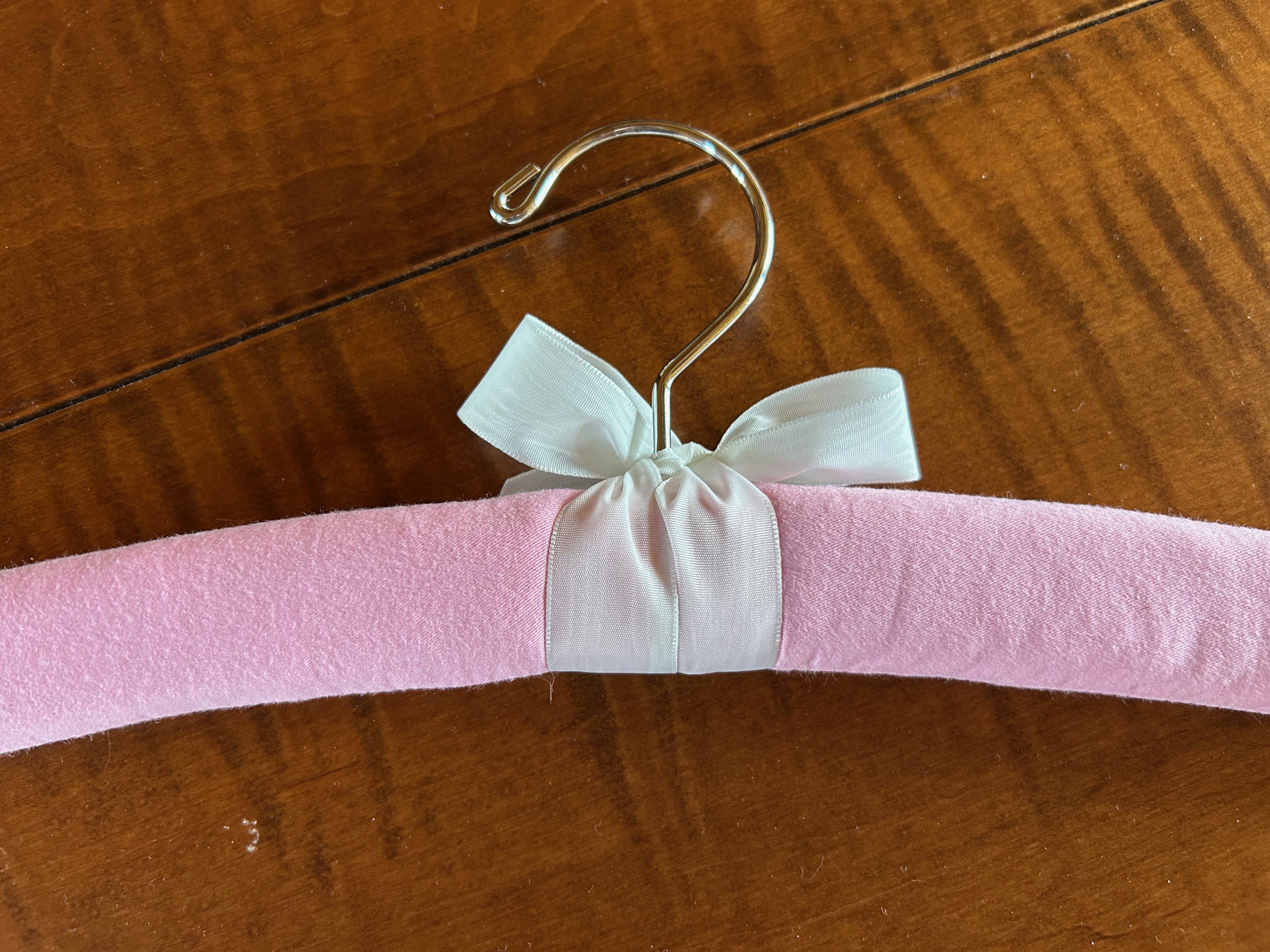
Remember that small amount of fabric remaining from my recent pink striped dress?  I could have easily pitched that scrap (and not even felt particularly guilty about it), but I knew I had just enough fabric left to make a matching padded hanger for my dress.  
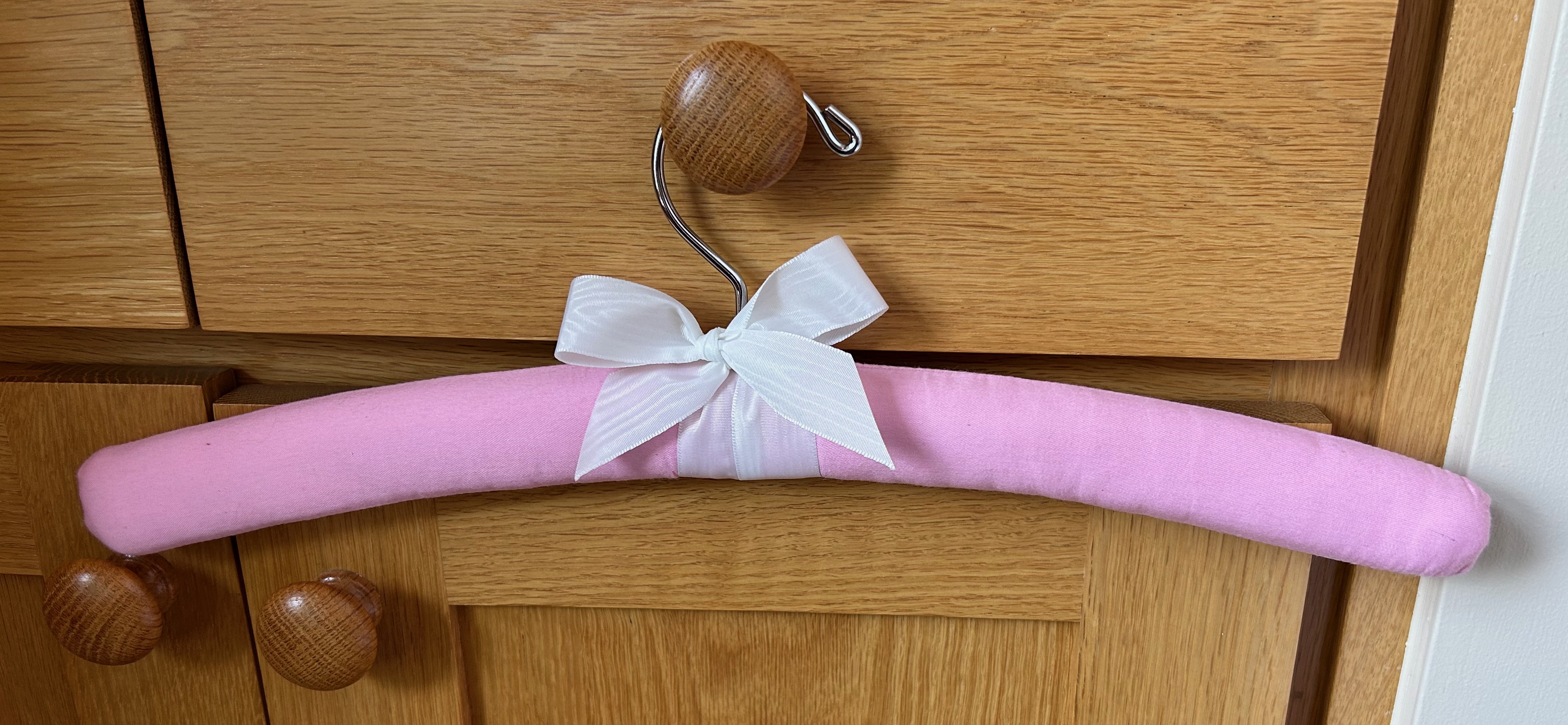
I had already made a few of these hangers in various scraps, using a You-Tube video for the basics, with several trial-and-error sessions to tweak the method and pattern to my satisfaction. Feeling confident with my new-found “expertise,” I plowed ahead and squeezed out just enough for a hanger to match my dress.  
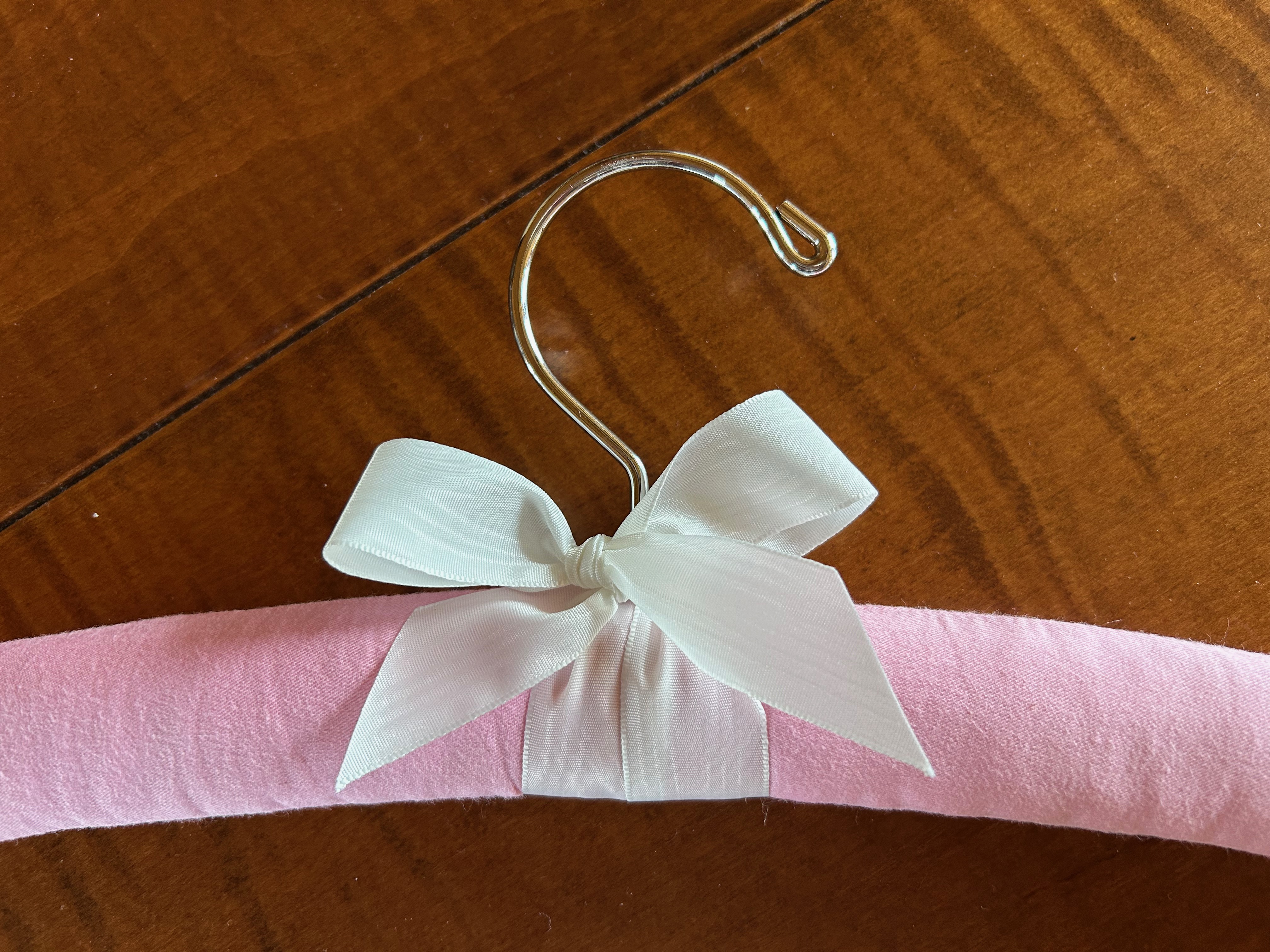
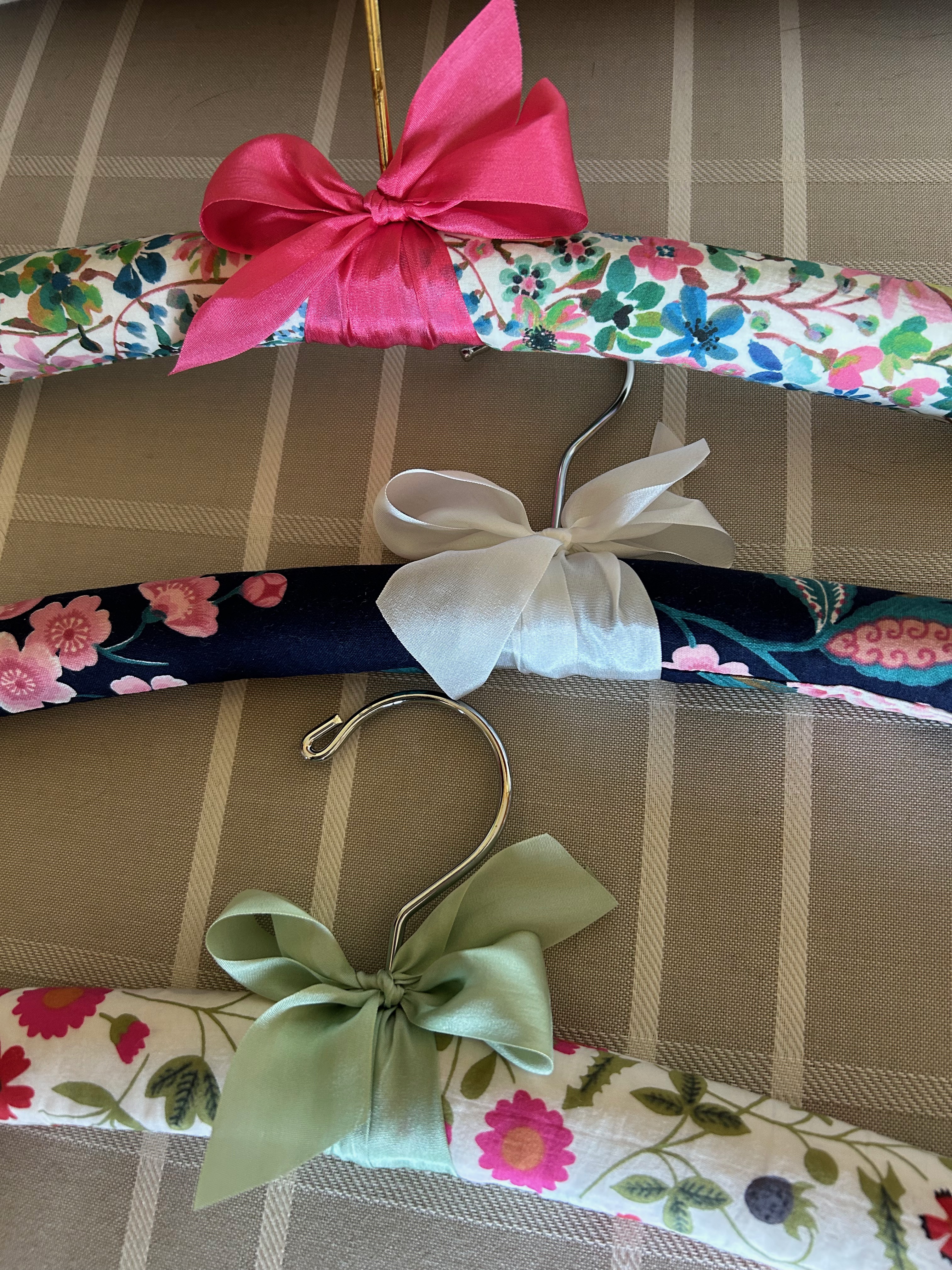
The ribbon bow serves two purposes: to cover up the seam where the two sides of the fabric sheaths meet in the middle, and to make your hanger more beautiful!

Now, I should add here that I have been a fan of padded hangers for a long time, purchasing quite a few from a couple of Etsy shops in recent years.  However, I have always thought it would be lovely to make matching hangers for some of my creations – or – just pretty hangers to mix and match. 

Here are three I have recently made.  
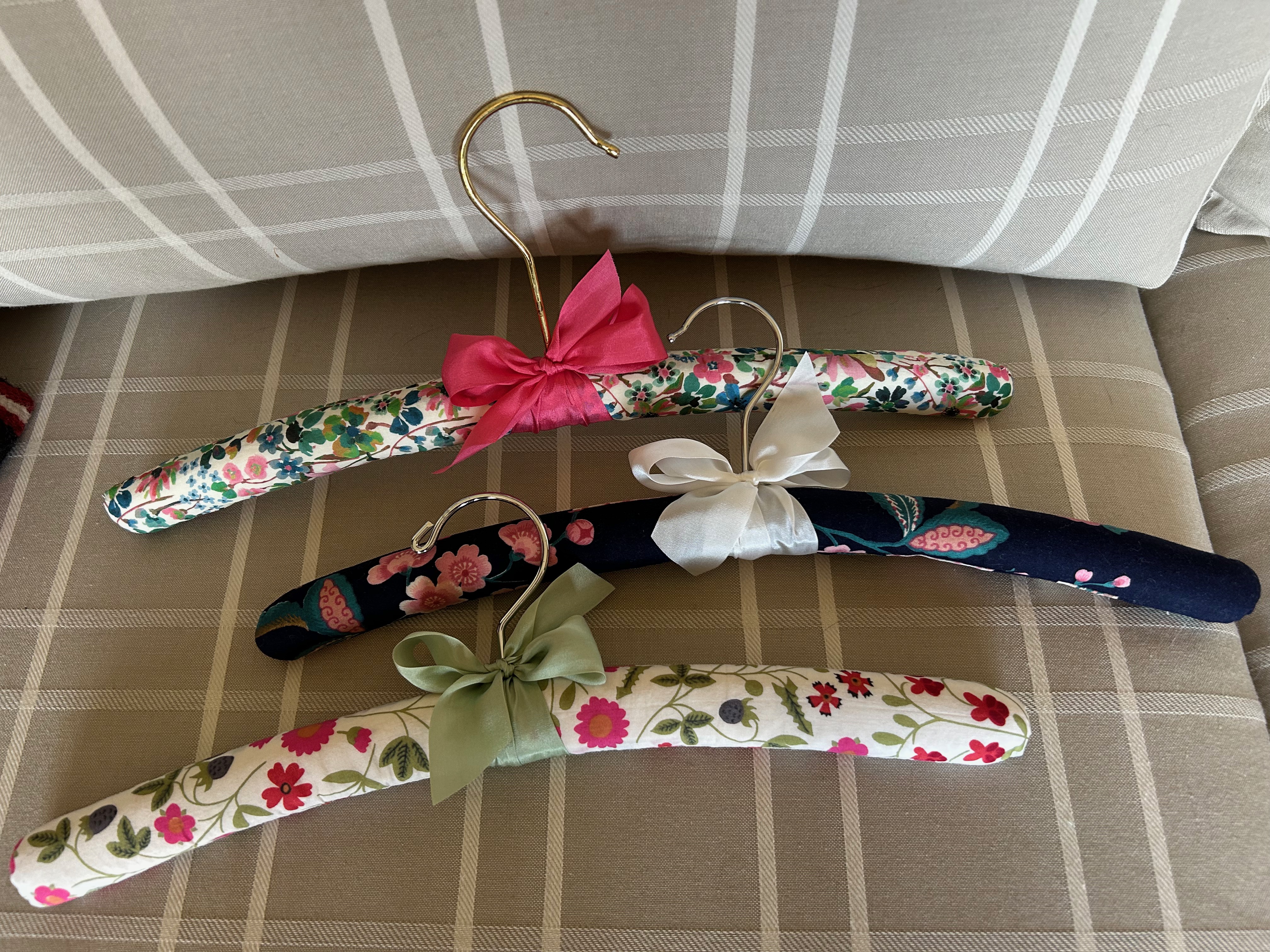
Two of them are made from Liberty fabrics, and the dark blue one is made from fabric left over from a skirt I made at least 25-30 years ago.  There is something particularly rewarding about using Liberty scraps, as the fabric is expensive and its tight weave lends itself beautifully to being stretched over the padded wooden hanger forms.

Speaking of the hanger forms – I have yet to find a source for these raw wood hangers.  To get what I need, I have purchased cheap, polyester satin covered hangers in bulk and taken off the fabric and yucky foam padding to reveal the raw wood hanger form inside it all.  This works, but I would really love to find a source for basic, uniform, raw-wood hangers with the swivel, silver-toned hardware that I prefer for these small projects.  

Here are a few pictures of my process, not intended to be a tutorial.  
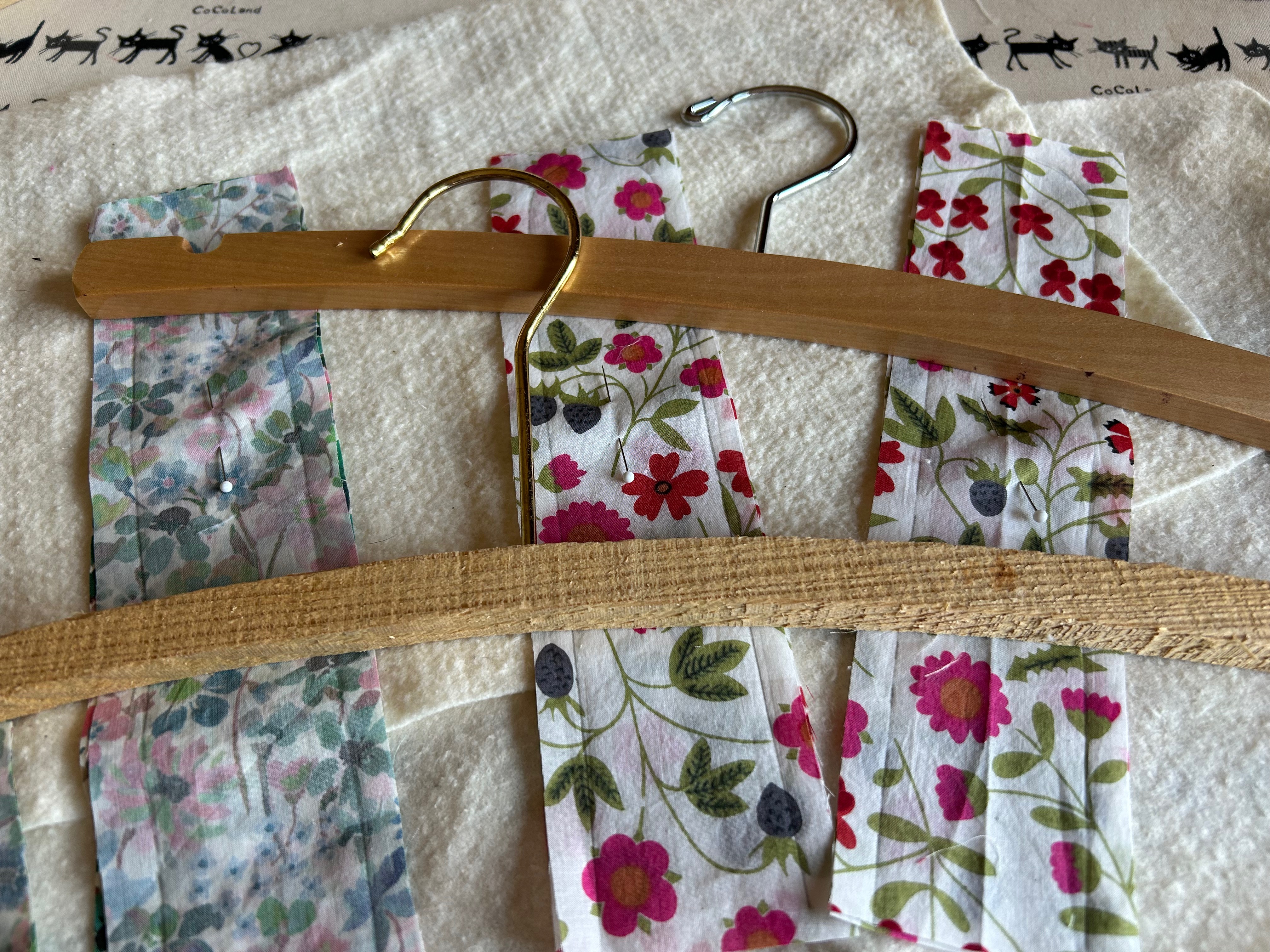
Here are the basic ingredients for making padded hangers: a wooden form, quilt batting used for the padding, and the cut-out fabric pieces to sew and cover each side of the wooden form.
Shown here are two varying wooden forms I happened to have on hand. The unfinished – or raw – wood one is specifically intended for being covered. The other one is a “finished” wood hanger which I turned into a padded hanger.
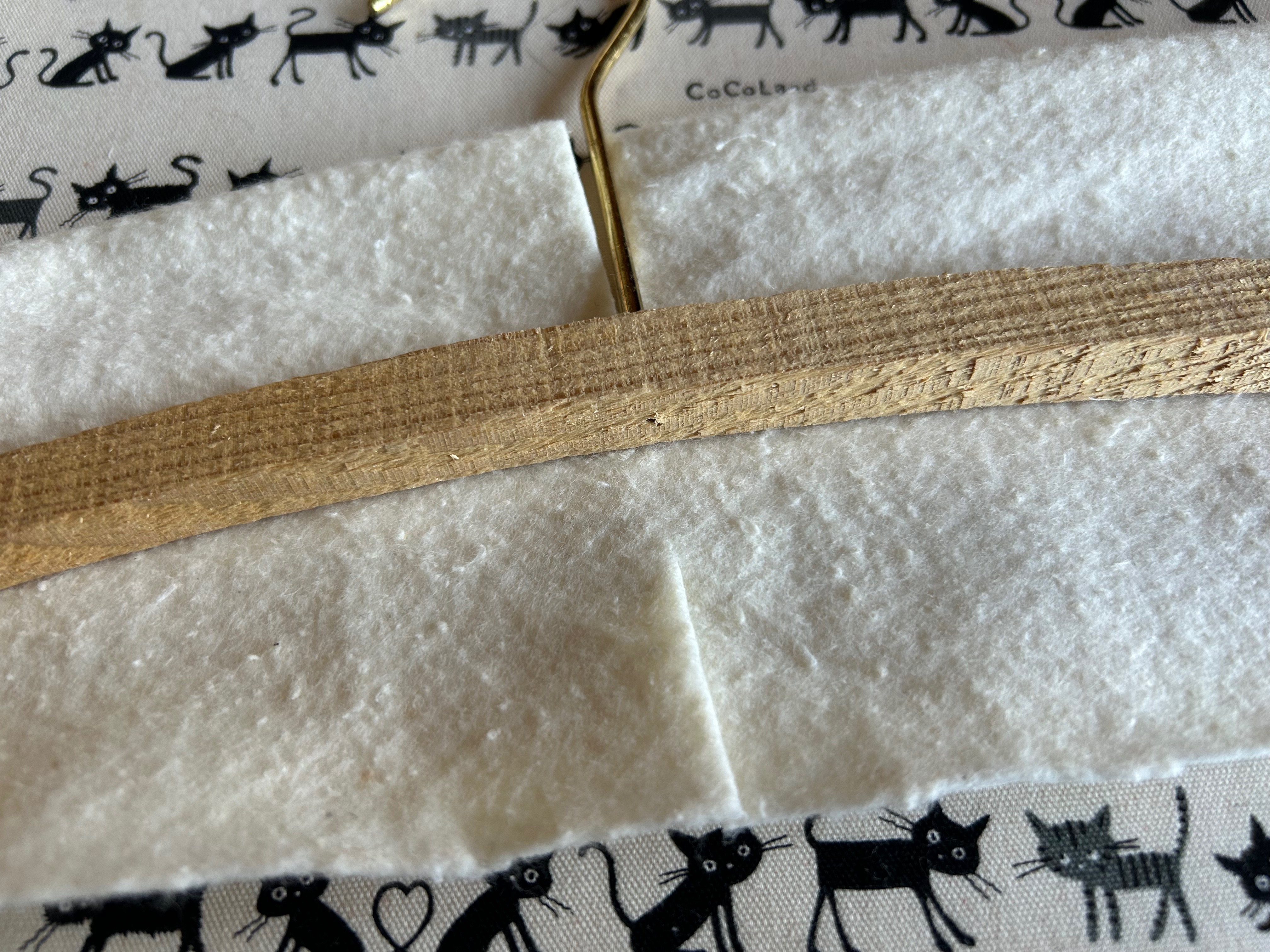
The quilt batting cut and ready to apply to the wooden form.
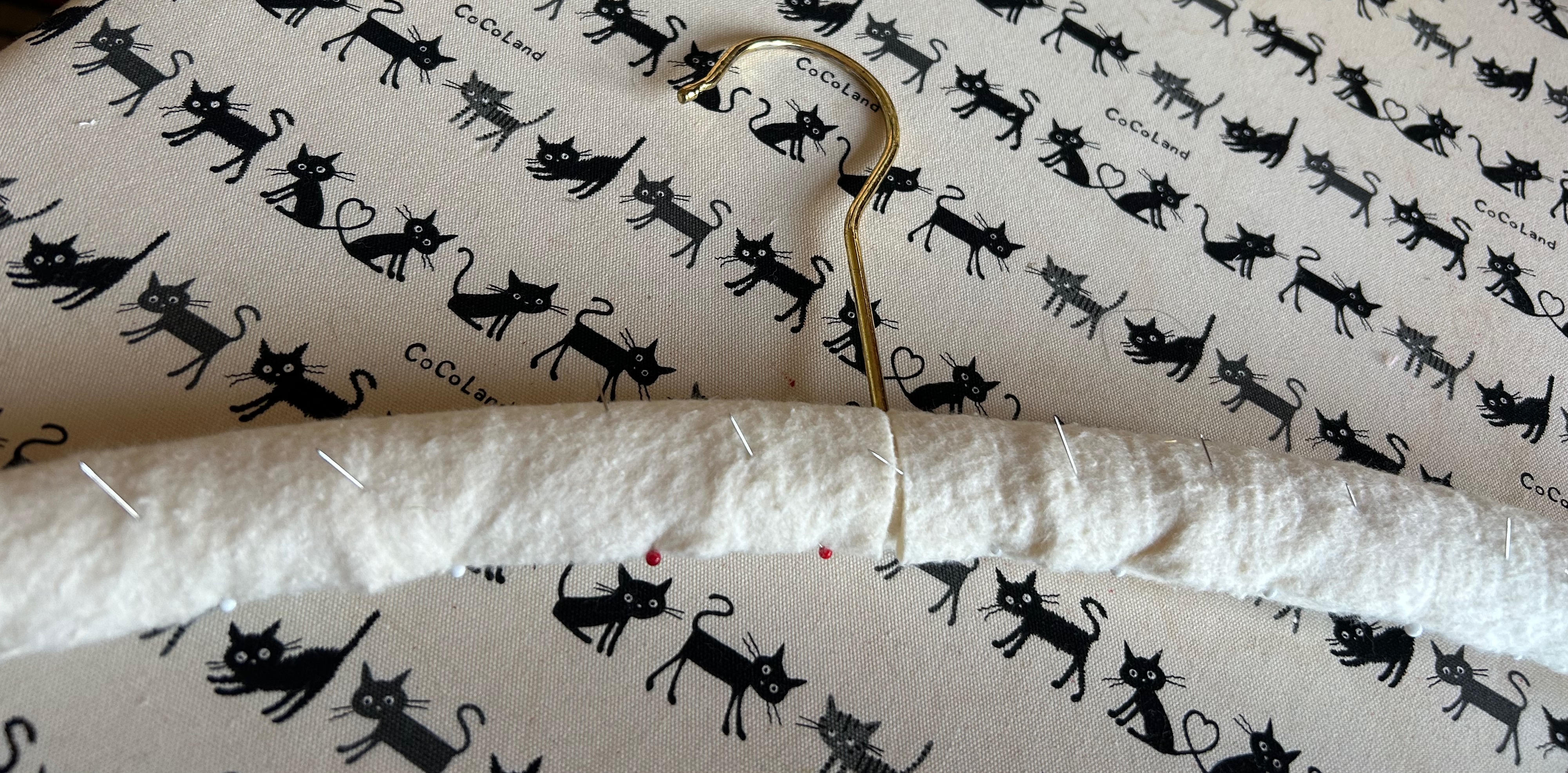
The batting pinned in place, ready to sew by hand.
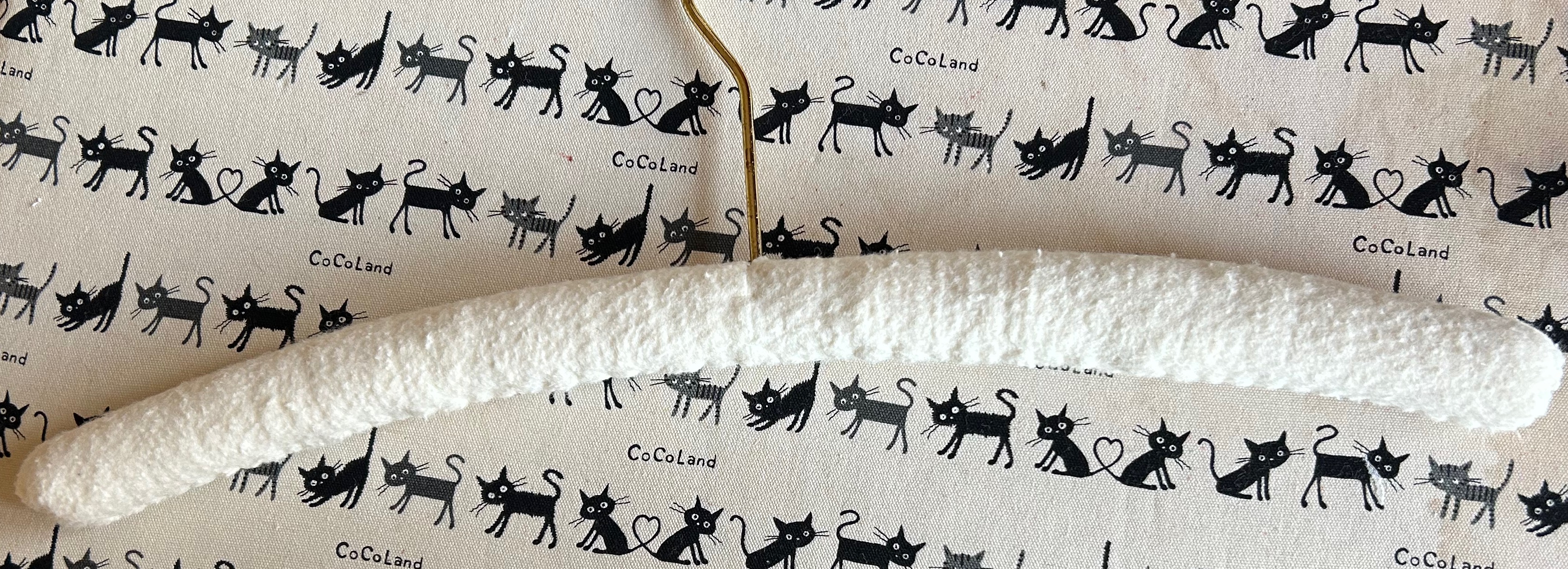
The padded raw hanger ready for the sewn fabric “sheaths” to be slipped over each end of the hanger.

Let me tell you why there is something very rewarding about making these hangers.

  1. First of all, they really don’t take much time, perhaps 35-40 minutes per hanger. 
  2.  Second, it is the perfect combination of hand and machine sewing. 
  3. Third, as stated, it is a wonderful way to use up scraps.  
  4. Fourth, I can use the fabric that is best suited for these closet accessories – tightly woven cottons, light-weight linens or damasks, and never anything slippery, such as satin, which causes your garment to slide off one side.  I am particularly looking forward to making hangers with some of my scraps of vintage cottons and linens, a unique way to preserve samples of these special fabrics. 
  5. Fifth, handmade padded hangers make very sweet small gifts for friends and family.
  6. And finally, making my own hangers allows me to use coordinating color ribbon. White is always nice, but using coordinating colored ribbon makes your hangers just that much more personal.
Often, between sewing projects, especially if they are major projects, I like to make something quick and easy and fun to “decompress” and get ready for the next big undertaking.  Making a padded hanger is the perfect solution. 
29 Comments

Filed under Bows as design feature, Liberty cotton, padded hangers, Uncategorized, Vintage fabric

Pink Stripes 

“You can never go wrong with a little pink… a lot works for me.” Dana Dalgetty

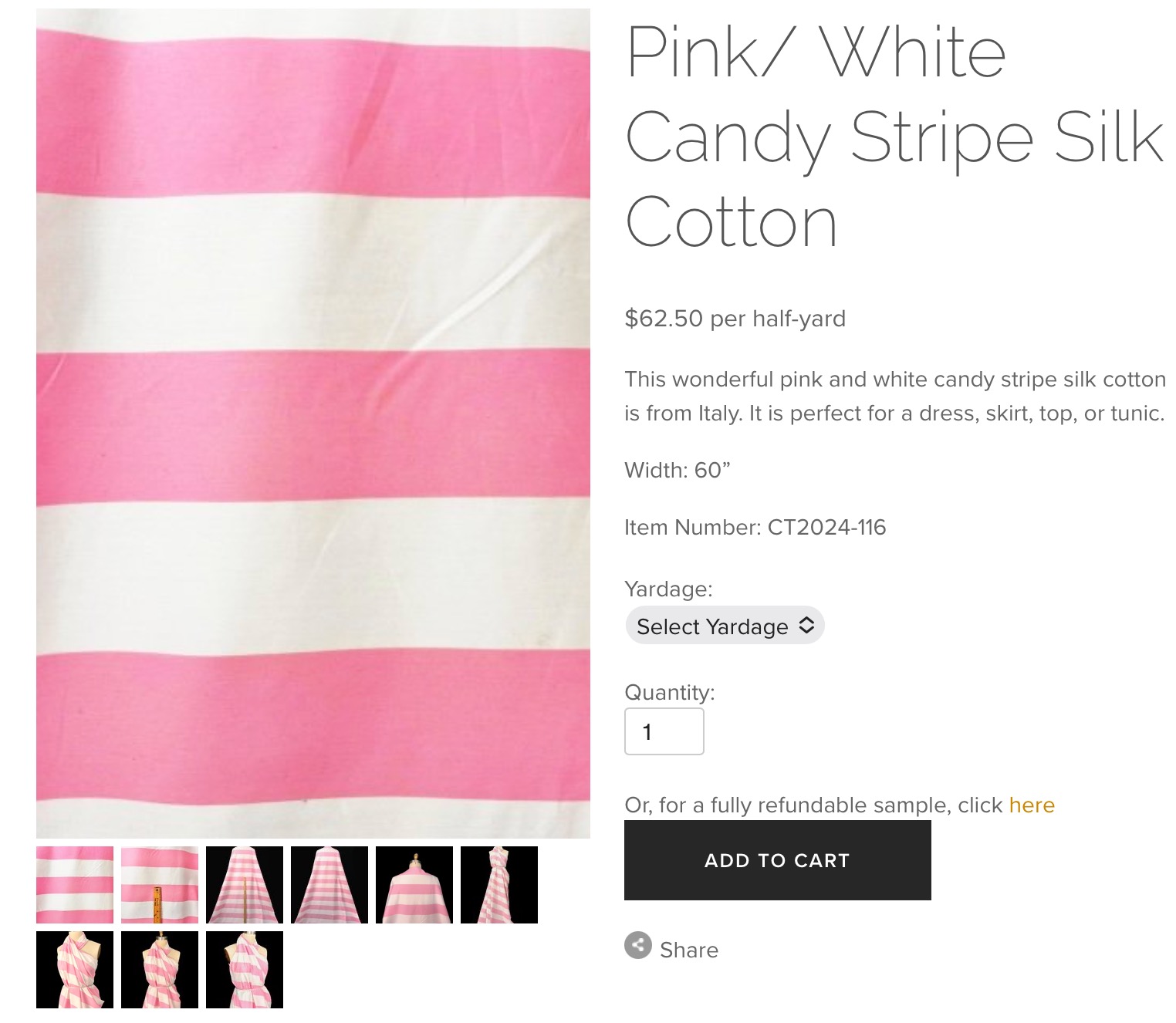
It is extremely difficult for me to resist a bubblegum pink fabric.  And if it is a stripe, too, the odds are very good that fabric will end up in my sewing room.  So it was with this silk and cotton blend found on the website of Mendel Goldberg Fabrics.

Screenshot

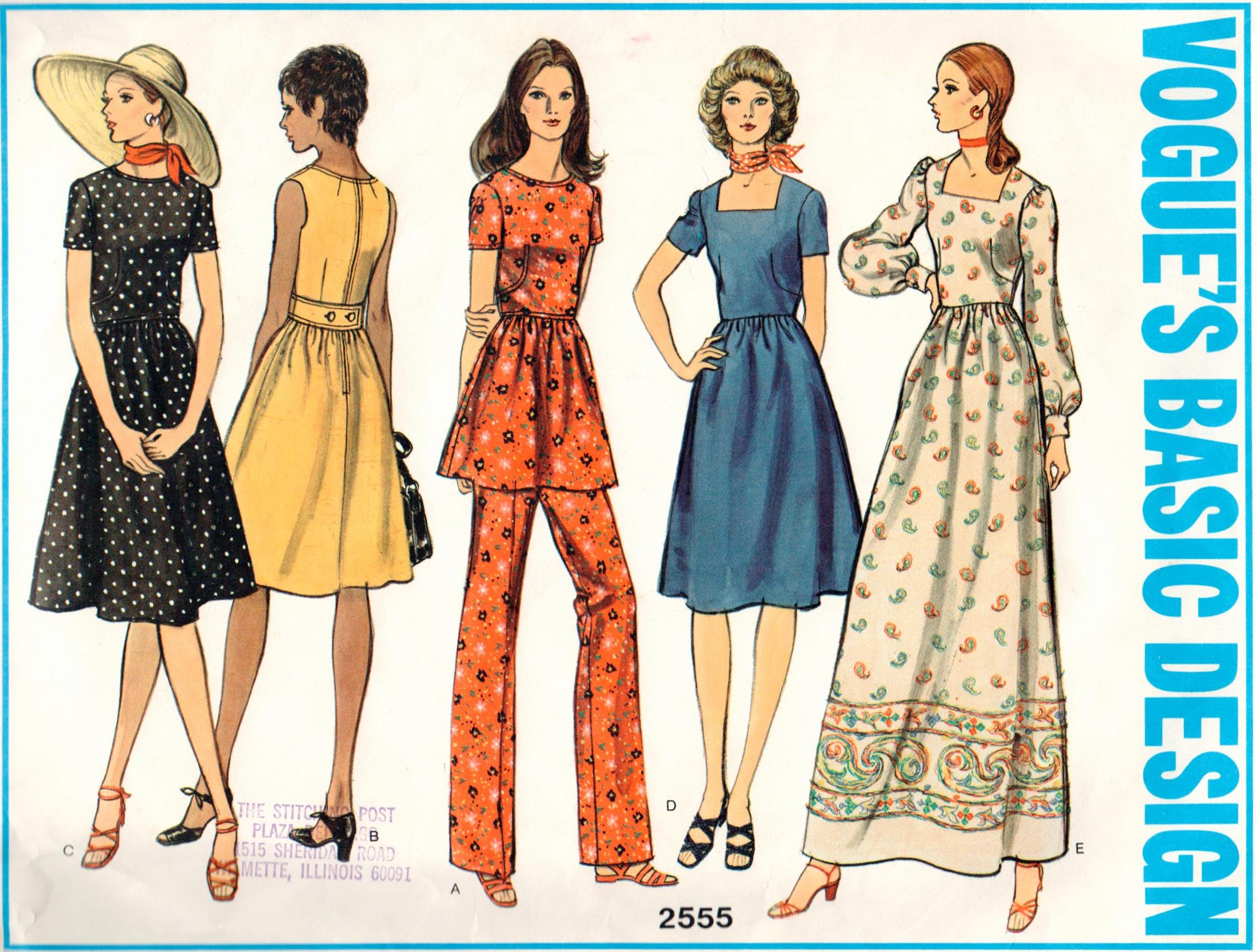
I purchased it last summer during a 20% off sale, and when it arrived, I knew I had made the right decision – although the stripes were a bit bolder in person than I anticipated.  As usual, I wasn’t sure what I was going to make – a coat? a dress? a skirt?  I needed more thinking time so I tucked it away until this Spring.  In the meantime, I purchased this vintage Vogue pattern which I saw as a good basic design which could be easily changed, adapted and altered.  

Take note of those curved darts on the bodice, as I will mention them again.

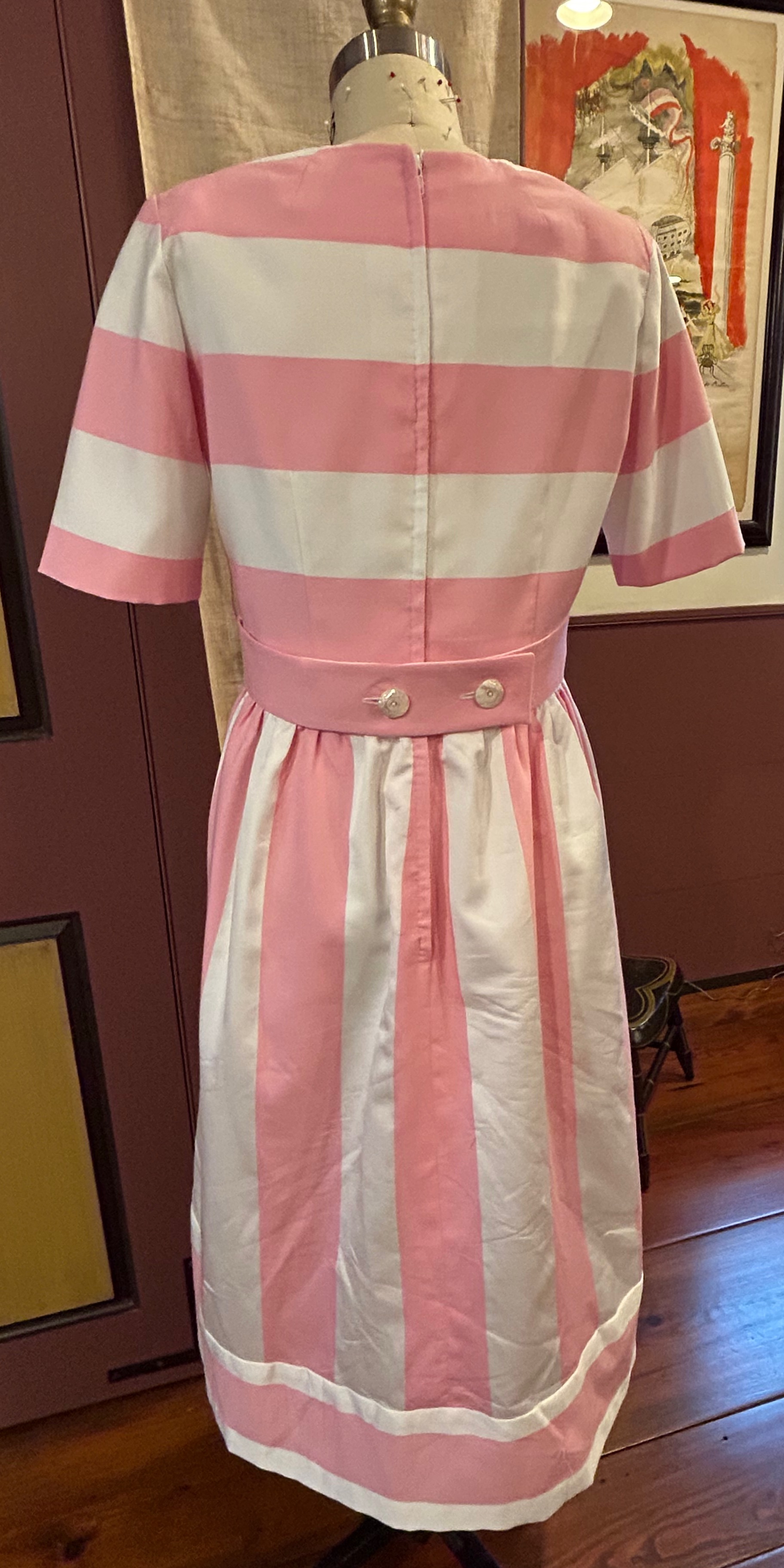
I like dress designs which have some “back“ interest, here the buttoned half belt.  Although I loved the sleeveless view, I have become less comfortable wearing sleeveless dresses as I have gotten older.  Thus, I was drawn to the short-sleeved view (C), knowing I could easily lengthen the sleeves to reach almost to the elbow, if that seemed the way to go.  Thus, it was a logical progression to imagine the pink striped fabric made up in this design, despite the note on the pattern “Not suitable for striped fabrics.” 

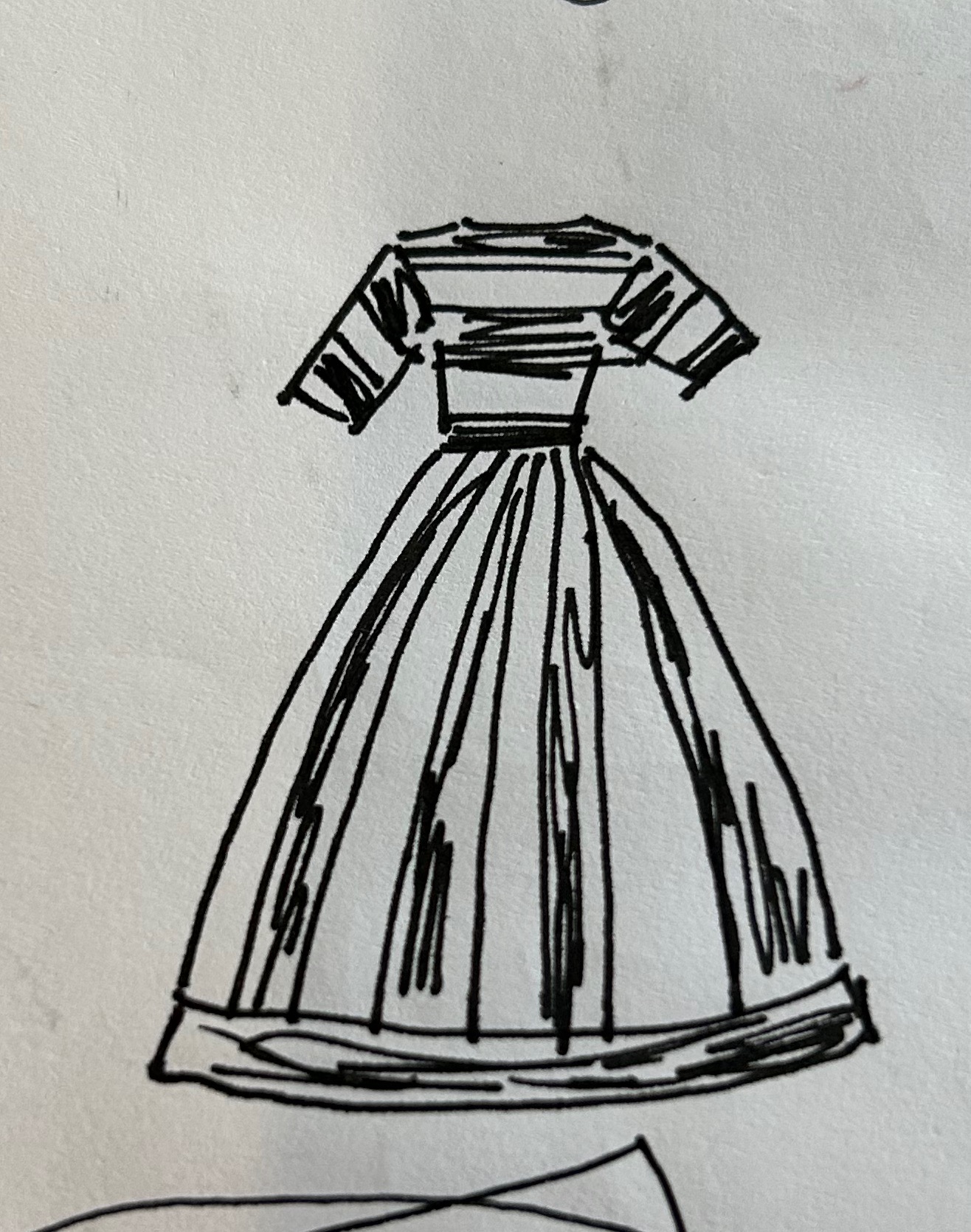
I wasn’t quite ready to forge ahead, however.  My fabric was such a bold stripe, I feared a horizontal orientation of the fabric would be too much, but a vertical orientation was equally problematic.  I went to my Pinterest feed to get some inspiration and in no time at all, the lightbulb went off in my head.  The dress needed a combination horizontal and vertical orientation.  I made this quick sketch, and I knew I had the solution I needed.  

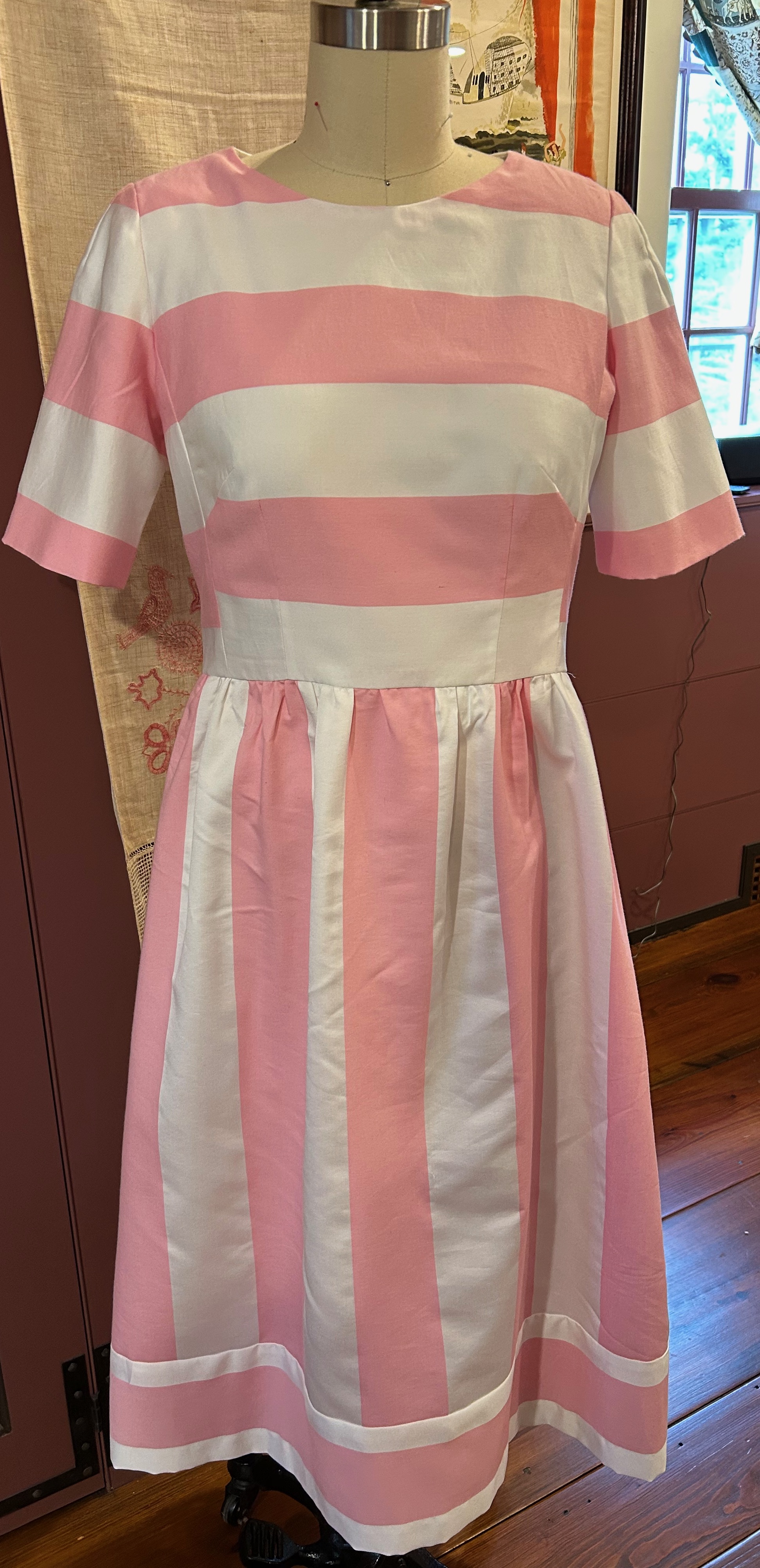
I took these quick photos after I had worn the dress to a party, wrinkles and all. My apologies for the unkempt appearance of the dress!

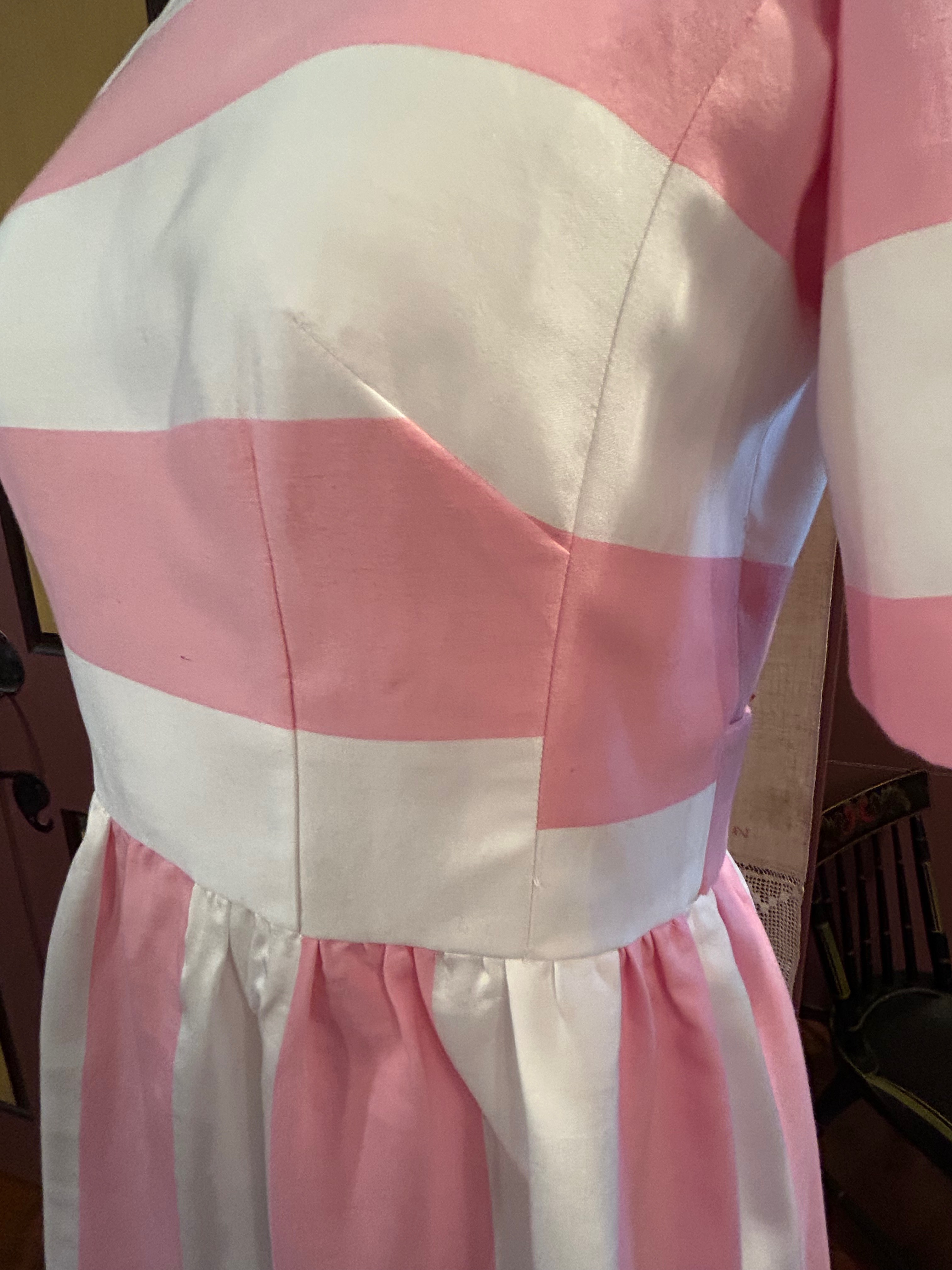
I set about making a muslin/toile for fitting, and then I hit a brick wall.  Those curved darts you see on the pattern bodice just were not flattering to me, despite my working and reworking them multiple times.  I finally gave up.  I would need to find a substitute pattern for the bodice front and make it work with the bodice back toile which I had fitted successfully.  This was all terribly time-consuming, as you can imagine, but I finally was able to find an existing bodice front in my stash of patterns/toiles which, fingers crossed, would work.  I didn’t know how well it would work until I had the happy surprise of seeing the darts feed into the bold stripes successfully. 

Darts, of course, distort side seams, but this distortion somehow adds to the appearance of the front bodice. I suspect the “unsuitability” of striped fabrics was because of that curved dart, which I unknowingly eliminated when I changed the bodice front.

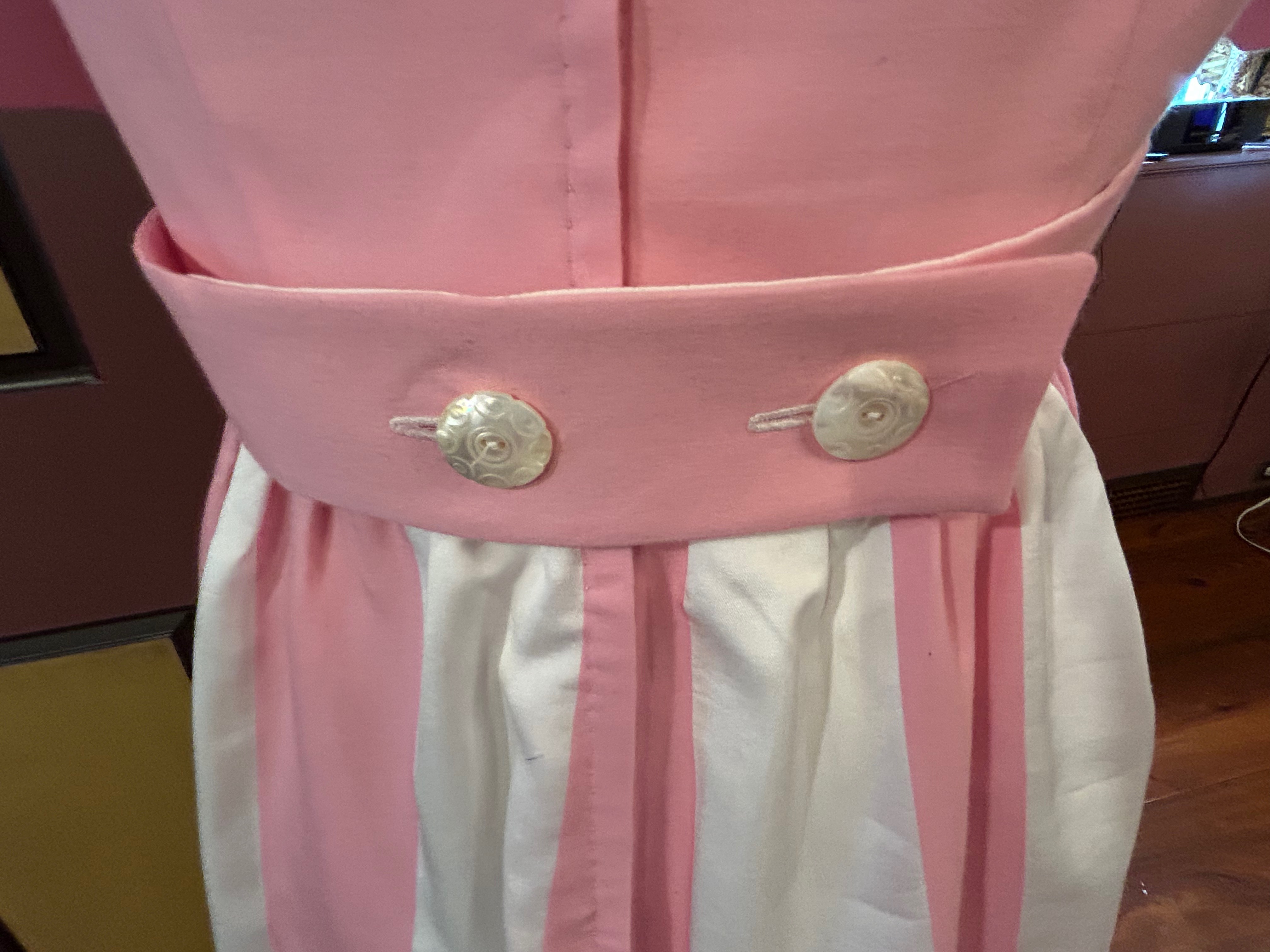
What was not as successful was the proper alignment of the buttons on the back belt to the center of the dress. That is one of the many downsides of fitting oneself – I could not see what I was doing, and although I measured and fiddled, I was still off by a couple of inches.  

I did a hand-picked lapped zipper and the buttons are vintage mother of pearl from my collection.
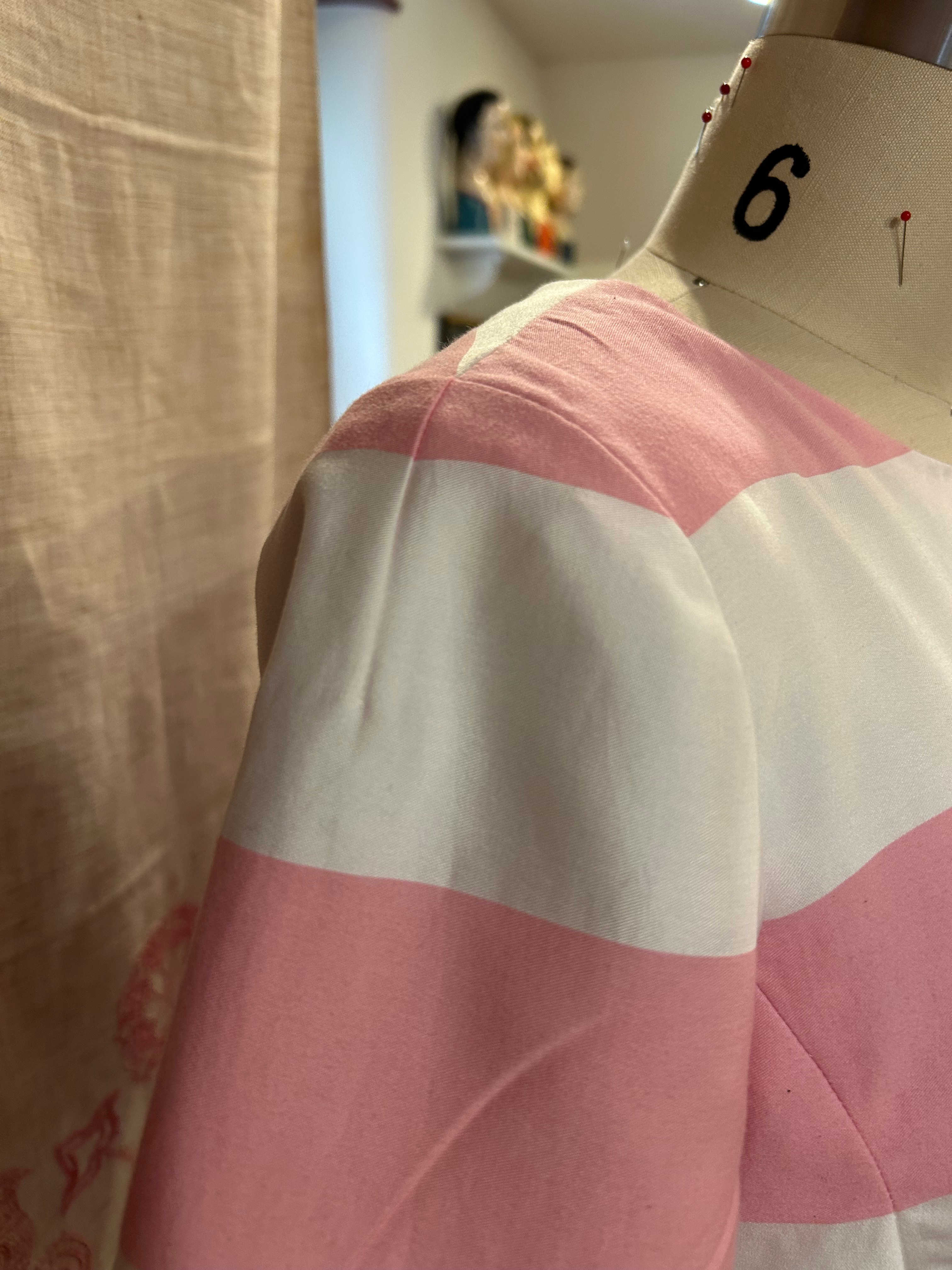
While we are talking details, here is the top of the sleeve. I used a top dart to take in the necessary fullness when setting in the sleeve. This is an alteration I make frequently to accommodate my prominent shoulders.

I lined the entire dress with a soft cotton batiste which complimented the softness of my fabric, adding a little more opaqueness to the finished dress.  I did not use an underlining, reasoning that more structure would not be conducive to the soft flow I wanted in this garment.

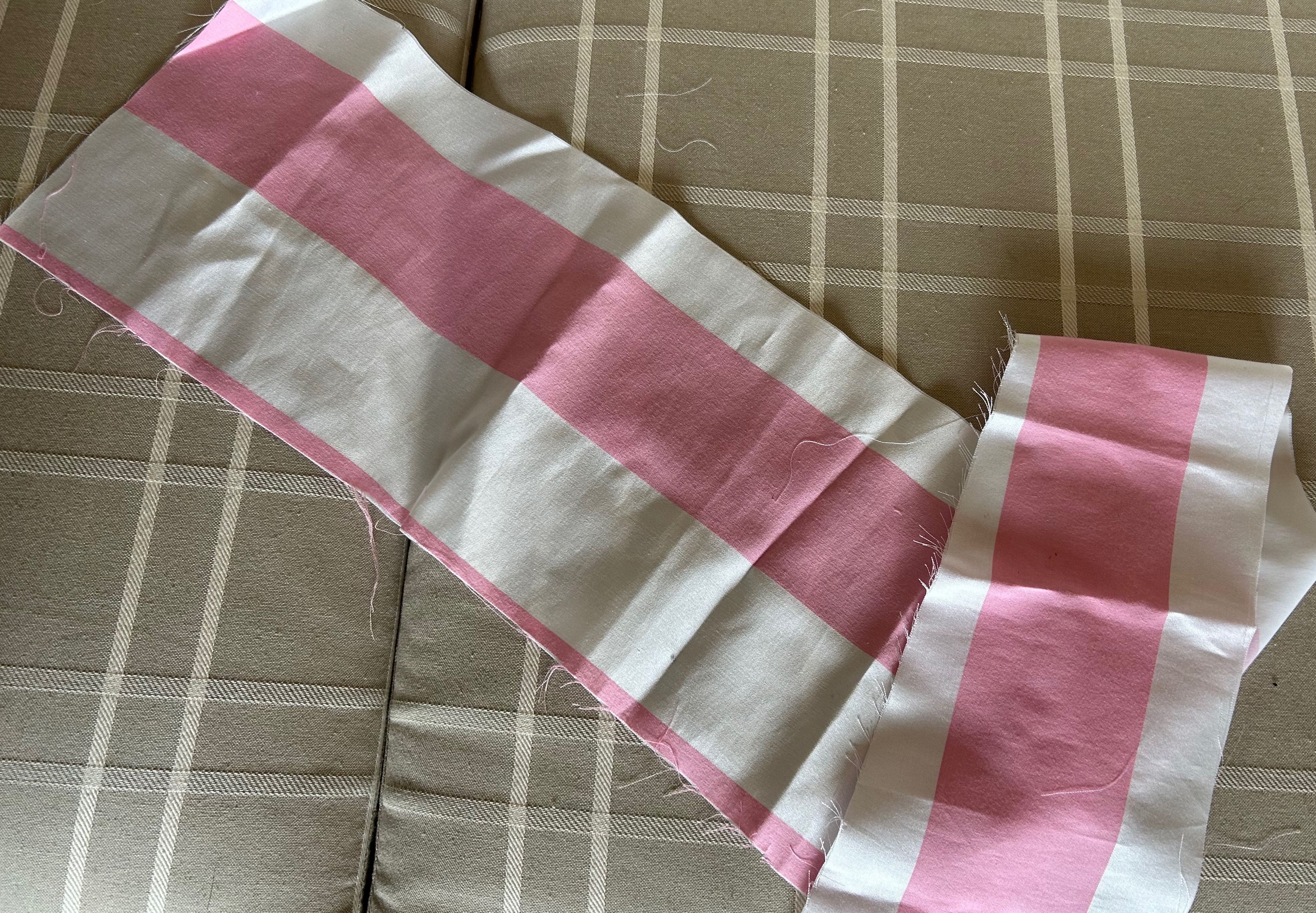
A word here about the panel for the hem.   Wow, was I tight on fabric!  I thought the panel should feature one bold pink stripe, bordered by “half” white stripes.  I barely had enough fabric to make this happen, and because the width of the skirt was just a bit bigger than the width of the fabric, I had to piece that panel.  Whew, I just made it.  Here is all the fabric I had left over:

The seaming of the two panel pieces close to the center back is barely visible! Can you see it?

 I was able to wear this dress for two events in May, feeling perfectly dressed for both of them.  

And that little bit of left-over fabric?  I had plans for that, too, which I will share in a future post.  

26 Comments

Filed under Buttons - choosing the right ones, couture construction, Uncategorized, vintage Vogue patterns from the 1970s