Category Archives: Sleeves

And Now I Match my Chair, Part 2

Isn’t a good pattern worth its weight in gold?  When I purchased this jacket pattern several years ago, I just liked it, no plans in place, and thought the day might come when I could use it.  The more I studied it with my Pendleton blanket in mind, the more I thought it was perfect for my project.  First task, of course, was to make a muslin toile and check the fit and size. 
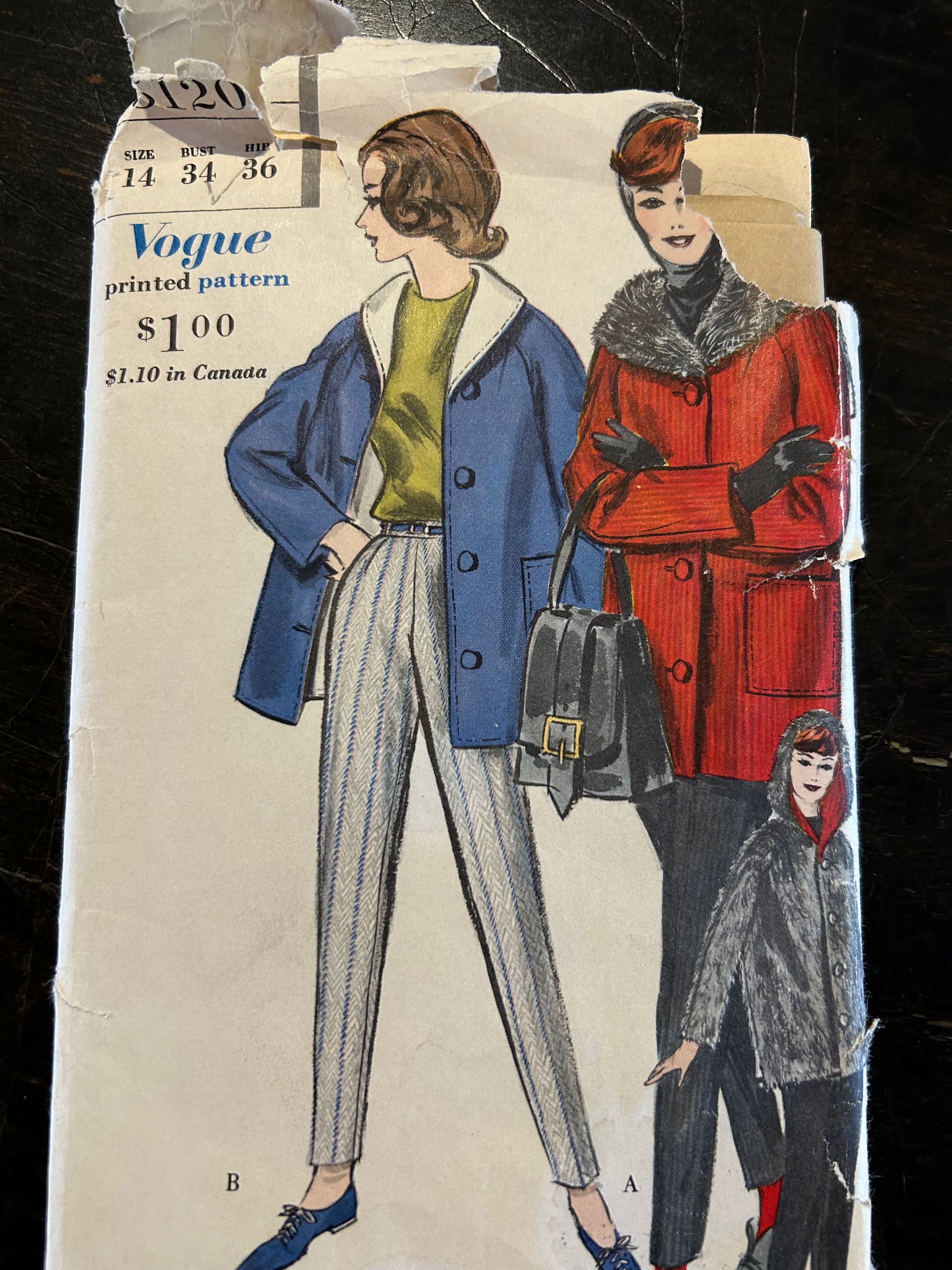
View B is the version I intended to use.

By now, November and early December had passed with my life taken over by bathroom renovations and holidays looming on the horizon. We headed back to Wyoming for Christmas, and then the new year of 2026 dawned, with all its promise and things unknown.  January was the perfect time to get back to my project. The jacket as designed was to be fully lined, either with fleece, contrasting fabric, or self-lined. I determined I would need to line the sleeves, while the rest of the jacket should remain unlined.  However, I needed a facing for the shawl collar and front edges. Because there was a pattern piece for interfacing the collar and front edges, I thought I could use that for my facing.  My toile confirmed that for me.  
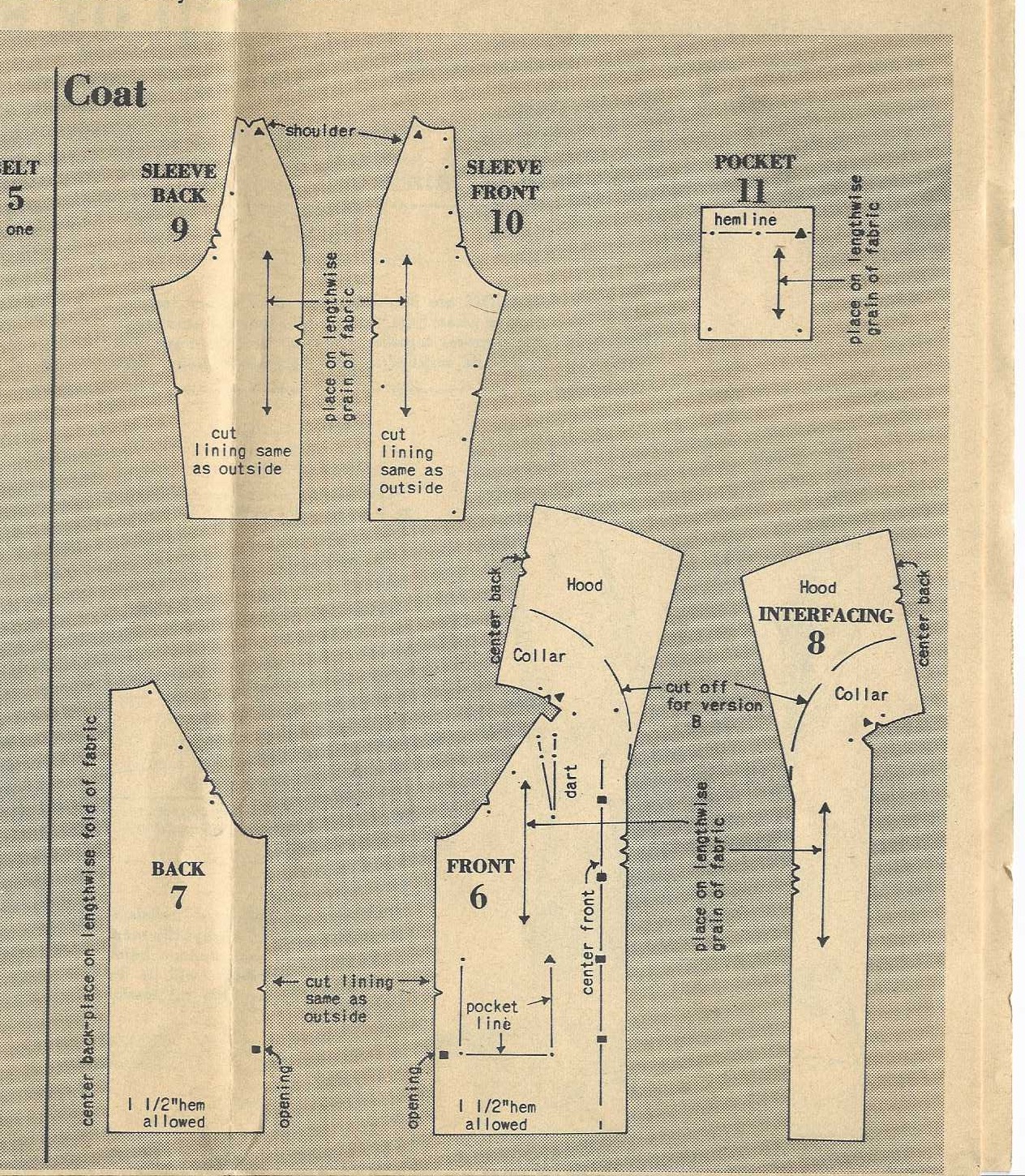
I used the interfacing (minus the hood extension) in the lower right corner of the diagram for my coat facing.

The coat muslin seemed very large overall on me, requiring a lot of alteration.  It can be tricky with coats, as enough ease must be allowed for wearing a heavier sweater or layers underneath. Also, the thickness and relative non-fluidity of the blanket dictated a looser fit.  I spent a few days perfecting my toile.  Then the real test was upon me.

I took my muslin apart, producing pattern pieces to fit onto my fabric/blanket. Was making this jacket out of what I had left of the blanket even going to be possible? If so, how would the placement of the pattern pieces on the very graphic and large design work out? 

I got to work with everything spread out on my dining room table, starting with two main objectives: 1) The large “dragonfly” motif on the blanket would be centered on the back of the jacket, and 2) I wanted the “portrait” or neckline area of the shawl collar to feature the dominant color of red. 
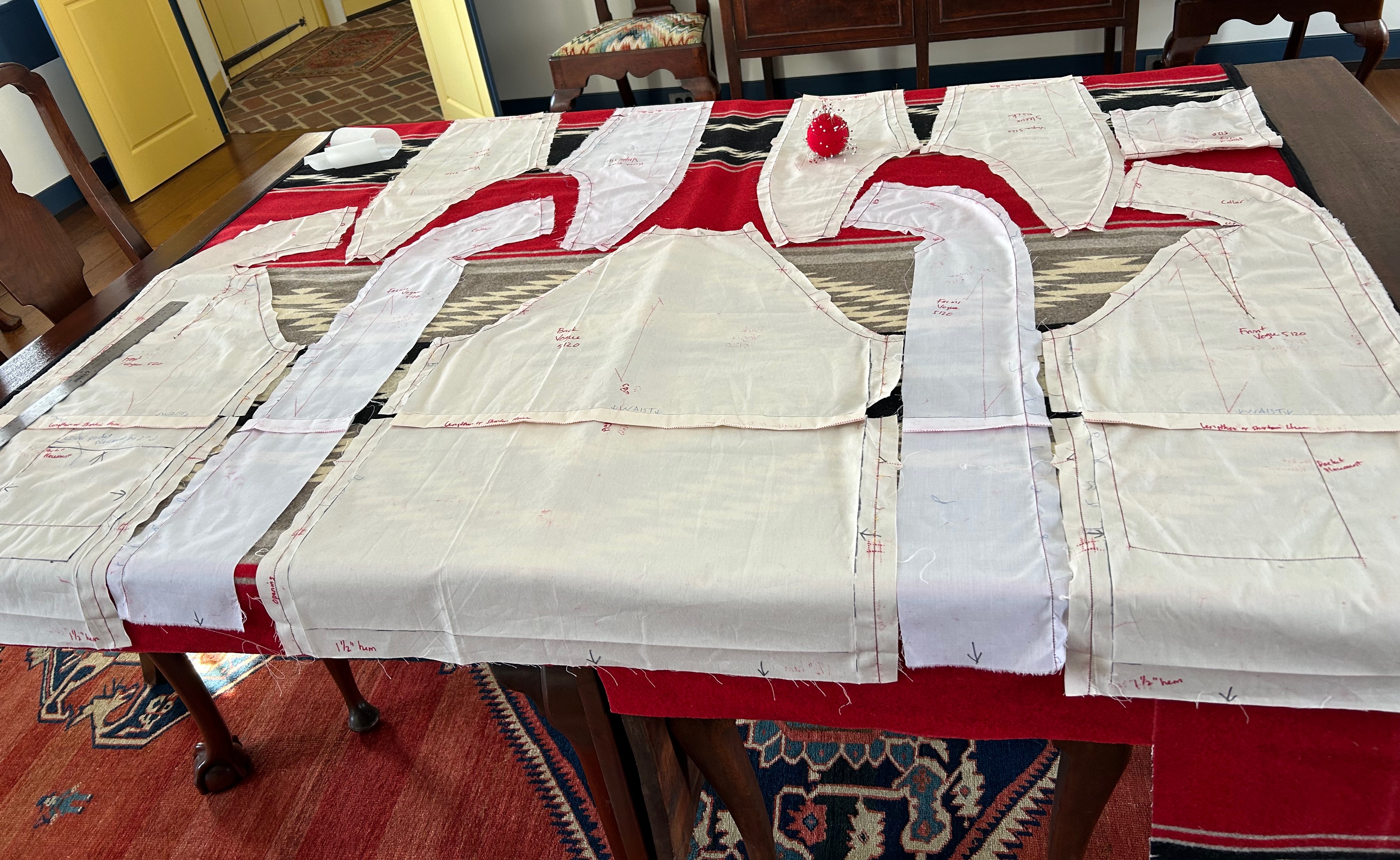
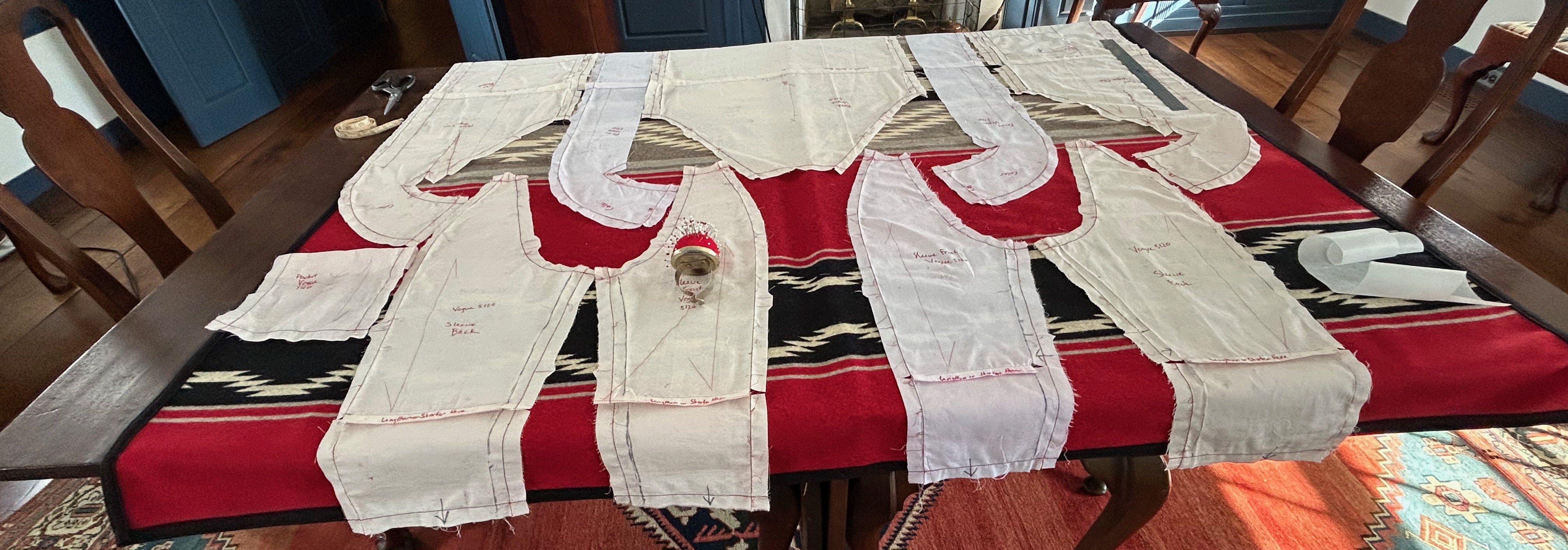
I had to use the entire width of the blanket, without an inch to spare in the final layout, for the pieces of the main body of the coat. This layout gave me the the red collar I wanted and the center motif of the blanket centered on the coat back. Visible on the lower part of the picture is the where the upholsterer had cut the fabric.
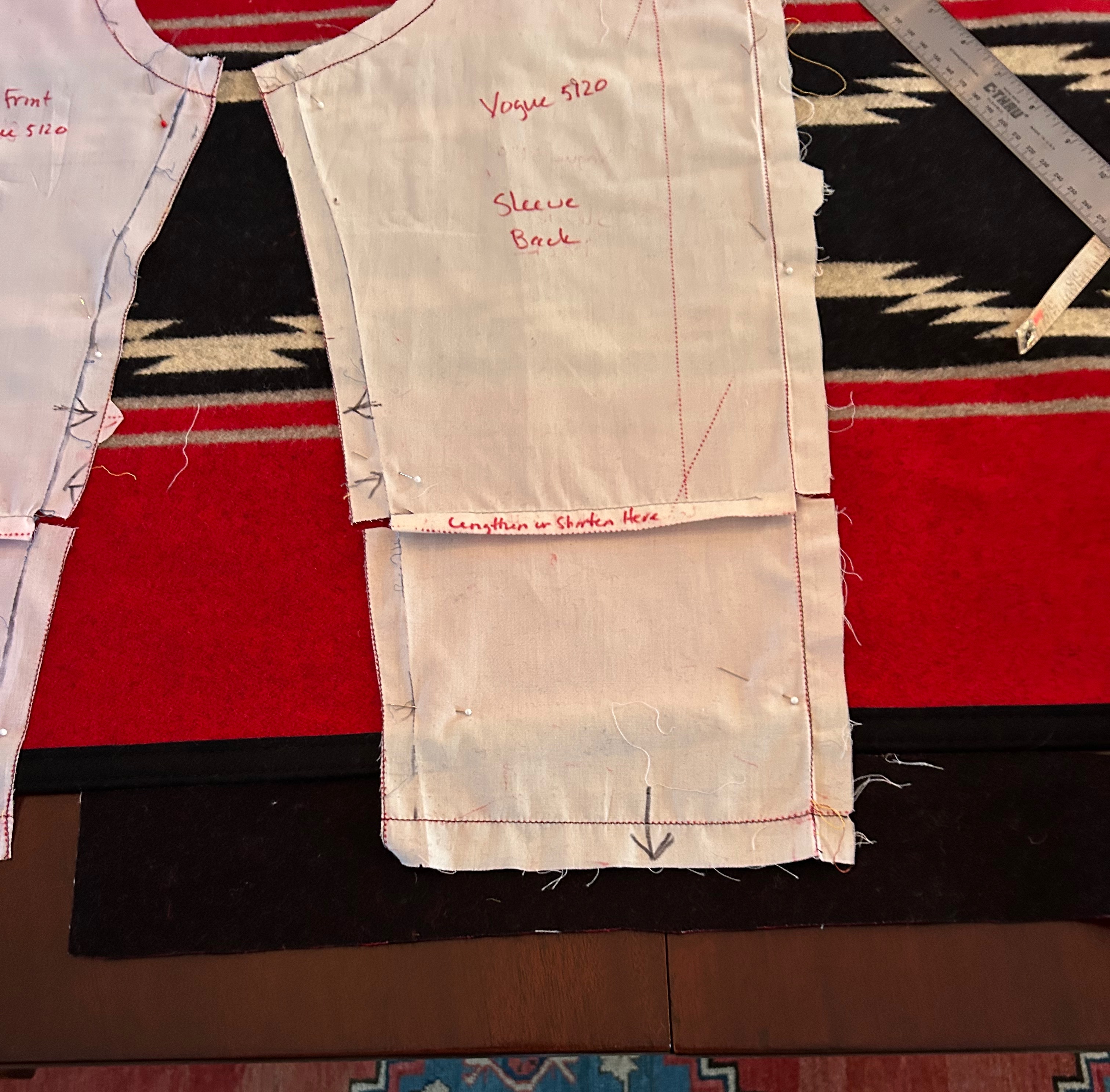
This is the opposite end of the blanket, where I needed to position the sleeves and, potentially, patch pockets. This is where it got a little tricky. That black “sawtooth” panel, a dominate woven feature, was going to make or break the fluidity of the overall look of the coat.

From there the fabric told me what I could do and what I could not do, and the best way to explain my decisions is to show you the finished coat.
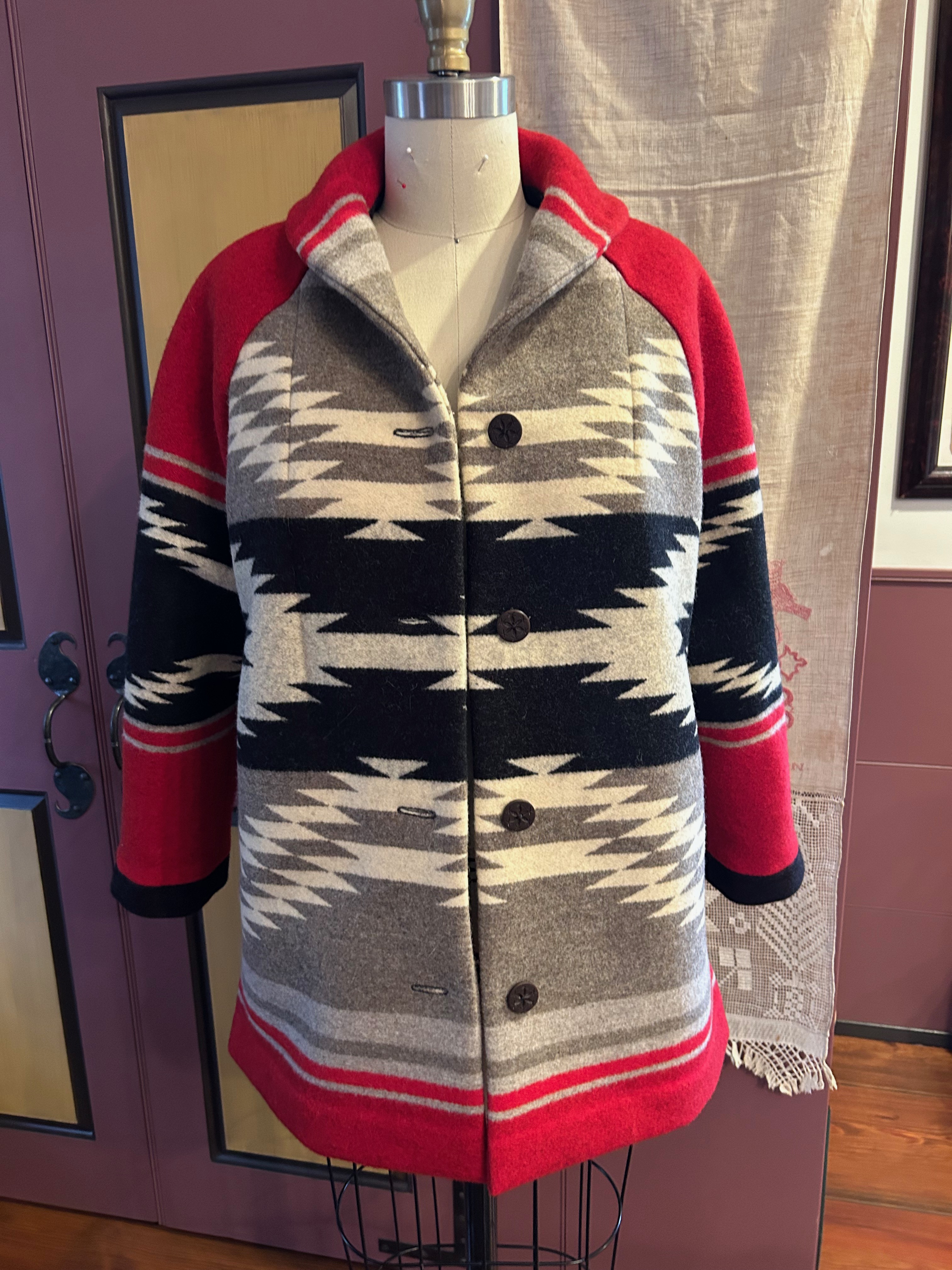
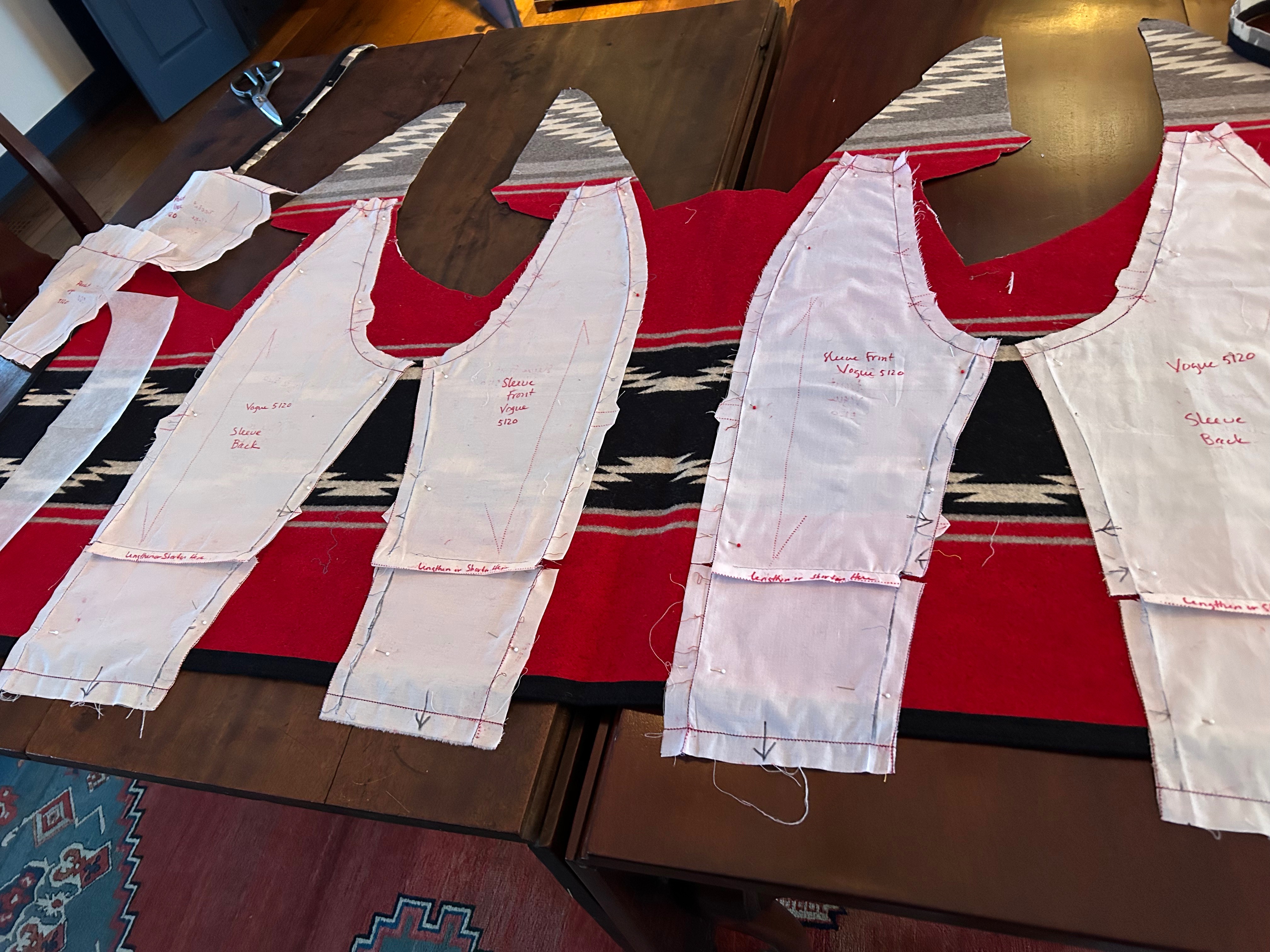
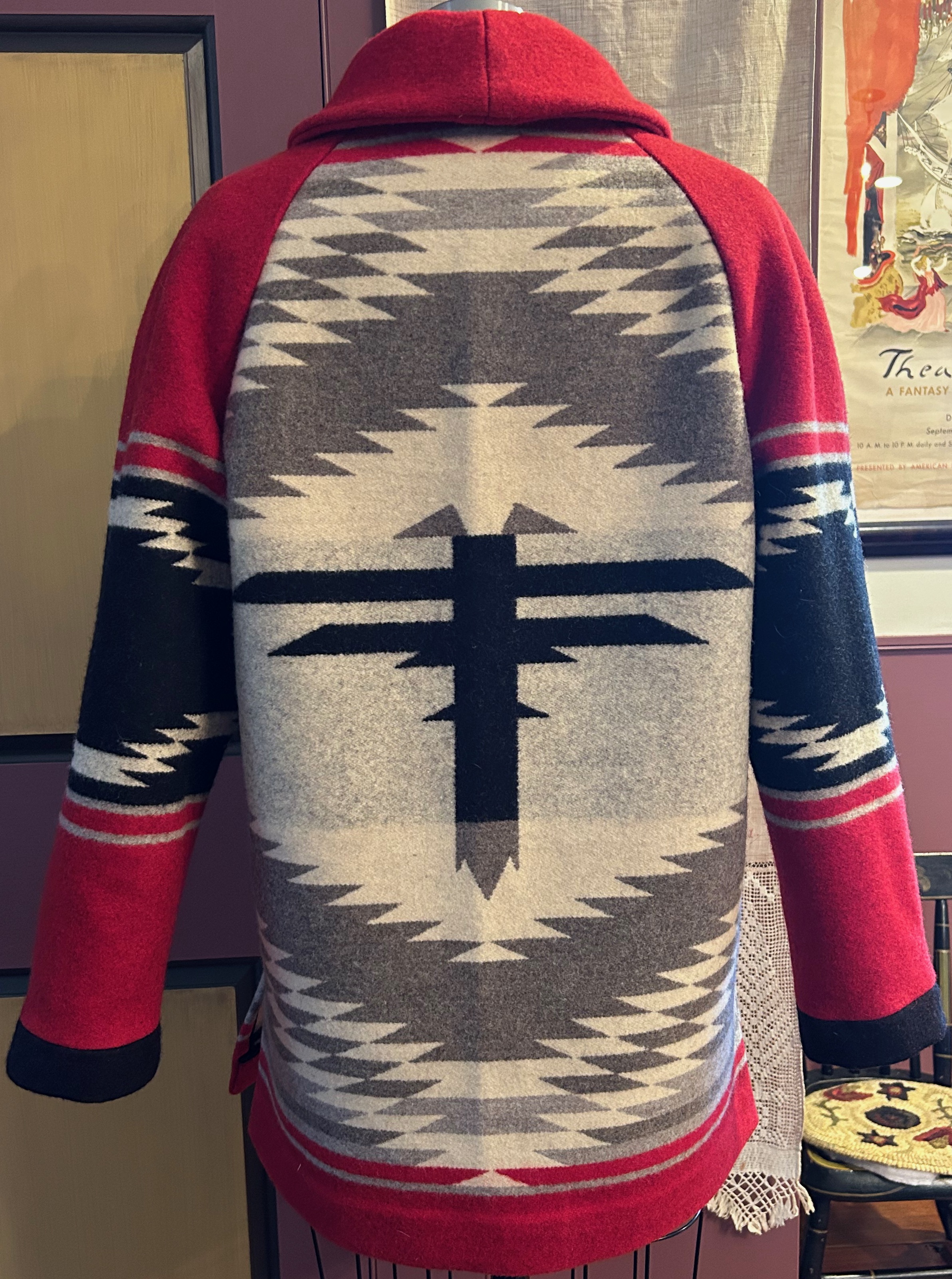
1) I determined the dominate black stripe across the sleeves (see below) absolutely had to be centered on the black stripe across the front of the coat (and consequently centered on the main motif on the back.) However, the width of the two stripes were not the same. 2) The only way I could center them was to wiggle around the placement of the sleeves on the fabric. I had not originally intended to put black “cuffs” on the sleeves, but that turned out to be the only way I could center the black stripes on each other, by moving the sleeves off the edge of the fabric, and adding “cuffsto get the sleeve length I needed.
First, I cut out the main pieces of the coat. (I had Plan B in place already, knowing by now I would have to piece the lower edges/cuff on the sleeves.) That gave me more flexibility on determining exactly how those two black design features would lineup to best effect.
I was sweating bullets, even with Plan B, when I realized how much I had to wiggle the sleeves down off the edge of the fabric to get those black design features centered on each other. In this photo you can see the scraps of black fabric (reversible to red) I intended to use for the “cuffs.” Fortunately I found that I could successfully remove the binding on the blanket, gaining me another 3/4 inch in length – which meant the piecing I needed to do on the cuffs would be a pleasing width.
Here is the back of the jacket. I was very pleased with how well the sleeves lined up with it.

I thought it would be “easy” after getting to this point. Easy is not a word I should ever use while sewing. I should know that by now. Every seam had to pressed with loads of steam, followed by a clapper to help set it, usually more than once. Every exposed seam edge needed to be encased with rayon tape. I split the two vertical darts and needed to hand-stitch the raw edges to prevent fraying. Every seam needed to be basted together before machine sewing in order to keep the horizontal lines in the design matched.  
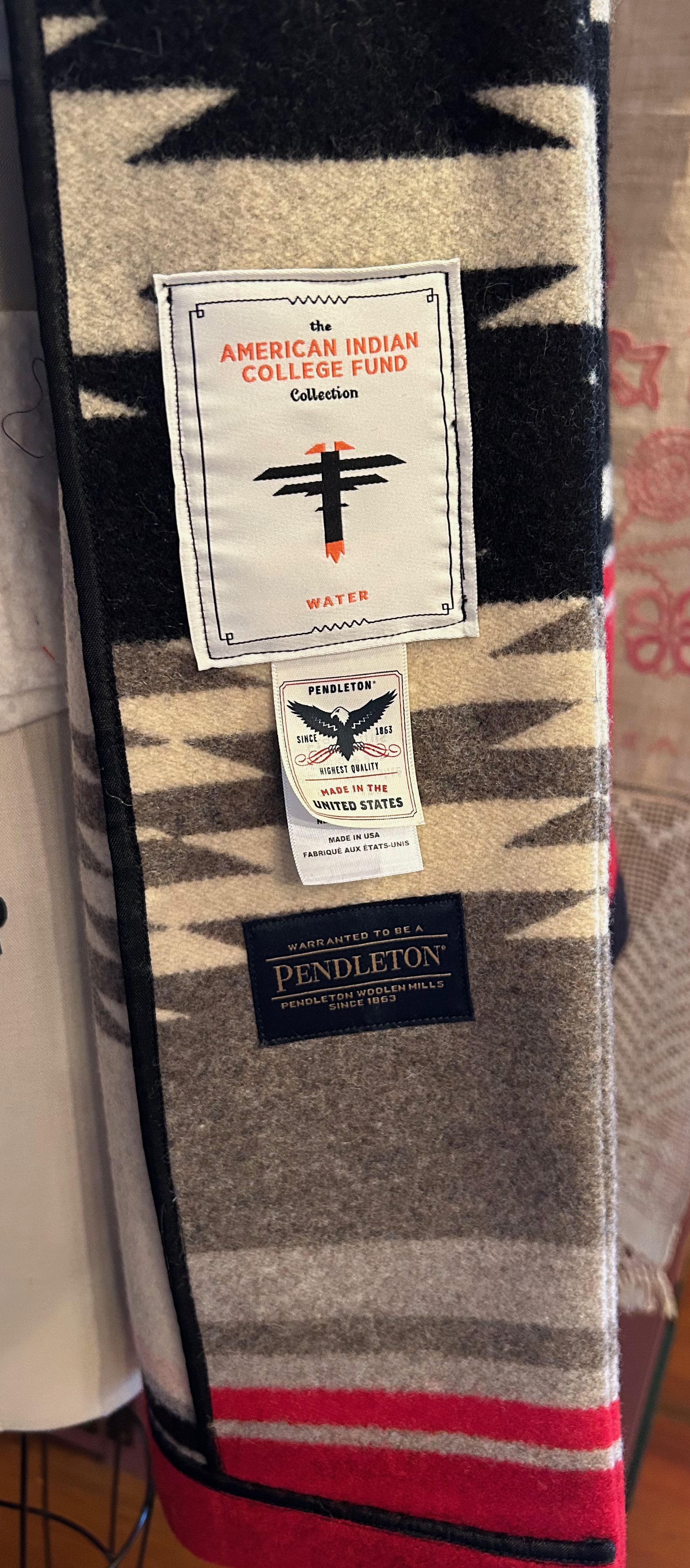
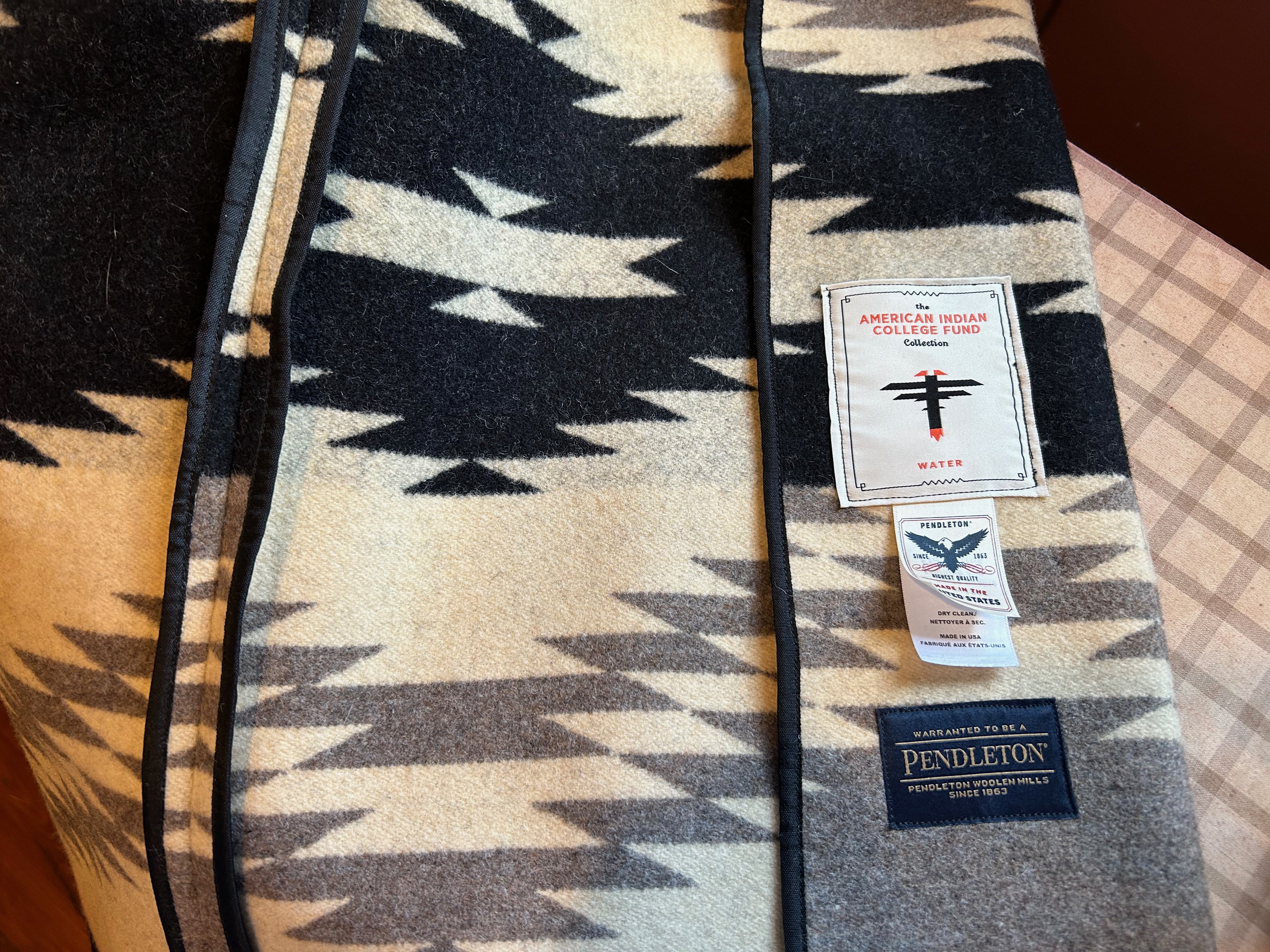
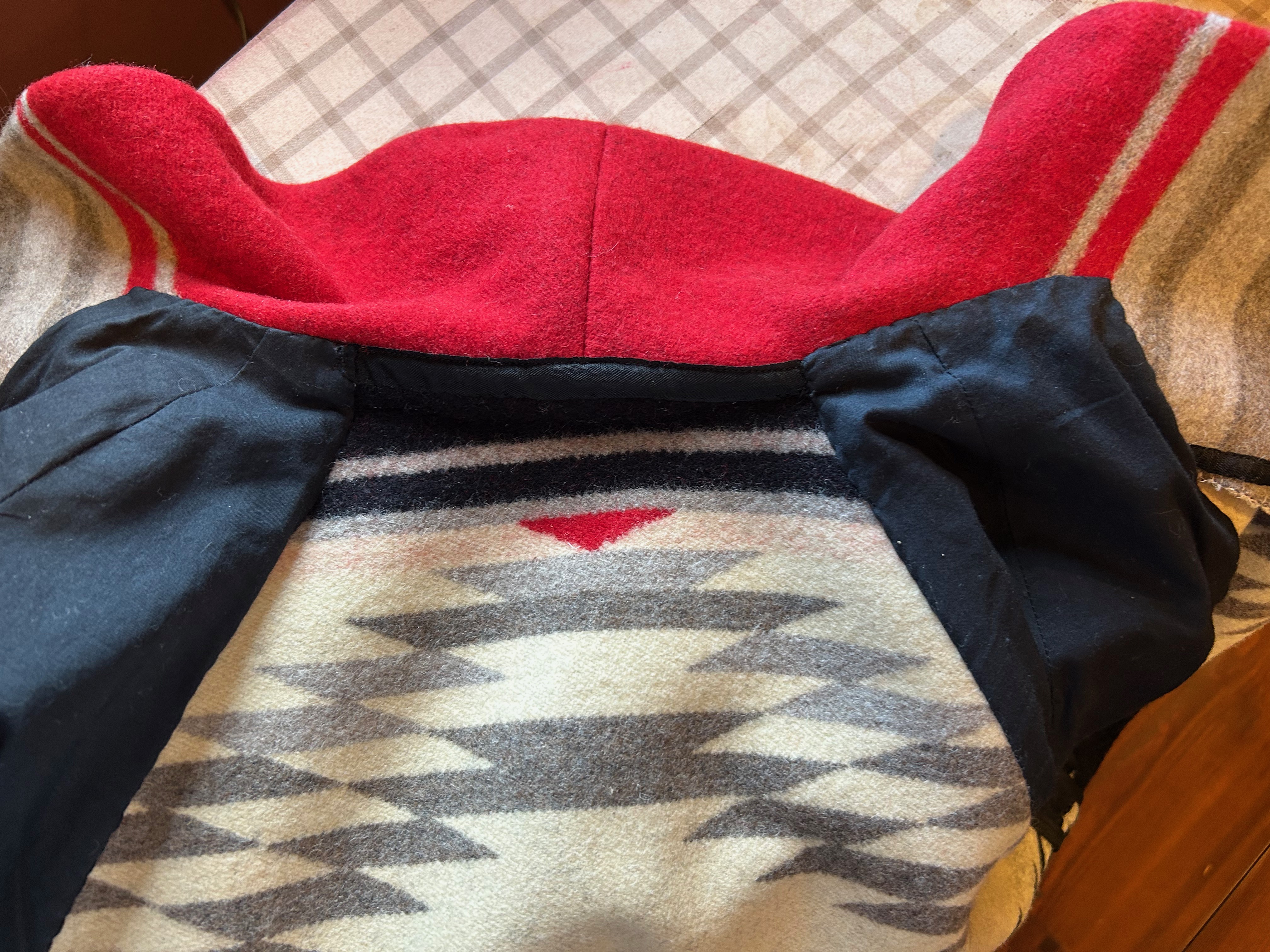
Here and below are looks at the interior seam binding I did on all the exposed edges – and the fabulous labels which I took from the blanket and attached on the coat front facing.

Here is the back interior of the jacket, showing the sleeve linings (I used lightweight cotton batiste that had a slight sheen) and how I finished the raw edges of the center back neckline.

I had found a set of taupe-colored vintage buttons in my collection which, at first glance, did not look like they would work. But after auditioning black buttons and red buttons, I was convinced those taupe ones would be perfect.  However, I had no idea how I was going to do buttonholes in that thick fabric. I fiddled around with fabric scraps to make practice bound buttonholes, using a lightweight fabric for the “lips.” They looked awful.  I thought of using large snaps and just securing the buttons on the coat front for effect. That did not appeal to me at all.  So I went to my two failsafe sewing maxims:  1) I’ll figure it out later, and 2) Plan B – it BETTER work.
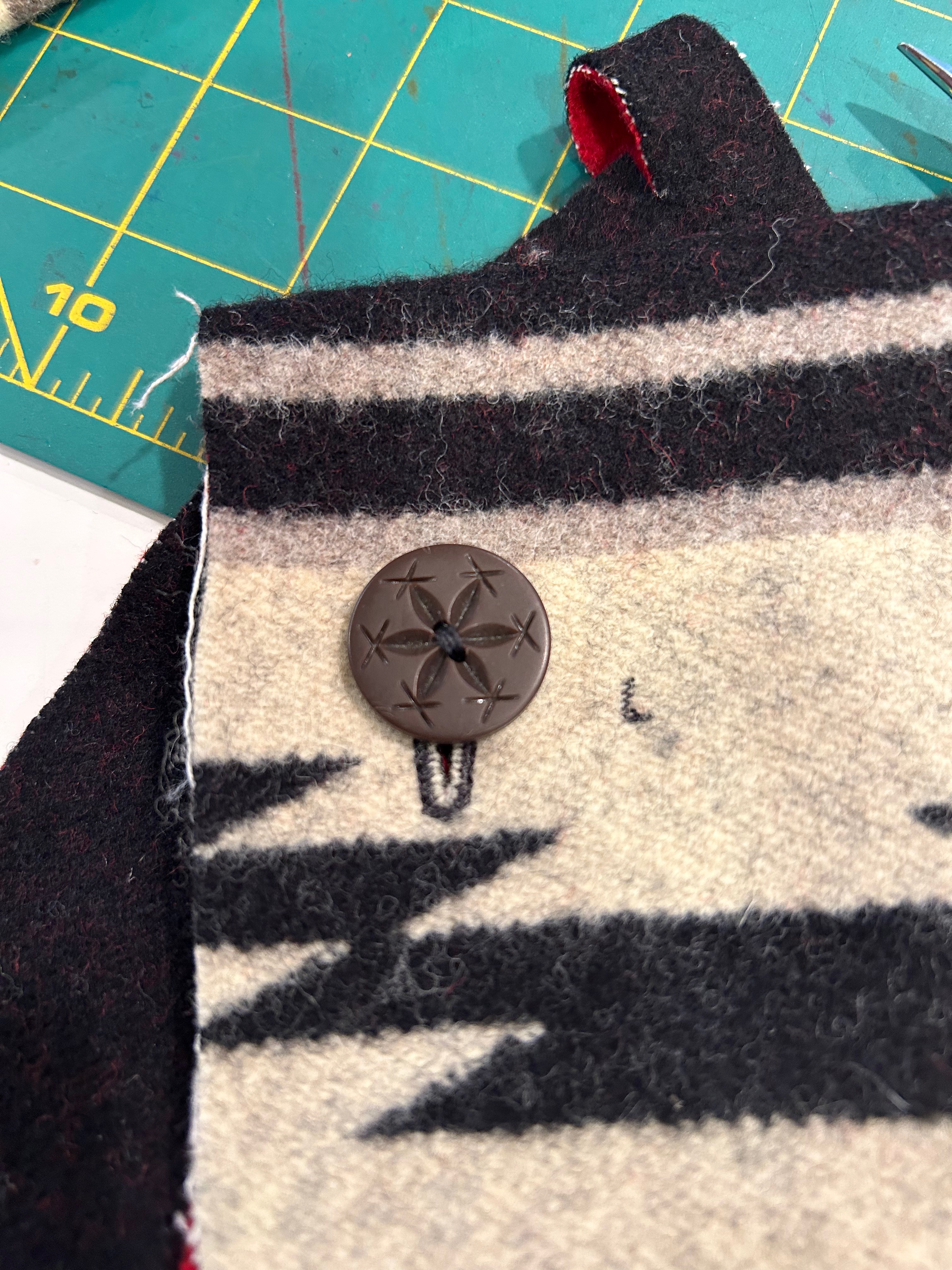
The jacket was practically finished before I found a method to make those buttonholes. Because the fabric was so thick, I could successfully only do a machine buttonhole on one layer of it. I experimented around and discovered if I made the buttonhole on the front of the coat, I could then line up the facing and use a straight machine stitch through both layers around the buttonhole. I used very small stitches to make it secure. Then I sliced them open. It worked!
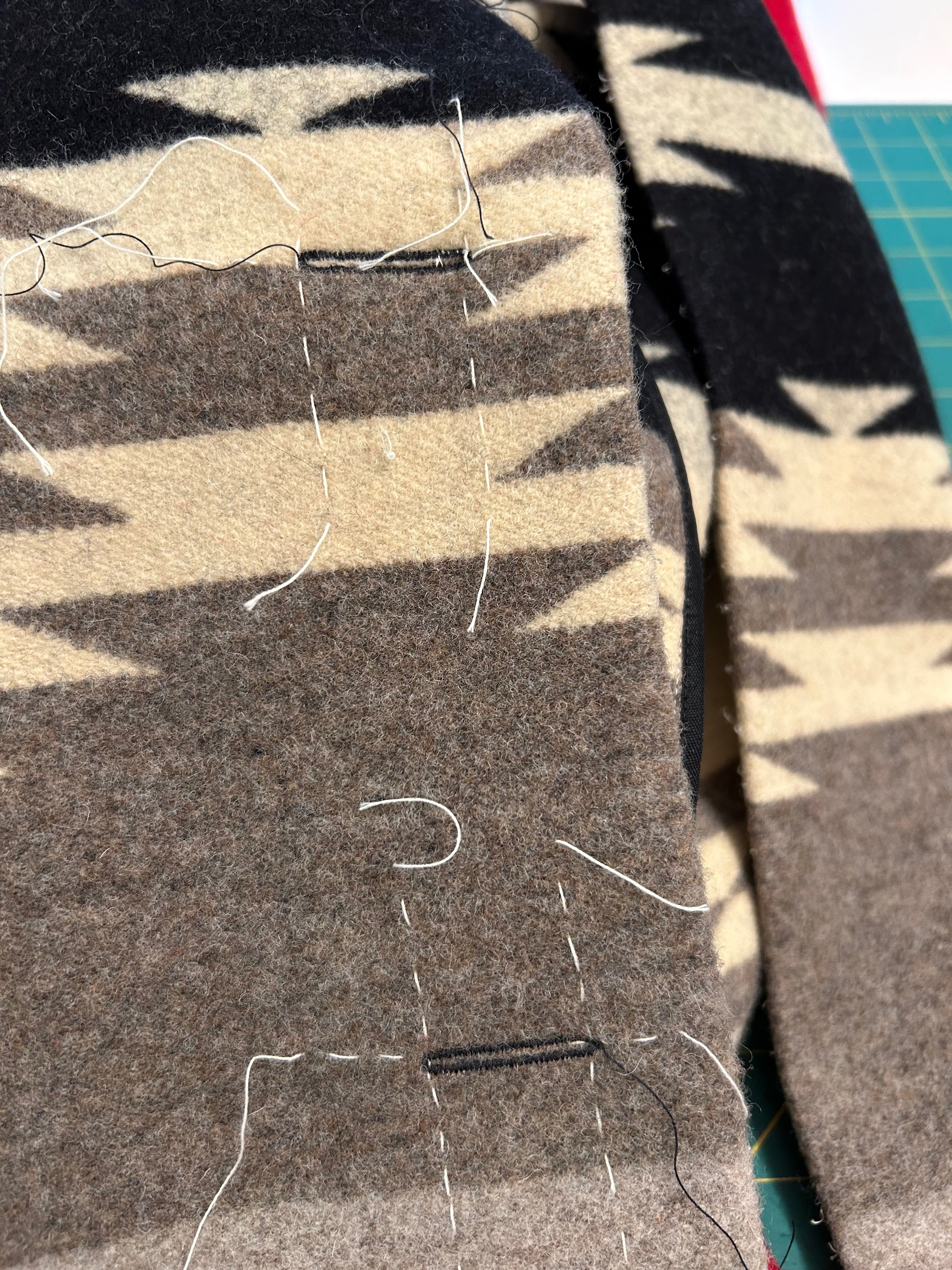
I had to remove the facing to make the machine buttonholes and then stitch it back on before continuing. I could not have seen that coming since I really did not know early on how in the world I was going to make these buttonholes!
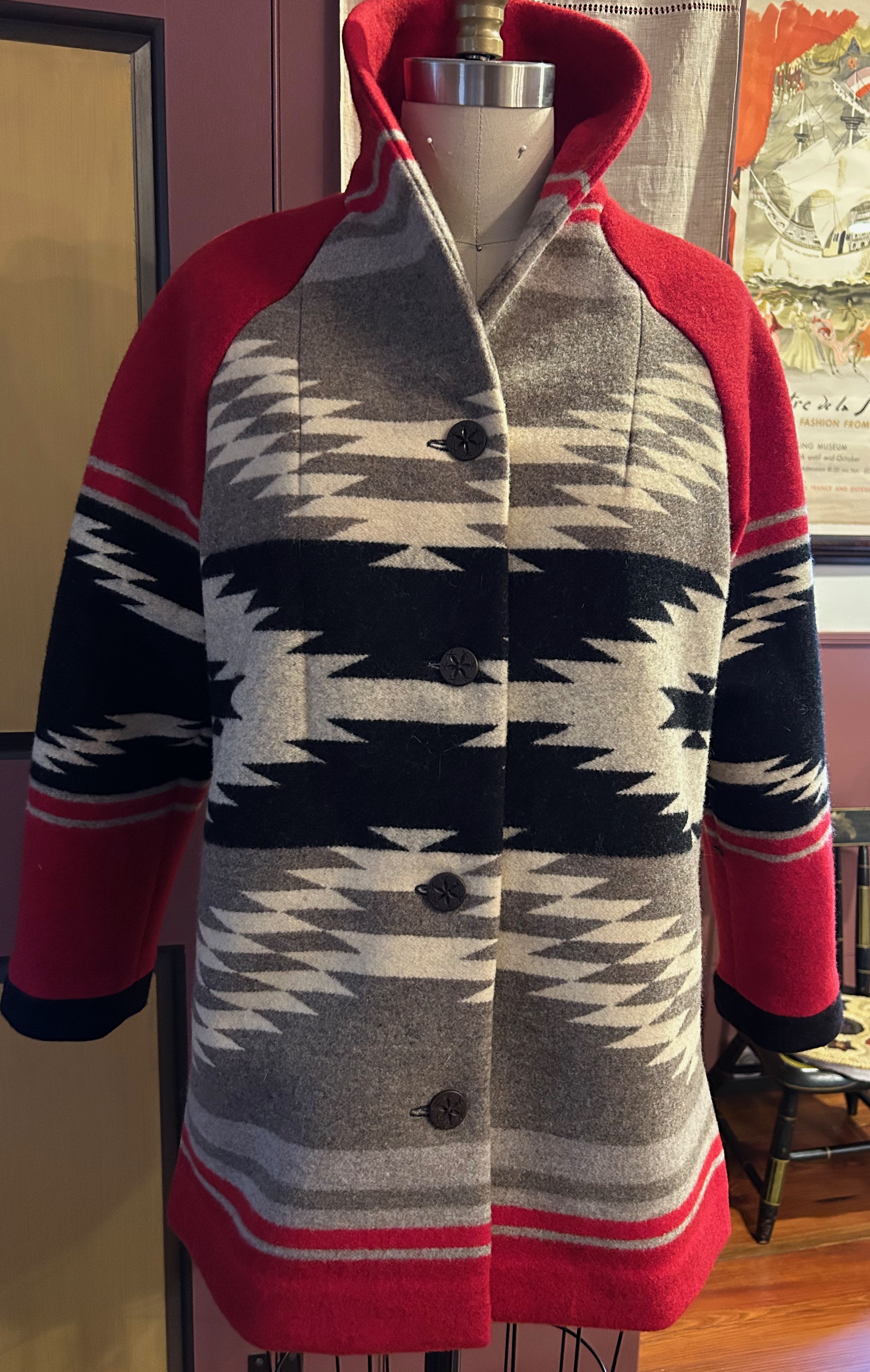
This picture shows the buttonholes all finished and completely functional! Also, this is an interesting view of the front of the coat. I was kind of wringing my hands over the center front of the coat. I did not have enough fabric to balance the design across the center front. And then I realized, even if I had had enough fabric to do that, it would not have worked. The reason? I would not have been able to balance those small dragonfly motifs on either side – or – they would have been pushed too much to either side to make sense for the design. To my eye, that balance was the more important one. One more thing… I did not have enough fabric to make patch pockets for the coat. I considered making inseam pockets out of the black batiste, but I was concerned they may cause distortion of the side seams due to the heavy nature of the fabric. I finally decided to forego pockets altogether. After wearing the coat next winter, I can always come back to the pocket conundrum if I decide pockets are a must. Right now in my mind, they are not.

Are you still reading at this point? Or did I lose you back at the dining room table?

Almost finished! The final touches on the coat involved under stitching the collar to hold the turn in place, and securing the sleeve lining to the underside of the black “cuffs.” 

What do you think of the black cuffs? I had no choice but to do them this way; hopefully they look intentional rather than contrived.
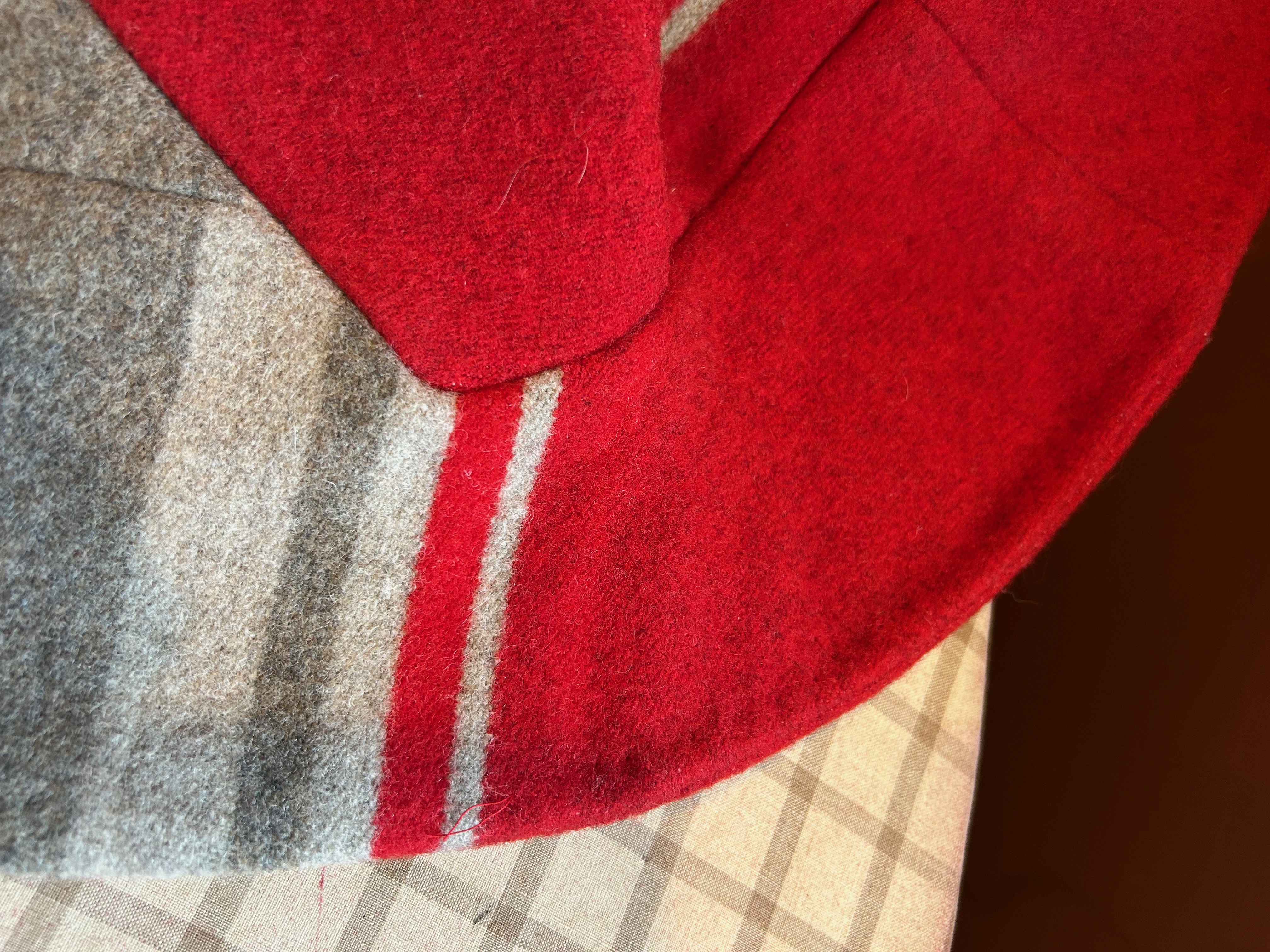
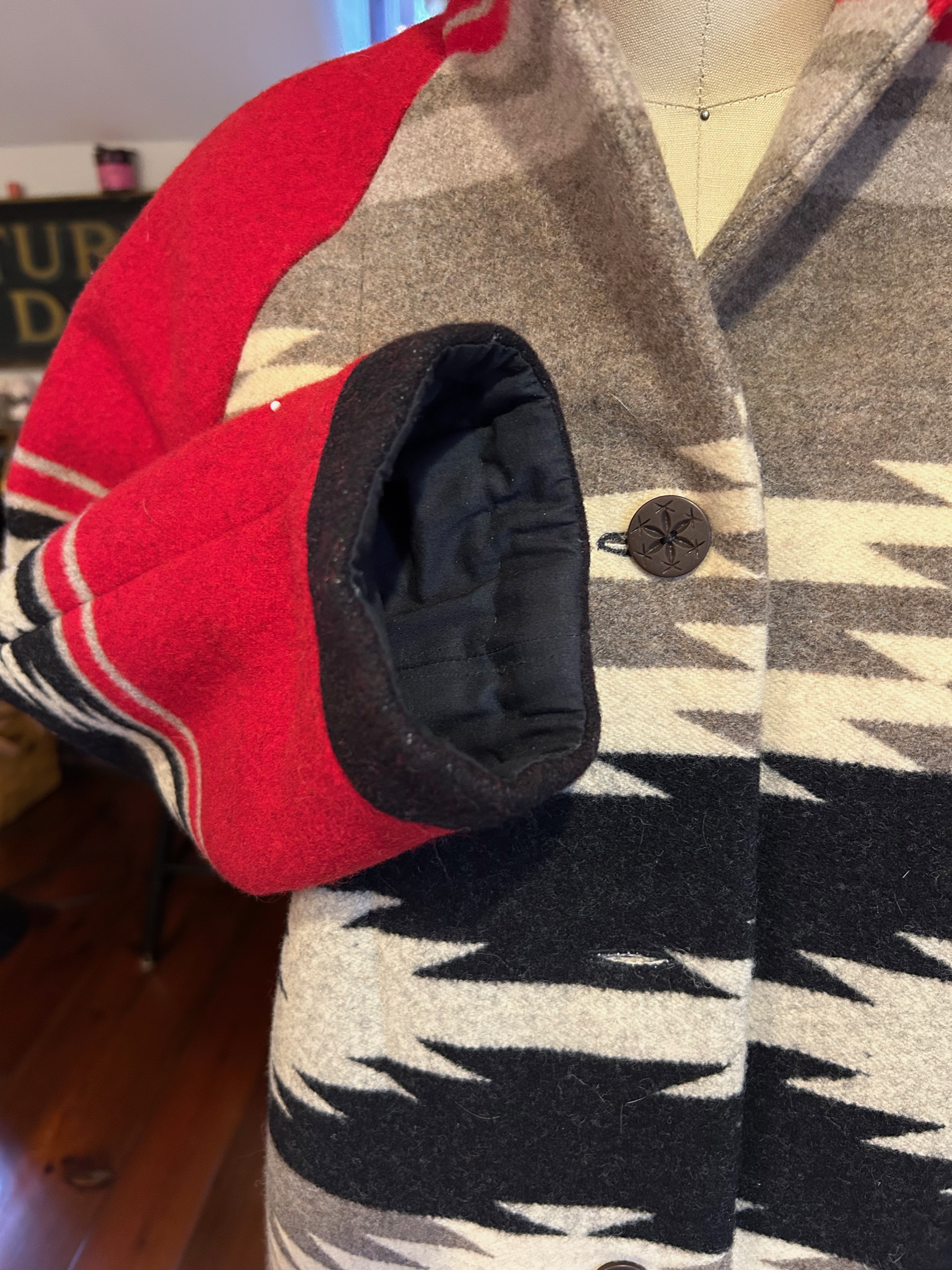
Understitching on the collar.
Hand stitching holding the sleeve linings in place.

I have to say I was pretty thrilled with how my jacket turned out, considering the parameters facing me.  

Now I do indeed match my chair! More importantly, however, I have a very classic, one-of-a-kind, Pendleton wool, western-style jacket which is going to be fun – and warm – to wear.  
48 Comments

Filed under Blankets and doll blankets, Buttons - choosing the right ones, car coats, Coats, fabric labels, Pendleton Woolen Mills, Sleeves, Uncategorized, vintage buttons, vintage Vogue patterns from the 1950s, woolens

A Tale of Two Dresses, Part 2

Whenever I am working with vintage fabric, it seems I either have more yardage than I need or, more frequently, less than I need.  I have learned over the years there is usually a way to work around having less fabric than I really need.  I just have to get creative.  And that’s what I did when I made this dress.

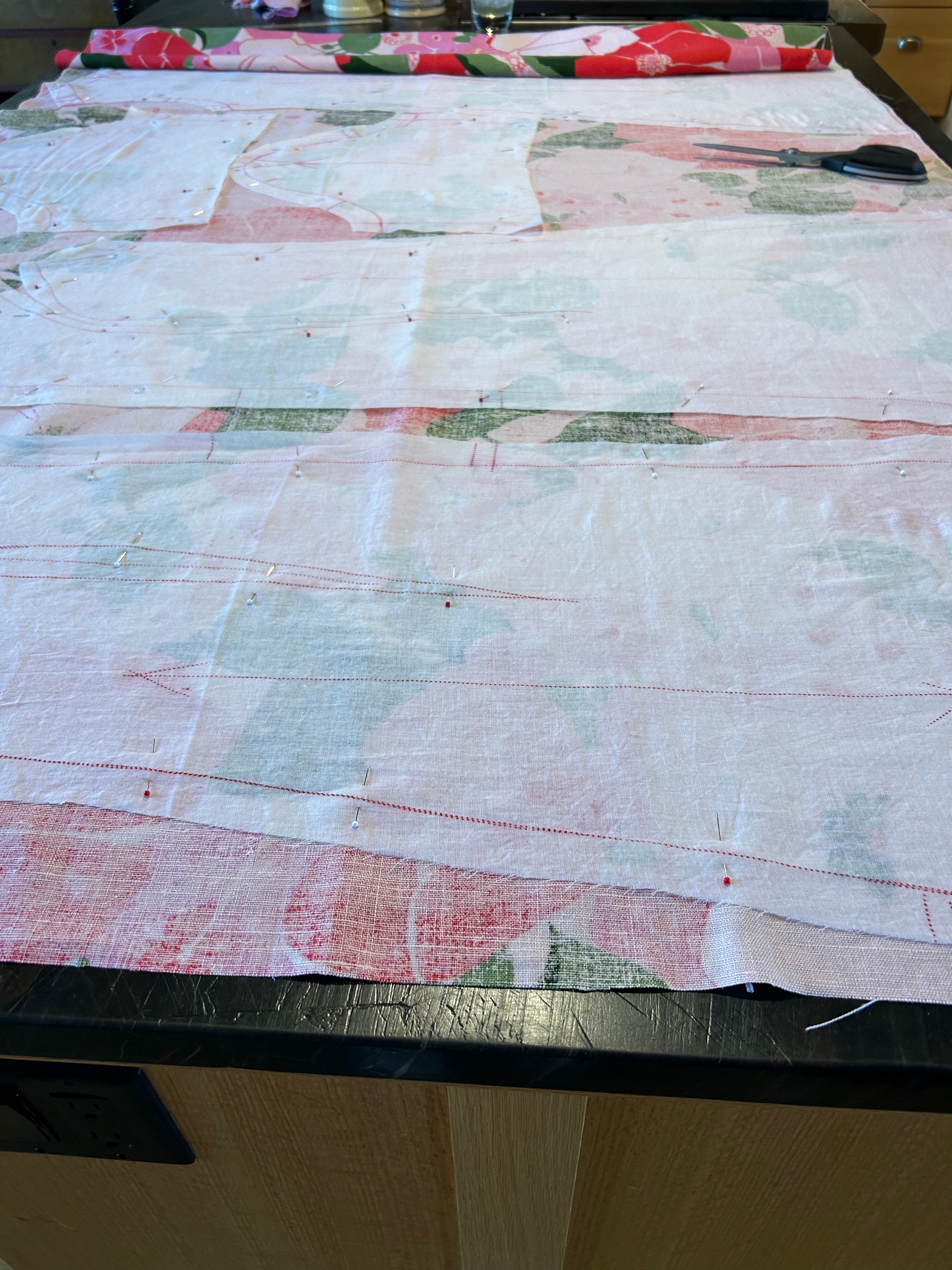
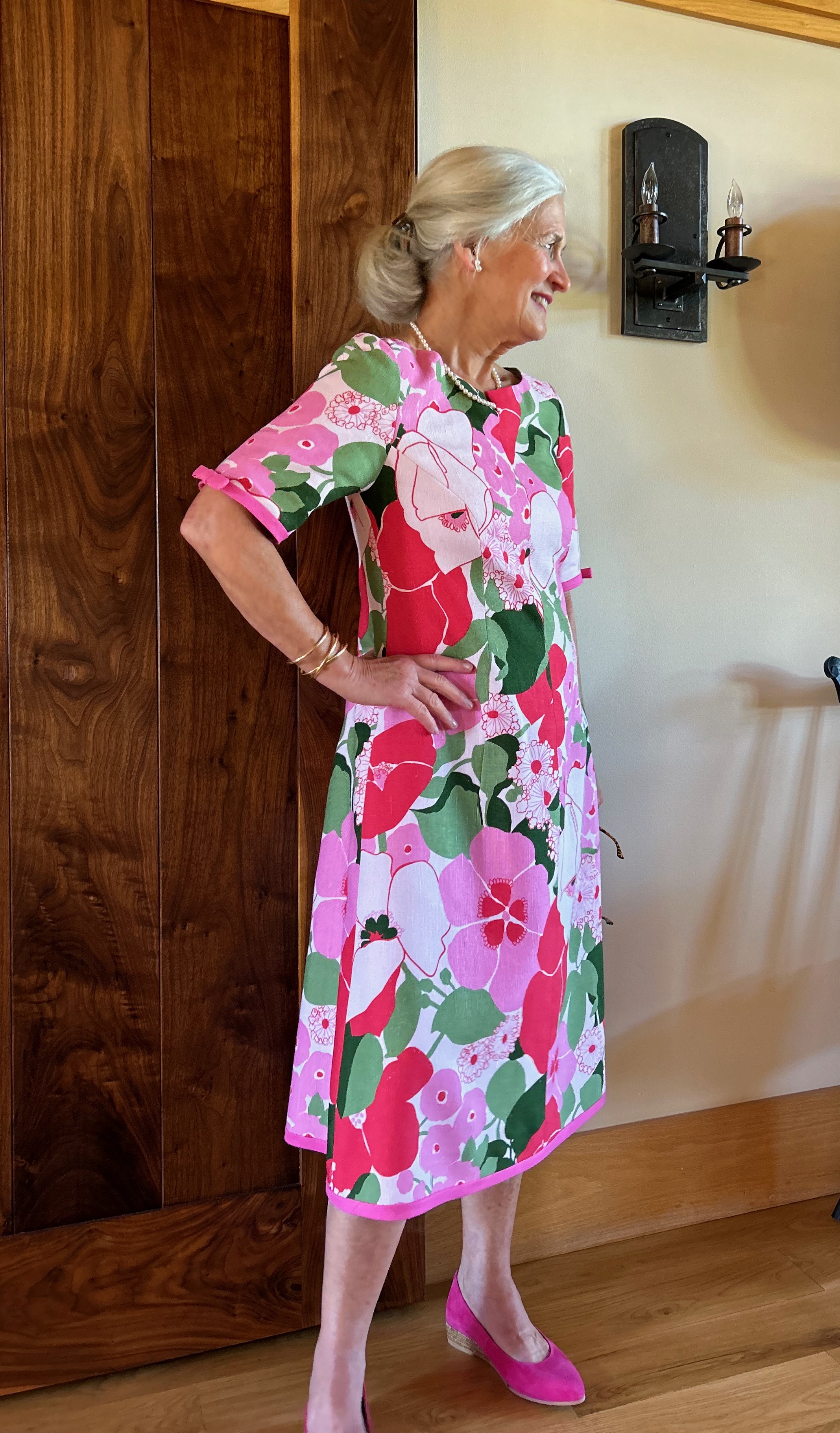
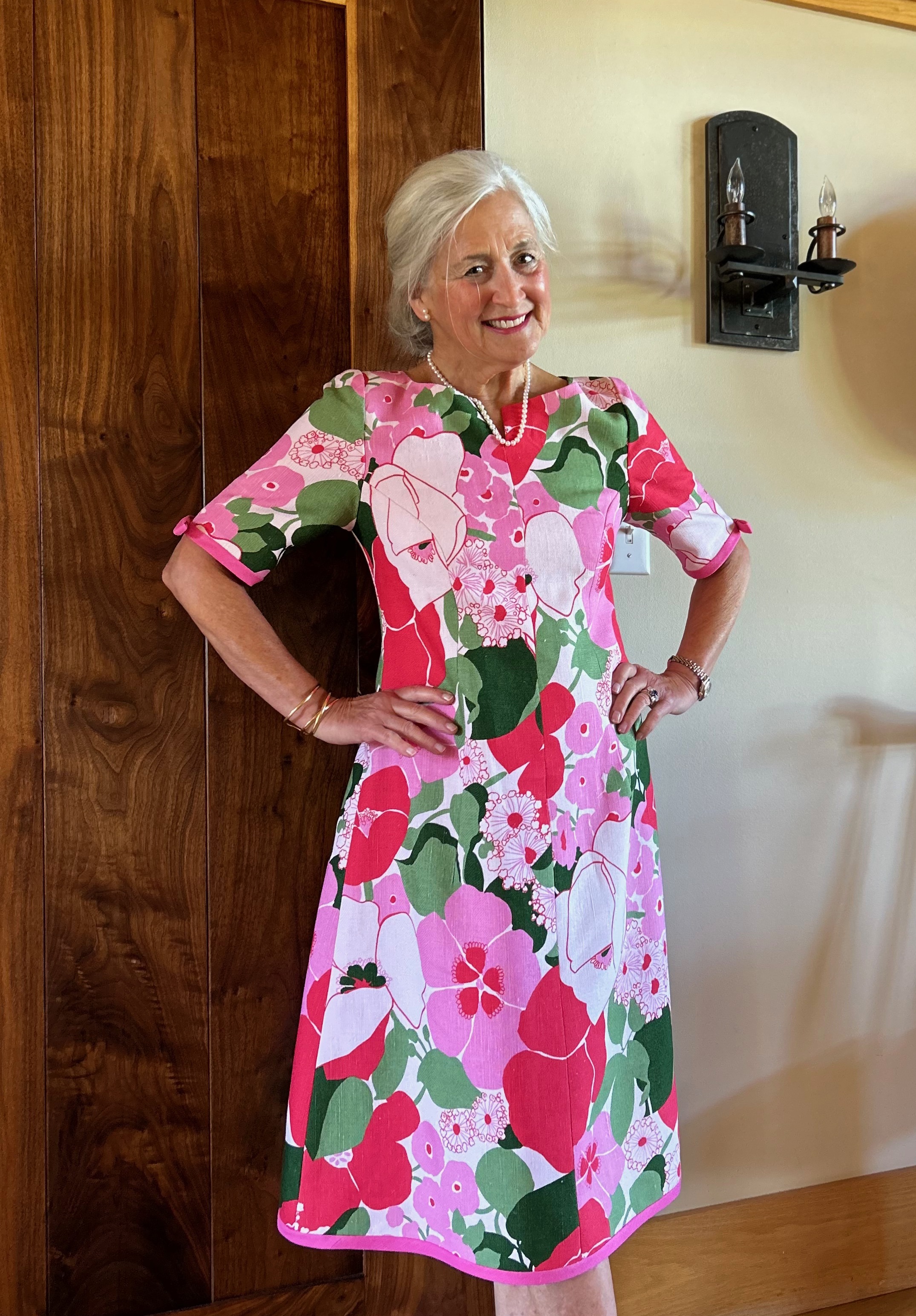
I quickly determined there was no way I could get the dress I wanted by placing the pattern on the lengthwise straight-of-grain.  The flare of the skirt, which I wanted to be mid-calf, precluded any notion of such a layout.  At 45” wide, I knew I could just get the dress length I wanted if I laid out the pattern on the cross-grain, from selvedge to selvedge.  Linen is a very stable fabric, so I was confident the cross-grain would work.  In addition, there were no directional limitations in the floral design of the fabric.  Barely fitting my pattern – from shoulder to hem – on the fabric from selvedge to selvedge, however, would leave no extra fabric to turn up for the hem – or even to face the hem.  I decided to worry about that later.  First I wanted to determine how I could get the four pieces for the dress and the two lengthened sleeves placed on the fabric, keeping in mind three important things:  1) although this was not a fabric to be matched per se, the all-over design of the fabric needed to be on the same plane in contiguous seams; 2) I wanted to space out the larger floral motifs so the dress would be balanced as best as possible (looking critically at the dress I made when I was 23, I clearly could have given this more thought!); and 3) I wanted to avoid large demonstrative blooms at the bust.  Then, and only then, would I worry about the hem.  

I transposed all the markings from my adjusted pattern onto the cotton batiste, then used those pieces as my pattern. I then basted the two layers together to be treated as one, before sewing any seams or darts.

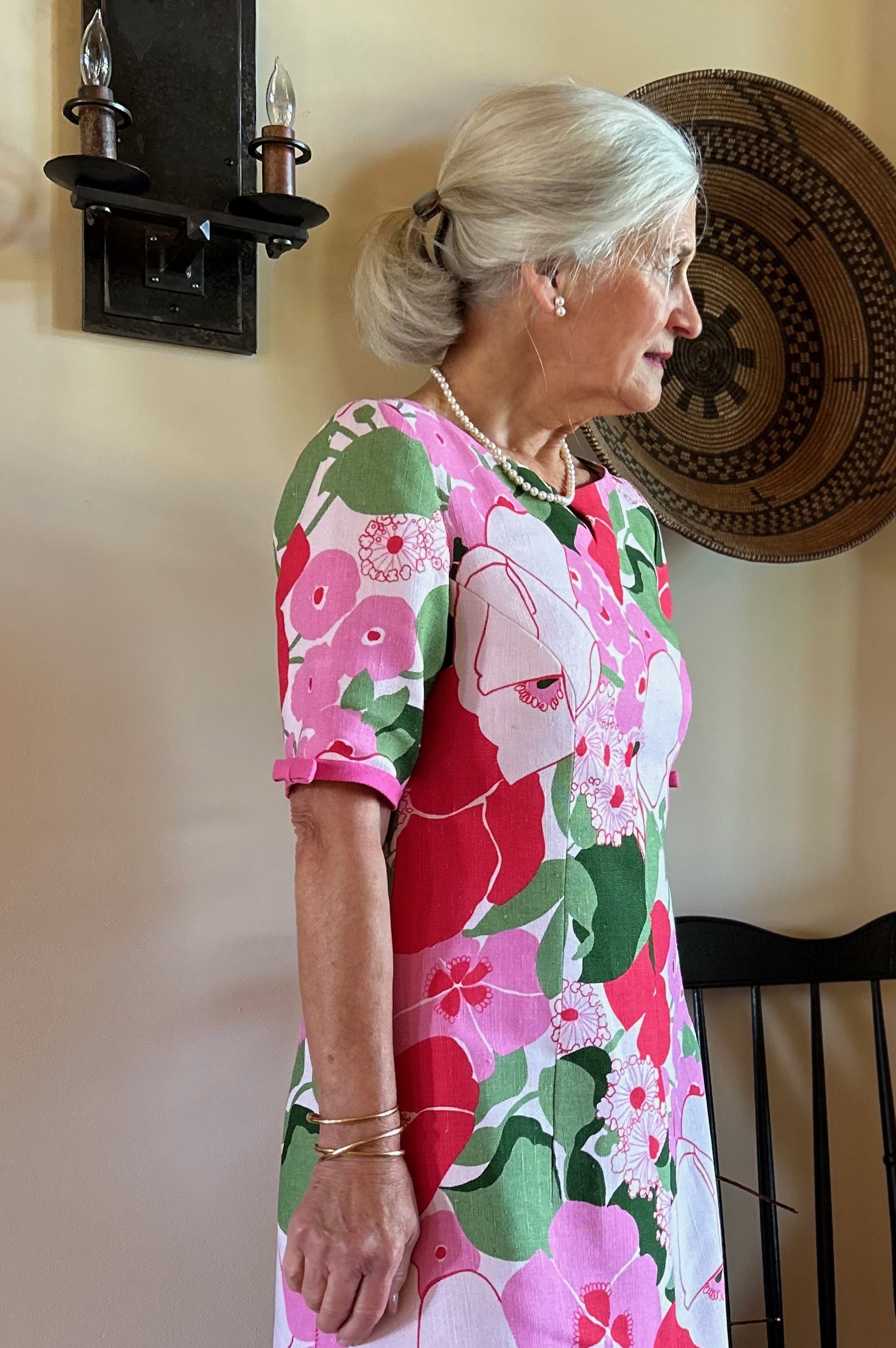
Once I was happy with this placement, I had a eureka moment when I knew I could accomplish two things with a simple bias trim made from the yardage of deep pink linen which coordinated nicely with the floral.  1) I could preserve the full 45” of cross-grain length by applying bias trim to the hem edge instead of turning it under, and I could do the same with the sleeves.  And 2) the trim would add interest to the dress, just as I had vaguely imagined.  (A quick aside here – I have ample yardage of the solid deep pink linen to make a coordinating coat at some point. Every dress needs a coat, right?) 

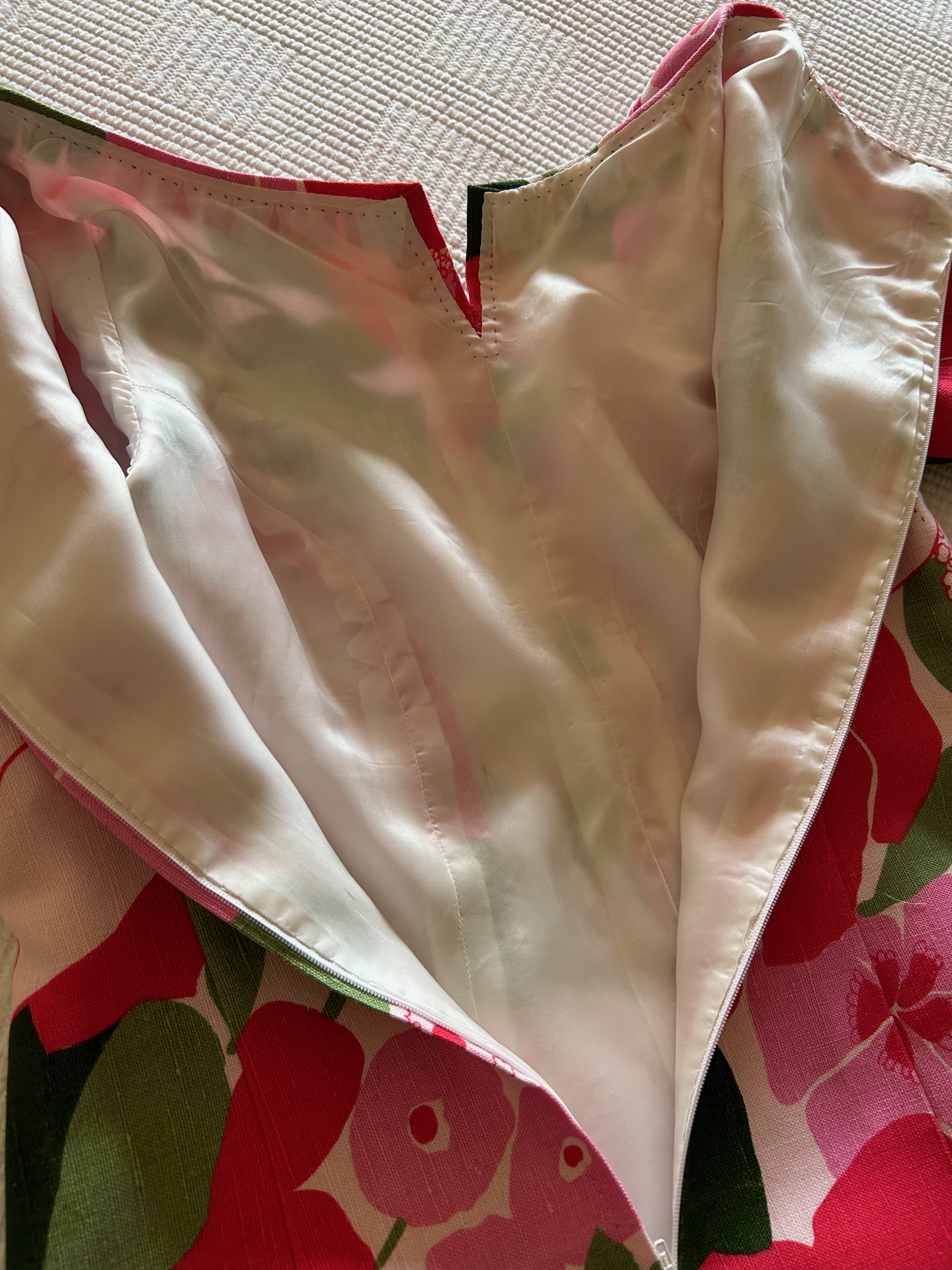
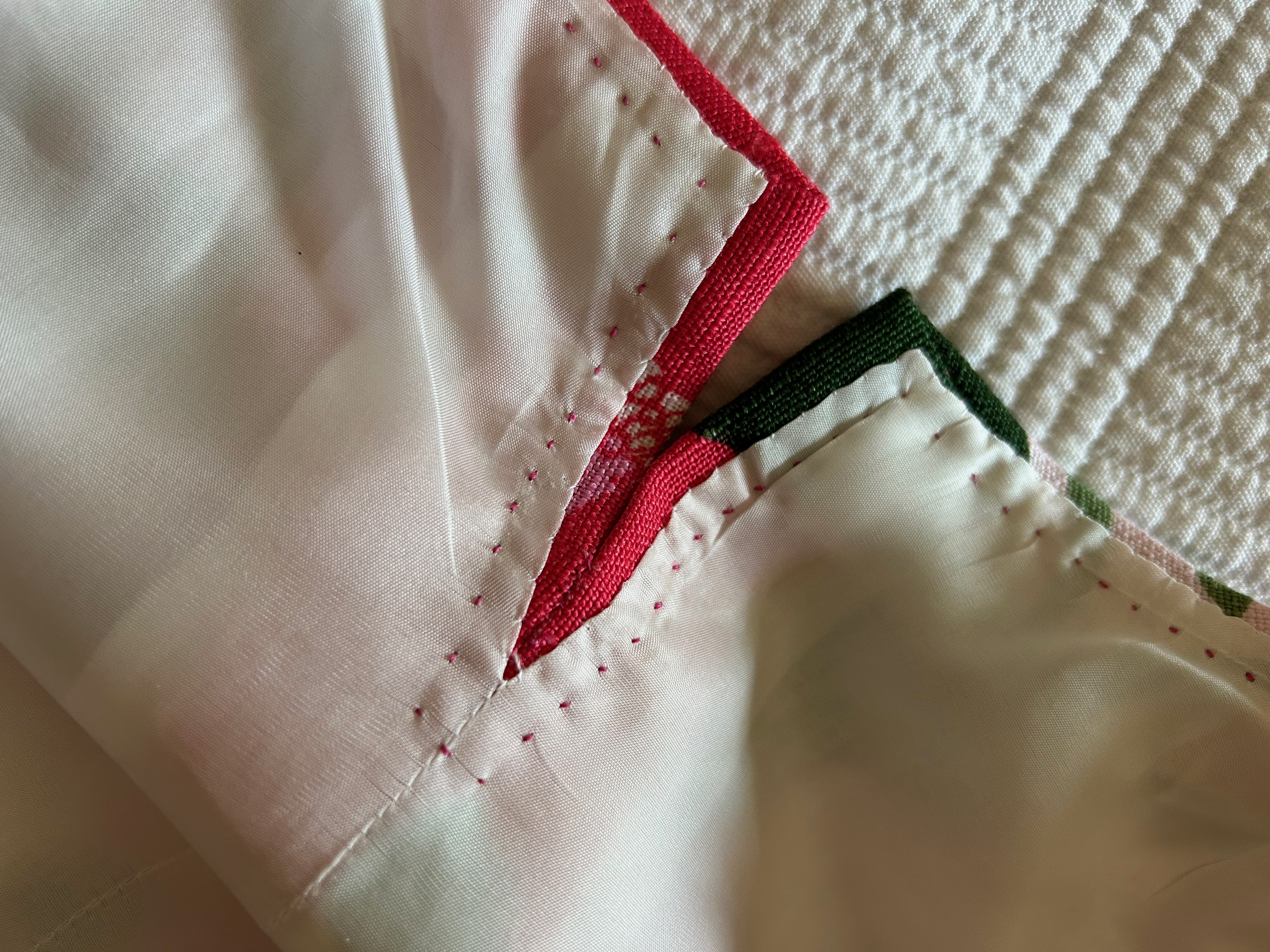
I underlined this dress in a very lightweight, pre-washed, cotton batiste, then I lined it in Bemberg rayon.  Moygashel linen washes beautifully, as does Bemberg lining, which is why I chose Bemberg over silk for this dress. I eliminated the neckline facing, choosing instead to bring the lining up to the edge of the neckline seam, then under-stitching it to secure that edge in place.  

I chose to do a hand-picked, lapped zipper, an application which I think looks so lovely.  Interestingly, I hand-picked the zipper in the dress I made in 1973, although it is a centered application.  

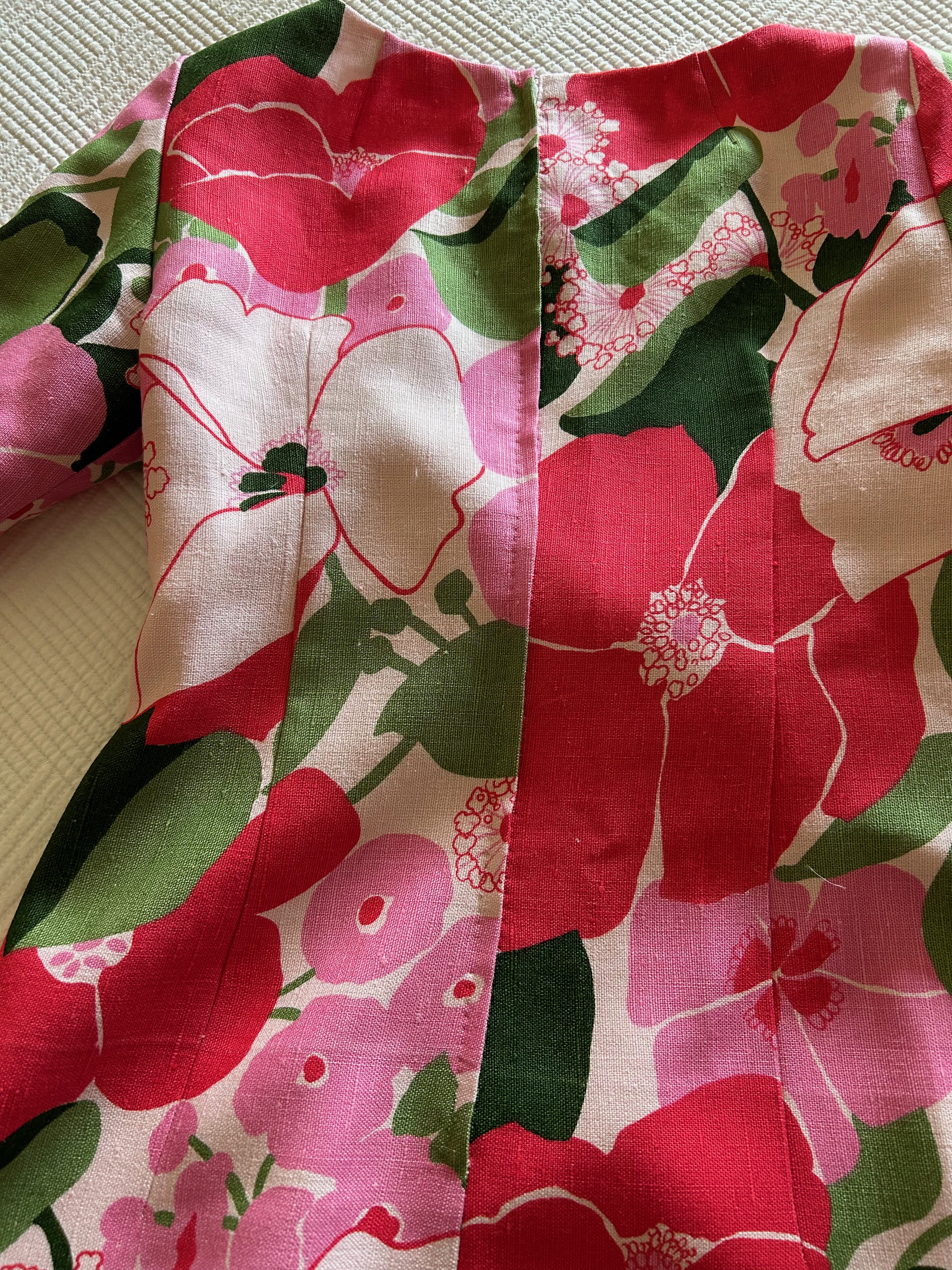
And here is a back view of the 1973 dress. The zipper is metal, which certainly is a telltale sign of a vintage dress.

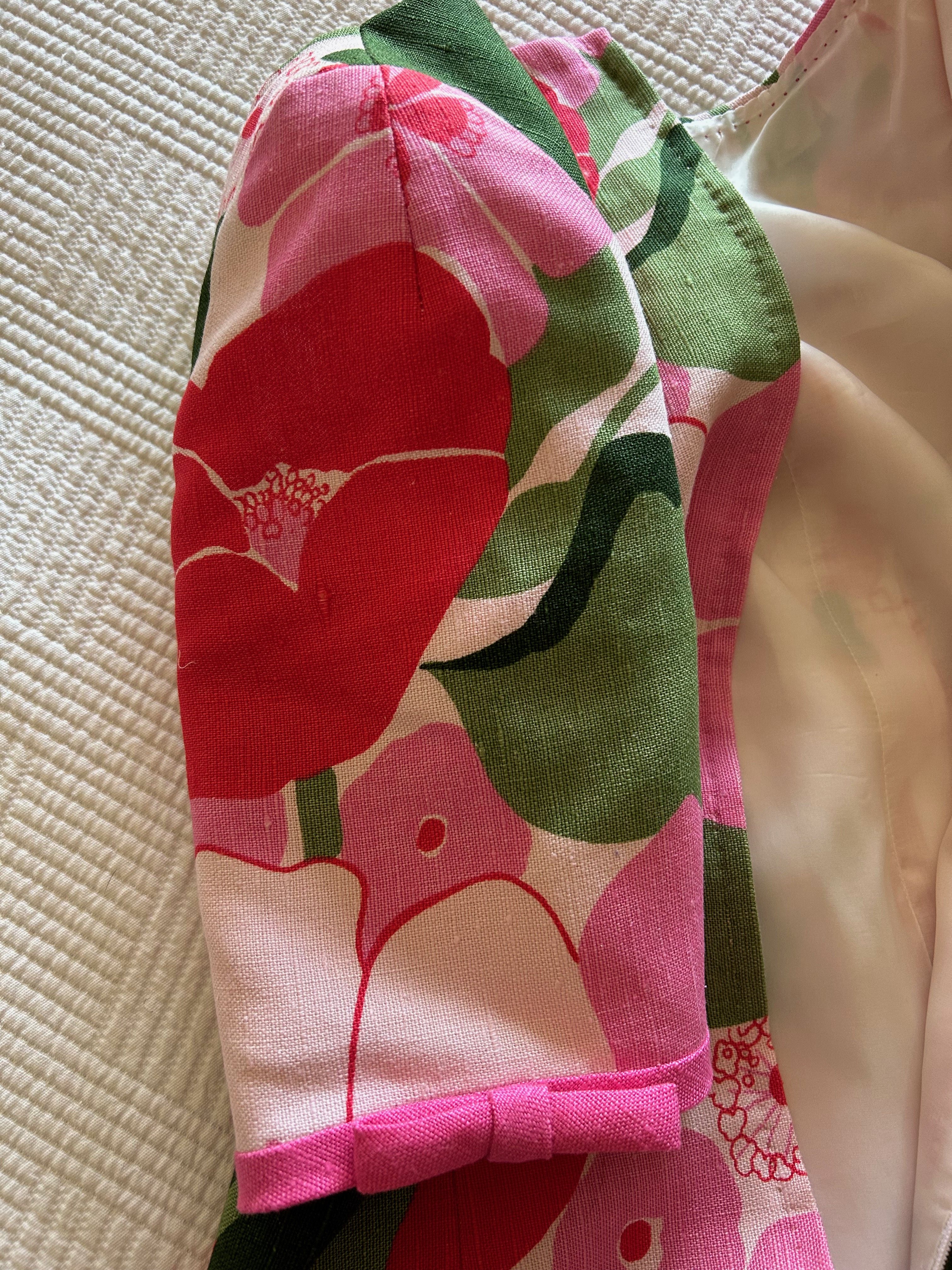
When it came time to apply the bias-cut trim to the hem and sleeves, I had to experiment around a bit.  I didn’t want it too wide, but it needed to be substantial enough to look like it was meant to be and not an afterthought or decision made in desperation!  I finally settled on an exposure of 1/2”.  

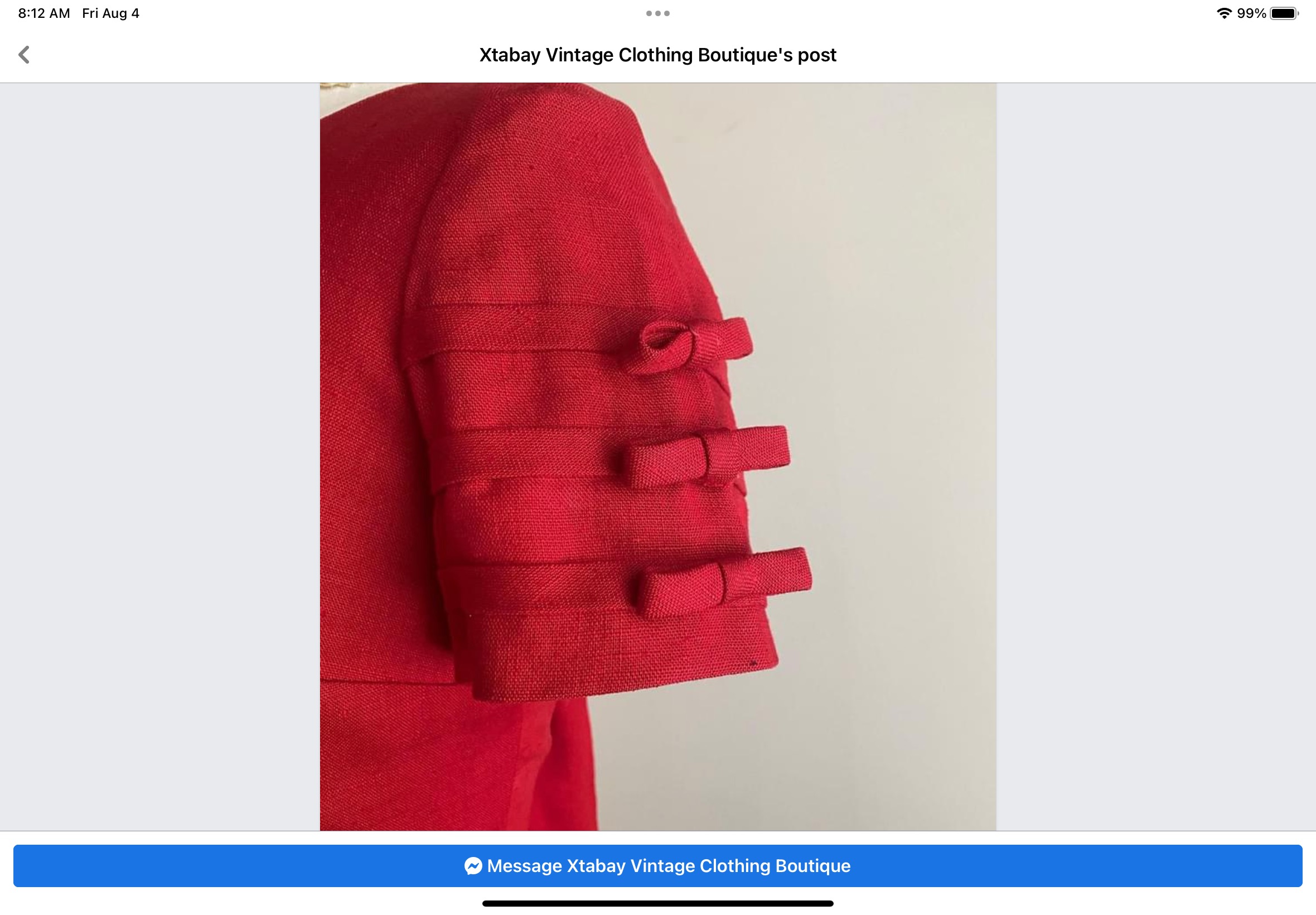
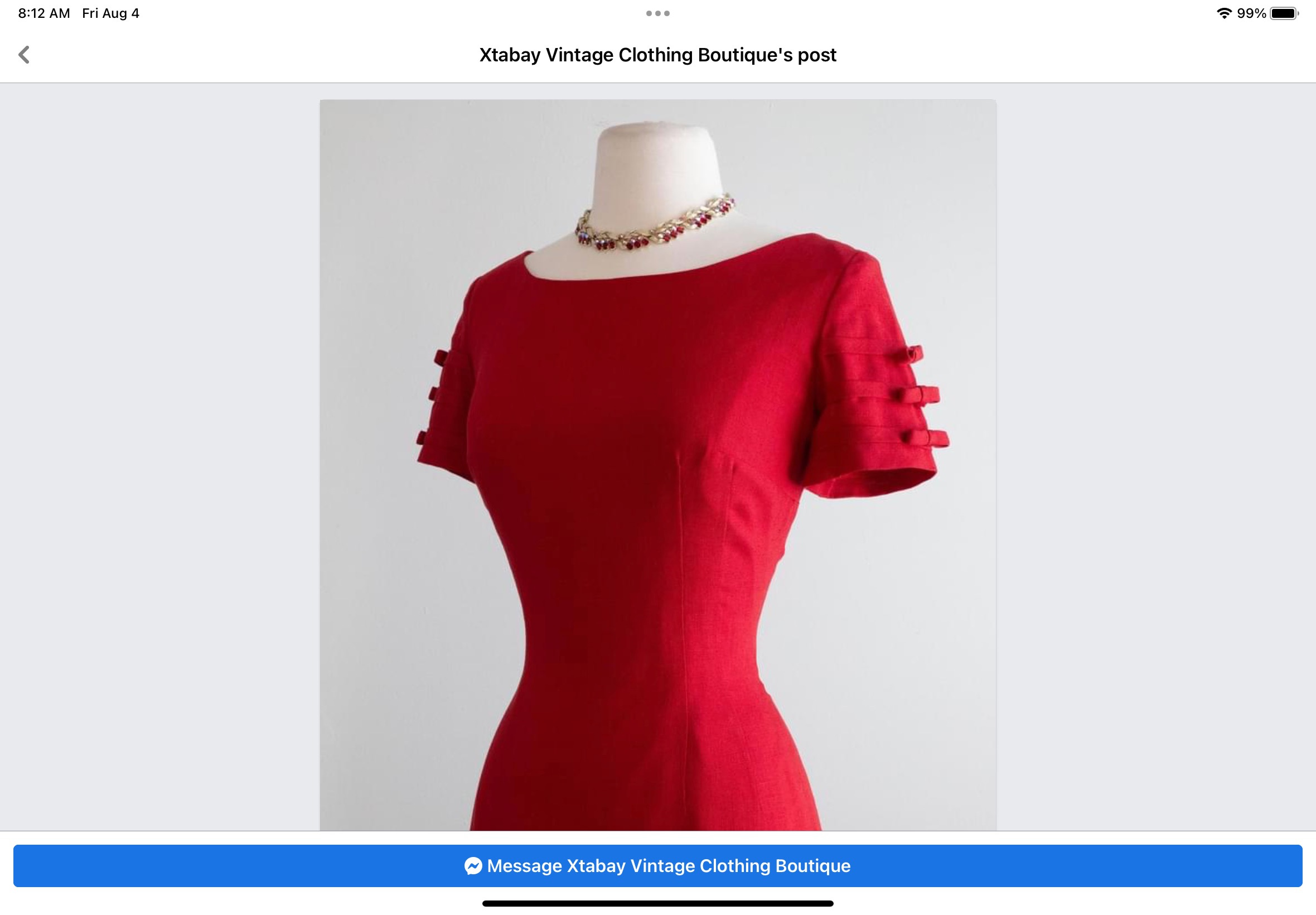
Now this is where it gets interesting.  A few weeks ago I saw a vintage dress on a Facebook/Meta post by Xtabay Vintage Clothing Boutique.  It is obviously Moygashel linen (I can tell by its weave and color), but what really caught my eye were the bias strips and low-profile bows adorning its sleeves.  I tucked this idea in the back of my mind for future consideration.  What I didn’t know was that the future was right around the corner!  Yes – I “borrowed” this idea and added a single bias-cut bow to each sleeve.  Somehow, it just seems to finish the dress.  

I never would have thought of adding a bow to each sleeve had I not seen this pretty vintage dress.

In this view, the princess seam which originates in a dart is visible. This is a nicely engineered, flattering pattern.

Well, you may have guessed by now the reason for making this dress this year.  I will wear it next week when my husband and I celebrate our 50th Wedding Anniversary.  I have changed a lot in those 50 years (and so has my husband!), but I still love pink in all its shades and I still love Moygashel linen (and I still love my husband, too!)  

50 Comments

Filed under Bows as design feature, couture construction, Dressmaker details, Fashion history, hand-sewn zippers, Hems, Linen, Linings, Mid-Century style, Moygashel linen, Sleeves, Summer sewing, Uncategorized, underlinings, Vintage fabric, vintage Vogue patterns from the 1970s