Tag Archives: diy

And Now I Match my Chair, Part 2

Isn’t a good pattern worth its weight in gold?  When I purchased this jacket pattern several years ago, I just liked it, no plans in place, and thought the day might come when I could use it.  The more I studied it with my Pendleton blanket in mind, the more I thought it was perfect for my project.  First task, of course, was to make a muslin toile and check the fit and size. 
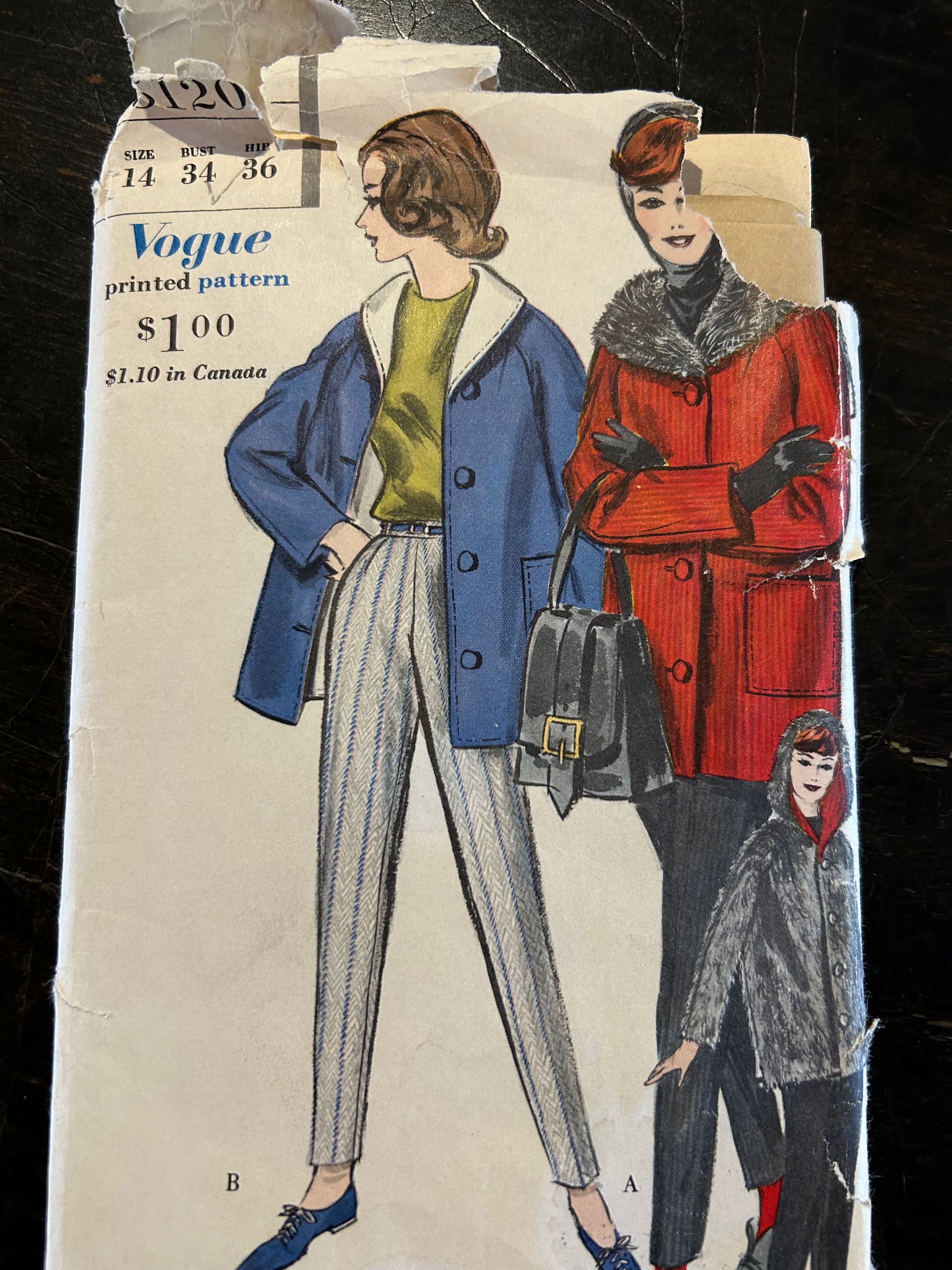
View B is the version I intended to use.

By now, November and early December had passed with my life taken over by bathroom renovations and holidays looming on the horizon. We headed back to Wyoming for Christmas, and then the new year of 2026 dawned, with all its promise and things unknown.  January was the perfect time to get back to my project. The jacket as designed was to be fully lined, either with fleece, contrasting fabric, or self-lined. I determined I would need to line the sleeves, while the rest of the jacket should remain unlined.  However, I needed a facing for the shawl collar and front edges. Because there was a pattern piece for interfacing the collar and front edges, I thought I could use that for my facing.  My toile confirmed that for me.  
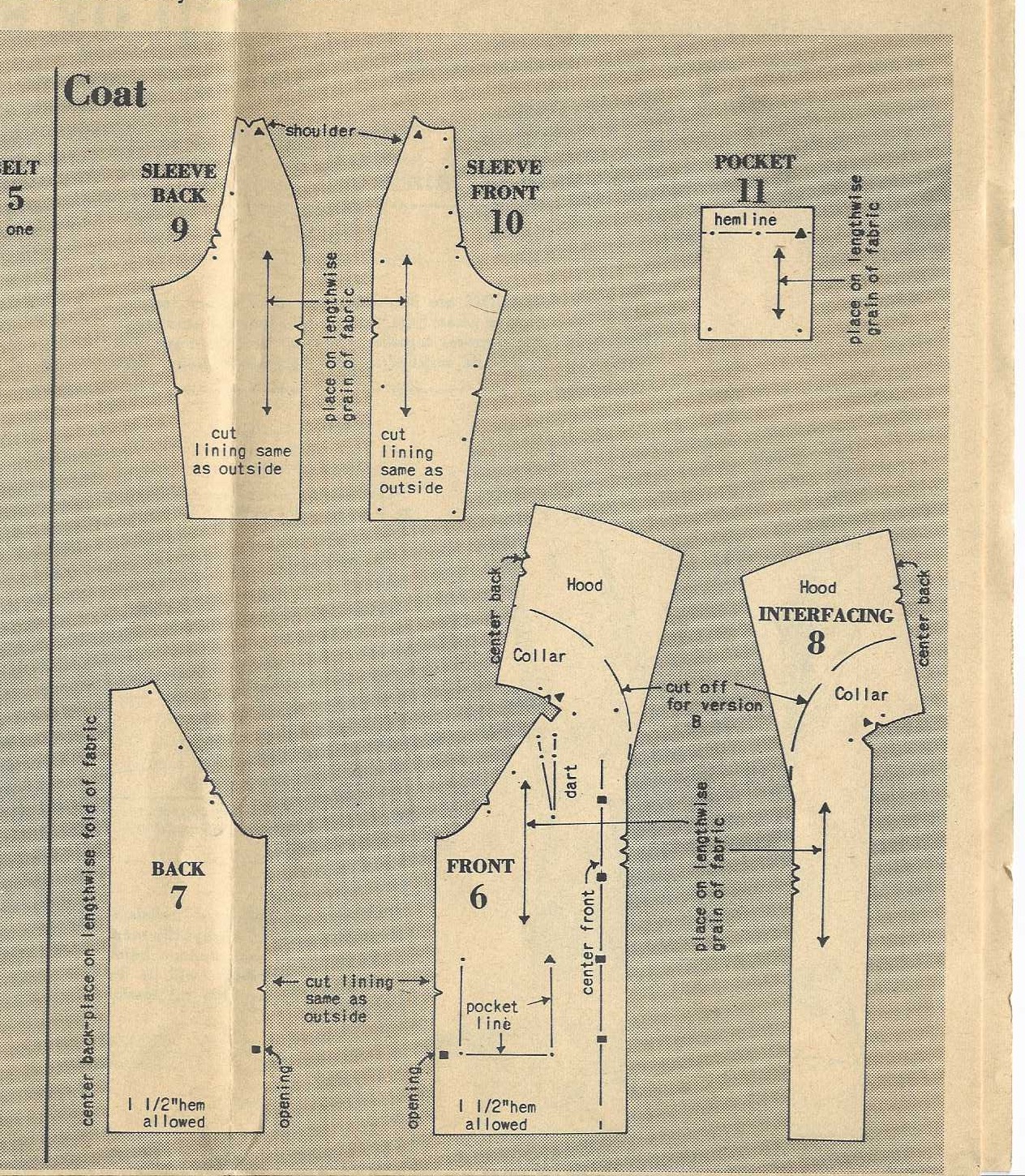
I used the interfacing (minus the hood extension) in the lower right corner of the diagram for my coat facing.

The coat muslin seemed very large overall on me, requiring a lot of alteration.  It can be tricky with coats, as enough ease must be allowed for wearing a heavier sweater or layers underneath. Also, the thickness and relative non-fluidity of the blanket dictated a looser fit.  I spent a few days perfecting my toile.  Then the real test was upon me.

I took my muslin apart, producing pattern pieces to fit onto my fabric/blanket. Was making this jacket out of what I had left of the blanket even going to be possible? If so, how would the placement of the pattern pieces on the very graphic and large design work out? 

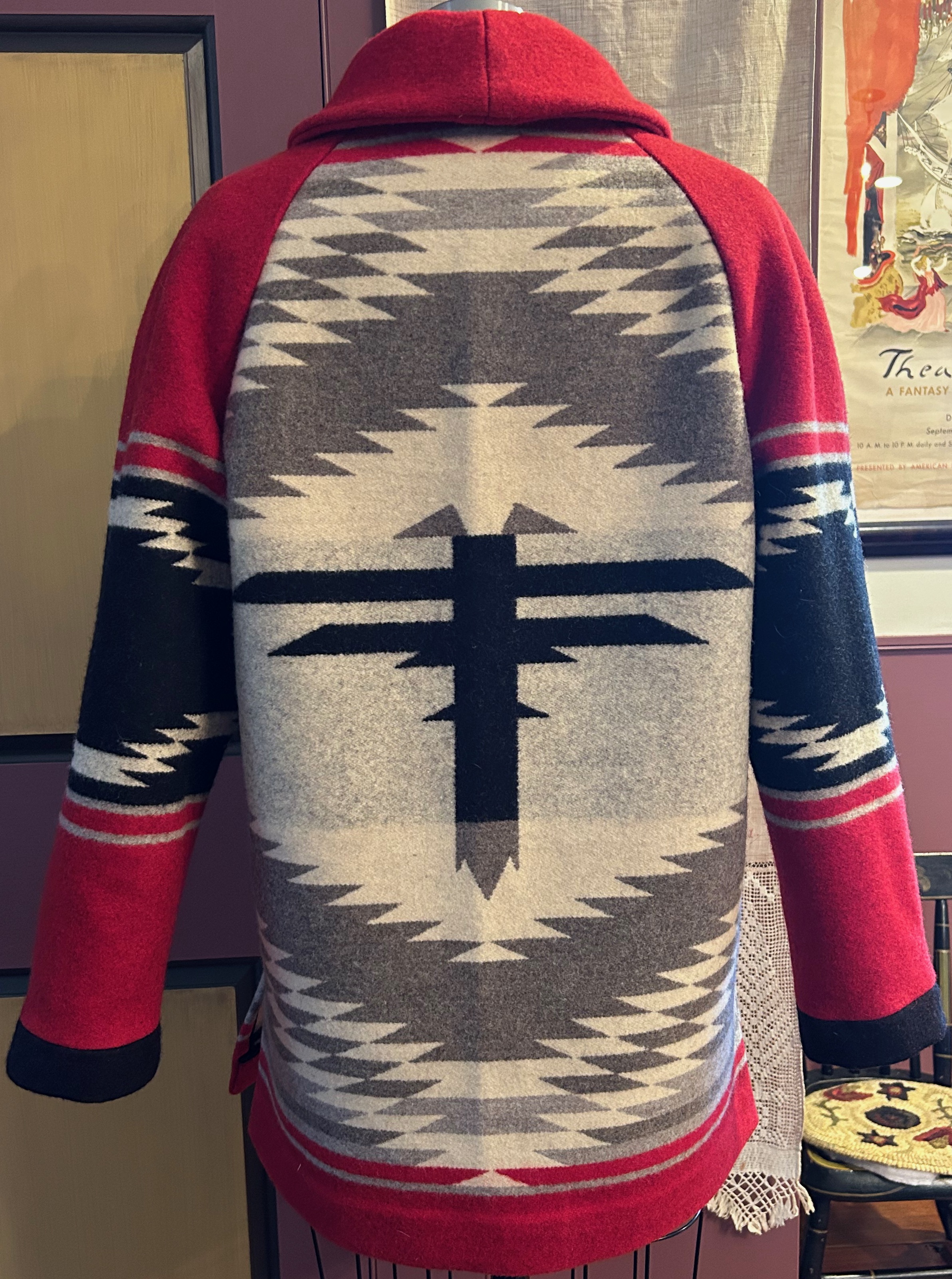
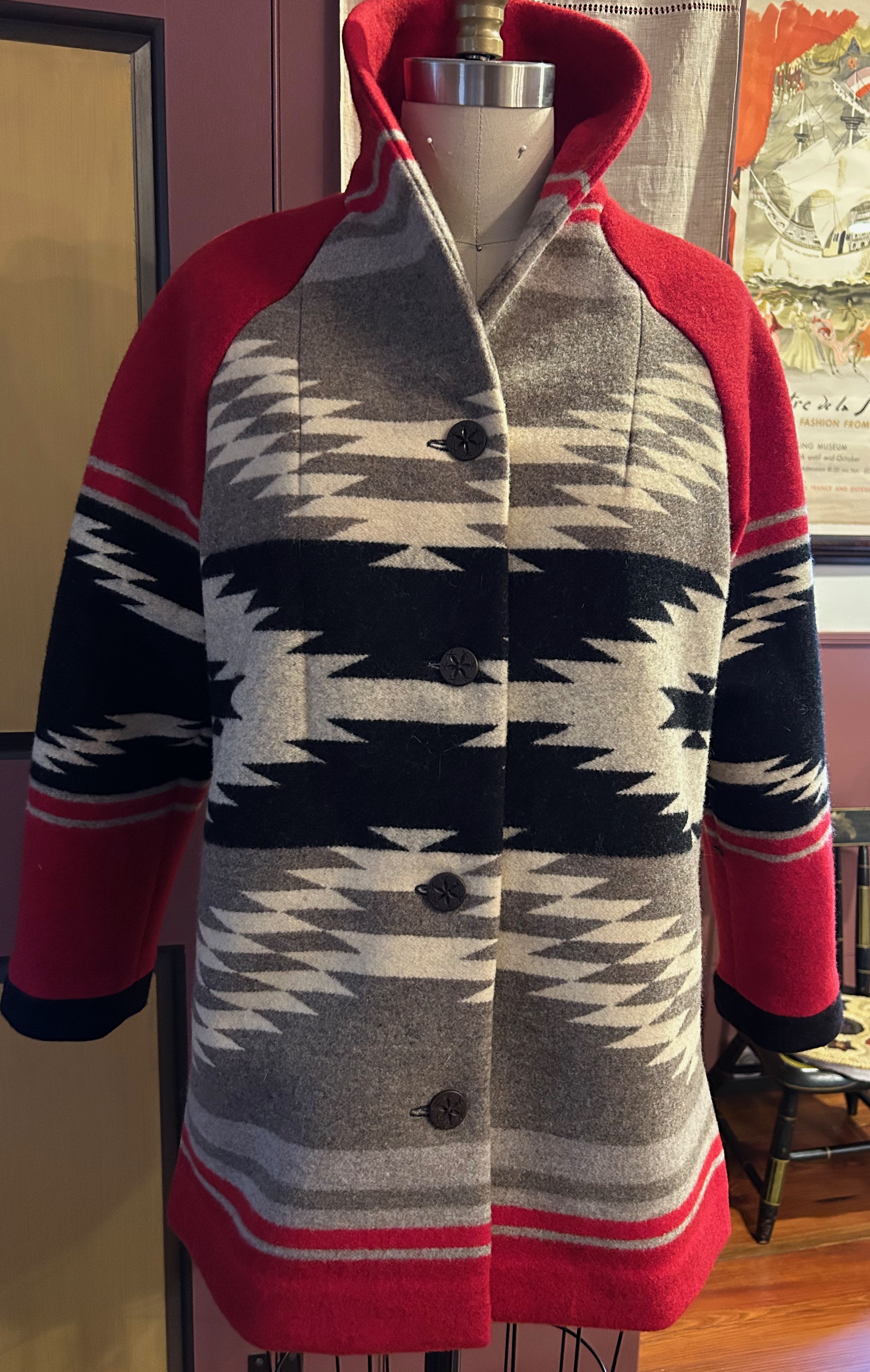
I got to work with everything spread out on my dining room table, starting with two main objectives: 1) The large “dragonfly” motif on the blanket would be centered on the back of the jacket, and 2) I wanted the “portrait” or neckline area of the shawl collar to feature the dominant color of red. 
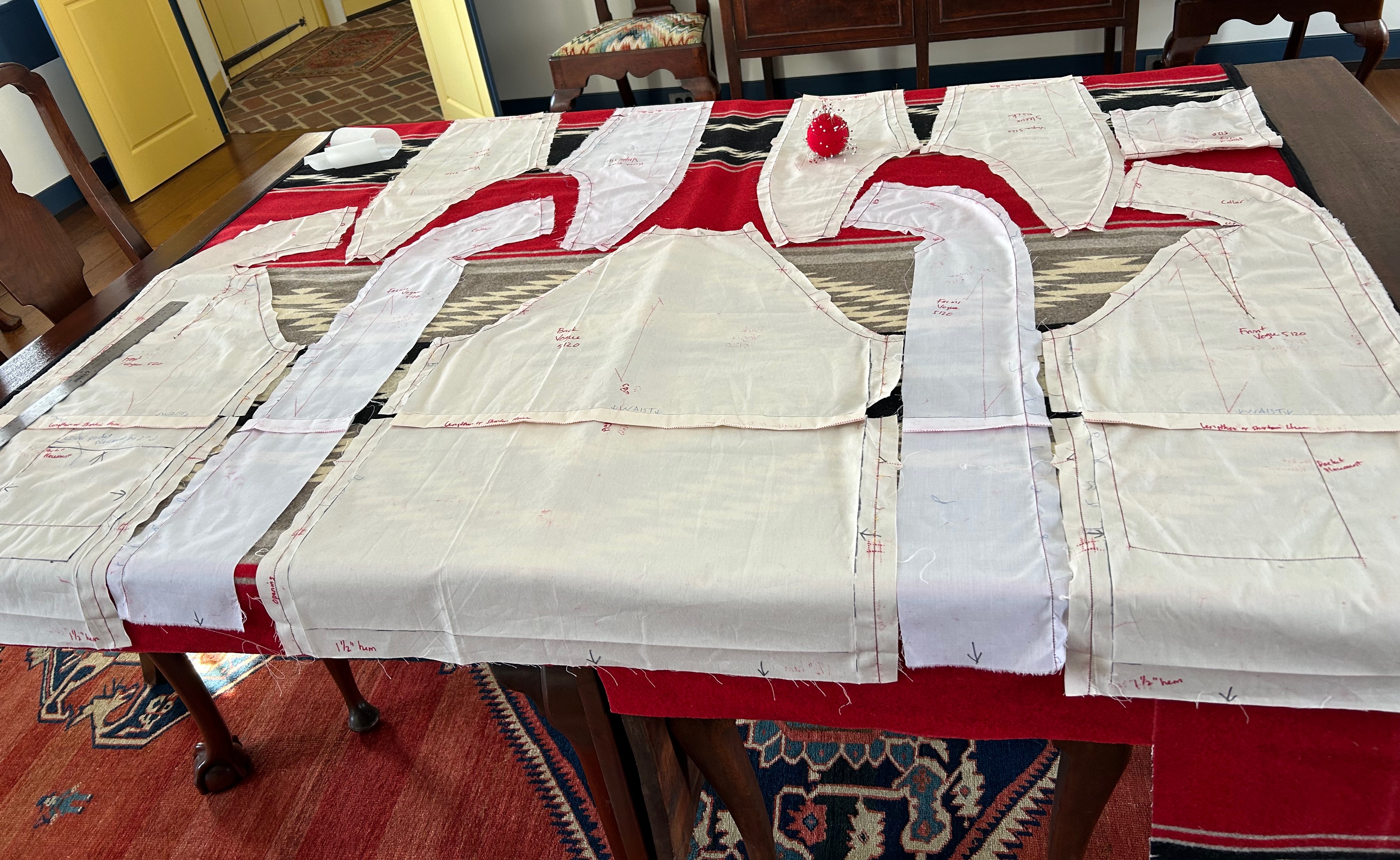
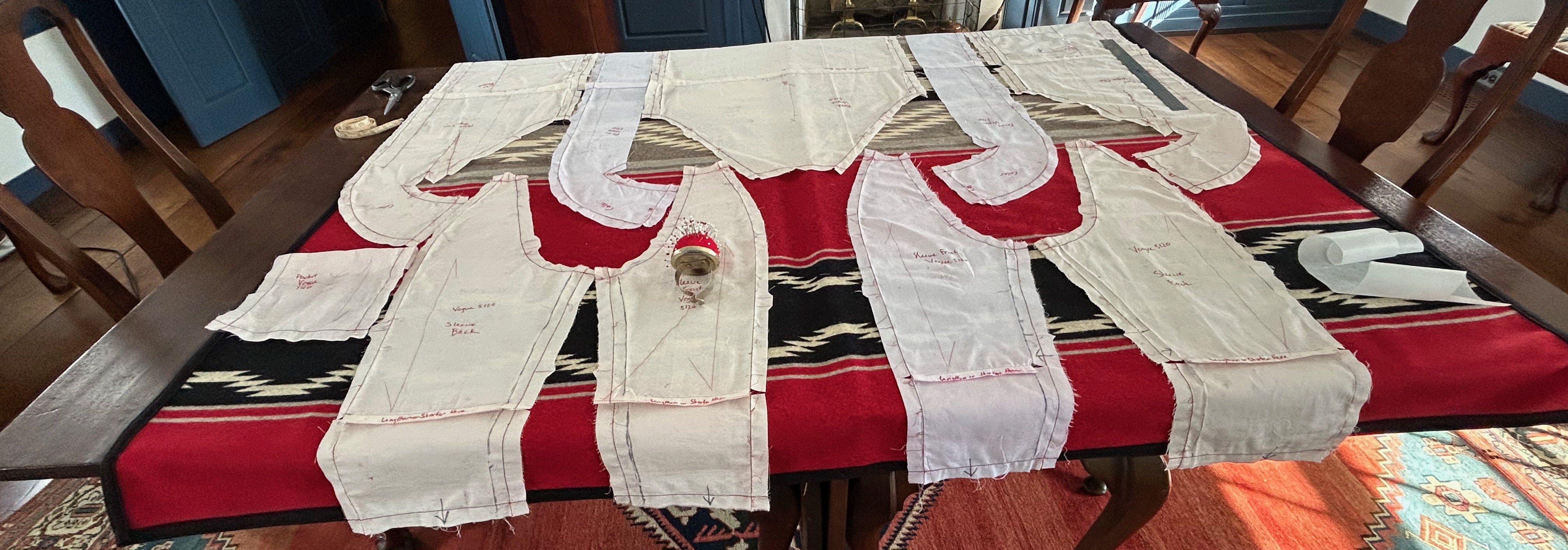
I had to use the entire width of the blanket, without an inch to spare in the final layout, for the pieces of the main body of the coat. This layout gave me the the red collar I wanted and the center motif of the blanket centered on the coat back. Visible on the lower part of the picture is the where the upholsterer had cut the fabric.
This is the opposite end of the blanket, where I needed to position the sleeves and, potentially, patch pockets. This is where it got a little tricky. That black “sawtooth” panel, a dominate woven feature, was going to make or break the fluidity of the overall look of the coat.

From there the fabric told me what I could do and what I could not do, and the best way to explain my decisions is to show you the finished coat.
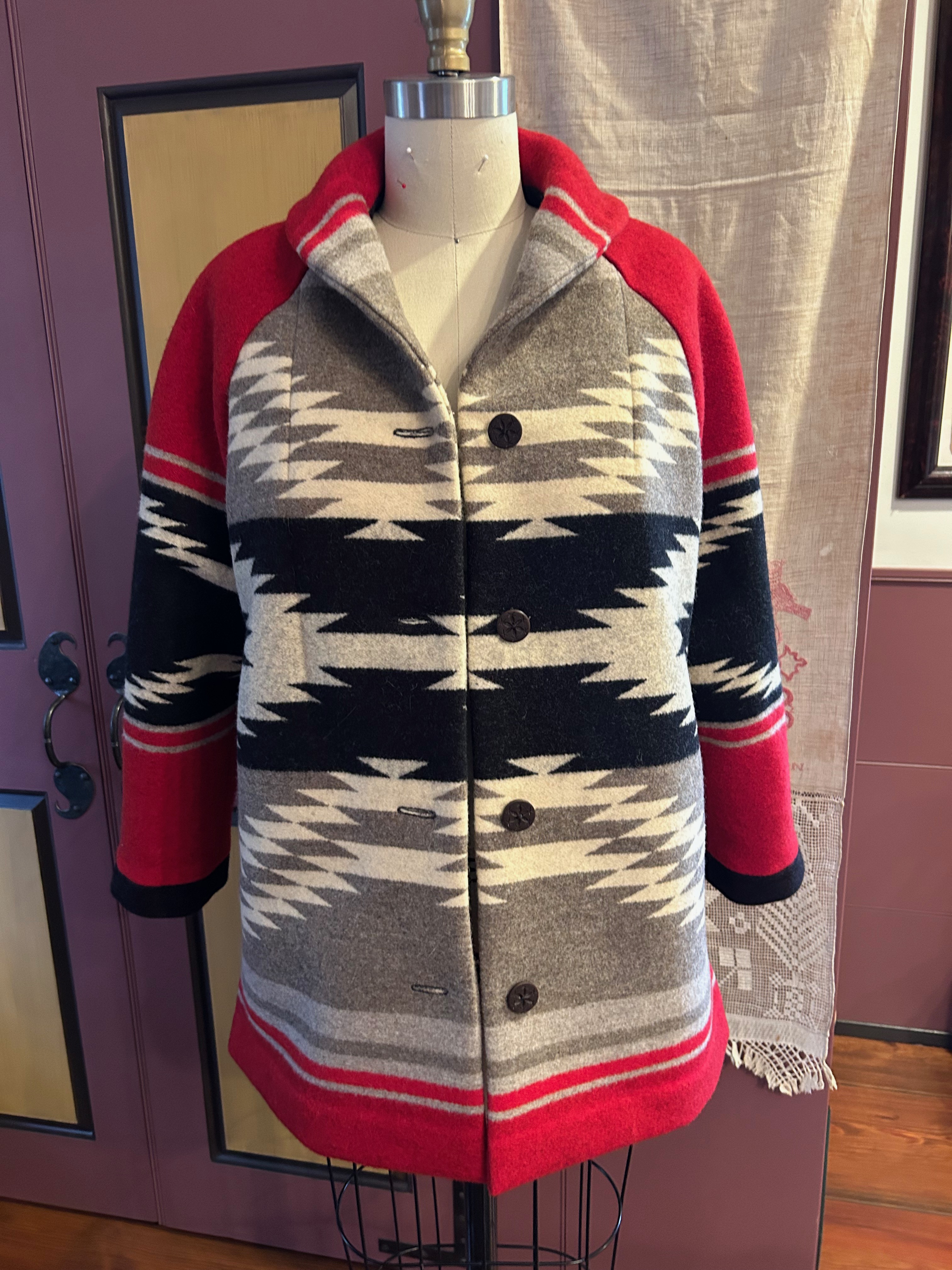
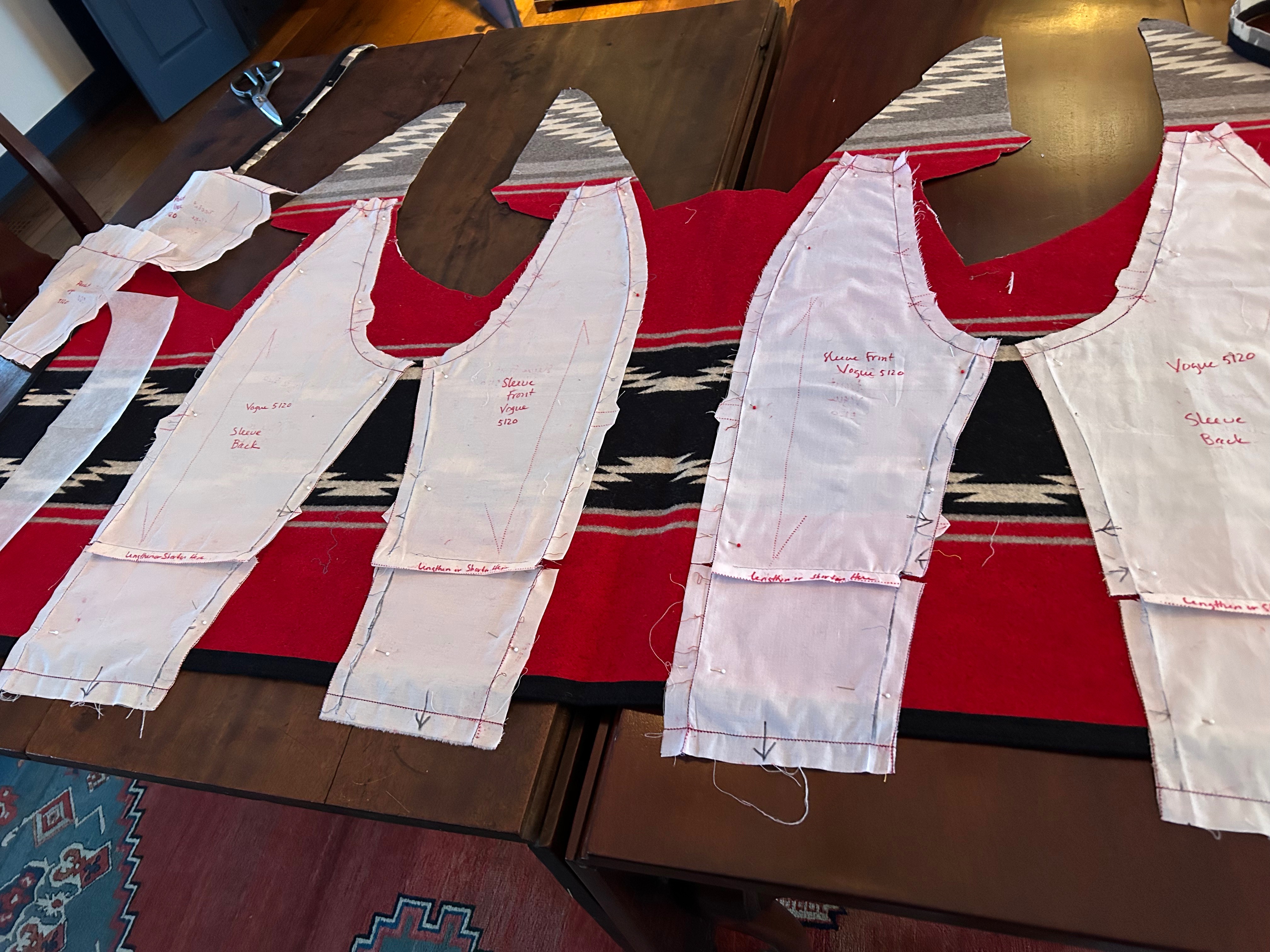
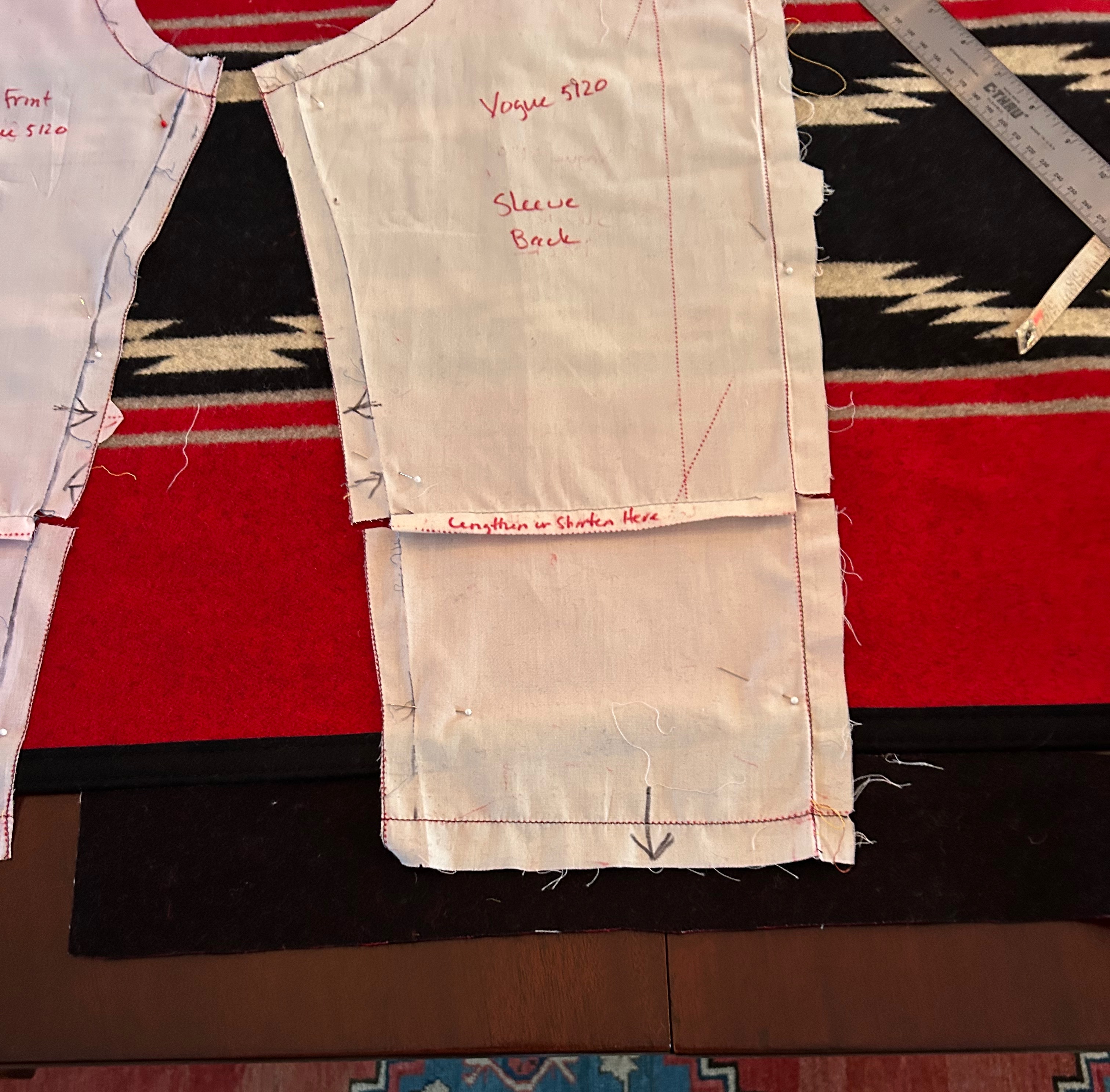
1) I determined the dominate black stripe across the sleeves (see below) absolutely had to be centered on the black stripe across the front of the coat (and consequently centered on the main motif on the back.) However, the width of the two stripes were not the same. 2) The only way I could center them was to wiggle around the placement of the sleeves on the fabric. I had not originally intended to put black “cuffs” on the sleeves, but that turned out to be the only way I could center the black stripes on each other, by moving the sleeves off the edge of the fabric, and adding “cuffsto get the sleeve length I needed.
First, I cut out the main pieces of the coat. (I had Plan B in place already, knowing by now I would have to piece the lower edges/cuff on the sleeves.) That gave me more flexibility on determining exactly how those two black design features would lineup to best effect.
I was sweating bullets, even with Plan B, when I realized how much I had to wiggle the sleeves down off the edge of the fabric to get those black design features centered on each other. In this photo you can see the scraps of black fabric (reversible to red) I intended to use for the “cuffs.” Fortunately I found that I could successfully remove the binding on the blanket, gaining me another 3/4 inch in length – which meant the piecing I needed to do on the cuffs would be a pleasing width.
Here is the back of the jacket. I was very pleased with how well the sleeves lined up with it.

I thought it would be “easy” after getting to this point. Easy is not a word I should ever use while sewing. I should know that by now. Every seam had to pressed with loads of steam, followed by a clapper to help set it, usually more than once. Every exposed seam edge needed to be encased with rayon tape. I split the two vertical darts and needed to hand-stitch the raw edges to prevent fraying. Every seam needed to be basted together before machine sewing in order to keep the horizontal lines in the design matched.  
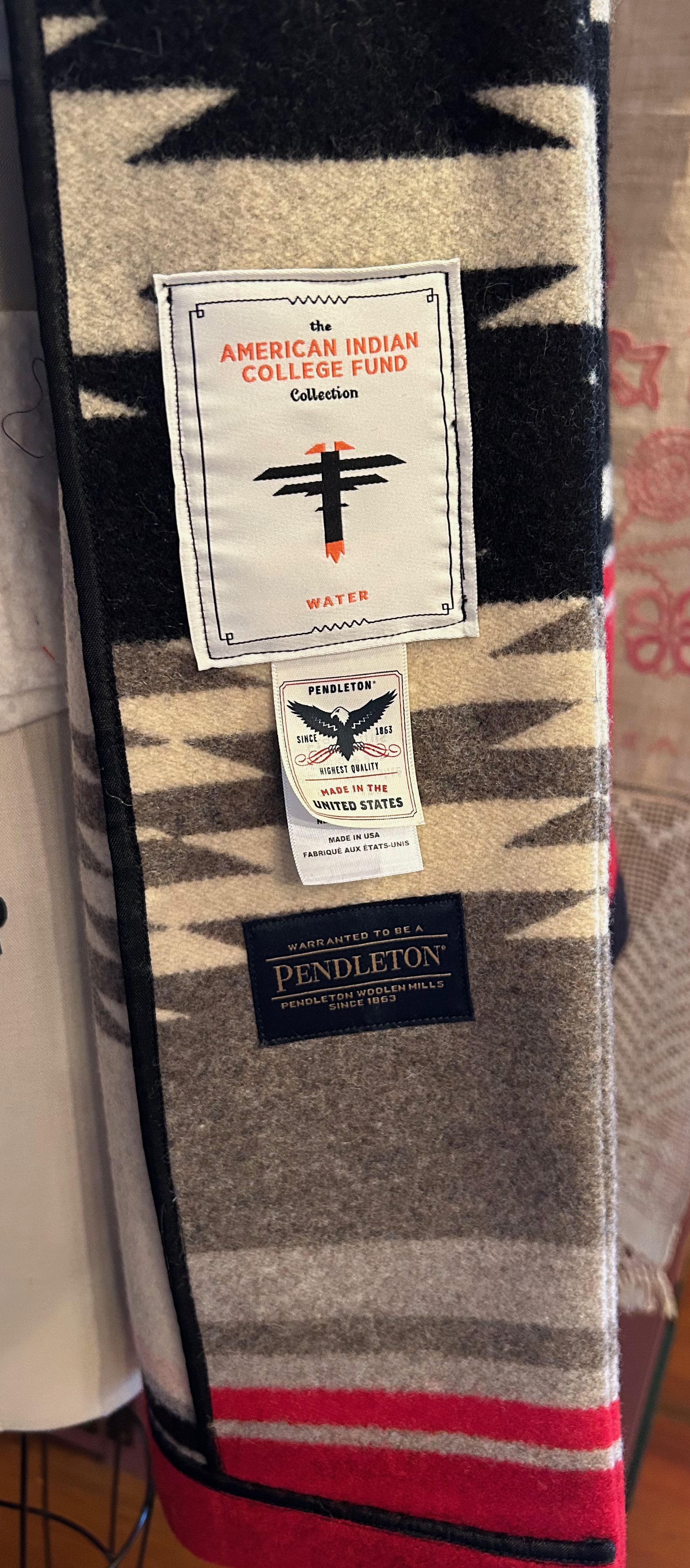
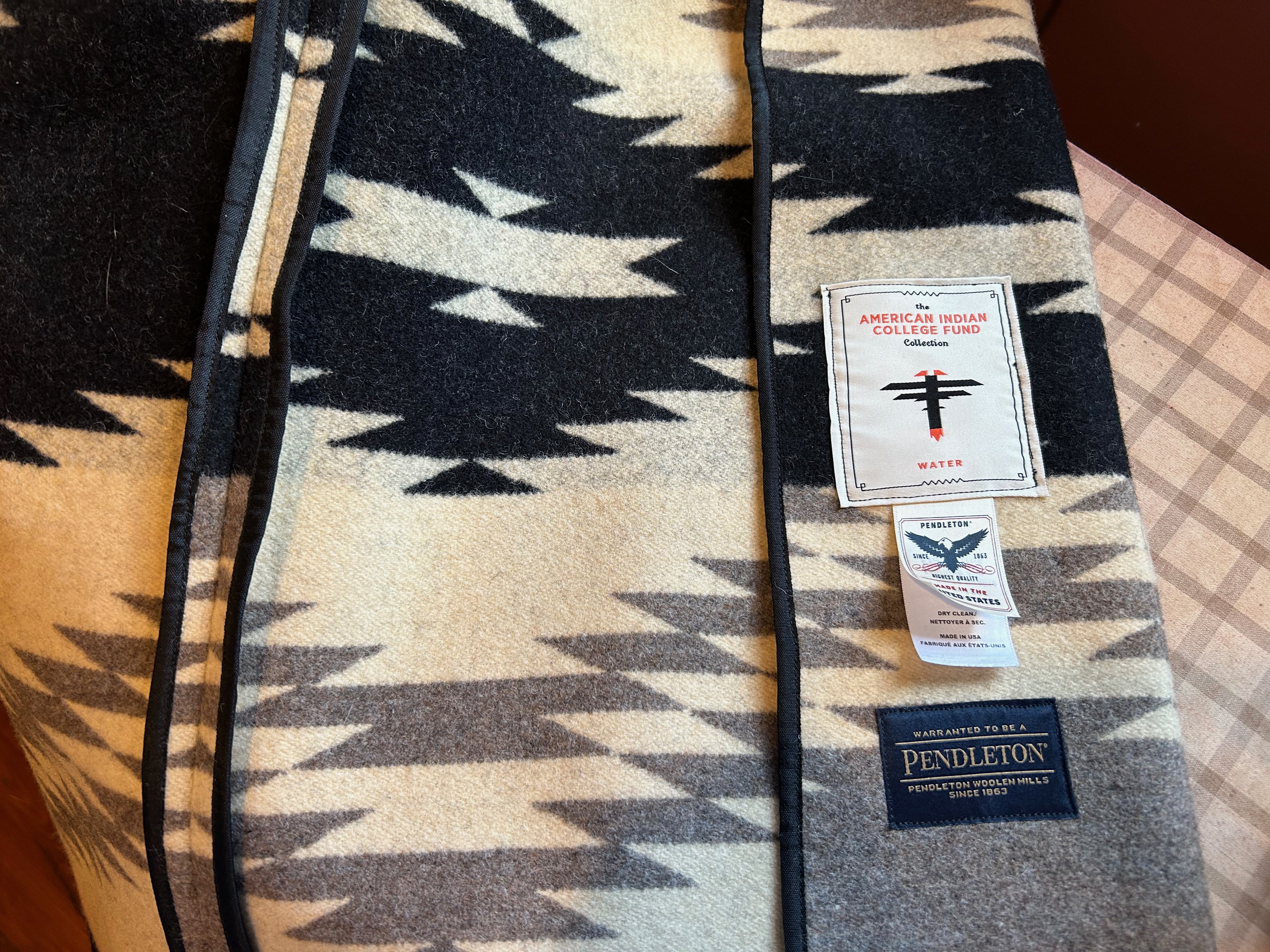
Here and below are looks at the interior seam binding I did on all the exposed edges – and the fabulous labels which I took from the blanket and attached on the coat front facing.

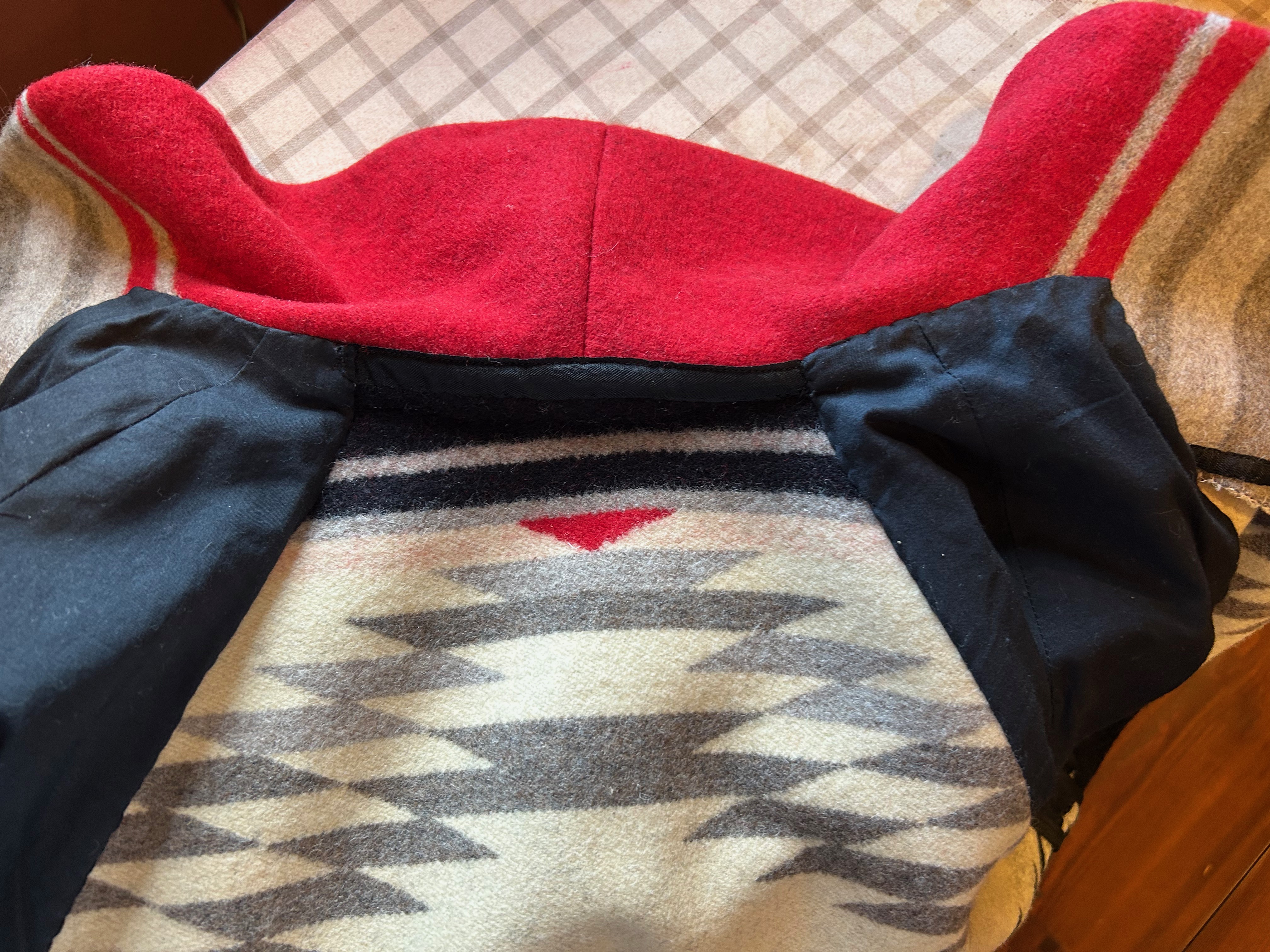
Here is the back interior of the jacket, showing the sleeve linings (I used lightweight cotton batiste that had a slight sheen) and how I finished the raw edges of the center back neckline.

I had found a set of taupe-colored vintage buttons in my collection which, at first glance, did not look like they would work. But after auditioning black buttons and red buttons, I was convinced those taupe ones would be perfect.  However, I had no idea how I was going to do buttonholes in that thick fabric. I fiddled around with fabric scraps to make practice bound buttonholes, using a lightweight fabric for the “lips.” They looked awful.  I thought of using large snaps and just securing the buttons on the coat front for effect. That did not appeal to me at all.  So I went to my two failsafe sewing maxims:  1) I’ll figure it out later, and 2) Plan B – it BETTER work.
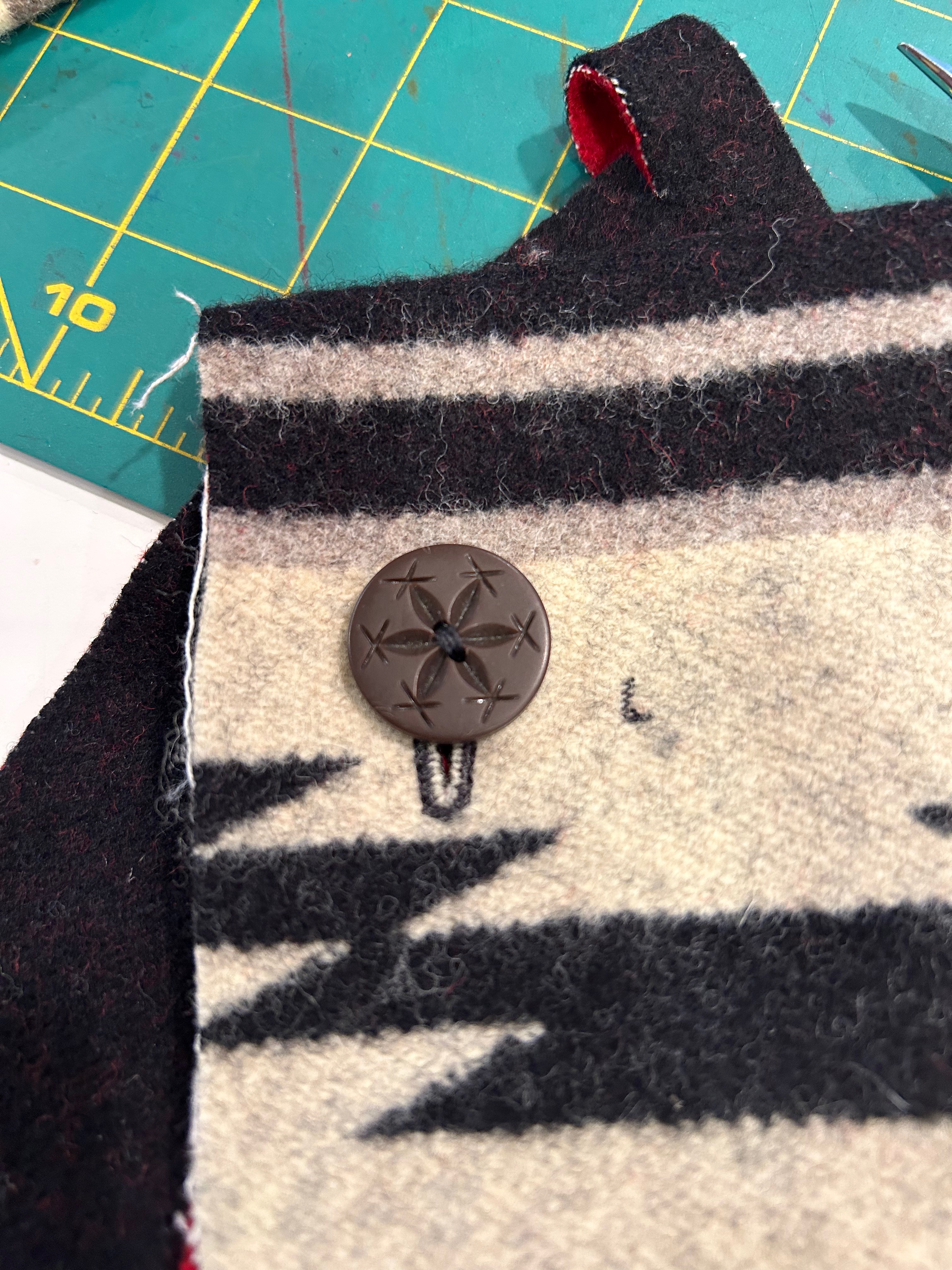
The jacket was practically finished before I found a method to make those buttonholes. Because the fabric was so thick, I could successfully only do a machine buttonhole on one layer of it. I experimented around and discovered if I made the buttonhole on the front of the coat, I could then line up the facing and use a straight machine stitch through both layers around the buttonhole. I used very small stitches to make it secure. Then I sliced them open. It worked!
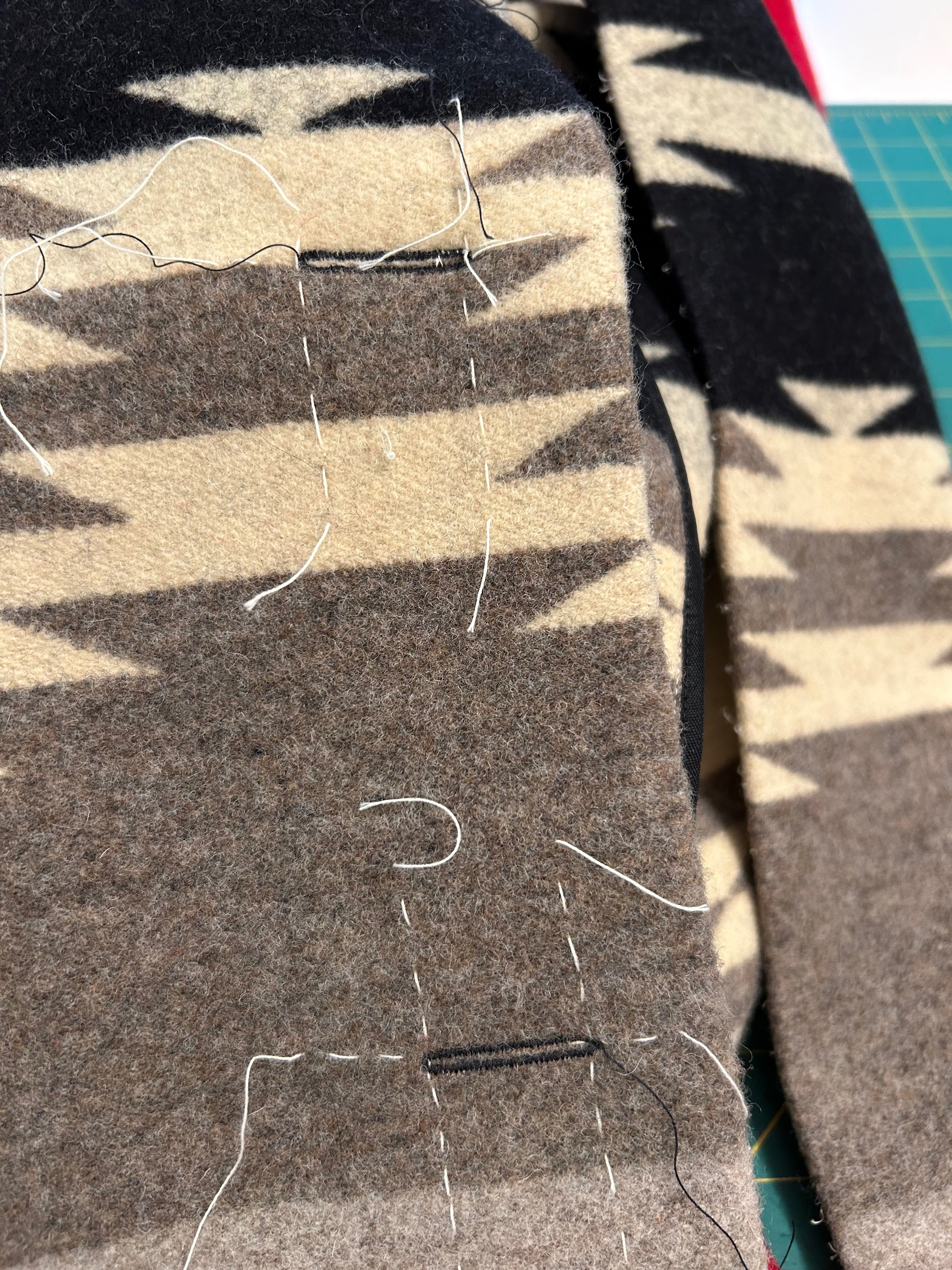
I had to remove the facing to make the machine buttonholes and then stitch it back on before continuing. I could not have seen that coming since I really did not know early on how in the world I was going to make these buttonholes!
This picture shows the buttonholes all finished and completely functional! Also, this is an interesting view of the front of the coat. I was kind of wringing my hands over the center front of the coat. I did not have enough fabric to balance the design across the center front. And then I realized, even if I had had enough fabric to do that, it would not have worked. The reason? I would not have been able to balance those small dragonfly motifs on either side – or – they would have been pushed too much to either side to make sense for the design. To my eye, that balance was the more important one. One more thing… I did not have enough fabric to make patch pockets for the coat. I considered making inseam pockets out of the black batiste, but I was concerned they may cause distortion of the side seams due to the heavy nature of the fabric. I finally decided to forego pockets altogether. After wearing the coat next winter, I can always come back to the pocket conundrum if I decide pockets are a must. Right now in my mind, they are not.

Are you still reading at this point? Or did I lose you back at the dining room table?

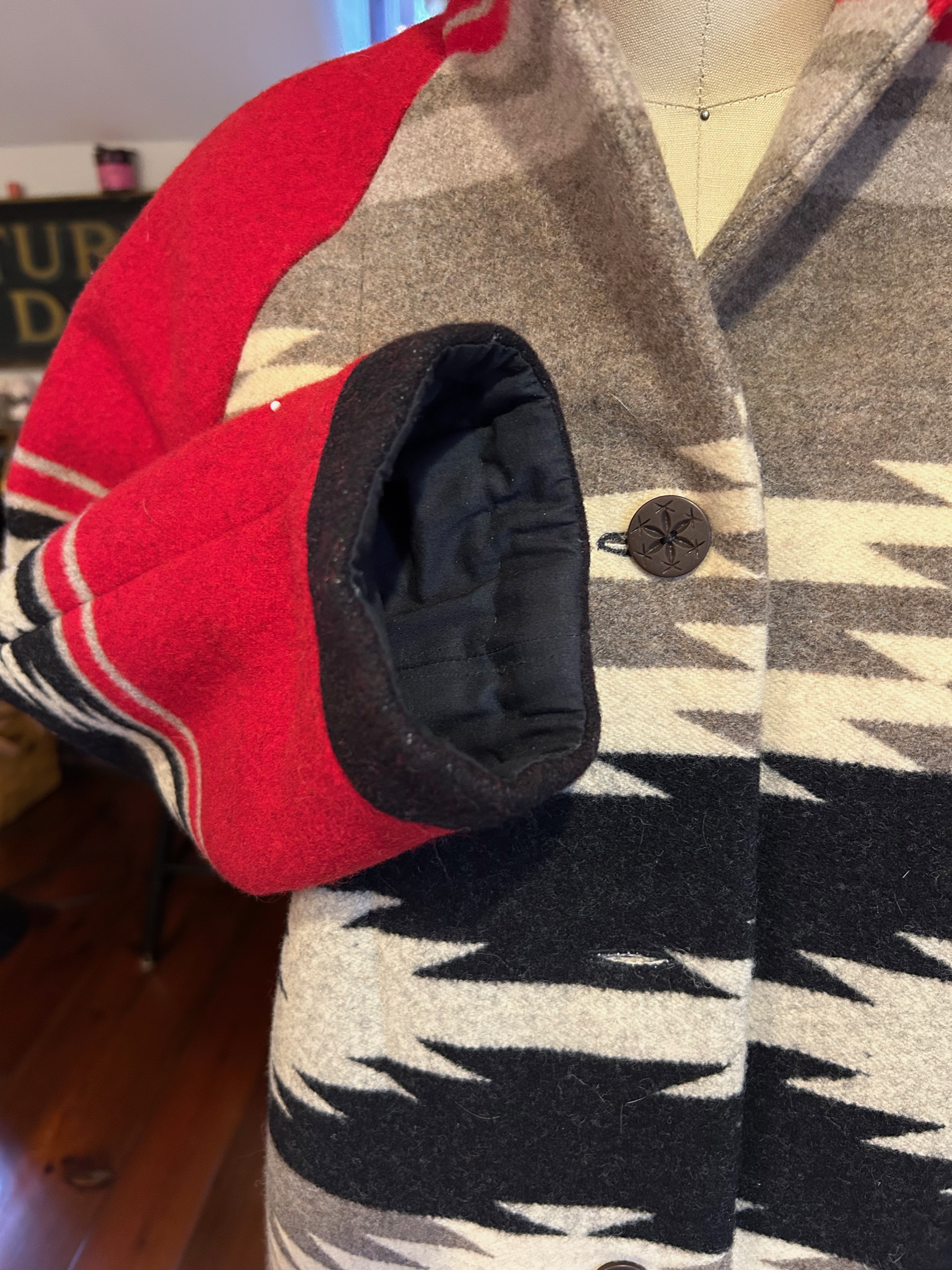
Almost finished! The final touches on the coat involved under stitching the collar to hold the turn in place, and securing the sleeve lining to the underside of the black “cuffs.” 

What do you think of the black cuffs? I had no choice but to do them this way; hopefully they look intentional rather than contrived.
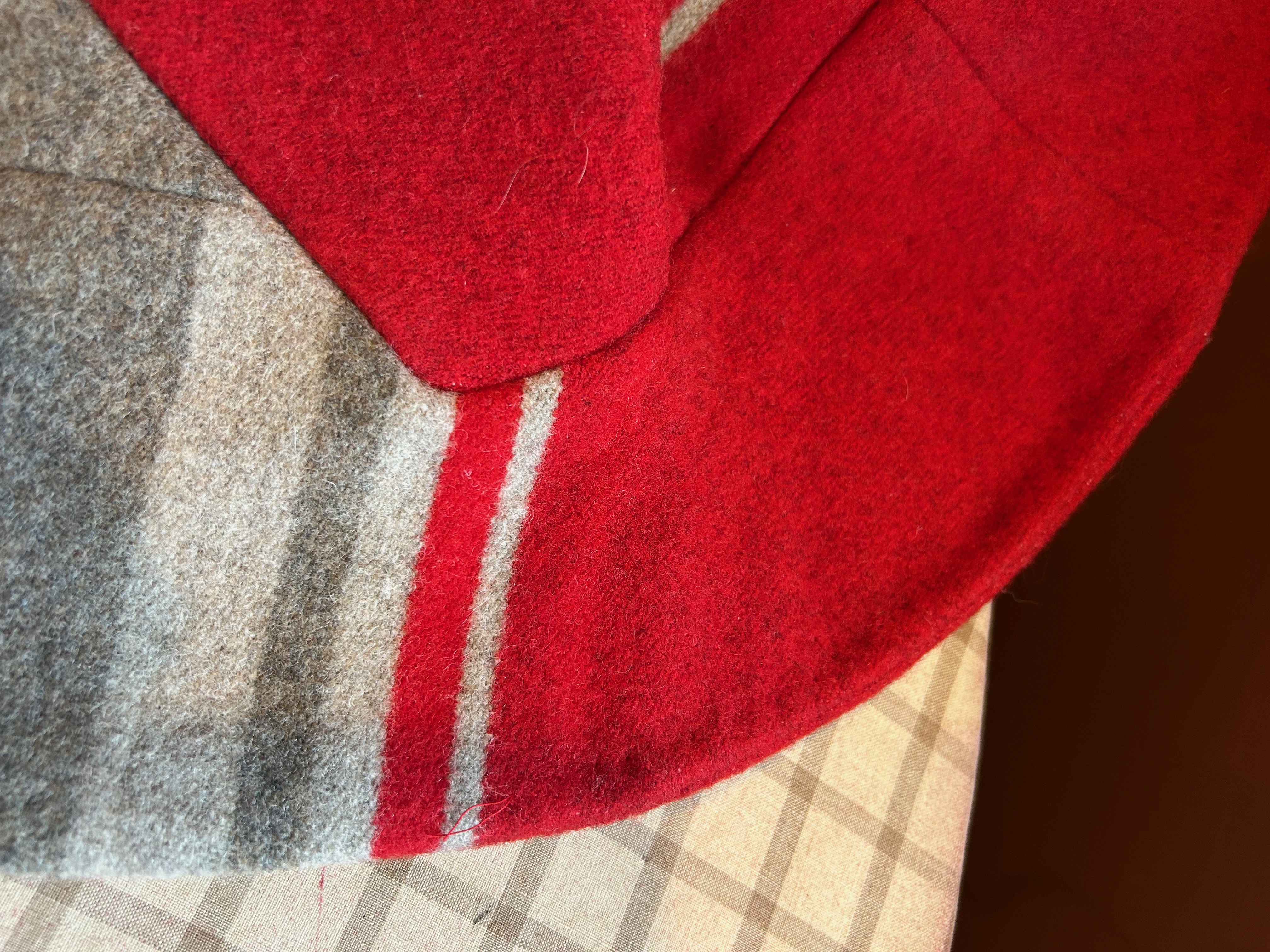
Understitching on the collar.
Hand stitching holding the sleeve linings in place.

I have to say I was pretty thrilled with how my jacket turned out, considering the parameters facing me.  

Now I do indeed match my chair! More importantly, however, I have a very classic, one-of-a-kind, Pendleton wool, western-style jacket which is going to be fun – and warm – to wear.  
48 Comments

Filed under Blankets and doll blankets, Buttons - choosing the right ones, car coats, Coats, fabric labels, Pendleton Woolen Mills, Sleeves, Uncategorized, vintage buttons, vintage Vogue patterns from the 1950s, woolens

Pink Stripes 

“You can never go wrong with a little pink… a lot works for me.” Dana Dalgetty

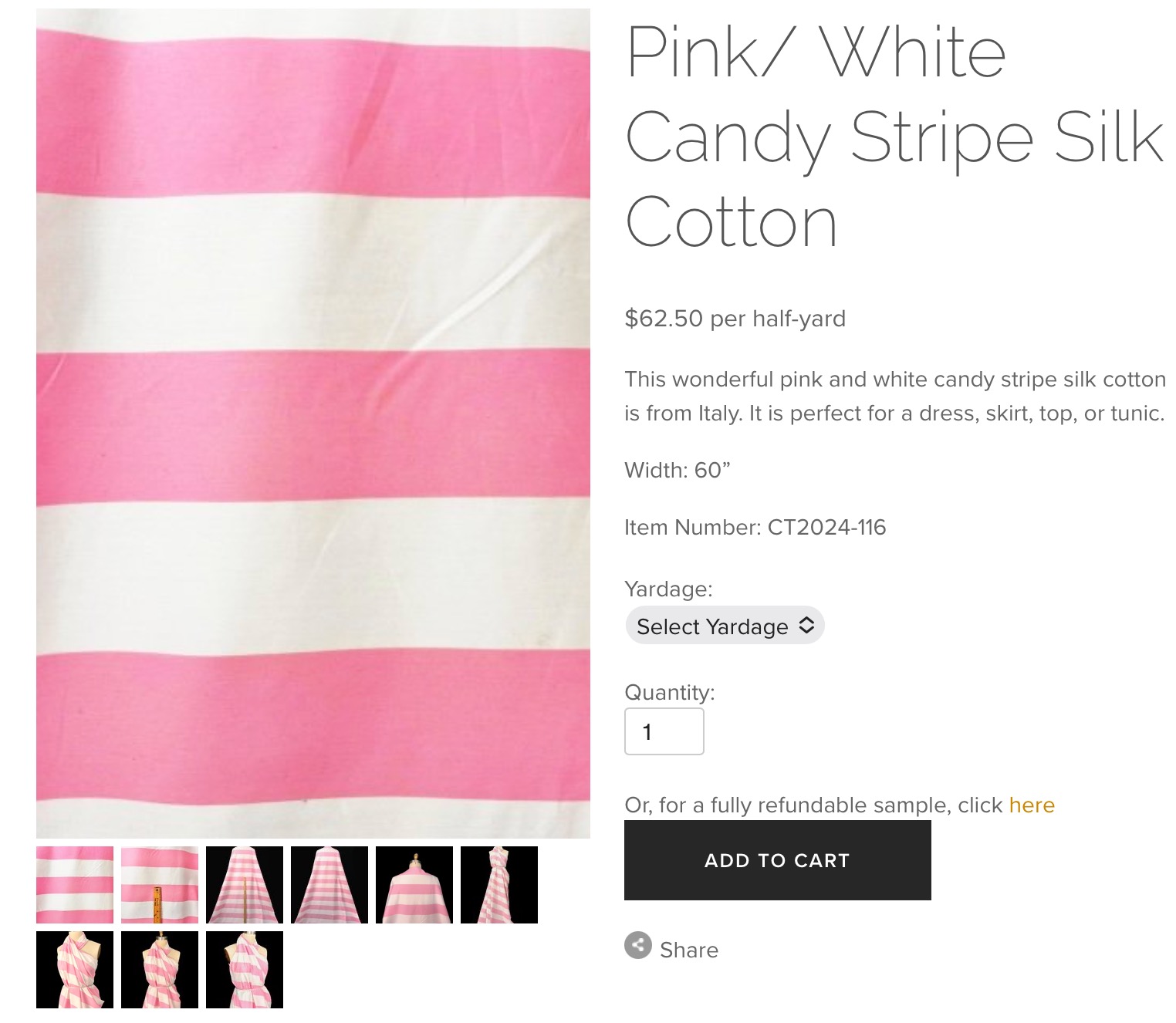
It is extremely difficult for me to resist a bubblegum pink fabric.  And if it is a stripe, too, the odds are very good that fabric will end up in my sewing room.  So it was with this silk and cotton blend found on the website of Mendel Goldberg Fabrics.

Screenshot

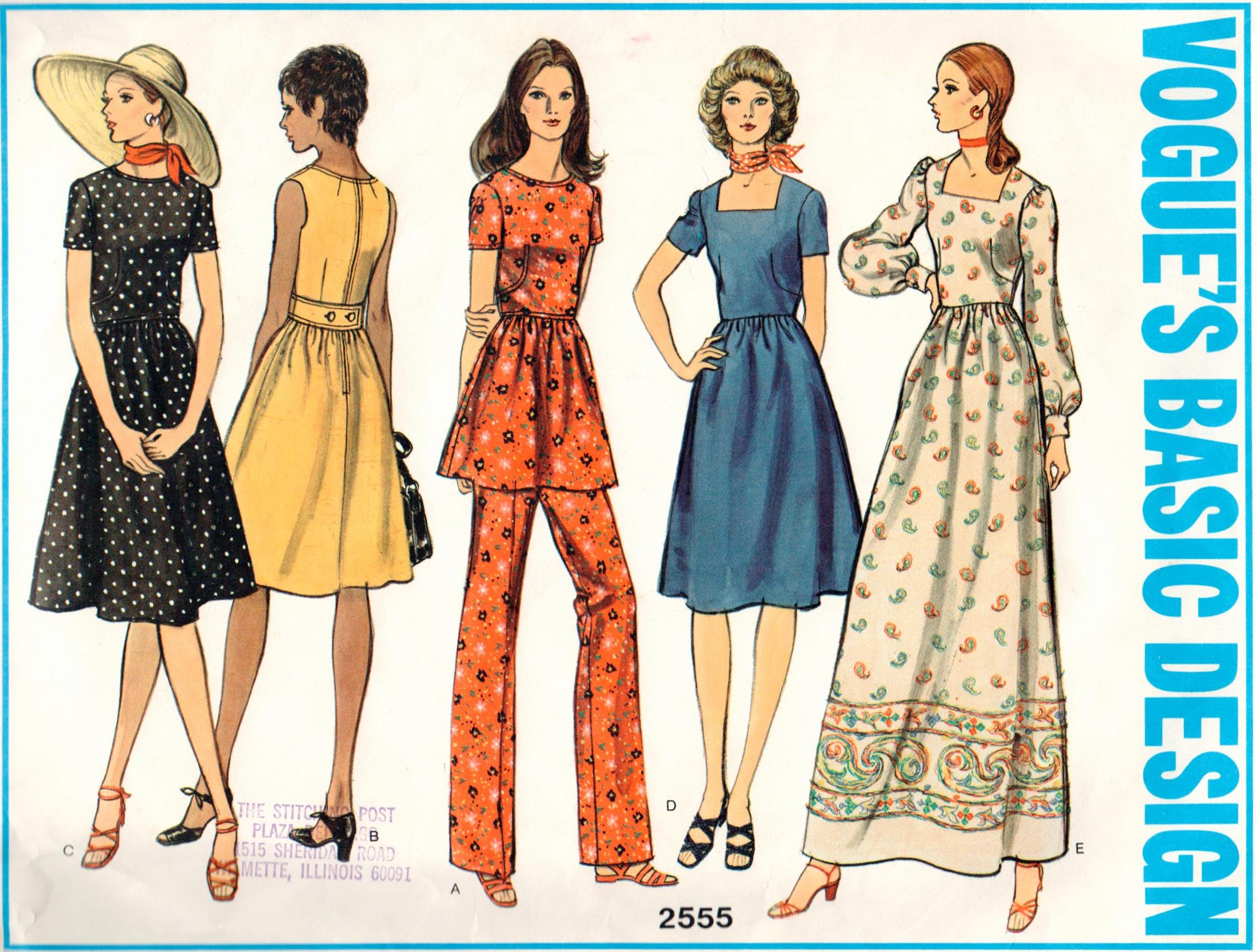
I purchased it last summer during a 20% off sale, and when it arrived, I knew I had made the right decision – although the stripes were a bit bolder in person than I anticipated.  As usual, I wasn’t sure what I was going to make – a coat? a dress? a skirt?  I needed more thinking time so I tucked it away until this Spring.  In the meantime, I purchased this vintage Vogue pattern which I saw as a good basic design which could be easily changed, adapted and altered.  

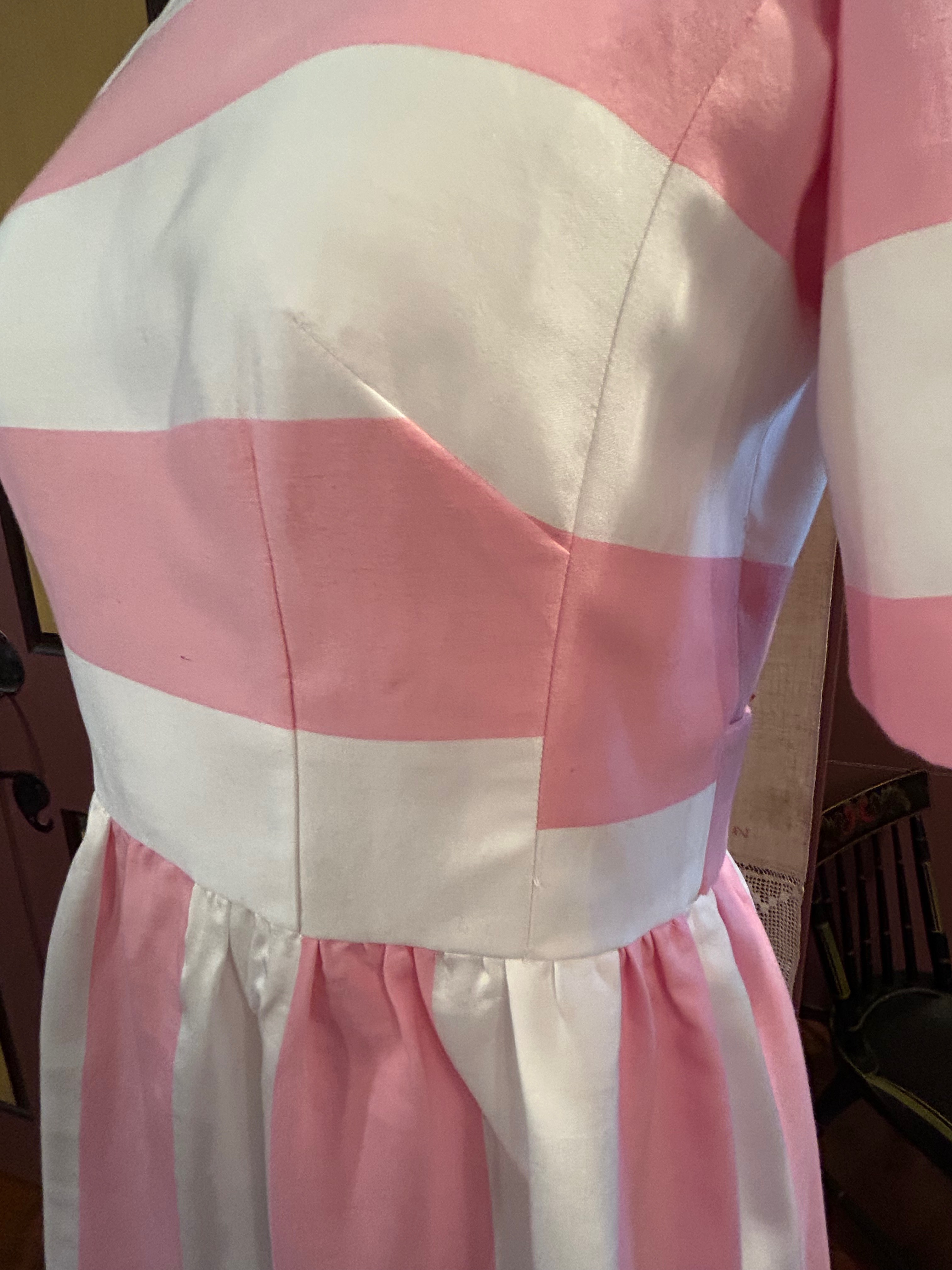
Take note of those curved darts on the bodice, as I will mention them again.

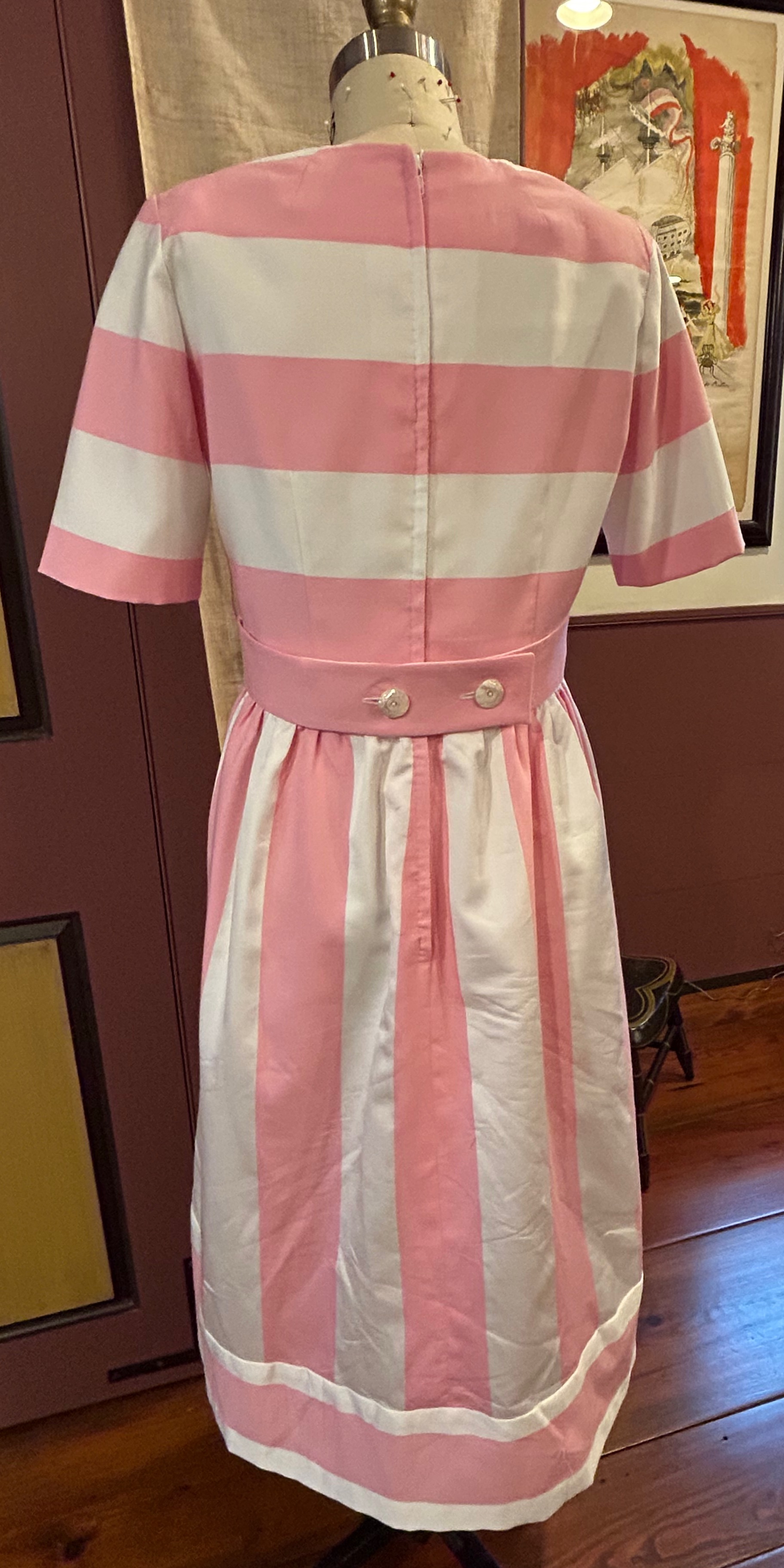
I like dress designs which have some “back“ interest, here the buttoned half belt.  Although I loved the sleeveless view, I have become less comfortable wearing sleeveless dresses as I have gotten older.  Thus, I was drawn to the short-sleeved view (C), knowing I could easily lengthen the sleeves to reach almost to the elbow, if that seemed the way to go.  Thus, it was a logical progression to imagine the pink striped fabric made up in this design, despite the note on the pattern “Not suitable for striped fabrics.” 

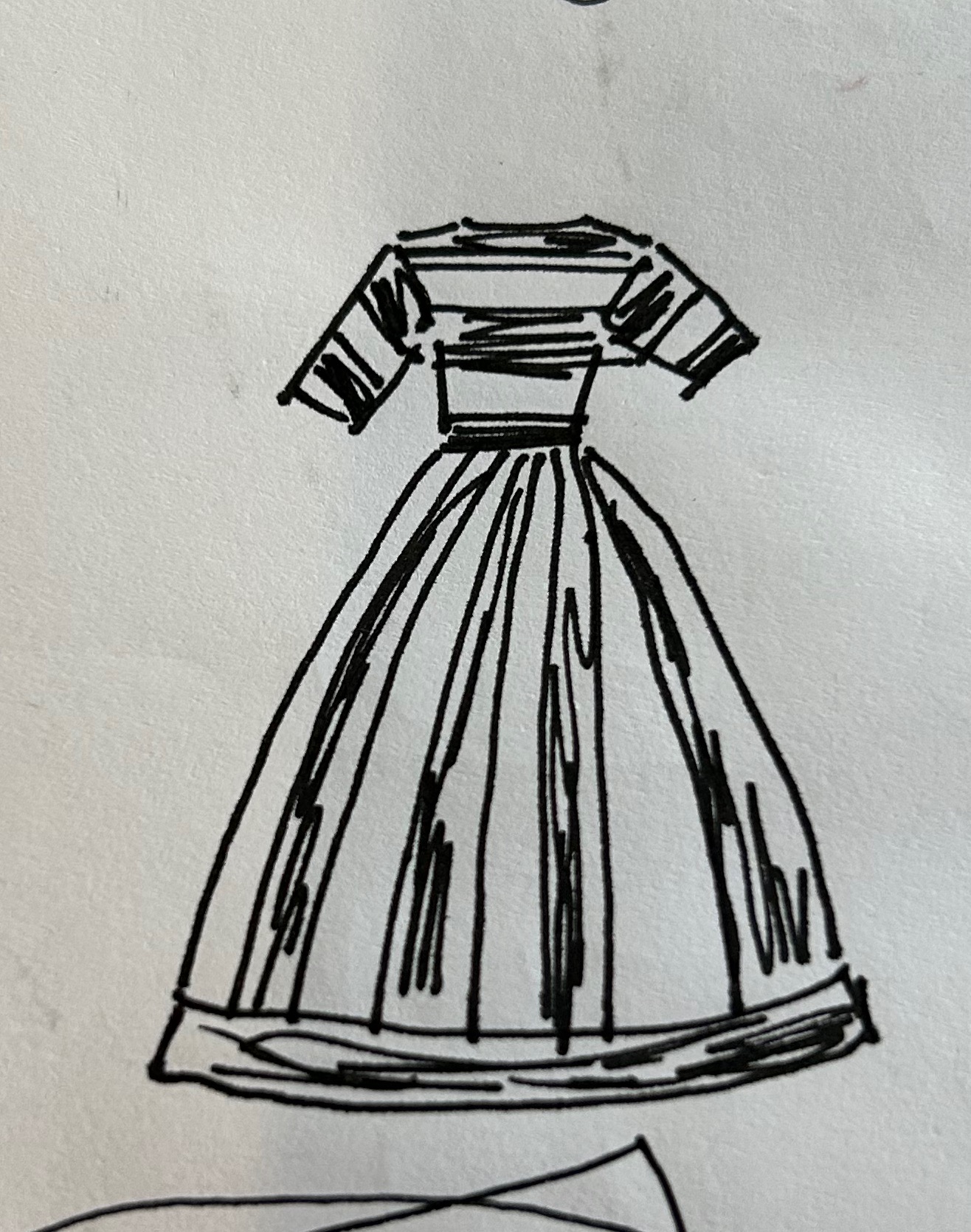
I wasn’t quite ready to forge ahead, however.  My fabric was such a bold stripe, I feared a horizontal orientation of the fabric would be too much, but a vertical orientation was equally problematic.  I went to my Pinterest feed to get some inspiration and in no time at all, the lightbulb went off in my head.  The dress needed a combination horizontal and vertical orientation.  I made this quick sketch, and I knew I had the solution I needed.  

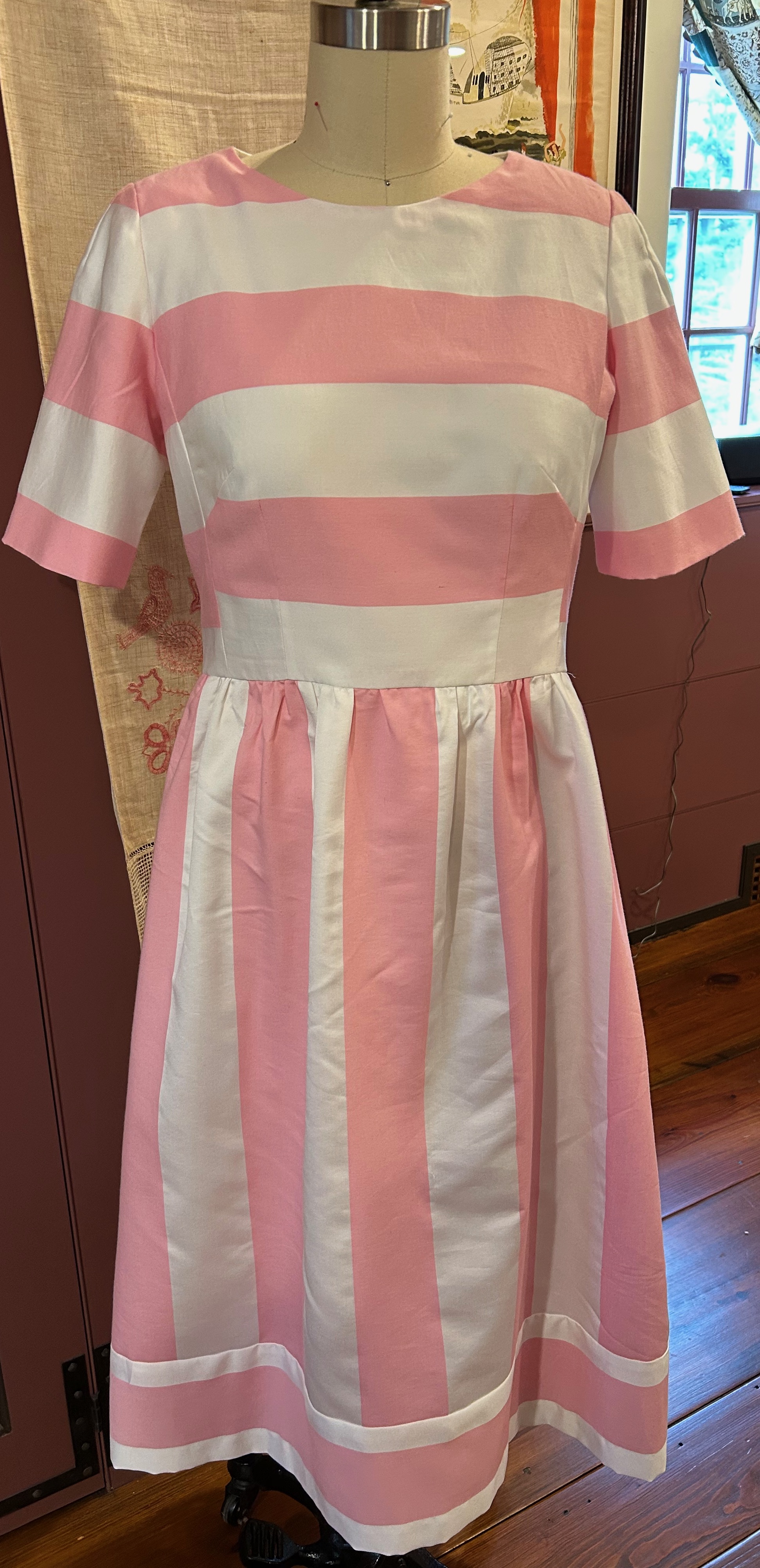
I took these quick photos after I had worn the dress to a party, wrinkles and all. My apologies for the unkempt appearance of the dress!

I set about making a muslin/toile for fitting, and then I hit a brick wall.  Those curved darts you see on the pattern bodice just were not flattering to me, despite my working and reworking them multiple times.  I finally gave up.  I would need to find a substitute pattern for the bodice front and make it work with the bodice back toile which I had fitted successfully.  This was all terribly time-consuming, as you can imagine, but I finally was able to find an existing bodice front in my stash of patterns/toiles which, fingers crossed, would work.  I didn’t know how well it would work until I had the happy surprise of seeing the darts feed into the bold stripes successfully. 

Darts, of course, distort side seams, but this distortion somehow adds to the appearance of the front bodice. I suspect the “unsuitability” of striped fabrics was because of that curved dart, which I unknowingly eliminated when I changed the bodice front.

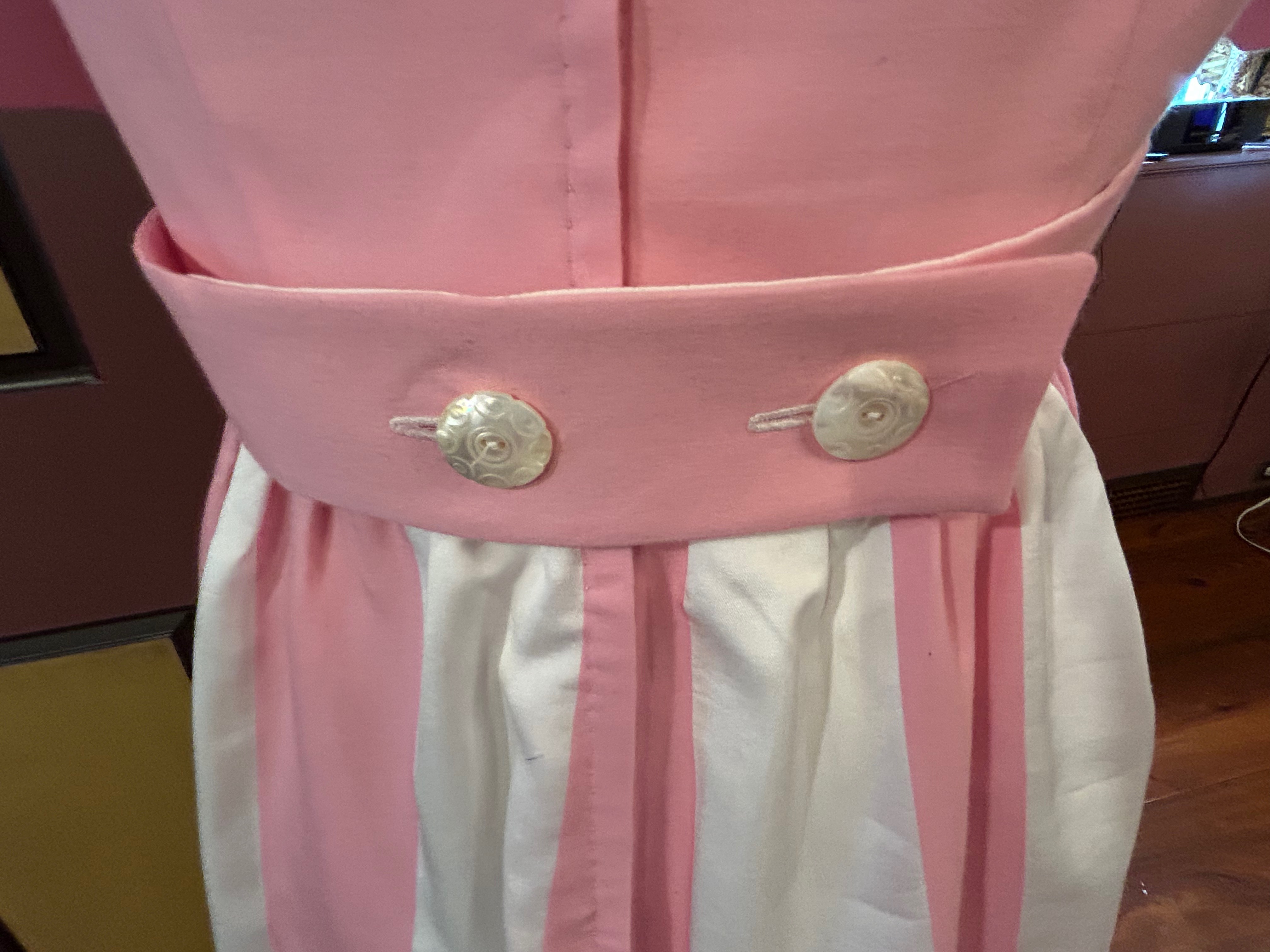
What was not as successful was the proper alignment of the buttons on the back belt to the center of the dress. That is one of the many downsides of fitting oneself – I could not see what I was doing, and although I measured and fiddled, I was still off by a couple of inches.  

I did a hand-picked lapped zipper and the buttons are vintage mother of pearl from my collection.
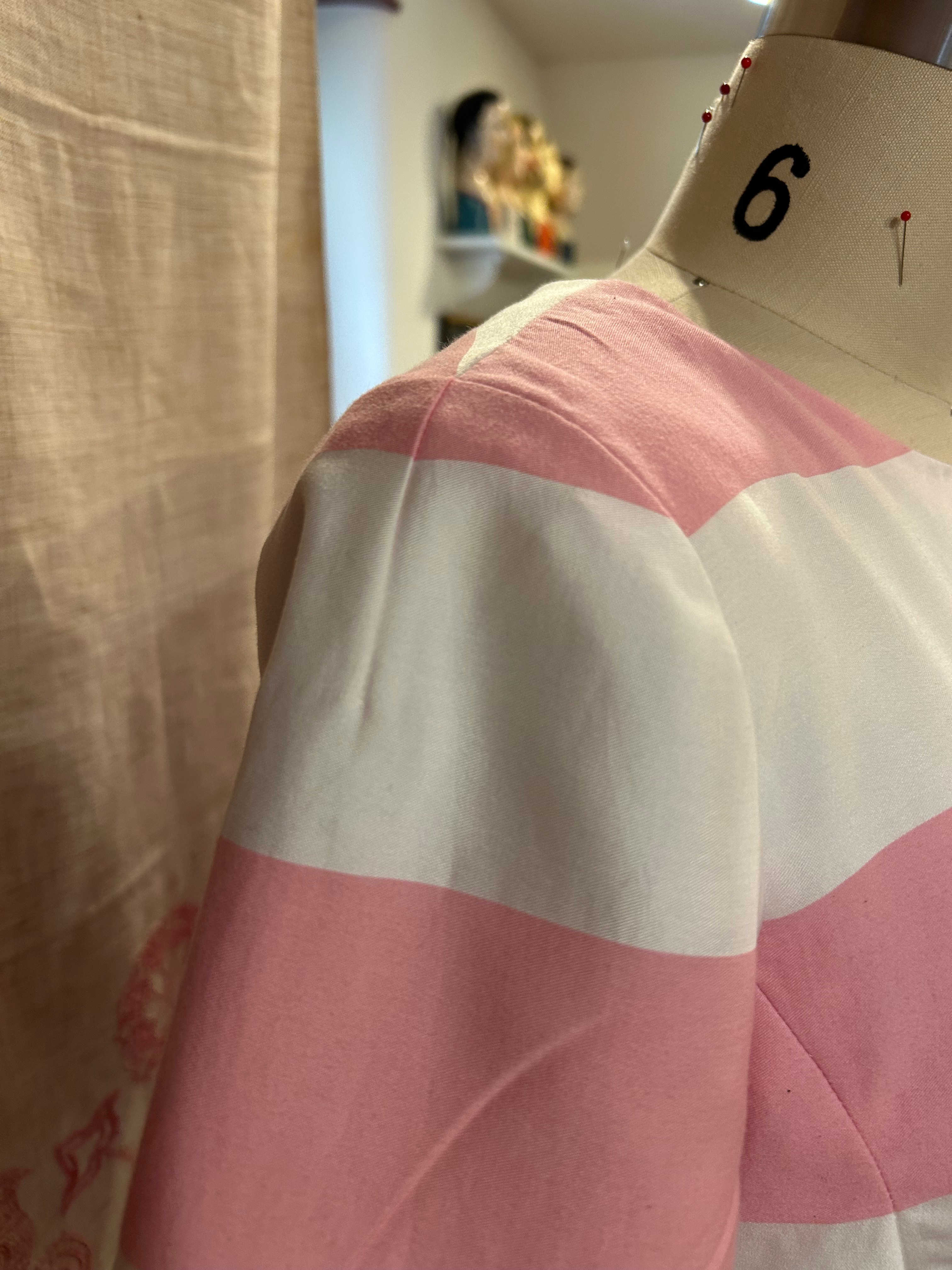
While we are talking details, here is the top of the sleeve. I used a top dart to take in the necessary fullness when setting in the sleeve. This is an alteration I make frequently to accommodate my prominent shoulders.

I lined the entire dress with a soft cotton batiste which complimented the softness of my fabric, adding a little more opaqueness to the finished dress.  I did not use an underlining, reasoning that more structure would not be conducive to the soft flow I wanted in this garment.

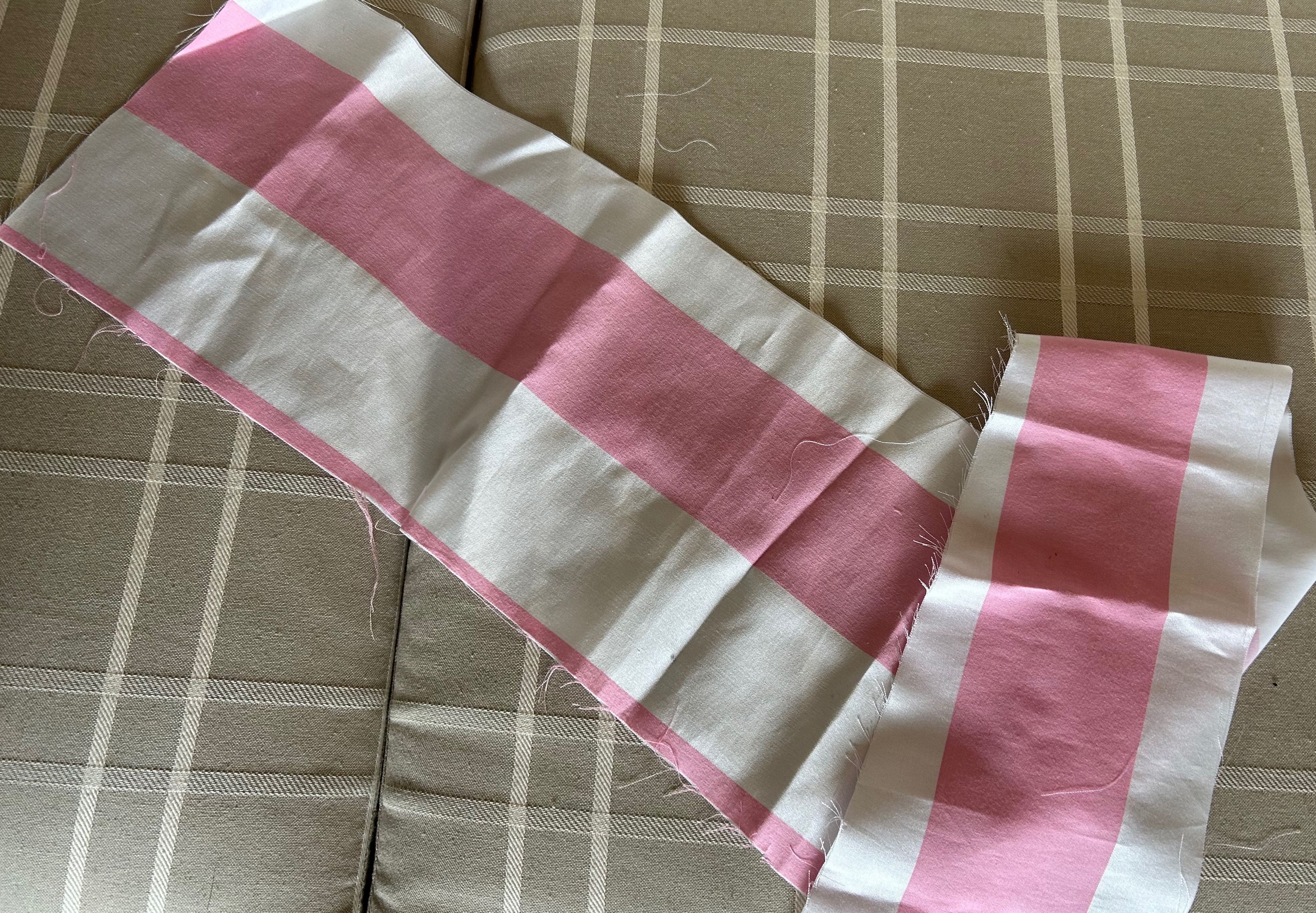
A word here about the panel for the hem.   Wow, was I tight on fabric!  I thought the panel should feature one bold pink stripe, bordered by “half” white stripes.  I barely had enough fabric to make this happen, and because the width of the skirt was just a bit bigger than the width of the fabric, I had to piece that panel.  Whew, I just made it.  Here is all the fabric I had left over:

The seaming of the two panel pieces close to the center back is barely visible! Can you see it?

 I was able to wear this dress for two events in May, feeling perfectly dressed for both of them.  

And that little bit of left-over fabric?  I had plans for that, too, which I will share in a future post.  

28 Comments

Filed under Buttons - choosing the right ones, couture construction, Uncategorized, vintage Vogue patterns from the 1970s

A Long Silence

Silence may indeed be “golden” except when one is trying to maintain some regularity in writing a blog.  My silence this past Fall and into the end of the year was not intentional. I actually got as far as starting a new post in November on a “Blouse for Fall” only to have its completion thwarted by more pressing priorities.  Such is life, as all of us know.  So now, in this sparkling new year we have entered, I have the opportunity to play some long overdue catch-up.  

It is at this time of year when I like to reflect on my sewing from the year just past.  And glaringly, the truth is I was not very productive.  Here is what I made:

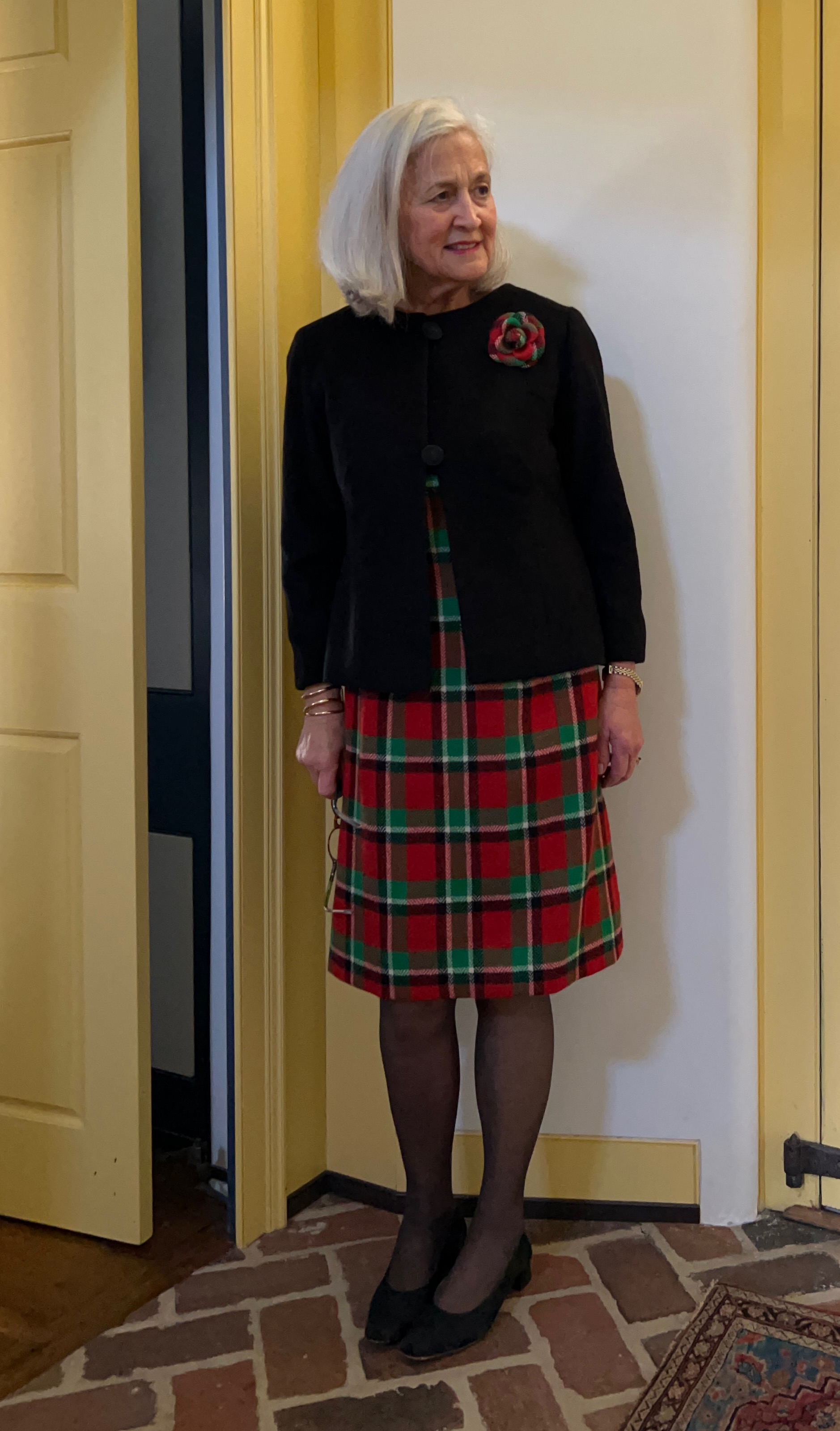
  1. Short black wool jacket, ostensibly to wear with a wool sheath dress made two years ago.    

I suspect this jacket will prove to be more versatile than I have expected.  Its jewel neckline will lend itself to scarves, and its solid black color will be a good canvas for brooches or other fabric flowers.  

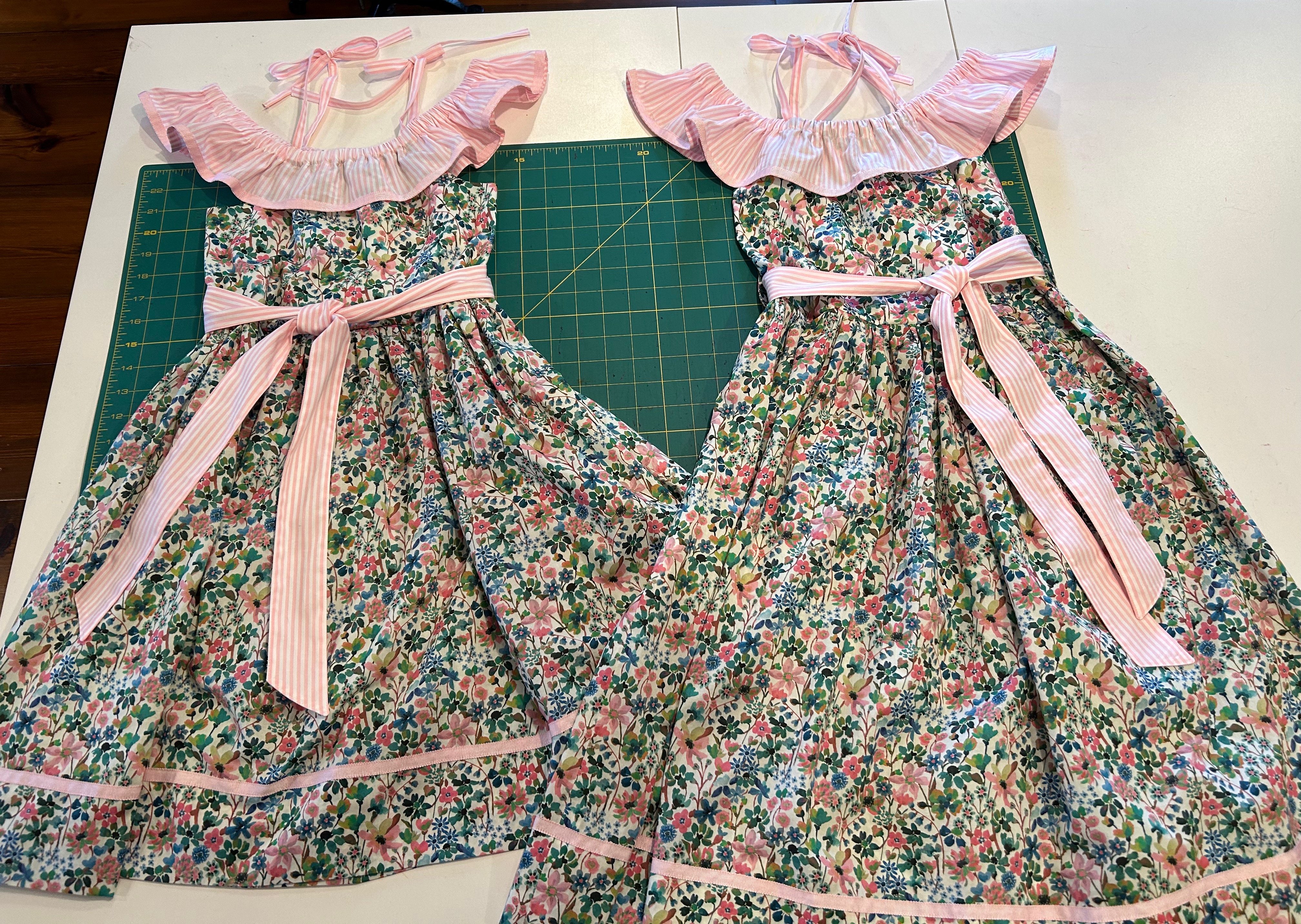
 2. A birthday/sundress for each of my two granddaughters.

I generally do not post on my blog about sewing for my granddaughters, due to the limited audience for the subject.  The girls requested dresses which they could wear “off the shoulder.” So of course, I obliged!

 3. A pink striped casual blouse.

Pale pink is always a good idea.

  4. A floral summer dress. 

I was happy to use this fabric which had been long in my sewing queue.

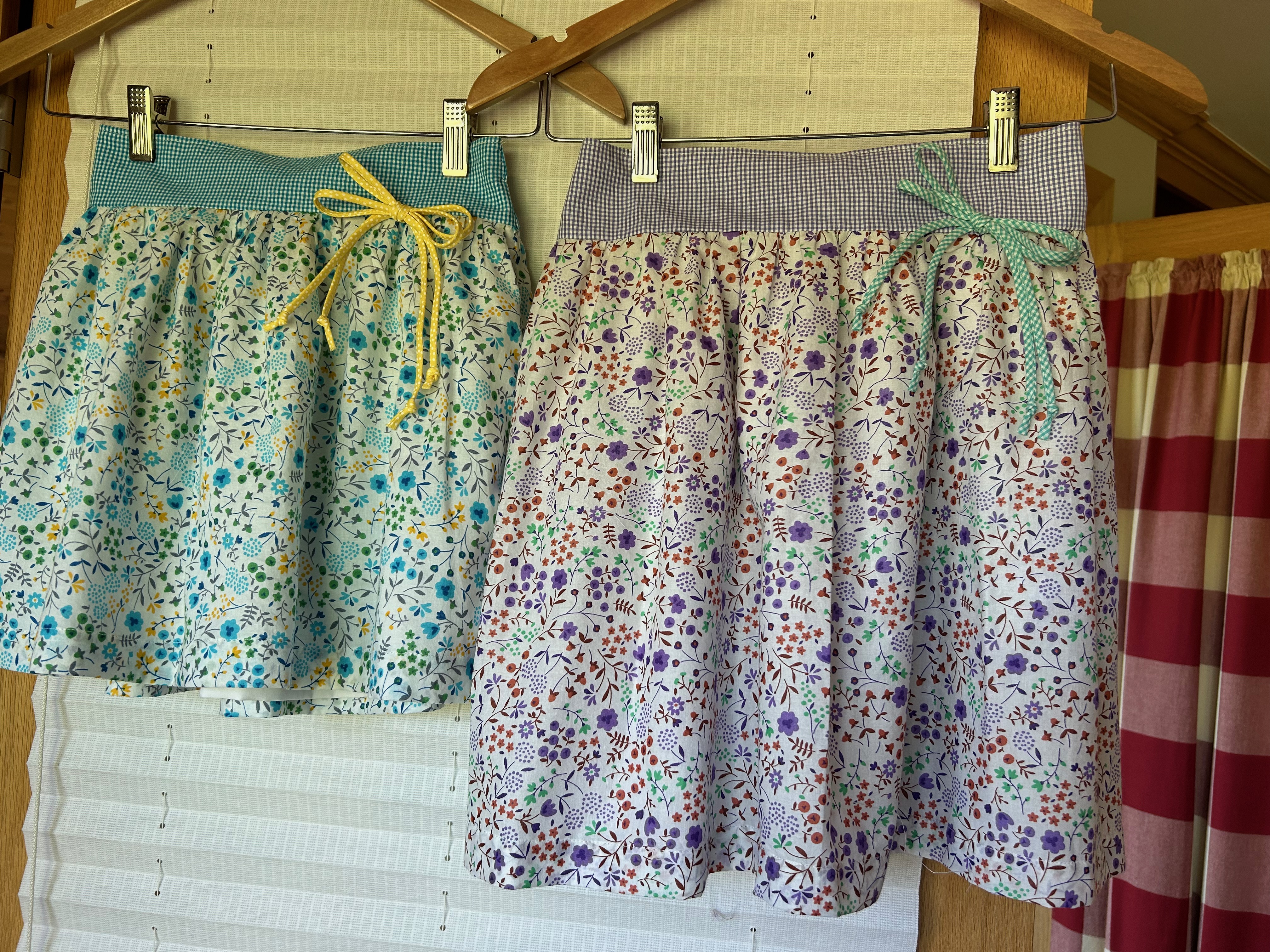
 5. Fun floral skirts for each of my granddaughters.

I used “kits” from Farmhouse Fabrics for each of these skirts.  They garnered blue ribbons and a “Best of Division” at our local county fair this past summer.  Full disclosure:  there wasn’t much competition!

  6. My 50th Anniversary linen dress made with vintage fabric.

I’m not sure I have ever made a dress which has given me more personal satisfaction than this one.  Making this dress was truly a dream come true.

  7. A fuchsia-pink silk shirtdress.

I persevered through the tricky construction of this dress made with a slinky silk jacquard charmeuse.  I had the opportunity to wear it twice this past Fall.  Perhaps the trending, pink “Barbie theme” contributed, but this dress proved to be a magnet for compliments at each wearing.  How rewarding after all the trouble it gave me! 

  8. A blouse for Fall, using some amazing vintage buttons.

I will finally admit I will never get tired of making or wearing cotton blouses. 

  9. And some miscellaneous (and minor) gift and holiday sewing.

That’s it!  

And I’m perfectly fine with it.  I did what I could, and three of my projects had high priority (my girls’ birthday dresses, my anniversary dress, and my pink shirtdress).  Completing them was very satisfying.  

So what about my last make of the year – that blouse for Fall?  

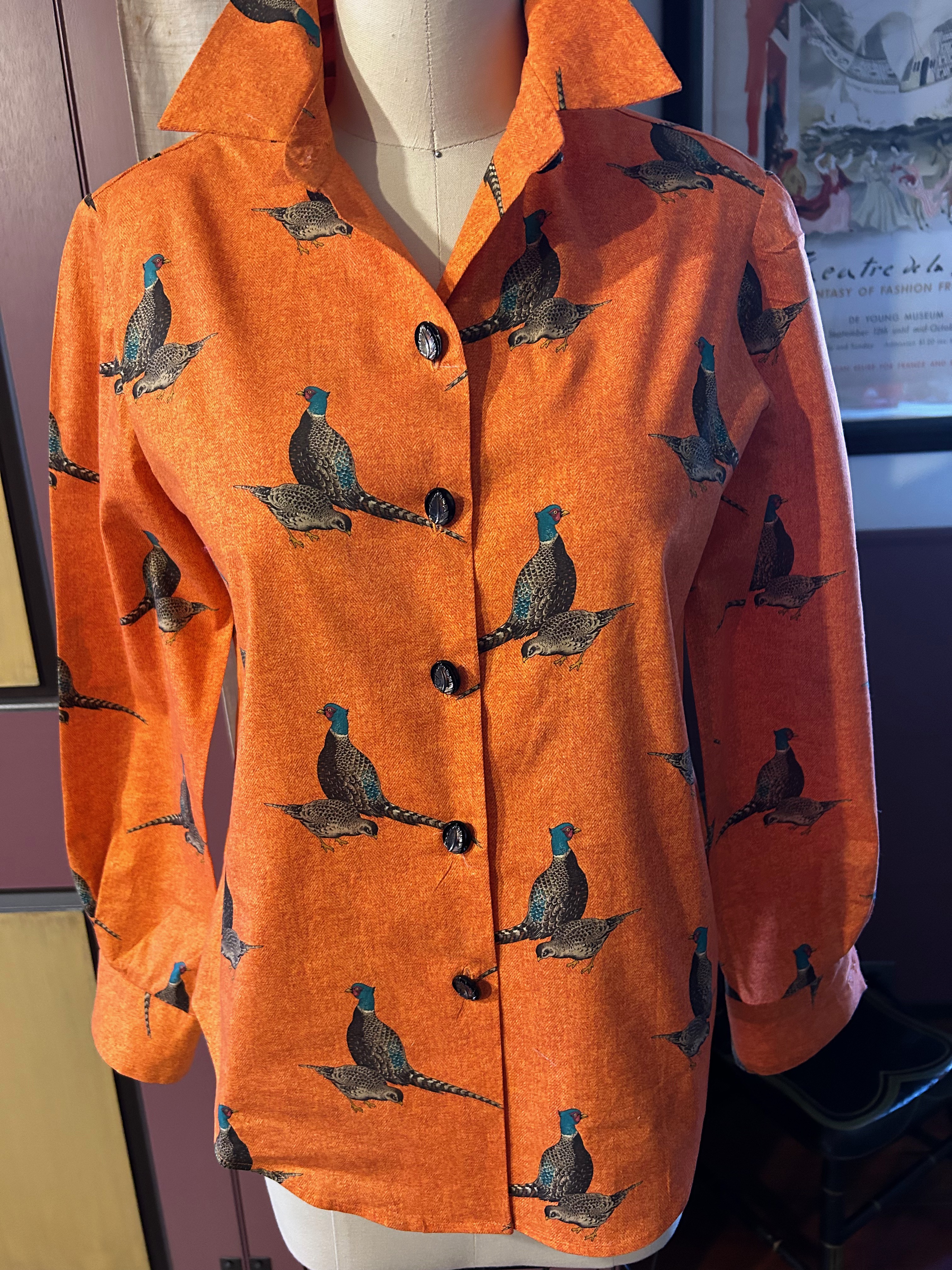
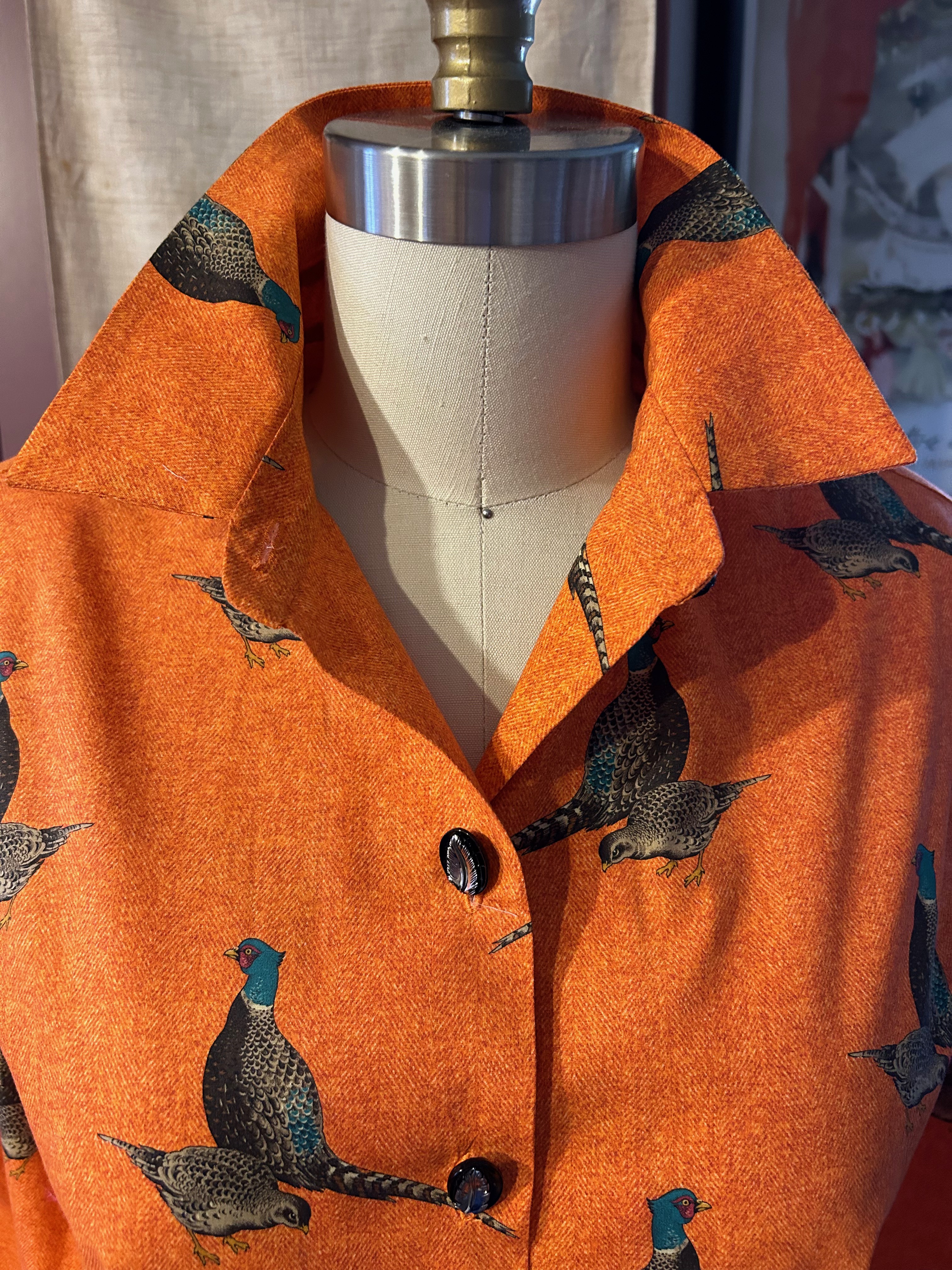
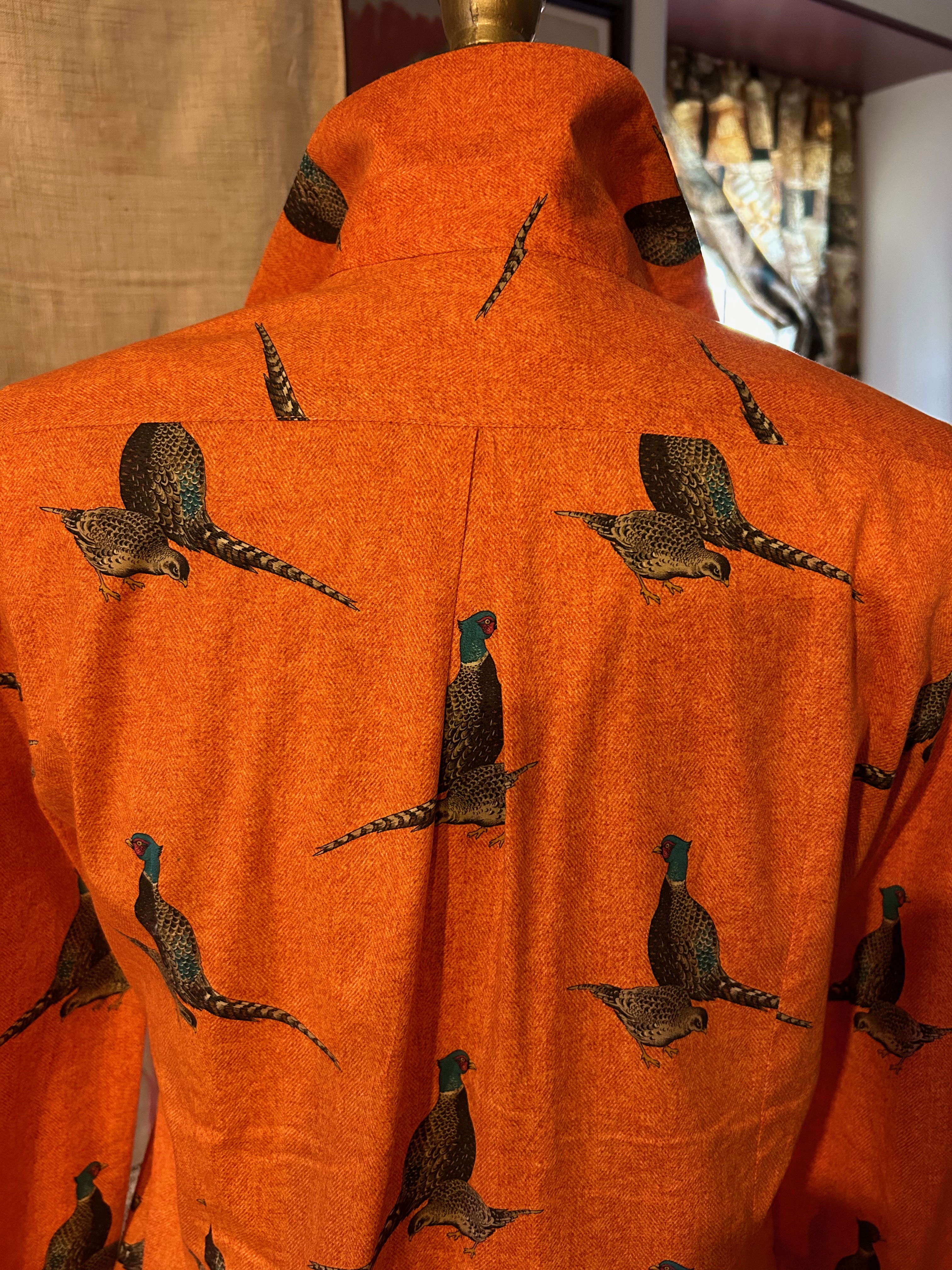
It’s very orange.  And with the pheasant motif, it is very autumnal.  However, with Fall undoubtably being my favorite season, it seemed fitting to have a piece in my blouse wardrobe devoted to that time of year.

I found the fabric on the website of Emma One Sock Fabrics a couple of years ago.   It is a beautiful cotton with a very slight stretch to it.  The quality is superb, being silky soft and very easy to sew.  The Herringbone printed background makes it look like a much heavier fabric than it really is.

I debated on the style bouse to make, thinking a bow blouse would be lovely.  However, in order to make this as versatile and wearable as possible, I defaulted to my regular shirt/blouse pattern, which I have altered and tweaked many times.

Here is that blouse pattern I have used over and over.

   I also thought this pattern would be the one most likely to show off the buttons I intended to use with the fabric.  

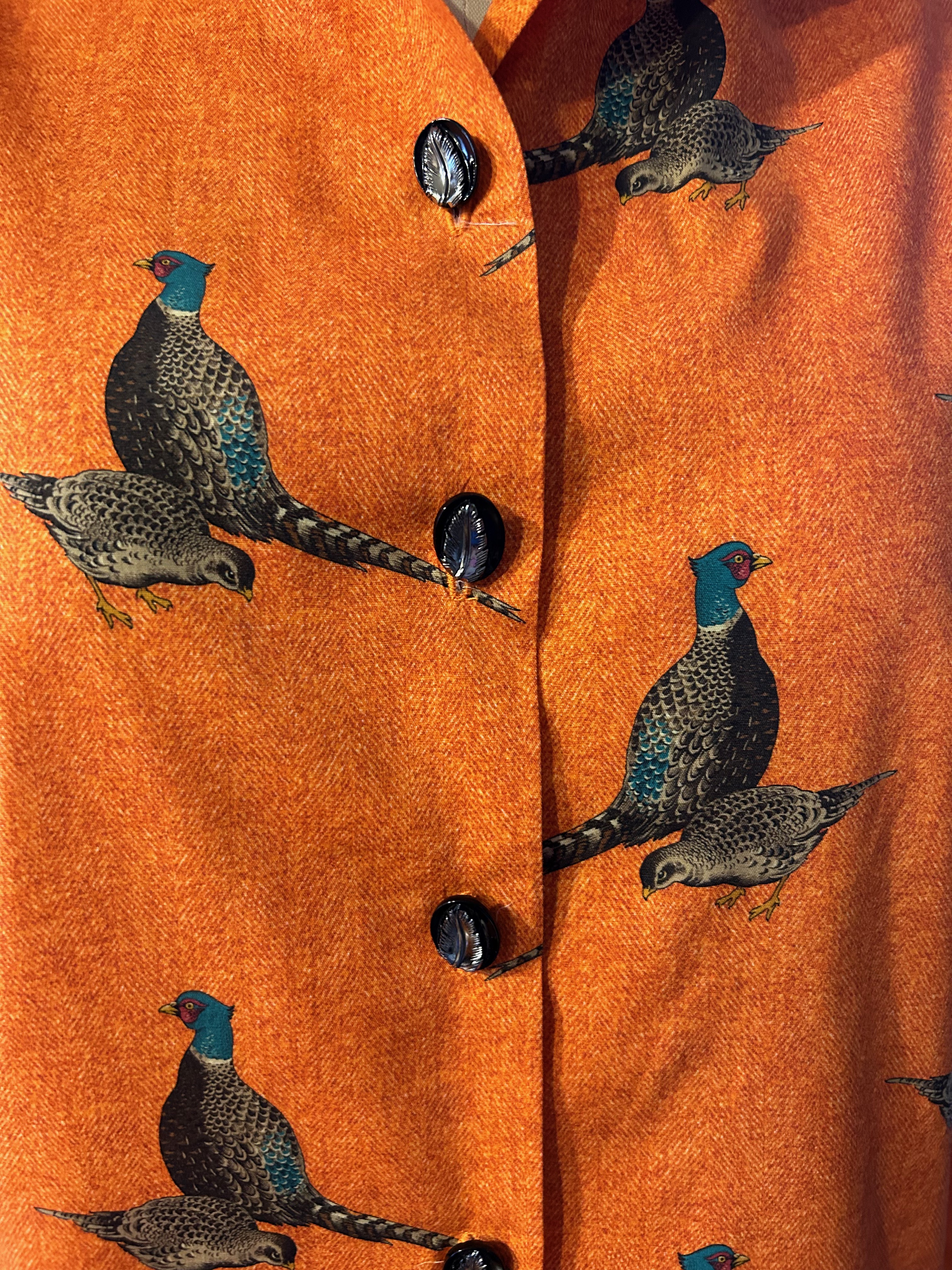
I can’t remember what came first – the fabric or the buttons.  Somehow I was lucky enough to find these vintage Ultra Kraft buttons with their feather motifs.  Just bordering on a bit too big for a blouse, these buttons seemed to balance the large pheasant groupings, making both fabric and buttons a good match.  I didn’t realize until I had finished the blouse how much the silver in the buttons picks up the lighter colors in the feathers of the pheasants.  There is a little “sparkle” in there!

I was able to wear this blouse a couple of times in season.  Now it seems a long time away until its next wearing…  

Which begs the question: what will transpire in the ensuing months – between now and then?  I will wait and see how and when inspiration hits.  What about you?  

44 Comments

Filed under Blouses, Buttons - choosing the right ones, Uncategorized, vintage buttons