Category Archives: Blankets and doll blankets

And Now I Match my Chair, Part 2

Isn’t a good pattern worth its weight in gold?  When I purchased this jacket pattern several years ago, I just liked it, no plans in place, and thought the day might come when I could use it.  The more I studied it with my Pendleton blanket in mind, the more I thought it was perfect for my project.  First task, of course, was to make a muslin toile and check the fit and size. 
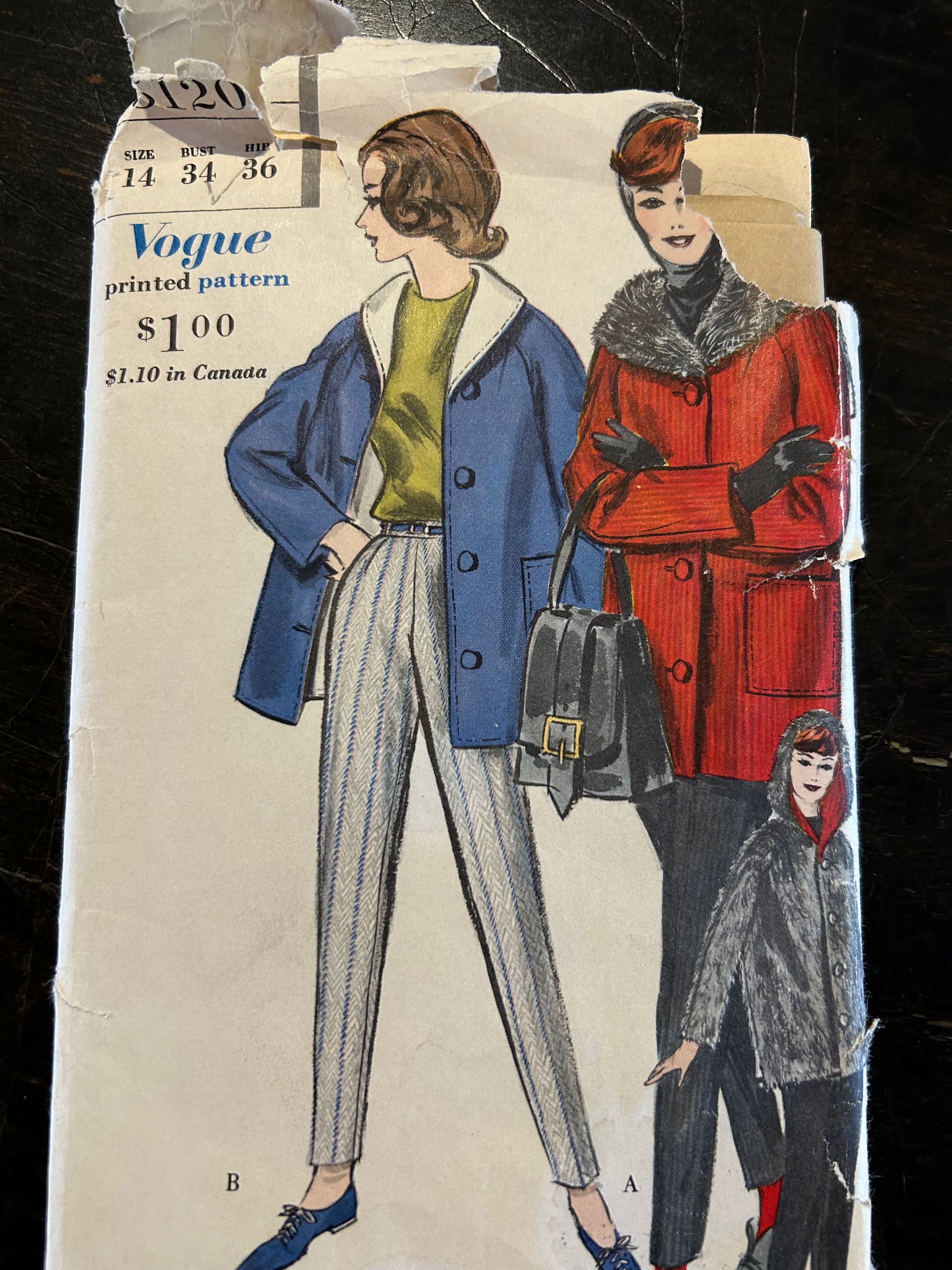
View B is the version I intended to use.

By now, November and early December had passed with my life taken over by bathroom renovations and holidays looming on the horizon. We headed back to Wyoming for Christmas, and then the new year of 2026 dawned, with all its promise and things unknown.  January was the perfect time to get back to my project. The jacket as designed was to be fully lined, either with fleece, contrasting fabric, or self-lined. I determined I would need to line the sleeves, while the rest of the jacket should remain unlined.  However, I needed a facing for the shawl collar and front edges. Because there was a pattern piece for interfacing the collar and front edges, I thought I could use that for my facing.  My toile confirmed that for me.  
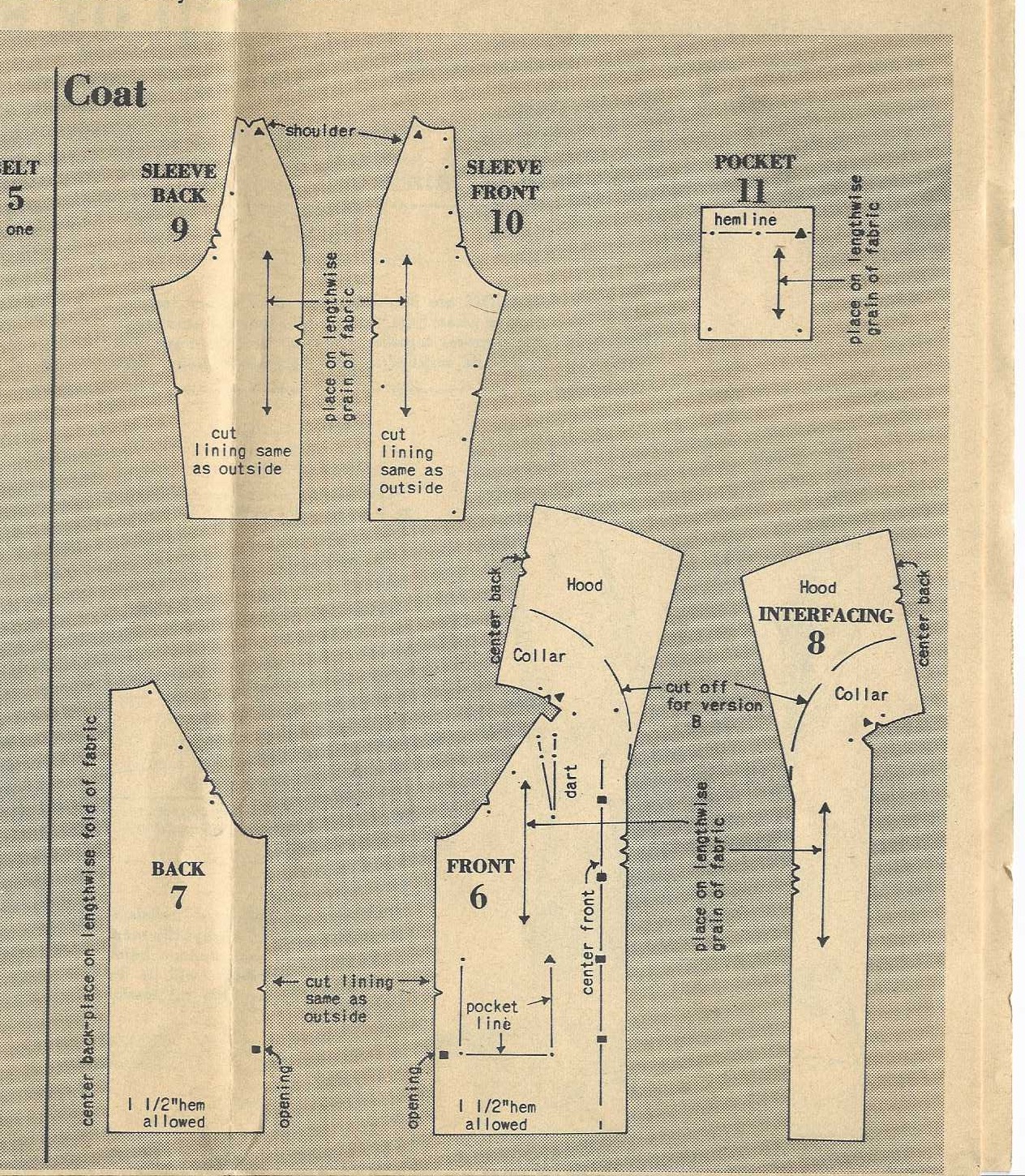
I used the interfacing (minus the hood extension) in the lower right corner of the diagram for my coat facing.

The coat muslin seemed very large overall on me, requiring a lot of alteration.  It can be tricky with coats, as enough ease must be allowed for wearing a heavier sweater or layers underneath. Also, the thickness and relative non-fluidity of the blanket dictated a looser fit.  I spent a few days perfecting my toile.  Then the real test was upon me.

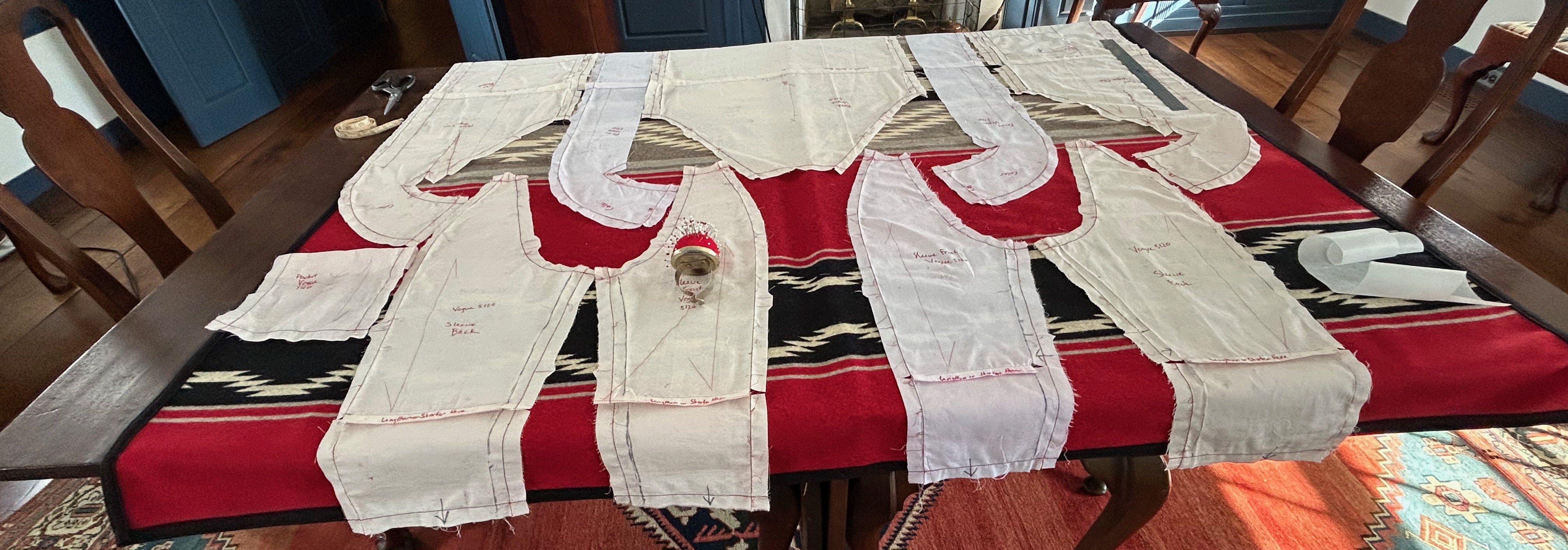
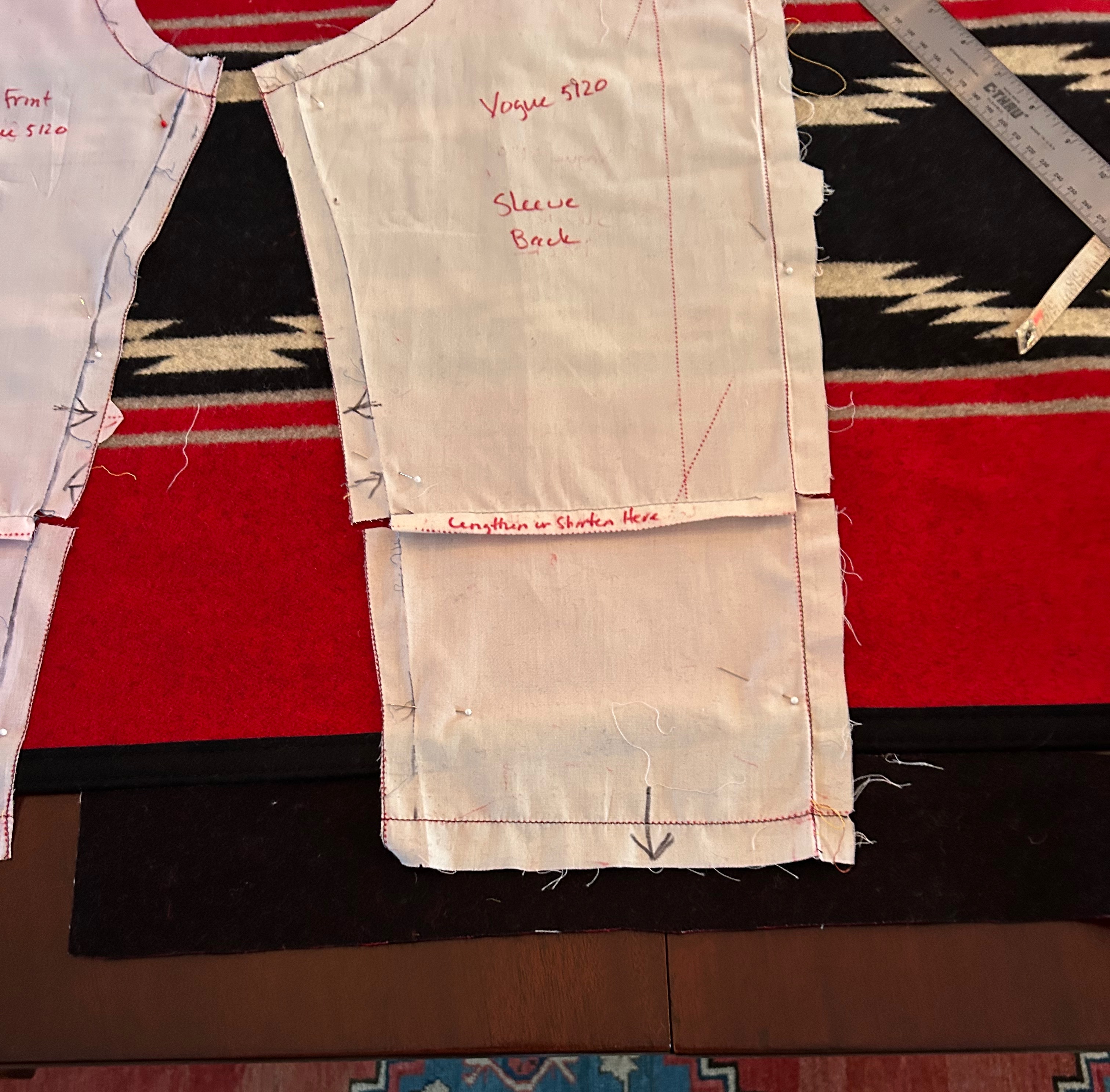
I took my muslin apart, producing pattern pieces to fit onto my fabric/blanket. Was making this jacket out of what I had left of the blanket even going to be possible? If so, how would the placement of the pattern pieces on the very graphic and large design work out? 

I got to work with everything spread out on my dining room table, starting with two main objectives: 1) The large “dragonfly” motif on the blanket would be centered on the back of the jacket, and 2) I wanted the “portrait” or neckline area of the shawl collar to feature the dominant color of red. 
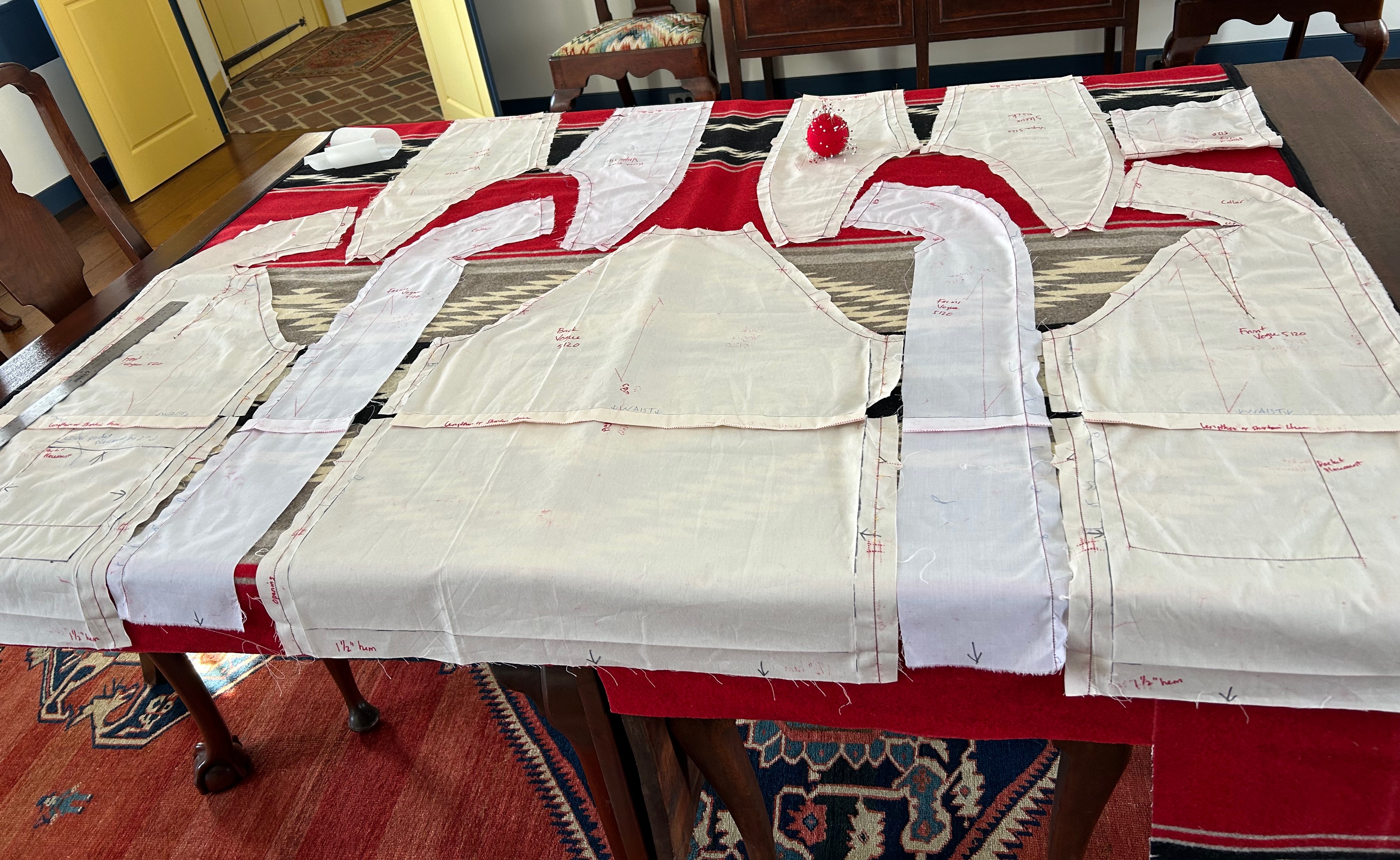
I had to use the entire width of the blanket, without an inch to spare in the final layout, for the pieces of the main body of the coat. This layout gave me the the red collar I wanted and the center motif of the blanket centered on the coat back. Visible on the lower part of the picture is the where the upholsterer had cut the fabric.
This is the opposite end of the blanket, where I needed to position the sleeves and, potentially, patch pockets. This is where it got a little tricky. That black “sawtooth” panel, a dominate woven feature, was going to make or break the fluidity of the overall look of the coat.

From there the fabric told me what I could do and what I could not do, and the best way to explain my decisions is to show you the finished coat.
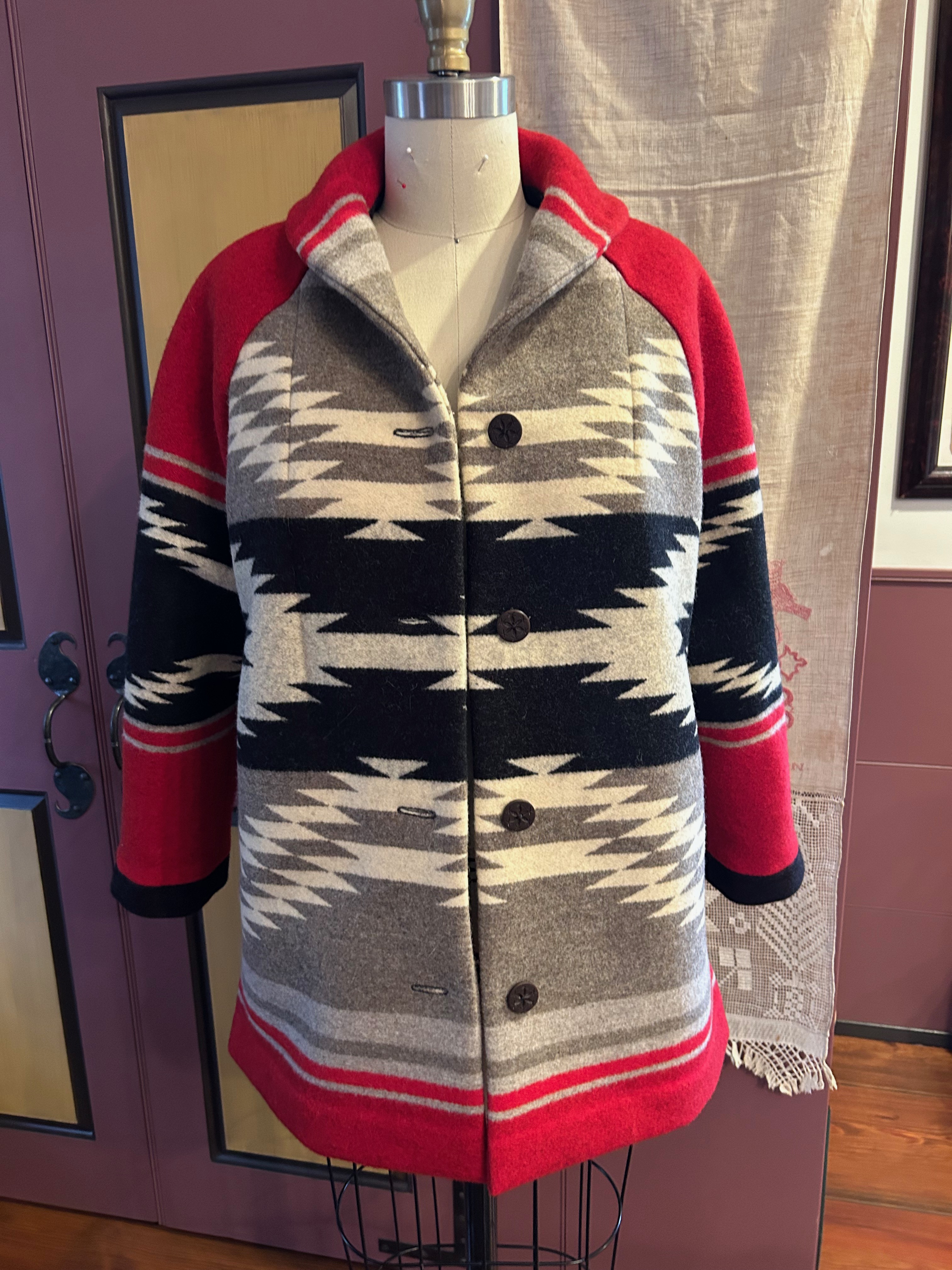
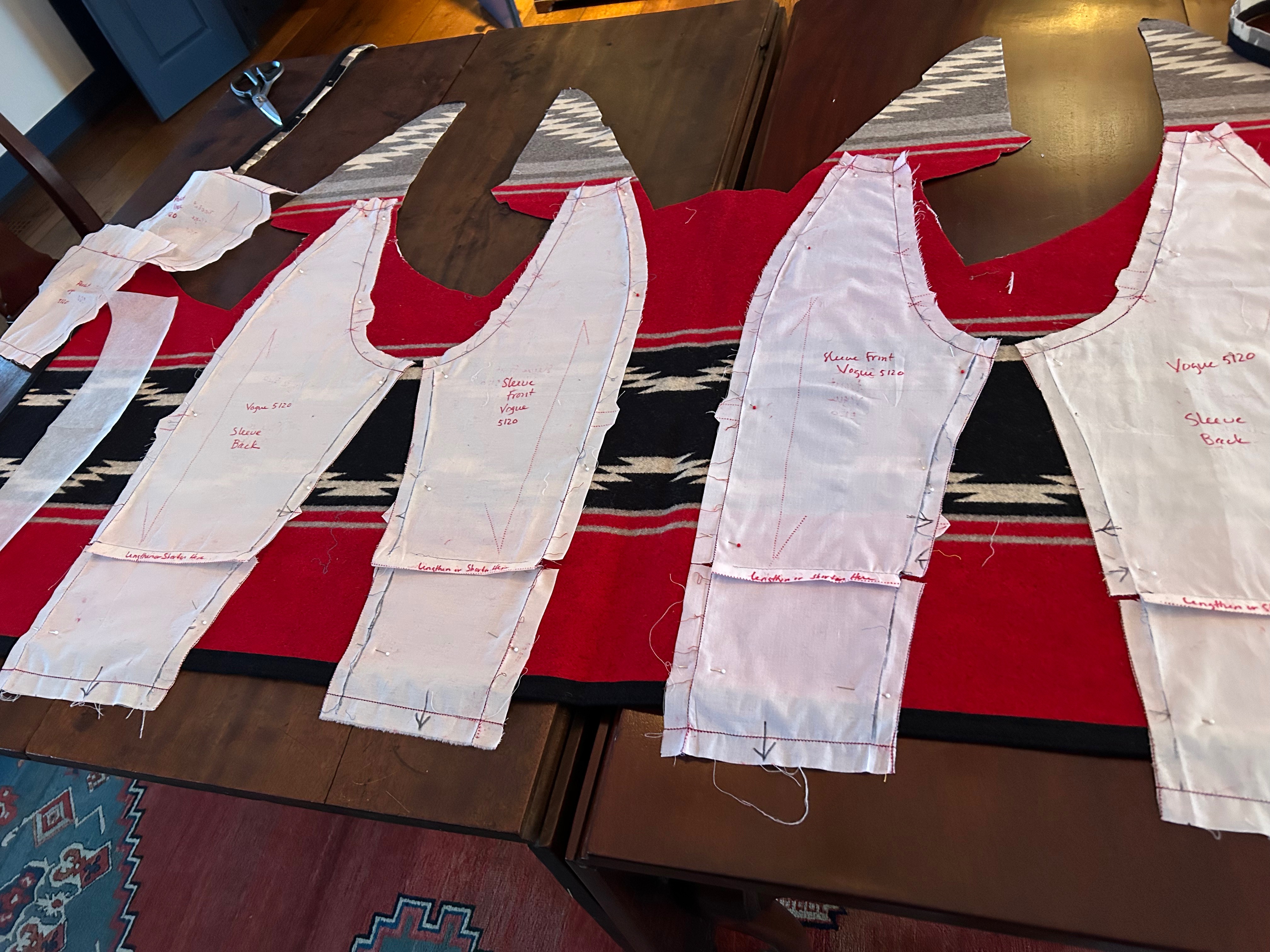
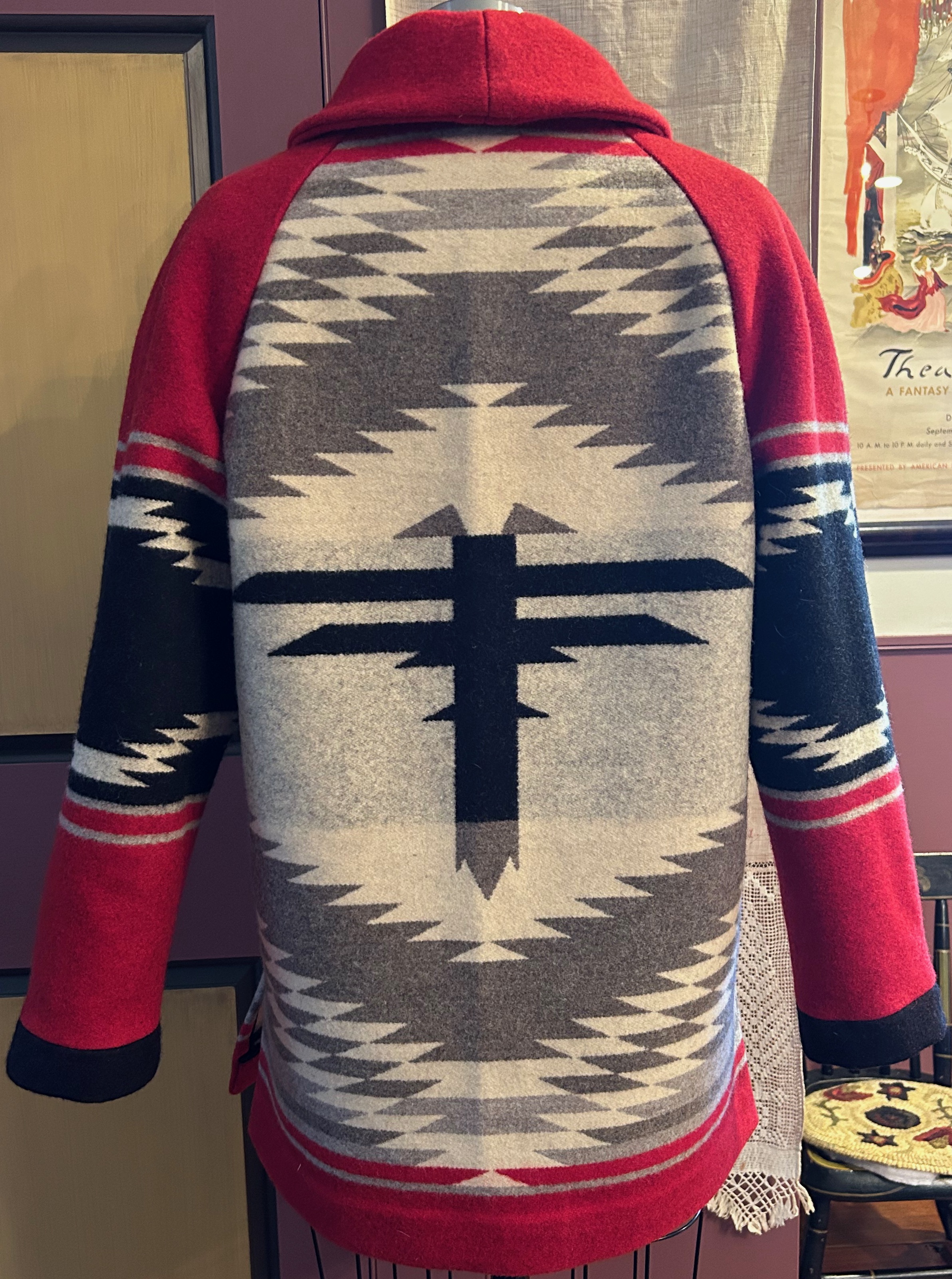
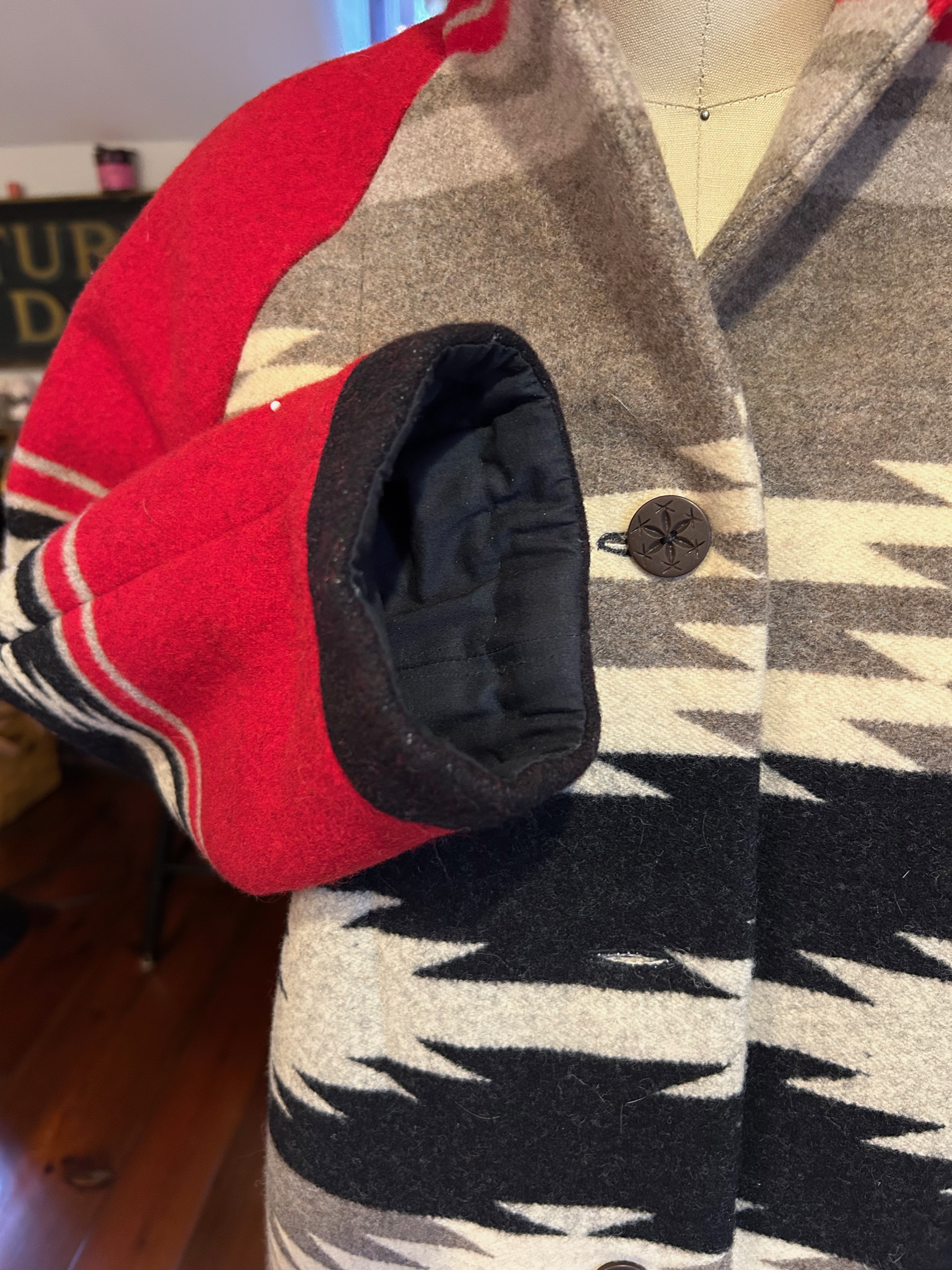
1) I determined the dominate black stripe across the sleeves (see below) absolutely had to be centered on the black stripe across the front of the coat (and consequently centered on the main motif on the back.) However, the width of the two stripes were not the same. 2) The only way I could center them was to wiggle around the placement of the sleeves on the fabric. I had not originally intended to put black “cuffs” on the sleeves, but that turned out to be the only way I could center the black stripes on each other, by moving the sleeves off the edge of the fabric, and adding “cuffsto get the sleeve length I needed.
First, I cut out the main pieces of the coat. (I had Plan B in place already, knowing by now I would have to piece the lower edges/cuff on the sleeves.) That gave me more flexibility on determining exactly how those two black design features would lineup to best effect.
I was sweating bullets, even with Plan B, when I realized how much I had to wiggle the sleeves down off the edge of the fabric to get those black design features centered on each other. In this photo you can see the scraps of black fabric (reversible to red) I intended to use for the “cuffs.” Fortunately I found that I could successfully remove the binding on the blanket, gaining me another 3/4 inch in length – which meant the piecing I needed to do on the cuffs would be a pleasing width.
Here is the back of the jacket. I was very pleased with how well the sleeves lined up with it.

I thought it would be “easy” after getting to this point. Easy is not a word I should ever use while sewing. I should know that by now. Every seam had to pressed with loads of steam, followed by a clapper to help set it, usually more than once. Every exposed seam edge needed to be encased with rayon tape. I split the two vertical darts and needed to hand-stitch the raw edges to prevent fraying. Every seam needed to be basted together before machine sewing in order to keep the horizontal lines in the design matched.  
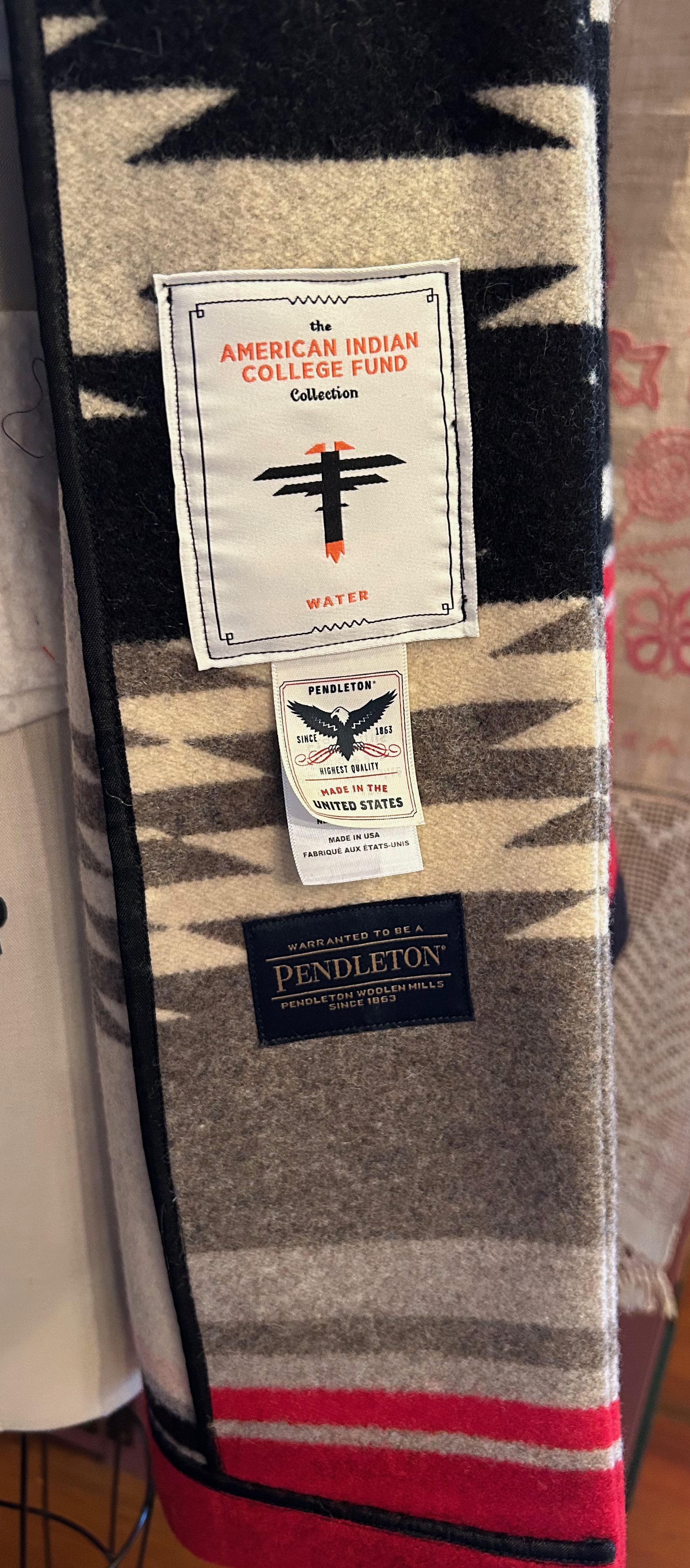
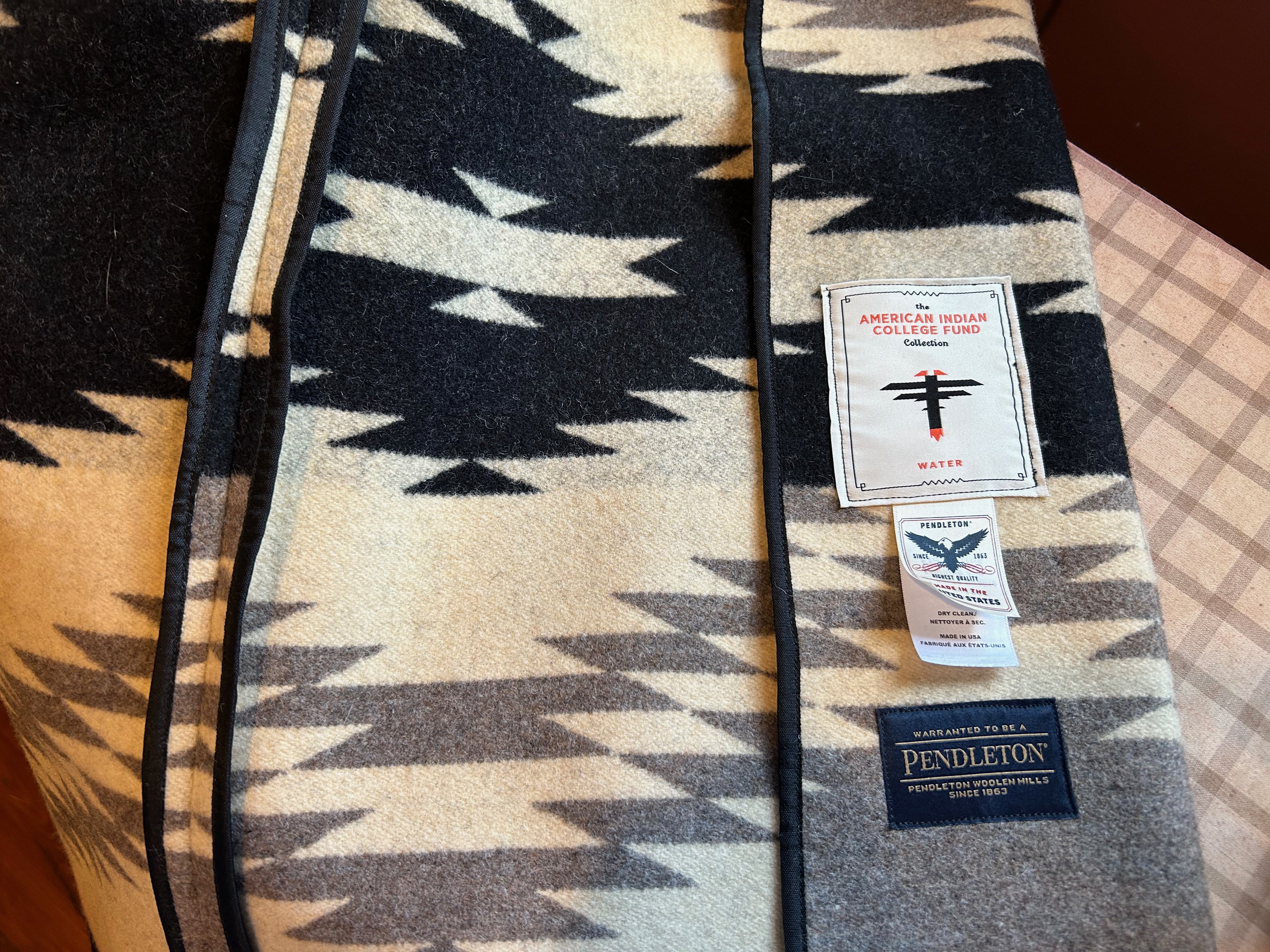
Here and below are looks at the interior seam binding I did on all the exposed edges – and the fabulous labels which I took from the blanket and attached on the coat front facing.

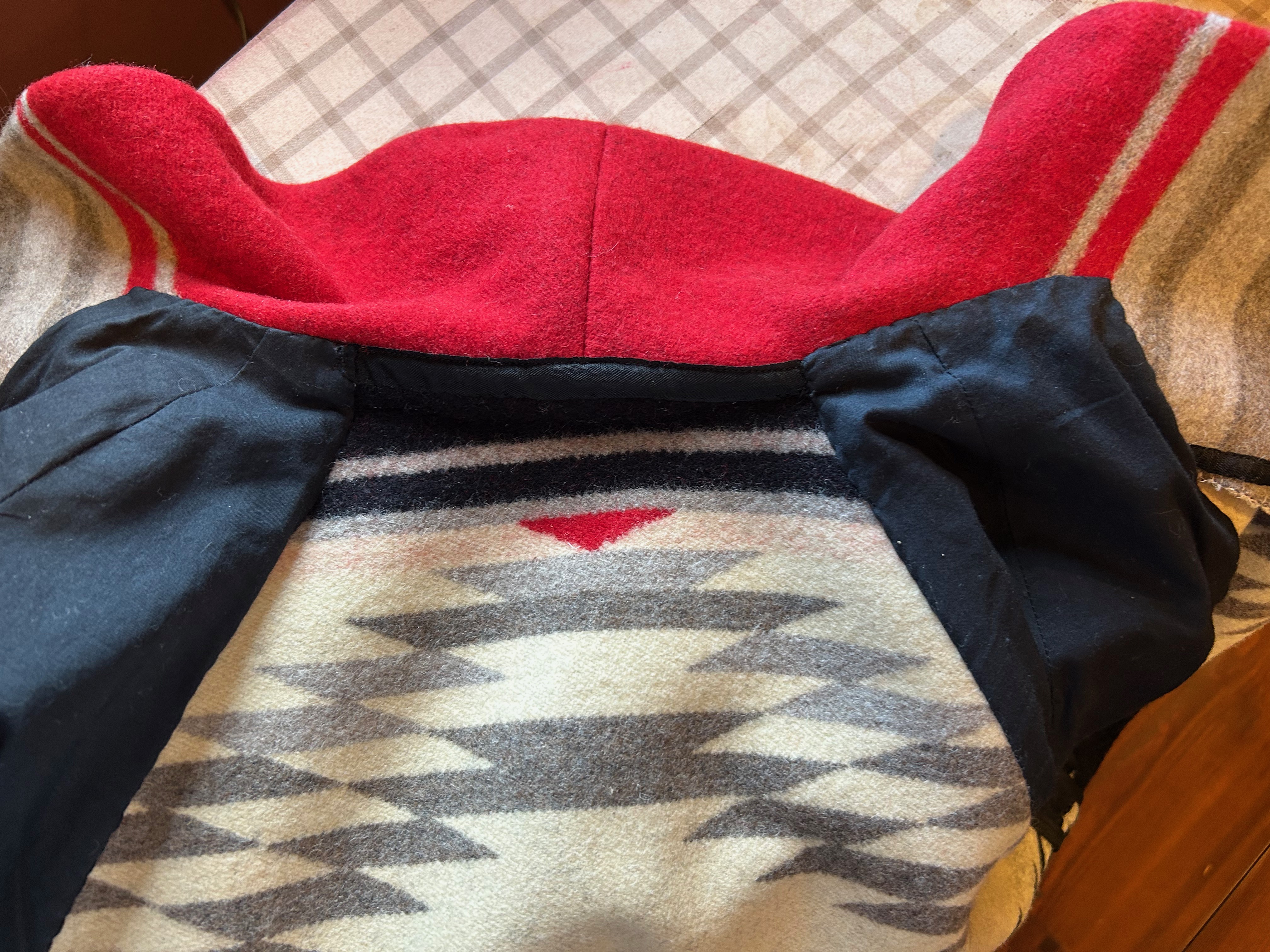
Here is the back interior of the jacket, showing the sleeve linings (I used lightweight cotton batiste that had a slight sheen) and how I finished the raw edges of the center back neckline.

I had found a set of taupe-colored vintage buttons in my collection which, at first glance, did not look like they would work. But after auditioning black buttons and red buttons, I was convinced those taupe ones would be perfect.  However, I had no idea how I was going to do buttonholes in that thick fabric. I fiddled around with fabric scraps to make practice bound buttonholes, using a lightweight fabric for the “lips.” They looked awful.  I thought of using large snaps and just securing the buttons on the coat front for effect. That did not appeal to me at all.  So I went to my two failsafe sewing maxims:  1) I’ll figure it out later, and 2) Plan B – it BETTER work.
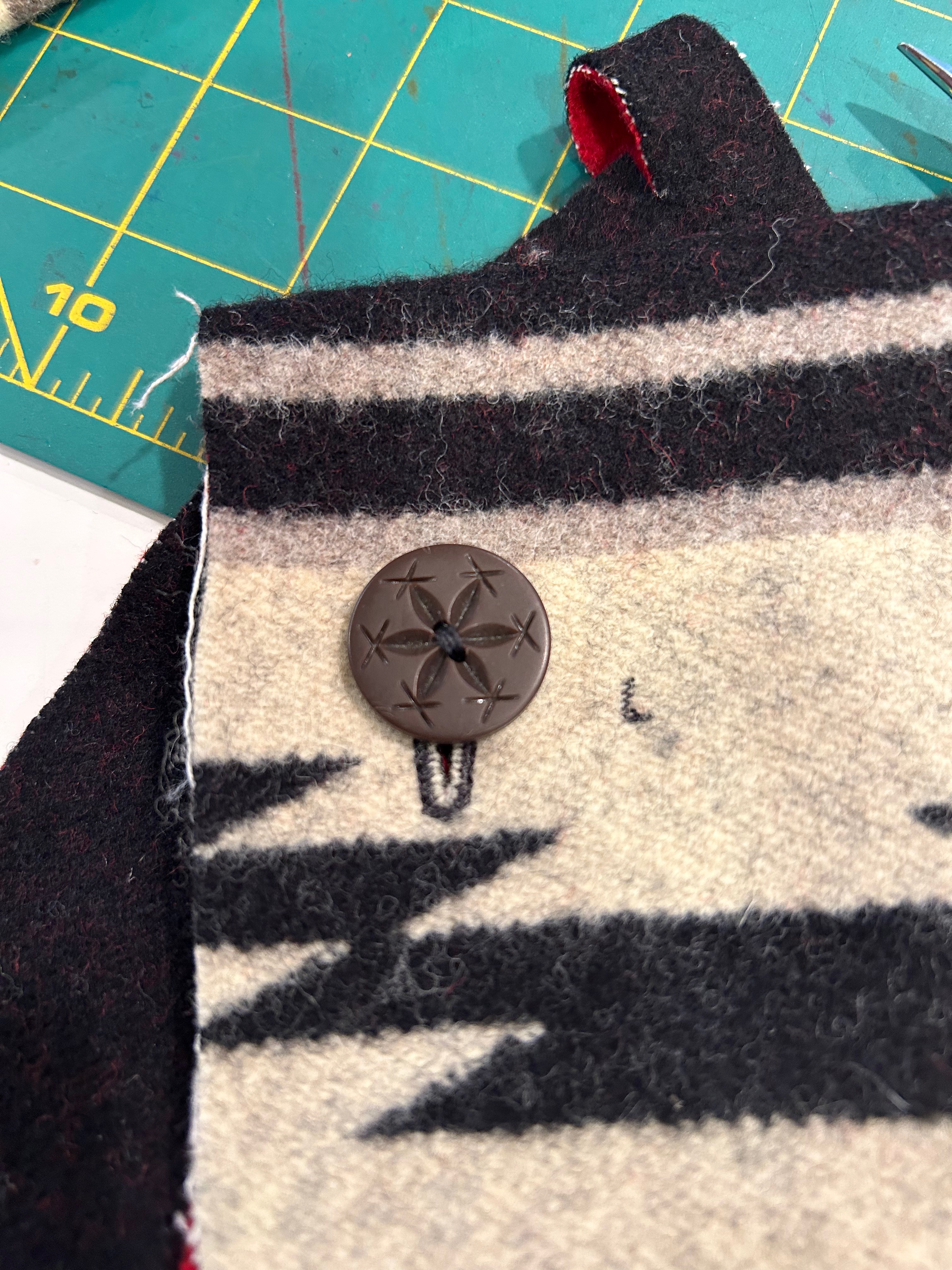
The jacket was practically finished before I found a method to make those buttonholes. Because the fabric was so thick, I could successfully only do a machine buttonhole on one layer of it. I experimented around and discovered if I made the buttonhole on the front of the coat, I could then line up the facing and use a straight machine stitch through both layers around the buttonhole. I used very small stitches to make it secure. Then I sliced them open. It worked!
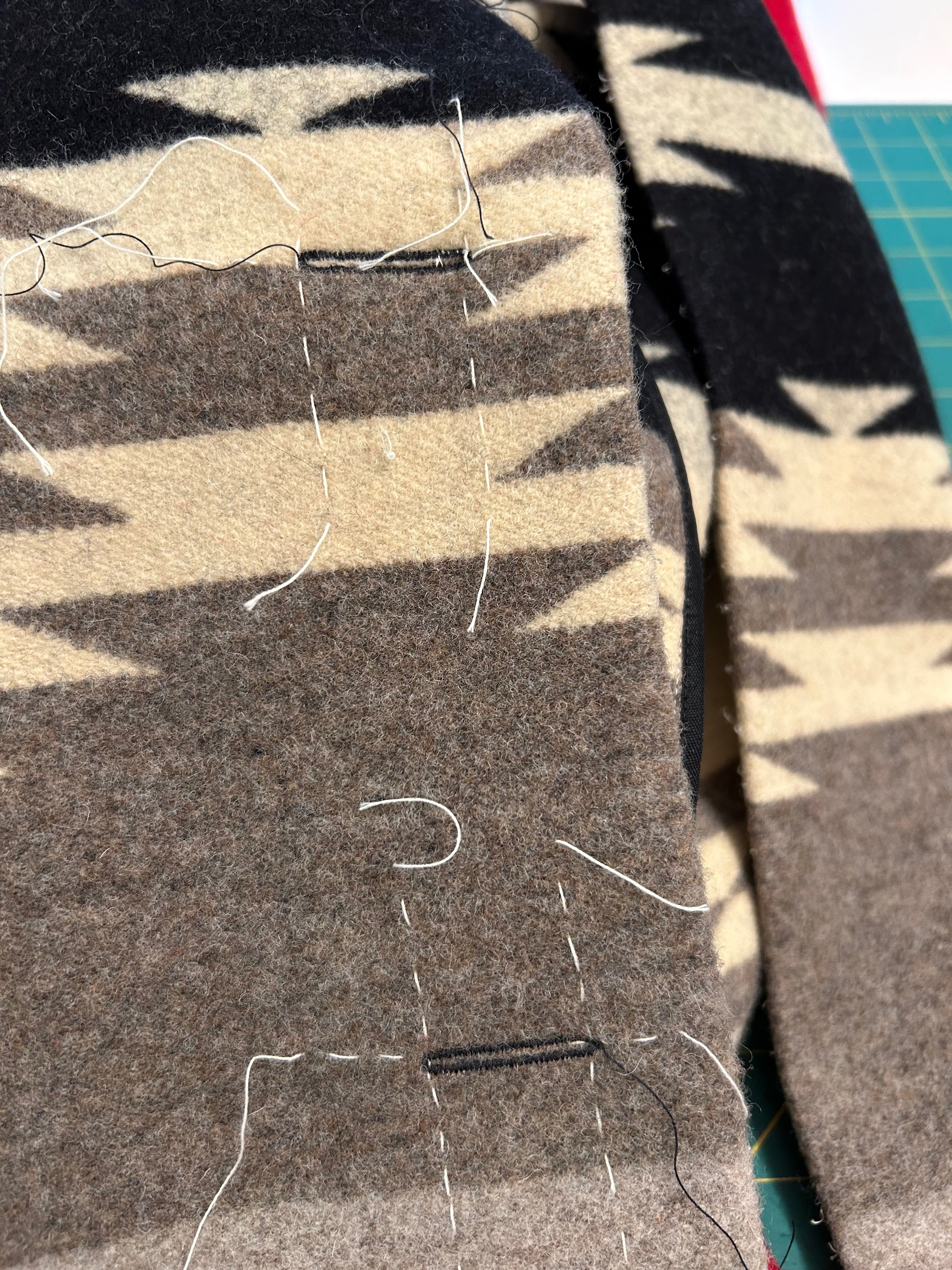
I had to remove the facing to make the machine buttonholes and then stitch it back on before continuing. I could not have seen that coming since I really did not know early on how in the world I was going to make these buttonholes!
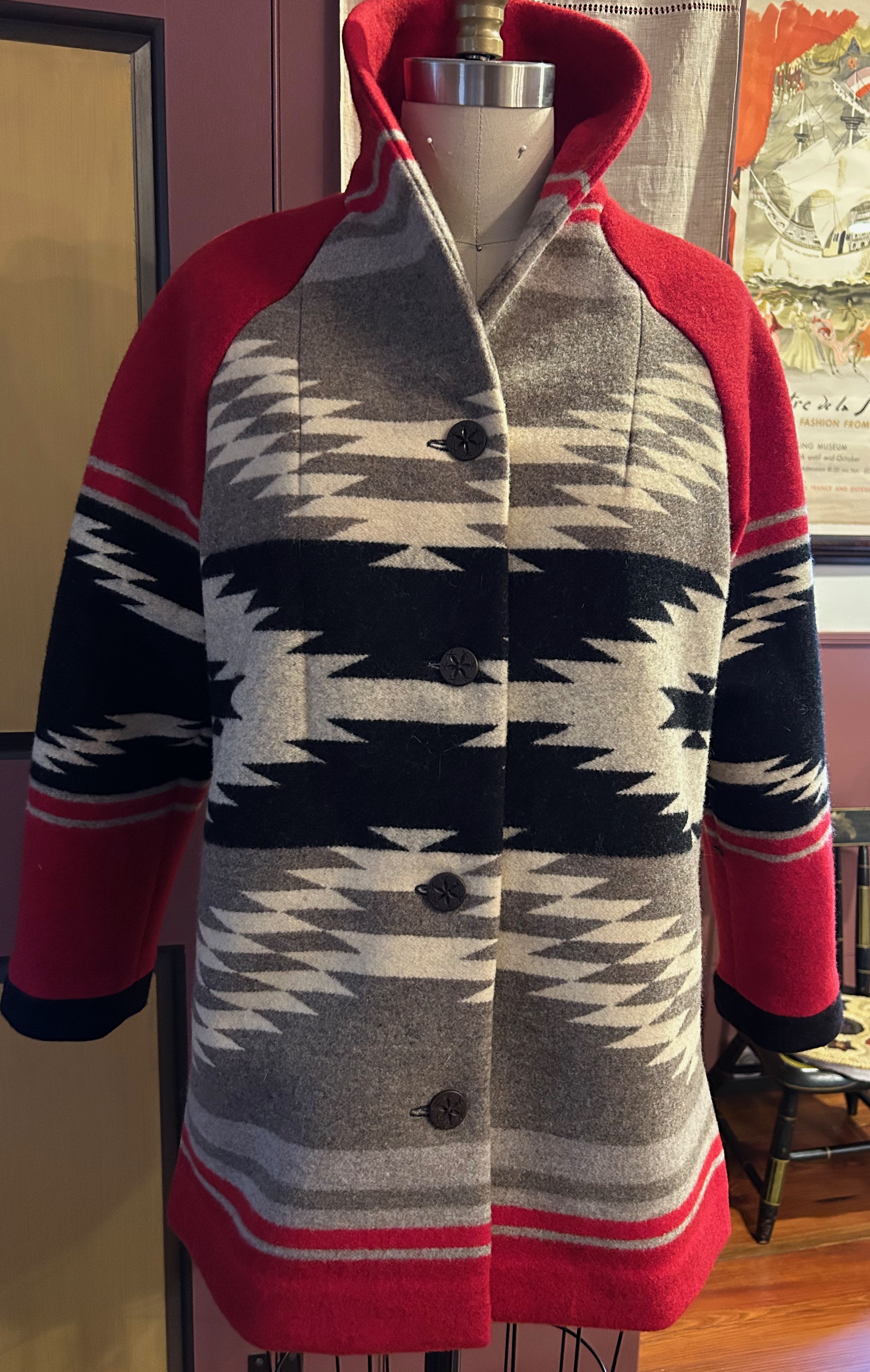
This picture shows the buttonholes all finished and completely functional! Also, this is an interesting view of the front of the coat. I was kind of wringing my hands over the center front of the coat. I did not have enough fabric to balance the design across the center front. And then I realized, even if I had had enough fabric to do that, it would not have worked. The reason? I would not have been able to balance those small dragonfly motifs on either side – or – they would have been pushed too much to either side to make sense for the design. To my eye, that balance was the more important one. One more thing… I did not have enough fabric to make patch pockets for the coat. I considered making inseam pockets out of the black batiste, but I was concerned they may cause distortion of the side seams due to the heavy nature of the fabric. I finally decided to forego pockets altogether. After wearing the coat next winter, I can always come back to the pocket conundrum if I decide pockets are a must. Right now in my mind, they are not.

Are you still reading at this point? Or did I lose you back at the dining room table?

Almost finished! The final touches on the coat involved under stitching the collar to hold the turn in place, and securing the sleeve lining to the underside of the black “cuffs.” 

What do you think of the black cuffs? I had no choice but to do them this way; hopefully they look intentional rather than contrived.
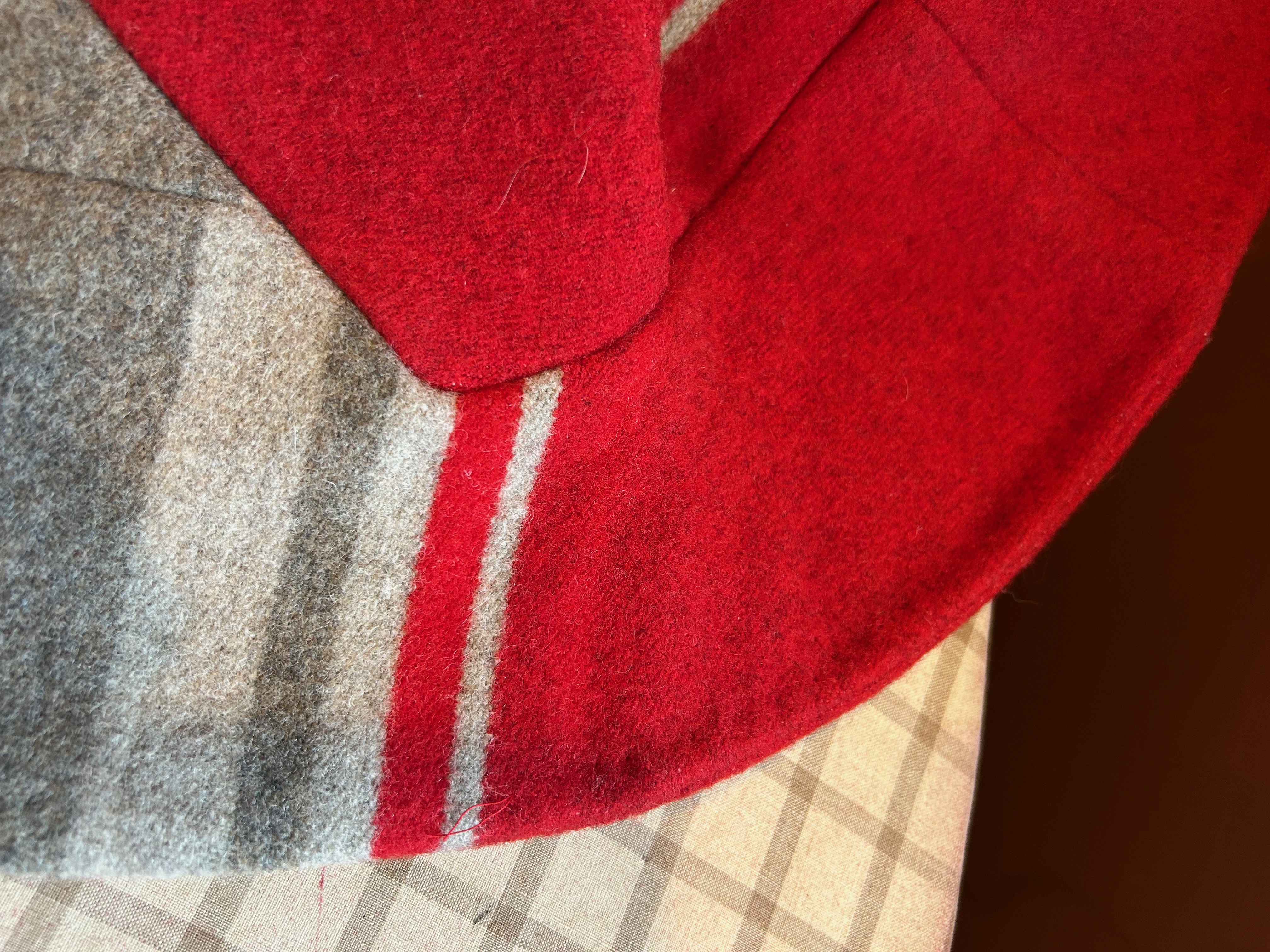
Understitching on the collar.
Hand stitching holding the sleeve linings in place.

I have to say I was pretty thrilled with how my jacket turned out, considering the parameters facing me.  

Now I do indeed match my chair! More importantly, however, I have a very classic, one-of-a-kind, Pendleton wool, western-style jacket which is going to be fun – and warm – to wear.  
48 Comments

Filed under Blankets and doll blankets, Buttons - choosing the right ones, car coats, Coats, fabric labels, Pendleton Woolen Mills, Sleeves, Uncategorized, vintage buttons, vintage Vogue patterns from the 1950s, woolens

And Now I Match My Chair, Part 1

It all started with a chair.  Well, maybe not.  My yearning for a coat made from a western-style blanket actually started inside the Pendleton Store in Jackson, Wyoming. For those of you unfamiliar with Pendleton Woolen Mills, here’s the (abbreviated) scoop on this great American company. 

 An English weaver by the name of Thomas Kay made his way to Oregon in 1863. (Think about that for a minute!)  His descendants, the Bishop family, built upon the weaving foundation Kay established and started Pendleton Woolen Mills in Pendleton, Oregon in 1909. In its first decade, the company produced colorfully patterned blankets and robes for local Native American tribes, thereby setting a brand distinction for the company. In 1916, Pendleton introduced the Glacier National Park blanket, the start of a wide-ranging series of National Park products. (New blankets and designs are still being added to this line today.) In 1924 the company introduced its first line of apparel – men’s woolen shirts – followed over the coming decades by women’s apparel and expanded offerings in apparel, home furnishings and of course, blankets. At the heart of the product lines is a commitment to American craftsmanship, the embrace of Native American design, and pride in its family ownership over six generations. Their products are available in their retail stores, on the web, and by printed catalog.  

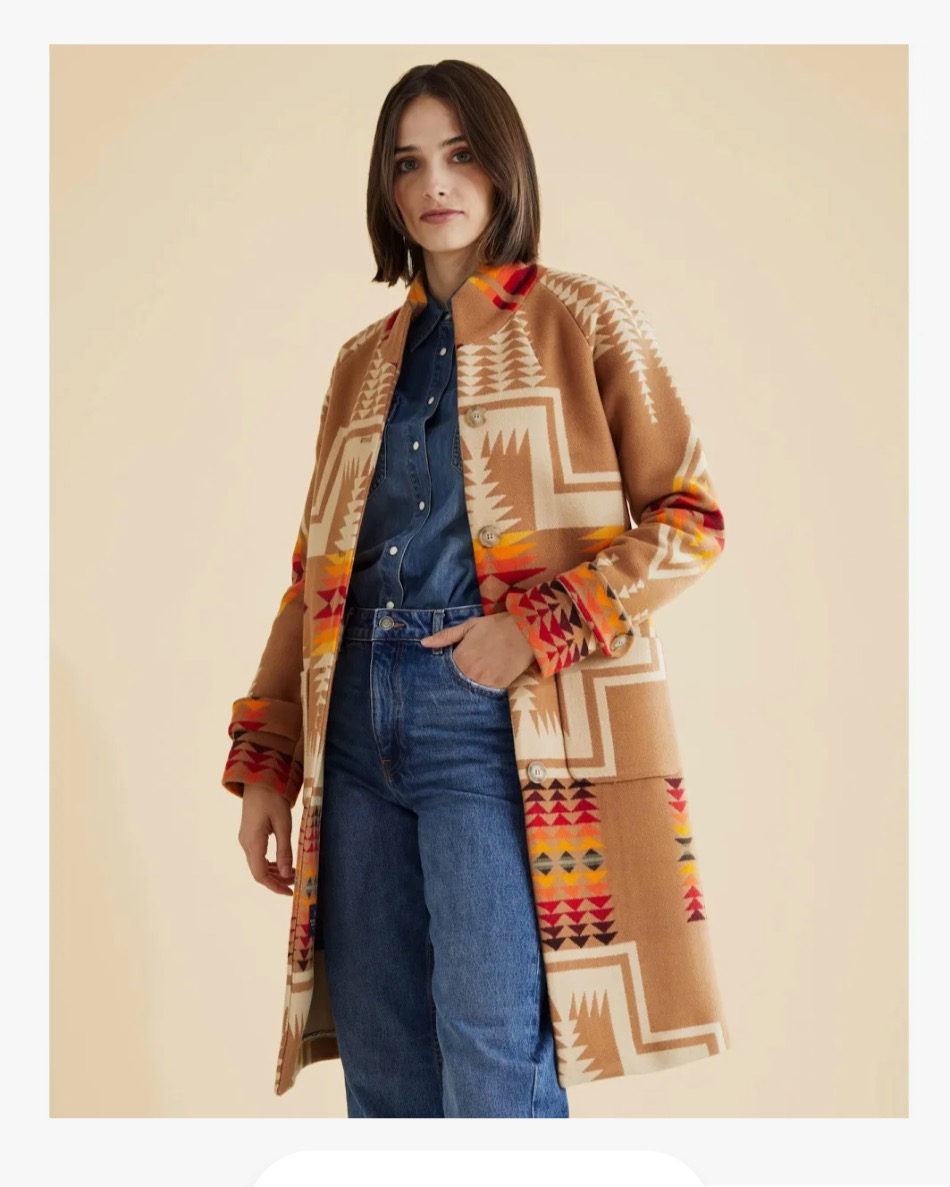
Back to the Pendleton Store in Jackson, Wyoming. Their women’s offerings always showcase several coats, jackets, and ponchos made from Native American inspired blankets (and made in the USA, for extra good measure). They are gorgeous and distinctive and classic. So much so, that a few years ago my daughter purchased one (with a little $ help from Mom.)

This is the Pendleton coat my daughter purchased; photo is from the web.

She already had a stunning Pendleton wool poncho, a gift from her husband. As we all know, one can never have too much outerwear, right? Well, all this American craftsmanship and design and head-turning apparel of course started me looking at Pendleton blankets-turned-coats from the viewpoint of one who sews – and one who thinks “I could make one of those!”

The seed was planted, waiting for germination.  

With my existing sewing queue already groaning under its own weight, I deferred action on this idea indefinitely. And then, in late August of 2025, I found an Old Hickory small hoop chair (another great American company known for its craftsmanship) in a consignment store.

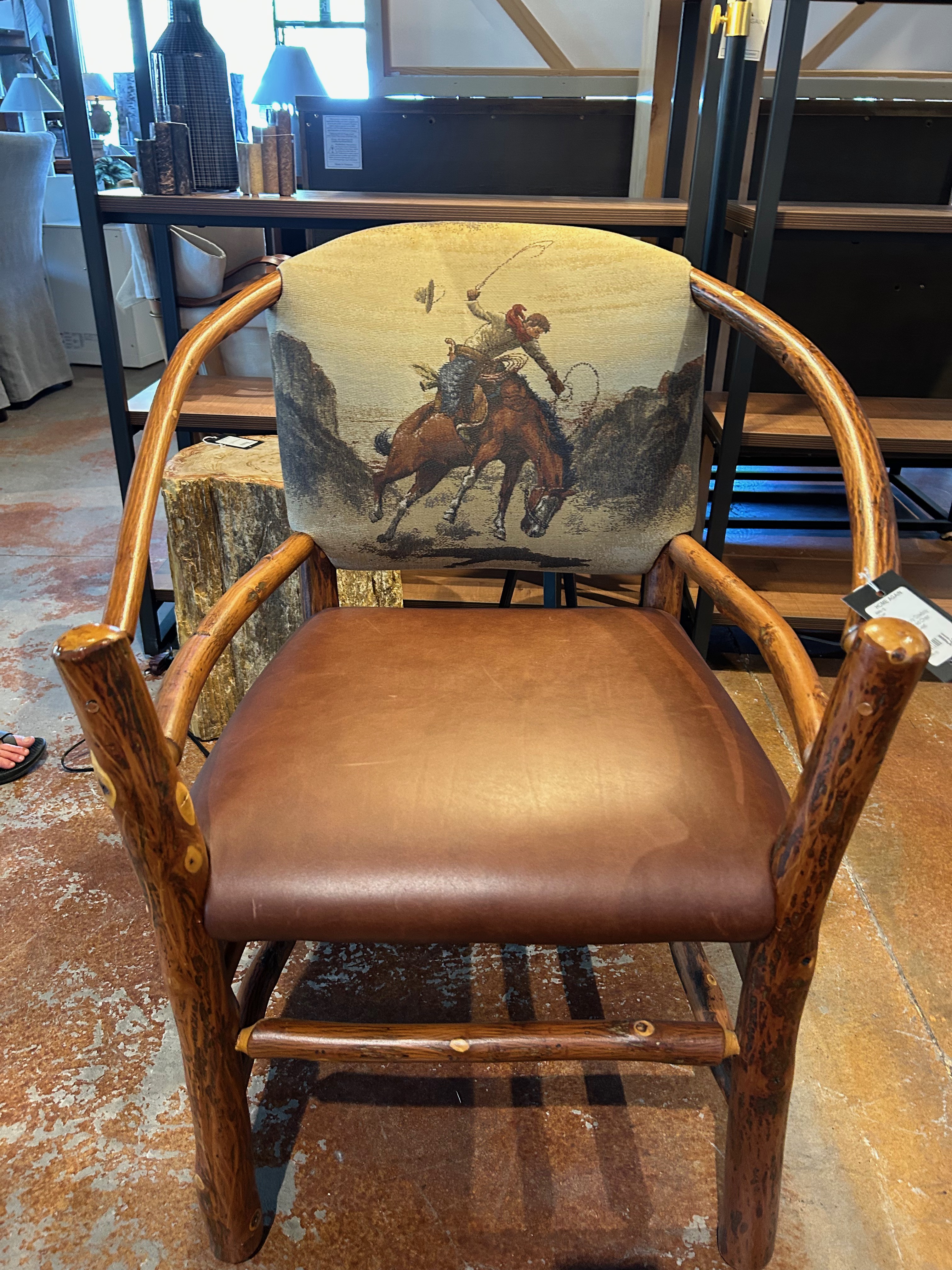
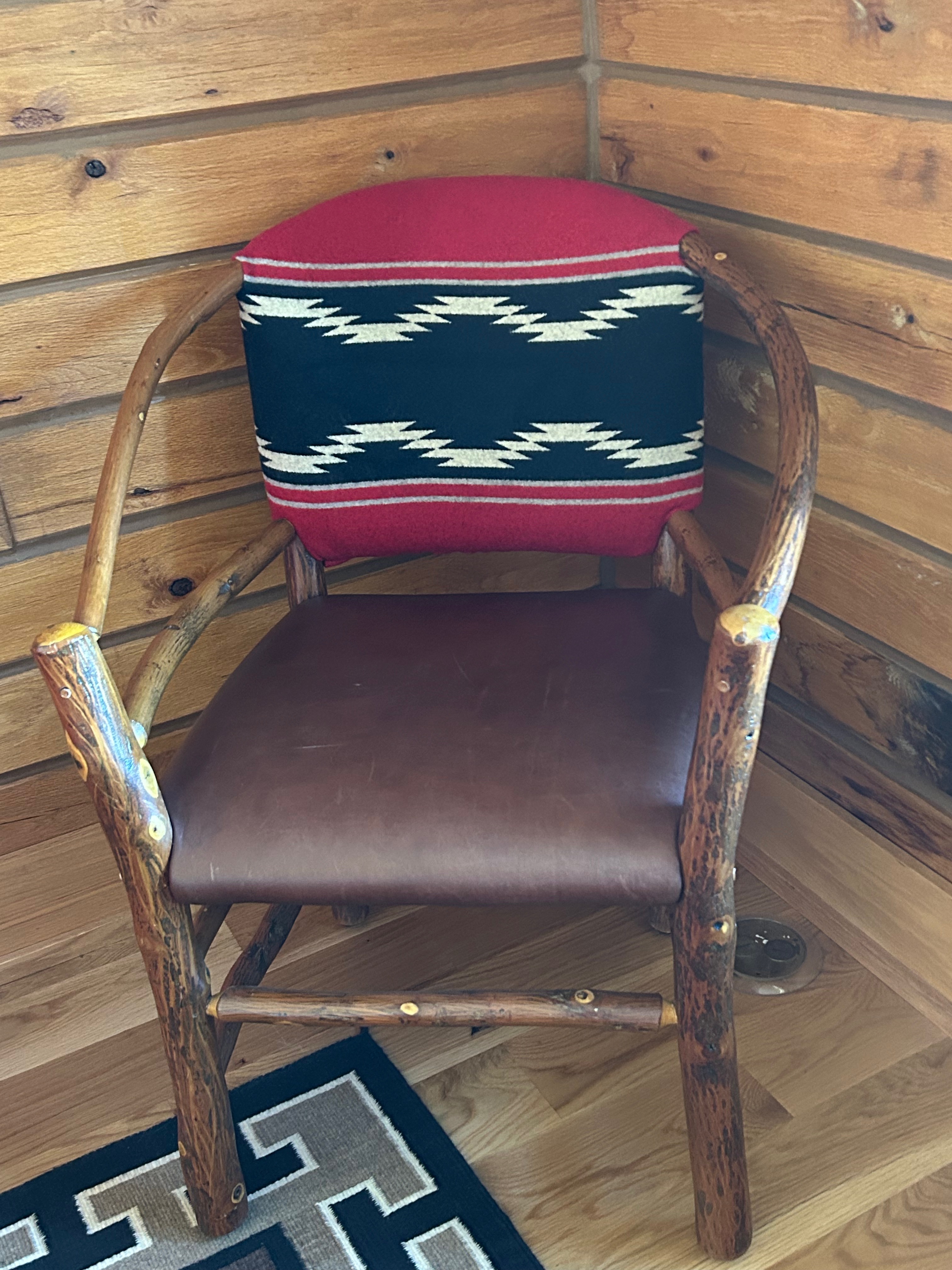
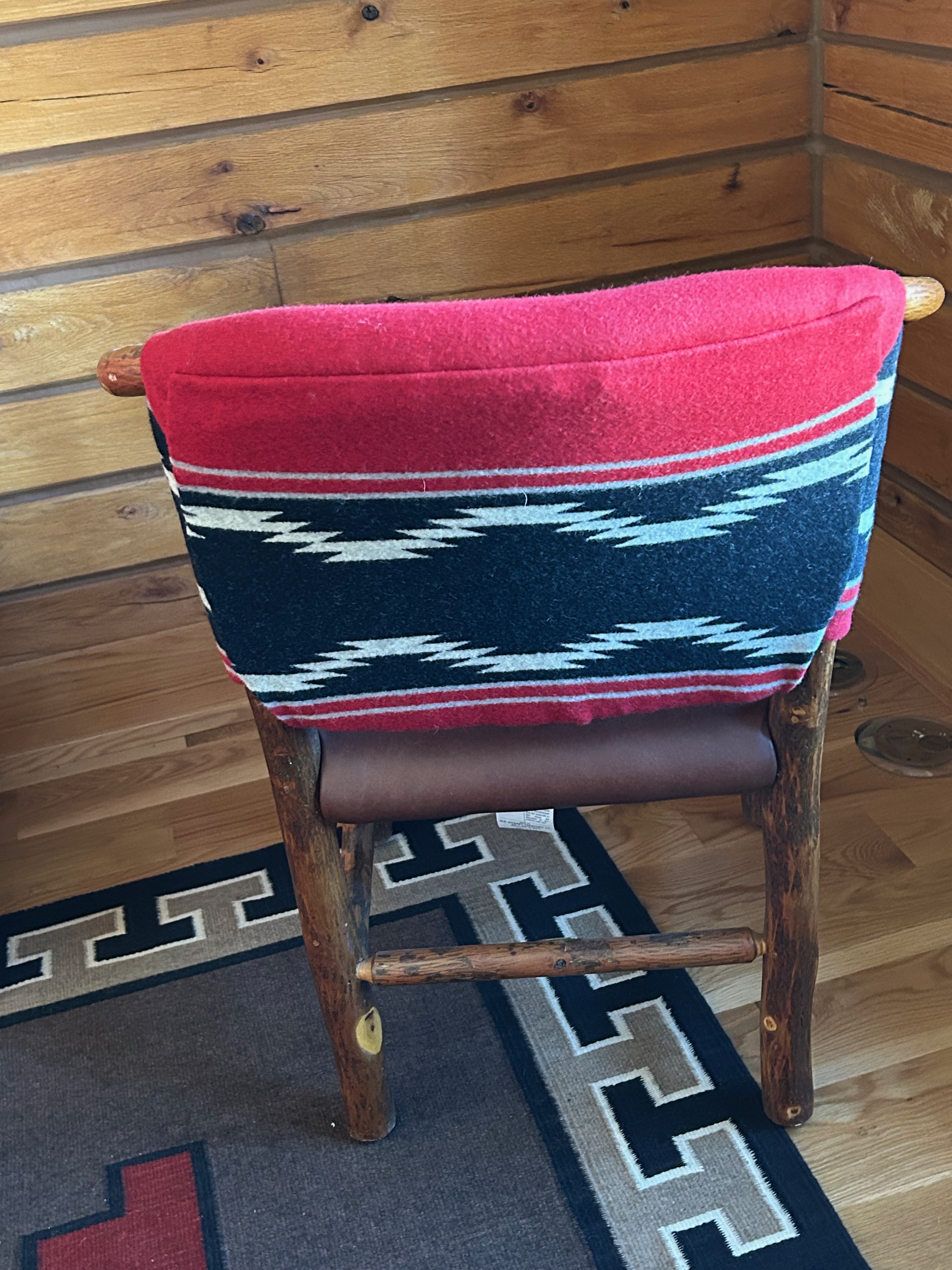
This is the Old Hickory chair I purchased from HOME AGAIN, a consignment store in Jackson, Wyoming. I was not a fan of the “bucking bronco” motif on the seat back.

I purchased the chair with the knowledge I would need to change the upholstery on the seat back. (The seat is covered in leather, which is perfect for our household which includes two cats prone to some scratching.)

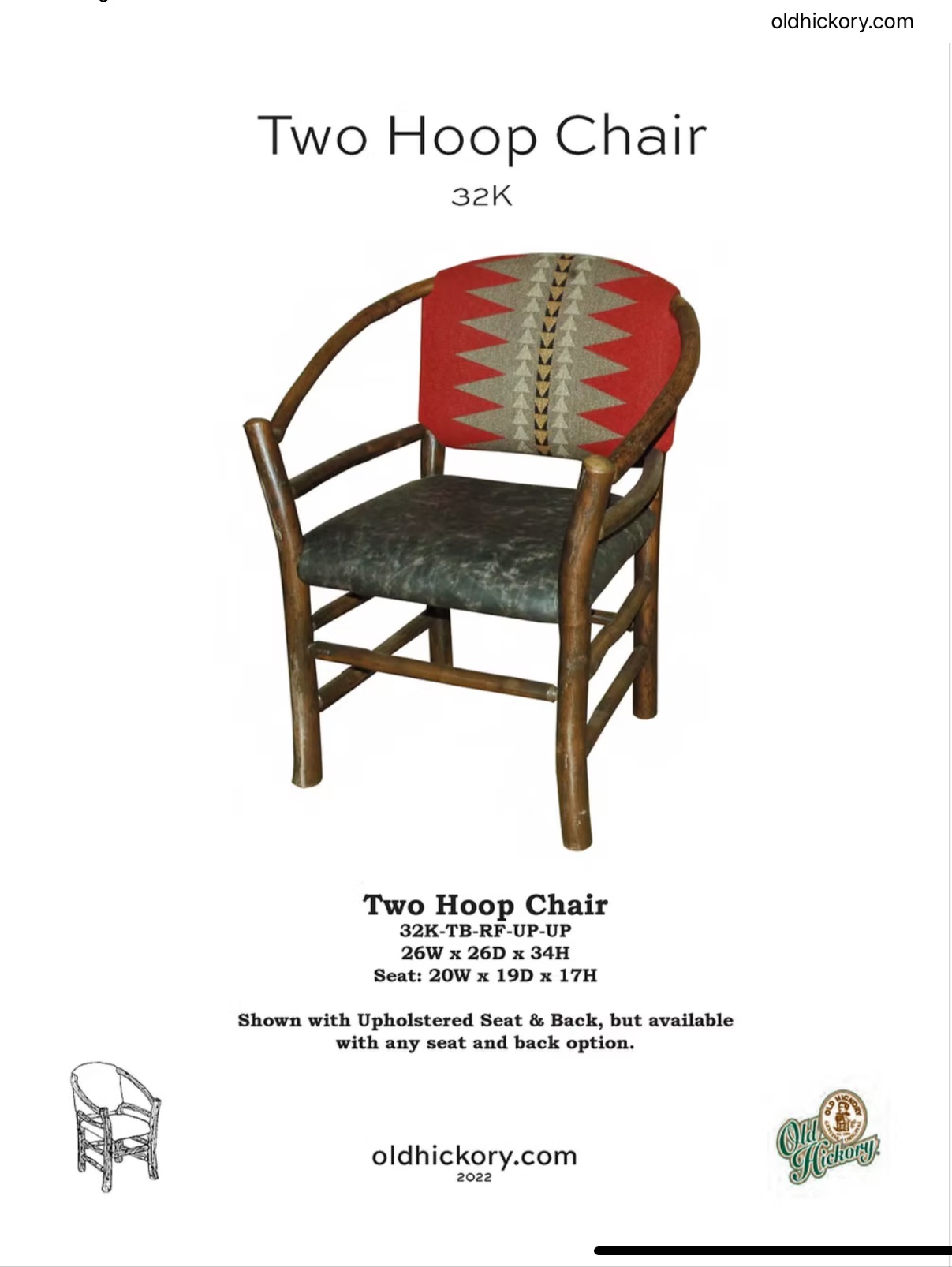
I was already familiar with examples of Old Hickory hoop chairs upholstered in Pendleton blanket wools, as shown here:

Screenshot

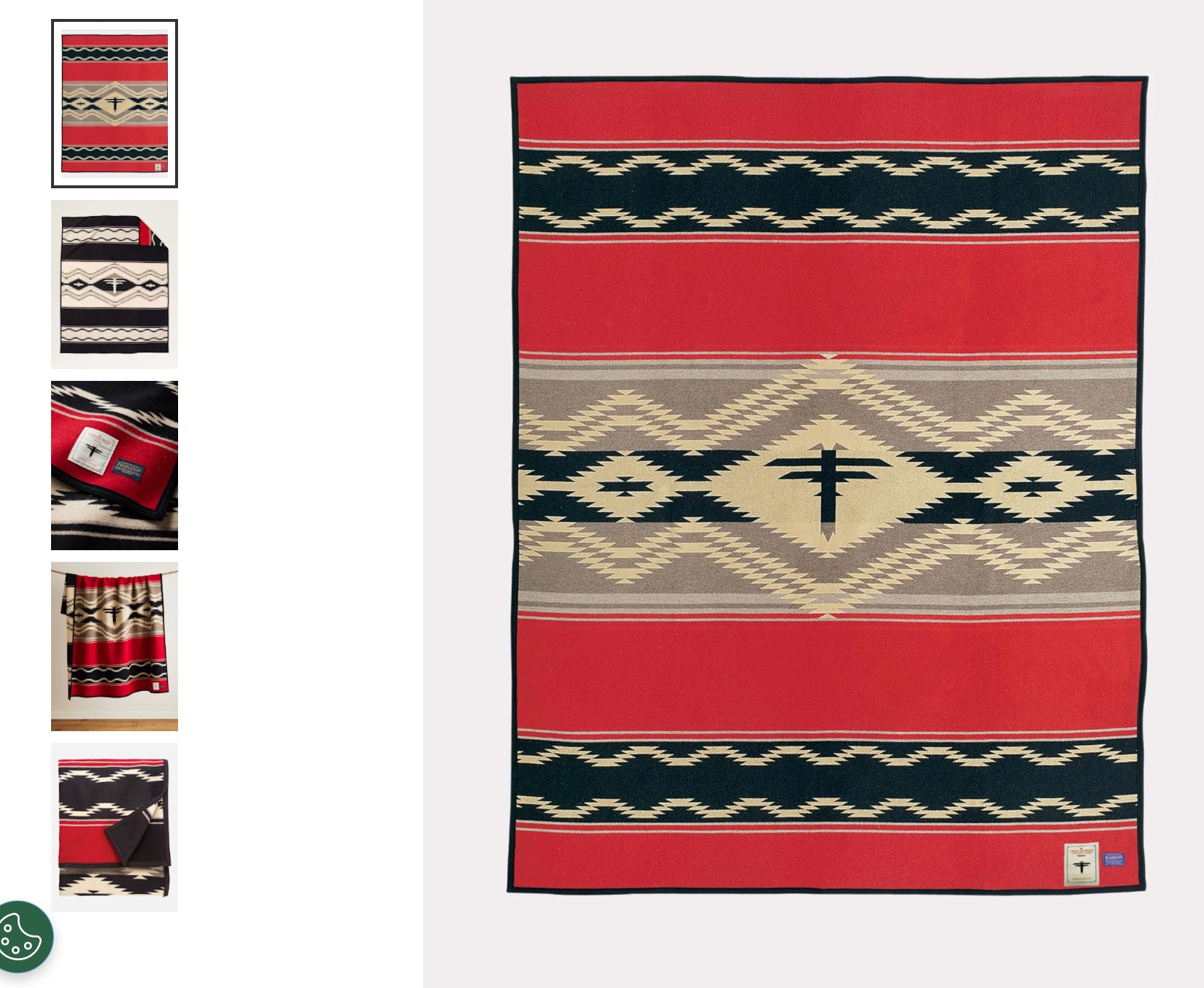
Of course, the wheels started turning in my head, and I made a stop at the Pendleton store to look at blankets. One jumped out at me for its colors and design. 

This is an image from the Pendleton website.

Could I possibly get two projects out of one twin sized blanket (the only size produced in this design)?  The chair seat back AND a jacket? I thought so but it would be tight – and a gamble at the price point.  Not one to shy away from a sewing challenge, I purchased the blanket. This was either going to be a very expensive upholstered seat back OR a “twofer” bargain which would give me both a new look for my chair and a one-of-a-kind jacket. I figured I would know my fate sometime over the course of the next several months.

The first step was to get the chair and the blanket to an upholsterer, which I did.  Relinquishing the blanket to him, I explained my intention of making a jacket out of the leftover wool. He looked at me dubiously. 

“I sew a lot,” I explained. 

He still looked at me dubiously. I talked with him about the layout for the seat back.  I hoped, I said to hm, that he could just take from one end of the blanket, leaving about two thirds of it intact?  He nodded in understanding. He said he would do what he could. I’m sure he thought I was crazy.

The upholsterer is a busy guy, so it took several weeks before the chair was ready.  But when he returned it to me, not only did it look terrific, but the remainder of the blanket was about the length I thought it would be. I was hopeful.

By now it was October, very close to the time when we depart our summer home in Wyoming and head back to Pennsylvania, a time when all sewing comes to a screeching halt as I pack and organize and clean.  The timing turned out to be perfect, however, as most of my vintage patterns were in Pennsylvania – and I needed to look for a jacket pattern for my project.  

I knew any pattern I selected had to be one with fairly simple lines and adaptable to being unlined. Pendleton blankets are beautifully heavy and warm, perfect for cozy sleeping.  Made into coats and jackets they are also heavy and warm, but better suited to styles with few darts, notches and complex seaming. Luckily I had a pattern in my collection, dated 1959, which appeared to be perfect – with a shaw collar, raglan sleeves, and 2 long darts descending from the shoulder to the bust.  

From the pattern instruction sheet: minimal pattern pieces were perfect for this project. Of course, I cut off the “hood” for my jacket, and as it turned out, I did not add patch pockets. More about that in Part 2.

I was on my way to my very own Pendleton jacket. At least that was what I hoped! 

To be continued…

23 Comments

Filed under Blankets and doll blankets, Buttons - choosing the right ones, car coats, Pendleton Woolen Mills, Uncategorized, vintage buttons, vintage Vogue patterns from the 1950s, Vogue patterns, woolens

Dress Forms and December Decisions

The quintessential trademark of a dressmaker is undoubtably the figure of a dress form (or dummy, as it is called in some parts of the world). I am not sure why it took me so long to purchase one, but in the past year and half since I have had mine, it has daily reminded me what an invaluable tool it is for fashion sewing. Among its obvious aspects of usefulness are, of course, 1) for fitting, 2) for pinning and sewing of certain seams (like a shoulder seam), 3) for marking hems and making sure they are even, 4) for design and draping (for those fortunate enough to be versed in this art), 5) for displaying of one’s current project, allowing scrutiny of any imperfections which need to be addressed, and 6) for steaming/pressing certain curved seams.

I also have found it to be the perfect medium upon which to “audition” fabrics and styles. I can strategically pin fabric onto the form and get an excellent idea if the fabric is going to look good in the style in which I am envisioning it. Sometimes I have to leave the fabric pinned in place for days or even weeks while I make up my mind. And sometimes seeing the fabric pinned on my form will make other possibilities suddenly become obvious. Such has been the case with my plaid Irish blanket, purchased by me to make into a skirt.

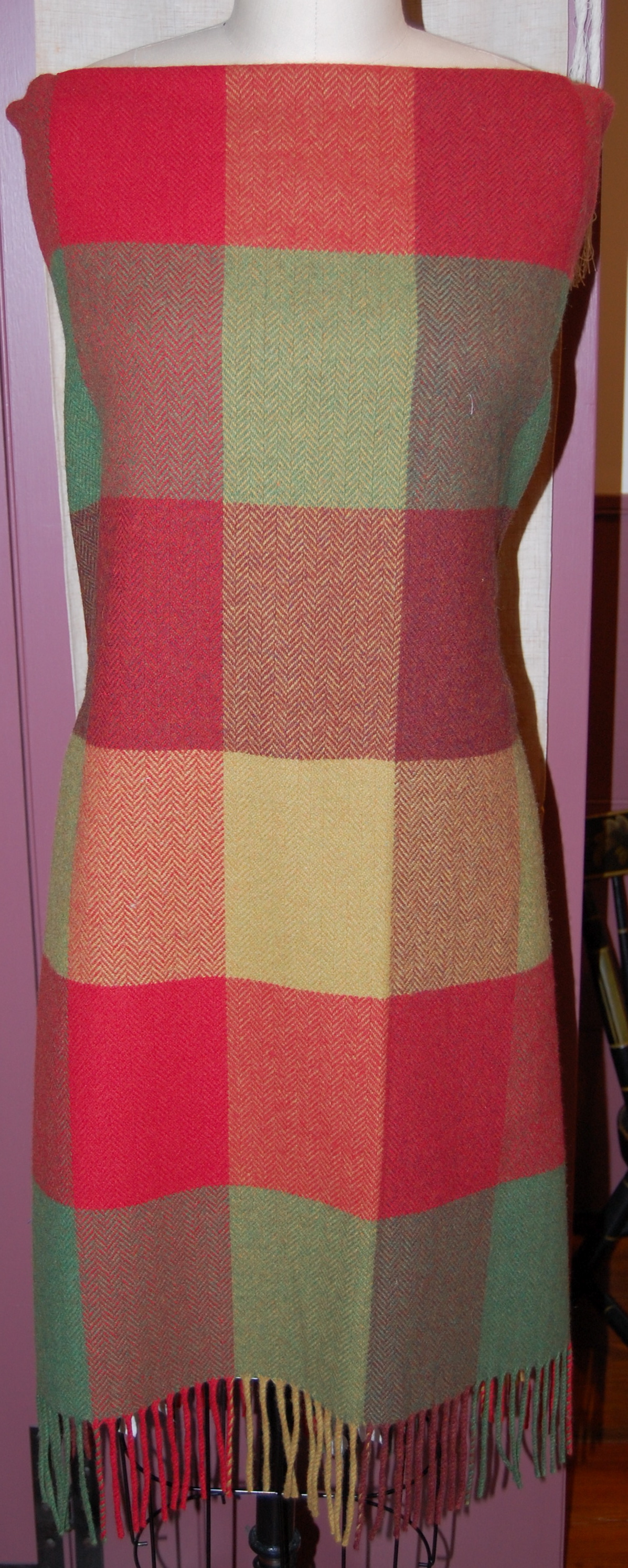
 I wrapped the blanket around myself in the store - as a skirt - to test my theory.  Here it is pinned on my dress form

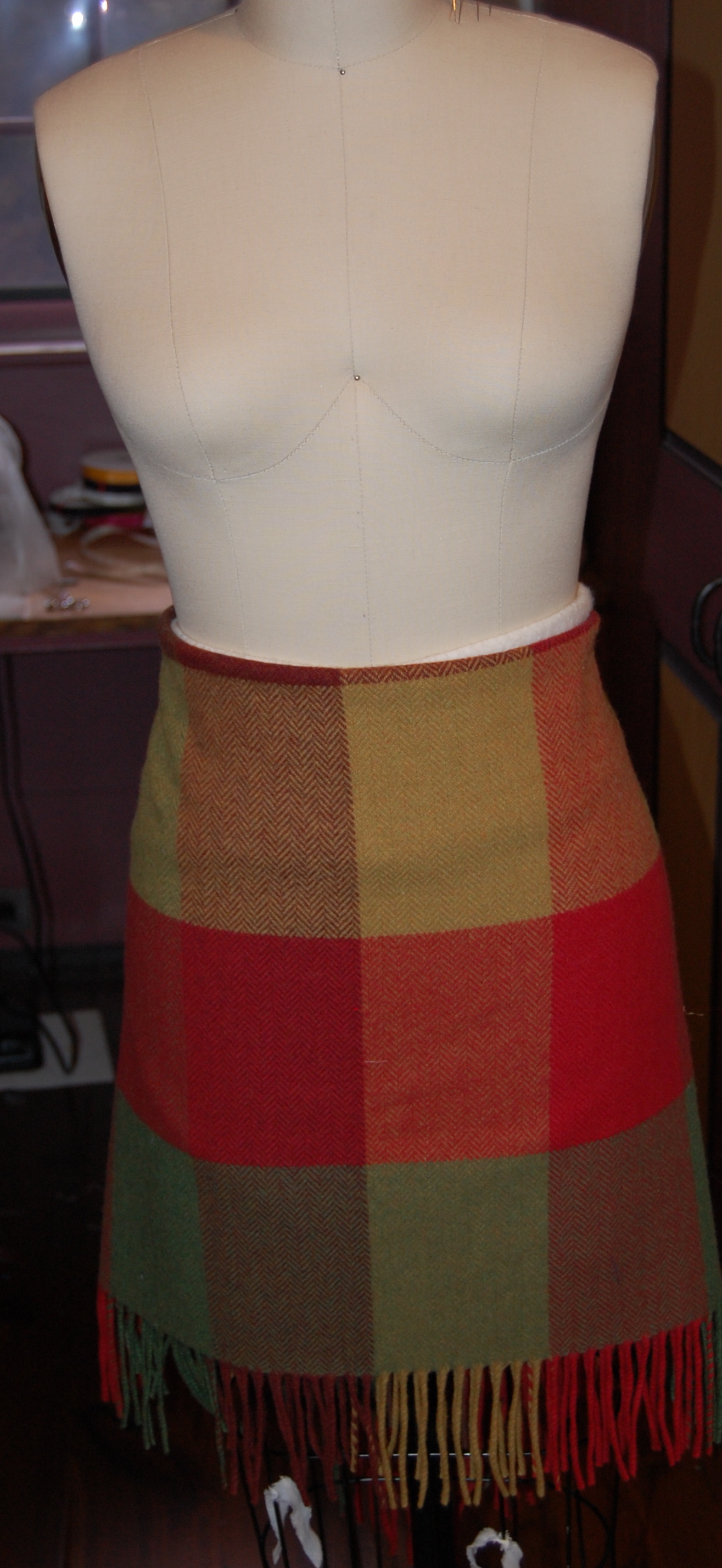
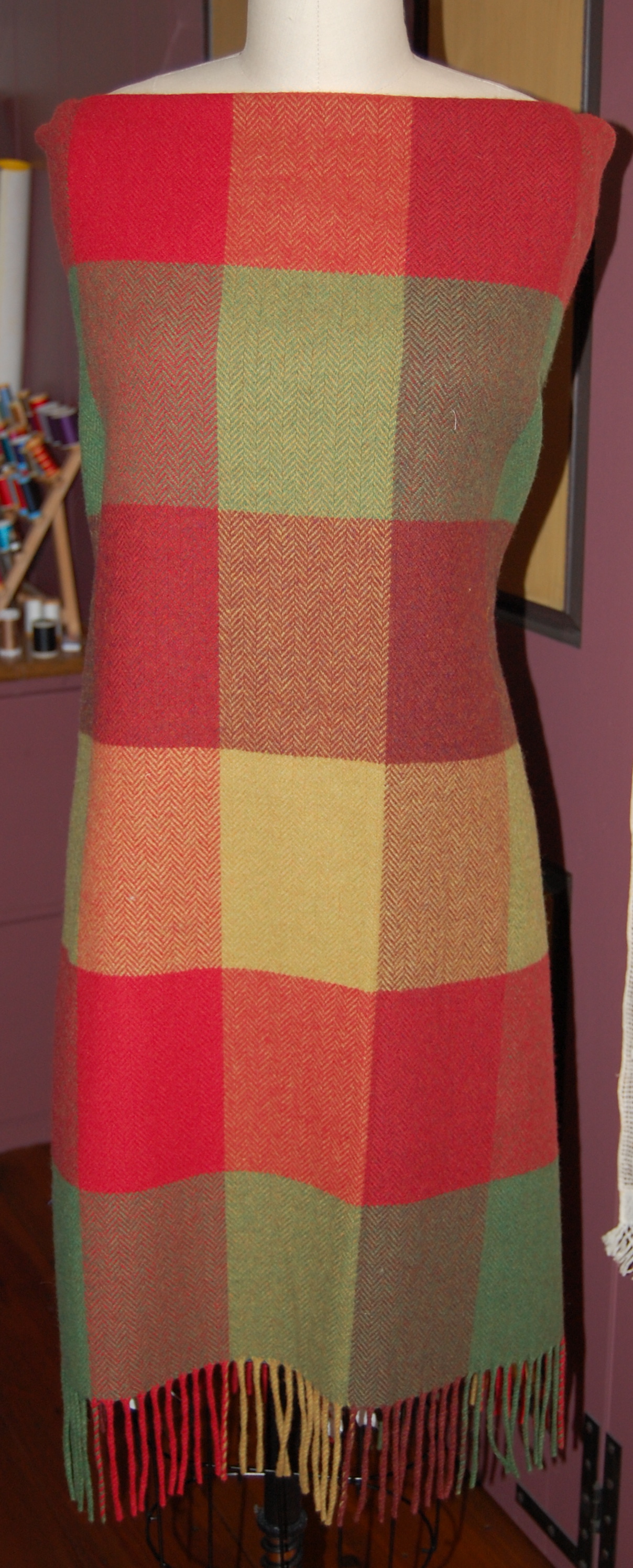
I thought my mind was set on making a pencil skirt out of this “throw” size blanket. When I pinned the fabric on my dress form in the length of a skirt, however, I was struck by the fact that so much of this lovely plaid wool would not be used. So I repinned the blanket in its full length, minus the fringe on one end, to see if I could make a sheath dress instead.

The blanket pinned onto my dress form.

The blanket pinned onto my dress form.

I got out my favorite sheath dress pattern and placed it on the fabric to determine if I could indeed get a knee-length dress out of the yardage I have. It will be a squeeze, but I am fairly certain I can manage it. So I have just about decided to make a dress instead of a skirt. But I have one looming question: is this going to look too much like a 1920s’ flapper dress? I think not, made out of a plaid wool. I actually think a fringed dress will lend itself to be dressed up or dressed down. Hm-m-m-m, what do you think?

Another look...

Another look…

The color combination of this plaid is one I love. After Pantone’s Color of the Year for 2015 was announced, I realized that certain blocks of this plaid pick up the Marsala color (reddish brown) which is supposed to be so popular in 2015.

Dress forms and December decisions


DSC_0356

I must admit, I was disappointed with this color decision by Pantone. Like 2014’s Radiant Orchid, I do not think it is a color with wide appeal for the long haul. 2013’s Emerald Green still has “legs”, and I was hoping for a similar clear and flattering hue for 2015.

Getting back to my blanket/soon to be dress (or skirt): in shades of red and subtle green, this plaid should be equally versatile throughout the winter, but wouldn’t it be especially nice in this holiday month of December?  Well, that’s not going to happen! But that’s okay. If I can get to it in January, that means I’ll have at least one thing complete for December . . . of 2015!


28 Comments

Filed under Blankets and doll blankets, Uncategorized, woolens

In the Company of Cows and Sheep

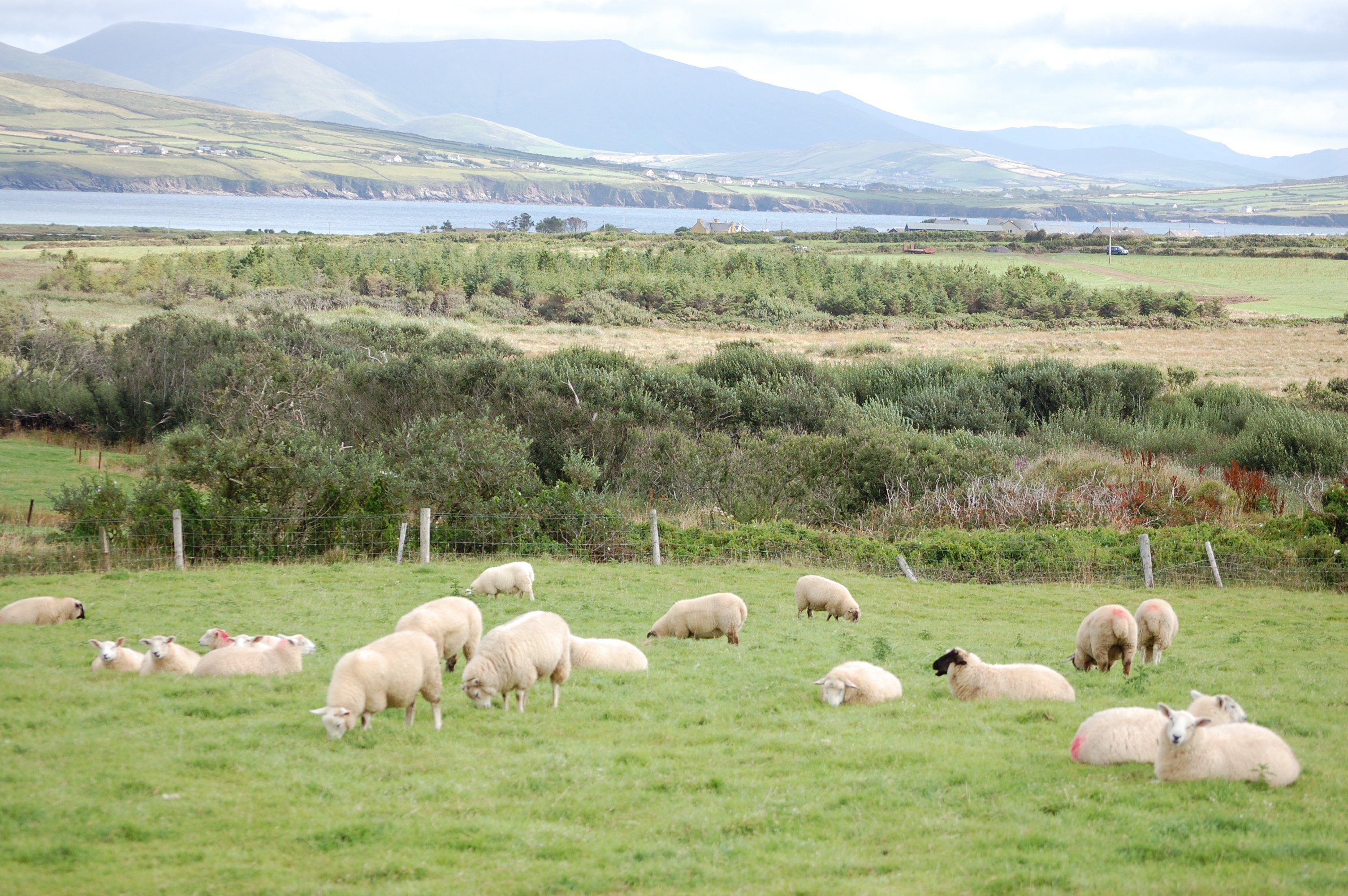
Vacationing in a foreign country always has its own special charms, but when that country is Ireland, the charms are manifold. My husband and I were lucky enough to be joined by our son, our daughter, our son-in-law, and our year-and-a-half old granddaughter on a trip to Cork and Kerry Counties in southwest Ireland (our treat to them!), from which we have just returned. All of us love to hike (granddaughter Aida went on her Daddy’s back in a child carrier made for trekking), but we also enjoy nice accommodations and good food after a day on the trail – so we arranged our trip through CW Adventures, who took care of all the details and enabled us to take some incredible hikes through stunningly beautiful Irish countryside.

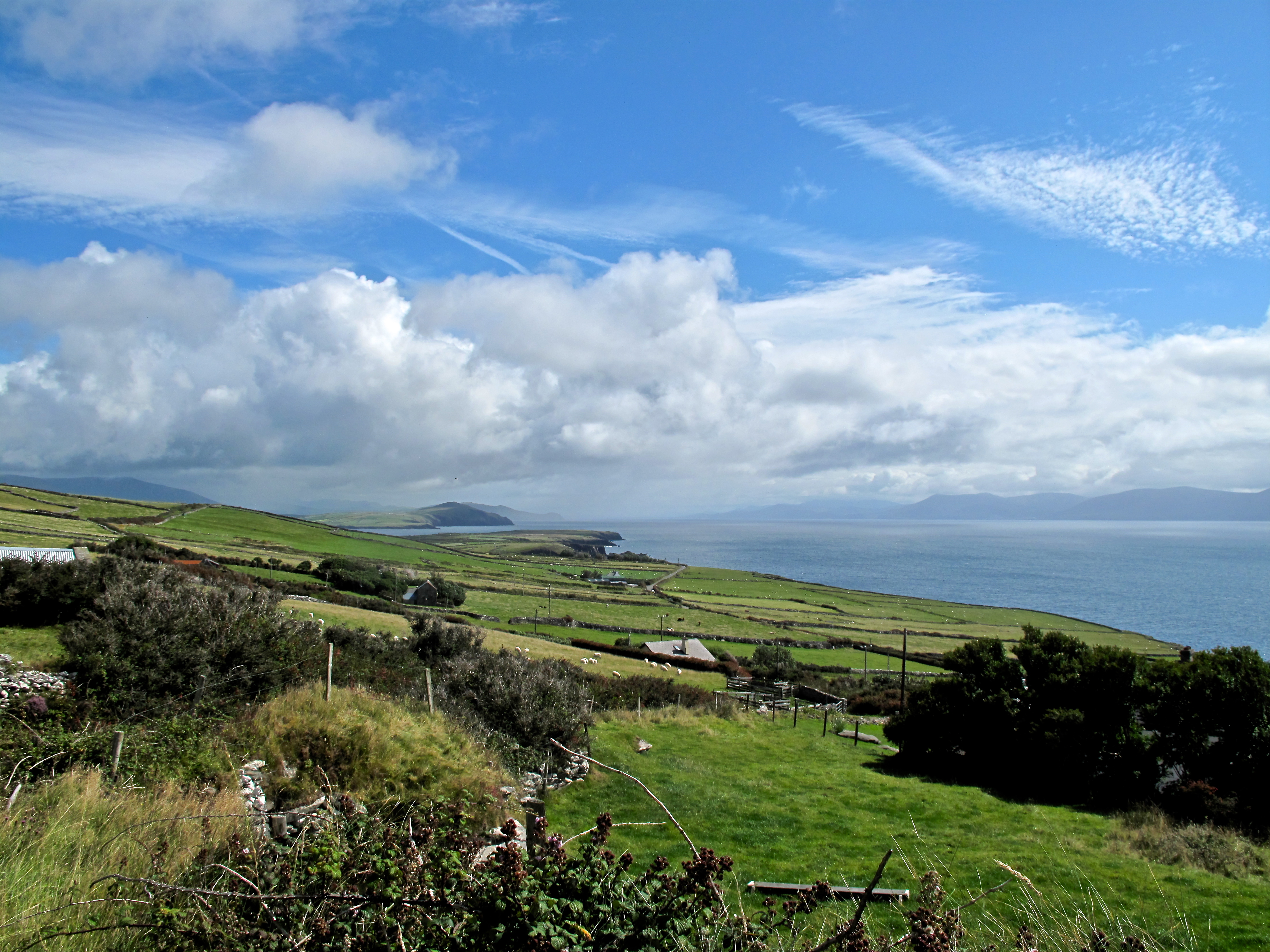
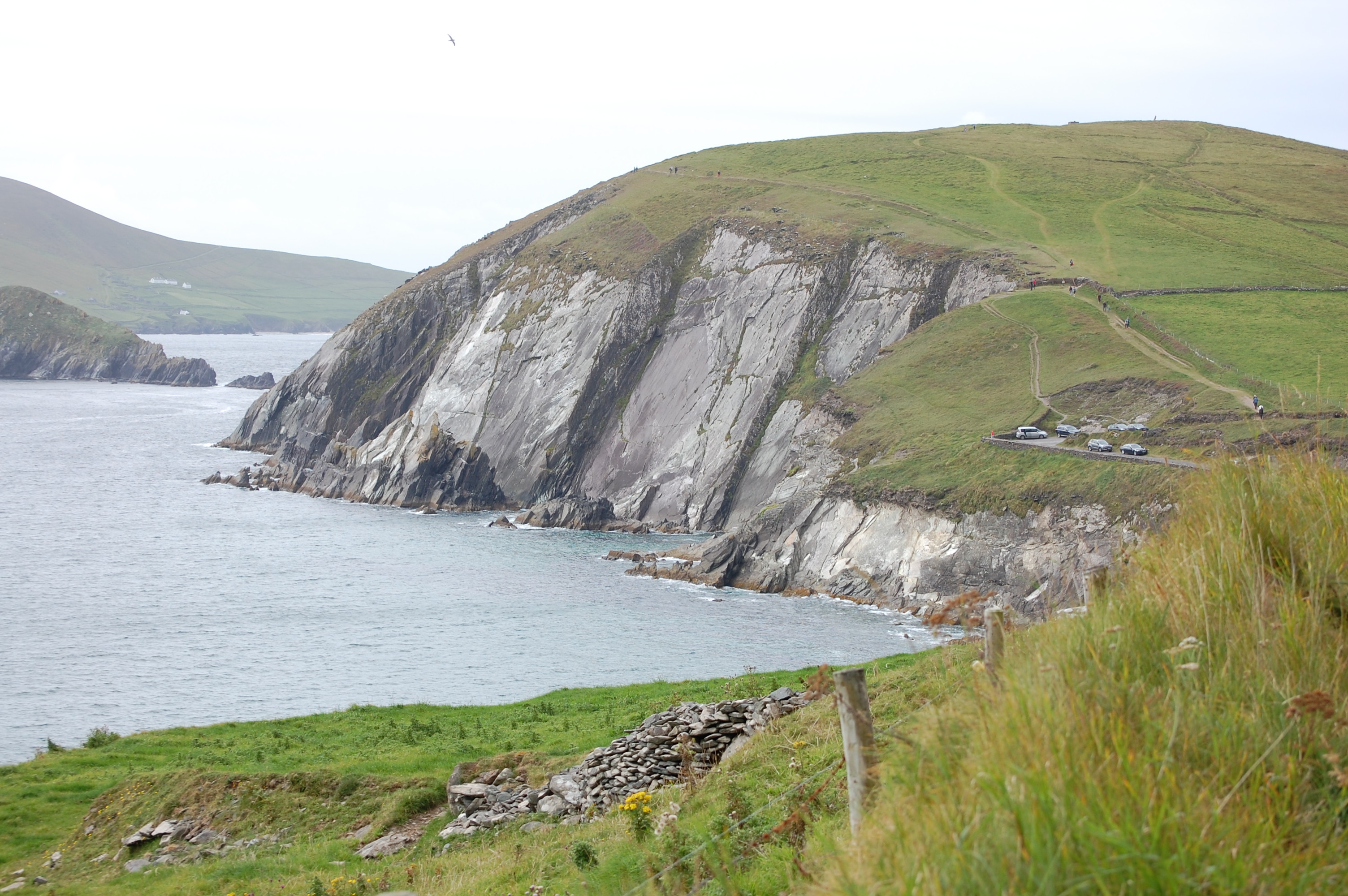
Photo of the Coastline in Dingle taken by Nate Helm (my son!)

Photo of the Coastline in Dingle taken by Nate Helm (my son!)

Ireland We expected to see cows and sheep, but the sheer quantity of cows and sheep, some of whom we shared our trails with, was a delight! Gentle-natured and handsome animals they are, living in this verdant green land with breathtaking vistas. We all agreed that the Irish butter was the best we have ever tasted. And, of course, we all know what lovely product comes from sheep. Irish lambs wool must be some of the softest in the world.

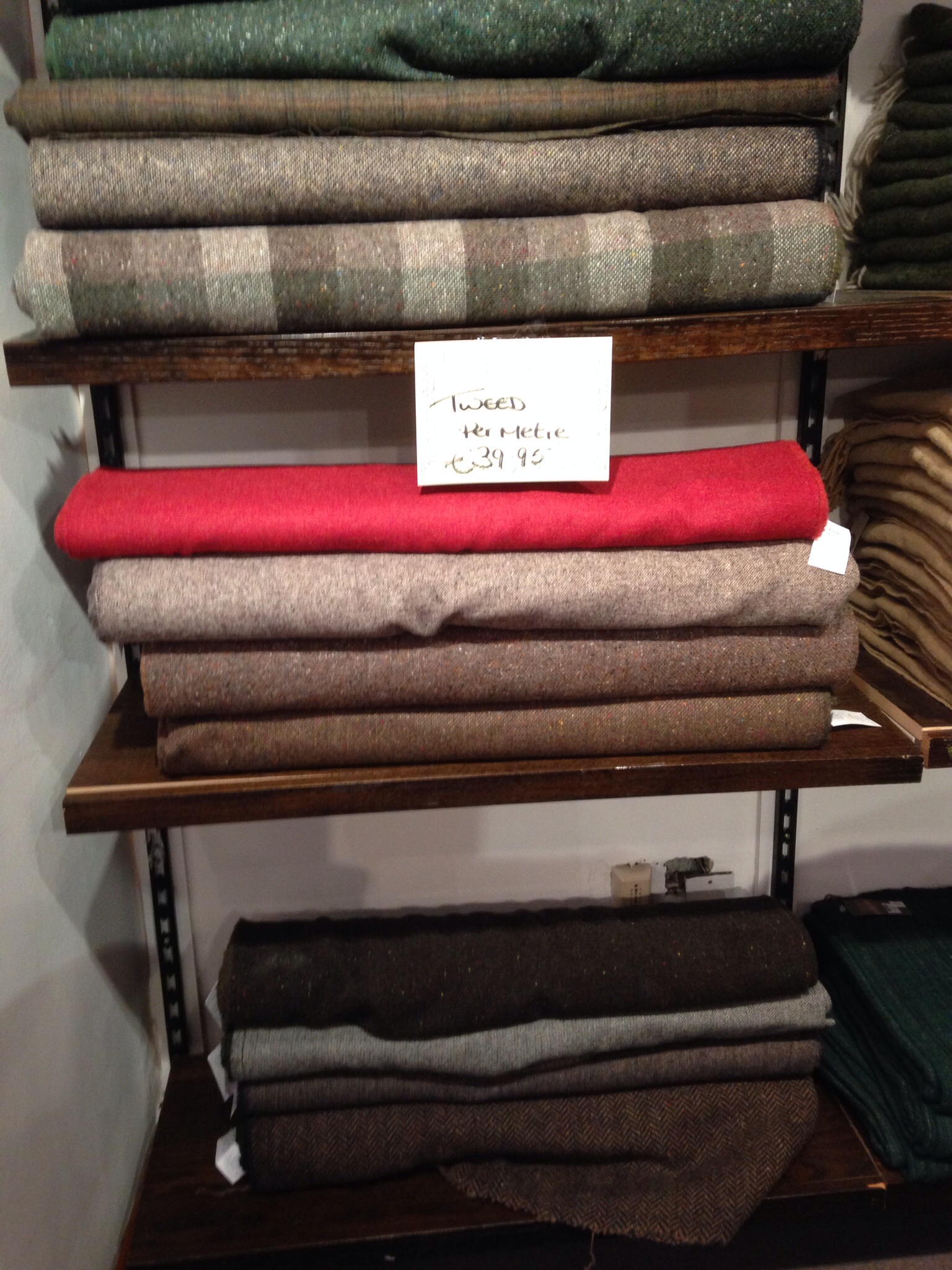
Ireland I thought it would be nice to come home with some Irish wool – can you believe that? We were not in cities for very much of our vacation, nor did I have time while we were in the cities to search for fabric stores. But I did expect to find some woolen yard goods in the smaller towns and villages.   There was plenty of knitting wool for sale, but very few bolts of fabric. I found this small offering of tweeds in one store, all of which were lovely, but not quite what I wanted.

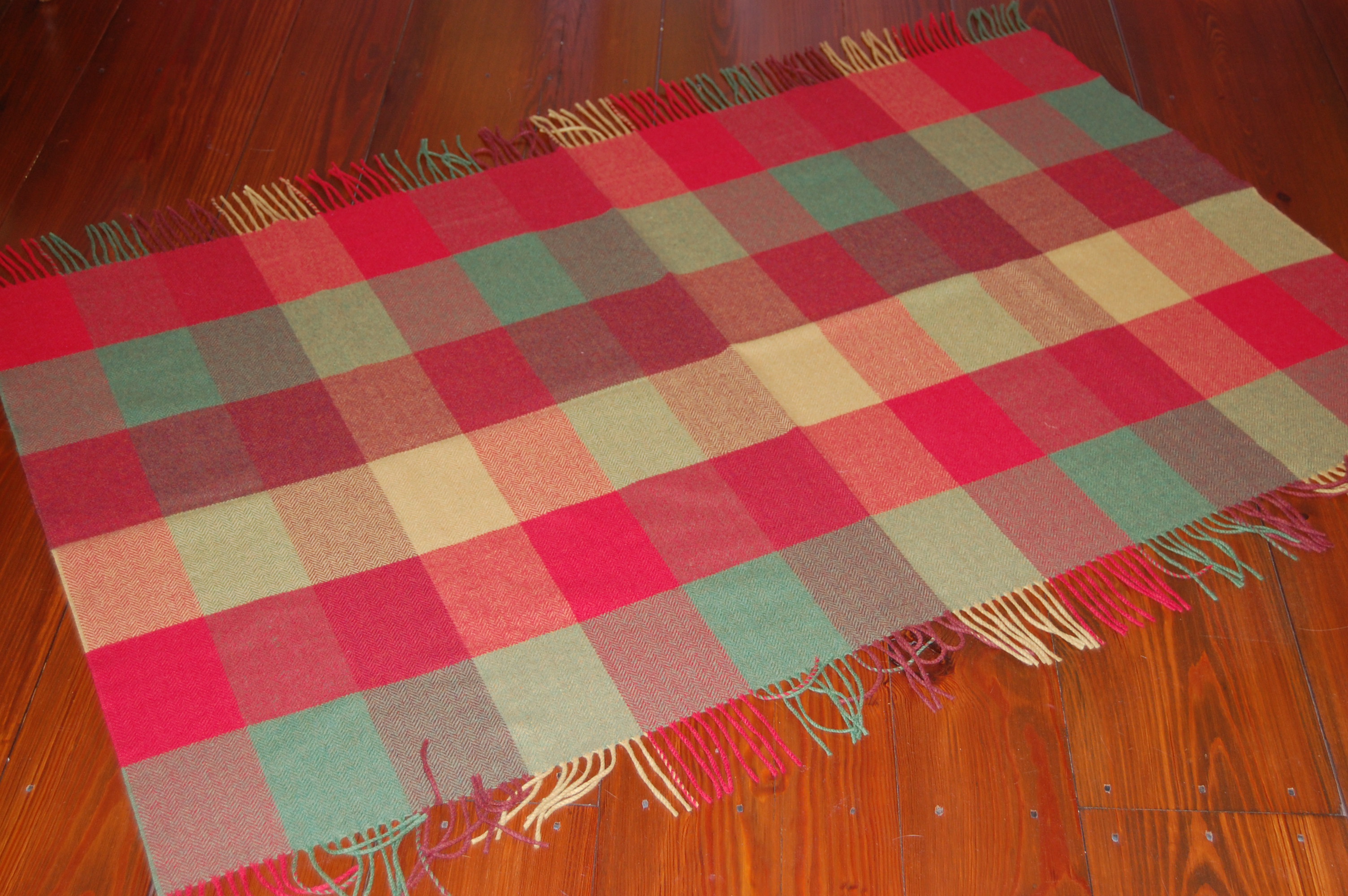
Tweeds - Ireland Actually I wasn’t quite sure what I wanted until I saw this small blanket in a store in Dingle:

The dimensions of this small blanket are approximately 36" long by 62" wide.  The fringe is 3 1/2" long.

The dimensions of this small blanket are approximately 36″ long by 62″ wide. The fringe is 3 1/2″ long.

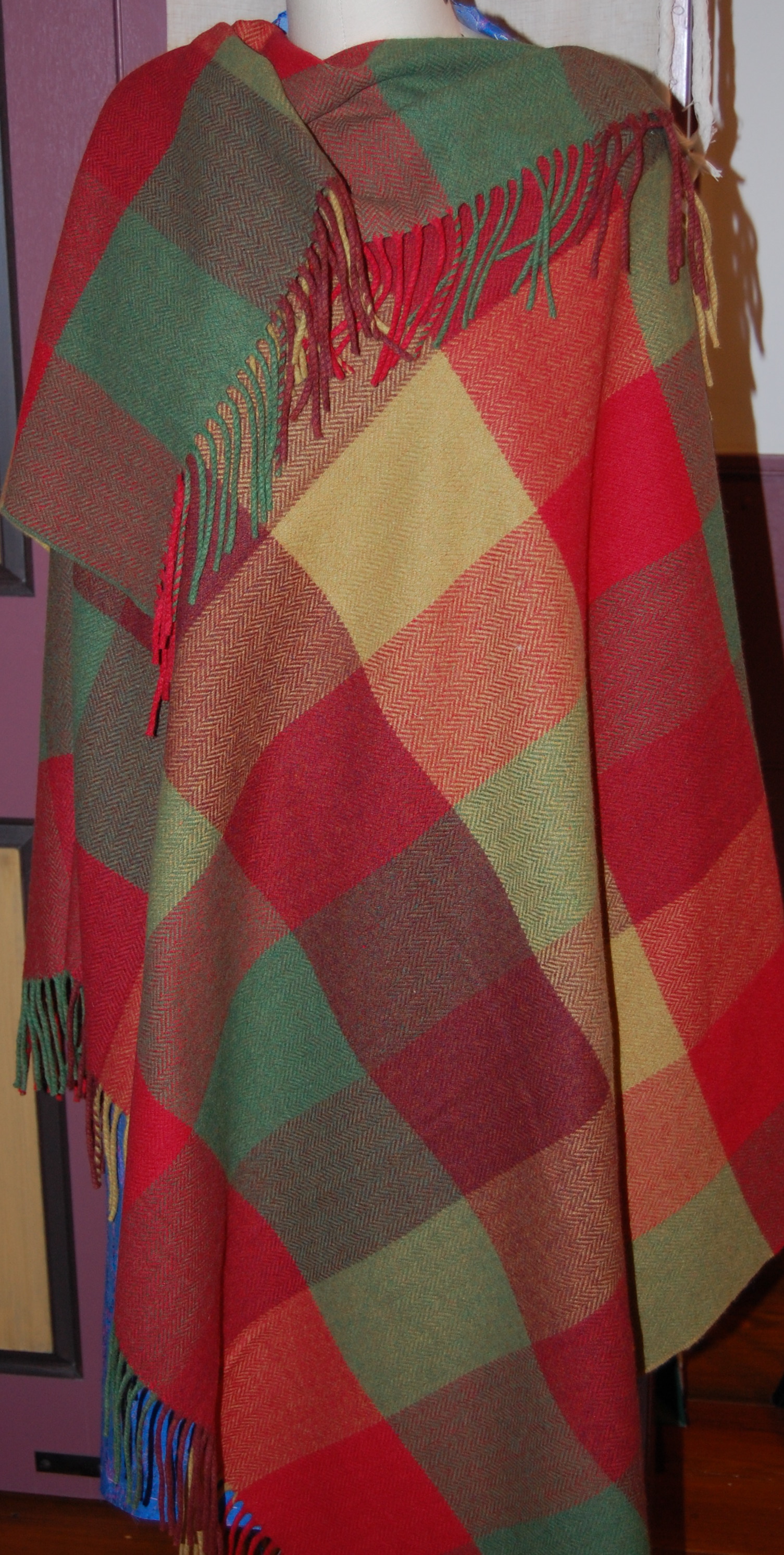
The colors in it seemed to speak to me of Ireland: greens reminiscent of the pastures and hills, the yellows and reds of the abundant flowers sprinkling the countryside, the brown of the cliffs and stone walls – all set in a pleasing grid just like the hills and valleys delineated by centuries-old stone fences and hedgerows. And it had fringe! I love fringe. But – it was a blanket. Could I possibly use this blanket as woolen yardage for a fringed skirt? Would I dare to cut it up?

I guess we’ll find out, as home it came with me, with that intention.

Draped loosely on my dress form.

Draped loosely on my dress form.

 I wrapped the blanket around myself in the store - as a skirt - to test my theory.  Here it is pinned on my dress form

I wrapped the blanket around myself in the store – as a skirt – to test my theory. Here it is pinned on my dress form

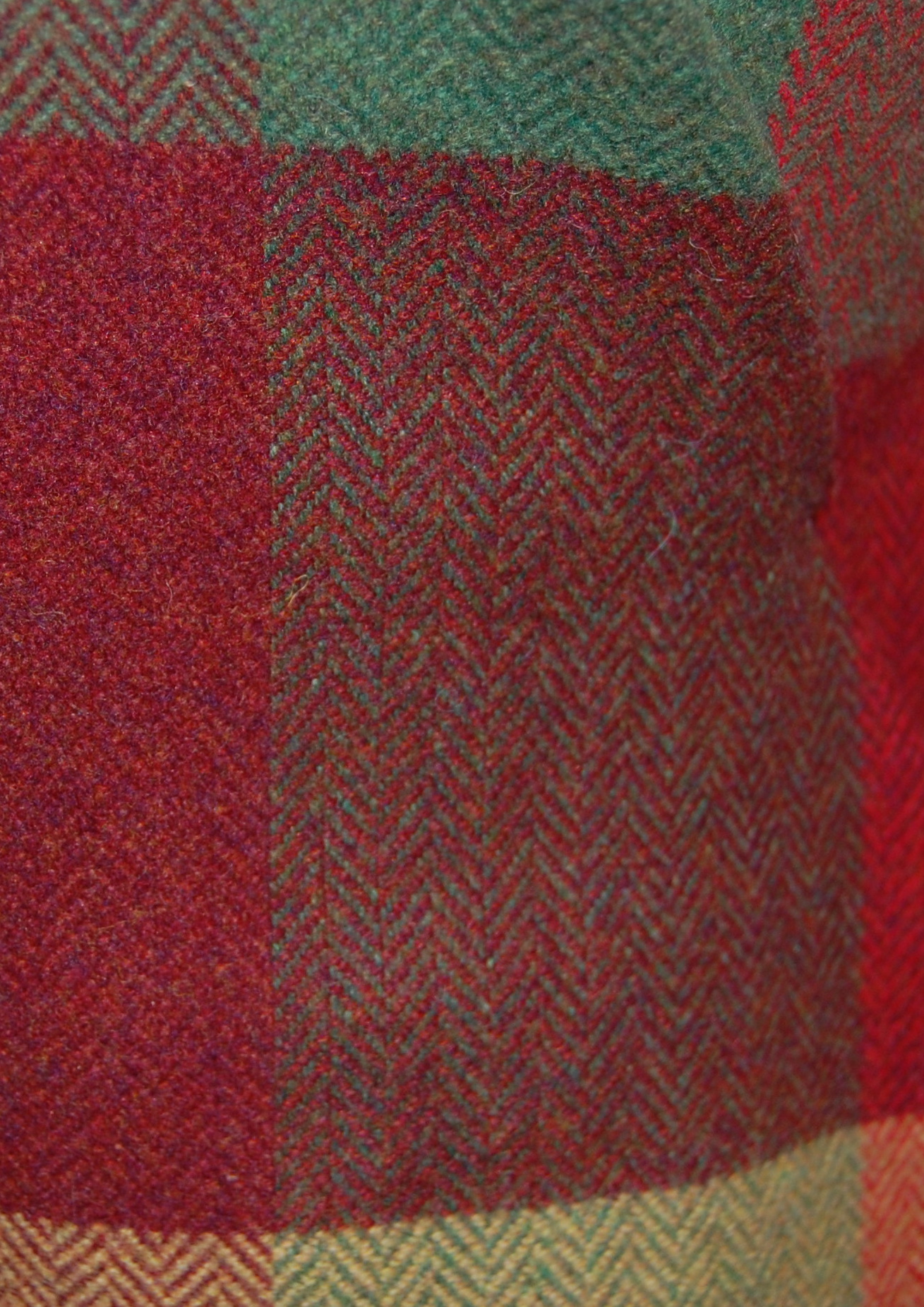
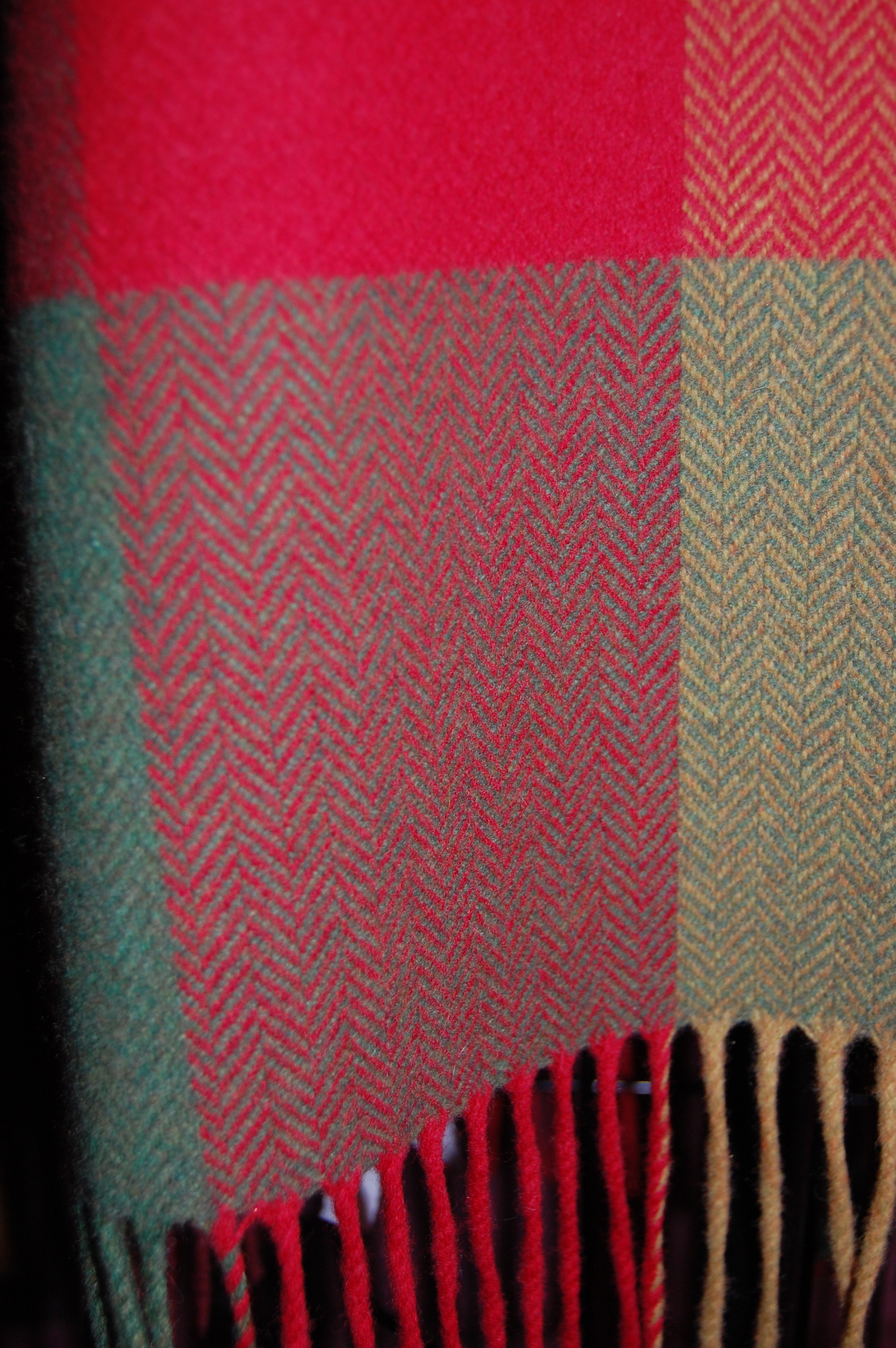
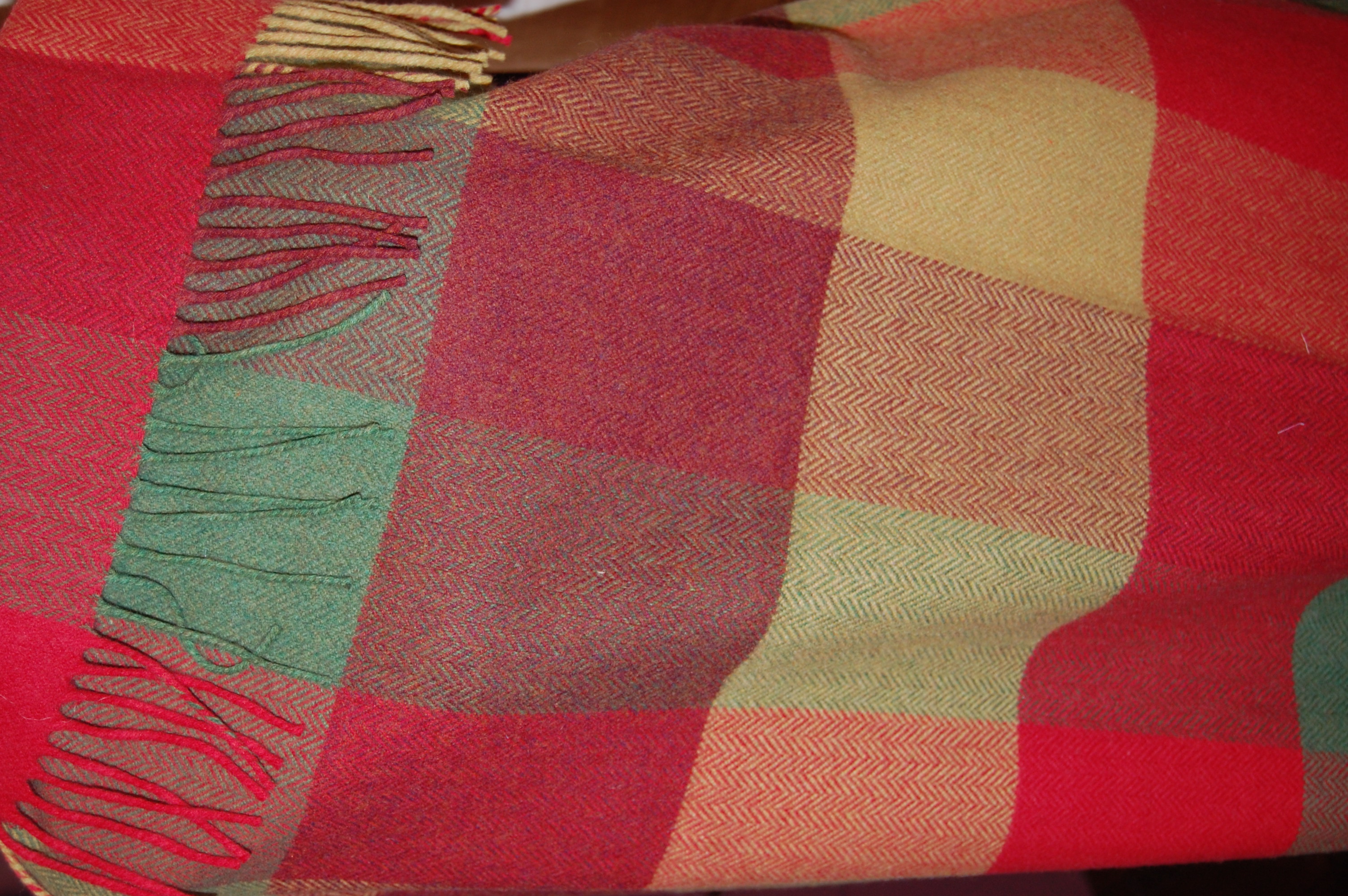
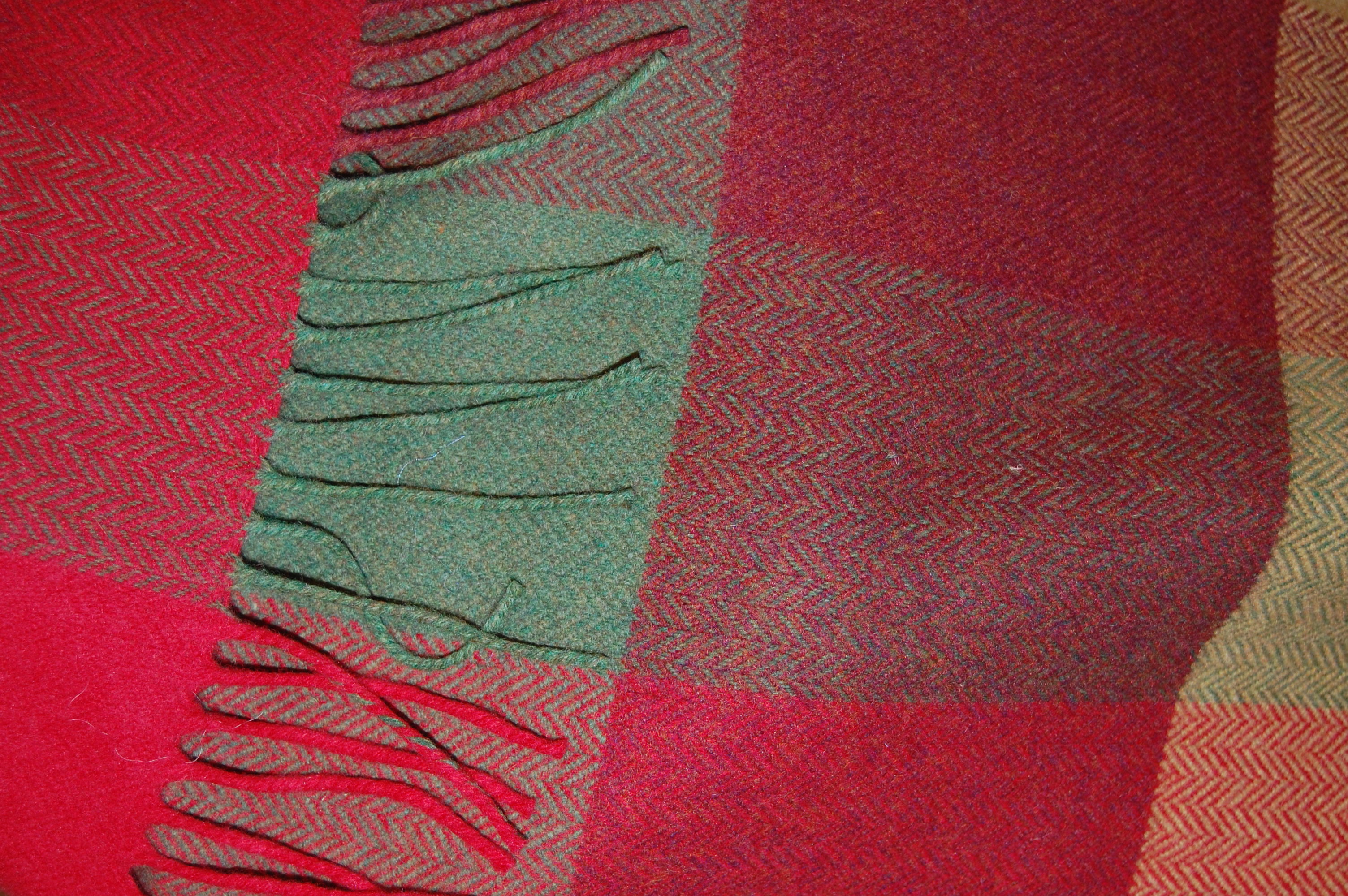
I hope you can see the herringbone weave in these close-up photos.

I hope you can see the herringbone weave in these close-up photos.

Ireland blanket

The weight of this wool is perfect for a skirt.

There is an old Irish proverb (so I am told) that seems apropos to this particular blanket/piece of wool: “Time is a good storyteller.” It will indeed take some time for me to figure this one out, but hopefully the story will have a happy ending!

And now, for the rest of this week, I’ll be in the company of —- my sewing room, working on my blue cocktail dress, which must be ready for our next trip! Move over please, cows and sheep …


16 Comments

Filed under Blankets and doll blankets, Uncategorized, woolens

Wynken, Blynken, and Nod

“. . . and the wooden ship that sailed the skies is a wee one’s trundle bed.”

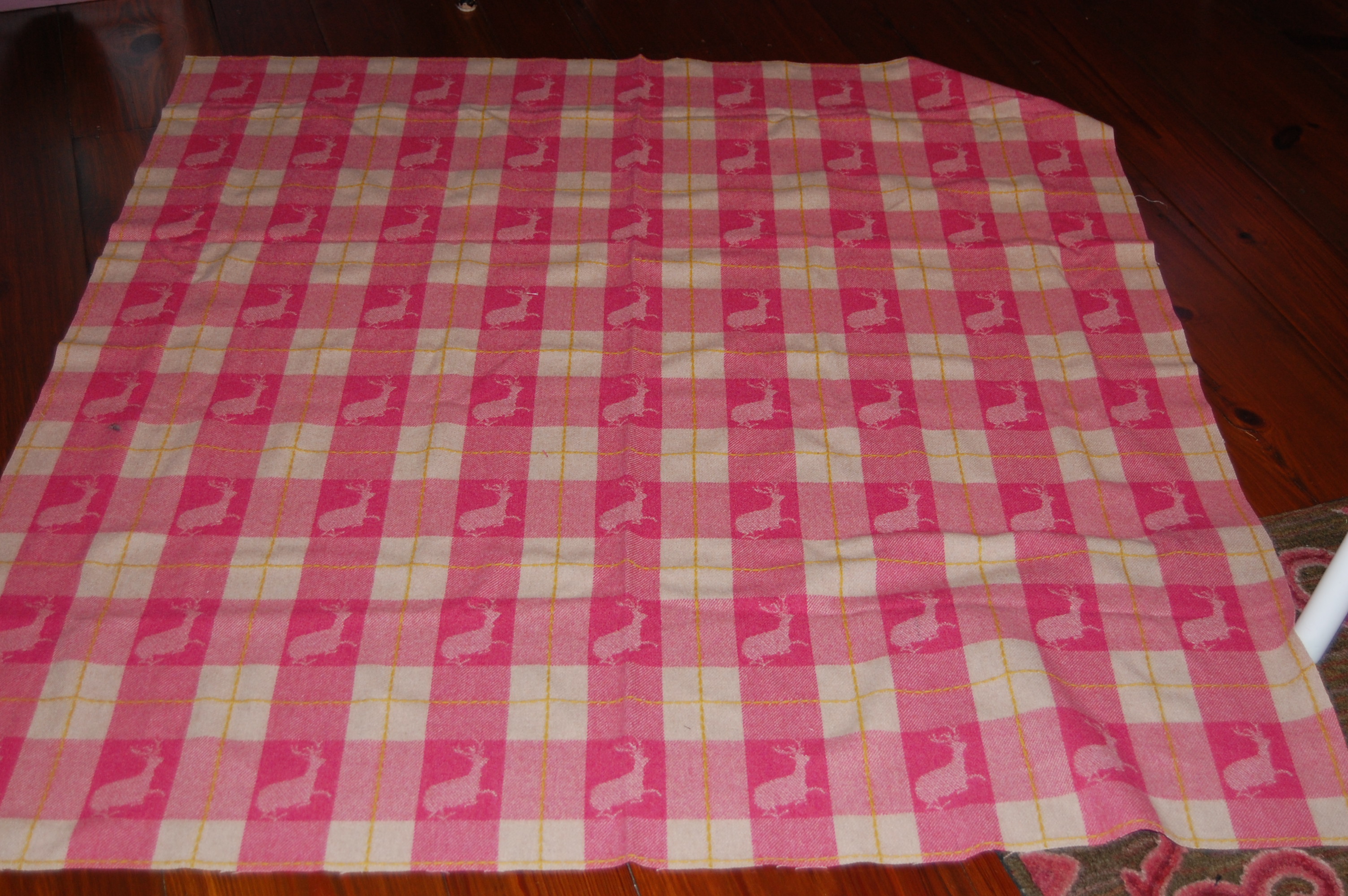
Do you ever see a fabric and feel captivated by its charm, its design, its ambience?  That is what happened to me when I saw this fabric on the website of Britex Fabrics:

Wyncken, Blyncken and Nod - fabric

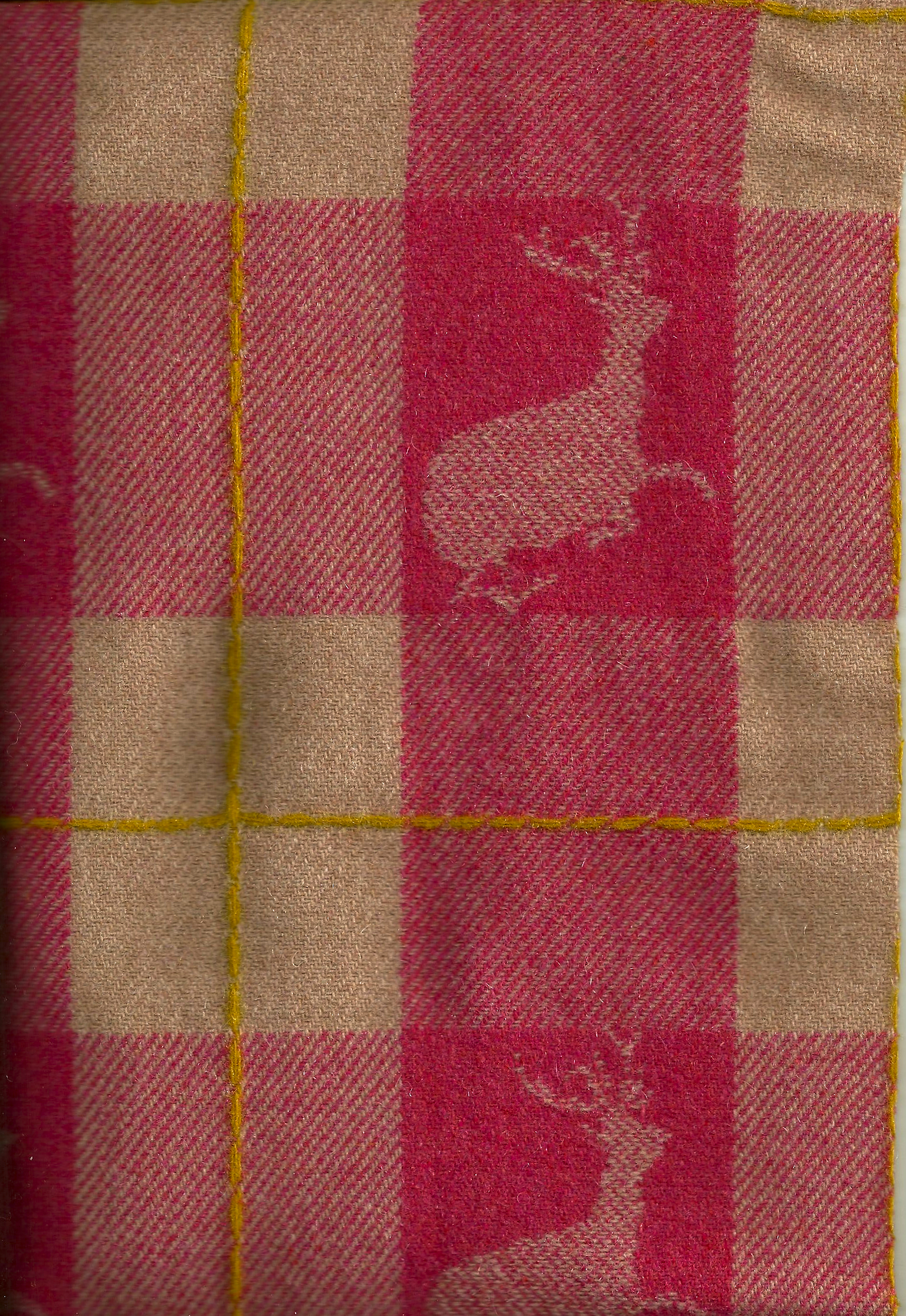
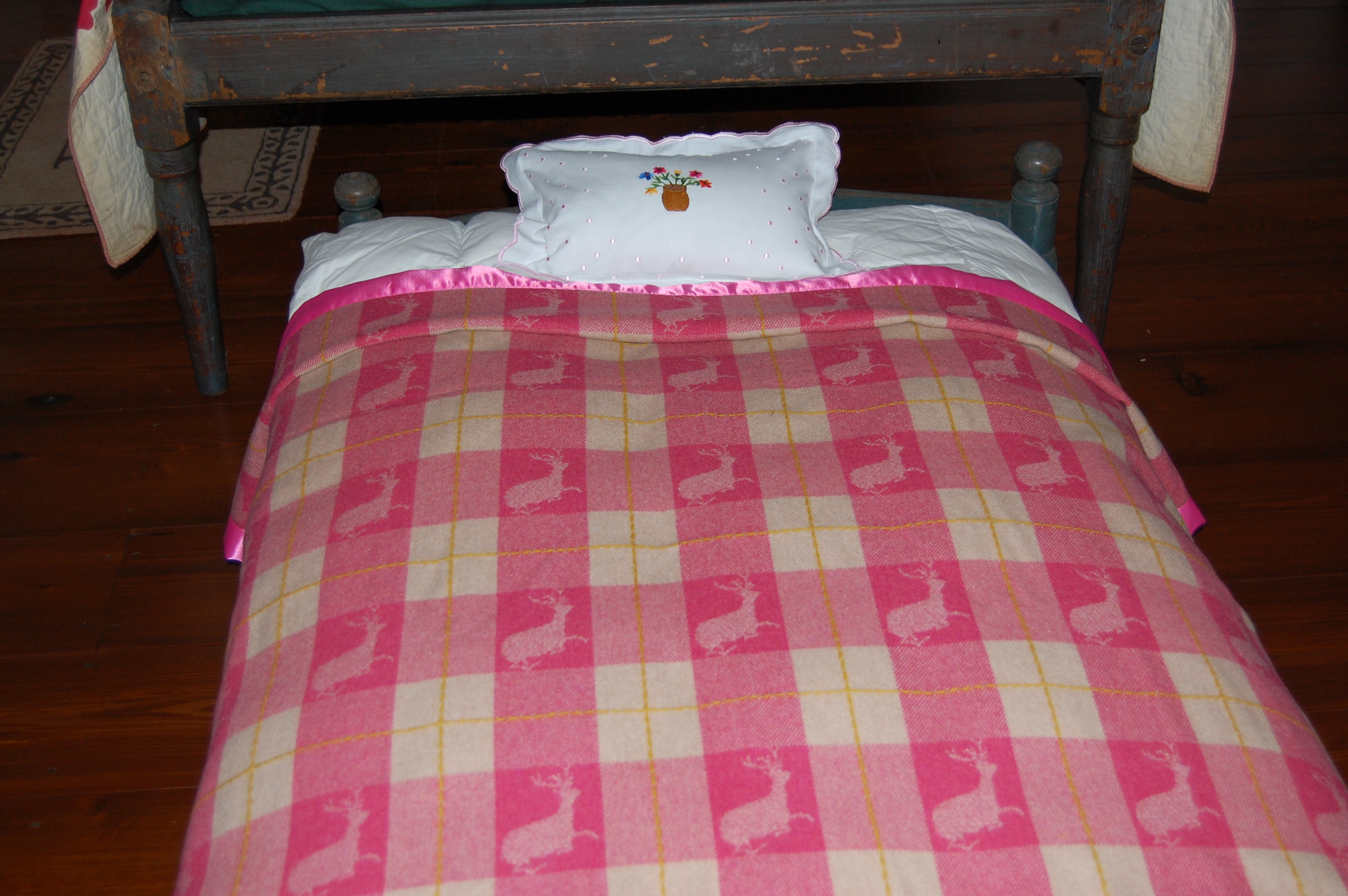
It is a moderately heavy-weight wool blend, made in Italy (the source of so many beautiful and exquisite fabrics), and its friendly jacquard-woven deer, set amongst the bold pink checks, with that subtle gold woolen thread traversing its expanse, seemed to be a blend of Tyrolean style, buffalo checks, and frontier whimsy!  I loved it, but I could not quite imagine it made up into anything wearable – at least for me.

So I decided not to buy it.

But then I did.

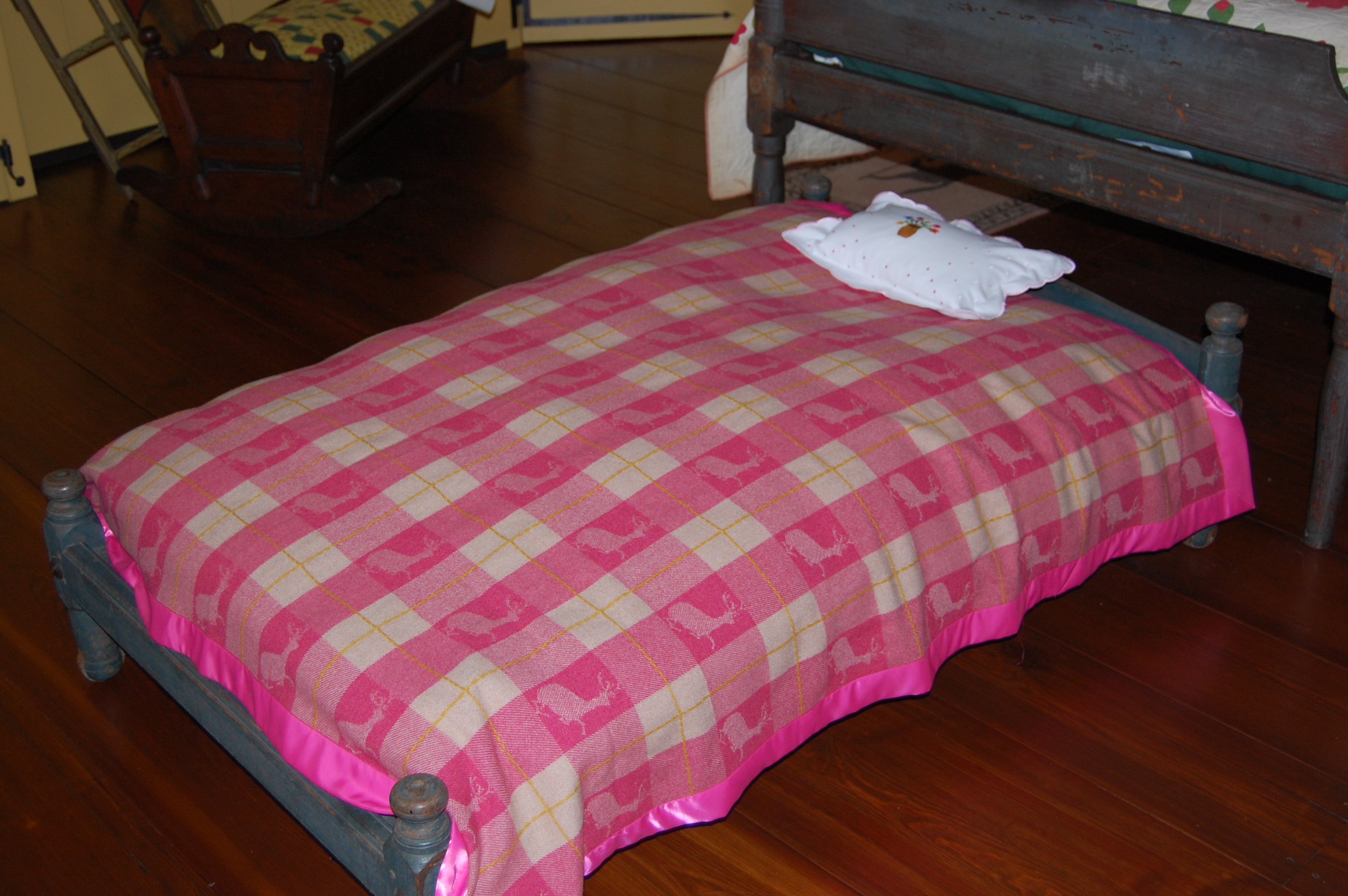
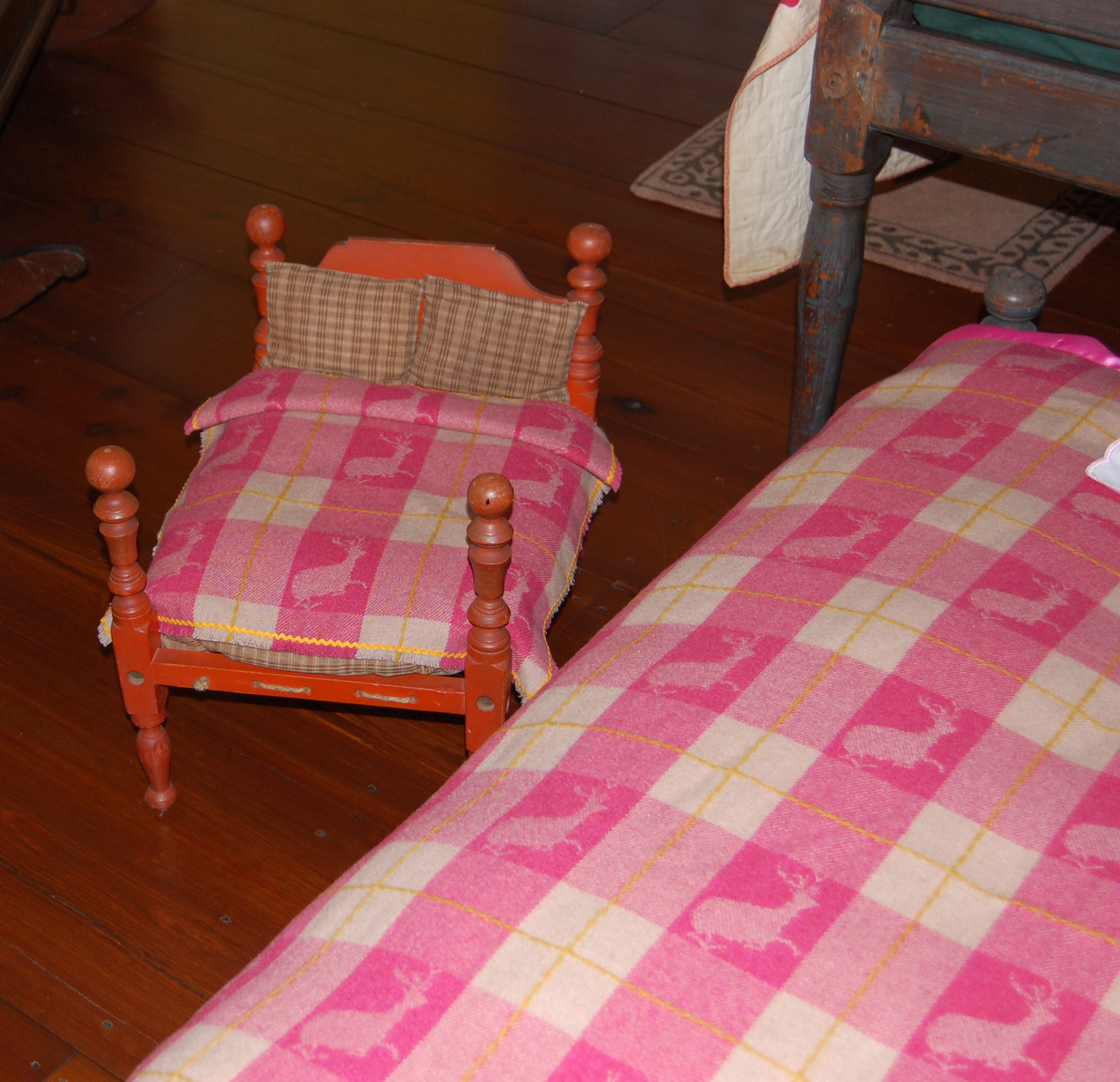
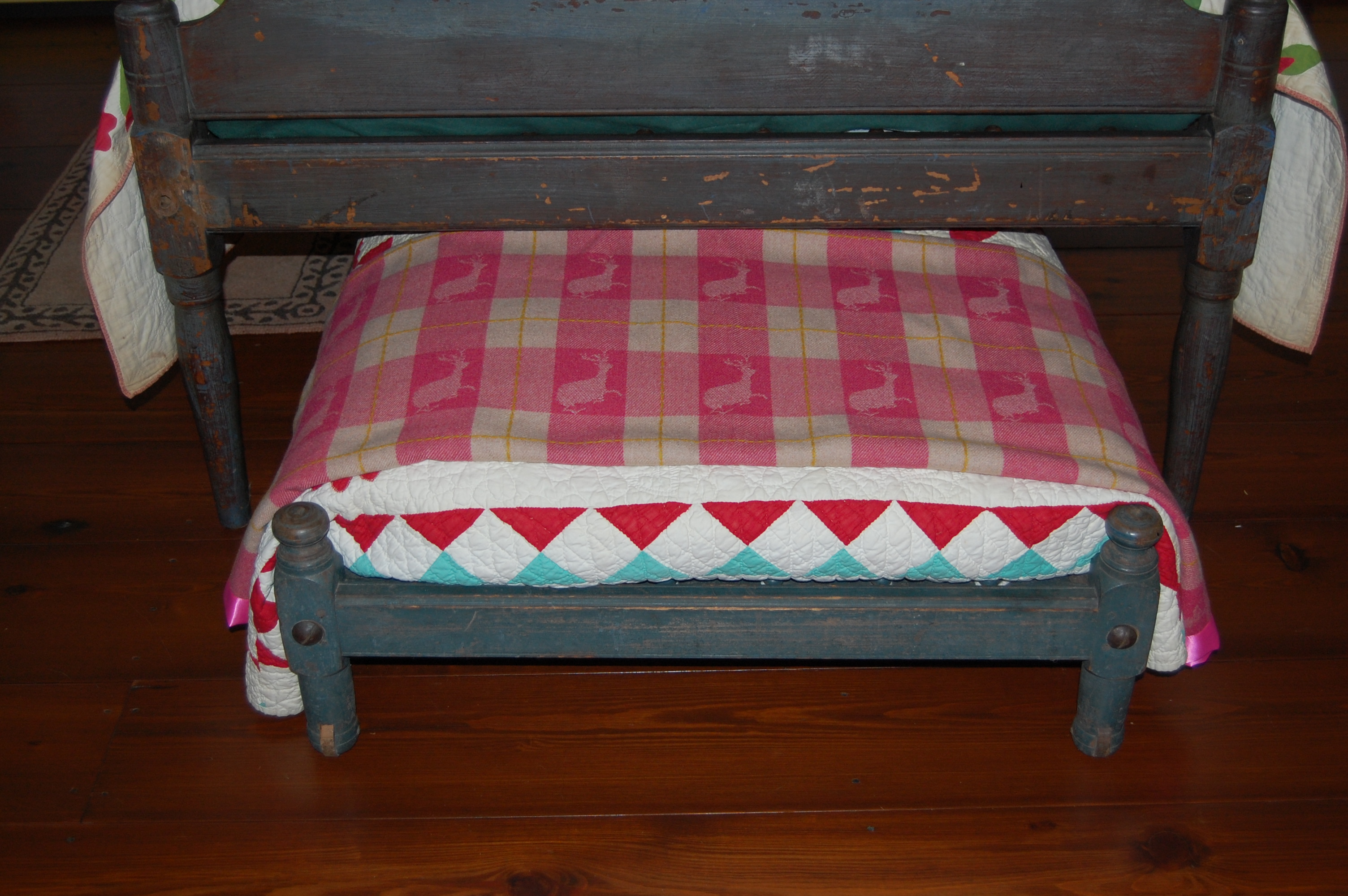
What can I say?  I had to have it.  Of course, by the time I reversed my decision, I had determined it was the perfect fabric from which to make a small blanket – just the right size for a “wee one’s trundle bed.”  The small trundle bed, which we purchased years ago, has been patiently waiting to be used by a wee one – and although our little granddaughter is still in a crib, it won’t be long until this little bed will be the perfect place for her to snuggle and sleep and dream when she is with us.  So of course – a warm, whimsical blanket was in order.  Since it is almost impossible to find linens to fit such specific little beds, making one was very much on my agenda.

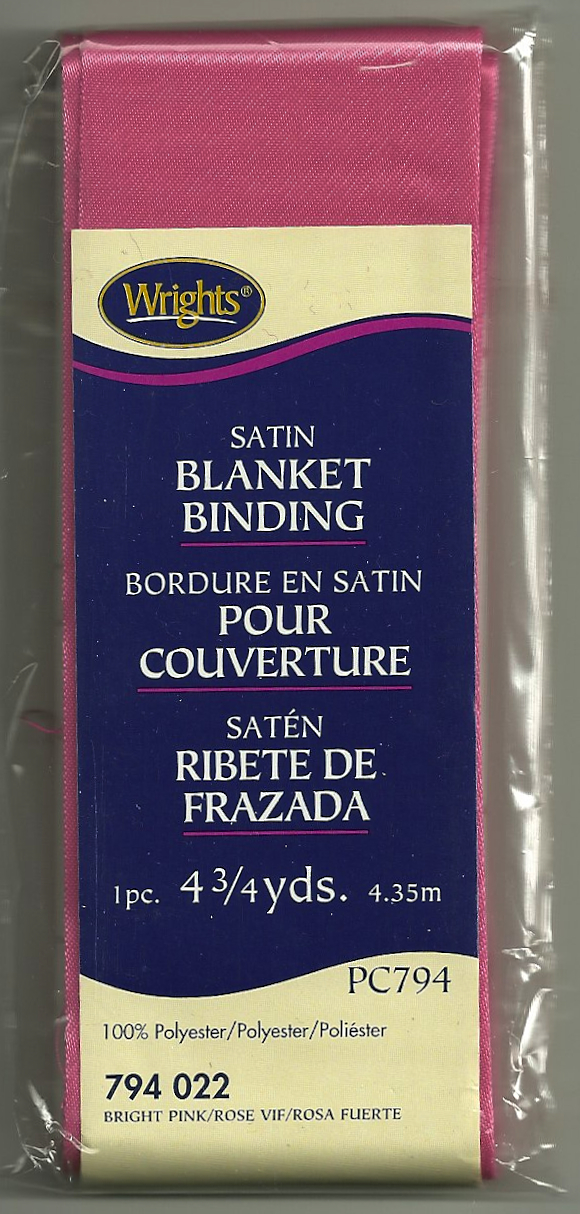
The first thing I did was go to JoAnn’s Fabrics to see if I could get blanket binding.  I could not believe my eyes when I found this bright pink color.

Wyncken, Blyncken and Nod

Then it was just a matter of measuring, deciding where in the plaid of the fabric to place the binding, and sew! One thing that made the application of the satin blanket binding much easier was using a walking foot.  Nice and easy and fun.

Cut and ready to be bound.

Cut and ready to be bound.

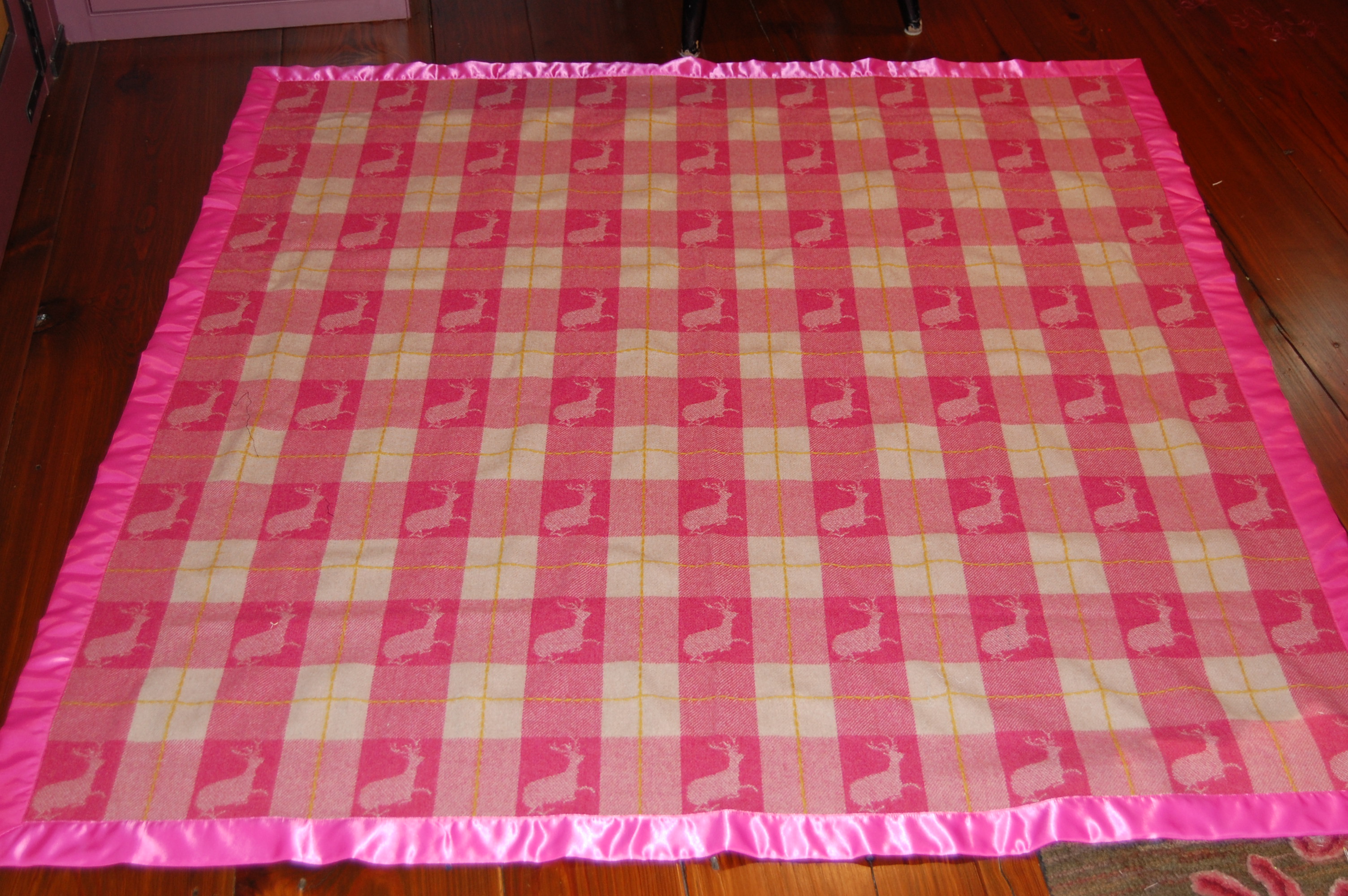
The binding sewn on, blanket finished!

The binding sewn on, blanket finished! 

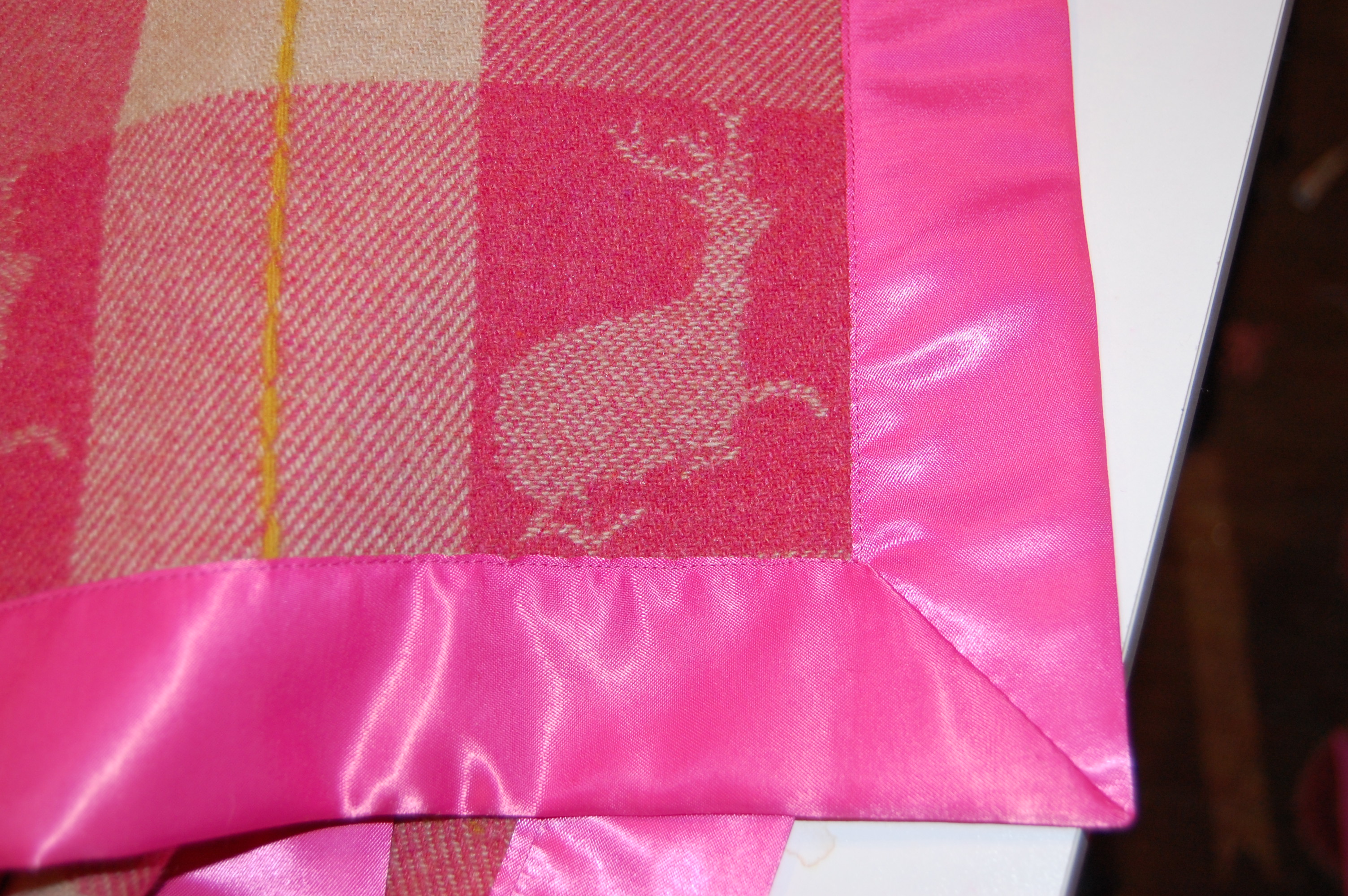
I mitered the corners and used a fell stitch to hand-finish them.

One of the corners.

One of the corners.

It fits well  . . .

It fits well . . .

. . . and is nice and warm.

. . . and is nice and warm.

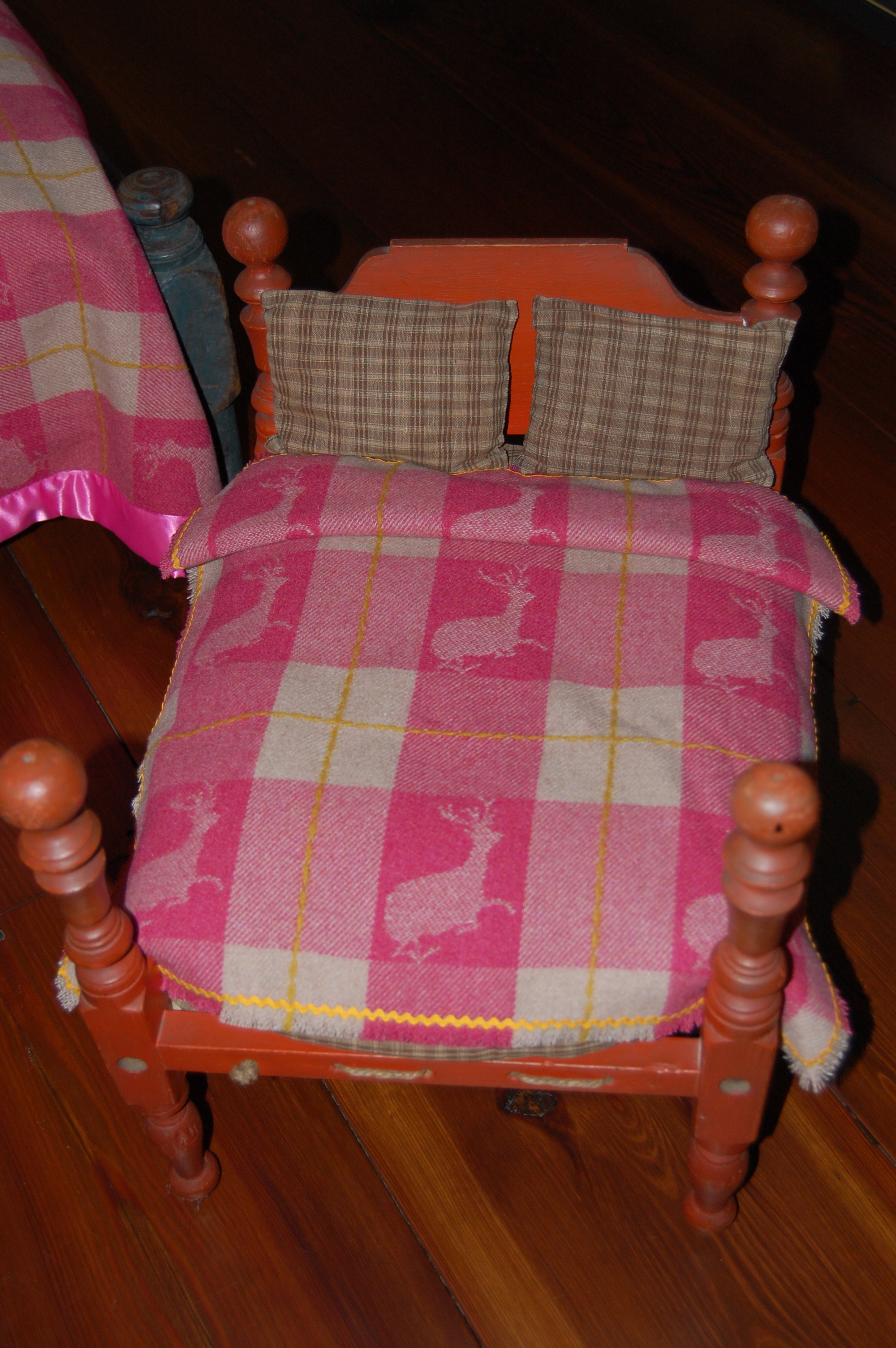
I had ordered a bit more fabric than I thought I might need – enough to make a doll blanket – and maybe a jacket for a teddy bear one day.  Who knows – we’ll wait and see what our wee one asks me to sew.

pink blanket

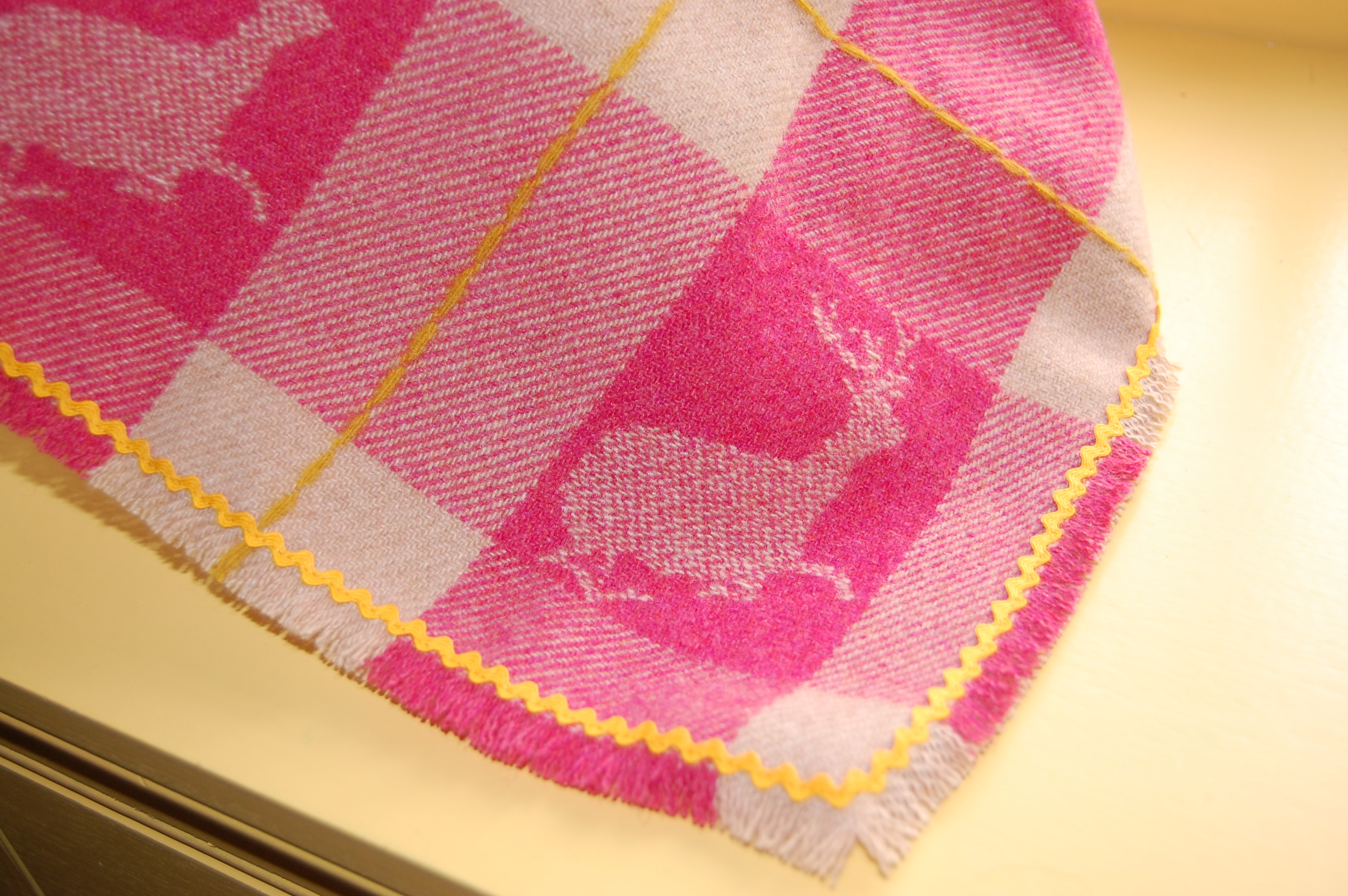
I fringed the edges of the doll blanket and added rick rack for fun!

I fringed the edges of the doll blanket and added rick rack for fun!

pink blanket

Too pretty to go completely out of sight - and easier to pull out for" wee ones".

Too pretty to go completely out of sight – and easier to pull out for” wee ones”.

10 Comments

Filed under Blankets and doll blankets, Uncategorized, woolens