Category Archives: Day dresses

Blame It on the Buttons

It can be a little overwhelming to look at my (growing) collection of beautiful summer linens, and then try to make a decision on which piece to select for my next project.

Fortunately, a random purchase of buttons helped me make up my mind this time around. I found these buttons at Britex Fabrics in San Francisco last year, and purchased them on a whim, not knowing when or how I would use them. I also don’t know what possessed me to purchase 6 of them, but that’s what I did.
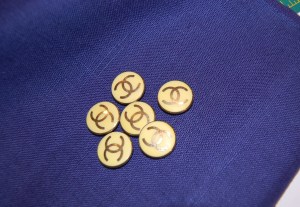
Yes, those are interlocking "a la Chanel" Cs.

Yes, those are interlocking “a la Chanel” Cs.

When I got them home, I realized they were a perfect match with a length of vintage, pale yellow, Moygashel linen in my possession. I tucked the fabric and the buttons away together, confident that the perfect pattern would also be found amongst my many vintage Vogue patterns.

It was a bit of a trick finding a pattern that needed 6 (or fewer) ¾” buttons. This one kept surfacing as the most ideal candidate:
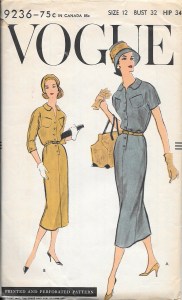
I am making the short sleeve version - but a little shorter!

Ideal, except for the yardage needed, that is. Many of you know by now that being a “little shy” of the prescribed fabric usually does not keep me from my desired goal! After making a fitting muslin and making the necessary adjustments, I cut out my underlining (light weight linen/cotton blend) and used that as my pattern. It was immediately evident that I did not have enough of that 35” width linen.

Or did I? I figured if I eliminated the center back box pleat and replaced it with just a slit in the back center seam, I’d save a bit of yardage requirements. I could make the sleeve hem facings out of the underlining, saving a bit more. And if I cut the collar on the horizontal straight of grain rather then the vertical, I could just fit the pattern pieces onto my yardage. It was a good thing I had already decided to eliminate the chest pockets (a little too 1950s.) And a self-belt?   Out of the question!

A belt turned out to be a perplexing question. I had been fortunate enough for a few years to have my belts and covered buttons custom made by Pat Mahoney, but since her retirement last year, I have found no replacement for her services. I was dreading the prospect of making my own belt. The only good thing was I knew I had a piece of vintage Moygashel linen in a medium navy blue (see the button photo above) which would be a good contrasting color for the yellow dress. I decided I would think about actually making the belt after I had the dress itself finished.

For a simple shirtwaist dress, there were a number of time-consuming details, like the gussets I covered in my last post. There were also six bound buttonholes to work.
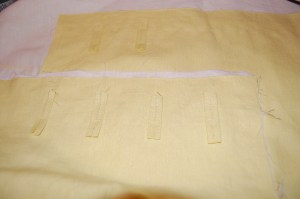
It always amazes me how long these buttonholes take to make!
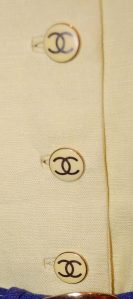
It always amazes me how long these buttonholes take to make!

Blame it on the buttons


There were separate front bodice facings, and a front skirt placket with separate facings. There were sleeve hem facings (as mentioned above), and lots of trimming, clipping, and grading of seams! And then the dress was done.  Except for the belt, of course.

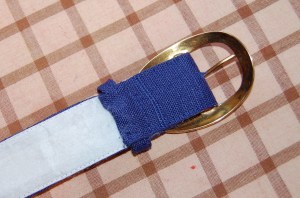
After giving myself a pep talk, I took out one of Pat’s belts and studied it, vowing to duplicate as closely as possible her techniques and precision. Fortunately I had a belt buckle from long ago, which I had saved. It was for a 1.25” width belt, which is exactly what I wanted.  I plunged ahead and this what I made, working the eyelets by hand (which fortunately don’t show much on the dark linen!):
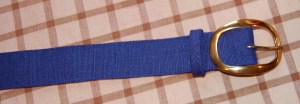
Blame it on the buttons

The underside, just in case you are curious!

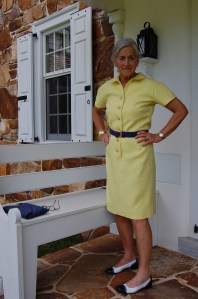
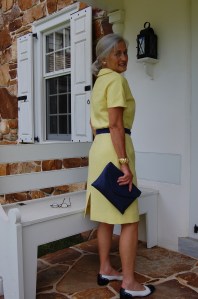
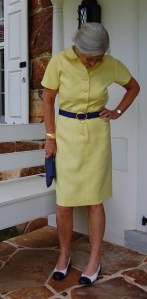
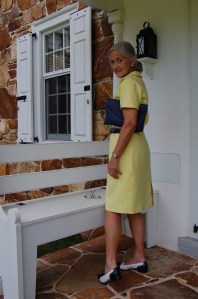
Although not my favorite dress of all time, I think I’ll get good use out of it, and I do love its pairing with “summer” blue.
Blame it on the buttons

Blame it on the buttons

Blame it on the buttons

Blame it on the buttons

The clutch is a perfect match with the belt – how lucky is that?
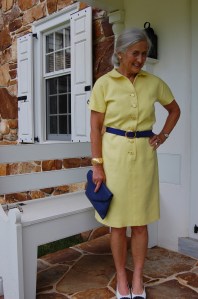
Cool linen for a hot summer!

Cool linen for a hot summer!

Best of all, the buttons add just the right, somewhat mysterious, touch.
19 Comments

Filed under bound buttonholes, Day dresses, kimono sleeves, Linen, Mid-Century style, Moygashel linen, Uncategorized, Vintage fabric, vintage Vogue patterns from the 1950s

Gazing at Gussets and Fashion Exhibits

We are almost halfway through the sewing year! Time for me to just keep plugging along, being grateful for any hours I can spend sewing – or dreaming about sewing. Lately it seems I have spent more time dreaming about it than actually accomplishing anything. But that’s not quite true. I have actually done a lot of sewing (I call it necessary sewing) – just not anything worth sharing. But that is about to change.
I am working on a yellow linen shirtdress, using this pattern:

I am making the short sleeve version - but a little shorter!

I am making the short sleeve version – but a little shorter!

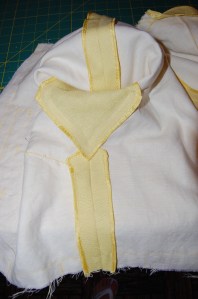
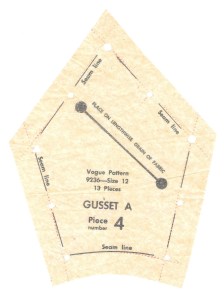
I am really getting to be a fan of kimono sleeves. They were incredibly popular in the 1950s (and early ‘60s), and their construction varies according to the type of gusset used. The dress in this pattern has a gusset that forms part of the sleeve, itself.

Usually gussets are diamond shaped. However, the curved lower edge shows that this gusset incorporates part of the sleeve in it.

Usually gussets are diamond shaped. However, the curved lower edge shows that this gusset incorporates part of the sleeve in it.

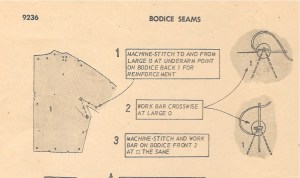
The instructions for inserting the gusset are quite explicit and interesting, I think. The first step is to work a “bar” across the point on the bodice where the matching point of the gusset is placed. I have actually never seen this done, but it makes sense as it reinforces that stress point.

Gazing at Gussets 1st diagran

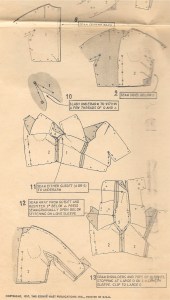
I also like the double stitching on the interior seams of the gusset as shown in this section:

Gazing at Gussets 2nd diagram

Here is how the finished short sleeve is diagrammed:

Gazing at Gussets 3rd diagram

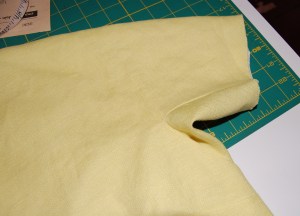
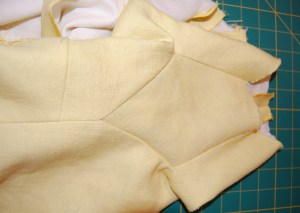
And here are some photos of the finished gussets on my dress:

Gazing at Gussets

This photo clearly shows how the gusset becomes part of the underpart of the sleeve.

This photo clearly shows how the gusset becomes part of the under-section of the sleeve.

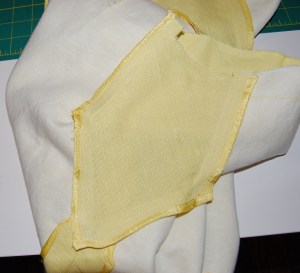
Here is an inside look. While the dress is underlined in a very light weight cotton/linen blend, I opted not to underline the gusset, in order to add to flexibility. I got this brilliant idea from Laura Mae of Lilacs and Lace sewing blog.

Here is an inside look. While the dress is underlined in a very light weight cotton/linen blend, I opted not to underline the gusset, in order to add to flexibility. I got this brilliant idea from Laura Mae of Lilacs and Lace sewing blog.

The seam you see at the top of this photo is the shoulder seam which runs down the length of the sleeve.

The seam you see at the top of this photo is the shoulder seam which runs down the length of the sleeve.

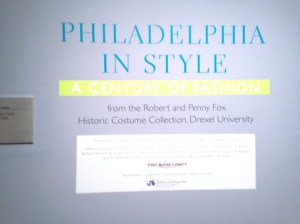
I managed to tear myself away from my sewing room for a few hours this week to go to see an exhibit at the Michener Museum in Doylestown, Pennsylvania (USA). Entitled Philadelphia In Style, the exhibit featured fashions either made, worn or purchased in Philadelphia, PA over the course of about 100 years (1880-1980).

Duskin - Exhibit title

All are part of the Robert and Penny Fox Historic Costume Collection at Drexel University in Philadelphia, a veritable treasure trove of designer, haute couture and ready-to-wear dresses, coats, ensembles, shoes, handbags, and accessories of all types. The Exhibit has special meaning for those of us with Philadelphia ties, but universal meaning for lovers of fine fashion anywhere.

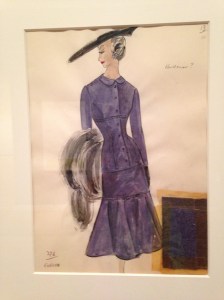
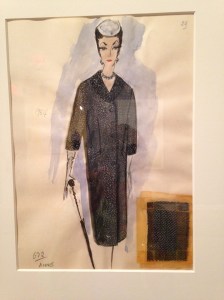
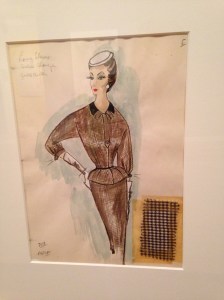
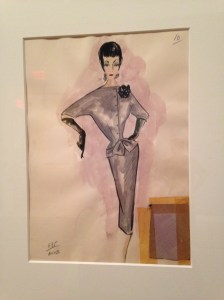
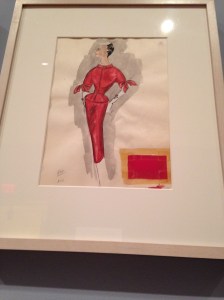
Although the clothing on display was fascinating and, for the most part, lovely, it was the numerous fashion illustrations, framed and lined up one after the other, which really caught my attention. They had all been done in 1954 for a specialty ladies’ shop in Philadelphia, called Nan Duskin. The most amazing thing is that each one had a swatch of the intended fabric taped in the corner of each drawing. Here is a sampling:

Duskin sketch - purple dress

The buttons were still in question for this dress – note the line in the upper right side “buttons?”

Such a lovely coat! Note the fabric swatch, held in place with yellowing tape!

Such a lovely coat! Note the fabric swatch, held in place with yellowing tape!

So many of the illustrations were of dressmaker suits. This one is made in brown checked wool.

So many of the illustrations were of dressmaker suits. This one is made in brown checked wool.

I love the saucy pose in this sketch - and the posy perched on the shoulder!

I love the saucy pose in this sketch – and the posy perched on the shoulder!

One of my favorites: in red, of course!

One of my favorites: in red, of course!

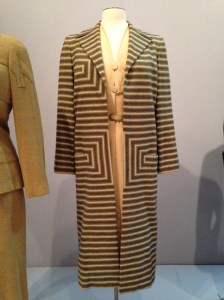
Here are a couple of the fashions represented in the Exhibit:

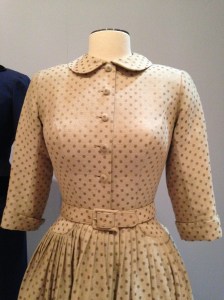
This was called a Day Ensemble. It bears the table "Irene for Nan Duskin." This was Irene Lentz Gibbons, 1952-53, USA.

This was called a Day Ensemble. It bears the table “Irene for Nan Duskin.” (Irene Lentz Gibbons, 1952-53, USA)

This shirtwaist dress, Norman Norell for Trina-Norell, circa 1955, had finely done bound buttonholes. the fabric is s ilk and wool brocade.

This shirtwaist dress, Norman Norell for Trina-Norell, circa 1955, had finely done bound buttonholes. The fabric is silk and wool brocade.

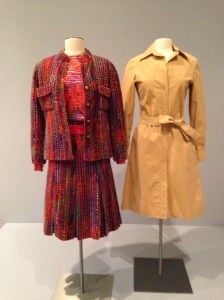
The Exhibit did manage to include one of the most unattractive Chanel suits I think I have ever seen.

The Chanel suit on the left is shown with an ultra-suede shirtdress by Halston, on the right.

The Chanel suit on the left is shown with an ultra-suede shirtdress by Halston, on the right.

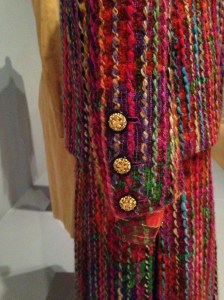
But it was still fascinating to look at the cuff detail:

Duskin Chanel suit detail

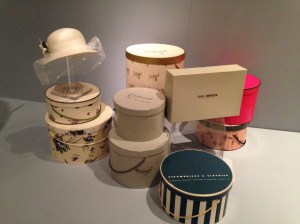
One of the most charming displays in the Exhibit was a collection of hat boxes from the stores in Philadelphia which were the purveyors of so many fine fashions over the decades.

Duskin - hat box display

As a lover of pretty boxes and bags, I found this vignette not only delightful, but also evocative of the thought and care inherent in buying and wearing beautiful fashions. They reminded me of the same little thrill I get when a piece of beautiful fabric which I have purchased shows up in the mail, elegantly presented in crisp tissue and tied with silky ribbons.   It makes it oh-so-easy to fall in love immediately!

23 Comments

Filed under bound buttonholes, Coco Chanel, Day dresses, Dressmaker suits, Fashion Exhibits, Gussets, kimono sleeves, Mid-Century style, Uncategorized, vintage Vogue patterns from the 1950s

Sweet November

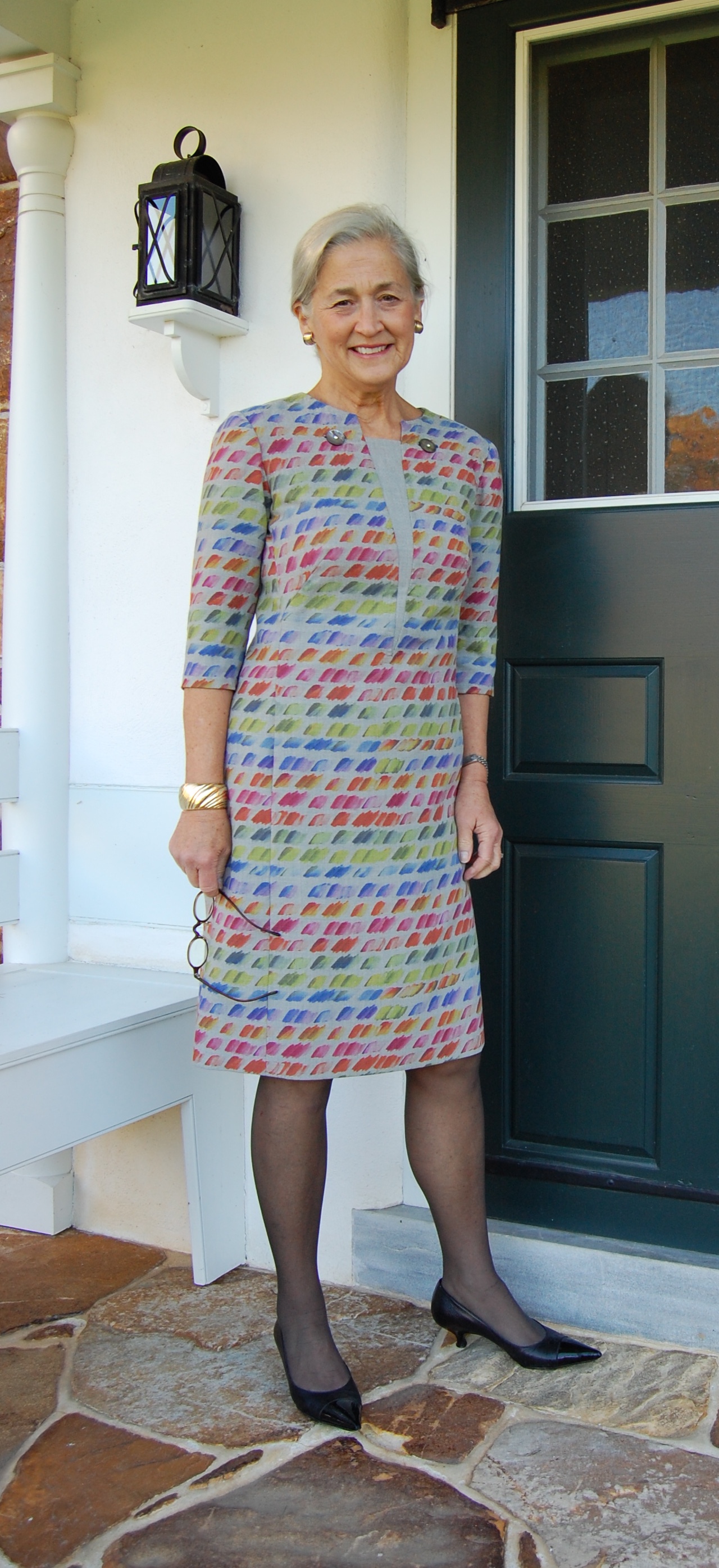
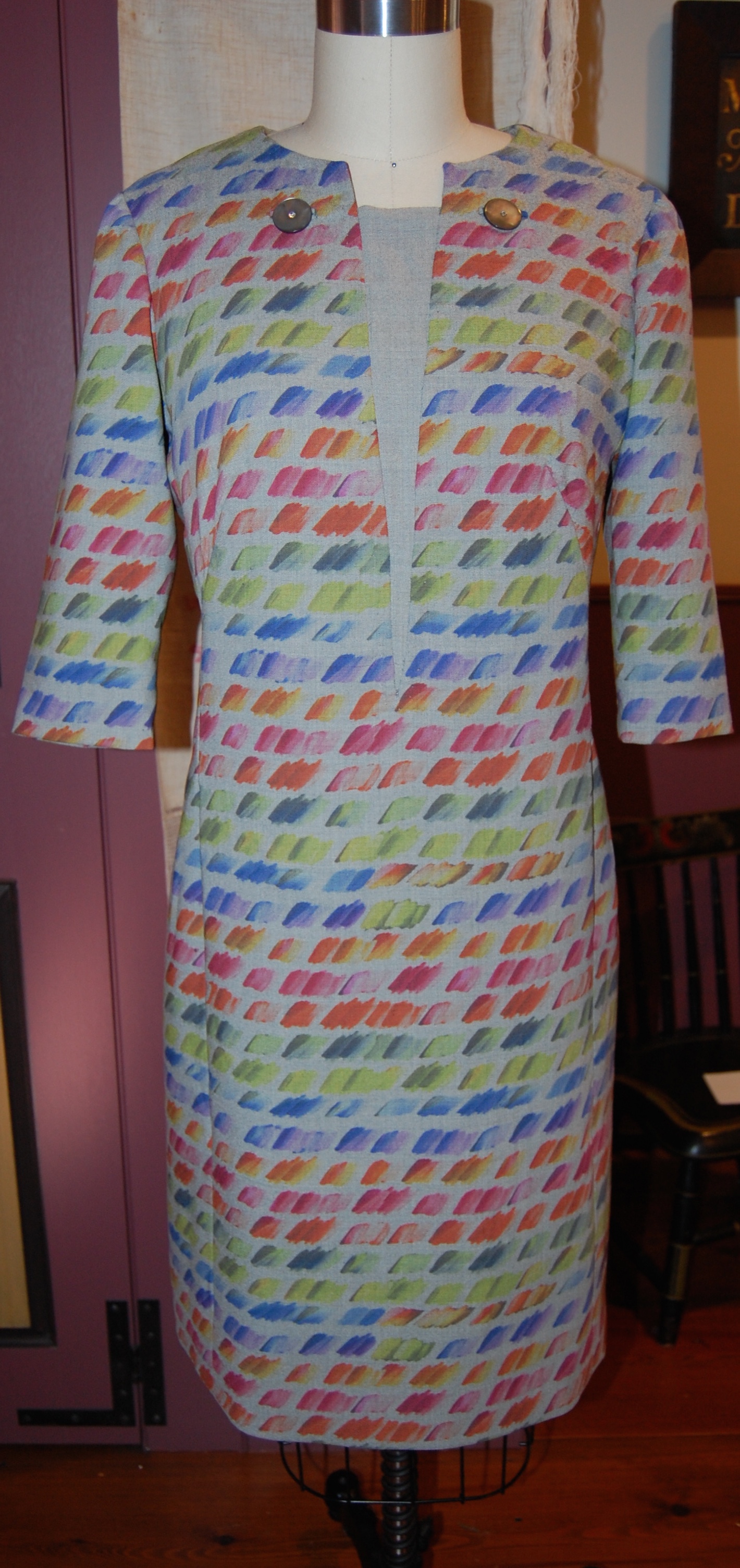
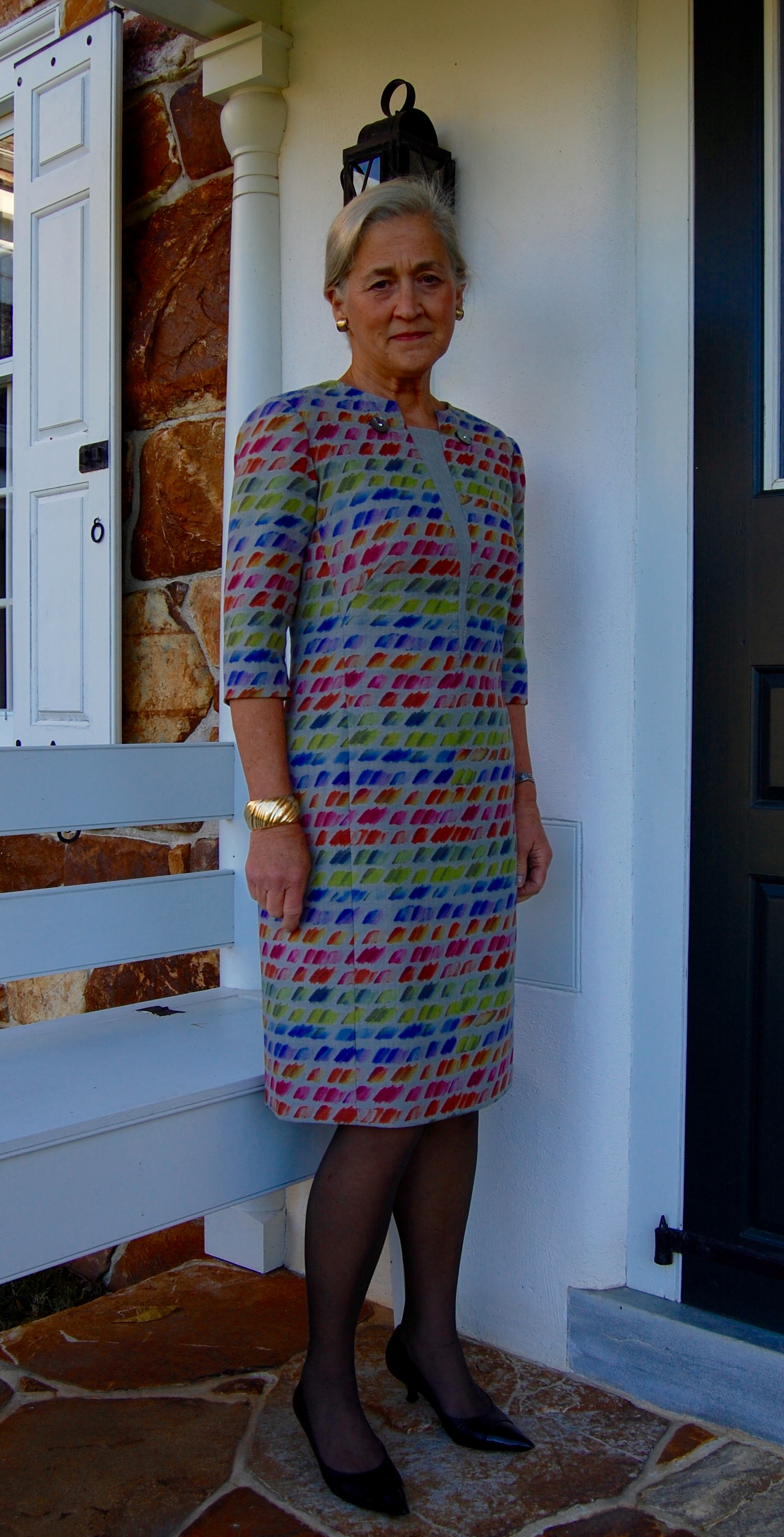
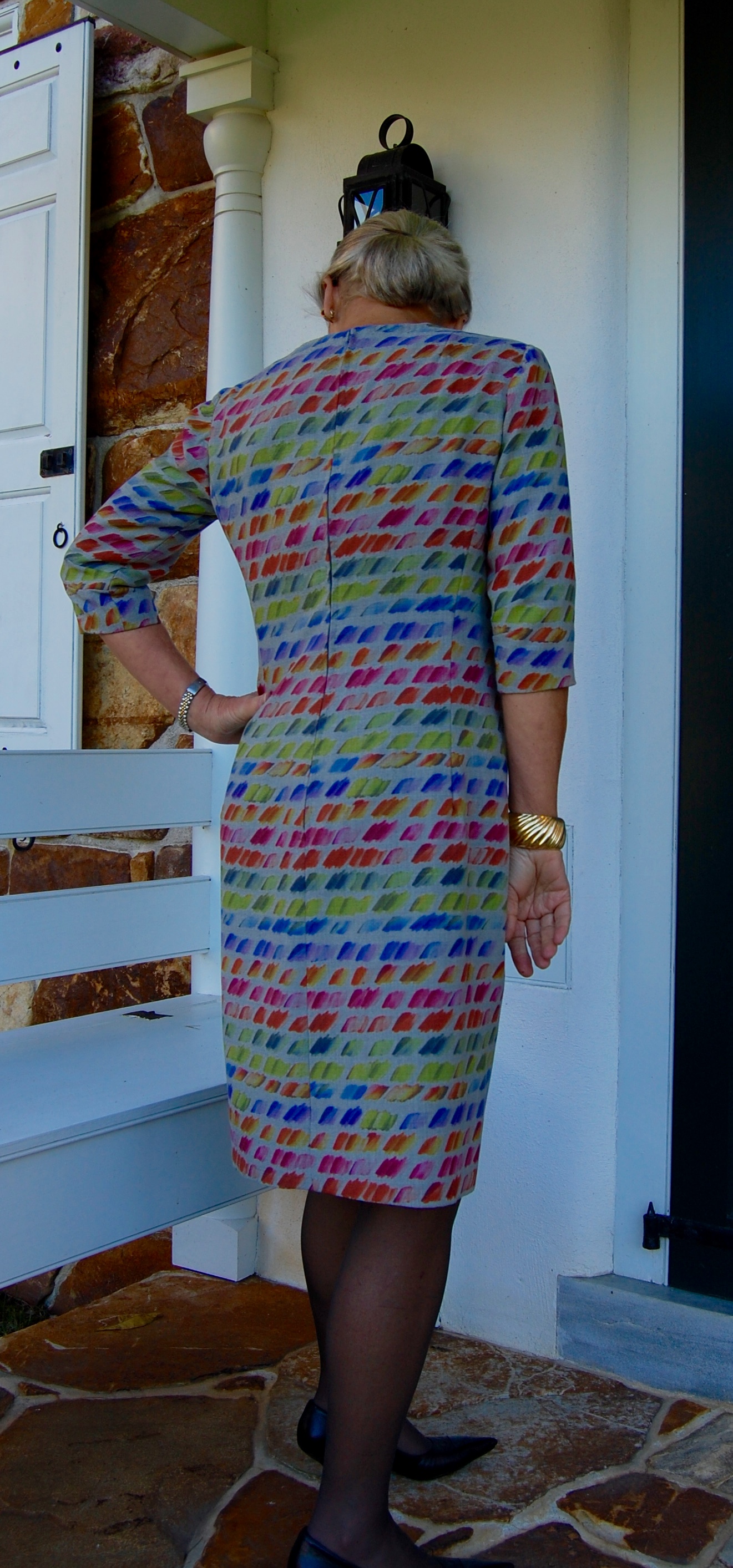
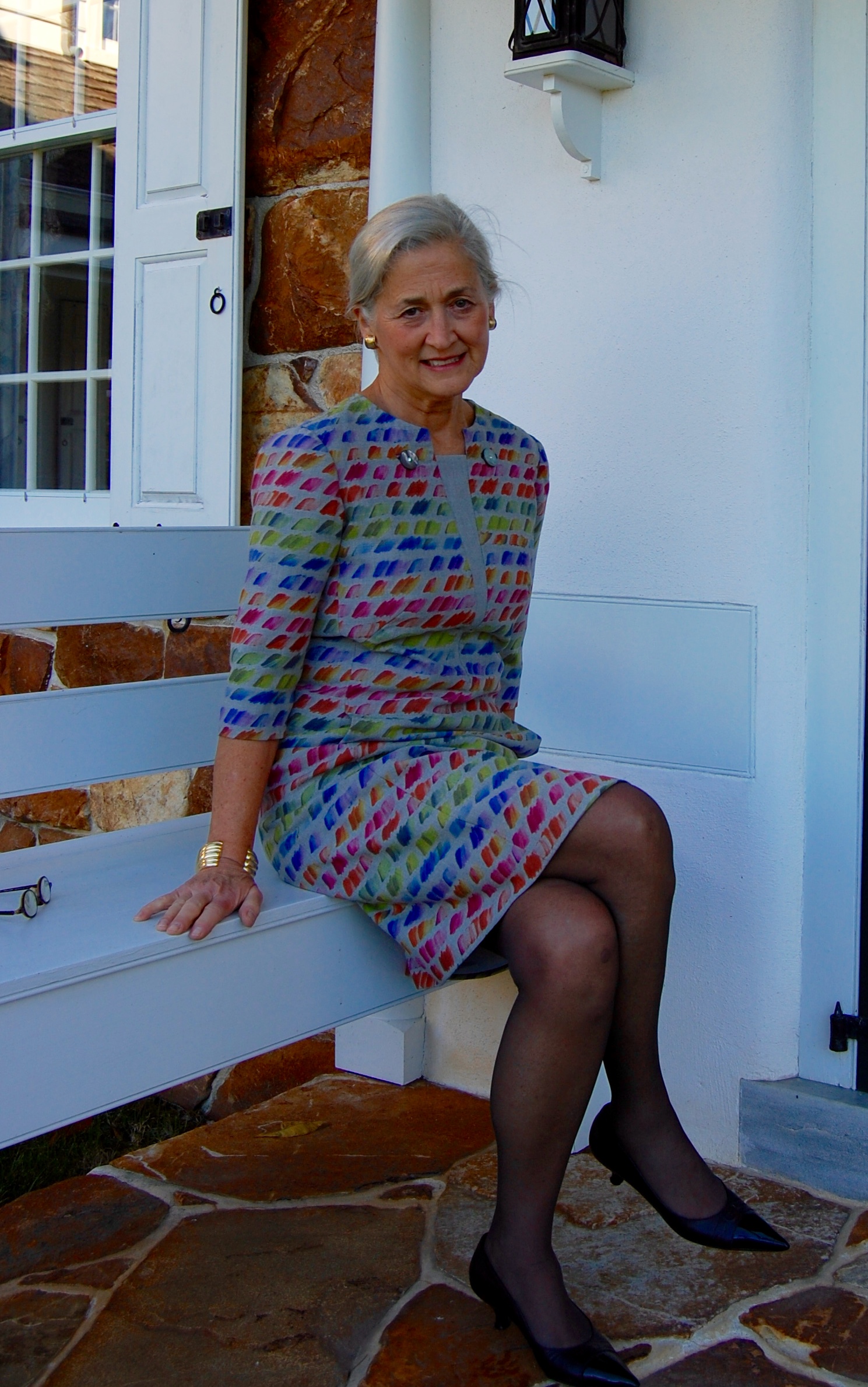
The trickery, which defined my October sewing, finally floated away with the leaves and the goblins, leaving sweet November with her welcome reward, a new dress for Autumn and Winter.

Sweet November

So what made vintage Vogue 1395 such a tricky dress to make? I documented my efforts to get a workable muslin (toile) in a post from early October. Once I had my adjusted muslin pattern, I transferred it onto black silk organza to use as my cutting guide. It was then I realized that, because the design on the fabric, a silk and wool blend, was printed on it, not woven into it, I needed to work from the right side of the fabric in order to match the horizontal “lines.” This meant that I had to flip every piece that I cut out and then exchange the organza with its opposing side. (I hope this makes sense.) It added a bit of uncertainty to the process and I was fanatical with flipping and checking to make sure I kept the design in line. Something told me I should delay cutting out the sleeves until I had the body of the dress together – my sewing godmother at work, I guess – and I am glad I did, as I’ll detail in a bit.

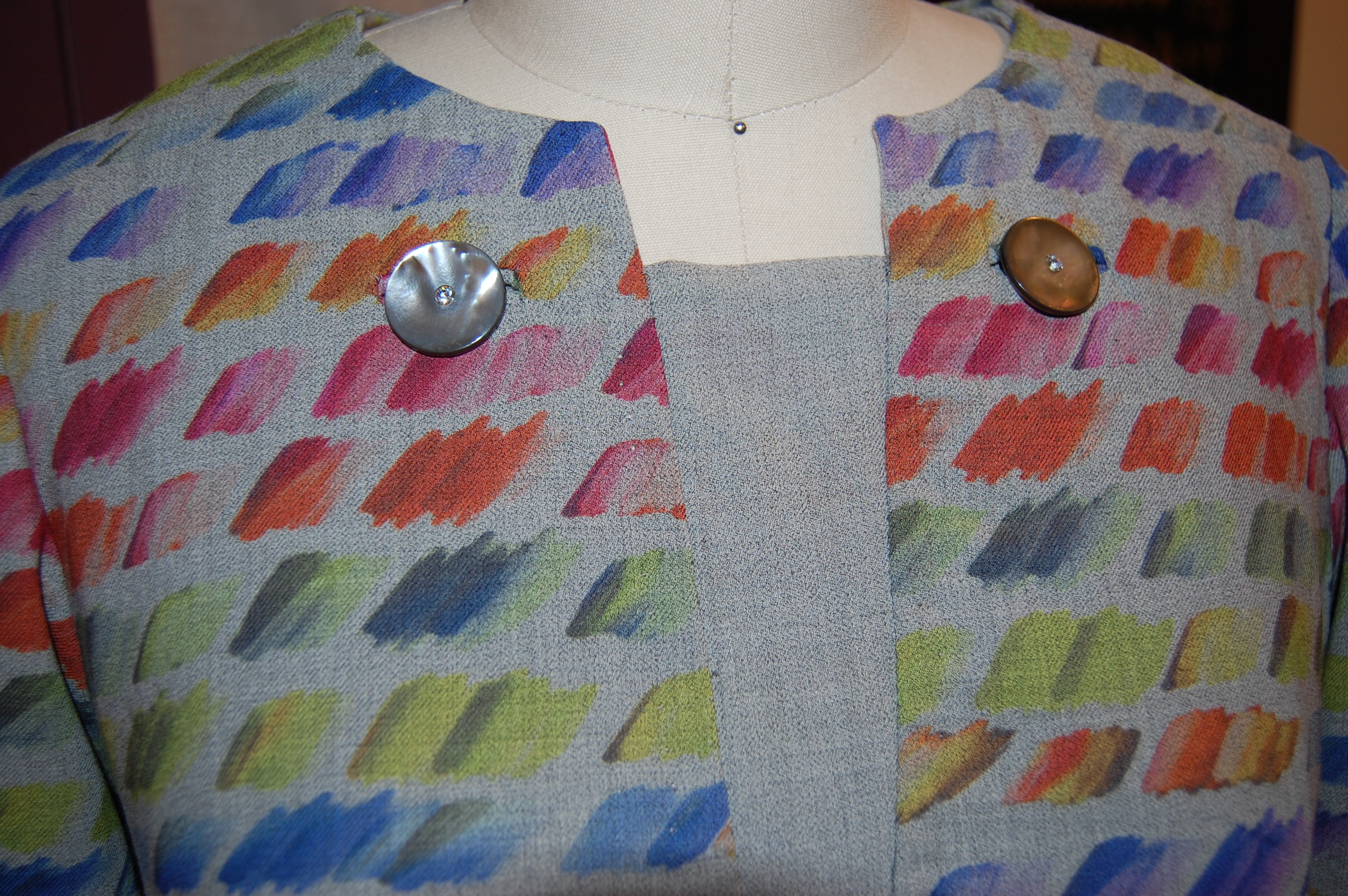
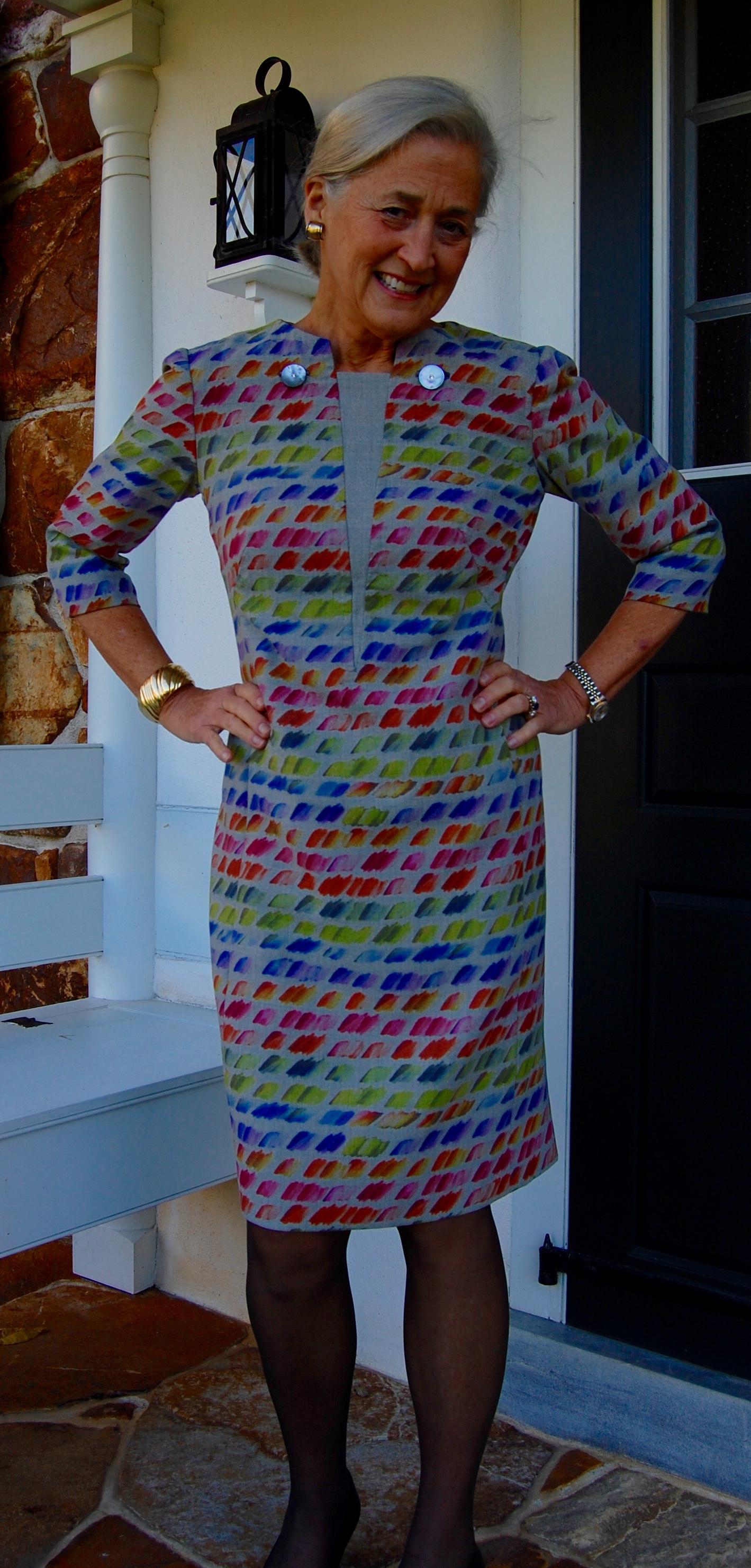
I had made the decision at the beginning of the project to cover the dress’s two buttons in the plain gray “wrong” side of the fabric. But once I “semi-made” a covered button, and tried it out, it was DULL. It added nothing to the dress. I went to my button box and all I could find was a small gray pearl that was close in color. But I loved the iridescence of it and determined that gray pearl buttons were what I needed. I seem to have such good luck with buttons from Britex – even though I am ordering online – and found 1” gray pearl buttons with a rhinestone in their centers. Although I am not a rhinestone-y type of person, something about them spoke to me. I remembered what Susan Khalje said in one of the classes I have taken with her – that couture often has a bit of “whimsy” to it. Well, I ordered those buttons as as fast as I could! I think they are just what was needed!

Sweet November

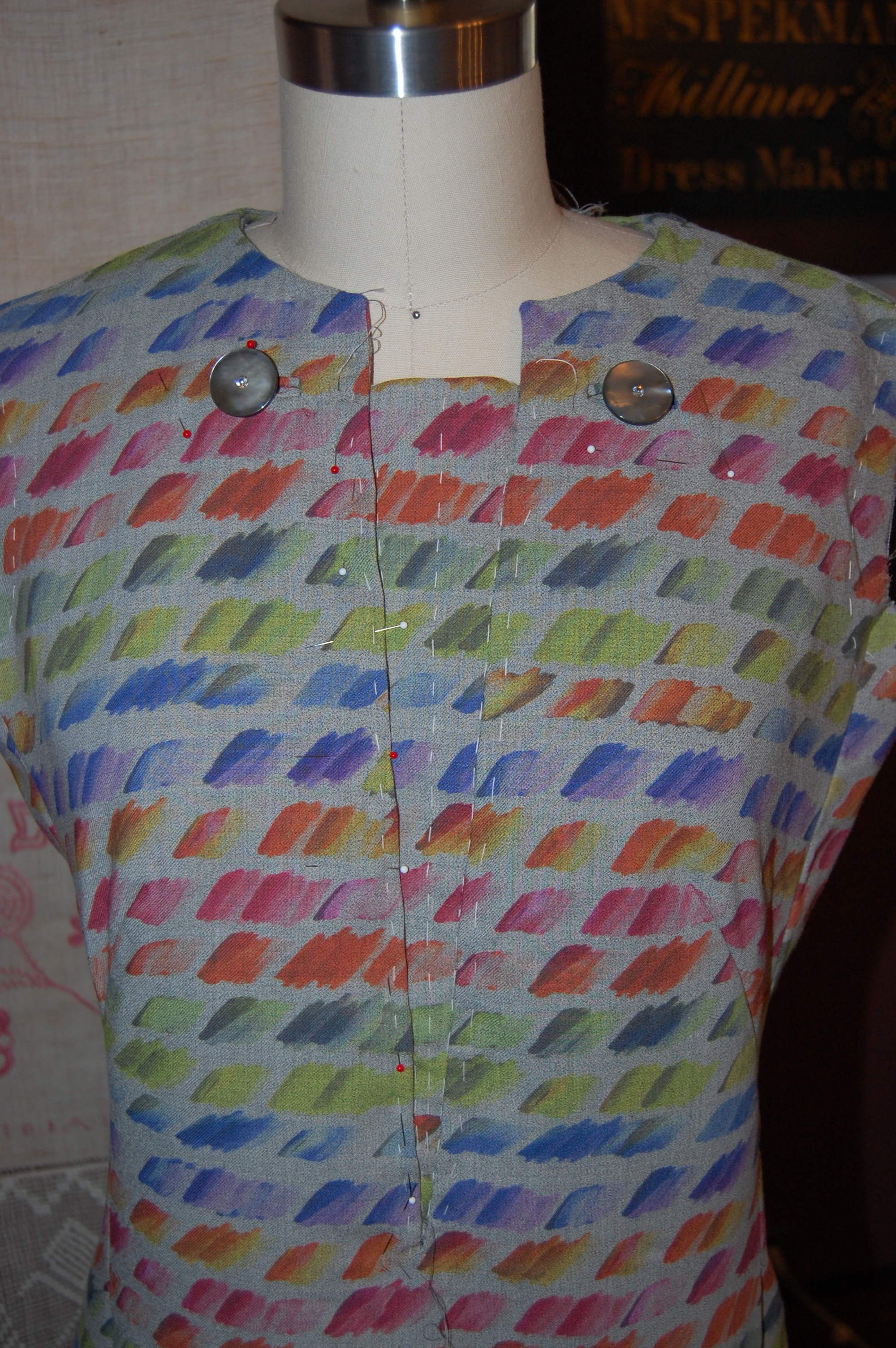
I had also made the decision to make the “dickey” part of the dress out of the side of the fabric with the printed design – so that the horizontal line would be uninterrupted across the bodice. Here is what it looked like once I had it done:

Sweet November

There was not enough definition between the dress and dickey to make it interesting.

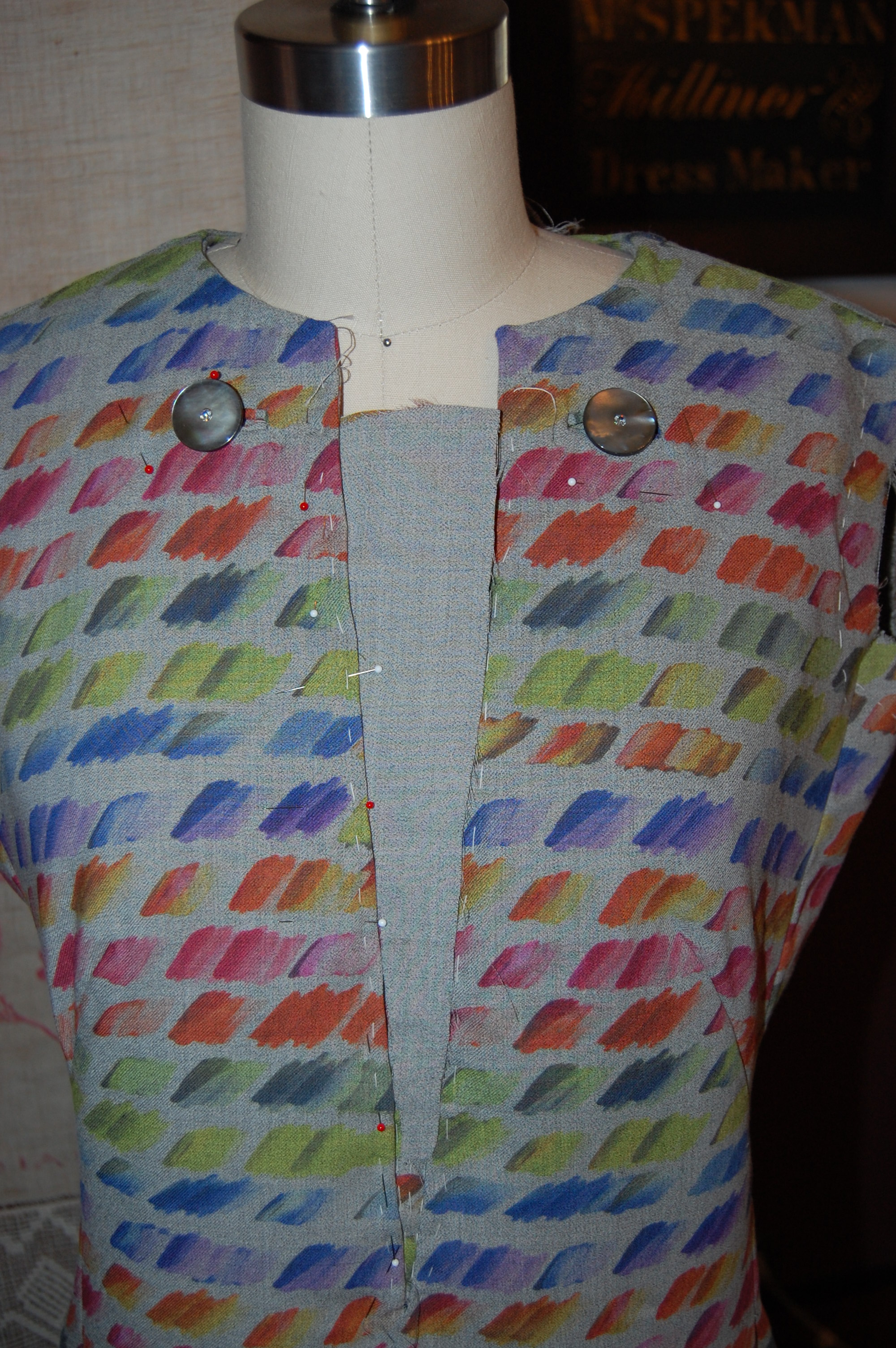
I cut some scraps to see what it would look like with a play gray insert – and it was so much better!

Sweet November

So – I took the dickey all apart and flipped it over so it would be out of the plain gray “wrong side.” By now I was enjoying the versatility of this fabric (which I bought online from Mendel Goldberg Fabrics) and appreciating the serendipity of having this fabric for this pattern, giving me options.

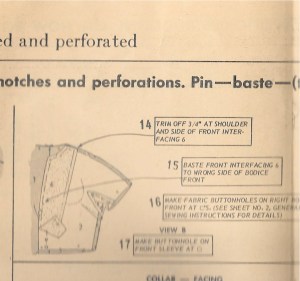
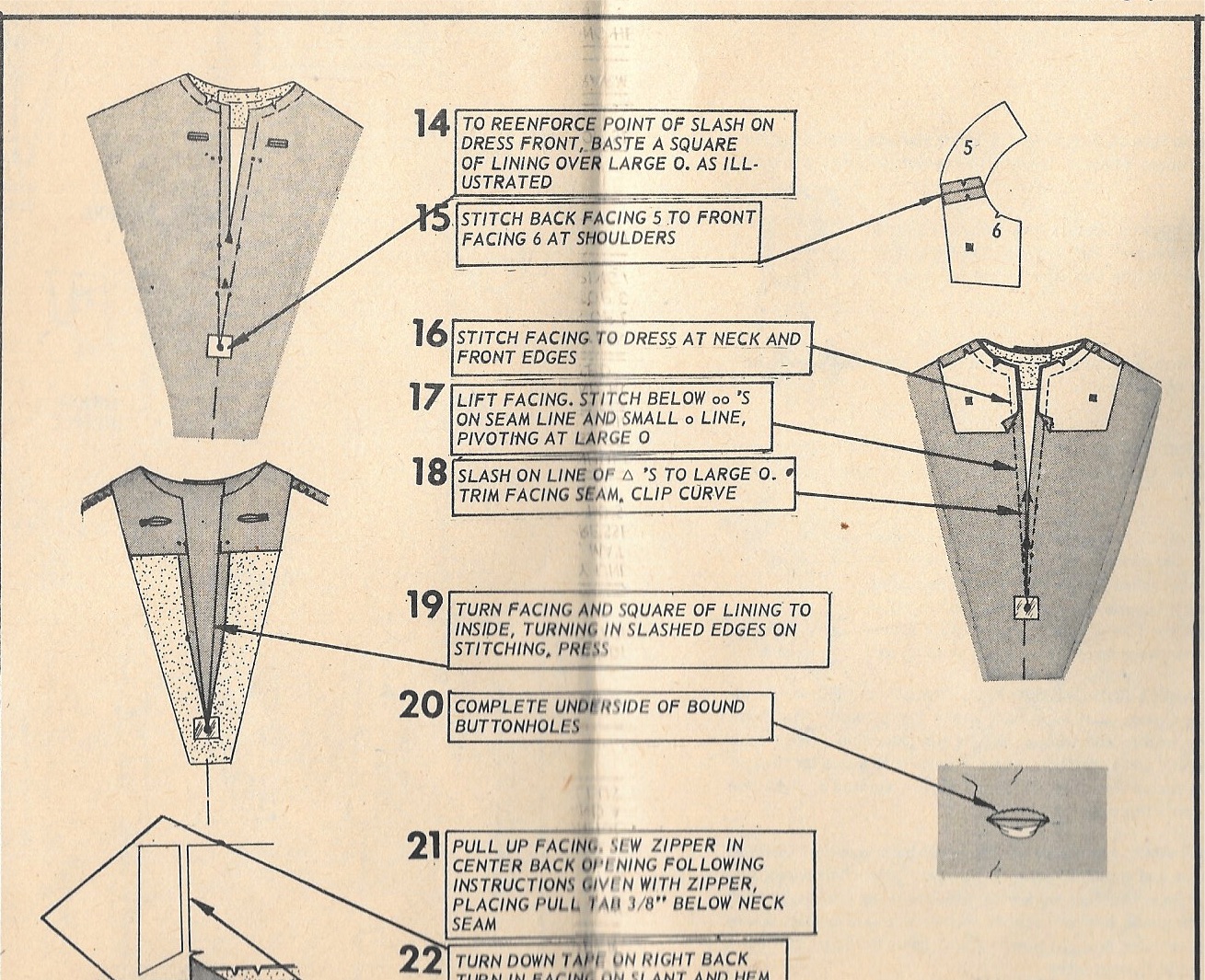
However, the fabric posed another challenge when I got to the point of finishing the front opening in the bodice. This fabric frays enough that I was not comfortable following the directions given in the pattern instructions:

The instructions directed me to just turn back the seam allowance, but because of the ravel-ly nature of the fabric, I was certain it would pull out with wear.

The instructions directed me to just turn back the seam allowance, but because of the ravel-ly nature of the fabric, I was certain it would pull out with wear.

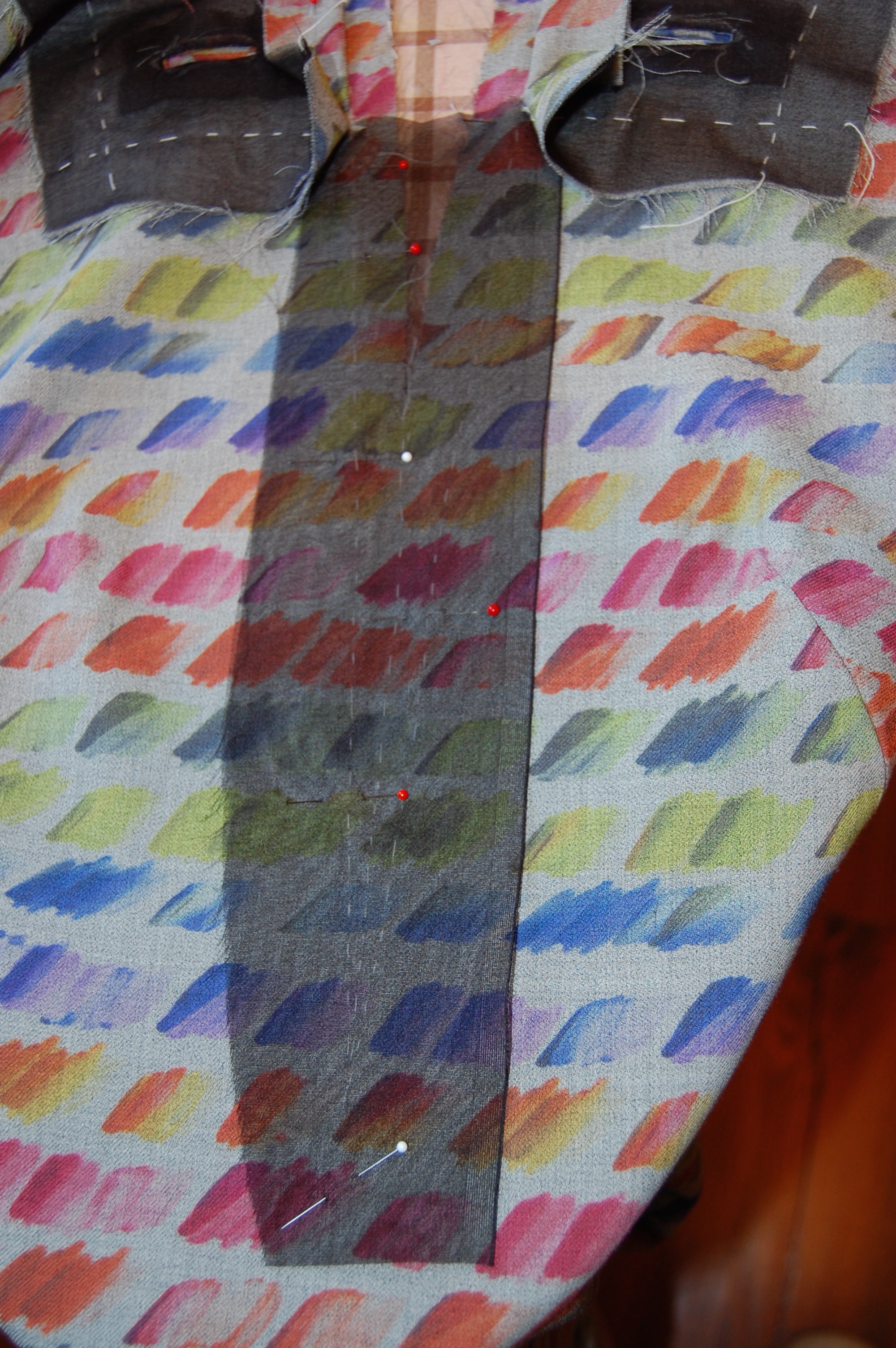
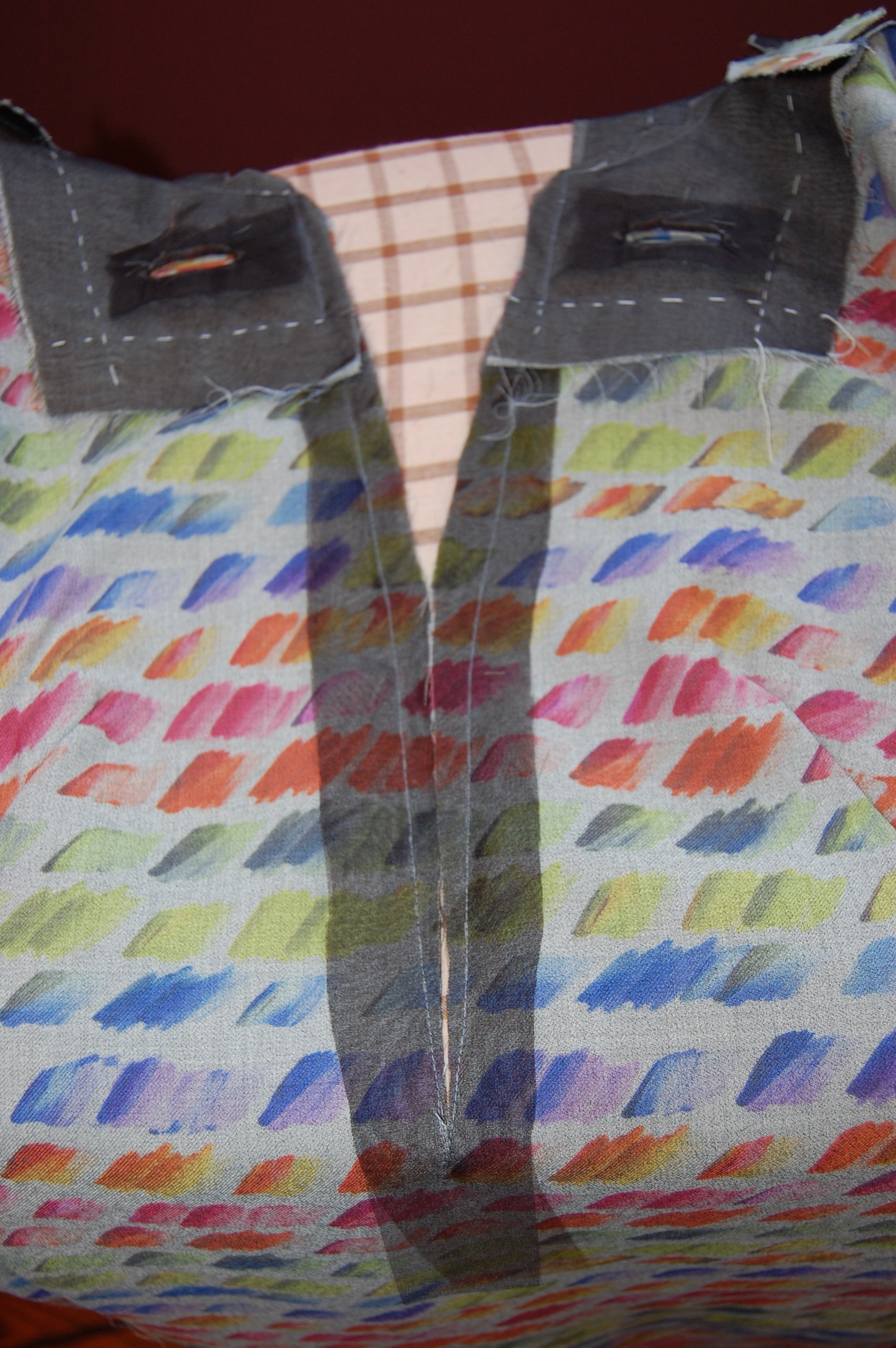
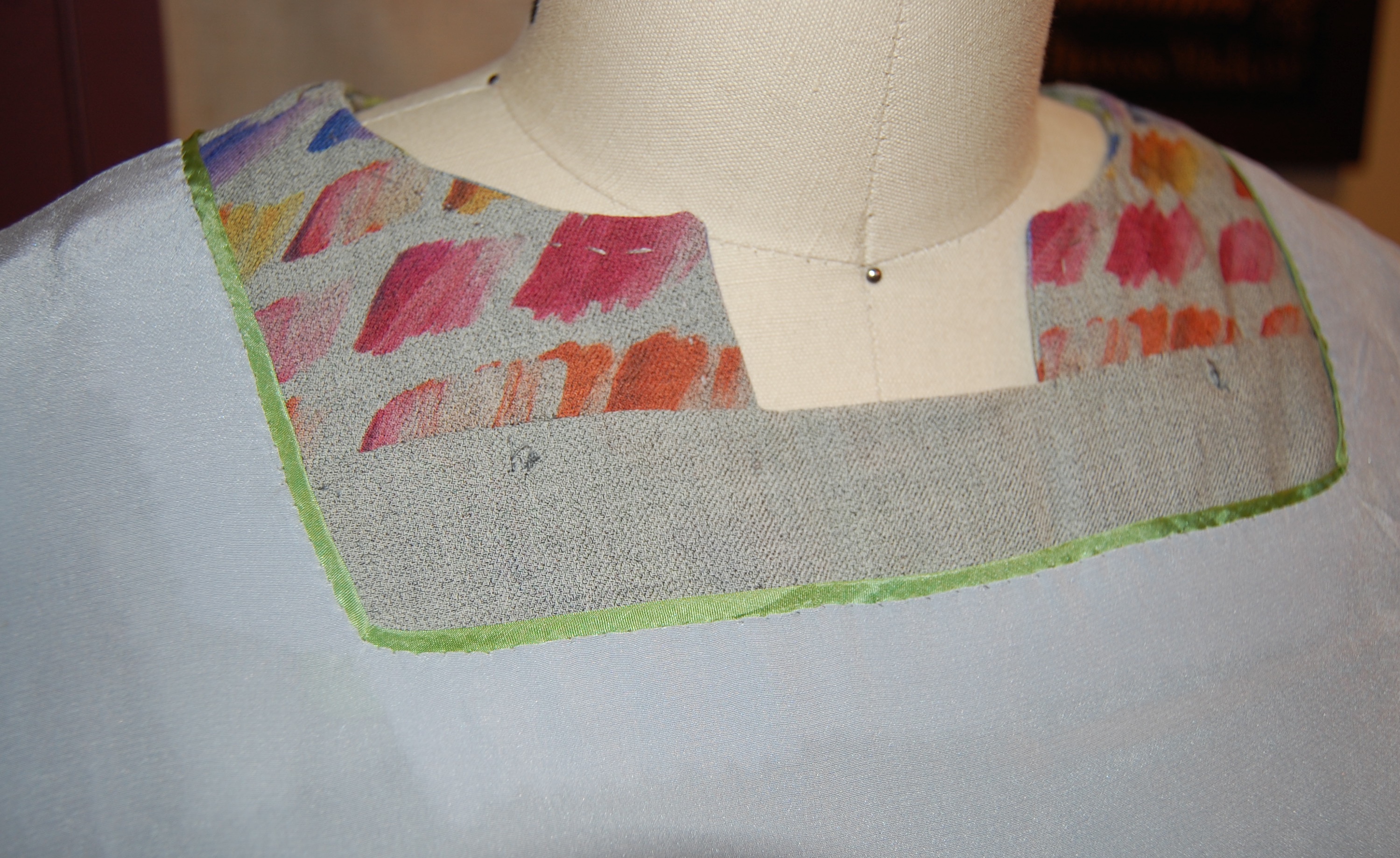
Instead, I opted to make a “facing” for the opening out of black organza. It is situations like this that make me feel so fortunate to have enough “sewing sense” to be able to recognize potential difficulties and then have the ability to work out creative solutions to them.

Sweet November

Silk organza pinned in place.

And here it is sewn in place.

And here it is sewn in place.

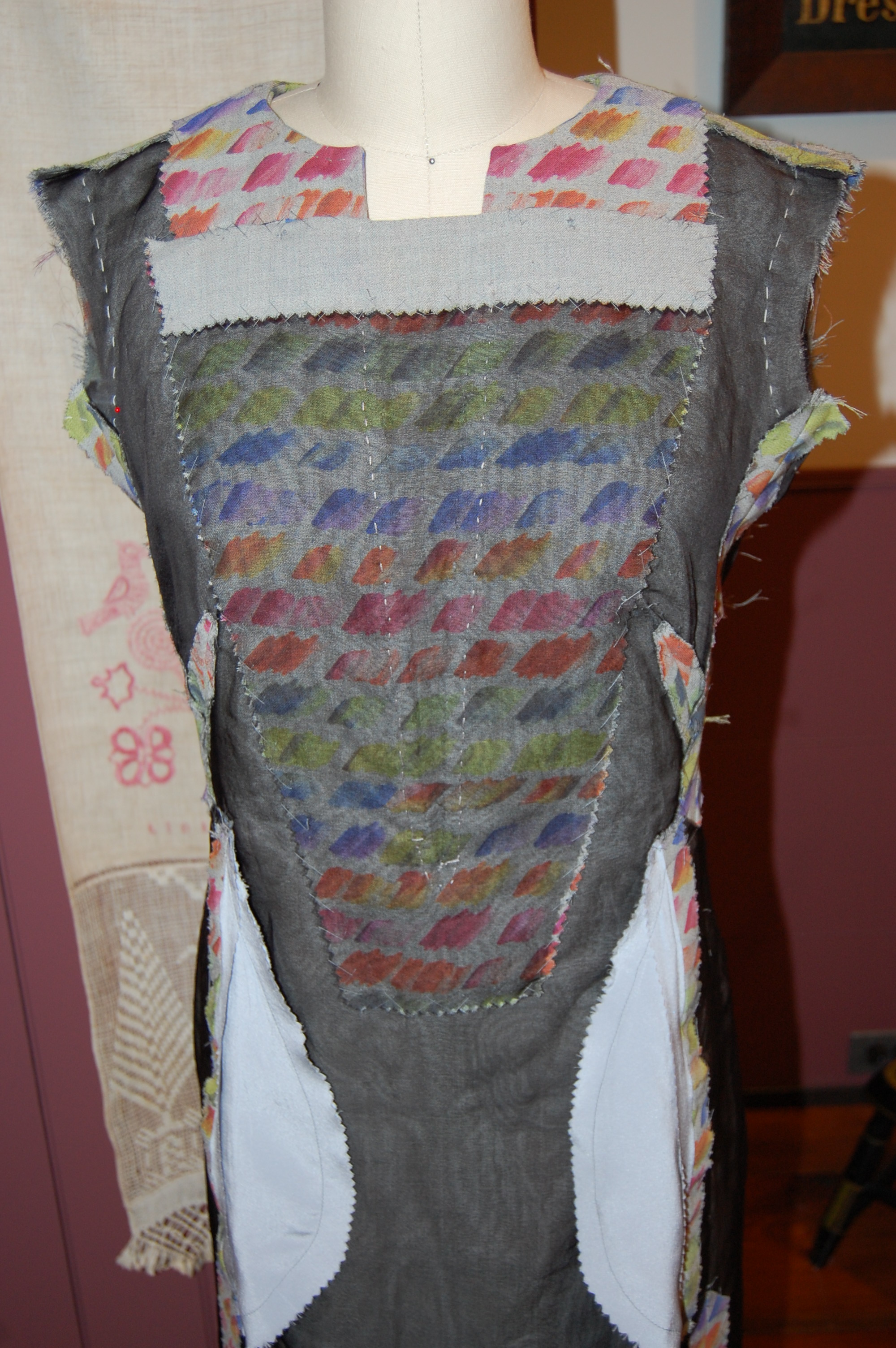
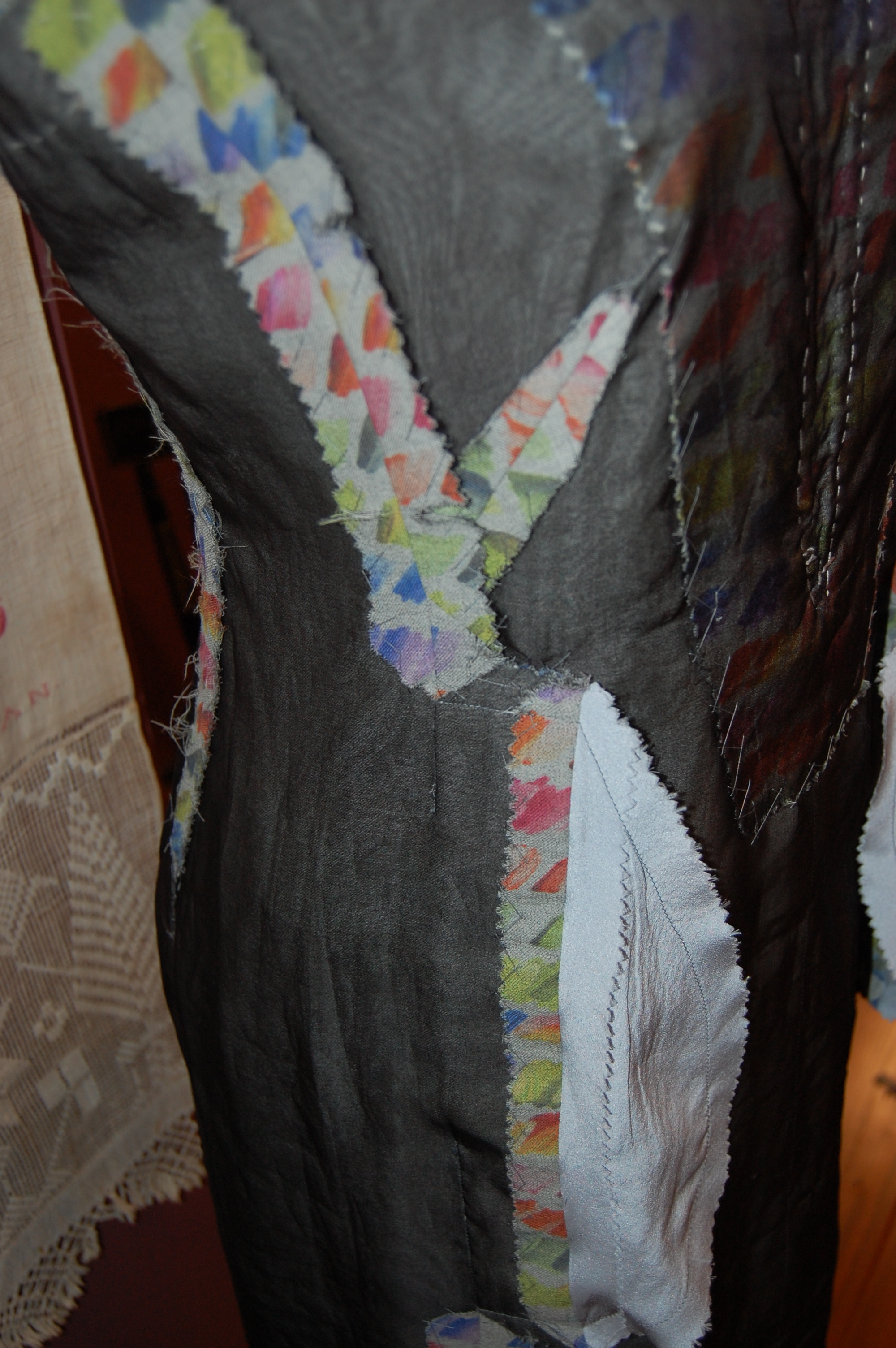
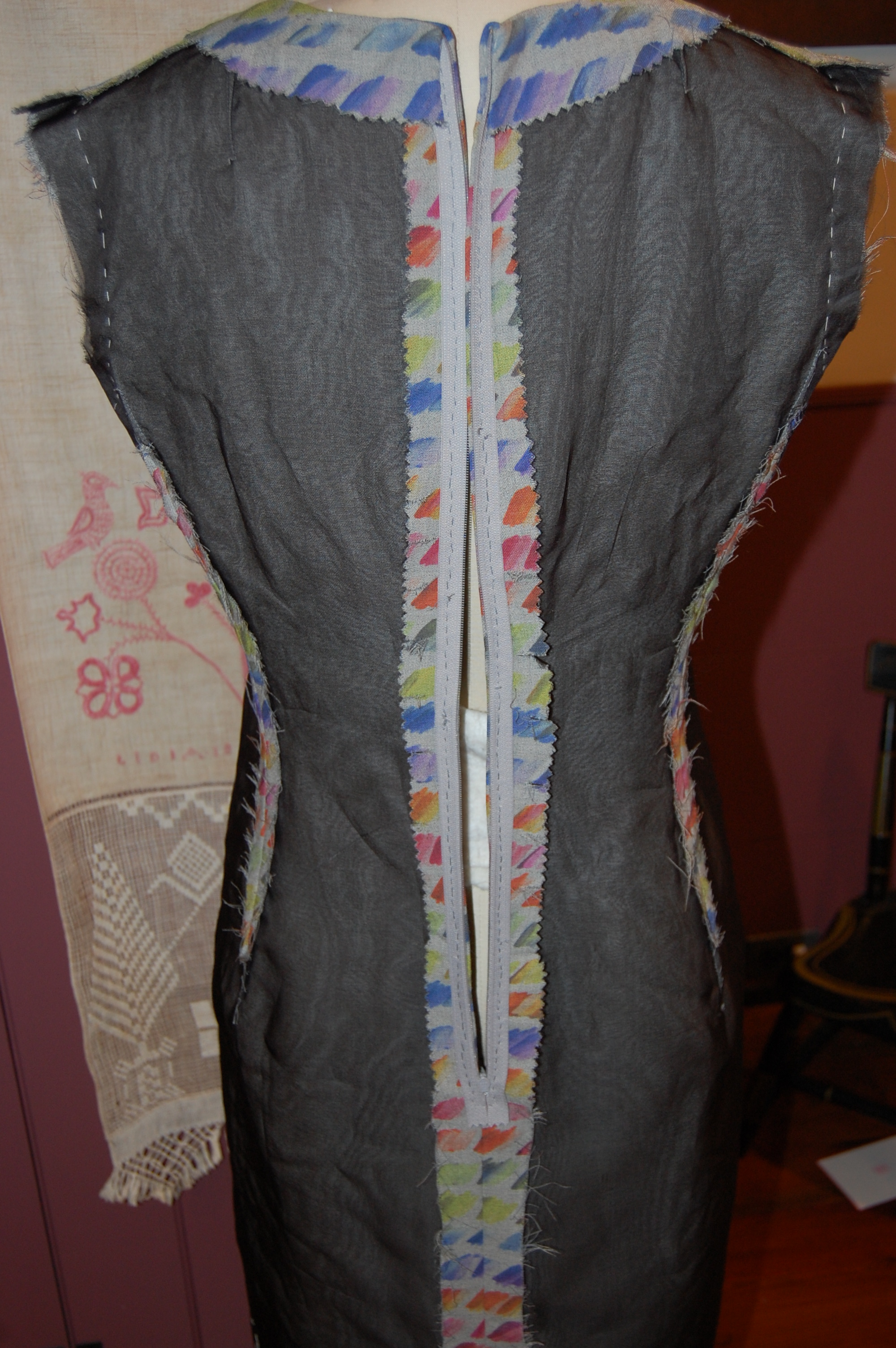
I took some pictures at this point to show the inside of the body of the dress:

Yes, those are pockets hanging on the front.

Yes, those are pockets hanging on the front.

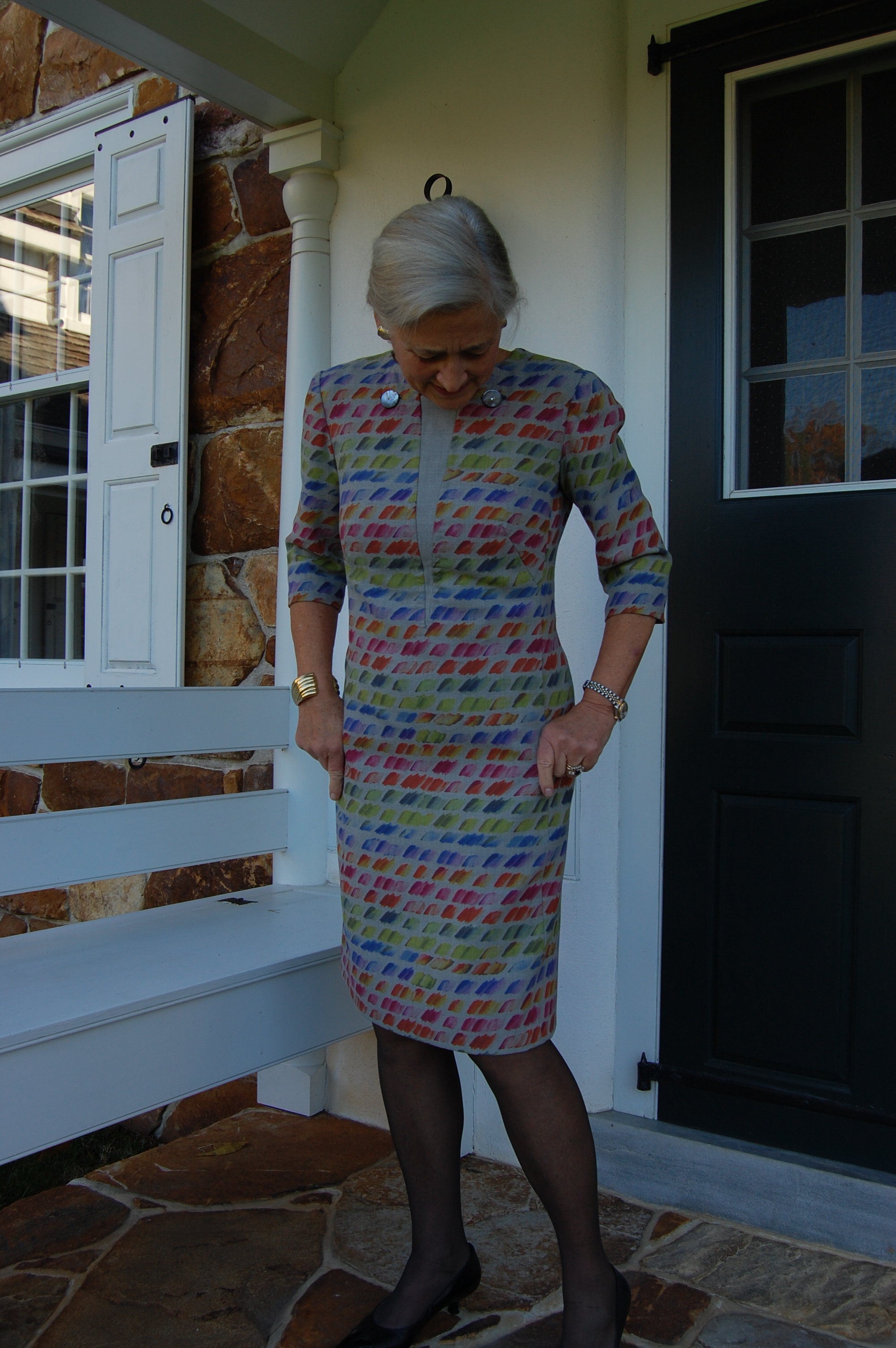
This shows those darts with their slanted orientation.

This shows those bust darts with their slanted orientation.

The zipper is inserted by hand, as usual! Once I had it basted in place, I tried the dress on for fit and determined I had to take it in a bit at the waistline.

Then I tackled the sleeves. I had quite a time determining how to place the sleeve patterns on the remaining fabric. Some of those horizontal lines of “paintbrush strokes” change color across the fabric! And my adapted sleeve pattern has two elbow darts, which changed the horizontal line. I had to make a decision about where I wanted the best match to be, as I determined I could not match it across and up and down as I would normally want to do. I opted for a match across the shoulders – and I now believe that was the best decision.

DSC_0924

I also added a soft “cigarette” sleeve heading to each shoulder seam.

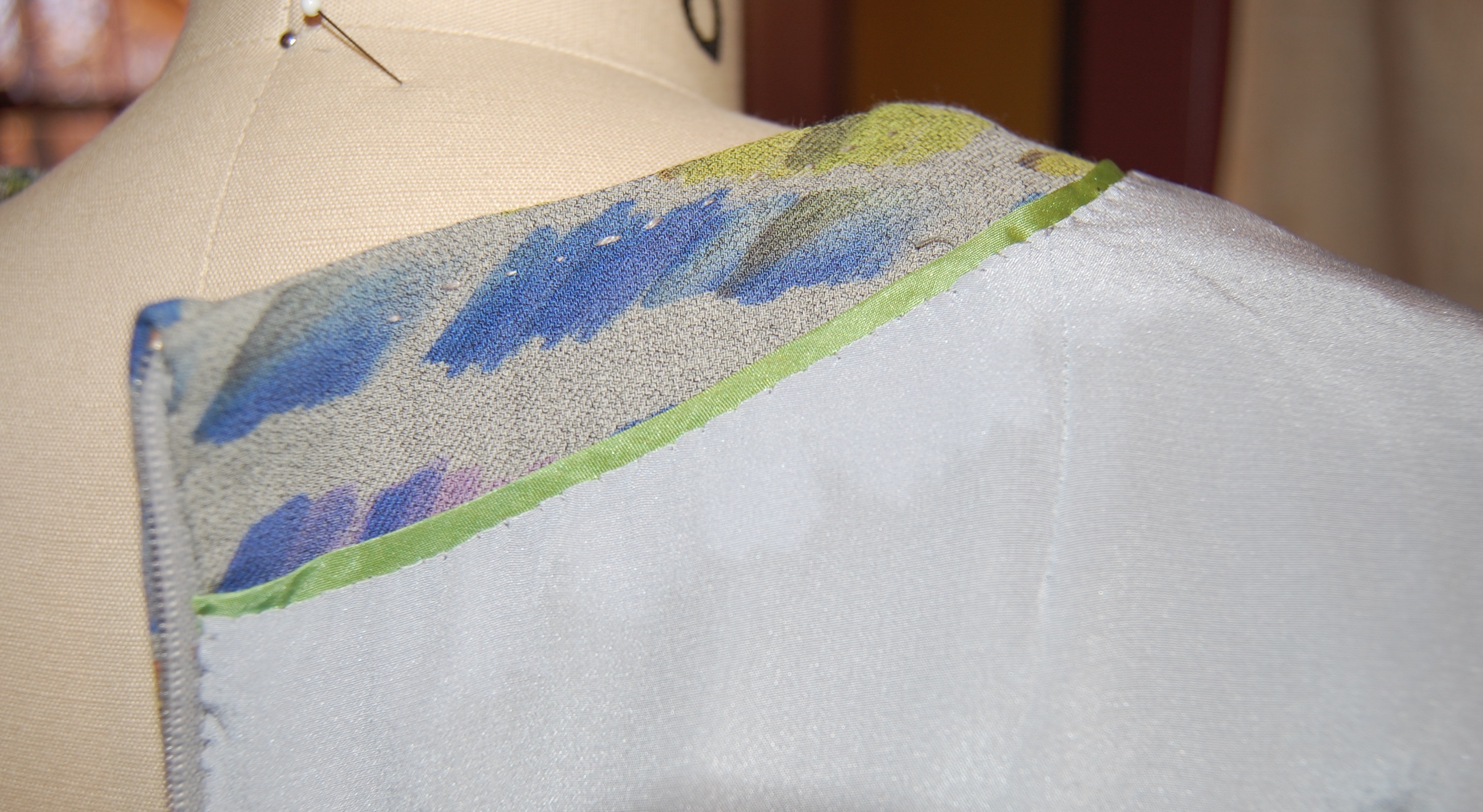
Next to the lining – and bless those vintage Vogue patterns – the lining for this dress included separate and distinct pattern pieces. I made the sizing and dart changes to the lining (in keeping with the dress) and it went together effortlessly. When I got to the point of inserting the lining by hand, I just could not resist adding silk piping to the inside neck edge. I know I am the only one who will ever see it, but it makes me happy!

Sweet November

I used a bias strip of lightweight silk for the piping.

I used a bias strip of lightweight silk for the piping.

How wonderful to have this dress completed!

Sweet November

The buttons really show in this picture.

The buttons really show in this picture.

Sweet November

Sweet November

Sweet November

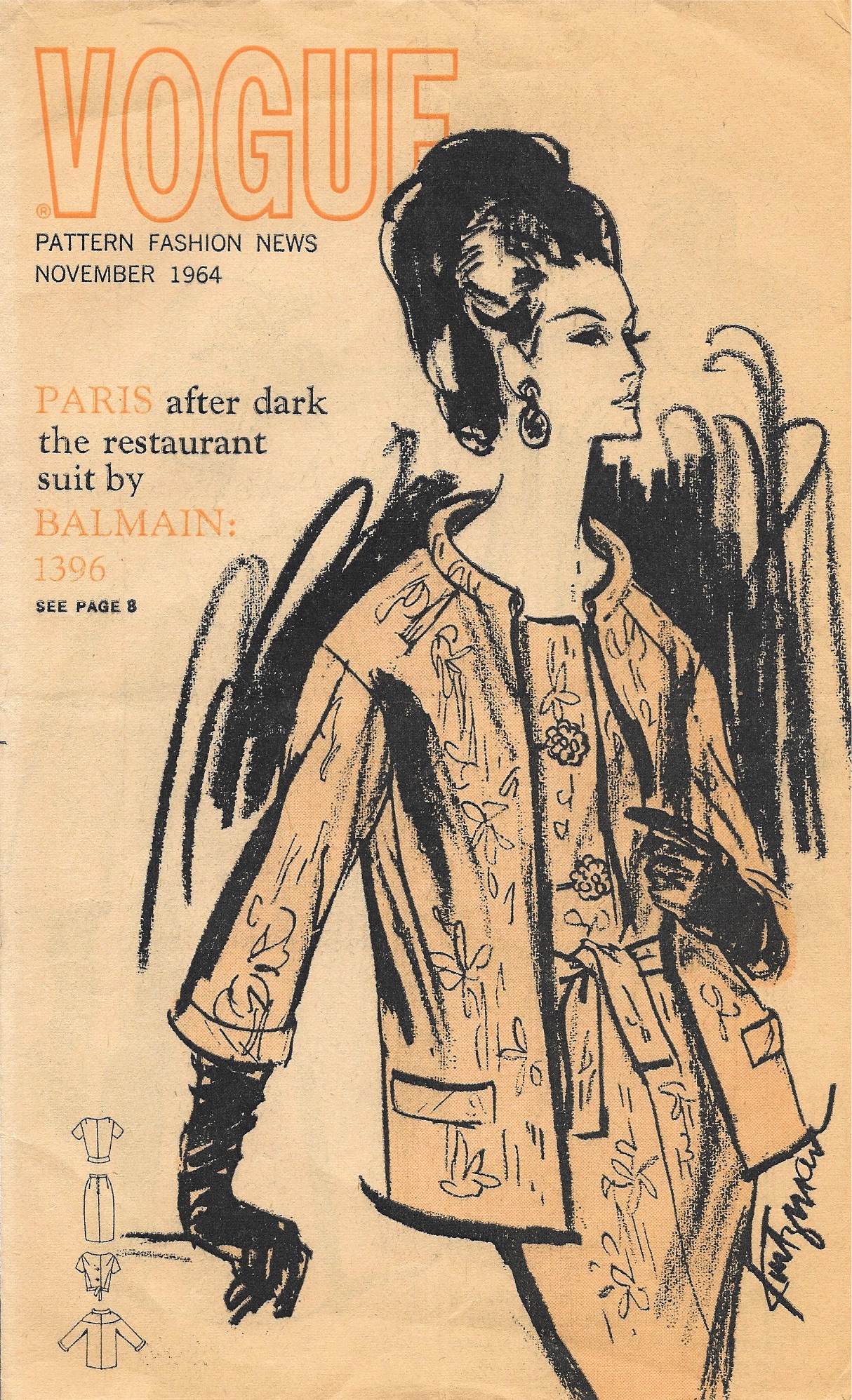
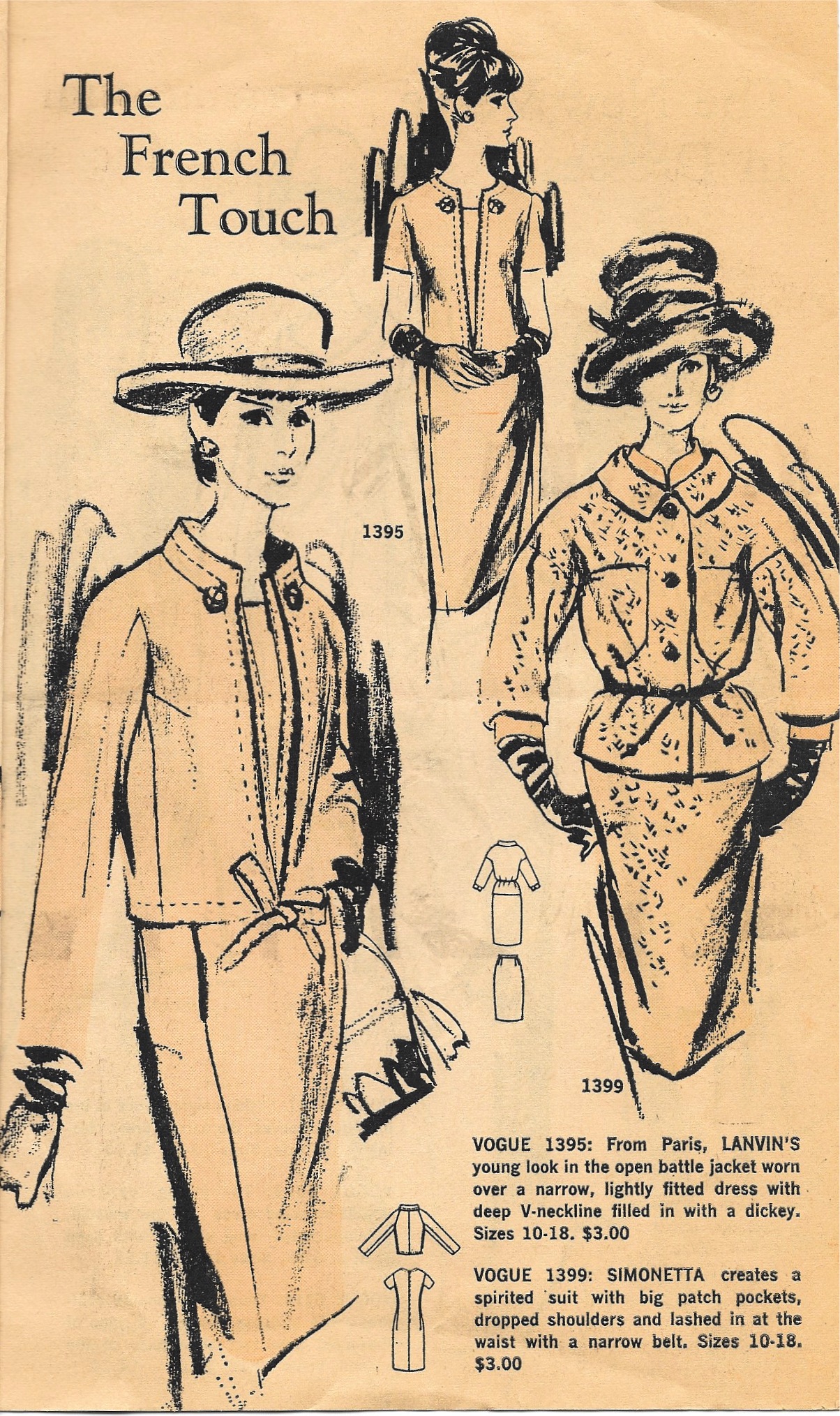
There was one more aspect of serendipity to this project. Those of you who follow my blog know that part of my fascination with vintage Vogue patterns is making connections between the past and the present. I love to “place” a pattern in its correct year – and then wonder in amazement at how classic fashions are so enduring. It was my great good fortune to have this Vogue Pattern Fashion News from November 1964 in my collection of vintage fashion magazines:

Sweet November - flyer cover

Inside on page 3 is, yes, my dress!

Sweet November - flyer illustration

Just imagine – 51 years ago this month, this dress made its debut. Happy Sweet November Everyone!

38 Comments

Filed under Buttons - choosing the right ones, couture construction, Day dresses, hand-sewn zippers, Love of sewing, Mid-Century style, Uncategorized, underlinings, vintage Vogue Designer patterns, vintage Vogue patterns from the 1960s, woolens