Category Archives: Fashion Exhibits

At The Met

Much has already been written about the current fashion exhibit at The Metropolitan Museum of Art in New York City, Manus x Machina. People far more savvy about current fashion than I am are certainly more qualified to offer a critique of the Exhibit. (Check out The Vintage Traveler’s three-part review of the Exhibit, for an excellent overview.) However, having just had the opportunity last week to view the Exhibit, I feel compelled to add my two cents.
The Exhibit Logo

The Exhibit Logo

I found the title of the Exhibit off-putting. Yes, I know it is a trendy way of saying “hand-made by(?) machine made,” but exactly how does one pronounce the title? It is not a comfortable invitation to what is a unique way of looking at haute couture fashion and fashion history.

The entrance to the Exhibit, which was difficult to find, especially with the crowds at the Museum on the day I attended, includes storyboards to introduce the viewer to the premise of the Exhibit. It is worth quoting from this introduction:

“Manus x Machina is structured around the métiers, or trades of dressmaking outlined in [Diderot’s] Encyclopedie, [which] placed these trades on the same footing as the arts and sciences, which had been regarded as the noblest forms of scholarly activity since Greek antiquity. The elevation of these . . . métiers served as an incendiary challenge to established prejudices against manual labor, biases that the authors sought to refute by showing the creativity and complexity such work involved.”   These trades – or métiers – which are still cornerstones of haute couture today, were listed as: embroidery, featherwork, artificial flowers, pleating, lacework, and leatherwork. Also included were sections on the actual arts of dressmaking and tailoring, including the development of toiles (muslins) and paper patterns. As lovely as some of the fashions were (but not all!), I found myself drawn to the storyboards in these sections for their clear explanations and definitions, which spoke to this dressmaker’s heart!

But first, some of the creations on display, culled by my hearty preference for classic and/or vintage fashion:

This cape and dress from the House of Chanel, Spring/Summer 2010 was stunning. The cape is made from “1,300 hand-pieced pink silk satin Flowers by Lemarie with pink frosted crystals.”
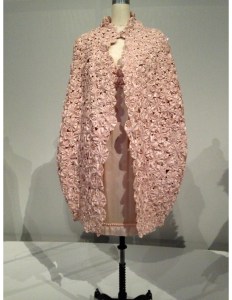
Met - Chanel cape copy

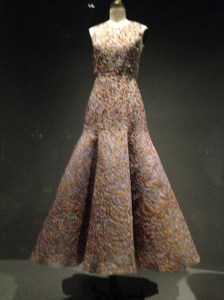
Although my photo for the next dress is very poor, I have to share it. From the House of Dior, Autumn/winter 2015-16, this evening dress is “machine-sewn, hand-finished, gray silk tulle and organza, hand glued with blue, orange, brown, and black rooster feathers by Lemarie.” It was simply remarkable and gives a whole new meaning to “King of the Barnyard!”
Met - rooster dress

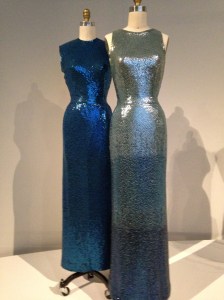
The next two dresses, two of my favorites, are both by Norman Norell (American, 1900-1972). The dress on the left is from 1965, hand-embroidered with blue sequins, and the dress on the right, ca. 1953, is also hand-embroidered with blue-ombre sequins. Both of these dresses have a timeless quality to them, being chic, elegant and with an understated sexiness to them.
Met - Norell Dresses.PDF

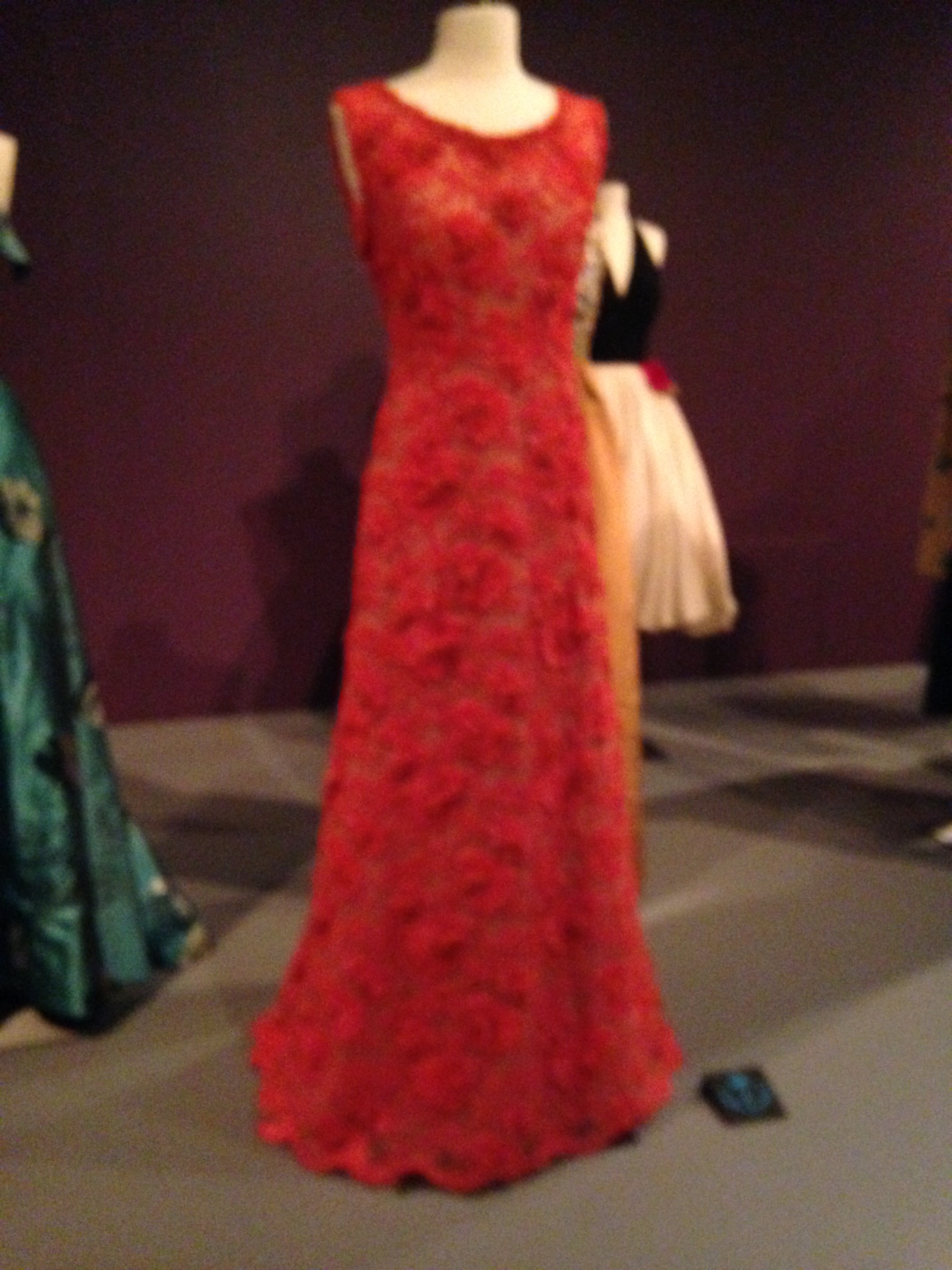
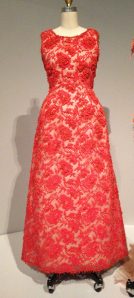
Imagine my surprise when I saw this next dress. From the House of Givenchy, this evening gown from 1963, is made from a “hand-sewn orange cotton Mechlin-type lace hand-embroidered with red-orange glass beads, tinsel, and pieces of coral.”
Met Givenchy Dress

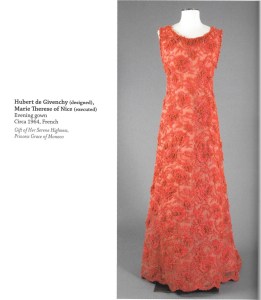
The Robert and Penny Fox Historic Costume Collection at Drexel University in Philadelphia, Pennsylvania (USA) has a similar example, which I actually prefer. Circa 1964, it was owned and worn by Her Serene Highness, Princess Grace of Monaco and given by her to the collection:
MET - coral dress, Princess Grace copy


Of all the gorgeous Balenciaga cocktail dresses out there (and many surely owned by the Met), this example on the right, looked a bit dowdy to me. From 1963-64, it was “hand-sewn black silk machine-embroidered lace, hand-applied self-fabric flounces and silk satin bows.” The dress next to it is by Simone Rocha (Irish, born 1986), 2014, “Wet Lace Frill Dress,” so called by the use of nylon and polyester laminated with polyurethane foil, which evokes a wet look!
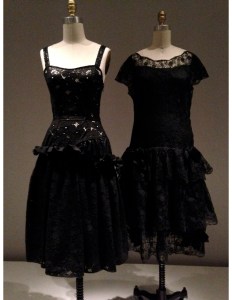
Met - Black Balenciaga dress copy

No exhibit is complete without an Yves Saint Laurent ensemble. This one, Spring/Summer 1963, was stunning with its overlay of machine embroidered cutwork, hand-stitched with guipure lace:
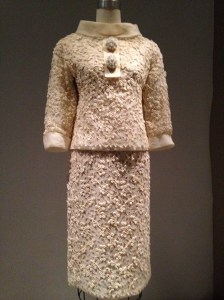
Met - Dior ensemble copy

I loved seeing this dress from the House of Dior, the prototype of which had been the feature of a Dior video in 2015. Hand-pleated, hand-embroidered with silk grosgrain ribbon, topped off with a green wool-silk crepe bodice. And don’t miss the Dior darts and the 1960-ish look of the armholes and overblouse styling:
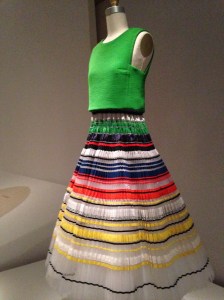
Met - Dior pleated dress copy

Well, what could be more classic than a Chanel suit? Circa 1963-68, the description reads: “machine-sewn ivory wool boucle tweed, hand-applied navy and ivory wool knit trim hand-braided with interlocking chain stitch.” Those of us who have made one or more “classic French jackets” know how much hand-work is in one of these jackets!
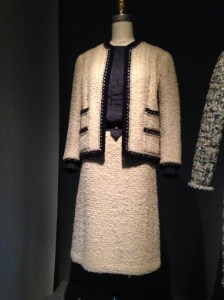
Met Chanel suit

After reading the storyboards on tailoring and dressmaking, I really wonder where a Chanel jacket fits in? The tailoring division of a fashion house specializes in suits and structured garments, with an emphasis on “manipulating fabric on the grain,” and “precision and accuracy when cutting.” The dressmaking division “specializes in draping and soft construction,” “being less beholden to line and structure.” It seems to me that a Chanel jacket straddles the line between the two concepts, being structured, but with a soft fluidity that feels like a dream to the wearer.

The final storyboard, which I found captivating, was the treatise on toiles and the related development of dressmaker’s dummies. To quote: “Alexis Lavigne, a French professor, introduced one of the earliest patented dummies in the 1850s. His figures – composed of papier-mache lightly padded with cotton batting or wadding and covered in pieced and seamed canvas – contributed to the precision with which a garment could be fitted and gradually evolved to help delineate measurements and geometries essential to dressmaking.” Leave it to the French to be innovative in this regard!

There was much in the Exhibit that unfortunately brought to mind this quote from P. J. O’Rourke: “Never wear anything that panics the cat.”   But there was plenty to admire, and obviously, that is what I concentrated on. The mark of any good exhibit is its ability to make you think and expand your knowledge, and this one, despite its awkward title, certainly does that.
17 Comments

Filed under Capes, Cocktail dresses, Dior darts, Fashion Exhibits, Uncategorized

Gazing at Gussets and Fashion Exhibits

We are almost halfway through the sewing year! Time for me to just keep plugging along, being grateful for any hours I can spend sewing – or dreaming about sewing. Lately it seems I have spent more time dreaming about it than actually accomplishing anything. But that’s not quite true. I have actually done a lot of sewing (I call it necessary sewing) – just not anything worth sharing. But that is about to change.

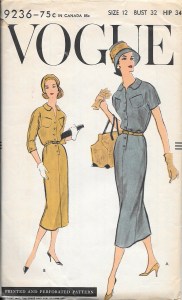
I am working on a yellow linen shirtdress, using this pattern:

I am making the short sleeve version - but a little shorter!

I am making the short sleeve version – but a little shorter!

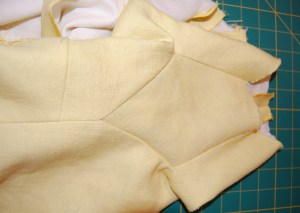
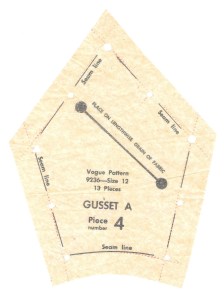
I am really getting to be a fan of kimono sleeves. They were incredibly popular in the 1950s (and early ‘60s), and their construction varies according to the type of gusset used. The dress in this pattern has a gusset that forms part of the sleeve, itself.

Usually gussets are diamond shaped. However, the curved lower edge shows that this gusset incorporates part of the sleeve in it.

Usually gussets are diamond shaped. However, the curved lower edge shows that this gusset incorporates part of the sleeve in it.

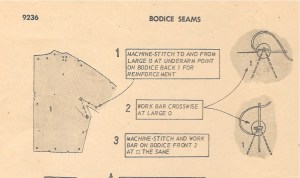
The instructions for inserting the gusset are quite explicit and interesting, I think. The first step is to work a “bar” across the point on the bodice where the matching point of the gusset is placed. I have actually never seen this done, but it makes sense as it reinforces that stress point.

Gazing at Gussets 1st diagran

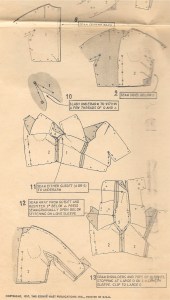
I also like the double stitching on the interior seams of the gusset as shown in this section:

Gazing at Gussets 2nd diagram

Here is how the finished short sleeve is diagrammed:

Gazing at Gussets 3rd diagram

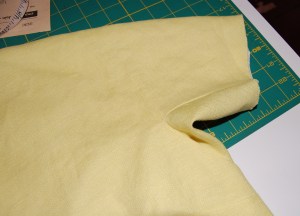
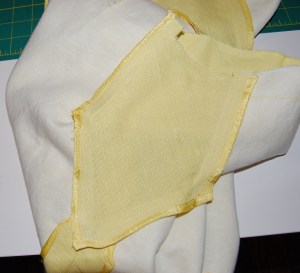
And here are some photos of the finished gussets on my dress:

Gazing at Gussets

This photo clearly shows how the gusset becomes part of the underpart of the sleeve.

This photo clearly shows how the gusset becomes part of the under-section of the sleeve.

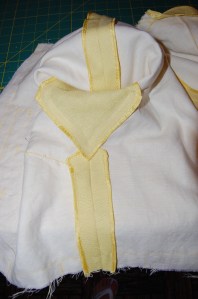
Here is an inside look. While the dress is underlined in a very light weight cotton/linen blend, I opted not to underline the gusset, in order to add to flexibility. I got this brilliant idea from Laura Mae of Lilacs and Lace sewing blog.

Here is an inside look. While the dress is underlined in a very light weight cotton/linen blend, I opted not to underline the gusset, in order to add to flexibility. I got this brilliant idea from Laura Mae of Lilacs and Lace sewing blog.

The seam you see at the top of this photo is the shoulder seam which runs down the length of the sleeve.

The seam you see at the top of this photo is the shoulder seam which runs down the length of the sleeve.

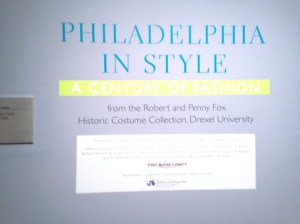
I managed to tear myself away from my sewing room for a few hours this week to go to see an exhibit at the Michener Museum in Doylestown, Pennsylvania (USA). Entitled Philadelphia In Style, the exhibit featured fashions either made, worn or purchased in Philadelphia, PA over the course of about 100 years (1880-1980).

Duskin - Exhibit title

All are part of the Robert and Penny Fox Historic Costume Collection at Drexel University in Philadelphia, a veritable treasure trove of designer, haute couture and ready-to-wear dresses, coats, ensembles, shoes, handbags, and accessories of all types. The Exhibit has special meaning for those of us with Philadelphia ties, but universal meaning for lovers of fine fashion anywhere.

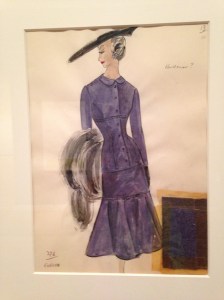
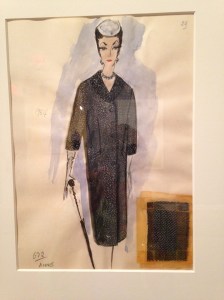
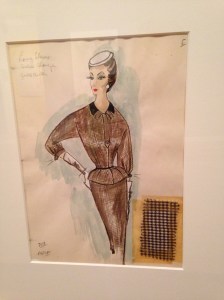
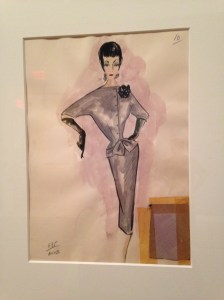
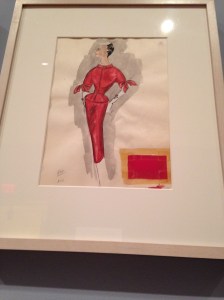
Although the clothing on display was fascinating and, for the most part, lovely, it was the numerous fashion illustrations, framed and lined up one after the other, which really caught my attention. They had all been done in 1954 for a specialty ladies’ shop in Philadelphia, called Nan Duskin. The most amazing thing is that each one had a swatch of the intended fabric taped in the corner of each drawing. Here is a sampling:

Duskin sketch - purple dress

The buttons were still in question for this dress – note the line in the upper right side “buttons?”

Such a lovely coat! Note the fabric swatch, held in place with yellowing tape!

Such a lovely coat! Note the fabric swatch, held in place with yellowing tape!

So many of the illustrations were of dressmaker suits. This one is made in brown checked wool.

So many of the illustrations were of dressmaker suits. This one is made in brown checked wool.

I love the saucy pose in this sketch - and the posy perched on the shoulder!

I love the saucy pose in this sketch – and the posy perched on the shoulder!

One of my favorites: in red, of course!

One of my favorites: in red, of course!

Here are a couple of the fashions represented in the Exhibit:

This was called a Day Ensemble. It bears the table "Irene for Nan Duskin." This was Irene Lentz Gibbons, 1952-53, USA.

This was called a Day Ensemble. It bears the table “Irene for Nan Duskin.” (Irene Lentz Gibbons, 1952-53, USA)

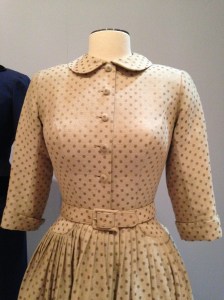
This shirtwaist dress, Norman Norell for Trina-Norell, circa 1955, had finely done bound buttonholes. the fabric is s ilk and wool brocade.

This shirtwaist dress, Norman Norell for Trina-Norell, circa 1955, had finely done bound buttonholes. The fabric is silk and wool brocade.

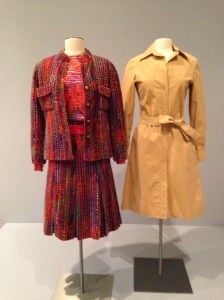
The Exhibit did manage to include one of the most unattractive Chanel suits I think I have ever seen.

The Chanel suit on the left is shown with an ultra-suede shirtdress by Halston, on the right.

The Chanel suit on the left is shown with an ultra-suede shirtdress by Halston, on the right.

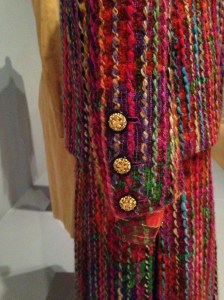
But it was still fascinating to look at the cuff detail:

Duskin Chanel suit detail

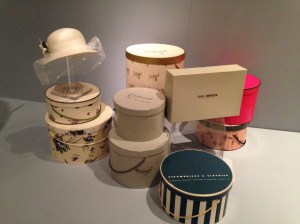
One of the most charming displays in the Exhibit was a collection of hat boxes from the stores in Philadelphia which were the purveyors of so many fine fashions over the decades.

Duskin - hat box display

As a lover of pretty boxes and bags, I found this vignette not only delightful, but also evocative of the thought and care inherent in buying and wearing beautiful fashions. They reminded me of the same little thrill I get when a piece of beautiful fabric which I have purchased shows up in the mail, elegantly presented in crisp tissue and tied with silky ribbons.   It makes it oh-so-easy to fall in love immediately!

23 Comments

Filed under bound buttonholes, Coco Chanel, Day dresses, Dressmaker suits, Fashion Exhibits, Gussets, kimono sleeves, Mid-Century style, Uncategorized, vintage Vogue patterns from the 1950s

A Notable Exhibit of Twentieth Century Fashion

Fascination with international high-styled fashion really knows no boundaries when it comes to audiences. Last past week I had the opportunity to see “Immortal Beauty: Highlights from the Robert and Penny Fox Historic Costume Collection” at Drexel University’s Antoinette Westphal College of Media Arts & Design in Philadelphia, Pennsylvania (USA). This is the first time that any of Drexel’s extensive fashion collection has been exhibited – and judging from the crowded gallery, interest in it abounds. Besides students with sketch pads, other attendees were intrigued with the history of “famous” ownership of many of the items (including Babe Paley, Mrs. Walter Annenberg, Princess Grace of Monaco – to name just a few), some were there as students of fashion history, others had just a casual interest in clothing and fashion, and then there were those like me, who look at everything through the eyes of a dressmaker.

Although the Exhibit spans a period of three centuries, the majority of the items on display are mid-nineteenth century, and include not only dresses, but also shoes, handbags, hats and other accessories. I will share some of my favorite selections, some of which are inspiring to me for a number of reasons. Although I was allowed to take photos, “flashes” were not permitted, so the quality of my pictures is somewhat compromised.

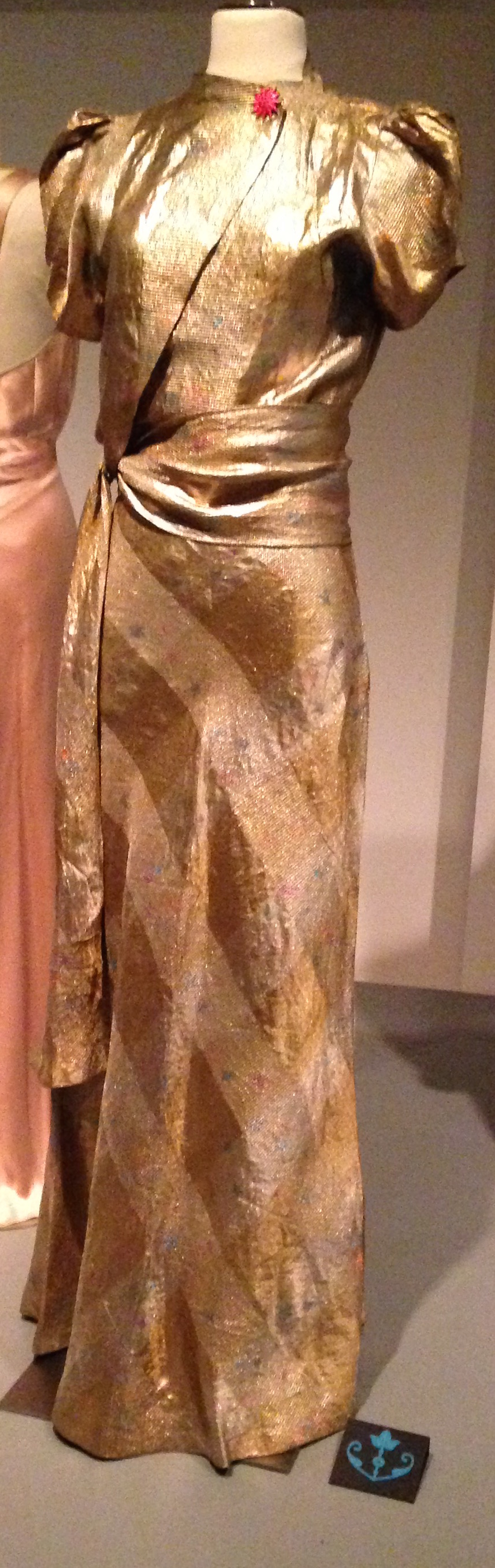
The fabric in this Elsa Schiaparelli gown, from her Zodiac Collection, 1938-1939, positively shimmers. This gown, cut on the bias, is a wrapped design, with a wide sash tied on one side.

Drexel - Schaparelli dress

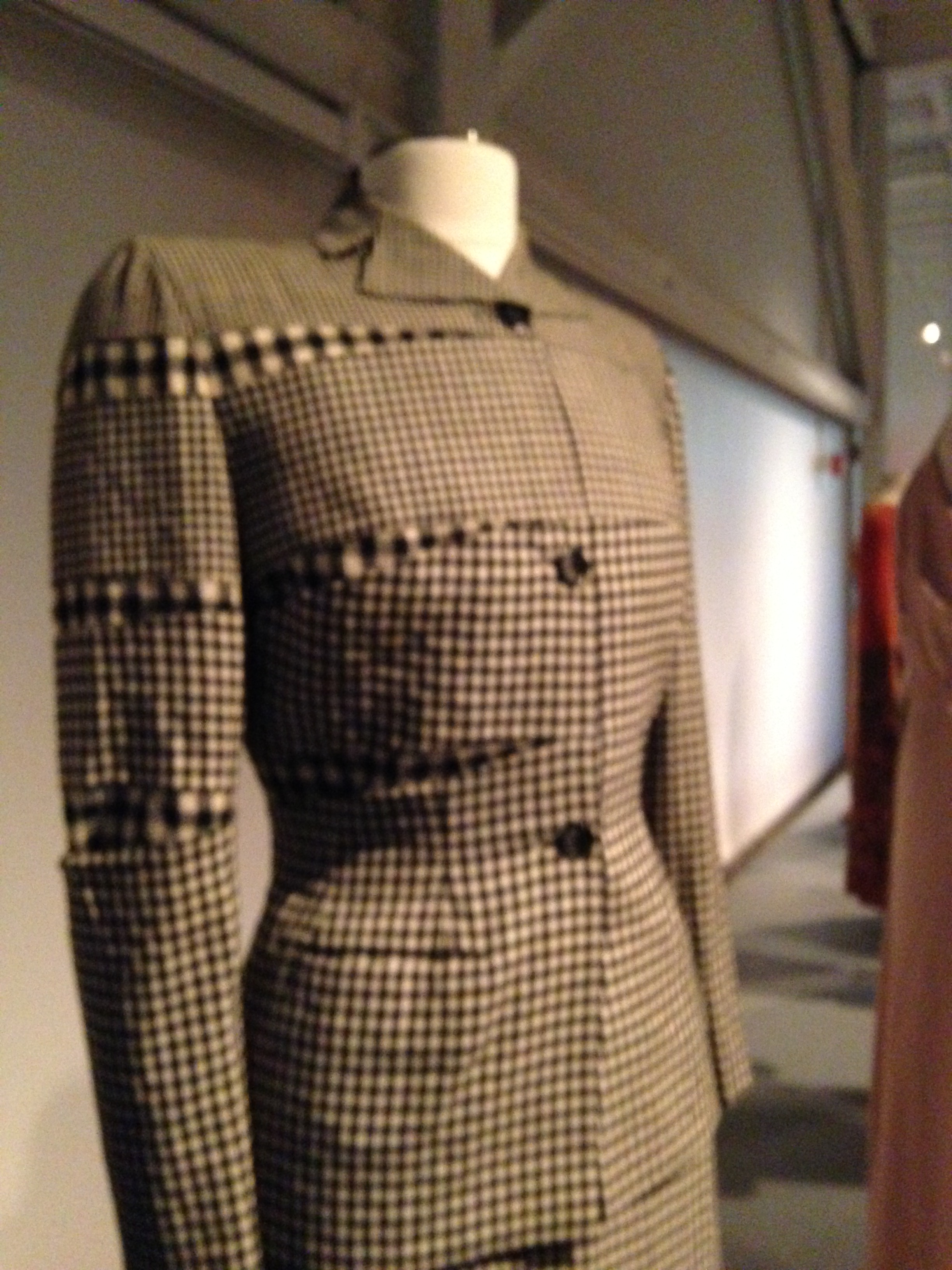
One of my favorite items in the exhibit is a wool suit by Gilbert Adrian, an American, circa 1947. The “slashed” detailing as shown in my photo still has me scratching my head, trying to figure out how this was achieved so successfully.

Drexel - black and white suit

I guess no fashion exhibit with highlights from the twentieth century is complete without a Charles James gown. Dating from 1948, this gown, a gift from Mrs. William S. (Babe) Paley, is absolutely serene.

Drexel - Charles James gown

The gown that struck me as the most amazing feat of construction is a coral-embroidered dress owned by Princess Grace of Monaco and given by Her Serene Highness to the collection at Drexel. Dating to 1964, the dress, which was designed by Hubert Givenchy, was executed by Marie Therese of Nice, who must have been a remarkable dressmaker!

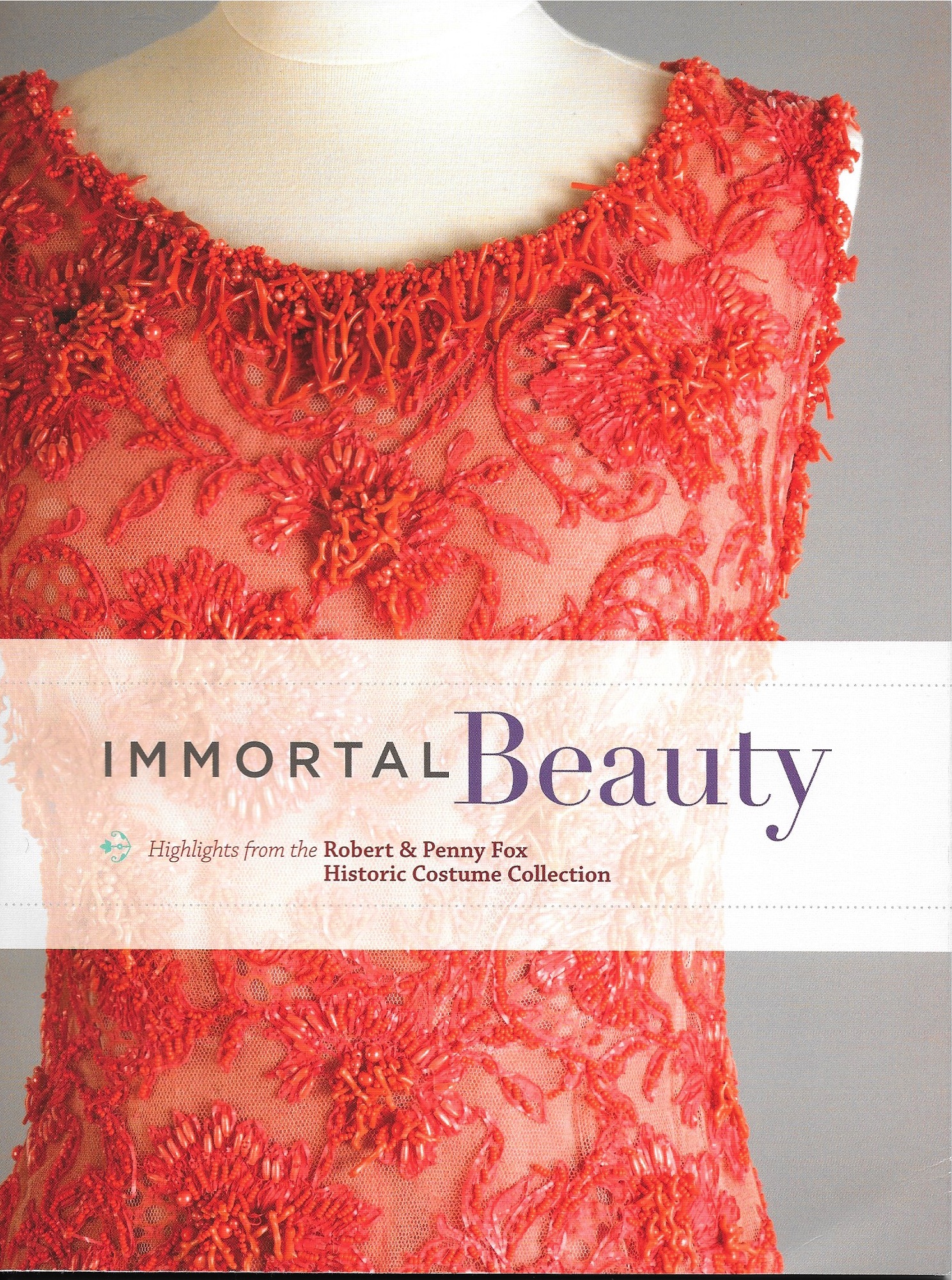
A detail of the bodice of this gown is featured on the cover of the Exhibit catalogue, shown further down in this post.

A detail of the bodice of this gown is featured on the cover of the Exhibit catalogue, shown further down in this post.

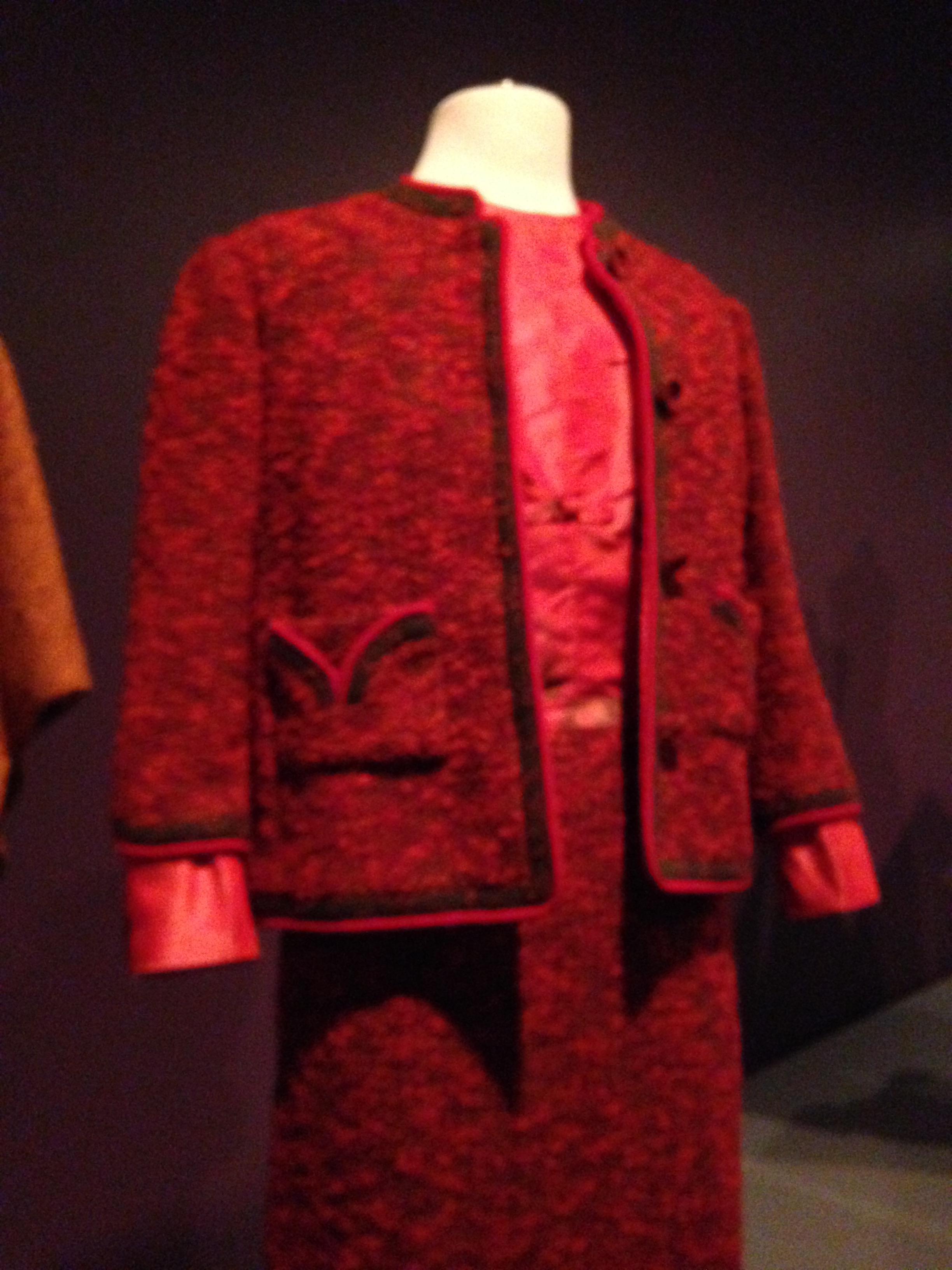
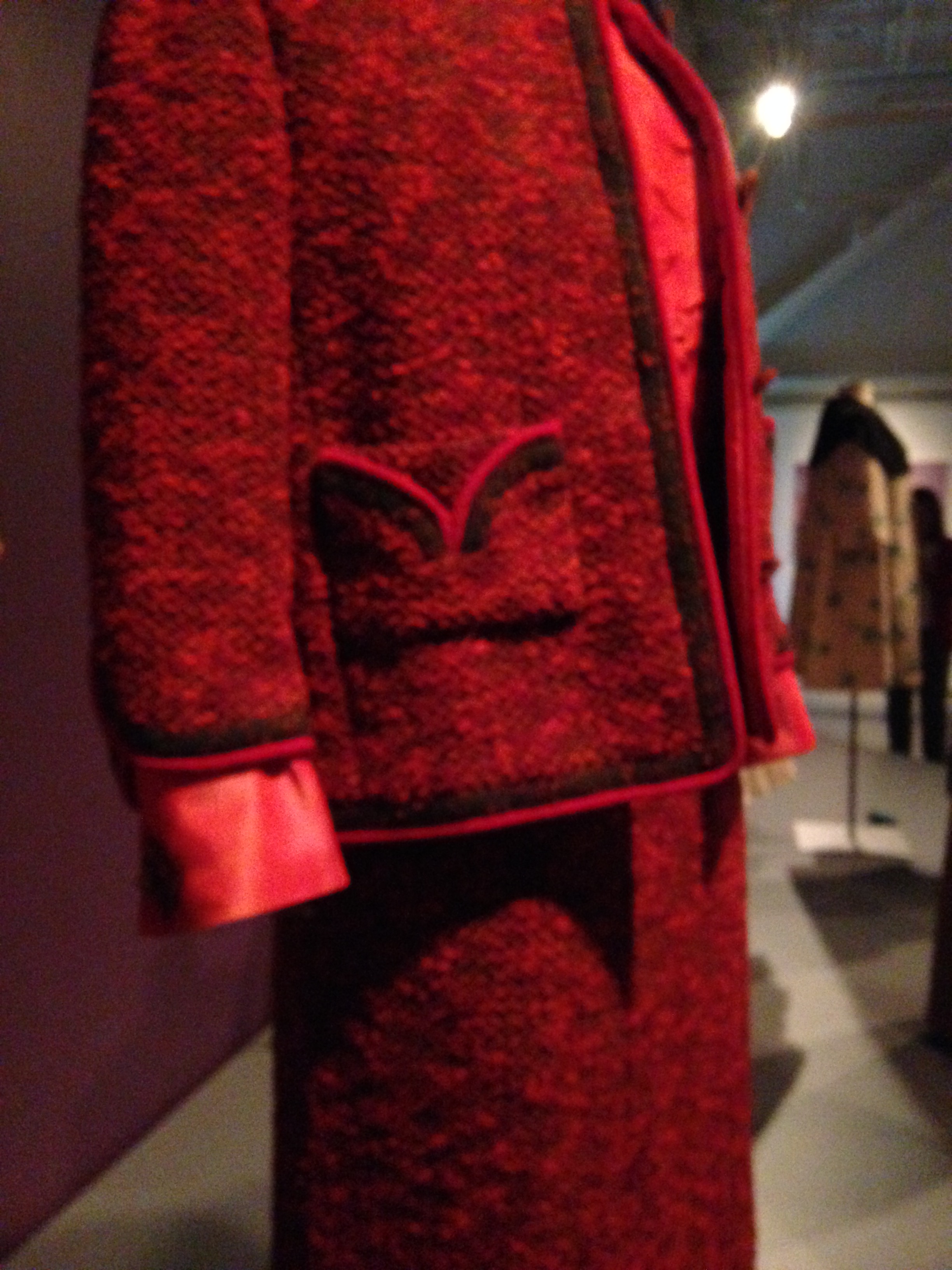
This Exhibit does not disappoint when it comes to a classic Chanel suit. Having made two Chanel-type jackets myself, one under the tutelage of Susan Khalje and one on my own, I am always excited to see pocket and trim details on a “real” Chanel. These are the techniques which we, as dressmakers, can mimic.

Drexel - Chanel suit 1

Drexel - Cahnel suit 2

Having just finished a 1960s’ Madame Gres-designed coat, using a Vogue Designer pattern, I was excited to see this Madame Gres coat from the early 1970s. I am a fan of her unusual seaming and reserved elegance.

Drexel - Madame Gres coat

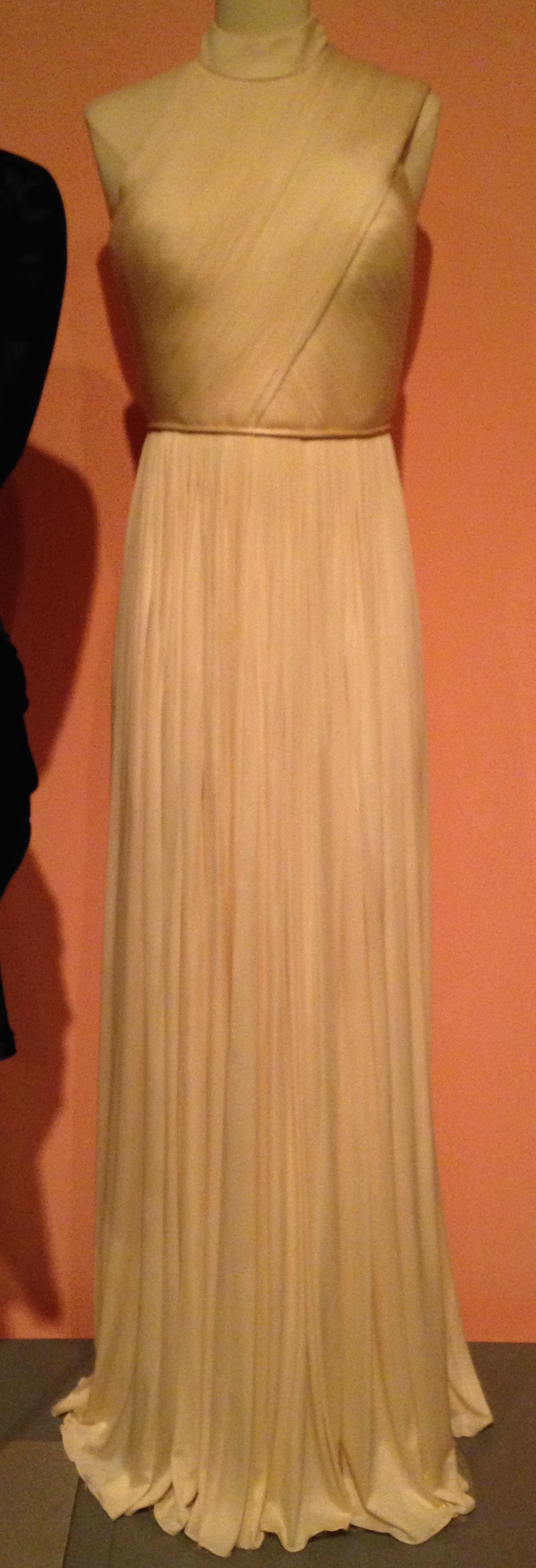
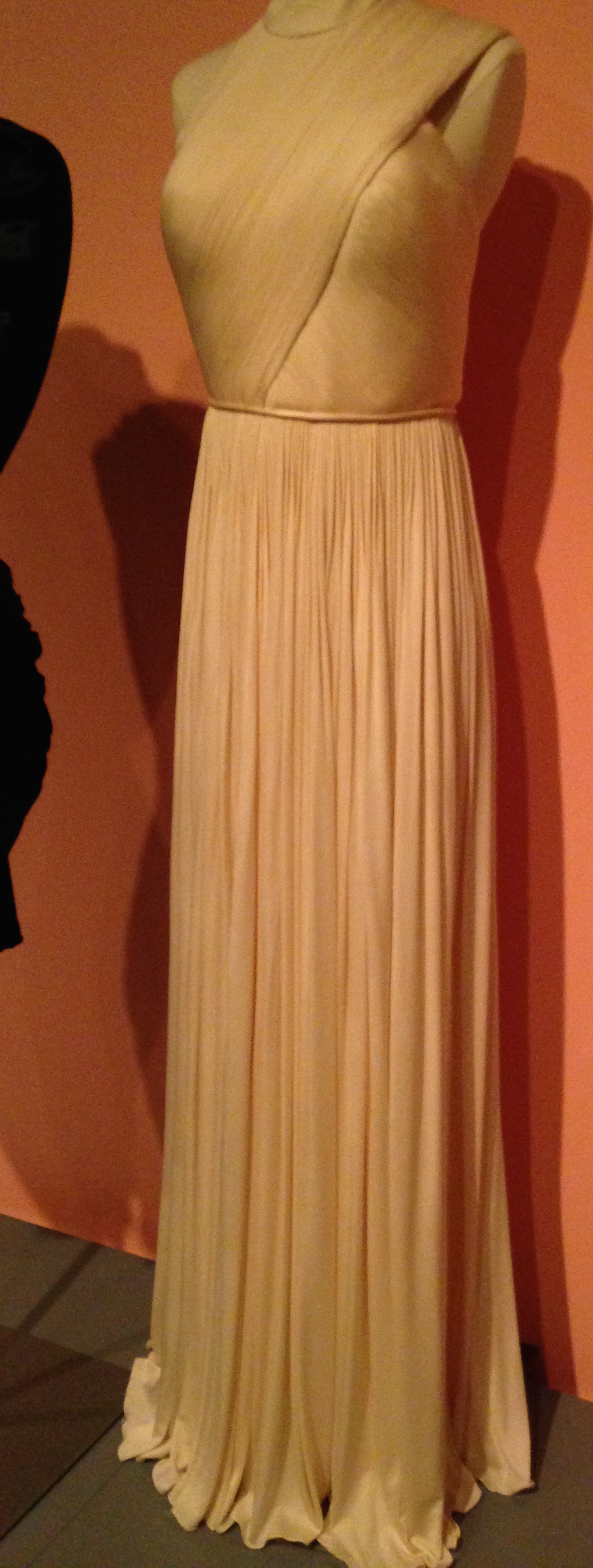
Nowhere is elegance more in focus than with this quintessential gown, also by Madame Gres, circa 1980. From across the gallery, this gown was recognizable as a Gres design, with its petite soft pleats and Classically-inspired demeanor.

Drexel - Madame Gres gown - 2

Drexel - Madame Gres gown

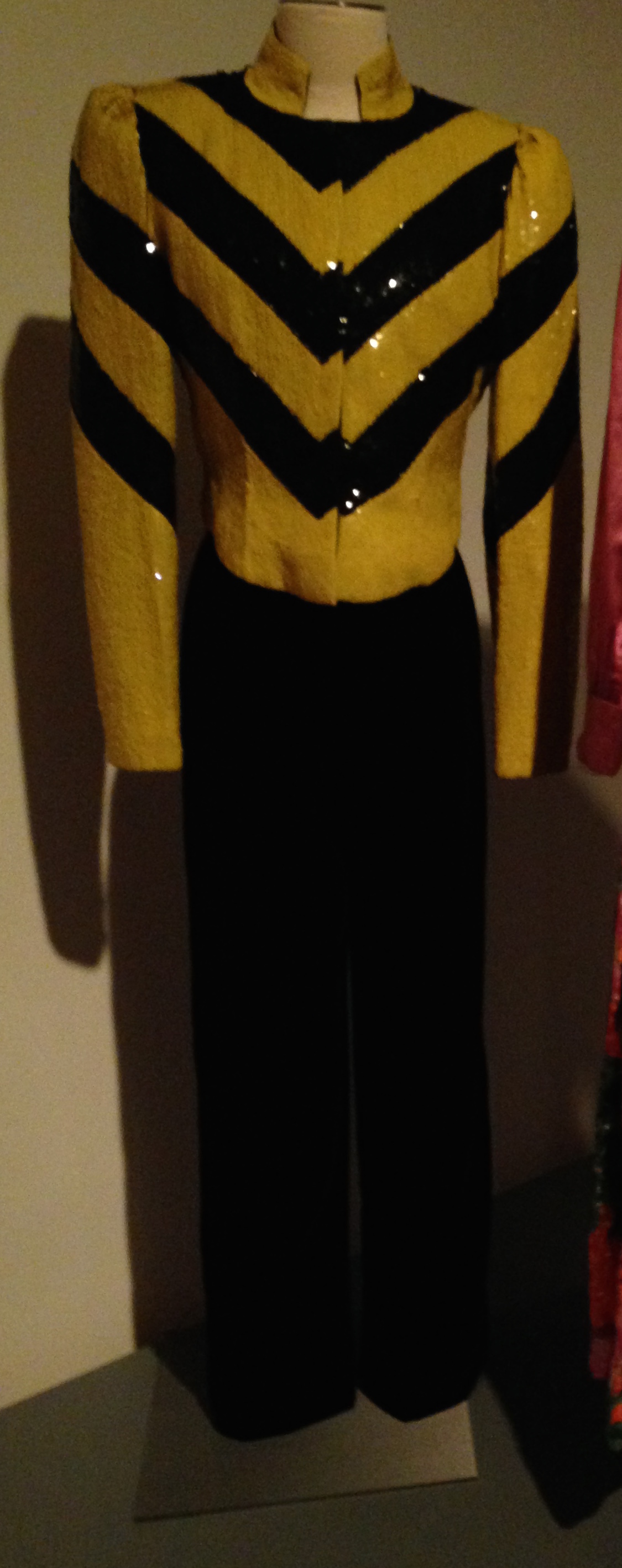
Heralding from the 1990s is this Carolina Herrera sequined jacket, a gift from the designer to the collection. Deep yellow and black are not colors one usually associates with “evening wear;” enhanced with pave sequins, these colors make this a striking ensemble.

Drexel - Carolina Herrara jacket

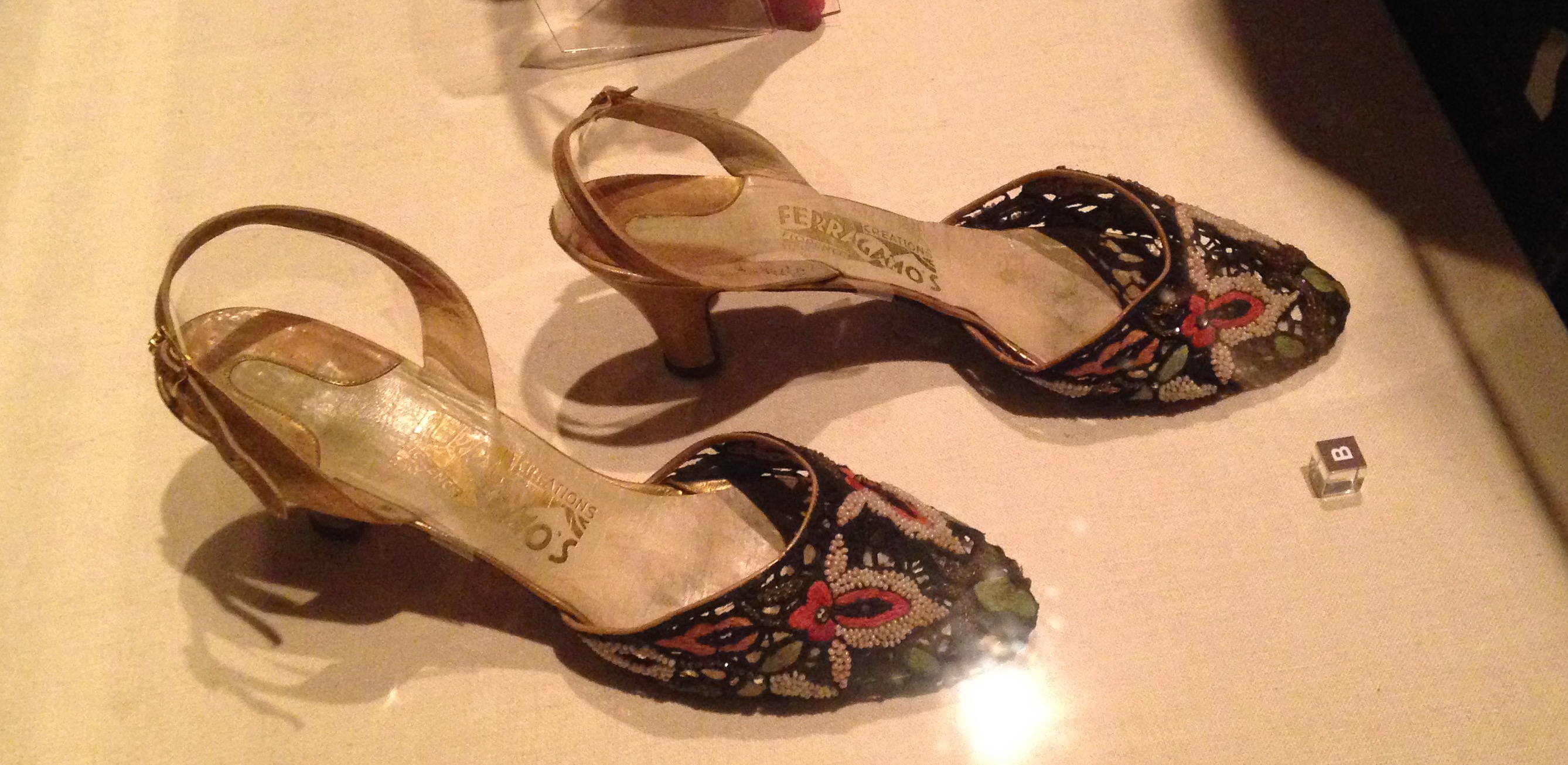
I can’t leave my short synopsis of this exhibit without showing one of the beautiful pairs of shoes on display. Evening shoes by Ferragamo – what a delight to see these beauties!

Drexel - Ferragamo shoes

The curator of the Exhibit is Clare Sauro. She is also co-author of the catalogue accompanying the Exhibit, entitled: Immortal Beauty.

Drexel - Catalog

The final display in the Exhibit is an ethereal ball gown by Chado Ralph Rucci. Dating to just 2006, it is remarkable for its complex fabric and simplicity of form. Unable to do any justice to it with a photograph, I refer to the catalogue for excellent views of it and other of the beautiful fashions on display, too many to detail here.

10 Comments

Filed under Fashion Exhibits, Uncategorized