Category Archives: piping

Sewing Ghosts

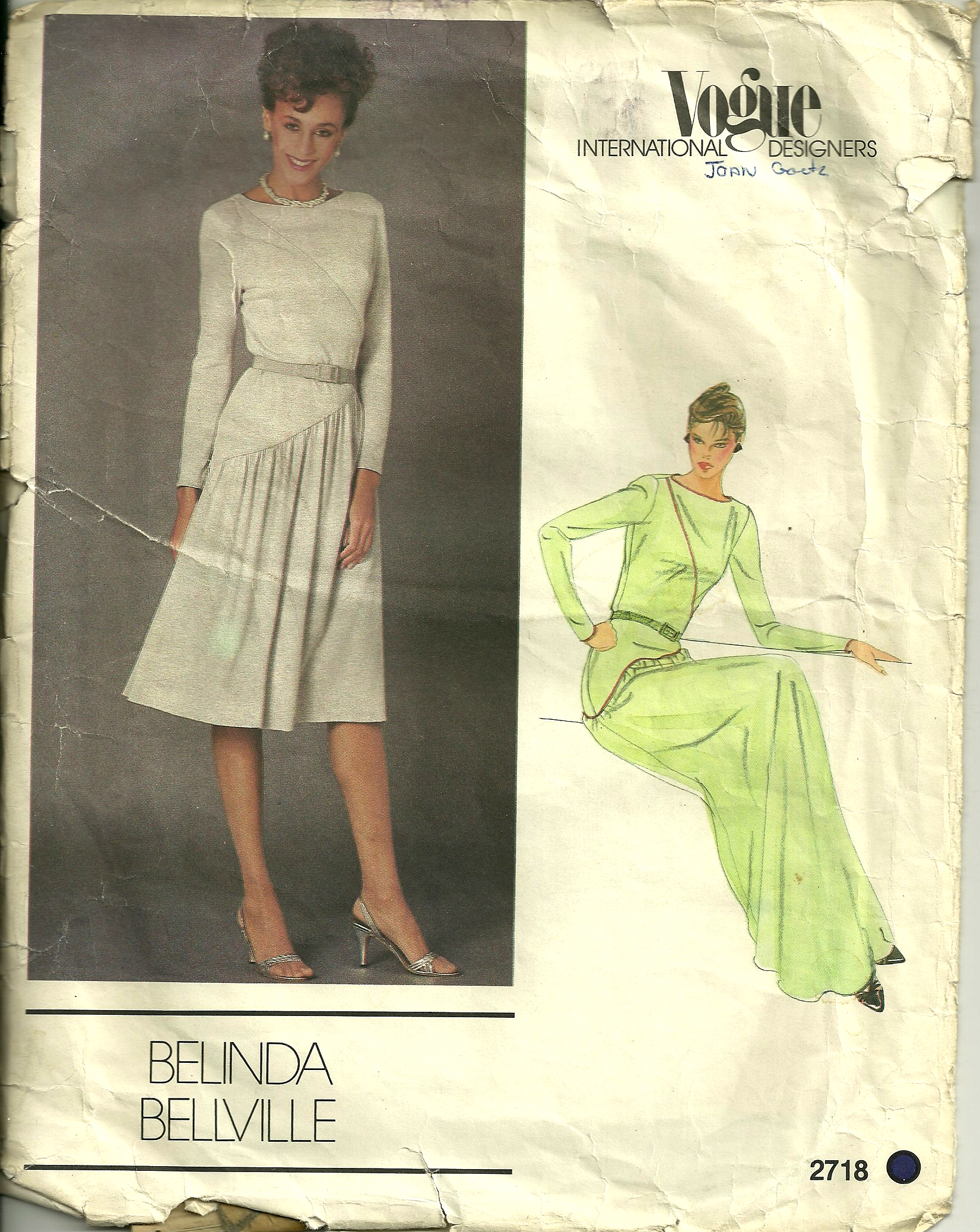
The ghost of Joan Goetz has been hanging over my shoulder for the last several weeks. She wrote her name on the envelope of vintage Vogue pattern #2718 which has caused me so angst. I can’t help but wonder who this woman was!
Sewing Ghosts

Goetz sounds awfully like Ghost, don’t you think?

I can tell from the changes she made to the pattern that she was much taller than I, with much longer arms! She added 1” to the arm length, while I subtracted 1½”. She also added three inches to the hem length, and I ended up cutting off 3” from the length. However, nowhere on the pattern does she indicate any problems with construction. I, myself, refrained from scribbling “ARG-G-G-H“ on the pattern, although I was certainly thinking it. When last I wrote about this doomed project, I wasn’t sure if I could save it. Thanks to many good suggestions and words of encouragement from my readers, the future for this dress is looking less ghostly and ghastly. Some of you suggested a break from it, working perfectly into my schedule, which included another trip out of state. Others suggested I sew on something else for a while, which I did and will write about soon. The one thing I did not do was set it aside completely. I was afraid if I left it to finish (if even possible) another time, I never would get back to it.

Actually, I have to admit, that the problems I encountered with this pattern were really not the fault of the pattern. It was entirely of my own making. The pattern required a stretch knit fabric. I used a stretch silk woven charmeuse. That would have been fine, except I insisted on underlining it. I cut the underlining on the bias, which I thought would work, but it was a disaster. It caused the bodice to bind crosswise, pull up lengthwise, and it restricted the stretch of the silk, which was necessary for this particular pattern.
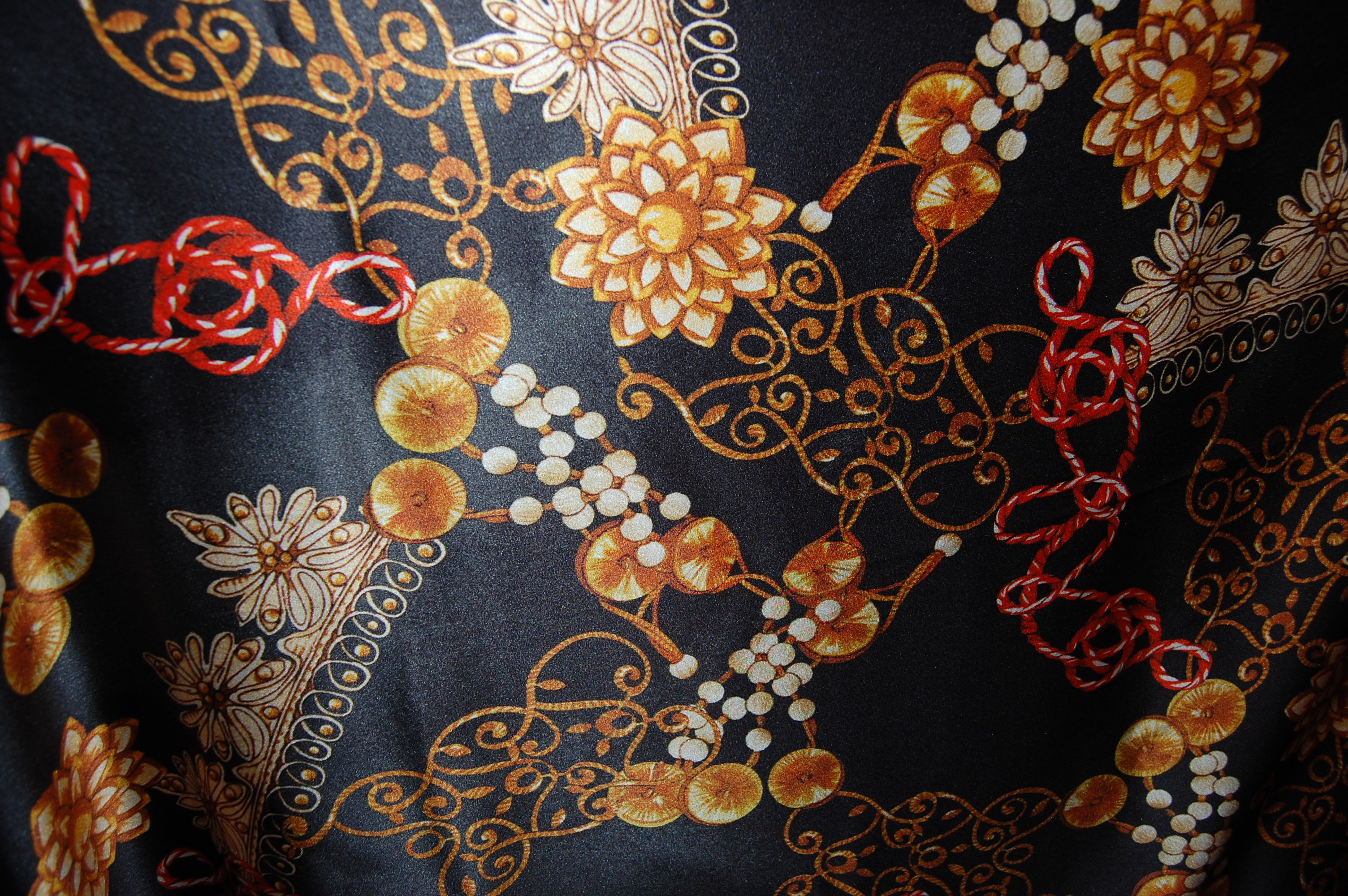
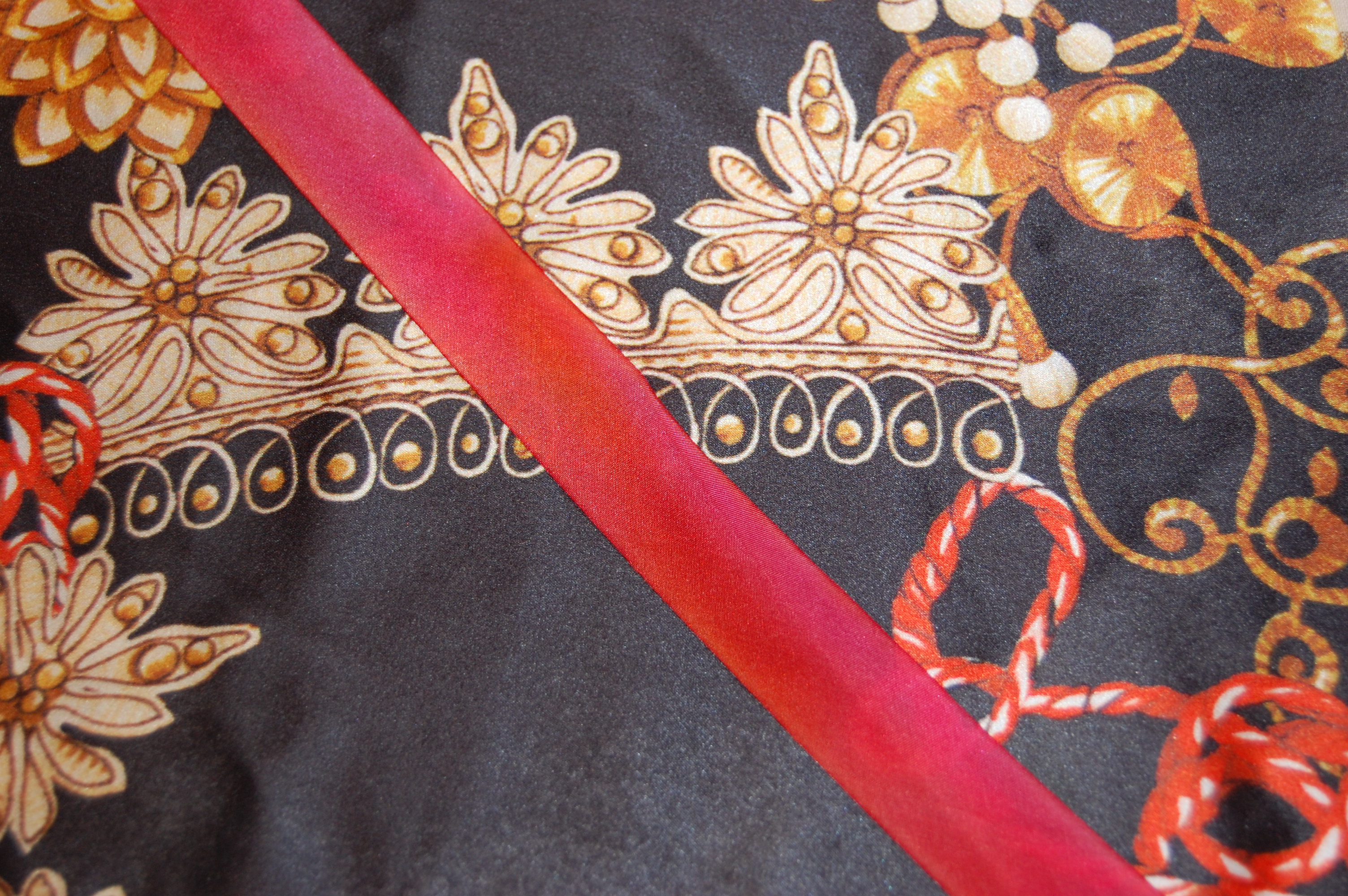
This fabric from Mendel Goldberg Fabrics in NYC is a stretch silk charmeuse, with a wonderful drape to it.

This fabric from Mendel Goldberg Fabrics in NYC is a stretch silk charmeuse, with a wonderful drape to it.

With nothing to lose, I started to remove, meticulously, the silk gauze underlining from all the bodice pieces, starting with the back. I was encouraged enough at the improvement that task made, to continue to do the same with front. Then I tackled the sleeves. What a difference it made! The bodice actually started to fit, although it was still tight across the bust. I then reset the sleeves, releasing about 1/4 “ in the front seam on each side. That was all I could steal from my already-trimmed seam allowances.
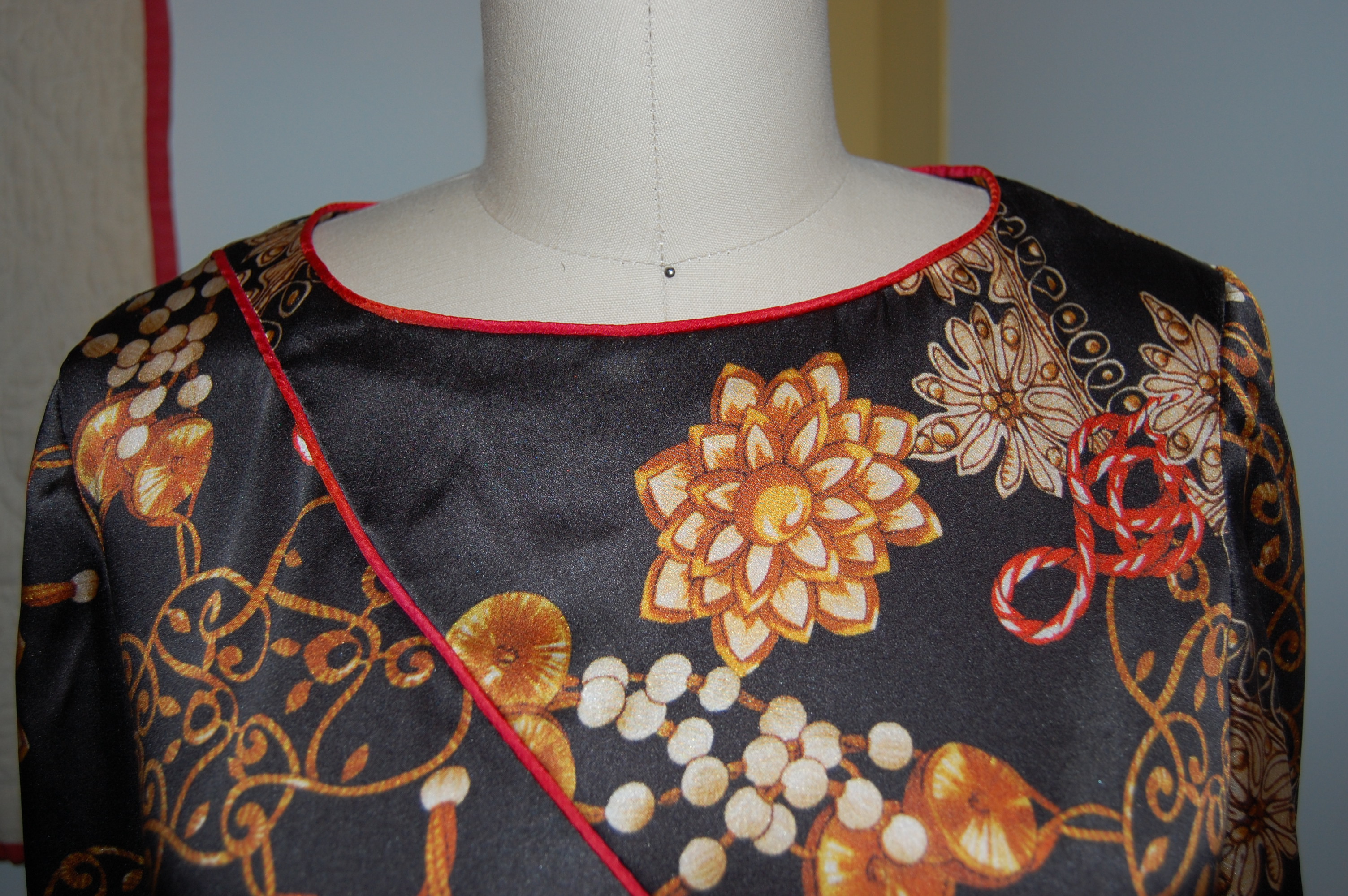
The reset sleeves and the finished neckline, cut a little wider than the pattern.

The reset sleeves and the finished neckline, cut a little wider than the pattern.

I sewed the skirt yoke without underlining, but I did use an underlining, cut on the straight of grain, for the gathered skirt. Once all assembled, I basted in the zipper to check the fit. Still a little tight over the bust, but otherwise, not bad!!

Both views of the pattern show the dress with a purchased belt. I tried three different black belts, of varying widths, and did not like the effect of any of them. All made the dress look like it was cut in half. I took a few scraps of my fabric and tied them around the waist on my dress form. From this I could tell a self-belt would look so much better, but all I had left were scraps. Hopefully no one will notice that this sash is pieced together in four places!
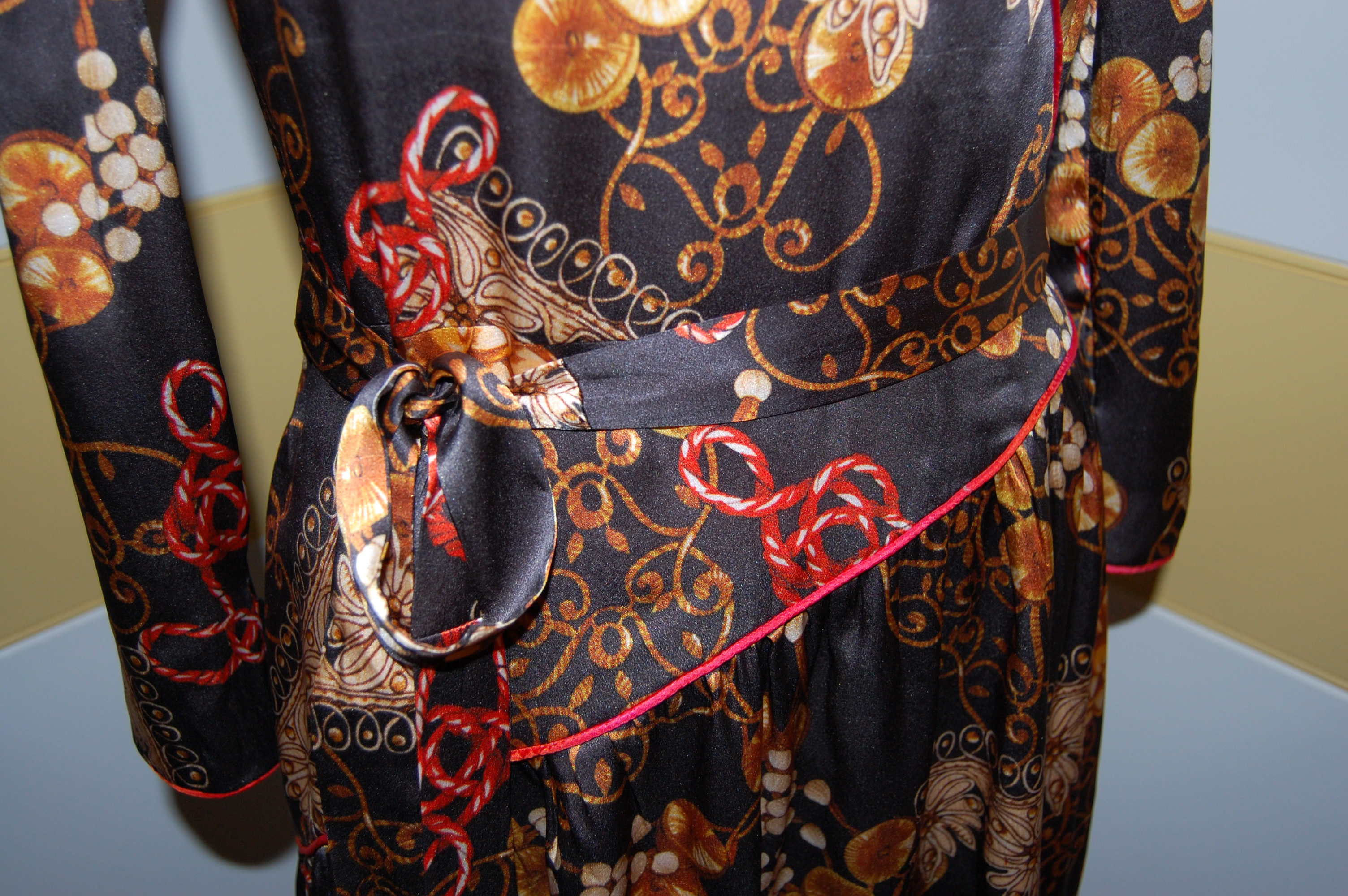
the pieced sash.  I'm glad this fabric design is so busy, otherwise the multiple seams in this sash would definitely show.

The pieced sash. I’m glad the fabric design is so busy, otherwise the multiple seams in this sash would definitely show.

The finale details of this dress (snaps at the sleeve vents and a good press, for starters) are finally complete.  I think I can finally say that I have saved this dress from a ghostly demise.
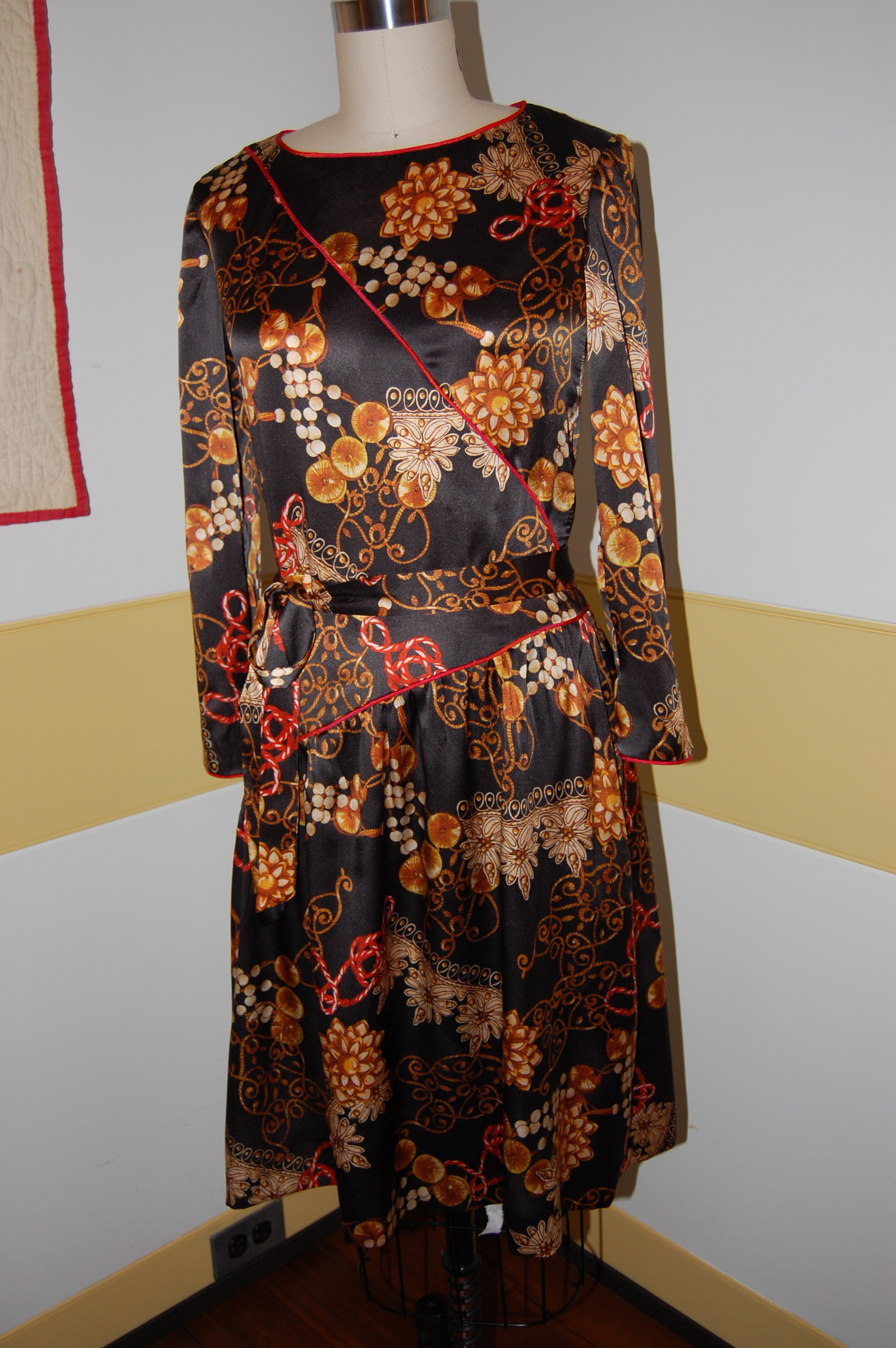
Sewing ghosts

The dress on the form does not show the slight tightness across the bust.
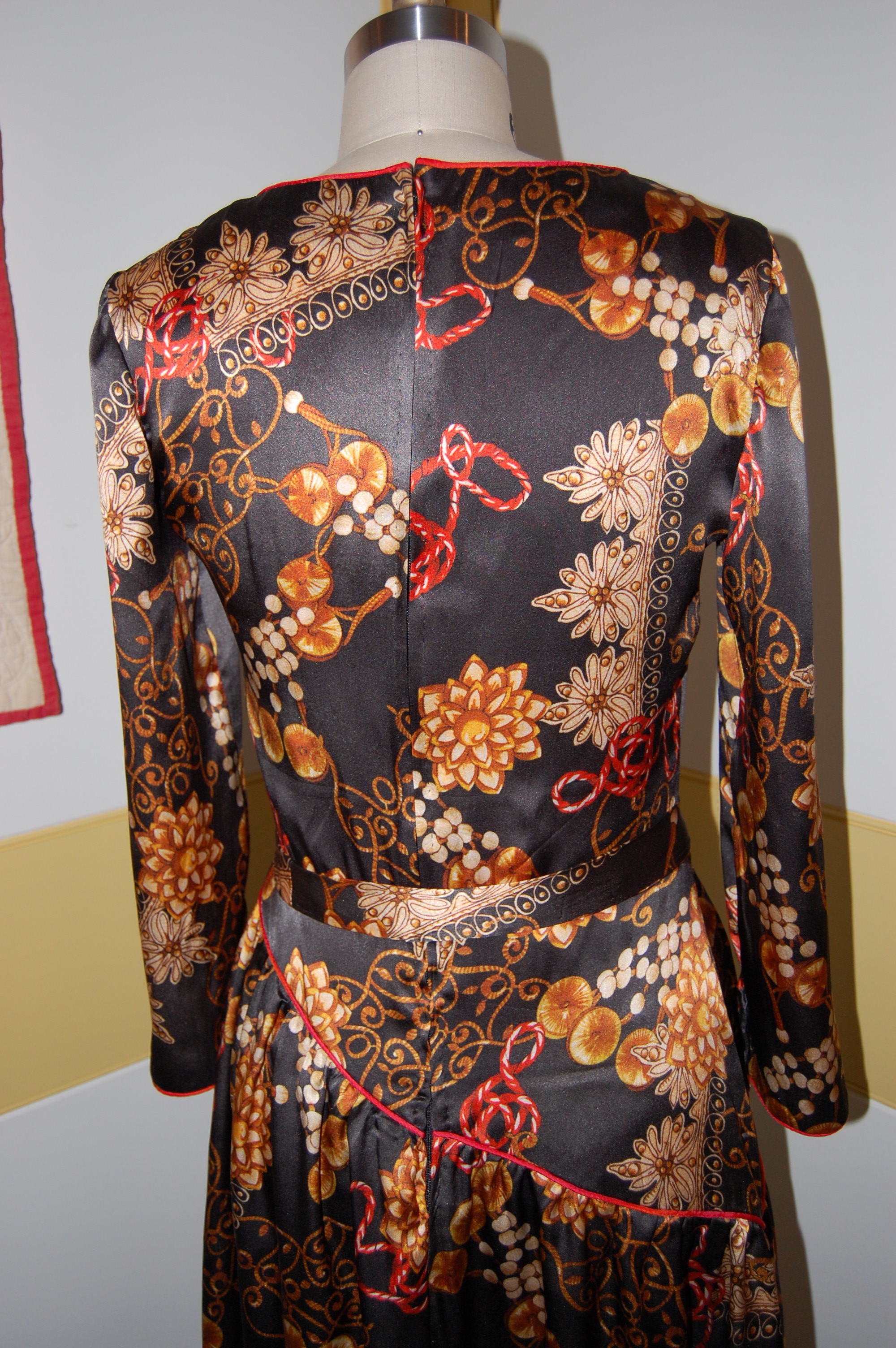
Sewing ghosts

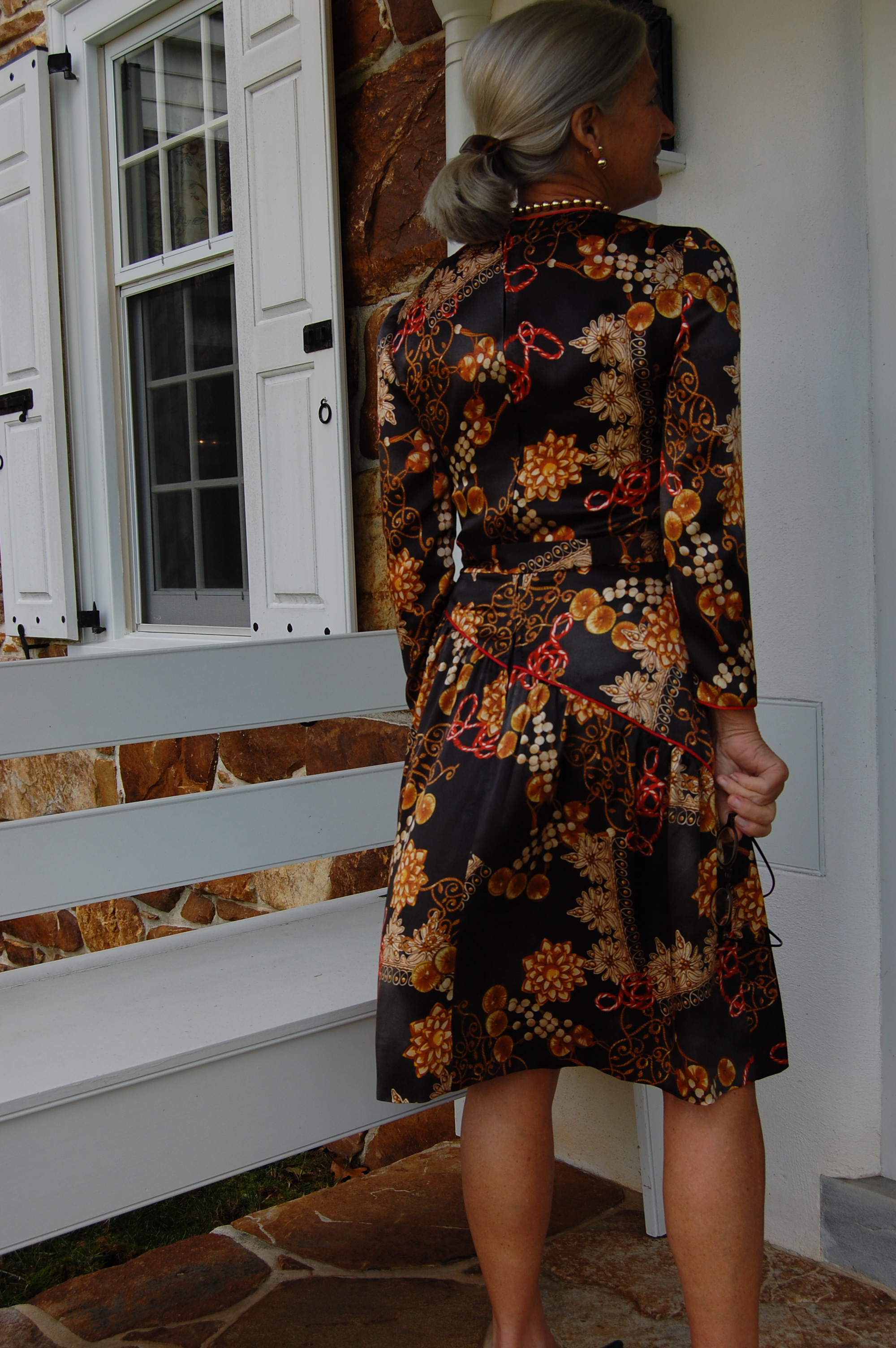
A back view. Notice the asymmetrical skirt yoke, which I think is a nice detail.
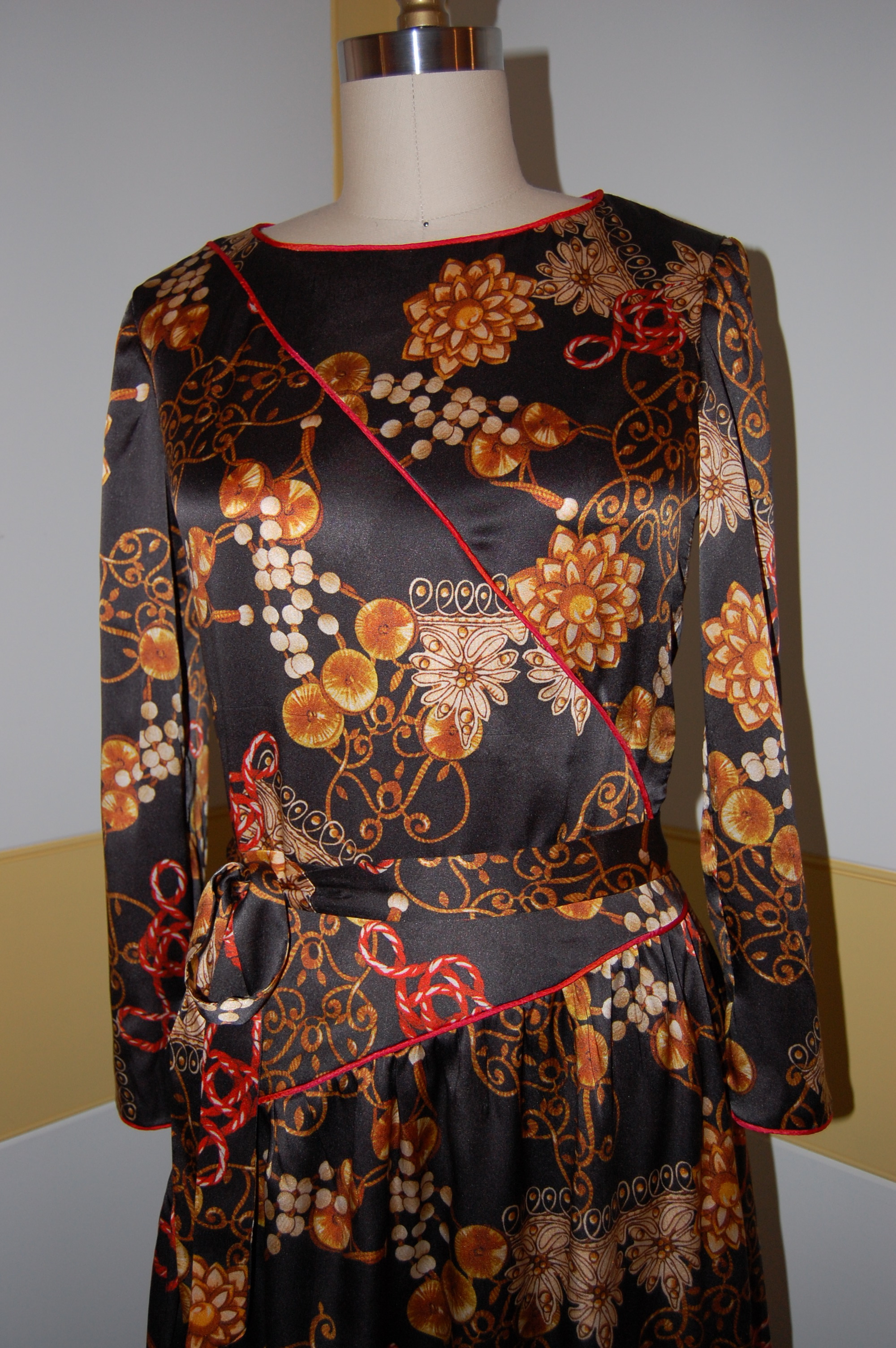
Sewing ghosts

I do love this fabric!

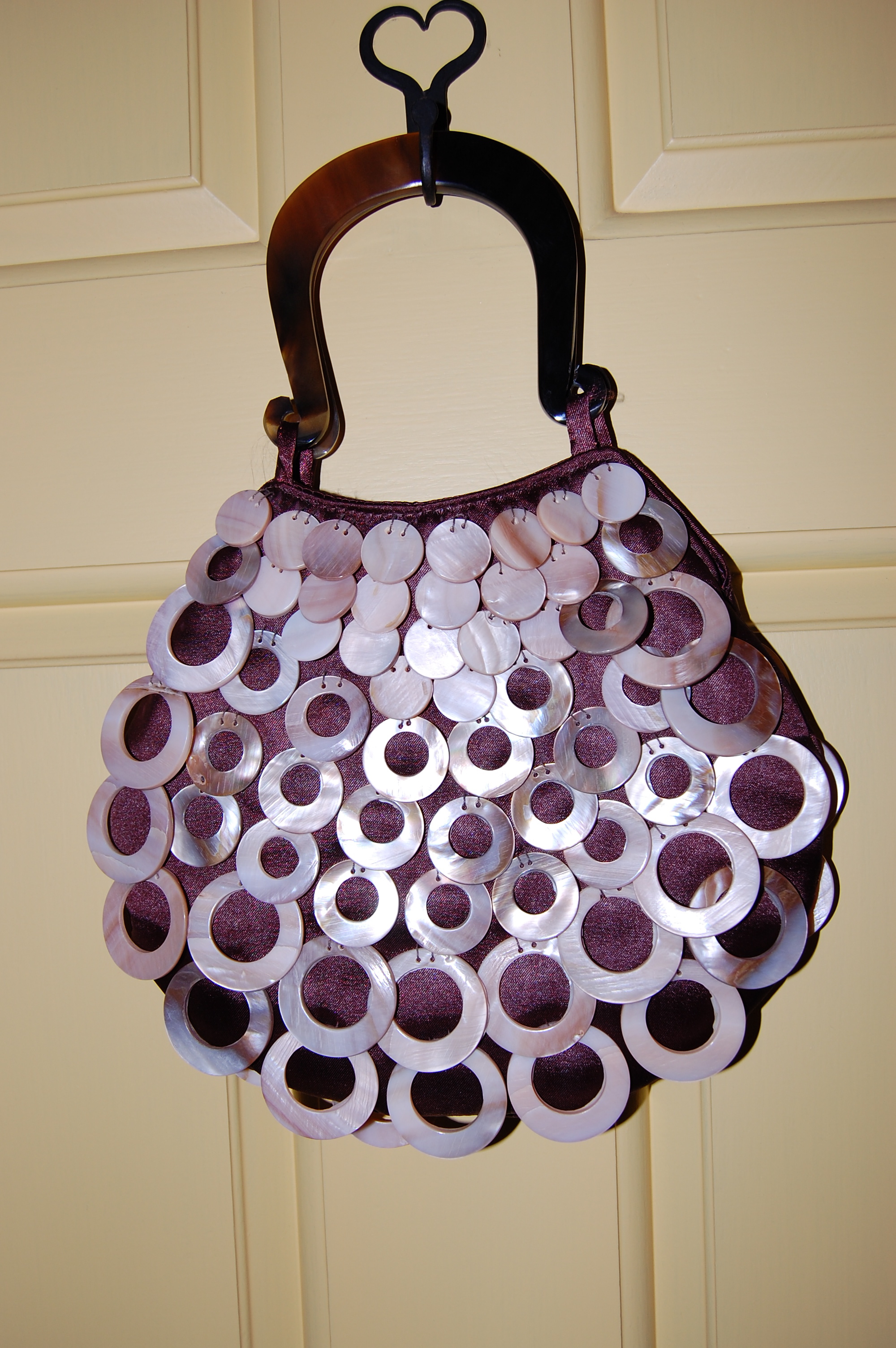
And here is something fun - a dressy handbag to wear with this dress ( a recent find from one of my travels).

And here is something fun – a dressy handbag to wear with this dress ( a recent find from one of my travels).
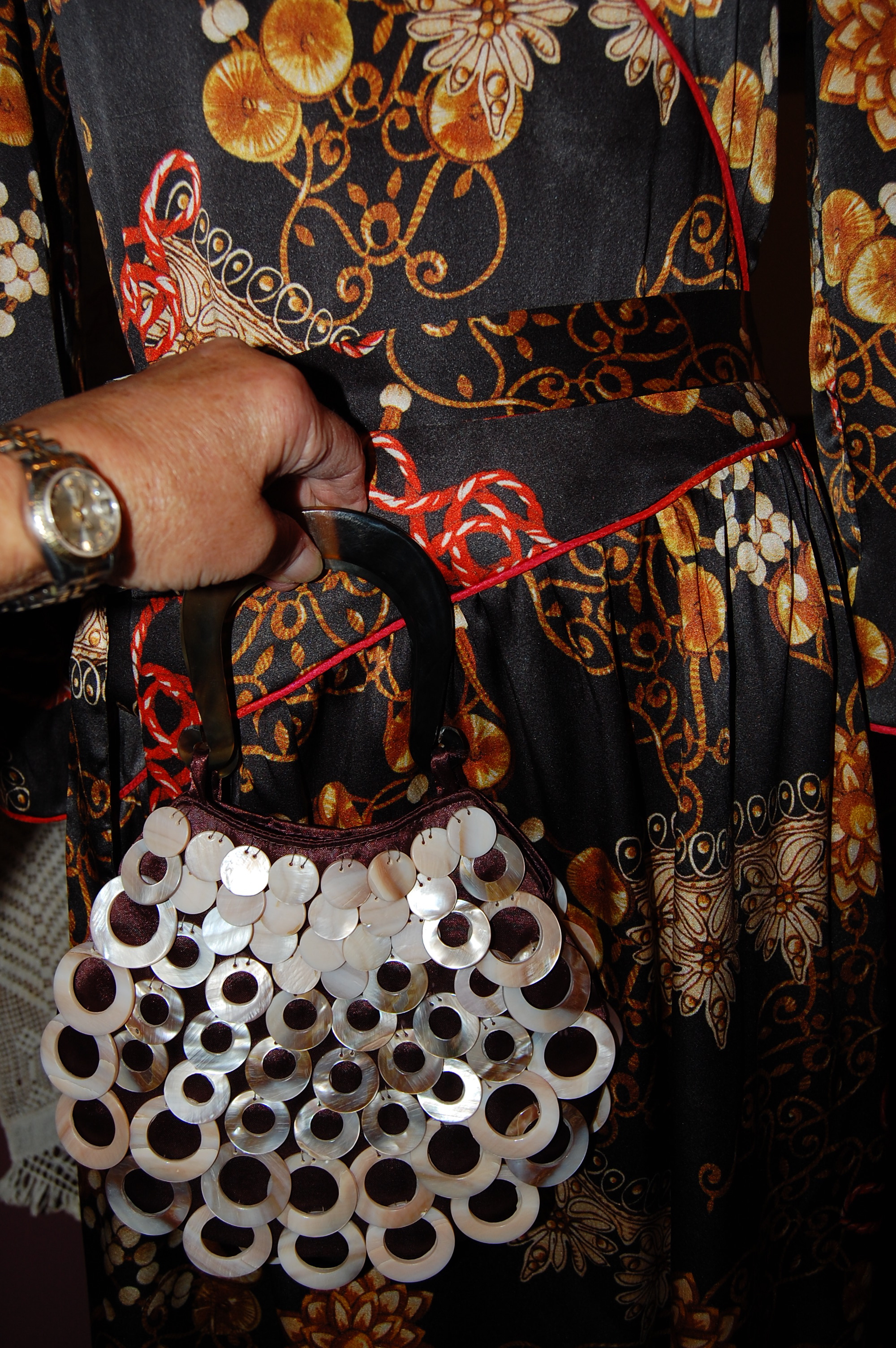
A nice complement to the dress...

A nice complement to the dress…

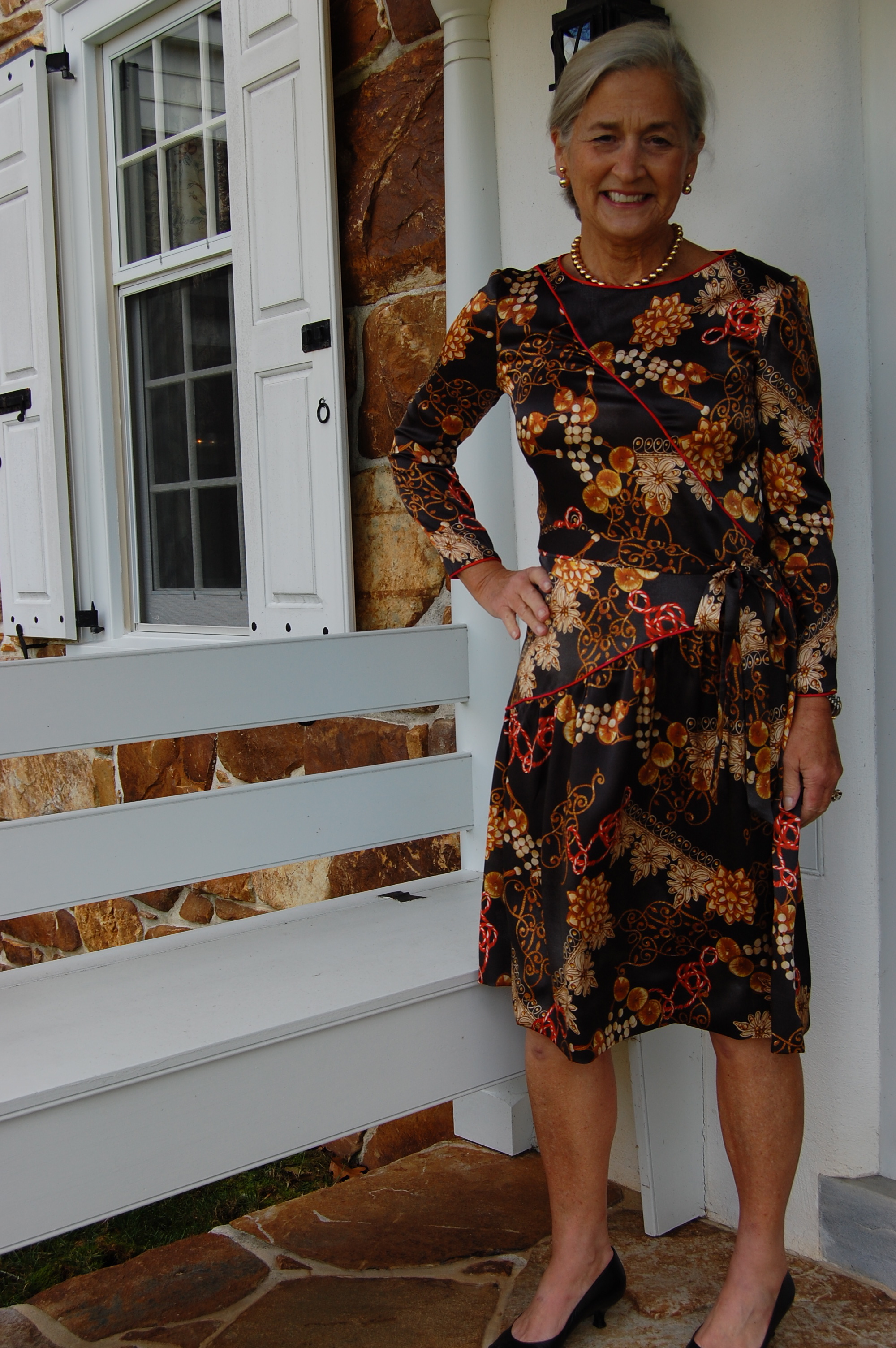
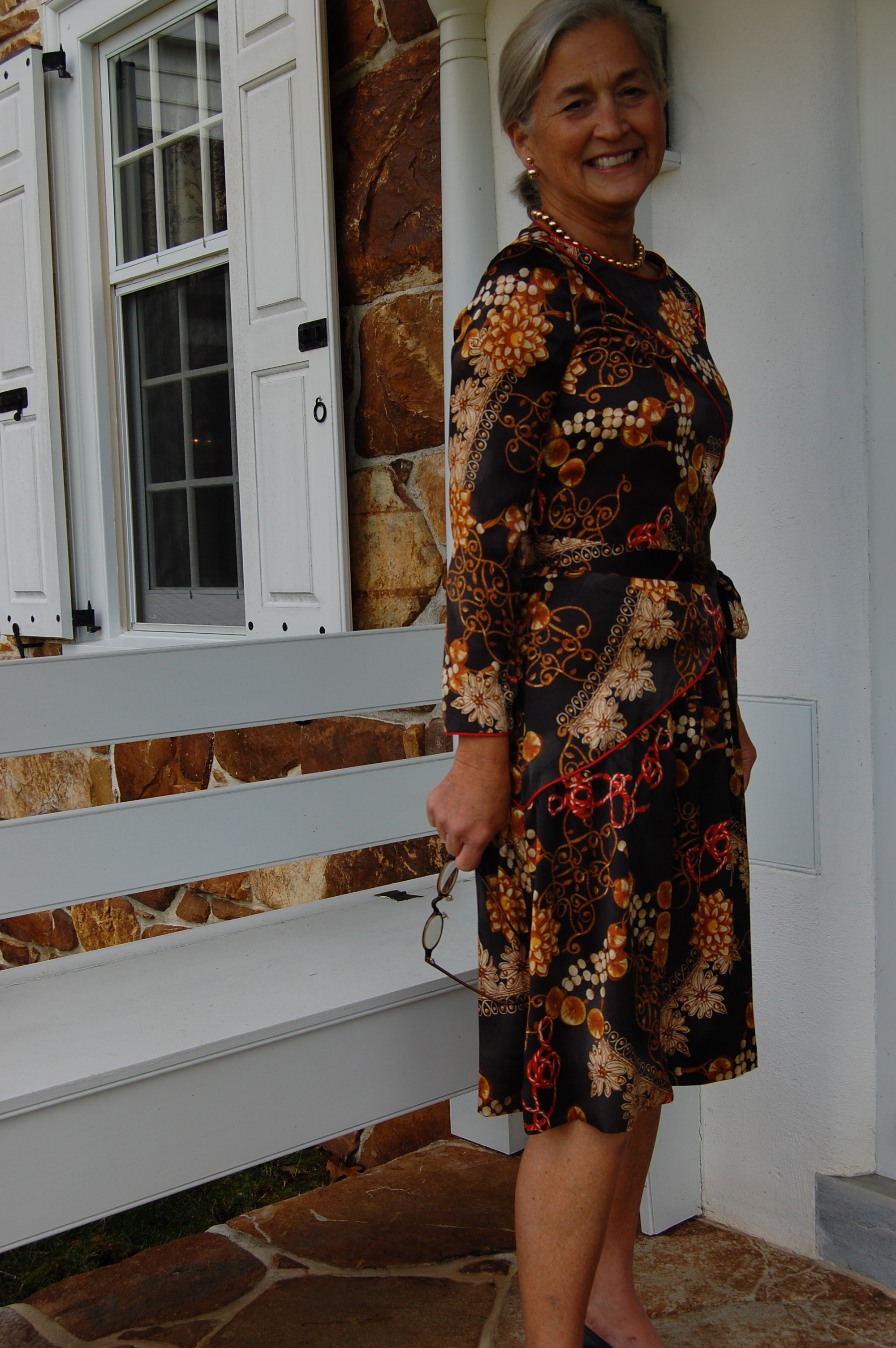
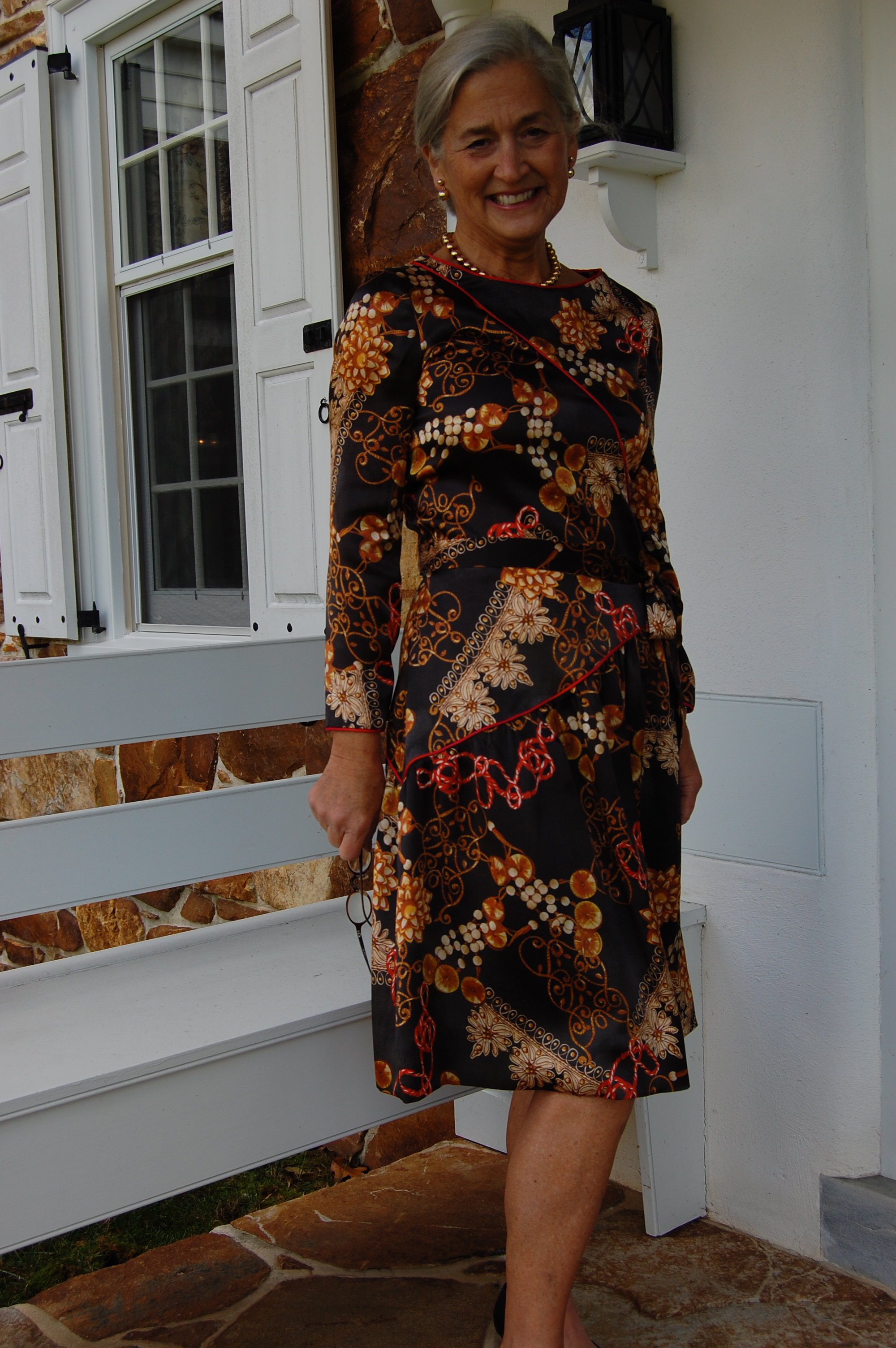
Finally, some photos of me wearing the "ghost" dress!

Finally, some photos of me wearing the “ghost” dress!
Sewing ghosts

DSC_0322

sewing ghosts

sewing ghosts

Finishing this dress successfully definitely warrants a smile!

Will I ever make this pattern again? No.   Have I learned from this project? Yes. Will I enjoy wearing this dress? I think so. And right now, that’s good enough.
22 Comments

Filed under 1980's dress patterns, piping, sewing in silk, vintage Vogue Designer patterns

Panic and Patterns

Being away, as “on vacation” (or “on holiday” as many express it), can take its toll on sewing projects. If I have to leave a project in mid-stream, it seems to take even longer to get back to it and pick up where I left off. A recent trip to the western state of Wyoming necessitated that I abandon my current “Fall” dress at precisely the time of year when I need to complete it! And now I’ve run into some complications with it.

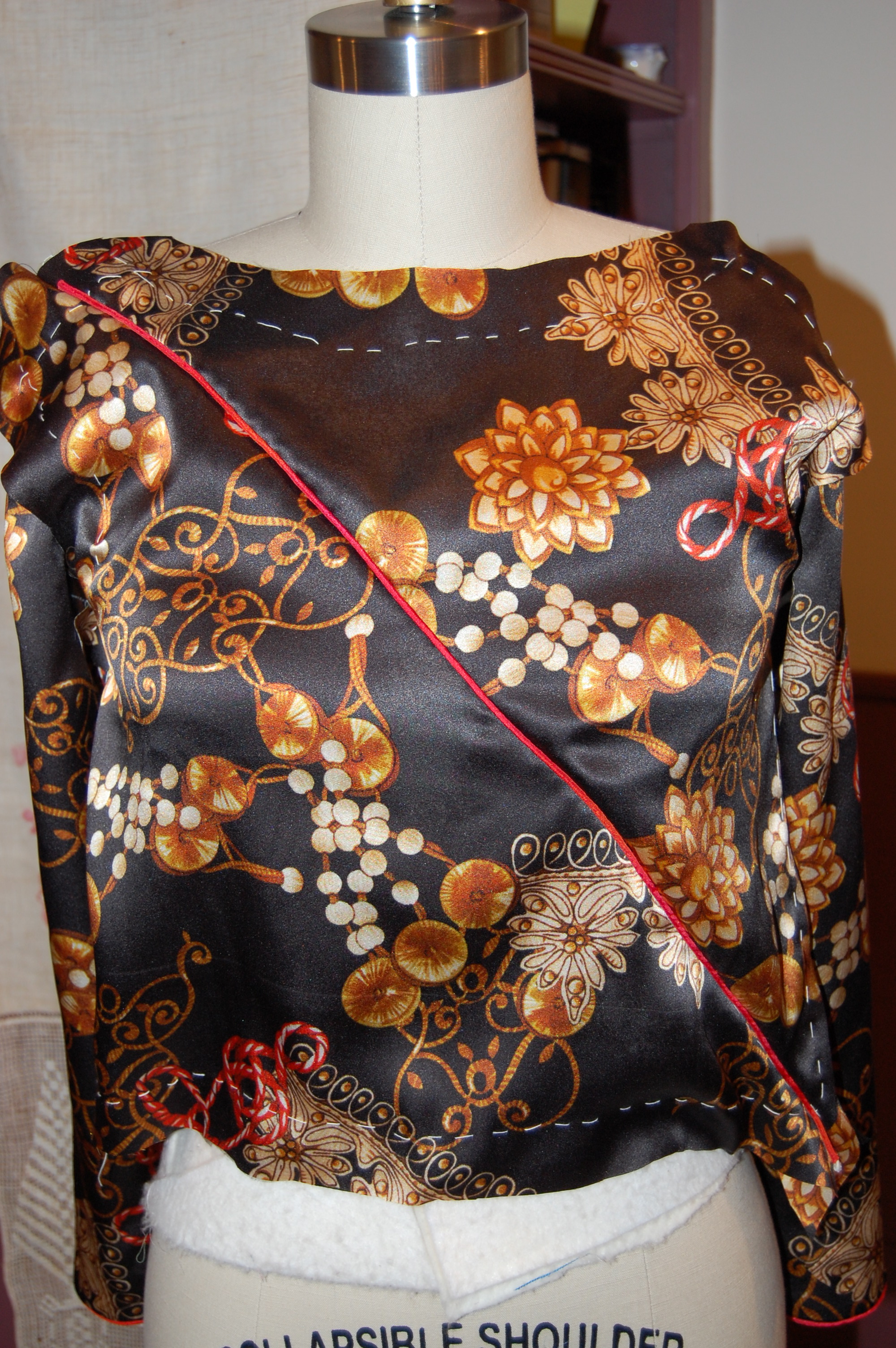
I guess you could say that panic has set in. Here is what the dress bodice looks like on my dress form:

Panic and patterns

I am using vintage Vogue pattern 2718 for this dress.

The fit seems okay. The neckline will need a little adjustment, but nothing out of the ordinary. The sleeves look good, and I am pleased with the piping so far. So what is the problem? When I try the bodice on, it looks awful. It pulls across the bust, it doesn’t want to move with me at all, and the front seems too short-waisted even though it measures perfectly for me when on the form. Worse still, this fabric is too dear (as in expensive) to put it aside or to think about abandoning this dress.

I think I know what is wrong, and it will take a great deal of effort to try to correct it – and hopefully it will be correctable! I insisted on using an underlining on this stretch silk fabric. I thought I could accommodate the stretch by cutting the underlining on the bias. Guess what? It doesn’t work. The bias pulls from underneath, restricting the stretch of the silk. What this means is that I am going to have to remove the underlining. It is not going to be fun to remove black underlining from black fabric, sewn together with black thread, is it?

I have consoled myself with the thought that I can salvage this project by making a skirt instead of a dress, which may be what I end up doing. Needless to say, I am fighting my discouragement, and trying to stay focused so I can finish this and move on to something more fun.

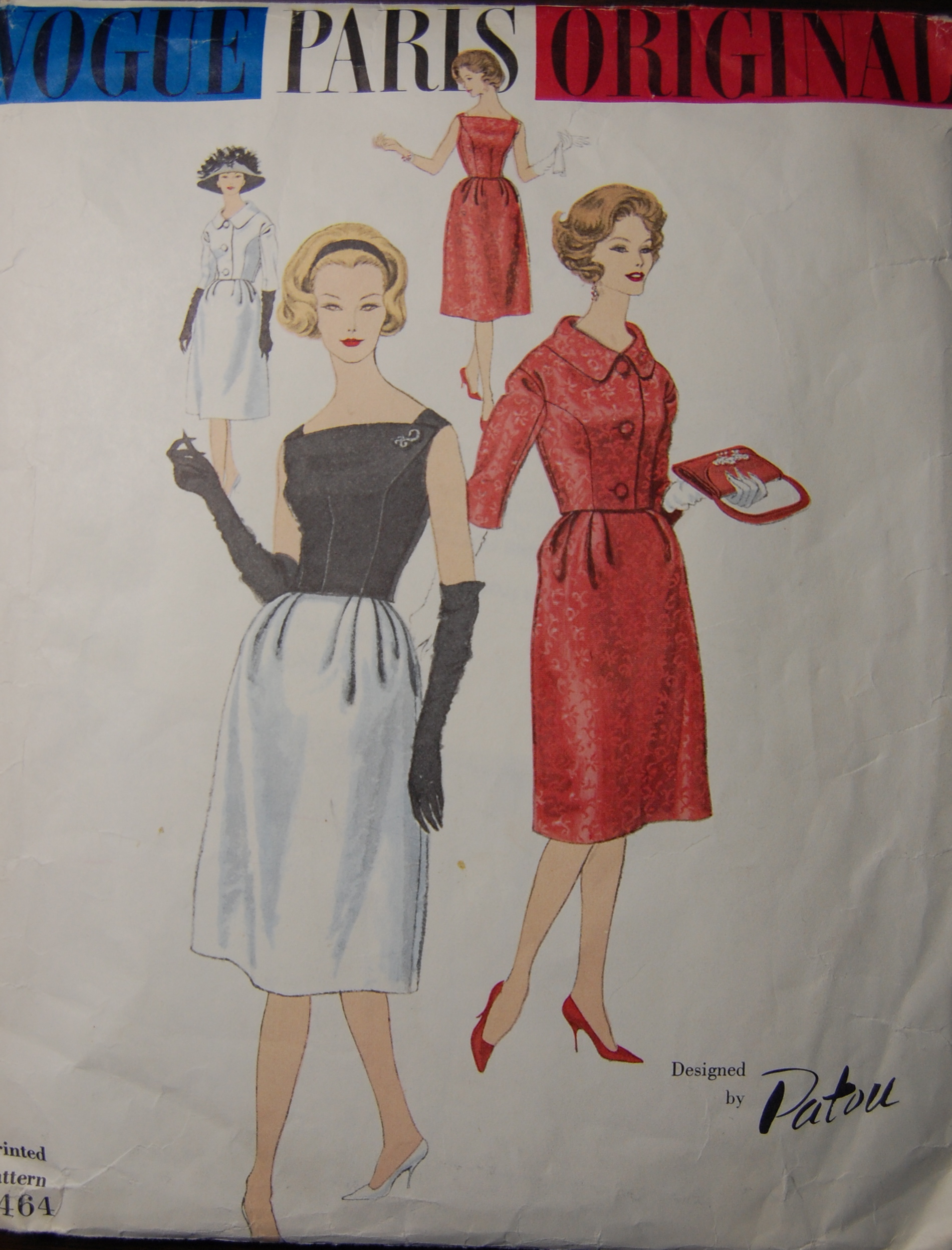
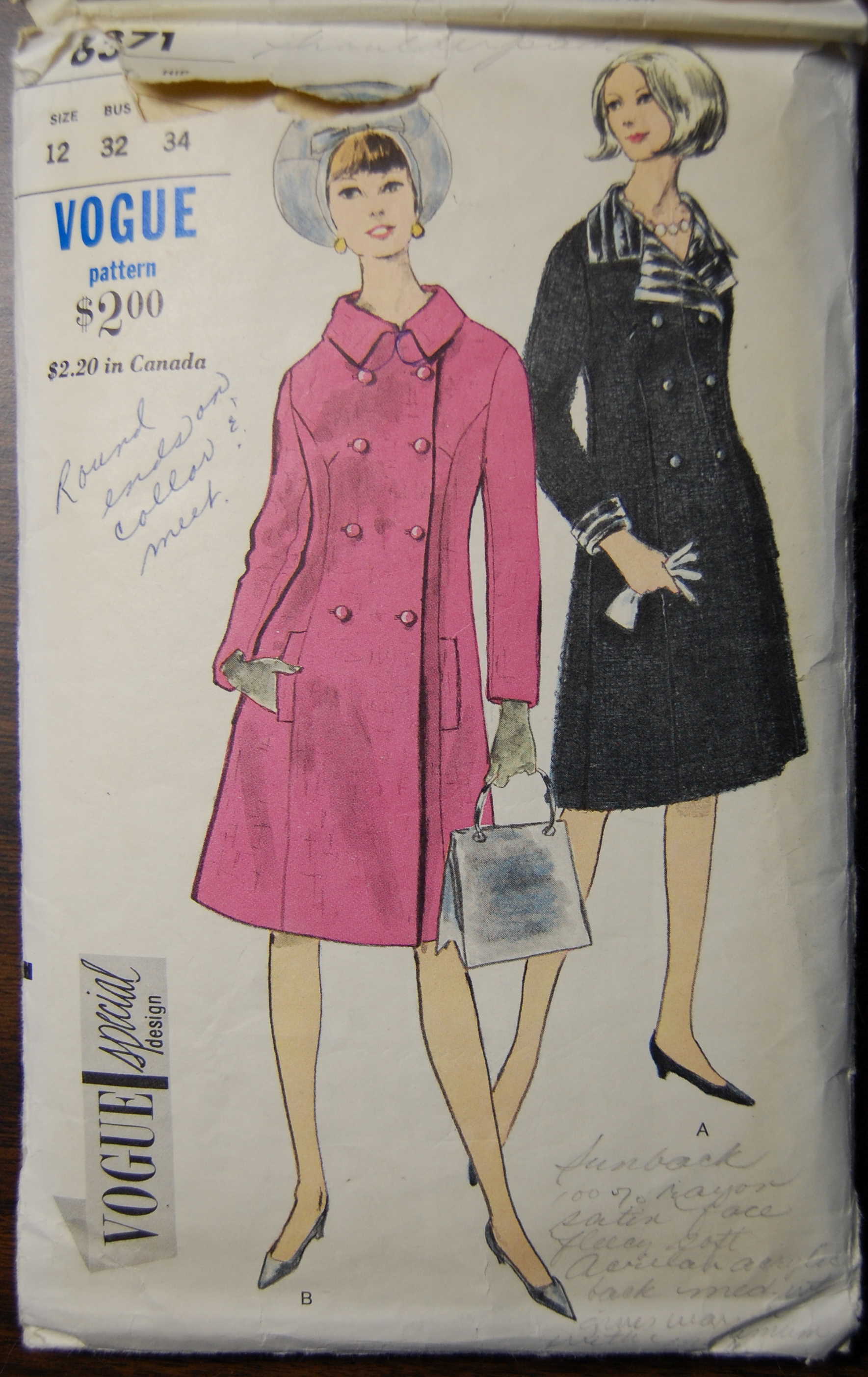
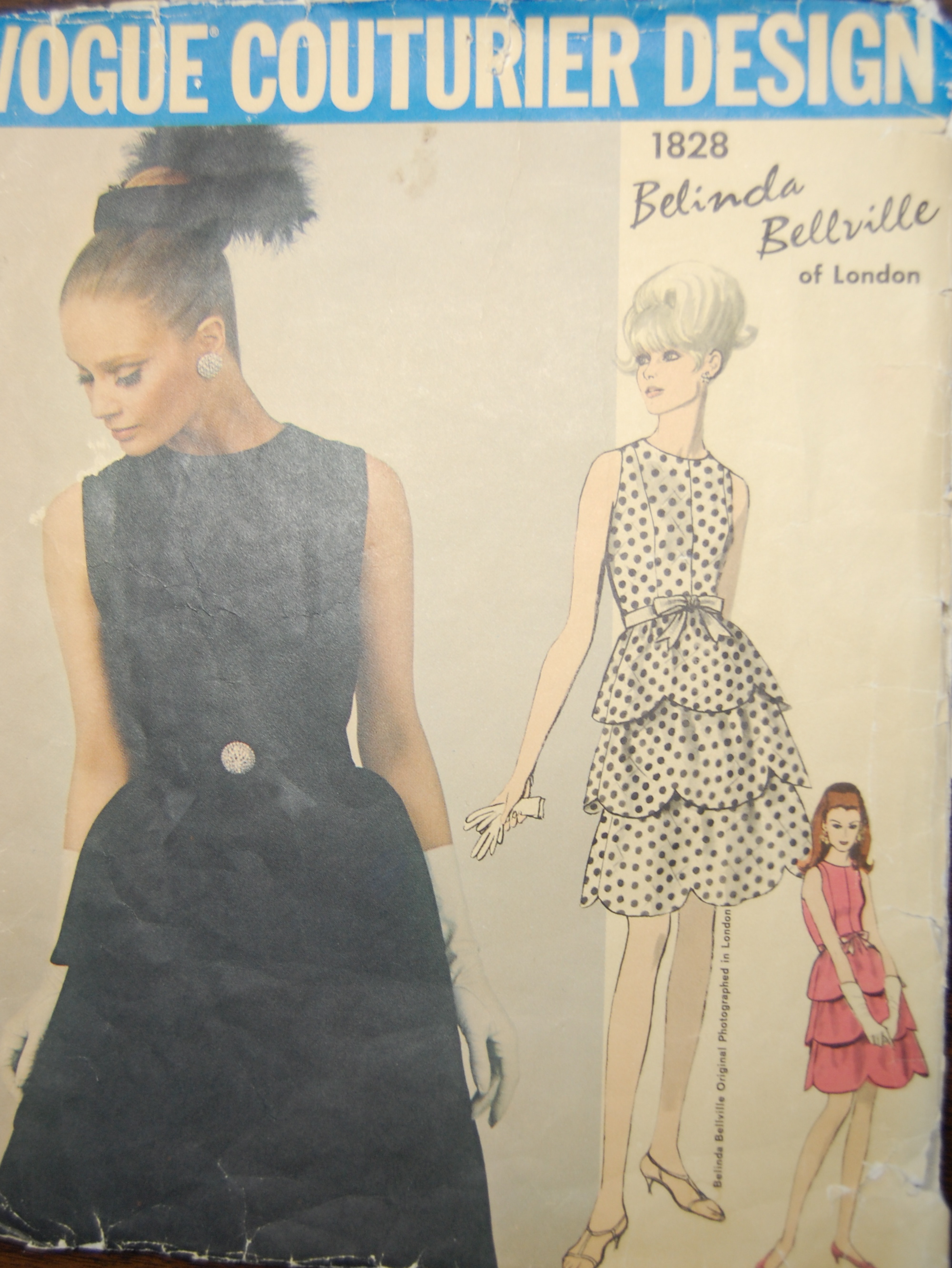
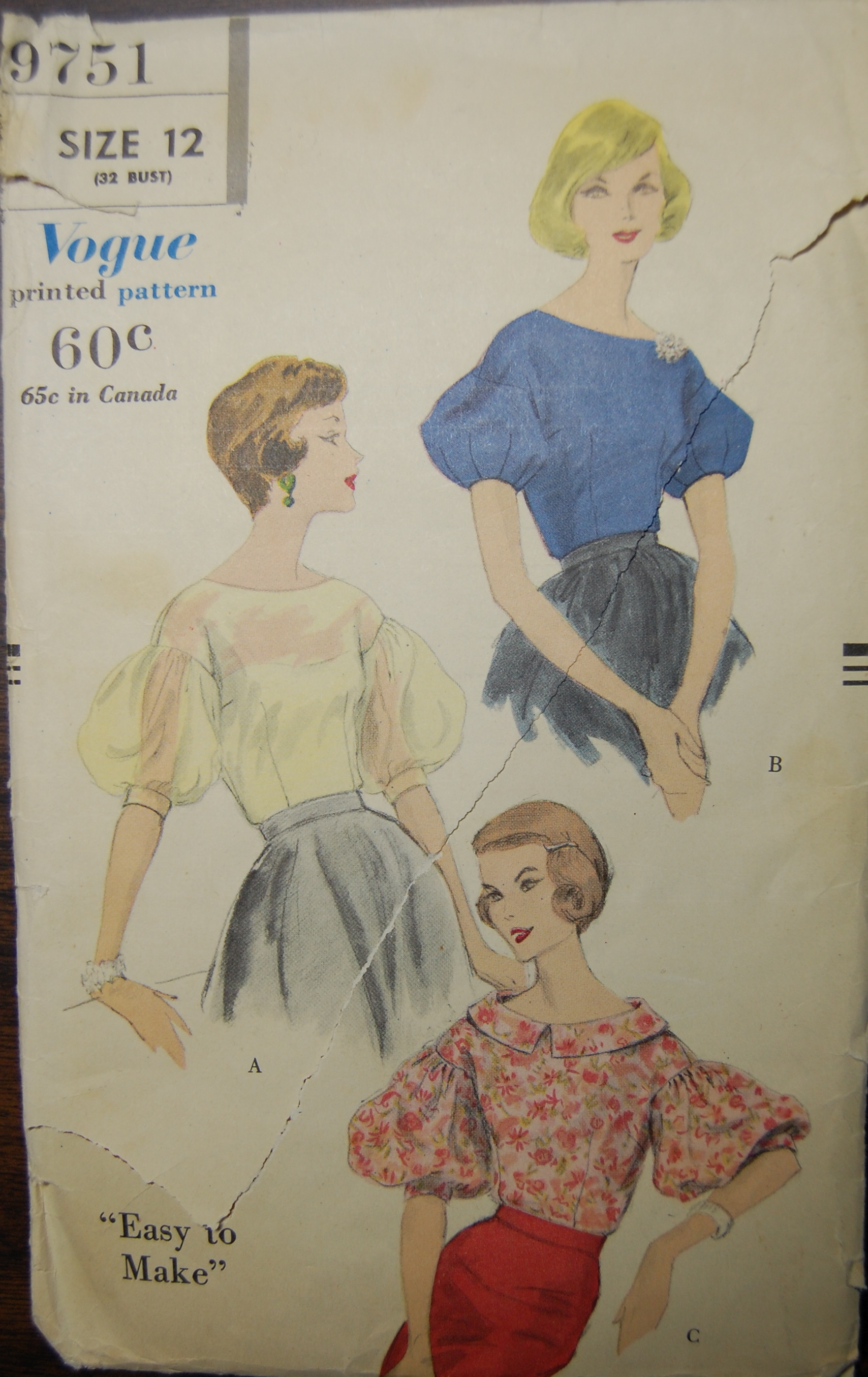
While traveling is not conducive to sewing, it doesn’t put a damper on looking at more patterns and fabrics online! Sometimes I go weeks without finding a pattern and then I’ll find several all bunched together in the space of a few days. You might be guessing that such was the case during the last few weeks. So while I am struggling with vintage Vogue 2718 right now, I look at my new acquisitions to give me encouragement for the future. Here are some of my “new” finds:

I was delighted to find this DvF pattern in my size, at a reasonable cost!  This one should see some fabric next Spring or Summer.

I was delighted to find this DvF pattern in my size, at a reasonable cost! This one should see some fabric next Spring or Summer.

DSC_0303

This one was too good to pass up, although I don’t have any plans for it right now. This looks like a dress, but it is really a skirt and top, paired with the jacket.

DSC_0304

What can I say? I love coats.

DSC_0305

I have been on the search for this pattern for a long time. I hope I’ll have some reason to make this dress sometime soon…

DSC_0306

The sleeves on the blue version of this blouse are so pretty!

In addition to these new patterns, I just ordered two Marfy patterns, which should either add to my current sewing anxiety or help alleviate it. I hope it is the latter!

17 Comments

Filed under 1980's dress patterns, Blouse patterns from the 1950's, Coats, Cocktail dresses, piping, Uncategorized, vintage Vogue Designer patterns, vintage Vogue patterns from the 1950s, vintage Vogue patterns from the 1960s, vintage Vogue patterns from the 1970s, Wrap dresses

Light Load


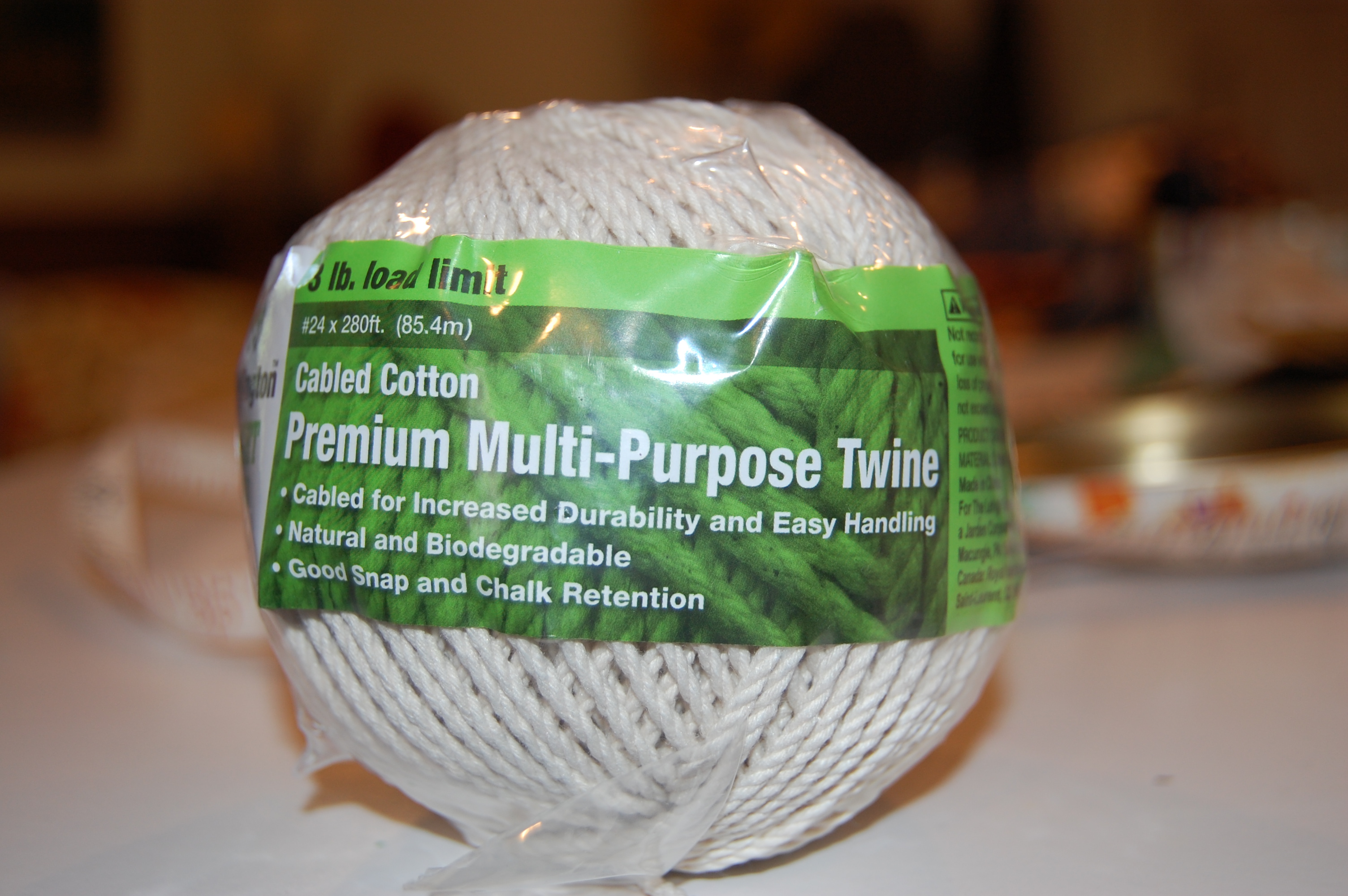
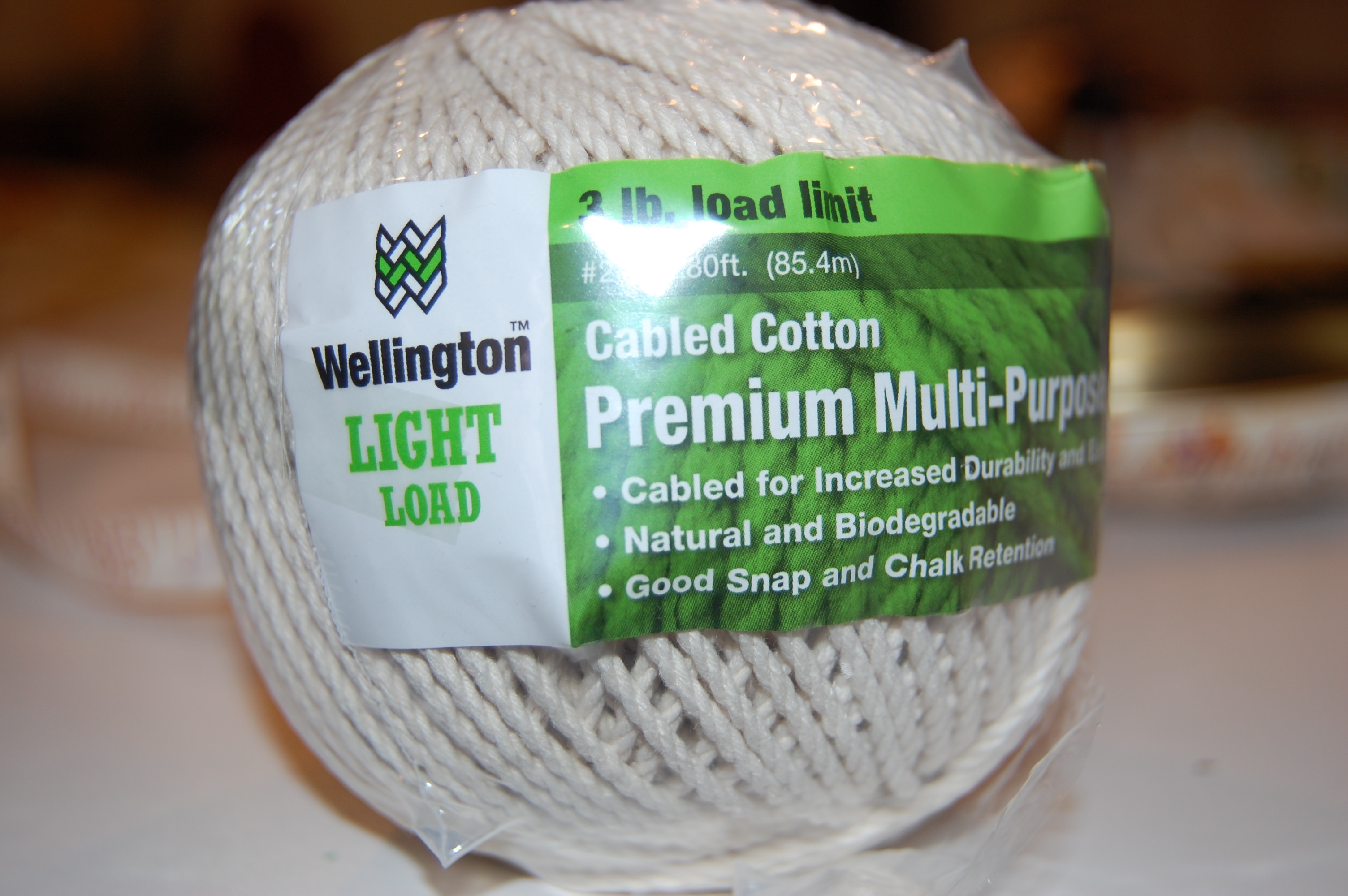
String is a wonderful thing. I am particularly fond of kitchen string. Usually twisted cotton or a twisted cotton blend, it is useful for many things (such as tying together the newspapers for recycling, playing with the cats, securing open bags of flour and sugar, etc., etc.) It also occasionally makes its way upstairs to my sewing room.
Light Load DSC_1380

“Light load” kitchen string happens to be the perfect weight and diameter for making piping to be used in apparel. And – my current project for Fall features piping as one of the main design details.

The piping is more clearly visible on the green view of this dress.

The piping is more clearly visible on the green view of this dress.

As luck would have it, I had purchased some hand-dyed silk bias ribbon from Britex Fabrics a couple of years ago. One of the colors I had ordered turned out to be a perfect complement to this silk from Mendel Goldberg, which is slowly making its transformation into a dress.

Light Load

After hours and hours of working on the muslin (toile), cutting out the underlining (on the bias to accommodate the stretch of the silk fabric), checking and re-checking (multiple times) to make sure my pattern pieces were laid out properly, and then meticulously basting the gossamer silk gauze underlining and the slippery fashion fabric together, I was ready to do something fun. “What could be easier?” I thought. “The ribbon is already cut on the bias so I’ll just sew up three yards of piping and I’ll be in business.” Except that I kept getting ridges and lumps in my piping as I encased that kitchen string in the silk ribbon. I thought maybe if I stretched it a bit, it might look better, but it really didn’t. I must admit I was discouraged – actually very discouraged. I could not figure out what I was doing wrong, but I knew I needed to take a break from this mess and come back the next day.

Before I left my sewing room, I went to my stack of Threads Magazines to look for a particular issue recently recommended to me for another reason, and in my search found, by chance, the December 1994/January 1995 issue. There on the cover “Techniques for Perfect Piping” was a featured article.

I have many odd issues of Threads Magazine, but earlier in the year I bought the Threads Magazine Archive 1985-2013, available on their website. I can't recommend it highly enough - decades of sewing advice and expertise is readily available at the click of your computer mouse!

I have many odd issues of Threads Magazine, but earlier in the year I bought the Threads Magazine Archive 1985-2013, available for purchase on their website. I can’t recommend it highly enough – decades of sewing advice and expertise is readily available at the click of your computer mouse!

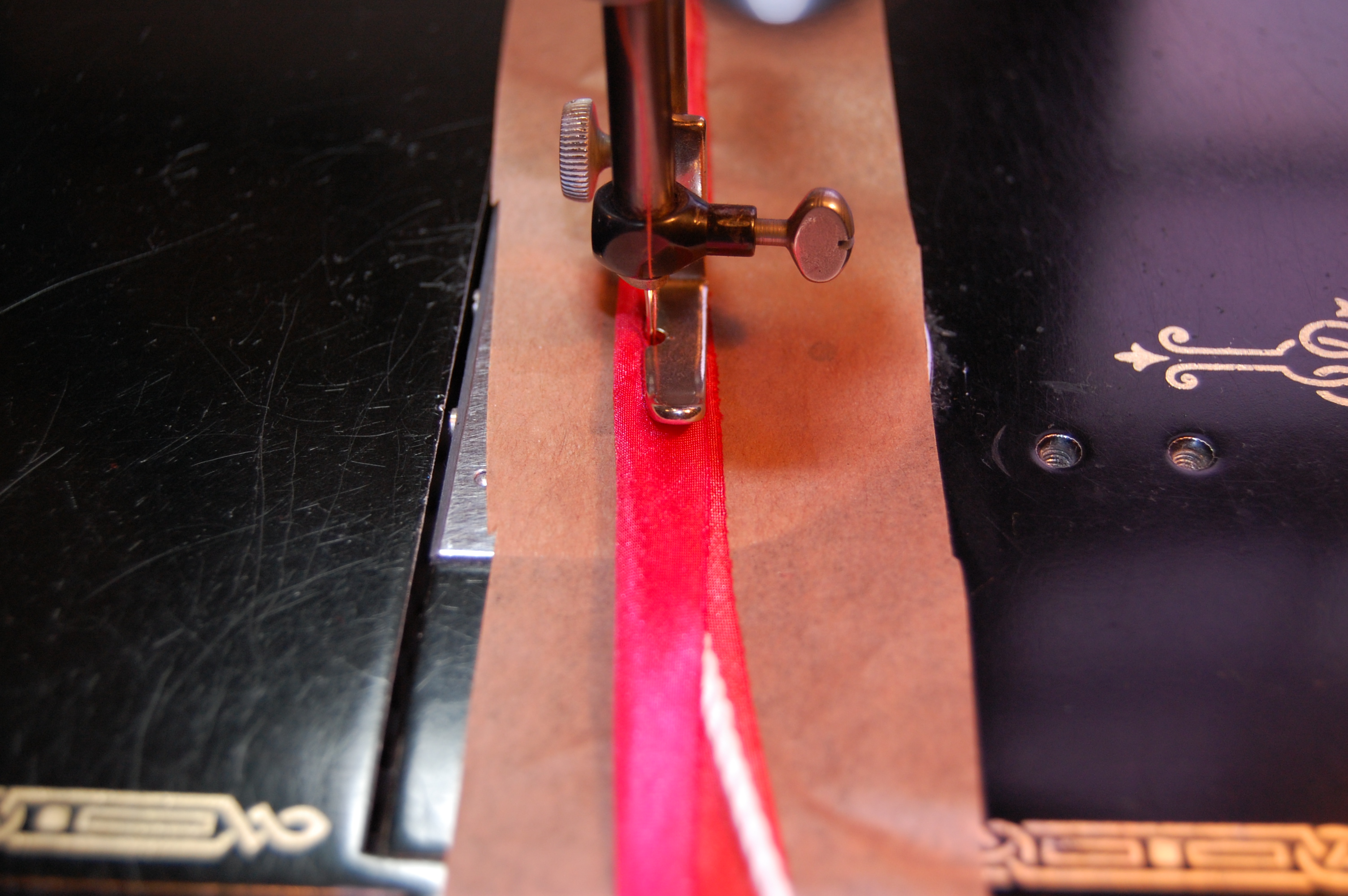
Needless to say, that became my evening reading. One line in this article by Linda Wakefield led me to the solution to my problem: “I also recommend reducing presser foot pressure, if possible, so that the fabric doesn’t twist or ripple as you stitch.” Even though I am unable to change the presser foot tension on my machine, that advice made me think that I needed to stabilize and reinforce the silk bias ribbon somehow to make it feed more evenly through the needle. The next day, back in my sewing room, I got some tissue paper – the kind one uses for wrapping presents – and cut it into strips. I placed a single layer of tissue under the silk ribbon as I stitched – and voila! Perfect piping emerged from my machine.

The tissue is brown (which is just some I happened to have with my gift wrapping supplies.)

The tissue is brown (which is just some I happened to have with my gift wrapping supplies.)


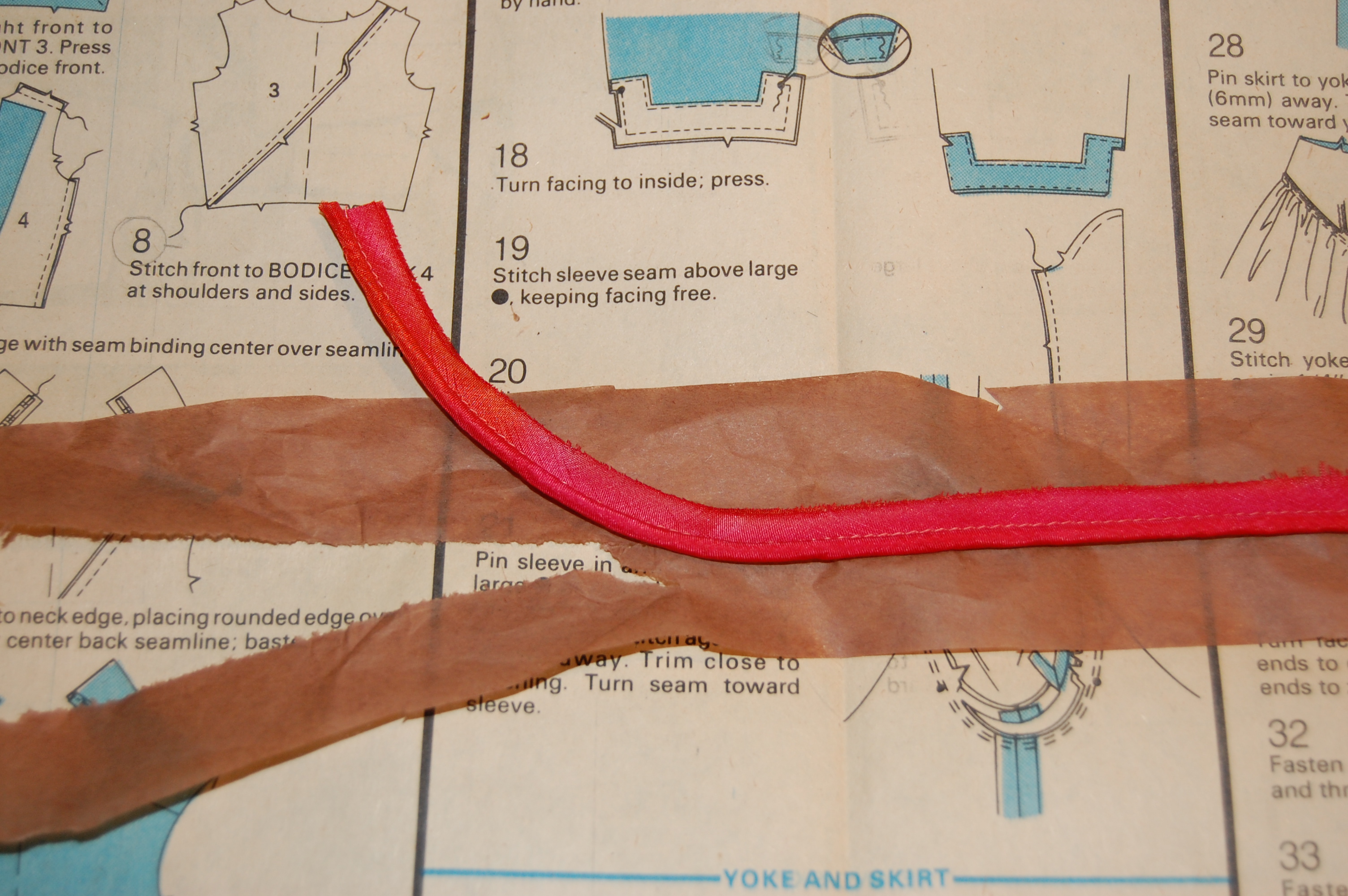
 The tissue paper tears off easily and cleanly from the silk piping.


The tissue paper tears off easily and cleanly from the silk piping.

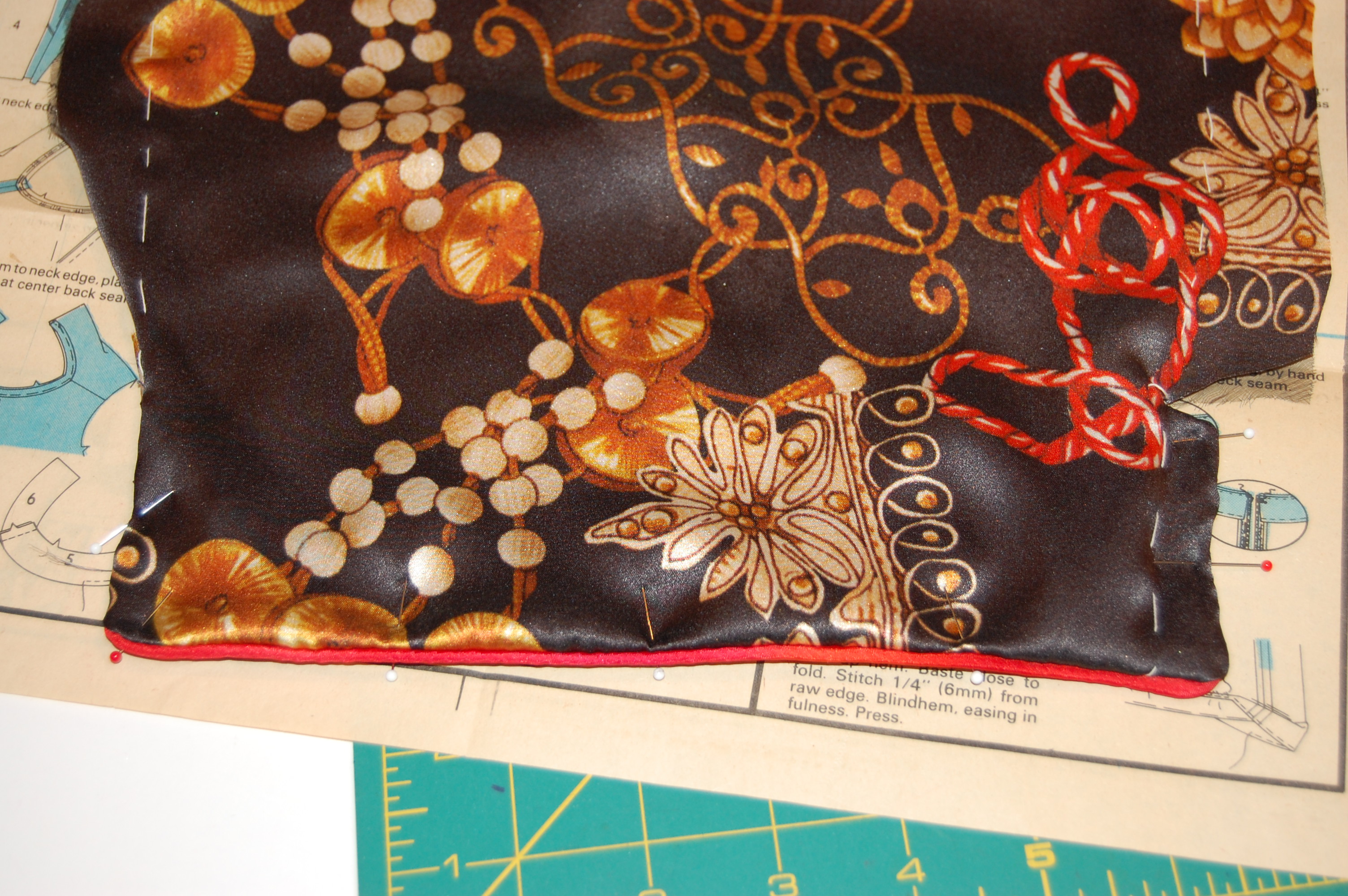
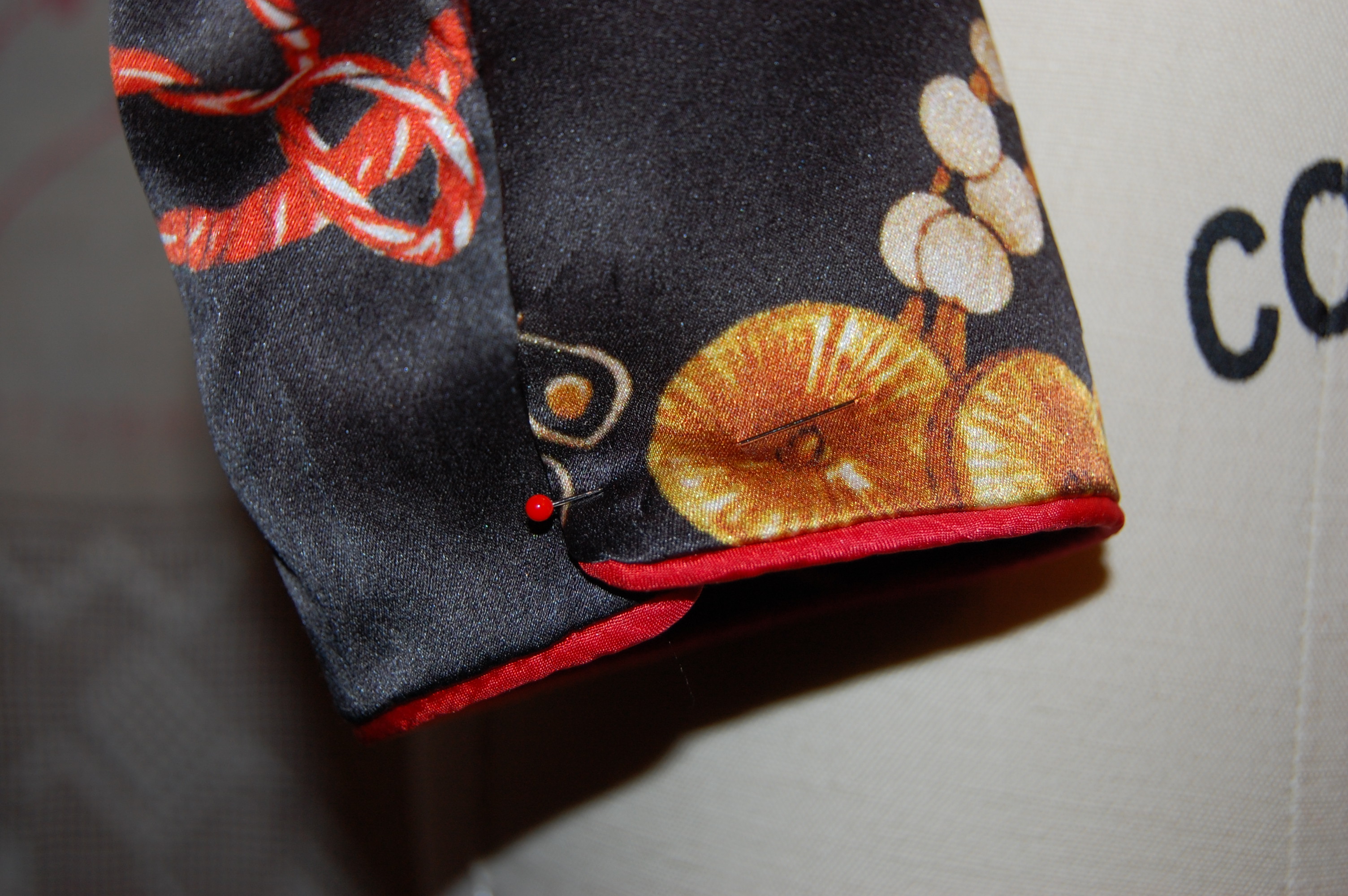
Further advice in the article gave tips on applying the piping. I decided to try my hand with this added guidance, choosing to start with the sleeves. The pattern calls for piping around the lower edge – a nice short distance and easy to fix if I wasn’t happy with the finished look. What do you think?

Light Load

The sleeve has a side opening - to be secured by snaps.  Here it is just pinned.

The sleeve has a side opening – to be secured by snaps. Here it is just pinned.

There will still, I am sure, be some tedious moments as I continue work on this dress, but my load was definitely made lighter by something as simple as —- tissue paper!

26 Comments

Filed under 1980's dress patterns, piping, sewing in silk, vintage Vogue Designer patterns