Category Archives: couture construction

In Pursuit of My Very Own Classic Cardigan (aka Chanel) Jacket

As I eagerly anticipate the Classic French Jacket class I will be taking with Susan Khalje in June, there are several things I am doing to get ready for it.  First, of course, is doing my homework.  That includes selecting the pattern I want to use and making the muslin.  I am sticking with the old stand-by Vogue pattern #7975 (which Susan recommends), as I really do want the classic princess-seamed cardigan look that has evolved from its original “boxy” styling.

Chanel jacket pattern

The view in the lower righthand corner is the version I anticipate starting with.

I’ve prepared my thread-traced muslin pieces, as seen here –
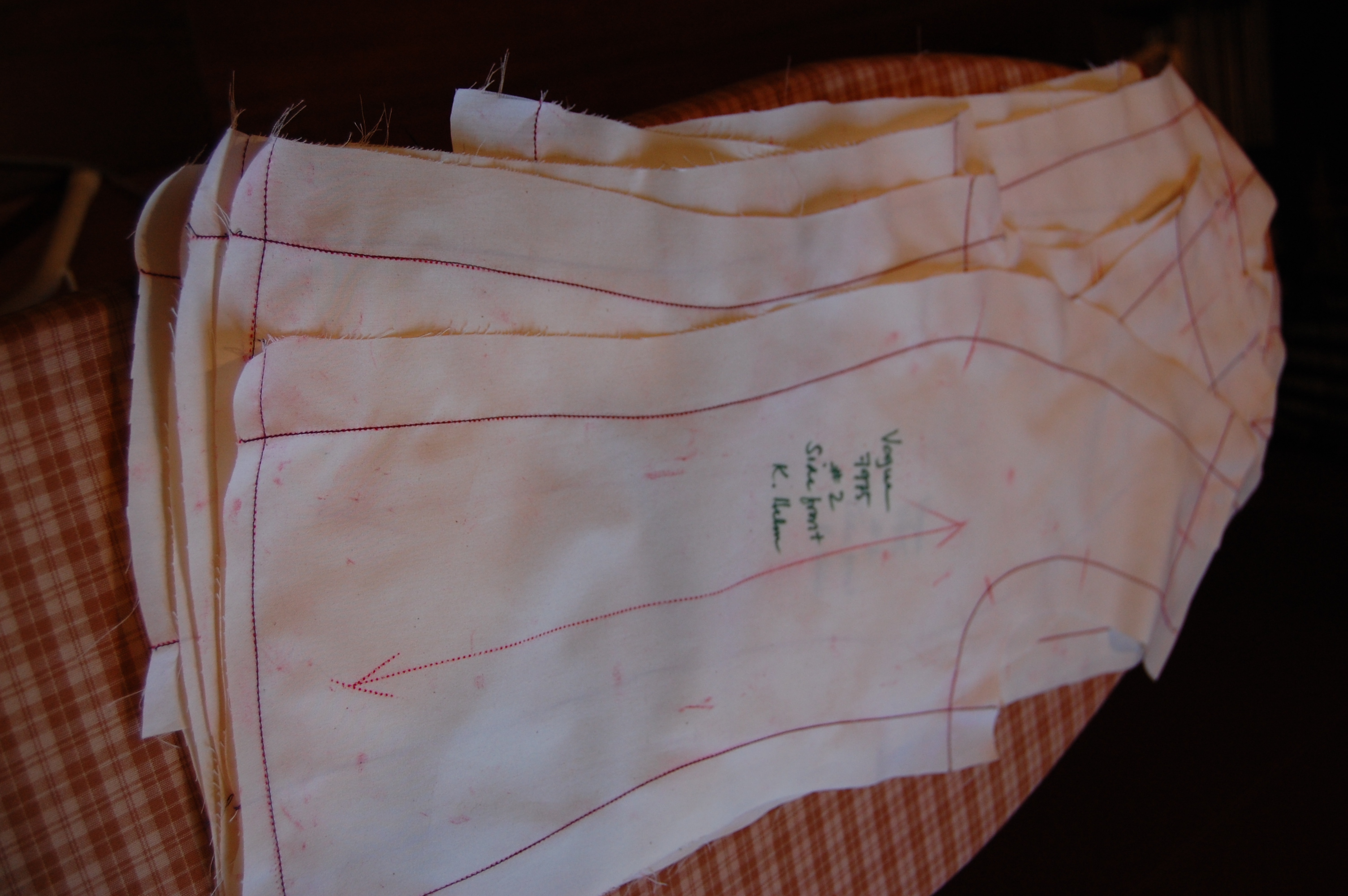
Chanel jacket muslin

And now those pieces are sewn together as well.  We (the members of the class) will be shopping for fabric and trim(s) on the first day of class, so what I end up with is still to de determined.  Am I looking for a particular color?  Yes, sort of, but who knows what wool will entice me – other than probably the most expensive one!

Having classic “Chanel” on my mind has made me think about how enduring this style jacket has been over so many decades.  From looking through some of my Vogue Pattern Book Magazines from the 1950s and 1960s, it is obvious that this is one fashion that is always in Vogue (pardon the pun).  The October/November 1957 issue stated “The Chanel look of the easy jacket is in the news in both suits and ensembles.  Box jackets often have cropped sleeves to show cuff-linked shirt sleeves.”  Here is how that statement is llustrated:
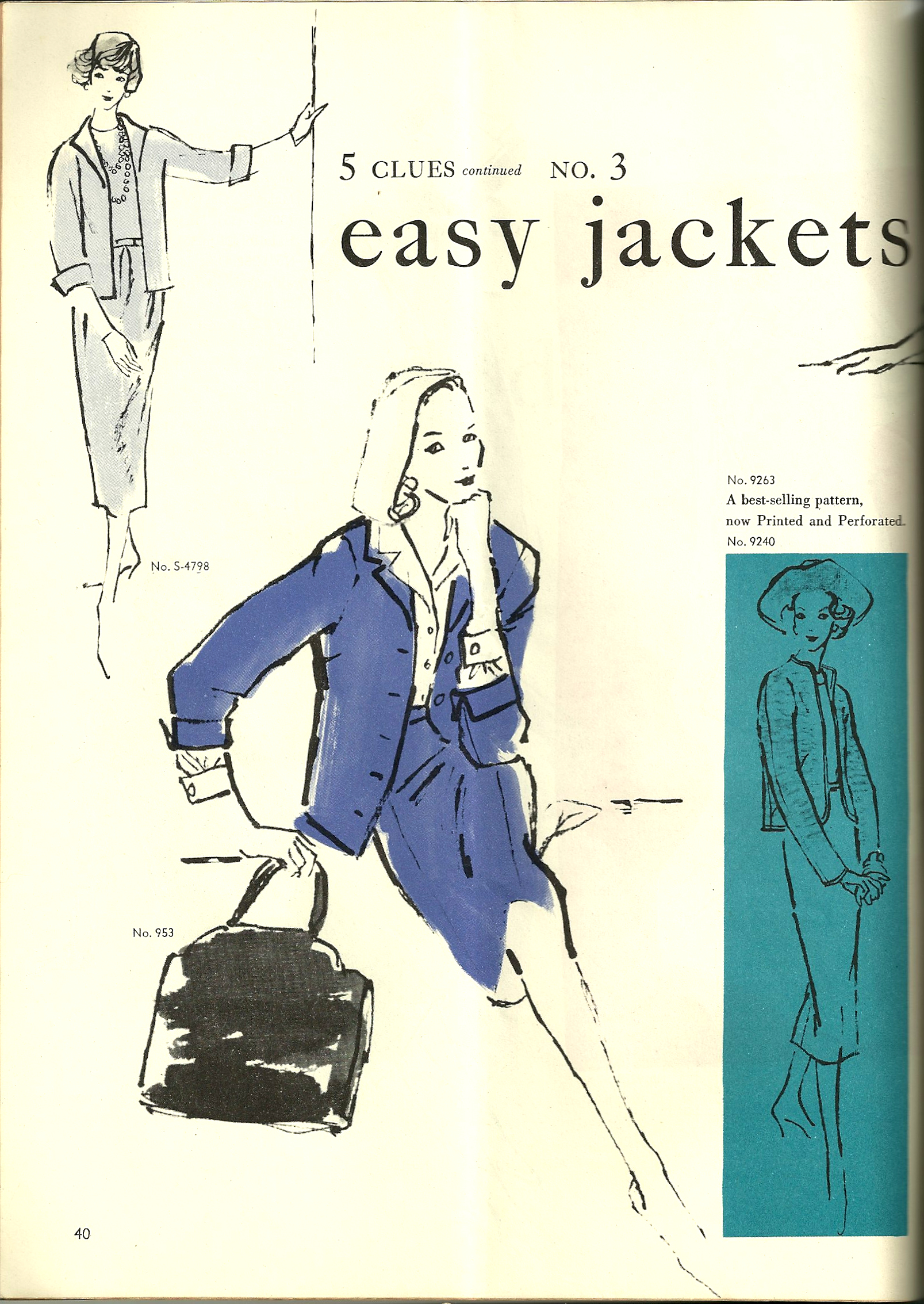
The sketch in jade shows a "best-selling" pattern, newly available printed and perforated.
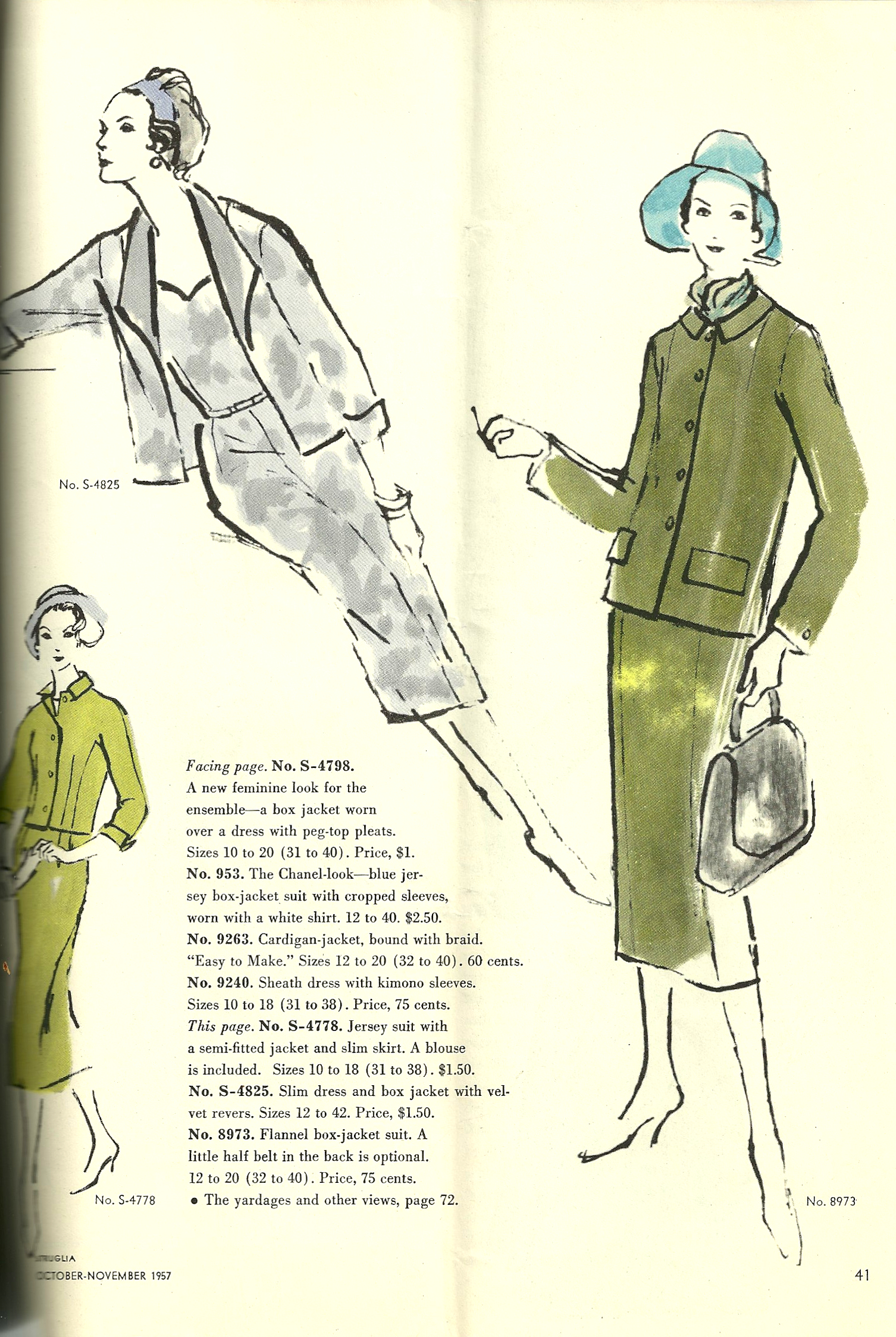
The sketch in jade shows a “best-selling” pattern, newly available printed and perforated.

Here is the opposing page to the previous illustration - more on the "Chanel look."

Here is the opposing page to the previous illustration – more on the “Chanel look.”

Shades of Chanel are obvious in this style from the August/September 1960 issue, with the statement:  “[T]he most versatile suit ever – the checked, straight jacket is buttonless and bias-trimmed…”
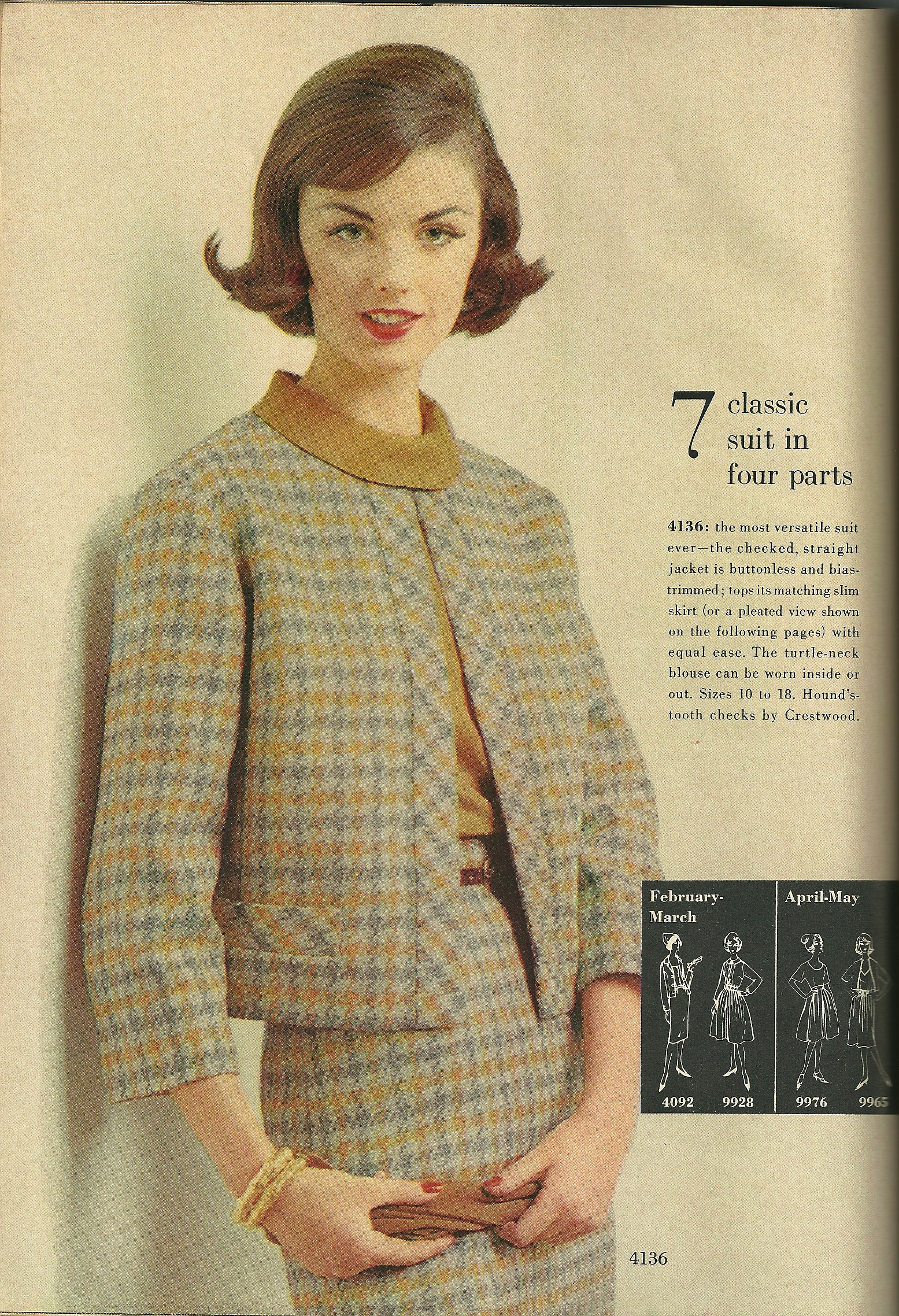
This suit definitely shows shades of Chanel!

This suit definitely shows shades of Chanel!  I like the suit much better than the hairstyle.

Two years later, the August/September issue included a classic Chanel-look suit in its wardrobe for Vogue’s fictional character, Mrs. Exeter.  Called “the suit of the year”, it is described as “. . . very Chanel, with its easy cardigan airs; its dark bands of braid on pale rough tweed; the silk blouse with its own flip and tier bow.  The slim skirt has a low bit of flare.”
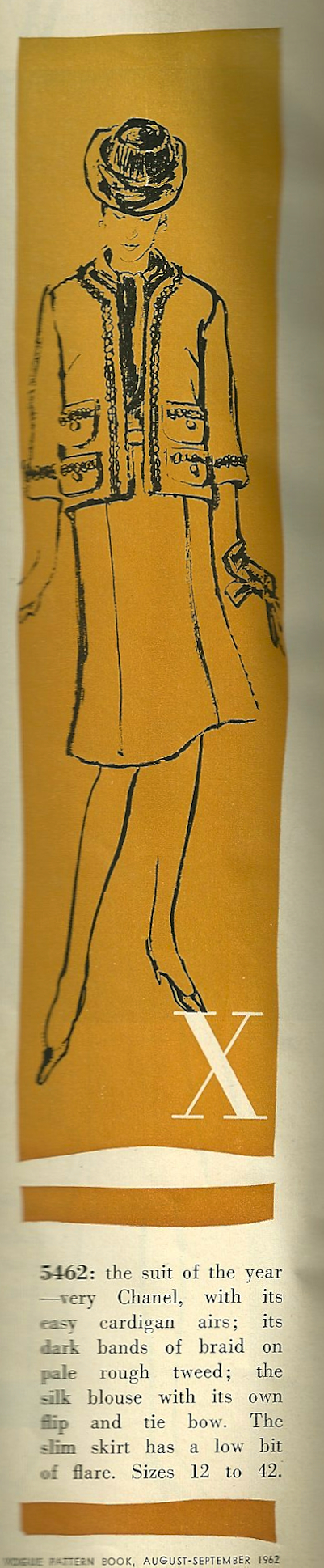
This is the most classic Chanel image I found from the 1960s in my copies if VPB.

This is the most classic Chanel image I found from the 1960s in my copies if VPB.

The very next issue in 1962 featured a classic Chanel look on its cover.  The accompanying caption states:  “Take a clean-lined suit design (shades of Chanel) and make it shimmer:  a springy white suit wool scored with gold metallic and red braid . . .”
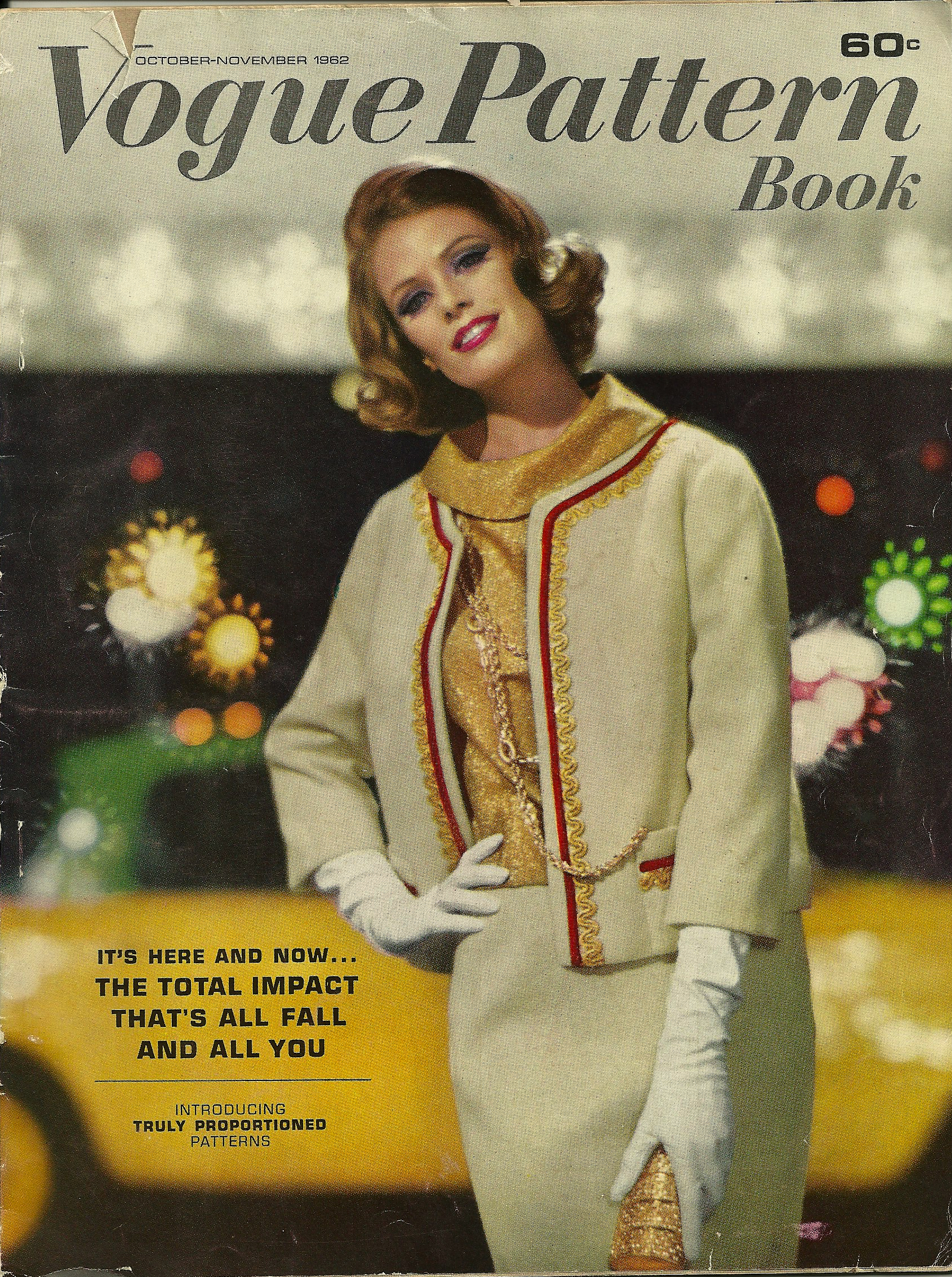
Chanel jacket images #9

That same issue of Vogue Pattern Book Magazine gave away this “secret” in a feature entitled VPB’s Boutigue Corner:  Couturier Flourishes:  “The secret of the suit jacket and the overblouse that hang beautifully is apt to be a “Chanel” chain.  A finishing touch by couturiers, the chain is tacked near the hemline as a weight.”
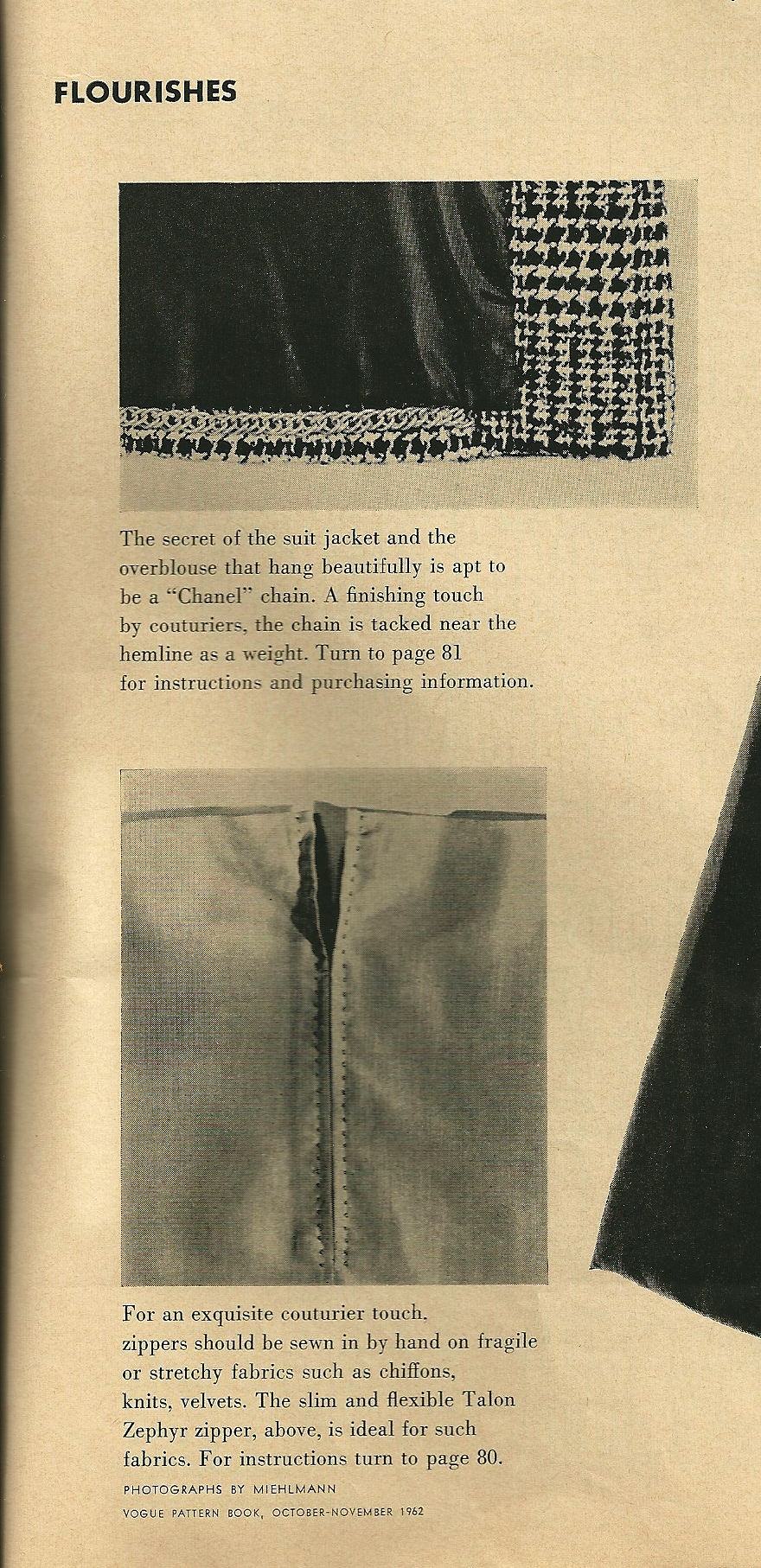
The topic figure shows the "Chanel" chain fastened to a hemline.

The topic figure shows the “Chanel” chain fastened to a hemline.

Ordering information for such chains was included in the same issue.  However, I know for a fact that these types of chains could be purchased in fabric stores, as I still have one (in its original –albeit tattered – packaging) that I purchased in the late ‘60s!
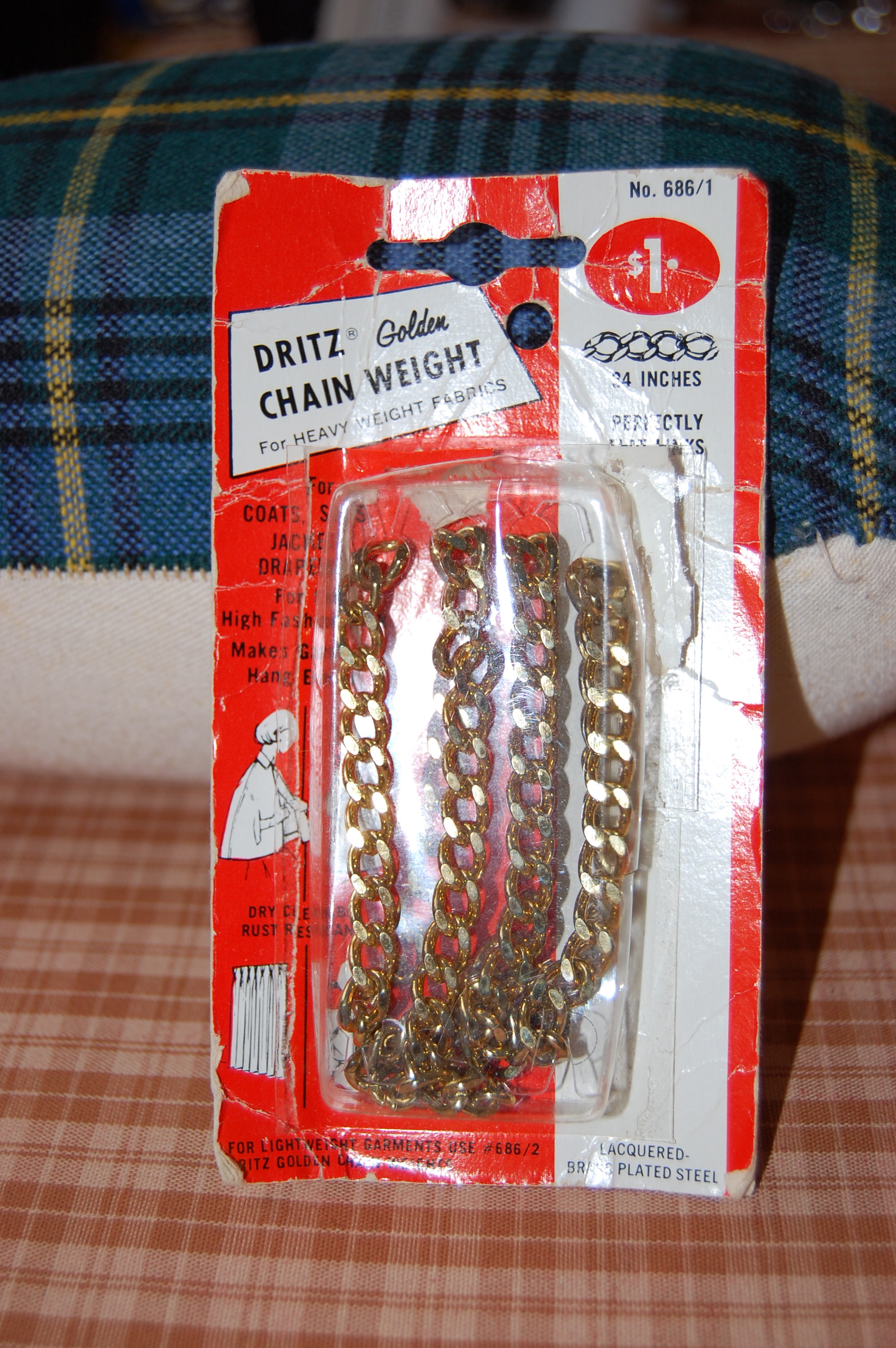
This "vintage" chain still looks new!

This “vintage” chain still looks new!
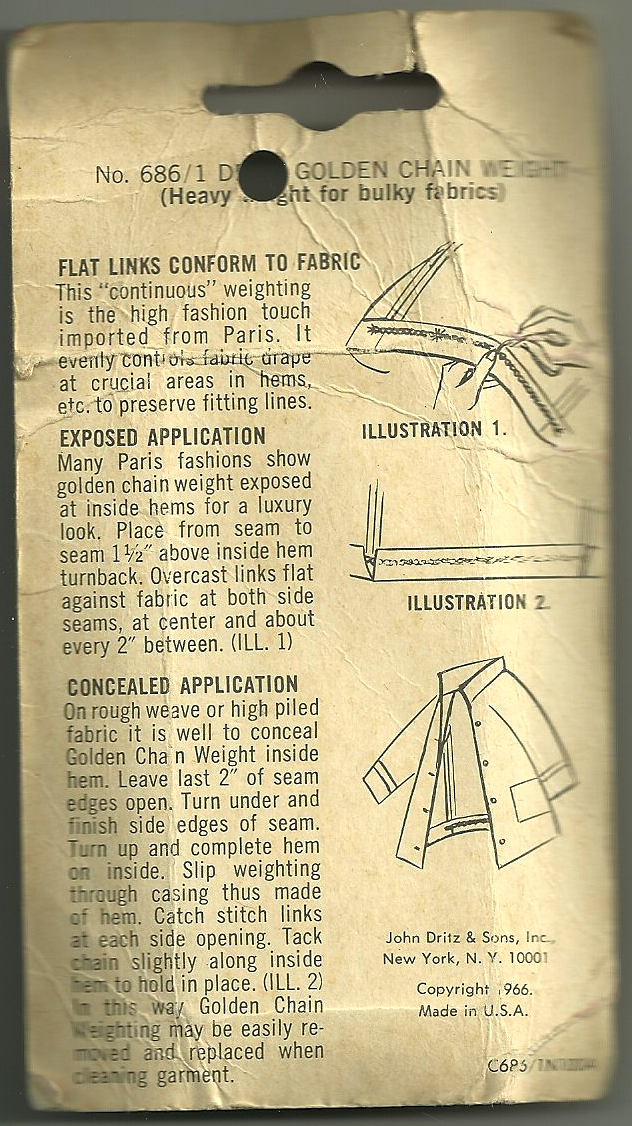
The back of the packeage shows the copyright date, 1966, and includes instructions on attaching the chain.

The back of the package shows the copyright date, 1966, and includes instructions on attaching the chain. 

Finally, an article in the February/March 1963 issue of the magazine gave some of that age-old advice on “pattern selection that can visually help to minimize your figure problem.”  The advice given “if you tend to be bosomy” seems like it could be good advice for just about every figure problem (or problem figure, depending on your point of view) as it states “In suits, the boxy Chanel-type jackets are your best bet…”
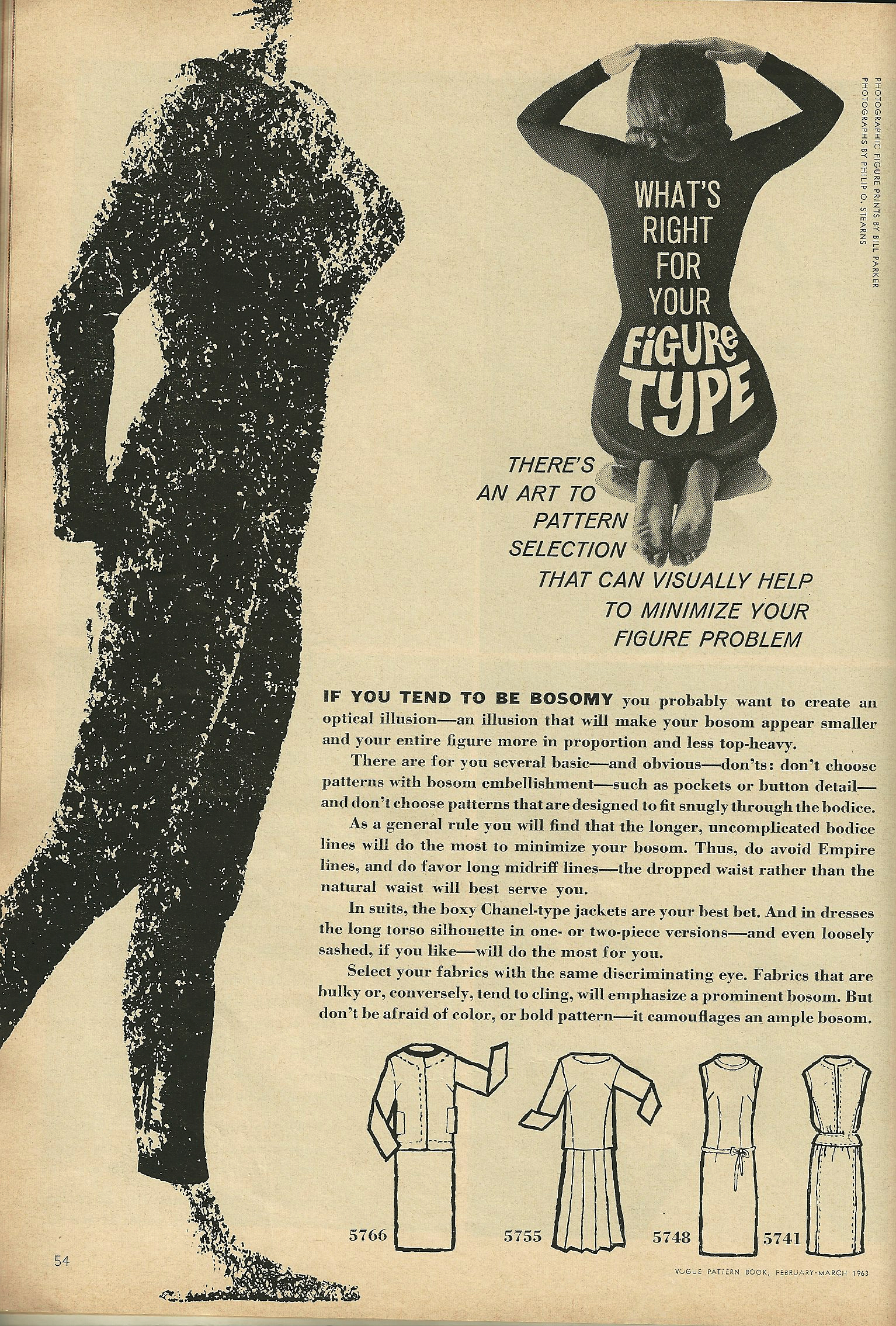
If you can get past this awful illustration, you can read the accompanying text about Chanel-type jackets!

If you can get past this awful illustration, you can read the accompanying text about Chanel-type jackets!

Gosh, I think Chanel-type jackets are just about perfect for everyone.  How else would this classic style have endured so beautifully for so long?
12 Comments

Filed under Chanel-type jackets, couture construction, The Conde Nast Publications, Uncategorized, vintage Vogue patterns from the 1950s, vintage Vogue patterns from the 1960s, Vogue patterns, woolens

“The Sweetest of All the Colors…”

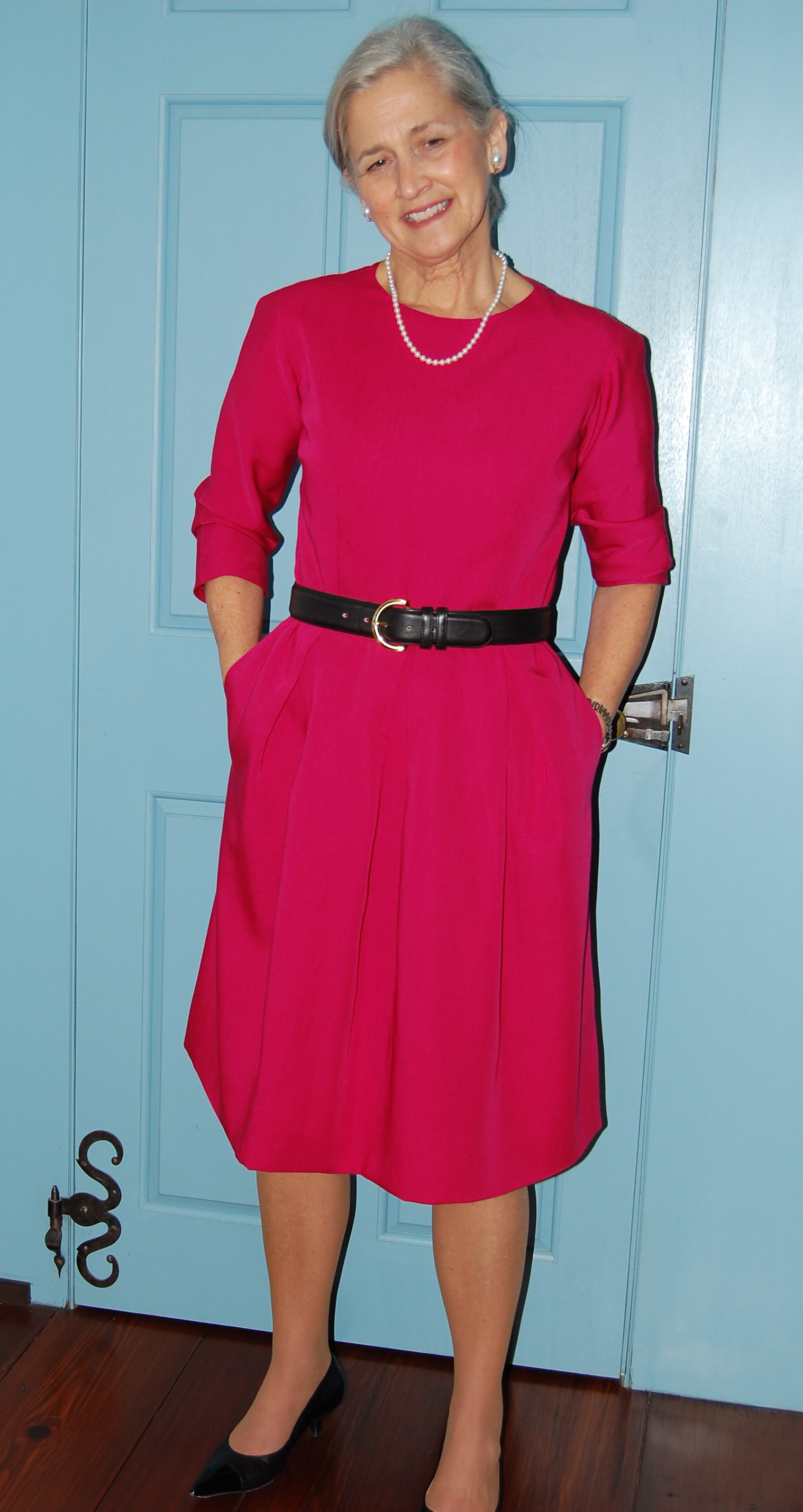
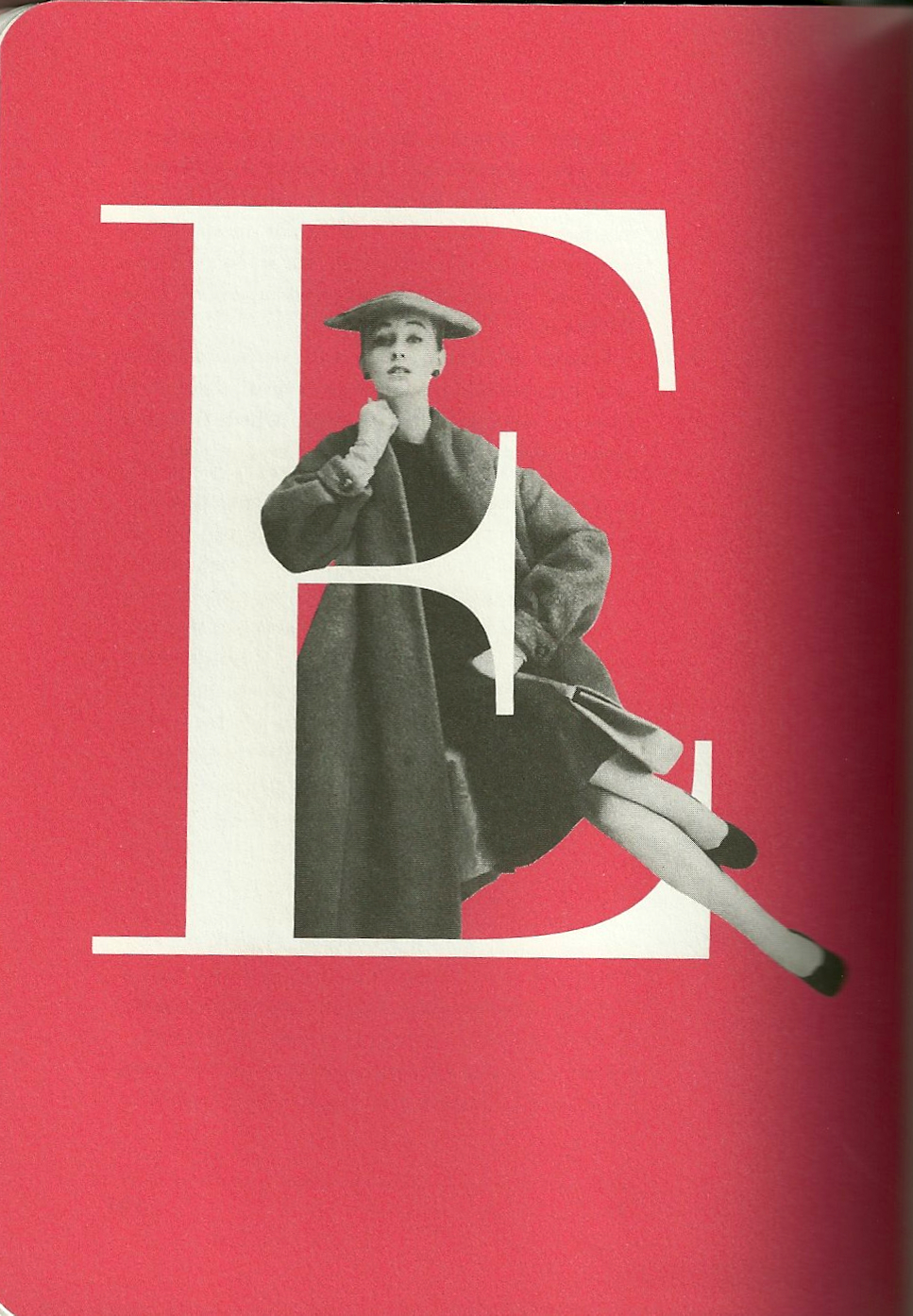
“… Every woman should have something pink in her wardrobe.”   Christian Dior certainly had distinct thoughts about fashion, and with this statement I concur.  Everyone looks good in pink, especially pale pink (men definitely included), and I suspect pale pink was what Monsieur Dior was thinking when he wrote this in his Little Dictionary of Fashion (First published by Cassell & Co., Ltd., 1954; 2007 edition by Abrams; Copyright Catherine Dior and Jean-Pierre Teto, 2007).   Interestingly, the lining pages of his little book are pale pink, but the divider pages feature a deep, deep raspberry pink as in – – – my newly finished “ladylike” dress!

Here is the "section"page for E from Dior's Fashion Dictionary

Here is the “section”page for E from Dior’s Fashion Dictionary

Dated 1958, this is the pattern I used for my pink dress.

Dated 1958, this is the pattern I used for my pink dress.

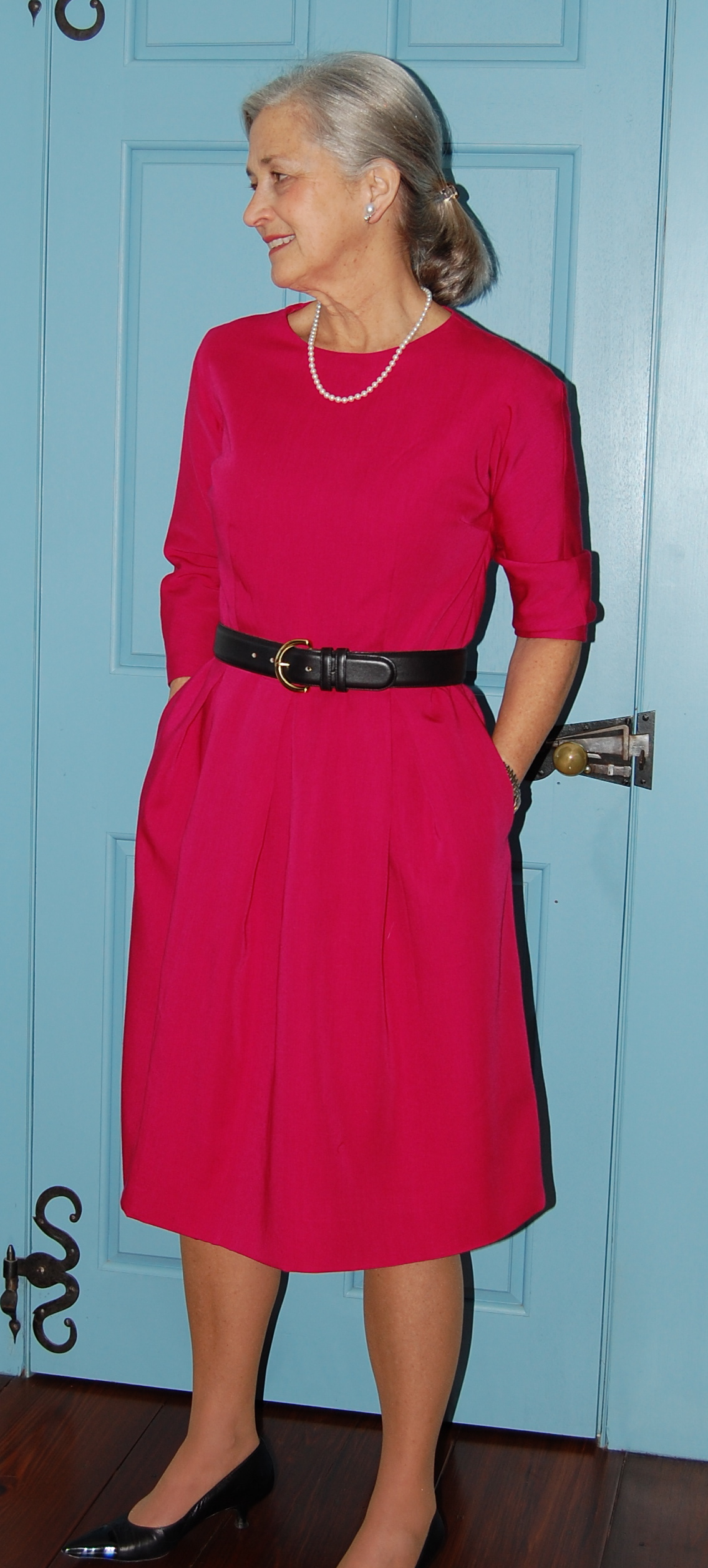
The finished dress!

The finished dress!

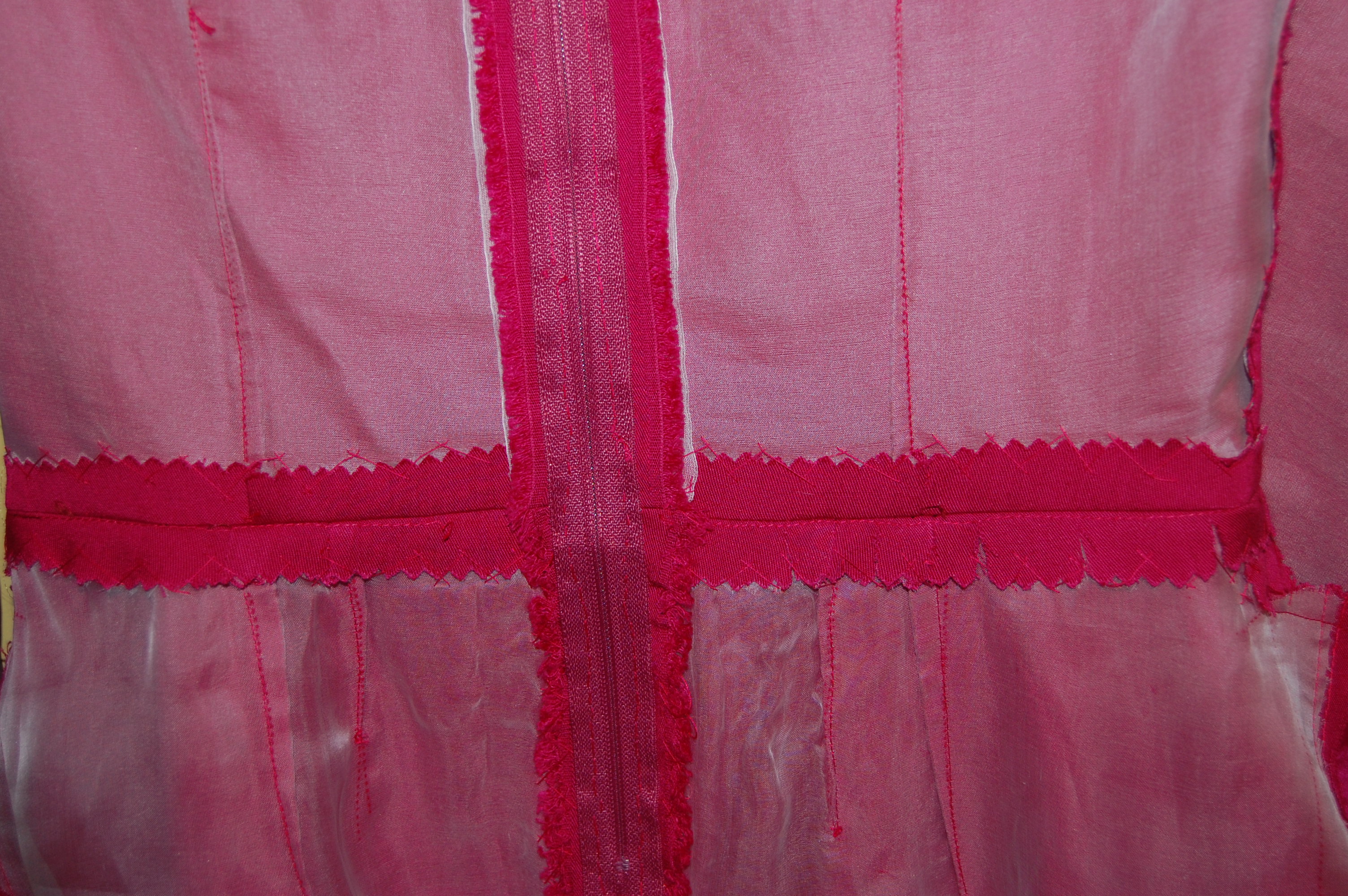
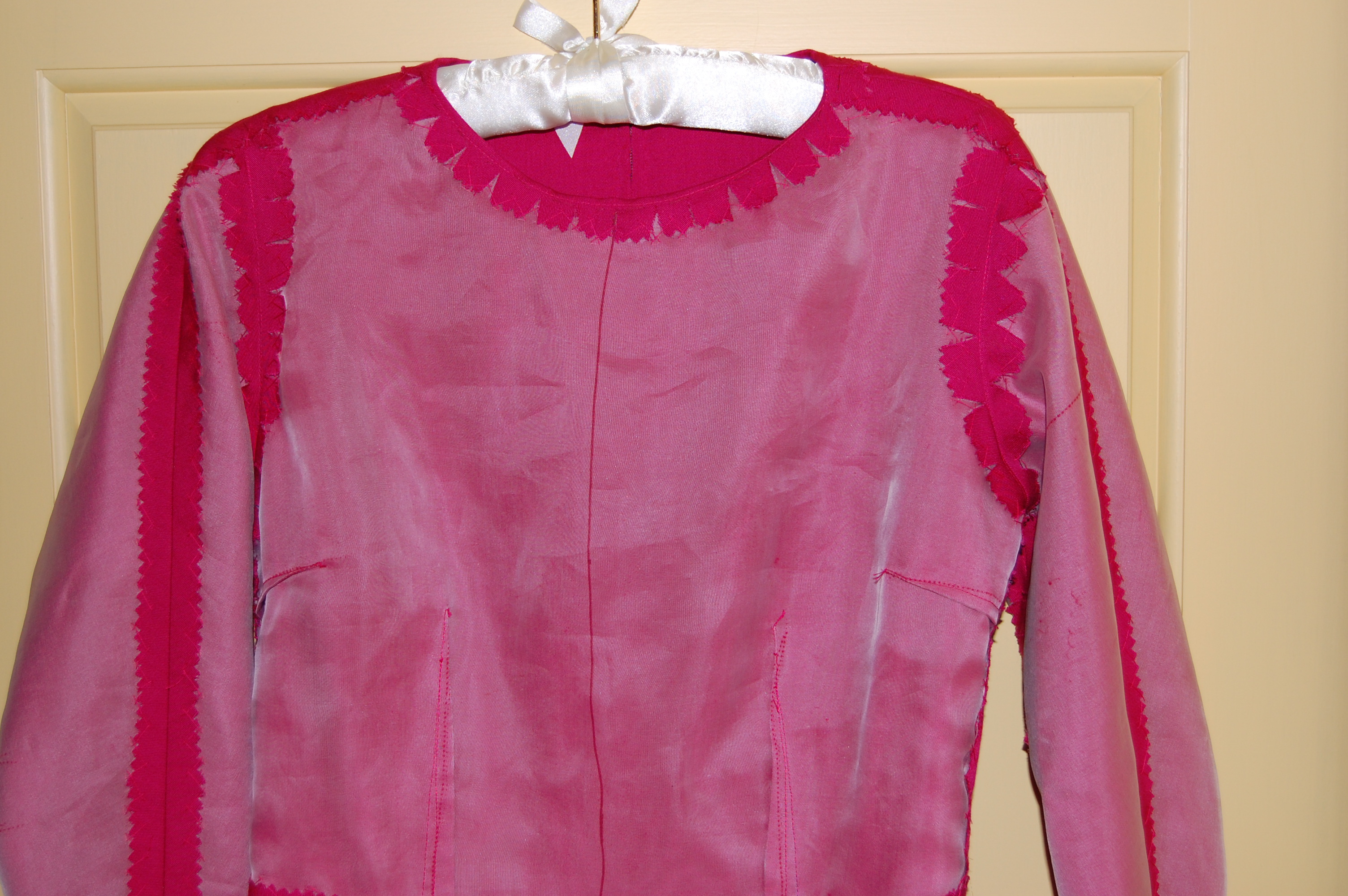
As I mentioned in my last post, I made this dress using couture construction, which means a lot of hand-sewing.  The more I use this type of construction, the more I like it, but it doesn’t get any faster.

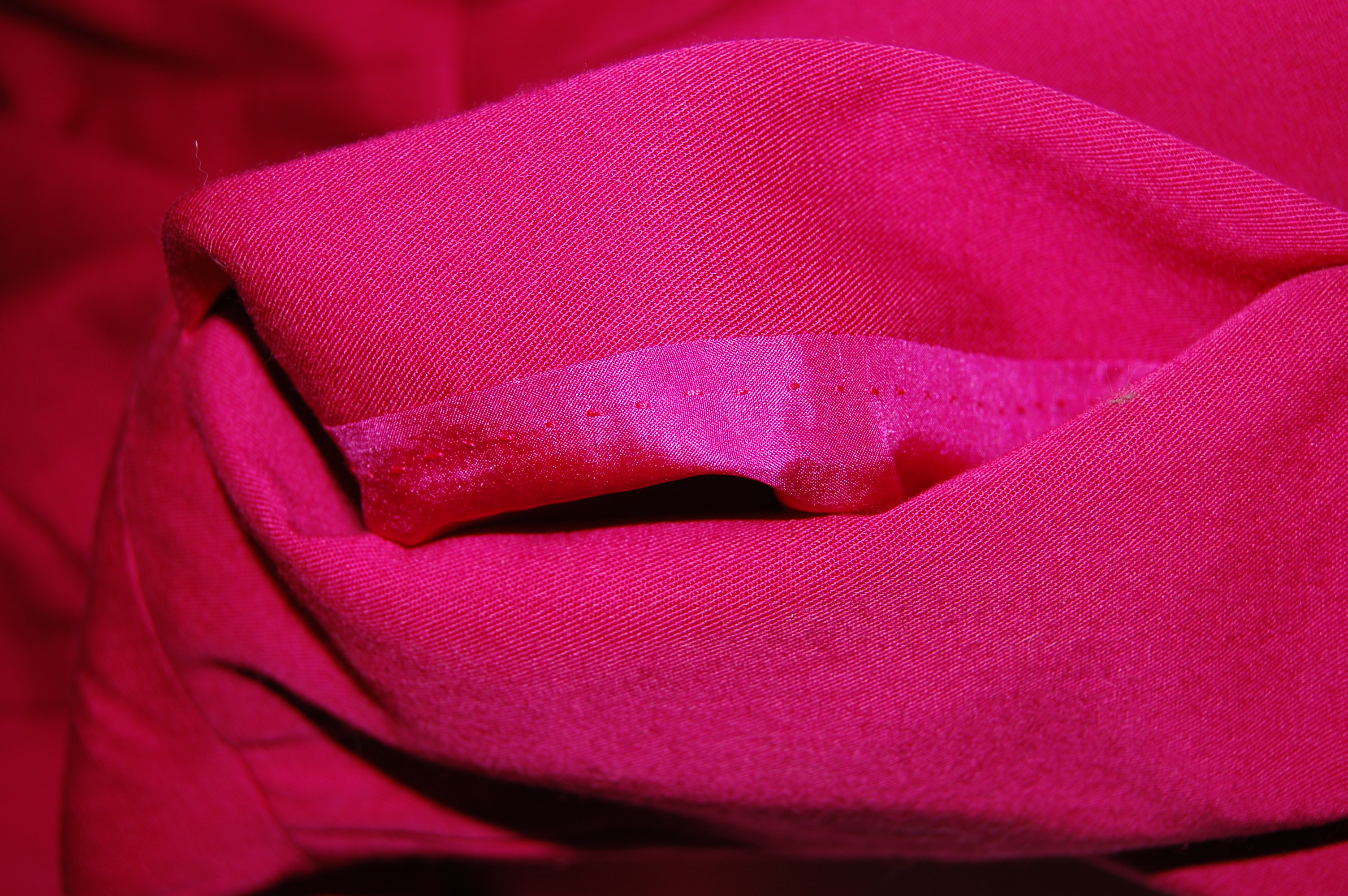
An interior view of some "couture" construction - silk organza underlining, catch-stitched seams, hand-picked zipper.

An interior view of some “couture” construction – silk organza underlining, catch-stitched seams, hand-picked zipper.

However, couture construction gives me a lot of flexibility in changing necklines, which I really appreciate.  That is one of the changes I made to this pattern – widening the neckline to a more flattering appearance for me.

The widened neckline.

The widened neckline.

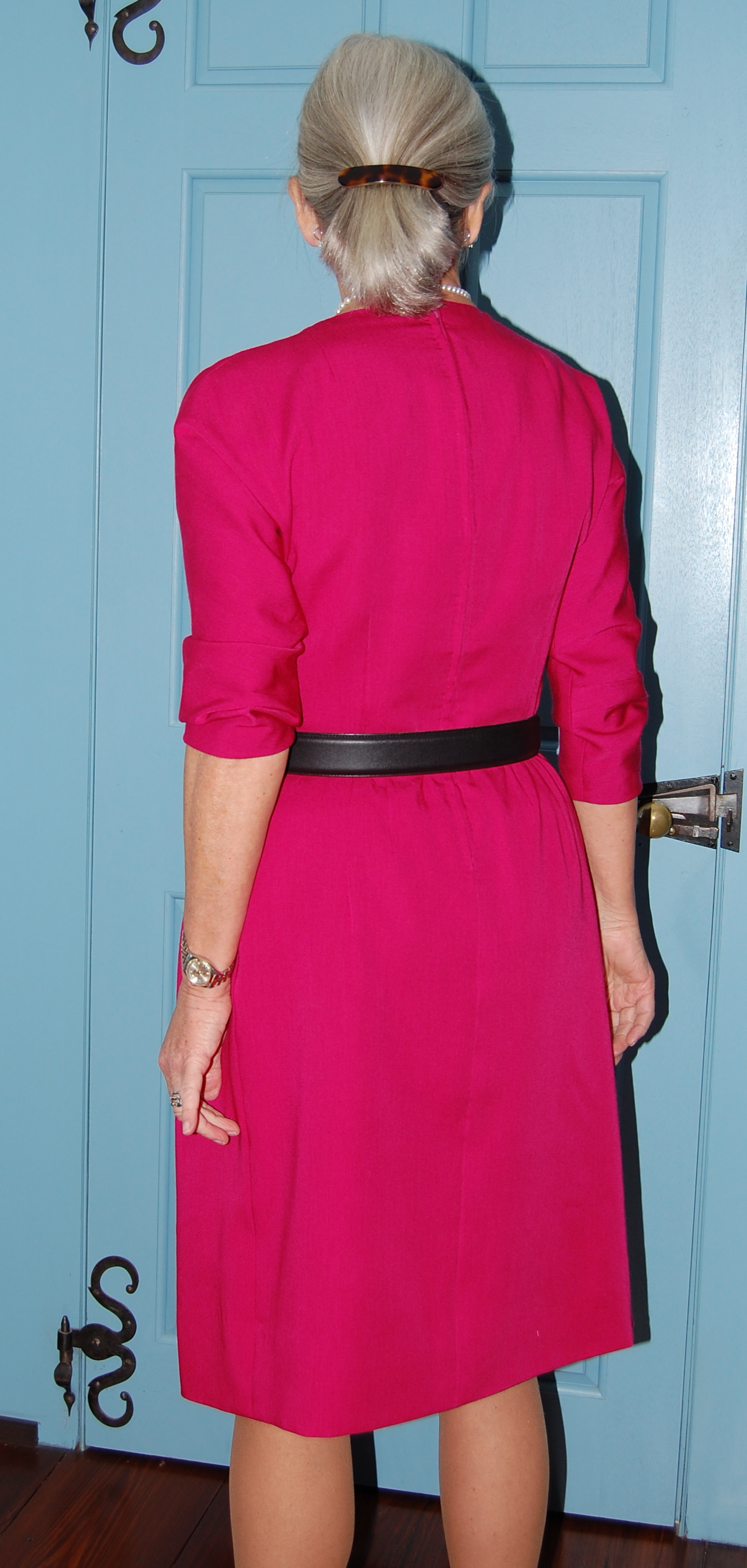
I also changed the back of the skirt by removing the box pleats and substituting a darted back.

I substituted darted back panels for the "original" box pleats

I substituted darted back panels for the “original” box pleats

The original dress had pockets hidden in side box pleats, but when I narrowed the width of the skirt, I did away with those side pleats.  I still wanted pockets, so I added pocket extensions in order to still hide them in the side seams.  It worked!

A peek at the pocket inside which shows the raspberry silk lining I used for the dress.  I understitiched the pocket edges by hand, which took no time at all and looks so much nicer than machine stitching!

A peek at the pocket inside which also shows the raspberry silk lining I used for the dress. I understitiched the pocket edges by hand, which took no time at all and looks so much nicer than machine stitching!

I added a quarter-inch to the underneath seam on each sleeve, so that each sleeve would have one-half inch extra width to it.  Those ladies in the 1950s must have had skinny arms, as I find sleeve widths on these vintage patterns are often just not quite spacious enough.

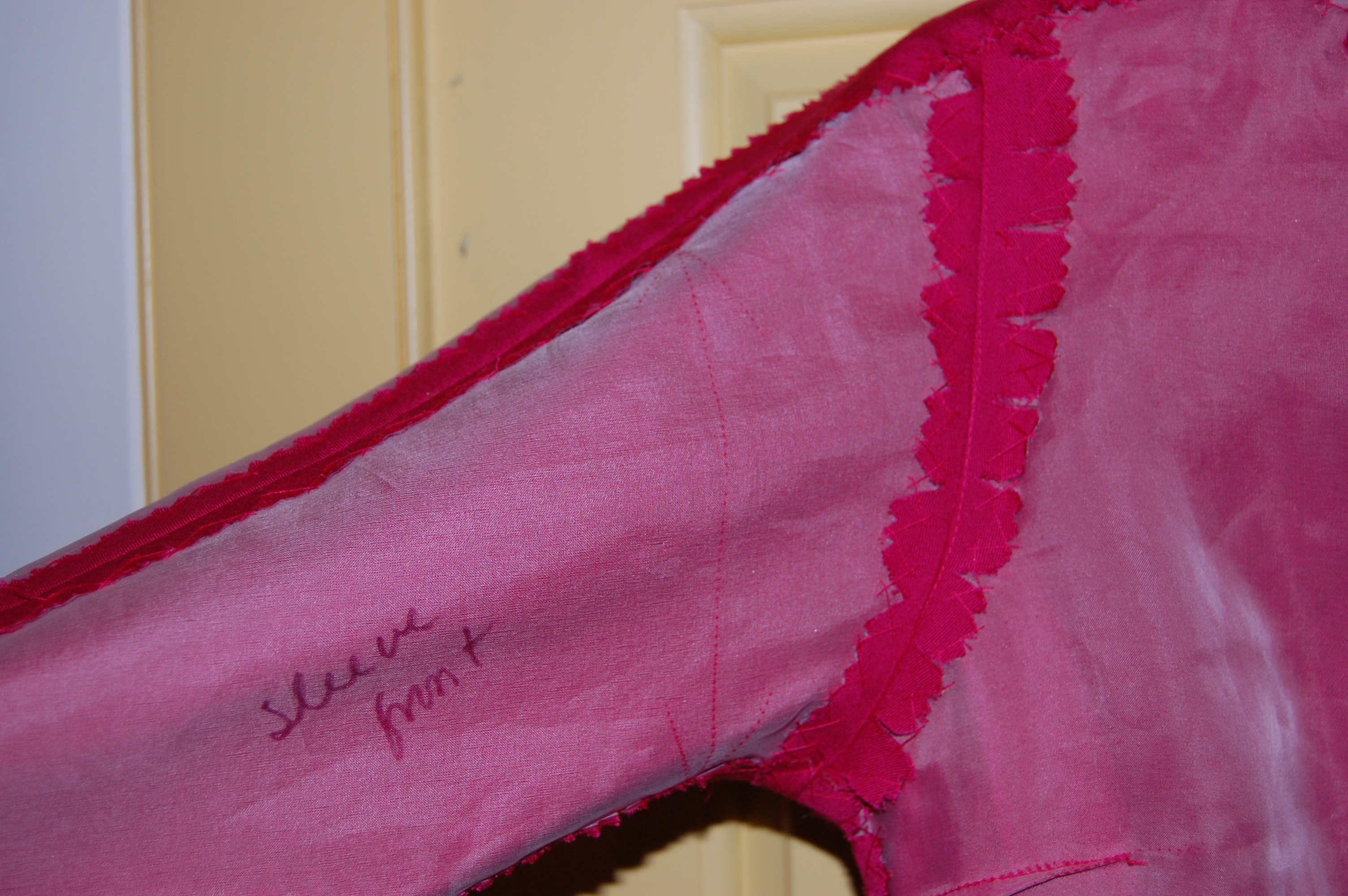
I added to the underarm seam - an adjustment which I determined from  my muslin.

I added to the underarm seam – an adjustment which I determined from my muslin.

This was the first time I had made sleeves which are half set-in and half kimono.  This is a look and fit which I love!  In fact, the shoulder fits so well, that my original thought to add an interior sleeve heading was one I decided I did not need.

The one thing I’m not sure I like is the “purchased or novelty belt” as indicated on the pattern.  I think a self-belt, a little wider than the one I show, would be more attractive.  Please comment if you have an opinion.  (I have plenty of fabric left over to make one…)

I am thinking a 2" wide self belt might be more attractive???

I am thinking a 2″ wide self belt might be more attractive???

Before I move on to my next project (to be announced soon), I want to thank Dresses and me for nominating me for the Very Inspiring Blogger award.

Very Inspiring Blogger Award

So, in accordance with the “rules” –  I am supposed to share a few facts about myself and nominate some others for the same award, so here goes:

1 – I am told I have a slight Southern accent, surely a remnant of being born and raised in North Carolina.

2 – I do most of my machine sewing on a 1940s’ Singer Featherweight and on my mother’s 1956 “306K” portable Singer.

3 – Autumn is my favorite season.

4 – I can make a very good Pumpkin pie.

5 – I enjoy reading historical fiction.

6 – I can’t sing (as in carry a tune) except for a few simple lullabies and Christmas carols.

Now – to pass on this award:  So many fellow bloggers inspire me every day that it is difficult to single out just a few (especially as many have already received this award!), but here are some worthy recipients:

For always giving me a laugh:  A Dress A Day and The Blue Gardenia.

For always teaching me something I would not have known otherwise:  The Vintage Traveler, Pattern Vault, Two Nerdy History Girls, and the FIDM Museum blog.

For sharing their sewing knowledge, design sense, and beautiful workmanship:  Custom Style, Lilacs and Lace, So Sew Lovely, and Frabjous Couture.

So now – you are IN THE KNOW and  – I am IN THE PINK!

21 Comments

Filed under couture construction, hand-sewn zippers, kimono sleeves, Uncategorized, underlinings, vintage Vogue patterns from the 1950s, woolens

Saying YES to a Ladylike Dress

What is it exactly that makes a particular dress elicit the description “ladylike”?  Is it primarily the fabric – or the color – or the style – or, as most would suggest, a combination of all these things?  And why, exactly, am I asking this question??

As one who generally is attracted to tailored, usually unfussy “frocks”, I had to answer this question for myself about this pattern, which, although still unfussy, with simple lines, just seems to be such a ladylike look:

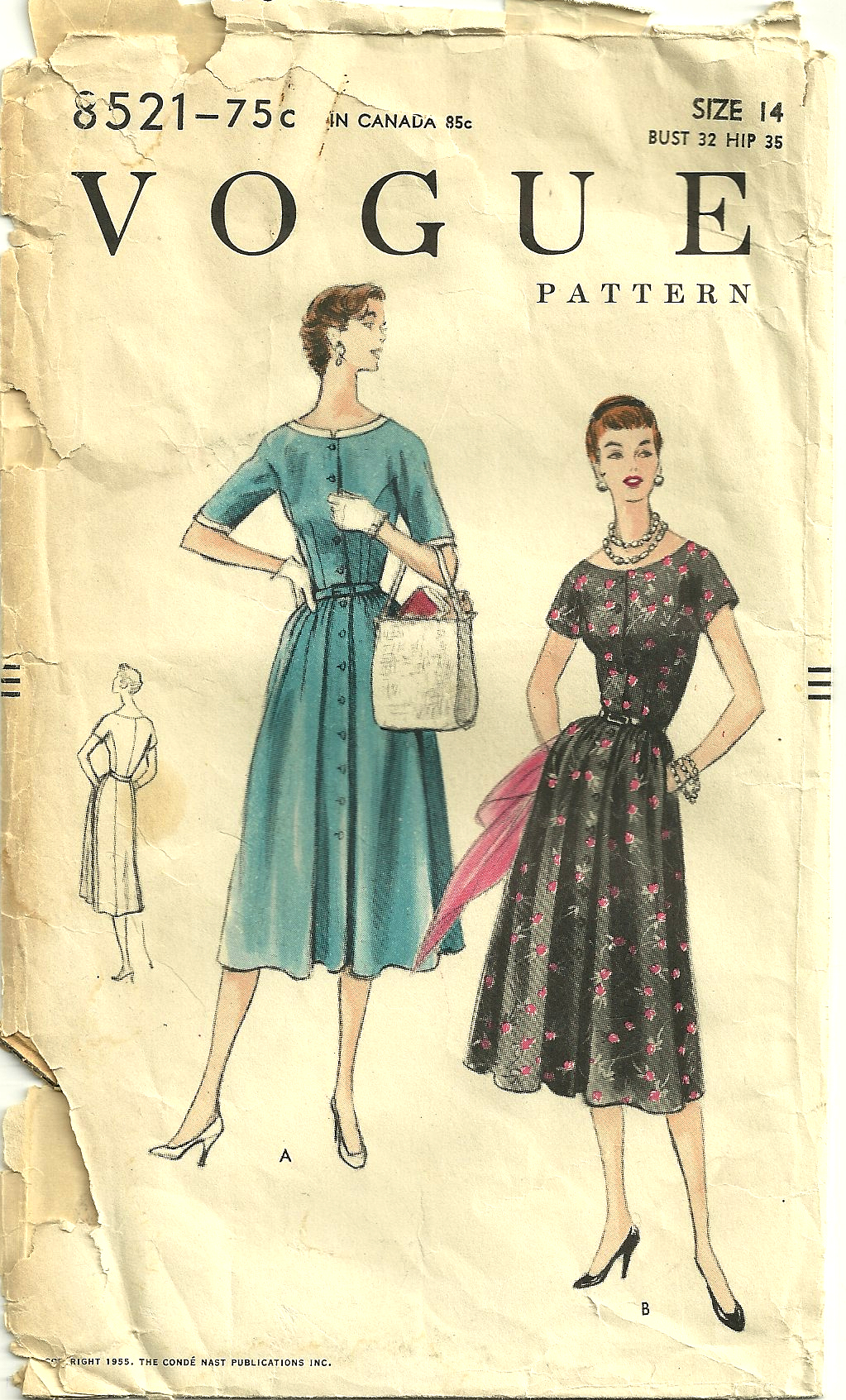
Dated 1958, this pattern shows the influence of Christian Dior.

Dated 1958, this pattern shows the influence of Christian Dior.

This is what I’ve decided.  I definitely think you start with the style – or the pattern – and this one has it.  There are four elements which work together to make this a ladylike look: 1) a defined waist, here further delineated with a purchased belt (or, as the pattern calls it, a “novelty” belt); 2) a soft shoulder line, which in this pattern consists of a set-in sleeve on the front bodice, but kimono in the back – very clever; 3) a full skirt, this one with inverted box pleats which soften the fullness to a considerable degree (although not quite enough for me, as I will explain later); 4) three-quarter length sleeves, which are the most flattering for most women, and which provide the perfect foil for bracelets or gloves.

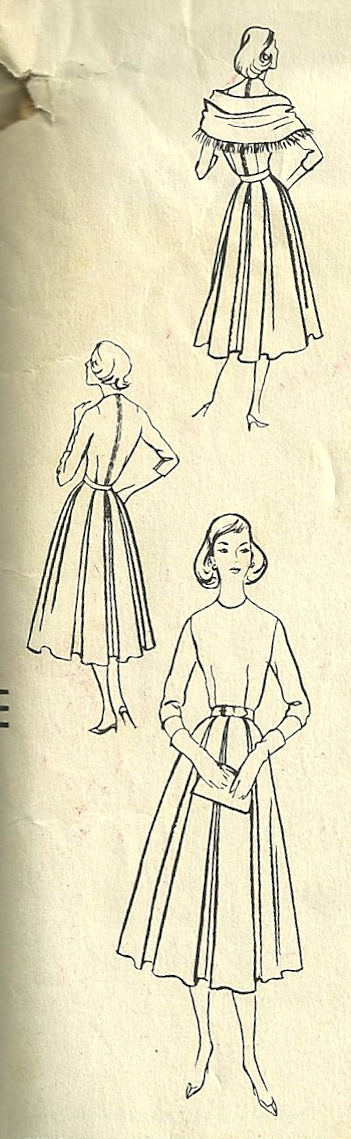
The middle sketch on the back of the envelope shows the kimono sleeve detail on the back of the dress.

The middle sketch on the back of the envelope shows the kimono sleeve detail on the back of the dress.

I’ve had this pattern for well over a year, but it took me a while to pair it with this fabric which I’ve had forever (well, not that long, but probably close to 10 years – which makes it seem like a baby compared to how long I’ve had some of my Moygashel linen!).

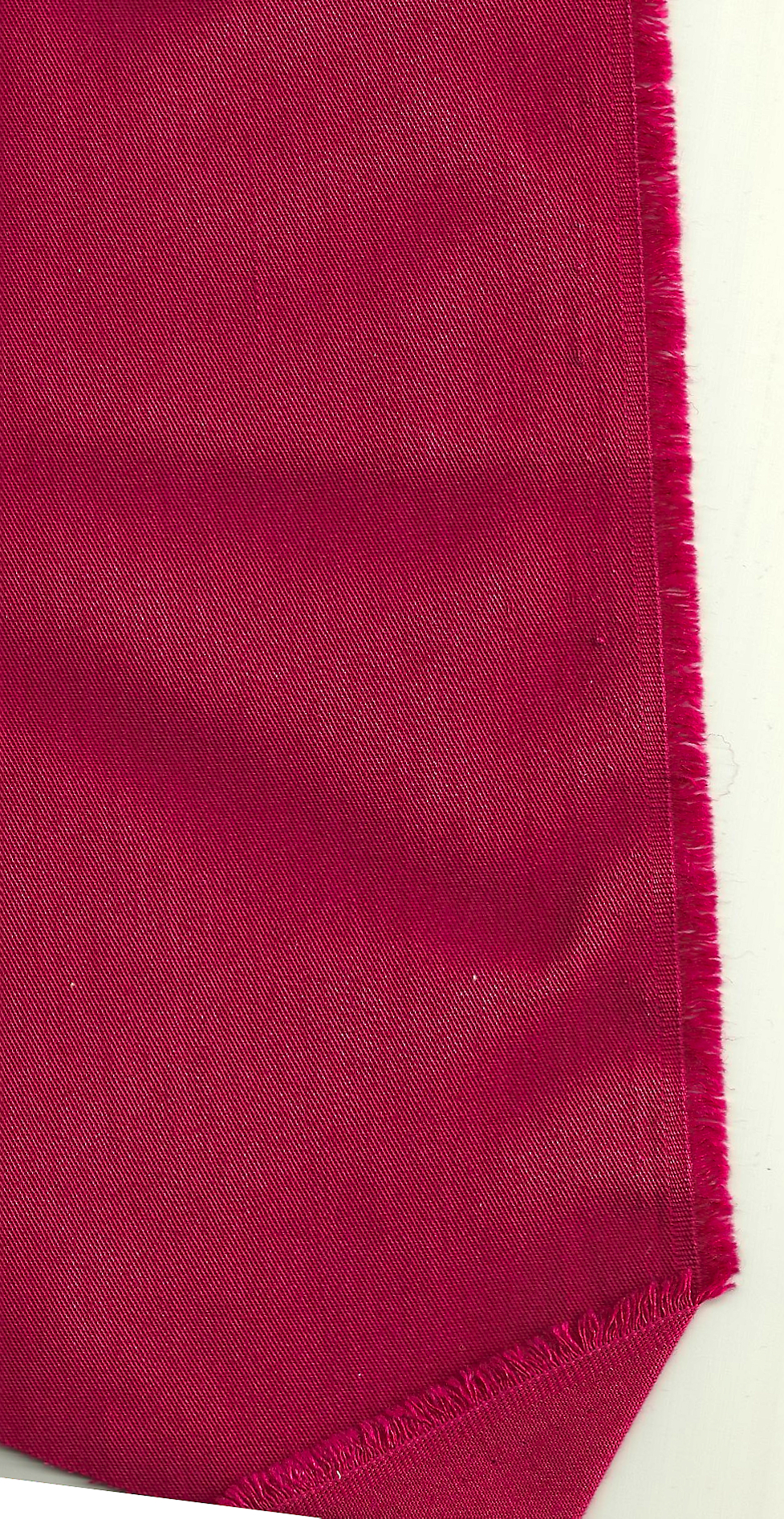
I'm not sure the fine twill weave of this fabric is visible here.

I’m not sure the fine twill weave of this fabric is visible here.

This fabric is a very beautiful wool/cotton blend, lightweight, but with a solid hand and very subtle fine twill weave to it.  It’s 60” wide and I bought three yards, so I obviously had plenty of fabric with which to work.  I’m in love with the color, a deep raspberry pink – I just cannot stay away from pinks of any shade.

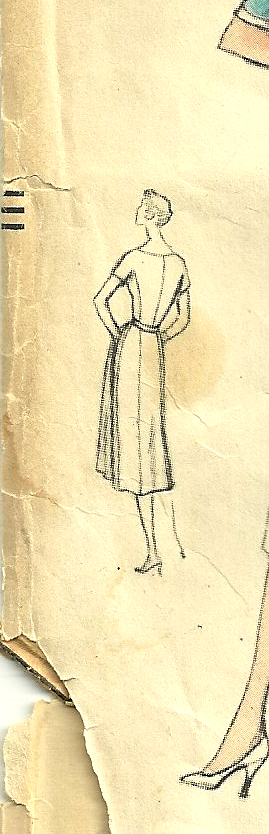
Knowing that I would be making this dress in knee-length rather than mid-calf made me reconsider the fullness of the skirt.  In thinking about this, I remembered another pattern in my collection, which shows a full skirt in the front and a fitted, plain skirt in the back.

This is an unprinted pattern, which makes working with its pieces  difficult.

This is an unprinted pattern, which makes working with its pieces difficult.

So – I decided to see if I could combine the two patterns to create the same look, but with less fullness.  The second pattern has a three piece back, which obviously would not work with a center back zipper.

Here is the detail of the skirt back.

Here is the detail of the skirt back.

So I decided to combine the side back and center back pattern pieces, add two darts to achieve a similar fit, and add a center back seam to match the seaming in the first pattern.

This is how I fit the two back skirt pieces together to make one piece.  The "triangle" became two narrow darts, which seemed to work better than one wide one.

This is how I fit the two back skirt pieces together to make one piece. The “triangle” became two narrow darts, which seemed to work better than one wide one.

I took a little more fullness out of the front pattern pieces of the first dress and reconfigured the box pleats.  Then, of course, I made a muslin to see if this would all work.  It certainly seems like it will.  The width of the skirt, according to the pattern envelope, was originally supposed to be about 100”.  The width of my muslin skirt is 56” – which means I removed over a yard in the skirt width!  Sometimes things look and hang a bit differently in the fashion fabric as compared to the muslin, so I am proceeding with cautious optimism.

I am making the dress with couture techniques – and I’m ready to do some serious sewing now that I have silk organza hand-basted to all the pattern pieces.

My pile of basted pieces.

My pile of basted pieces.

In sewing, I am always reminded of this quote from Wilhela Cushman:  “Just around the corner in every woman’s mind – is a lovely dress, a wonderful suit, or an entire costume which will make an enchanting new creature of her.”  I do indeed hope this will turn out to be a lovely dress – with enchanting ladylike qualities!

6 Comments

Filed under couture construction, kimono sleeves, Uncategorized, Unprinted patterns from the 1950s, vintage Vogue patterns from the 1950s, Vogue patterns

Chance of Flurries

I am two weeks (maybe closer to three weeks) behind schedule, but I am undaunted.  The last two weeks of 2012 were chock-a-block full of Family, Fun, and Feasting – and then the plague hit our house.   Yes, another F-word – the FLU – which apparently was not the type we got the immunizations for…

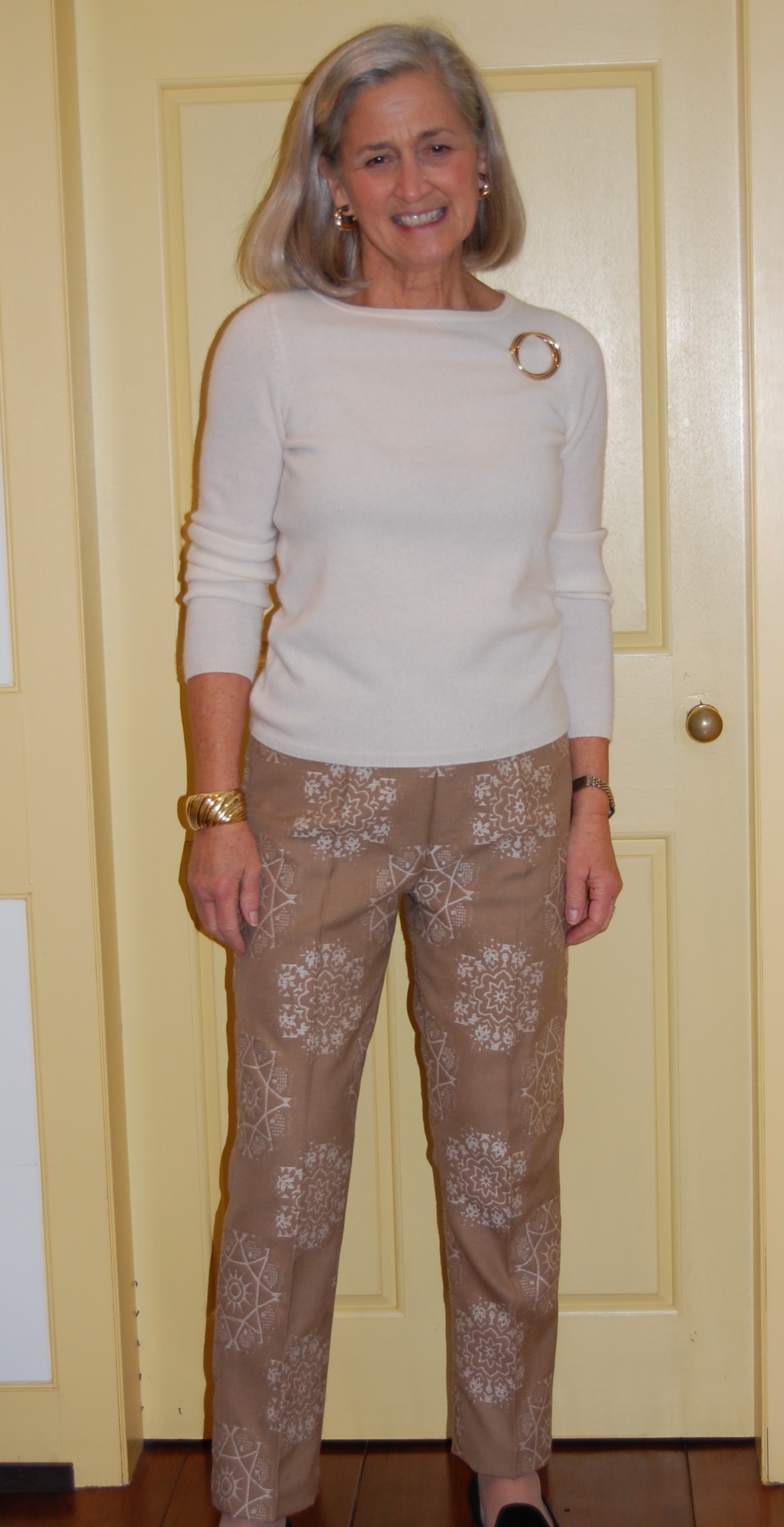
But this week has found me back in my sewing room, finishing up what was to be my final project for 2012.  Flexibility, I have learned, is a great asset to cultivate, so I am trying to be flexible in my plans and take it all in stride.  Indeed, I am hoping that I will be striding pretty in newly-sewn pants, which have now joined my wardrobe.

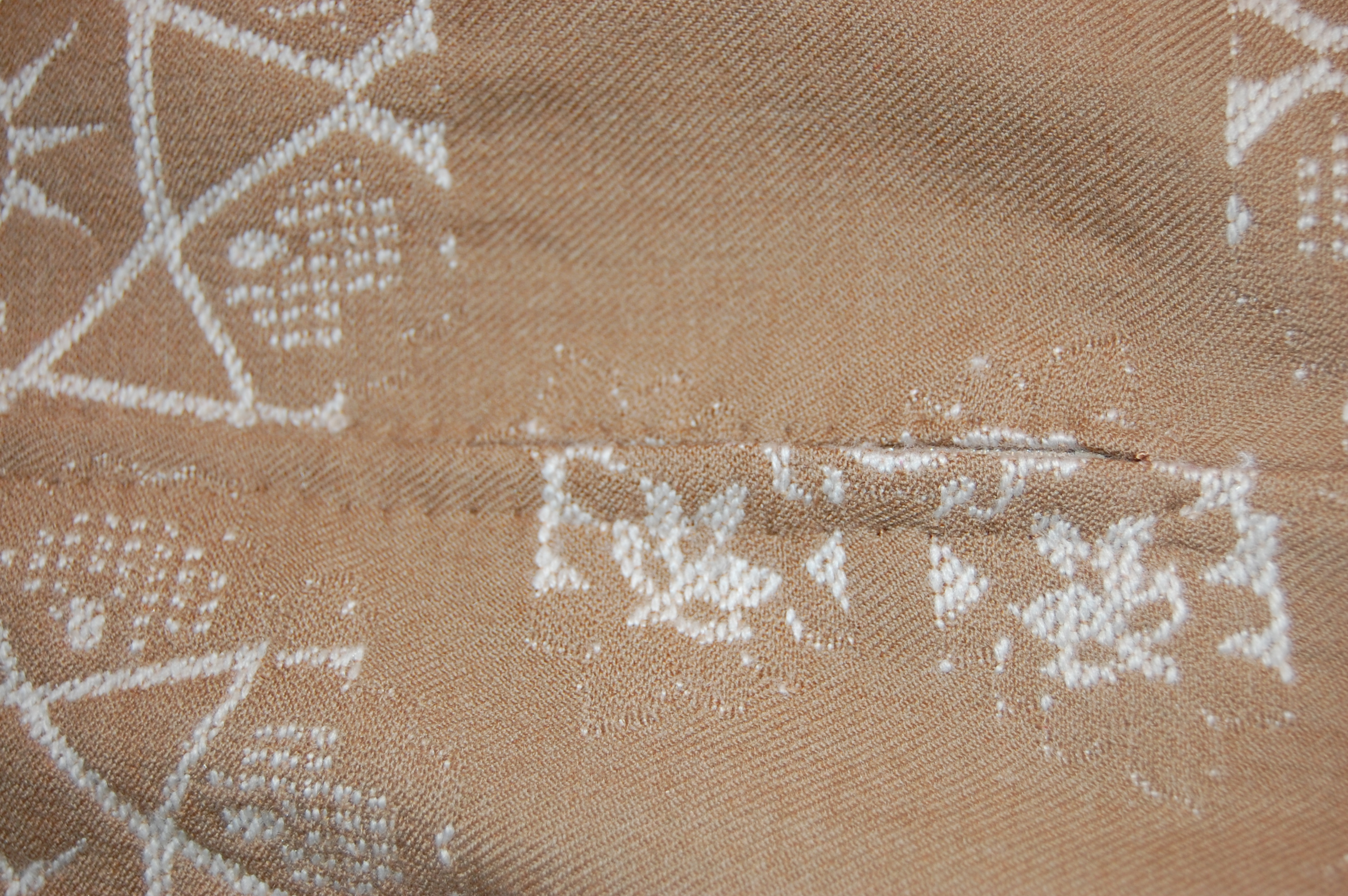
I think I must like pants made out of figured fabric.  As soon as I saw this snowflake wool on the website of Waechter’s Fabrics, I knew I wanted to make it up in winter slacks.

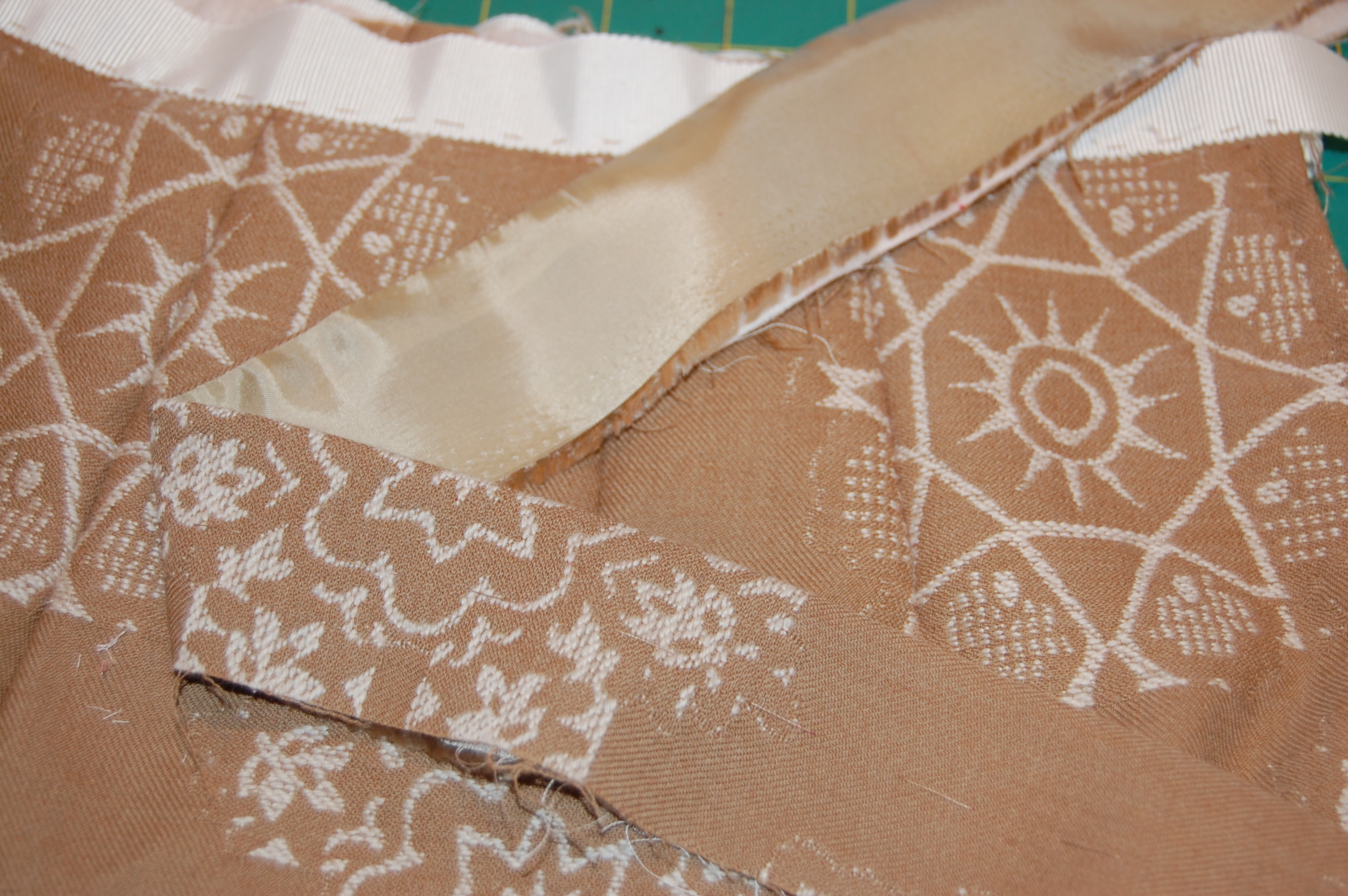
This is a jacquard woven wool, but very light-weight and soft.

This is a jacquard woven wool, but very light-weight and soft.

It was not even a decision to use the same 1960s’ pattern I used for my “very stylish” linen pants last Spring – pants’ patterns that fit are worth using again and again.

I made quite a few alterations to the pattern so that these slacks actually fit me!

I made quite a few alterations to the pattern so that these slacks actually fit me!

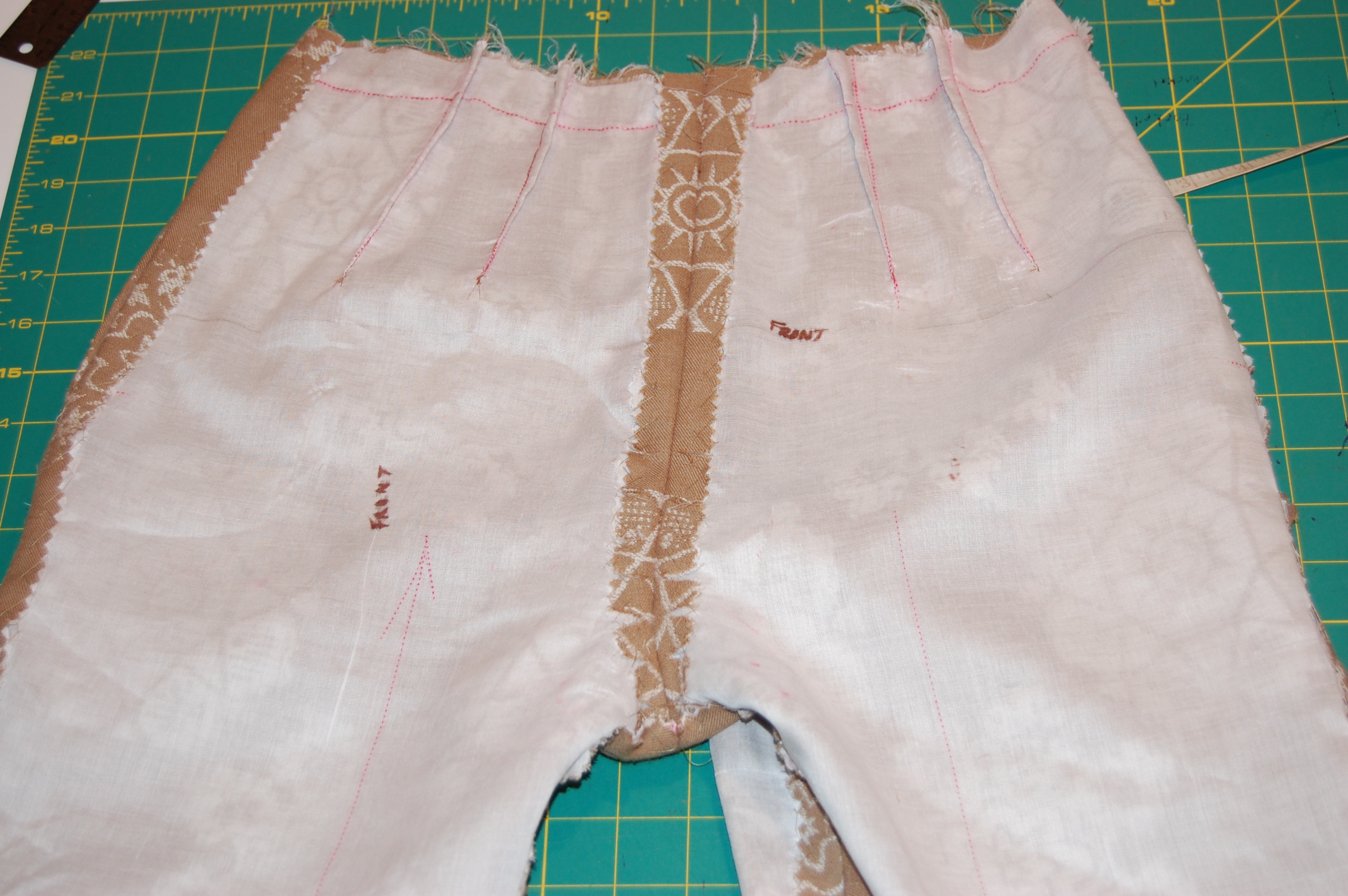
I did decide, however, to make these using couture techniques.  I underlined them with a very light-weight rayon voile which I have used successfully before.  I did not want to add much stiffness to this very soft and flexible wool, so the rayon seemed a better match than silk organza in this instance.  I catch-stitched all the seams, and inserted a hand-picked zipper.

The underlined pants, with catch-stitched seams.

The underlined pants, with catch-stitched seams.

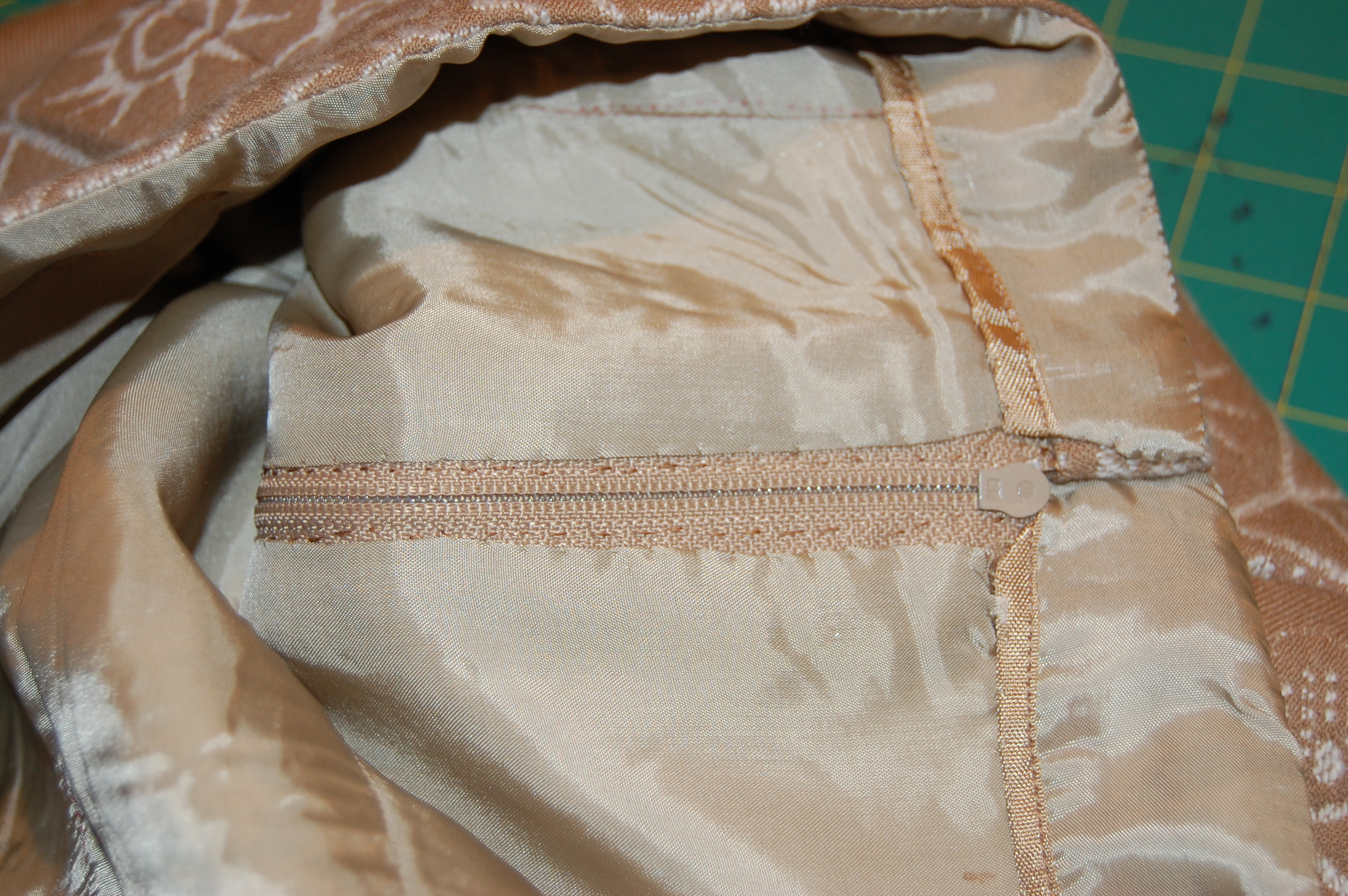
Hand-picked zipper.

Hand-picked zipper.

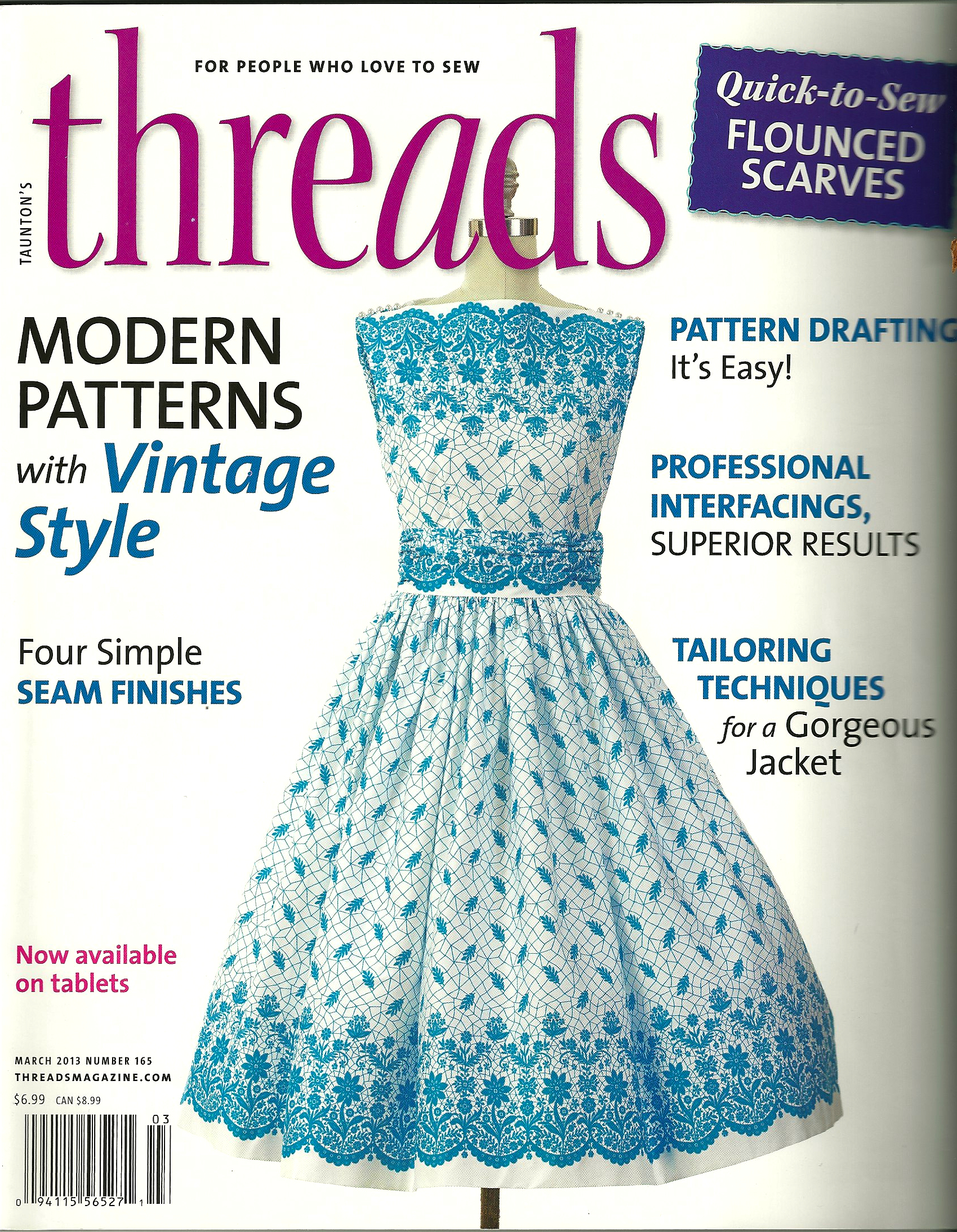
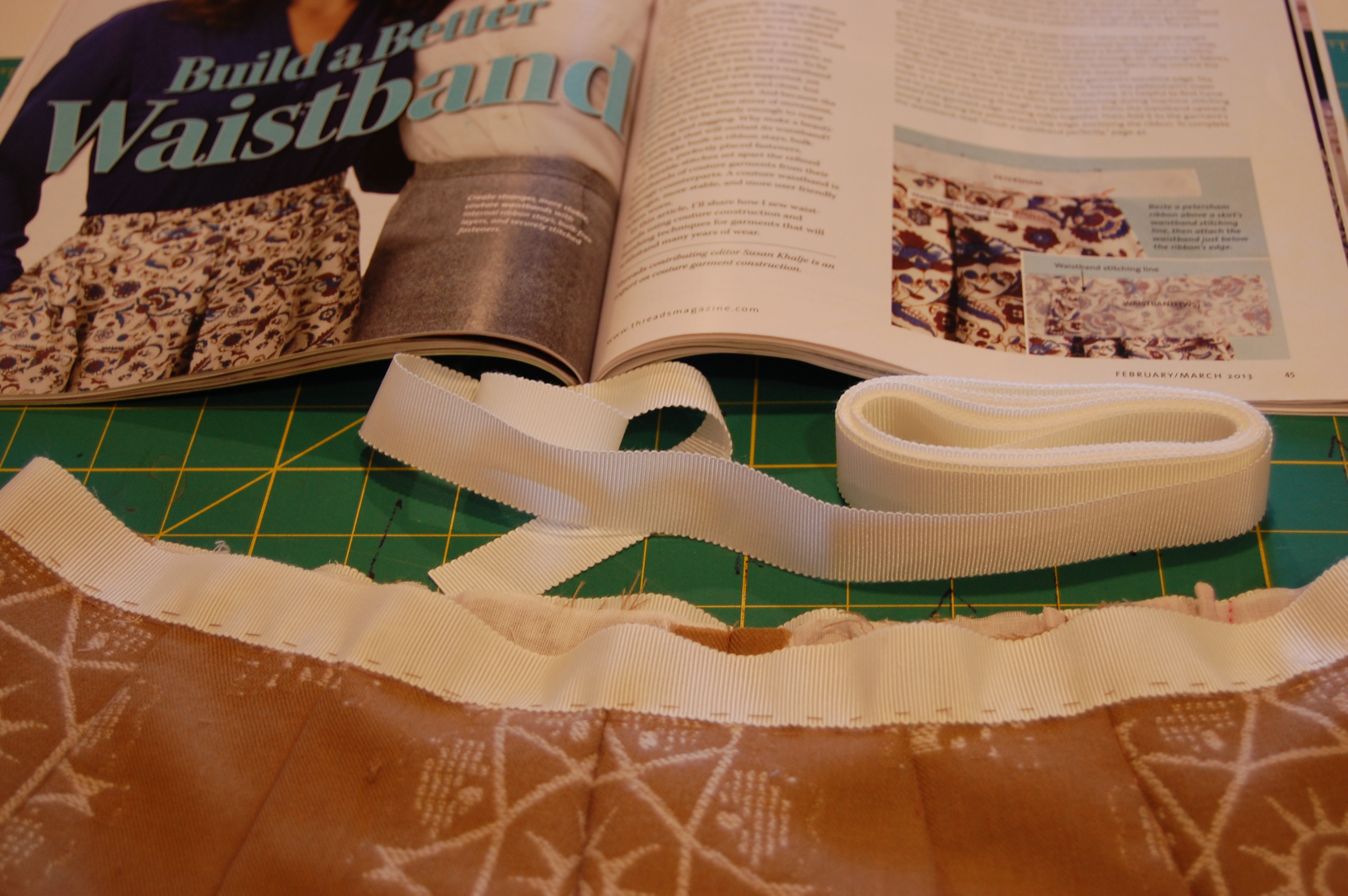
As luck would have it, the newest issue of Threads Magazine arrived right as I was getting started on this project – and Susan Khalje’s article “Build a Better Waistband” (page 44 – 49) immediately caught my attention.  I had already purchased several yards of Petersham ribbon in anticipation of waistbands yet to come, so I was all set.  I carefully followed all her detailed instructions and photos:

The newsest issue of Threads magazine

The newsest issue of Threads Magazine

The Petersham ribbon basted onto the waistline.

The Petersham ribbon basted onto the waistline.

I even decided to make a “faced” waistband.  I knew that this would help reduce bulk in the waistband, but also it would insure that any “itching” around the waist sometimes caused by wool fabric would be eliminated.

I made the facing out of the lining fabric.

I made the facing out of the lining fabric.

Everything was going along swimmingly until I went to set in the lining for the pants, which I made out of Bemberg rayon.  Somehow, the rise from the crotch to the waist was a little short.  I don’t know how this happened, but it did, and so I was faced with figuring out how to remedy this situation short of making an entire new lining.  Well, I decided to attach the waistband just to the underlined wool, not including the lining.  Then I used some careful and tightly-spaced catch-stitching to attach the top of the lining to that waistband seam.  (I forgot to take a photo of this, as I was totally absorbed in this “make-do” process.) This worked beautifully, much to my delight.  The only further fix I knew I needed to do was finish the inside of the waistband.  The waistband facing needed to be a little longer to hide my mistake, so I bound the raw edge with seam binding and used the fell stitch to finish it off.  I’m happy with the way it looks:

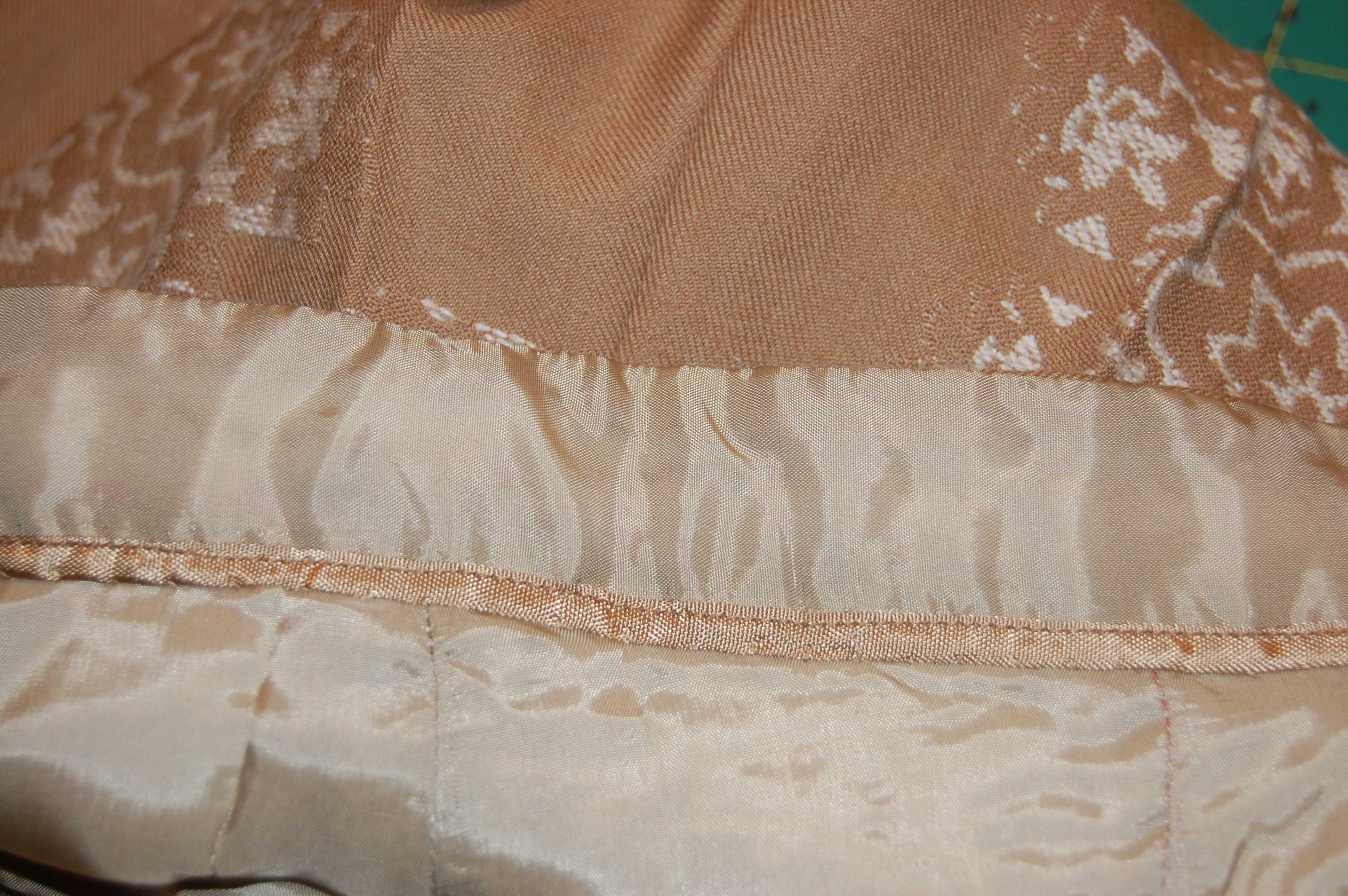
The seam binding helps to make a clean finish and hides my mistake!

The seam binding helps to make a clean finish and hides my mistake!

DSC_0761

I don’t think anyone would suspect my mistake – except for all of you, of course!

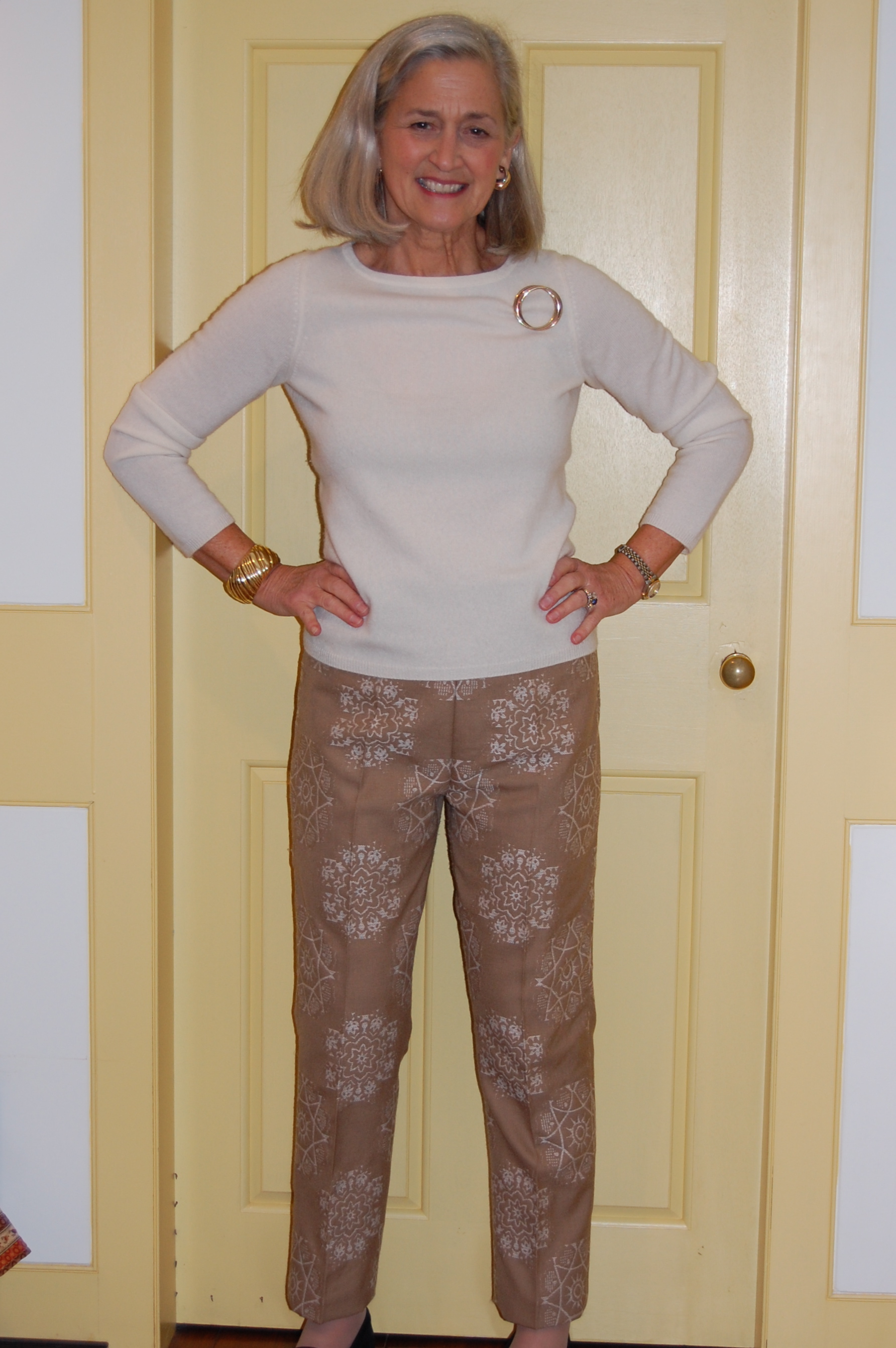
After final stitches to secure the lining to each of the legs, and then lots of steaming and pressing , my snowflake pants were finished!

Here they are, all finished!

Here they are, all finished!

Snowflake pants

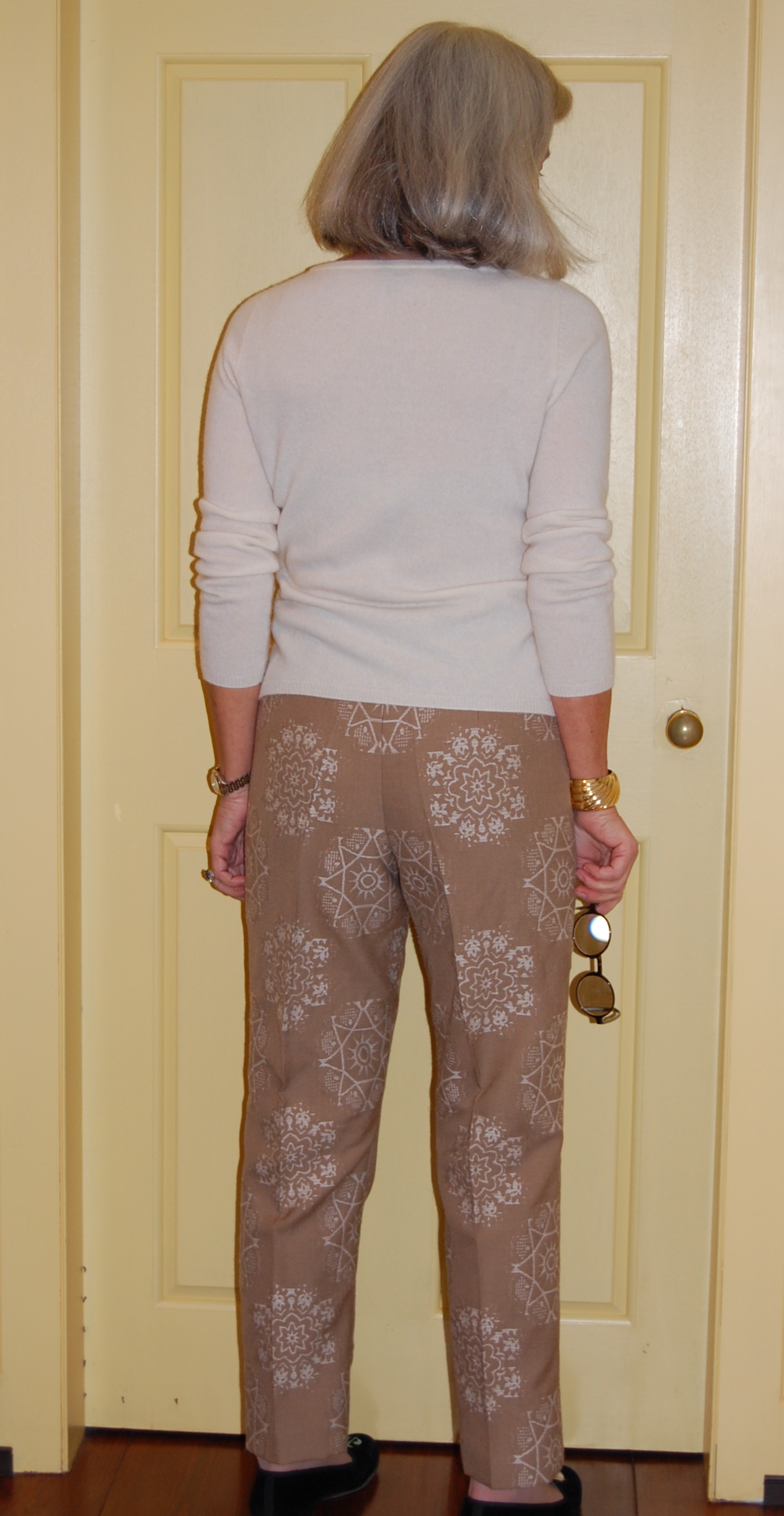
A back view.

A back view.

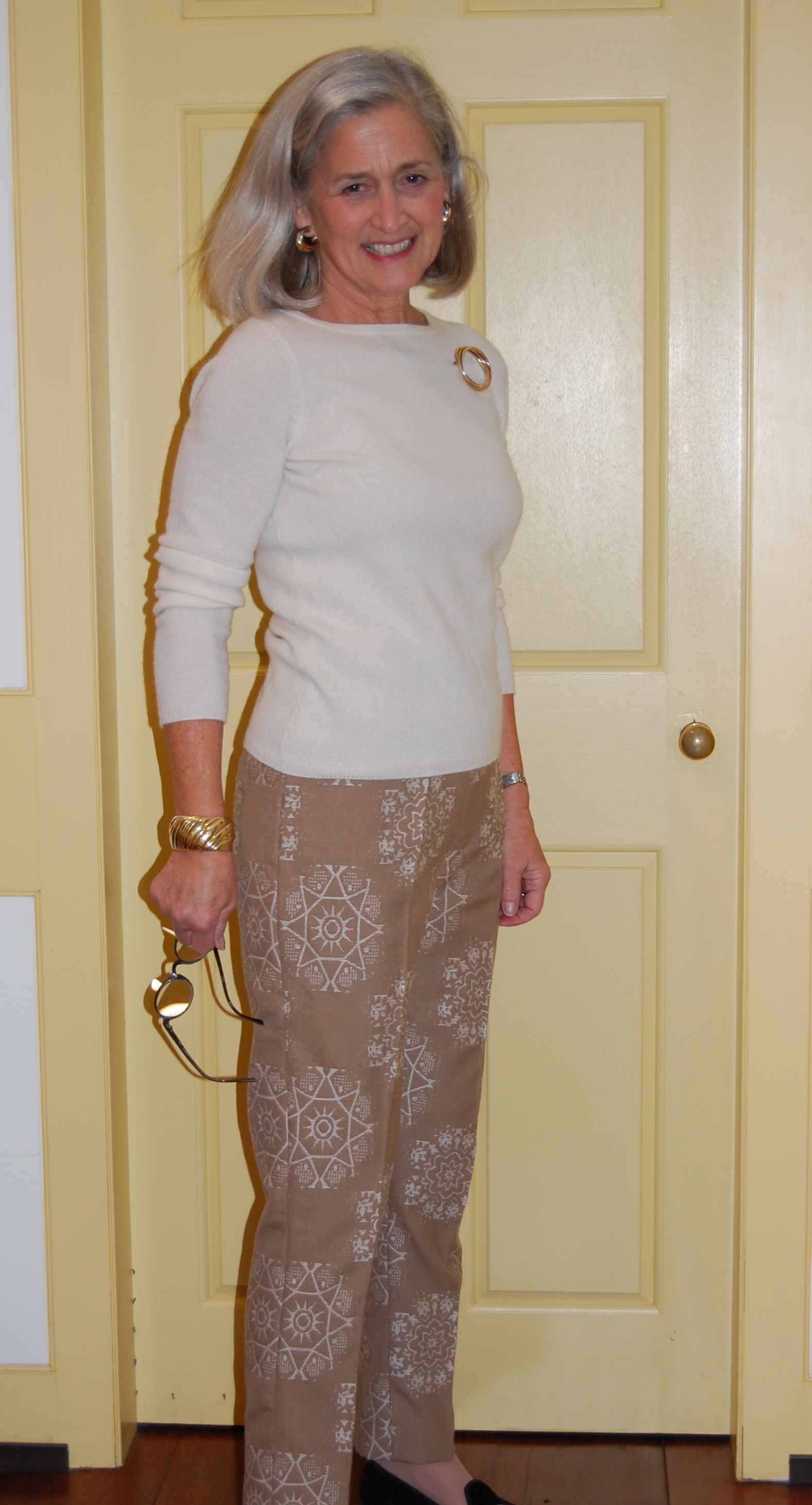
Kind of a side view.

Kind of a side view.

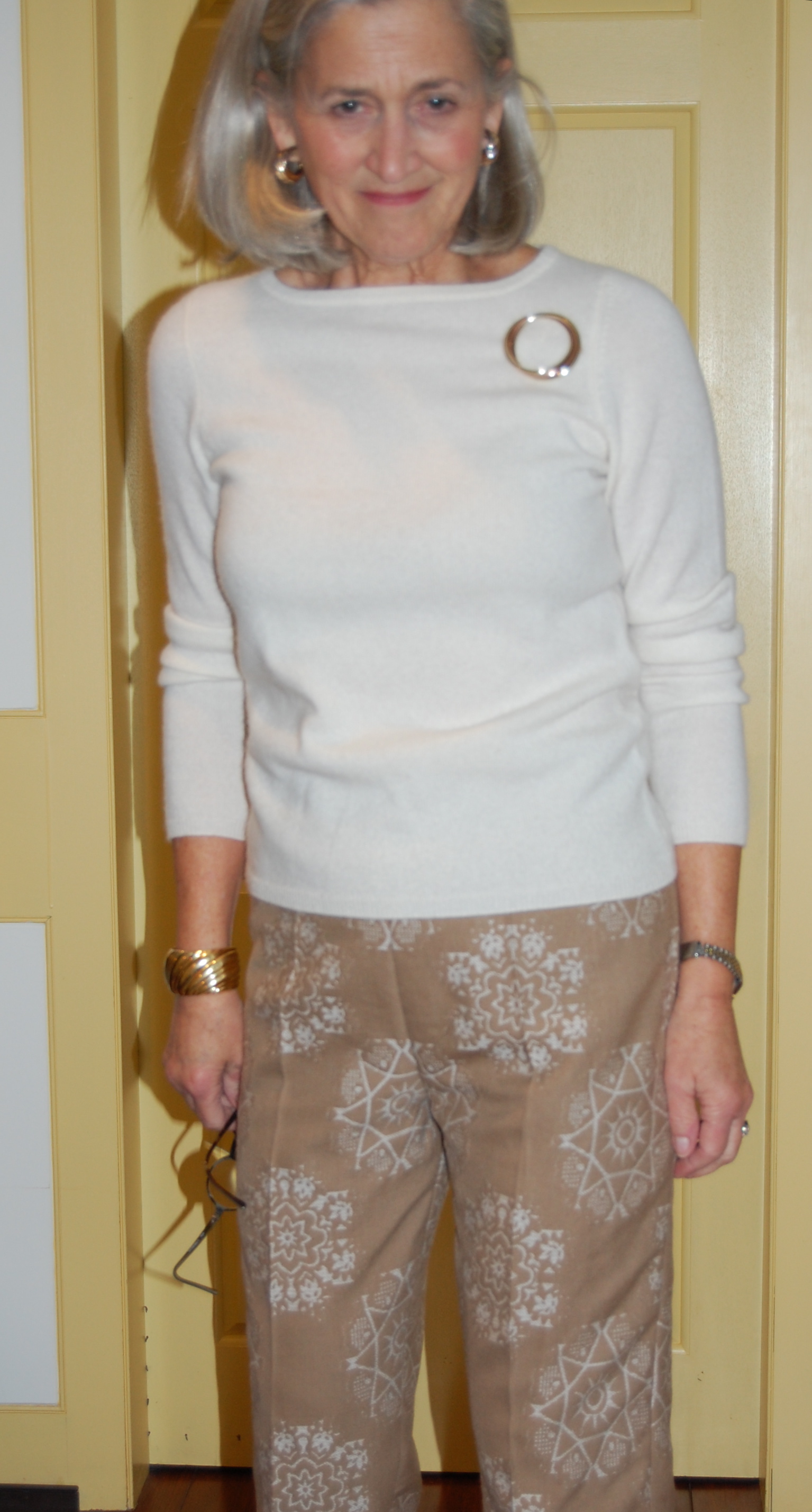
And a little closer up...  I'm happy with the way I was able to align the snowflake "medallions".

And a little closer up… I’m happy with the way I was able to align the snowflake “medallions”.

We seem to be in a January thaw right now, so the only forecast for flurries must be – in my control??  Well, I happily guarantee that sightings of snowflakes will definitely happen this Winter!

15 Comments

Filed under couture construction, hand-sewn zippers, Uncategorized, underlinings, vintage Vogue patterns from the 1960s, Vogue patterns, woolens

A Newly Defined ‘50s’ Frock

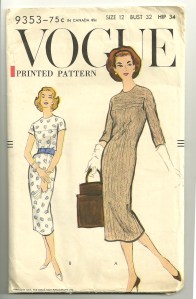
I have finished making a new dress from an old pattern, which isn’t anything too unusual for me.  What is unusual is the spell which this pattern cast over me from the time I first saw it last January, and then purchased it from an Etsy shop.

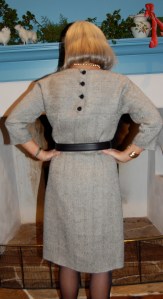
The length of this dress as shown on the envelope is very 1950's.  I'll be making it in knee-length.

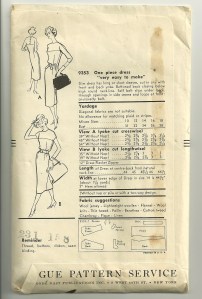
The back of the envelope, showing the back yoke detail.  Don't you love the handbags that the artist included?

The back of the envelope, showing the back yoke detail. Don’t you love the handbags that the artist included?

Copyright 1957, this pattern has intrigued me for both how modern it looks, and how quintessentially “1950s” its various details are – such as:

1) Kimono sleeves in three-quarter length.  Cut in one with the bodice, kimono sleeves were common in the ‘50s, and now seem to be making a comeback.  Three quarter length is extremely flattering for most women, and was popular then and now.

2) Side zipper.  This dress goes over the head and needs that side zipper to accommodate the wiggle room needed to accomplish this method of dressing.  A back zipper would completely ruin the effect of the four-buttoned back yoke.

3) No pockets.  While pockets are lovely inventions, this dress would lose some of its slim and flattering line should pockets bulge out from the side seams.

4) Mid-calf length.  This length looks great in the pattern illustration, but not so much on me.  One of the beauties of these vintage patterns is adapting them for current wear – so I opted for knee-length instead.

5) Bound buttonholes.  Although this pattern is called “easy to make” on the back of the envelope, it still calls for bound buttonholes.  And, oh, they add such a nice detail.

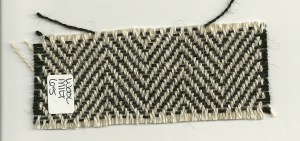
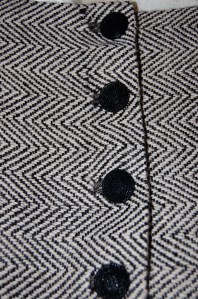
Now to the specifics.  I found this black and white herringbone alpaca wool (made in the USA) on Britex Fabrics’ website, and purchased it on sale a few months ago, specifically for use with this pattern.

This is the swatch I ordered from Britex sometime over the Summer.

This is the swatch I ordered from Britex sometime over the Summer.

I wanted to make the dress using couture techniques (learned in the online Craftsy course The Couture Dress taught by Susan Khalje.)  This meant that I would 1) make a muslin for fitting and pattern tracing; 2) underline the entire dress with silk organza; 3) eliminate the separate neck facing; 4) finish all the interior seams by catch-stitching them to the underlining; and 5) line the entire dress, which I did using Bemberg instead of china silk (more on that in a bit).

There were a number of decisions/problems/successes involved in making this dress. First, the nature of the fabric is that there are slight imperfections in the weave, and it is quite loosely woven, making it quite susceptible to raveling.  When I laid it out to cut it, I wanted to avoid any obvious imperfections front and center.  Patterns with kimono sleeves demand large expanses of fabric and thus do not allow a lot of jiggling of their placement.  I can honestly say that I had JUST enough fabric and not an inch more than I needed!

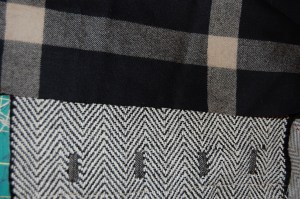
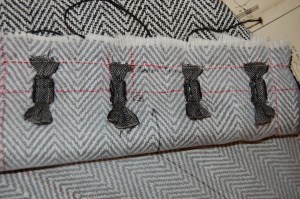
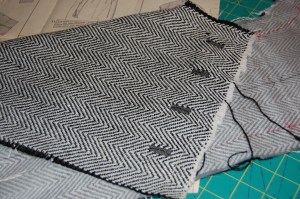
One of the first problems I realized I was going to have concerned the buttonholes.  I quickly discovered that the loose weave of the fabric meant that I was not going to be able to make bound buttonholes using self-fabric for the “strips”.  I considered using a plain black wool for these strips, but I thought that would be too much of a contrast.  Well, now I know why I save all kinds of scraps from previous projects – you never know when one of those random pieces of fabric will come in handy.  I spied a scrap in my fabric closet and quickly decided that one part of the weave would be perfect to delineate those buttonholes:

I used the "gray"portion of this windowpane check for the buttonhole "strips".

I used the “gray” portion of this windowpane check for the buttonhole “strips”. Click on the photo to see this up close.

An inside look at the buttonholes in progress

An inside look at the buttonholes in progress

And an outside look...

And an outside look…

When it came to deciding on buttons, I could not find any I liked.  But I remembered some buttons I had sewn onto a RTW jacket several years ago (to replace the ones that came on it.)  They have a “herringbone” look to them – it’s very subtle, but effective.  The jacket is one I haven’t worn in a couple of years, so I just robbed the cuffs of their buttons and used them on my dress.  (Now I guess I know for sure I won’t be wearing that jacket again!)  But – the buttons are perfect for this dress.

My buttons of choice!

My buttons of choice!

Choosing to use couture techniques was a “dress-saver”.  The larger seam allowances took away the panic I might have felt, once I realized the fabric frayed so easily.  And finishing off each interior seam with catch-stitching controlled the fraying and helped the seams to lay perfectly flat.

Eliminating the separate neck facing was also a bonus to ease construction.  First of all, I wanted to widen the neckline, which I worked out in my muslin.  Using the seam allowance and hand-applied, under-stitched lining for the neck facing made it lay flat, and of course, it’s not itchy either!

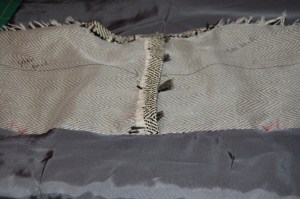
The "couture-constructed" neckline, before the lining is attached.

The “couture-constructed” neckline, before the lining is attached.

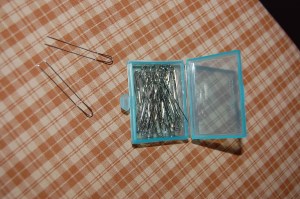
Even though I did not have “plaids” to match, I needed to pay close attention to the rows in the herringbone weave, so that none of them were crooked.  This is where Clover two-pronged pins (recommended by Susan Khalje in The Couture Dress class) came in handy and helped me keep those rows lined up evenly.

Clover "fork" pins

Clover “fork” pins

Finally, I decided to use Bemberg lining fabric instead of China silk because I thought it might be a bit more substantial for this somewhat heavy weight wool.  When I was deciding what color to make the lining, I considered ivory, black, and even a bright color, such as red.  But I settled on deep gray, and it seems just right.

In fact, everything about this dress seems just right.  It is delightfully rewarding when a pattern does not disappoint – and when it turns out to be a complete winner, well, that is reason to make it again (which I will)!

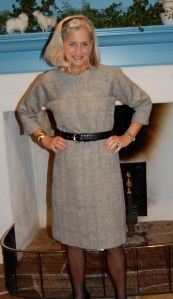
I can wear this dress as a sheath, unbelted, but I love it with this Coach black belt.

I can wear this dress as a sheath, unbelted, but I love it with this Coach black belt.

The back view

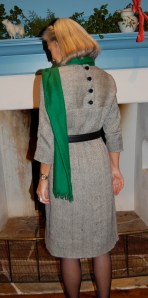
With a touch of emerald green for the holiday season

With a touch of emerald green for the holiday season.

With green gloves for a '50s' look!

With green gloves for a ’50s’ look!

And another back view.

And another back view. Alpaca is a very warm wool – so this dress is very cozy.

For now, however, my sewing room is “gift-wrap central”.  The colorful ribbons, paper and tags are cheerful tokens of a season of blessings and family and home.  To all of you celebrating the season, may it be a time of great peace and love for you and yours. And, as I  take a couple of weeks “off”, I send a heartfelt Merry Christmas from me to you…

24 Comments

Filed under bound buttonholes, Buttons - choosing the right ones, couture construction, kimono sleeves, side-placed zippers, Uncategorized, underlinings, vintage Vogue patterns from the 1950s, woolens

A Blouse by Any Other Name Would Be the Same

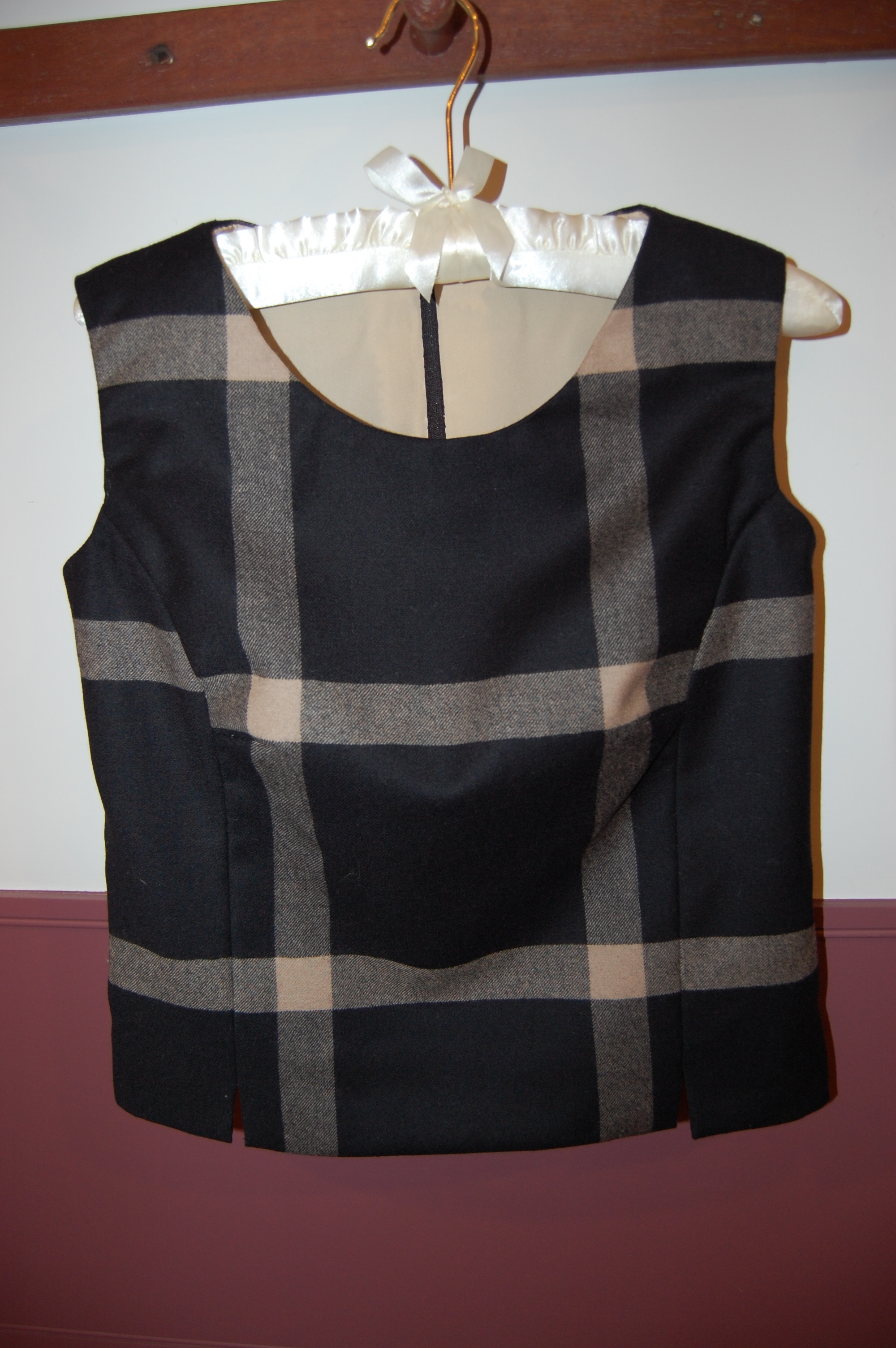
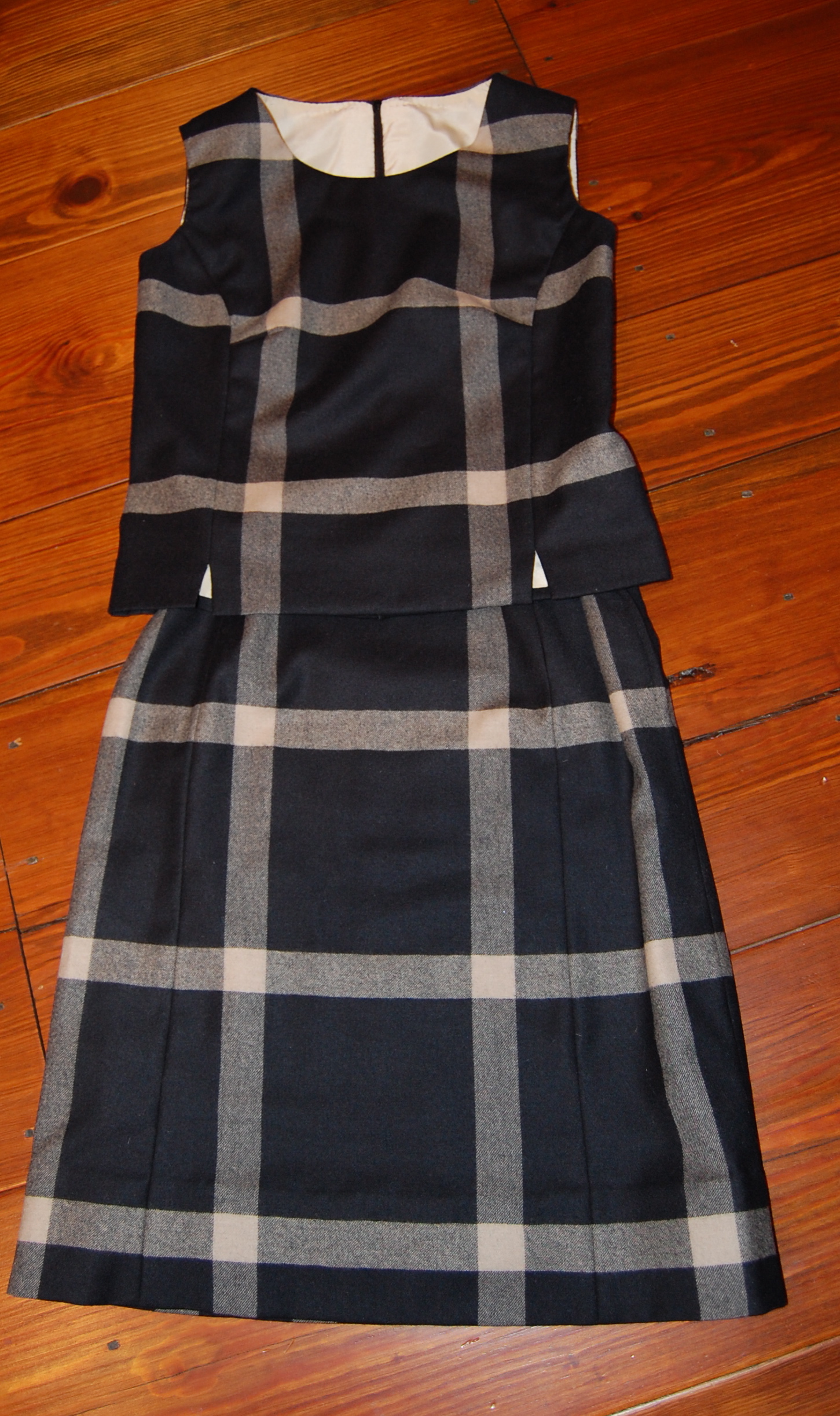
I usually work on only one project at a time, but for the past three weeks I’ve had  two going strong.  I’m furiously working on a “dressy” suit – which needs to be completed this week!  However, last winter I made a mental note to myself to use up the fabric remaining from another suit, to make a matching overblouse.  I knew the pattern I was going to use, and with my newfound techniques from Craftsy’s The Couture Dress  online course, I knew this “small” project would be a great way to practice those skills.   So, I thought, “Oh, I’ll just throw this together in no time at all.”  Why do I ever think such things?  I must be either an eternal optimist or totally divorced from reality.

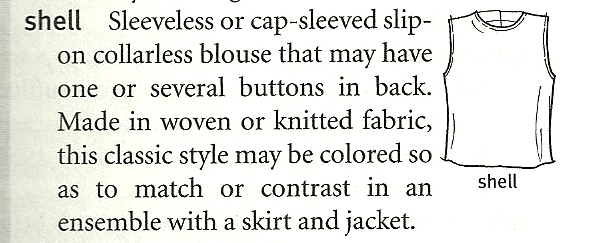
I have always loved sleeveless overblouses – also known as “shells” and sheath tops.  They were particularly popular in the late 1950s and 1960s with or without sleeves (during which time I also knew them as “jerkins” or “weskits” – which are really synonyms for vests).  Fairchild’s Dictionary of Fashion describes an overblouse as “ Any blouse or top worn over the skirt or pants rather than tucked inside.”  And here’s what they say about a “shell”:

From: The Fairchild Dictionary of Fashion, 3rd Edition, New York, New York, 2010, page 37

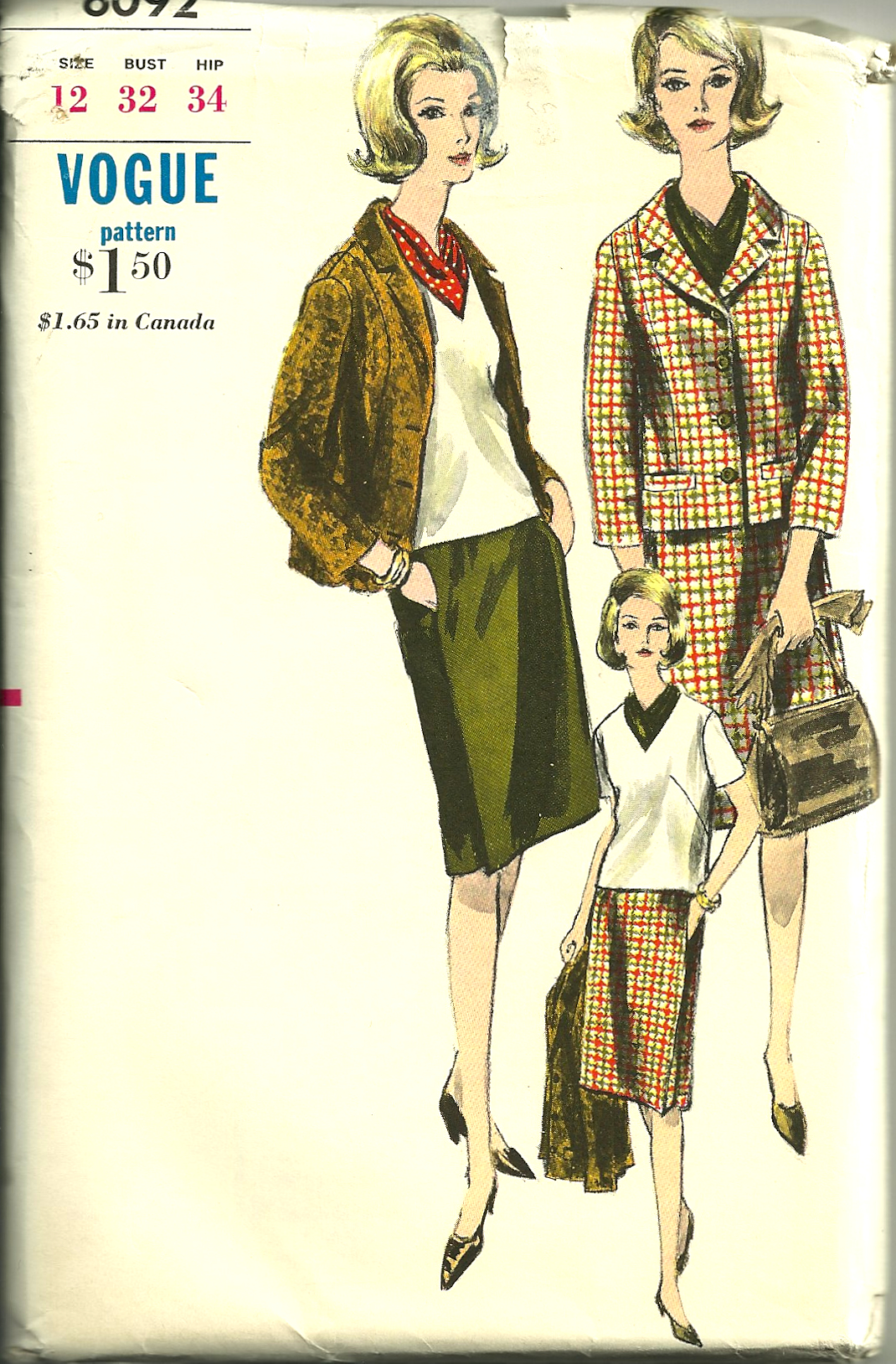
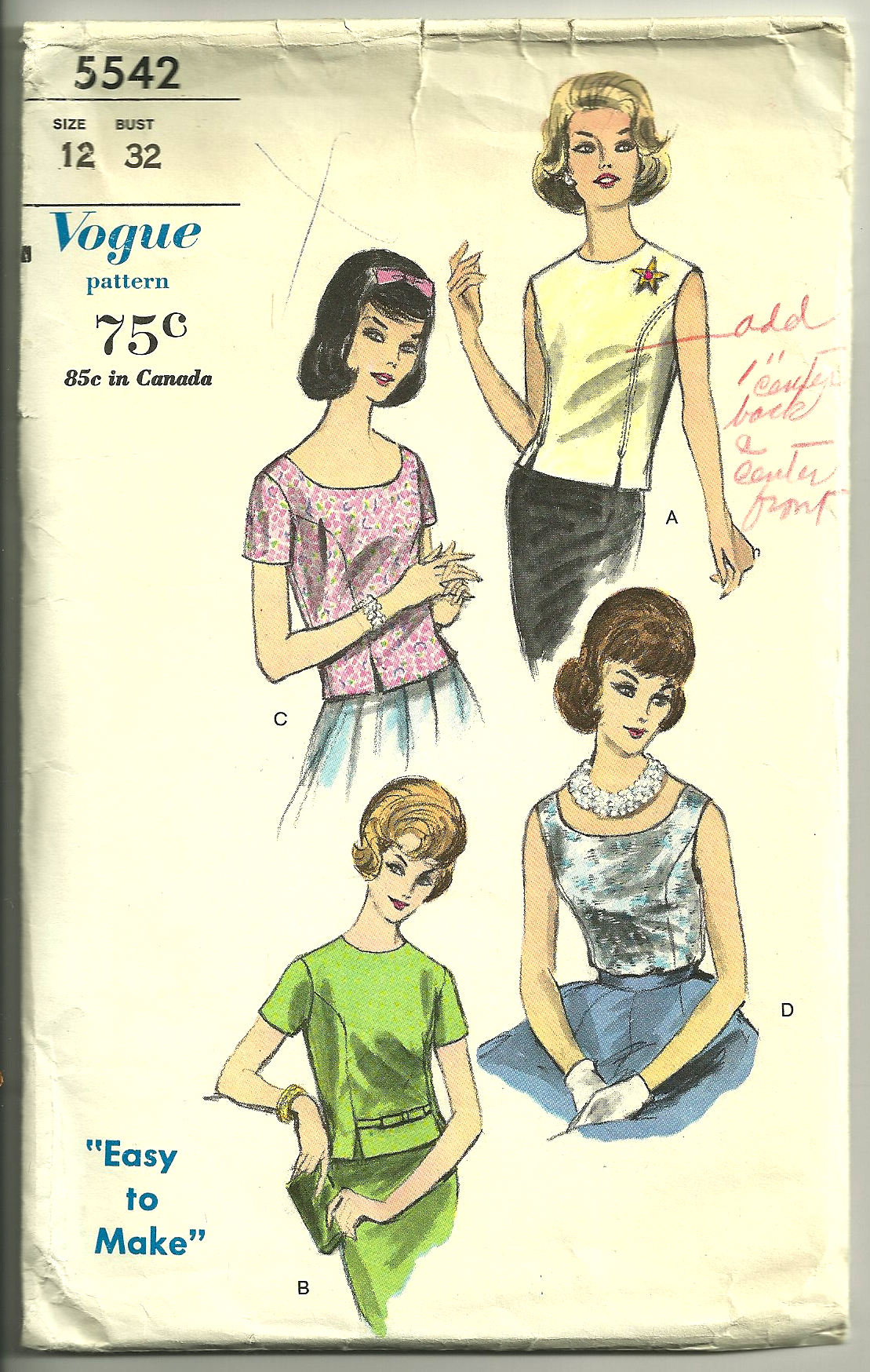
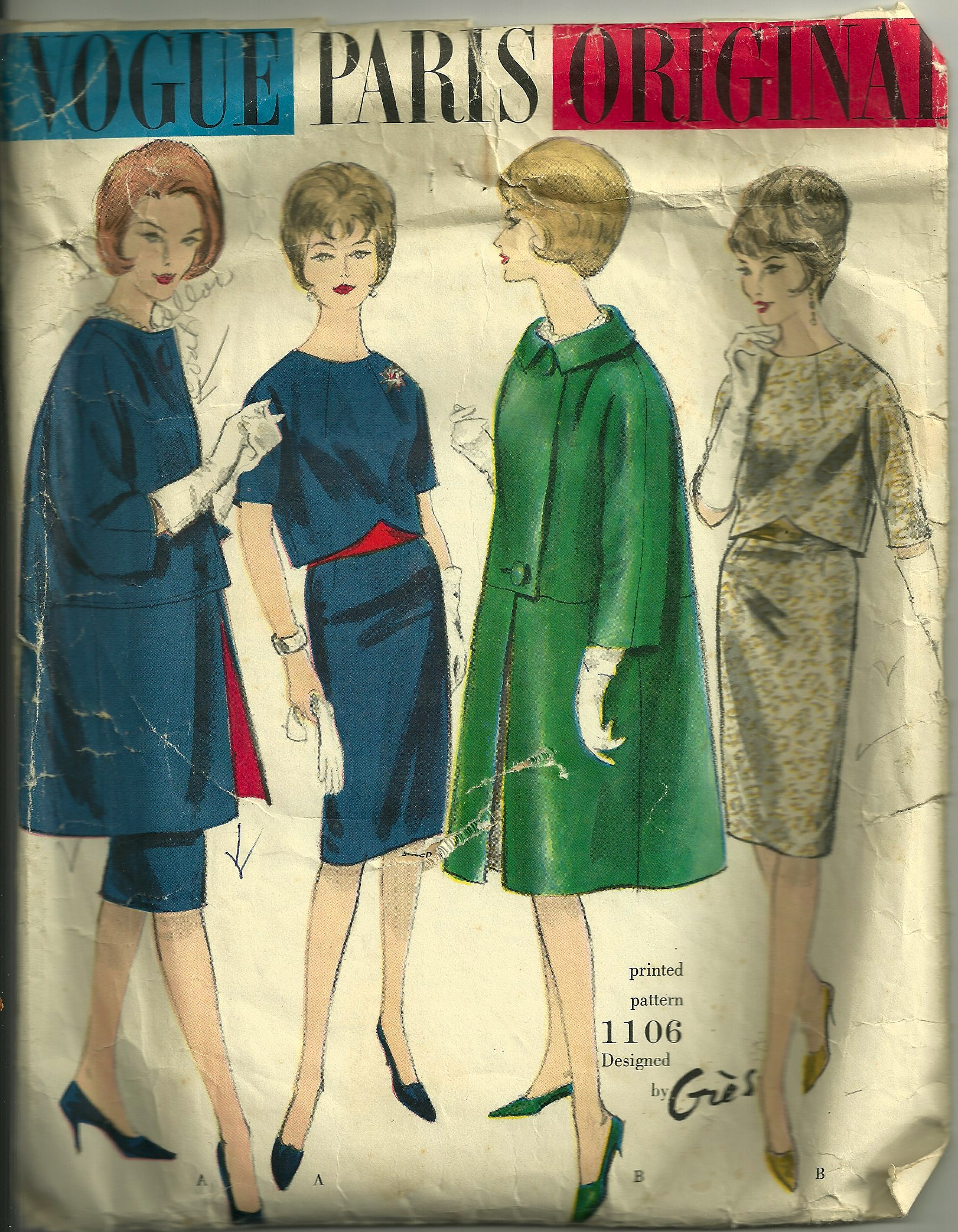
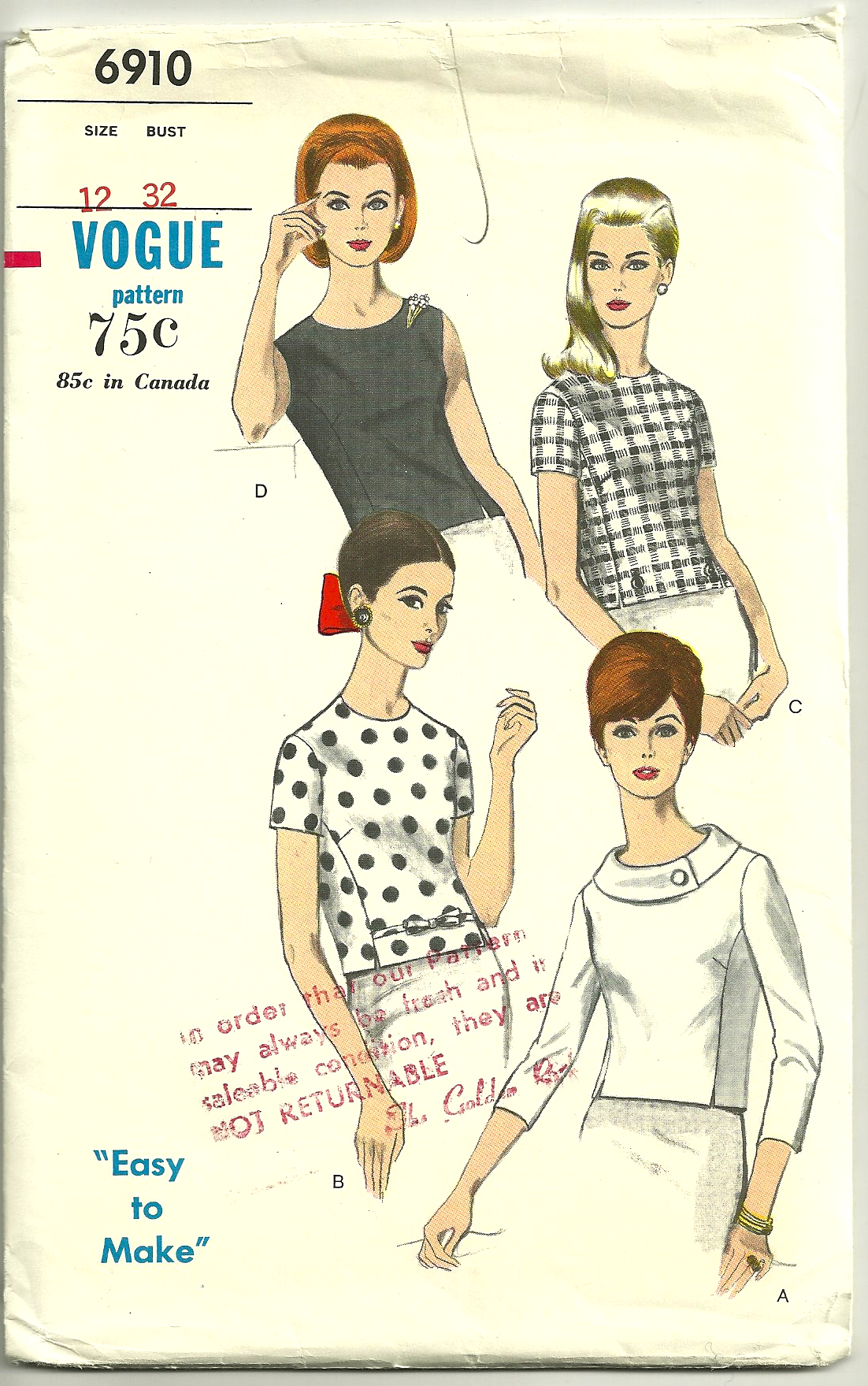
A number of my ‘60s patterns show overblouses paired with suits or as part of two-piece dresses.

This v-neck overblouse is a great pairing with this sporty suit.

The description on the back of the envelope says this overblouse “may be tucked in”.

This design by Gres shows a boxy overblouse and skirt combination.

I particularly liked this pattern, with its Dior darts, the slits at the front hem, and its back zipper.  (I was able to pick up a refined separating zipper when I was at Britex in September – many are suitable for outerwear only and too clunky for something like this.)

View D is my choice.

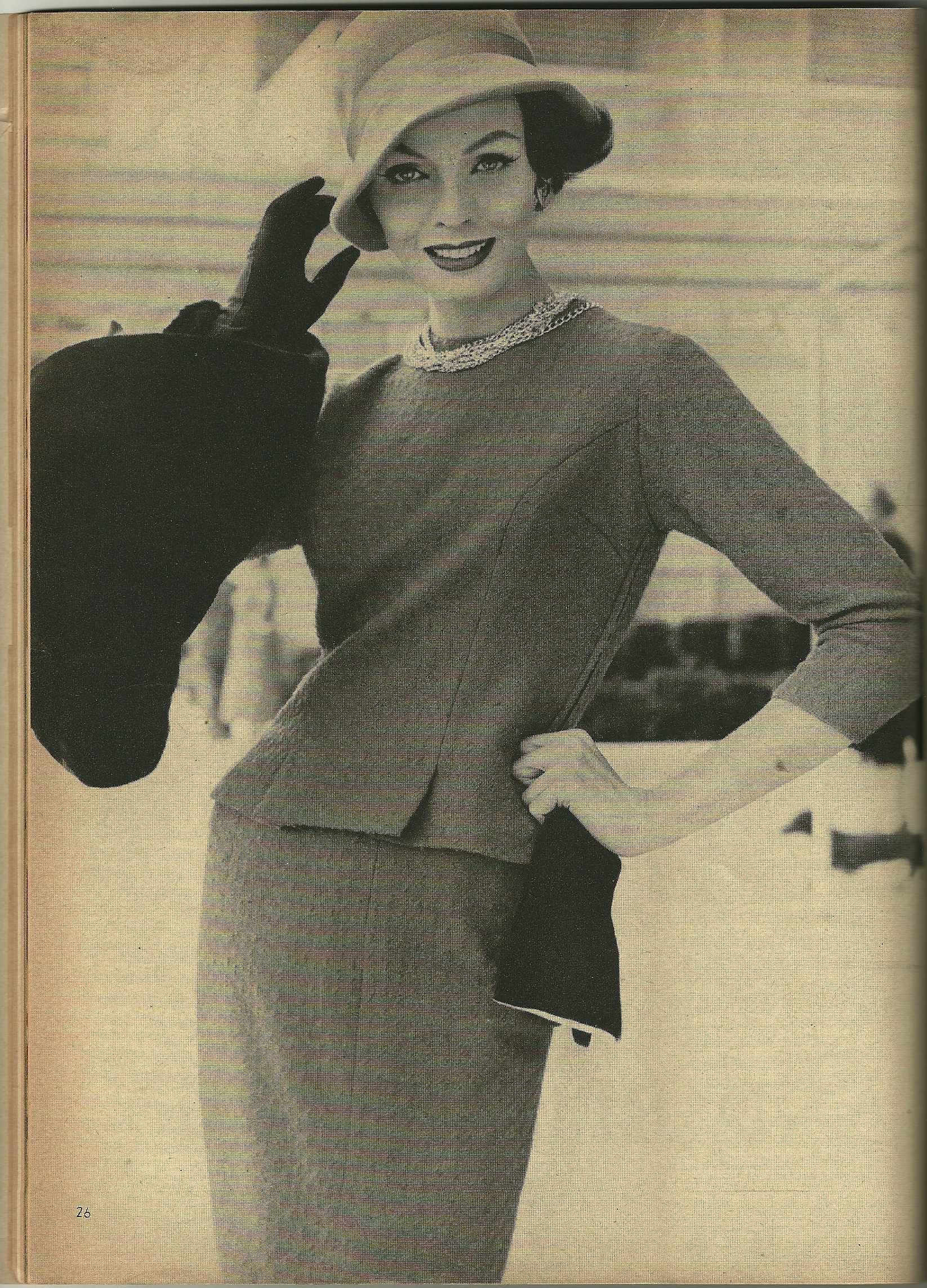
Here is another example of an overblouse with Dior darts, which forms part of a two-piece dress.  Note that the zipper is on the side:

This design was featured in the August/September 1957 Vogue Pattern Book magazine.

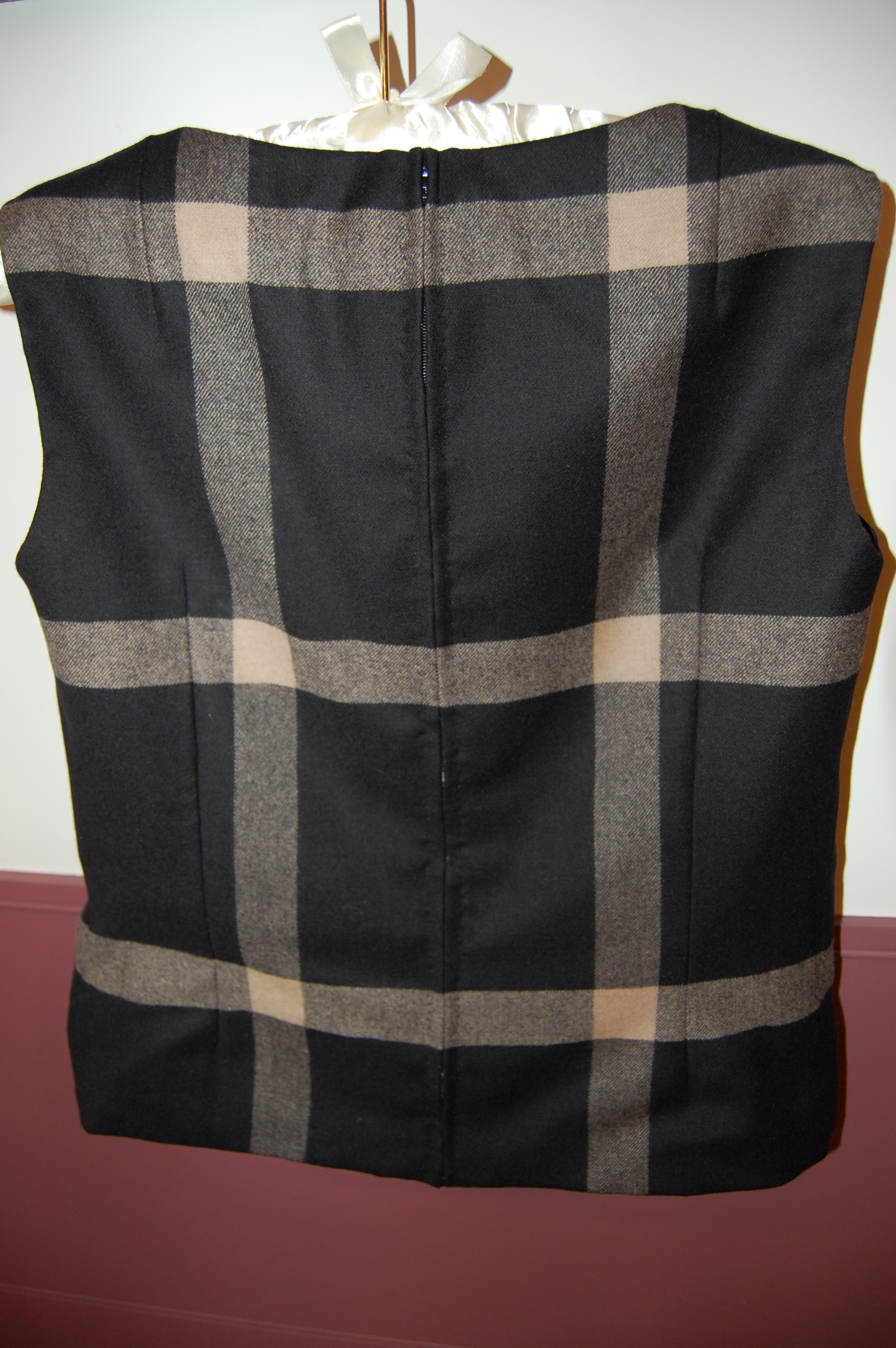
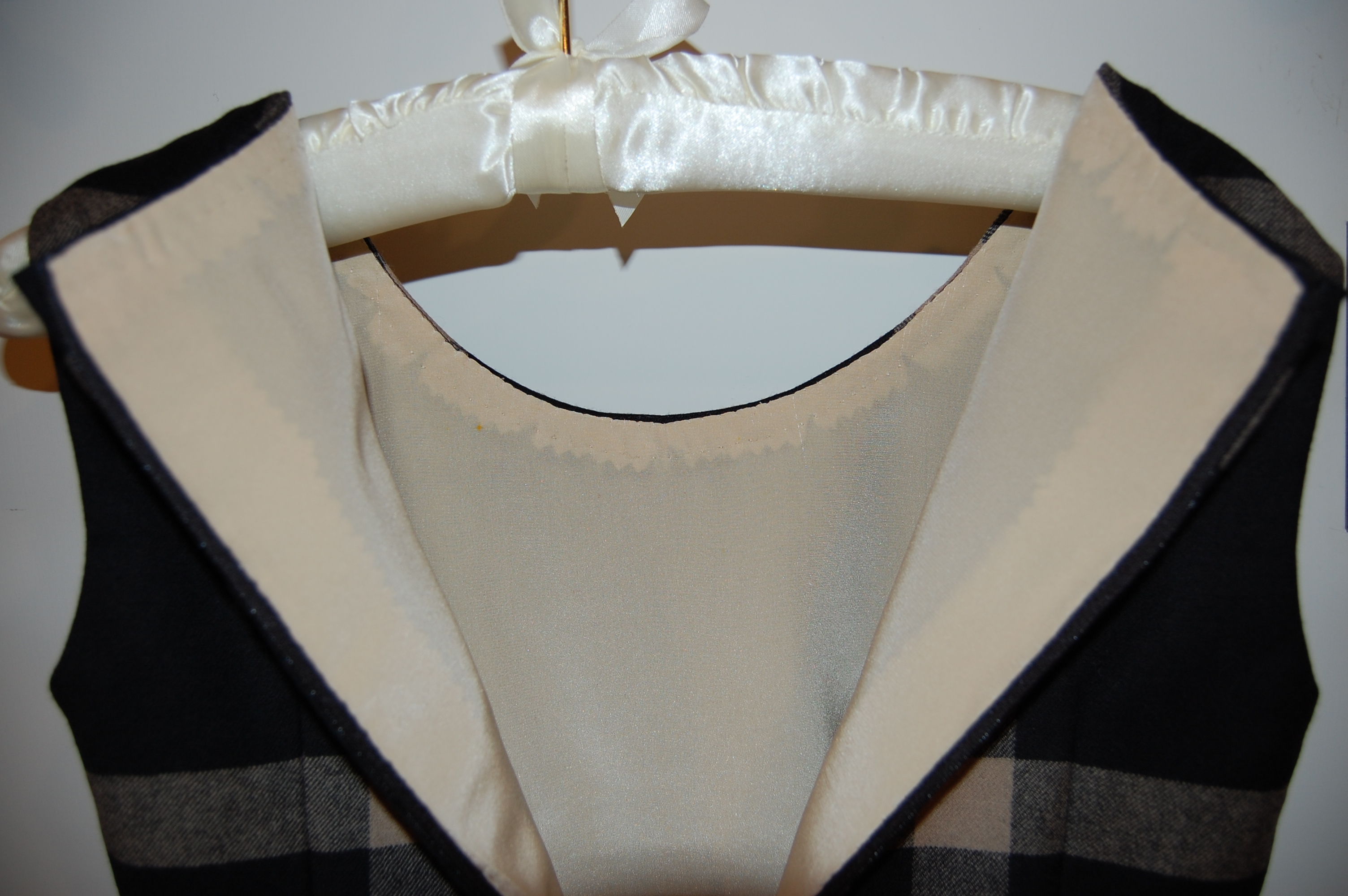
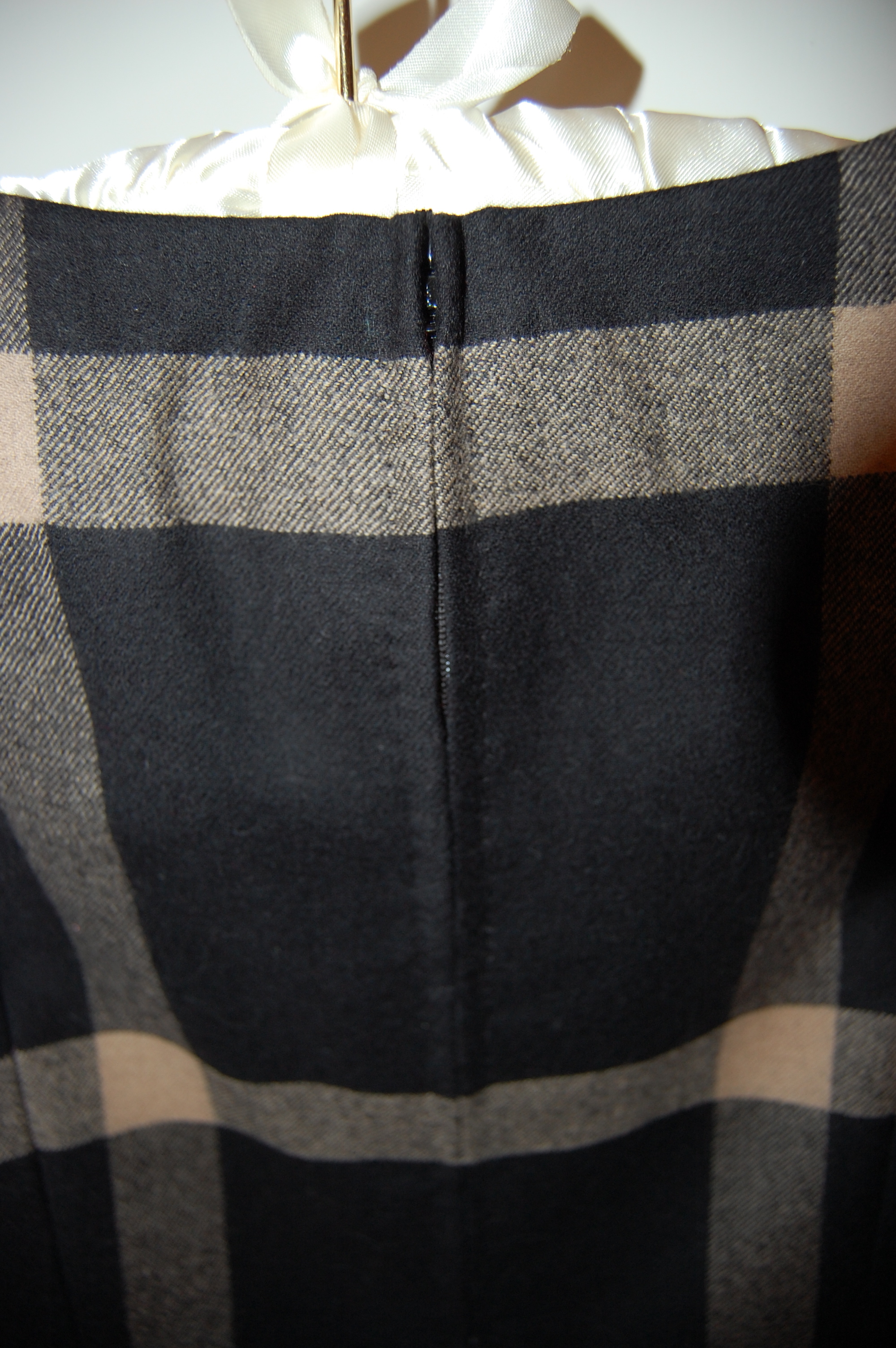
I dutifully made up my muslin, to which I made a number of adjustments (lowering the bust line/darts, shortening the darts in the back, lowering and widening the neckline a bit, adding a little more girth to the hipline so it would slip over my matching skirt without buckling, and adding about two inches to the overall length of the blouse.   Hm-m-m, is that all?)  I underlined it with silk organza, matched the plaid everywhere I could, keeping in mind how the windowpane check would line up with the skirt.  I secured all the seam allowances with catch-stitching, and then I hand-picked the separating zipper.  About this time I quietly panicked when I realized how much time I had already put into this blouse!  I put it aside and started working on my suit, with a promise to myself to put in a bit more time on the overblouse whenever I had just 30 or 40 minutes “extra”, whatever that means.

Somehow I have managed to complete it, and I think I’m on track to finish my suit in a day or two, as well.  Whew!  Here are some of the details:

Here is a front view . . .

. . . and here is the back view.

A peek inside the blouse . . .

. . . and a look at the hand-picked zipper. This was the first separating zipper I think I have ever put in – and I am happy with the results!

And here is the finished blouse/overblouse/shell/sheath top, shown with the skirt:

An impersonal view, for which I apologize – no tangling with the tripod and camera timer today!

Just as I appreciate the preciseness which couture sewing makes possible when sewing something as “simple” as this shell, so do I also appreciate the many variant words to describe this type of blouse.  My personal favorite name for this blouse?

Finished!

9 Comments

Filed under Blouse patterns from the 1950's, couture construction, Dior darts, hand-sewn zippers, Uncategorized, vintage Vogue patterns from the 1960s, Vogue patterns, woolens

What Do a Chanel Jacket and a Chicken Have in Common?

Not much – unless you were in my sewing room last week.

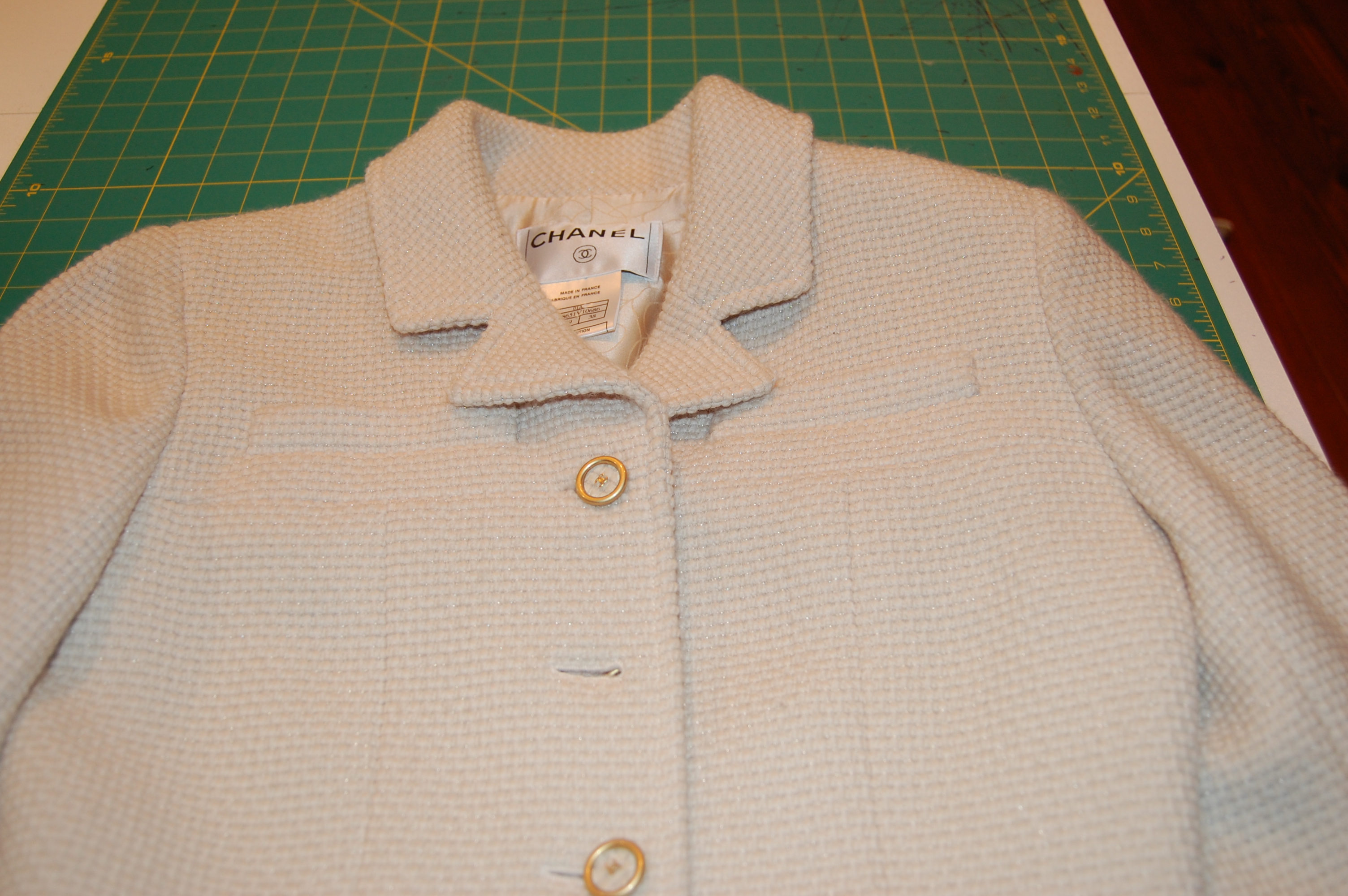
When we were out in California very recently, my son’s girlfriend, Rachel, showed me a Chanel jacket she had found at a store which sells vintage clothing.  Sadly, she had never been able to wear it because it had very prominent shoulder pads, which screamed 1980s.  Otherwise it was a very wearable cropped jacket with petite convertible collar, in a creamy white wool with just a hint of  a sparkly windowpane weave.  Rachel asked me what I thought could be done with it.

Hm-m-m-m, I looked inside it, felt around those shoulder pads hidden inside the lining, and guessed that I could easily remove them and replace them with a much more reasonable sleeve header.  Of course, I’d need to bring the jacket home with me, so in the suitcase it went, landing in my sewing room.

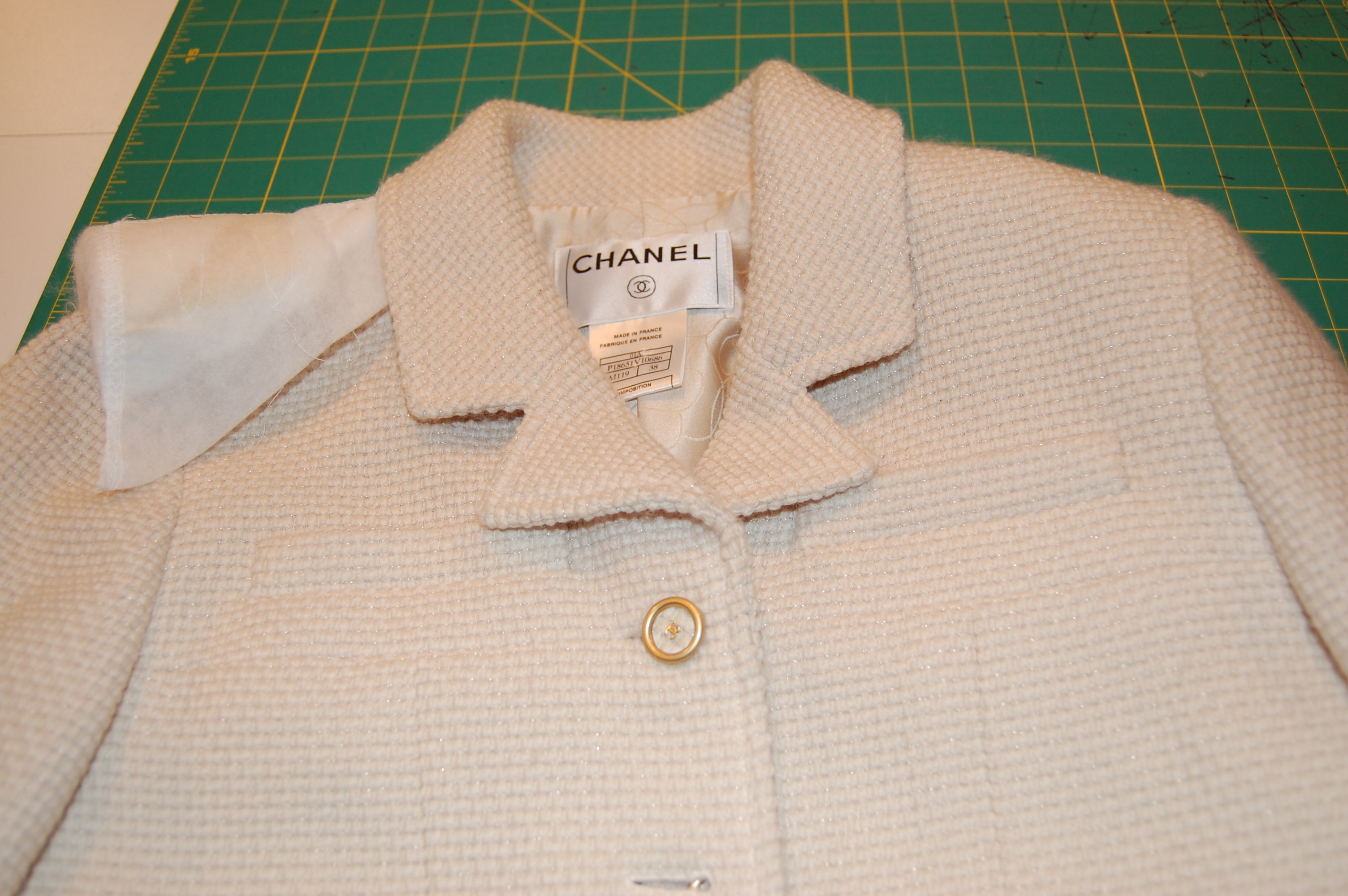
I carefully removed the stitching from the lining at the right shoulder and took a peek.  The shoulder pad had been attached with hand stitches, easily snipped.  Out it came.  I cut a piece of French sleeve heading tape, called Cigarette, which I had purchased from Susan Khalje’s website. (I had used this in my Craftsy course The Couture Dress.)

The shoulder pad is in plain view in this photo.

The jacket has top-center seams on the sleeves, so with that extra fabric bulk, I determined that the simple sleeve heading would be enough shaping.  Here is the jacket with just the side on the left fixed:

Can you see how bulky the shoulder on the right is?

Here I have placed the shoulder pad on top to show some perspective on its bulk.

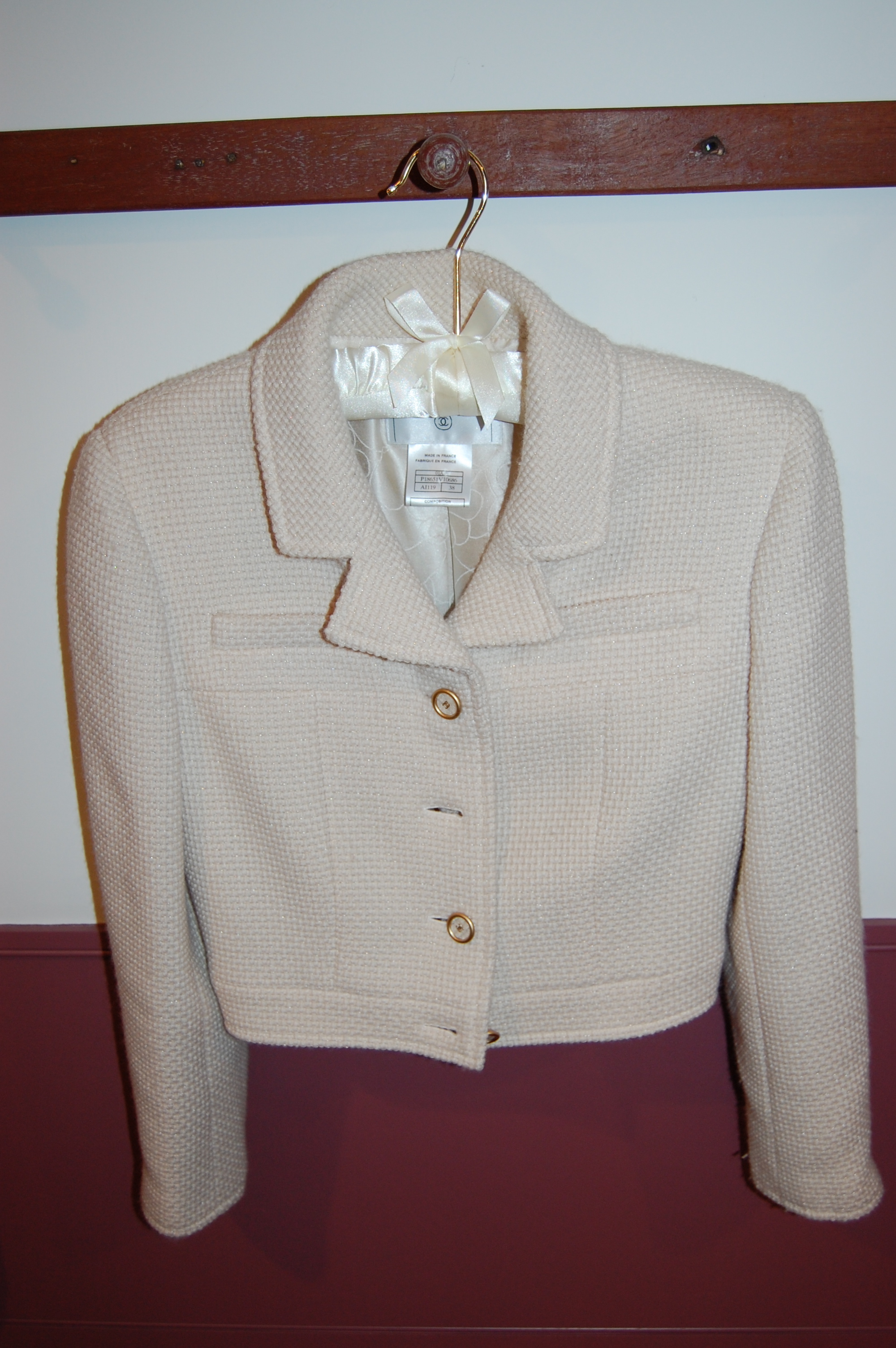
And here is the jacket with both shoulders complete and all sewn up inside (with itty-bitty stitches):

The padded hanger helps to simulate the shoulder line.

Of course, I had to guess a little on the final fit as I did not have Rachel here to try it on.  But I am sure, once it completes its return trip to California, that it has a better chance of being worn now than before!

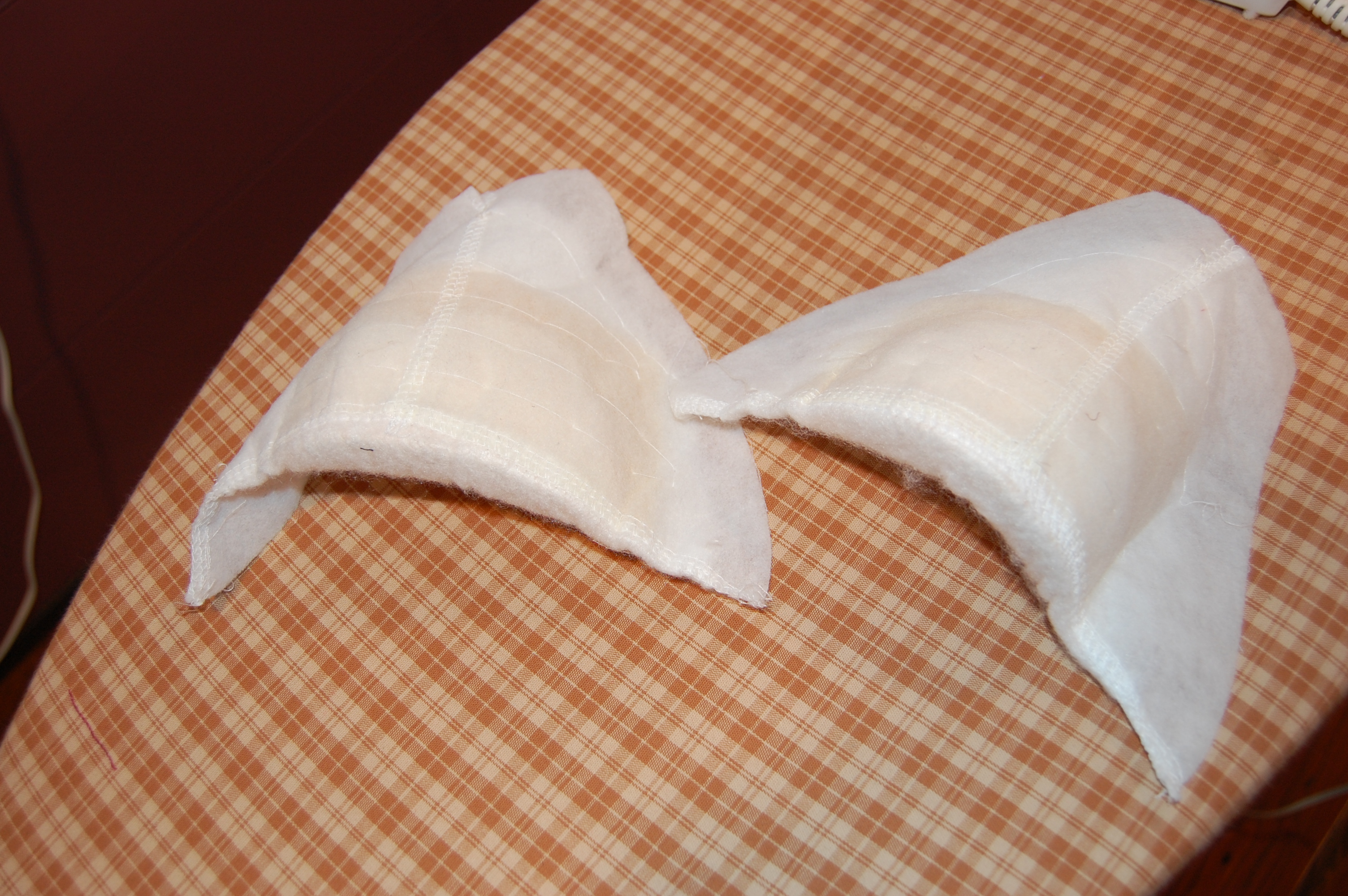
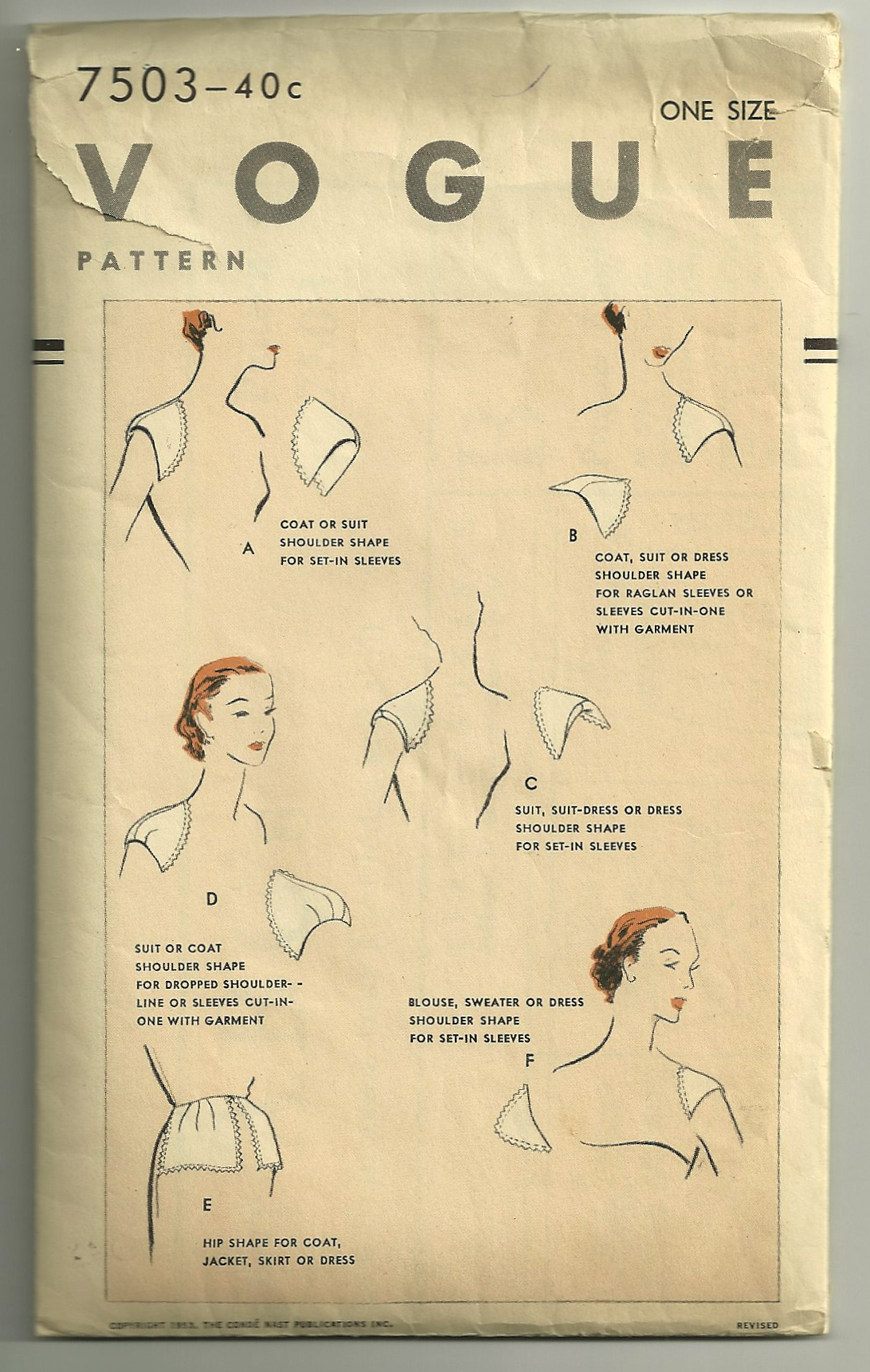
It was interesting for me to be able to see inside a Chanel jacket – I discovered some details I thought I might find – such as 1) the wool fabric was totally underlined in what looks like silk organza; and 2) hand-sewing was evident in quite a few areas.  However, the seams were not catch-stitched to the underlining, which I thought they might be.  The most amazing thing was actually seeing those shoulder pads – as their construction was almost exactly like view C of Vogue 7503, my vintage pattern from 1953. How cool is that?

Two authentic Chanel shoulder pads!

View C is right in the middle.

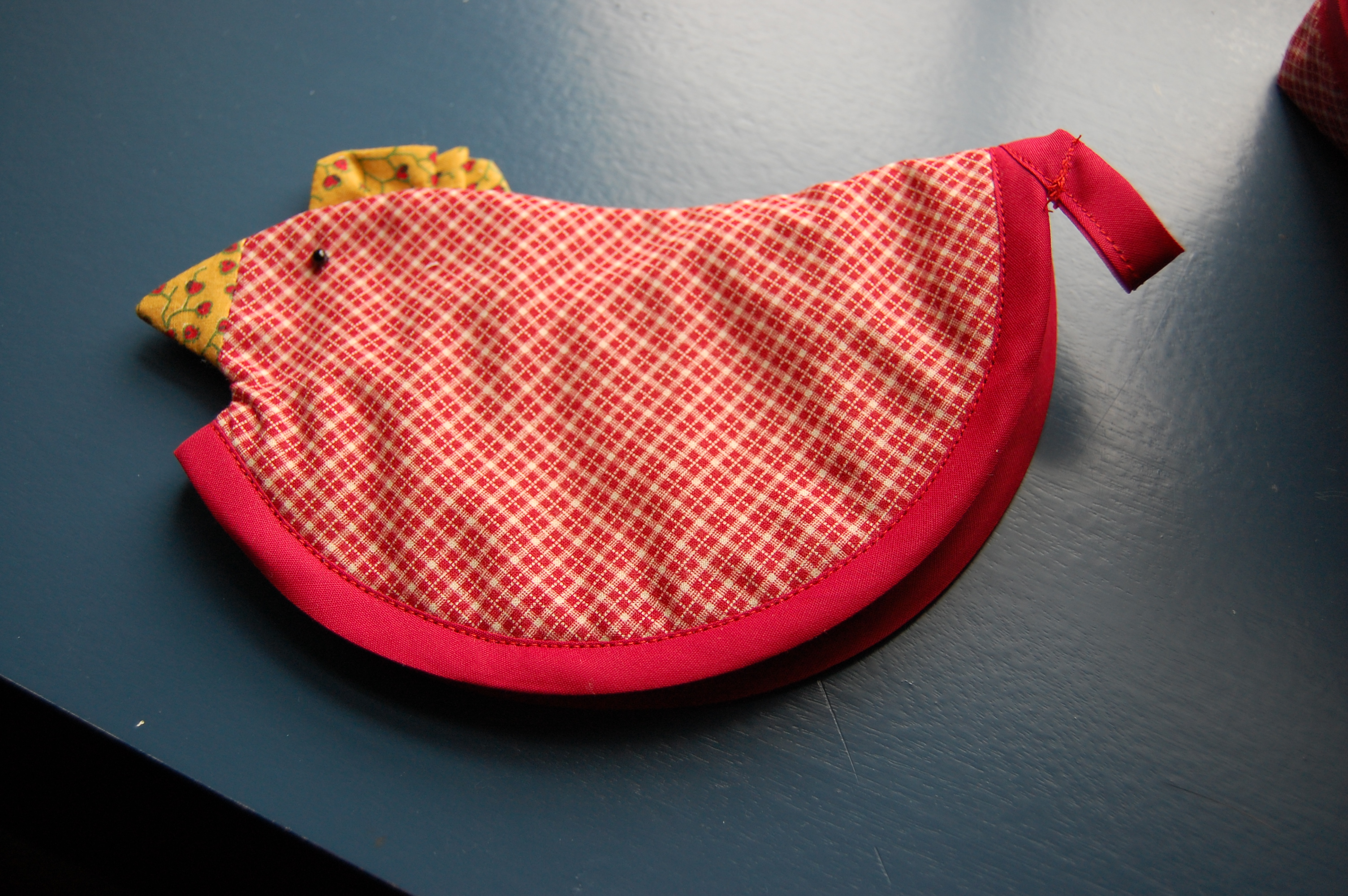
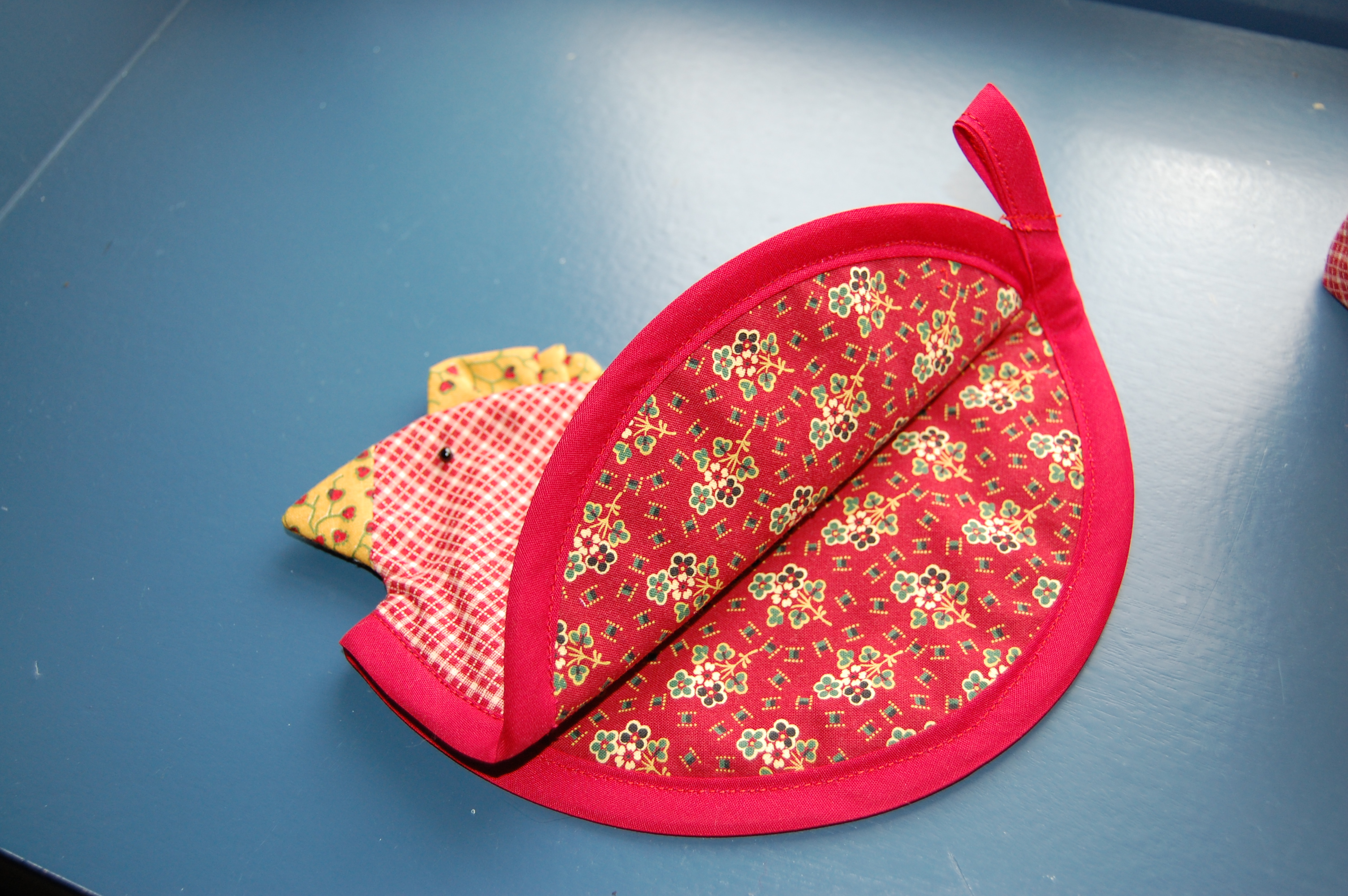
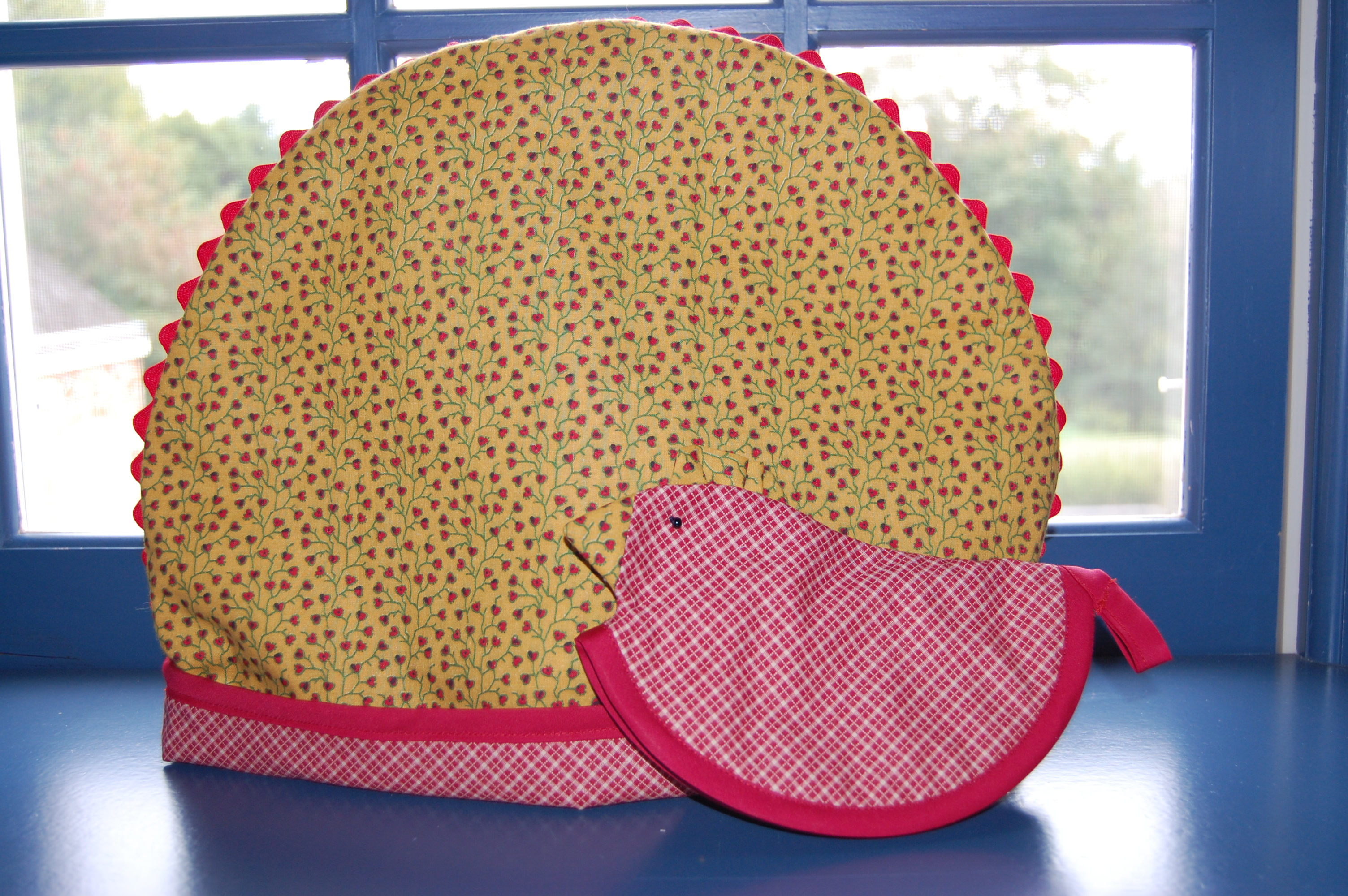
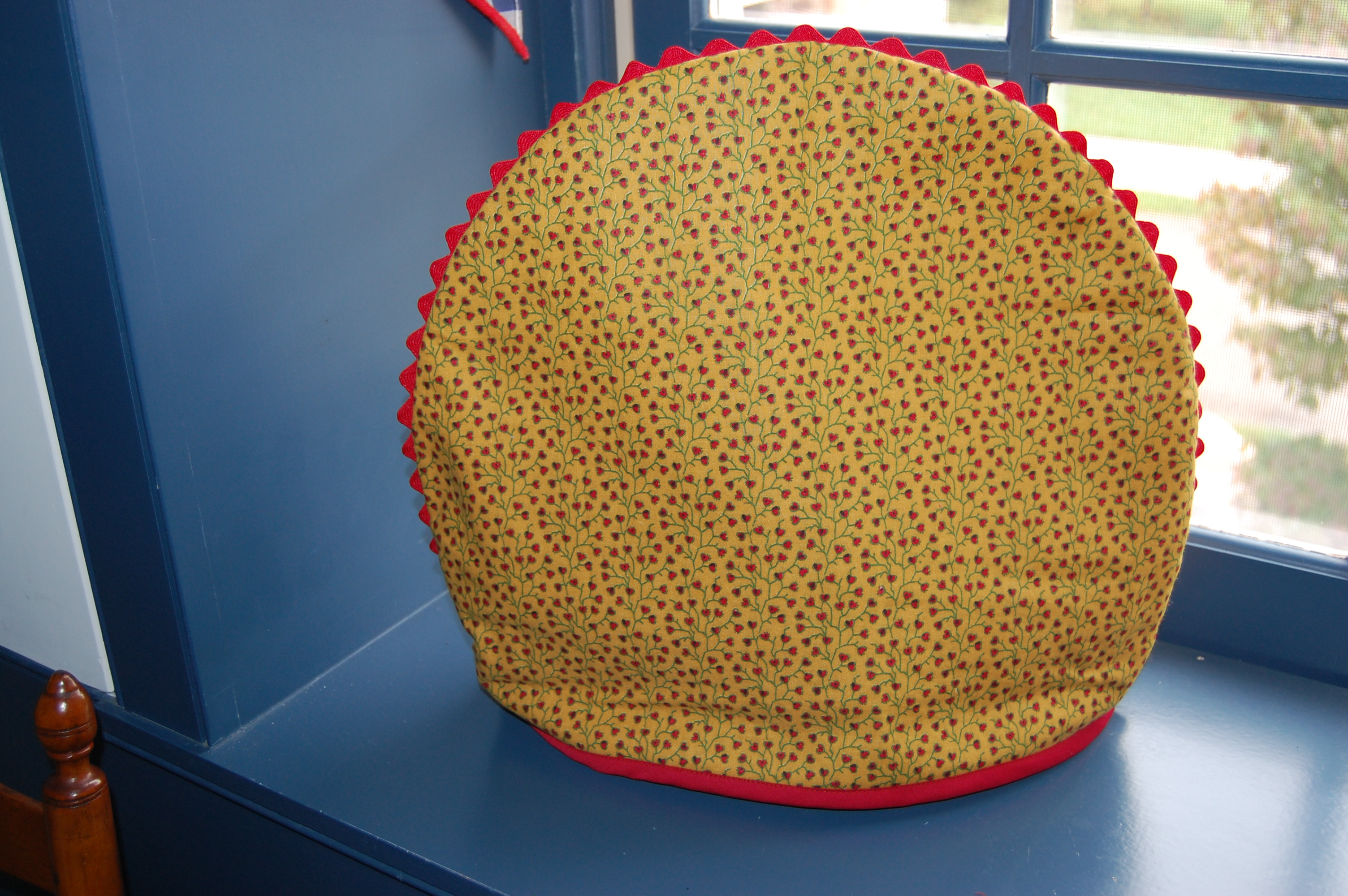
So that was Chanel.  But what about the chicken?  Another project I wanted to finish last week was an auction item for my garden club’s annual fundraiser.  As I am the only one in my club who has a backyard flock of chickens (yes – can you believe it?), I like to put together what I call a “Little Red Hen” basket to add to our auction selection every year or so.  Besides the main attraction of a couple dozen of our farm-fresh eggs, I add other items with a chicken theme.  Some examples are egg poachers, an egg timer, cocktail napkins with chickens on them – things like that.  Of course, as one who sews, it is impossible for me to do a project like this without adding something handmade. So this year, I made a tea cozy with a matching chicken potholder.  I had already completed the tea cozy a couple of weeks ago, but the potholder  – well, it had to take its place behind Chanel.    It did not take long for me to fashion this little hen (in red, of course) to match the cozy. Here she is, ready to perch on the handle of any hot pan:

She is interlined with several layers of heavy cotton flannel.

She’s pretty underneath it all, too!

Here is the little red hen in front of the tea cozy.

Tthe bottom of the tea cozy can be folded out to fit a higher pot.

So what was more fun – and what did really come first– Chanel or the chicken?  Now there are two questions for the ages!

10 Comments

Filed under Chanel-type jackets, couture construction, Shoulder shapes (shoulder pads), Uncategorized, underlinings, Unprinted patterns from the 1950s, vintage Vogue patterns from the 1950s, Vogue pattern 7503 for shoulder shapes, woolens

Spending time on the Cape.

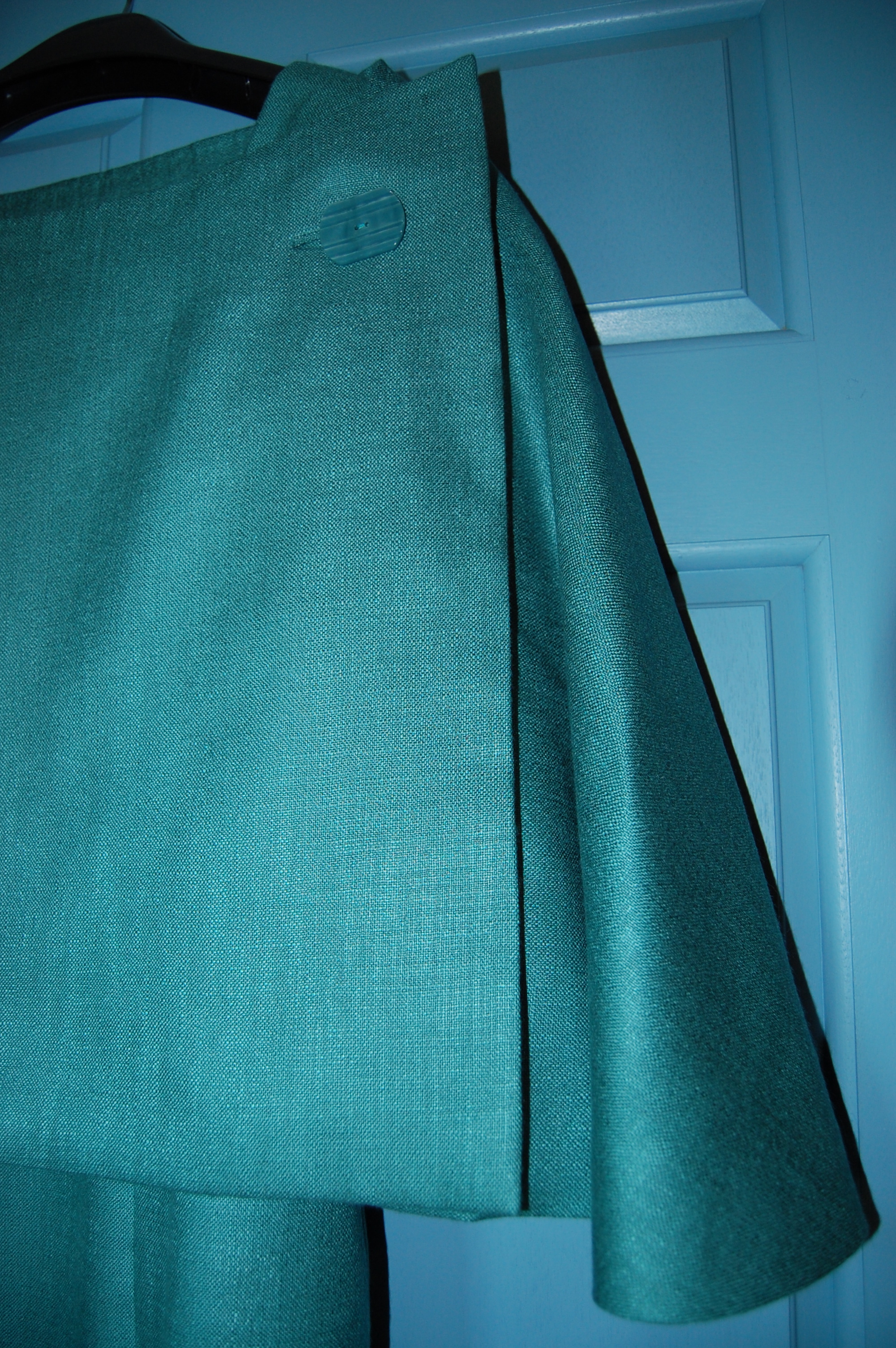
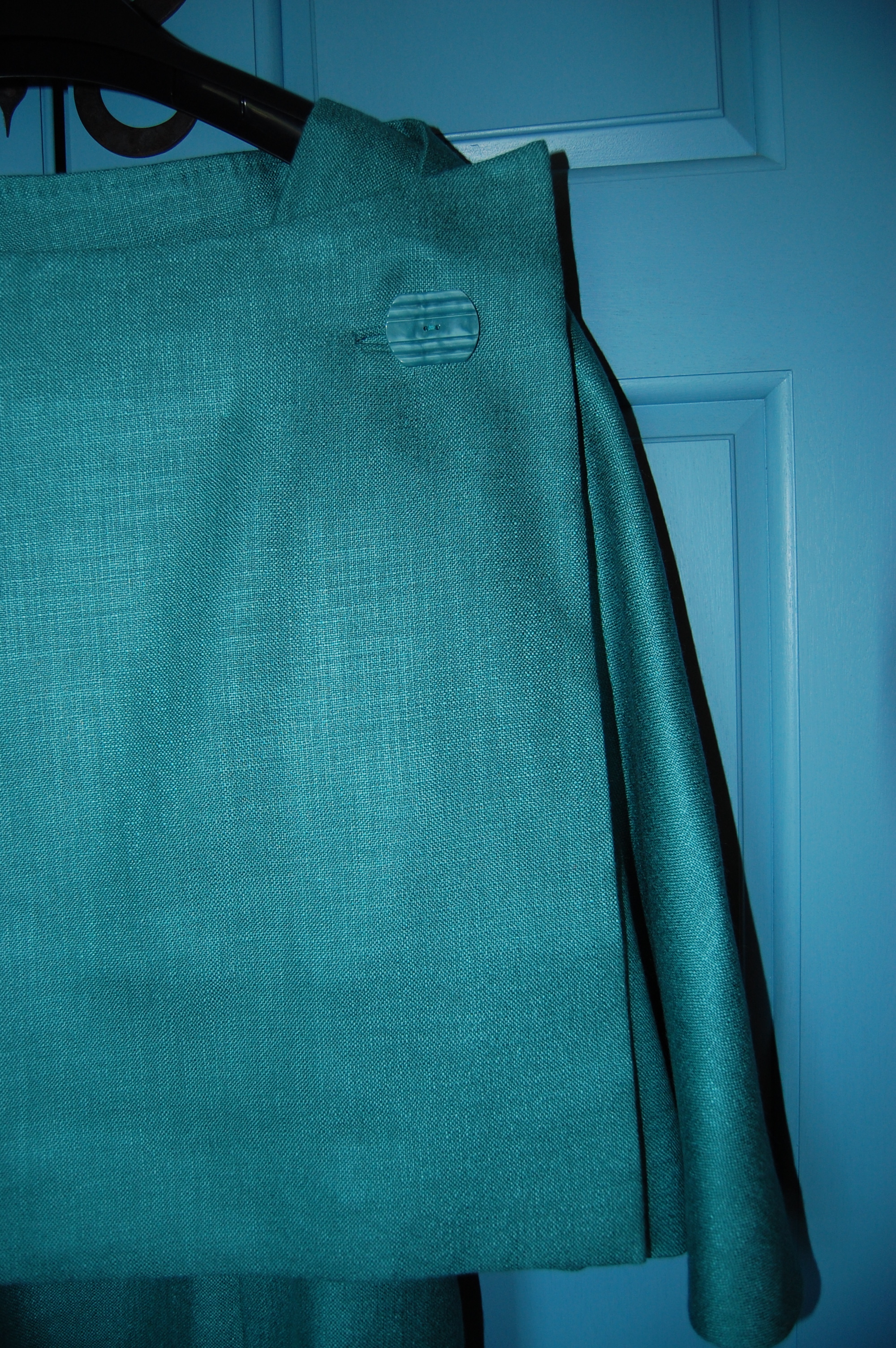
Doesn’t this sound like a wonderful vacation?  Picture billowy clouds reminiscent of  silk organza, gently undulating waves of turquoise hue, windswept flowers lining the landscape. . .   So where would one find this perfect setting?  I hope you’re not disappointed to learn that it all happened in my sewing room.  Yes, that’s correct – it has been wonderful, but this cape is the wearable kind, and I have definitely spent time on it!
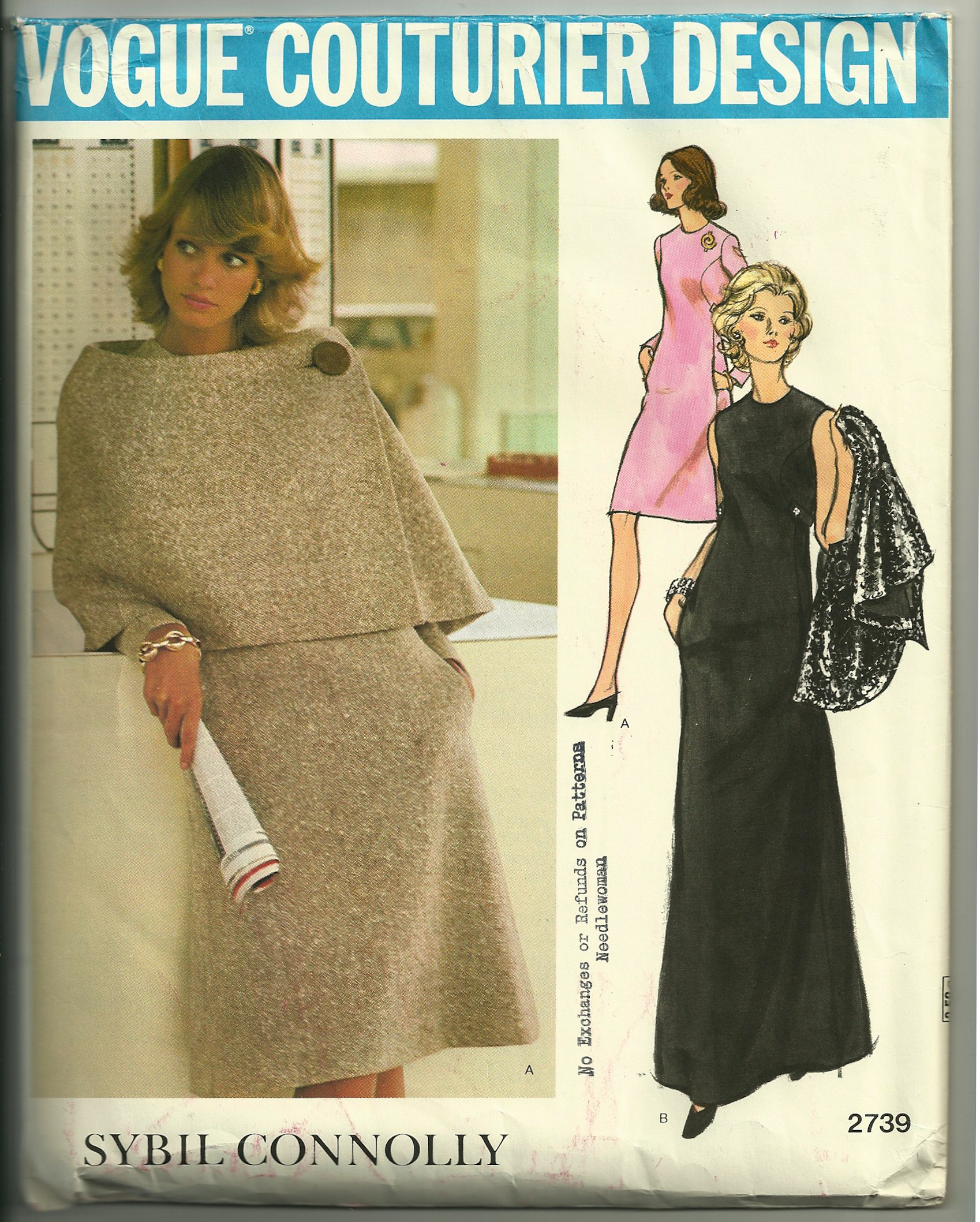
The fabric in which I made my Couture dress was a length of linen I picked up last April.  When I found it, I did not yet have a pattern in mind for it so I thought I’d purchase enough (3 yards) to cover just about anything, and at 58” wide, I had a nice amount left over from my dress.  It just so happens that earlier in the Summer, I had found this pattern and added it to my collection:

Capes were in fashion in the 1970s and are again today!

I remembered this pattern from the 1970s and always liked the short cape, with its asymmetrical opening and clever folds of fabric resulting from that detail.

As I was working on my dress, I started to think about what else I could make from this lovely linen.  I didn’t particularly want to make a jacket, as I envisioned the dress as the focal point, but I did think it would be nice to have some kind of matching “wrap” for cool evenings. Well, the rest is quite obvious – I decided to make a short cape to go with my dress.

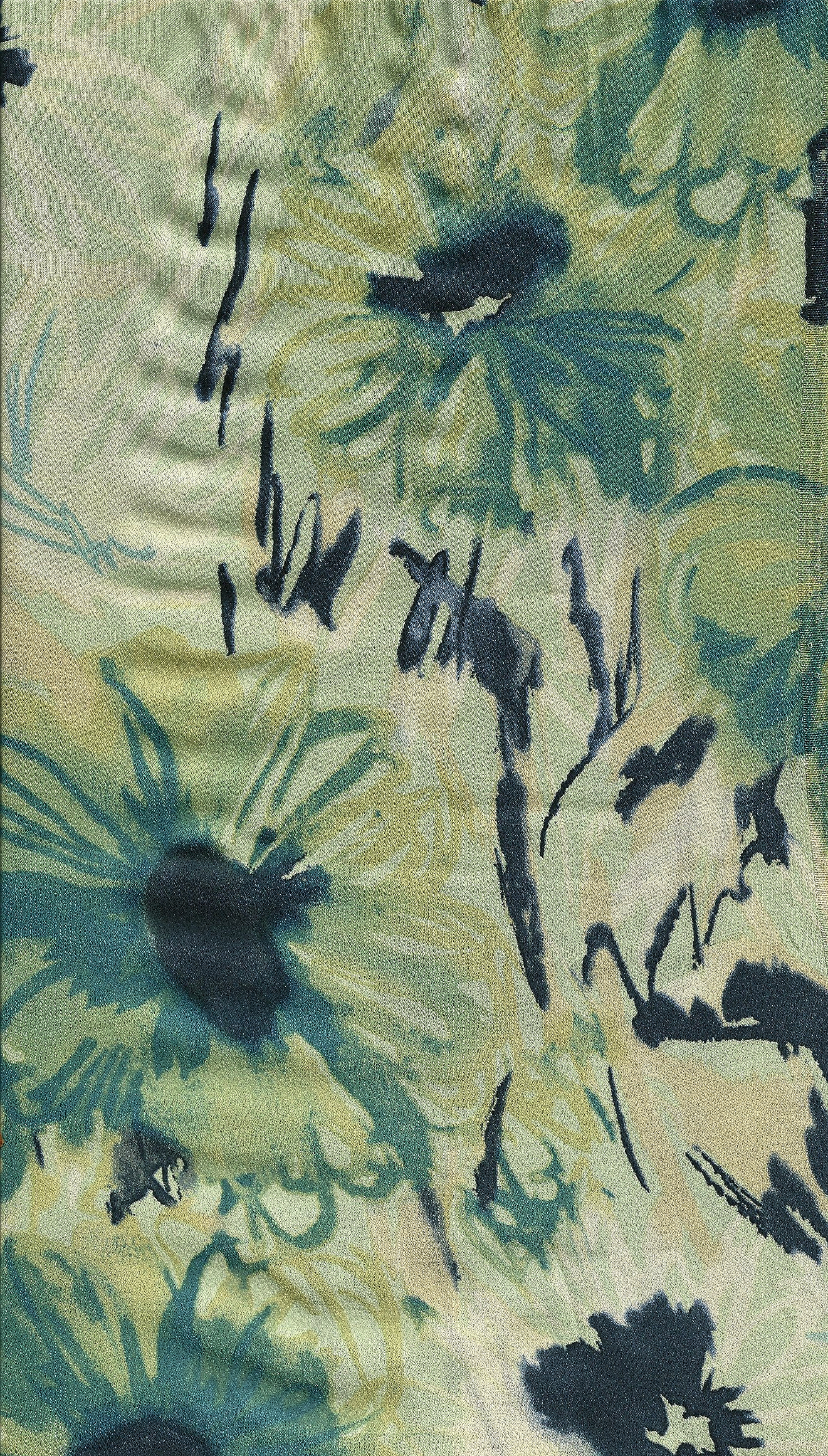
First I needed to find a silk lining fabric, which would compliment the linen.  I wanted a print of some sort to add some interest to the finished look.  I think I looked at every printed silk available on the internet!  I found lots of gorgeous designs, but only one which presented the possibility of both coordinating with the teal blue linen and introducing some other colors as well.  My old friend Britex Fabrics not only had this fabric, but  also had a vintage button among their extensive offerings, which looked like a good candidate for my needs.  I sent off for the button and swatch, and did indeed then order the silk charmeuse.

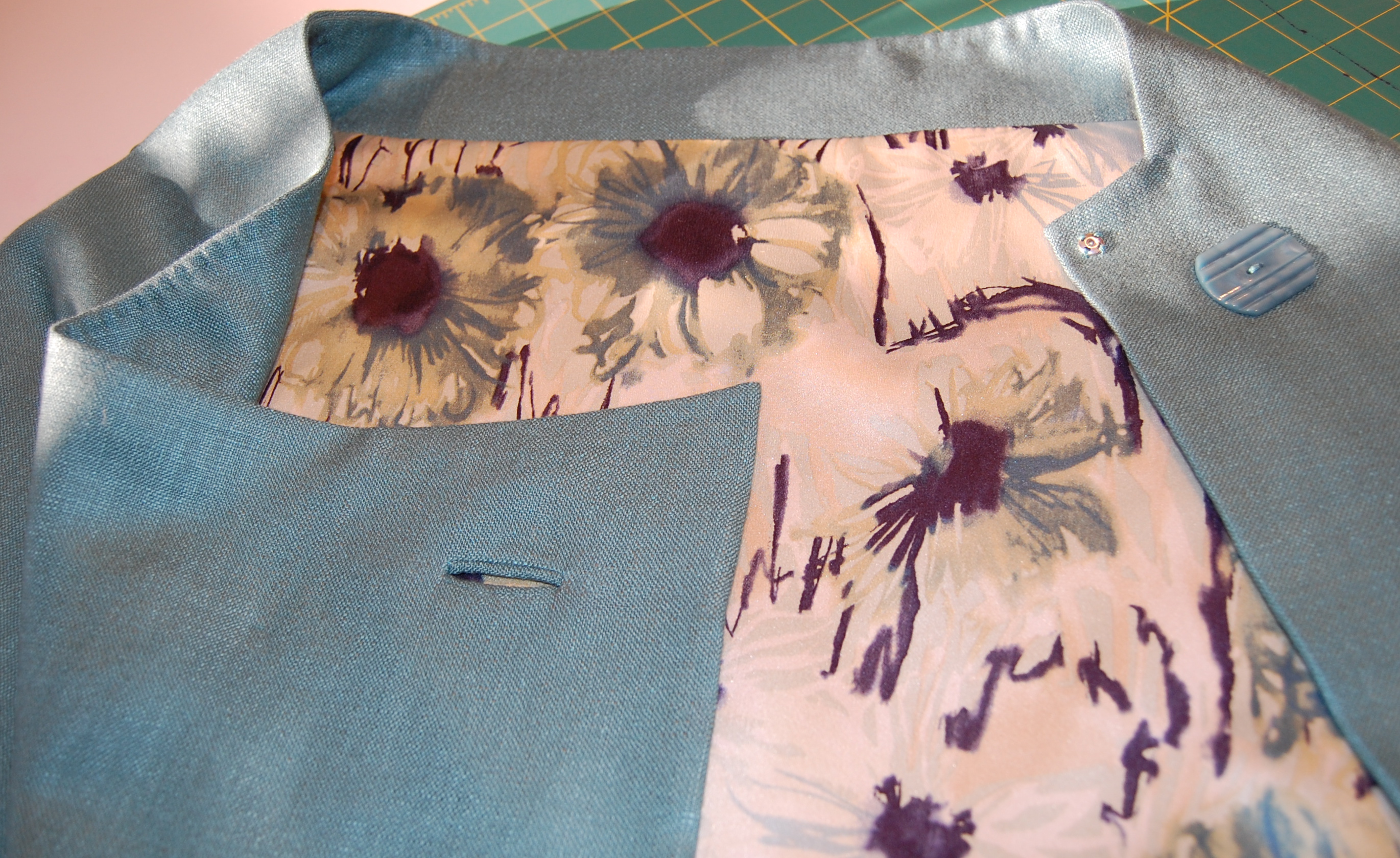
I like the abstract quality to this print.

Armed with my new-found couture techniques, I made a muslin pattern which helped me get the perfect fit over the shoulders (which is pretty much what a cape is all about).  I underlined the cape in that oh-so-wonderful silk organza, and added  interfacing, where required, of the same.  Some of this was a judgment call, as I determined were I could use couture features and where I had to follow the tailored construction of the cape.

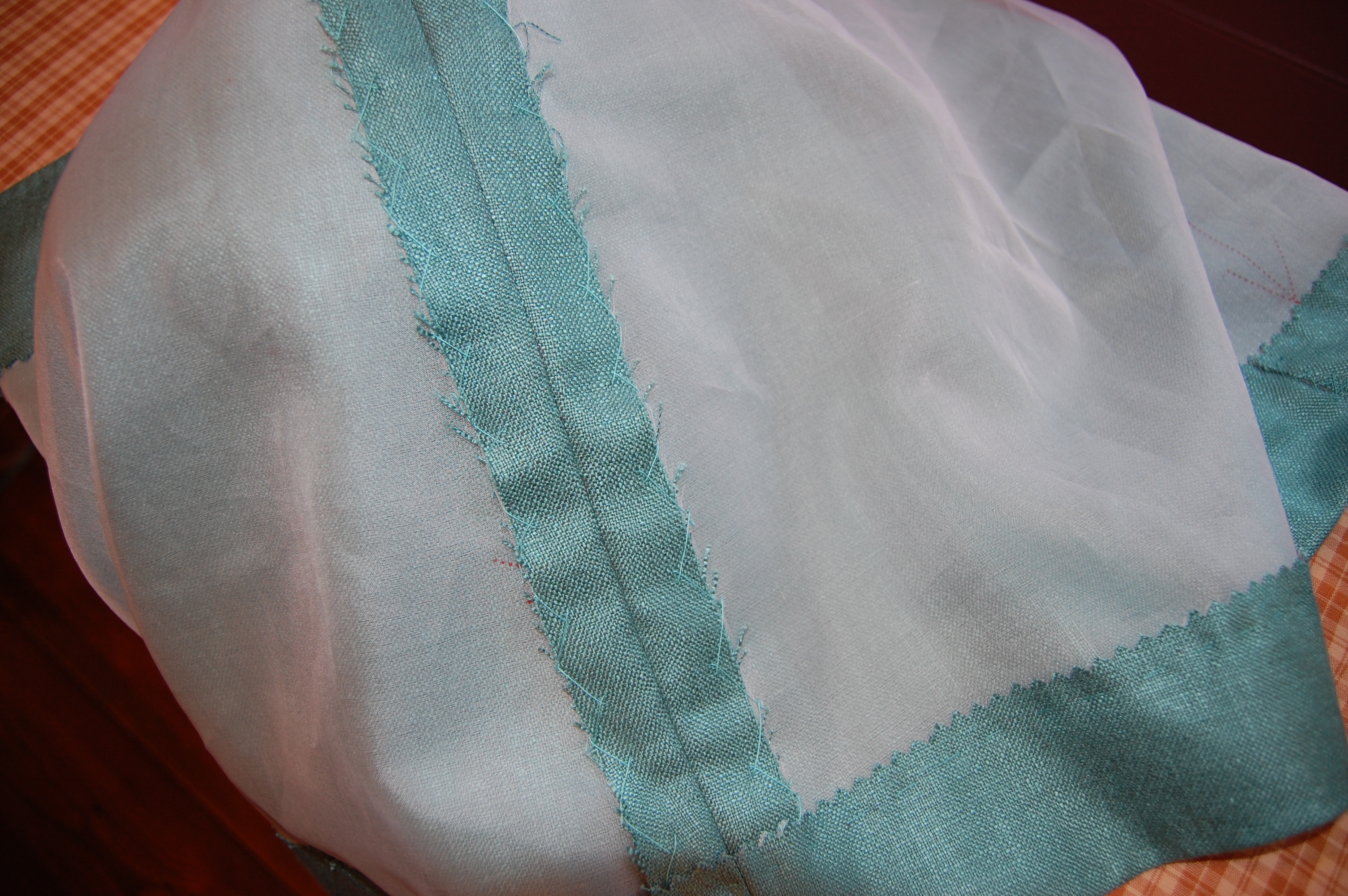
This shows the silk organza underlining, and the side seam, catch-stitched to it.

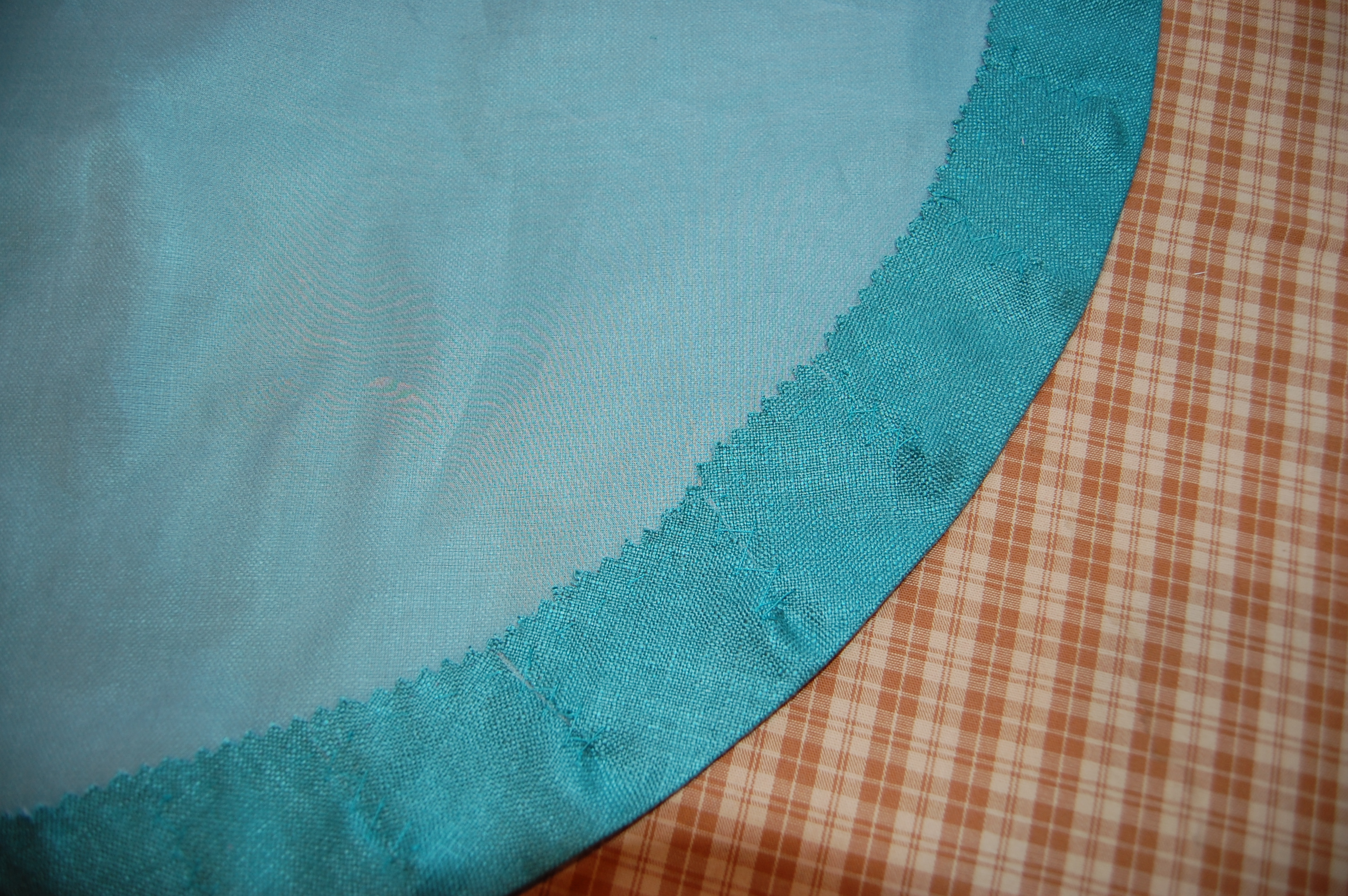
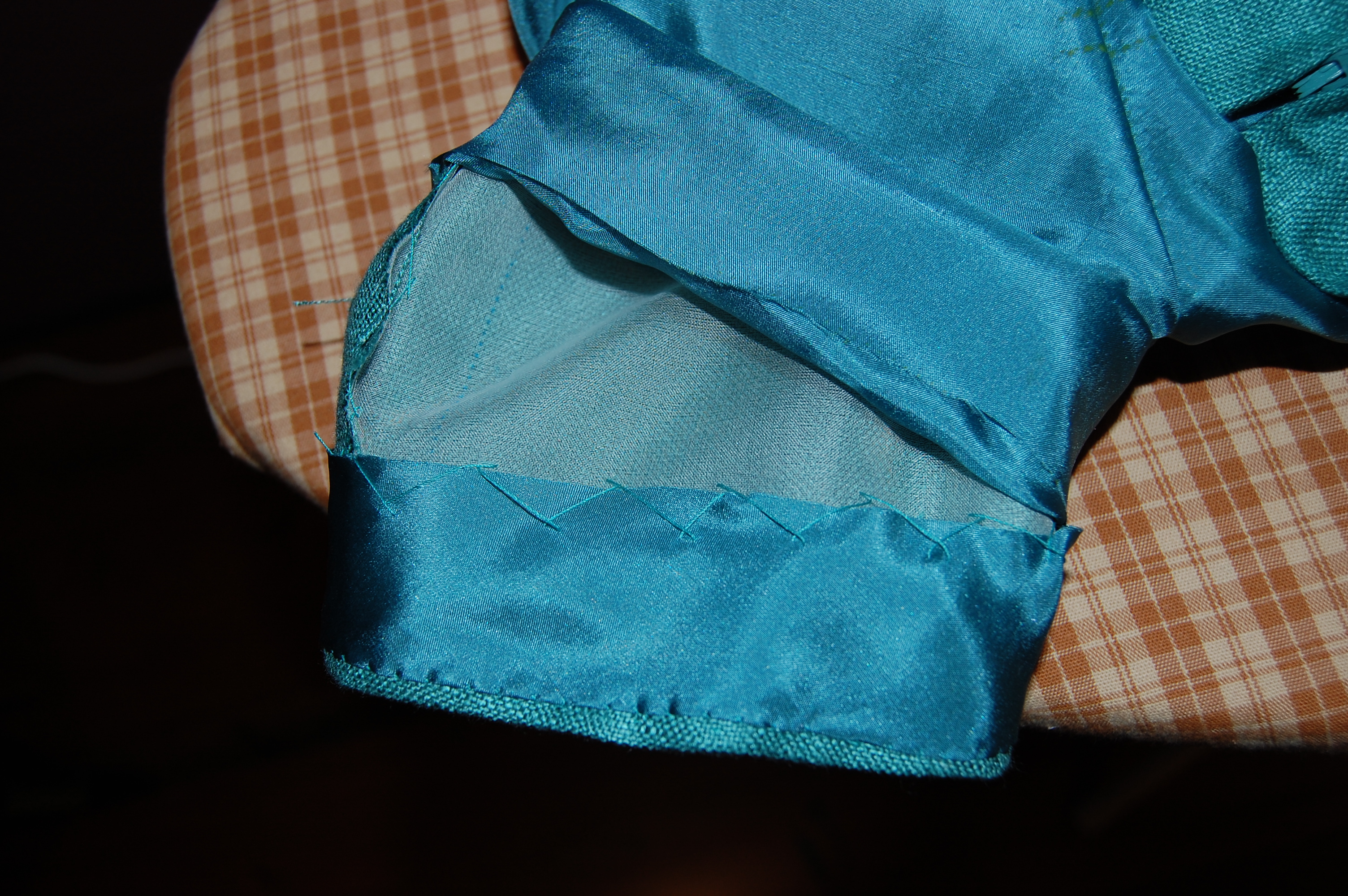
One of the hem techniques I learned in The Couture Dress class was helpful with this hem.

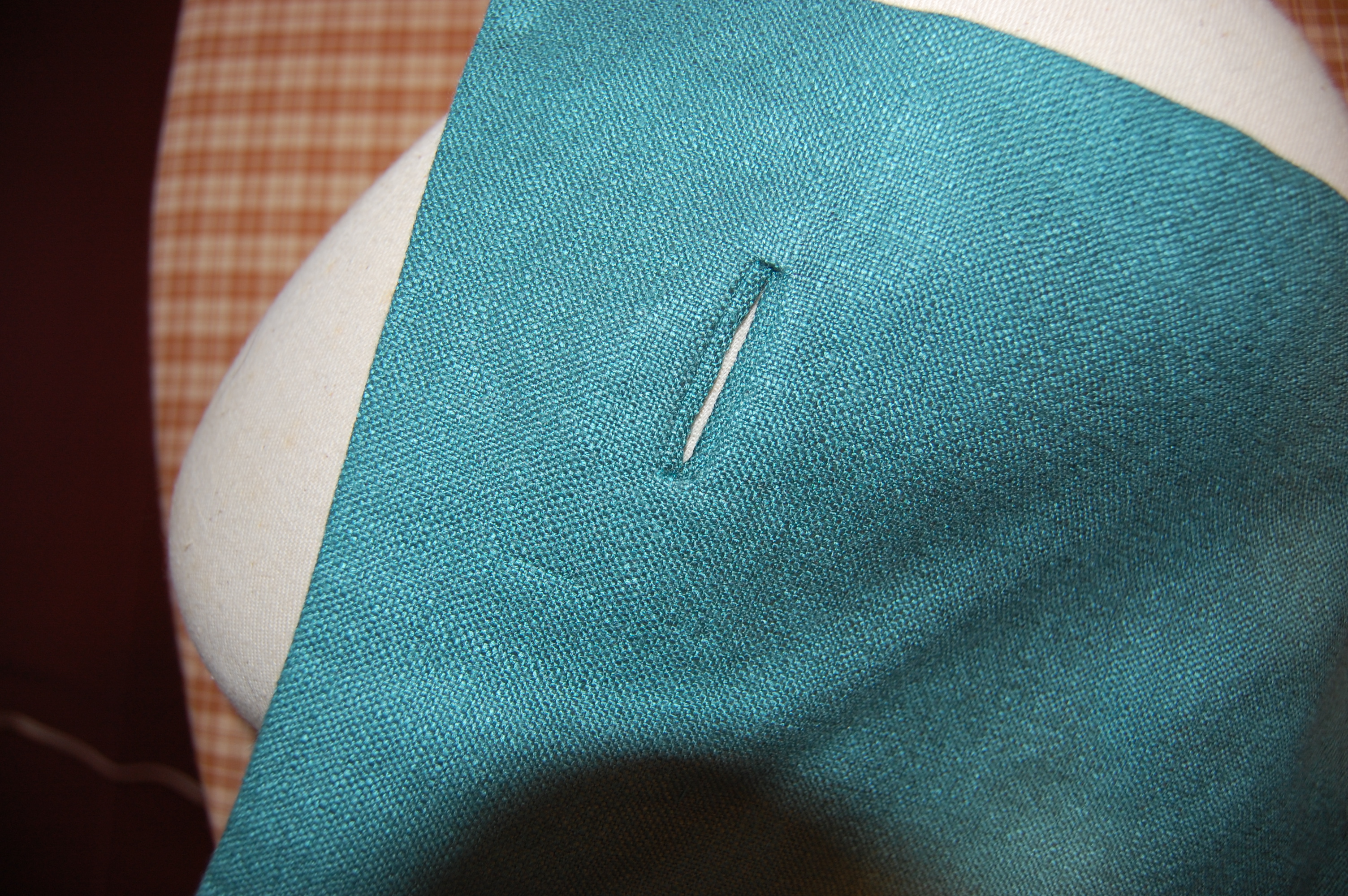
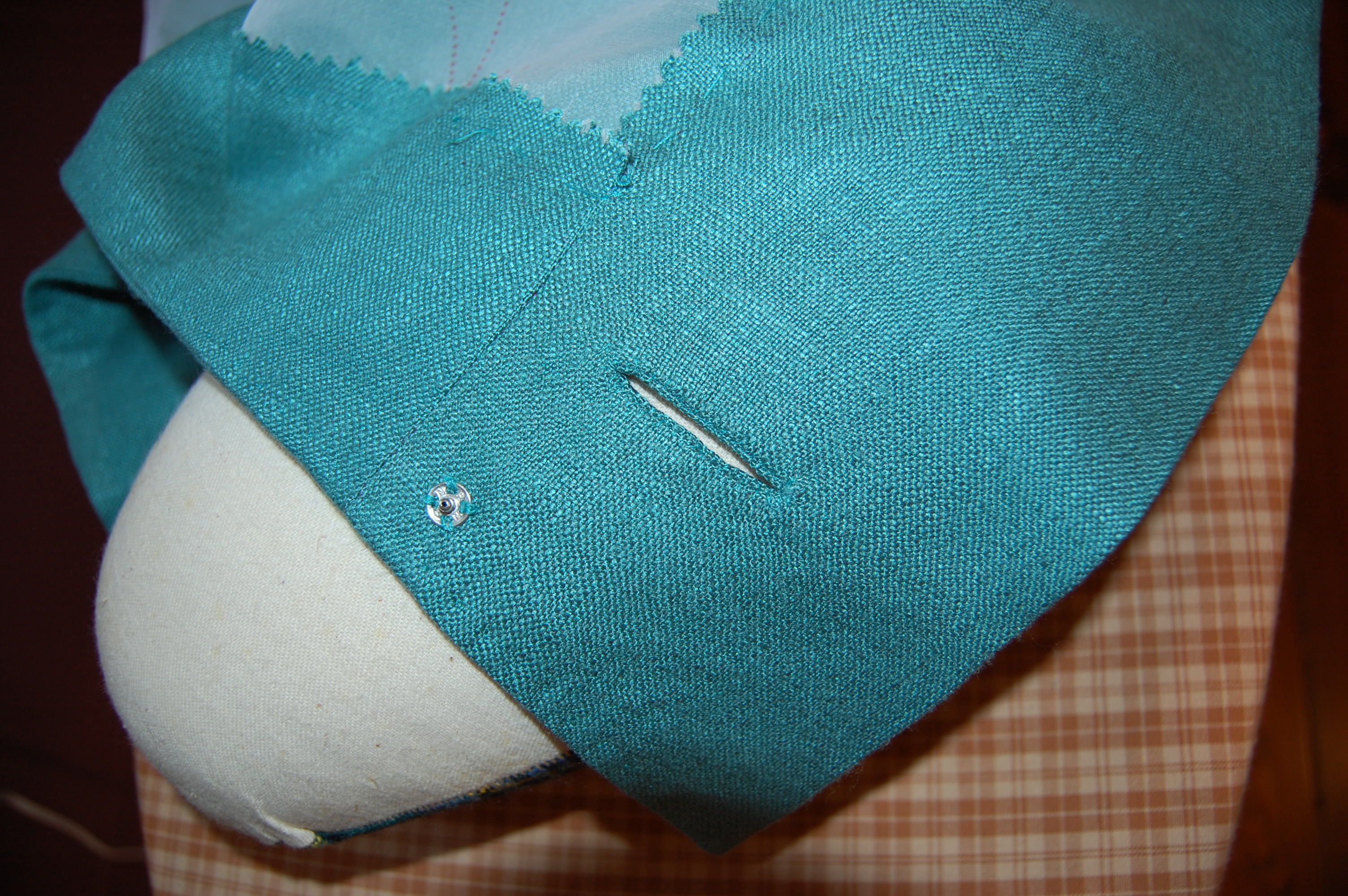
Call me crazy, but I just love to make bound buttonholes.  Although the pattern called for a 2-inch button, the one I found was 1½ inches (and I thought it a more refined size anyway).  That still calls for a large buttonhole!  I practiced first, then got to work on the real thing.

The finished bound buttonhole

And the finished underside of the buttonhole.

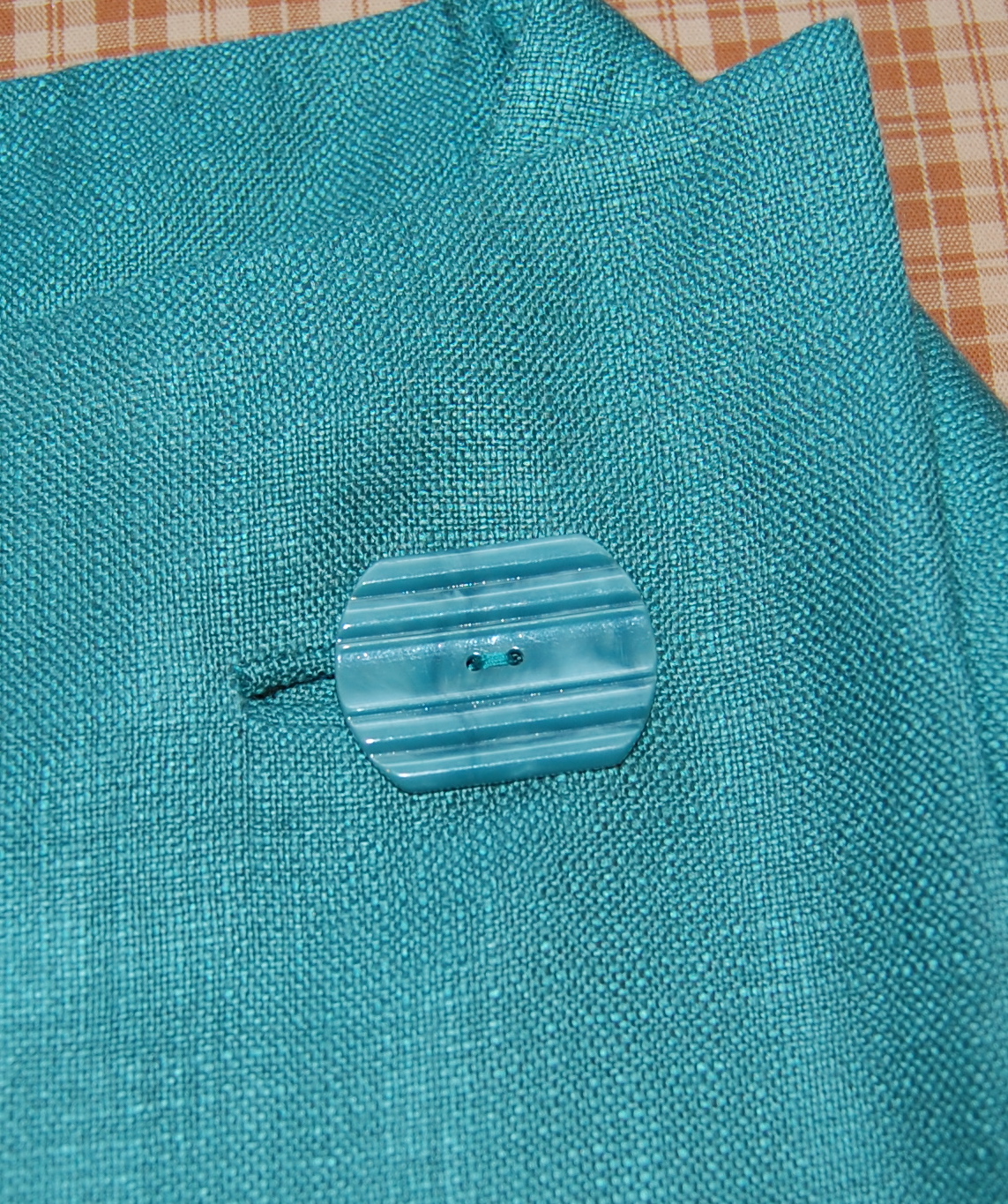
And the button…

I understitched the facings by hand with that beautiful prick stitch, and attached the lining with the fell stitch.

A peak inside the cape.

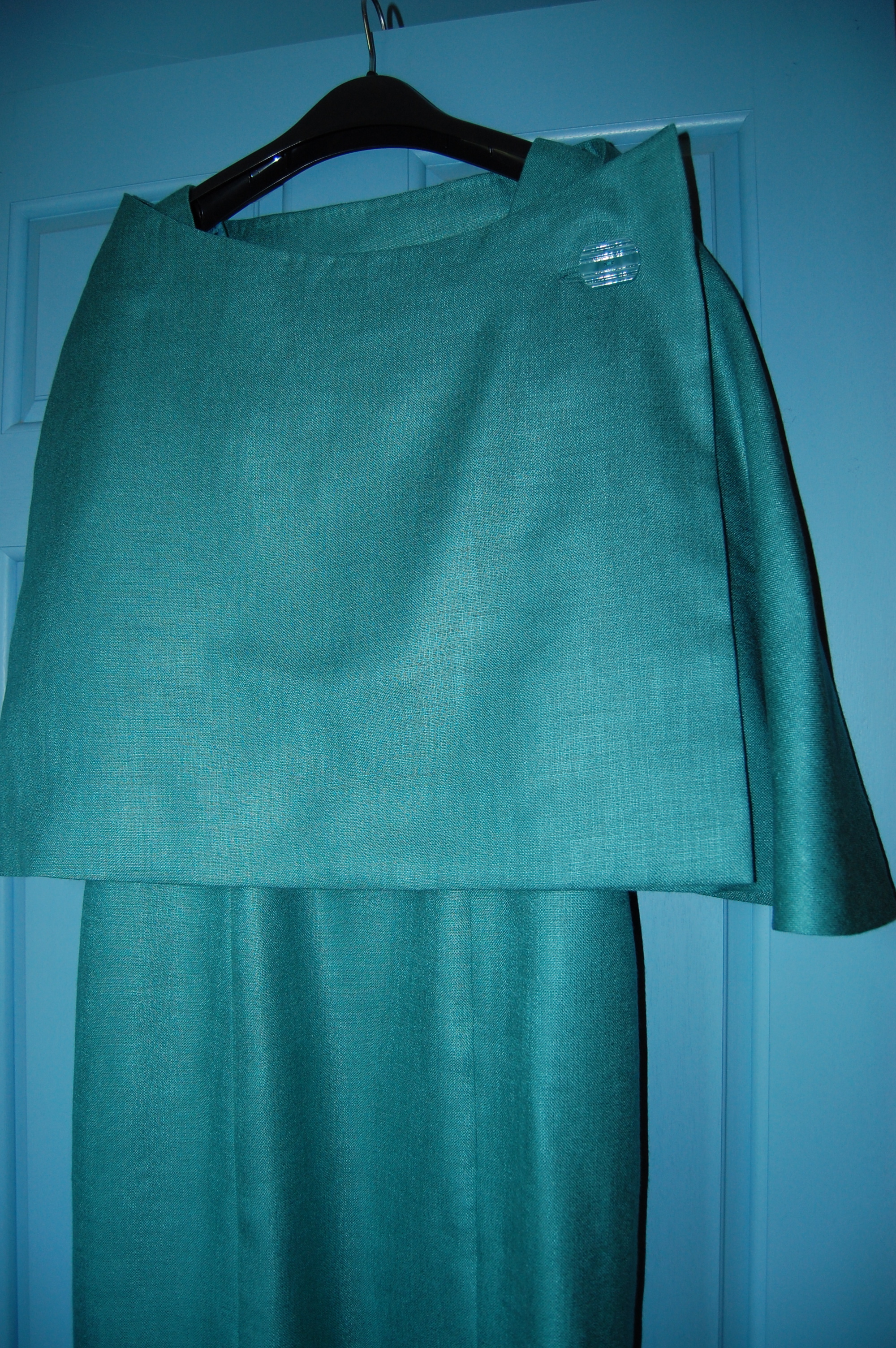
Here is the finished look (unfortunately on a hanger and not on me…).

Here is the cape shown over my Couture dress

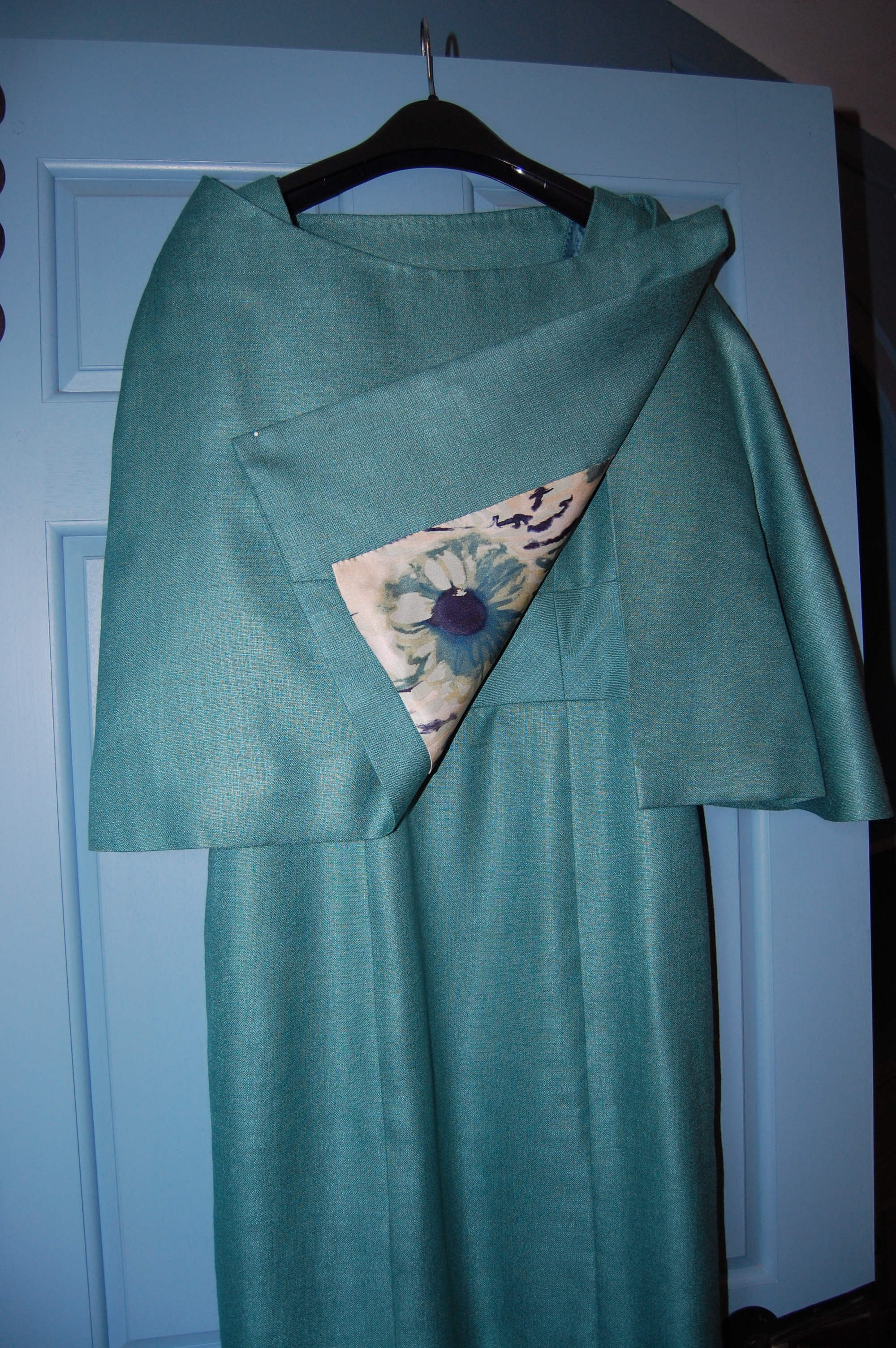
With one corner pinned up to show the lining.

This view shows the lovely draping formed by the asymmetrical opening.

And one more view.

Well, my time on the Cape officially draws my summer sewing to a close.  Now it’s going to be all wools or wool blends and maybe some silks – and I can’t wait!  Let’s throw an extra blanket on the bed and dream of cool nights and crisp days filled with creative hours of sewing. . .

10 Comments

Filed under bound buttonholes, Buttons - choosing the right ones, Capes, couture construction, Linen, sewing in silk, Uncategorized, vintage buttons, vintage Vogue Designer patterns, vintage Vogue patterns from the 1970s

Completely Captivating Couture Construction

I just can’t seem to avoid alliteration in my blog-post titles as of late!  Truthfully, however, this title really seems to sum up just how badly I have been bitten by the “couture” bug.  Earlier in the summer I signed up for Susan Khalje’s class, The Couture Dress, on Craftsy.  I’ve mentioned it several times in my past posts, but now, my couture dress is finished.

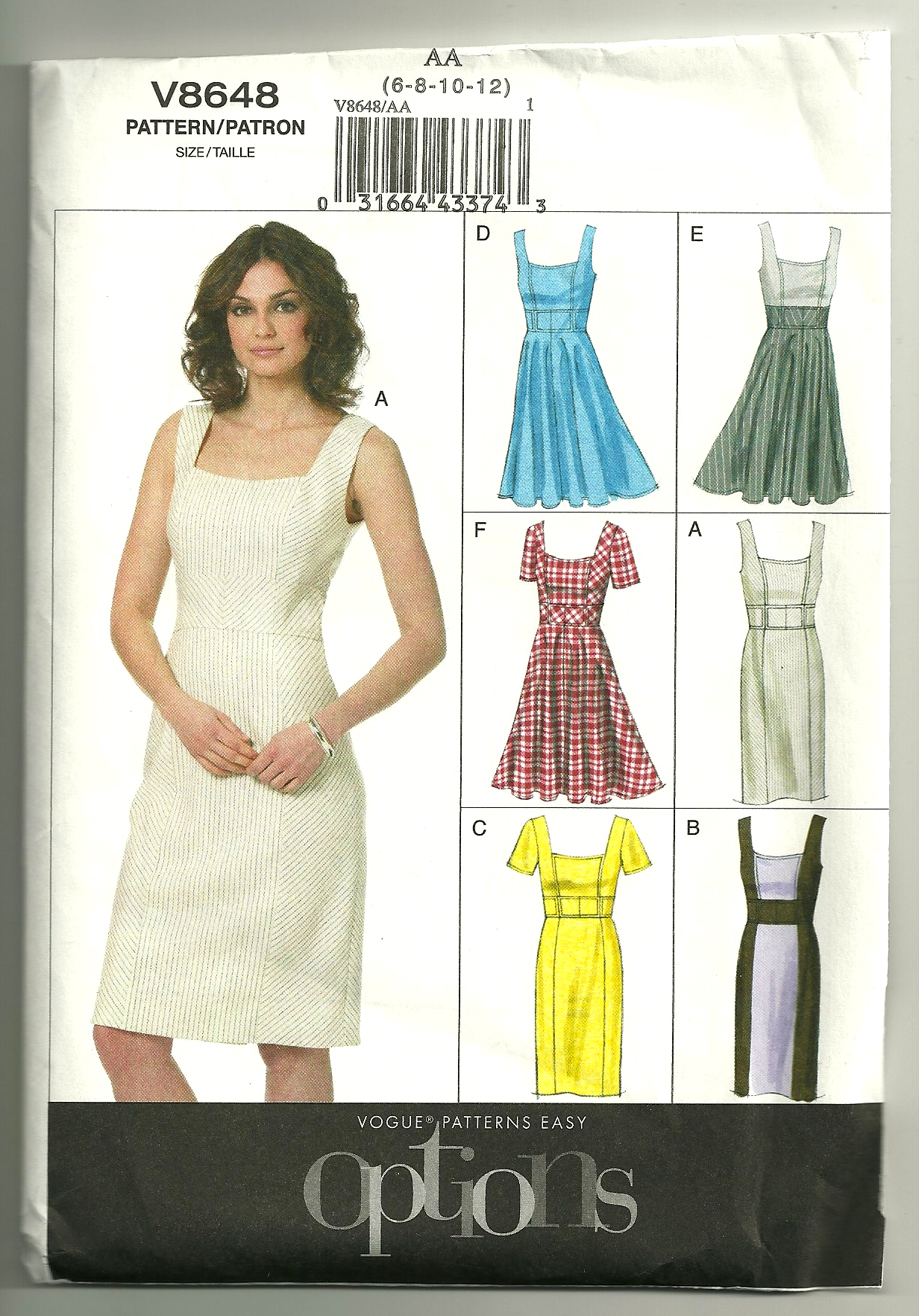
The Craftsy course included this Vogue pattern:

I decided to make this dress in the slim skirt with short sleeves.

Although I could have substituted another pattern for my dress, I decided it would be beneficial to follow the exact steps which Susan takes one through in her course.  (It helped that the view I chose to make reminds me very much of a classic 1960s–style dress).

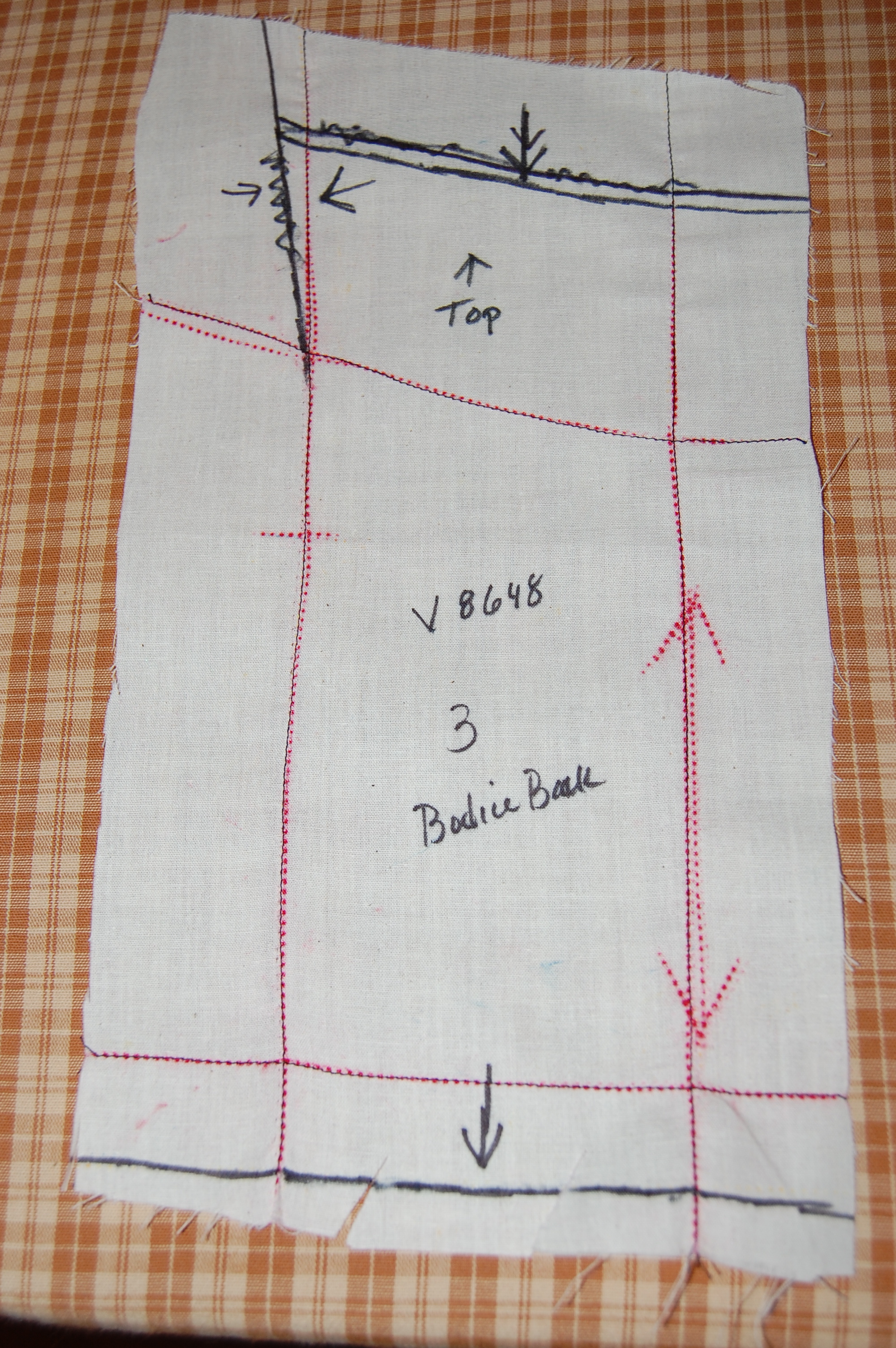
My idea of making a “muslin” or toile has been completely transformed by this course. I now know it as the most essential ingredient in the proper fit and alteration of a garment – and although the process of producing a useable muslin is time-consuming, every minute is worth it.  There is nothing quite so discouraging as spending a lot of time, energy, and money on a garment and then not being completely satisfied with the fit.  Making a couture muslin eliminates this possibility almost entirely.  Check out the online preview of the course if you want to know more about this concept.

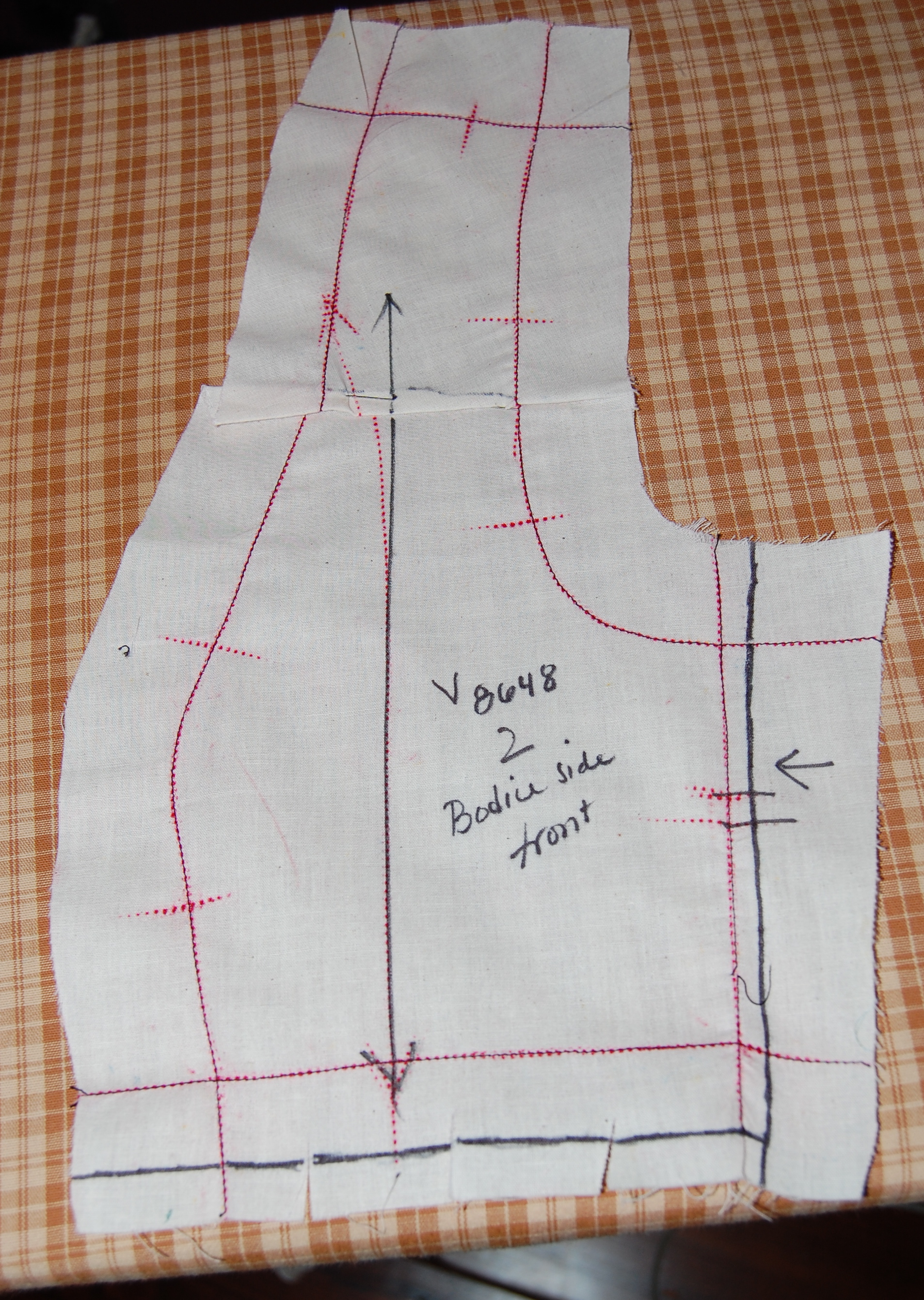
Here is one of my muslin pieces. The lines in red were the original tracings from the pattern and the lines in black are my alterations.

This muslin piece shows the “blind dart” I added to the neck edge. Susan goes over all these details in her course.

There are several “hallmarks” of couture construction, I have learned: Control, Generosity, and that all-important duo of Form and Function.    So what (in a nutshell) do these terms mean?
A few examples of Control are:

1) Control of the fit, which, as stated above, is the purpose of the muslin.

2) Control of the stitching line, which is your reference point for sewing – as opposed to the seam allowance, which is how most of us were taught to sew.  Lots and lots of basting is the key to controlling the stitching line.

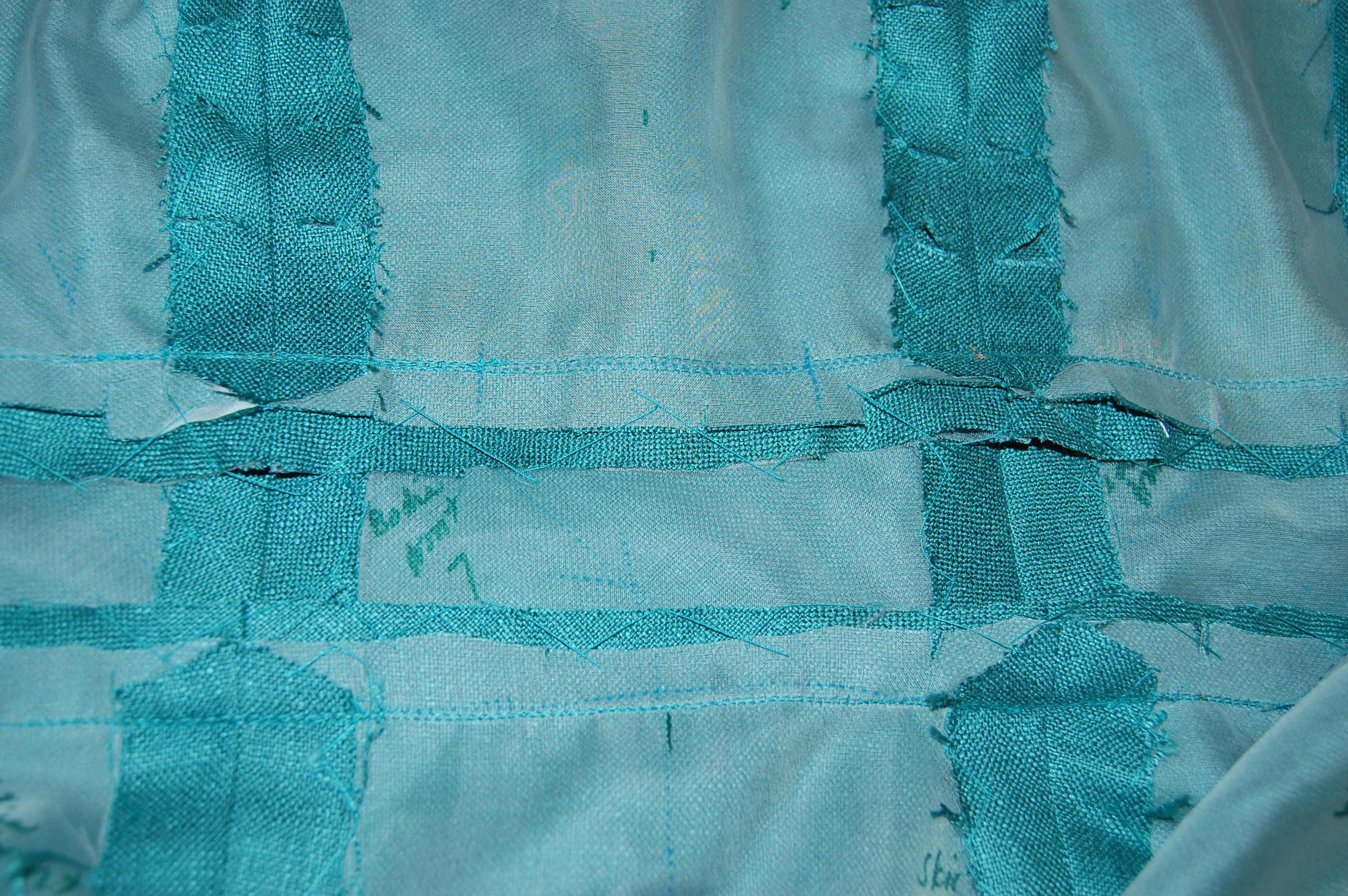
3) Control of the inner seams, the raw edges of which are each catch-stitched to the underlining.

Here you can see the interior of the assembled dress, with every edge catch-stitched in place. The underlining serves as a “tablet” upon which you can make all kinds of notes!

The two big examples of Generosity are:

1) Cutting out the muslin, the underlining and the fashion fabric with very large seam allowances which give you the flexibility you might need to make changes in your final fitting.

2) Allowing – and taking – the time to do a lot of hand-sewing, fitting, and detail work.

If you look closely you can see the hand made loop and the “couture” attachment of the hook at the neck edge.

I ended up applying a bias facing to the sleeve edges. At my final fitting, I decided I wanted the sleeves a bit longer than I had originally anticipated, so the bias facing gave me another 3/4 inch in length. This is one more detail which Susan covers in her fabulous course!

Finally, Form and Function are well illustrated by these two examples:

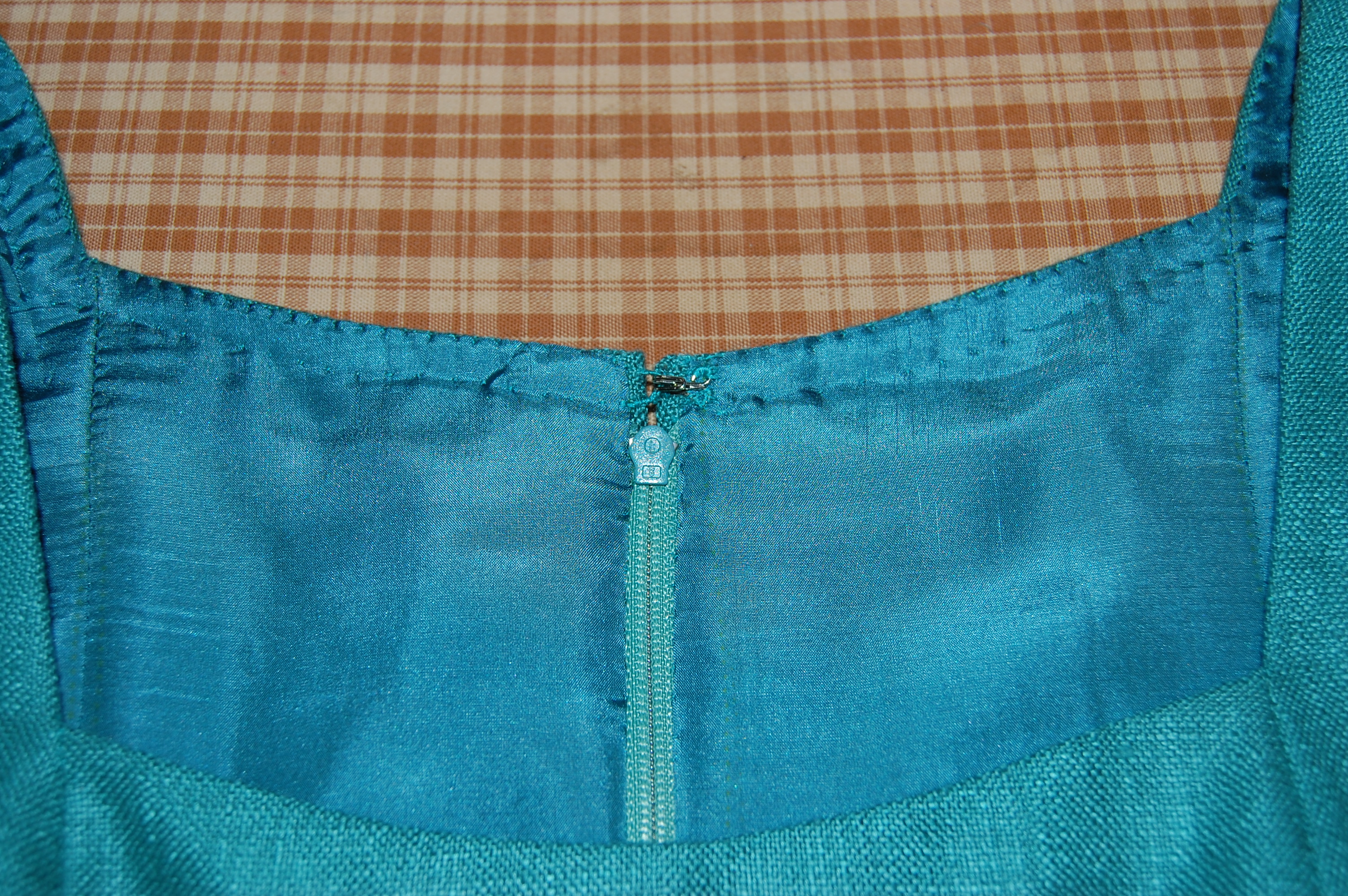
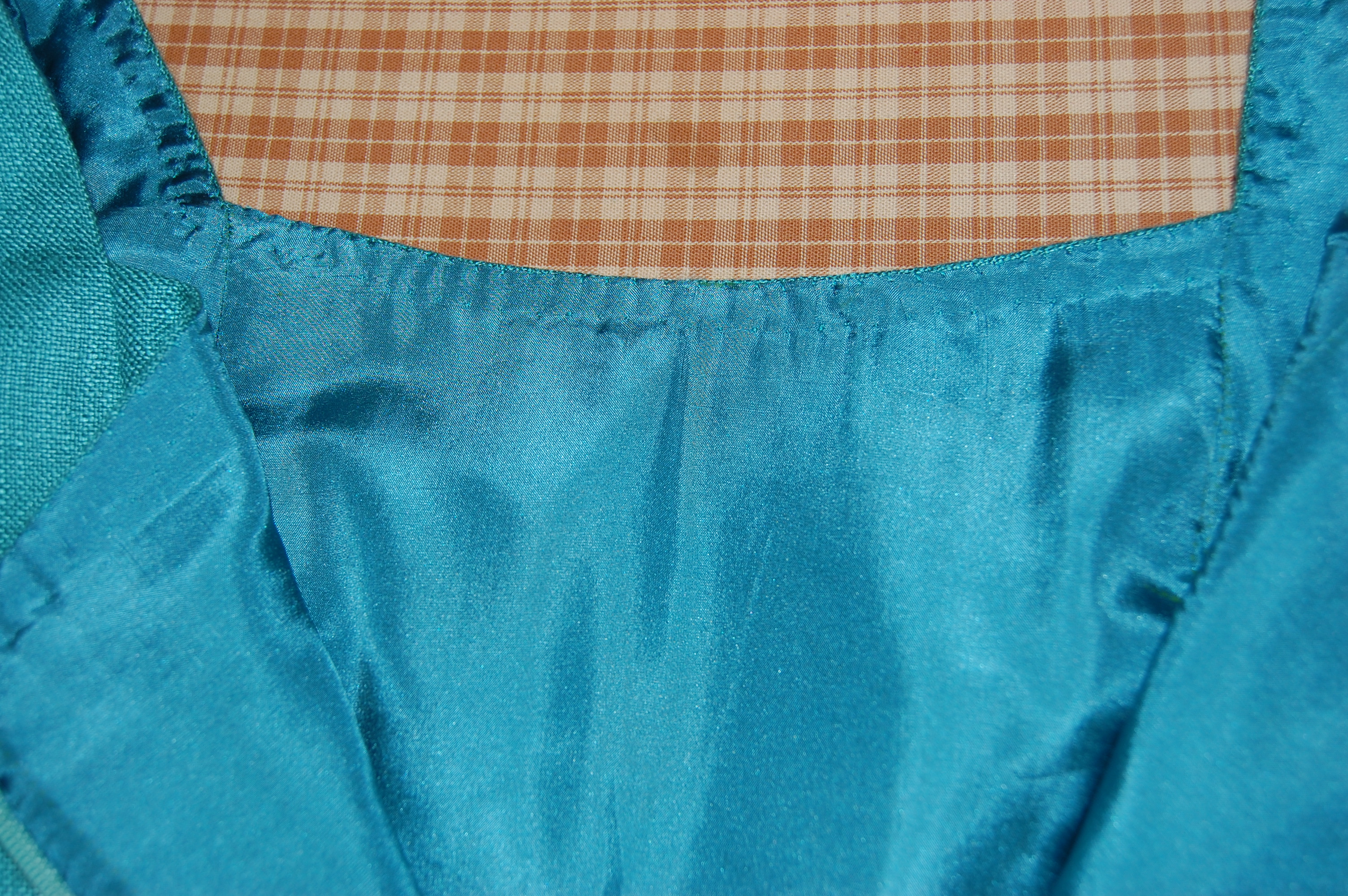
1) A couture lining is always applied by hand, using the fell stitch.  To insure that the lining will not “migrate” to the outside, it is secured by the very lovely pick stitch – doing the job (function) in a truly elegant way (form).

Here is the finished front neck edge, showing the “applied by hand” lining and the pick-stitches which keep the lining from migrating out of the dress!

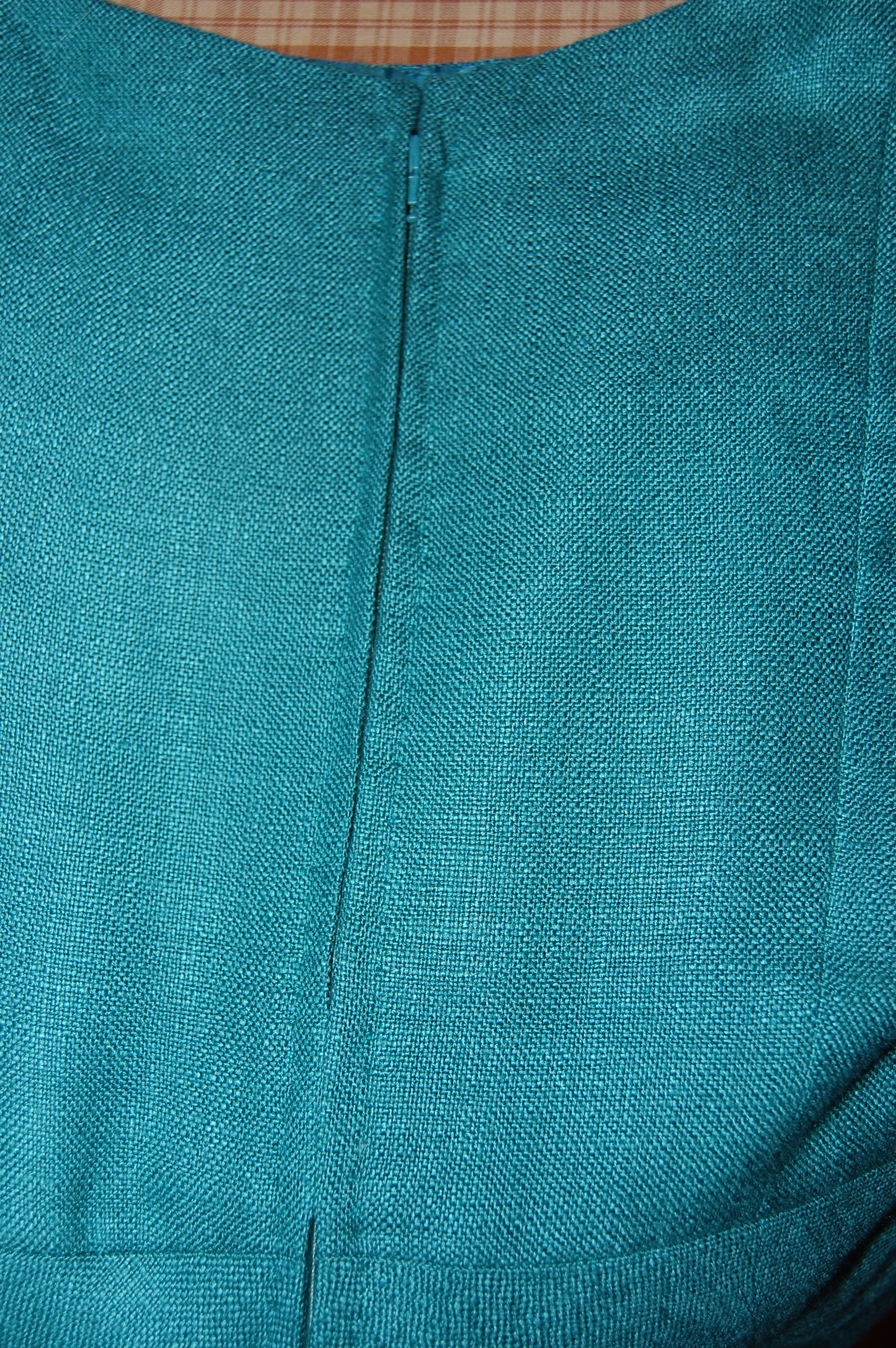
2) The zipper (if you are using one) is a regular zipper (not invisible) which is set in by hand, again using the pick stitch.

The top part of my hand-picked zipper.

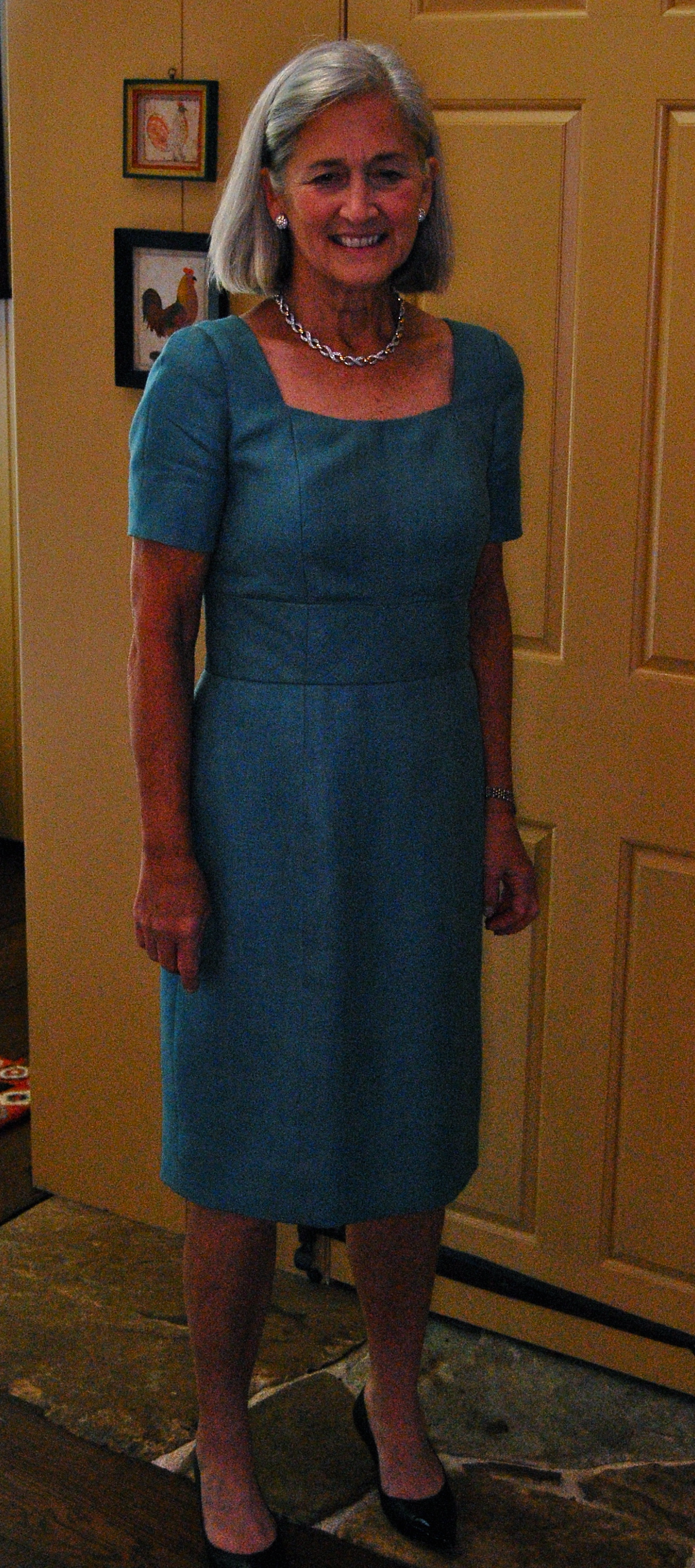
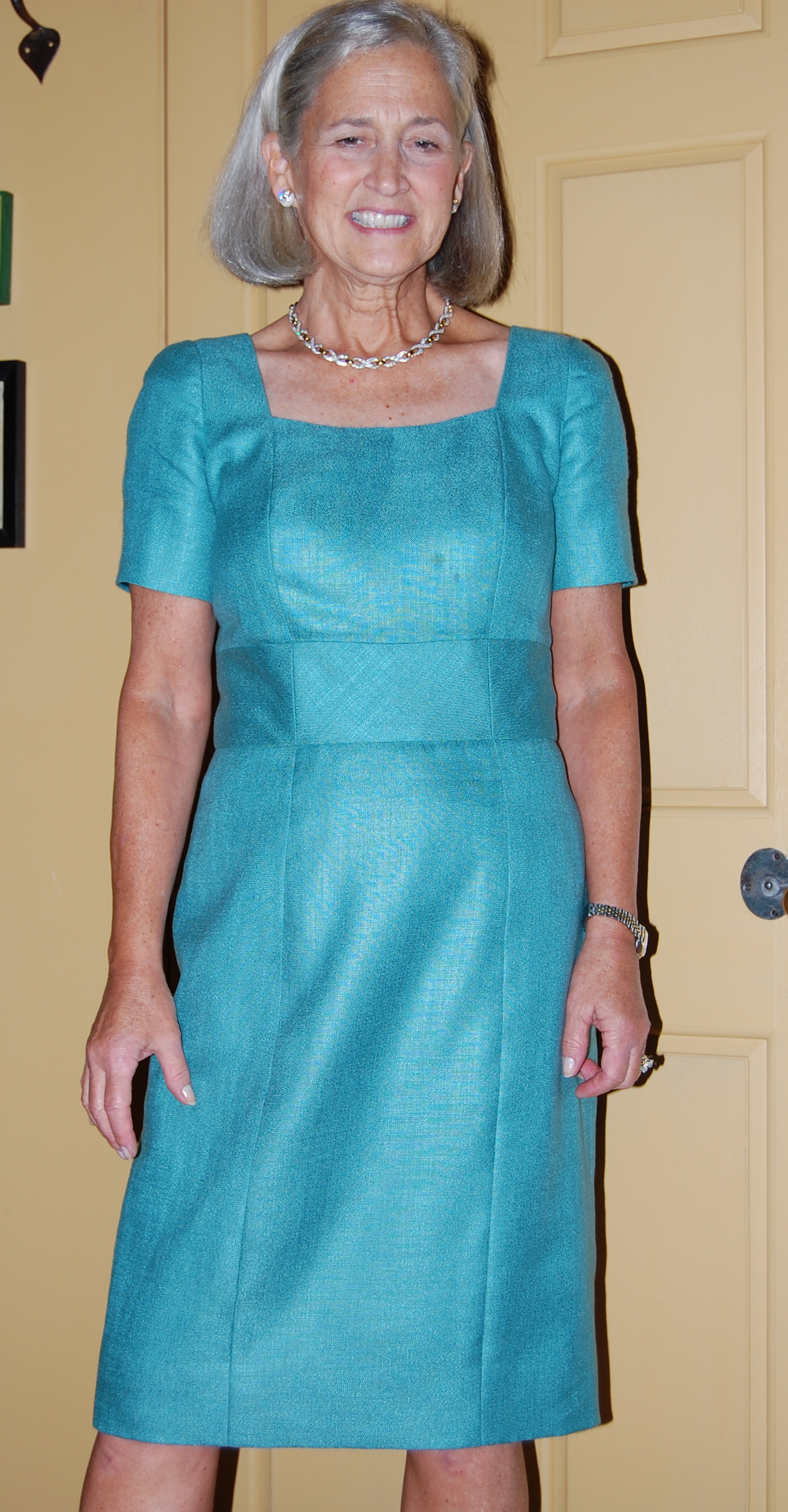
Now that you’ve gotten a few glimpses of my dress inside and out, here it is all finished:

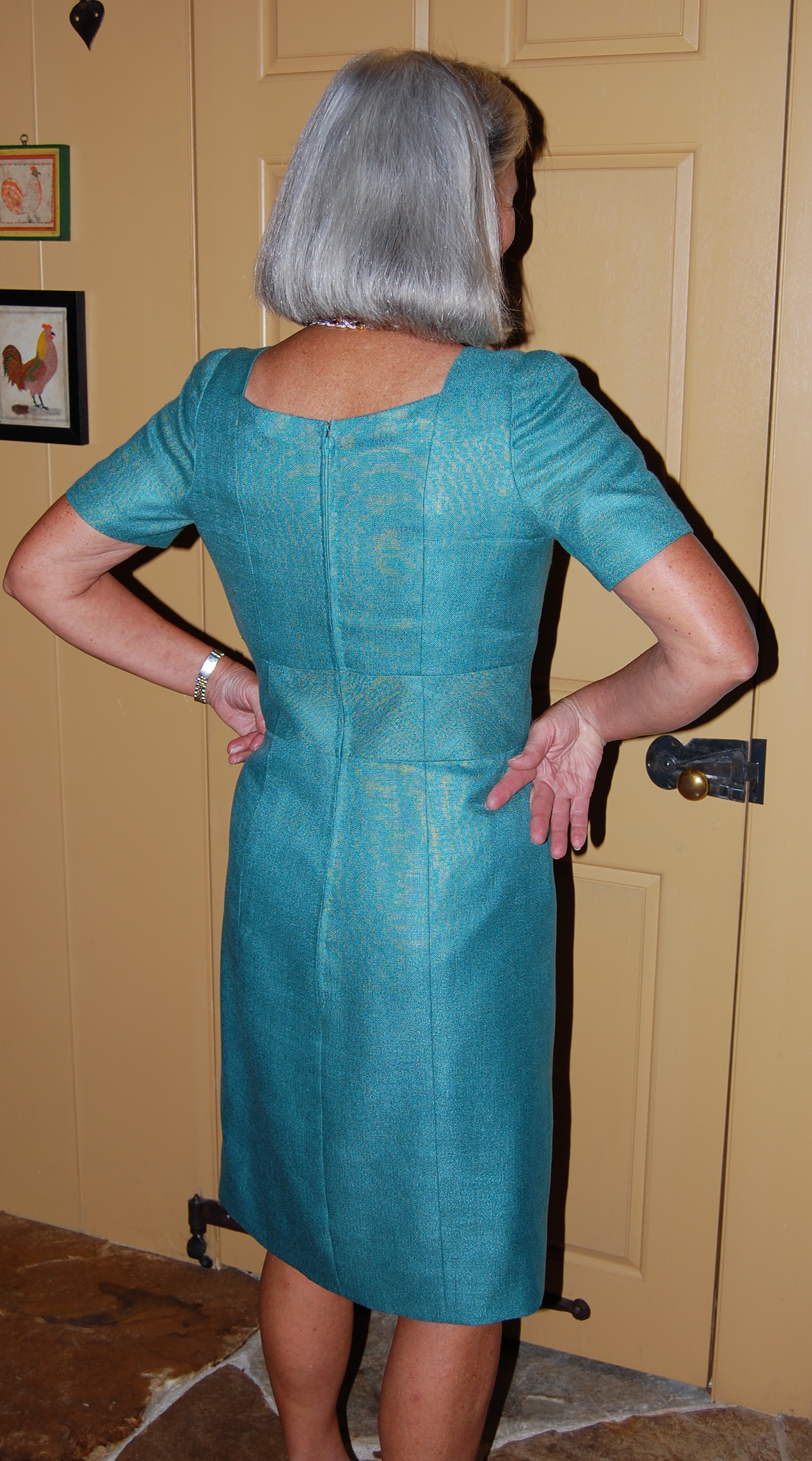
The fabric is a teal green linen; the lining is matching crepe de chine, and the underlining is white silk organza.

Another view…

… and a back view.

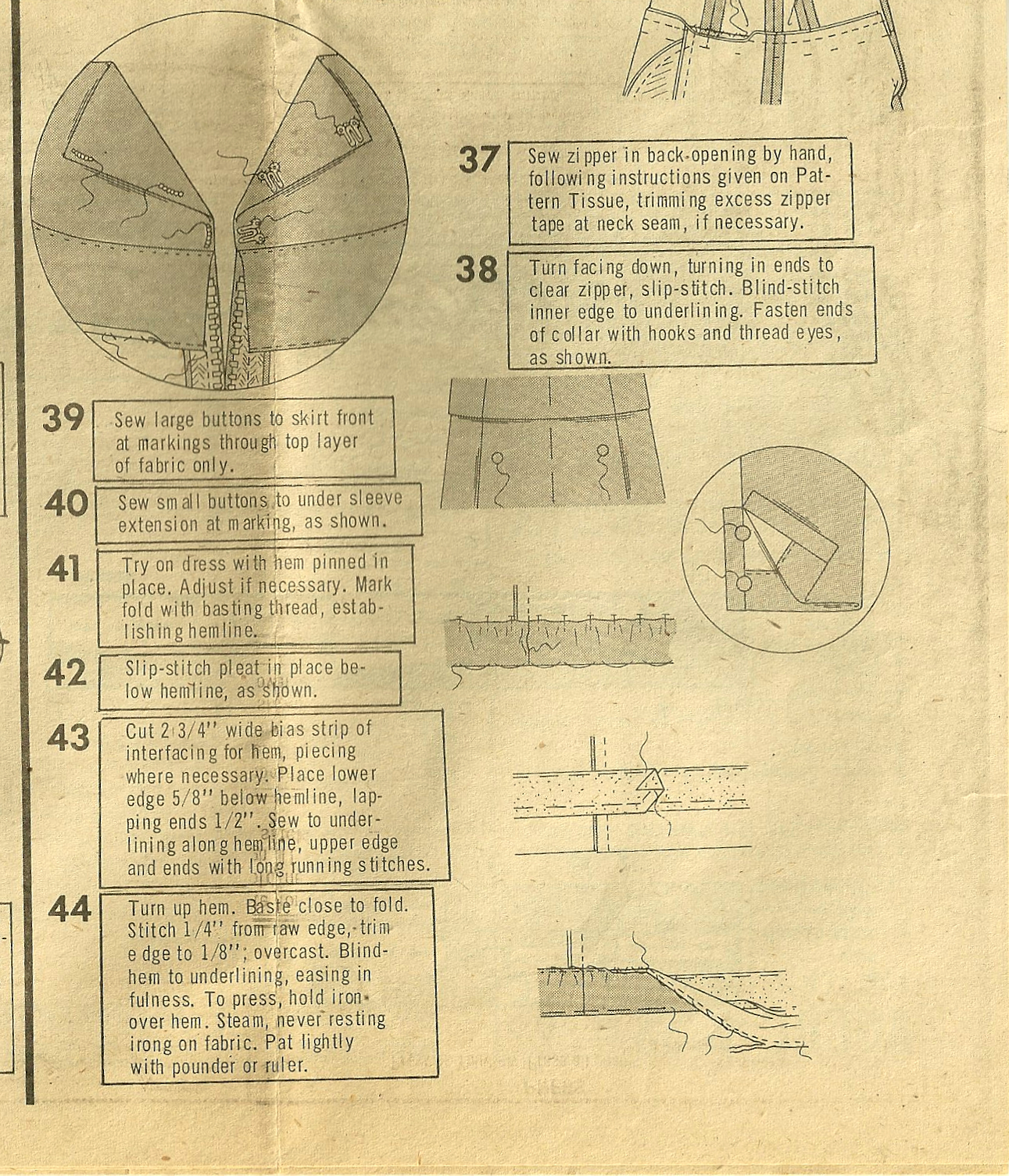
One of the things that appeals to me so much about couture construction is how transferable it is to vintage patterns. In fact, I would go so far as to say that parts of this type of construction are implied in many vintage patterns.  Here is an example from a construction sheet from the early’70s:

The instructions say to sew the zipper in by hand, the hooks and loops are shown in “couture” detail, and the hem treatment is very similar to one I learned in this course. One exception I should note here is that couture does not use facings as shown in the topmost drawing.

Consider for a moment this advantage of using vintage patterns over contemporary ones:  contemporary patterns, which are usually “multi-sized”, are drawn with the cutting line only.  To make one of these patterns usable for couture construction, you must add the stitching line onto the pattern tissue, adding another step in the whole process.  Vintage patterns (except for unprinted ones, of course) have the stitching line drawn on the tissue – ready to be traced onto your muslin fabric (which becomes your ultimate pattern).  All of which brings me to another alliterative phrase  . . .  as I find myself Valuing all the many Virtues of Very Versatile Vintage!

17 Comments

Filed under couture construction, hand-sewn zippers, Linen, sewing in silk, Uncategorized, underlinings, vintage Vogue patterns from the 1970s, Vogue patterns