Tag Archives: Chanel-inspired jackets

No. 2 ~ The Beginning

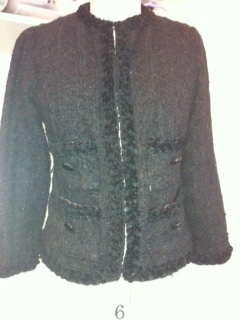
I may – or may not – find Chanel No. 5 Paris Parfum in my Christmas stocking, but Chanel-inspired, Classic French Jacket No. 2 can currently, definitely, be found in my sewing room.  Well, actually, it’s not a jacket yet.  It is just lengths of fabric and loose trims and buttons, but that is how these things begin, as every home dressmaker knows.

I actually started planning this jacket long before I took the Classic French Jacket Class with Susan Khalje this past summer.  In September of 2012 when I was at Britex Fabrics in San Francisco, I found this boucle and purchased it – even then – as my intended Jacket No. 2.
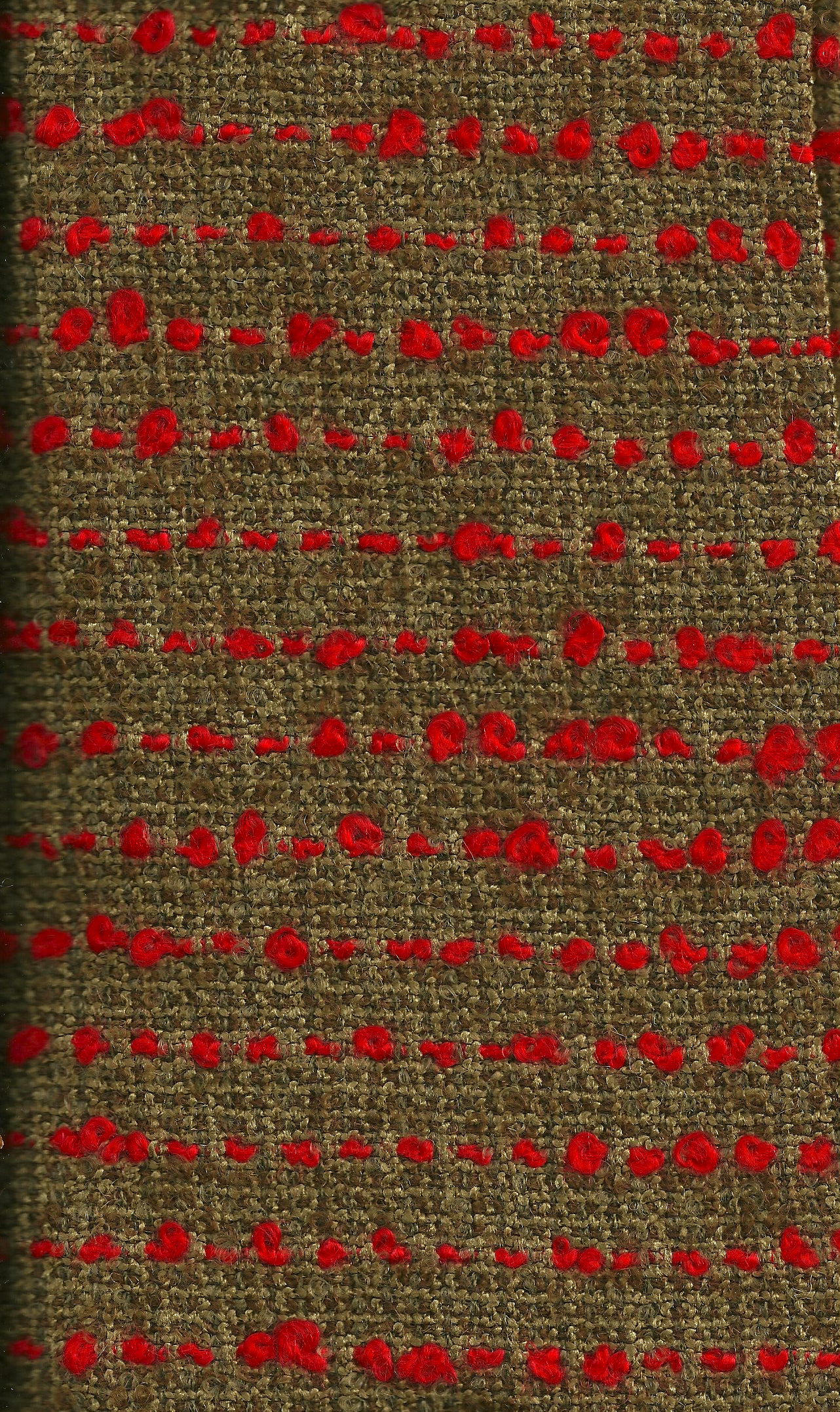
This fabric is very soft, perhaps due to a certain percentage of mohair wool in its composition.

This fabric is very soft, perhaps due to a certain percentage of mohair wool in its composition.

My first jacket is definitely very dressy, so I wanted this one to be less so, which meant I had to find just the right lining, trim, and buttons.  It took another, recent, trip to San Francisco to produce those ingredients – and I couldn’t be more pleased with what I found again at Britex.

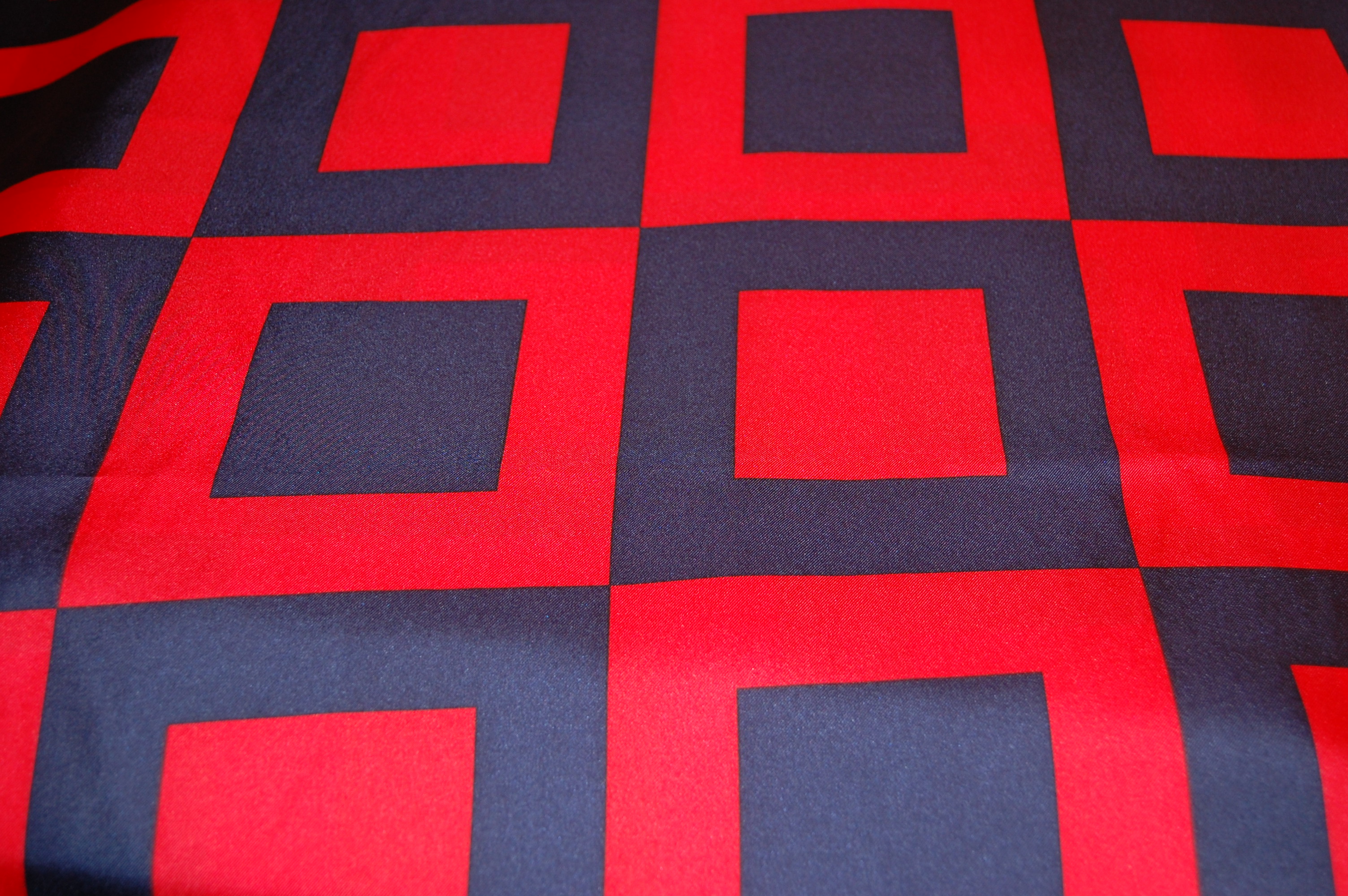
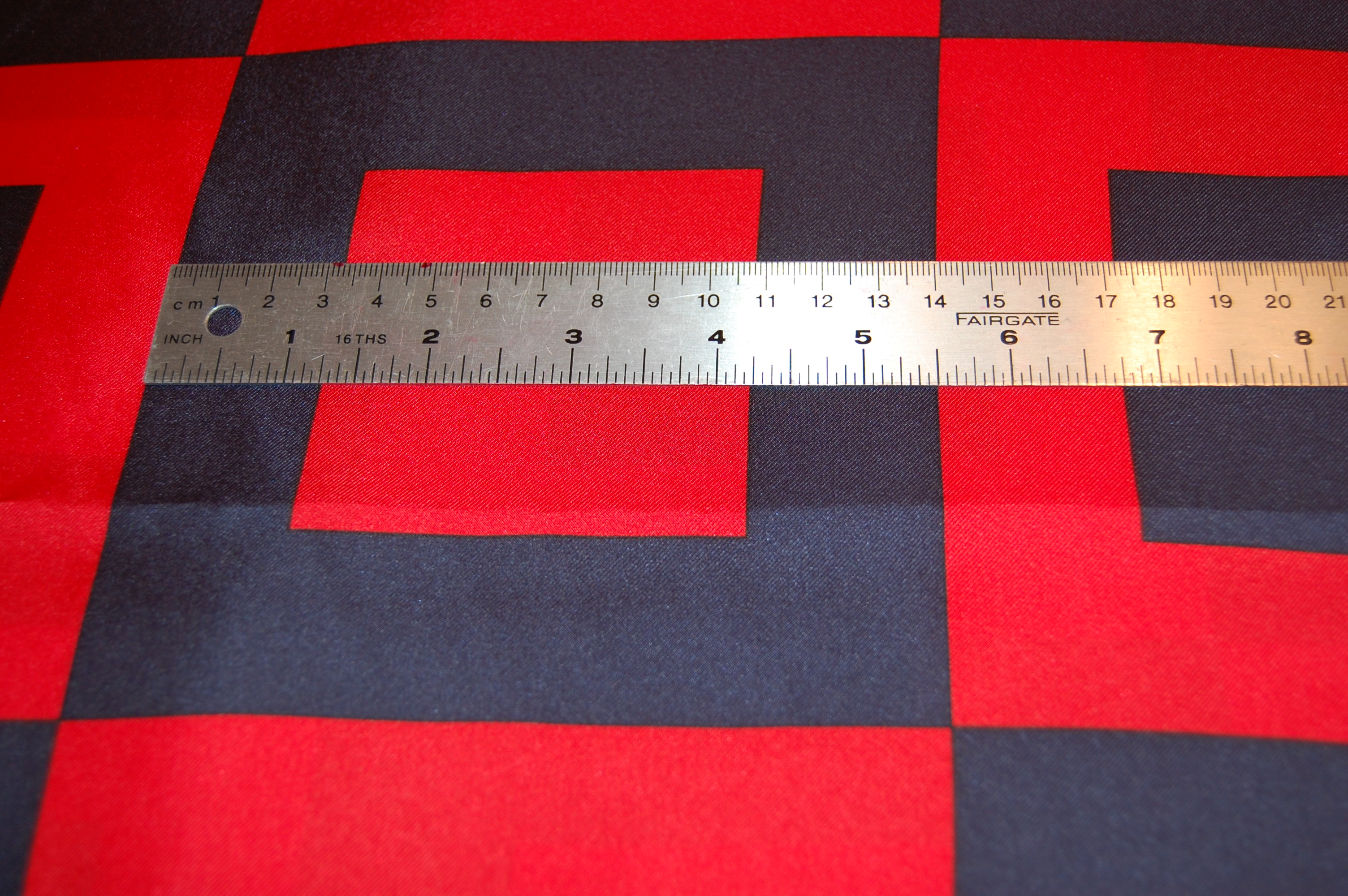
A bolt of this light-weight silk twill was tucked under one of the front tables, and it was love at first sight.  I was hoping to find something with navy blue in it, and the geometric pattern in this fabric makes it bold and less dressy than a floral silk charmeuse would be.
No. 2 jacket

The ruler will help you get a feel for the size of the squares.  Click on the photo for a close-up view.

The ruler will help you get a feel for the size of the squares. Click on the photo for a close-up view.

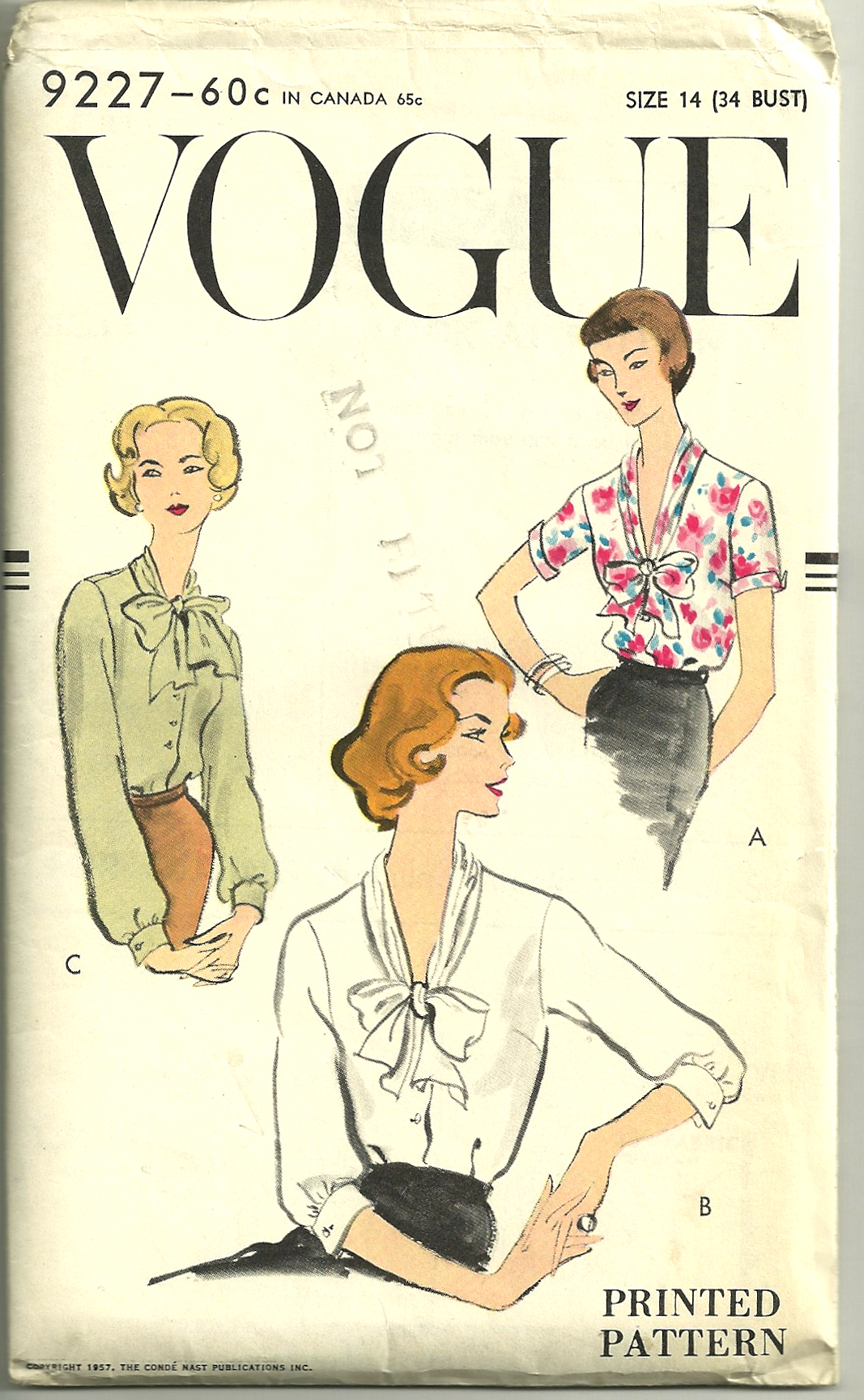
Immediately, however, I knew that I had to purchase enough for a blouse as well, which I did.  I suspect I’ll be using this pattern from 1957 for a blouse with a bow, which should evoke the correct Coco Chanel look. (A muslin should tell me if I need to tame the bow.  I don’t want it to be overwhelming…)
View B with long sleeves has my vote.

View B with long sleeves has my vote. 

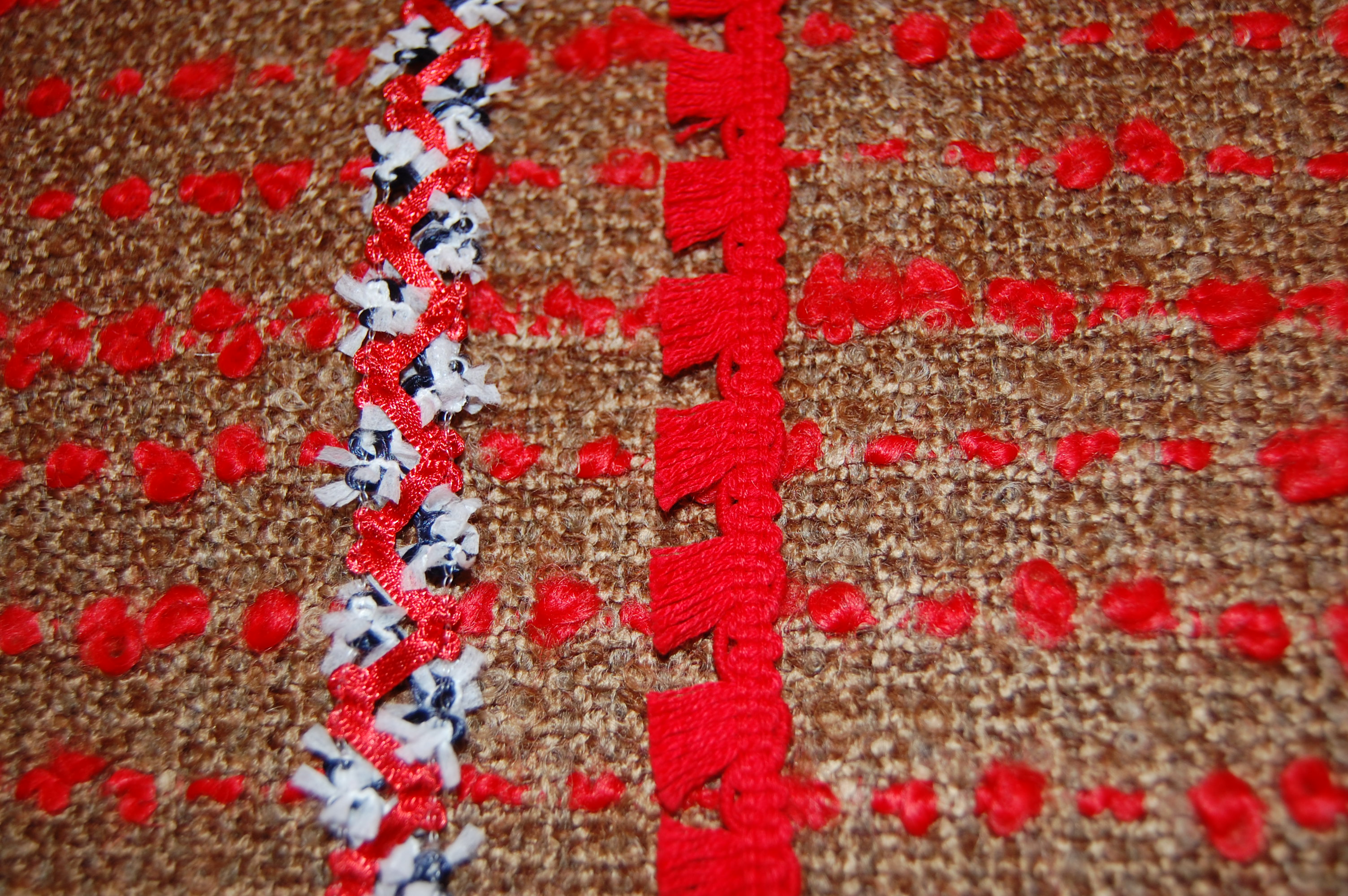
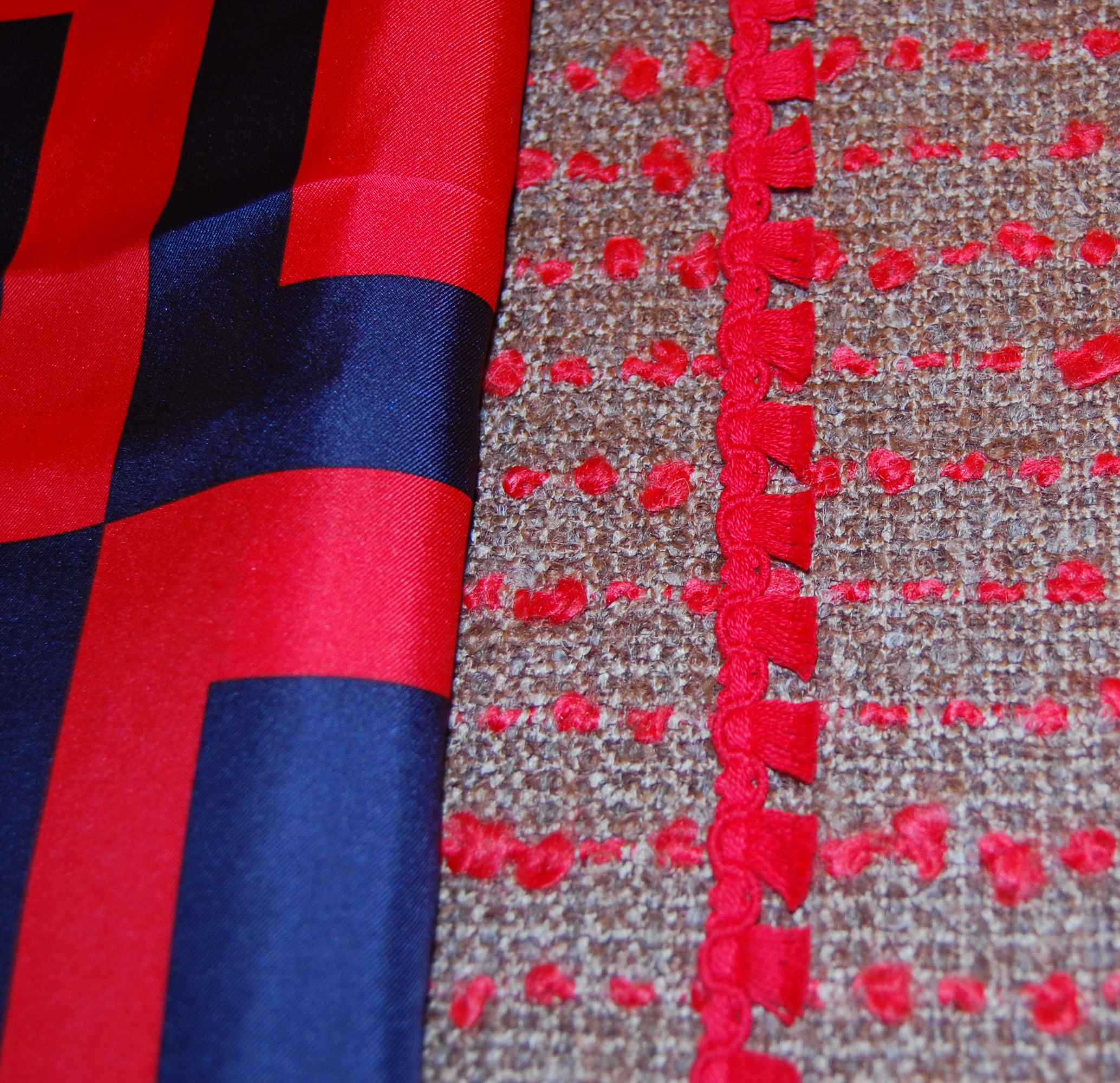
With fabrics in tow, I then headed up to the Buttons and Trims Department on the 3rd floor.  An initial look at the red trims flummoxed me, as none of them seemed right.  Then one of the wonderful assistants in the Department came to my rescue and found these two trims.
No. 2 Jacket

Shown with the lining/blouse fabric...

Shown with the lining/blouse fabric . . .
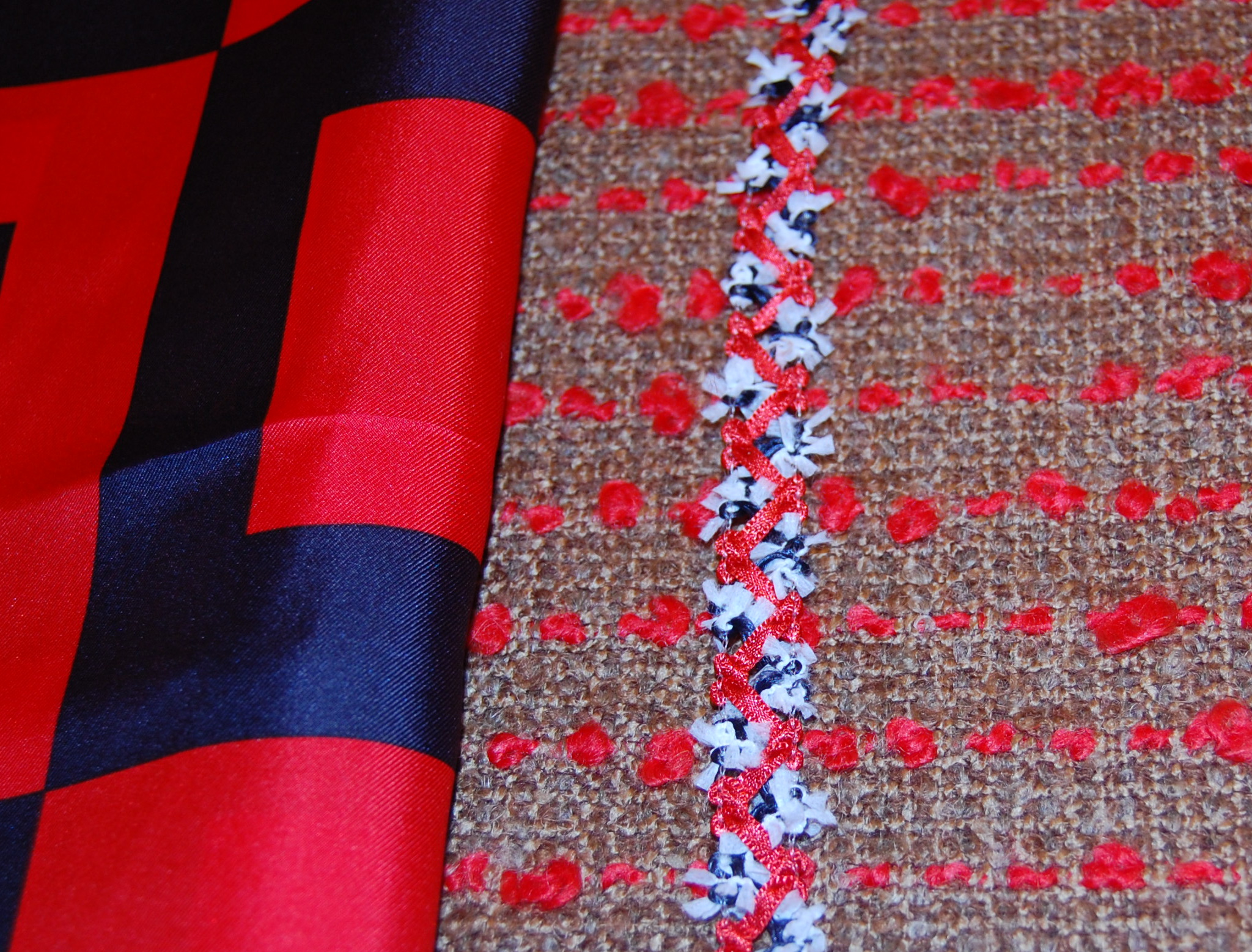
... and again.

. . . and again. 

Back and forth I went between them, unable to make a decision.  It was then that I went to my fail-safe method of choosing between two equally wonderful trims:  I bought both of them! ( It certainly helped that neither was terribly expensive – and both very versatile.)

Now that I have them home, I am leaning toward one of them – can you guess which one?  Does it help to see the buttons, too?  Once again, the experienced button assistant quickly found these – and there was no question in my mind that they were just what I wanted for this jacket.
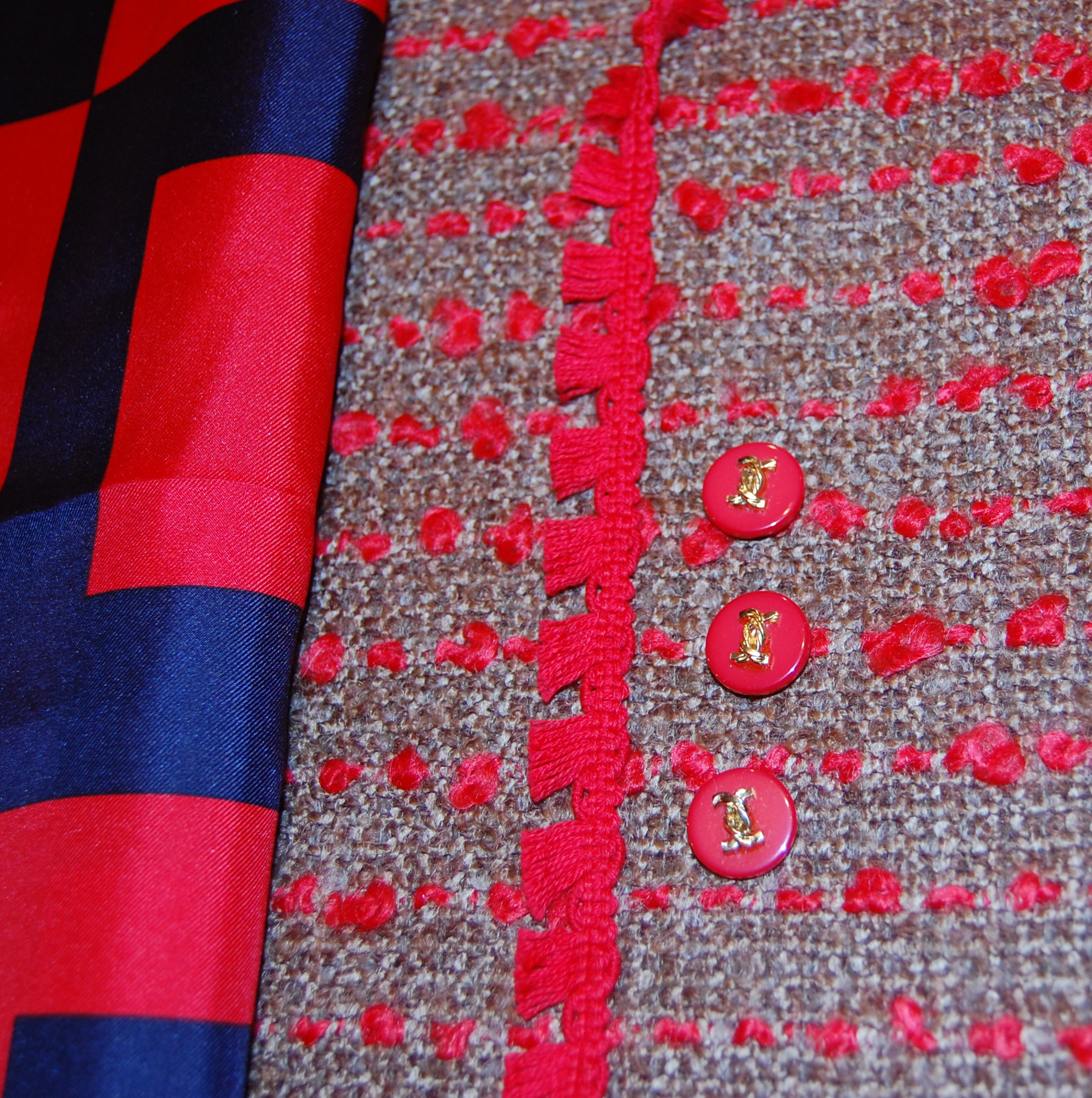
These are shank buttons, with gold decoration reminiscent of Chanel "C"s.

These are shank buttons, with gold decoration slightly reminiscent of intertwined Chanel “C”s.
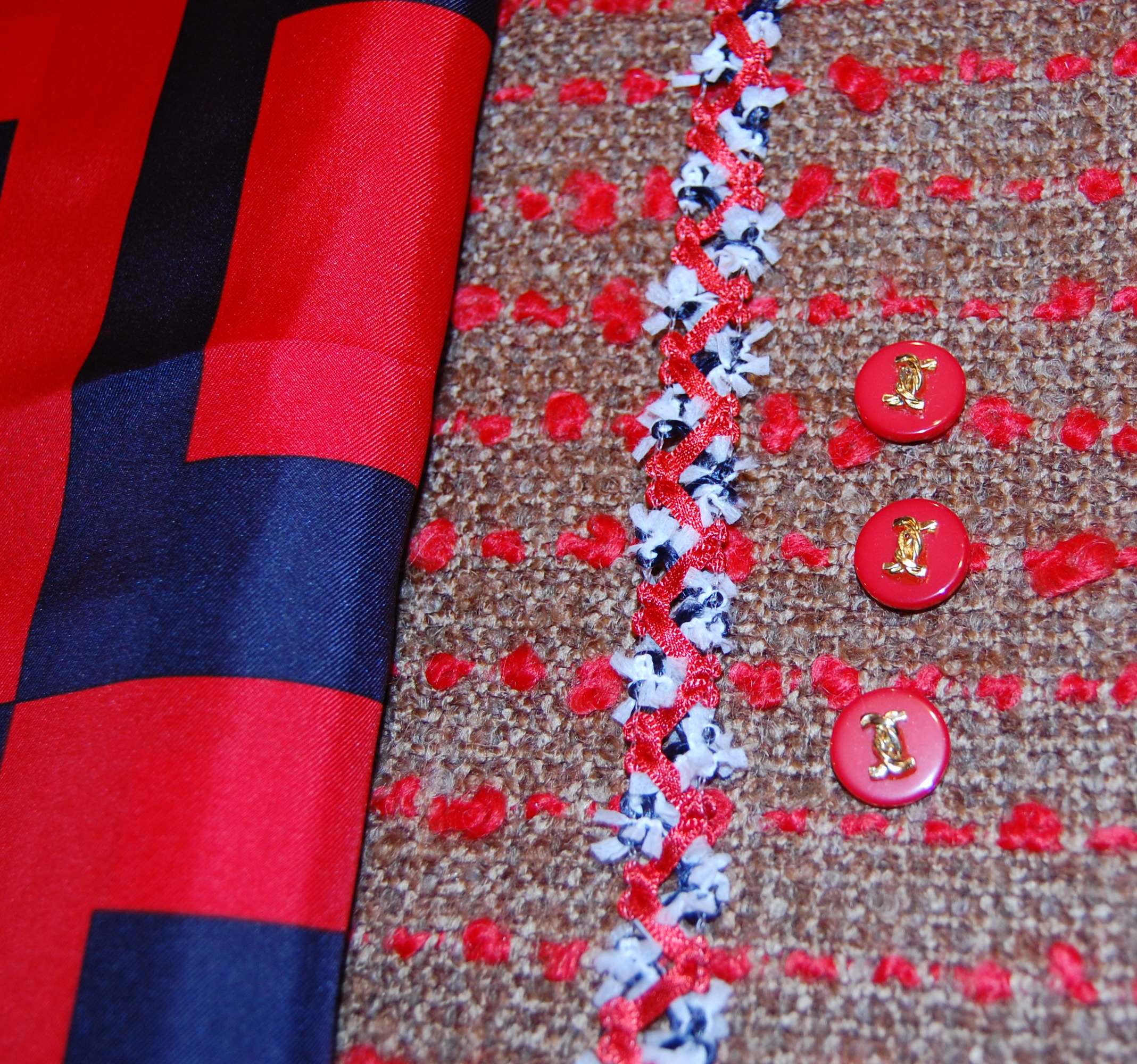
And here with the other trim.

And here with the other trim. 

Well, as in so much in life, timing is everything – or it sometimes seems that way.  My timing could be better to be starting such a lengthy project.  It is, after all, one month until Christmas.  I have those proverbial stockings to fill and much to do, but I’ll just bet I can squeeze in some sewing time before my sewing room transforms into Santa’s workshop.
15 Comments

Filed under Blouse patterns from the 1950's, Boucle for French style jackets, Buttons - choosing the right ones, Chanel-type jackets, Coco Chanel, Uncategorized, vintage Vogue patterns from the 1950s

A Simple Sheath?

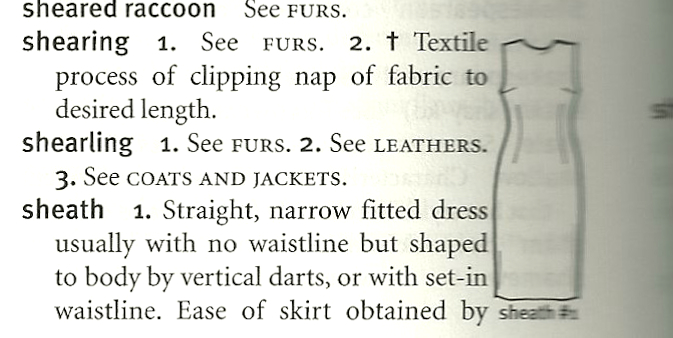
One of the most enduring dress styles in the last 60 years is undoubtably the classic sheath.  According to the definition in Fairchild’s Dictionary of Fashion, a sheath can be one of two constructions:  without a set-in waist or with a set-in waist.  In either case, the silhouette is straight, narrow, and fitted, “shaped to body with vertical darts”, with ease of movement facilitated by a slash at back or an inverted pleat.  “Both styles were popular in 1950s and early 1960s.  Revived periodically.”

Fairchild's illustration of a sheath dress.  copyright 2003, The Fairchild Dictionary of Fashion 3rd Edition, Fairchild Publications, Inc., New York.

Fairchild’s illustration of a sheath dress. copyright 2003, The Fairchild Dictionary of Fashion 3rd Edition, Fairchild Publications, Inc., New York.

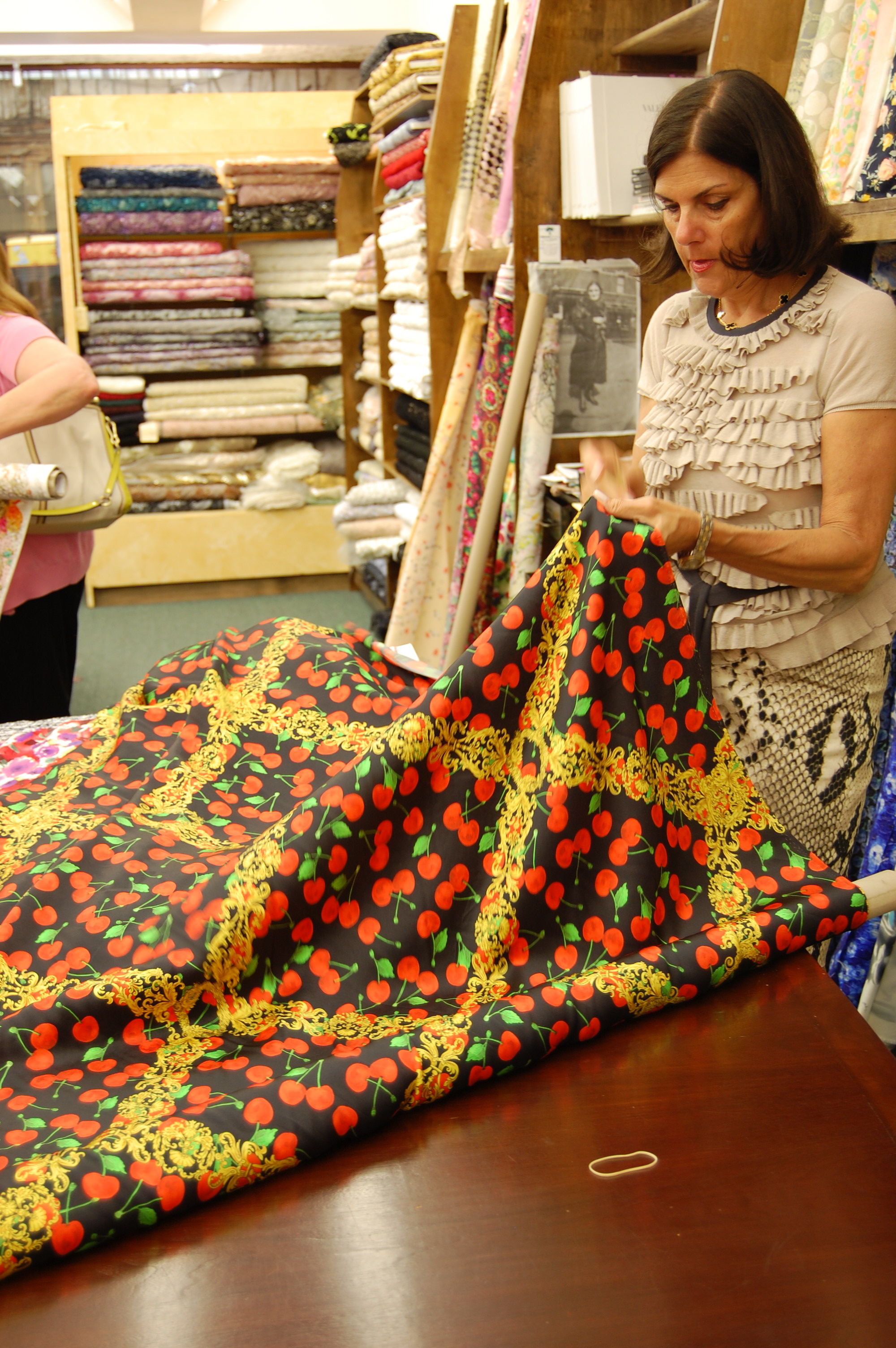
It doesn’t take very long looking at current fashion magazines and websites to see that the sheath dress is enjoying one of those revivals right now.  And why not?  It is an infinitely versatile style, going from casual to dressy just by choice of fabric.  Earlier in the Summer when I was shopping at Mendel Goldberg Fabrics in NYC with Susan Khalje’s  “Classic French Jacket” class, I succumbed to purchasing 1½ yards extra of my lining fabric, with the express intention of making a sheath dress out of it.  The fabric is definitely a demonstrative print, so I thought the simpler the style of dress, the better.

My lining and dress fabric, still on the bolt.

My lining and dress fabric, still on the bolt.

I have to admit I had a few moments when I wondered if that fabric, which I loved as the lining in my jacket, might not be a bit too much for a dress.  Well, too late for any misgivings – this dress was going to happen!  Then suddenly I started seeing photos of more and more sheath dresses, many of them made out of very bold and colorful fabrics.  Two fashion websites I often visit for inspiration and ogling each featured such dresses:

This dress can be found on the Lee Anderson Couture website.

This dress can be found on the Lee Anderson Couture website.

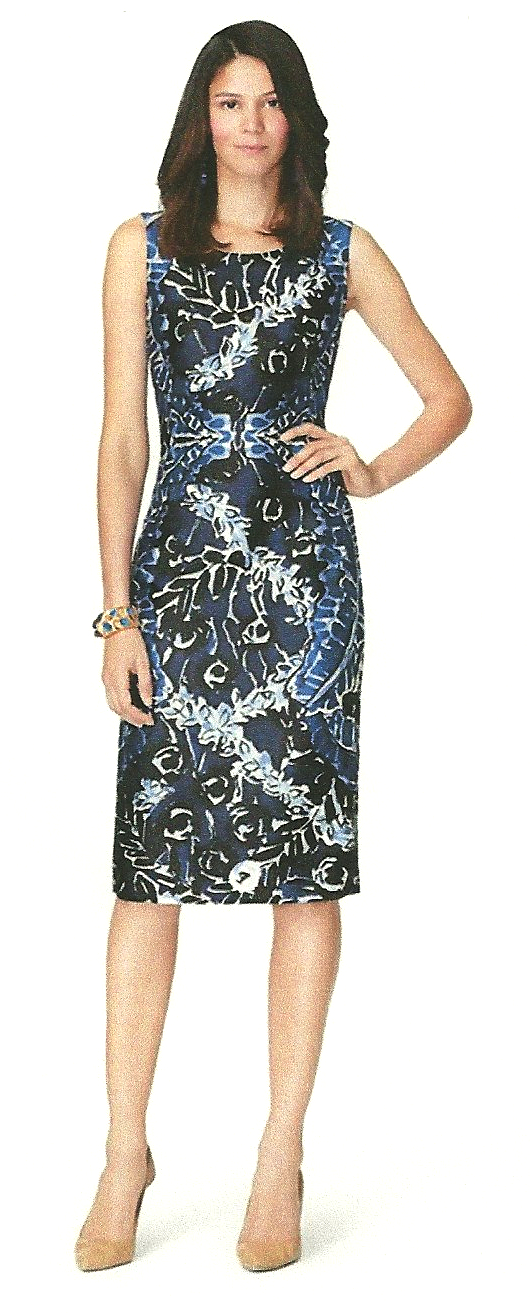
This dress is from Oscar De la Renta's Ready-to-wear line.

This dress is from Oscar De la Renta’s Ready-to-wear line.

Encouraged with this affirmation of my idea, I chose my pattern, ordered china silk for the lining (I already had black organza underlining), purchased the zipper and proceeded to plan my dress.

I decided to adapt this simple pattern, using the third view without the neck and hem bands.

I decided to adapt this simple pattern, using view A (on the right) without the neck and hem bands.

First, of course, I once again sewed up the muslin I had already made for this pattern earlier in the summer.  Here are the changes I made:

1) I sewed the neckband onto the body of the dress and treated it all as one.

2) I eliminated the facings, as I was making this dress with couture techniques.

3) I tweaked the fit a little more, to make it more fitted than my earlier dress (which was belted and needed a little more ease).

4) I adjusted the shoulder to be cut a little higher on the arm.

5) I dipped the neckline a little bit, to match the neckline on my jacket.

6) I added a slit in the back seam for ease of movement.

While I love the look, sheen and feel of silk charmeuse, I don’t think it is the easiest fabric to work with.  I thought I could make my job easier if, when laying out the fabric for pattern (muslin) placement and cutting, I was able to control the slipperiness of it somehow.  I decided to use  half of my dining room table, covered with heavy drapery flannel (which is what I use under tablecloths for cushioning).   The flannel “anchored” it beautifully.

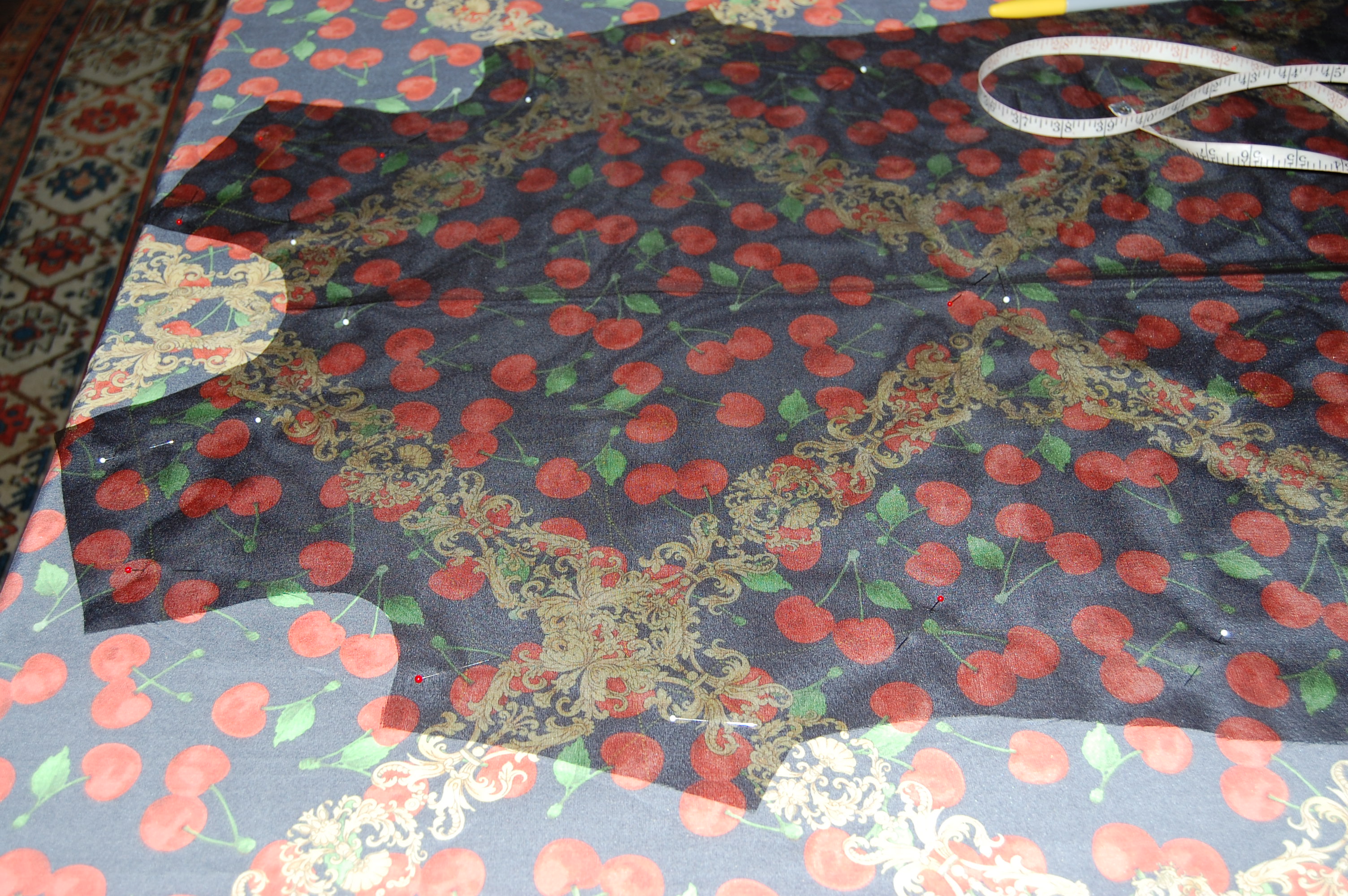
Then I was faced with a design element quandary.  Before I cut out my jacket lining in Susan Khalje’s class, she and I had looked at the fabric with my dress in mind –and had determined that one of the gold “cross” lines in the design should hit at about my breastbone.  However, once I had the fabric remaining from my jacket laid out, I realized that was not going to work.  I tried every which way, and, with the fabric I had available to me, I simply could not match up the pattern in the fabric across the front and two side backs of the pattern and still “cross” my breastbone.  It took a couple of hours, but I finally was able to come up with a new plan – this one to have one of the “cross” details at my waist.  This allowed me to have a shoulder detail I really liked, a black field  (with cherries) at my neckline, and the slimming effect of a “cinched” waist, effected entirely by the design in the fabric!

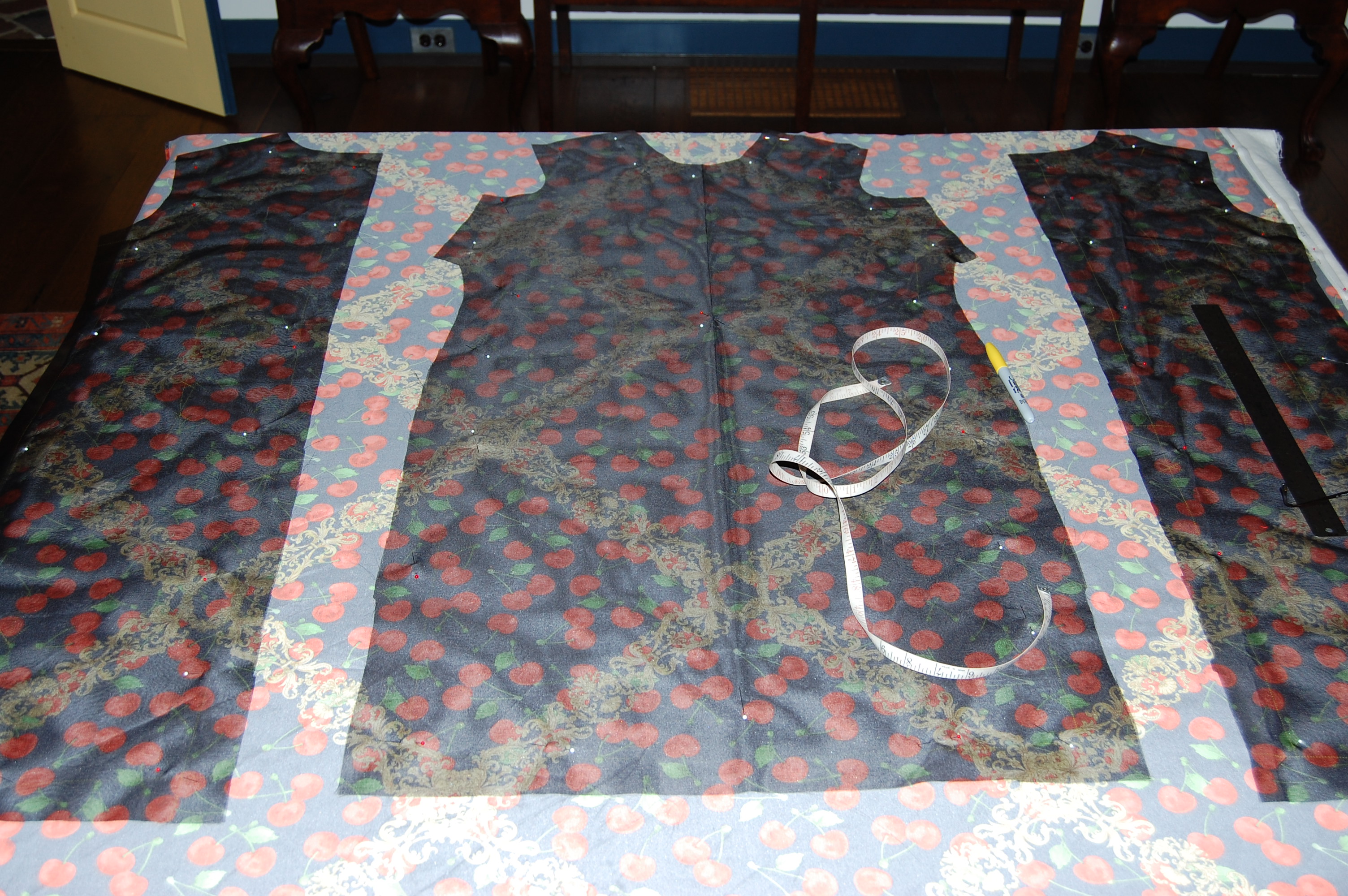
Here are the organza underlining pieces laid out on the fabric.

Here are the organza underlining pieces laid out on the fabric.

This photo shows exactly how I determined where to position the design in the fabric.

This photo shows exactly how I determined where to position the design in the fabric.

Then I was off and sewing!

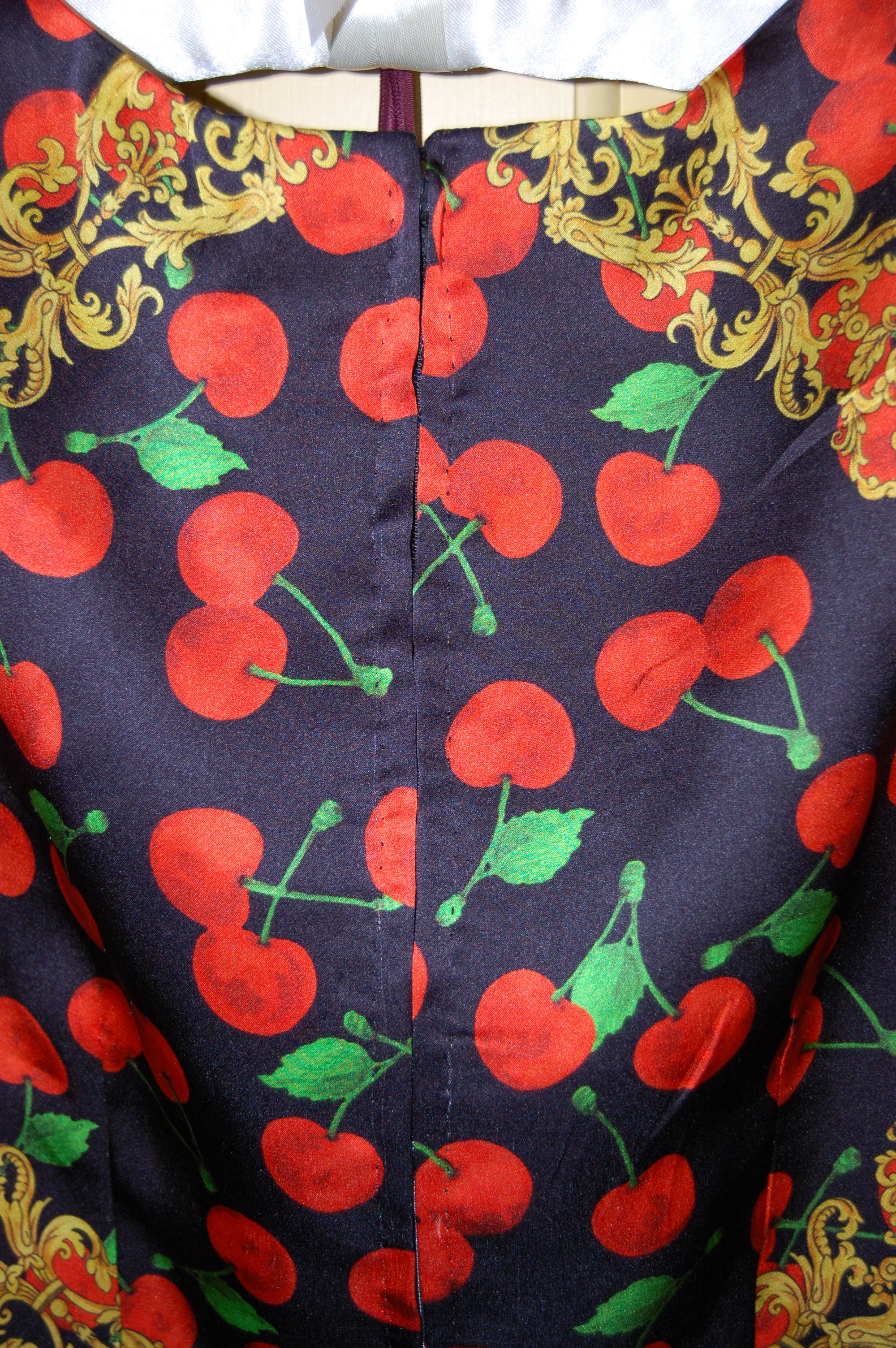
Zipper and neck details.

Zipper and neck details.

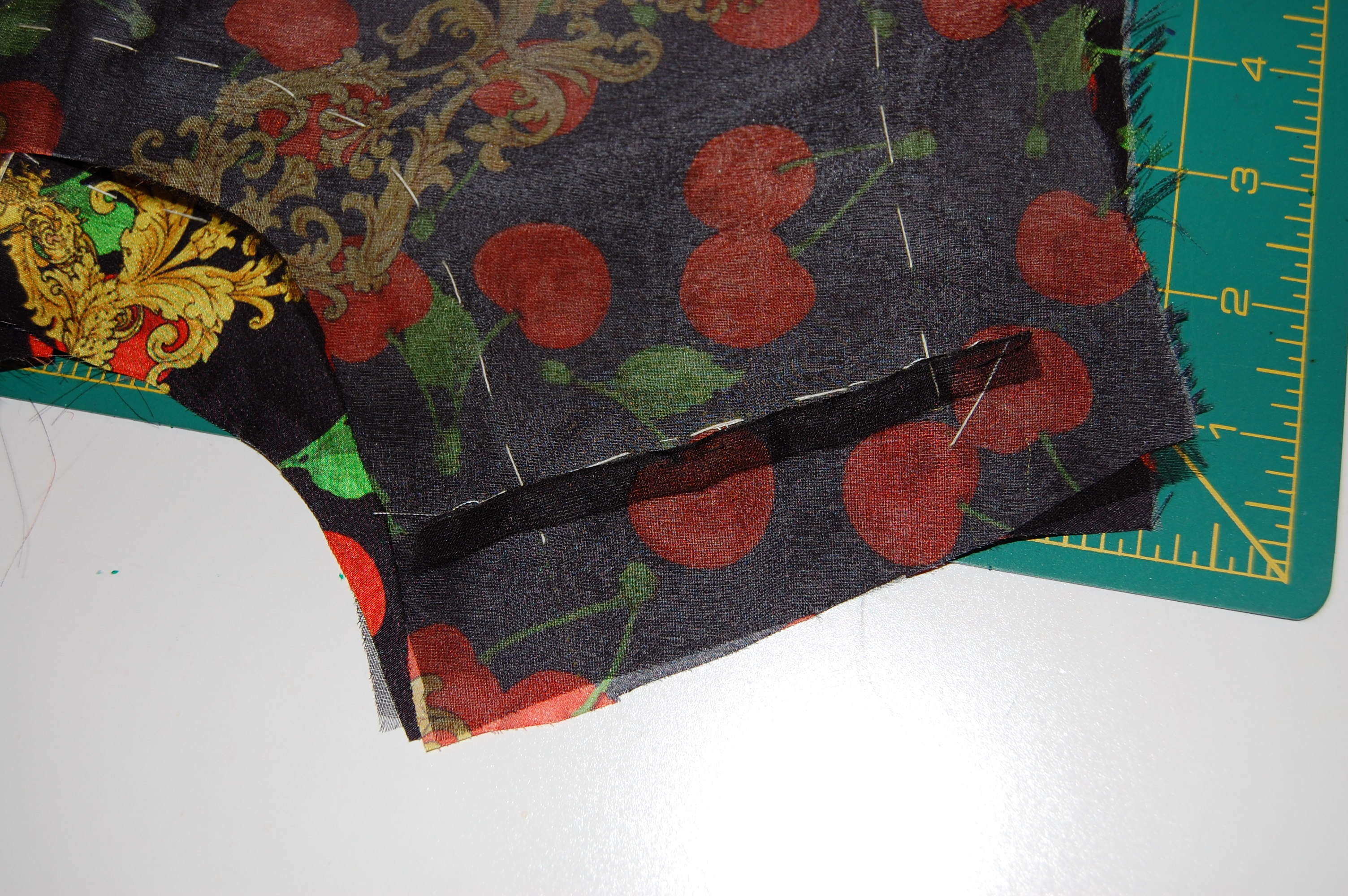
I stabilized the shoulders with a bit of selvedge from the organza underlining.

I stabilized the shoulders with a bit of selvedge from the organza underlining.

A close-up of the hand-picked zipper.

A close-up of the hand-picked zipper.

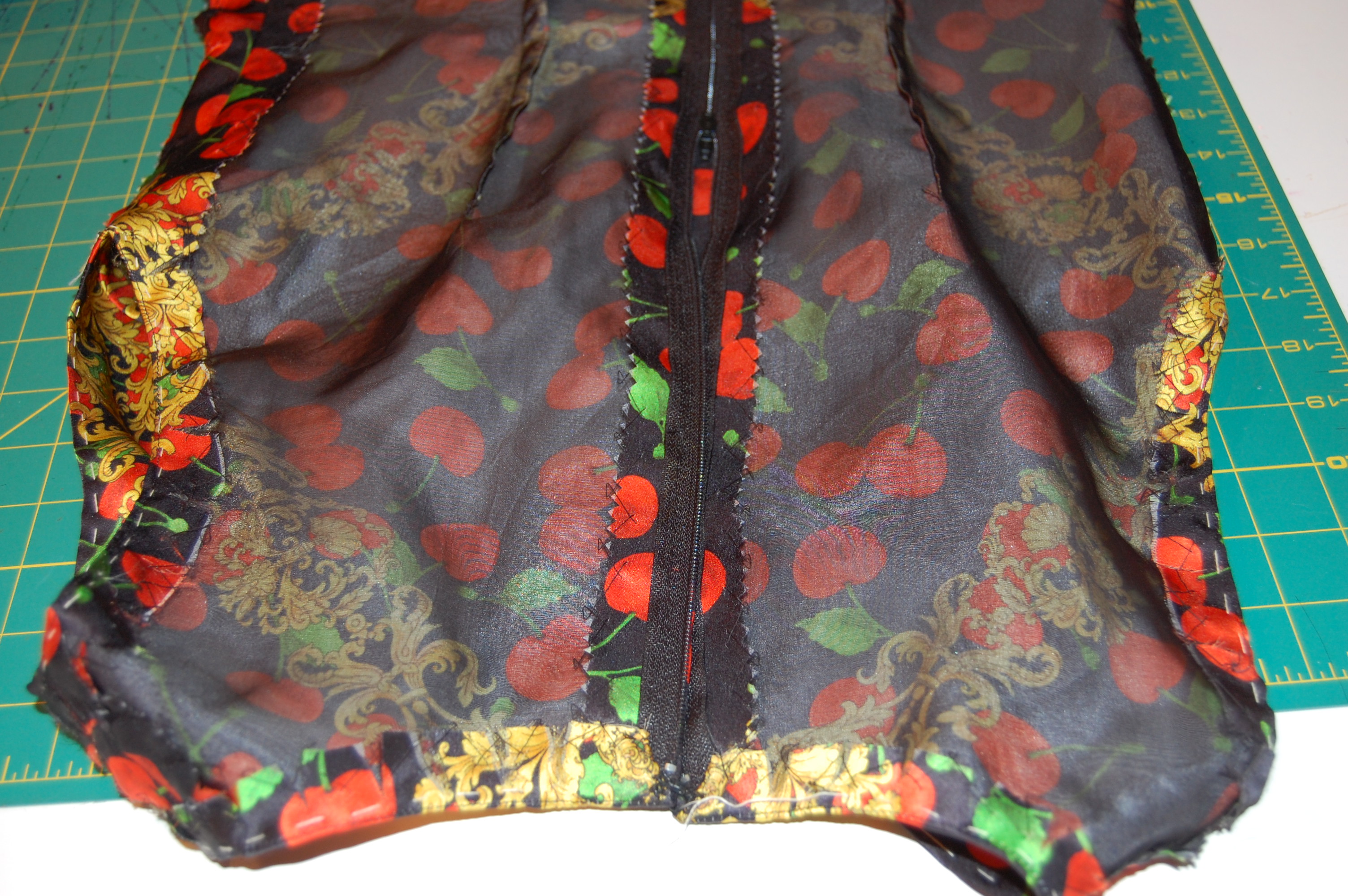
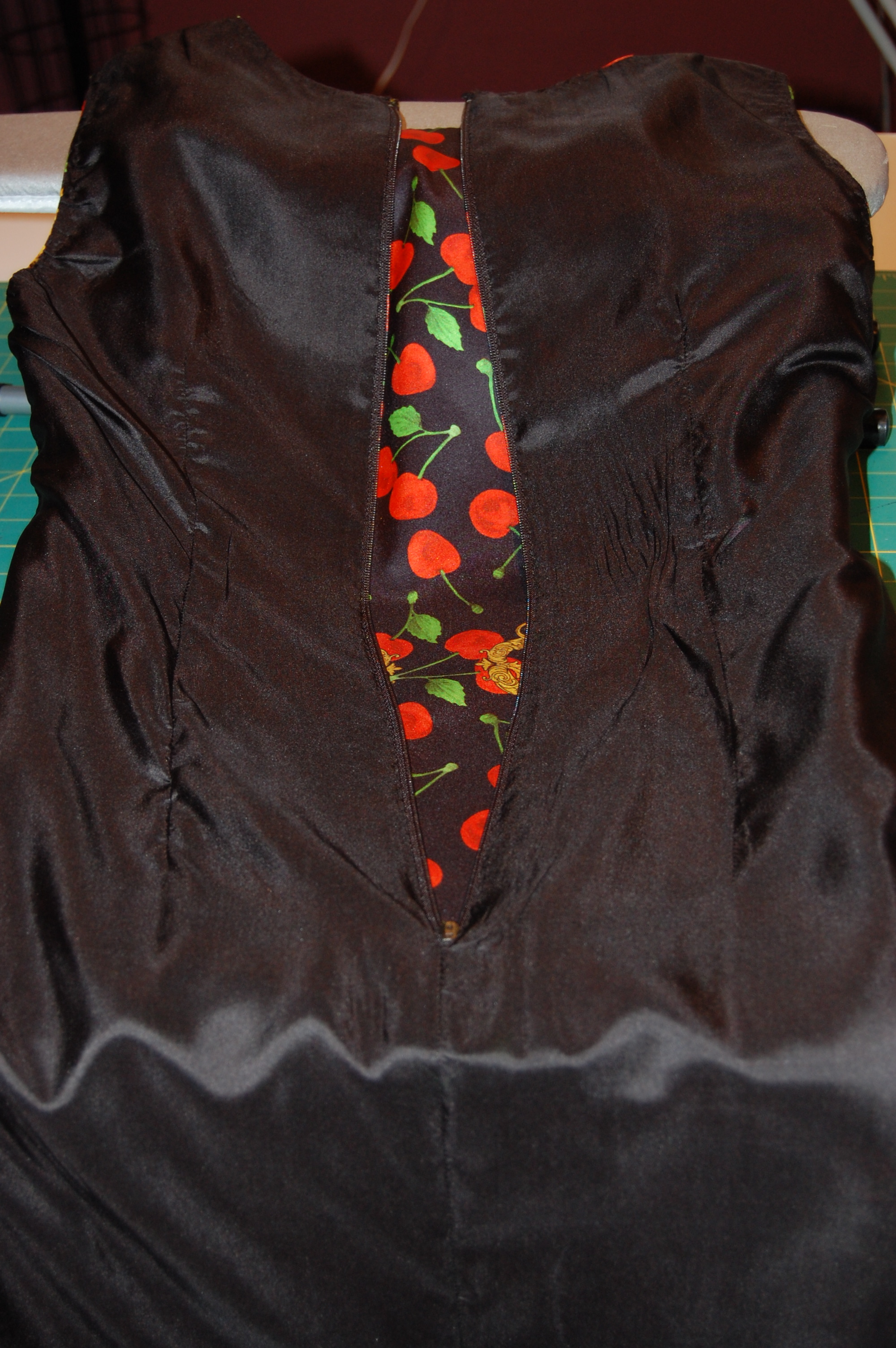
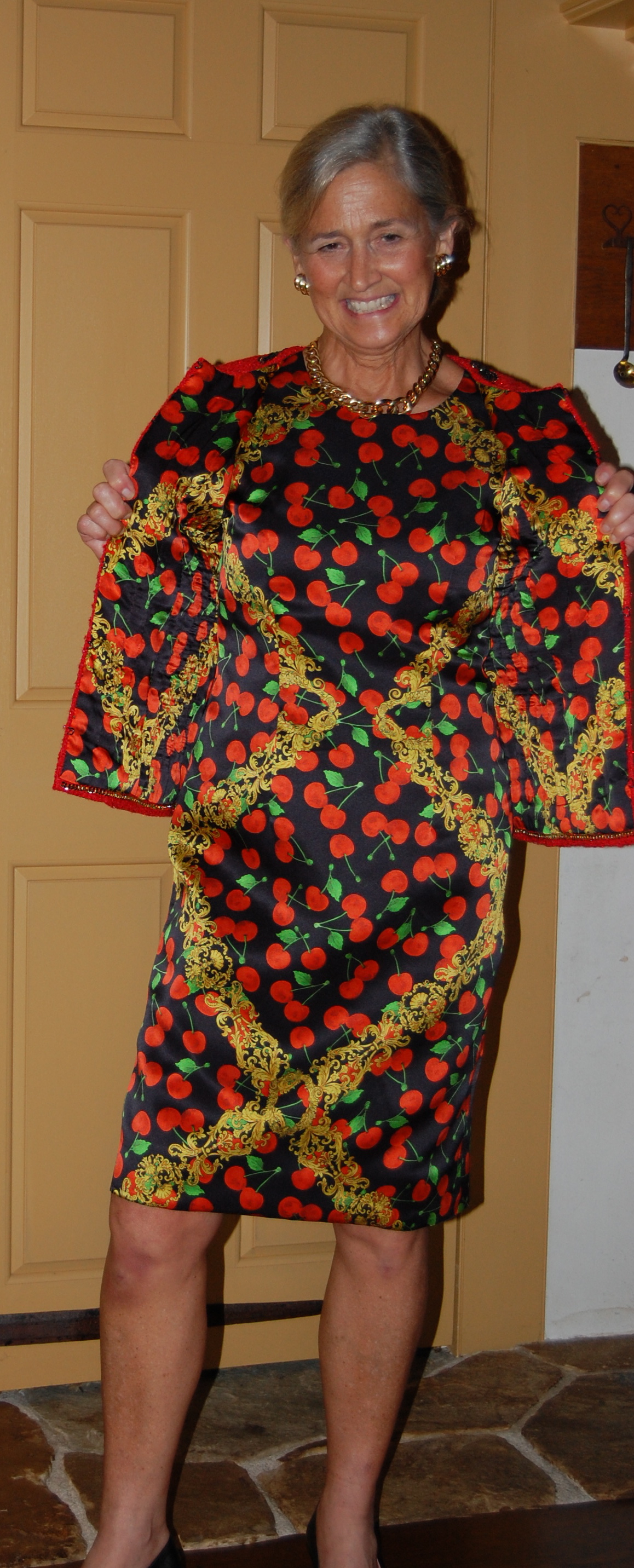
The dress turned inside out!

The dress turned inside out.

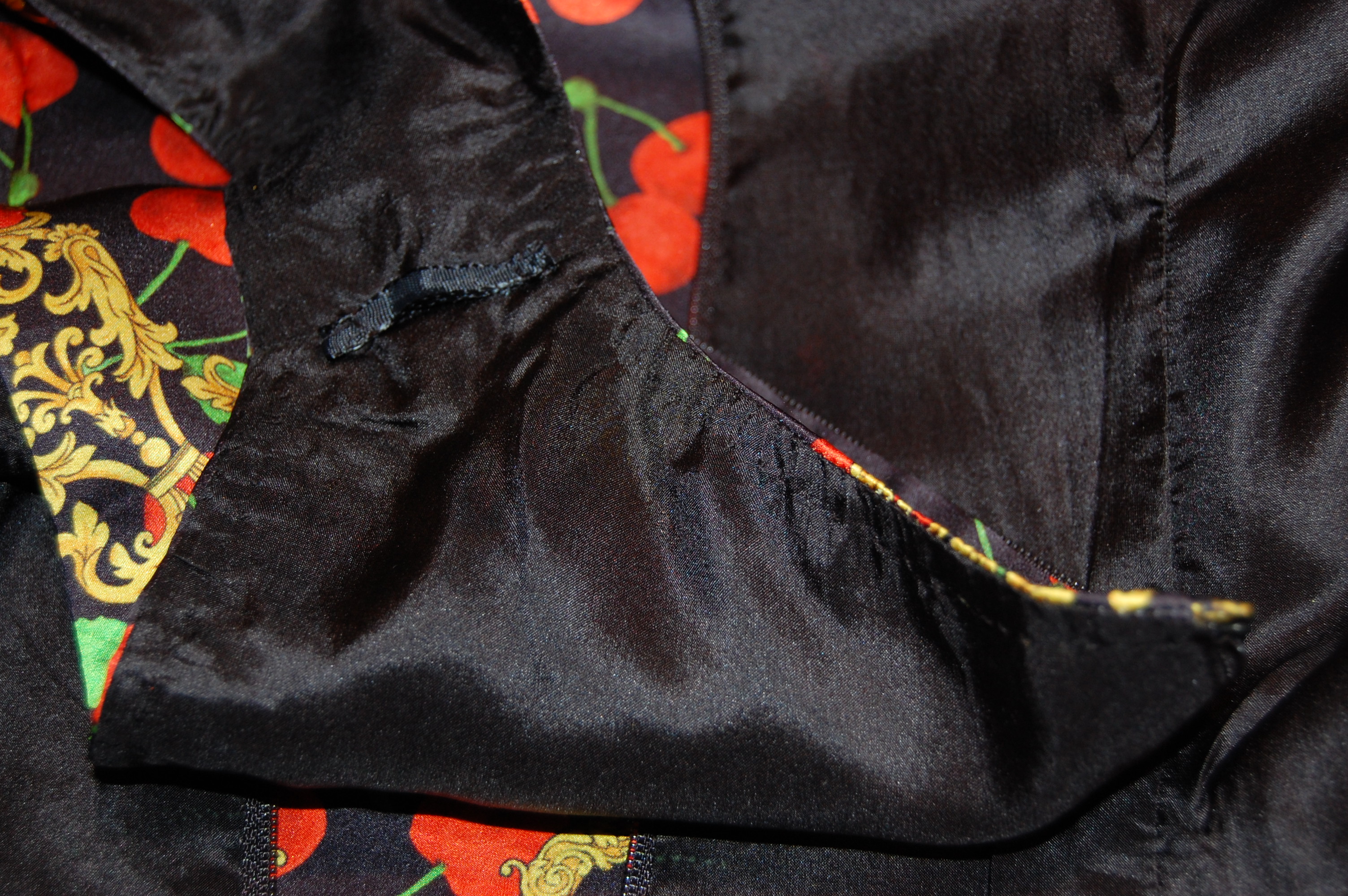
A detail of the shoulder and neck edge.

A detail of the shoulder and neck edge.

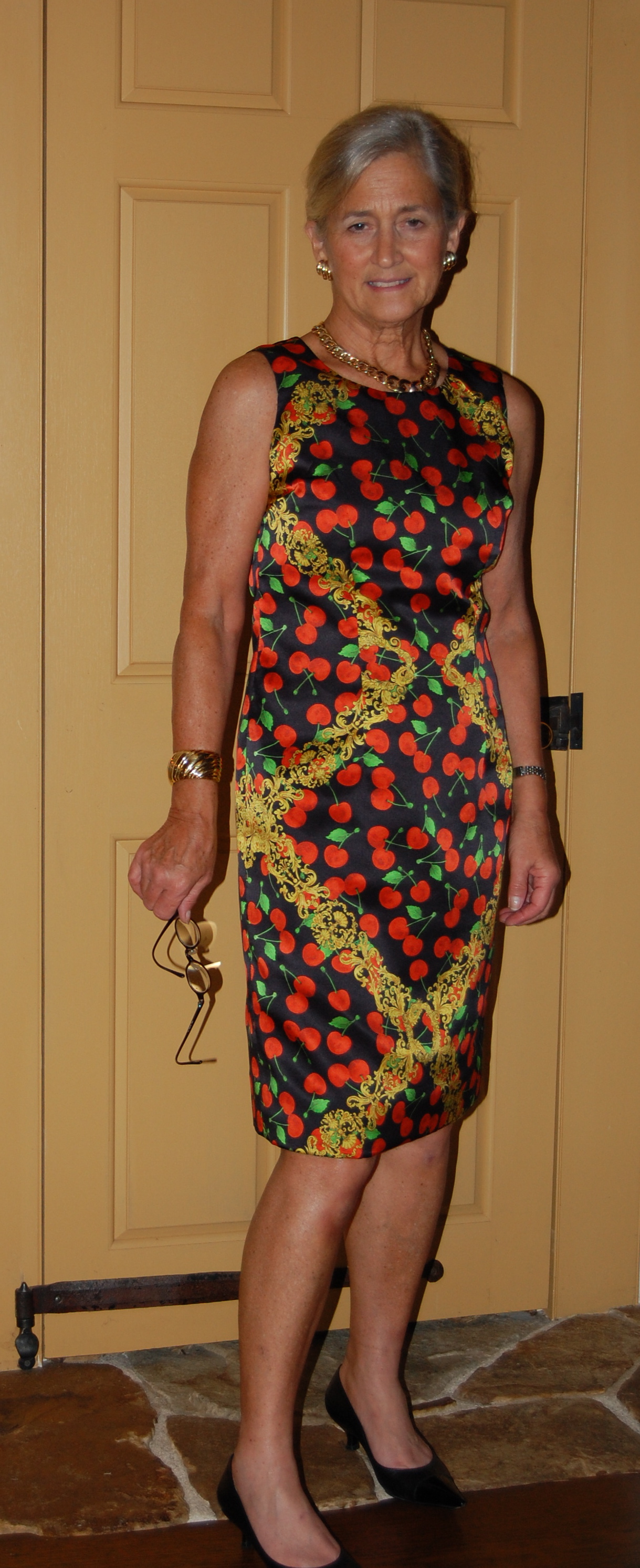
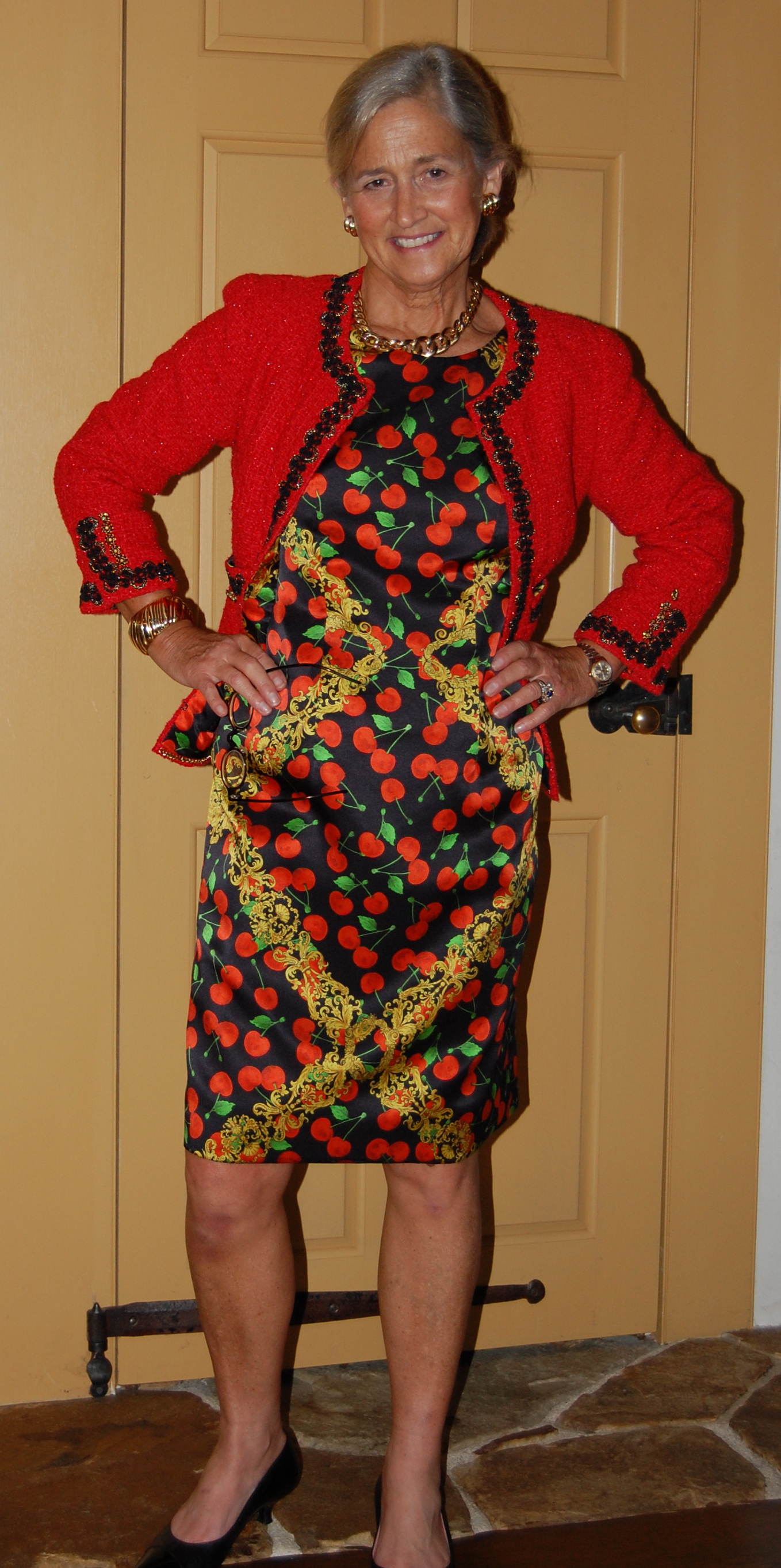
Finished!  What do you think?  Too demonstrative or just right?

Finished! What do you think? Too demonstrative or just right?

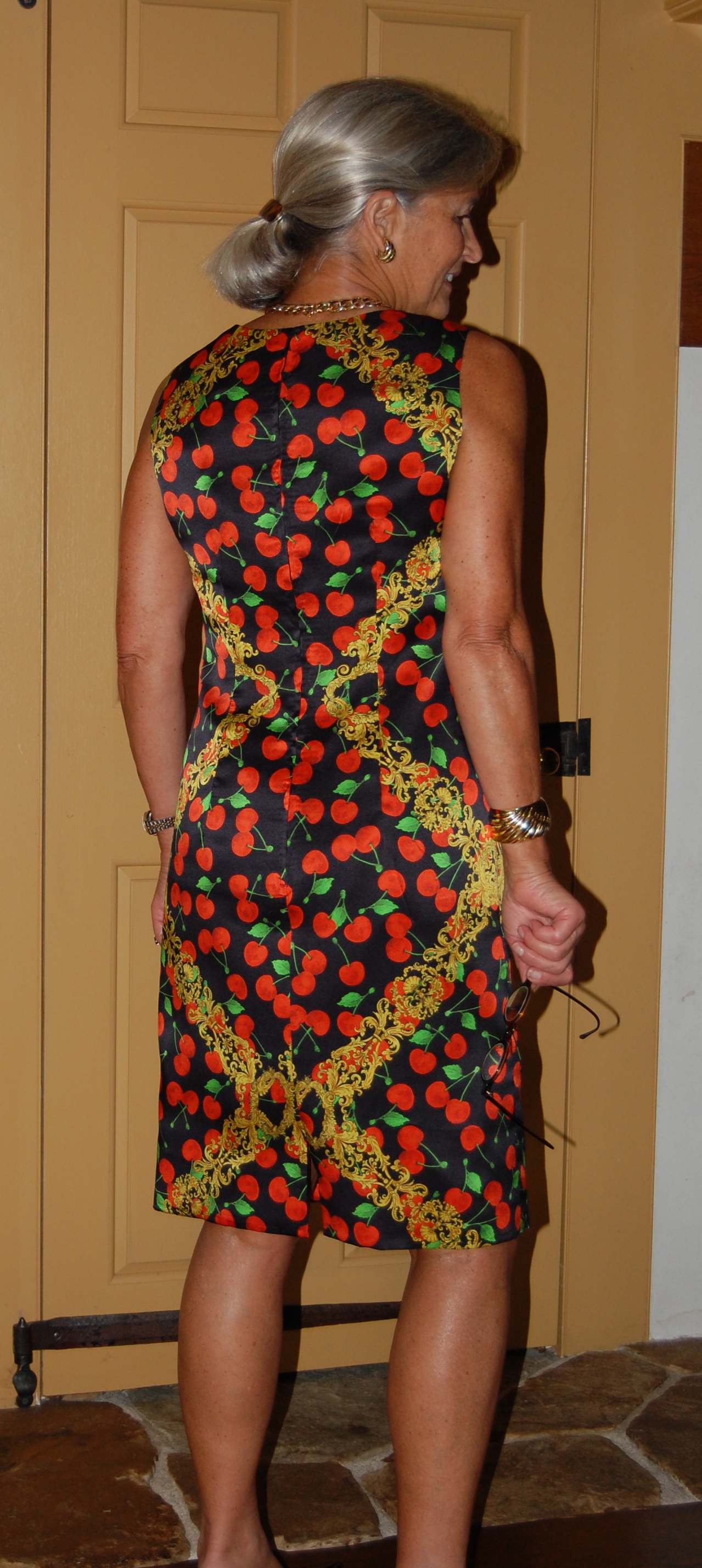
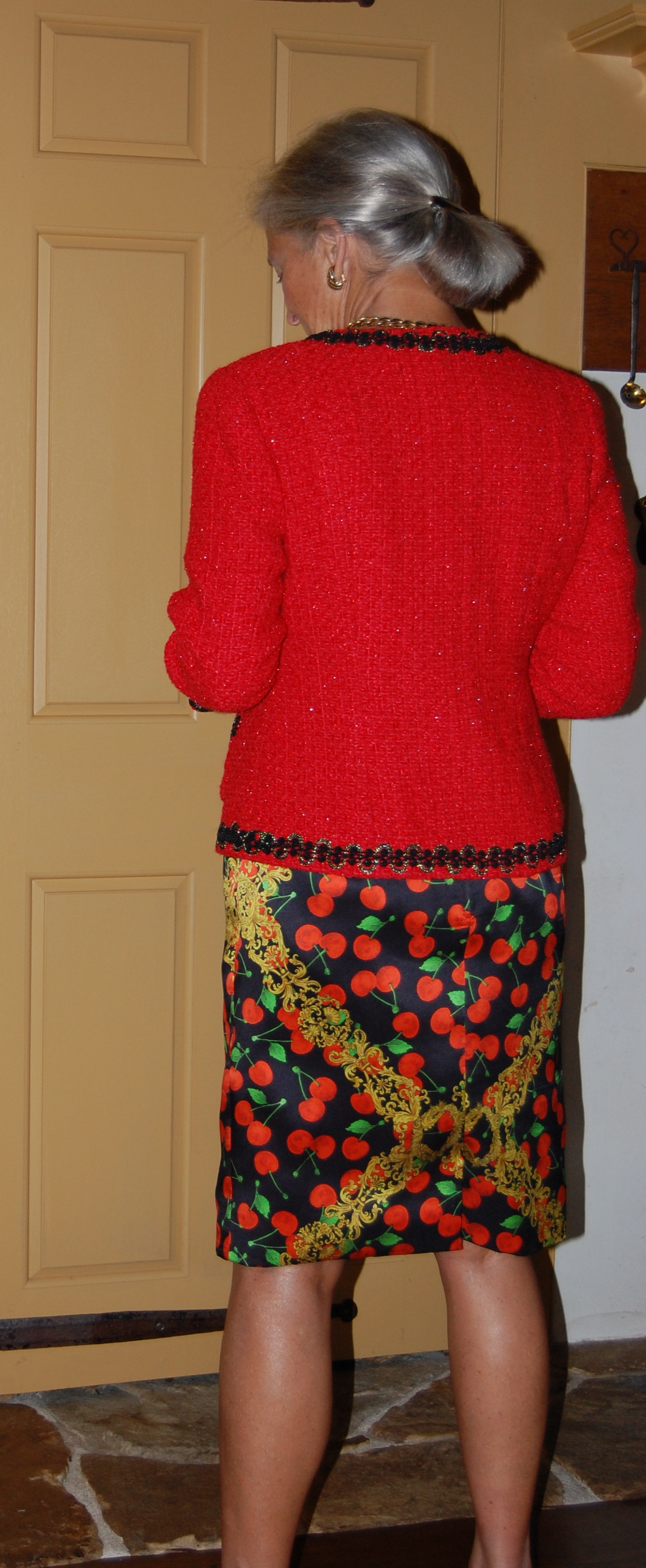
A back view.

A back view.

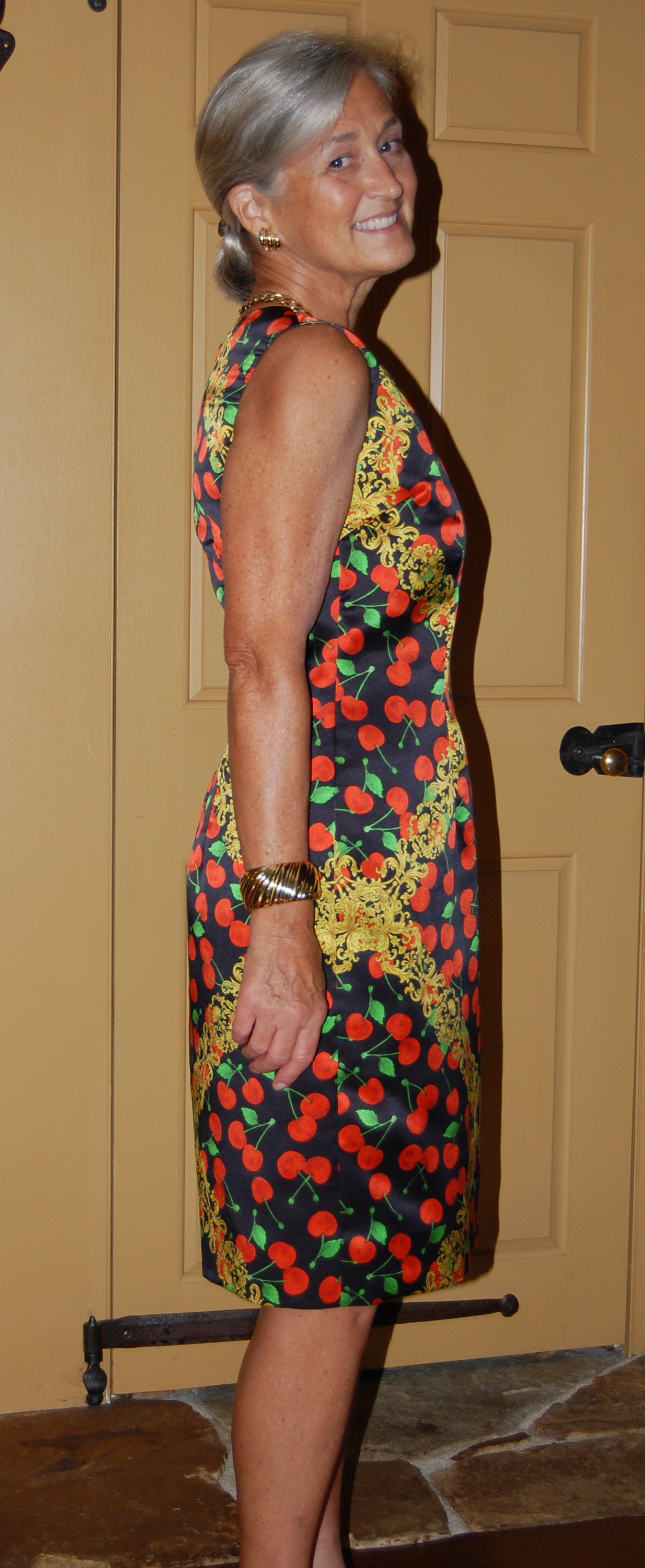
A side view

A side view

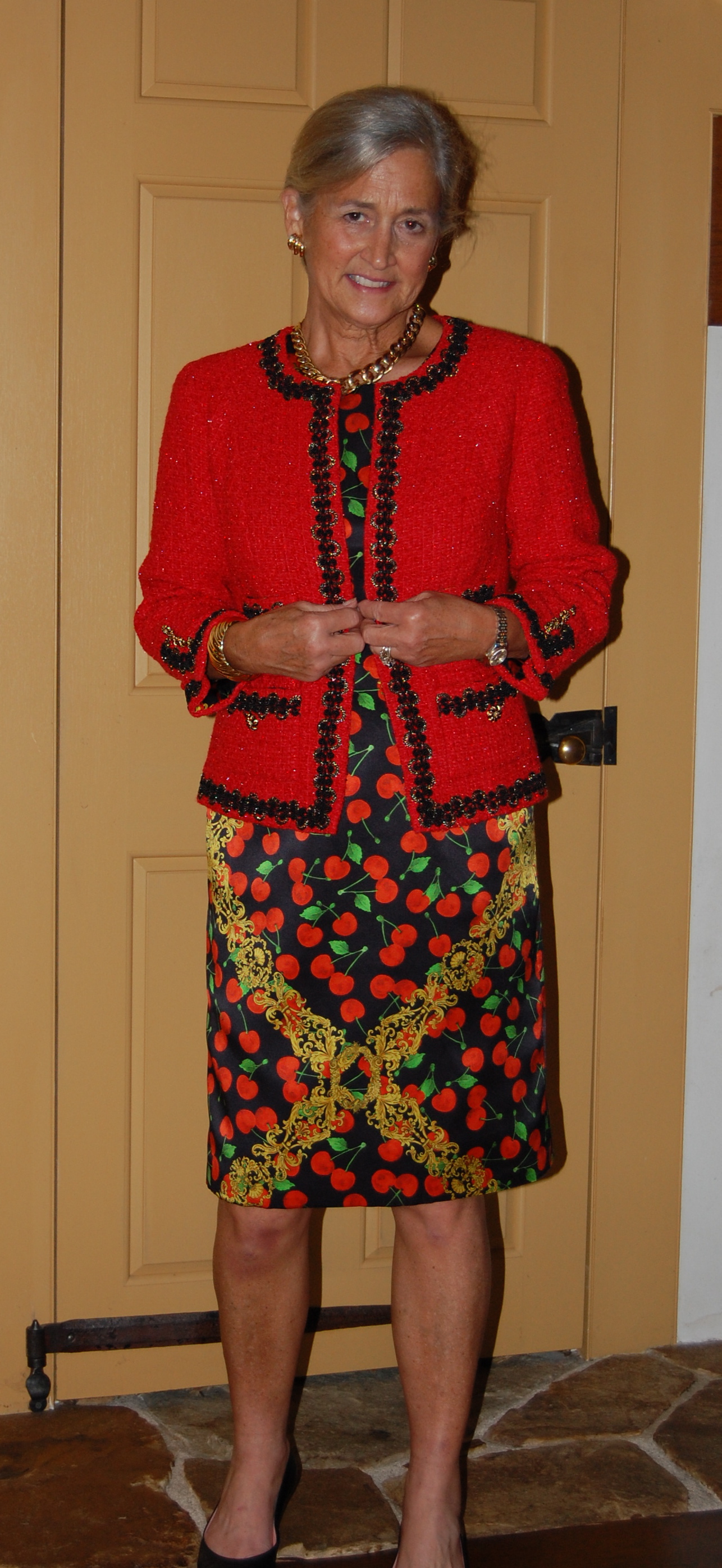
And, of course, I have to show the dress with its Chanel-inspired jacket:

A simple sheathA simple sheath

A simple sheath

This project is complete!

This project is complete!

Once again, I underestimated just how long it takes to make a dress using all couture techniques – even a simple (?) sheath dress.

Was it worth it?  Absolutely!

39 Comments

Filed under Chanel-type jackets, couture construction, hand-sewn zippers, sewing in silk, Uncategorized, underlinings

Love, Luck and What I Sewed

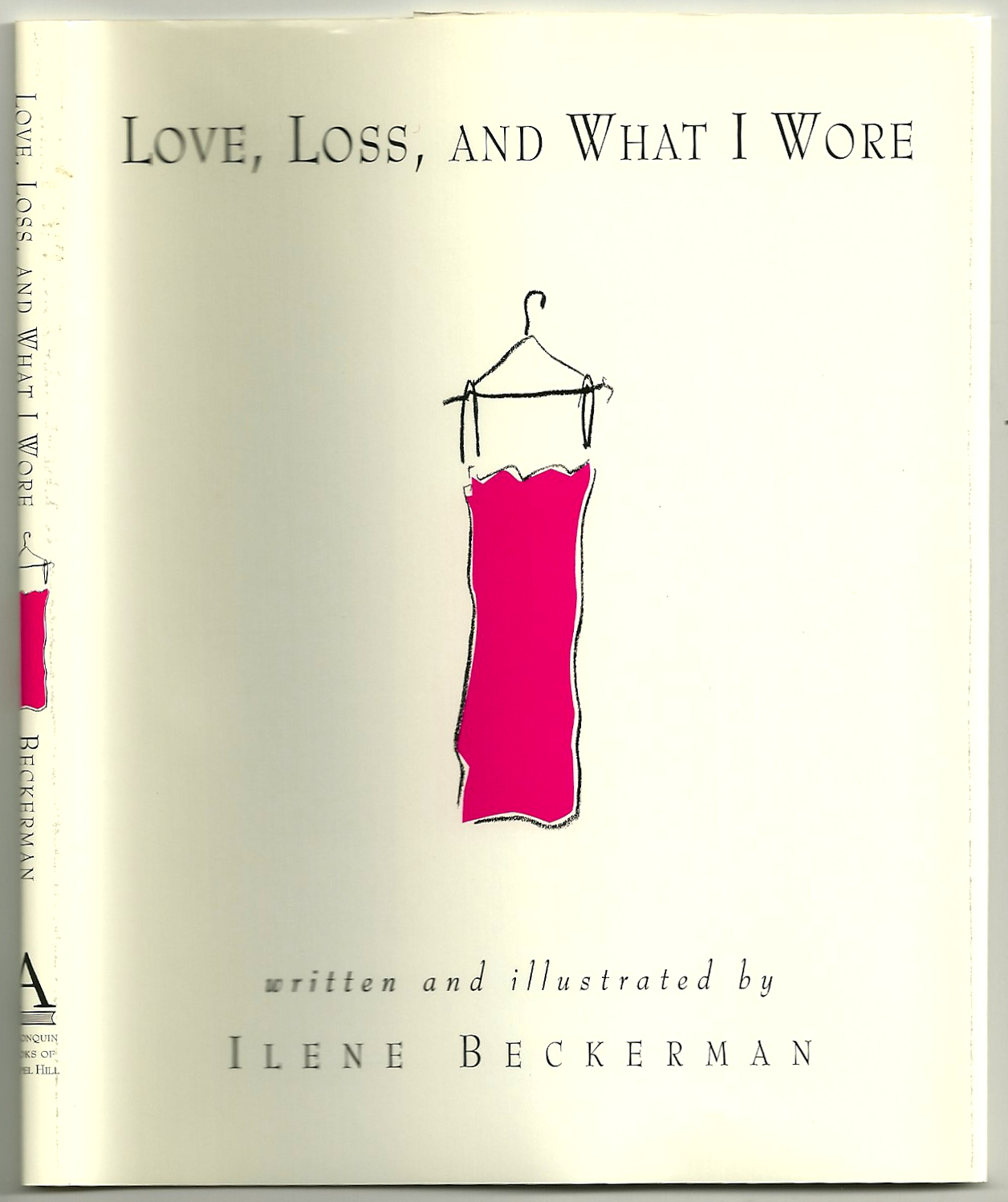
Many years ago I ran across this little book:

This book was published in 1995 by Algonquin Books of Chapel Hill.  All illustrations are copyright 1995 by Ilene Beckerman.

This book was published in 1995 by Algonquin Books of Chapel Hill. All illustrations are copyright 1995 by Ilene Beckerman.

I don’t remember how I found it or where I saw it, but I bought a copy for my mother-in-law, which she loved.  I finally gave in a few years later and bought one for myself.  It’s a very straightforward kind of book, with un-fancy writing and unsophisticated, but charming, drawings by the author.  Within the book’s simple demeanor, however, is an expressive, and touching tribute to the power of what we wear and how we remember – and measure – our lives.

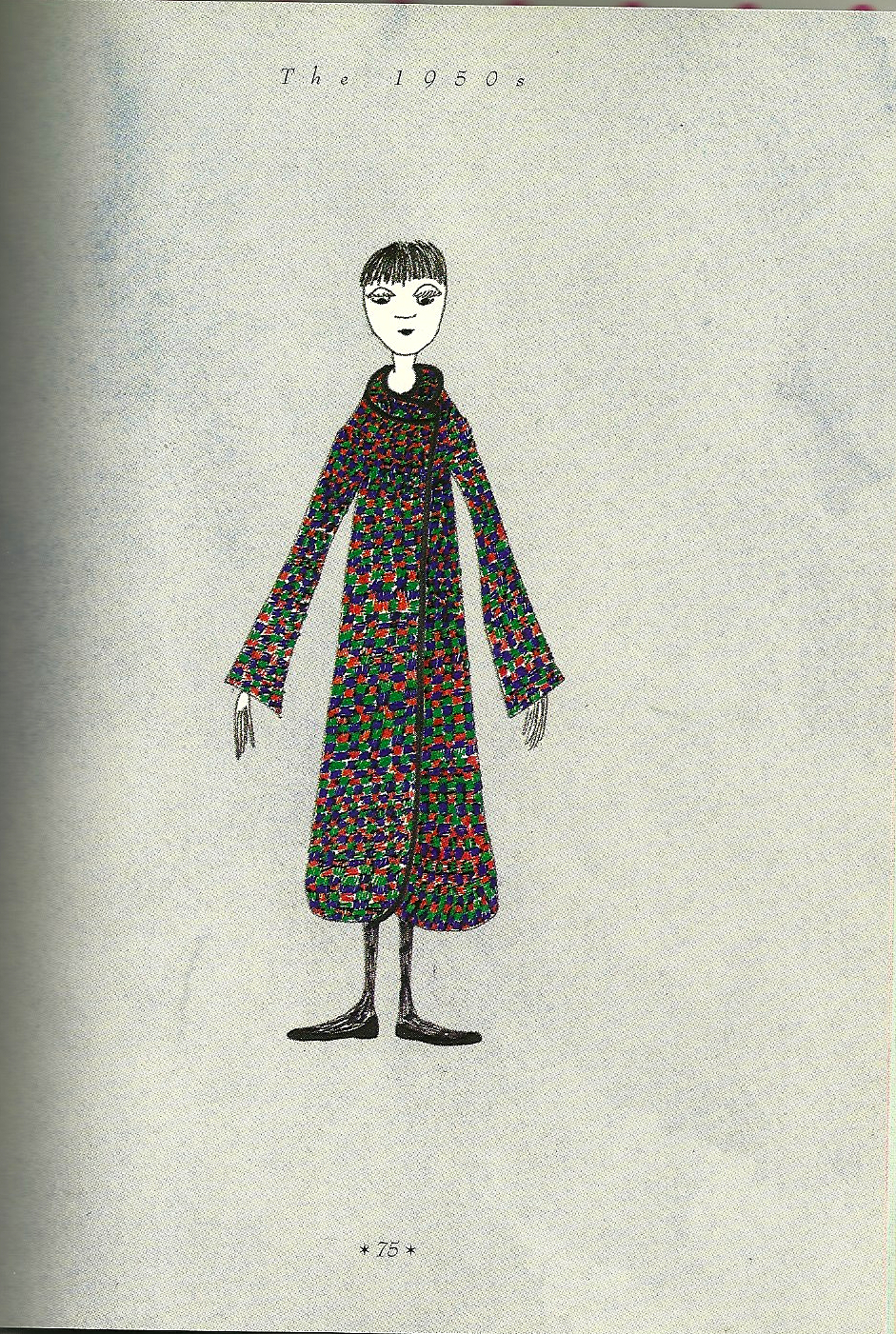
The contents are divided according to decades, starting with the 1940s and continuing into the first part of the 1990s.  The author was born in 1935, so her recollection of clothing and fashion begins when she is a child.  She had the great fortune, as did so many from that era, of having a mother who sewed – beautifully and extensively – for her and her sister.  Here are a few examples:

Love, luck, etc - 1

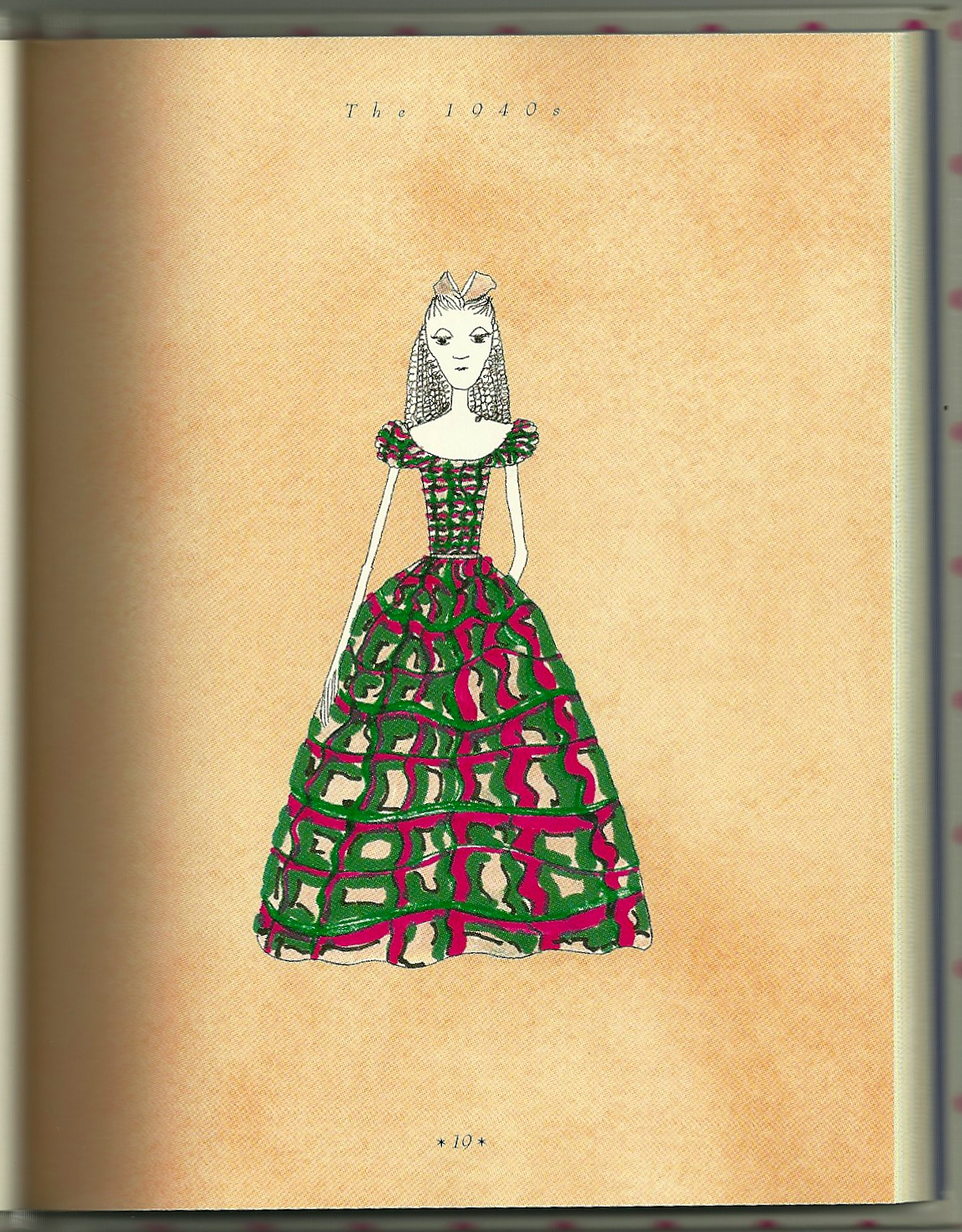
About this dress which she wore to her cousin’s wedding, Beckerman wrote: “ My mother made this pink, green, and black iridescent-metallic plaid taffeta gown.  We bought the material at Macy’s at Herald Square [New York City].  They had a whole floor for selling patterns and fabrics.”

One of the author’s sister’s dress is featured here:

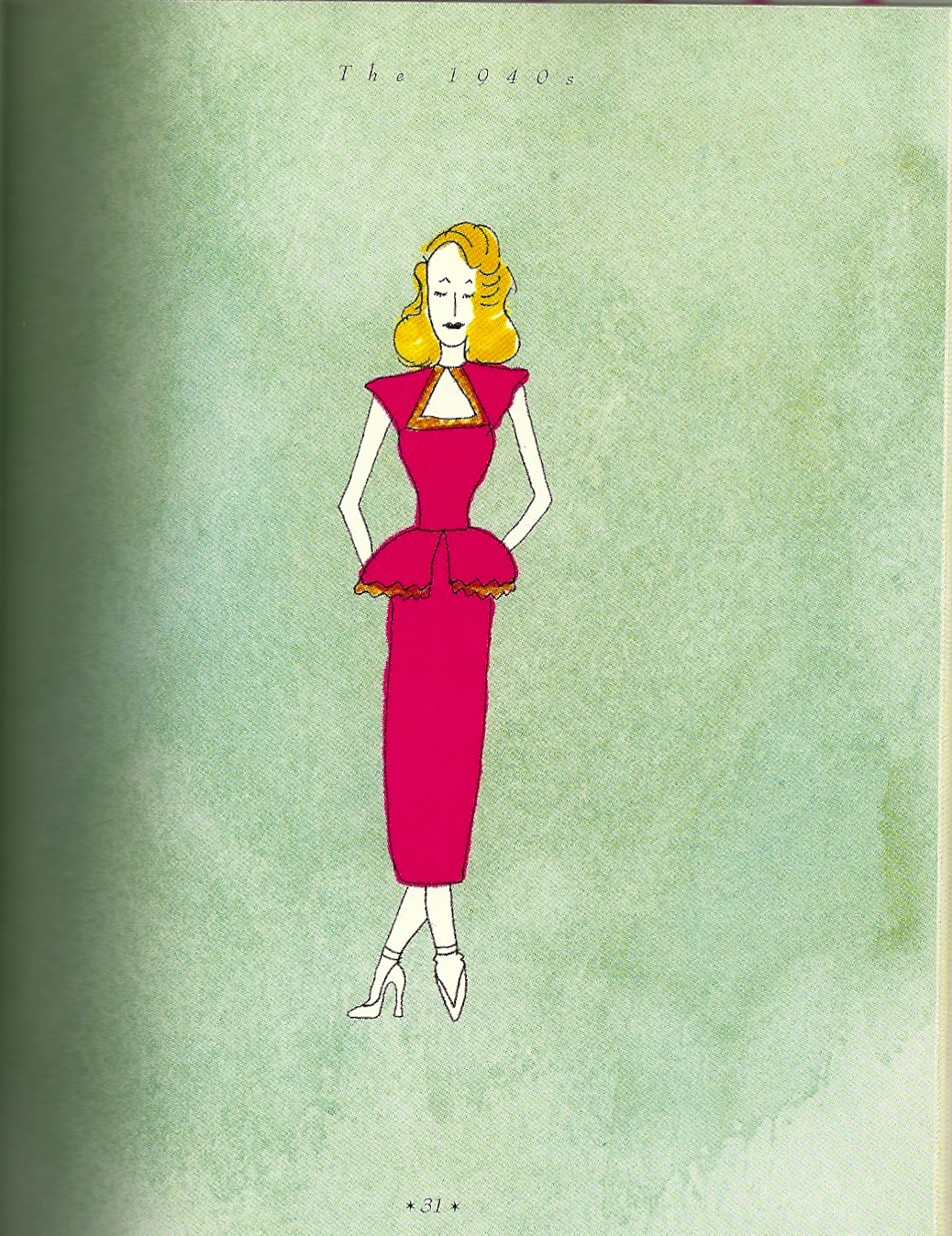
Love, luck, etc - 2 “My mother made this sexy red dress for my sister.  It had a . . . peplum and was accented with hand-sewn gold sequins.”  This prompted the memory of her mother sewing sequins on printed silk scarfs, which served as Christmas gifts for the author’s teachers.

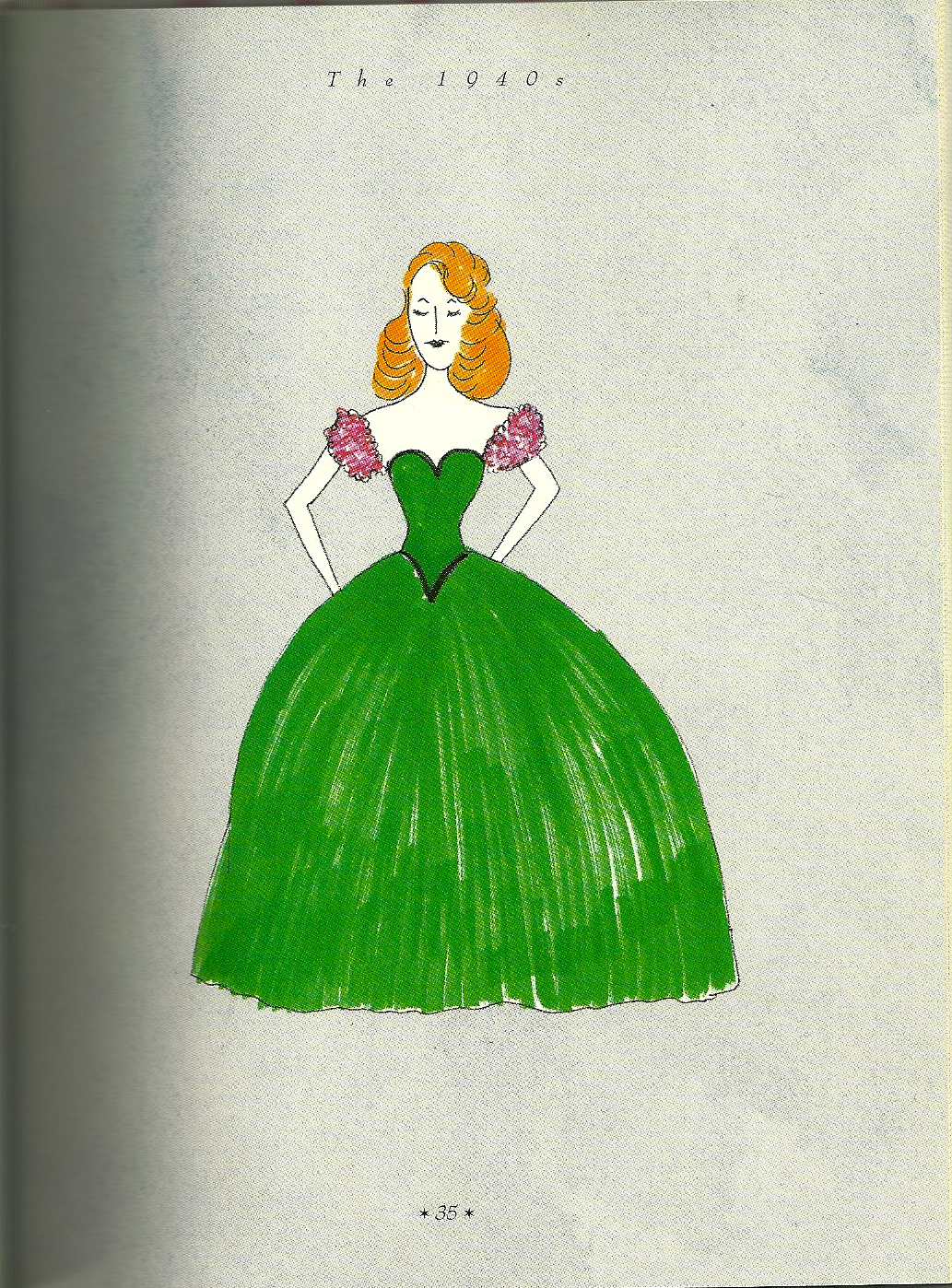
Here is another dress made by the author’s mother – this one for her sister to wear to their cousin’s wedding.

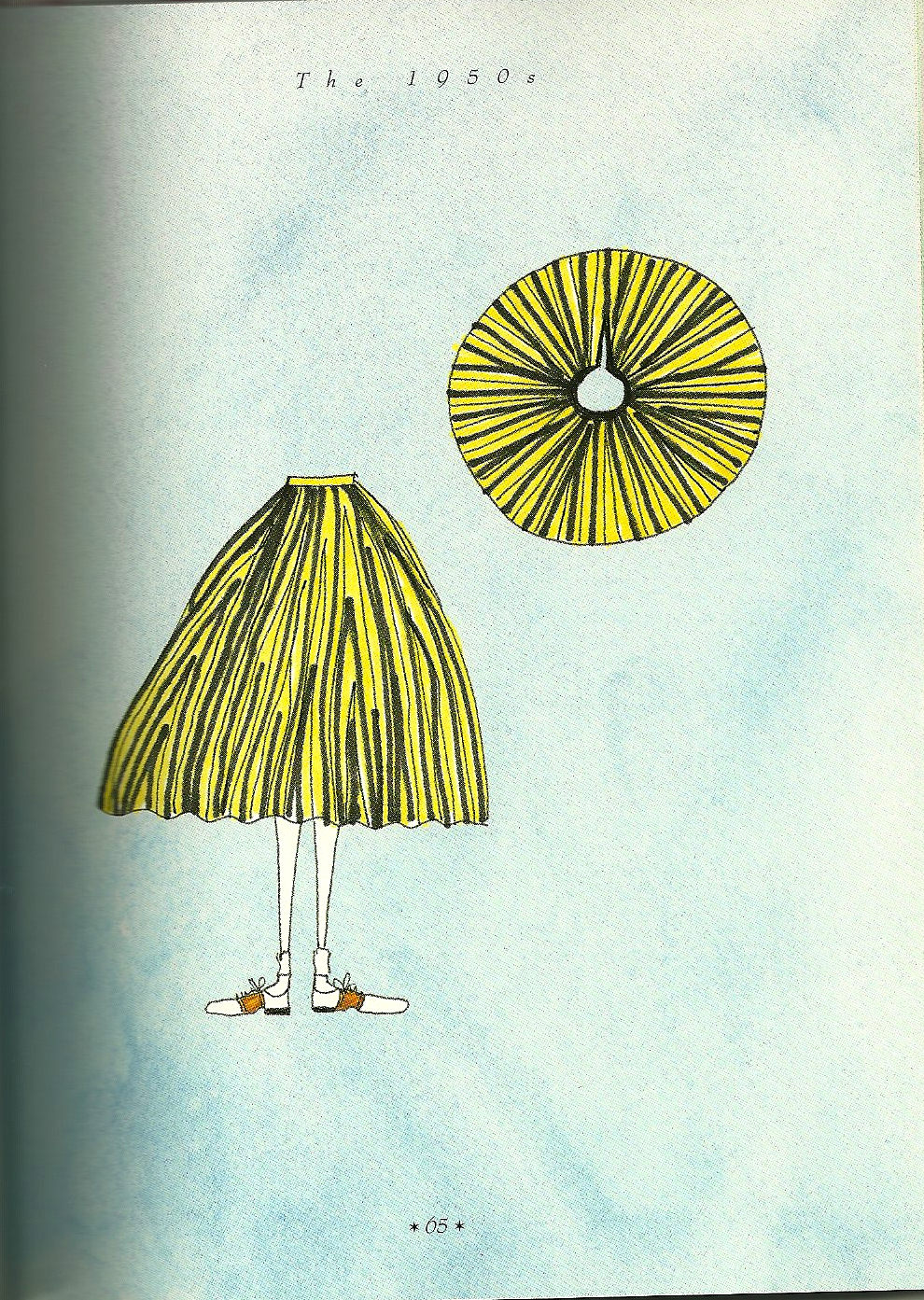
Love, luck, etc - 3 By the 1950s, the author’s mother had died, and with her death came the end of the joy of wearing her sewn creations.  However the author and one of her best friends ventured into some sewing themselves with the making of these cotton circle skirts:

Love, luck, etc - 4 “It took forever to hem them” – says Beckerman, a statement with which any home dressmaker can identify!

This stylish coat was purchased by Ilene, and when shown to another best friend’s mother, Miriam Landey, who happened to be a dress designer/dressmaker, Mrs.Landey told her daughter to go and buy one as well.  Such a compliment!

Love, luck, etc - 5 Mrs. Landey, according to Beckerman, “would go to Europe in the summer to buy fine and fancy fabrics…”

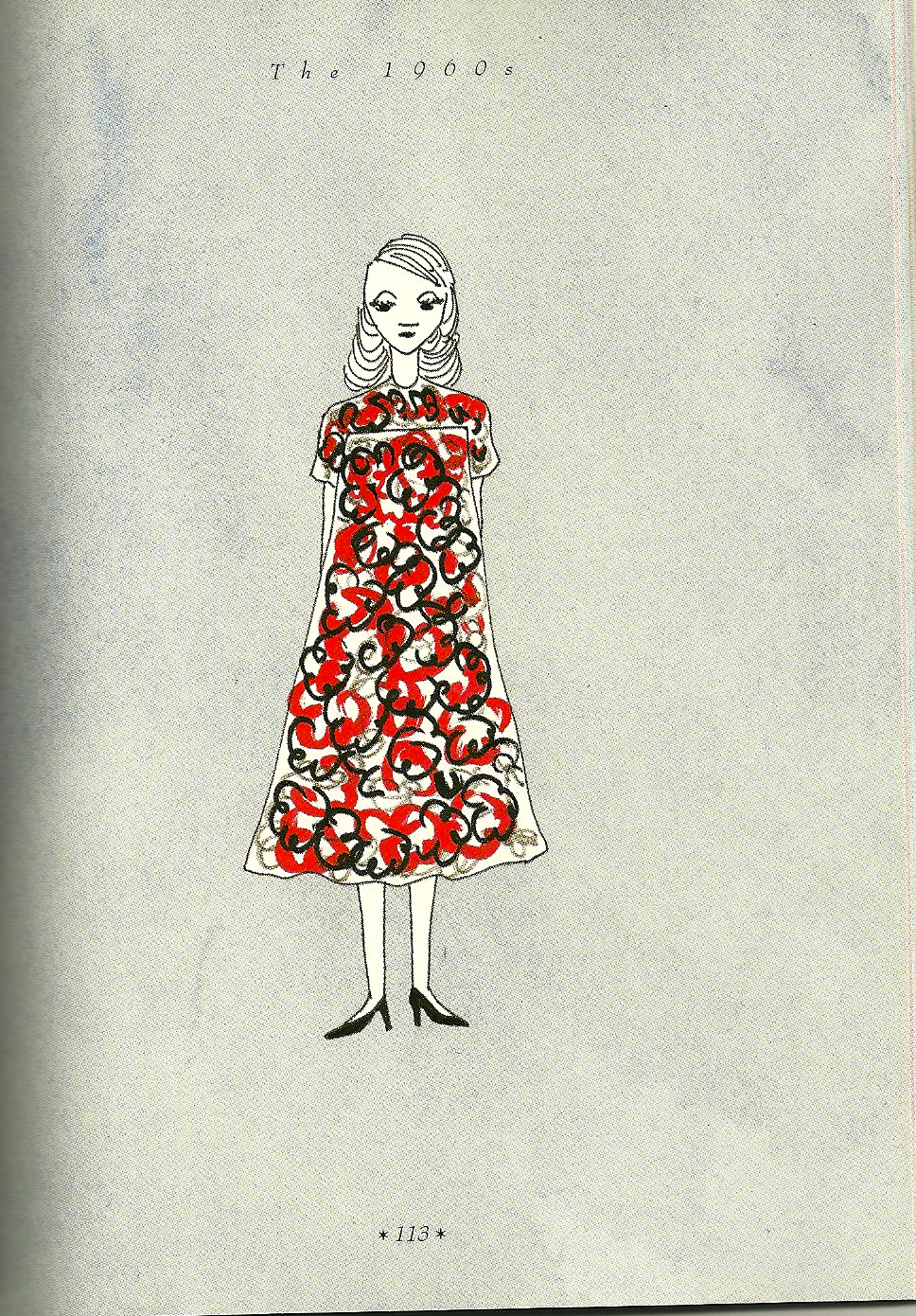
The 1960s are marked by only two fashions, one of which is a maternity dress.

Love, luck, etc - 6 Six pregnancies during the decade surely are the reason for the dearth of fashion memories from that period of time.  Or perhaps the death of one of those children made the memories too painful.

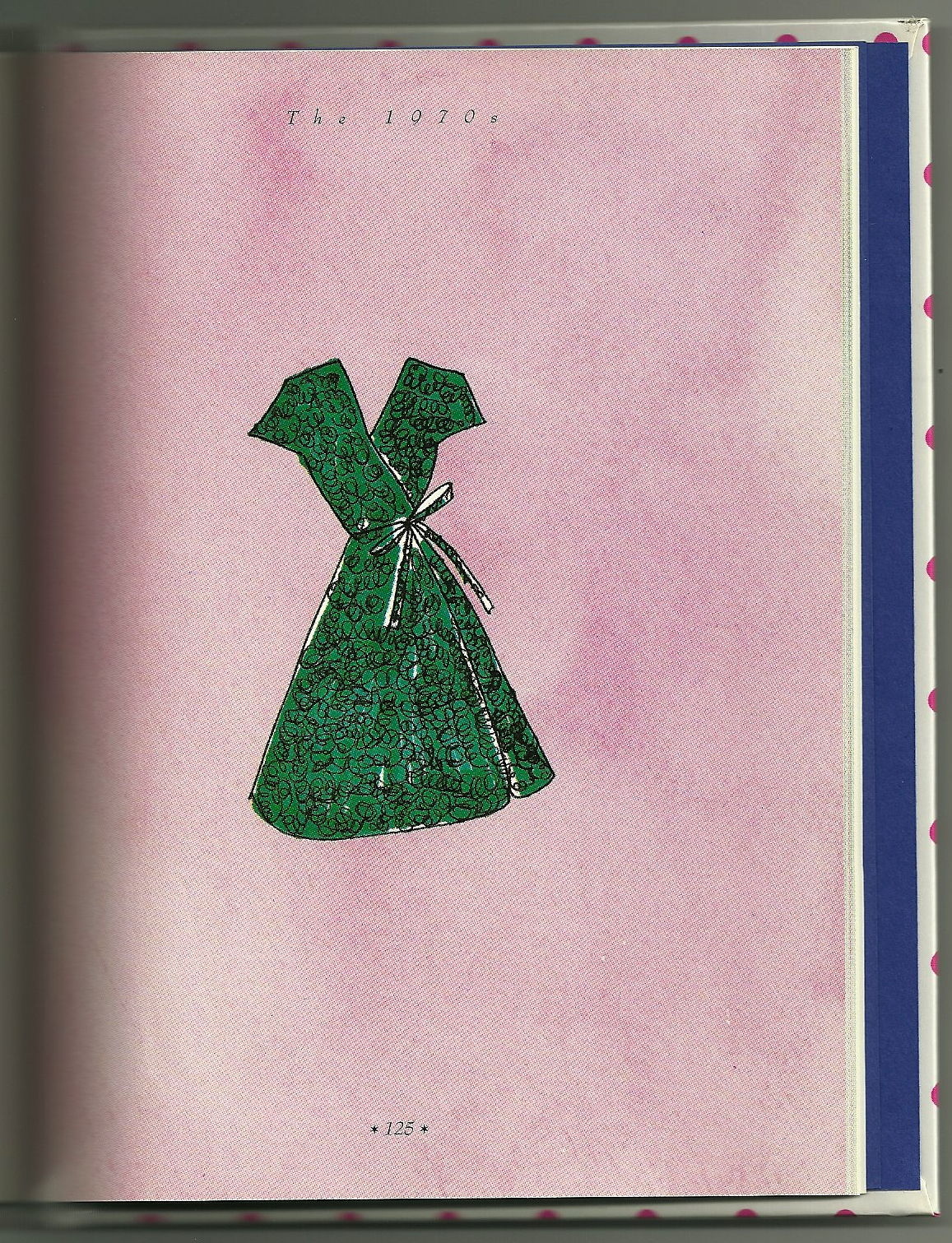
The 1970s, 1980s, and 1990s are lumped together, and are set off most dramatically by this Diane Von Furstenberg wrap dress from the ‘70s.  While wearing this dress, the author came to the decision to end her marriage.  How could one not remember what she wore at such a time in her life?

Love, luck, etc - 7 As the story ends, grown children marry and have children of their own.  But at night, says Beckerman, she reflects on her mother and the dresses she made.  “I like to think I got my fashion sense from my mother and from Dora’s mother [Mrs. Landey].”  Thus is a life remembered by what she wore, and so many of those memories have their foundation in home-sewing.

It had been a while since I had looked at this little book, but I had occasion to dig it off the shelf recently, right after I finished my Chanel-inspired red jacket.  I went to it after a difficult life event, which I know I will now always associate with that jacket.

I was happily expecting to finish all the final hand-work on my jacket within a day or two (okay, maybe three!), when, as the saying goes, “life is what happens when you are making other plans”.  After a fairly routine diagnostic medical test, my husband and I unexpectedly found out he had to have open-heart surgery for a triple coronary by-pass.  I was still in shock (my fit, active, healthy husband?), when the surgery was quickly scheduled for the following morning at 6:30 AM.

Suddenly I was relieved that I still had much to complete on my jacket.  Facing what I knew would be some of the longest hours of my life – the 5 to 6 hour operation – I packed up my unfinished jacket, thread, pins, etc. in the very still and long, lonely hours of the night preceding the surgery.  And so – the next morning, sitting in the hospital, I sewed and sewed and sewed as the hours slipped by, the time punctuated by phone calls and, blessedly, by occasional good reports from the Operating Room.  My needle and thread kept me calm – I equated every stitch with repairing my husband’s heart.  And so it was  – beautifully, successfully repaired . . .

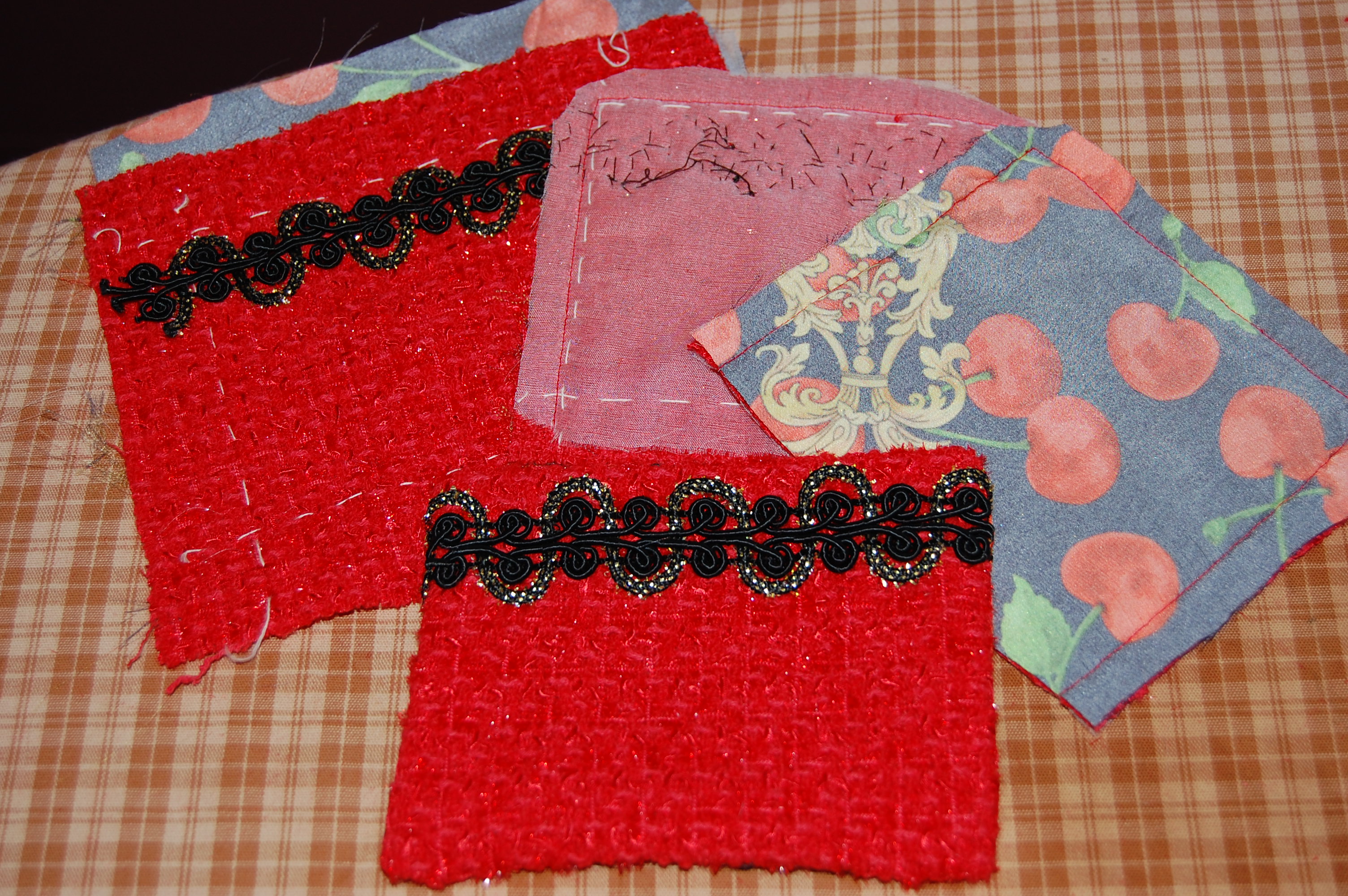
The following days took on a life of their own, as I shuttled back and forth to the hospital, spending hours every day by my husband’s bedside.  And then one day, on a whim, I brought in the as-yet-incomplete pockets for my jacket.  I sat and sewed the trim on to the top edge of each one (much to the delight of my husband who did some bragging about my sewing skills), arousing much curiosity among the doctors, nurses, staff, and visitors.

Here are the four pockets, in various stages of completion.  I decided to add silk organza interfacing to them (suggested by Susan Khalje, but optional).

Here are the four pockets, in various stages of completion. I decided to add silk organza interfacing to them (suggested by Susan Khalje, but optional).

It seems that construction of parts of a Chanel-inspired jacket was a first for the Intensive Care Unit and then the Progressive Care Unit!  By the time my husband came home a week after the surgery, he had made tremendous progress.  I had made progress on my jacket, too, but most importantly, sewing on it had given me a sense of normalcy during a time of great uncertainty.

So many people have told us how lucky we are, and it is difficult to express how very correct they are.  Instead of “loss”, we have, indeed, been abundantly blessed with love and luck.

28 Comments

Filed under Book reviews, Chanel-type jackets, Uncategorized

Paris in Baltimore – and Beyond: A Small Fashion Show

Shortly after I returned home from my Classic French Jacket Class with Susan Khalje, an article entitled “The Comeback of Haute Couture” appeared in The Wall Street Journal.  The reporter, fashion editor Christine Binkley, gives an overview – from the haute couture week in Paris, of course – of the frenzied and renewed interest in “astronomically expensive made-to-measure clothing [ranging] from $10,000 to $150,000 or more.”  Among the fashion houses showing haute couture collections was Chanel.  To quote:  “Chanel . . . looked as though the clothes could be easily worn, even if they were assembled, pleated, and embellished by dozens of ‘petite mains,’ as haute couture seamstresses are called. ‘Of course it’s comfortable.  It’s Chanel,’ said designer Karl Lagerfeld . . .”

“Comfortable” is a description frequently used by those of us making our own Chanel-inspired jackets.  Of course, everyone knows that the inspiration for Coco Chanel’s original cardigan jacket came when she cut her lover’s cardigan sweater down the front, added some ribbon trim and created a classic.  How the construction of the jacket went from sweater to quilted, silk-lined boucle is unknown to me, but one thing is for sure:  these jackets feel as cozy and comfy as any old favorite sweater.  I think this was a revelation and lovely surprise to all of us.  It makes wearing them all the more rewarding.

And – wear them we are starting to do!  Some of my classmates have kindly given me permission to show their finished jackets here on Fifty Dresses.  I am delighted to share these lovely examples made by “petite mains” Joanne, Holly, Myra, and Sherry:

Joanne’s classic black jacket is elegant and so versatile.  Her lovely floral lining fabric does not show, but trust me that is stunning.

A simply lovely jacket!

A simply lovely jacket!

Holly’s jacket has sparkle to it, just like her!

Look at the beautiful lining that Holly chose.

Look at the beautiful lining that Holly chose.

Isn't this color perfect for Holly?

Isn’t this color perfect for Holly?

The buttons which Holly chose are perfect!

The buttons which Holly chose are perfect!

With a few scraps left over from her lining, Holly made a color-blocked shell to wear with her jacket!

With a few scraps left over from her lining, Holly made a color-blocked shell to wear with her jacket.

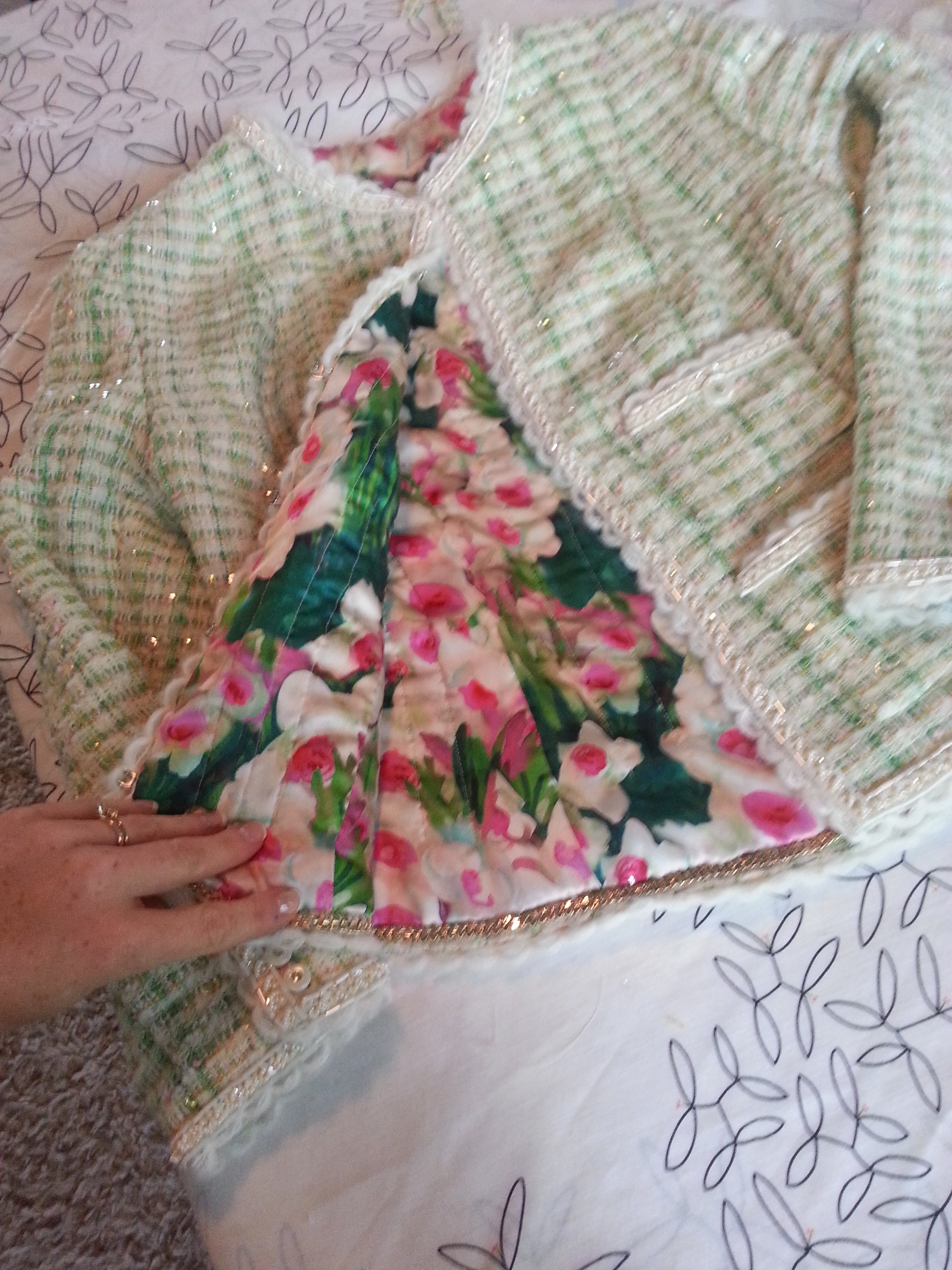
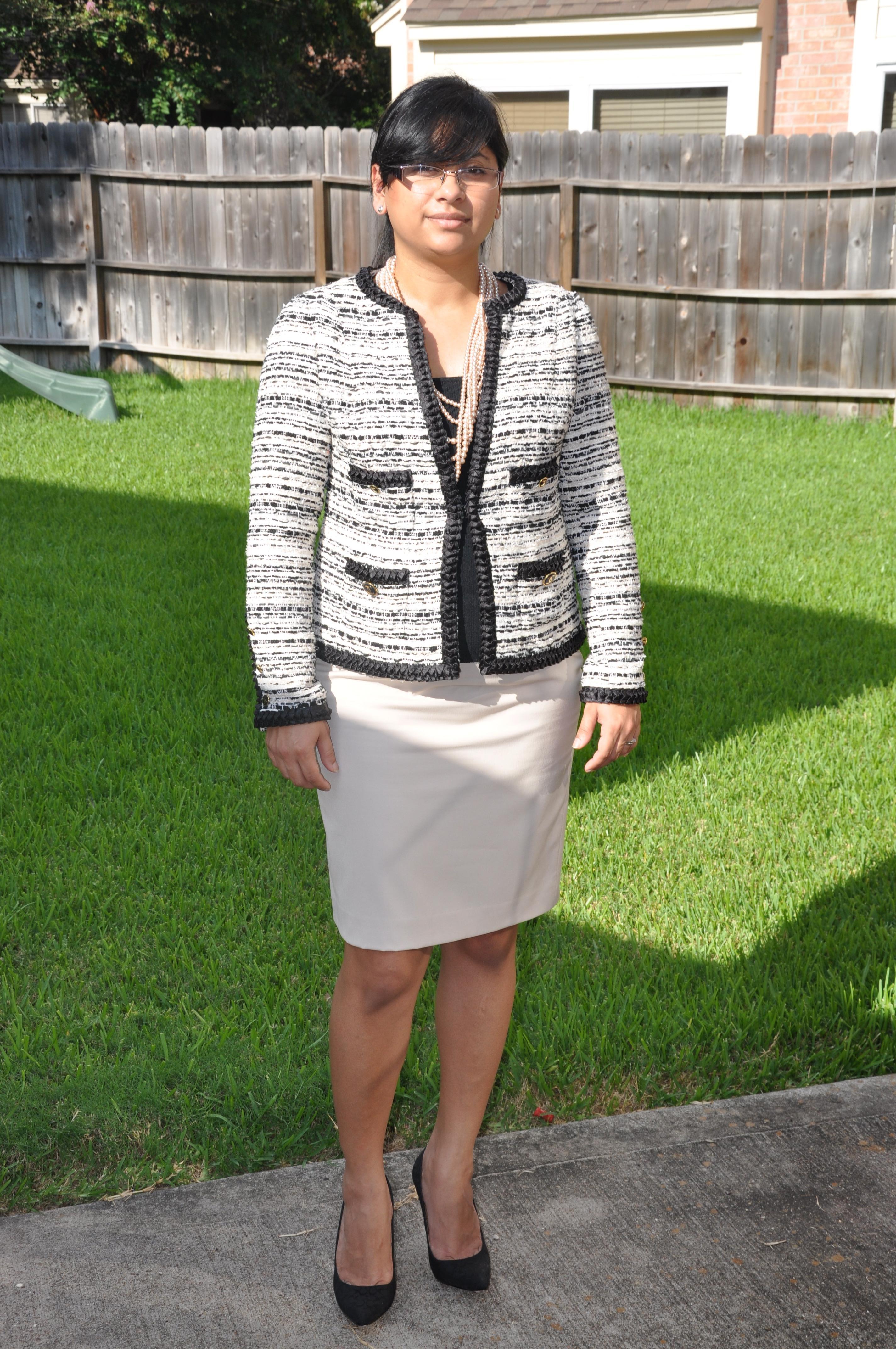
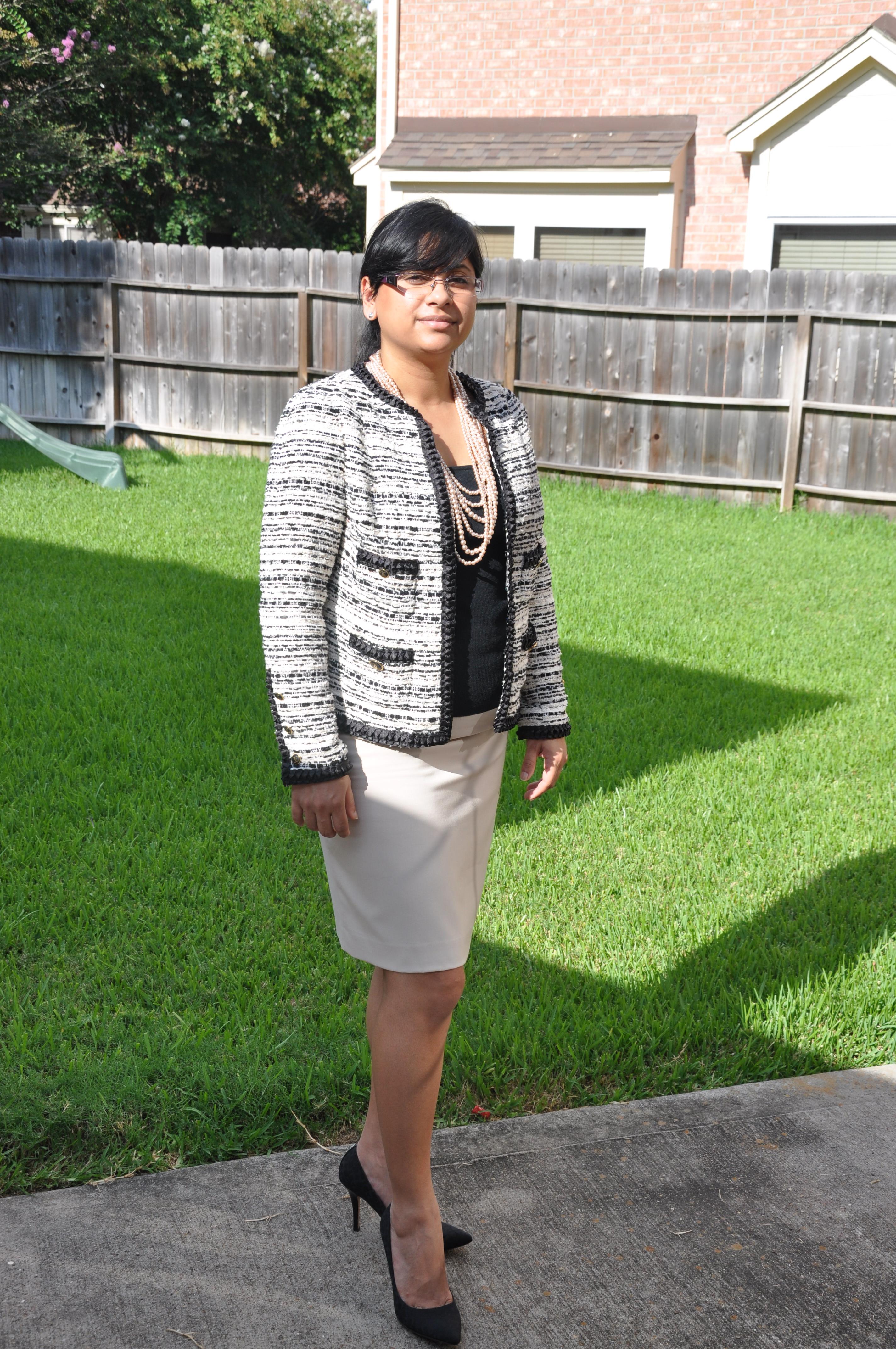
Myra’s horizontally and unevenly striped boucle caused some minor headaches during the pattern placement, but look how beautifully it turned out.

Looking lovely even in the hot sun!

Looking lovely even in the hot sun!

Myra's jacket - 2

Myra's whimsical lining fabric features images of Audrey Hepburn.  She brought this fabric with her to Baltimore and chose her boucle accordingly.

Myra’s whimsical lining fabric features images of Audrey Hepburn. She brought this fabric with her to Baltimore and chose her boucle accordingly.

Sherry chose a creamy white, loosely woven “windowpane” boucle for her jacket, and the result is pure loveliness.

Isn't this beautiful??

Isn’t this beautiful??

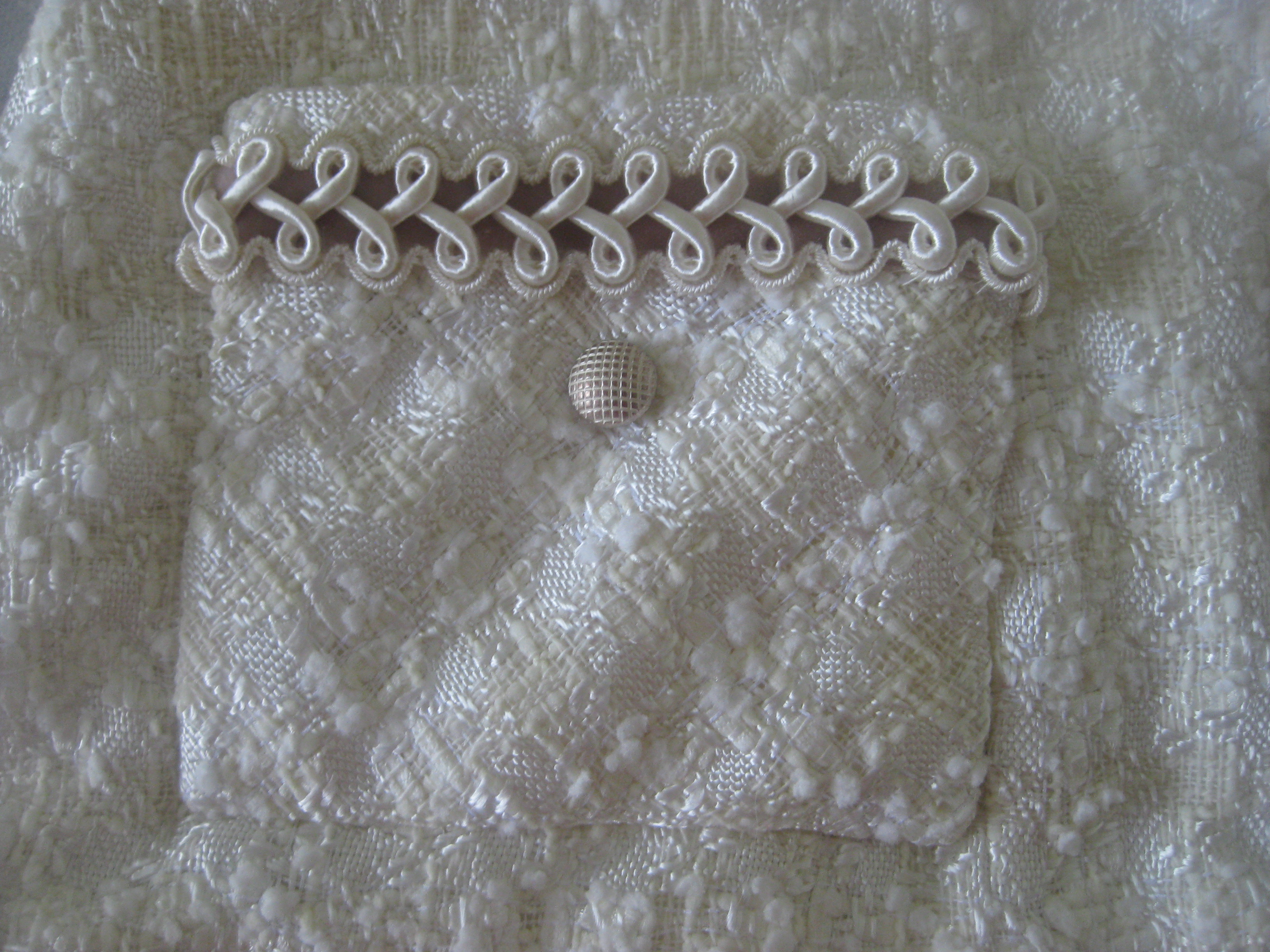
Sherry very cleverly made her pockets on the bias.  The petite buttons are just right for the weave of the fabric.

Sherry very cleverly made her pockets on the bias. The petite buttons are just right for the weave of the fabric.

Look how well Sherry's jacket fits.

Look how well Sherry’s jacket fits. 

One of the many fun aspects of the class was the color variety of jackets being sewn.  While there were other deep shades (raspberry pink, royal blue, true purple) I was the only one making a red jacket.

For starters, here is my jacket hanging.

For starters, here is my jacket hanging.

A few details.

A few details.

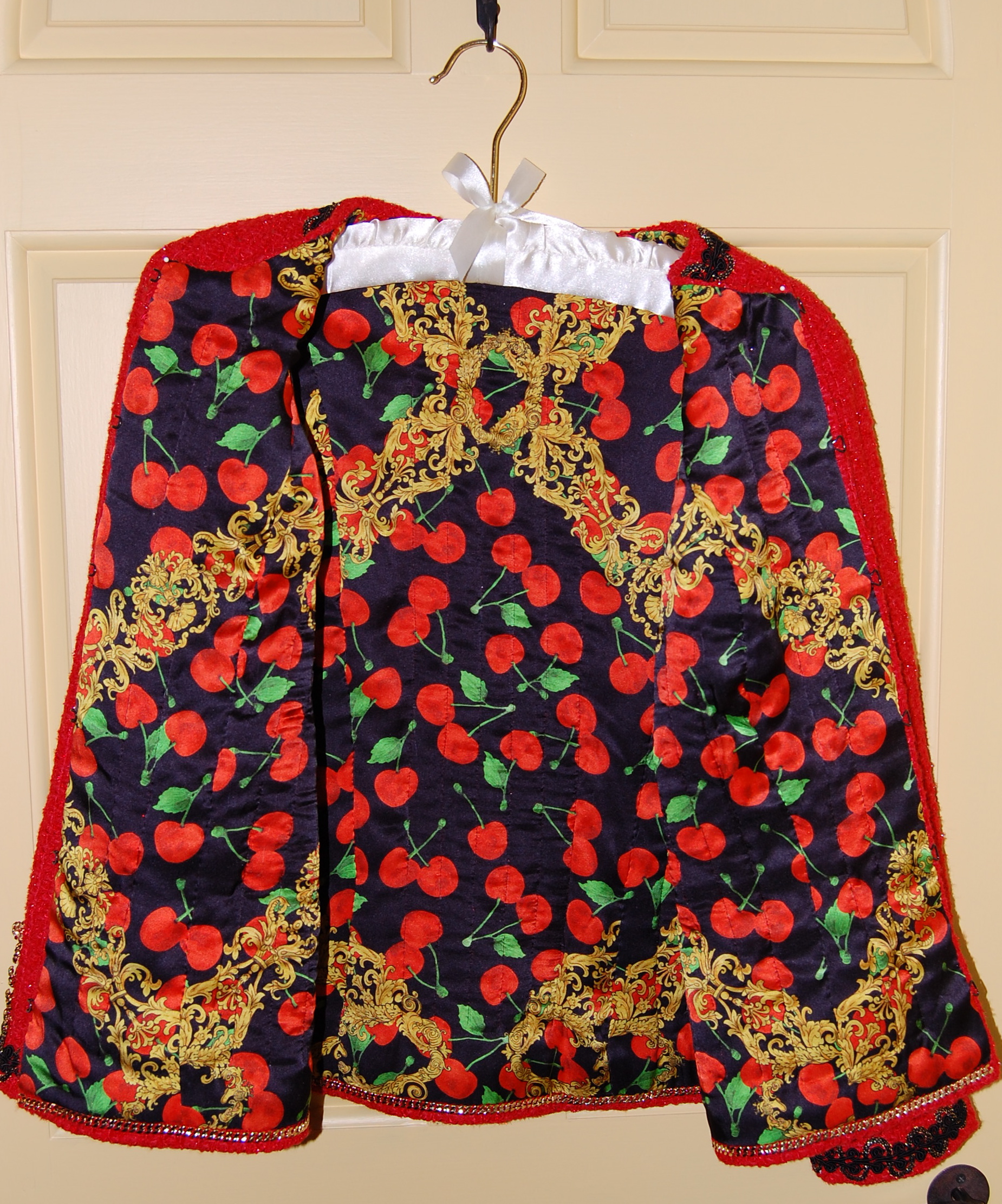
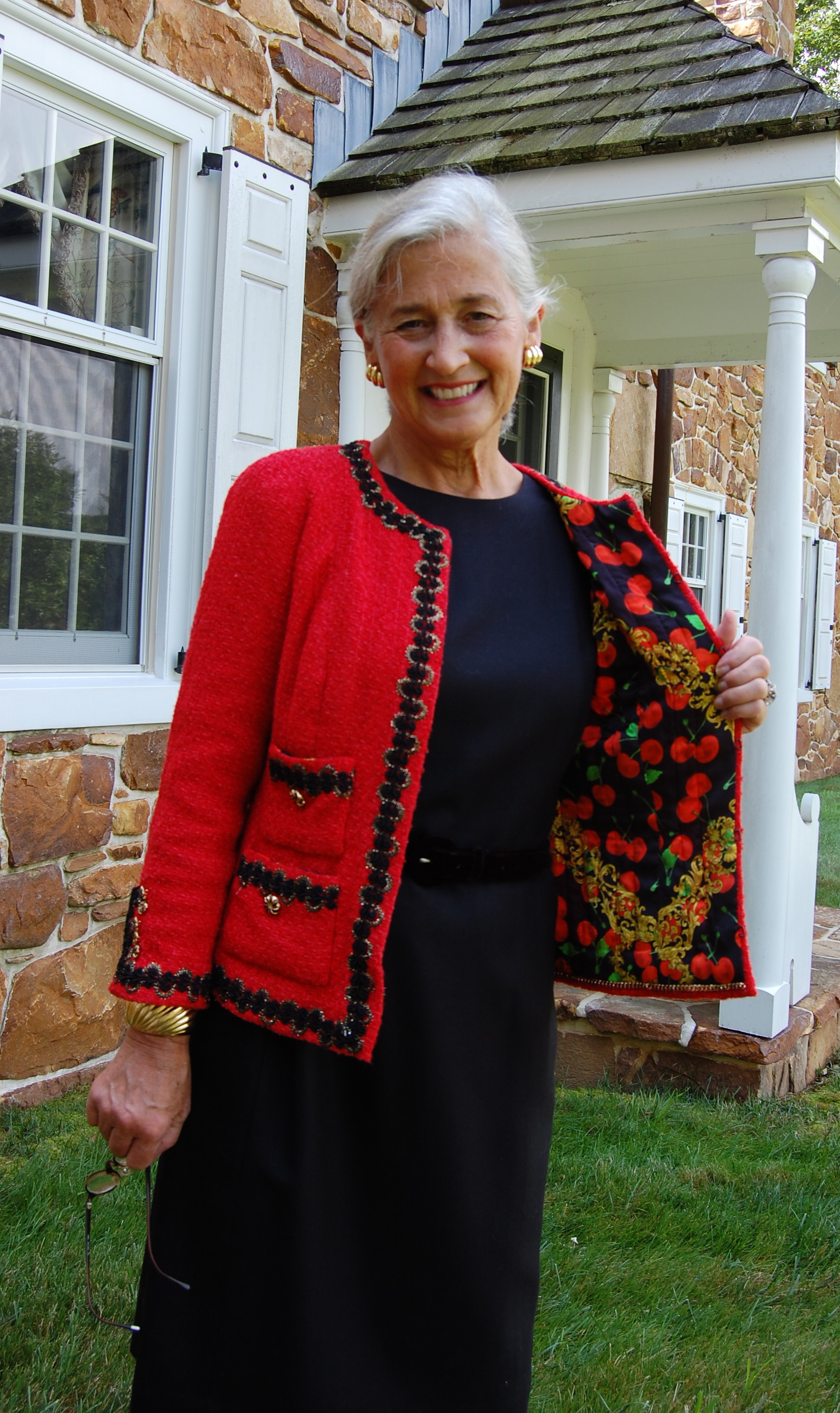
A view of the lining.

A view of the lining.

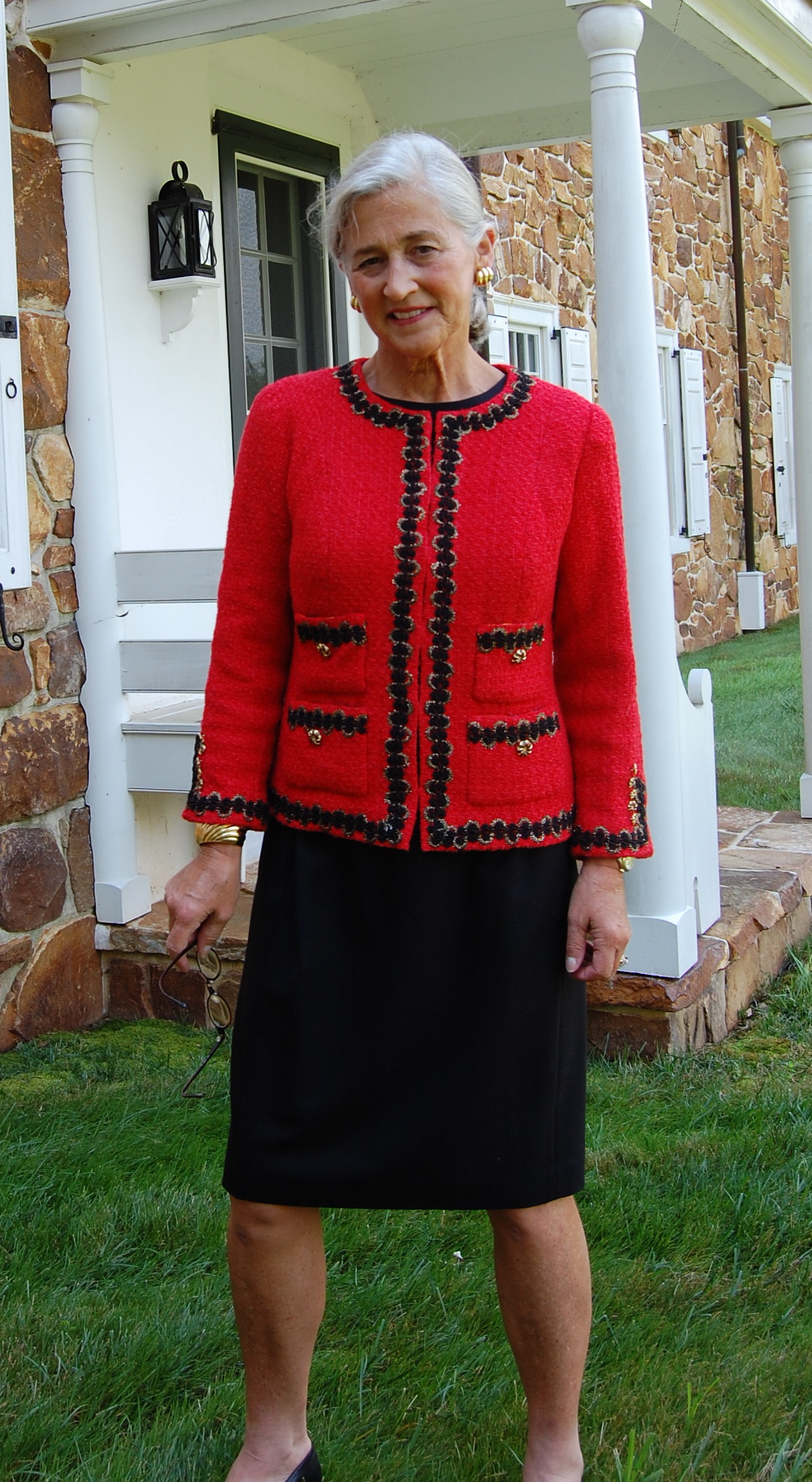
Shown with basic black.

Shown with basic black.

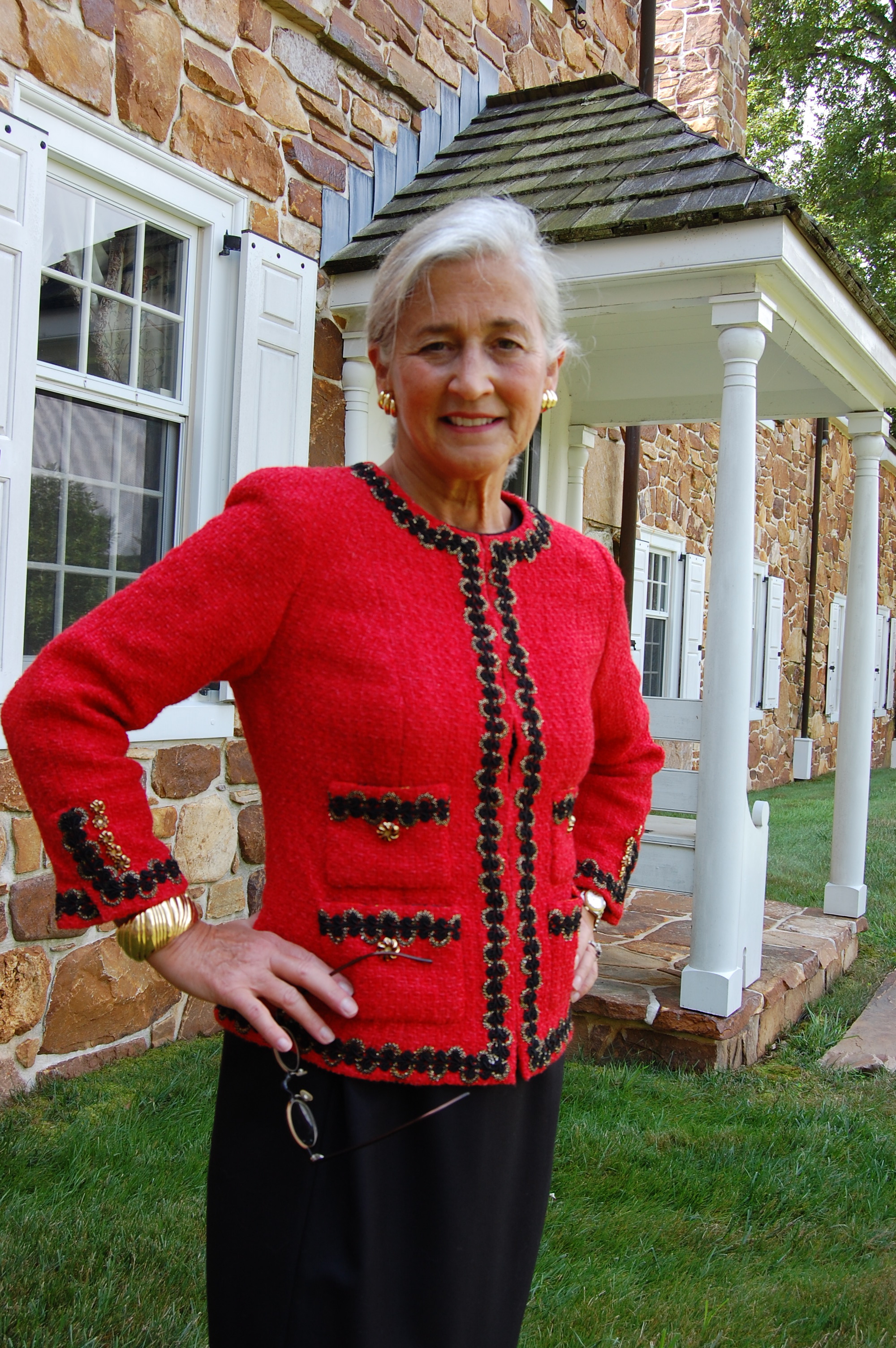
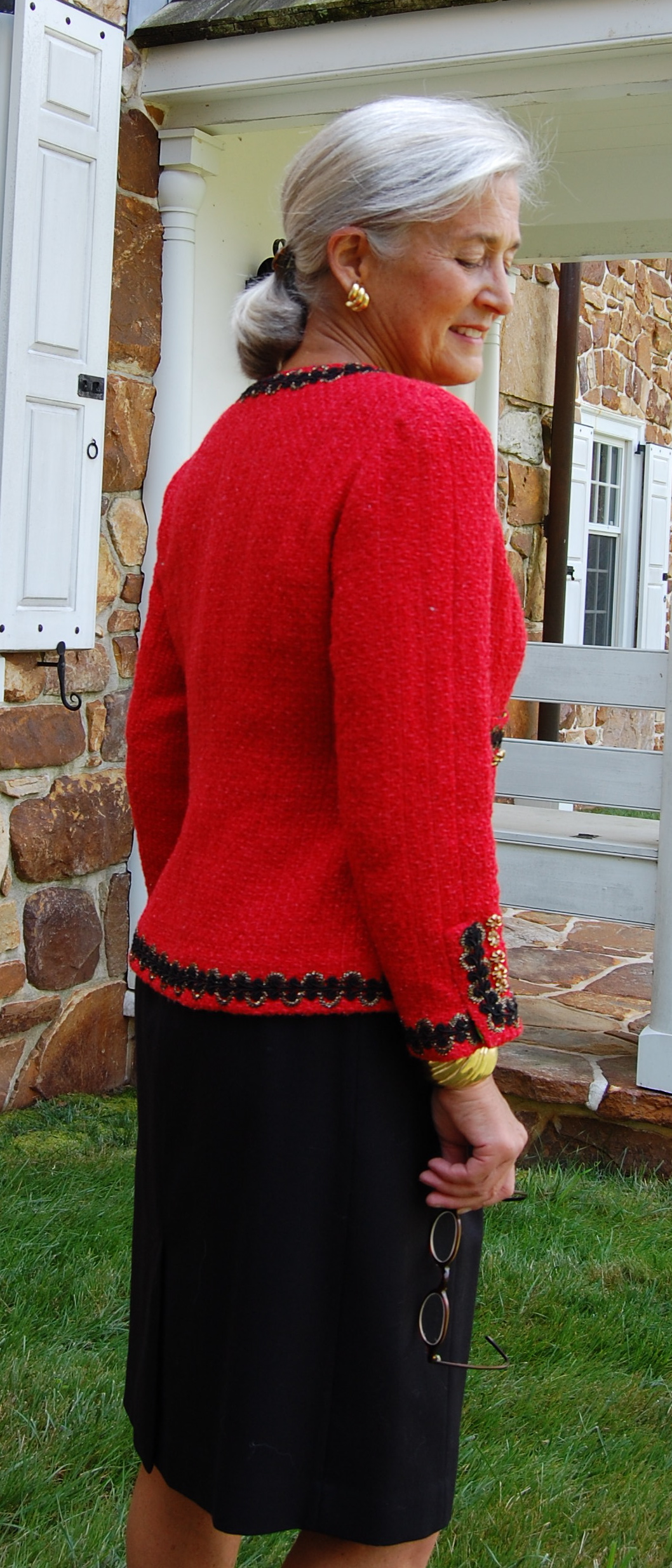
I can't believe it's finished!

I can’t believe it’s finished!

I added a gradual 1/4" to the back length, which gives it a more graceful line, I think.  This was one of Susan's many excellent suggestions.

I added a gradual 1/4″ to the back length, which gives it a more graceful line, I think. This was one of Susan’s many excellent suggestions.

Red Chanel jacket

There is nothing shy about this lining fabric!

There is nothing shy about this lining fabric!

During the lengthy process of making my jacket, I have had lots of time to reflect on some of its charms:

1) Boucle is wonderful for hand-sewing, as one’s stitches simply disappear into the fabric.

2) This is “common sense” sewing: every step (of which there are many) adds in subtle or significant ways to its wear-ability, appearance, or fit.

3) Finishing a project like this is empowering.  I felt like I grew as a “dressmaker” during this process.  And beware . . .

4) Finishing a project like this is addictive.  Yes, I already have a boucle for my next one . .

However, before I start my next one, I have one thing to (start and) finish:   That charmeuse I used for the lining?  I purchased enough to make a sleeveless sheath dress to wear with my jacket.

What was I thinking??

28 Comments

Filed under Chanel-type jackets, Coco Chanel, couture construction, sewing in silk, Uncategorized