Tag Archives: Britex Fabrics

A Newly Defined ‘50s’ Frock

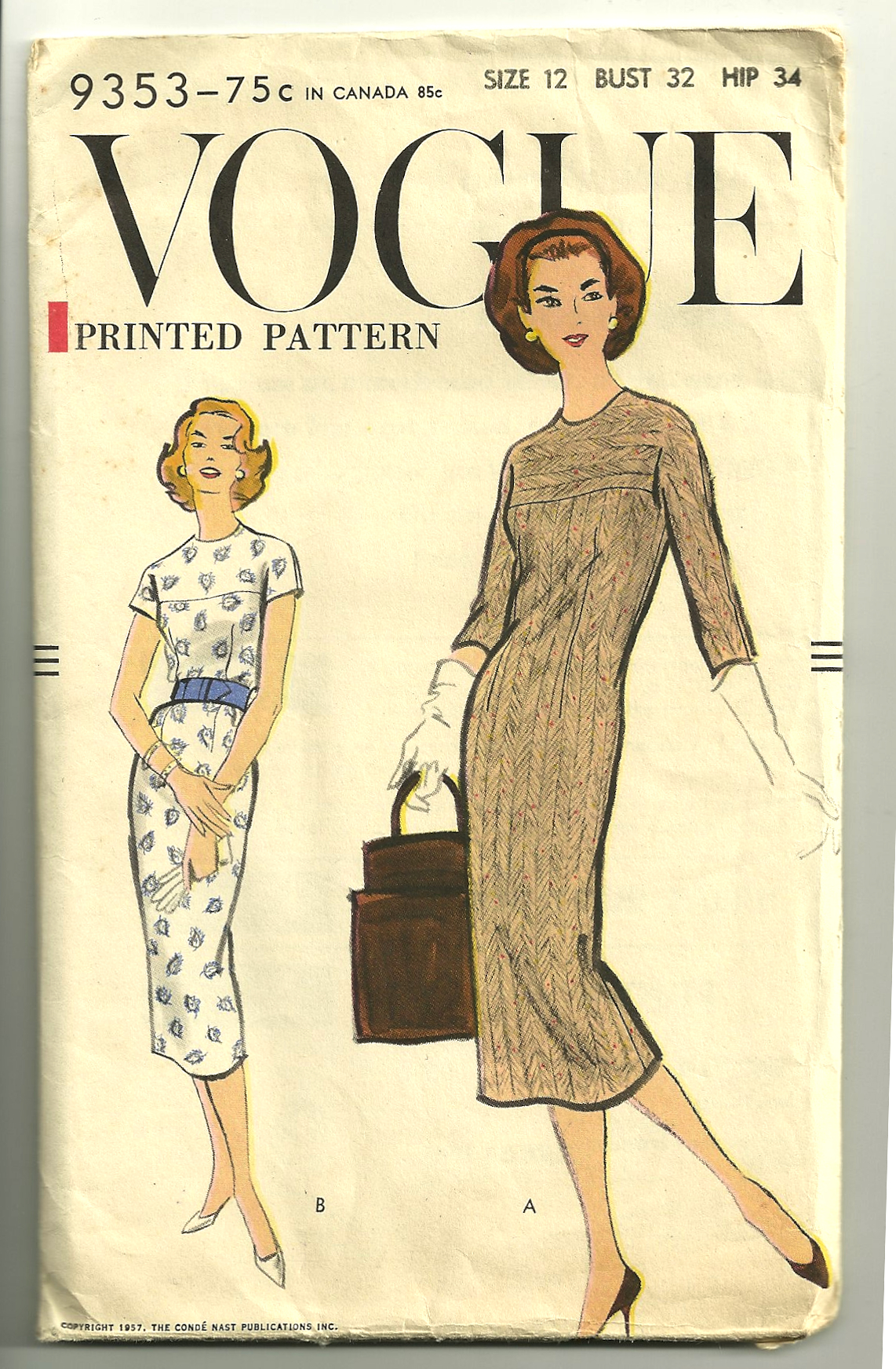
I have finished making a new dress from an old pattern, which isn’t anything too unusual for me.  What is unusual is the spell which this pattern cast over me from the time I first saw it last January, and then purchased it from an Etsy shop.
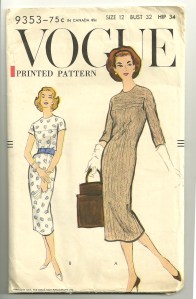
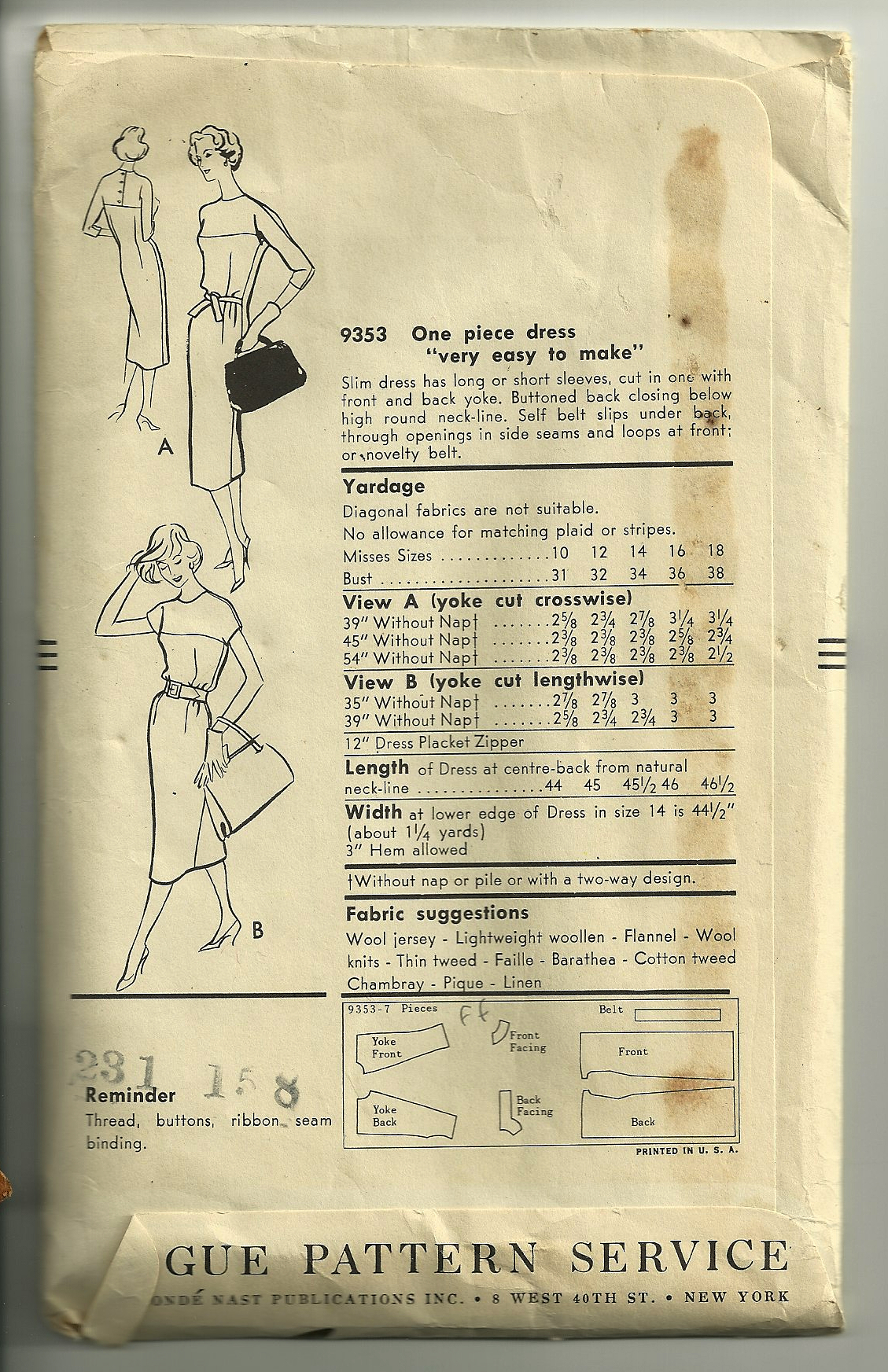
The length of this dress as shown on the envelope is very 1950's.  I'll be making it in knee-length.

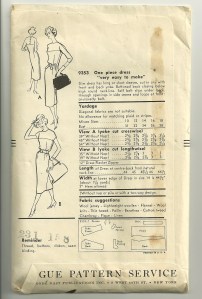
The back of the envelope, showing the back yoke detail.  Don't you love the handbags that the artist included?

The back of the envelope, showing the back yoke detail. Don’t you love the handbags that the artist included?

Copyright 1957, this pattern has intrigued me for both how modern it looks, and how quintessentially “1950s” its various details are – such as:

1) Kimono sleeves in three-quarter length.  Cut in one with the bodice, kimono sleeves were common in the ‘50s, and now seem to be making a comeback.  Three quarter length is extremely flattering for most women, and was popular then and now.

2) Side zipper.  This dress goes over the head and needs that side zipper to accommodate the wiggle room needed to accomplish this method of dressing.  A back zipper would completely ruin the effect of the four-buttoned back yoke.

3) No pockets.  While pockets are lovely inventions, this dress would lose some of its slim and flattering line should pockets bulge out from the side seams.

4) Mid-calf length.  This length looks great in the pattern illustration, but not so much on me.  One of the beauties of these vintage patterns is adapting them for current wear – so I opted for knee-length instead.

5) Bound buttonholes.  Although this pattern is called “easy to make” on the back of the envelope, it still calls for bound buttonholes.  And, oh, they add such a nice detail.

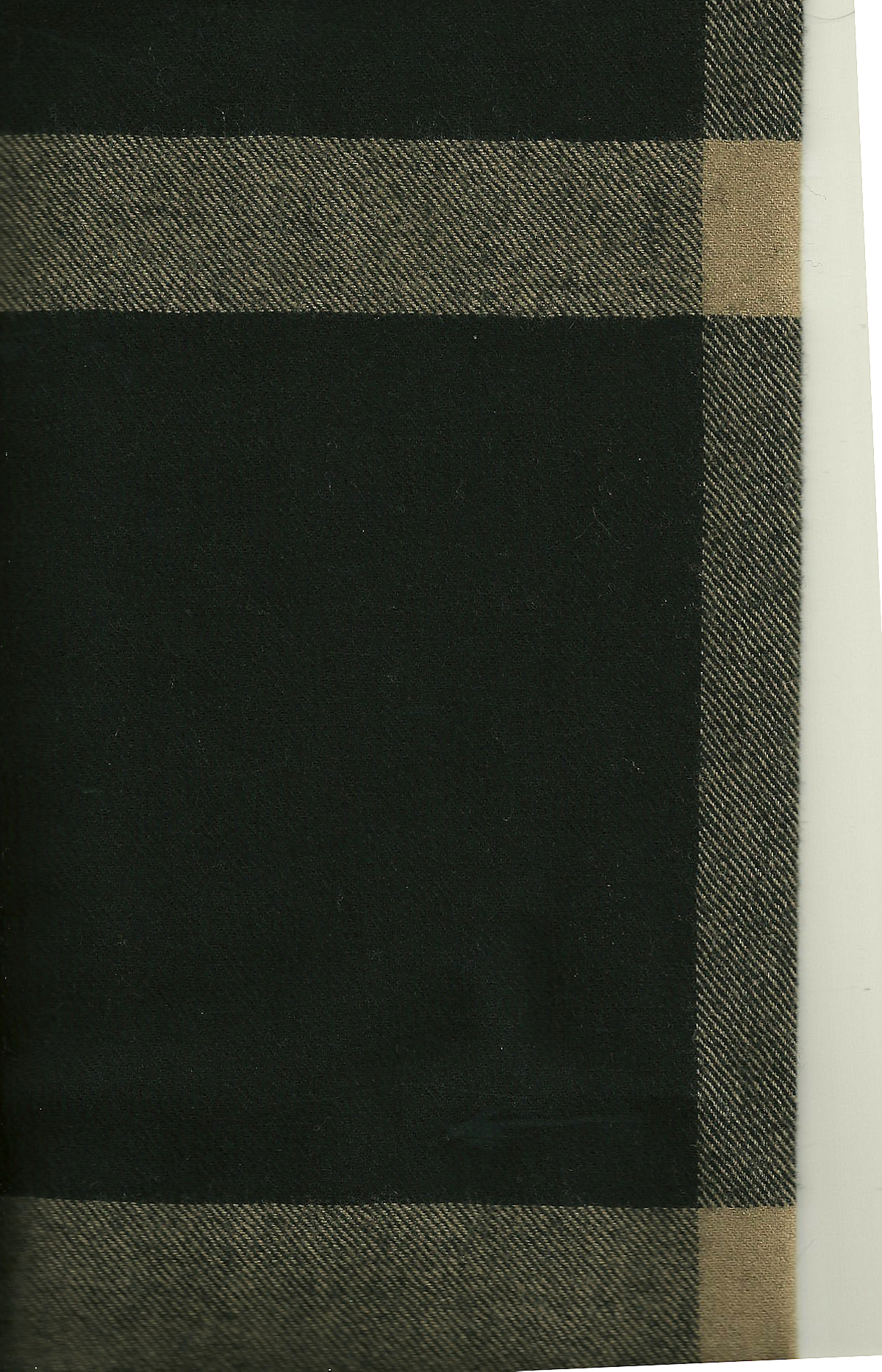
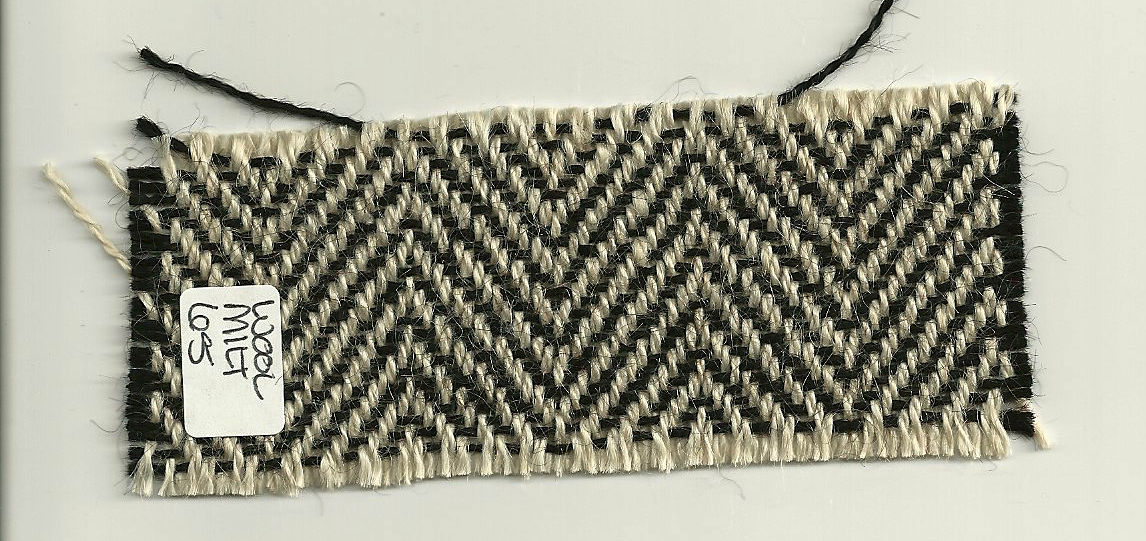
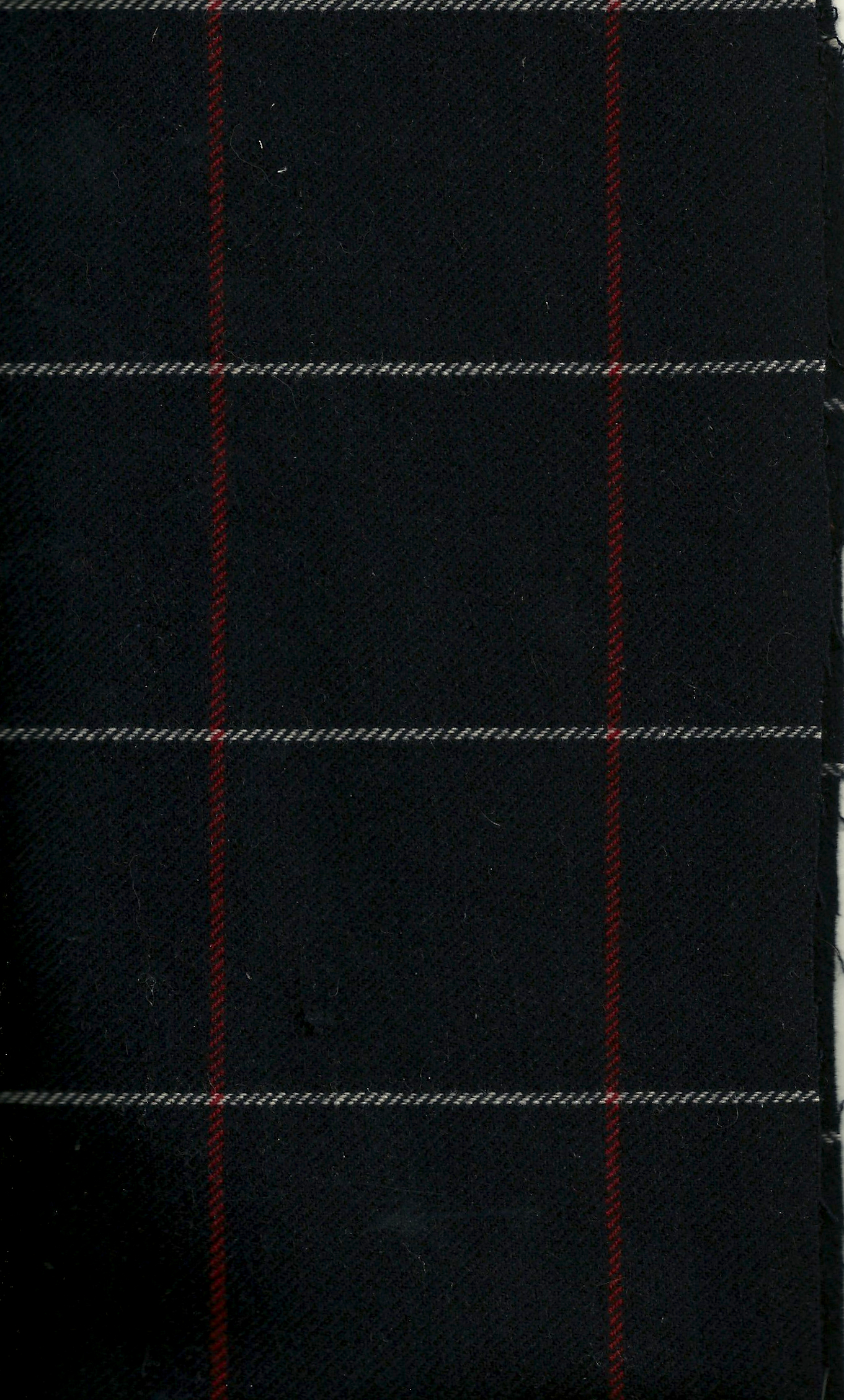
Now to the specifics.  I found this black and white herringbone alpaca wool (made in the USA) on Britex Fabrics’ website, and purchased it on sale a few months ago, specifically for use with this pattern.
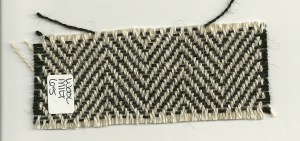
This is the swatch I ordered from Britex sometime over the Summer.

This is the swatch I ordered from Britex sometime over the Summer.

I wanted to make the dress using couture techniques (learned in the online Craftsy course The Couture Dress taught by Susan Khalje.)  This meant that I would 1) make a muslin for fitting and pattern tracing; 2) underline the entire dress with silk organza; 3) eliminate the separate neck facing; 4) finish all the interior seams by catch-stitching them to the underlining; and 5) line the entire dress, which I did using Bemberg instead of china silk (more on that in a bit).

There were a number of decisions/problems/successes involved in making this dress. First, the nature of the fabric is that there are slight imperfections in the weave, and it is quite loosely woven, making it quite susceptible to raveling.  When I laid it out to cut it, I wanted to avoid any obvious imperfections front and center.  Patterns with kimono sleeves demand large expanses of fabric and thus do not allow a lot of jiggling of their placement.  I can honestly say that I had JUST enough fabric and not an inch more than I needed!

One of the first problems I realized I was going to have concerned the buttonholes.  I quickly discovered that the loose weave of the fabric meant that I was not going to be able to make bound buttonholes using self-fabric for the “strips”.  I considered using a plain black wool for these strips, but I thought that would be too much of a contrast.  Well, now I know why I save all kinds of scraps from previous projects – you never know when one of those random pieces of fabric will come in handy.  I spied a scrap in my fabric closet and quickly decided that one part of the weave would be perfect to delineate those buttonholes:
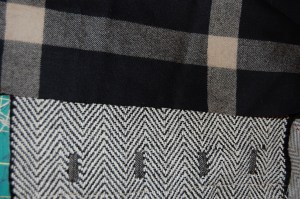
I used the "gray"portion of this windowpane check for the buttonhole "strips".

I used the “gray” portion of this windowpane check for the buttonhole “strips”. Click on the photo to see this up close.
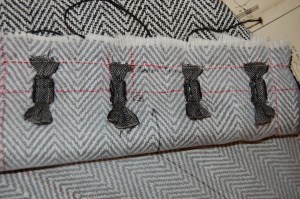
An inside look at the buttonholes in progress
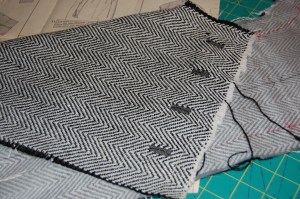
An inside look at the buttonholes in progress

And an outside look...

And an outside look…

When it came to deciding on buttons, I could not find any I liked.  But I remembered some buttons I had sewn onto a RTW jacket several years ago (to replace the ones that came on it.)  They have a “herringbone” look to them – it’s very subtle, but effective.  The jacket is one I haven’t worn in a couple of years, so I just robbed the cuffs of their buttons and used them on my dress.  (Now I guess I know for sure I won’t be wearing that jacket again!)  But – the buttons are perfect for this dress.
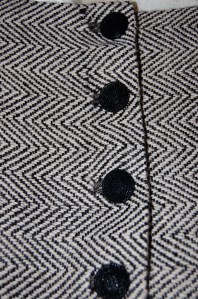
My buttons of choice!

My buttons of choice!

Choosing to use couture techniques was a “dress-saver”.  The larger seam allowances took away the panic I might have felt, once I realized the fabric frayed so easily.  And finishing off each interior seam with catch-stitching controlled the fraying and helped the seams to lay perfectly flat.

Eliminating the separate neck facing was also a bonus to ease construction.  First of all, I wanted to widen the neckline, which I worked out in my muslin.  Using the seam allowance and hand-applied, under-stitched lining for the neck facing made it lay flat, and of course, it’s not itchy either!
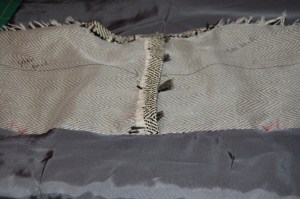
The "couture-constructed" neckline, before the lining is attached.

The “couture-constructed” neckline, before the lining is attached.

Even though I did not have “plaids” to match, I needed to pay close attention to the rows in the herringbone weave, so that none of them were crooked.  This is where Clover two-pronged pins (recommended by Susan Khalje in The Couture Dress class) came in handy and helped me keep those rows lined up evenly.
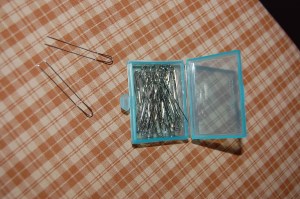
Clover "fork" pins

Clover “fork” pins

Finally, I decided to use Bemberg lining fabric instead of China silk because I thought it might be a bit more substantial for this somewhat heavy weight wool.  When I was deciding what color to make the lining, I considered ivory, black, and even a bright color, such as red.  But I settled on deep gray, and it seems just right.

In fact, everything about this dress seems just right.  It is delightfully rewarding when a pattern does not disappoint – and when it turns out to be a complete winner, well, that is reason to make it again (which I will)!
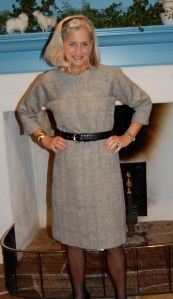
I can wear this dress as a sheath, unbelted, but I love it with this Coach black belt.
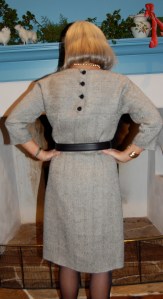
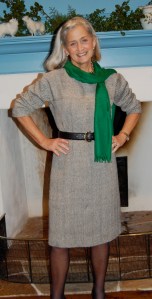
I can wear this dress as a sheath, unbelted, but I love it with this Coach black belt.

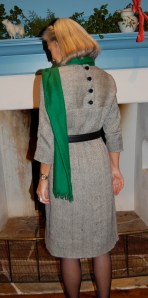
The back view

With a touch of emerald green for the holiday season

With a touch of emerald green for the holiday season.
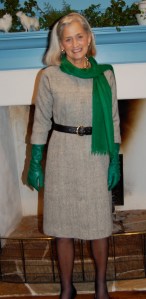
With green gloves for a '50s' look!

With green gloves for a ’50s’ look!

And another back view.

And another back view. Alpaca is a very warm wool – so this dress is very cozy.

For now, however, my sewing room is “gift-wrap central”.  The colorful ribbons, paper and tags are cheerful tokens of a season of blessings and family and home.  To all of you celebrating the season, may it be a time of great peace and love for you and yours. And, as I  take a couple of weeks “off”, I send a heartfelt Merry Christmas from me to you…
24 Comments

Filed under bound buttonholes, Buttons - choosing the right ones, couture construction, kimono sleeves, side-placed zippers, Uncategorized, underlinings, vintage Vogue patterns from the 1950s, woolens

Missing in Action – or – Doesn’t everyone shop for fabric on vacation?

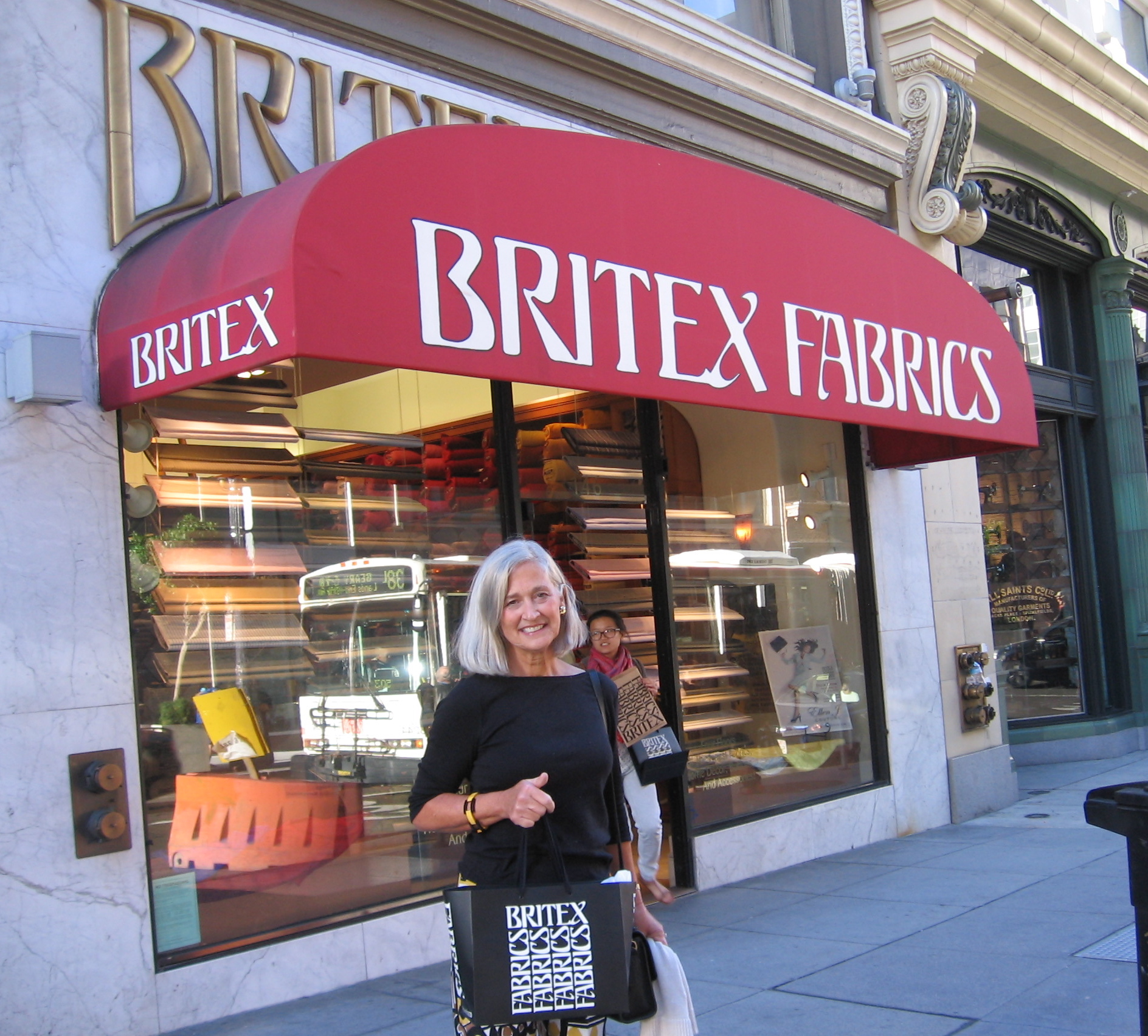
You may have noticed that I’ve not posted anything for almost two weeks.  Mr. Fifty Dresses and I have been away on the West Coast, enjoying some time with our grown son, and seeing some of the majestic scenery in the states of California and Oregon.  Of course, one of the best places to enjoy colorful scenery is always in Britex Fabrics on Geary Street in San Francisco.  My husband and son know by now that no trip to California is complete without fabric shopping!

I am all smiles with my newly-made purchase! I am wearing “my very styish pants” and was delighted to get complimented on them in the store.

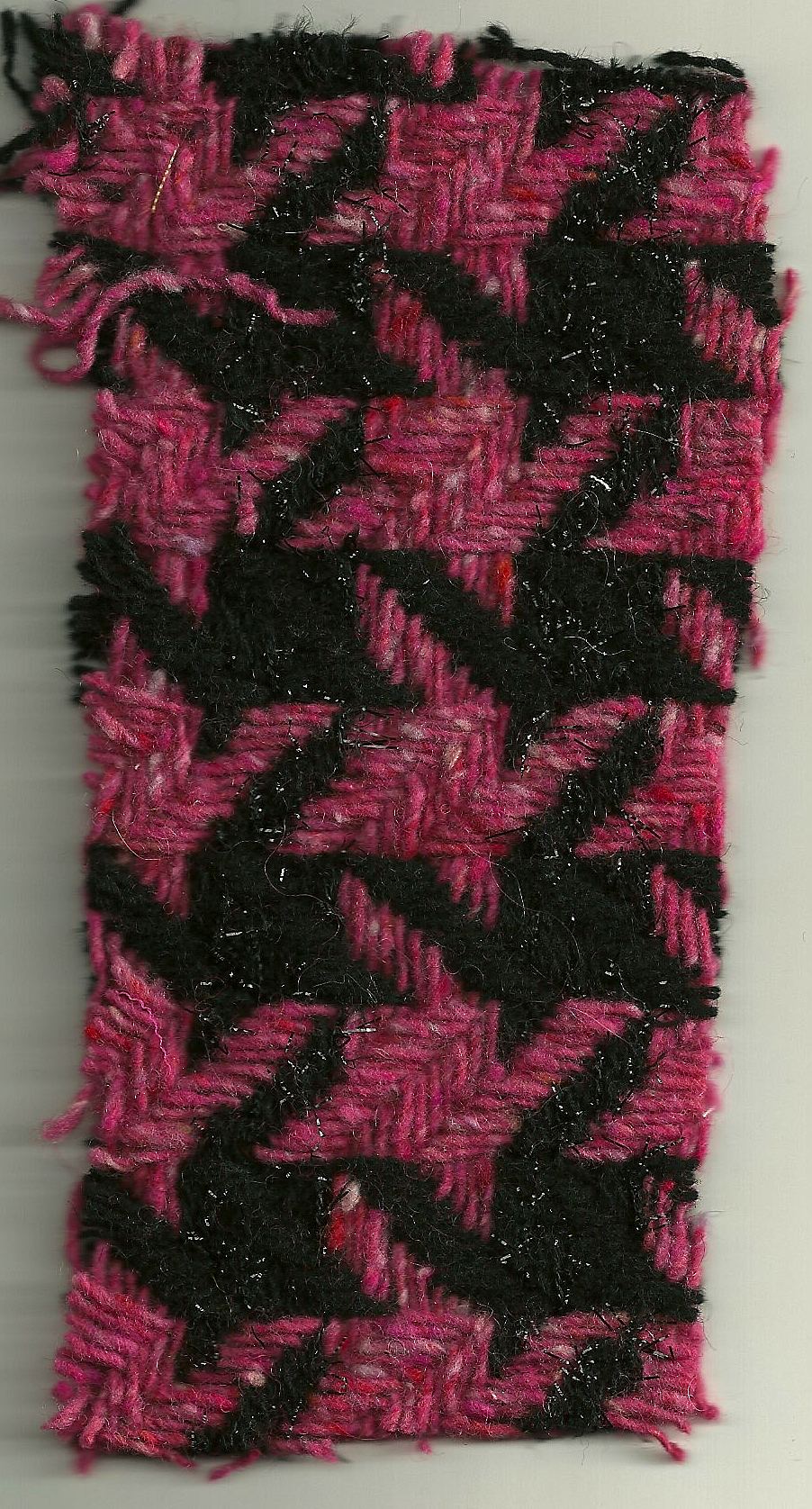
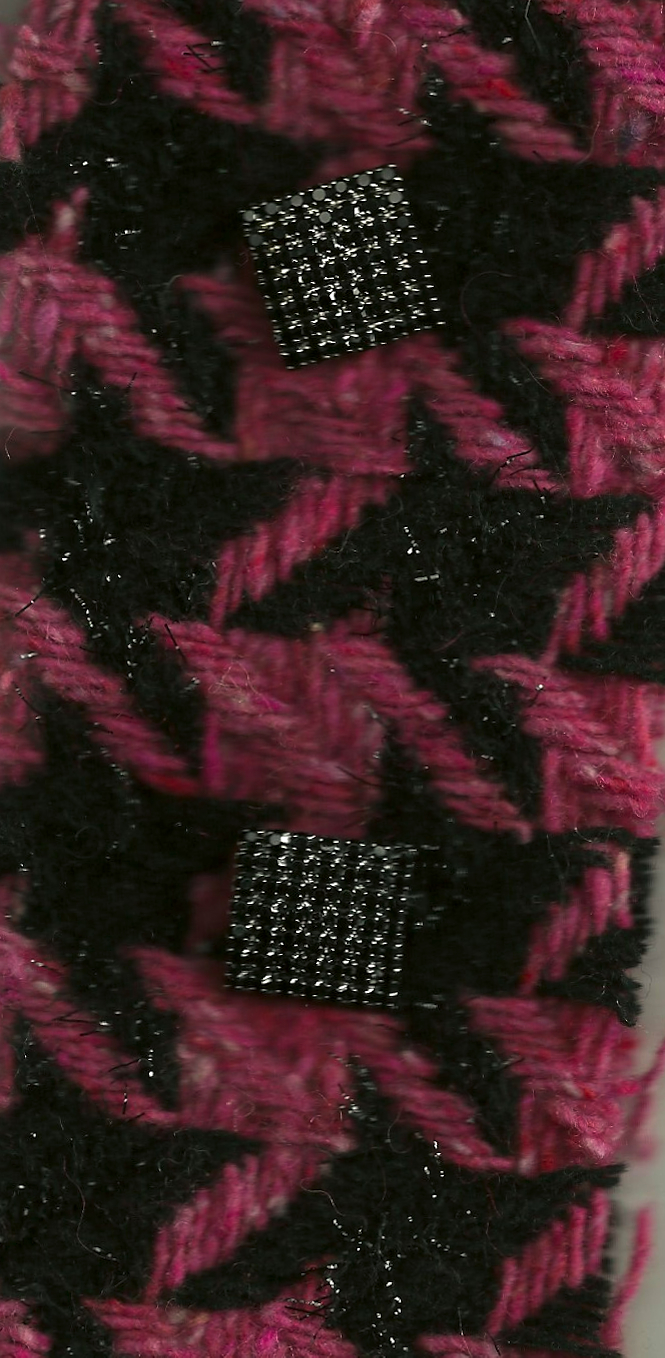
You may recall that I have been looking for a skirt-weight fabric to coordinate with this wool:

This fabric will be a jacket, and I want to make a pink skirt to make it into a “dressy suit”.

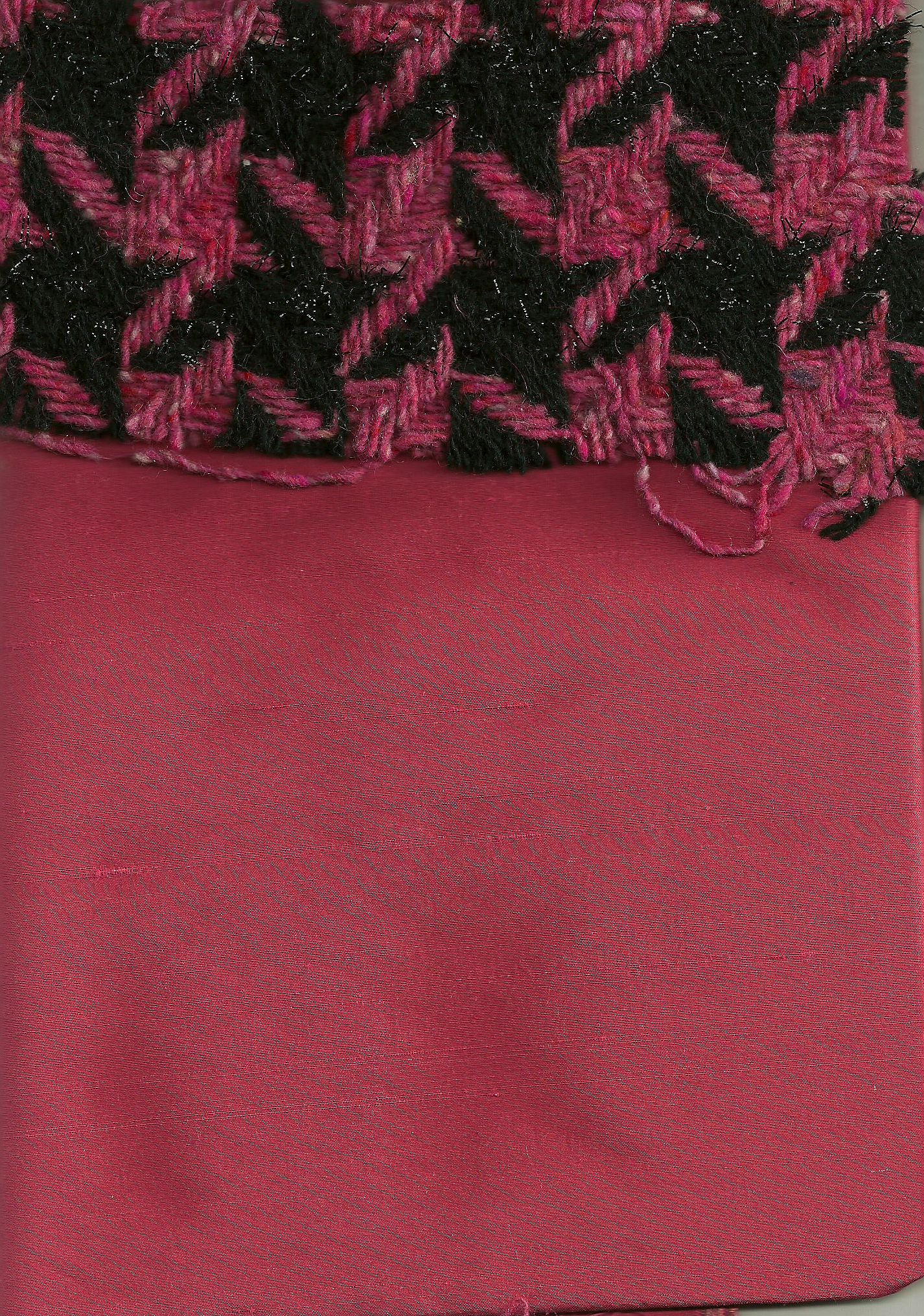
That pink is a tricky color, I’ve discovered.  I’ve ordered many swatches, thinking one of them will be “it” and it never was.  So I tucked that pink and black houndstooth- checked wool sample into my carry-on bag so that I could enlist the experts at Britex to assist me.  The bolted wools and silks and designer fabrics are on the first floor, and it did not take long for me to accept Douglas’ kind offer of help.  We looked first at the wools, one beautiful bolt after another, but none that totally complimented the pink.  Next we moved to the silks – and there we struck gold – or perhaps I should say pink gold.  As soon as Douglas pulled out this silk shantung, we knew the color was right.

Just what I was looking for!

We carefully checked the color inside and then took it outside on the steps to check it in sunlight.  Perfect, both places.  Being shantung, it has the correct heft to accompany the wool, but it is light enough to be used for attached trim if I choose to add it around the collar, down the front, and at the bottom of the sleeves.

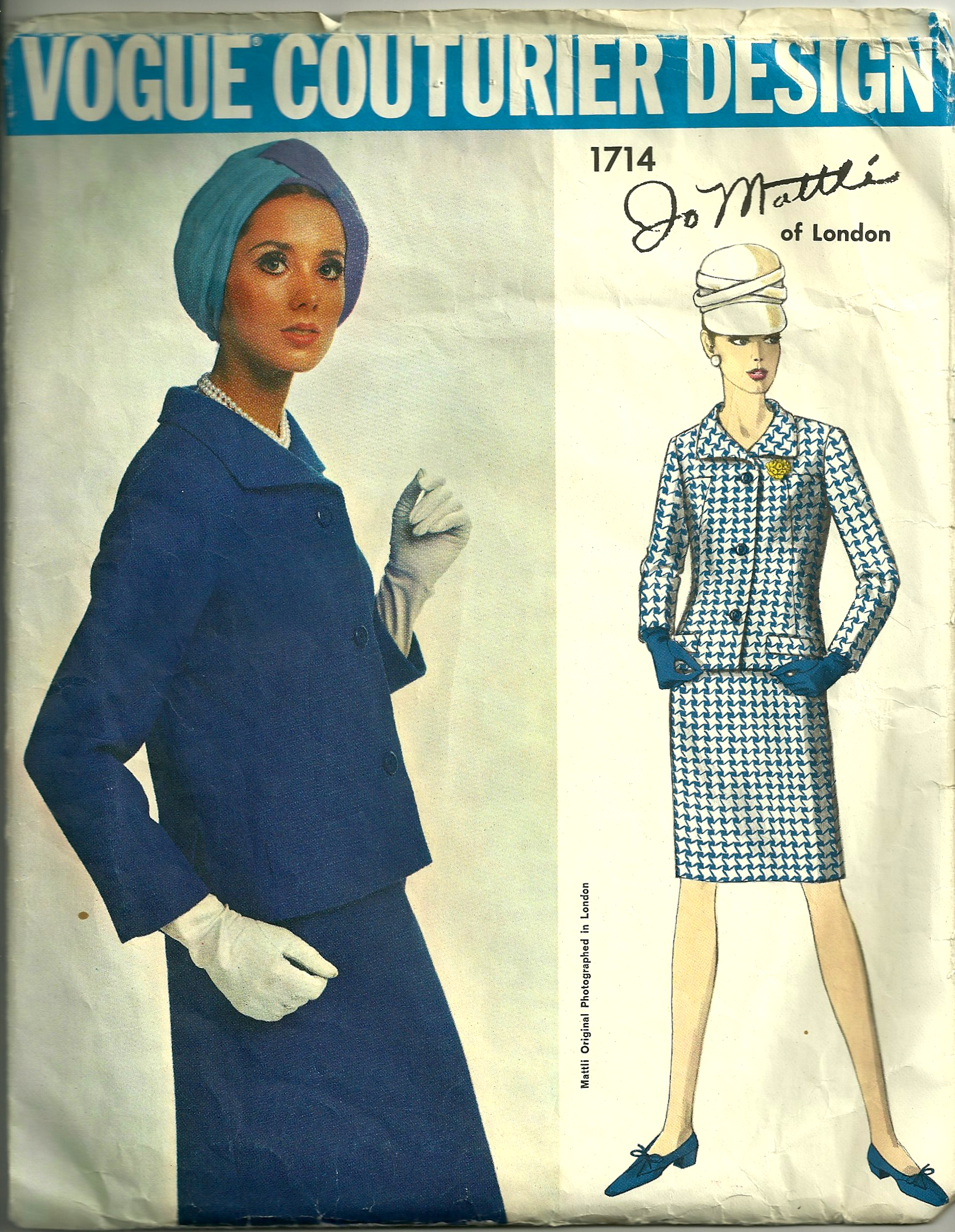
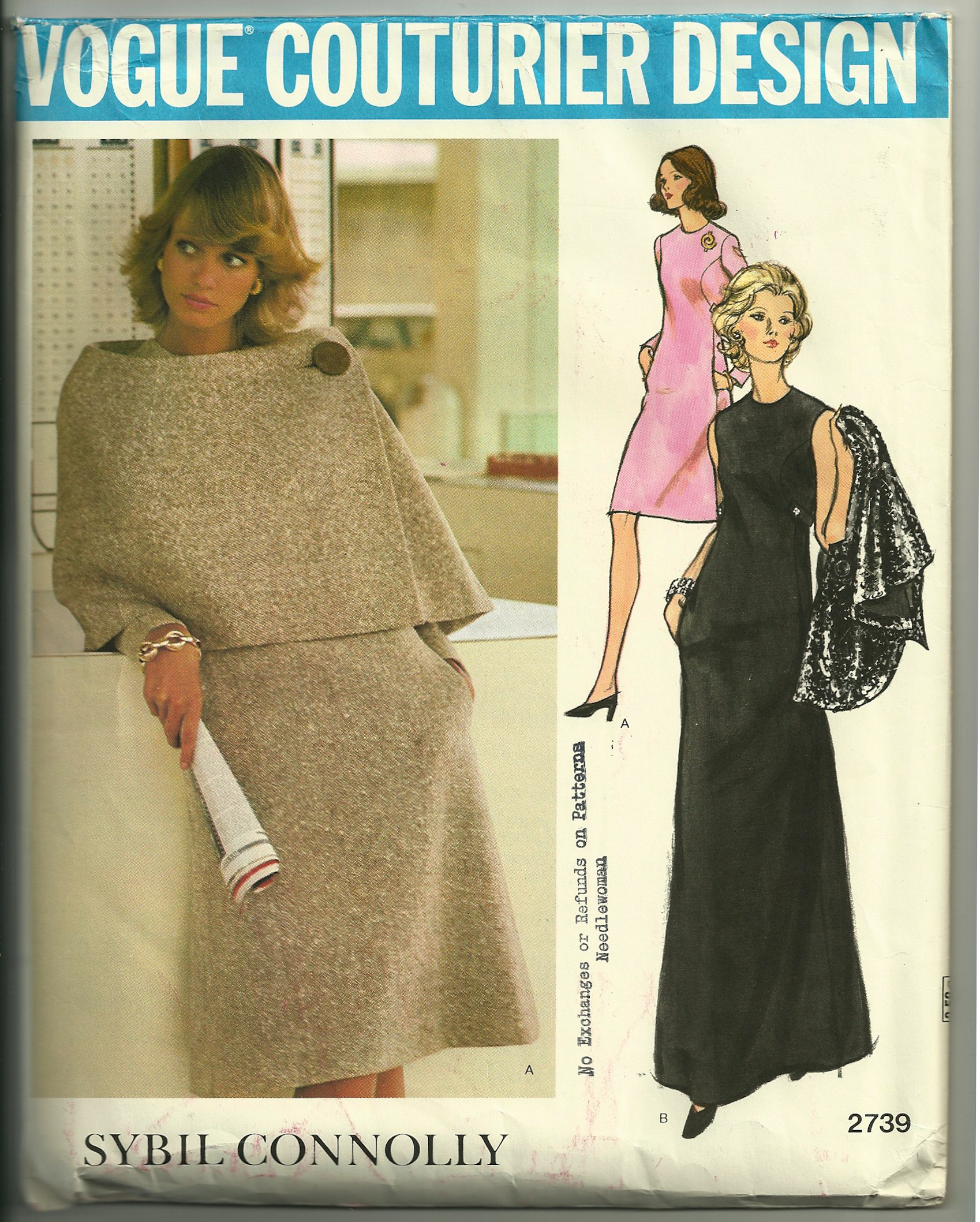
I am probably going to use this 1970s’ pattern for this outfit.

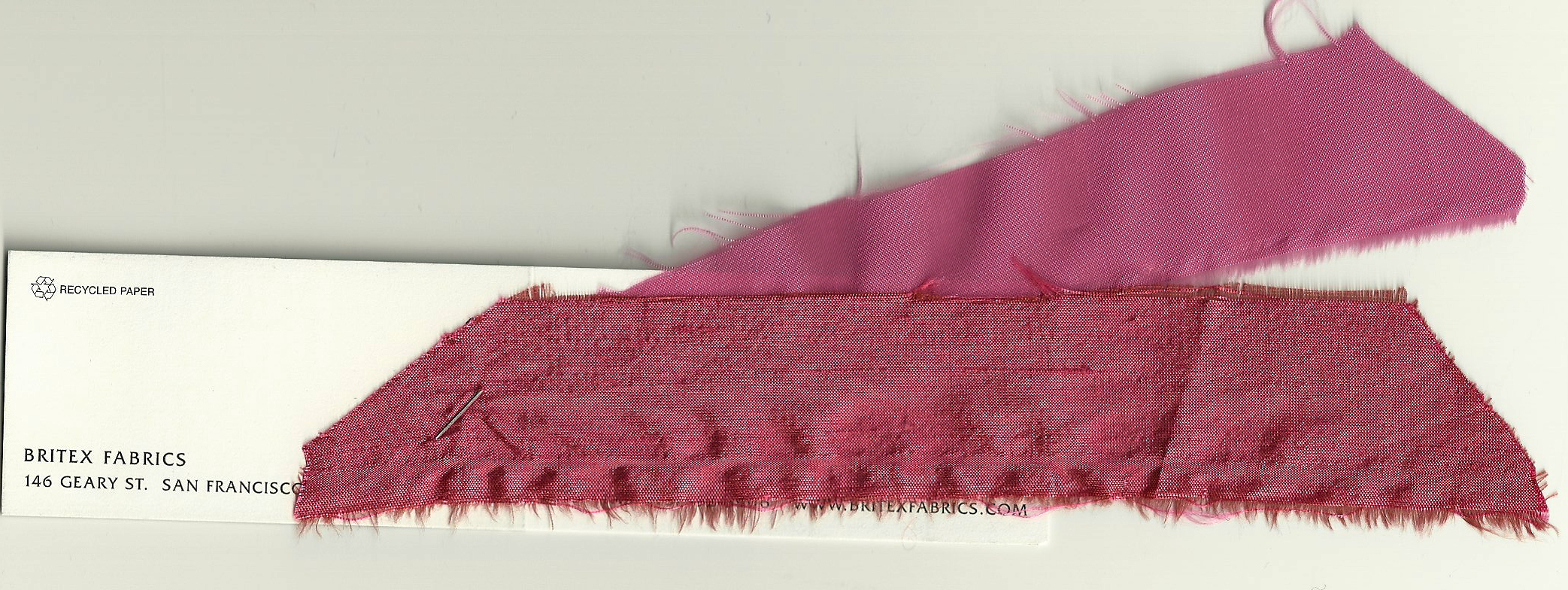
Next we selected a lining fabric, enough for a narrow skirt and the jacket.   Those of you who know Britex, know that the store is on 4 levels, so to accommodate the need to move between floors, I was provided this card with swatches of my newly selected fabrics attached.

The lining is the lighter-colored fabric.

Off I went to the third floor to find buttons.  Oh, the choices!    That little bit of sparkle in the wool – and the sheen in the silk shantung – seem custom made for buttons with a bit of sparkle, too.  I kind of felt like Goldilocks looking at the buttons which the savvy “button lady” pulled out for me.  Some were too frou-frou for me, some were too round (and fought with the angles in the weave), some were too sparkly…  but these were perfect!
When I actually sew these buttons onto the jacket, I promise I’ll have them on straight!

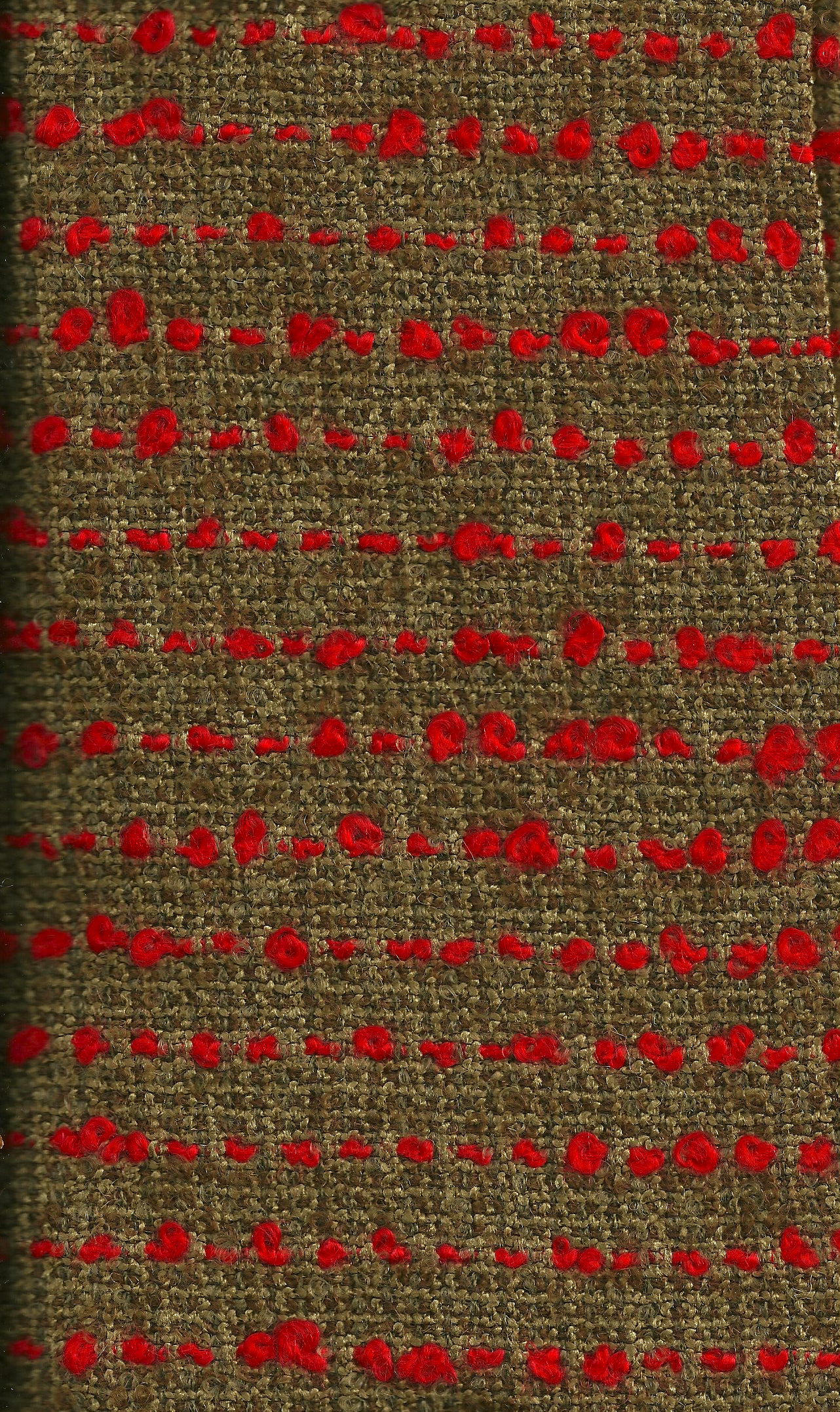
With my tasks accomplished, I decided to check out the remnants on the fourth floor, and took a quick look at the cottons on the second floor, but then I headed back down to the first floor to look at the woolens again.  Britex has a very large selection of wools suitable for “Chanel-type” jackets, including some actual Chanel fabrics.  I am trying to buy only what I can’t live without (which isn’t as limiting as it should be, unfortunately), so I carefully considered all the selections in front of me.  You can probably guess by now that I did indeed find one I deemed necessary for continued life, liberty, and the pursuit of happiness.  I can just imagine this wool in a jacket trimmed in an orangey-red something – all yet to be determined, which is, of course, part of the creative intrigue of sewing.

This fabric is very soft, perhaps due to a certain percentage of mohair wool in its composition.

So – what about the rest of the trip?  Lots of driving those great distances out West, lots of laughs, fun, and brews with husband and son, wonderful days at Crater Lake National Park in Oregon, hiking without a fabric store in sight.  When one is in such a place as Crater Lake, the great expanse and passage of time is ever in one’s presence.  However, I couldn’t help but think about another passage of time, this one personal: the last time I was at Crater Lake was in 1962 when I was twelve years old.  It just so happens that Britex Fabrics celebrated their tenth anniversary that very same year.  Happy 60th Birthday, Britex!

One more smile before closing hour!

15 Comments

Filed under Buttons - choosing the right ones, Chanel-type jackets, sewing in silk, Uncategorized, vintage Vogue Designer patterns, vintage Vogue patterns from the 1970s, woolens

Spending time on the Cape.

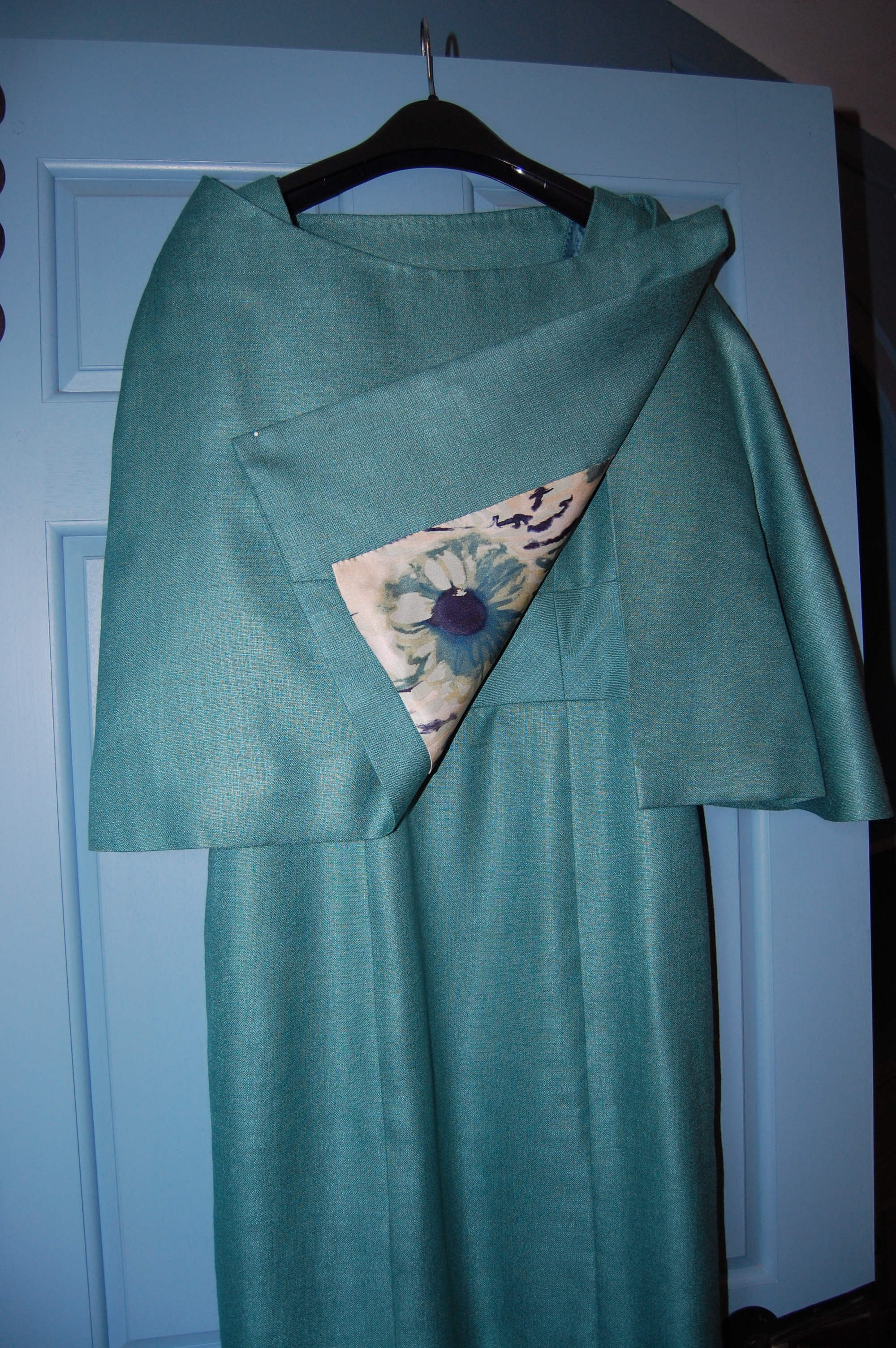
Doesn’t this sound like a wonderful vacation?  Picture billowy clouds reminiscent of  silk organza, gently undulating waves of turquoise hue, windswept flowers lining the landscape. . .   So where would one find this perfect setting?  I hope you’re not disappointed to learn that it all happened in my sewing room.  Yes, that’s correct – it has been wonderful, but this cape is the wearable kind, and I have definitely spent time on it!

The fabric in which I made my Couture dress was a length of linen I picked up last April.  When I found it, I did not yet have a pattern in mind for it so I thought I’d purchase enough (3 yards) to cover just about anything, and at 58” wide, I had a nice amount left over from my dress.  It just so happens that earlier in the Summer, I had found this pattern and added it to my collection:

Capes were in fashion in the 1970s and are again today!

I remembered this pattern from the 1970s and always liked the short cape, with its asymmetrical opening and clever folds of fabric resulting from that detail.

As I was working on my dress, I started to think about what else I could make from this lovely linen.  I didn’t particularly want to make a jacket, as I envisioned the dress as the focal point, but I did think it would be nice to have some kind of matching “wrap” for cool evenings. Well, the rest is quite obvious – I decided to make a short cape to go with my dress.

First I needed to find a silk lining fabric, which would compliment the linen.  I wanted a print of some sort to add some interest to the finished look.  I think I looked at every printed silk available on the internet!  I found lots of gorgeous designs, but only one which presented the possibility of both coordinating with the teal blue linen and introducing some other colors as well.  My old friend Britex Fabrics not only had this fabric, but  also had a vintage button among their extensive offerings, which looked like a good candidate for my needs.  I sent off for the button and swatch, and did indeed then order the silk charmeuse.

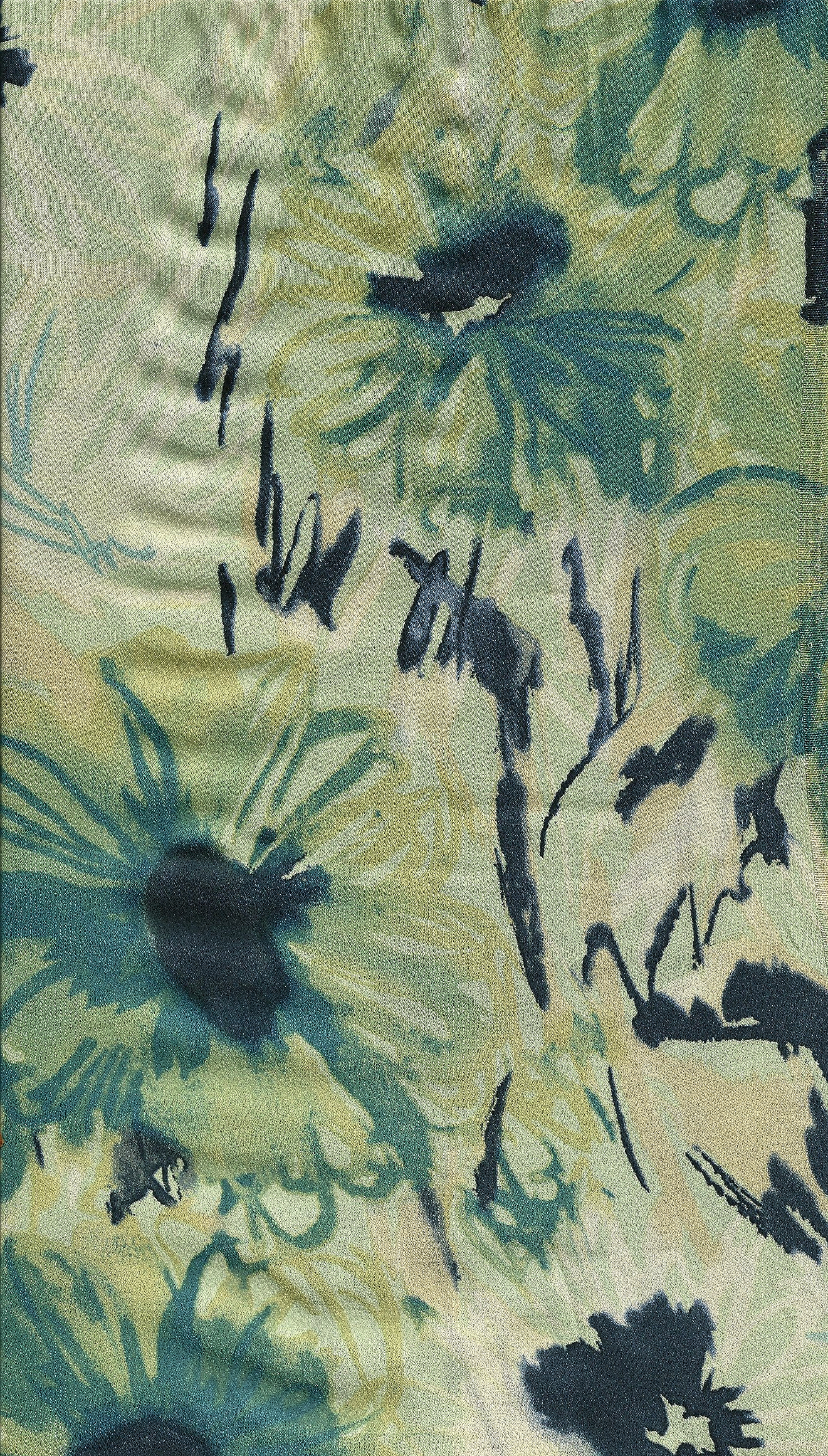
I like the abstract quality to this print.

Armed with my new-found couture techniques, I made a muslin pattern which helped me get the perfect fit over the shoulders (which is pretty much what a cape is all about).  I underlined the cape in that oh-so-wonderful silk organza, and added  interfacing, where required, of the same.  Some of this was a judgment call, as I determined were I could use couture features and where I had to follow the tailored construction of the cape.

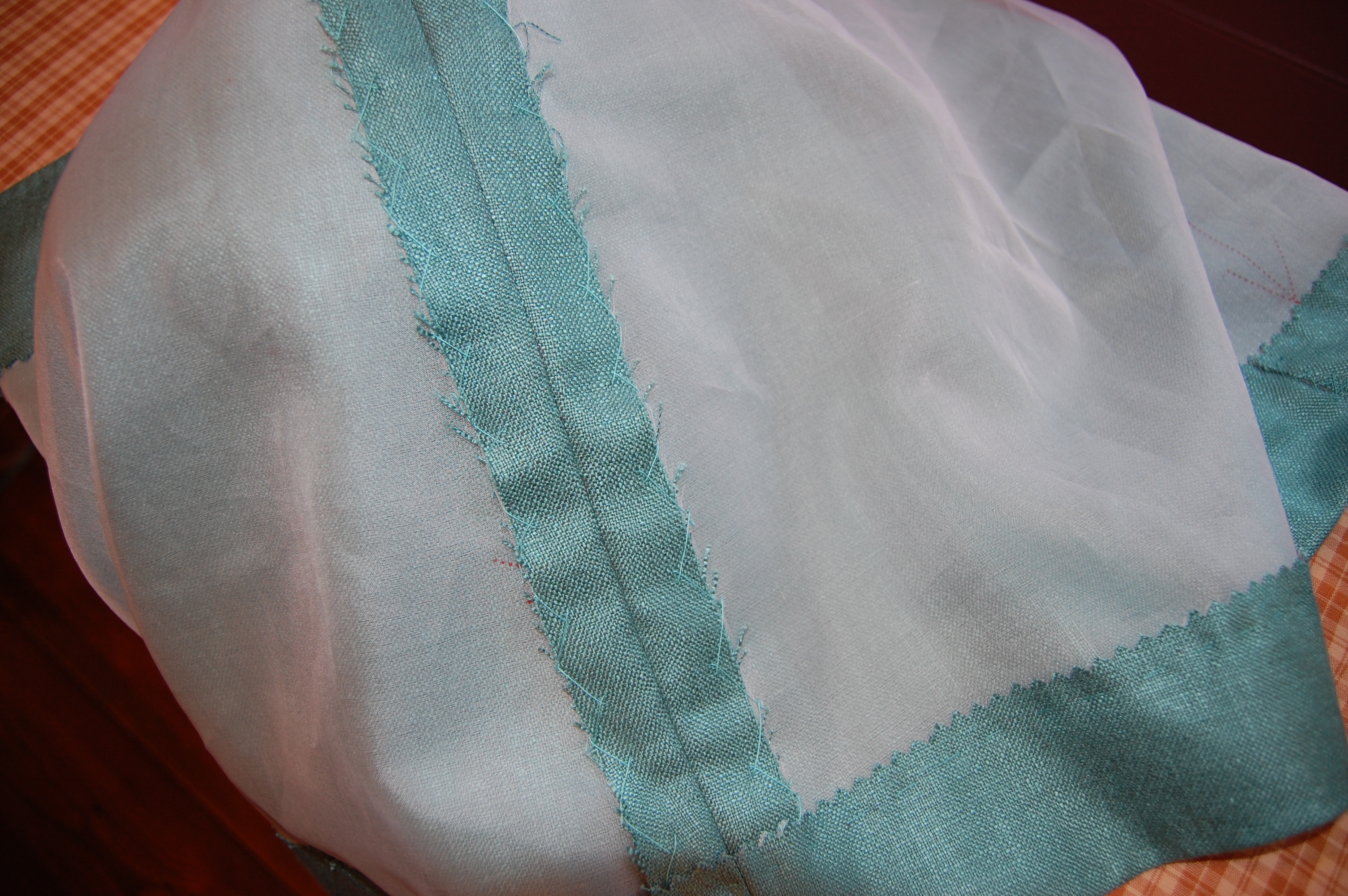
This shows the silk organza underlining, and the side seam, catch-stitched to it.

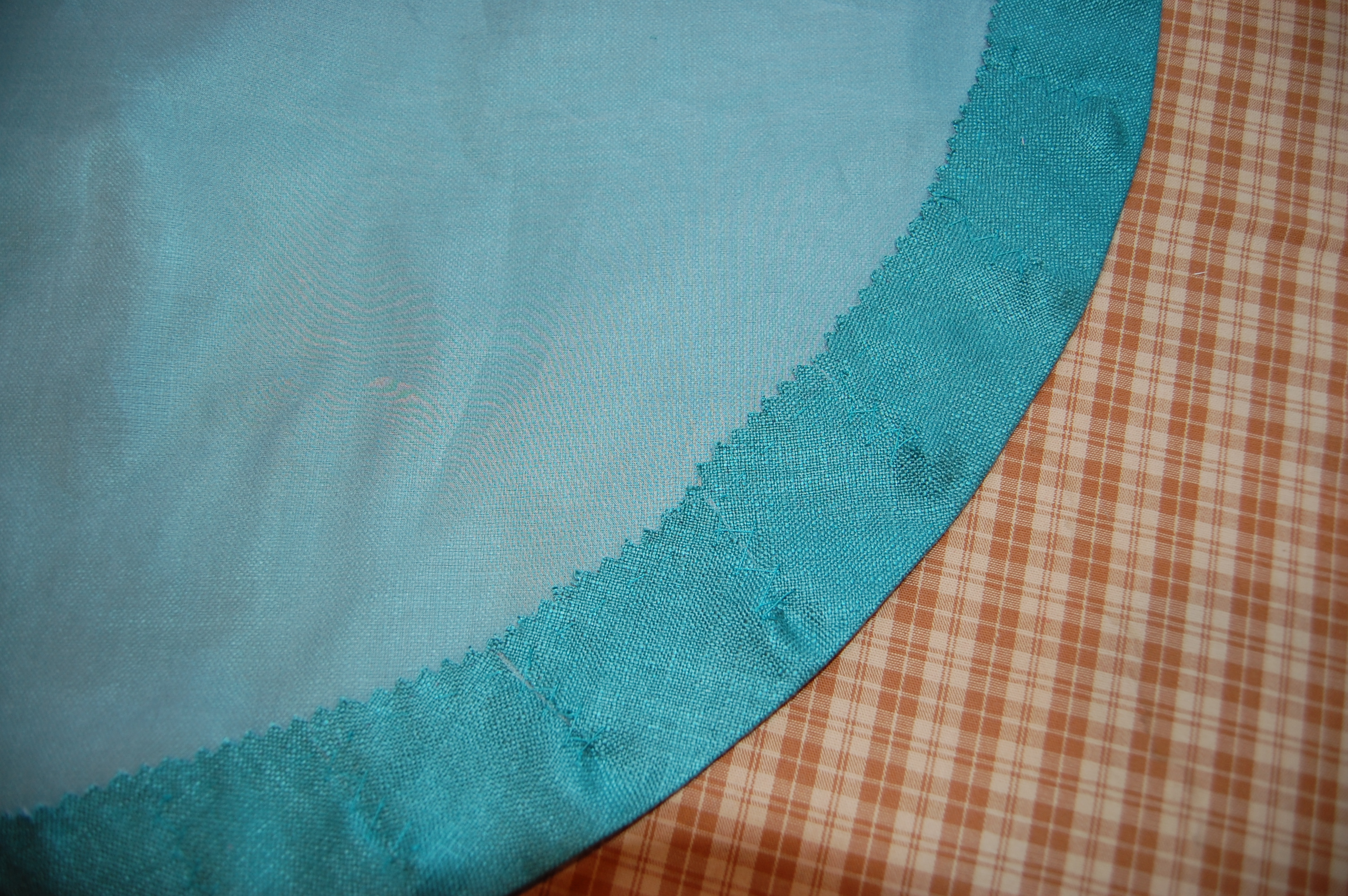
One of the hem techniques I learned in The Couture Dress class was helpful with this hem.

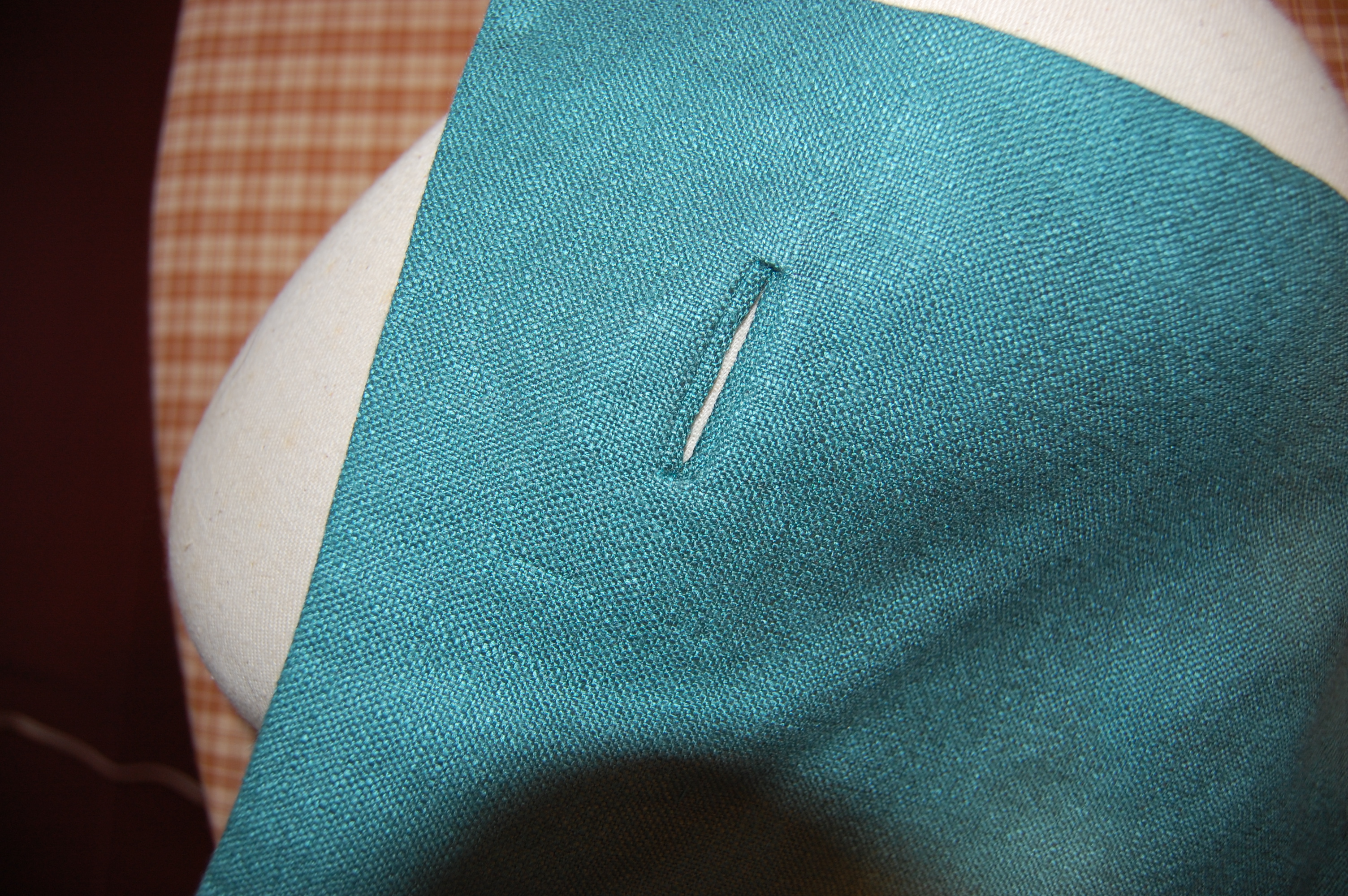
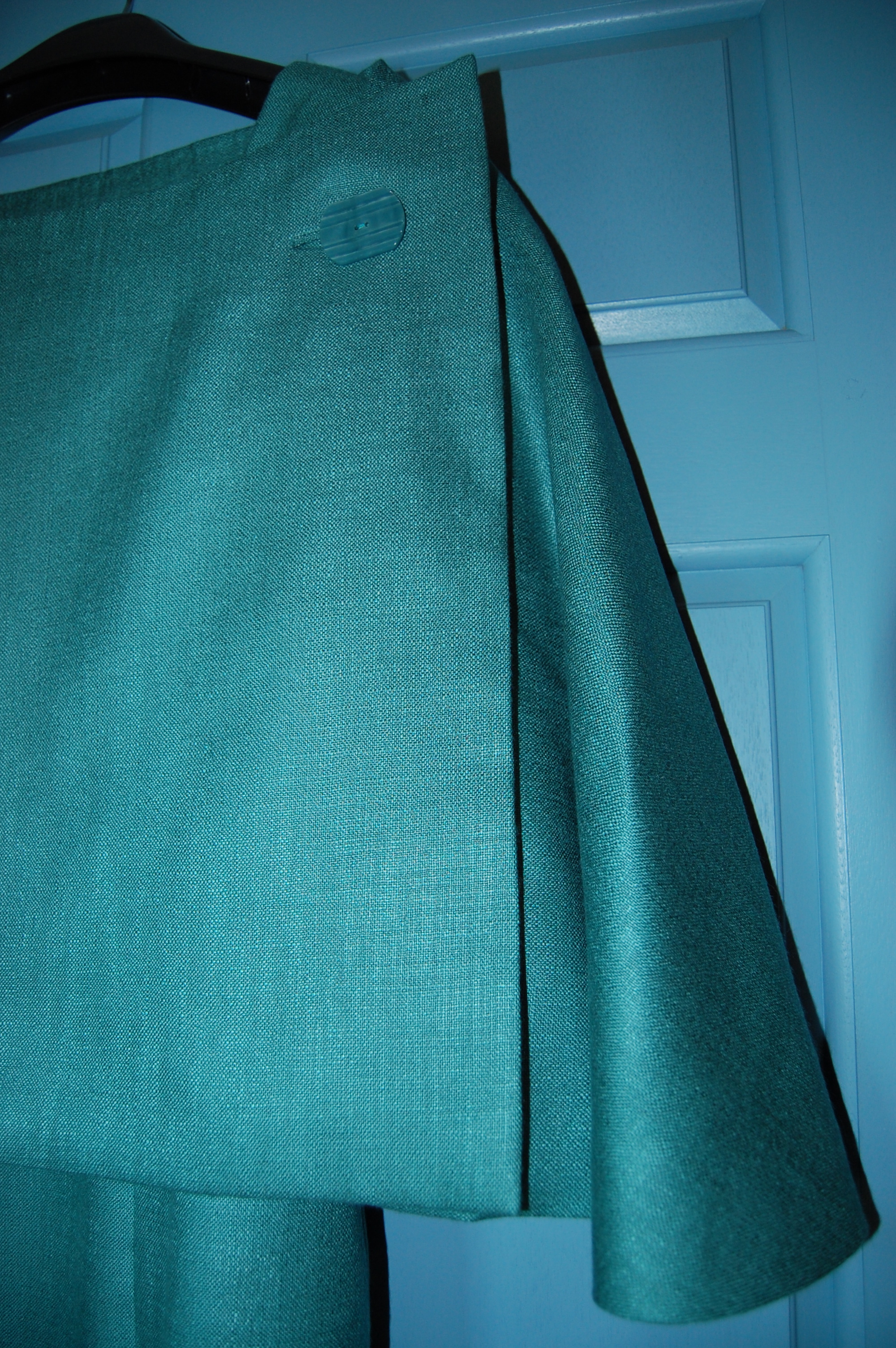
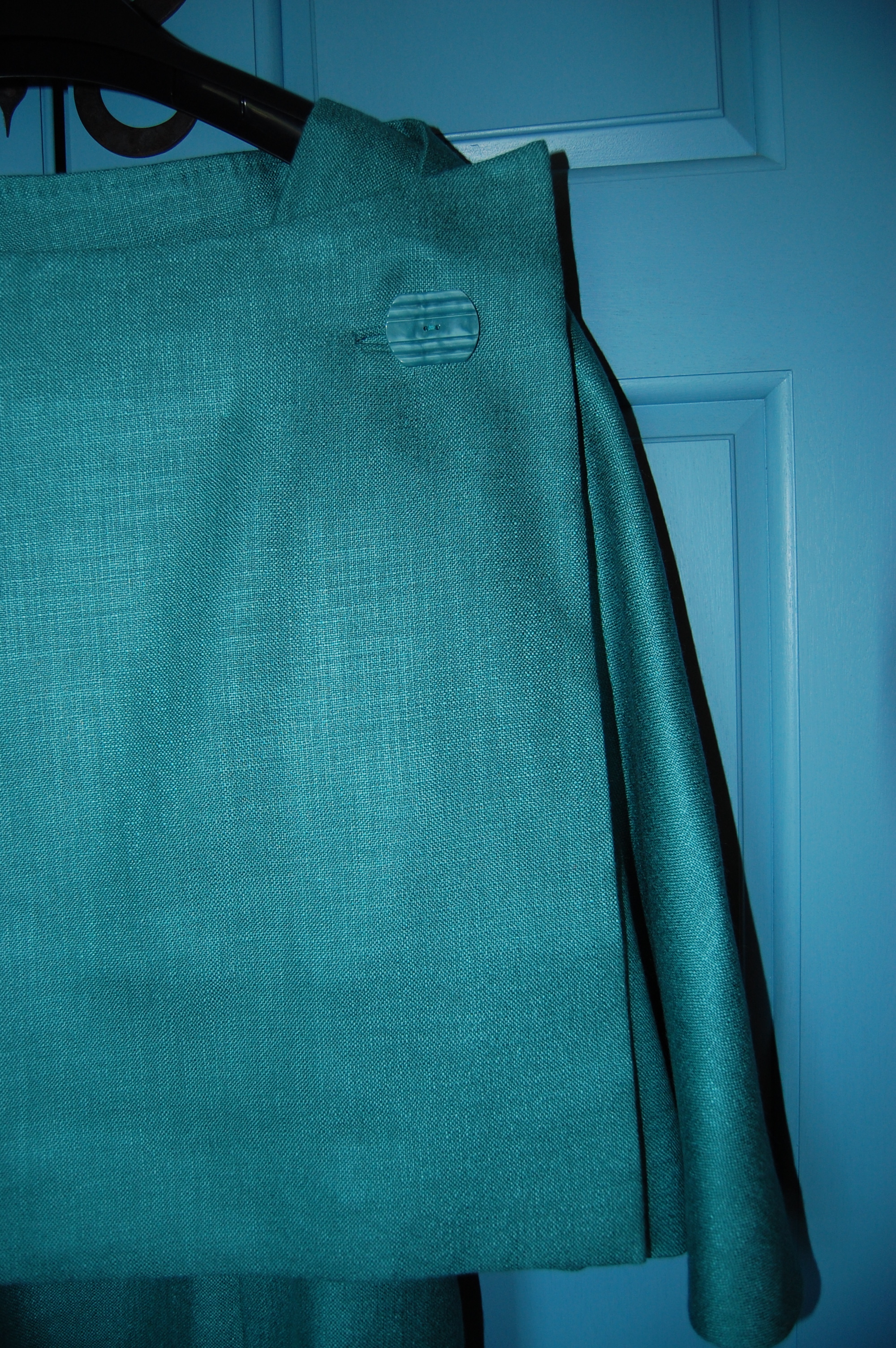
Call me crazy, but I just love to make bound buttonholes.  Although the pattern called for a 2-inch button, the one I found was 1½ inches (and I thought it a more refined size anyway).  That still calls for a large buttonhole!  I practiced first, then got to work on the real thing.

The finished bound buttonhole

And the finished underside of the buttonhole.

And the button…

I understitched the facings by hand with that beautiful prick stitch, and attached the lining with the fell stitch.

A peak inside the cape.

Here is the finished look (unfortunately on a hanger and not on me…).

Here is the cape shown over my Couture dress

With one corner pinned up to show the lining.

This view shows the lovely draping formed by the asymmetrical opening.

And one more view.

Well, my time on the Cape officially draws my summer sewing to a close.  Now it’s going to be all wools or wool blends and maybe some silks – and I can’t wait!  Let’s throw an extra blanket on the bed and dream of cool nights and crisp days filled with creative hours of sewing. . .

10 Comments

Filed under bound buttonholes, Buttons - choosing the right ones, Capes, couture construction, Linen, sewing in silk, Uncategorized, vintage buttons, vintage Vogue Designer patterns, vintage Vogue patterns from the 1970s

Flights of Fashion Fancy

Having returned just a couple of days ago from a short Summer trip, I still seem to have airplanes and airports on my mind.  Although it wasn’t practical to take any sewing (hand-work, that is) along with me, that doesn’t mean I have not been thinking sewing, fabrics, patterns and fashion.  In fact, while I am still physically (and mentally) working away on my “couture dress”, another part of my brain is thinking about Fall and Winter, getting my projects listed in some sort of order.  I’ve started envisioning them all lined up on the “runway” – kind of like planes all queued up and waiting for take-off.  Some big, some small, some already late, others sneaking in before their time!  Which ones will have to return to the gate?  Which ones will be smooth flying – and which ones will hit that proverbial turbulence?

After finishing my current Summer projects, I am thinking the first one to “take off” will be an addition to a suit I made last winter.  I have enough fabric left of this lovely checked wool to make an overblouse:

Paired with the suit skirt, an overblouse in this fabric will make a variation on the “little black dress” – just in two pieces instead of one.

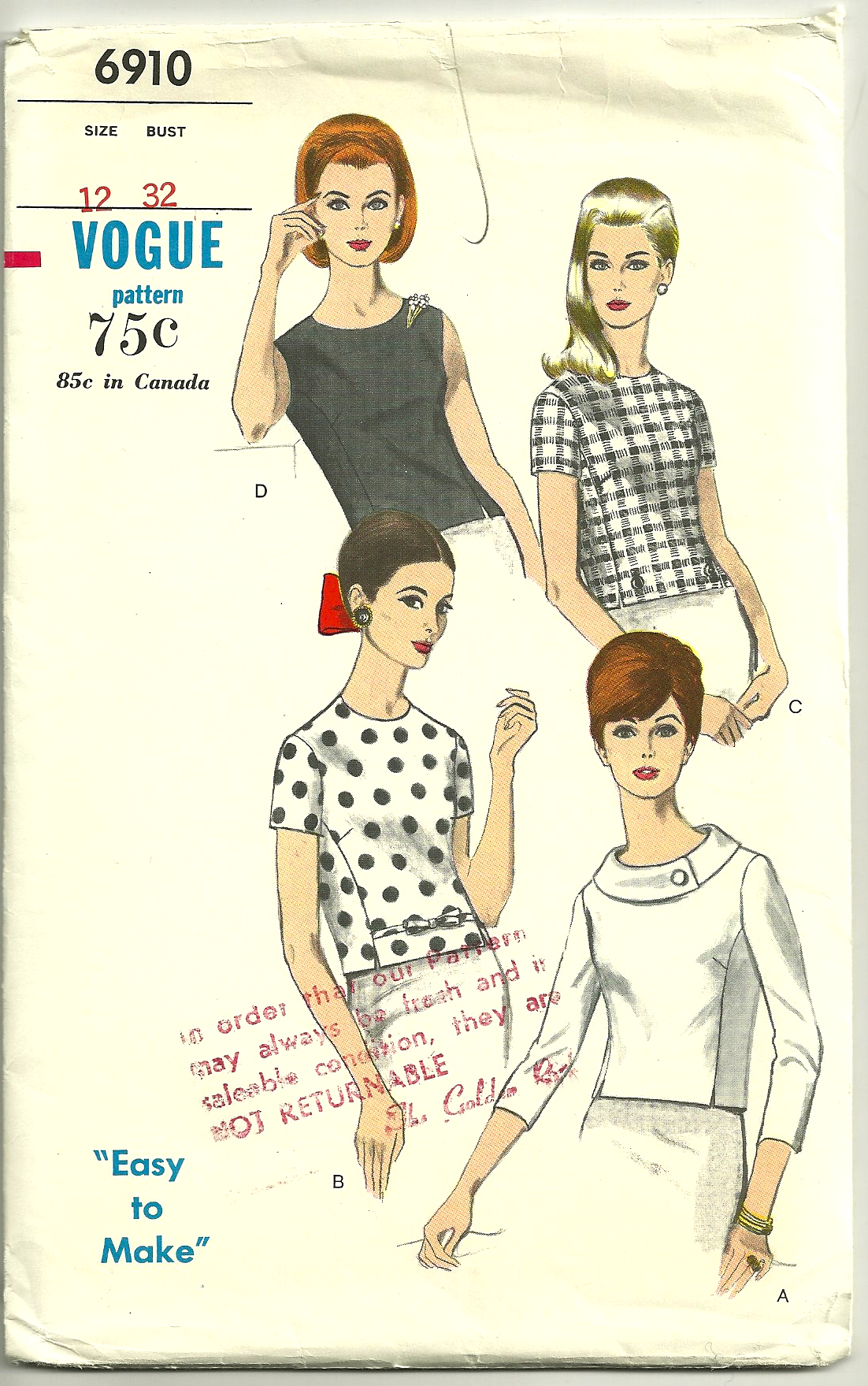
I recently found this pattern, view D, which I intend to use for this blouse.  I am so fond of the “Dior darts” which give a lovely silhouette to a bodice.

I’ll definitely make a muslin of this pattern to check the fit.

After that, I know I’ll be working on a dressy suit, which I need for a wedding and another event mid-Fall.  I found this wool at B and J Fabrics which I’m about to order   to use for the jacket.  I am still on the hunt for a slightly orchid-colored pink in light- weight wool or heavier silk to coordinate with it for the skirt.

This fabric, a wool/lurex blend, has a bit of sparkle to it.

I’ll be the first to admit that I love pink – and here is another one:

I have a lot of yardage of this fabric, so I have flexibility in choosing a pattern.

I’ve had this fabric for several years.  It is a wool/cotton blend with the perfect weight for a Fall dress.  However, I can’t decide on what style I should make it in:  shirtdress, sheath, tailored or not?  If I can’t decide, then it may just have to go to the back of the line.

This is a recent purchase from Britex Fabrics:

This is actually alpaca – and very, very soft!

I bought this fabric to be made up in this dress, view A, with the below-elbow length sleeves:

The length of this dress as shown on the envelope is very 1950’s. I’ll be making it in knee-length.

The back of the envelope shows the versatility of the belt, which can be included – or not.  Think of the endless possibilities with changing the belt on this dress, especially with a basic black and white herringbone weave:  it would look great with red, pink, orange, black, green, or even bright blue.  This pattern will give me more practice on the couture techniques I’ve been learning, too.

I love that the drawings include the handbags!

Finally, here is another fabric from Britex:

Another subtle windowpane, this one in navy with deep red and ivory intersecting lines.

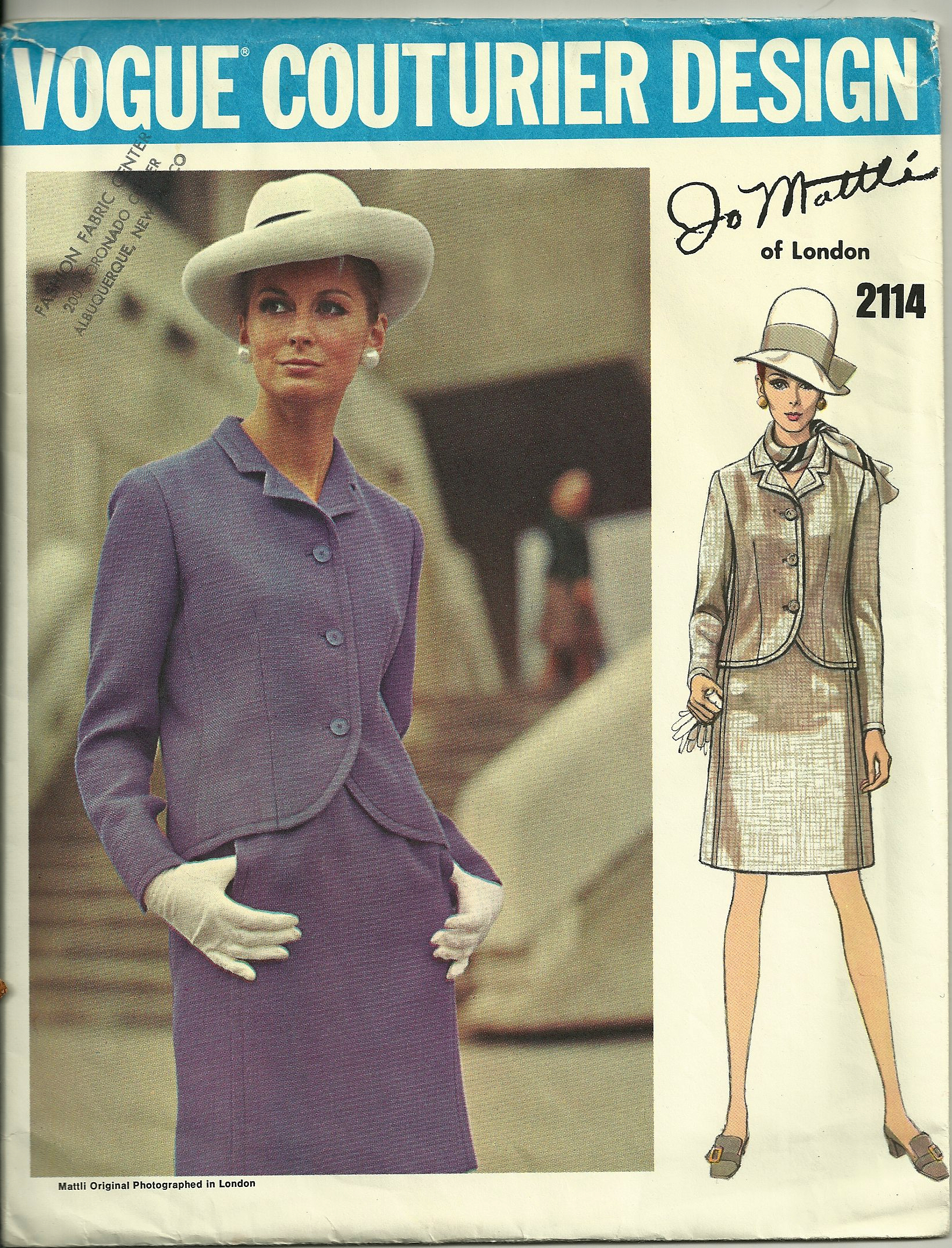
This is a pure cashmere wool which I purchased last year in the store.  There is no way to describe how soft and luscious this fabric is.  And here is the pattern I know I am going to use for it:

This pattern is circa 1970.

Well, if all I had to do between now and December is sew clothes, I might get most of this done.  However, interspersed amongst this fashion sewing will be  several “gift” sewing projects, which are going to sneak their little wings into line, along with holidays!  No matter – among other things, sewing encourages flexibility and, like flying, can take us to places of great adventure and quiet reflection.  No wonder I – and so many, many of you –  love to sew!

4 Comments

Filed under Dior darts, Uncategorized, vintage Vogue Designer patterns, vintage Vogue patterns from the 1950s, vintage Vogue patterns from the 1960s, vintage Vogue patterns from the 1970s, Vogue patterns

Parlez vous français?

Unfortunately I do not – yet.

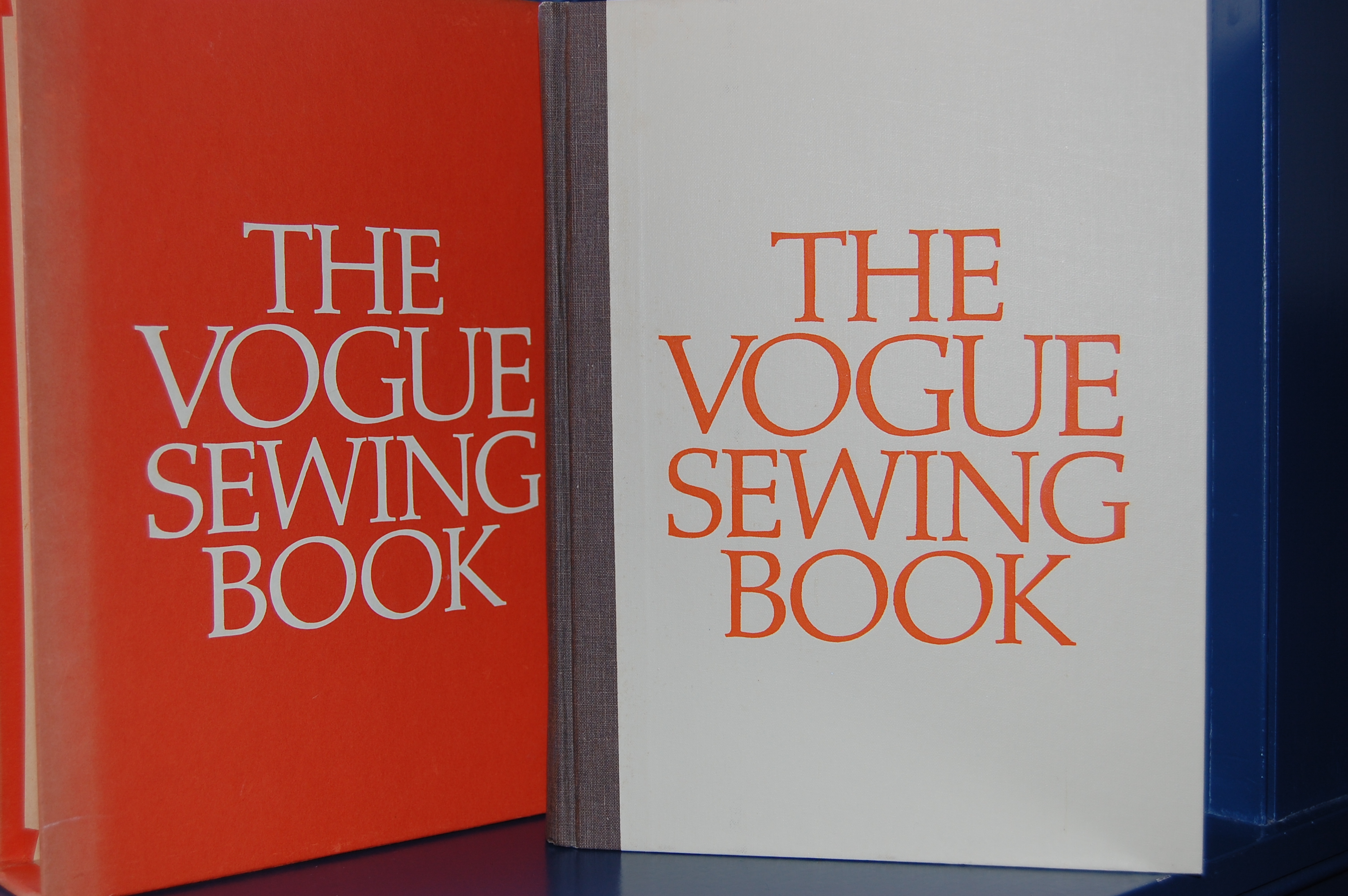
It is undeniable that French is the universal language of fine sewing.  I have found myself often going to my copy of The Vogue Sewing Book (copyright 1970 by Vogue Patterns, New York, New York) to check translations and pronunciations of certain French fashion terms in the list at the back of the book.

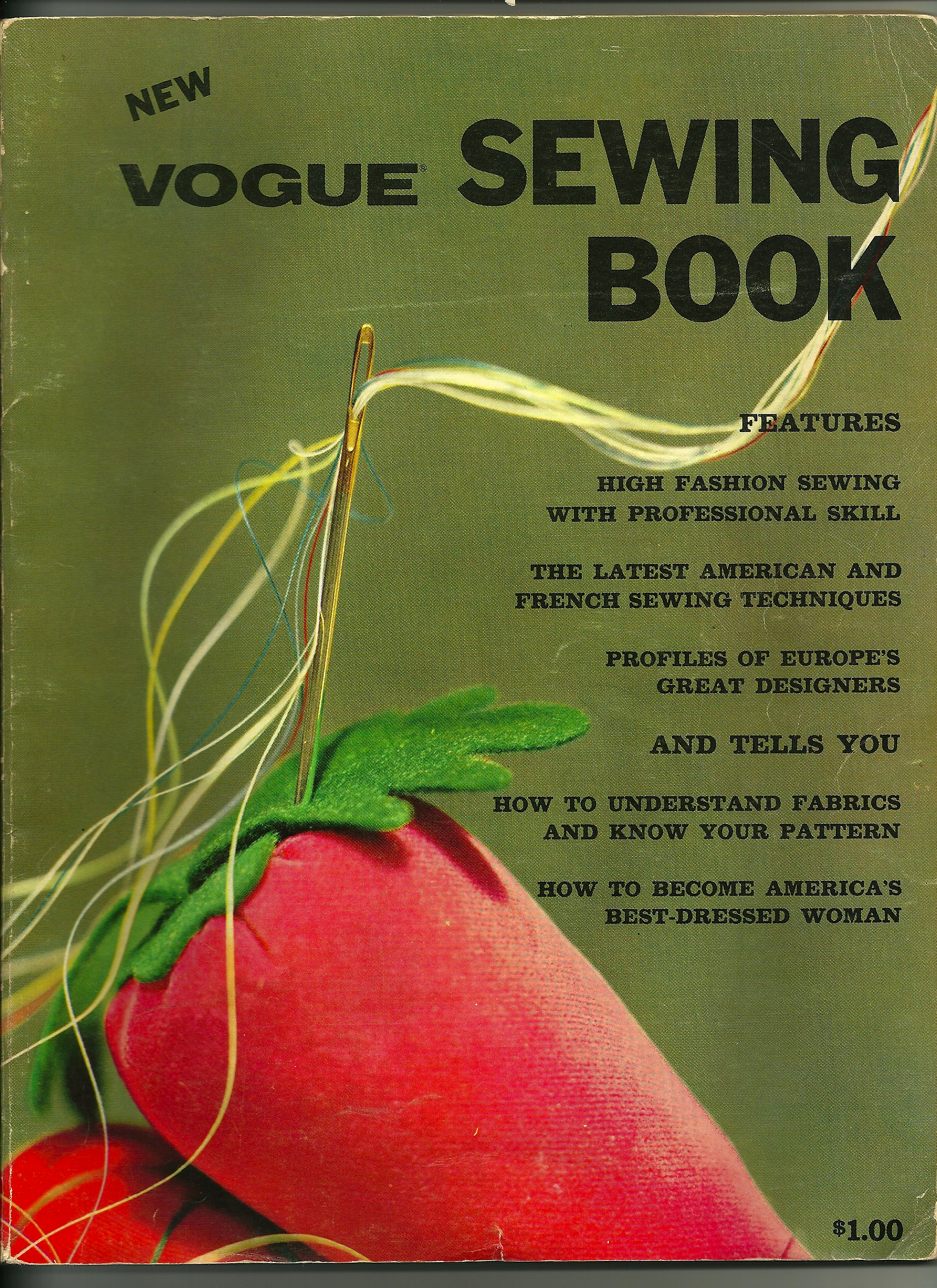
A few weeks ago I picked up a paperbound copy of this Vogue Sewing Book from 1963:

Notice the price on this paperback book: $1.00!

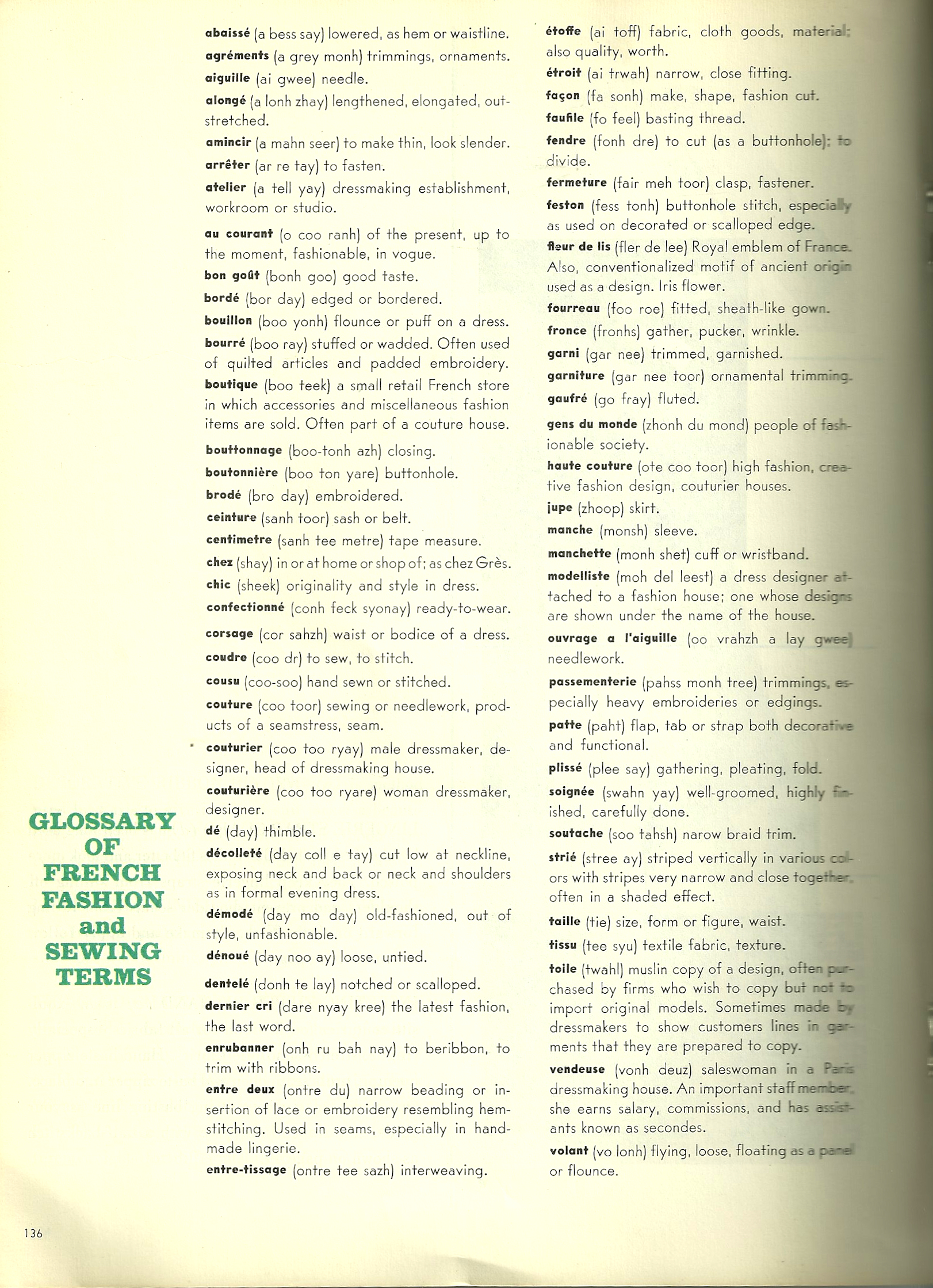
I was intrigued by the teasers on the front, such as “High Fashion Sewing with Professional Skill”, “Profiles of Europe’s Great Designers” and especially by “How to Become America’s Best-Dressed Woman.” (I figured that was one tutorial I did not want to miss!)  What I didn’t know was that the final page of this book is a “Glossary of French Fashion and Sewing Terms.”

One page – full of information…

I just assumed that this list would be the same as the one in the hardbound book I already owned.  Not so!  While there is certainly some crossover of terms (such as the common ones:  au courant, boutique, couturier and couturiere, chic, haute couture, vendeuse, volant, etc.), other terms appear on only one list, such as amincir (1963 book, meaning “to make thin, look slender”), gens du monde (1963 book, meaning “people of fashionable society”), and chemise (1970 book, meaning “blouse or style with manshirt details”).  At least one term is two variations on the same meaning – and very much in our vocabulary today:  confectionne (1963 book, meaning “ready-to-wear”) and prêt a porter (1970 book, meaning “ready to wear”, but with this addition: “more current than ‘confection’”).

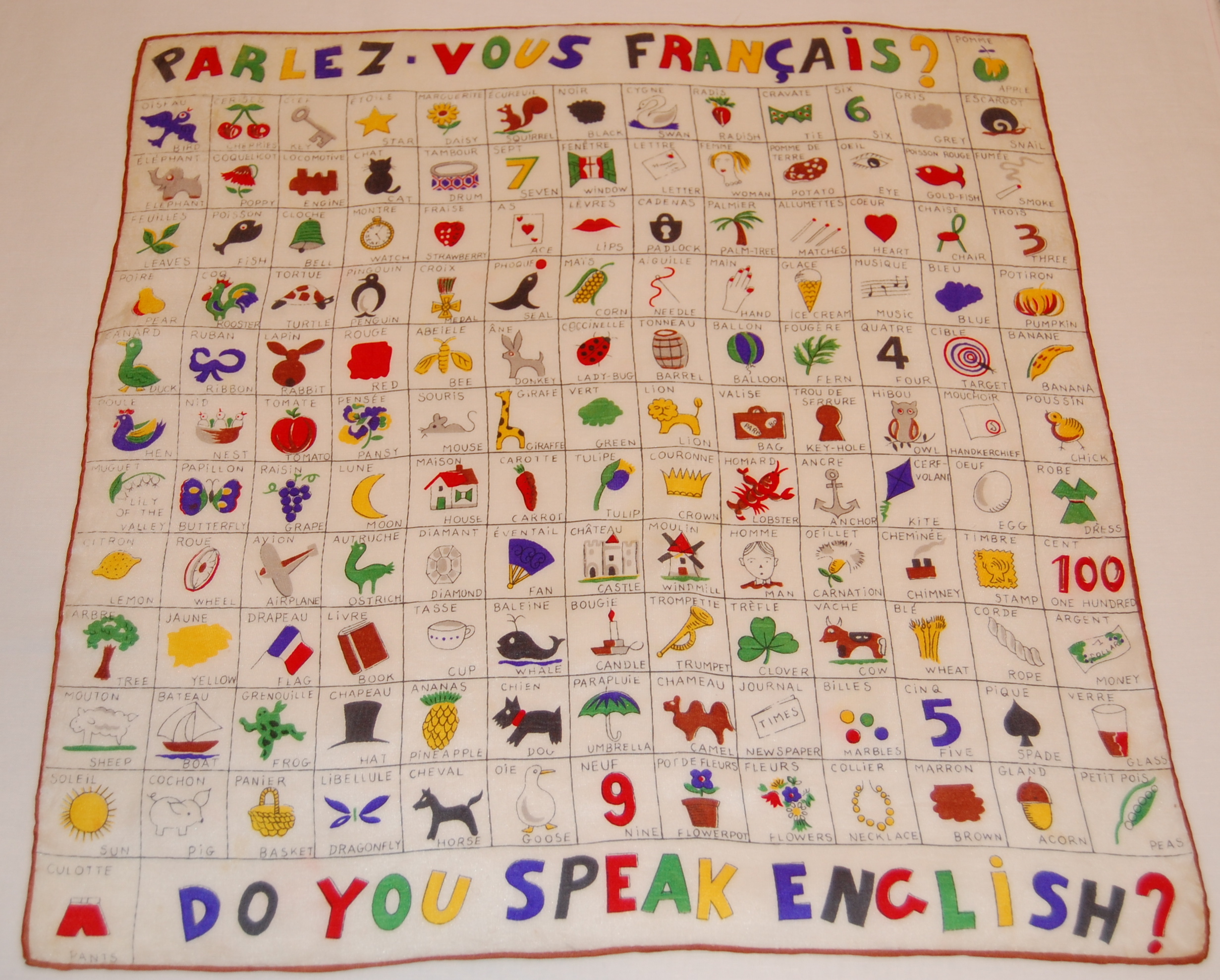
I like to think that I began my “French lessons” last summer, when I purchased this silk neck scarf from a vendor at The Vintage Fashion and Textile Show in Sturbridge, Massachusetts.  (I blogged about this fun day with my daughter back in January):

French for beginners!

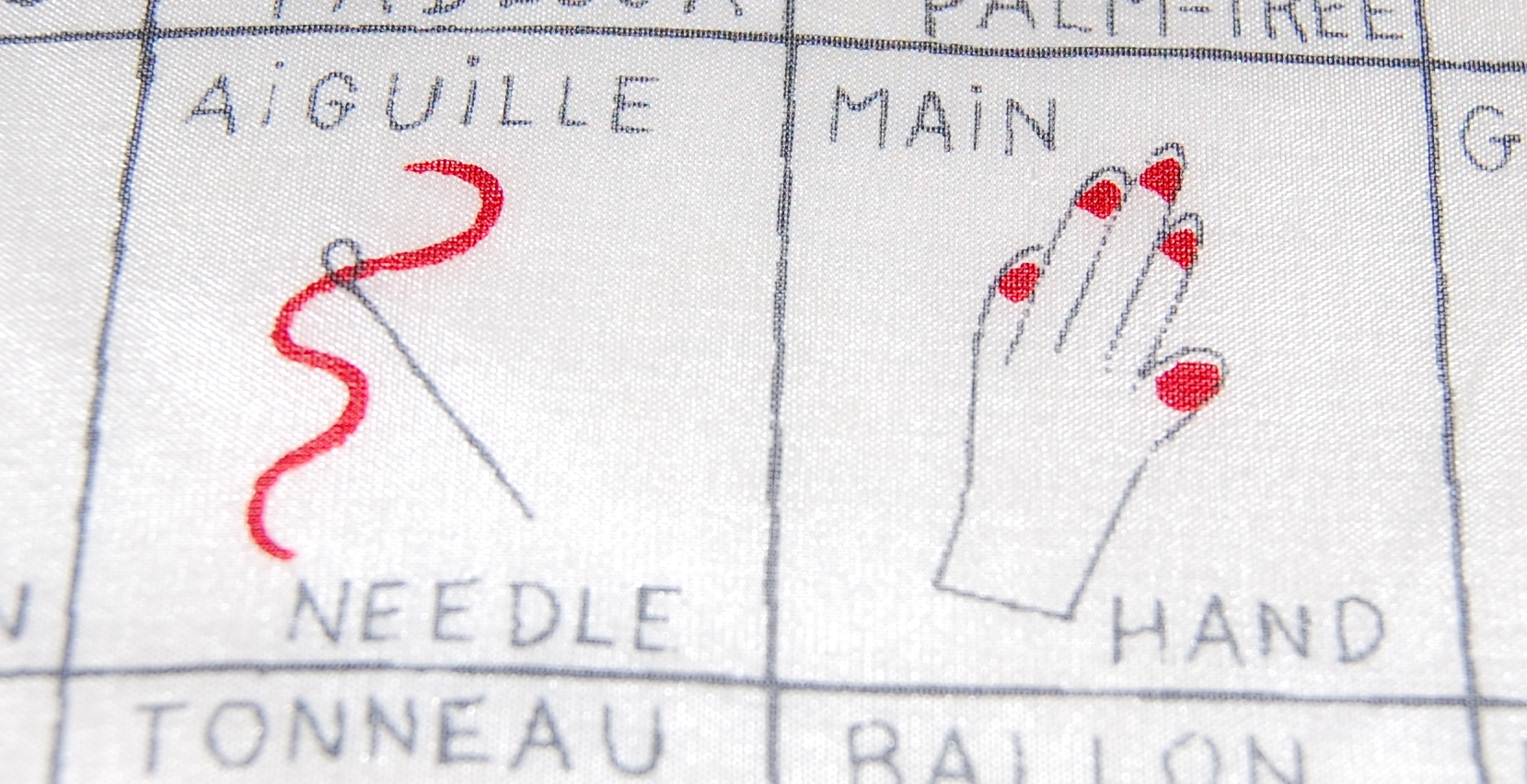
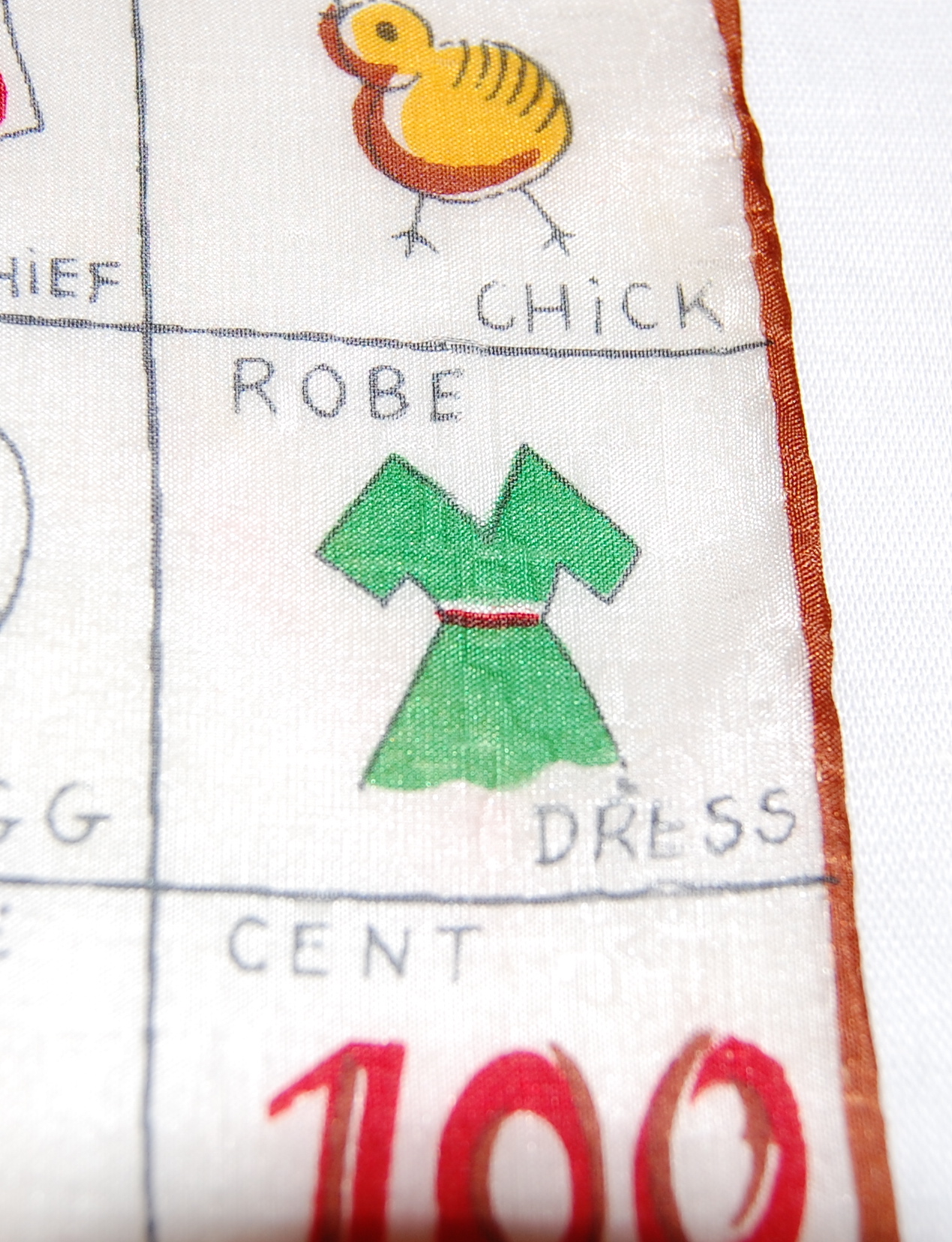
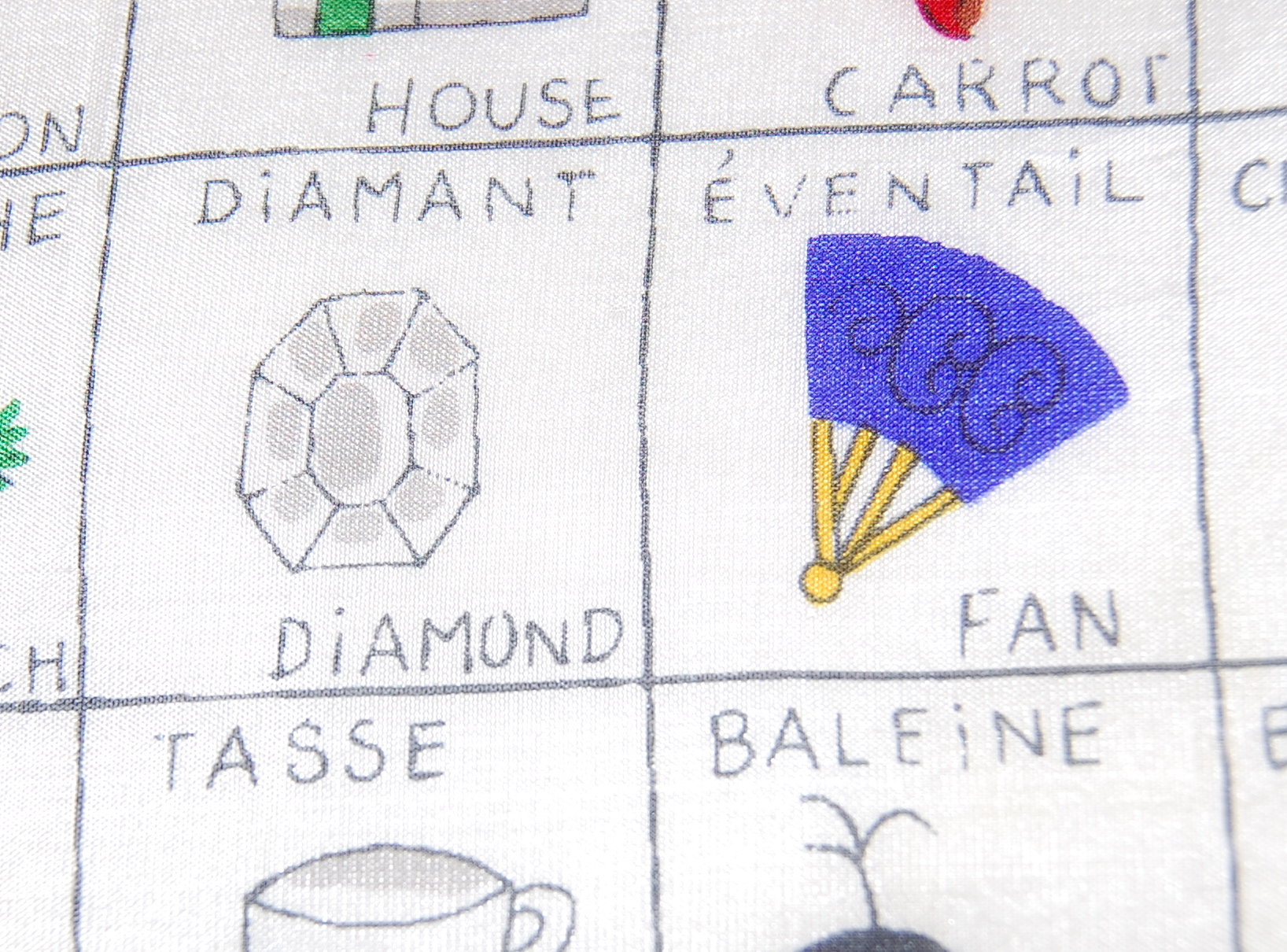
Of course, this scarf has its own share of fashion and sewing terms featured on it:

It’s quite appropriate that the needle and the hand are side by side.

A stylish green dress.

A diamond and a fan to complete your outfit!

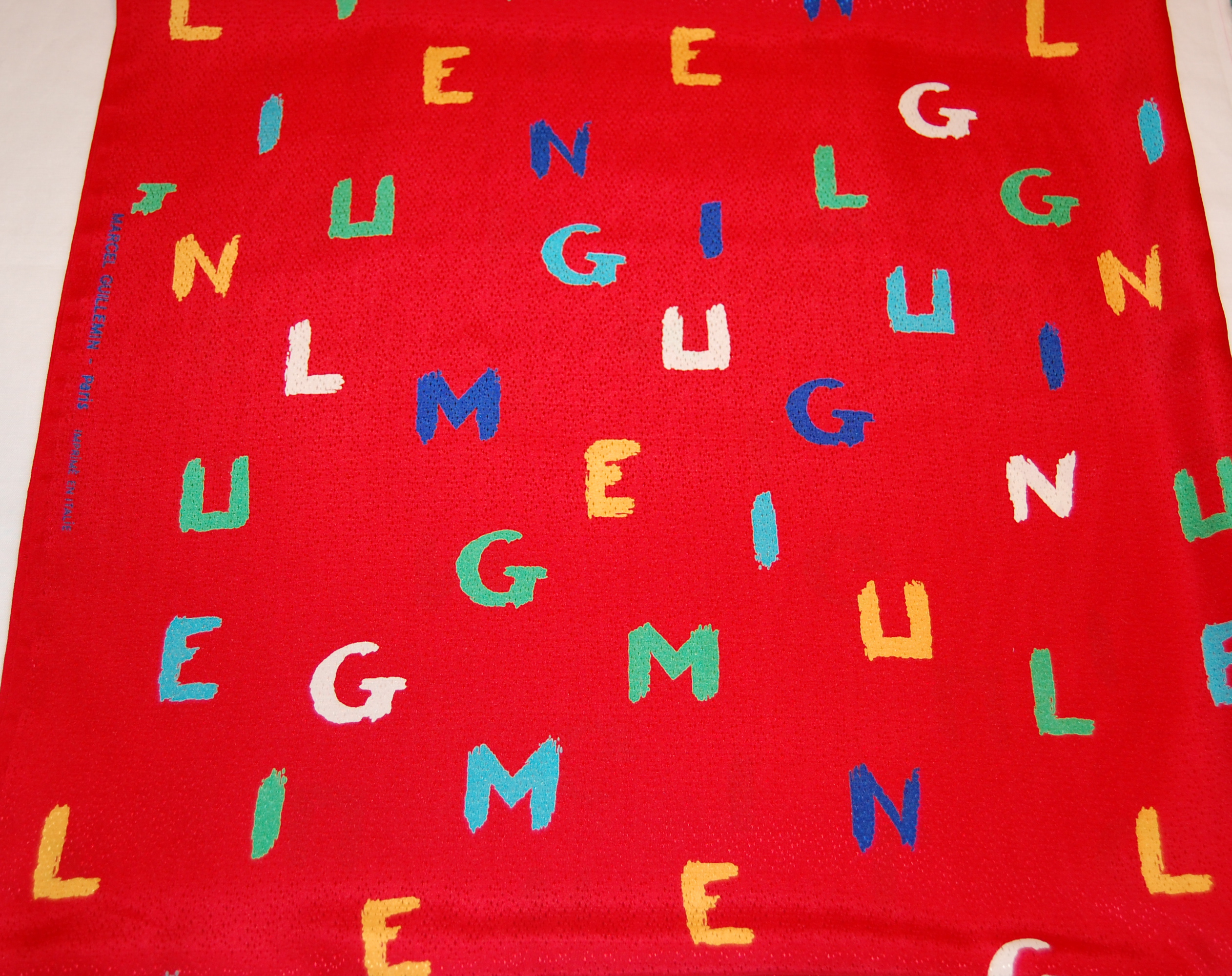
I guess I must be attracted to alphabet-related textiles –  like this one, which I purchased online from Britex last Fall:

A lustrous crepe de chine.

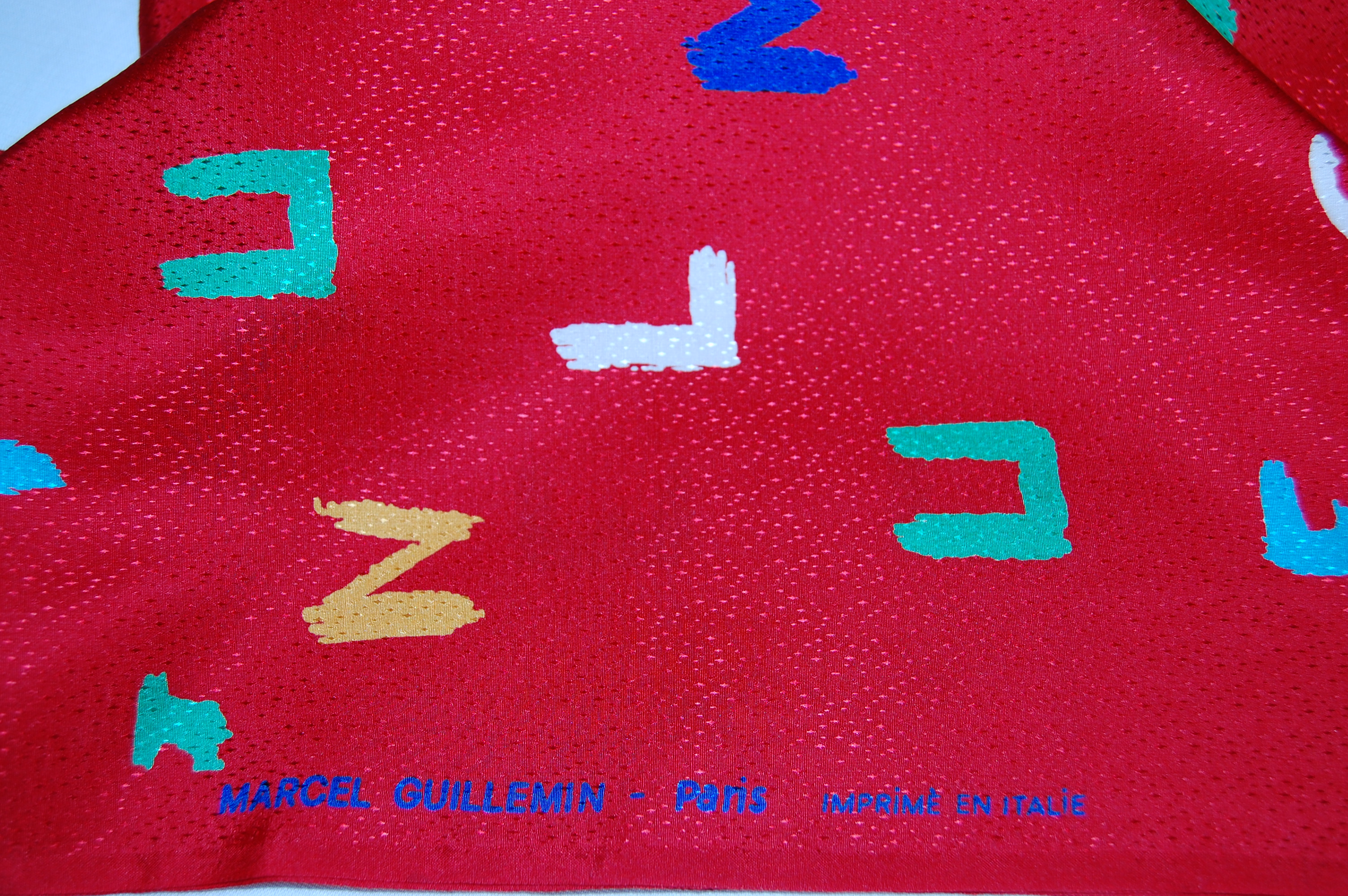
The tell-tale selvedge edge.

A design by the house (“chez” in French!) of Marcel Guillemin, Paris, it very subtly spells out that name in the letters.  I have two yards of this beautiful fabric, and I keep seeing it as the lining in a Chanel-type jacket…

It is plans like this and some of those beautiful French fashion/sewing terms that help to inspire me to become a better dressmaker.  Something else, too, is inspiring me to dare to think of myself as being my own “couturiere”: my enrollment and active participation in The Couture Dress, on online Craftsy course taught by Susan Khalje.   I am currently working on my muslin (also known as “toile”) for my version of the class-suggested “fourreau” (fitted or semi-fitted, sheath-like dress).   I may not be thinking in French yet, but I am definitely dreaming in it!

2 Comments

Filed under Scarves, sewing in silk, Uncategorized, vintage Vogue patterns from the 1960s, vintage Vogue patterns from the 1970s

Chance of Sprinkles

Whatever possessed me to decide to make a coat during this hot, hot Summer?

Actually, I have a (somewhat logical) answer to that question!  For starters, it’s a raincoat.   And how I came to sew a raincoat is a good example of what keeps the wheels in my head turning!

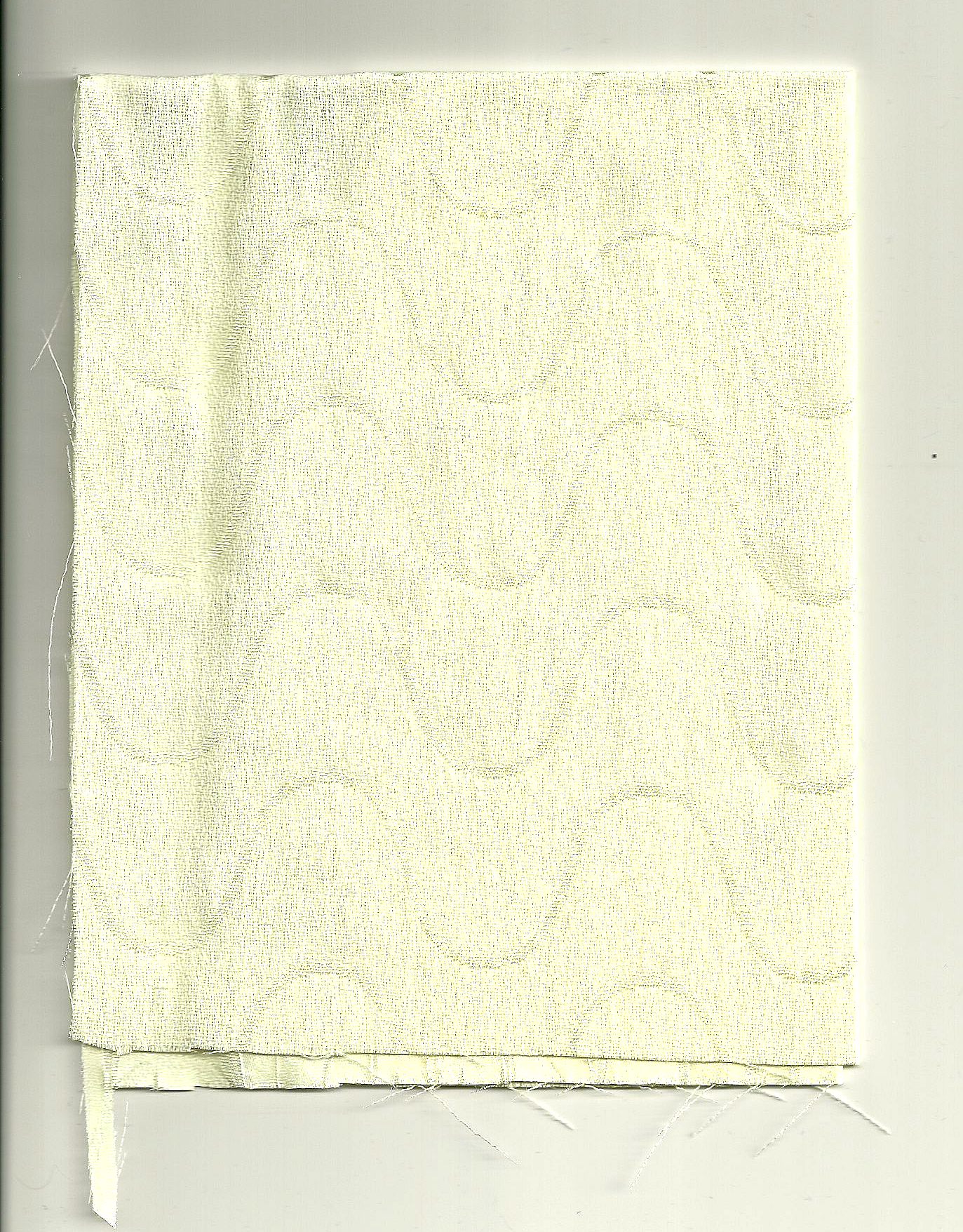
While perusing the website for Britex Fabrics last Summer, I came across its offerings of rainwear fabrics.  Just out of curiosity, I took a look at them, and I was immediately smitten with the “French Winter White Water-Resistant Rainwear Fabric”.

The woven “wave” design in this fabric really caught my attention.

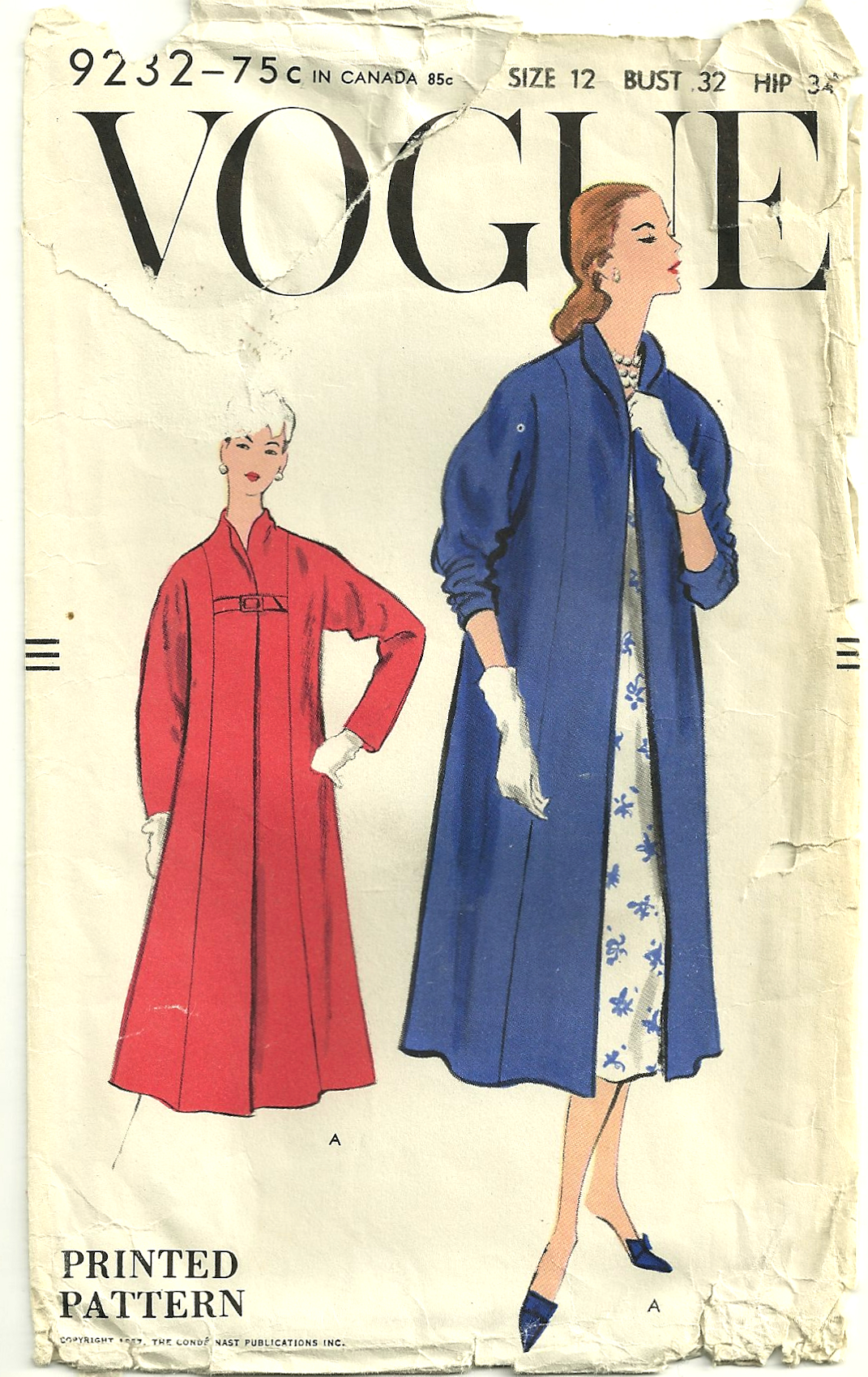
I sent off for a swatch, which confirmed for me the graceful woven design and lovely creamy color inherent in this fabric.  A subsequent trip to California gave me the opportunity to see the fabric in person, and I decided it was time to “commit”!  I had frequently felt the need for a “dressy” raincoat, so I thought, “Why not make one?”  I also knew I had the perfect pattern  – this “swing” coat design from 1957.

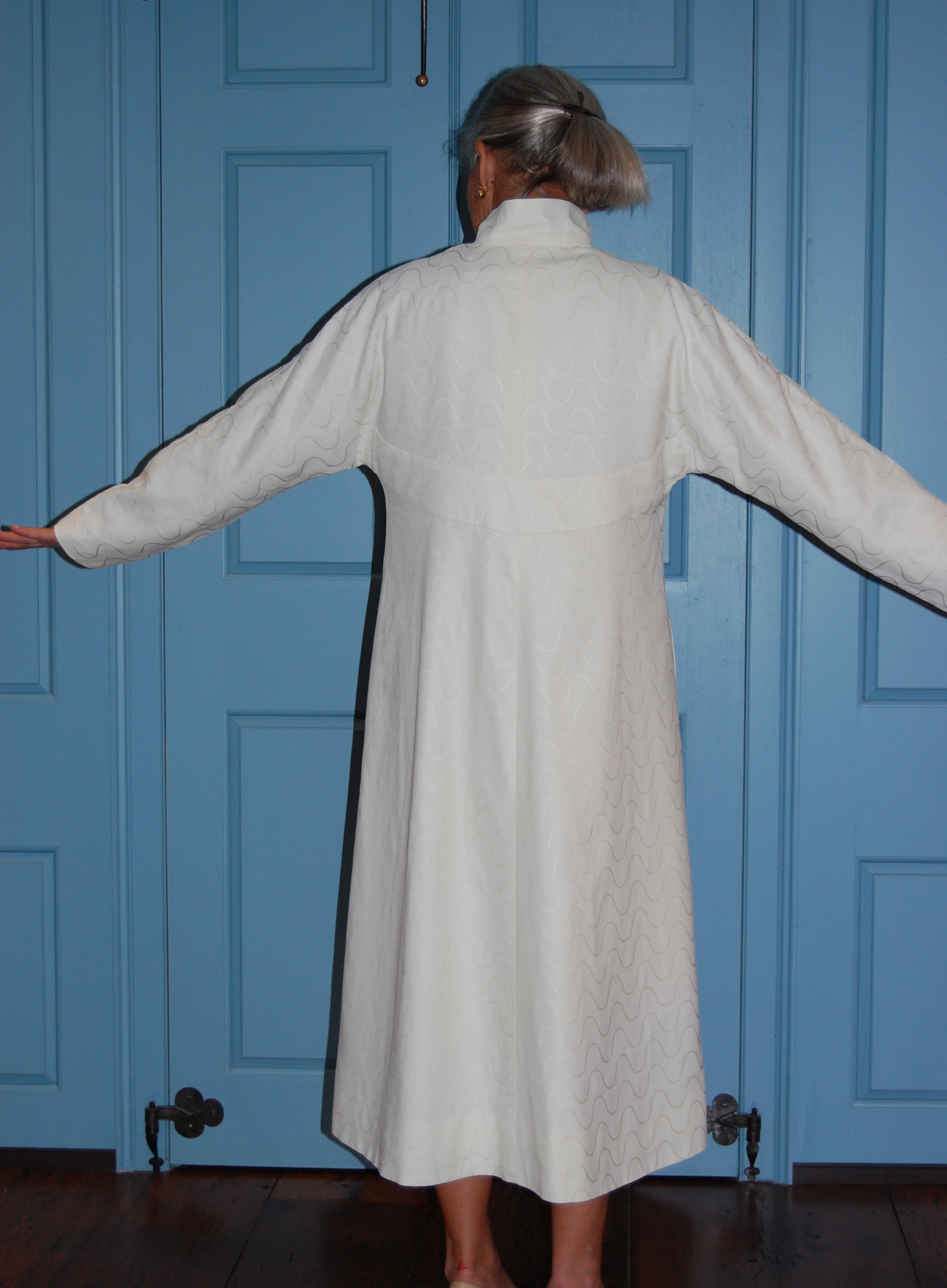
I remember swing coats from my childhood – and now I have one!

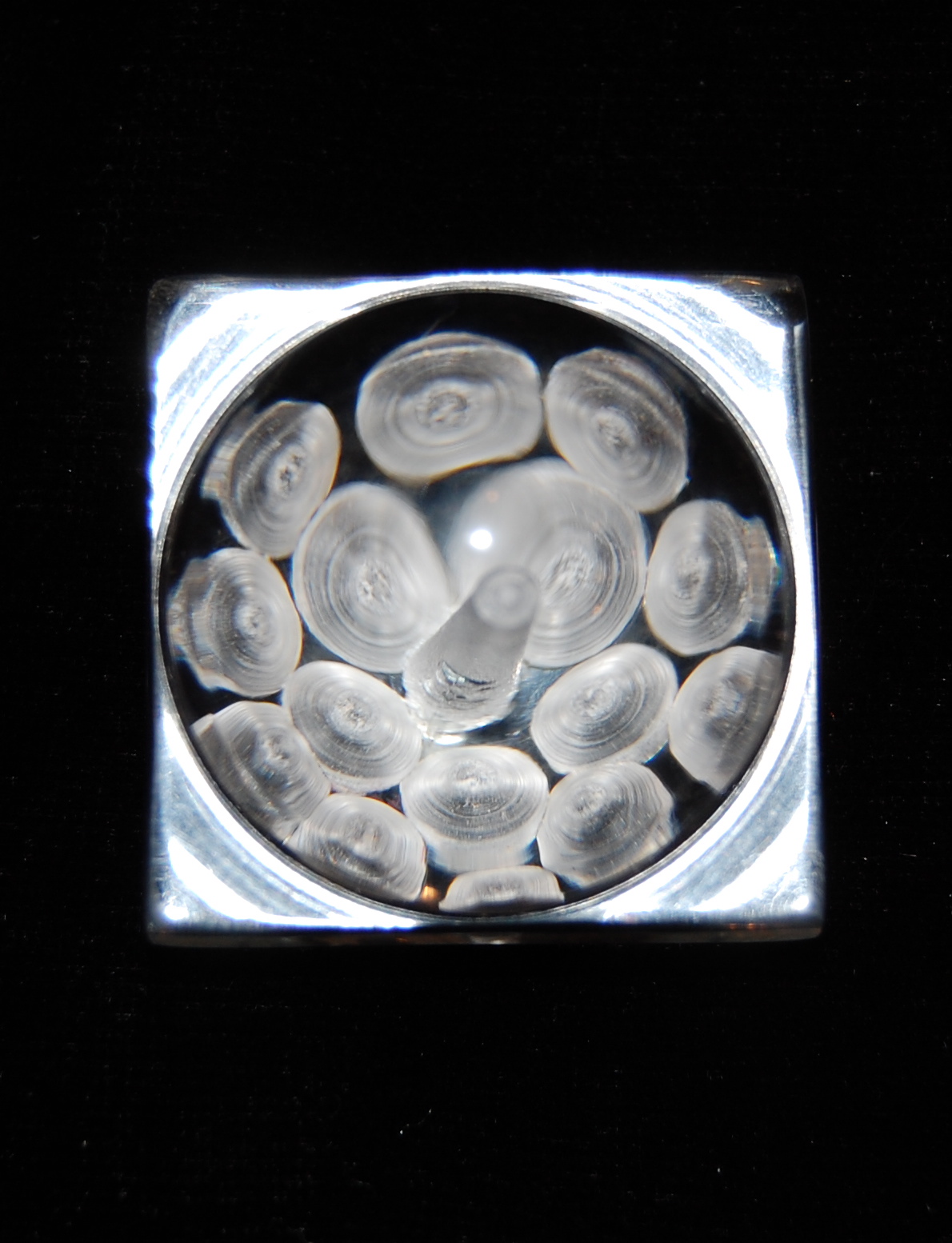
I figured the kimono sleeves and the loose fit would be great for wearing over  dresses or suits, and the collar can be worn turned up or folded down, depending on the inclement conditions!  Well, it only took a year to get to it, which I decided was long enough.  Oh yes –  I had one more incentive to “get to it”. When my friend, Nancy C. opened up her family’s button box for me to pick out some treasures, I spied this beautiful single glass button:

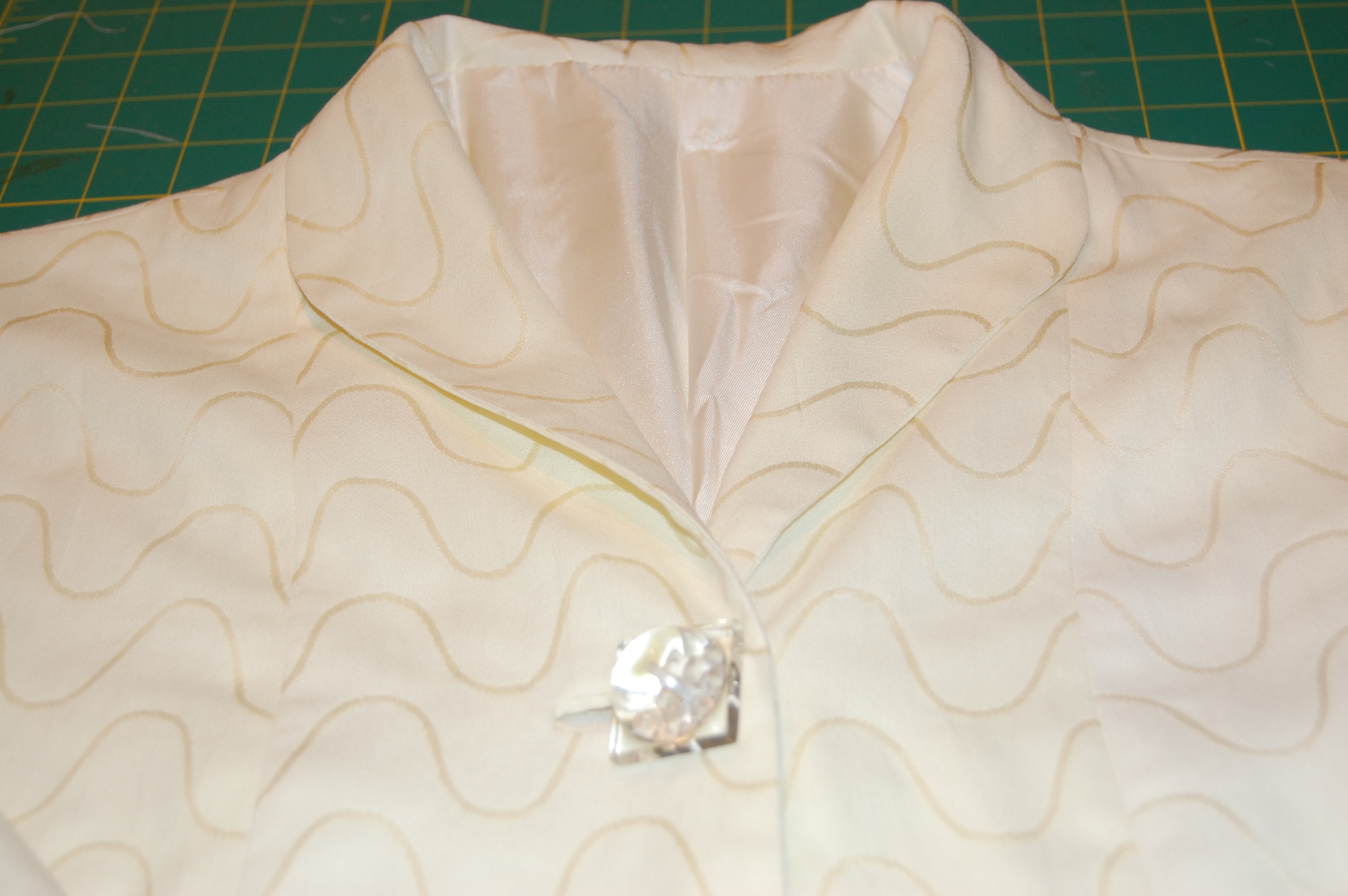
I placed this button on a piece of black velvet so that the design would show up. It is a little more than an inch square in size.

The design in it reminded me of raindrops – perfect for a dressy raincoat, and, I thought, a perfect complement to the fabric, already in my possession.

Of course, every pattern and project seems to demand certain changes or adaptations, and the count for this one stands at four:

1)   I took a little fullness out of the front side panels.  When I made a muslin mock-up of the pattern, it just seemed a little too full for my frame.

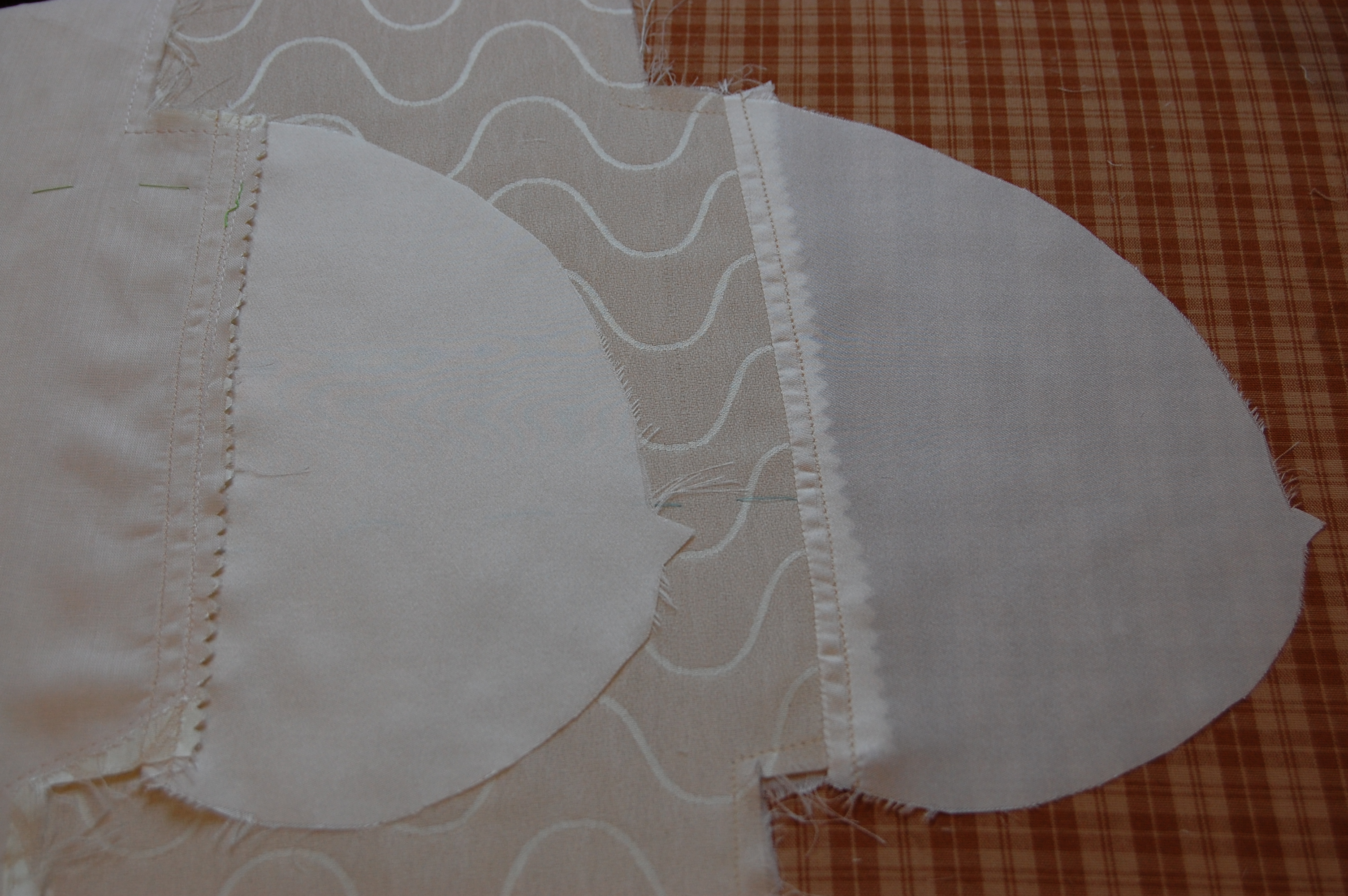
2)   I added pockets to the side seams.  I can’t imagine any coat without pockets, but a lot of the vintage styles (dresses and coats) did not have them.

Here is one of the pockets under construction.

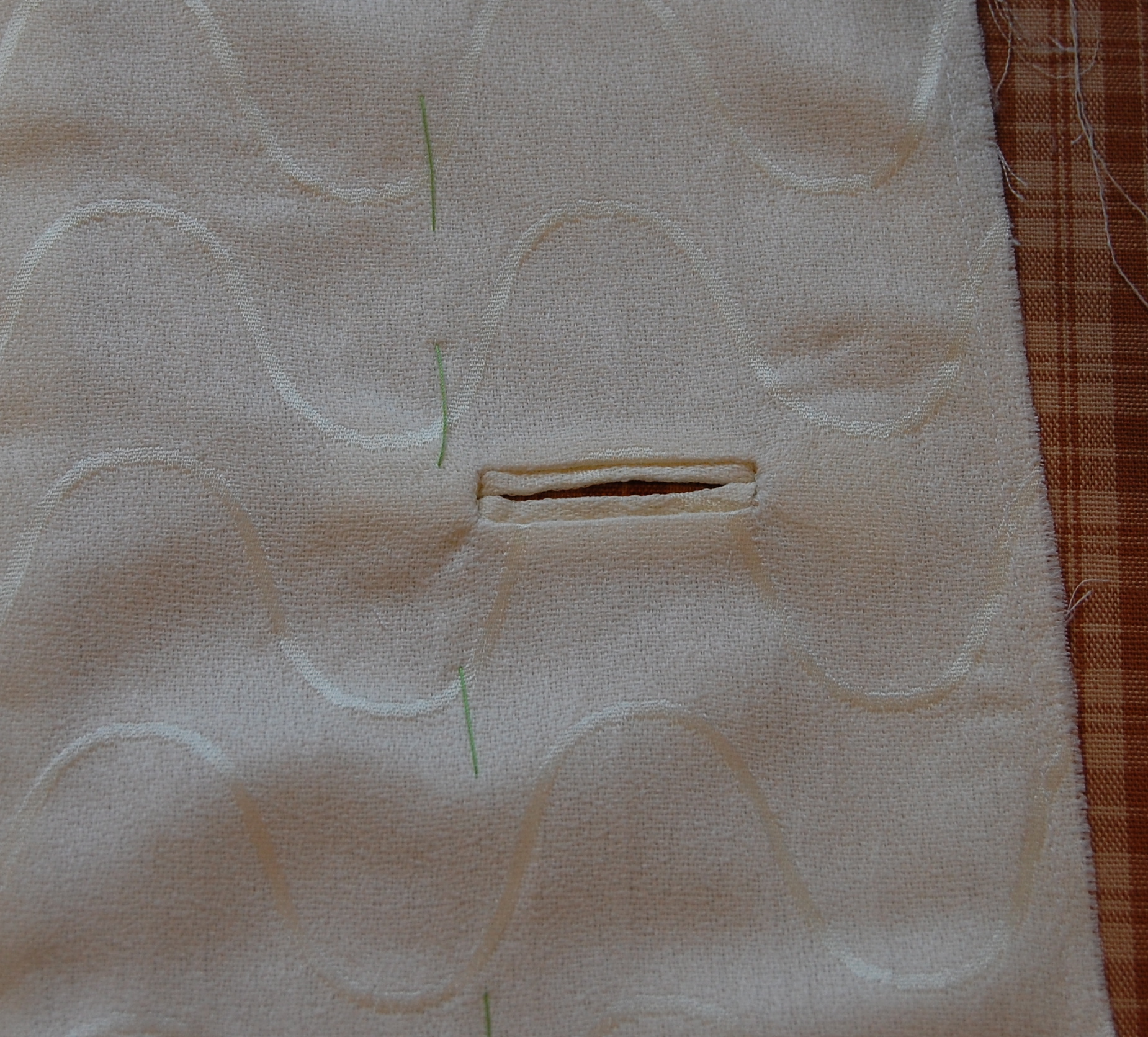
3)   Because I wanted to use the glass button, I decided to put in a bound buttonhole instead of using the buckle and band detail as shown on the pattern. (I did make and attach the back belt, however.)

Here is the bound buttonhole placed in the front right section – before the facing is attached.

Here you can see the button and finished buttonhole. Click on the photo to see it in detail.

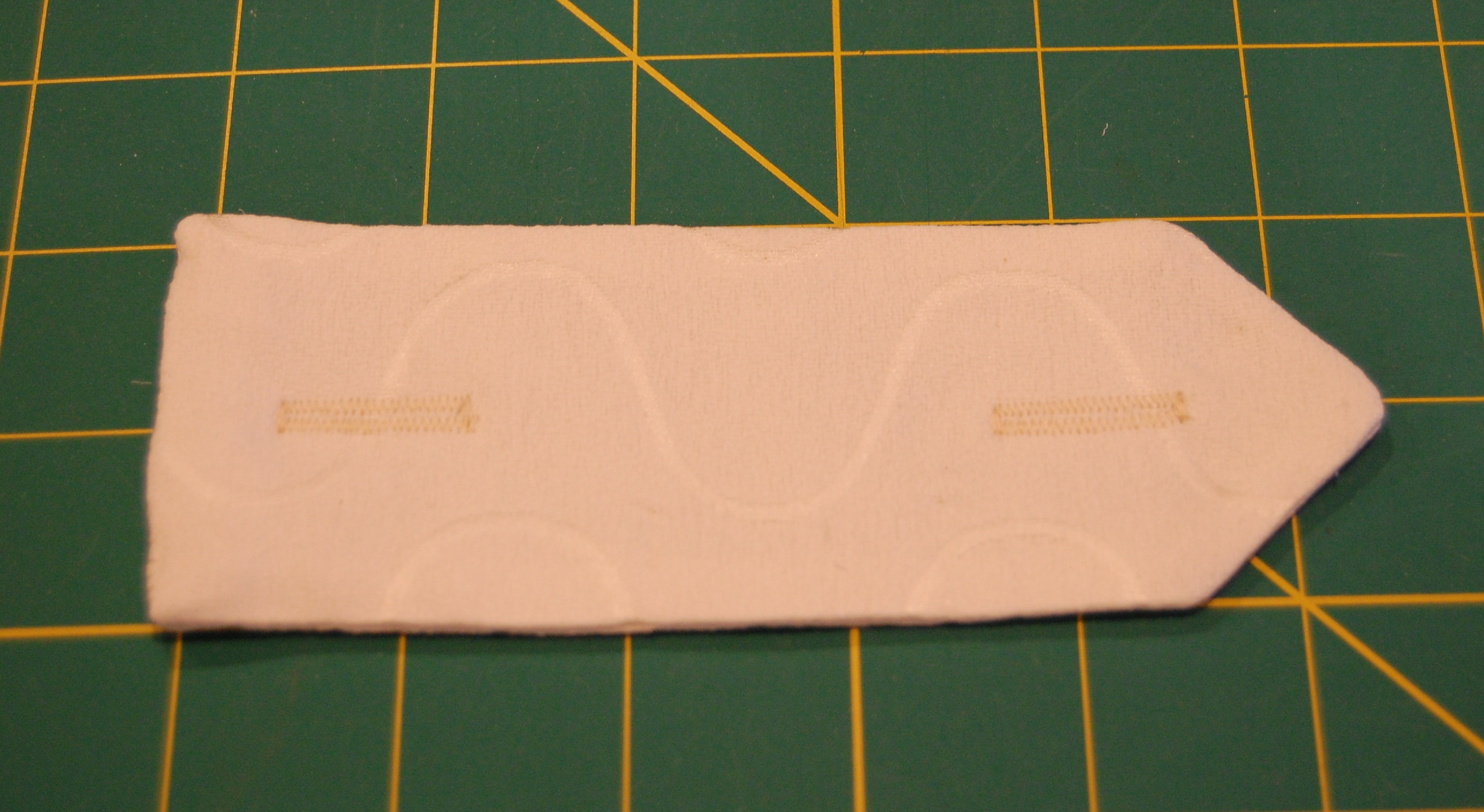
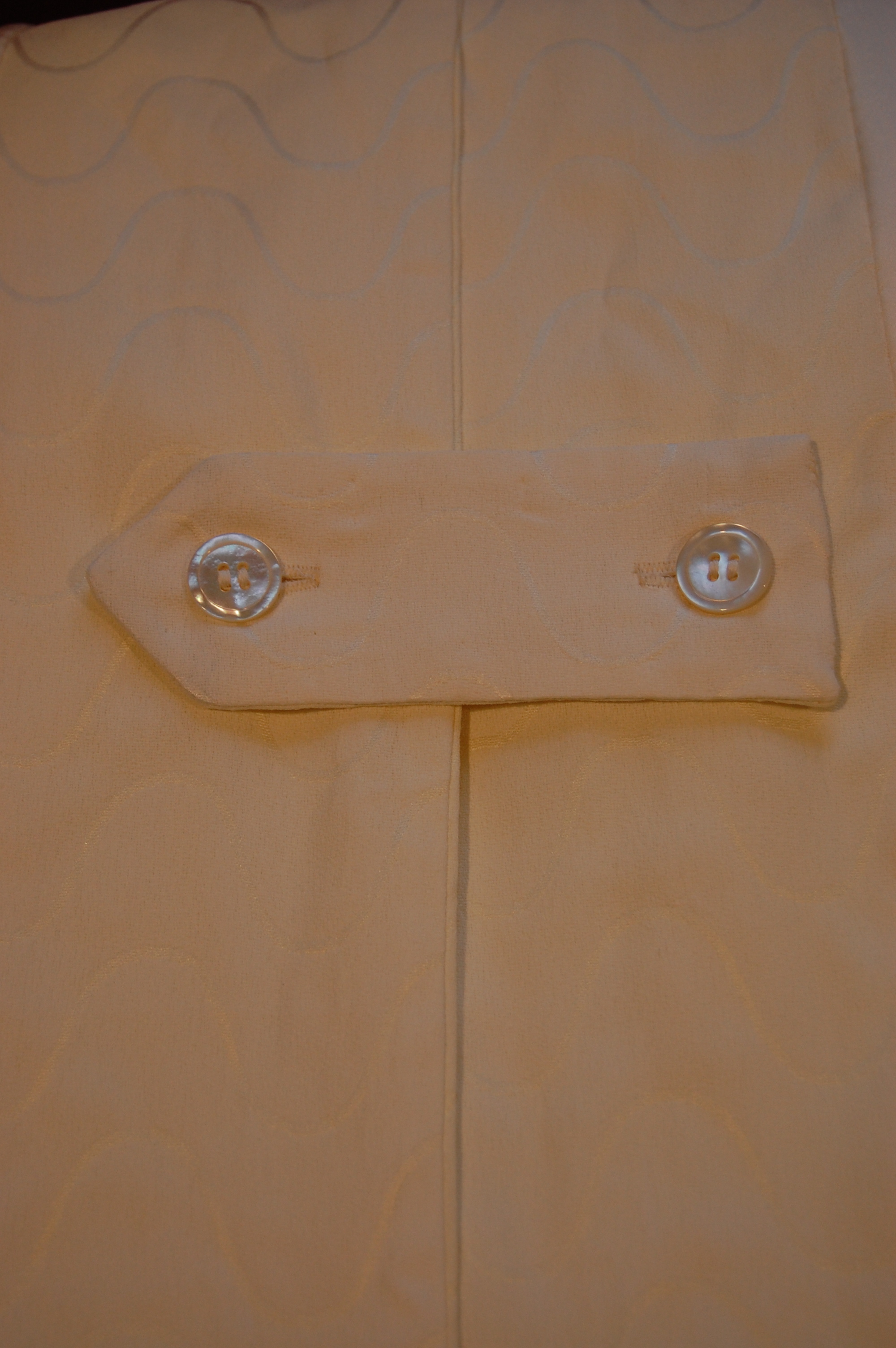
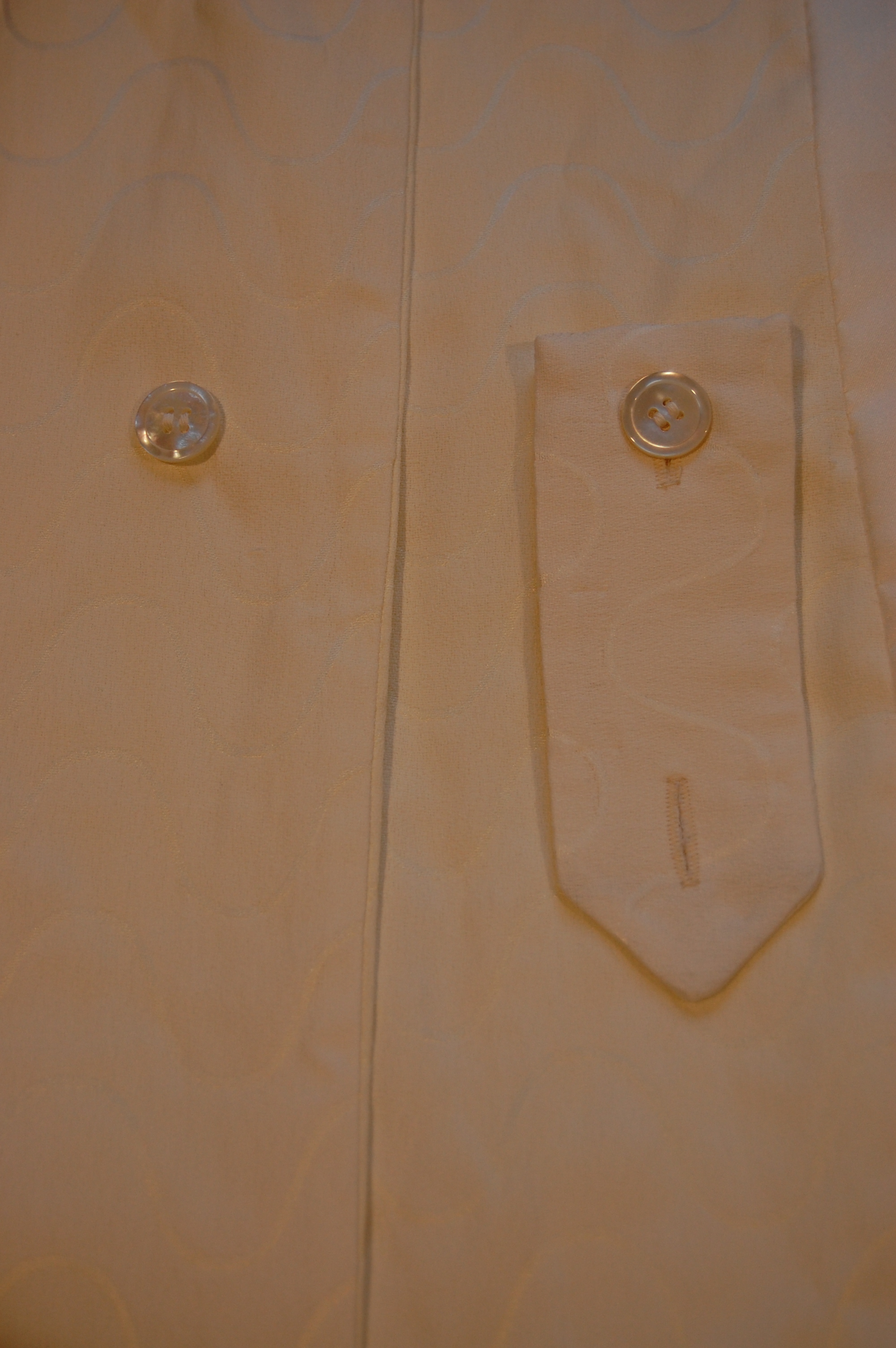
4)   With just a single closure at the top of the coat, I thought I needed something lower on the coat as well, to keep it closed in windy, rainy conditions. However, I didn’t want to interfere with the look of the coat when I might be wearing it open.  Here’s what I came up with:

I made a “tab” with buttonholes on each end.

I made machine buttonholes in the tab.

I placed the buttons for it on the inside facings on either side of the coat, about halfway between my waist and  my hips.  It can easily be buttoned to secure the coat, and when I unbutton the left side, the button on the right side allows it to fall down, hidden from view, but easily accessible.

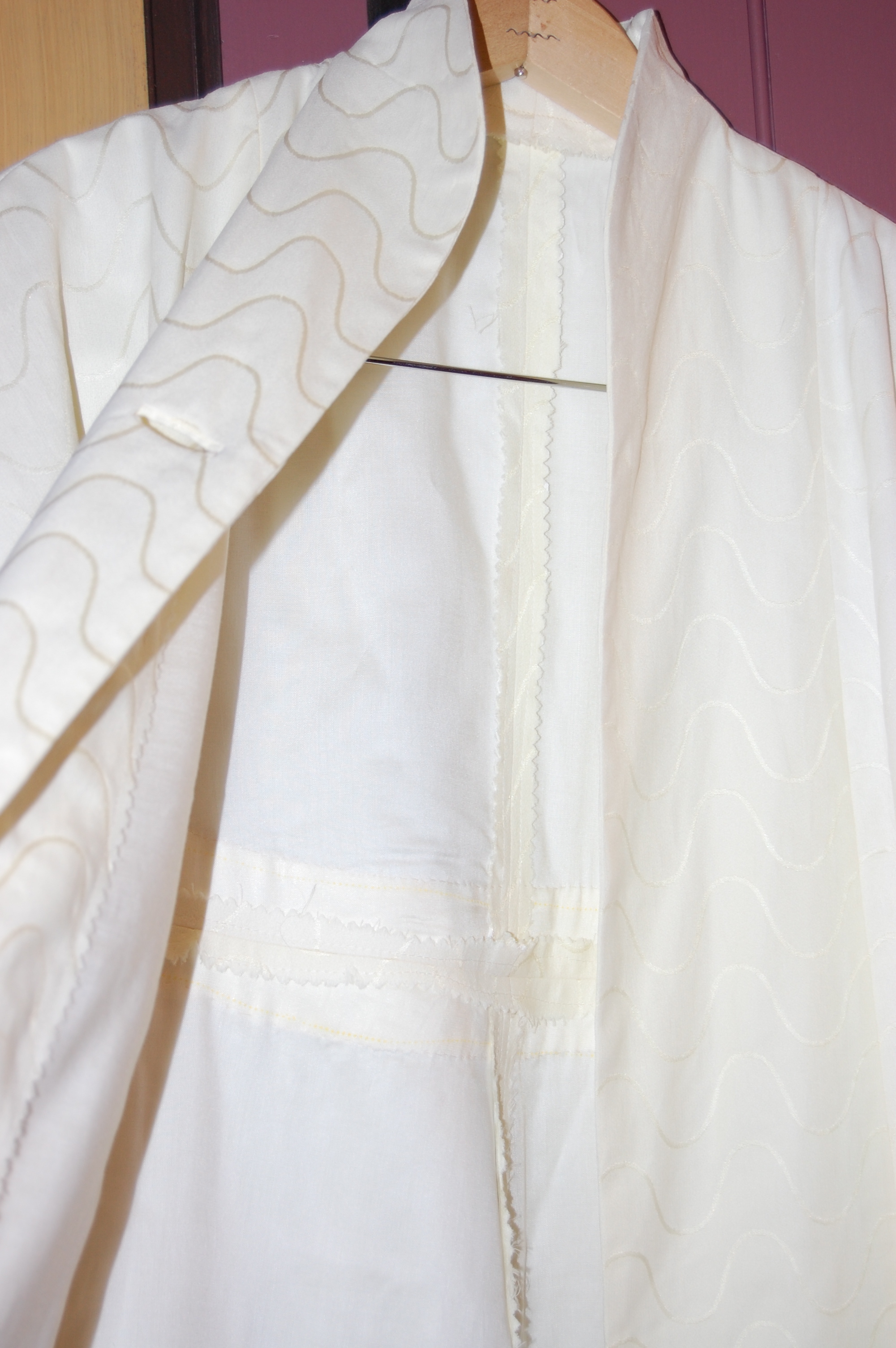
This shows the inside of the coat, with the tab buttoned.

And this shows the tab unbuttoned on one side and hanging down, out of sight – inside the coat.

A few more details about construction:  The rainwear fabric is an acetate/rayon blend which I underlined with rayon voile.

Here is the coat, showing the underlining, before I attached the lining by hand.

I lined it with a pure silk lightweight twill in white.  I would have loved to have lined it with a neat polka dot silk, but I didn’t want any “shadows” of a printed lining to show through.  Guess I’ll just have to dress it up with polka dot scarves instead!  The rainwear fabric was very easy to work with – surprisingly easy, actually.  It drapes beautifully for a pattern like this.  Speaking of patterns, this one was so precise and cleverly engineered (especially the collar), turning it into a really fun project!

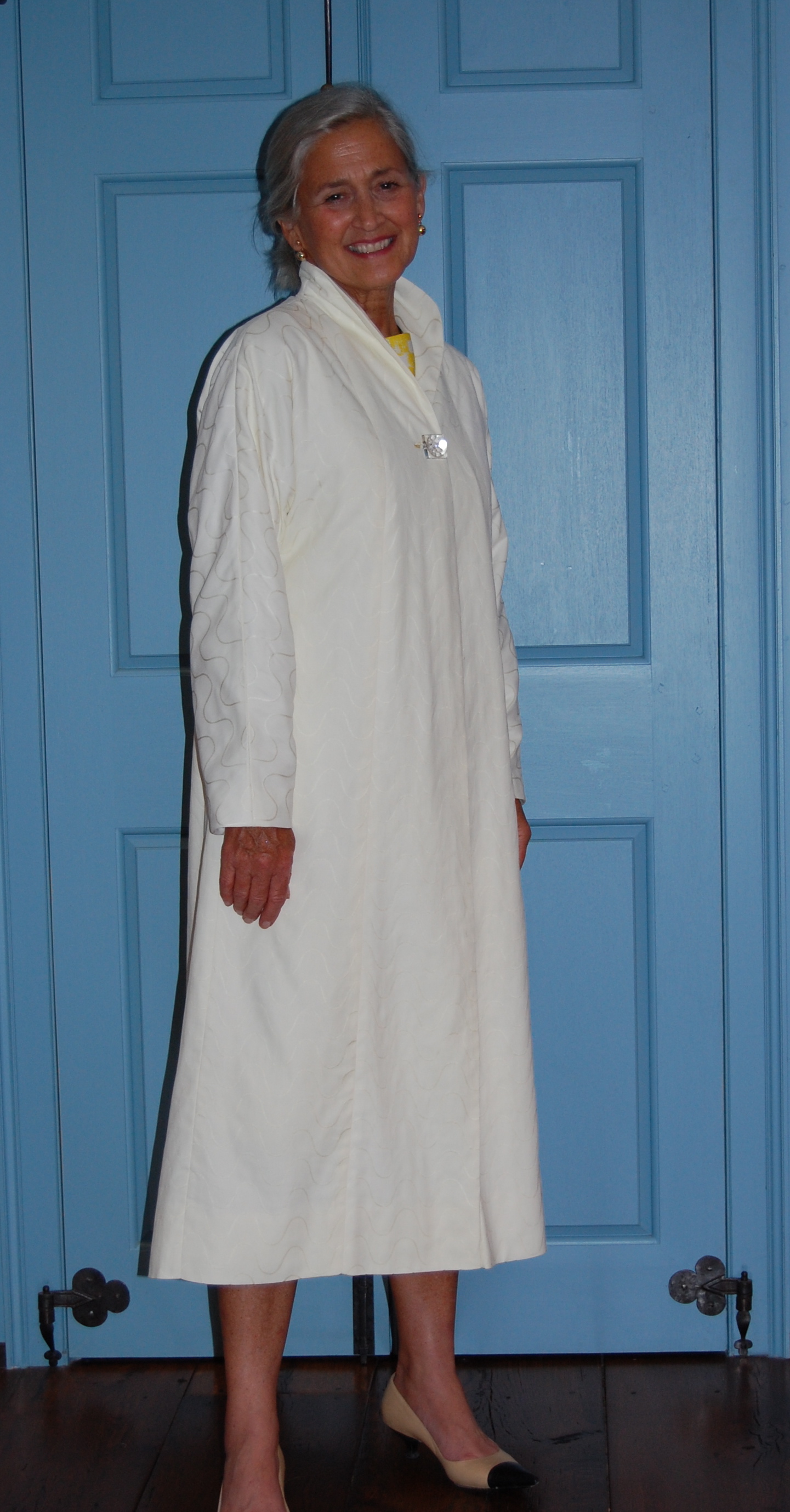
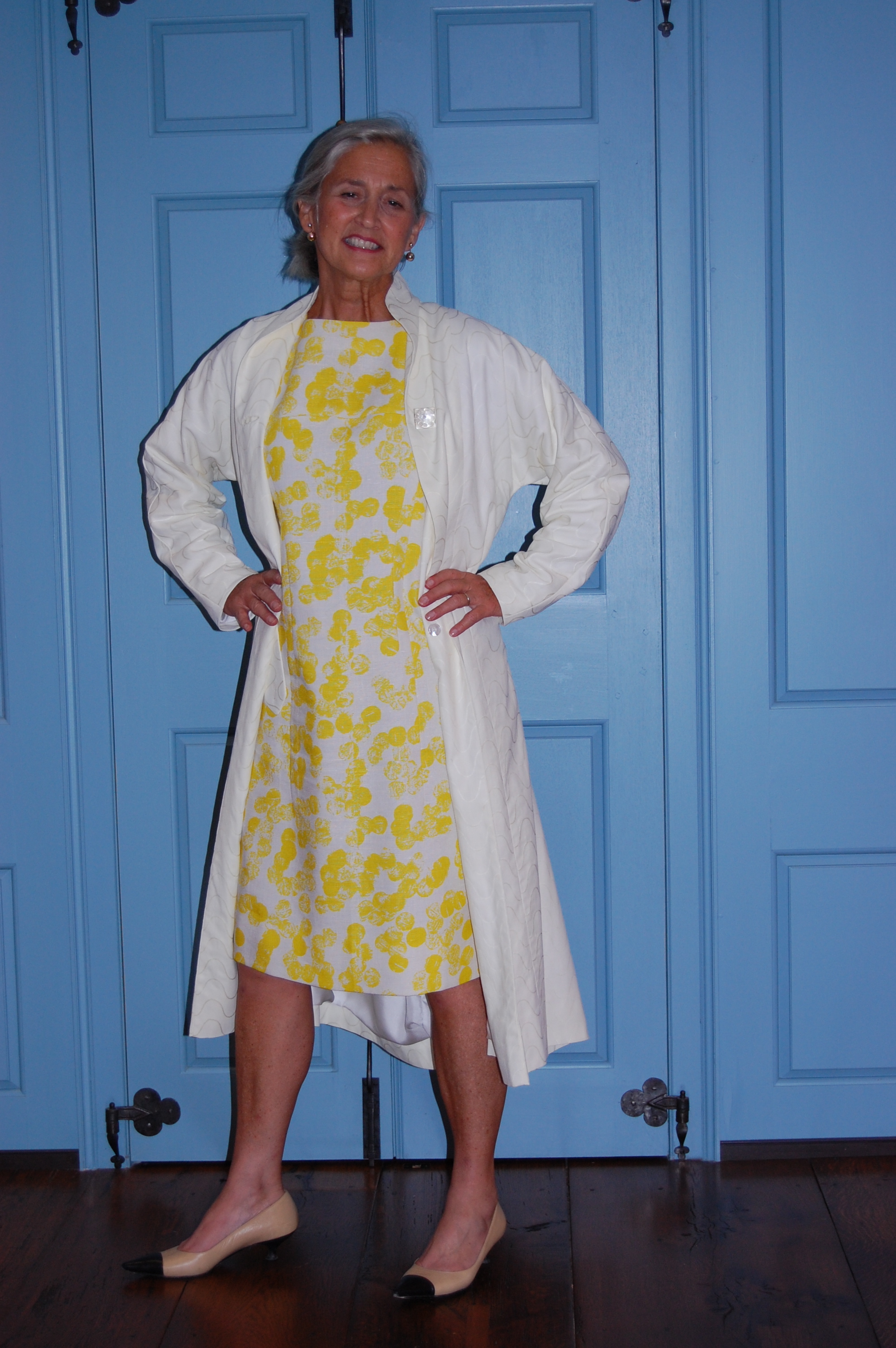
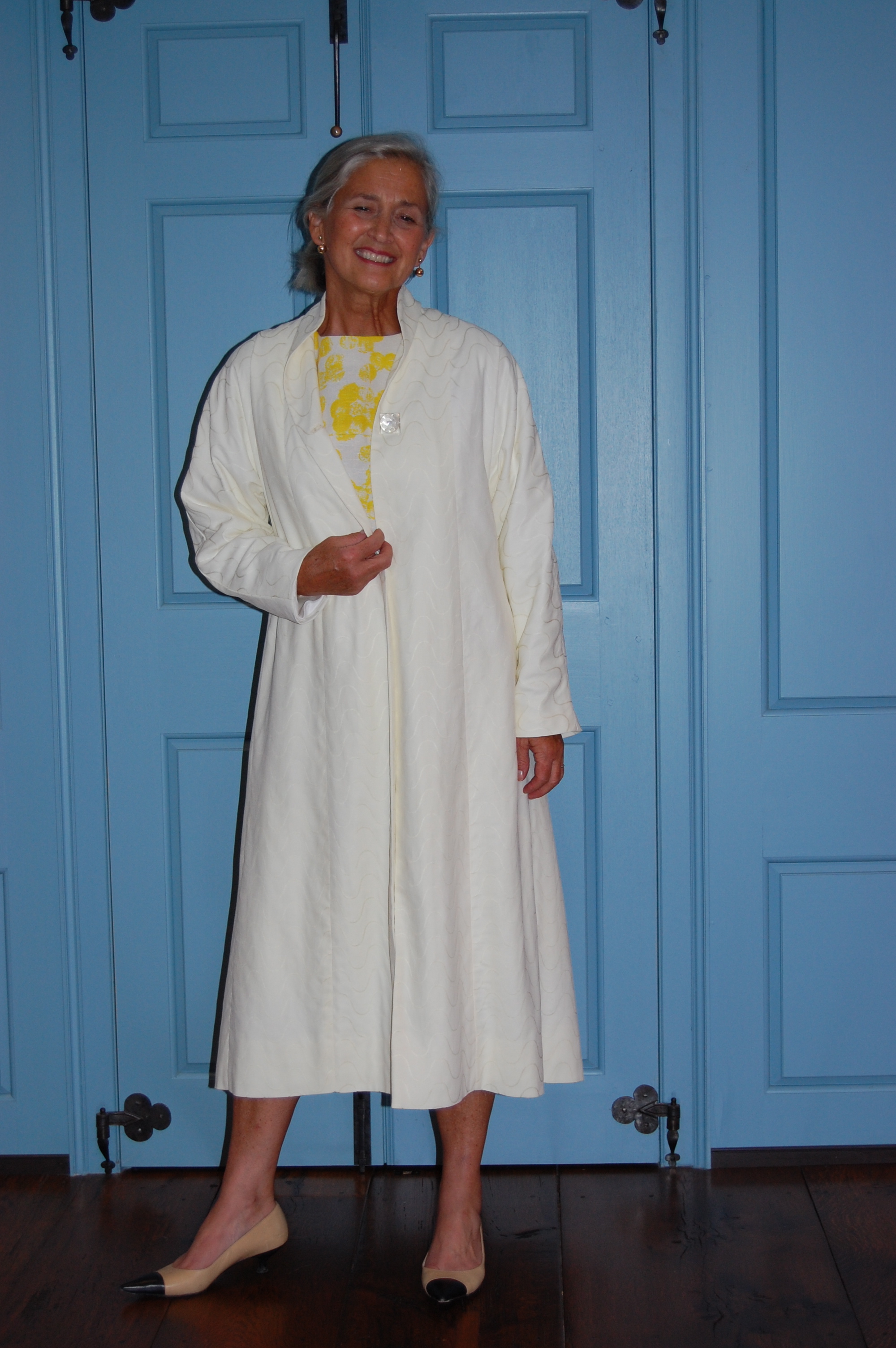
Here are some finished views of my new dressy raincoat:

More of the same…

Hopefully you can see the “belted” back in this view.

Making a garment like this during the Summer months means that I had to be prepared for “delayed gratification” as I probably won’t have a chance to wear my new raincoat for at least a couple of months.  However, when a future Fall or Winter forecast is for “Chance of Sprinkles” – or even full-force rain – I’ll be ready!

13 Comments

Filed under bound buttonholes, Buttons - choosing the right ones, Coats, Dressmaker details, kimono sleeves, sewing raincoats, swing coats, Uncategorized, underlinings, vintage buttons, vintage Vogue patterns from the 1950s, Vogue patterns

Project complete! Well, kind of…

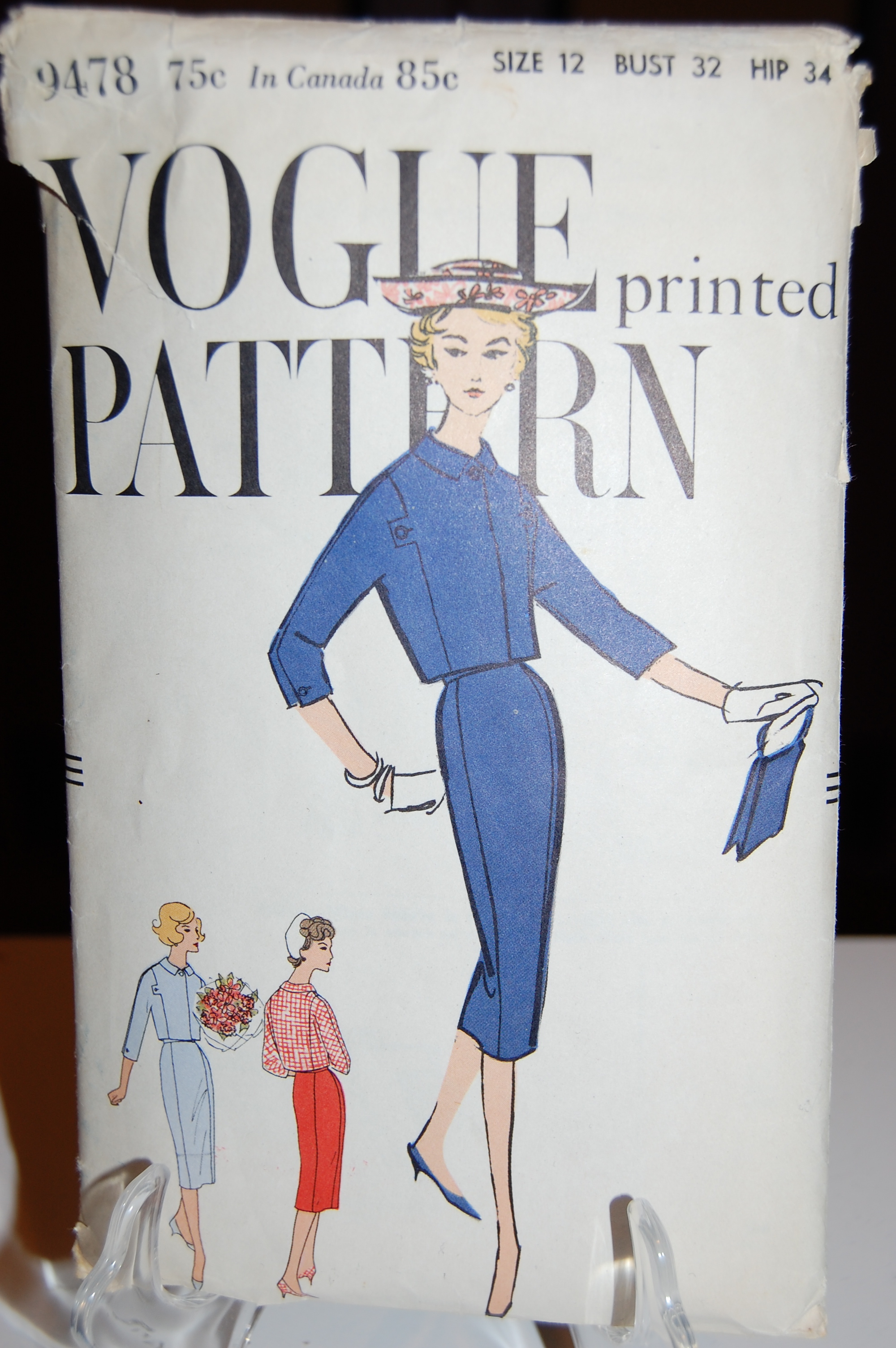
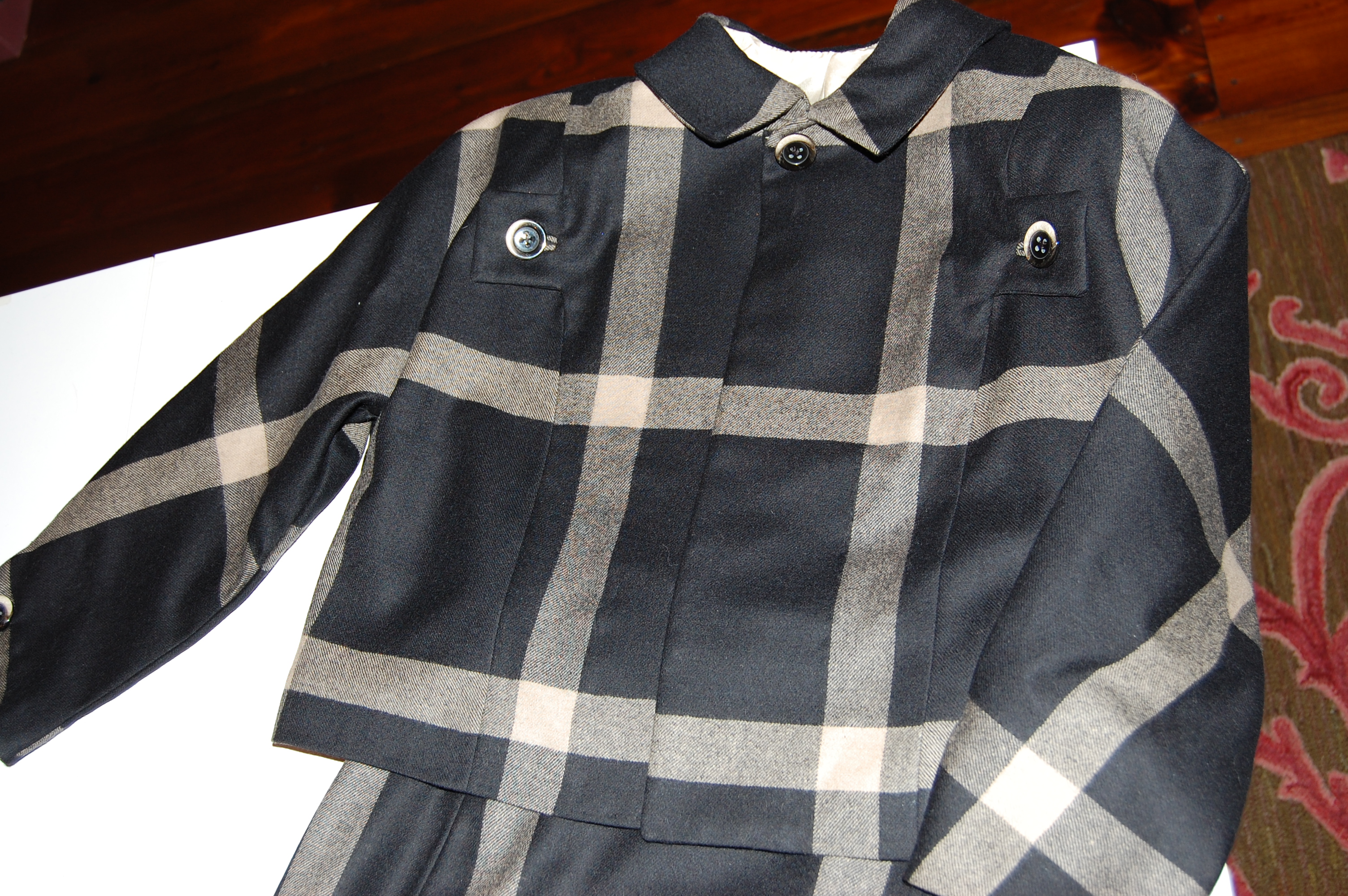
One day this week I sewed the final stitches on my wool suit.  Yes, doing the skirt hem finished it off, and now it is ready to wear.  For those of you who read my last post and ventured a guess on which pattern I used, you were correct if you chose number three.  As a reminder, here it is.

I made a few small alternations to this pattern, including shortening the skirt to just below the knee.

However, I did not choose it for the reasons you might think.  Here is how I made my decision:

1)   With such a bold plaid fabric, I thought a shorter jacket would be a better look.

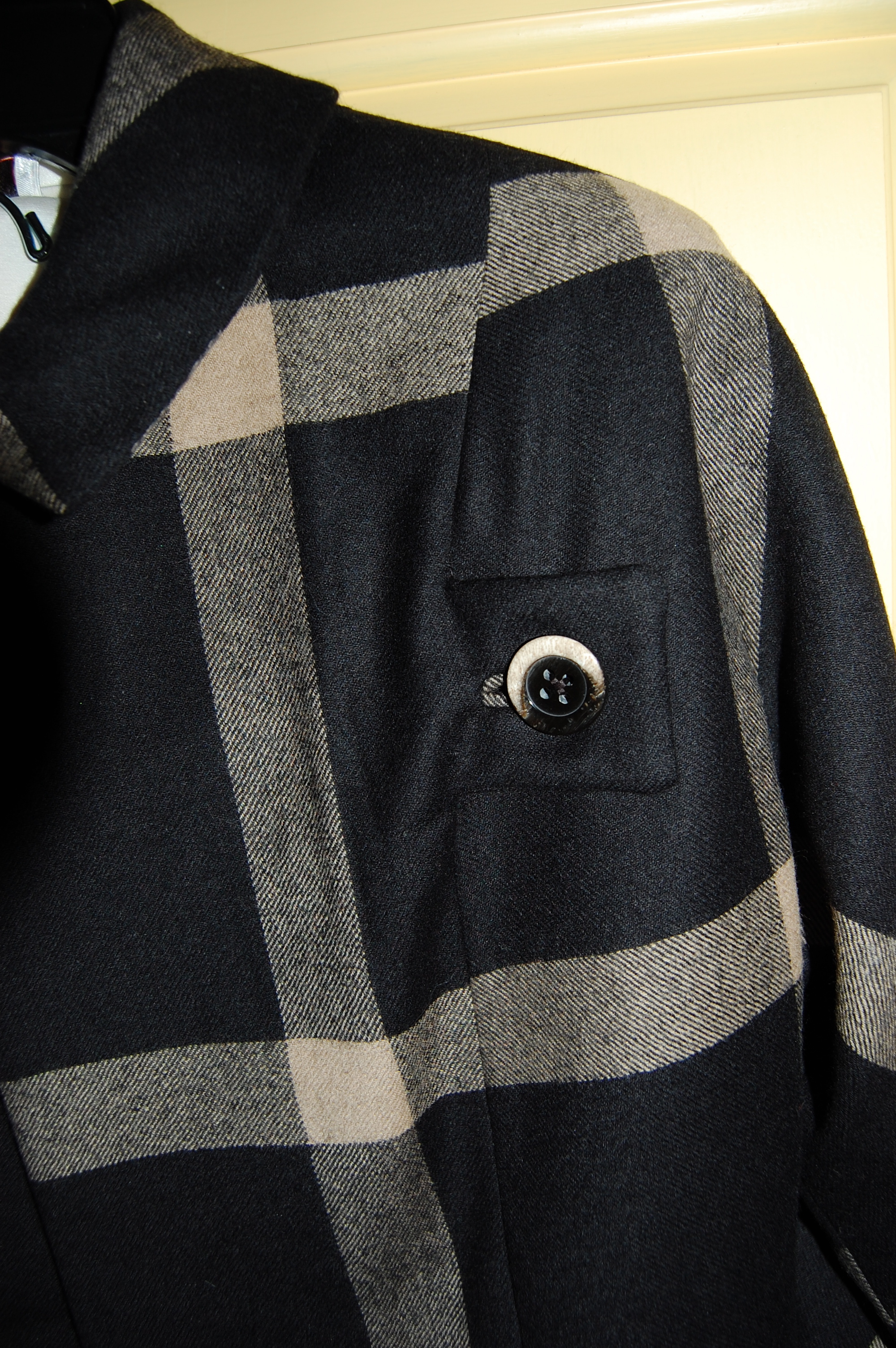
2)   I thought the square tabs on the front of the jacket would compliment the windowpane check.

3)   The kimono sleeves are such a classic mid-century look that I couldn’t resist trying them.

4)   And, I love a challenge!  Even though the sleeves are “kimono” type sleeves, which means while there is no sleeve cap to match plaids, they do have seams down the middle of them cut on an angle.  Plus the jacket has side, front and underarm seams, a rounded collar which puts the plaid on a curve, and, finally, the skirt has six seams.  And, I needed to make sure that the check also matched, up and down and side to side, from jacket to skirt.  So, that’s a lot of matching.

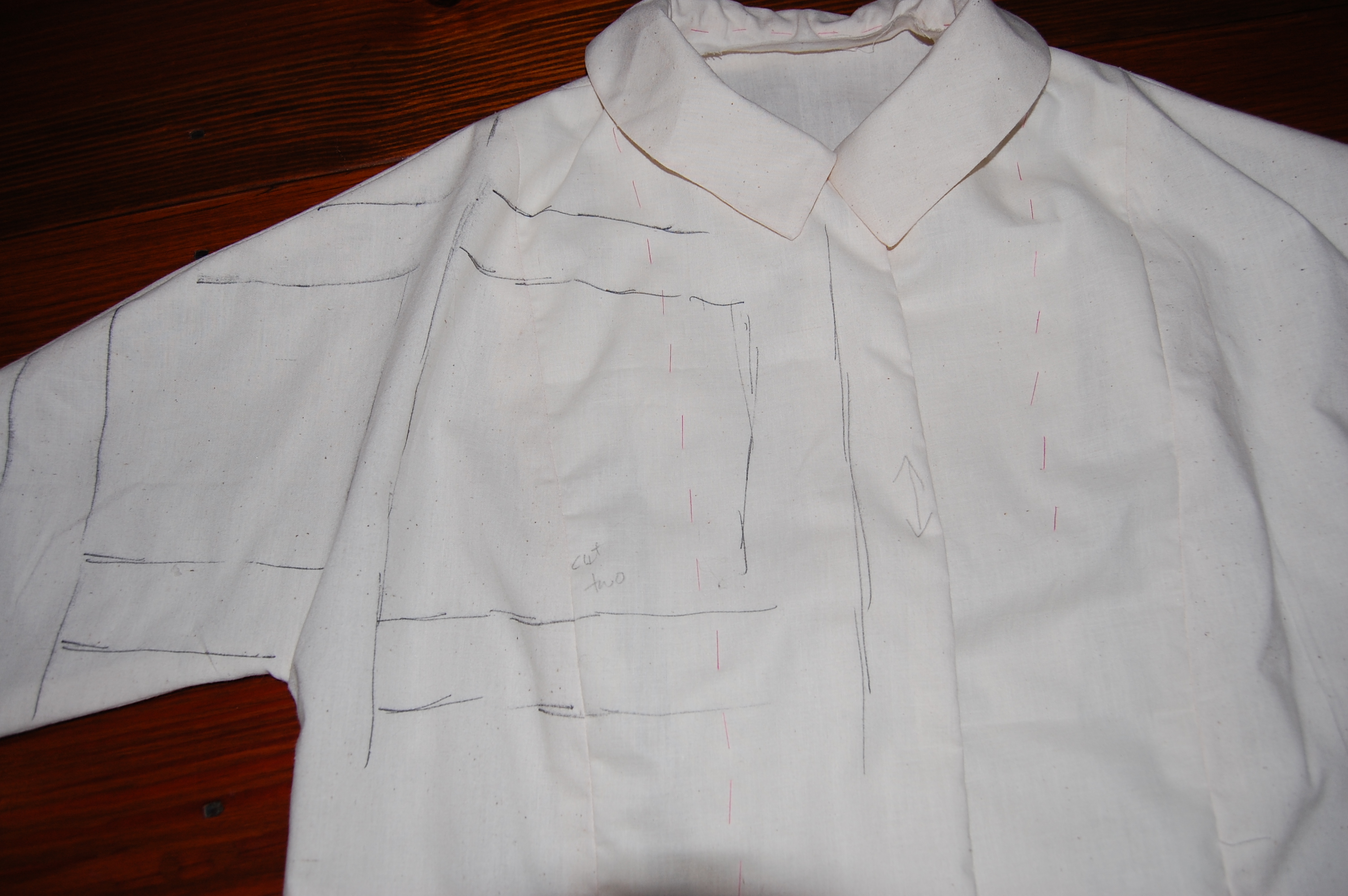
The first thing I did was make up the jacket in muslin.  From that I determined that I needed to add a couple inches to its length, and I decided to make the sleeves ¾ rather than below elbow length.  Then I got nervous about the windowpane check looking good in kimono sleeves, so I got out my magic marker and “drew” the check onto the muslin, so I could visualize it.  Okay, I liked it!

Here is my muslin - can you see the magic marker lines I drew on it? I sew my muslins using up bobbin thread that's left over from other projects - and I always baste in leftover contrasting thread.

Then I laid out the pattern pieces, and oh my gosh, what a puzzle of matching notches and checks.  I knew I couldn’t make a mistake, so after I laid it out, I let it sit overnight.  The next day, after cogitating on it overnight, I realized I had not properly matched up the check on the shoulder seams.  I made the adjustment, double and triple checked (pardon the pun), made sure I would have the same reveal at the hem of the jacket as on the skirt, and confidently (actually about 92% confidently) cut it – and the lining –  out.

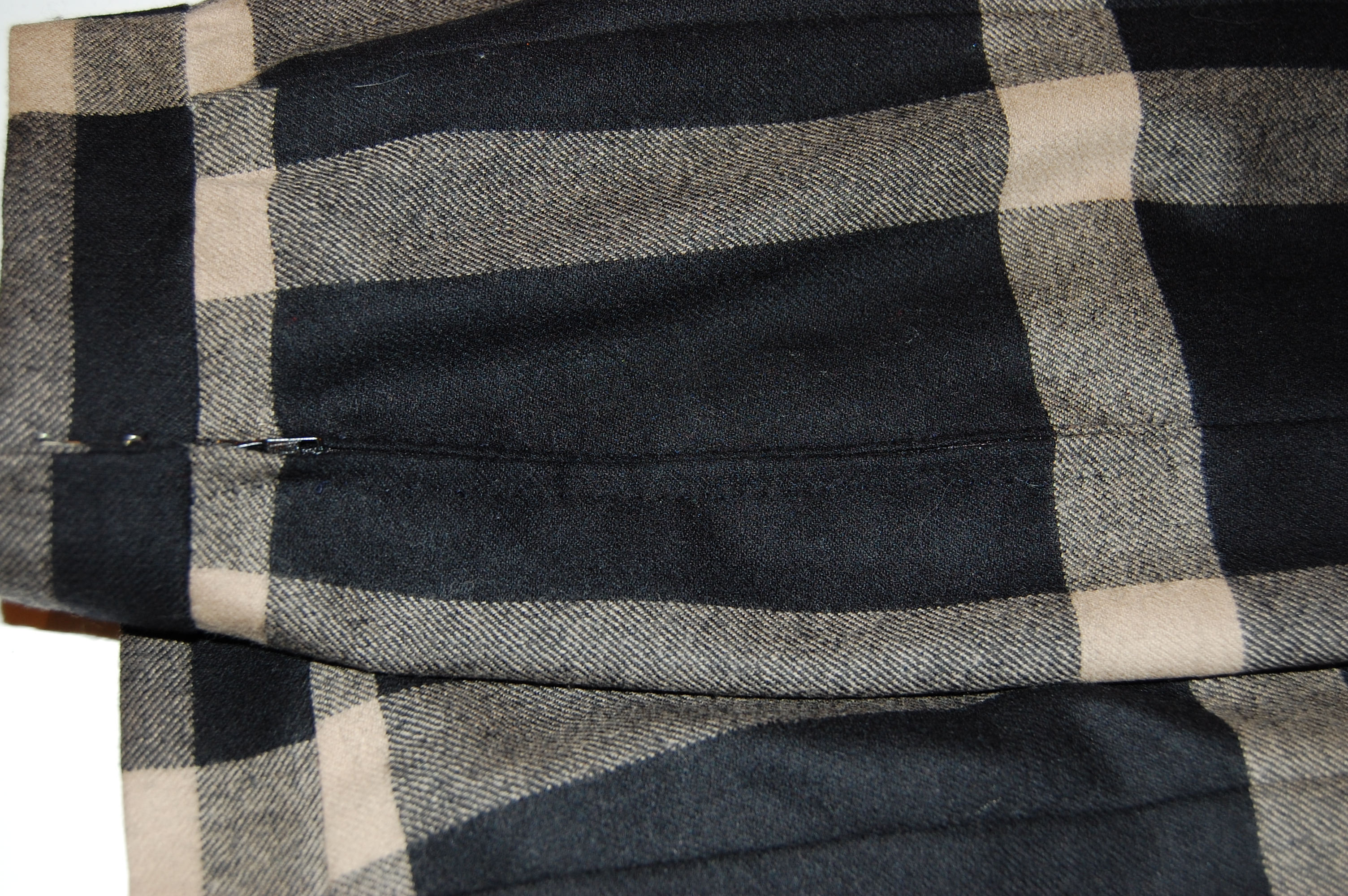
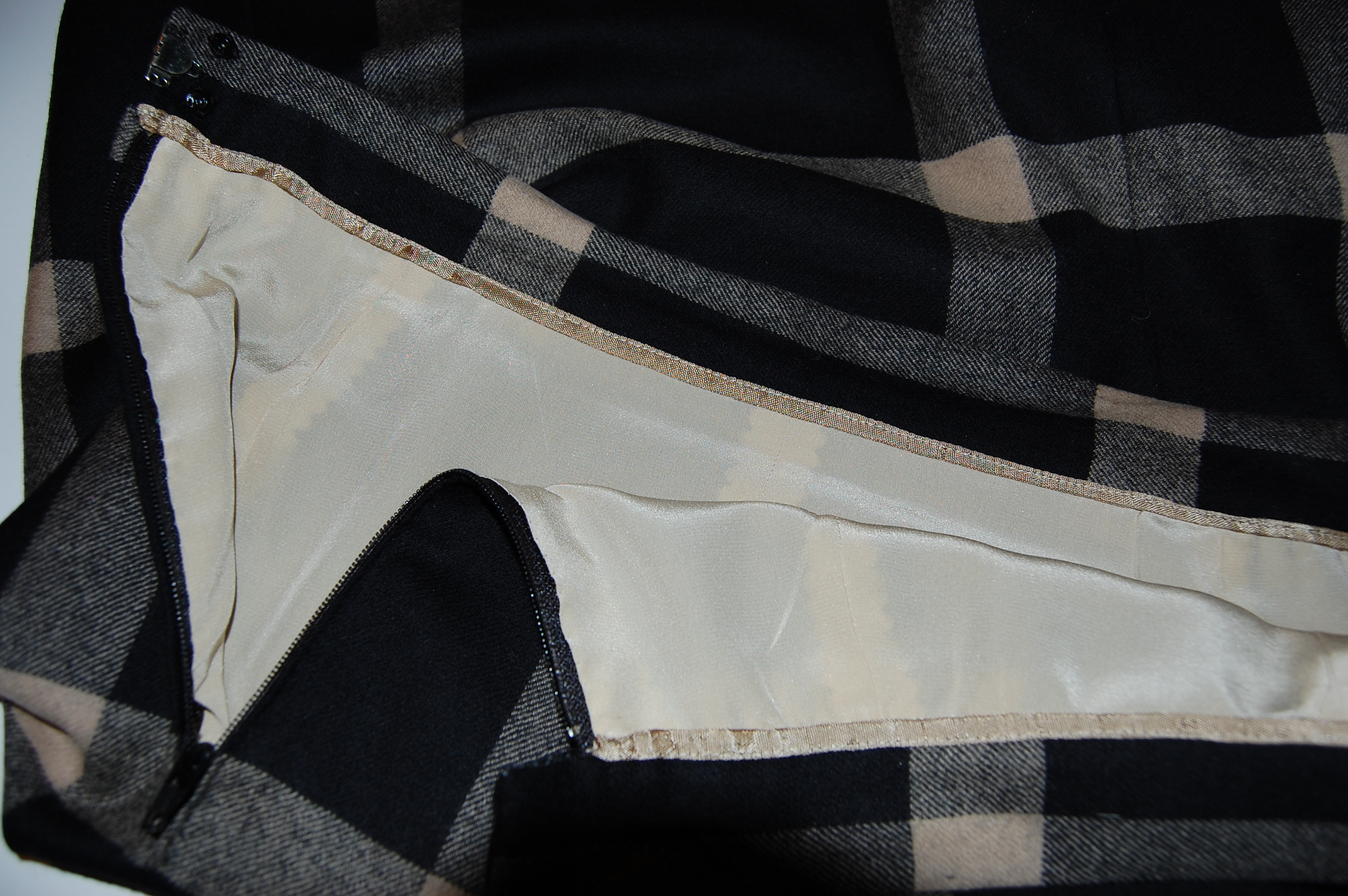
First, I made the skirt (except for the hem).  I like to put my zippers in by hand, as I just think it makes a nicer look.

Here is the zipper, set in using small back stitches.

And here is how I finished the waistband inside:

I bind the raw edge with a soft seam tape and then catch-stitch underneath to the waistband seam. This makes a nice, unbulky finish.

By the way, have you noticed how it is now almost impossible to find a ready-made skirt or pants with a waistband?  Another reason to sew!

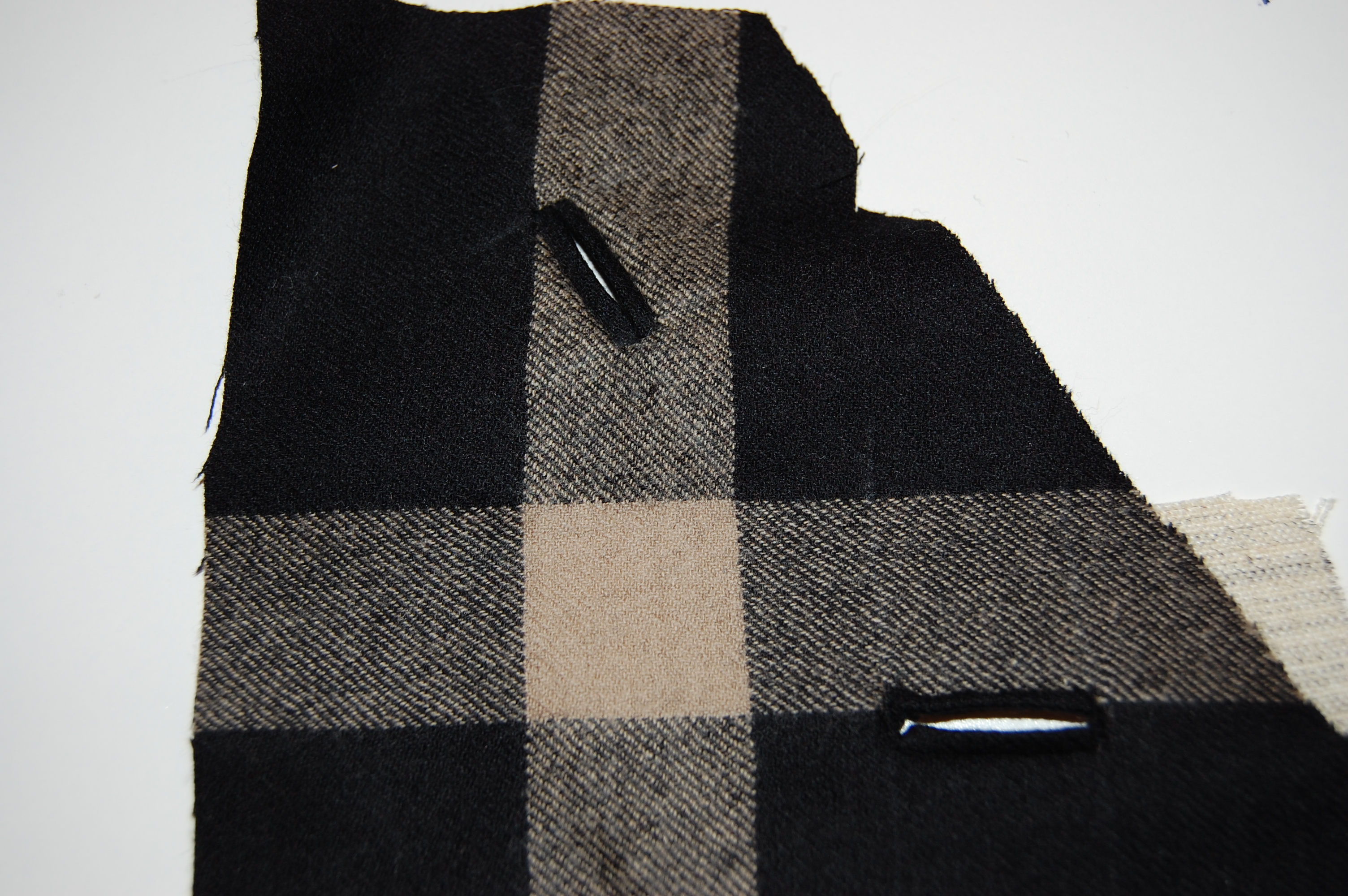
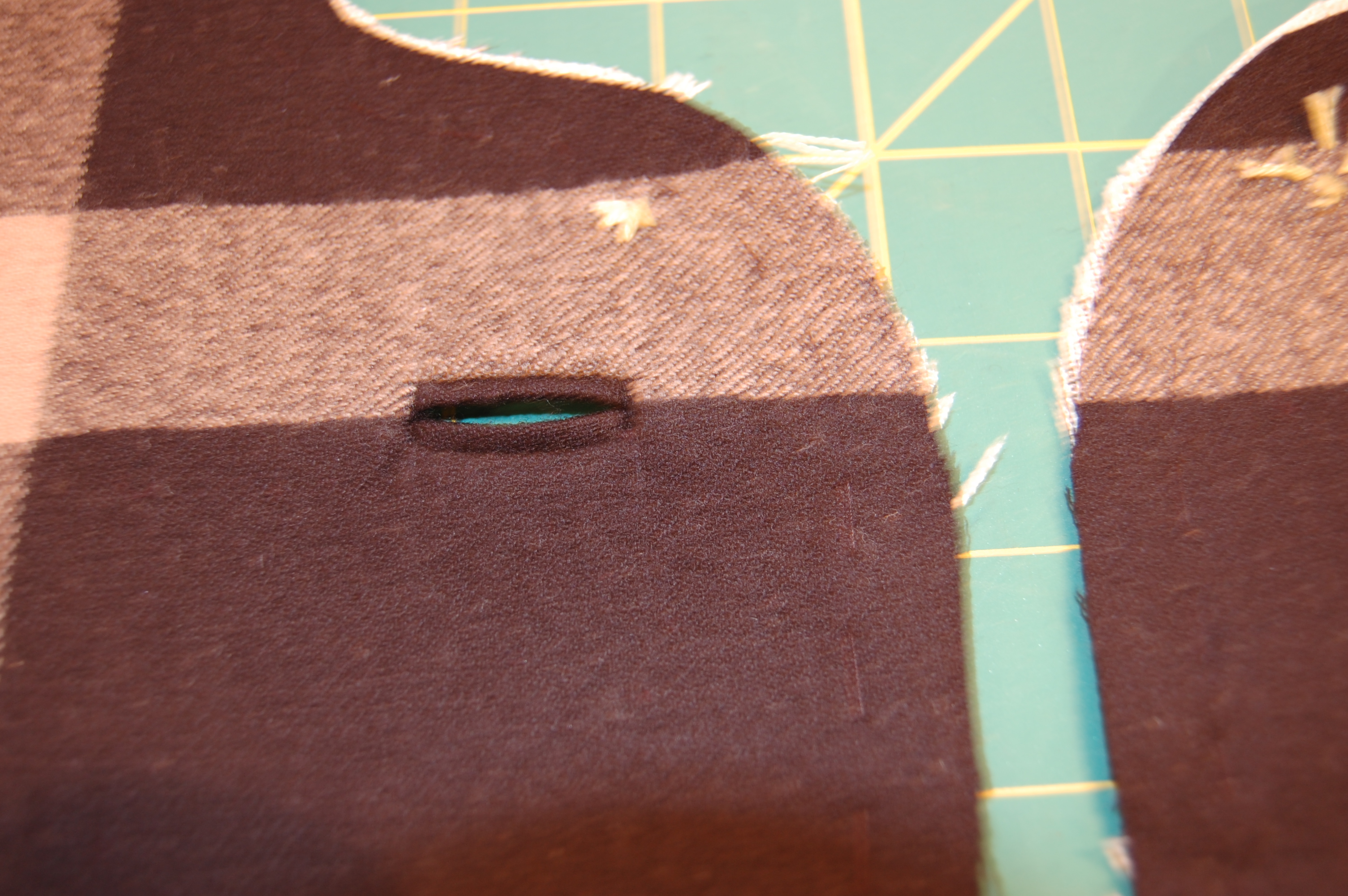
The jacket called for five bound buttonholes: one at the neck, on the two tabs on the front of the jacket, and in the sleeve plackets.  (This, of course, meant that I had to find buttons first.  A trip to the local fabric/craft store produced some, which I immediately recognized as “perfect.”  They are made by La Mode, an old button company still going strong after 125 years.)  Whenever I am making bound buttonholes, I like to make a couple of “practice” ones.  Every fabric handles differently, and with this fabric, I also needed to decide what part of the fabric I would use for the “bands”.  Here is my practice piece, which will help to explain what I mean.

Here were two of the three "trial" buttonholes I made. I decided to use all black bands where the buttonhole would be on a light part and light bands on all black. These trial runs helped me make my decision.

It always strikes me as being “out of sequence” when practically the first thing I have to do is make the buttonholes, but so it is with these bound beauties!

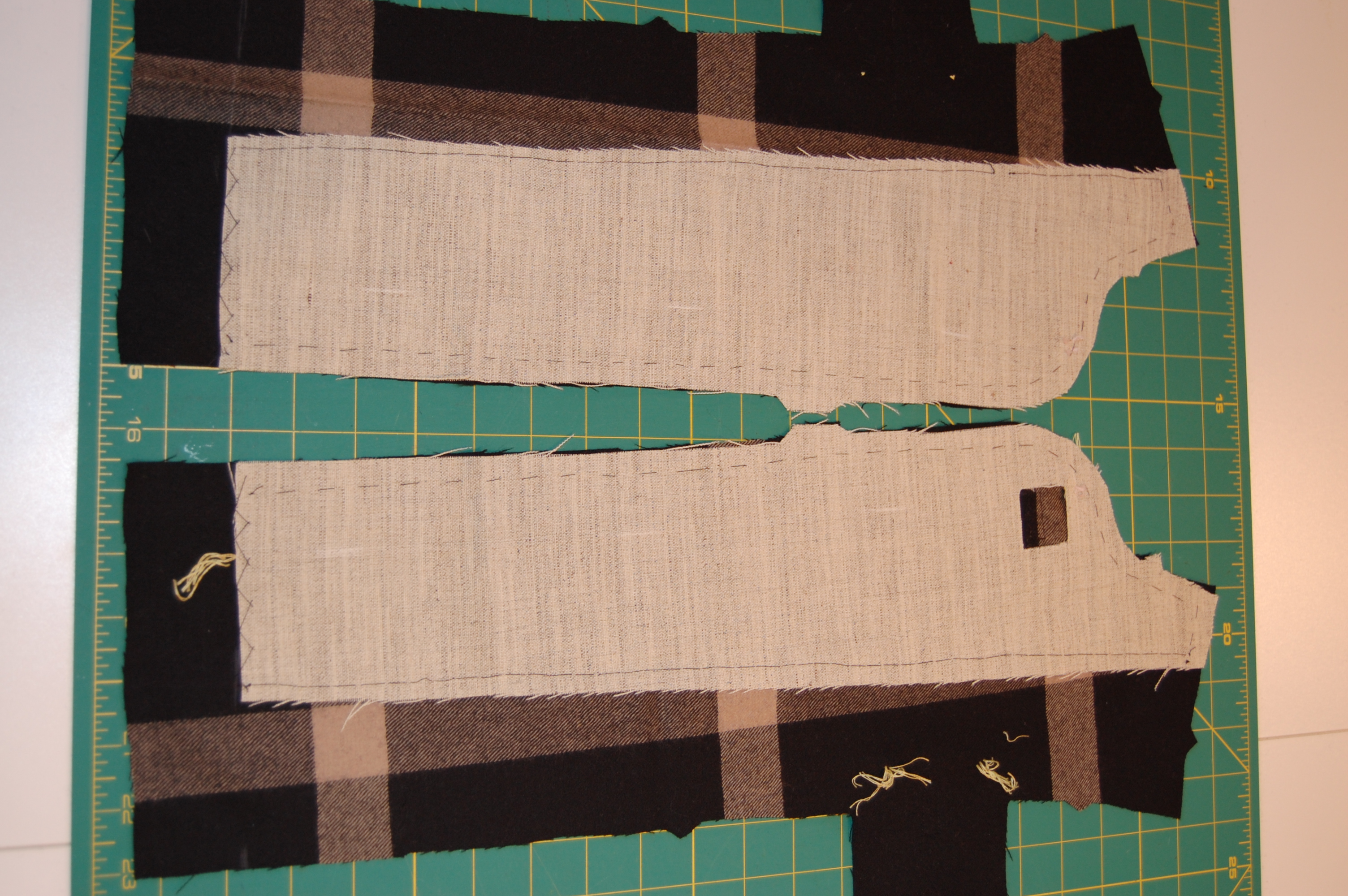
Of course, before the buttonholes comes the interfacing. I cut a small square out of the interfacing on the right side in order to accommodate the bound buttonhole.

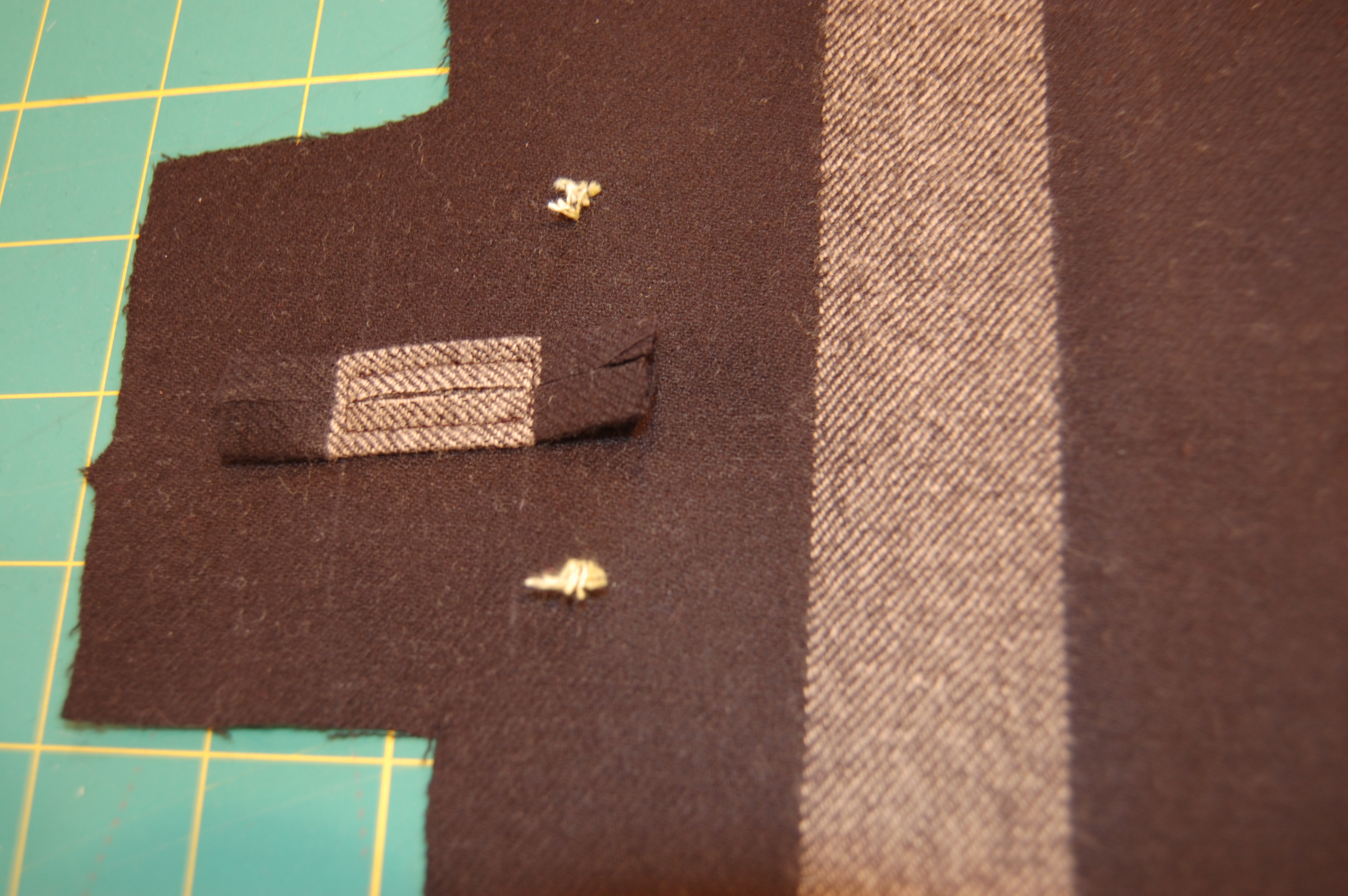
Here is the start of the buttonhole on one of the "tabs". The yellow fuzzies are tailor tacks.

Here is the buttonhole at the neckline.

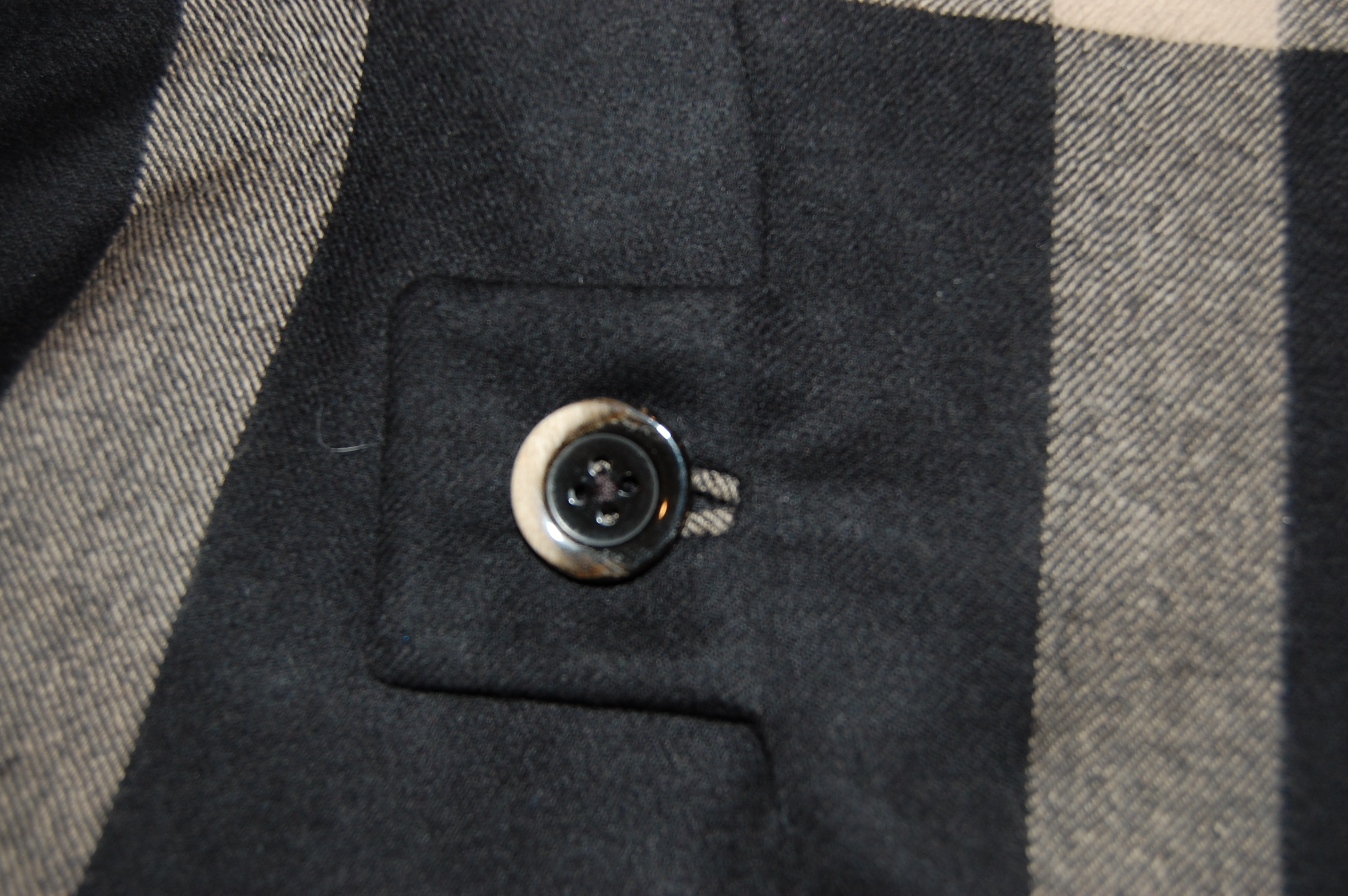
Here is the finished buttonhole on one of the tabs, sporting buttons which I think are perfect for this suit and fabric.

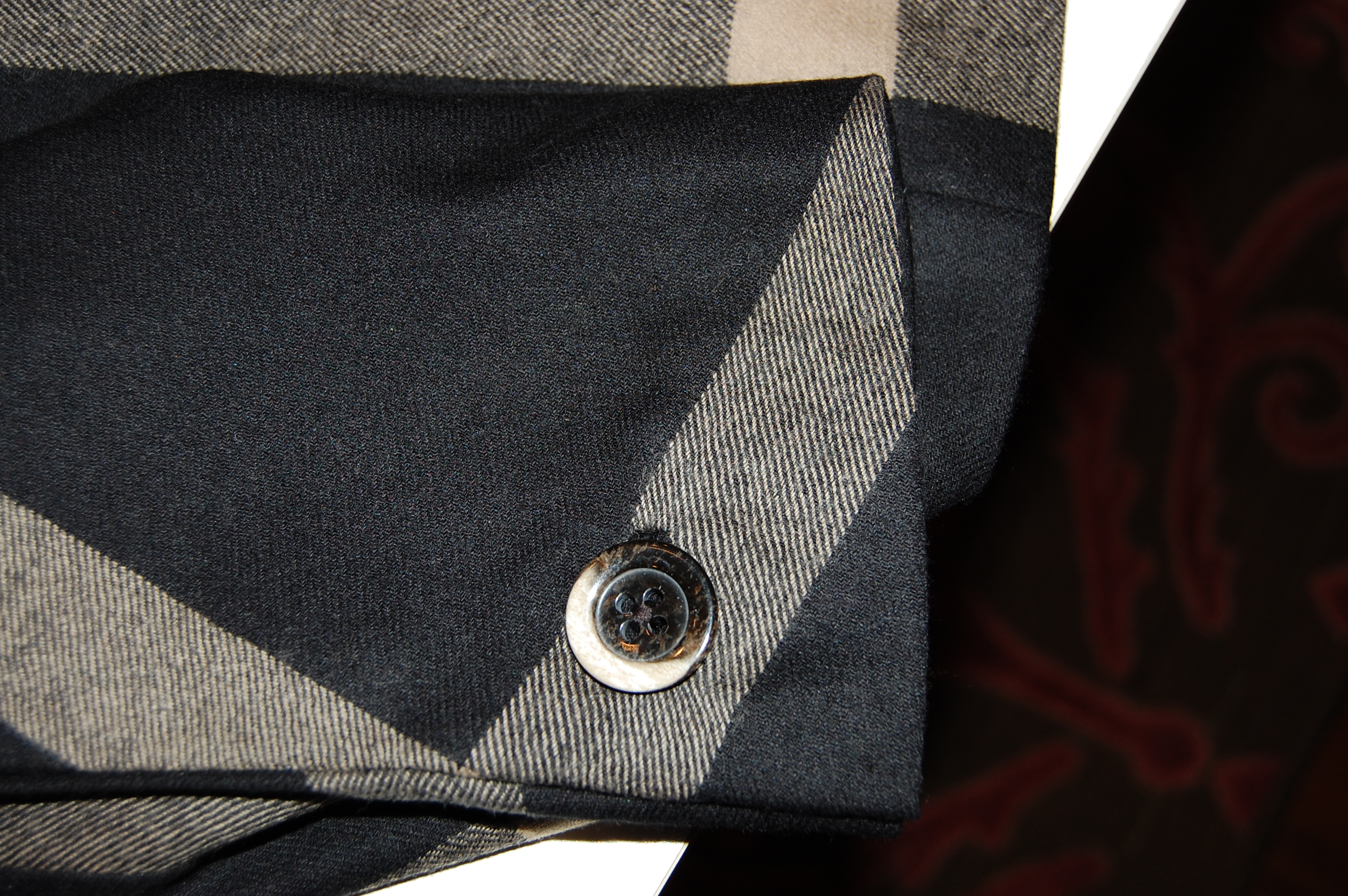
And here is one of the sleeve plackets, all finished!

The rest of sewing the jacket was fairly straightforward, just time-consuming!  The collar was a dream to do because there was a separate pattern piece for the two-piece, bias undercollar.  A bias undercollar makes the top part of the collar finish up with a smooth and neat turn.  Vogue Patterns – I love you!

I lined both the skirt and the jacket in a silk crepe de chine which I ordered online from fabrics.net/The Fabrics Network.  This company, in Spokane, Washington, carries beautiful solid silks and other fabrics.  I got swatch/color cards from them last year and have purchased several pieces of fabric from them, all of them lovely, excellent quality goods, quickly delivered.

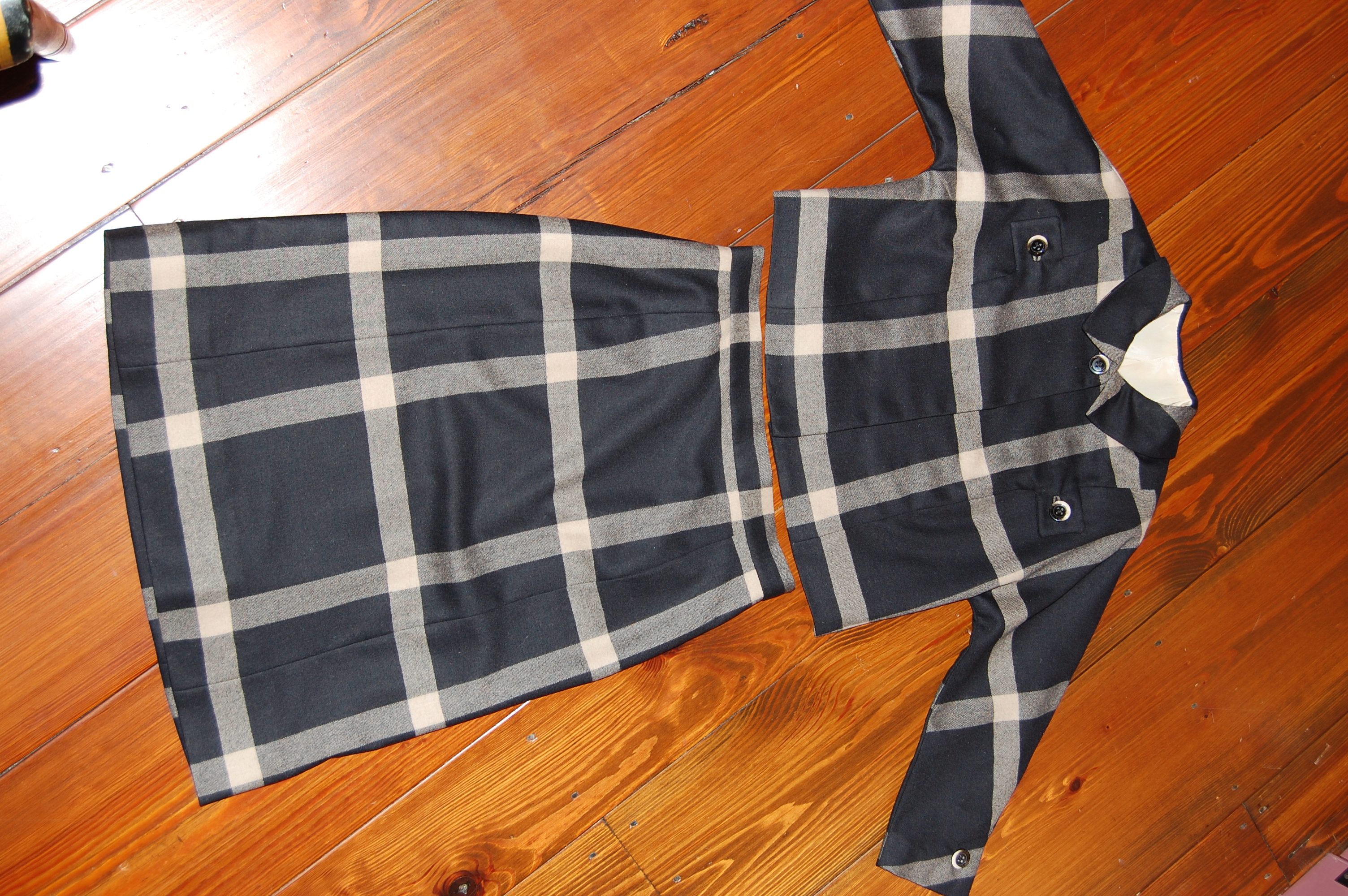
So here are some shots of my finished suit:

My suit, laid out on my sewing room floor - definitely prostrate from being worked on for so long!

Here is a close-up of the jacket.

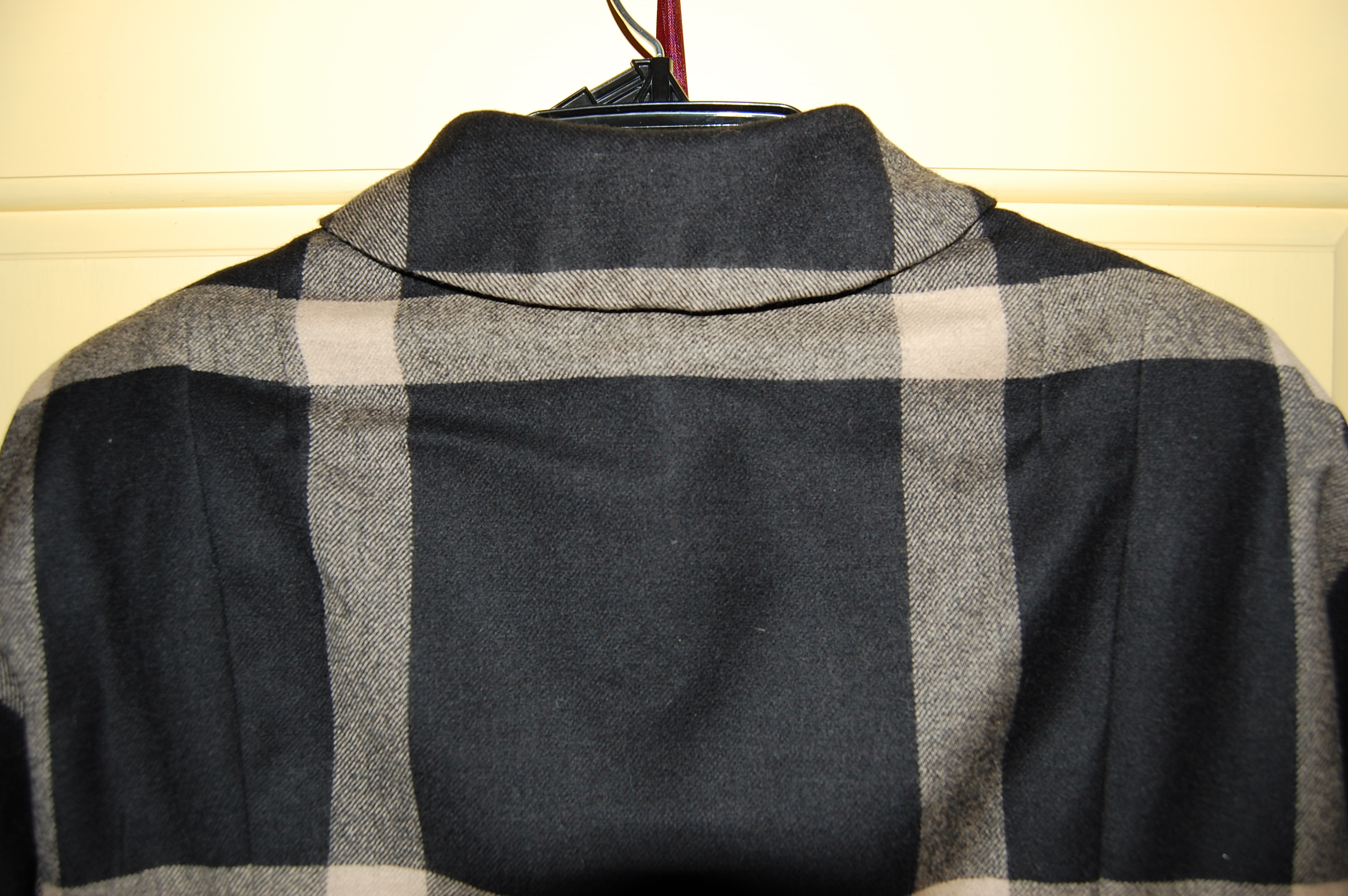
Here is an example of the puzzle of matching the check up and down and side to side. When I am wearing the jacket, I want the collar to match up to the back of the jacket. I think I was fairly successful with my calculations!

And here is a view of the one area which could not be matched, as that seam serves as a dart for the bust. But somehow, it looks okay, I think...

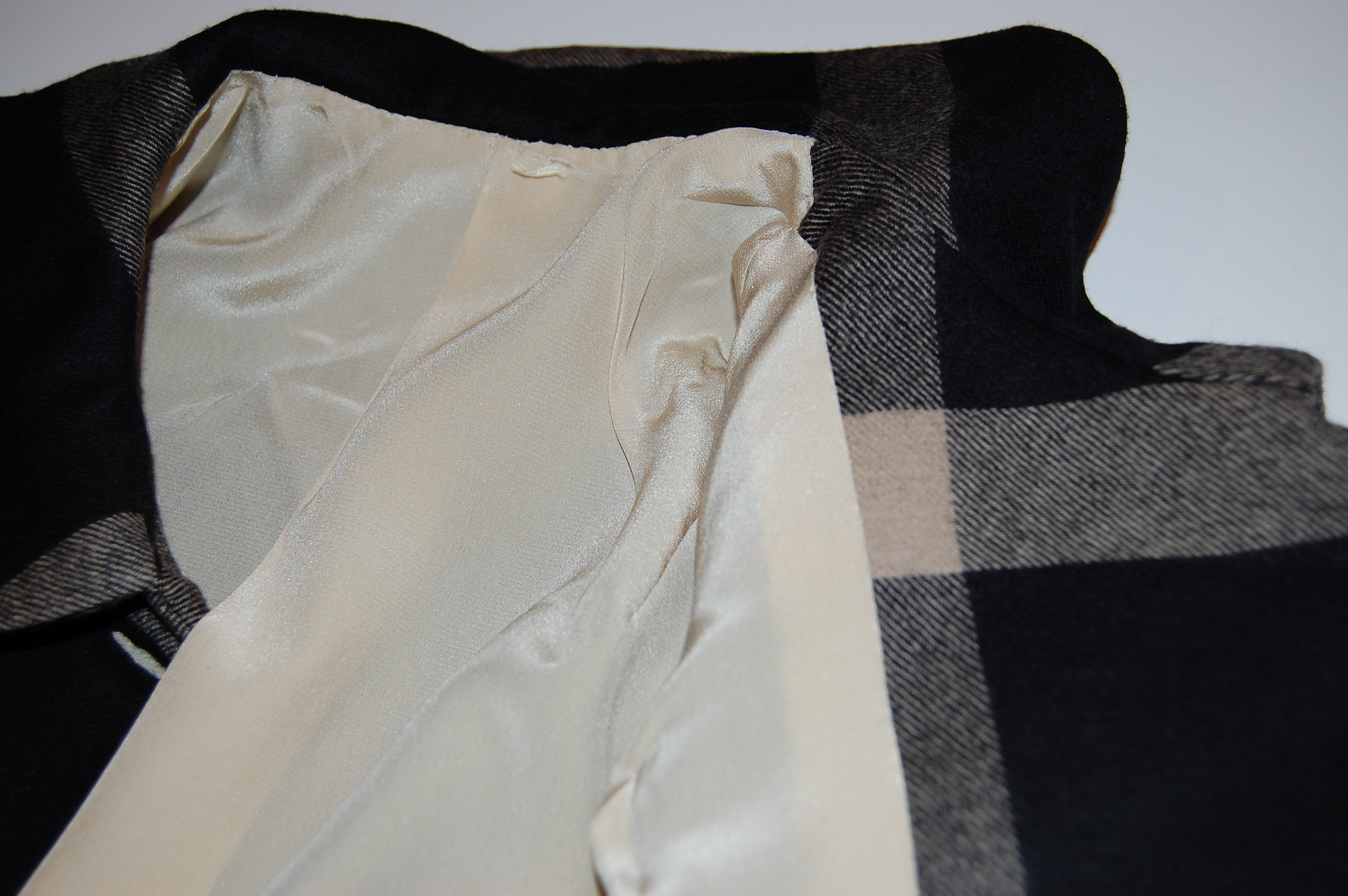
Finally here is a view of inside the neck, showing the lining and just a bit of the collar.

So – why did I say this project was “kind of” complete?   Well, wouldn’t a simple  blouse in that same lining silk be lovely?  I just happen to have enough fabric to make one (!) – and I’m thinking about using this pattern:

I think this simple shell would make up beautifully in that beige silk. What do you think? (I would wear it tucked in.)

Also, when I purchased the wool, I bought plenty to allow for matching those checks, and the wonderful salesperson at Britex cut the piece generously for me as well – many thanks, dear lady! So – I have enough left to make a simple lined  overblouse, which could be worn just with the skirt for a variation on a two-piece “little black dress.”  Memo to self:  move this idea to the top of my “sewing to do” list for next Fall!

3 Comments

Filed under bound buttonholes, kimono sleeves, Uncategorized, vintage Vogue patterns from the 1950s, Vogue patterns

Quiz: Match the fabric to the pattern

If you follow this blog, you’ll know that I have promised a “next” post on a suit which I’ve been working on.  Another project (non-sewing) has taken me away from it for a few days, so it’s not quite finished yet.  However, to keep my promise, I’m offering a teaser:  can you pick the pattern which I am using to make my suit?

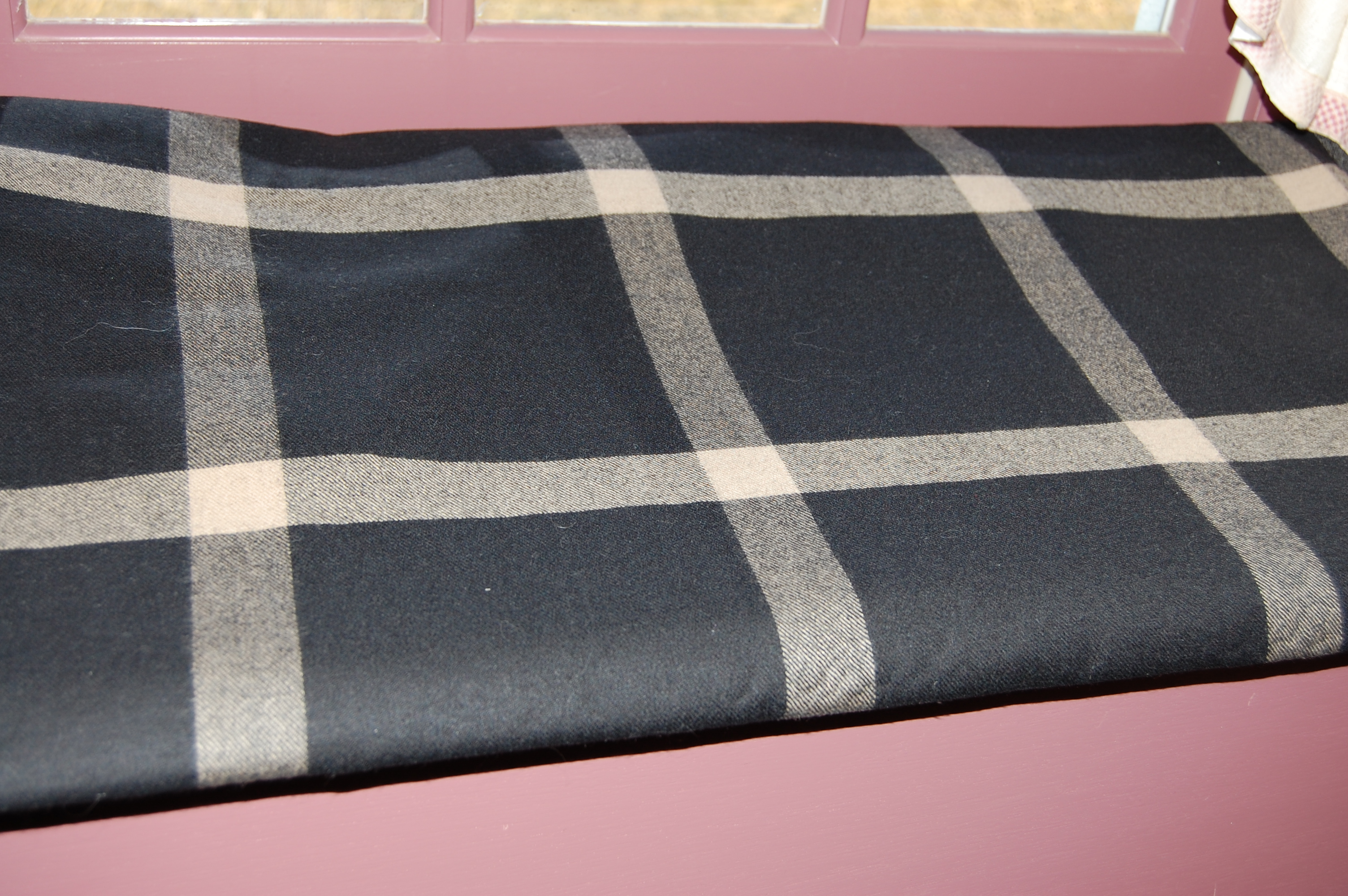
Here is the fabric, a lovely, finely woven and incredibly soft, windowpane check wool from France, which I purchased at Britex last summer in San Francisco:

The repeat on this fabric is 7", so it's a fairly bold check in soft black and beige

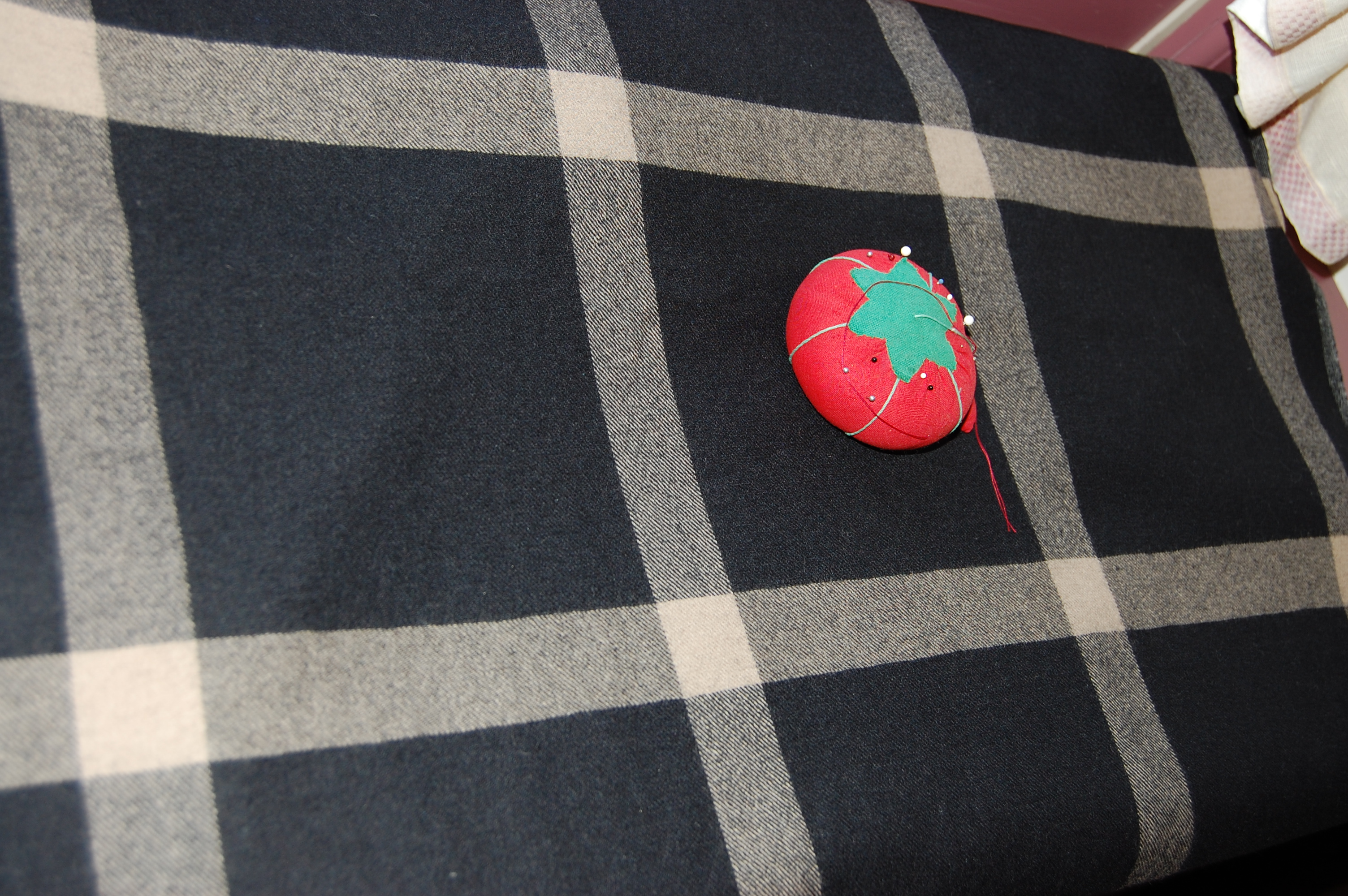
Here is another shot of the fabric, with my tomato pin cushion on it to help you determine its scale.

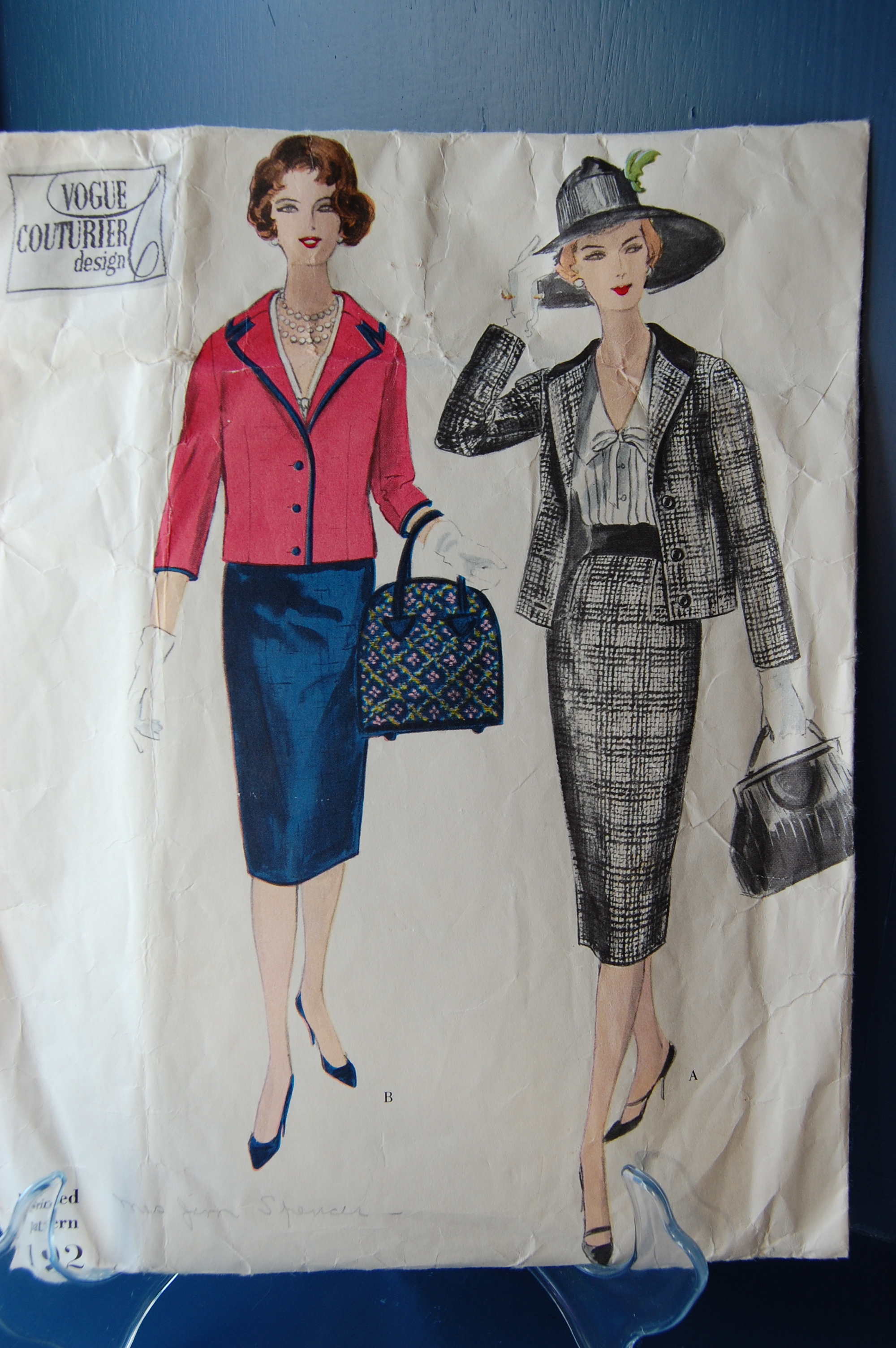
And here are four patterns.  Which one do you think I selected to make in this fabric?  (Click on the photos to see the patterns in more detail.)

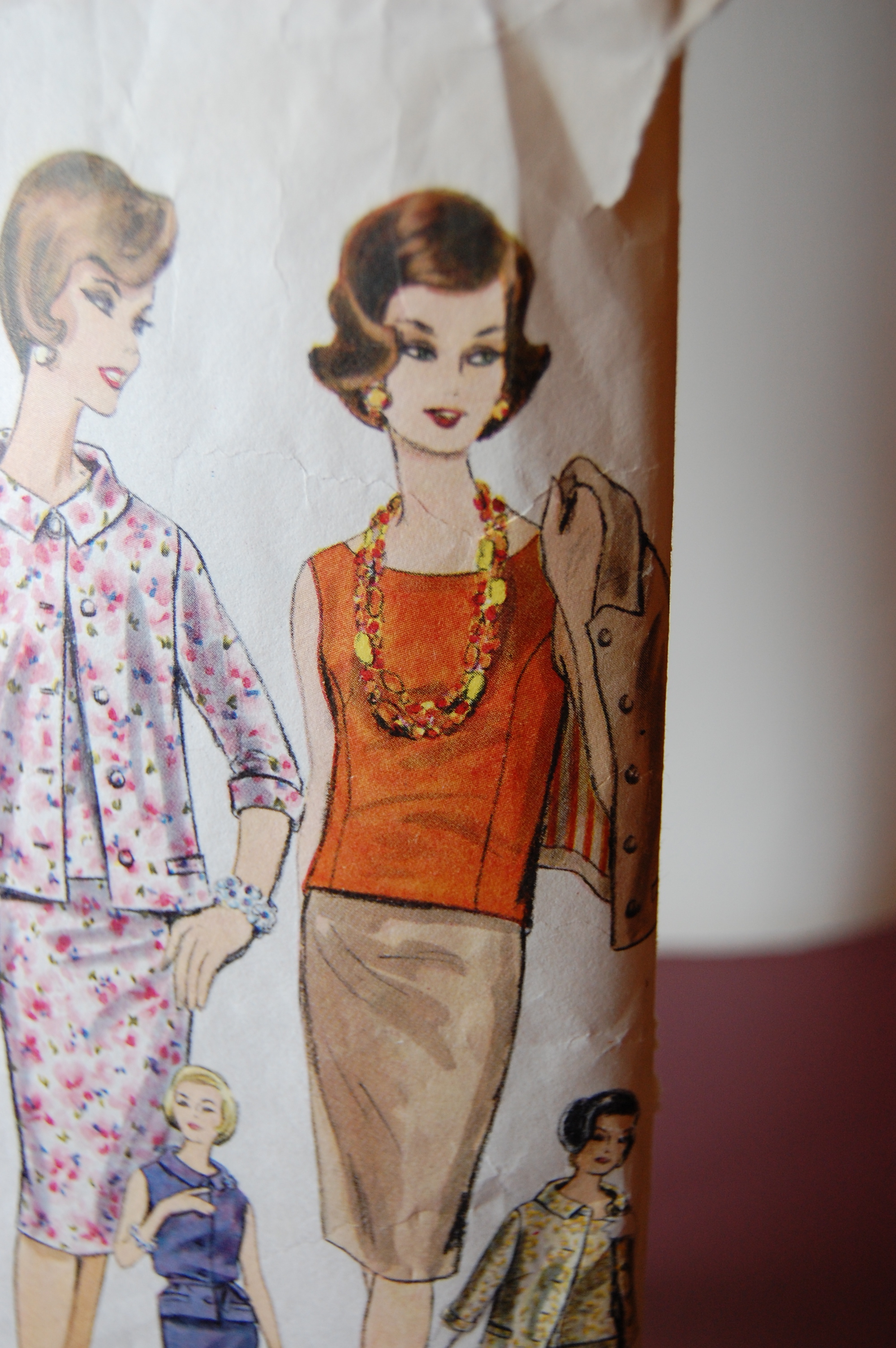
Choice # 1: This pattern is copyright 1958. I featured it in an earlier post.

Choice # 2: Here is another pattern which I have already featured in an earlier post. It is copyright 1959. This pattern includes the blouse pattern, too.

Choice # 3: This pattern is also copyright 1958. It has kimono sleeves rather than set-in sleeves, and the skirt has no darts; rather the seams are curved to fit the hips and waist.

Choice #4: There is no copyright on this pattern, but I judge it to be from about 1962 (the hairdos and the increased pattern price are good clues!) This pattern also includes the blouse pattern.

Keep in mind that this fabric presents significant “plaid matching” challenges, which I had to consider when I decided on the pattern.  The more seams in a pattern, the higher the challenge (usually).  So – was I safe and cautious, or gutsy and daring?

5 Comments

Filed under The Conde Nast Publications, Uncategorized, vintage Vogue patterns from the 1950s, vintage Vogue patterns from the 1960s

Does sewing suit you?

Last week I saw a television spot, which gave a short biography of the wife of someone who is in the news quite a bit right now.  The reporter/commentator referred to the wife’s modest upbringing, with a statement that her mother even had to make her childhood clothes for her (to drive home the point about them not being wealthy, I suppose.)  The reporter then went on to say that now this wife only wears the finest (sniff, sniff) tailored suits, as if to imply that wearing all those homemade clothes is something she’d rather forget.

Well, pardon me, but what a disparaging thing to say about sewing!  Obviously, the reporter has never experienced the satisfaction of sewing for herself or for someone else, nor does she have any idea how ubiquitous home sewing was in the 1950s, ‘60s, and ‘70s.

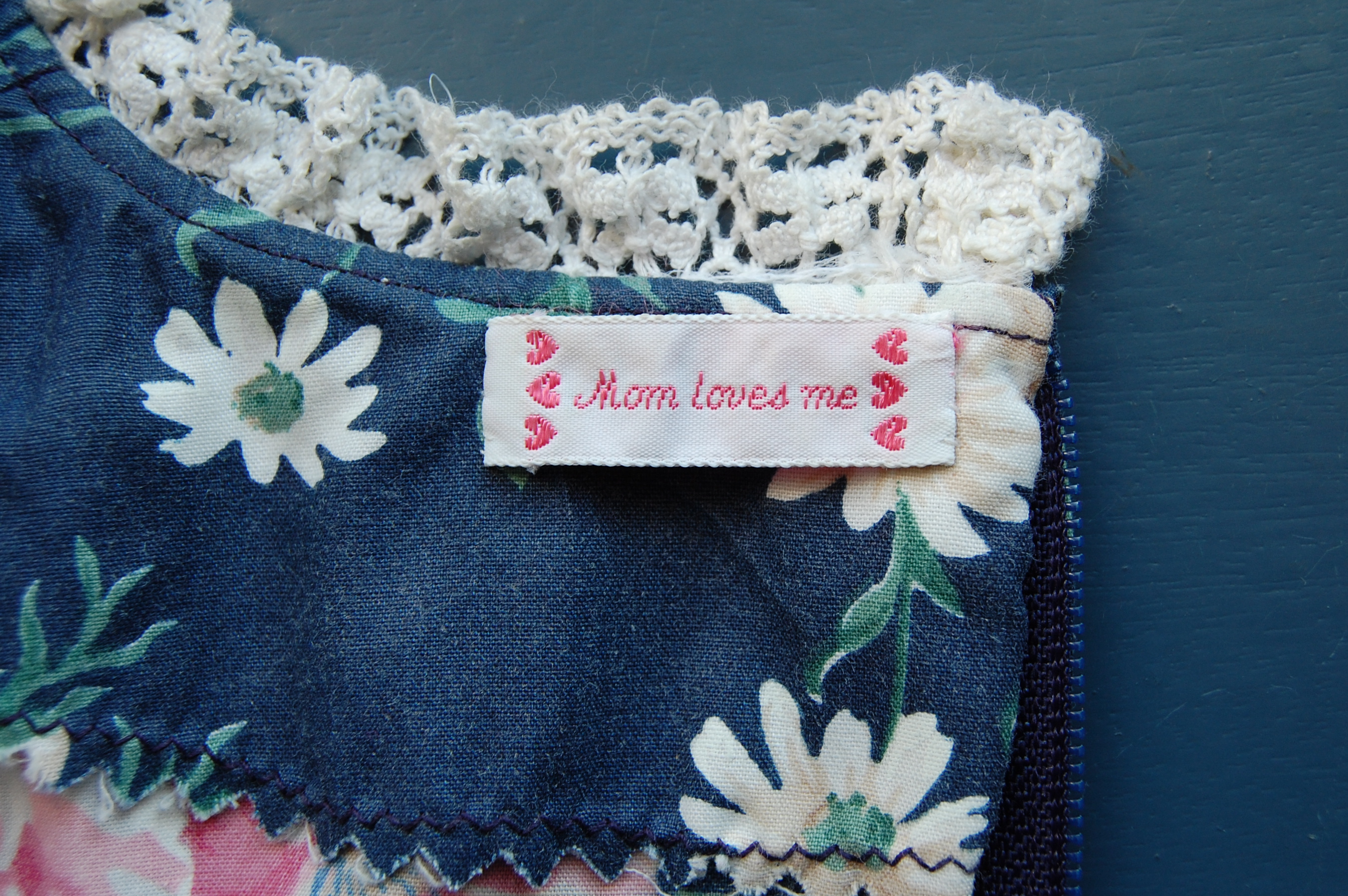
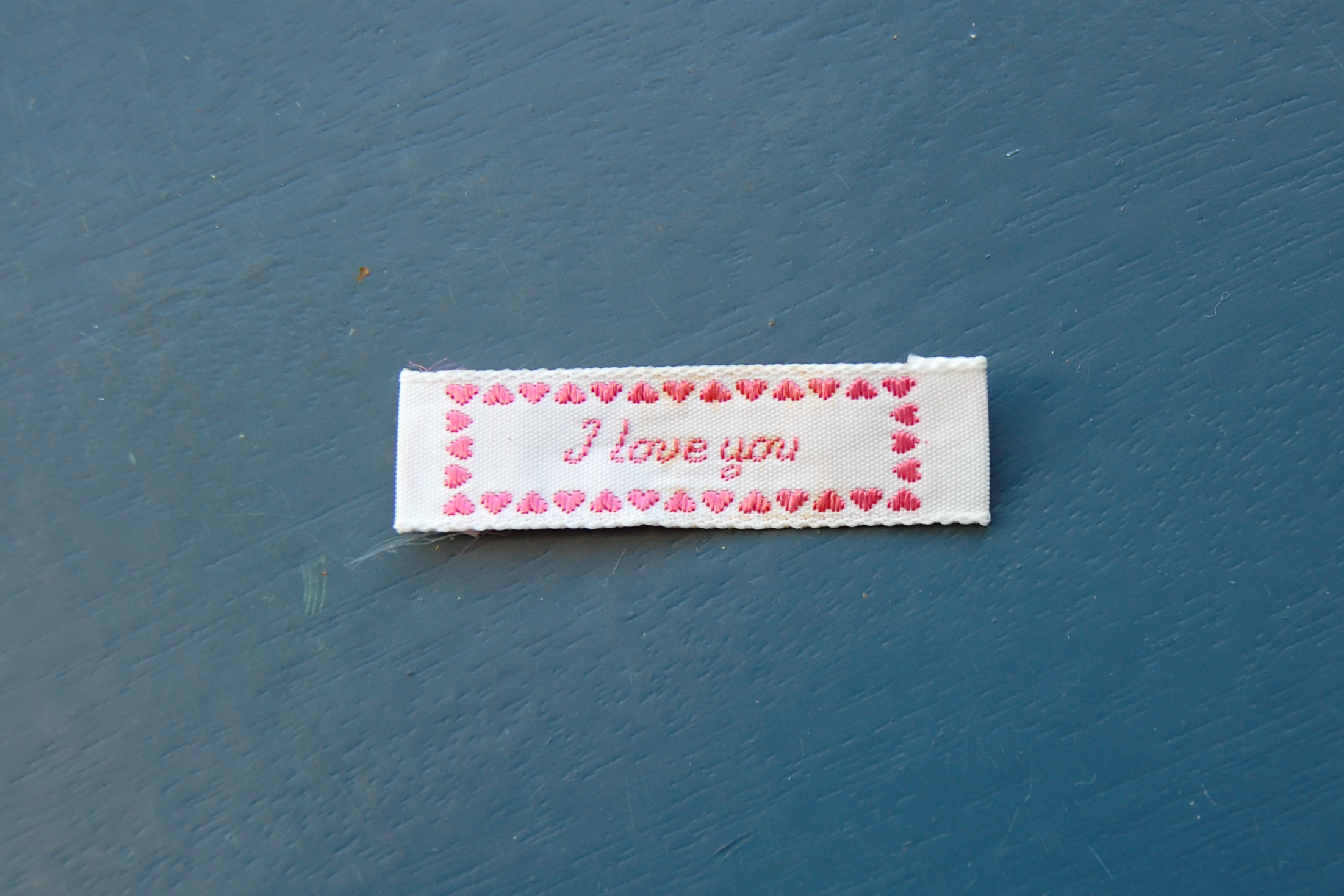
This little tag can tell you exactly why a mom sews for her child...

And this little tag can tell you why those of us who sew, do so for family and friends of all ages.

All of this got me thinking about the pleasure I get out of sewing, of being creatively  busy, and well, I just thought I’d share some of my thoughts about why I enjoy sewing, and especially fashion sewing, so much.  I know there are some of you who are not sewers, but I’ll bet most of you have a mom, or aunt, or sister, or know someone who is, so I hope my thoughts will have some relevance for you, too.  So here goes – my essential eight:

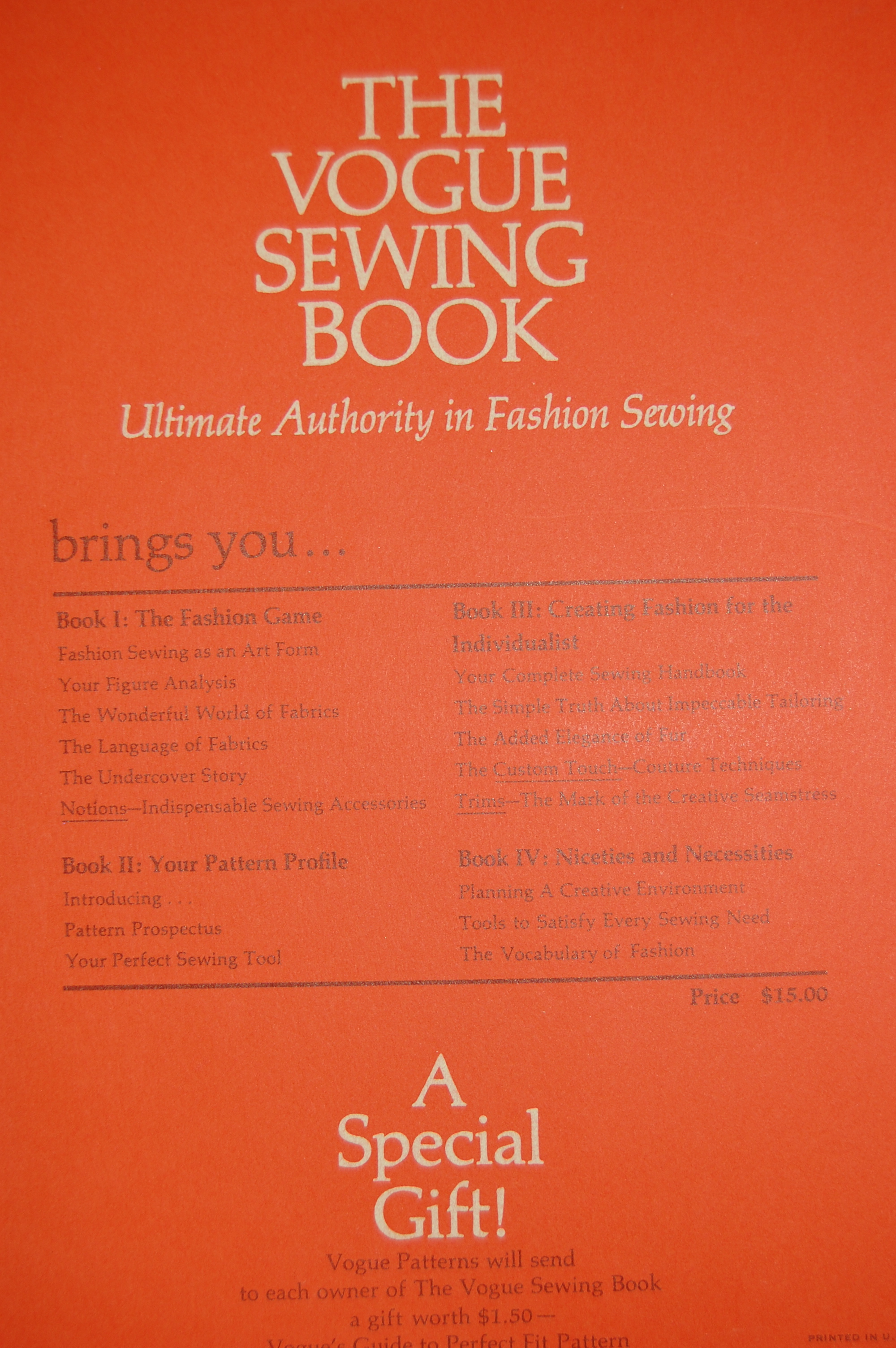
#1:  In 1970 when I was still in college I asked for and received The Vogue Sewing Book for Christmas. Its first chapter is entitled Fashion Sewing as an Art Form and this is a direct quote:  “A person who sews is a creative artist because she individualizes fashion to her own special preferences and requirements.” Plain and simple, I like being creative and an artist.

Here is my copy of The Vogue Sewing Book, with its slipcover. I can't say enough good things about this book! Copies of it appear for sale on eBay and Etsy occasionally.

Here is a fly sheet which came with the book. Listed right at the top is "Fashion Sewing as an Art Form."

#2:  The pleasure of choosing and handling beautiful fabrics is indescribable – go to a store like Britex in San Francisco and you’ll see how intoxicating fine fabrics can be. Yes, I’m a hopeless textilian.

#3:  The saturation, variety and combination of colors in silks and wools, in linens and cottons is visually so satisfying and inspiring.

#4:  I am a very goal-oriented person:  I love the practice of starting a project (garment) and seeing it through from start to finish, and then once it’s complete, moving on to another one.  In other words, sewing is composed of finite steps – there is a beginning, a middle, and an end – and then you have (hopefully, at least) something to show for it.

#5:  I love detail work (like hand-sewing) – and good sewing has lots of details to it!

#6:  Vogue patterns – and especially the ones from the ‘50s, ‘60s and ‘70s, and the designer ones – are such a pleasure to use.  Most are gems of design, construction, and style.

#7:  Speaking of construction, the challenge of putting the parts together, and figuring out the intricacies of construction is just so much fun.  When I get a new (old) pattern, the first thing I do is take out the instruction sheets to read them. Hm-m-m, do you think I might be a little nuts – or just an engineer at heart?

#8: I get the heebiejeebies if I sit too long – and sewing is definitely an active sport!  I’m constantly up and down from my machine, back and forth from the ironing  board, standing at my work table, picking up pins off the floor, etc. etc.  No fanny fatique from this activity!

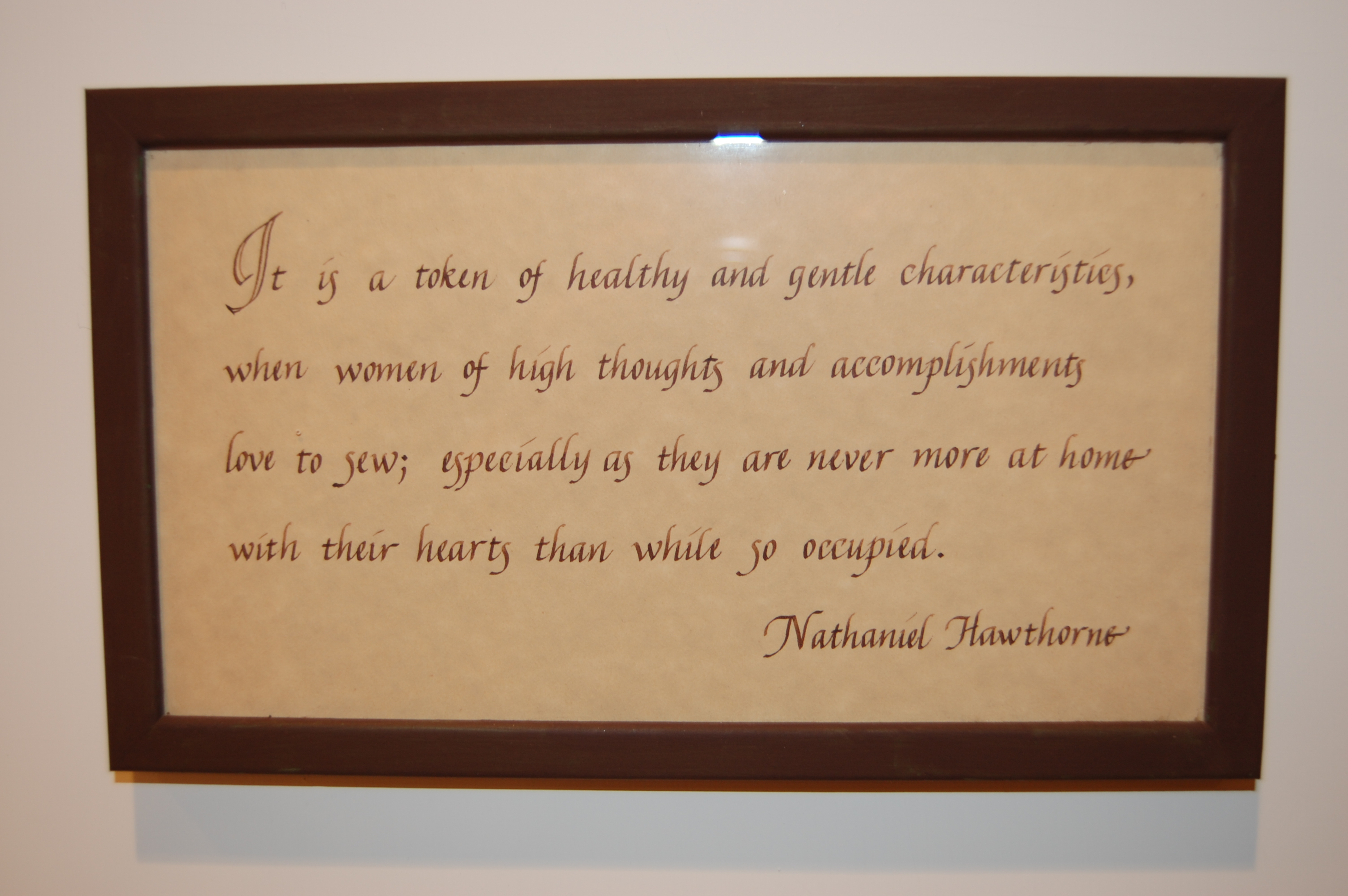
I’ll end by deferring to a great American writer for his poignant statement about women who sew:  “It is a token of healthy and gentle characteristics, when women of high thoughts and accomplishments love to sew; especially as they are never more at home with their hearts than while so occupied.”  While I can only hope to strive towards high thoughts and accomplishments, being at home with one’s heart is always a good place to be.

Years ago, a friend had this quote from Nathaniel Hawthorne done in calligraphy for me. I framed it and have it hanging in my sewing room.

Oh yes – about those finely tailored suits referred to by the clueless reporter?  I can show her more amazing patterns for beautiful suits than she could ever imagine – and in my next post, I’ll be writing about my newest creation.  Yes, it’s a suit!

4 Comments

Filed under Uncategorized, vintage Vogue patterns from the 1950s, vintage Vogue patterns from the 1960s, vintage Vogue patterns from the 1970s, Vogue patterns

Seeing stars? No…dots!!

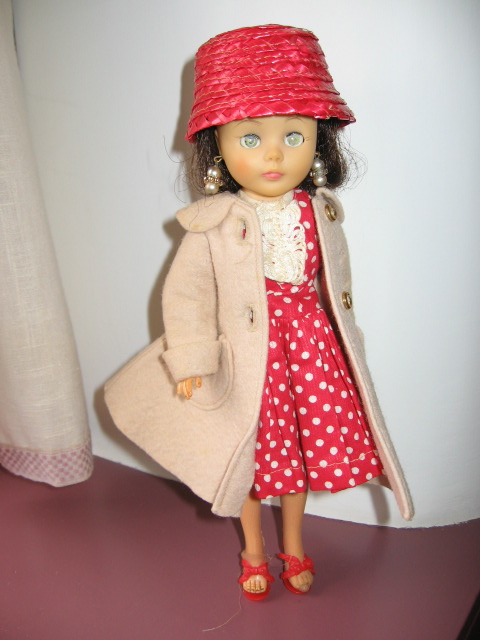
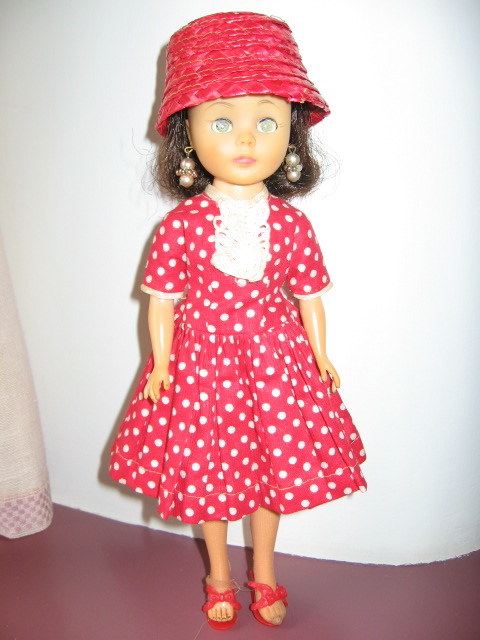
Polka dots, to be precise!  My love of polka dots must have started when I was about 6 or 7, when I received my Toni Fashion doll for Christmas.  She was dressed in a red and white polka dotted dress, with a lovely tan coat, red hat, and high heels.  Here she is, over five decades later: 

This dress could easily have been featured in Vogue Pattern Book for February/March of 1957!

Christian Dior, who died in 1957, was a big fan of polka dots.  Here’s what he said about them in his Little Dictionary of Fashion (first published in 1954 and now available on Amazon, published by Harry N. Abrams, Inc., 2007):

“…They are lovely, elegant, easy, and always in fashion.   …According to their color, they can be versatile…  Black and white for elegance; soft pinks and blues for prettiness; emerald, scarlet, and yellow for gaiety; beige and gray for dignity.”

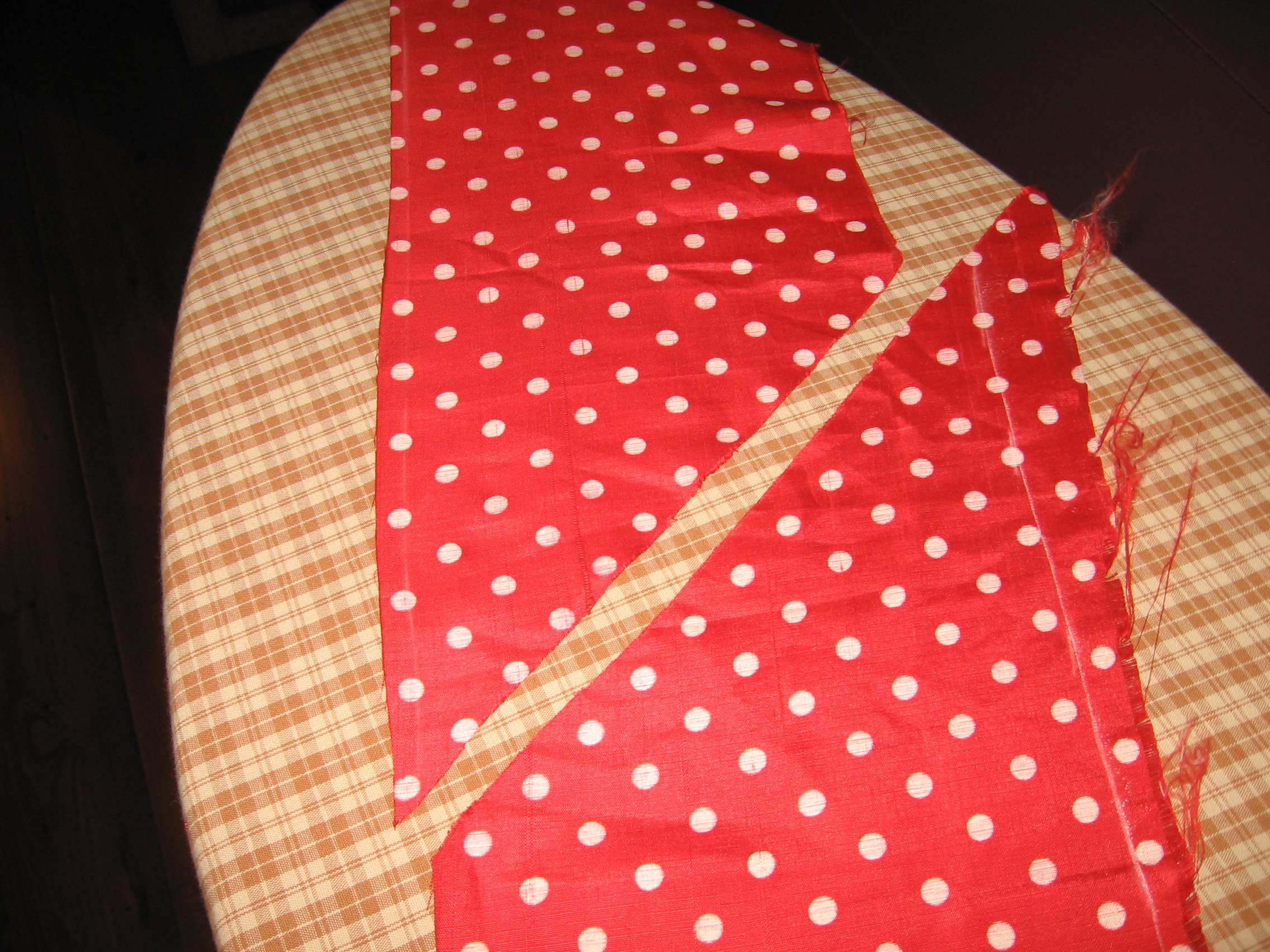
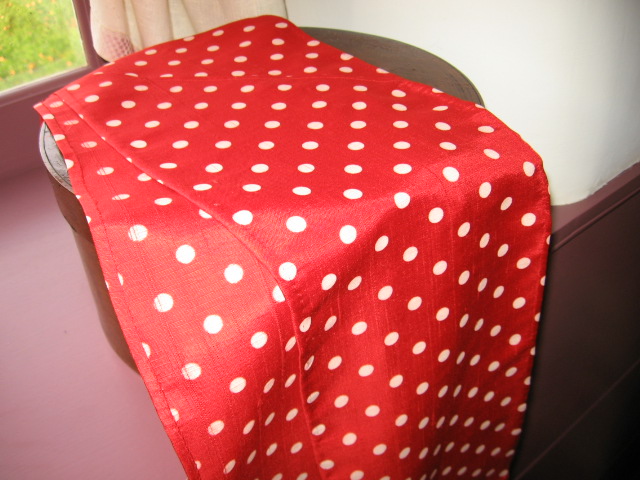
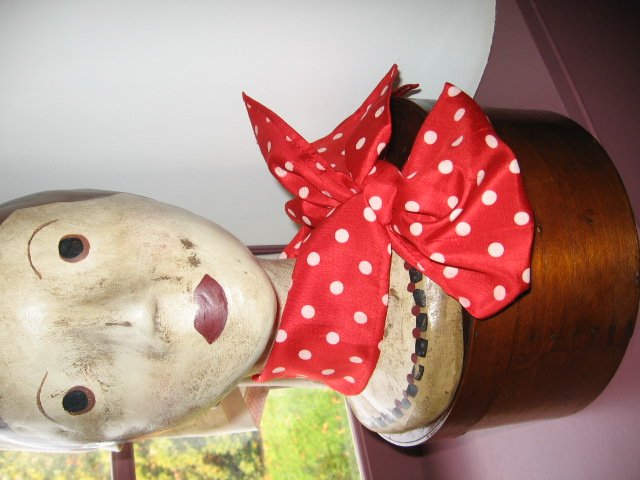
For my “going away” outfit when I was married in 1973, I made a beige silk suit with a red and beige polka dotted blouse.  Sadly I no longer have either the suit or the blouse, but… never one to throw away any scrap of fabric that can be used for something, I found a piece of the silk blouse fabric in one of my “fabric” drawers.  It was an odd shape, but the more I looked at it, the more it became apparent that I could actually make a scarf out of it.  Here’s what I did:

I cut the silk into two pieces, each with a true-bias end. I marked it with chalk to get a precise cutting line.

I joined the two pieces together with a flat felled seam and hand-hemmed around all four sides.

Here it is finished and ready to wear.


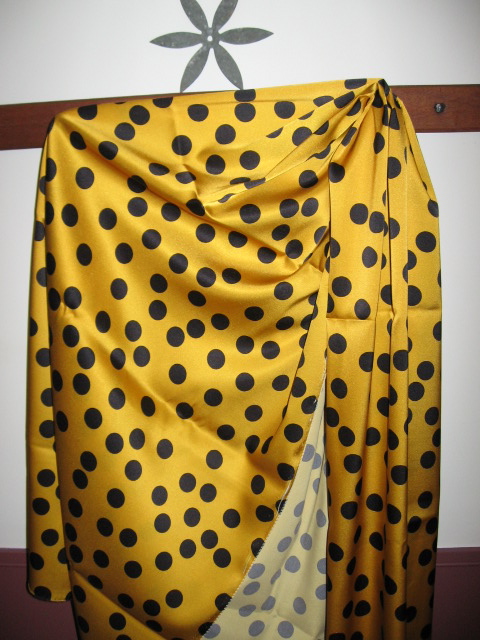
Last summer when my husband, Tom, and I were in California to see our son, Nate, I made a memorable trip to Britex Fabrics on Geary Street in San Francisco.  I knew when I saw this fabric, I wouldn’t be able to leave the store without it:  pure silk charmeuse  – by Dolce and Gabbana, no less!

Here it is propped over two pegs.

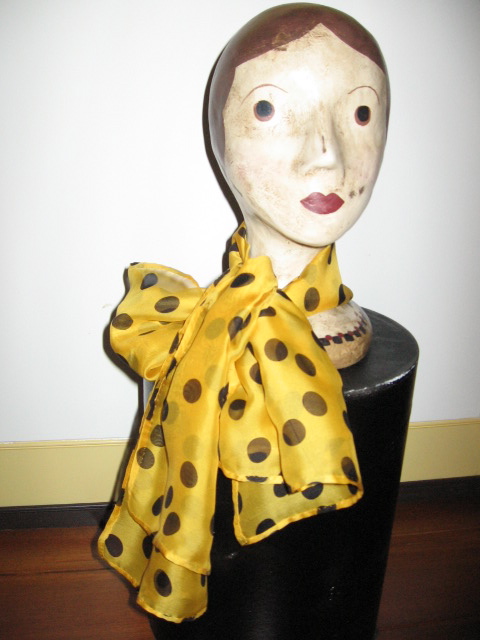
They also carried the matching silk chiffon.  I have been looking for the right pattern to make a blouse out of the charmeuse, and the chiffon is now this scarf, which gets comments whenever I wear it!

In my opinion, dots are stars!

Leave a comment

Filed under Polka dots, Scarves