Tag Archives: Choosing buttons

Chance of Sprinkles

Whatever possessed me to decide to make a coat during this hot, hot Summer?

Actually, I have a (somewhat logical) answer to that question!  For starters, it’s a raincoat.   And how I came to sew a raincoat is a good example of what keeps the wheels in my head turning!

While perusing the website for Britex Fabrics last Summer, I came across its offerings of rainwear fabrics.  Just out of curiosity, I took a look at them, and I was immediately smitten with the “French Winter White Water-Resistant Rainwear Fabric”.
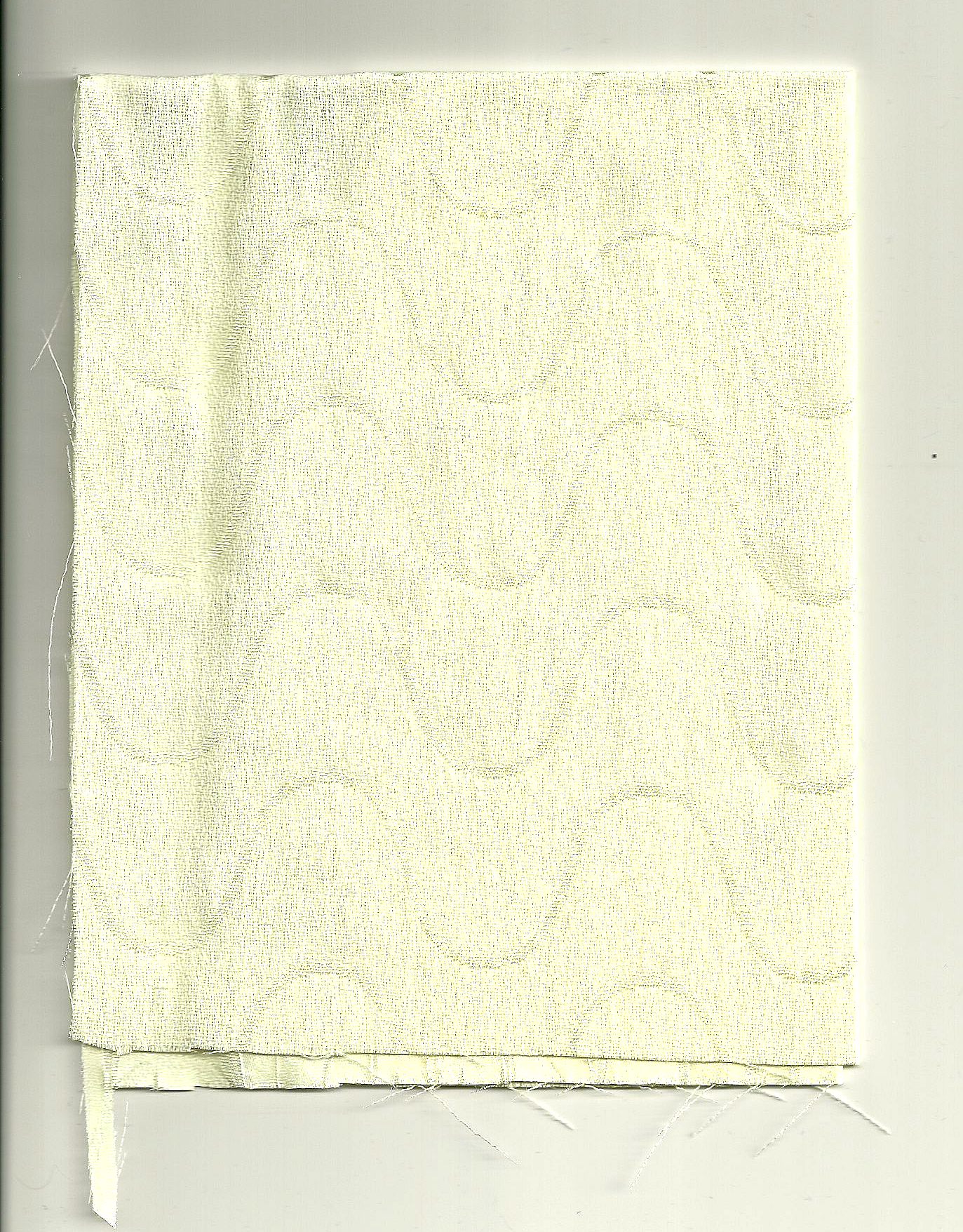
The woven “wave” design in this fabric really caught my attention.

I sent off for a swatch, which confirmed for me the graceful woven design and lovely creamy color inherent in this fabric.  A subsequent trip to California gave me the opportunity to see the fabric in person, and I decided it was time to “commit”!  I had frequently felt the need for a “dressy” raincoat, so I thought, “Why not make one?”  I also knew I had the perfect pattern  – this “swing” coat design from 1957.
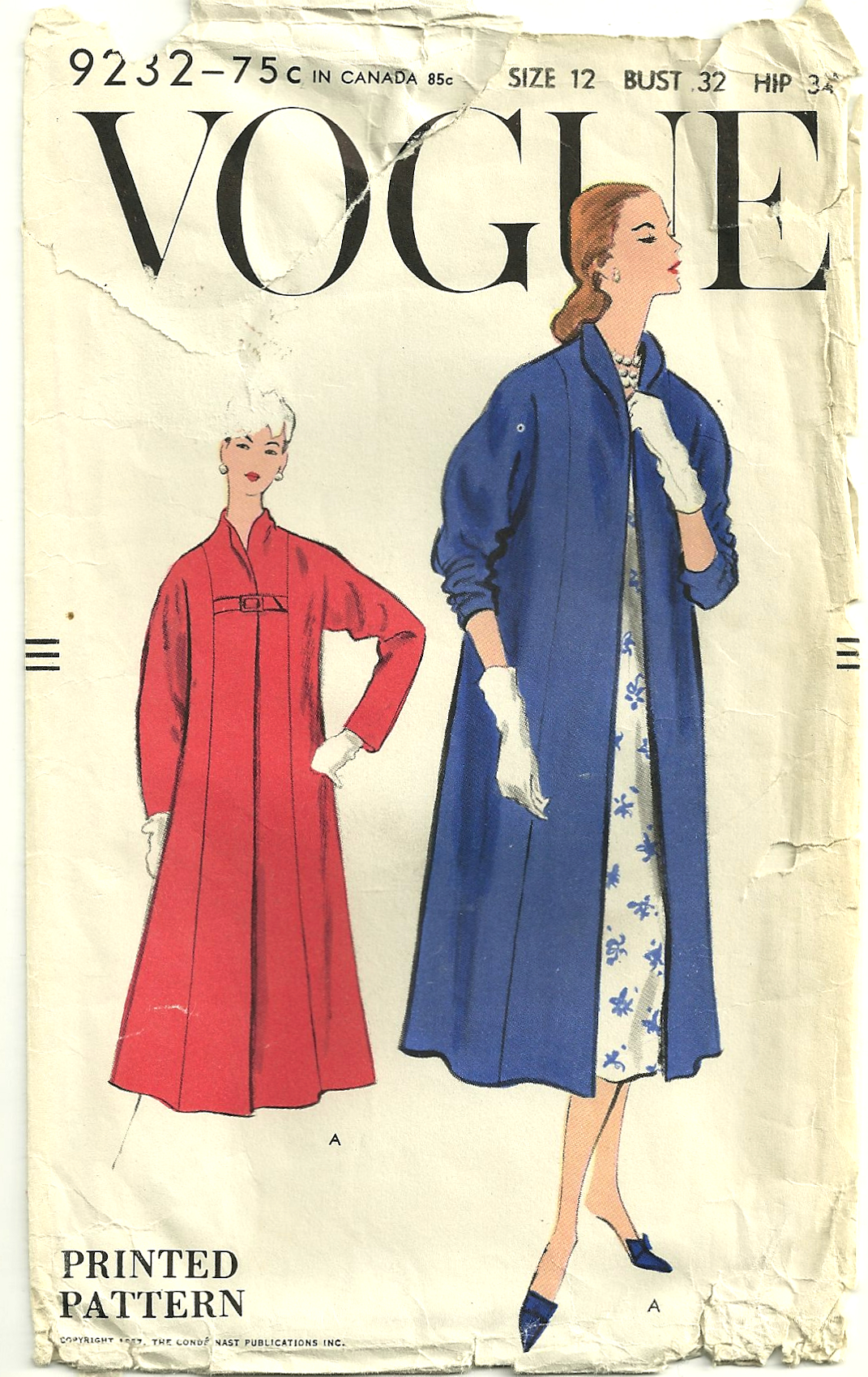
I remember swing coats from my childhood – and now I have one!

I figured the kimono sleeves and the loose fit would be great for wearing over  dresses or suits, and the collar can be worn turned up or folded down, depending on the inclement conditions!  Well, it only took a year to get to it, which I decided was long enough.  Oh yes –  I had one more incentive to “get to it”. When my friend, Nancy C. opened up her family’s button box for me to pick out some treasures, I spied this beautiful single glass button:
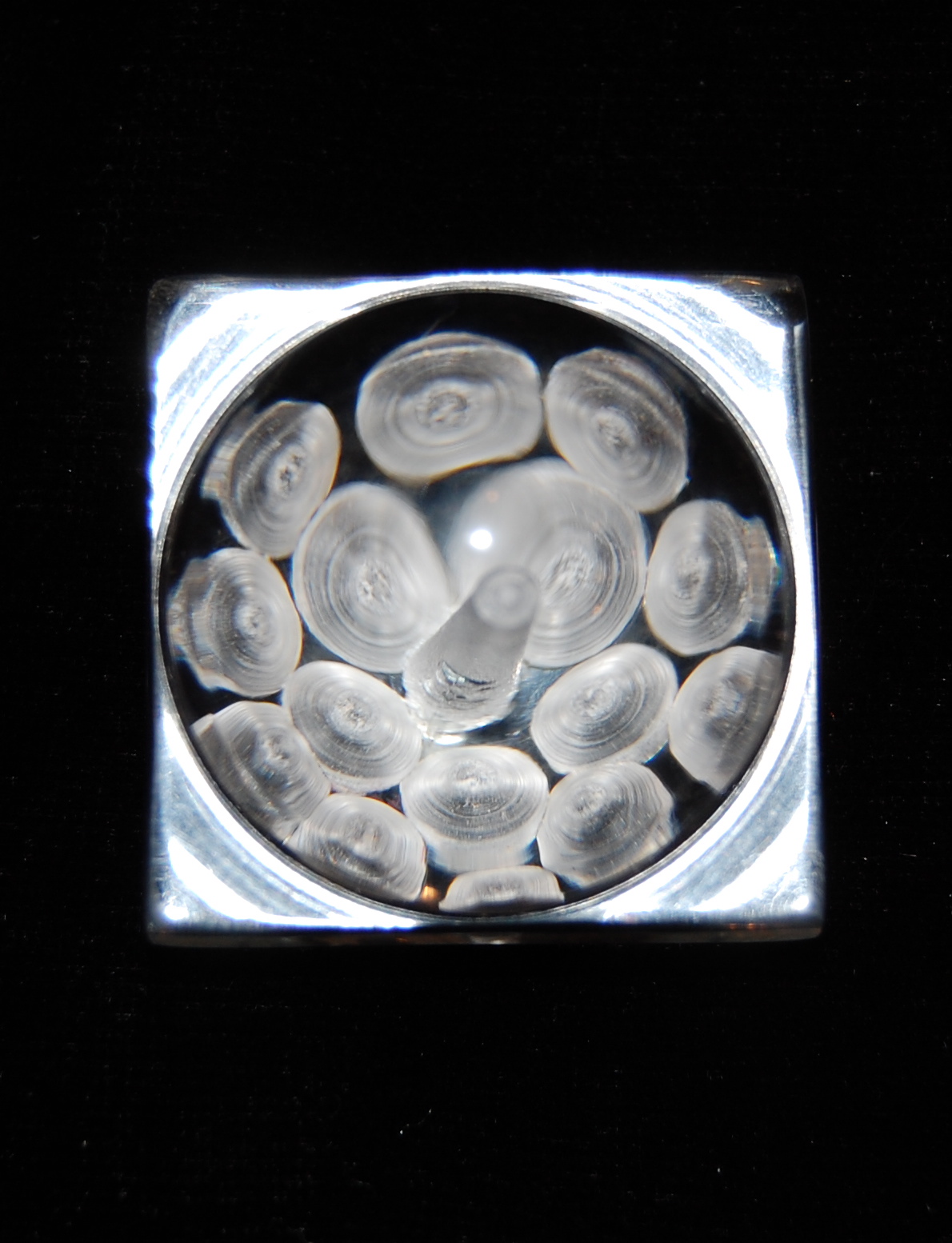
I placed this button on a piece of black velvet so that the design would show up. It is a little more than an inch square in size.

The design in it reminded me of raindrops – perfect for a dressy raincoat, and, I thought, a perfect complement to the fabric, already in my possession.

Of course, every pattern and project seems to demand certain changes or adaptations, and the count for this one stands at four:

1)   I took a little fullness out of the front side panels.  When I made a muslin mock-up of the pattern, it just seemed a little too full for my frame.

2)   I added pockets to the side seams.  I can’t imagine any coat without pockets, but a lot of the vintage styles (dresses and coats) did not have them.
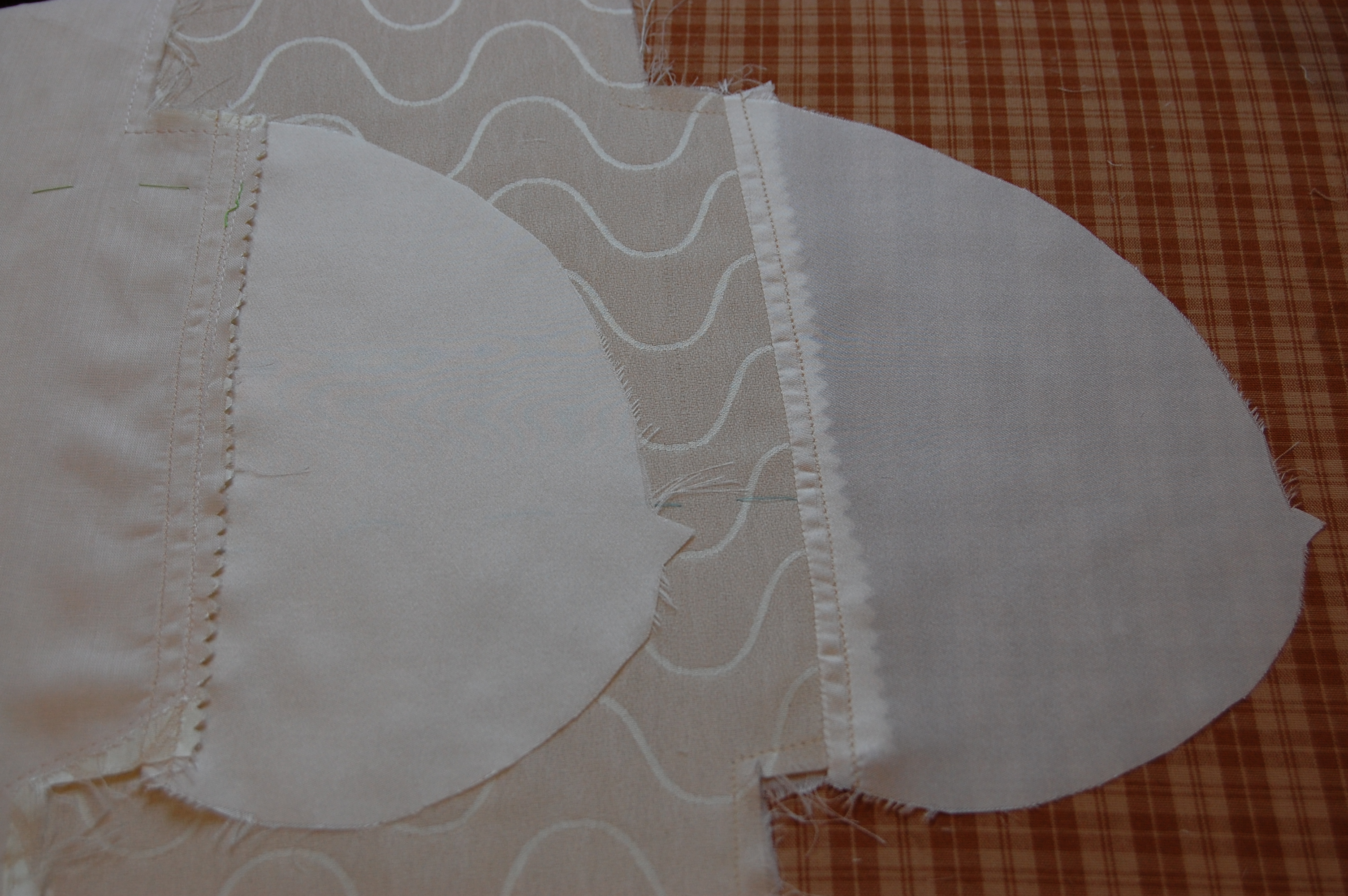
Here is one of the pockets under construction.

3)   Because I wanted to use the glass button, I decided to put in a bound buttonhole instead of using the buckle and band detail as shown on the pattern. (I did make and attach the back belt, however.)
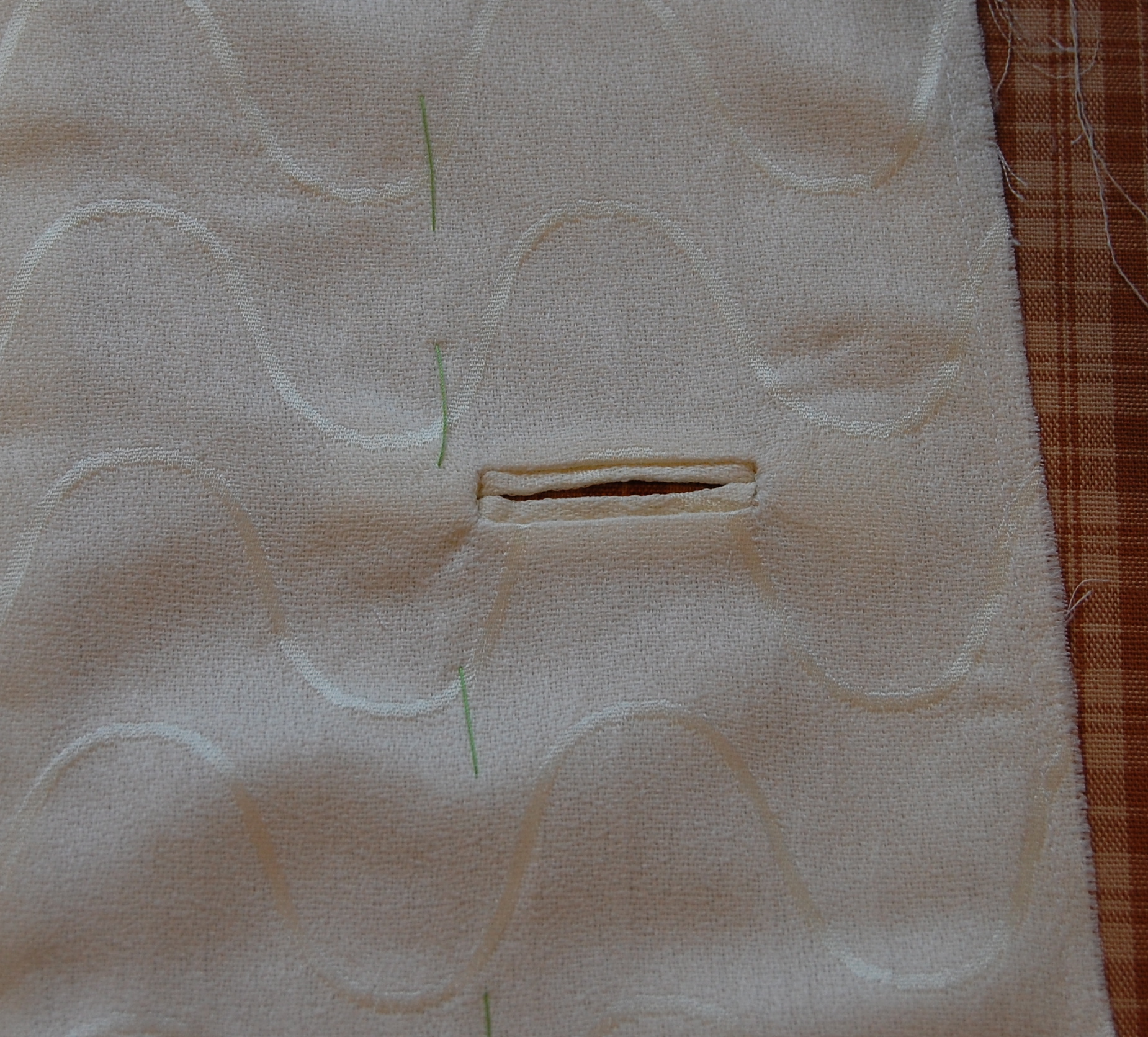
Here is the bound buttonhole placed in the front right section – before the facing is attached.
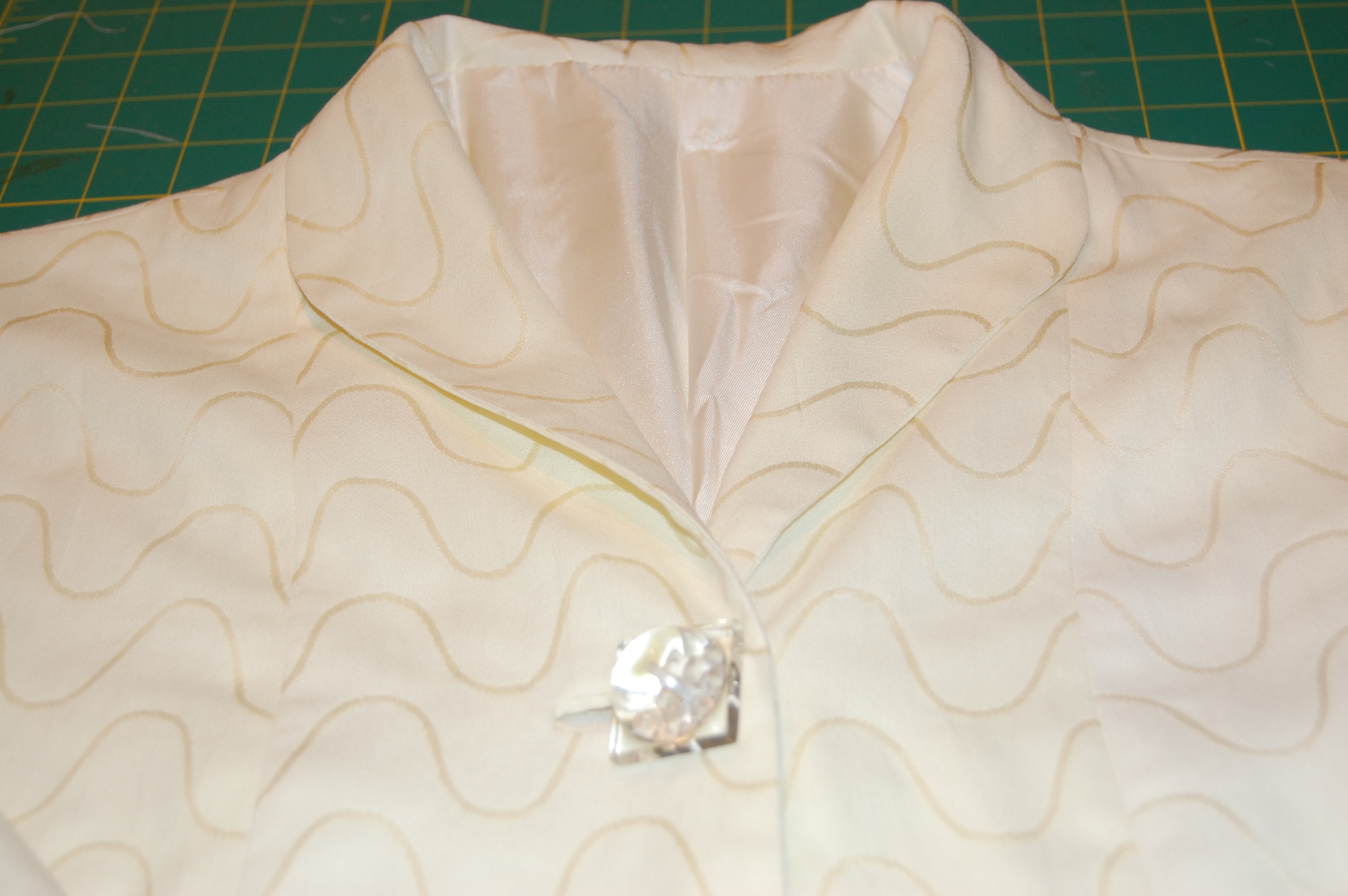
Here you can see the button and finished buttonhole. Click on the photo to see it in detail.

4)   With just a single closure at the top of the coat, I thought I needed something lower on the coat as well, to keep it closed in windy, rainy conditions. However, I didn’t want to interfere with the look of the coat when I might be wearing it open.  Here’s what I came up with:

I made a “tab” with buttonholes on each end.
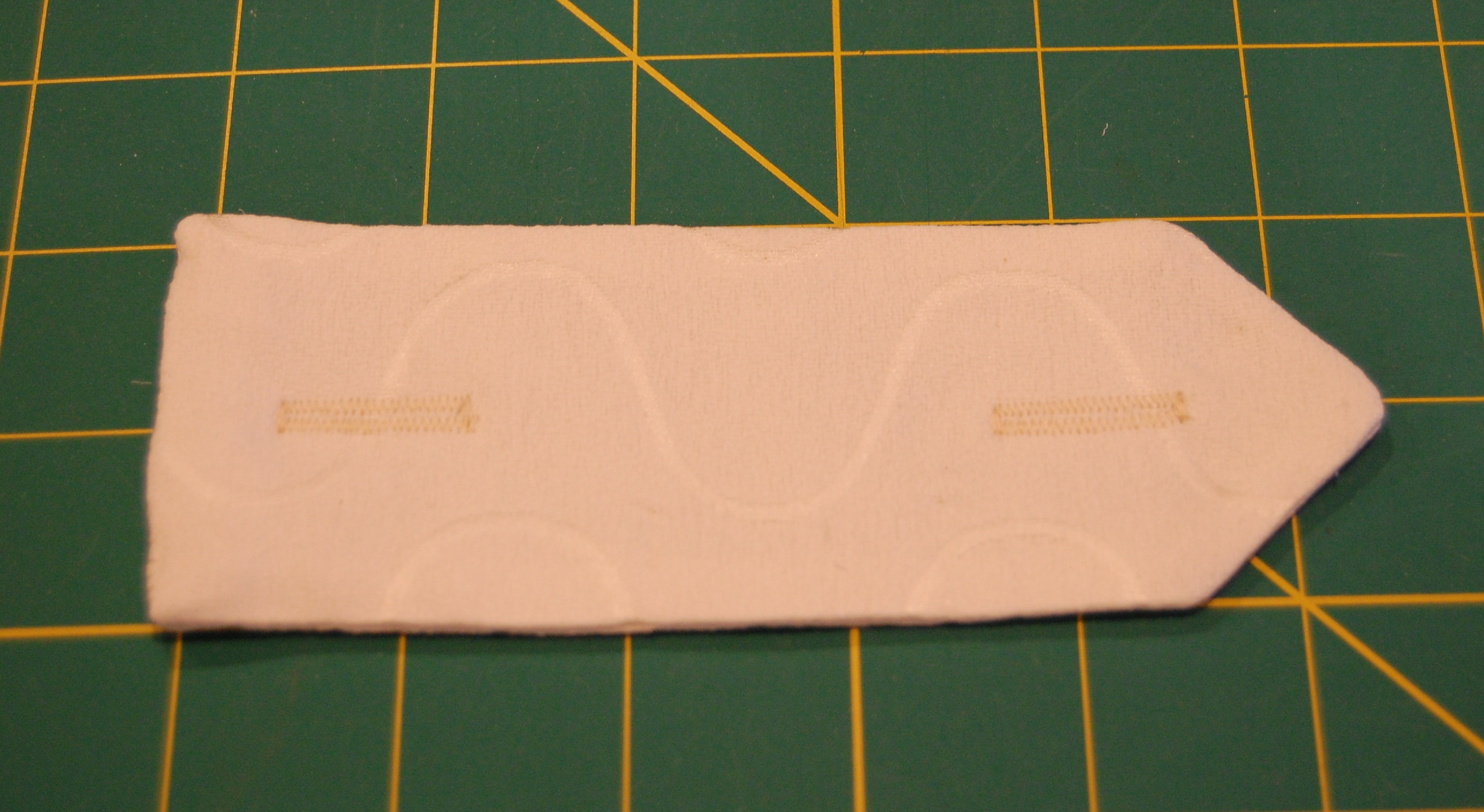
I made machine buttonholes in the tab.

I placed the buttons for it on the inside facings on either side of the coat, about halfway between my waist and  my hips.  It can easily be buttoned to secure the coat, and when I unbutton the left side, the button on the right side allows it to fall down, hidden from view, but easily accessible.
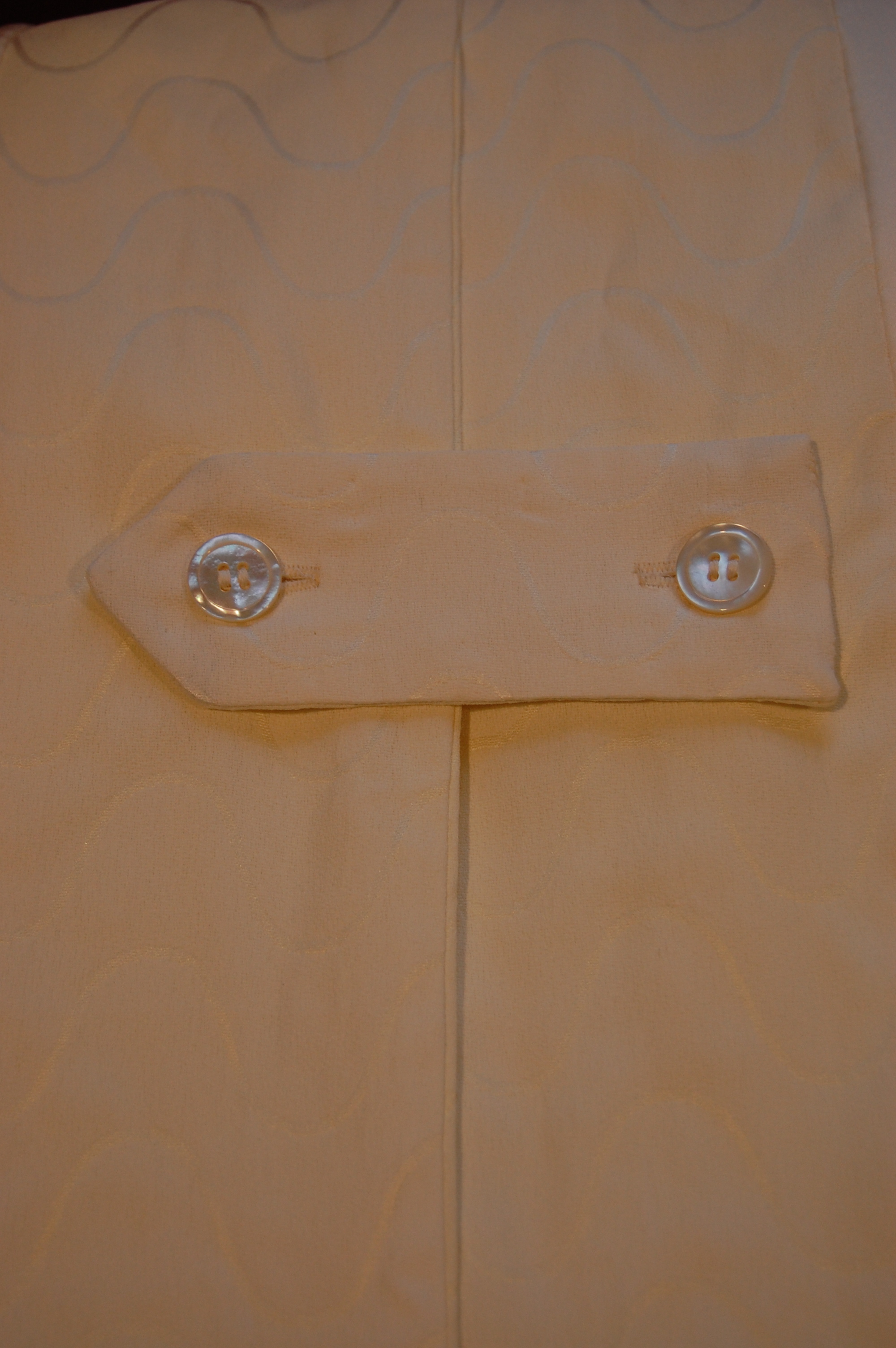
This shows the inside of the coat, with the tab buttoned.
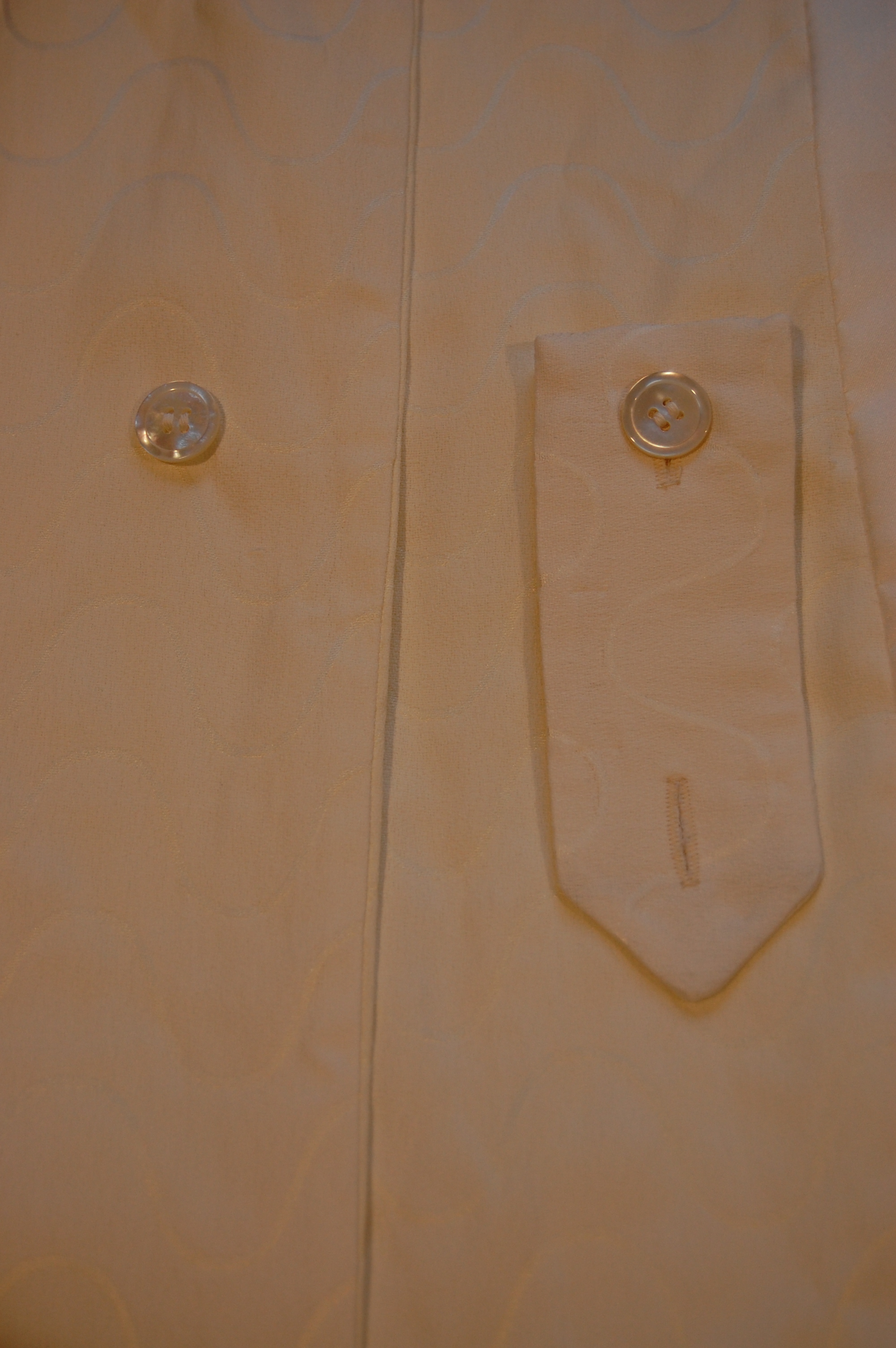
And this shows the tab unbuttoned on one side and hanging down, out of sight – inside the coat.

A few more details about construction:  The rainwear fabric is an acetate/rayon blend which I underlined with rayon voile.
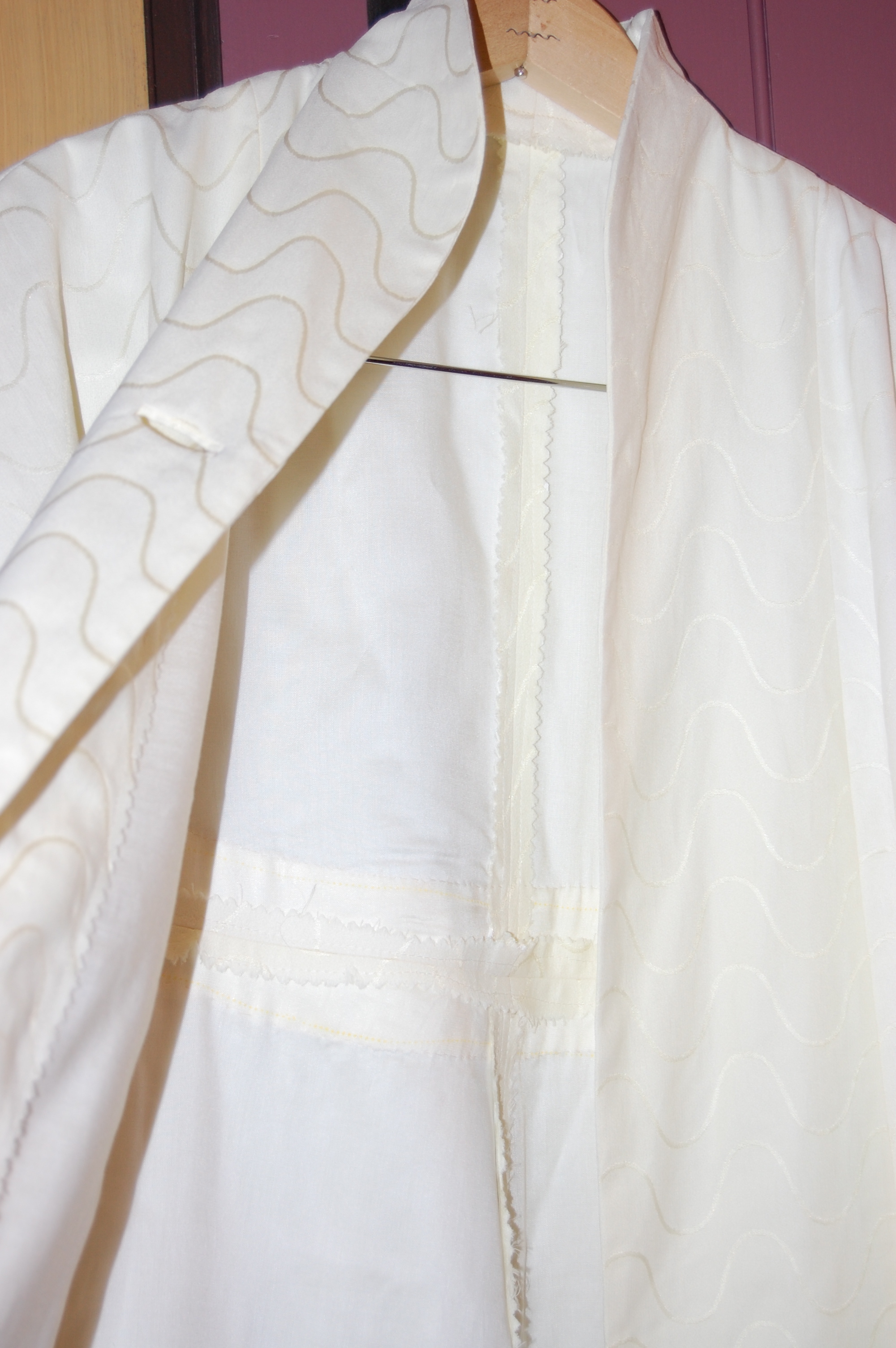
Here is the coat, showing the underlining, before I attached the lining by hand.

I lined it with a pure silk lightweight twill in white.  I would have loved to have lined it with a neat polka dot silk, but I didn’t want any “shadows” of a printed lining to show through.  Guess I’ll just have to dress it up with polka dot scarves instead!  The rainwear fabric was very easy to work with – surprisingly easy, actually.  It drapes beautifully for a pattern like this.  Speaking of patterns, this one was so precise and cleverly engineered (especially the collar), turning it into a really fun project!

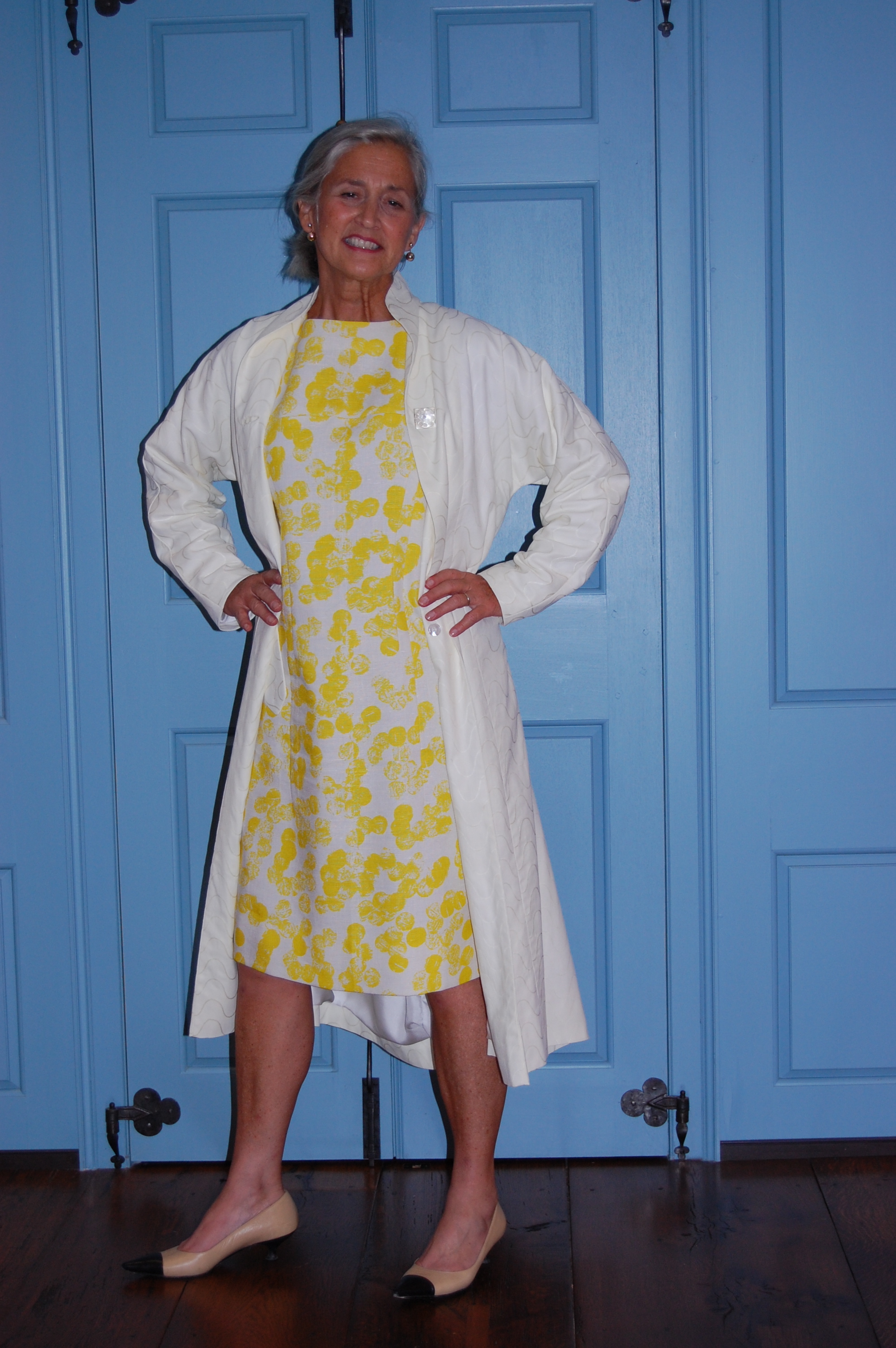
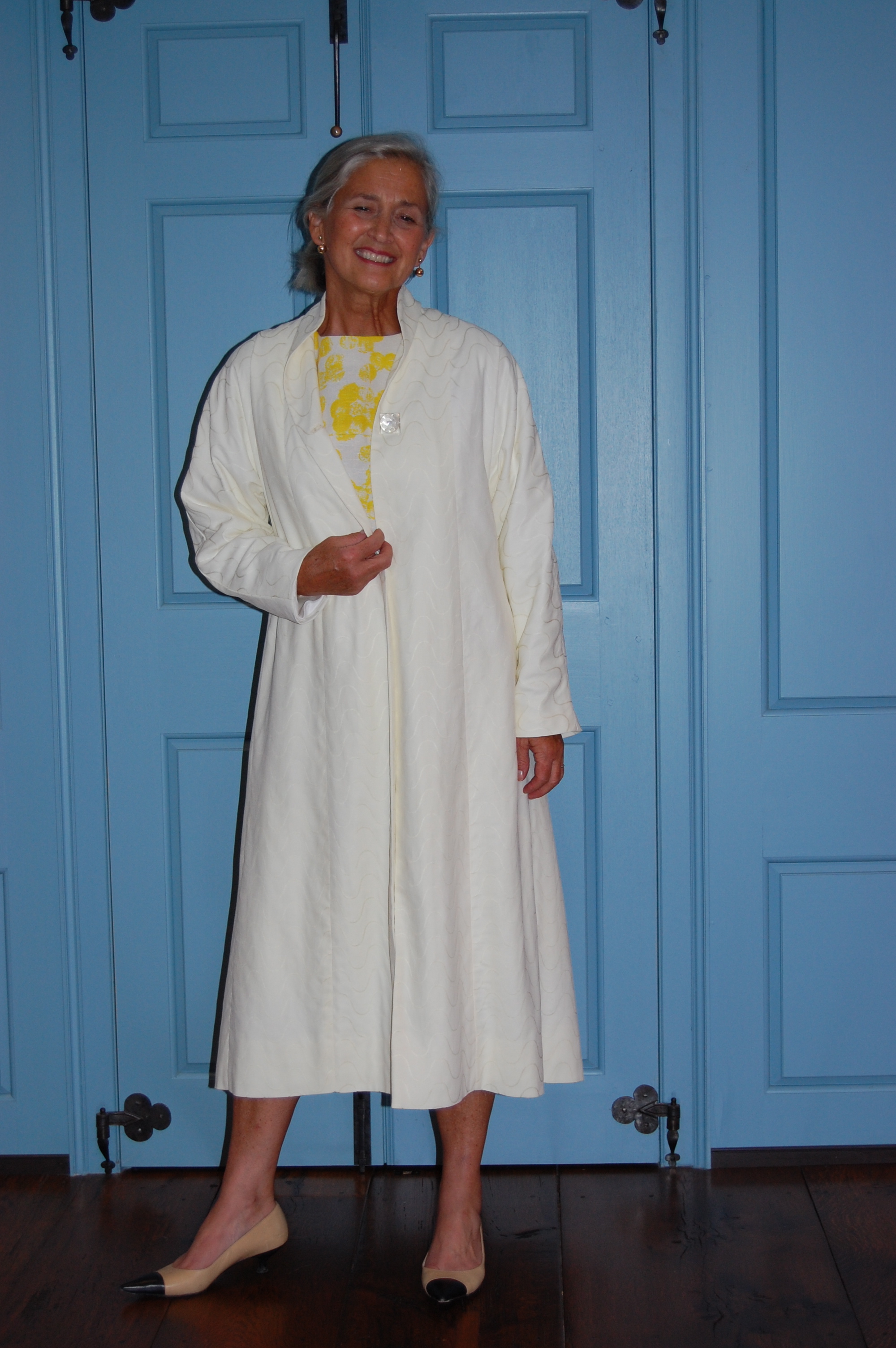
Here are some finished views of my new dressy raincoat:
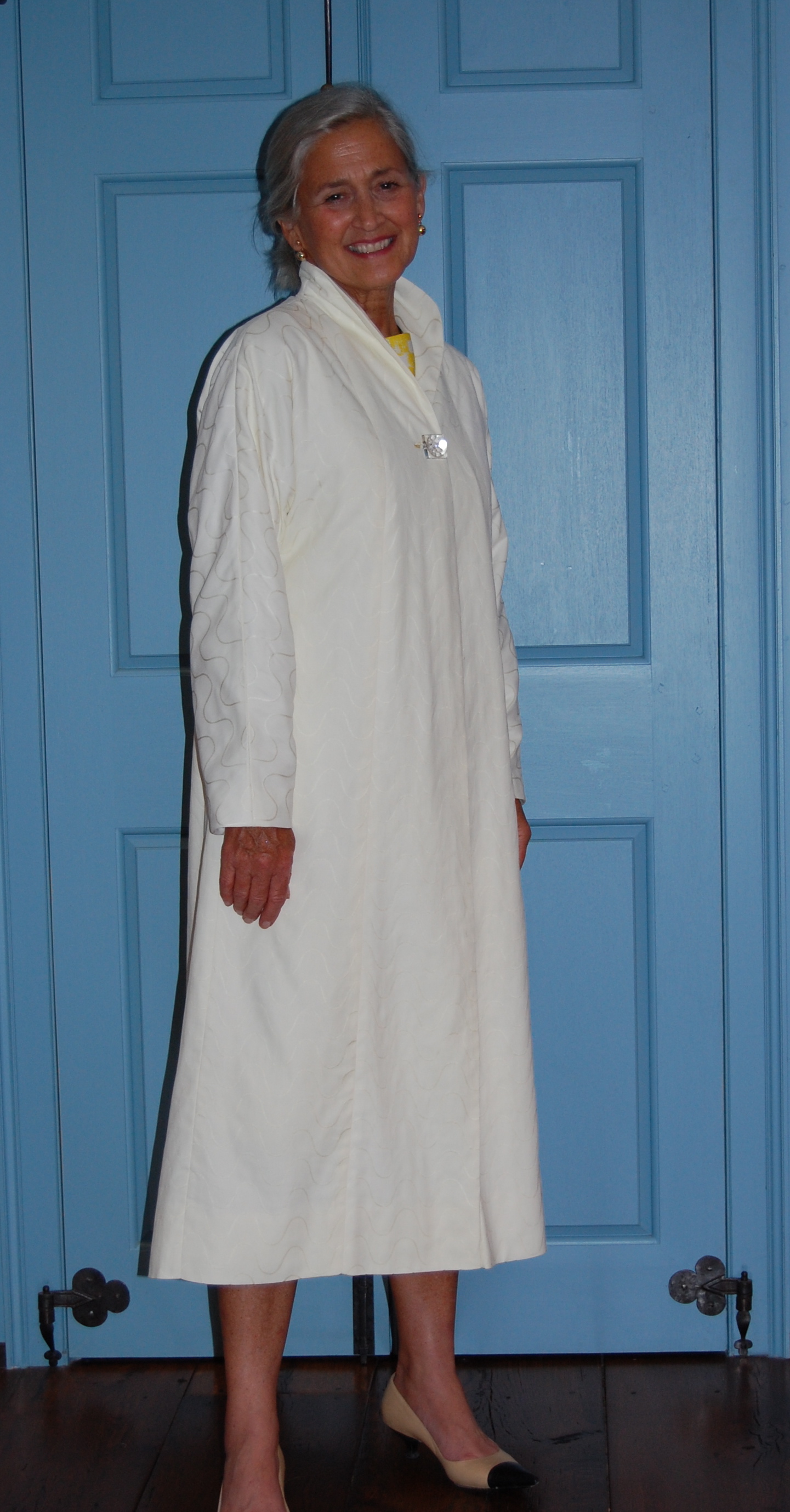
More of the same…
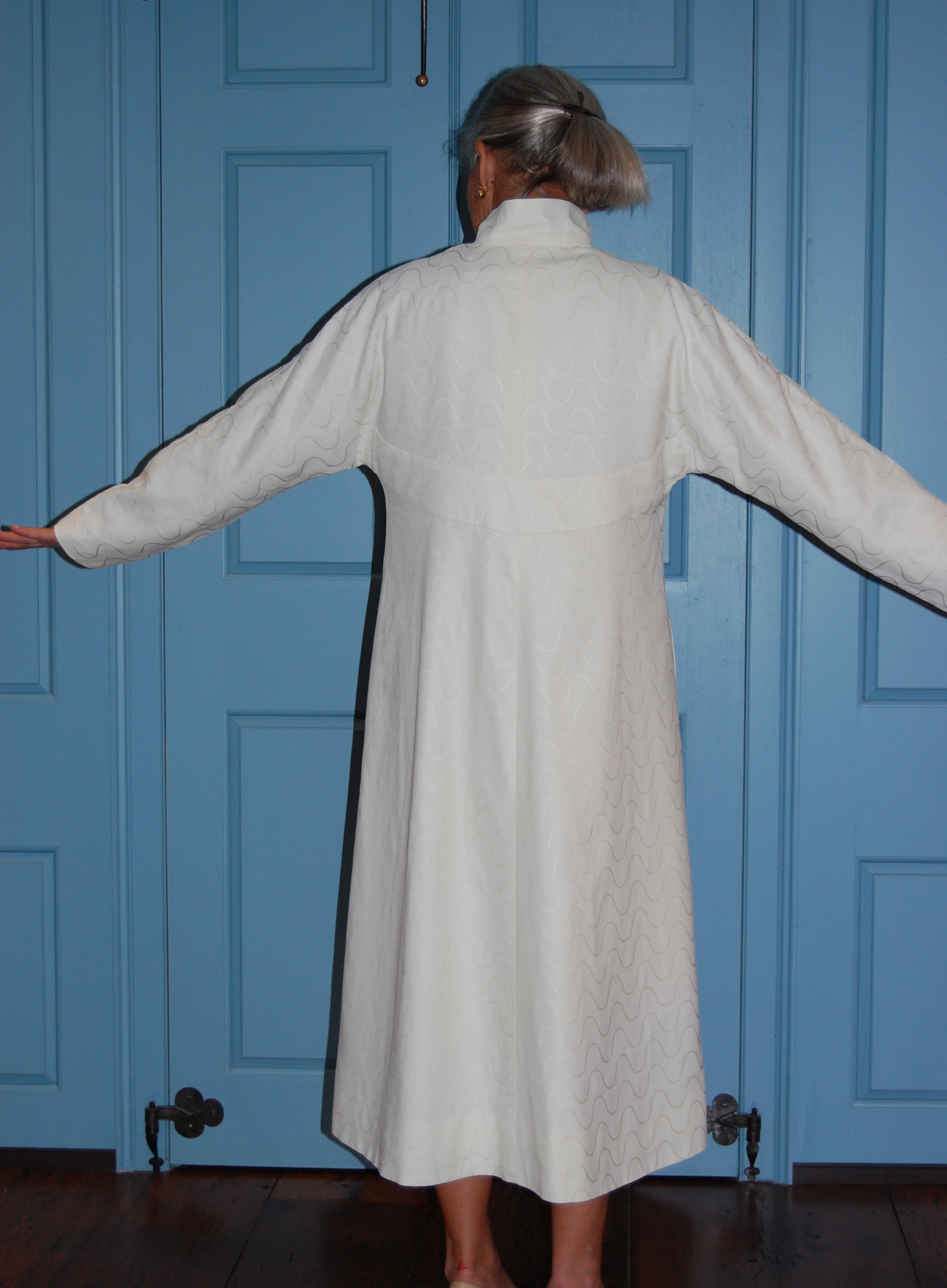
Hopefully you can see the “belted” back in this view.

Making a garment like this during the Summer months means that I had to be prepared for “delayed gratification” as I probably won’t have a chance to wear my new raincoat for at least a couple of months.  However, when a future Fall or Winter forecast is for “Chance of Sprinkles” – or even full-force rain – I’ll be ready!
13 Comments

Filed under bound buttonholes, Buttons - choosing the right ones, Coats, Dressmaker details, kimono sleeves, sewing raincoats, swing coats, Uncategorized, underlinings, vintage buttons, vintage Vogue patterns from the 1950s, Vogue patterns

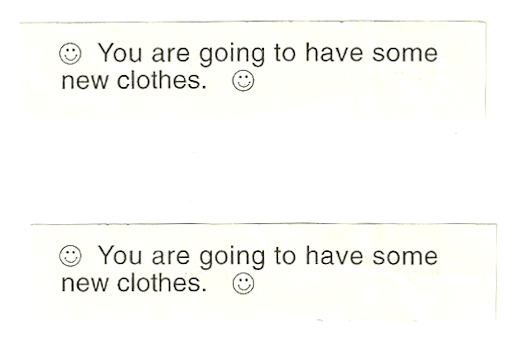
“You are going to have some new clothes.”

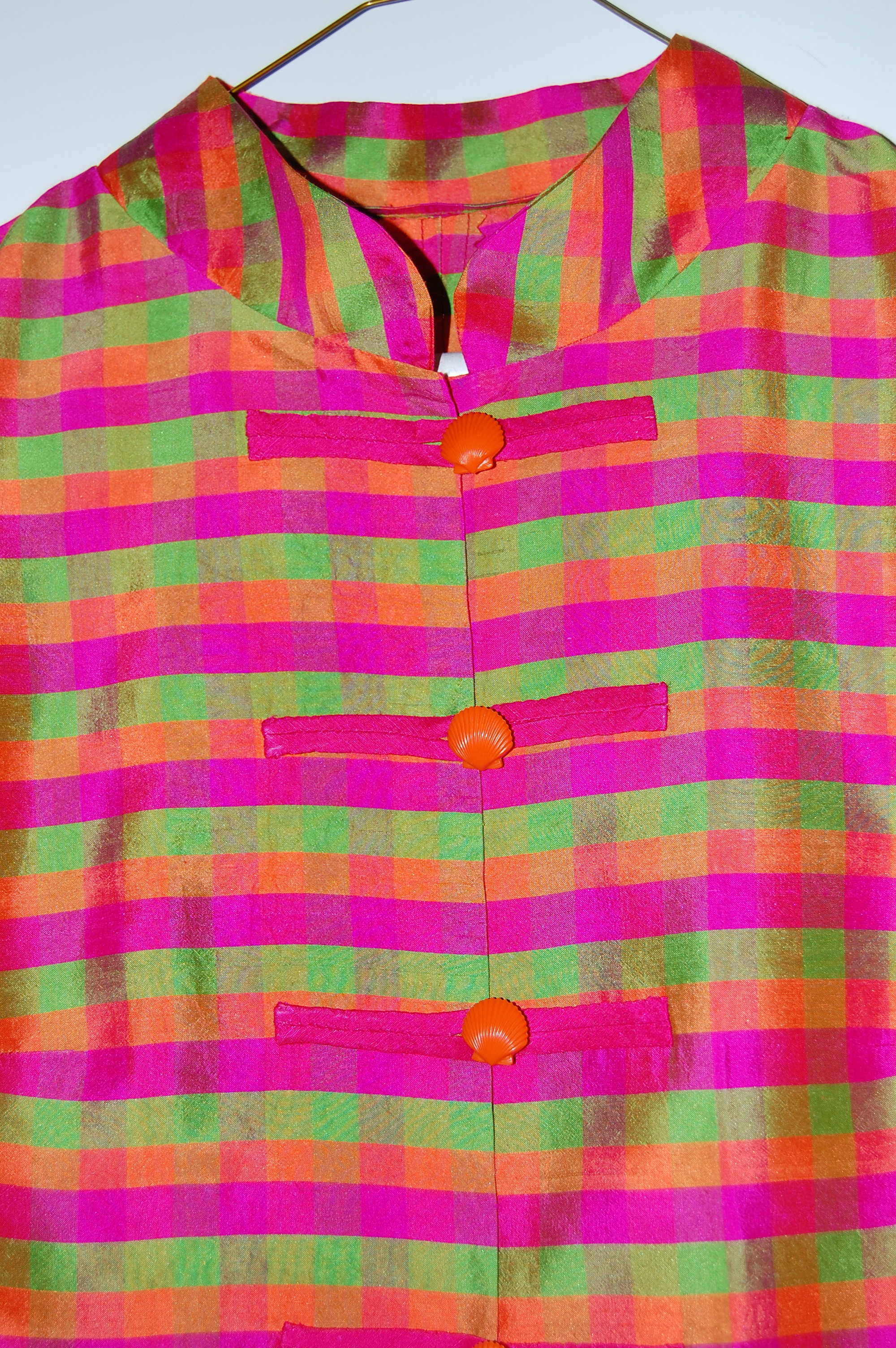
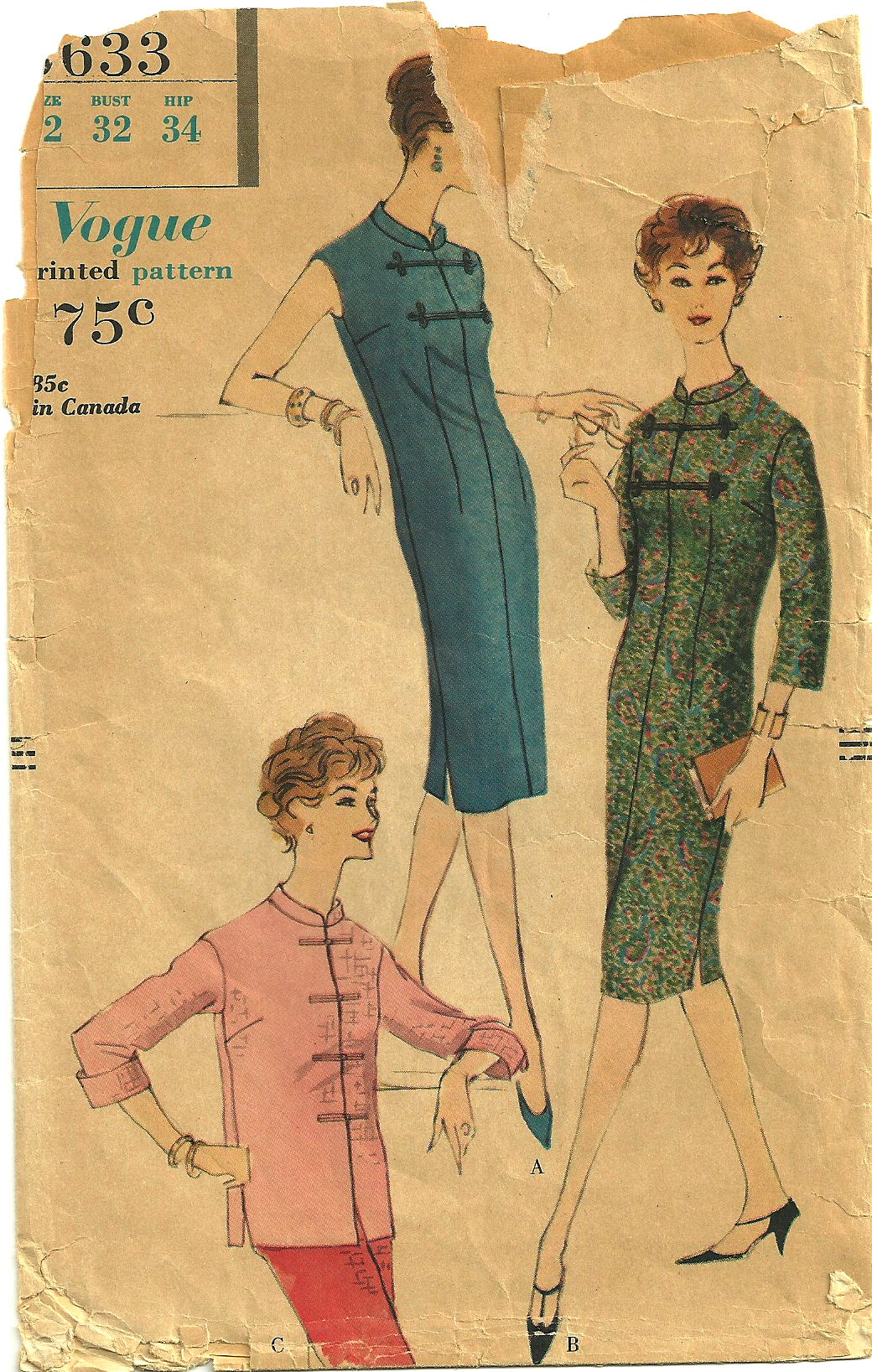
So said the fortune which was tucked inside my cookie.  What it failed to mention was that I was going to be the one making those new clothes, but otherwise I’d say it was right on target. Well, it seemed only fitting that, with this Chinese dictum, and with my burning desire to use those shell buttons (which kind of give off an exotic aura), I should indulge my attraction to Asian-inspired clothing design, and make this tunic my next sewing project.

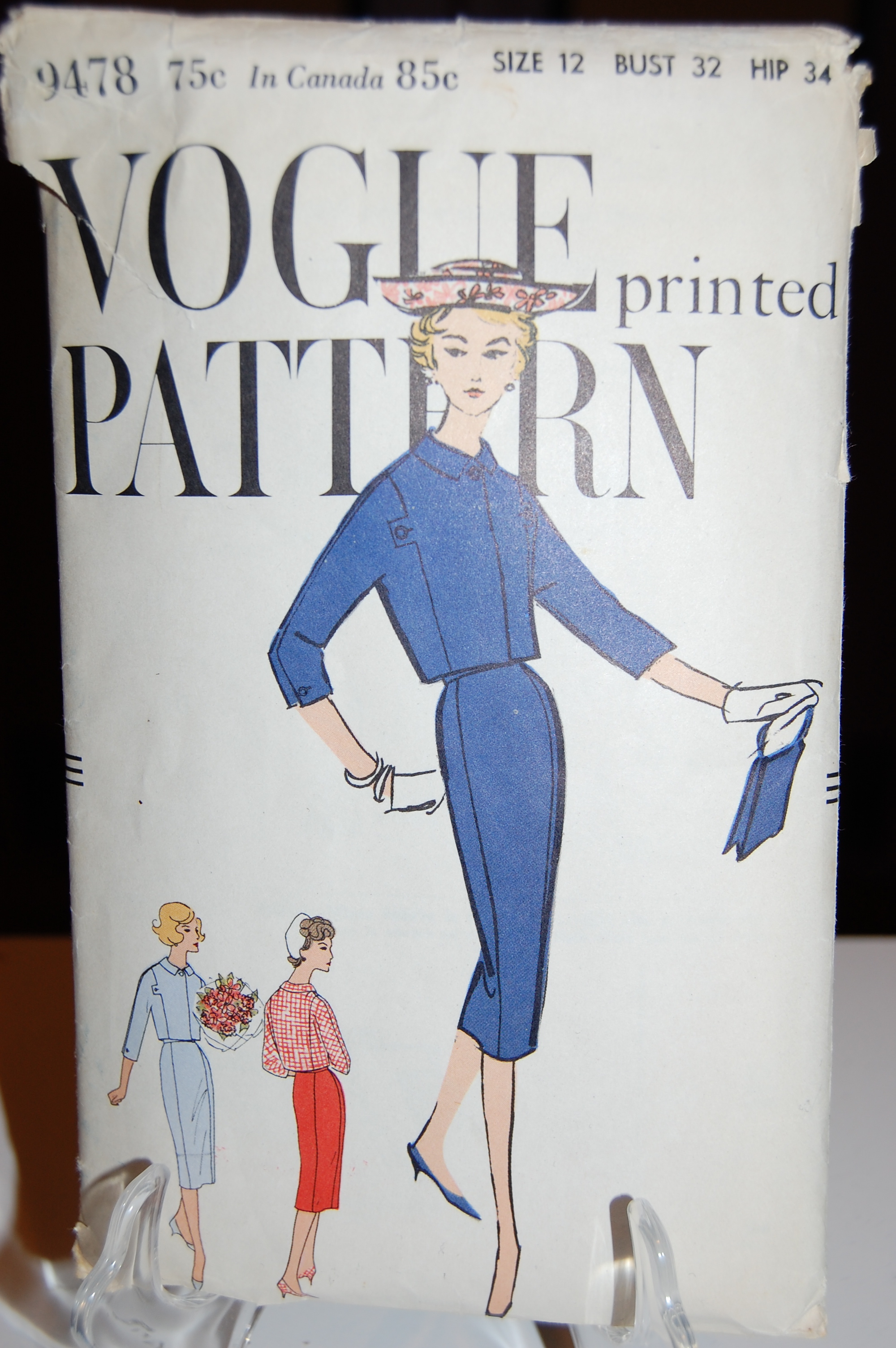
The date on this pattern is 1958. The envelope is in sad shape, but the pattern pieces are fine!

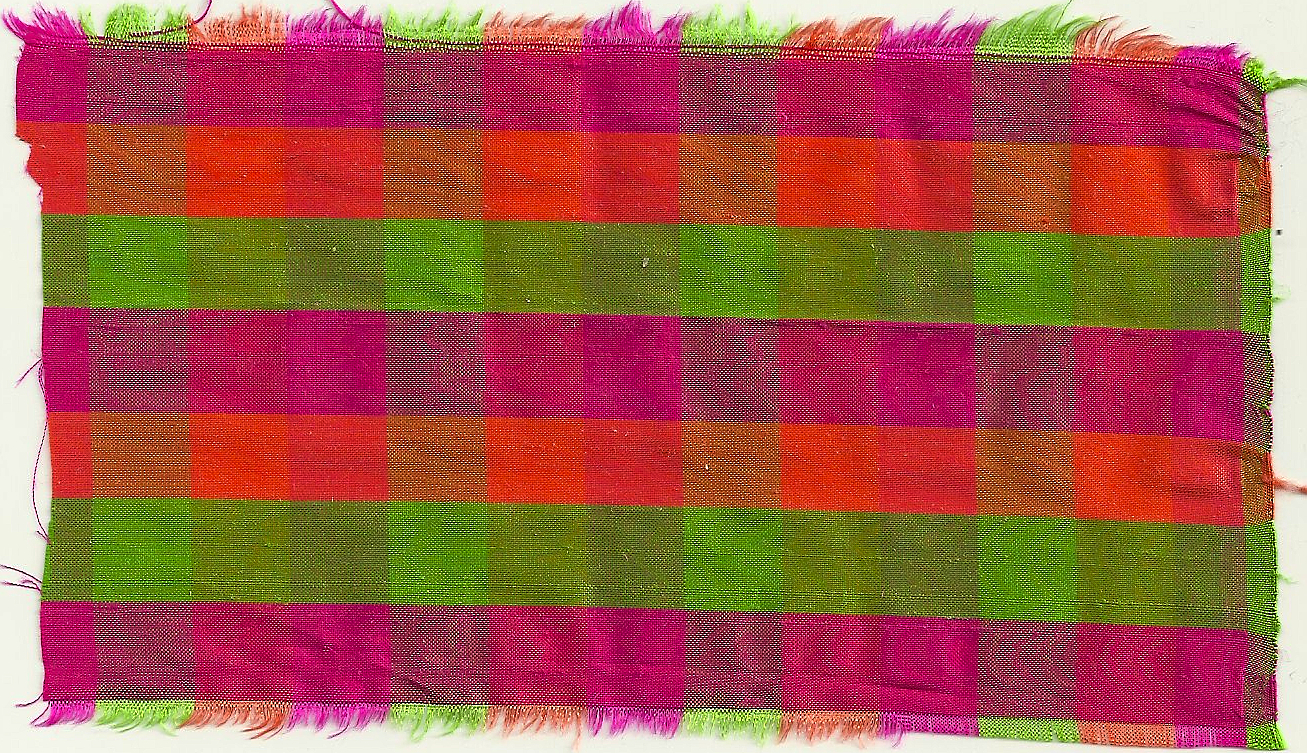
I had another reason, too, to choose this tunic pattern.  After my last project, the Pierre Cardin silk dress, I was ready for something that did not need to be underlined or lined – and I was ready for something casual and fun.  I might add “bright” to that list, too, as the fabric I chose is indeed that!

This is the swatch I ordered from B&J Fabrics.

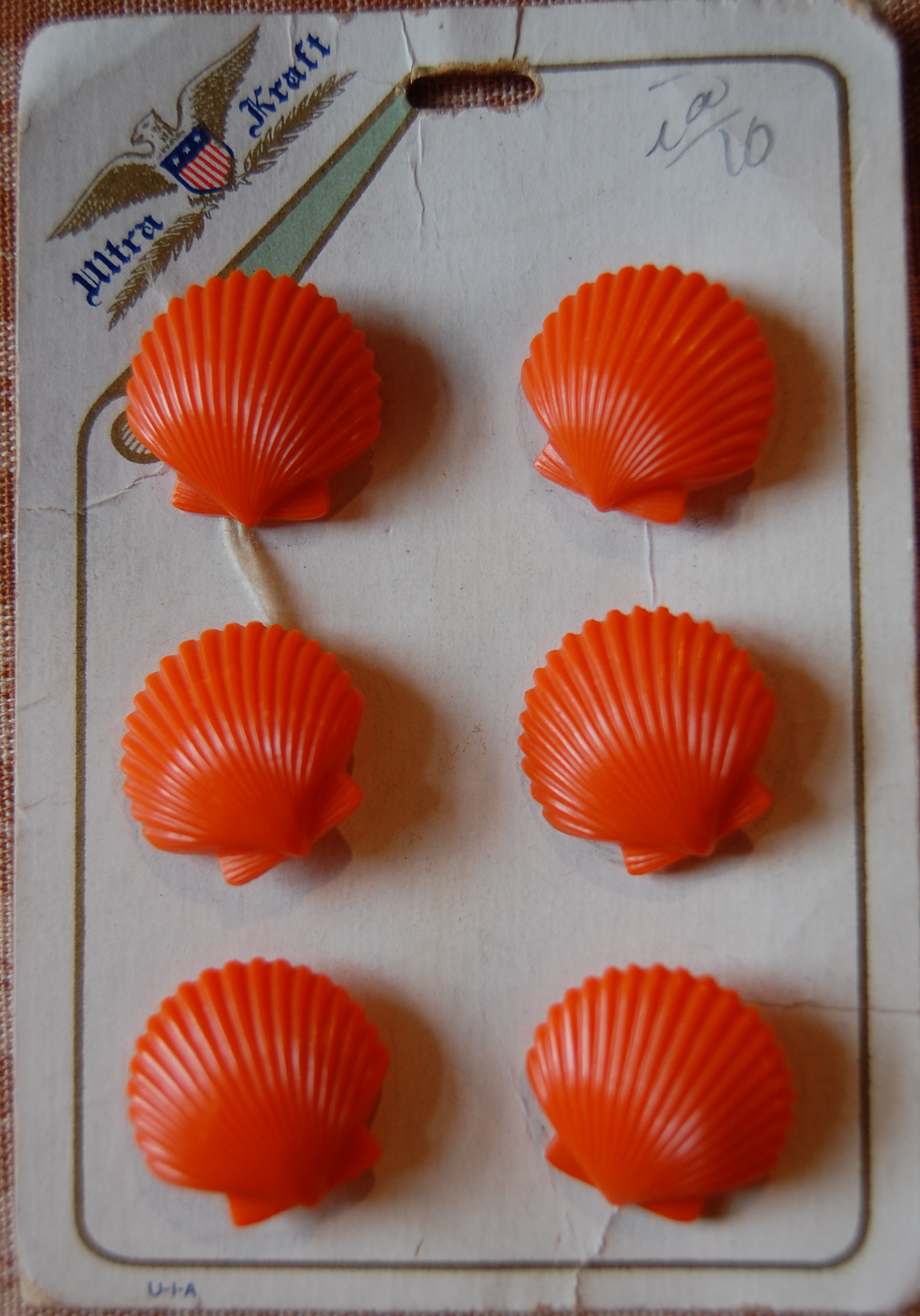
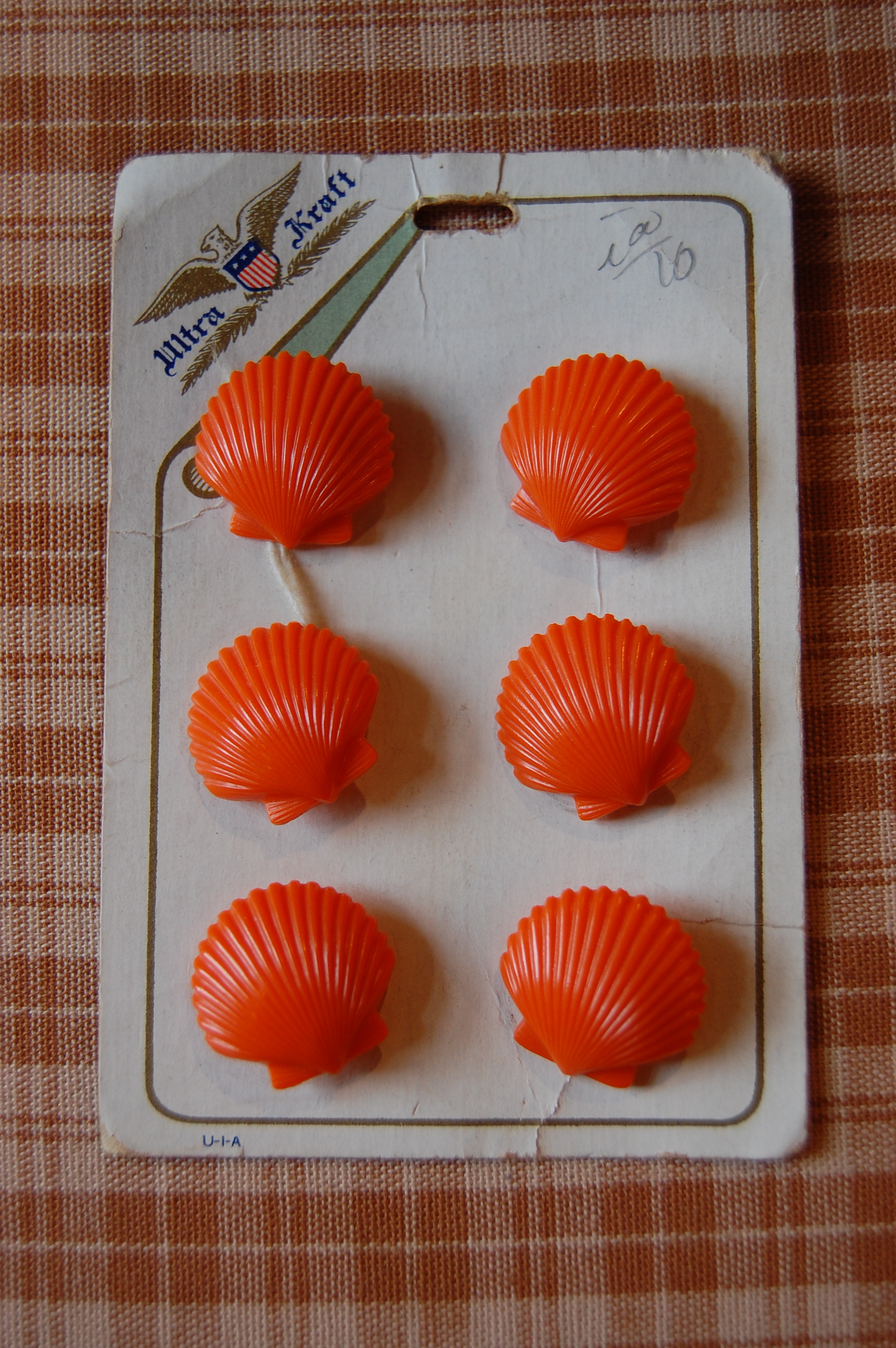
Just a reminder (if you need it) that I wanted to use these buttons for this tunic.

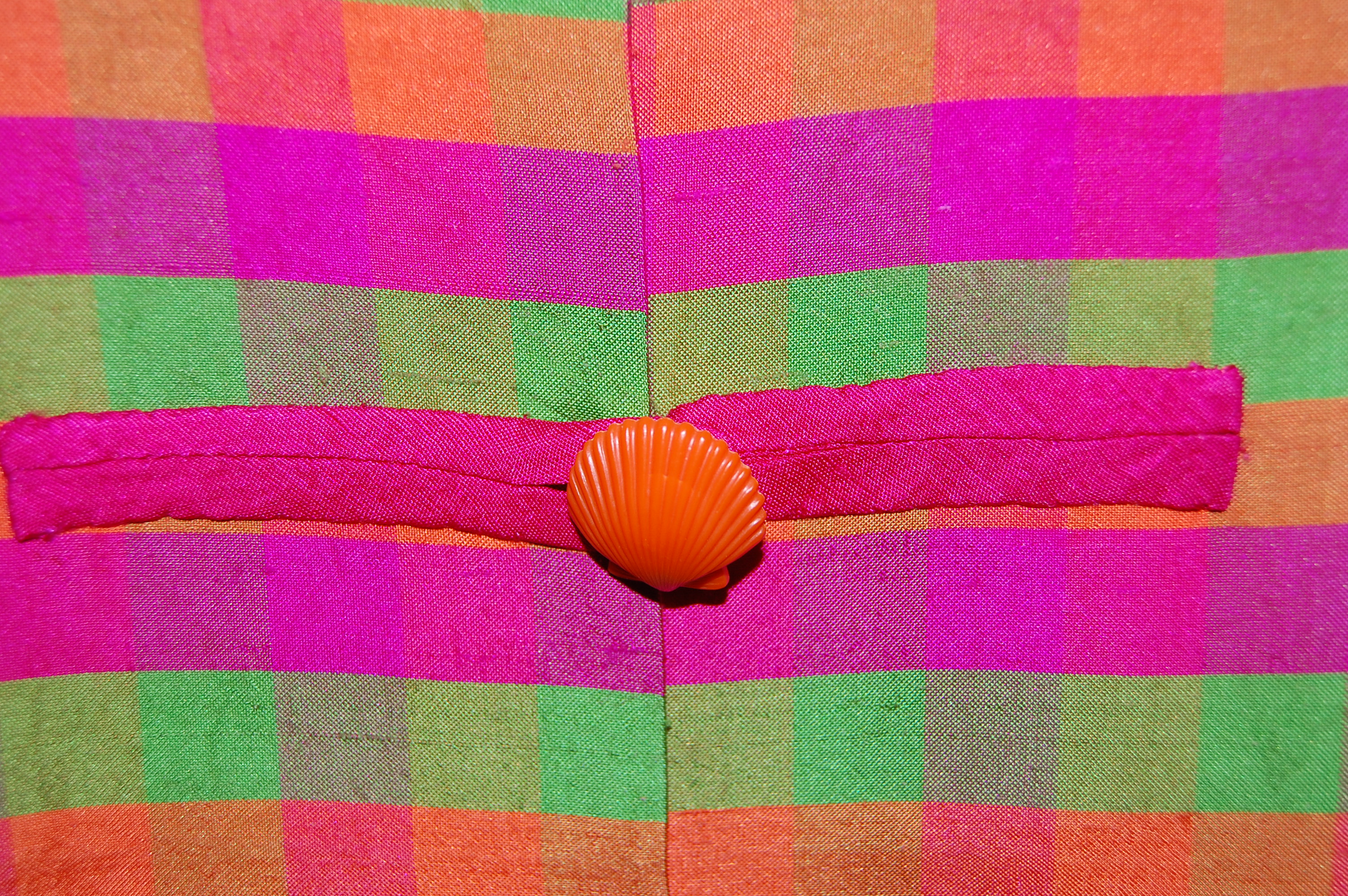
I had the fabric swatch sitting on my ironing board in my sewing room when I started work on my “Pierre Cardin” dress.  The pink silk from that dress complimented this silk check so much that, putting the two together seemed inevitable.  I played around with some small scraps, scrunching them around those orange shell buttons, still on their card.  What could be more perfect than making the buttonhole loops and details out of the pink fabric, to set off those shell buttons?  I was sure that would be much more effective than making the loops and details out of the same checked fabric.

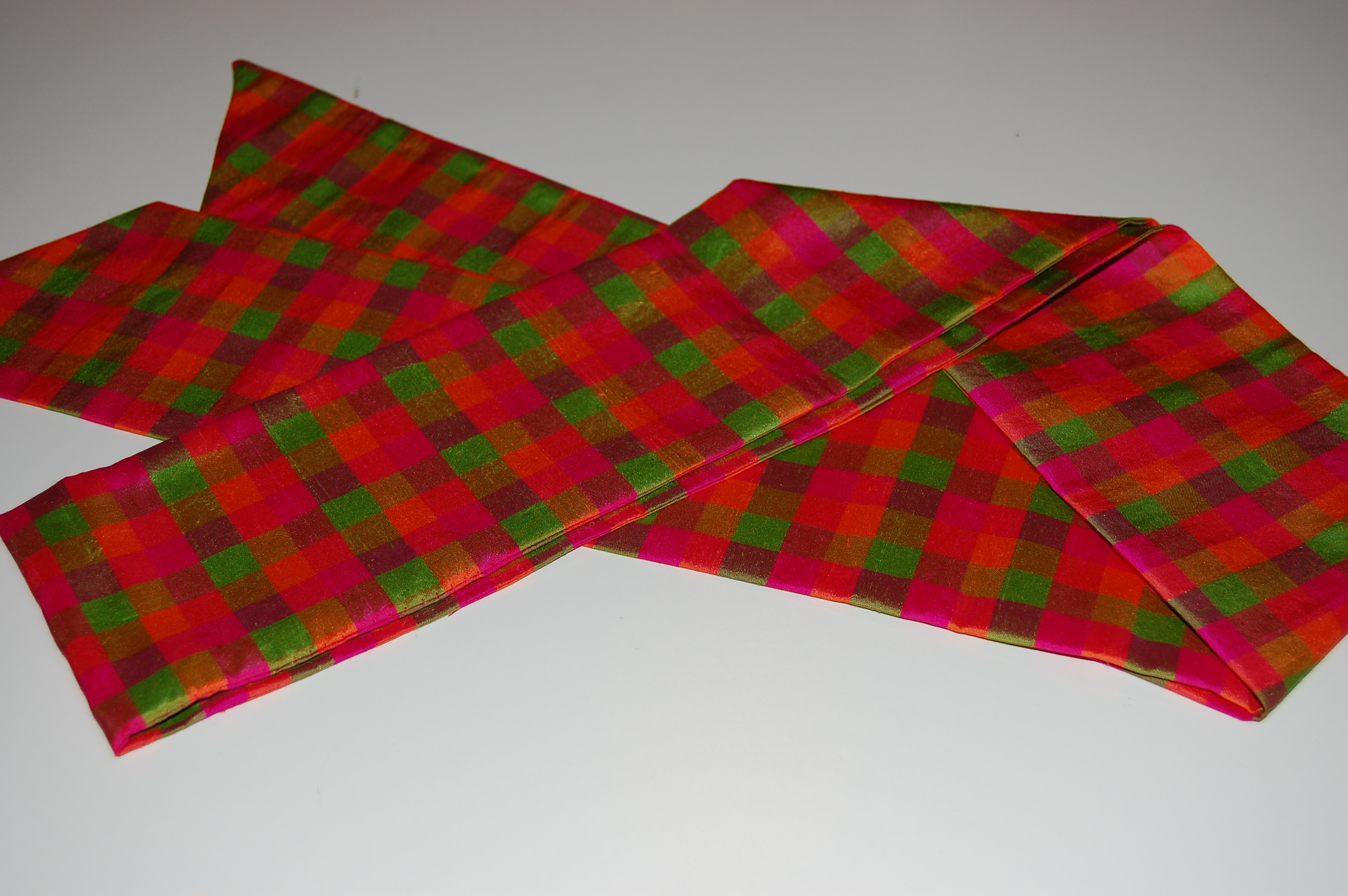
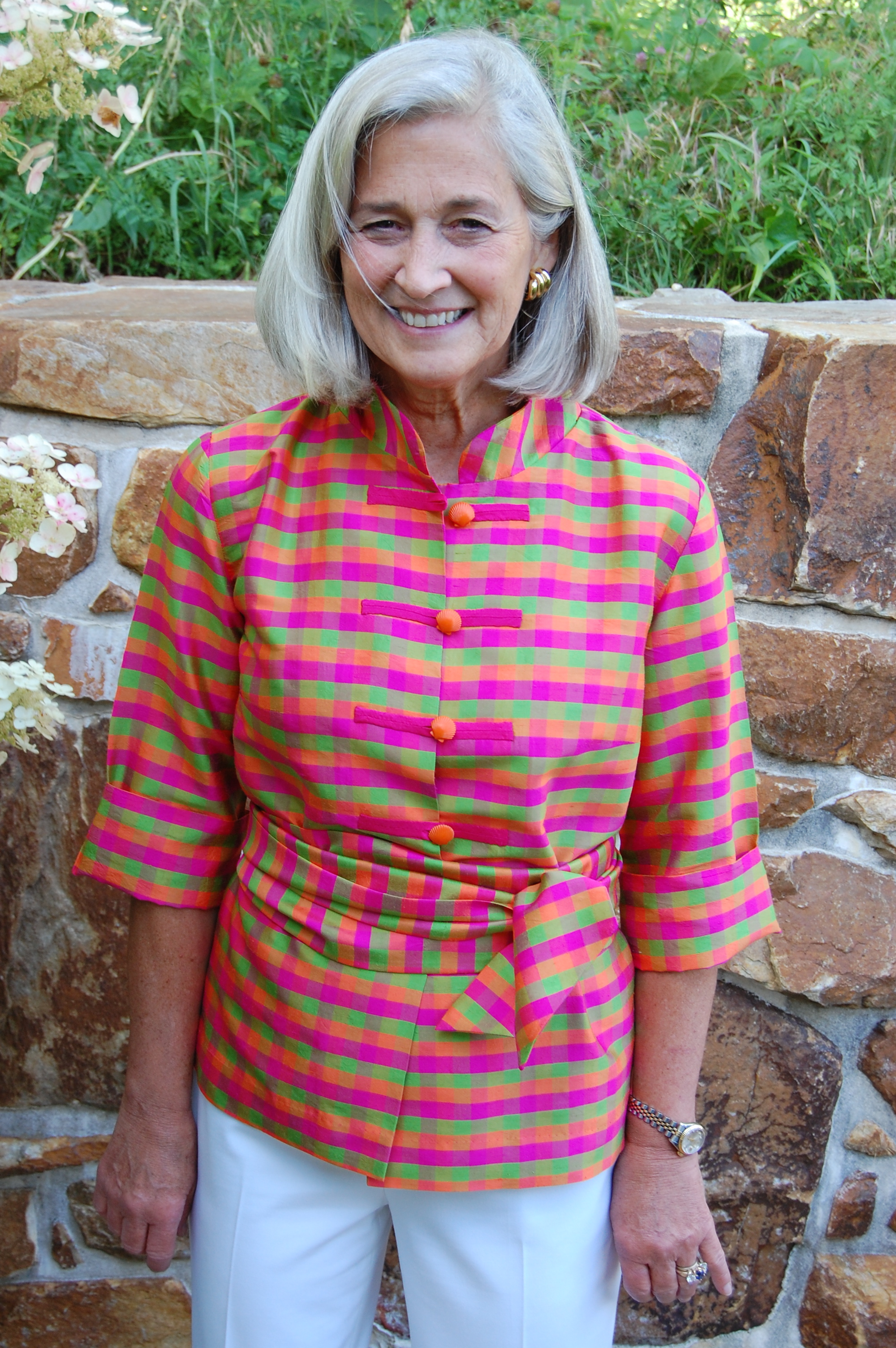
I ordered enough fabric to make a matching obi-type sash, as I thought I might want to wear the tunic “belted” sometimes, too.  (In the back of my mind is the knowledge that I have enough of that pink silk left, that I can make a skirt – or blouse – with it.  I’m definitely leaning towards skirt…)

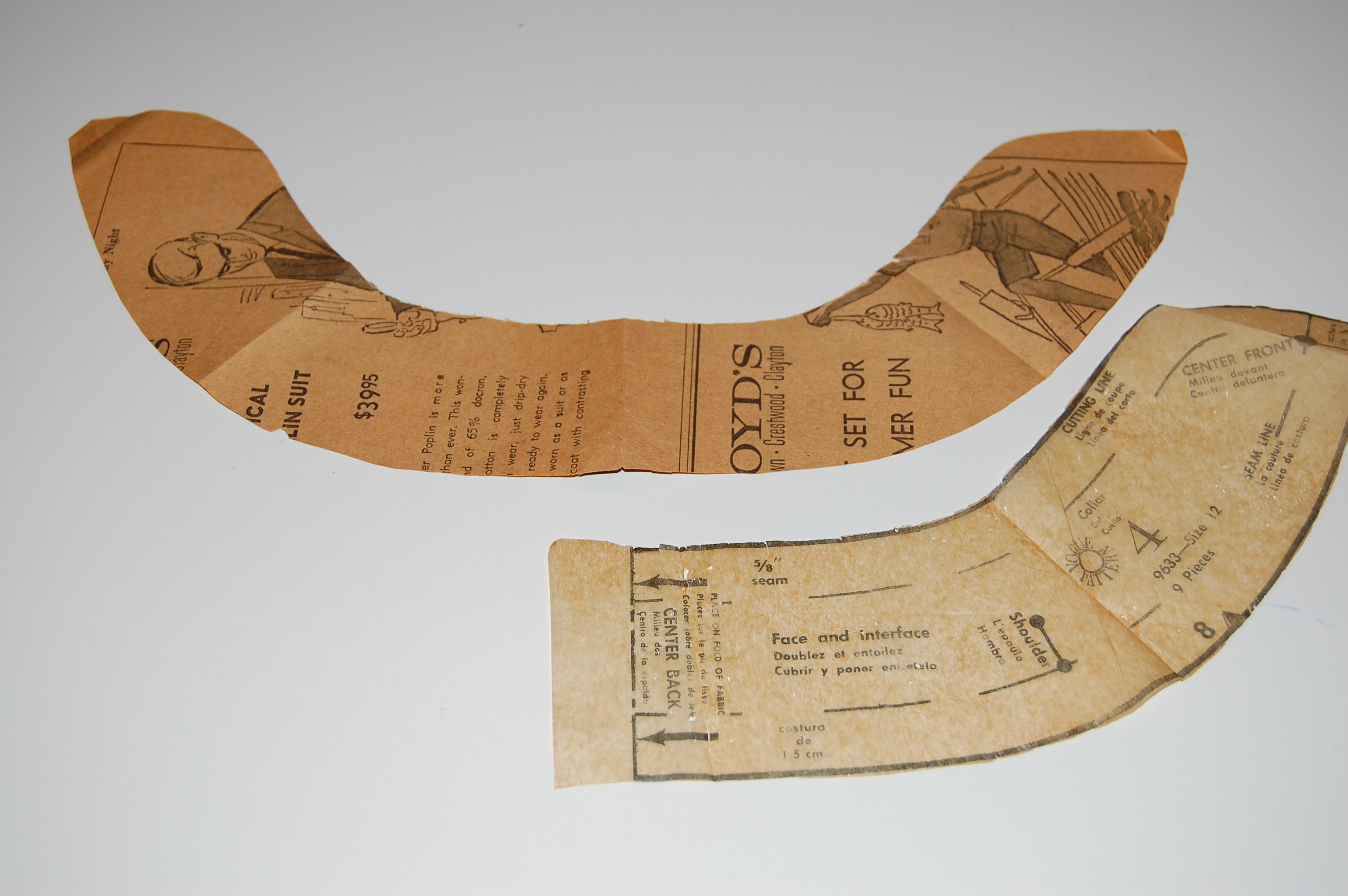
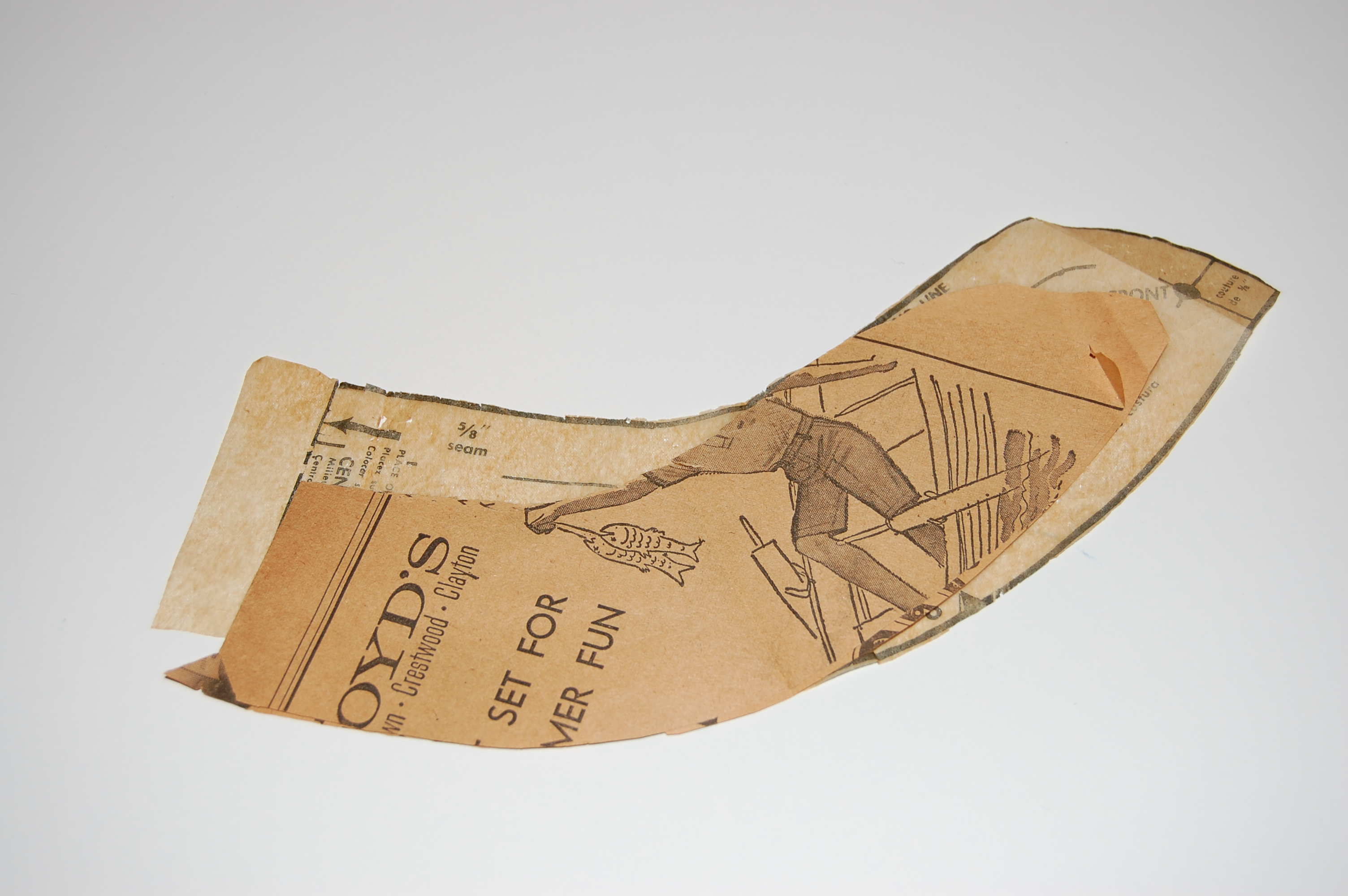
First, of course, I set out to make a muslin.  When I opened the pattern, the pieces for the dress had been previously used, but not the pieces for the tunic.  The collar was universal for all three views.  However, in addition to the tissue collar, there was a collar piece cut out of newspaper.

Here are the two pattern pieces for the collar – the top one cut by the original home sewer.

There was nothing written on the instruction sheet or envelope to explain this mystery – and it appeared that the “newspaper” collar was shorter in length than the tissue pattern.

Here you can see the newspaper pattern is shorter than the tissue one.

Having no explanation, I just decided to use the tissue pattern – and I figured the muslin would tell me what I needed to know.  Did it ever!  The collar included with the pattern is too long for the neckline, so this home sewer in the late ‘50s re-cut it to fit her pattern.  I decided to take another approach: I kept the tissue collar and widened the neckline enough so it fit perfectly.  I also decided to shorten the shoulders a bit, for a more structured fit, and I took the center back seam in a bit at the waistline.  I ended up adding long tapered “floating” darts to each side of the back, too, to give it a little more definition to the waistline –  but I am getting ahead of myself…

As is my method of approaching a new project, that is, getting a few things constructed before I need them, I decided to make the obi sash first.  I just kind of guessed for width and length, making it 4” wide (finished width) and 77” long, so it could go around me twice comfortably with a double knot in front.

The completed sash.

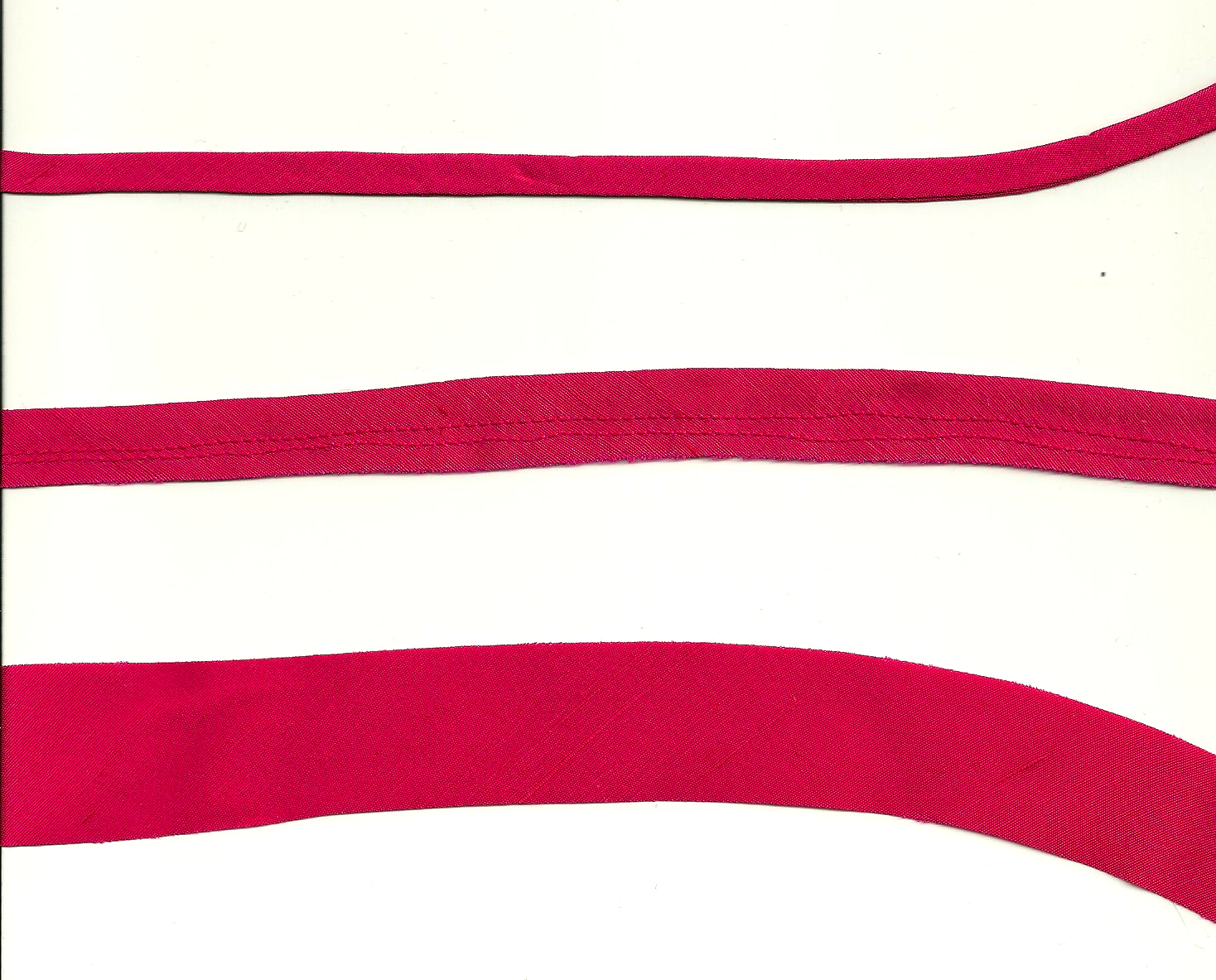
Next I made the button loops and details.  The pattern didn’t give too much instruction on these pieces, other than the length they should be and the finished width (1/4”).  (I should mention here that I decided to put 5 buttons on the tunic, not 4 as is shown on the pattern.)  I cut bias strips 1”wide, folded them in half lengthwise, sewed the seam twice and turned them with a bodkin.  Nice and easy!

From top to bottom, the making of the strips for the buttonholes and details: 1″ wide bias strip, one folded and stitched, one turned and finished! (Click on the photo to see these close-up.)

I put flat-felled seams in the sleeves and added interfacing to the front edges even though the pattern did not call for this.  The most time-consuming part of the whole thing was hemming the ends of the buttonhole loops and details and then sewing them onto the tunic.  But that’s really what the project was about – showcasing those buttons in an appropriate way.

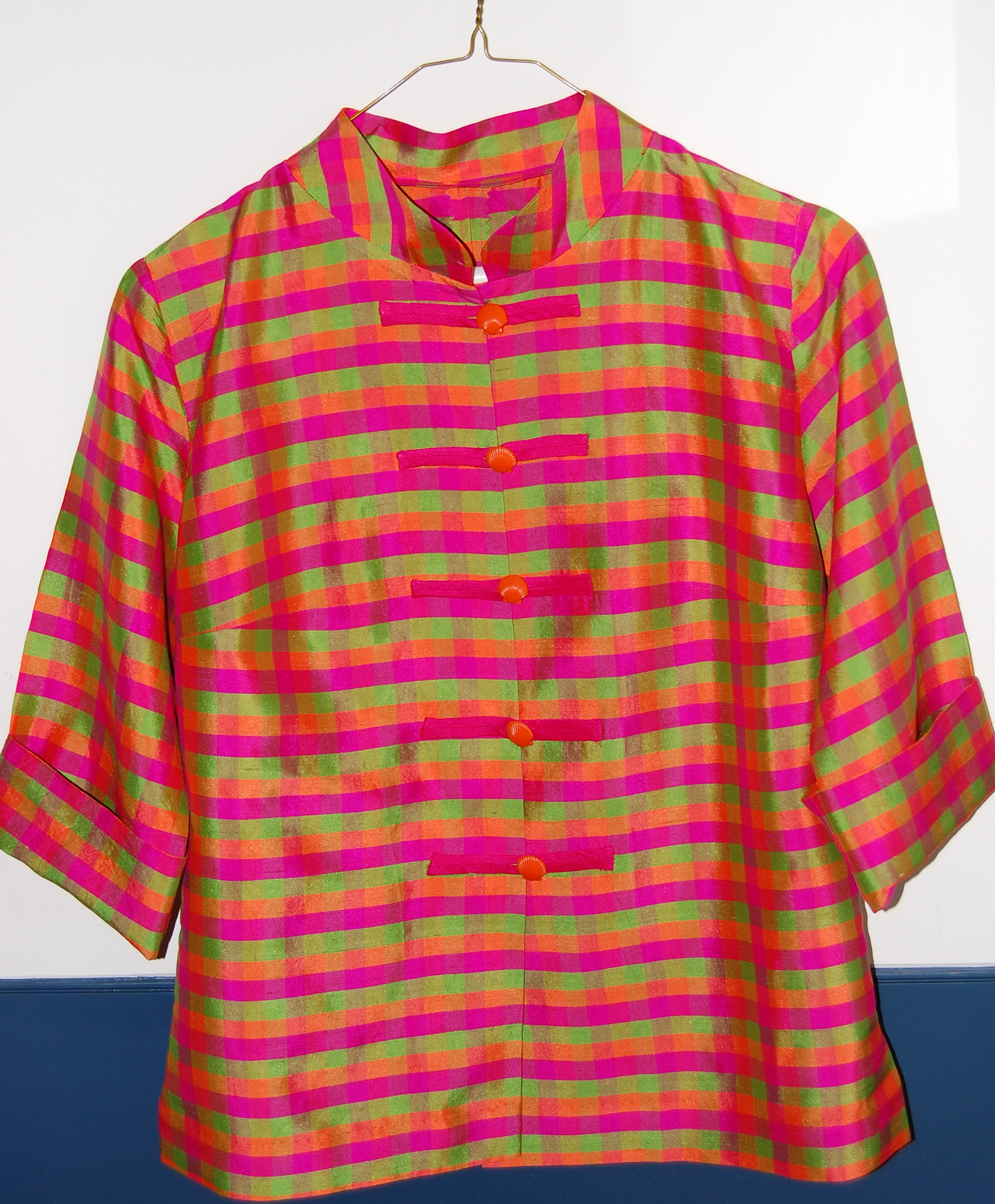
The finished tunic, with the sleeves folded up, as they are supposed to be.

A close-up of the front, with the button detailing.

An even closer look at one of the buttons and loops.

This photo will make my daughter very happy! Here I am modeling my new tunic, with sash.

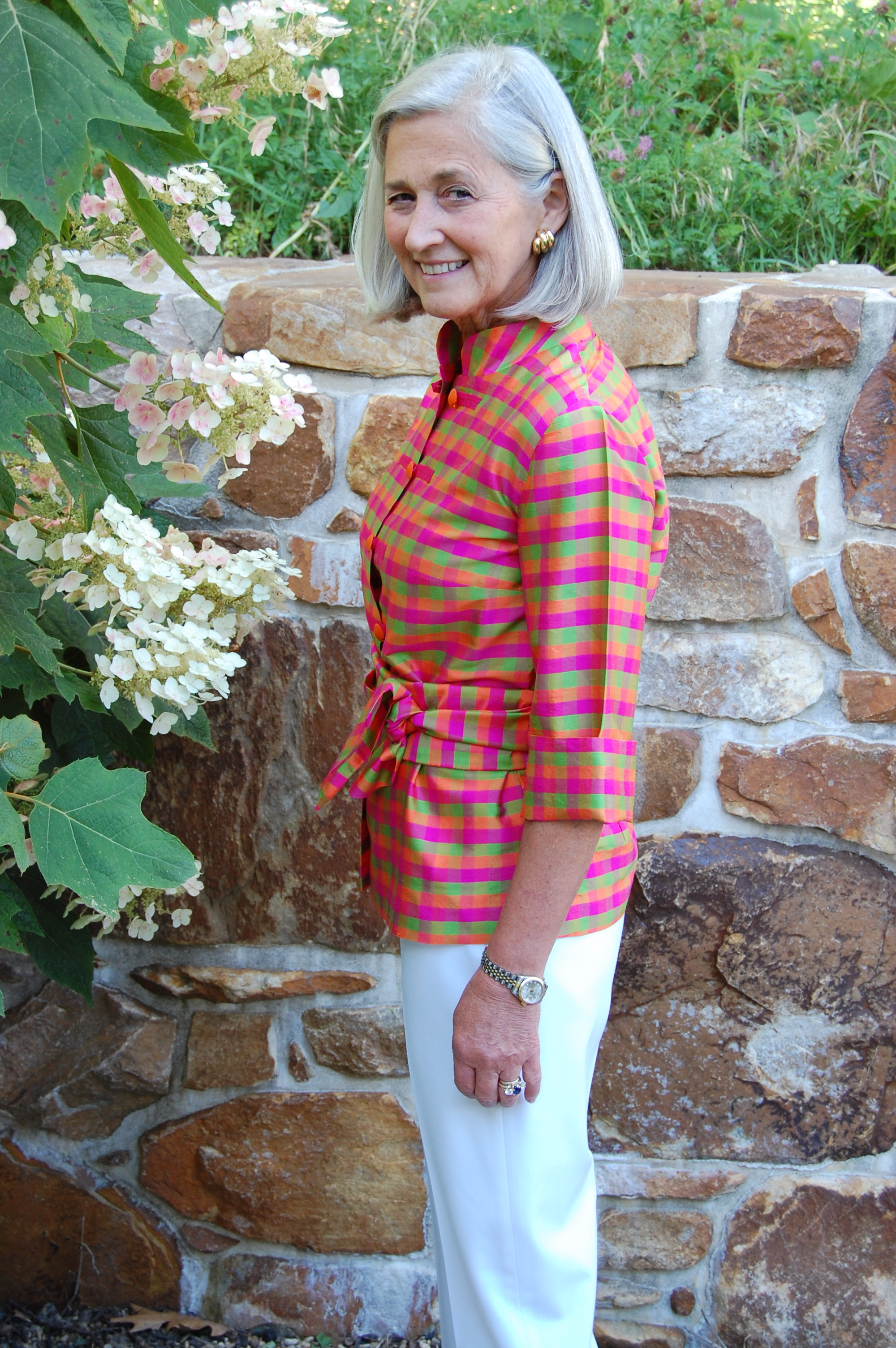
One more view of the sashed tunic. Picture this with a narrow skirt in that same solid pink…

I think it works – what do you think?

One final thought:  fortune cookies are a little like potato chips (or chocolate!) – it’s hard to eat just one.  Yes, my first cookie was followed by another one – and I was hoping for a similarly enticing fortune.

Imagine my surprise when my second fortune was exactly the same as the first one!

20 Comments

Filed under Asian-inspired dress designs, Blouse patterns from the 1950's, Buttons - choosing the right ones, sewing in silk, Uncategorized, vintage buttons, vintage Vogue patterns from the 1950s

What should a button do?

The last several things I have sewn have been button-free, using zippers or hooks to accomplish that all-important task of “closure”.  I’ve discovered I can go button-free just so long, and then I have to indulge my passion for those small wonders, with their miraculous power to be both eye-catching and practical.

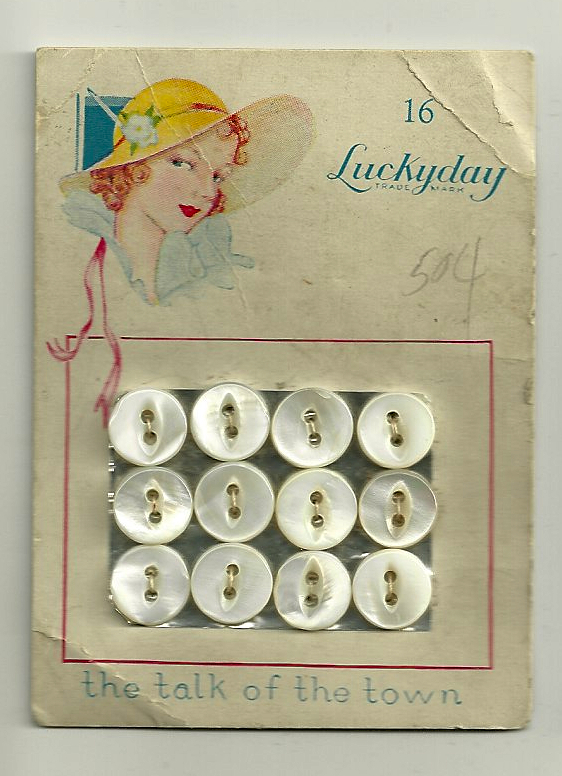
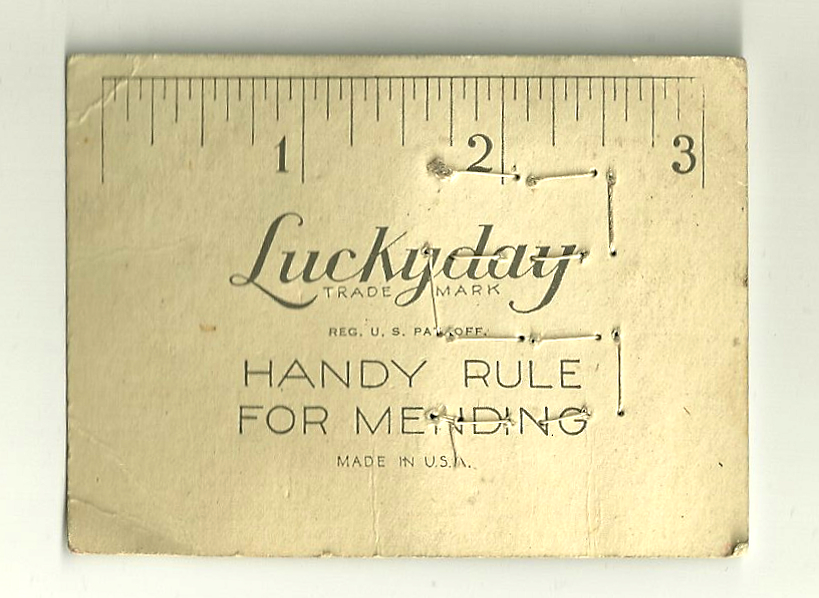
I will leave a serious discussion of vintage buttons to the experts, but looking anew at some of my still-carded vintage buttons has revealed some interesting tidbits, too good not to share.  For example, it seems a lot of attention was given to “presentation” of the buttons on their cards.  These Luckyday buttons not only have a sweet lady on the front of the card, there is also a “Handy Rule for Mending” on the back.

I am guessing these buttons are from the late 1930s or early ’40s.

I love this feature!

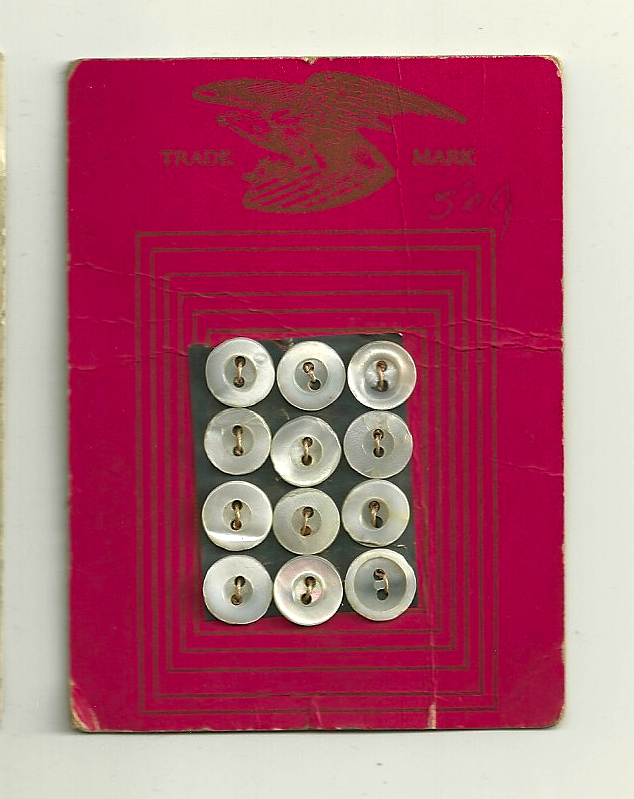
It also seems that patriotic themes were commonplace.  There is no company named on these buttons, just the American eagle on a shield with the words TRADE MARK.

These simple buttons are quite eye-catching on this deep red card.

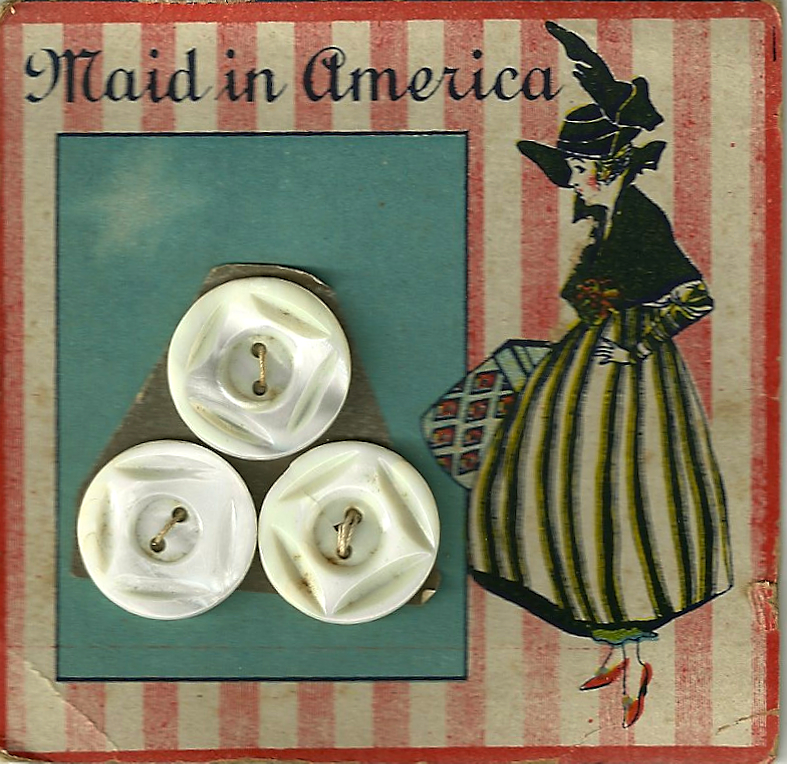
This is one of my favorite button cards of all time, the Maid in America. I doubt I’ll ever use these buttons, as it would seem a shame to take them off this amazing card.

This button card is like a small piece of folk art!

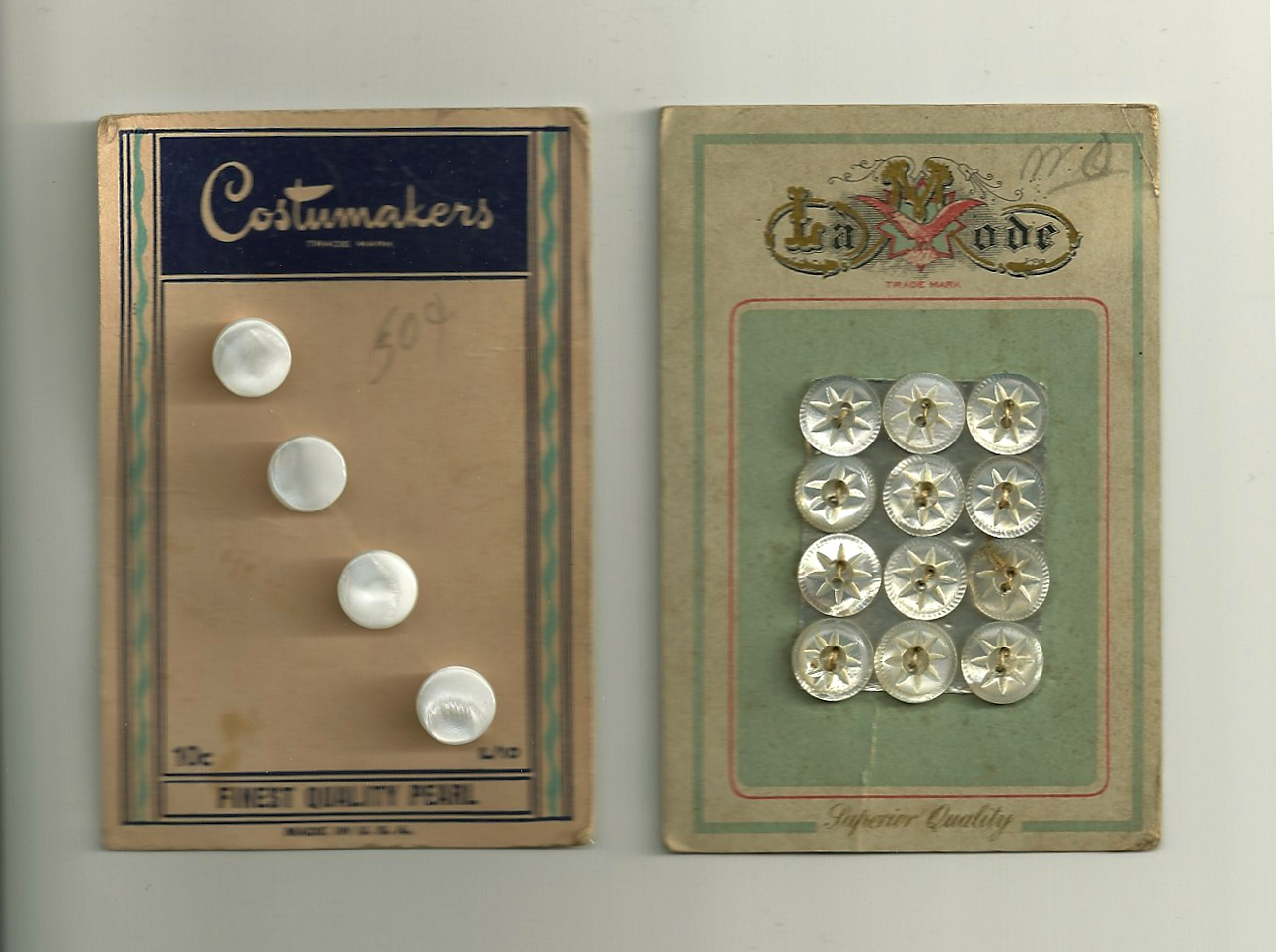
La Mode buttons are still manufactured – and still “Superior Quality”, and Costumaker buttons were “made in the U. S. A.”.

Two well-known button companies!

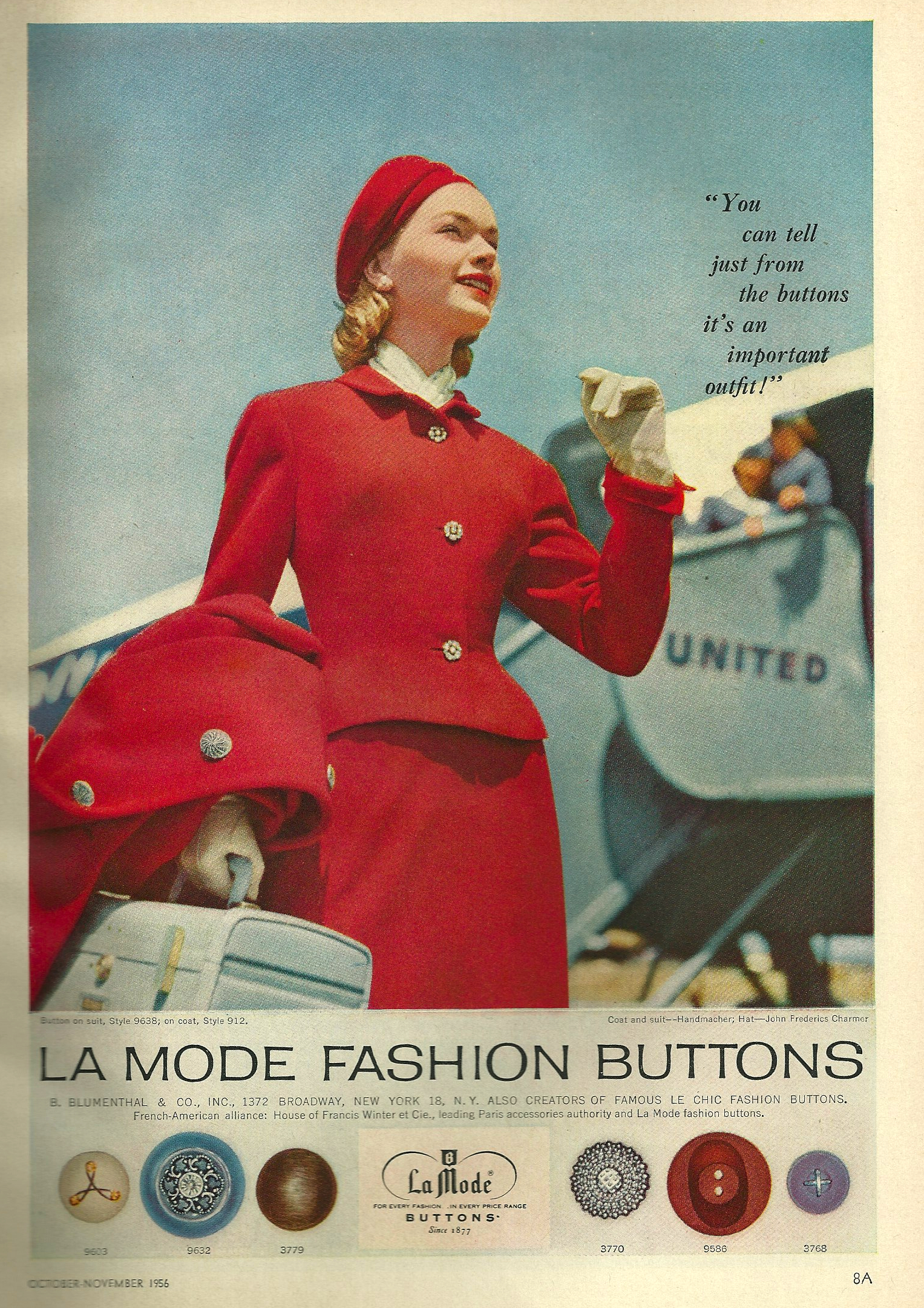
La Mode advertised frequently in Vogue Pattern Book magazine.  This ad from the October/November 1956 issue has the byline:  “You can tell just from the buttons it’s an important outfit!”

An ad from February/March 1958 features a fashion picture which looks incredibly timely today!

The featured fashion colors are certainly right for 2012!

And by 1960, their ads were beginning to take on a more modern look.

This ad appeared in the October/November 1960 issue of Vogue Pattern Book magazine.

Costumaker buttons also advertised in Vogue Pattern Book magazine.  In August/September 1958, this ad had the byline “Buttons that are more than buttons.”

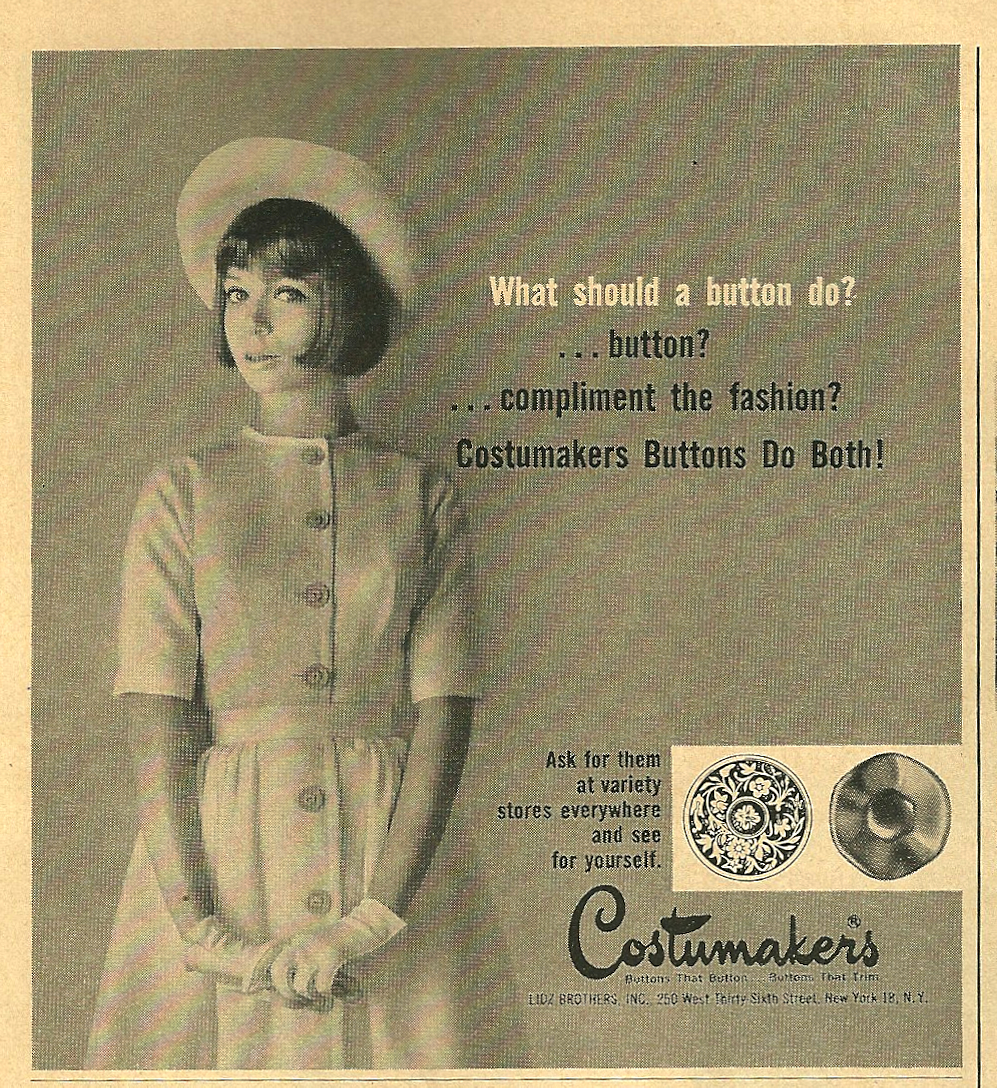
This ad from April/May 1963 asks the question:  “What should a button do?”  Read the ad to get the answer!

One thing I know a button CAN do is be small but powerful!  The real truth of the matter mentioned in my first paragraph is that I have a set of buttons which I must use, as they have occupied my mind for the past weeks since I received them – it’s really quite that simple.  But they are not simple – they are actually quite demonstrative, and therein lies the rub, to paraphrase from Shakespeare.

The buttons which won’t let me sleep! Notice the American eagle motif on the card!

I have been pondering how to use them and with what color and type of fabric to pair them.  They deserve the perfect venue for more reasons than one.  They were gifted to me by my dear friend, Nancy C., who, when we met for coffee a couple of months ago, met me with her family button box in tow.  She invited me to pick out any buttons which I thought I could use for future sewing projects!  When I got past my incredulity at her offer, I picked out a few amazing single buttons (which you will see eventually) and about three beautiful sets of loose buttons.  These orange shells, however, sewn neatly to their original card, kept catching my eye (how could they not??)  At first, they struck me as just too orange.  I wasn’t sure I would ever be able to use them. Nancy and I kept talking about them over our coffee, pondering their color and shape, and then, before I knew it – I was hooked.

So you know by now that they came home with me.  And something with so much personality moves up in priority on the sewing list!  You’ll soon see them sewn onto a “Fifty Dresses” creation.   Thank you, Nancy, for this amazing gift, which is only eclipsed by your generosity and friendship!!

A little closer look at these bright beauties!

Stay tuned to see them doing what good buttons should do…  Gulp!  I’m hoping to do them justice!

6 Comments

Filed under Buttons - choosing the right ones, The Conde Nast Publications, Uncategorized, vintage buttons

Project complete! Well, kind of…

One day this week I sewed the final stitches on my wool suit.  Yes, doing the skirt hem finished it off, and now it is ready to wear.  For those of you who read my last post and ventured a guess on which pattern I used, you were correct if you chose number three.  As a reminder, here it is.

I made a few small alternations to this pattern, including shortening the skirt to just below the knee.

However, I did not choose it for the reasons you might think.  Here is how I made my decision:

1)   With such a bold plaid fabric, I thought a shorter jacket would be a better look.

2)   I thought the square tabs on the front of the jacket would compliment the windowpane check.

3)   The kimono sleeves are such a classic mid-century look that I couldn’t resist trying them.

4)   And, I love a challenge!  Even though the sleeves are “kimono” type sleeves, which means while there is no sleeve cap to match plaids, they do have seams down the middle of them cut on an angle.  Plus the jacket has side, front and underarm seams, a rounded collar which puts the plaid on a curve, and, finally, the skirt has six seams.  And, I needed to make sure that the check also matched, up and down and side to side, from jacket to skirt.  So, that’s a lot of matching.

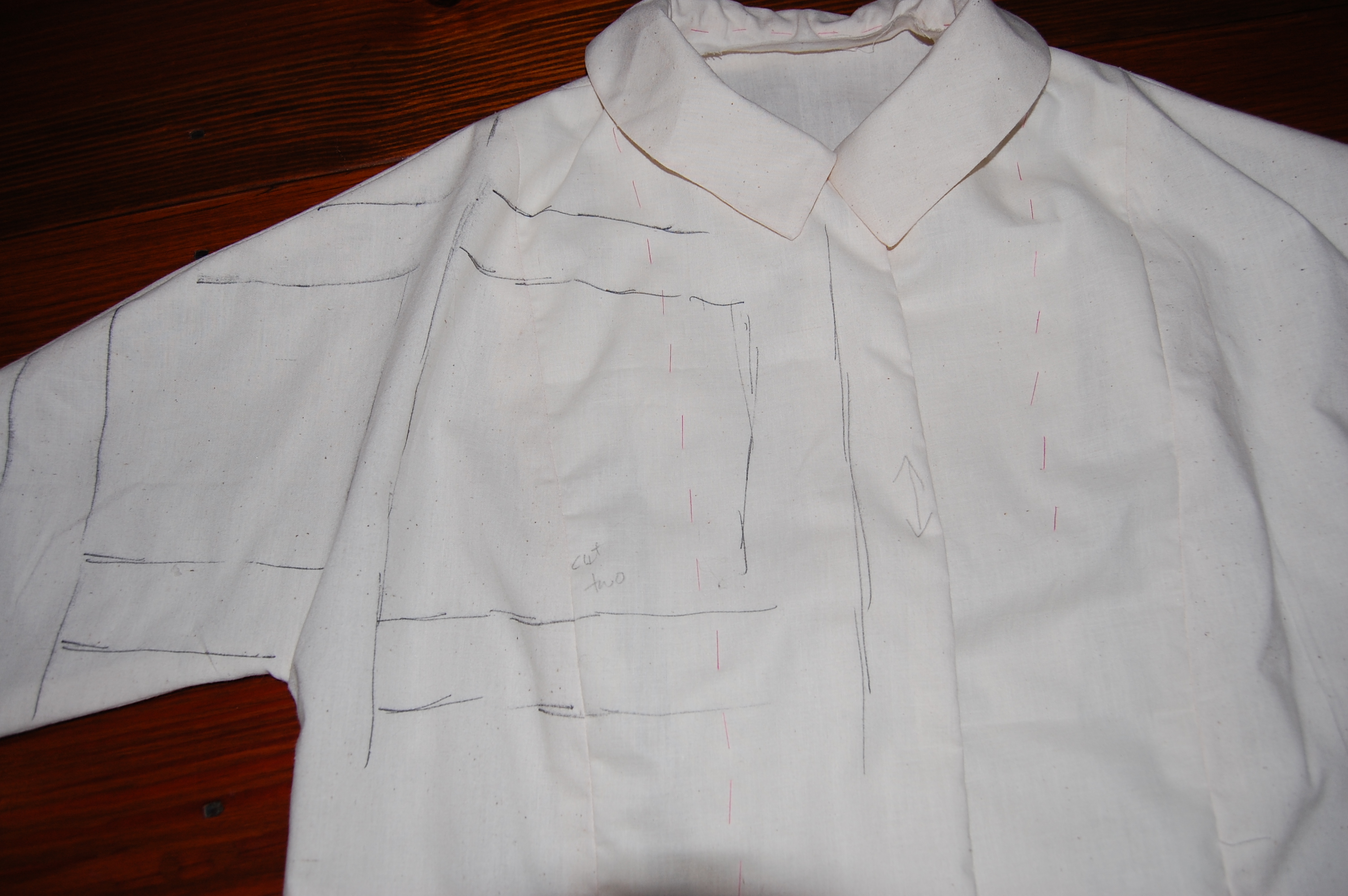
The first thing I did was make up the jacket in muslin.  From that I determined that I needed to add a couple inches to its length, and I decided to make the sleeves ¾ rather than below elbow length.  Then I got nervous about the windowpane check looking good in kimono sleeves, so I got out my magic marker and “drew” the check onto the muslin, so I could visualize it.  Okay, I liked it!

Here is my muslin - can you see the magic marker lines I drew on it? I sew my muslins using up bobbin thread that's left over from other projects - and I always baste in leftover contrasting thread.

Then I laid out the pattern pieces, and oh my gosh, what a puzzle of matching notches and checks.  I knew I couldn’t make a mistake, so after I laid it out, I let it sit overnight.  The next day, after cogitating on it overnight, I realized I had not properly matched up the check on the shoulder seams.  I made the adjustment, double and triple checked (pardon the pun), made sure I would have the same reveal at the hem of the jacket as on the skirt, and confidently (actually about 92% confidently) cut it – and the lining –  out.

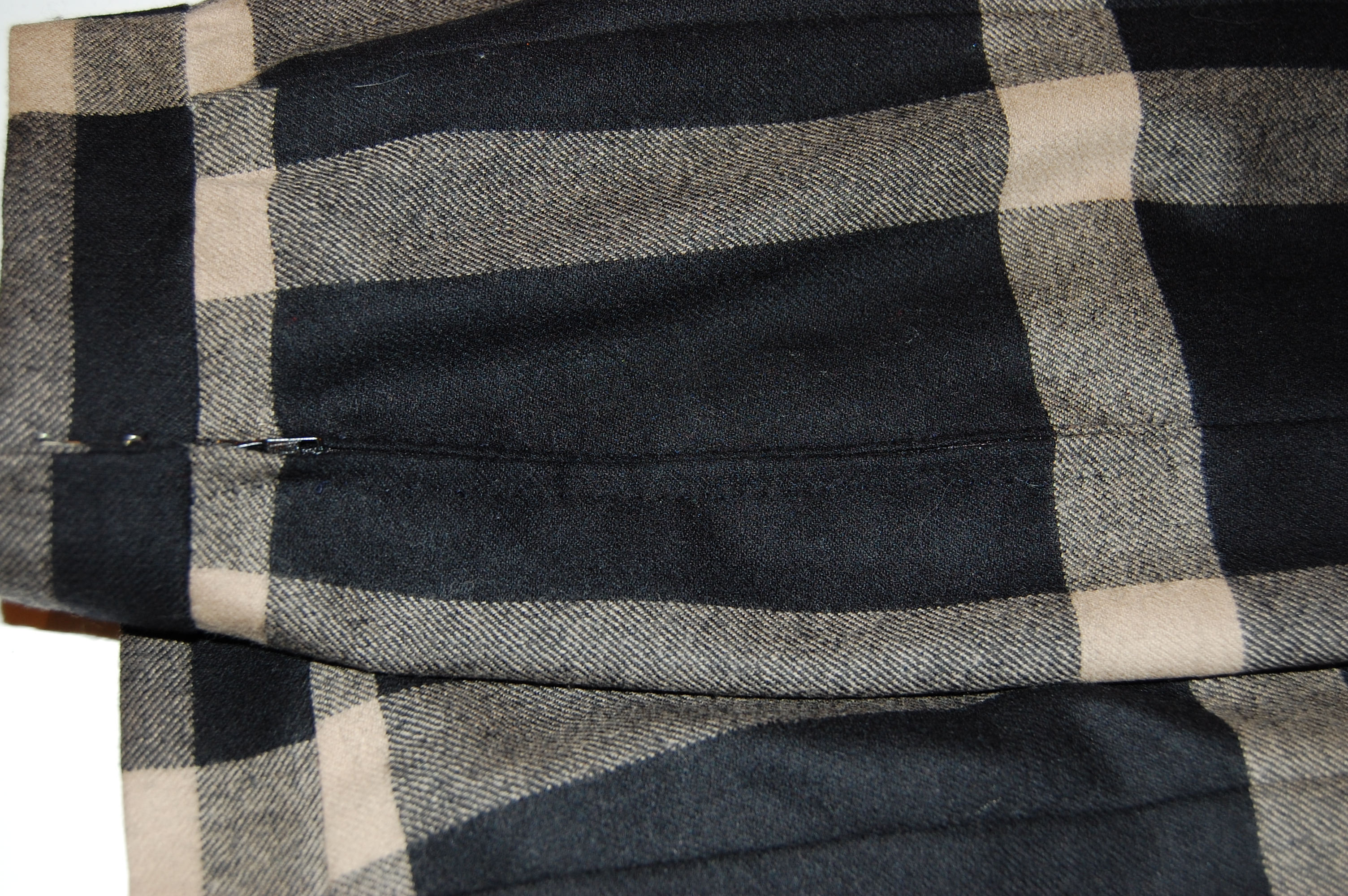
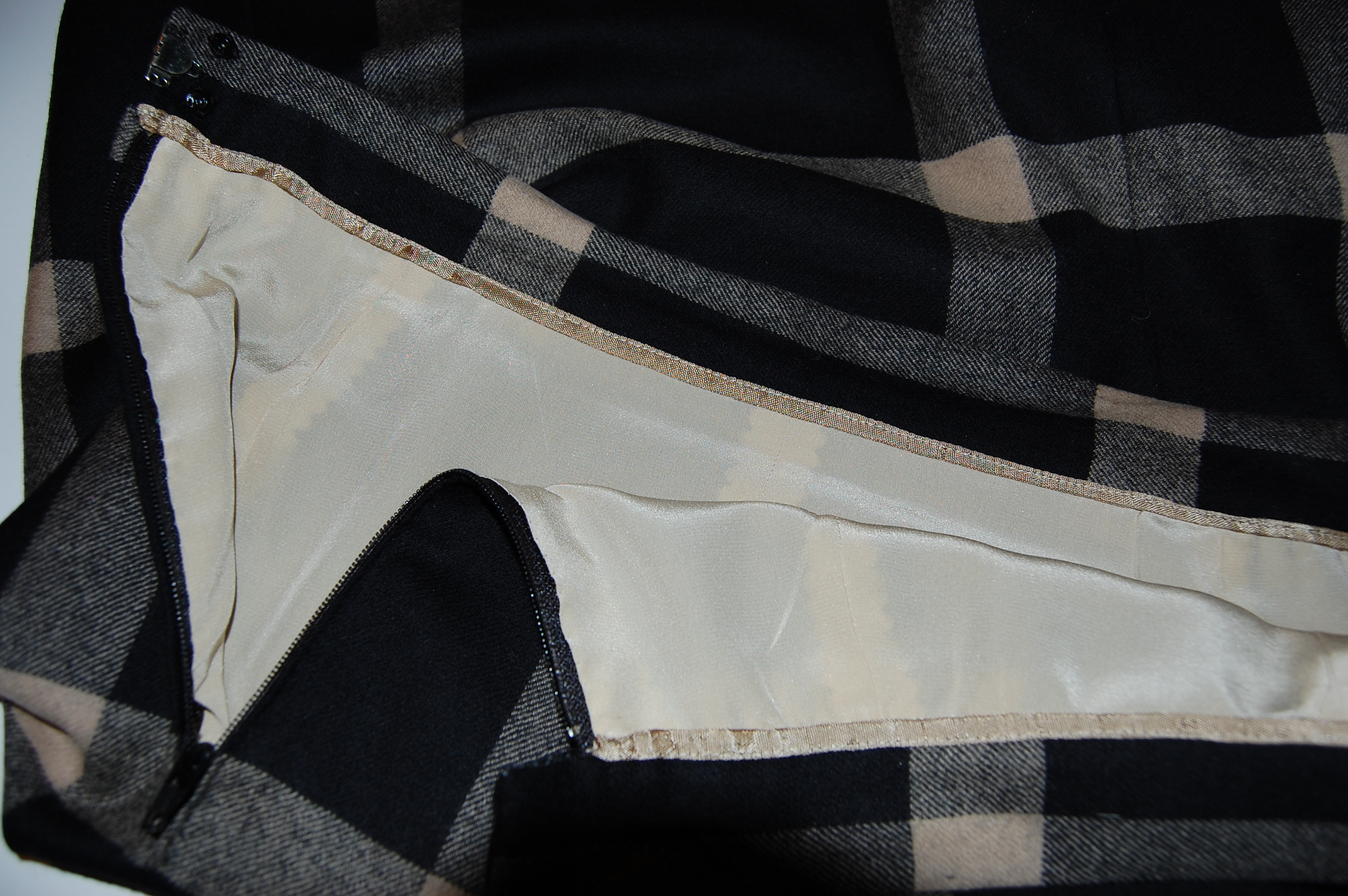
First, I made the skirt (except for the hem).  I like to put my zippers in by hand, as I just think it makes a nicer look.

Here is the zipper, set in using small back stitches.

And here is how I finished the waistband inside:

I bind the raw edge with a soft seam tape and then catch-stitch underneath to the waistband seam. This makes a nice, unbulky finish.

By the way, have you noticed how it is now almost impossible to find a ready-made skirt or pants with a waistband?  Another reason to sew!

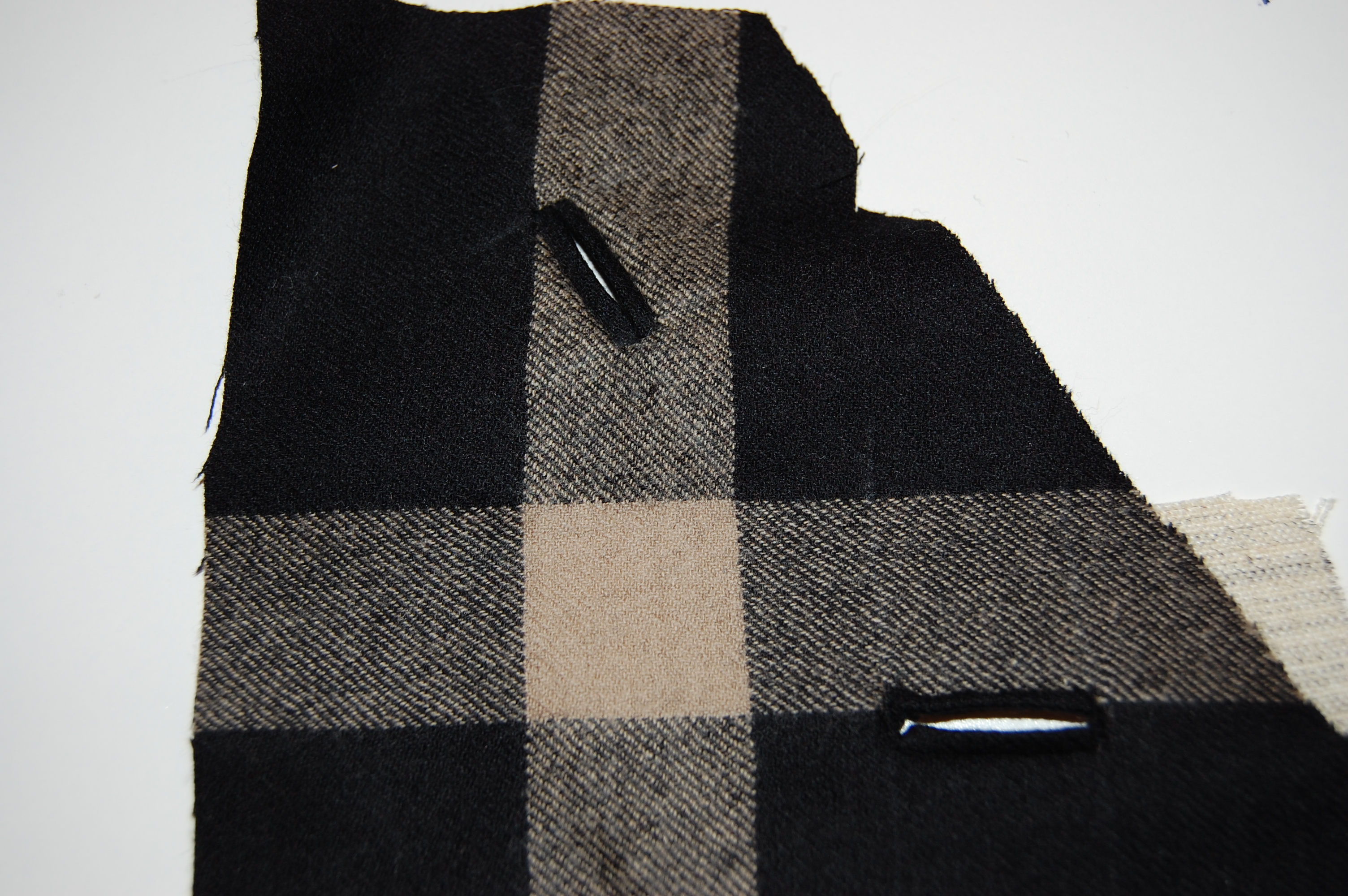
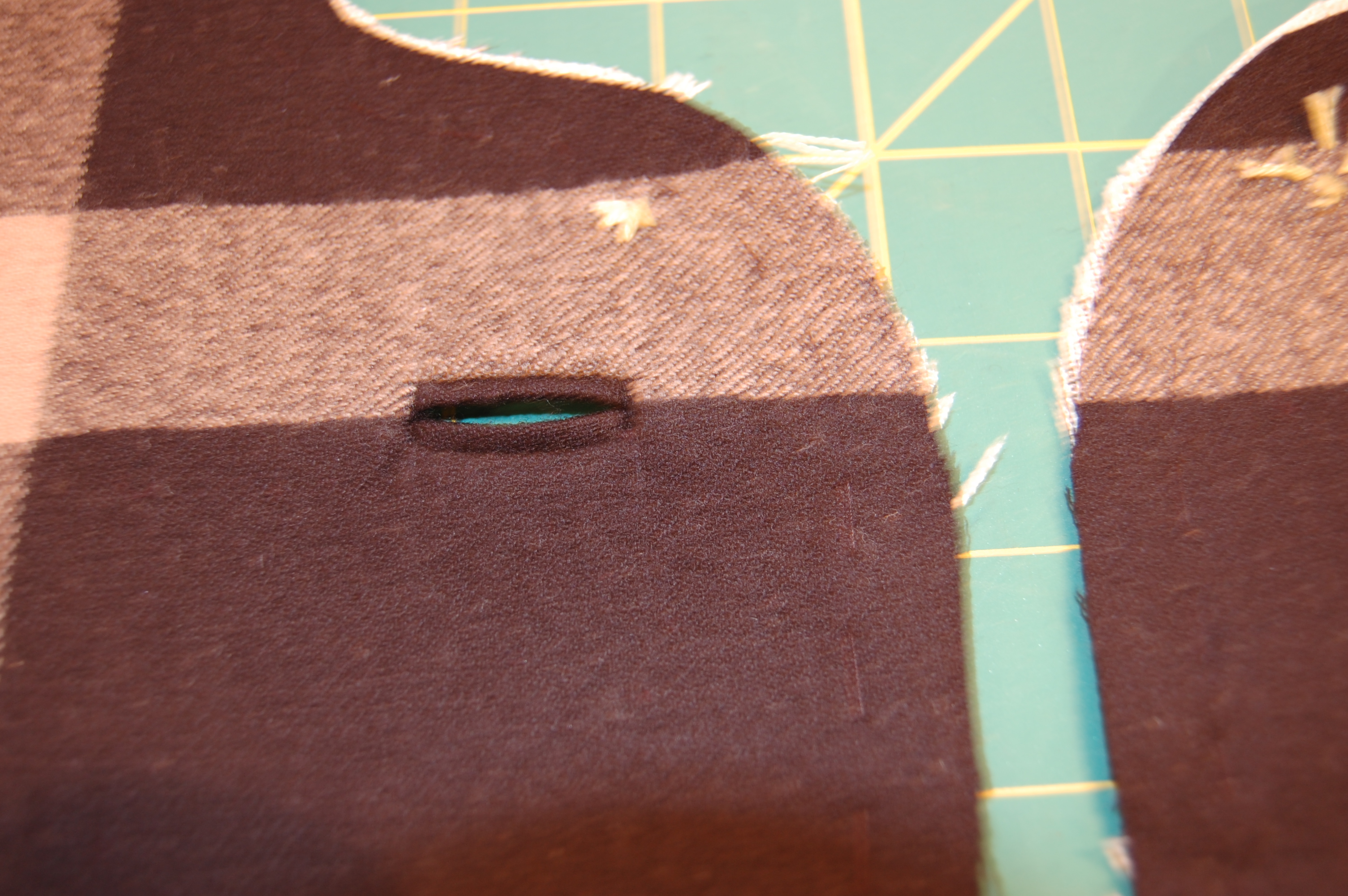
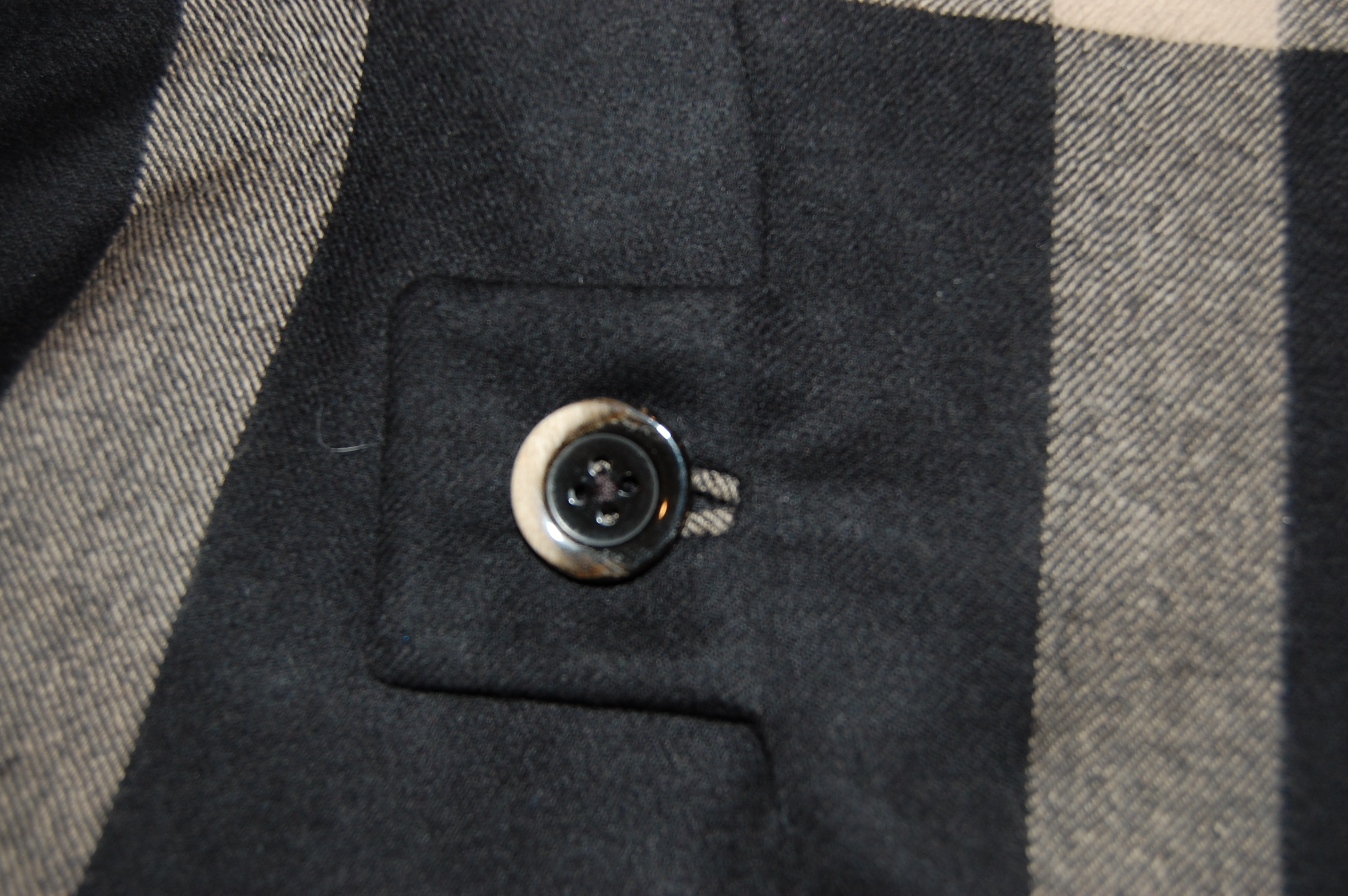
The jacket called for five bound buttonholes: one at the neck, on the two tabs on the front of the jacket, and in the sleeve plackets.  (This, of course, meant that I had to find buttons first.  A trip to the local fabric/craft store produced some, which I immediately recognized as “perfect.”  They are made by La Mode, an old button company still going strong after 125 years.)  Whenever I am making bound buttonholes, I like to make a couple of “practice” ones.  Every fabric handles differently, and with this fabric, I also needed to decide what part of the fabric I would use for the “bands”.  Here is my practice piece, which will help to explain what I mean.

Here were two of the three "trial" buttonholes I made. I decided to use all black bands where the buttonhole would be on a light part and light bands on all black. These trial runs helped me make my decision.

It always strikes me as being “out of sequence” when practically the first thing I have to do is make the buttonholes, but so it is with these bound beauties!

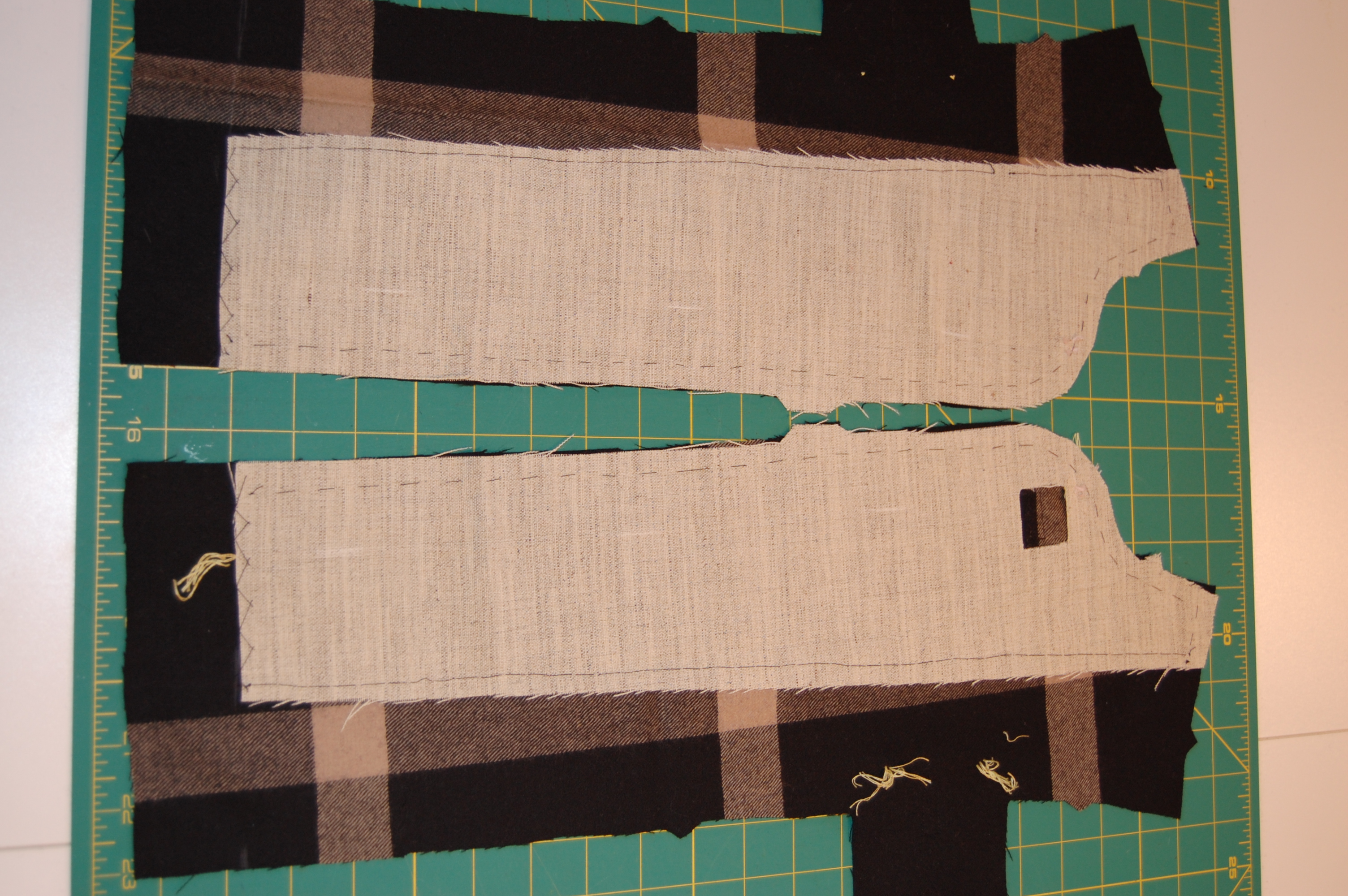
Of course, before the buttonholes comes the interfacing. I cut a small square out of the interfacing on the right side in order to accommodate the bound buttonhole.

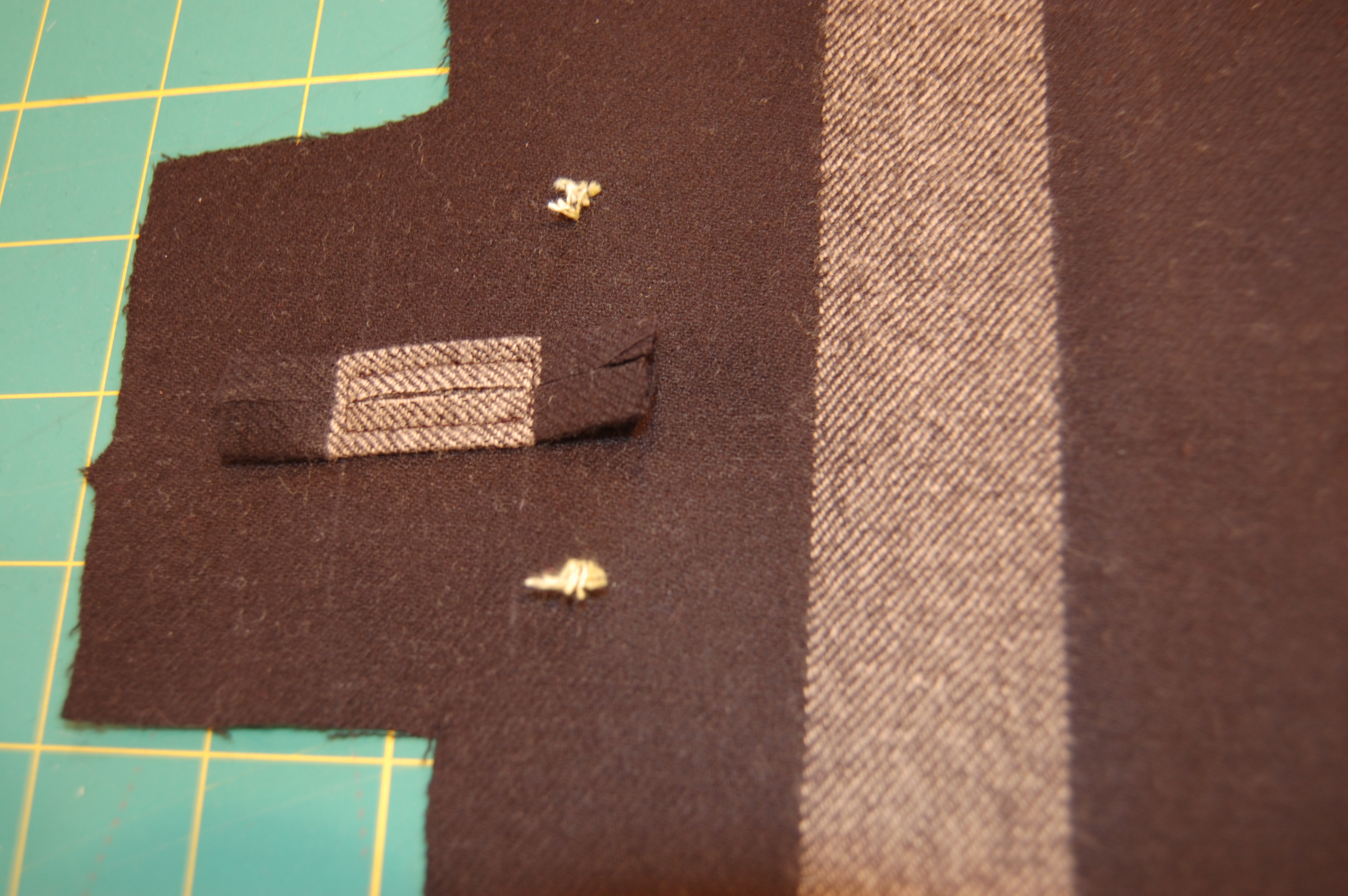
Here is the start of the buttonhole on one of the "tabs". The yellow fuzzies are tailor tacks.

Here is the buttonhole at the neckline.

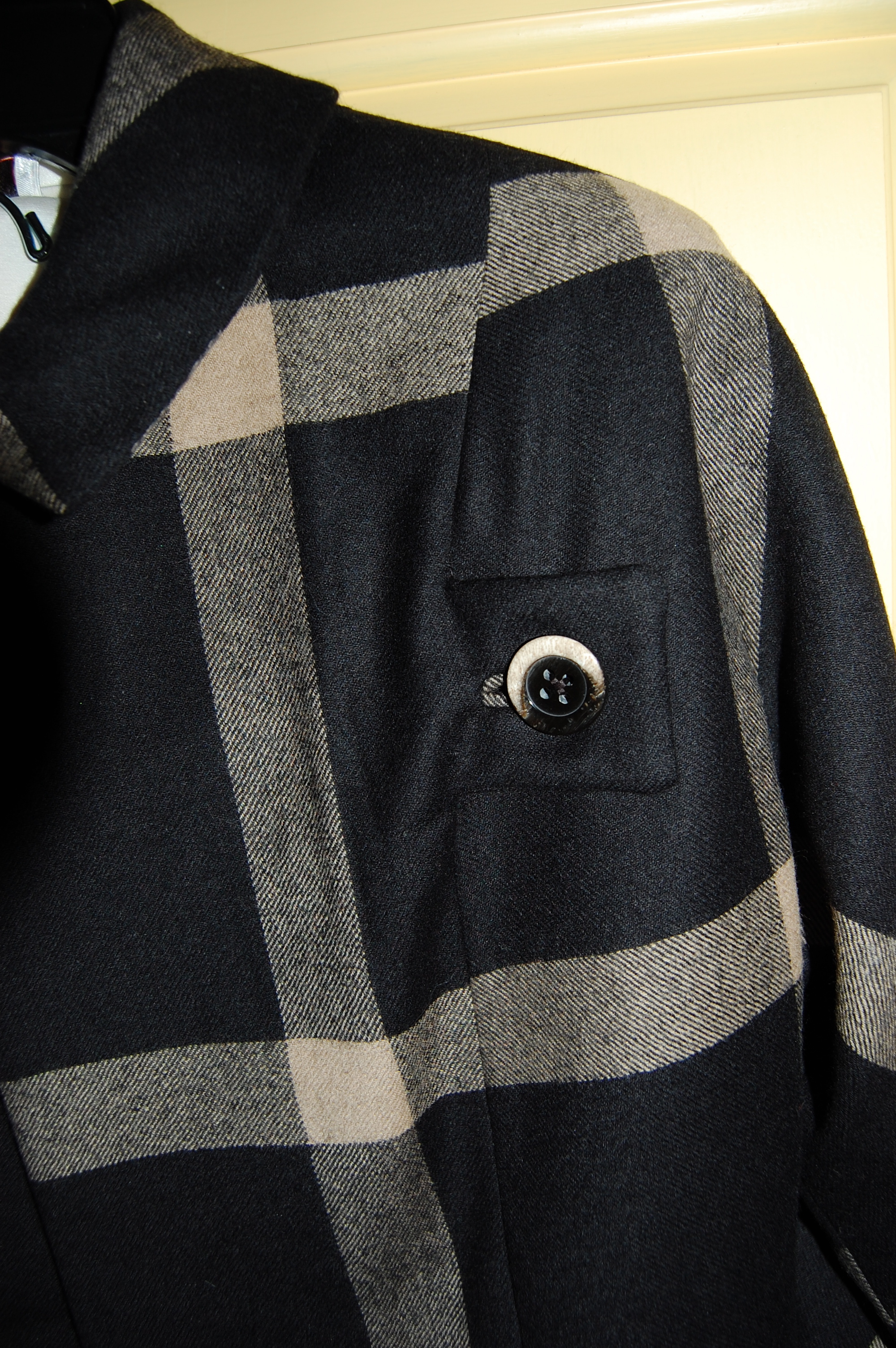
Here is the finished buttonhole on one of the tabs, sporting buttons which I think are perfect for this suit and fabric.

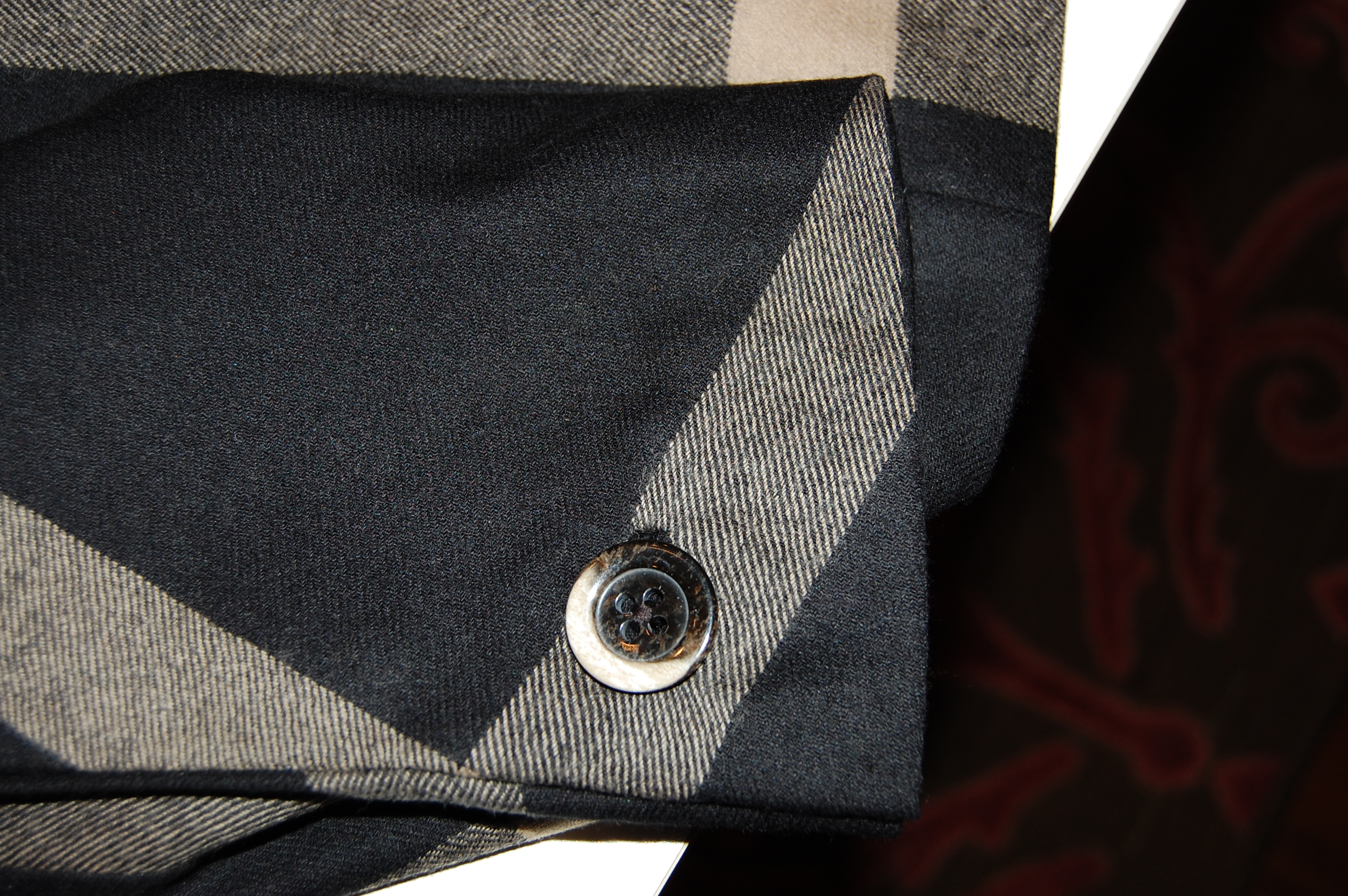
And here is one of the sleeve plackets, all finished!

The rest of sewing the jacket was fairly straightforward, just time-consuming!  The collar was a dream to do because there was a separate pattern piece for the two-piece, bias undercollar.  A bias undercollar makes the top part of the collar finish up with a smooth and neat turn.  Vogue Patterns – I love you!

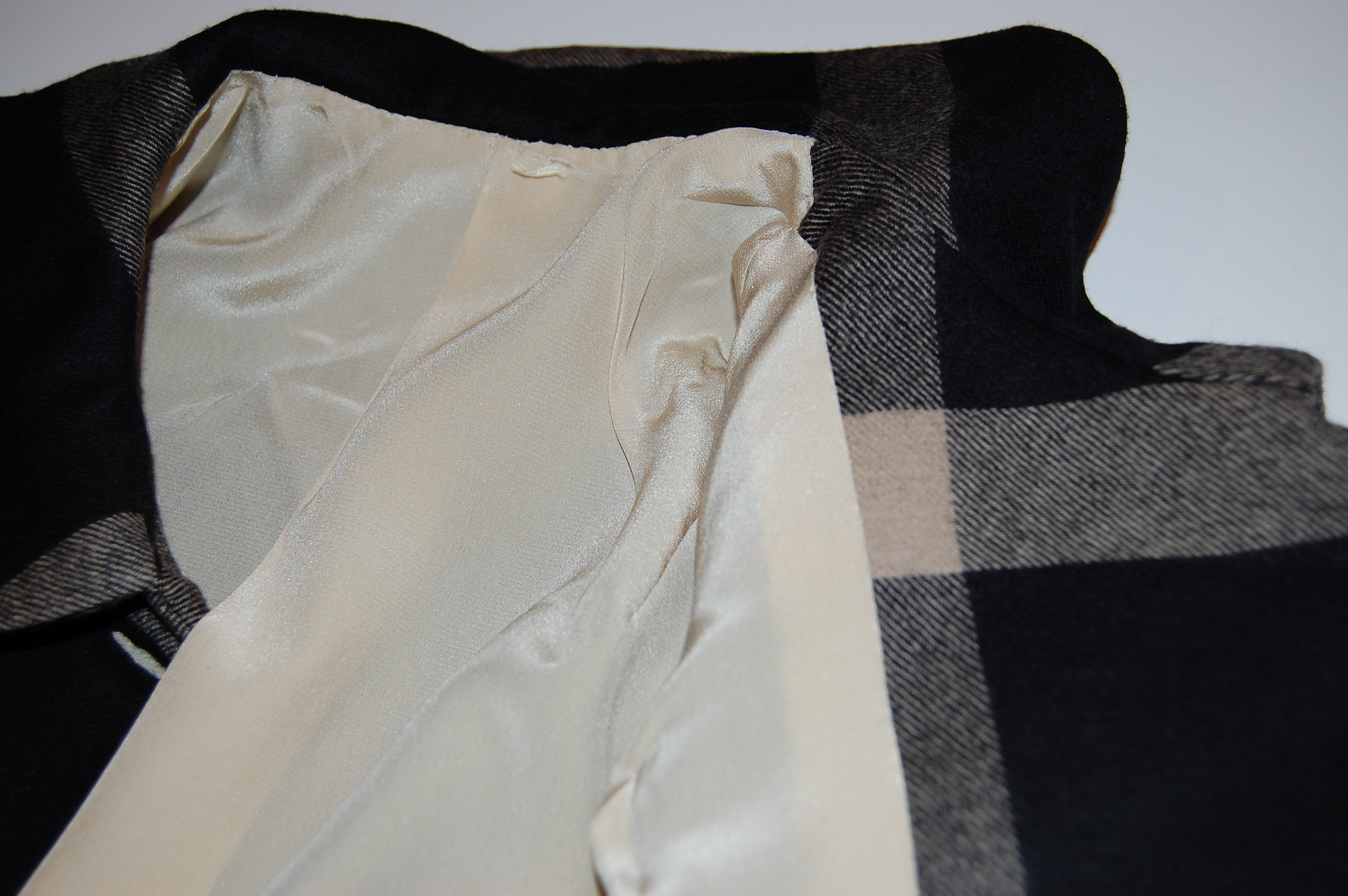
I lined both the skirt and the jacket in a silk crepe de chine which I ordered online from fabrics.net/The Fabrics Network.  This company, in Spokane, Washington, carries beautiful solid silks and other fabrics.  I got swatch/color cards from them last year and have purchased several pieces of fabric from them, all of them lovely, excellent quality goods, quickly delivered.

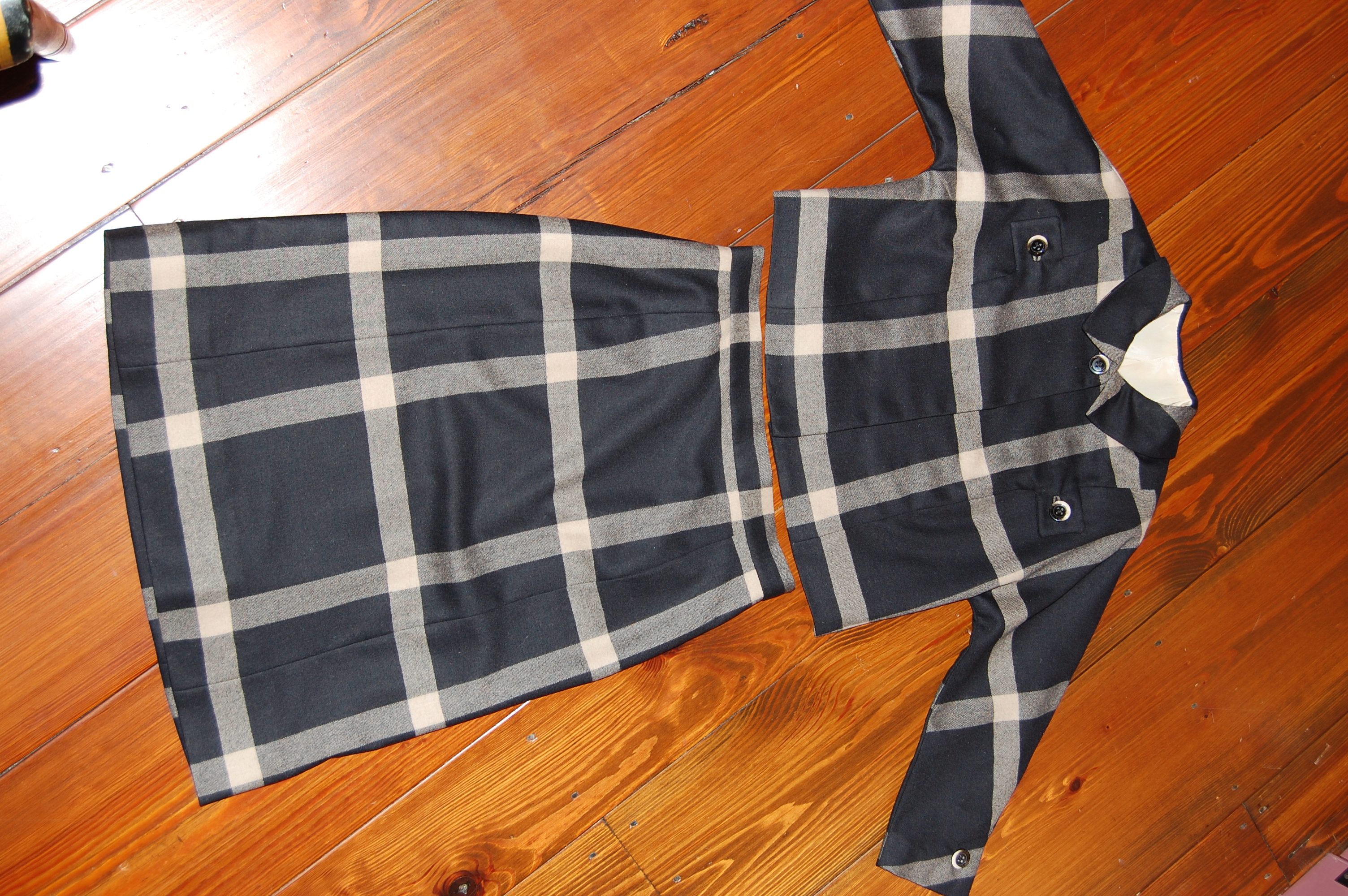
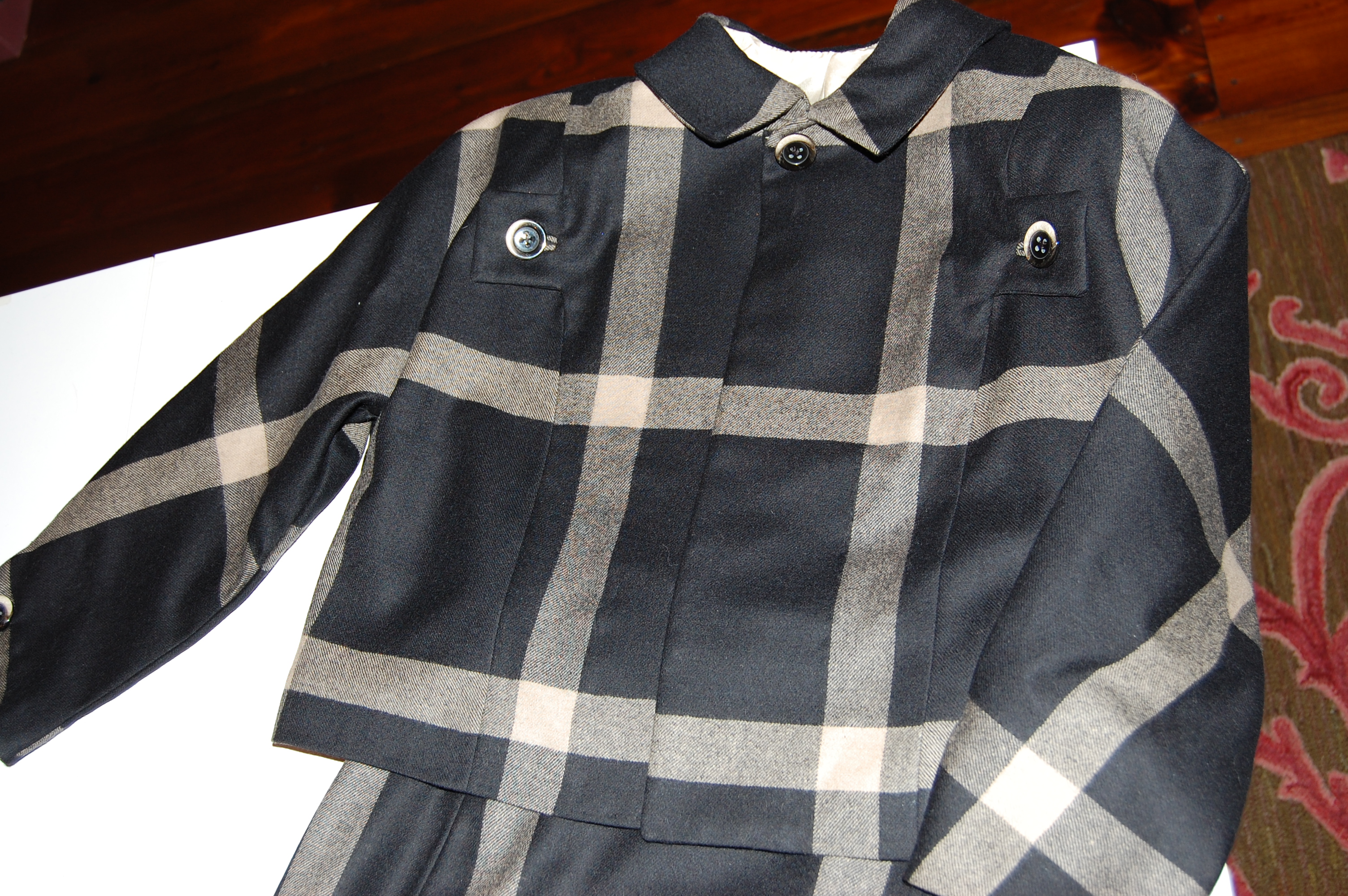
So here are some shots of my finished suit:

My suit, laid out on my sewing room floor - definitely prostrate from being worked on for so long!

Here is a close-up of the jacket.

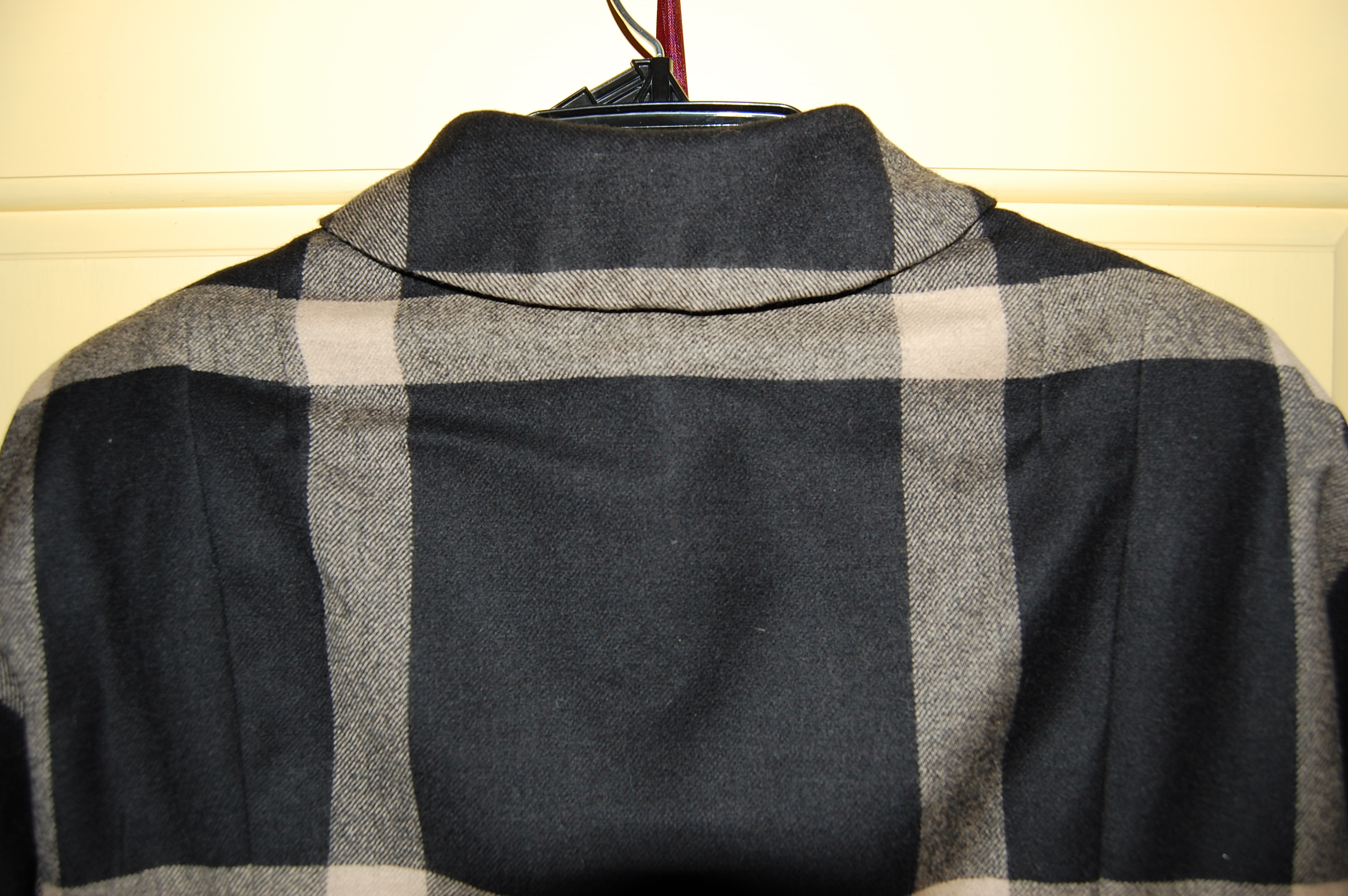
Here is an example of the puzzle of matching the check up and down and side to side. When I am wearing the jacket, I want the collar to match up to the back of the jacket. I think I was fairly successful with my calculations!

And here is a view of the one area which could not be matched, as that seam serves as a dart for the bust. But somehow, it looks okay, I think...

Finally here is a view of inside the neck, showing the lining and just a bit of the collar.

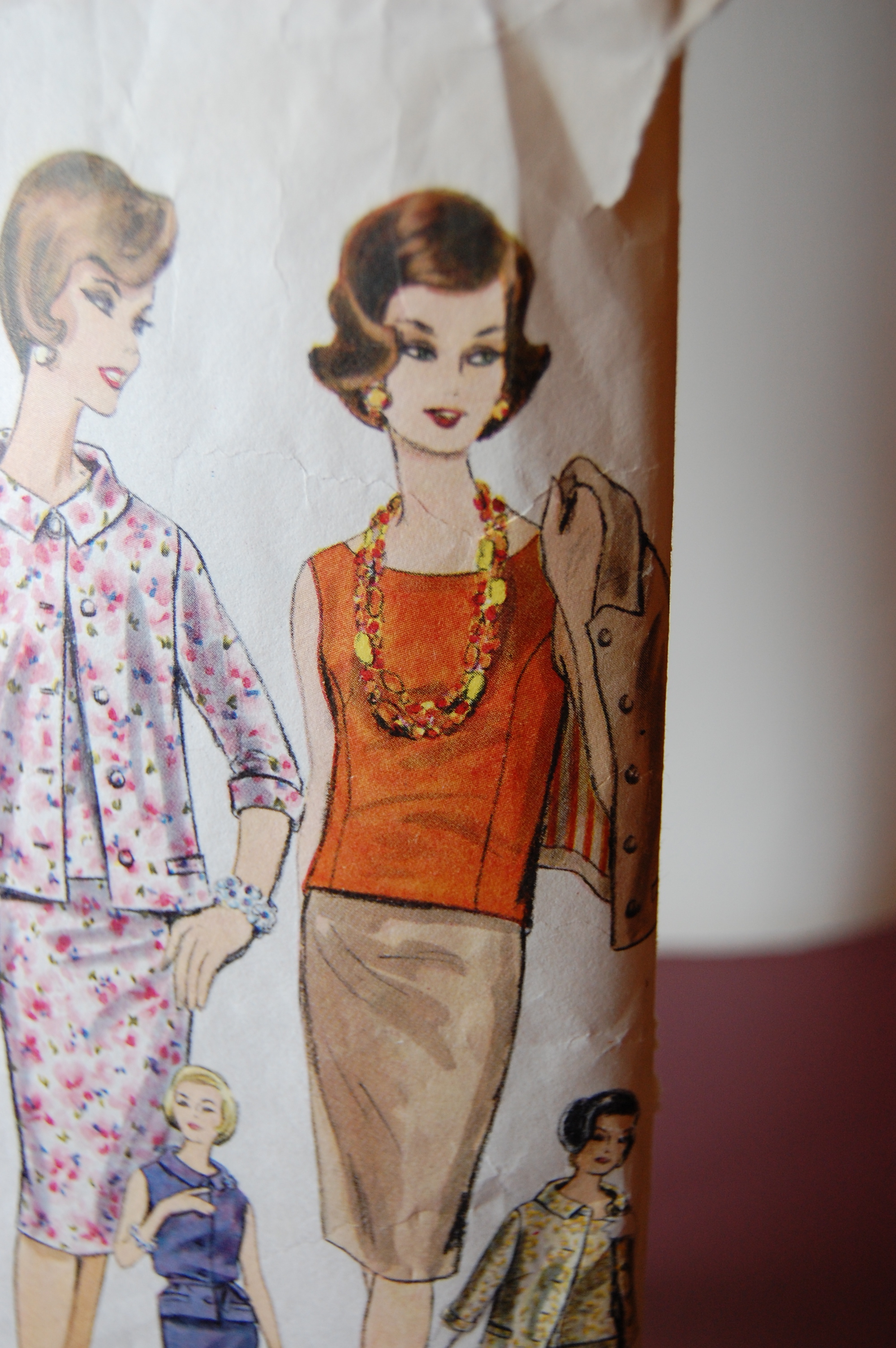
So – why did I say this project was “kind of” complete?   Well, wouldn’t a simple  blouse in that same lining silk be lovely?  I just happen to have enough fabric to make one (!) – and I’m thinking about using this pattern:

I think this simple shell would make up beautifully in that beige silk. What do you think? (I would wear it tucked in.)

Also, when I purchased the wool, I bought plenty to allow for matching those checks, and the wonderful salesperson at Britex cut the piece generously for me as well – many thanks, dear lady! So – I have enough left to make a simple lined  overblouse, which could be worn just with the skirt for a variation on a two-piece “little black dress.”  Memo to self:  move this idea to the top of my “sewing to do” list for next Fall!
3 Comments

Filed under bound buttonholes, kimono sleeves, Uncategorized, vintage Vogue patterns from the 1950s, Vogue patterns

Buttons, blouses and bijoux*

One of the often minimalized components of making a garment is the selection of fasteners (ie., buttons).  It’s easy to put so much attention to pattern and fabric, that when it comes to deciding on buttons, it’s “Oh, well, these will do.”  However, the wrong buttons can, quite simply, ruin a blouse, dress, suit, jacket, or coat.  And, the right buttons can add just the perfect accent.  So – how do you know what kind of buttons to choose?  Here are my guidelines:

First, the obvious.  Just as you match pattern to fabric to suit its weight, weave, seasonality, and ambience (how dressy or non-dressy it is), so should you choose buttons accordingly.  This includes texture of the button (rough, smooth, ribbed, etc.), style (fancy, sporty, novelty, etc.), size (usually the more buttons a garment needs, the smaller they should be), and weight (light weight fabric needs more delicate buttons, for example).

Second, I believe color is hugely important.  To select the correct color, I try to visualize the finished garment with different color buttons.  If you do this, your brain will automatically sort out what will work and what won’t work.

Finally, I think about what jewelry* (bijoux is an Archaic French word meaning an elegant jewel!) and/or accessories I will be wearing with a garment, and I take that into consideration when choosing buttons.  This is one reason why those of us who make clothing for ourselves are so fortunate – we can coordinate the look we want from start to finish.

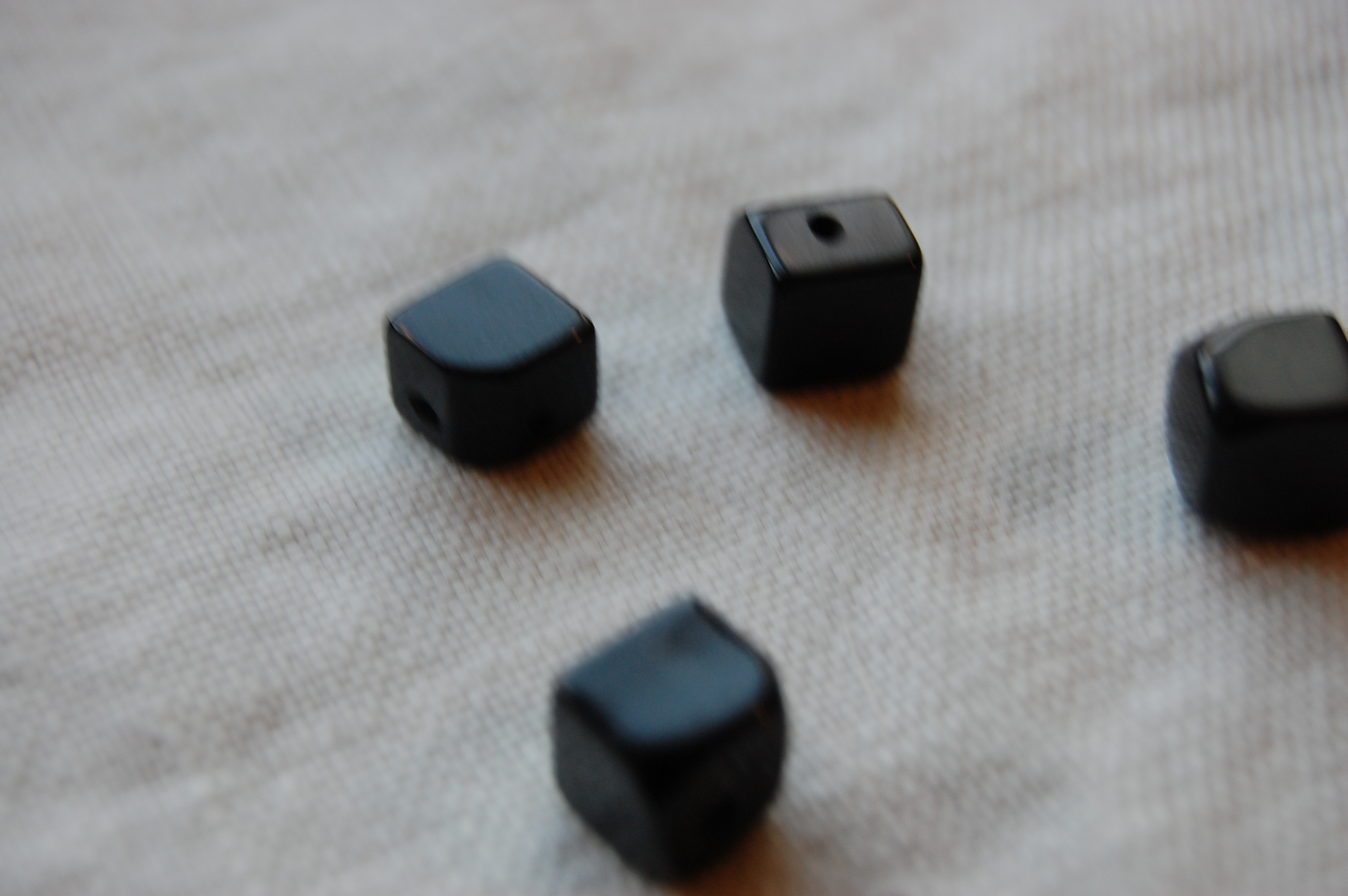
So – I’ll give you a peek at my just completed project, which incorporates these button guidelines.  But first, some background info.  Last July, I traveled to Massachusetts to spend a few fun-filled days with daughter Susanna, who lives in the Pioneer Valley.  We had an agenda (what women do not??), which included two trips to the Brimfield area.  Our first trip was to the Sturbridge Antique Textile and Vintage Clothing Extravaganza.  Susanna wrote about some of our purchases from this excursion on her blog, but here is a picture of a set of 12 black Bakelite buttons which I found at one of the vendors.

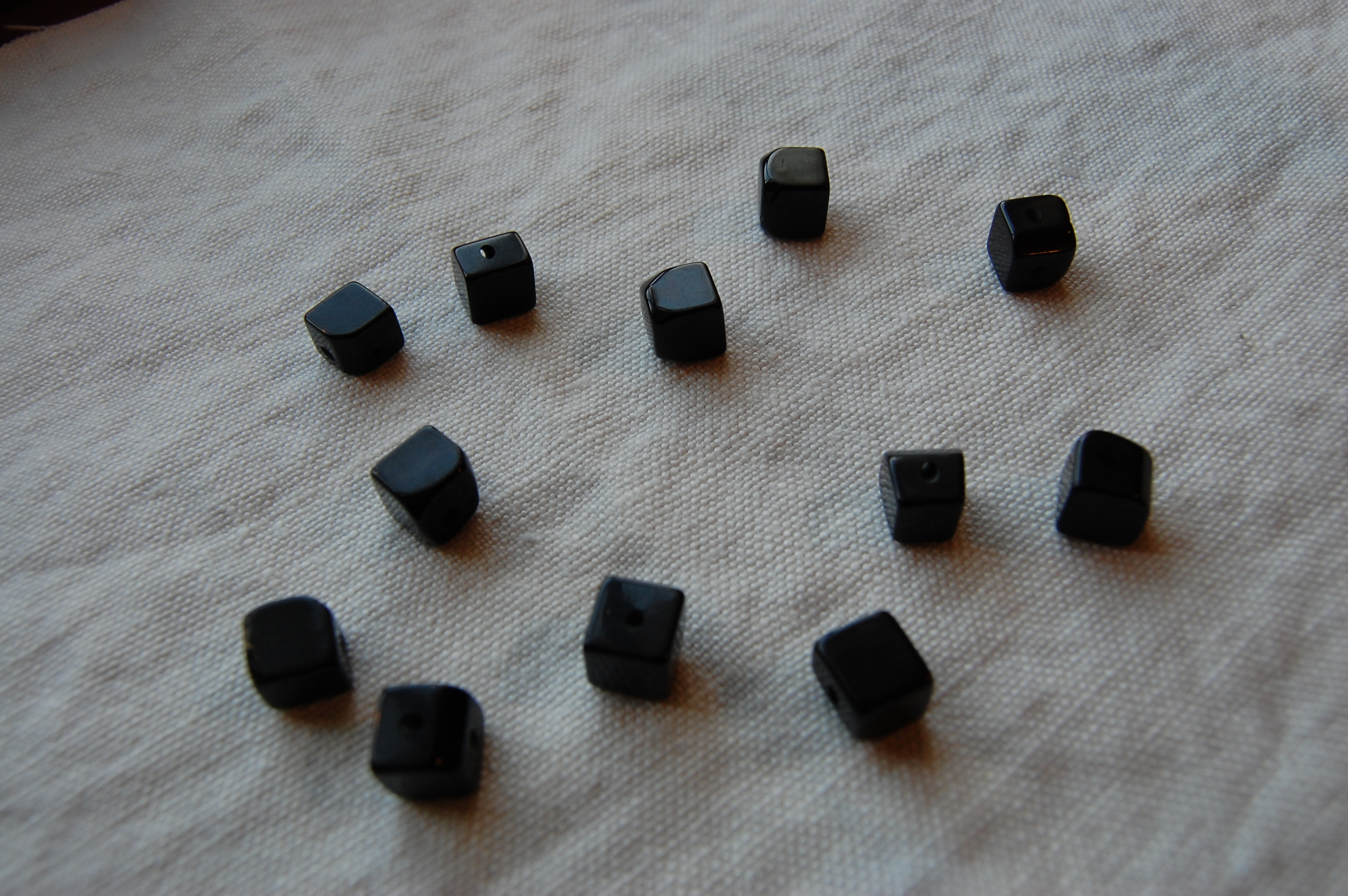
My set of 12 Bakelite buttons

Here is a close-up of some of the buttons. Can you see the rounded corners on some of the cubes? This detail makes them more interesting!

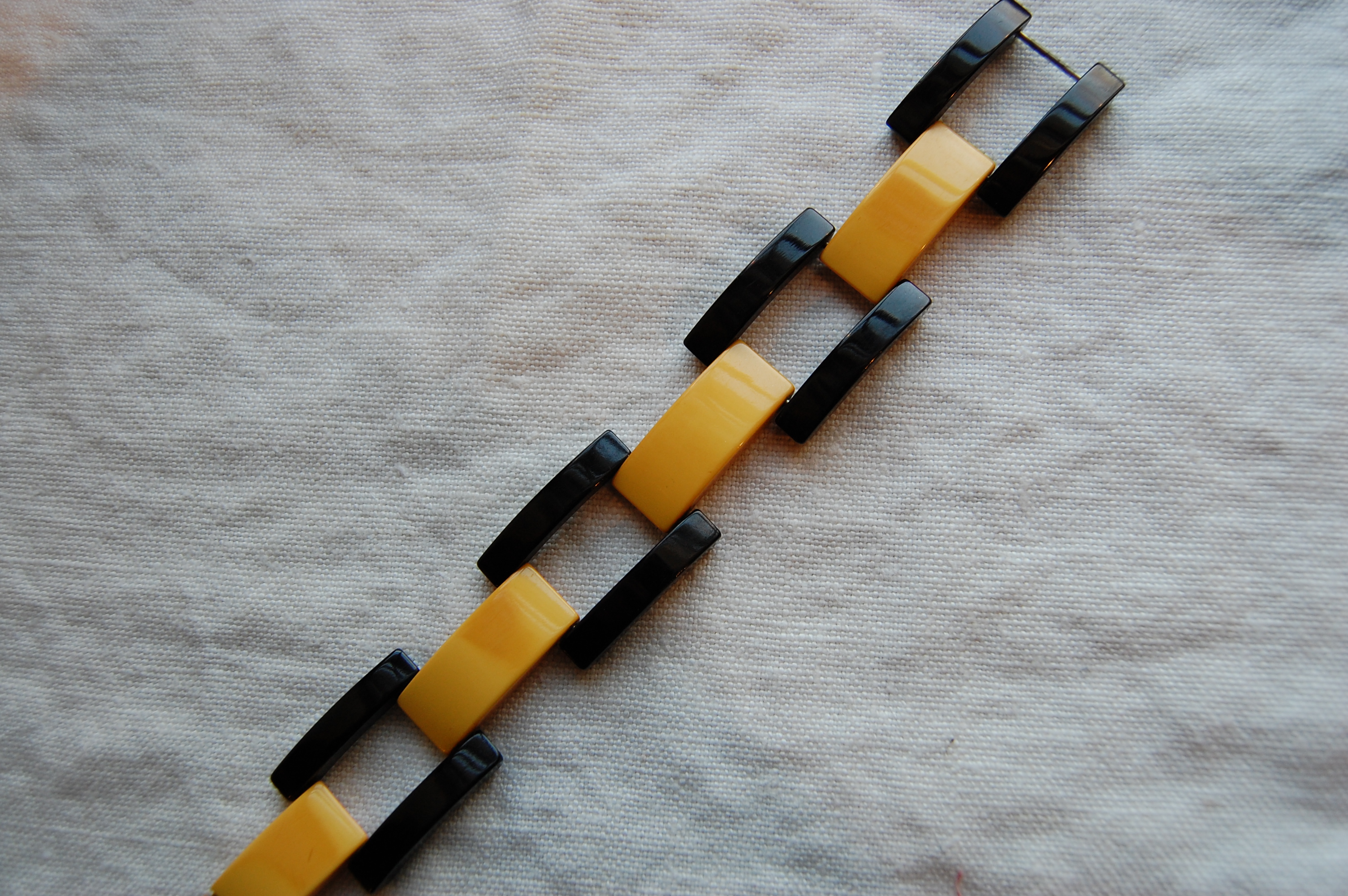
I bought them without knowing how or when I would use them, but they definitely had my name on them – and they came home to Pennsylvania with me!  What I would have loved to have also brought home with me was a black and yellow Bakelite bracelet, which caught my eye at another booth later in the day.  I resisted buying it as we had already done our part to support the economy…! What I did not know was that my sneaky daughter quickly purchased this bracelet while I went to the ladies’ room – and she, her husband Jon, and our son Nate surprised me with it for Christmas!  Here it is:

My Christmas surprise!

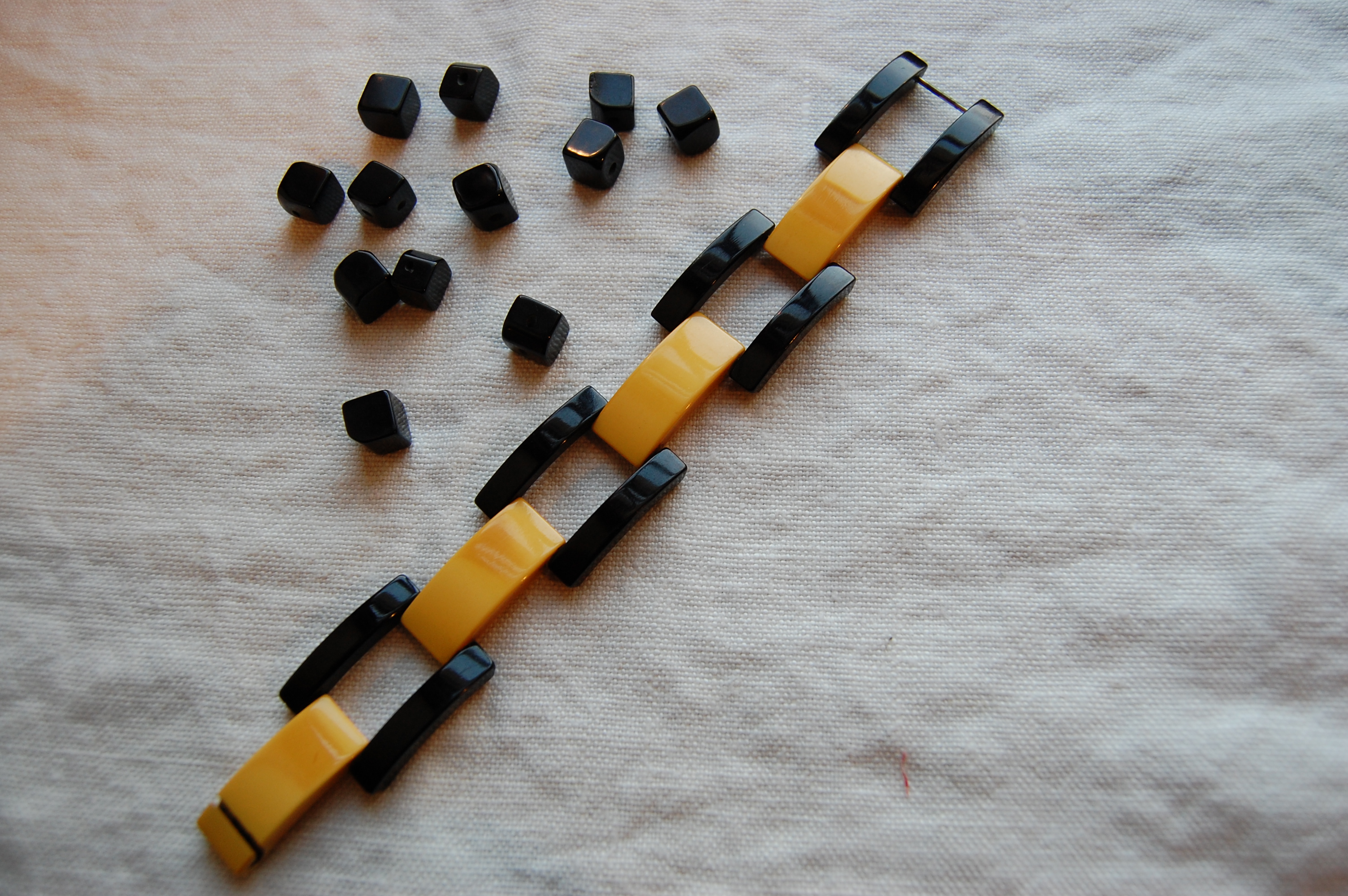
Here is the bracelet shown next to the buttons: obviously these were meant for each other!

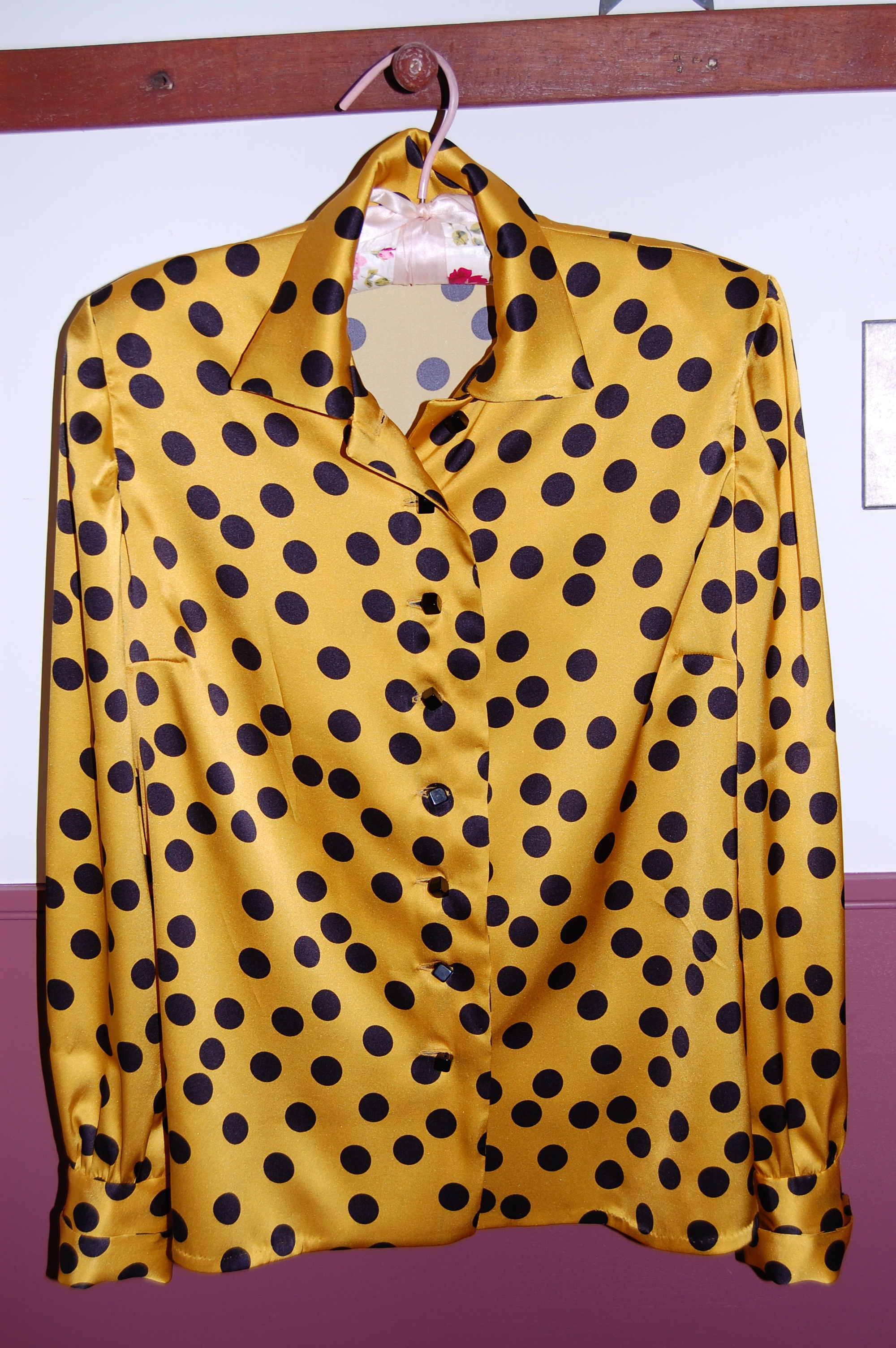
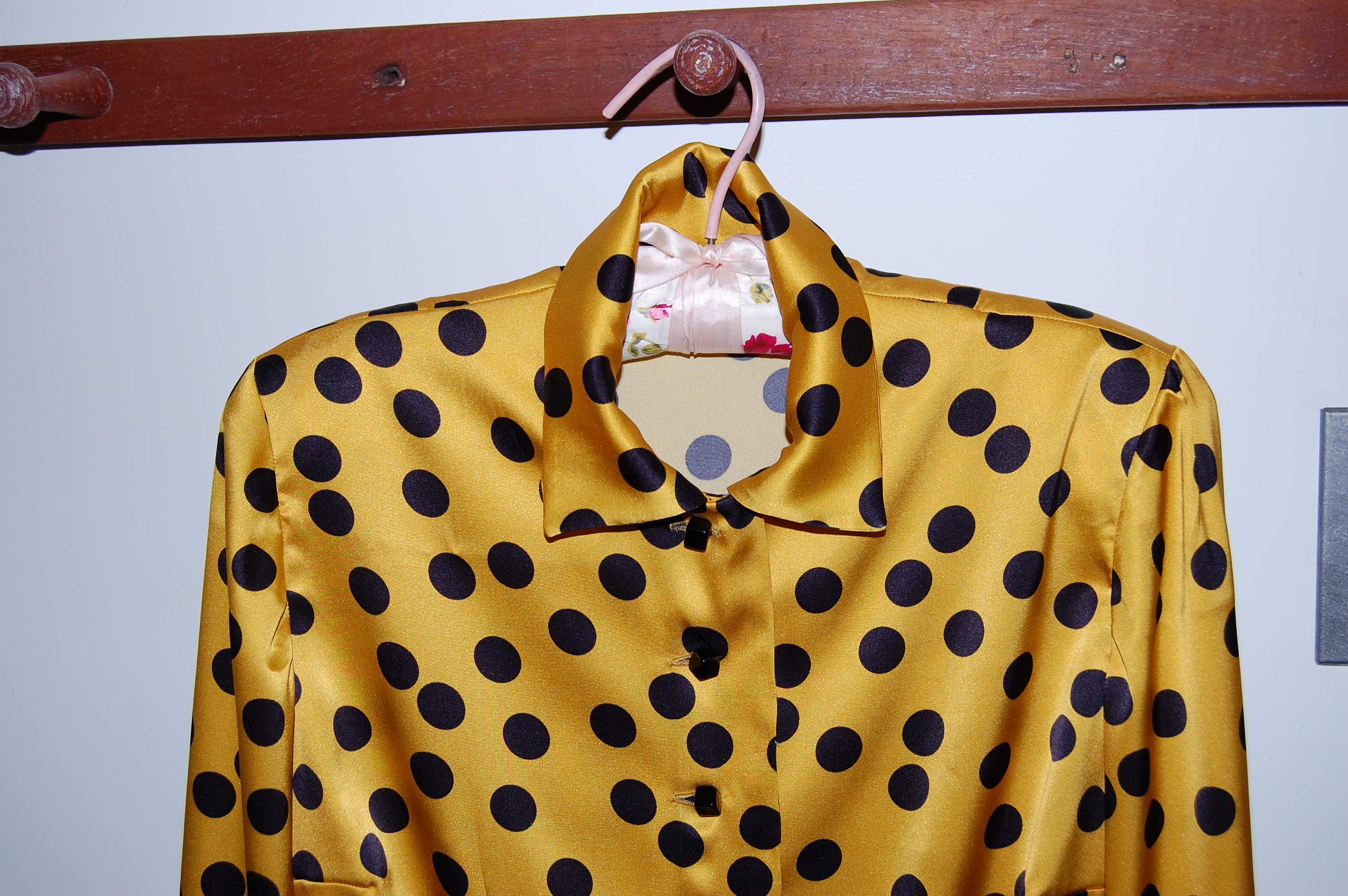
Now fast forward to the completion of this silk blouse:

The finished blouse made from a vintage Vogue pattern, complete with vintage Bakelite buttons

Here is a closer view of the blouse

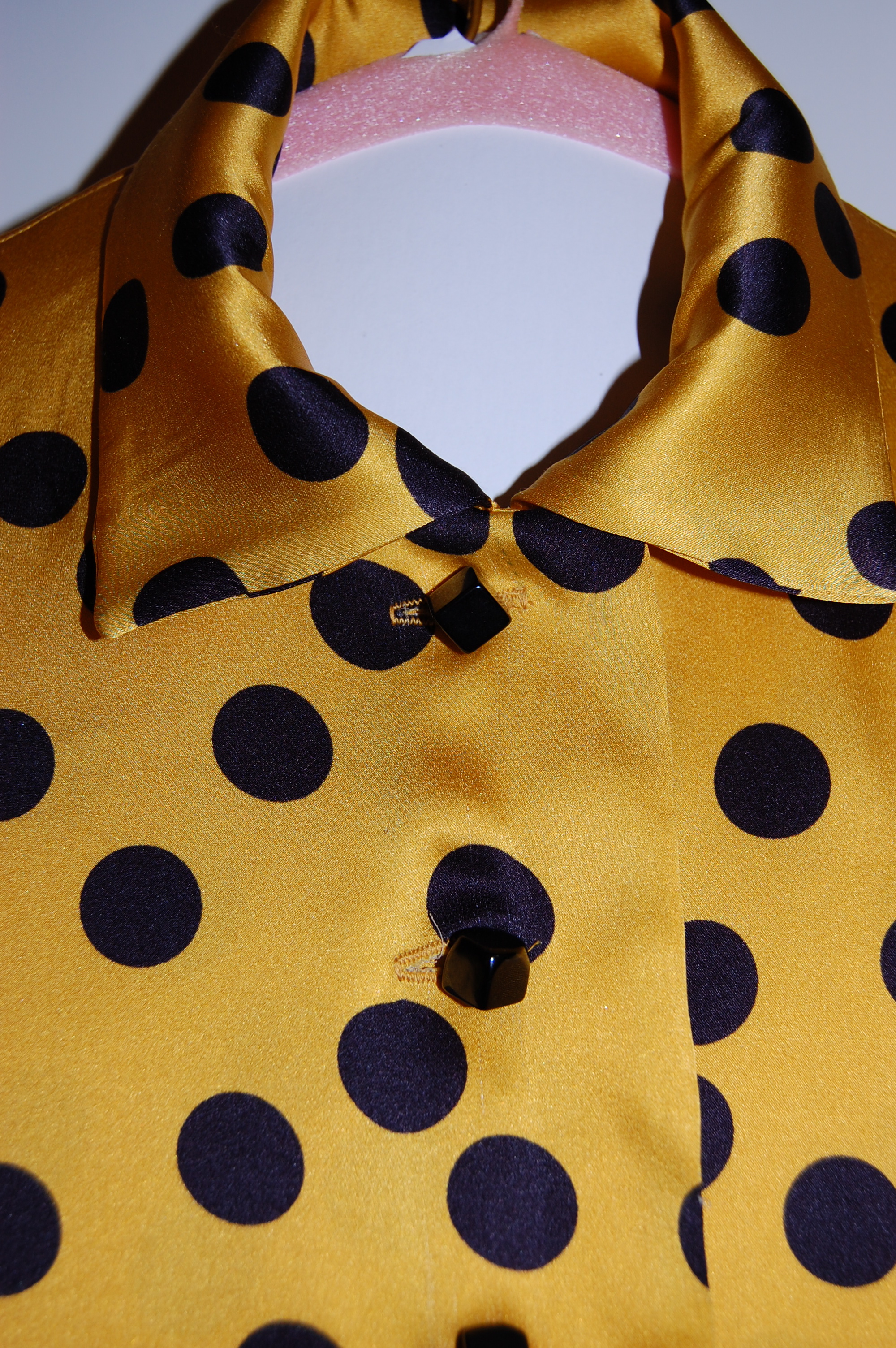
Yes, I decided those Bakelite buttons would be perfect for it, and here is why:

–  The fabric, both in design and color, makes a statement, so it needs buttons which are not wimpy.  The square-ish shape of the buttons helps them stand up to those demonstrative polka dots without distracting from them.

And an even closer view...

–  Black is the only color I could picture using with this fabric (gold, yellow, white pearl or gray pearl did not visualize well for me…).

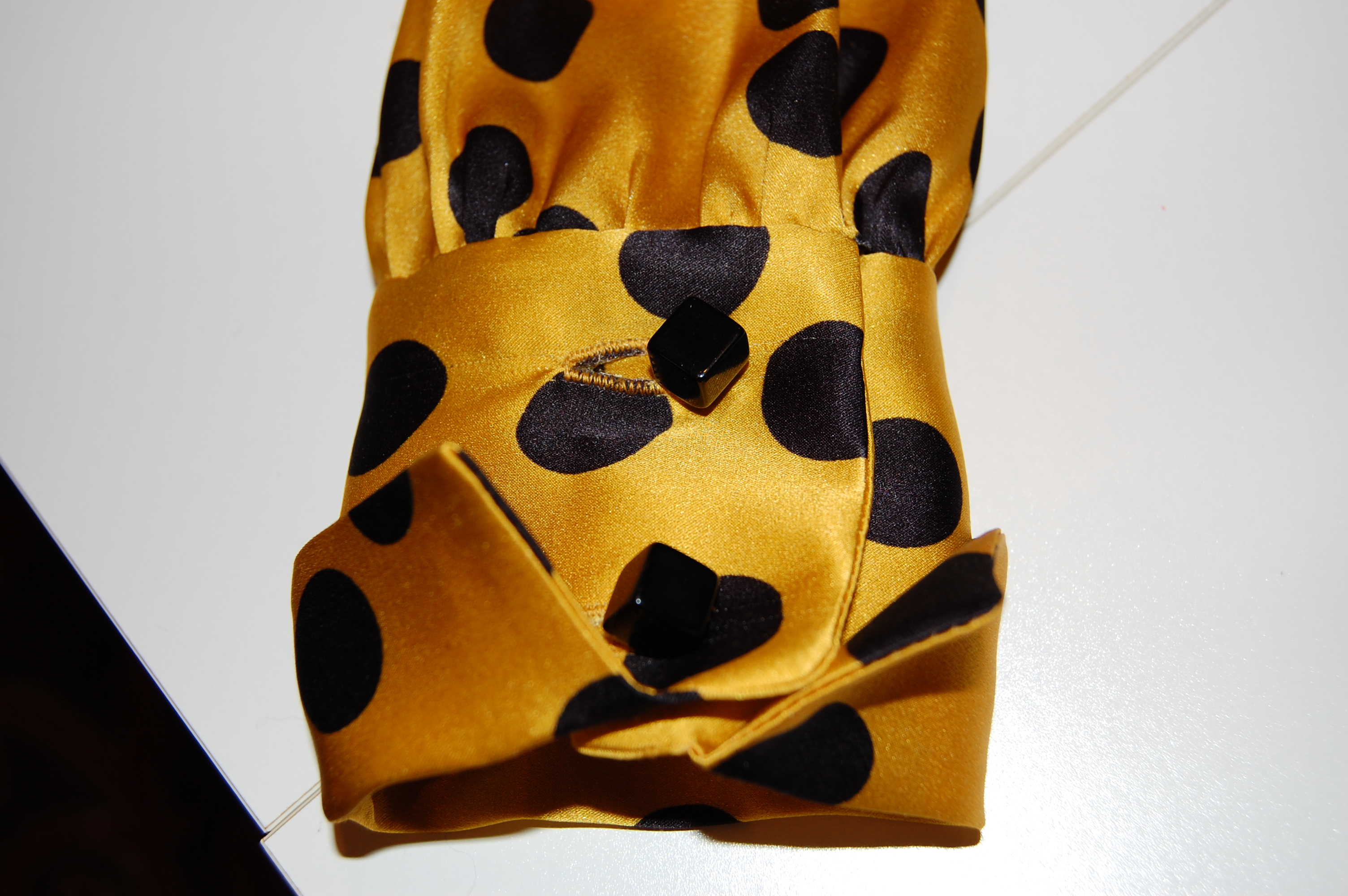
–  I thought the French cuffs (which I love) on this pattern would show to more advantage with buttons which have some heft to them.

Here is a close-up of the French cuff

These buttons are just heavy enough for the weight of this fabric, and finally…

–  I knew I would be wearing my Bakelite bracelet with this blouse!

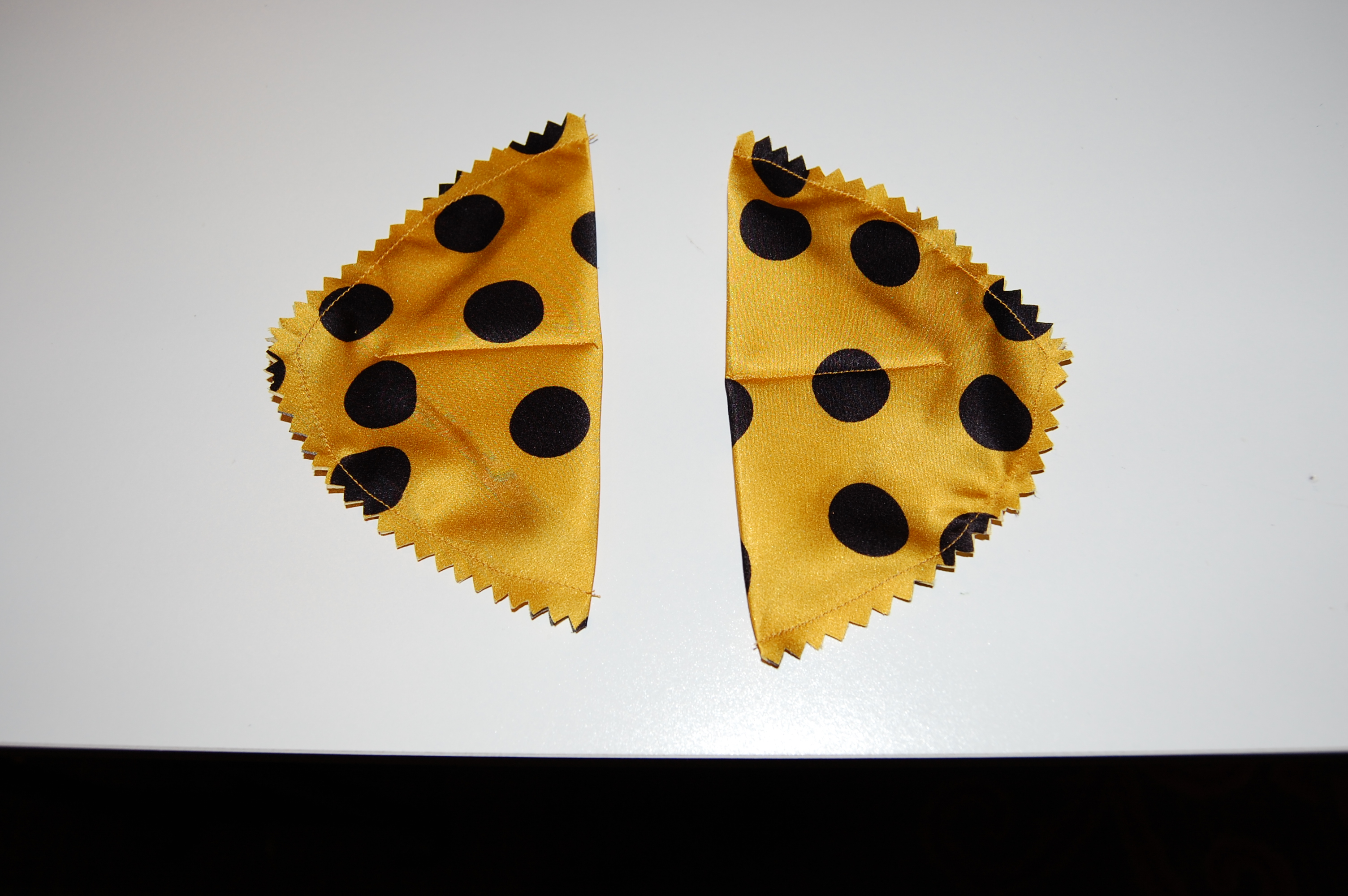
Well – I can’t end this post without showing you the shoulder shapes which I made fromVogue 7503, view F.

Here are the shoulder shapes before I positioned them in the blouse. The crosswise stitching makes them fit over the shoulder beautifully.

They turned out perfectly and are just the right thickness/softness/size for this blouse!

6 Comments

Filed under Bakelite buttons and/or jewelry, Blouse patterns from the 1950's, Buttons - choosing the right ones, Polka dots, Shoulder shapes (shoulder pads), Vogue pattern 7503 for shoulder shapes, Vogue patterns