
Every once in a while, I find myself having fallen under the spell of a particularly noteworthy and engaging book. Such was my fate with this remarkable story of an Englishwoman (1816 -1890) and her journal of fabric swatches, saved from her own life and collected from family, friends, and acquaintances over the course of decades, beginning in September of 1838.
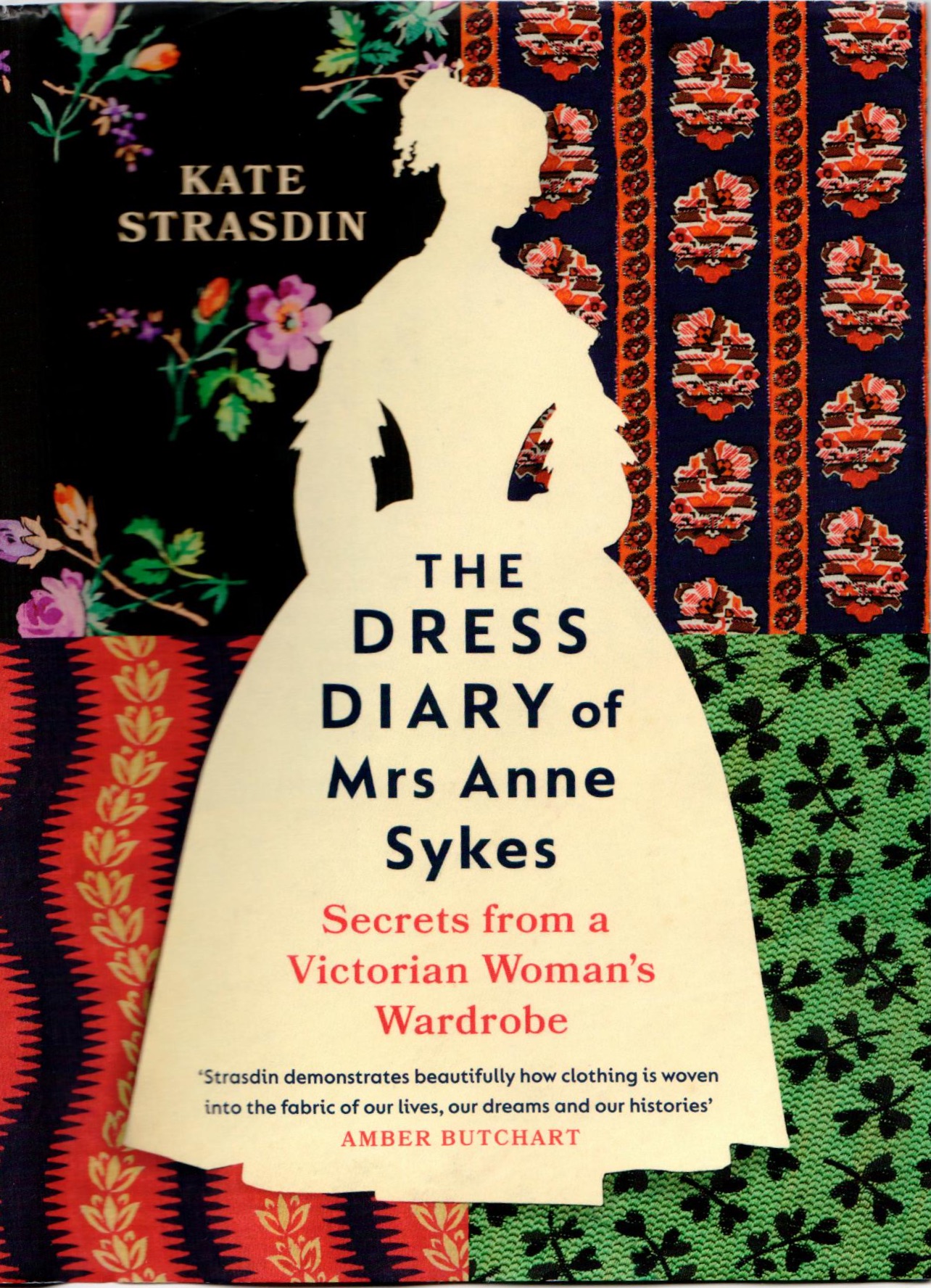
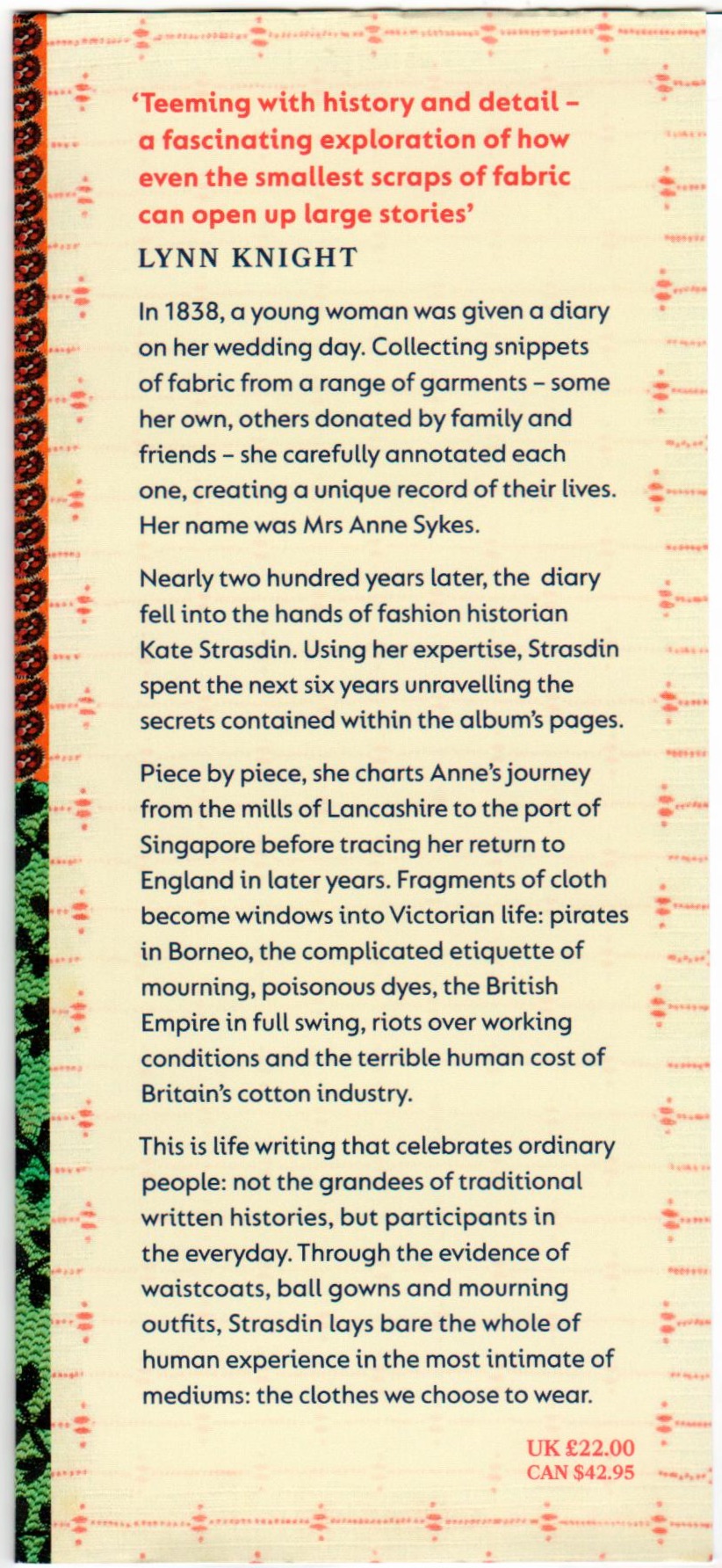
With over 1200 fabric entries, the diary – or journal – gradually revealed its secrets to the author, a fashion historian, who painstakingly transcribed the often sparse notations accompanying each fabric sample, piecing together the fascinating life and times of Anne Burton Sykes. The research is meticulous, and the author, Kate Strasdin, shares her eureka moments which allowed her to expand not only Anne’s life, but those of her friends and family as well. Written in an engaging style, this non-fiction book often reads like a novel, a wonderful story of love, friendship, adventure, and vibrant personalities.
There is so much to learn here about Anne’s life in the larger context of world history and events, but it is the personal experiences and expressions which spoke so loudly to me. Yes, there are many details which, by the nature of the journal, must be extrapolated and surmised, which the author is careful to note. But the picture of Anne – and her husband Adam – which evolves is one of two very likeable people, engaged in their community, industrious and thoughtful, friendly and adventurous, and undoubtably well-dressed.
The first entries in the journal, of Anne’s wedding attire, were actually placed and annotated by Adam. He was the one to give Anne the journal on their wedding day. He refers to her as “my charming Anne.” Not beautiful, not sweet, not dear, but “charming.” That single selection of adjective spoke volumes to me about each of them.
She also must have been brave, enduring a four-month sea voyage from northern England to Singapore, where Adam’s business took them two years after their marriage. There they built a life among other English-speaking neighbors and acquaintances, in the stifling heat and humidity of the south China sea. After seven years in Singapore, they went on to Shanghai for two years (where the diary goes silent for the duration), and then back to England.
Anne’s friendships with other women throughout her life are apparent in the swatches she receives from so many in her circle. The exchange of gifts and tokens of friendship take form in dress-goods (cotton, wool, silk), ribbons, pieces of lace, and snippets of sashes. There appeared to be a remarkable camaraderie among all ages and between the sexes.
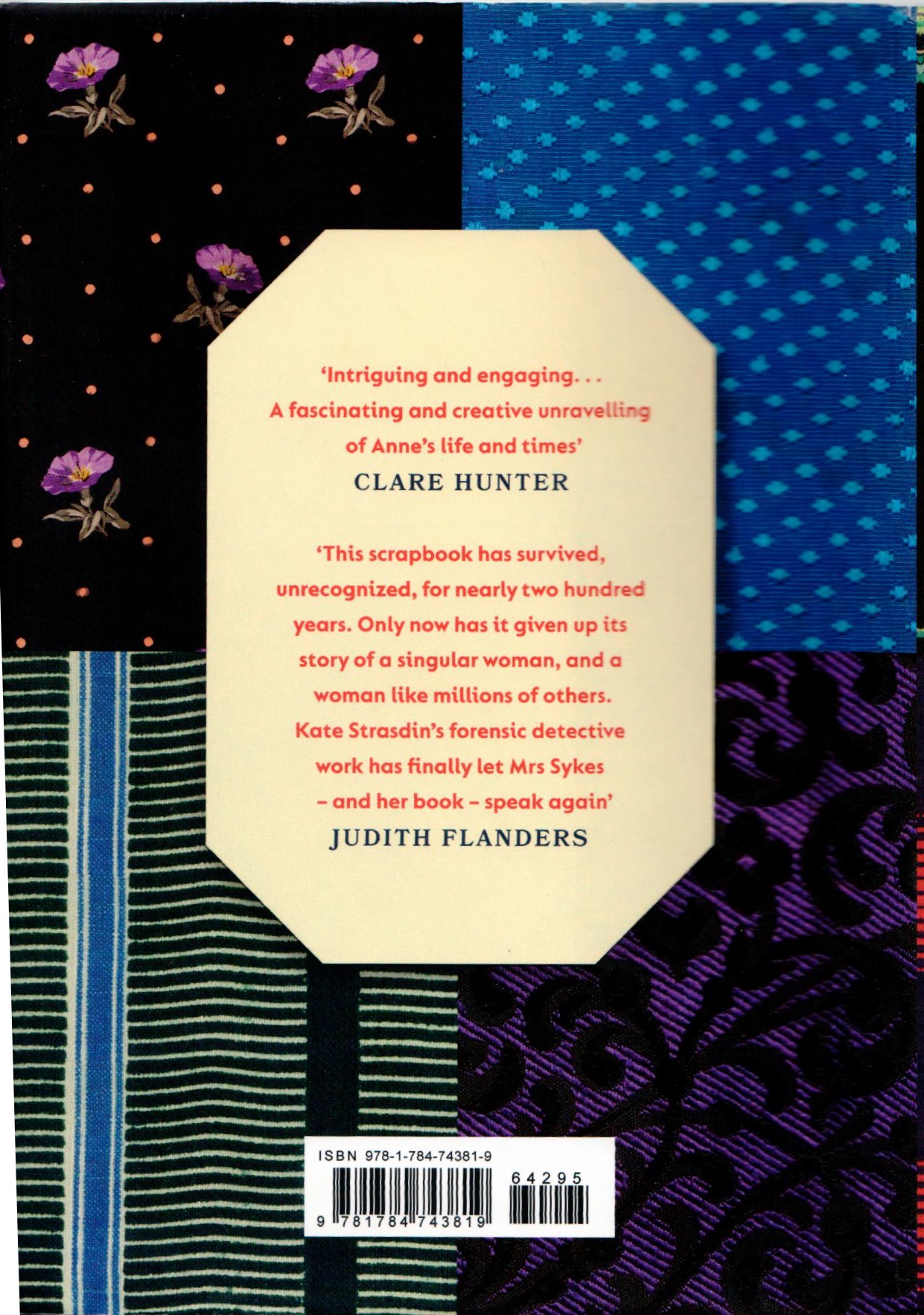
The author has done a masterful job in deciphering the life and persona of Mrs. Anne Sykes through so many diverse fabric swatches. Anne’s kindness, her circumspection, her devotion to family and friends, and her small place in history make for a wonderful, enlightening story. I am very grateful to have had the opportunity to read and savor this book.


















 fiftydresses
Going Around in Circles
When I purchased this sateen, jacquard-woven fabric from Mendel Goldberg a couple of years ago, I wasn’t sure what it would eventually become. It had a wide repeat to the design (which is something to consider when you know you are facing considerable matching of the design), but it was a lovely 60” wide. I bought just 2 yards (it was expensive) and hoped I would have enough fabric to finagle something.
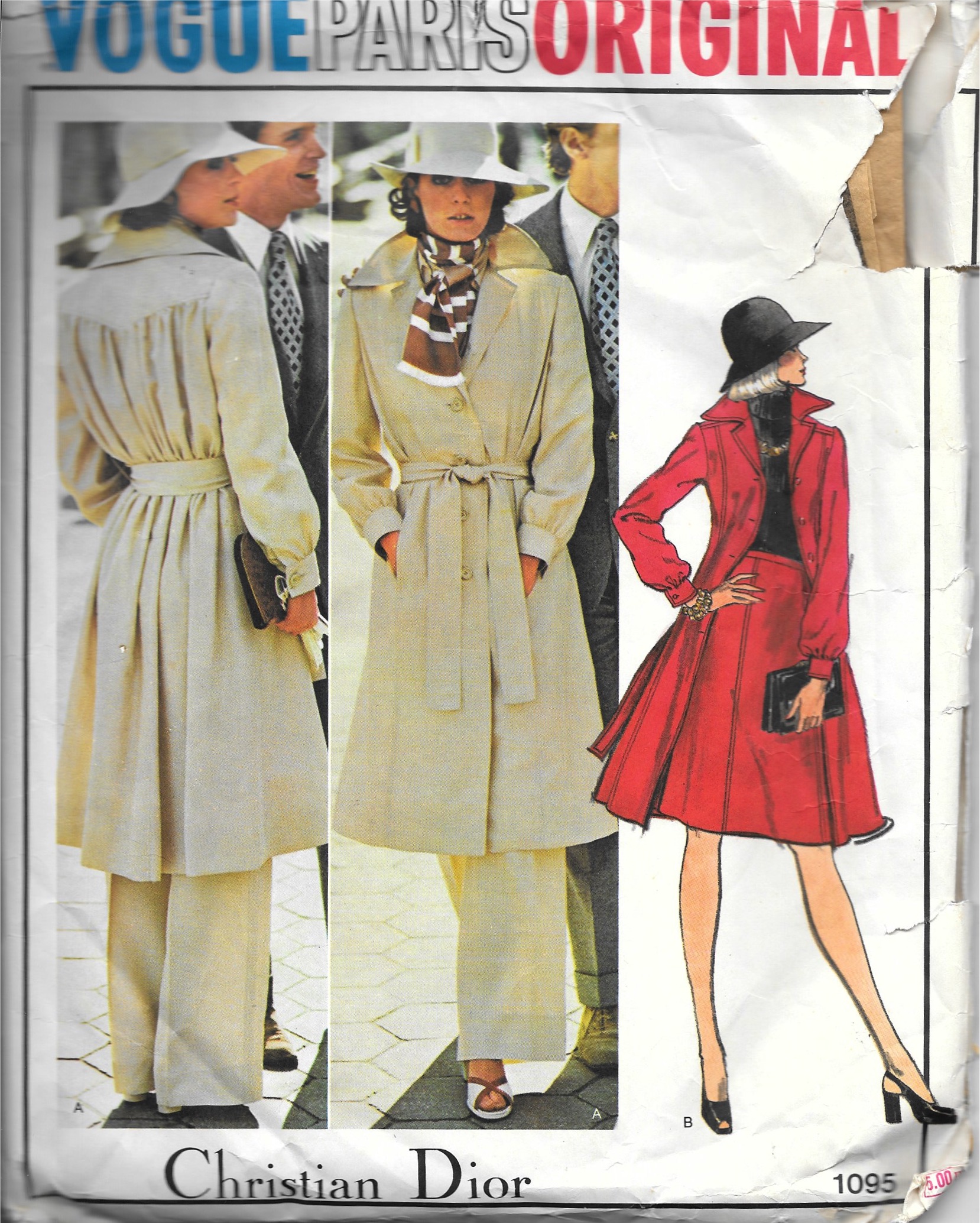
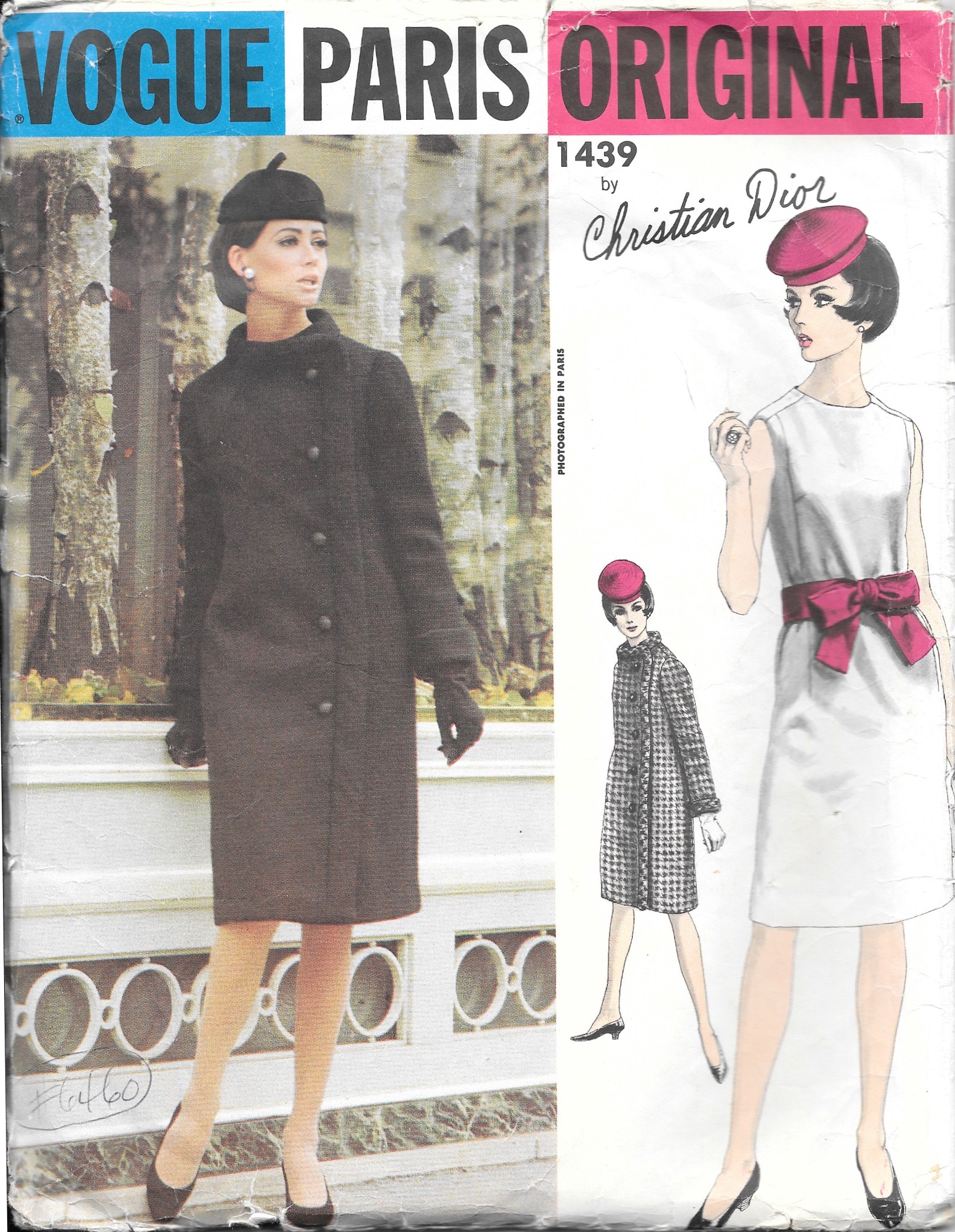
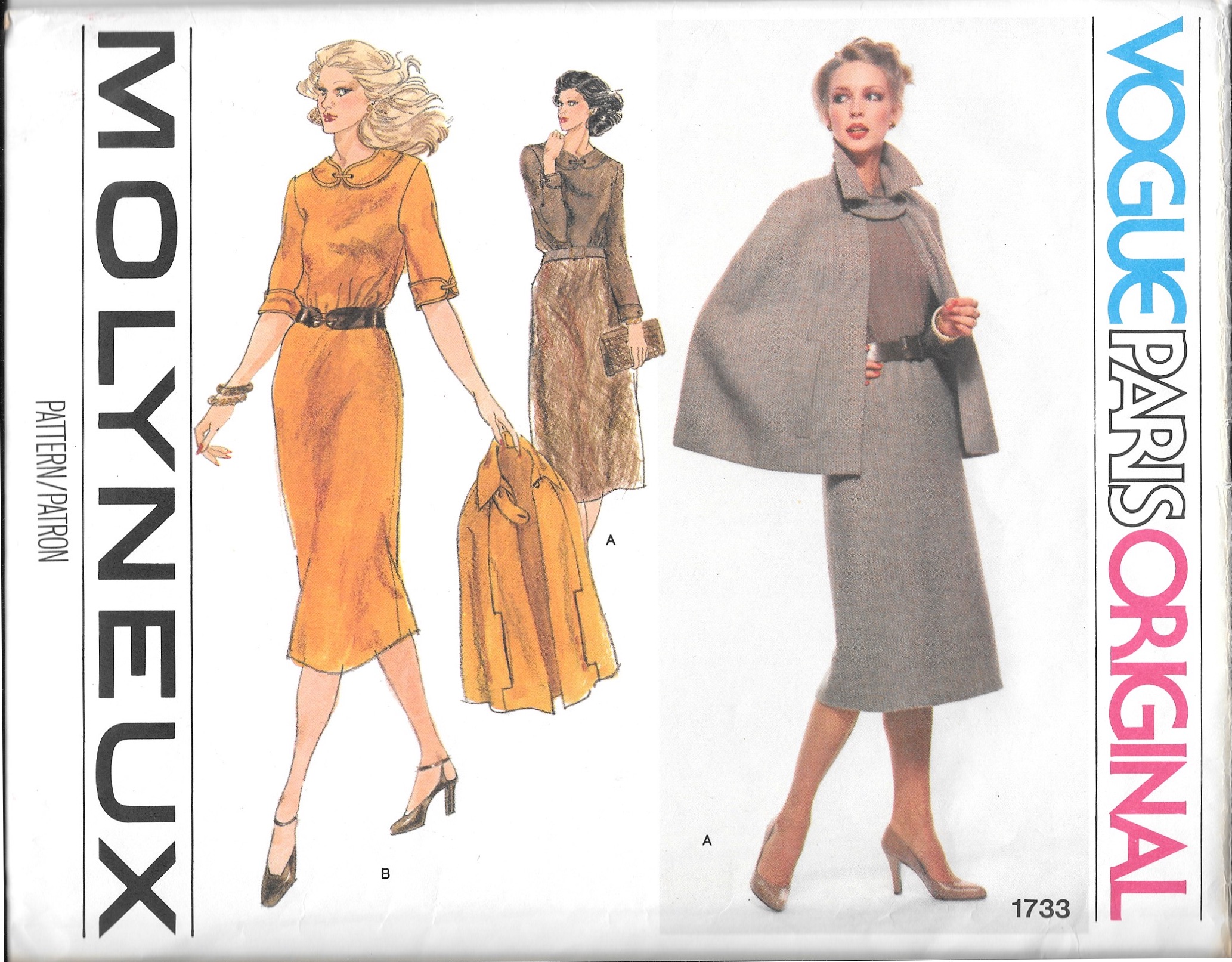
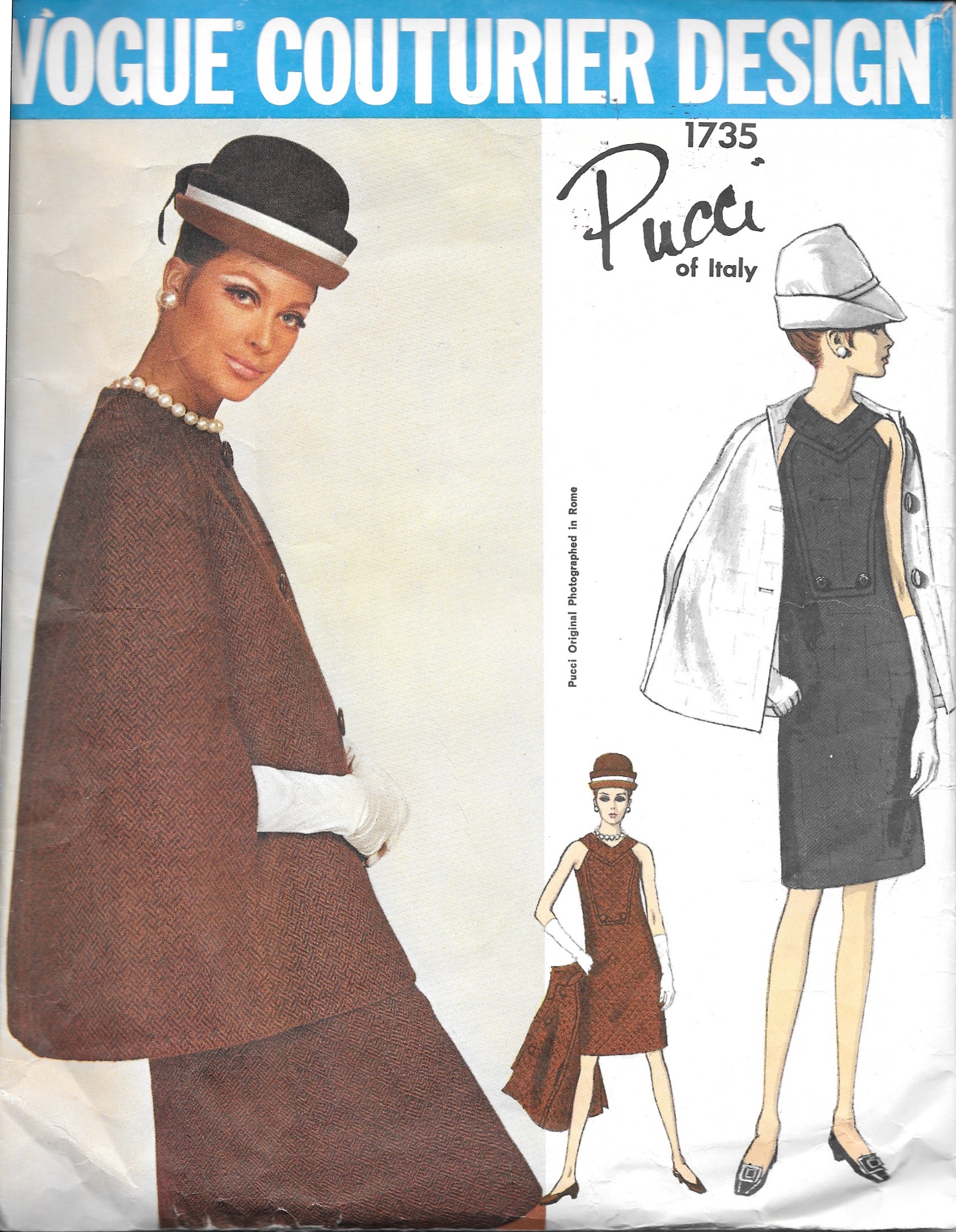
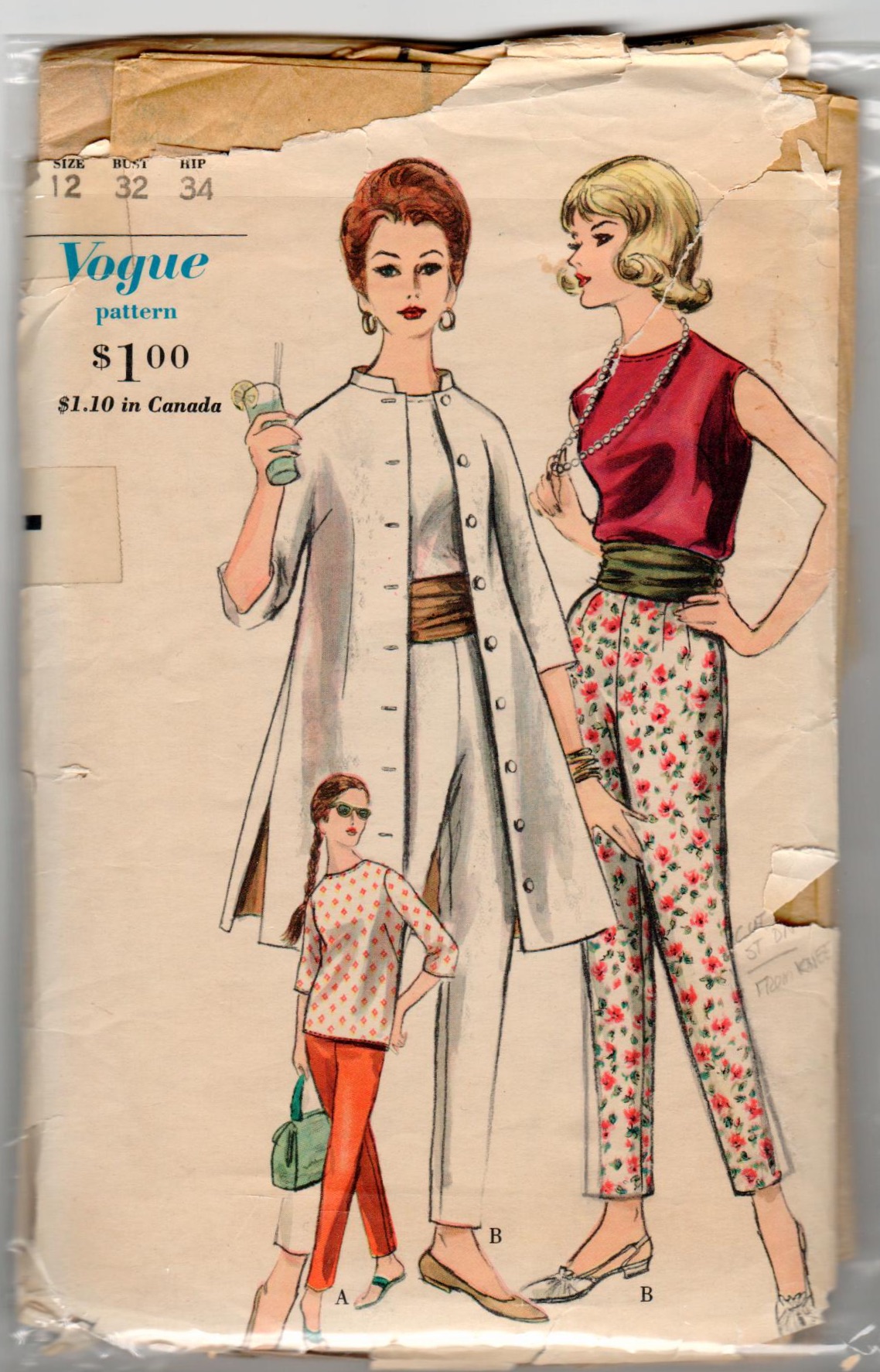
First I thought I would make a midi-skirt to wear with a pretty silk blouse or something. I even got so far as to make a muslin for a longish skirt, but it just wasn’t going to work. I didn’t have enough fabric to match the design and create the skirt I wanted. The next task would be to find a dress pattern which would work. I kind of viewed this fabric as a good Fall and Spring transition weight, so I wanted sleeves. And I wanted a pattern which would show off the circle design to its best effect. One of the patterns in my collection which I have seemed to dwell on frequently is this one:
I like the styling of both the dress and the coat. I thought I’d take a stab at eyeballing the pattern on my fabric, to see if it might work. Well, it was going to be a squeaker, but I thought I could manage to get the dress out of the yardage I had – and match all those circles and dots as much as possible.
One thing I had to consider was the placement of the large dots and the smaller dots on my body. Working with dots can be a little tricky – you certainly don’t want prominent dots on top of each bust apex, for example, and a row of large dots around the waist might not be all that flattering. I thought the row of the largest dots would be best as an anchor at the hemline. That would place the wide band of smaller dots just over the waistline and somewhat below. This configuration would place one medium size dot over one bust, but I was okay with that since the dot on the other side was off to the side, and therefore not symmetrical. I also liked the repeat row of largest dots across the upper chest where they were not too obvious. And – the sleeves followed the line of varying size dots in a pleasing manner, I thought. It turned out, I had just enough fabric to get things lined up properly – except for the front facing. No way could I match that to the front of the dress.
Now, obviously the facing does not show on the right side of the dress. Still, I like to match across seams if possible. Which it wasn’t. I had to give myself permission to have a mismatched facing, and then I moved on. (I forgot to take a picture of the facing, unfortunately.)
A word or two about the fabric before I go on. According to Fairchild’s Dictionary of Fashion, (Third edition, by Charlotte Mankey Calasibetta and Phyllis Tortora, Fairchild Publications, Inc., New York, New York, c2003, page 395) sateen is a “smooth glossy cotton fabric made in the sateen weave with floating crosswise yarns on the right side, giving a lustrous finish.” This fabric is a combination of cotton sateen, with circles created by a damask weave on a jacquard loom. It makes for a striking fabric. And I think the fact it is done in navy blue makes the contrast more definitive. Christian Dior was a fan of navy blue, calling it “the only one [color] which can ever compete with black, it has all the same qualities.” (The Little Dictionary of Fashion, Abrams, N.Y., 2007, page 14). It is a wonderfully versatile color.
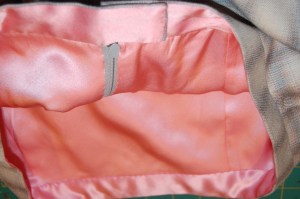
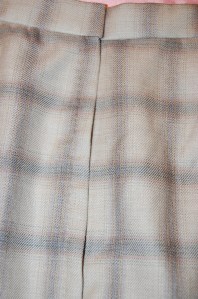
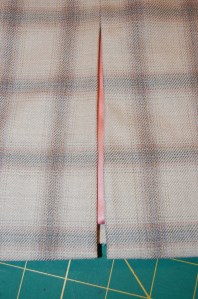
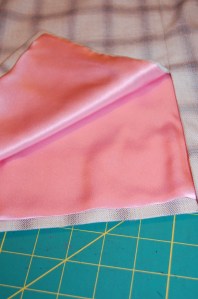
I made a few changes to the pattern. I cut the neckline a little wider, I shortened the sleeves by a couple of inches, and the big change was I lined the dress in a lovely silk batiste I purchased at Farmhouse Fabrics. (The pattern did not have instructions or pattern pieces for a lining.) The pleat in the front of the dress was a bit tricky to line, but I figured it out after quite a bit of thought. By the way, I underlined the dress with silk organza.
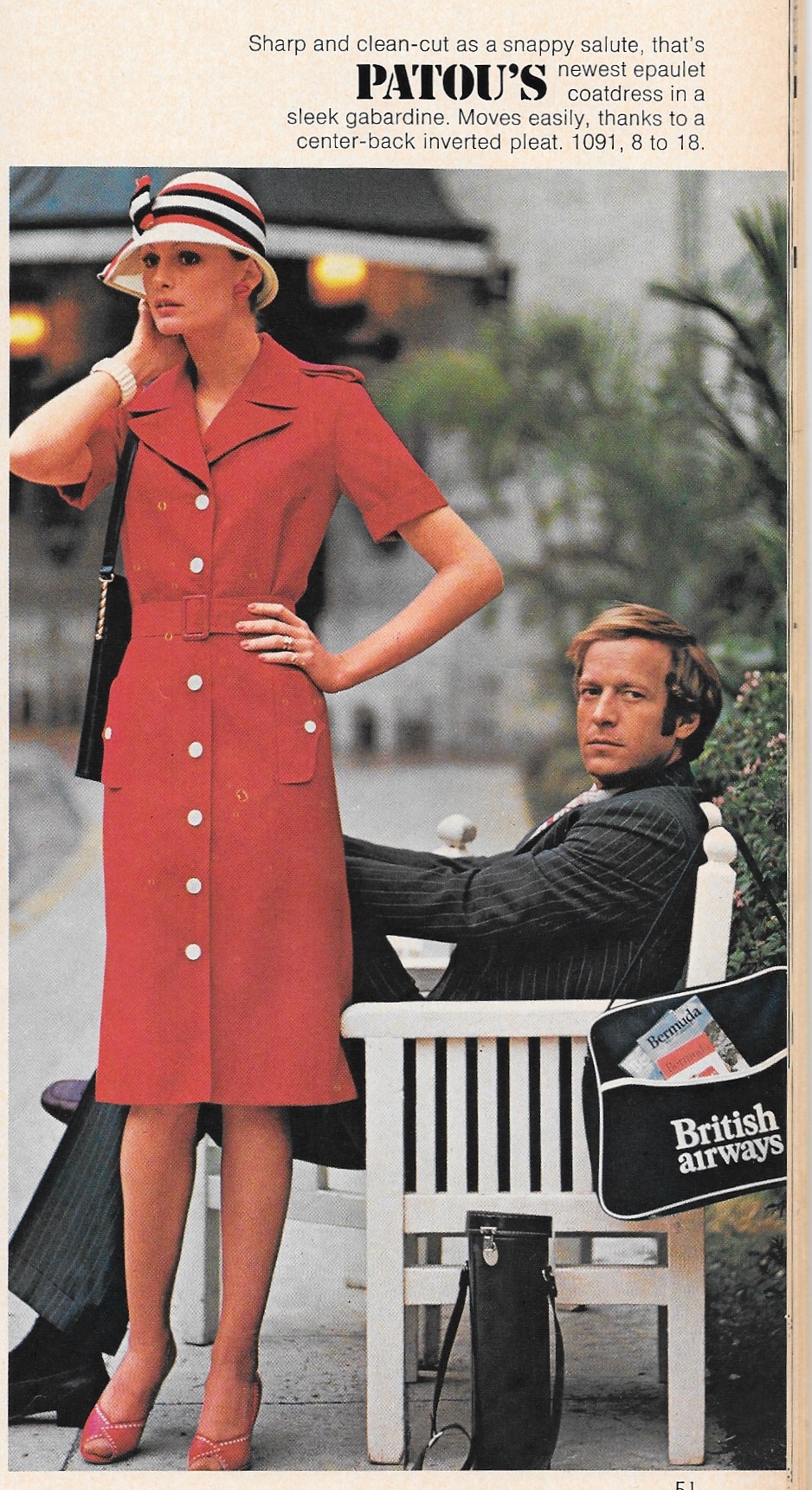
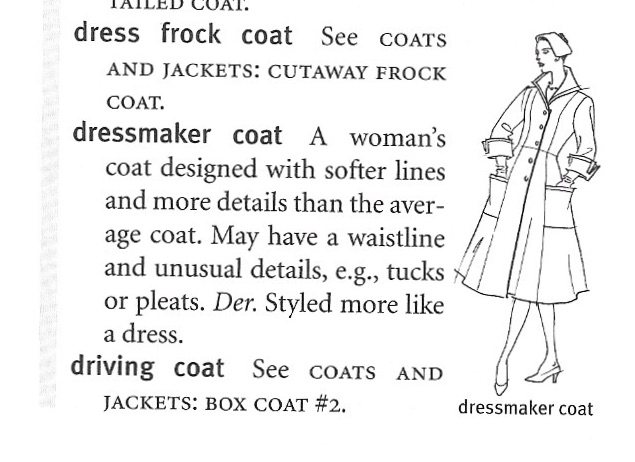
One more thing about the pattern and the dress. With the pleat in the front of the dress which extends to the hem, it gives the appearance of a coat dress. However, it is not. Again Fairchild’s gives us a precise definition of a coat dress: “Dress fastened down front from neck to hem, like a coat, in single- or double-breasted style, either belted or unbelted. A classic since the 1930s.” ibid., page 84. Someday I’ll make a coatdress, but this was not it.
As I mentioned in an earlier post, I made this dress to wear on my Paris trip, but alas, I never had the opportunity to do so. I feel certain it will eventually get its debut, but not in Paris!
26 Comments
Filed under Buttons - choosing the right ones, Christian Dior, Fashion commentary, Loops for buttons, Mid-Century style, Polka dots, Sateen, Uncategorized, underlinings, vintage Vogue patterns from the 1960s, Vogue patterns
Tagged as Choosing buttons, Farmhouse Fabrics, fashion sewing, Mendel Goldberg Fabrics, polka dots, sewing, vintage fashion, vintage Vogue patterns