Tag Archives: Choosing buttons

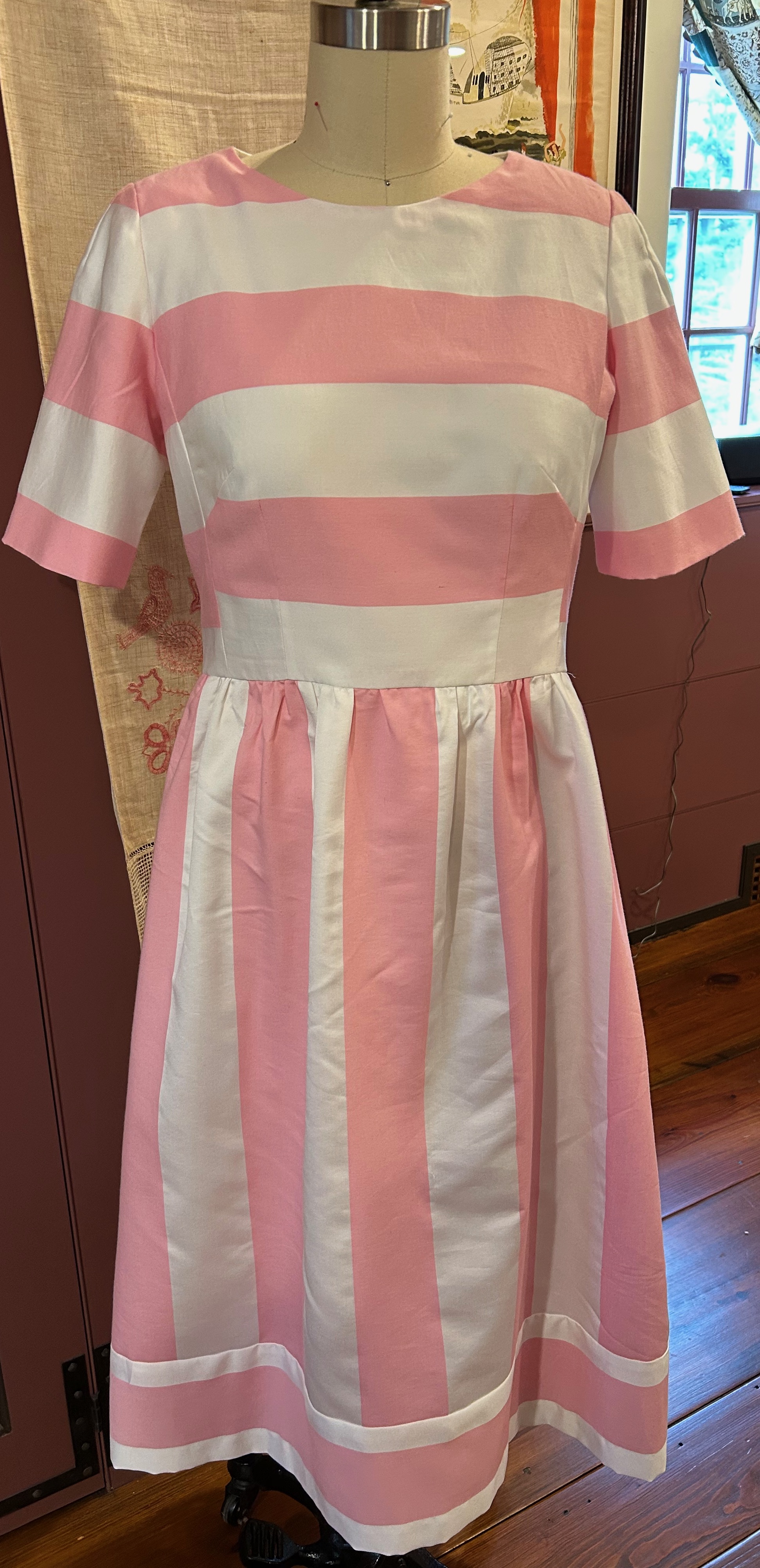
Pink Stripes 

“You can never go wrong with a little pink… a lot works for me.” Dana Dalgetty

It is extremely difficult for me to resist a bubblegum pink fabric.  And if it is a stripe, too, the odds are very good that fabric will end up in my sewing room.  So it was with this silk and cotton blend found on the website of Mendel Goldberg Fabrics.
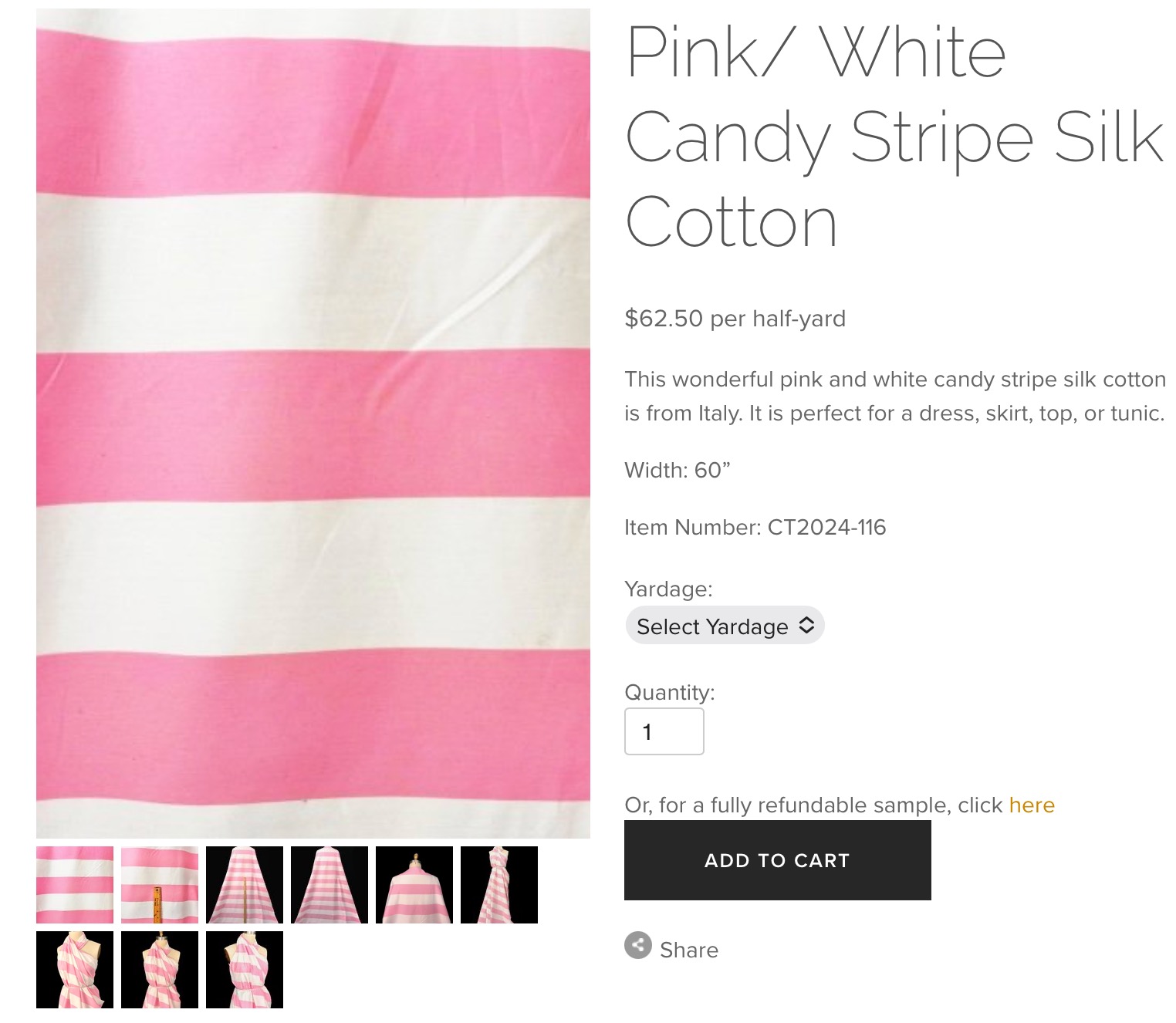
Screenshot

I purchased it last summer during a 20% off sale, and when it arrived, I knew I had made the right decision – although the stripes were a bit bolder in person than I anticipated.  As usual, I wasn’t sure what I was going to make – a coat? a dress? a skirt?  I needed more thinking time so I tucked it away until this Spring.  In the meantime, I purchased this vintage Vogue pattern which I saw as a good basic design which could be easily changed, adapted and altered.  
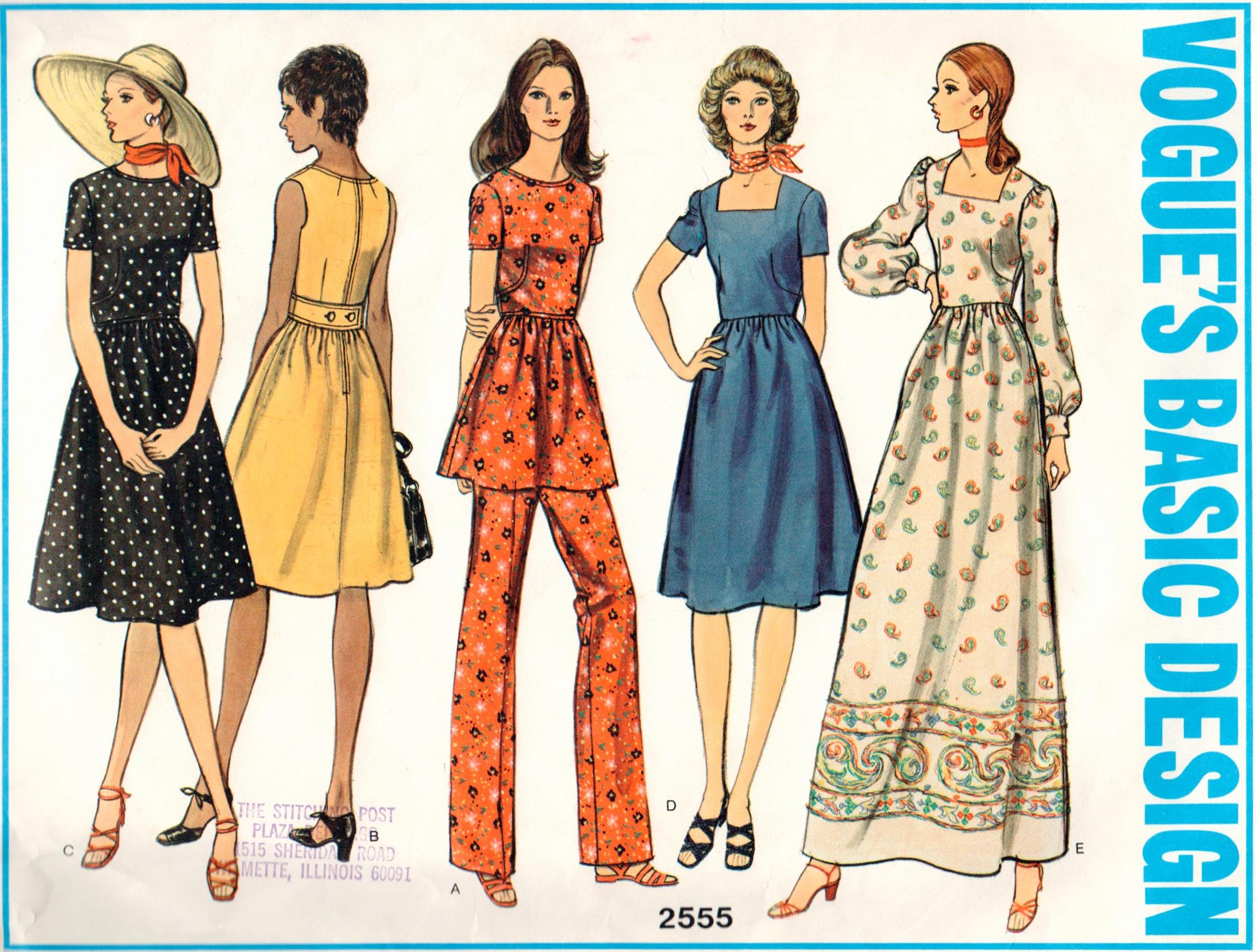
Take note of those curved darts on the bodice, as I will mention them again.

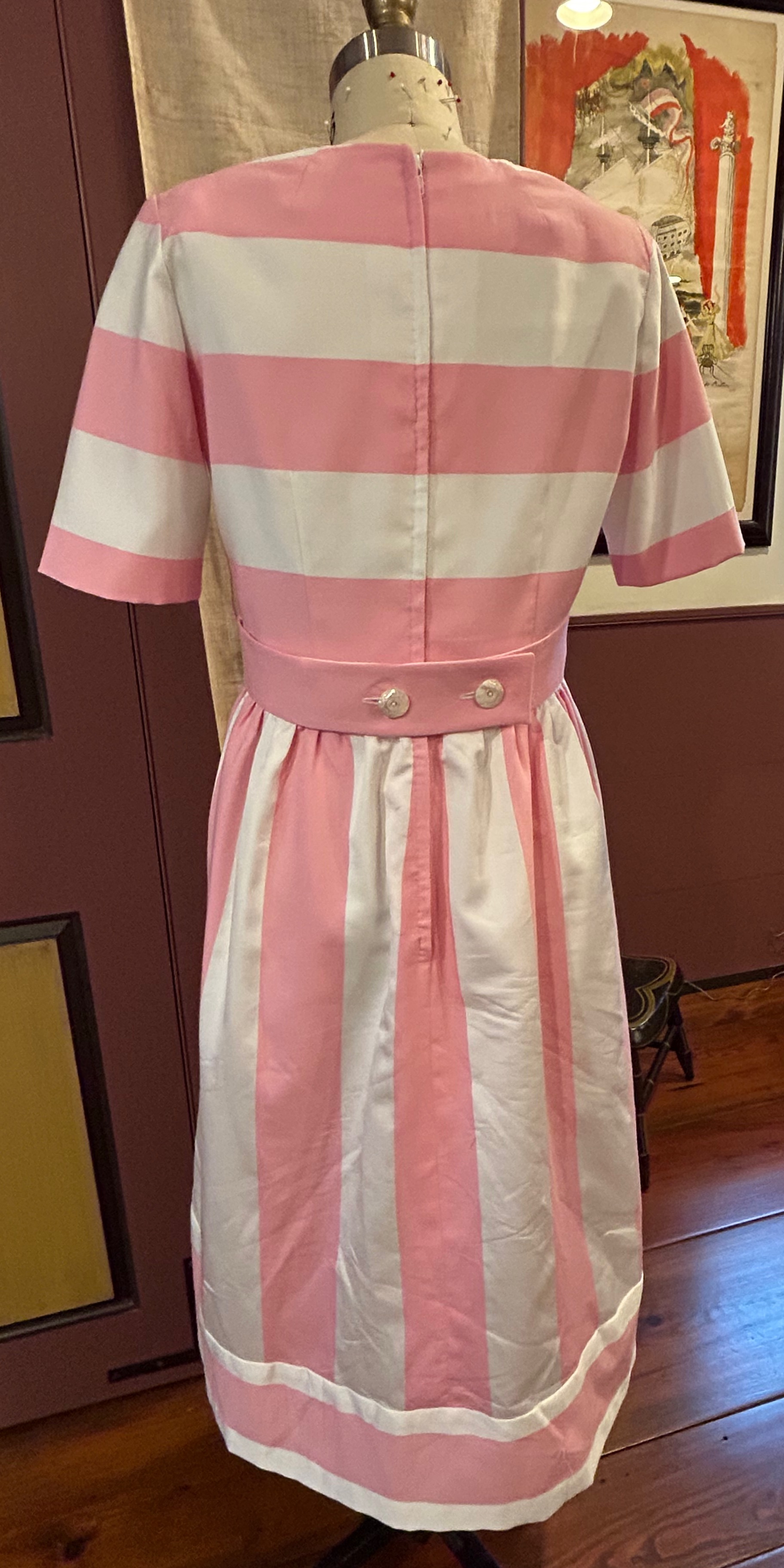
I like dress designs which have some “back“ interest, here the buttoned half belt.  Although I loved the sleeveless view, I have become less comfortable wearing sleeveless dresses as I have gotten older.  Thus, I was drawn to the short-sleeved view (C), knowing I could easily lengthen the sleeves to reach almost to the elbow, if that seemed the way to go.  Thus, it was a logical progression to imagine the pink striped fabric made up in this design, despite the note on the pattern “Not suitable for striped fabrics.” 

I wasn’t quite ready to forge ahead, however.  My fabric was such a bold stripe, I feared a horizontal orientation of the fabric would be too much, but a vertical orientation was equally problematic.  I went to my Pinterest feed to get some inspiration and in no time at all, the lightbulb went off in my head.  The dress needed a combination horizontal and vertical orientation.  I made this quick sketch, and I knew I had the solution I needed.  
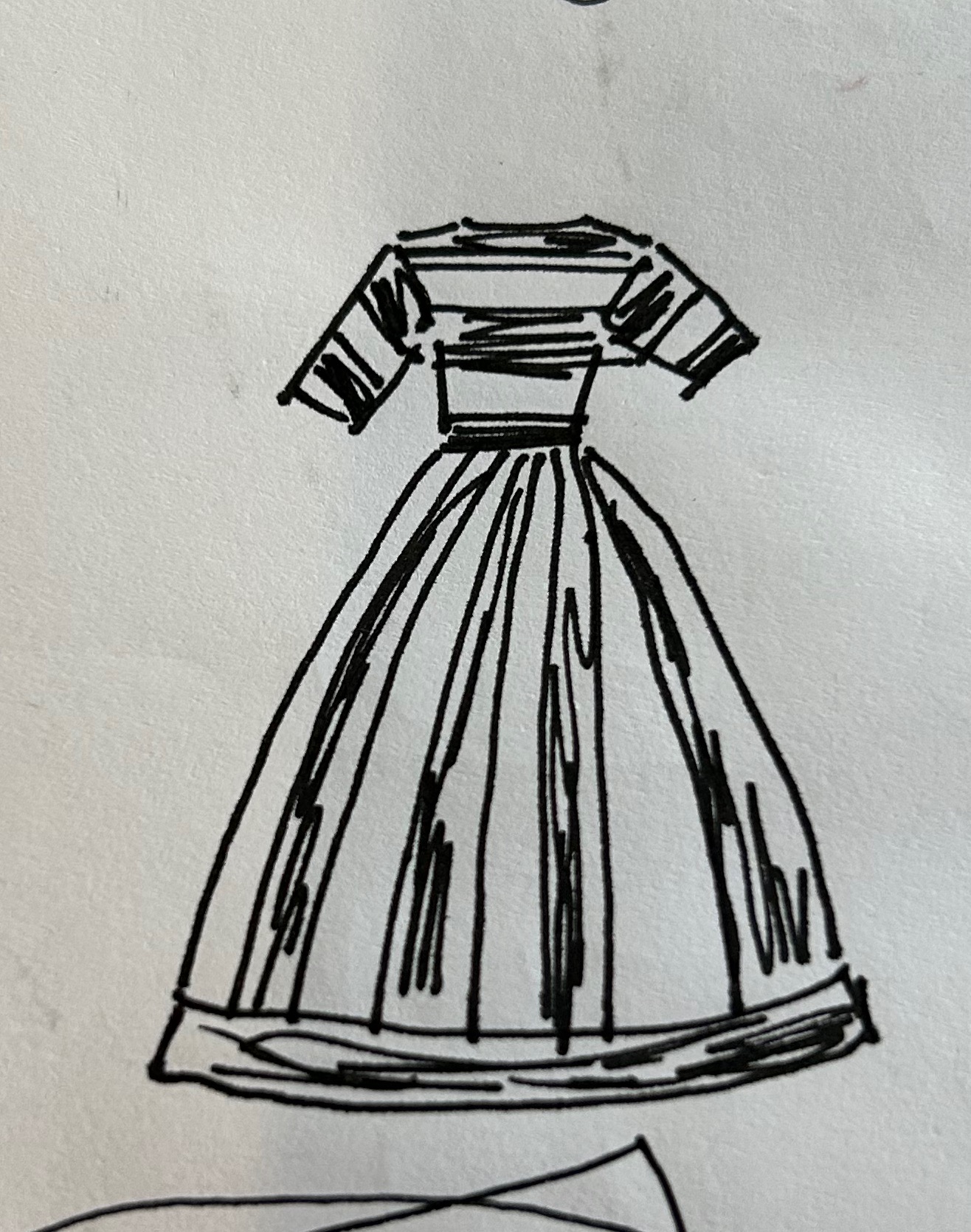
I took these quick photos after I had worn the dress to a party, wrinkles and all. My apologies for the unkempt appearance of the dress!

I set about making a muslin/toile for fitting, and then I hit a brick wall.  Those curved darts you see on the pattern bodice just were not flattering to me, despite my working and reworking them multiple times.  I finally gave up.  I would need to find a substitute pattern for the bodice front and make it work with the bodice back toile which I had fitted successfully.  This was all terribly time-consuming, as you can imagine, but I finally was able to find an existing bodice front in my stash of patterns/toiles which, fingers crossed, would work.  I didn’t know how well it would work until I had the happy surprise of seeing the darts feed into the bold stripes successfully. 
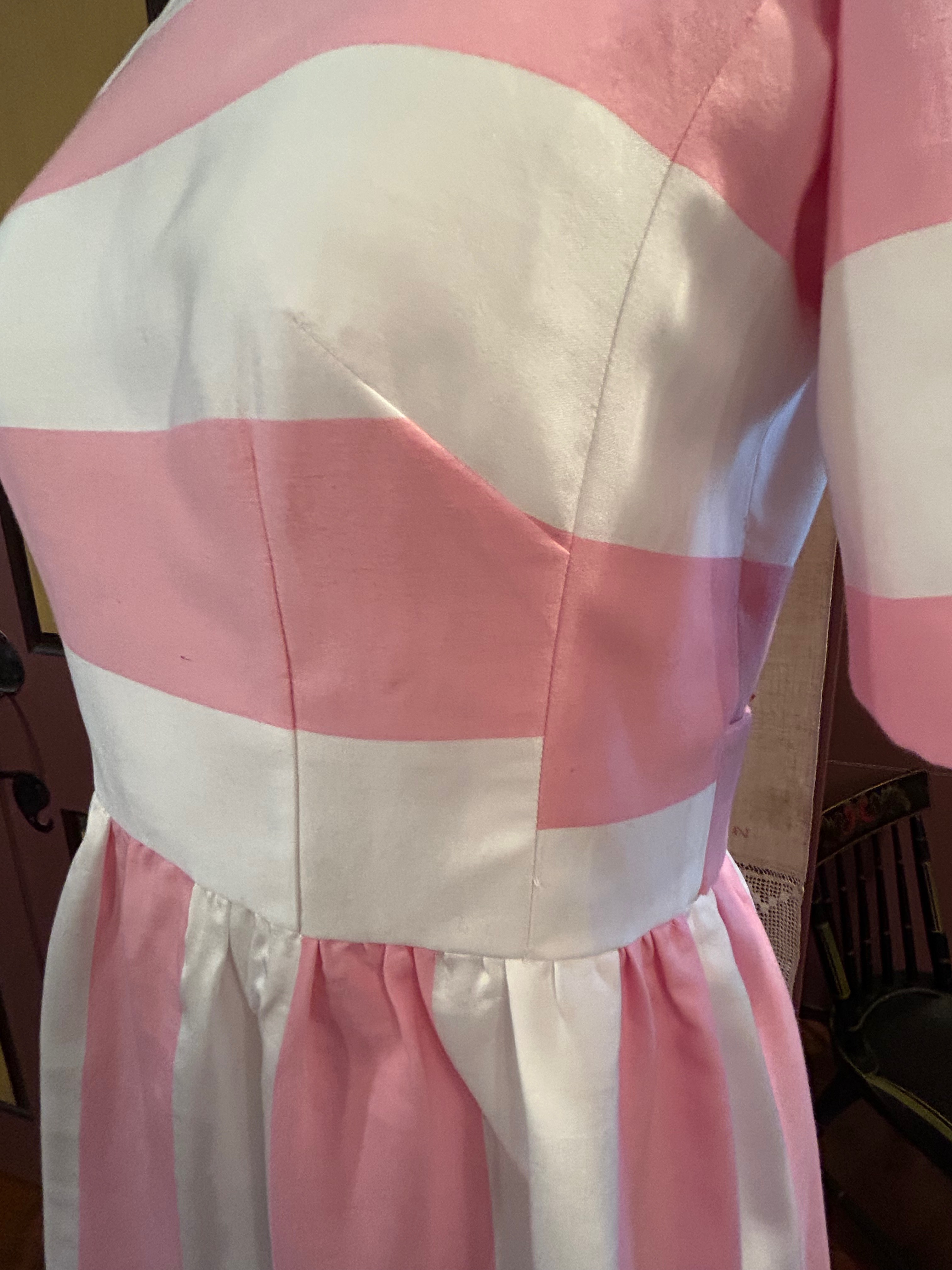
Darts, of course, distort side seams, but this distortion somehow adds to the appearance of the front bodice. I suspect the “unsuitability” of striped fabrics was because of that curved dart, which I unknowingly eliminated when I changed the bodice front.

What was not as successful was the proper alignment of the buttons on the back belt to the center of the dress. That is one of the many downsides of fitting oneself – I could not see what I was doing, and although I measured and fiddled, I was still off by a couple of inches.  
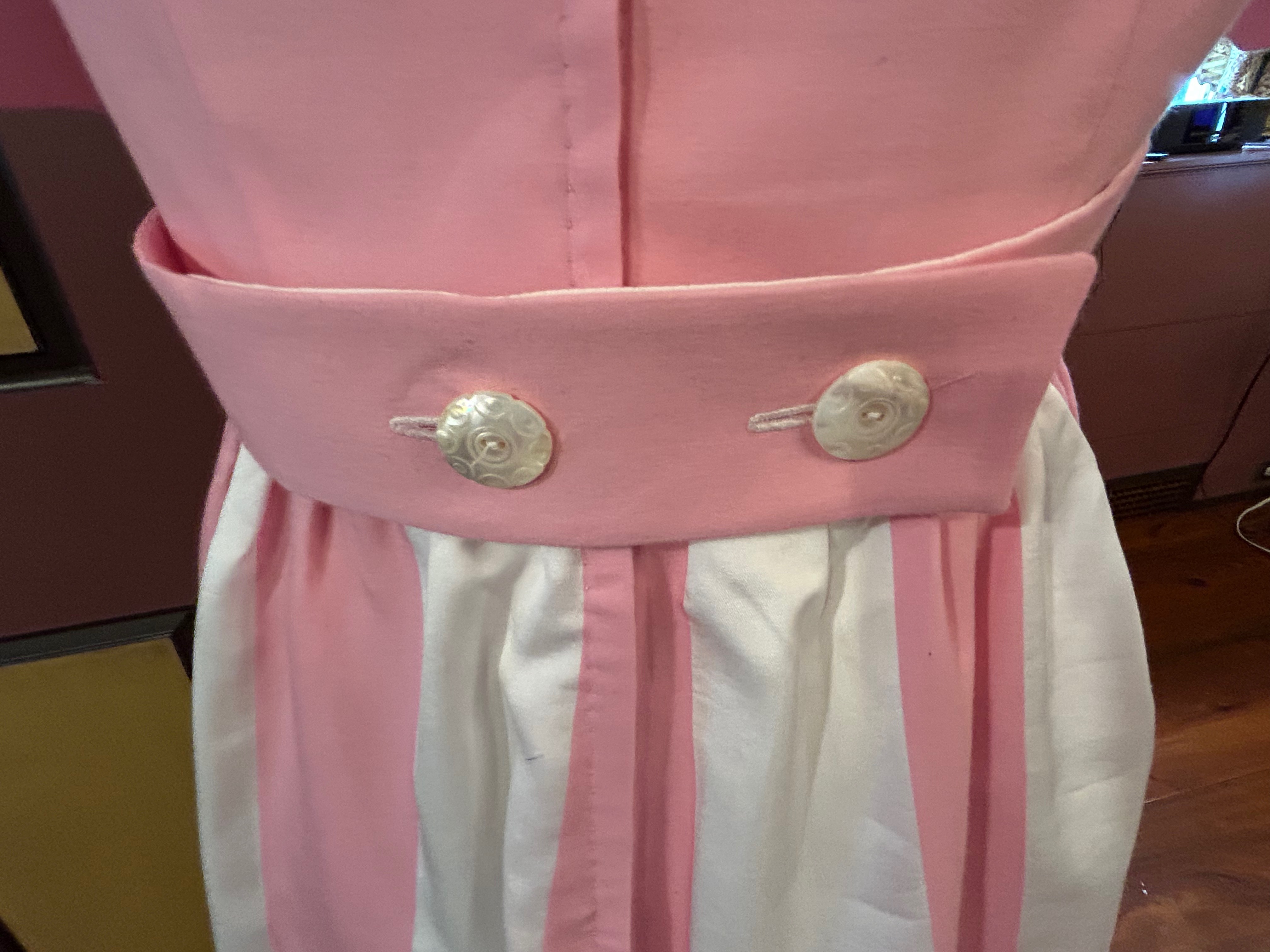
I did a hand-picked lapped zipper and the buttons are vintage mother of pearl from my collection.
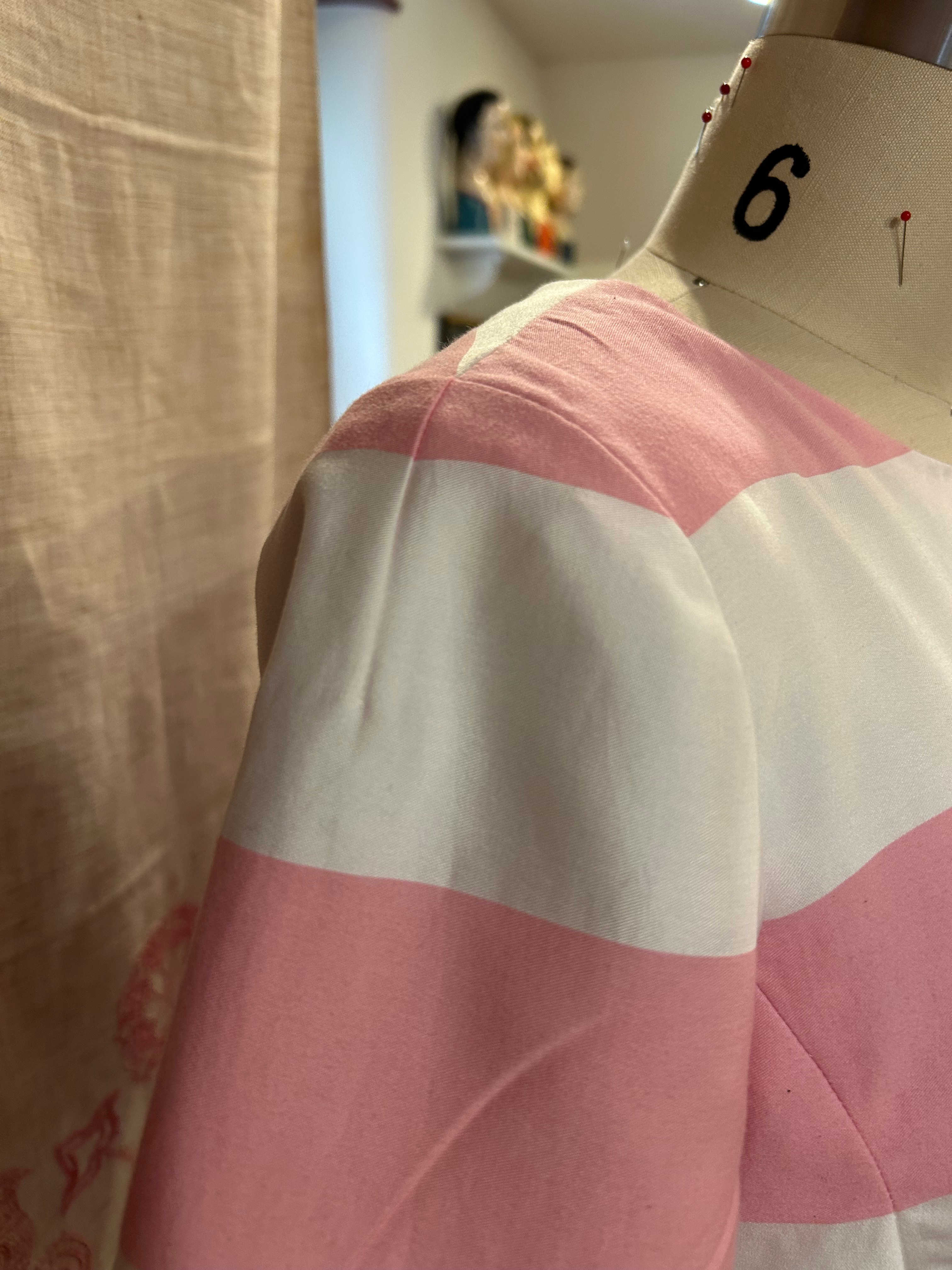
While we are talking details, here is the top of the sleeve. I used a top dart to take in the necessary fullness when setting in the sleeve. This is an alteration I make frequently to accommodate my prominent shoulders.

I lined the entire dress with a soft cotton batiste which complimented the softness of my fabric, adding a little more opaqueness to the finished dress.  I did not use an underlining, reasoning that more structure would not be conducive to the soft flow I wanted in this garment.

A word here about the panel for the hem.   Wow, was I tight on fabric!  I thought the panel should feature one bold pink stripe, bordered by “half” white stripes.  I barely had enough fabric to make this happen, and because the width of the skirt was just a bit bigger than the width of the fabric, I had to piece that panel.  Whew, I just made it.  Here is all the fabric I had left over:
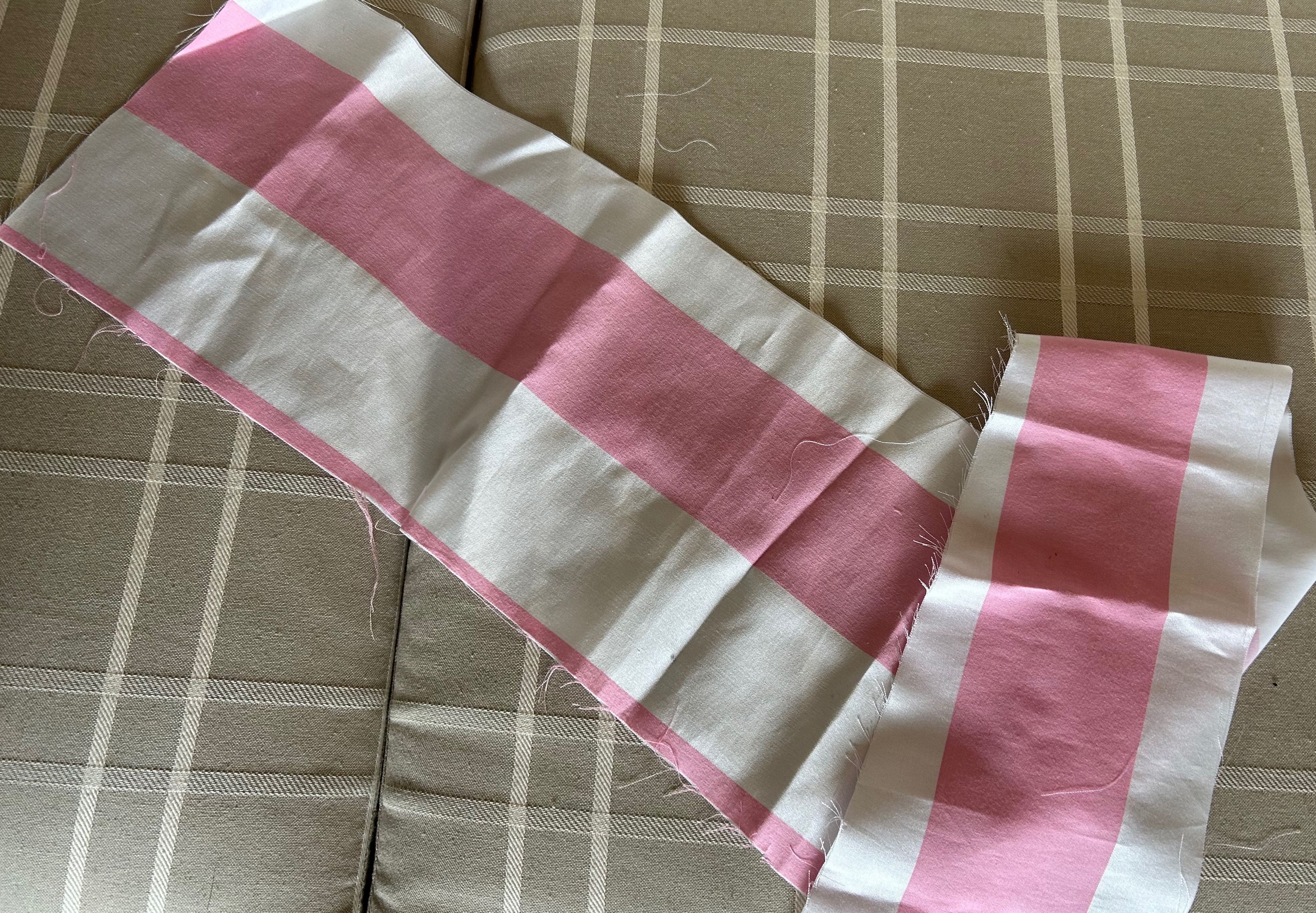
The seaming of the two panel pieces close to the center back is barely visible! Can you see it?

 I was able to wear this dress for two events in May, feeling perfectly dressed for both of them.  

And that little bit of left-over fabric?  I had plans for that, too, which I will share in a future post.  
26 Comments

Filed under Buttons - choosing the right ones, couture construction, Uncategorized, vintage Vogue patterns from the 1970s

Going Around in Circles

When I purchased this sateen, jacquard-woven fabric from Mendel Goldberg a couple of years ago, I wasn’t sure what it would eventually become.  It had a wide repeat to the design (which is something to consider when you know you are facing considerable matching of the design), but it was a lovely 60” wide.  I bought just 2 yards (it was expensive) and hoped I would have enough fabric to finagle something.  

First I thought I would make a midi-skirt to wear with a pretty silk blouse or something.  I even got so far as to make a muslin for a longish skirt, but it just wasn’t going to work.  I didn’t have enough fabric to match the design and create the skirt I wanted.   The next task would be to find a dress pattern which would work.  I kind of viewed this fabric as a good Fall and Spring transition weight, so I wanted sleeves.  And I wanted a pattern which would show off the circle design to its best effect.  One of the patterns in my collection which I have seemed to dwell on frequently is this one:

This pattern is quite interesting. It looks very simple, but in fact, it has a considerable amount of engineering to it and some very nice details.

I like the styling of both the dress and the coat.  I thought I’d take a stab at eyeballing the pattern on my fabric, to see if it might work.  Well, it was going to be a squeaker, but I thought I could manage to get the dress out of the yardage I had – and match all those circles and dots as much as possible. 

One thing I had to consider was the placement of the large dots and the smaller dots on my body.  Working with dots can be a little tricky – you certainly don’t want prominent dots on top of each bust apex, for example, and a row of large dots around the waist might not be all that flattering.  I thought the row of the largest dots would be best as an anchor at the hemline.  That would place the wide band of smaller dots just over the waistline and somewhat below.  This configuration would place one medium size dot over one bust, but I was okay with that since the dot on the other side was off to the side, and therefore not symmetrical.  I also liked the repeat row of largest dots across the upper chest where they were not too obvious.  And – the sleeves followed the line of varying size dots in a pleasing manner, I thought.  It turned out, I had just enough fabric to get things lined up properly – except for the front facing.  No way could I match that to the front of the dress.  

Now, obviously the facing does not show on the right side of the dress.  Still, I like to match across seams if possible.  Which it wasn’t.  I had to give myself permission to have a mismatched facing, and then I moved on.  (I forgot to take a picture of the facing, unfortunately.)  

A word or two about the fabric before I go on.  According to Fairchild’s Dictionary of Fashion, (Third edition, by Charlotte Mankey Calasibetta and Phyllis Tortora, Fairchild Publications, Inc., New York, New York, c2003, page 395) sateen is a “smooth glossy cotton fabric made in the sateen weave with floating crosswise yarns on the right side, giving a lustrous finish.”  This fabric is a combination of cotton sateen, with circles created by a damask weave on a jacquard loom.  It makes for a striking fabric.  And I think the fact it is done in navy blue makes the contrast more definitive.    Christian Dior was a fan of navy blue, calling it “the only one [color] which can ever compete with black, it has all the same qualities.”  (The Little Dictionary of Fashion, Abrams, N.Y., 2007, page 14).  It is a wonderfully versatile color.  

I made a few changes to the pattern.  I cut the neckline a little wider, I shortened the sleeves by a couple of inches, and the big change was I lined the dress in a lovely silk batiste I purchased at Farmhouse Fabrics. (The pattern did not have instructions or pattern pieces for a lining.)   The pleat in the front of the dress was a bit tricky to line, but I figured it out after quite a bit of thought.  By the way, I underlined the dress with silk organza. 

I could only envision gold buttons with this fabric. I’m not sure these are the right buttons, but they will do until I find something better.

The irregularity of the circles precluded exact matching within the “panels” but I rather like the whimsical effect this creates.

The split cuff with its button is one of the nice details of this pattern.

One more thing about the pattern and the dress.  With the pleat in the front of the dress which extends to the hem, it gives the appearance of a coat dress. However, it is not.  Again Fairchild’s gives us a precise definition of a coat dress: “Dress fastened down front from neck to hem, like a coat, in single- or double-breasted style, either belted or unbelted.  A classic since the 1930s.”  ibid., page 84.  Someday I’ll make a coatdress, but this was not it.

The pleat begins below the closure, extending to the hem, giving the dress a nice sway to it.

As I mentioned in an earlier post, I made this dress to wear on my Paris trip, but alas, I never had the opportunity to do so.  I feel certain it will eventually get its debut, but not in Paris!  

26 Comments

Filed under Buttons - choosing the right ones, Christian Dior, Fashion commentary, Loops for buttons, Mid-Century style, Polka dots, Sateen, Uncategorized, underlinings, vintage Vogue patterns from the 1960s, Vogue patterns

 How Does One Pack for a Trip to Paris in mid-March? Part II

Blouses, sweaters, tops.  These three categories gave me plenty to pair with dressier slacks and more casual pants.  I took along one solid black, jewel neck embroidered cotton sweater and two cotton cardigan sweaters which I always wear fully buttoned to use as dressy tops.  They were perfect for three of the days in Paris.  I had two cashmere/cotton blend pullover collared sweaters which were equally perfect for more casual days and a few more versatile pullovers.  Then I had blouses.  I love blouses.  I decided I needed a new silk blouse to take to Paris with me.  

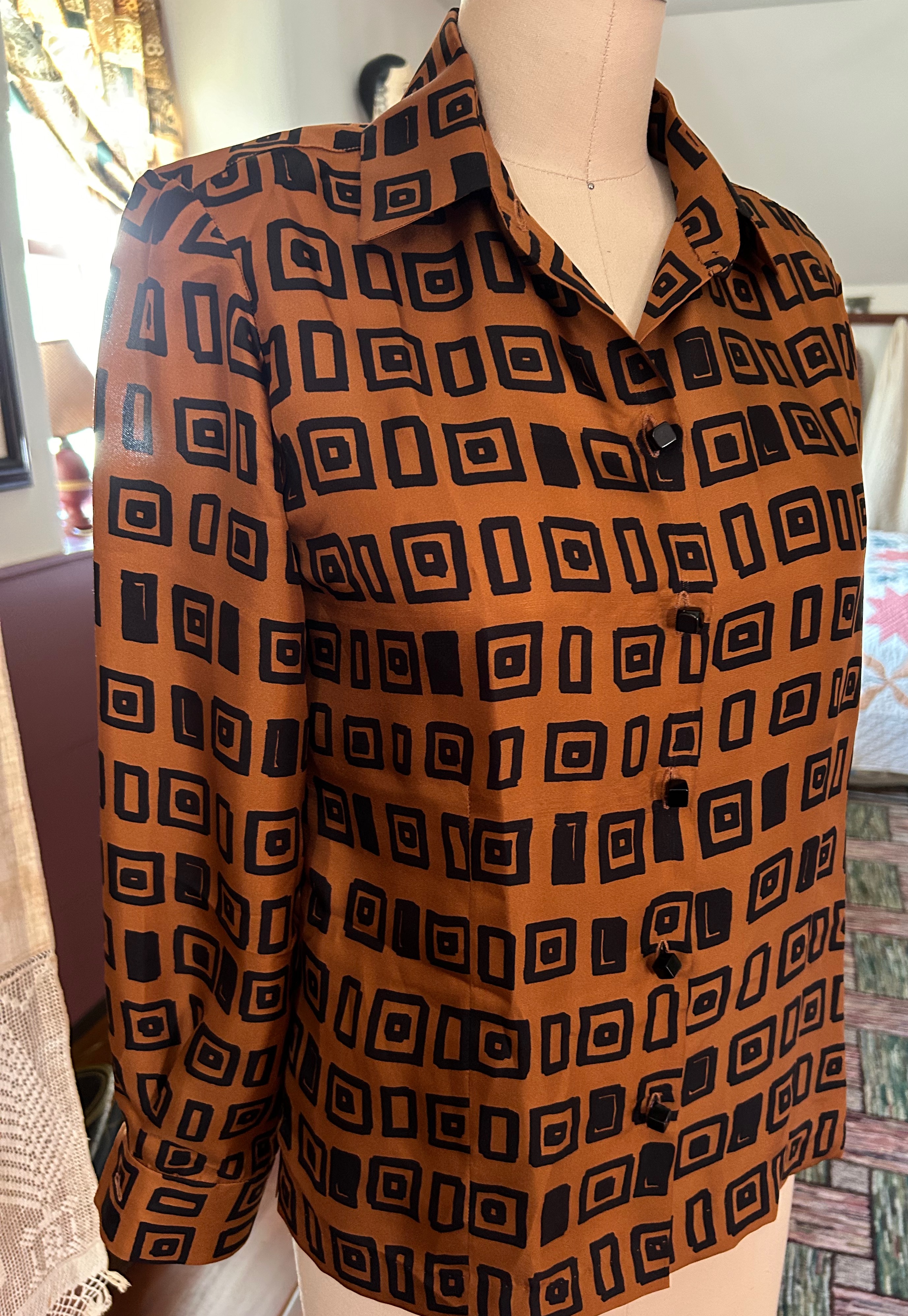
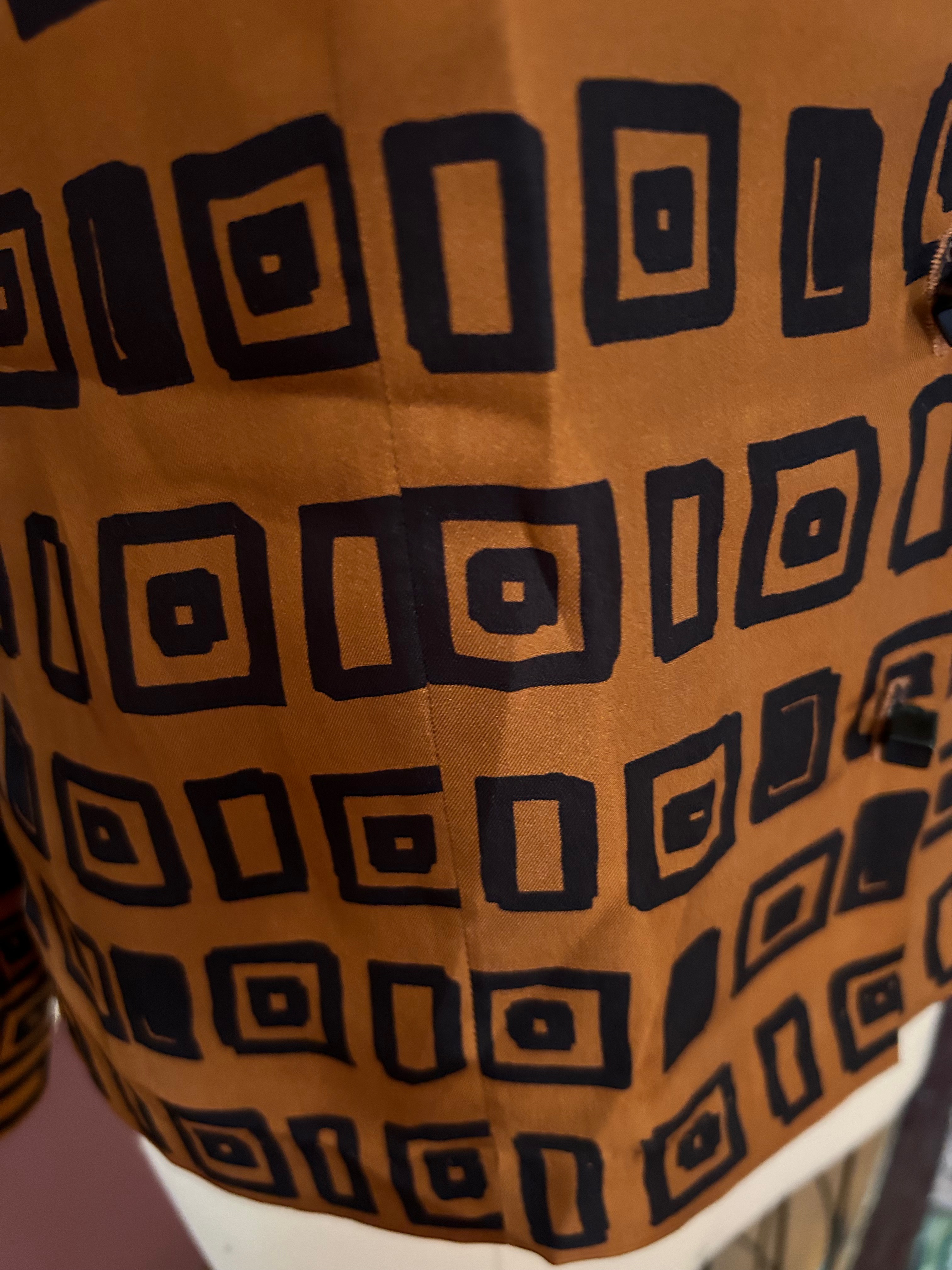
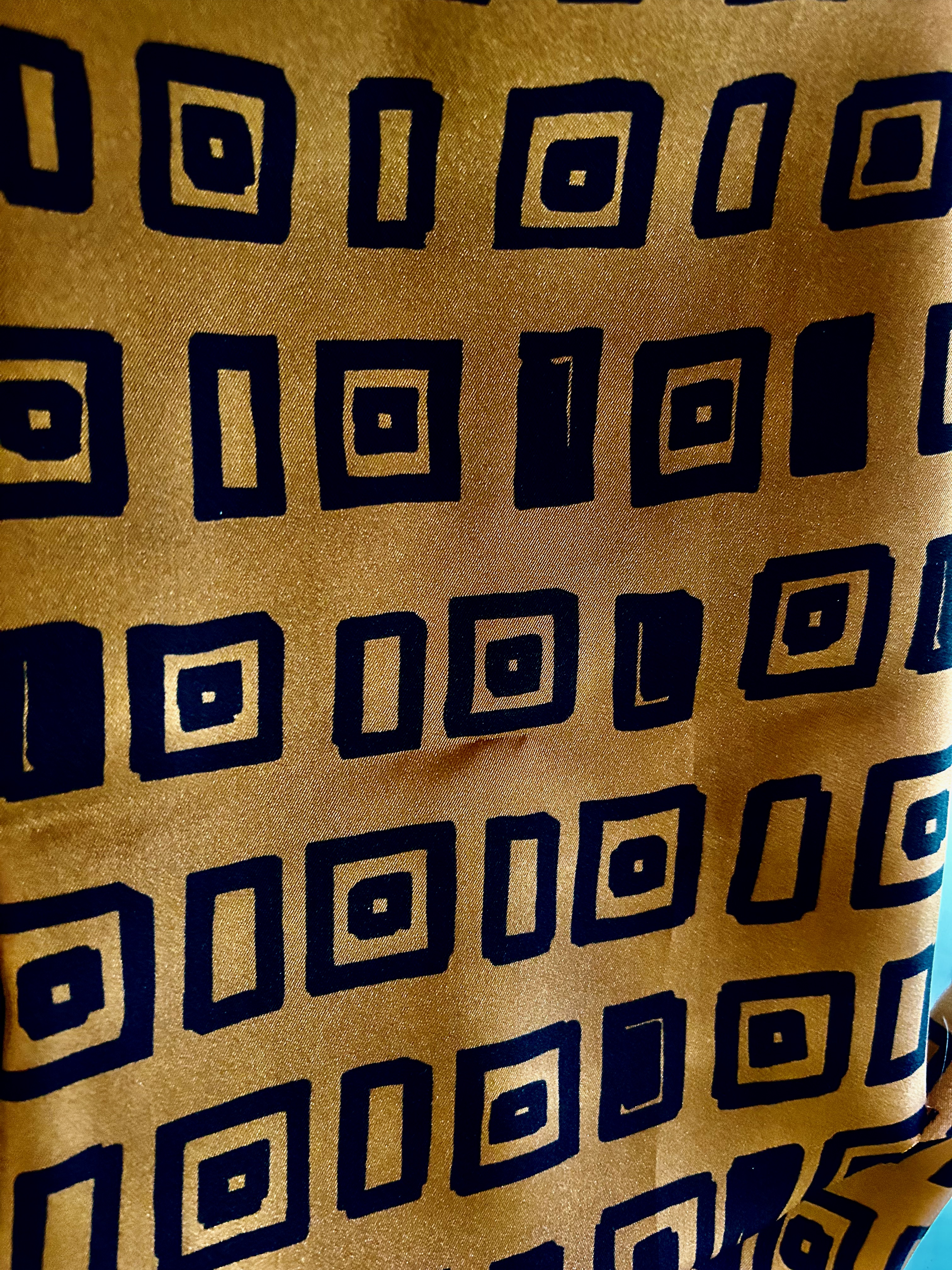
I saw this Italian silk twill on the website for Britex Fabrics:

It appealed to my love of geometrics, and additionally I thought it was just so classy looking.  So I bought it and proceeded to make a blouse.  

For a twill, it frayed a bit more than expected, but the weight was lovely.  I tweaked my go-to blouse pattern once again for this blouse.  I eliminated the back box pleat below the yoke which I have added in previous makes.  I wanted a more streamlined appearance and less bulk to tuck in.  To that end I also added very slim front vertical bust darts.  

I cut the back yoke on the bias which I decided would look better than on the straight of grain due to all those squares lining up attractively.
Here is one of those narrow vertical darts below the bust.

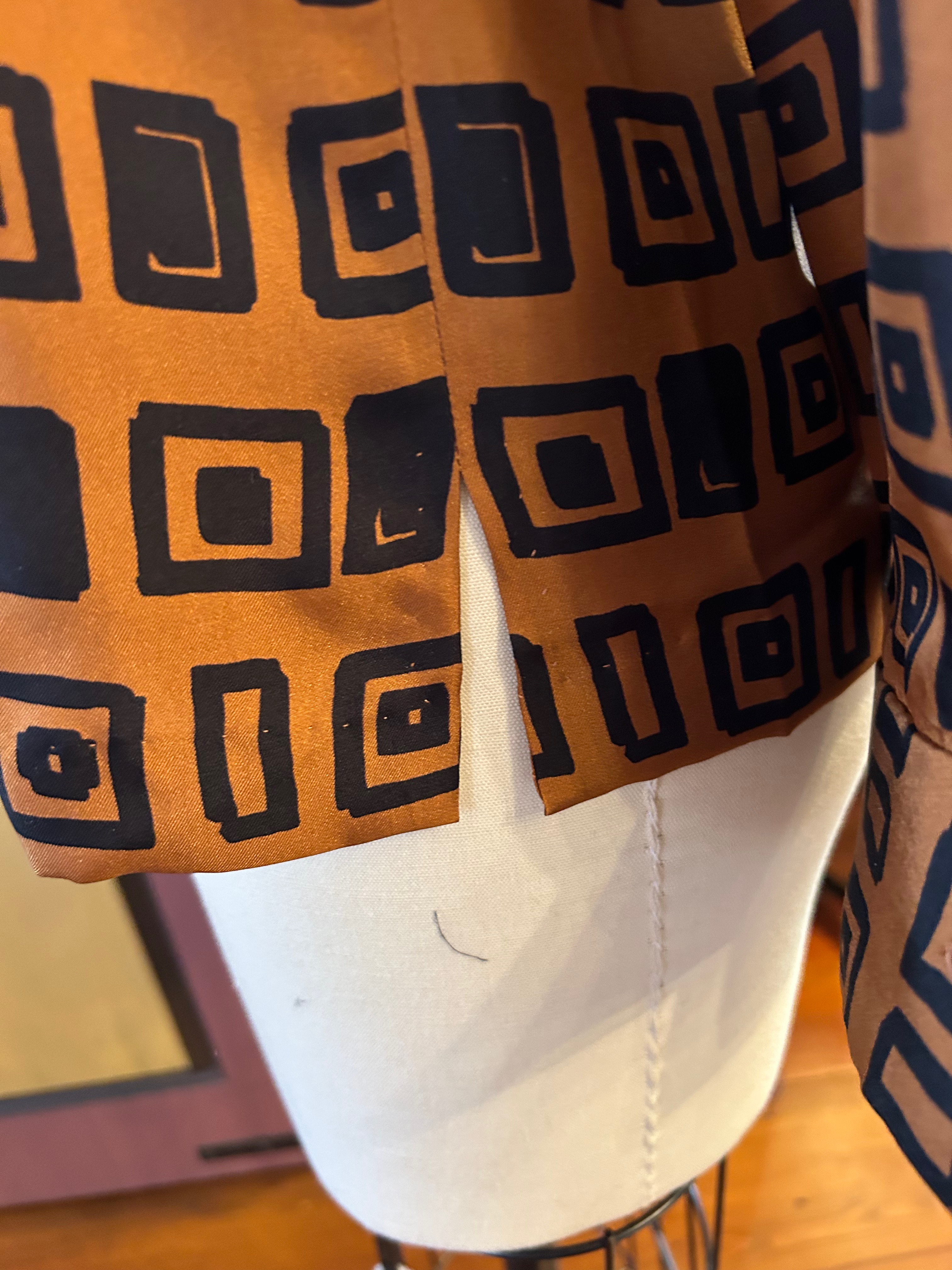
I also shortened the hem by one inch and squared it off with slits at the side seams.

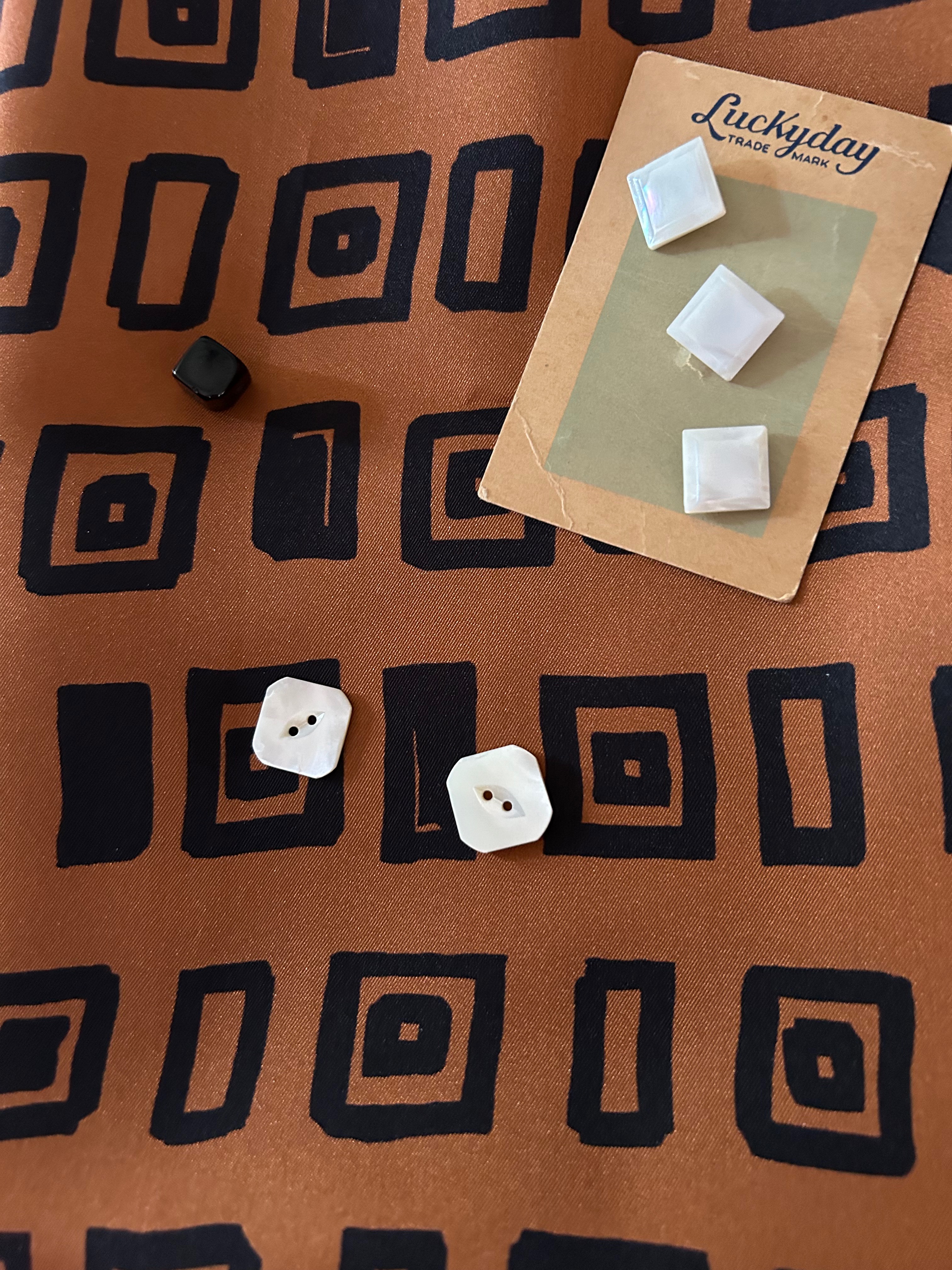
What to do for BUTTONS!?  I had selected 3 varieties from which to choose – all from my collection assembled over the past umpteen years.  

The one thing in common with these buttons is their squarish shape which I thought would compliment the print.

Usually, a winner is clear to me, but this time I needed some assistance.  So, I asked my sewing friend, Debra, for her input, which was a brilliant move on my part.  How wonderful to have confirmation from her trained eye that the buttons I was leaning toward were her choice as well.  Her decisiveness was quick and instinctive. 

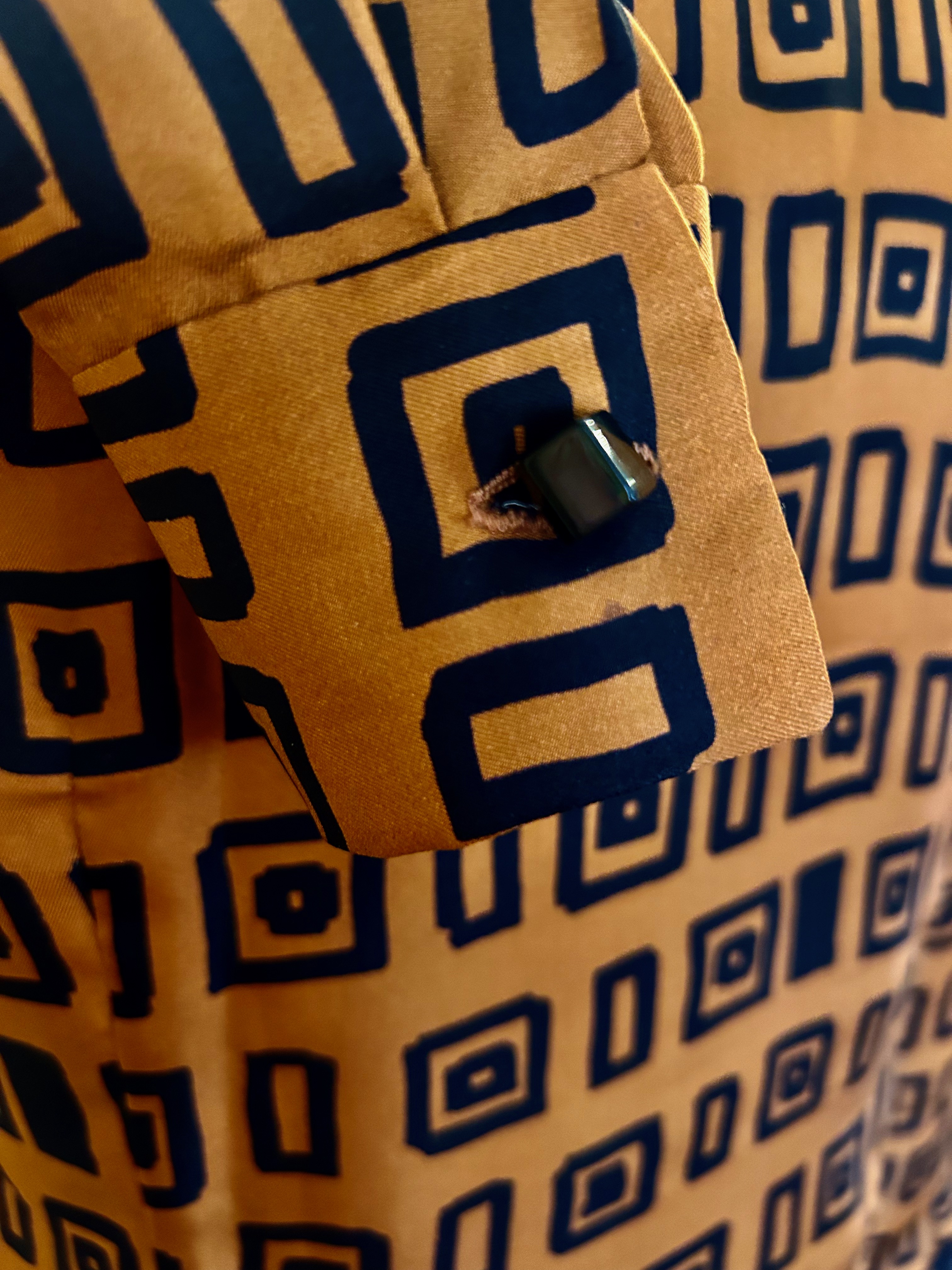
The only problem was they were already on a blouse which I made years ago.  No problem, I just took them off that bouse, with a promise to find replacements at some point.  The other sweet thing about these black cube buttons – and I digress here – is that I was with my daughter, Susanna, when I purchased them.   We have wonderful memories of that day long ago, spent together at a vintage textile show in New England.  So from the fields of Massachusetts to the streets of Paris, these vintage Bakelite buttons continue to add layers to their history.

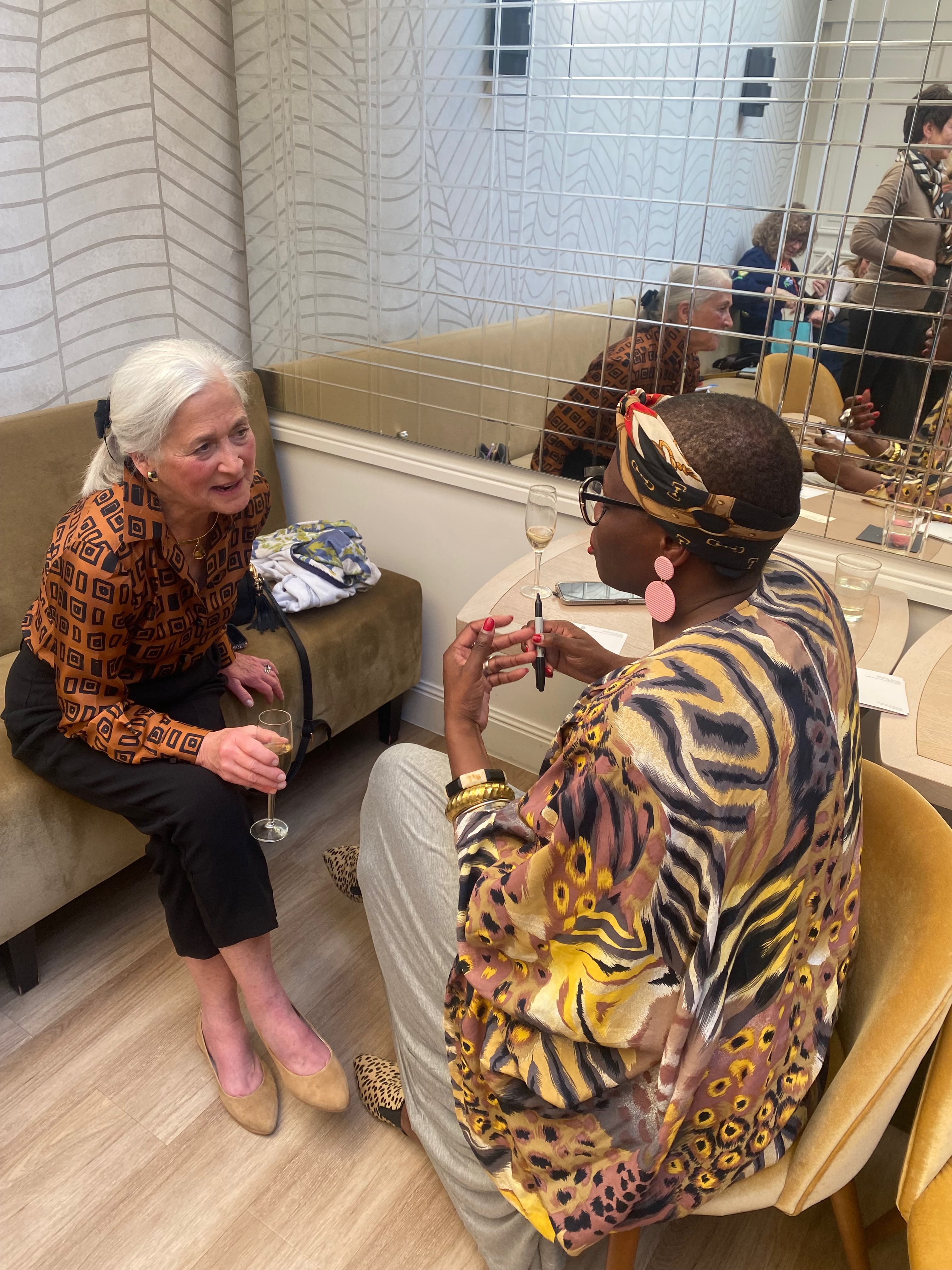
And here I am wearing my blouse, drinking champagne, and enjoying conversation with one of our guest speakers.

I thought it would be a good idea to have a “fancier” blouse along on the trip.  It was already in my closet, having been sewn a number of years ago.  It continues to be one of my favorite makes ever, although I do not get the opportunity to wear it very often.  

I wasn’t sure when I would wear it, but somehow I knew I would find the perfect day and time.  By Friday morning of the trip, I had decided to wear it that evening to our Gala Dinner, with dressy black slacks.  I had brought along specific jewelry to pair with it, and I was quite confident I would look well attired for that special night.  And then…  as luck would have it, one of our stops that day was to a scarf store in Paris.  Susan had expressed her great admiration for this store and their goods, so we were all looking forward to our time there.  

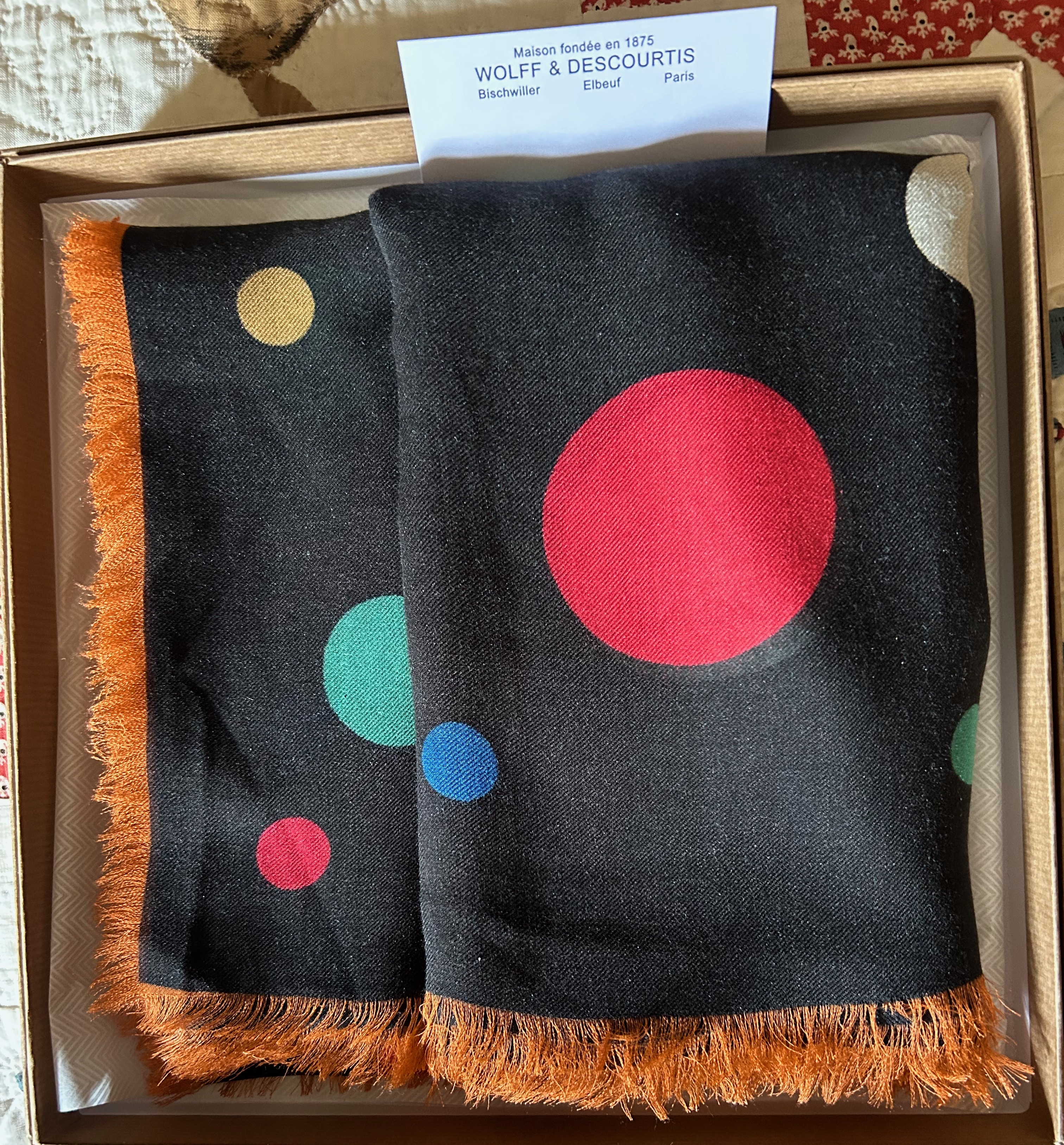
Truth be told, I could have easily purchased three or four scarves that afternoon.  The selection was wide-ranging, both in design and fabric.   But there was one scarf I knew would go home with me.

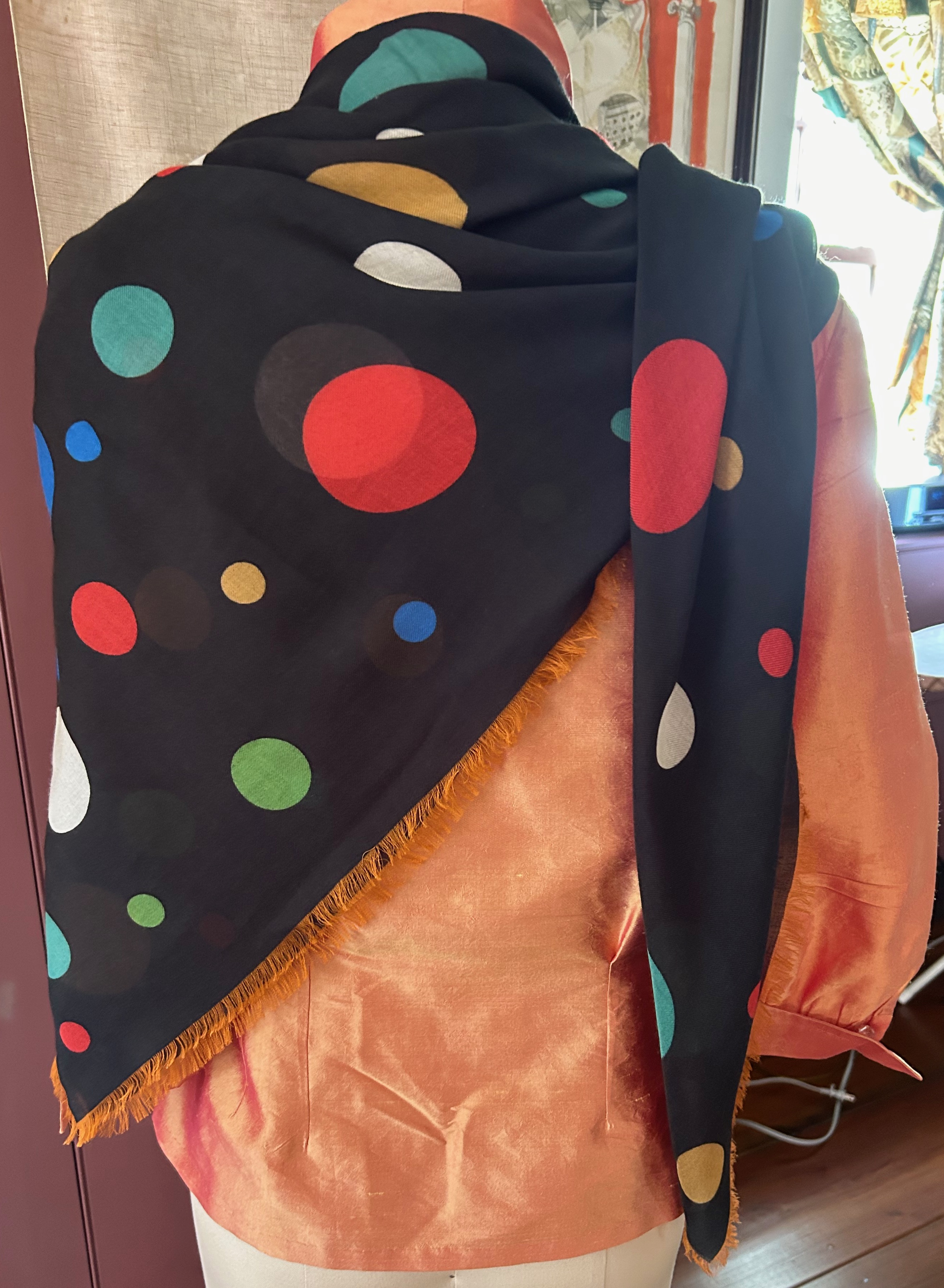
The funny thing is, when I purchased it, I was not thinking about the blouse I planned to wear that evening.  But when I got back to my hotel room, I realized what a great duo they would make.  As the evening was a bit chilly, and we had a short walk to the restaurant, having this cashmere blend scarf wrapped around my shoulders was the perfect addition.  

It was a fun evening, and I felt perfectly attired!  Of course, from now on, I shall refer to this scarf as my Paris wrap. 

At this point you may be wondering if I actually wore a dress while on my trip.  As a matter of fact, yes, I did.  Our instructions were to be dressily attired the evening we attended the Ballet at the Palais Garnier.  I decided to take along this dress which was ready for another outing. 

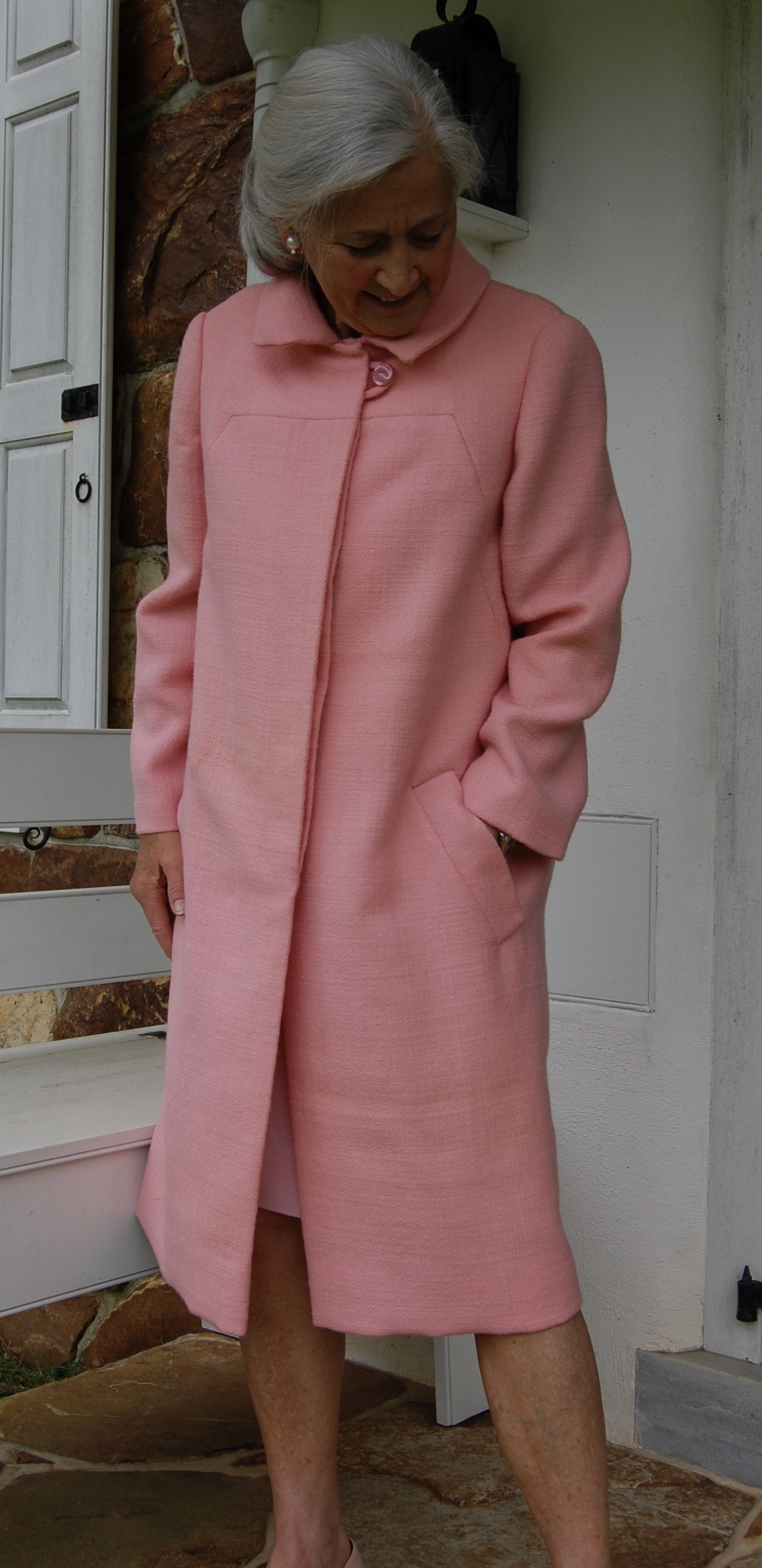
 It is dressy and comfortable, but the best thing about it is – it pairs well with my pink coat, forever a favorite.  

I was determined to take this lightweight Spring wool coat to Paris.  I made it from vintage Lesur wool made in France and for some reason, I just had my heart set on wearing it in Paris.  The weather wasn’t all that cooperative as it was a bit warm for a wool coat.  That did not deter me.  I donned it anyway, and that’s the end of the story!  

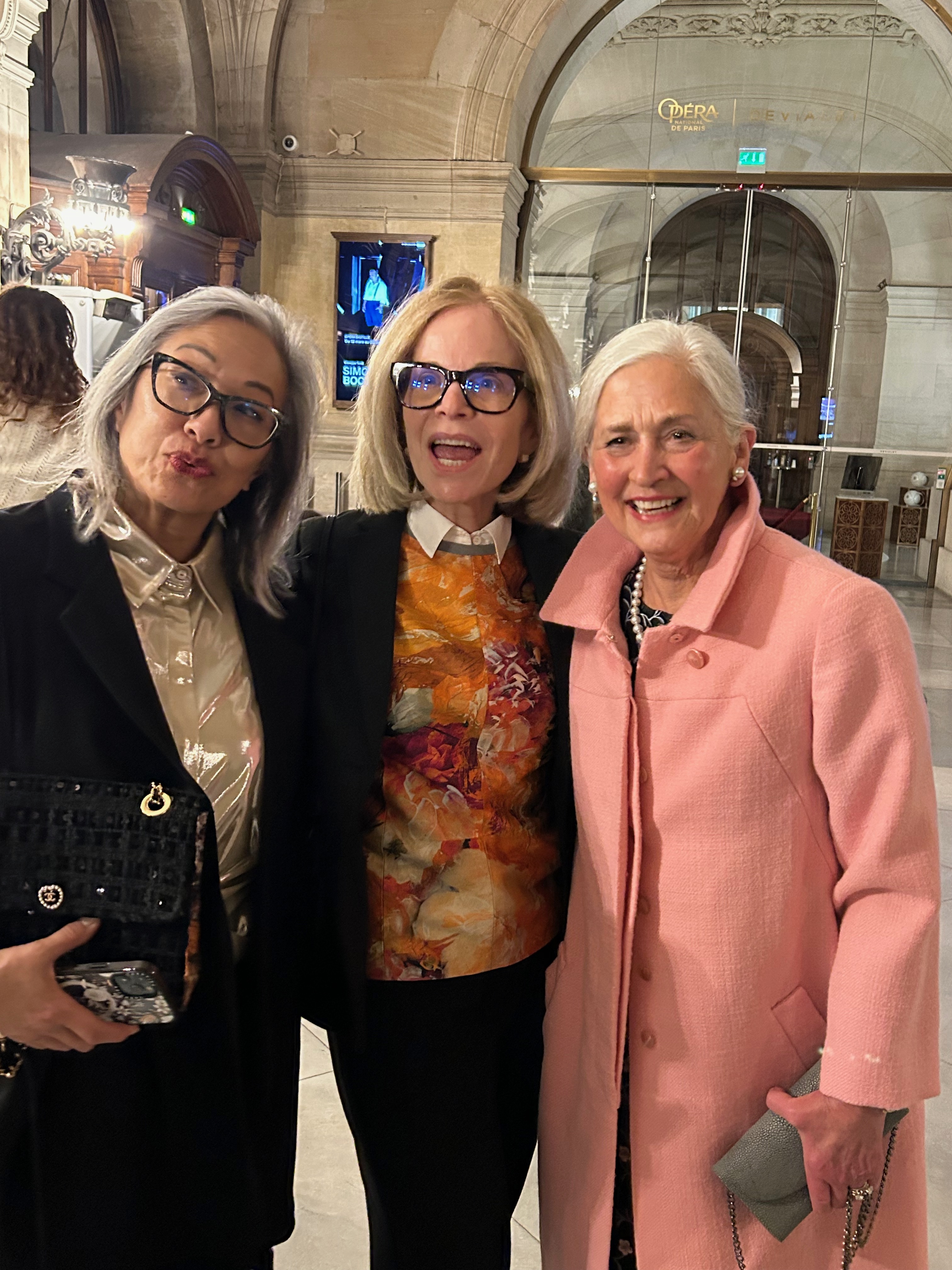
Together with two of my tour-mates before the ballet.

However, there is more to come, as I will share a bit about other parts of the trip next time. 

18 Comments

Filed under Bakelite buttons and/or jewelry, Blouses, Buttons - choosing the right ones, Coats, Scarves, silk, Uncategorized, vintage buttons, Vintage fabric

A Long Silence

Silence may indeed be “golden” except when one is trying to maintain some regularity in writing a blog.  My silence this past Fall and into the end of the year was not intentional. I actually got as far as starting a new post in November on a “Blouse for Fall” only to have its completion thwarted by more pressing priorities.  Such is life, as all of us know.  So now, in this sparkling new year we have entered, I have the opportunity to play some long overdue catch-up.  

It is at this time of year when I like to reflect on my sewing from the year just past.  And glaringly, the truth is I was not very productive.  Here is what I made:

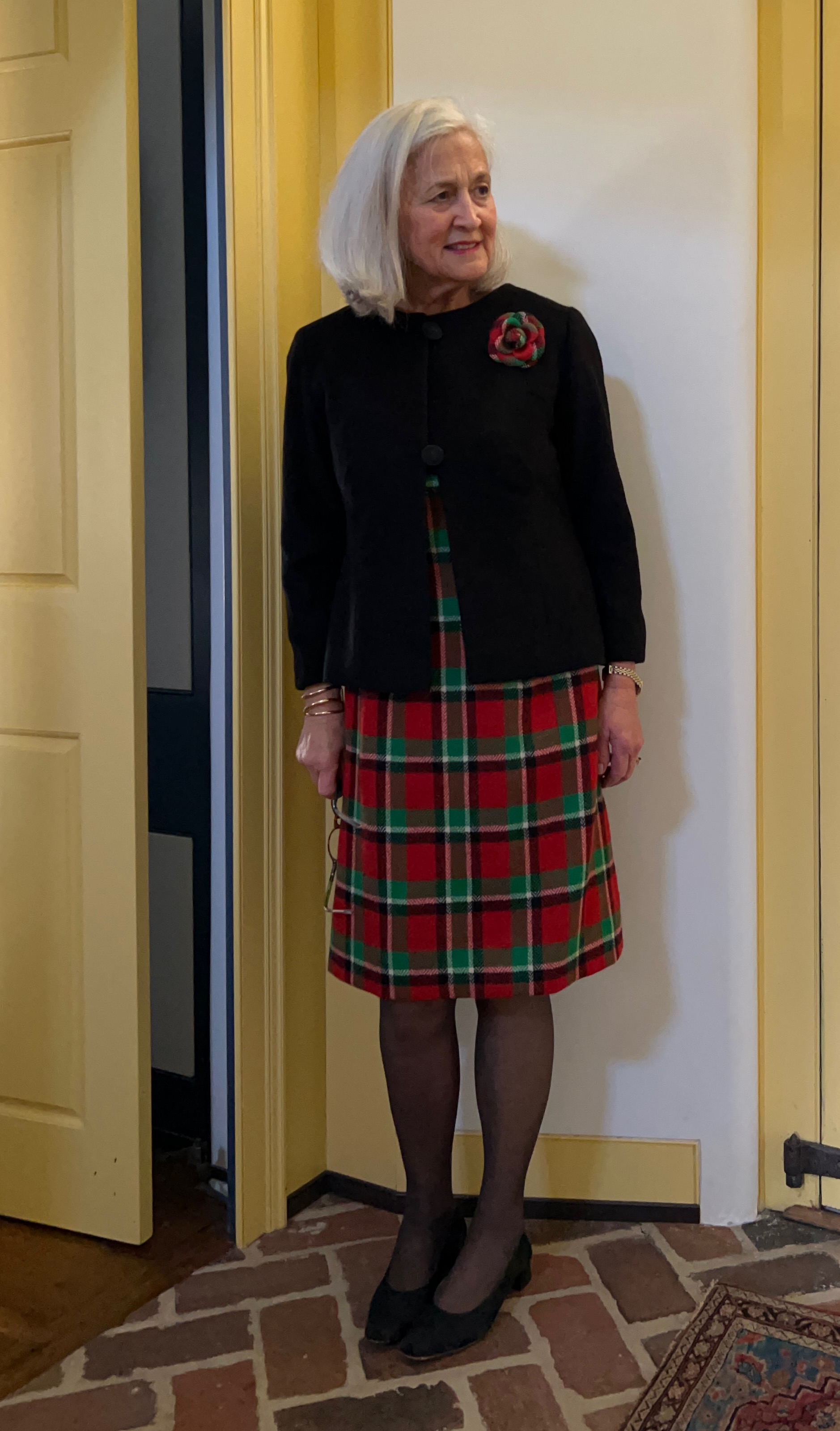
  1. Short black wool jacket, ostensibly to wear with a wool sheath dress made two years ago.    

I suspect this jacket will prove to be more versatile than I have expected.  Its jewel neckline will lend itself to scarves, and its solid black color will be a good canvas for brooches or other fabric flowers.  

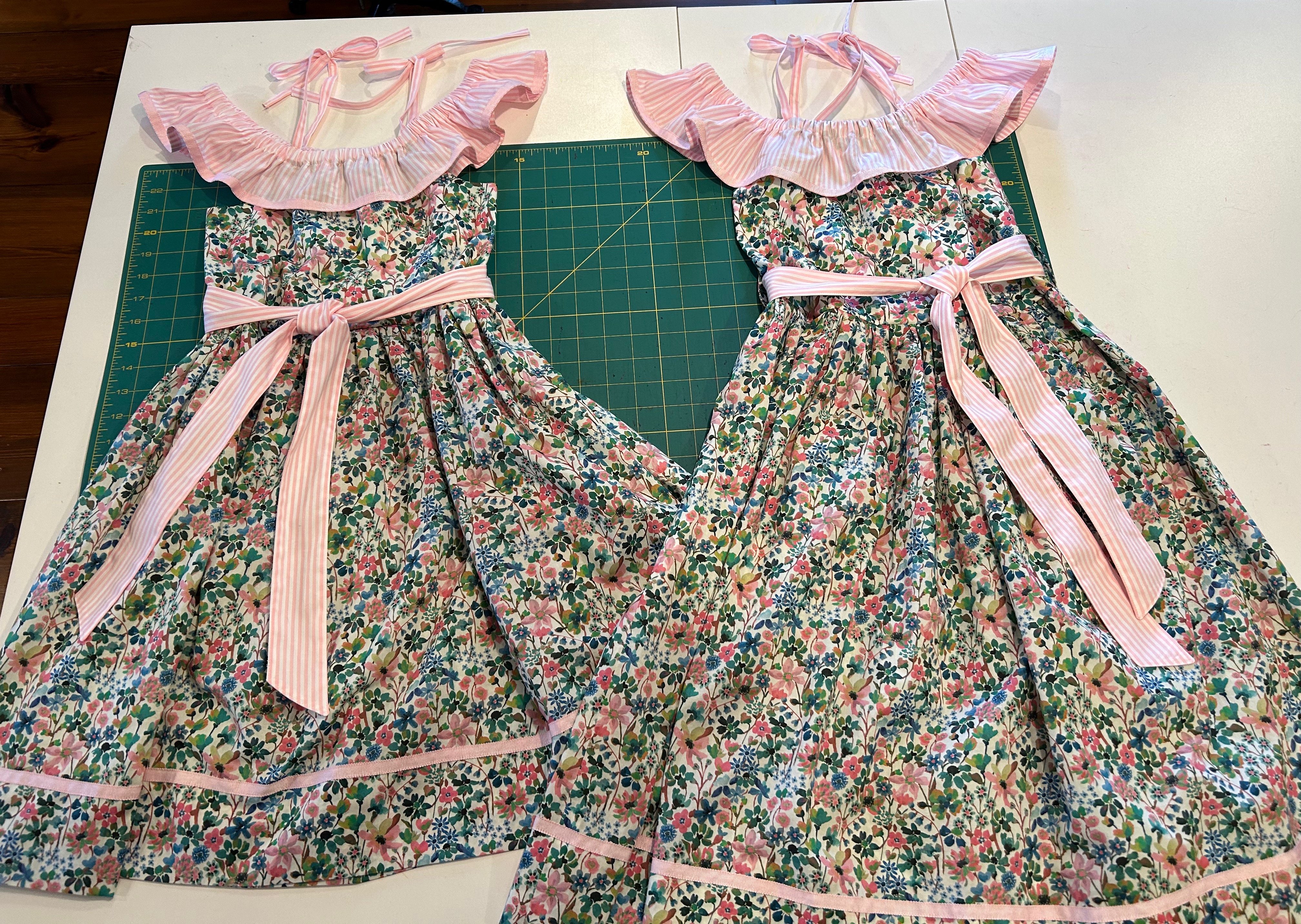
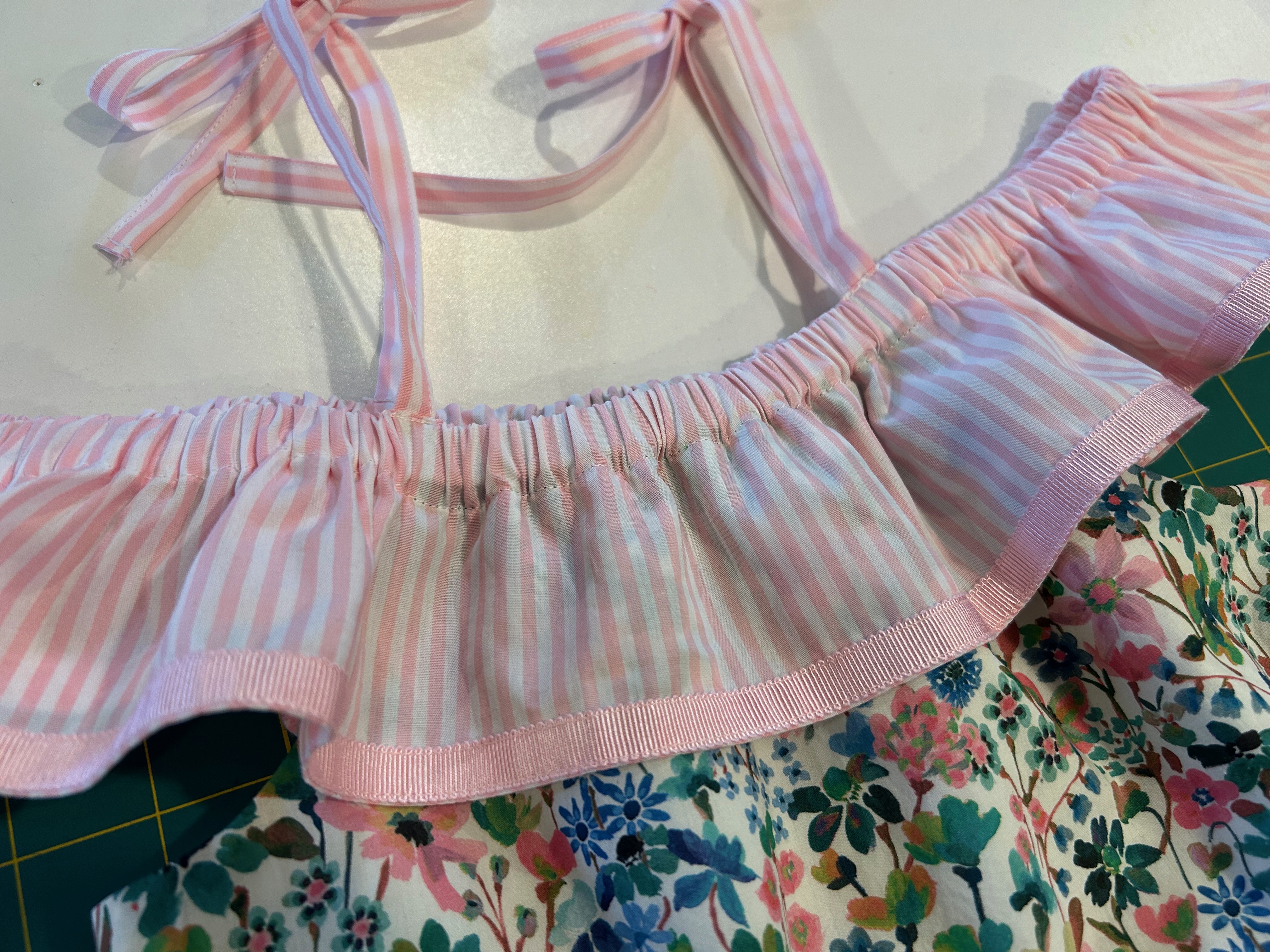
 2. A birthday/sundress for each of my two granddaughters.

I generally do not post on my blog about sewing for my granddaughters, due to the limited audience for the subject.  The girls requested dresses which they could wear “off the shoulder.” So of course, I obliged!

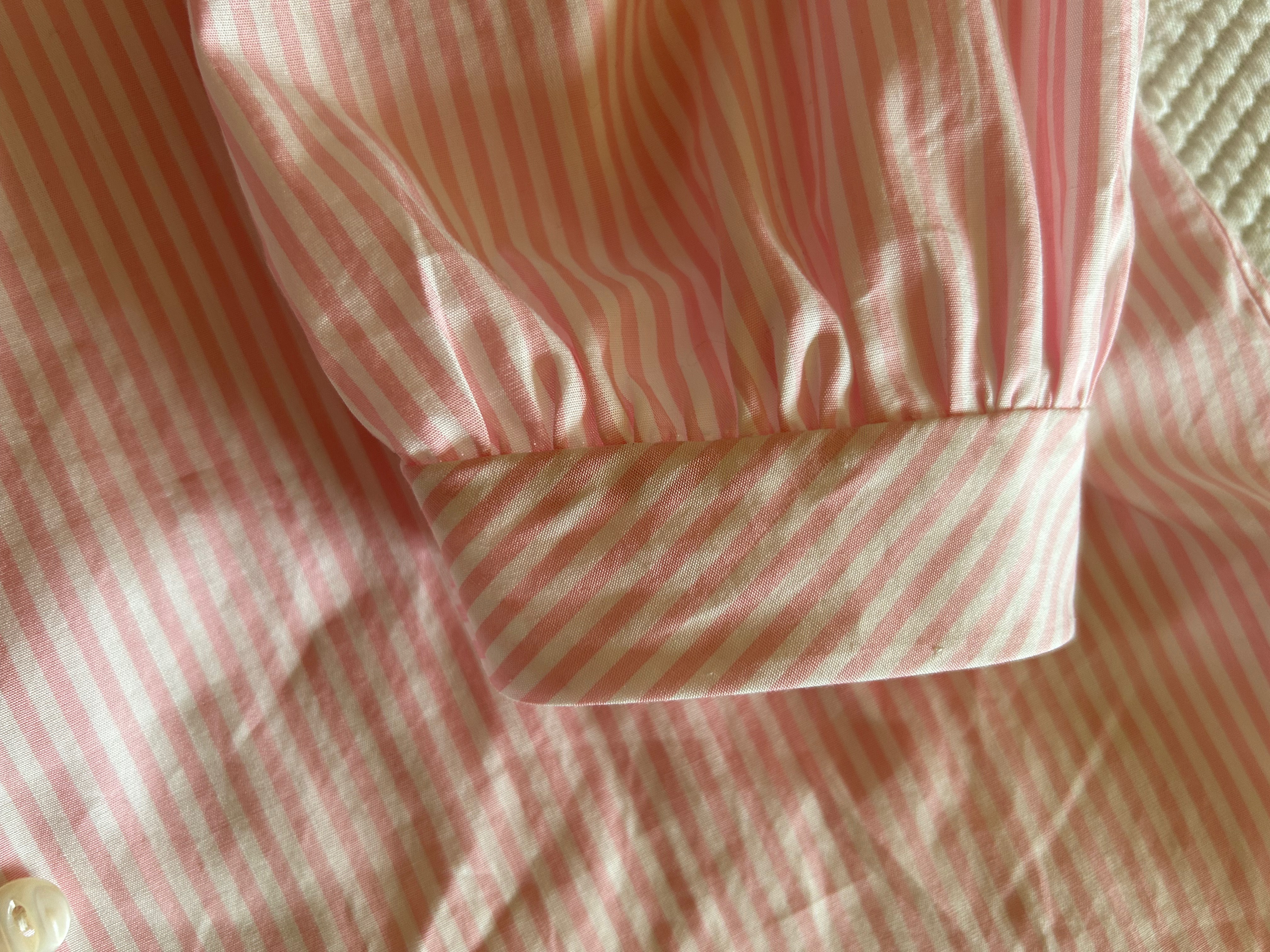
 3. A pink striped casual blouse.

Pale pink is always a good idea.

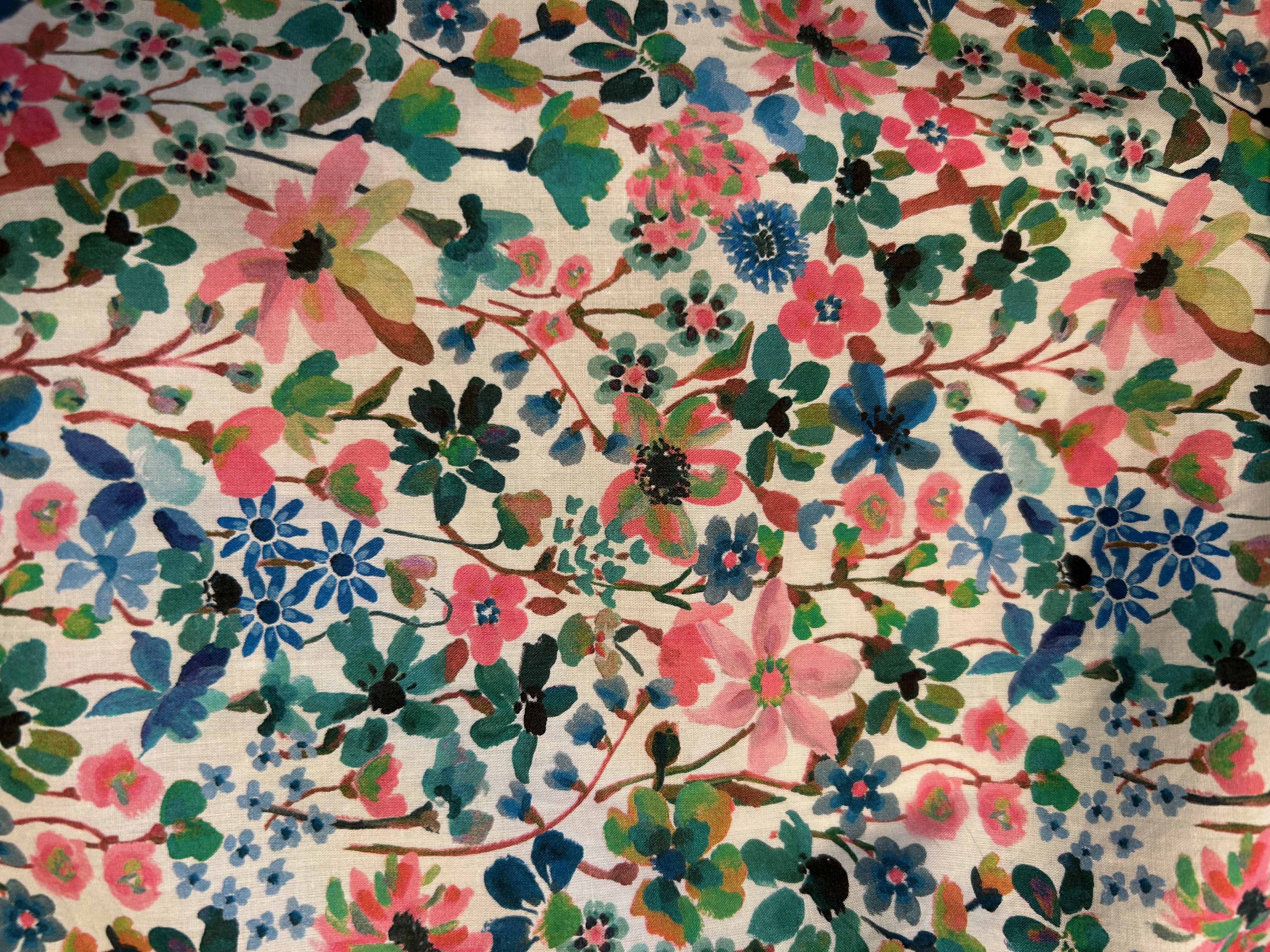
  4. A floral summer dress. 

I was happy to use this fabric which had been long in my sewing queue.

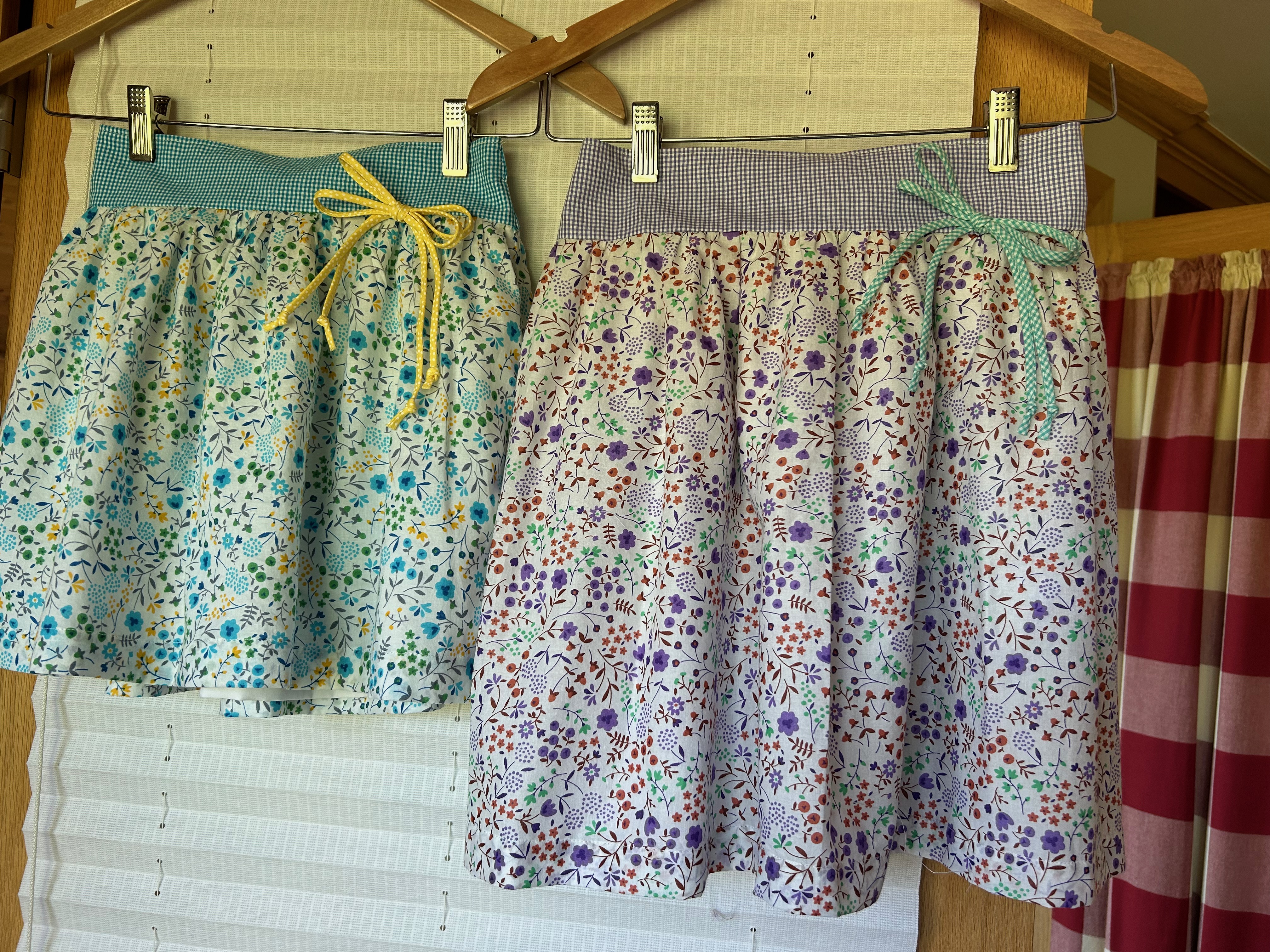
 5. Fun floral skirts for each of my granddaughters.

I used “kits” from Farmhouse Fabrics for each of these skirts.  They garnered blue ribbons and a “Best of Division” at our local county fair this past summer.  Full disclosure:  there wasn’t much competition!

  6. My 50th Anniversary linen dress made with vintage fabric.

I’m not sure I have ever made a dress which has given me more personal satisfaction than this one.  Making this dress was truly a dream come true.

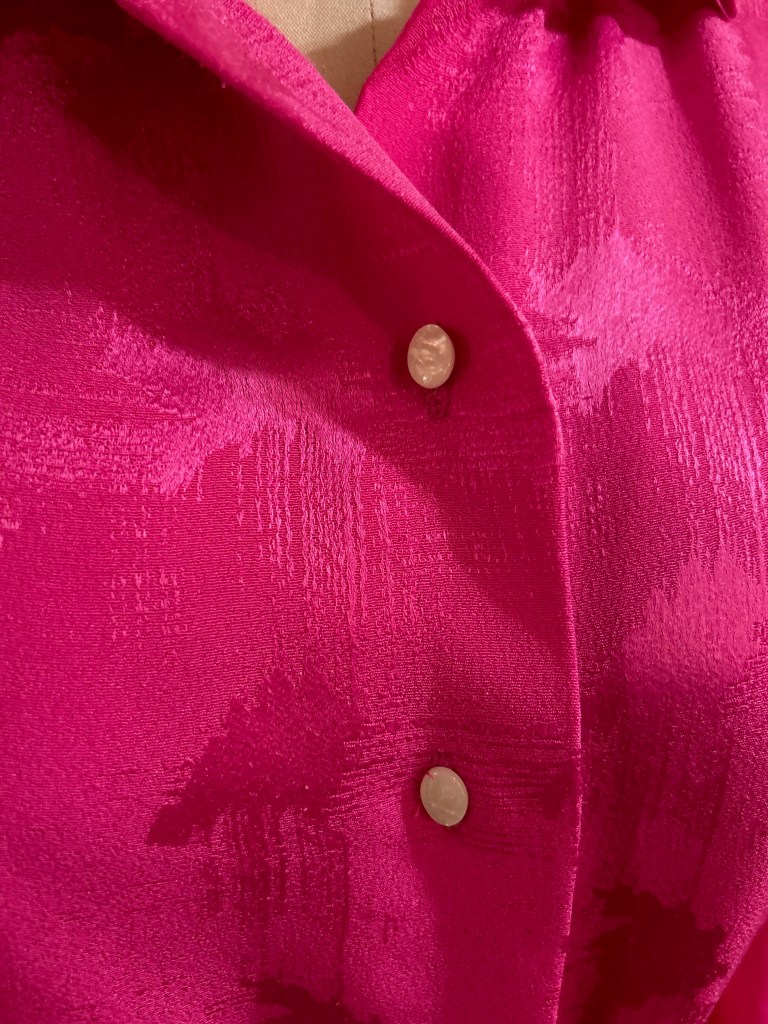
  7. A fuchsia-pink silk shirtdress.

I persevered through the tricky construction of this dress made with a slinky silk jacquard charmeuse.  I had the opportunity to wear it twice this past Fall.  Perhaps the trending, pink “Barbie theme” contributed, but this dress proved to be a magnet for compliments at each wearing.  How rewarding after all the trouble it gave me! 

  8. A blouse for Fall, using some amazing vintage buttons.

I will finally admit I will never get tired of making or wearing cotton blouses. 

  9. And some miscellaneous (and minor) gift and holiday sewing.

That’s it!  

And I’m perfectly fine with it.  I did what I could, and three of my projects had high priority (my girls’ birthday dresses, my anniversary dress, and my pink shirtdress).  Completing them was very satisfying.  

So what about my last make of the year – that blouse for Fall?  

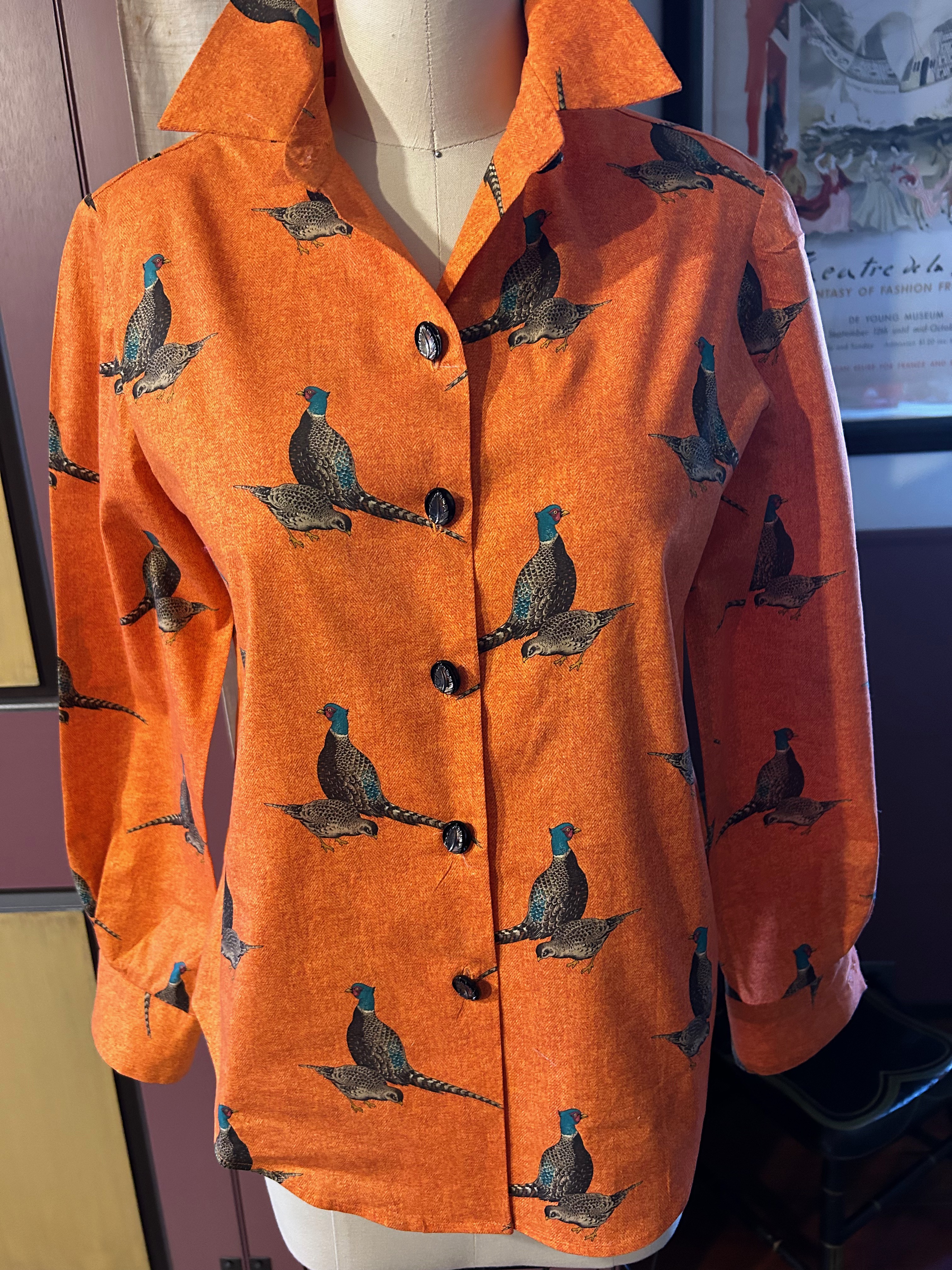
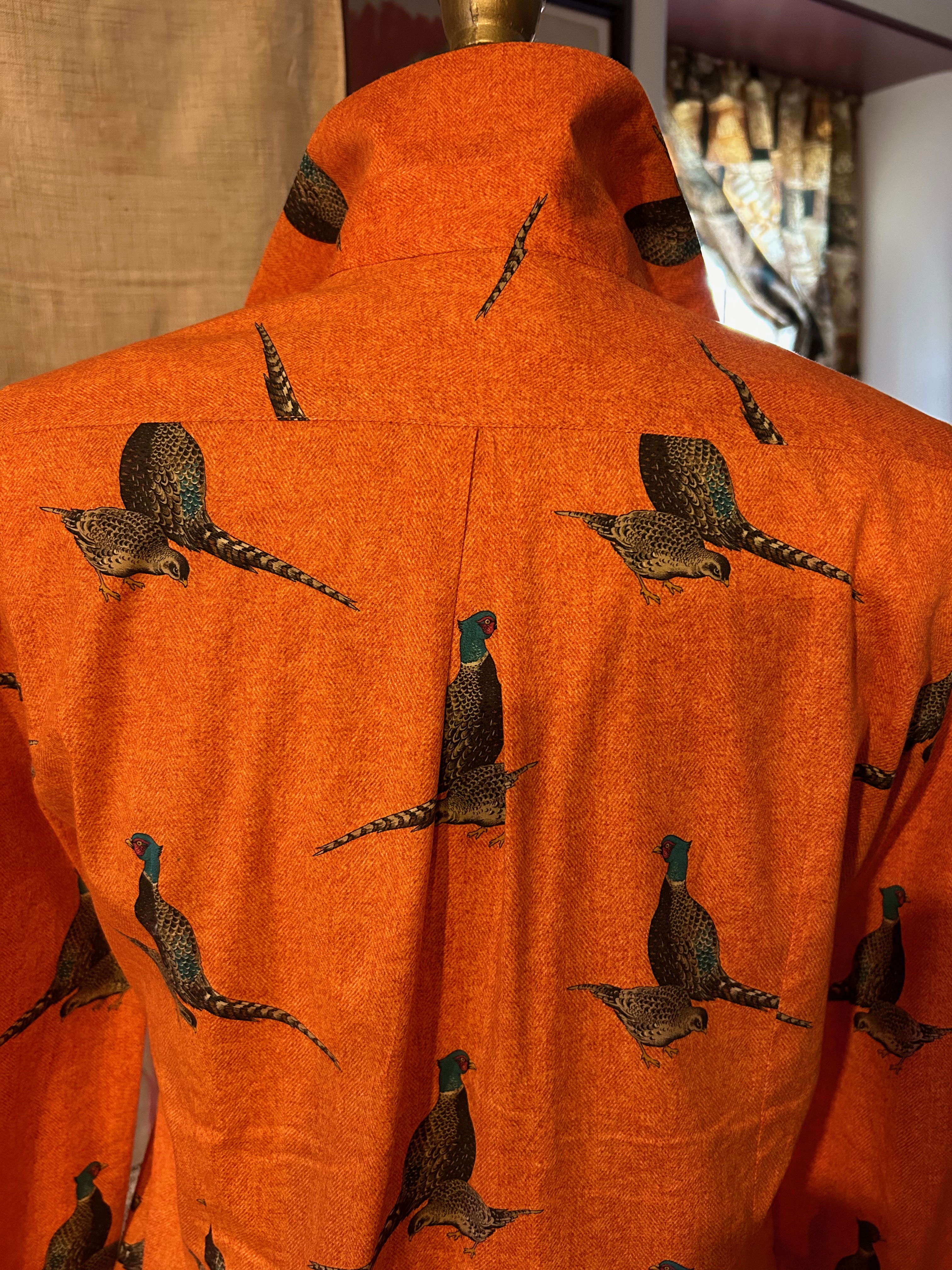
It’s very orange.  And with the pheasant motif, it is very autumnal.  However, with Fall undoubtably being my favorite season, it seemed fitting to have a piece in my blouse wardrobe devoted to that time of year.

I found the fabric on the website of Emma One Sock Fabrics a couple of years ago.   It is a beautiful cotton with a very slight stretch to it.  The quality is superb, being silky soft and very easy to sew.  The Herringbone printed background makes it look like a much heavier fabric than it really is.

I debated on the style bouse to make, thinking a bow blouse would be lovely.  However, in order to make this as versatile and wearable as possible, I defaulted to my regular shirt/blouse pattern, which I have altered and tweaked many times.

Here is that blouse pattern I have used over and over.

   I also thought this pattern would be the one most likely to show off the buttons I intended to use with the fabric.  

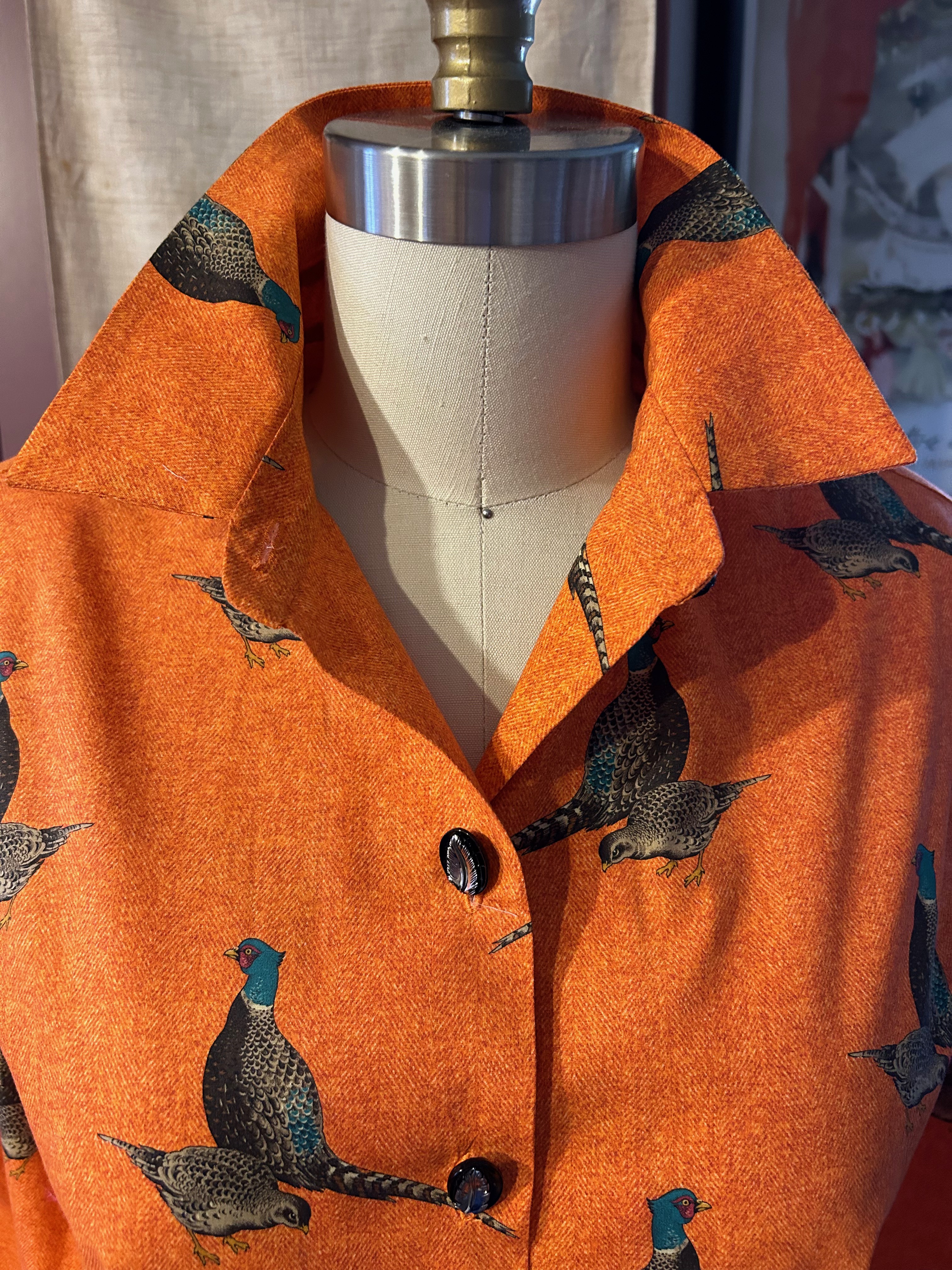
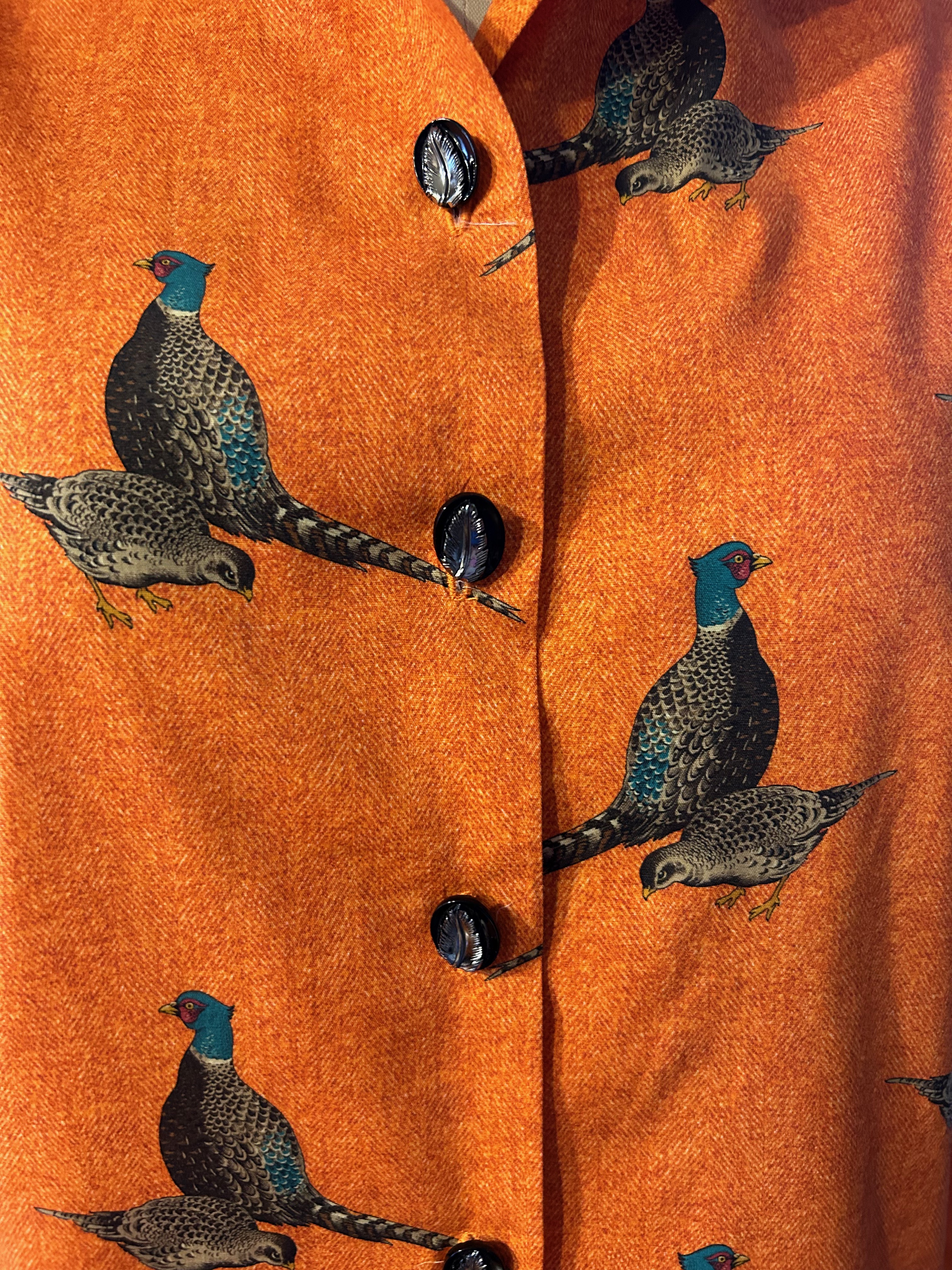
I can’t remember what came first – the fabric or the buttons.  Somehow I was lucky enough to find these vintage Ultra Kraft buttons with their feather motifs.  Just bordering on a bit too big for a blouse, these buttons seemed to balance the large pheasant groupings, making both fabric and buttons a good match.  I didn’t realize until I had finished the blouse how much the silver in the buttons picks up the lighter colors in the feathers of the pheasants.  There is a little “sparkle” in there!

I was able to wear this blouse a couple of times in season.  Now it seems a long time away until its next wearing…  

Which begs the question: what will transpire in the ensuing months – between now and then?  I will wait and see how and when inspiration hits.  What about you?  

44 Comments

Filed under Blouses, Buttons - choosing the right ones, Uncategorized, vintage buttons

A Fussy-to-Make, Fuchsia-Pink Silk Dress

Sometimes extra incentive is needed to push through a project which turns out to be more difficult than anticipated.  Such was the case with this pink silk jacquard dress.

I had purchased this fabric quite a few years ago online from Britex Fabrics.  I knew it was a dressy fabric, and unsure of what form this dress would take, I made the decision to purchase four yards of this 58” wide silk.  That gave me some latitude in my selection of pattern.  

Finally last Spring I made a decision about what I wanted this dress to be.  That was precipitated by the arrival of a beautiful invitation to a very special event this Fall, and of course (!) I needed a new dress to wear to it. The fabric is a dressy, shimmery silk jacquard, so by its very nature it would make up into a dress which had a certain glamour to it.  

I decided to use a go-to pattern I have used a few times already and make a classic shirtdress.  That may seem like a strange choice, but I envisioned it as very dressy and flowing, and quite appropriate for the fabric.  

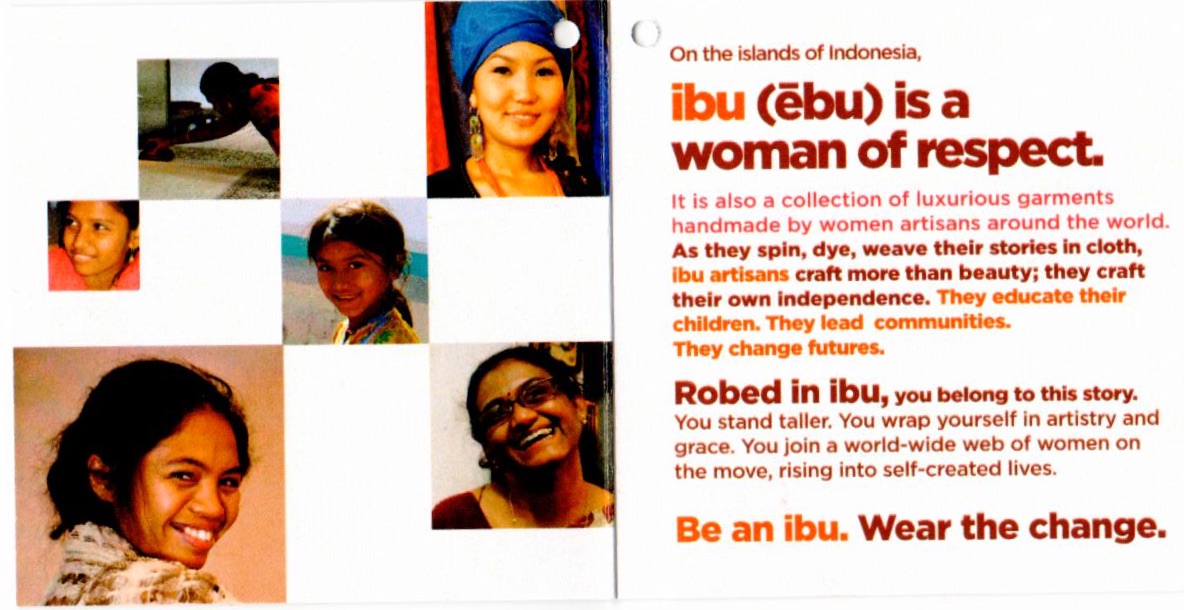
While this idea was percolating, I happened to attend a luncheon/presentation by a wonderful organization called the Ibu Movement.  (Pronounced ebu, with a long “e,” this is an Indonesian word meaning “a woman of respect.”)  

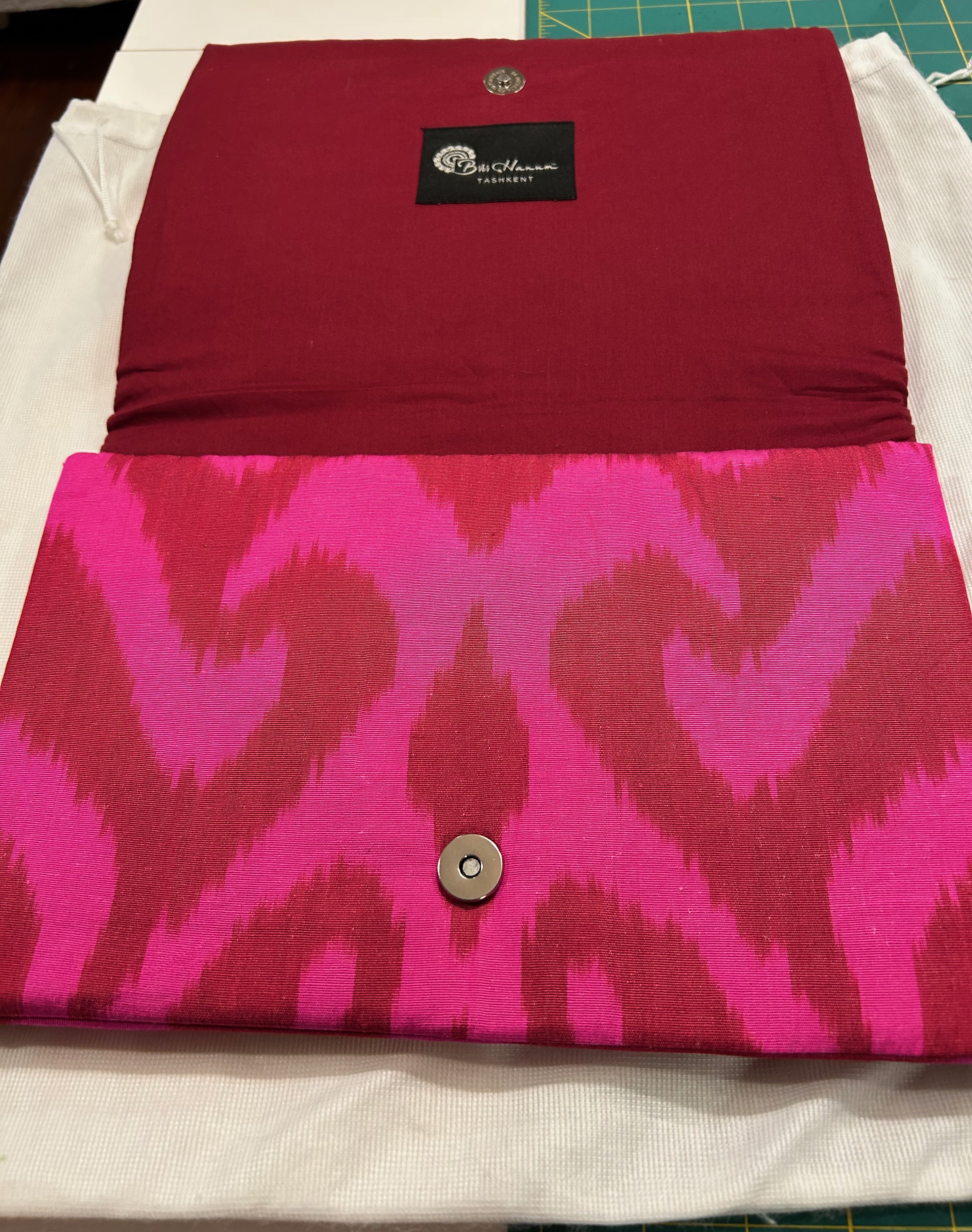
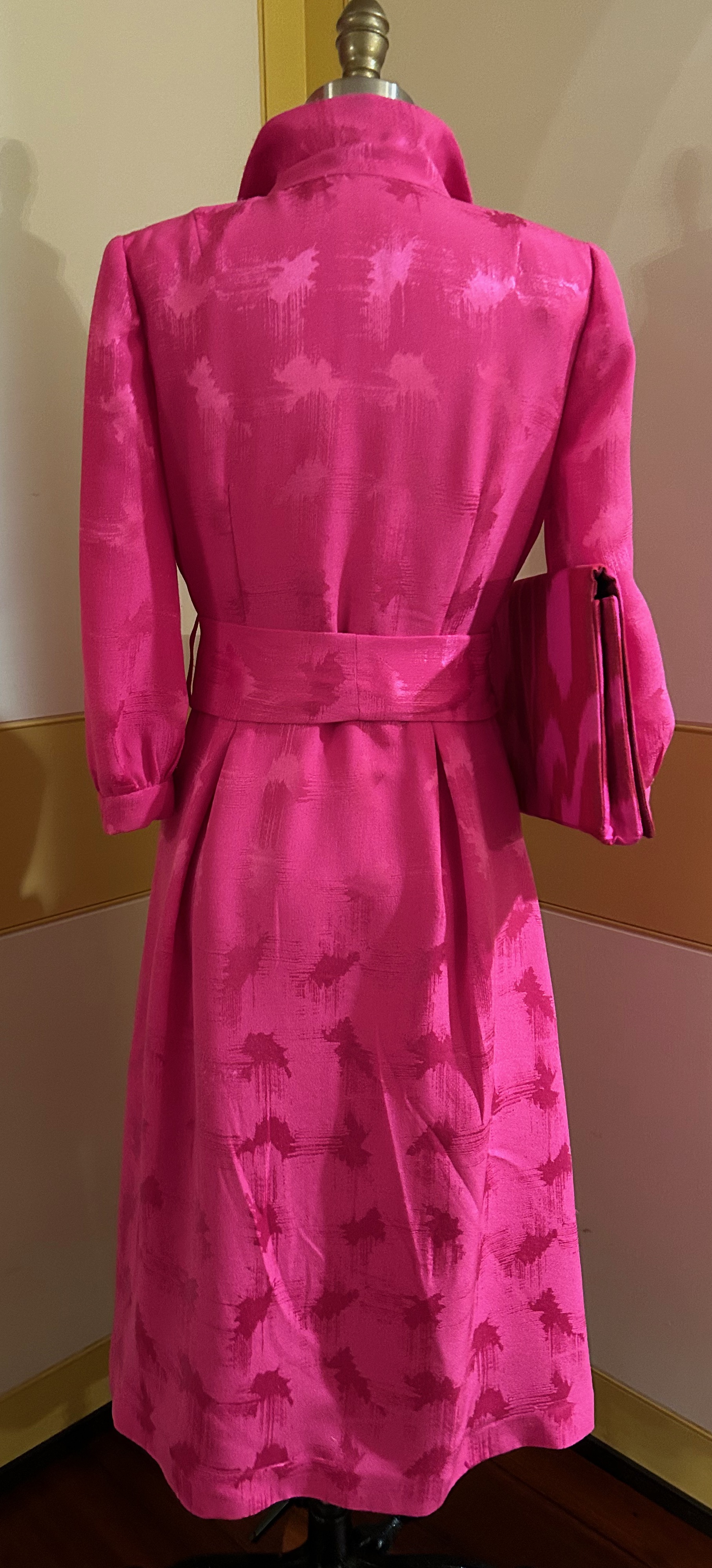
The pop-up shop accompanying this event was filled with gorgeous clothing, accessories, even shoes. When I saw this envelope clutch, I knew it would match my silk fabric perfectly and would be the perfect addition to my as-of-yet-to-be-sewn pink dress.  Little did I know at that time it would be the catalyst to make sure I finished the dress!

My first clue as to the fussiness of the fabric was as soon as I pressed it and laid it out for the placement of my muslin pattern. Here is what I noticed:

  1. The fabric had a slightly loose weave to it, making it almost stretchy, certainly very slinky.  Keeping it properly aligned on the straight of grain was going to be a challenge.  
  2. The fabric frayed easily.
  3. It also was prone to shedding silk fibers.  I decided I needed to handle it as little as possible to mitigate this situation.
  4. The jacquard weave in it had a definite horizontal and vertical pattern to it, meaning I would have to match the design horizontally and vertically across seams.  Although I am used to matching plaids and prints, this was a little different as the woven design was of irregular form.
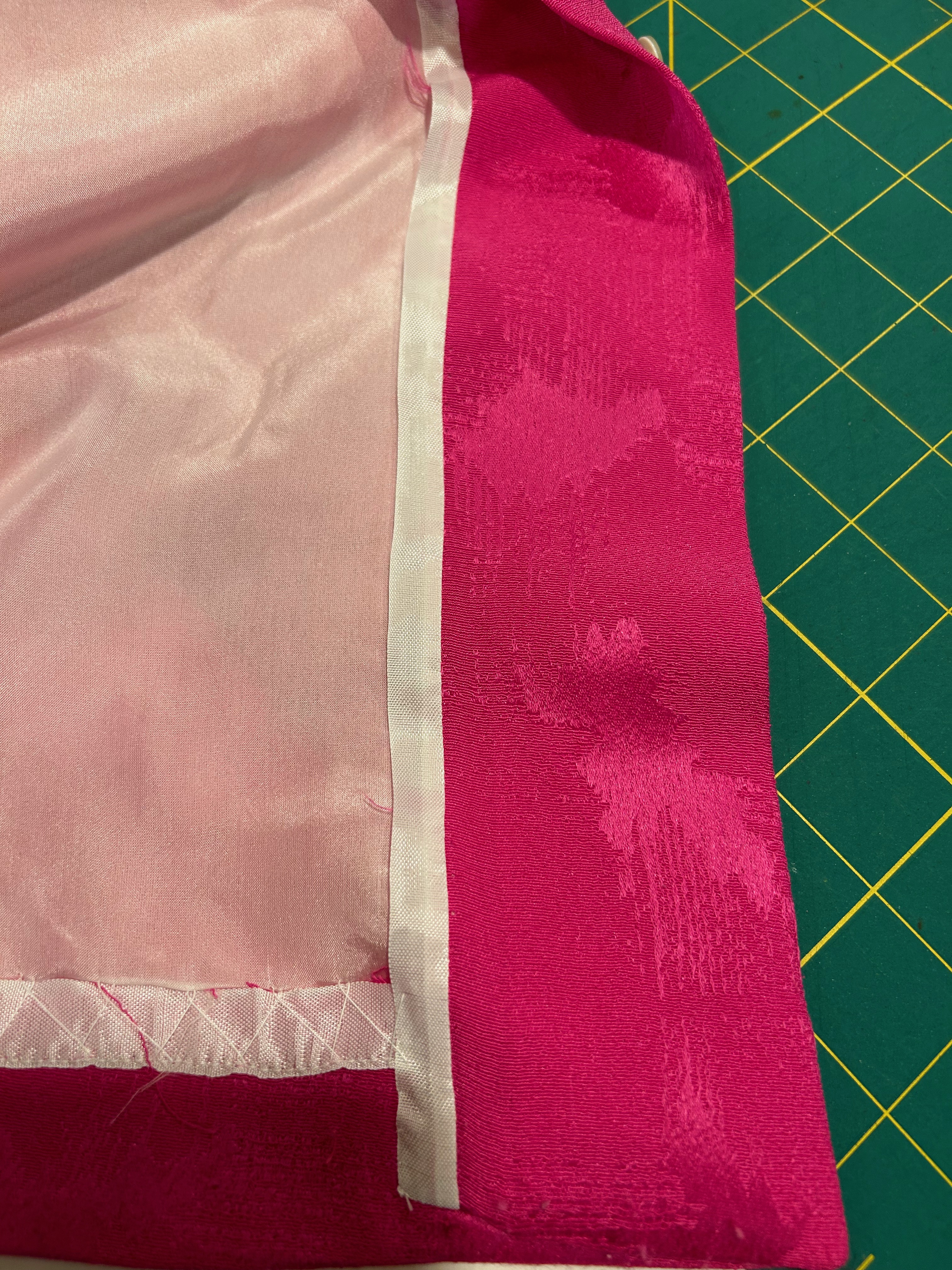
The irregular nature of the weave is apparent in this photo.

I decided to underline the dress (except for the sleeves) with a very lightweight silk batiste, which I hoped would give it some substance, but still preserve the flowing nature of the fabric.  I made the conscious decision not to add an additional lining to the dress.

Although I rarely use fusible interfacing, I realized very early on that sewn-in interfacing was going to shift around and cause all kinds of problems.  Luckily, I had been introduced to a very finely woven, fusible German interfacing available from Farmhouse Fabrics.  I had some on hand and found it to be the perfect stabilizing foundation for the cuffs, the front facing, the collar, the collar stand, and the hem.  

So, that solved one big problem for me.  I was still concerned about being able to get the hem even.  I had good reason to be concerned!  It took two tries to avoid having either a bubble appear or uneven dips around the perimeter. 

The final quandary I had was the buttonholes.  Because the fabric shed silk fibers so easily, I was really worried that my buttonhole attachment might grab onto those fibers and make a mess.  I did some sample buttonholes, which confirmed my suspicions.  So – I used wax paper between the foot of the attachment and the fabric, cutting little windows in the wax paper where the buttonholes would be sewn.  It worked like a dream.  

I found vintage pearl buttons with a slight iridescence to them which I thought worked well with the fabric.
And here is that handbag with the dress!

This was not a particularly fun dress to sew, but that “perfect” handbag kept me focused.  And I am glad it did, as the dress was a success in the end.  And it always feels like an accomplishment to use fabric which has been lying in wait for so long.  

29 Comments

Filed under Buttons - choosing the right ones, Cocktail dresses, Linings, sewing in silk, silk, Uncategorized, underlinings, vintage buttons, Vogue patterns

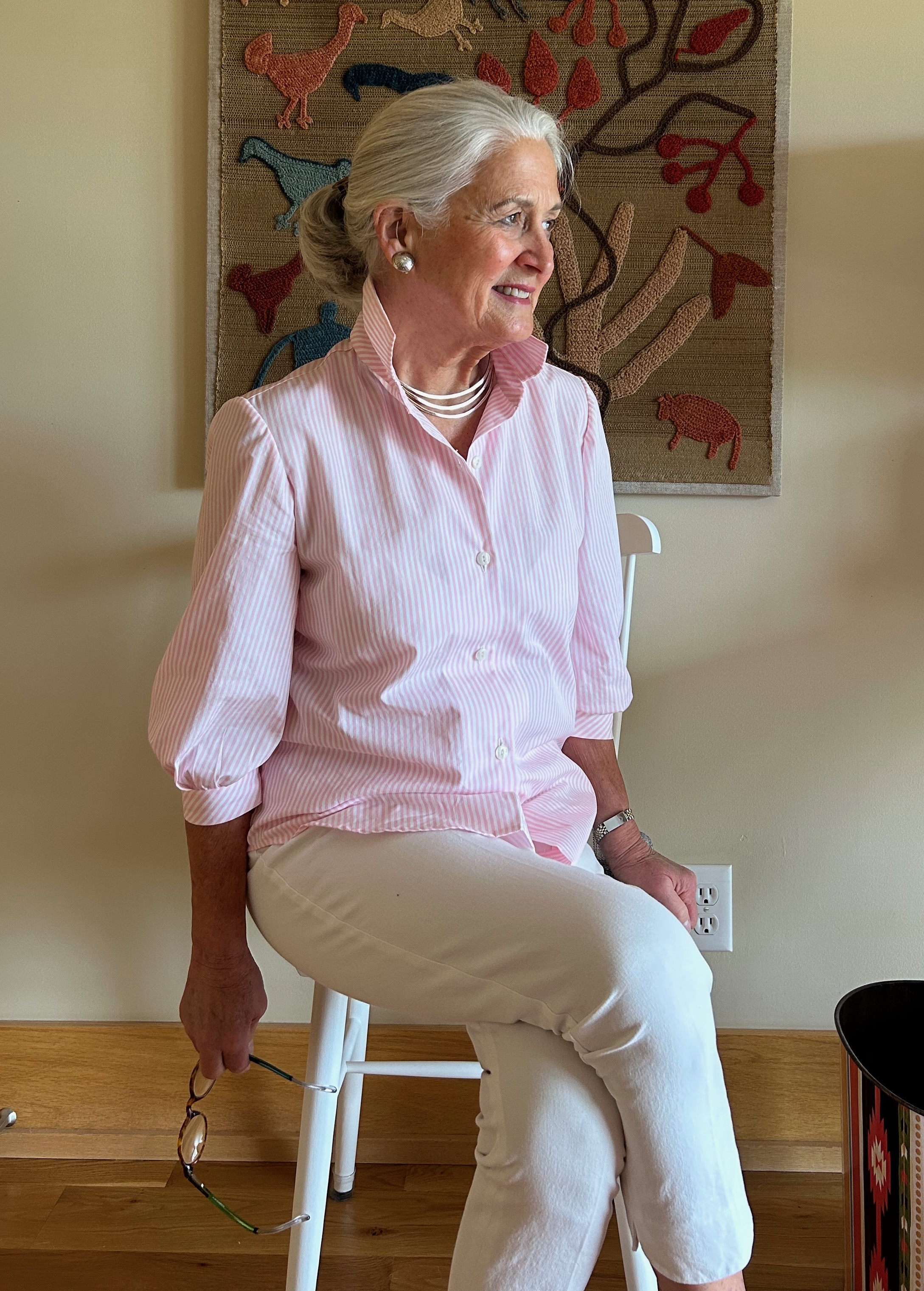
The Many Uses of a Pink and White Striped Cotton

There are now a few scrapes remaining of this fabric:

Before the scraps there was this blouse:

Before the blouse there were two Springtime dresses for my granddaughters: 

And before the two dresses, there were two Valentine’s Day aprons for my granddaughters:

Sometimes a fabric is just so versatile, it pays to use it over and over.  Such has been the case with this pink and white striped cotton I originally purchased from Farmhouse Fabrics back in late January.  It all started with my decision to make aprons for my granddaughters for Valentine’s Day.  I found a cute pink and red heart print for the base of the aprons.  (I sized down this apron pattern for my then-7-and-9-year-old girls.) Then I needed a coordinating fabric for the ties and pockets on the aprons.  That’s when this striped cotton came into my life.

Because the apron ties were cut on the bias, it was necessary to buy over a yard of the 60” wide fabric, leaving me a sizable section of fabric after the completion of that project.  I put the leftover fabric in my storage closet and didn’t think any more about it. Until….

A few weeks later I geared up to make matching dresses for the girls’ Springtime birthdays.  I got some direction from my daughter on the style of dress the girls decided they wanted – off-the-shoulder ruffle dresses.  I luckily found a new Liberty of London cotton print, purchasing it quickly before it sold out. 

Once I had it in hand, I decided it would look a lot cuter with a contrasting collar and sash rather than the entire dresses out of the same fabric.  That’s when I thought of the pink and white stripe I had stored away. 

Well, the rest is history, except that to complete the dresses, I needed to purchase more of the striped fabric.  Fortunately, it was still available from Farmhouse Fabrics.  This time, however, I decided to purchase enough additional of it to make myself a blouse.  Why not? 

Now, I have made a lot of blouses, many using this pattern:  

Here is the blouse pattern I have used over and over.

They are not the most exciting apparel in the world, but I do wear them, a lot.  So lately, I have been trying to mix up the details of the pattern when I make a new blouse to make it more interesting.  Here is what I did to this one:

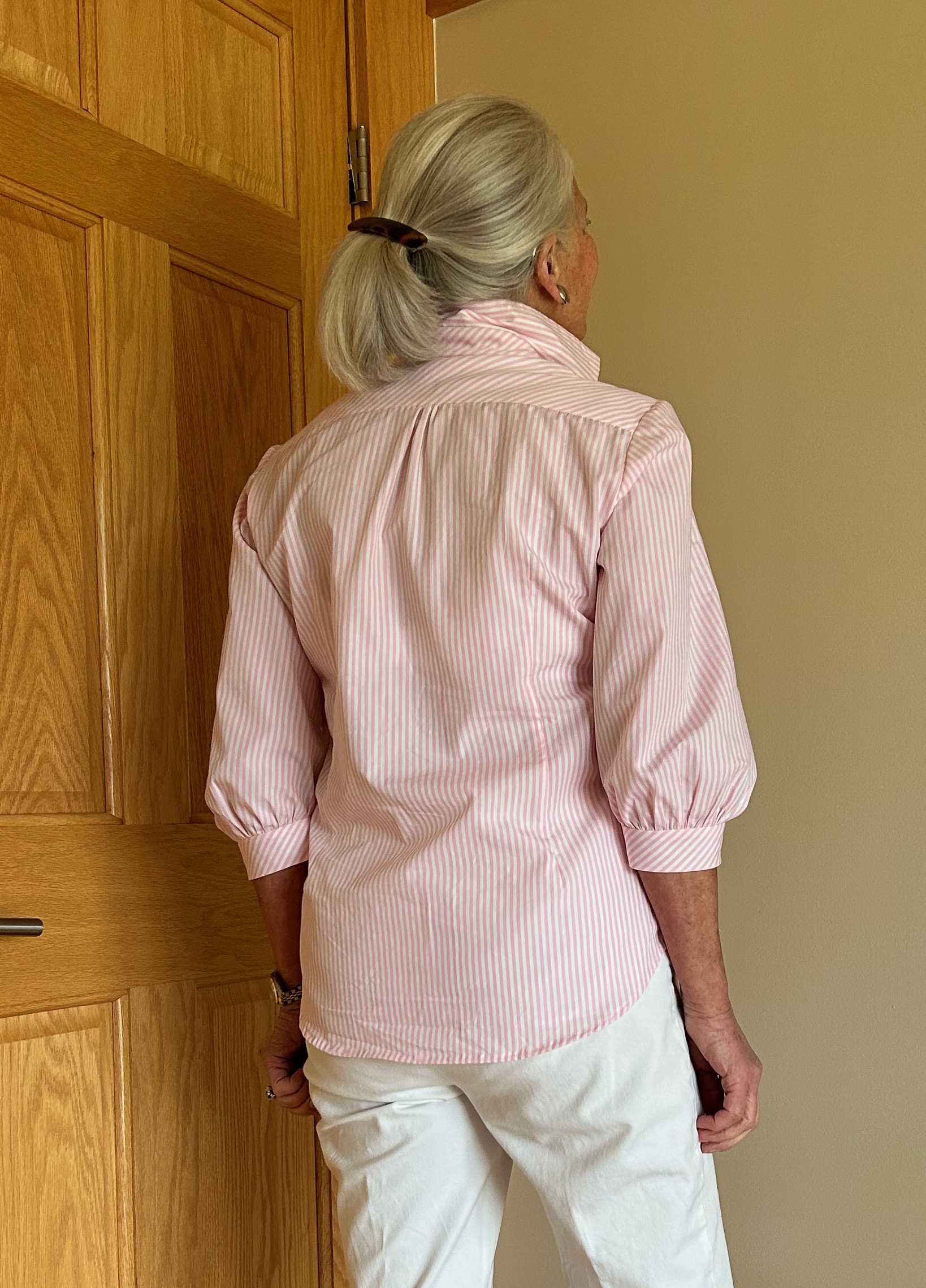
  1. The most obvious change I opted for are three-quarter length sleeves, slightly poofy, gathered into a continuous cuff.  

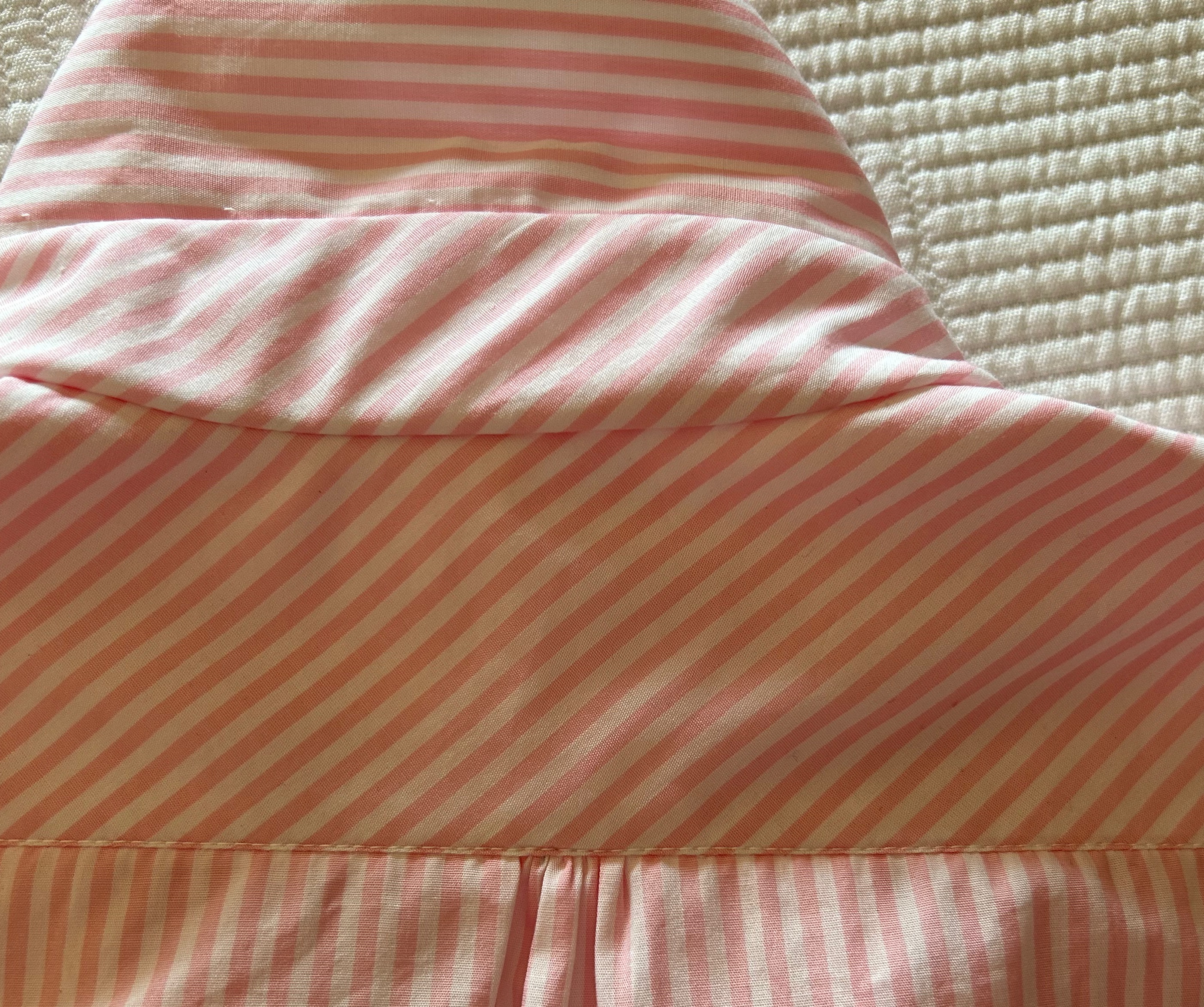
2. I decided to cut the cuffs on the bias and repeated that choice for the back yoke and the collar band. 

I also gathered the back vent instead of making a pleat. It looks off center here, but that is an optical illusion!

3. I used the collar variation I had originally cut for this blouse, and in addition I took one inch off the length of the blouse.  

Again I went to my button collection and found vintage buttons which pick up the striped motif of the fabric.  

I think I am now finished with pink and white stripes, but I am holding on to the scrapes just in case….

23 Comments

Filed under aprons, Blouses, Buttons - choosing the right ones, Liberty cotton, Uncategorized

Not Just an Everyday Blouse

Some blouses are worn A LOT.  Those are everyday blouses, and I have quite a few of those (with more to come, I am sure!)  And some blouses are worn infrequently, but equally loved for their unique properties.  These would include exceptional fabric, refined or formal appearance, limited wearing opportunity, or their ability to make a statement.  The blouse I most recently completed has all those properties. 

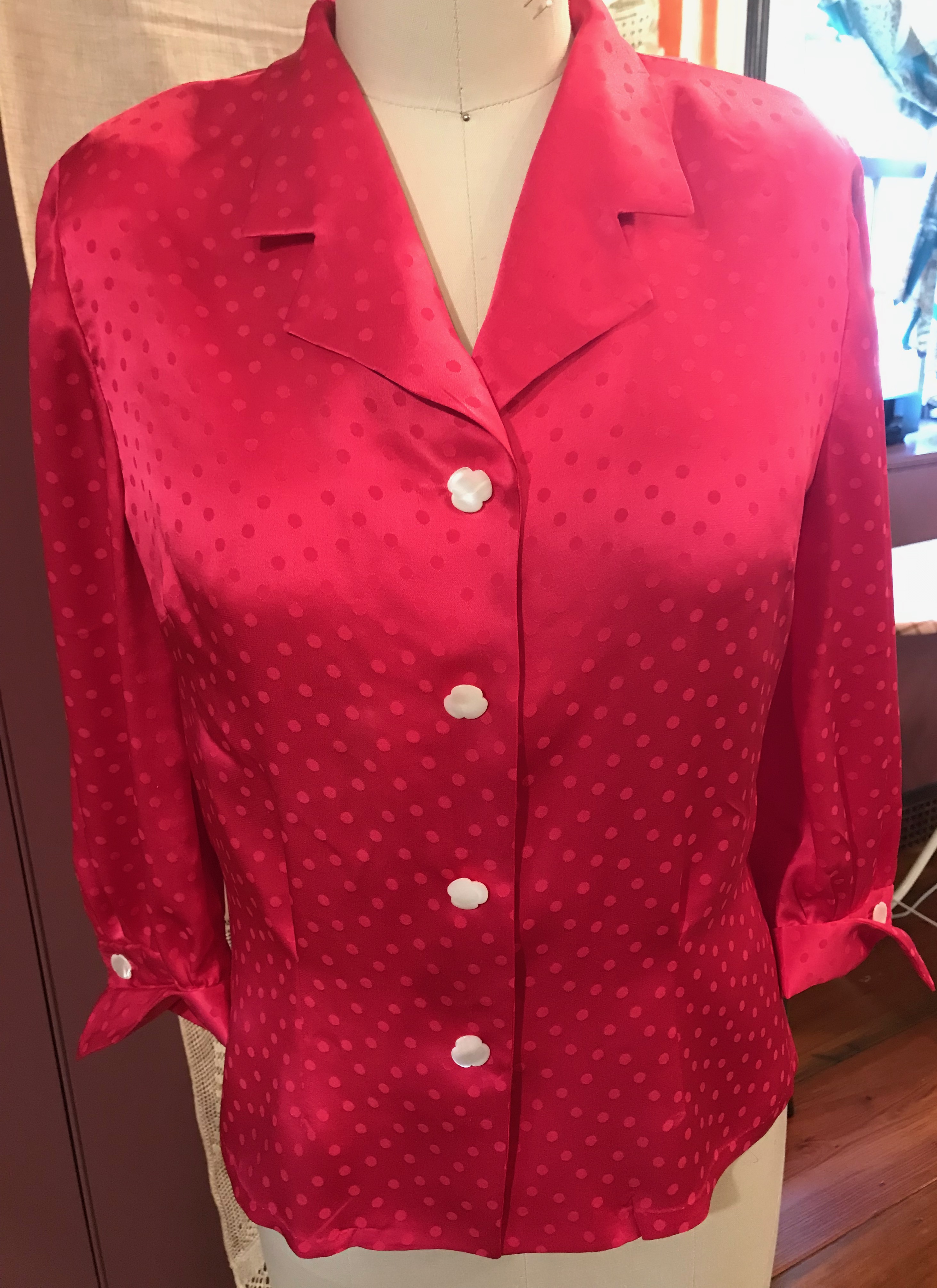
This deep pink silk charmeuse Jacquard has been in my fabric closet for over ten years, having been purchased at Britex Fabrics when I started sewing for myself again, way back when.  Its color, and the polka dot woven motif, both personal favorites, drew me to it.  A couple of years ago, after purchasing another piece of silk – a printed silk twill – I paired the two fabrics together and added them both to my sewing queue.  The skirt may have to wait until next year, but the blouse earned a spot in 2022’s sewing agenda.

Two fabrics meant for each other!

I used a blouse pattern which I have made once before.  From 1957, this pattern is timeless with its elegant collar (which looks good lying flat or propped up around the neck), petite French cuffs and feminine three-quarter length sleeves.  I suppose in 1957, this style blouse may have been considered a casual piece, which the illustrations on the pattern envelope suggest.  I saw this blouse as dressy, however, and that is how I have interpreted it. 

The collar on this blouse is beautifully engineered.
Here is the first blouse, in silk dupioni, I made from this pattern.

One of the details which make this blouse so flattering to wear is the waistline open-ended darts, easily visible above.  They minimize the bulk when the blouse is tucked inside its skirt and add a lovely billow effect above the waist. I made these darts a bit shallower than the pattern indicated.  When making these darts, I secured their upper edges by pulling the thread tail on one side to the other side so that I had the ability to knot those threads with three tight loops.  For those of you who have made a classic French jacket, this is the same method used to secure the quilting stitches at the end of the columns. The photo below helps to show this.

The darts are secured by knots done by hand both top and bottom.
Those open-ended darts are featured on the back of the bodice, too.

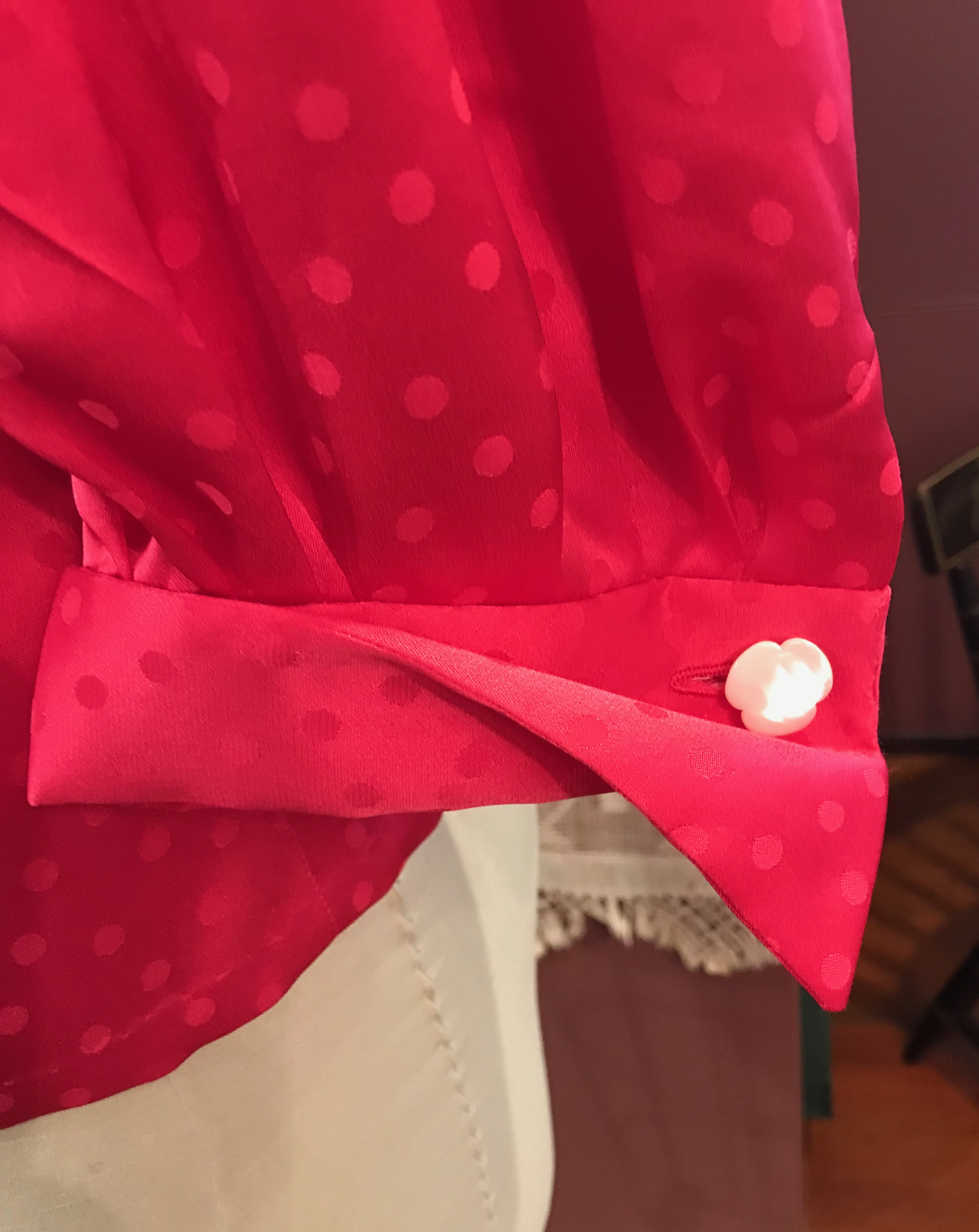
Buttons are such fun to select for a blouse like this.  I have had these vintage white pearl buttons for some time, and no doubt they were waiting for this project.  When the skirt is made at some point, the three-lobed profile will play off the designs in the silk twill.  But, more than that, I needed something to act as a foil for the polka-dotted field.  More “round” would have been fine, but not exciting.  Additionally, these buttons are a bit bigger which helps them hold their own on that deep, rich, pink silk.  

The French cuffs are secured by buttons both front and back.
Love those buttons!

Being the ‘statement” blouse that it is, I doubt I will be wearing this blouse casually. But I’m betting/hoping I will find good reason to wear it not infrequently to one or another tony event.  

25 Comments

Filed under Blouse patterns from the 1950's, Blouses, Buttons - choosing the right ones, Mid-Century style, Polka dots, sewing in silk, Uncategorized, vintage buttons, vintage Vogue patterns from the 1950s

Life Isn’t Perfect…

…but Your Outfit Can Be.  I took a picture last summer of this sign at a Western wear store in Pinedale, Wyoming (Cowboy Shop).   I loved the saying, but little did I know how often I would reflect on it this summer, which has had its difficulties.  

And even when my outfit, like Life, is far from perfect, which has been often, I know there is always Hope, and yes, that is hope with a capital H.  

*******

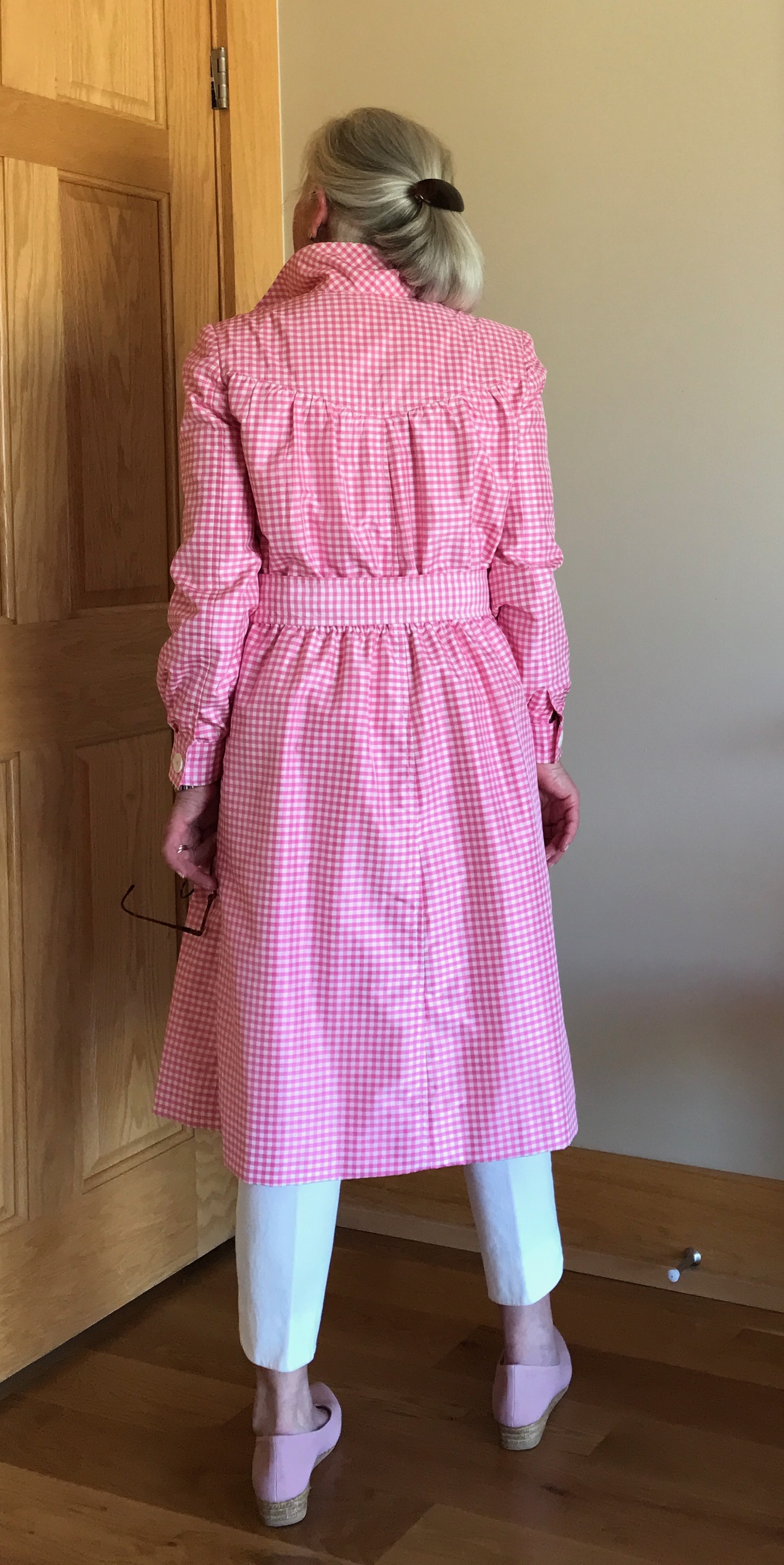
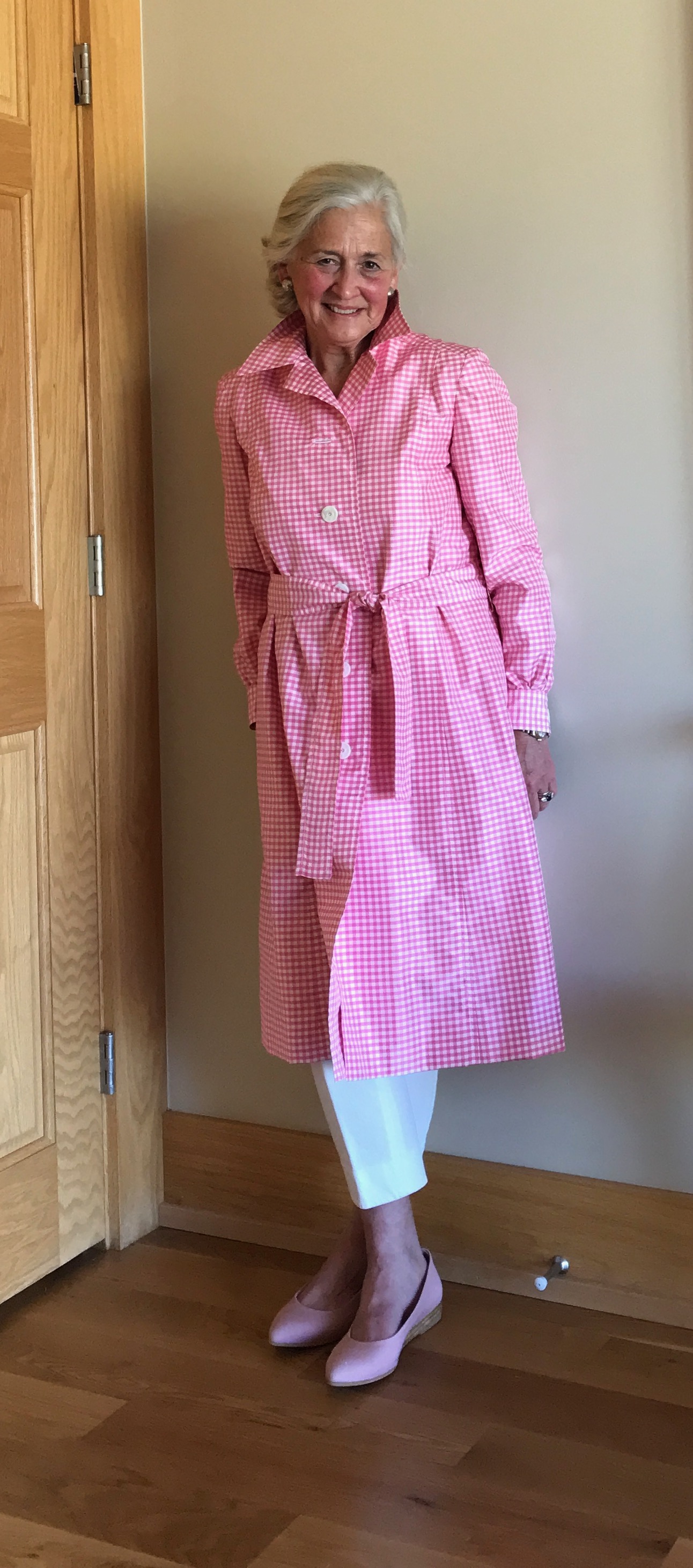
What a long hiatus it has been between my last musings about Trench coats and Dressmaker coats and pink gingham.  The final, finishing  stitch in my pink checked coat was in mid-June, and at this point I can hardly remember what I wanted to say about it.  

I purchased the pink silk gingham from Farmhouse Fabrics several years ago.

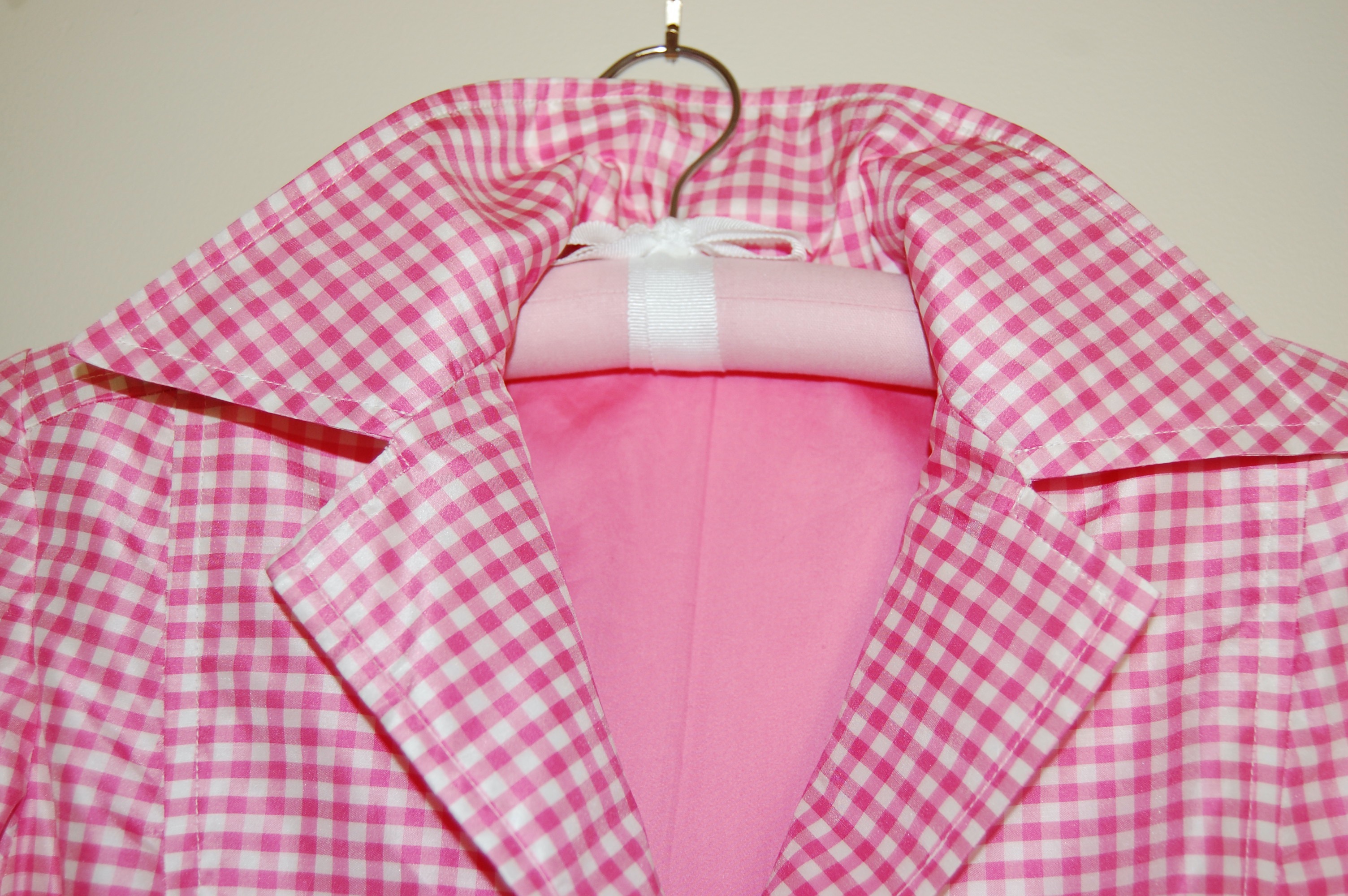
It does seem appropriate to start with the changes I made to the pattern, of which there were two major ones.  The first change was to the size of the collar.  In the 1970s long pointed collars were a trend.  Although I like a pointed collar, one with a more petite profile seemed to be a little more flattering and classic.  To achieve this desired look, I shortened the collar’s points by about an inch on either side.  

For comparison purposes, here is a good look at the original collar.

When I made this coat in 1974, I remember being a bit disappointed with the volume of the back of the coat.  I was using a cotton twill, so it was a heavier fabric than the silk taffeta in my new version, making the volume seem even more pronounced.  But even so, I thought I would be happier with a less full back.  I experimented around with my muslin/toile until I got the desired girth.  It turned out I eliminated a total of three inches from the back pattern pieces, 1 ½” from each side back panel.

Again, the image of the 1974 pattern illustrates the volume of the gathering in the original design.

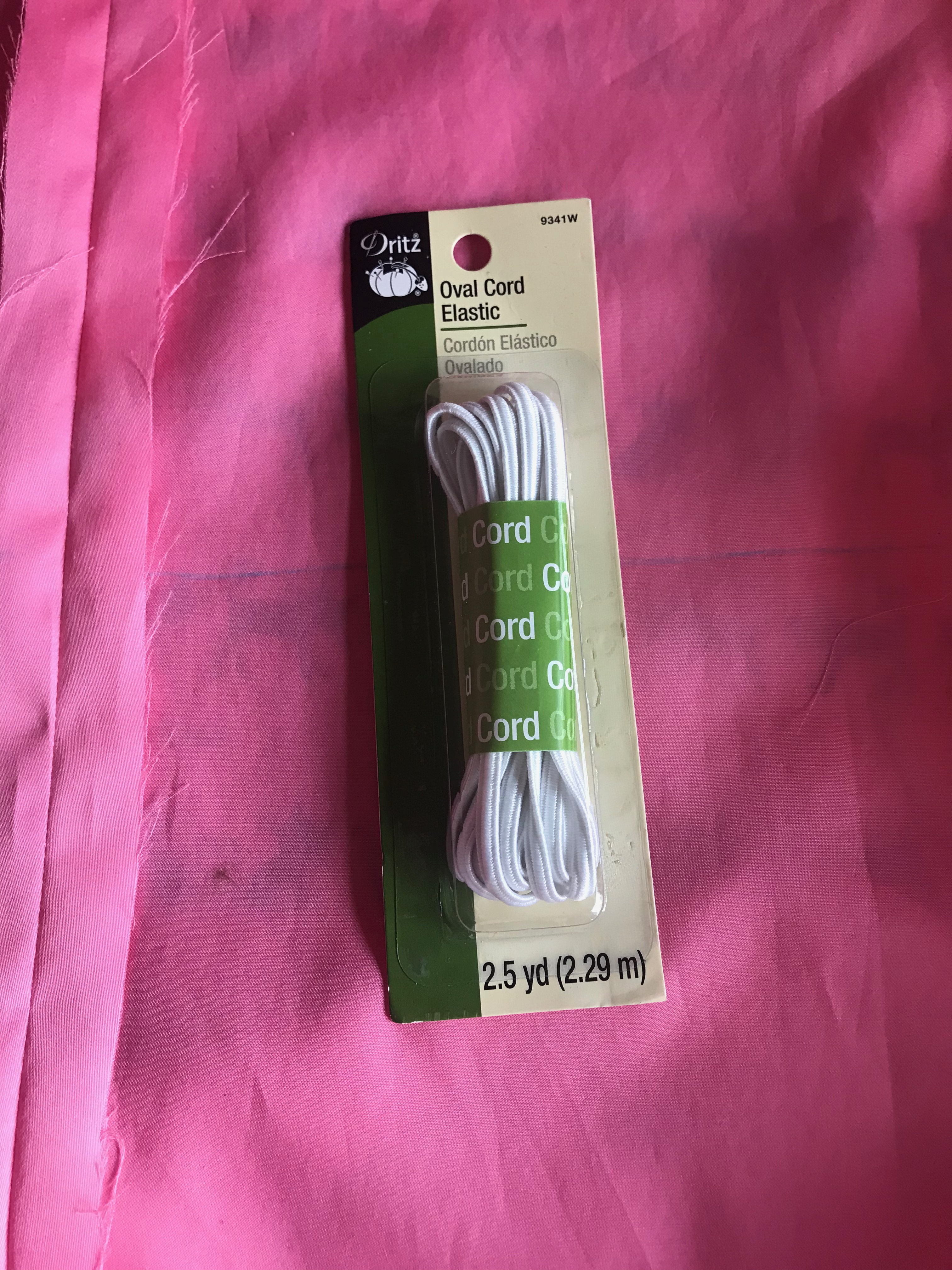
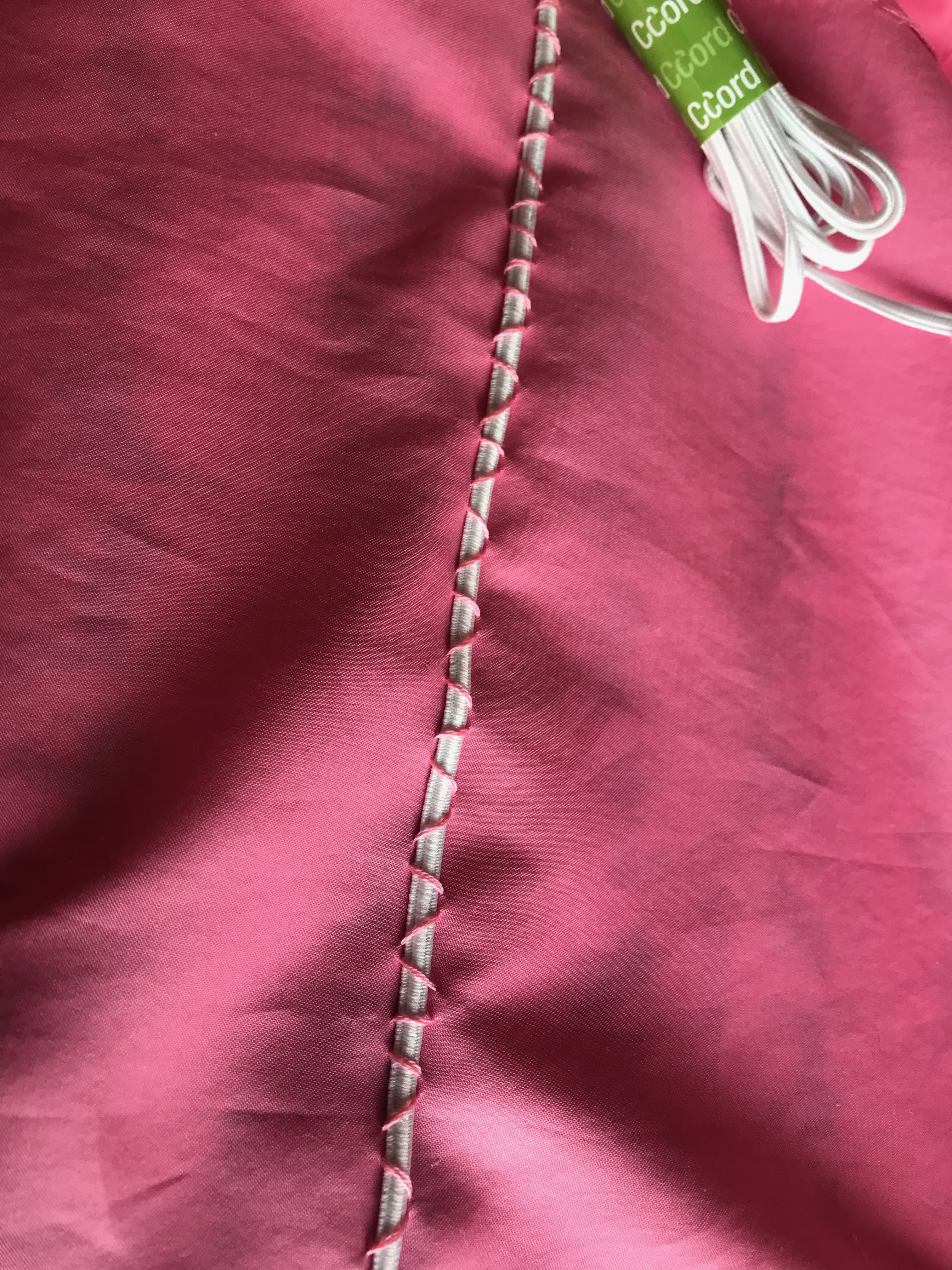
In addition to these alterations, I had a slight construction change.  The instructions for the  gathering of the lining at the back waistline called for using elastic thread.  First of all, I didn’t have any elastic thread, nor did I think it would give the look I wanted even though it would not be very apparent on a lining.  Instead, I had some elastic cord, and I attached it by hand, using embroidery floss in a criss-cross stitch enclosing it the width of the back.  Worked like a charm, and I like the effect it made.

This is the wrong side of the lining, showing the criss cross I achieved with embroidery floss.
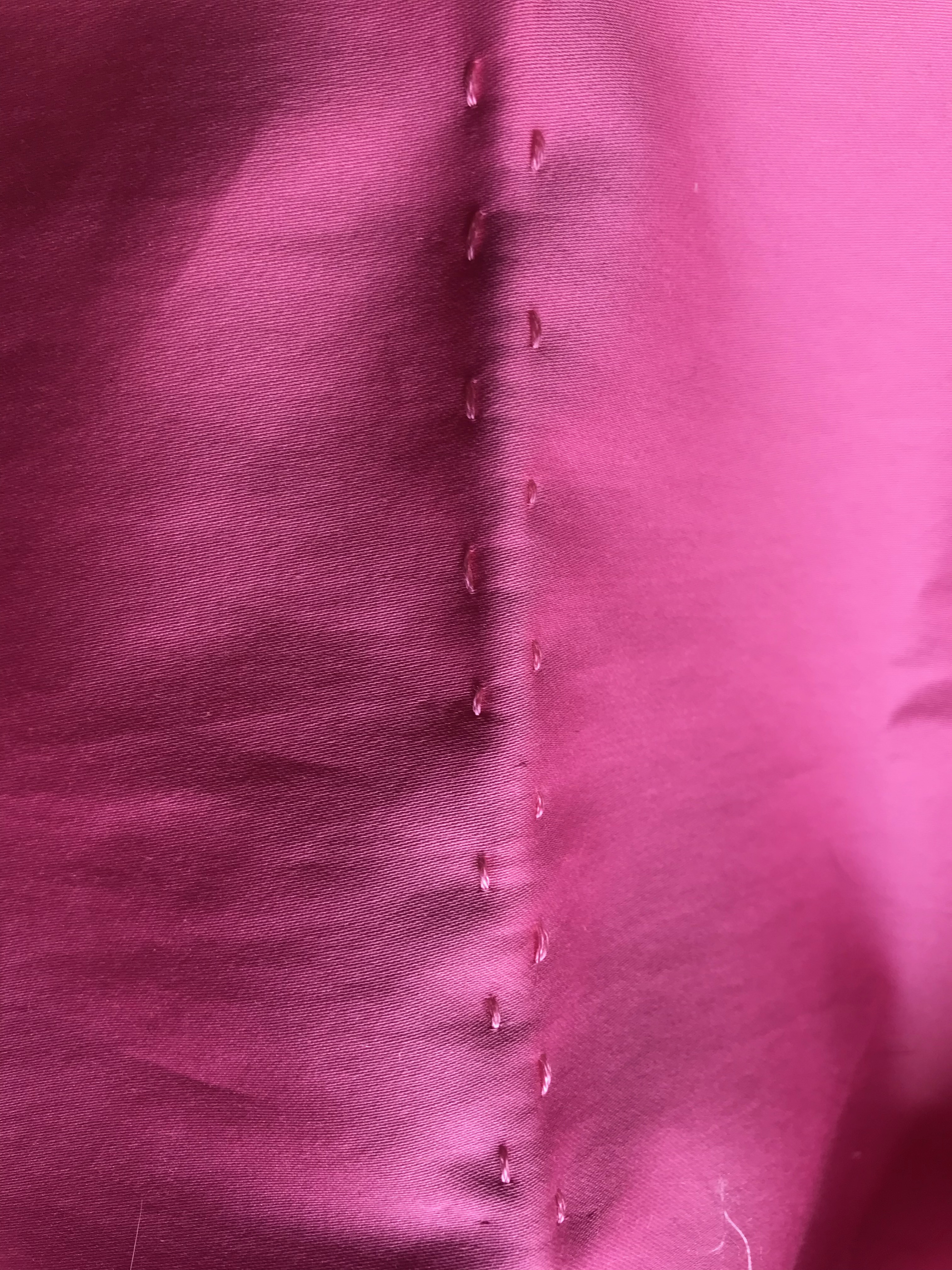
And here is what it looks like on the right side of the lining. The lining gathers beautifully with this thread channel for the elastic cord, as is apparent in the image below.

Once I had the coat partially assembled, I decided I would have liked it to be a bit longer than I planned with the muslin.  I was very tight with fabric, so I really could not have cut it longer and still been able to get the coat out of the fabric I had.  So, to gain another inch and a half, I decided to face the hem right to the point where the lining would be attached.    It certainly took extra effort, but I’m glad I did it as I much prefer the slightly longer length.  

The one thing I would change should I ever make this coat again (which I doubt) would be to add about an inch or so to the diameter of the cuffs.  I would like to keep them buttoned and be able to slip my hands through them.  As they are, they are too tight to do that.  This was something I could have determined had I made a muslin/toile with completed sleeves, which I did not.  All I did was check the length.  A good reminder to me to be more thorough in situations like this.  

When I was planning this coat, I intended to use this vintage silk fabric for the lining.

However, even though I underlined the fashion fabric with white cotton batiste, I felt there was a slight “see-through” of the black details in the print of the intended fabric.  In the meantime, I had ordered a piece of polished cotton in “Paris Pink” from Emma One Sock Fabrics.  Although not an exact match, the two fabrics – the pink checked taffeta and the polished cotton – made a pretty pair so I changed course, and the rest is history.

I am quite happy with this pink lining!

No report on this coat would be complete without mention of the buttons. Again, I went with vintage mother-of-pearl buttons. These have a carved detail in them, which I thought would pair nicely with the gingham.

I chose to do machine buttonholes on this silk coat.

This was an involved, lengthy project.  I was rather in awe of my 24-year-old self for attempting it “back in the day.”  But making it again brought back hidden memories (good ones) and new appreciation for all that I have learned over the ensuing years.  Wearing my new version of this Trench-inspired coat will, I believe, fall into the “nearly perfect“ category.  

44 Comments

Filed under Buttons - choosing the right ones, Christian Dior, Coats, couture construction, Dressmaker coats, Linings, Mid-Century style, Silk taffeta, Uncategorized, vintage buttons, vintage Vogue Designer patterns, vintage Vogue patterns from the 1970s

Tuesday is for Ironing

One might get the idea I love to iron should they take stock of how many cotton blouses I have made over the past few years. Now I do love a crisp cotton blouse, and I find them to be imminently wearable, neat and tidy, and versatile.  So I keep making them.  But do I love to iron?  Not really, although it is not my most dreaded household chore.  (I think that might be grocery shopping – or more precisely, lugging everything home and putting it all away.  I don’t like that.)  

Even wearing a pretty blouse, like this – my most recent make, to the grocery store doesn’t make that chore more bearable!

One advantage to having lots and lots of cotton blouses is that the ironing can pile up, yet I will still have blouses to go to in my closet, so there’s that.  I think – no, I know – another reason I keep making casual cotton blouses is that I love to sew with beautiful quality cotton (of course Liberty comes to mind!) The selection of quality cotton prints, checks, plaids, stripes, and solids available online is astoundingly diverse, making the temptation great to make “just one more blouse.”

And then there are the buttons. If you follow my sewing life through this blog, you know my fascination with and pursuit of vintage buttons to use on my blouses and other projects.  Yes, a white plastic button can perform the same function, but a beautiful pearl button adds a touch of class to a simple blouse like no other detail can.  

A simple pearl button, circa 1960, BGE Originals, “First in Fashions”

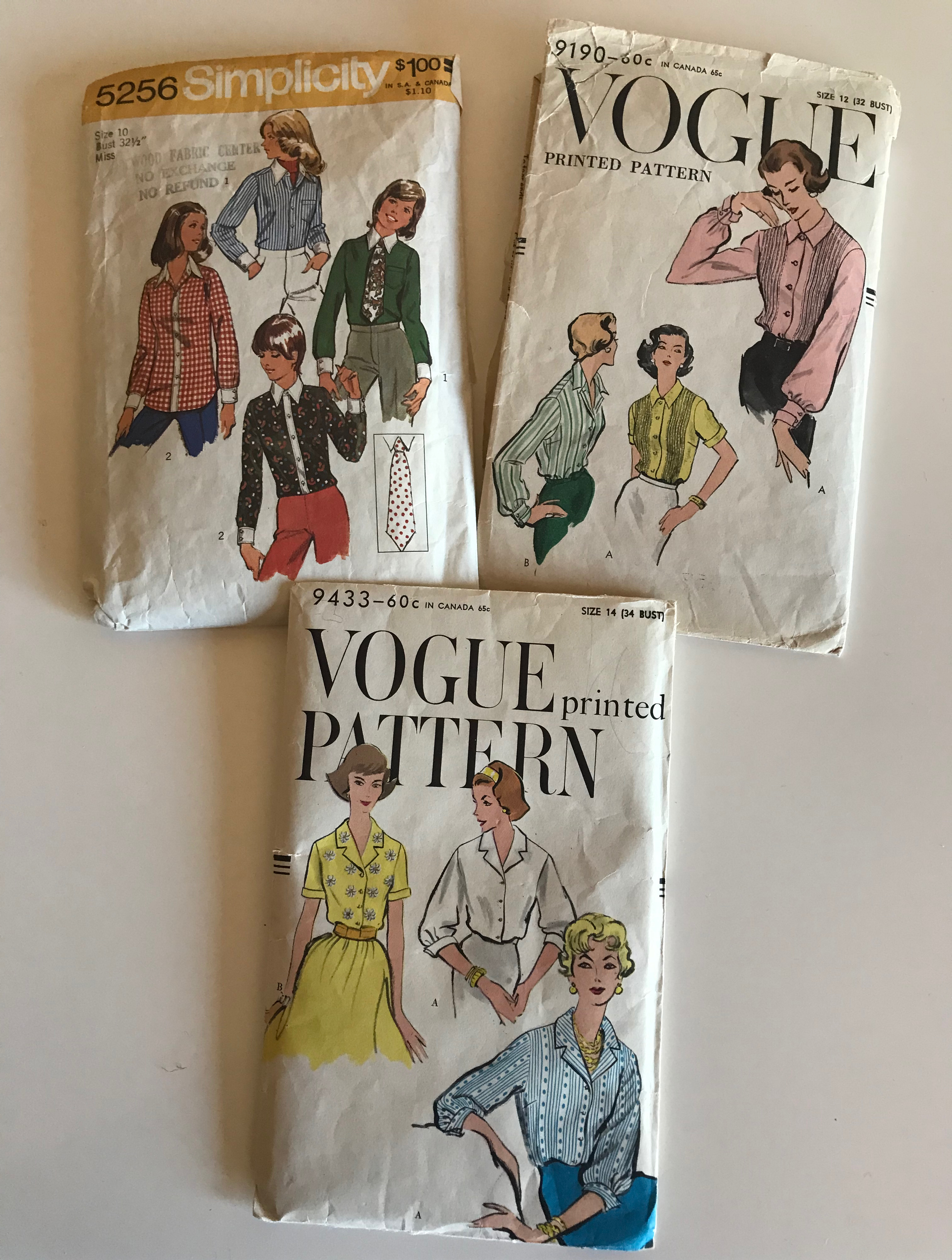
It also helps that I have a set of blouse patterns which fit well due to many alterations and tweaking over several years’ use.  It is a lovely feeling to start a new project, knowing I don’t have to fit the pattern and make a muslin before I can get started on the fashion fabric.  

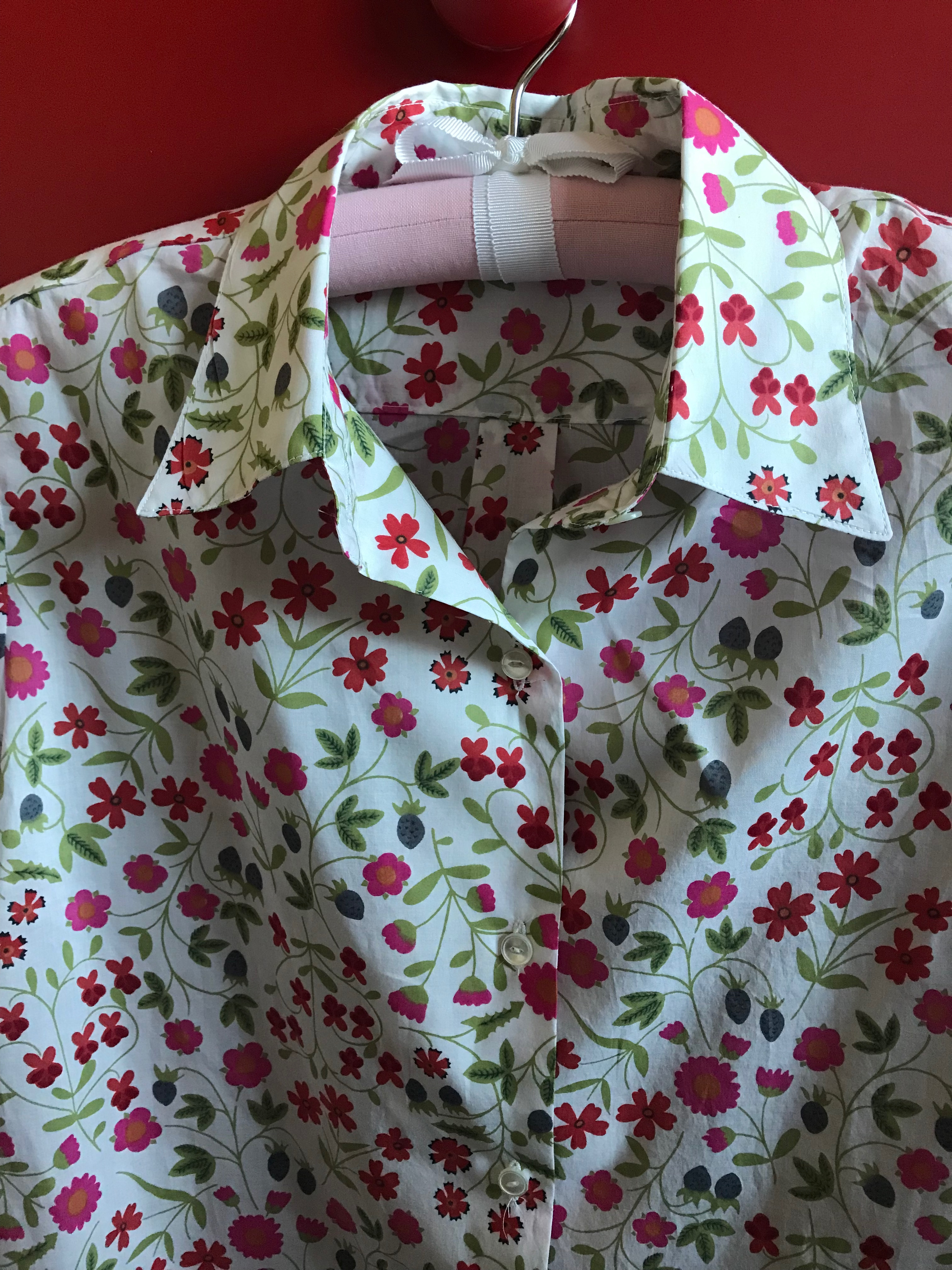
Three of my favorite blouse patterns, for which I have fitted muslins.
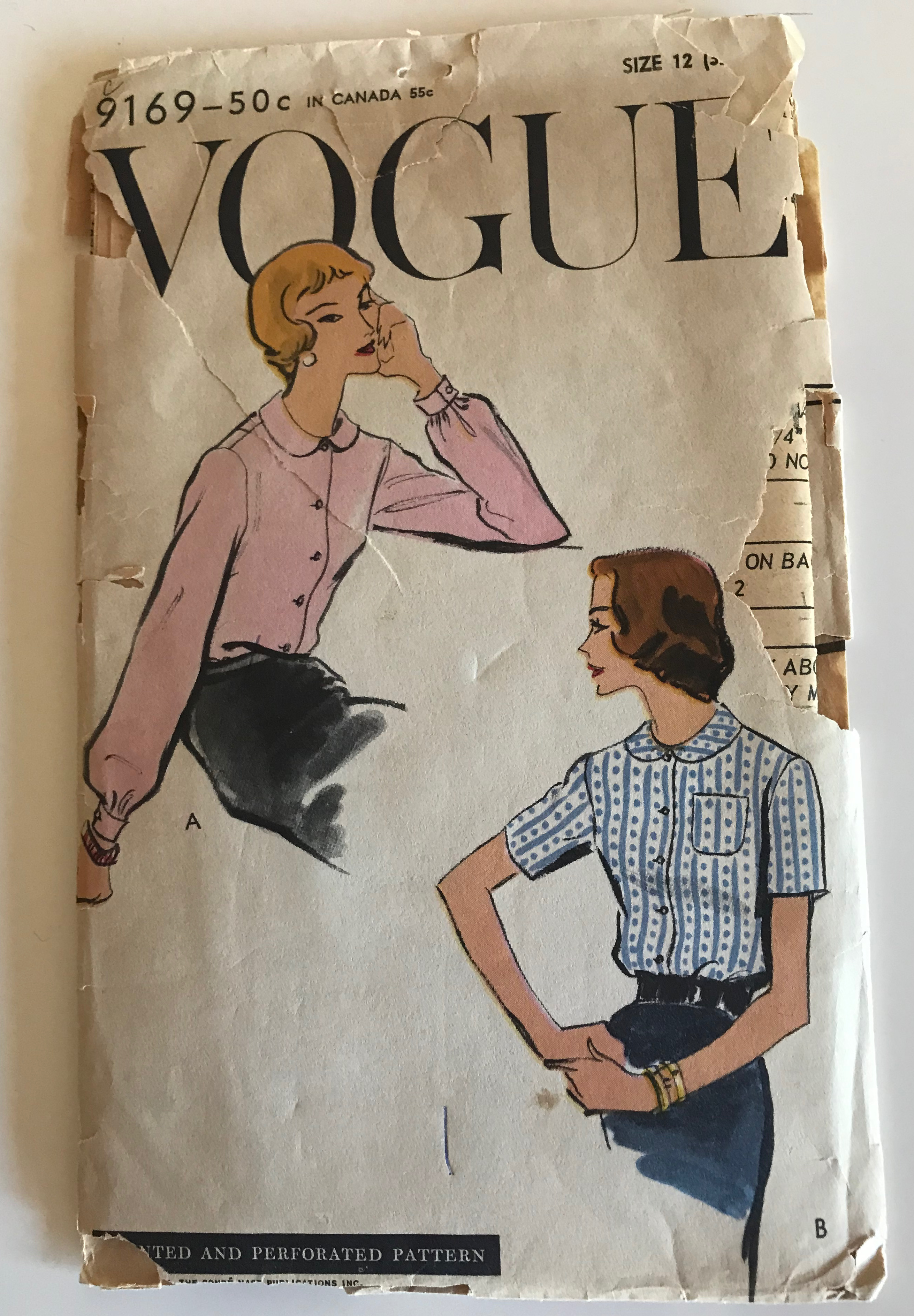
And one which I feel sure will become a favorite once I make and fit a muslin for it! View A is a classic look and the sleeves are so elegant.

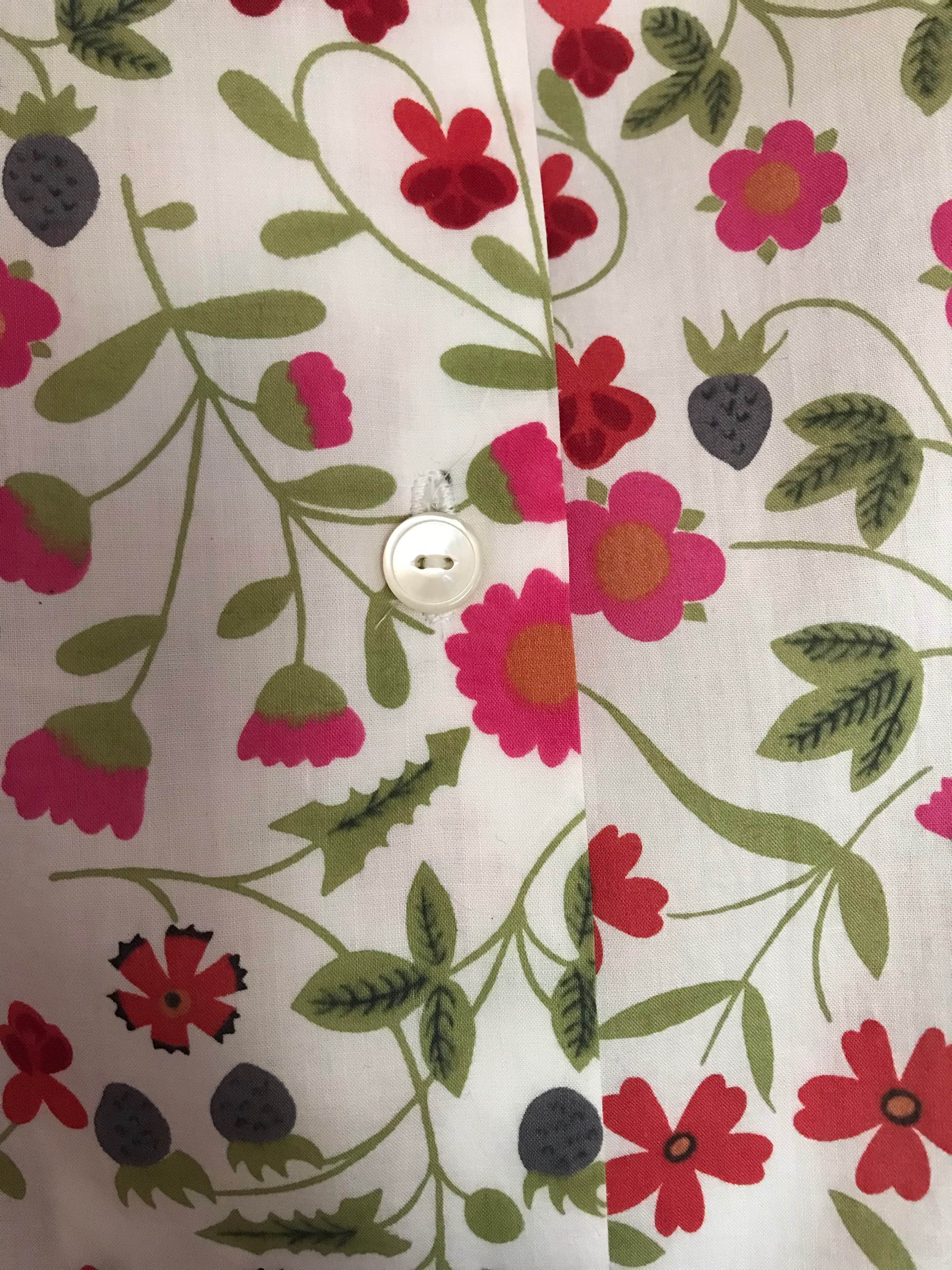
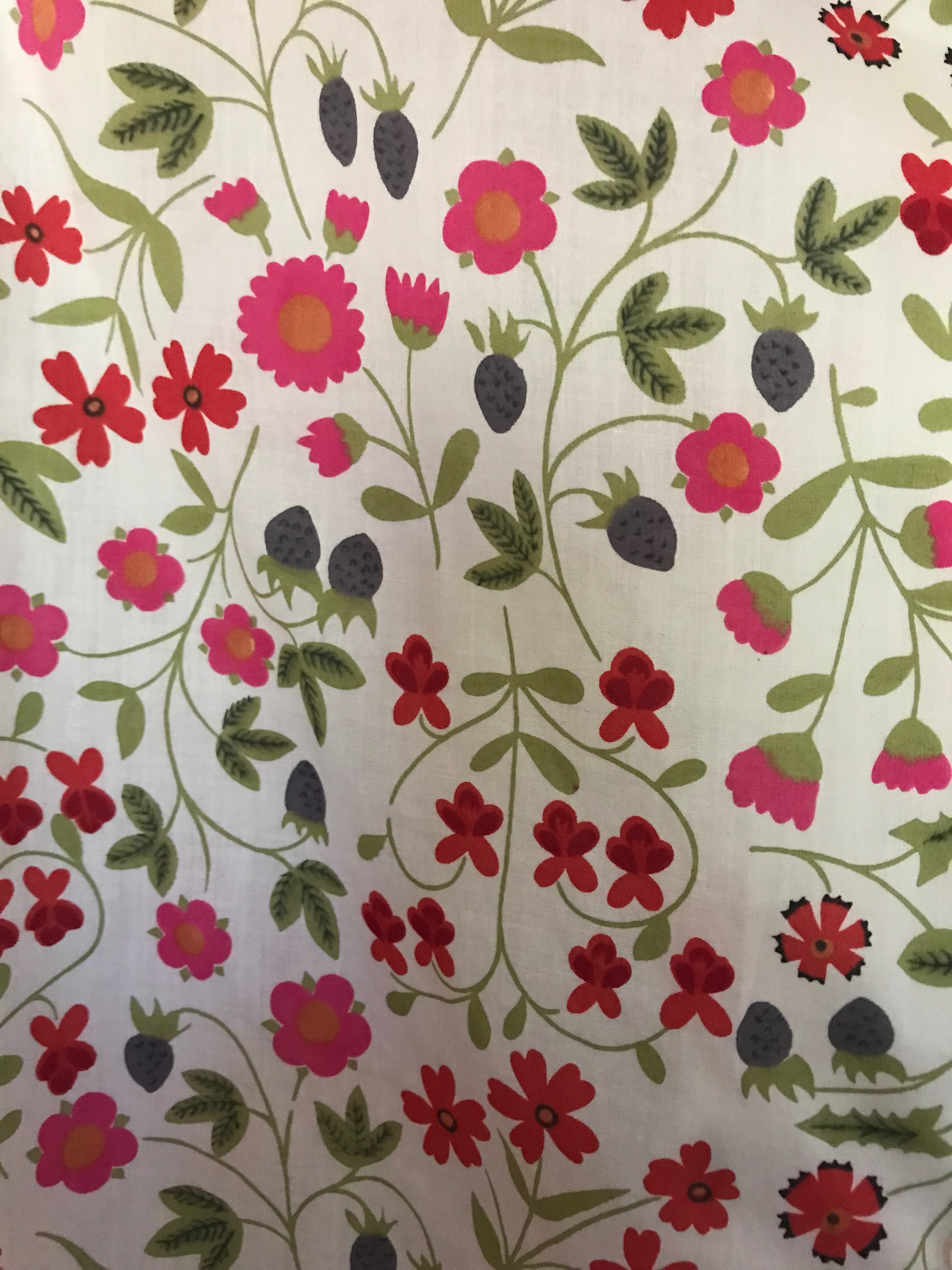
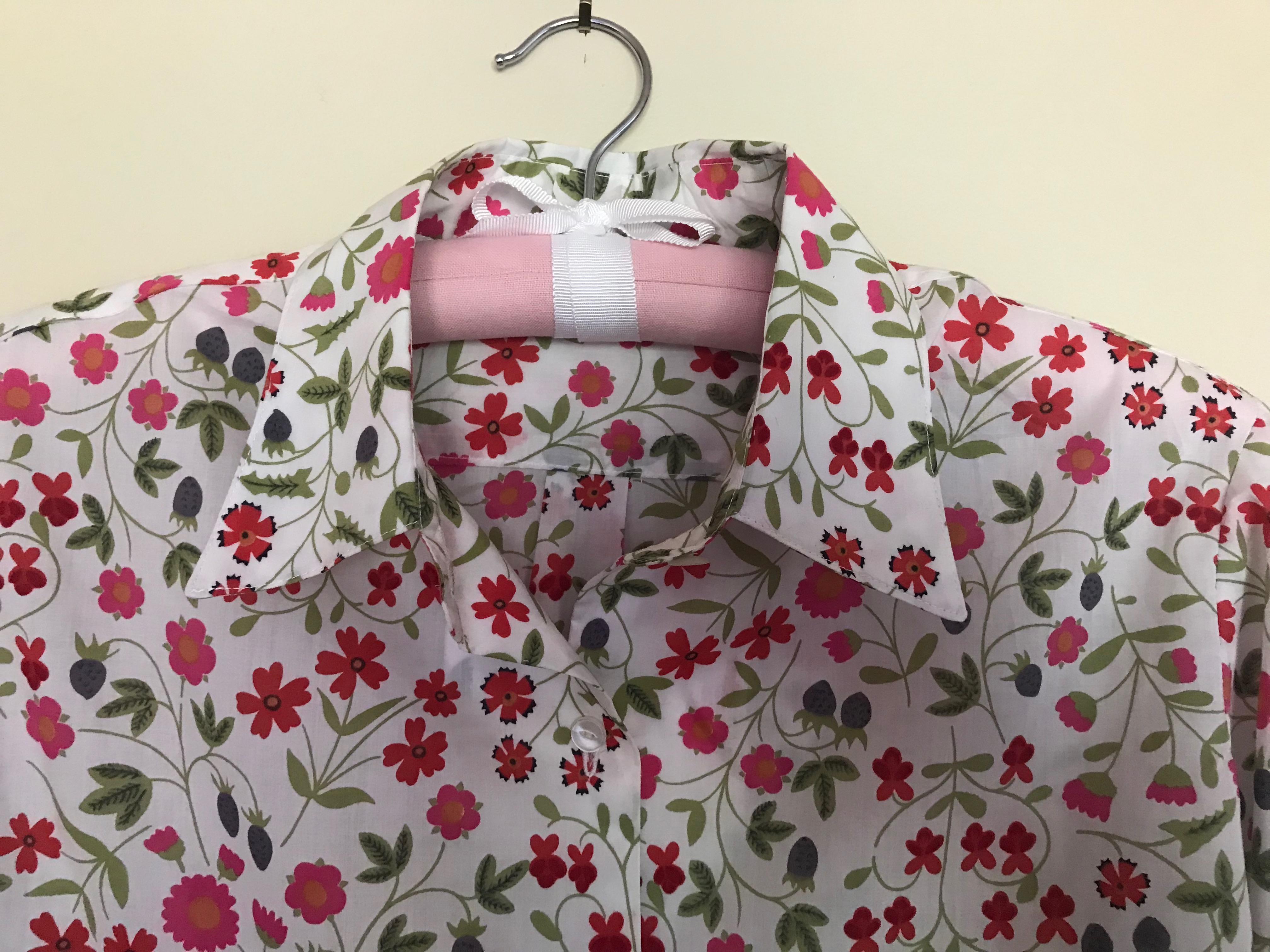
I had been eyeing this Liberty cotton lawn on the Farmhouse Fabrics website for quite a while when I decided last Spring to go ahead and indulge.  Having a floral among my blouse selections is something just a bit different for me, as I already have numerous ginghams, plaids, and stripes.  

Liberty Lawn is lovely to sew and lovely to wear.
These colors make me happy.

So – is Tuesday really for ironing?  There used to be a proscribed schedule for all those household chores – and it went like this:

Monday: Wash Day

Tuesday:  Ironing Day 

Wednesday:  Sewing Day

Thursday:  Market Day

Friday:  Cleaning Day

Saturday:  Baking Day

Sunday:  Day of Rest

Well, times have changed. Now, every day is Sewing Day.

16 Comments

Filed under Blouse patterns from the 1950's, Blouses, Buttons - choosing the right ones, Liberty cotton, Mid-Century style, Uncategorized, vintage buttons, vintage Vogue patterns from the 1950s, vintage Vogue patterns from the 1970s, Vogue patterns

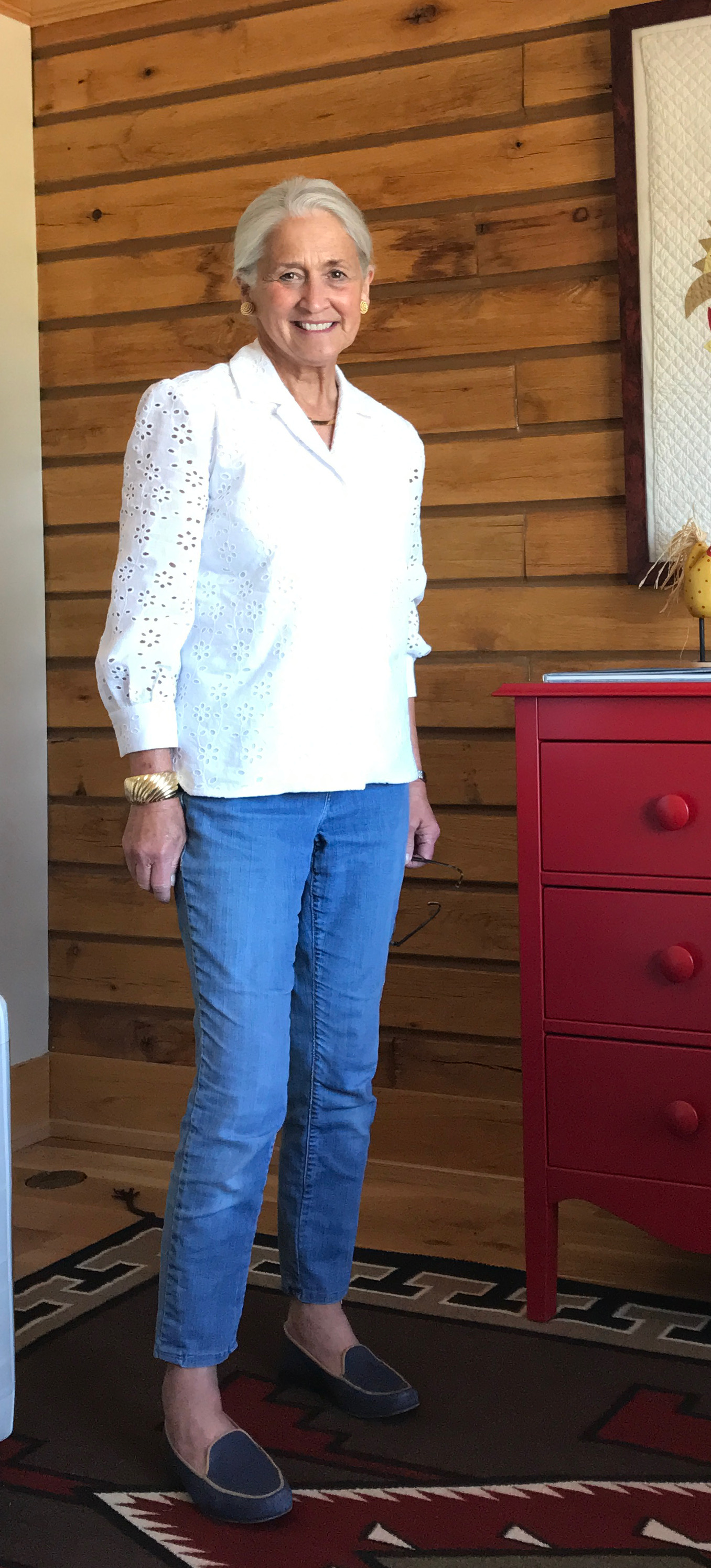
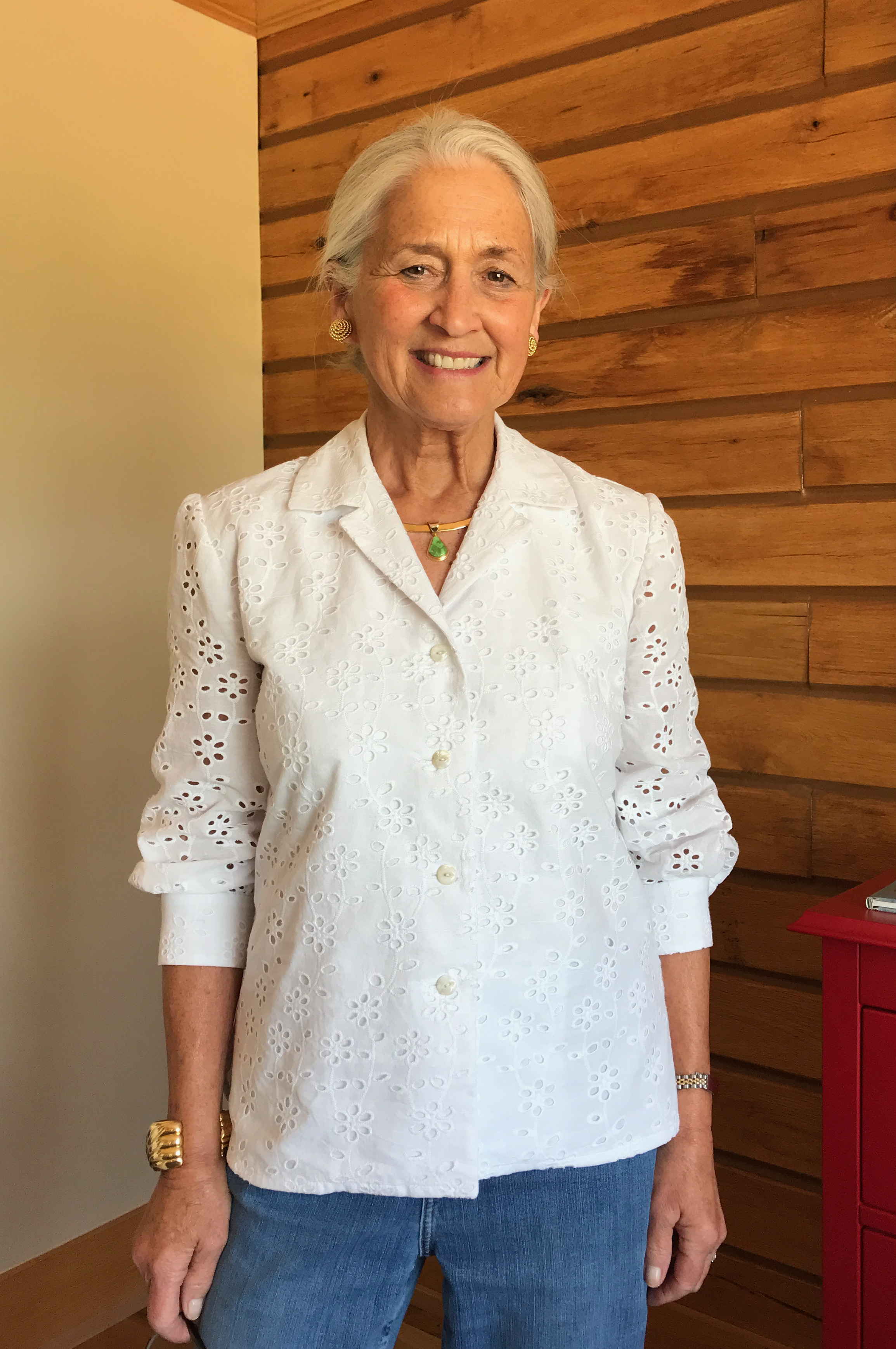
A White Eyelet Blouse

Eyelet is one of those fabrics which can conjure up memories from one’s life.  So often associated with pinafores, eyelet is lovely for little girls’ dresses – and petticoats.  It is often used for lingerie or sleepwear for all ages, as well as dresses and blouses.  It is a summer fabric, with its “built-in” air conditioning – ie. all those little holes surrounded by embroidery.    Often eyelet trim – and sometimes eyelet yard goods – have one or two finished borders.  Such was the case with the eyelet I found earlier this year for the ruffled collars for sundresses for my granddaughters.  

This lace was a 14″ wide double scallop-edged panel, which I cut down the middle to use for the two collars.

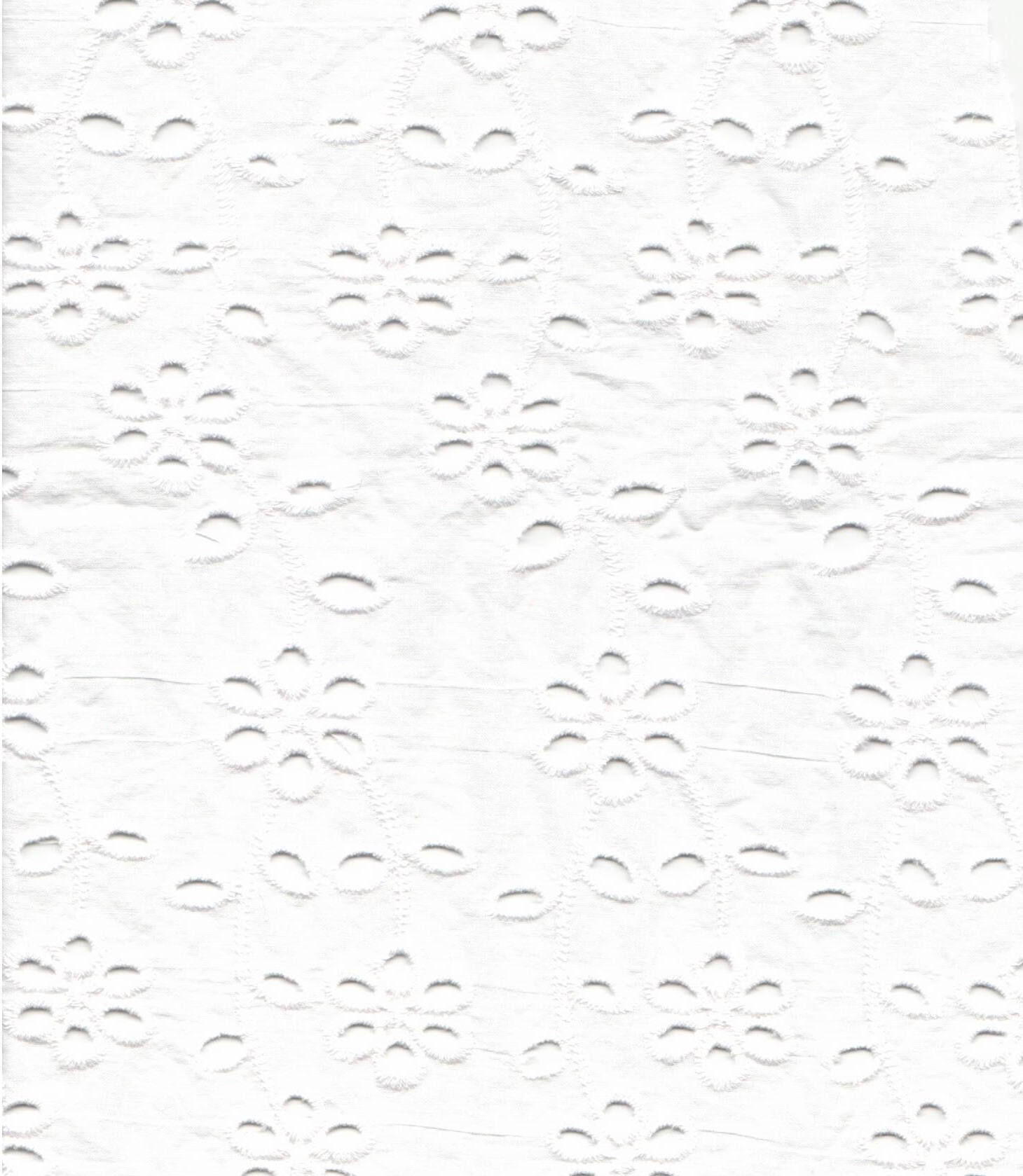
It was working on those collars which convinced me I needed to make an eyelet bouse for myself.  I went back to Farmhouse Fabrics, from which I had purchased the double-sided eyelet panel for those collars, to find a suitable eyelet for a blouse.  Farmhouse Fabrics has quite an inventory of lovely eyelets, so it was difficult to decide.  But decide I did, and purchased this all-cotton eyelet made in Spain.  

I liked the meandering motif in this design.

For a pattern I used this vintage Vogue pattern from 1957.

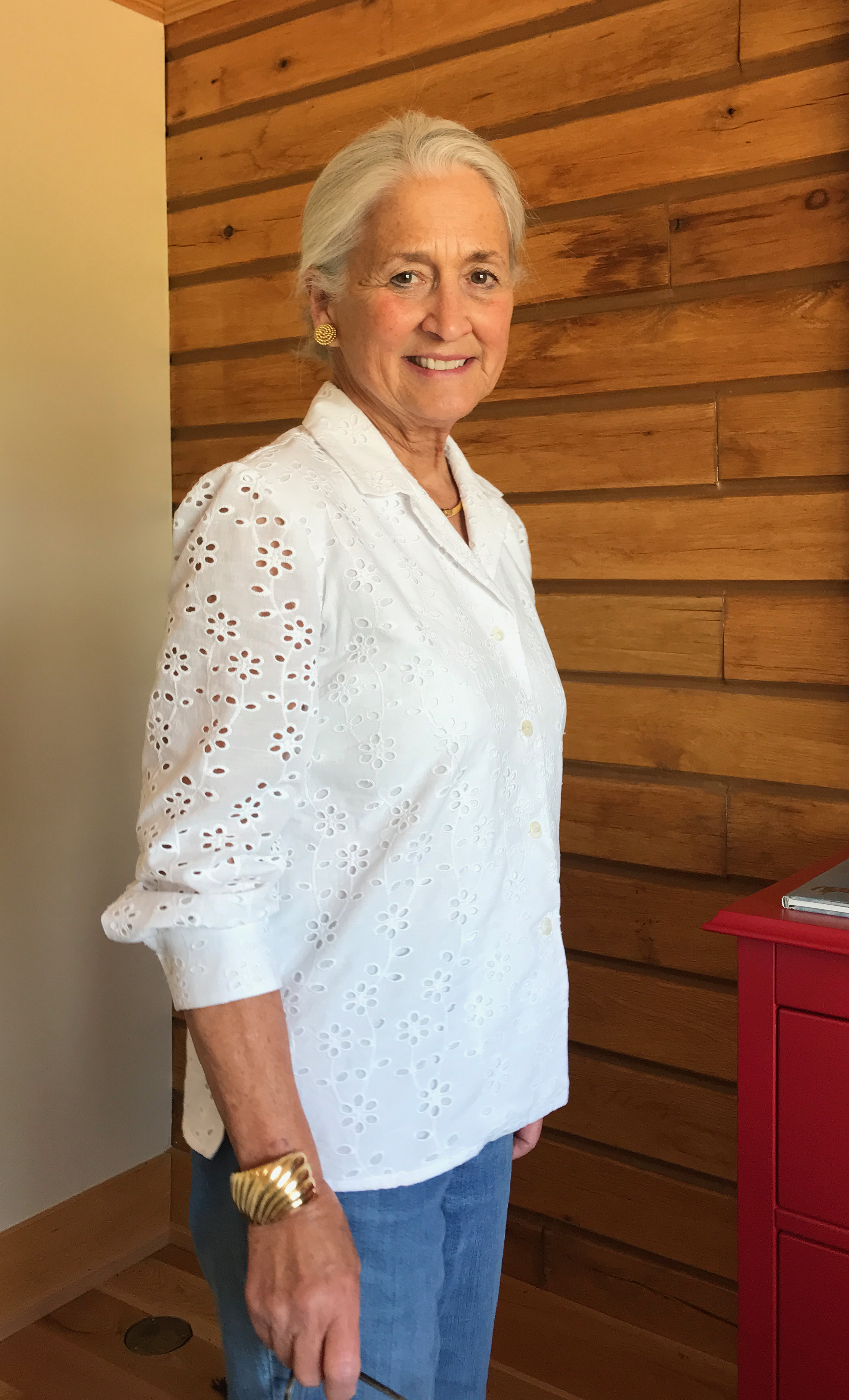
I liked the convertible collar of this pattern, as shown in View B. A convertible collar is one which can be worn open or closed. The collar is sewn directly to the neckline.  I did, however, shorten the sleeves to below elbow-length.  I also chose to make plain, buttoned cuffs without the extra turn-back detail.  

Although the blouse is described on the pattern envelope as “tuck-in,” I liked the gently curved and split hem which would also allow me to wear the blouse as an over-blouse.  The thumbnail detail from the pattern envelope shows the curved hem.  

I lined the main body of the blouse with white cotton batiste, leaving the sleeves unlined.  To reduce bulk, I made the undercollar and the cuff facings from the white batiste.

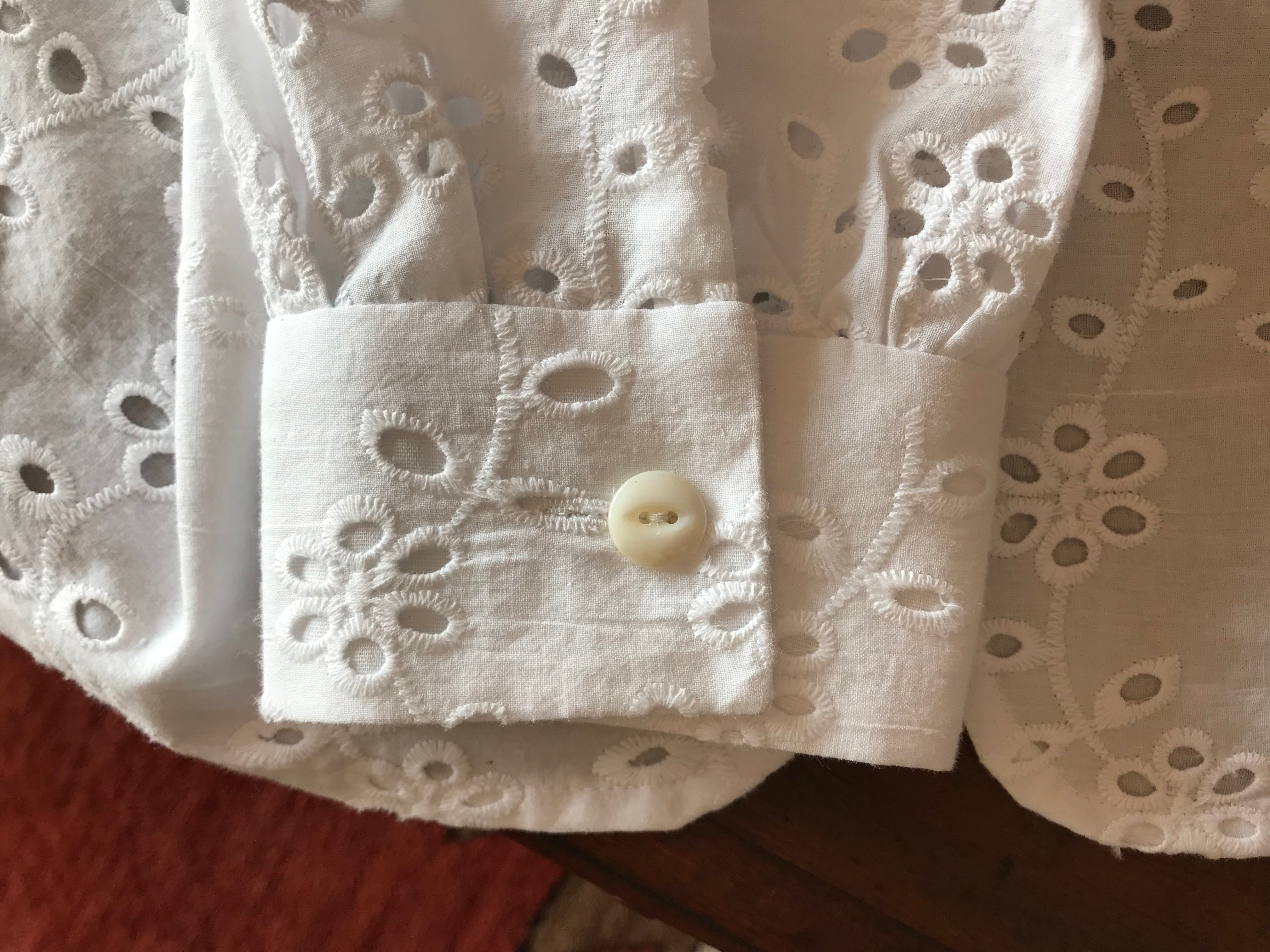
Buttons are always a favorite component of a blouse for me.  I had a card of vintage Lady Washington Pearls which seemed a lovely complement to the scale of the fabric embroidery.  

One button remaining!

I first wore this blouse on a very warm evening to attend an outdoor concert.  I was amazed at how cool the blouse was. The little breeze there was, did indeed feel like air-conditioning as it wafted through all those embroidered holes!

In my case, this collar is not “convertible” as I did not put a button and buttonhole at the neckline!
I made the cuffs with a bit more width than needed so I can push the sleeves up further if I want.
After I finished the blouse I went back and added two narrow fisheye darts to the back to make the fit a bit more streamlined.
I think this blouse might be a good pairing for the Liberty cotton skirt featured in my last post.

Finding beautiful eyelet fabric is now on my sewing radar.   I would like to make more with this timeless, feminine and versatile type of lace. 
26 Comments

Filed under Blouses, Buttons - choosing the right ones, Eyelet, Lace, Mid-Century style, Sleeves, Uncategorized, vintage buttons, vintage Vogue patterns from the 1950s