Tag Archives: fashion sewing

A Tale of Two Dresses, Part 2

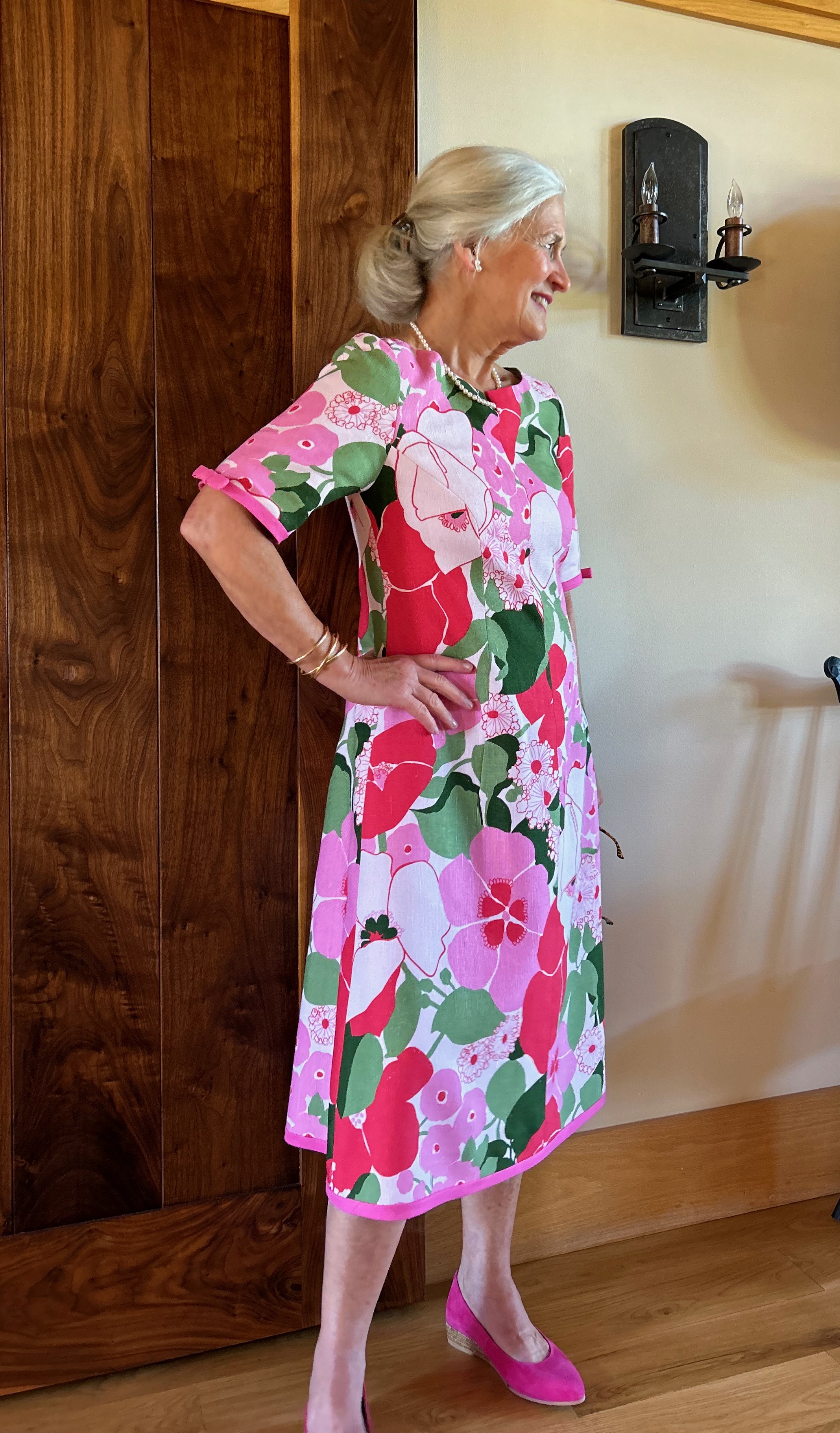
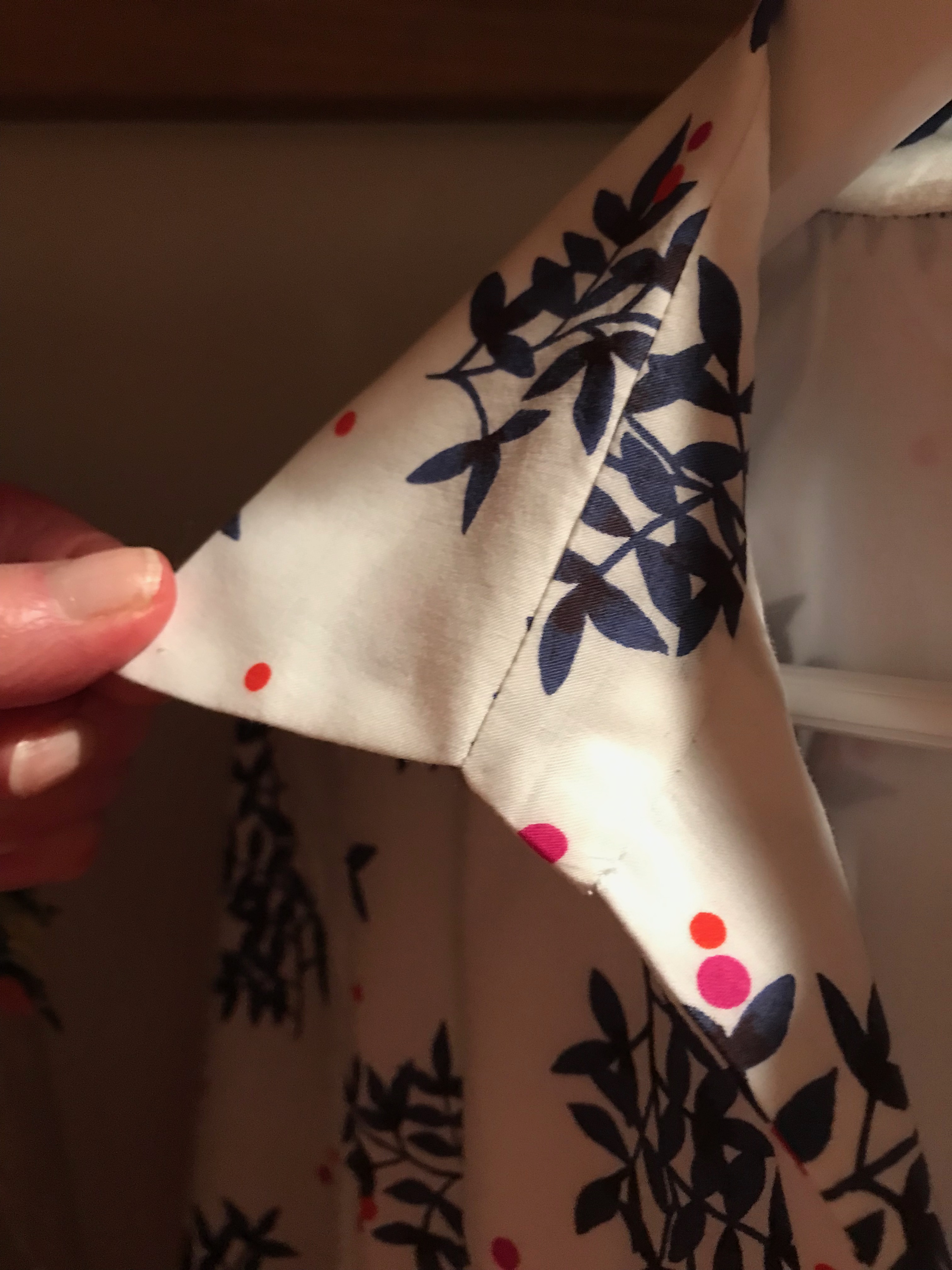
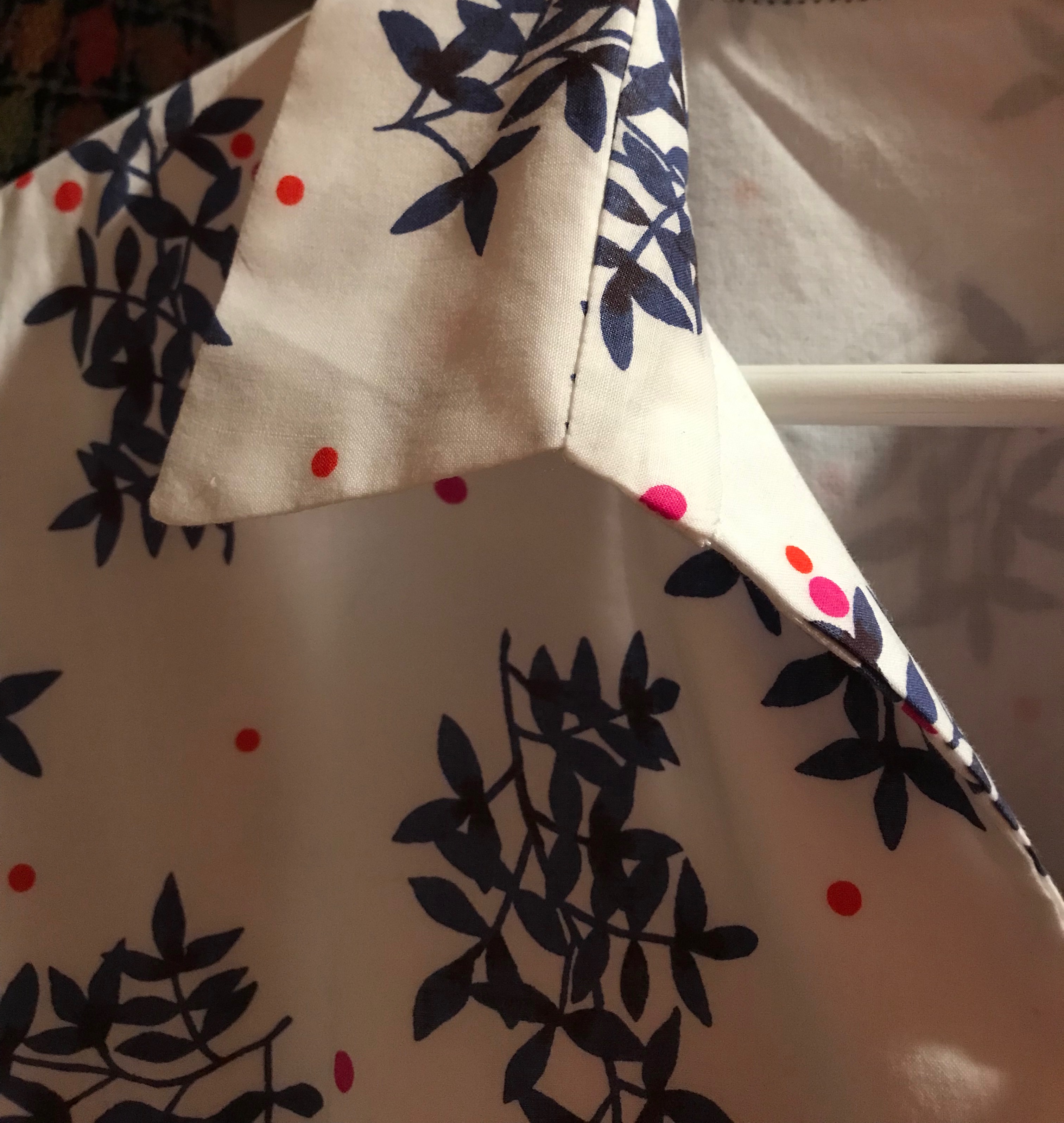
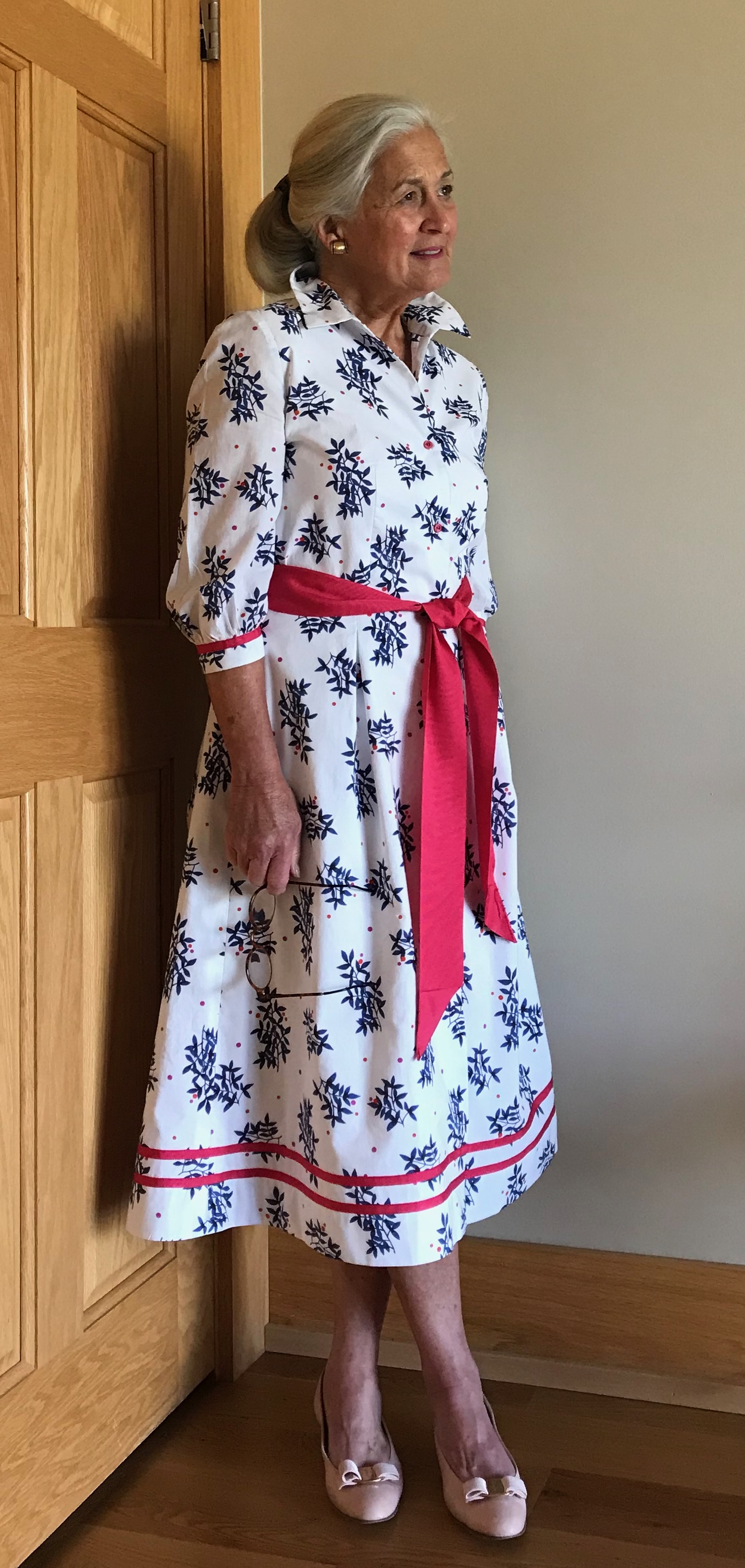
Whenever I am working with vintage fabric, it seems I either have more yardage than I need or, more frequently, less than I need.  I have learned over the years there is usually a way to work around having less fabric than I really need.  I just have to get creative.  And that’s what I did when I made this dress.
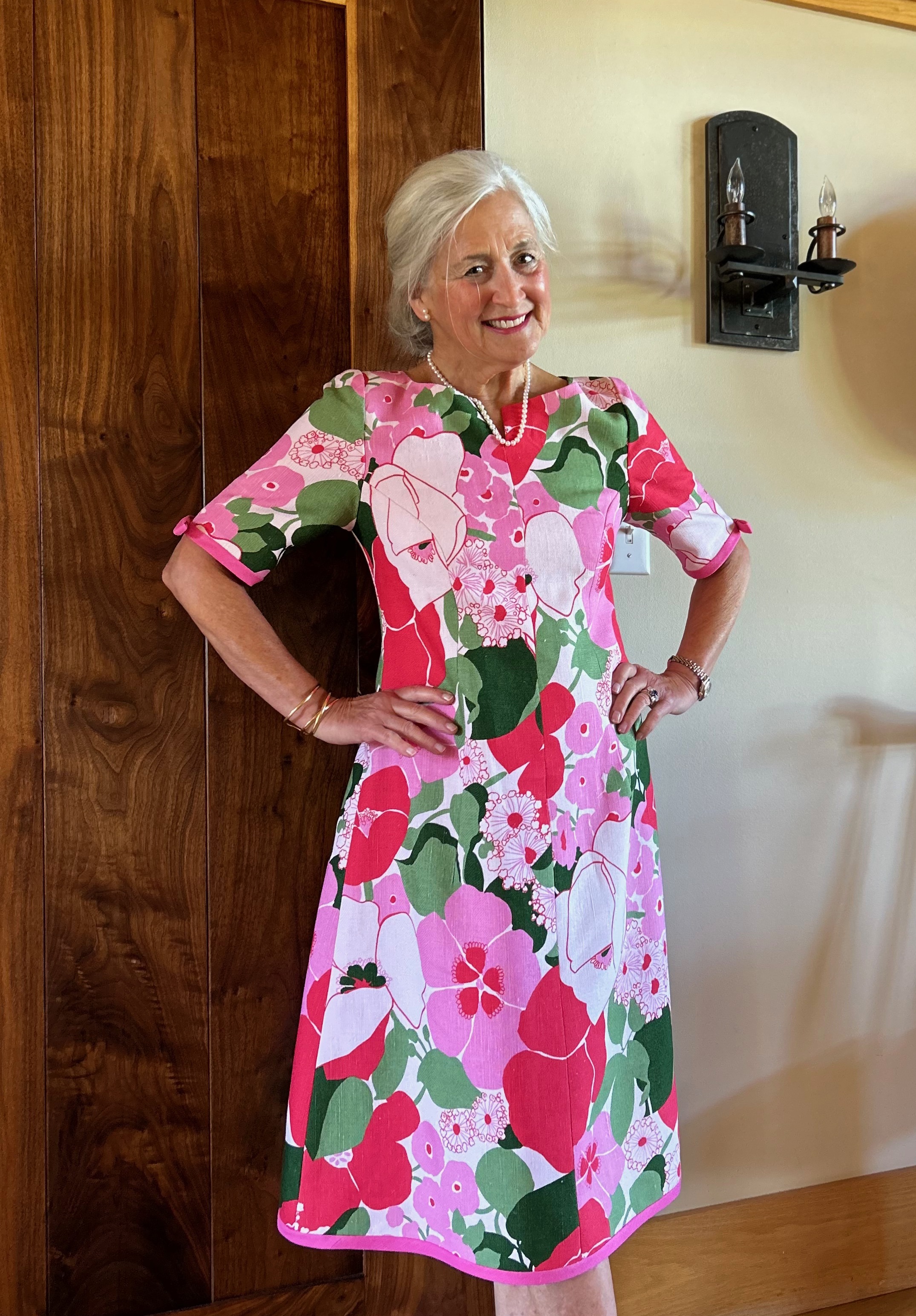
I quickly determined there was no way I could get the dress I wanted by placing the pattern on the lengthwise straight-of-grain.  The flare of the skirt, which I wanted to be mid-calf, precluded any notion of such a layout.  At 45” wide, I knew I could just get the dress length I wanted if I laid out the pattern on the cross-grain, from selvedge to selvedge.  Linen is a very stable fabric, so I was confident the cross-grain would work.  In addition, there were no directional limitations in the floral design of the fabric.  Barely fitting my pattern – from shoulder to hem – on the fabric from selvedge to selvedge, however, would leave no extra fabric to turn up for the hem – or even to face the hem.  I decided to worry about that later.  First I wanted to determine how I could get the four pieces for the dress and the two lengthened sleeves placed on the fabric, keeping in mind three important things:  1) although this was not a fabric to be matched per se, the all-over design of the fabric needed to be on the same plane in contiguous seams; 2) I wanted to space out the larger floral motifs so the dress would be balanced as best as possible (looking critically at the dress I made when I was 23, I clearly could have given this more thought!); and 3) I wanted to avoid large demonstrative blooms at the bust.  Then, and only then, would I worry about the hem.  
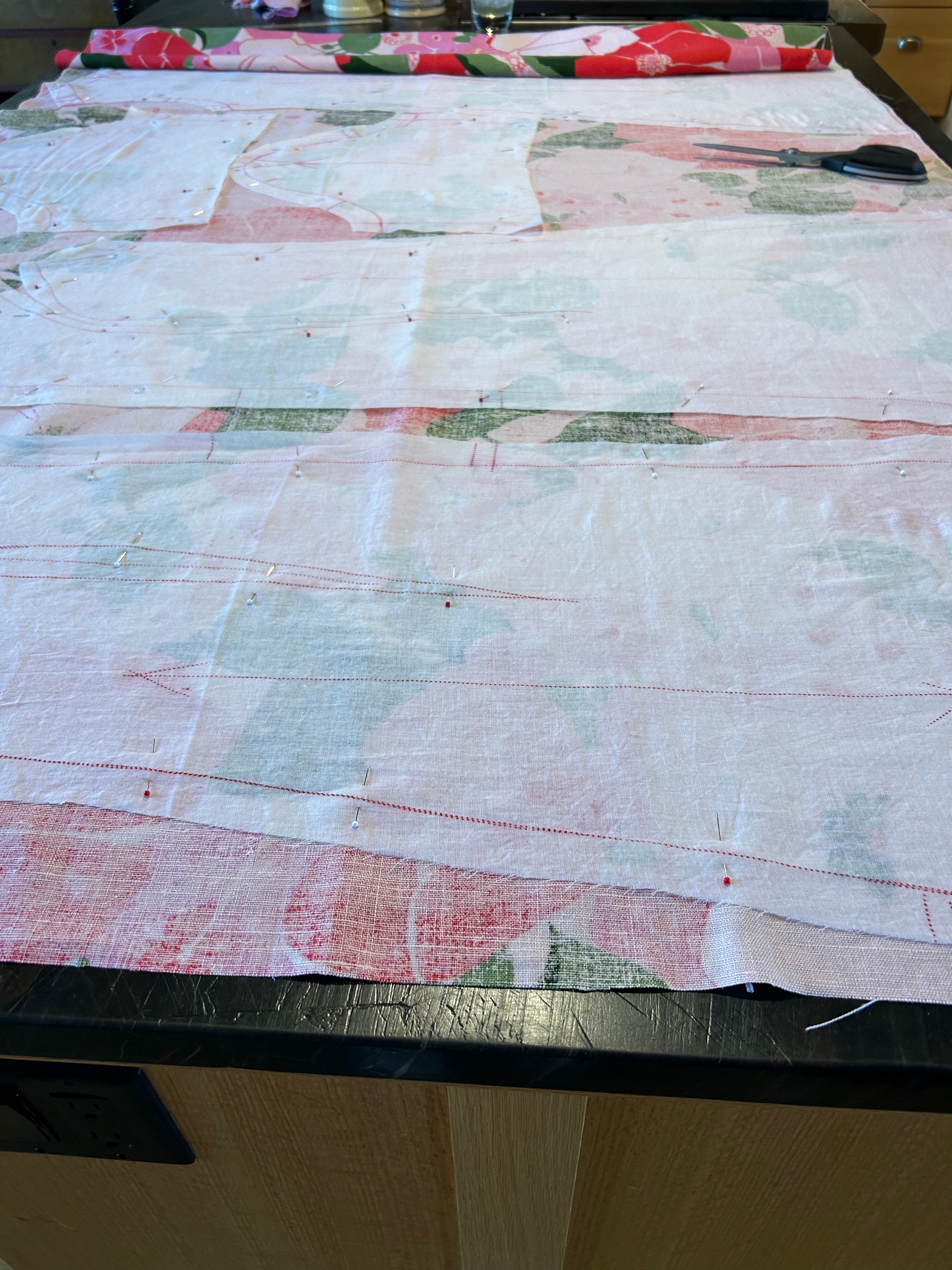
I transposed all the markings from my adjusted pattern onto the cotton batiste, then used those pieces as my pattern. I then basted the two layers together to be treated as one, before sewing any seams or darts.

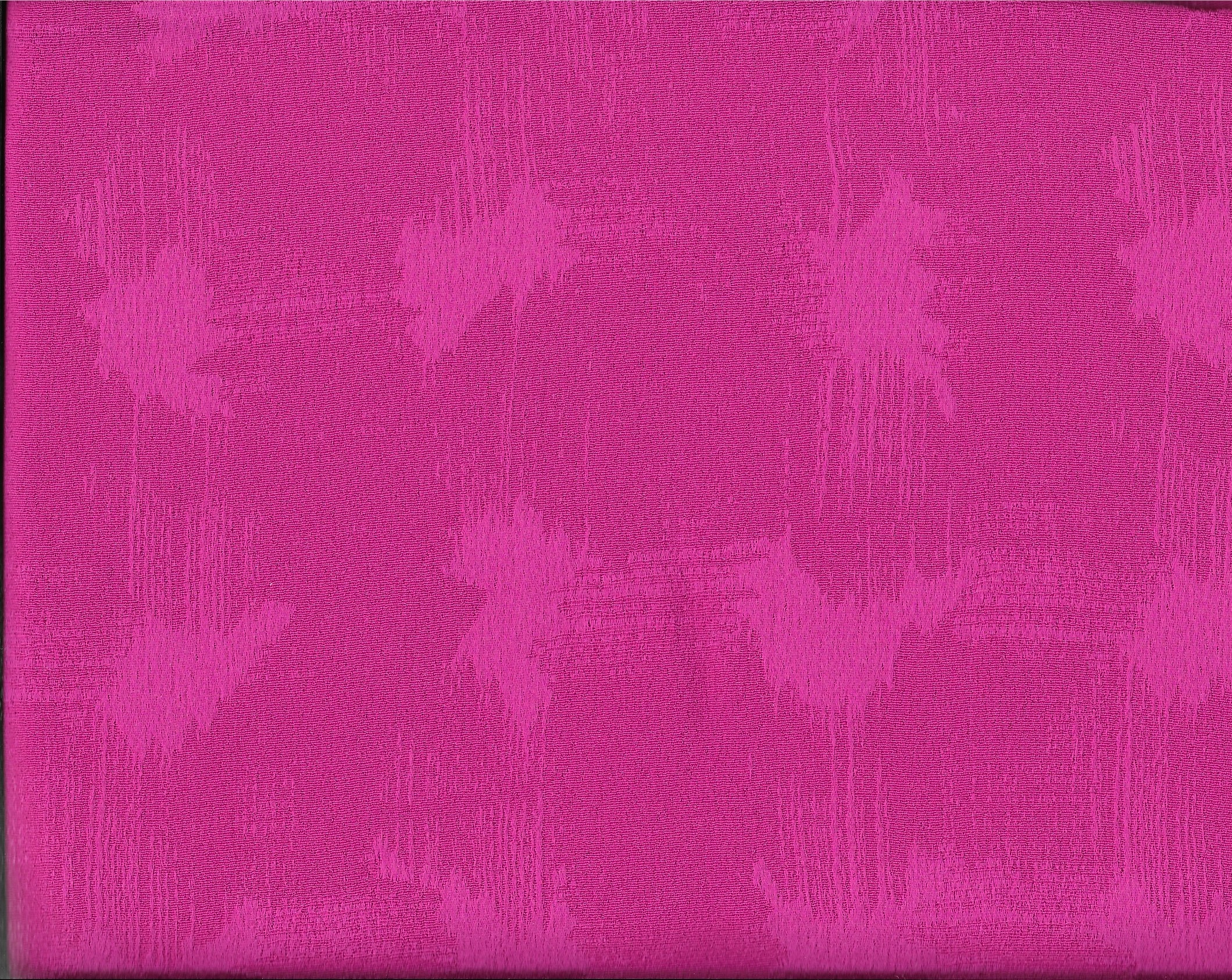
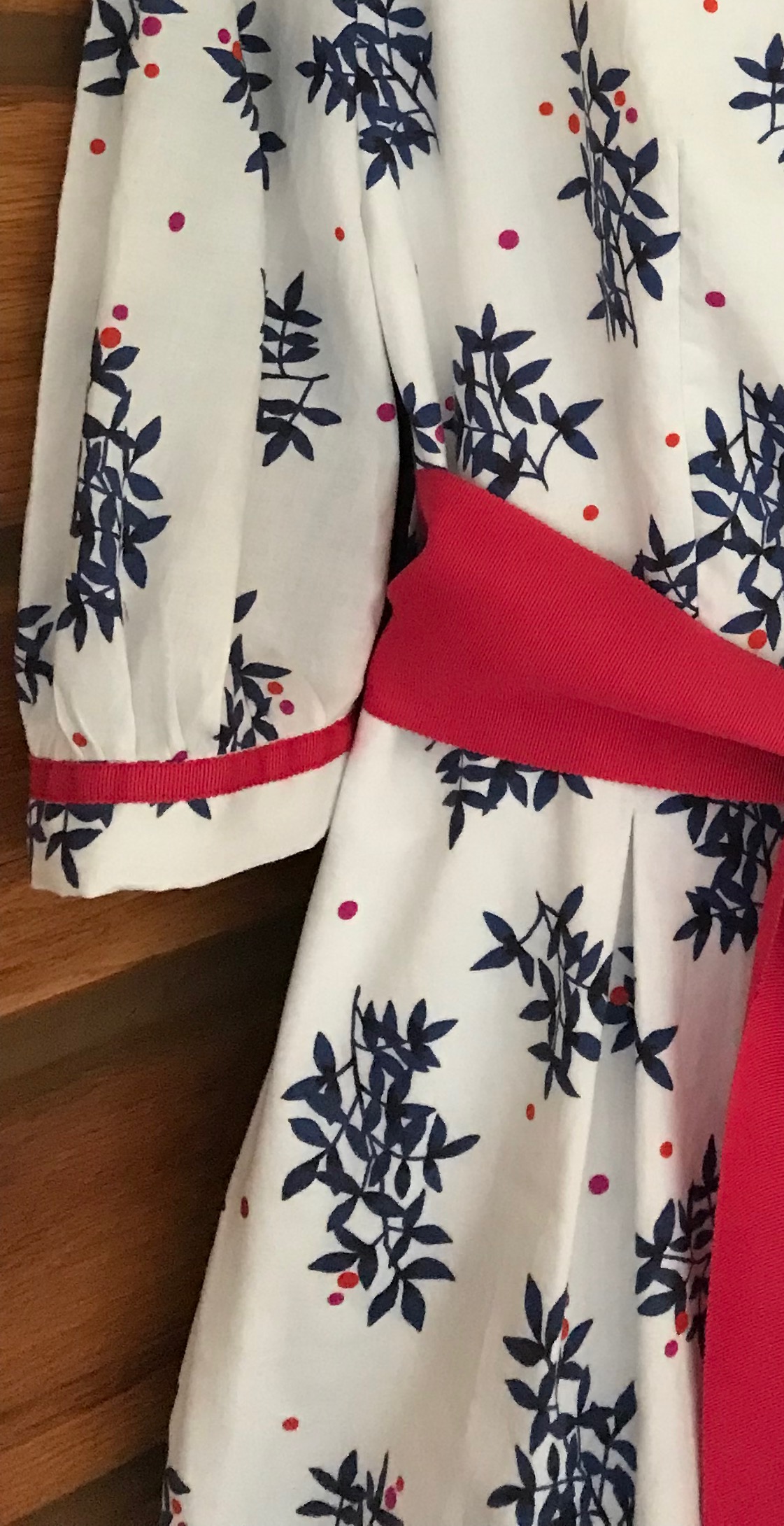
Once I was happy with this placement, I had a eureka moment when I knew I could accomplish two things with a simple bias trim made from the yardage of deep pink linen which coordinated nicely with the floral.  1) I could preserve the full 45” of cross-grain length by applying bias trim to the hem edge instead of turning it under, and I could do the same with the sleeves.  And 2) the trim would add interest to the dress, just as I had vaguely imagined.  (A quick aside here – I have ample yardage of the solid deep pink linen to make a coordinating coat at some point. Every dress needs a coat, right?) 

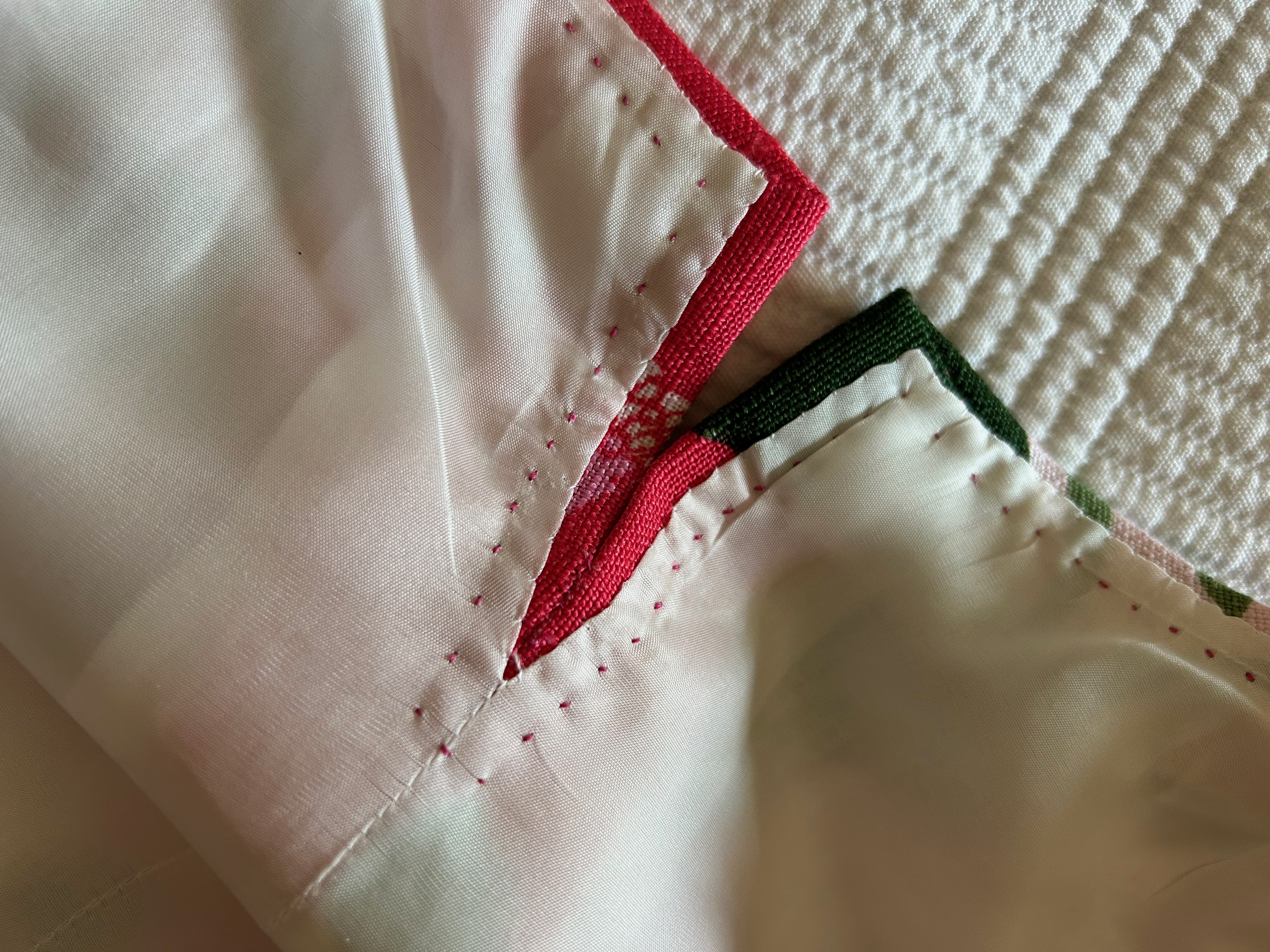
I underlined this dress in a very lightweight, pre-washed, cotton batiste, then I lined it in Bemberg rayon.  Moygashel linen washes beautifully, as does Bemberg lining, which is why I chose Bemberg over silk for this dress. I eliminated the neckline facing, choosing instead to bring the lining up to the edge of the neckline seam, then under-stitching it to secure that edge in place.  
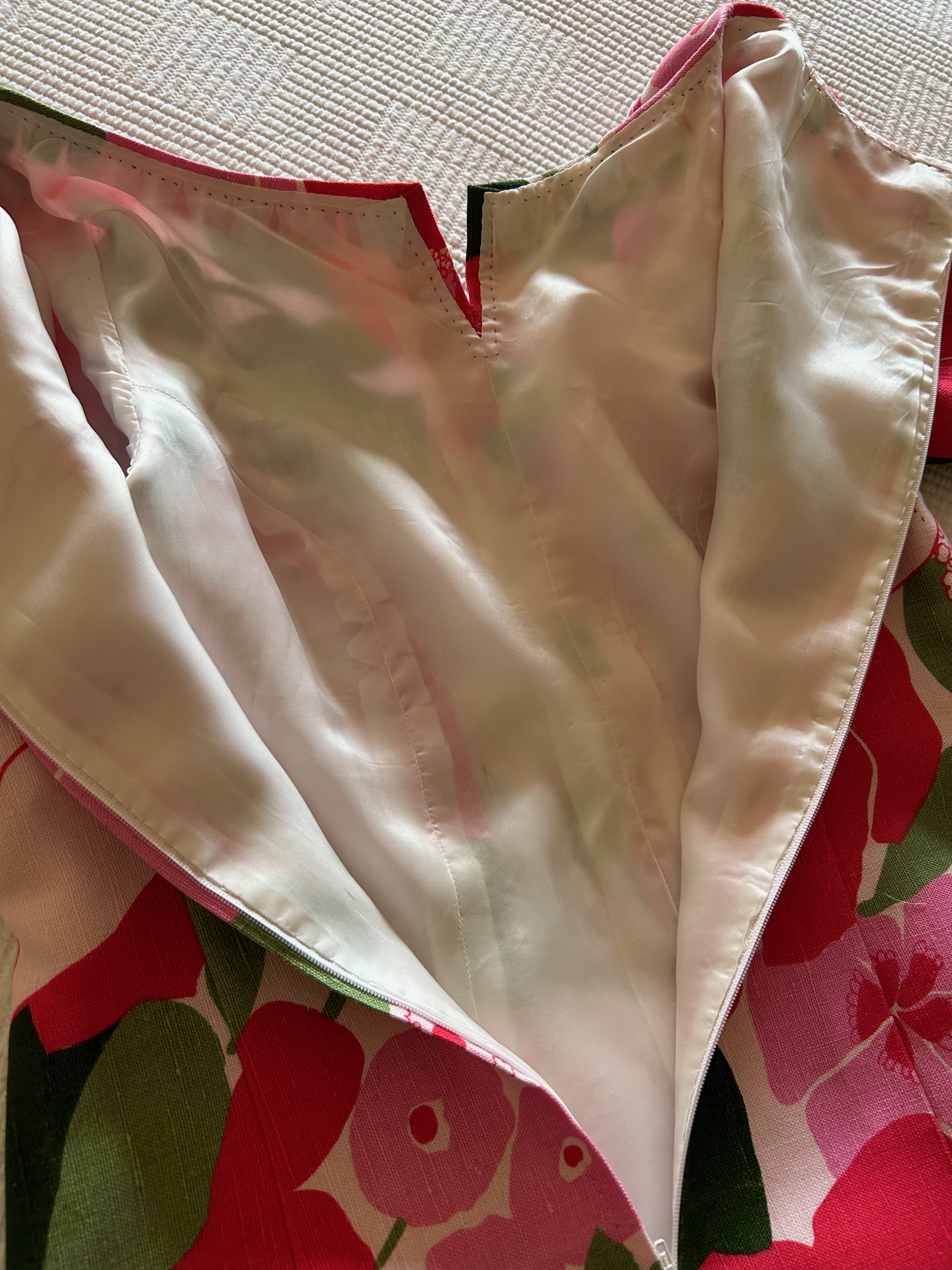
I chose to do a hand-picked, lapped zipper, an application which I think looks so lovely.  Interestingly, I hand-picked the zipper in the dress I made in 1973, although it is a centered application.  
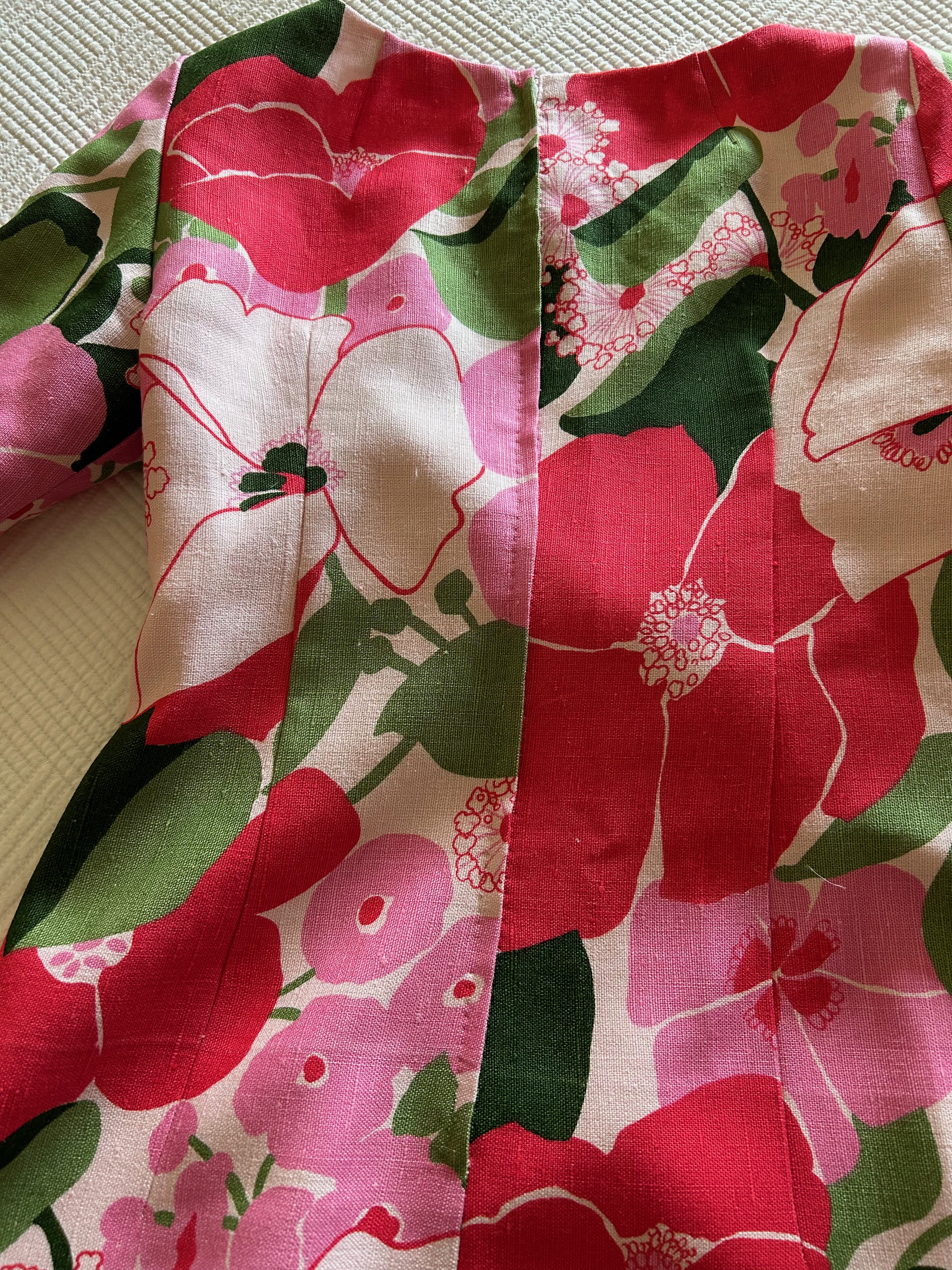
And here is a back view of the 1973 dress. The zipper is metal, which certainly is a telltale sign of a vintage dress.

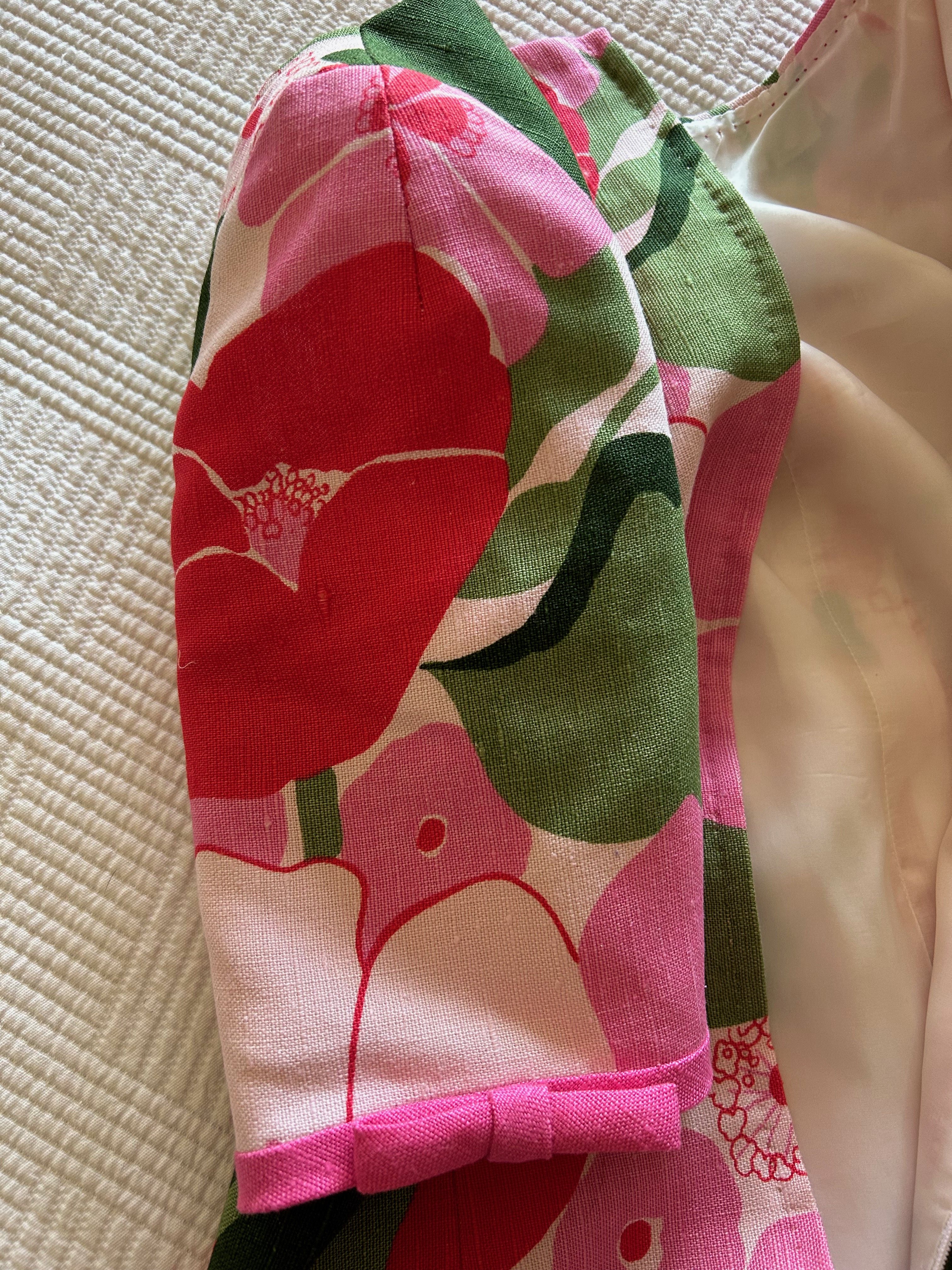
When it came time to apply the bias-cut trim to the hem and sleeves, I had to experiment around a bit.  I didn’t want it too wide, but it needed to be substantial enough to look like it was meant to be and not an afterthought or decision made in desperation!  I finally settled on an exposure of 1/2”.  

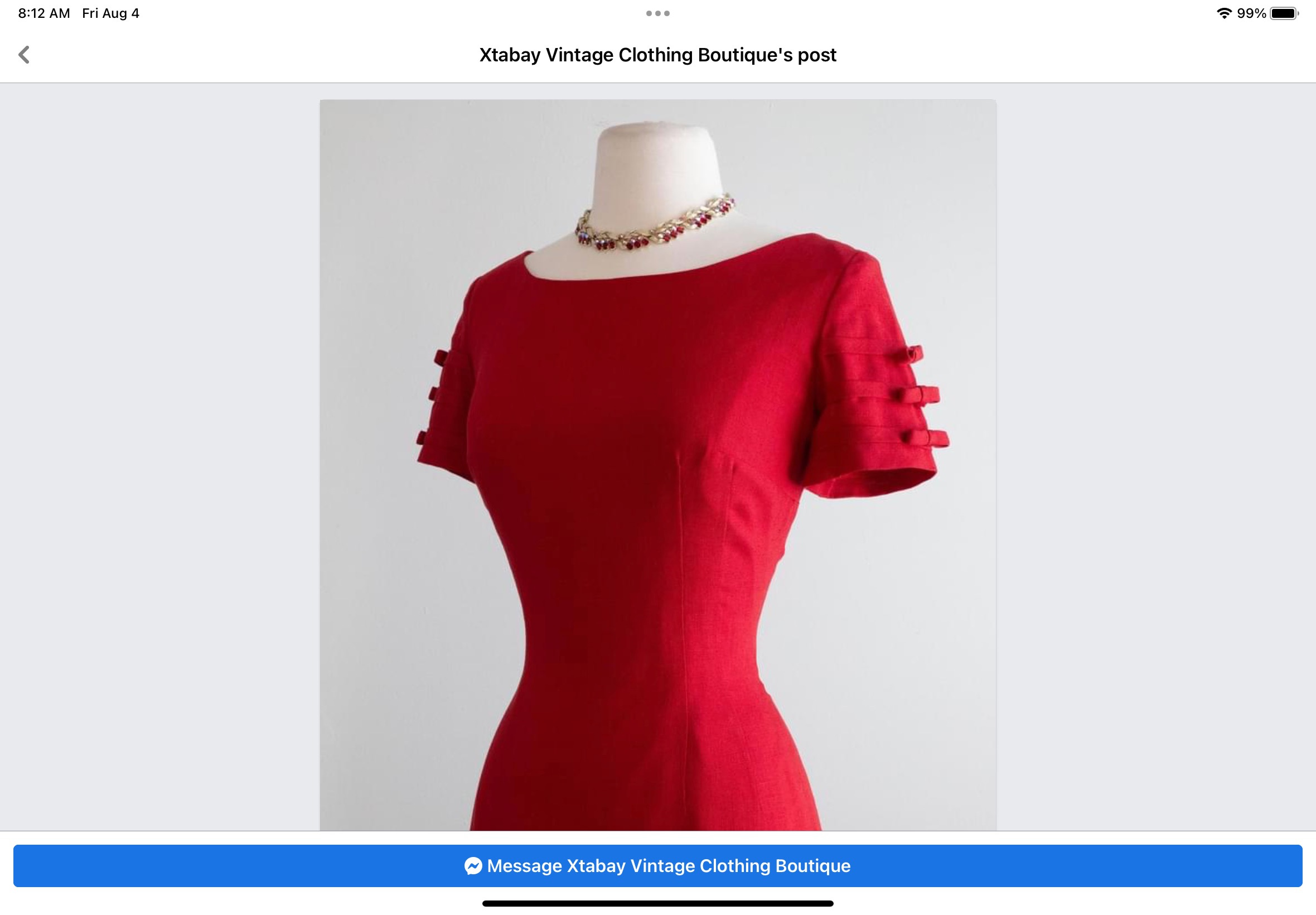
Now this is where it gets interesting.  A few weeks ago I saw a vintage dress on a Facebook/Meta post by Xtabay Vintage Clothing Boutique.  It is obviously Moygashel linen (I can tell by its weave and color), but what really caught my eye were the bias strips and low-profile bows adorning its sleeves.  I tucked this idea in the back of my mind for future consideration.  What I didn’t know was that the future was right around the corner!  Yes – I “borrowed” this idea and added a single bias-cut bow to each sleeve.  Somehow, it just seems to finish the dress.  
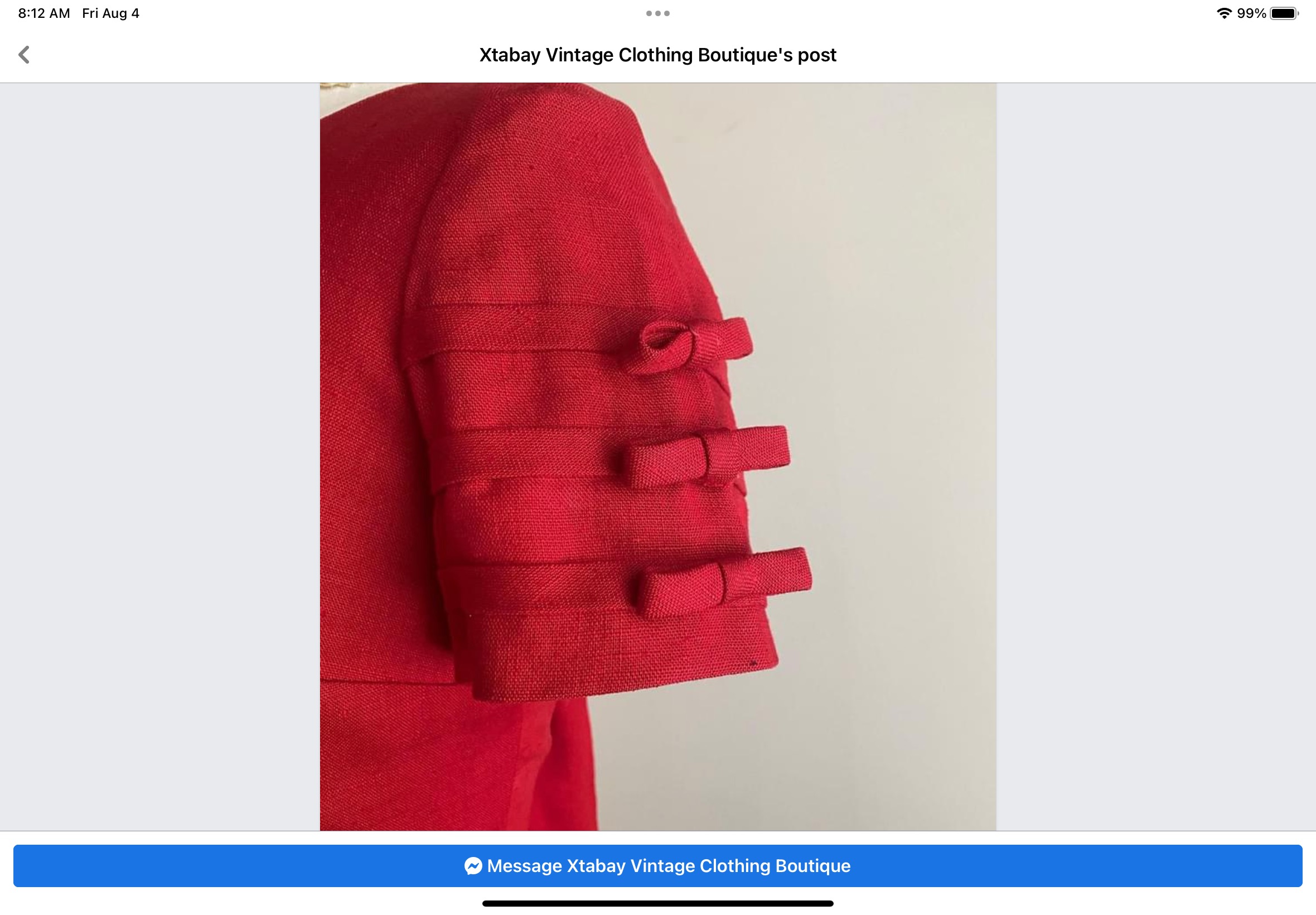
I never would have thought of adding a bow to each sleeve had I not seen this pretty vintage dress.

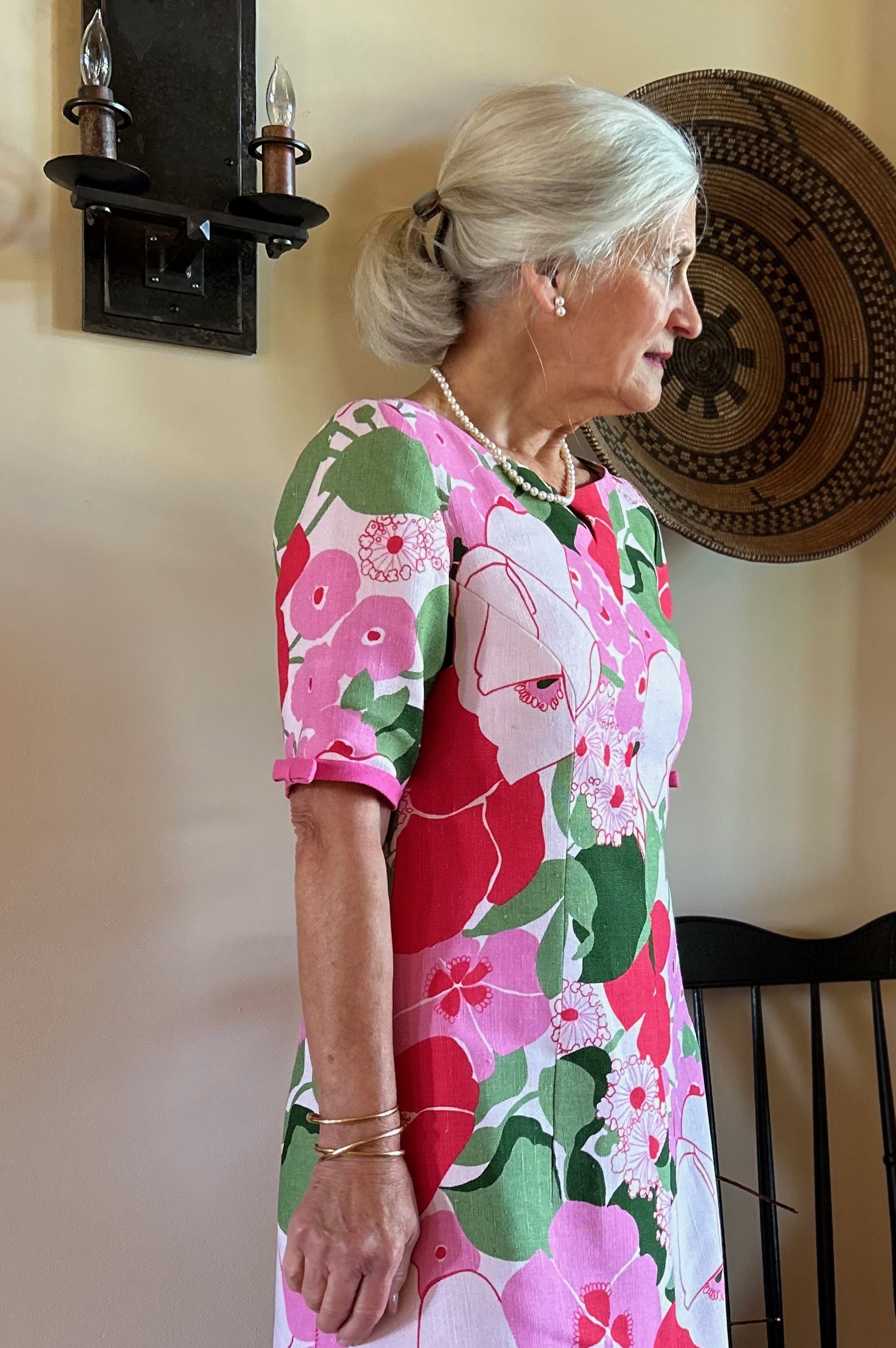
In this view, the princess seam which originates in a dart is visible. This is a nicely engineered, flattering pattern.

Well, you may have guessed by now the reason for making this dress this year.  I will wear it next week when my husband and I celebrate our 50th Wedding Anniversary.  I have changed a lot in those 50 years (and so has my husband!), but I still love pink in all its shades and I still love Moygashel linen (and I still love my husband, too!)  

50 Comments

Filed under Bows as design feature, couture construction, Dressmaker details, Fashion history, hand-sewn zippers, Hems, Linen, Linings, Mid-Century style, Moygashel linen, Sleeves, Summer sewing, Uncategorized, underlinings, Vintage fabric, vintage Vogue patterns from the 1970s

A Tale of Two Dresses, Part 1

Where to begin with this story?  I have to go back 50 years – which sounds daunting and slightly surreal.  As a 23-year-old about to be married, I had already made my wedding gown that summer of 1973.  I still, however, needed a couple of dresses to take on our upcoming wedding trip in early September.  With that intention, I ventured into Stapler’s Fabric Store on Walnut Street in Philadelphia, Pennsylvania (USA).  Stapler’s was one of the old, notable, family-owned purveyors of fine fabrics and dress goods, and I loved going in the store.  Most of the time I could only look and dream, so going in on a mission made this trip memorable.  

Stapler’s carried high end fabrics and that included the newest offerings of Moygashel Irish linen.  I have written several times about this storied brand of dressmaker linen, known for being wrinkle and crease resistant, known for its exquisite designs and colors, and highly sought after by women of good taste.  I can still feel the excitement I had that Summer day when I saw a quintessential floral Moygashel in vibrant pinks and greens and whites.  

I had already picked out a Very Easy, Very Vogue pattern (the pattern number is lost to the ages by now, as is the pattern itself) to make a long A-line dress with short cut-on sleeves and center front and center back seams.  I purchased the yardage I needed and made this dress:

Ankle-length dresses like this were very fashionable in 1973.

I loved it.  I felt beautiful in it, which has, over the years, become my litmus test for a successfully made garment.  Several years ago I included this dress in a post I titled “Shopping in My Cedar Closet.”  I posed a question to myself – should I take this dress apart and reuse the beautiful fabric – which I still loved – for something else?  By asking myself this question, I knew I had the answer.  Too many memories, too much of the younger me were in this dress for me to cut it apart.  I placed it back in the closet and vowed to keep it as is. 

A few years later a most amazing thing happened.  While searching for vintage Moygashel linen on eBay, I found an offering for a length of the same pink, green and white floral fabric I had purchased so many years ago.  The listing was for 2¼ yards of this 45”wide fabric.  I purchased it immediately, its new rendition to be determined. In my mental sewing calendar, however, I hoped to bring life to this fabric 50 years after I made my first dress from its twin.

The planning began in earnest earlier this year.  I had to decide exactly what silhouette dress I wanted my new dress to have.  With only a little over two yards, I knew my choices were somewhat limited.  And I also knew the fabric itself needed to be the star – with its demonstrative, large design, its medley of colors and its lustrous weave.  It took me a while to realize I had already determined the correct formula 50 years ago.  It needed to be another A-line dress, with some length to it.  This time, however, I would make it using the couture techniques I have learned since then.  

I also knew I wanted: a) longer sleeves, if possible, with the yardage I had; b) to underline and line this dress (but preserve its washability); and c) to add some minor embellishment in some way, perhaps buttons or trim of some sort.

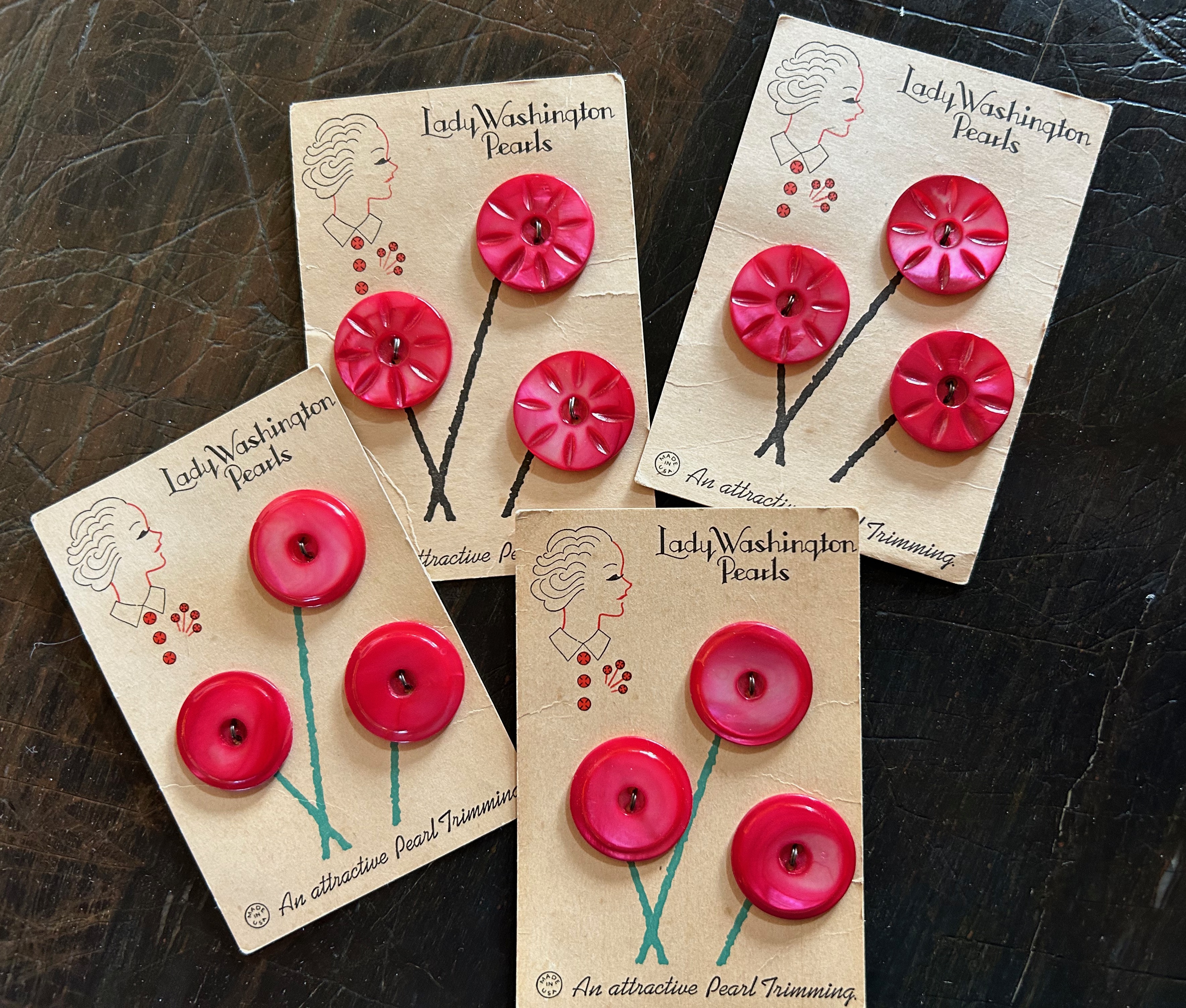
I had these deep pink buttons, one design of which I thought might be a possibility … In the end, I decided they would not work.
And, I had two lengths of Moygashel linen from the 1970s in this deep pink, from which I could make trim, if needed. This proved to be essential to the success of my endeavor.

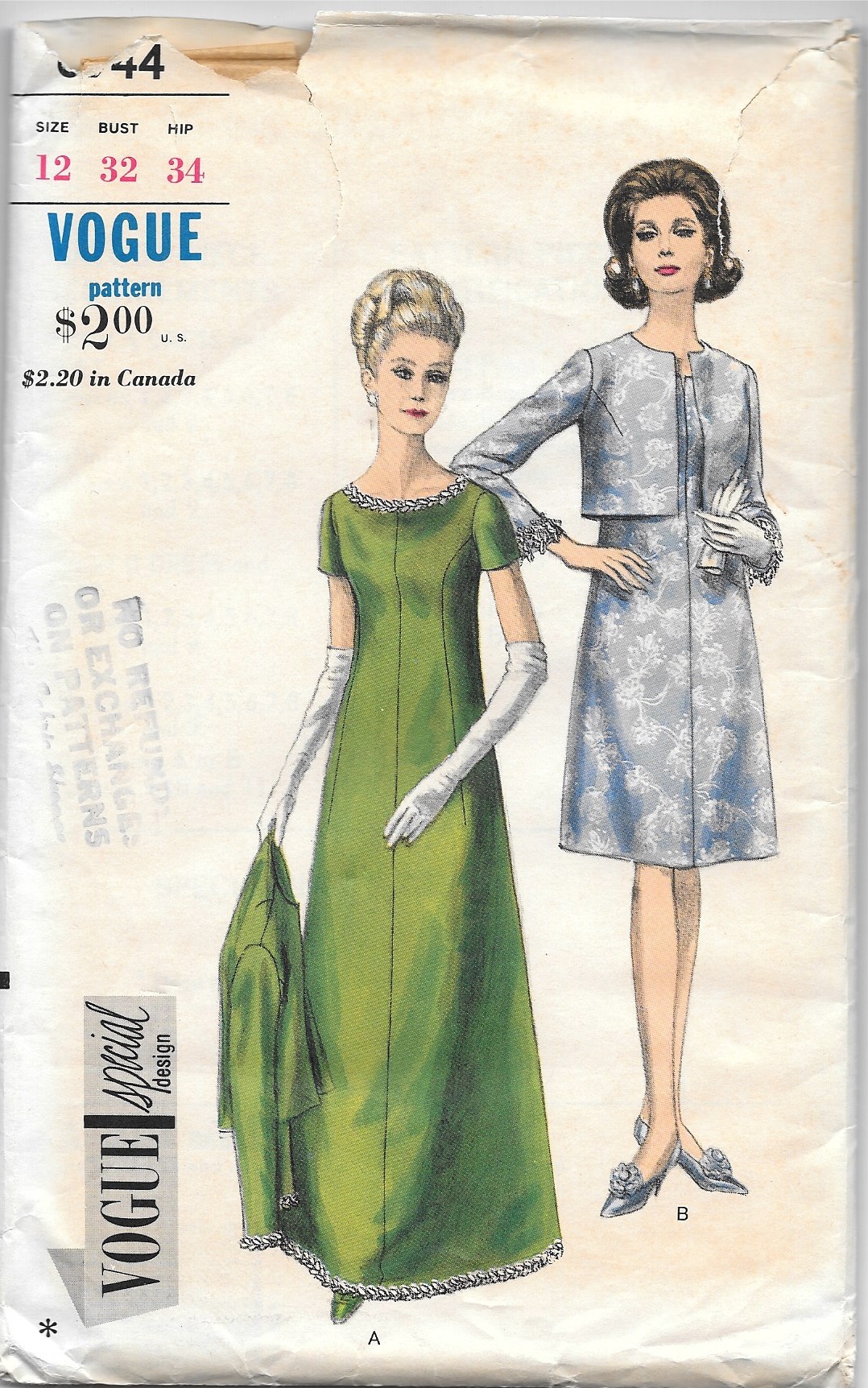
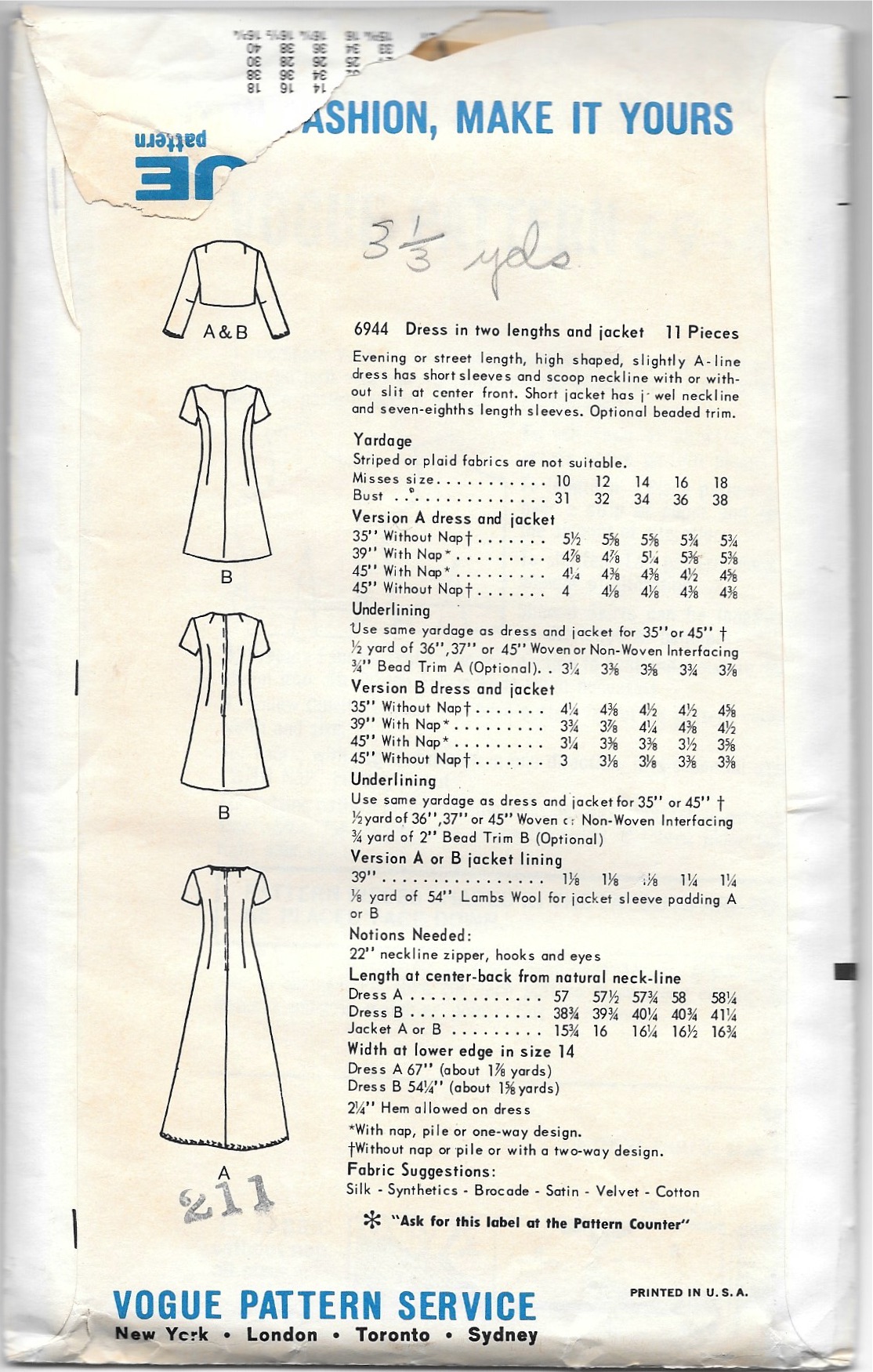
A suitable pattern happened to be one I had already used twice.  

The line drawing for the shorter length shows more detail as to the seaming and the darts. The description on the pattern envelope reads: “evening or street length, high shaped, slightly A-line dress has short sleeves and scoop neckline with or without slit at center front…”

I first used this pattern for this dress:

And then a year or two later, I used it for this dress:

Having a pattern which fits, with pleasing lines and a certain finesse to it, is worth its weight in gold.  Even better, the late 1960s’/early 1970s’ vintage aspect of this pattern made it a perfect fit with fabric from 1973.  The only question I had was a big one.  Did I have enough fabric to make a longer dress with longer sleeves?  The answer: No – and then Yes.

(The story continues in the next post…)

25 Comments

Filed under Fashion history, Linen, Mid-Century style, Moygashel linen, Uncategorized, vintage buttons, Vintage fabric, vintage Vogue patterns from the 1970s

An Italian Cotton for an American Summer

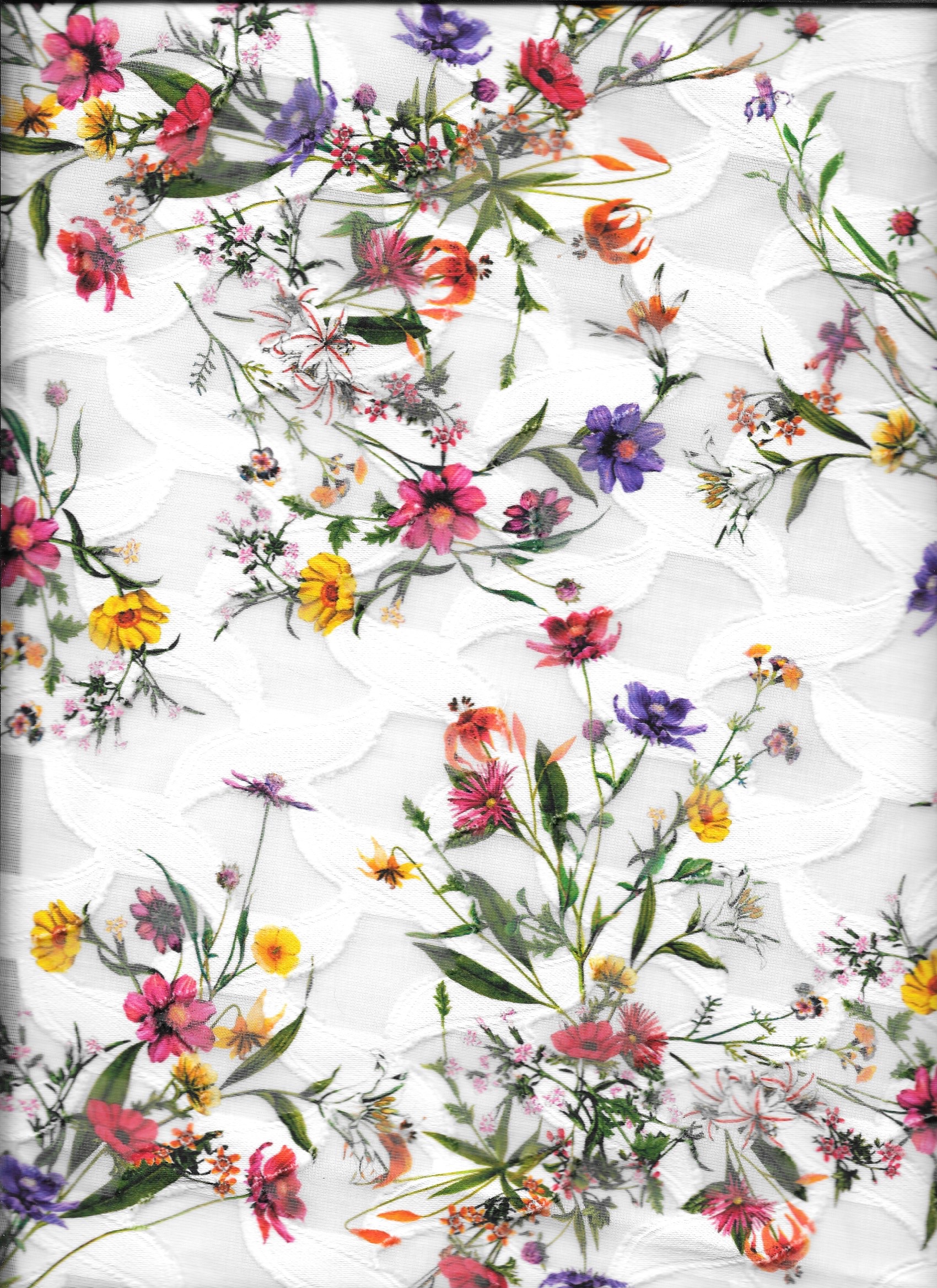
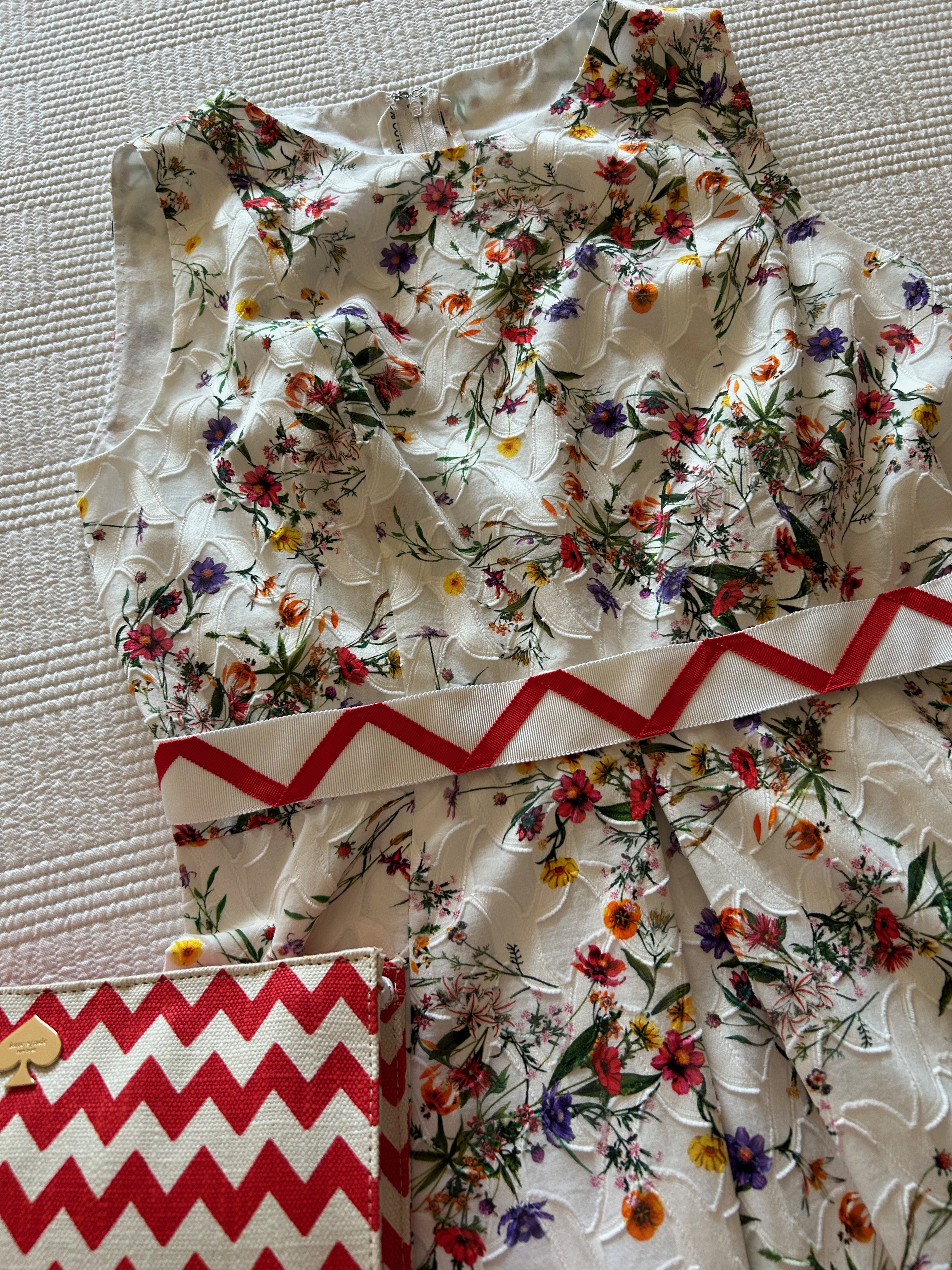
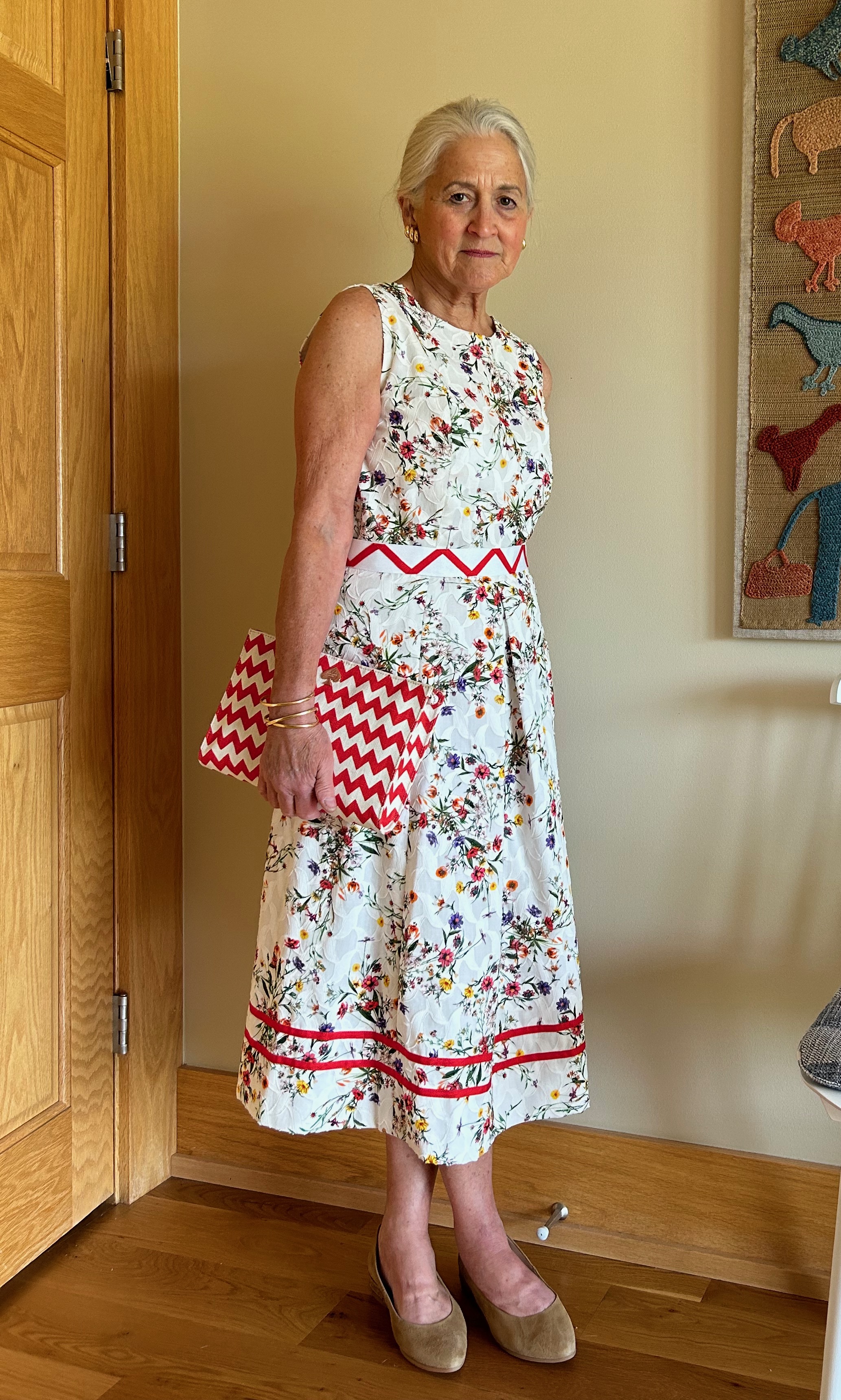
For a number of years this light, filmy, patterned and printed cotton, made in Italy,  had been lurking in my “cottons basket.”  I had purchased two yards of it from Mendel Goldberg Fabrics, for a “future” dress presumably.

This fabric is partially sheer. The print is overlaid on what appears to be a “burn-out” cotton, ie., two-layered.

At 60” wide, I knew two yards would be sufficient for just about any summer style I chose to make.  It seemed like every Spring I would take it out and consider the possibilities for it, not reaching a decision.  But this Spring, the “future” had finally arrived, at least for this fabric.

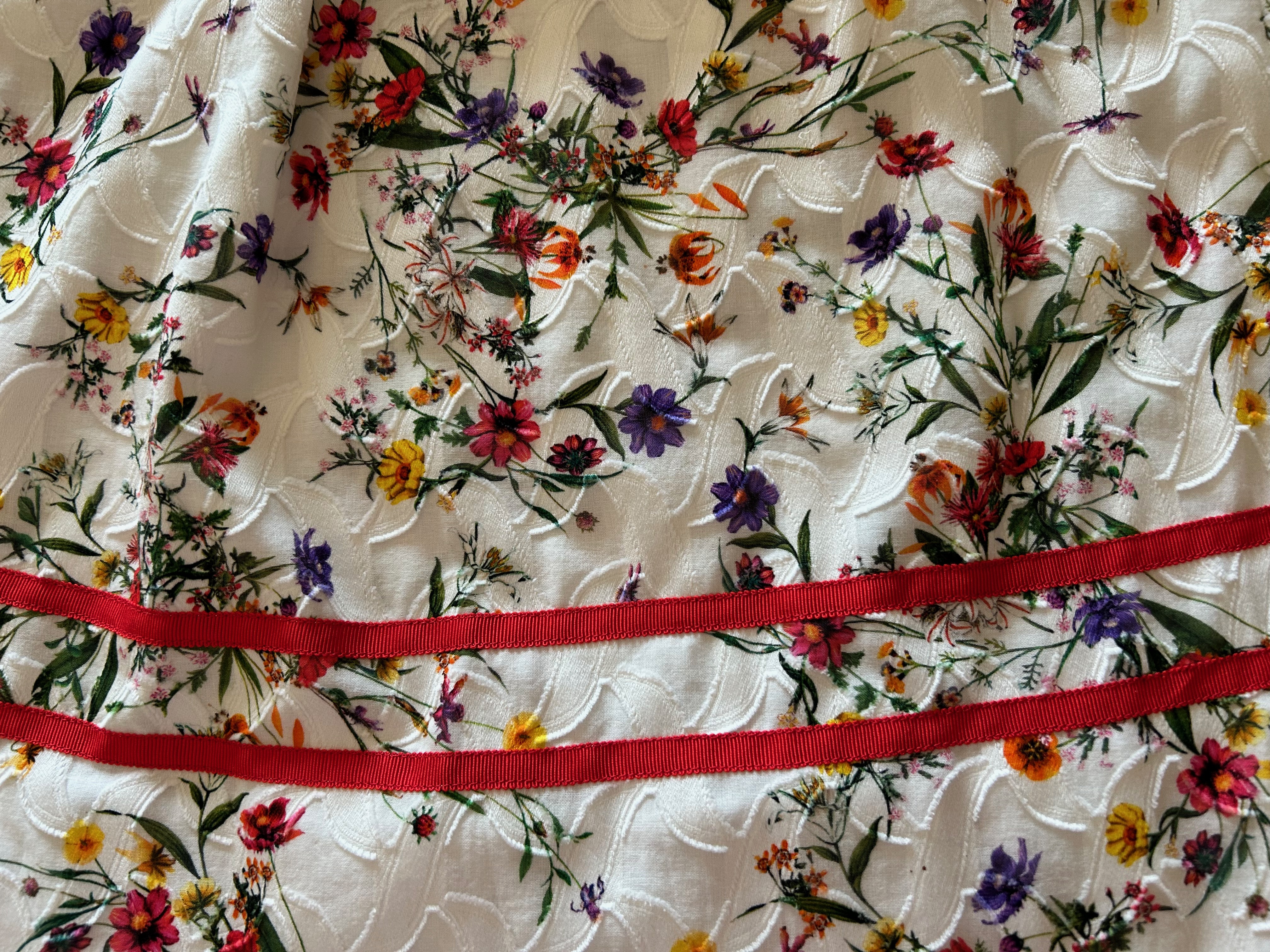
I’m not sure how I came up with the idea to trim it with a coordinating tape/ribbon, but I liked the definition it gave to the colors in the printed floral sprays.  First, I thought purple would be a great color to pair with it, then I went to yellow, then to pink.  None of those seemed to make the fabric pop the way I anticipated they would.  So, even though red is not a dominant color in the print, I decided to try it. And that was it – it worked!

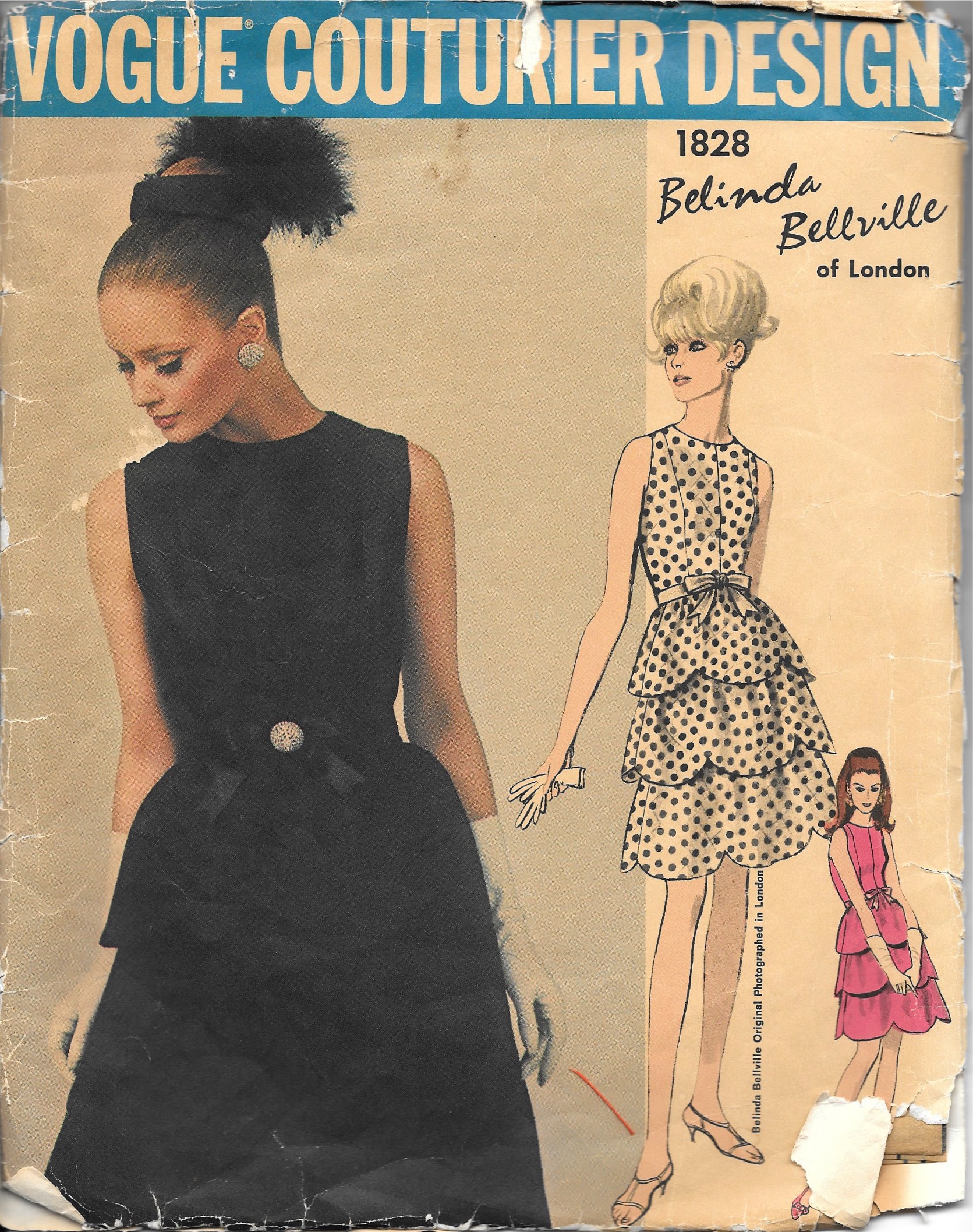
I had already decided on a Vogue pattern I had previously used twice, albeit with a number of obvious changes.  

The first construction decision facing me was whether to underline it with cotton batiste and then also line it with – I wasn’t sure what; or just line it and hope that would be sufficient.  I wanted to preserve the light, airy feel of the fabric, but I also needed to address the sheerness of part of the fabric.  

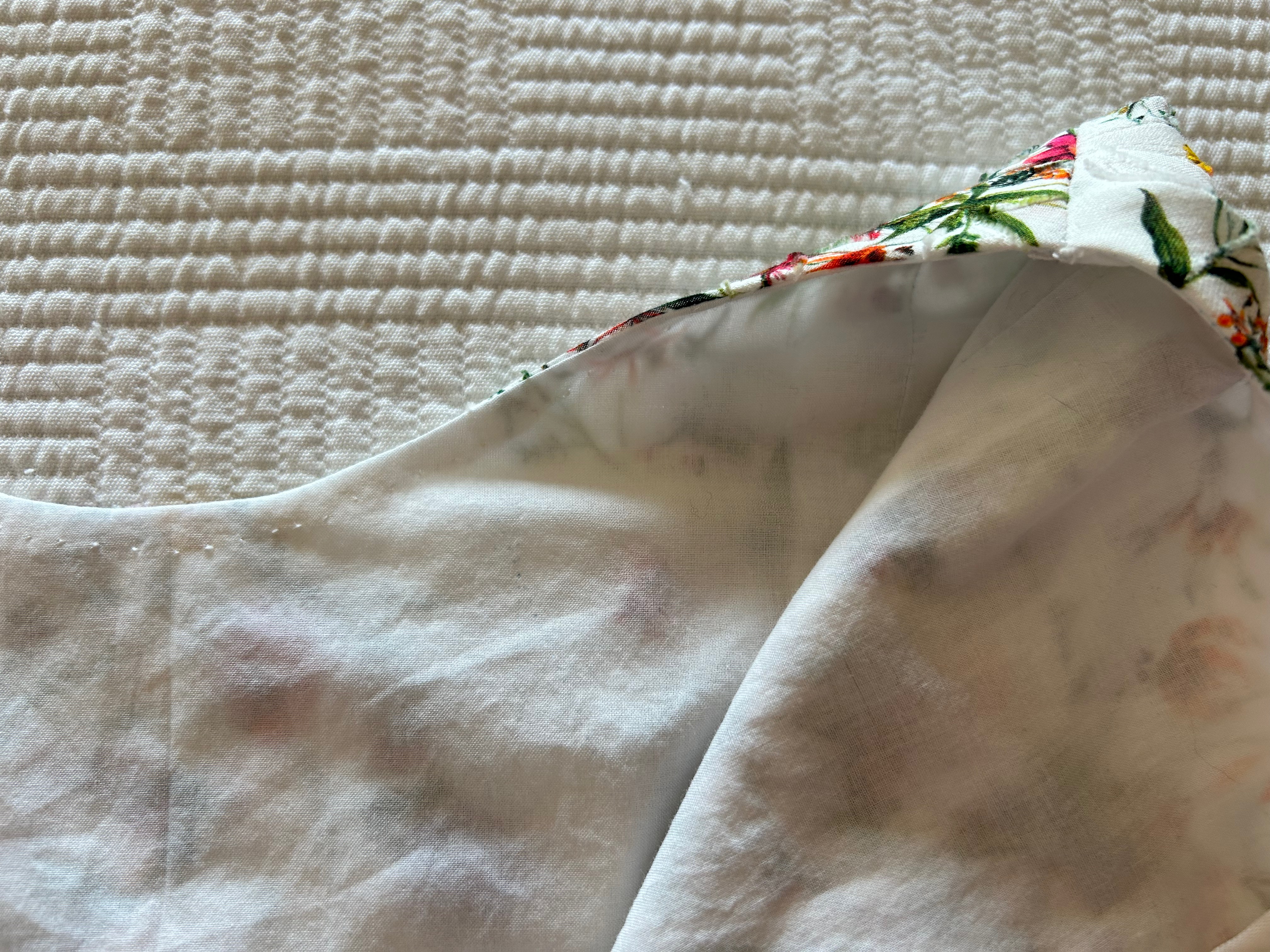
After much thought and experimentation, I went with using only a simple cotton batiste lining. That turned out to be the right decision.  I under-stitched around the inside of the neckline and armscyes even though I did not have an underlining upon which to secure those stitches.  However, the under-stitching – which caught only the seam allowance – still had enough of a stabilizing effect to secure those edges. 

A hand-picked zipper is always a lovely detail to add to a dress like this:

There was some subtle pattern placement on this dress, but no matching.

I’m getting ahead of myself here, but to make this dress, I was eking out small snippets of sewing time during a complicated Spring.  And when the time came to do our annual Summer migration from Pennsylvania to Wyoming, 2200 driving miles west, the dress was unfinished.  

So, I packed it up along with a lot of other sewing-related things, and I eventually picked up where I left off.   I remembered to bring the zipper for the dress, – and the red Petersham ribbon for its embellishment – but I forgot to bring the extra dress fabric.  Why was this a big deal, you might be asking?  Well – I needed to make a belt for the dress, and my intention was to make a self-belt, edged with the red ribbon.  

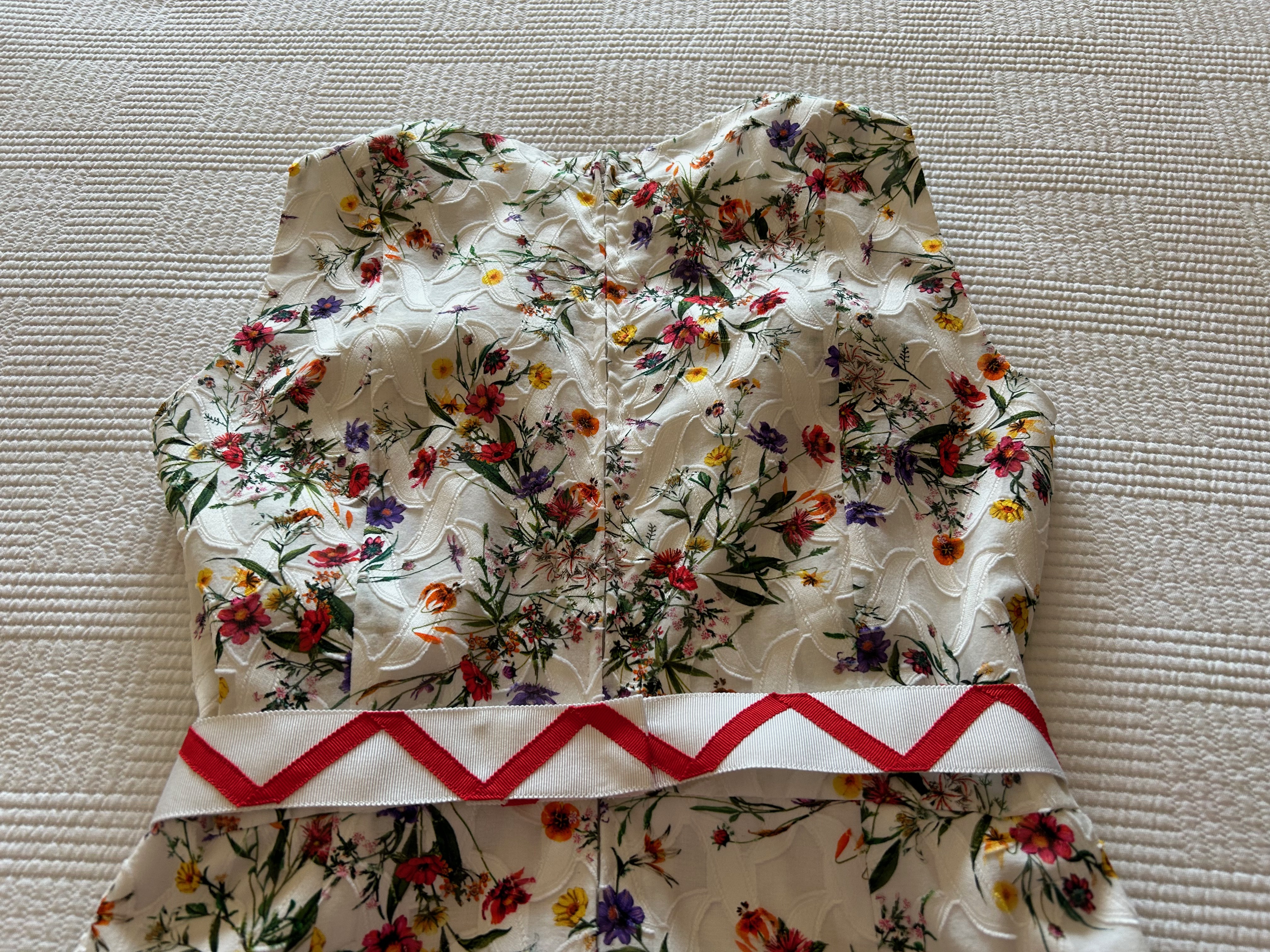
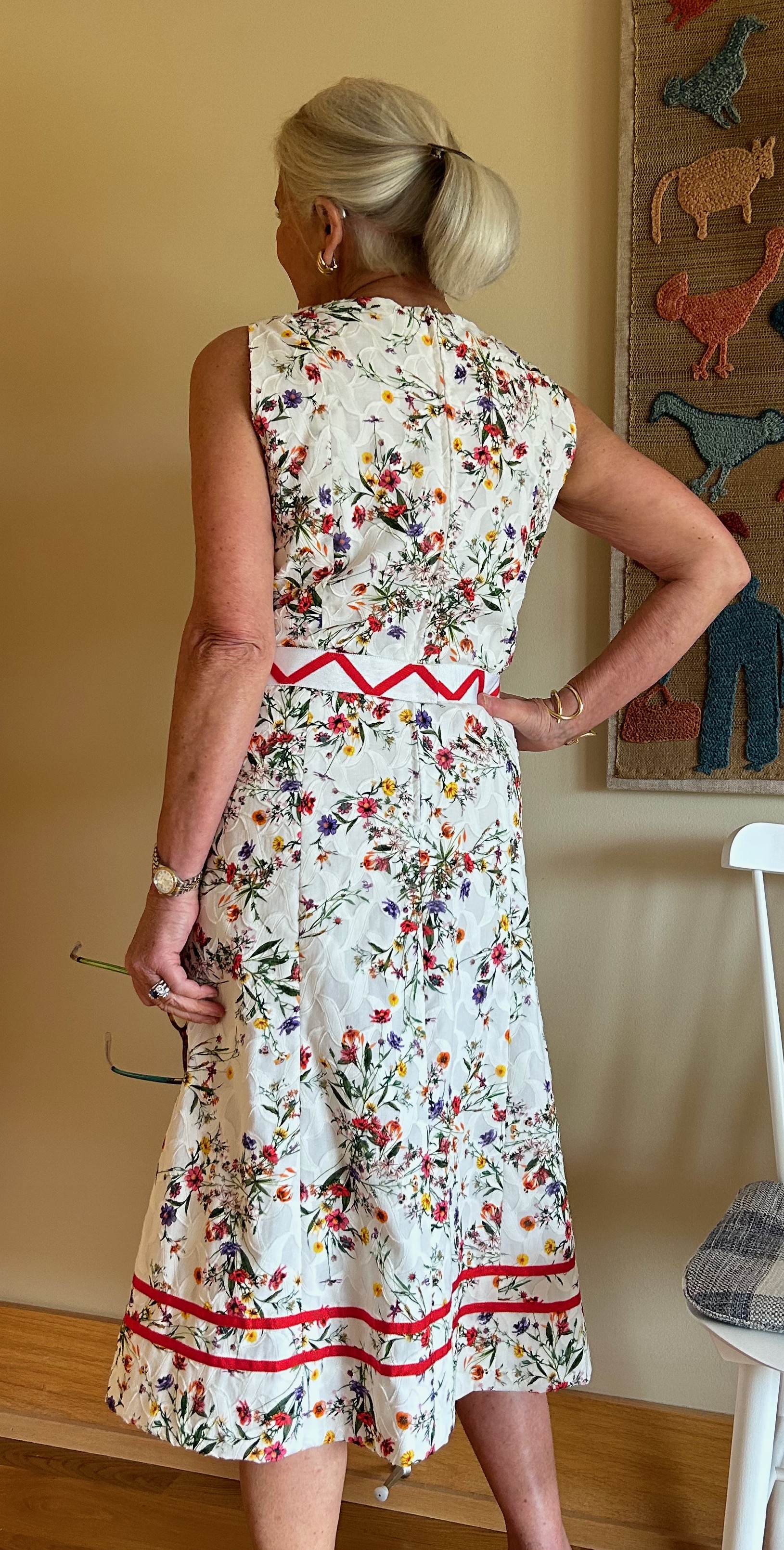
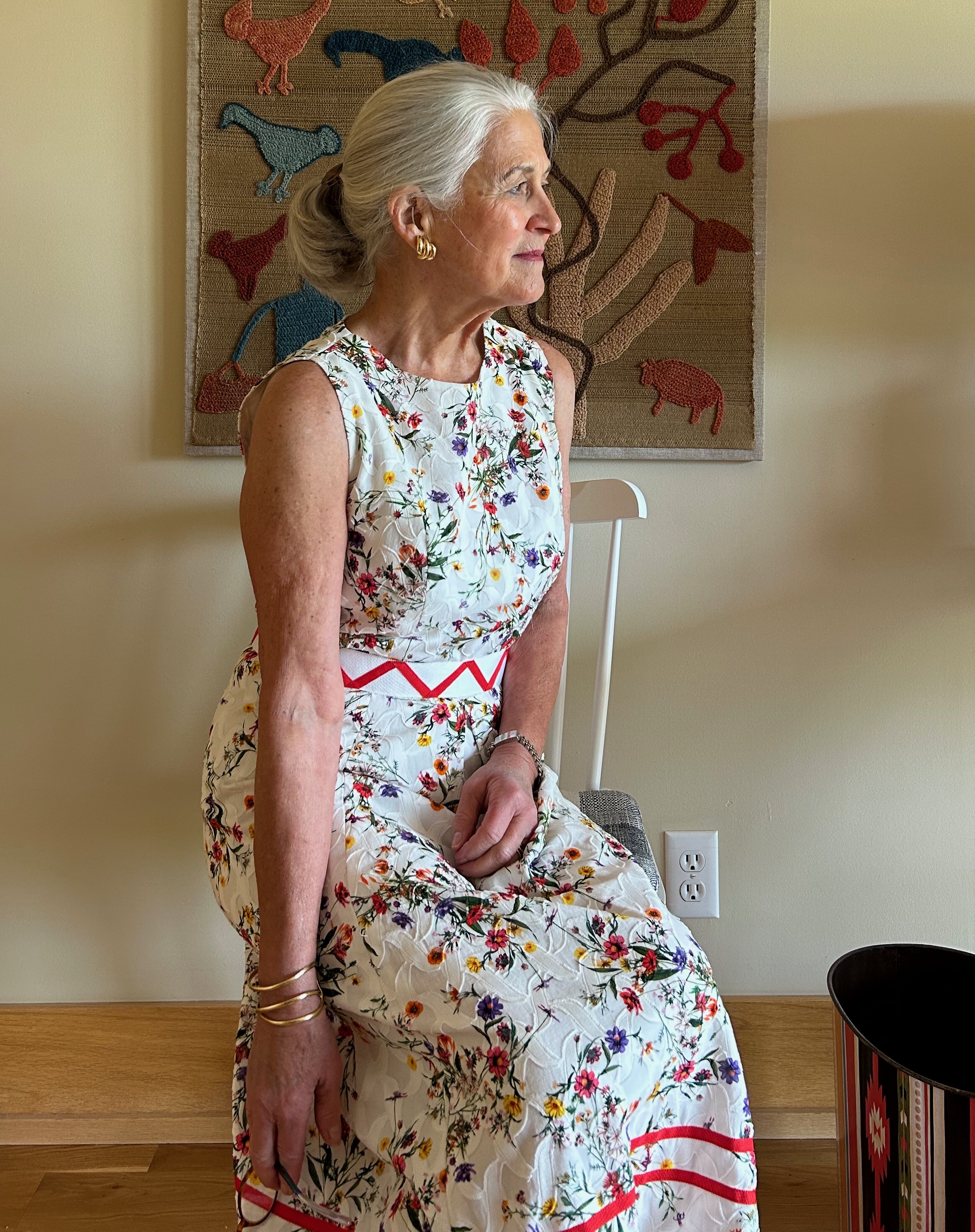
Once again in my sewing life, I found myself going to Plan B – necessary, if I had any thought of wearing this dress this summer.  (Plan B stands for “It BETTER work.”)  I hemmed and hawed and decided there were two options.  One was a white belt and the other was a red belt.  I came to the conclusion a red belt would be too overpowering for the delicate nature of the fabric.  So that left me with a white belt, which wasn’t too exciting.  Then I had a eureka moment when I realized I could pick up the somewhat zigzag overlay motif in the fabric and embellish the belt with my extra red Petersham ribbon, applied in a zigzag pattern.  

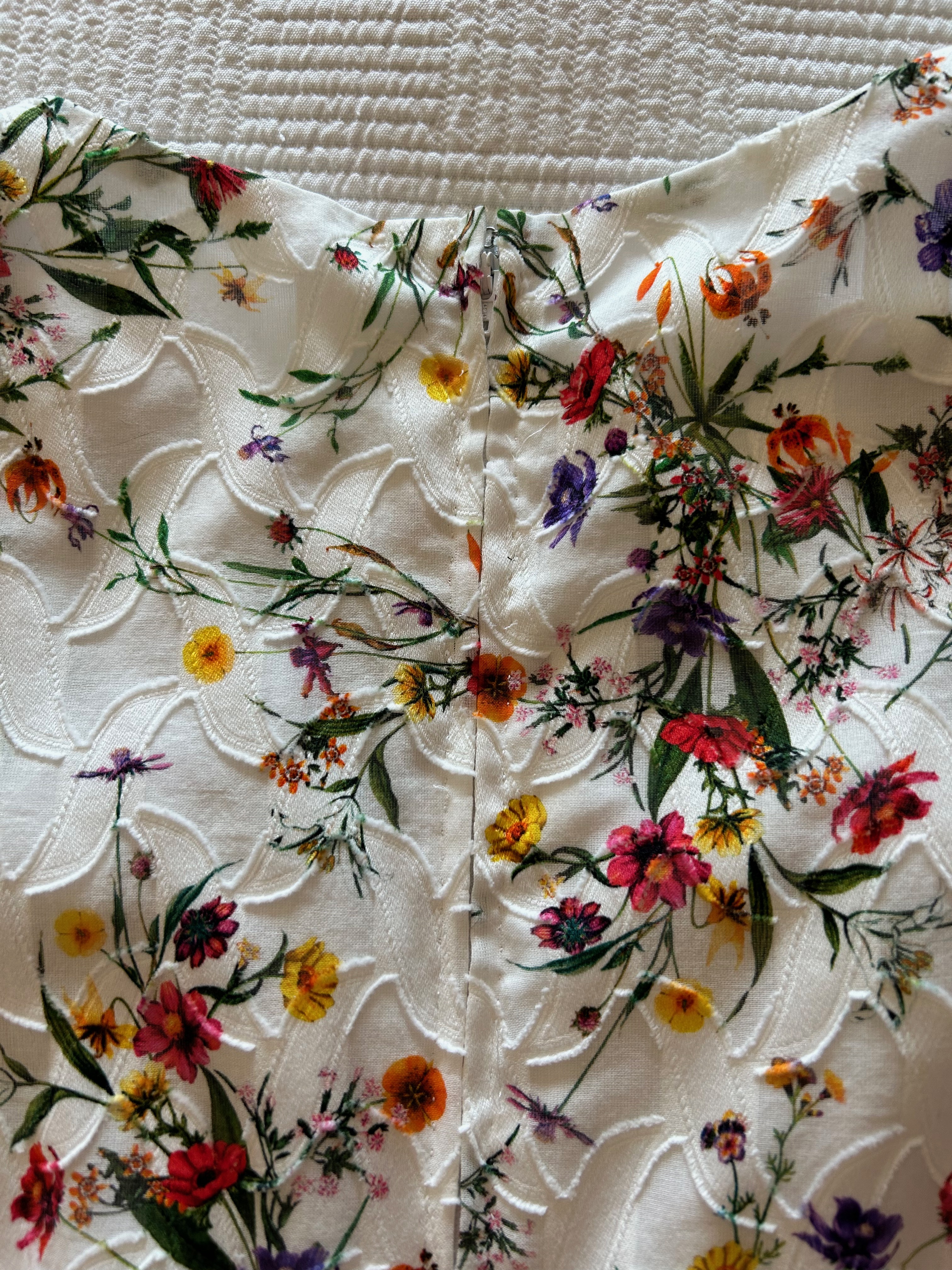
This actually shows the back of the bodice. I used flat hooks to secure the belt.

Plan “B” seemed like a good idea when I remembered I had this Kate Spade Summer clutch to pair with my dress.

So – I rather like the Plan B belt although I may decide at some point to make a self-belt as I had originally intended.  We shall see.  One thing I know I will do is make belt loops for this dress from its remaining fabric sleeping back in Pennsylvania.

In the meantime, this is a good dress for a hot American summer.

Ciao!

33 Comments

Filed under couture construction, hand-sewn zippers, Linings, Summer sewing, Uncategorized, vintage Vogue Designer patterns, vintage Vogue patterns from the 1970s

The Many Uses of a Pink and White Striped Cotton

There are now a few scrapes remaining of this fabric:

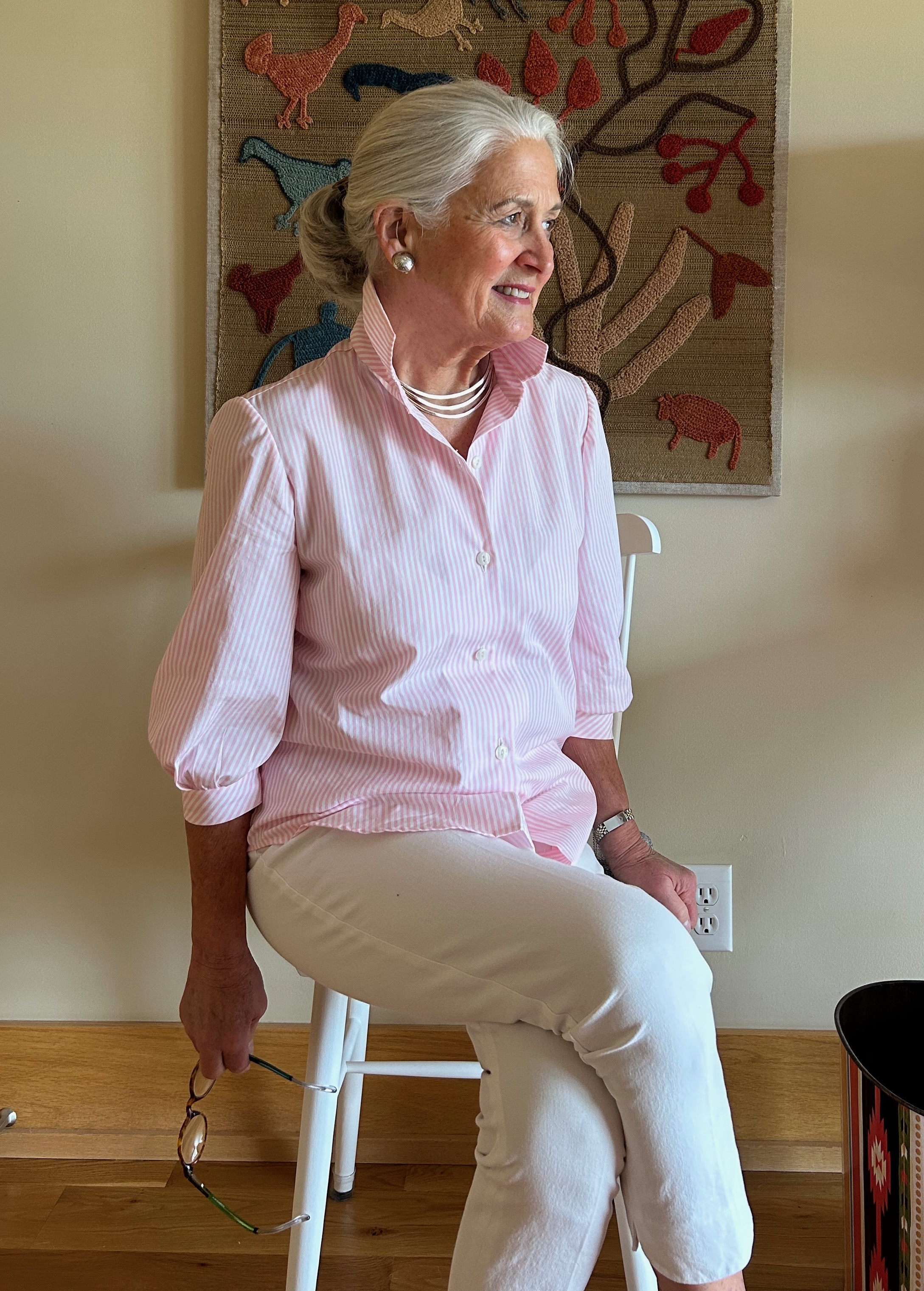
Before the scraps there was this blouse:

Before the blouse there were two Springtime dresses for my granddaughters: 

And before the two dresses, there were two Valentine’s Day aprons for my granddaughters:

Sometimes a fabric is just so versatile, it pays to use it over and over.  Such has been the case with this pink and white striped cotton I originally purchased from Farmhouse Fabrics back in late January.  It all started with my decision to make aprons for my granddaughters for Valentine’s Day.  I found a cute pink and red heart print for the base of the aprons.  (I sized down this apron pattern for my then-7-and-9-year-old girls.) Then I needed a coordinating fabric for the ties and pockets on the aprons.  That’s when this striped cotton came into my life.

Because the apron ties were cut on the bias, it was necessary to buy over a yard of the 60” wide fabric, leaving me a sizable section of fabric after the completion of that project.  I put the leftover fabric in my storage closet and didn’t think any more about it. Until….

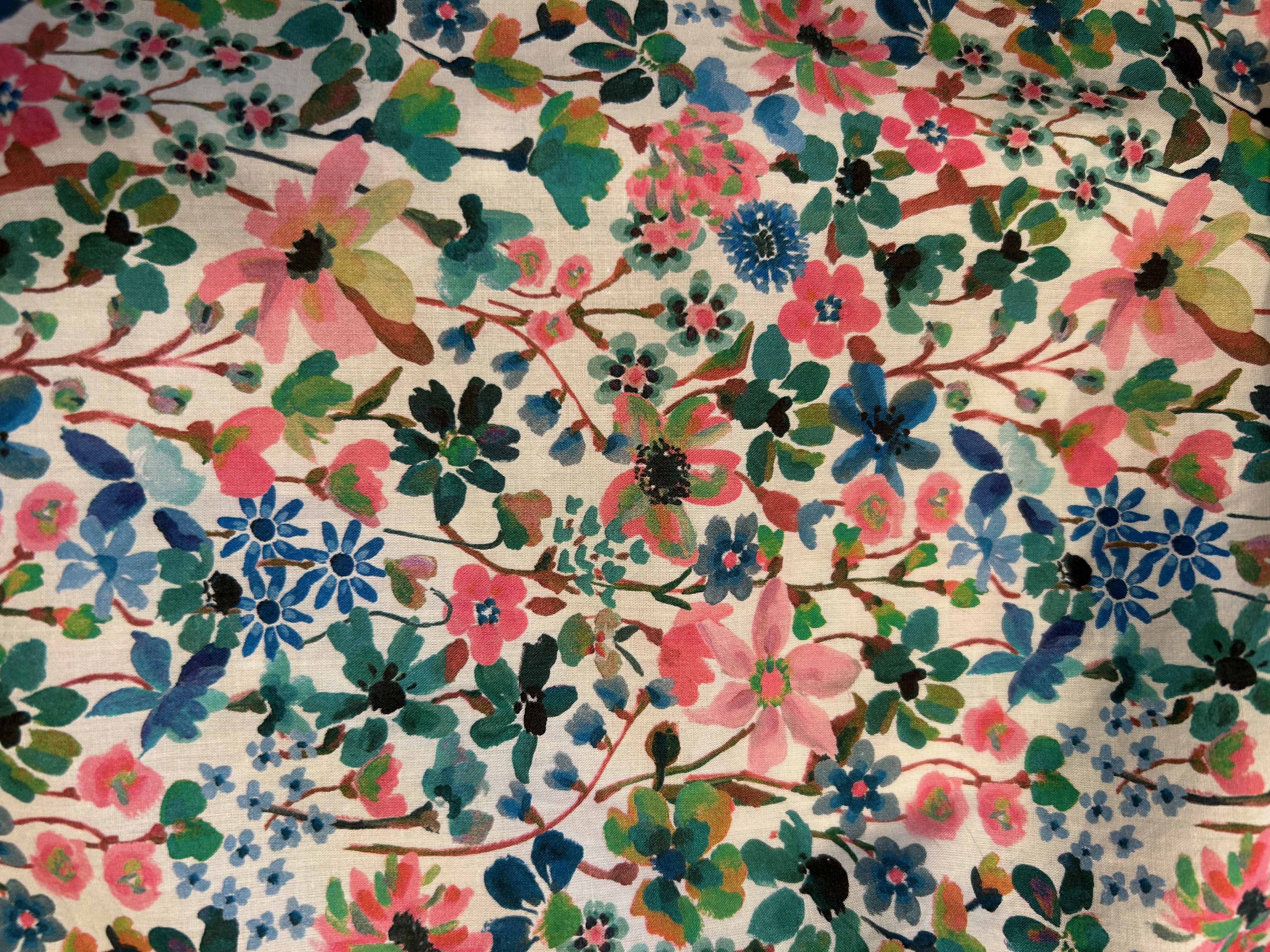
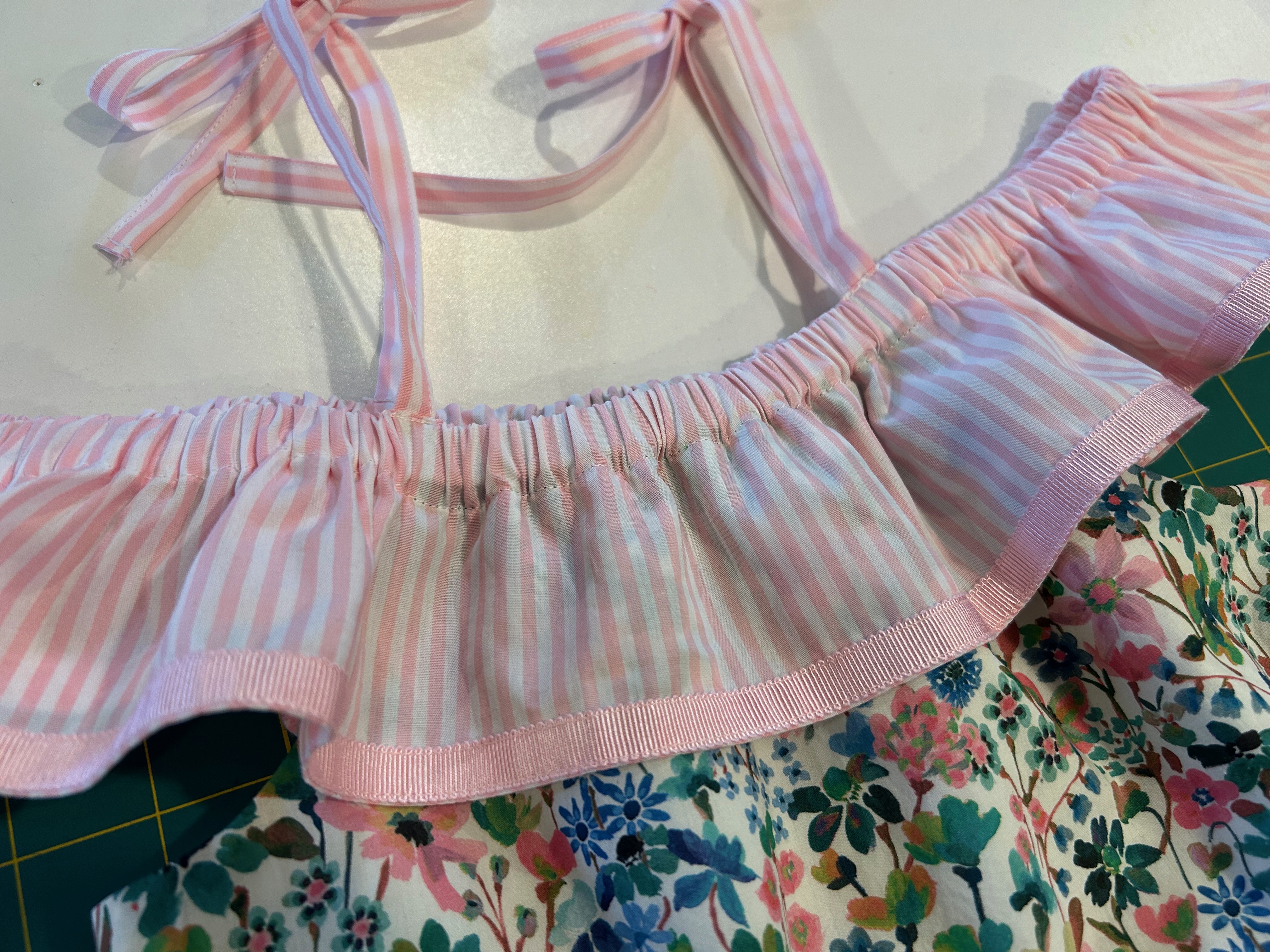
A few weeks later I geared up to make matching dresses for the girls’ Springtime birthdays.  I got some direction from my daughter on the style of dress the girls decided they wanted – off-the-shoulder ruffle dresses.  I luckily found a new Liberty of London cotton print, purchasing it quickly before it sold out. 

Once I had it in hand, I decided it would look a lot cuter with a contrasting collar and sash rather than the entire dresses out of the same fabric.  That’s when I thought of the pink and white stripe I had stored away. 

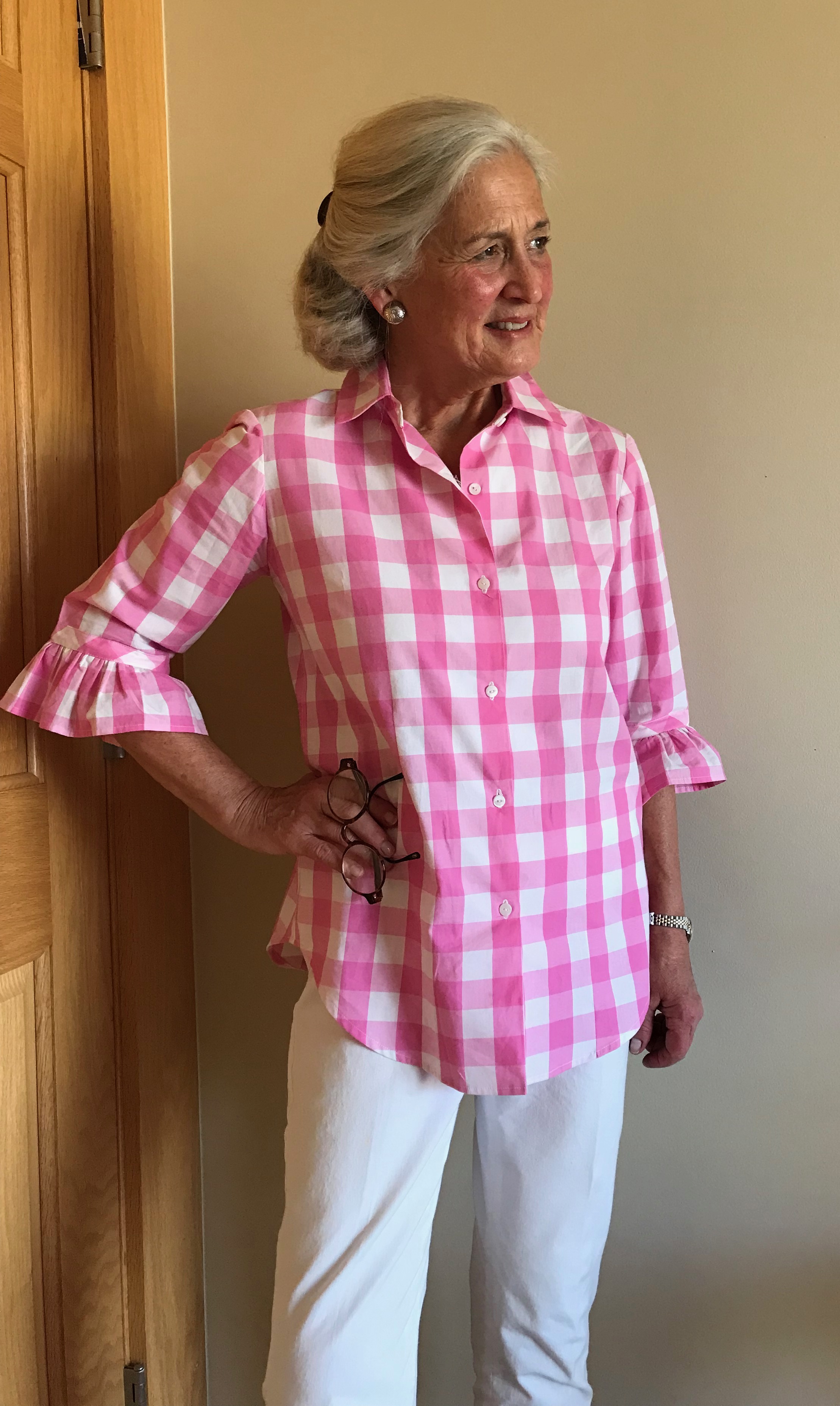
Well, the rest is history, except that to complete the dresses, I needed to purchase more of the striped fabric.  Fortunately, it was still available from Farmhouse Fabrics.  This time, however, I decided to purchase enough additional of it to make myself a blouse.  Why not? 

Now, I have made a lot of blouses, many using this pattern:  

Here is the blouse pattern I have used over and over.

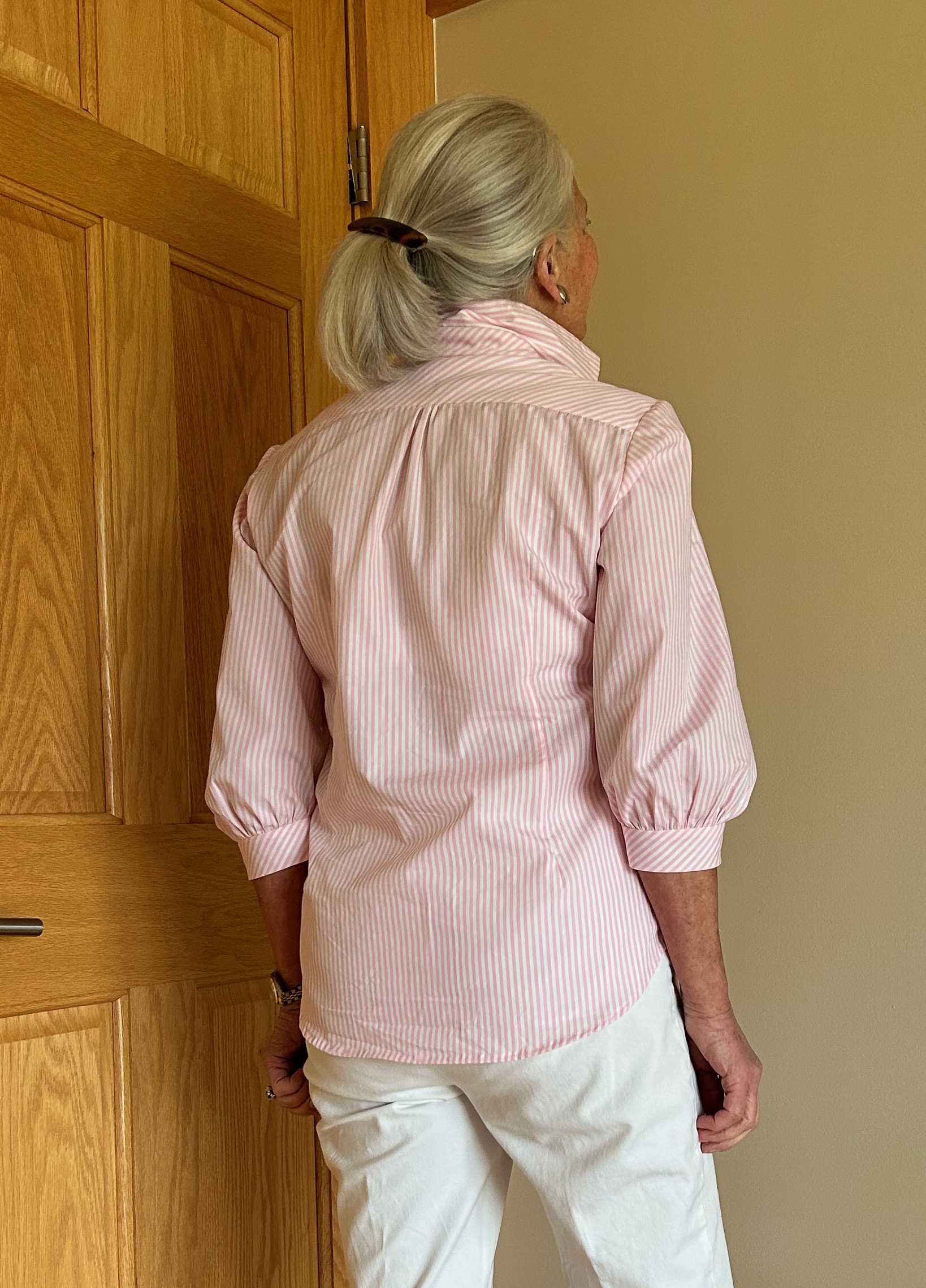
They are not the most exciting apparel in the world, but I do wear them, a lot.  So lately, I have been trying to mix up the details of the pattern when I make a new blouse to make it more interesting.  Here is what I did to this one:

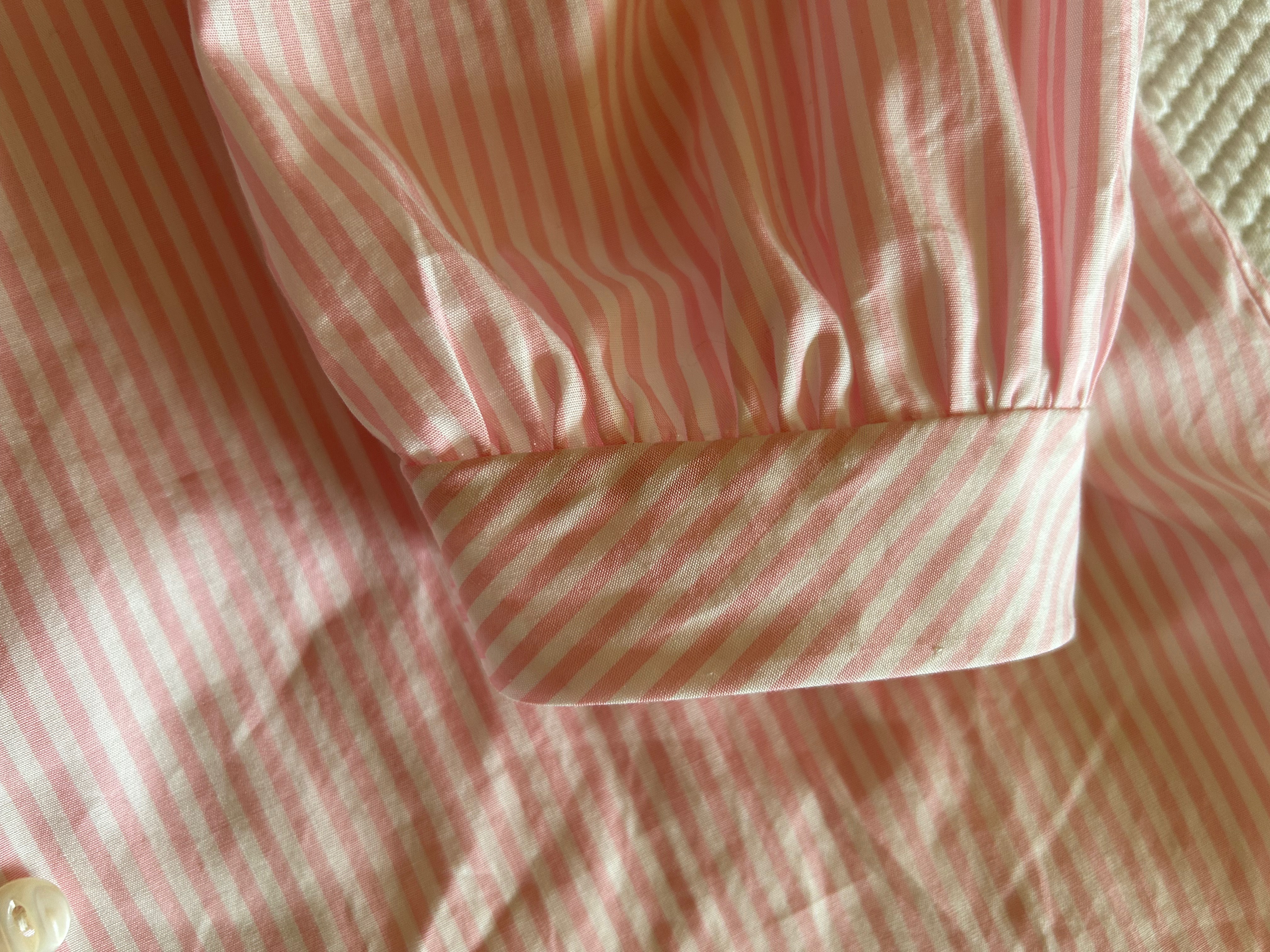
  1. The most obvious change I opted for are three-quarter length sleeves, slightly poofy, gathered into a continuous cuff.  

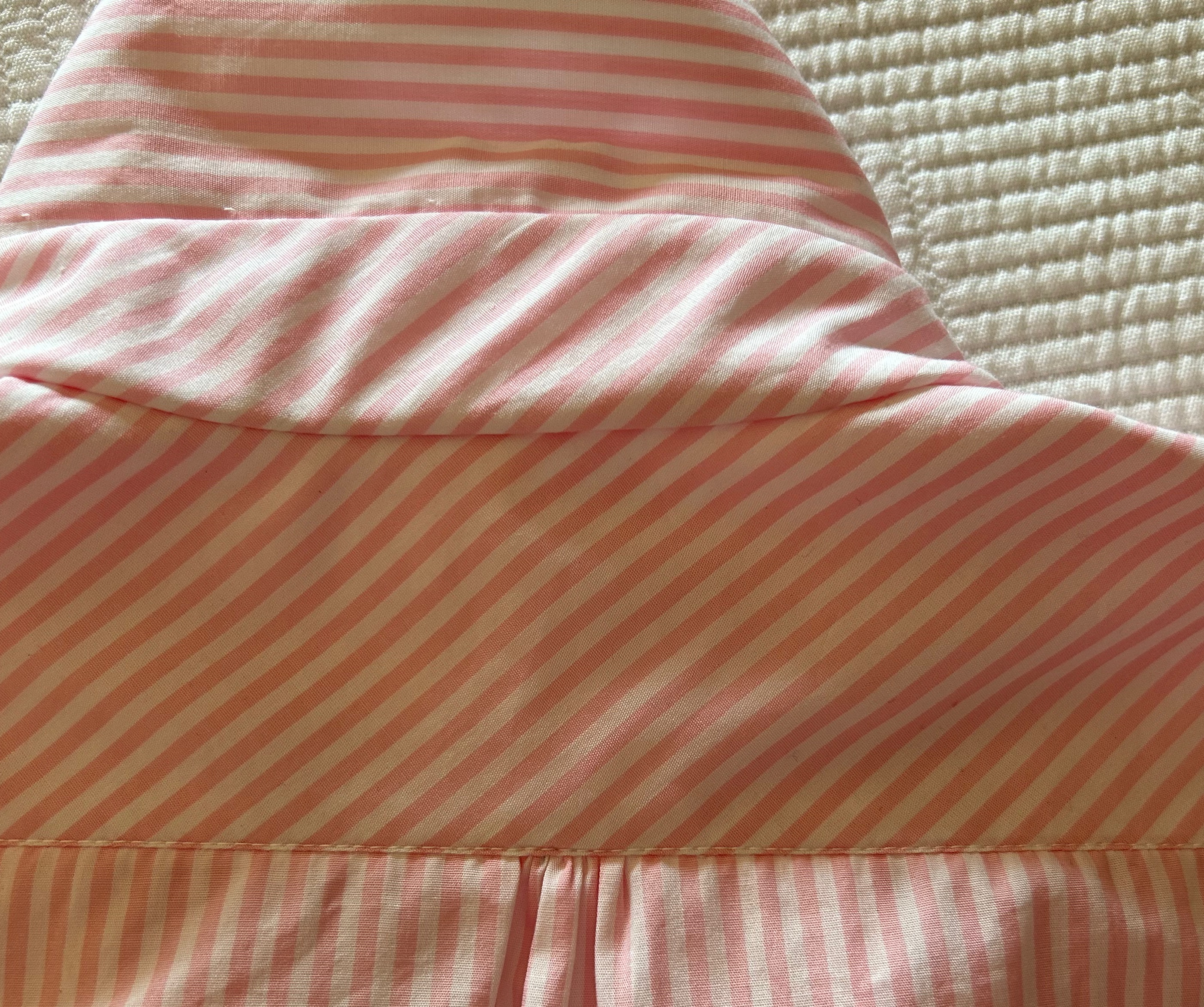
2. I decided to cut the cuffs on the bias and repeated that choice for the back yoke and the collar band. 

I also gathered the back vent instead of making a pleat. It looks off center here, but that is an optical illusion!

3. I used the collar variation I had originally cut for this blouse, and in addition I took one inch off the length of the blouse.  

Again I went to my button collection and found vintage buttons which pick up the striped motif of the fabric.  

I think I am now finished with pink and white stripes, but I am holding on to the scrapes just in case….

23 Comments

Filed under aprons, Blouses, Buttons - choosing the right ones, Liberty cotton, Uncategorized

Completion – How Sweet It Is. 

It has been a slow start to the new sewing year of 2023.  Although I had anticipated the completion of my first project – this black jacket – to be a speedy endeavor, I anticipated incorrectly!  (Has anyone ever said fashion sewing can be very humbling?)

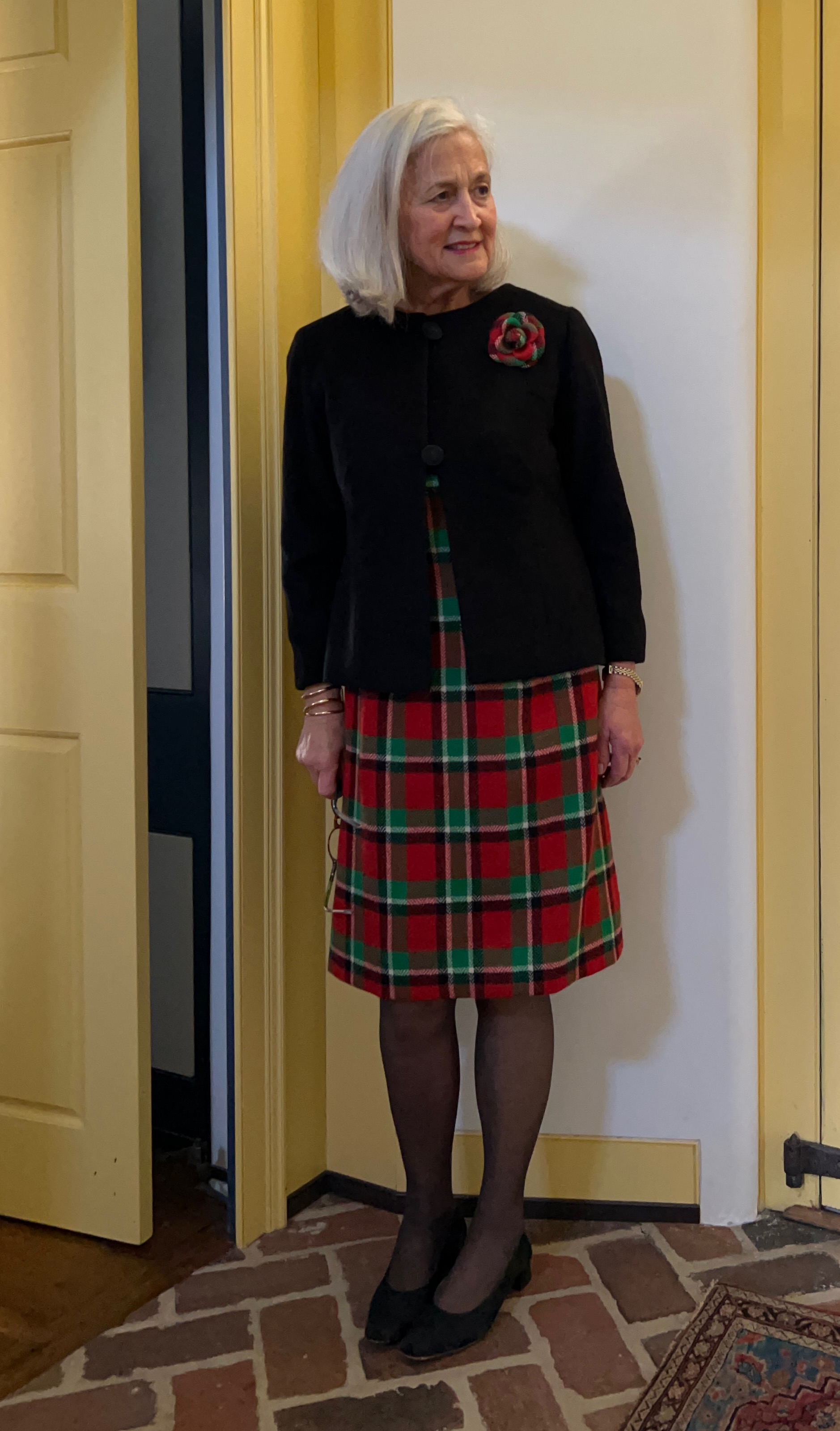
I was making this jacket to go specifically with a wool sheath dress I made two years ago – and also, hopefully, to pair with other dresses or skirts which might benefit from the addition of a somewhat dressy black jacket.  I had the pattern, and I had the fabric, a very soft light-weight cashmere (which I found a number of months ago at Farmhouse Fabrics.) 

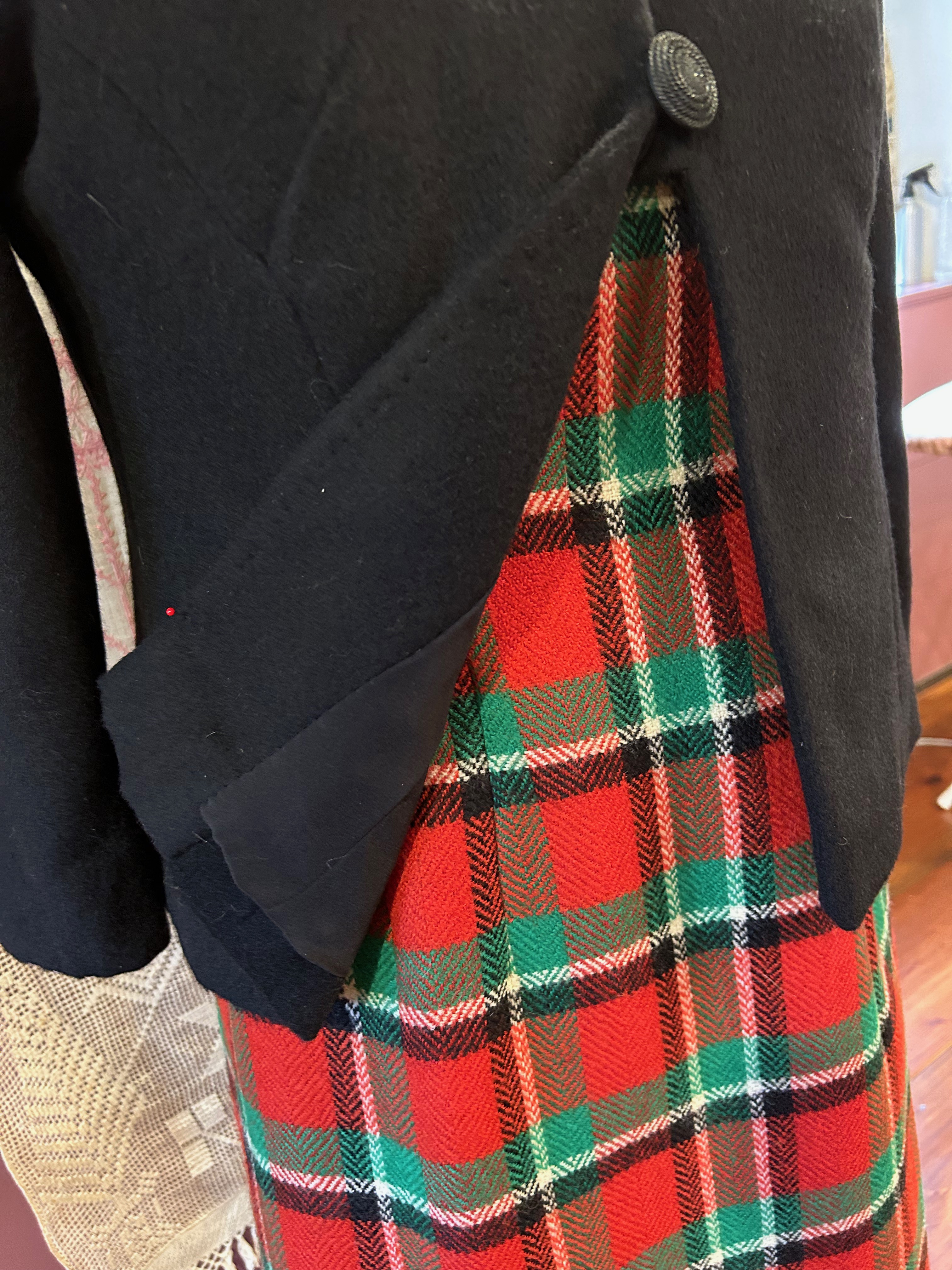
I chose this jacket pattern primarily for its “split” center opening which would work well with the unusual center stripe woven into the wool to balance its uneven plaid.

I first needed to make a fitting muslin (toile) and I needed to determine what changes I would make to the original pattern.  That ended up being three items:

  • I changed the neckline to match the neckline of the sheath dress.
  • I added a dart to the top of each sleeve, using that method as a substitute for the running stitches normally used to facilitate the insertion of the sleeve into the armscye. I have used this alteration frequently as it seems to fit my shoulder anatomy well.
  • I shortened the sleeves from full-length to 7/8 length.  I did this as I enjoy wearing bracelets, thus giving them a little “breathing room.”  

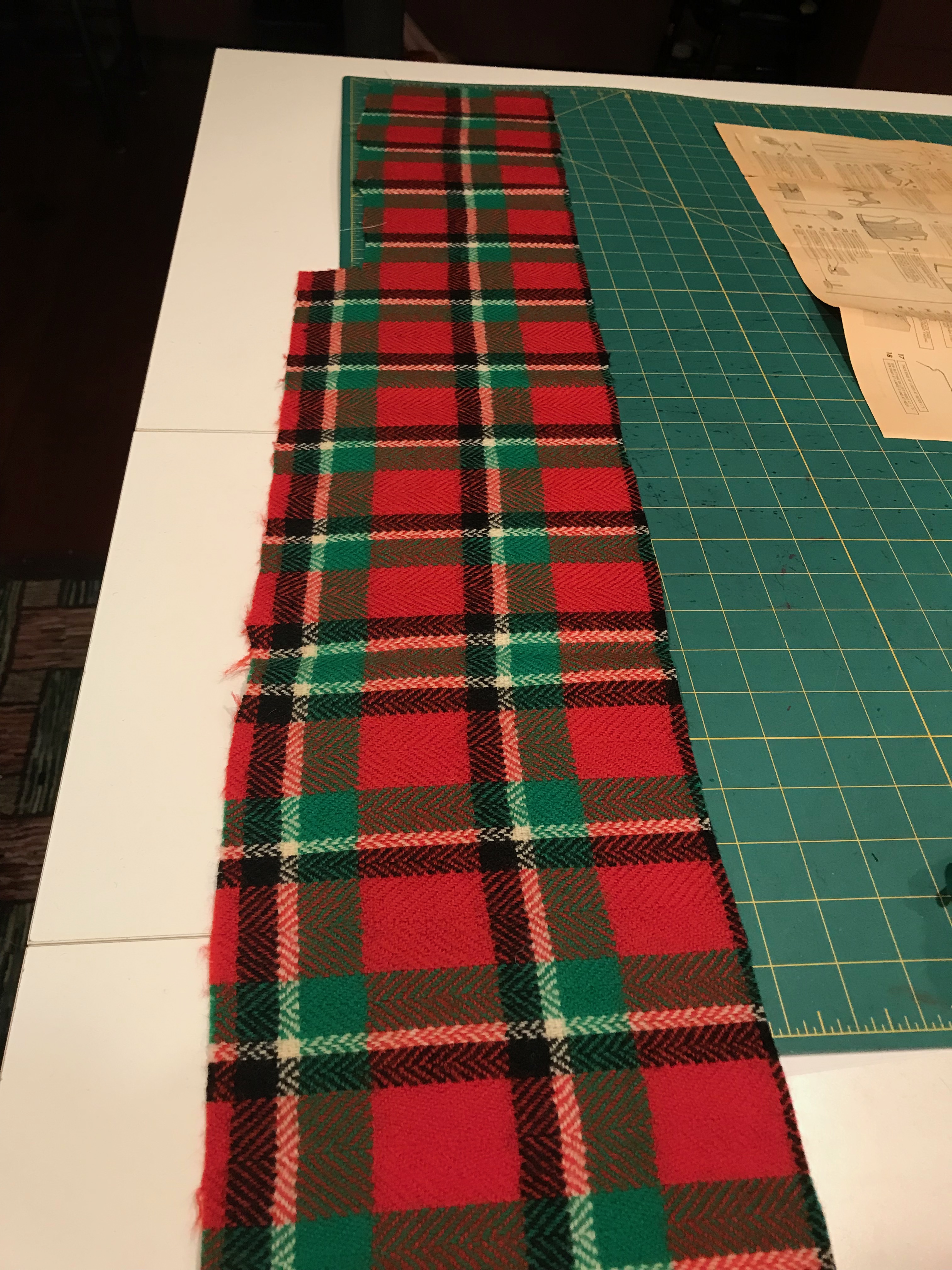
Before I started making this jacket, I had the perception I would need to tie the sheath dress and the black jacket together in some way.  Without a shared element, I wasn’t so sure they would necessarily look like they were made for each other.  The only problem was, I had very little yardage remaining from the sheath dress, as I had made it from a limited piece of vintage wool.  What to do?  

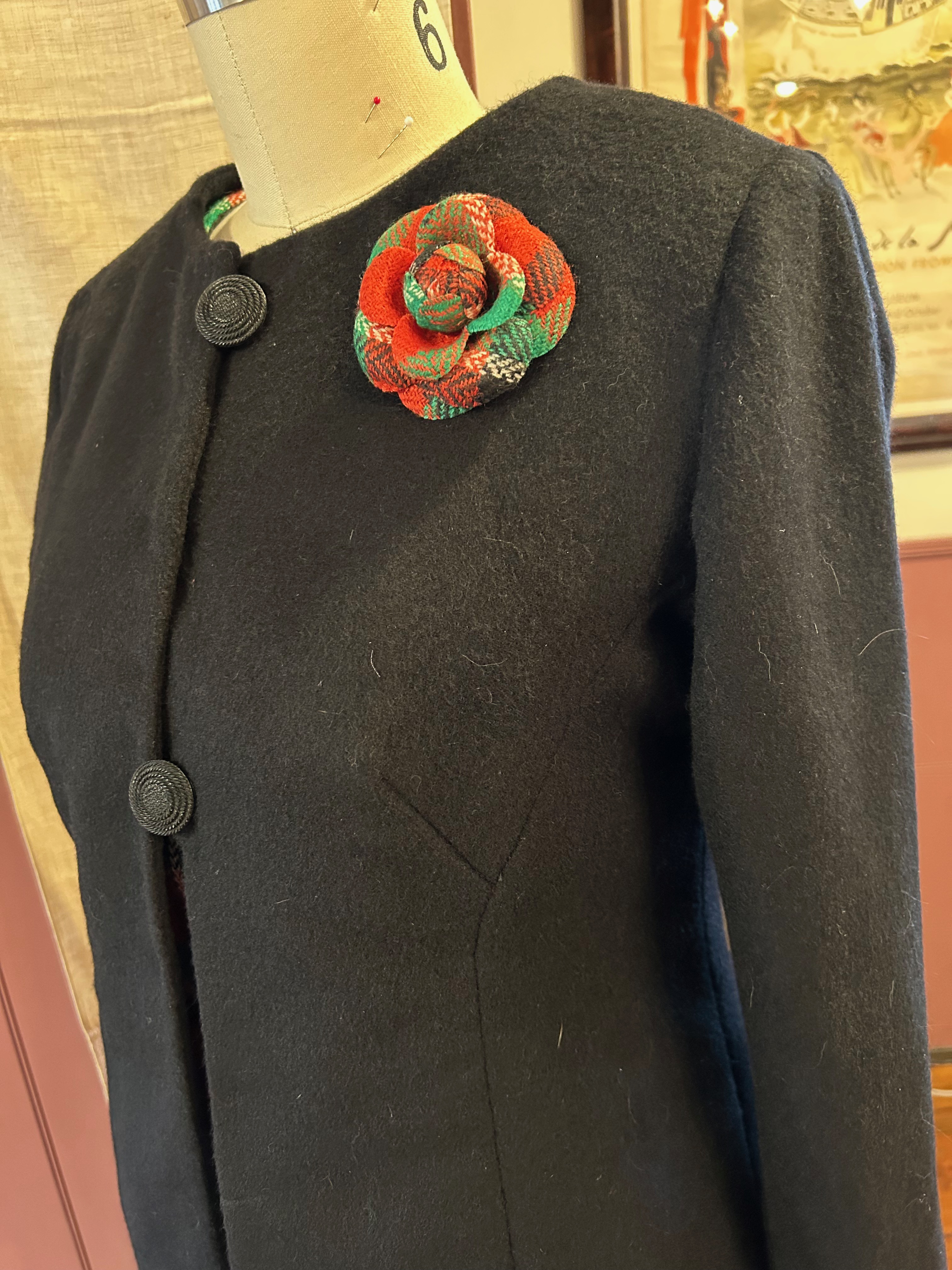
Covered buttons would limit my ability to wear the jacket with other pieces, and besides, I thought they would look stark as the only two small embellishments on a very black jacket.  I did not have enough fabric left, even for a small neck scarf, so that idea never had a chance.  I’m not sure when it came to me, but in a eureka moment, I thought a fabric flower made from the vintage plaid would be just the thing to make this outfit work.  

I knew M & S Schmalberg Custom Fabric Flowers in New York City would be my best bet (or only bet) for having a matching flower made.  I wasn’t sure I had enough fabric even for that, but I contacted them, sent pictures and measurements of my scrap of wool, and they made it work!  

I chose a 3” camellia option for my flower.  Look what they did!

A few other details for the construction of the jacket: (1) I under-stitched the facing to control the front edges and neckline of the jacket.

(2) I used a black crepe de chine lining (and lots of extra light when I was sewing it in!) I should mention that I underlined the jacket with silk organza.

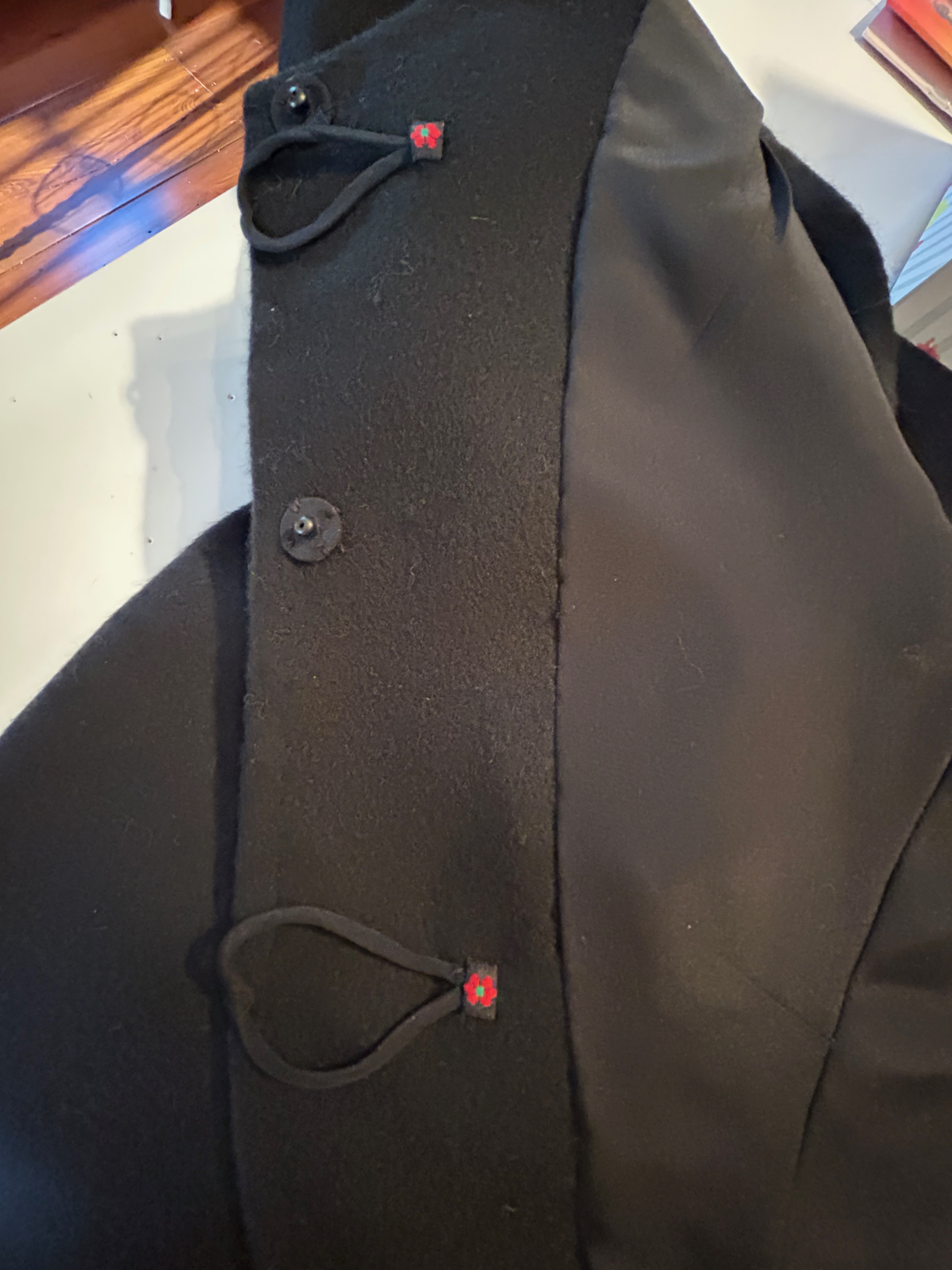
(3) The only bit of whimsy I added to the interior was to cover up the ends of the loops for the two buttons with two small jacquard ribbon pieces appliqued on.  No one will ever see these except for me, but I like them.

This is definitely a “dressmaker detail!”

(4) I covered the required snaps with the lining fabric.

I am so happy to have this jacket completed.  Most of my projects seem to take longer than they should, but that makes completing one just that much sweeter.  

.  

59 Comments

Filed under couture construction, Dressmaker details, Jackets, dressy, Loops for buttons, Mid-Century style, Uncategorized, vintage Vogue patterns from the 1960s, Vogue patterns, woolens

LIPSTICK  

Lipstick?  What does that have to do with sewing?  Well, everything, as it turns out, especially with sewing for 2023.  LIPSTICK is the word I have chosen for 2023 to guide my sewing aspirations.  And because sewing is so much a part of my life, the word LIPSTICK will undoubtably become a reminder and guide and focus for so many other aspects of my life as well.

How did I ever decide on such a word to guide me through this brand new year?  First of all, I am not finished with PINK, my focus for 2022.  Truth be told, I’ll never be finished with pink – the color or the joie de vivre it inspires in me – but certainly I wanted a new, expansive word for what I hope will be a year of great optimism and promise and accomplishment.  So, pink led me to think of lipstick, with its many pink and red and coral and orange hues – and all the ways a gorgeous shade of lipstick can enhance the colors we wear, be they black, navy, white, green, yellow, brown, etc.  But lipstick is more than that. 

For me, lipstick is instant confidence.  Lipstick adds power to a smile with a simple swipe of color.  Lipstick tells the world one is ready for something special, even if it is just a simple trip to the grocery store.  Lipstick is feminine and fun and frock-worthy.  

But don’t just take my word for it.  Here is what some notable people have said about lipstick (and pink) over the decades: 

“If you’re sad, add more lipstick and attack.”  Coco Chanel

“On a bad day, there’s always lipstick.”  Audrey Hepburn

“Lipstick is the red badge of courage.”  Man Ray

“I believe in manicures.  I believe in overdressing.  I believe in primping at leisure and wearing lipstick.”  Audrey Hepburn

“If there was [sic] no more pink lipstick un the world, I’d be useless.”  Nicki Minaj

“Start each day with your favorite lipstick and a beautiful smile.”  Unknown

“Pour yourself a drink, put on some lipstick, and pull yourself together.”  Elizabeth Taylor

“I believe in pink.”  Audrey Hepburn

“You can never go wrong with a little pink … a lot works for me.”  Dana Dalgetty

“Just have fun.  Smile.  And keep putting on lipstick.”  Diane Keaton

“She has a way with words, red lipstick and making an entrance.”  Kate Spade.

Making that entrance is where our love of sewing and feeling beautiful in our clothes comes into play.  This year, for me, promises to have a number of occasions where an “entrance” has the potential to be made (parties, events, significant milestones, hopefully lots of entertaining).  So – what do I have planned to wear to those occasions?

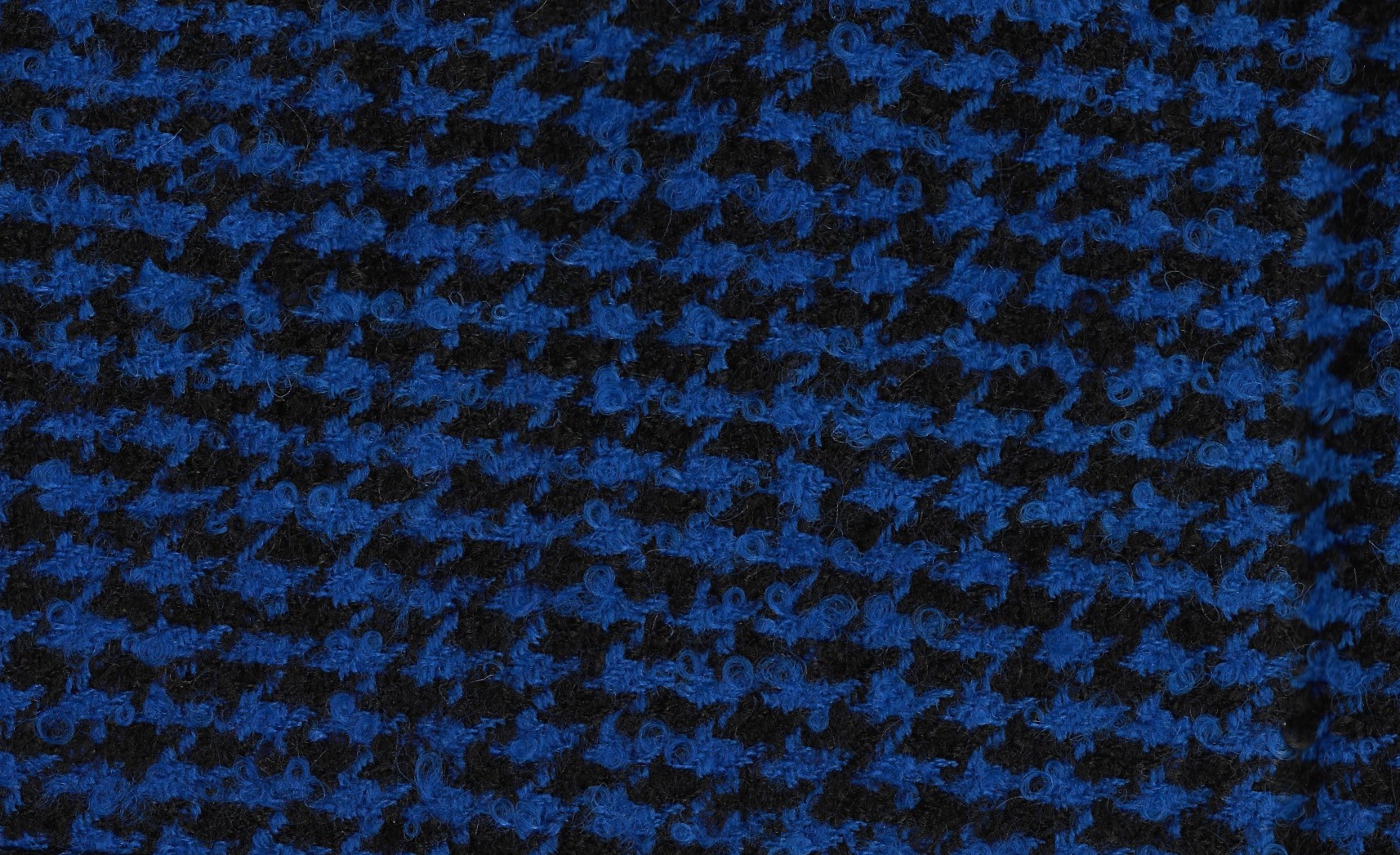
I am dreaming of a dress made from this pale pink plaid wool, buttery soft with a little glimmer to it.

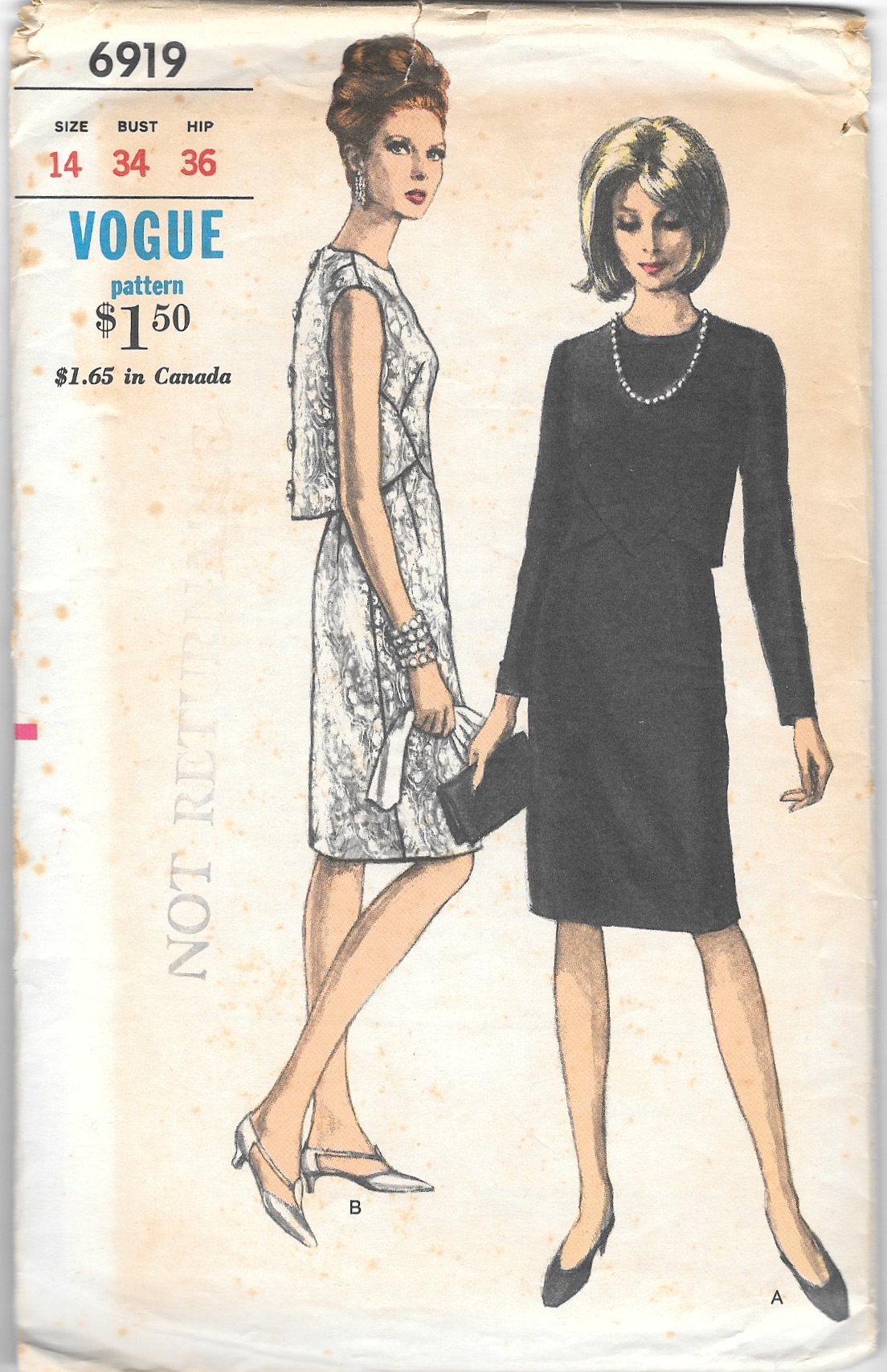
This is the pattern I hope to use for the above wool. I love everything about the design of this dress: it has a two-piece look, but the skirt is attached to a camisole under the over bodice. I love the buttoned back and the front seaming detail. I particularly like the long-sleeved version.

This navy blue cotton sateen will either become a mid-calf length full skirt or a long-sleeved sheath dress. Thoughts, anyone?

More blouses are in my sewing queue, one in orange cotton and one in pink and green gingham.

Being carried over from 2022 will be a long-ish skirt made of this glorious silk twill:

My love of coats continues, as I hope to make one wool boucle coat (if I have enough fabric – shown below) with coordinating silk dress – and one pink floral linen coat with coordinating linen dress. 

Two jackets are in my plans, a classic French jacket in black boucle with orange and cream accents (which is currently waiting to be finished), and a black cashmere jacket (at present underway) to wear with this dress and others.

The jacket included in this pattern is the one I am currently working on.

A fancy silk party dress in fuchsia?  I hope so….

I watched this fabric on the website of Britex Fabrics for months several years ago, and I finally decided I had to have it. It is silk charmeuse, very soft with the abstract design woven in. Is this the year it will meet its destiny?

As long as my granddaughters seem to enjoy wearing the dresses I make for them, I will keep sewing for them – 3 each again this year?   I hope I can manage that.

And who knows what else?  I will let my inspiration and time (!) guide me.  No matter what, I’ll be aspiring to enhance every outfit with the perfect lipstick and its promise of living beautifully, day in and day out, in the easy times and over the long haul.

So, dear sewing friends and readers, put on your lipstick and have a sparkling new sewing year! 

41 Comments

Filed under Love of sewing, Uncategorized

Looking Backward Before Looking Forward

Retrospection is a good thing, I think, when it comes to sewing (or many things, actually!)  When I think back on 2022 and what I accomplished of my sewing goals for the year, I am surprised by how much I actually marked off my list.  I seem to have started the year with a lot of momentum, but by the end of the year, that momentum, both sewing and blogging, fizzled out, for one reason or another.   My theme for the year was so, so easy for me to remember – PINK  – as in my favorite color.  It was so easy, in fact that I almost shied away from any projects which did not keep with the theme. 

Here is what I made, in no particular order:

  • 2 Spring/Summer cotton blouses, one pink and one red (the red one is a sleeveless gingham, no blog post and not even any photos.)  
I think this blouse may have been Readers’ Choice for 2022!
  • 1 deep pink silk blouse, made from one of my favorite vintage patterns.
  • A short cape to match it to match a pair of slacks I made in late 2021.
  • 6 dresses for my granddaughters (three each), none of which are detailed in a blog post.  I have found most of my reading audience isn’t really interested in sewing for children, so when I do post the dresses I make for them, it is on Instagram   (and I could do a better job of documenting them there …) 
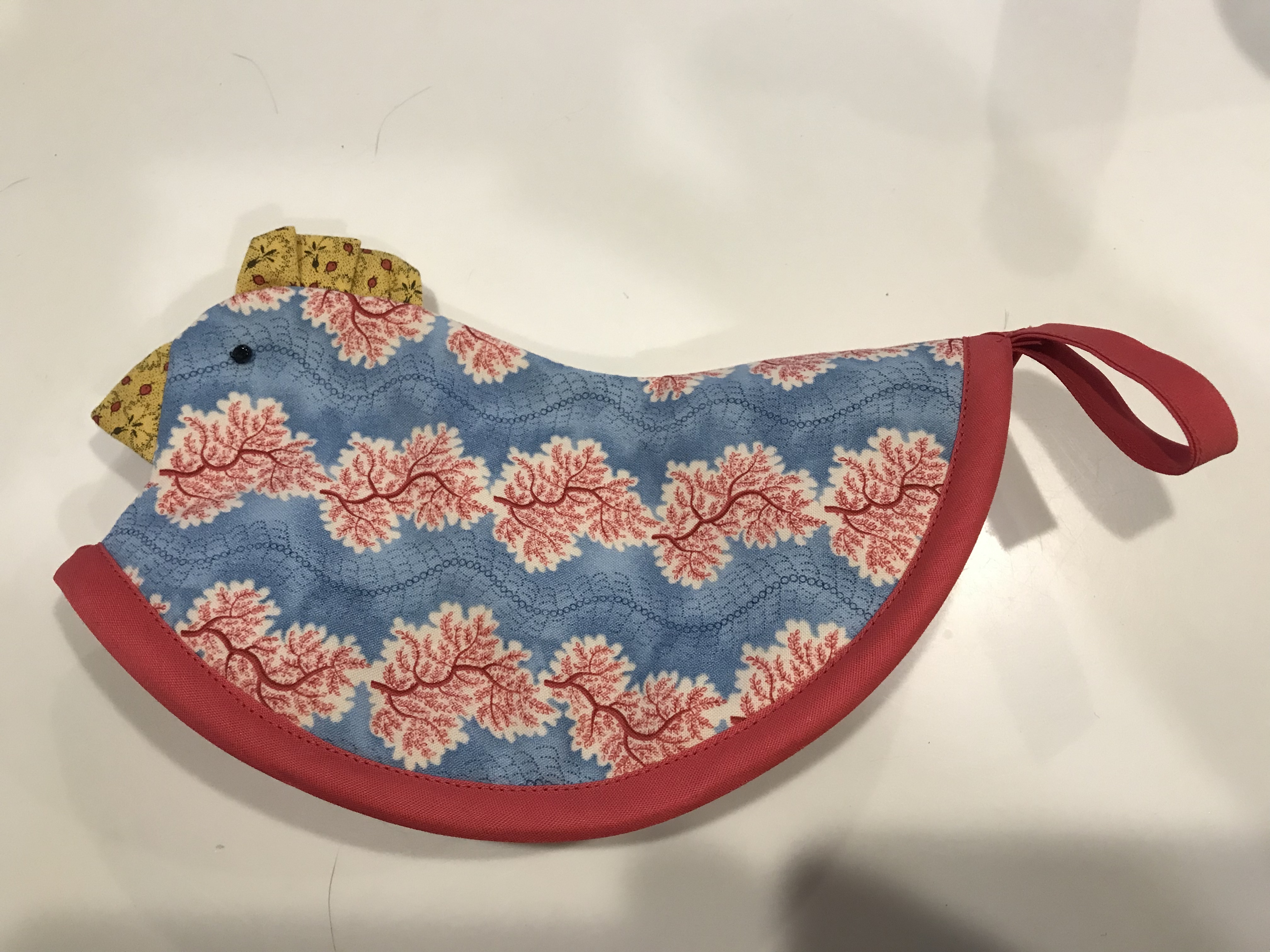
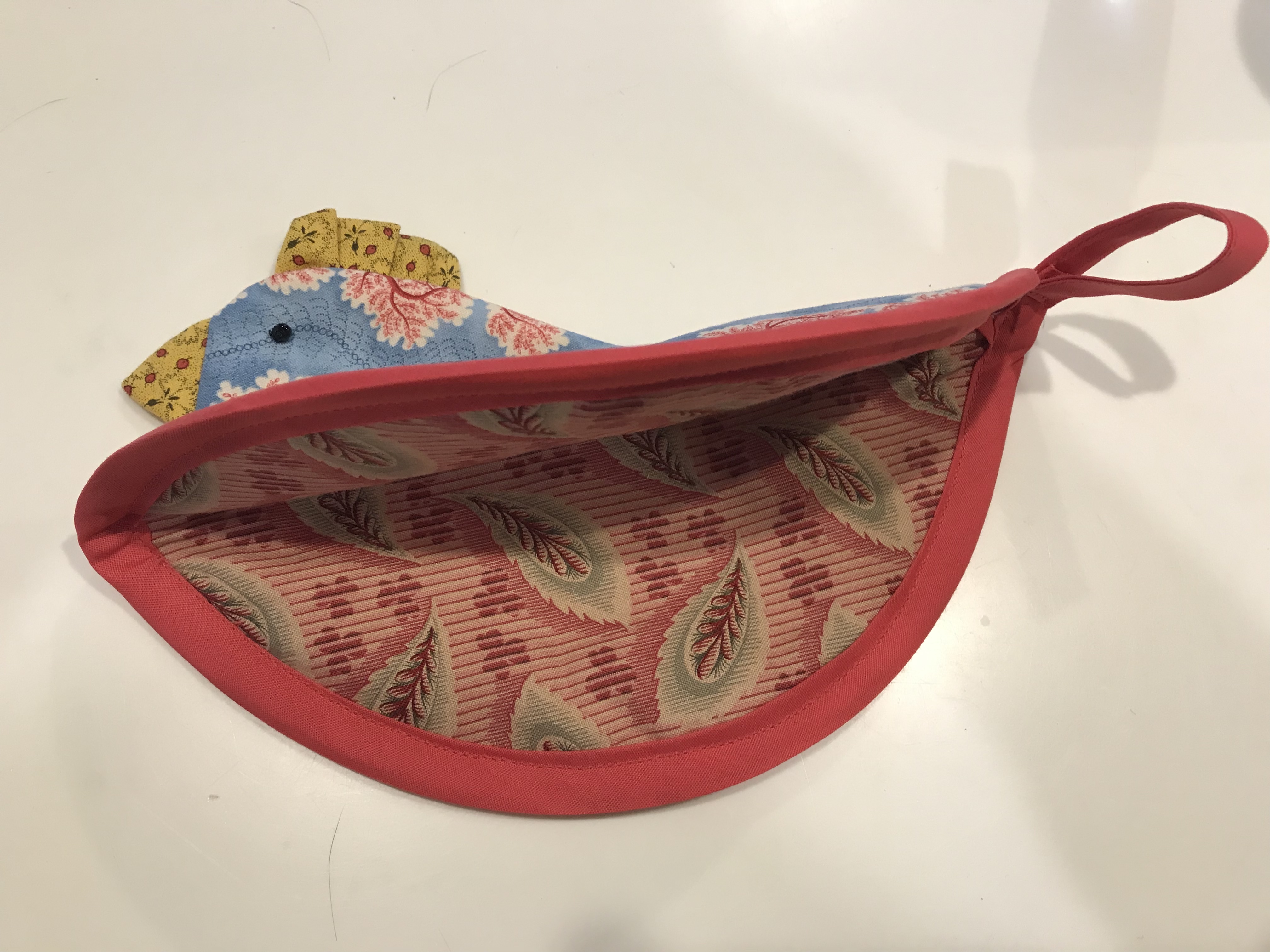
  • 1 chicken potholder.  Made as a topper for a bridal shower gift, this cutie pie is one of many I have made over the years.  
Just for fun, here is that chicken potholder…
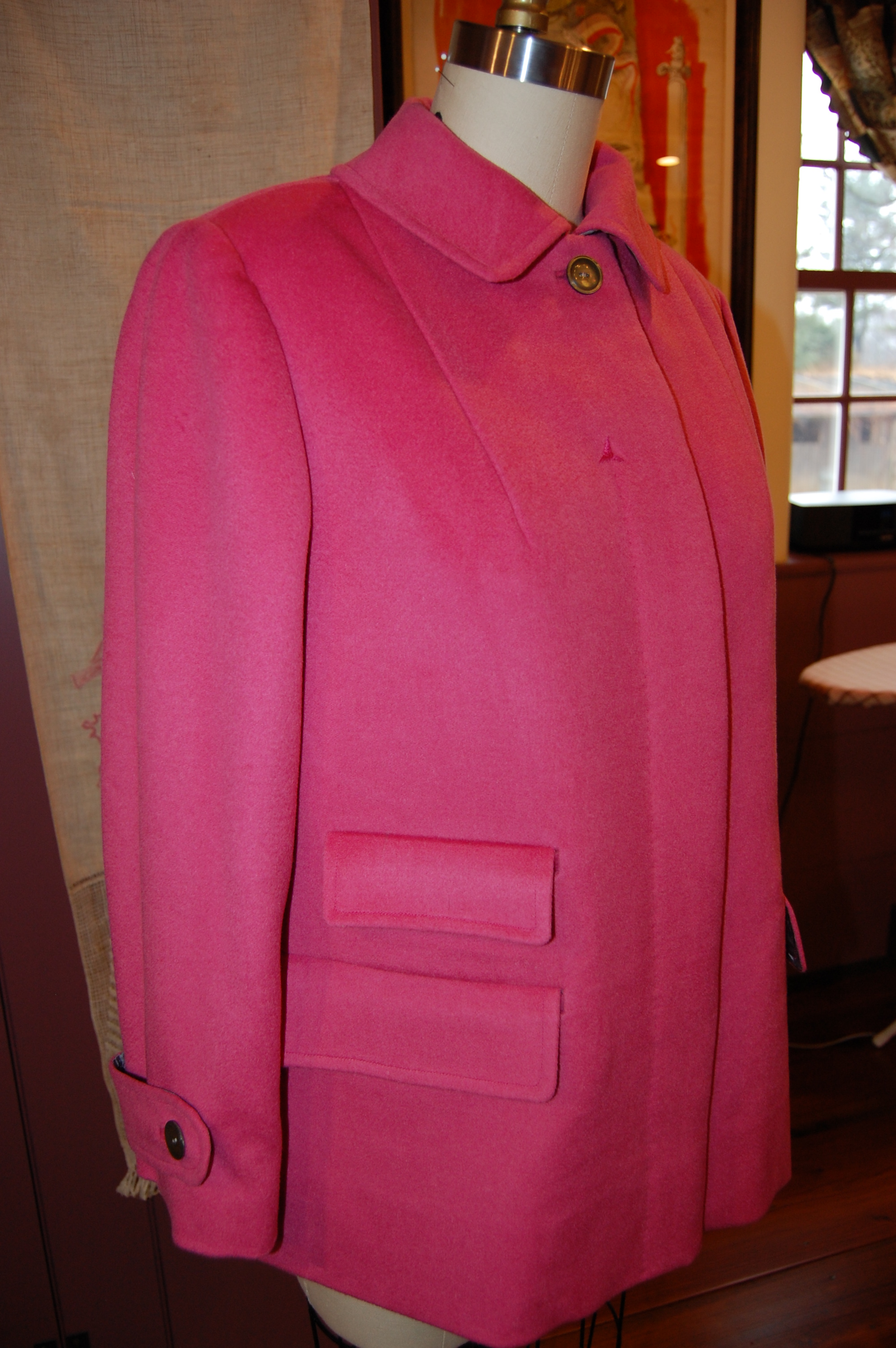
  • 1 pink silk gingham Spring coat, with a Trench coat vibe to it.  
  • 1 tunic top for easy Summer wearing.
  • 1 lightweight cotton shirtwaist dress, feminine and breezy.
  • 1 wool/silk blend floral printed skirt, no photos, no blog post, no pink, but heavy on the compliments when I wear it.  I took apart a midi-length skirt I purchased once upon a time from the J. Peterman catalog and remade it into a short, straight-skirt style.  
  • 5 aprons, three of which were gifts to friends. 
  • Home decorator sewing (6 seat cushions) for our western (second) home in Wyoming (NOT pink!) 

When doing a retrospective such as this, I like to ask myself, “What would I have done differently with certain items?”   It seems there is frequently something that should have been tweaked a bit, and so it was this year, with three pieces. 

  1. If I make the cape pattern again, I will add about 2 inches onto the length.  I did not pick this up in the muslin, unfortunately. 
  2. I mentioned this in my blog post, but the cuffs of the pink gingham Spring coat should be roomier. I must unbutton them to slip my hands through them, which is a bit of a nuisance.  I neglected checking this measurement/fit in my muslin/toile, which was a good reminder to me for the future: every aspect of a garment matters.
  3. I used my go-to shirtwaist blouse pattern for the sleeveless gingham blouse I made, and I had to redo the cut of the armscye twice to get the fit correct.  It was easily done, but a bit time-consuming.  The result is a comfortable blouse which now fits well.
Here is that blouse pattern I have used over and over. After I adjusted the sleeveless armscye twice to perfect the fit, I finished the edge with a bias strip seamed on the edge, turned in and stitched by hand as discreetly as possible.

PINK was not only my 2022 theme, but it set guidelines for my approach to sewing as well, such as “P“ for perseverance and perspective.  Keeping perspective, especially toward year’s end when life set me up for some turmoil, helped me through a few rough spots and sewing droughts.  

“I” for indulgence and inspiration were easy guidelines.  Indulge in another coat or two? Why, yes, one can never have too many coats.  And “I” for inspiration was everywhere, from ready-to-wear, to fellow bloggers, to sewing friends, to gorgeous fabrics, to vintage buttons.  The list goes on….

“N” for new endeavors, not necessarily sewing related, added new dimensions to my life this year, to be continued in 2023.  “N” was also for Not feeling guilty.  Not once did I feel guilty for all the hours I spent in my sewing room!  

“K” was for keeping focus.  My lists and planning help me with this.  And “K” is always for kindness, a good goal at any time in any aspect of life. 

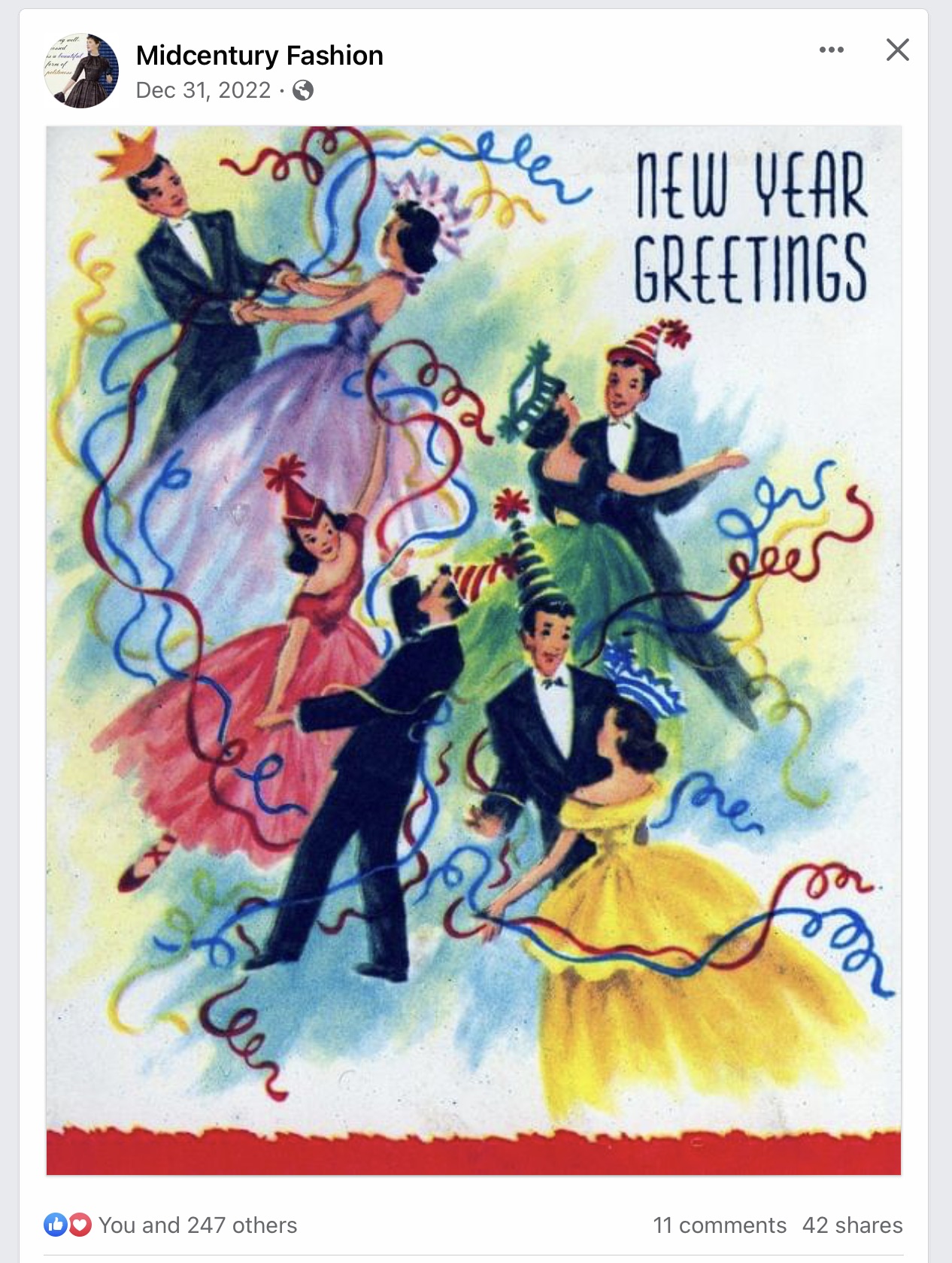
How perfect is this image to welcome in a New Year? (From a post by Midcentury Fashion on Facebook). And now is the time to look forward with anticipation and hope and a bit of fun.  Happy New Year! To be continued….

22 Comments

Filed under Love of sewing, Uncategorized

Not Just an Everyday Blouse

Some blouses are worn A LOT.  Those are everyday blouses, and I have quite a few of those (with more to come, I am sure!)  And some blouses are worn infrequently, but equally loved for their unique properties.  These would include exceptional fabric, refined or formal appearance, limited wearing opportunity, or their ability to make a statement.  The blouse I most recently completed has all those properties. 

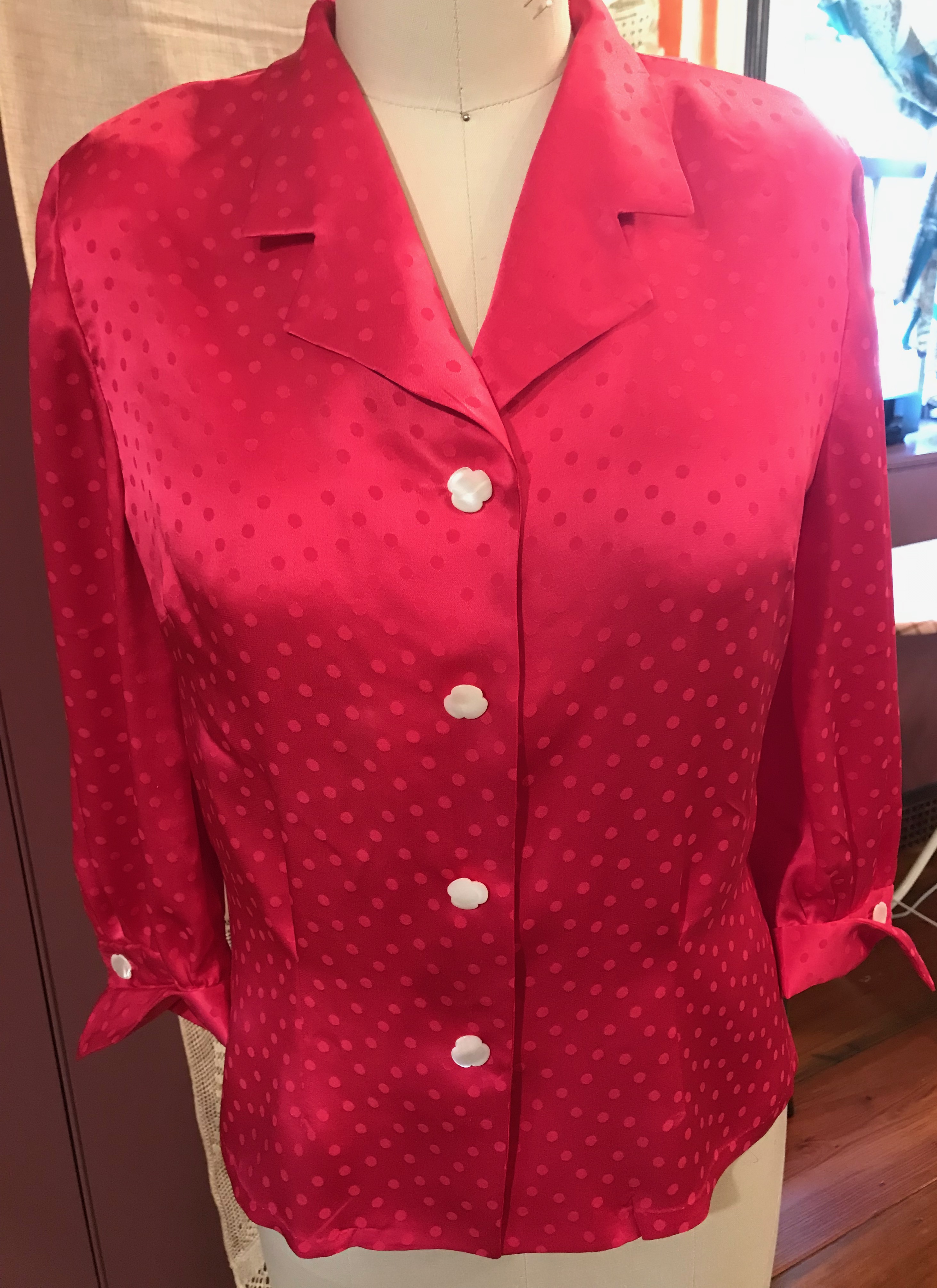
This deep pink silk charmeuse Jacquard has been in my fabric closet for over ten years, having been purchased at Britex Fabrics when I started sewing for myself again, way back when.  Its color, and the polka dot woven motif, both personal favorites, drew me to it.  A couple of years ago, after purchasing another piece of silk – a printed silk twill – I paired the two fabrics together and added them both to my sewing queue.  The skirt may have to wait until next year, but the blouse earned a spot in 2022’s sewing agenda.

Two fabrics meant for each other!

I used a blouse pattern which I have made once before.  From 1957, this pattern is timeless with its elegant collar (which looks good lying flat or propped up around the neck), petite French cuffs and feminine three-quarter length sleeves.  I suppose in 1957, this style blouse may have been considered a casual piece, which the illustrations on the pattern envelope suggest.  I saw this blouse as dressy, however, and that is how I have interpreted it. 

The collar on this blouse is beautifully engineered.
Here is the first blouse, in silk dupioni, I made from this pattern.

One of the details which make this blouse so flattering to wear is the waistline open-ended darts, easily visible above.  They minimize the bulk when the blouse is tucked inside its skirt and add a lovely billow effect above the waist. I made these darts a bit shallower than the pattern indicated.  When making these darts, I secured their upper edges by pulling the thread tail on one side to the other side so that I had the ability to knot those threads with three tight loops.  For those of you who have made a classic French jacket, this is the same method used to secure the quilting stitches at the end of the columns. The photo below helps to show this.

The darts are secured by knots done by hand both top and bottom.
Those open-ended darts are featured on the back of the bodice, too.

Buttons are such fun to select for a blouse like this.  I have had these vintage white pearl buttons for some time, and no doubt they were waiting for this project.  When the skirt is made at some point, the three-lobed profile will play off the designs in the silk twill.  But, more than that, I needed something to act as a foil for the polka-dotted field.  More “round” would have been fine, but not exciting.  Additionally, these buttons are a bit bigger which helps them hold their own on that deep, rich, pink silk.  

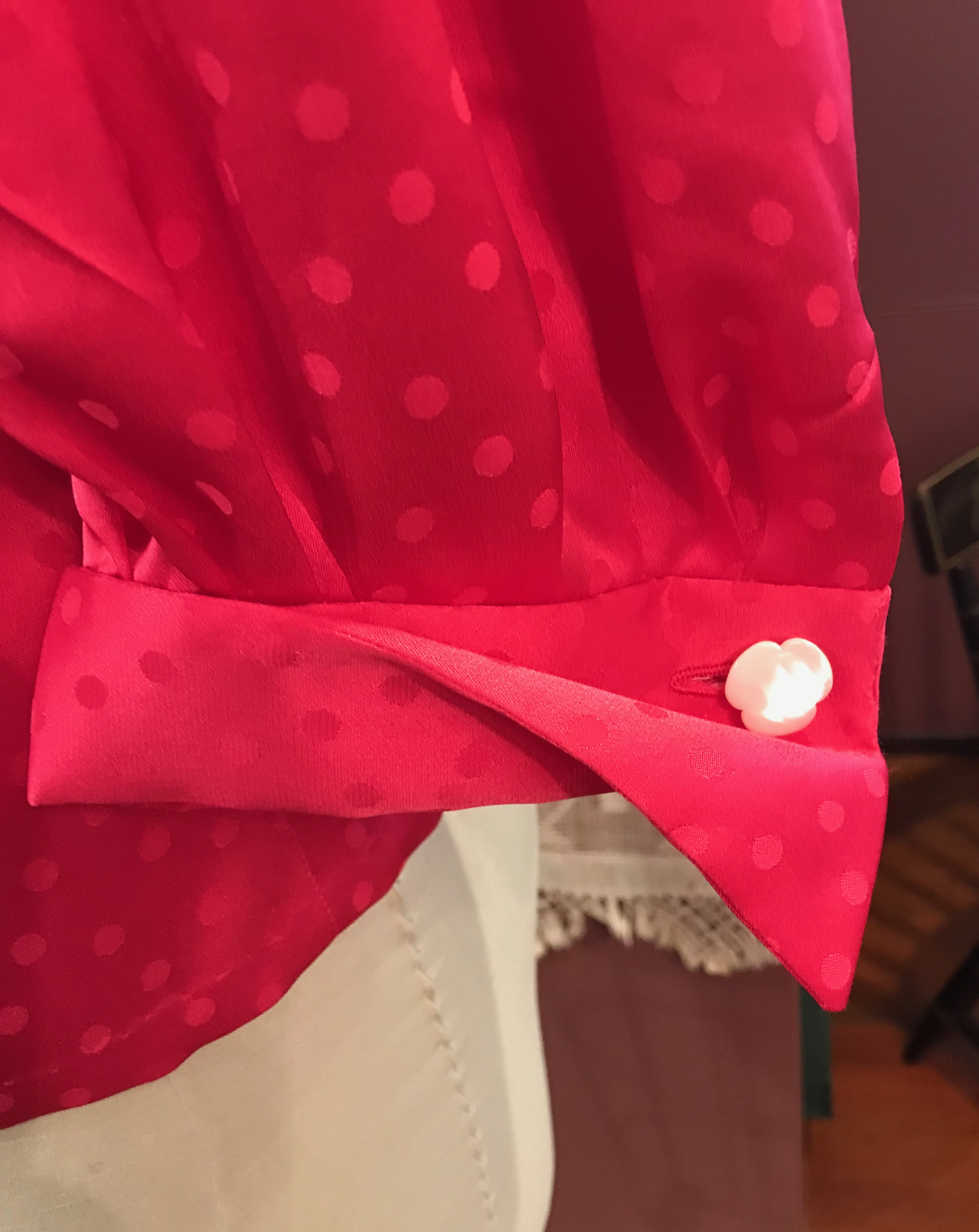
The French cuffs are secured by buttons both front and back.
Love those buttons!

Being the ‘statement” blouse that it is, I doubt I will be wearing this blouse casually. But I’m betting/hoping I will find good reason to wear it not infrequently to one or another tony event.  

25 Comments

Filed under Blouse patterns from the 1950's, Blouses, Buttons - choosing the right ones, Mid-Century style, Polka dots, sewing in silk, Uncategorized, vintage buttons, vintage Vogue patterns from the 1950s

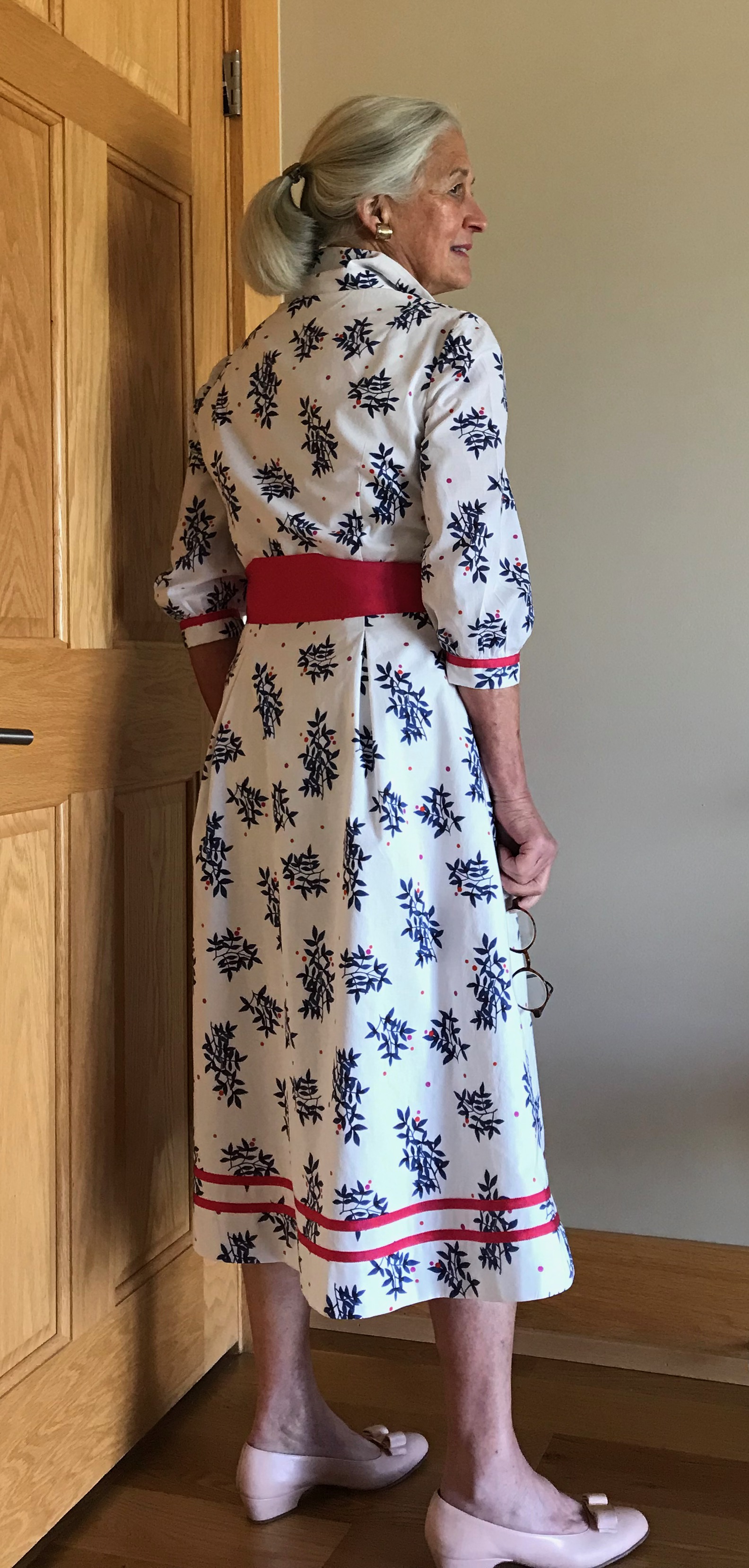
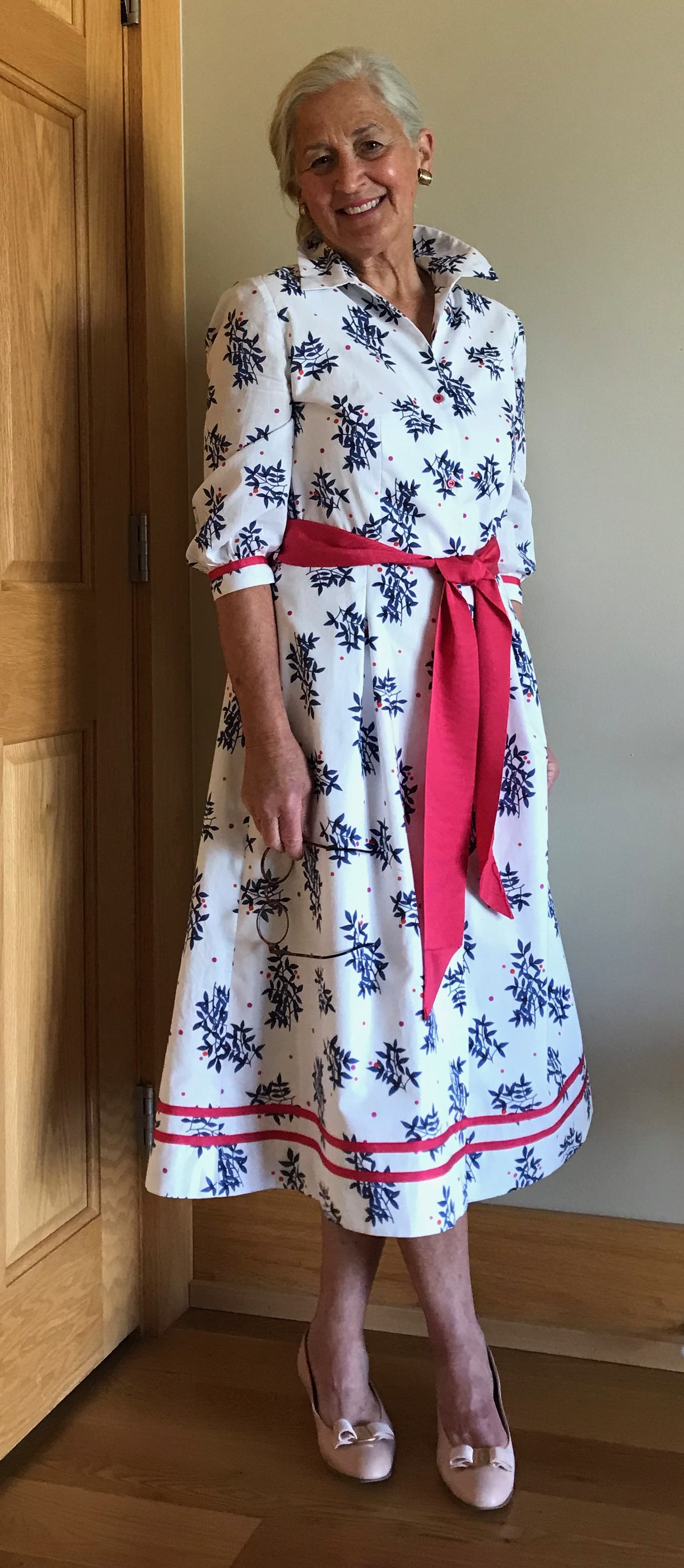
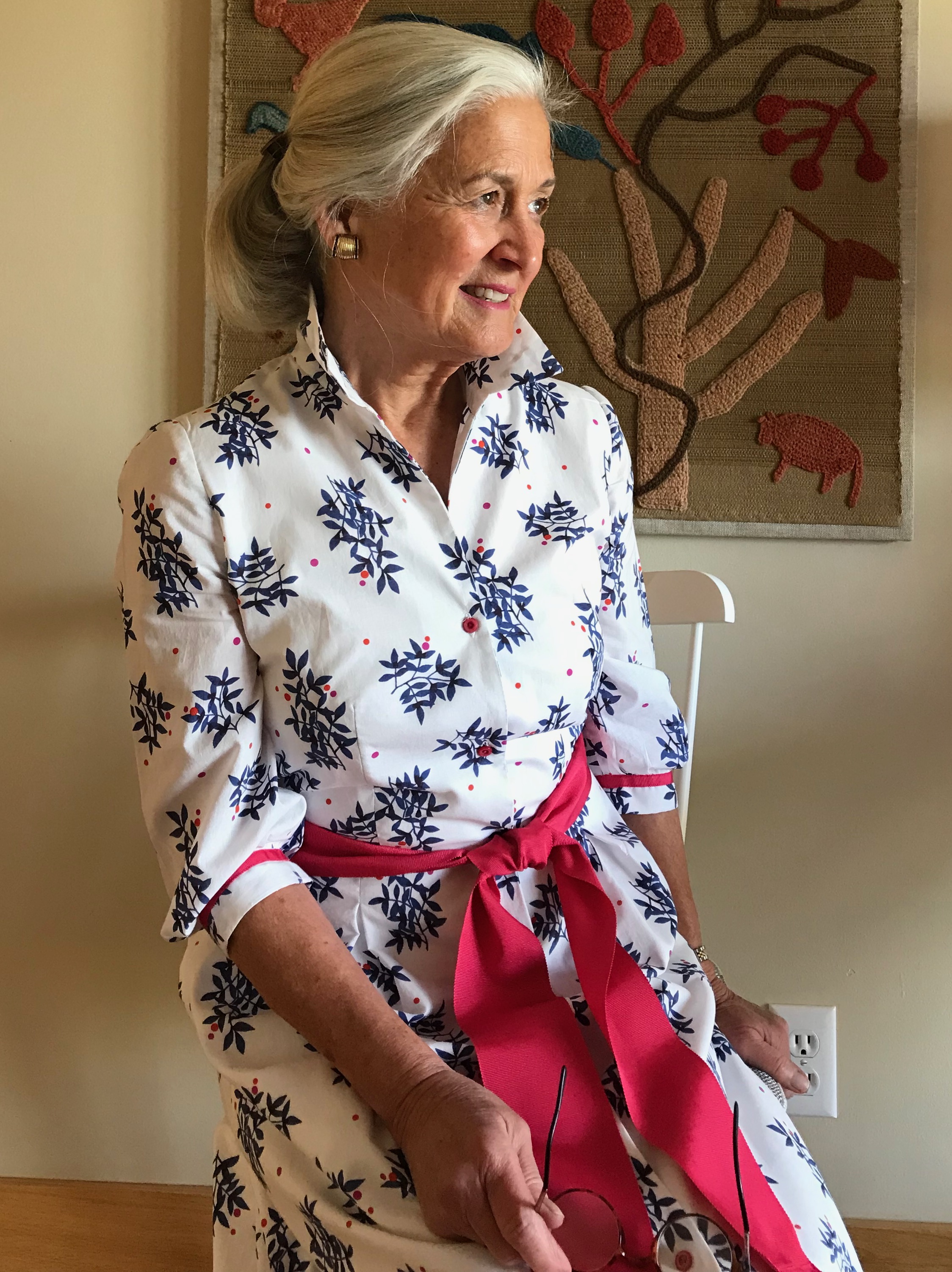
The Last Pink (and Blue and White) of Summer

Sometimes the smallest thing can be the deciding factor in the trajectory of a sewing project.  In the case of this dress – my last dress of summer sewing – the buttons told me how to proceed.  There was some serendipity involved as well, which is often the case with my sewing, it seems.  

I purchased the very light and airy white and blue fabric from Britex Fabrics two or three years ago. When it arrived, I tucked it away to think about it.  Somewhere along the line, I purchased the buttons you see here, but not for this fabric.  (I rarely let deep pink vintage buttons get away from me if I can help it.)  Somehow the two – the buttons and the fabric – found each other and became best friends.  That was all well and good, except for the fact those six little buttons needed some help to bring out the fuchsia and orange dots sprinkled amongst the blue flowers on the white background.  Enter deep pink Petersham ribbon left over from holiday dresses I made for my granddaughters last Fall.  Somehow, although this ribbon was not a match to either the fuchsia or the orange, it worked!  I had my palette….

The interesting thing about the color of the pink ribbon is it seems to be the shade if one mixed the fuchsia and orange dots together. And yes, the buttons are very old!

I had decided to use this pattern again, but a longer version, with different sleeves.  

However – and doesn’t it seem there is always an “however” to muddle the plans – I only had six of those petite little buttons.  And theoretically I needed at least eight.  So – I had to get creative.  

I decided I could eliminate two buttons on the bodice if I reconfigured the front opening and collar.  Here is what I did:

  • I angled the front opening: starting at about 6 inches down from the neckline seam, I drew a line from the fold line to the center front line, ending at the neckline.   
  • This allowed me to shorten the collar stand (so it was flush with the front edge of the collar), thus eliminating the need for a button on it.  
  • I redrew the collar so that it would be most attractive either standing up or lying flat.
  • The original pattern had a self-facing for the bodice (as you can see below), so I had to make a separate, applied facing to accommodate the angle.  
  • The angled opening also allowed for the first button to be 6 inches down – meaning I could get away with two buttons on the bodice – if I used snaps at the waist (which isn’t a bad idea anyway.)
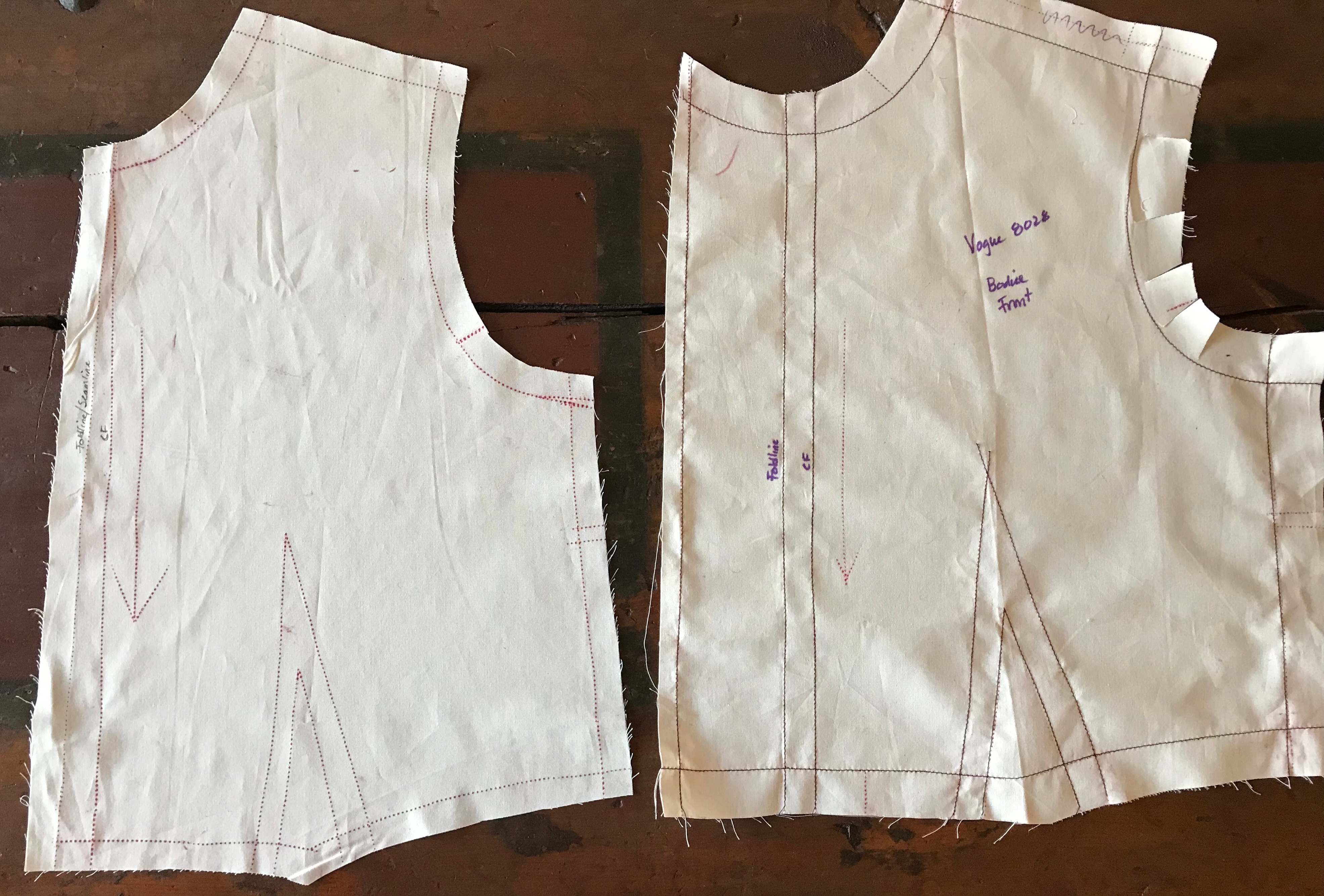
On the right above is my muslin pattern made from the original design. On the left is my reconfigured bodice pattern showing the angle detailed above. (My separate facing piece is not shown.)

Here is what the reconfigured collar and collar stand look like up close:

Two buttons on the bodice allowed me 4 buttons for the skirt, which was adequate.  I actually added a small snap 3+ inches below the lowermost button to hold the skirt together indiscreetly. 

Moving on with more changes:  the flowing nature of the fabric dictated a change in the tailored sleeves of the pattern.  I knew I wanted below elbow length with a little bit of fullness, but not too much. A narrow sleeve band seemed appropriate.  And then there was the decision where to apply the narrow Petersham ribbon on the sleeve bands.  Next to the seamline with the gathered line of the body of the sleeve looked best to my eye, so that’s what I did.  

I was fortunate enough to have enough of the narrow Petersham ribbon to put two rows of it at the lower part of the skirt.  These two rows of trim are absolutely essential for this dress to look balanced. 

Unfortunately I didn’t have my preferred blue shoes with me for these photos.

I should mention I underlined the entire dress, with the exception of the sleeves, with very lightweight cotton batiste.  I finished all the seams with Hug Snug seam binding.  

I like the bodice “angled” neckline and the reconfigured collar so much, I will probably use these alterations again sometime, even if I am not compromised by too few buttons!  

Without those little rosy-pink buttons – and without leftover trim from my granddaughters’ dresses – the white and blue flowered fabric would probably still be sitting in my fabric cupboard.  Instead, I was able to finish my summer sewing not only with more pink, but with a dress I really like!  

28 Comments

Filed under Buttons - choosing the right ones, Sleeves, Uncategorized, vintage buttons, Vogue patterns

A Blue, White and Pink Tunic Top

Perhaps many of you are familiar with this famous quote from Edith Head (American costume designer, 1897-1981): “A dress should be tight enough to show you’re a woman and loose enough to prove you’re a lady.”  When it comes to tunic tops, my very inelegant redo of that quote is: “A tunic should be fitted enough to not be baggy and loose enough to be able to get into it.”  I find that combination to be a difficult task.  Let’s see how I did with this one:

When I saw this pretty fabric on Emma One Socks’s website, I just knew I needed to purchase a length of it. All cotton, it is finely woven and silky soft.  Originally, I thought I would make a dress, but when it arrived, I saw it as a tunic top, trimmed in pink, of course.  I have a couple of tunic patterns, but I went back to this one because the front opening is longer than most, making it easier to get on and get off. 

Yes, I needed to shorten it to be a tunic top rather than a dress, but that’s an easy thing to do.

The interesting thing about this pattern is that there is no fastener/button indicated for that long opening.  I’m not sure how one would keep a degree of modesty – or even keep the tunic properly on one’s body – without a button or at least a hook and eye.  More about that later.

There are a couple of features of this pattern I like, besides that long opening in the front.  It has shoulder darts in the back, which I always find add just a little necessary fitting finesse. 

I love these diagrams which give so much information about the pattern. The shoulder darts are clearly indicated here.

I also like the way the front facing is constructed, and the width of the stand-up collar.  However, the pattern lacks slimming darts in the back.  My limited experience with sewing tunics has taught me that without long defining fisheye darts in the back, my tunic is going to be baggy and look like a sack.  So, I added them.  

There are darts there!

I also shortened the sleeves, as I prefer a length just below the elbow, and I took out some of the width of the “trumpet.”  Even with a narrower sleeve, I knew turning up a hem on it would result in a less than smooth finish.  To get around this, I took the pattern piece for the bottom panel for the long sleeve (shown on the pattern), flipped it, narrowed it, and shortened it to give me a facing which would be a perfect fit into the lower curve of the sleeve.  

The “trumpet” design of the sleeve is evident here.
Here is the facing piece I cut from the pattern.
And here it is pinned in place.
The seam connecting the sleeve to the facing is visible here. I turned up a scant 1/4″ of the unfinished edge of the facing and machine sewed it in place. The pink thread you see is from the attachment of the trim.

Back to that front opening:  when sewing the facing on, I added a loop to the right side so that I could strategically place a button to keep the gap closed.  On this fabric, it seems hardly noticeable, but oh my, is it necessary!  

One of the beauties of tunics is there are no rules on how trim is applied or placed or even if it is used.  I had purchased two widths of Petersham ribbon for use on this garment, fully intending on using two rows to echo the front opening.  However, I determined that would be too much.  Instead, I used the narrower ribbon on the collar and as the second row around the hem and the side slits.  The sleeves seemed to look better with the wider width of ribbon. The ribbon adds a degree of stability to the hem, especially, which helps the tunic to hang properly.  

By the way, sewing all that Petersham ribbon on is helped immensely by the use of Dritz WashAway adhesive tape.

Obviously I have not washed this tunic yet, but in its first laundering the tape securing the ribbon will, indeed, wash away. I expect a softer appearance of the ribbon at that point, which seems to have a few waves in it at present.

Pictures often are the best way to check fit on a garment (even after multiple try-ons to fine-tune it), and I was pleased with the final, slightly fitted, non-baggy appearance of this tunic.  In other words, it does not look like a sack!  It is easy to slip on, less so getting it off, but still very manageable.  (Sometimes a side zipper can be – or needs to be – added to help with this task of dressing and undressing.  The abbreviated length of this example precluded that option.) 

If I make this pattern again, I may make the darts a little bit deeper for more definition.

I’m not sure what Edith Head would have thought about tunics, if anything (!), but I am thinking positively about this one.  

27 Comments

Filed under Blouses, Fashion commentary, Loops for buttons, Tunics, Uncategorized, Vogue patterns