Tag Archives: quotes about fashion

Back to the Past

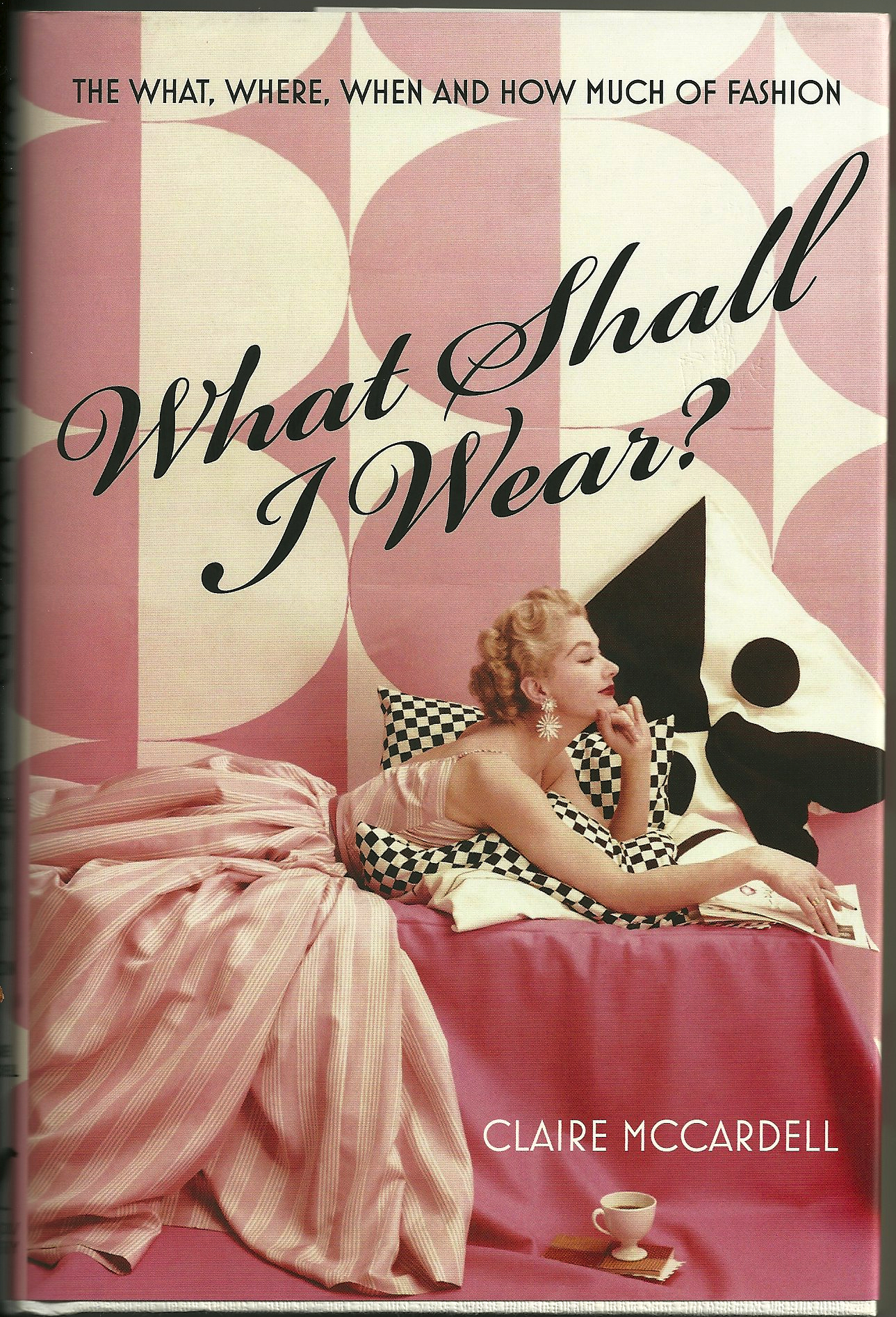
I am finally back in my sewing room, working on my emerald green silk suit.  The event to which I had hoped to wear this suit has come and gone (I wore something else that evening and the world somehow kept on spinning – amazing!), but this sewing project was and is on my Spring agenda and I am bound and determined to finish it.  Until I have made a bit more progress, with something to show for it, I thought I would indulge you with a book review of the 1956 Claire McCardell (1905-1958) book, What Shall I Wear, re-published in 2012 by The Rookery Press, in association with The Overlook Press, New York, New York.
Back to the Past

This book came to my attention by way of The Vintage Traveler blog (thanks, Lizzie!).  I purchased it on Amazon last Fall, and then, to my surprise, it was one of five books chosen by Christina Binkley of  The Wall Street Journal for her annual list of “Best Style Books”.
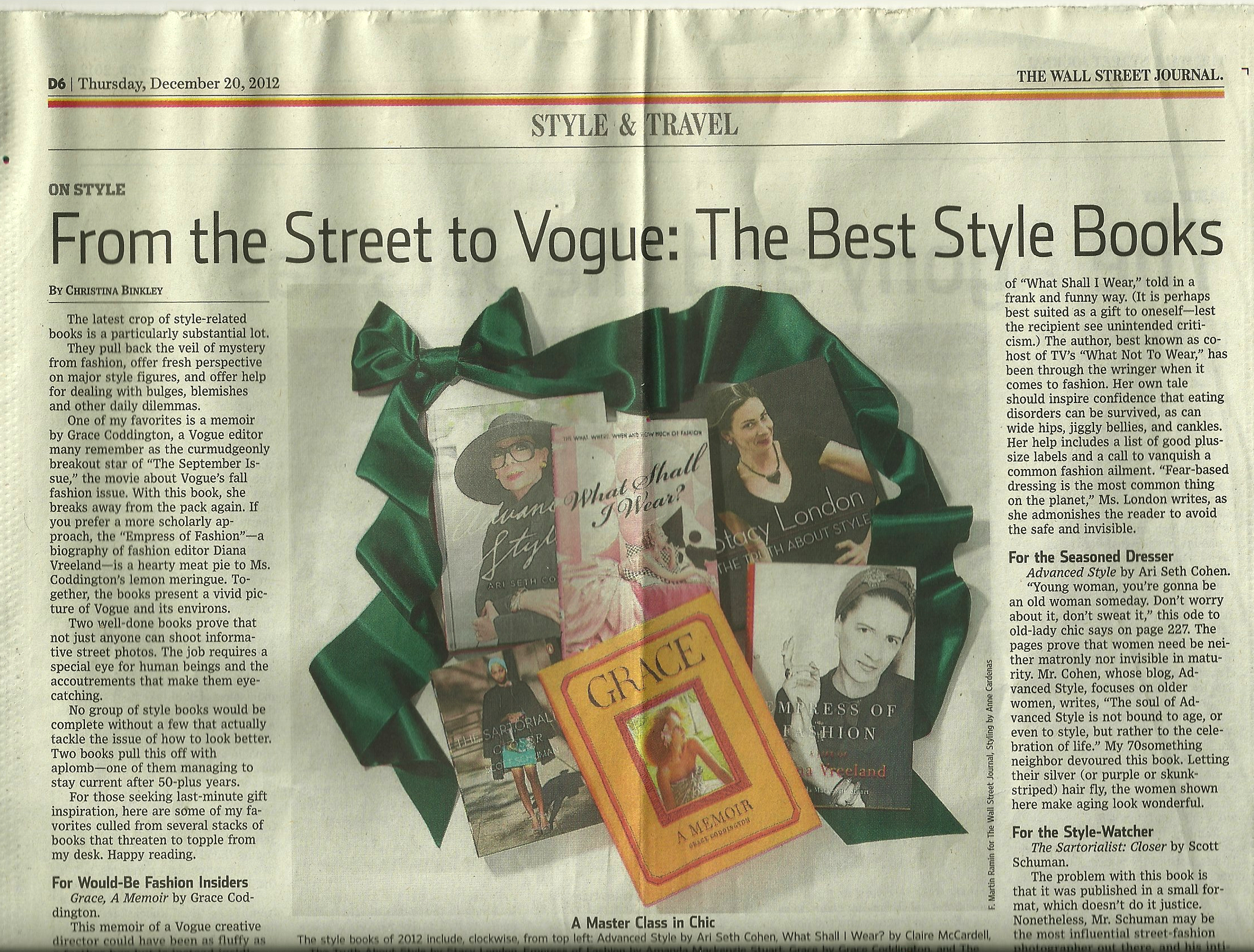
This annual feature on "style books" is always one of my favorites.

This annual feature on “style books” in The Wall Street Journal is always one of my favorites.  It appeared on December 20, 2012.

Here from Binkley’s review of the book: “This book is a gem.  …It manages to be modern more than 60 years later…  The designer created chic casual items that we take for granted today, such as trim ankle pants and full skirts that permit comfort and movement.  … She demonstrates an understanding of women’s lives. ‘Everyone should have a “pop-over” dress – a sheath that they can just pop over their head and go.’”

Here are some of Claire McCardell’s fashion tips and thoughts which struck a chord with me, especially in relation to sewing and dressmaking:

1)  The simple act of changing buttons (or in sewing, choosing the right ones) can make a dress fit your style.

2) When putting together your clothing (or pattern and fabric) budget, consider carefully where you want to put your money.  Make one major purchase a year, something classic and timeless is always a smart move.

3) Use color extensively and don’t be afraid to stretch from your normal palette.

4) Coats should be a large part of your wardrobe.  Indeed, she recommends compiling a “Coat Collection”.  That’s advice sweet to my ears!

5) Learn how to tie a scarf!  In her words:  “You miss all the fun if you can’t tie things.”  “If you really care about Fashion, sit down right now and learn to tie.  An ascot, a bandanna, a neckband, a bowknot.  This means knowing how to fold first, knowing how to loop next, knowing how to get the knot straight, knowing how to make the ends even – or uneven – on purpose.”

6)  Like all the great fashion designers and couturiers, she emphasizes the overwhelming importance of fit.  All those muslins/toiles we make are worth the time they take!

7) Accessorize your outfits with the appropriate jewelry, shoes, and bags.  Restraint is better than opulence.

8) She was a big fan (and proponent) of the “American Look”: meaning comfortable clothing with clean lines, displaying elegant simplicity.

The final chapter of the book is appropriately entitled:  Fashion has no last chapter.

You can read here for yourself her Essential Eleven.  Pay particular attention to #2!
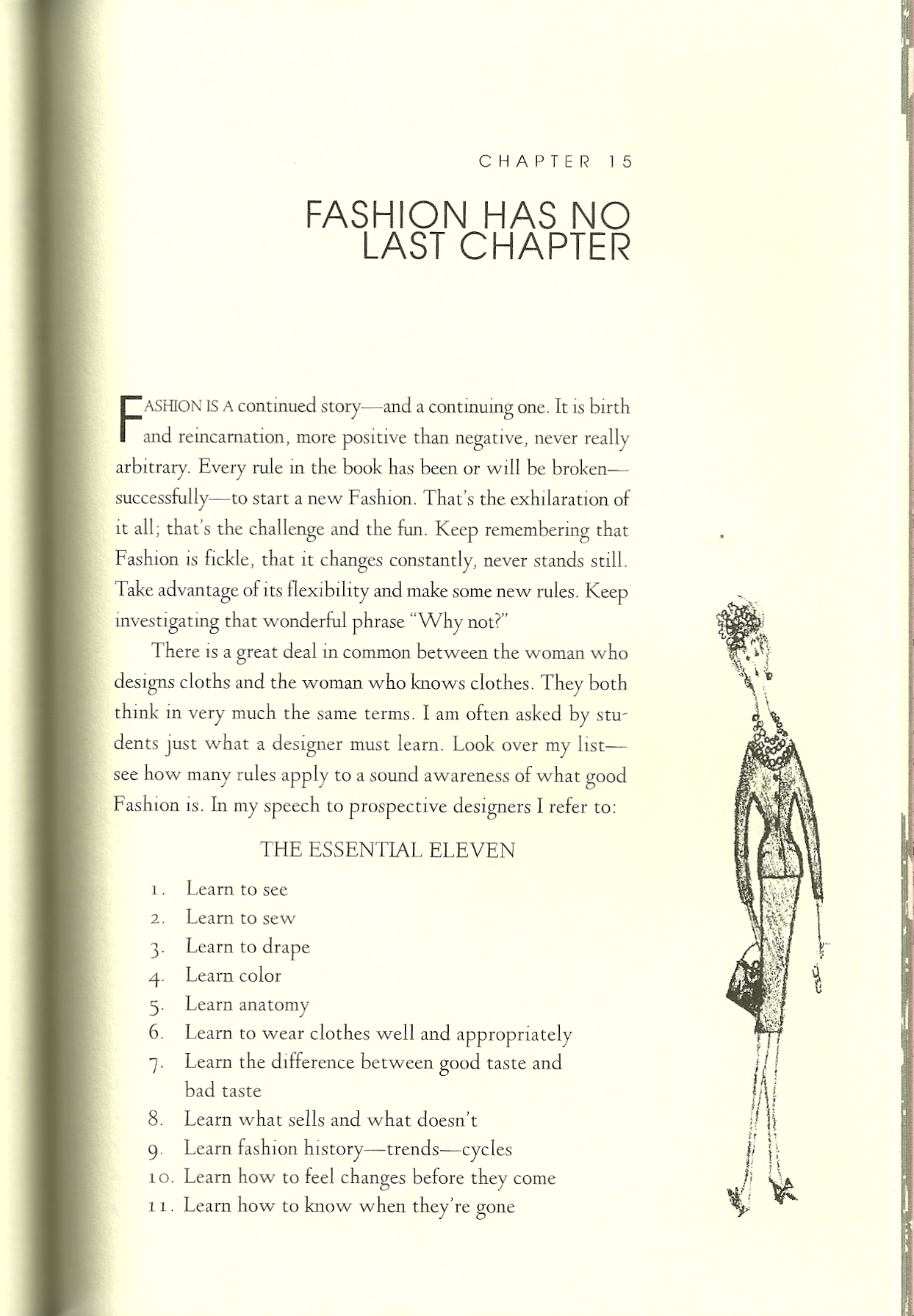
As a preface to this list, McCardell states:  "There is a great deal in common between the woman who designs clothes and the woman who knows clothes."

As a preface to this list, McCardell states: “There is a great deal in common between the woman who designs clothes and the woman who knows clothes.”  (Click on the photo for a close-up).

Earlier in the book on page 103, she relates her first experience with dressmaking: “Miss Annie … came to the house to make clothes for mother and me.  The process fascinated me from the start – selecting the pictures of dresses in the Vogue Pattern Book, the fabrics to be bought at the dry-goods store, the cutting and basting and fitting, the pockets and buttons and buttonholes…”

Surely sewing and dressmaking have no last chapter either:  What will you wear?  What will you sew?
12 Comments

Filed under Buttons - choosing the right ones, Coats, Scarves, Uncategorized

“The Sweetest of All the Colors…”

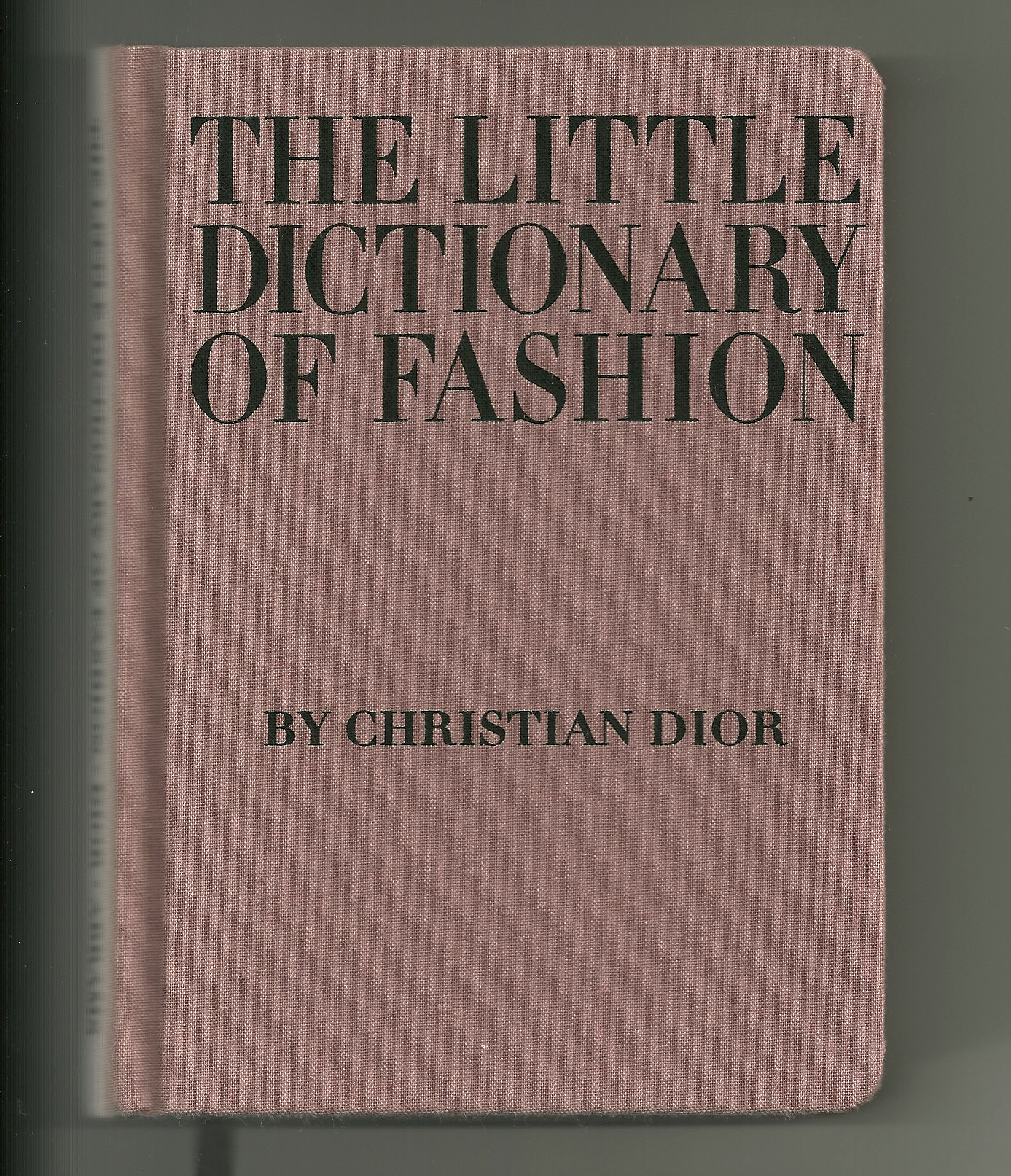
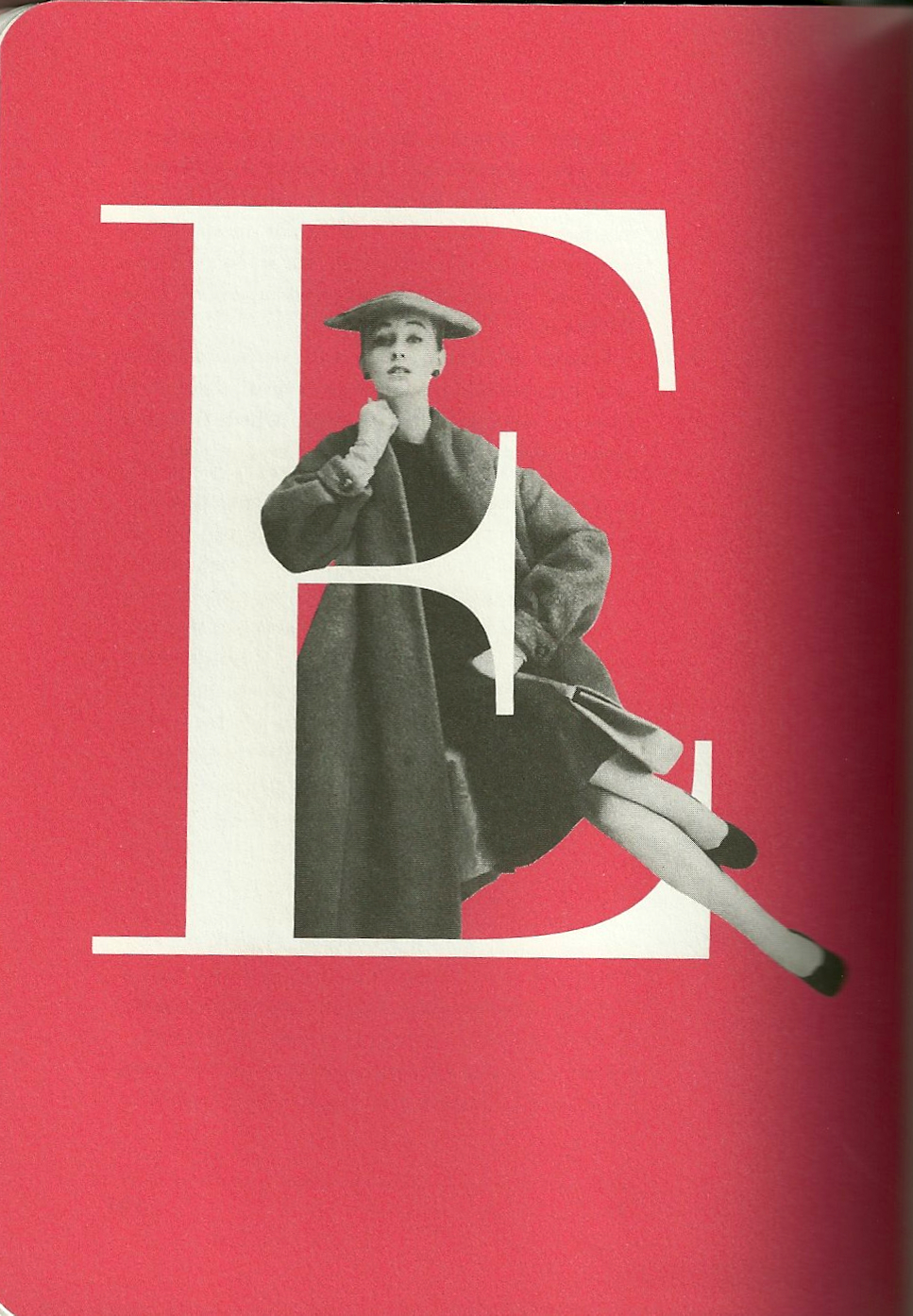
“… Every woman should have something pink in her wardrobe.”   Christian Dior certainly had distinct thoughts about fashion, and with this statement I concur.  Everyone looks good in pink, especially pale pink (men definitely included), and I suspect pale pink was what Monsieur Dior was thinking when he wrote this in his Little Dictionary of Fashion (First published by Cassell & Co., Ltd., 1954; 2007 edition by Abrams; Copyright Catherine Dior and Jean-Pierre Teto, 2007).   Interestingly, the lining pages of his little book are pale pink, but the divider pages feature a deep, deep raspberry pink as in – – – my newly finished “ladylike” dress!

Here is the "section"page for E from Dior's Fashion Dictionary

Here is the “section”page for E from Dior’s Fashion Dictionary

Dated 1958, this is the pattern I used for my pink dress.

Dated 1958, this is the pattern I used for my pink dress.

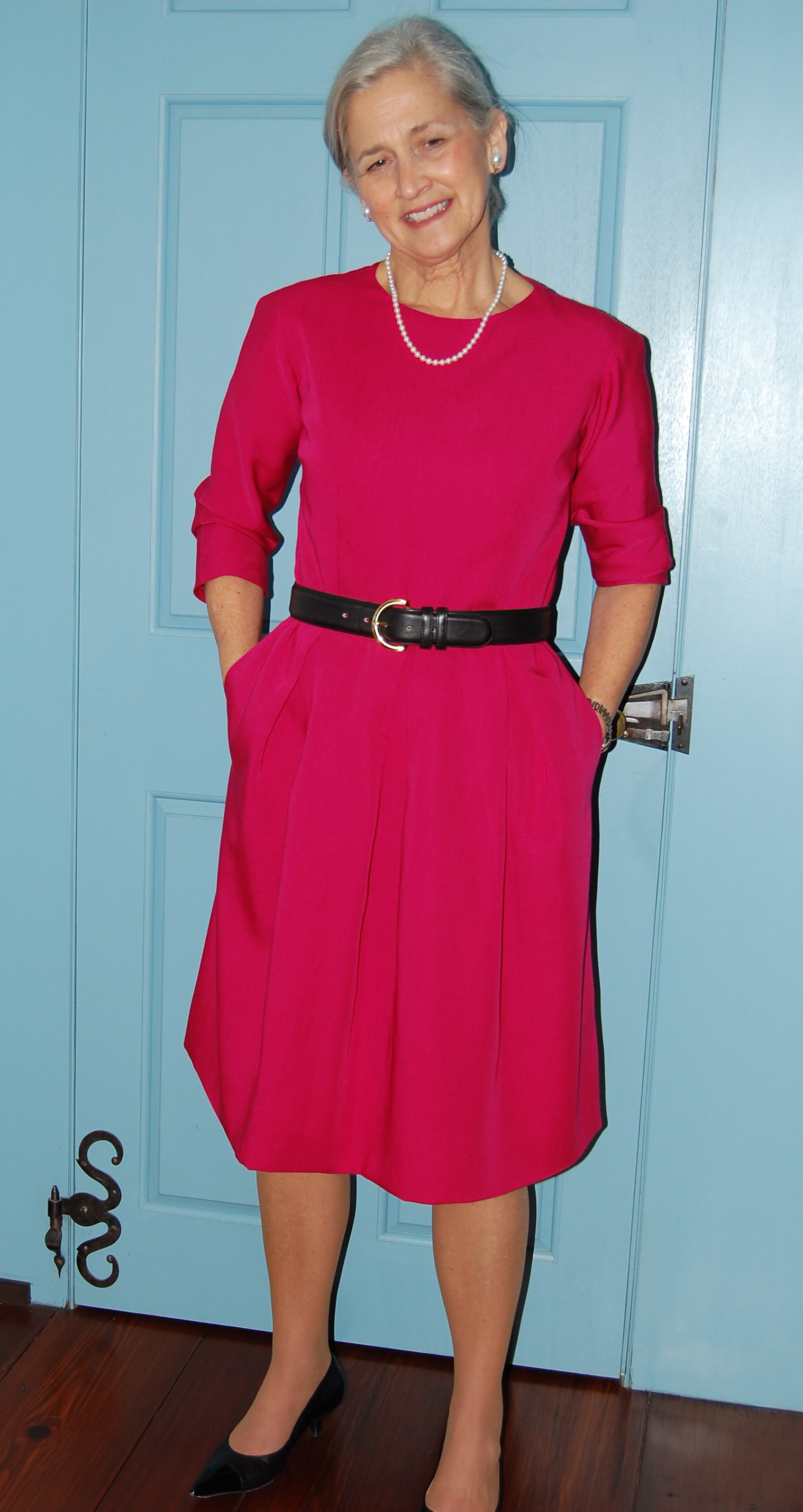
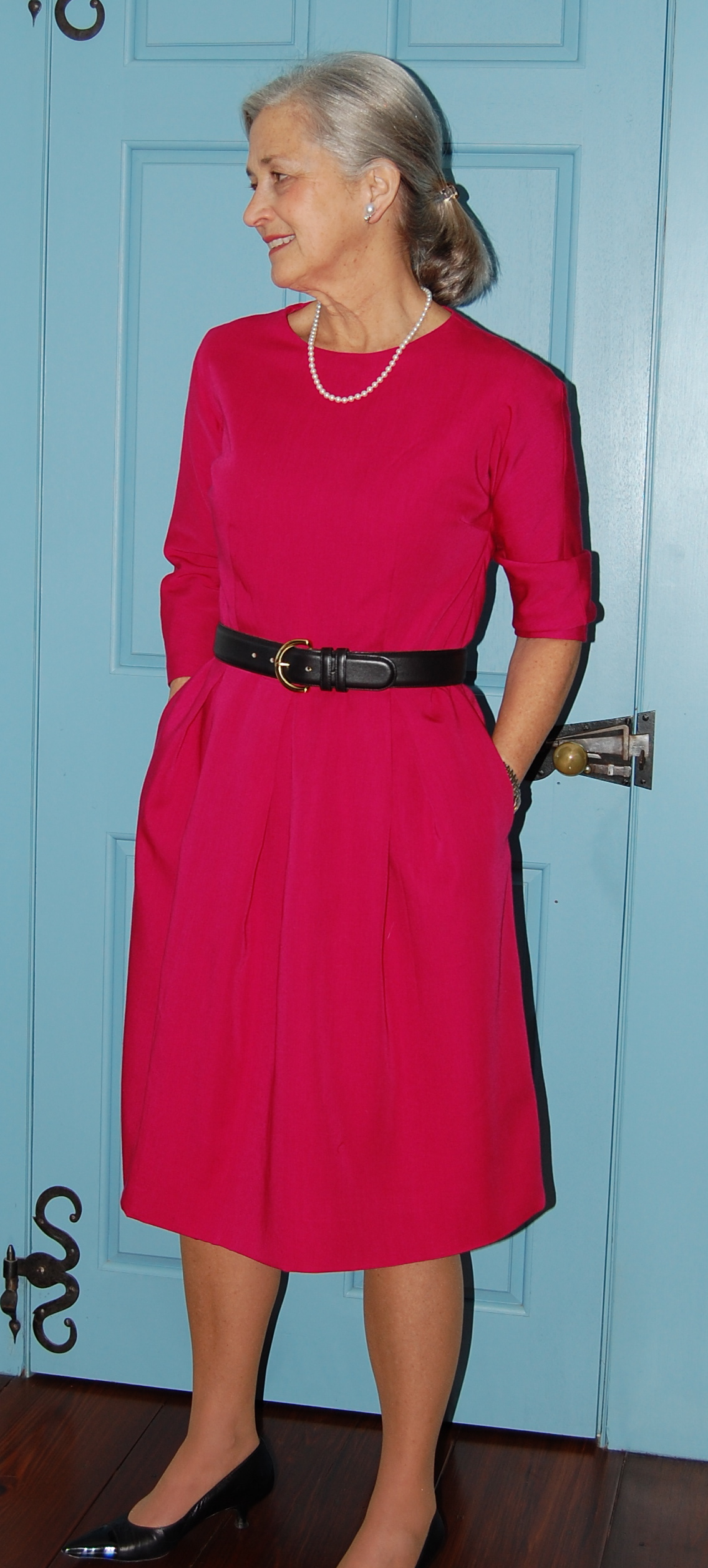
The finished dress!

The finished dress!

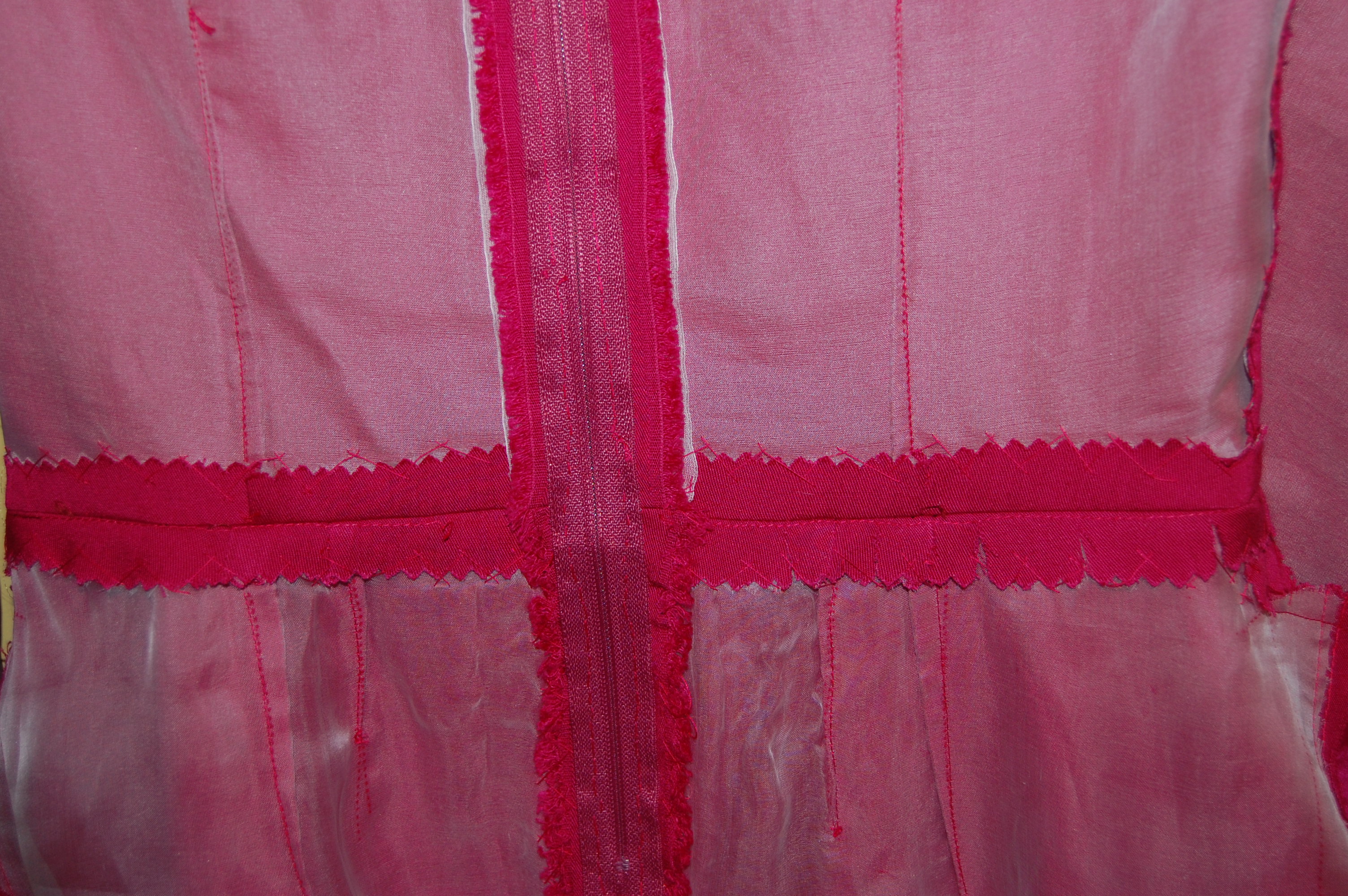
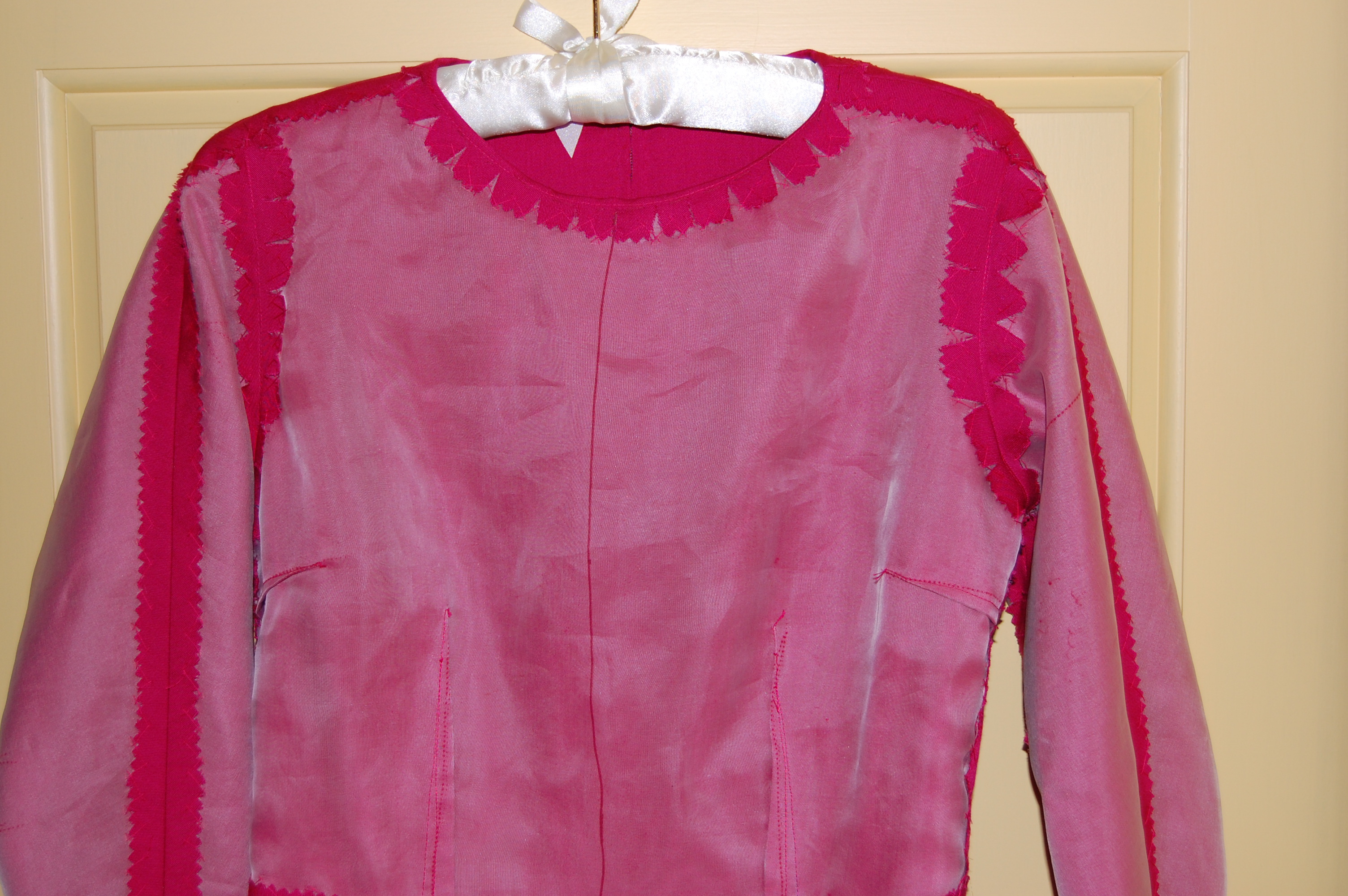
As I mentioned in my last post, I made this dress using couture construction, which means a lot of hand-sewing.  The more I use this type of construction, the more I like it, but it doesn’t get any faster.

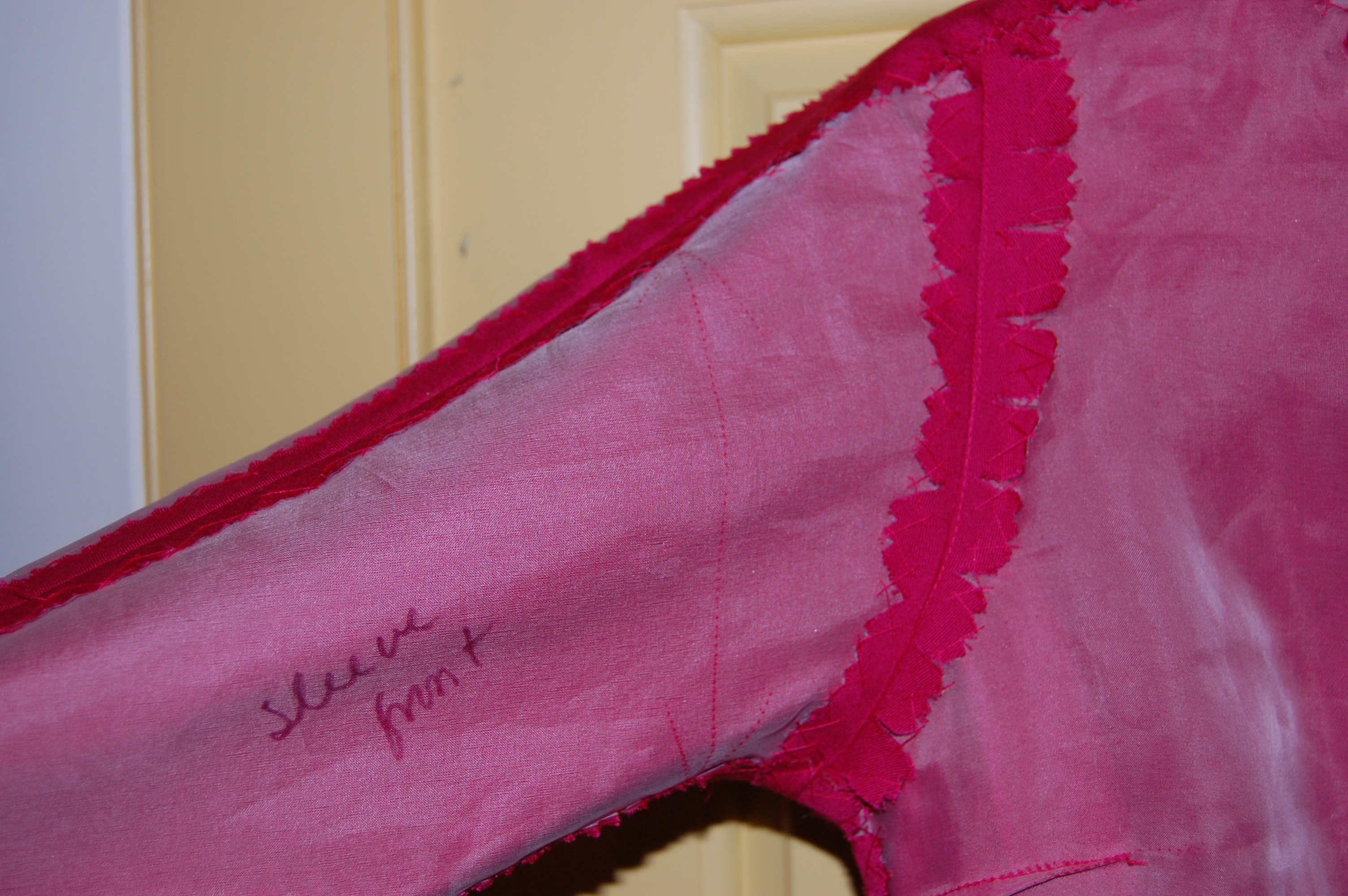
An interior view of some "couture" construction - silk organza underlining, catch-stitched seams, hand-picked zipper.

An interior view of some “couture” construction – silk organza underlining, catch-stitched seams, hand-picked zipper.

However, couture construction gives me a lot of flexibility in changing necklines, which I really appreciate.  That is one of the changes I made to this pattern – widening the neckline to a more flattering appearance for me.

The widened neckline.

The widened neckline.

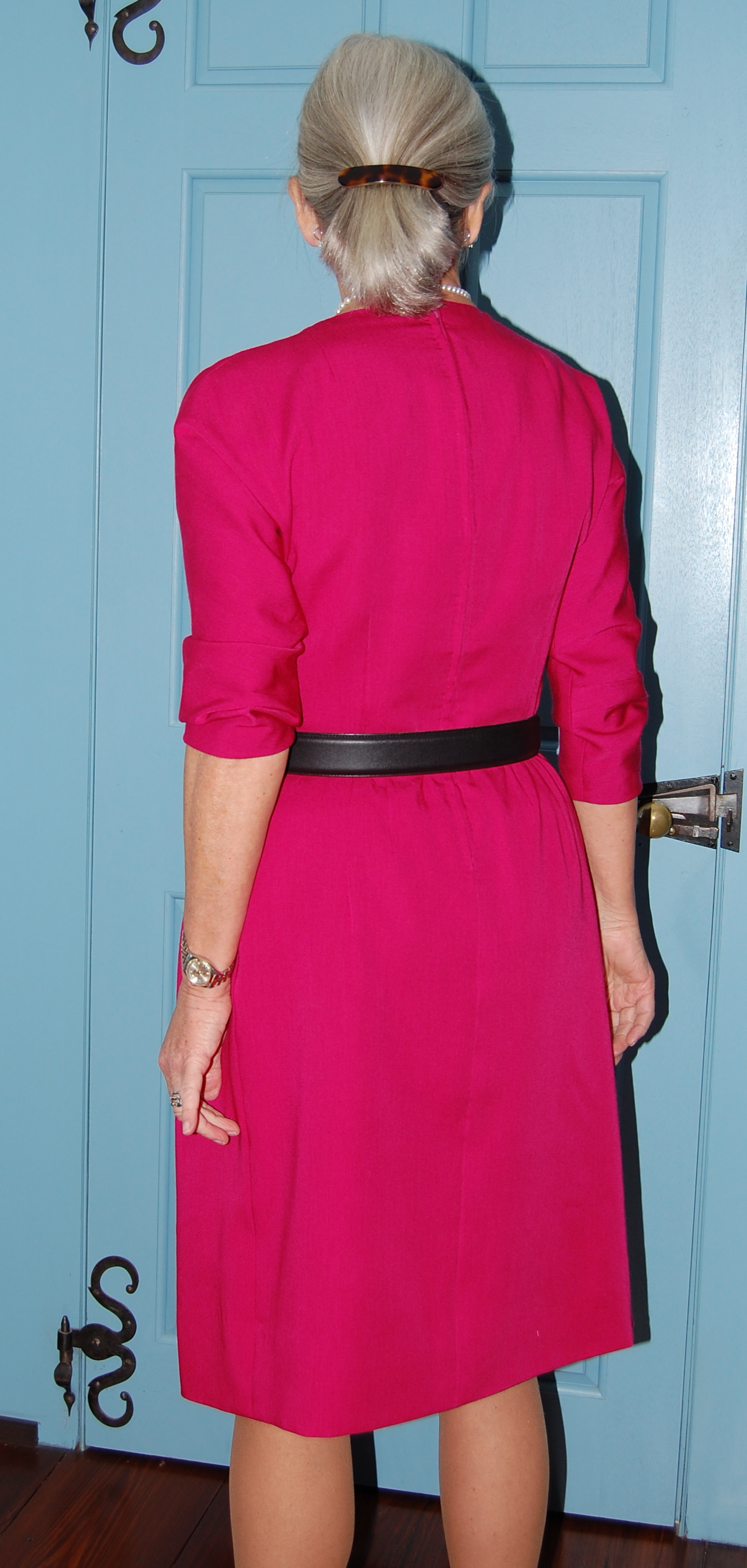
I also changed the back of the skirt by removing the box pleats and substituting a darted back.

I substituted darted back panels for the "original" box pleats

I substituted darted back panels for the “original” box pleats

The original dress had pockets hidden in side box pleats, but when I narrowed the width of the skirt, I did away with those side pleats.  I still wanted pockets, so I added pocket extensions in order to still hide them in the side seams.  It worked!

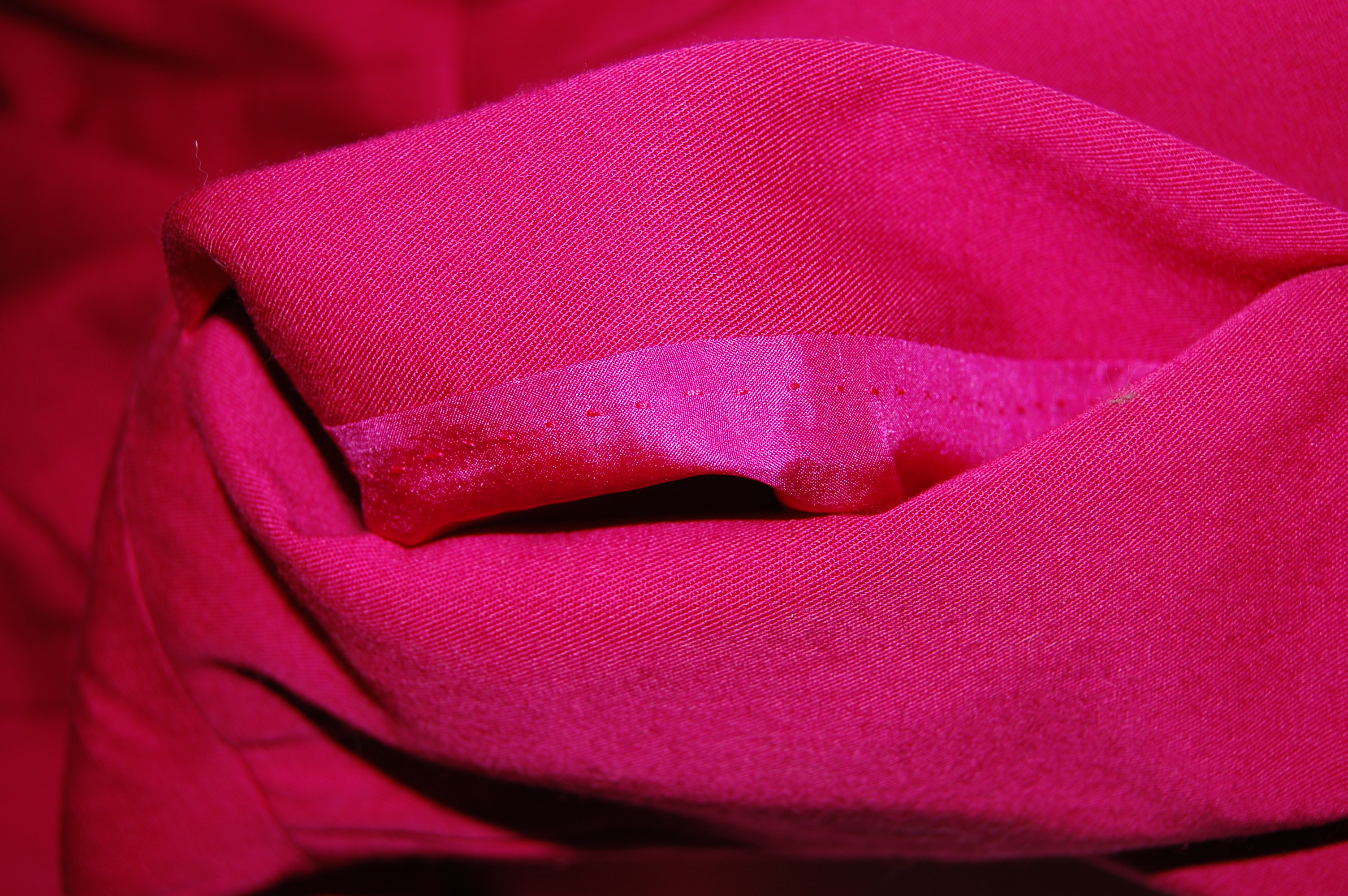
A peek at the pocket inside which shows the raspberry silk lining I used for the dress.  I understitiched the pocket edges by hand, which took no time at all and looks so much nicer than machine stitching!

A peek at the pocket inside which also shows the raspberry silk lining I used for the dress. I understitiched the pocket edges by hand, which took no time at all and looks so much nicer than machine stitching!

I added a quarter-inch to the underneath seam on each sleeve, so that each sleeve would have one-half inch extra width to it.  Those ladies in the 1950s must have had skinny arms, as I find sleeve widths on these vintage patterns are often just not quite spacious enough.

I added to the underarm seam - an adjustment which I determined from  my muslin.

I added to the underarm seam – an adjustment which I determined from my muslin.

This was the first time I had made sleeves which are half set-in and half kimono.  This is a look and fit which I love!  In fact, the shoulder fits so well, that my original thought to add an interior sleeve heading was one I decided I did not need.

The one thing I’m not sure I like is the “purchased or novelty belt” as indicated on the pattern.  I think a self-belt, a little wider than the one I show, would be more attractive.  Please comment if you have an opinion.  (I have plenty of fabric left over to make one…)

I am thinking a 2" wide self belt might be more attractive???
I am thinking a 2″ wide self belt might be more attractive???

Before I move on to my next project (to be announced soon), I want to thank Dresses and me for nominating me for the Very Inspiring Blogger award.

Very Inspiring Blogger Award

So, in accordance with the “rules” –  I am supposed to share a few facts about myself and nominate some others for the same award, so here goes:

1 – I am told I have a slight Southern accent, surely a remnant of being born and raised in North Carolina.

2 – I do most of my machine sewing on a 1940s’ Singer Featherweight and on my mother’s 1956 “306K” portable Singer.

3 – Autumn is my favorite season.

4 – I can make a very good Pumpkin pie.

5 – I enjoy reading historical fiction.

6 – I can’t sing (as in carry a tune) except for a few simple lullabies and Christmas carols.

Now – to pass on this award:  So many fellow bloggers inspire me every day that it is difficult to single out just a few (especially as many have already received this award!), but here are some worthy recipients:

For always giving me a laugh:  A Dress A Day and The Blue Gardenia.

For always teaching me something I would not have known otherwise:  The Vintage Traveler, Pattern Vault, Two Nerdy History Girls, and the FIDM Museum blog.

For sharing their sewing knowledge, design sense, and beautiful workmanship:  Custom Style, Lilacs and Lace, So Sew Lovely, and Frabjous Couture.

So now – you are IN THE KNOW and  – I am IN THE PINK!

21 Comments

Filed under couture construction, hand-sewn zippers, kimono sleeves, Uncategorized, underlinings, vintage Vogue patterns from the 1950s, woolens

Saying YES to a Ladylike Dress

What is it exactly that makes a particular dress elicit the description “ladylike”?  Is it primarily the fabric – or the color – or the style – or, as most would suggest, a combination of all these things?  And why, exactly, am I asking this question??

As one who generally is attracted to tailored, usually unfussy “frocks”, I had to answer this question for myself about this pattern, which, although still unfussy, with simple lines, just seems to be such a ladylike look:

Dated 1958, this pattern shows the influence of Christian Dior.

Dated 1958, this pattern shows the influence of Christian Dior.

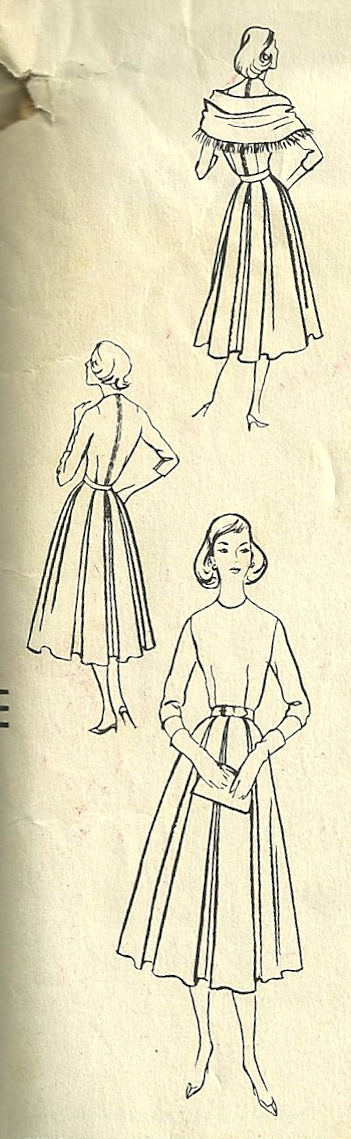
This is what I’ve decided.  I definitely think you start with the style – or the pattern – and this one has it.  There are four elements which work together to make this a ladylike look: 1) a defined waist, here further delineated with a purchased belt (or, as the pattern calls it, a “novelty” belt); 2) a soft shoulder line, which in this pattern consists of a set-in sleeve on the front bodice, but kimono in the back – very clever; 3) a full skirt, this one with inverted box pleats which soften the fullness to a considerable degree (although not quite enough for me, as I will explain later); 4) three-quarter length sleeves, which are the most flattering for most women, and which provide the perfect foil for bracelets or gloves.

The middle sketch on the back of the envelope shows the kimono sleeve detail on the back of the dress.

The middle sketch on the back of the envelope shows the kimono sleeve detail on the back of the dress.

I’ve had this pattern for well over a year, but it took me a while to pair it with this fabric which I’ve had forever (well, not that long, but probably close to 10 years – which makes it seem like a baby compared to how long I’ve had some of my Moygashel linen!).

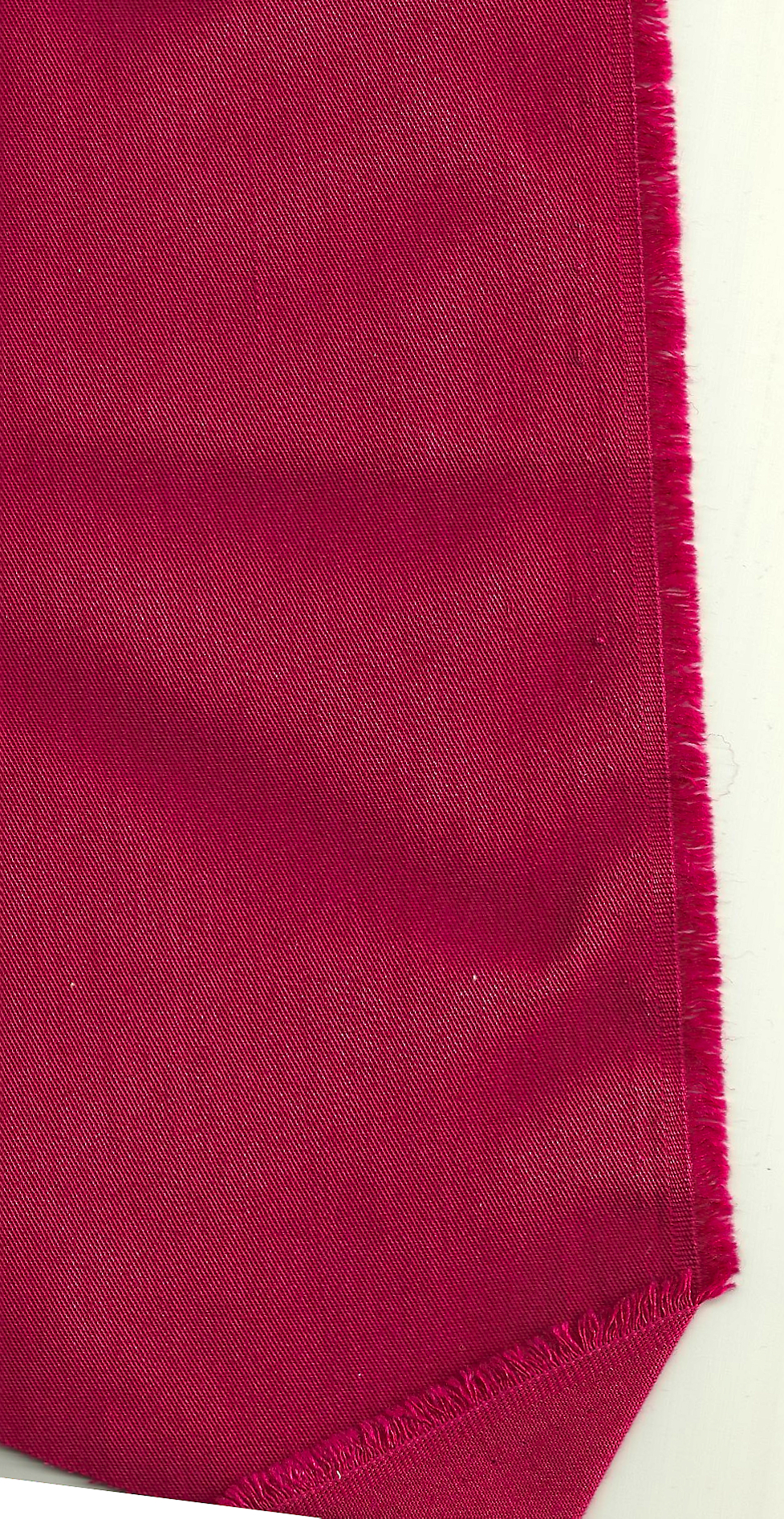
I'm not sure the fine twill weave of this fabric is visible here.

I’m not sure the fine twill weave of this fabric is visible here.

This fabric is a very beautiful wool/cotton blend, lightweight, but with a solid hand and very subtle fine twill weave to it.  It’s 60” wide and I bought three yards, so I obviously had plenty of fabric with which to work.  I’m in love with the color, a deep raspberry pink – I just cannot stay away from pinks of any shade.

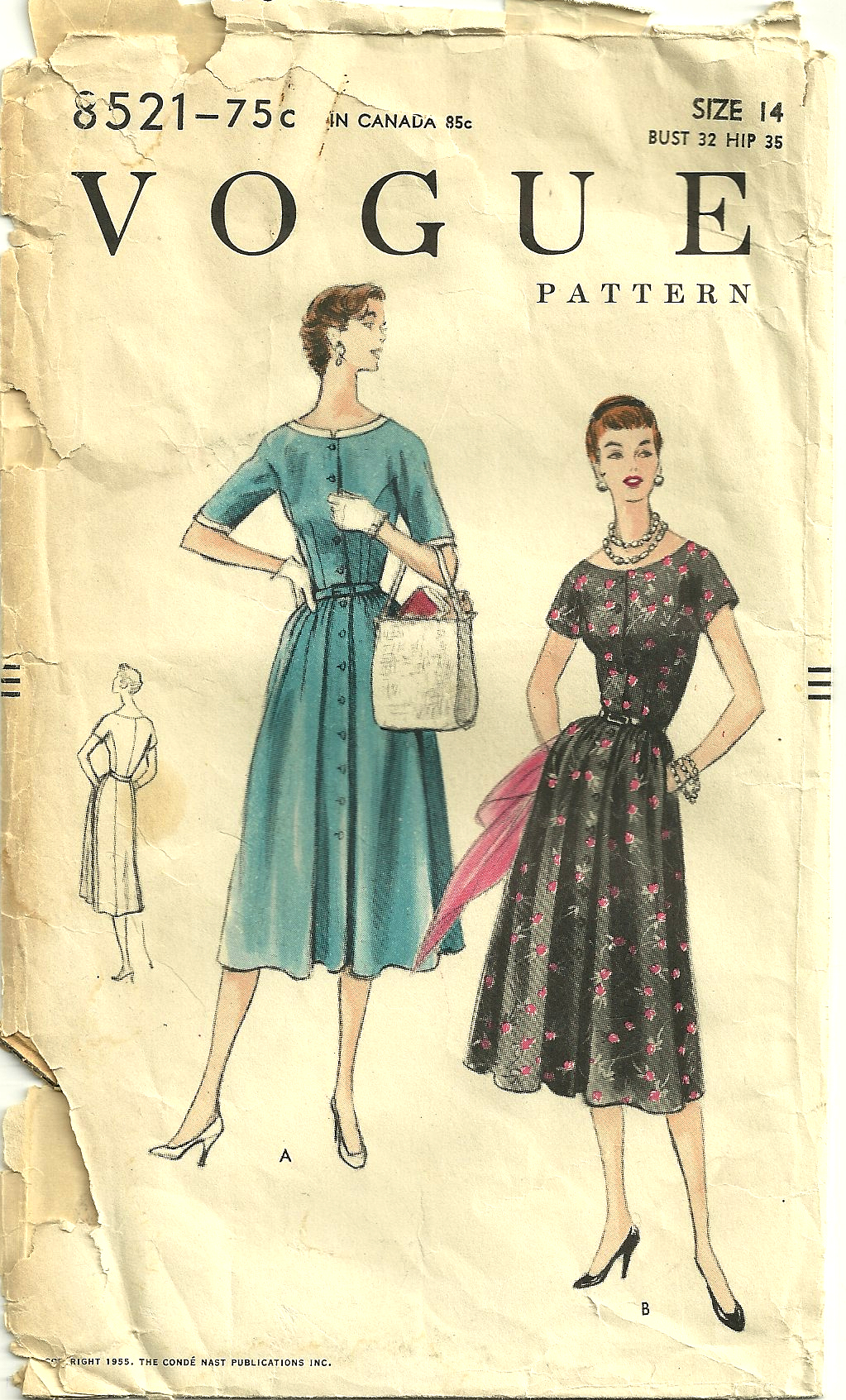
Knowing that I would be making this dress in knee-length rather than mid-calf made me reconsider the fullness of the skirt.  In thinking about this, I remembered another pattern in my collection, which shows a full skirt in the front and a fitted, plain skirt in the back.

This is an unprinted pattern, which makes working with its pieces  difficult.

This is an unprinted pattern, which makes working with its pieces difficult.

So – I decided to see if I could combine the two patterns to create the same look, but with less fullness.  The second pattern has a three piece back, which obviously would not work with a center back zipper.

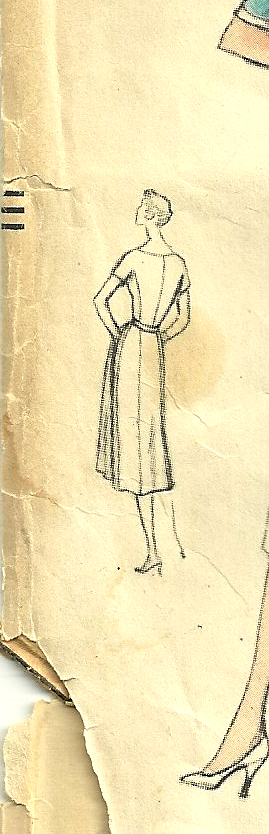
Here is the detail of the skirt back.

Here is the detail of the skirt back.

So I decided to combine the side back and center back pattern pieces, add two darts to achieve a similar fit, and add a center back seam to match the seaming in the first pattern.

This is how I fit the two back skirt pieces together to make one piece.  The "triangle" became two narrow darts, which seemed to work better than one wide one.

This is how I fit the two back skirt pieces together to make one piece. The “triangle” became two narrow darts, which seemed to work better than one wide one.

I took a little more fullness out of the front pattern pieces of the first dress and reconfigured the box pleats.  Then, of course, I made a muslin to see if this would all work.  It certainly seems like it will.  The width of the skirt, according to the pattern envelope, was originally supposed to be about 100”.  The width of my muslin skirt is 56” – which means I removed over a yard in the skirt width!  Sometimes things look and hang a bit differently in the fashion fabric as compared to the muslin, so I am proceeding with cautious optimism.

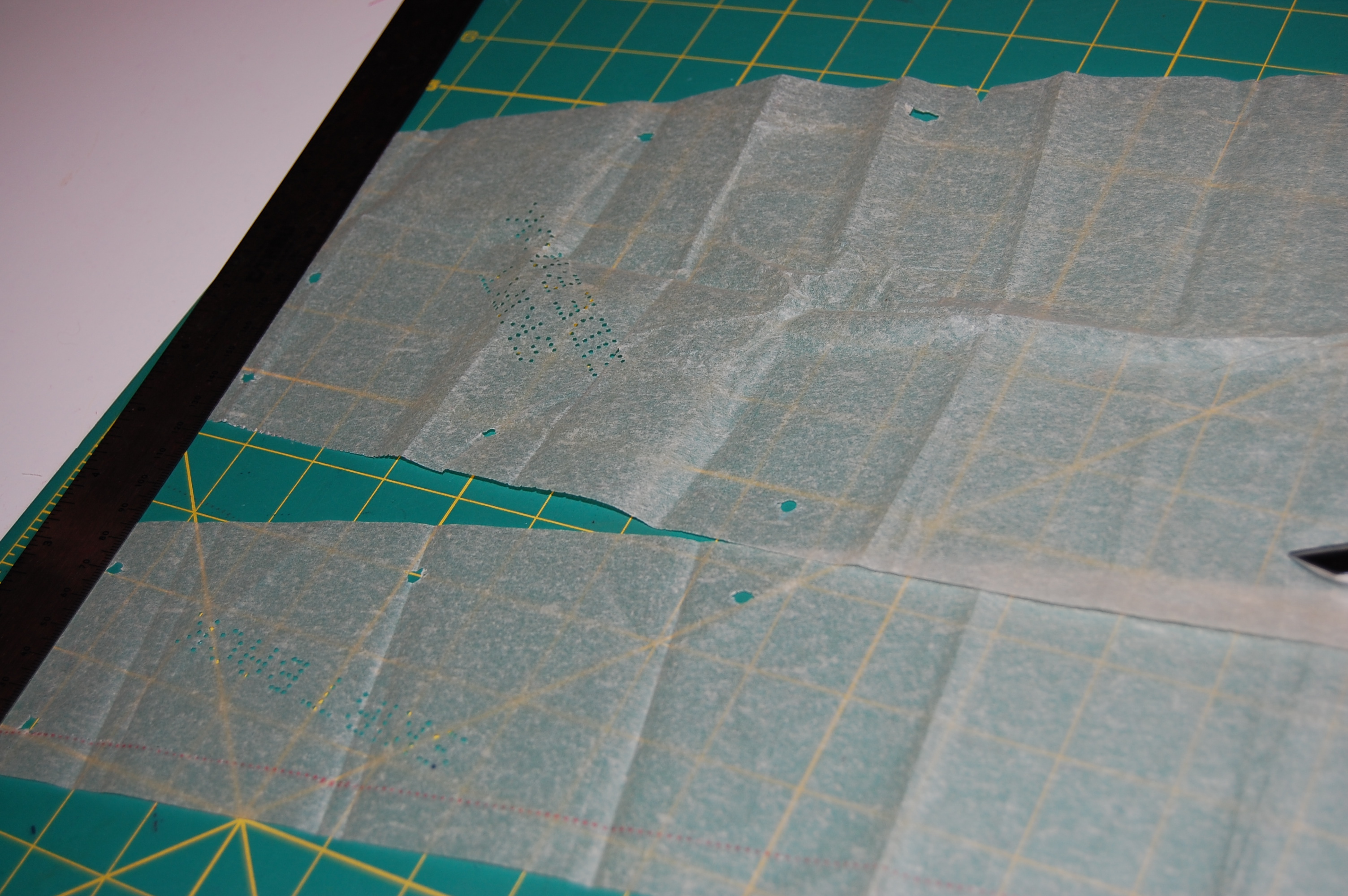
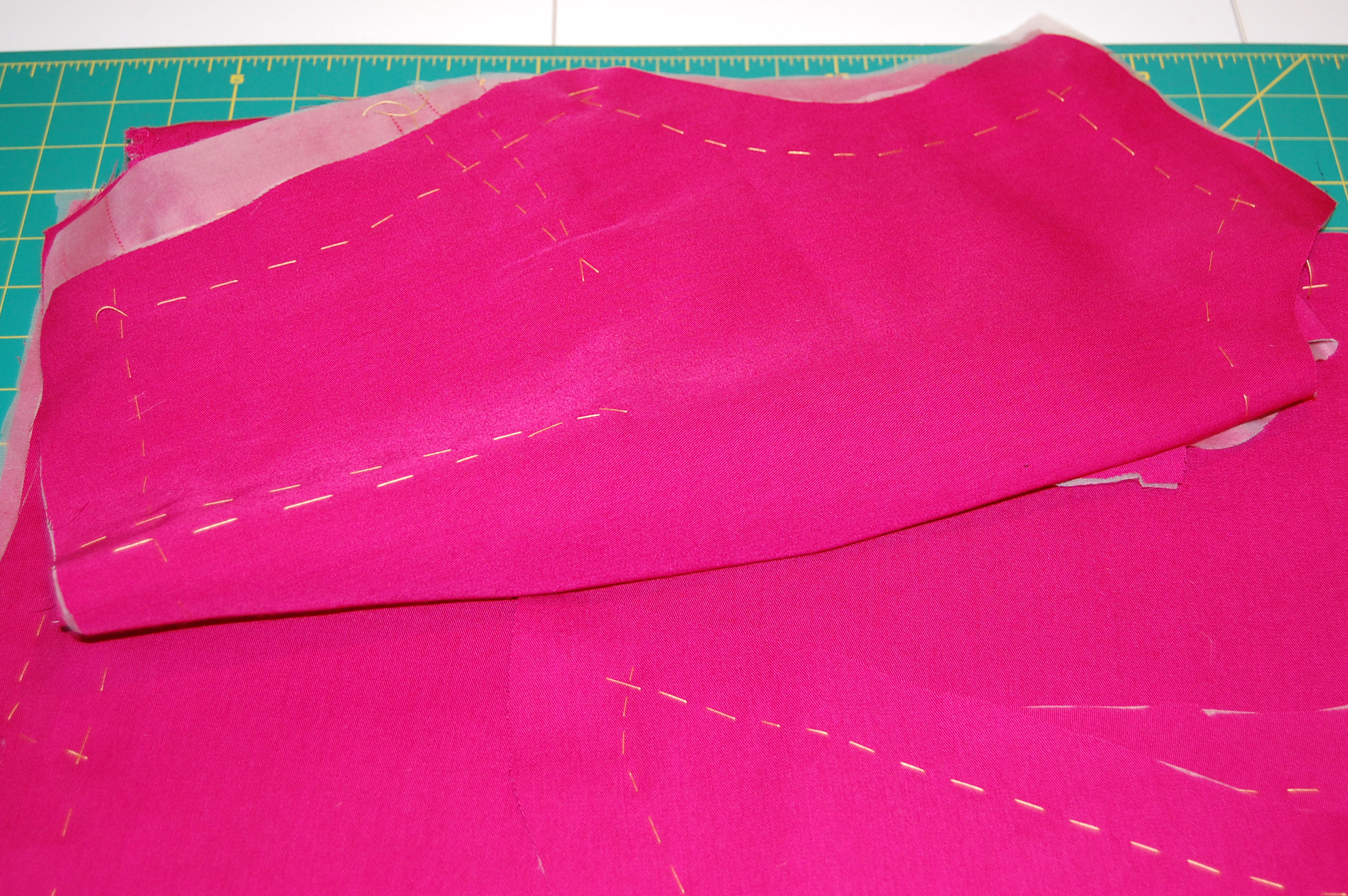
I am making the dress with couture techniques – and I’m ready to do some serious sewing now that I have silk organza hand-basted to all the pattern pieces.

My pile of basted pieces.

My pile of basted pieces.

In sewing, I am always reminded of this quote from Wilhela Cushman:  “Just around the corner in every woman’s mind – is a lovely dress, a wonderful suit, or an entire costume which will make an enchanting new creature of her.”  I do indeed hope this will turn out to be a lovely dress – with enchanting ladylike qualities!

6 Comments

Filed under couture construction, kimono sleeves, Uncategorized, Unprinted patterns from the 1950s, vintage Vogue patterns from the 1950s, Vogue patterns

Coats of a Certain Length

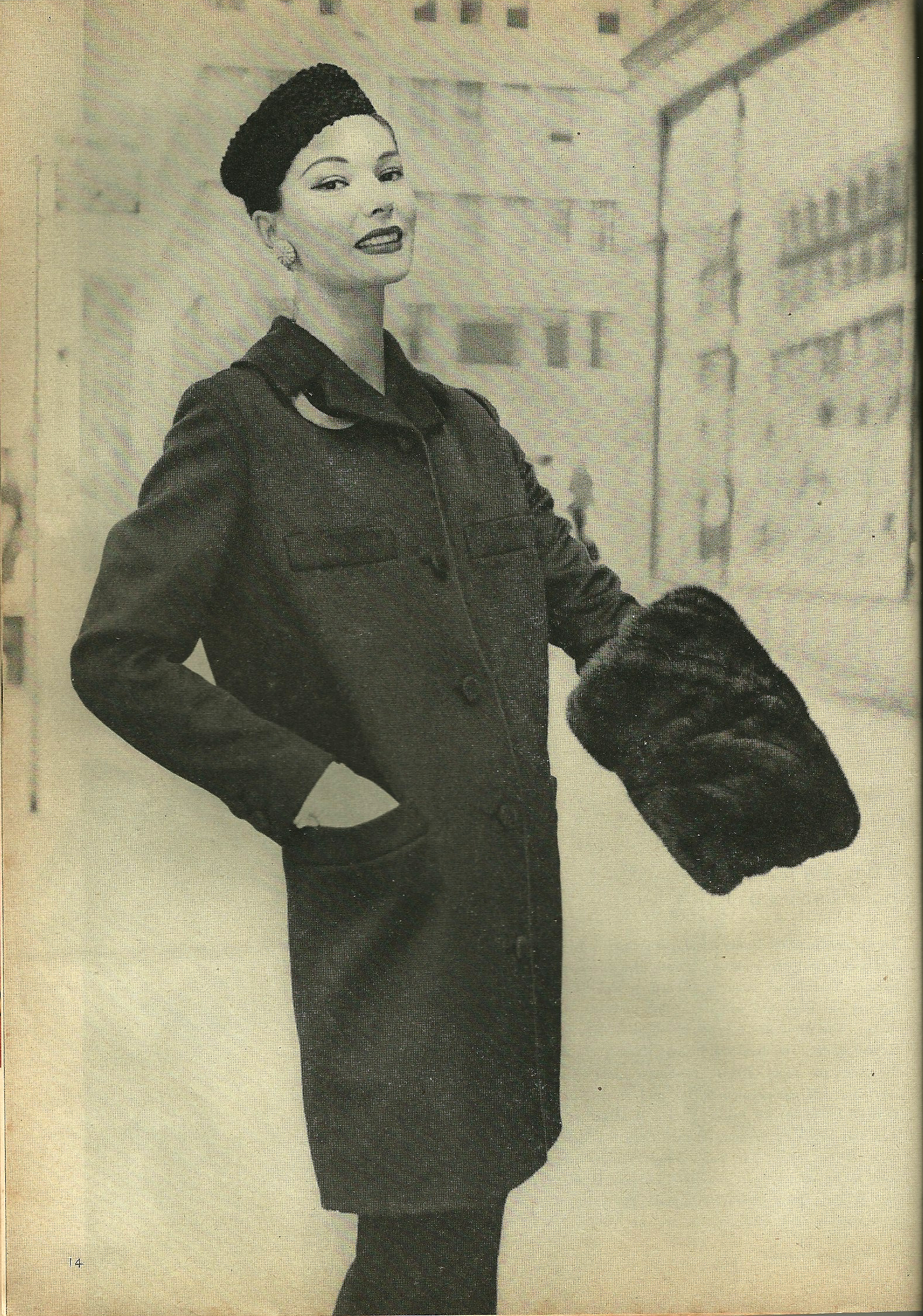
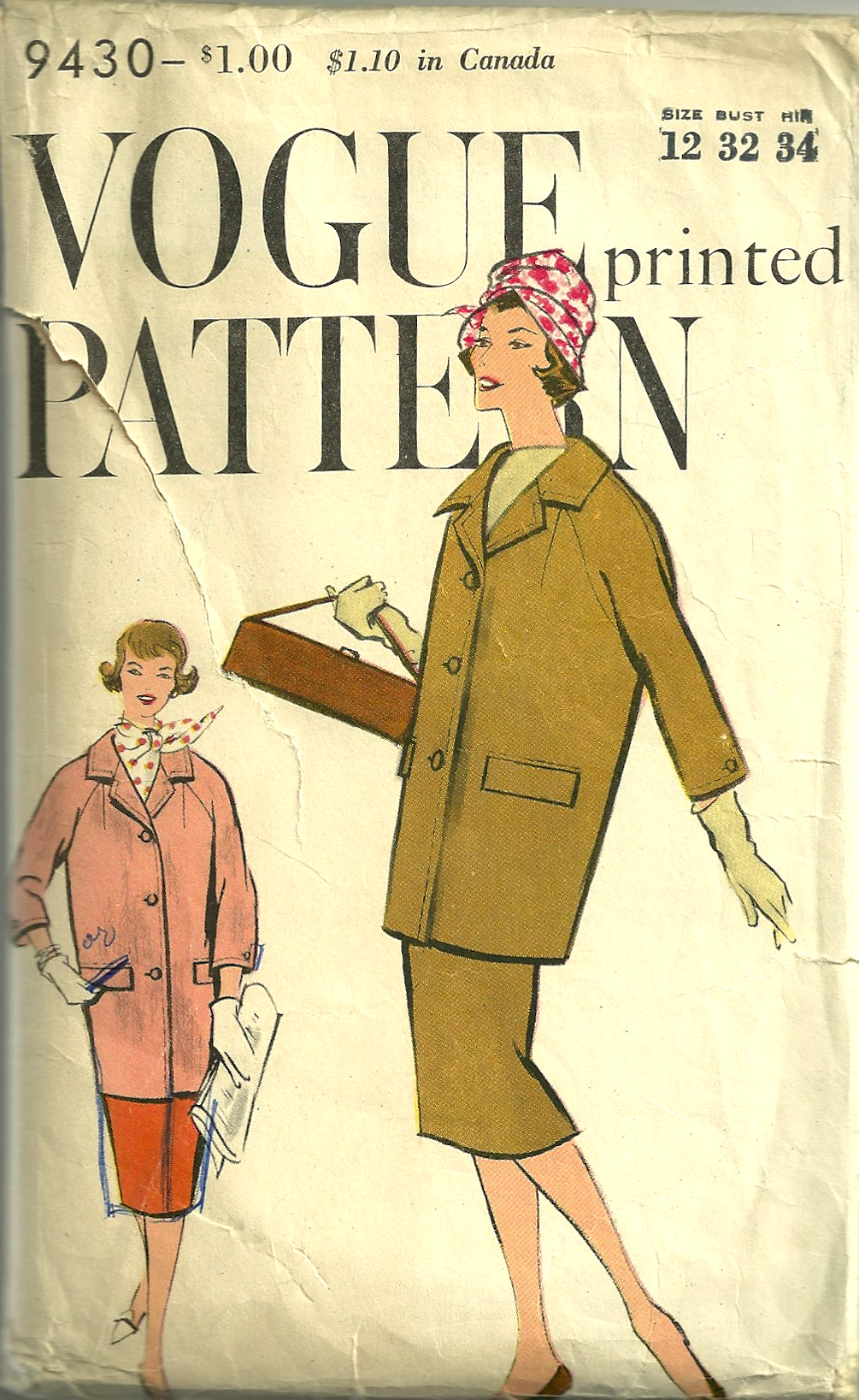
“. . .  above everything they must be practical.  Practical in color and practical in style.”  This was Christian Dior’s dictum for coats which he wrote in 1954 in The Little Dictionary of Fashion (first published by Cassell & Co., Ltd., republished by Abrahms, 2007, copyright Catherine Dior and Jean-Pierre Teto).    Beginning around this same time, Vogue Patterns began to feature more coats in shorter lengths, with slimmer profiles.  The “tunic coat” and matching skirt debuted in the October/November 1955 issue of Vogue Pattern Book Magazine, with this description:  “The tunic . . . the newest and most sophisticated of the coats. Its straight lines are highlighted by an even narrower skirt.”

This was the only three-quarter length coat in this feature entitled "The most-wanted new coats."

This was the only three-quarter length coat in this feature entitled “The most-wanted new coats.”

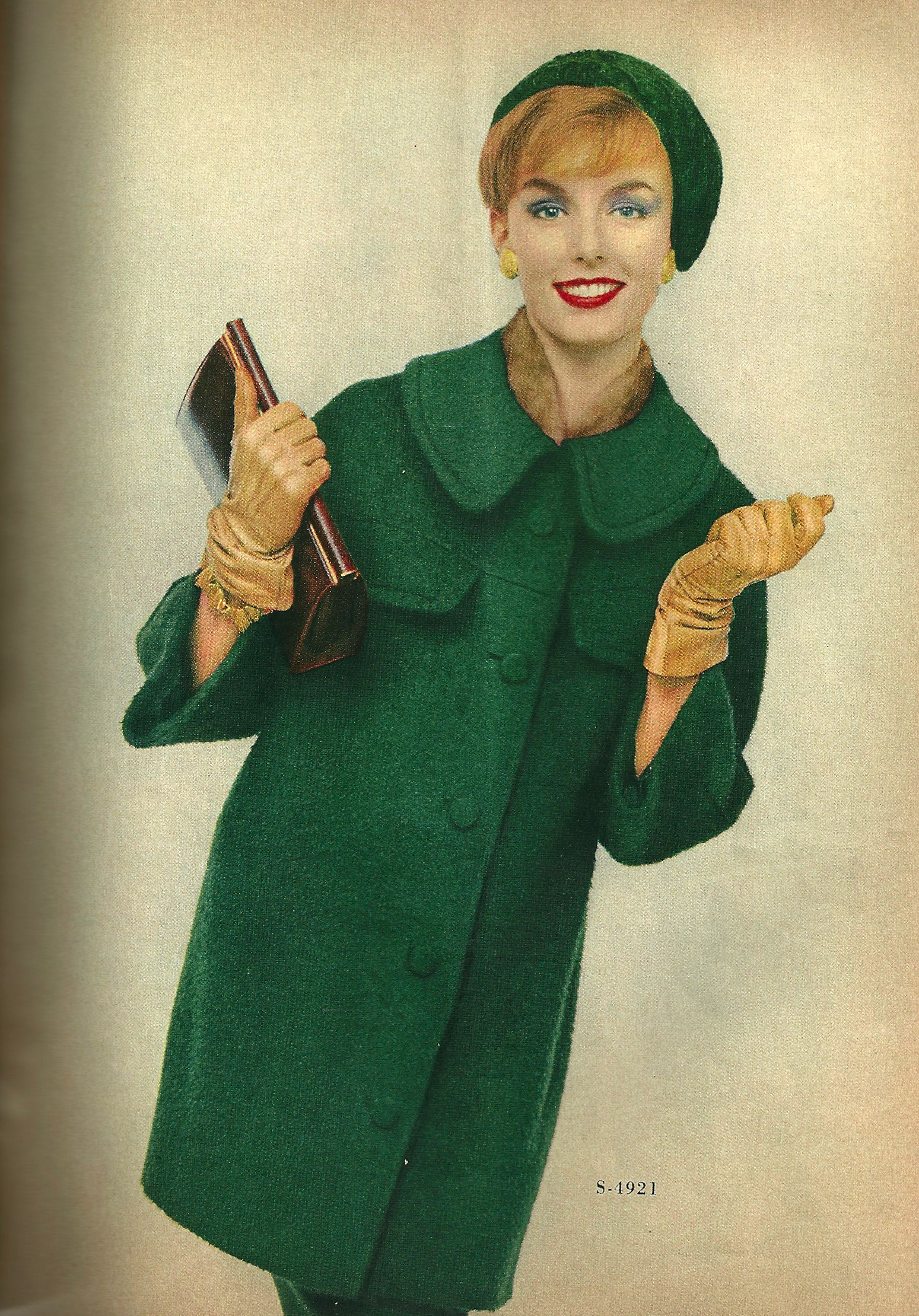
In 1958, a tapered coat-suit was featured in the October/November VPB Magazine, touting its “three-quarter” coat:

Shown in "boxwood green mohair," this coat would be quite stylish in 2013.

Shown in “boxwood green mohair,” this coat would be quite stylish in 2013.

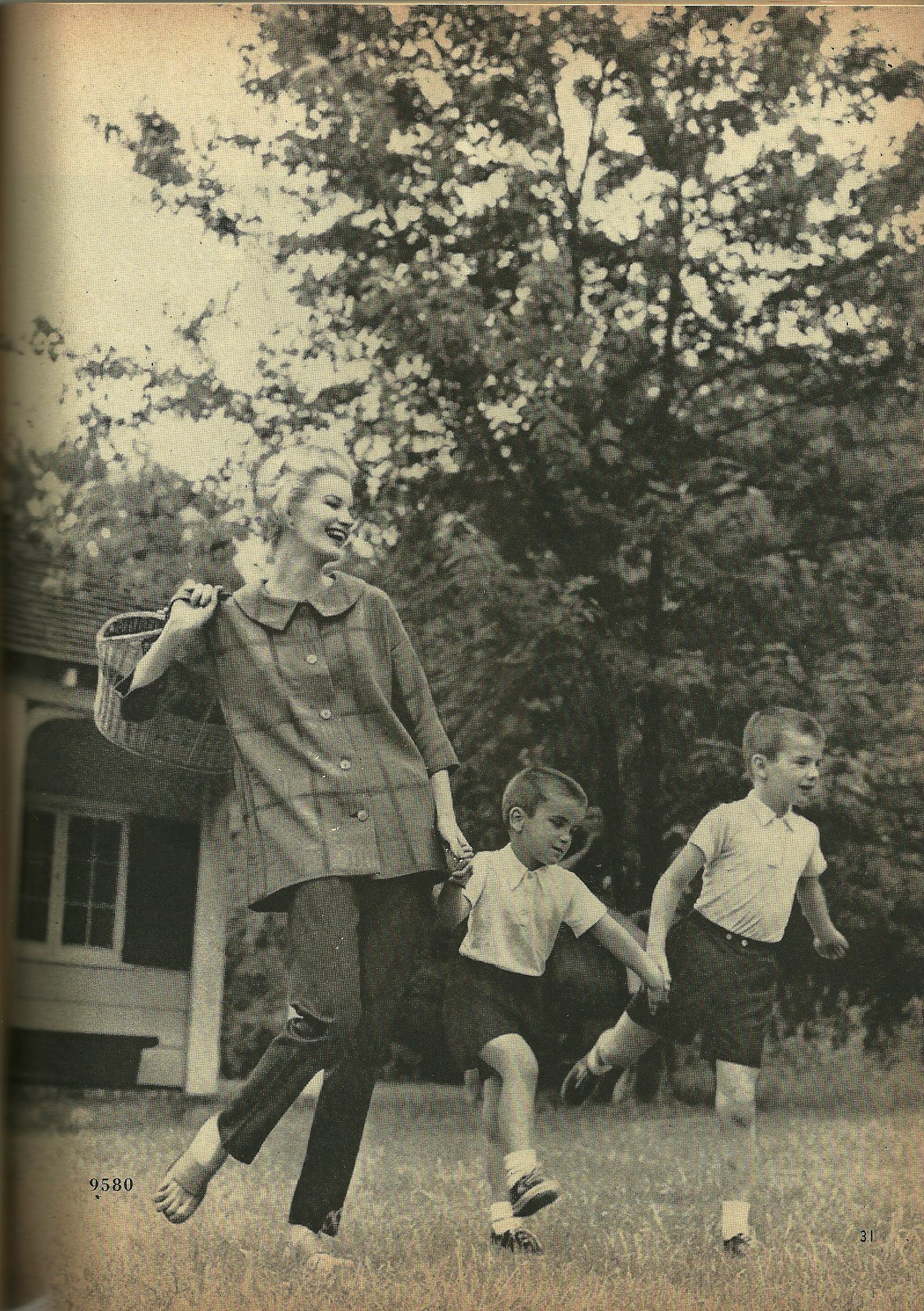
And in the same issue the smock-jacket certainly caught the eye of many a busy mom, with its alluring description:   “”Enjoying suburbia’s natural tranquallizers – grass, trees, sky . . .  Triangular smock-jacket in bright blue-orange-green-red plaid.  Grey flannel slacks – who could live without them?”

This "smock" coat has a pleat in the back for ease of movement for the busy mom.

This “smock” coat has a pleat in the back for ease of movement for the busy mom.

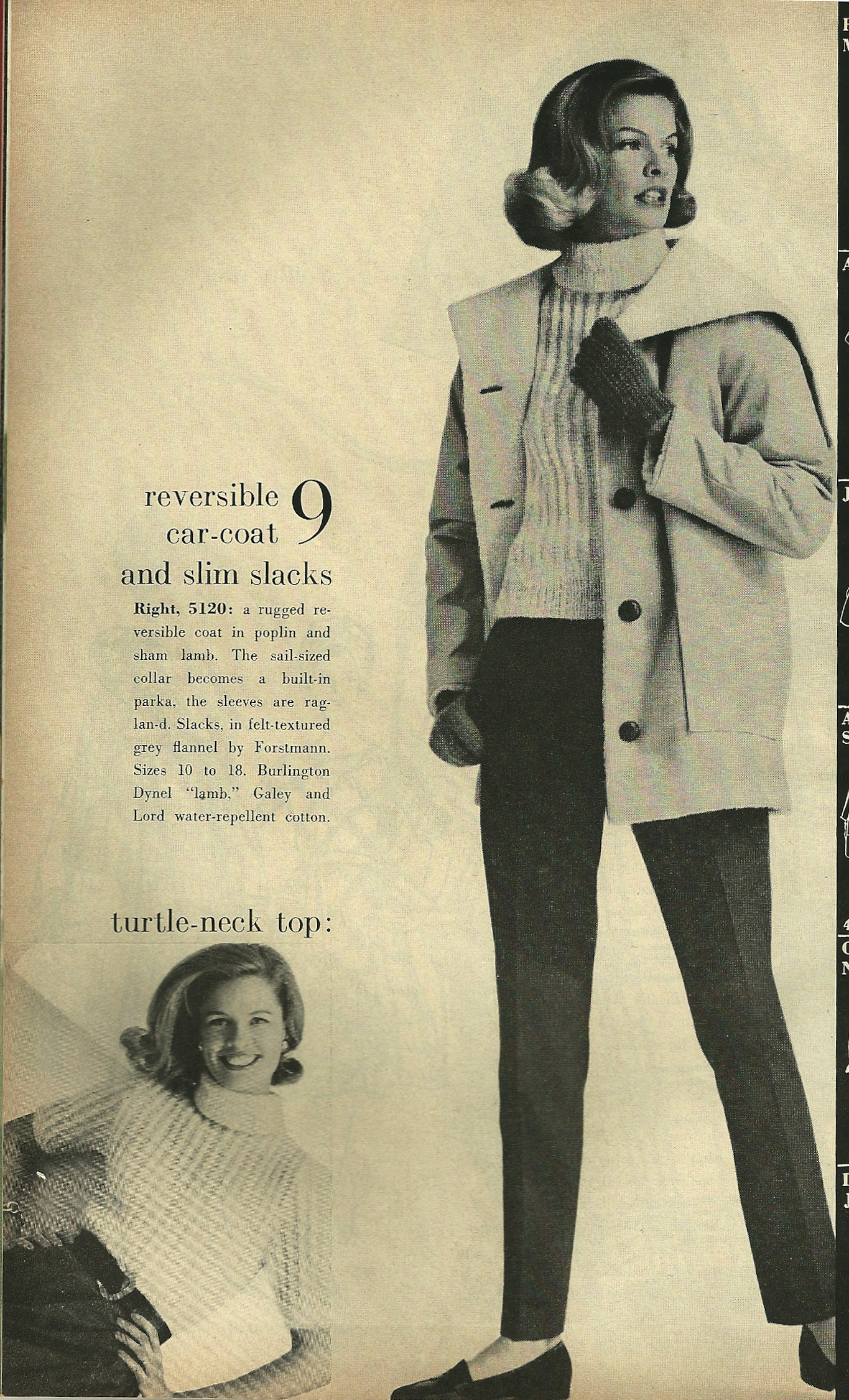
Indeed, who could live without such a comfortable, easy-to-wear, fingertip coat?  As this style morphed into the “Car Coat”, it quickly became ubiquitous, and for good reason.  Here was (and is) a coat, which is a barometer of culture (a term I have borrowed from the little book, 101 Things I Learned in Fashion School, p.32).  An excellent definition is given in The Fairchild Dictionary of Fashion, 3rd Edition, 2010, page 89:  “Sport or utility coat made hip- to three-quarter length, which is comfortable for driving a car.  First became popular with the station-wagon set in suburbia in 1950s and 1960s [my emphasis] and has become a classic style since then.  Some of the styles in which car coats have been made include BENCHWARMER, DUFFEL COAT, RANCH COAT, MACKINAW JACKET, STADIUM COAT, TOGGLE COAT.”

Coats of certain length -4

This pattern was for a reversible coat, shown here in poplin and sham lamb. The collar can be turned into a hood.  Click on the image to see the details.

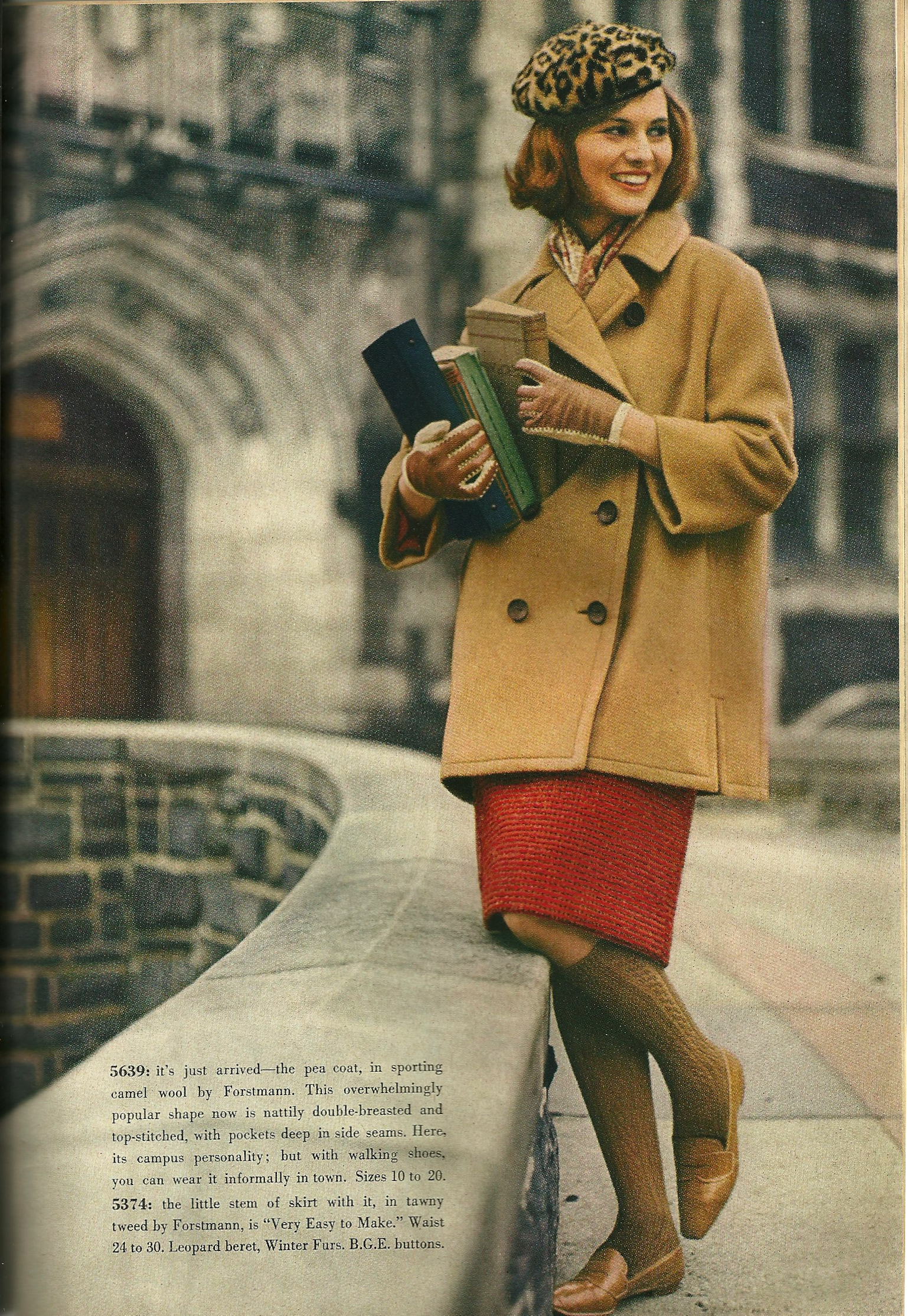
By August/September of 1962, VPB Magazine featured a pattern for a Pea Coat, which although not officially a car coat, displayed the same practical length and wearability:

According to Fairchild's Dictionary, Yves Saint Laurent used the classic U.S. Navy peacoat as inspiration for his variation of it in the 1960s.

According to Fairchild’s Dictionary, Yves Saint Laurent used the classic U.S. Navy peacoat as inspiration for his variation of it in the 1960s.

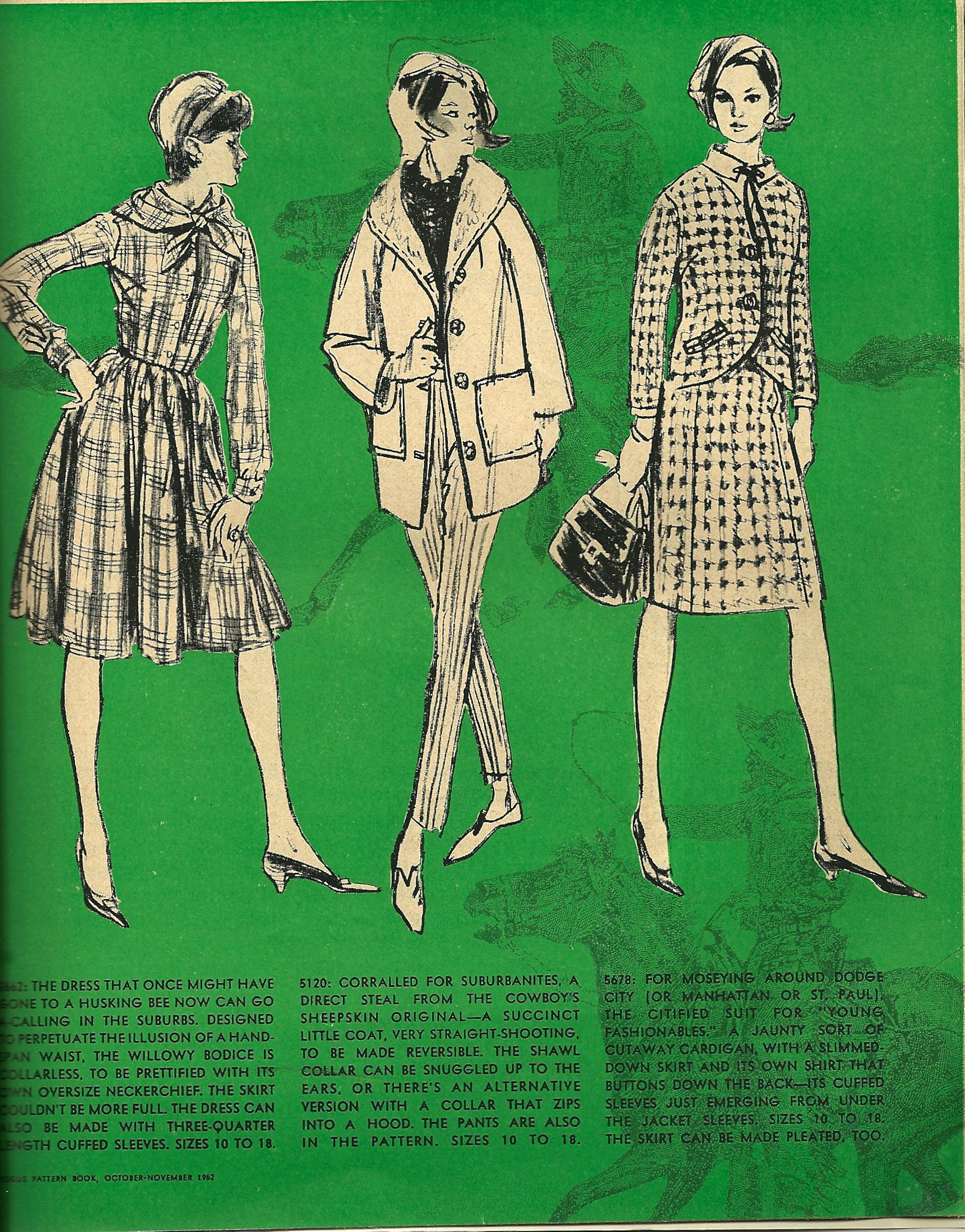
And in the next issue of the 1962 VPB Magazine, in a feature called “The Rangy Western Look for Urban and Suburban Dudes,” front and center was this coat “corralled for suburbanites”:

VPB called this coat a "direct steal from the cowboys's sheepskin original."

VPB called this coat a “direct steal from the cowboys’s sheepskin original.”  (Another wonderful example of a “sheepskin” coat – this one by an English designer – can be seen here, with thanks to my reader, Carol, who led me to the sketch of this fingertip coat.)

Far be it for me to resist such a coat!  Last year I succumbed to this pattern on Etsy, which although not dated, is most certainly from the early ‘60s:

I just may need this pattern someday!

This is a good pattern to have in my collection – I just may need it someday!

Back in the 1970s, I purchased this Christian Dior Designer pattern, with intentions of making the “below the knee” version, although a nice variation of a stadium coat is also featured.  I still love this coat, in both lengths – and someday I hope to finally make good on my intentions!

The buckles around the sleeves add a great look to this coat.

The buckles around the sleeves add a great look to this coat.

However, this coat must be my all-time favorite hip-length style:

I will definitely be doing the color blocking version when I make this coat.

I will definitely be doing the color blocking version when I make this coat.

Purchased last August,  this pattern sometimes keeps me awake at night. With Dior’s words imploring me to be practical, I wonder – – – should I make it in navy and white (as pictured), in black and white, in red and black, in gray and camel, in orange and gray, in ??? and ???

Still to be decided . . .  but you haven’t seen the last of this pattern.

12 Comments

Filed under car coats, Coats, Uncategorized, vintage Vogue Designer patterns, vintage Vogue patterns from the 1950s, vintage Vogue patterns from the 1960s, vintage Vogue patterns from the 1970s, Vogue patterns

It’s a wrap!

What could be easier than this: a garment with no buttons and no buttonholes, secured by sashes which can be forgiving to your waistline and still be flattering?  Diane Von Furstenberg immortalized the “wrap dress” in the early 1970s; its many variations became available to home dressmakers through the Vogue Patterns Designer series, and those original patterns now command significant prices on eBay and Etsy.

This is the label which was provided to purchasers of Diane Von Furstenberg patterns.

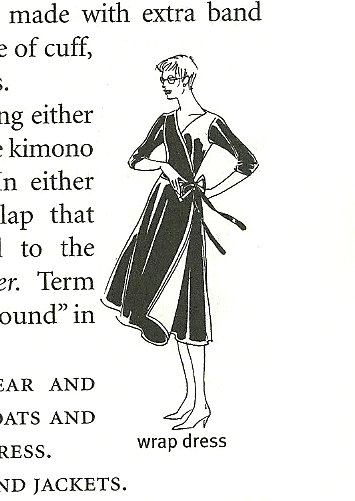
But – what came before Von Furstenberg’s classic dress?  Many of us remember our “wraparound” skirts from the ‘60s and ‘70s – some were “reversible”, some were made of a lightweight sailcloth type of fabric and were kind of stiff, some were gathered, and some were A-line.  Towards the late ‘60s, according to The Fairchild Dictionary of Fashion (3rd Edition, Fairchild Publications, Inc., New York, 2010), the term “wraparound” was shortened to just “wrap” – and that is the term we know and use today.  The illustration in this book surely is based on DVF’s classic wrap dress.

Who wouldn’t recognize this as a DVF dress?

One of Diane Von Furstenberg’s famous statements is “I design for the woman who loves being a woman.”  (Think dresses!)  In The Saint James Fashion Encyclopedia (Richard Martin, author; Visible Ink Press, Detroit, MI, 1997), she is quoted:  “…I believe in marrying fashion and function – chic style and easy comfort, maximum impact and minimum fuss.”  It’s easy to see that she practiced what she preached (and still does…) when you look at this Vogue pattern:

A classic style by Diane Von Furstenberg.

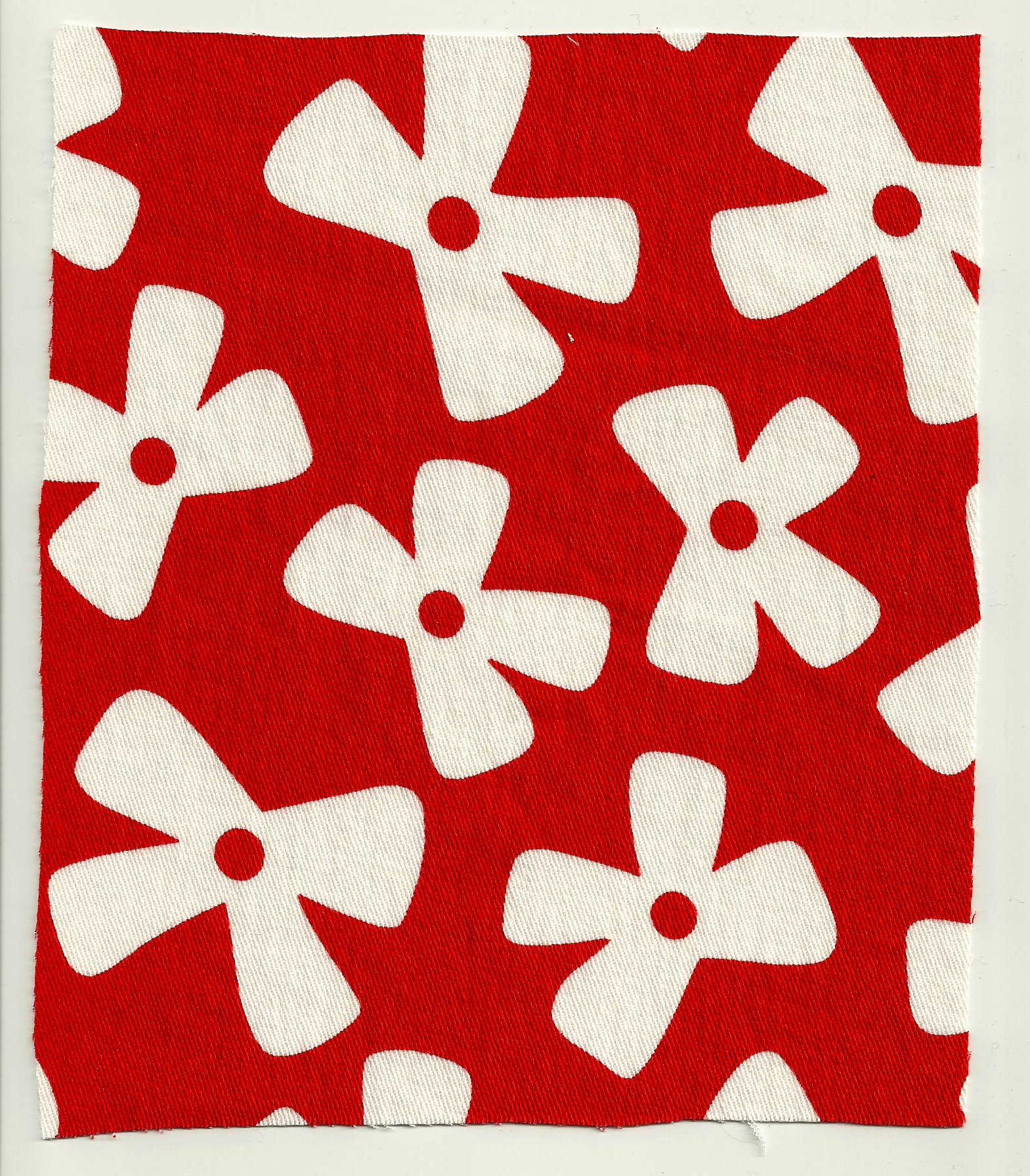
About the time I purchased this pattern on Etsy, I saw this fabric on Mood Fabric’s website:

This is a cotton twill, but it’s stretchable!

The bright, happy design reminded me of some of the original DVF-designed fabric, although this fabric is actually by Oscar De La Renta.  No, it wasn’t a stretchable knit which the pattern stipulated, but it was a stretch fabric, so I took a gamble and ordered it with my DVF pattern in mind.

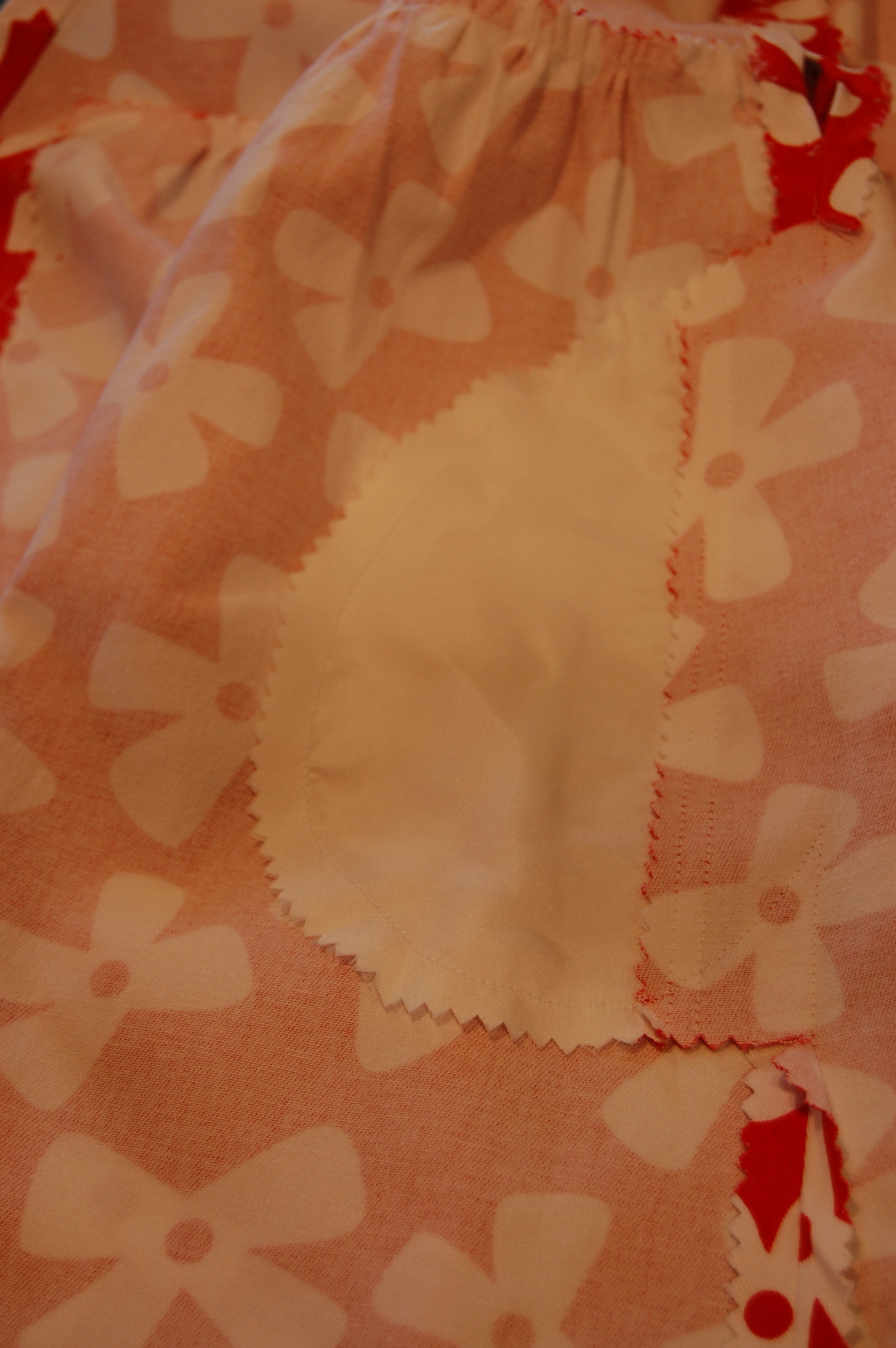
I actually liked the heavier weight of this fabric (I’ve never been a fan of sewing jersey knits), but I had to be extra diligent to minimize bulky seams on the interior of the dress.  Instead of self pockets, I made the pockets out of some leftover white silk lining fabric from my raincoat.

One of the pockets.

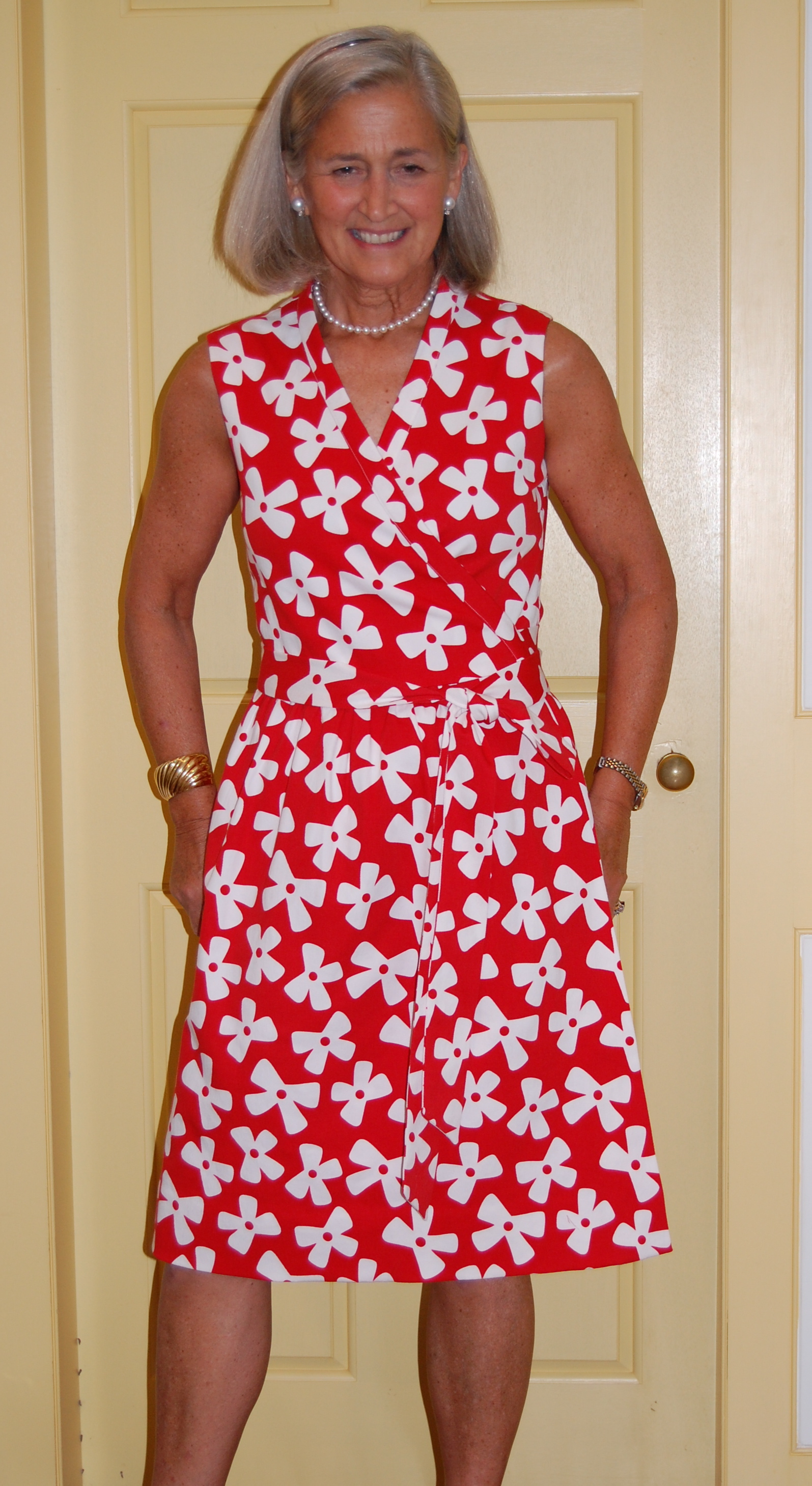
Instead of turning under edges on the facings, I double-stitched and pinked the edges, and used stretchable hem tape for the hem.  It all seemed to work and here is the finished dress:

This cheery fabric could brighten any day!

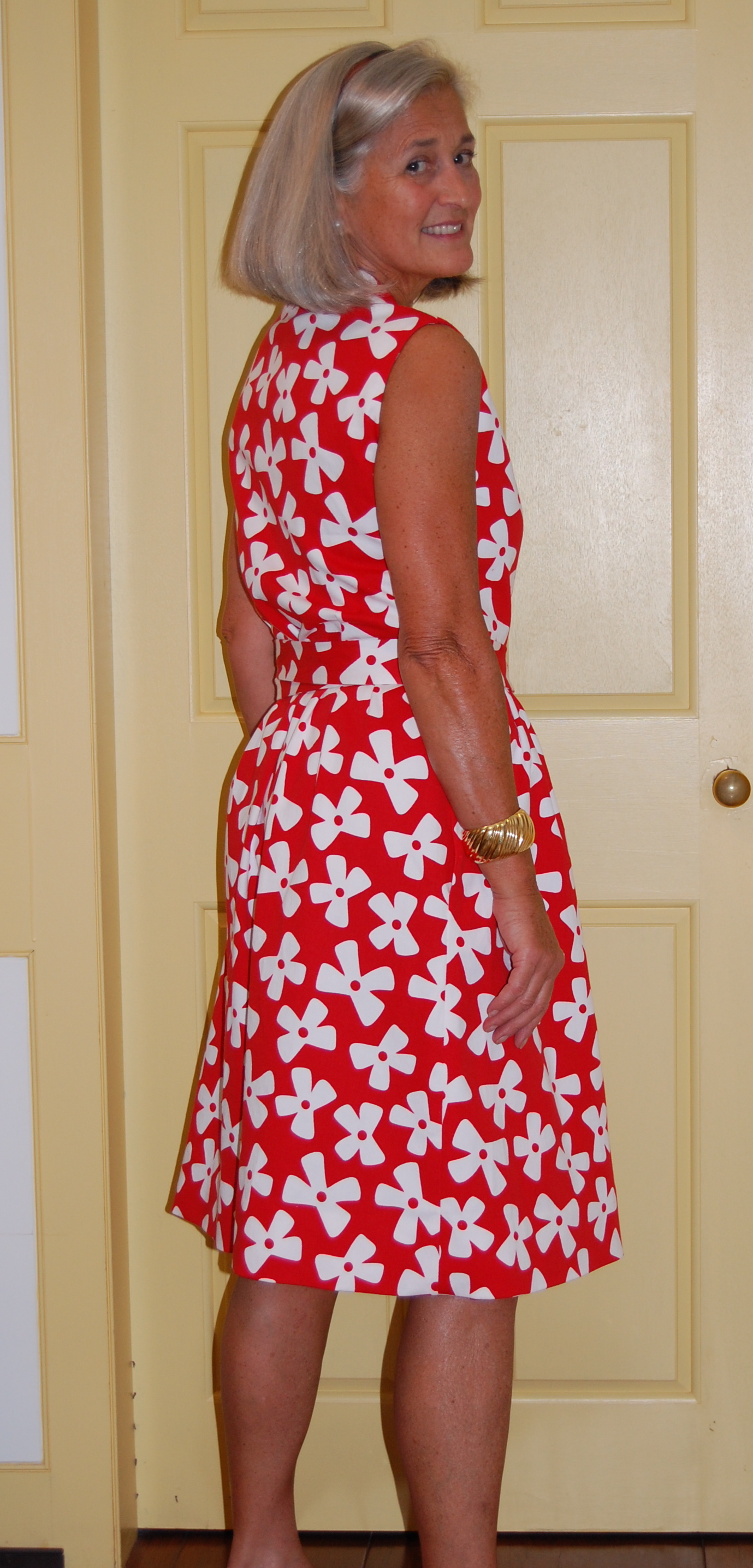
A bit of a back view.

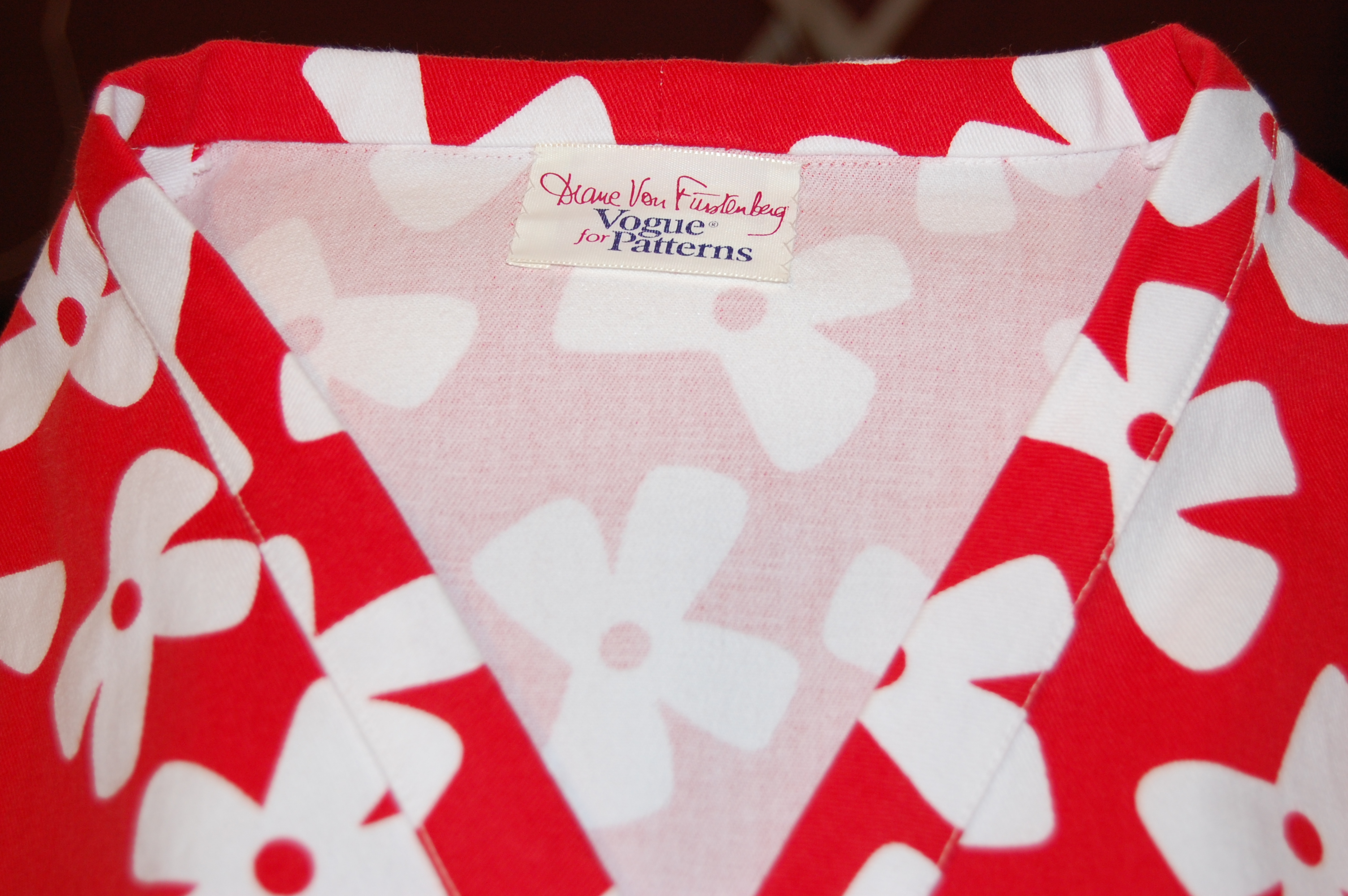
I was thrilled to get that original label with my pattern – and here is the finishing touch for my DVF wrap dress:

My final stitches on this dress were to attach the label.

Feminine, timeless, versatile:  her dresses are more than fashion – they are enduring style.

10 Comments

Filed under Uncategorized, vintage Vogue Designer patterns, vintage Vogue patterns from the 1970s, Vogue patterns

A Dress for the Duchess

Do you ever read a book and feel enchanted by its storyline, or its life lessons, or because it speaks to you on many different levels of meaning?  How often is that book a children’s book?

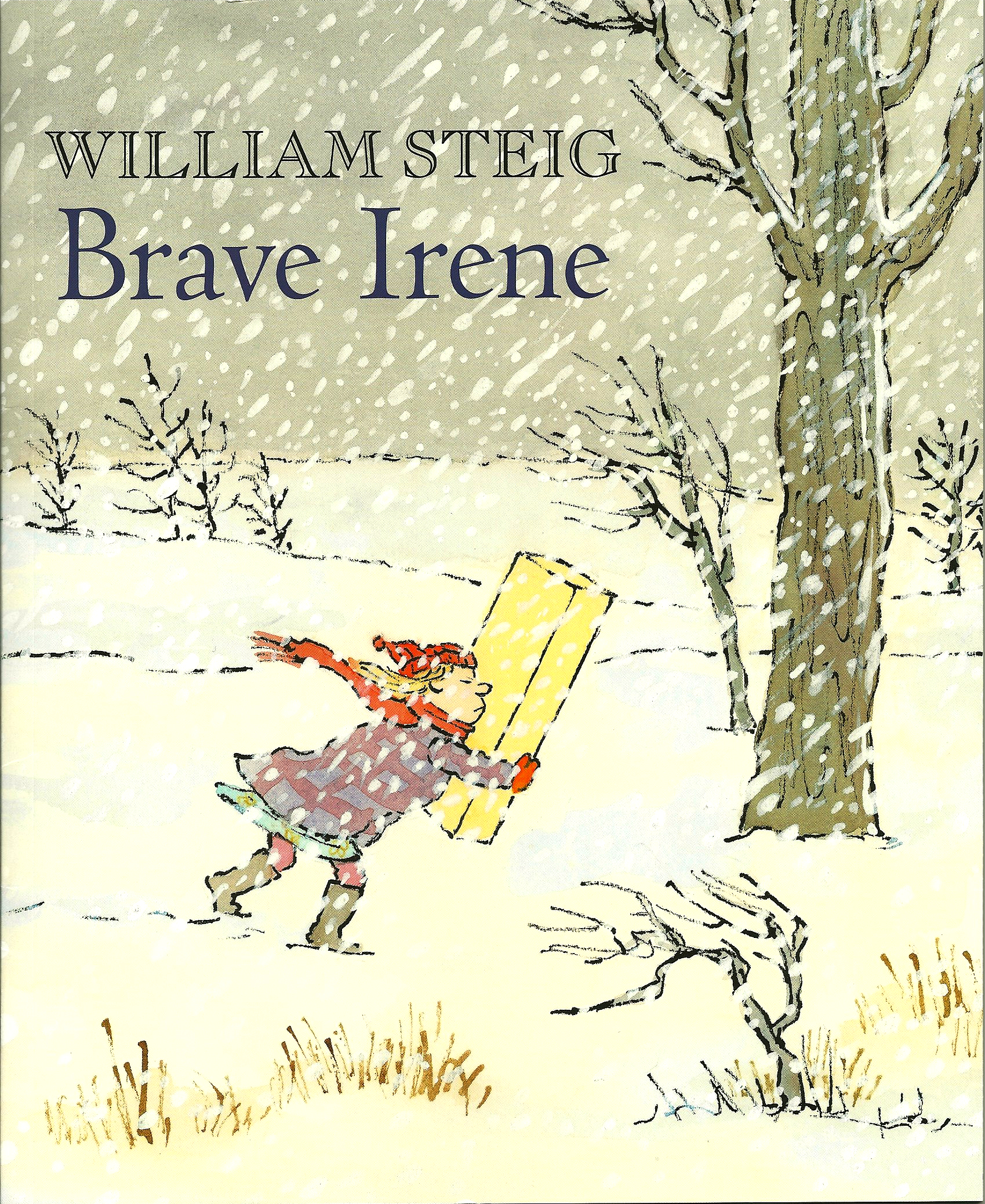
Since I started writing this blog, I’ve been thinking a lot about the influences that the written word can have on the process of sewing – and vice-versa – and I have found my thoughts  going back time and again to a skinny little paperbound book first published in 1986.  My daughter was five years old at the time, the perfect age to have this small story by William Steig read to her.  Its title is Brave Irene.  If you sew and you haven’t read it, you should; even if you don’t sew, you should read it.

This book is still in print and available on Amazon, of course!  The publisher is Farrar Straus Giroux.

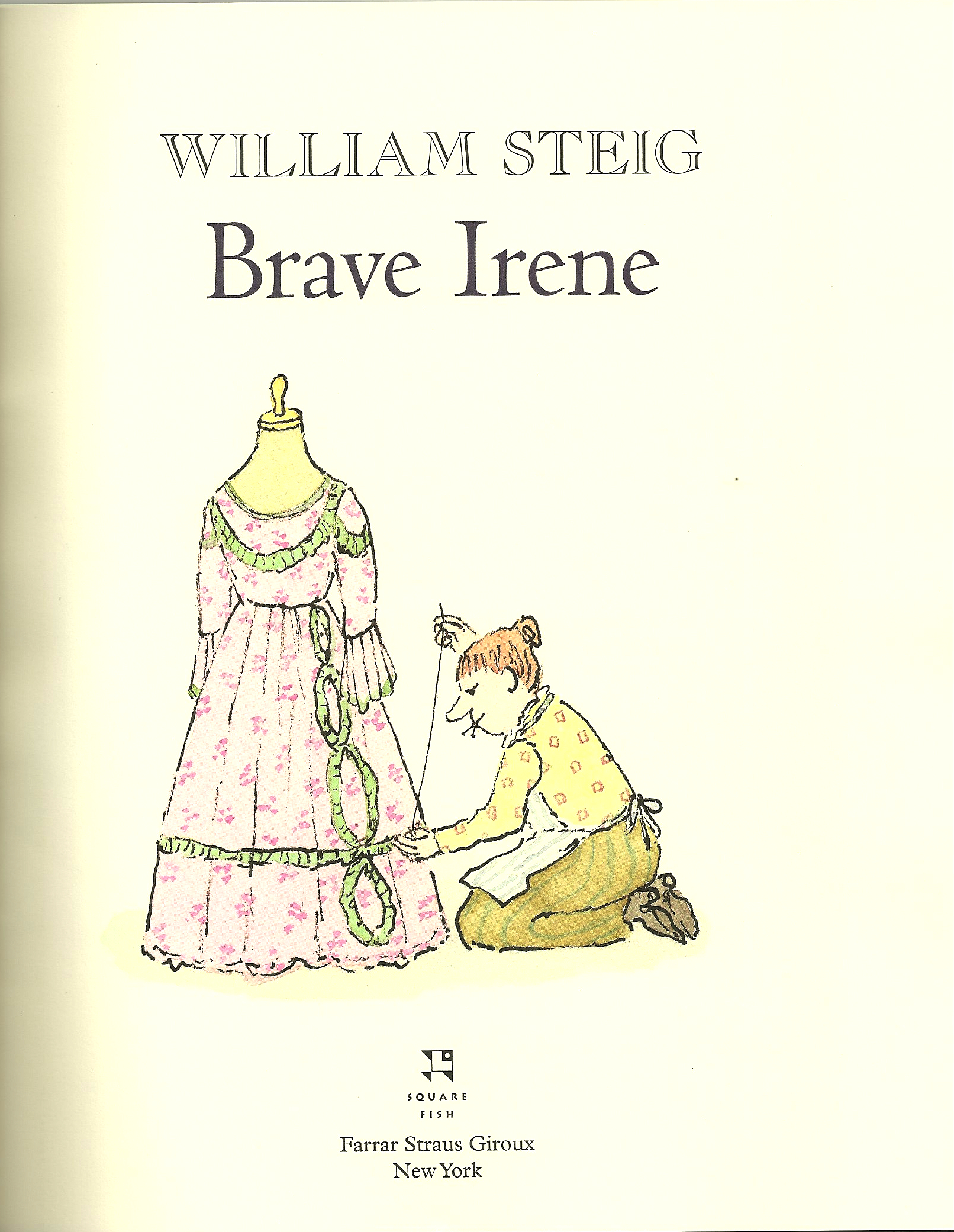
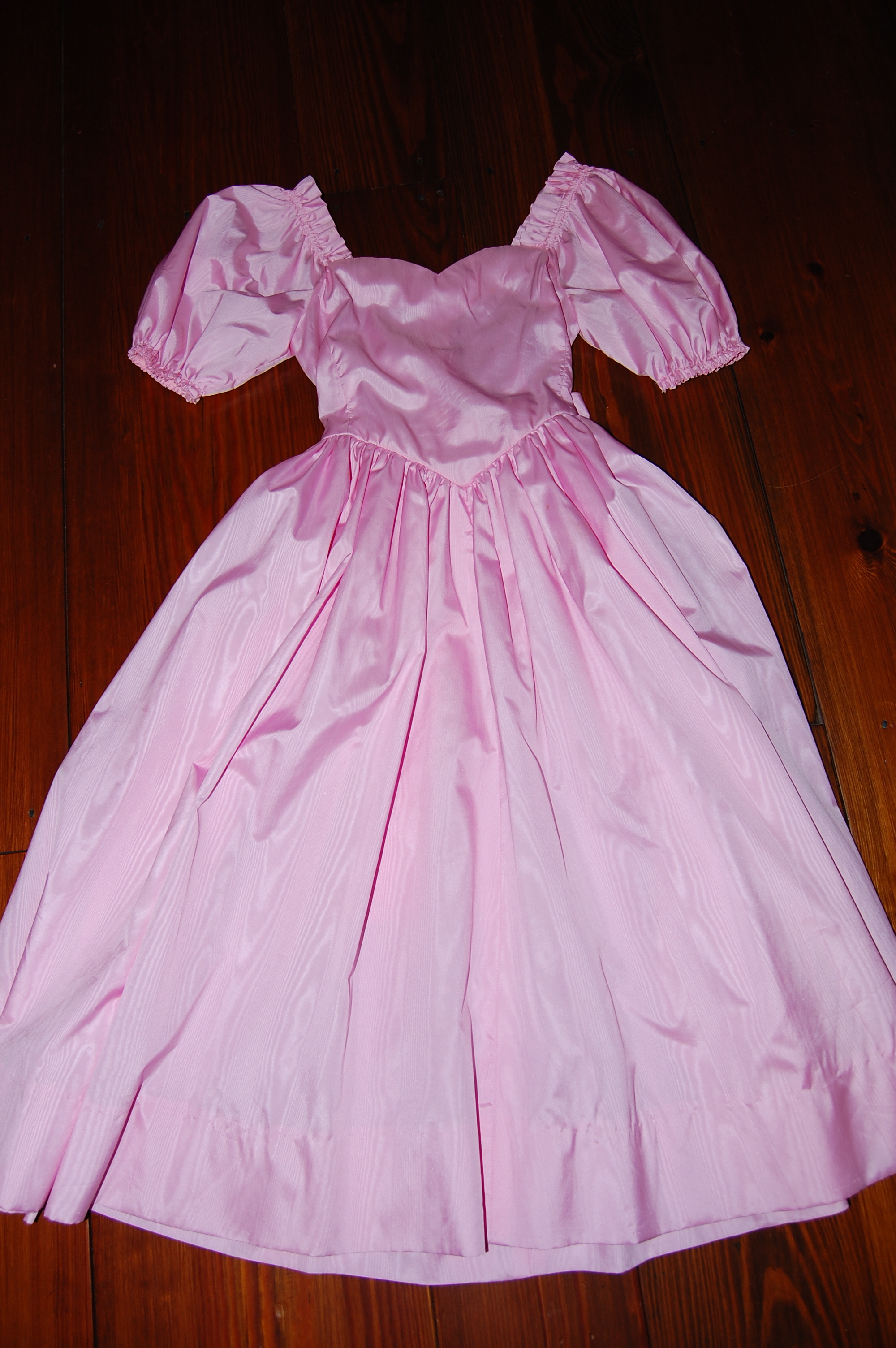
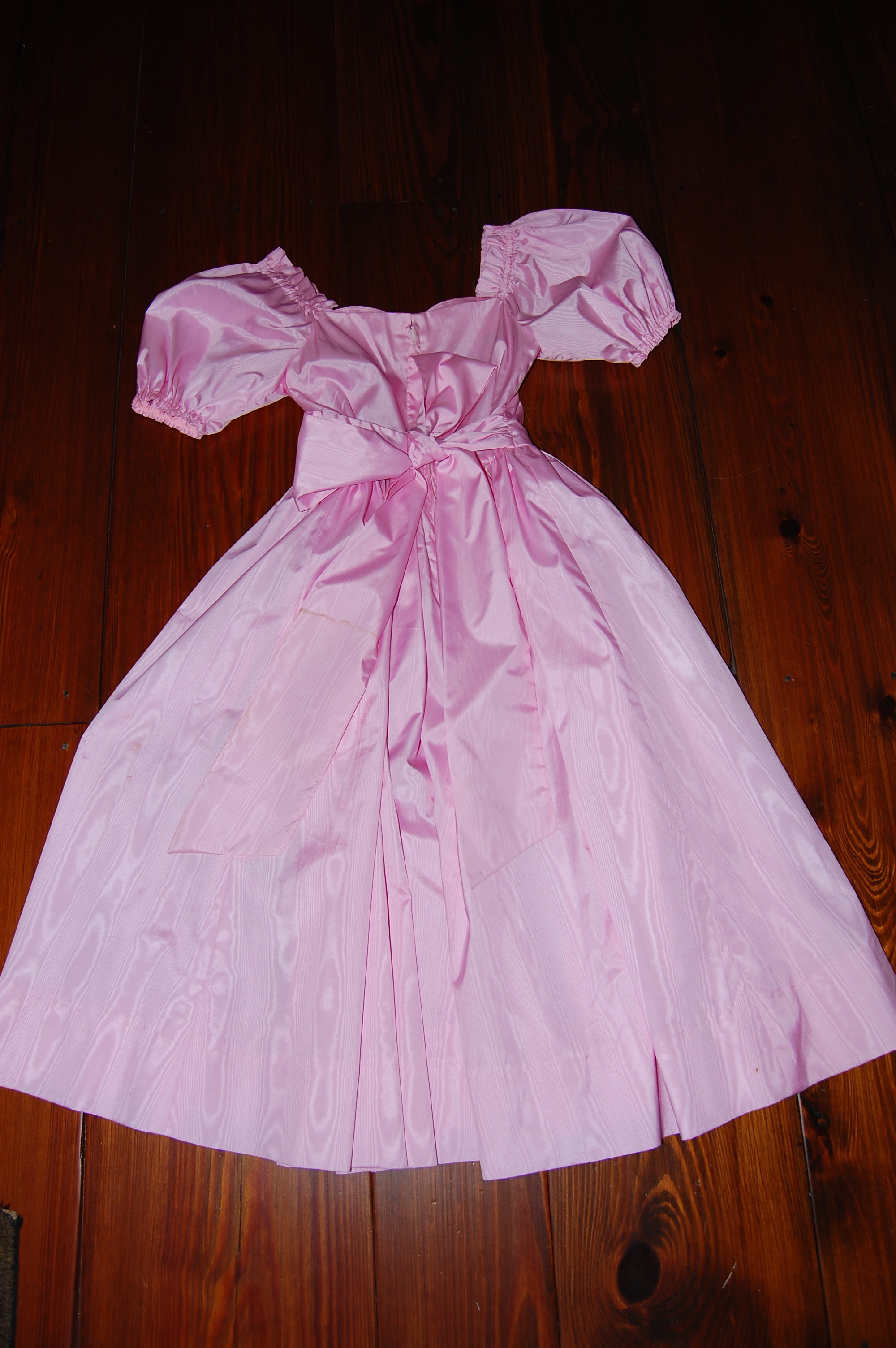
Quite simply, it is the story of Mrs. Bobbin (how perfect is that name?), a dressmaker who has just finished a fancy pink and lacey gown for the Duchess to wear at the evening’s Ball.

Mrs. Bobbin, the dressmaker, puts the final stitches in the ball gown.

However, Mrs. Bobbin is too ill to get the dress to the palace.  Her young daughter, Irene, takes charge – putting her mother to bed with blankets and tea – and then, with the dress carefully boxed and tight in her arms, setting off to deliver the beautiful dress to the Duchess.   Everything that can go wrong, does.  It is snowing mightily, and the wind is so strong that Irene can barely walk with her large precious parcel.  Suddenly the wind grabs the box and whips the dress out of it.  Away it flies.

“How could anything so terribly wrong be allowed to happen?  Tears froze on her lashes.  Her dear mother’s hard work, all those days of measuring, cutting, pinning, stitching … for this?  And the poor duchess!  Irene decided she would have to trudge on with just the box and explain everything in person.”

As if this humiliation were not enough, Irene steps in a hole buried beneath the snow and hurts her ankle.  At this point she just wants to go home, but forward she persists, ignoring her pain and searching for the palace in the swirling snow.  Finally she sees its glittering lights, and as she approaches it, she sees the most wonderful sight: the beautiful gown is spread out on a huge tree trunk, held in place by the hateful wind which had torn it from her.

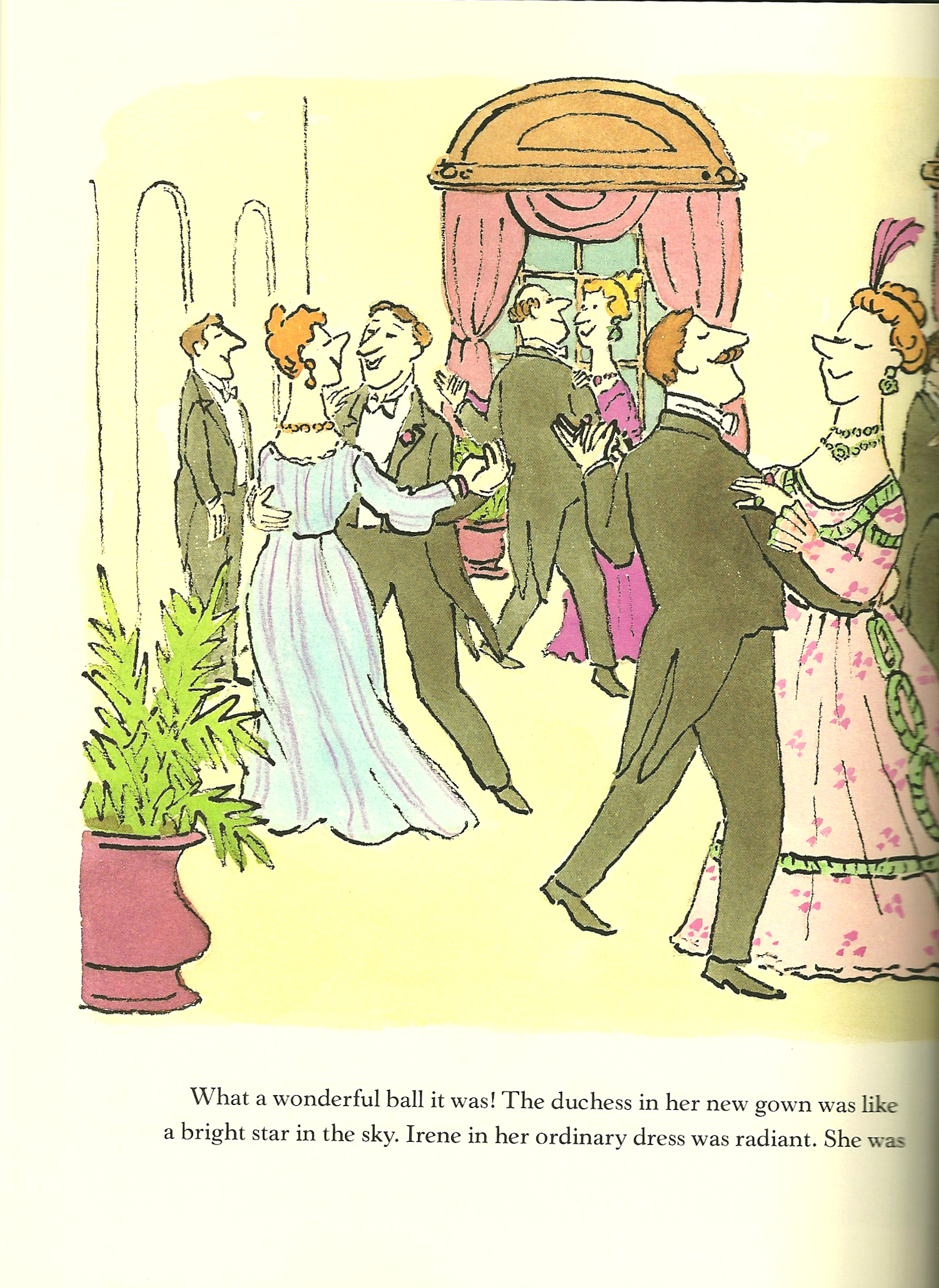
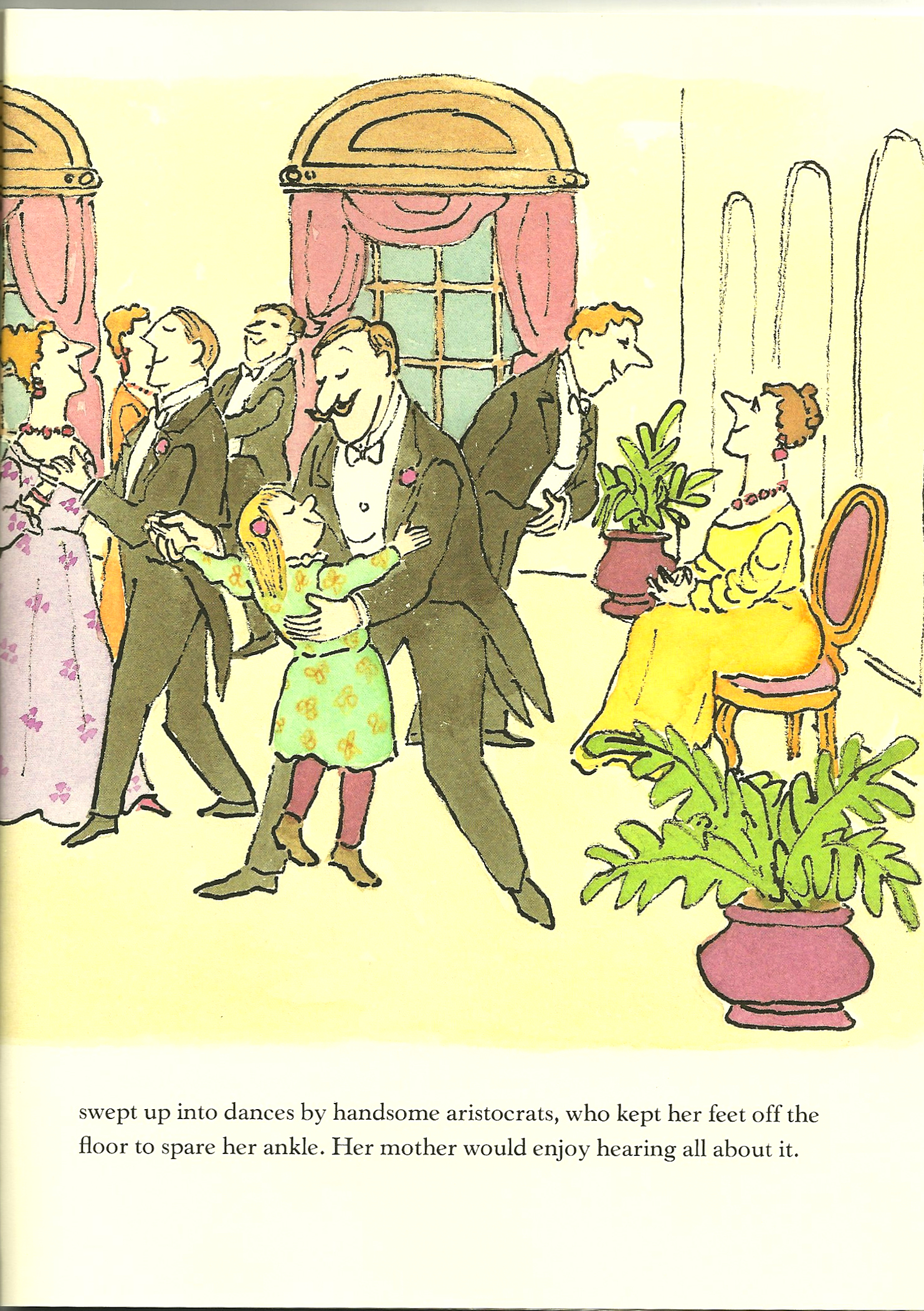
So – Irene and the dress arrive at the palace with much fanfare.  Needless to say, the ball is a wonderful success with the Duchess in her glorious new gown and Irene, in her simple dress, is just as glorious.

The Duchess in her new gown . . .

. . . and Irene, brave and honorable, enjoying the Ball!

The next morning Irene is accompanied home by two footmen, a doctor for Mrs. Bobbin sent by the Duchess, presents from the Duchess to Mrs. Bobbin, “along with a note saying how much she cherished her gown, and what a brave and loving person Irene was.”

Here are the things I love about this story:

1)   The art of dressmaking is in full display, with pride in accomplishment and recognition of the intricate, time-consuming, and complicated work that goes into the construction of such a gown.

2)   Irene’s love for her mother and understanding of the immediacy of delivering this important dress to the Duchess instill in her a take-charge attitude.  We all know those times in our lives when we must take charge – they choose us, we don’t choose them.

3)   Irene was not going to give up, even when she thought all was lost!   She was determined to do the honorable thing.

4)   Irene attended the Ball (as an unexpected guest of honor) in the only clothes she had with her – her simple dress.  However plain her attire, her attitude made her radiant.

5)   Sometimes a piece of clothing will take on special significance because of the circumstances under which it is worn.  I daresay Mrs. Bobbin’s beautiful creation was thus for the Duchess!

A couple of years after this book was published, I made a “Duchess” dress for my daughter to play in.  Here it is:

A dress for playing out the storyline of  “Brave Irene”.

Here is the back of the dress, with its beautiful bow.

And then a couple of years after that, I needed to make a contribution to a fund-raiser at my son’s school.  So – I put together a “Brave Irene” auction item, which consisted of another “duchess” dress, this one a little fancier, with lace flourishes and silky ribbons.  I lined a sturdy, new cardboard box with shiny white paper, addressed it to the “Duchess c/o the Palace” (with Mrs. Bobbin’s return address, of course!); placed the dress in the box, with a new copy of the book, and a wool scarf for “Irene” to wear on her journey.   In retrospect, I should have included a tomato pincushion, too, and maybe a tape measure ….

Mrs. Bobbin’s dress form (called a “dummy” in the book).

Whenever I read this simple story, I wonder if William Steig might have been inspired by this quote by Isaac Bashevis Singer:  “What a strange power there is in clothing.”   Indeed!

6 Comments

Filed under Dressmaker details, sewing in silk, Uncategorized

What would Christian Dior do?

Without a doubt, the two dresses featured above left in my blog heading were inspired by the designs of Christian Dior.  This return to the feminine silhouette was led by Mr. Dior, starting in 1947, and it continues to influence fashion to this day.   In 1954, he published a small book entitled The Little Dictionary of Fashion, which was reprinted in 2007 by Abrams (and available at Amazon.).

Some of the language and expressions in this little book seem a bit old-fashioned, but it contains a wealth of information and advice.

It is really a combination of fashion and sewing terms, accompanied by his philosophy of life.   Here is a sampling of topics:

Bodices:  “… the most important part of any garment….”

Cosmetics:  “… play a very big part in the secret of beauty, but they mustn’t show…”

Emphasis:  “If you have a particularly outstanding feature it is always a good thing to emphasize it….  The whole of fashion is emphasis – emphasis on woman’s loveliness.”  [I think this is very sweet!]

Handbags:  “ A very important accessory and used with not enough care by too many women.”

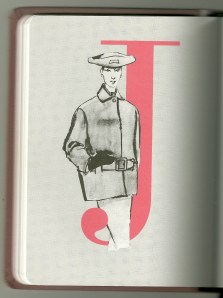
Jackets:  “…must always be worn with a slim skirt…”

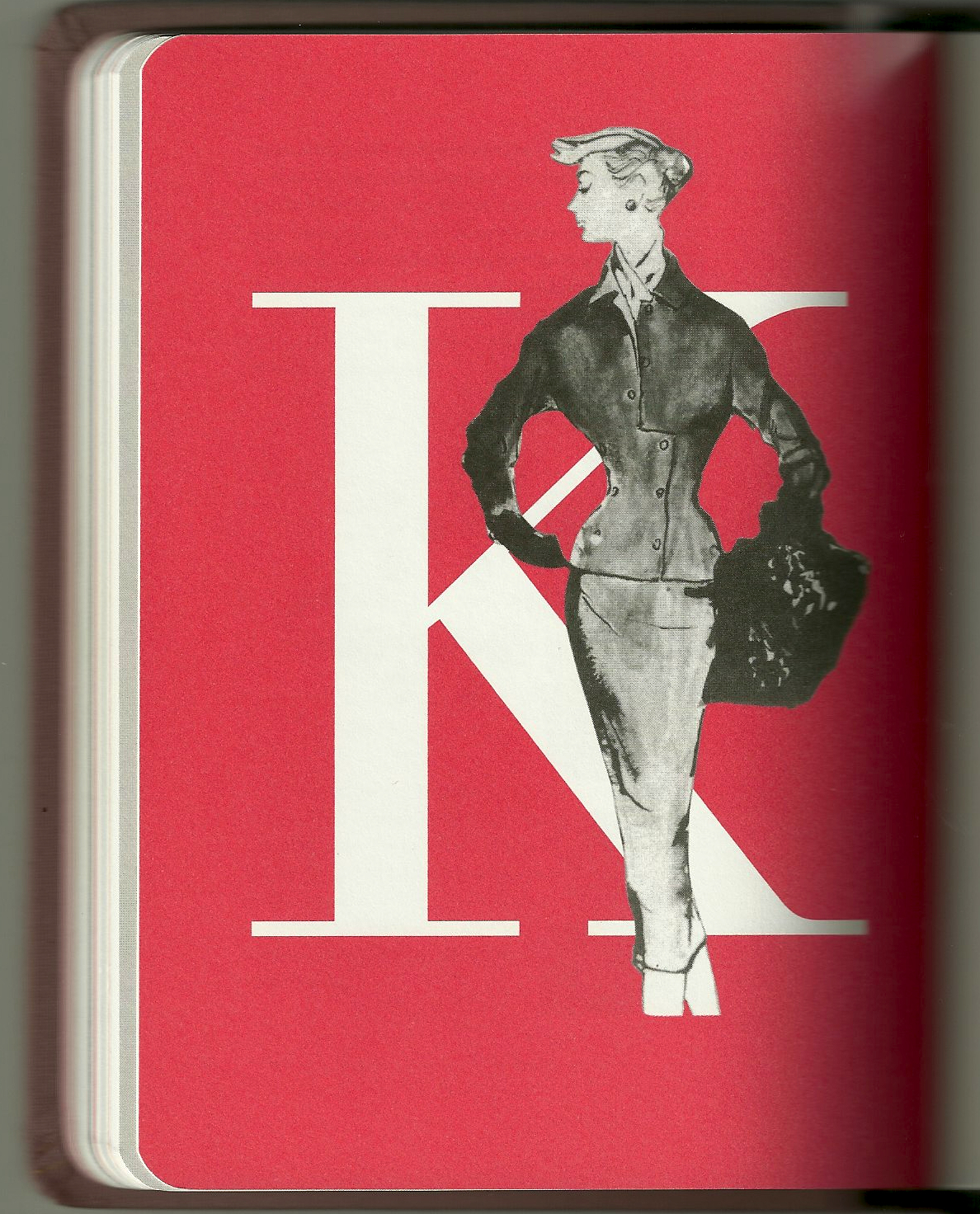
J is for Jacket!

J is for Jacket!

Key to Good Dressing:  “There is no key…  but simplicity, grooming and good taste – [are] the three fundamentals of fashion…”

This Dior outfit is described this way: "simple black suit, matching gloves and muff, and hat and scarf, in vivid cerise." Dressing beautifully, indeed!

Materials:  “You can never take too much care of the materials you choose to make a dress…”  [In this entry, he seems to be addressing the home sewer!]

Pockets:  “… pockets are very useful to help you to do something with your hands if you are embarrassed and don’t know what to do with them.”

The Way You Walk:  “… can make or mar your clothes – cultivate gracefulness.”

And my favorite:

Zest:  “…You have to live with zest — and that is the secret of beauty and fashion, too.”

Although Mr. Dior died in 1957 at the height of his career, his eponymous couture house has, as everyone knows, continued over the years under the direction of many different artistic directors.  Just this week the newest Creative Director for the House of Dior was announced.  Although I am a casual follower of current fashion (mostly to see how the vintage looks influence today’s looks), I was pleased to see that Mr. Raf Simons has been selected to head Dior.  I thought the designs he did for Jil Sander  over the past few years were among the most flattering that have appeared on the runway.  His selection is detailed in a fascinating article by Christina Passariello, which appeared in The Wall Street Journal on Tuesday, April 10, page B4.  (By the way, The Wall Street Journal has terrific fashion coverage and advice, specifically in the Thursday and Weekend editions, as well as other times.)

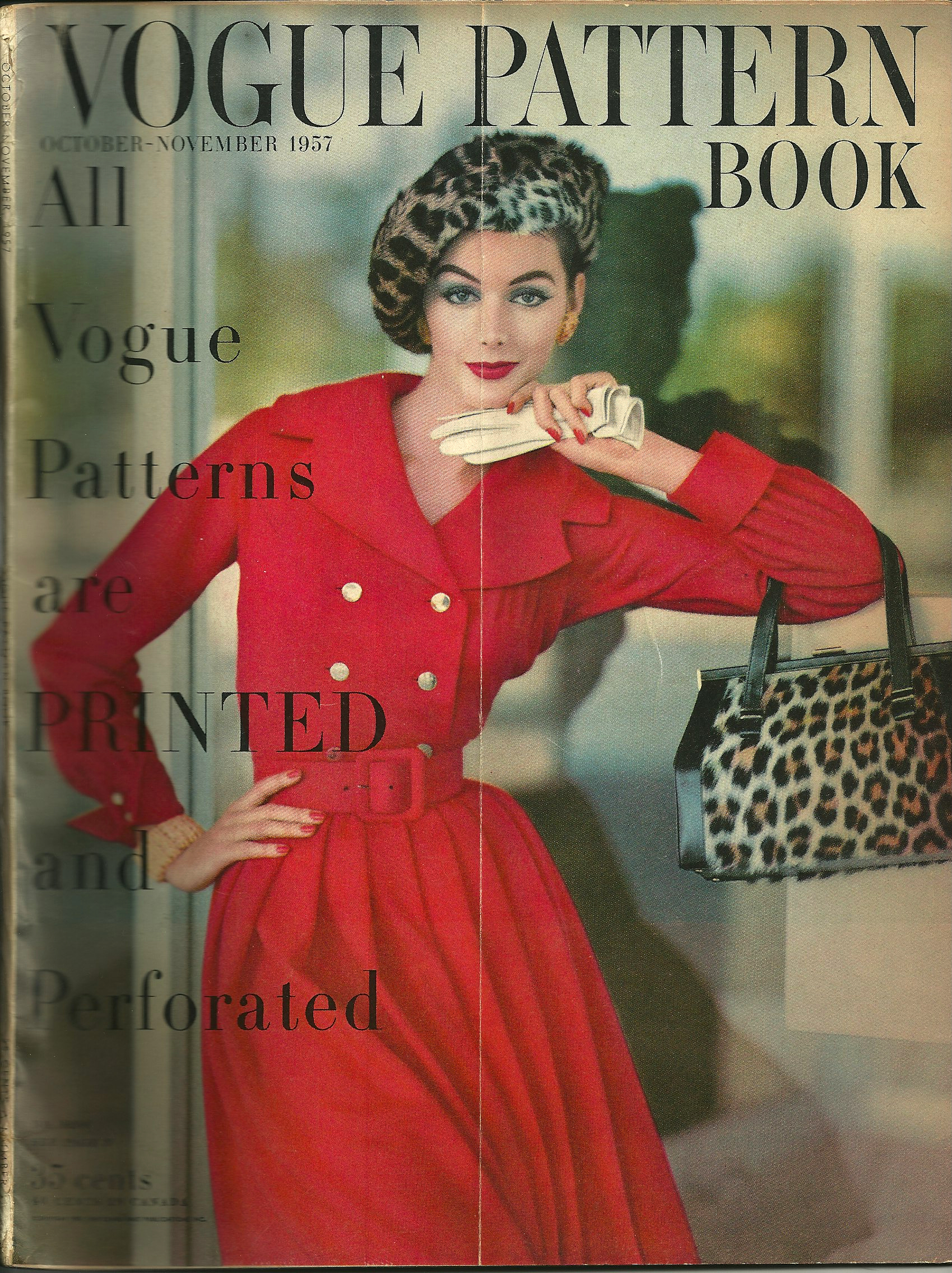
Here is what the cover of Vogue Pattern Book magazine looked like in October, 1957, the month and year of Christian Dior's death.

Mr. Simons’ first designs for Dior will debut in July.   I wonder if he is now asking himself “What would Christian Dior do?”

6 Comments

Filed under Uncategorized

Can you zip me up, please?

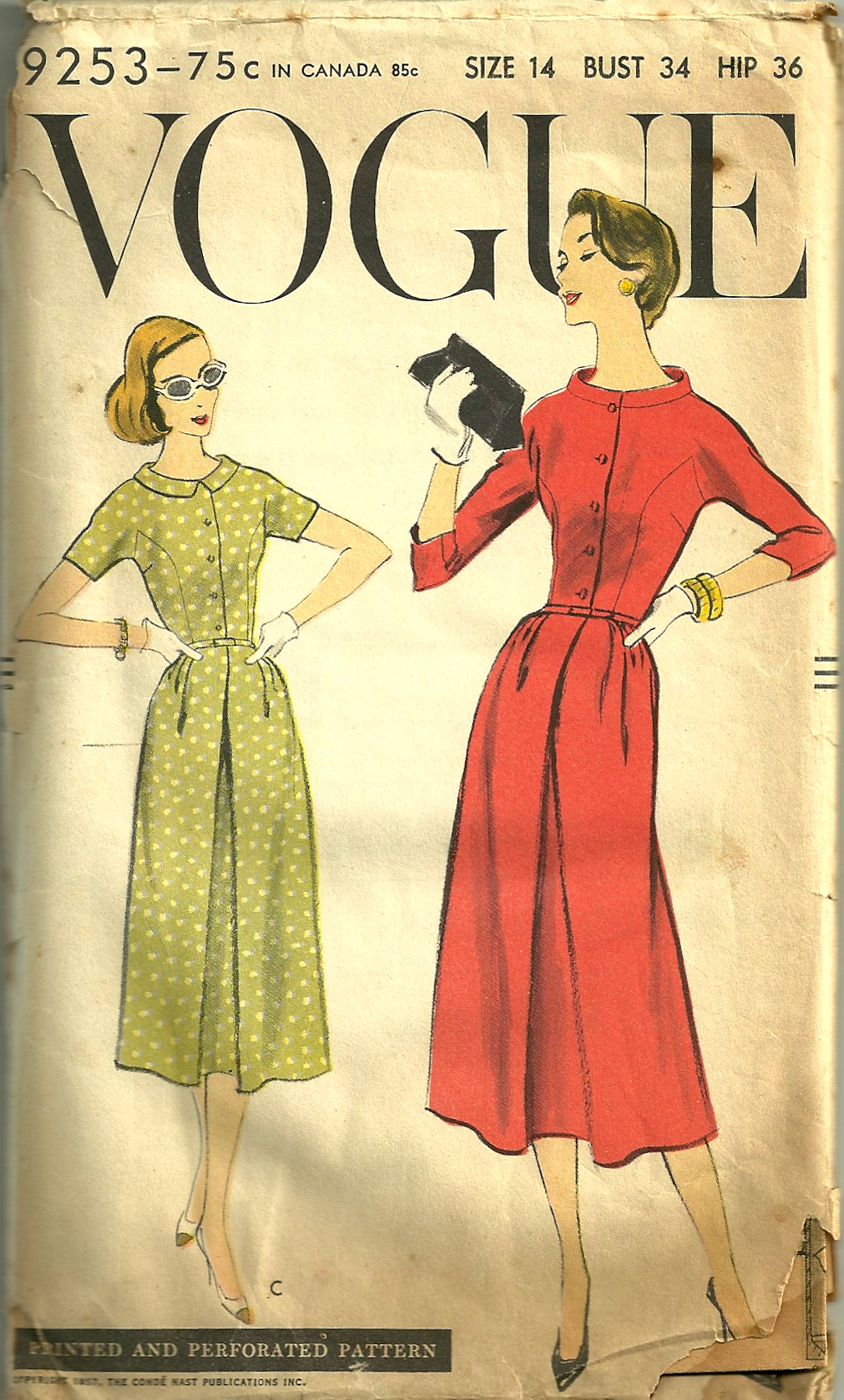
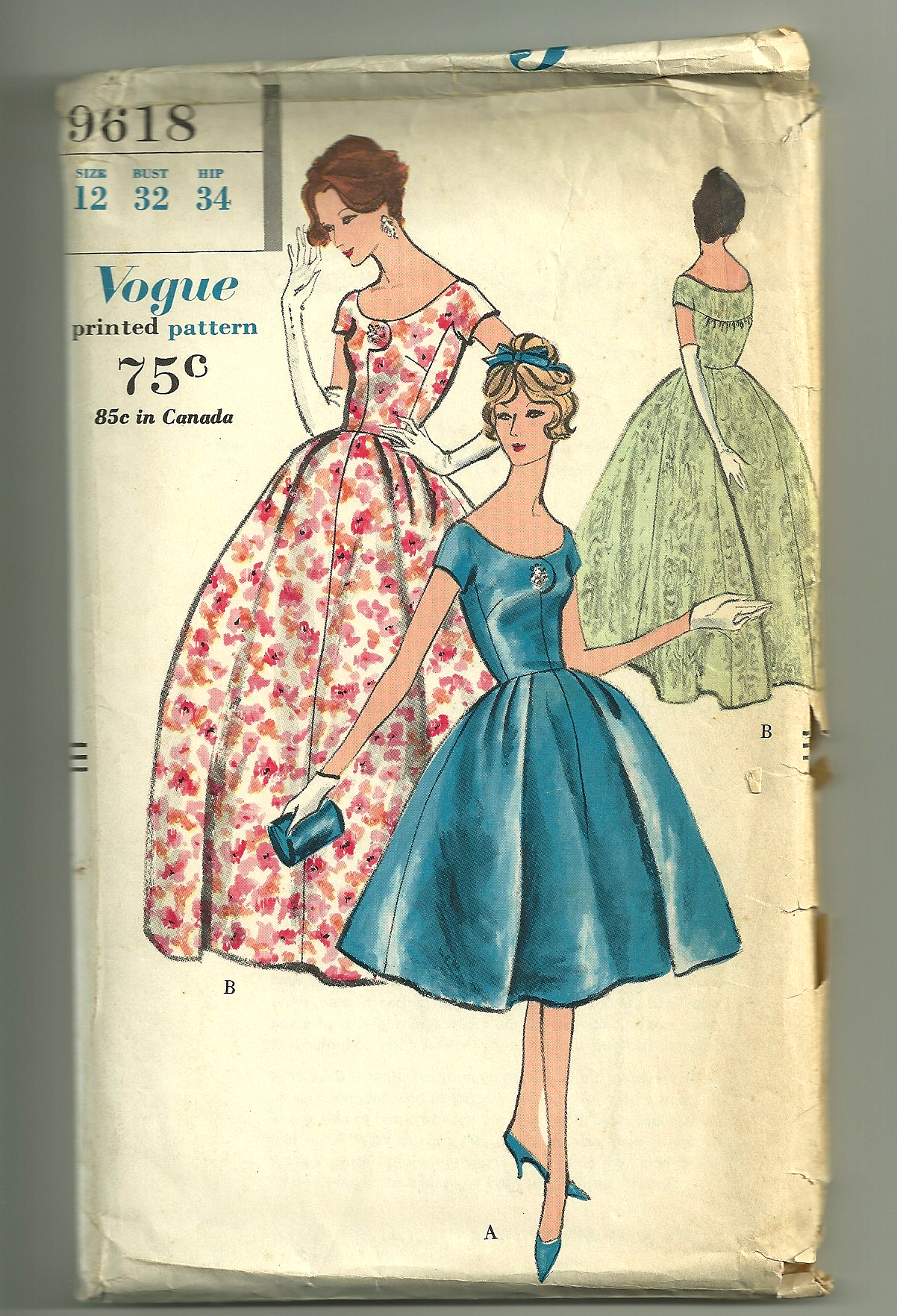
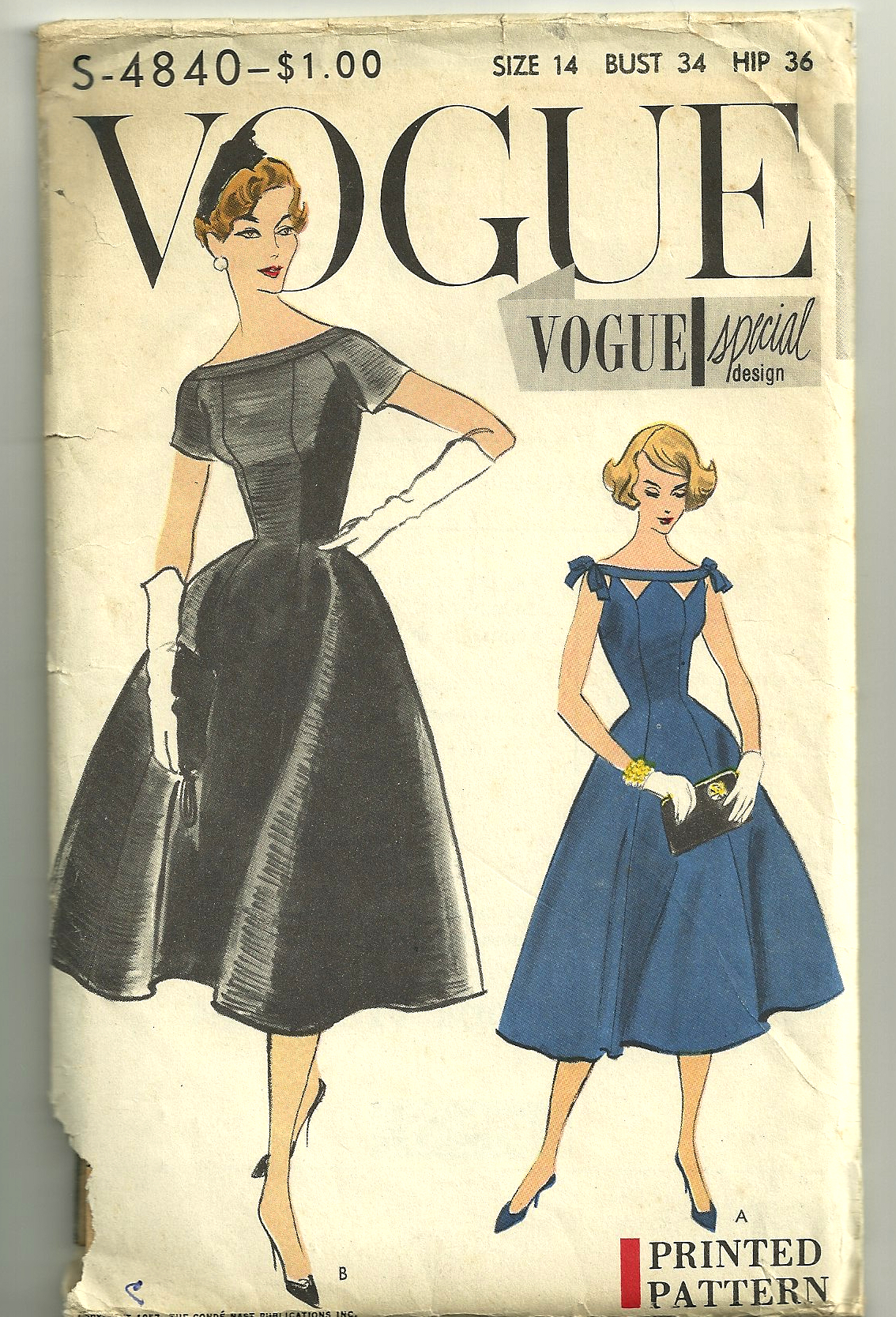
This is a completely unscientific observation, but it seems to me that the zipper has made a fairly substantial migration over the years – from the side of the dress – to the back of the dress.  If that sounds confusing, let me explain a bit more, by showing you some of my dress patterns which date from the 1950s.  All of these dresses feature a side zipper, placed a few inches under the left arm and extending a few inches below the waist (or, in other words, these zippers open within a garment seam.).

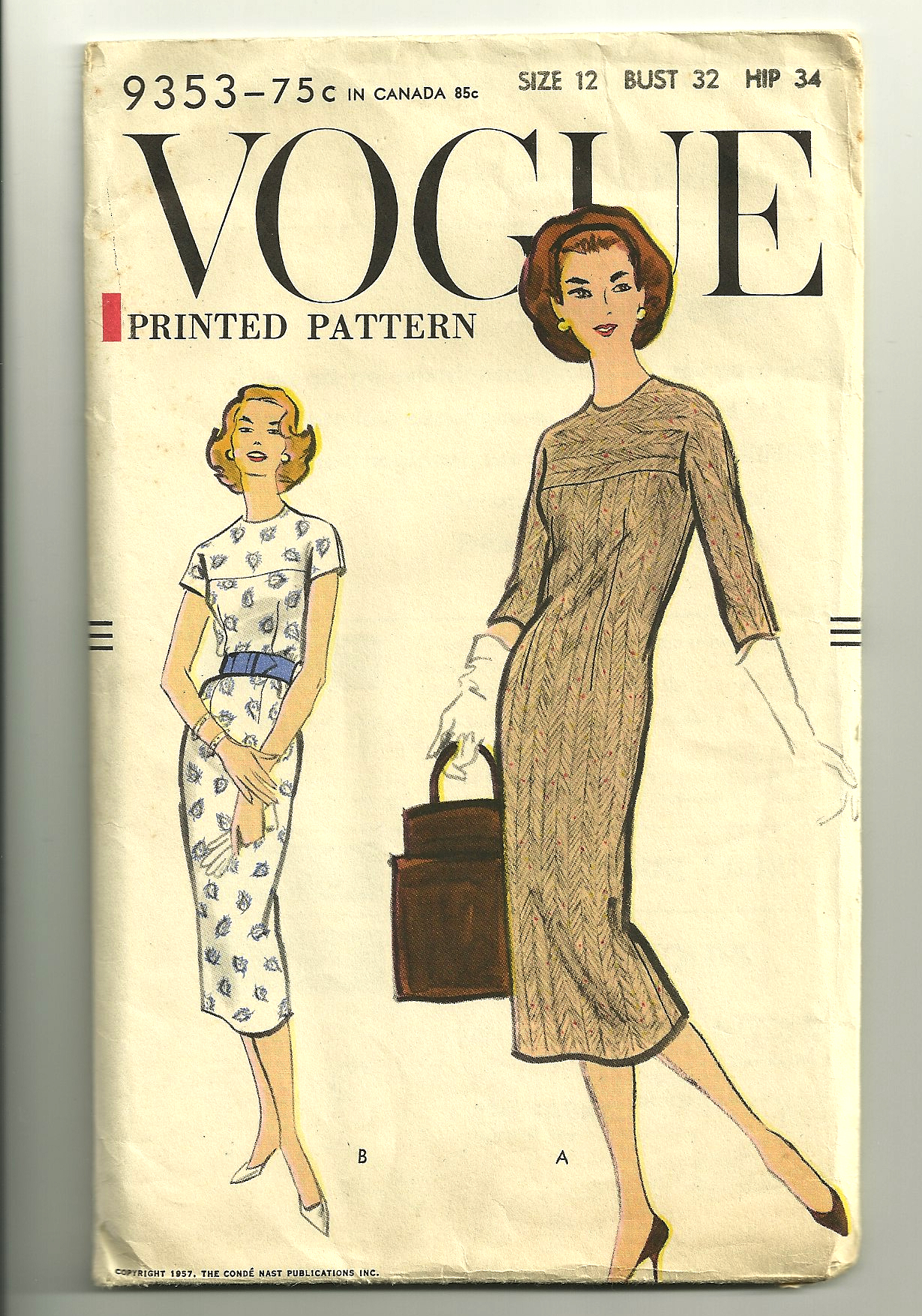
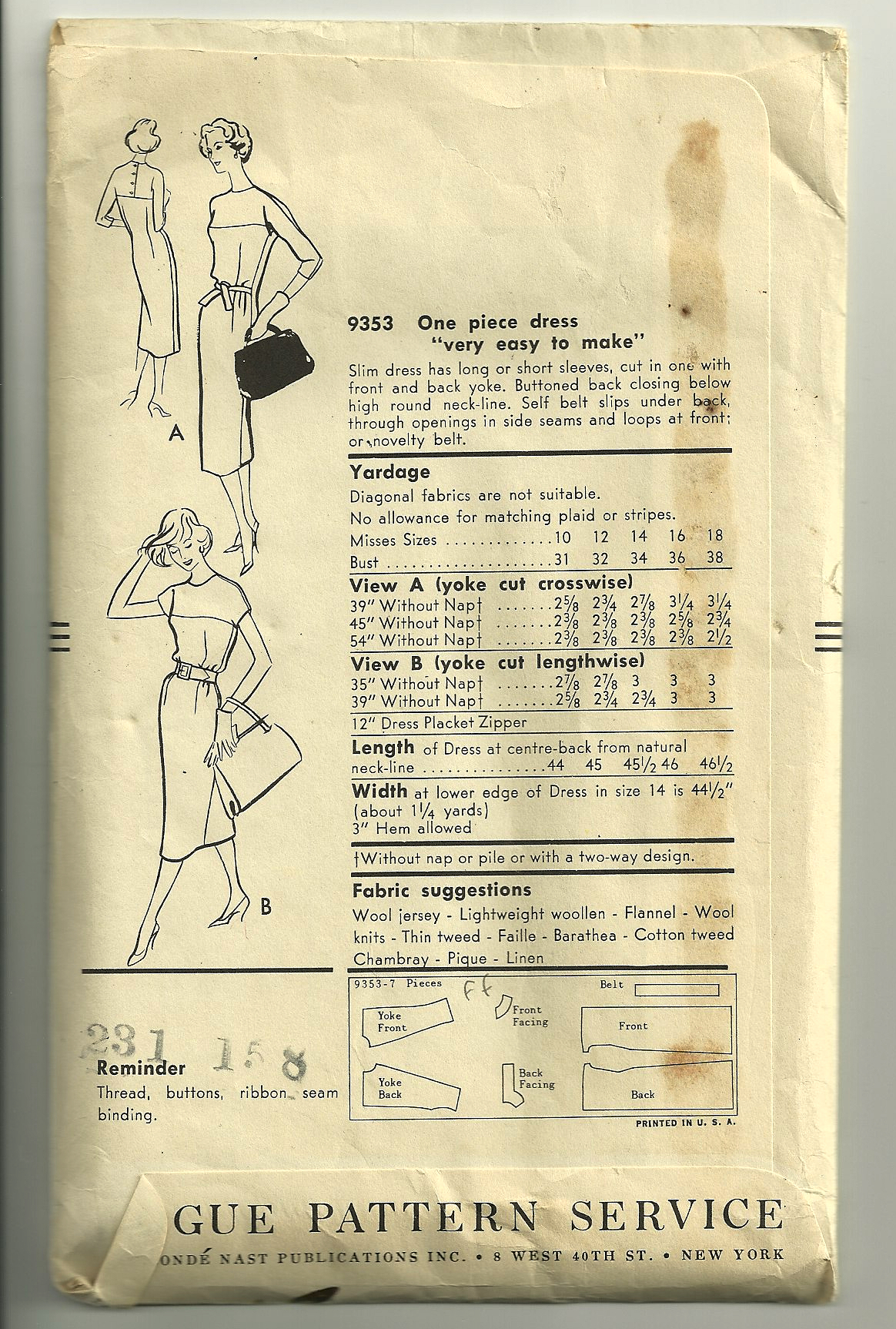
I love the clean lines of this dress from 1957, with the "yoke" effect which extends into the kimono sleeves. The back of the envelope shows more detail.

You can see from this back view that, although the top back yoke buttons, a side zipper is still necessary to get the dress on!

The front on this dress only opens to the waist, so a side zipper enables one to step into it. This pattern is dated 1957.

The back detail on this evening gown from 1958 would have been interrupted by a center back zipper, but a side zipper preserves the designer's intent.

I love this dress design from 1957, which simply would not work using a center back zipper.

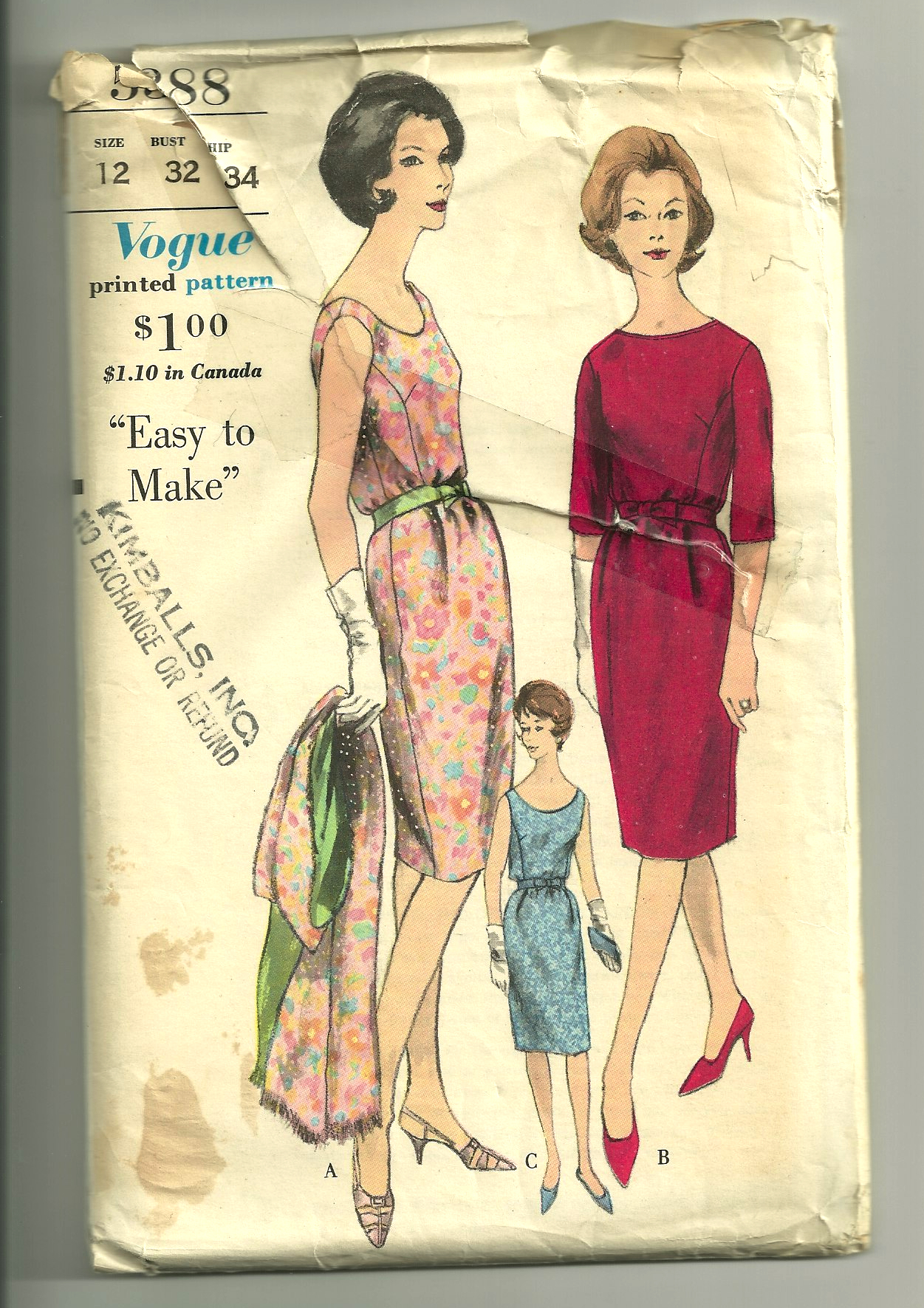
Patterns from the last half of the 1960s start to feature more and more zippers which are placed in the center back of the dress, and by the 1970s, it seems, almost all zippers were center back ones.

This design from the early '60s would work with either a side or center back zipper, but the pattern calls for a center back one, thus showing the start of the transition.

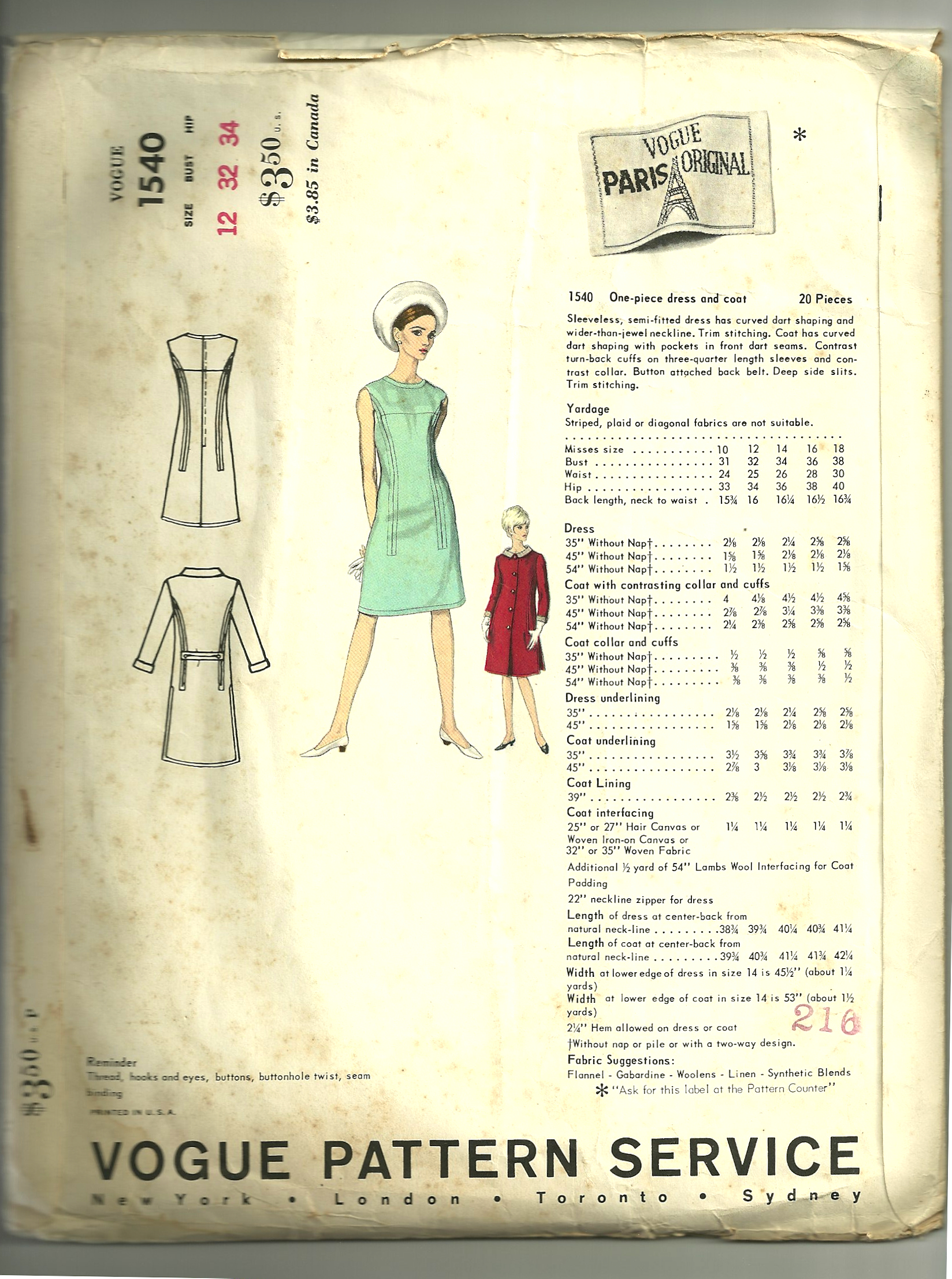
The dress on this pattern is actually my next project! It is a design by Jacques Heim from the 1970s. I'll be inserting a 22" neckline zipper in the back of this dress.

A casual look at vintage clothes from this time period also seems to support this observation (with the occasional exception to the rule, of course.  I actually saw a side-zippered dress at J.Crew one day this week, but it’s not the same, really, as the dress is sleeveless and the zipper parts at the top, under the arm.)

To try to understand some of the dynamics of this zipper conundrum, I went to my 101 Things I Learned in Fashion School book (by Alfredo Cabrera with Matthew Frederick) to see if I could find any entry on zippers.  Here is what I found on page 64:

“Center back zippers are like fine crystal:  best reserved for special occasions.  When a student designs an interesting garment and is asked how the wearer gets into it, the common answer is, ‘center back zipper.’  This solution is favored by inexperienced designers because it doesn’t require an invasive change to a garment.  But a back closure is rarely a satisfactory solution; it’s a fussy, frustrating concern when one has only fifteen minutes to dress for work.

“Back closures are a remnant from an era when women wore corsets and hoopskirts and had maids to truss them up in back.  Today they are more appropriate in association with major events.  On her wedding day or Oscar night, after a woman has spent a lot of time and money on her hair and makeup, she is more likely to want to step into her dress than pull it over her head.  A center back zipper implies a fitting sense of occasion.” [my emphasis]

Side-placed zippers are different from center-back zippers both in name and detail:  side zippers are called “dress” zippers and have bottom and top “stops”, while zippers for the center back (or skirts, pants, shorts) are called “neckline” or “skirt” zippers and, of course, open at the top with a stop just at the bottom.  (Skirt and neck zippers can easily be made into dress zippers by putting a few tacking stitches to anchor the two sides together right above the pull.)  Back in their hay-day, dress zippers were available in lengths from 10” to 14”. Skirt and neckline zippers are still available in lengths ranging from 6” to 24”, but they are now called “all-purpose” zippers.

So why, since the ‘70s, have most side dress zippers been replaced by neckline zippers placed center back?  I guess there are several potential answers to that question, including:

1) a lot of us would rather step into our dresses than pull them over our heads even if we are not dressing for a special occasion.

2) laziness or ignorance  (both kind of strong words, for which I apologize to anyone offended!) or practicality on the part of designers.

3) it’s just become the accepted way of closing a dress.

4) the invisible zipper made application of the zipper easier and the finished look more streamlined.

5) Huh? What’s a side zipper?

I’m sure there are lots of other explanations but my favorite one is a bit more romantic…   James H. Boren put it succinctly thus:  “A dress that zips up the back will bring a husband and wife together.”   I’d say that is a “fitting sense of occasion”!

3 Comments

Filed under kimono sleeves, side-placed zippers, Uncategorized, vintage Vogue patterns from the 1950s, vintage Vogue patterns from the 1960s, vintage Vogue patterns from the 1970s, Vogue patterns