Tag Archives: vintage fashion

The Diane von Furstenberg Formula

Has there ever been a more iconic cover for a pattern/sewing magazine?

Instantly recognizable in her classic wrap dress, Diane von Furstenberg was featured in this September/October 1976 issue of Vogue Pattern Book Magazine. Her dress dynasty had begun in 1970, driven by her “dedication to dresses that fulfill a woman’s fashion needs from career time to cocktails…” As her business grew over the next few years, it seemed that everyone wanted one of her dresses in their wardrobe. I was no different. You can only imagine my surprise and absolute delight when my husband gave me a DvF dress for Christmas in 1975. Although I have, over the years, discarded most of my dresses from earlier times, this one still hangs in my cedar closet:

Long sleeved and with a separate tie belt.
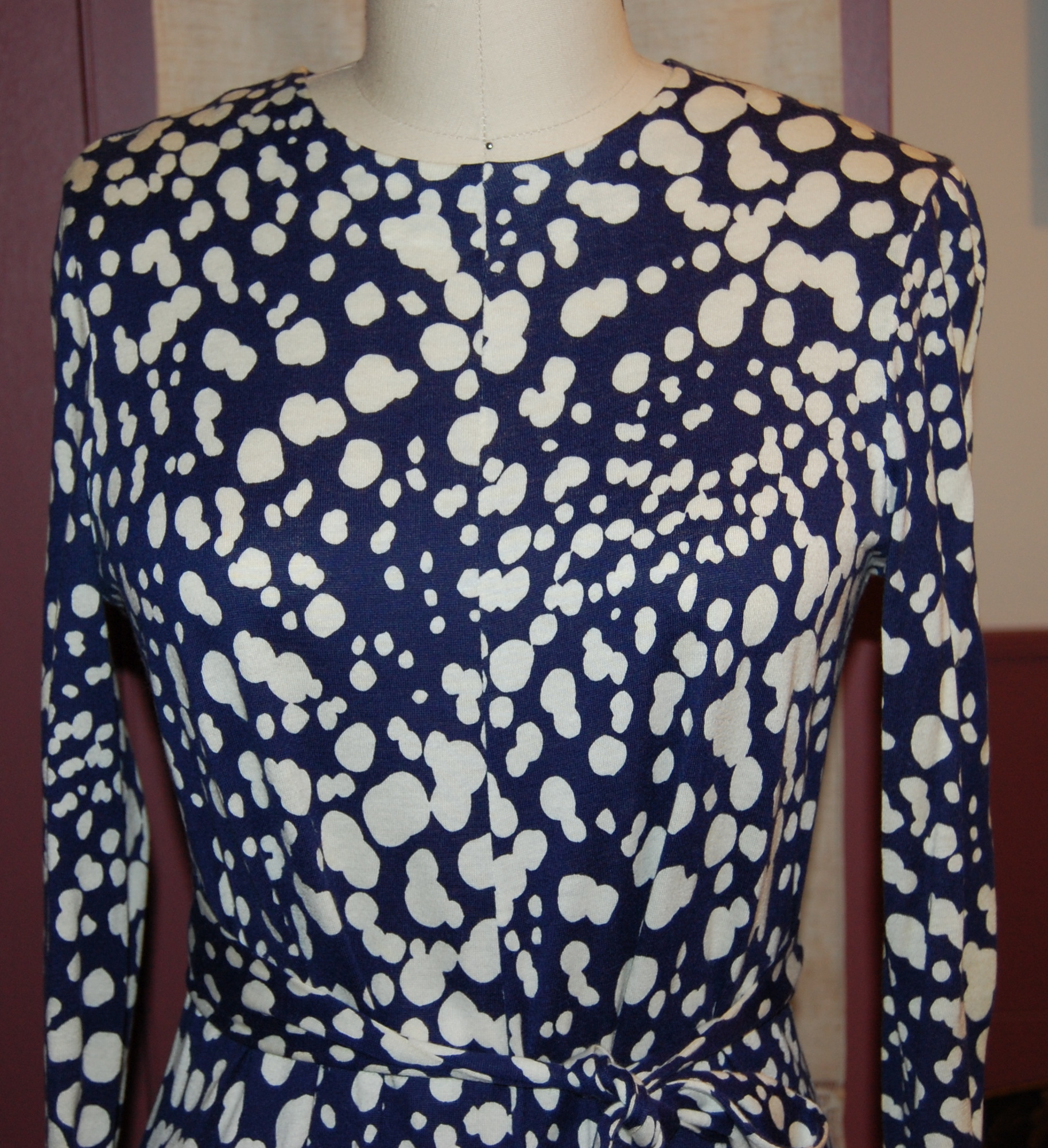
Long sleeved and with a separate tie belt.

There is a center front seam to this dress which helps to make the skirt flow beautifully.

There is a center front seam to this dress which helps to make the skirt flow beautifully.

The label gives some fascinating information. It gives the composition of the fabric, – 50% cotton and 50% rayon. Interestingly, it includes an “umlaut” over the “u” in Furstenberg, which seems to have been dropped shortly thereafter. And the size 10 would now be a size 6 in USA standards!

DvF label

By 1976, Vogue Patterns had entered into a partnership with DvF, with exclusive rights to offer her dress patterns for sale. This was such a smart thing to do for both Vogue Patterns and the Princess – as they referred to her. Even better was when Diane von Furstenberg-designed printed fabric was available in bolts at your local fabric store. I remember having a difficult time finding these yard goods – they sold out so quickly as home dressmakers rushed to make their own genuine DvF wrap dresses. Vogue Pattern Magazine summed it all up quite nicely:

“Almost as important as the designs are the Diane-designed prints which turn her very flattering basic designs into that very special Von Furstenberg look. That is why, we are doubly pleased to tell you that, thanks to Cohama, you can make your Vogue Von Furstenberg in authentic Von Furstenberg prints.” First available in October 1976, many of these prints are still recognizable today as DvF prints, and they still look fresh and stylish!
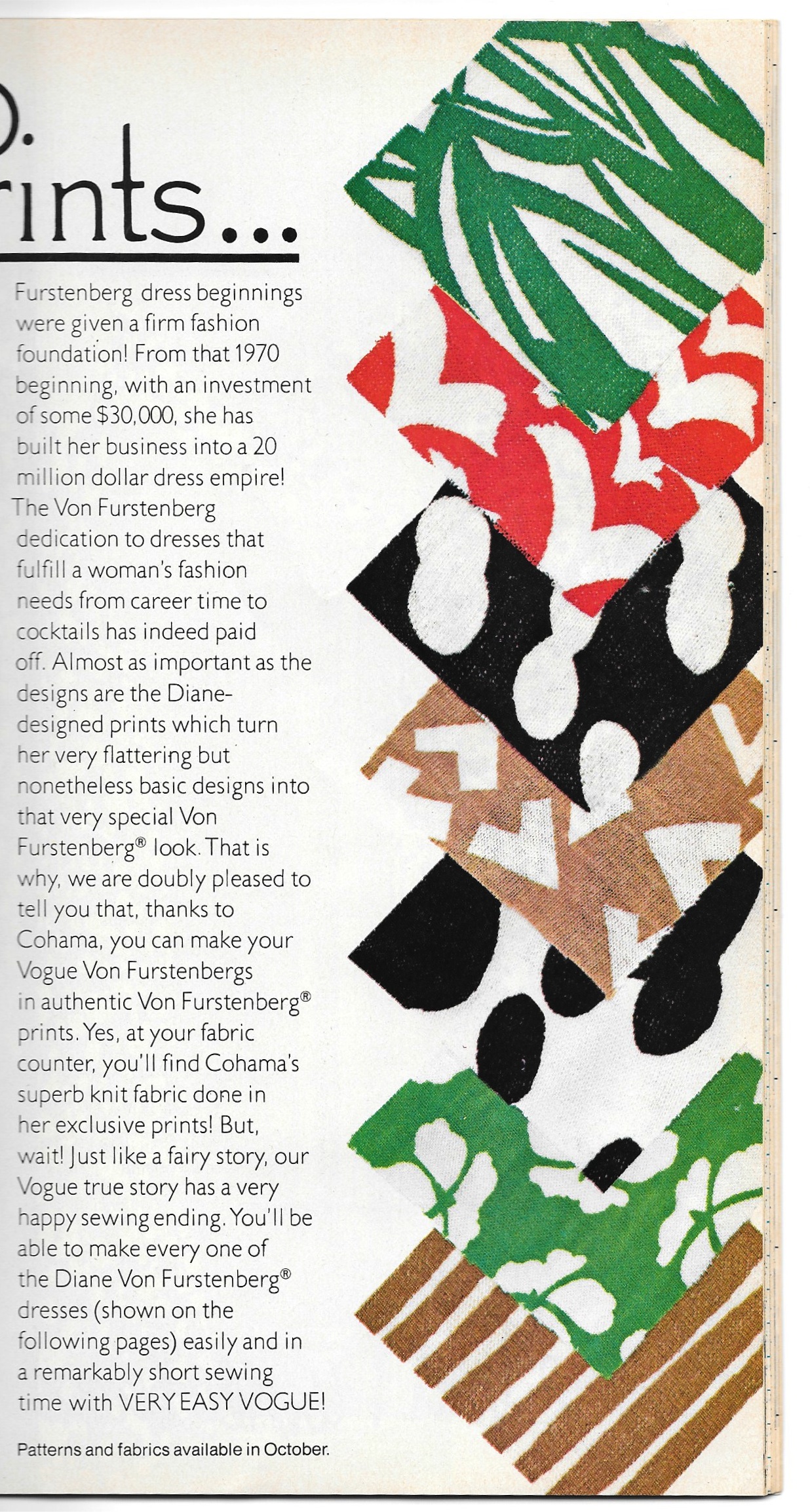
A sampling of some DvF fabrics.

A sampling of some DvF fabrics.

Here is the editor-in-chief of Vogue Pattern Magazine, Judy Espinar, with Diane von Furstenberg.

Here is the editor-in-chief of Vogue Pattern Magazine, Judy Espinar, with Diane von Furstenberg.

Another beautiful print!

Another beautiful print!

I might not have been able to get my hands on any of that Cohama fabric back in the 1970s, but thanks to this blog and one of my readers with unused DvF yardages, I have been able to fulfill a long-held wish, having purchased two lengths of the Cohama fabric a number of months ago.

A DvF wrap dress seemed to be the perfect follow-up to my last complicated project, and so I retrieved this fabric from my fabric storage closet:
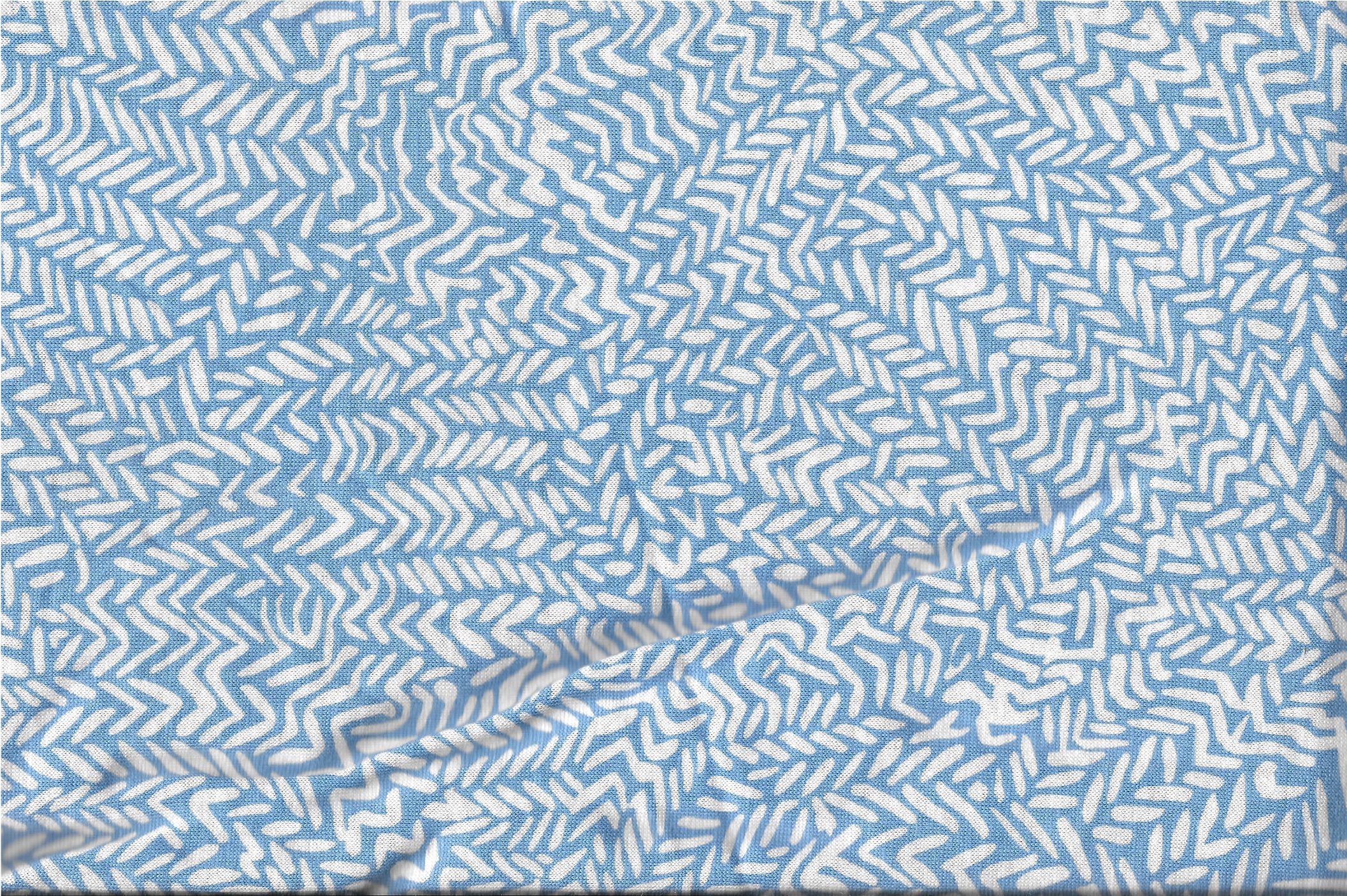
Cohama blue DvF fabric

I washed it in cold water, gentle cycle, and it came out fresh and like new. I was struck by the quality of the knit fabric, and of course, wanted to know its composition. This is another time when the vintage Vogue Pattern Magazines come in so handy. Each featured pattern is pictured in thumb-nail size in a detailed Patterns Guide in the back of the magazine, giving information on fabrics, accessories, yardages needed, etc. Quickly I was able to determine that the Cohama fabric is Avril II rayon/cotton knit. This fabric is lighter in weight than my “store-bought” DvF dress. It is tightly knit, silky soft, and, like my “store-bought” dress, it cannot be “seen through,” making it easy to wear!
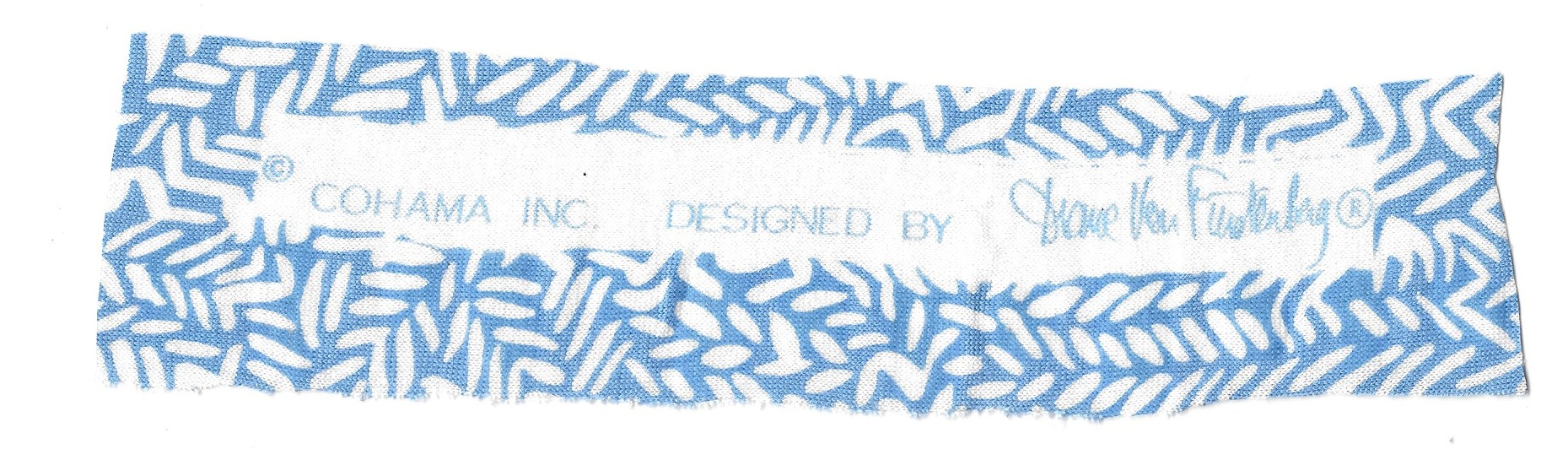
Along the selvedge - the mark of an authentic DvF print!

Along the selvedge – the mark of an authentic DvF print!

I had already made a dress from this pattern three years ago. I have enjoyed wearing it, although the fabric is a bit heavy for the design. So I thought it would be good to make it again, this time in my authentic DvF print.

Decisions #3

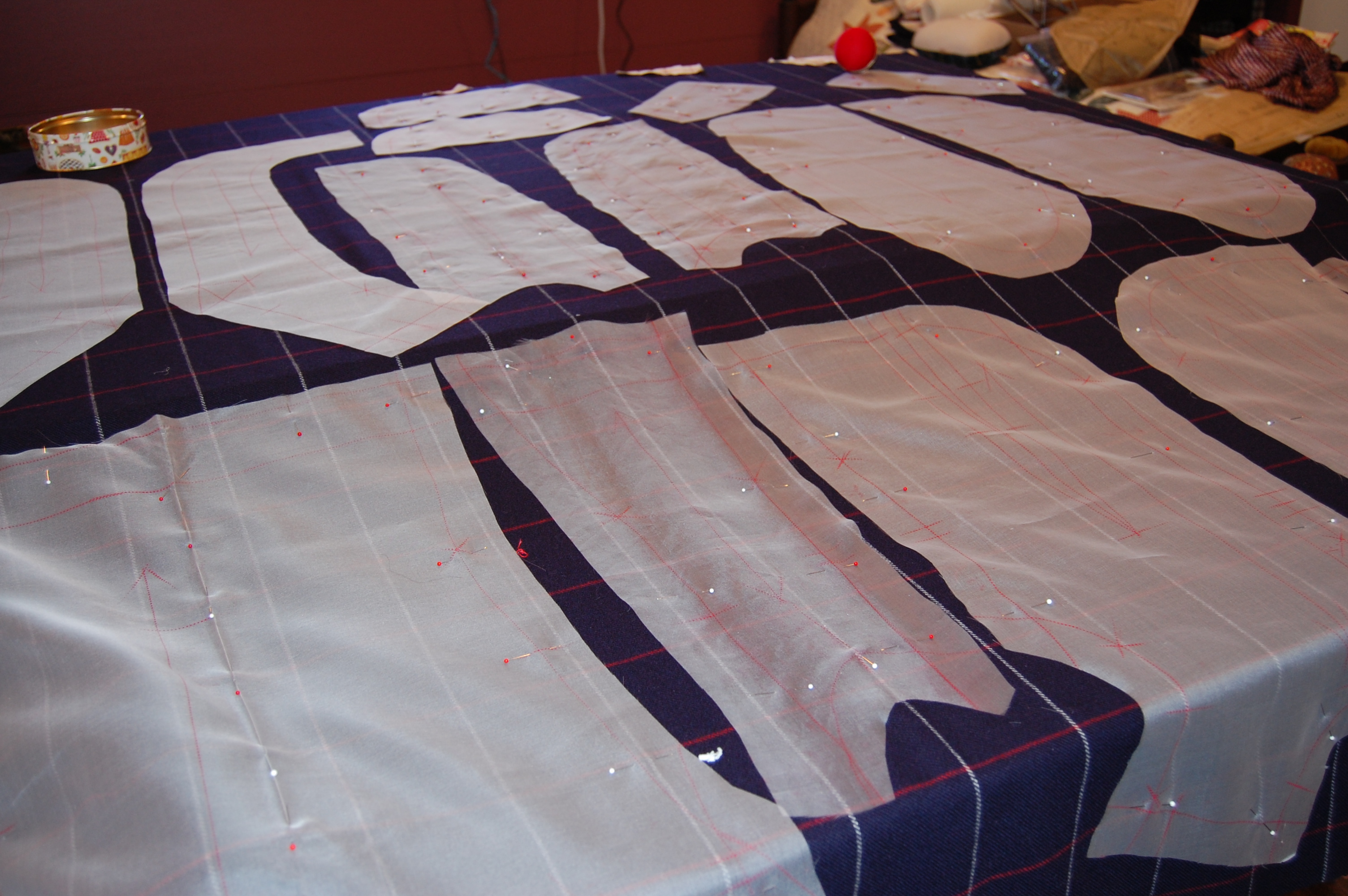
I also determined that I had just enough fabric to squeak out this dress in the short sleeveless version. These wrap dresses take an enormous amount of fabric! It makes sense when you think about the overlapping necessary to make the dress wearable. When I spread out my fabric, I thought to myself, “Oh, I have lots of this – no problem!” I should have learned by now not to think such things! It quickly became apparent that I would have to be creative (again!) in my lay-out if I were to be able to make this dress.

First I made a muslin pattern with separate pieces for the reverses. This was so I could lay the pattern pieces out singly, not folded. Ever since sewing with Susan Khalje’s couture techniques, this is how I like to cut my fabric anyway, so I am accustomed to this extra step. But this time, I cut off the seam allowances (except on the long belt pieces), just as you would do when you are making a classic French jacket.
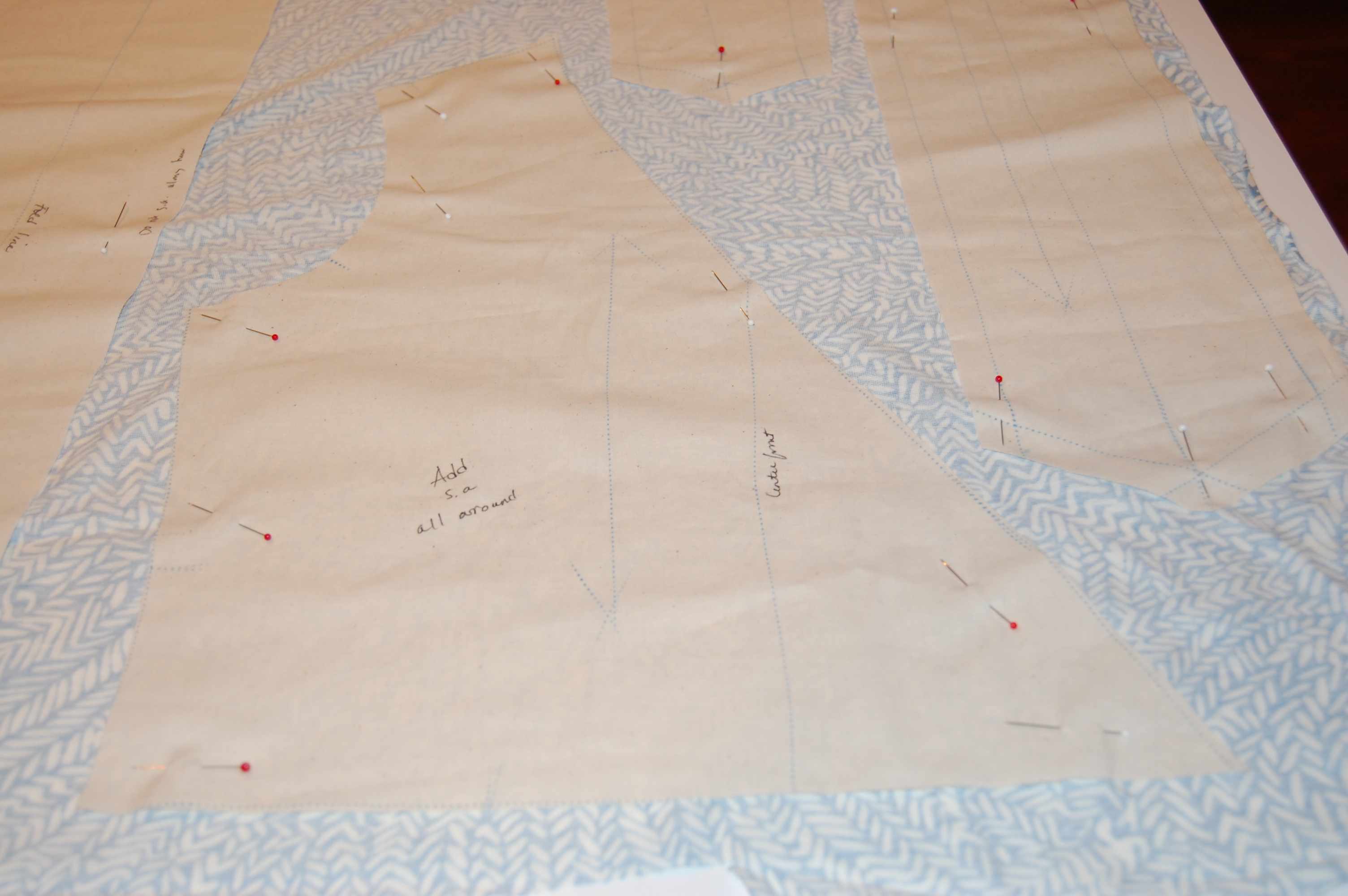
Showing a partial lay-out

Showing a partial lay-out

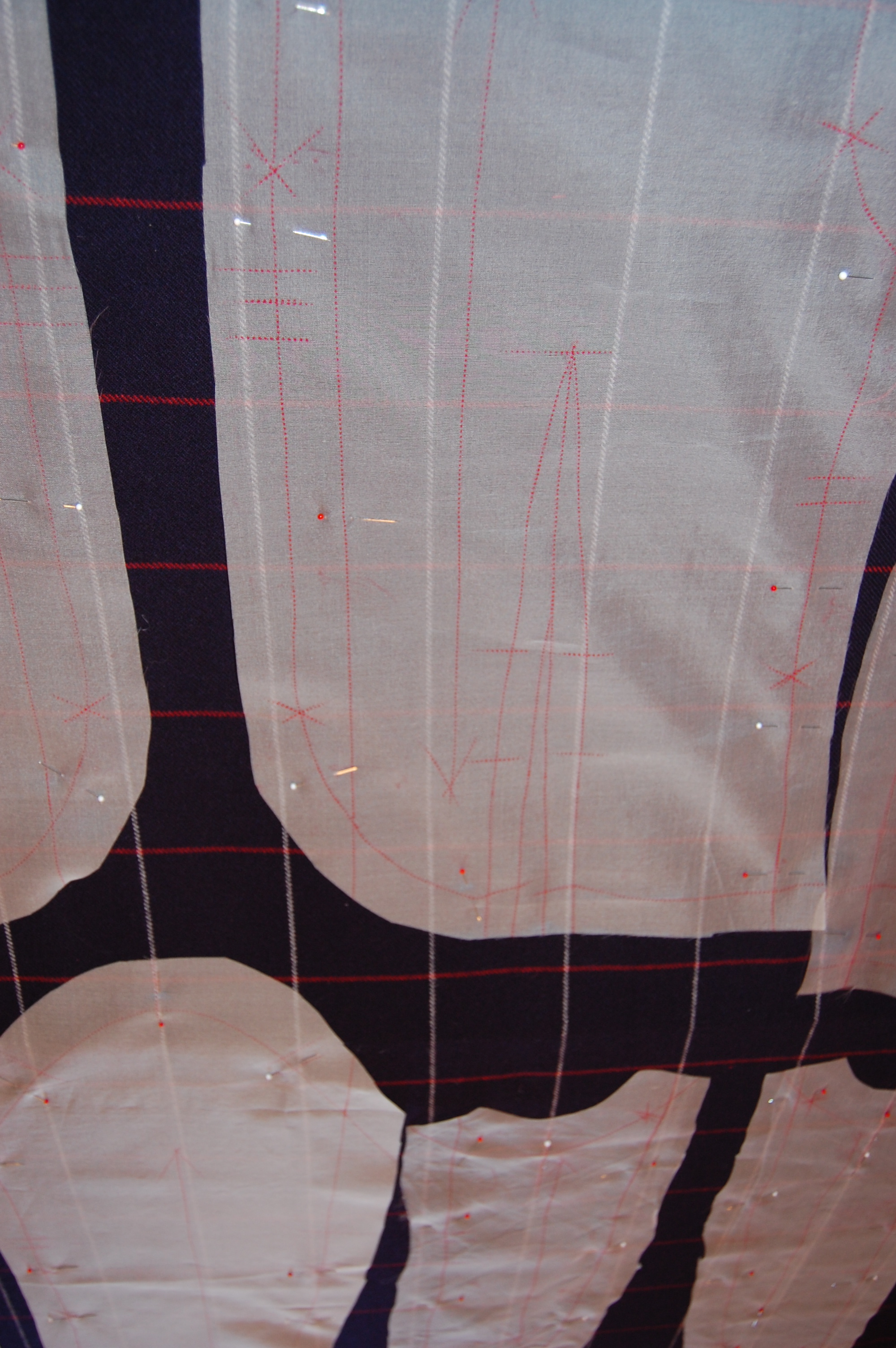
With a French jacket, you are leaving huge seam allowances (usually as much as 2” all around). With this, my seam allowances had to be much smaller and in some cases a bit less than 5/8” in order to fit all the pieces on the fabric. I had to really concentrate when I was cutting out the pieces, remembering to add seam allowances by “eyeballing” them. Now I am in the process of thread-tracing around each piece of the muslin pattern, to set my sewing line. This seems like a lot of extra work – and it is – but I determined this to be the only fool-proof way to make it work! (I did not want to using tracing paper and wheel to mark the seam lines, as I would risk markings showing up on the right sides.)
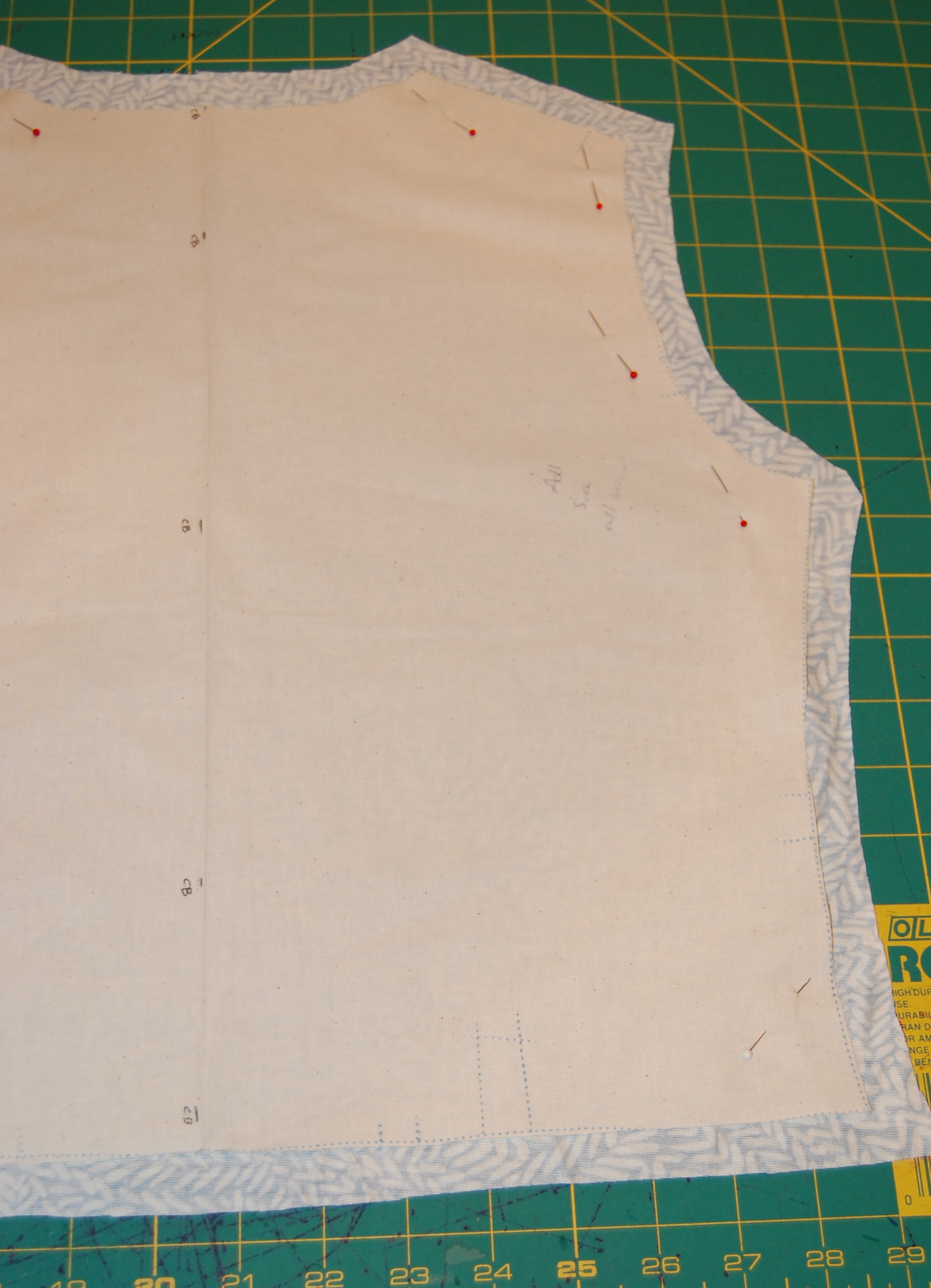
The back bodice piece, ready for thread tracing on the sewing lines.

The back bodice piece, ready for thread tracing on the sewing lines.

I am excited about this dress! Since I have already made this pattern once, I know what needs to be tweaked. And – I am excited that I do not have to line it, it has no buttons or buttonholes, and I know it will be easy-wearing. That, to me, is a formula for fashion sewing success.
23 Comments

Filed under Uncategorized, vintage Vogue Designer patterns, vintage Vogue patterns from the 1970s, Wrap dresses

The Evolution of a Suit Dress, Part 4: An Appreciation of Jo Mattli, and Dress-making Days Commence

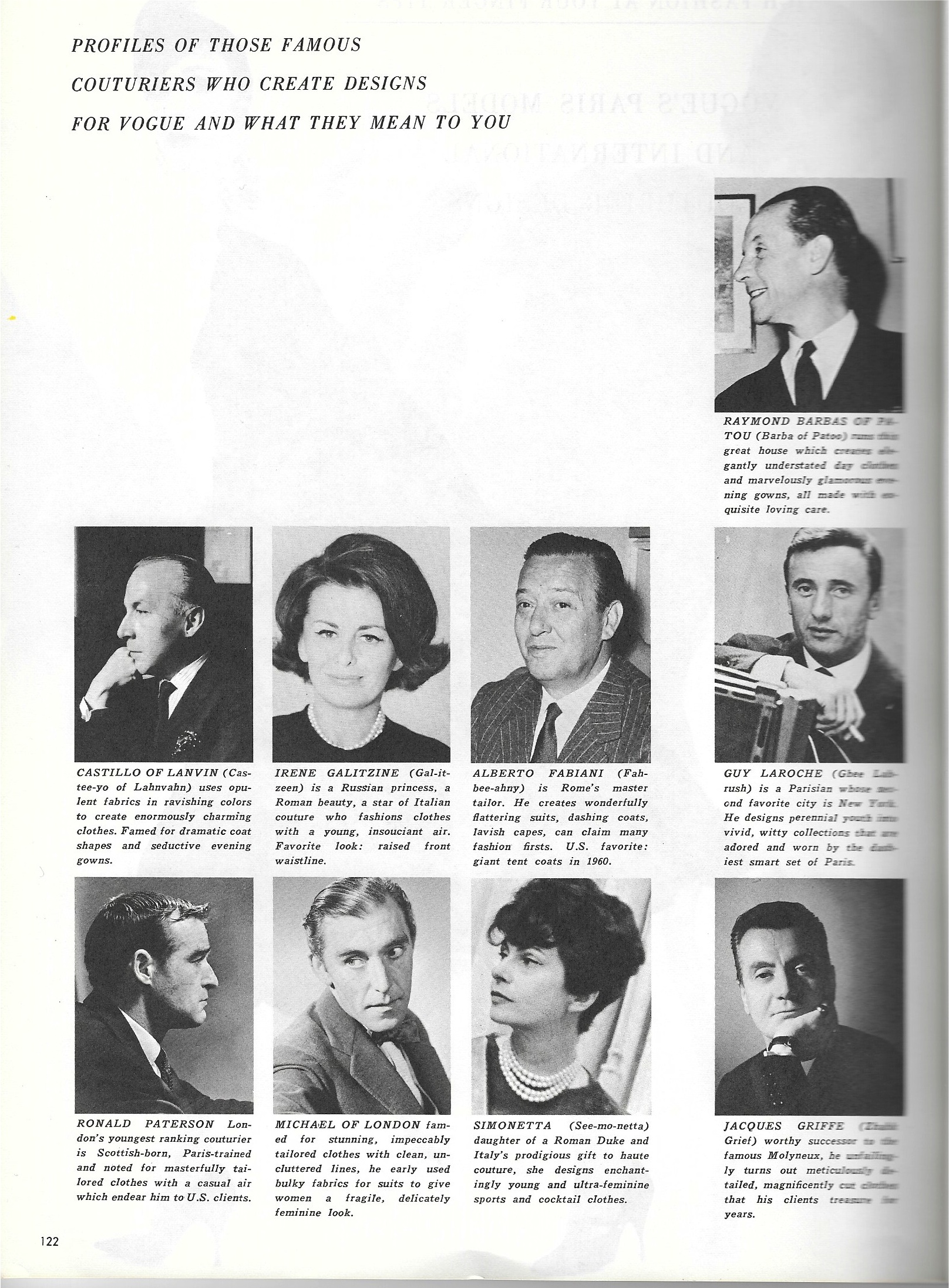
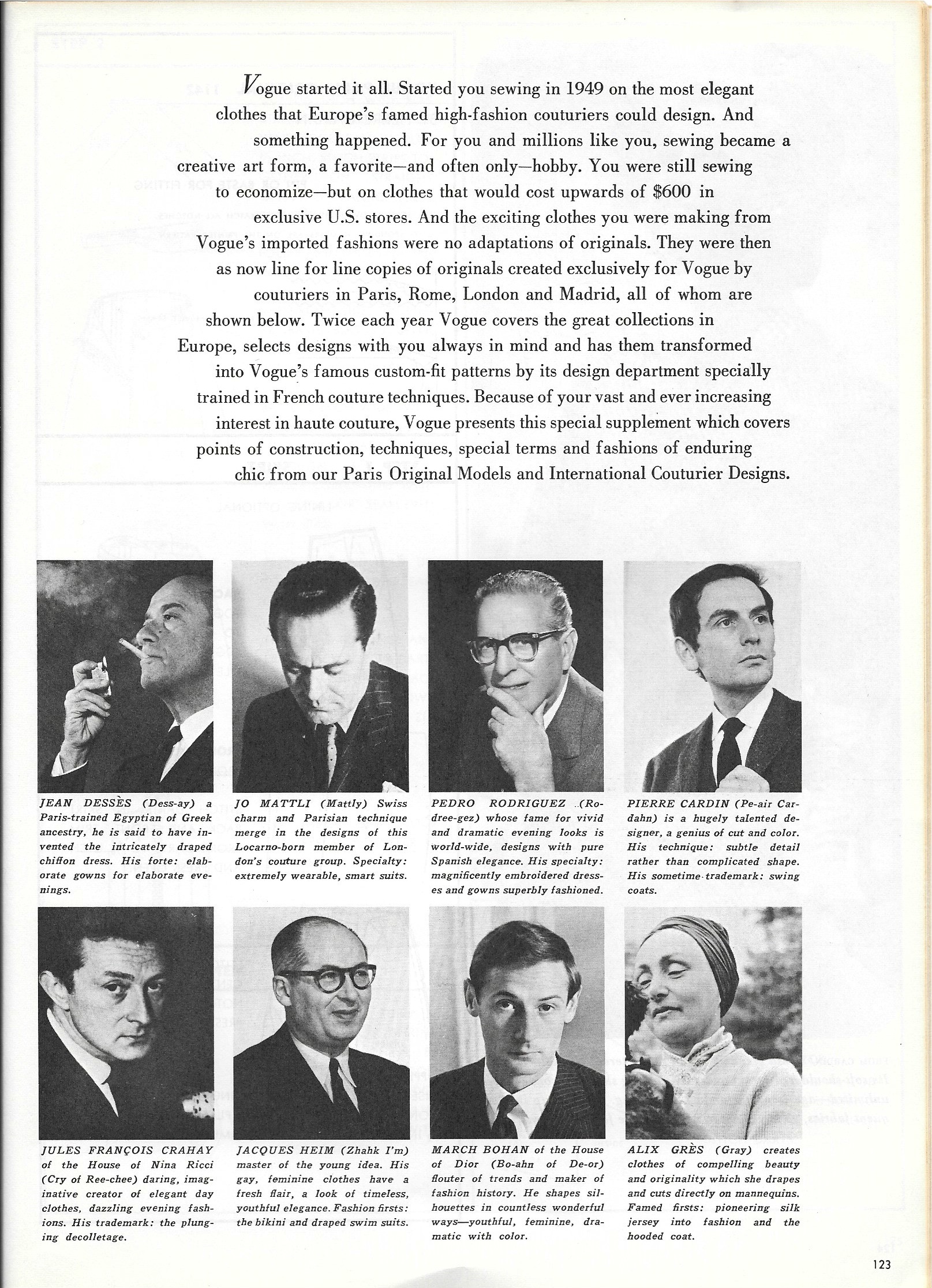
The New Vogue Sewing Book published in 1963 contained a “Couturier Supplement”. According to the Foreword in this magazine-styled book, “Only Vogue Patterns can bring you original designs from the Paris and International Couture houses, because of an exclusive arrangement with world famous designers.” One of the 17 designers featured in the supplement was Jo Mattli.

Designers in Vogue

Designers in Vogue-1

Jo Mattli is second from the left on the top row. Click on the photo to see the image up close.

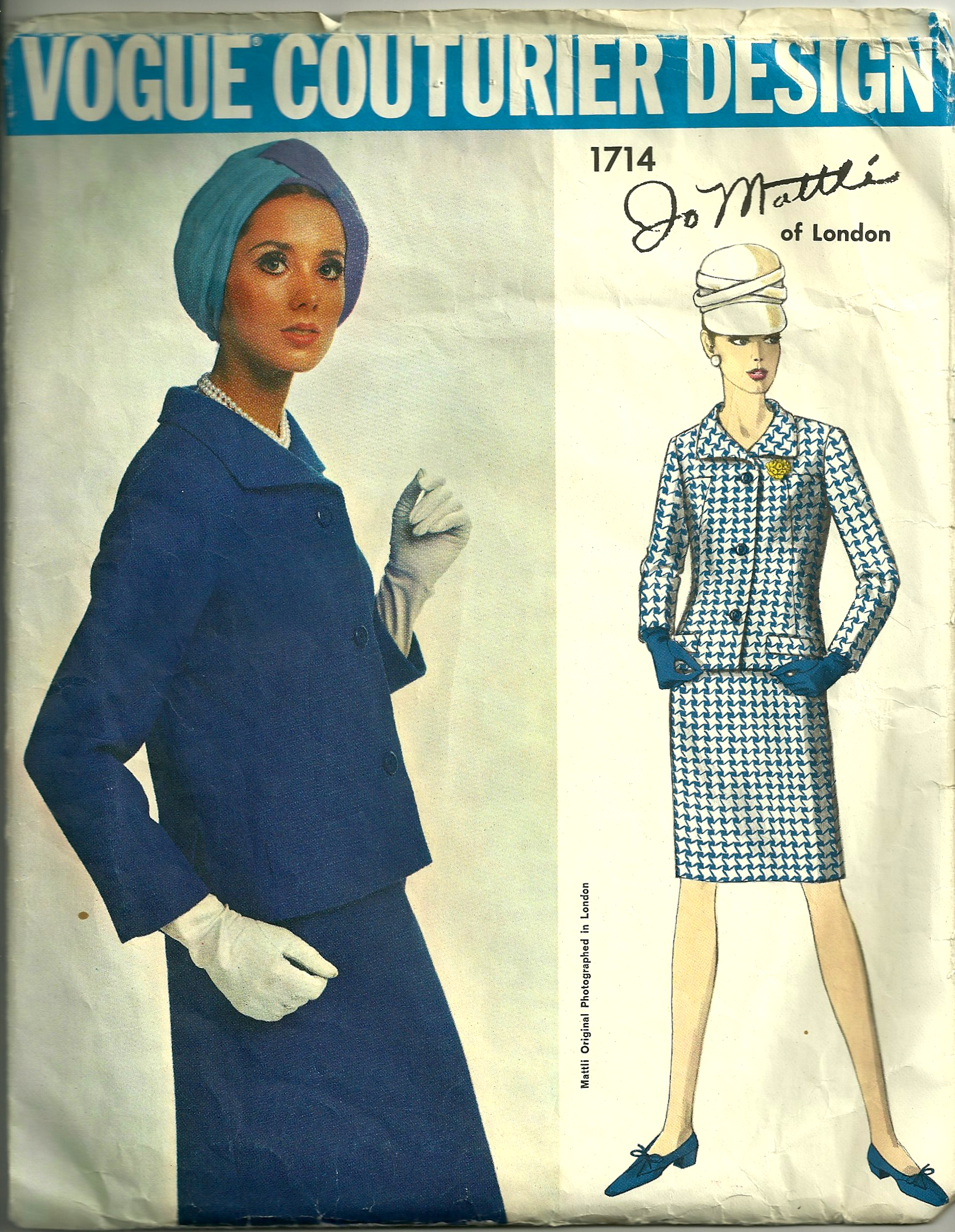
A quick look at the two-page spread on these designers shows a veritable who’s who of fashion design, with names very much still known today. Except for perhaps Jo Mattli.   (Mattli was born Giuseppe Gustavo Mattli in 1907 in Locarno, Swirtzerland; he died in 1982 in England). He is absent from The St. James Fashion Encyclopedia, even though he was considered one of the “big ten” London couturiers in 1953, when London Society was busy readying for the coronation of Queen Elizabeth II. Perhaps it was his move into ready-to-wear in 1955 that relegated him to lesser status among the world’s great couturiers. This did not keep Vogue Patterns from recognizing his wide appeal to stylish women who appreciated his attention to fine detailing, and his expertise in creating practical, wearable and charming dresses and suits.   As one of Vogue’s featured designers in their Vogue Couturier Design-labeled series, Jo Mattli made his mark. Indeed, even he recognized the value of being part of Vogue Patterns, saying “the royalties from these patterns had helped support his couture business” (from Wikipedia, the free encyclopedia).

The jacket I just completed (part one of a two-part jacket and dress ensemble) is the third Jo Mattli Vogue design I have sewn. Two years ago I made a suit from this pattern:

From Vogue's Designer series, ca 1970.

I would like to make this pattern again. The first time I made it, the fabric I chose was too heavy, but the fit and the styling were excellent.

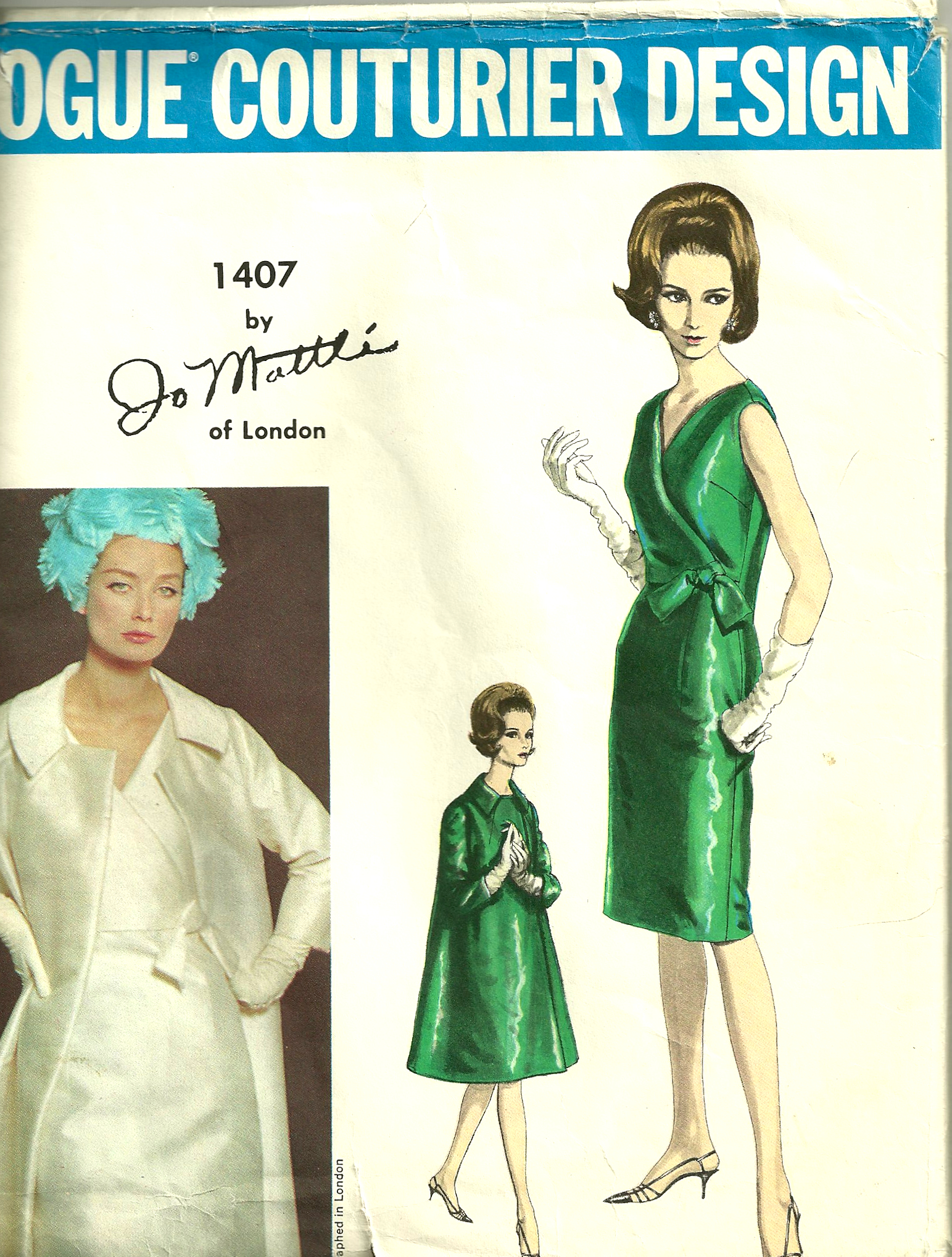
Late last summer I made a cocktail dress from this pattern:

I still have plans to make the coat, to coordinate with the cocktail dress.

I still have plans to make the coat, to coordinate with the cocktail dress.

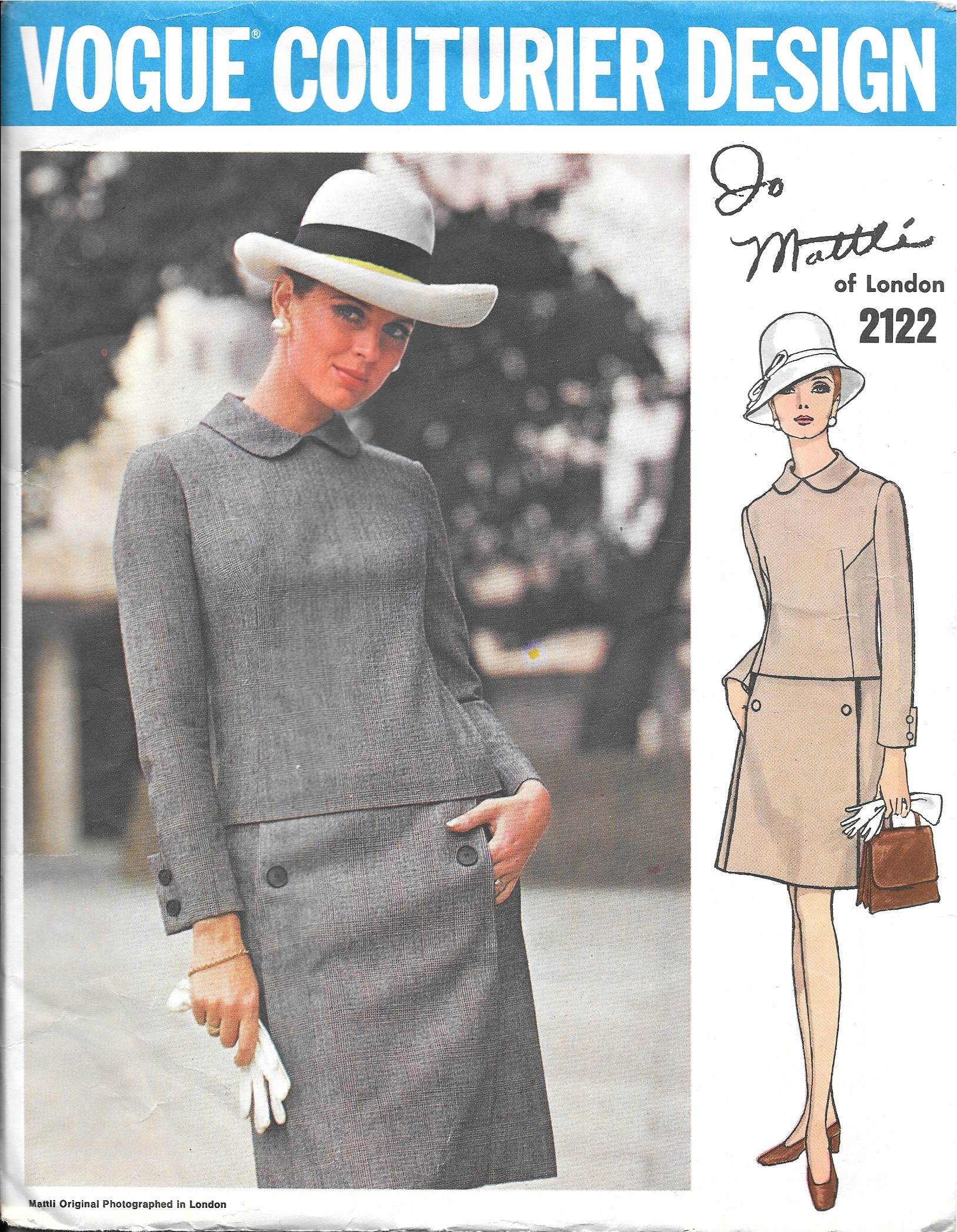
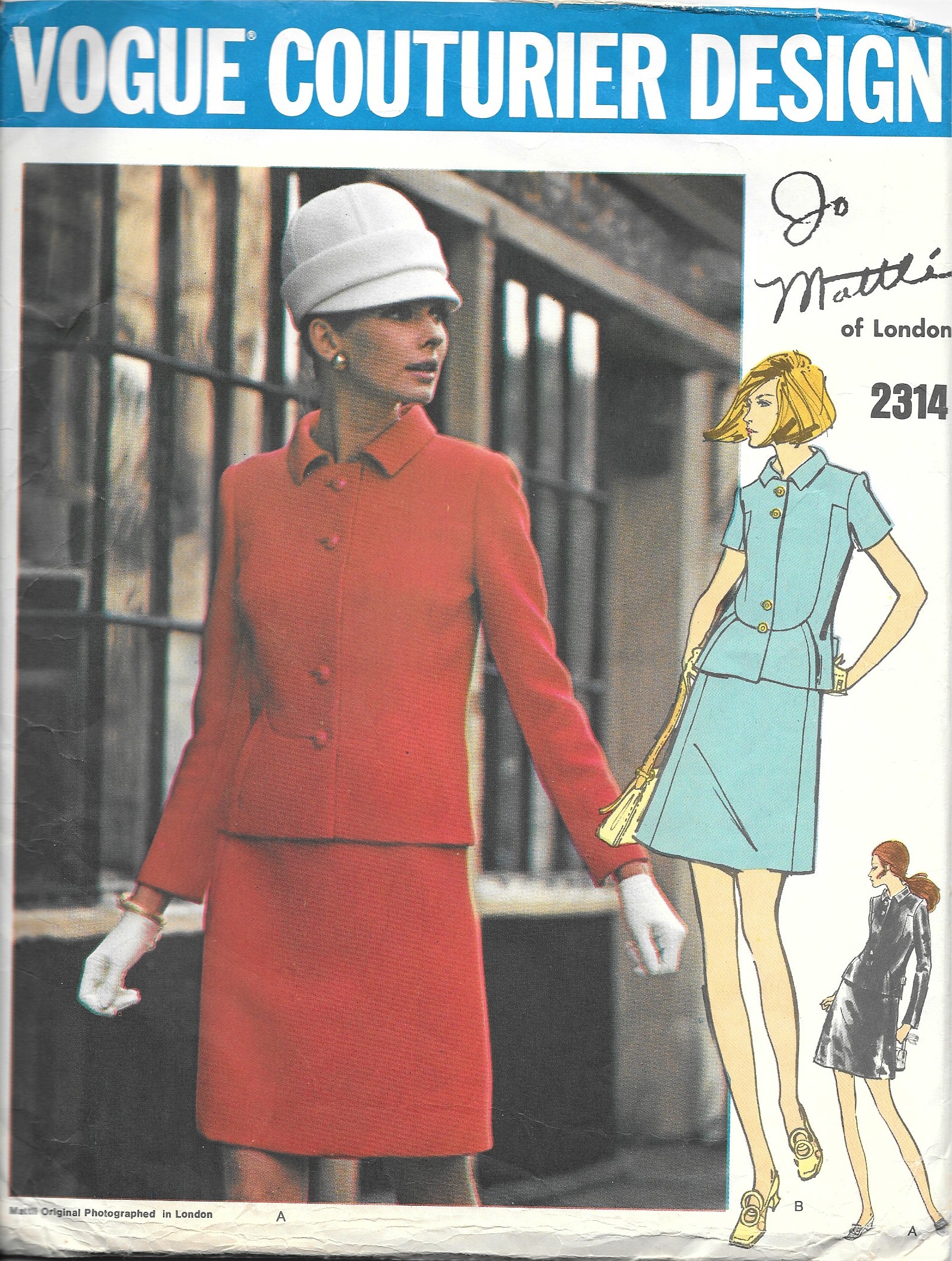
And now with three “makes” under my belt, my appreciation for Mattli’s design and construction sense is growing. Not only that, I realized after going through my pattern collection, that I have two more Mattli patterns, each of which also displays his characteristic and interesting seam detailing.

This is actually a one-piece dress, although it looks like it is a two-piece outfit.

This is actually a one-piece dress, although it looks like it is a two-piece outfit.

Dress Suit - red Mattli suit

Another beautiful suit!

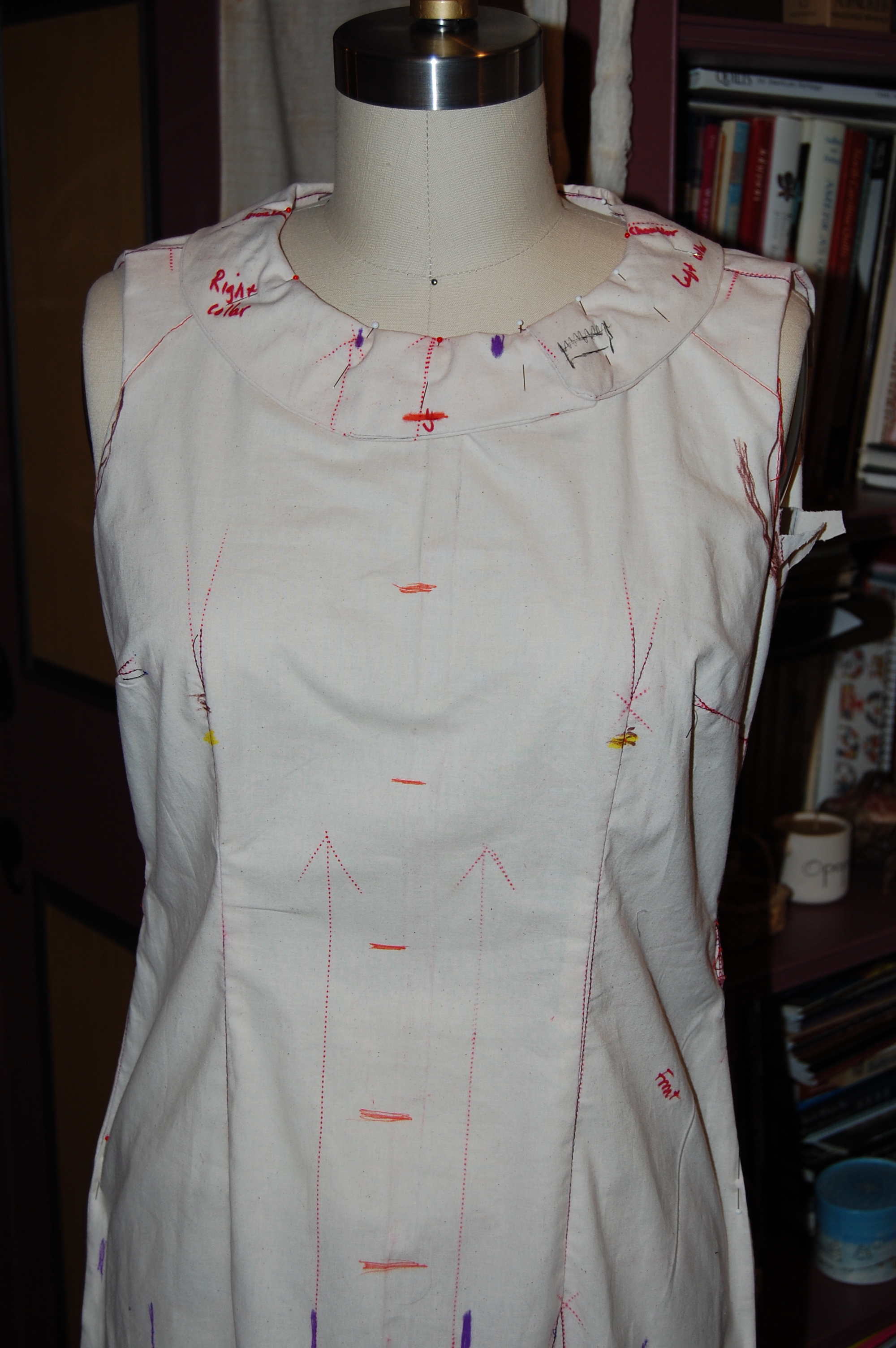
While the Mattli-designed jacket in my suit dress ensemble is certainly the star of the outfit, I am hoping the dress will have its own charms. After being out of town and away from my sewing all last week, I have now been able to turn my attention to the dress part of the outfit. I believe I have successfully combined two patterns (sheath dress and collared blouse) to create – what else? – a collared sheath!

Dress for Mattli jacket

I was still adjusting the fit when I took this photo. Hopefully it will not look like a bag when I actually wear it!

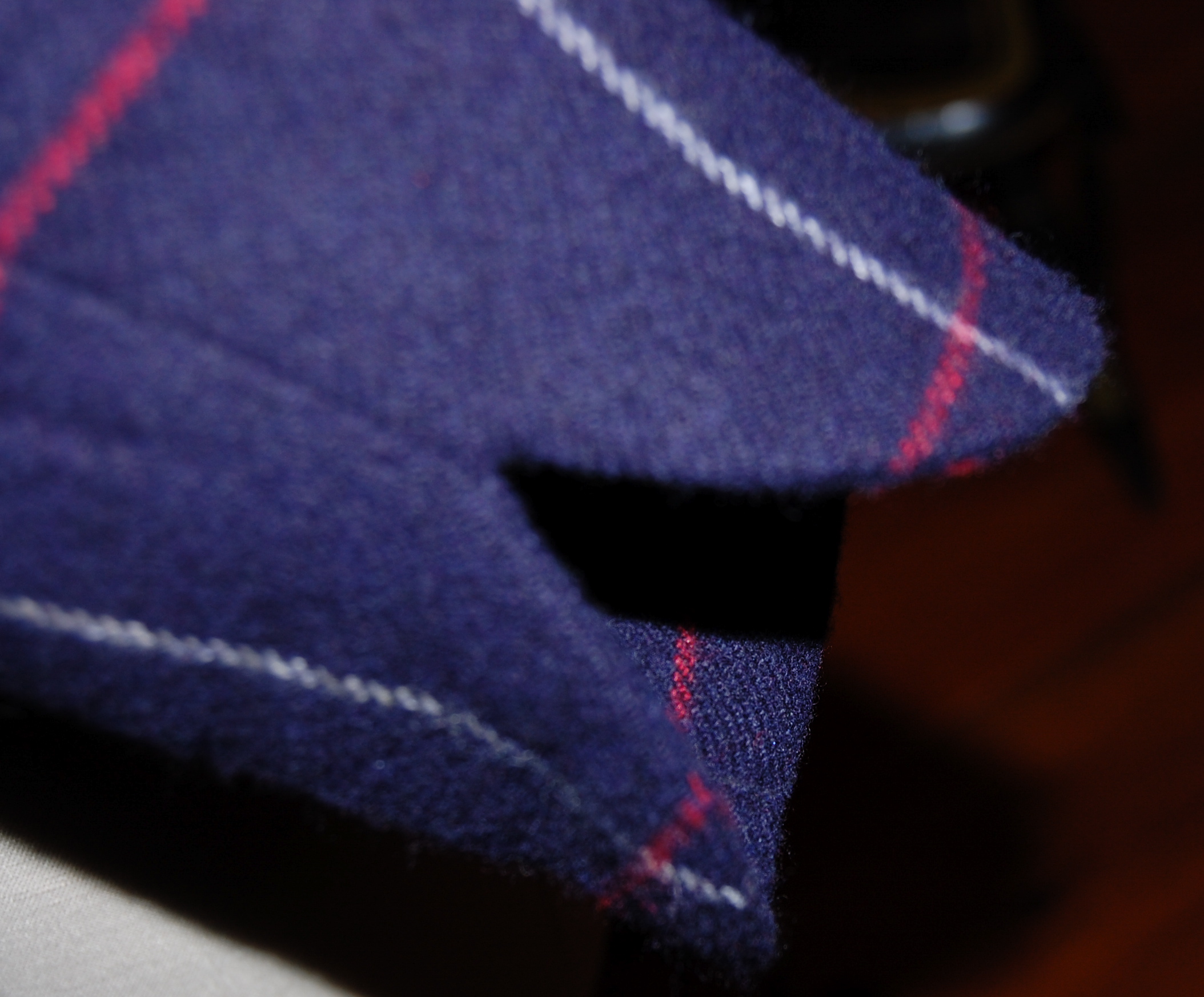
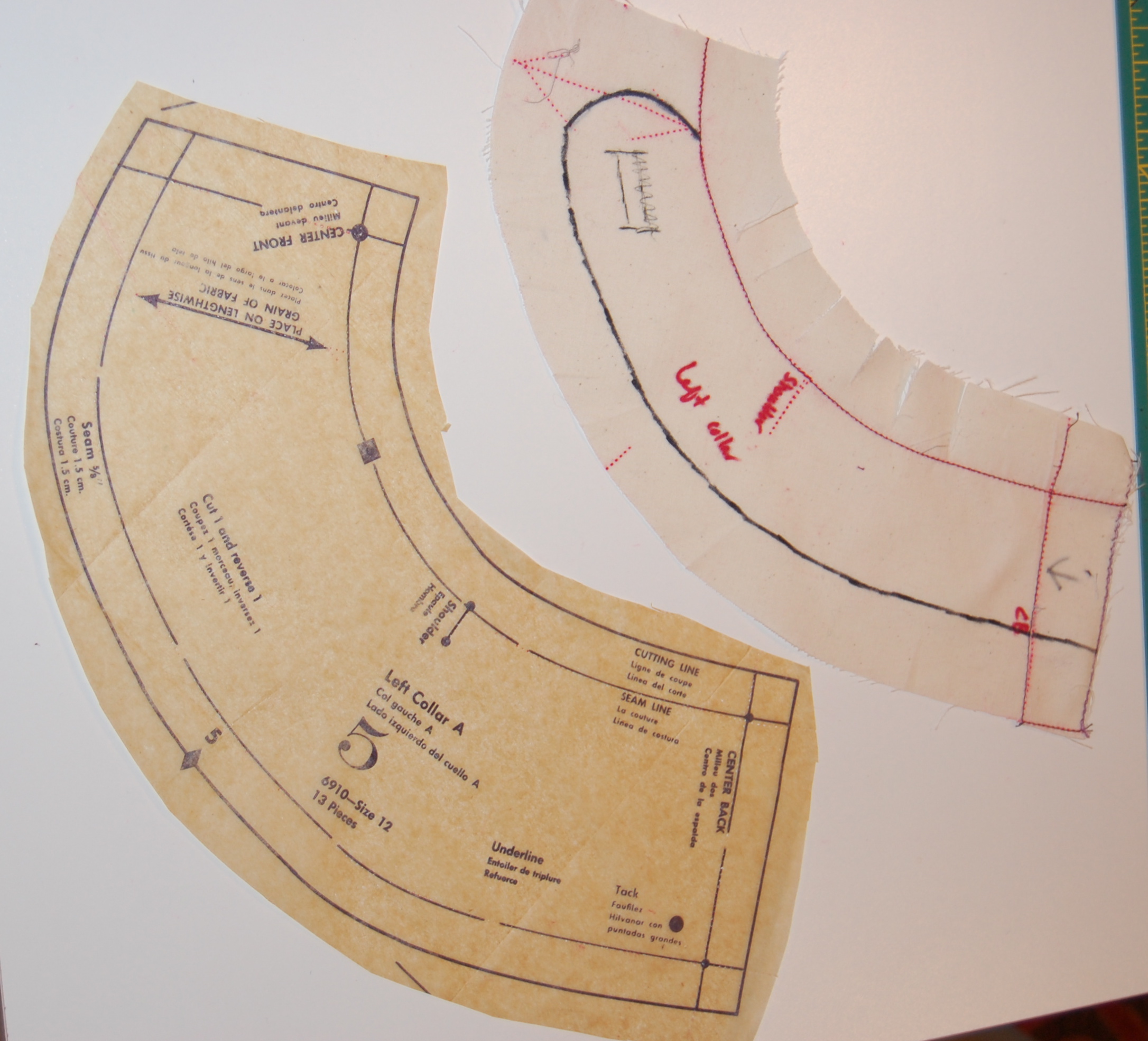
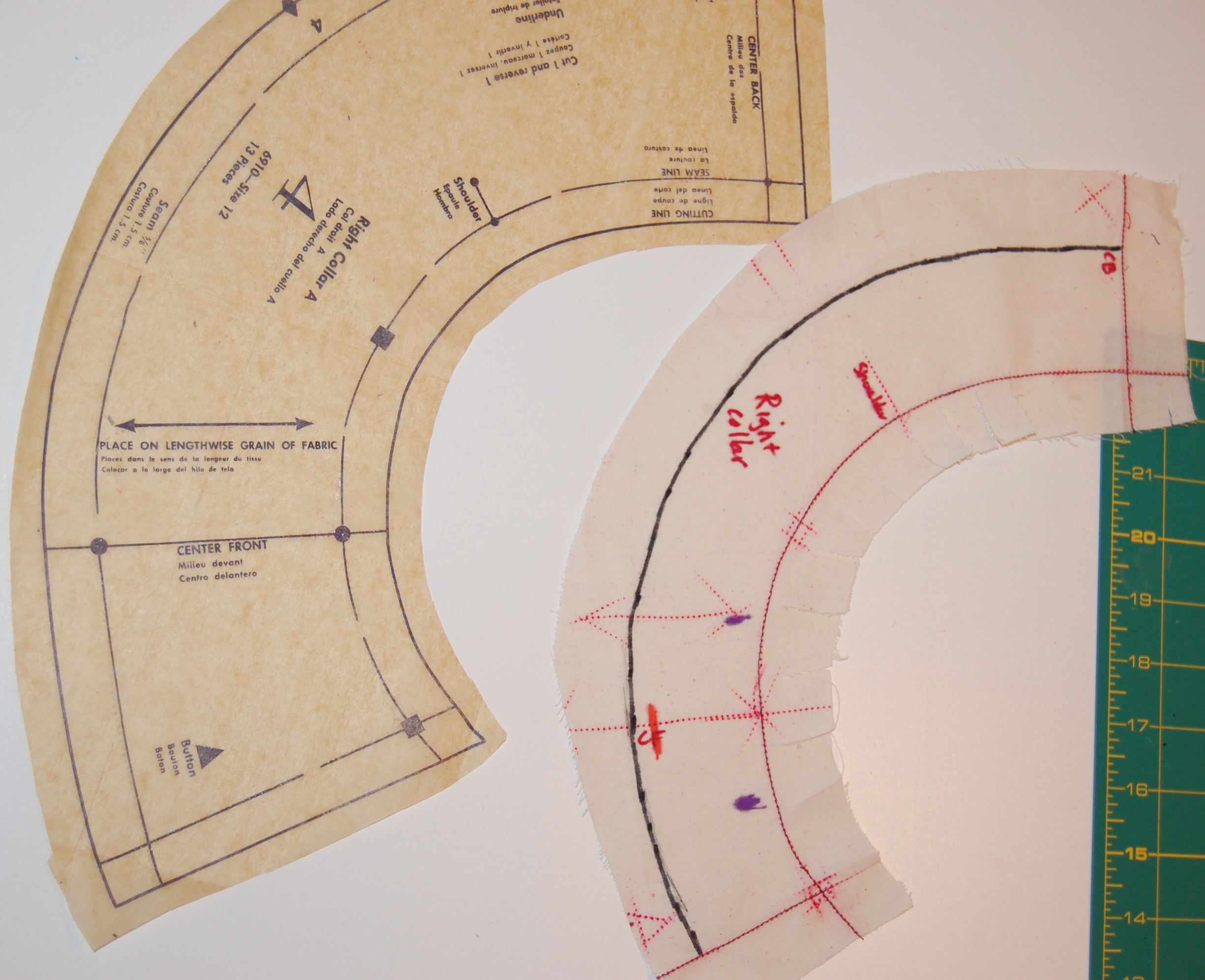
After I had the muslin fitted and completed, I got the idea to make the end of the tab on the collar rounded, to mimic the curves on the jacket’s sleeves and on the jacket’s lower front edges.   I also had to take significant width out of the collar. I am hoping it will work and look good…

This shows the curved detail on the edge of the sleeve.

This shows the curved detail on the edge of the sleeve.

This shows not only the added curve to the collar end, but also how much width I had to remove from the collar pattern

This shows not only the added curve to the left collar end, but also how much width I had to remove from the collar pattern.

And here is the right collar section.

And here is the right collar section.

I  hope that Jo Mattli would approve of a dress being paired with his jacket. He would probably refer to it as a “slimline afternoon dress” were he alive. I have no doubt he created many such beautiful dresses in his lifetime.

[NOTE: Jo Mattli is the subject of a thesis by Dr. Caroline Ness entitled Famous, Forgotten, Found: rediscovering the career of London couture fashion designer Giuseppe (Jo) Mattli, 1934-1980.]

10 Comments

Filed under Cocktail dresses, Dressmaker suits, Jo Mattli, Suit dresses, Uncategorized, vintage Vogue Designer patterns, vintage Vogue patterns from the 1960s

The Evolution of a Suit Dress – Part 3: Finished Jacket

It is a fairly well-known fact that making a classic French “Chanel-like” jacket takes about (or at least!) 70 dedicated hours of sewing time. I did not keep track of the hours I spent on my Jo Mattli-designed jacket, but I am guessing that it rivals – in time spent sewing – both of the classic French jackets I have made. However, I am not complaining. I would commit to it all over again. And just think – I still have to make the coordinating dress for this jacket!

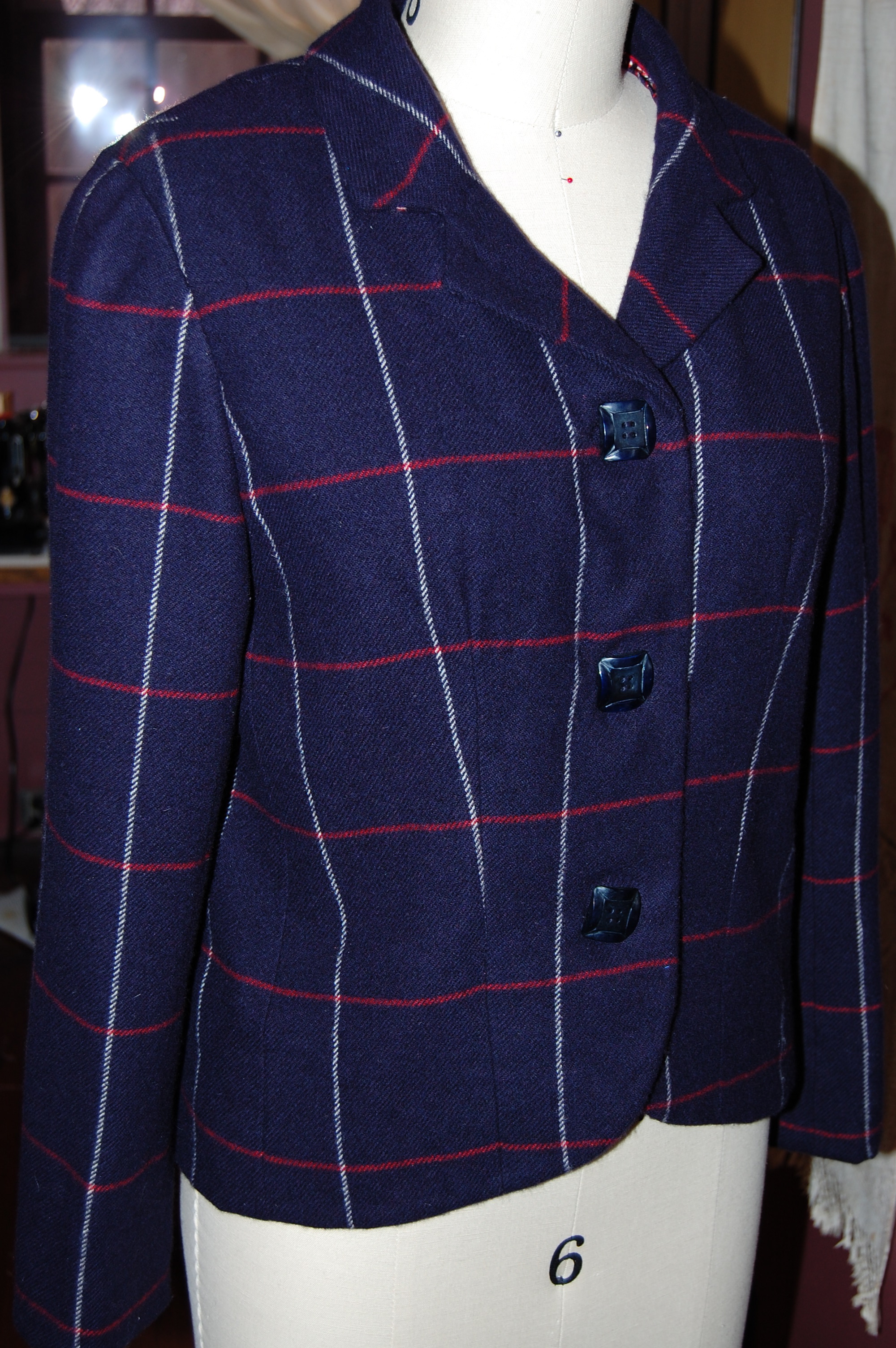
Mattli jacket But it is finished, and happily so. One of the true joys of sewing is the ability it gives us to make some stylistic changes, add embellishments if desired, and use our heads to determine what works and what doesn’t work for the fabric we are using and the intended usage of our garments. While I did not make any stylistic changes to this jacket, I did add my own “dressmaker details” while stitching my way through this project. But first a few more regular details, picking up where I left off in my last post.

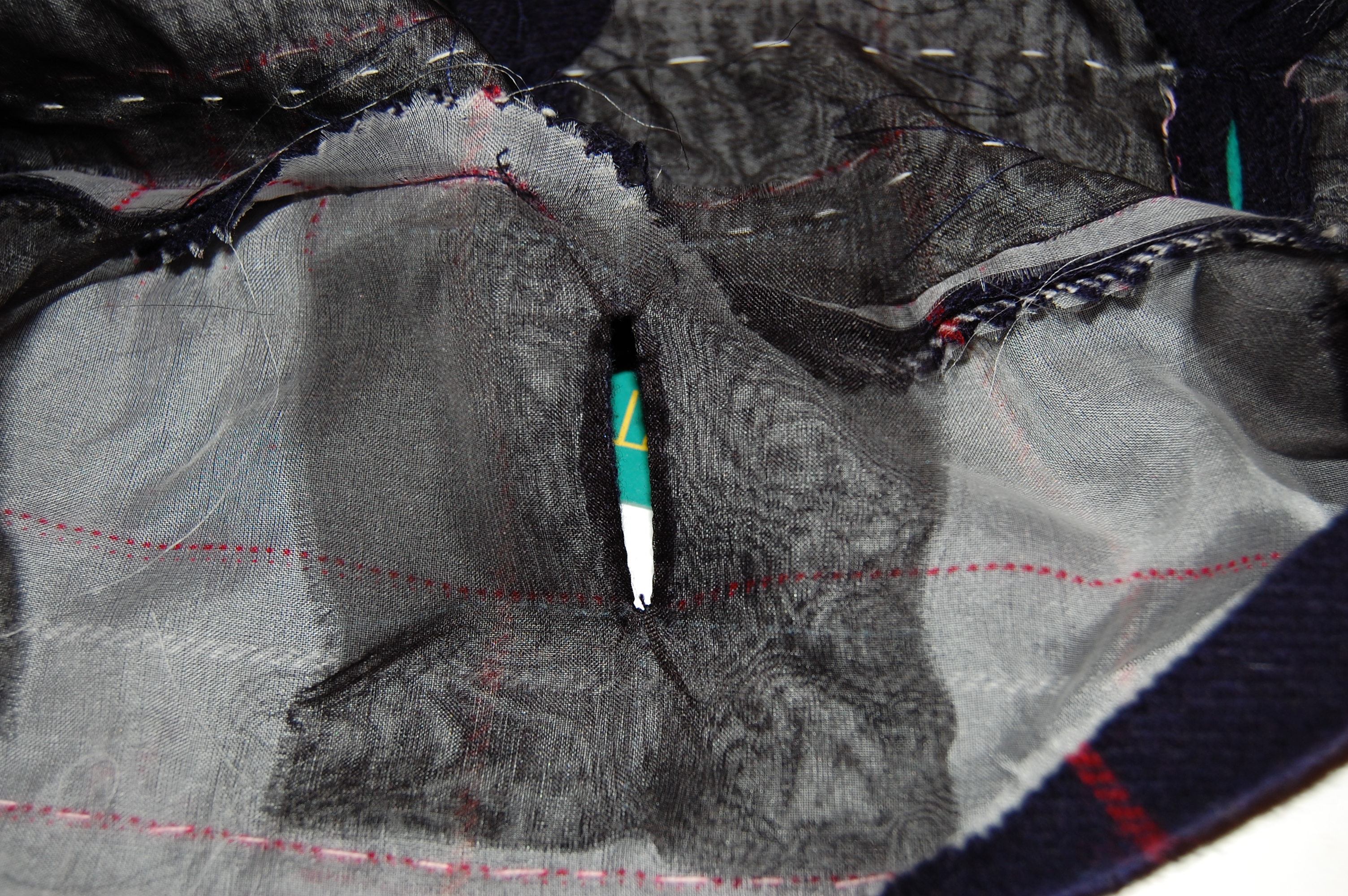
1) To finish the underside of the bound buttonholes, I used organza patches. I have started using this method all the time, as it makes such a neat, fool-proof finish.

The silk organza patch is sewn onto the right side.  After cutting and clipping the corners - carefully! - you turn the organza and you have a perfectly finished opening to back up to your bound buttonhole.  then it is easy to sew the two sides together very neatly.

The silk organza patch is sewn onto the right side. After cutting and clipping the corners – carefully! – you turn the organza and you have a perfectly finished opening to back up to your bound buttonhole. Then it is easy to sew the two sides together very neatly.

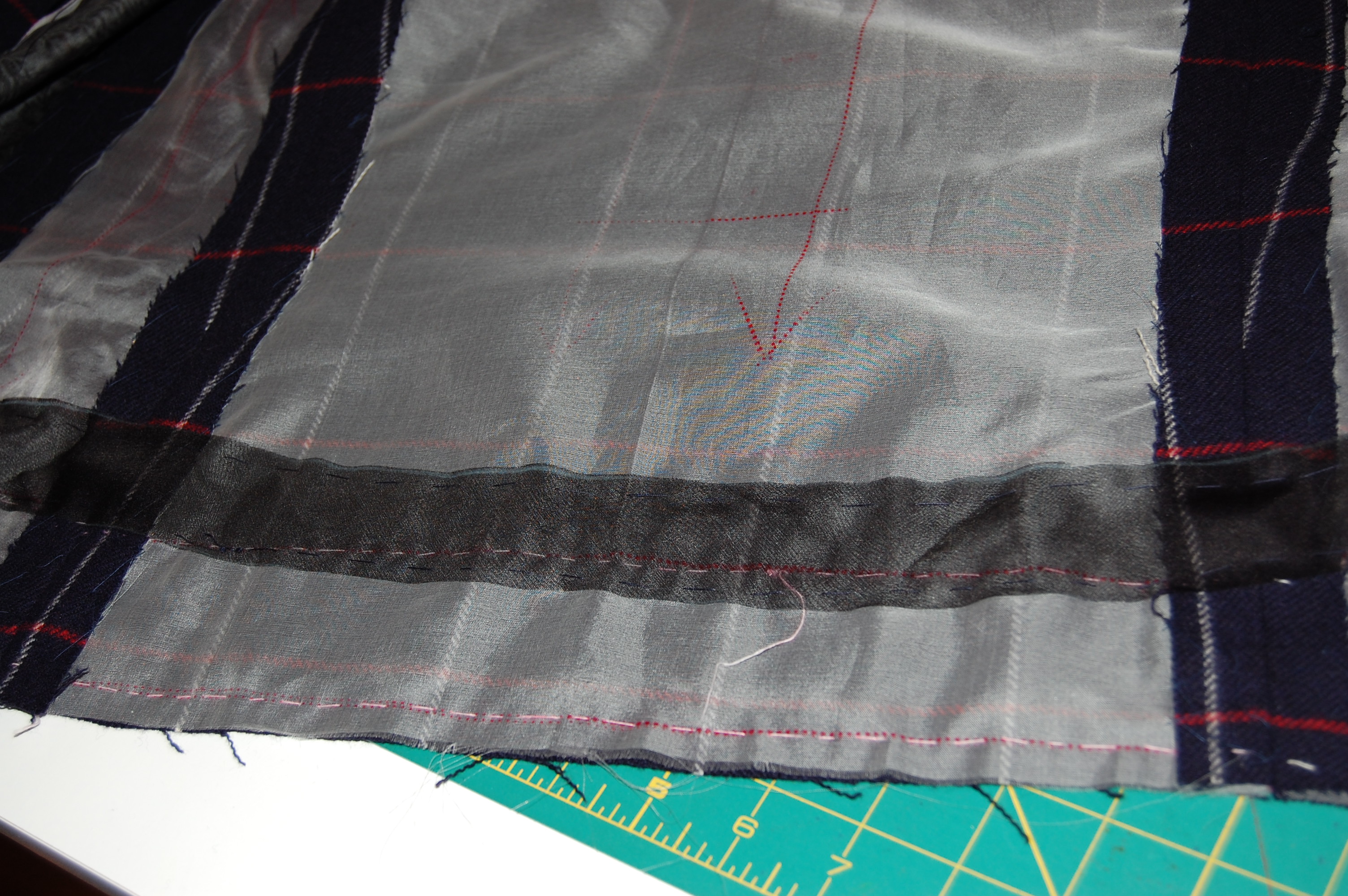
2) Even though the entire jacket is underlined with silk organza, I added another layer of silk organza “interfacing” to the hemline, as directed in the pattern instructions.

Mattli jacket

I always like to baste the hem along the bottom edge to stabilize it until the jacket is complete.

I always like to baste the hem along the bottom edge to stabilize it until the jacket is complete.

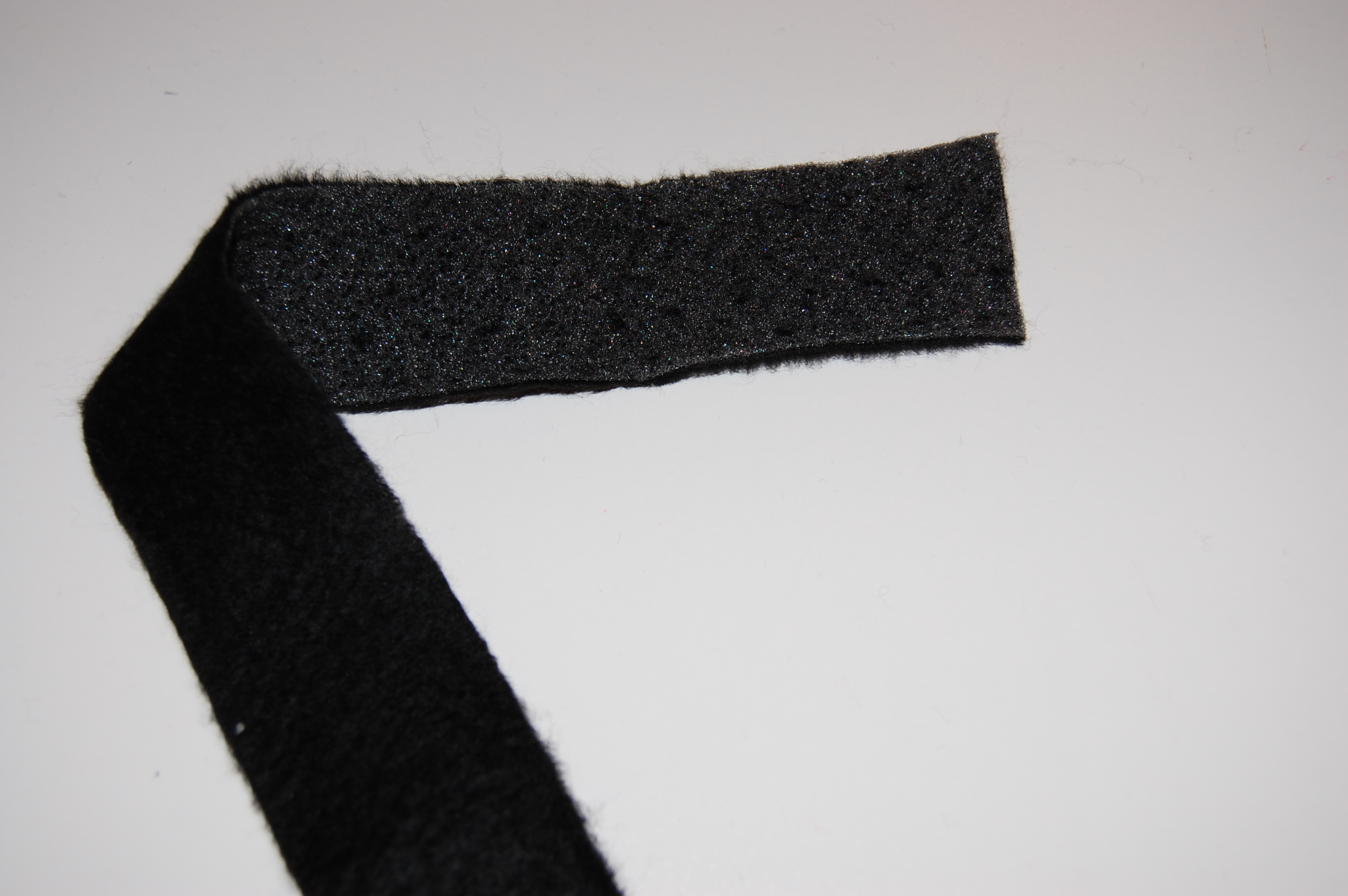
3) I used black “cigarette” which I purchase from Susan Khalje’s store for the sleeve headings. I doubled and graduated the two layers to achieve the correct amount of sleeve–cap cushioning. Unfortunately, no photos were able to pick up the details in this – too much black and navy blue and not enough contrast!

This is what the "cigarette" looks like.

This is what the “cigarette” looks like.

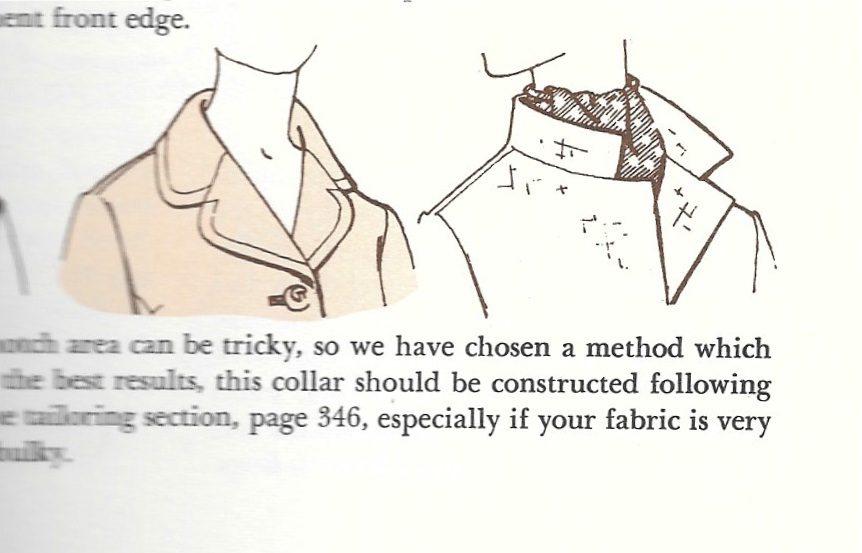
One of the interesting construction details in this design is the notched collar. Most notched collars are seamed at the “notch,”,joining the upper collar and the front facing and forming a “V”.

This diagram from The Vogue Sewing Book. c. 1970, Butterick Division, New York, New York, shows a classic notched collar.

This diagram from The Vogue Sewing Book. c. 1970, Butterick Division, New York, New York, shows a classic notched collar.

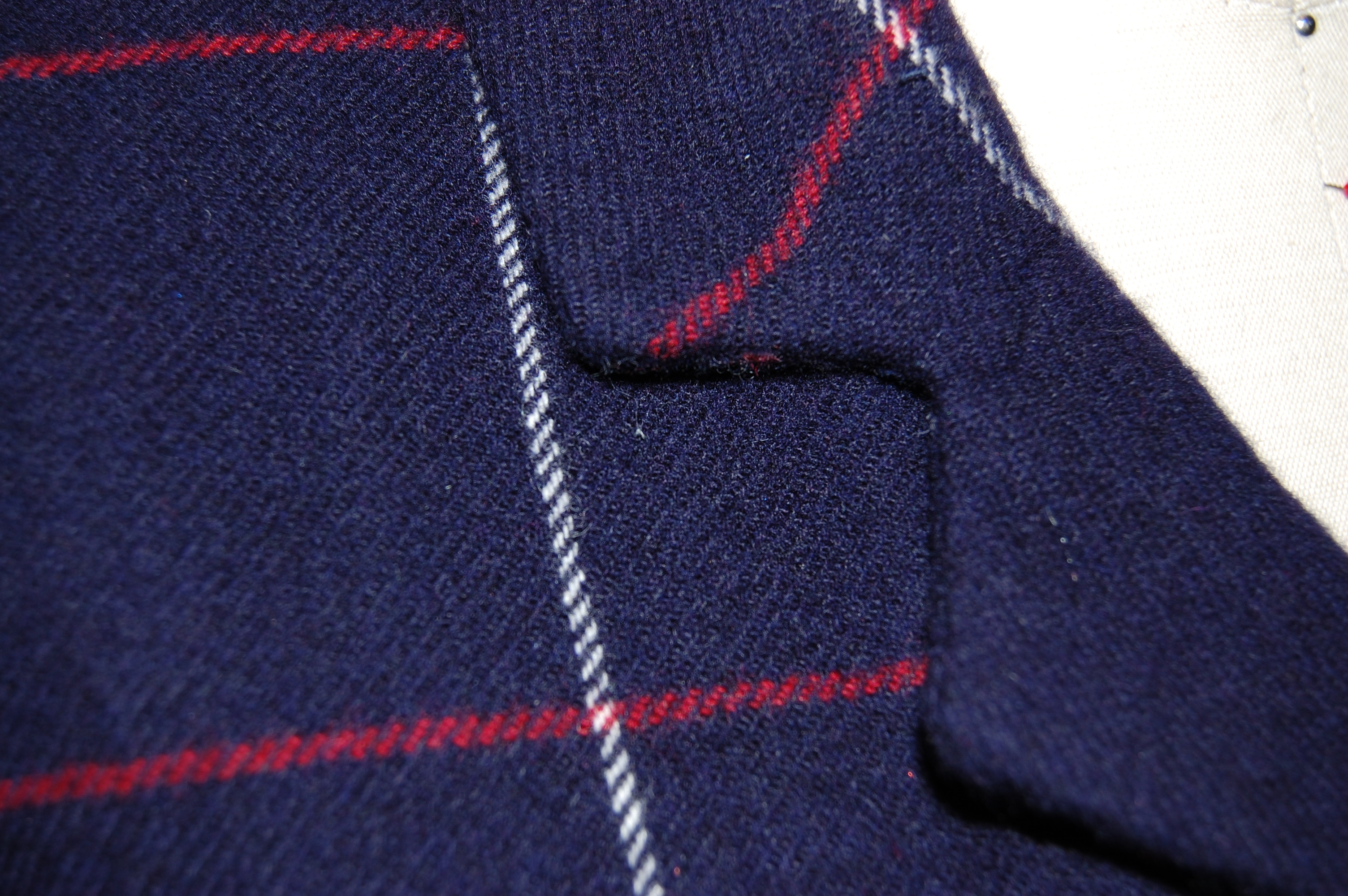
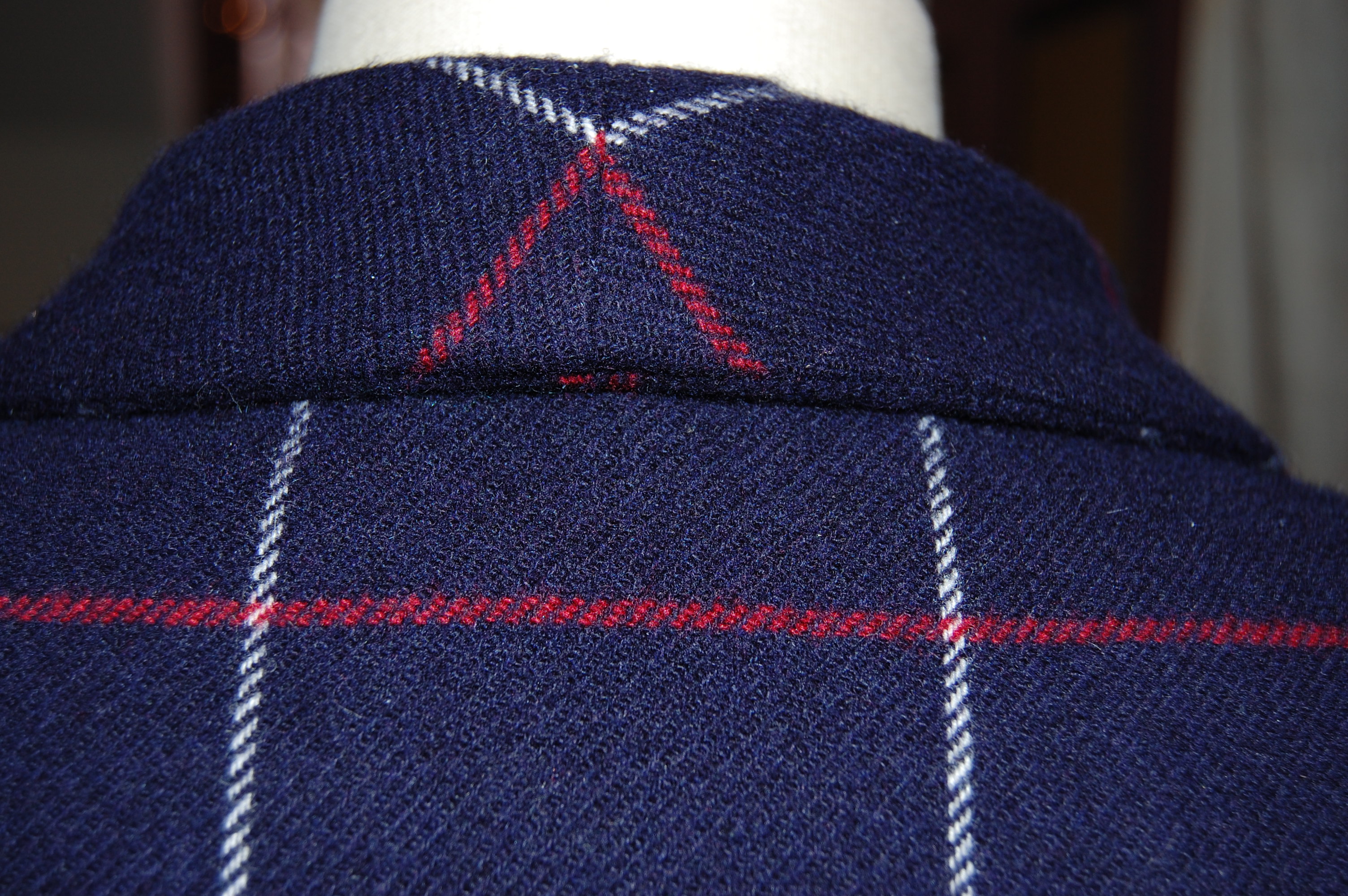
However, the collar in this Mattli design is formed by extensions of the front facing, with a center back seam on the upper-collar portion of the facings.   Hopefully these photos will explain better than words can:

You can see there is no seam at the "notch."

You can see there is no seam at the “notch.”

Here is the seam at the back upper collar.

Here is the seam at the back upper collar.

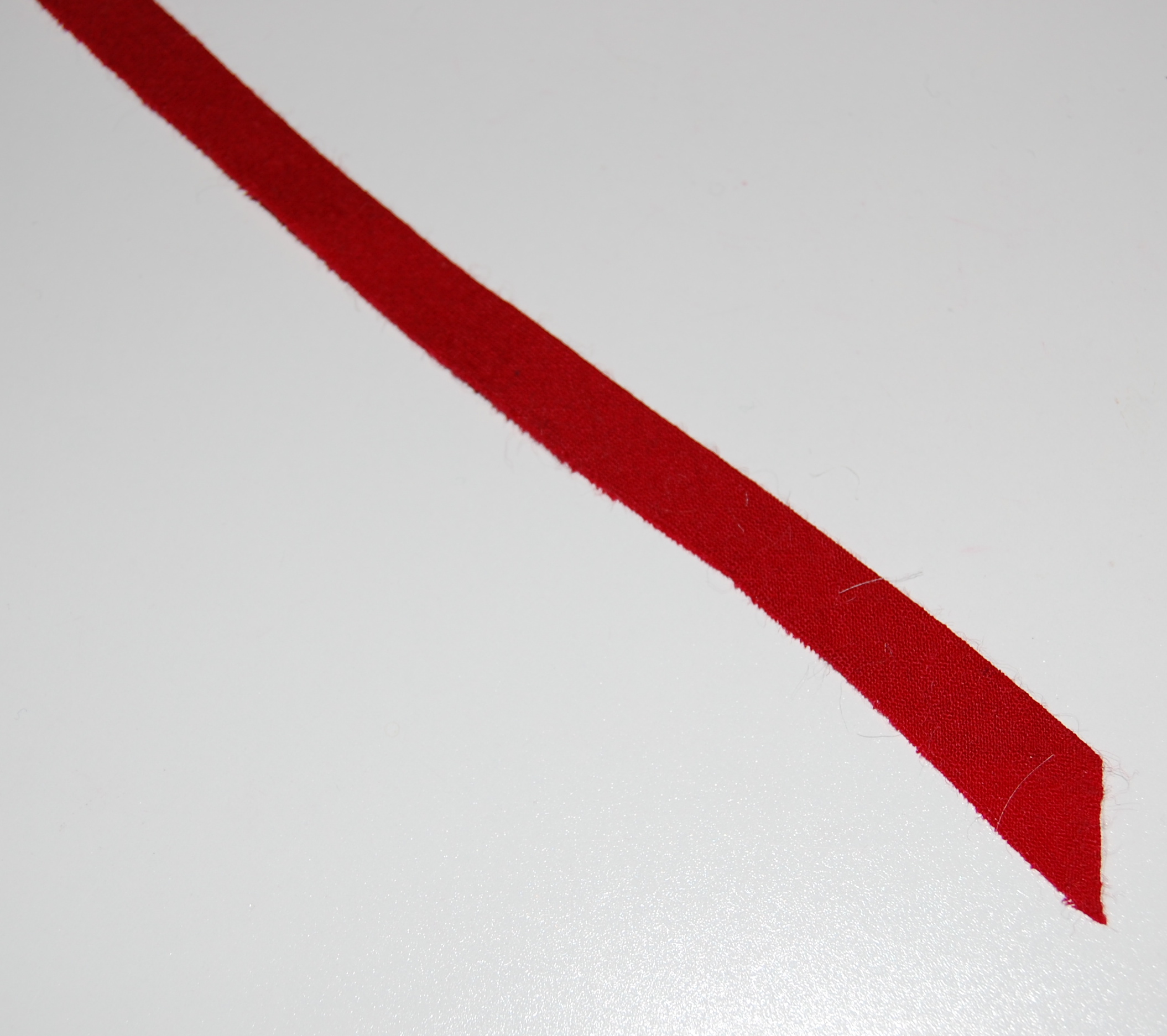
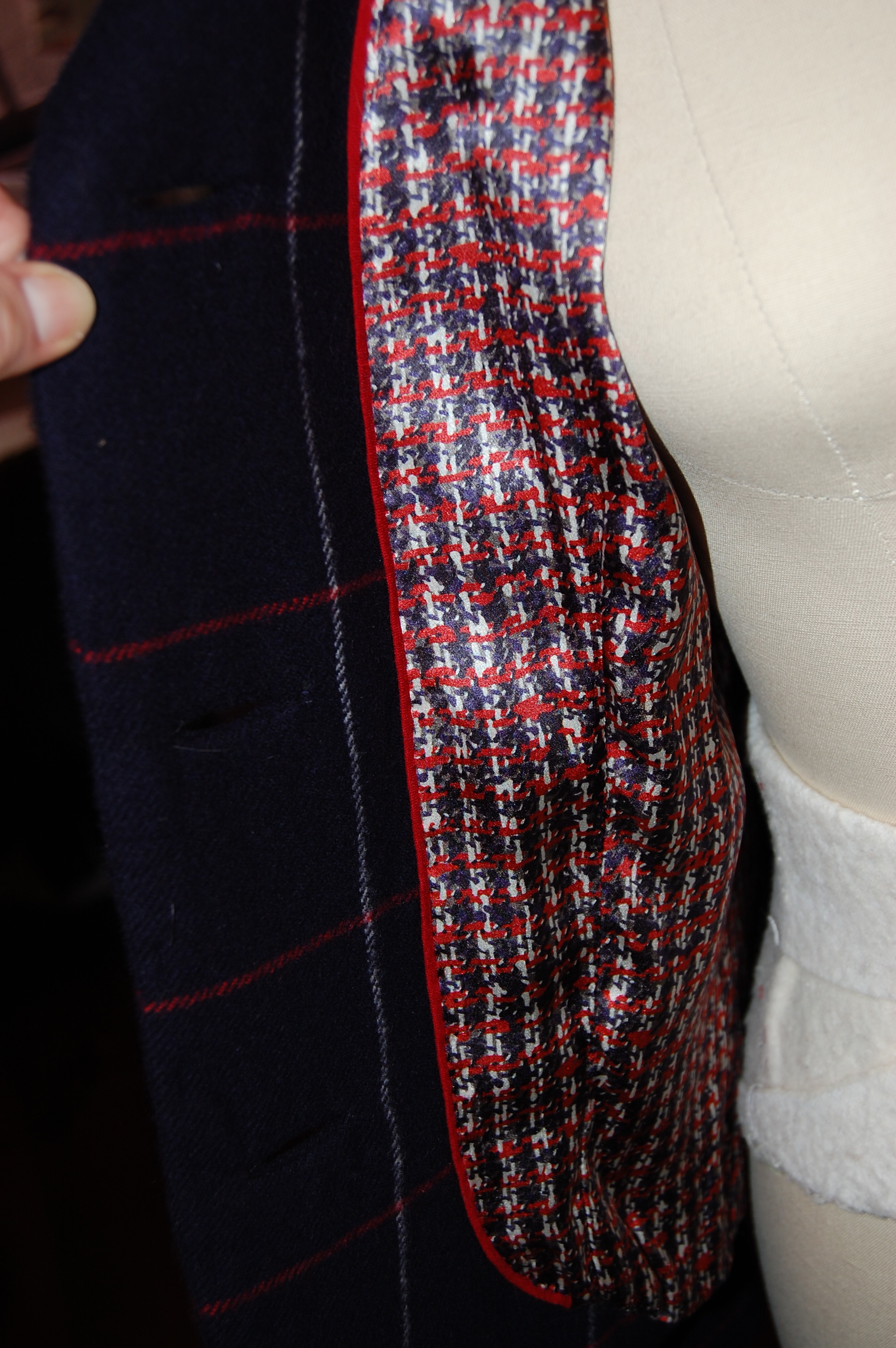
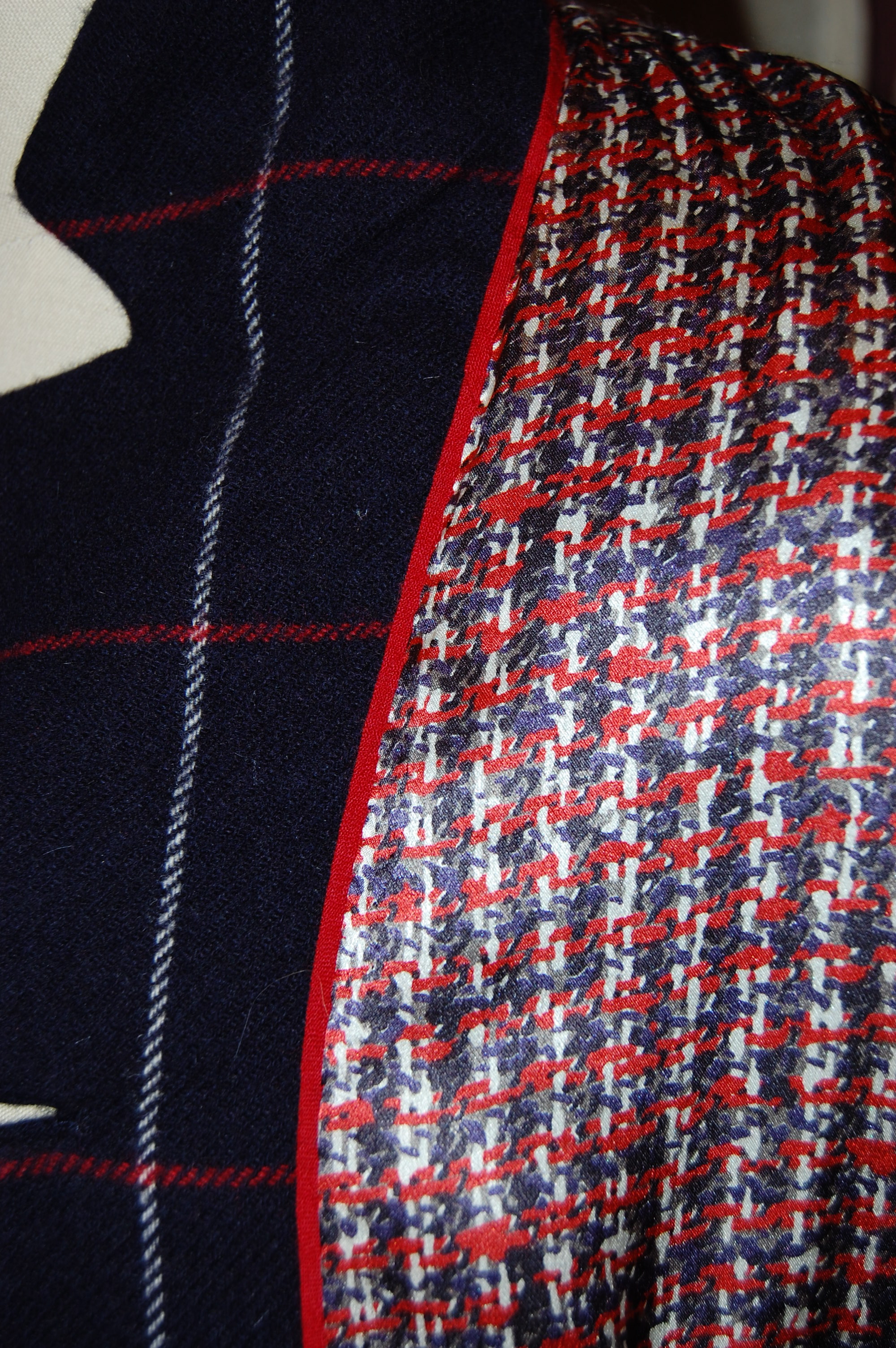
While I was contemplating the lining for the jacket, I thought it would add just a really special touch if I did a interior bias piping to set off the lining where it joins the jacket along the front edges and around the neck. Normally this is made out of silk, but I did not have any light-weight silk which was the correct color of red. However, I did find some scraps left over from a red wool challis maternity dress I made for myself over 34 years ago. (Yes, you read that correctly!) Very light in weight – and the exact color I needed – made it the perfect fabric for this detail.

I cut a bias strip one inch in width and folded it in half.  I guess this proves it pays to save scraps!?

I cut a bias strip one inch in width and folded it in half. I guess this proves it pays to save scraps!?

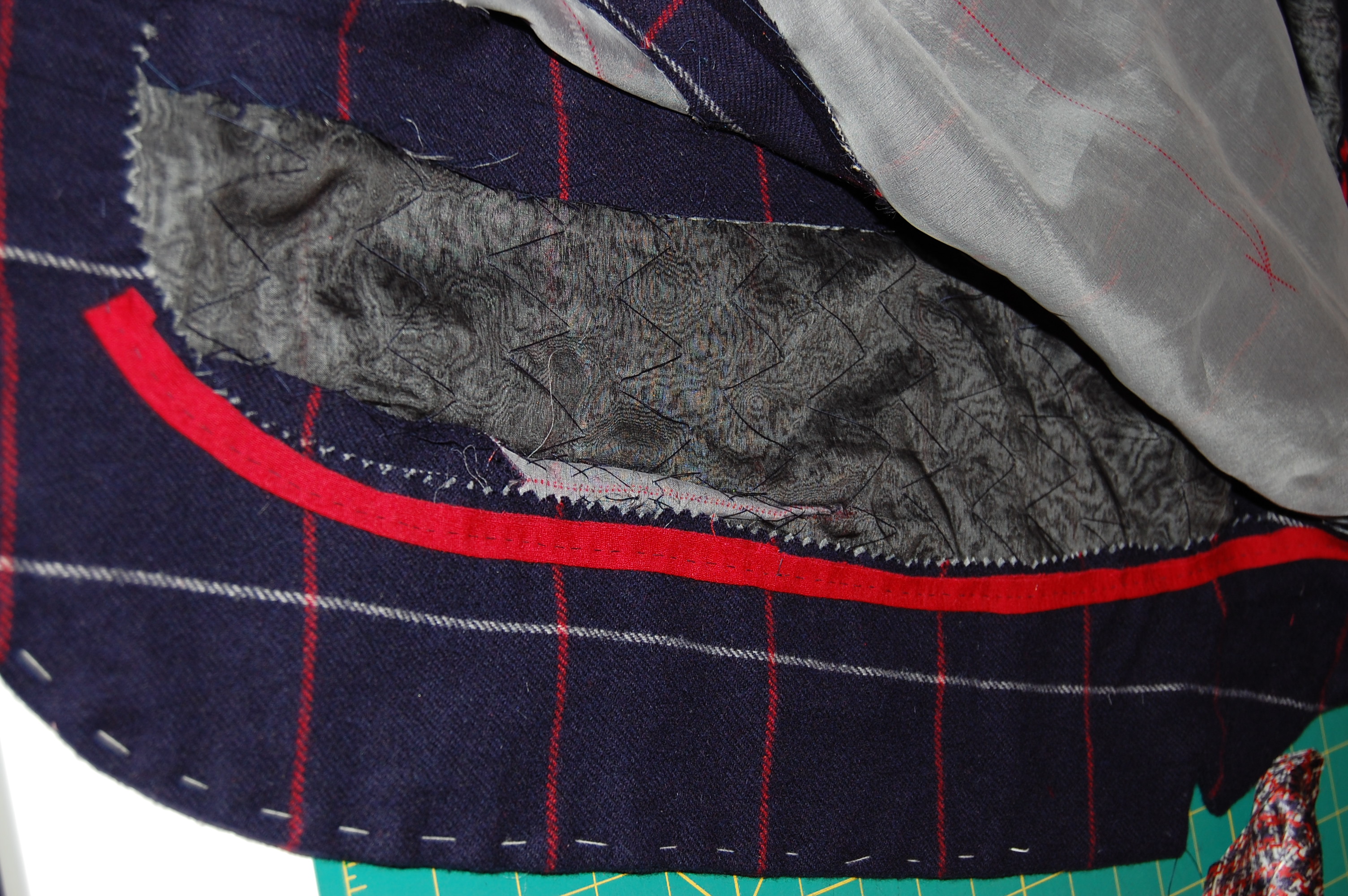
This is such an easy flourish to do, and it adds such a professional touch.  Adding this flat “piping” is quickly becoming a standard for me when I make jackets or coats. Once you have your bias strip cut, folded in half and pressed, all you need to do is baste it in place along the line where the lining will be hand-stitched to the jacket interior.

The bias "piping" basted in place.

The bias “piping” basted in place. Click on the photo to see it close-up.

And here’s what the finished lining looks like:

Mattli jacket

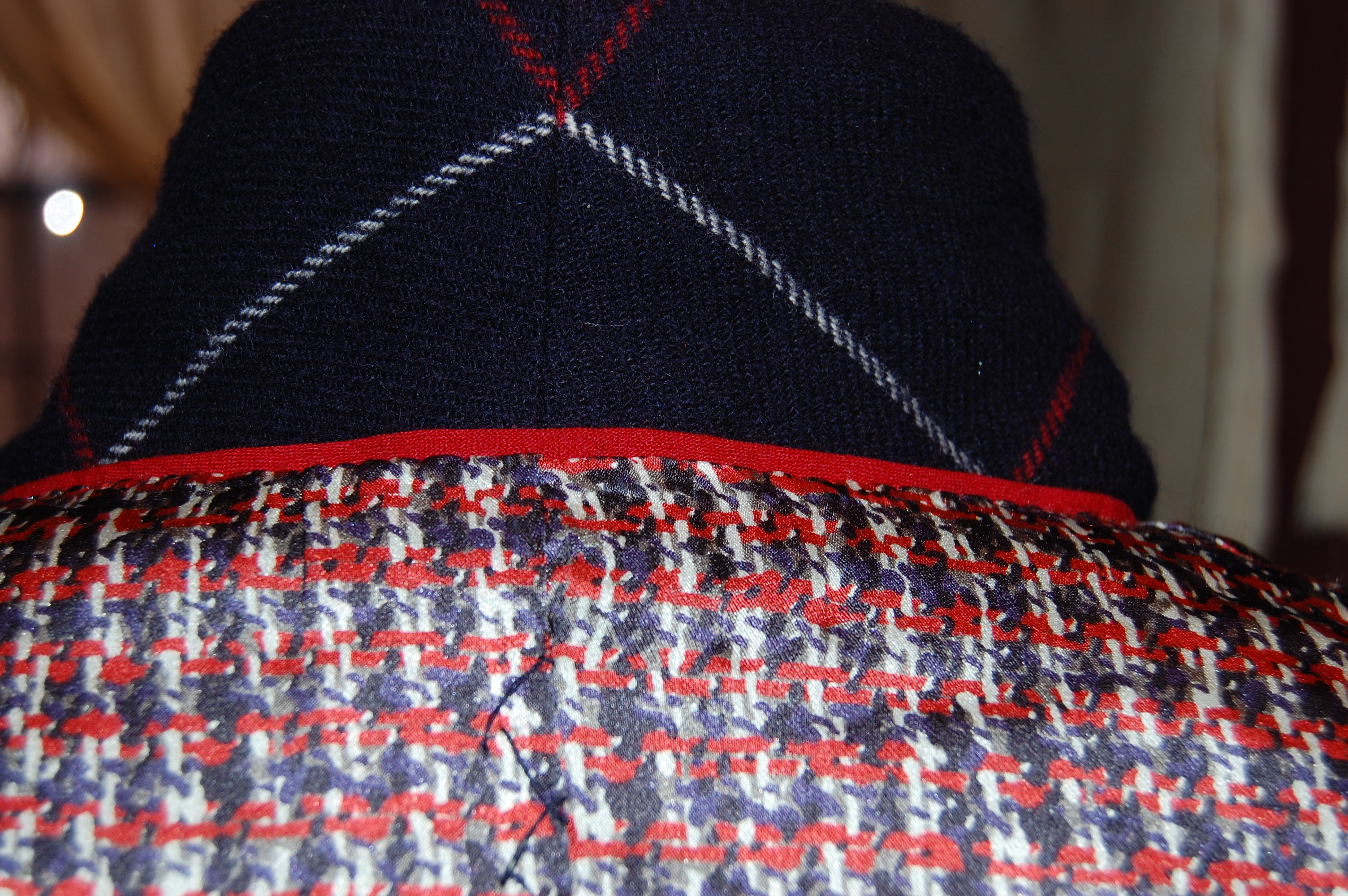
Here is the back neck edge.

Here is the back neck edge.

I really like this extra flourish.

I really like this extra flourish.

Now – true confessions!  After top-stitching the sleeve edges, the collar and most of one front, I decided I did not like it.  I thought it detracted from the windowpane of the fabric, so I took it all out.  NO top-stitching – for me – on this jacket!

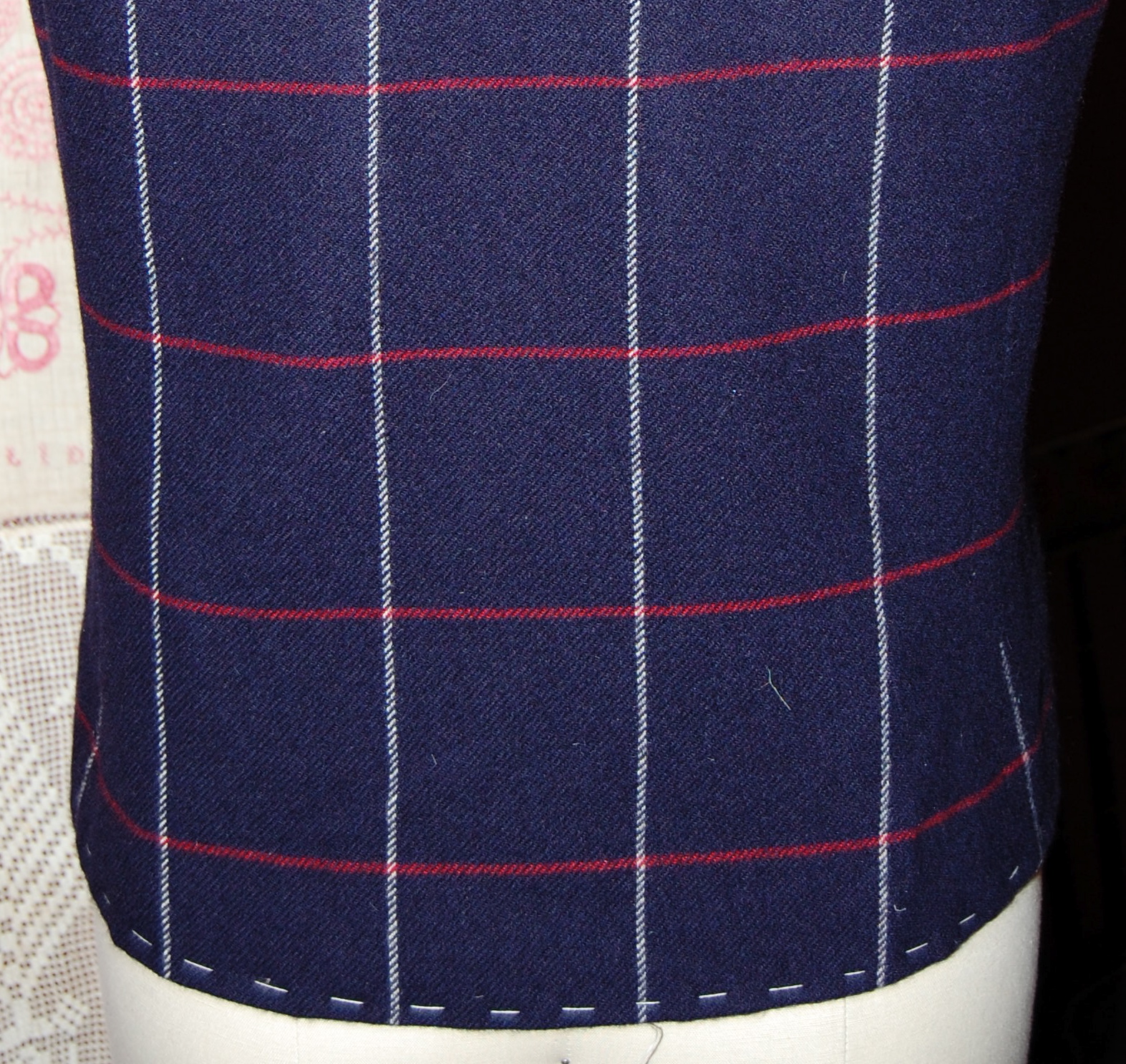
Finally, I made a small change to the back hem of the jacket. Can you figure out what it is? (A previous photo of the jacket back will also give you a clue.)

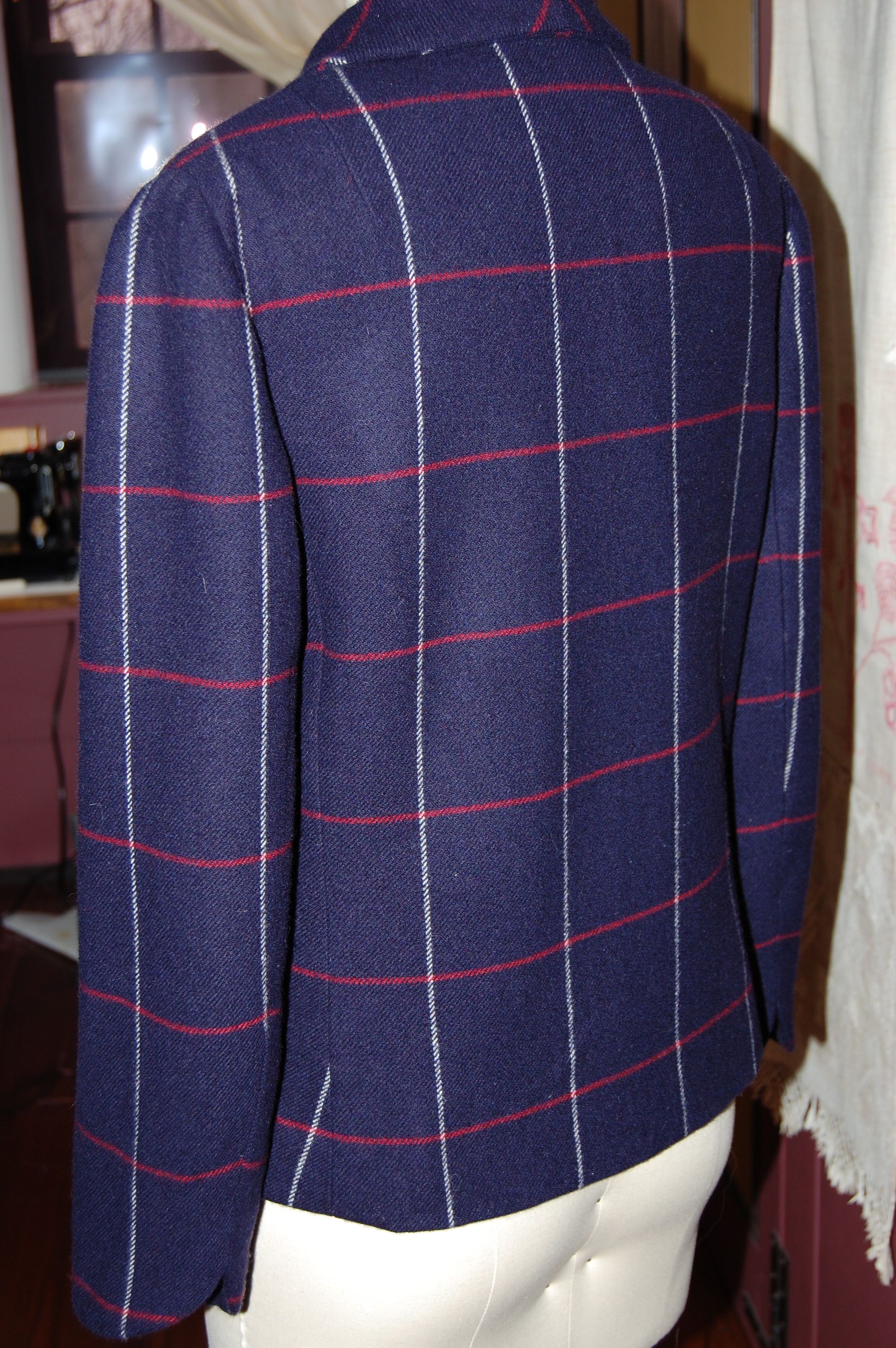
Mattli jacket I used a trick I learned from my French Jacket class with Susan Khalje: I added a slight curve to the hem and lengthened it by about a half-inch, graduating it back to the prescribed hemline at the side back seams. I love this graceful detail. I believe it will be especially effective when it is paired with the dress. (This photo also shows that all the hours I spent on the layout, making sure I had matched the plaid, was time well spent!)

Speaking of the dress (and matching more plaid) . . .   I never imagined I wouldn’t have this entire ensemble completed by about now. So – it looks like I’ll still be sewing on wool when Spring arrives. Hopefully by the time Spring departs I will have moved on to something more seasonal!

26 Comments

Filed under bound buttonholes, couture construction, Dressmaker details, piping, Suit dresses, Uncategorized, underlinings, vintage Vogue Designer patterns, vintage Vogue patterns from the 1970s, woolens

The Evolution of a Suit Dress, Part 2: Details, Details

How can something which is taking so much time to make still be so much fun? It must be because of all the delightful details to consider, to execute, to alter, and to research. One of the most important details for the jacket of a project like this is the choice of buttons.

Dress Suit - front of pattern envelope

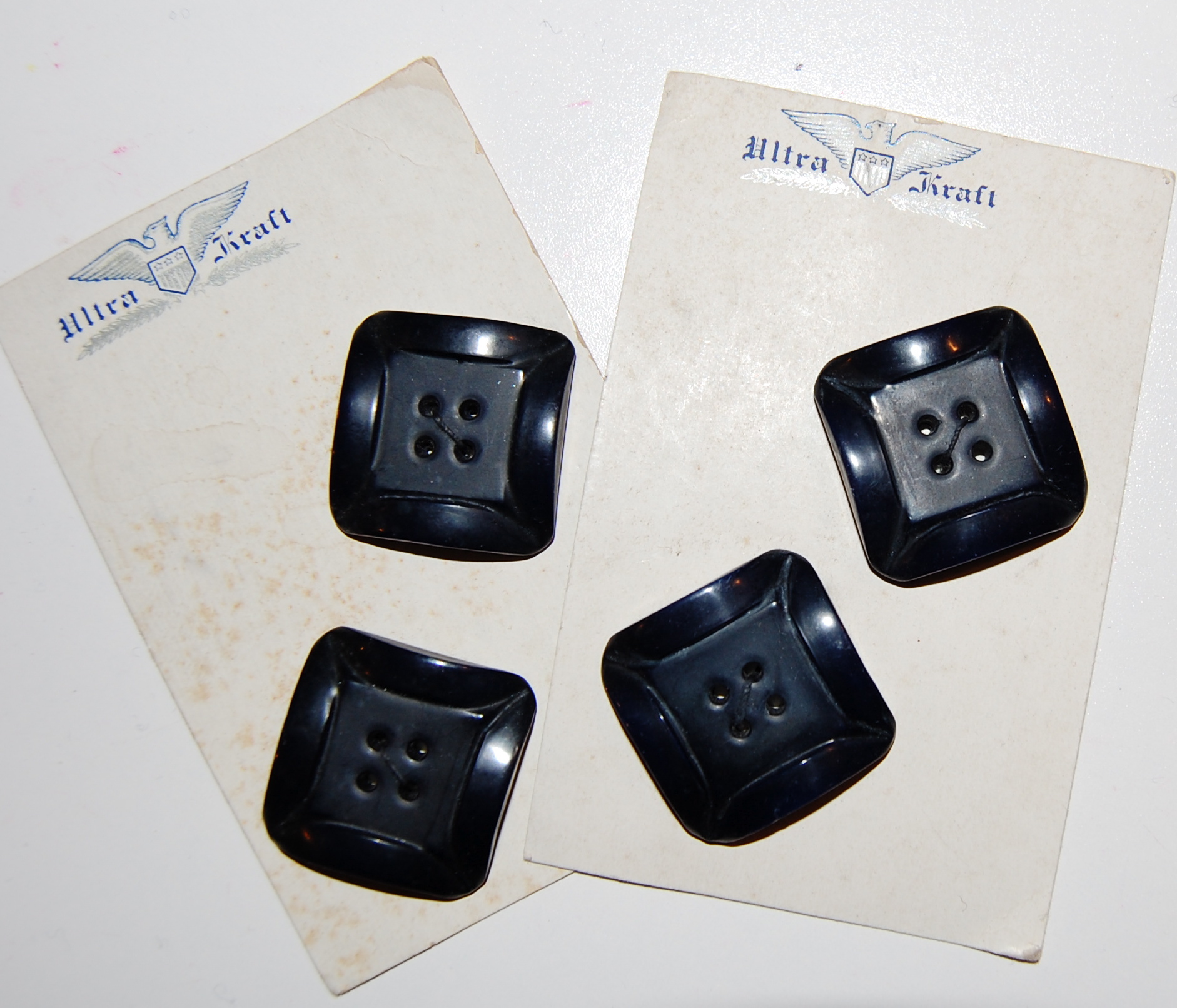
One of the advantages of having my blue windowpane-checked cashmere for a couple of years before sewing with it has been the opportunity to find just the right buttons. When I came across these buttons in an Etsy shop, I knew they would be perfect.

These buttons are 7/8" square.

These buttons are 7/8″ square.

The size is right, as is the shape – which picks up the “square” in the fabric. How I was so lucky to find them in navy blue, I’m not sure. Additionally, and this is very subtle, but the depth of the buttons allows a curvature to each edge, which mimics the curved front edge of the jacket and also the curved cuffs. Of course, when making bound buttonholes, one must have the buttons in hand before beginning the project, since the buttonholes are one of the first details to execute.

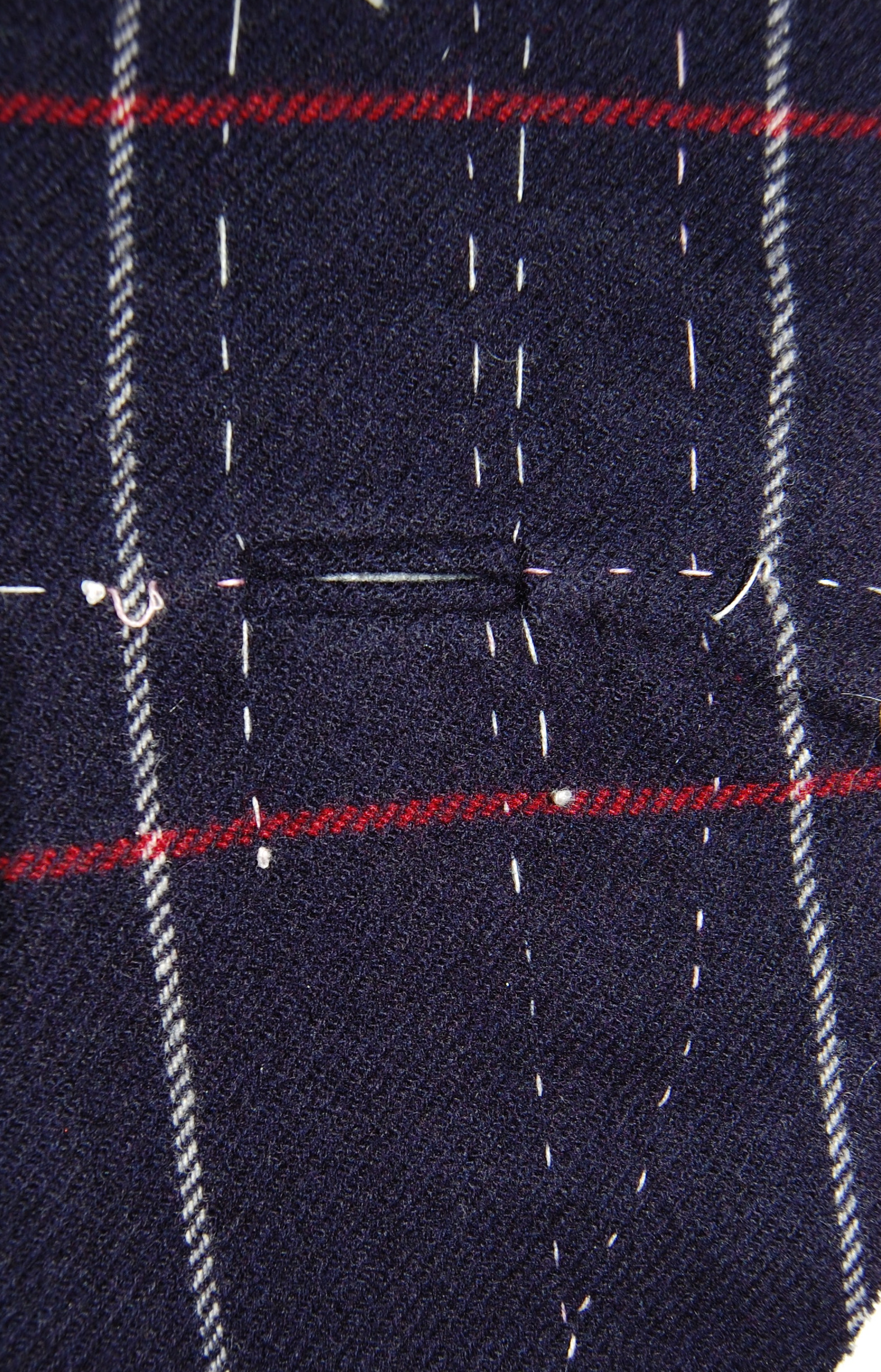
ne can never have too many markings basted in place for bound buttonholes!

One can never have too many markings basted in place for bound buttonholes!

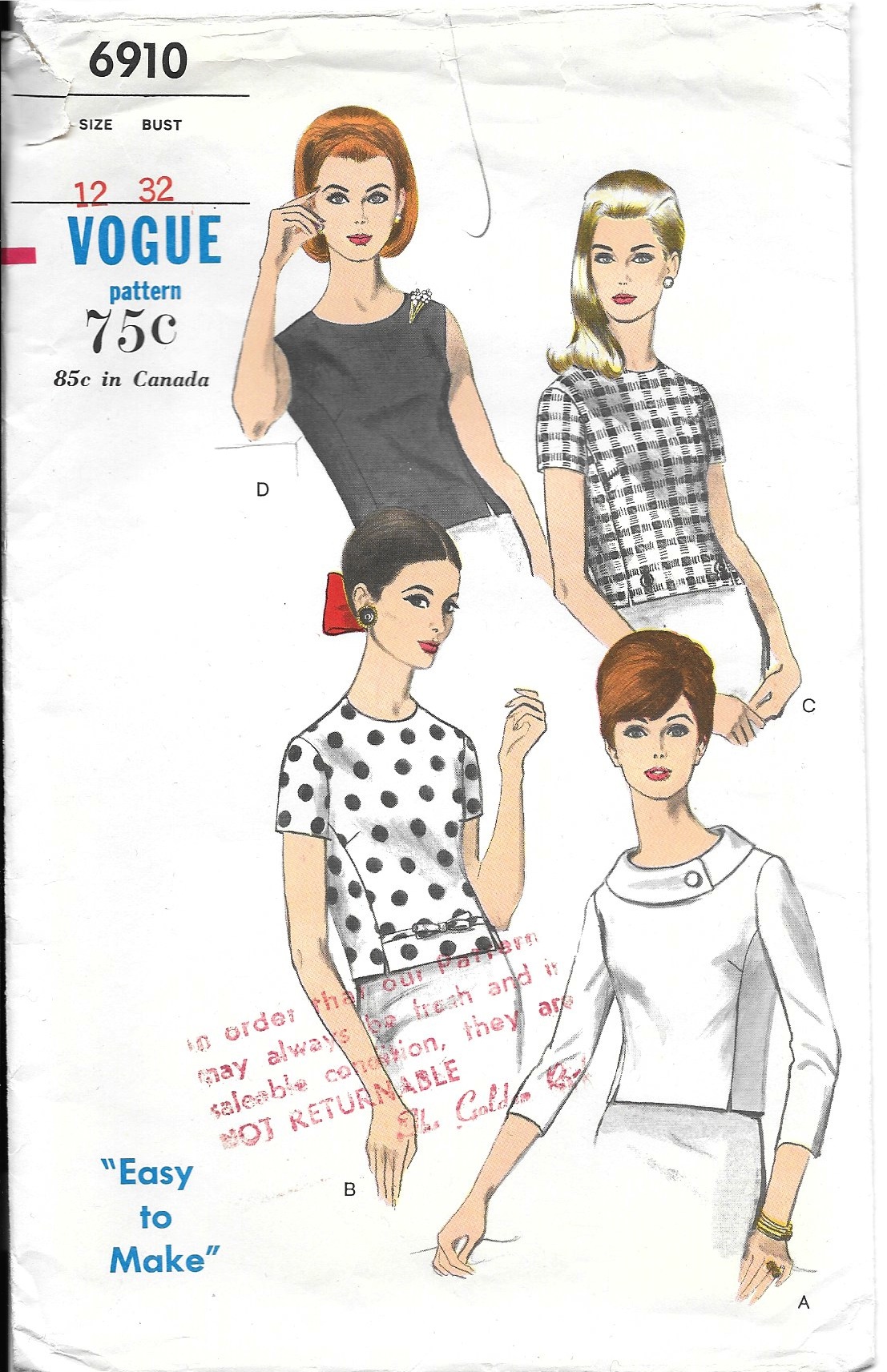
Because I need only three buttons for the jacket, the fourth button has been rattling around in my brain. I think  I might possibly be able to use it as a coordinating detail on the sheath dress I have planned for this ensemble. Back to my vintage pattern collection I have gone to look for some suitable inspiration. What I have found is this pattern:

Dress Suit 2 - blouse pattern-2 Although I have yet to work out the logistics, I am thinking that I can turn the collared blouse with the one-button detail (lower right) into a sleeveless sheath dress. The button may not really show (I think) unless I take the jacket off, but I kind of like the subtlety of it all. Once I make a muslin (toile), I will have a better idea of how it will look, so stay tuned! One thing I do know, is that such a collar on the dress will need to lay very flat, with no bulkiness. One way to achieve that will be to back it with the silk charmeuse I will be using for the jacket and dress lining instead of backing it with another layer of wool.

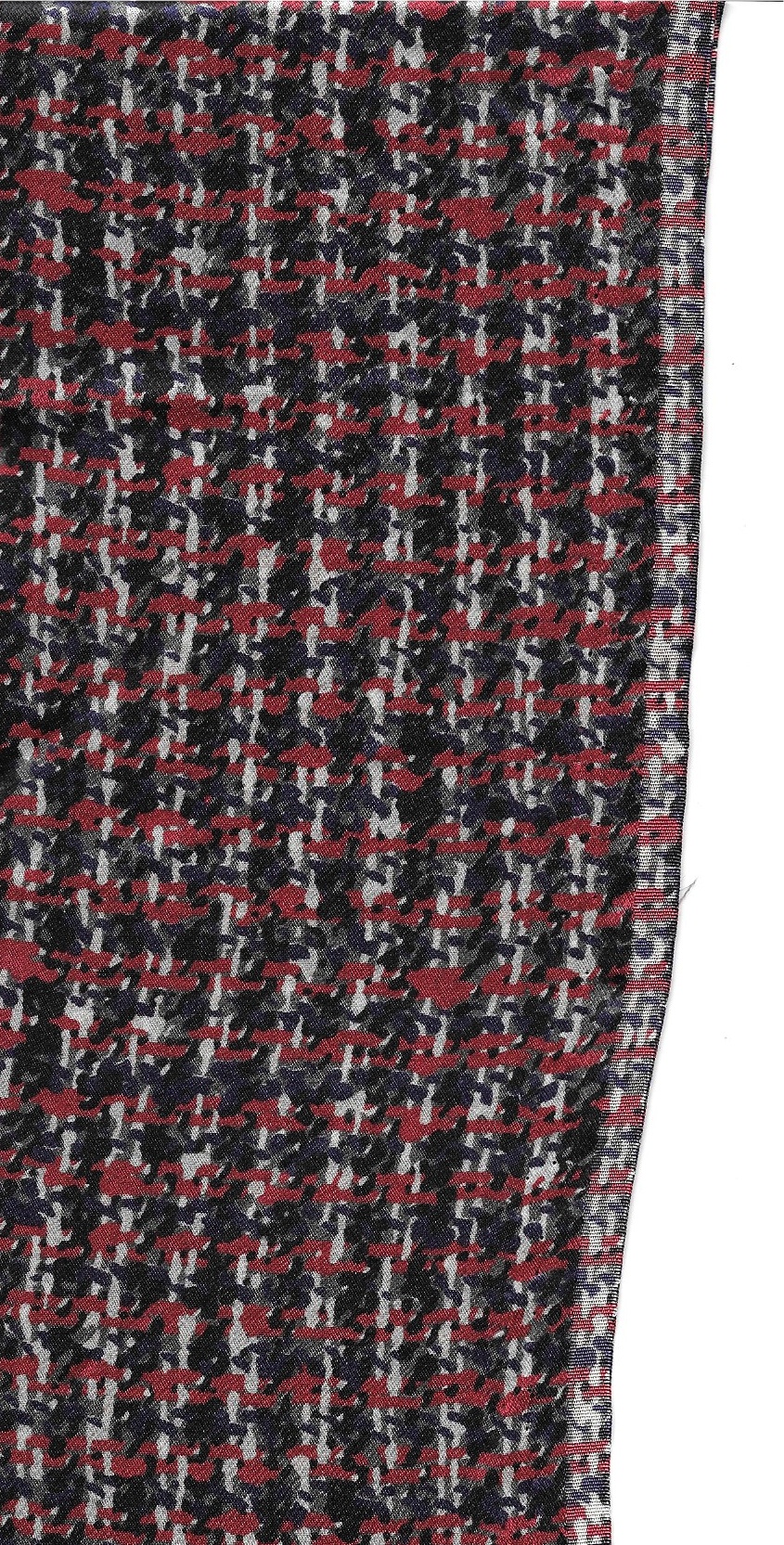
So what am I using for the lining? When I bought the lining for my color-blocked coat last winter, I purchased extra yardage of the silk charmeuse (from Britex). Now I can’t remember what my reasoning was, but once I got it home from San Francisco and I saw how complimentary it was with the navy blue cashmere, I knew I should save it for this project. Fortunately, I have enough of it to line both the jacket and the dress. Not that anyone is ever going to see the lining in the dress, but I’ll know it’s beautiful – and oh, so wonderful to wear!

Dress Suit 2 - lining fabric There are always lots of details in the construction of a rolled collar. At the risk of boring some of you, I’ll quickly go over a few tricks I learned from Susan Khalje last year when I made my color-blocked coat. First, here is a picture (by request from some of you) of the lightly pad-stitched and interfaced jacket front.

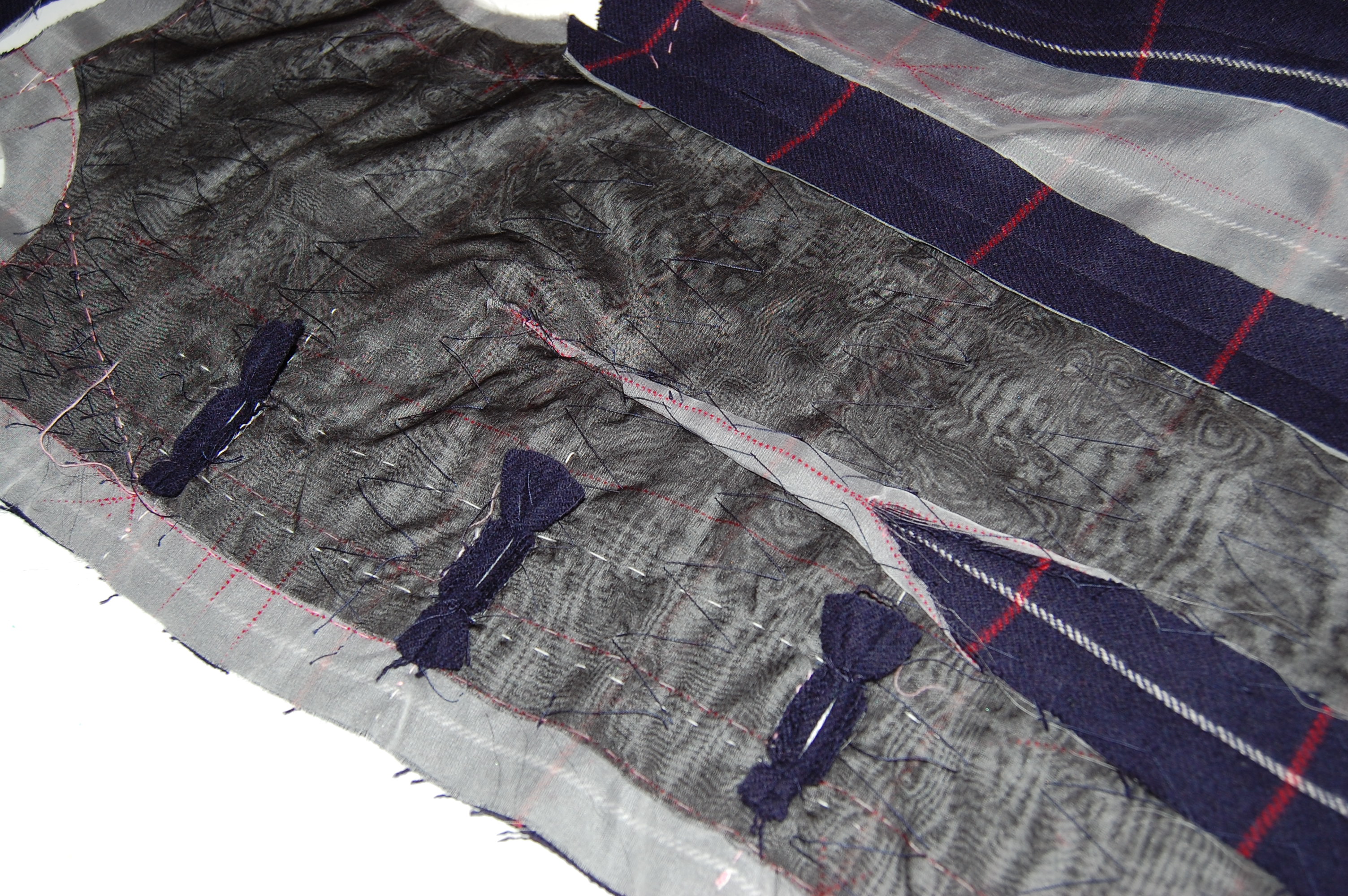
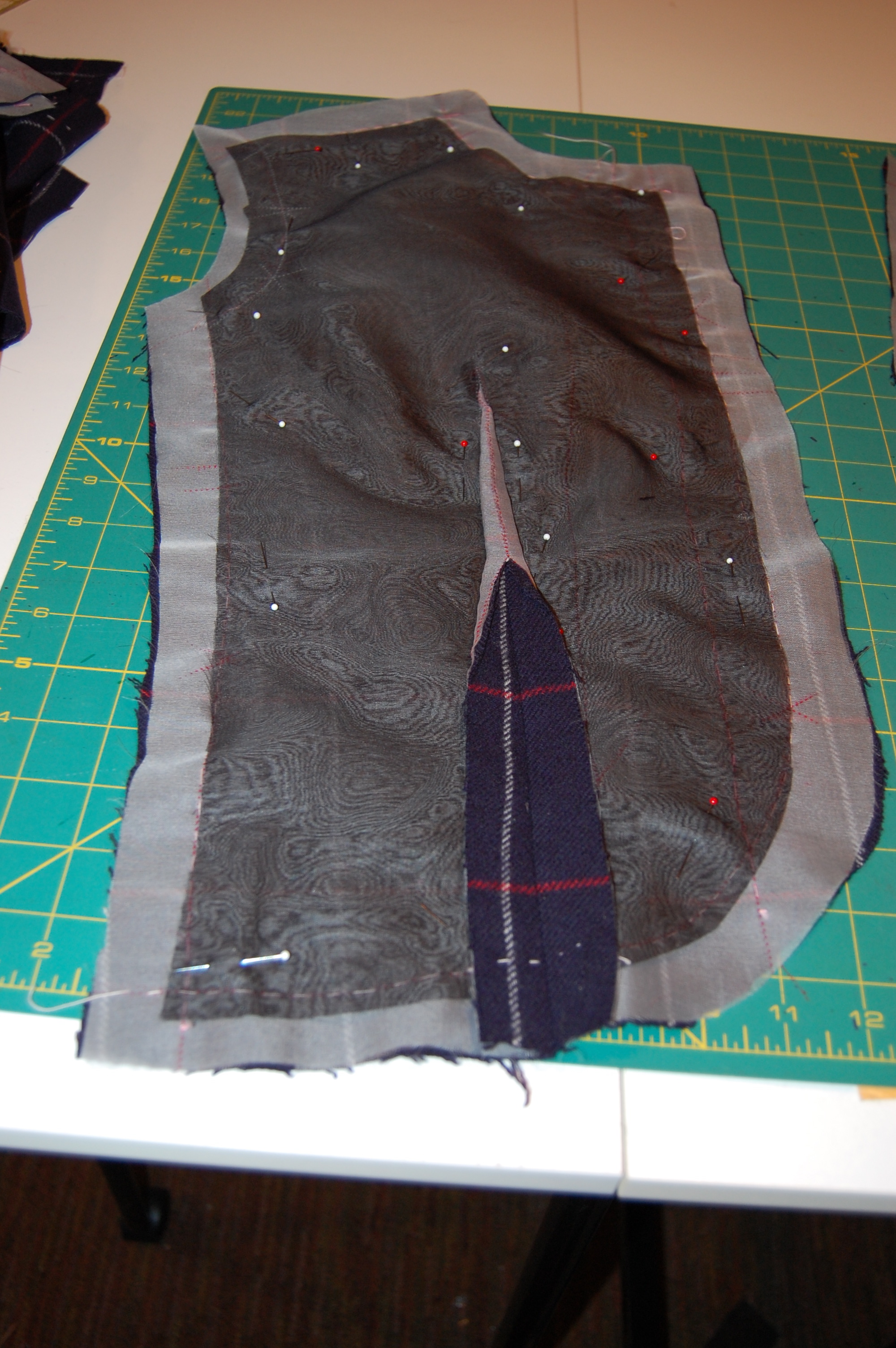
Here is an inside look at the interfaced right side of the jacket showing the underside of the buttonholes.

Here, too, is an inside look at the underside of the three bound buttonholes.

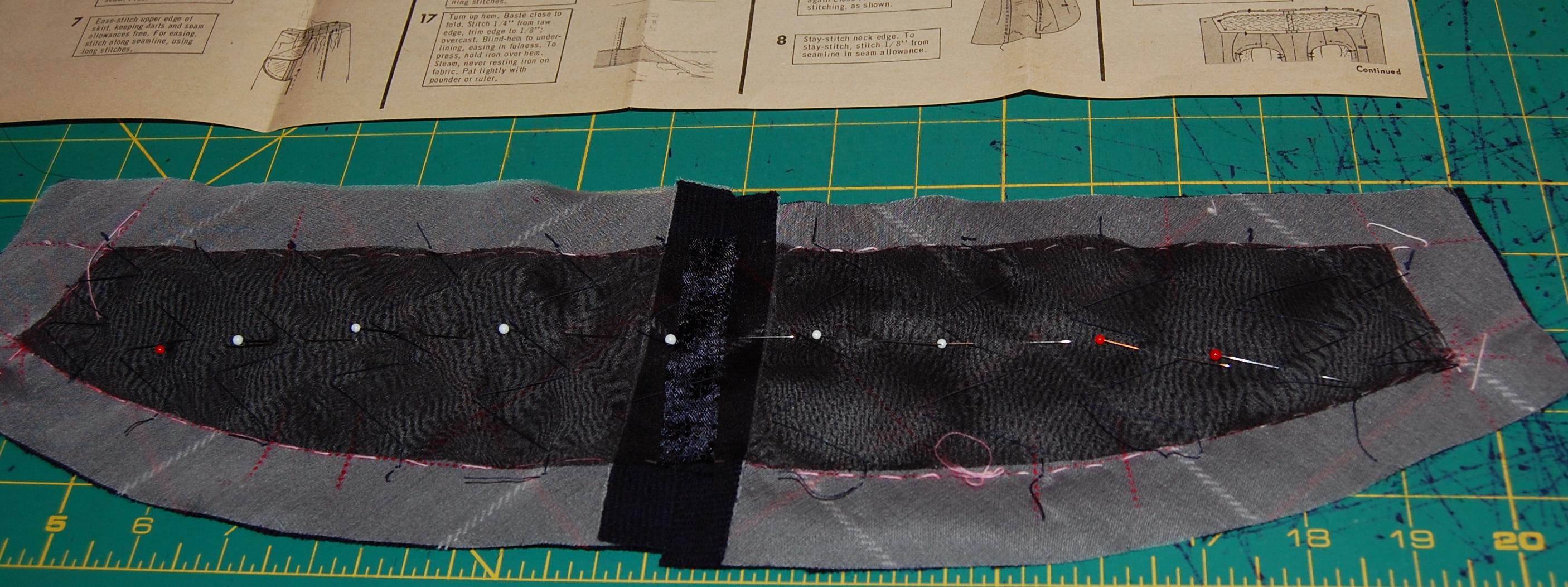
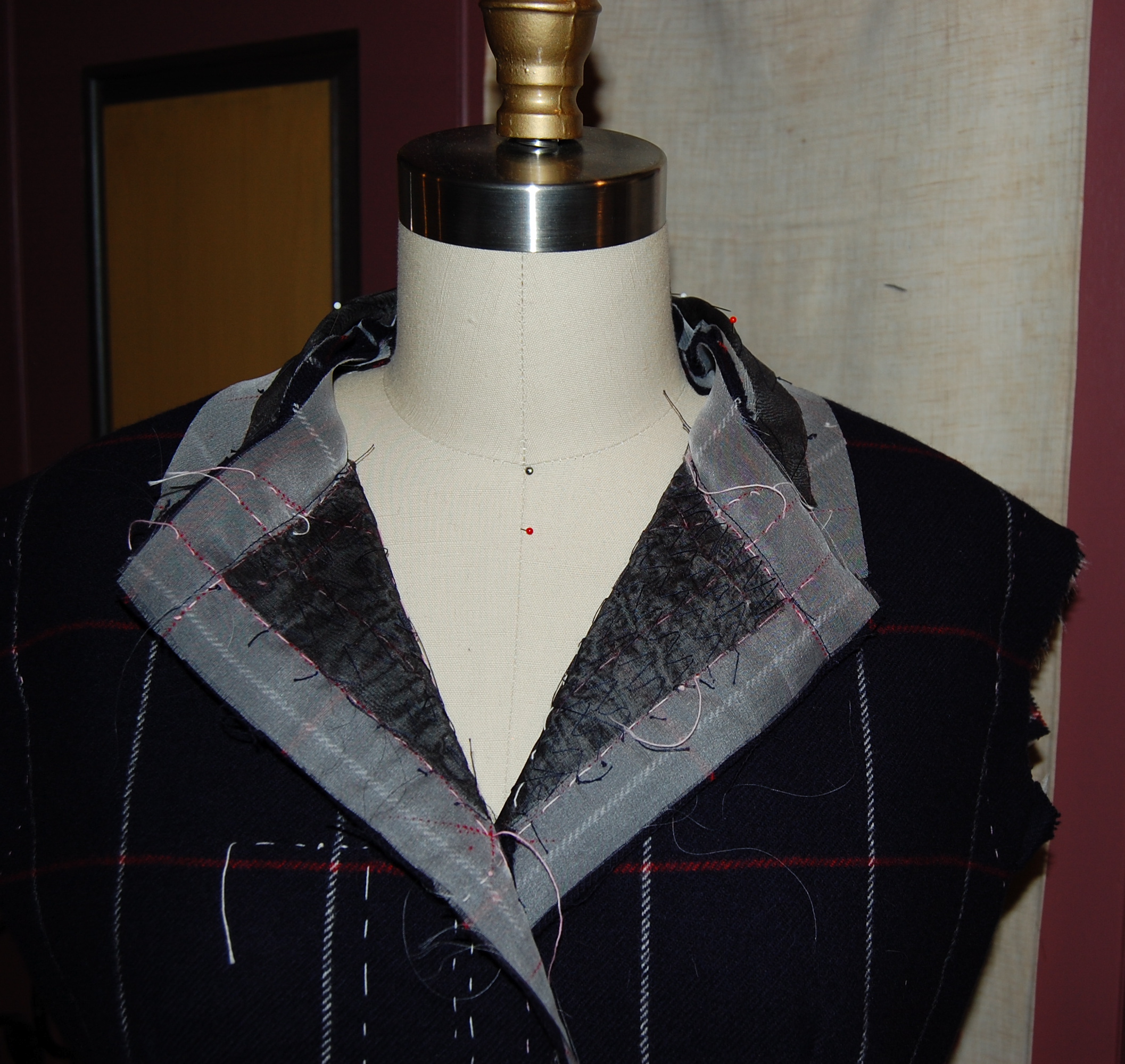
The undercollar is also interfaced with black silk organza. It is basted onto the body of the jacket in order to establish the roll line. Once I marked the roll line with pins, I removed it and basted along the roll line in preparation for heavy pad-stitching of that section.

Establishing the roll line of the undercollar.

Establishing the roll line of the undercollar.

Suit dress under collar

The roll line is marked with pins; then I basted along that pin line.

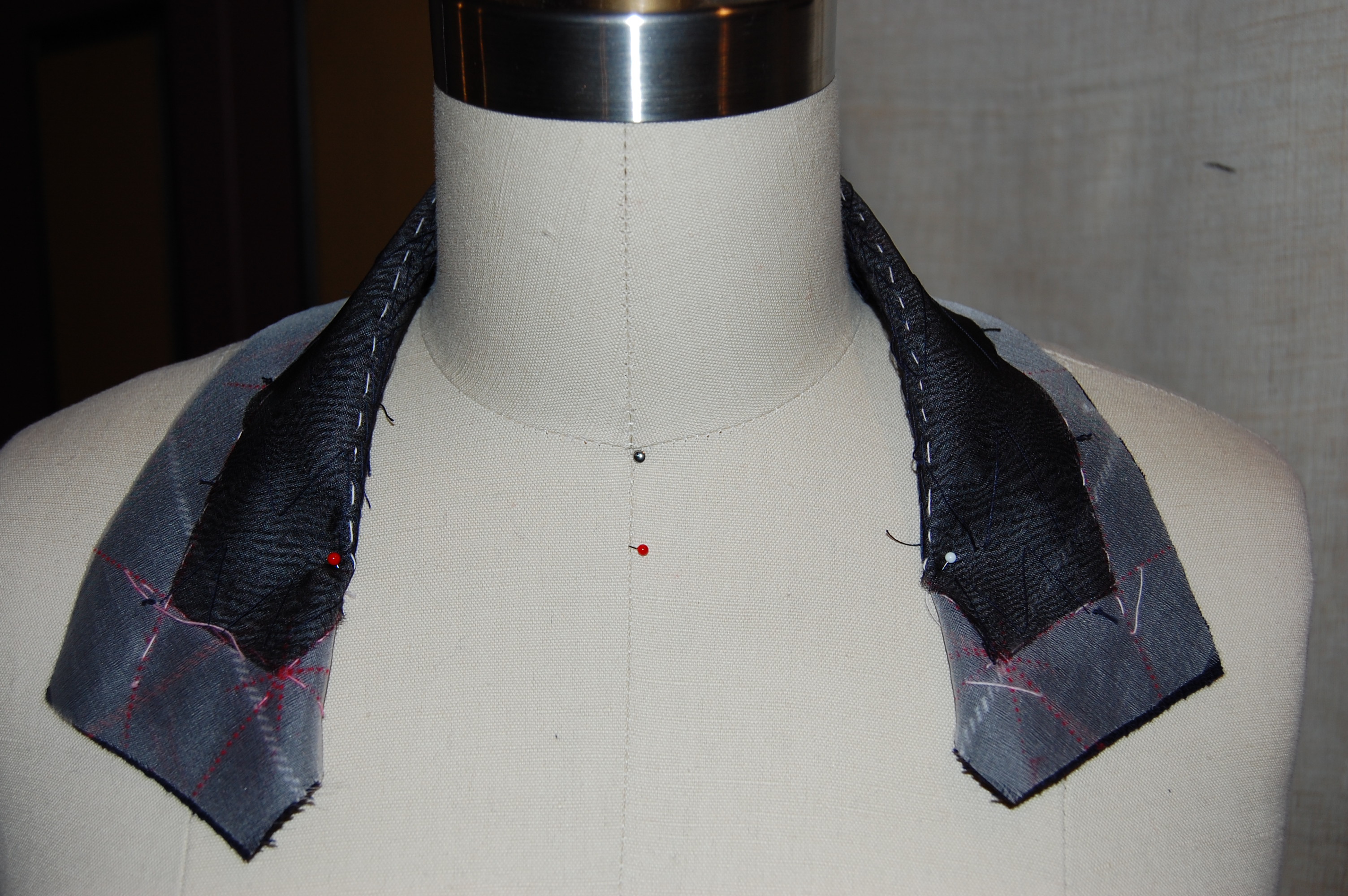
Once I finished the pad-stitching (impossible to see here on the black organza), I then placed it on the dress form, pinned it in place and steamed it. This process reinforces the “memory” of the roll.

A dress form is indispensable for steaming the undercollar.  You can see the basted roll lie in this photo.

A dress form is indispensable for steaming the undercollar. You can see the basted roll line in this photo.

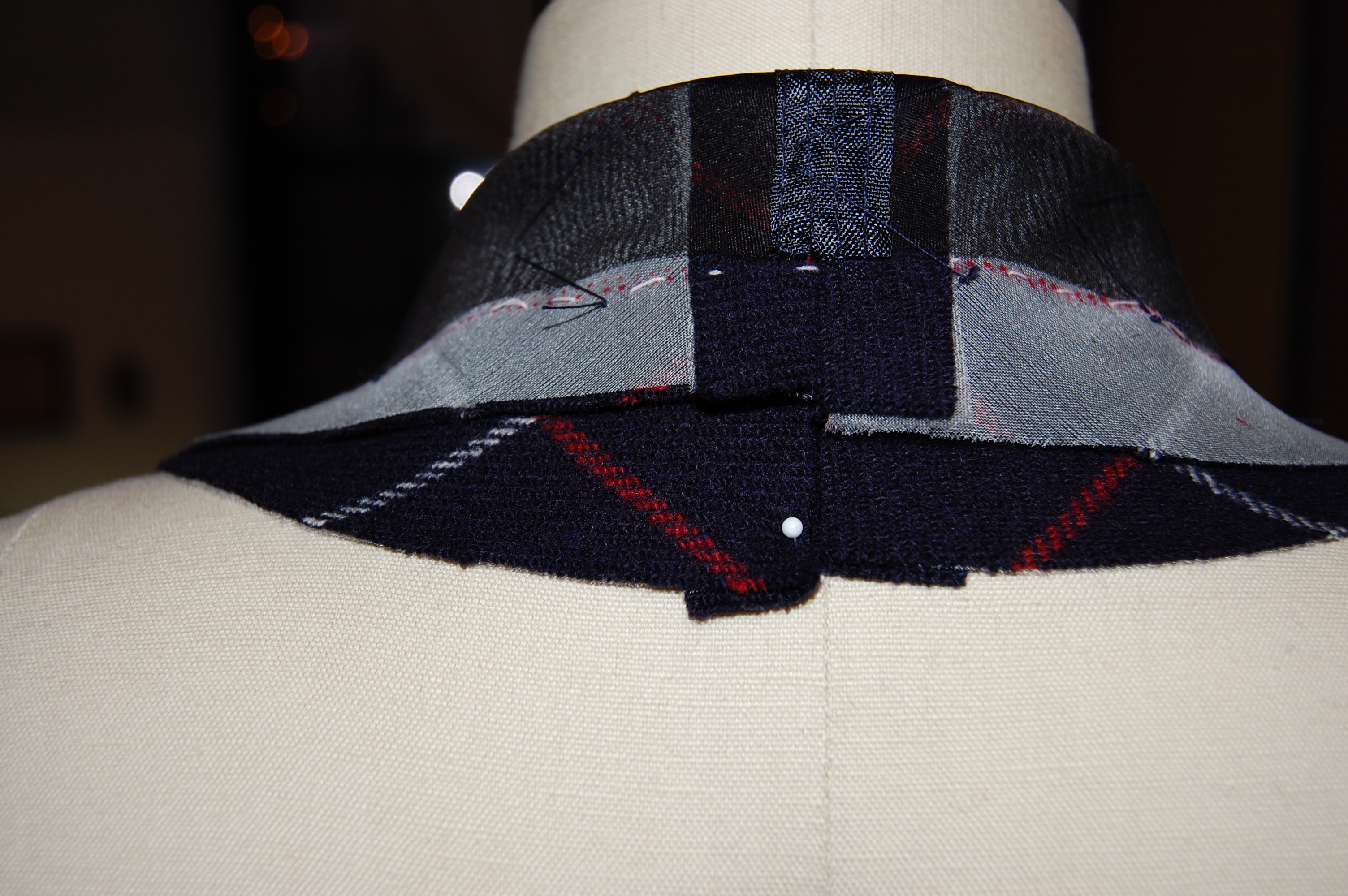
The back of the undercollar after steaming.

The back of the undercollar after steaming.

As I make progress on this jacket, I am reconsidering the amount of top-stitching I want to do on it. The pattern calls for double rows of top-stitching along seam lines, front edges and sleeve edges. I plan on modifying this somewhat.

Dress Suit 2 - topstitching detail-1

This diagram clearly shows the extent of proposed top-stitching. I will definitely not be doing this much!

Top-stitching always makes me nervous. It may be my least favorite part of sewing. I’d rather sew on buttons than top-stitch! Let’s see how well I do with it – in my next post – before I can get back to more fun-stitching.

16 Comments

Filed under bound buttonholes, Buttons - choosing the right ones, couture construction, Suit dresses, Uncategorized, vintage buttons, vintage Vogue Designer patterns, vintage Vogue patterns from the 1970s, woolens

The Evolution of a Suit Dress, Part 1

“Suit dress – Used in 1960s to refer to a jacket and dress ensemble that resembled a tailored suit.”   (The Fairchild Dictionary of Fashion, Third edition; Fairchild Publications, Inc., New York, New York, 2010)

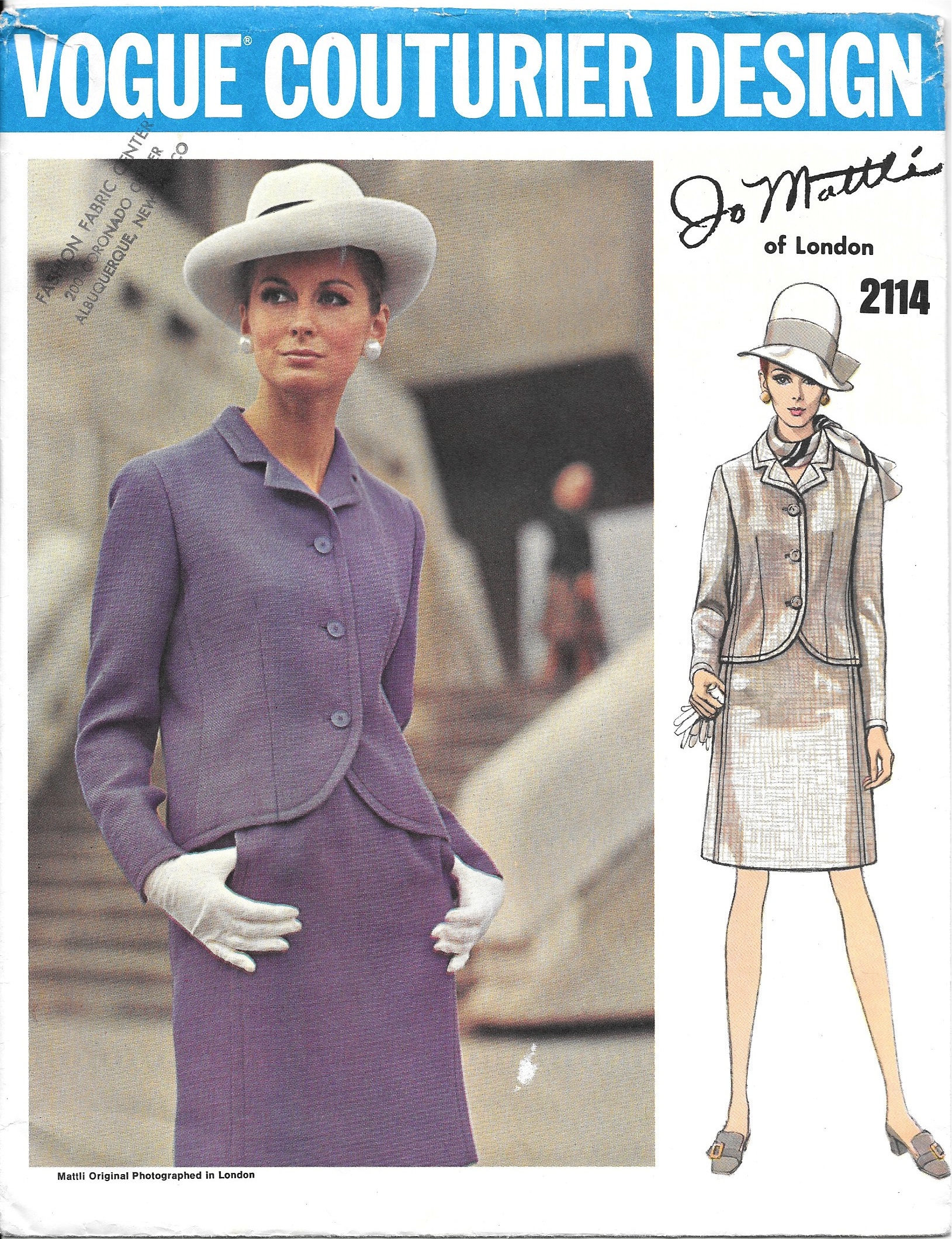
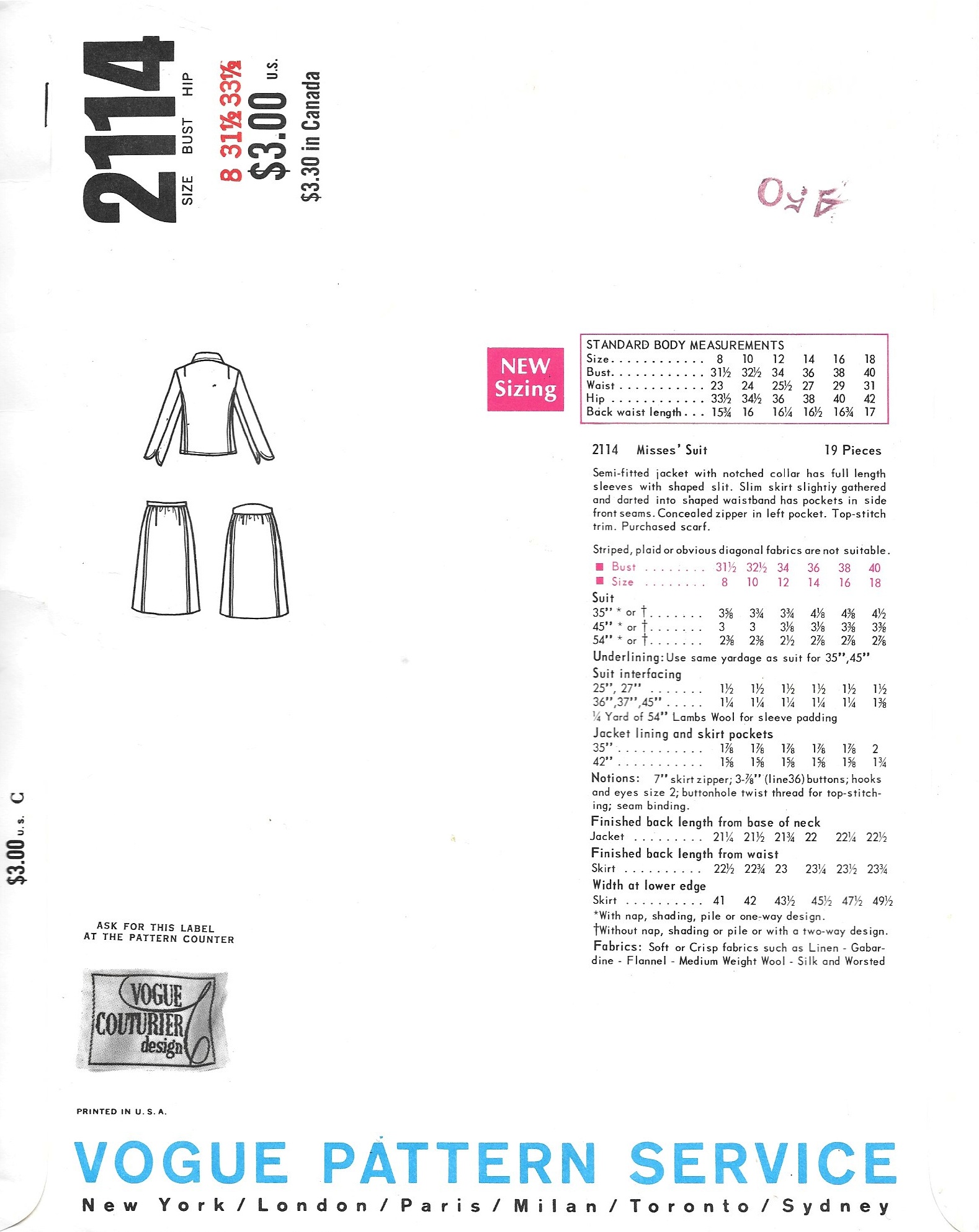
Although the inspiration for my current project does not have its beginnings in the 1960s, it is certainly influenced by that era. The actual beginning was about 1974 or ‘75, although I did not know it then. That was when I first laid my eyes upon this Jo Mattli Designer pattern from Vogue:

Dress Suit - front of pattern envelope

I loved the tailored, but feminine, look of the jacket, with its high, notched collar and its sleeves with gracefully curved slits. (I was less enamored with the style of the skirt, but skirts can easily be substituted, of course.)

This diagram of the jacket  back better shows the interesting treatment to the cuff edges of the sleeves.

This diagram of the jacket back better shows the interesting treatment to the cuff edges of the sleeves.  Click on the picture to see a close-up view.

I admired this pattern on a regular basis while it was listed for sale in the Vogue Catalogue at my local fabric store, but in the end I didn’t buy it. That hefty $3.00 purchase price, and not knowing for sure that I would actually end up making this outfit,  kept me from its purchase. Now I am not nearly as practical – or maybe I have learned from experience. One must get these things which speak to them while they can! So when I found this pattern a couple of years ago on eBay, I knew it was time to fulfill a long-delayed dream (at a much higher price than $3.00, I might add!).

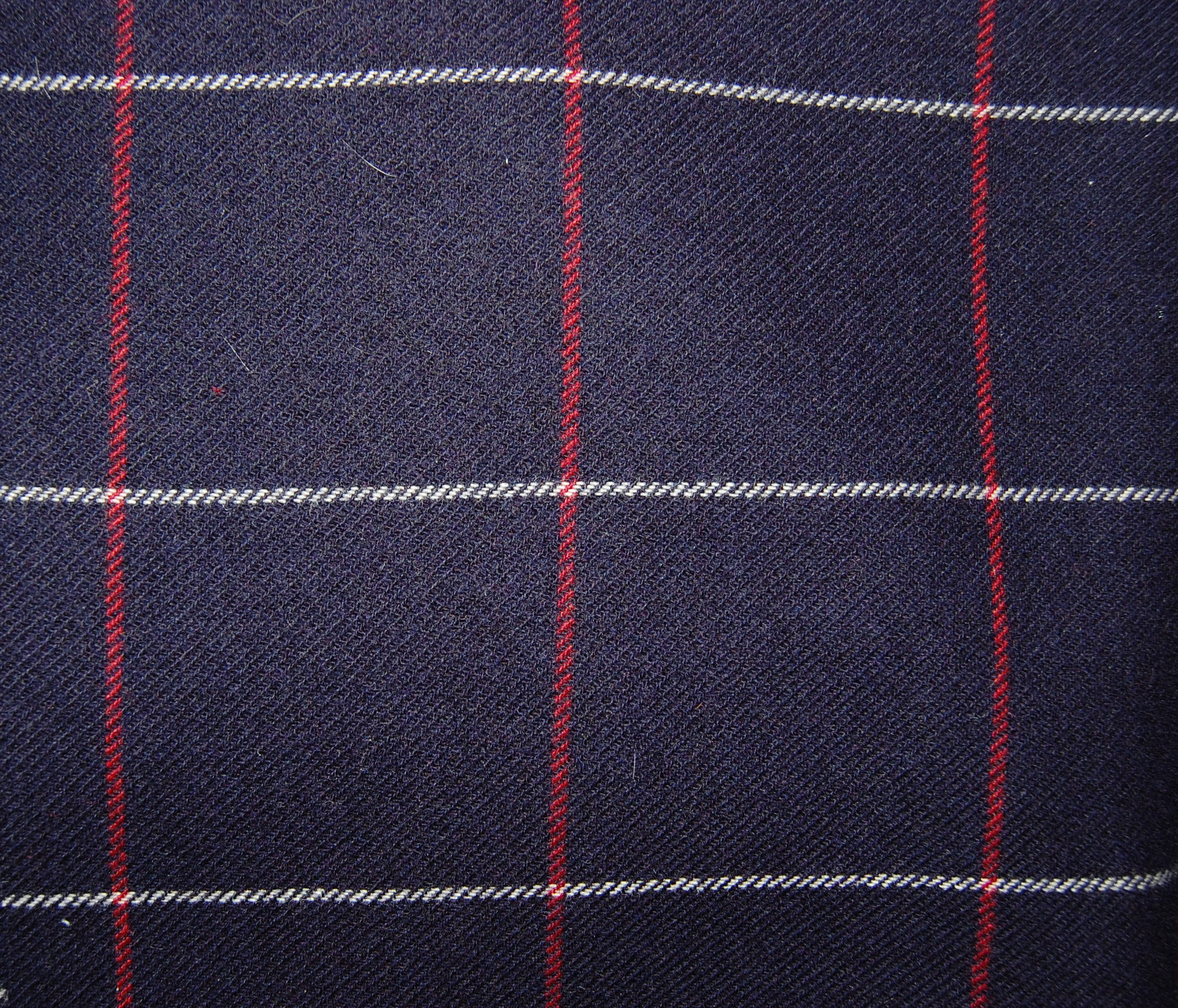
Shortly thereafter I found this navy blue, windowpane-check cashmere fabric on one of my trips to Britex Fabrics in San Francisco. I purchased what I was sure would be ample yardage to make a two-piece suit (jacket and skirt, with this Jo Mattli design in mind) and to compensate for matching the plaid. Then I set it aside, knowing that the time to start this project had to be right.

The feel of this wool is best described as like soft butter.

The feel of this wool is best described as like soft butter.

I am so glad I waited. As I have grown in my sewing and dressmaking skills (with so much credit in that arena attributed to what I have learned in classes with Susan Khalje), I came to see this fabric and this suit taking on a slightly different appearance. I knew I wanted to make the Mattli jacket, but more and more I felt that this fabric was too special to mix it up with a blouse, no matter what color or how simple that blouse might be. I began to envision the jacket paired with a sheath dress – in effect, a classic 1960s’ inspired suit dress.

But would I have enough fabric? Britex has always been very accommodating when cutting yardages for me, adding inches to compensate for the layout of plaids and designs, and simply being generous in adding a few inches to my requested amount. (I have found most fine fabric stores to be similarly inclined – Mendel Goldberg, for example, also adheres to this customer-friendly practice. Have you found this generally to be true as well?)   Well, those of you who read my blog know that a little shortage of fabric has never kept me from my intended goal. Of course, I would have enough fabric… And so I do, especially with those few extra inches courtesy of Britex added on!

Fitting the muslin (toile) for the jacket took more thought and planning than usual. Much of this is because the pattern I found on eBay was actually one size smaller than what I usually buy and wear. For some reason I find it easier to size down patterns than size them up, so I’d rather, if necessary, start with a too-large pattern than one too small. Adding length and width to the body of the jacket, fitting the sleeves (which also needed a little more circumference) into those new dimensions, and adjusting the front/neck facing, which is part of the notched collar, was quite a puzzle. It took days!

I transferred my final changes from the muslin to silk organza, and then I was in business. I love a challenge, and it’s a good thing I do! Do you know how nerve-racking it is to make sure all your plaid lines match up vertically and horizontally? Also, I knew I could lay out only the jacket pattern pieces initially. There are two reasons for this: one is that I have not yet determined which sheath dress pattern I want to use. The other is that the plaid on the dress is going to have to match – perfectly – the plaid in the jacket horizontally first, with the vertical match being as close as it can be, taking into account darts and the curves in the body of the dress. So – I have to finish the jacket before I can lay out the dress. That fortuitously gives me some more time to think about the dress, which is still taking shape in my mind!

I chose to use white silk organza rather than black, as it is much easier to see the windowpane lines through the white, and easier on the eyes, too.

I chose to use white silk organza underling rather than black, as it is much easier to see the windowpane lines through the white, and easier on the eyes, too.

This photo better shows my markings on the silk organza underlining.

This photo better shows my markings on the silk organza underlining.

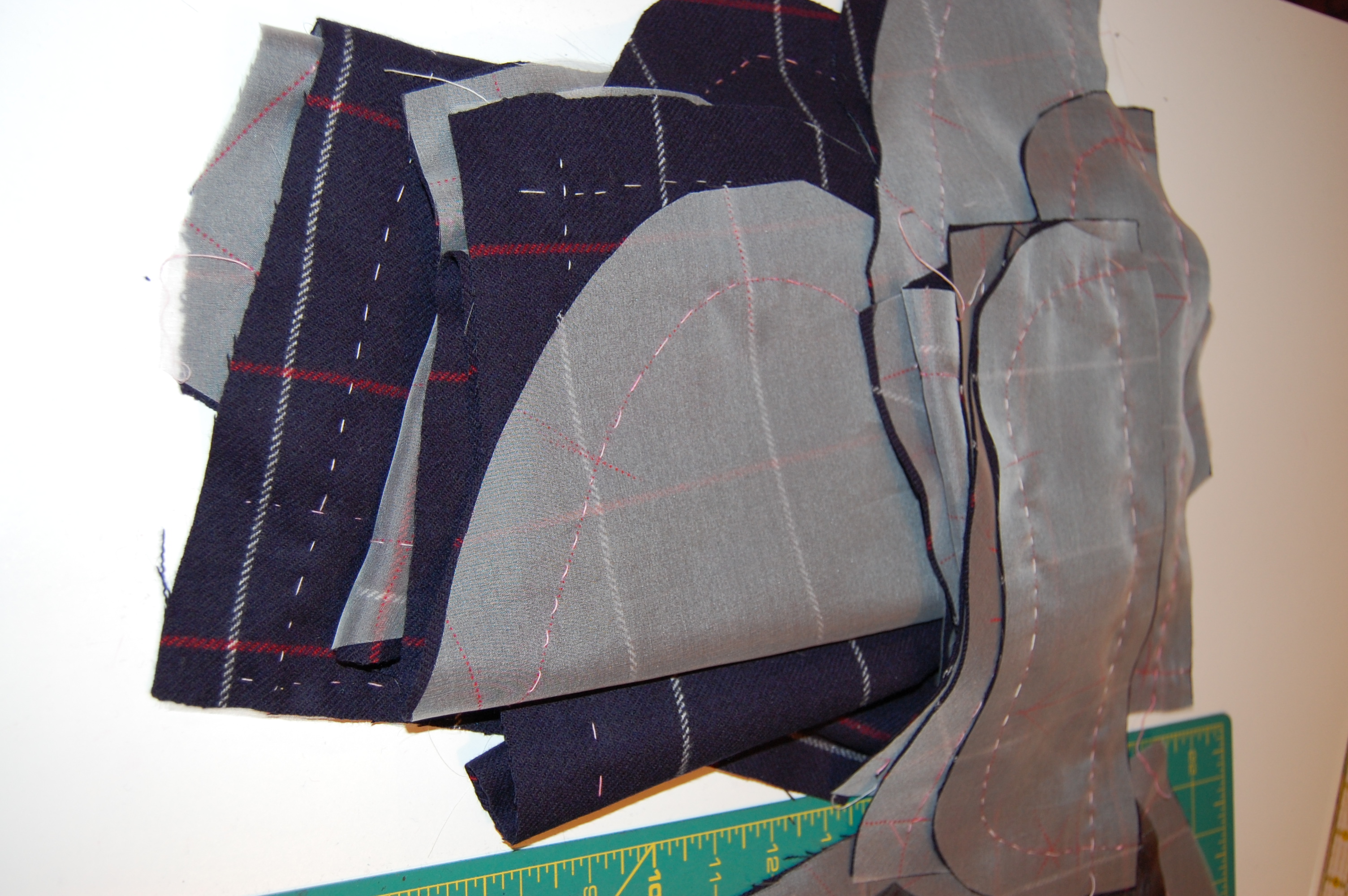
With all the silk organza underlining basted onto the wool, I am ready to sew.

A pile of prepared pieces!

A pile of prepared pieces!

But hold the horses there, Fifty Dresses! First, there are interfacings to be pad-stitched and bound buttonholes to be made.

I am using black silk organza for the interfacing.  This is what I did on my color-blocked coat, under Susan Khalje's tutelage, and I was delighted with the results!

I am using black silk organza for the interfacing. This is what I did on my color-blocked coat, under Susan Khalje’s tutelage, and I was delighted with the results!

It is clear there is no hurrying this jacket, nor should there be. Some dreams just take a little more time.

17 Comments

Filed under couture construction, Dressmaker suits, Mid-Century style, Suit dresses, Uncategorized, vintage Vogue Designer patterns, vintage Vogue patterns from the 1970s, woolens

Good Bones

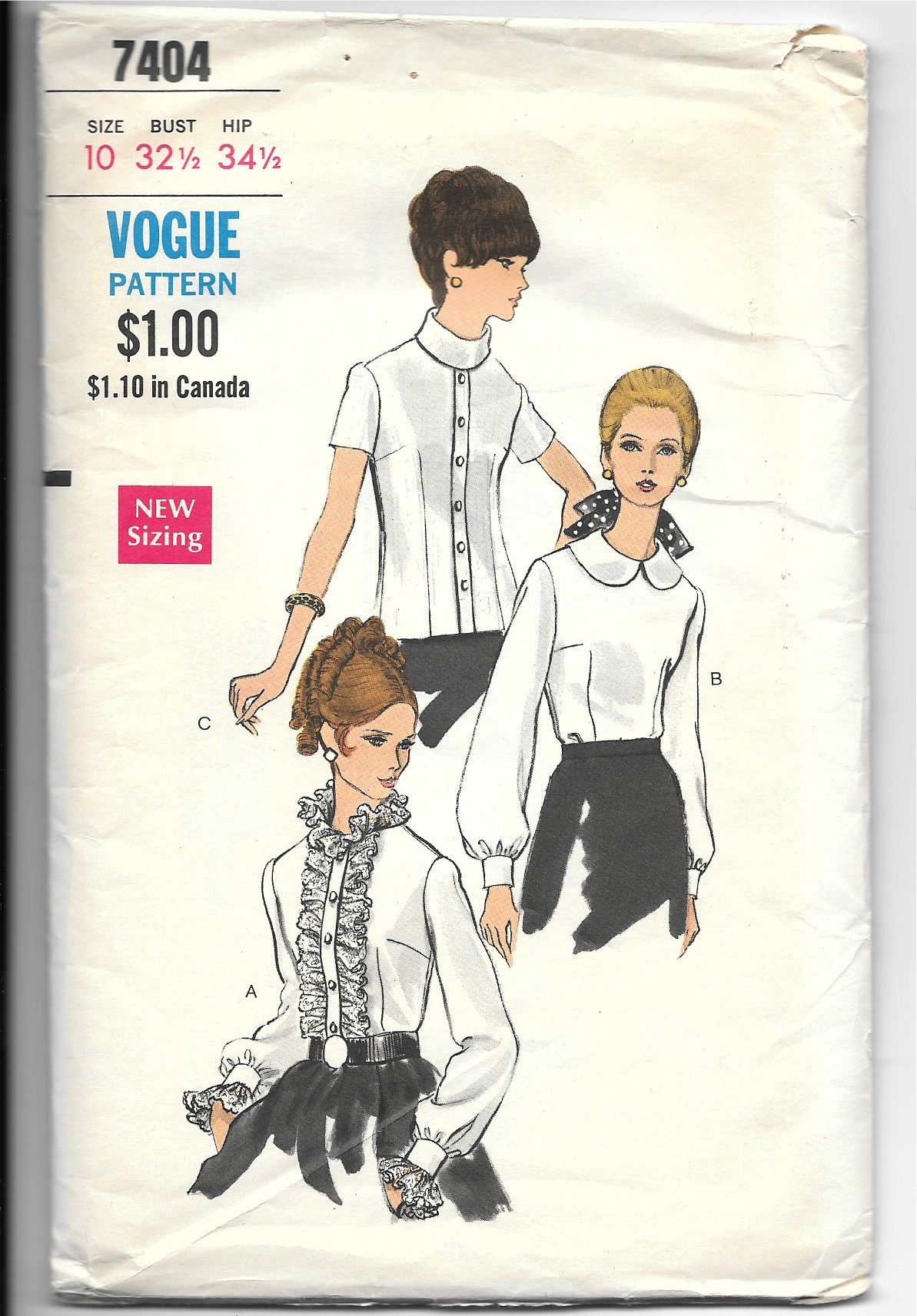
Can a pattern have good bones? I think so. When I purchased this blouse pattern a while ago, I did so knowing that I would not be making a blouse that looked exactly like any of the three illustrated on the pattern envelope.

Blouse pattern - PP collar

I have always liked a feminine-looking blouse that opens in the back, and I have always liked Peter Pan collars (which seem to come in and out of fashion). I also like a blouse that is fitted with darts through the body of the blouse. You can easily see the darts illustrated above. The thumbnail views of the blouses also show the darted fitting in the backs of the blouses.

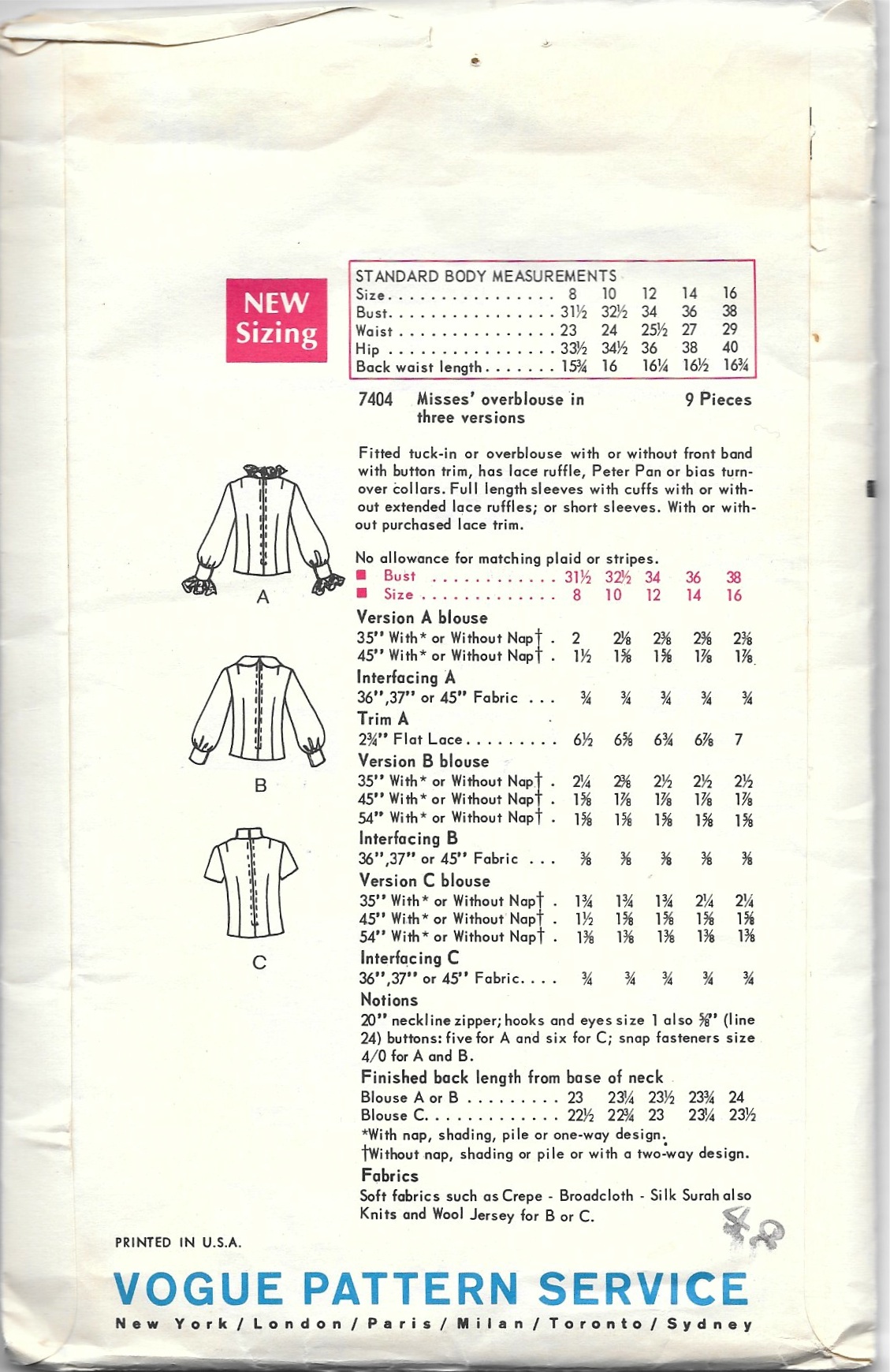
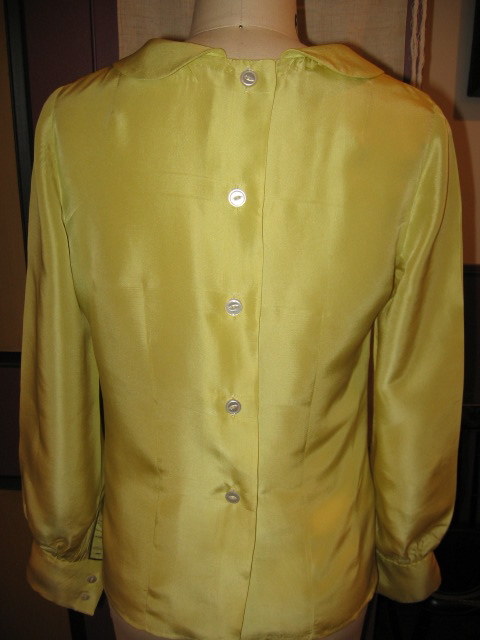
Blouse pattern - PP collar - rear views I found it interesting that these blouses are constructed with zippers in the backs. I am not fond of blouses that are zippered up the back, but I knew that I could easily make the back into a buttoned closure.

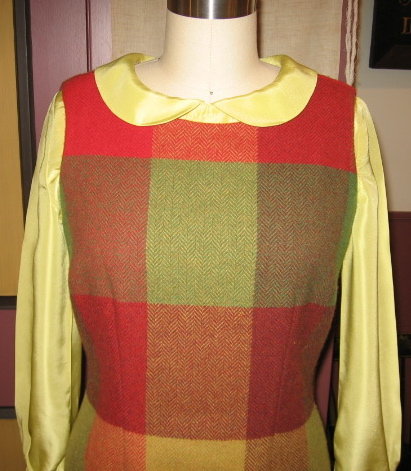
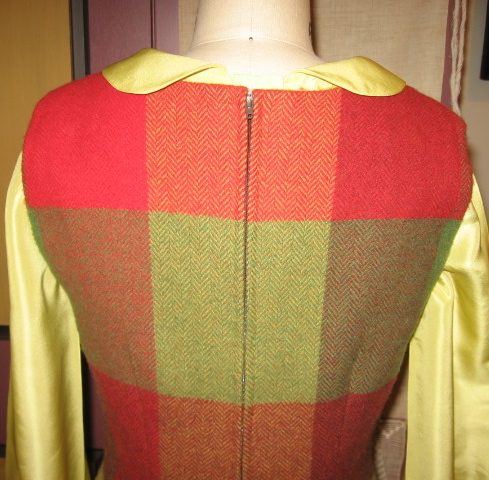
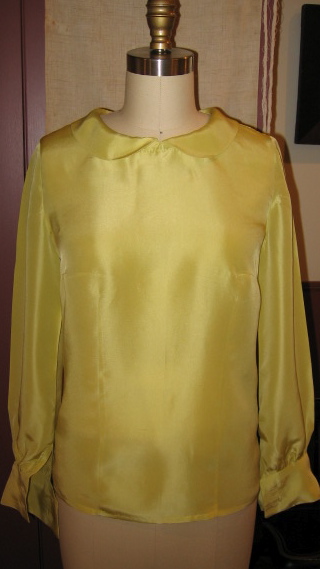
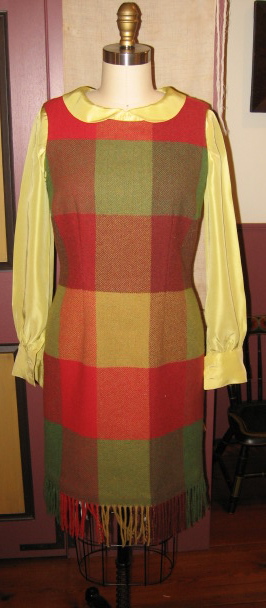
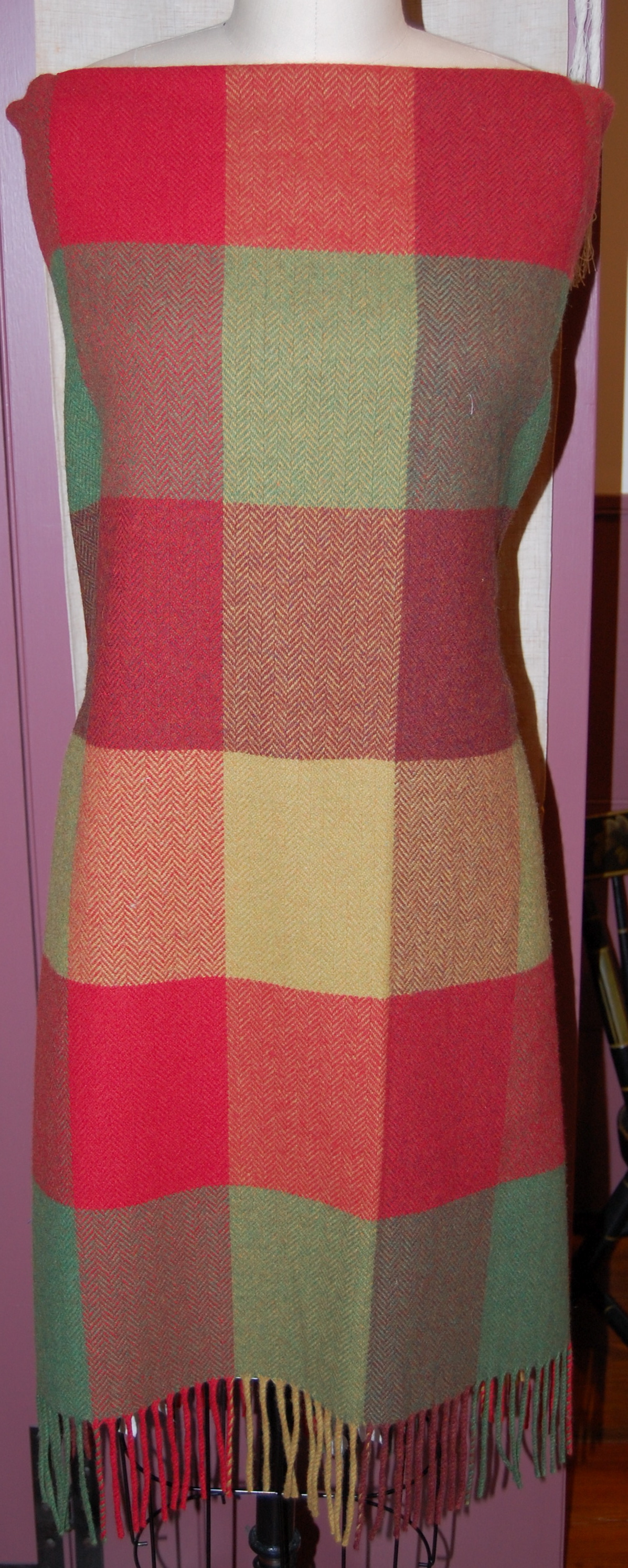
January Jumper blouse Interestingly, this pattern is from a narrow period of time when Vogue initiated their “new” sizing, which added a half-inch to sizes 8 and 10 in the bust and in the hip. I believe this new sizing was only in effect from about 1968 through about 1972 or ’73. In any event, it helps to date this particular pattern.  When I decided to make my blanket dress into a jumper, with a blouse matching the yellow lining, I went to this pattern for its good bones: darted fit, back opening, and pretty sleeves.

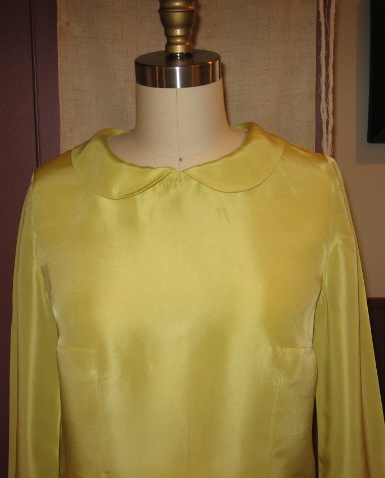
I re-cut the neckline so that it was wider, following the neckline on my completed jumper. The Peter Pan collar was too wide to my thinking, so I narrowed it by about an inch. Instead of using facings, I bound the raw neck edge with self bias binding. The hand-stitching on that is hidden beneath the collar.

January Jumper blouse

You can see the wider cut of the neckline of the blouse in this photo.

You can see the wider cut of the neckline of the blouse in this photo.

IMG_1073

I added two inches to each of the the back seam lines so that I could button , rather than zip, the back, and I took a bit of the width out of the sleeves so they would be a bit less flow-y (is that a word?)

IMG_1069

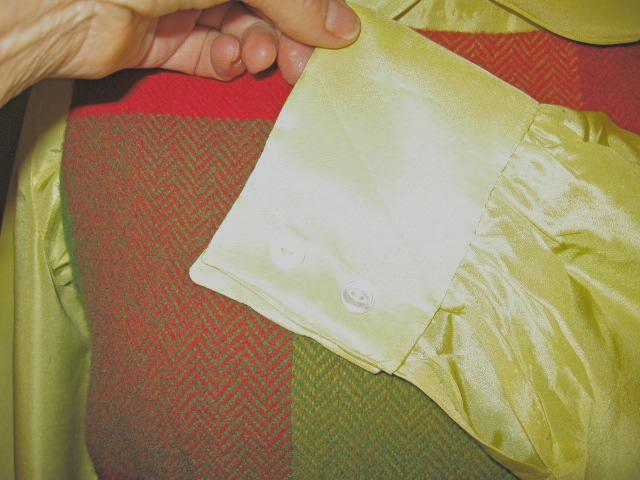
The slightly fitted bodice helps it to lay without bulkiness underneath the jumper. I found vintage mother-of-pearl buttons in my button box, two smaller ones for each sleeve and five slightly larger ones for the back. Why it always give me satisfaction to use buttons I have on hand, I don’t know, but I was feeling quite delighted with my finds!

IMG_1077

Unfortunately, I am having problems with the main lens I use for my camera, so I had to resort to my old “point and shoot” for these photos, which makes them adequate, but that’s about all. Also, I’ll have to add photos of me actually wearing my new jumper and blouse at a later date, due to this inconvenience. My apologies…

January Jumper and blouse

Less than a month ago, when I was “planning” out 2015’s sewing, I did not envision that January would also produce a blouse to wear with my blanket dress. But that is one of the charms of fashion sewing – the spontaneity of a project that says “Me, Me, choose Me!” And so I did, and I am not only happy with the result, but delighted to have a tried and true “good bones” blouse pattern to use again and again, whether in the plan or not.

18 Comments

Filed under Blouses, Buttons - choosing the right ones, Love of sewing, sewing in silk, Uncategorized, vintage buttons, vintage Vogue patterns from the 1970s

The Year of Magical Sewing

“Just around the corner in every woman’s mind – is a lovely dress, a wonderful suit, or entire costume which will make an enchanting new creature of her.”                                                               —  Wilhela Cushman

For those of us who sew, this statement takes on extra meaning, as it is in our power to create that lovely dress, wonderful suit or entire costume. But have you ever thought about the process of sewing – and how magical it is?   Magical in the sense of being “mysteriously skillful, effective, and enchanting” (as Webster defines one meaning of magic).   I love that I can start with a piece of fabric – or a pattern – or an idea spawned by something I have seen and admired – and, using skills I have learned, proceed to actually make my own interpretation. It’s a remarkable process, when you really take the time to think about it. So I am dubbing this year, 2015, for me, as The Year of Magical Sewing, with emphasis on the transformational qualities and joys inherent in fashion sewing.

So what do I have planned for my year of magical sewing? I am beginning the year with several new vintage patterns in my collection, which are inspiring me no end. Add to that some amazing fabric selections, both vintage and new, and I am already certain I’ll never complete every thing I’d like to!  So – here is a general outline for 2015:

It is always easiest for me to segment the year into its seasons as I think about what I’d like to sew. Starting with Winter, I have two wool projects which will take me into March, I am sure: One is my fringed “blanket” dress, currently underway in my Sewing Room. After that I will be sewing with a piece of navy blue cashmere, from which I hope to squeak out a dress and jacket. (Valentine’s Day will find me interrupting my wool projects to make a sweet treat or two for granddaughter Aida.)

With any luck, I'll soon be wearing my blanket dress.

With any luck, I’ll soon be wearing my blanket dress.

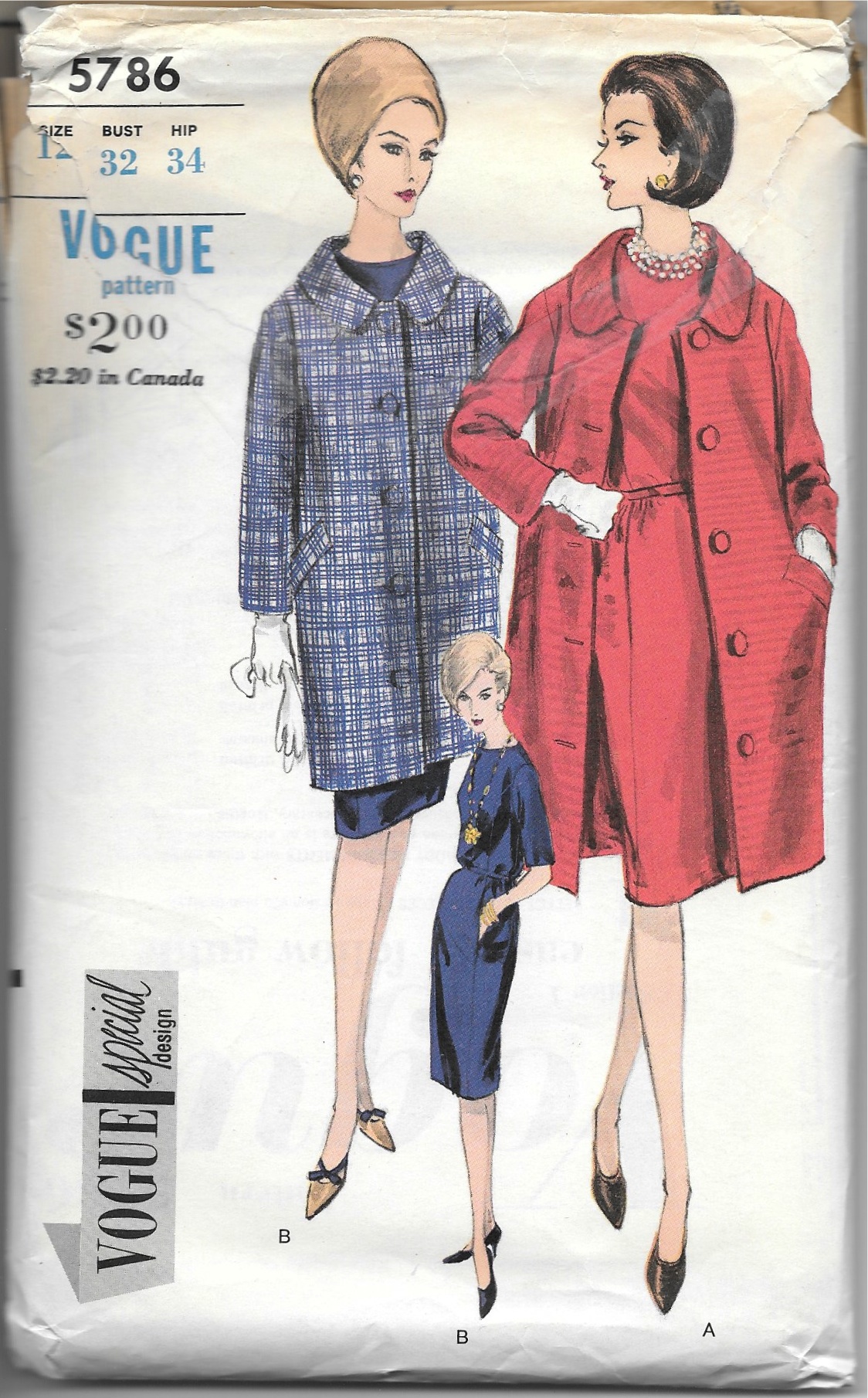
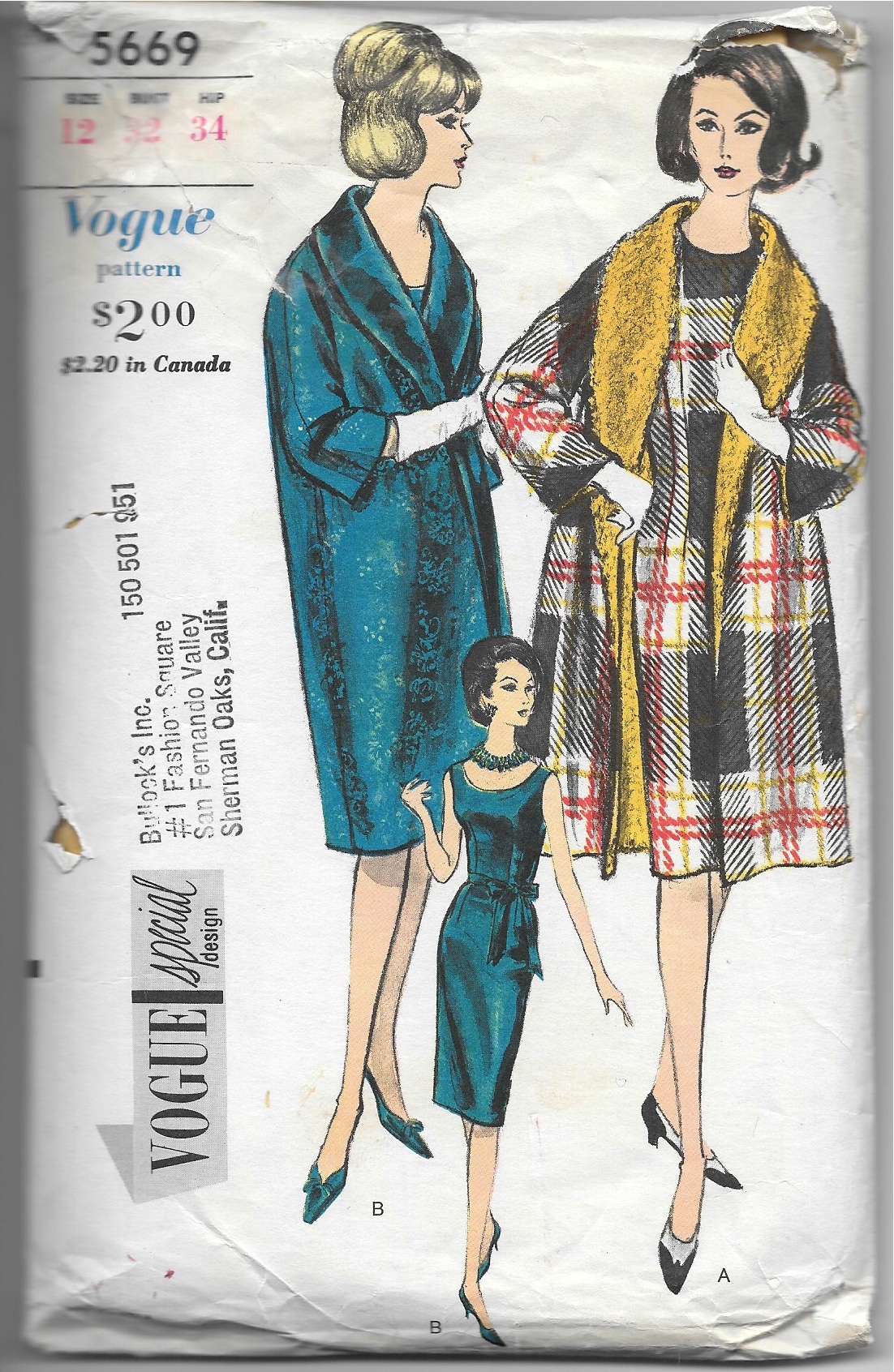
Spring is especially enticing to consider. Somehow I have become obsessed with dress and coat ensembles. Here are two patterns which would make up into “Spring” coats and coordinating dresses. I definitely will be using vintage linen for one of these two-part looks.

I love the knee length coat, although I may substitute another pattern for the coordinating dress.

I love the knee length coat, although I may substitute another pattern for the coordinating dress.

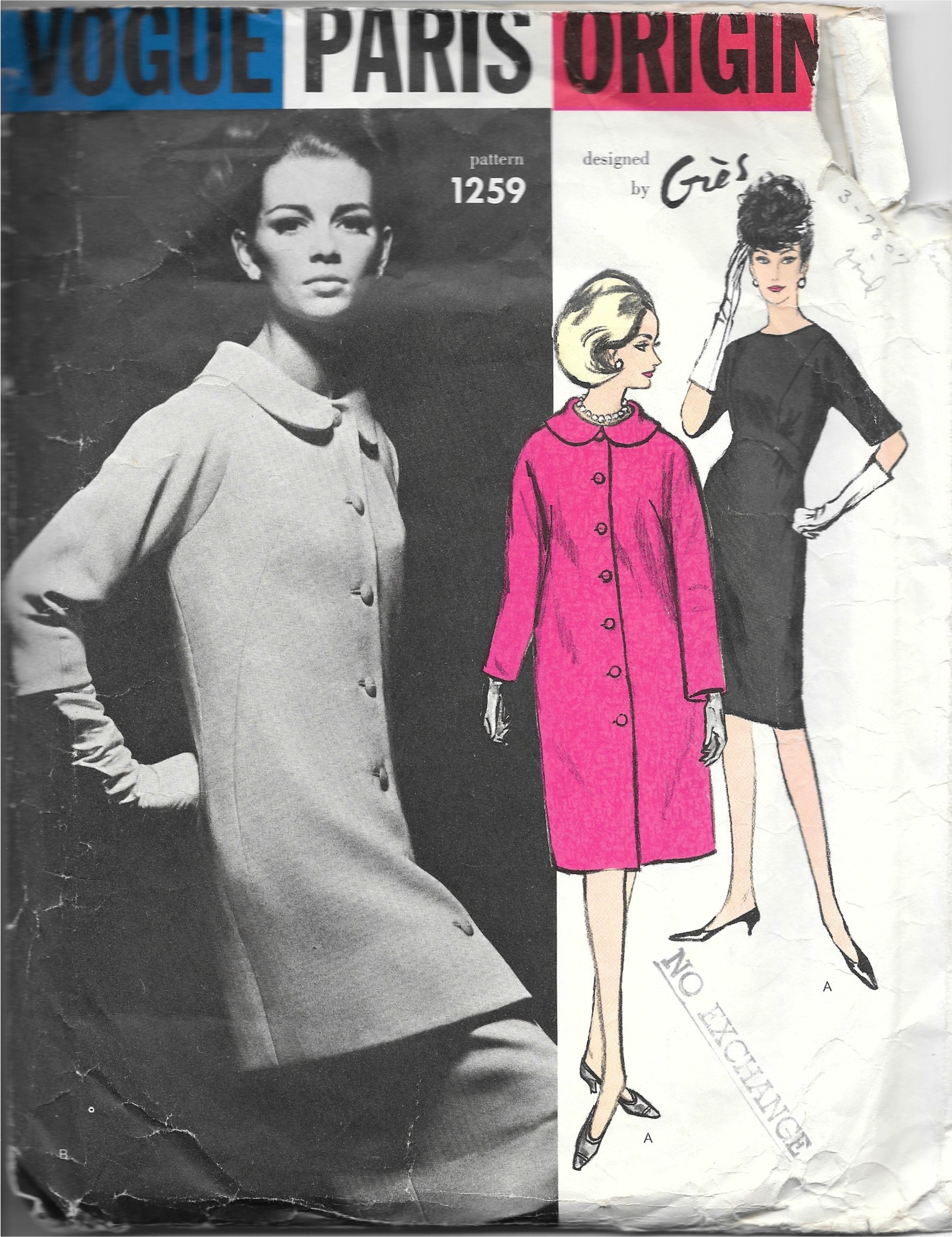
Or I may decide to use this Madame Gres design fopr a coat and dress.  The coat has very unusual darts along the side, which you may be able to see here.

Or I may decide to use this Madame Gres design for a coat and dress. The coat has very unusual darts along the side, which you may be able to see here.

Another Diane von Furstenberg wrap dress is also on my agenda for late Spring/early Summer. Thanks to one of my readers, I was able to purchase some authentic Cohama DvF fabric, so I am excited to contemplate the beginning of this dress.

Circa 1976, this fabric is still soft and lovely.

Circa 1976, this fabric is still soft and lovely.

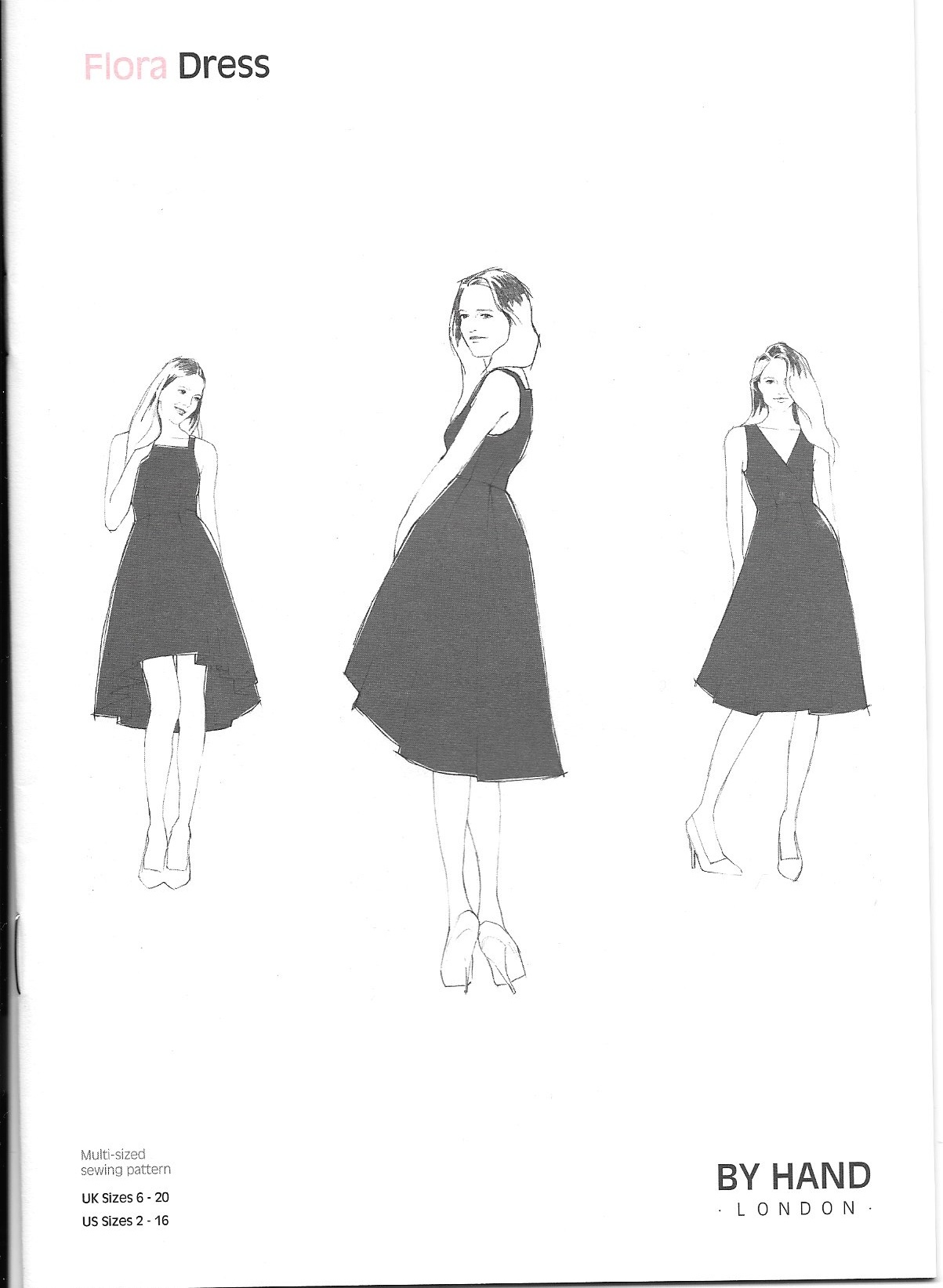
Summer will find us traveling quite a bit, so I am trying to be realistic about the time I’ll have to sew. If I can get one “fancy/formal” dress made, I’ll consider it a success. I might be using this By Hand London “Flora” pattern with this fabric, unless, of course, I change my mind.
Aspects of this pattern remind me of classic Balenciaga.  I'll have to make the skirt longer, however...

Aspects of this pattern remind me of classic Balenciaga. I’ll have to make the skirt longer, however…

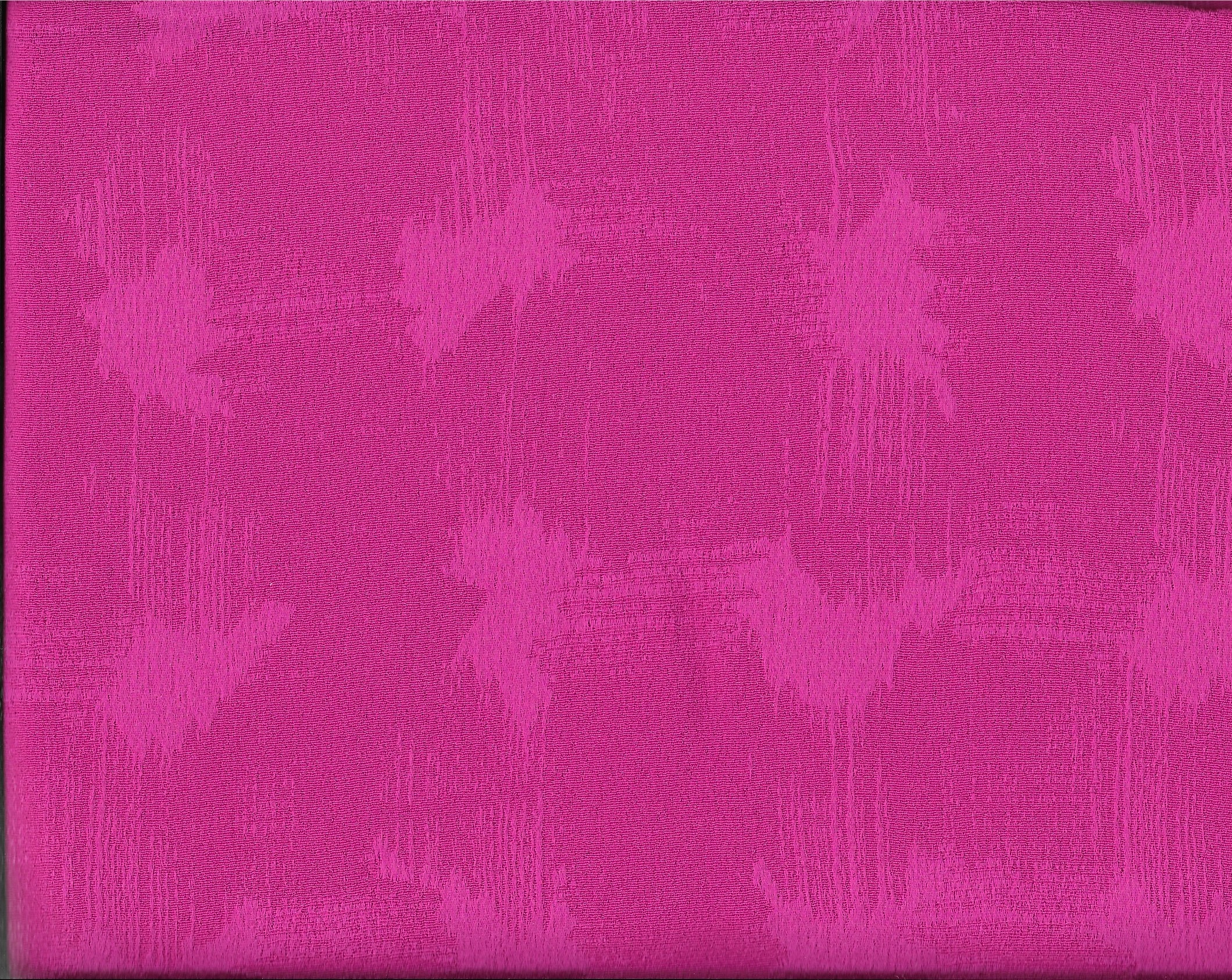
I watched this fabric on the website of Britex Fabrics for months, and finally decided I had to have it.  It is silk charmeuse, very soft with the abstract design woven in.

I watched this fabric on the website of Britex Fabrics for months, and finally decided I had to have it. It is silk charmeuse, very soft, with the abstract design woven in.

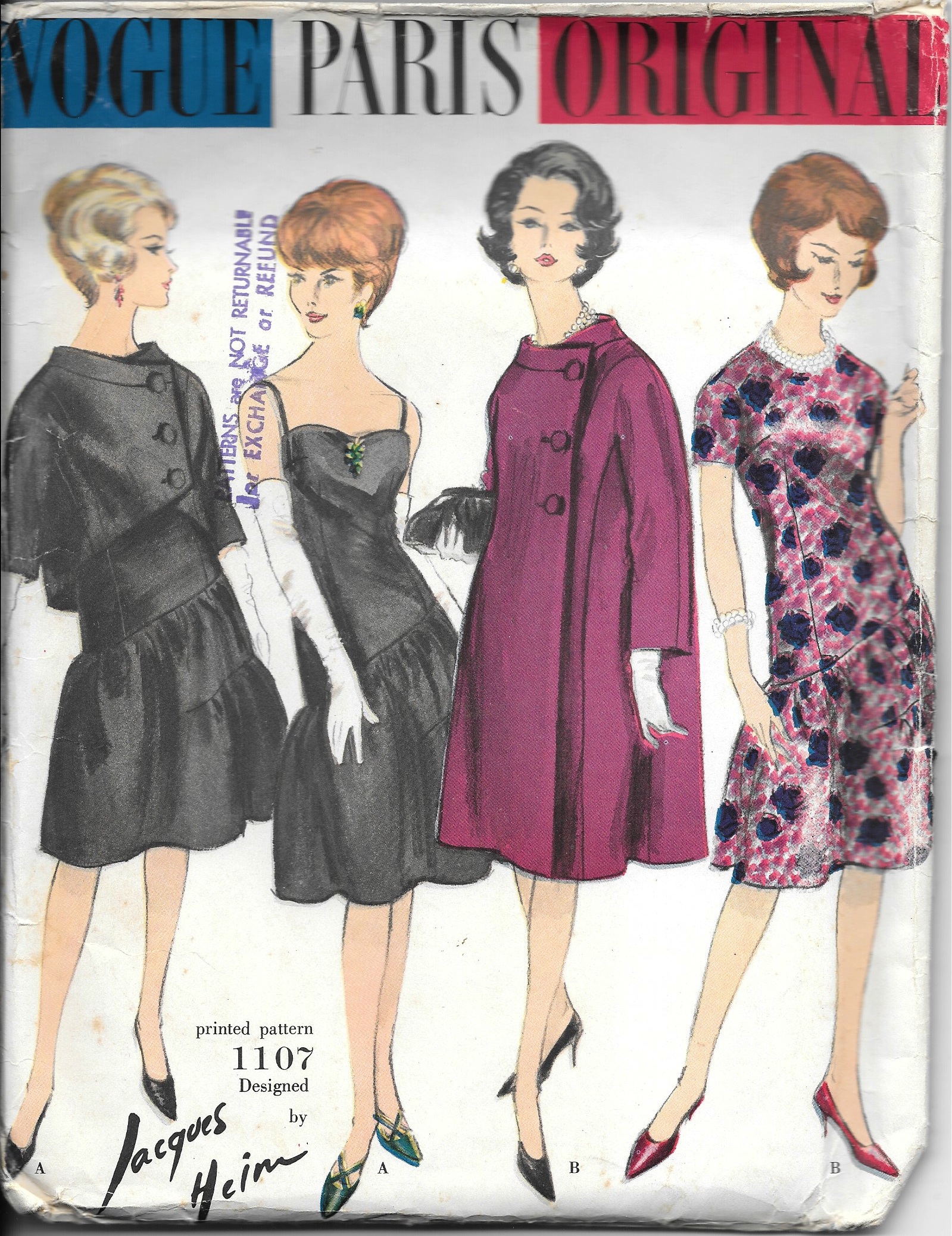
Fall will once again find me thinking coats and dresses. One of these two patterns will probably get the nod for a Fall/Winter ensemble:

I love both the coat and the dress (with two variations) featured in this pattern.

I love both the coat and the dress (with two variations) featured in this pattern.

This Jacques Heim design has very unusual seaming in the skirt.  And the short jacket looks like it would be very flattering.  However, this pattern needs just the perfect fabric to showcase the design.

This Jacques Heim design has very clever seaming in the skirt. And the short jacket looks like it would be very flattering. However, this pattern needs just the perfect fabric to showcase the design.

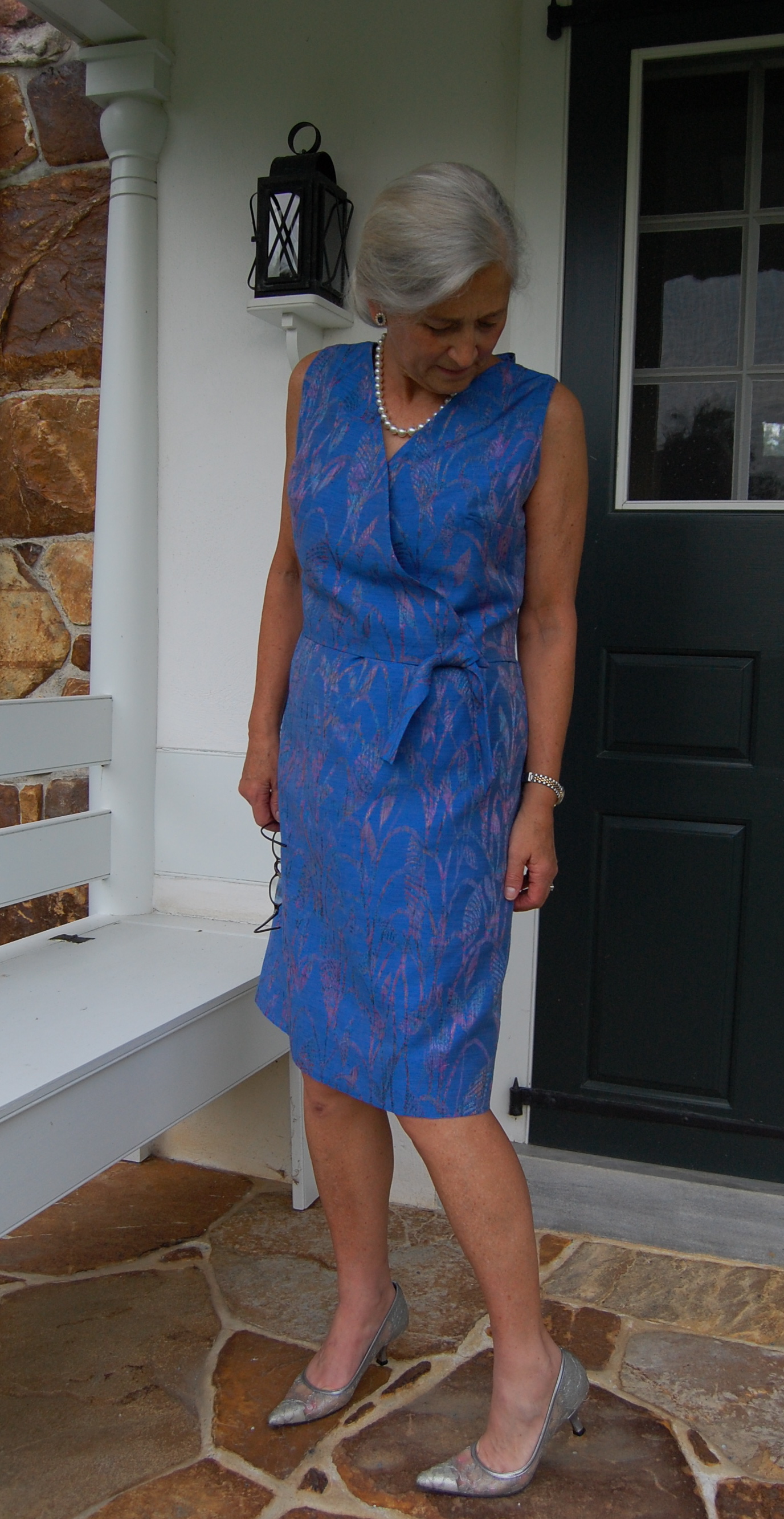
And I am still looking for the perfect fabric with which to make the coordinating coat for this dress which I completed last Fall:

The Year of Magical Sewing

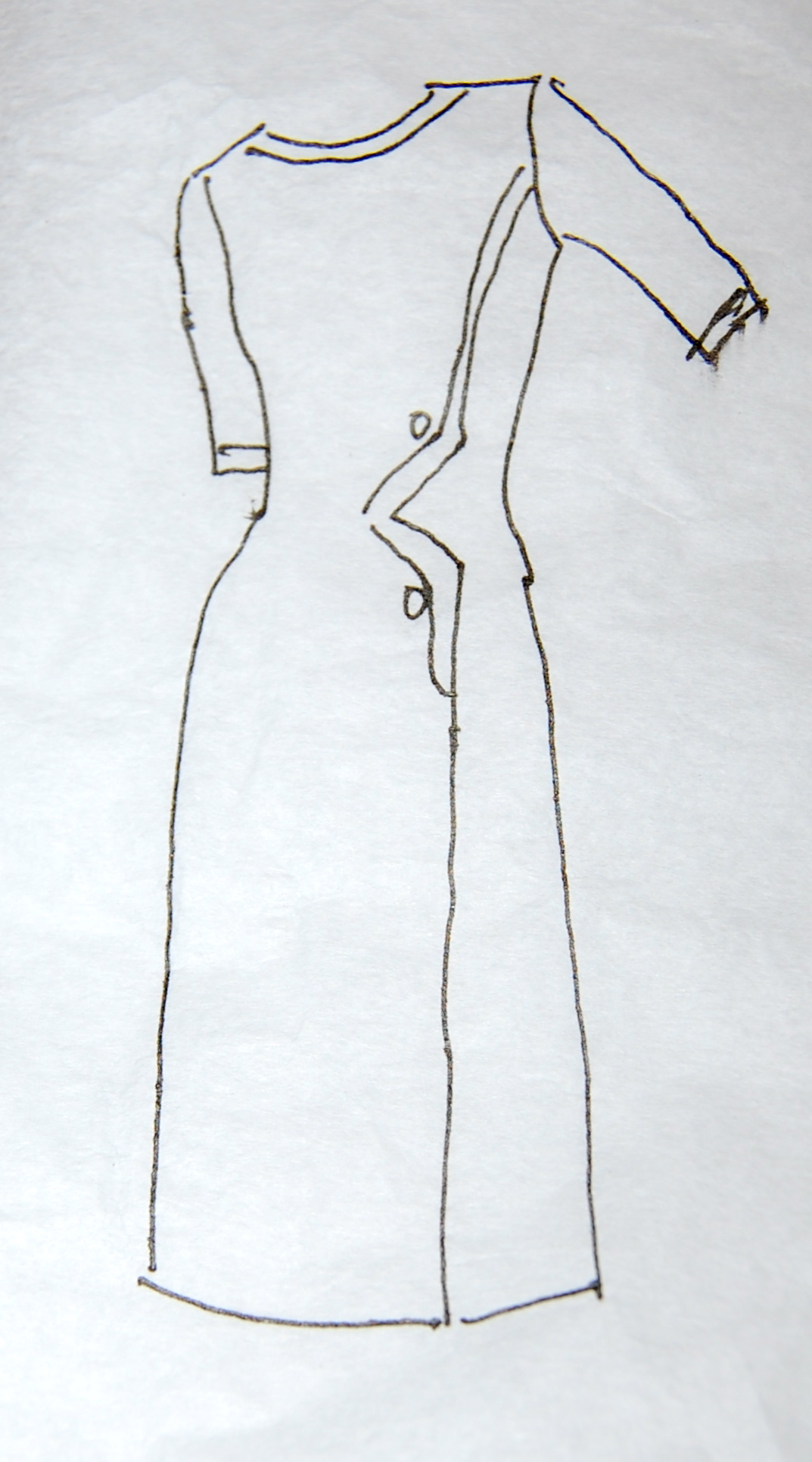
And here is the Mattli pattern showing the coat...

And here is the Mattli pattern showing the coat.

And then there is that baby quilt I want to make for “number 2” grandchild…   And more little dresses to make…

Perhaps the real magic of the year will be in completing even half of all I’d like to sew?  Here’s hoping that what is just around the corner for you, my readers, in 2015, holds its own magic and enchantment!


23 Comments

Filed under Coats, Love of sewing, Uncategorized, Vintage fabric, vintage Vogue Designer patterns, vintage Vogue patterns from the 1960s, Wrap dresses

Figuring It Out

Having completed my first Marfy dress, I now have the pleasure of reflecting upon its creation. Unlike my “Ghost Dress” which caused me so much angst (but turned out okay in the end), this ‘60s-inspired design went together without a hitch, although it definitely took some “figuring it out” along the way.

First I’ll cover the four changes I made to the dress, based on my muslin (toile). Initially I had to lower the apex of the bust darts, an alteration I am now used to making. Second, I decided to lengthen the sleeves by about 2 inches. I did this mostly to make the dress more comfortable to wear in the cold winter months. Even covering bare upper arms just a little bit more is helpful. I was hoping this would not detract from the lines of the dress otherwise. I made a tracing to try it out on paper first:

Marfy Dress

Somehow, the longer sleeves did not look good with the very distinct A-line silhouette of the dress. I thought they would look better with more of a straight skirt. I knew from the muslin that the front detailing had a built-in kick pleat, so narrowing the skirt was entirely doable. I would still be able to walk in it!
Alteration number four was the neckline. I widened it a bit, as I think that looks better on me. Then I widened it again later in the process (I’ll get to that in a bit.)

With no written and illustrated instructions to follow, I relied on my sewing knowledge and experience to execute the seaming on the front left of the dress. I was able to sew the seam by machine from the sleeve down to the lower angle of the point. From there down to about 8” from the hemline, I sewed the seam by hand.
An inside look at the this seam stitched by hand

An inside look at the this seam stitched by hand

There is a pleat hidden beneath the dress here, and sewing by hand seemed to be the only solution.

Showing the built-in kick pleat

Showing the built-in kick pleat, before the hem is sewn

And here is the finished kick pleat.

And here is the finished kick pleat.

When it came to the sleeves, they are shown in the illustration with a contrasting band. However, no band was included with the pattern. I did a muslin mock-up to test the visual appearance of the width of the band.

Marfy Dress

Because I had cut the sleeves with a slight curve to the lower edge, I had to make a muslin guide for the bands, which included the same curve.

The sleeves with bands attached

The sleeves with bands attached

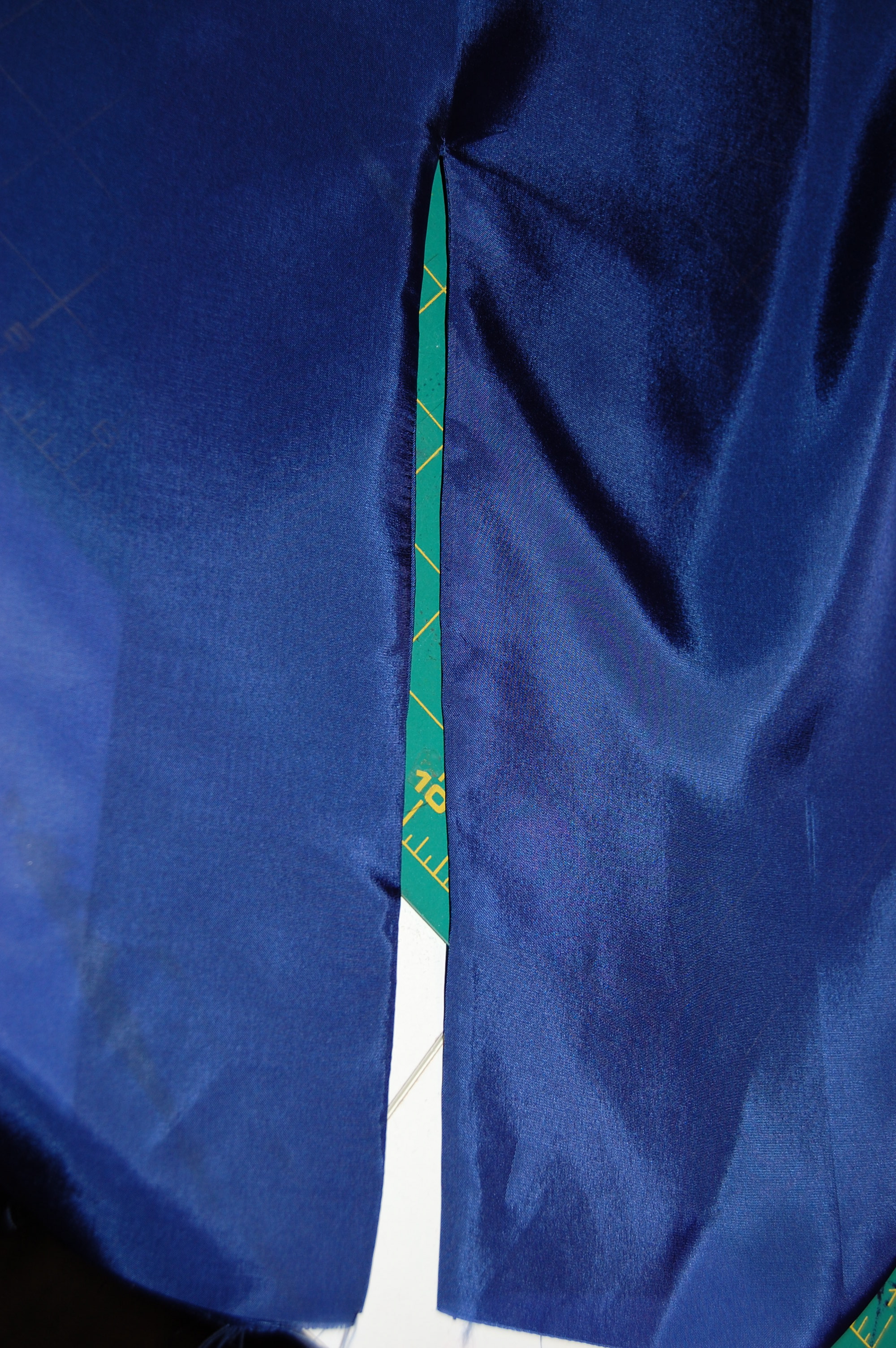
With sleeves, hand-picked zipper and all seams complete, I turned my attention to the lining. Instead of cutting the lining with the same angled detail as in the dress, I chose to cut a symmetrical front, thus reducing bulk at that critical waist area. However, I needed to add a kick pleat to the front lining to coincide with the built-in kick pleat of the dress. Here is how I did that:
First I marked where I wanted the pleat in the lining to be.  By the way, the lining is Bemberg rayon.  I usually like to use crepe de cine for my linings, but I had this Bemberg in the right color, so I decided to use it.
First I marked where I wanted the pleat in the lining to be. By the way, the lining is Bemberg rayon. I usually like to use crepe de chine for my linings, but I had this Bemberg in the right color, so I decided to use it.

I centered a triangle of the lining fabric  (about 10" x 8") on top of the marked line.

I centered a triangle of the lining fabric (about 10″ x 8″) on top of the marked line.

I stitched on either side of the marked line, graduating up to a point at the top.

I stitched on either side of the marked line through both layers of lining, graduating up to a point at the top.

I cut along the marked line and turned the placket to the wrong side.

I cut along the marked line and turned the placket to the wrong side.

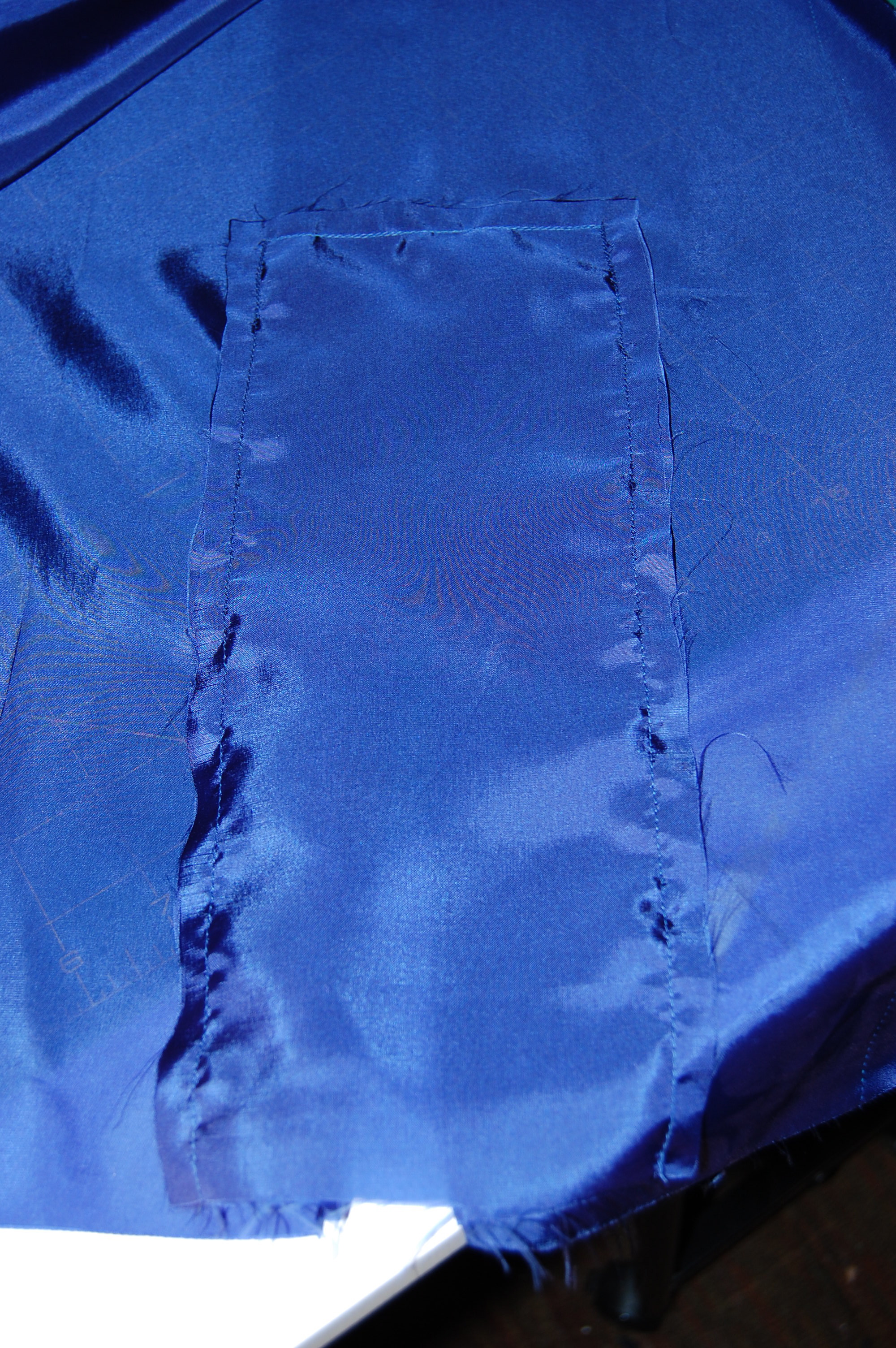
I sewed another piece of ling fabric (10" x 8") to the wrong side of the turned placket.  It is stitched around the edges - a little difficult to see.

I sewed another piece of ling fabric (10″ x 8″) to the wrong side of the turned placket. It is stitched around the edges in a 1/2″ seam.

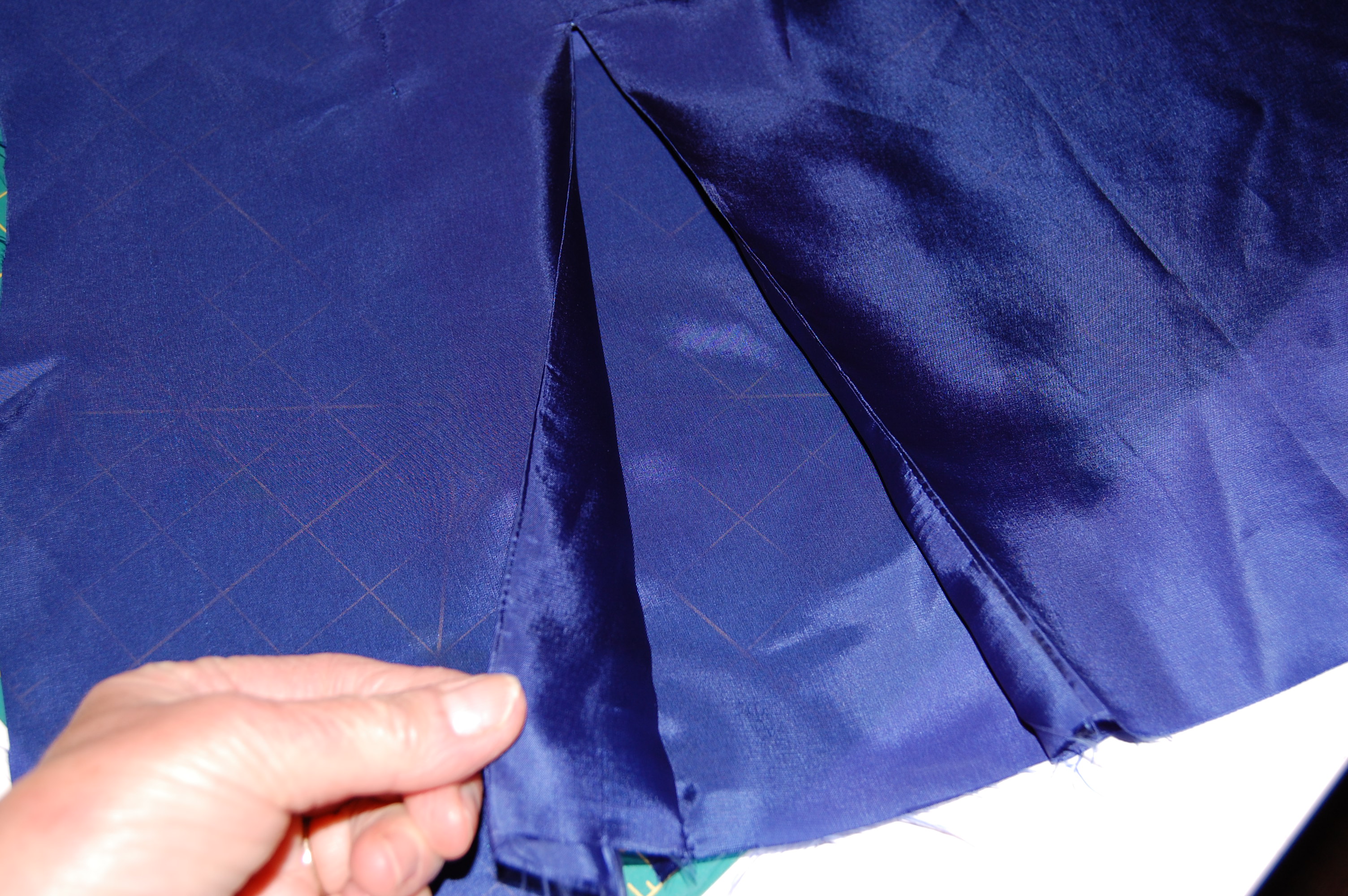
After securing these stitched together pieces across the top through all layers, I had a kick pleat!

After securing these stitched-together pieces across the top through all layers, I had a kick pleat!

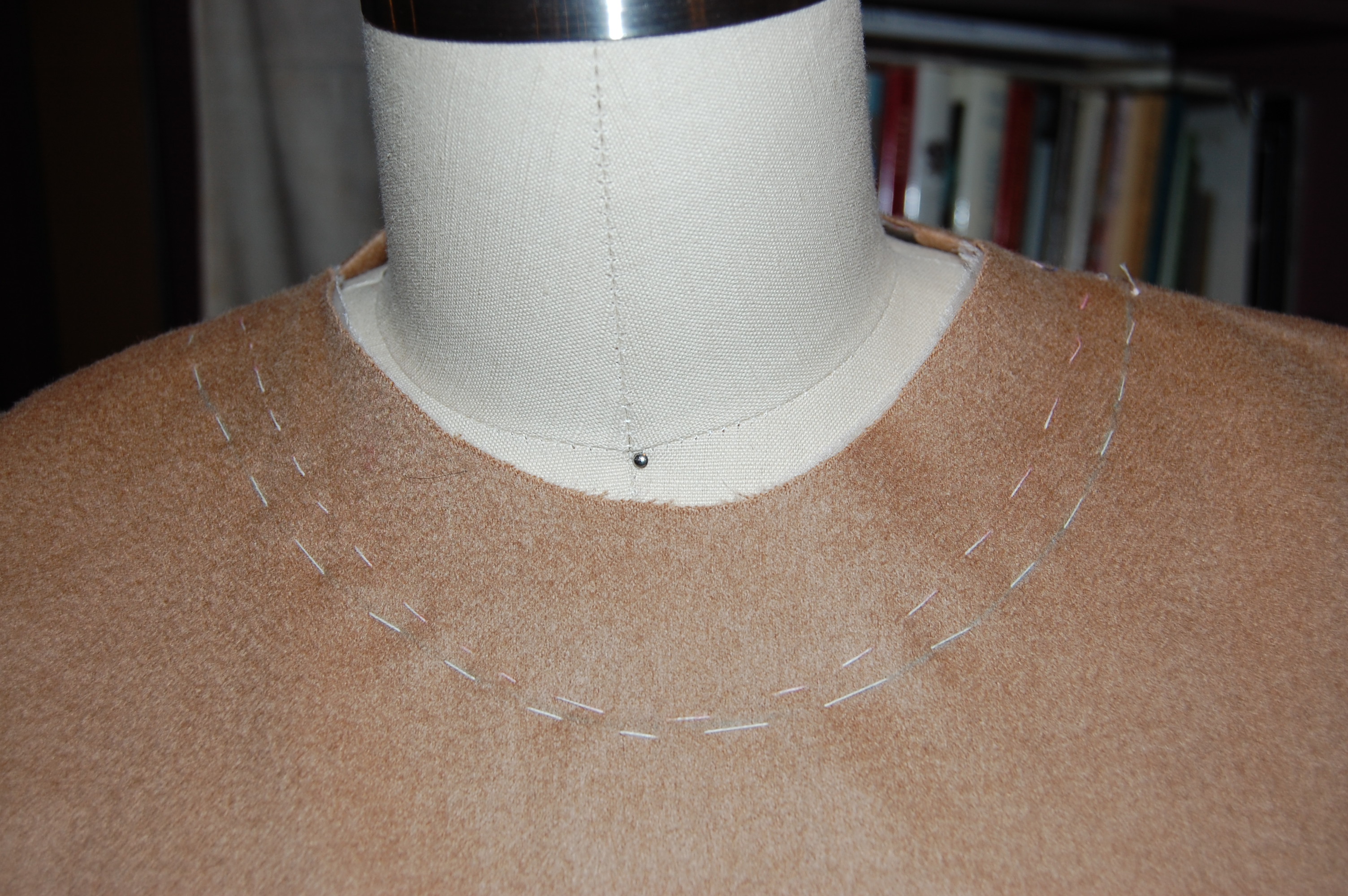
Back to the final part of the dress: the neckline. I still wasn’t sure I had a pleasing neckline, so I got out my French rule and re-chalked one with a little wider stance and depth.

Marfy Dress

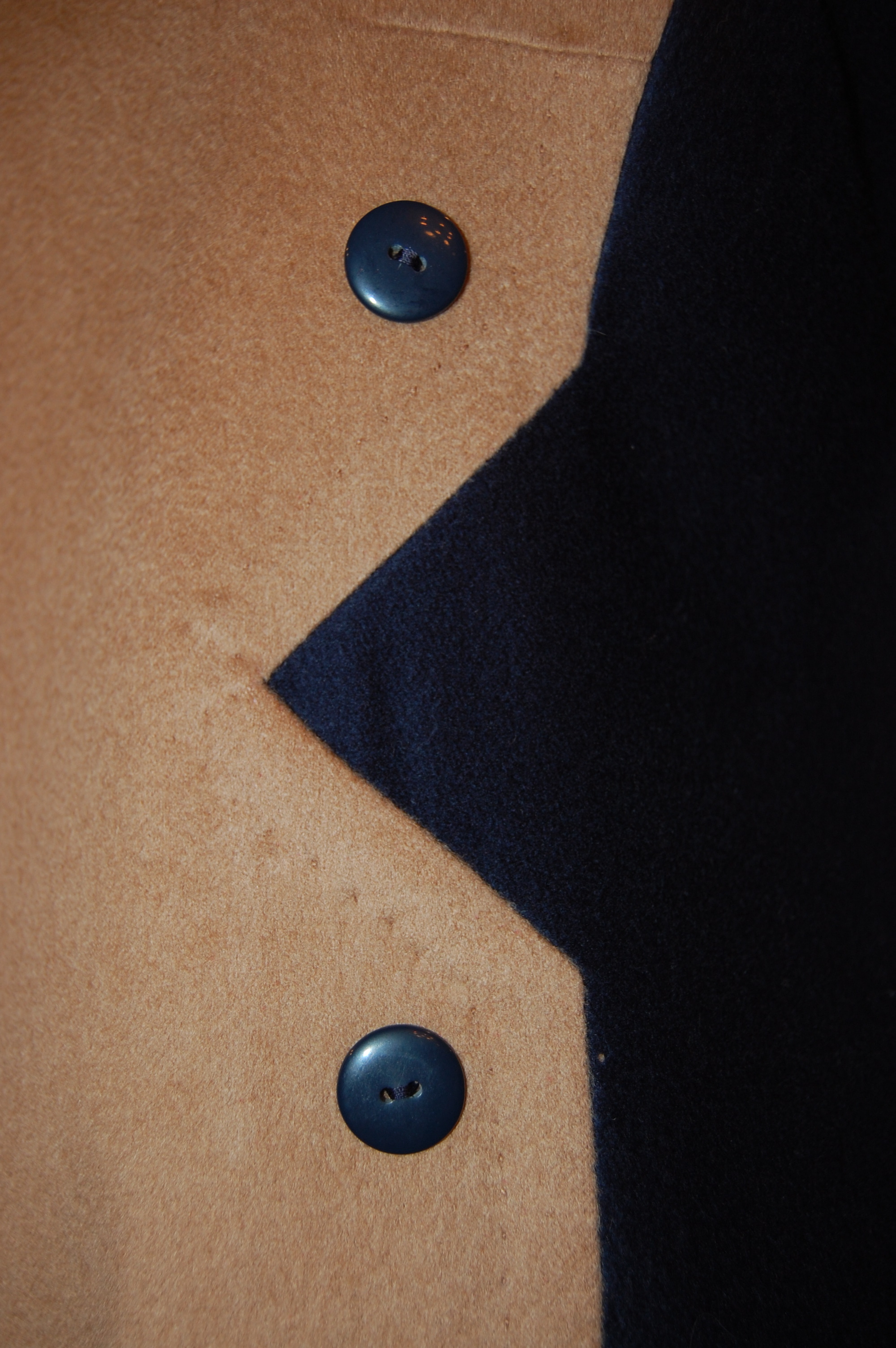
For the top-stitching around the neck and around the angled detail on the front, I did what I did with my jacket out of the same fabric: I hand-picked it. I am so happy with how it looks. It’s very subtle, but adds just the right emphasis. The buttons are smaller versions of the (concealed) buttons on my jacket.

Marfy Dress

I set the lining in by hand, under-stitched the neck-edge by hand, and finally the dress was complete.

Marfy Dress

Marfy Dress

Marfy Dress

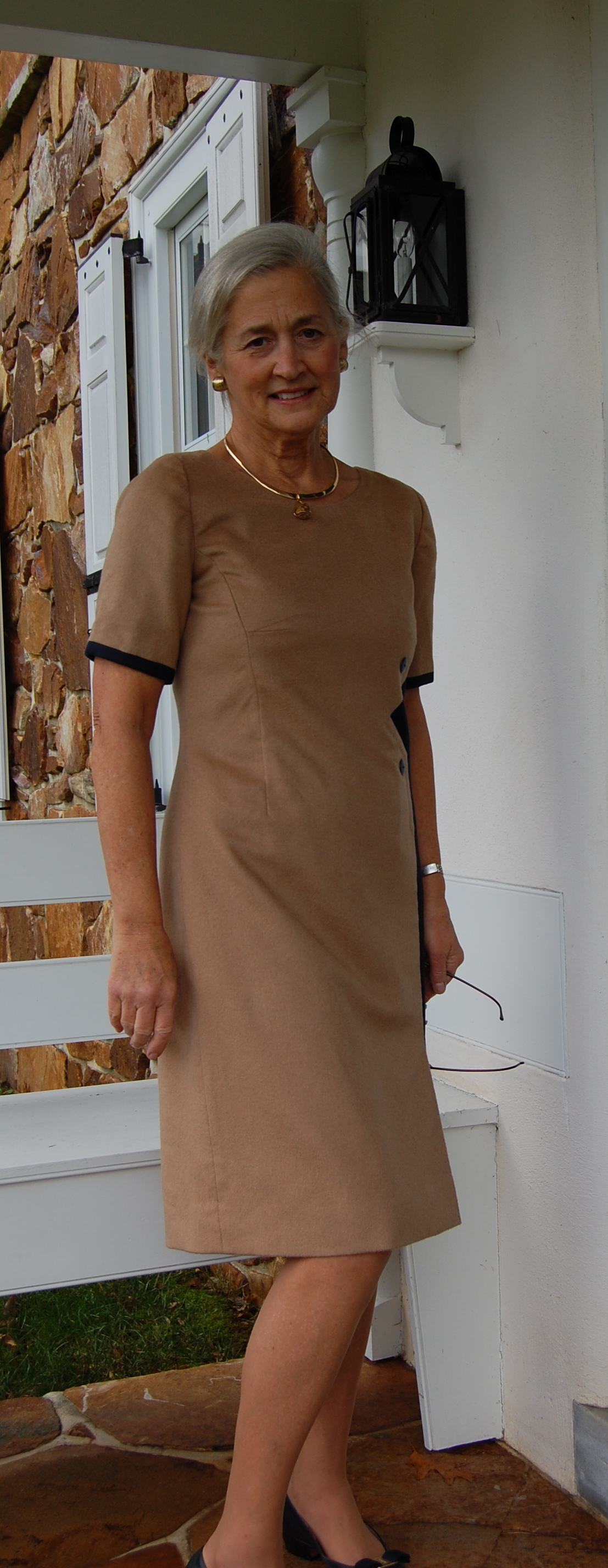
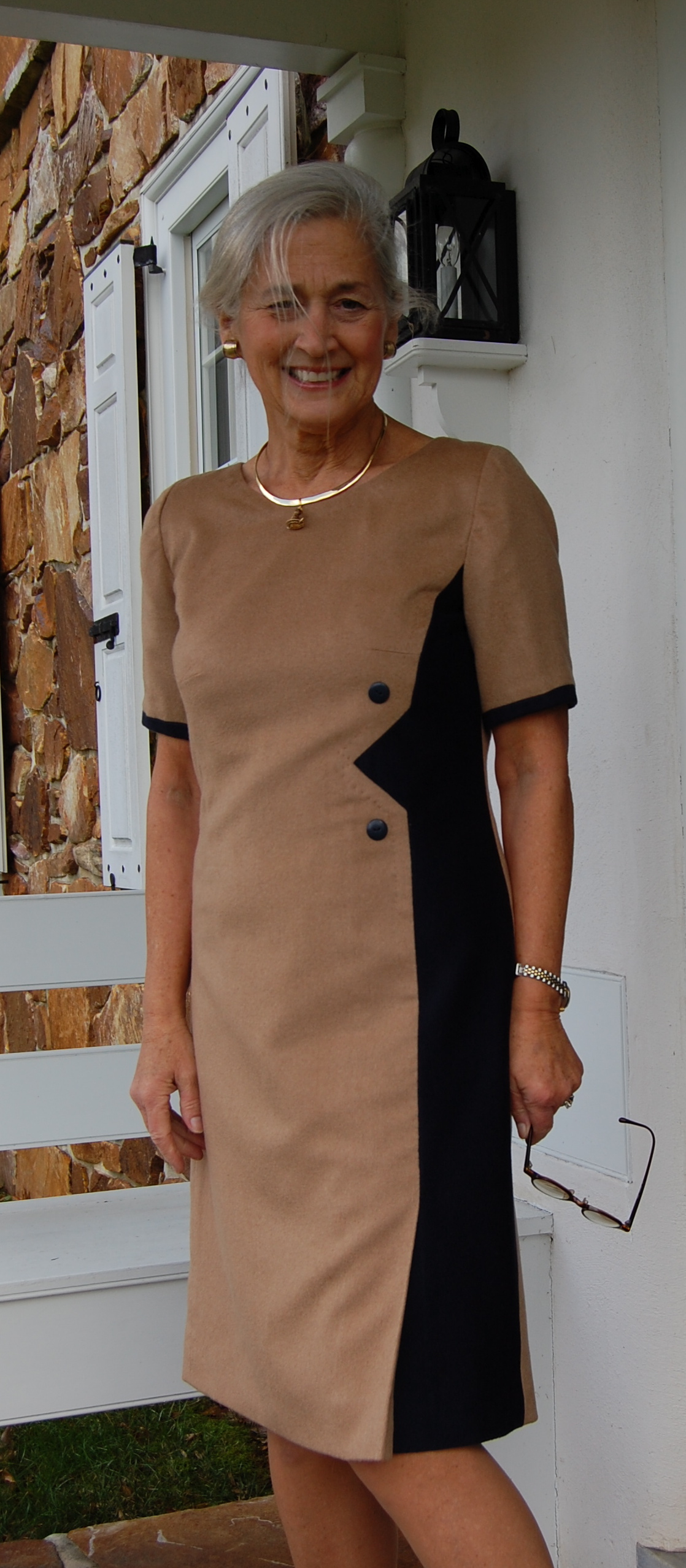
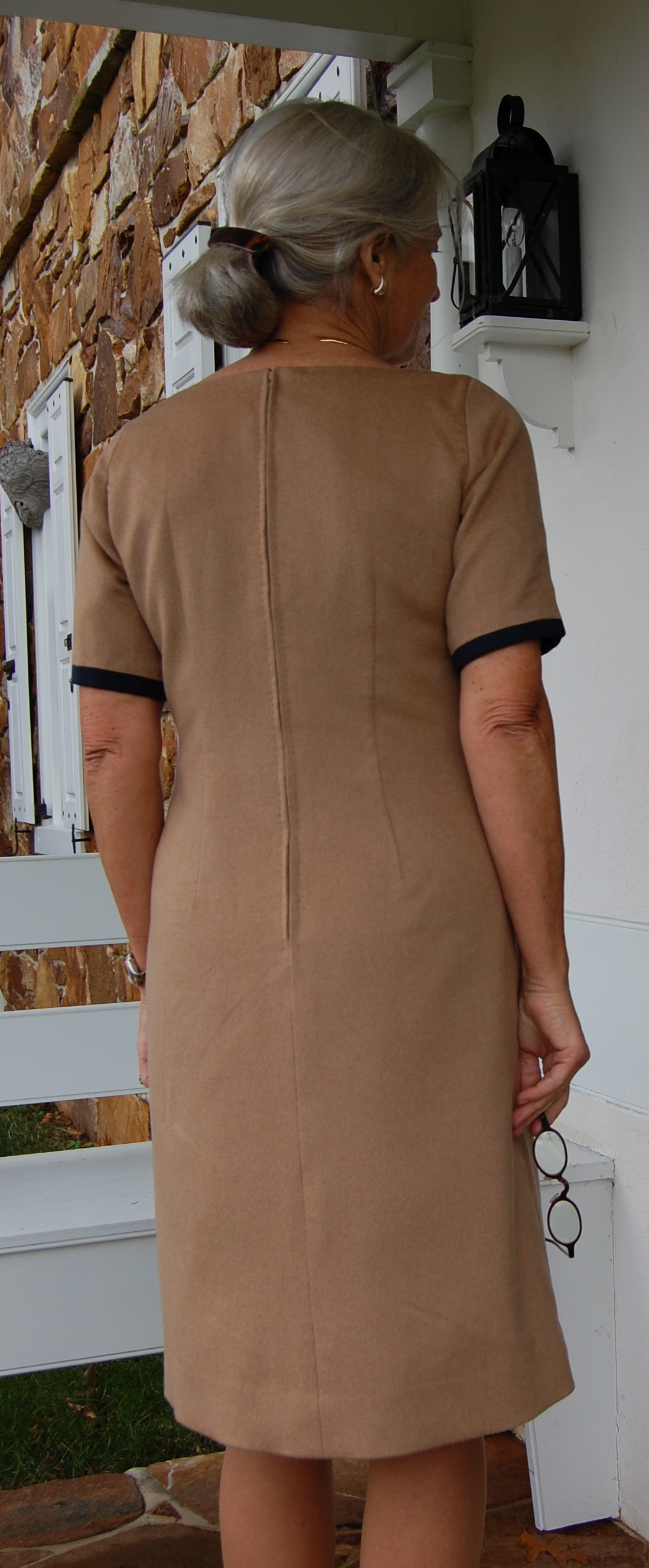
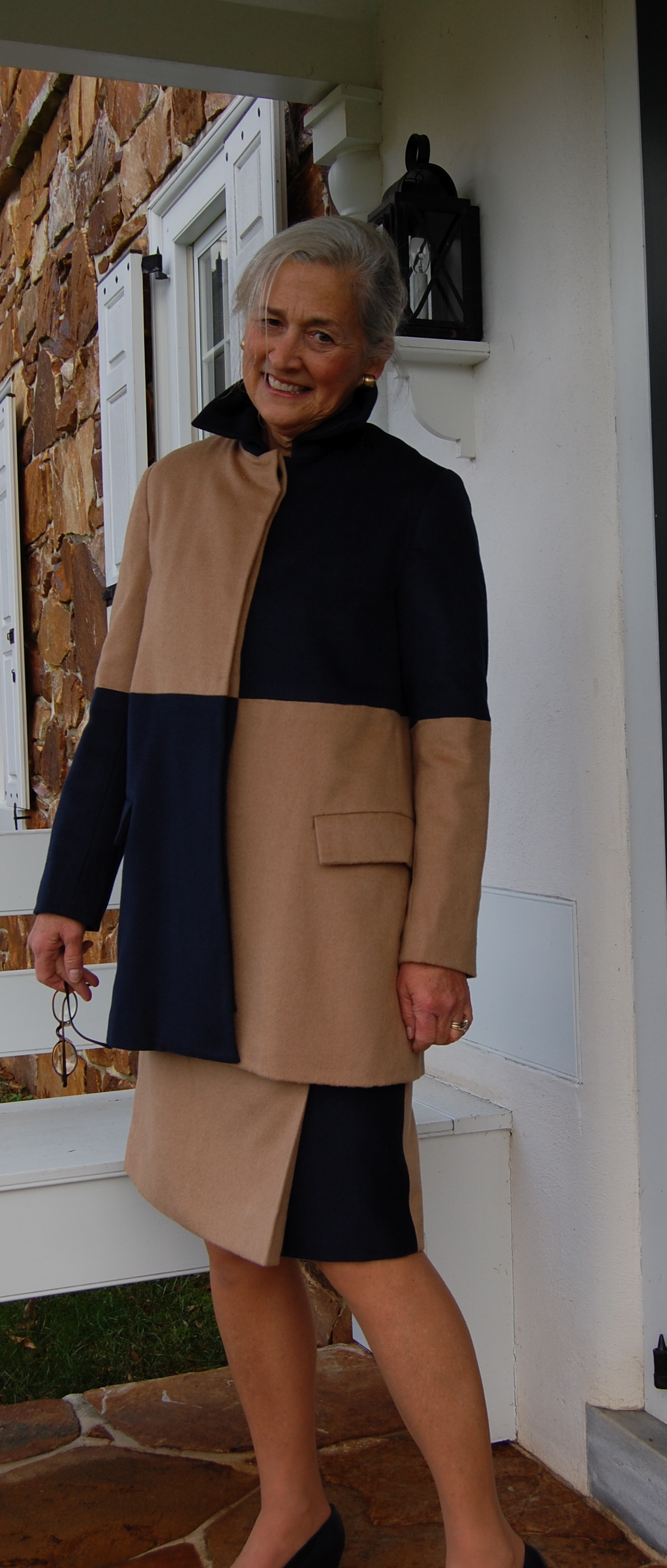
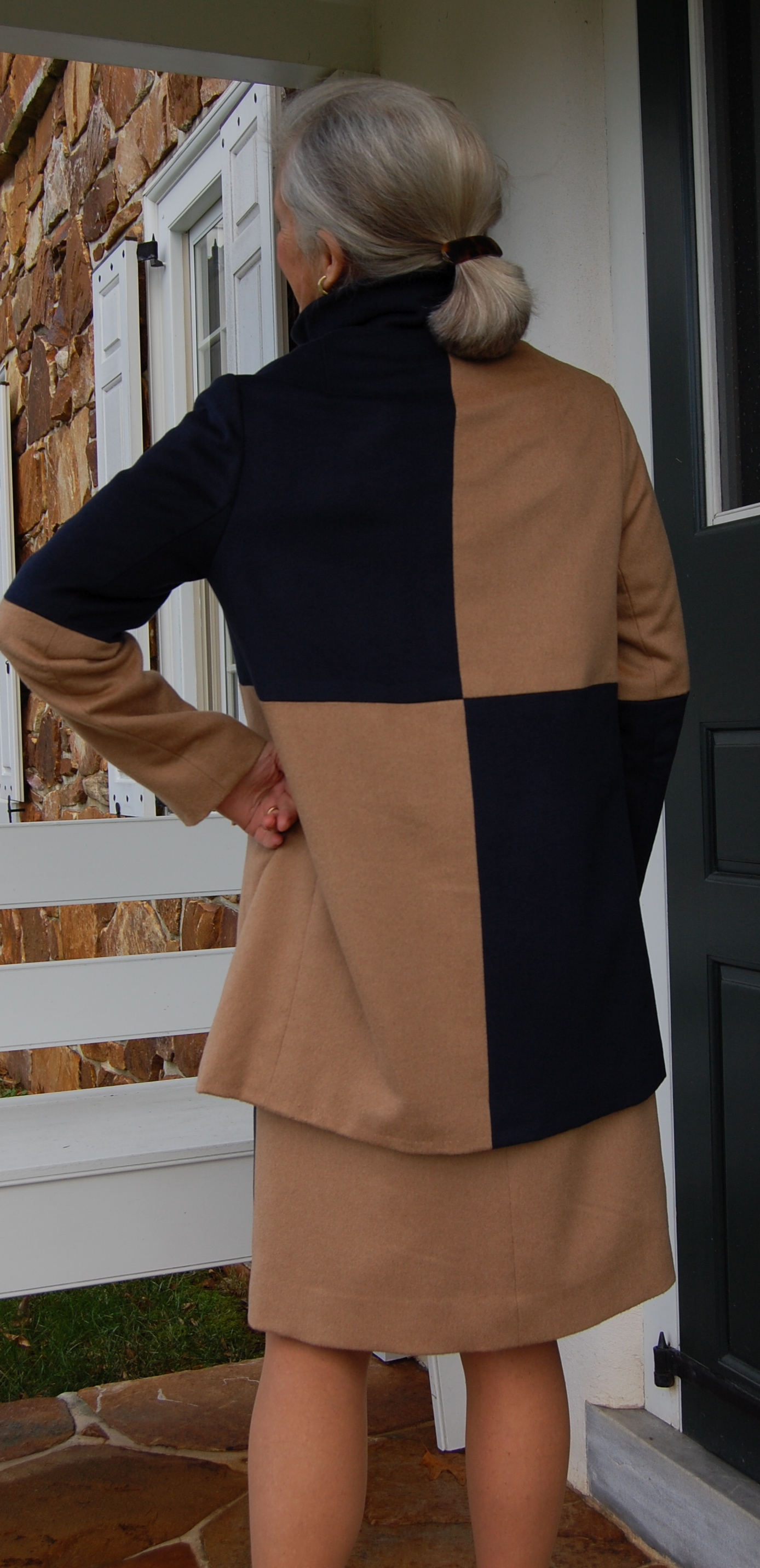
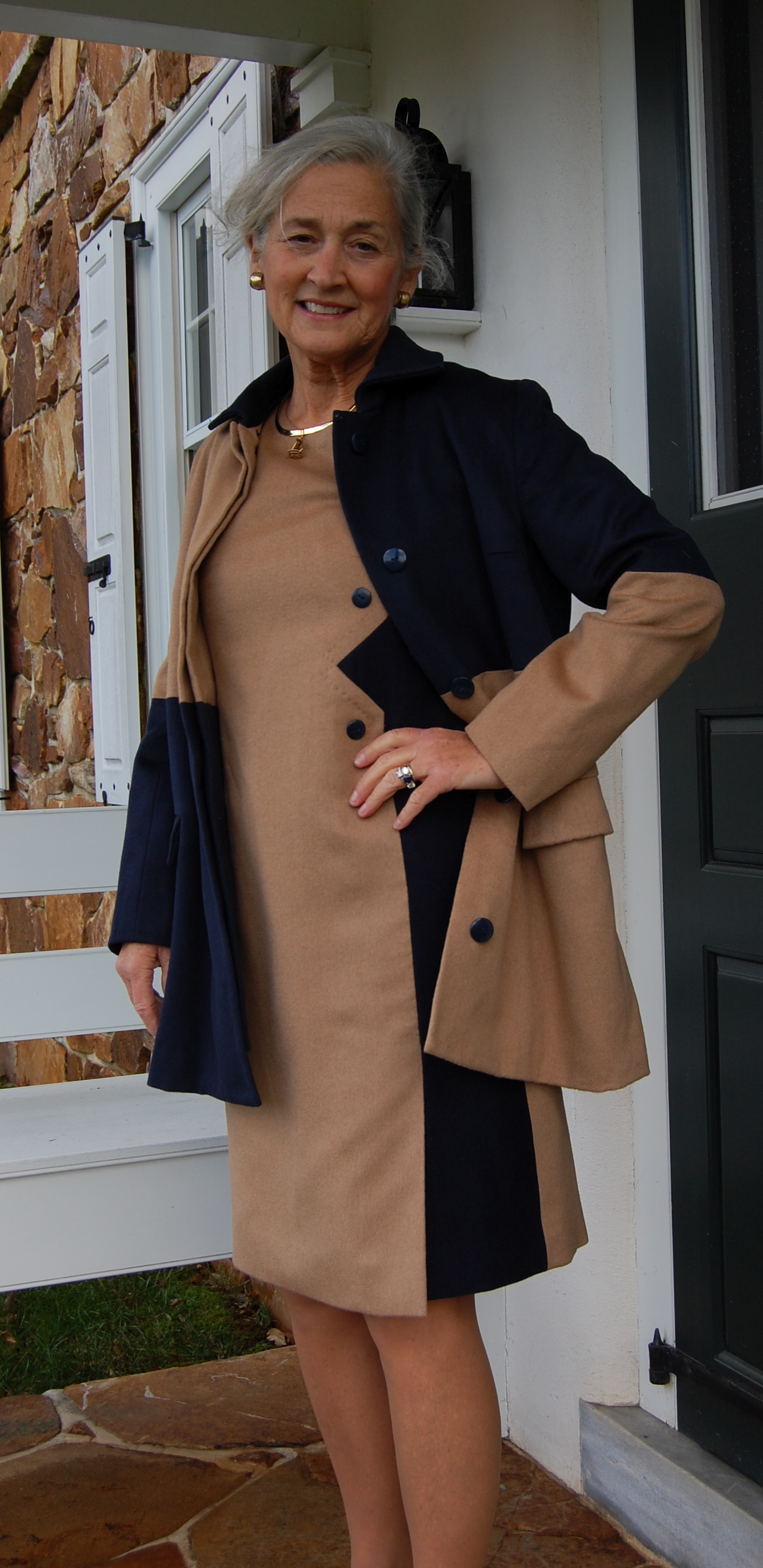
And of course I have to show it with the coat!

And of course I have to show it with the coat!

Fifty Dresses

Marfy Dress

It is probably unfair to do an assessment of Marfy patterns after just one make, but I’m going to anyway! The things I really like, so far, about using a Marfy pattern are 1) its preciseness, 2) the individually sized patterns, 3) the pattern pieces without seam allowance added. And is there anything I dislike about Marfy so far? Yes, one big thing! I really miss having a pattern envelope with an illustration, variant views and back views. I am so accustomed to vintage patterns, most of which sport envelopes which are like small works of art. There is so much pertinent information on them (fabric suggestions, zipper sizes, garment descriptions, thumbnail pattern piece diagrams, etc.) and even wearing suggestions. The illustrations show outfit styling suggestions (hats, handbags, shoes, etc.). I love studying them. So, yes, it’s true – I feel like something is lost without a pattern envelope for this dress which I like so much.

I won’t be waiting long to wear this dress. Our American holiday of Thanksgiving is this Thursday, and Marfy will be one of my dining companions. To my fellow citizens, may the day be as meaningful and blessed for you as it always is for our family. To all my readers around the globe, my thanks to you for sharing your love of sewing with me!


37 Comments

Filed under Buttons - choosing the right ones, car coats, Color blocking, couture construction, Marfy patterns, Mid-Century style, Uncategorized, woolens

Time for Wool and Something Marfy

It seems like we just welcomed in Autumn – and although the calendar says it will still be Autumn for a few more weeks, the chill in the air tells me that Winter is bearing down on the northeastern United States. Winter means many wonderful things, including WOOL season.

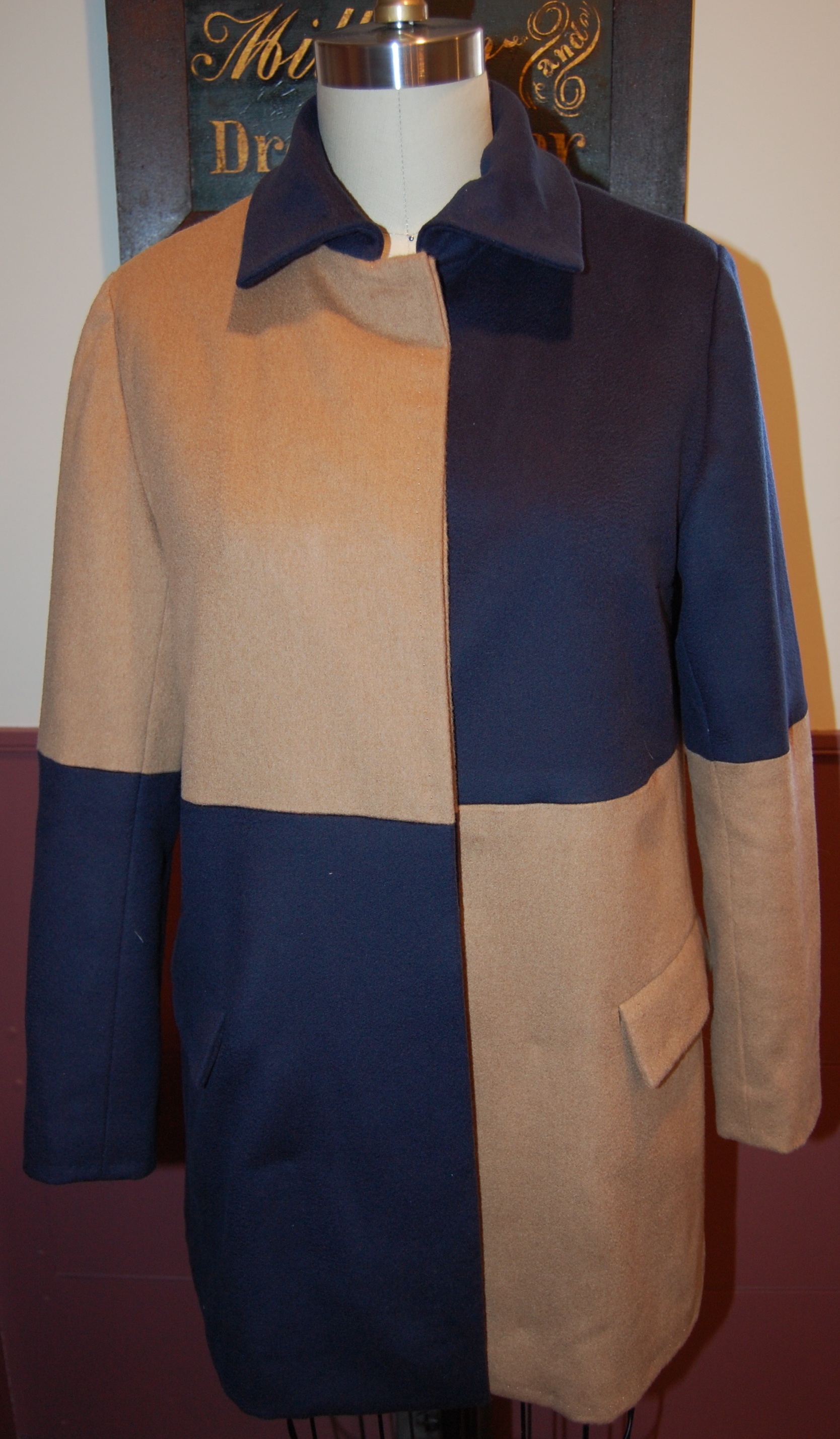
When I made my color-blocked coat last Winter, I purchased some extra yardage from Britex Fabrics with the thought of making a sheath dress to wear with it on occasion, but not exclusively with it.

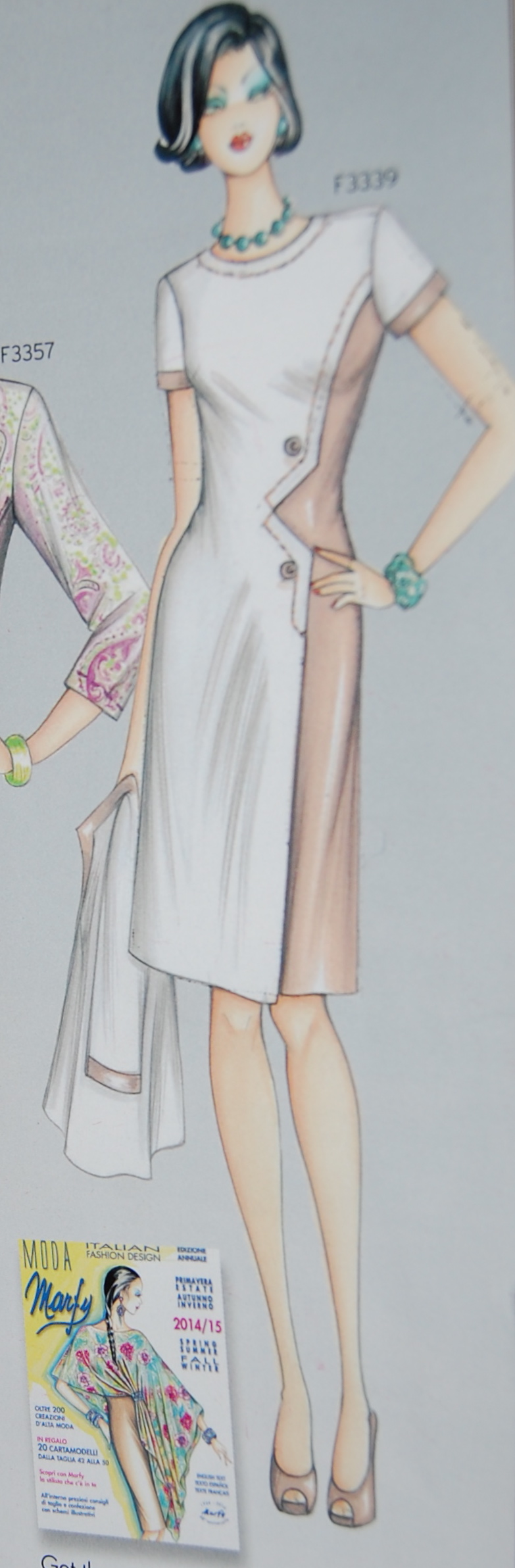
Magnificent Obsession My original intent was to make a two-toned dress, with a front and back yoke with short sleeves. The bottom, longer section of the dress would be out of the camel wool, with the yoke and sleeves in navy, zipped up the back.   I did not think much more about it during the Spring and Summer, but a few weeks ago, after seeing a full page Marfy ad in a current Vogue Pattern Magazine, I began to think of an alternative to my plan. This dress was featured in the ad:

Marfy Dress

I not only really liked the dress, but it seemed designed with my two color-blocking fabrics in mind. I also liked its mid-century styling. For a while now I’ve been thinking of trying a Marfy pattern, and, I thought “Why not now?”

I wasn’t exactly sure what to expect. I knew that Marfy patterns come without seam allowances (the stitching line is the outside perimeter of each pattern piece), and in only one ordered size. One of the reasons I love vintage patterns so much is that they, too, were produced by particular size. (So that, for those of you who only sew from current multi-sized patterns, if you ordered a size 10, only a 10 was in the envelope.) Most vintage patterns include seam allowances, and the stitching line is marked as well. For those of us who use couture methods for our fashion sewing, having the stitching line marked is incredibly helpful. The stitching line is THE point of reference for alterations, for basting, for sewing. Knowing these two facts about Marfy patterns made me comfortable with the idea of sewing with them, even though they come with no written construction details other than a few notations on the pattern pieces.

What I did not expect was the teeny tiny package in which the pattern arrived. The only identifying mark on the folded up pattern was the pattern number.

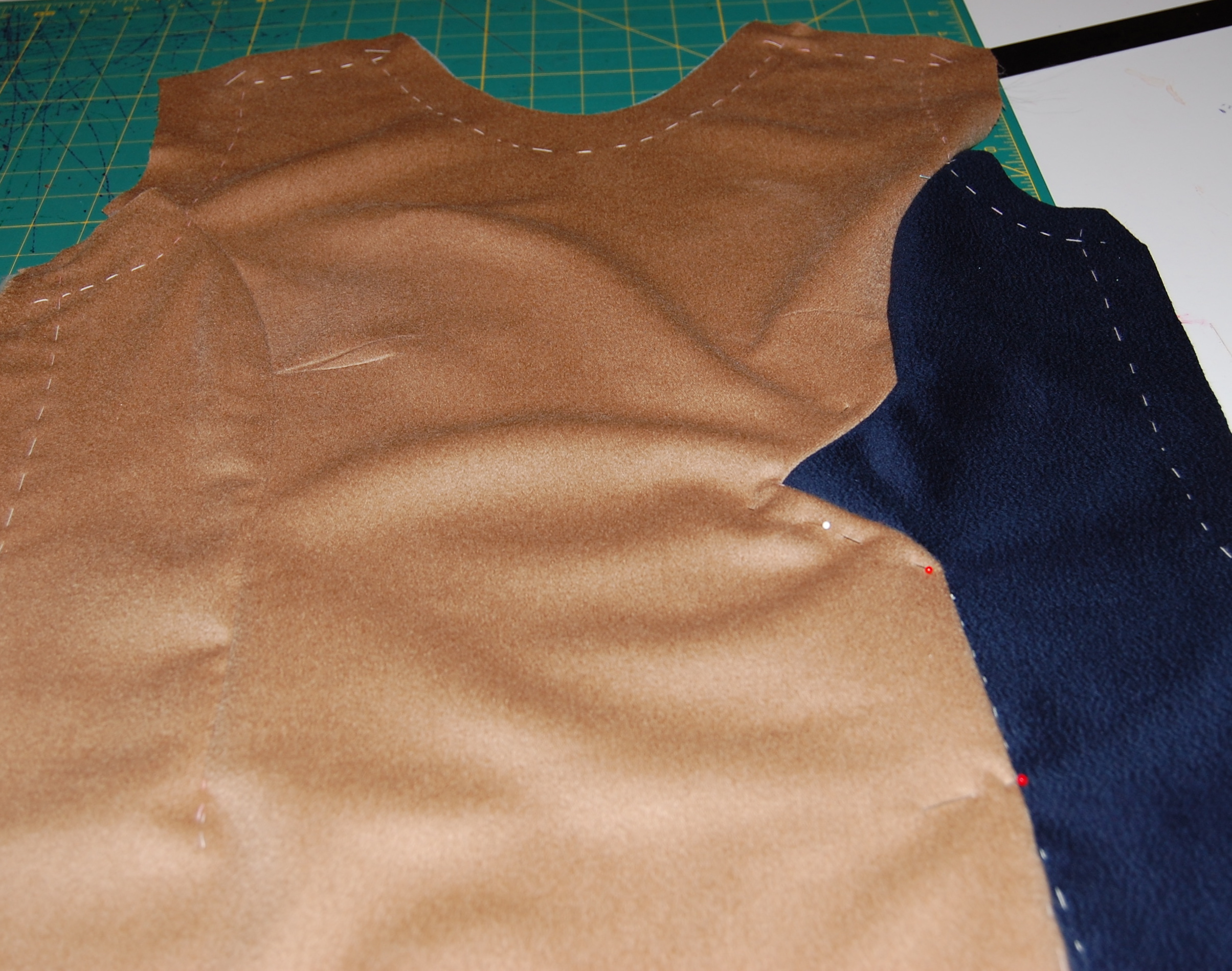
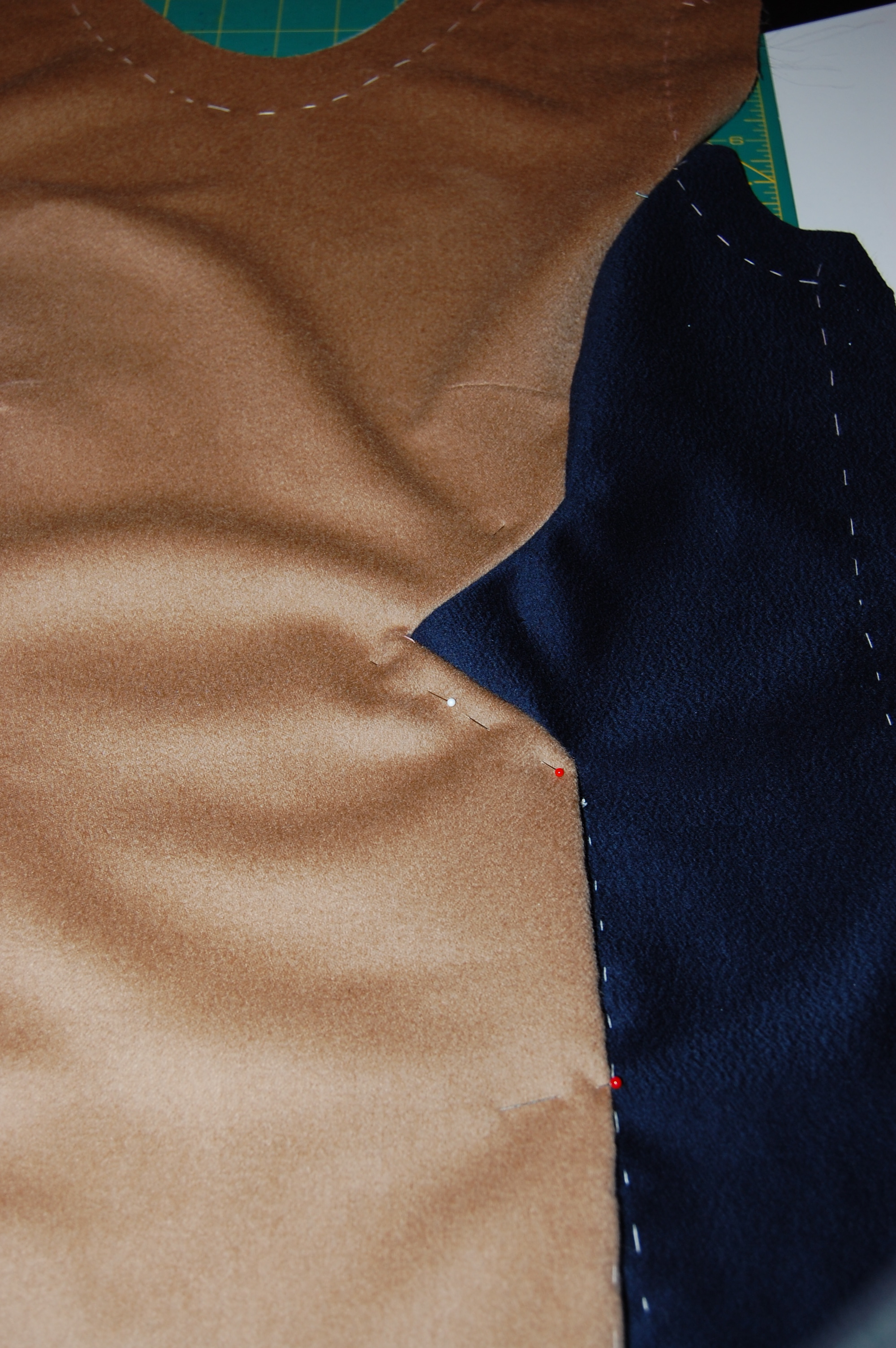
Marfy dress I pressed the pattern pieces and got busy making my muslin (toile). From my adjusted muslin, which took the better part of a week to perfect (hopefully perfected, that is), I transferred sewing lines onto white silk organza underlining. (I will go into some of the changes I made in my next post on this dress.) In true couture mode, I then basted the organza onto the fashion fabric. It is always rewarding to sew the first “real” dart or seam! I feel like the dress is practically finished, although reality is sure to set in when all the finishing details start to occupy my time.

The front, showing the seam detail which I like so much.

The front, showing the seam detail which I like so much.

Marfy dress


Incentive to finish this wool dress is fanned by Winter winds to my back , by looming holiday sewing, and the excitement of finishing my first Marfy.  To be continued, hopefully soon!

16 Comments

Filed under Color blocking, couture construction, woolens

Panic and Patterns

Being away, as “on vacation” (or “on holiday” as many express it), can take its toll on sewing projects. If I have to leave a project in mid-stream, it seems to take even longer to get back to it and pick up where I left off. A recent trip to the western state of Wyoming necessitated that I abandon my current “Fall” dress at precisely the time of year when I need to complete it! And now I’ve run into some complications with it.

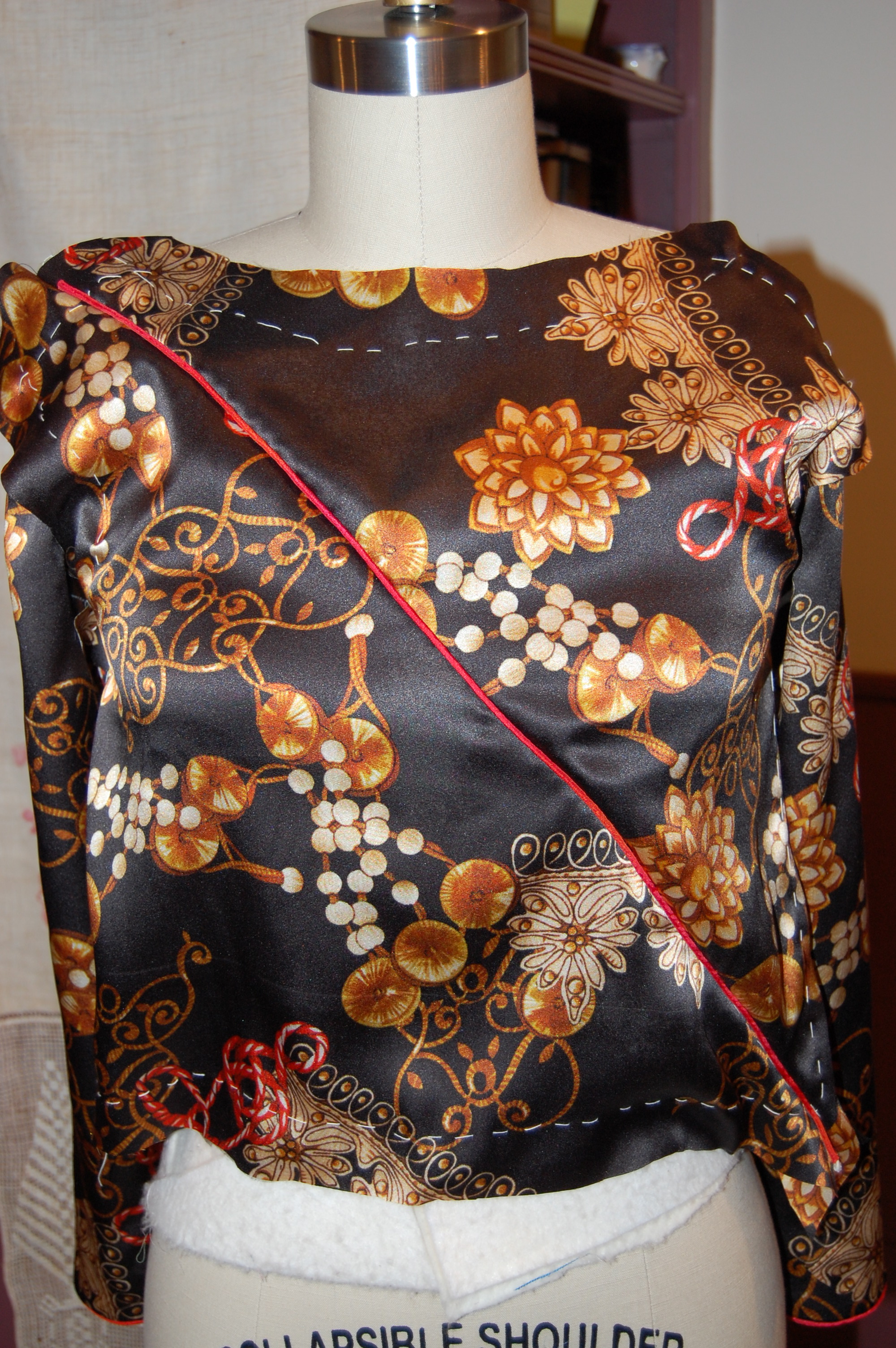
I guess you could say that panic has set in. Here is what the dress bodice looks like on my dress form:

Panic and patterns

I am using vintage Vogue pattern 2718 for this dress.

The fit seems okay. The neckline will need a little adjustment, but nothing out of the ordinary. The sleeves look good, and I am pleased with the piping so far. So what is the problem? When I try the bodice on, it looks awful. It pulls across the bust, it doesn’t want to move with me at all, and the front seems too short-waisted even though it measures perfectly for me when on the form. Worse still, this fabric is too dear (as in expensive) to put it aside or to think about abandoning this dress.

I think I know what is wrong, and it will take a great deal of effort to try to correct it – and hopefully it will be correctable! I insisted on using an underlining on this stretch silk fabric. I thought I could accommodate the stretch by cutting the underlining on the bias. Guess what? It doesn’t work. The bias pulls from underneath, restricting the stretch of the silk. What this means is that I am going to have to remove the underlining. It is not going to be fun to remove black underlining from black fabric, sewn together with black thread, is it?

I have consoled myself with the thought that I can salvage this project by making a skirt instead of a dress, which may be what I end up doing. Needless to say, I am fighting my discouragement, and trying to stay focused so I can finish this and move on to something more fun.

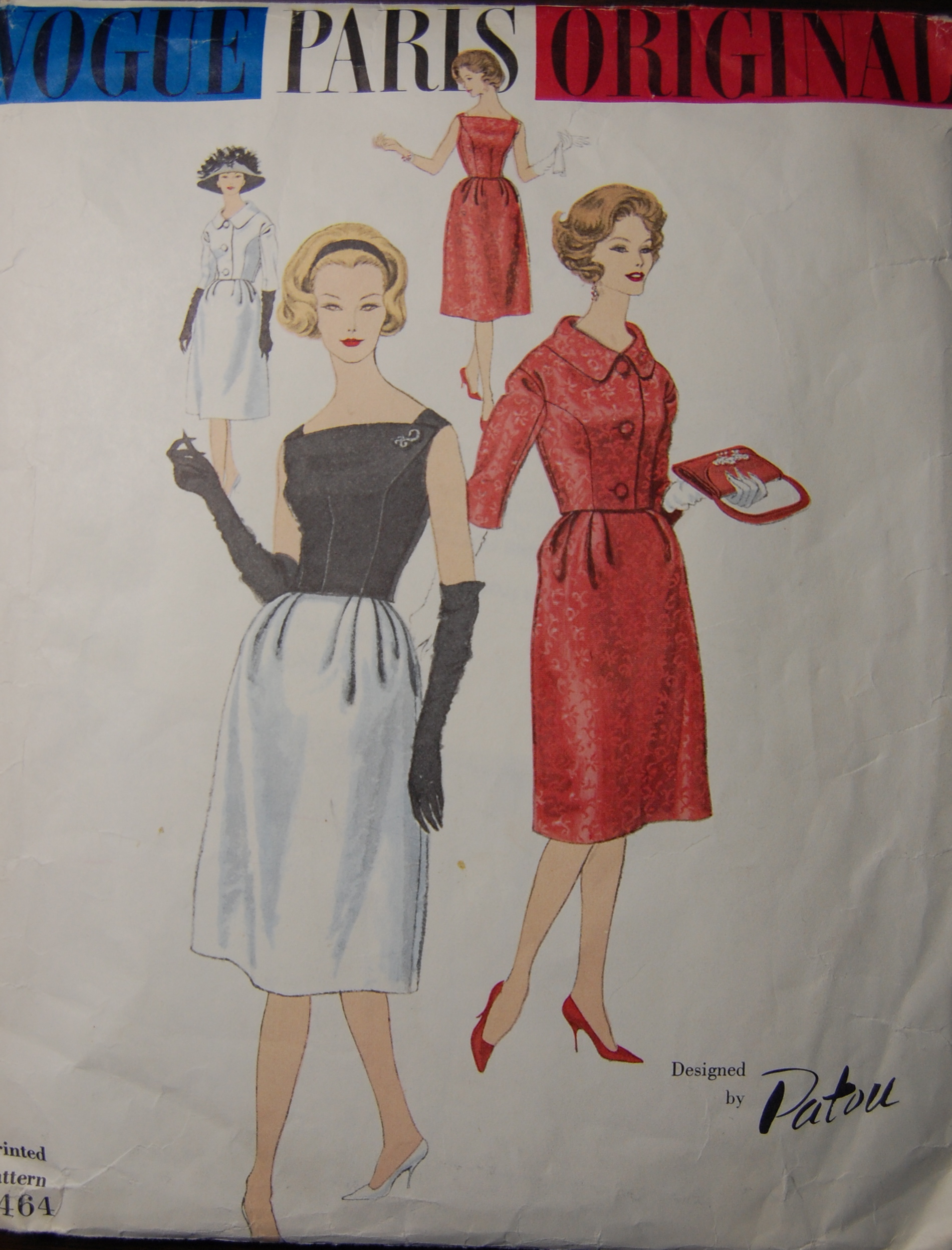
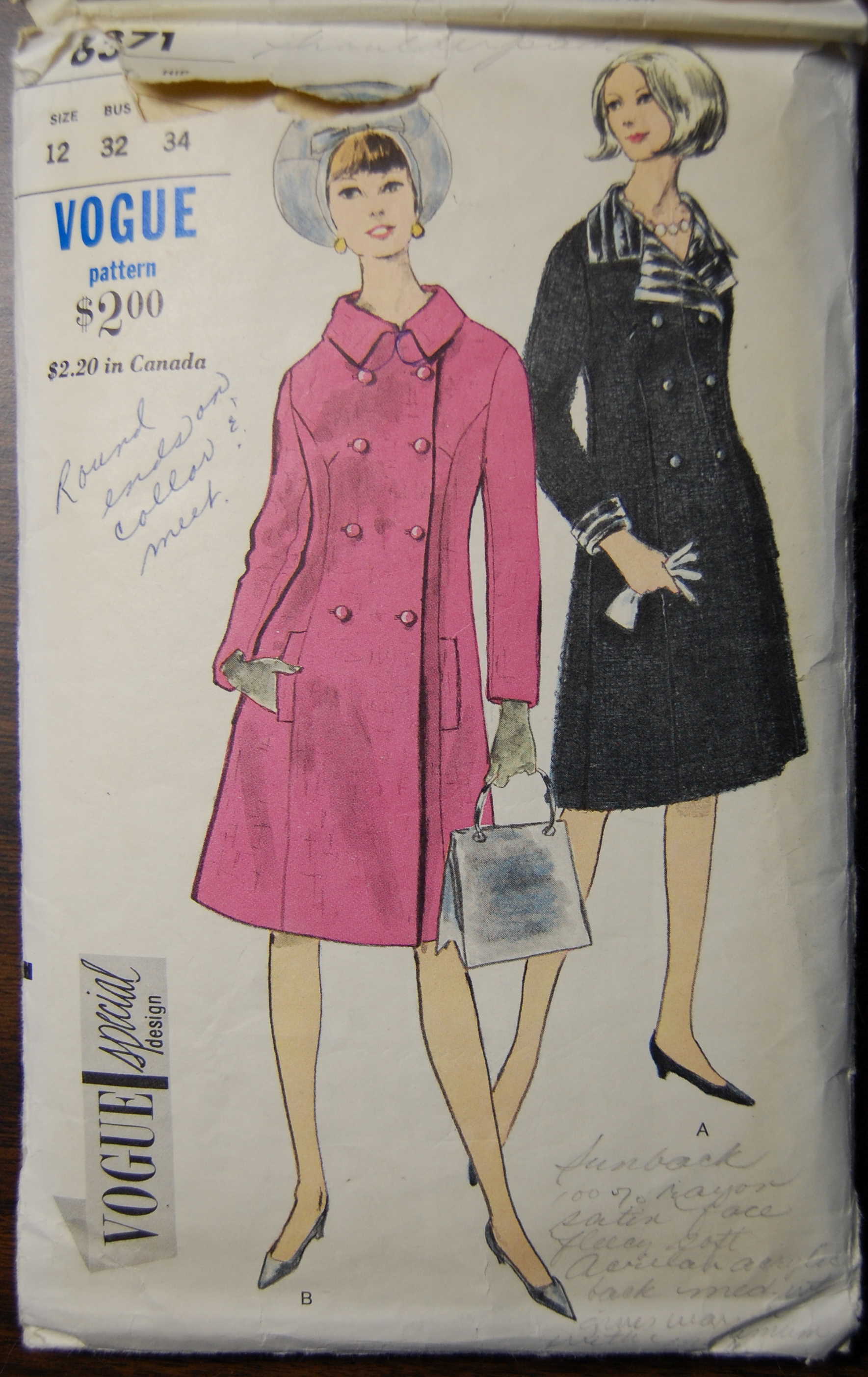
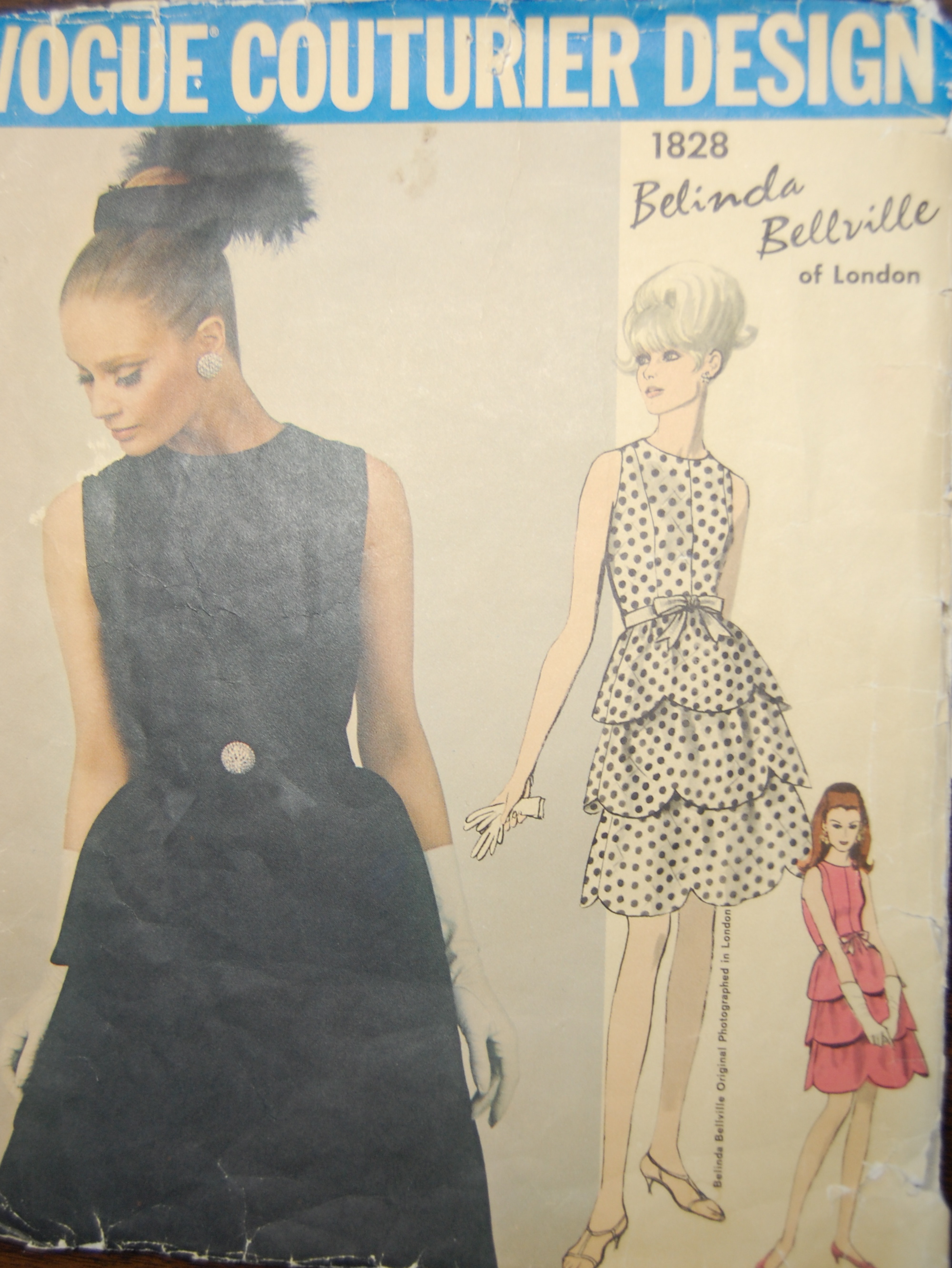
While traveling is not conducive to sewing, it doesn’t put a damper on looking at more patterns and fabrics online! Sometimes I go weeks without finding a pattern and then I’ll find several all bunched together in the space of a few days. You might be guessing that such was the case during the last few weeks. So while I am struggling with vintage Vogue 2718 right now, I look at my new acquisitions to give me encouragement for the future. Here are some of my “new” finds:

I was delighted to find this DvF pattern in my size, at a reasonable cost!  This one should see some fabric next Spring or Summer.

I was delighted to find this DvF pattern in my size, at a reasonable cost! This one should see some fabric next Spring or Summer.

DSC_0303

This one was too good to pass up, although I don’t have any plans for it right now. This looks like a dress, but it is really a skirt and top, paired with the jacket.

DSC_0304

What can I say? I love coats.

DSC_0305

I have been on the search for this pattern for a long time. I hope I’ll have some reason to make this dress sometime soon…

DSC_0306

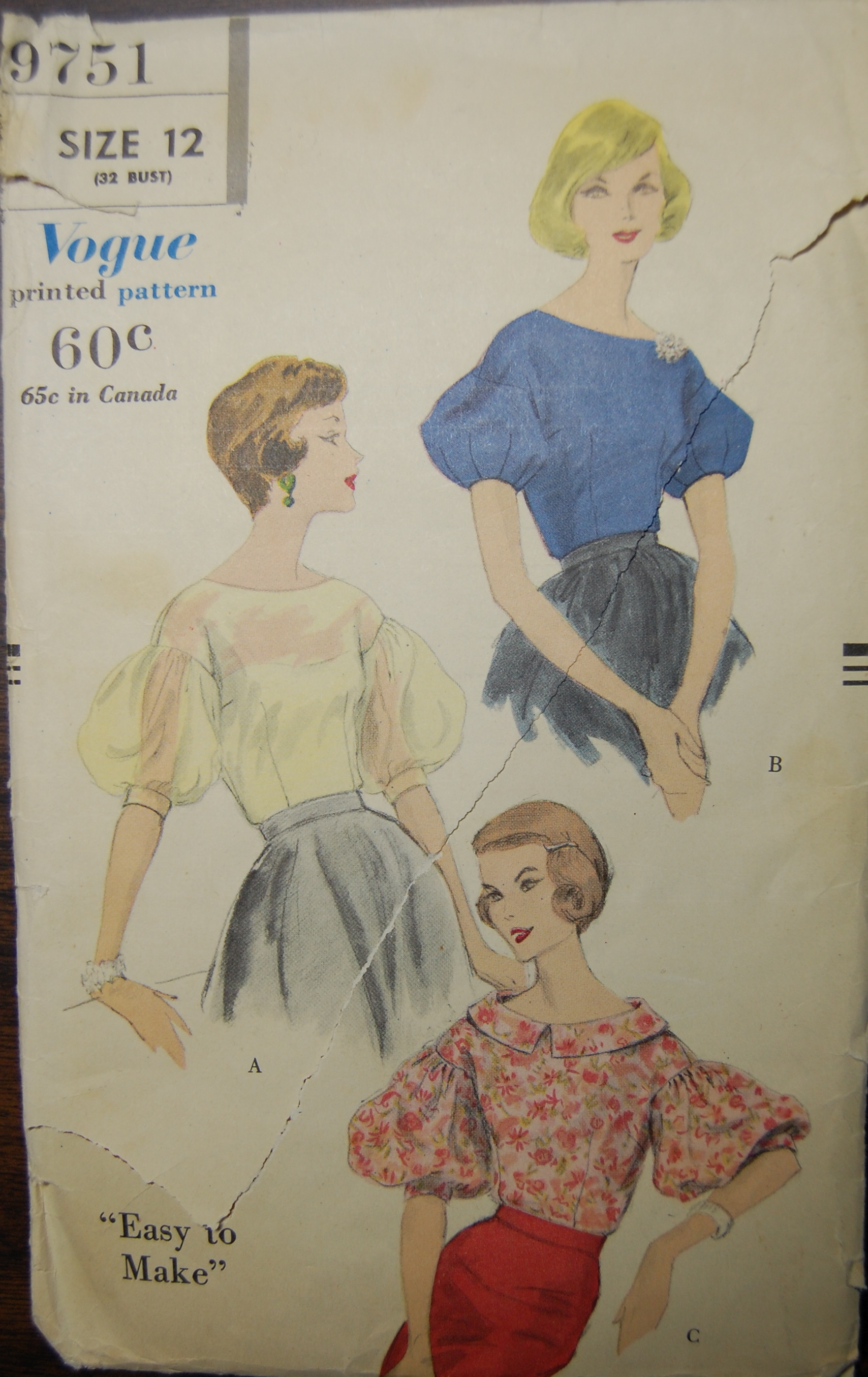
The sleeves on the blue version of this blouse are so pretty!

In addition to these new patterns, I just ordered two Marfy patterns, which should either add to my current sewing anxiety or help alleviate it. I hope it is the latter!

17 Comments

Filed under 1980's dress patterns, Blouse patterns from the 1950's, Coats, Cocktail dresses, piping, Uncategorized, vintage Vogue Designer patterns, vintage Vogue patterns from the 1950s, vintage Vogue patterns from the 1960s, vintage Vogue patterns from the 1970s, Wrap dresses