Category Archives: hand-sewn zippers

“Cheers!”

Cocktails in our home – and in our family – are always preceded by a toast of some sort. Usually a simple “Cheers!” will suffice, but sometimes the occasion calls for something more meaningful. One of the most memorable cocktail toasts I have ever heard was standard fare for one of my late mother-in-law’s good friends. By the time I met her, she was a little shaky, which made the toast even more charming. She would raise her trembly glass with great ceremony and declare “To our noble selves!”

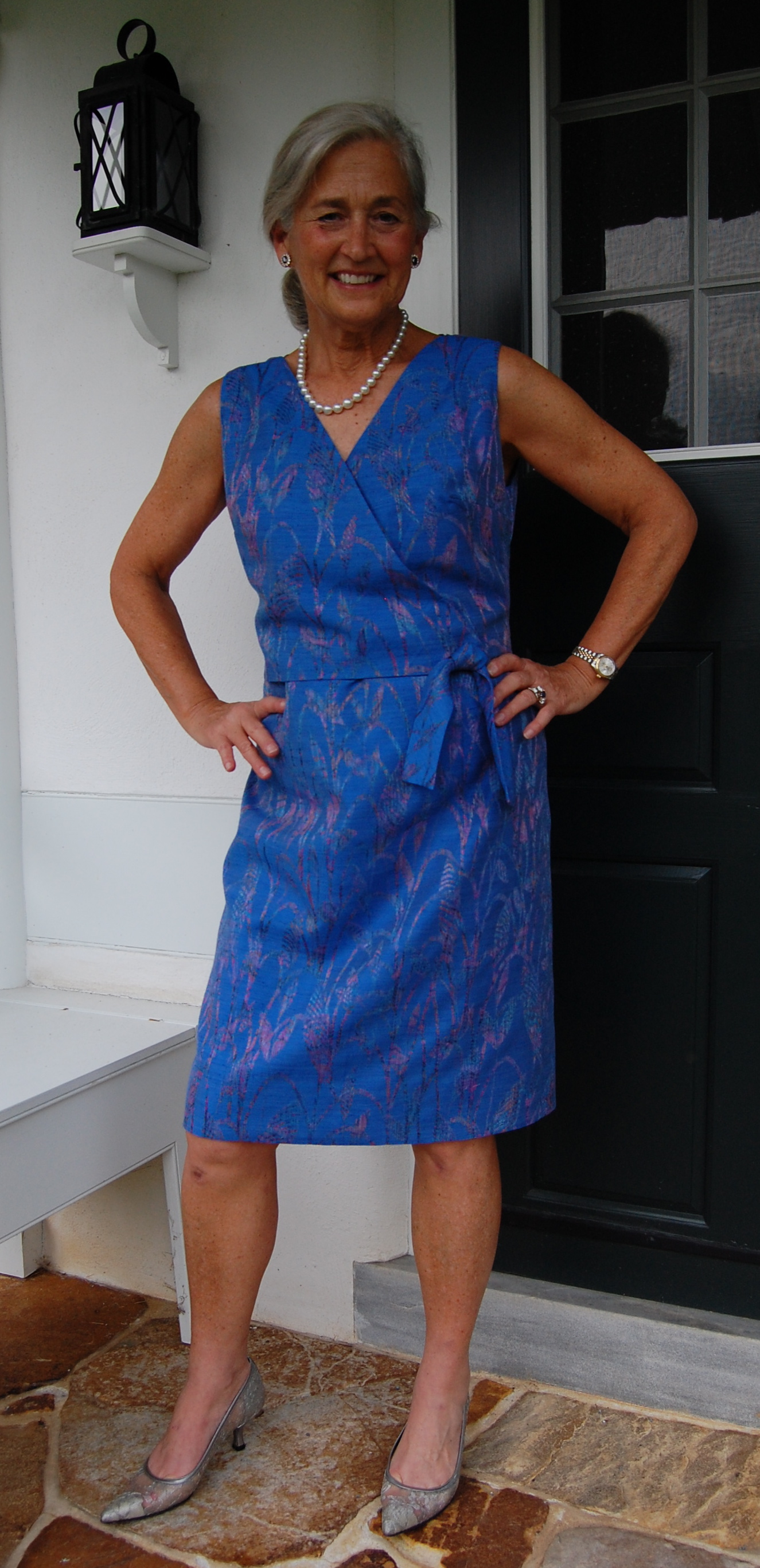
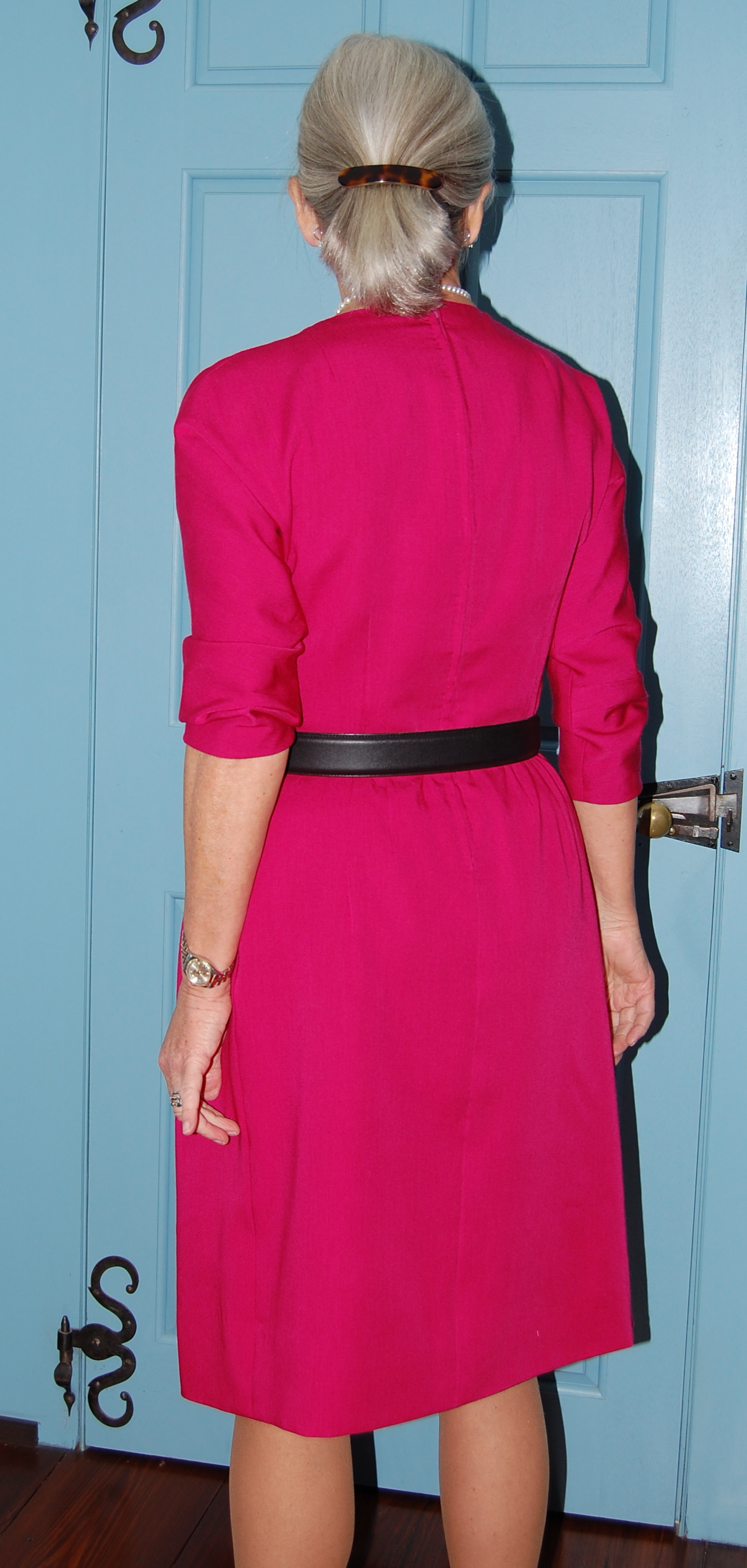
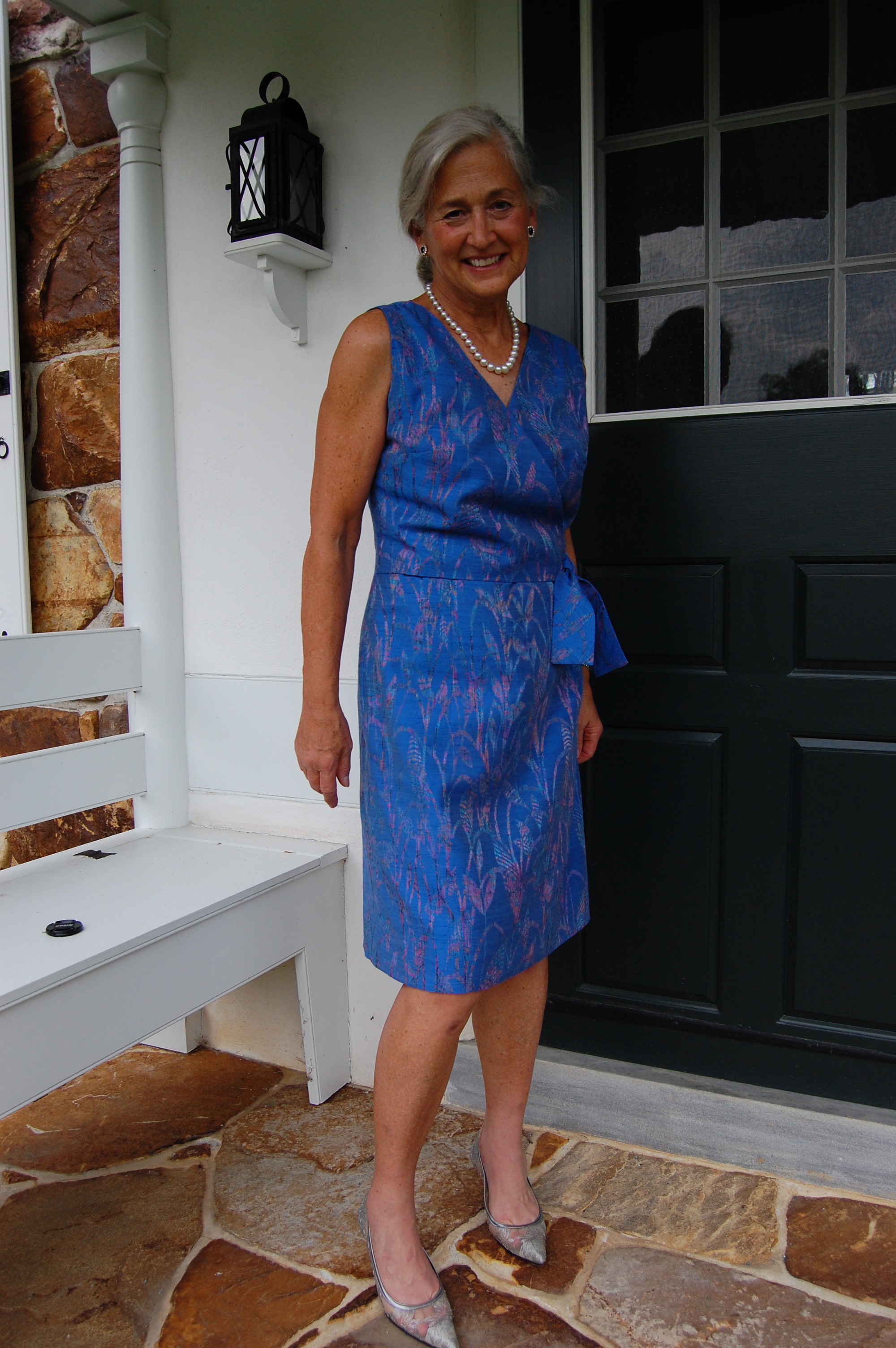
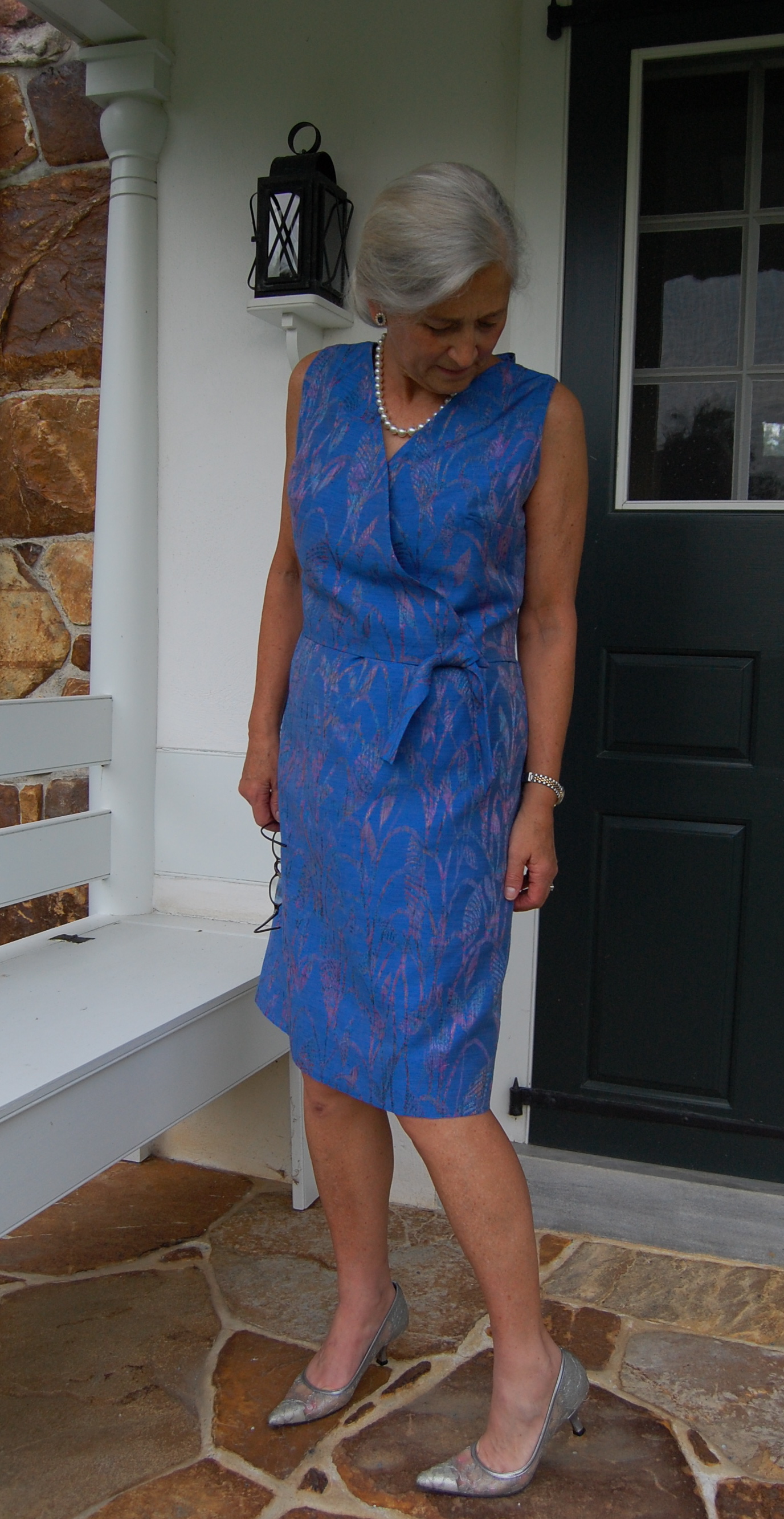
As I was working on my latest project – yes, a cocktail dress – I thought about all the possible declarations we, as sewers, could add to the vocabulary of toasts. More about those thoughts later… First up is something to wear to that cocktail/dressy party!
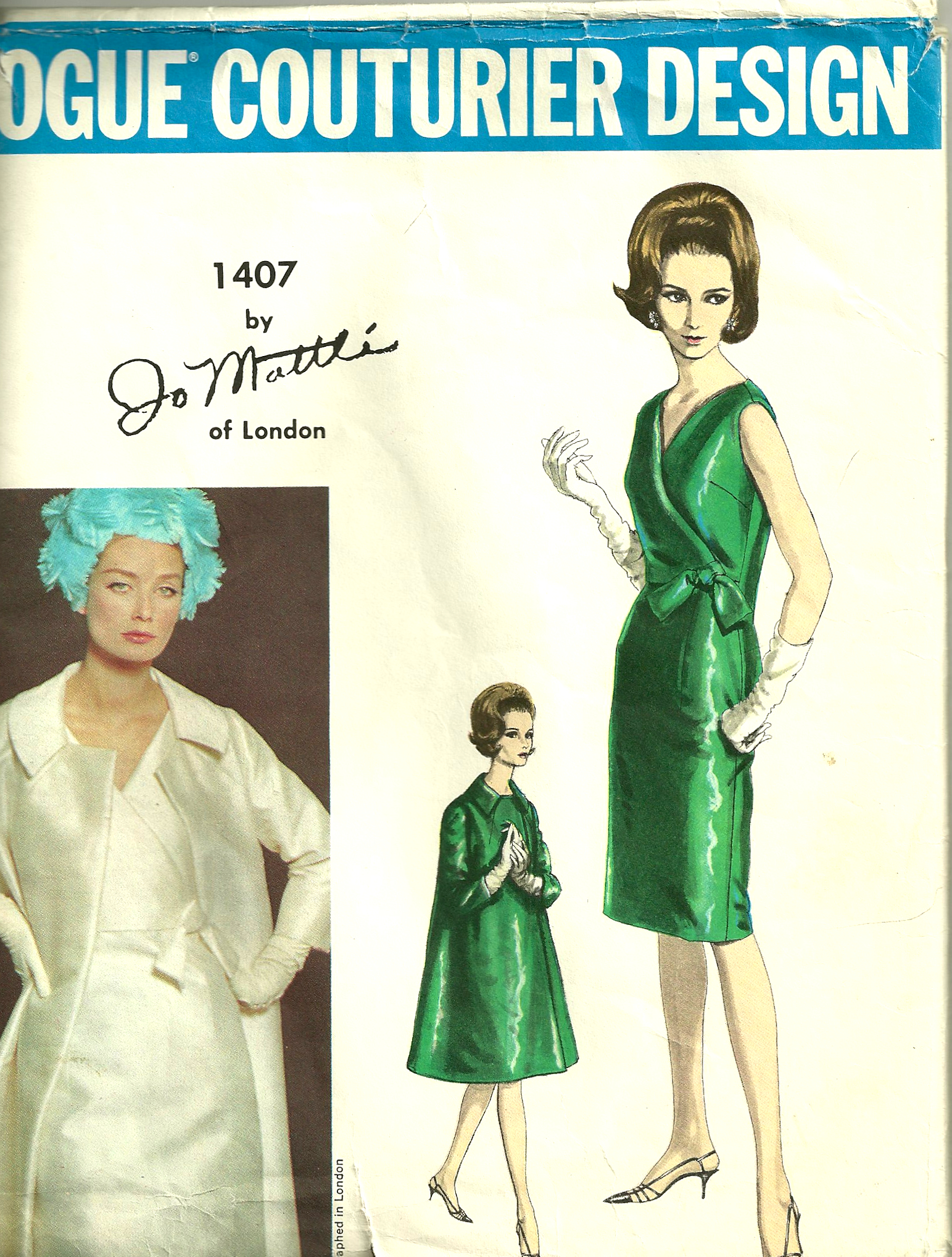
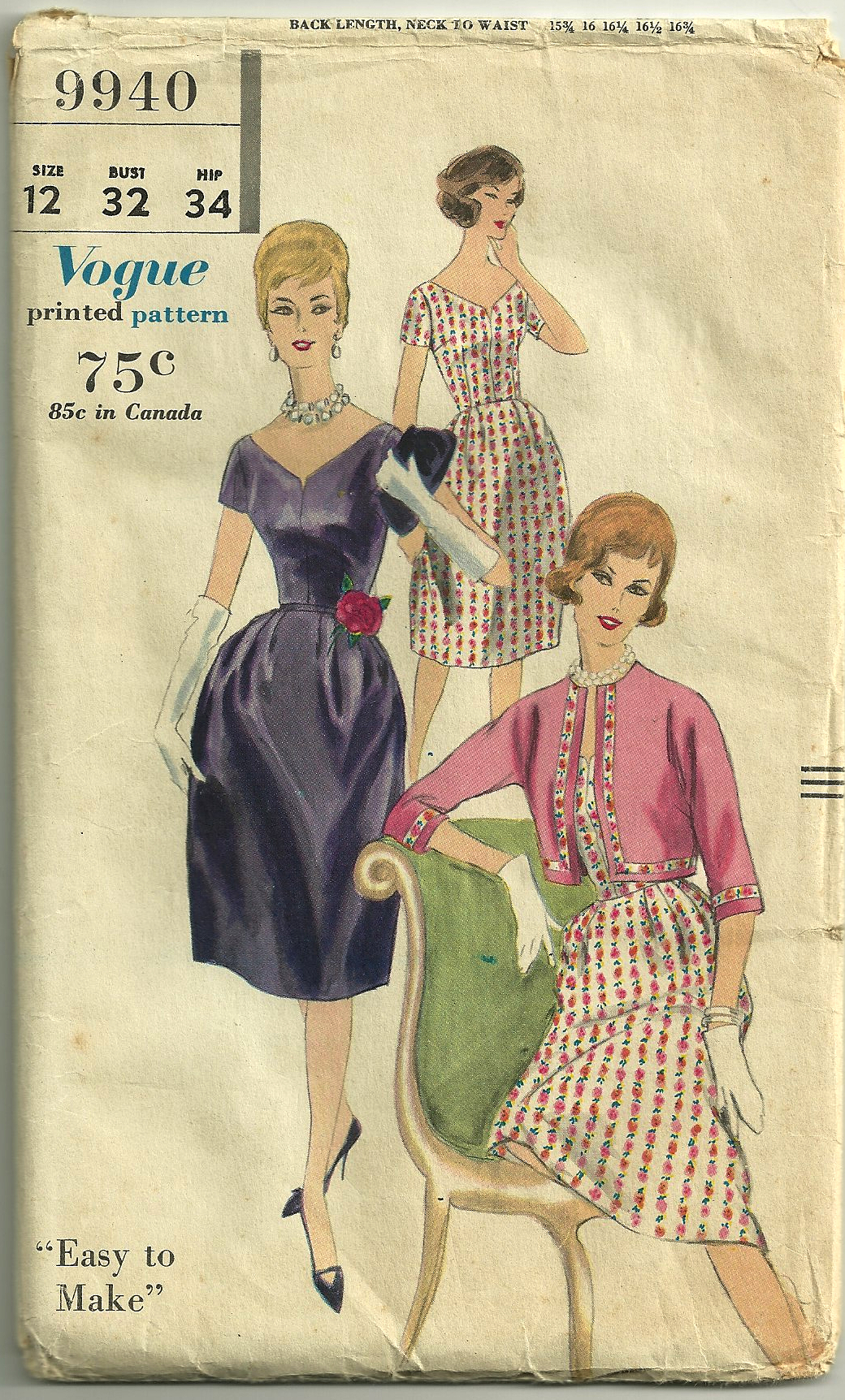
This Vogue Designer pattern is from the early 1960s.

This Vogue Designer pattern is from the early 1960s.

The lengthy process of perfecting the muslin (toile) for my blue cocktail dress revealed a few minor changes I needed to make – four of them, to be exact.   You might be able to see on the pattern envelope, that the “overblouse” in the front actually hits about an inch above the waistline. This just did not look good on me, so I extended the length of those two over-lapping fronts an inch so that they would lay directly at my waist. Second, the under-dress, the top of which is not seen when being worn is cut low so that it does not show beneath the “V” of the overblouse. However, it was cut much lower than I needed, so I raised it a bit.

I thought the shoulders of the overblouse extended a little bit too wide, so I cut the top of the armscye in about ¾ of an inch, graduating it down to join the lower part of the armscye. And fourth – I added a slit at the lower back center seam to make walking easier. I seem to do this frequently with vintage patterns.

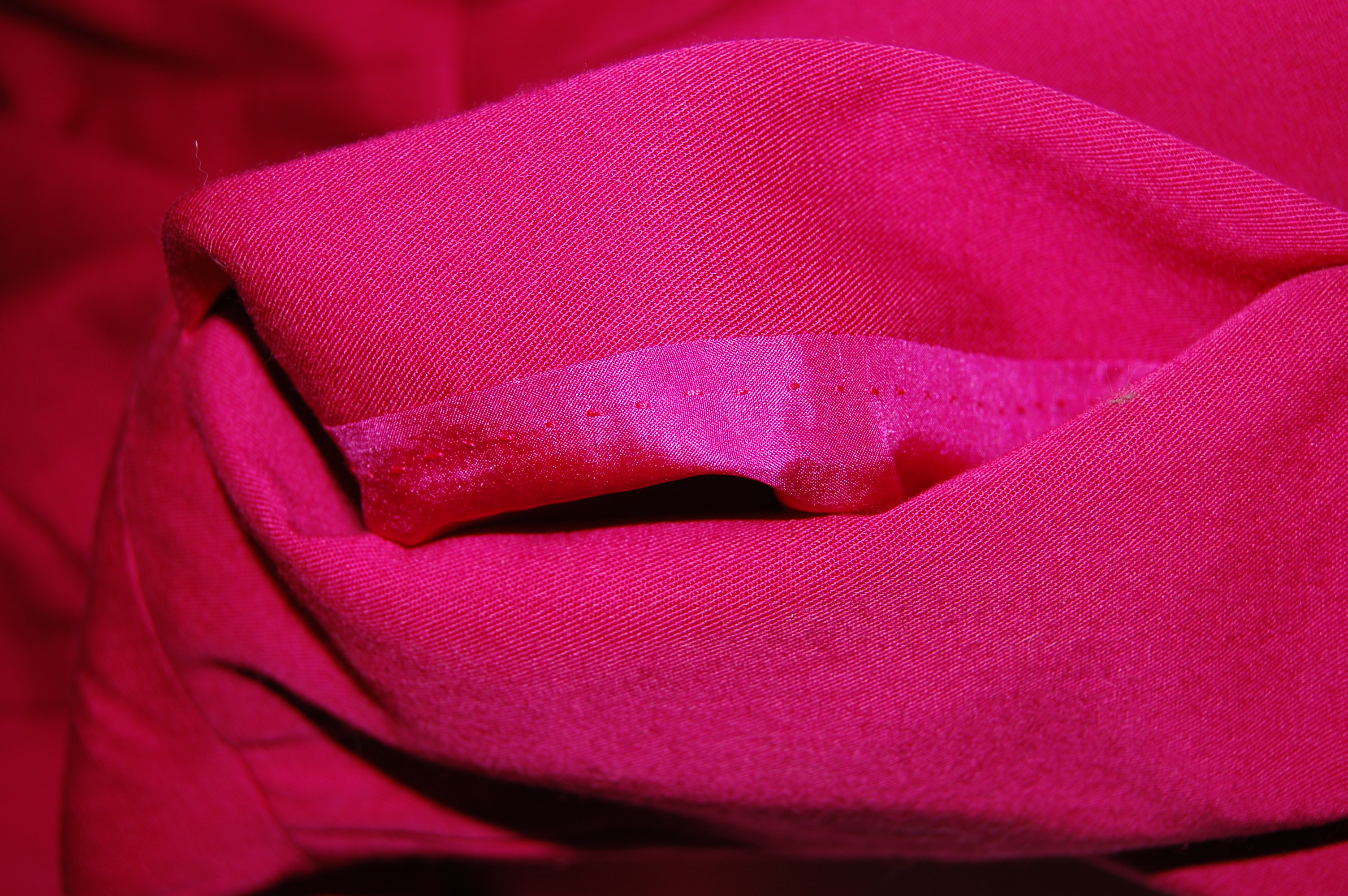
The pattern called for the fashion fabric to be underlined, but not lined.   I wanted to line the dress – and actually felt it was a necessity with the fabric I was using. Because of the unusual construction of the dress, I knew that this was going to be interesting – and that I was going to have to make it up as I went. To see what I mean about the unusual construction, take a look at the pattern instructions. The front of the “underdress” is sewn to the back of the dress at the side seams only to the waistline. The bodice part of the front “underdress” hangs loose while the two sections of the overblouse are first sewn to the dress back. Then that bodice is hand sewn in place.
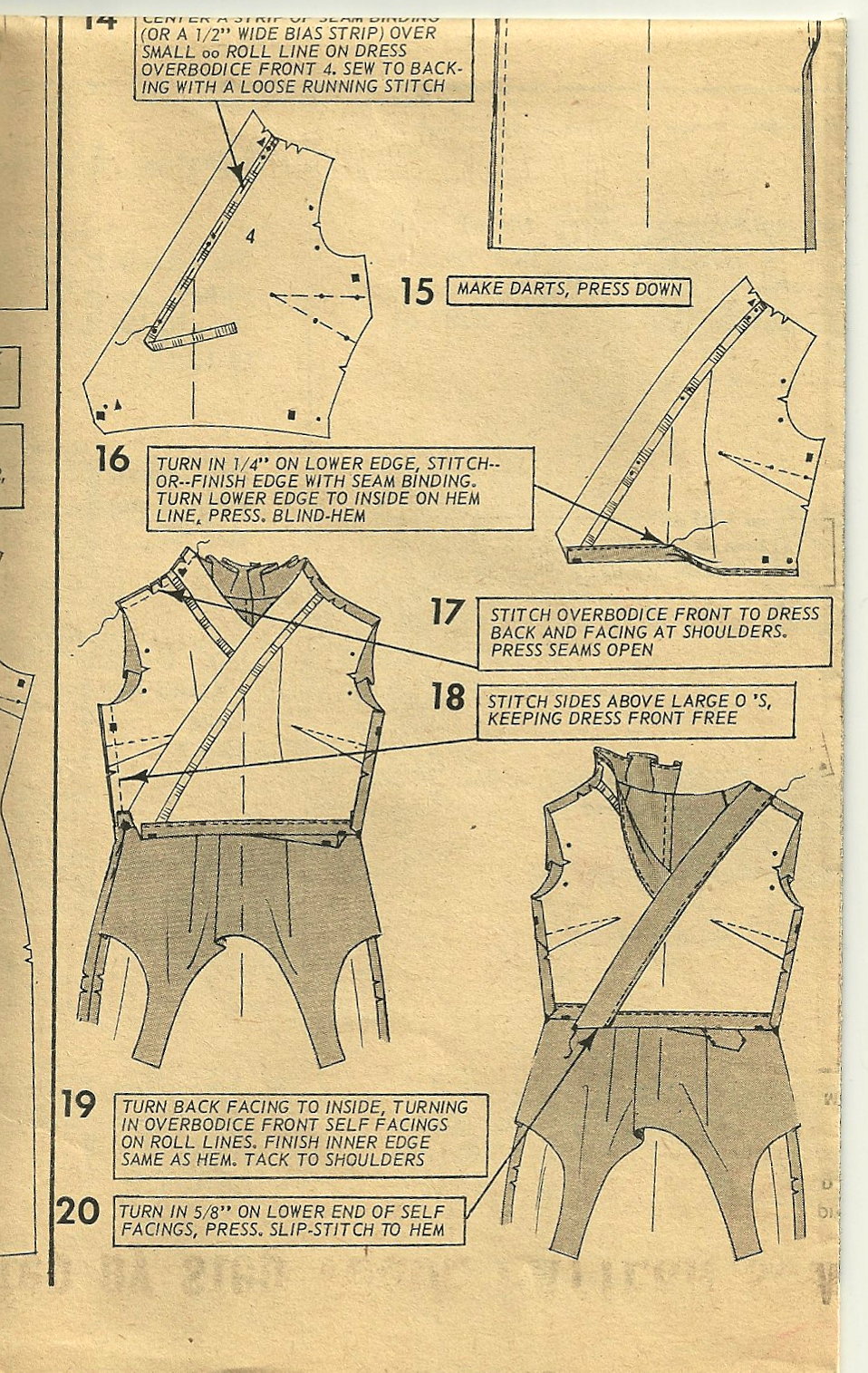
To our sewing selves - pattern diagram

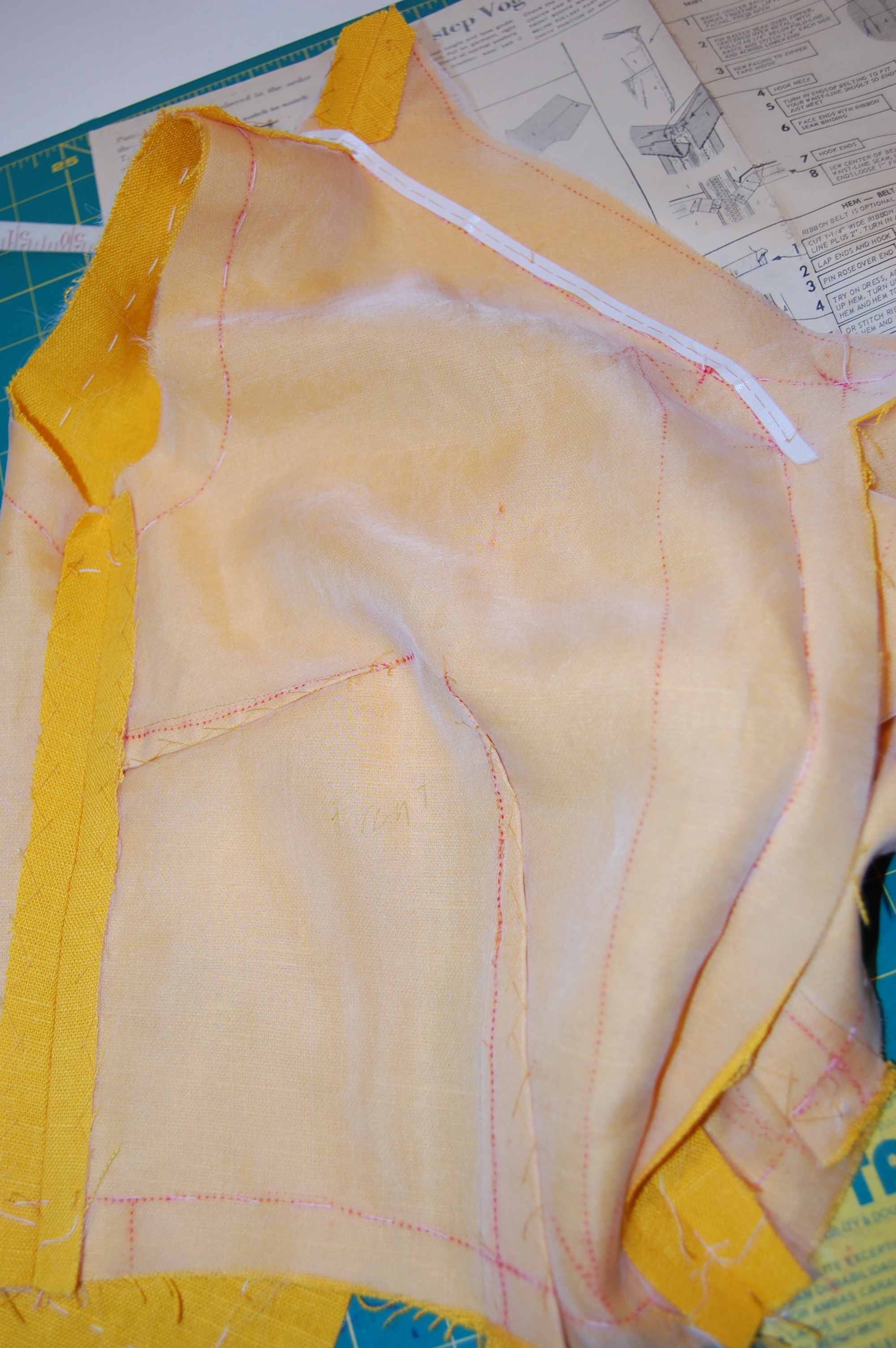
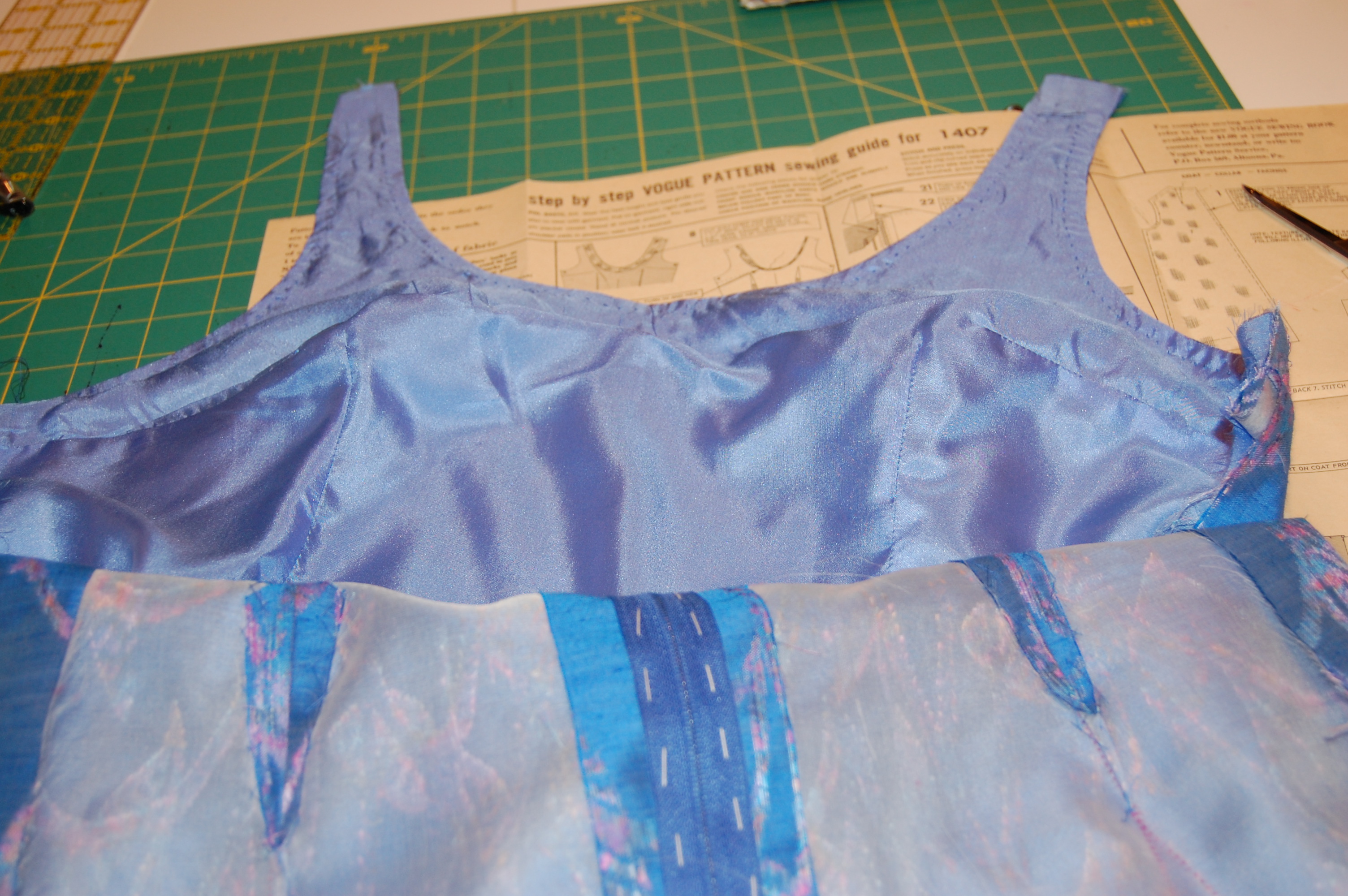
To line the dress, I first sewed the lining to the front underdress at the neck and the armscyes by machine. I under stitched these sections by hand, leaving about an inch free on either end.
Cheers

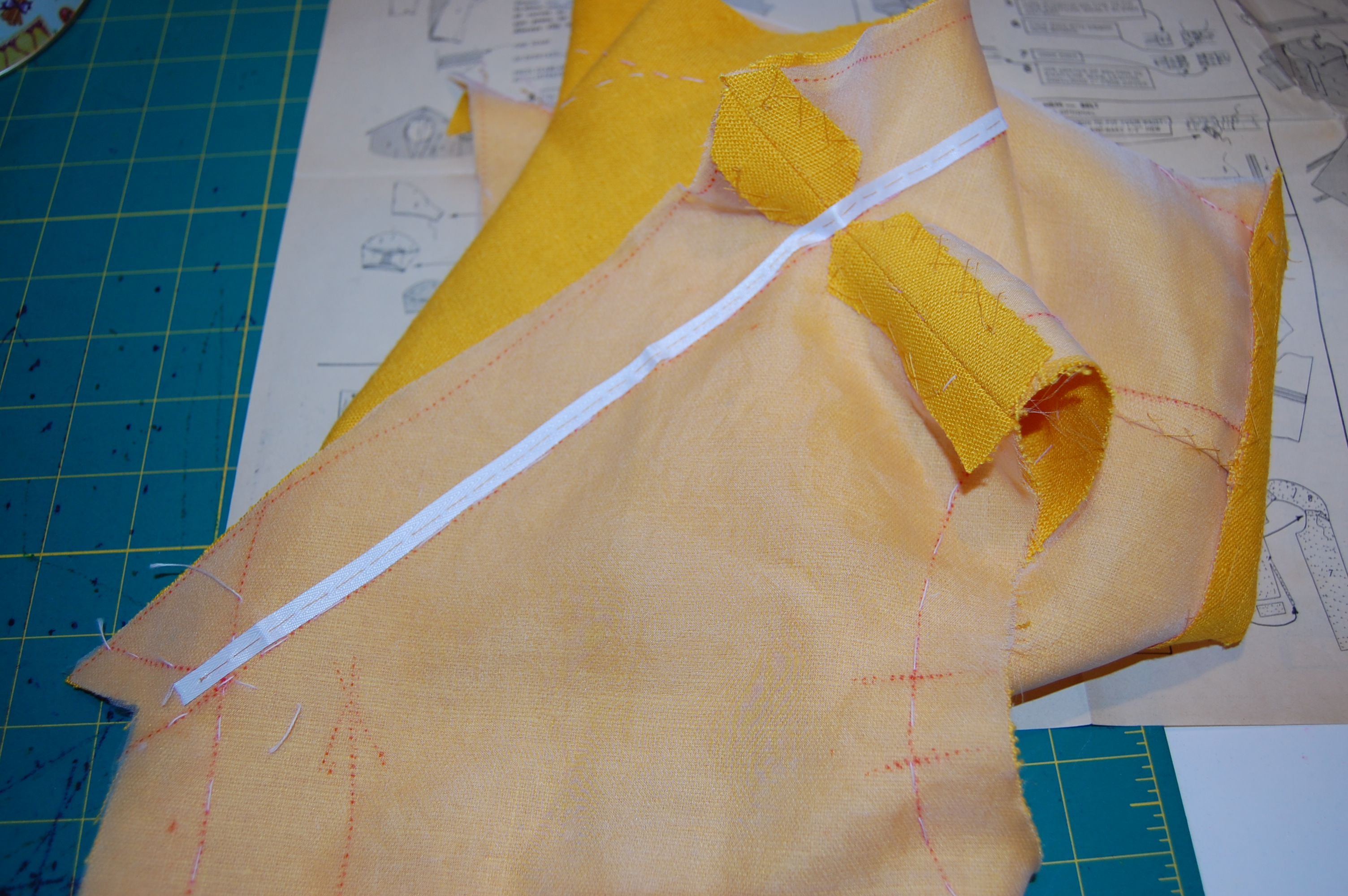
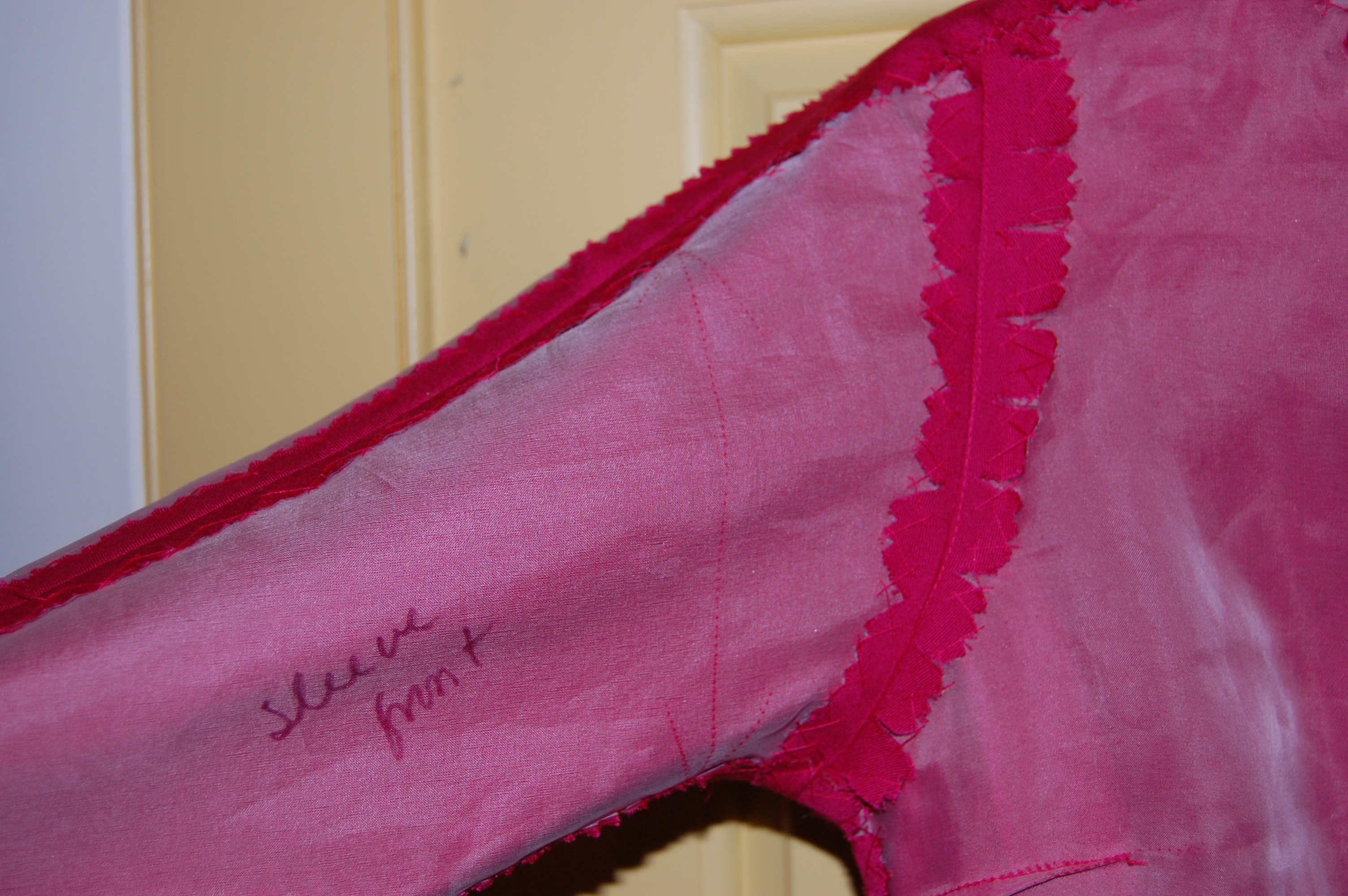
Next I lined the two front overblouse sections, stitching only the front armscyes by machine; I attached the rest of these linings by hand, using fell stitches.  Then I joined the overblouse sections to the (unlined at this point) dress back.
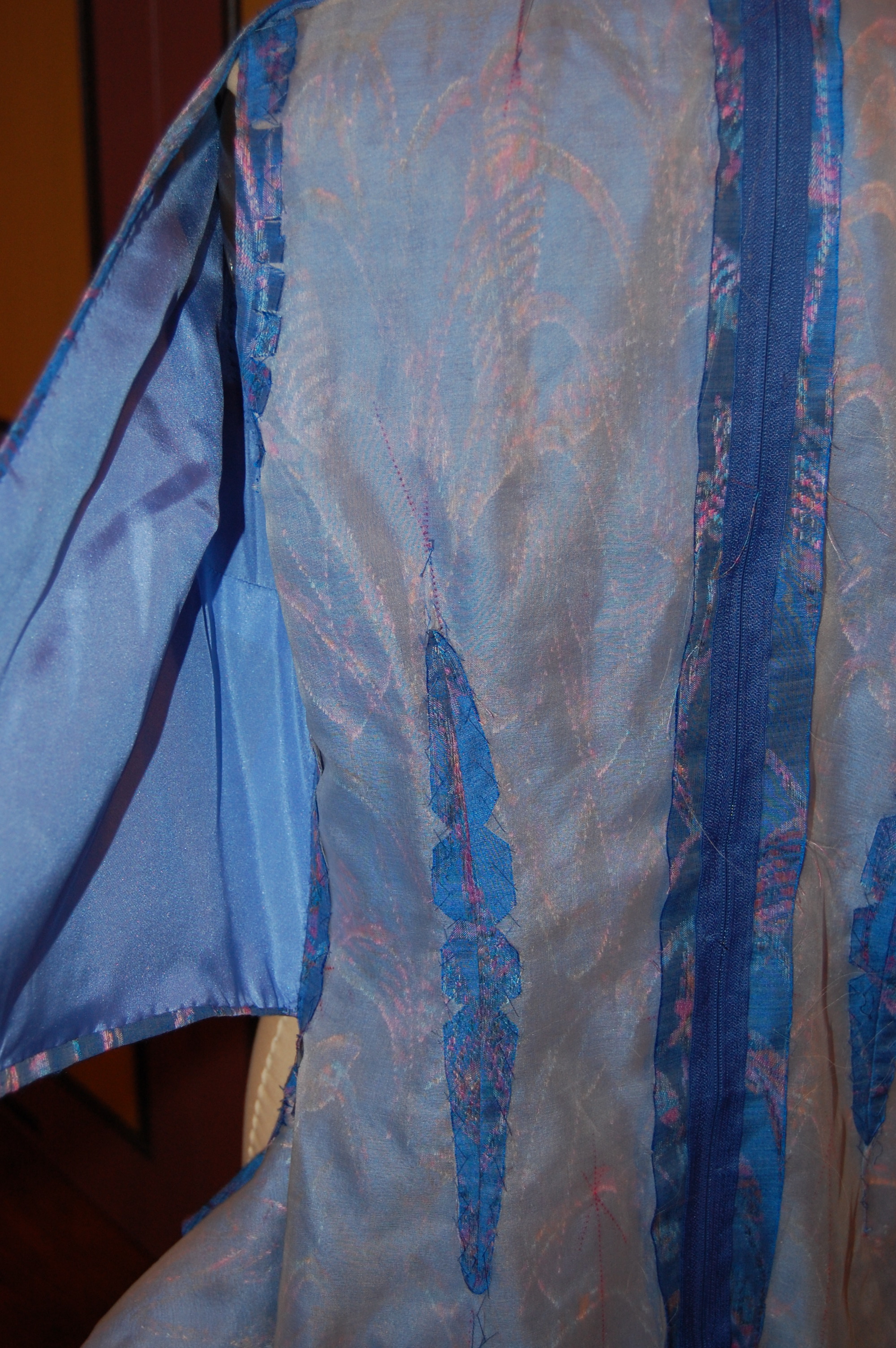
The front overblouse sections are attached to the side seams, but the front underdress is hanging loose, which does not show in this photo.

The front overblouse sections are attached to the side seams, but the front underdress is hanging loose, visible at the lower left.

I had pieces of dress and overblouse and lining hanging every which way! Any of you who have made a “Chanel” type jacket know how unruly the process is before the lining is seamed in place by hand. This reminded me of that. Somehow I would have to make order out of chaos!

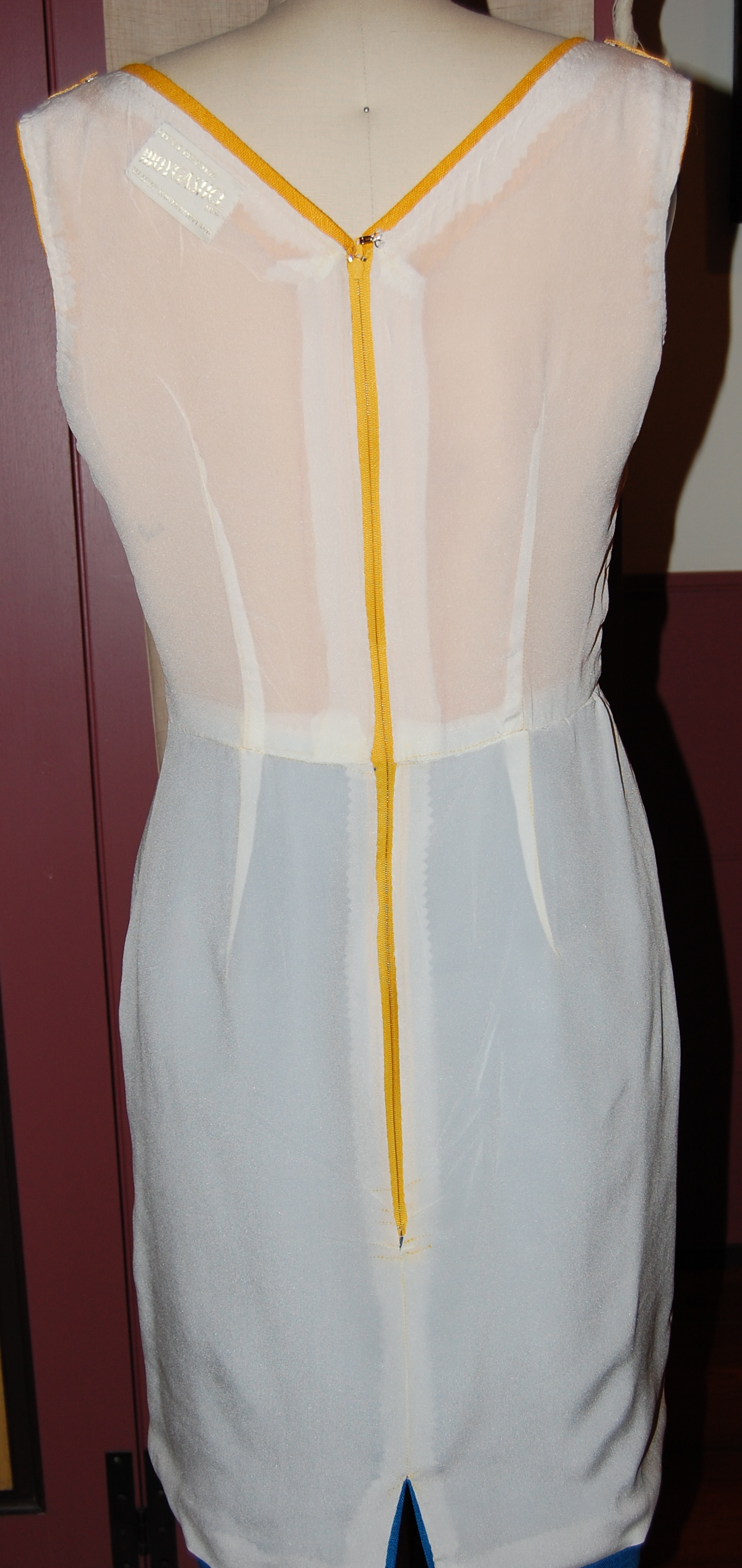
To line the back dress section, I pinned the lining to the armscyes and neck and fell stitched in place by hand. Then I was able to sew each side seam on the machine. The shoulder seams were the final ones to finish, which I did by hand. Then it was only a matter of fell stitching the lining to the hand-picked zipper and understitching the neck and arm sections.
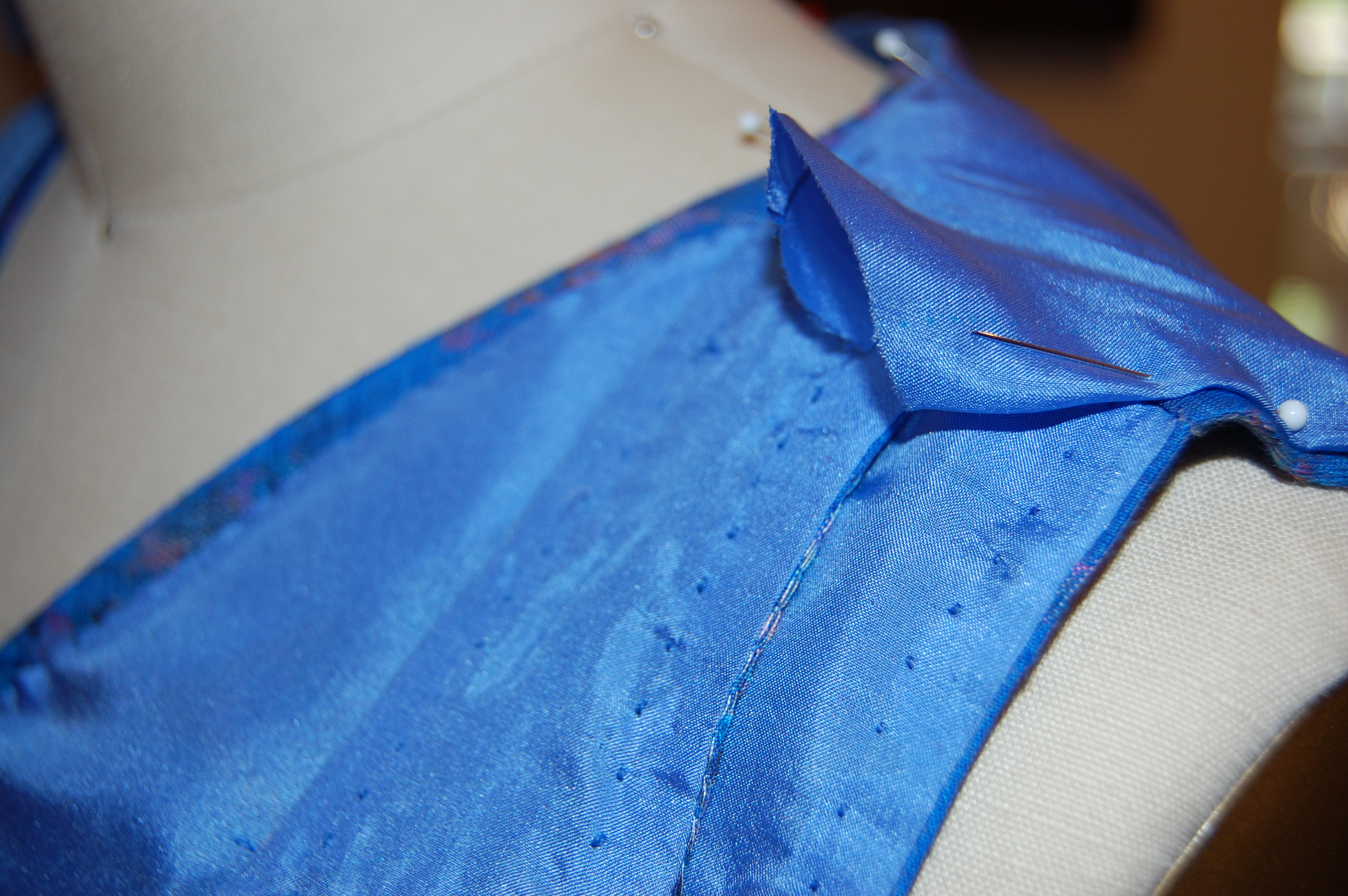
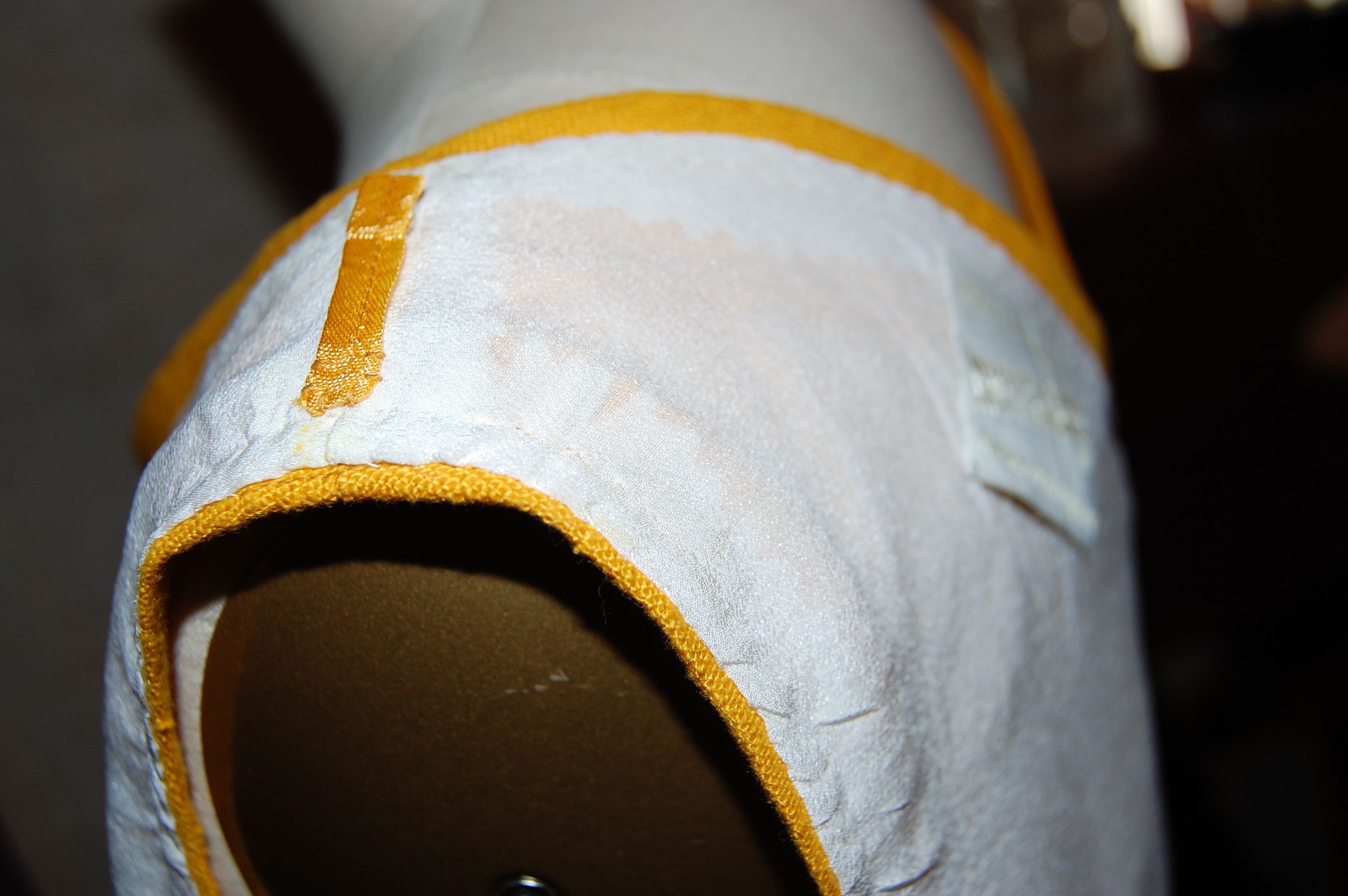
The shoulder seam encloses two finished layers in front.

The shoulder seam encloses two finished layers in front.

It worked! The lining fit perfectly and made for a pretty “insides”!

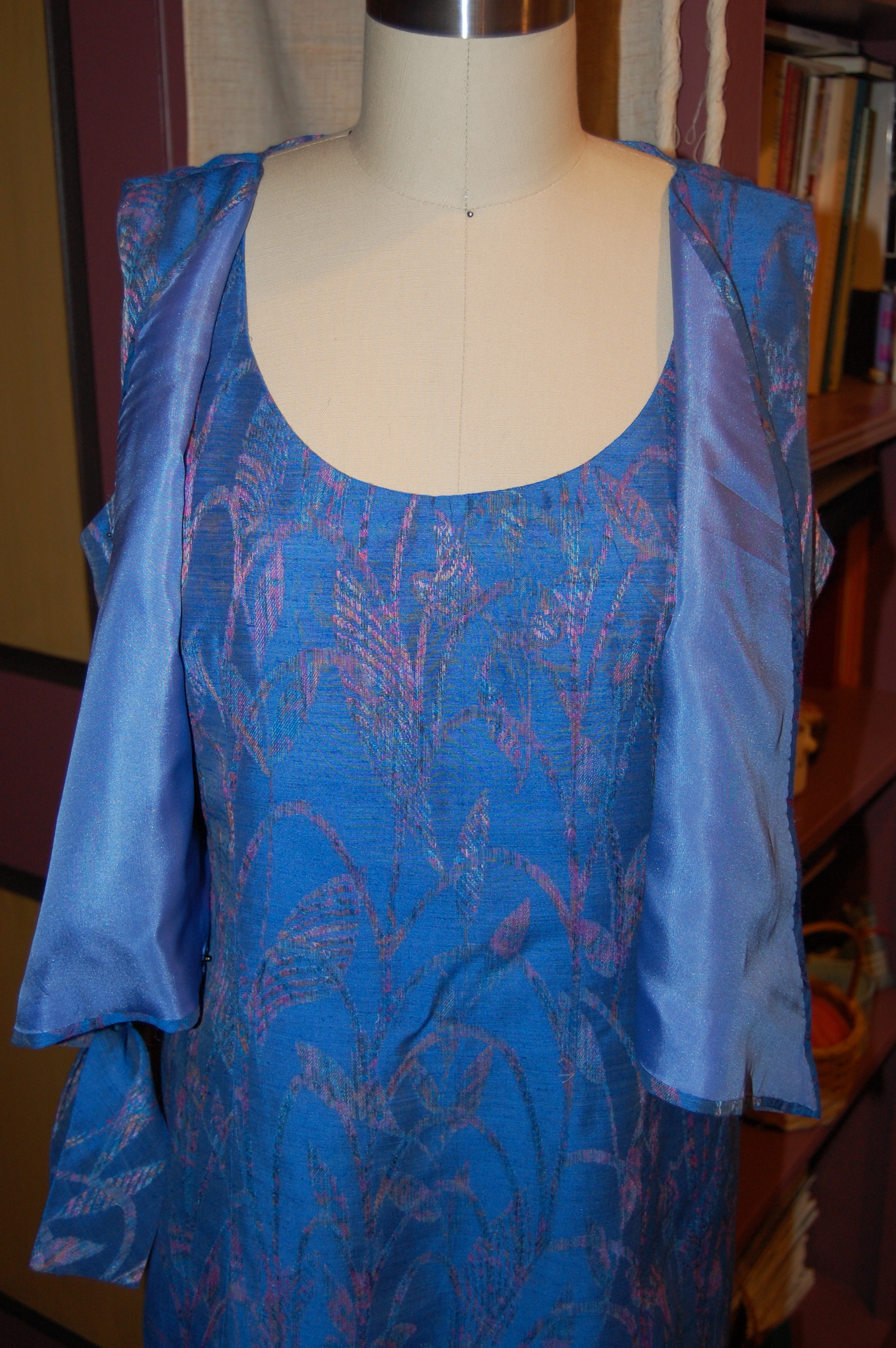
An inside look at the underdress and the overblouse.

An inside look at the underdress and the overblouse.

The pattern called for tacking the front overblouse sections to the underdress, but I decided to use snaps instead. Ironing this dress will be so much easier with the overblouse sections opened up. However, I did permanently tack the looped tie in place, as indicated in the pattern directions. There was much more hand sewing involved in this dress because of the added lining, but the process was so rewarding in the end.
DSC_1374

Cheers

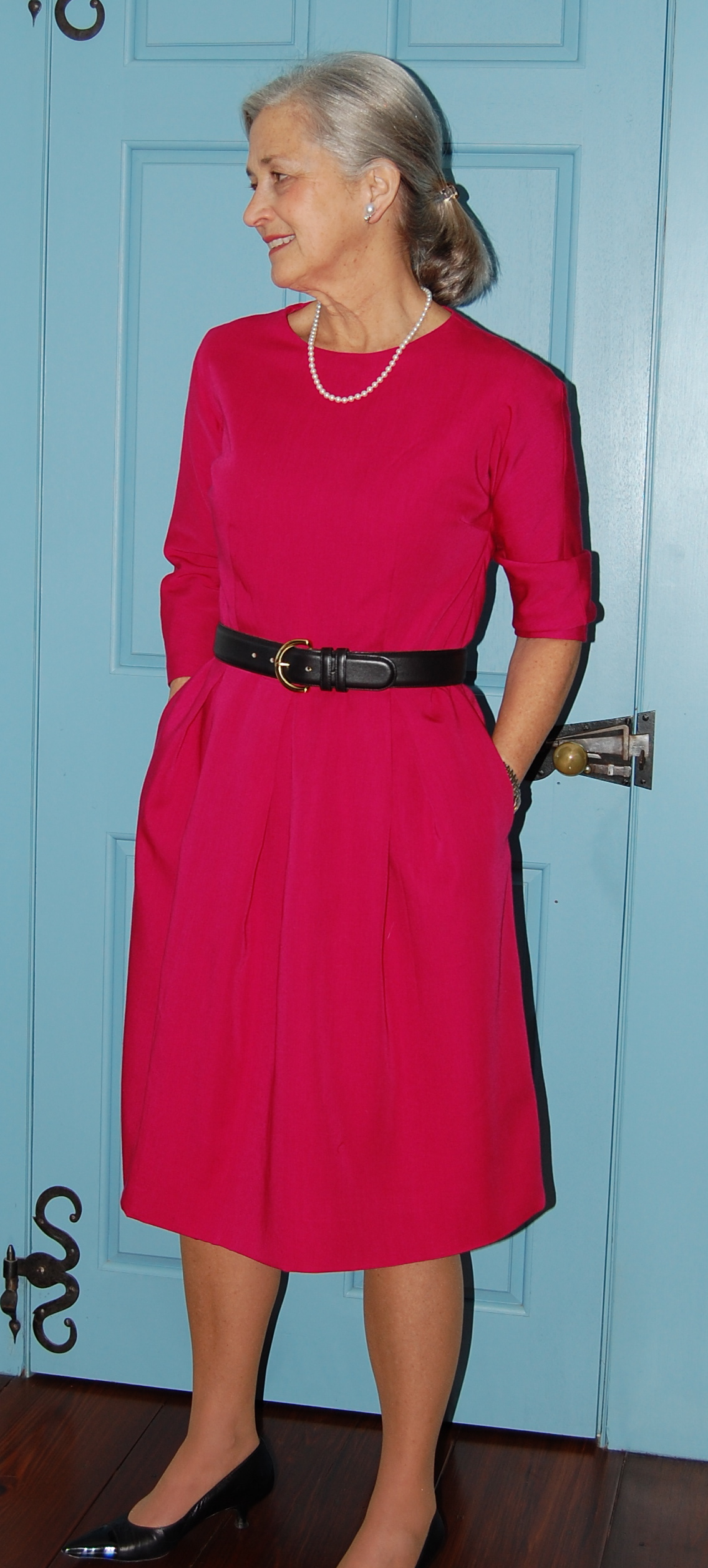
I anticipate this dress being perfect for not only cocktails, but also weddings and other dressy occasions (particularly if I get the coat made, too!).
Cheers

DSC_1369


DSC_1362

Although I doubt I’ll be clinking my cocktail glass with many other dressmakers, I like the thought of a “virtual” toast with my fellow sewing enthusiasts. Some possibilities I have come up with are “To needle and thread” – or “To weft and to warp” – or “To scissors and seams” – or the one I think I prefer, with thanks to a lady from the past – “To our sew-able selves!”
40 Comments

Filed under Cocktail dresses, couture construction, hand-sewn zippers, sewing in silk, Uncategorized, underlinings, vintage Vogue Designer patterns, vintage Vogue patterns from the 1960s

Sometimes It’s All About the Shoes

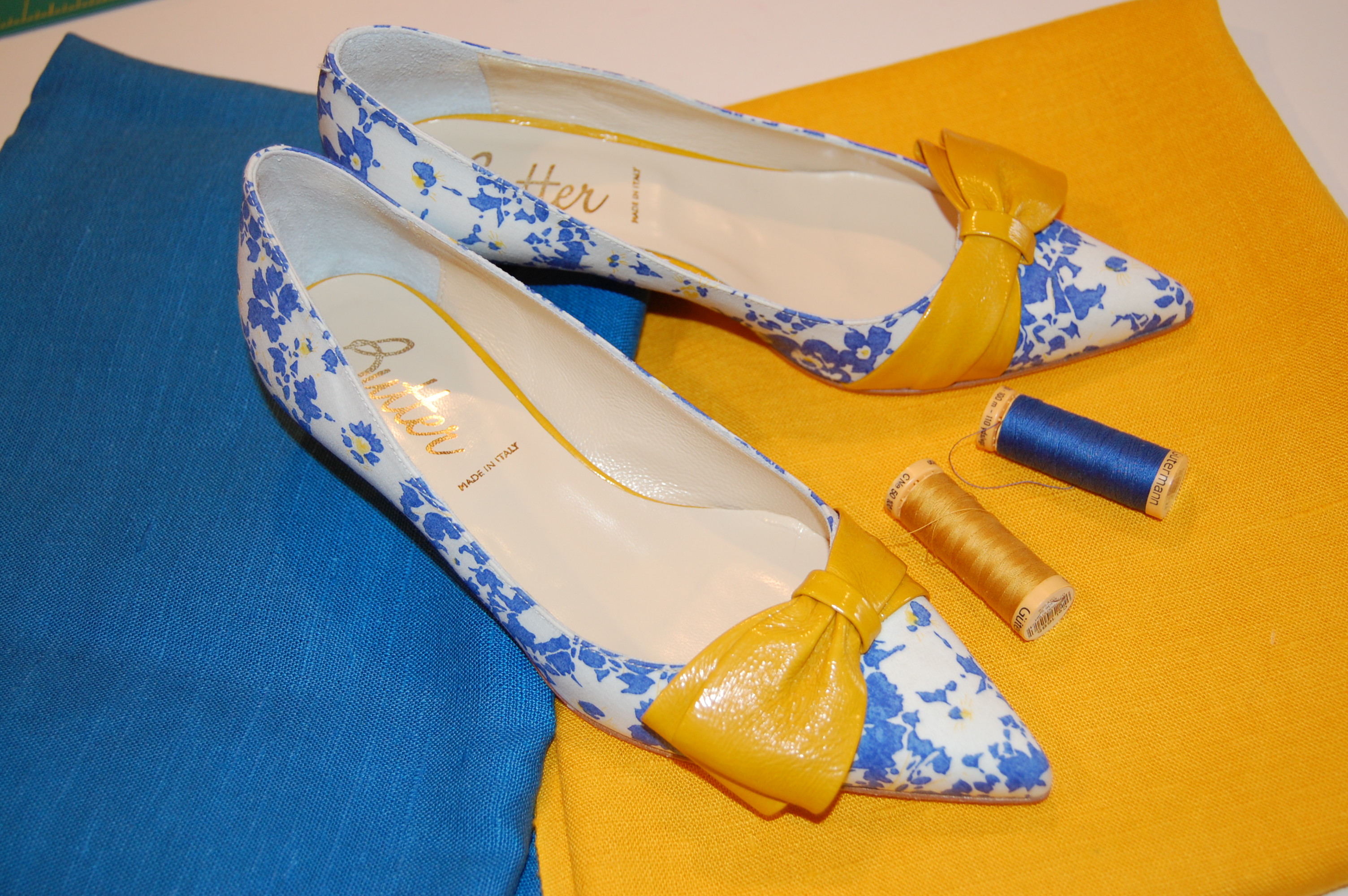
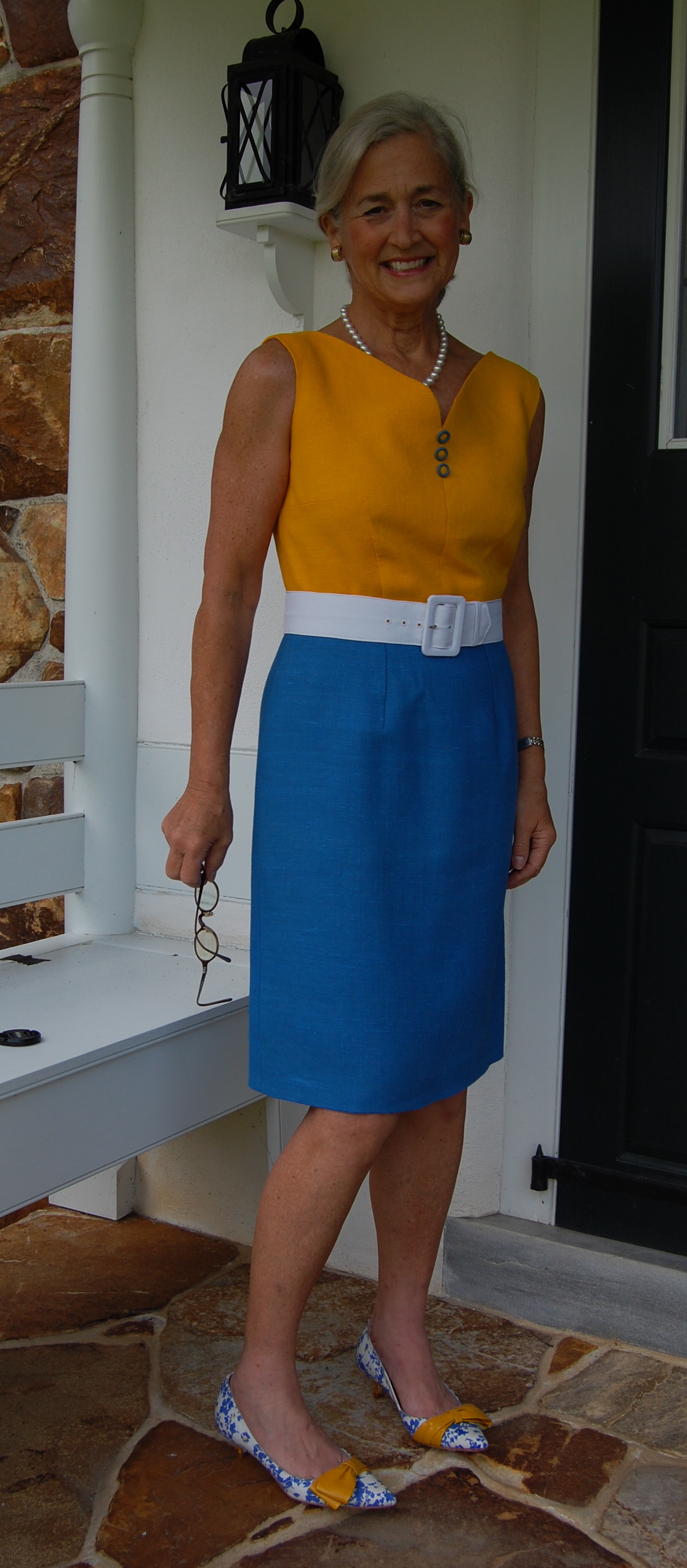
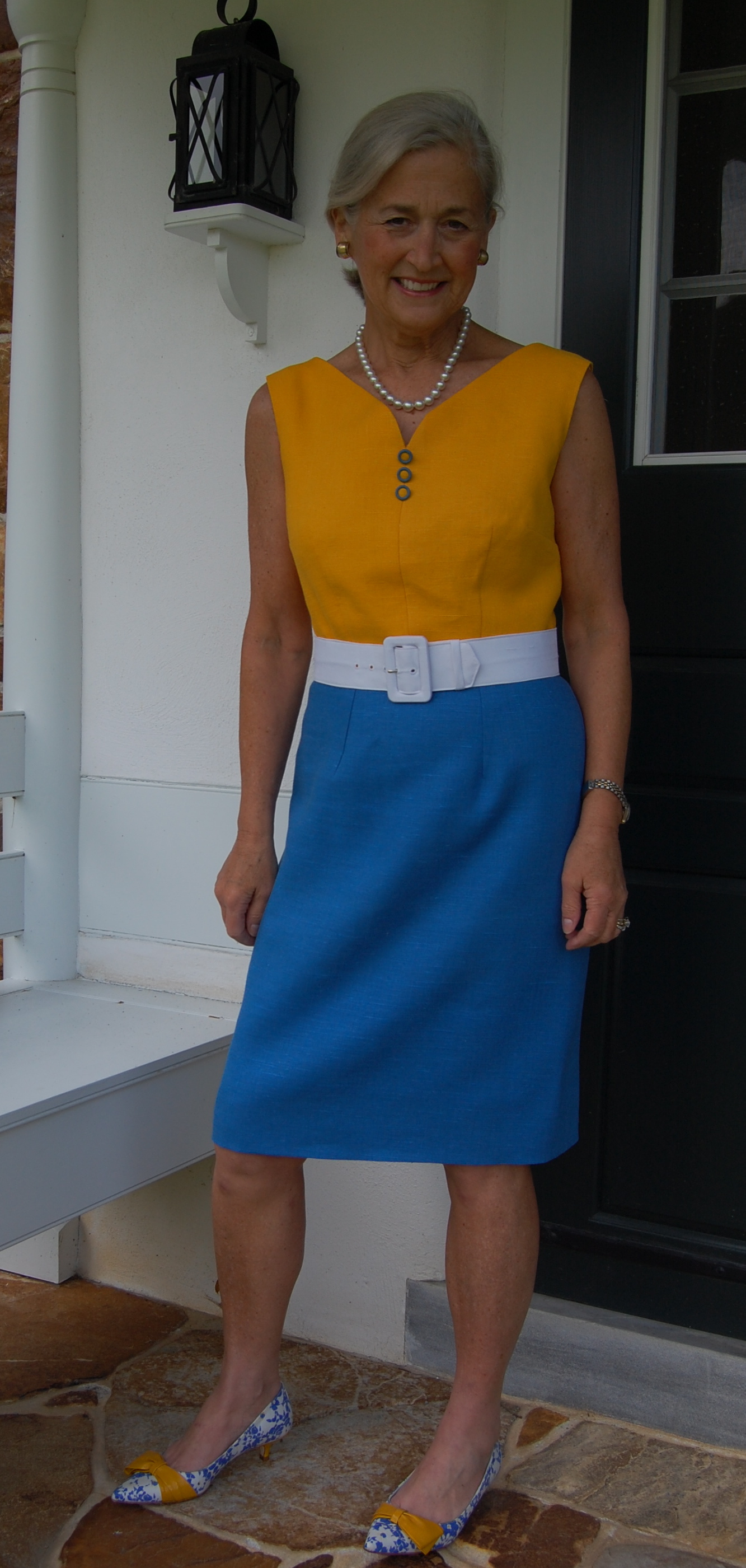
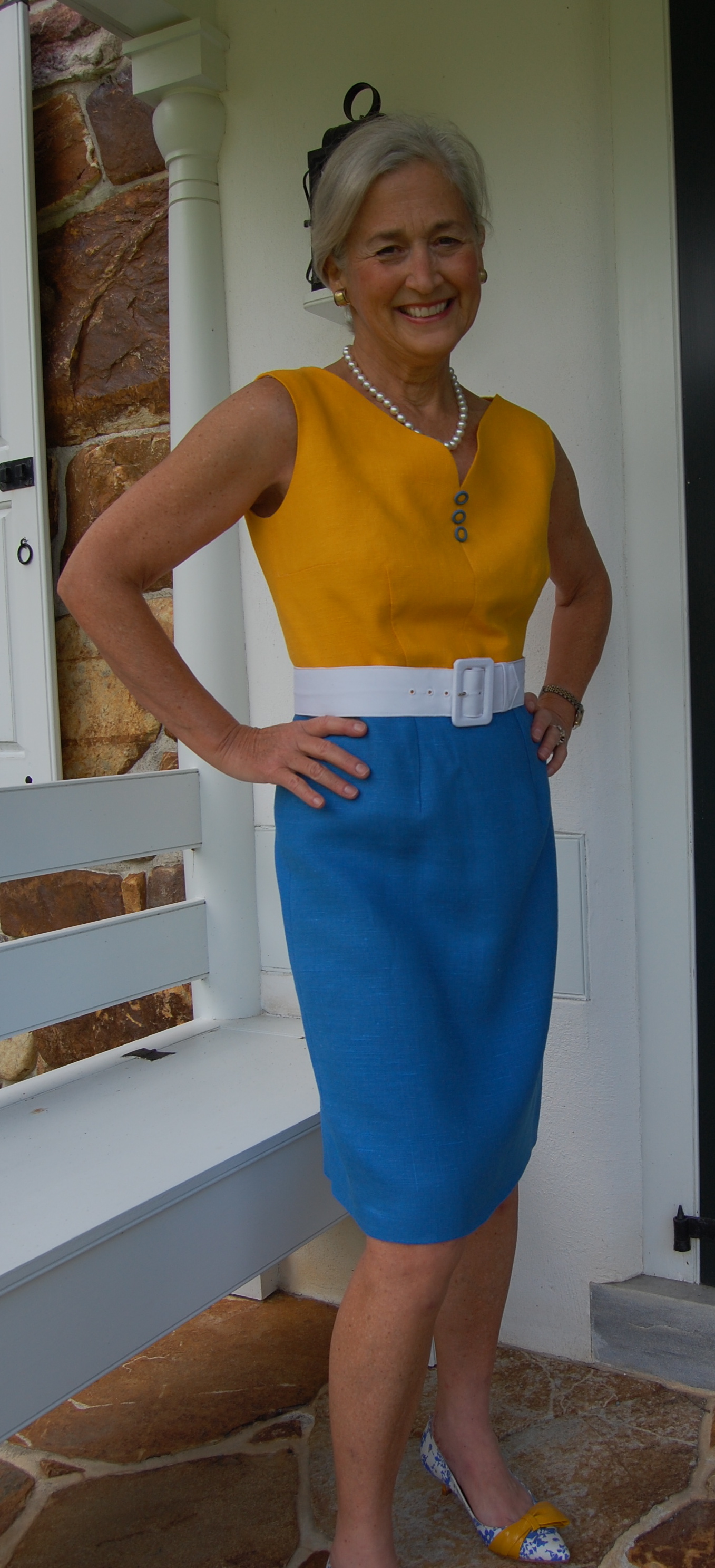
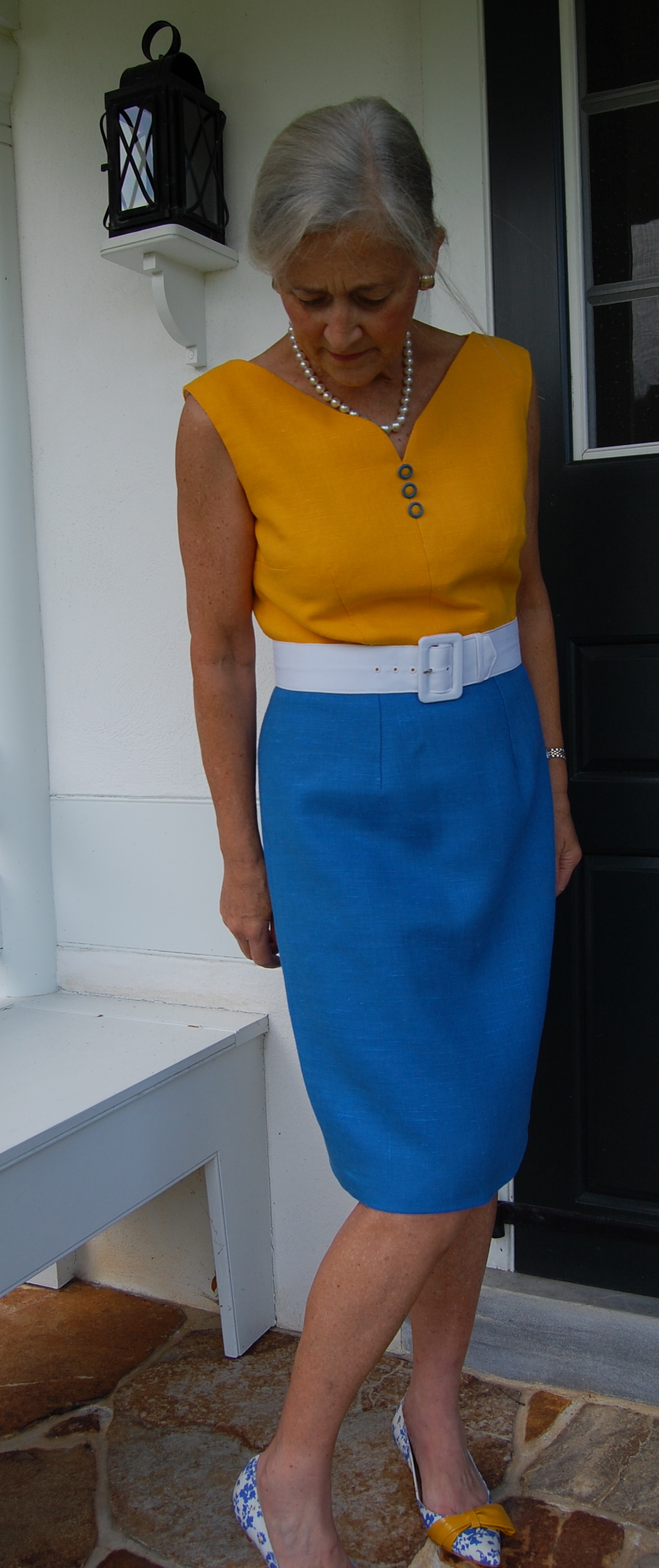
Well, maybe it’s not entirely about the shoes, although they do promise to share a starring role with my just-completed yellow and blue linen dress.

All about the shoes

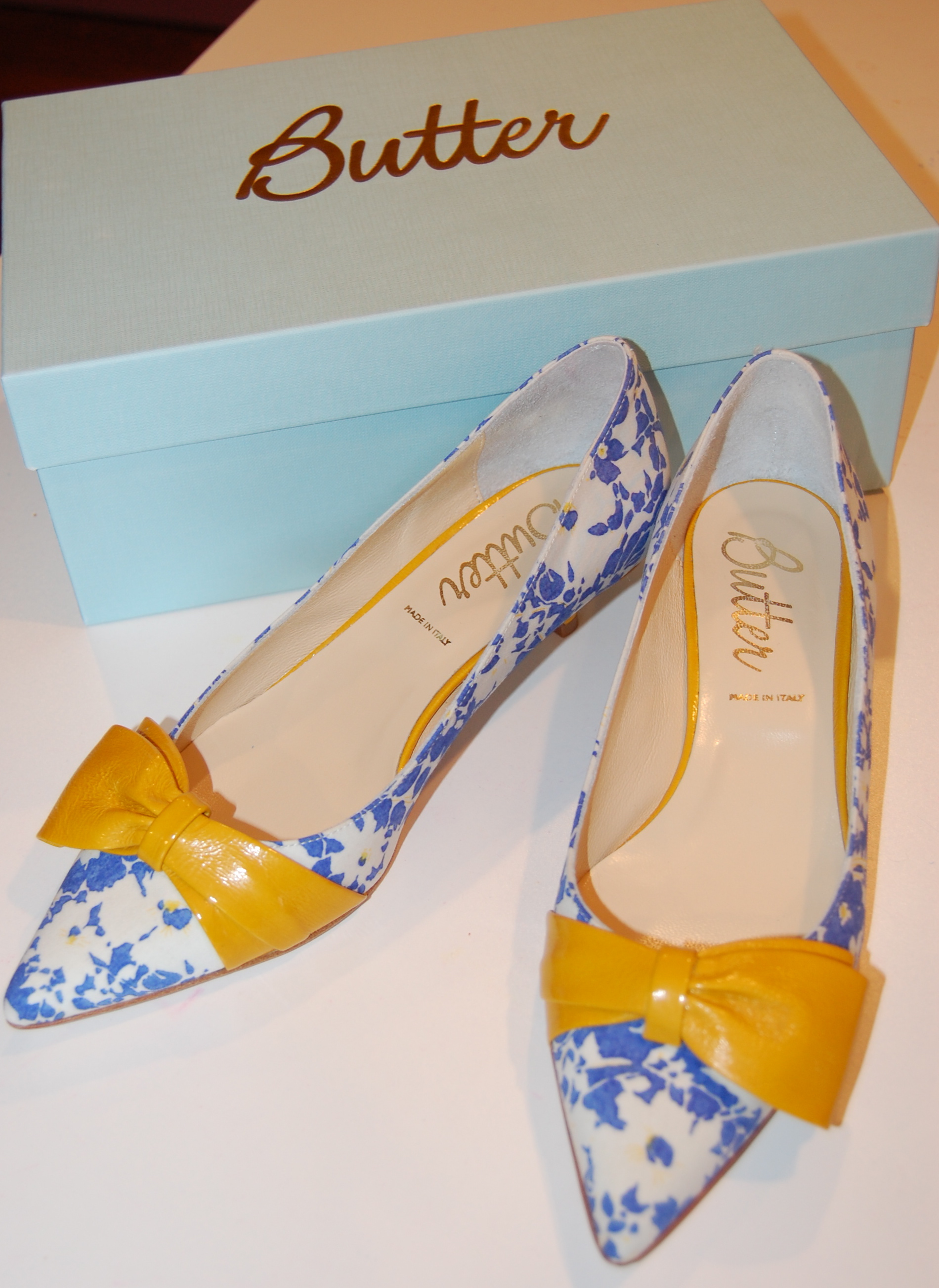
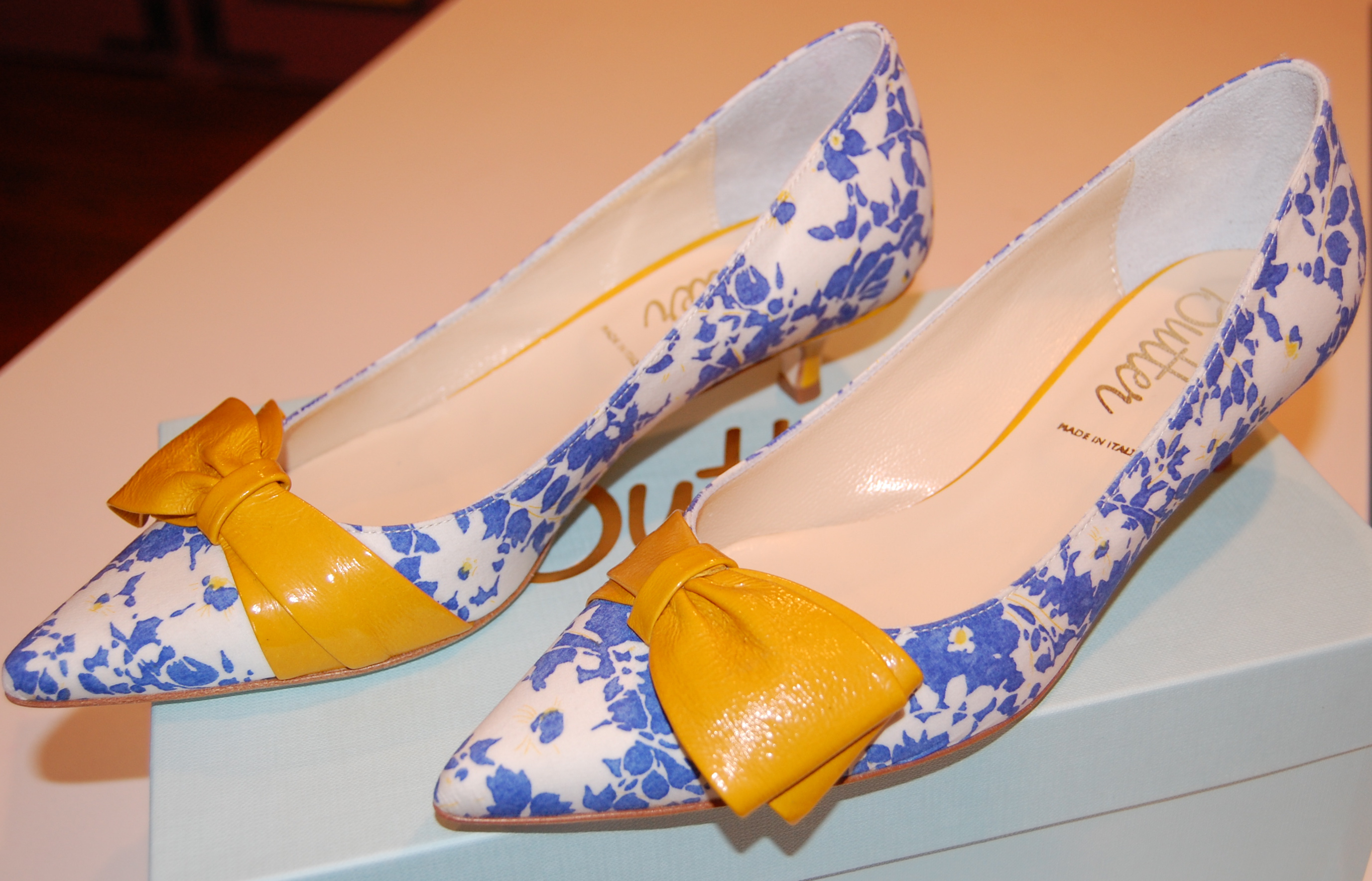
I first spied these lovelies on the Simply Soles website last winter, as part of the offerings for Spring/Summer shoes. Although I loved everything about them (the combination of colors, the fabric, the asymmetrical bow, the kitten heel, the brand – knowing from experience that Butter shoes are extremely comfortable), I decided not to purchase them. At that point in time, I had not yet bought the bittersweet yellow linen, so I had no reason to buy shoes with such a limited color palette. By the time I had a good reason to buy them, they were no longer available in my size.

All about the shoes However, the Simply Soles website allows one to request an email advice should the correctly sized shoe become available. Weeks went by, Summer arrived, and by then I had paired the recently purchased deep yellow linen with the pottery blue linen. Goodness, I could not stop thinking about those shoes and how perfect they would be with my envisioned dress. And then – they were suddenly available – in my size – and on sale!

All about the shoes

By this time I was already immersed in making my second linen dress of the Summer, so I planned for the blue and yellow linen to be number “3”. In the meantime, I happened upon more documentation of Moygashel linen, this one for the “yellow” piece. Those of you who follow this blog know how much I love to make these connections!
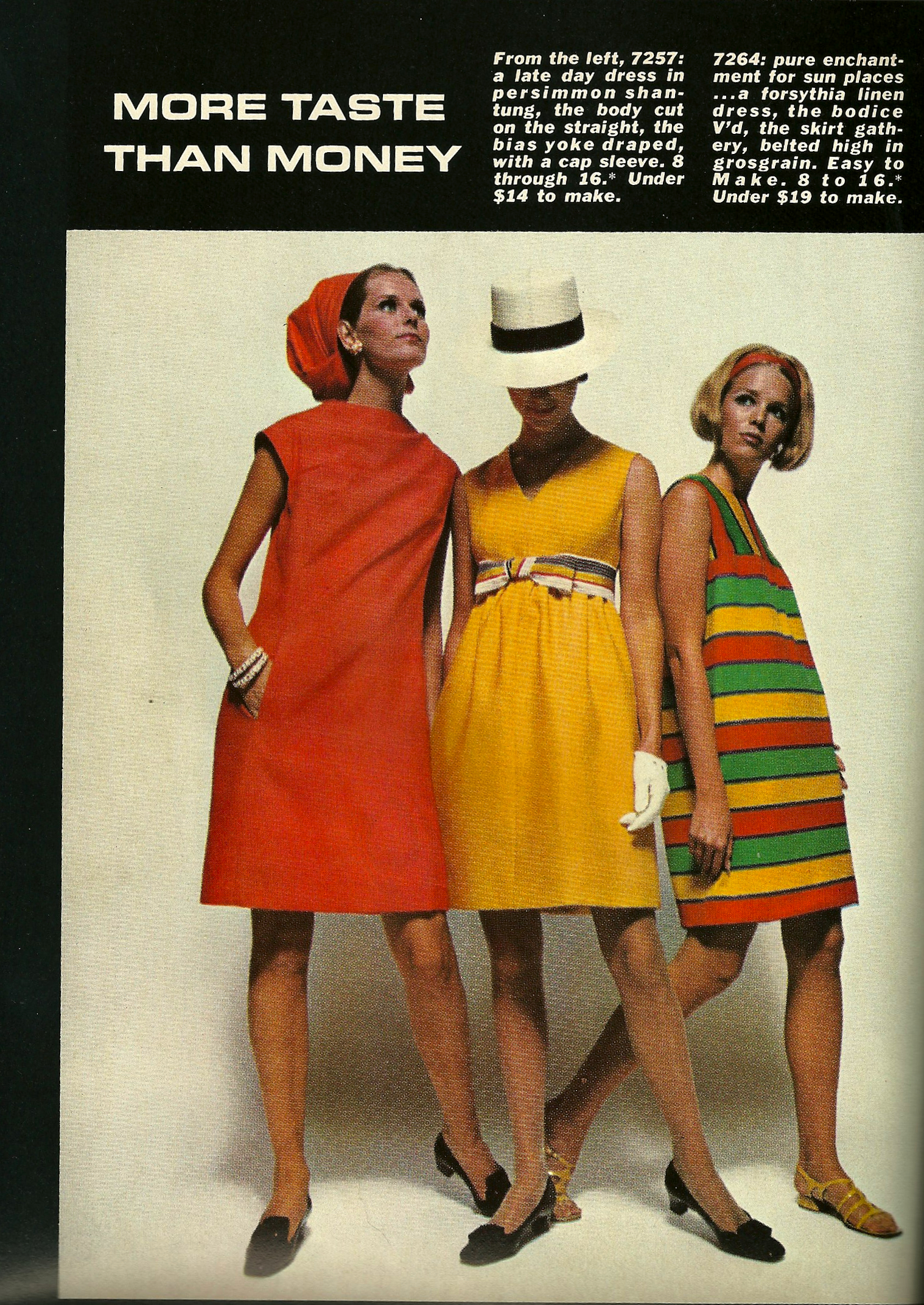
"... pure enchantment for sun places ... a forsythia linen dress ..."  and the source information in the back of this Vogue Pattern Book Magazine from February/March, 1968 credits Moygashel as the brand of linen.

“… pure enchantment for sun places … a forsythia linen dress …” and the source information in the back of this Vogue Pattern Book Magazine from February/March, 1968 credits Moygashel as the brand of linen.
Seeing an entire dress made out of the forsythia linen helped me to feel confident about having such a bright color as the bodice part of my planned dress.  As I stated in my last post, I decided to use the bodice from this early ‘60s’ Vogue pattern, pairing it with a slim skirt and a belt.

The neckline dips down to a slightly curved V, with a center seam.

The neckline dips down to a slightly curved V, with a center seam.

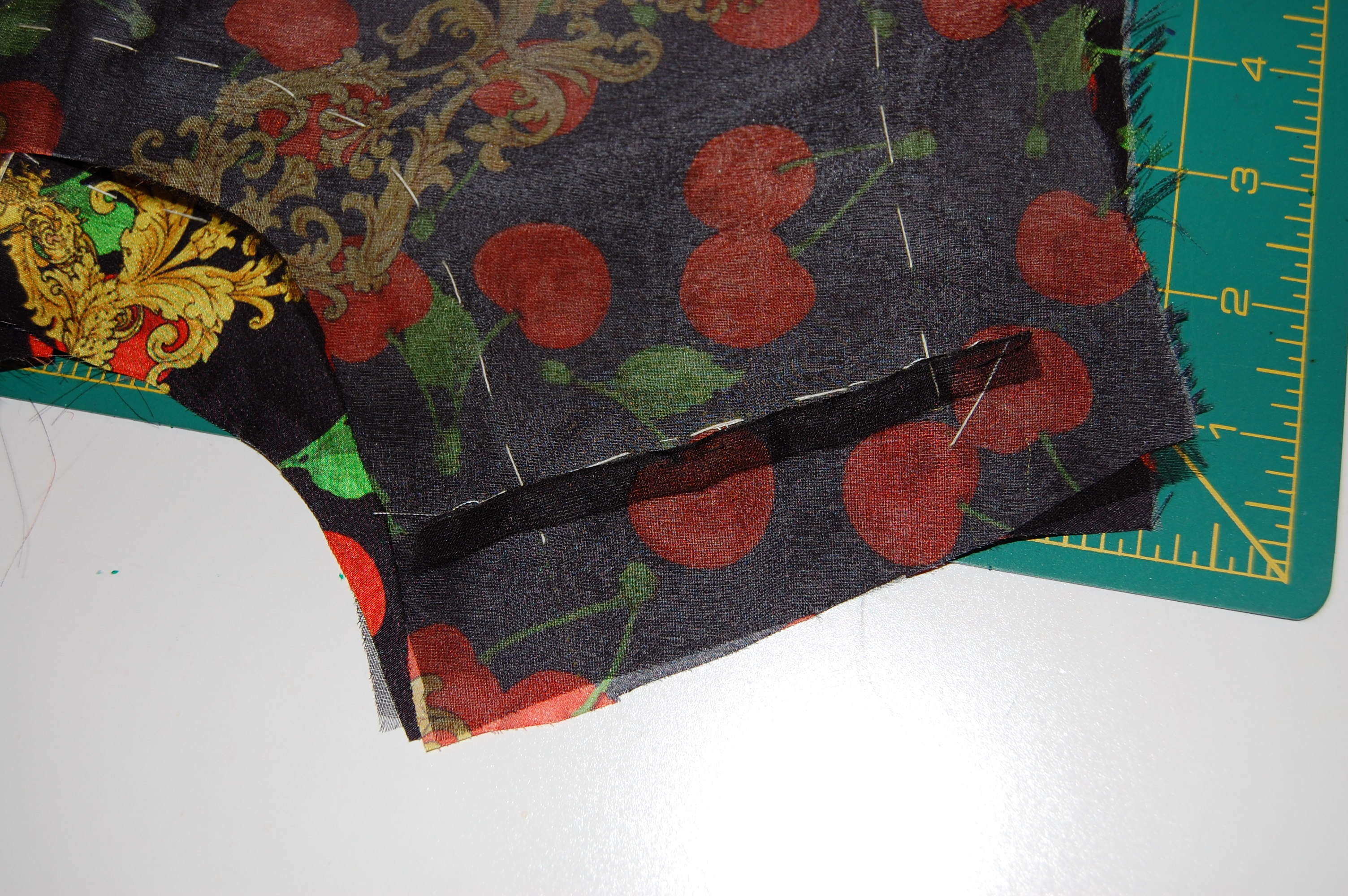
As this would be a dressier type of frock, and because I know how foolproof couture construction is (with silk organza underlining and crepe de chine lining), I proceeded using those techniques. The facings on the V-shape of the bodice front and back were cut as part of the pattern, instead of being separate pieces. I followed the instructions to reinforce the edges of the fold with ¼” twill tape.

I basted the twill tape just to the outside of the fold line on the "all-in-one" facing.

I basted the twill tape just to the outside of the fold line on the “all-in-one” facing.  This is the back bodice.

And this is the front bodice, showing the deep V and the center seam.

And this is the front bodice, showing the deep V and the center seam.

Normally, couture construction does not use facings, but in this application, they were indispensible. Then the rest of the dress proceeded without a hitch.

Here is the dress turned inside out.  I used a forsythia-yellow zipper as i thought it more important to match the bodice than the skirt of the dress.

Here is the dress turned inside out. I used a forsythia-yellow zipper as I thought it more important to match the bodice than the skirt of the dress.

Here is the shoulder with the crepe de chine fell-stitched and understitched in place around the shouilder.  Note the lingerie stay made with a folded piece of Hug Snug Rayon woven tape.

Here is an inside look at the crepe de chine fell-stitched and understitched in place around the shouilder. Note the lingerie stay made with a folded piece of Hug Snug rayon woven tape.

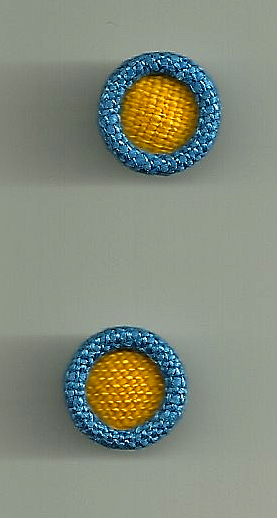
About halfway through the construction of the dress, I got the idea to have decorative buttons made – to compliment the front V of the neckline.

I sent scraps of my fabric off to Pat Mahoney in California to have these buttons made.  Sadly, Pat is retiring from her business at the end of August...

I sent scraps of my fabric off to Pat Mahoney in California to have these buttons made. Sadly, Pat is retiring from her business at the end of August…

I actually was not sure I was going to use them until I had finished the dress, but I think they add just the right amount of detail.

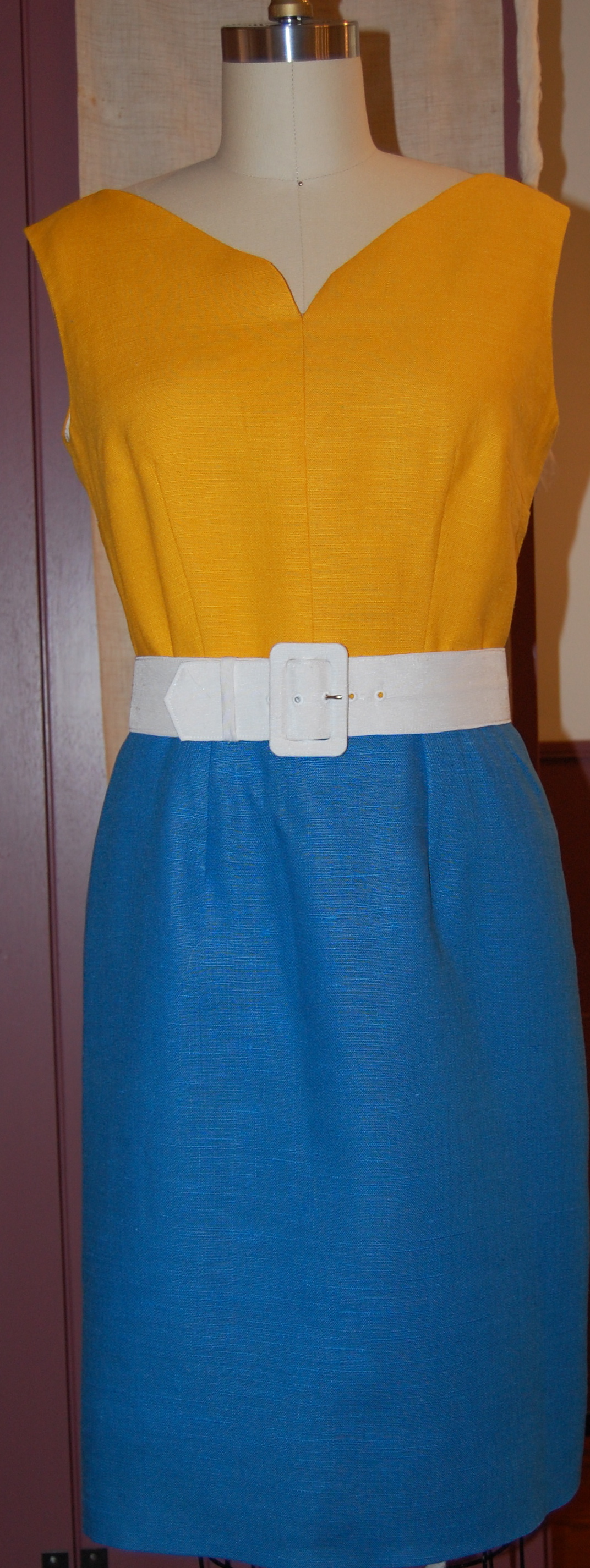
Here is the dress without the buttons . . .

Here is the dress without the buttons . . .

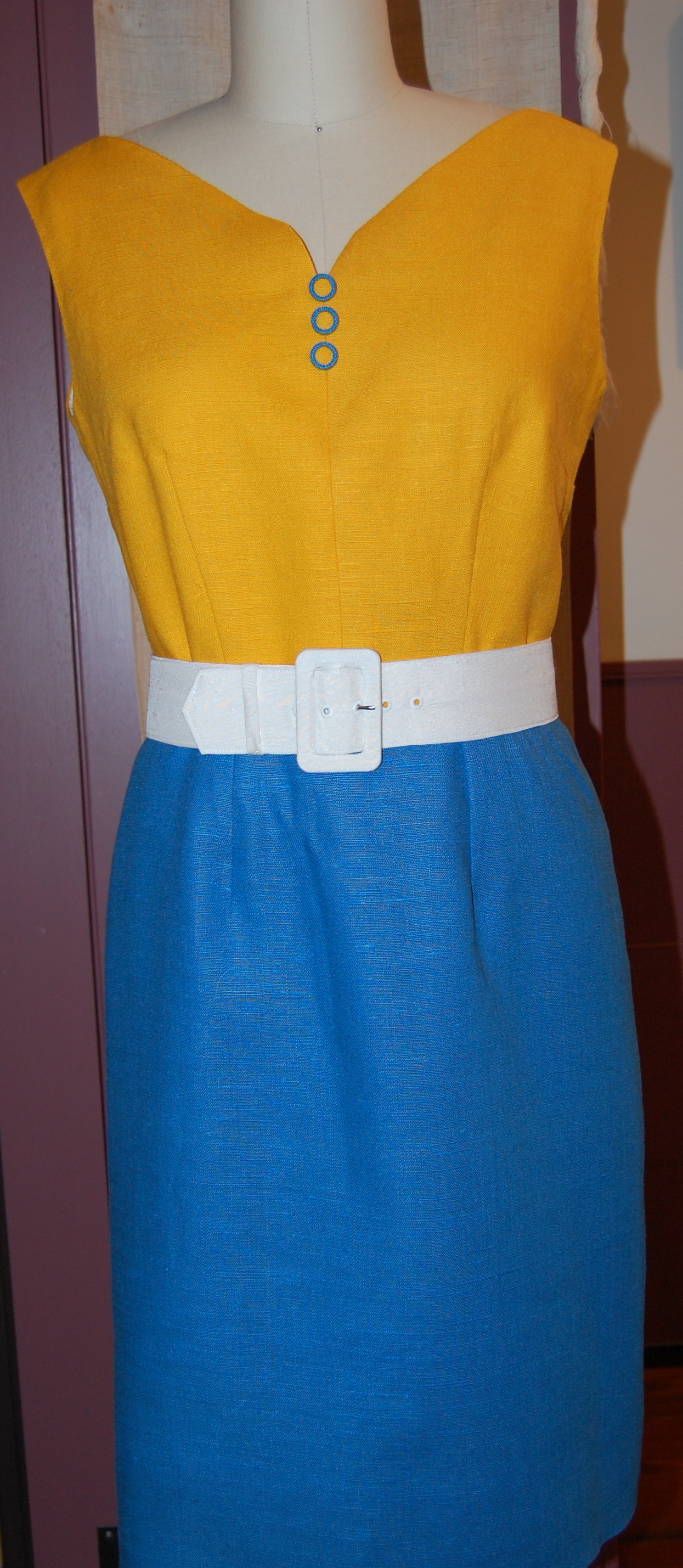
. . . and here is the dress with the buttons.  What do you think?  With or without?

. . . and here is the dress with the buttons. What do you think? With or without?

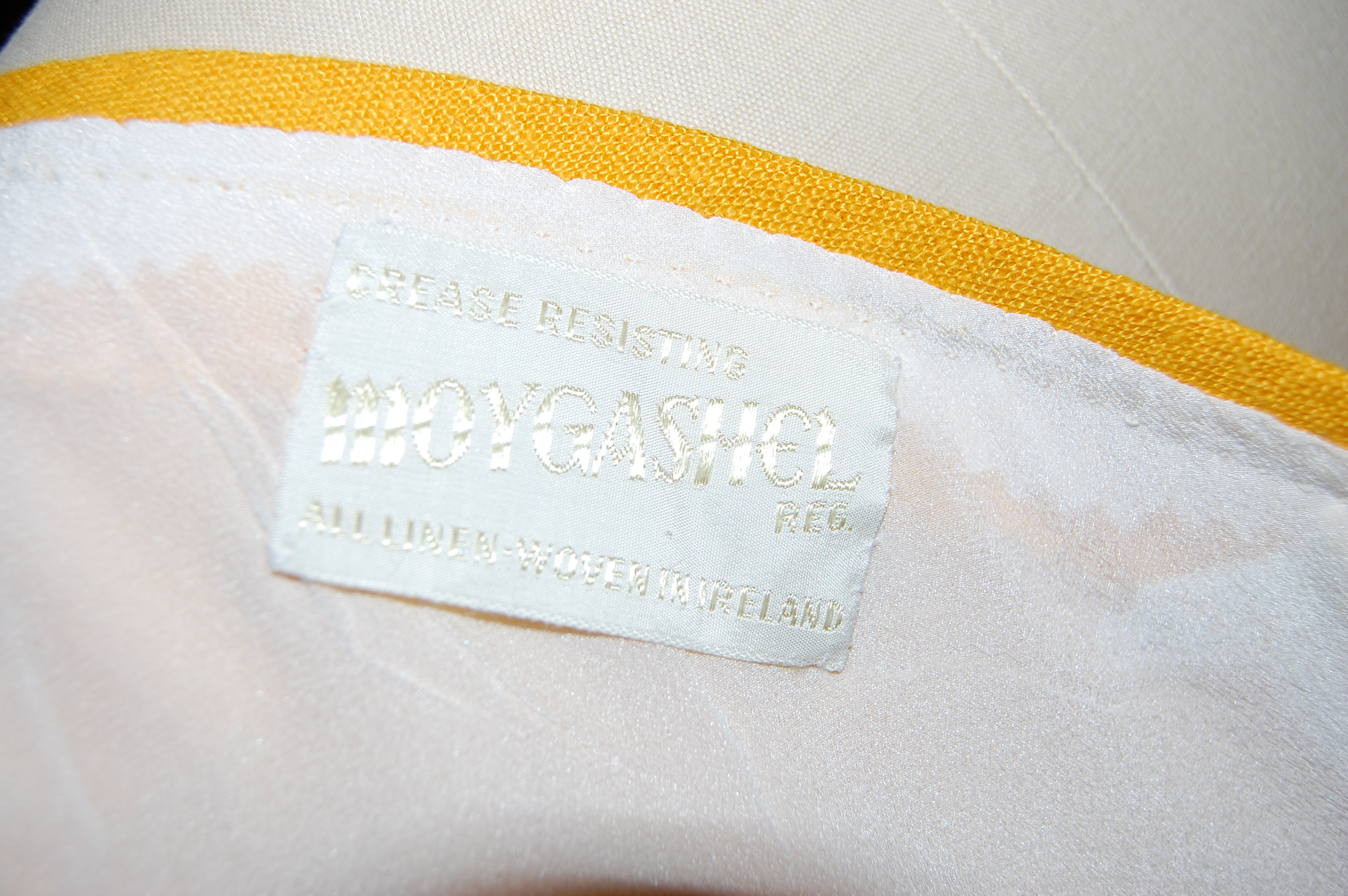
Another detail I was happy to add was the Moygashel linen label which had been attached to the forsythia yellow linen yardgoods.

I attached the label inside the back neckline.

I attached the label inside the back neckline.

The belt is also a Pat Mahoney product, made from a silk dupioni.

The belt is also a Pat Mahoney product, made from a silk dupioni.

All about the shoes

All about the shoes

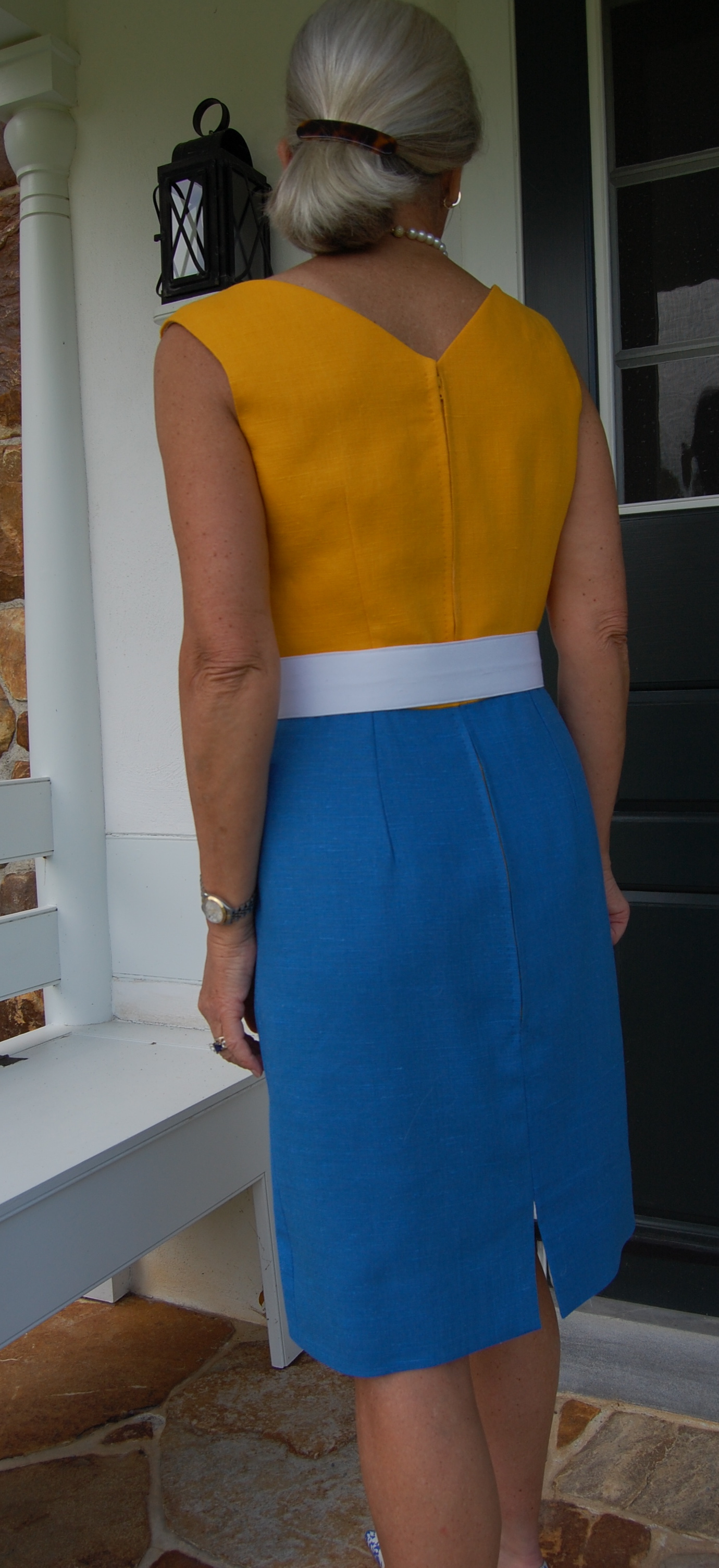
I like the V-ed back!

I like the V-ed back!

Love those shoes!

Love those shoes!

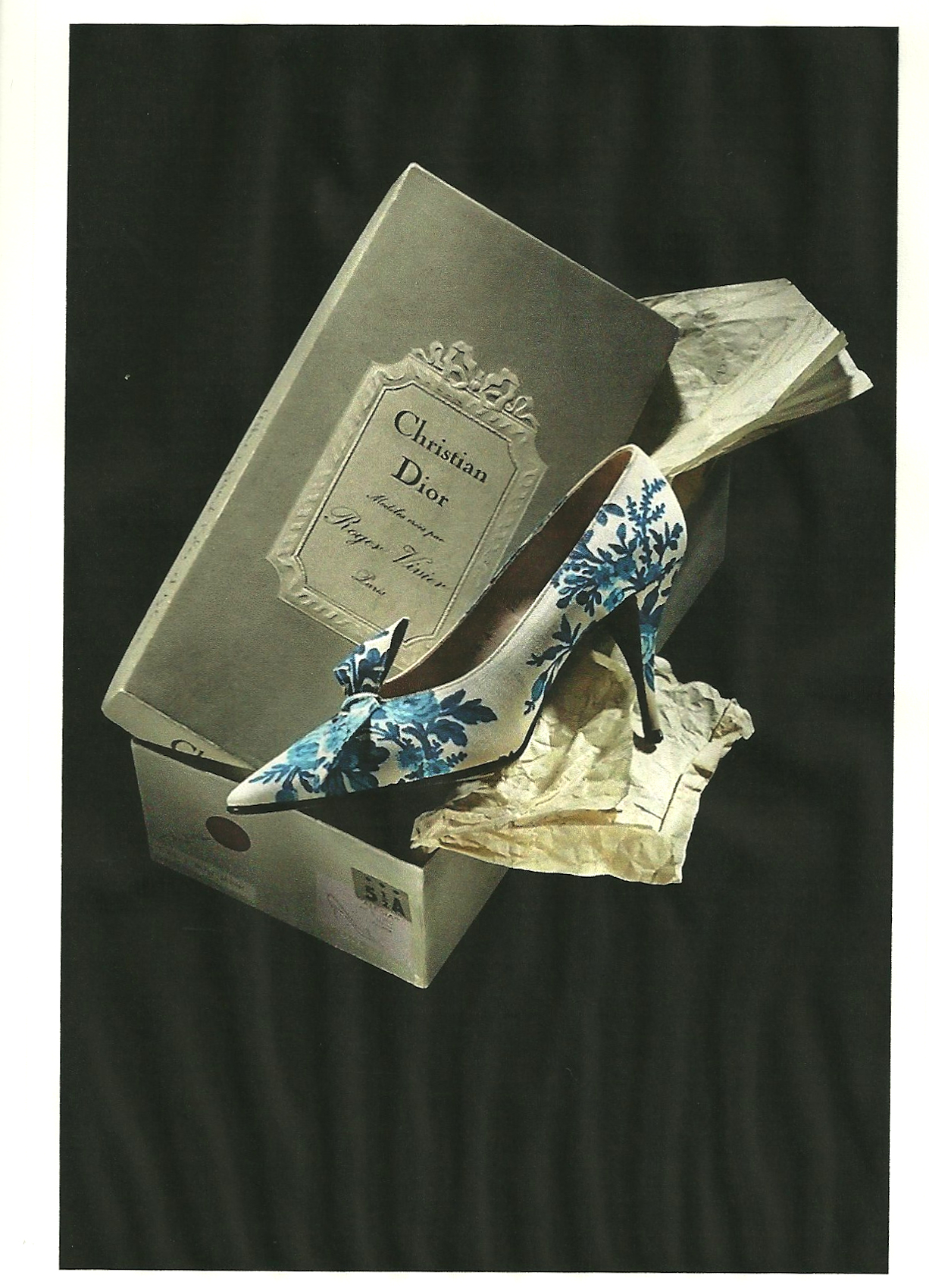
To me, this dress is reminiscent of a 1950s’ “wiggle dress” – although I added a back slit so that I can walk easily, which I guess would have been “cheating” in the 1950s! I was delighted to make another 1950s’ connection when I saw this pair of Roger Vivier shoes for Christian Dior on Pinterest:

All about the shoes - Pinterest pin

The similarities with my shoes are remarkable! Now that I have one dress perfectly suited for my Christian Dior-inspired shoes, I will be looking for other “perfect pairings”. Who knows what fabric treasures will present themselves next Spring or Summer for just such an undertaking?


44 Comments

Filed under Buttons - choosing the right ones, couture construction, hand-sewn zippers, Linen, Moygashel linen, Shoes to make an outfit complete, The Conde Nast Publications, Uncategorized, underlinings, Vintage fabric, vintage Vogue patterns from the 1960s

The Long and Mysterious Journey of Sandhurst 121

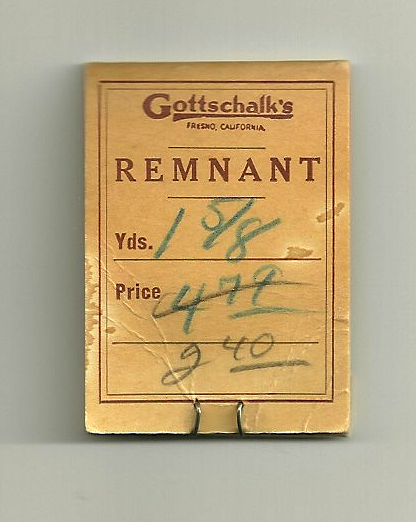
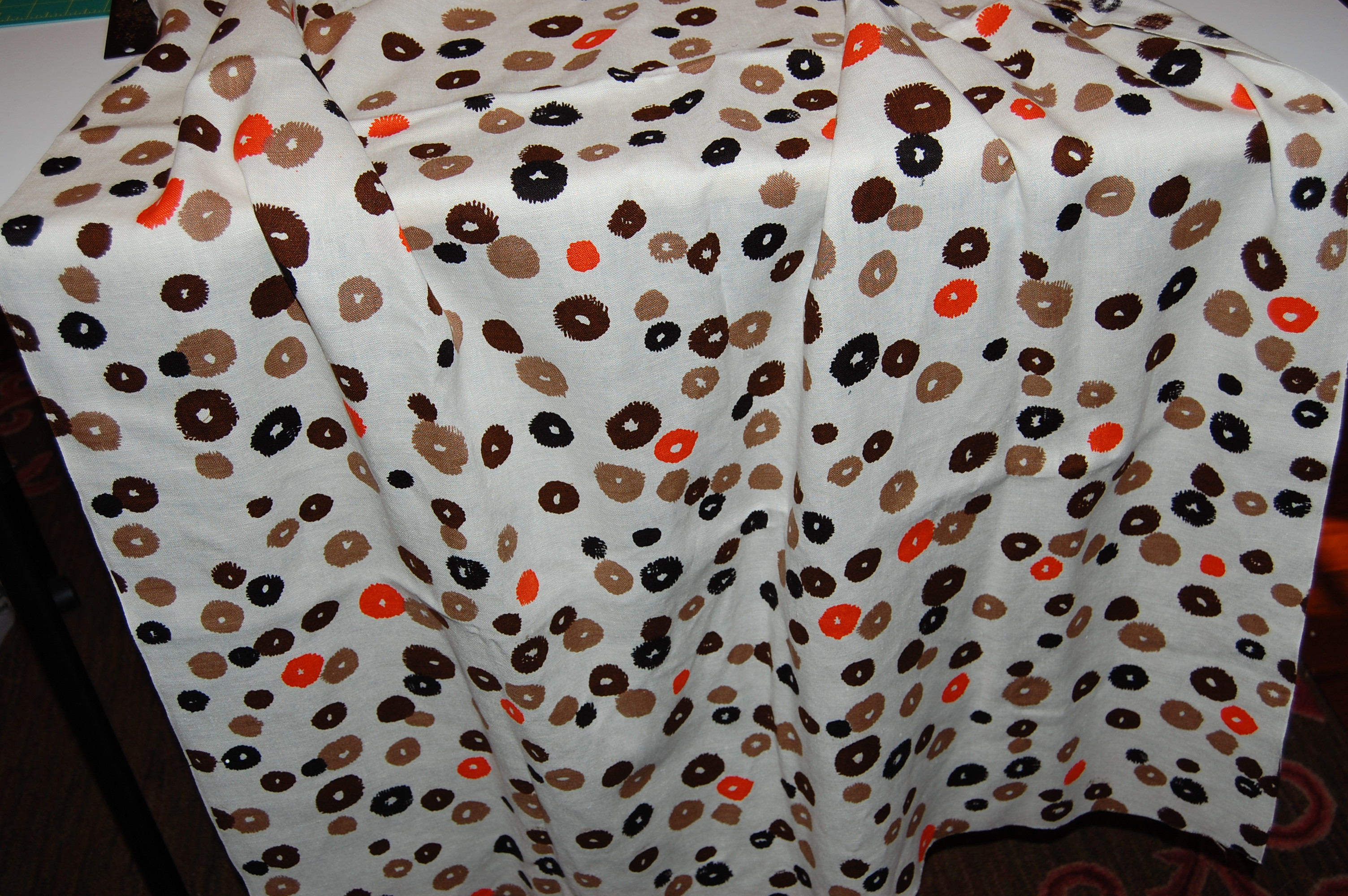
When the piece of linen I had purchased arrived in the mail, I was not sure what to expect. I had bought it with the hope that it was, indeed, a piece of Moygashel linen, but I had nothing to go on except an educated hunch. I knew it was an early piece of fabric, as its width was 35”, a common width for pre-1960’s dress-goods. I liked the design in the photo from which I made my decision, although it was not a colorway to which I normally gravitate. Upon opening the package, I found the only identifying mark on the fabric to be this tag:

Gottshalk's in Fresno, California obviously sold fine fabrics.

Gottschalk’s in Fresno, California obviously sold fine fabrics.

This short length of fabric had been on the remnant table, and, being too good of a bargain to pass by, some home dressmaker in California (USA) scooped it up with all good intentions of making something out of it someday. It must have lived in a dark drawer somewhere, carefully buffered from stains and yellowing. It didn’t even have much of a crease in it. And so, after many years in dormancy, it arrived at my home in Pennsylvania. I knew immediately that it was a Moygashel linen. I could tell by the hand of the fabric, the unique, slightly funky design, and by its amazing survival virtually wrinkle-free.

Sandhurst 121

As I mentioned in a former post, my only dilemma was the scant yardage, combined with the narrow width. So, I stuck it in my fabric closet, to think about another day. One thing nagged at me, however. I really, really wanted to know what year it was from.

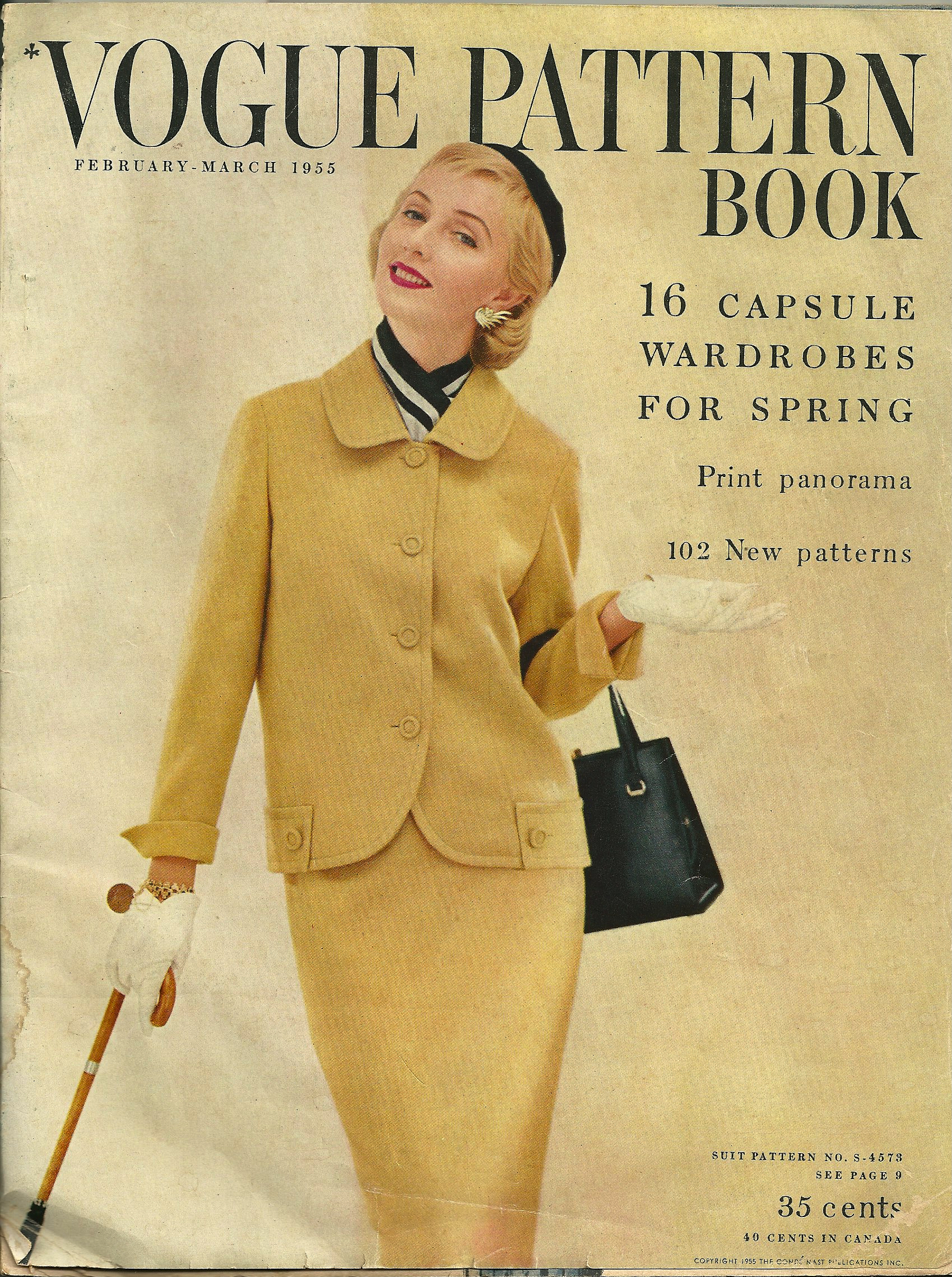
Over the past three years or so, I have had some luck in finding copies of old and older (1950-1980) Vogue Pattern Book Magazines. They are fascinating, and treasure troves of mid-century fashion as it relates to home sewing. I have tried to get a good cross-section of magazines from those three decades. One issue, which I tried a couple of times to get – and did not (on eBay) – finally became available to me. I loved the suit on the cover, and those mid-fifties styles are just so chic, even though most Vogue patterns from that time period were unprinted, and therefore, very difficult to use. (By 1957, Vogue was starting to produce many of their patterns in printed and perforated format.)

This is the February/March 1955 issue.

This is the February/March 1955 issue.

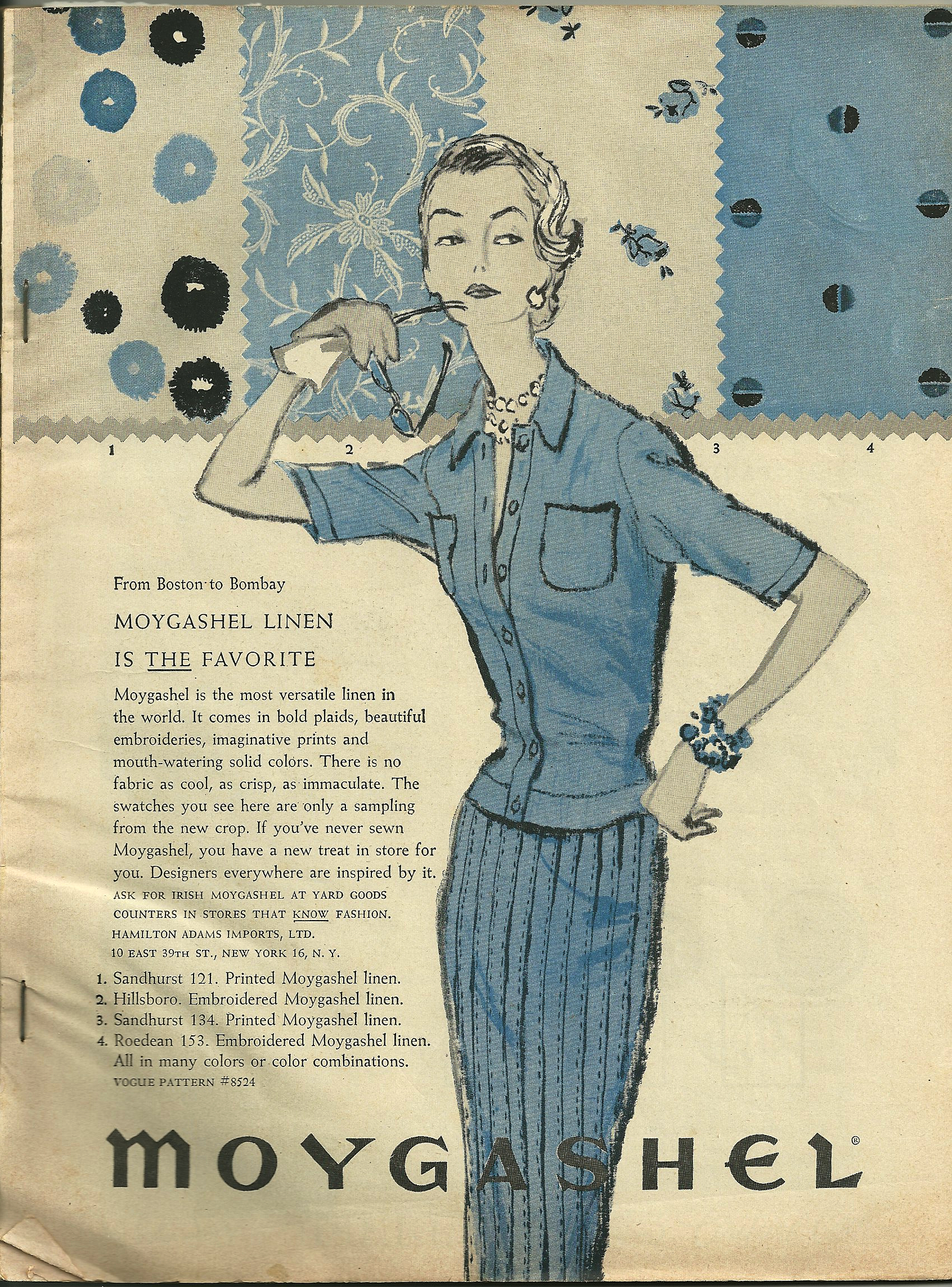
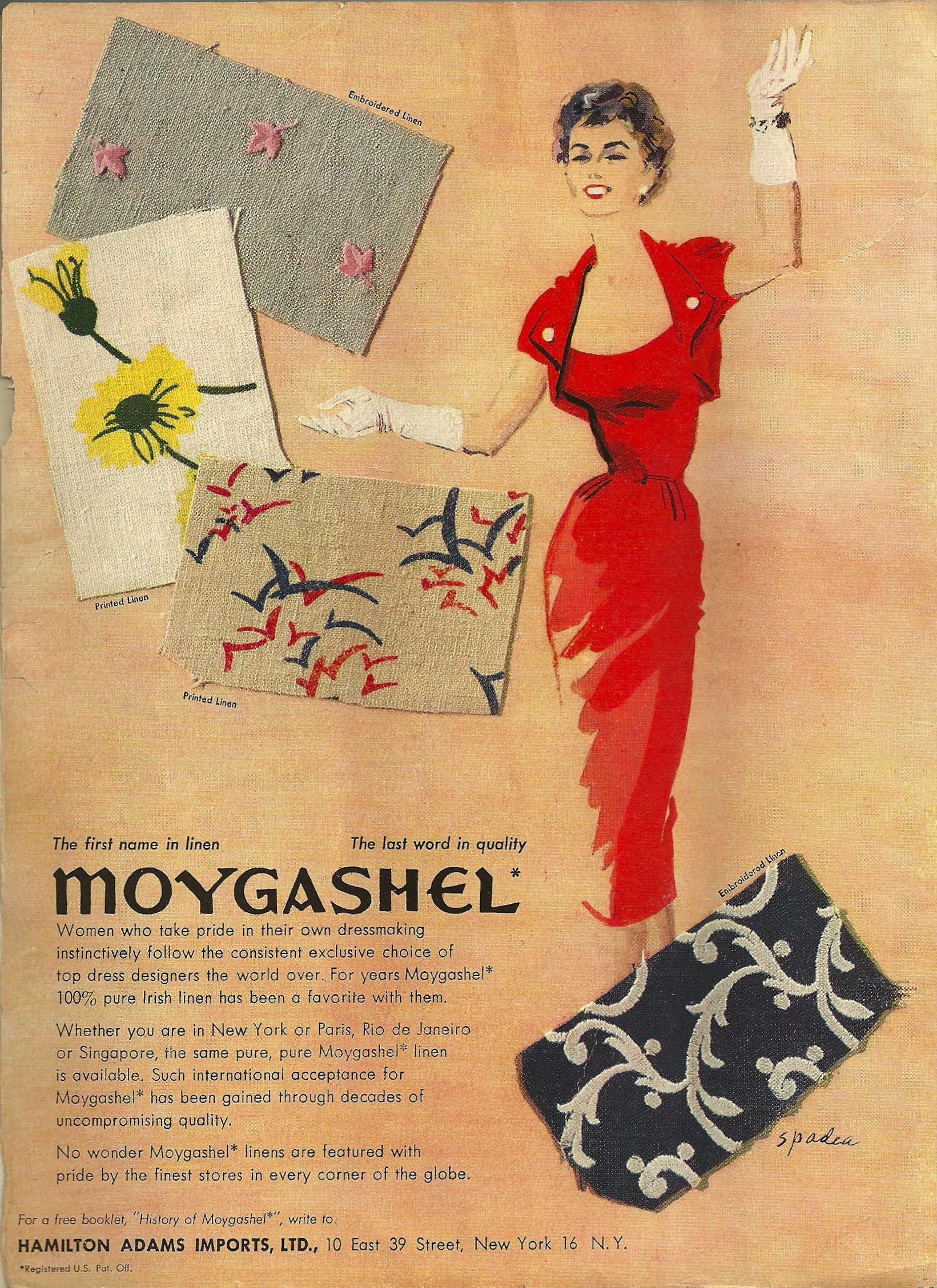
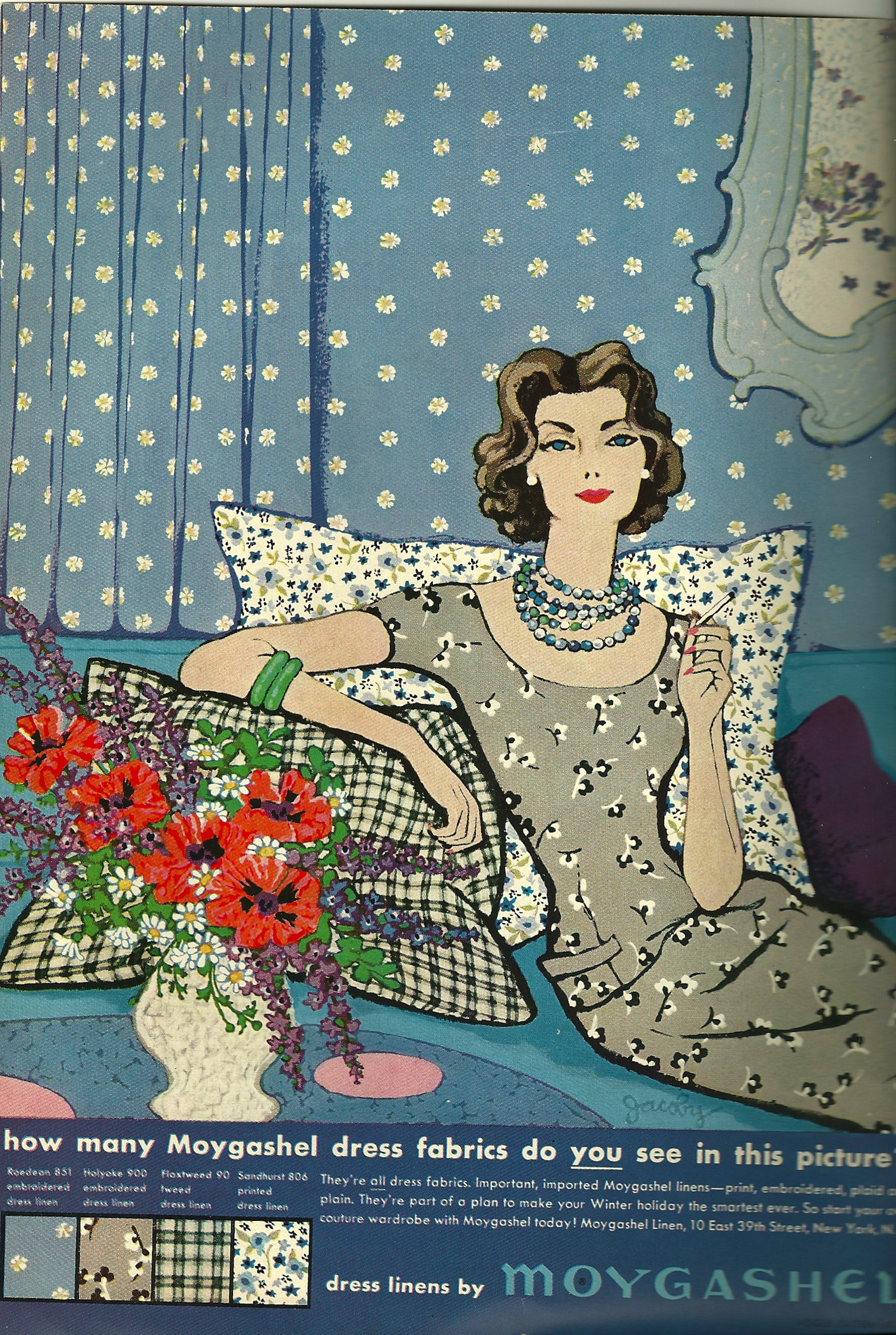
Perhaps you can see where I am going with this? I was looking through this particular issue once again in May of this year, and low and behold, a full-page ad for Moygashel linen clearly pictured “my” linen as one of their “new crop”. The colorway was different, but Moygashel was known for producing their fabrics “all in many colors or color combinations.” Maybe a lot of people wouldn’t get so excited about such a discovery, but I was ecstatic! Now I knew, for certain, that the linen I had purchased made its debut in early 1955. (I would be turning 5 years old a little later that year!) I even had a name for it now – Sandhurst 121. I suddenly very much wanted to sew this linen, this Summer!

There is my linen in the upper left hand corner of the full-page advertisement.

There is my linen in the upper left hand corner of the full-page advertisement.

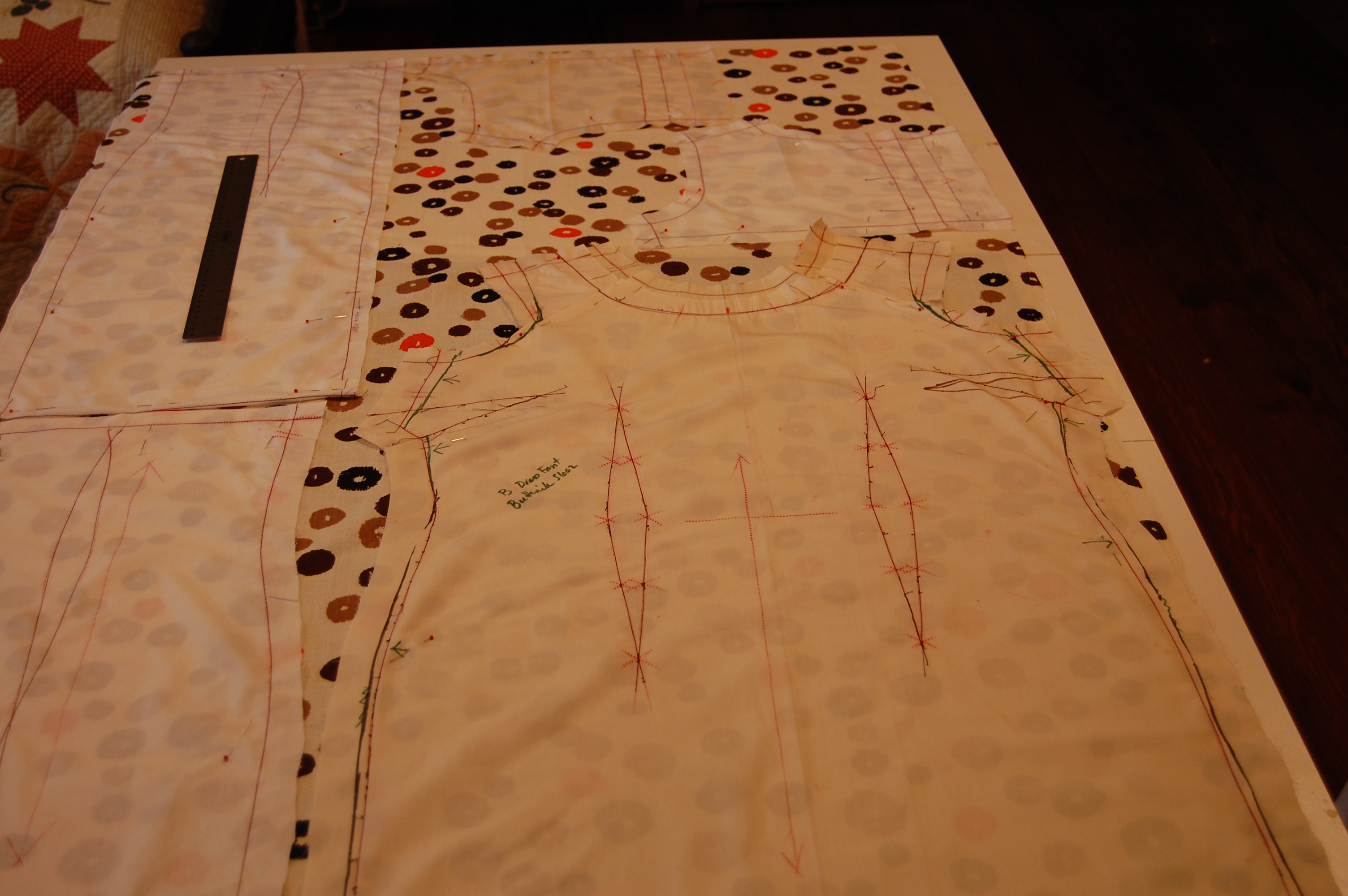
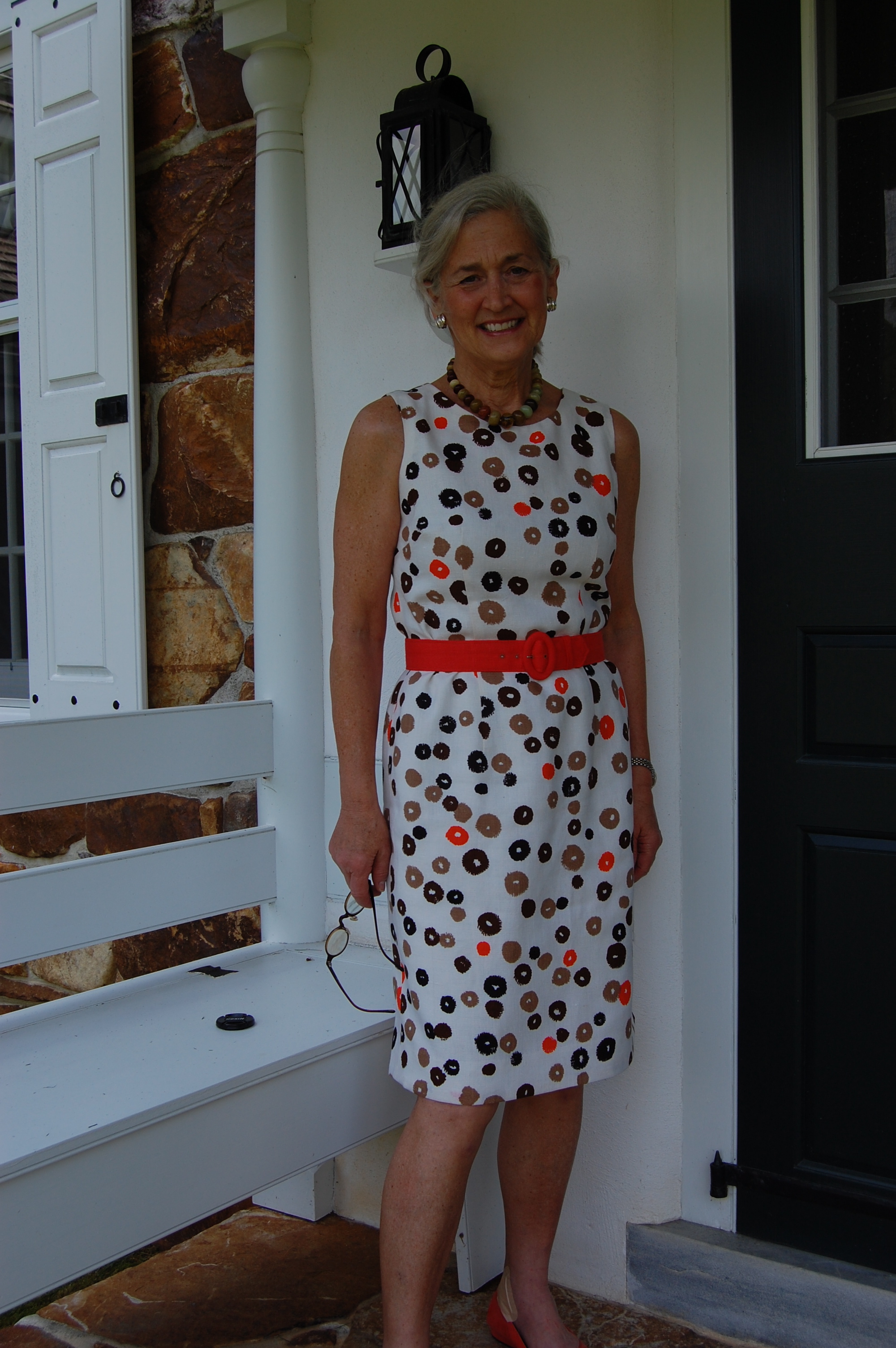
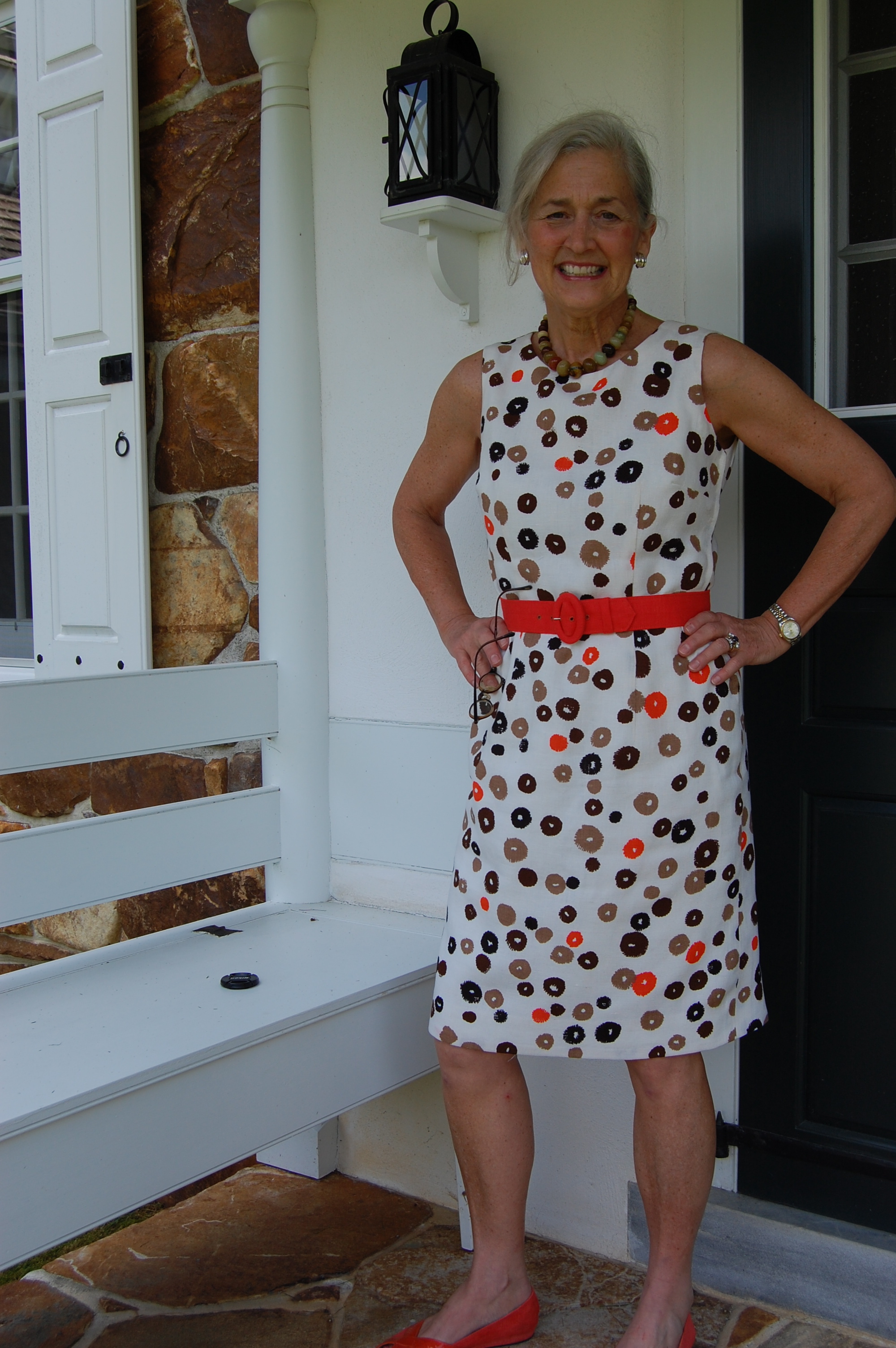
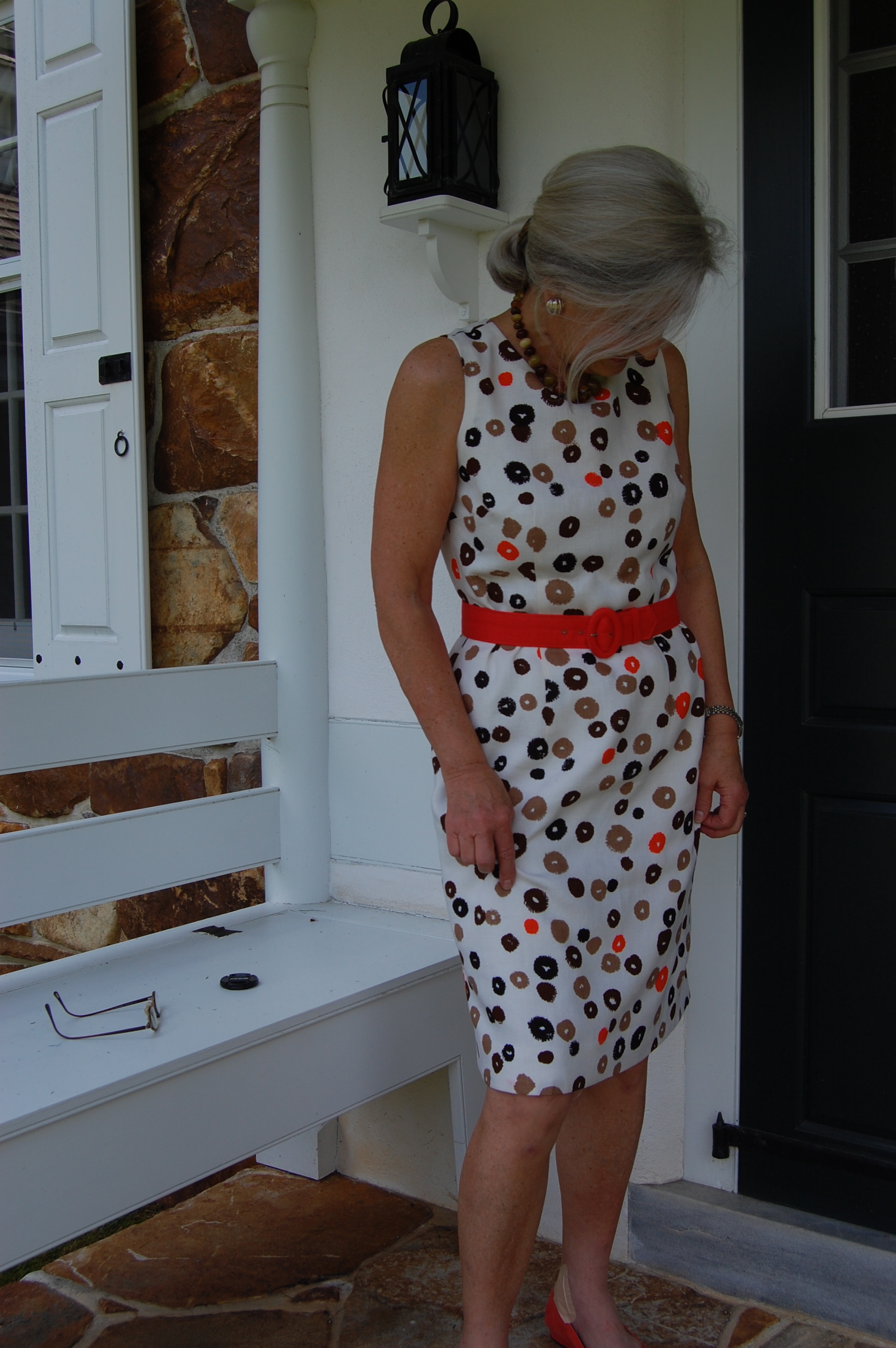
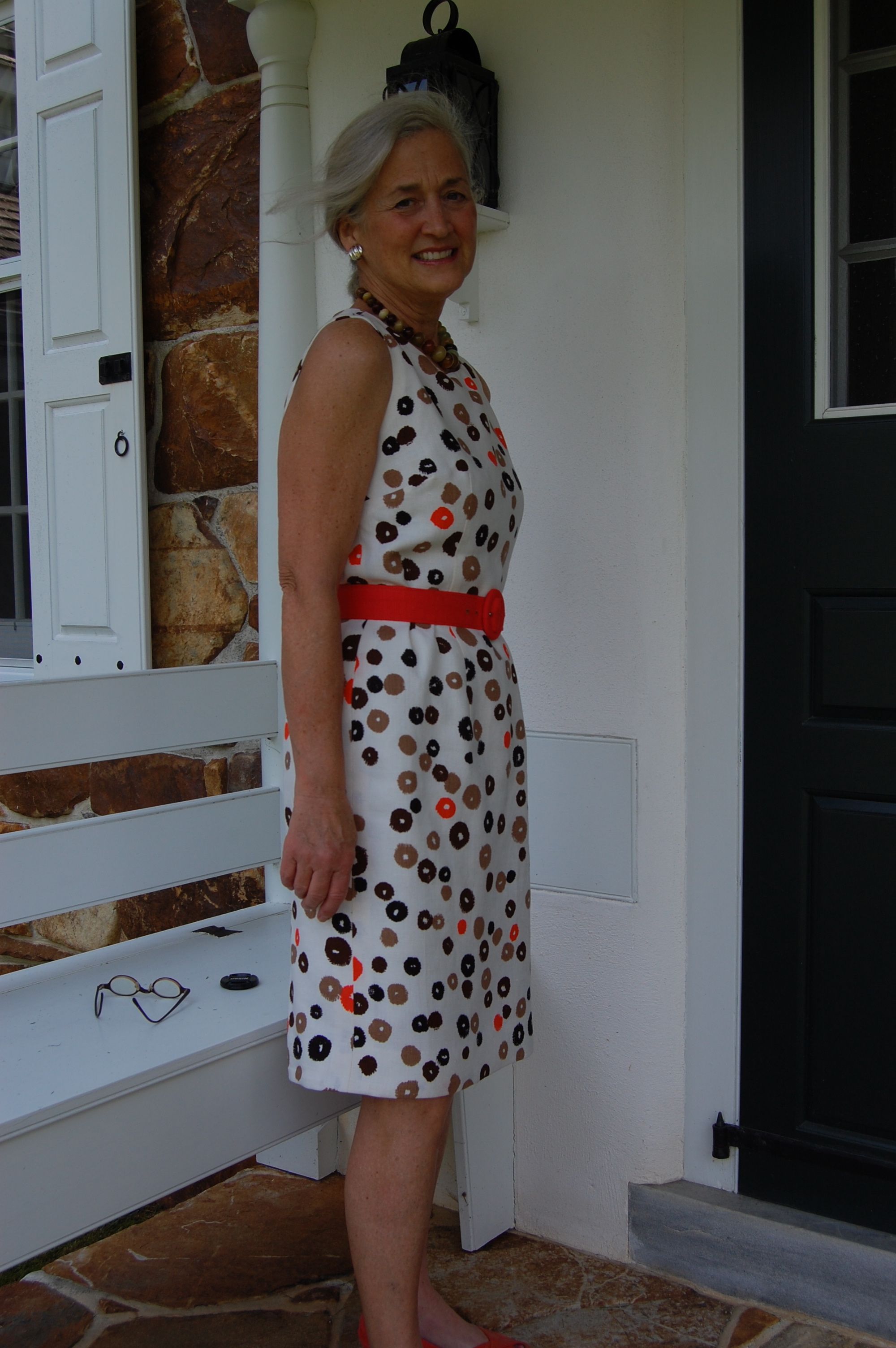
By now, many of you know that I determined to make a sheath dress out of this scant yardage of fabric, and in order to do so, I had to reconfigure my sheath dress pattern to include a back yoke. Here’s the fabric layout, which hopefully will show how sectioning the back enabled me to fit the pattern on the available fabric:

The fabric is shown 35" flat on my cutting table.  The muslin pattern piece for the front of the dress is on the right, and the two shortened back pieces are lined up smack against each other on the left.  The yoke pieces then fit above the dress front.  I did not need facings, as I lined the entire dress in a light weight linen/cotton blend, and finished the neck and armholes all by hand.

The fabric is shown 35″ flat on my cutting table. The muslin pattern piece for the front of the dress is on the right, and the two shortened back pieces are lined up smack against each other on the left. The yoke pieces then fit on the fabric  above the dress front. I did not need facings, as I lined the entire dress in a light weight linen/cotton blend, and finished the neck and armholes all by hand.  I had to face the hem as I did not have enough fabric to do a self hem!

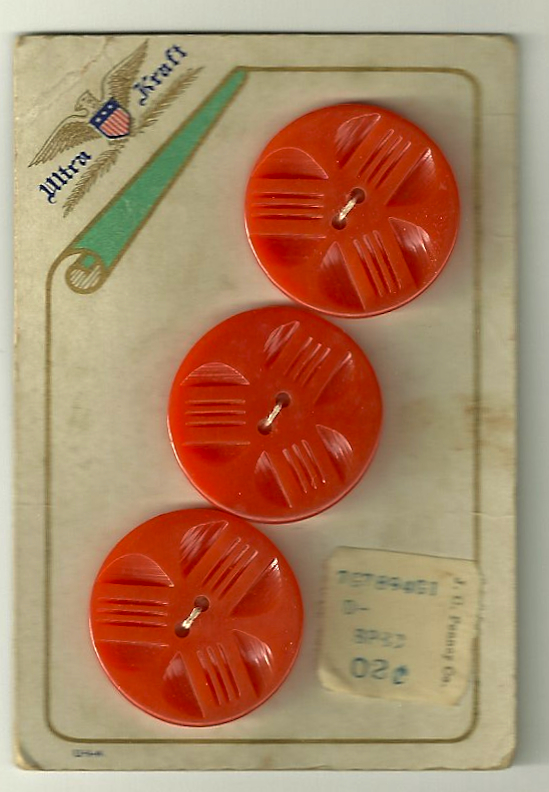
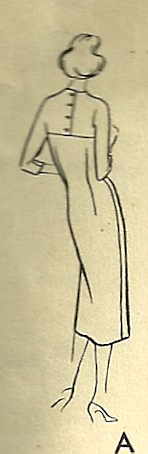
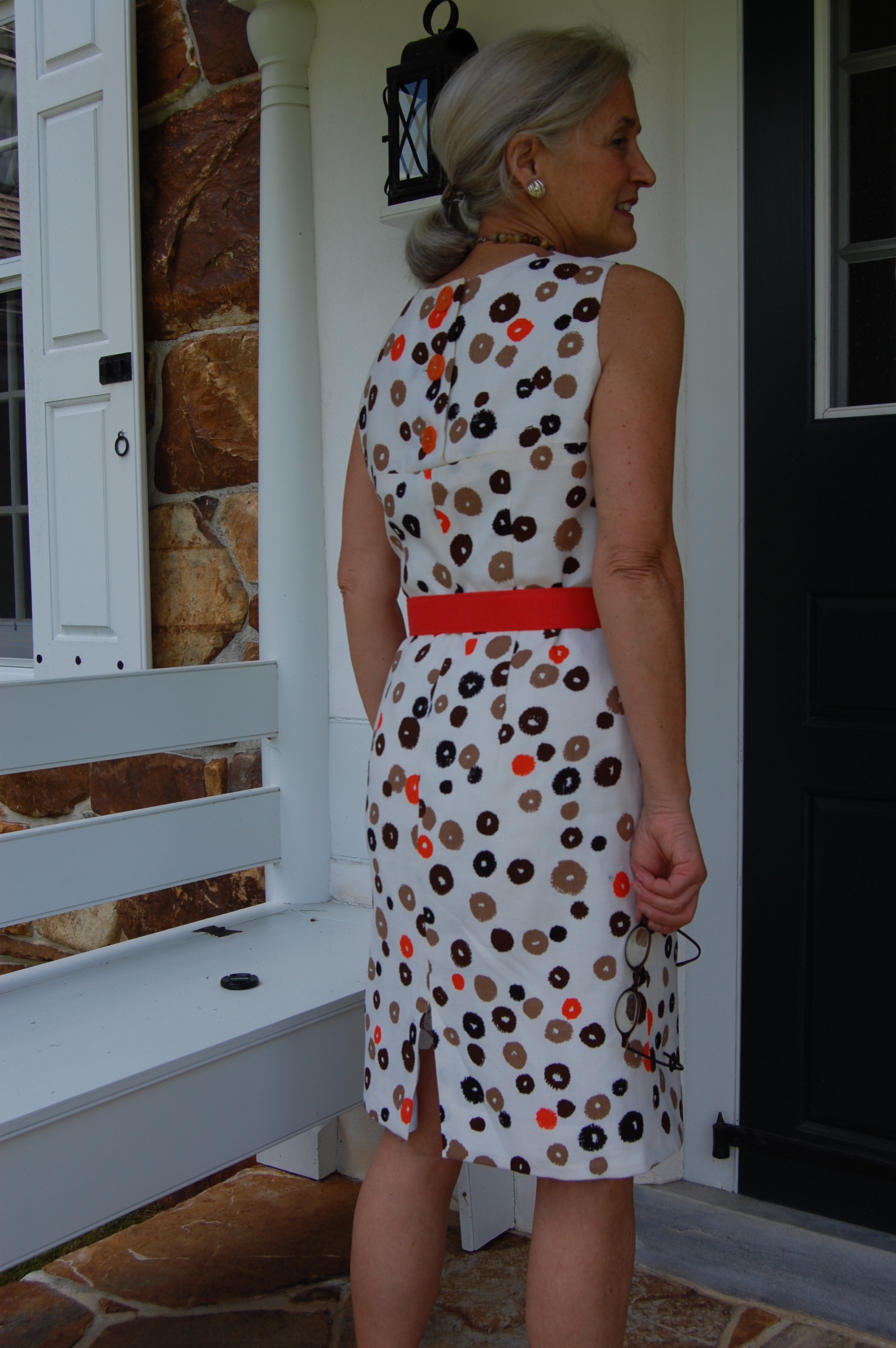
Many of you also know that fortune shone her happy face again on this project when I found three orange vintage buttons, which I knew would help make a back yoke far more interesting. I relied on a Vogue pattern from 1957, which has a back yoke to help me with this reconfigure.

This card of buttons cost 2 cents originally!  They seem to mimic the small orange explosions on the dress fabric.

This card of buttons cost 2 cents originally! They seem to mimic the small orange explosions on the dress fabric.  They may actually be even earlier than the fabric.

The yoke on this dress uses 4 buttons.  I only had three, but their large size still makes the proportions work well.

The yoke on this dress uses 4 buttons. I only had three, but their large size still makes the proportions work well.

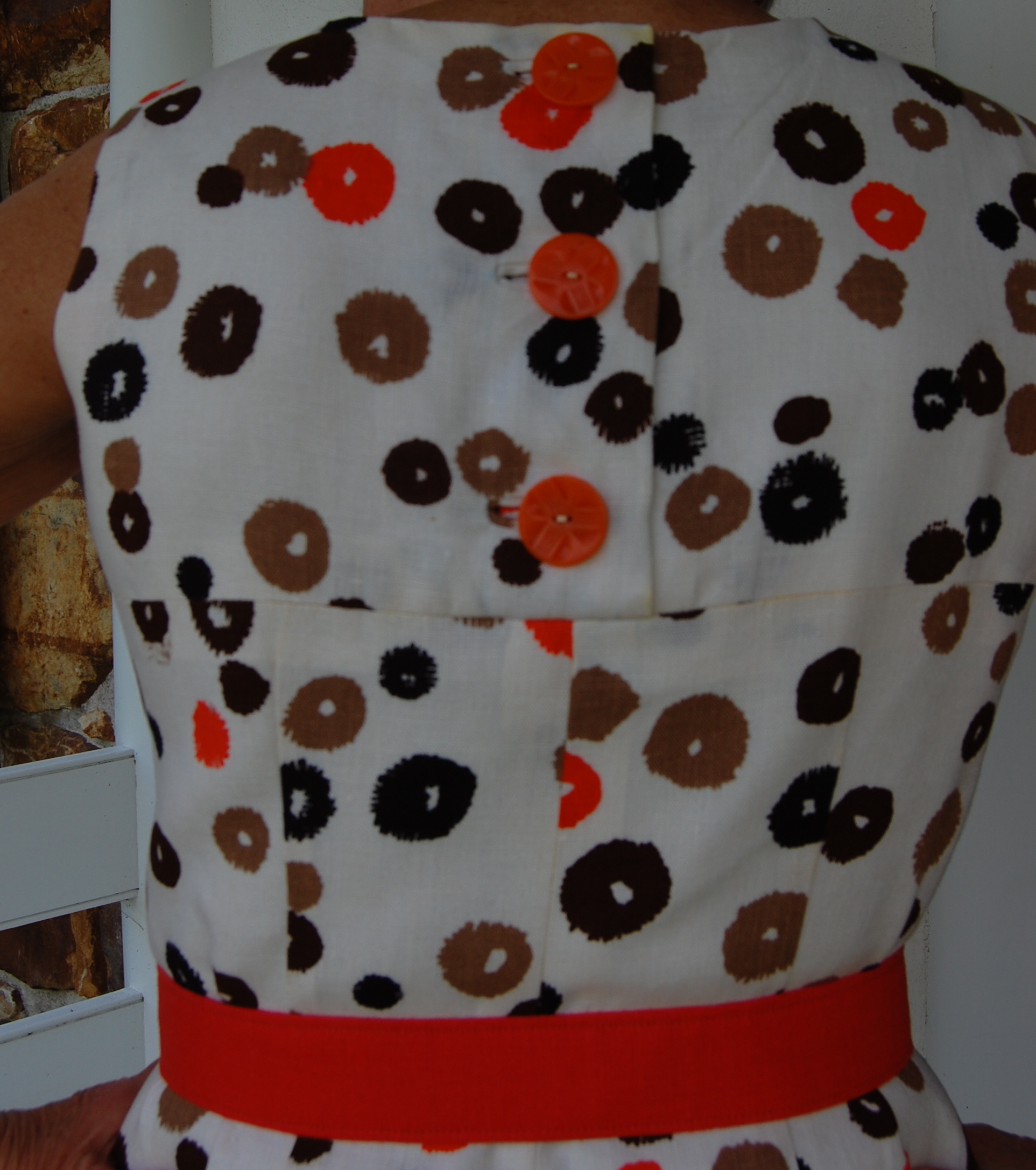
A close-up of the back of the dress.

A close-up of the back of the dress.  I made bound buttonholes – very 1950-ish!

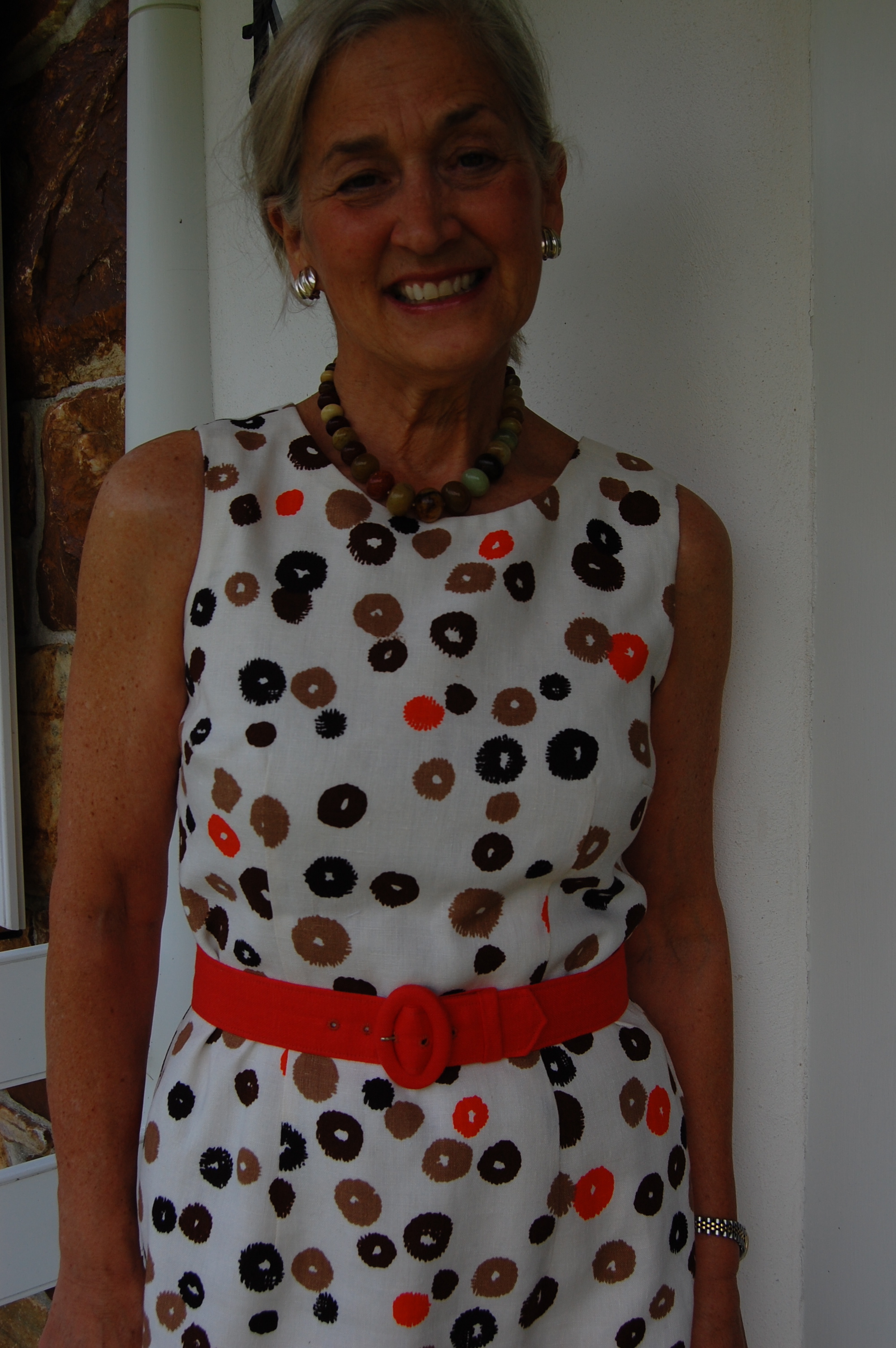
And then, another classic 1950s’ design detail worked right into this dress: I would need to move the zipper to the side in order for the back yoke to look correct. Now I will be the first to tell you that a side zipper is not as convenient as a back zipper, but it is a small sacrifice when everything else is enhanced by this placement.   After these obeisances to ‘50s’ style, I slipped right into 2014 with a bright orange, newly made belt, a widened jewel neckline, slightly cut-in shoulders, and a back slit to enhance comfort. I like to choose the best from the ‘50s, but I really don’t want to look like the 1950s.

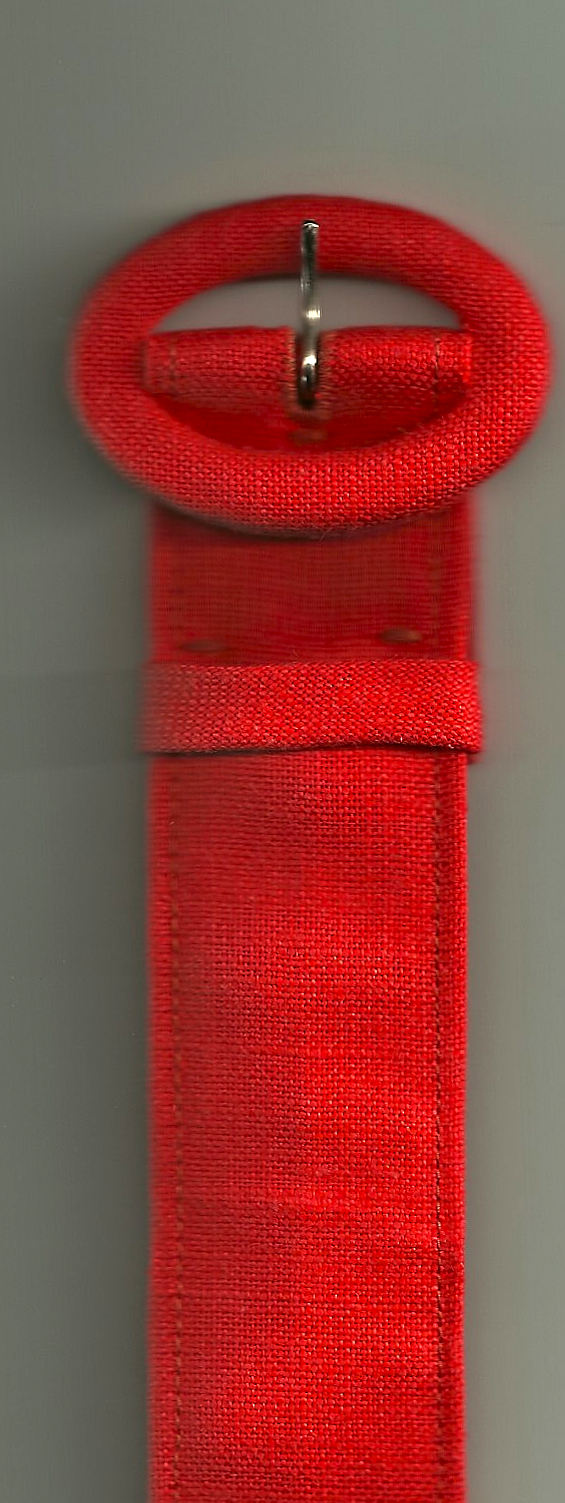
I sent new orange linen to Pat Mahoney of Pat's Custom Belts and Buttons  and this lovely belt came back to me in the mail.

I sent new orange linen to Pat Mahoney of Pat’s Custom Belts and Buttons and this lovely belt came back to me in the mail.

Cool and summery-looking, don't you think?

Cool and summery-looking, don’t you think?

Sandhurst 121

Sandhurst 121

Sandhurst 121

Sandhurst 121

Sandhurst 121

Not every dress can have a story, nor should it. But this fabric, which began its life in Ireland, no doubt entered this country through New York City, ordered by a store in Fresno, California, purchased and squirreled away for decades by persons unknown – has now found a starring role in my wardrobe almost 60 years later. Sewing is just so much fun!


37 Comments

Filed under bound buttonholes, Buttons - choosing the right ones, hand-sewn zippers, Linen, Love of sewing, Moygashel linen, Polka dots, side-placed zippers, The Conde Nast Publications, Uncategorized, Unprinted patterns from the 1950s, vintage buttons, Vintage fabric, vintage Vogue patterns from the 1950s

Sometimes It’s All About the Fabric

Great fabric – just like great art – can (and probably should) elicit an emotional response from an engaged viewer and/or potential purchaser. It’s a very individual preference, of course, influenced by sewing knowledge, intended purpose, wear-ability, one’s fashion style, and nostalgia.

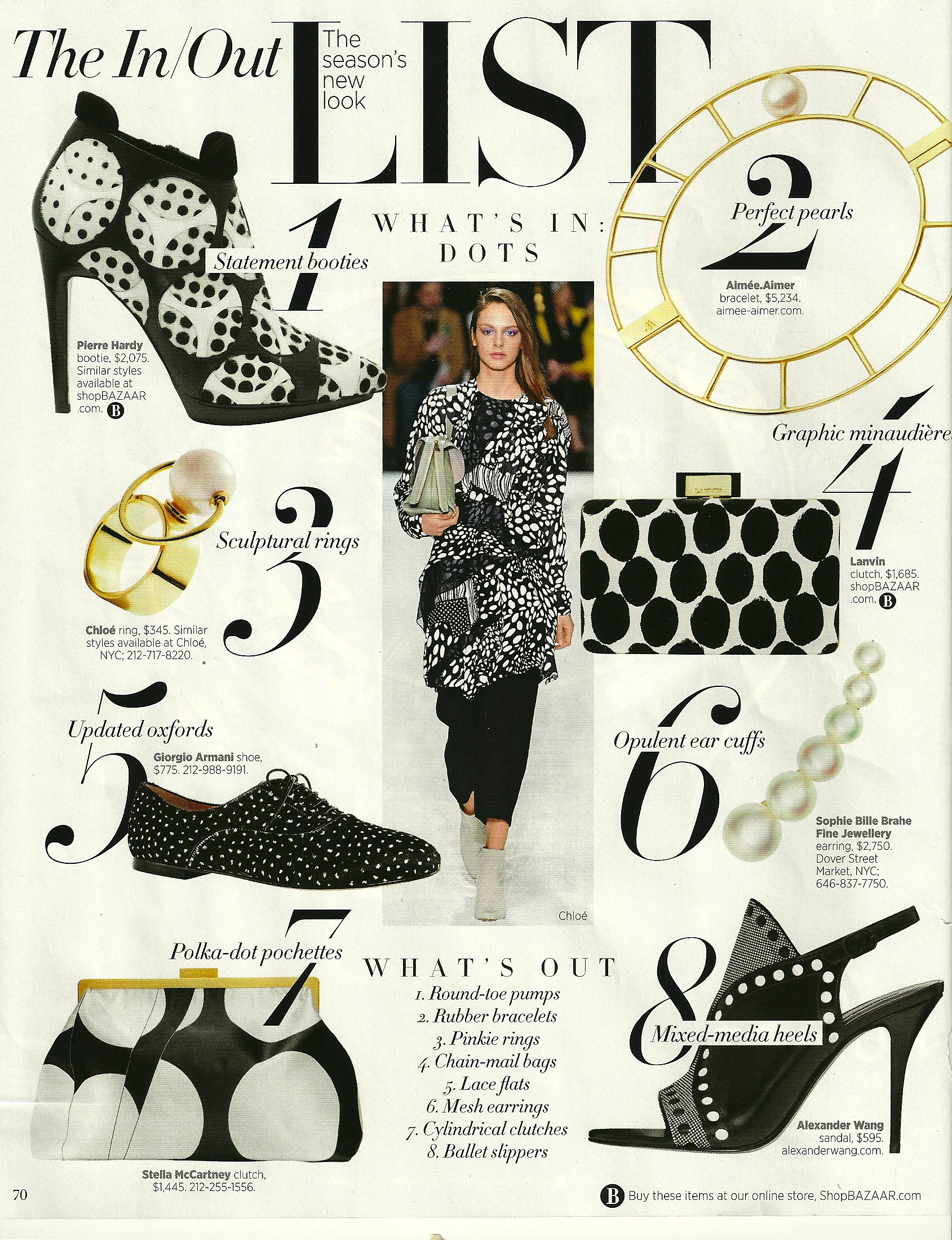
I freely admit to being nostalgic about polka dots. I have always loved them. And I have always been drawn to fabrics and fashions featuring dots, whether they be large, jumbo, small, tiny, or medium. In my fashion lexicon, they are never out of style, but it is always particularly rewarding to see dots featured as “fashion forward” – as in the July 2014 Harpers Bazaar.

Linen dotted dress - HB magazine

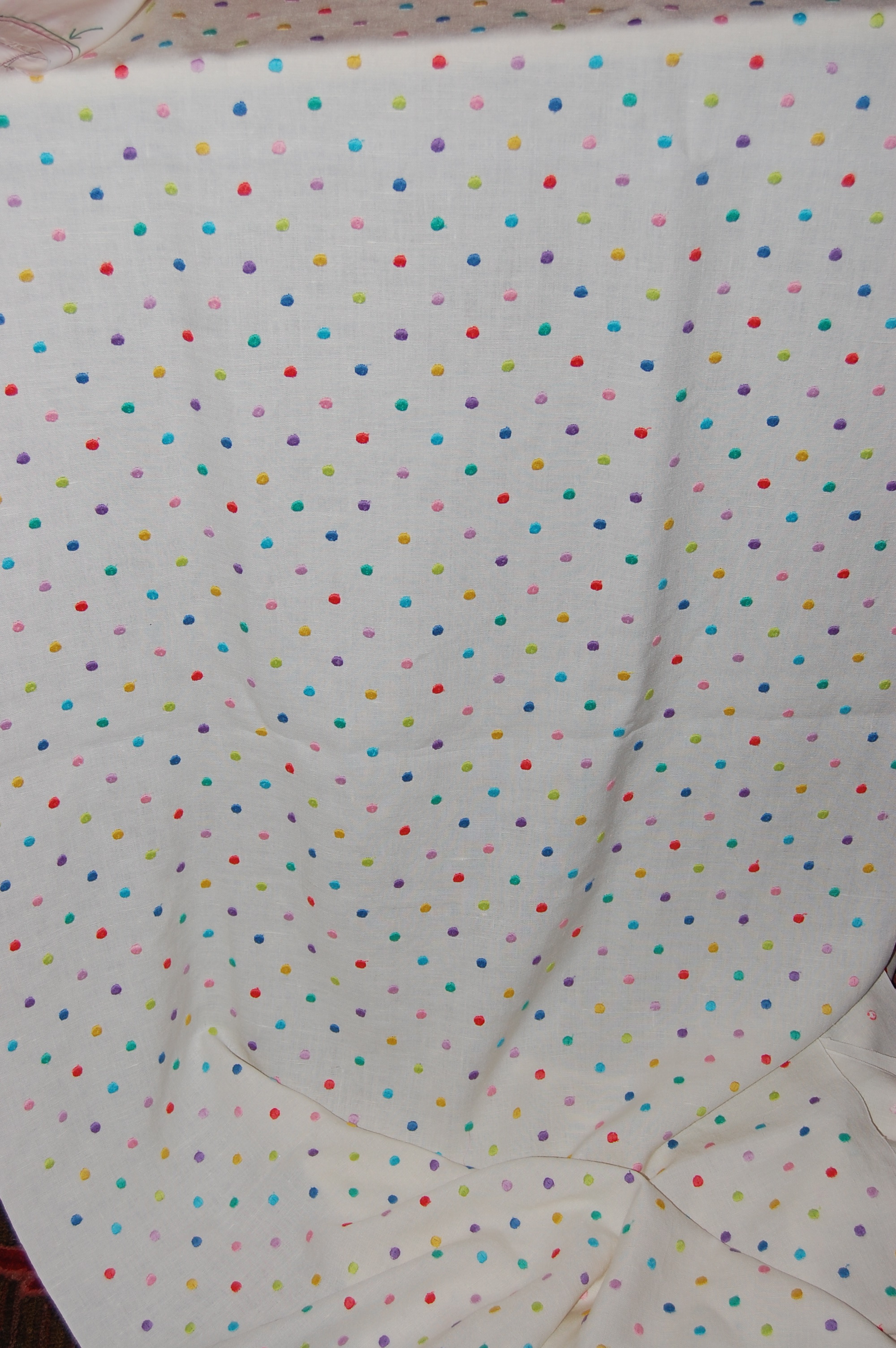
The dots I have been focusing on the last week or so, however, could tell those new dots a thing or two about fashion trends and durability. My beloved dots are probably celebrating their half-century mark, without a wrinkle to show for it!

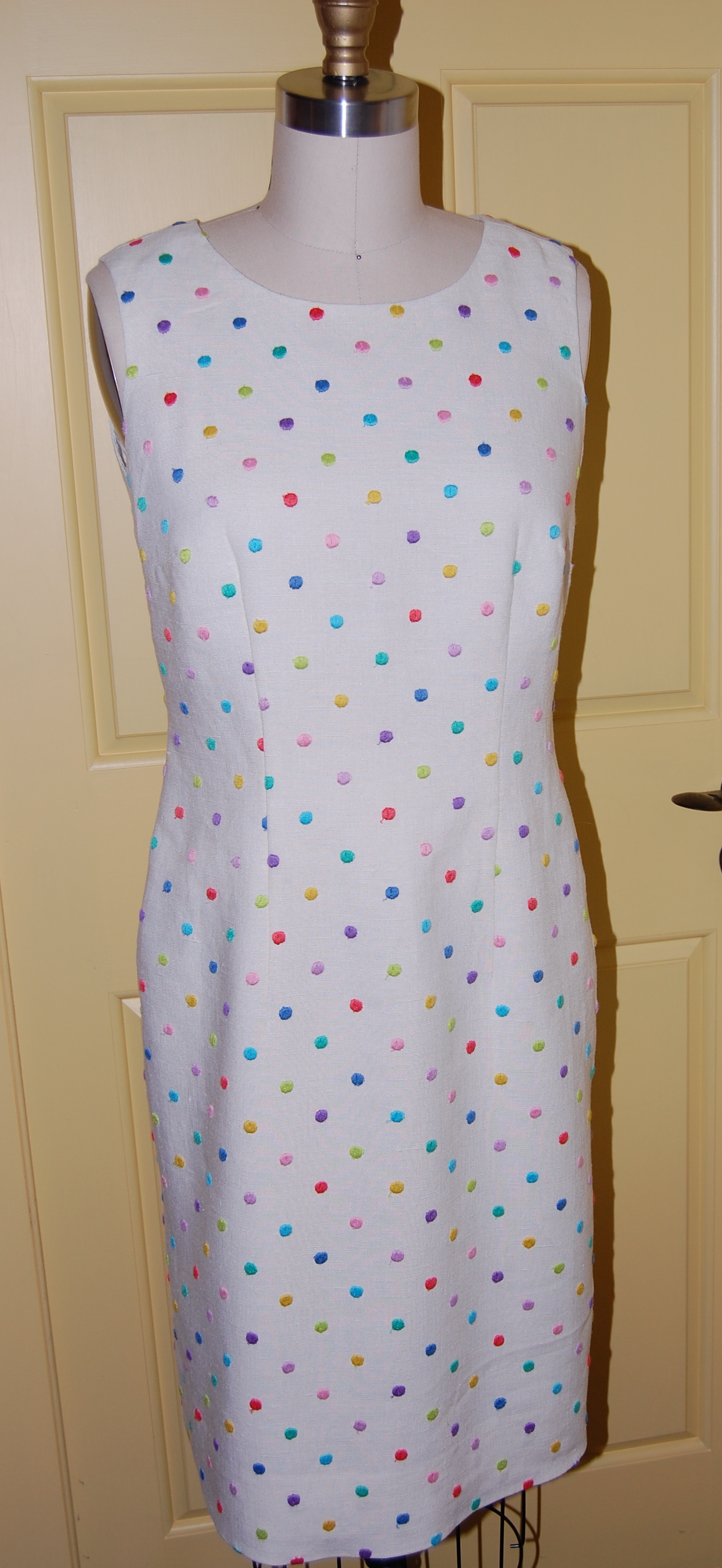
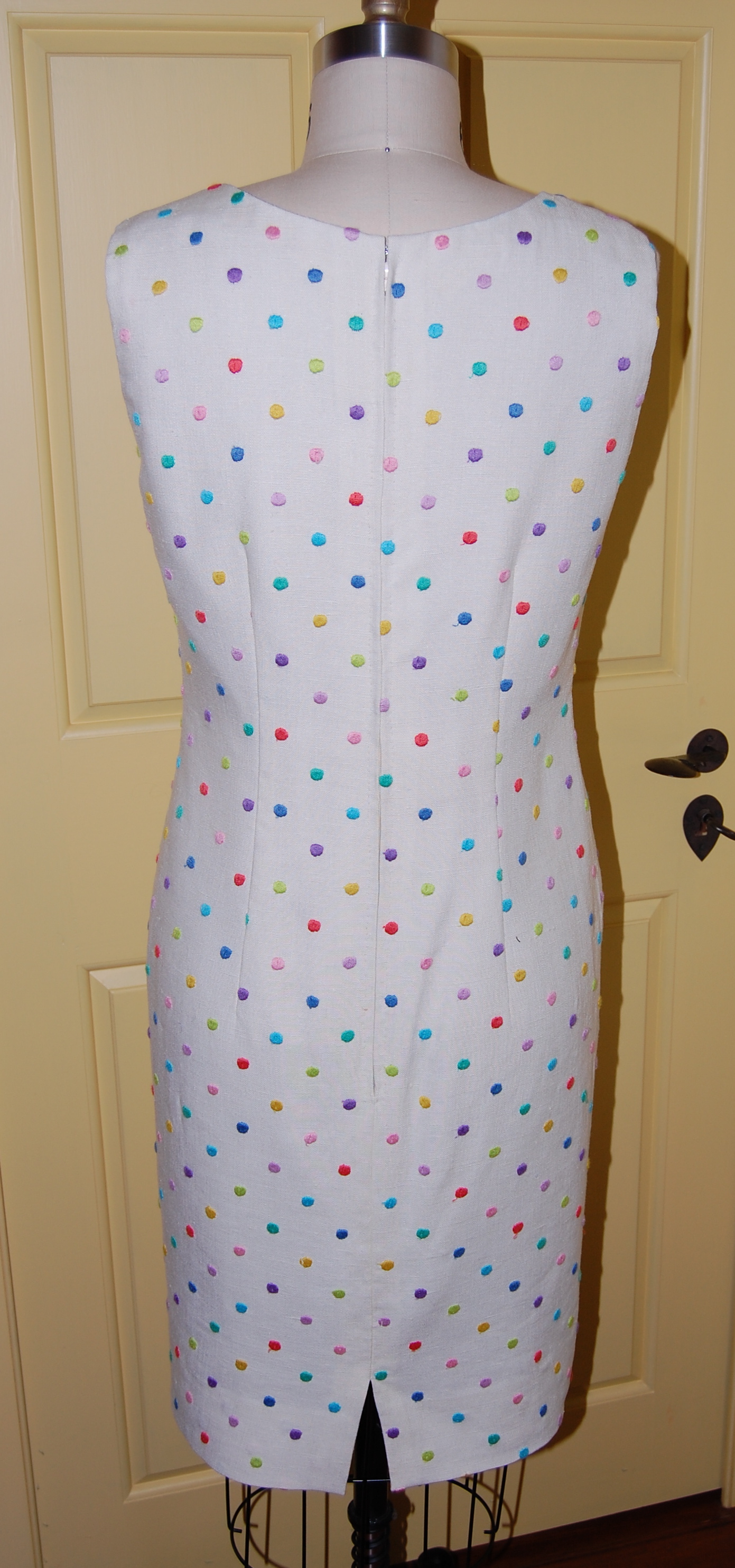
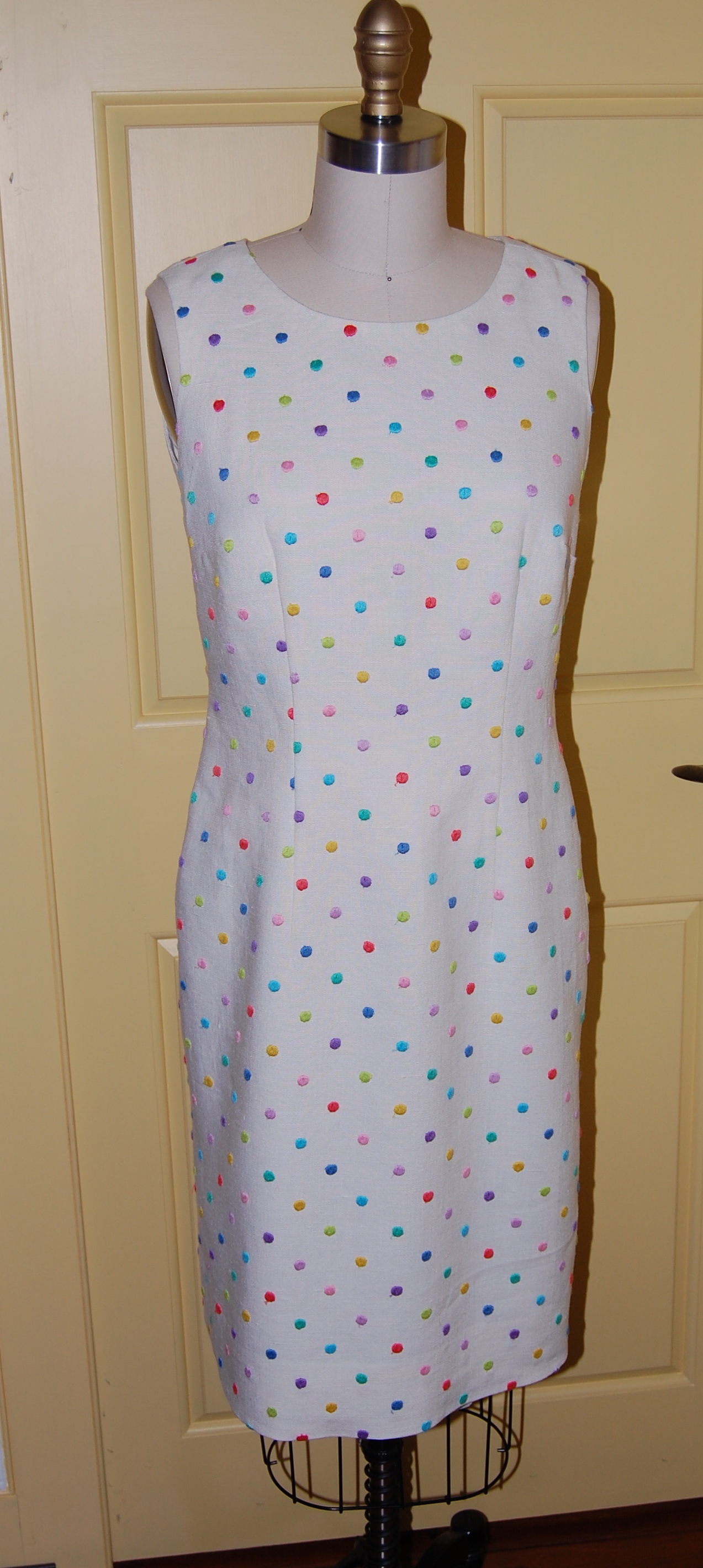
Linen dotted fabric

Linen dotted fabric

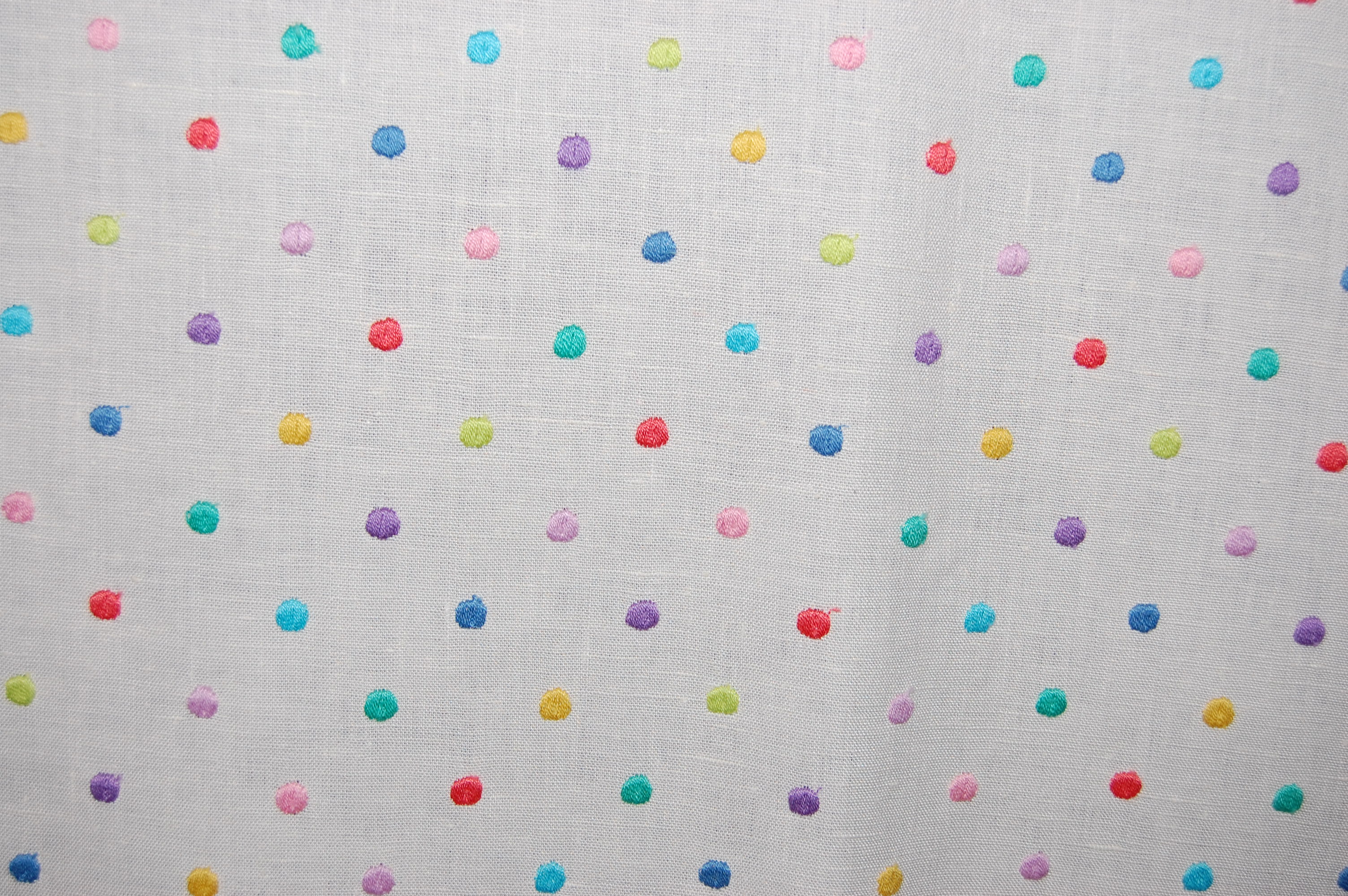
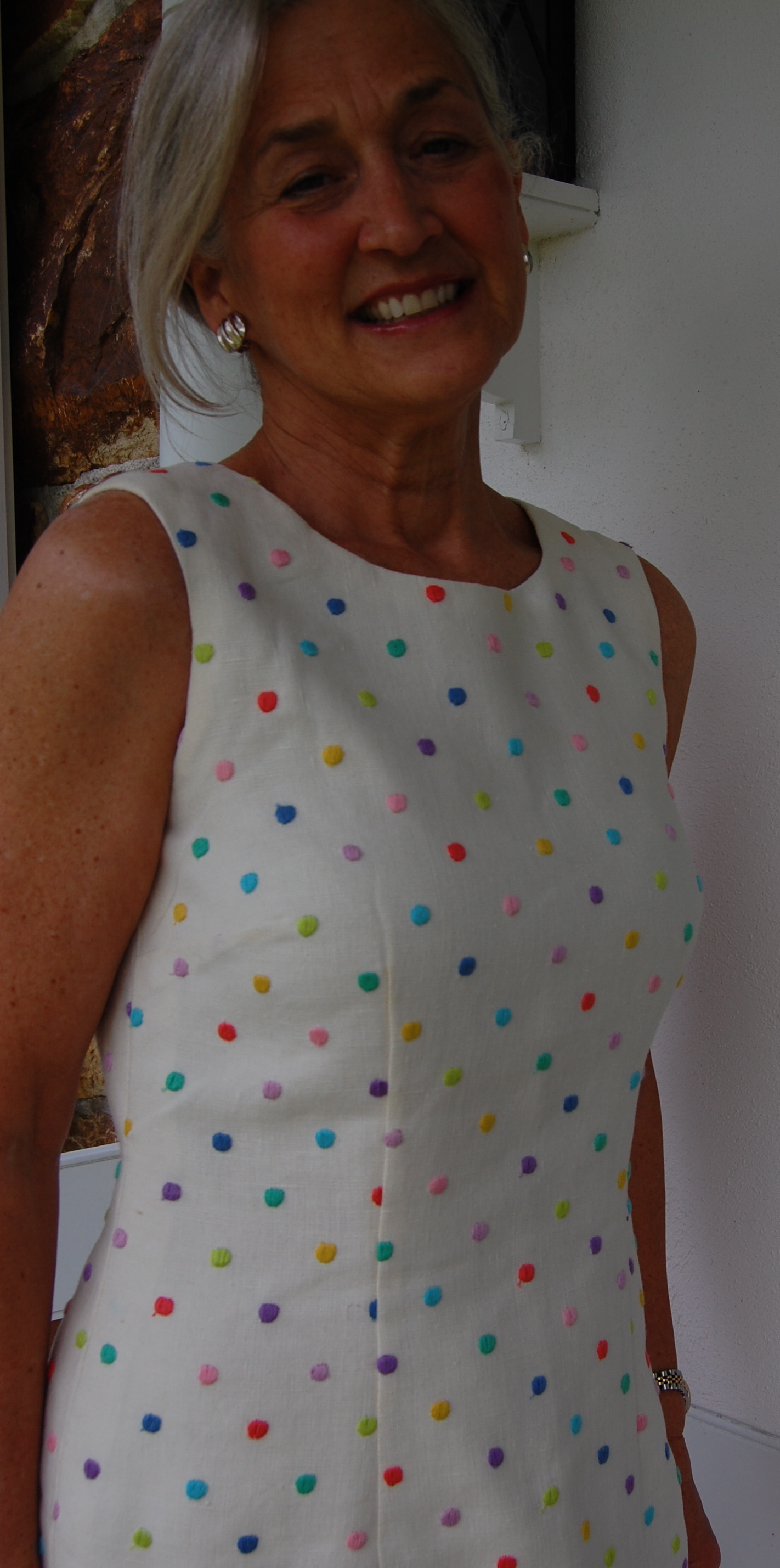
Each dot is individually embroidered onto the base linen fabric.

When I purchased this vintage linen fabric online, all I had was a photo or two. There was no selvedge marking, no attached label, no sales receipt to give any clue to its origin. However, the photos were clear, the weave of the fabric was visible enough, that I felt fairly confident that I was looking at a mid-century Moygashel linen. At 36” wide, I knew from experience it was prior to 1960. I also knew that Moygashel produced many embroidered dress linens in the 1950s. Here are two Moygashel linen ads which show both printed and embroidered linens:

This ad was on the inside front cover of Vogue Pattern Book magazine from December/January 1953-54.

This ad was on the inside front cover of Vogue Pattern Book magazine from December/January 1953-54.

And this ad was on the inside front cover of Vogue pattern Book Magazine from December/January 1957-58.

And this ad was on the inside front cover of Vogue Pattern Book magazine from December/January 1957-58.

I knew the real “proof of the pudding” – to authenticate the linen as Moygashel – would be in how it laundered.  Moygashel linen was known for its resistance to wrinkling! Months went by after the fabric arrived in the mail, but a couple of weeks ago, I retrieved it from my fabric closet, put it in a gentle wash cycle (with Woolite detergent), tumble dried it on medium heat, and out it came, as I had hoped, crisp, clean, and looking like new. All it needed was just a quick ironing on high heat to make sure the fabric would lay flat for marking and cutting.

Yes, I knew I had an authentic Moygashel linen in hand, and I wanted to make a dress that would be all about the fabric. I envisioned a simple sheath, whose look could be changed so easily with different color accessories. Knowing I already had a sheath dress pattern that fit me well, I made my sewing life simple (for a change!) and went with it.

One can't get much simpler than this classic sheath design!

One can’t get much simpler than this classic sheath design!

First, a few details and precautions about sewing with embroidered linen:

1) All ironing must be done on the wrong side of the fabric, in order not to squash the embroidered details.

2) All ironing must be done on top of a towel, also for the same reason.

3) It’s best to sandwich paper under seam allowances before pressing to prevent “impressions” from going through to the right side of your fabric.

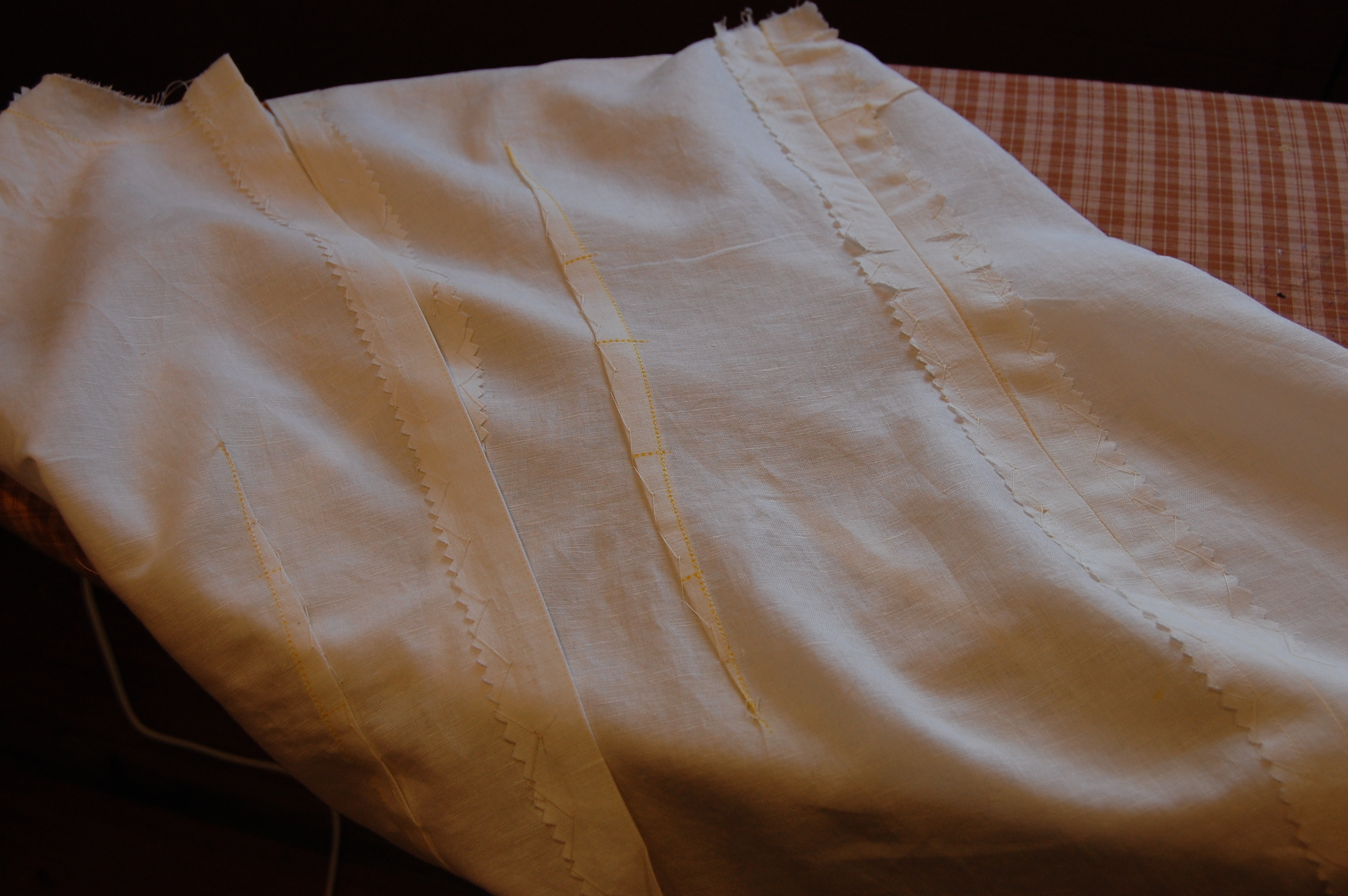
4) Because cut embroidery details have a tendency to fray along the edges of seam allowances, it is best to finish them with either a Hong Kong finish or with rayon (Snug Hug) hem tape. I used Snug Hug as it did not add any extra bulk to the inside of my garment.

Side seams finished with Snug Hug.

Side seams finished with Snug Hug.

I did not want to underline my dress (as in silk organza), as I wanted to preserve the lovely breathability of the linen fabric. However, I did want to line it, so I used a very light, almost gauzy, cotton/linen blend.

I actually catch-stitched all the seams and dart edges on the lining, to help it mold as nicely as possible with the interior of the dress.

I actually catch-stitched all the seams and dart edges on the lining, to help it mold as nicely as possible with the interior of the dress.

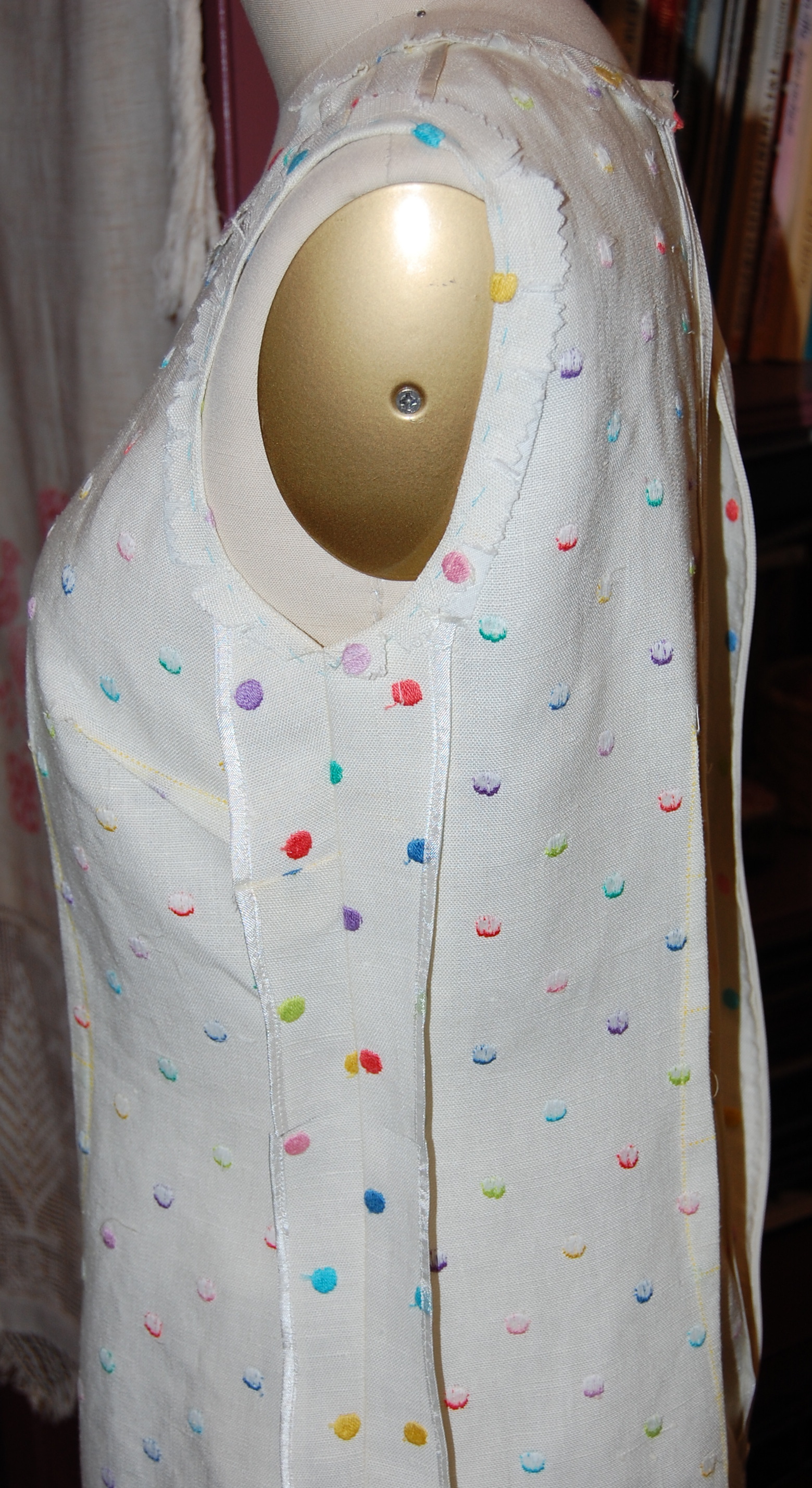
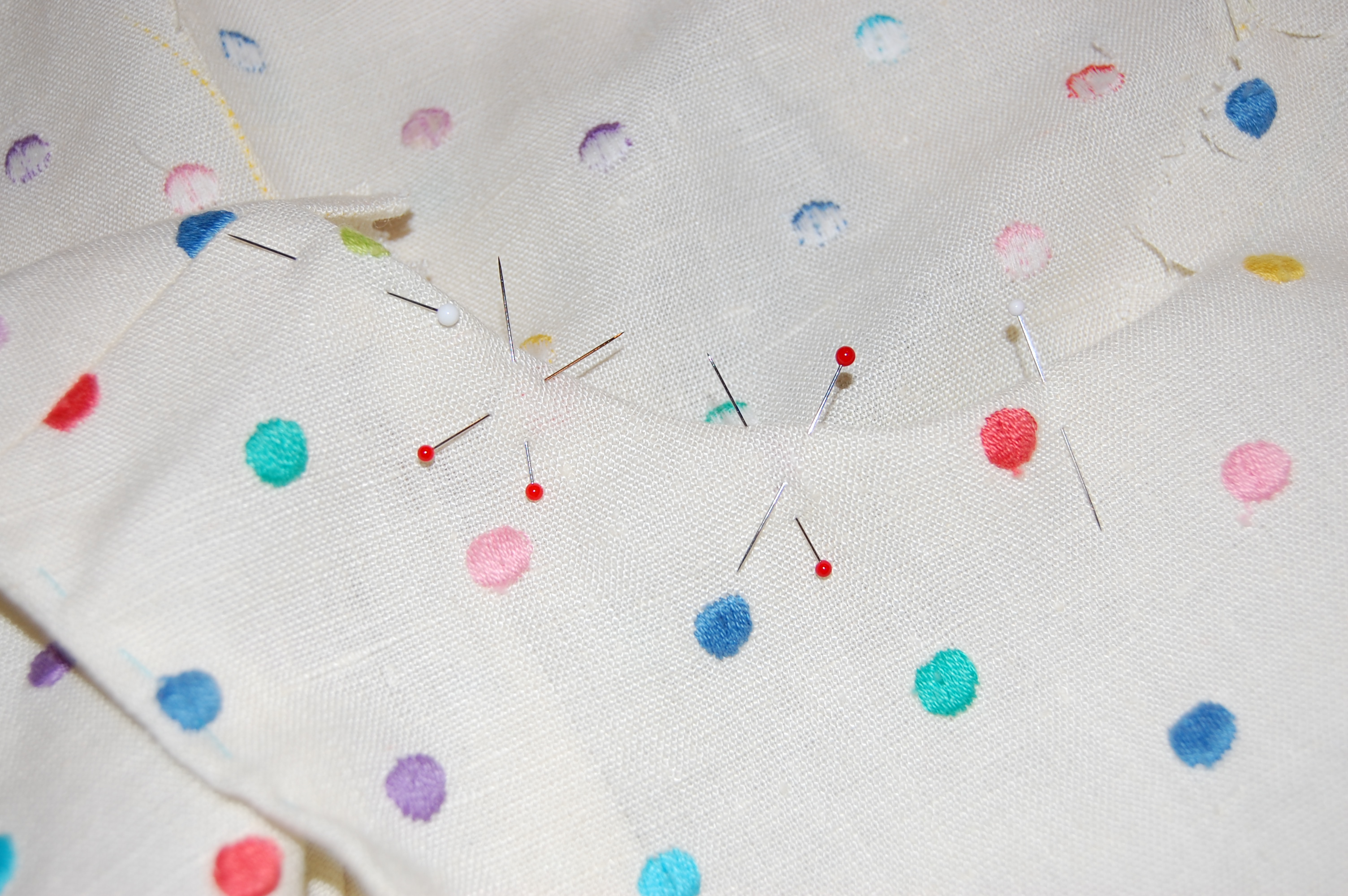
I decided to make the lining entirely separate and then attach it to the dress at the neck, armholes, zipper and back hem slit using a fell stitch. However, once I had my seam allowance folded back at the neck and armholes, I noticed a little bit of “shadowing through” of some of the colored dots along those edges.

Perhaps you can see the shadowing of the dots underneath the crossed pins?

Perhaps you can see the shadowing of the dots underneath the crossed pins?

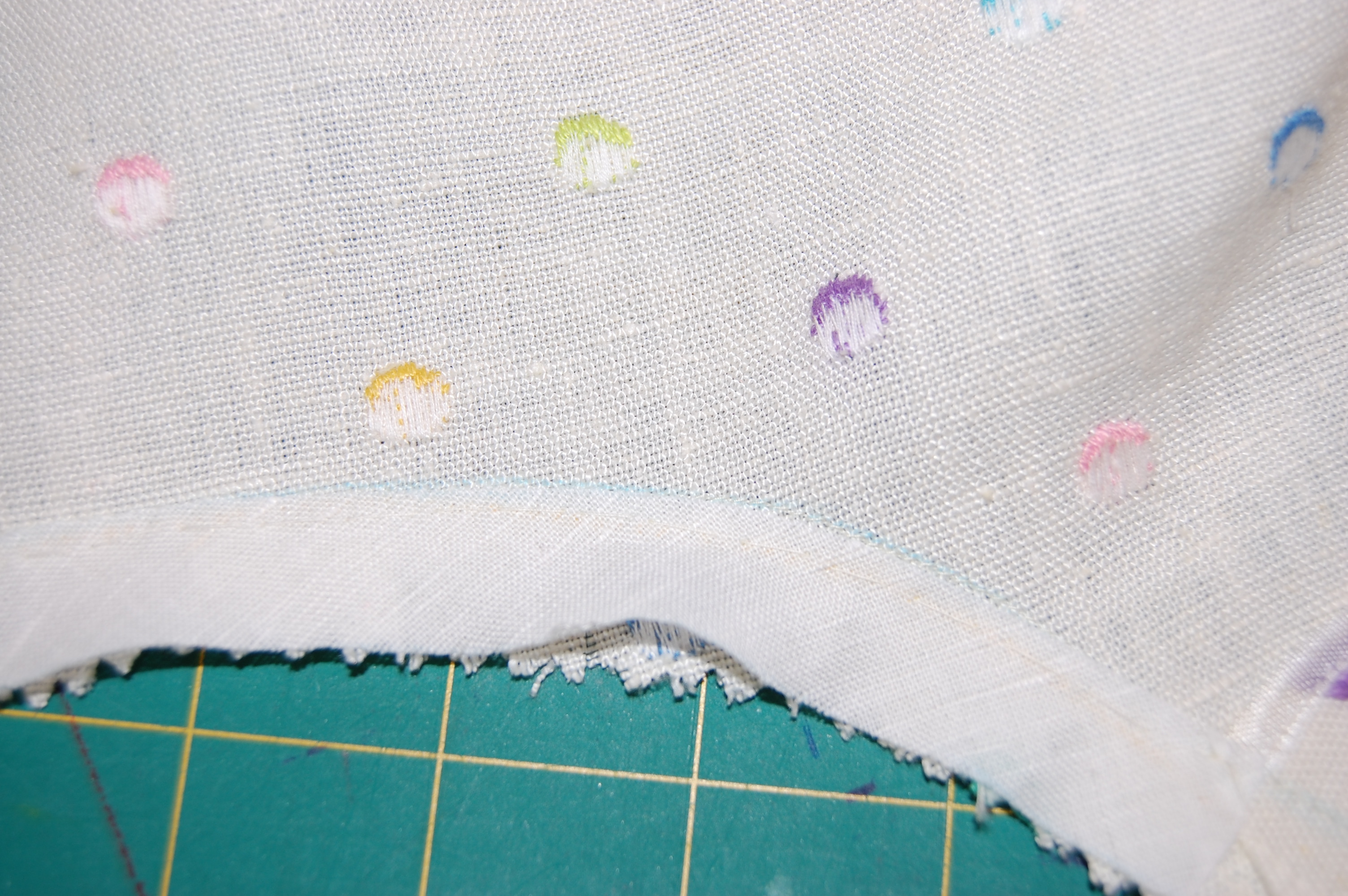
To remedy this, I cut 5/8” wide strips of bias lining fabric and basted them onto the seam allowances in those areas. That was just enough to take care of that problem.

This narrow strip of lining fabric prevents the color of those dots from showing through.

This narrow strip of lining fabric prevents the color of those dots from showing through.  This is the wrong side of the fabric.

Once the dress and lining were attached, I under-stitched the neck and armhole edges by hand. It really makes a lovely interior!

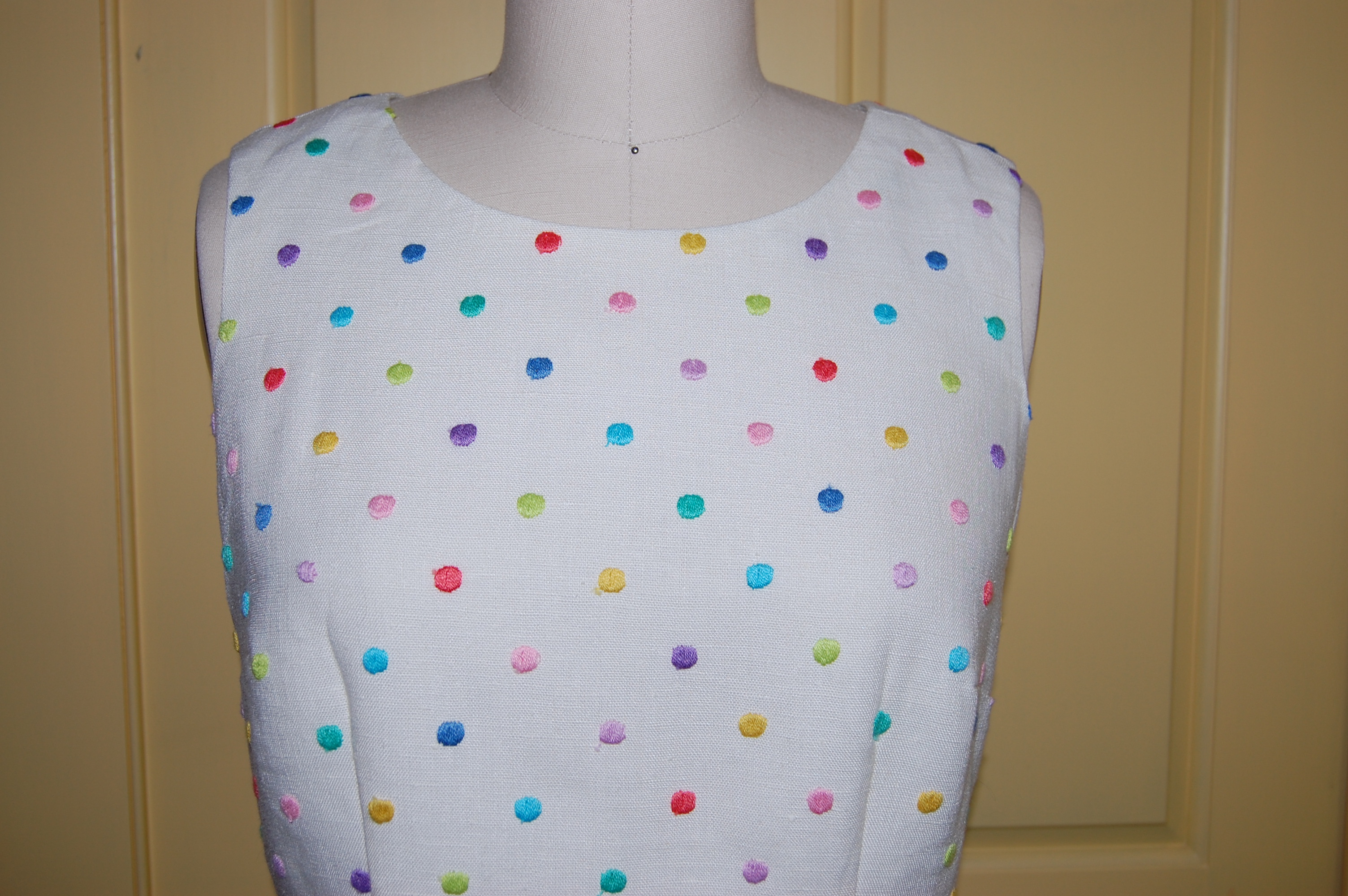
Linen dot dress

A close-up of the bodice.

A close-up of the bodice.

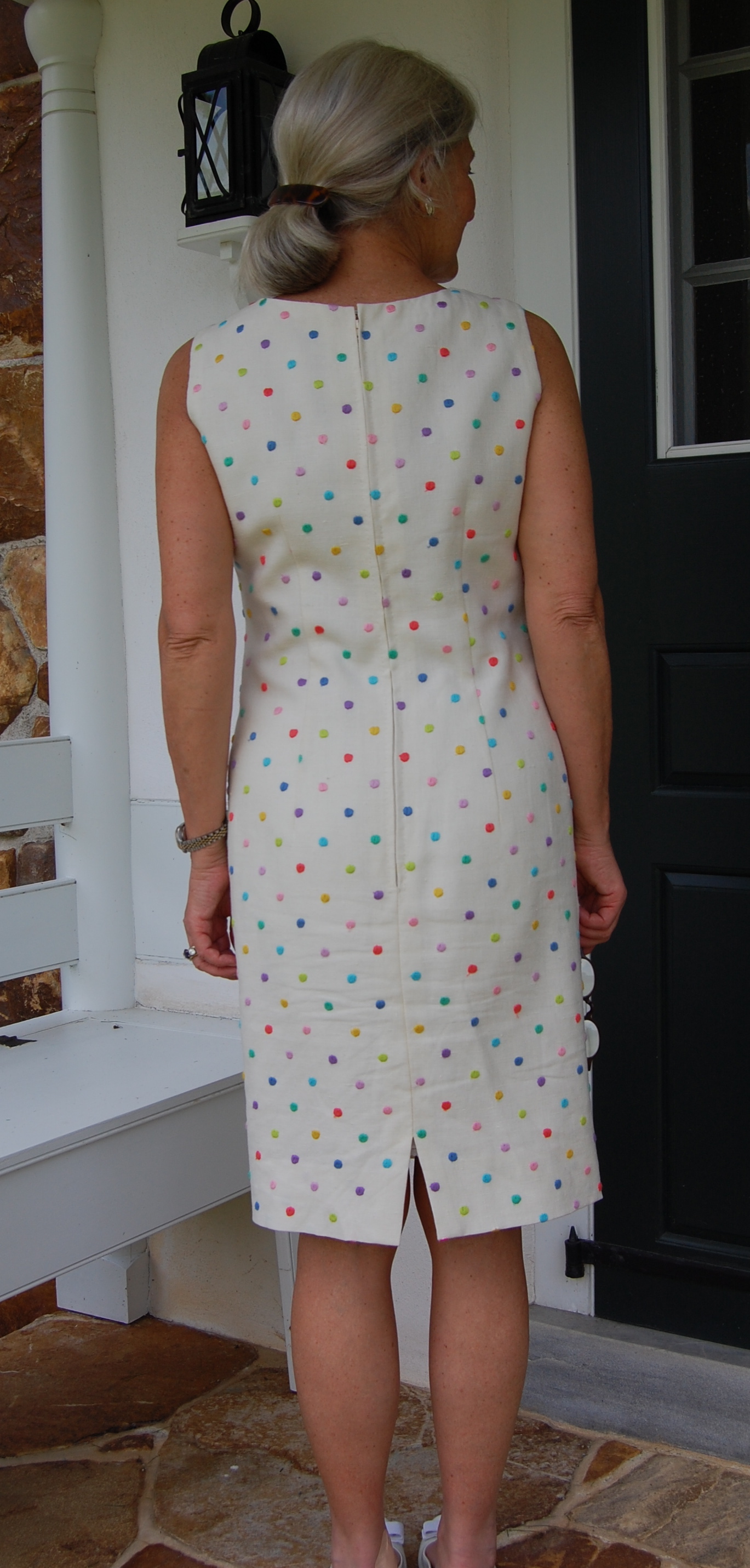
The back of the dress, with its hand-picked zipper.

The back of the dress, with its hand-picked zipper.

And one more view of the full dress.

And one more view of the full dress.

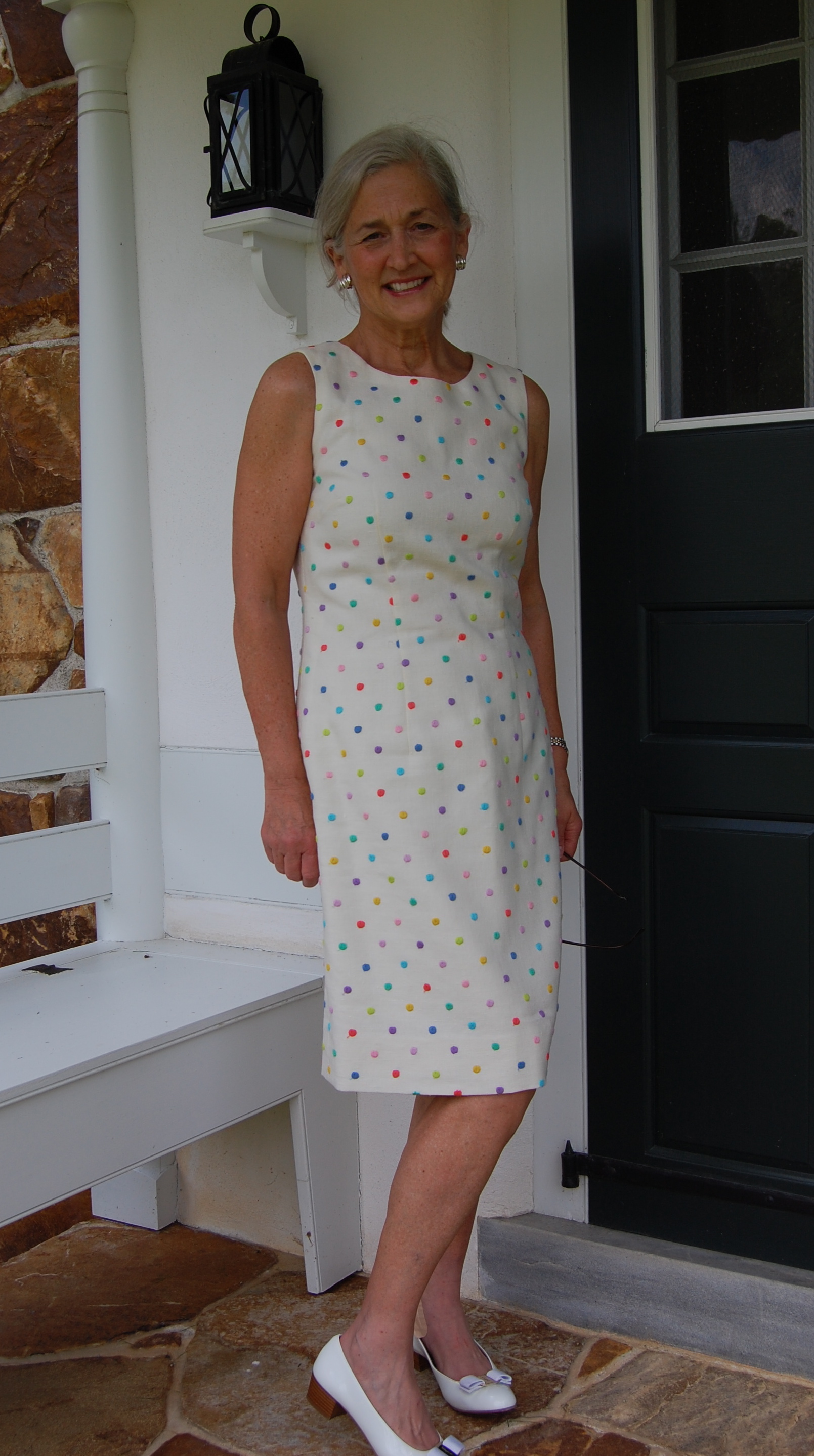
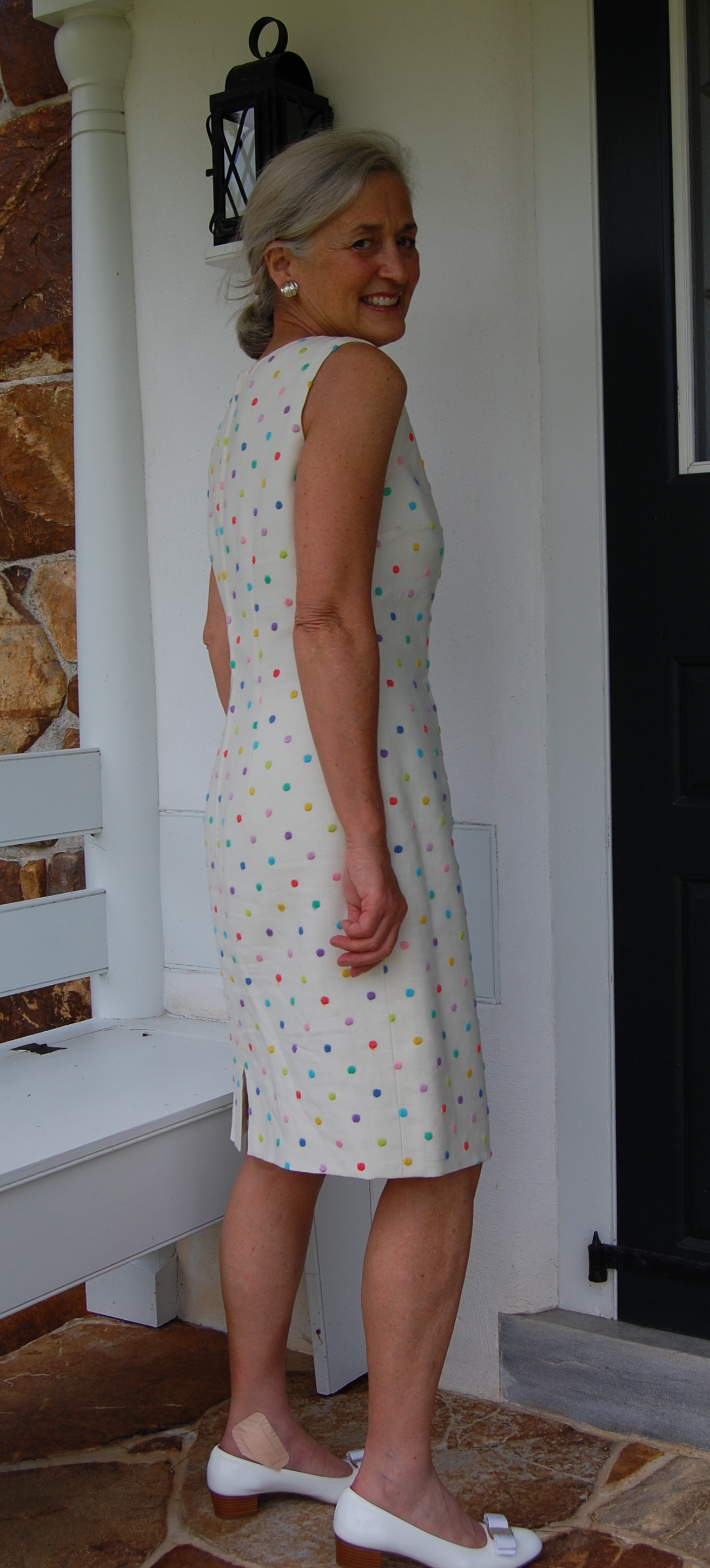
I finally (as of July 1, 2014) got some pictures taken!

I finally (as of July 1, 2014) got some pictures taken!

Polka dotted linen sheath

Polka dotted linen sheath

I love this dress!

I love this dress!

Moygashel linen is, sadly, no longer manufactured, about which I have written previously. One of its tag lines was “The first name in linen – The last word in quality”. I might change that to read “… The lasting word in quality.” Of course, there are some beautiful linens being manufactured today, but none will ever command a dressmaker’s imagination in quite the same way that Moygashel linen did for decade after fashionable decade.


22 Comments

Filed under hand-sewn zippers, Linen, Moygashel linen, Polka dots, Uncategorized

A Simple Sheath?

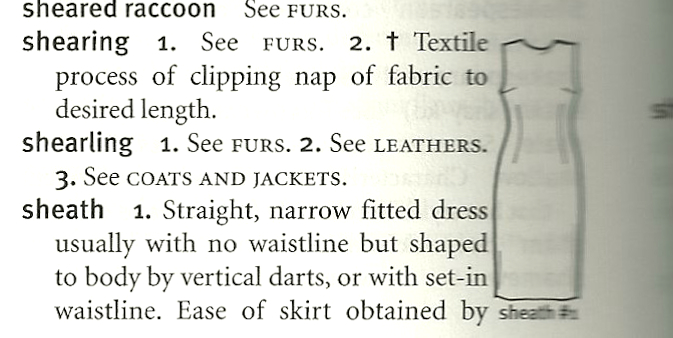
One of the most enduring dress styles in the last 60 years is undoubtably the classic sheath.  According to the definition in Fairchild’s Dictionary of Fashion, a sheath can be one of two constructions:  without a set-in waist or with a set-in waist.  In either case, the silhouette is straight, narrow, and fitted, “shaped to body with vertical darts”, with ease of movement facilitated by a slash at back or an inverted pleat.  “Both styles were popular in 1950s and early 1960s.  Revived periodically.”

Fairchild's illustration of a sheath dress.  copyright 2003, The Fairchild Dictionary of Fashion 3rd Edition, Fairchild Publications, Inc., New York.

Fairchild’s illustration of a sheath dress. copyright 2003, The Fairchild Dictionary of Fashion 3rd Edition, Fairchild Publications, Inc., New York.

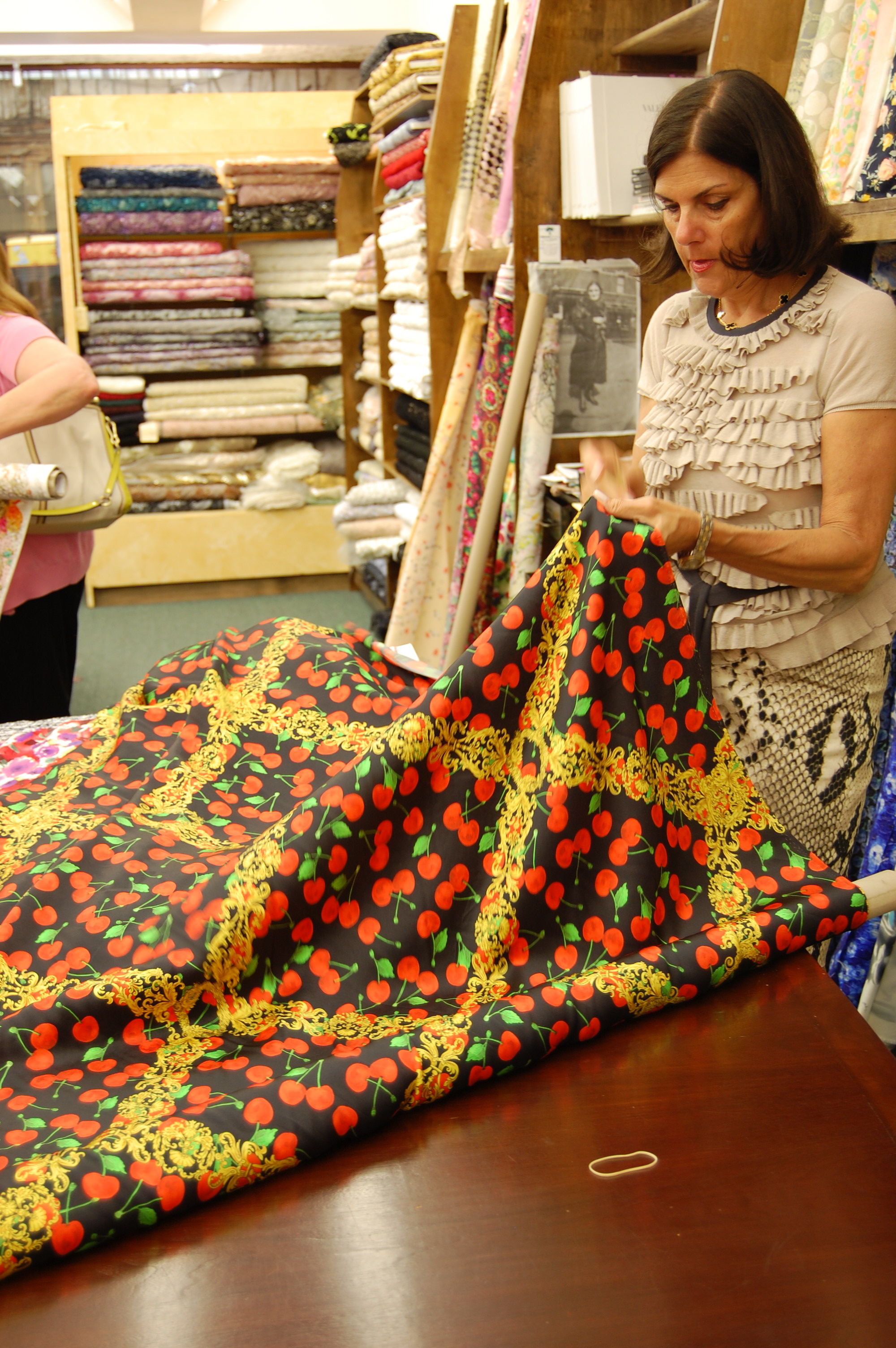
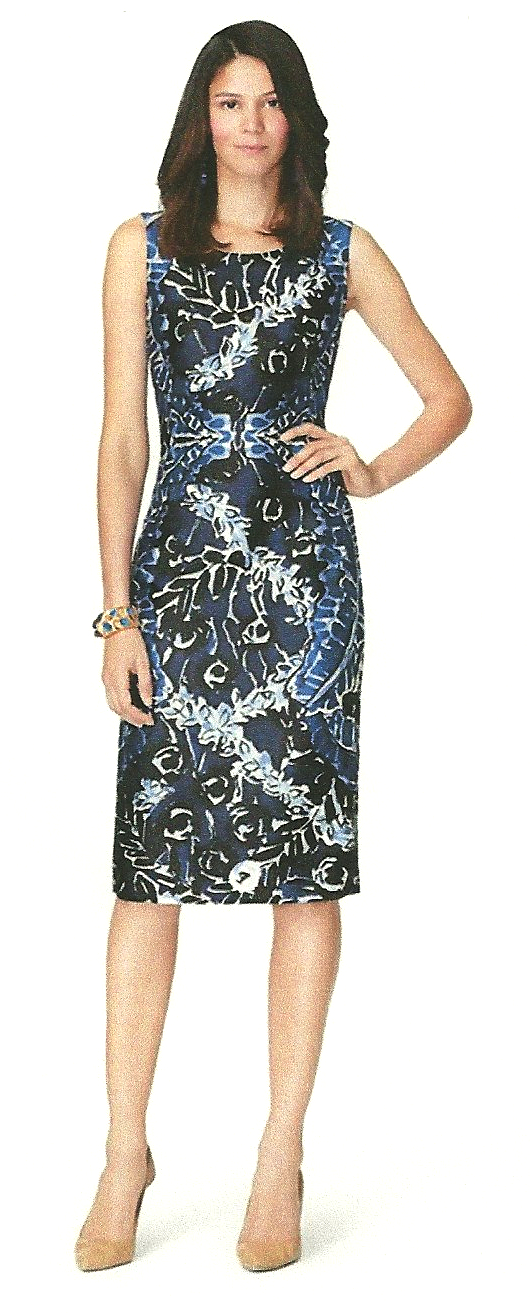
It doesn’t take very long looking at current fashion magazines and websites to see that the sheath dress is enjoying one of those revivals right now.  And why not?  It is an infinitely versatile style, going from casual to dressy just by choice of fabric.  Earlier in the Summer when I was shopping at Mendel Goldberg Fabrics in NYC with Susan Khalje’s  “Classic French Jacket” class, I succumbed to purchasing 1½ yards extra of my lining fabric, with the express intention of making a sheath dress out of it.  The fabric is definitely a demonstrative print, so I thought the simpler the style of dress, the better.

My lining and dress fabric, still on the bolt.

My lining and dress fabric, still on the bolt.

I have to admit I had a few moments when I wondered if that fabric, which I loved as the lining in my jacket, might not be a bit too much for a dress.  Well, too late for any misgivings – this dress was going to happen!  Then suddenly I started seeing photos of more and more sheath dresses, many of them made out of very bold and colorful fabrics.  Two fashion websites I often visit for inspiration and ogling each featured such dresses:

This dress can be found on the Lee Anderson Couture website.

This dress can be found on the Lee Anderson Couture website.

This dress is from Oscar De la Renta's Ready-to-wear line.

This dress is from Oscar De la Renta’s Ready-to-wear line.

Encouraged with this affirmation of my idea, I chose my pattern, ordered china silk for the lining (I already had black organza underlining), purchased the zipper and proceeded to plan my dress.

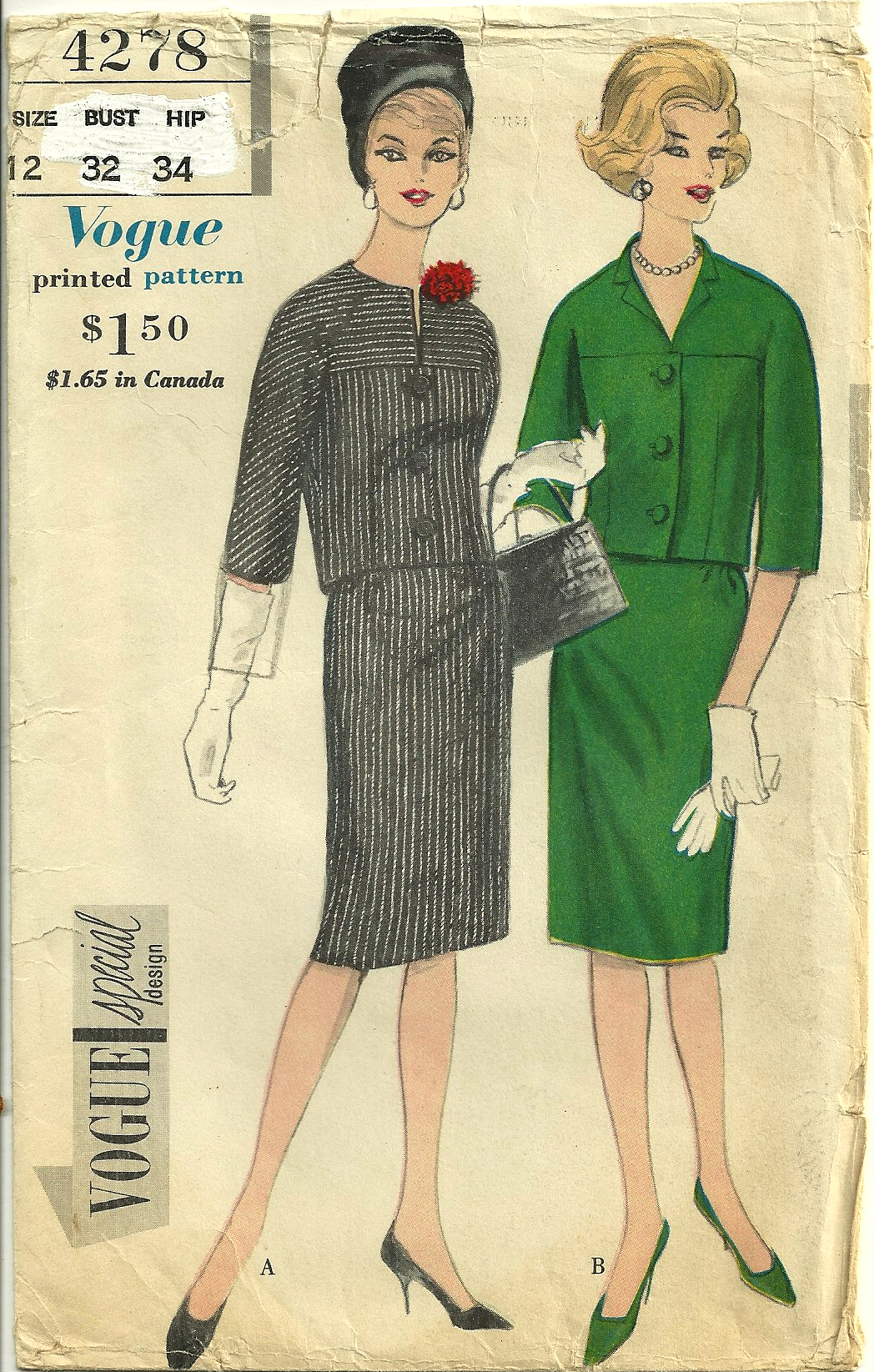
I decided to adapt this simple pattern, using the third view without the neck and hem bands.

I decided to adapt this simple pattern, using view A (on the right) without the neck and hem bands.

First, of course, I once again sewed up the muslin I had already made for this pattern earlier in the summer.  Here are the changes I made:

1) I sewed the neckband onto the body of the dress and treated it all as one.

2) I eliminated the facings, as I was making this dress with couture techniques.

3) I tweaked the fit a little more, to make it more fitted than my earlier dress (which was belted and needed a little more ease).

4) I adjusted the shoulder to be cut a little higher on the arm.

5) I dipped the neckline a little bit, to match the neckline on my jacket.

6) I added a slit in the back seam for ease of movement.

While I love the look, sheen and feel of silk charmeuse, I don’t think it is the easiest fabric to work with.  I thought I could make my job easier if, when laying out the fabric for pattern (muslin) placement and cutting, I was able to control the slipperiness of it somehow.  I decided to use  half of my dining room table, covered with heavy drapery flannel (which is what I use under tablecloths for cushioning).   The flannel “anchored” it beautifully.

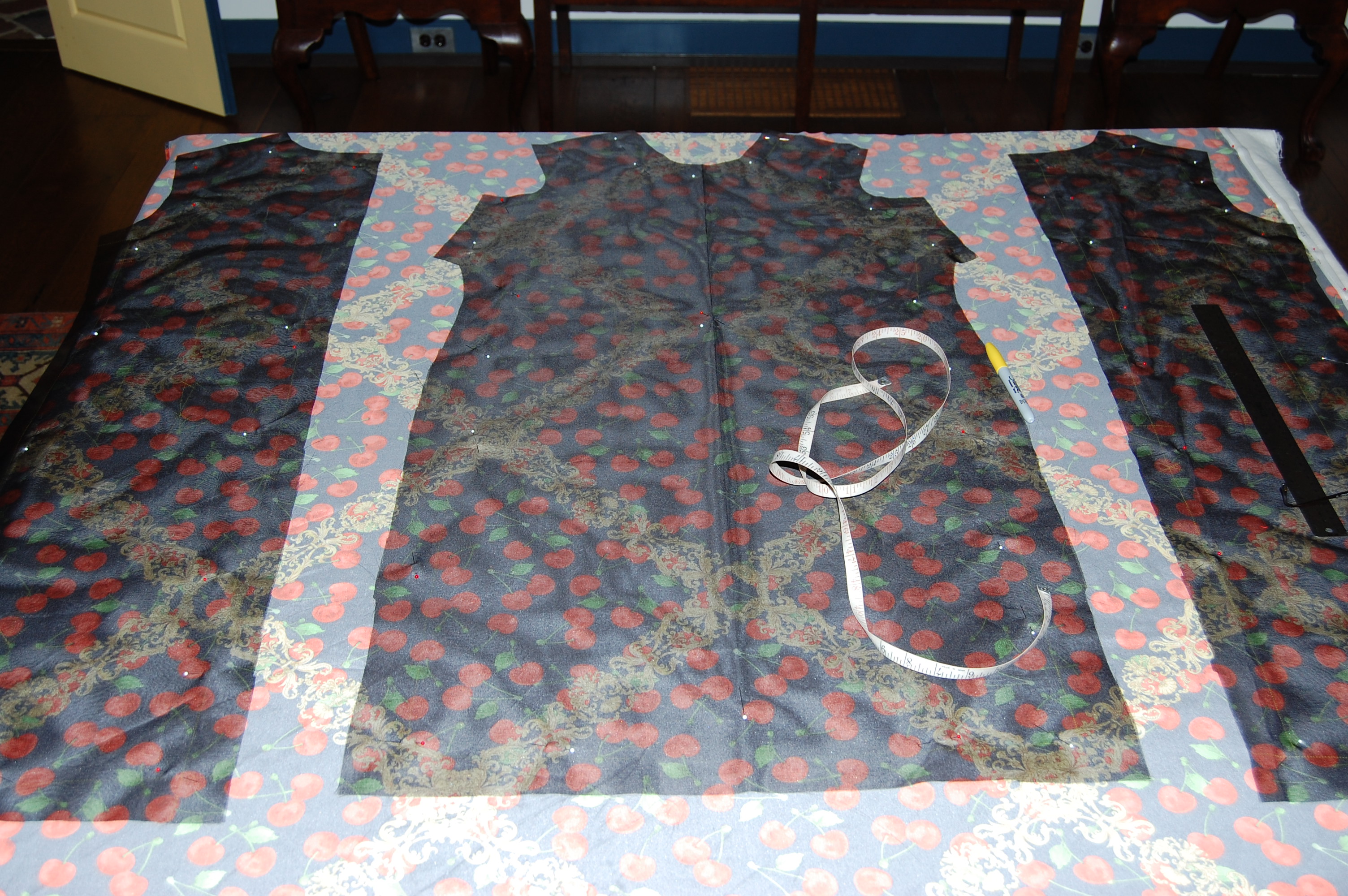
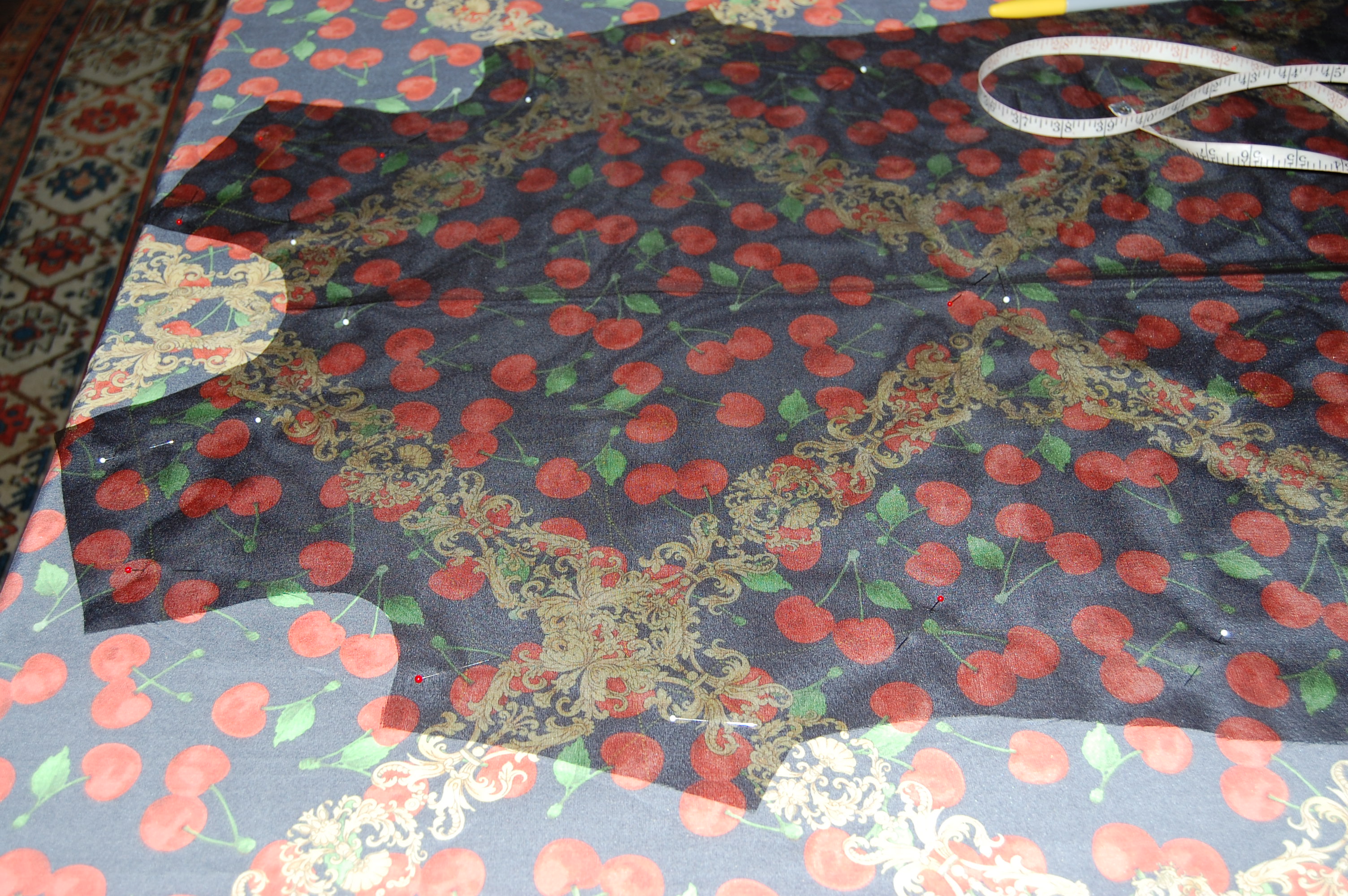
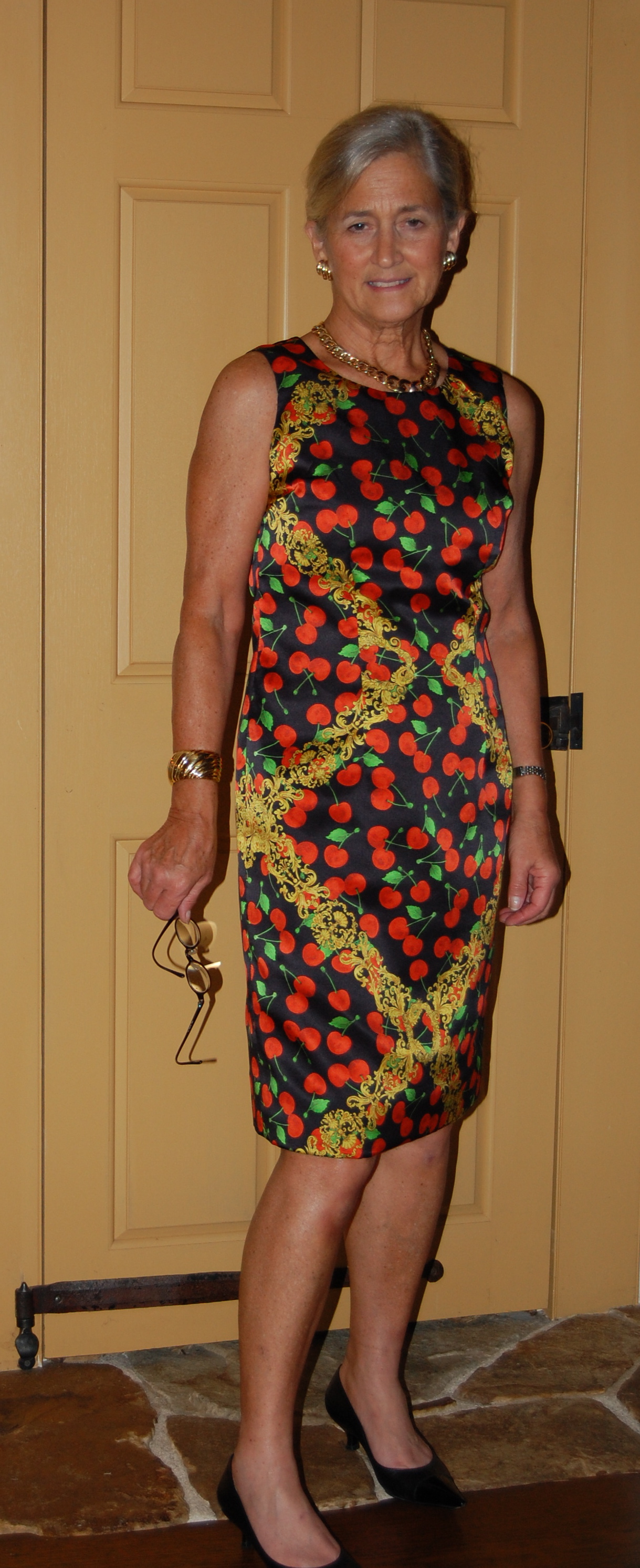
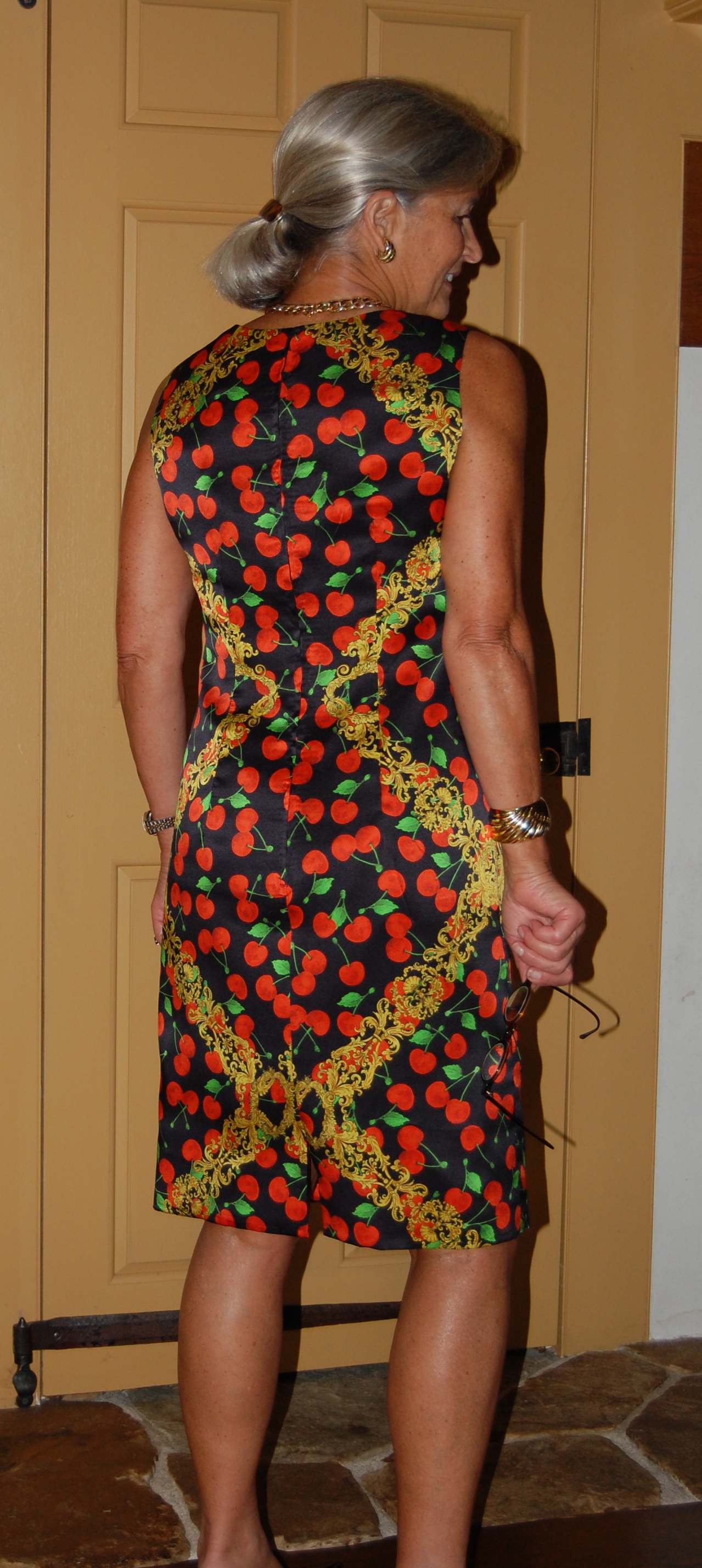
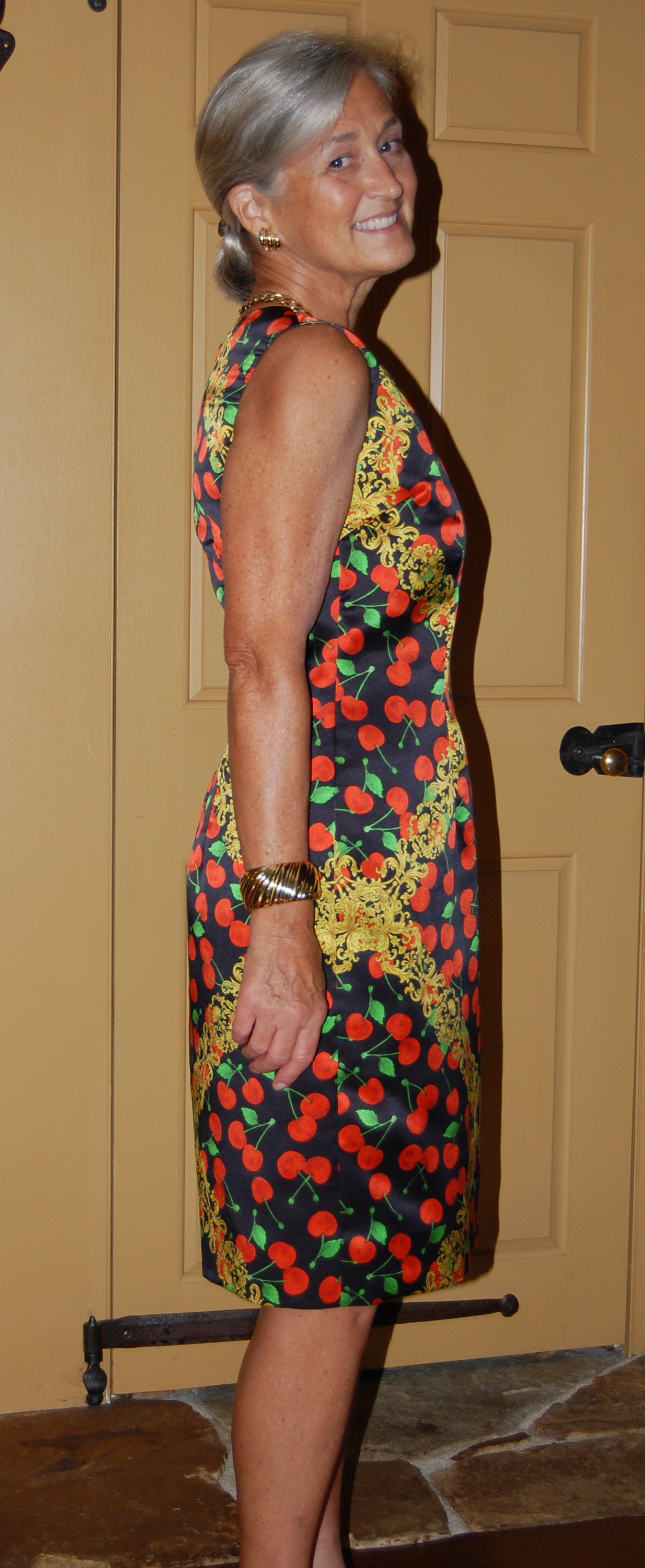
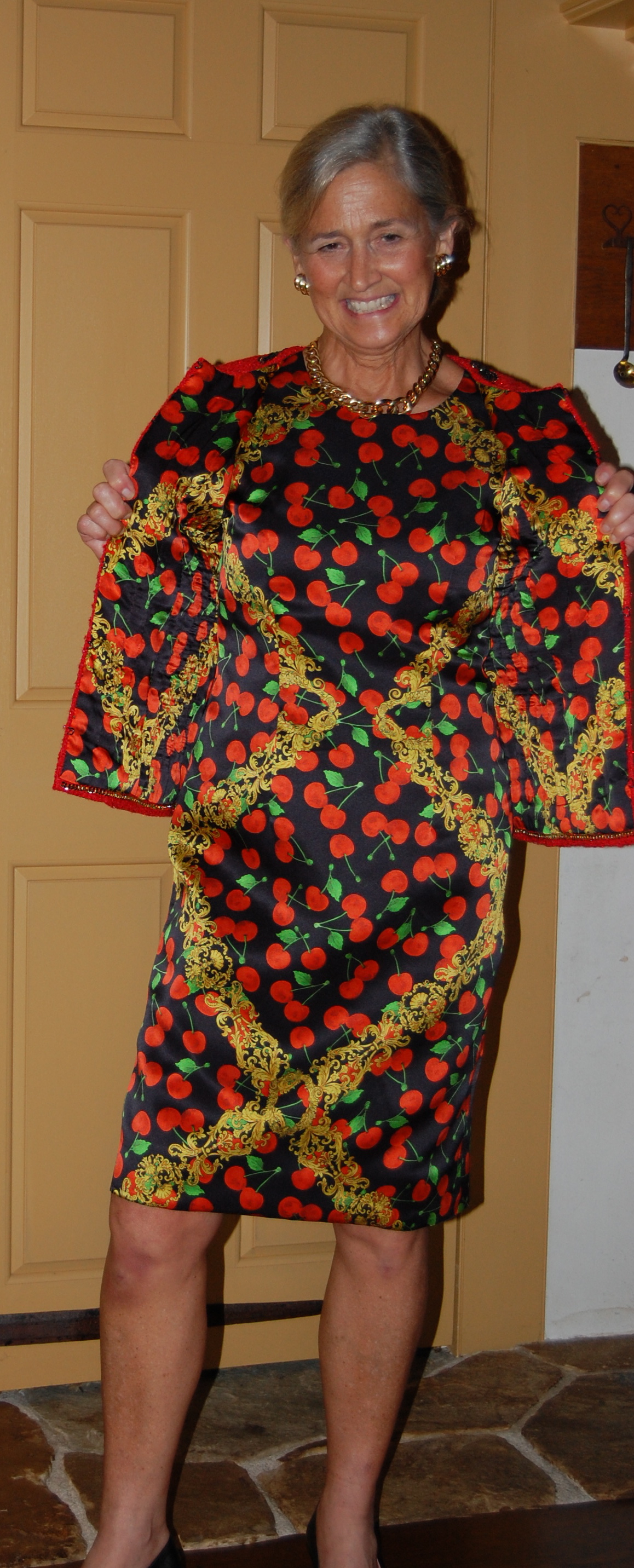
Then I was faced with a design element quandary.  Before I cut out my jacket lining in Susan Khalje’s class, she and I had looked at the fabric with my dress in mind –and had determined that one of the gold “cross” lines in the design should hit at about my breastbone.  However, once I had the fabric remaining from my jacket laid out, I realized that was not going to work.  I tried every which way, and, with the fabric I had available to me, I simply could not match up the pattern in the fabric across the front and two side backs of the pattern and still “cross” my breastbone.  It took a couple of hours, but I finally was able to come up with a new plan – this one to have one of the “cross” details at my waist.  This allowed me to have a shoulder detail I really liked, a black field  (with cherries) at my neckline, and the slimming effect of a “cinched” waist, effected entirely by the design in the fabric!

Here are the organza underlining pieces laid out on the fabric.

Here are the organza underlining pieces laid out on the fabric.

This photo shows exactly how I determined where to position the design in the fabric.

This photo shows exactly how I determined where to position the design in the fabric.

Then I was off and sewing!

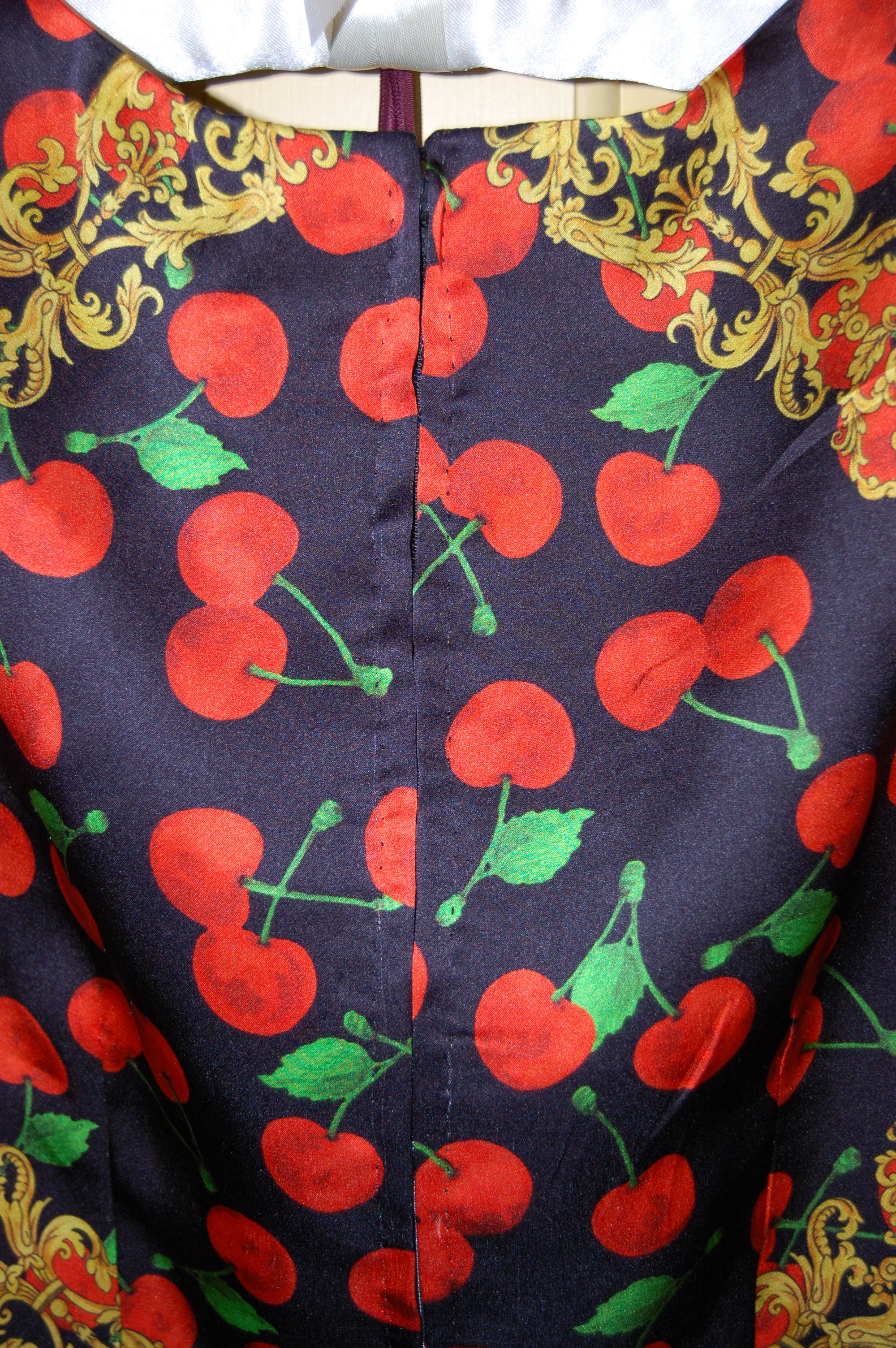
Zipper and neck details.

Zipper and neck details.

I stabilized the shoulders with a bit of selvedge from the organza underlining.

I stabilized the shoulders with a bit of selvedge from the organza underlining.

A close-up of the hand-picked zipper.

A close-up of the hand-picked zipper.

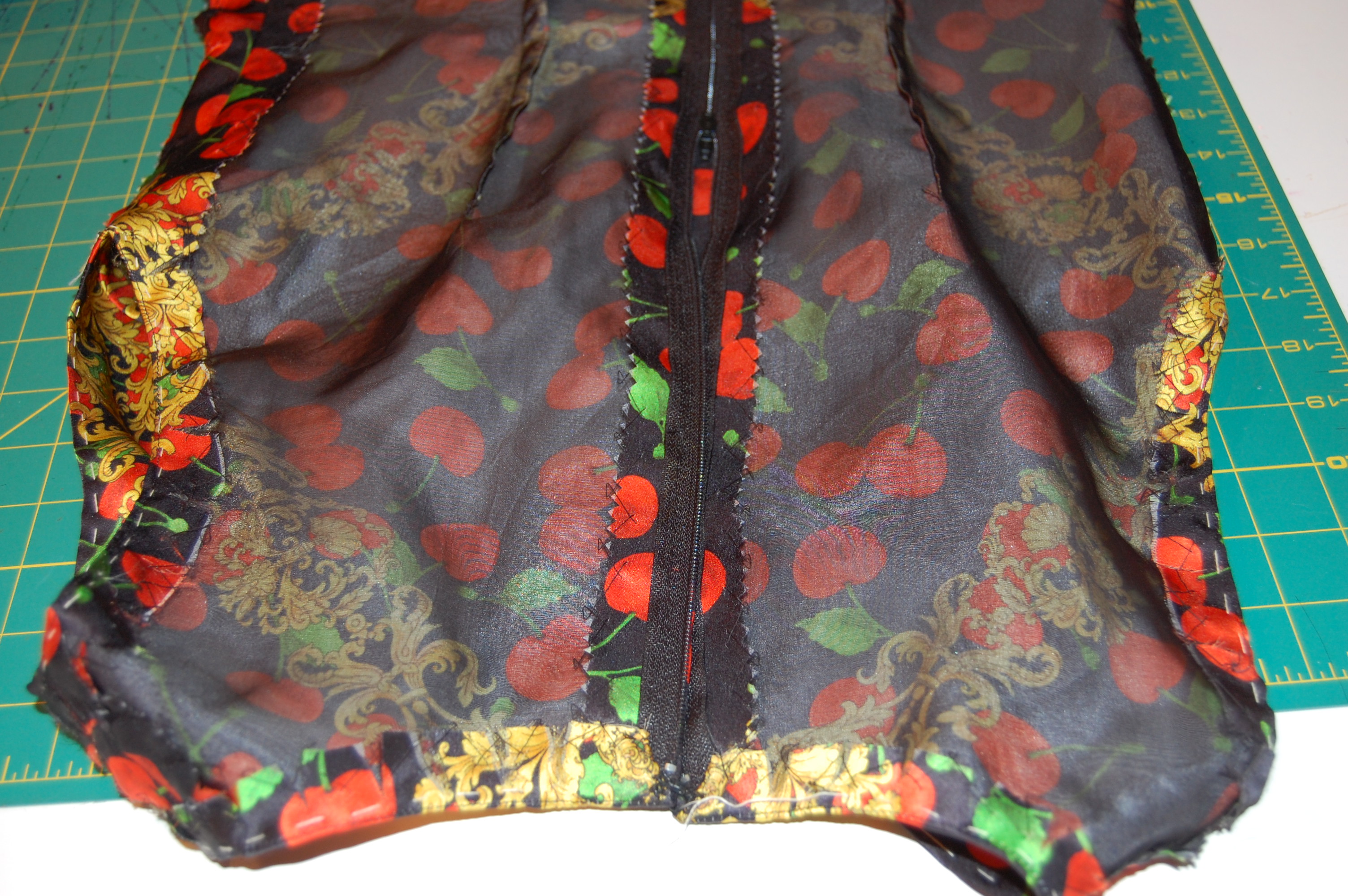
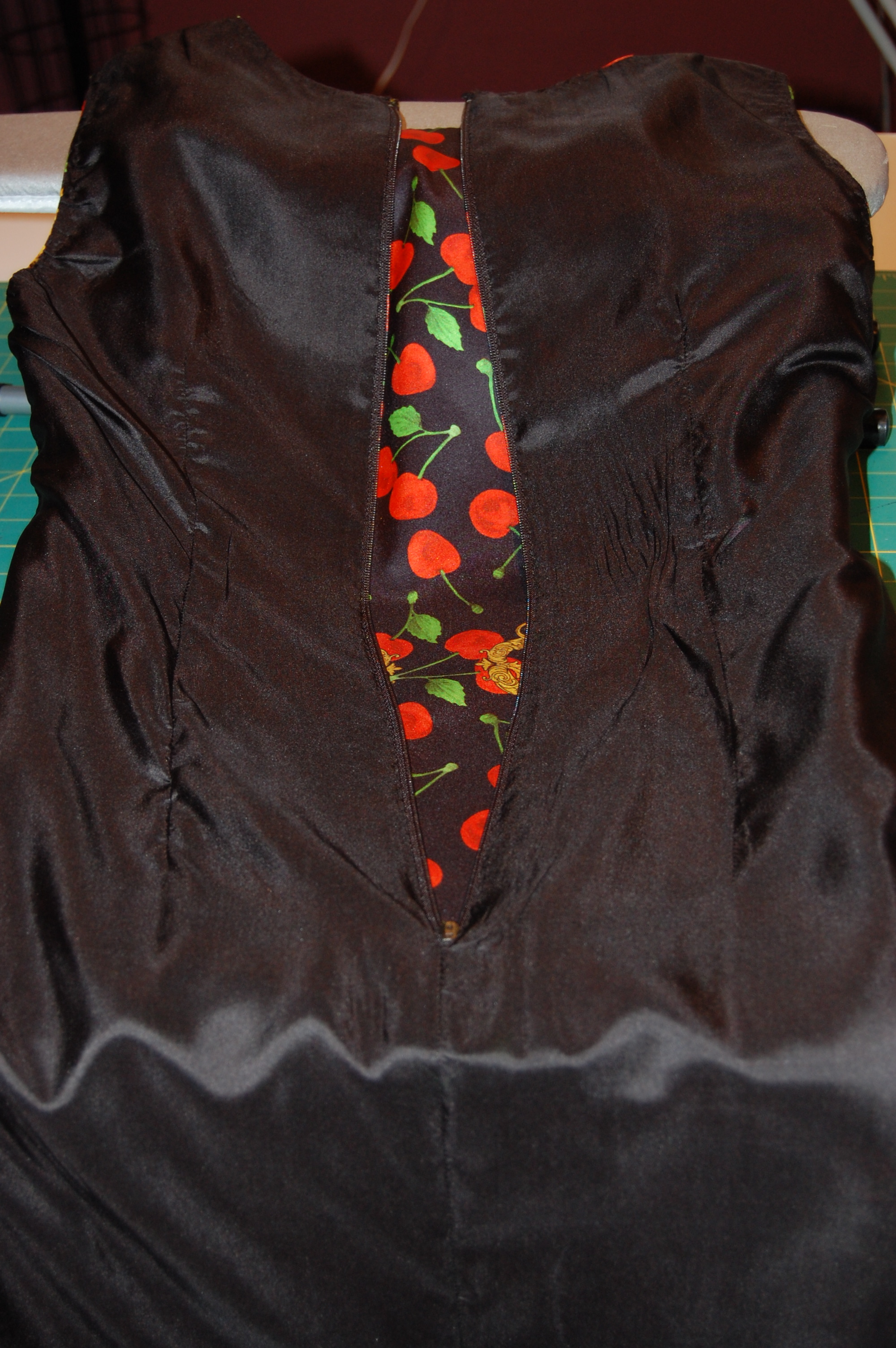
The dress turned inside out!

The dress turned inside out.

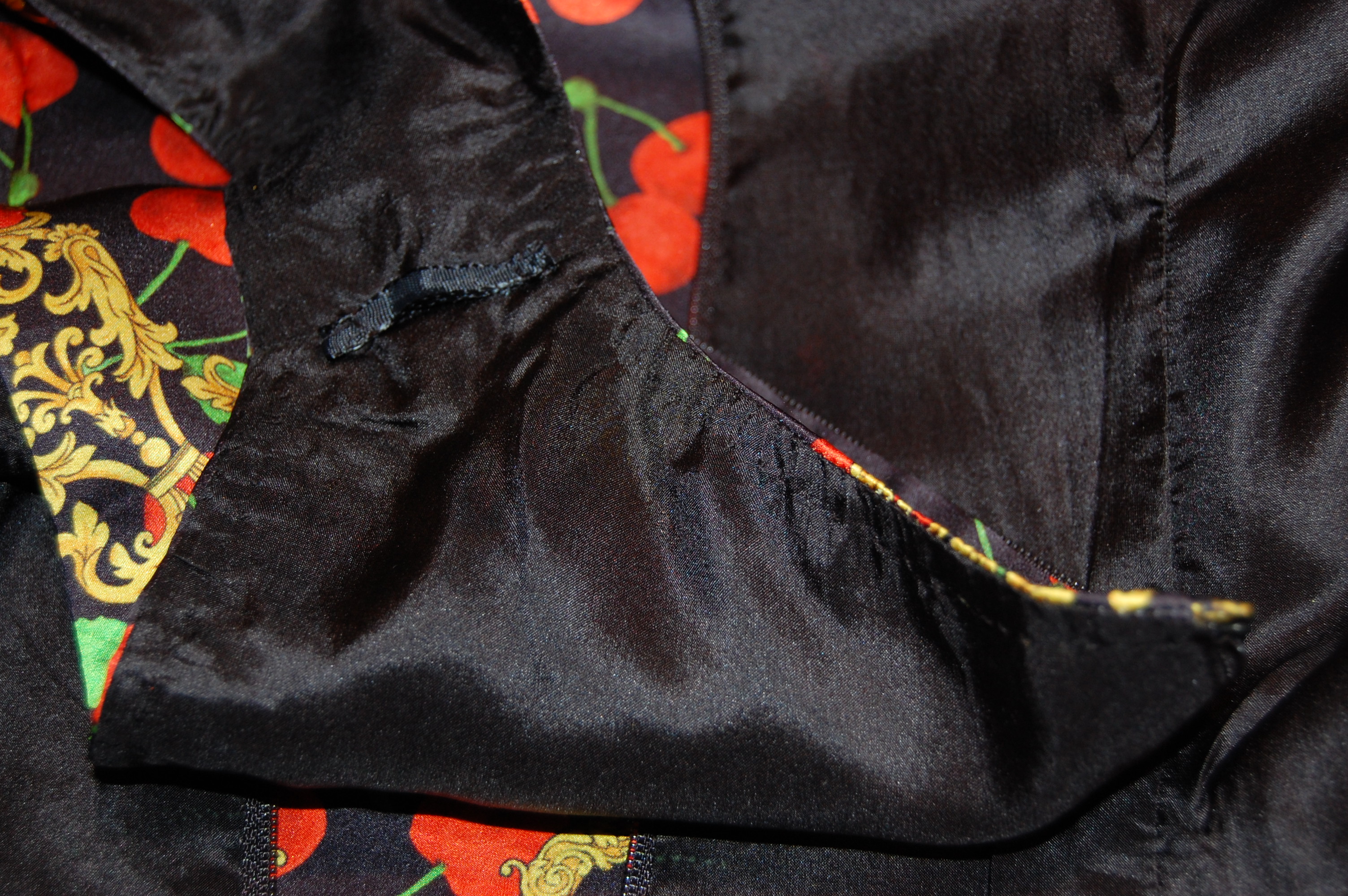
A detail of the shoulder and neck edge.

A detail of the shoulder and neck edge.

Finished!  What do you think?  Too demonstrative or just right?

Finished! What do you think? Too demonstrative or just right?

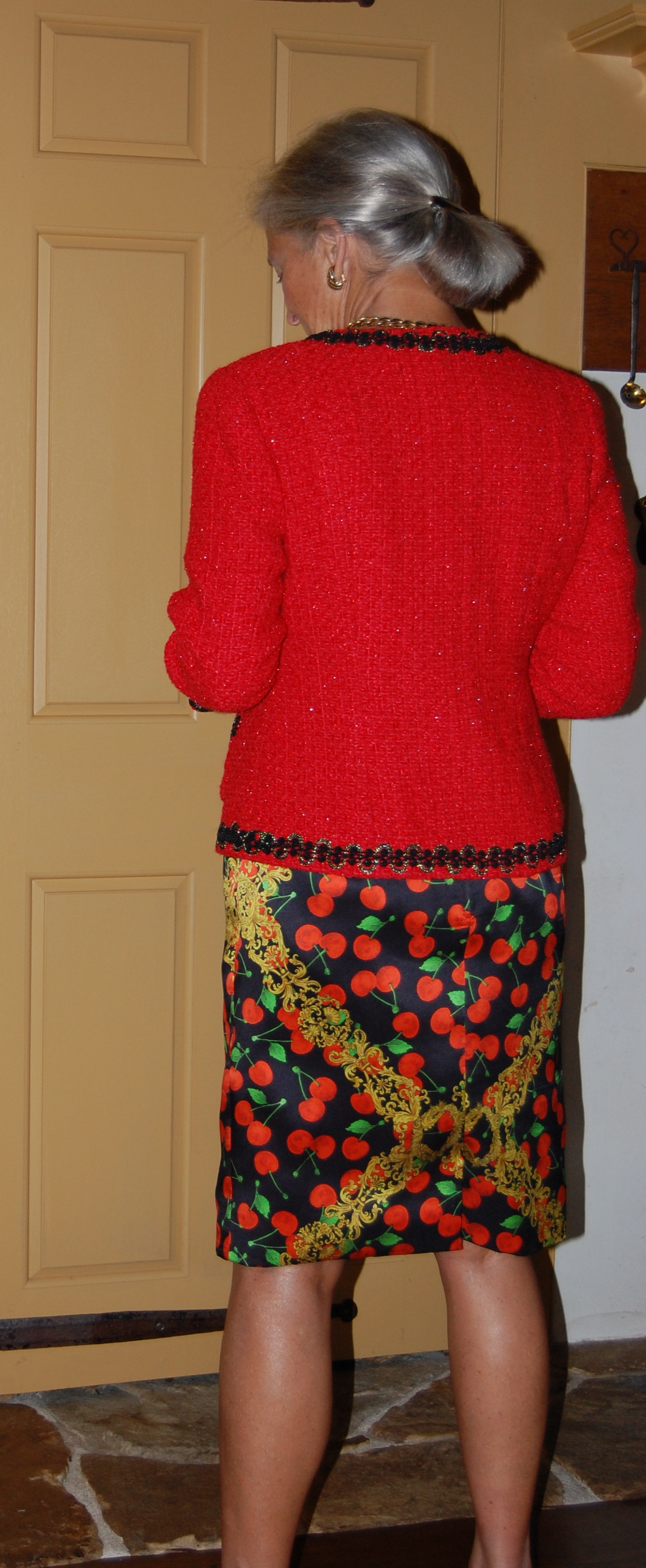
A back view.

A back view.

A side view

A side view

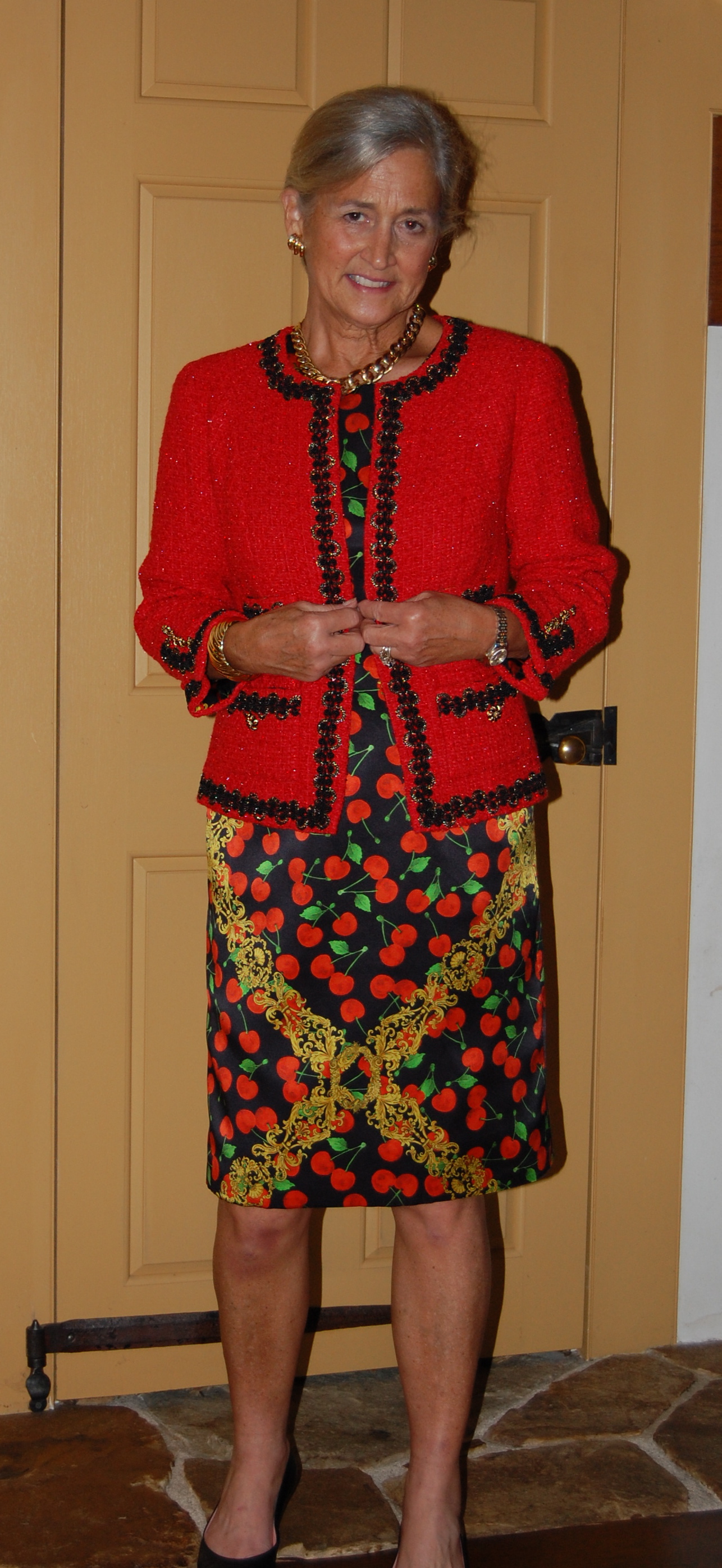
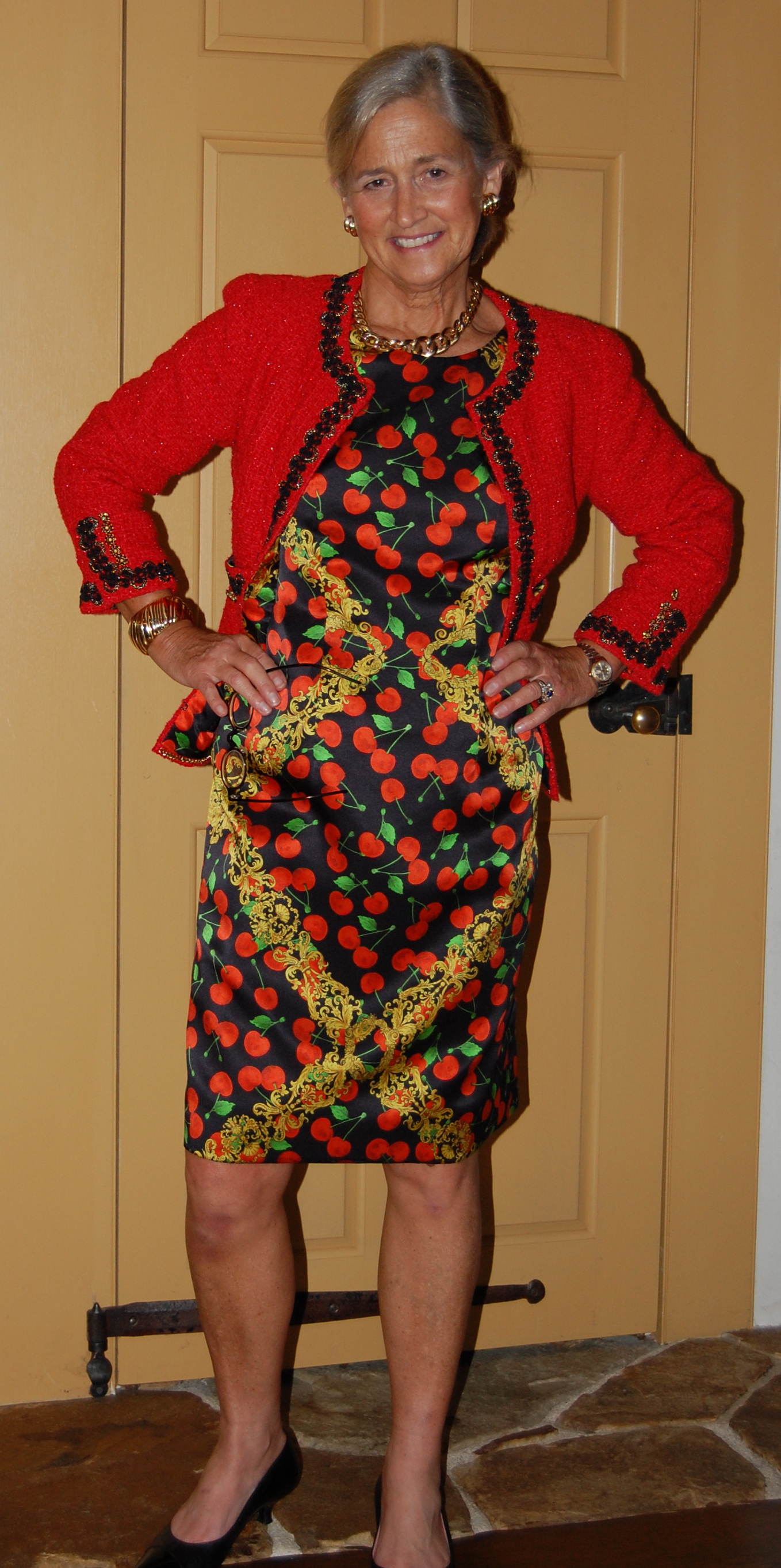
And, of course, I have to show the dress with its Chanel-inspired jacket:

A simple sheathA simple sheath

A simple sheath

This project is complete!

This project is complete!

Once again, I underestimated just how long it takes to make a dress using all couture techniques – even a simple (?) sheath dress.

Was it worth it?  Absolutely!

39 Comments

Filed under Chanel-type jackets, couture construction, hand-sewn zippers, sewing in silk, Uncategorized, underlinings

What Comes First – the Jacket or the Skirt?

Sewing has lots of decisions with it, some more important than others.  One of the decisions I face when making a two-piece suit (my current project) is: which part do I make first – the jacket or the skirt?  Instruction sheets are divided on this, as some start with the skirt, others with the jacket.  It would make sense, I guess, to start with the more difficult or more complicated half, which would most likely be the jacket.  So why do I usually make the skirt first?  Here’s what I think:

1) If the skirt and jacket are of the same fabric, making the skirt gives me “practice” with the feel of the fabric.  This comes in handy when I’m turning facings or collars on the jacket.

2) I’ve made enough jackets to know that I’m always kind of exhausted when they’re finally finished.  I’m not sure I’d want to be facing making the matching skirt, too, at that point in the process!

3) It’s easier and just plain better to make the final fitting of the jacket if it can be viewed with its accompanying skirt.

4) And finally, well . . .   I can always wear the skirt if the jacket doesn’t get completed right away, right??

So – what about progress on my emerald green silk suit?

This is the pattern I am using (View B), as written about in a former post.

This is the pattern I am using (View B), as written about in a former post.

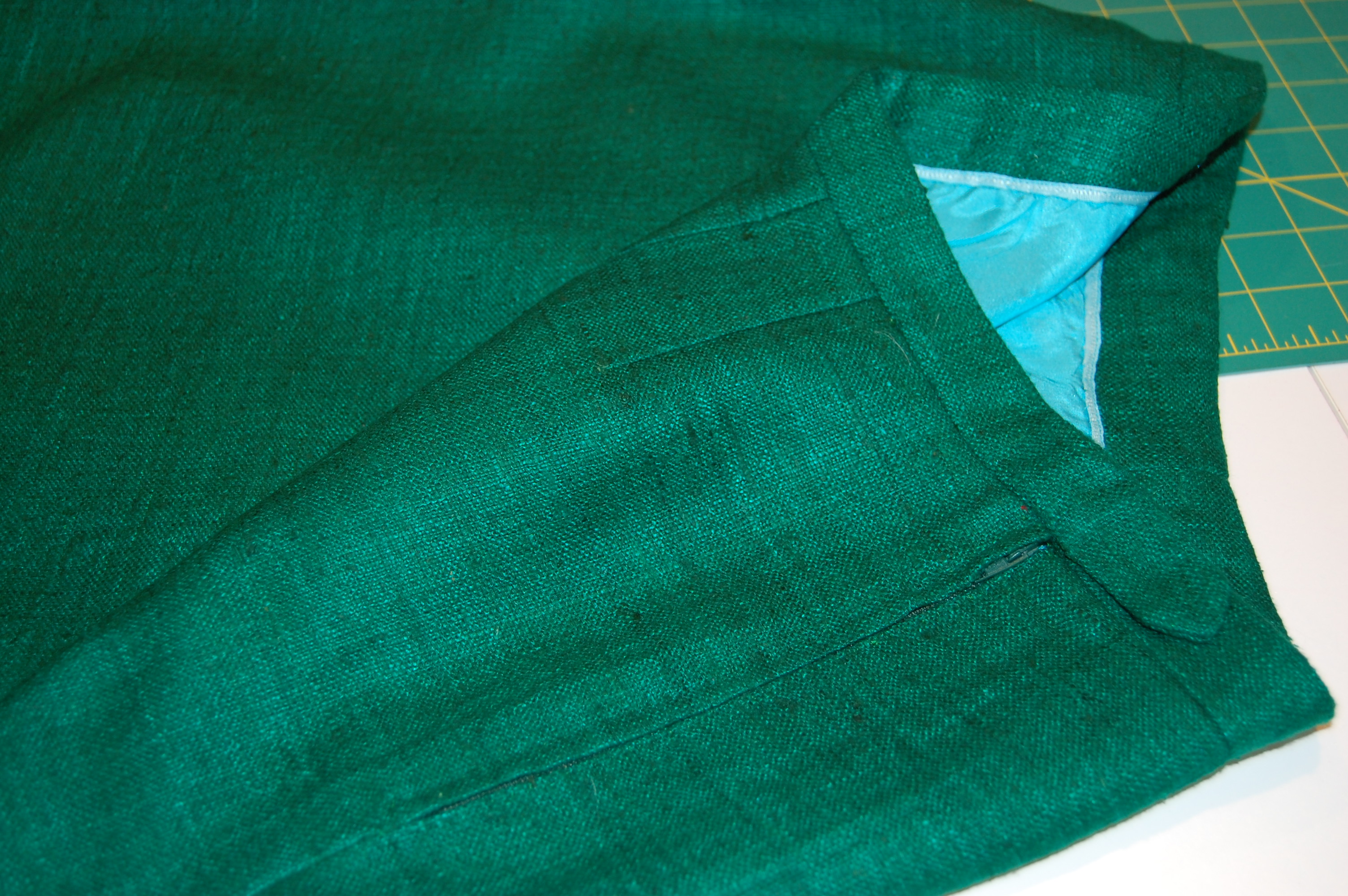
Yes, the skirt is finished, which allows me to give you a sneak preview.

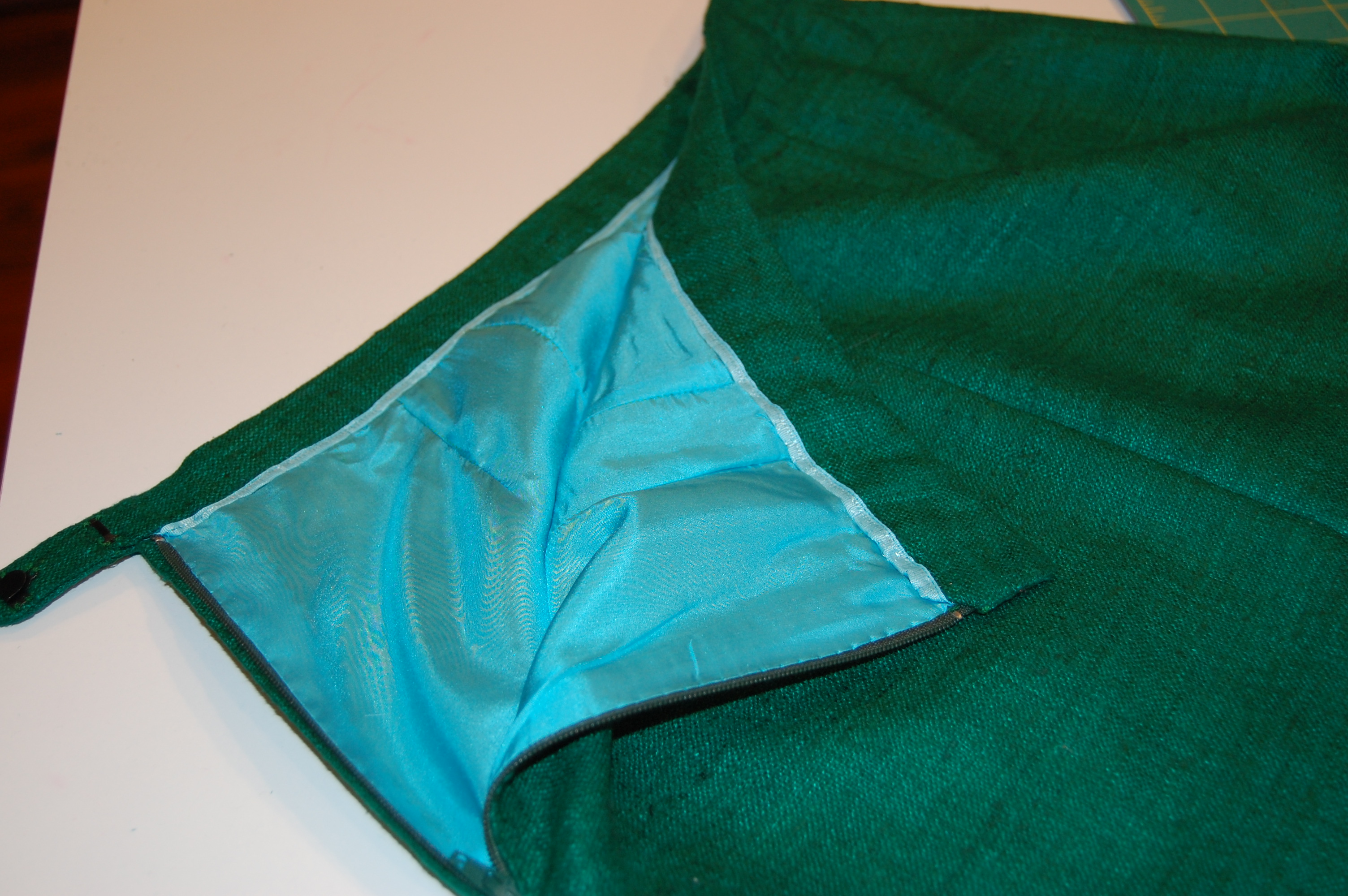
An interior view of the waistband and lining.

An interior view of the waistband and lining.

What do you think of that turquoise china silk lining?  Failing to find a green lining fabric, which would coordinate or match, turned out to be an advantage.  I had to choose something else – and, I must say, I love this combination.

Here is a view of the hand-picked zipper.

Here is a view of the hand-picked zipper.

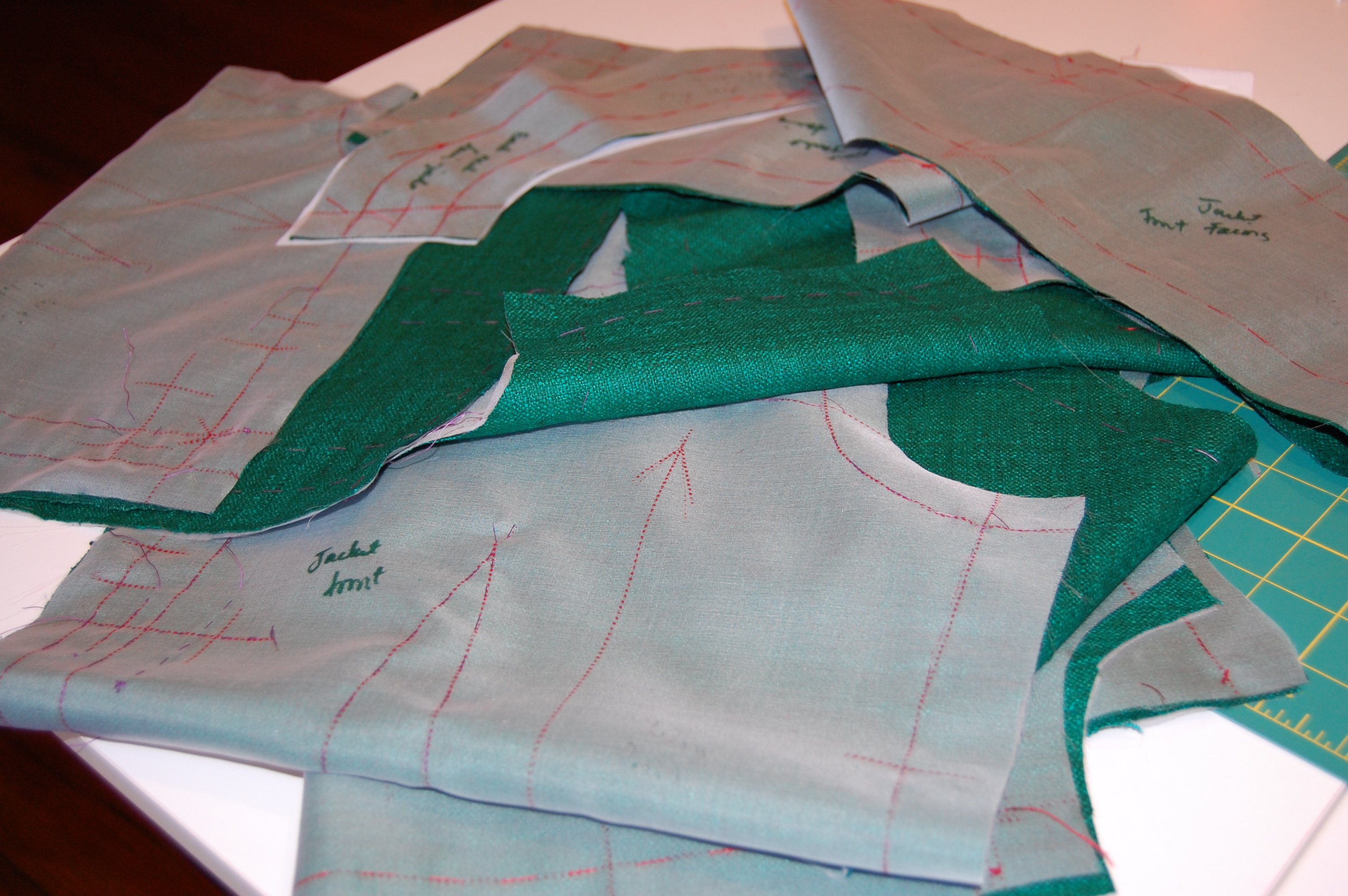
The jacket is still in pieces, but very controlled pieces they are!  Here they are all ready to go:

The silk organza underlining is all basted, interfacings cut, ready to go!

The silk organza underlining is all basted, interfacings cut, ready for sewing.

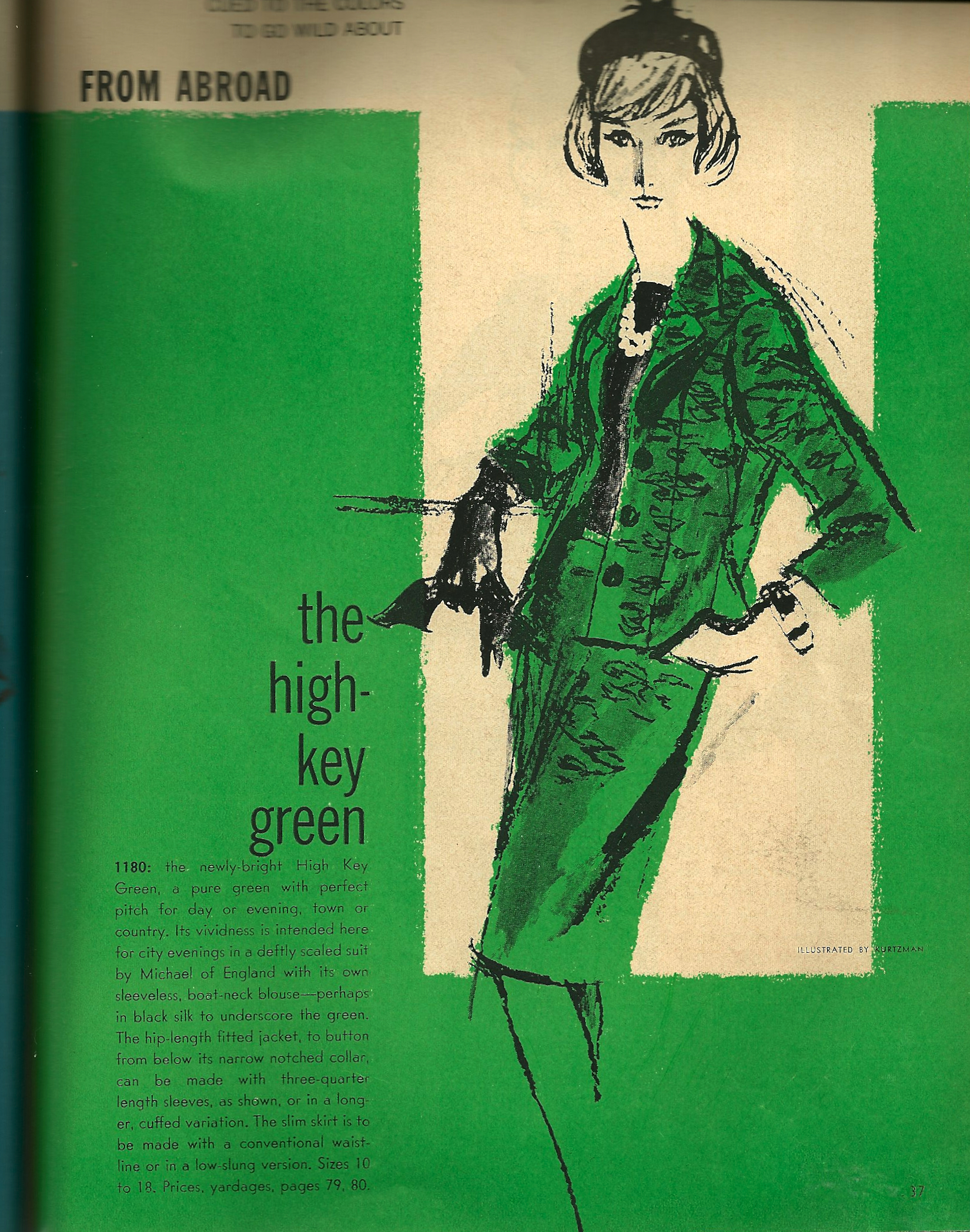
I am hoping that this suit will serve me similarly to the description of this green suit in the October/November 1962 Vogue Pattern Book Magazine:

"Colors to go wild about" -n 1962 and in 2013.

“Colors to go wild about” – in 1962 and in 2013.

To quote:  “… a pure green with perfect pitch for day or evening, town or country.”  This particular design is by Michael of England, but, like the Vogue pattern I am using, it has a fitted jacket with a narrow notched collar, and three-quarter sleeves.

In the same issue of VPB Magazine, a letter to the editor caught my attention.  Mrs. B. M. of the Bronx, New York, wrote:  “… When I make a suit, I always buy extra fabric and also run up a slim dress.  This lets the suit jacket do ‘double duty’ and I have both a suit and a jacket-dress, while having to make only one jacket.  This saves me time and expense, and I enjoy having a variety of costumes that I can wear almost anywhere, in a fabric I love.”

Now I wonder what she made first – the jacket – or the skirt – or the dress?  I’m exhausted just thinking about it!

13 Comments

Filed under Dressmaker suits, hand-sewn zippers, sewing in silk, Uncategorized, vintage Vogue Designer patterns, vintage Vogue patterns from the 1960s, Vogue patterns

“The Sweetest of All the Colors…”

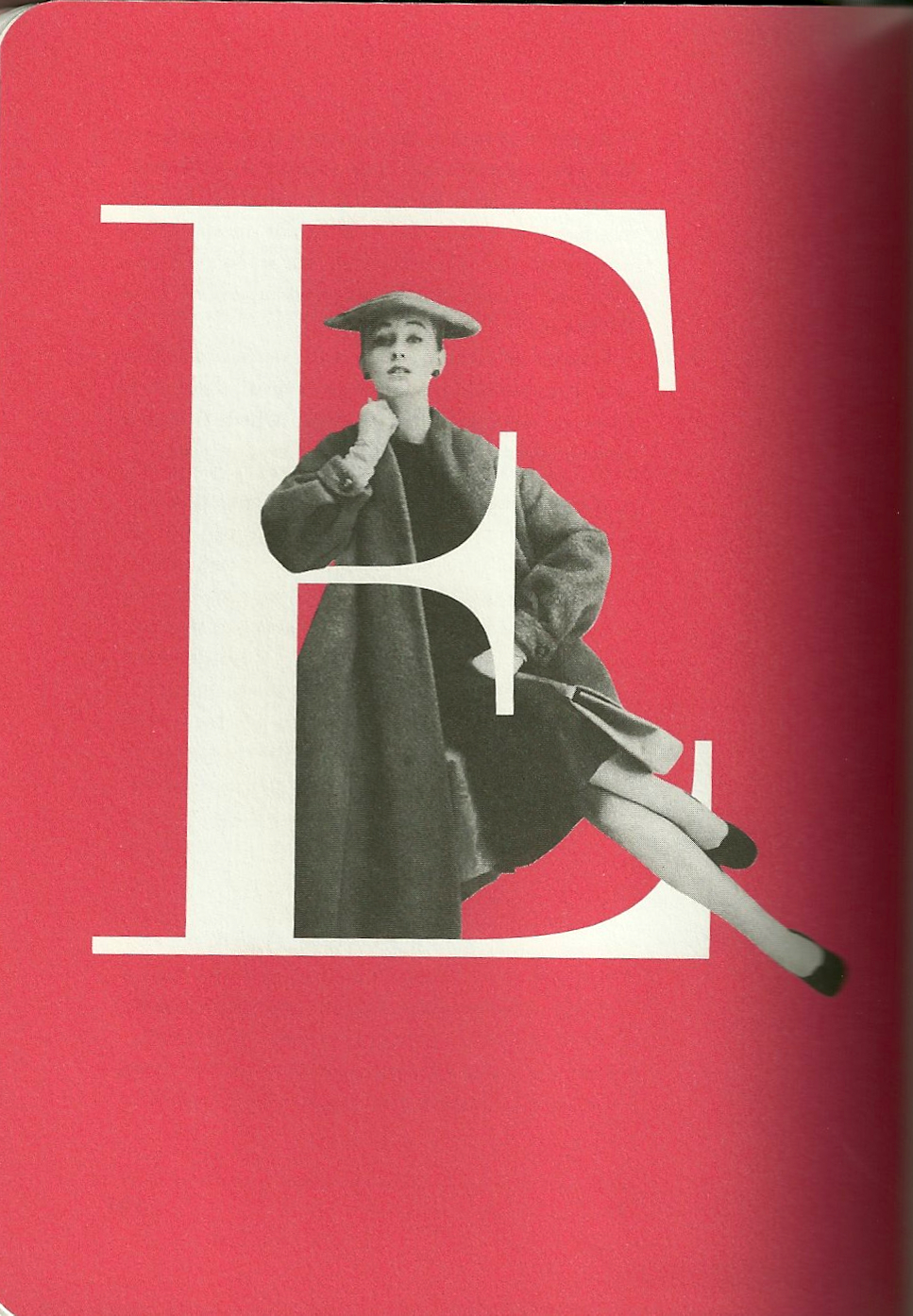
“… Every woman should have something pink in her wardrobe.”   Christian Dior certainly had distinct thoughts about fashion, and with this statement I concur.  Everyone looks good in pink, especially pale pink (men definitely included), and I suspect pale pink was what Monsieur Dior was thinking when he wrote this in his Little Dictionary of Fashion (First published by Cassell & Co., Ltd., 1954; 2007 edition by Abrams; Copyright Catherine Dior and Jean-Pierre Teto, 2007).   Interestingly, the lining pages of his little book are pale pink, but the divider pages feature a deep, deep raspberry pink as in – – – my newly finished “ladylike” dress!

Here is the "section"page for E from Dior's Fashion Dictionary

Here is the “section”page for E from Dior’s Fashion Dictionary

Dated 1958, this is the pattern I used for my pink dress.

Dated 1958, this is the pattern I used for my pink dress.

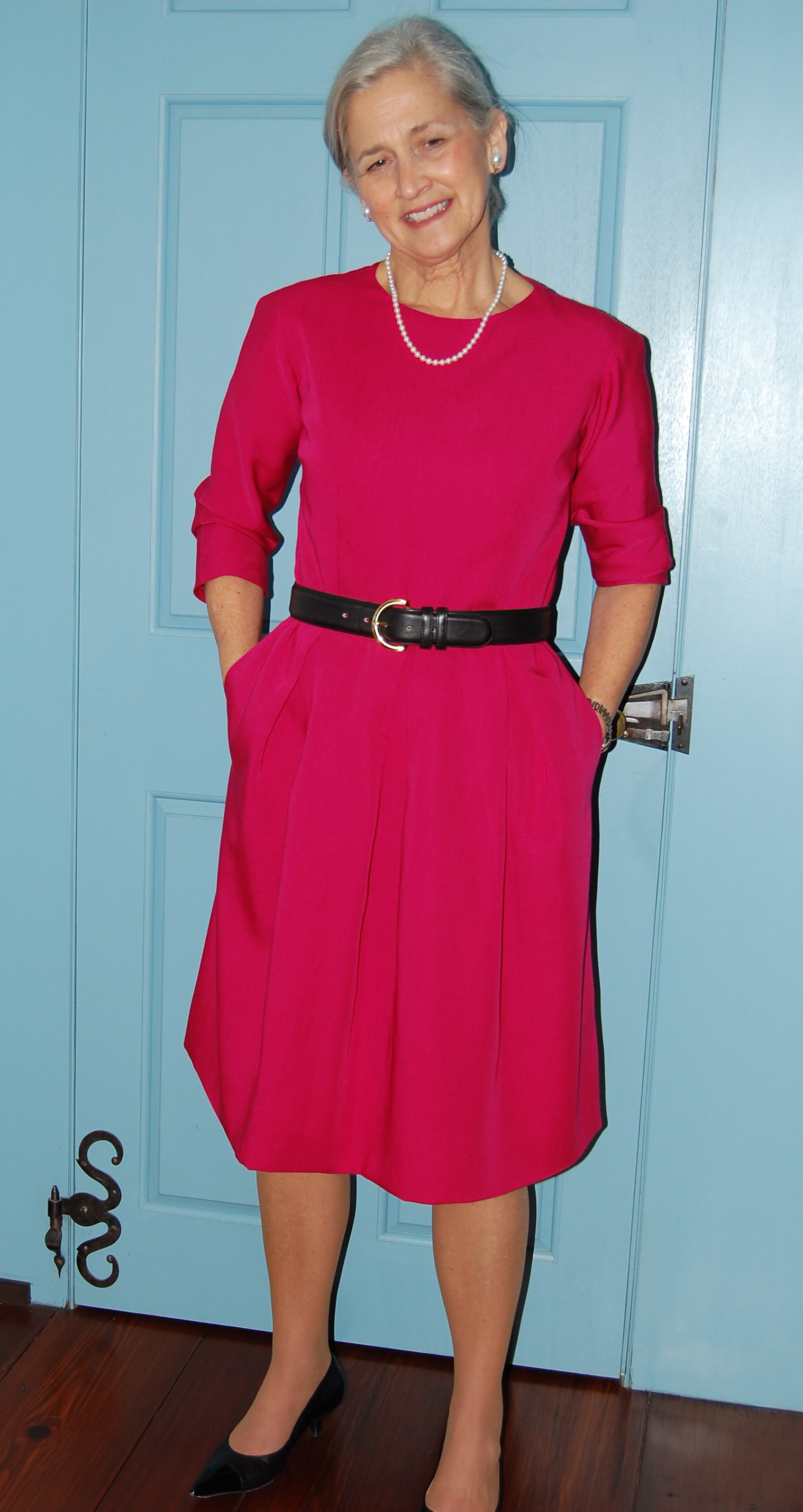
The finished dress!

The finished dress!

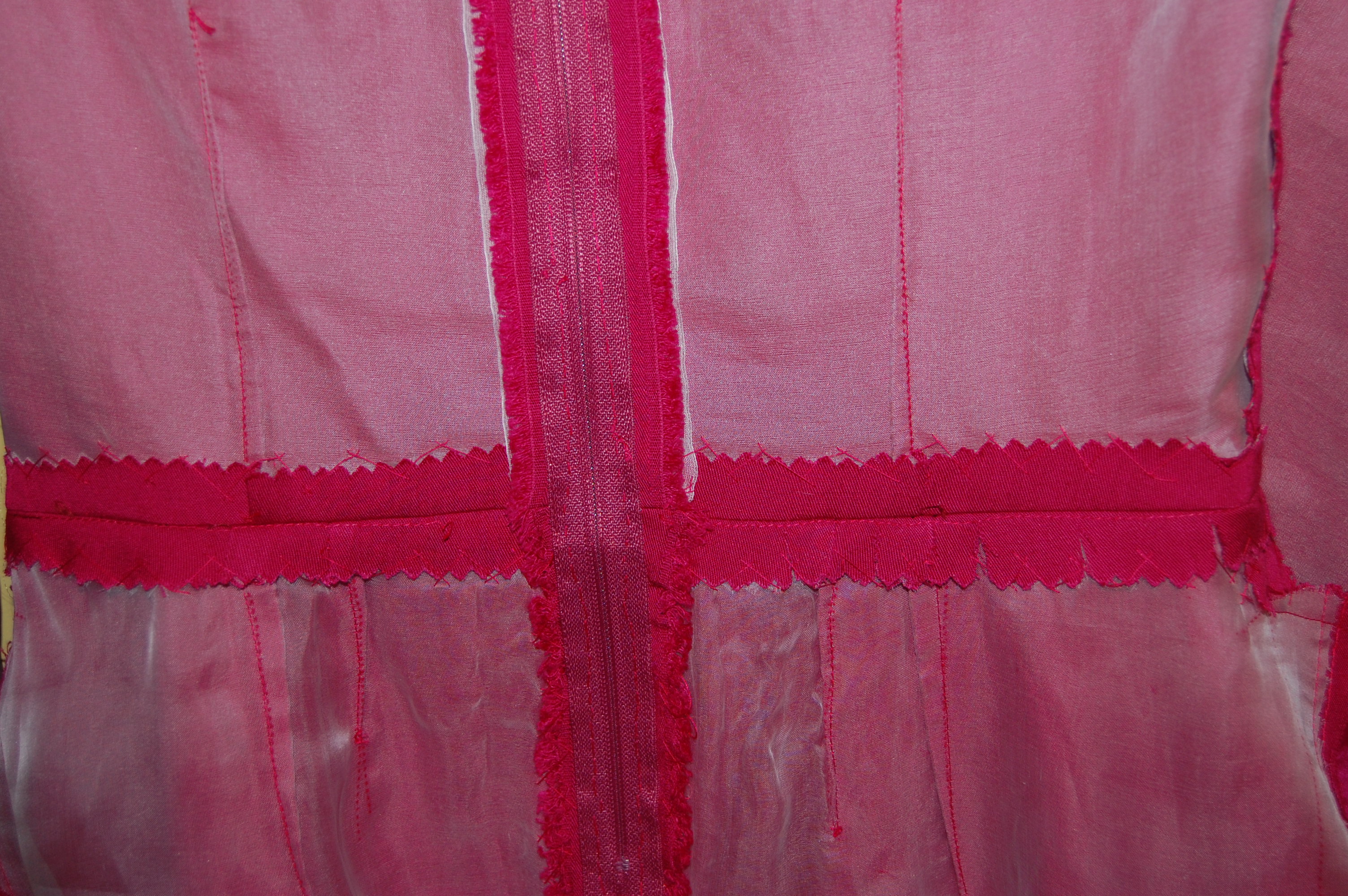
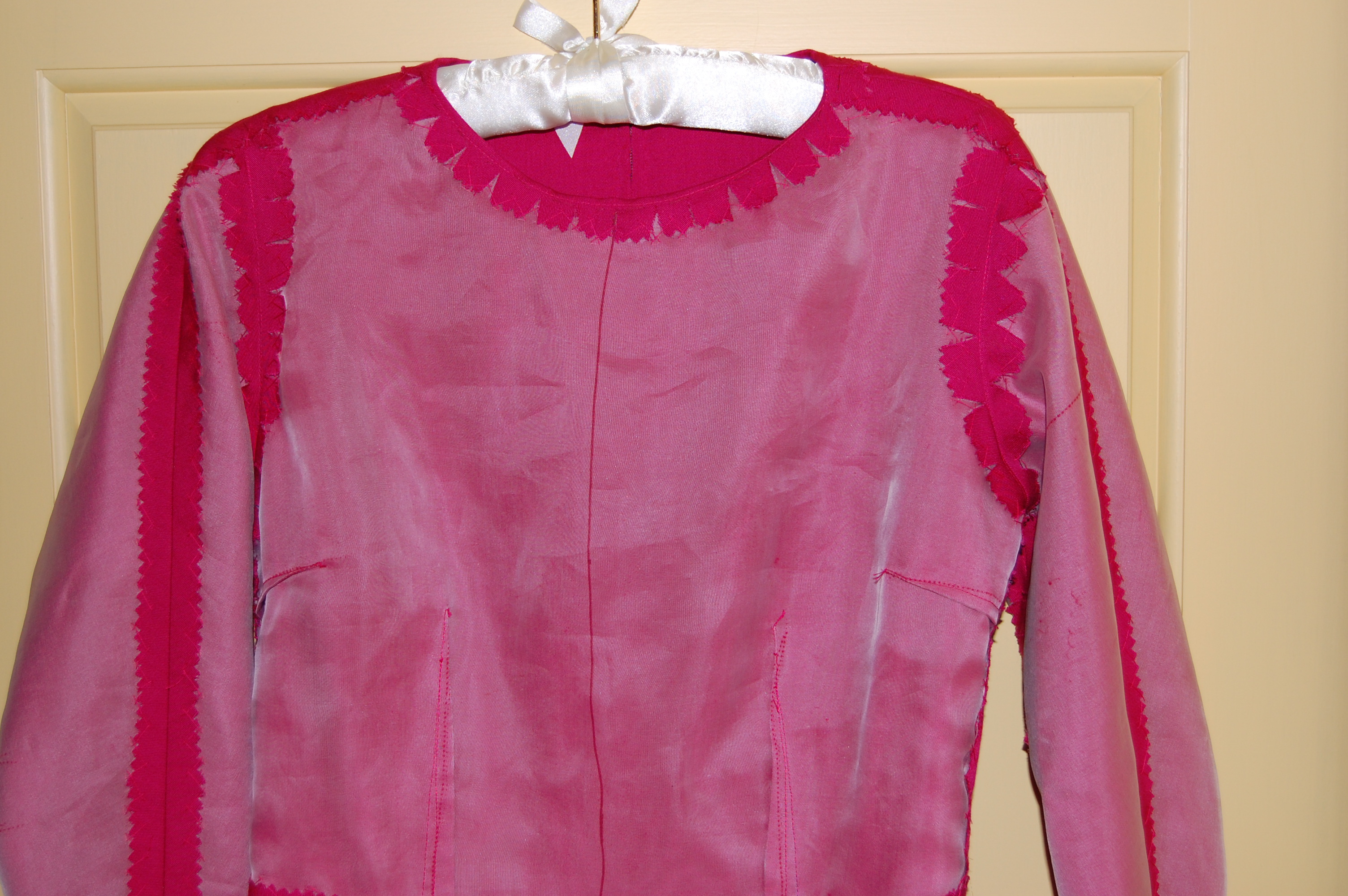
As I mentioned in my last post, I made this dress using couture construction, which means a lot of hand-sewing.  The more I use this type of construction, the more I like it, but it doesn’t get any faster.

An interior view of some "couture" construction - silk organza underlining, catch-stitched seams, hand-picked zipper.

An interior view of some “couture” construction – silk organza underlining, catch-stitched seams, hand-picked zipper.

However, couture construction gives me a lot of flexibility in changing necklines, which I really appreciate.  That is one of the changes I made to this pattern – widening the neckline to a more flattering appearance for me.

The widened neckline.

The widened neckline.

I also changed the back of the skirt by removing the box pleats and substituting a darted back.

I substituted darted back panels for the "original" box pleats

I substituted darted back panels for the “original” box pleats

The original dress had pockets hidden in side box pleats, but when I narrowed the width of the skirt, I did away with those side pleats.  I still wanted pockets, so I added pocket extensions in order to still hide them in the side seams.  It worked!

A peek at the pocket inside which shows the raspberry silk lining I used for the dress.  I understitiched the pocket edges by hand, which took no time at all and looks so much nicer than machine stitching!

A peek at the pocket inside which also shows the raspberry silk lining I used for the dress. I understitiched the pocket edges by hand, which took no time at all and looks so much nicer than machine stitching!

I added a quarter-inch to the underneath seam on each sleeve, so that each sleeve would have one-half inch extra width to it.  Those ladies in the 1950s must have had skinny arms, as I find sleeve widths on these vintage patterns are often just not quite spacious enough.

I added to the underarm seam - an adjustment which I determined from  my muslin.

I added to the underarm seam – an adjustment which I determined from my muslin.

This was the first time I had made sleeves which are half set-in and half kimono.  This is a look and fit which I love!  In fact, the shoulder fits so well, that my original thought to add an interior sleeve heading was one I decided I did not need.

The one thing I’m not sure I like is the “purchased or novelty belt” as indicated on the pattern.  I think a self-belt, a little wider than the one I show, would be more attractive.  Please comment if you have an opinion.  (I have plenty of fabric left over to make one…)

I am thinking a 2" wide self belt might be more attractive???

I am thinking a 2″ wide self belt might be more attractive???

Before I move on to my next project (to be announced soon), I want to thank Dresses and me for nominating me for the Very Inspiring Blogger award.

Very Inspiring Blogger Award

So, in accordance with the “rules” –  I am supposed to share a few facts about myself and nominate some others for the same award, so here goes:

1 – I am told I have a slight Southern accent, surely a remnant of being born and raised in North Carolina.

2 – I do most of my machine sewing on a 1940s’ Singer Featherweight and on my mother’s 1956 “306K” portable Singer.

3 – Autumn is my favorite season.

4 – I can make a very good Pumpkin pie.

5 – I enjoy reading historical fiction.

6 – I can’t sing (as in carry a tune) except for a few simple lullabies and Christmas carols.

Now – to pass on this award:  So many fellow bloggers inspire me every day that it is difficult to single out just a few (especially as many have already received this award!), but here are some worthy recipients:

For always giving me a laugh:  A Dress A Day and The Blue Gardenia.

For always teaching me something I would not have known otherwise:  The Vintage Traveler, Pattern Vault, Two Nerdy History Girls, and the FIDM Museum blog.

For sharing their sewing knowledge, design sense, and beautiful workmanship:  Custom Style, Lilacs and Lace, So Sew Lovely, and Frabjous Couture.

So now – you are IN THE KNOW and  – I am IN THE PINK!

21 Comments

Filed under couture construction, hand-sewn zippers, kimono sleeves, Uncategorized, underlinings, vintage Vogue patterns from the 1950s, woolens

New Life from an Old Dress

I’m sure I never would have entertained the thought of remaking/repurposing this dress  –

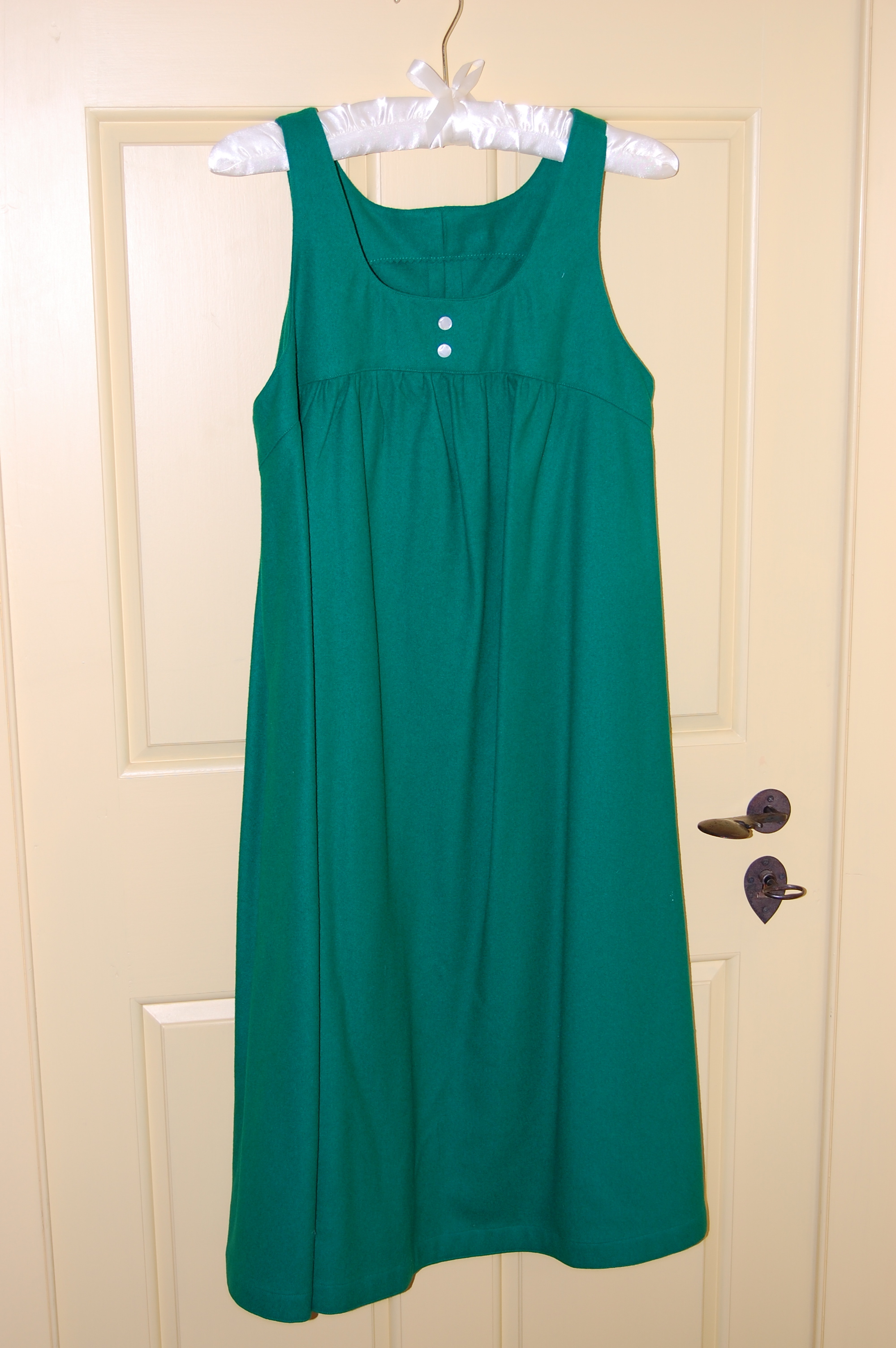
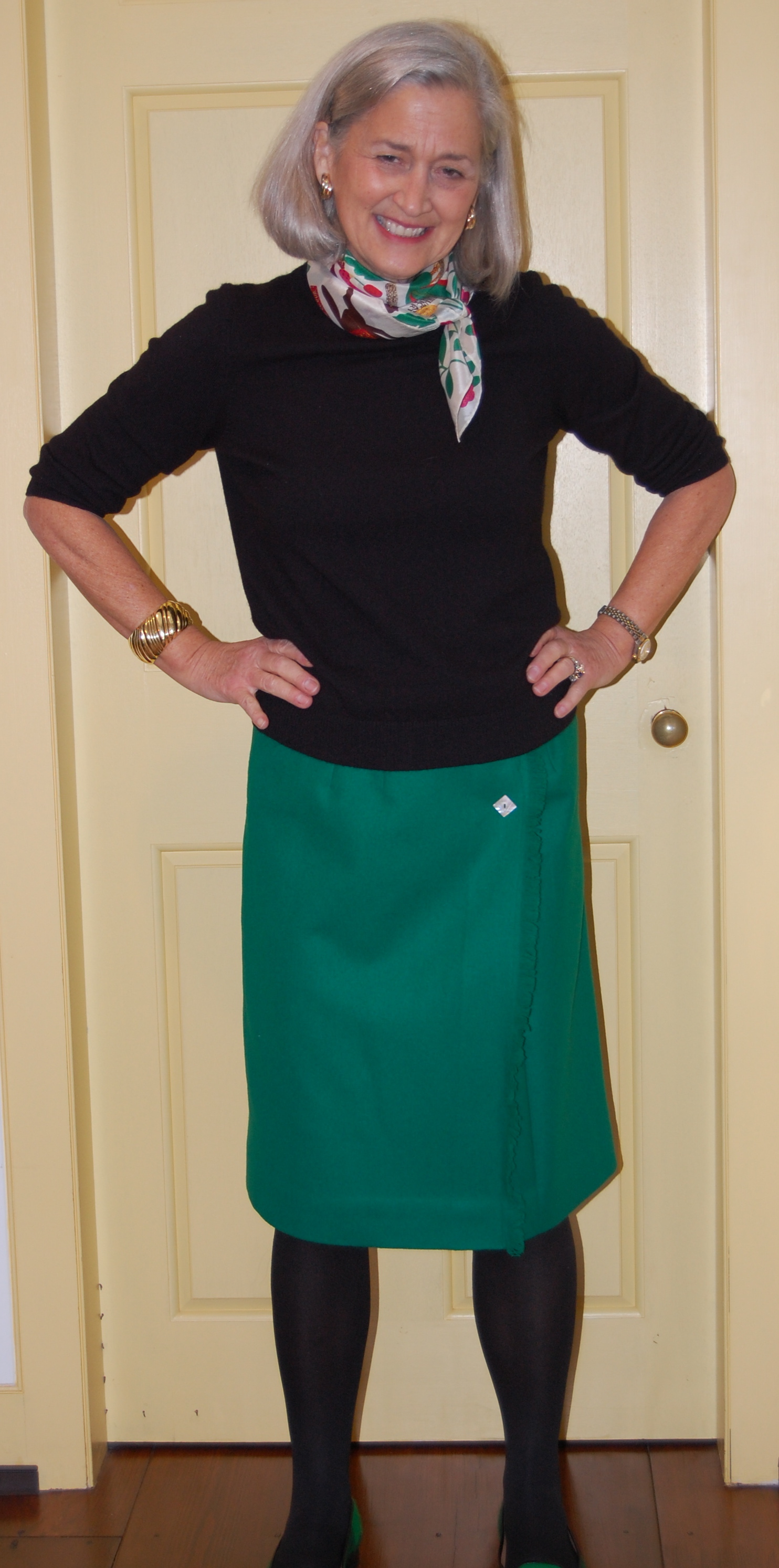
I made this maternity dress in the Fall of 1980 while pregnant with our first child.

I made this maternity dress in the Fall of 1980 while pregnant with our first child. The fabric is US-made Pendleton wool.

– had Emerald Green not emerged as THE color of 2013.  As it was, it seemed silly not to take advantage of this opportunity to make a skirt in a color I love, from a dress that would not be worn again, and which already carried sentimental memories.  So I told myself repeatedly, “Do this.”  And so I did it, but not without much mental anguish.

Before I did any ripping of seams or cutting of fabric, I needed to decide what kind of a skirt I could make, knowing that, even with a maternity tent-style dress, the usable expanse of fabric was limited.  It seemed fairly obvious that a pencil or A-line skirt was about the extent of the possibilities.  But I wanted some kind of a focal point on it, too.  I kept thinking about the fringed Pendleton wool skirt that I had remade, thinking that fringe on this green one would be quite nice as well.  I did a little testing on an inside seam of the dress and determined the wool was so tightly woven, that any “fringing” would have to be somewhat minimal.  It also seemed to be easier to unravel the threads working up and down rather than across.  I figured if I could wiggle out enough fabric to add one overlap (or pleat) at the side front, I could fringe that edge and get the focal point I wanted.

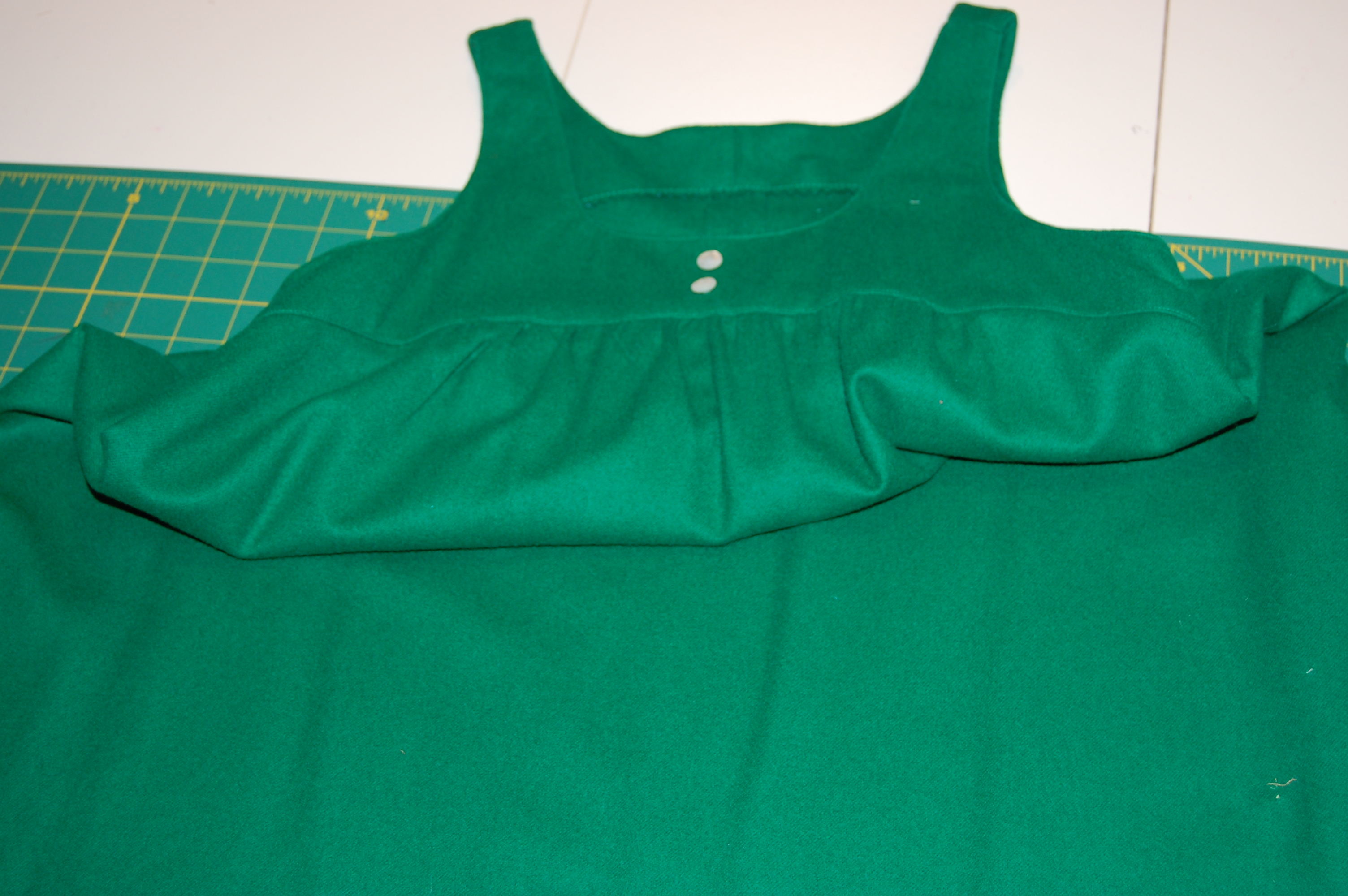
With this plan in mind, I now had to face cutting apart – and into – this dress, which I so clearly remembered making and wearing over 31 years ago.  Honestly, for a couple of days I really couldn’t face this.  My practical side finally triumphed when I decided I would first separate just the side seams on the dress.  If I chickened out at that point, I could always sew it back together, right?  Right!  And so I snipped and snipped and pretty soon I had two usable sections of wool.

The dress with the side seams separated.

The dress with the side seams separated.

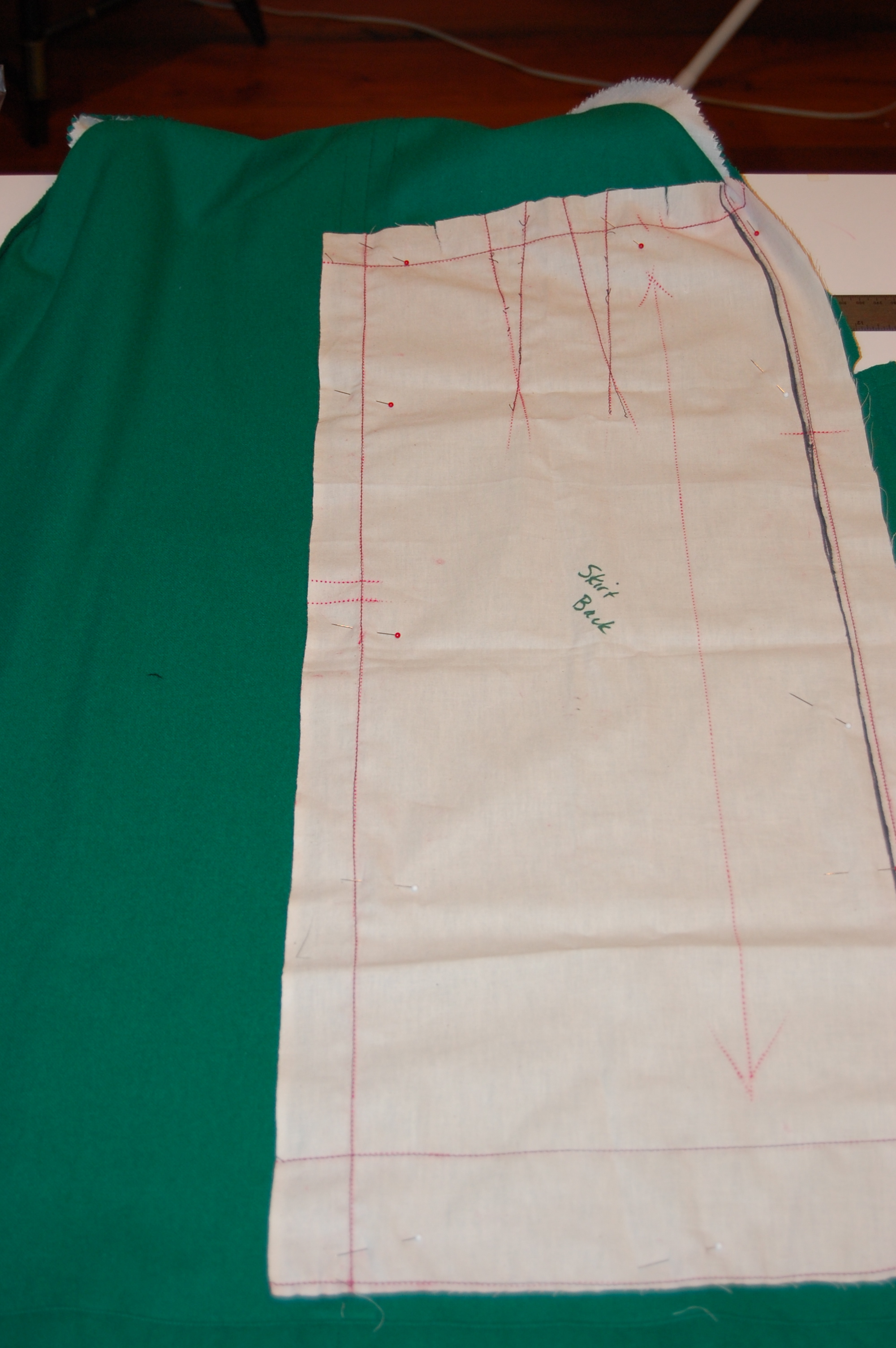
Then –  somehow, miraculously, I was suddenly okay with the thought of cutting into this dress.  The back part of the skirt pattern fit perfectly on the back section of the dress – it was even already seamed for me.

My muslin pattern positioned on the back of the dress.

My muslin pattern positioned on the back of the dress.

The front part of the dress gave me enough room to make a new two-piece front, with a pleat on the left side.  I cut out the pieces and set about to fringing.  Re-runs of Downton Abbey helped tremendously with this – I pulled and picked and created fluffy little towers of green threads while totally absorbed in another time and place.

Then it was back to the sewing room to sew this baby (pardon the bad pun) together.  There was not enough fabric  to fashion a waistband on the straight of grain, so I opted to make an inside pieced-together facing instead.

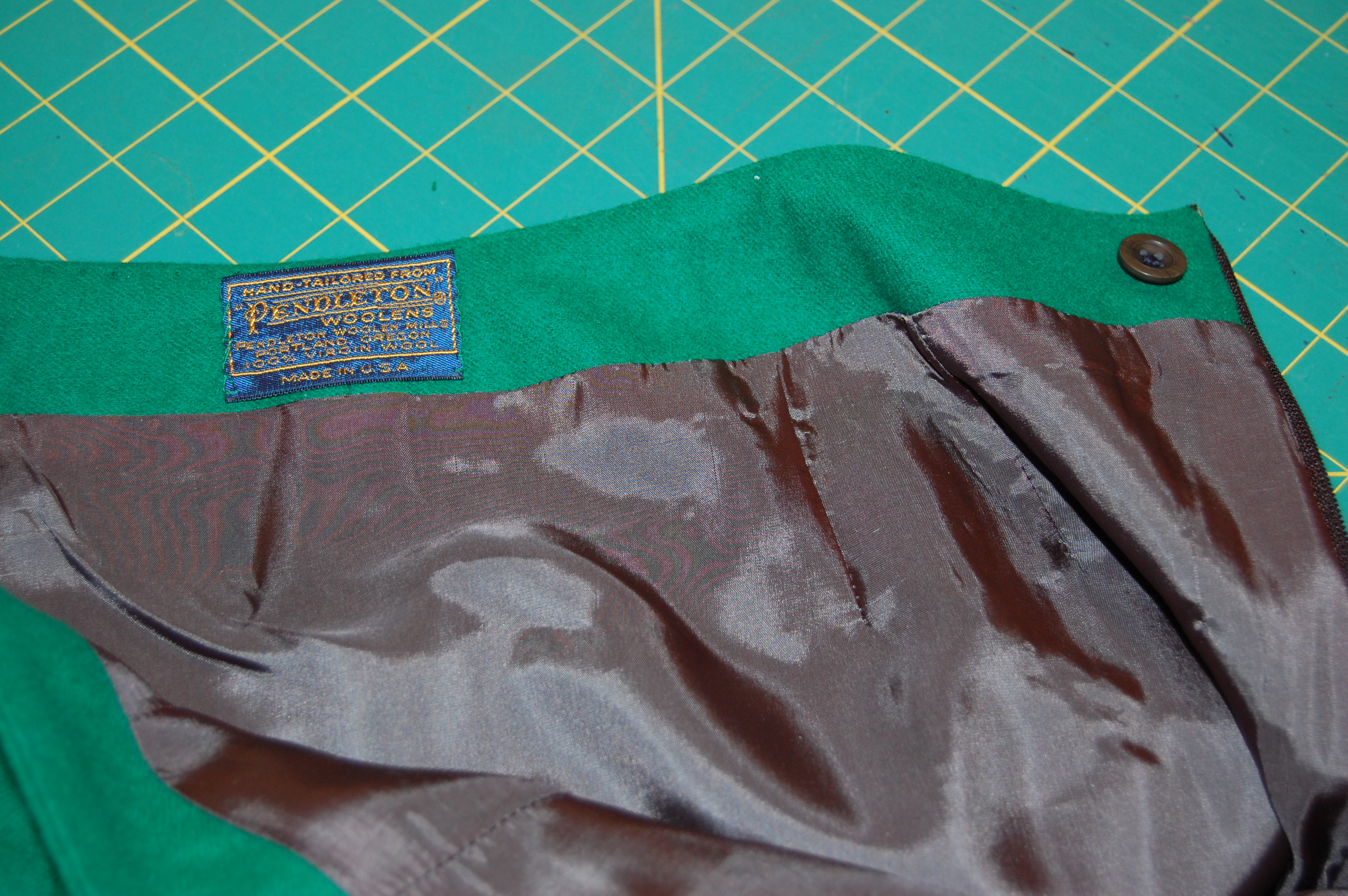
The facing at the waistline.  I attached the 31-year-old Pendleton label in place after all these years!

The facing at the waistline. I attached the 31-year-old Pendleton label in place after all these years!

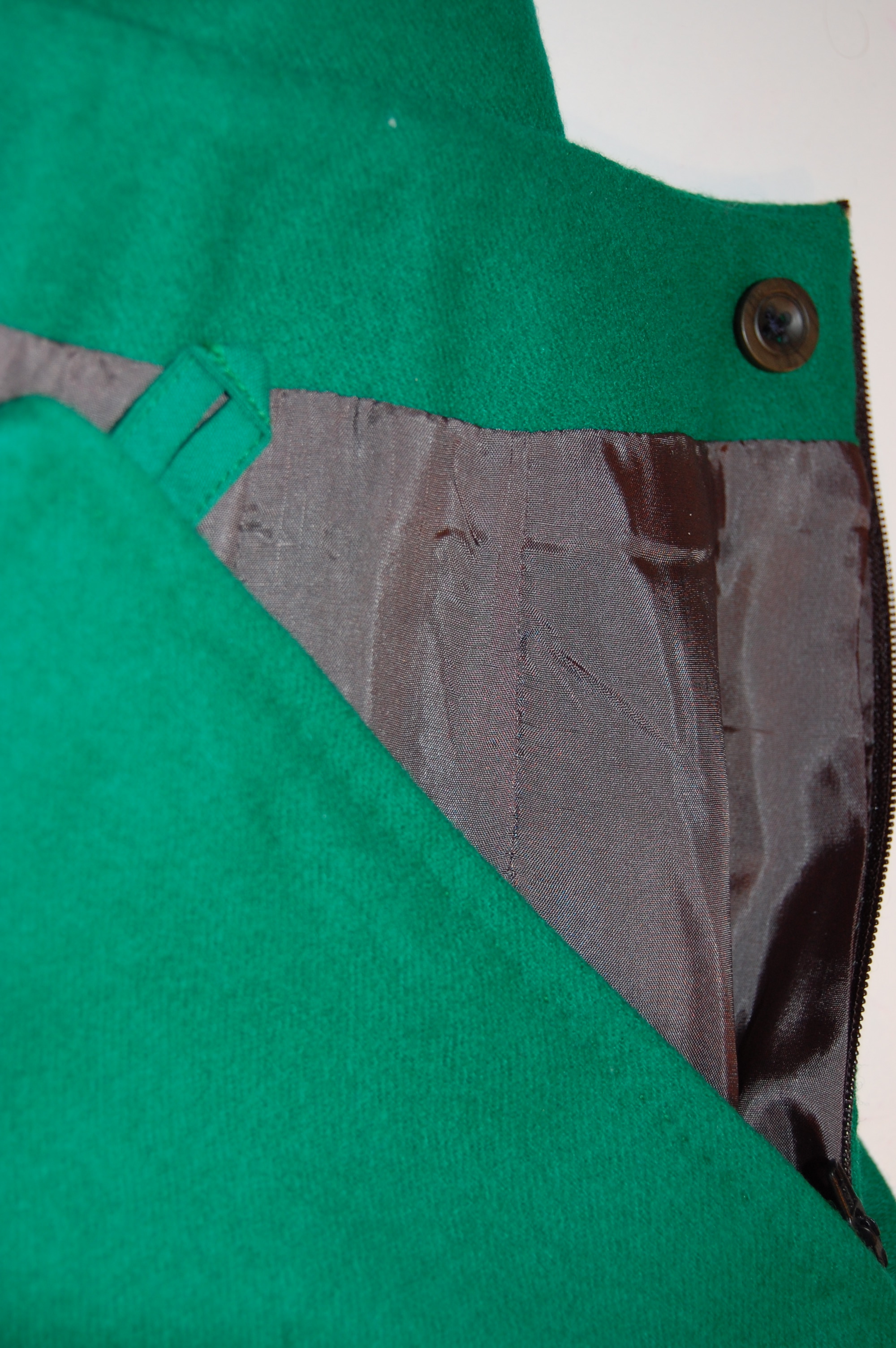
Then I made a button tab out of bias tape which I just happened to have on hand in emerald green.  What I could not find was a 7” zipper in emerald, nor lining fabric in emerald.  Guess the manufacturers of such items did not get the memo from Pantone about the color of the year!  So I ended up with a black zipper and dark gray Bemberg lining fabric.

The black zipper and gray lining are okay, I think...

The black zipper and gray lining are okay, I think…

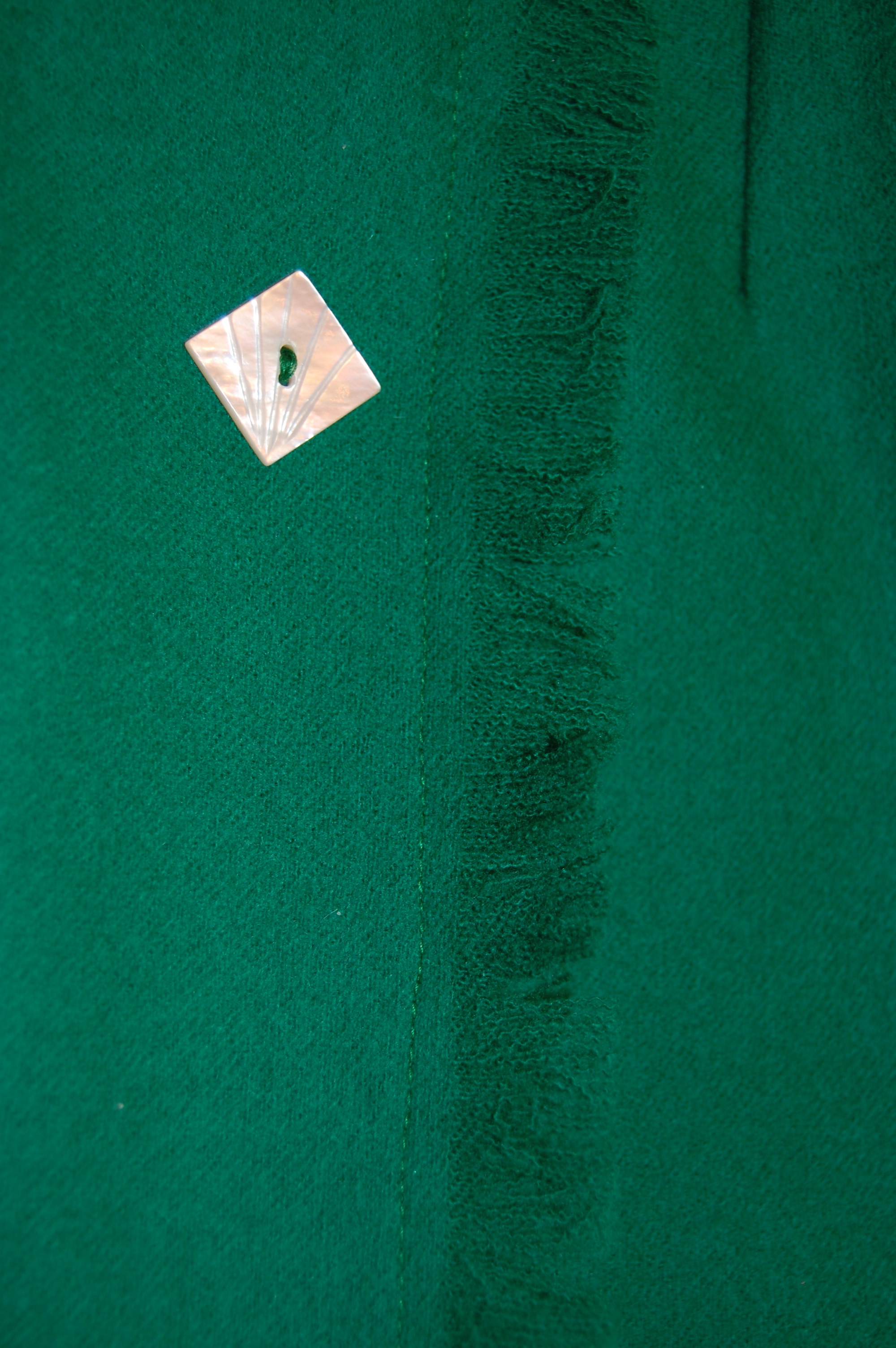
I went round and round with a decision about buttons to hold the top part of the pleat in place.  I found several single buttons in my button box, which I really liked, but I really needed two or three.   A trip to Joann’s yielded some pale gray pearl buttons which would have been lovely, except that one broke after I got home when I was taking it off the card!  So I still have to resolve the button issue – as right now I  have exactly one button on the skirt, although I do like its diamond shape quite well…

The fringe detail on the pleat - and the single button.  Sure wish I had another one of these!

The fringe detail on the pleat – and the single button. Sure wish I had another one of these!

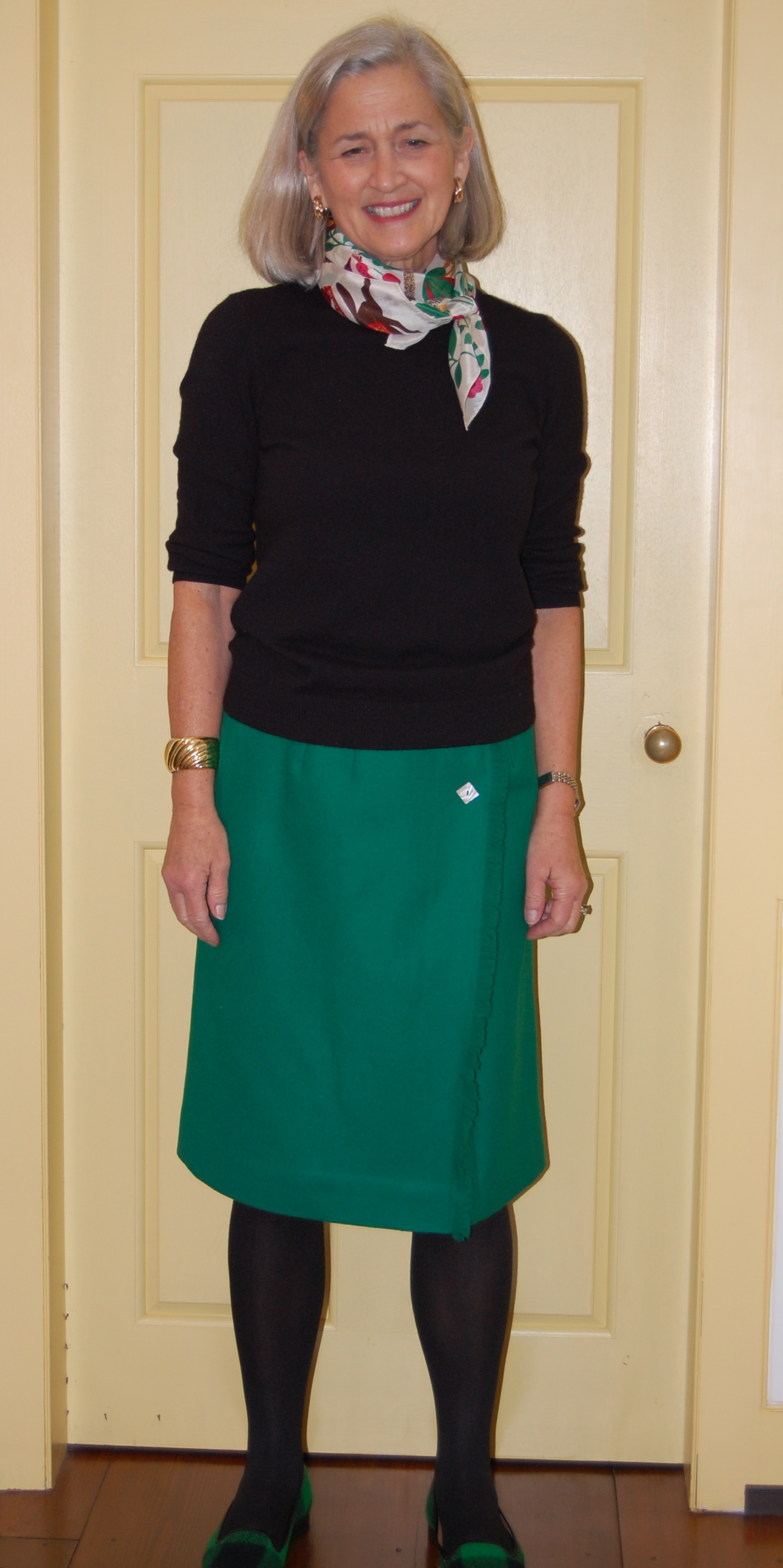
It's finished (except for the button issue, of course!).

It’s finished (except for the button issue, of course!).

green skirt

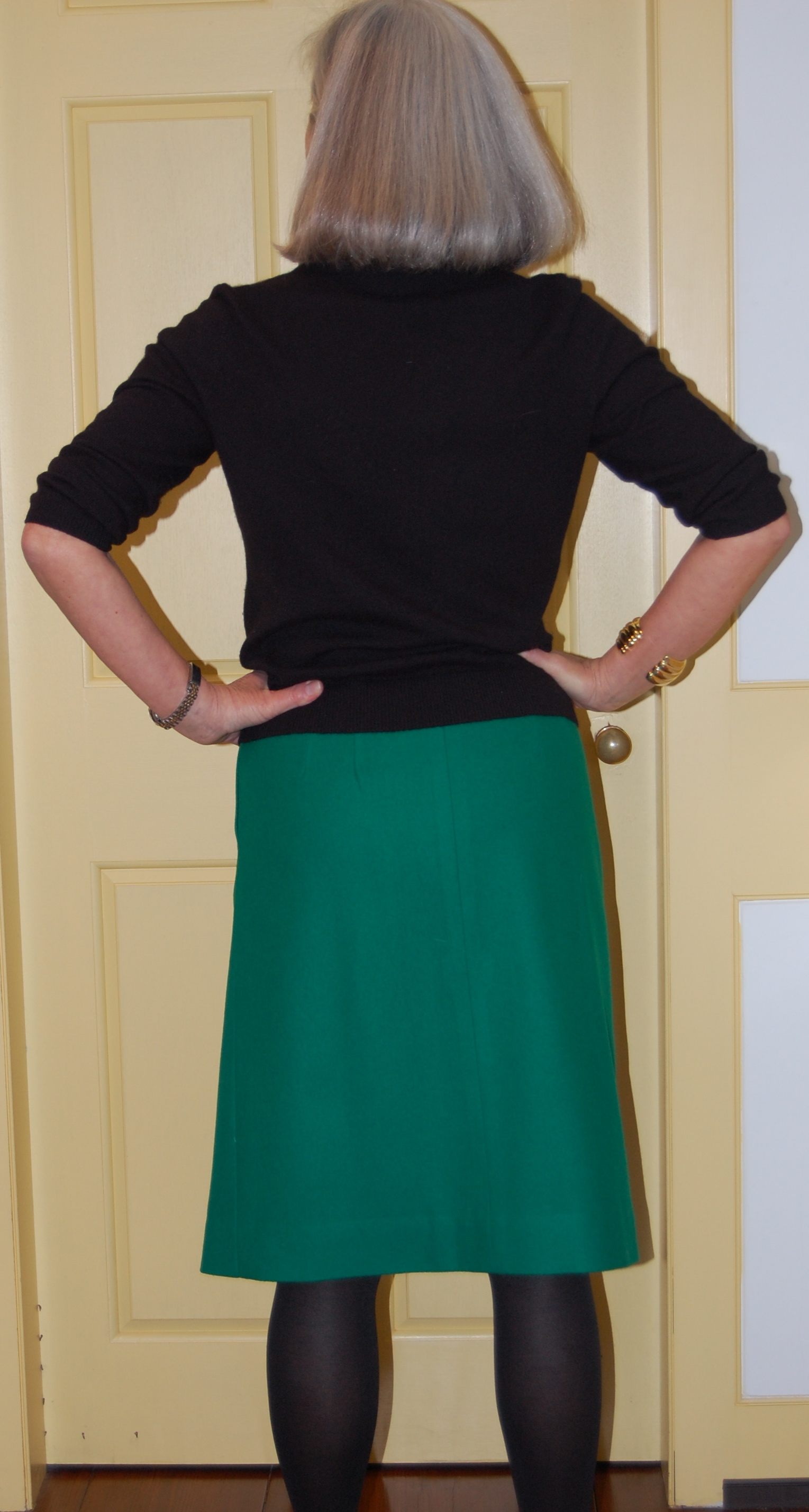
The back view.

The back view.

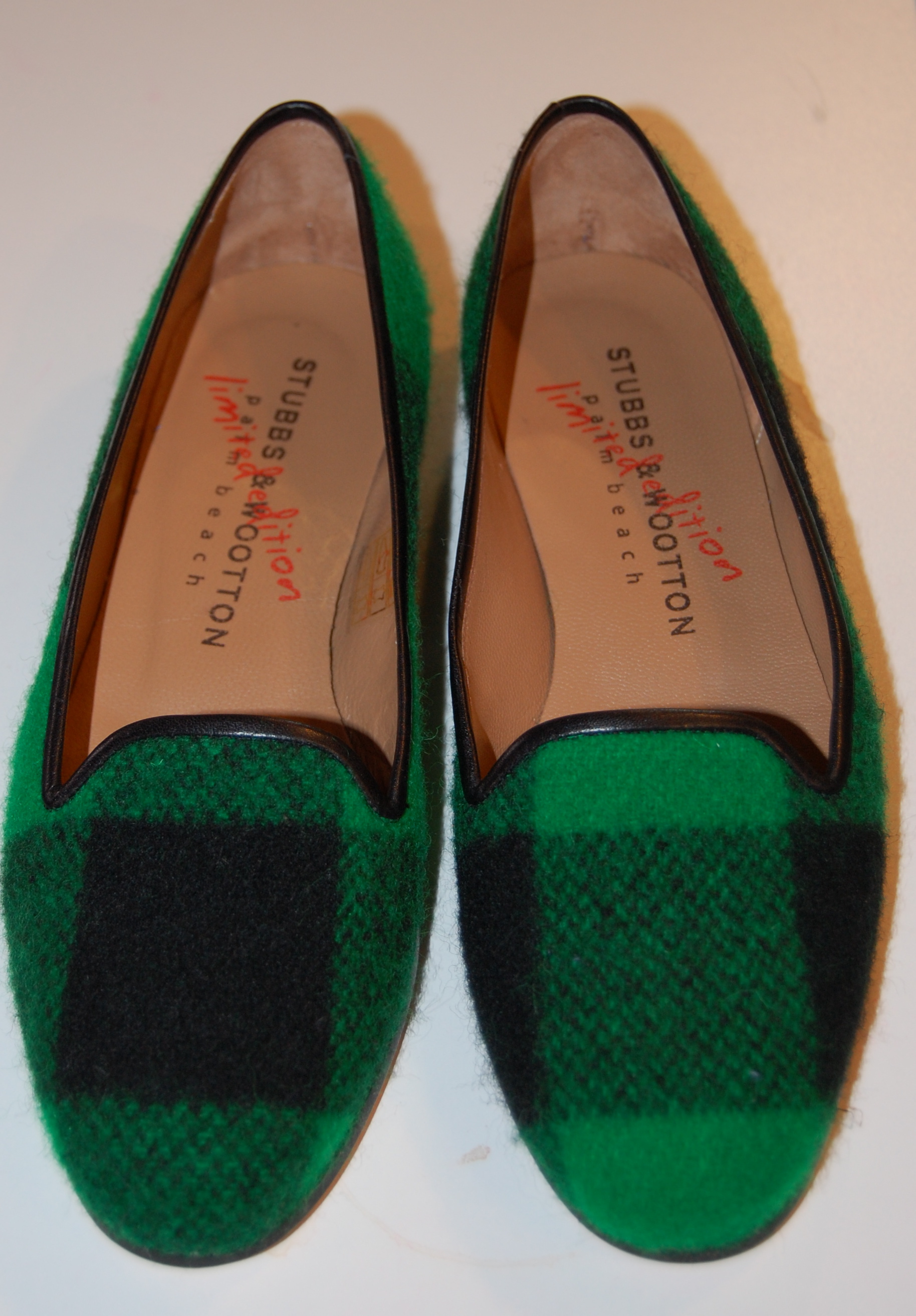
Thinking back on this project, I believe the signs were there, telling me to make this skirt.  Consider that I found these Stubbs and Wootton shoes – green and black Buffalo Check to go with my Pendleton wool:

How I love these comfy flats!

How I love these comfy flats!

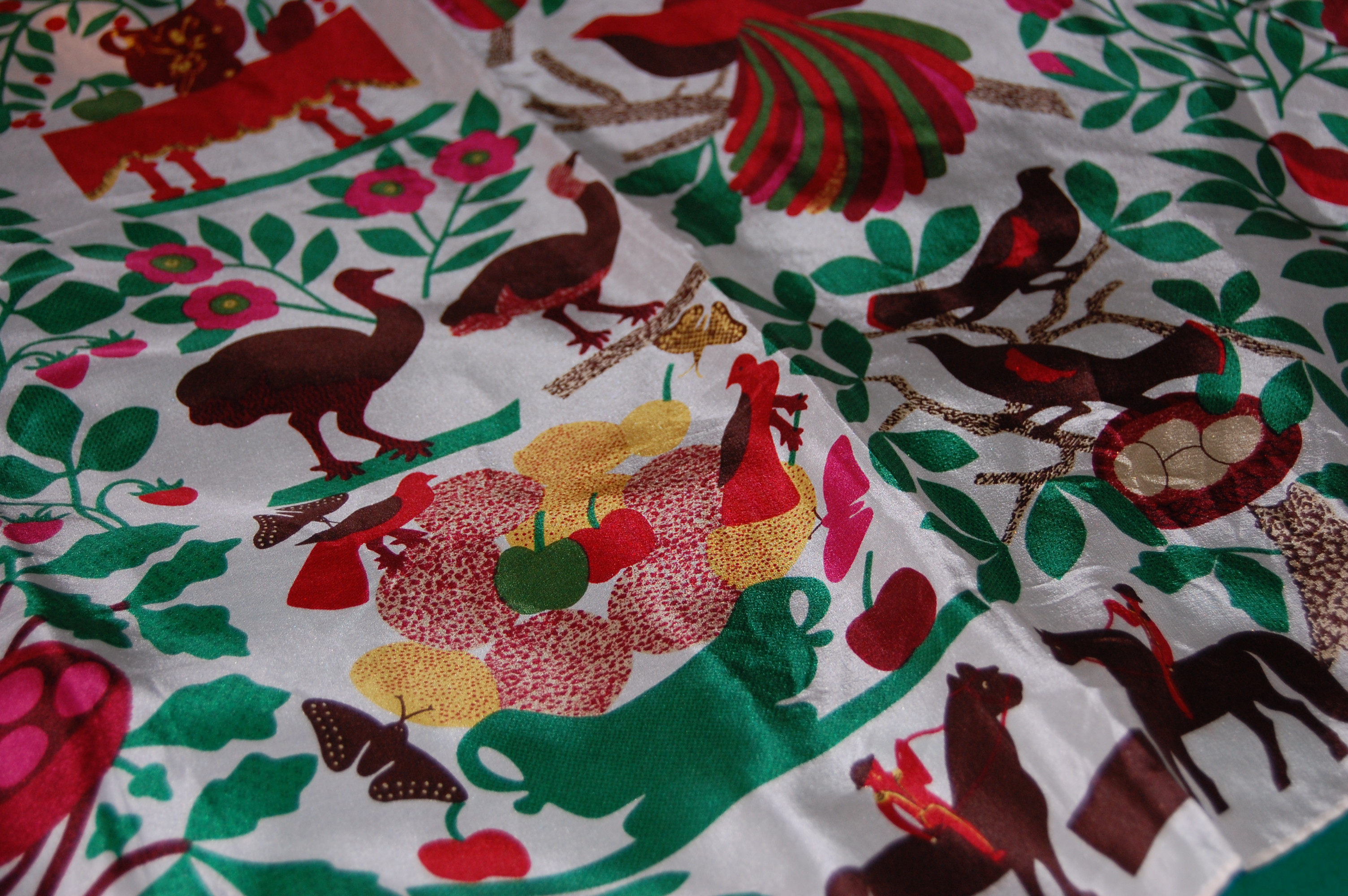
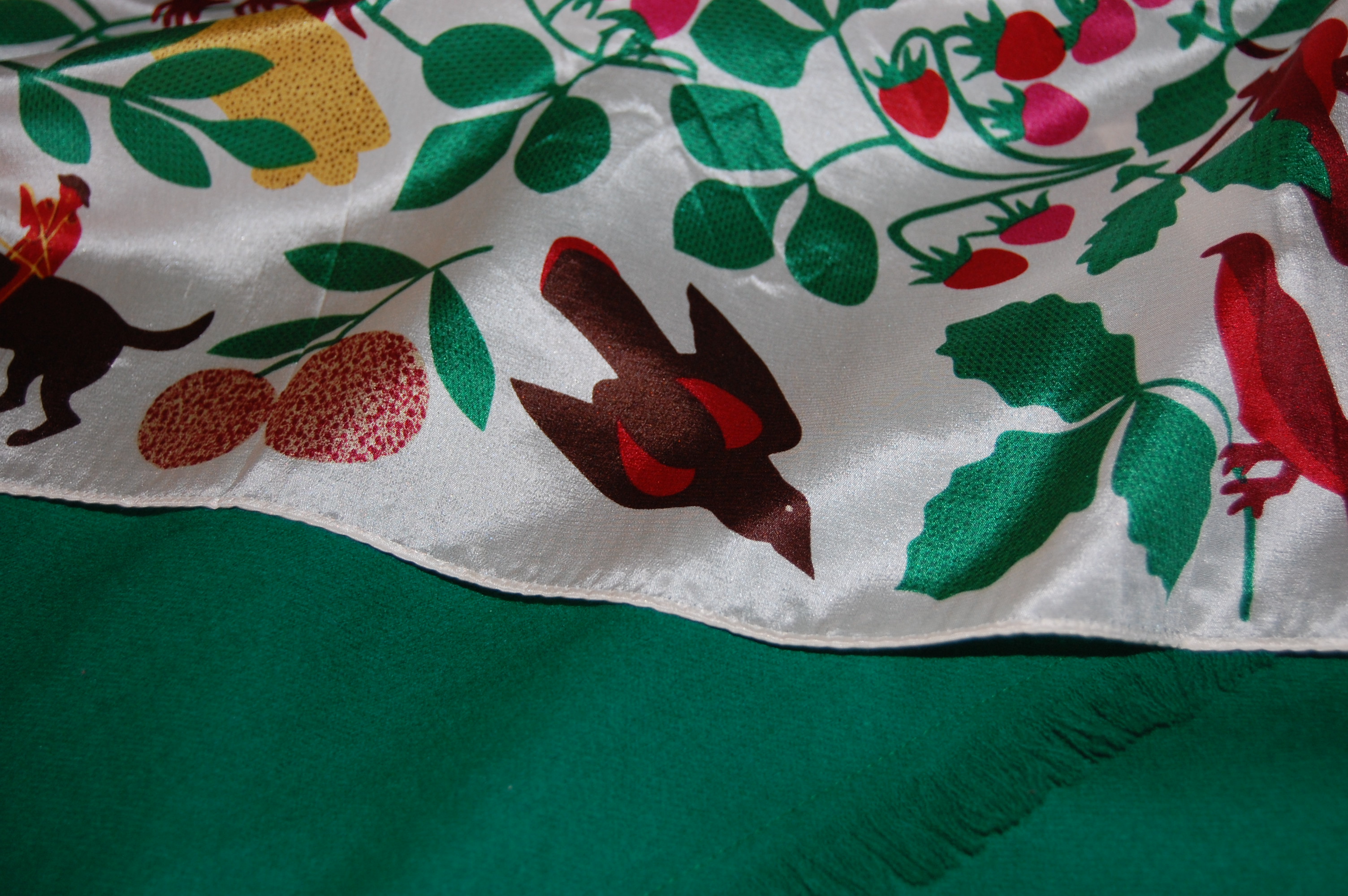
And among my collection of silk scarves was this scarf, purchased in the 1980’s from the Museum of American Folk Art, featuring one of their quilts in predominant colors of pink and – yes, Emerald Green.

The green in this scarf could not be more perfect.

The green in this scarf could not be more perfect.

A detail of the scarf on top of the skirt.

A detail of the scarf on top of the skirt.

So – where do I envision wearing this skirt?  How about to a baby shower for my daughter, now expecting her own little one?  After all, she herself  was once sheltered by these warm woolen threads of green – and love.

14 Comments

Filed under 1980's dress patterns, Buttons - choosing the right ones, hand-sewn zippers, Scarves, Uncategorized, woolens

Chance of Flurries

I am two weeks (maybe closer to three weeks) behind schedule, but I am undaunted.  The last two weeks of 2012 were chock-a-block full of Family, Fun, and Feasting – and then the plague hit our house.   Yes, another F-word – the FLU – which apparently was not the type we got the immunizations for…

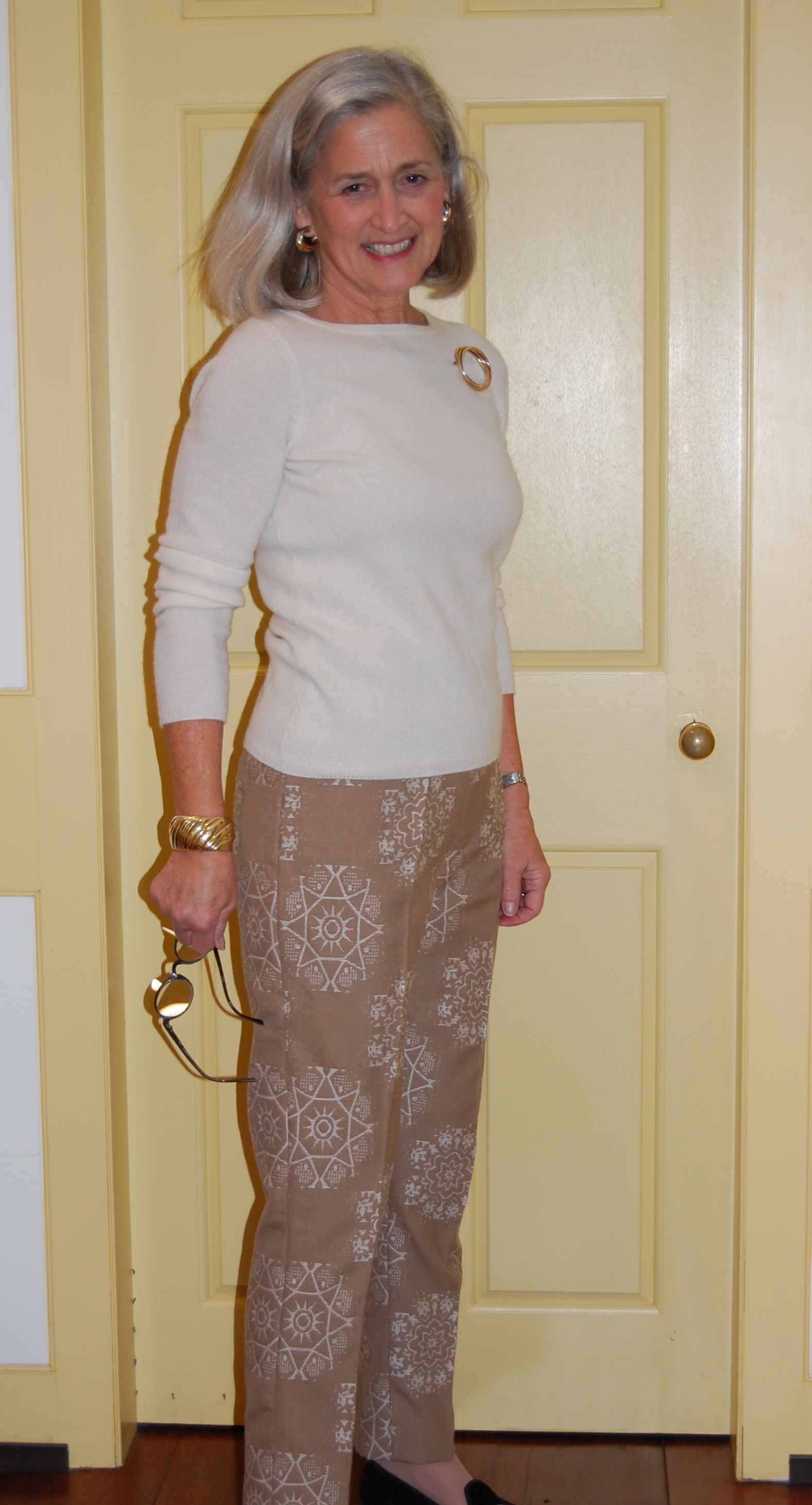
But this week has found me back in my sewing room, finishing up what was to be my final project for 2012.  Flexibility, I have learned, is a great asset to cultivate, so I am trying to be flexible in my plans and take it all in stride.  Indeed, I am hoping that I will be striding pretty in newly-sewn pants, which have now joined my wardrobe.

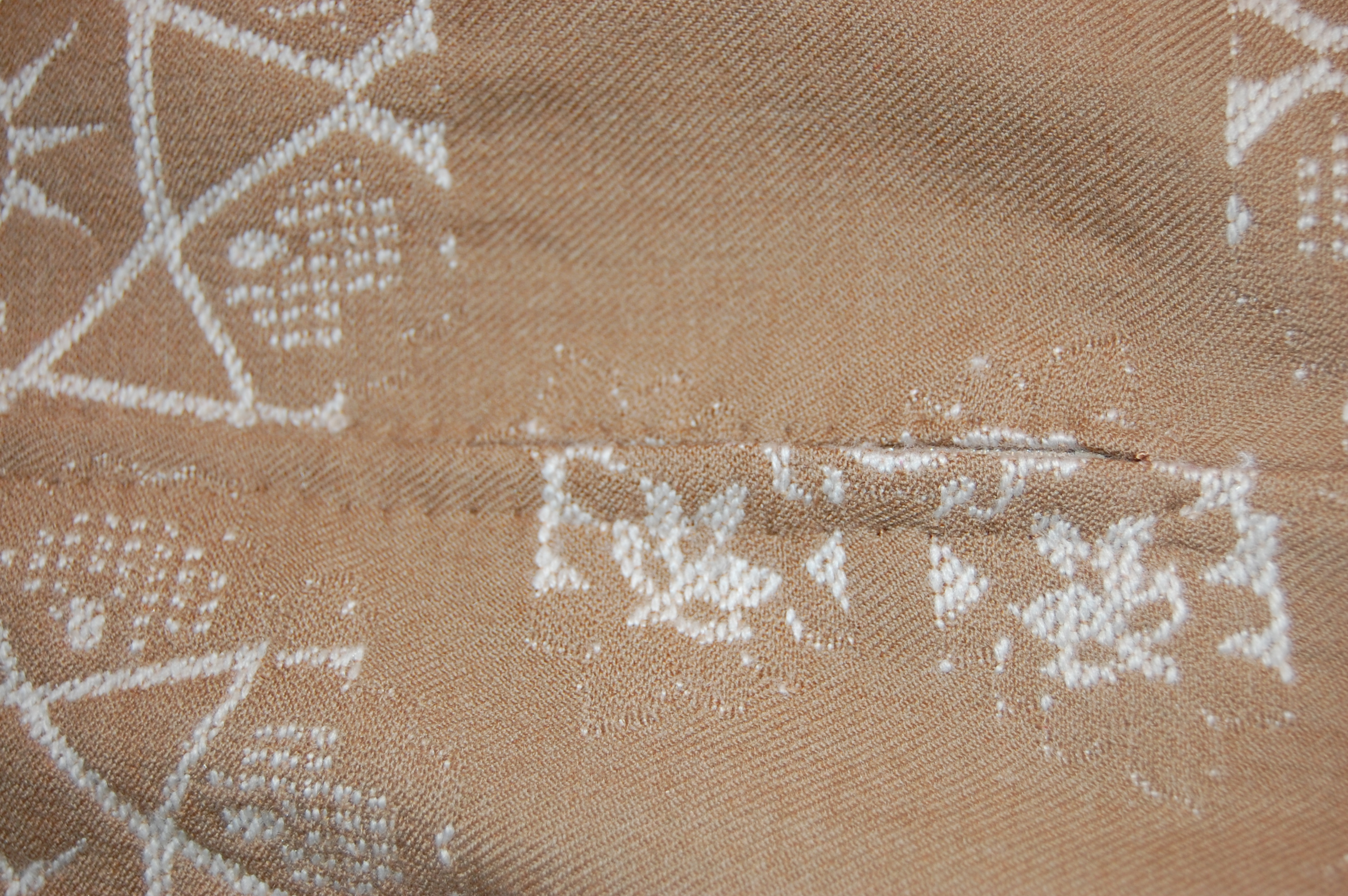
I think I must like pants made out of figured fabric.  As soon as I saw this snowflake wool on the website of Waechter’s Fabrics, I knew I wanted to make it up in winter slacks.

This is a jacquard woven wool, but very light-weight and soft.

This is a jacquard woven wool, but very light-weight and soft.

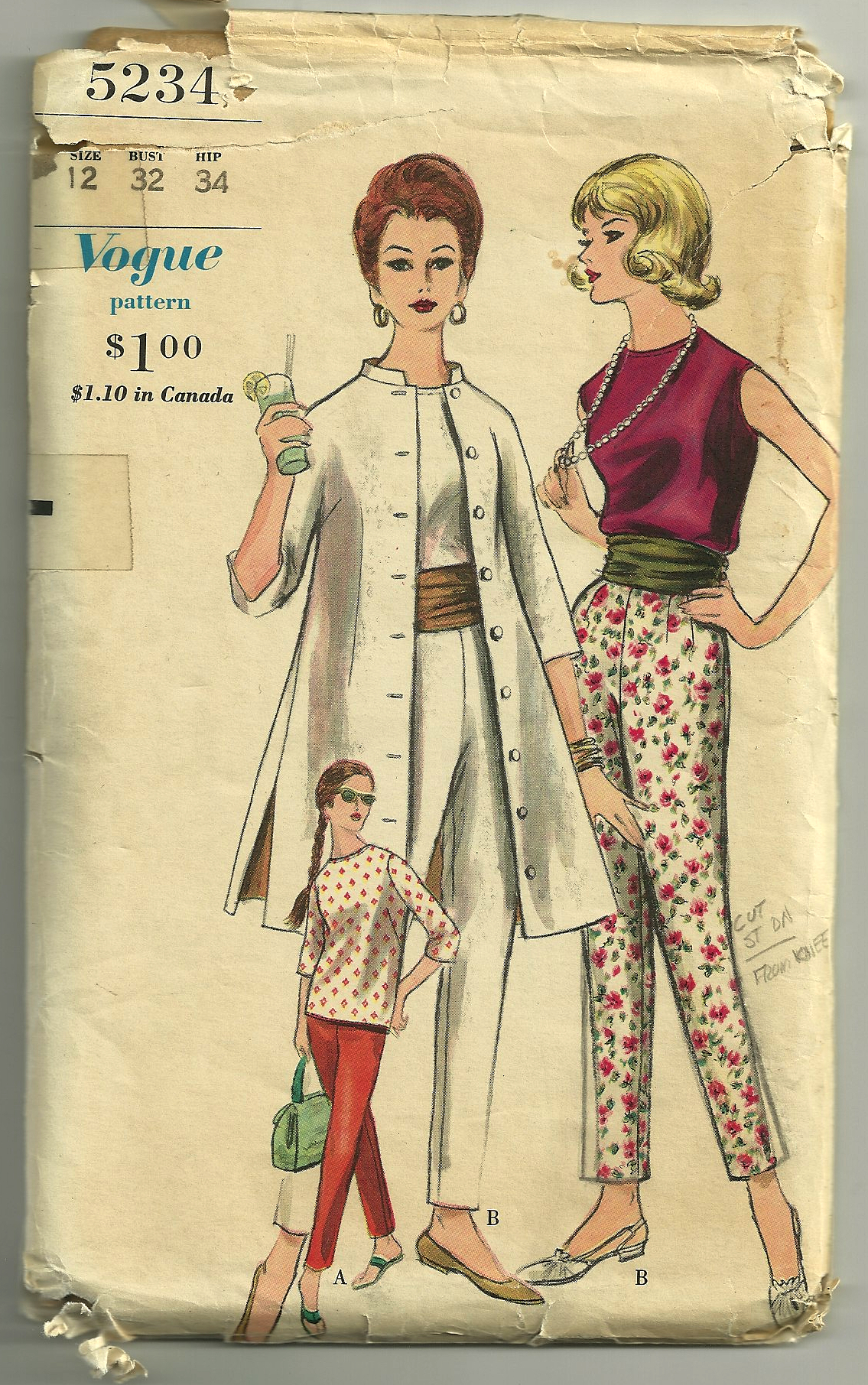
It was not even a decision to use the same 1960s’ pattern I used for my “very stylish” linen pants last Spring – pants’ patterns that fit are worth using again and again.

I made quite a few alterations to the pattern so that these slacks actually fit me!

I made quite a few alterations to the pattern so that these slacks actually fit me!

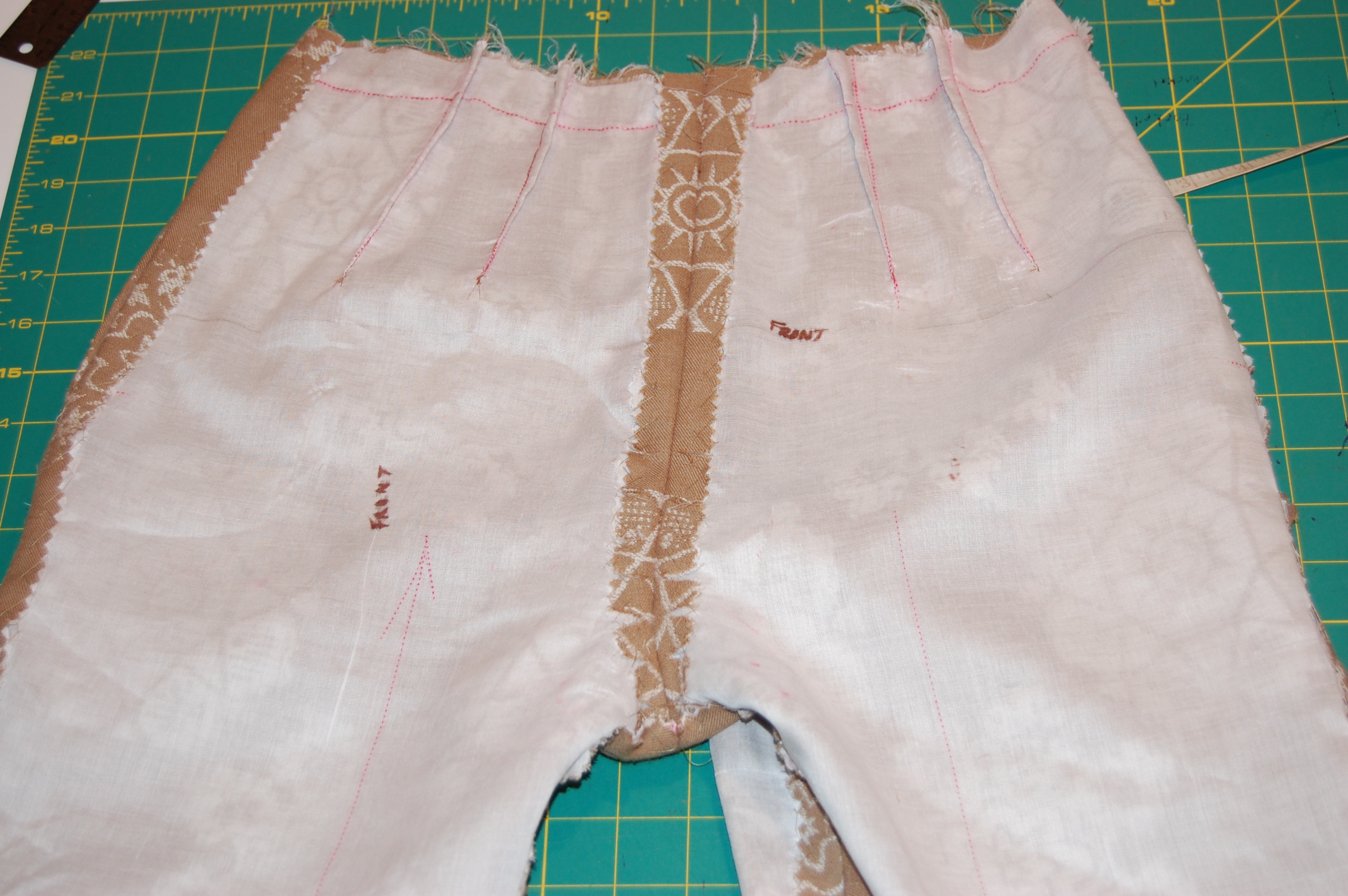
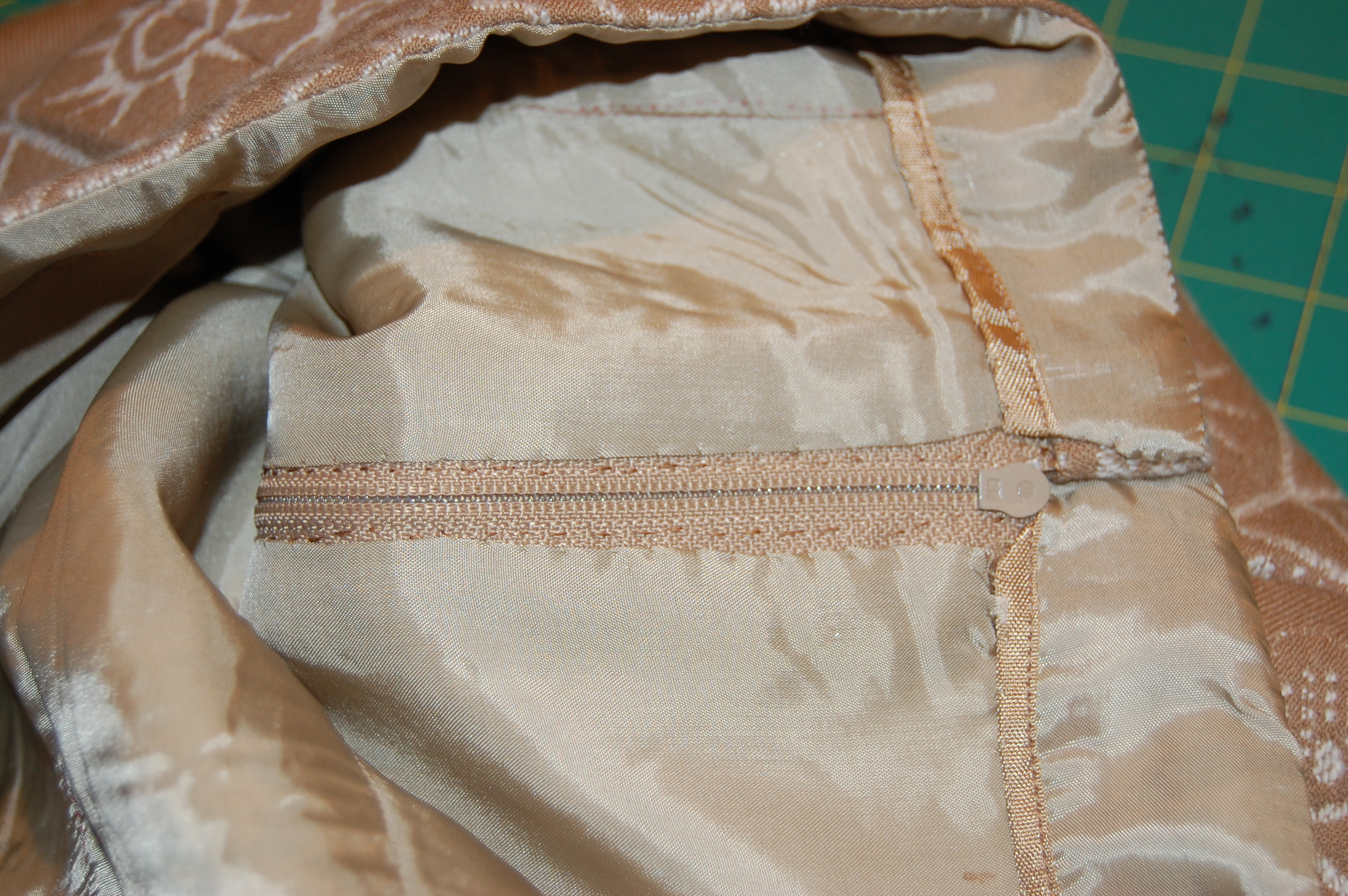
I did decide, however, to make these using couture techniques.  I underlined them with a very light-weight rayon voile which I have used successfully before.  I did not want to add much stiffness to this very soft and flexible wool, so the rayon seemed a better match than silk organza in this instance.  I catch-stitched all the seams, and inserted a hand-picked zipper.

The underlined pants, with catch-stitched seams.

The underlined pants, with catch-stitched seams.

Hand-picked zipper.

Hand-picked zipper.

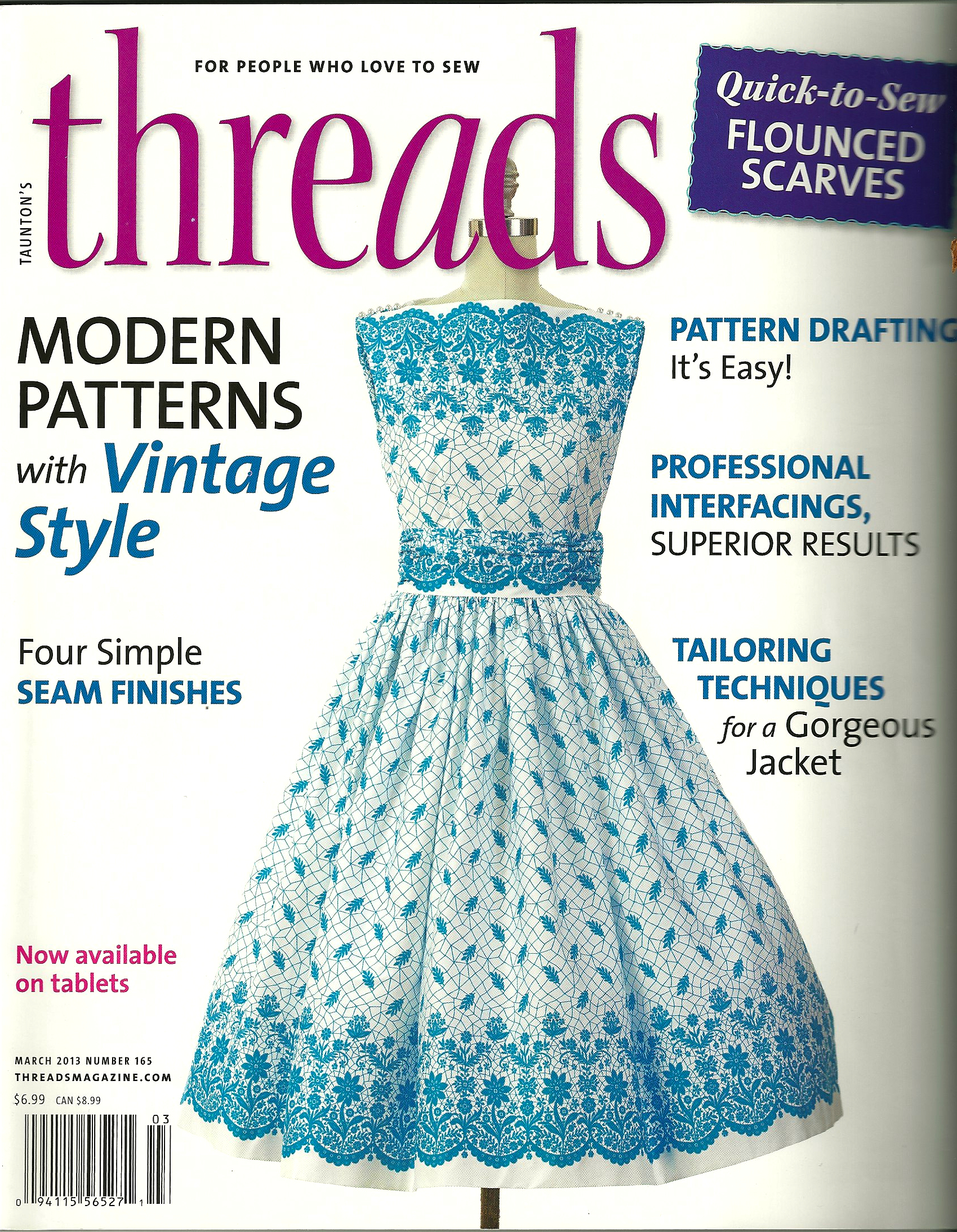
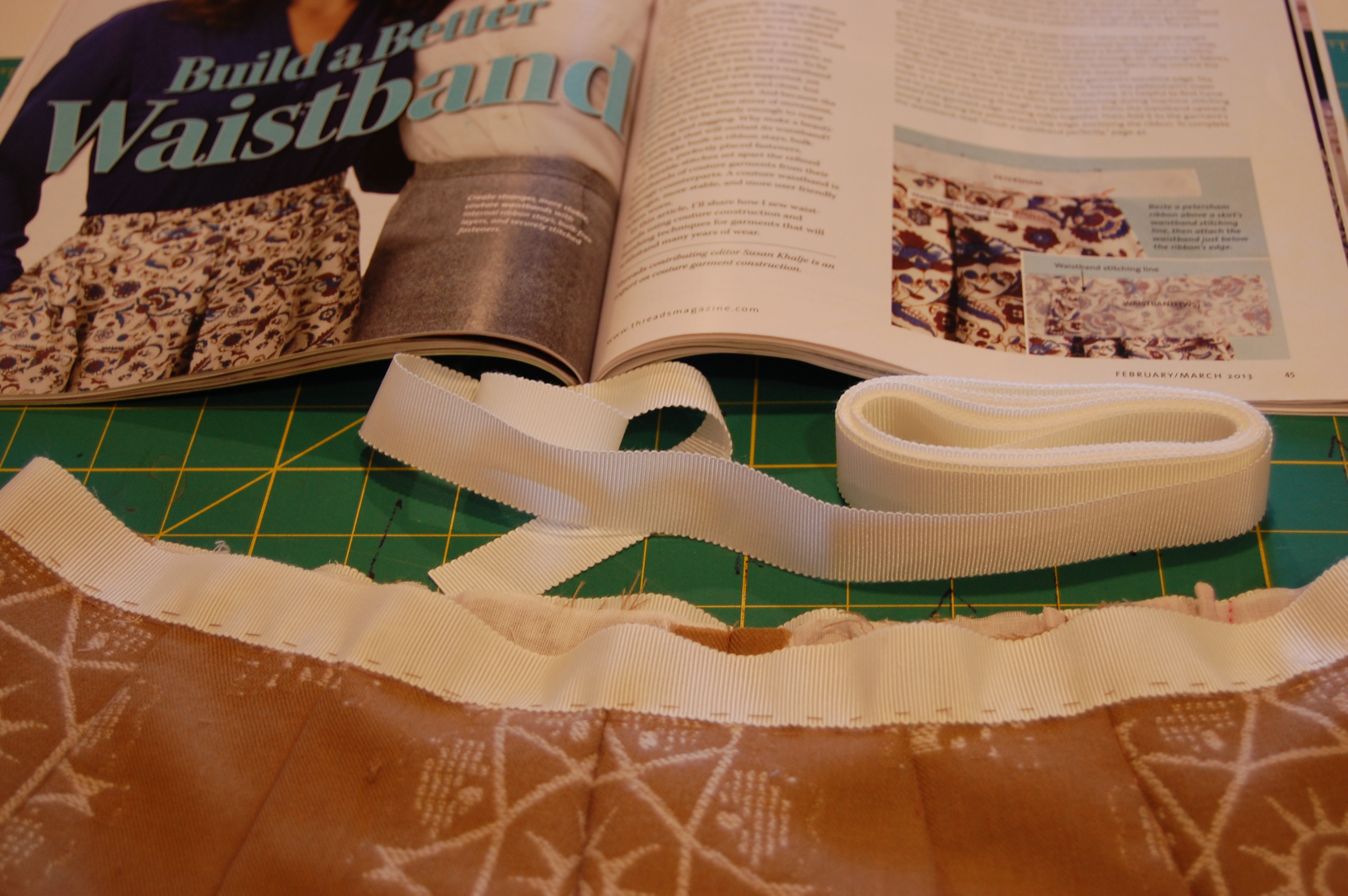
As luck would have it, the newest issue of Threads Magazine arrived right as I was getting started on this project – and Susan Khalje’s article “Build a Better Waistband” (page 44 – 49) immediately caught my attention.  I had already purchased several yards of Petersham ribbon in anticipation of waistbands yet to come, so I was all set.  I carefully followed all her detailed instructions and photos:

The newsest issue of Threads magazine

The newsest issue of Threads Magazine

The Petersham ribbon basted onto the waistline.

The Petersham ribbon basted onto the waistline.

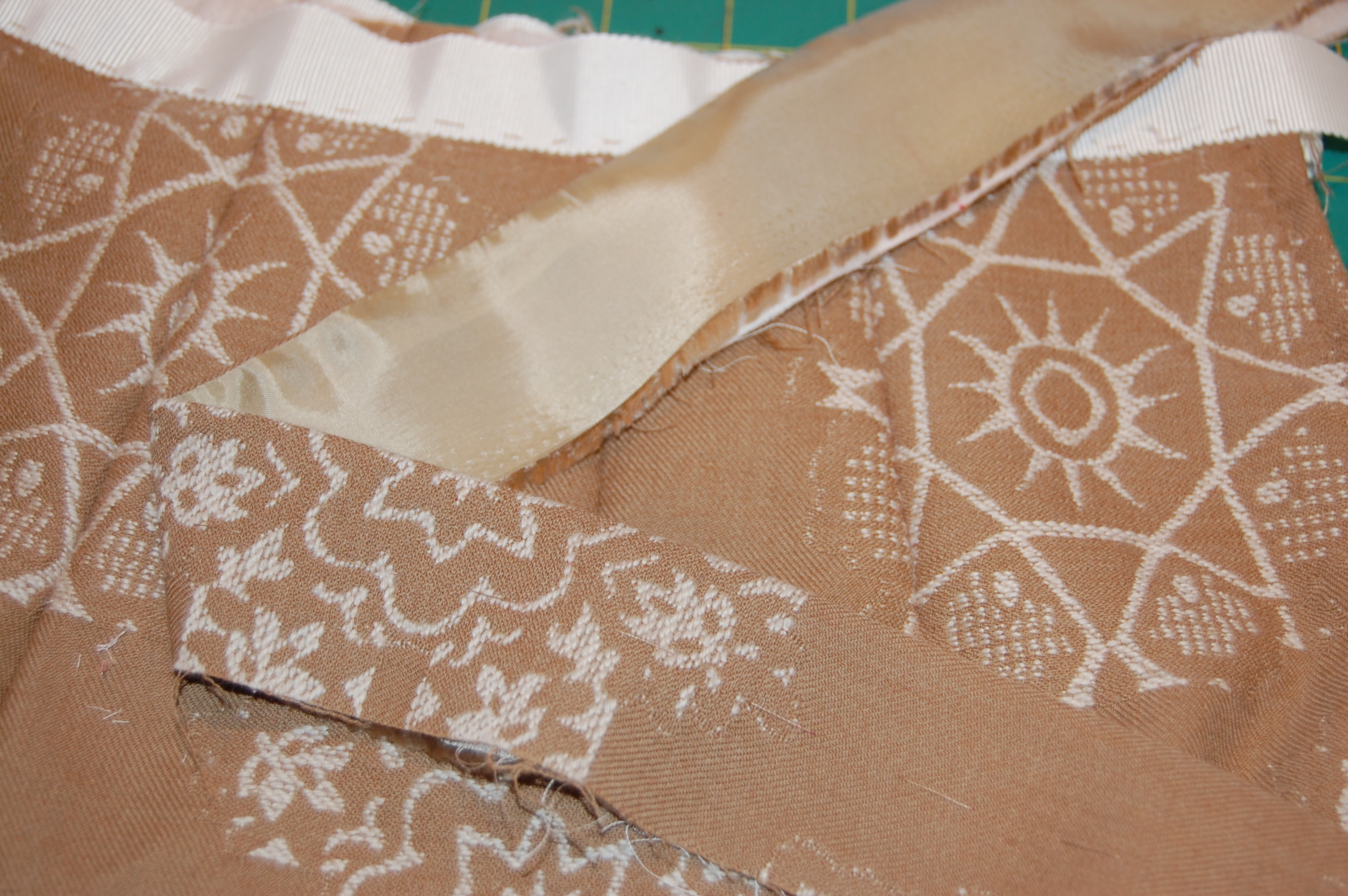
I even decided to make a “faced” waistband.  I knew that this would help reduce bulk in the waistband, but also it would insure that any “itching” around the waist sometimes caused by wool fabric would be eliminated.

I made the facing out of the lining fabric.

I made the facing out of the lining fabric.

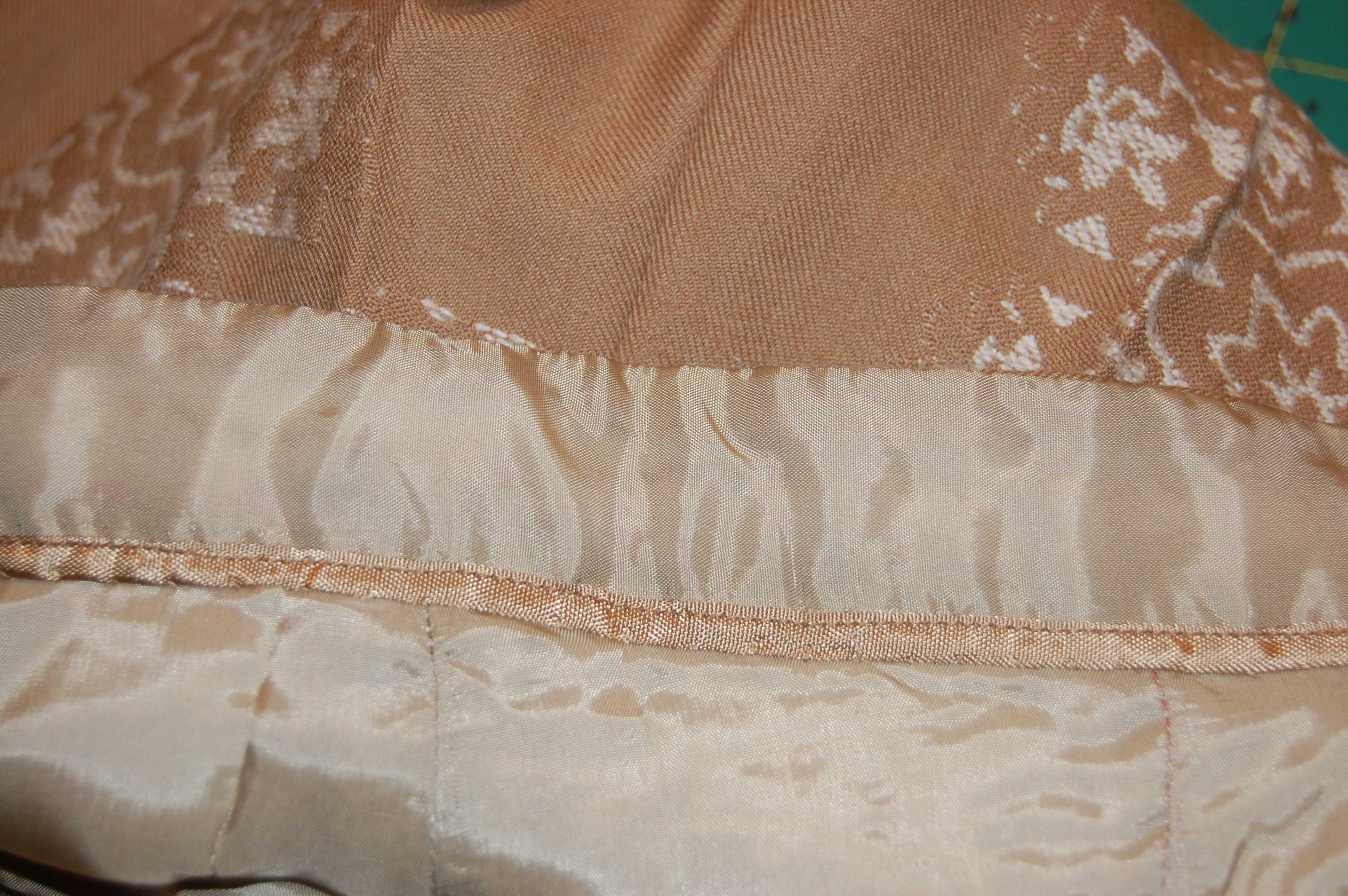
Everything was going along swimmingly until I went to set in the lining for the pants, which I made out of Bemberg rayon.  Somehow, the rise from the crotch to the waist was a little short.  I don’t know how this happened, but it did, and so I was faced with figuring out how to remedy this situation short of making an entire new lining.  Well, I decided to attach the waistband just to the underlined wool, not including the lining.  Then I used some careful and tightly-spaced catch-stitching to attach the top of the lining to that waistband seam.  (I forgot to take a photo of this, as I was totally absorbed in this “make-do” process.) This worked beautifully, much to my delight.  The only further fix I knew I needed to do was finish the inside of the waistband.  The waistband facing needed to be a little longer to hide my mistake, so I bound the raw edge with seam binding and used the fell stitch to finish it off.  I’m happy with the way it looks:

The seam binding helps to make a clean finish and hides my mistake!

The seam binding helps to make a clean finish and hides my mistake!

DSC_0761

I don’t think anyone would suspect my mistake – except for all of you, of course!

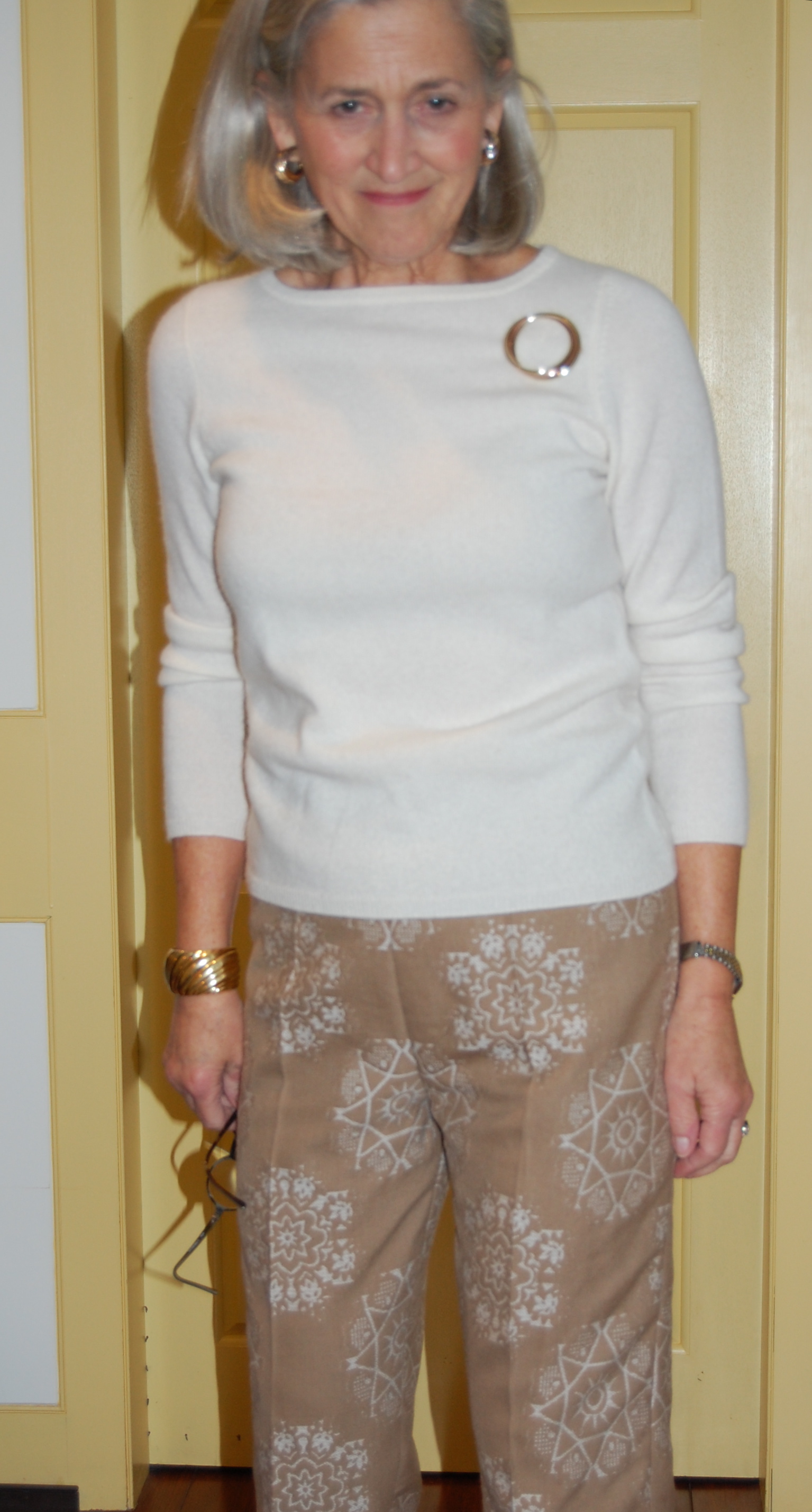
After final stitches to secure the lining to each of the legs, and then lots of steaming and pressing , my snowflake pants were finished!

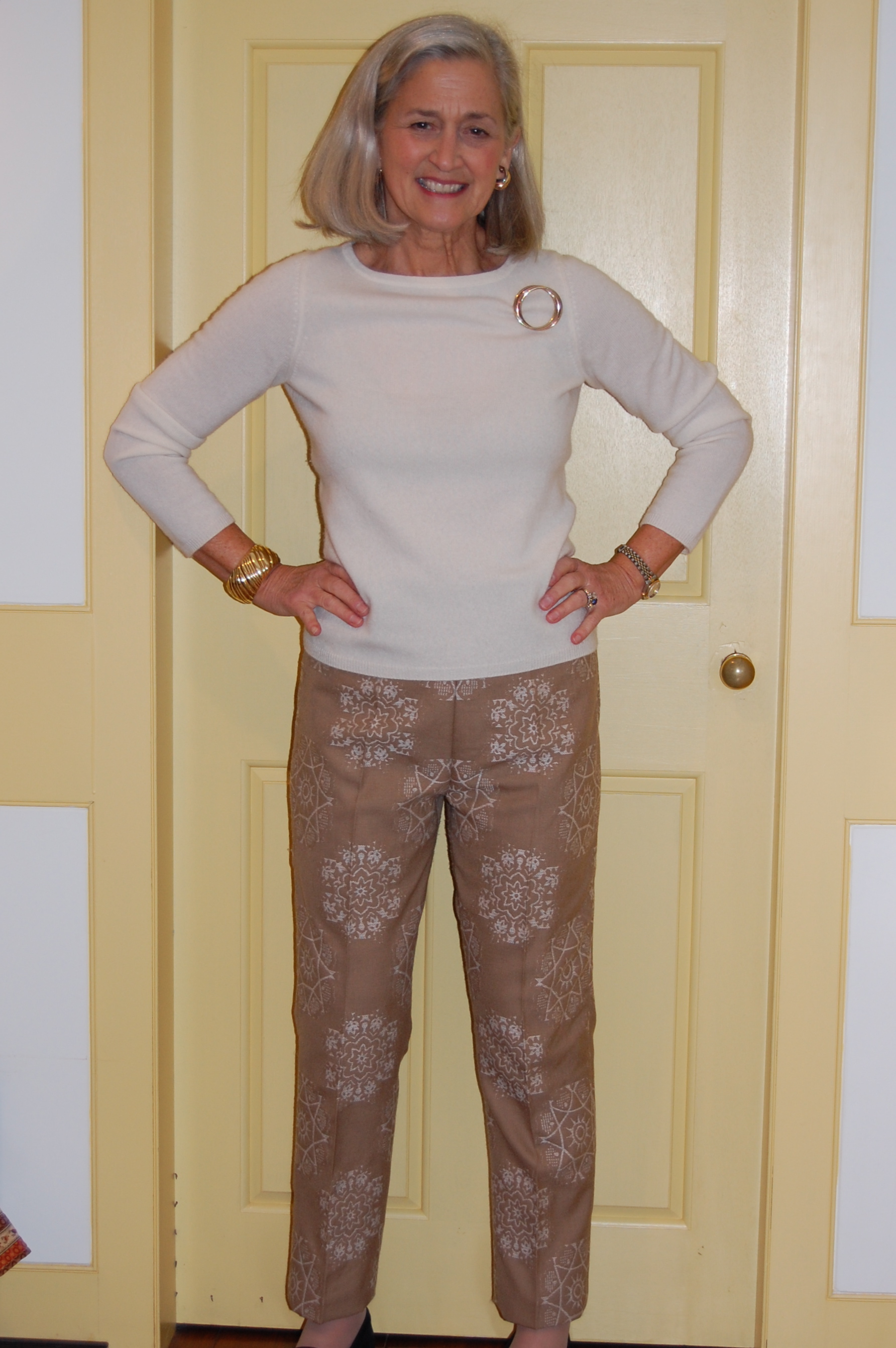
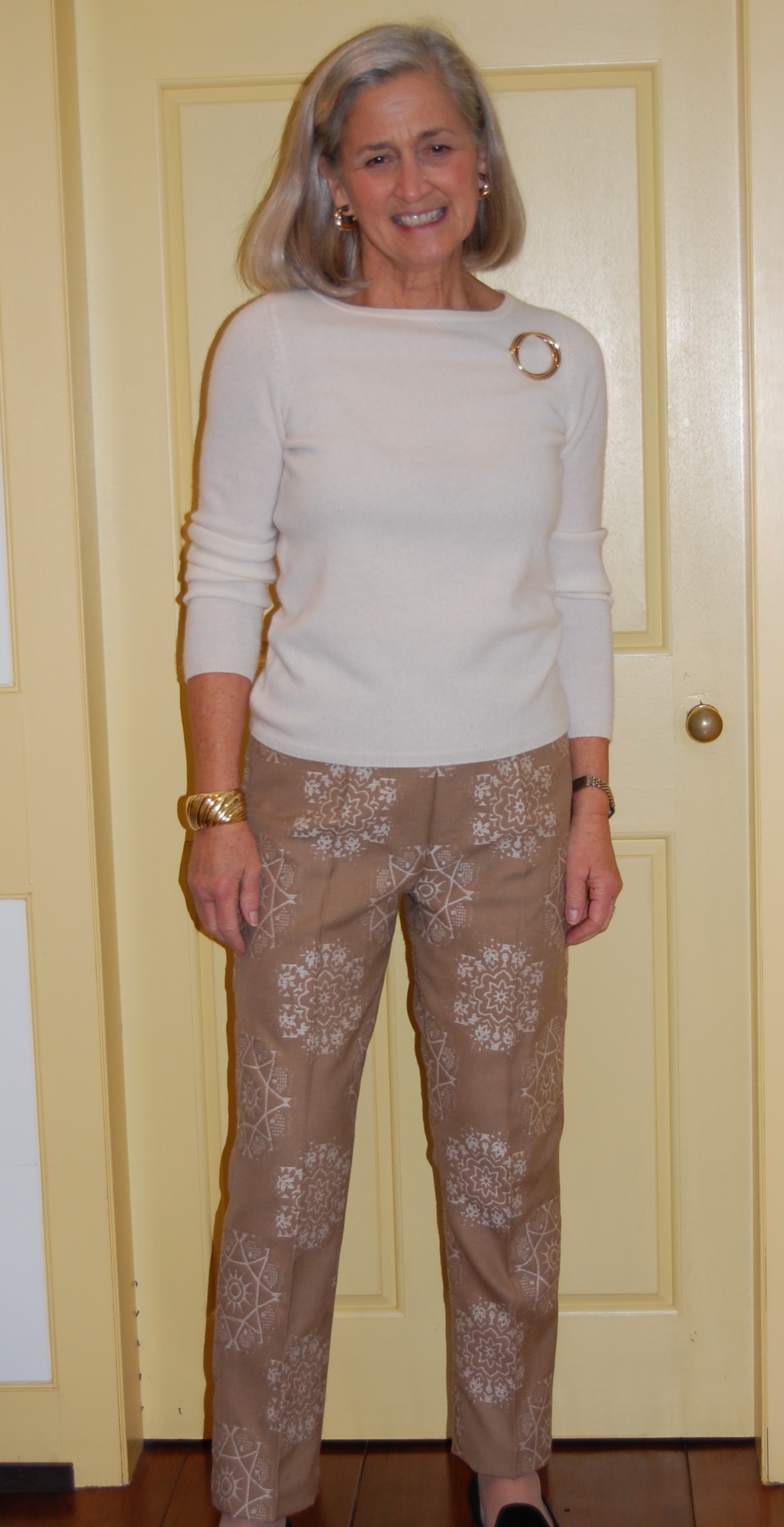
Here they are, all finished!

Here they are, all finished!

Snowflake pants

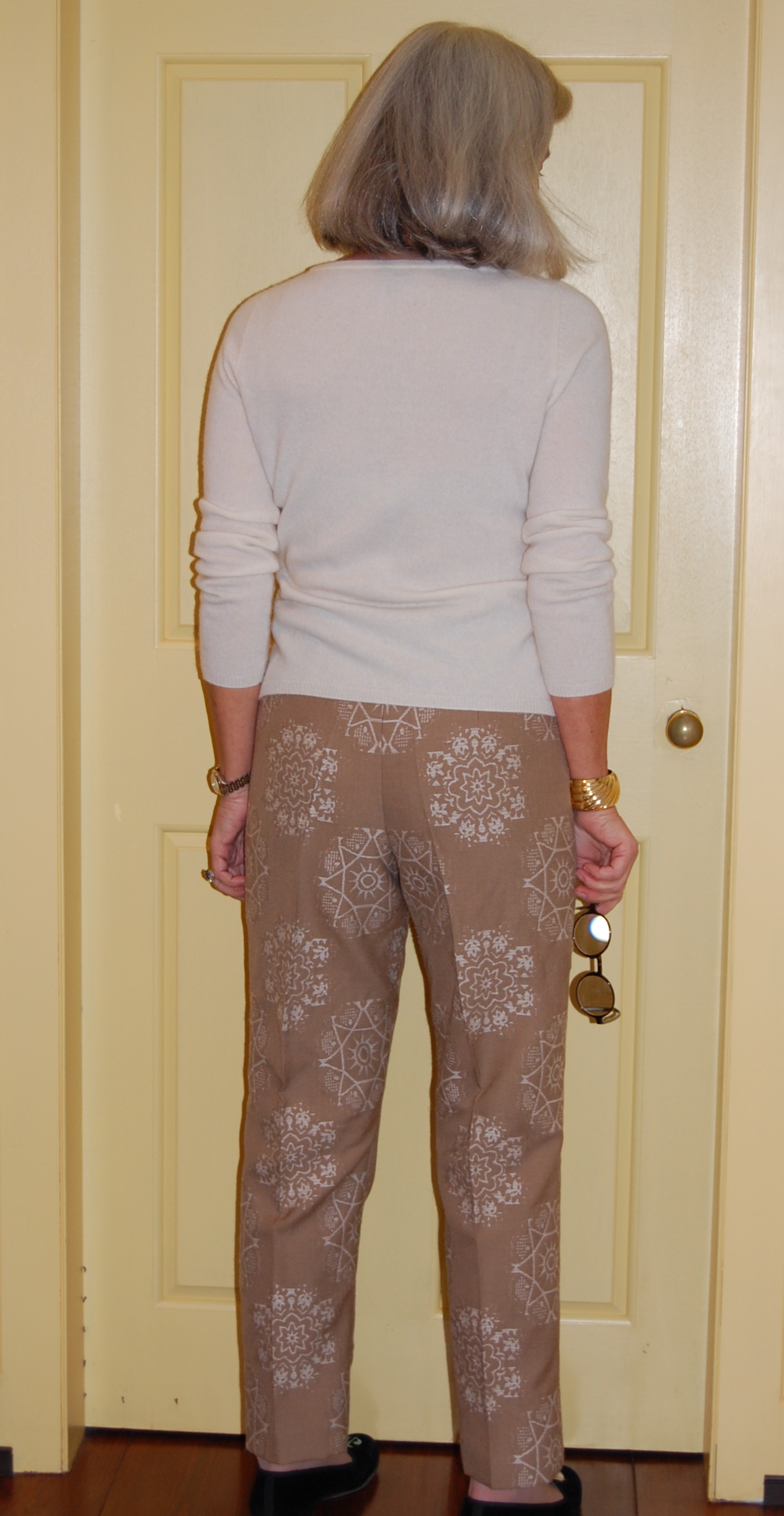
A back view.

A back view.

Kind of a side view.

Kind of a side view.

And a little closer up...  I'm happy with the way I was able to align the snowflake "medallions".

And a little closer up… I’m happy with the way I was able to align the snowflake “medallions”.

We seem to be in a January thaw right now, so the only forecast for flurries must be – in my control??  Well, I happily guarantee that sightings of snowflakes will definitely happen this Winter!

15 Comments

Filed under couture construction, hand-sewn zippers, Uncategorized, underlinings, vintage Vogue patterns from the 1960s, Vogue patterns, woolens

Fancying Fringe

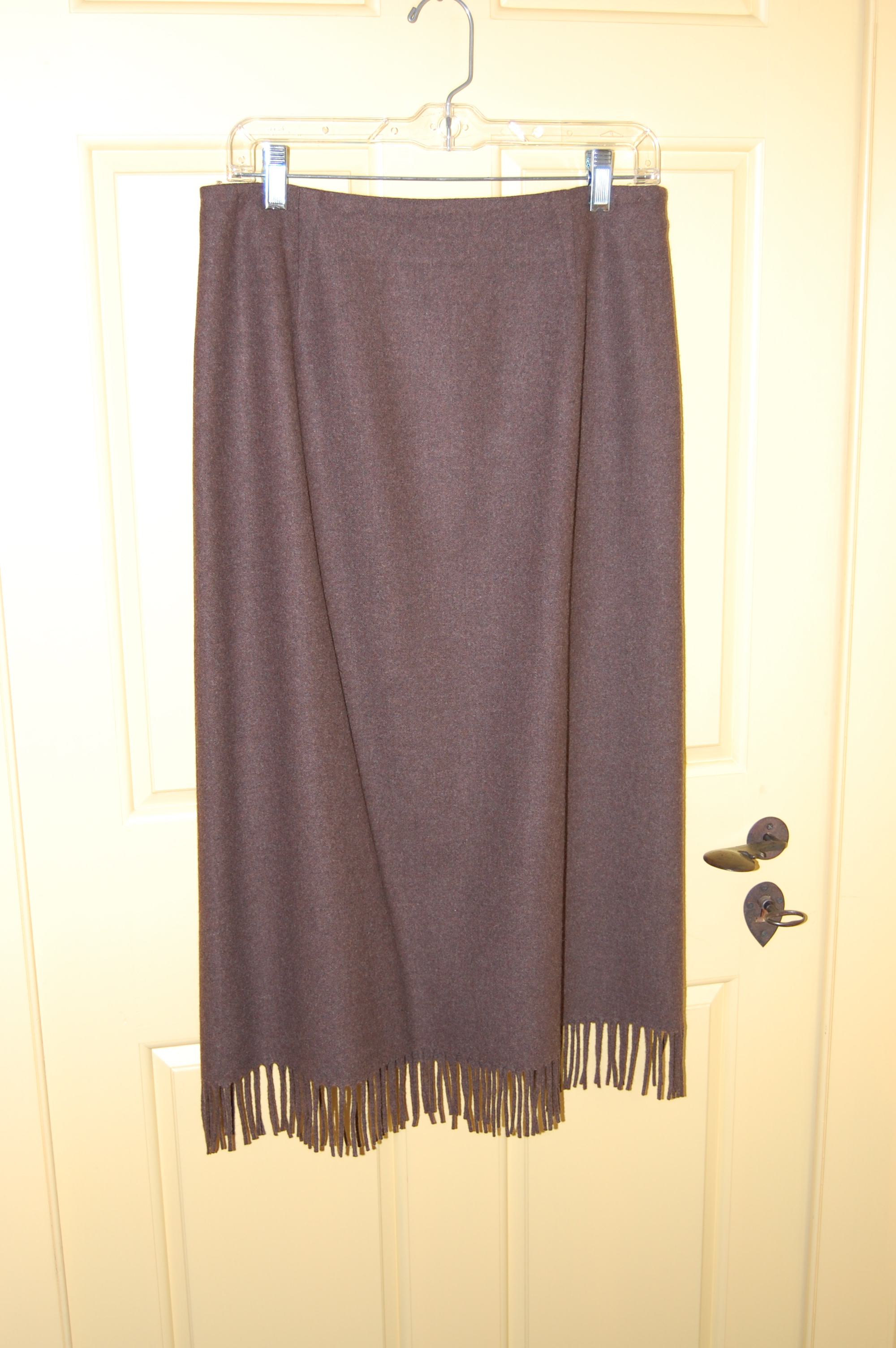
A number of years ago I purchased a fringed skirt from a Pendleton Wool Women’s Apparel catalogue.  I loved it when it arrived at my door – the fabric was soft and beautiful and the styling was a simple A-line skirt.  Even though I ordered a Petite in my regular size, I should have sent it back for a smaller one; it was just too baggy and too long, even when paired with boots.

The skirt before it’s make-over – very baggy.

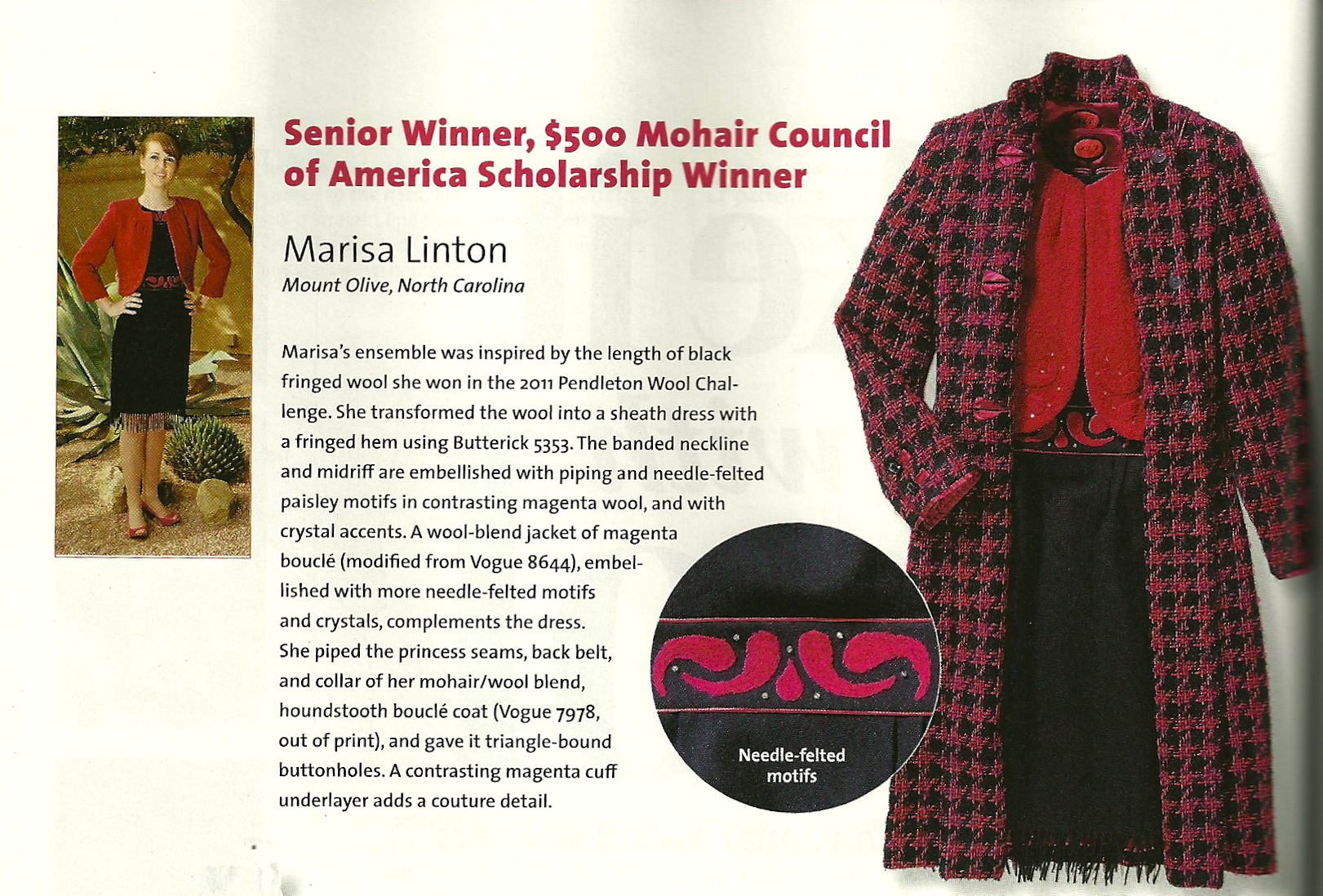
Over the years I kept moving it back and forth from my cedar closet with the change of seasons, but I had found myself not wearing it, and wishing I could.  So this year, when once again it emerged out of the cedar depths for the trek into my bedroom closet, I made the decision to do something about it.  I would remake it.  I’m not sure what took me so long to come to this decision, but I was certainly inspired by the fringed Pendleton wool dress featured in one of my recent posts:

The winner of this category of the Make It With Wool contest built her outfit around a piece of black fringed Pendleton wool. (Threads, January 2013, page 52)

First I took out the zipper.  Then I picked out the seam connecting the waist facing to the body of the skirt.  I set the lining/skirt facing sections aside and tackled the skirt.

I had to determine the exact length I wanted the skirt to be, and work up from there.  Since it was not just length that needed to be adjusted, but also the all around fit, I knew I needed to use a reliable skirt pattern to re-cut the front and back sections.  I was so happy with the fit of the slim skirt I had just made, that it was an easy decision to go with that again.  I determined the straight grain of the front and back sections and put the muslin sections on top.

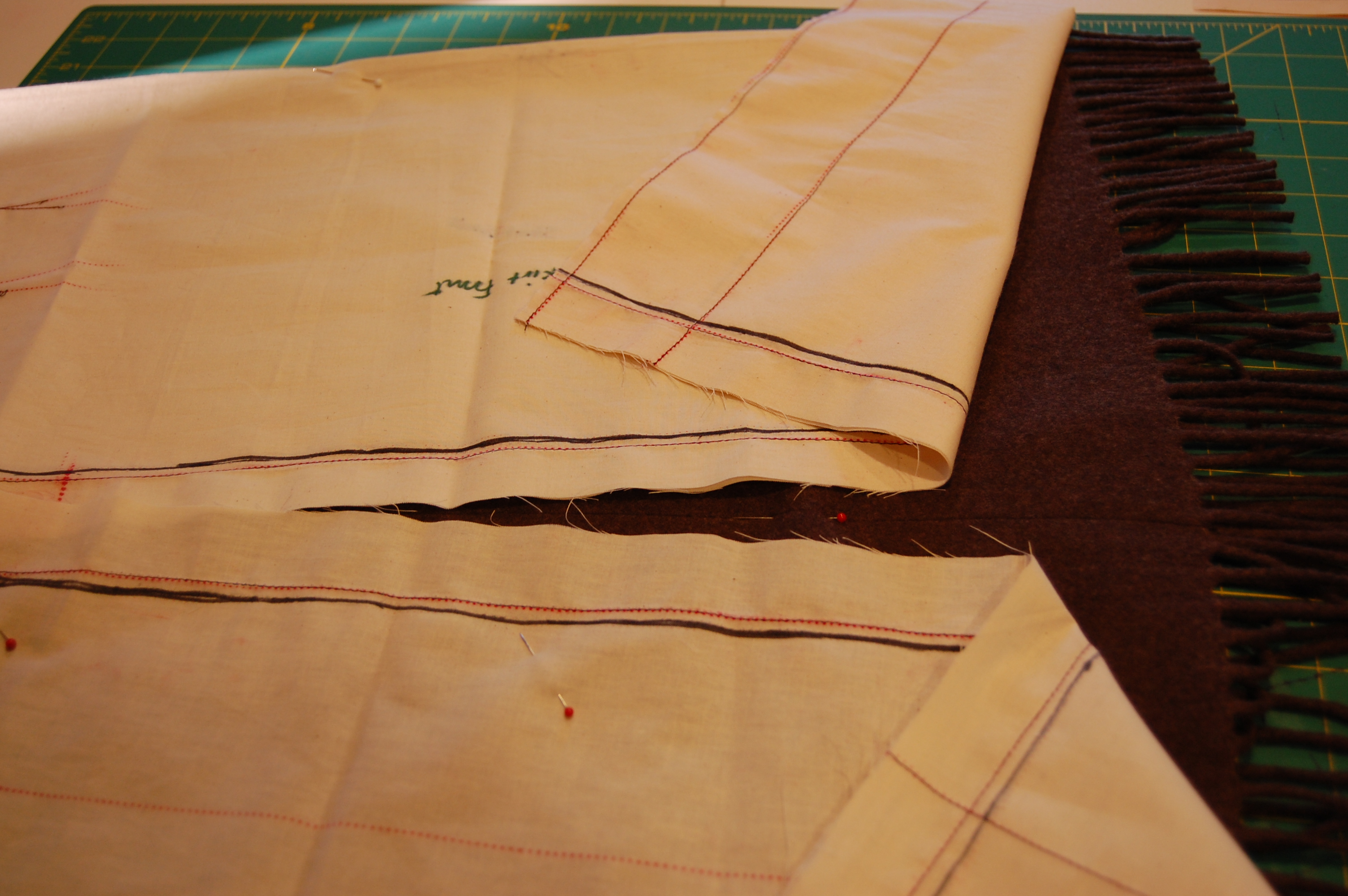
The muslin pattern placed on the front and back skirt sections.

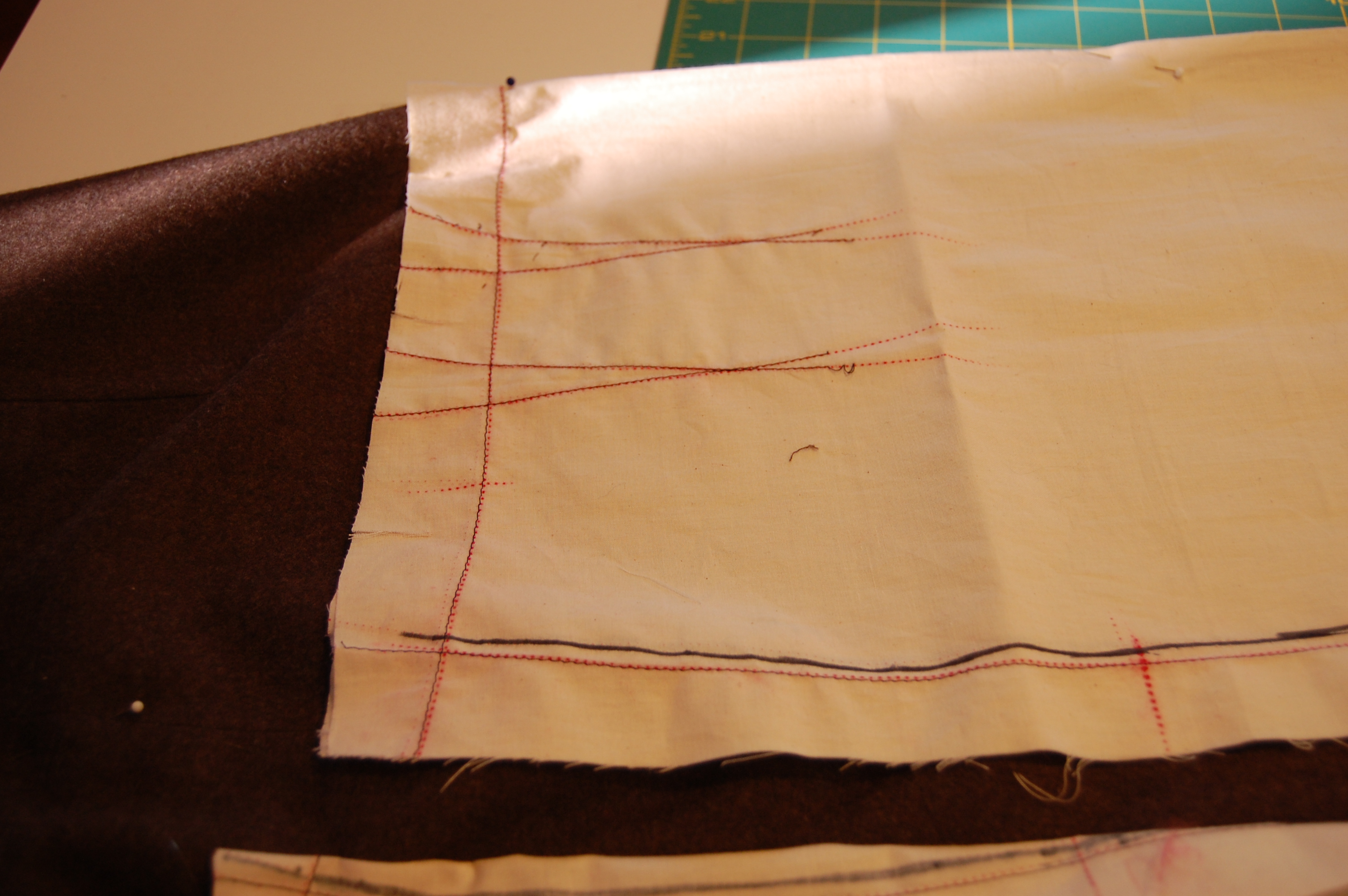
Making sure I have the finished hemline placed correctly.

Since this skirt would not be underlined, I had to transfer the new seam and dart lines with chalk directly onto the wool fabric.  I measured again and again to make sure I had the right length (since I certainly could not make adjustments to the fringed end!) Then I cut, sewed darts and side seams.  I put a new zipper in by hand.

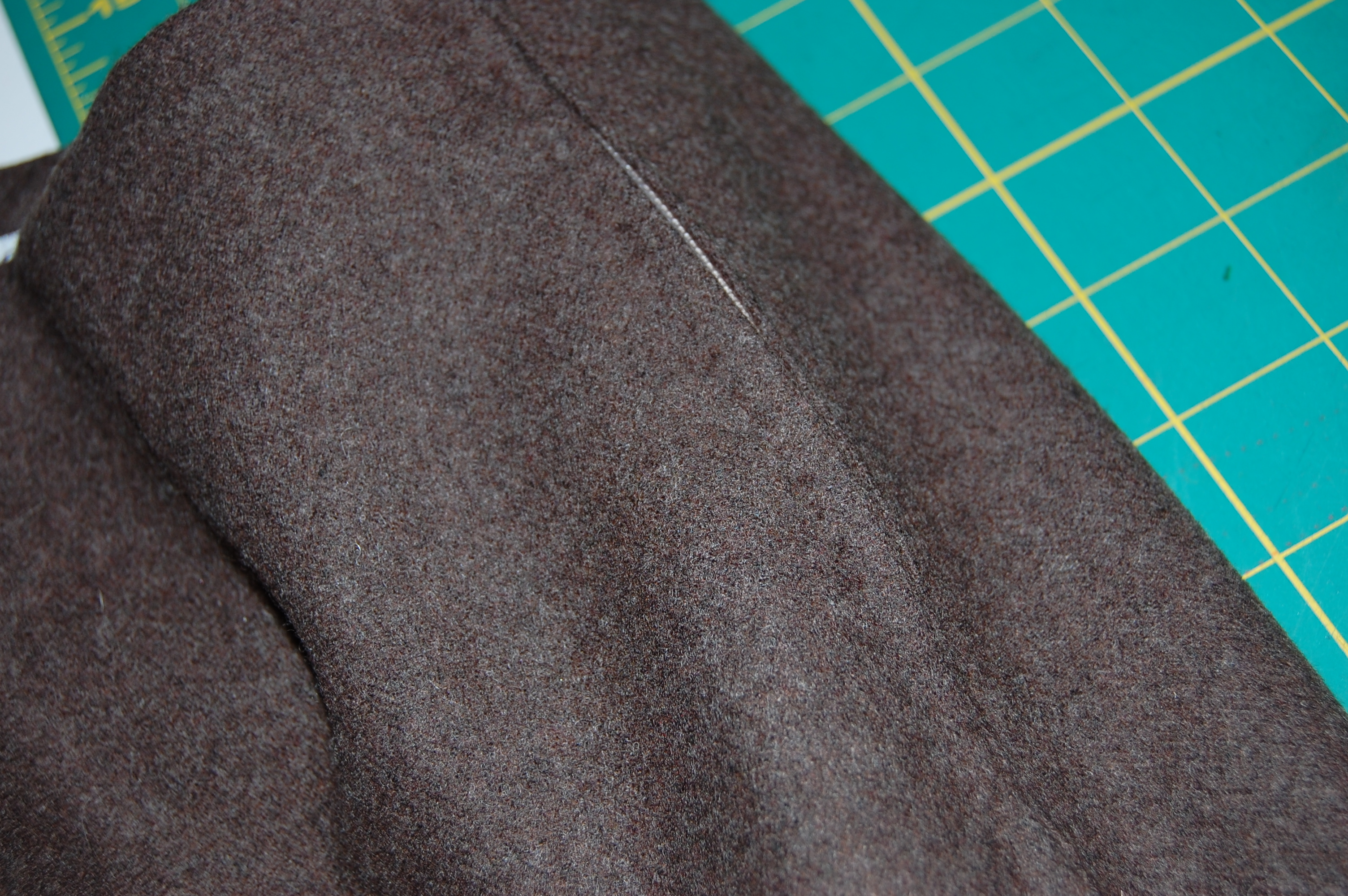
The new hand-picked zipper.

Then I was ready to remake the lining.  This was simpler, as I could use the existing waist facing (just taking it in a bit), which was still basically attached to the lining, and work from the top down. I split open the side seams, took them in commensurate to the re-cut skirt front and back, and re-sewed them.  Once the facing was reattached, all I had to do was cut off and re-sew the lining hem, and then  slipstitch the lining around the zipper.

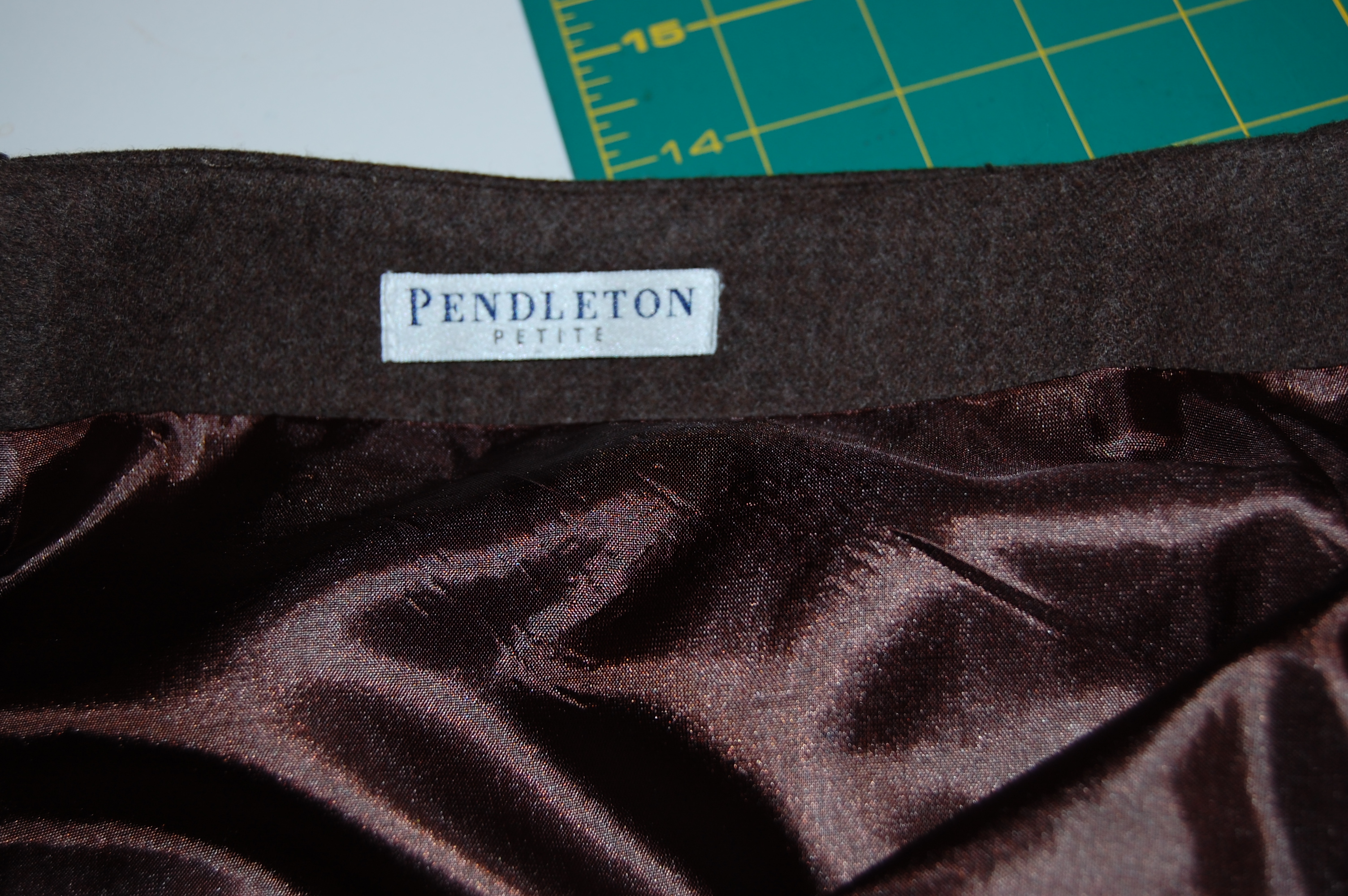
The re-made lining back inside the skirt, label intact.

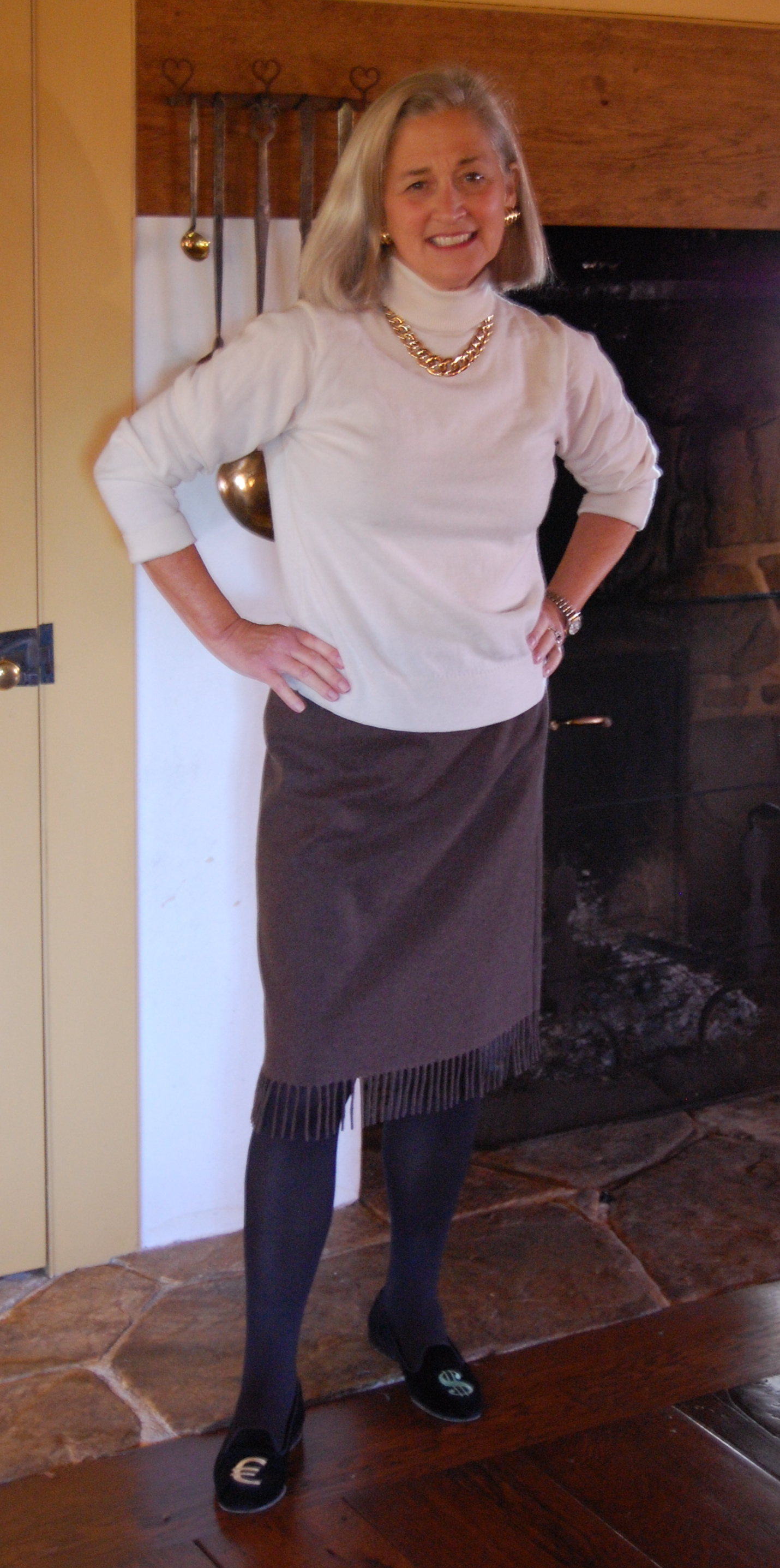
My new, old skirt.

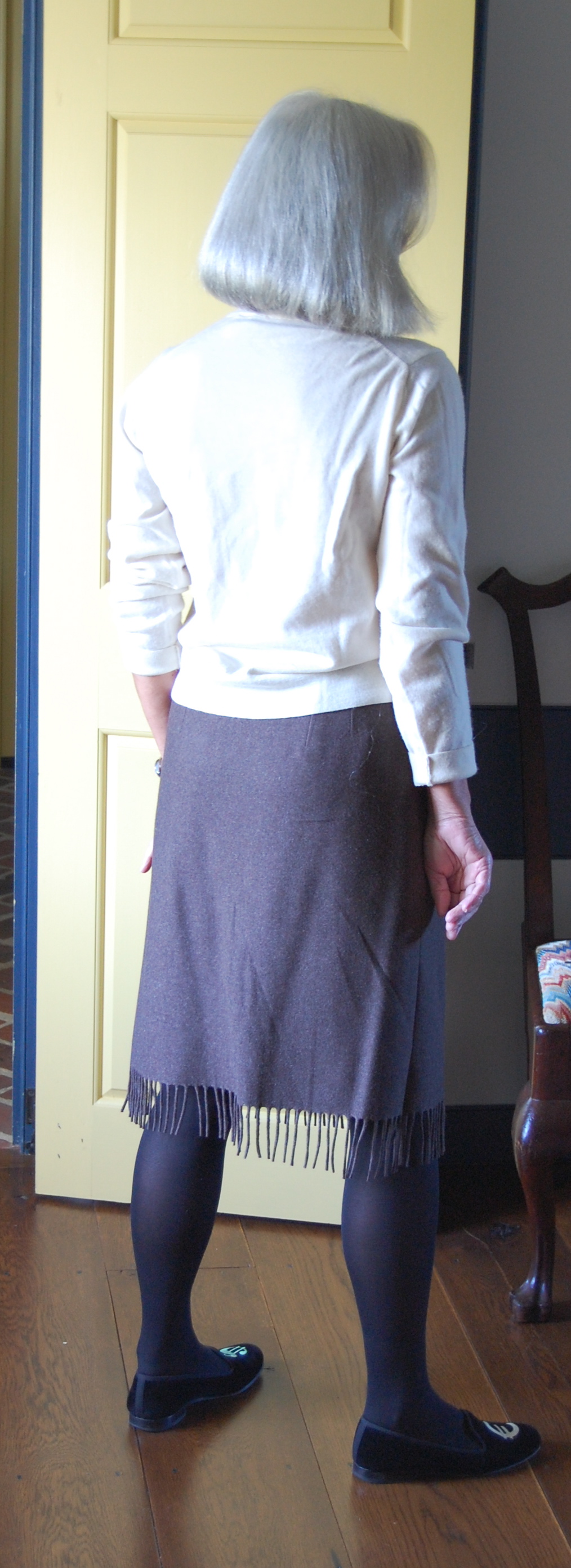
A back view.

I am so happy with this re-make.  It’s the perfect skirt to pair with a sweater and tights – and that fringe around the hem makes it fun to wear and just a step above the commonplace.

Now it’s back to sewing from “scratch.”

POST SCRIPT:  I’m delighted to say that Cissie is the winner of my first give-away – the very small Little Black Dress.  Cissie – please send your delivery information to  fiftydresses@gmail.com and I’ll get your very small package in the mail right away!

18 Comments

Filed under hand-sewn zippers, Uncategorized, woolens