Tag Archives: coats

Back to the Past

I am finally back in my sewing room, working on my emerald green silk suit.  The event to which I had hoped to wear this suit has come and gone (I wore something else that evening and the world somehow kept on spinning – amazing!), but this sewing project was and is on my Spring agenda and I am bound and determined to finish it.  Until I have made a bit more progress, with something to show for it, I thought I would indulge you with a book review of the 1956 Claire McCardell (1905-1958) book, What Shall I Wear, re-published in 2012 by The Rookery Press, in association with The Overlook Press, New York, New York.
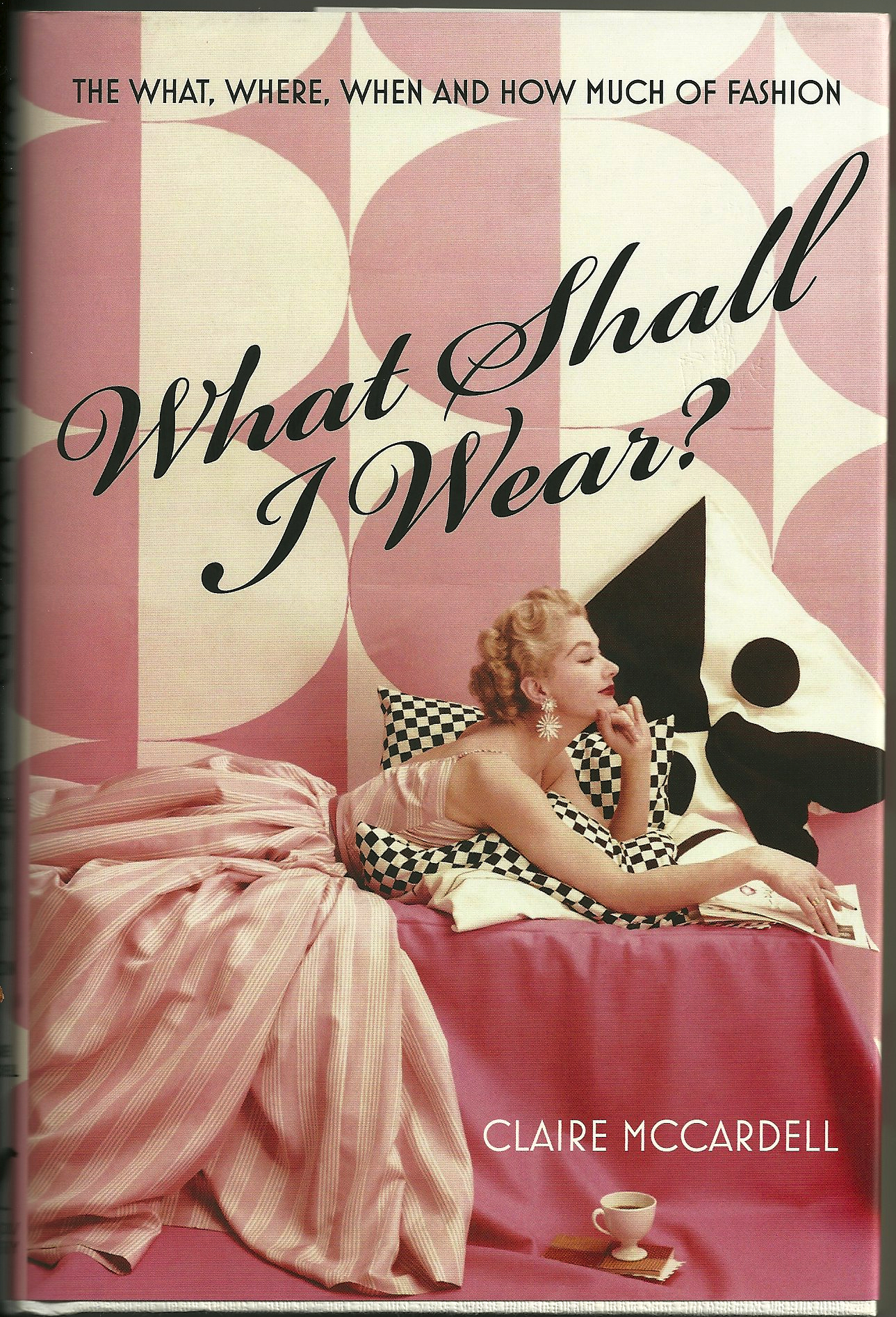
Back to the Past

This book came to my attention by way of The Vintage Traveler blog (thanks, Lizzie!).  I purchased it on Amazon last Fall, and then, to my surprise, it was one of five books chosen by Christina Binkley of  The Wall Street Journal for her annual list of “Best Style Books”.
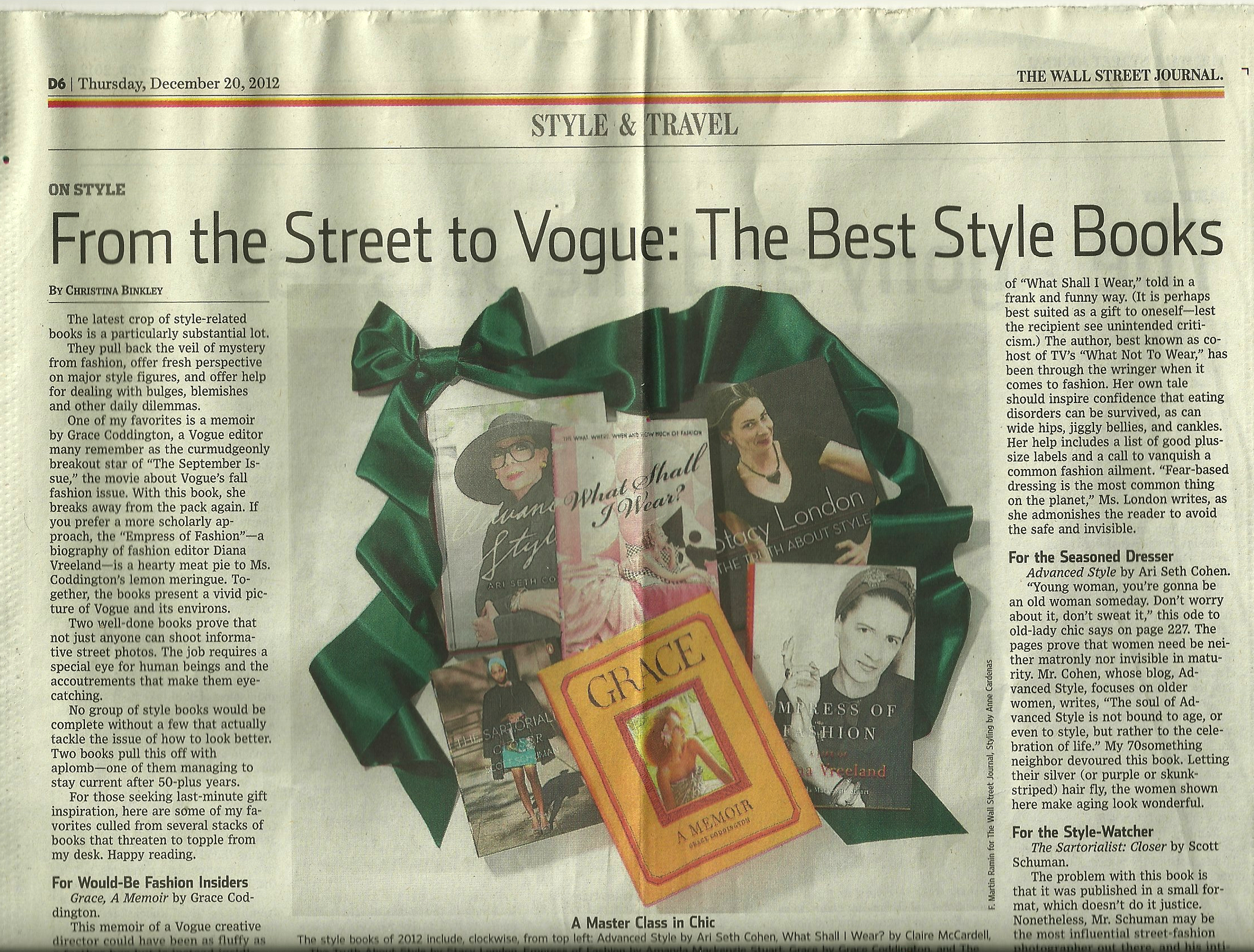
This annual feature on "style books" is always one of my favorites.

This annual feature on “style books” in The Wall Street Journal is always one of my favorites.  It appeared on December 20, 2012.

Here from Binkley’s review of the book: “This book is a gem.  …It manages to be modern more than 60 years later…  The designer created chic casual items that we take for granted today, such as trim ankle pants and full skirts that permit comfort and movement.  … She demonstrates an understanding of women’s lives. ‘Everyone should have a “pop-over” dress – a sheath that they can just pop over their head and go.’”

Here are some of Claire McCardell’s fashion tips and thoughts which struck a chord with me, especially in relation to sewing and dressmaking:

1)  The simple act of changing buttons (or in sewing, choosing the right ones) can make a dress fit your style.

2) When putting together your clothing (or pattern and fabric) budget, consider carefully where you want to put your money.  Make one major purchase a year, something classic and timeless is always a smart move.

3) Use color extensively and don’t be afraid to stretch from your normal palette.

4) Coats should be a large part of your wardrobe.  Indeed, she recommends compiling a “Coat Collection”.  That’s advice sweet to my ears!

5) Learn how to tie a scarf!  In her words:  “You miss all the fun if you can’t tie things.”  “If you really care about Fashion, sit down right now and learn to tie.  An ascot, a bandanna, a neckband, a bowknot.  This means knowing how to fold first, knowing how to loop next, knowing how to get the knot straight, knowing how to make the ends even – or uneven – on purpose.”

6)  Like all the great fashion designers and couturiers, she emphasizes the overwhelming importance of fit.  All those muslins/toiles we make are worth the time they take!

7) Accessorize your outfits with the appropriate jewelry, shoes, and bags.  Restraint is better than opulence.

8) She was a big fan (and proponent) of the “American Look”: meaning comfortable clothing with clean lines, displaying elegant simplicity.

The final chapter of the book is appropriately entitled:  Fashion has no last chapter.

You can read here for yourself her Essential Eleven.  Pay particular attention to #2!
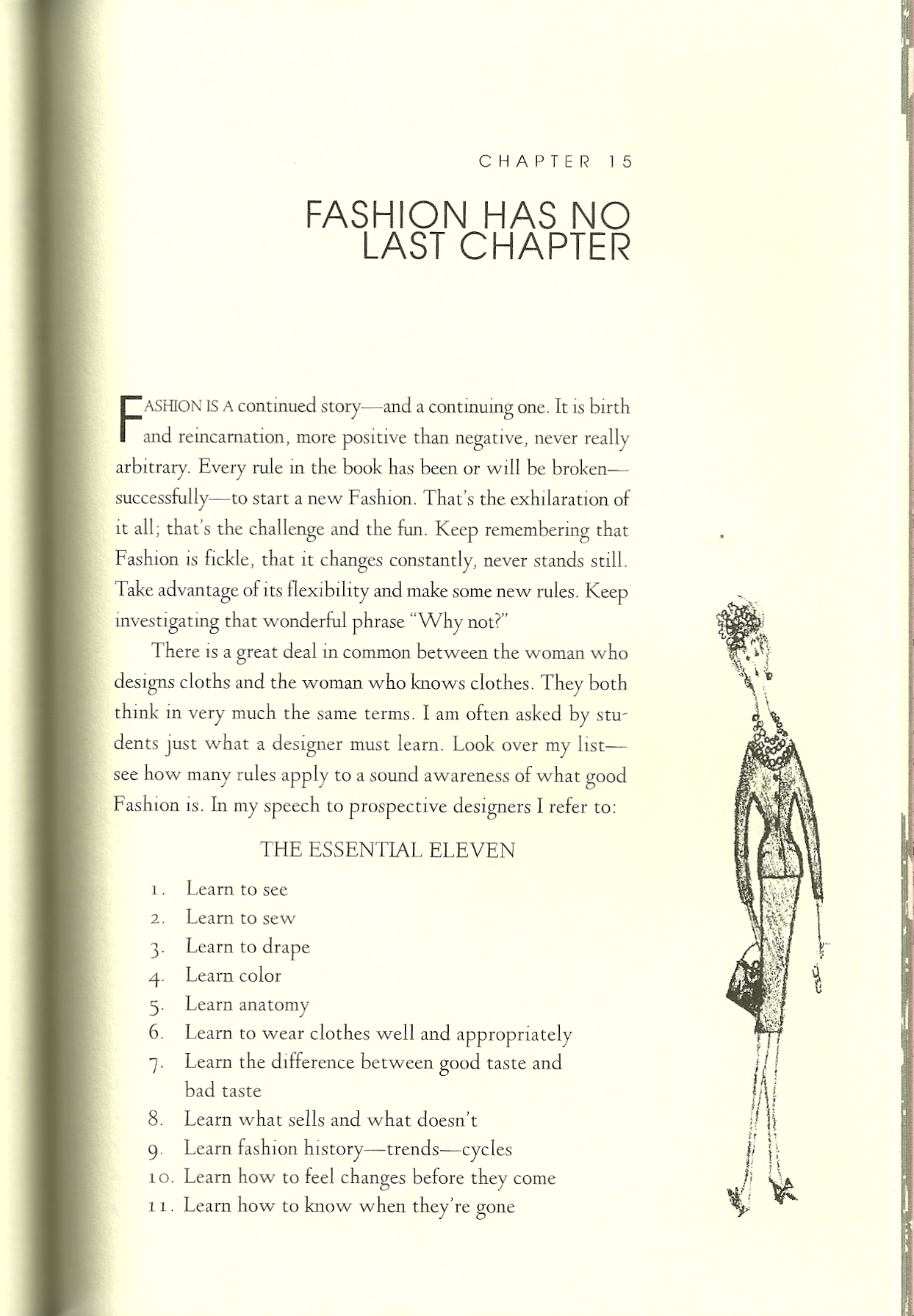
As a preface to this list, McCardell states:  "There is a great deal in common between the woman who designs clothes and the woman who knows clothes."

As a preface to this list, McCardell states: “There is a great deal in common between the woman who designs clothes and the woman who knows clothes.”  (Click on the photo for a close-up).

Earlier in the book on page 103, she relates her first experience with dressmaking: “Miss Annie … came to the house to make clothes for mother and me.  The process fascinated me from the start – selecting the pictures of dresses in the Vogue Pattern Book, the fabrics to be bought at the dry-goods store, the cutting and basting and fitting, the pockets and buttons and buttonholes…”

Surely sewing and dressmaking have no last chapter either:  What will you wear?  What will you sew?
12 Comments

Filed under Buttons - choosing the right ones, Coats, Scarves, Uncategorized

Coats of a Certain Length

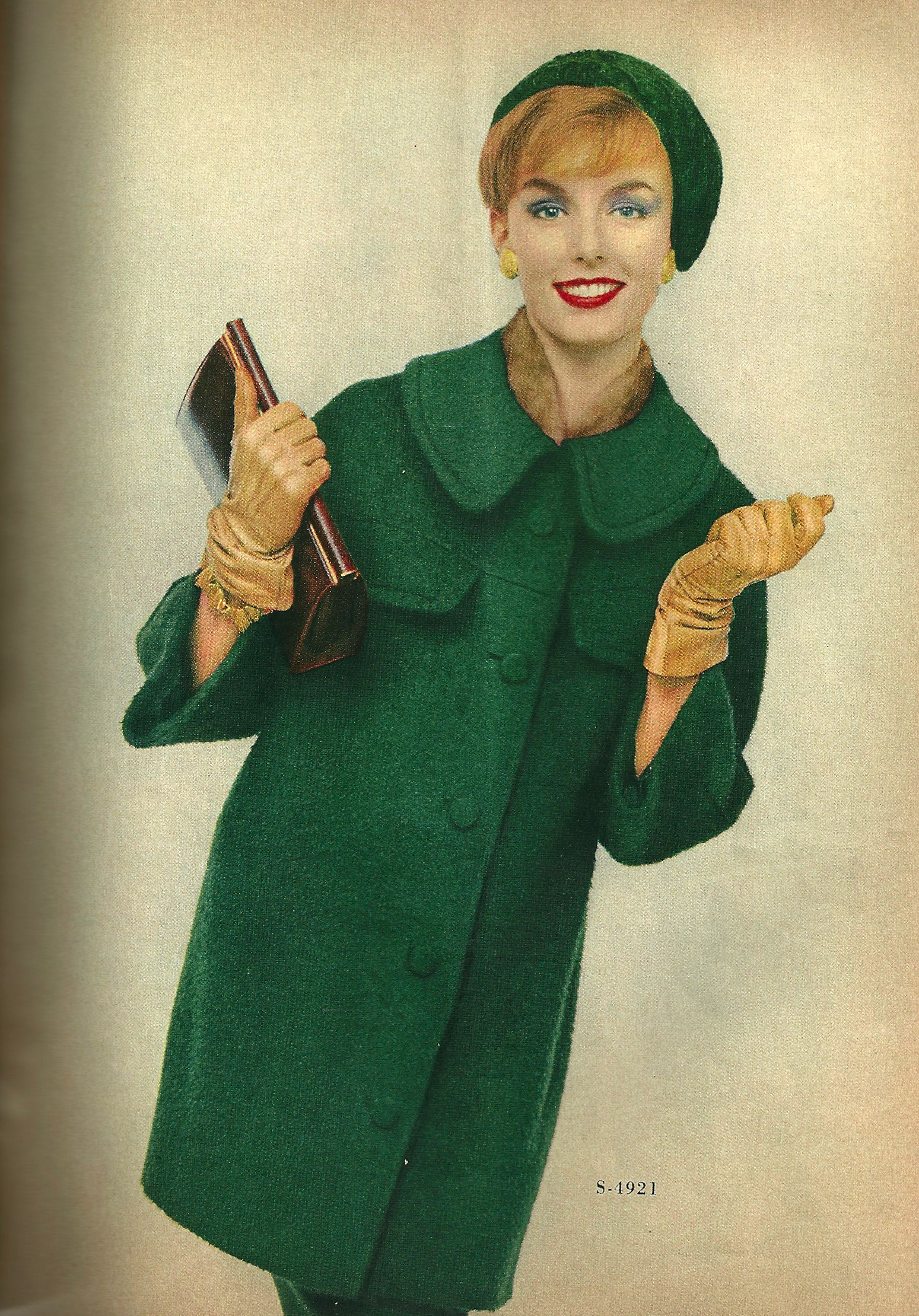
“. . .  above everything they must be practical.  Practical in color and practical in style.”  This was Christian Dior’s dictum for coats which he wrote in 1954 in The Little Dictionary of Fashion (first published by Cassell & Co., Ltd., republished by Abrahms, 2007, copyright Catherine Dior and Jean-Pierre Teto).    Beginning around this same time, Vogue Patterns began to feature more coats in shorter lengths, with slimmer profiles.  The “tunic coat” and matching skirt debuted in the October/November 1955 issue of Vogue Pattern Book Magazine, with this description:  “The tunic . . . the newest and most sophisticated of the coats. Its straight lines are highlighted by an even narrower skirt.”

This was the only three-quarter length coat in this feature entitled "The most-wanted new coats."

This was the only three-quarter length coat in this feature entitled “The most-wanted new coats.”

In 1958, a tapered coat-suit was featured in the October/November VPB Magazine, touting its “three-quarter” coat:

Shown in "boxwood green mohair," this coat would be quite stylish in 2013.

Shown in “boxwood green mohair,” this coat would be quite stylish in 2013.

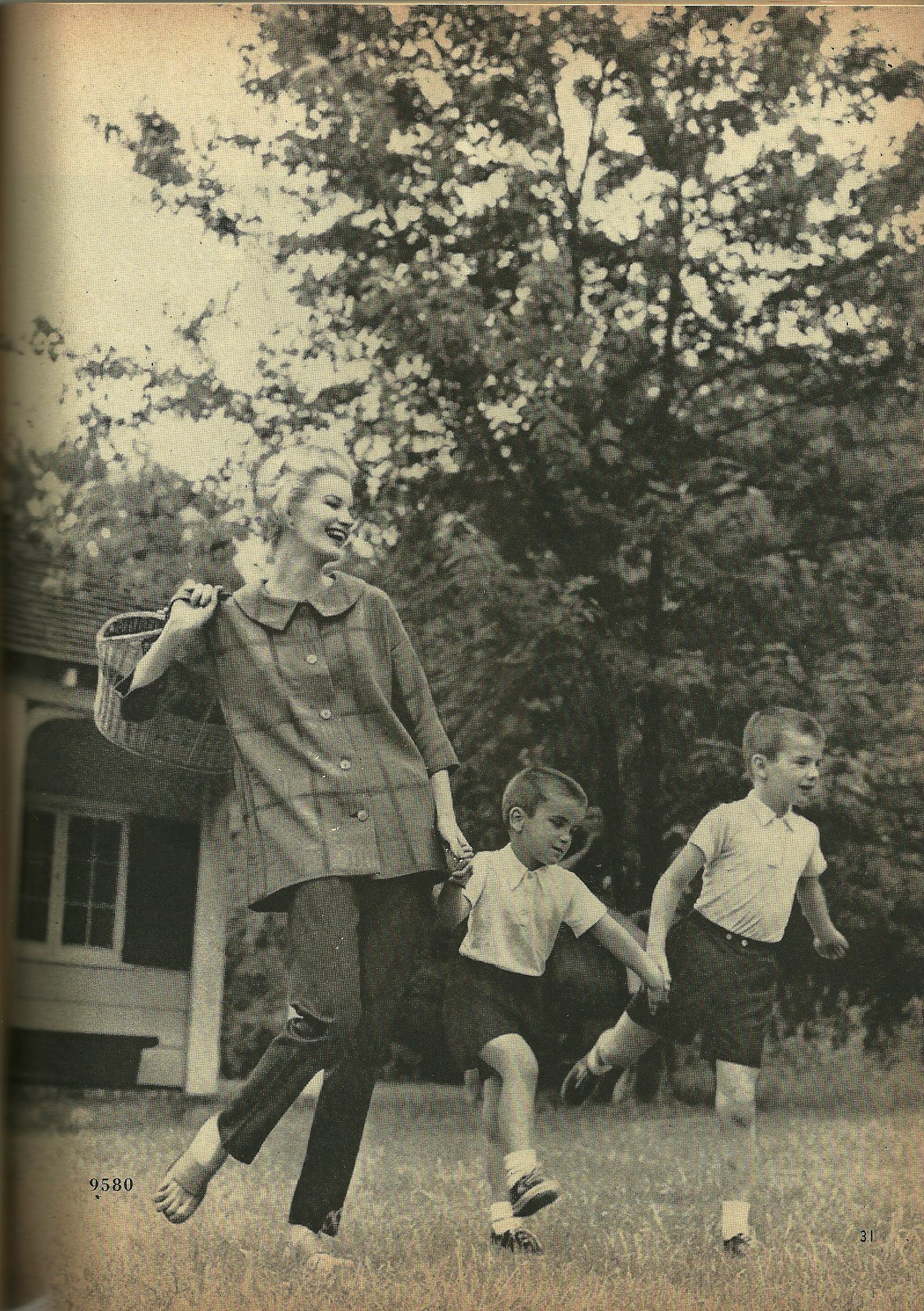
And in the same issue the smock-jacket certainly caught the eye of many a busy mom, with its alluring description:   “”Enjoying suburbia’s natural tranquallizers – grass, trees, sky . . .  Triangular smock-jacket in bright blue-orange-green-red plaid.  Grey flannel slacks – who could live without them?”

This "smock" coat has a pleat in the back for ease of movement for the busy mom.

This “smock” coat has a pleat in the back for ease of movement for the busy mom.

Indeed, who could live without such a comfortable, easy-to-wear, fingertip coat?  As this style morphed into the “Car Coat”, it quickly became ubiquitous, and for good reason.  Here was (and is) a coat, which is a barometer of culture (a term I have borrowed from the little book, 101 Things I Learned in Fashion School, p.32).  An excellent definition is given in The Fairchild Dictionary of Fashion, 3rd Edition, 2010, page 89:  “Sport or utility coat made hip- to three-quarter length, which is comfortable for driving a car.  First became popular with the station-wagon set in suburbia in 1950s and 1960s [my emphasis] and has become a classic style since then.  Some of the styles in which car coats have been made include BENCHWARMER, DUFFEL COAT, RANCH COAT, MACKINAW JACKET, STADIUM COAT, TOGGLE COAT.”

Coats of certain length -4

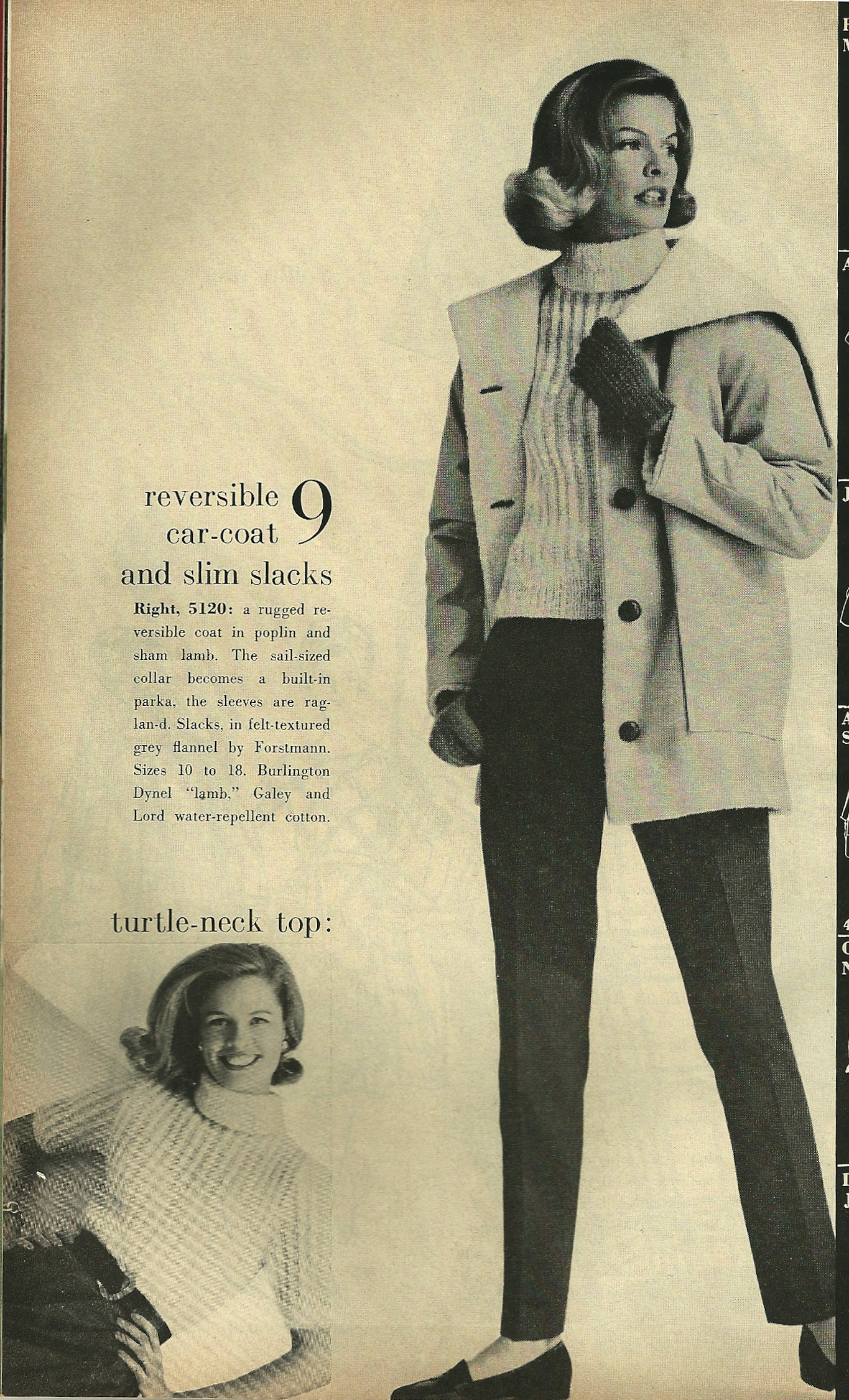
This pattern was for a reversible coat, shown here in poplin and sham lamb. The collar can be turned into a hood.  Click on the image to see the details.

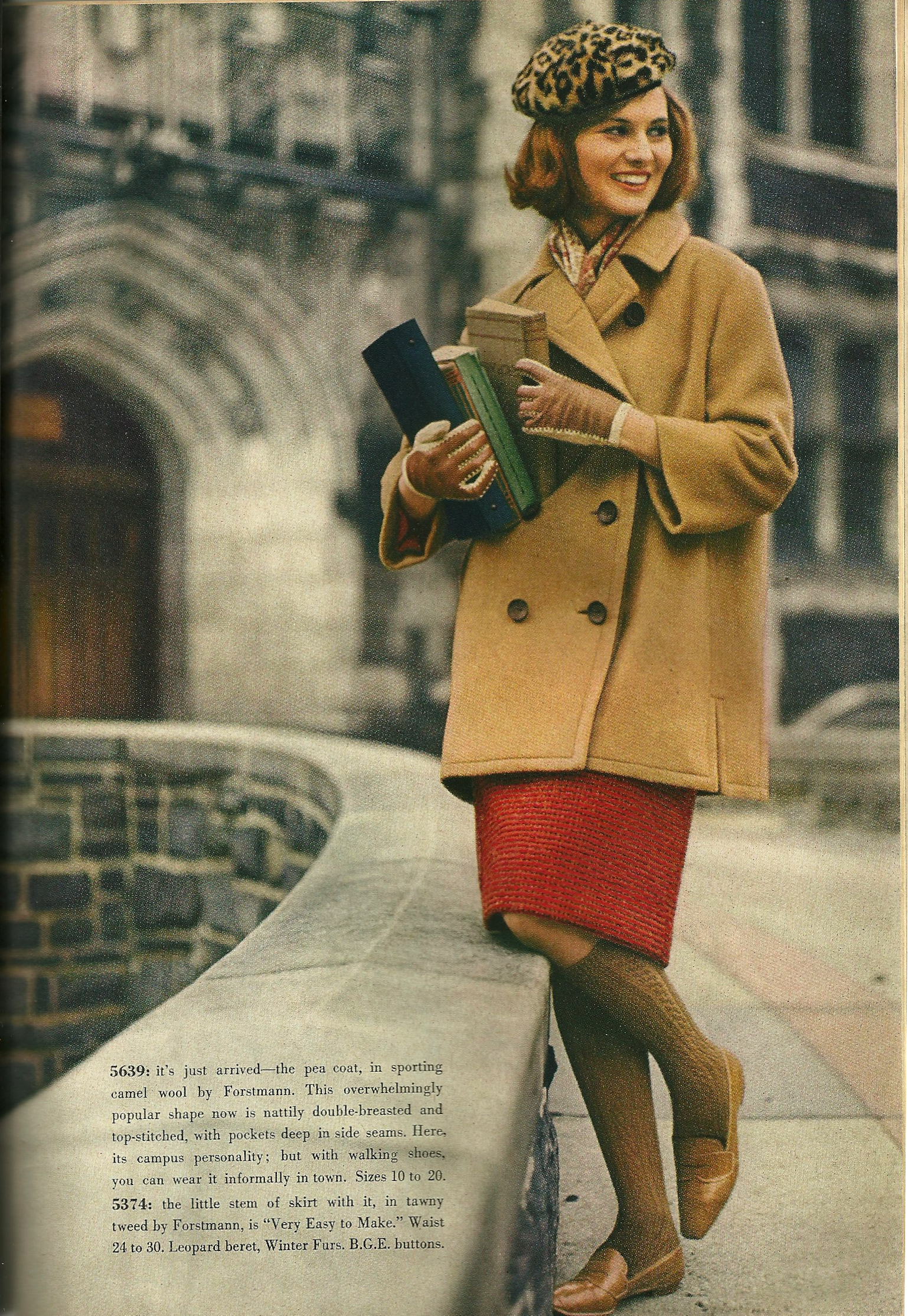
By August/September of 1962, VPB Magazine featured a pattern for a Pea Coat, which although not officially a car coat, displayed the same practical length and wearability:

According to Fairchild's Dictionary, Yves Saint Laurent used the classic U.S. Navy peacoat as inspiration for his variation of it in the 1960s.

According to Fairchild’s Dictionary, Yves Saint Laurent used the classic U.S. Navy peacoat as inspiration for his variation of it in the 1960s.

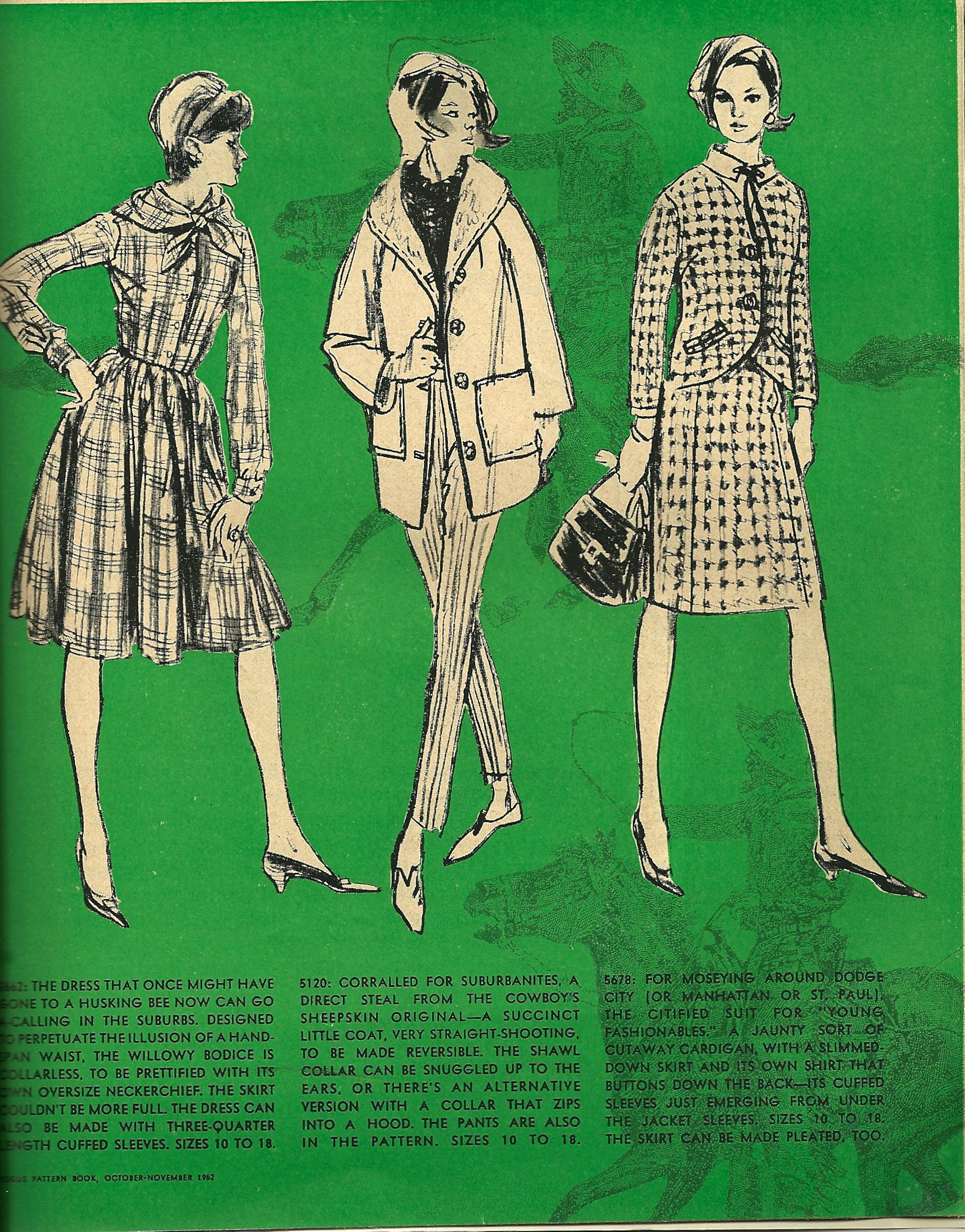
And in the next issue of the 1962 VPB Magazine, in a feature called “The Rangy Western Look for Urban and Suburban Dudes,” front and center was this coat “corralled for suburbanites”:

VPB called this coat a "direct steal from the cowboys's sheepskin original."

VPB called this coat a “direct steal from the cowboys’s sheepskin original.”  (Another wonderful example of a “sheepskin” coat – this one by an English designer – can be seen here, with thanks to my reader, Carol, who led me to the sketch of this fingertip coat.)

Far be it for me to resist such a coat!  Last year I succumbed to this pattern on Etsy, which although not dated, is most certainly from the early ‘60s:

I just may need this pattern someday!

This is a good pattern to have in my collection – I just may need it someday!

Back in the 1970s, I purchased this Christian Dior Designer pattern, with intentions of making the “below the knee” version, although a nice variation of a stadium coat is also featured.  I still love this coat, in both lengths – and someday I hope to finally make good on my intentions!

The buckles around the sleeves add a great look to this coat.

The buckles around the sleeves add a great look to this coat.

However, this coat must be my all-time favorite hip-length style:

I will definitely be doing the color blocking version when I make this coat.

I will definitely be doing the color blocking version when I make this coat.

Purchased last August,  this pattern sometimes keeps me awake at night. With Dior’s words imploring me to be practical, I wonder – – – should I make it in navy and white (as pictured), in black and white, in red and black, in gray and camel, in orange and gray, in ??? and ???

Still to be decided . . .  but you haven’t seen the last of this pattern.

12 Comments

Filed under car coats, Coats, Uncategorized, vintage Vogue Designer patterns, vintage Vogue patterns from the 1950s, vintage Vogue patterns from the 1960s, vintage Vogue patterns from the 1970s, Vogue patterns

Decisions, Decisions.

For several years my mother-in-law had a sign on her refrigerator stating “So many men… So little time”.  As a wife and a mother of three sons, I guess she was either telling the truth – or maybe doing a little daydreaming.  I don’t post things on my fridge, but if I did, it might read, “So many patterns… So many decisions”.  And that, too, would be a combination – of the truth – and quite a bit of daydreaming!

Usually as I am working on an item, I am already thinking about the next one – and I often know what pattern I’ll be using next.  However, I finished my silk tunic not quite decided yet.  I figured I was ready to tackle something a little more complicated, after the easy construction of the tunic (and a few days off doing other things!)  So what was it going to be?  I had it narrowed down to these five patterns/projects:

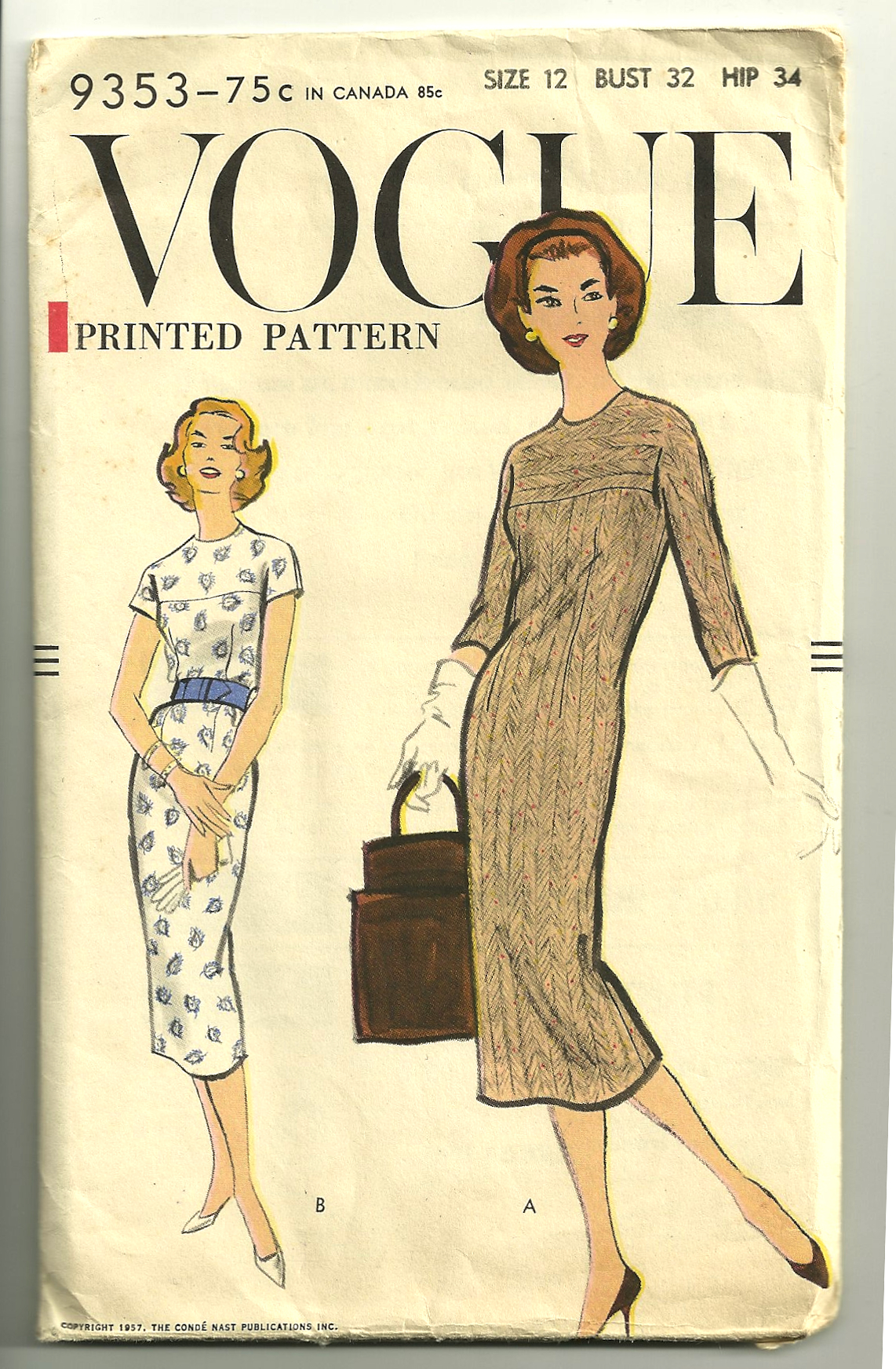
1) View B of this dress (for summer), made up in a Moygashel linen, with a contrasting belt.  This pattern has persistently been popping in my pattern box ever since I purchased it on Etsy  in early January.

The length of this dress as shown on the envelope is very 195os. I’ll be making it in knee-length.

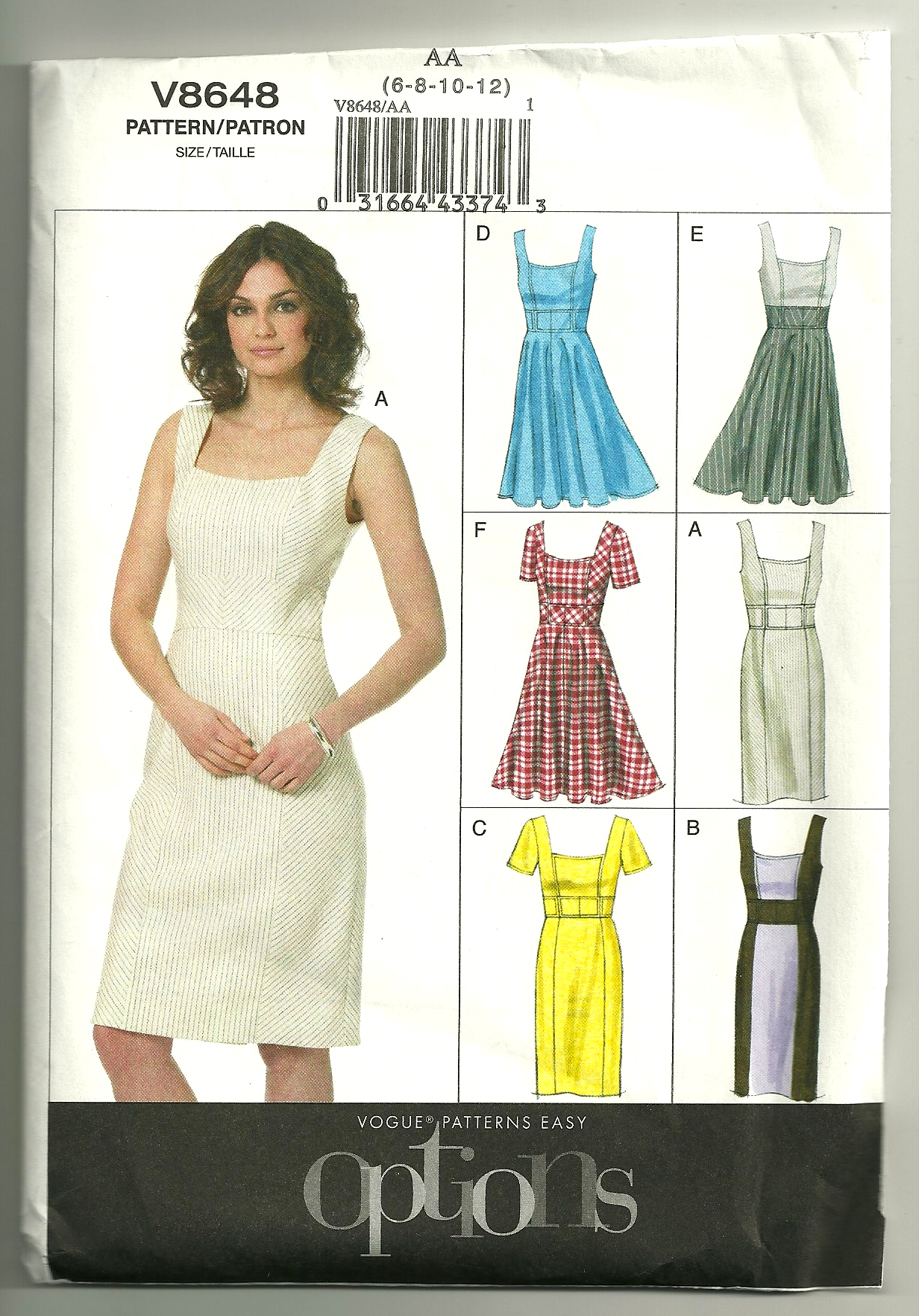
2) No, this pattern is NOT vintage.  I signed up for The Couture Dress class taught by Susan Khalje on Craftsy, and this is the dress pattern which is sent with class enrollment.  Actually, views A and C both have a 1960’s feel to them – classic and chic!

So – what will it be? Sleeveless or short sleeves? It will definitely be the straight-skirt version. And I love the square neckline.

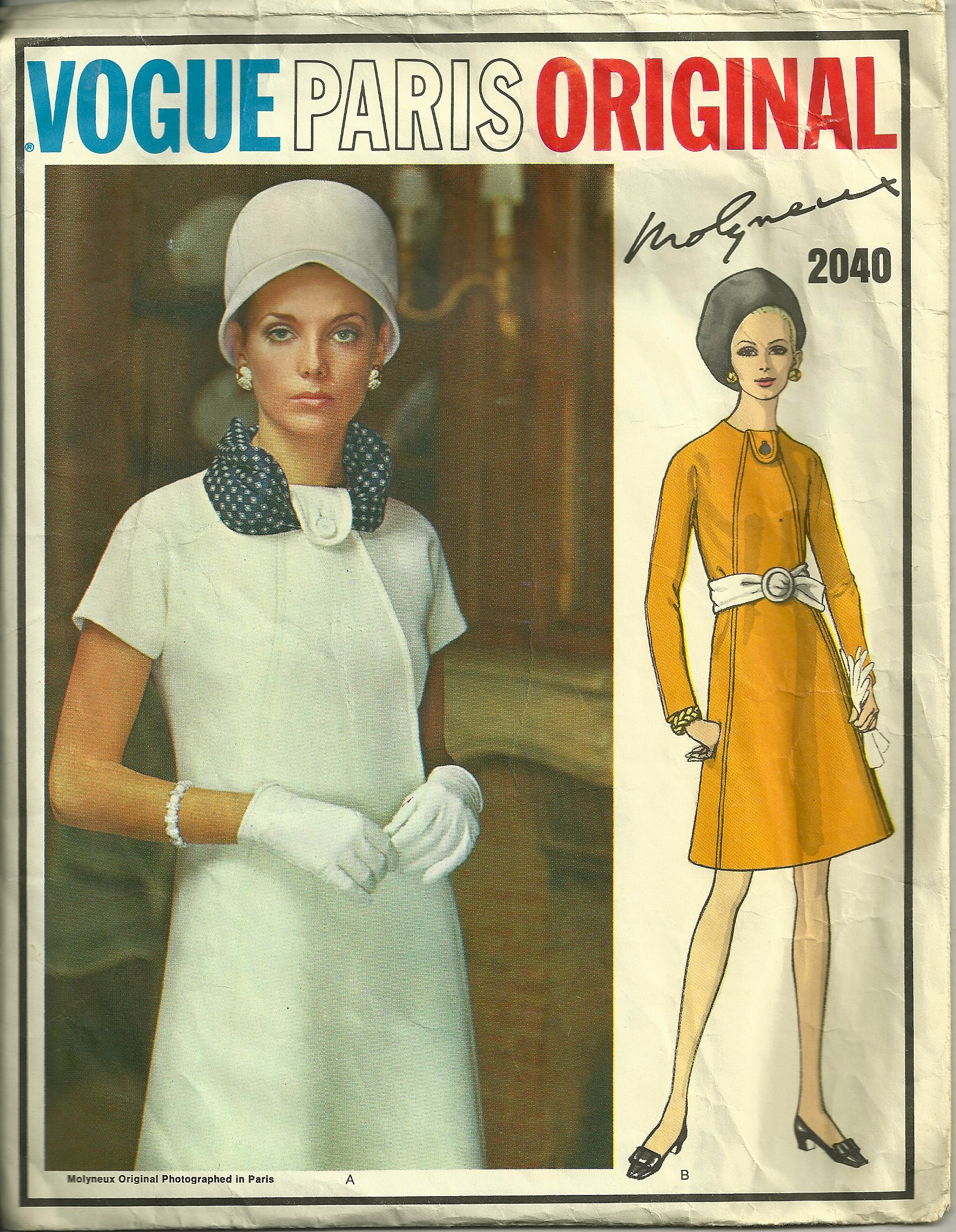
3) Ah, Molyneux!  Another short-sleeved dress to be made in linen.  The seaming detail is so lovely on this design.  I will have to practice my “pouty” look, however, if I hope to look an inch as good as the model on the envelope.

The kimono sleeves have gussets, which will make this dress comfortable to wear.

4) After missing out on several Diane von Furstenberg-designed patterns on eBay, I was very excited to find this one in my size on Etsy in mid-May.  What is it about D von F’s dresses that makes them so timeless?

I owned this pattern in the ’70s, when I bought it for $1.50 at my local fabric store. Sadly I didn’t save it or the dress I made from it, so I had to buy it again! I originally made it up with short sleeves, but now I prefer the sleeveless version.

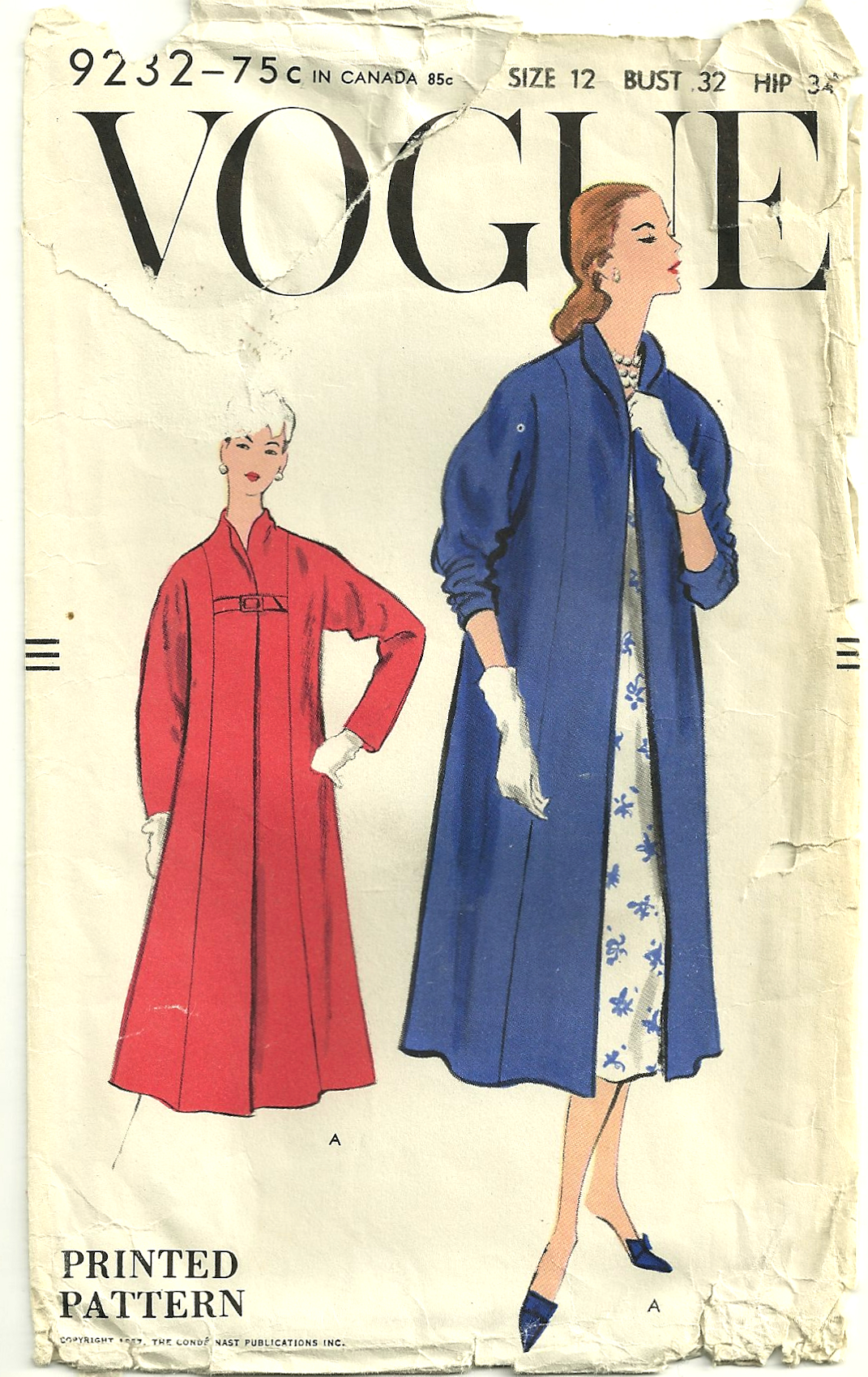
5) I featured this pattern in a post shortly after I started my blog.  Whether you call this a “swing” coat or a “clutch” coat –  it’s 1950’s style has been in my mind for months!

I love this coat with the sleeves pushed up, as shown in blue.

The truth of the matter is that I will eventually be making dresses or a coat from all these patterns, but as I usually work on only one project at a time, I had to choose just one.  Which one?  It is underway as the thread- and scrap-covered floor of my sewing room will attest!  I made my decision . . . but I have many stitches to go – and many stitches to go – before I can post it.

9 Comments

Filed under Coats, kimono sleeves, Linen, Uncategorized, vintage Vogue Designer patterns, vintage Vogue patterns from the 1950s, vintage Vogue patterns from the 1960s, vintage Vogue patterns from the 1970s, Vogue patterns

Messages from the past: handwritten notes on vintage patterns

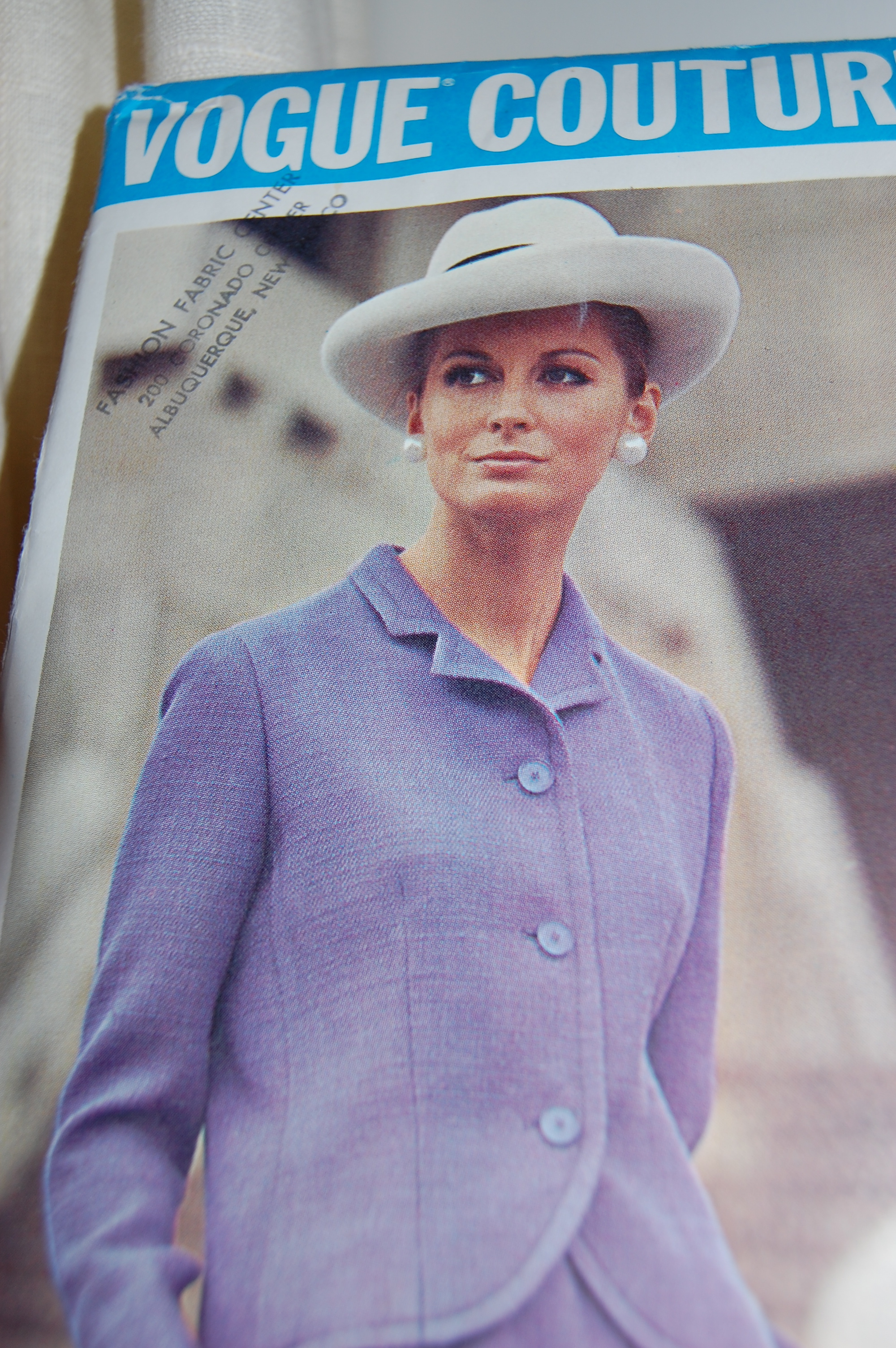
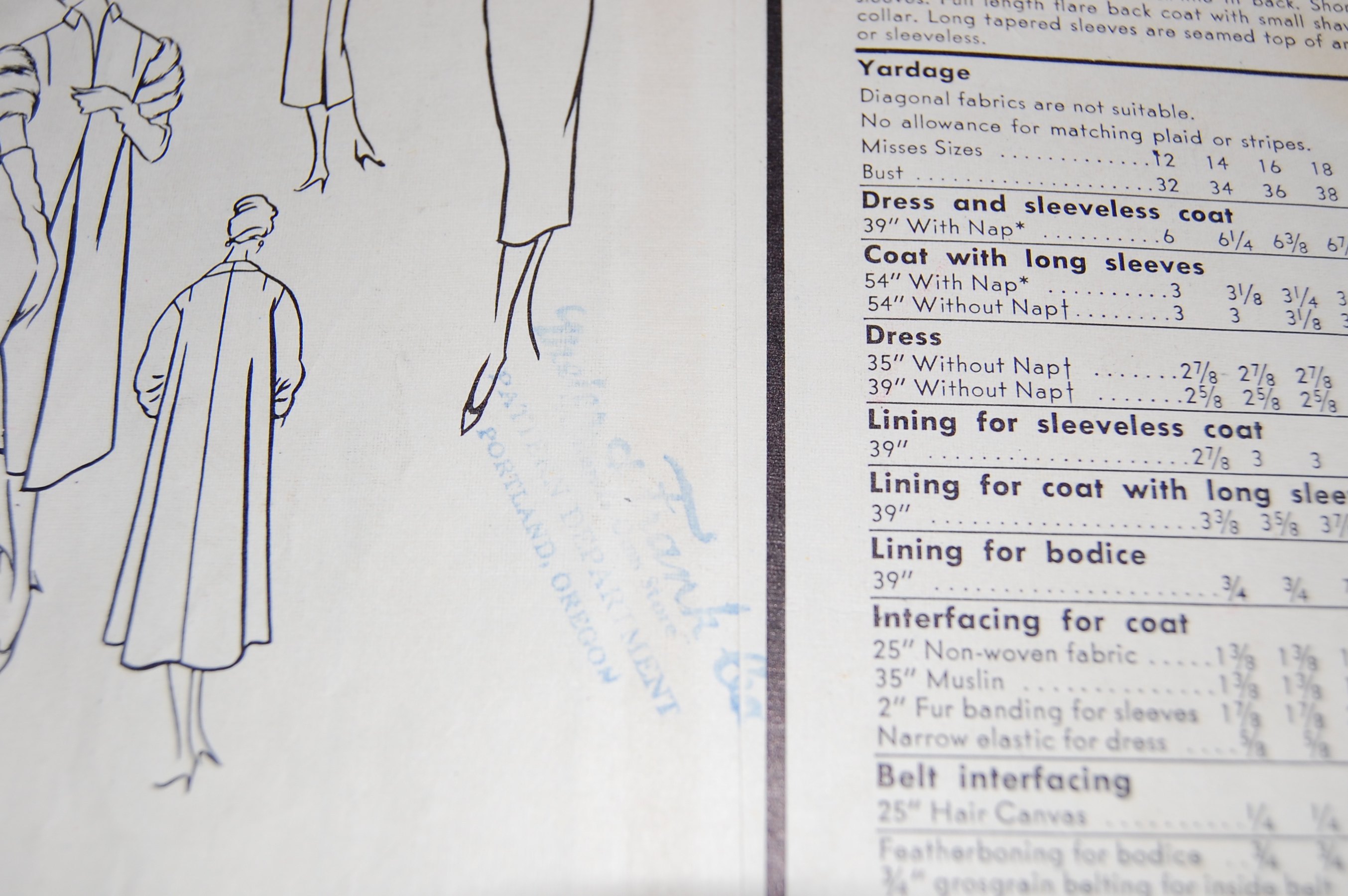
Many vintage patterns have a visible stamp on them which tells the name of the store where it was originally purchased.  (Those of us who sew know that patterns, once purchased, are non-returnable – and it seems it was ever so…)  Sometimes the stamp also lists the location of the store, but not always.  Either way, that stamp is a visible clue to the pattern’s past life.

In the upper left hand corner, you can see the stamp for "Fashion Fabric Center" in Albuquerque, New Mexico. This pattern is from the early '70s.

If you look closely, you can see the stamp on this envelope which tells you it was purchased from Meier & Frank Pattern Department, Portland, Oregon. This pattern is from the 1950s.

I can’t help but visualize a well-put-together woman perched on a stool at the pattern counter of the mentioned store,  thoughtfully flipping through the pages of the Vogue Pattern catalogue, and finally settling on this one pattern.  I wonder what occasion, if any, she was making it for?  Was she, like I was in the ‘60s and ‘70s, agonizing a bit over spending 75 cents or $1 or $3 or $5 for just a pattern, and then loving it once the decision was made?  Was she buying it to make it herself or in coordination with a dressmaker who would be the one to create it for her?  What fabric and color was she intending for the pattern?  Or did she buy the pattern and then, for one reason or another, never make the intended garment?

And then, every once in a while, there is a handwritten note or diagram on a pattern envelope.

These jottings, sometimes cryptic, other times precise, provide clues which begin to answer some of those questions.  In the months I have been buying vintage patterns, I have found myself privy to some of these “messages” from the past – and here are the small stories they tell:

Fit seems to be an important focus.  Kudos to those dressmakers who recorded their difficulties on the pattern envelope!

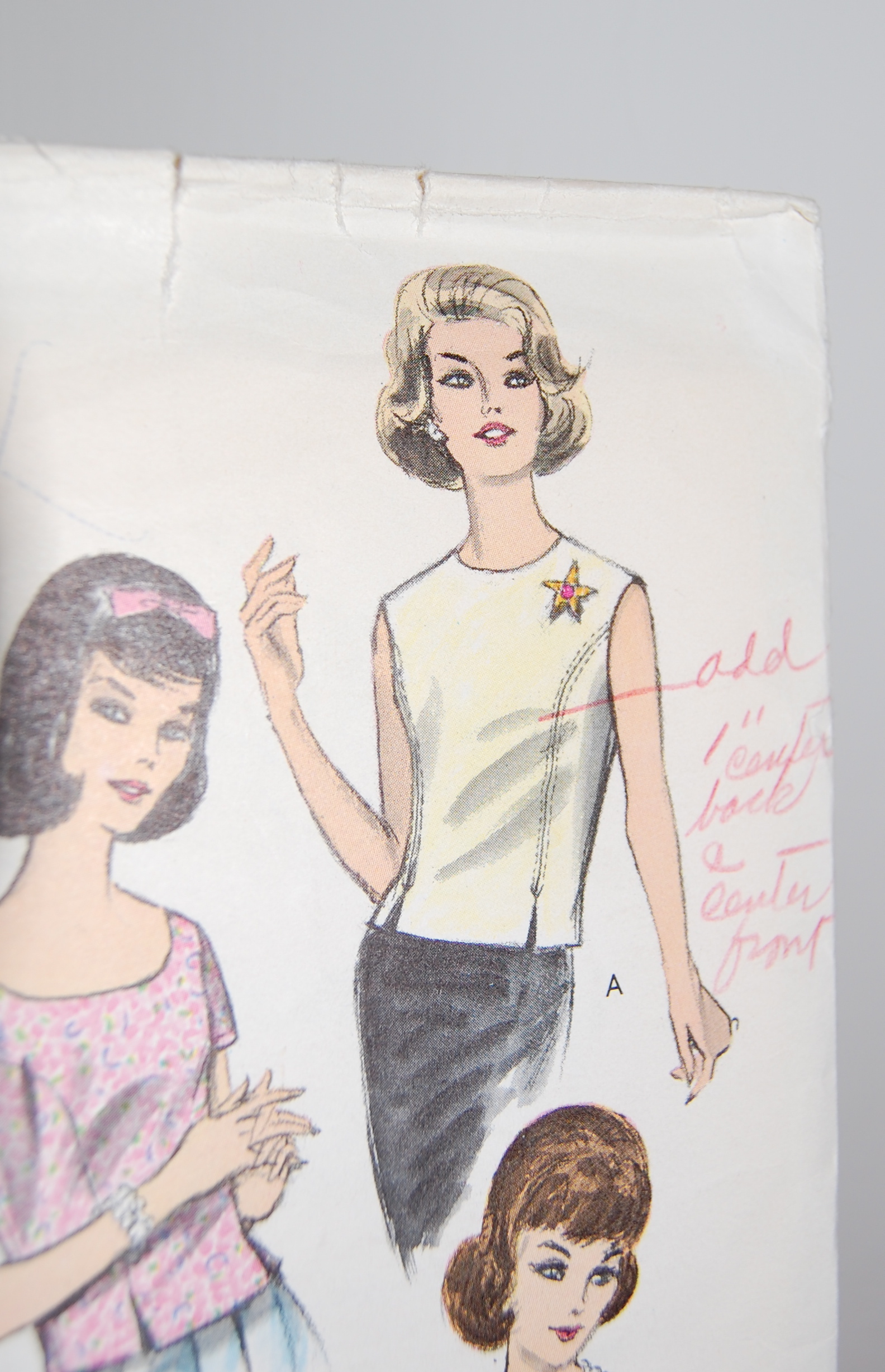
I think this lady should have purchased a larger size! She needed to add 1" center front and center back!

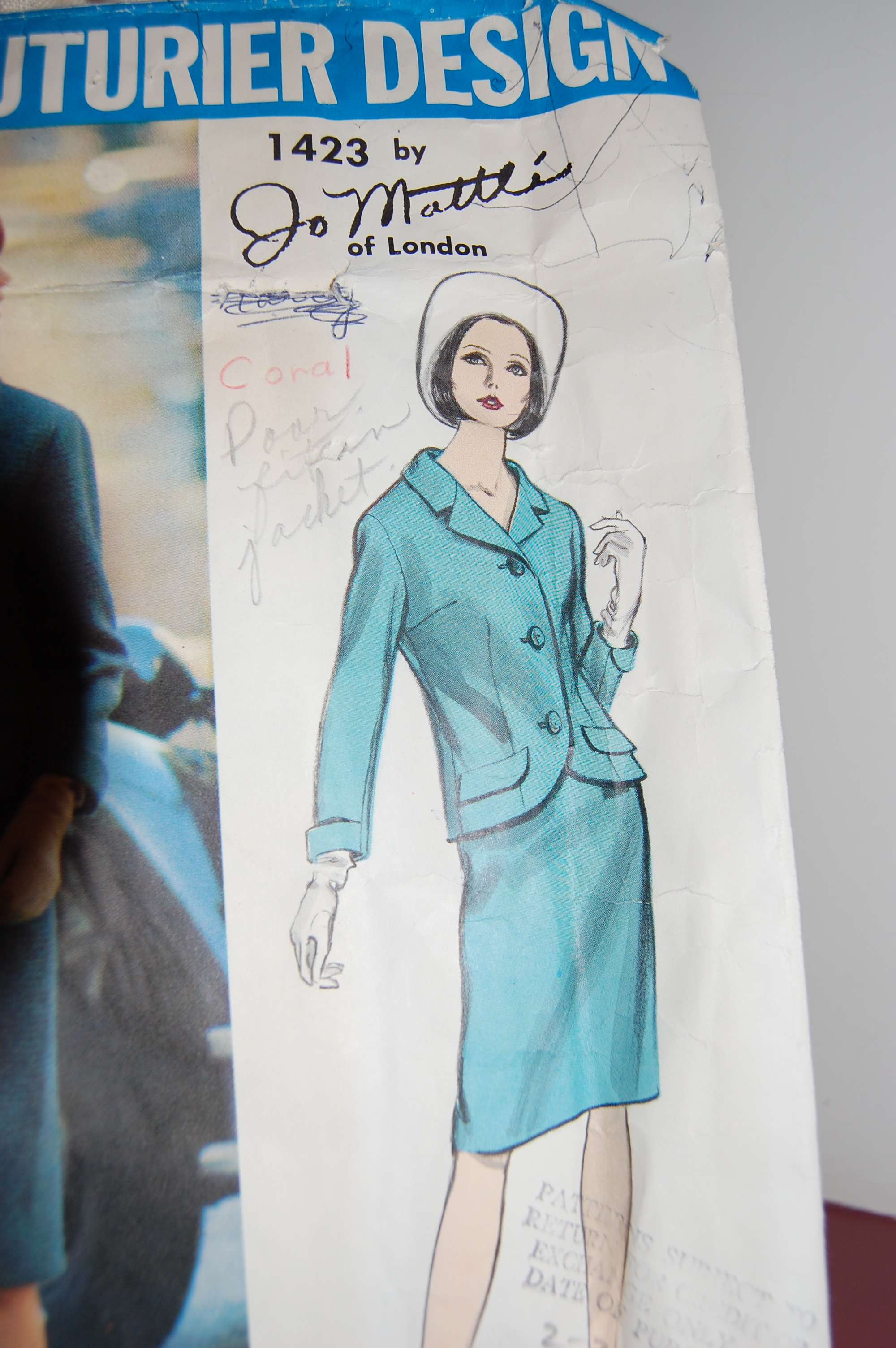
Beware! Poor fit in jacket! But I bet it was lovely in coral nonetheless.

Check out this listing on Etsy to see a rather melancholy note about fit:  “would have been best to have gotten the med. size.”  I guess that pattern ran large!

Choice of fabric and color (see above image) are also details which have been noted, sometimes multiple times on the same envelope.

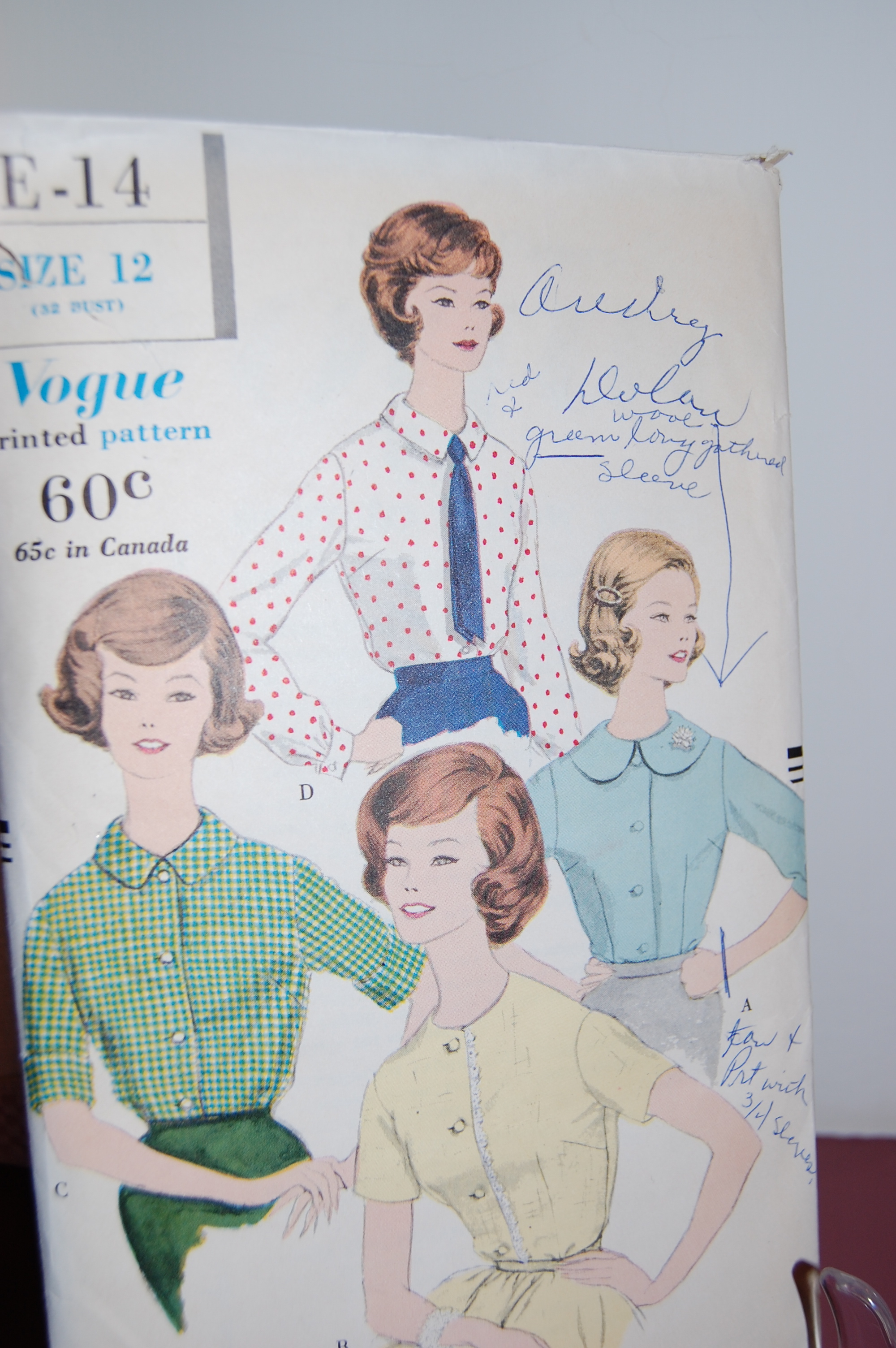
I think this pattern must have belonged to a professional dressmaker. She made it up in red and green wool for Audrey Dolan, with long gathered sleeves. It looks like she also made it in tan and in a print (Prt) with 3/4 sleeves. The pattern tissue is still in great condition, despite all that pinning and cutting!

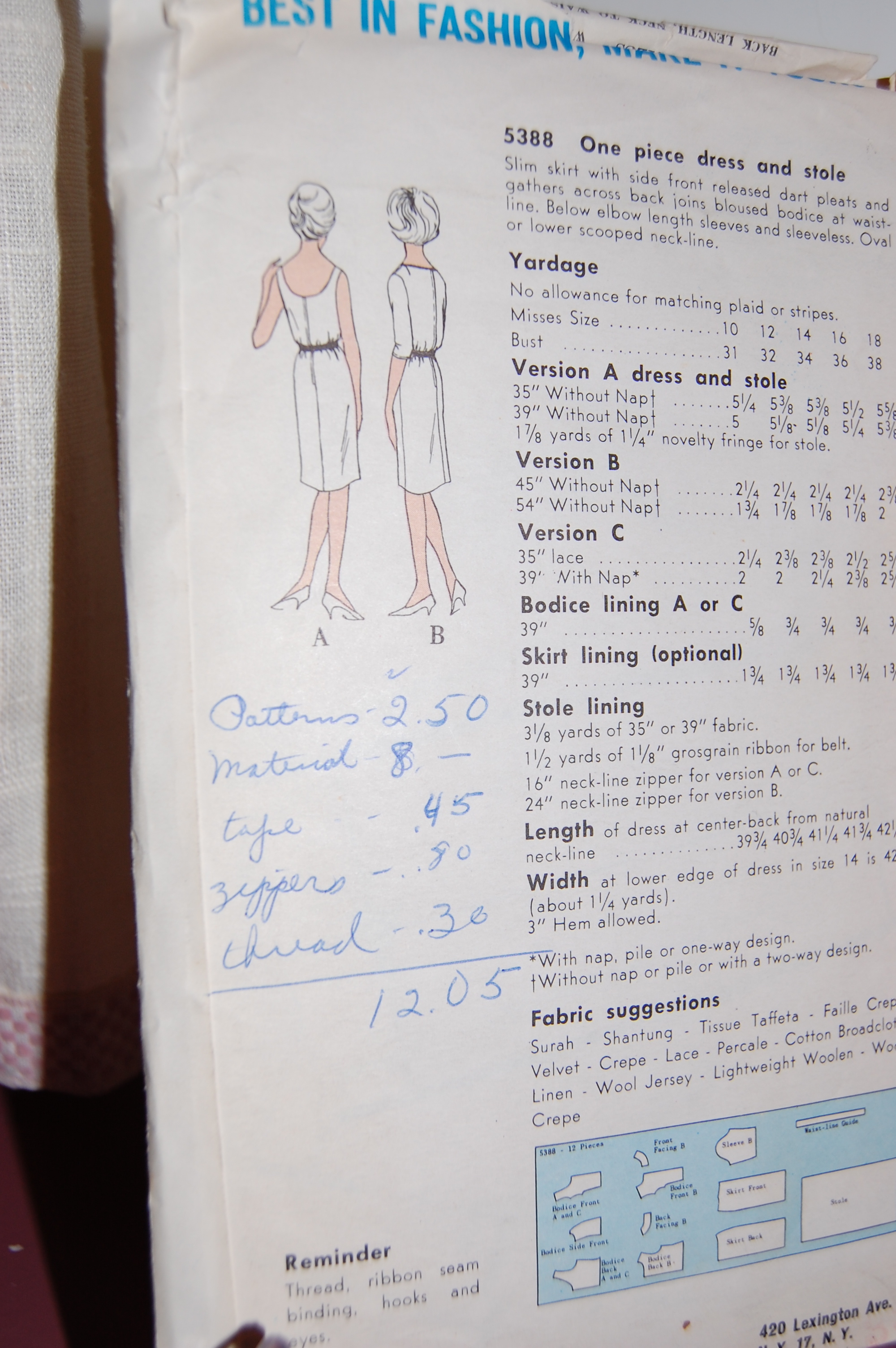
This pattern obviously belonged to a lady who was either a dressmaker, noting her expenses, or a home sewer who kept careful records for her household/clothing budget.

This lady must have made this dress in coordination with another pattern. Both patterns together cost her $2.50. She was also buying multiple zippers, to the tune of 80 cents! Her big expenditure was fabric (material), which she lists at $8.00.

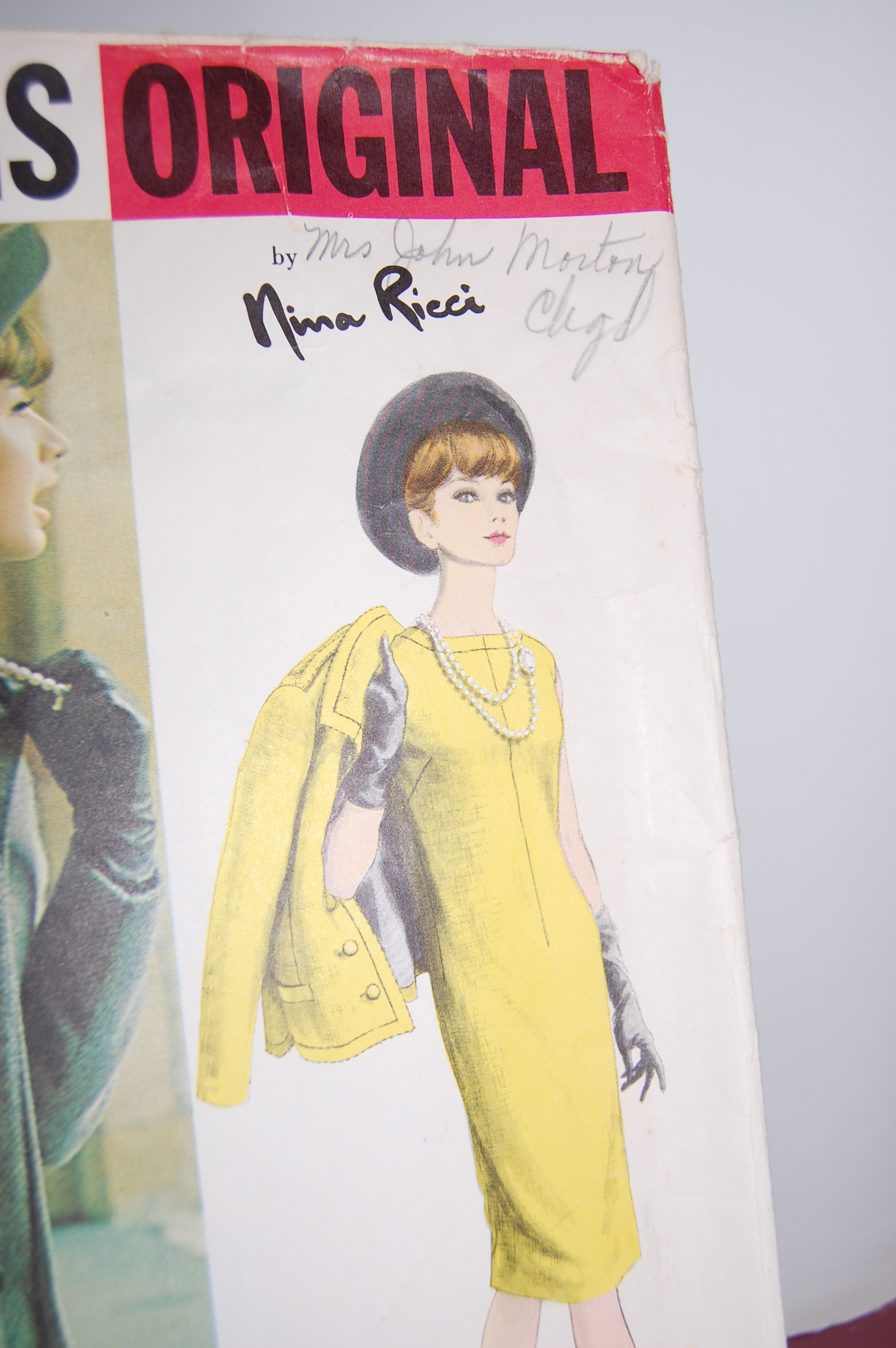
And here is a pattern which Mrs. John Morton “Chgd” [Charged]  Perhaps she did not have to be as careful with her expenditures!

I think Mrs. John Morton was one stylish lady!

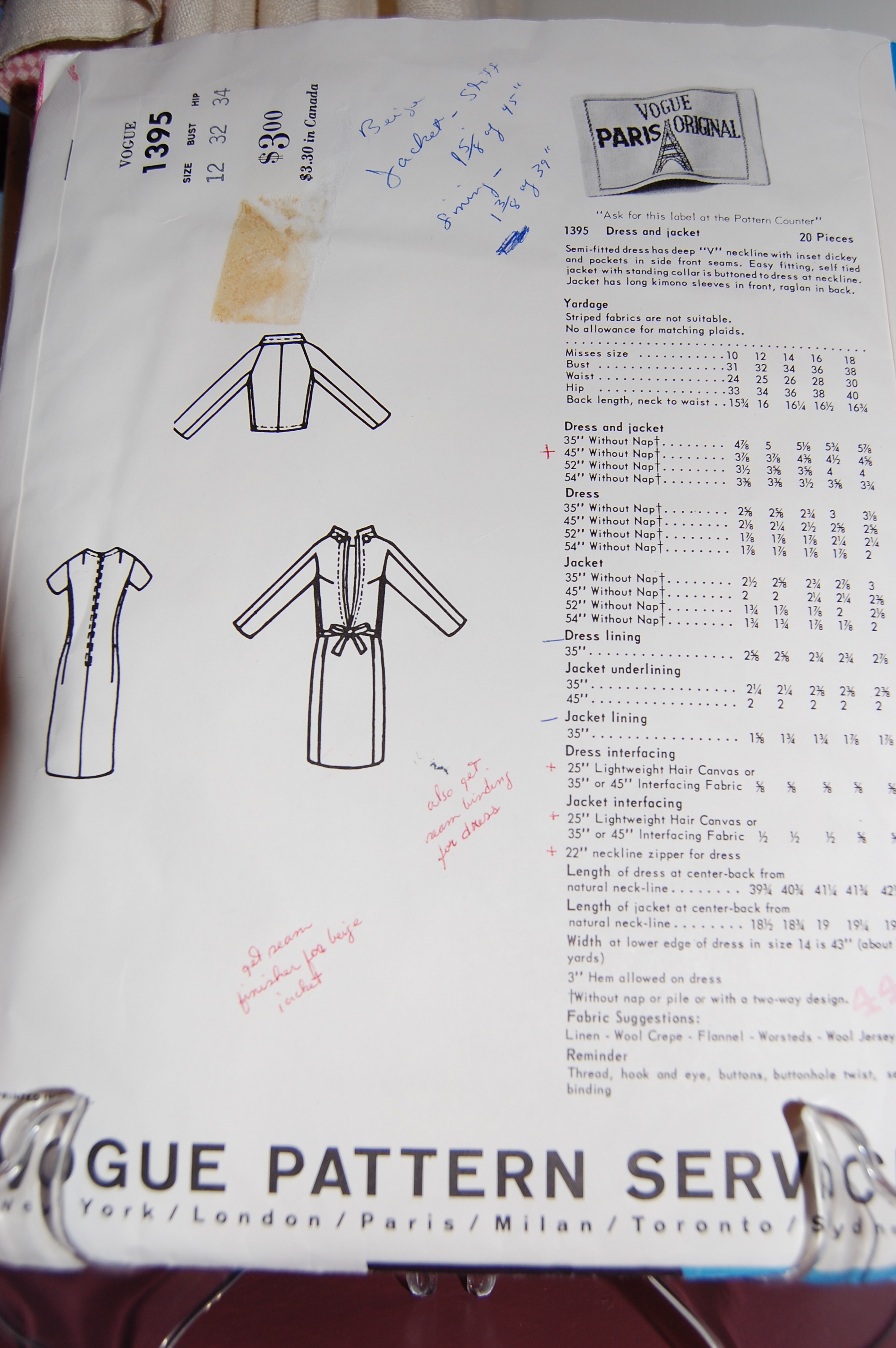
This next pattern is a study in contradictions:  The owner has carefully noted some yardage requirements, written notes to remind herself to “get seam finisher for beige jacket” and “also get seam binding for dress”.  But the pattern came to me uncut, factory-folded and therefore unused, with its original Vogue label included.  I wonder what prevented her from ever making this lovely jacket and dress?

We know she intended to make the jacket in beige, but she doesn't tell us about her color choice for the dress!

Next, it’s always fun to see someone’s intended changes to the line or details of the pattern.  Here are two examples:

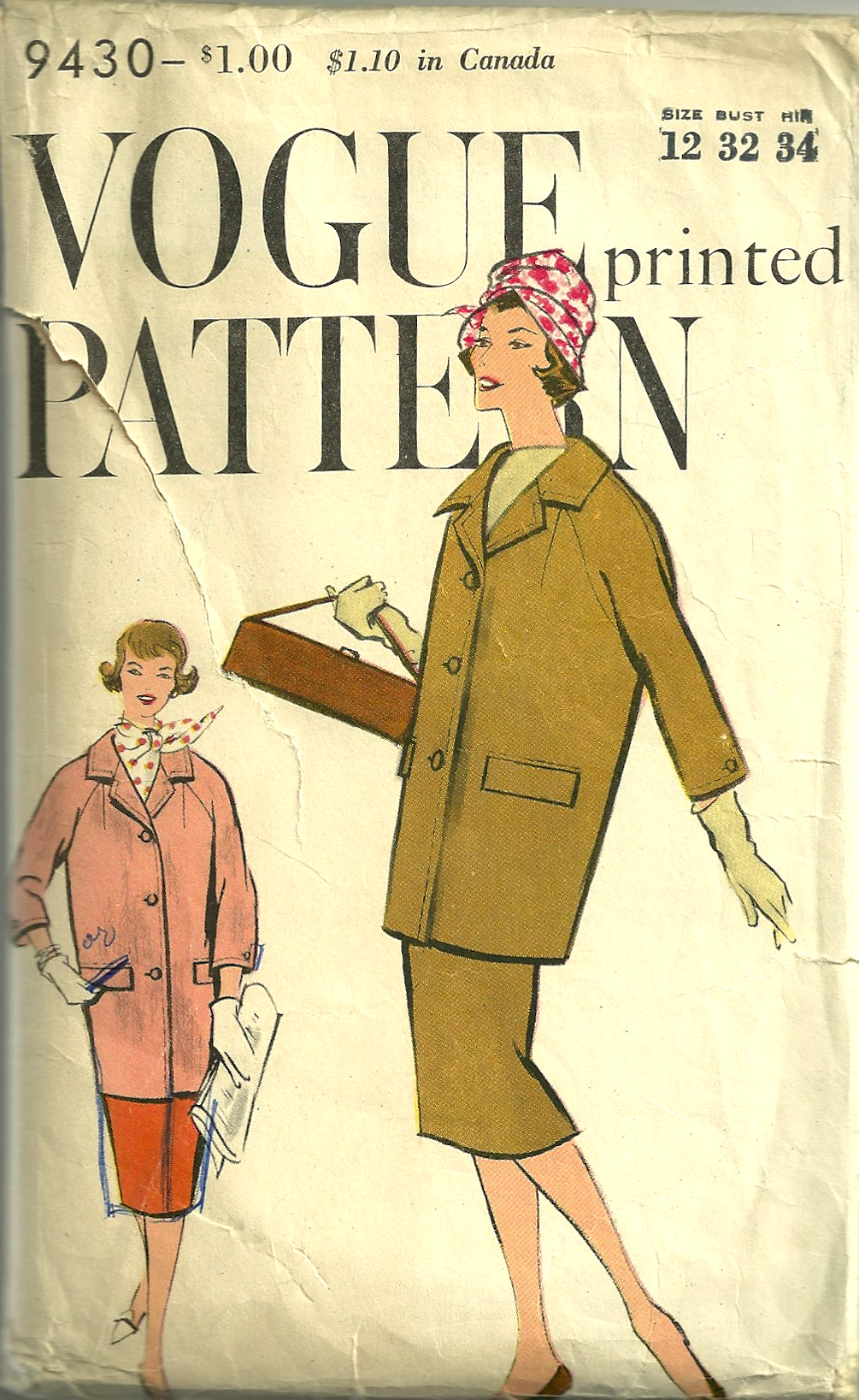
View A on the far left just did not suit this sewer. She wants to extend the length of the coat, and add the collar. What she is really saying is that she wants to make view B, but with top-stitching!

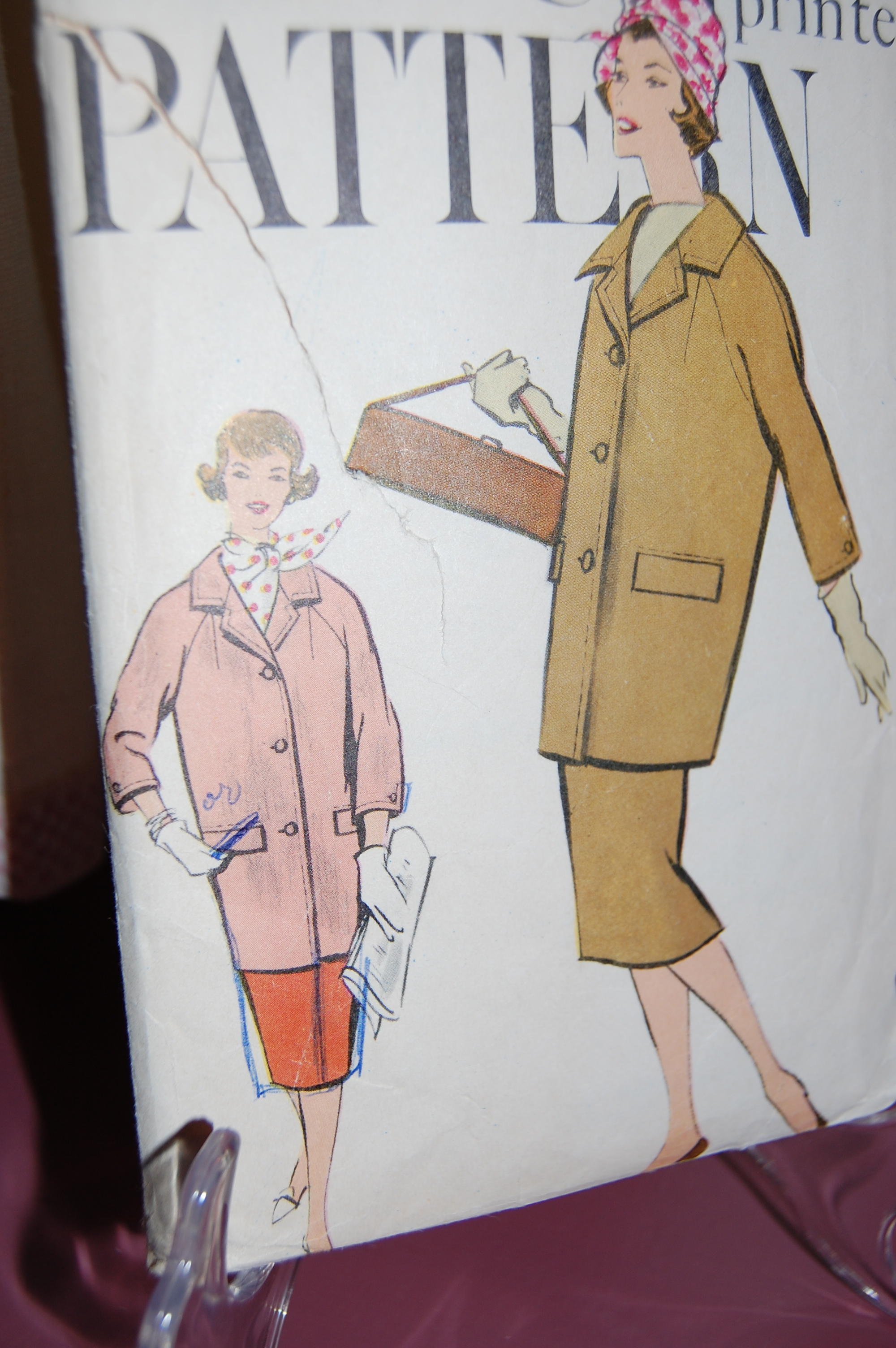
It seems lengthening coats was a popular thing to do! This lady drew the longer version of the coat (on the left) and was still deciding on making the pockets "slash" pockets instead of flap pockets!

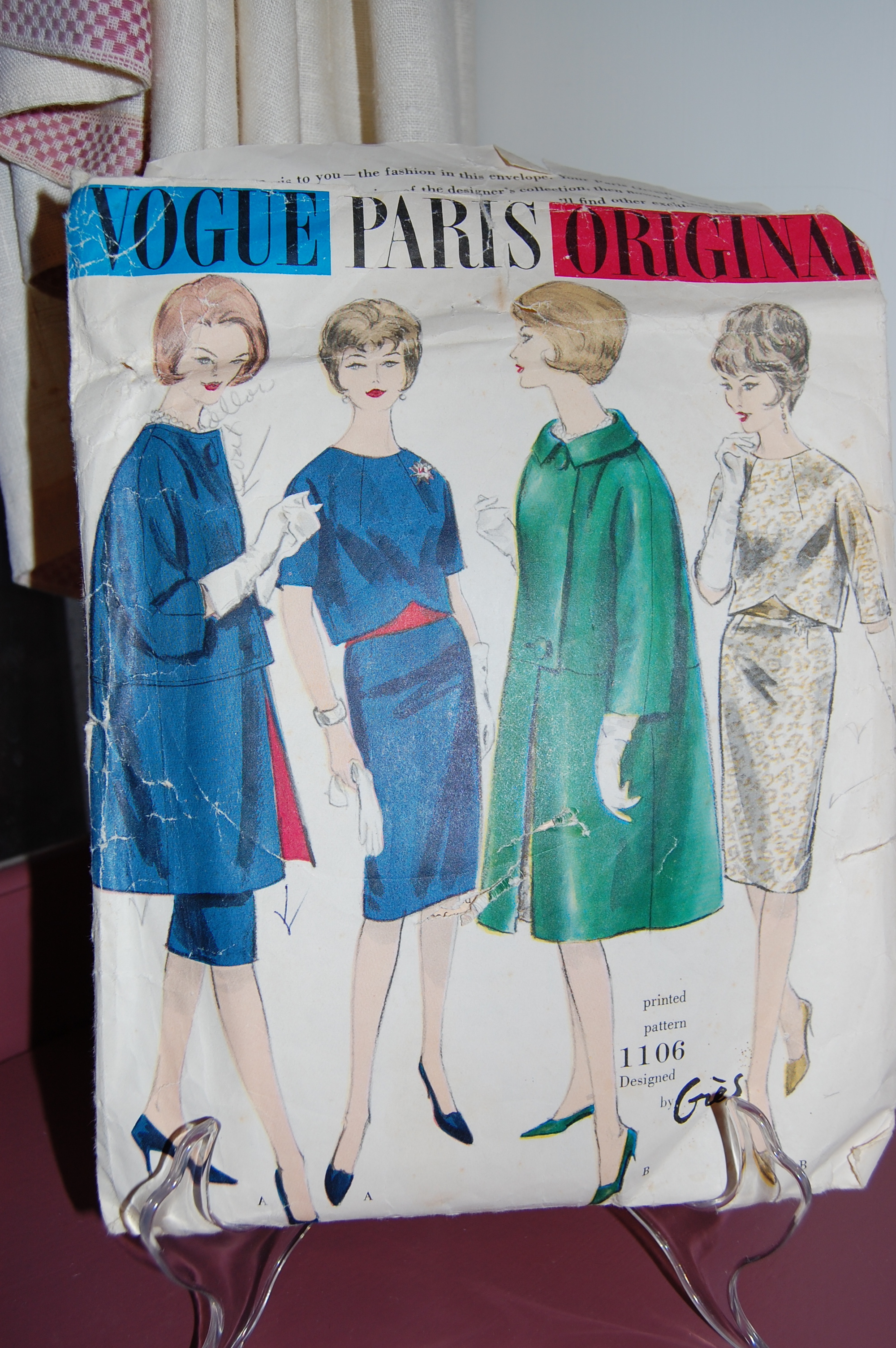
Finally, sometimes all that is on a pattern envelope is a name – a simple notation, which quietly transcends the years!

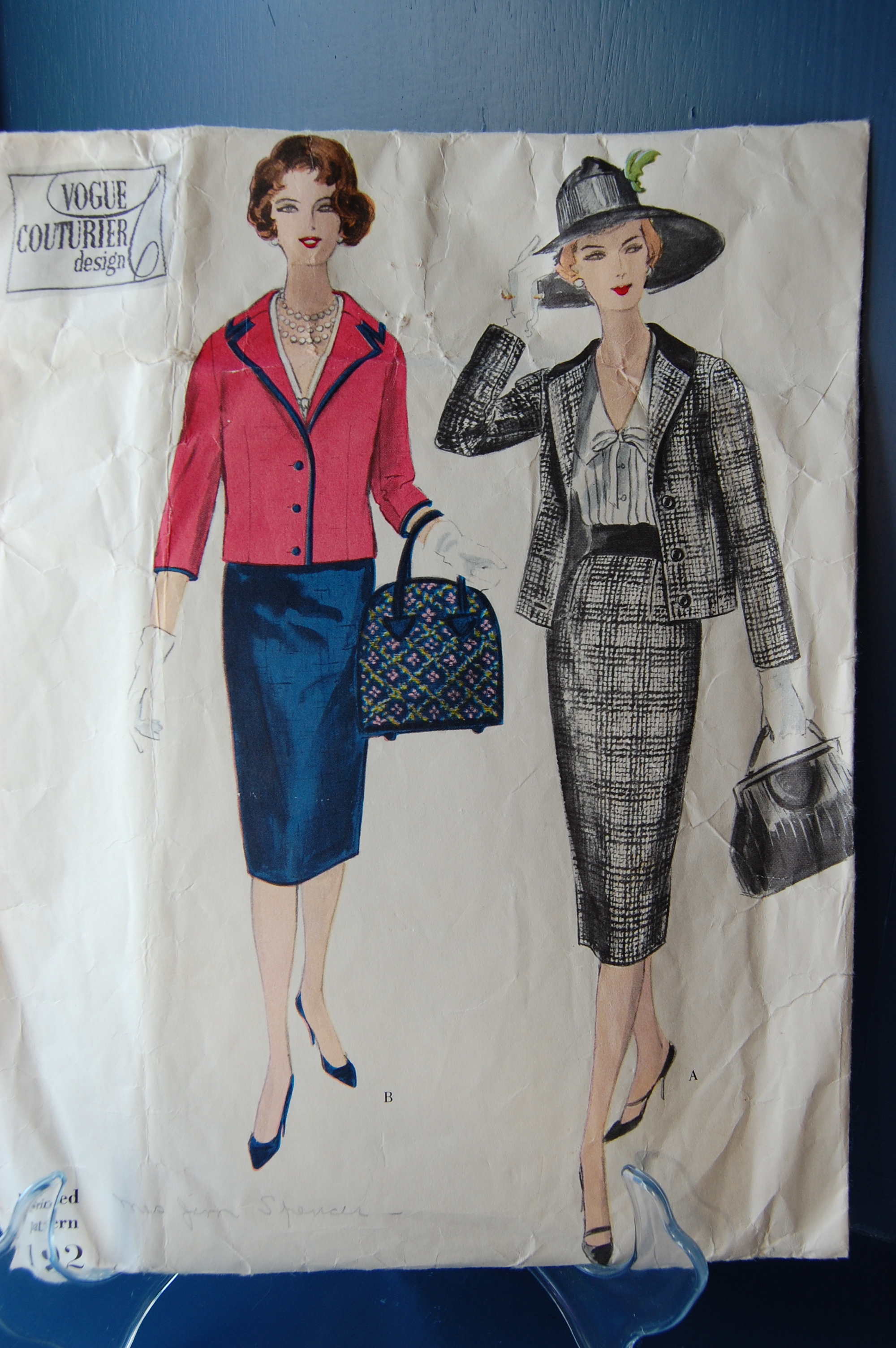
Look below the figure in red and blue for the name written in pencil.

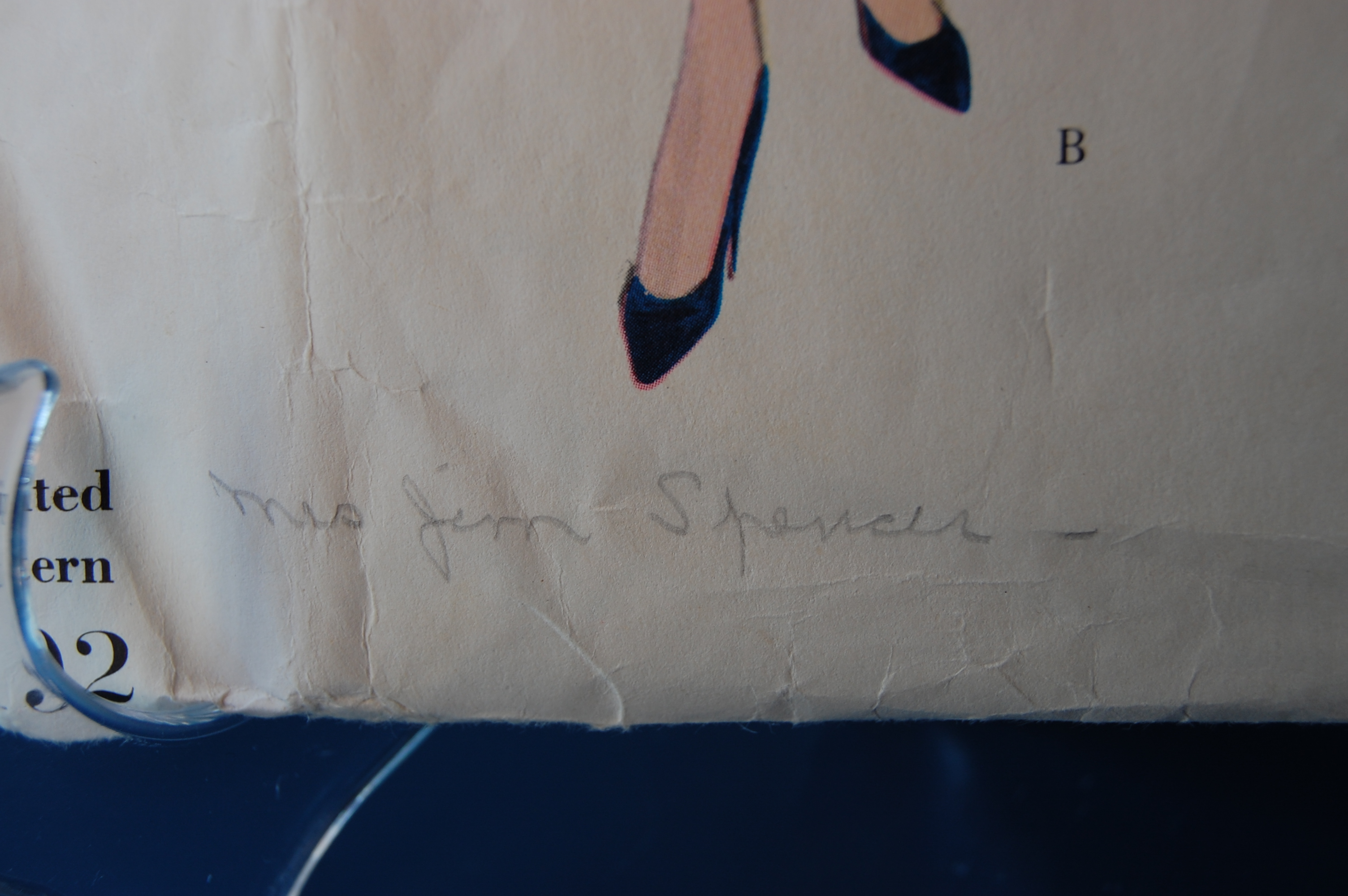
Here is a close-up of the signature. This pattern belonged to Mrs. Jim Spencer.

Mrs. Jim Spencer, I bet you looked fabulous in this suit!

7 Comments

Filed under Coats, Dressmaker details, Uncategorized, vintage Vogue patterns from the 1960s, vintage Vogue patterns from the 1970s, Vogue patterns

I love coats!

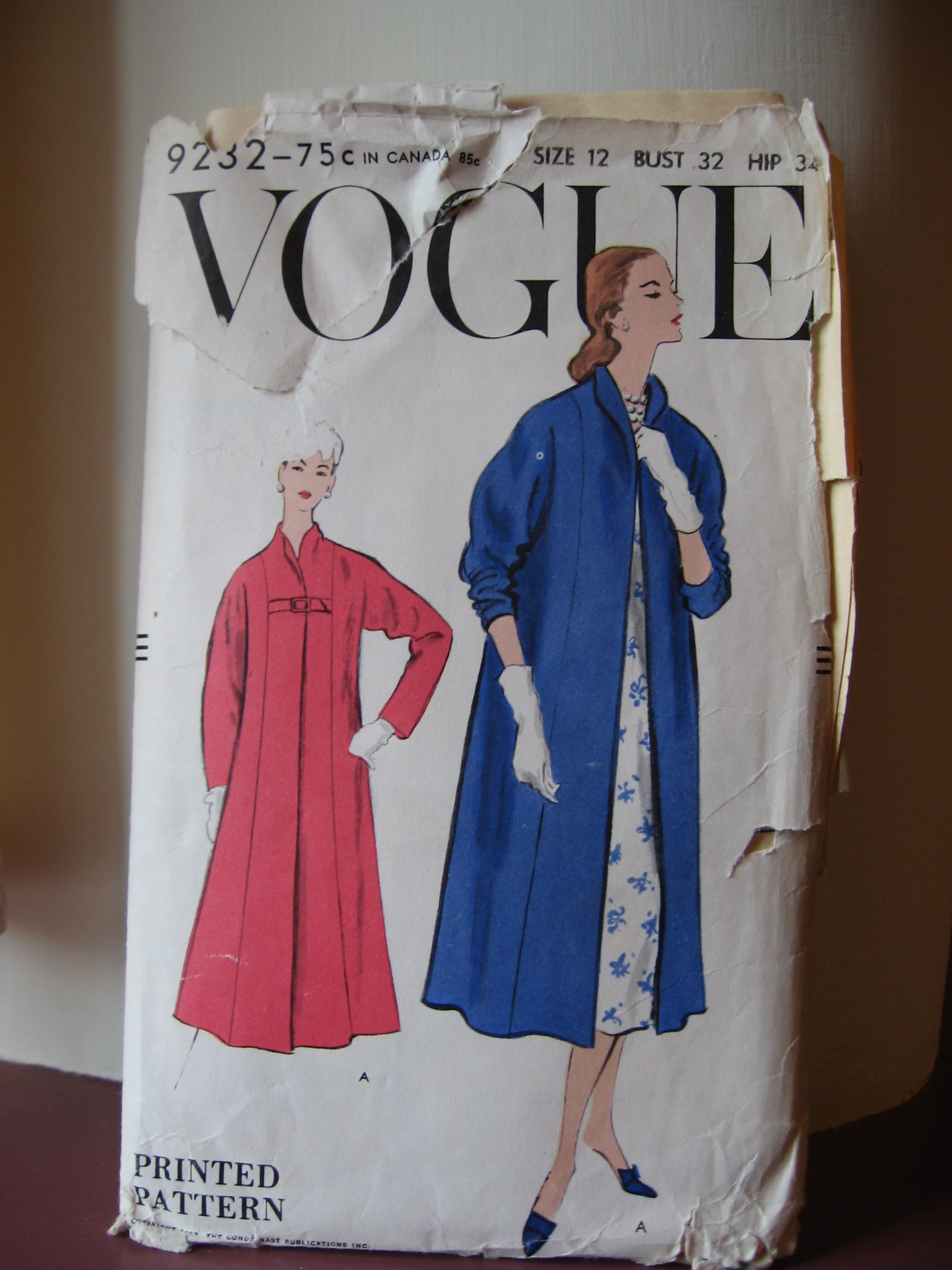
I never realized I love coats so much until I started looking at Vogue patterns on eBay.  It seems like every other pattern that appeals to me is either just a coat or a coat and dress or a coat and skirt or a jacket/coat that can be made in various lengths. One of the first ones I found was this one:

1957 Swing Coat from vintage Vogue pattern

One of my first eBay purchases - a vintage Vogue pattern from 1957

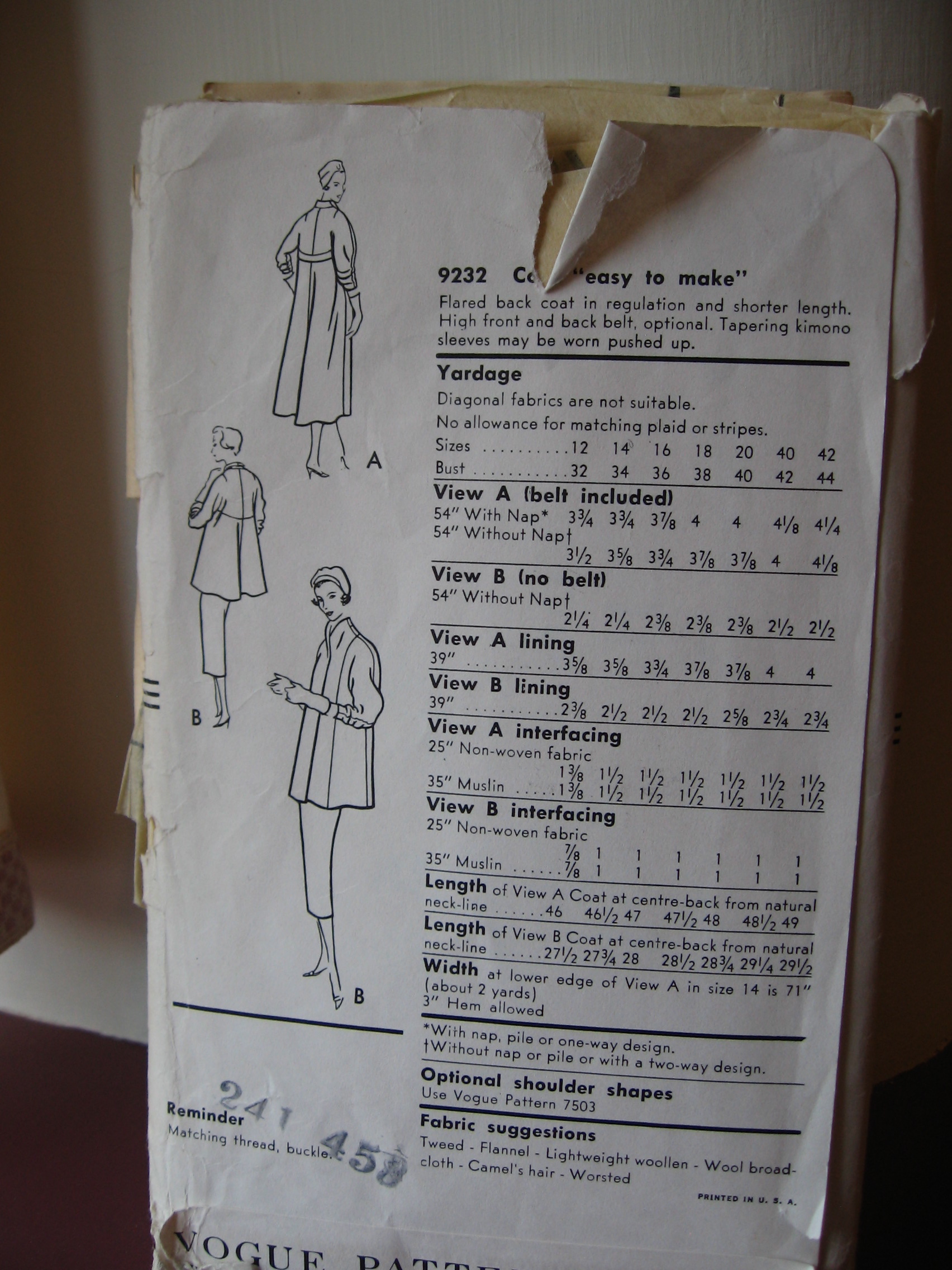
It was a “buy it now” offer rather than an auction – and I thought long and hard before I decided to go for it.  For one thing, there was only a front view of the pattern envelope, so I couldn’t tell what the back of the coat looked like.  When the pattern arrived, I was so excited – the back view of the long version has a high belt, which I think is such a great detail.  The swing of the coat looks lovely, too!  In fact, coats like these were called “swing” coats back in the 50’s.  They were also called “clutch coats” as the front fastenings were minimal or nonexistent, so you had to “clutch” them closed with your hand.

This pattern is copyrighted 1957.  The description on the back of the envelope says “Flared back coat in regulation and shorter length.  High front and back belt, optional.  Tapering kimono sleeves may be worn pushed up.”  (OH, YES!!!  Don’t you love this?  All the better to show off classy bangles and gold cuffs!)  I love the term “regulation length” although I have yet to find a reference to exactly what that means.

I immediately knew I would make this coat in its long version, but not sure what type of fabric I wanted to use.   That would take a few more weeks of deliberation. More on this and other coat patterns that I love in a future post.

5 Comments

Filed under Coats, Vogue patterns