Tag Archives: fashion sewing

The Year of Magical Sewing

“Just around the corner in every woman’s mind – is a lovely dress, a wonderful suit, or entire costume which will make an enchanting new creature of her.”                                                               —  Wilhela Cushman

For those of us who sew, this statement takes on extra meaning, as it is in our power to create that lovely dress, wonderful suit or entire costume. But have you ever thought about the process of sewing – and how magical it is?   Magical in the sense of being “mysteriously skillful, effective, and enchanting” (as Webster defines one meaning of magic).   I love that I can start with a piece of fabric – or a pattern – or an idea spawned by something I have seen and admired – and, using skills I have learned, proceed to actually make my own interpretation. It’s a remarkable process, when you really take the time to think about it. So I am dubbing this year, 2015, for me, as The Year of Magical Sewing, with emphasis on the transformational qualities and joys inherent in fashion sewing.

So what do I have planned for my year of magical sewing? I am beginning the year with several new vintage patterns in my collection, which are inspiring me no end. Add to that some amazing fabric selections, both vintage and new, and I am already certain I’ll never complete every thing I’d like to!  So – here is a general outline for 2015:

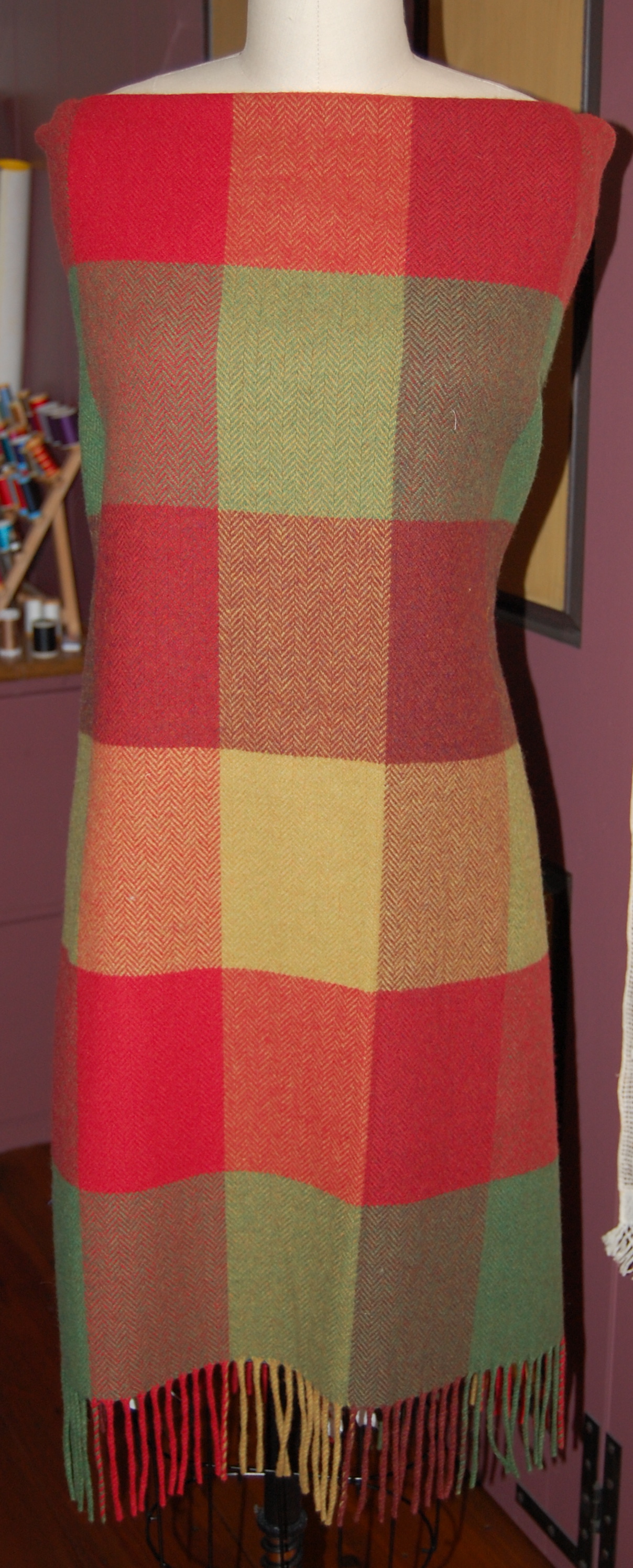
It is always easiest for me to segment the year into its seasons as I think about what I’d like to sew. Starting with Winter, I have two wool projects which will take me into March, I am sure: One is my fringed “blanket” dress, currently underway in my Sewing Room. After that I will be sewing with a piece of navy blue cashmere, from which I hope to squeak out a dress and jacket. (Valentine’s Day will find me interrupting my wool projects to make a sweet treat or two for granddaughter Aida.)
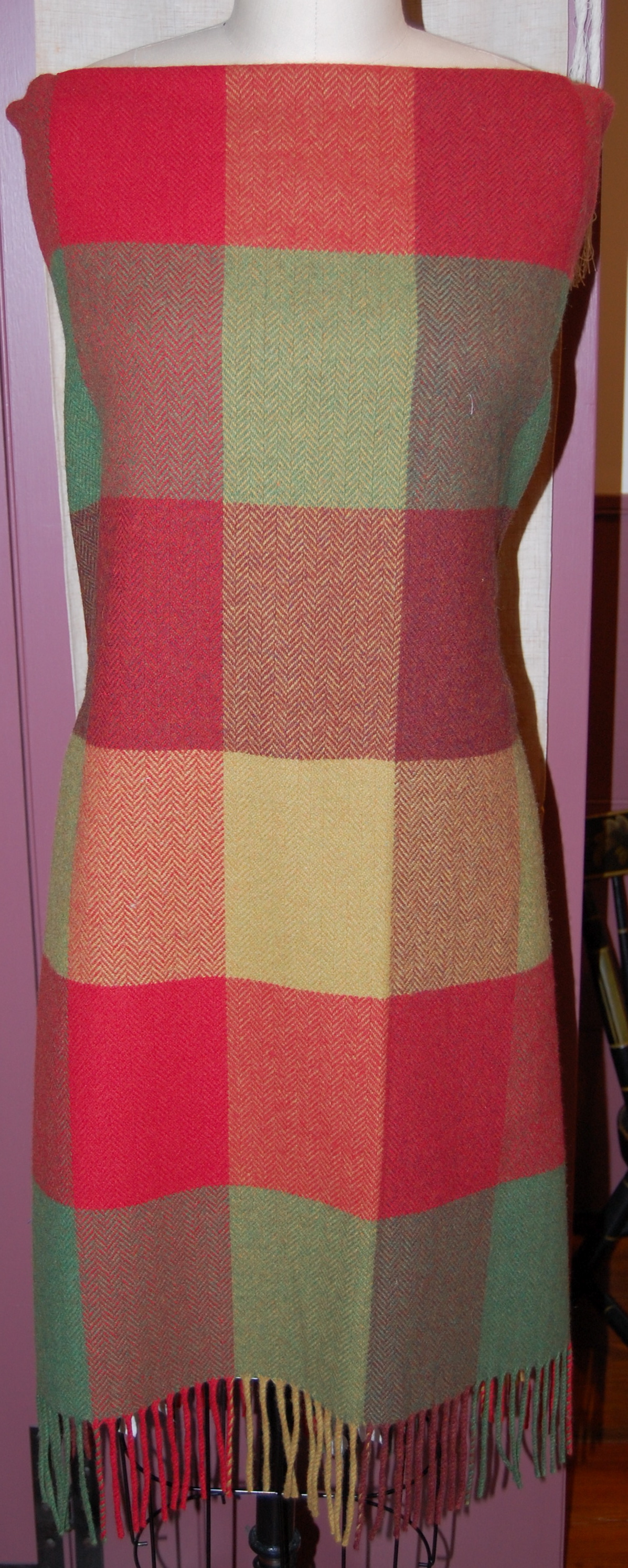
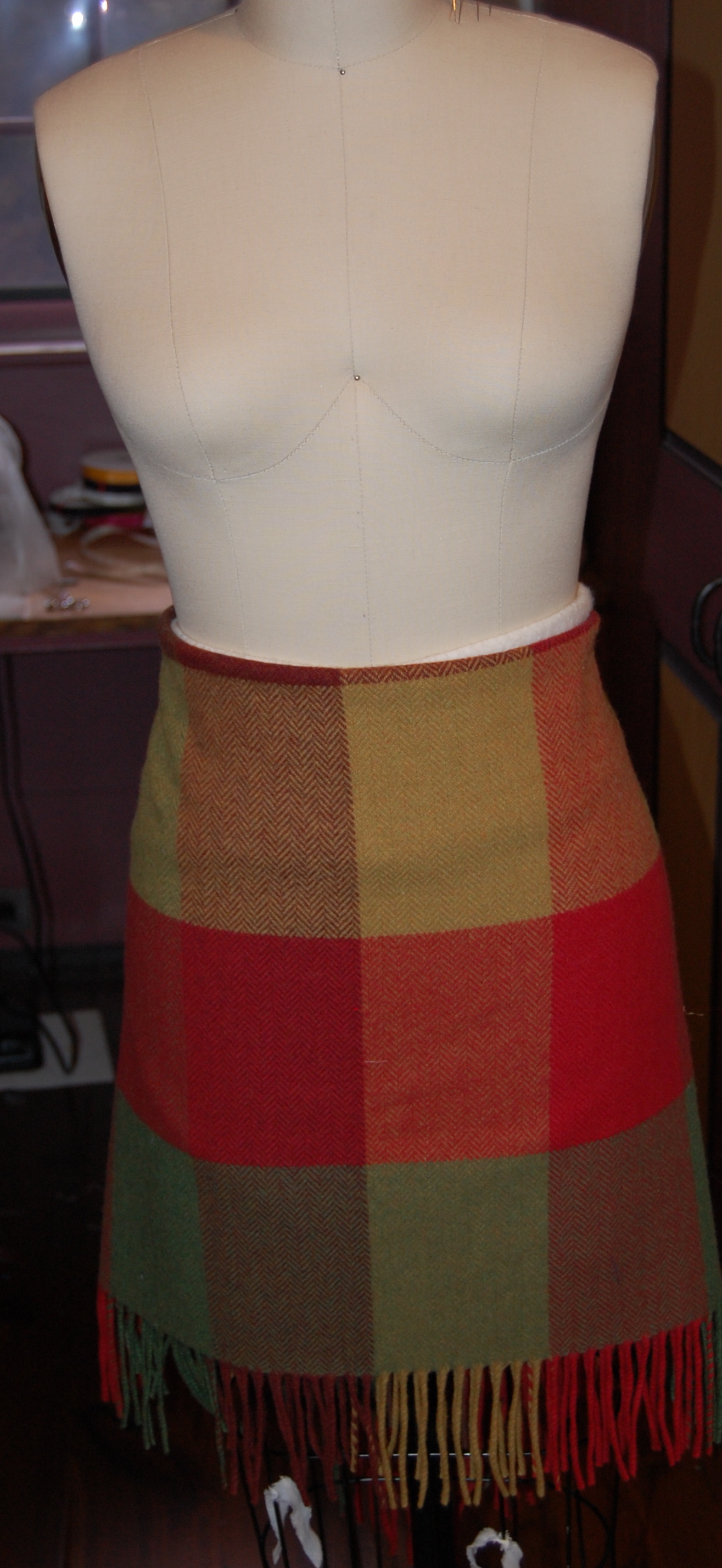
With any luck, I'll soon be wearing my blanket dress.

With any luck, I’ll soon be wearing my blanket dress.

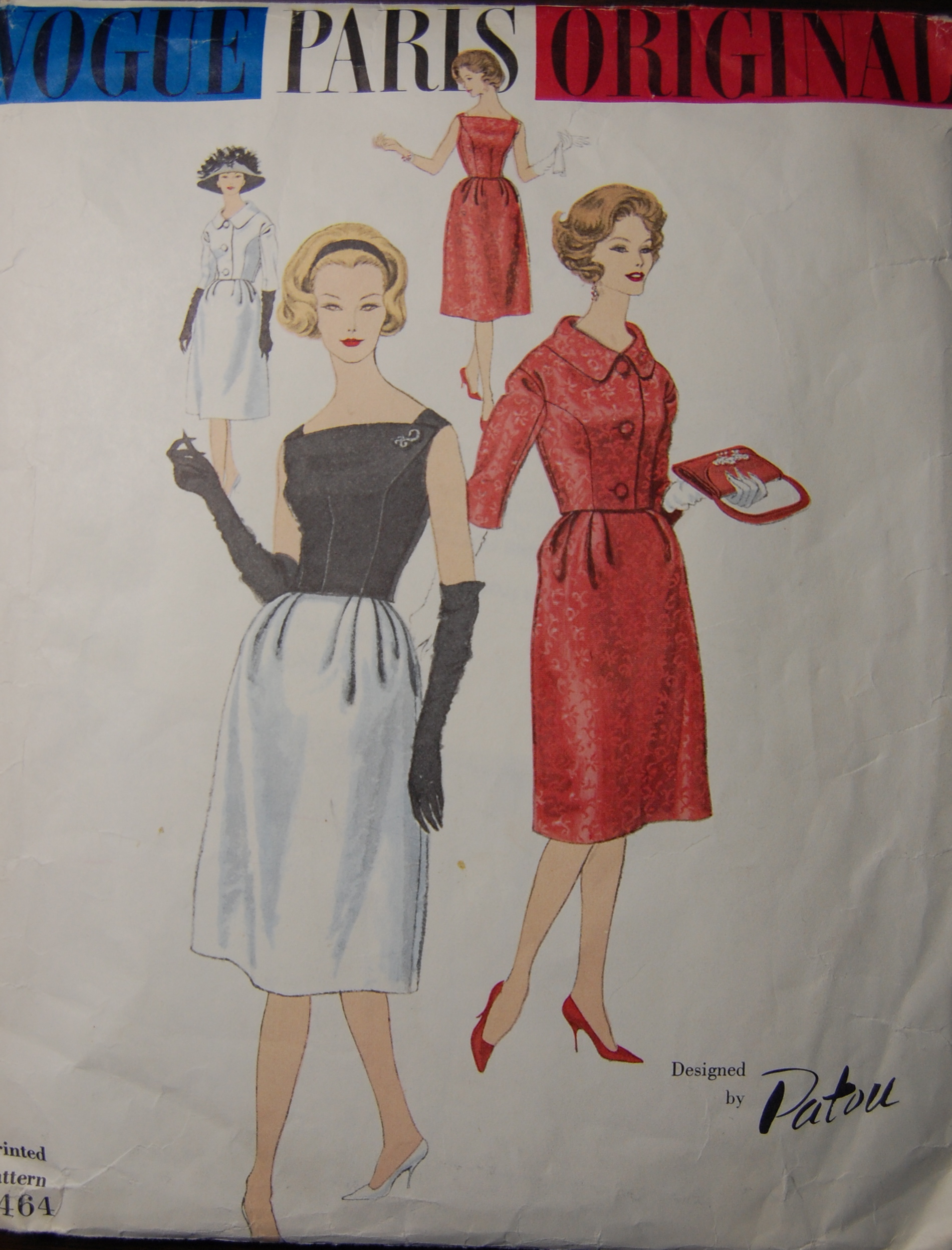
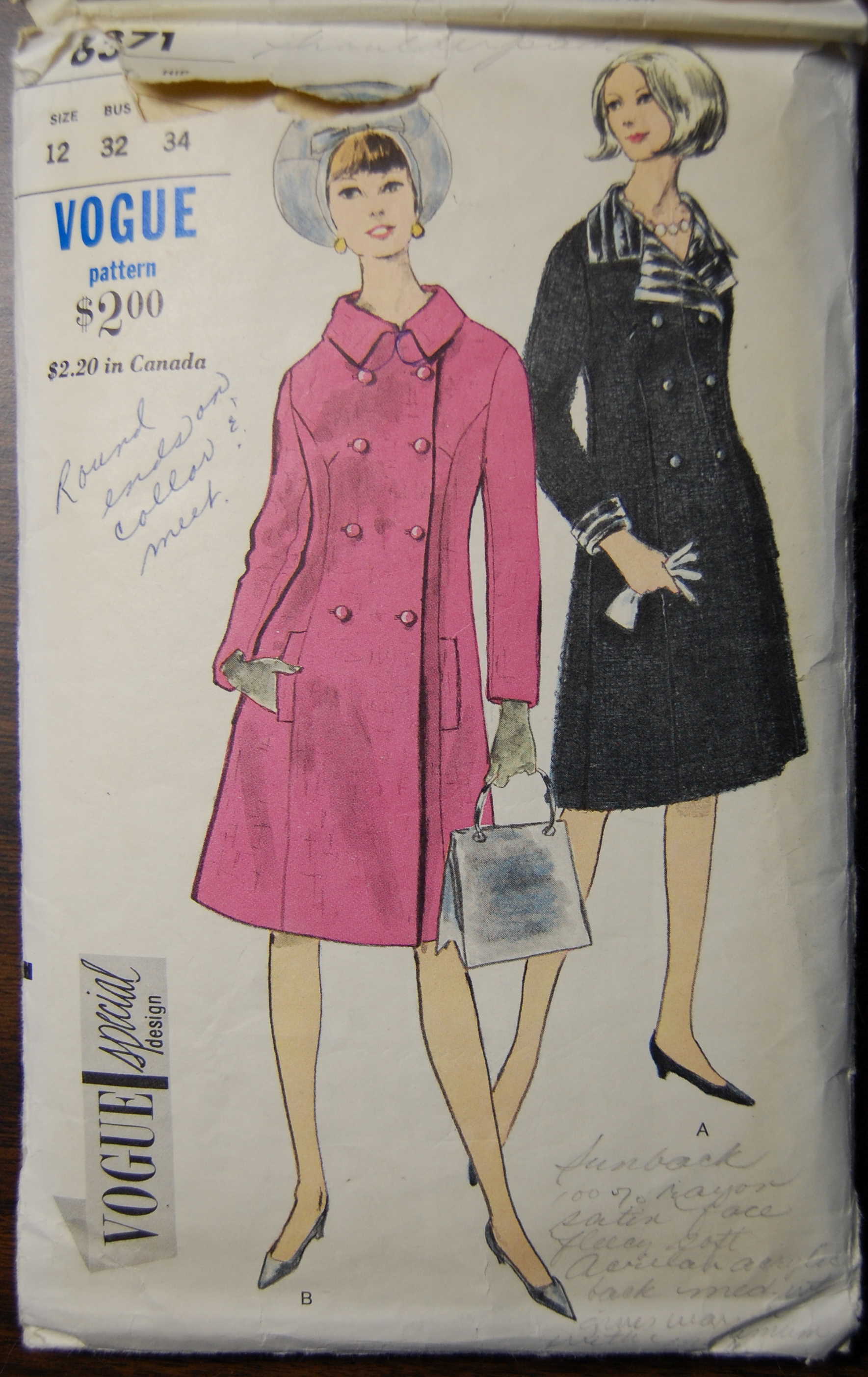
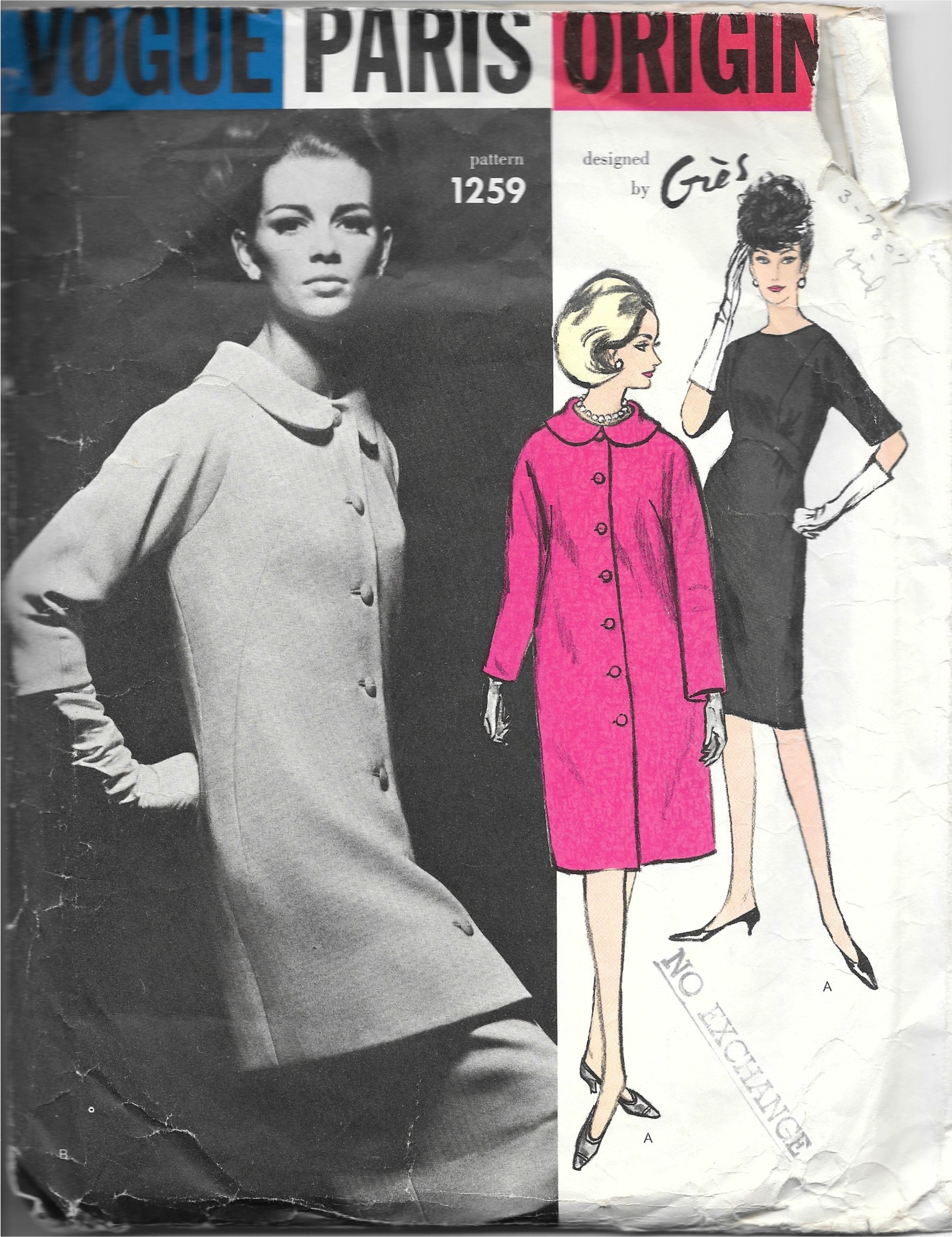
Spring is especially enticing to consider. Somehow I have become obsessed with dress and coat ensembles. Here are two patterns which would make up into “Spring” coats and coordinating dresses. I definitely will be using vintage linen for one of these two-part looks.
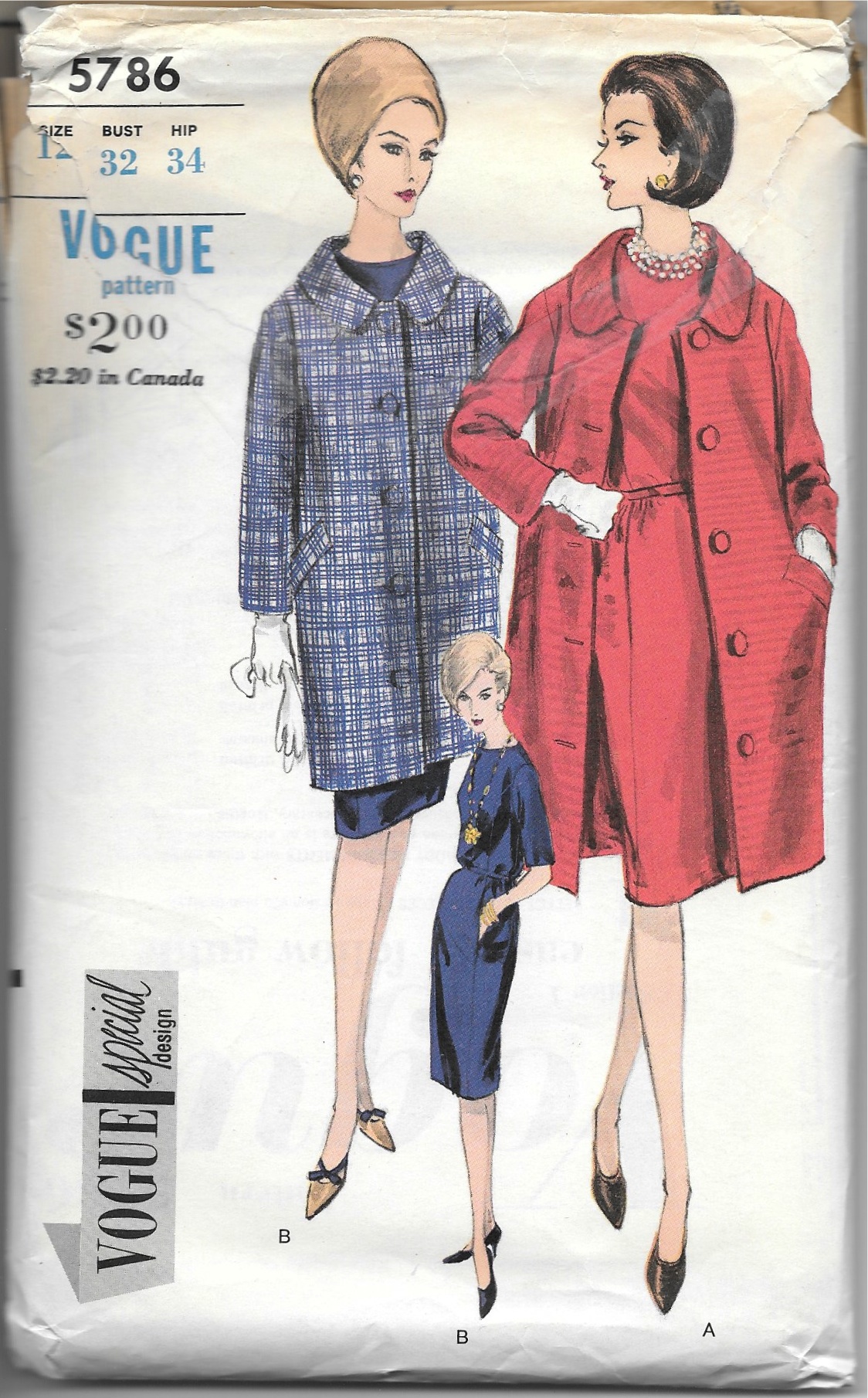
I love the knee length coat, although I may substitute another pattern for the coordinating dress.
I love the knee length coat, although I may substitute another pattern for the coordinating dress.

Or I may decide to use this Madame Gres design fopr a coat and dress.  The coat has very unusual darts along the side, which you may be able to see here.

Or I may decide to use this Madame Gres design for a coat and dress. The coat has very unusual darts along the side, which you may be able to see here.

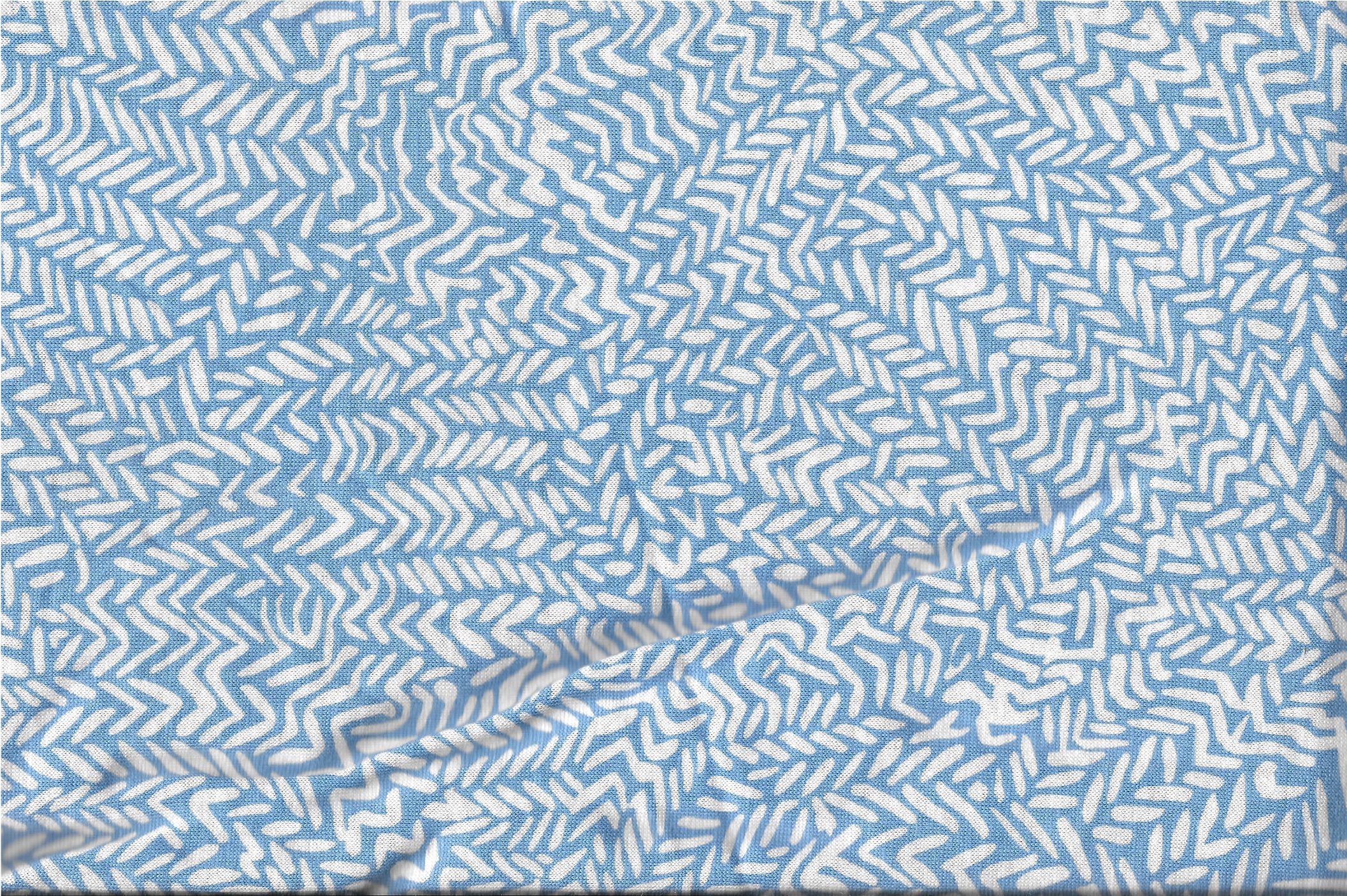
Another Diane von Furstenberg wrap dress is also on my agenda for late Spring/early Summer. Thanks to one of my readers, I was able to purchase some authentic Cohama DvF fabric, so I am excited to contemplate the beginning of this dress.
Circa 1976, this fabric is still soft and lovely.

Circa 1976, this fabric is still soft and lovely.

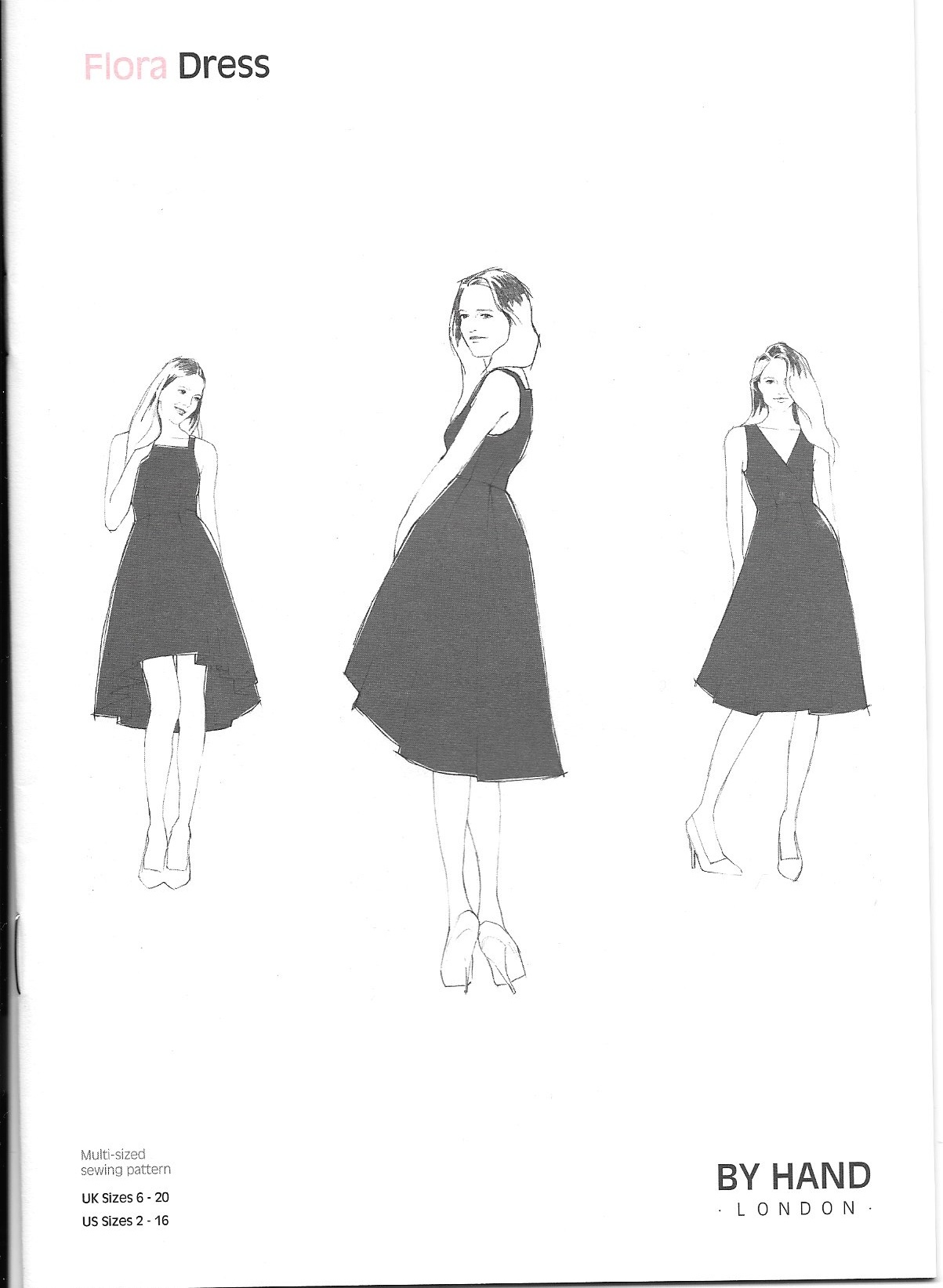
Summer will find us traveling quite a bit, so I am trying to be realistic about the time I’ll have to sew. If I can get one “fancy/formal” dress made, I’ll consider it a success. I might be using this By Hand London “Flora” pattern with this fabric, unless, of course, I change my mind.
Aspects of this pattern remind me of classic Balenciaga.  I'll have to make the skirt longer, however...

Aspects of this pattern remind me of classic Balenciaga. I’ll have to make the skirt longer, however…
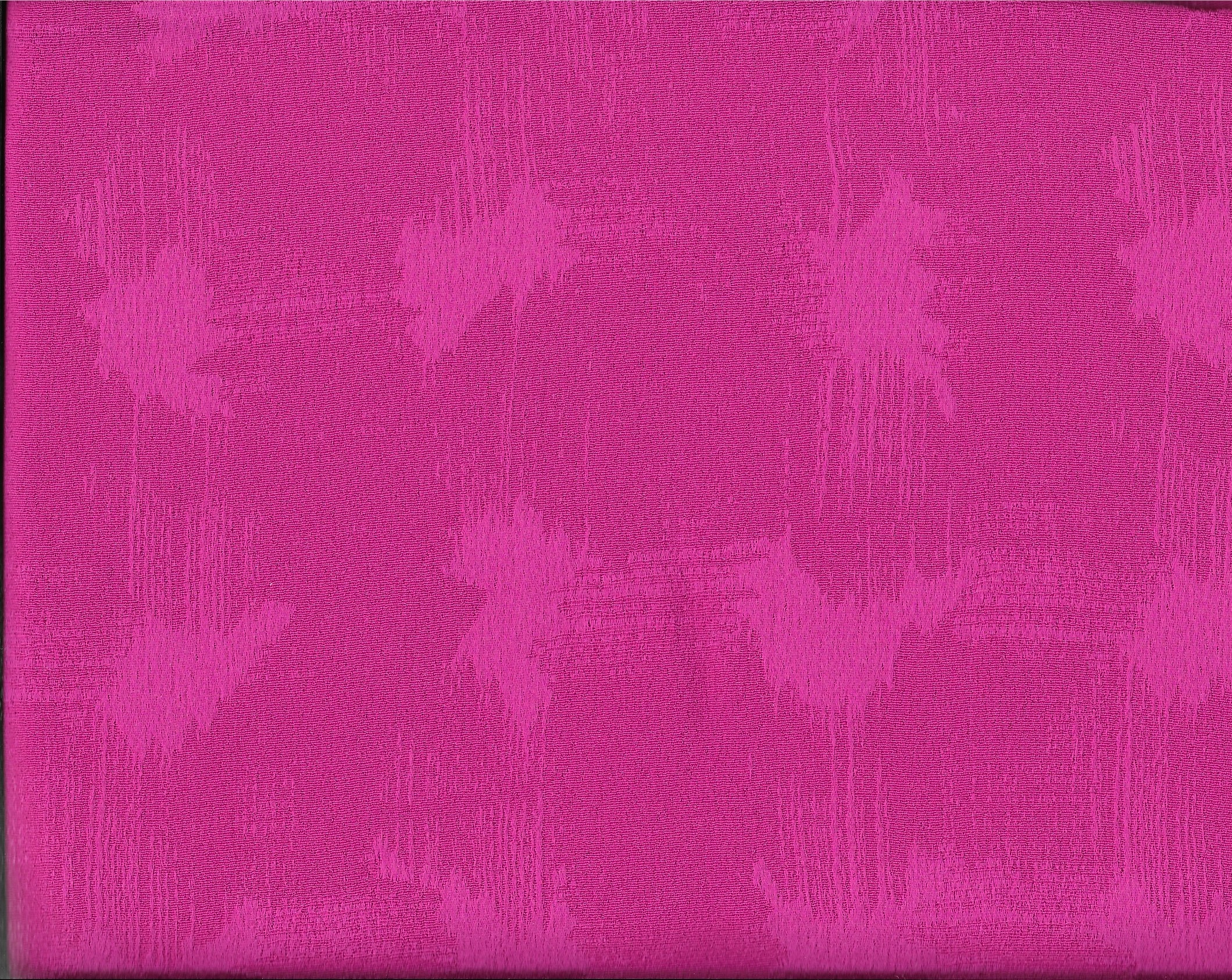
I watched this fabric on the website of Britex Fabrics for months, and finally decided I had to have it.  It is silk charmeuse, very soft with the abstract design woven in.

I watched this fabric on the website of Britex Fabrics for months, and finally decided I had to have it. It is silk charmeuse, very soft, with the abstract design woven in.

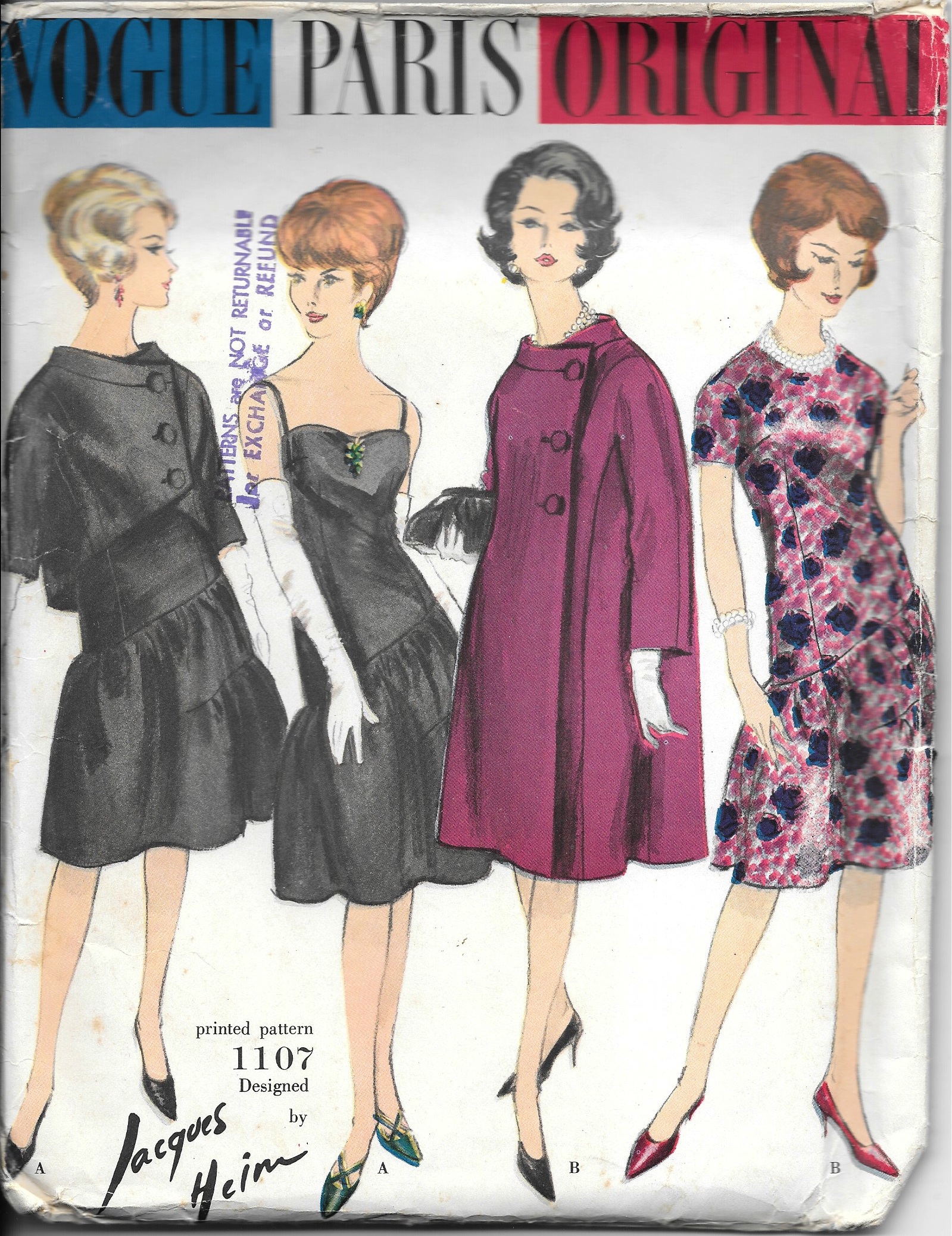
Fall will once again find me thinking coats and dresses. One of these two patterns will probably get the nod for a Fall/Winter ensemble:
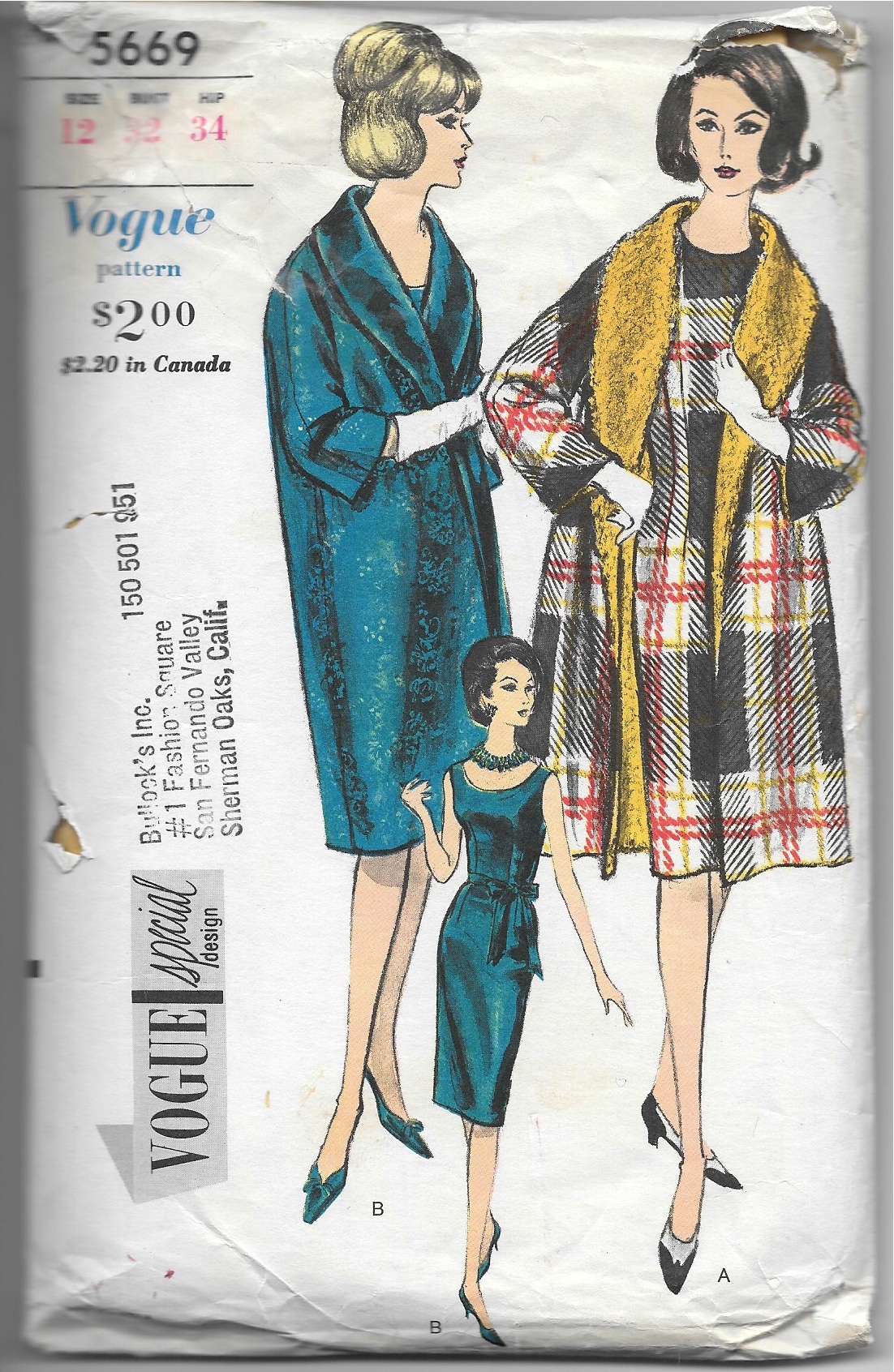
I love both the coat and the dress (with two variations) featured in this pattern.
I love both the coat and the dress (with two variations) featured in this pattern.

This Jacques Heim design has very unusual seaming in the skirt.  And the short jacket looks like it would be very flattering.  However, this pattern needs just the perfect fabric to showcase the design.

This Jacques Heim design has very clever seaming in the skirt. And the short jacket looks like it would be very flattering. However, this pattern needs just the perfect fabric to showcase the design.

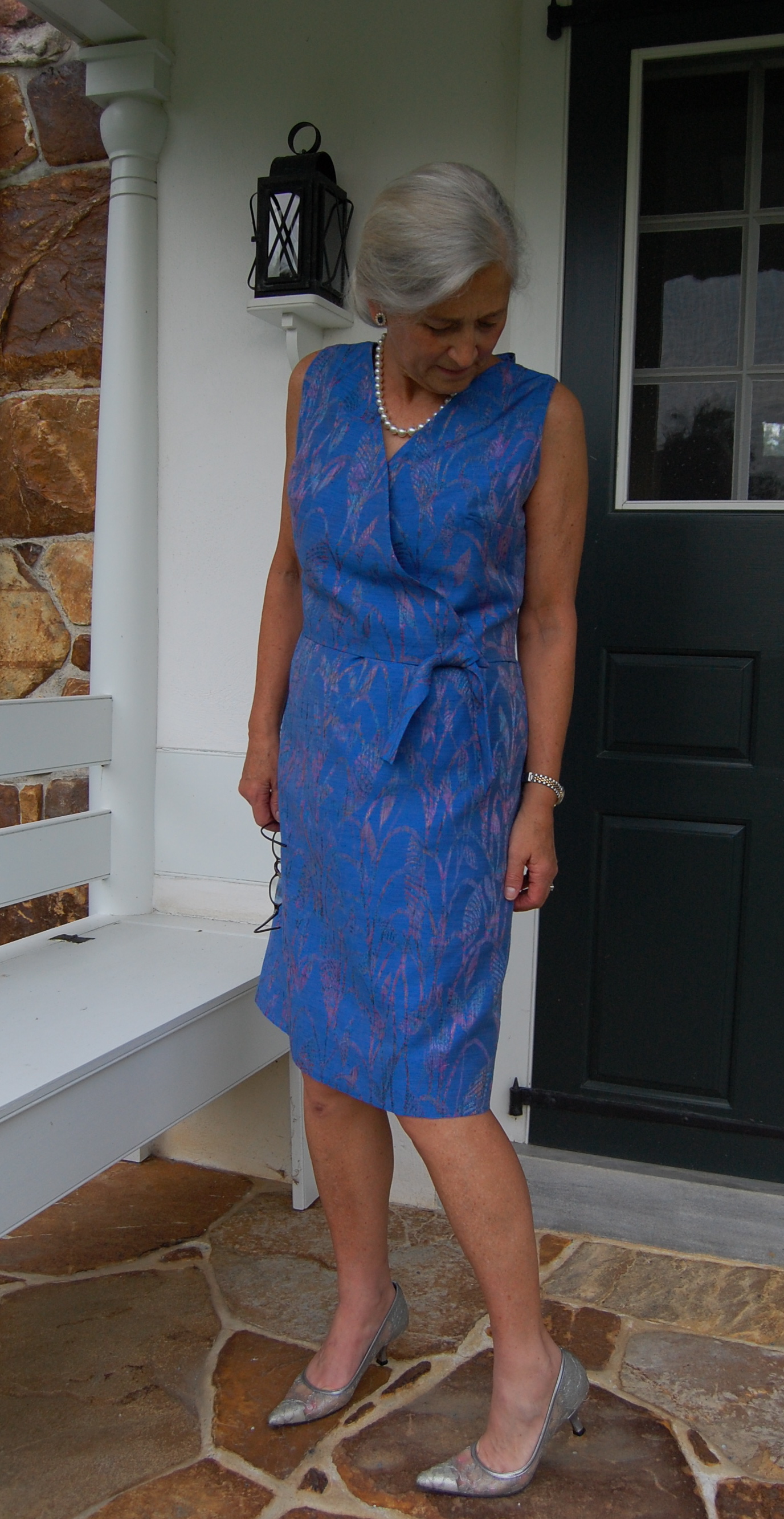
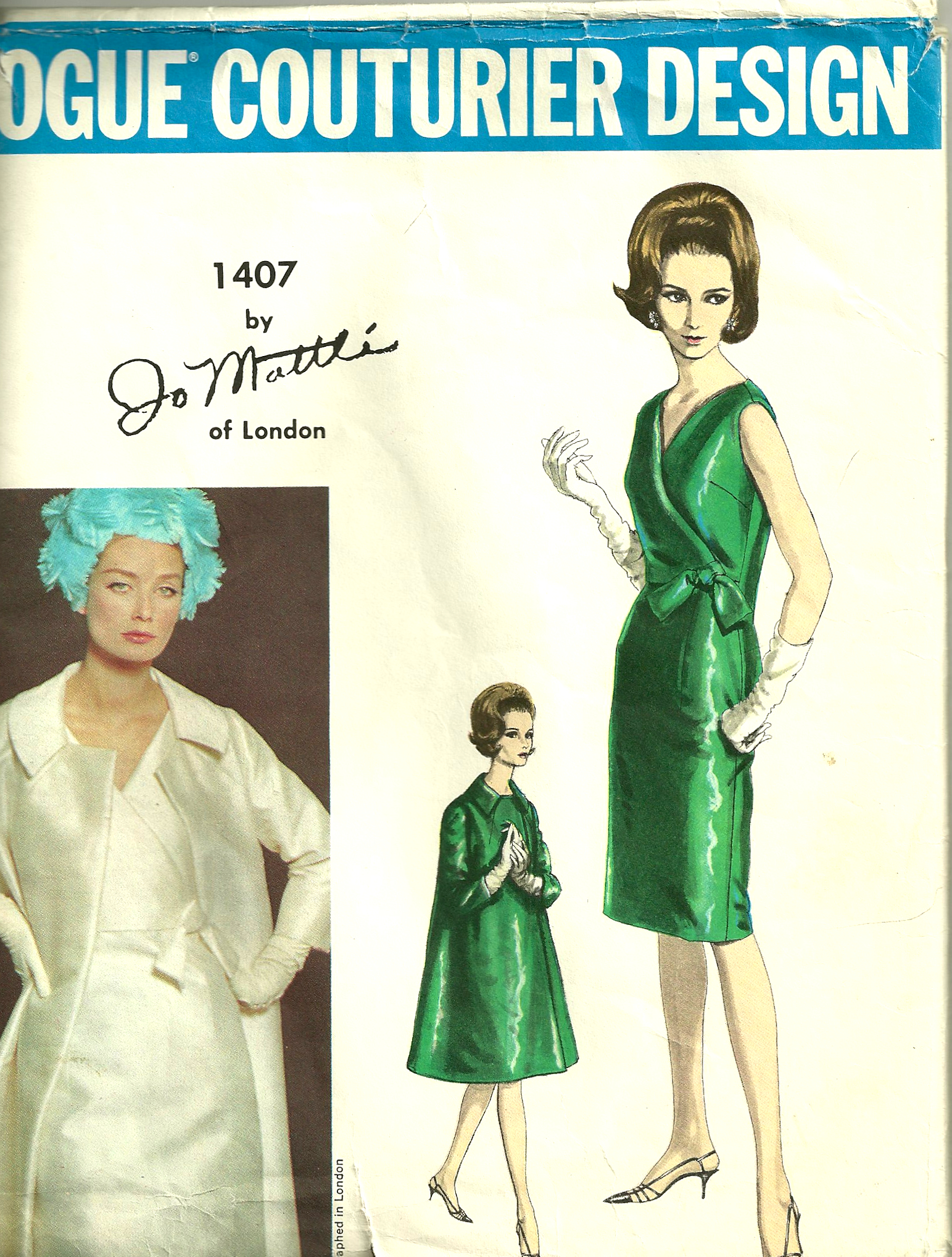
And I am still looking for the perfect fabric with which to make the coordinating coat for this dress which I completed last Fall:
The Year of Magical Sewing

And here is the Mattli pattern showing the coat...

And here is the Mattli pattern showing the coat.

And then there is that baby quilt I want to make for “number 2” grandchild…   And more little dresses to make…

Perhaps the real magic of the year will be in completing even half of all I’d like to sew?  Here’s hoping that what is just around the corner for you, my readers, in 2015, holds its own magic and enchantment!
 

23 Comments

Filed under Coats, Love of sewing, Uncategorized, Vintage fabric, vintage Vogue Designer patterns, vintage Vogue patterns from the 1960s, Wrap dresses

Dress Forms and December Decisions

The quintessential trademark of a dressmaker is undoubtably the figure of a dress form (or dummy, as it is called in some parts of the world). I am not sure why it took me so long to purchase one, but in the past year and half since I have had mine, it has daily reminded me what an invaluable tool it is for fashion sewing. Among its obvious aspects of usefulness are, of course, 1) for fitting, 2) for pinning and sewing of certain seams (like a shoulder seam), 3) for marking hems and making sure they are even, 4) for design and draping (for those fortunate enough to be versed in this art), 5) for displaying of one’s current project, allowing scrutiny of any imperfections which need to be addressed, and 6) for steaming/pressing certain curved seams.

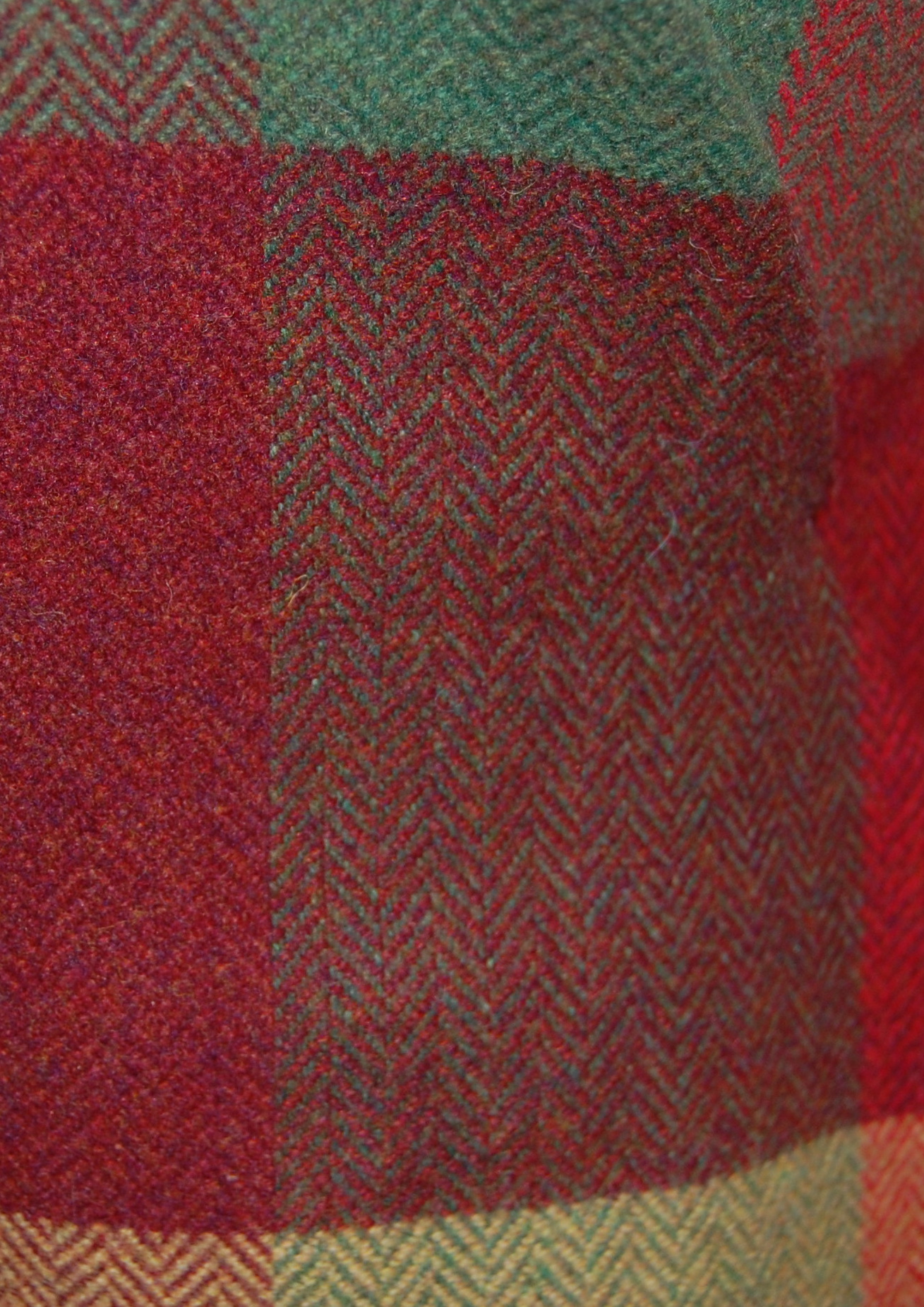
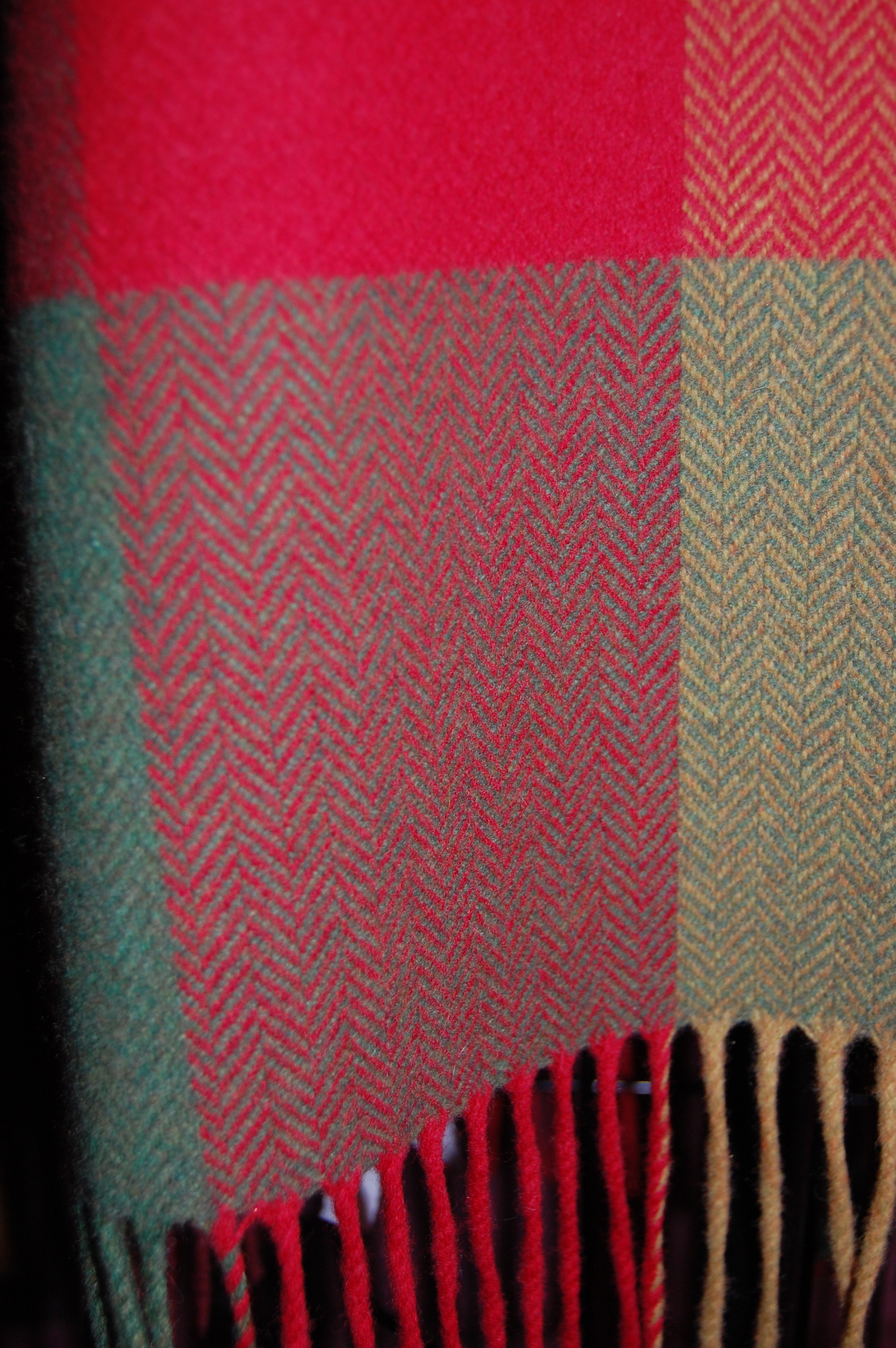
I also have found it to be the perfect medium upon which to “audition” fabrics and styles. I can strategically pin fabric onto the form and get an excellent idea if the fabric is going to look good in the style in which I am envisioning it. Sometimes I have to leave the fabric pinned in place for days or even weeks while I make up my mind. And sometimes seeing the fabric pinned on my form will make other possibilities suddenly become obvious. Such has been the case with my plaid Irish blanket, purchased by me to make into a skirt.

 I wrapped the blanket around myself in the store - as a skirt - to test my theory.  Here it is pinned on my dress form

I thought my mind was set on making a pencil skirt out of this “throw” size blanket. When I pinned the fabric on my dress form in the length of a skirt, however, I was struck by the fact that so much of this lovely plaid wool would not be used. So I repinned the blanket in its full length, minus the fringe on one end, to see if I could make a sheath dress instead.

The blanket pinned onto my dress form.

The blanket pinned onto my dress form.

I got out my favorite sheath dress pattern and placed it on the fabric to determine if I could indeed get a knee-length dress out of the yardage I have. It will be a squeeze, but I am fairly certain I can manage it. So I have just about decided to make a dress instead of a skirt. But I have one looming question: is this going to look too much like a 1920s’ flapper dress? I think not, made out of a plaid wool. I actually think a fringed dress will lend itself to be dressed up or dressed down. Hm-m-m-m, what do you think?

Another look...

Another look…

The color combination of this plaid is one I love. After Pantone’s Color of the Year for 2015 was announced, I realized that certain blocks of this plaid pick up the Marsala color (reddish brown) which is supposed to be so popular in 2015.

Dress forms and December decisions


DSC_0356

I must admit, I was disappointed with this color decision by Pantone. Like 2014’s Radiant Orchid, I do not think it is a color with wide appeal for the long haul. 2013’s Emerald Green still has “legs”, and I was hoping for a similar clear and flattering hue for 2015.

Getting back to my blanket/soon to be dress (or skirt): in shades of red and subtle green, this plaid should be equally versatile throughout the winter, but wouldn’t it be especially nice in this holiday month of December?  Well, that’s not going to happen! But that’s okay. If I can get to it in January, that means I’ll have at least one thing complete for December . . . of 2015!


28 Comments

Filed under Blankets and doll blankets, Uncategorized, woolens

Figuring It Out

Having completed my first Marfy dress, I now have the pleasure of reflecting upon its creation. Unlike my “Ghost Dress” which caused me so much angst (but turned out okay in the end), this ‘60s-inspired design went together without a hitch, although it definitely took some “figuring it out” along the way.

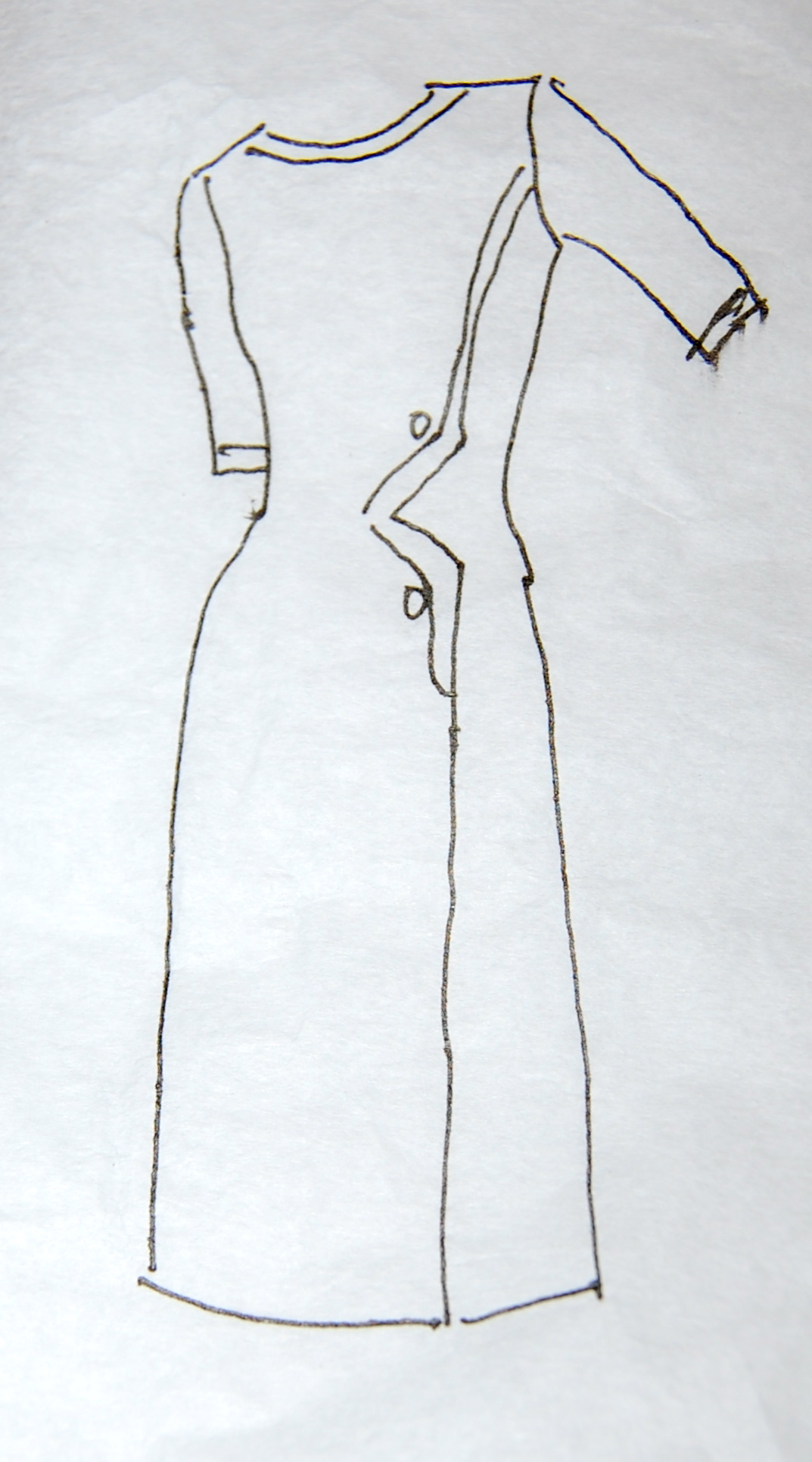
First I’ll cover the four changes I made to the dress, based on my muslin (toile). Initially I had to lower the apex of the bust darts, an alteration I am now used to making. Second, I decided to lengthen the sleeves by about 2 inches. I did this mostly to make the dress more comfortable to wear in the cold winter months. Even covering bare upper arms just a little bit more is helpful. I was hoping this would not detract from the lines of the dress otherwise. I made a tracing to try it out on paper first:

Marfy Dress

Somehow, the longer sleeves did not look good with the very distinct A-line silhouette of the dress. I thought they would look better with more of a straight skirt. I knew from the muslin that the front detailing had a built-in kick pleat, so narrowing the skirt was entirely doable. I would still be able to walk in it!
Alteration number four was the neckline. I widened it a bit, as I think that looks better on me. Then I widened it again later in the process (I’ll get to that in a bit.)

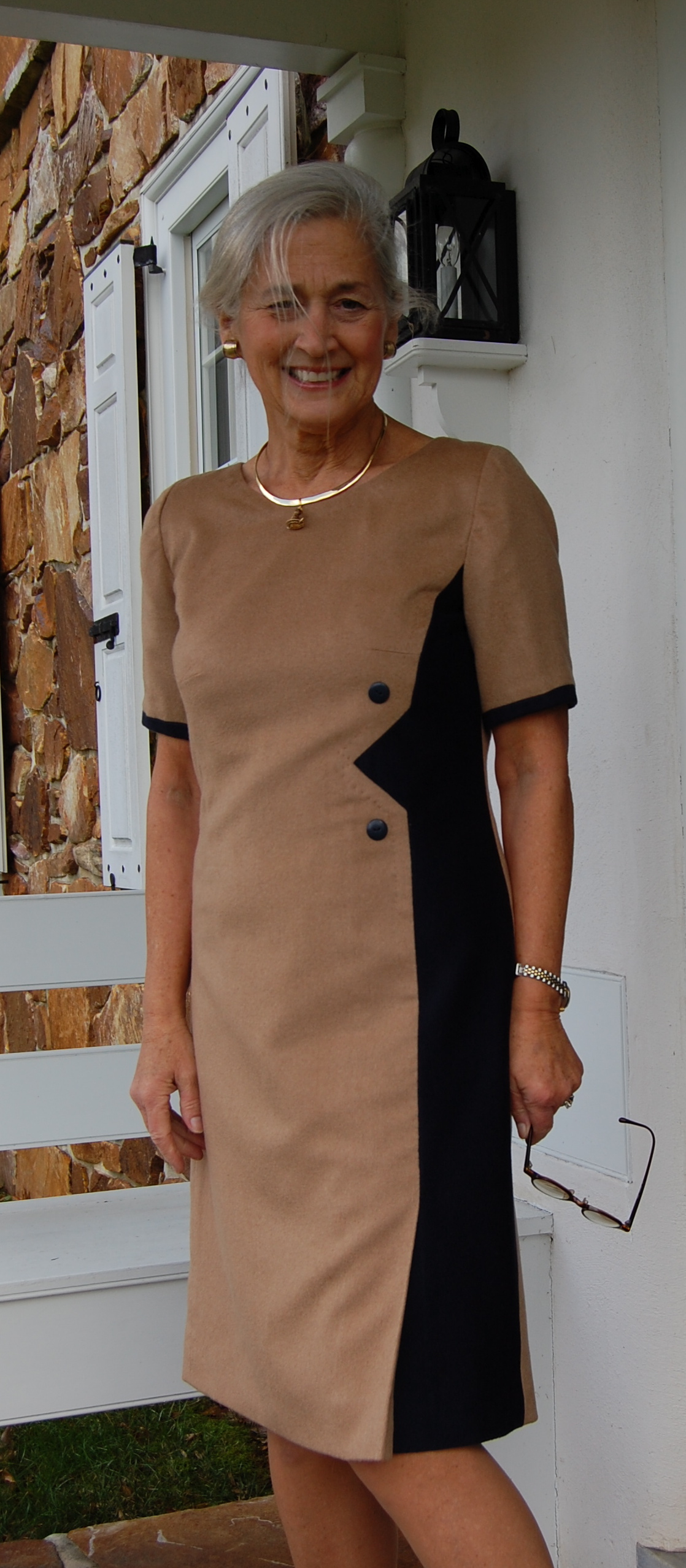
With no written and illustrated instructions to follow, I relied on my sewing knowledge and experience to execute the seaming on the front left of the dress. I was able to sew the seam by machine from the sleeve down to the lower angle of the point. From there down to about 8” from the hemline, I sewed the seam by hand.

An inside look at the this seam stitched by hand

An inside look at the this seam stitched by hand

There is a pleat hidden beneath the dress here, and sewing by hand seemed to be the only solution.

Showing the built-in kick pleat

Showing the built-in kick pleat, before the hem is sewn

And here is the finished kick pleat.

And here is the finished kick pleat.

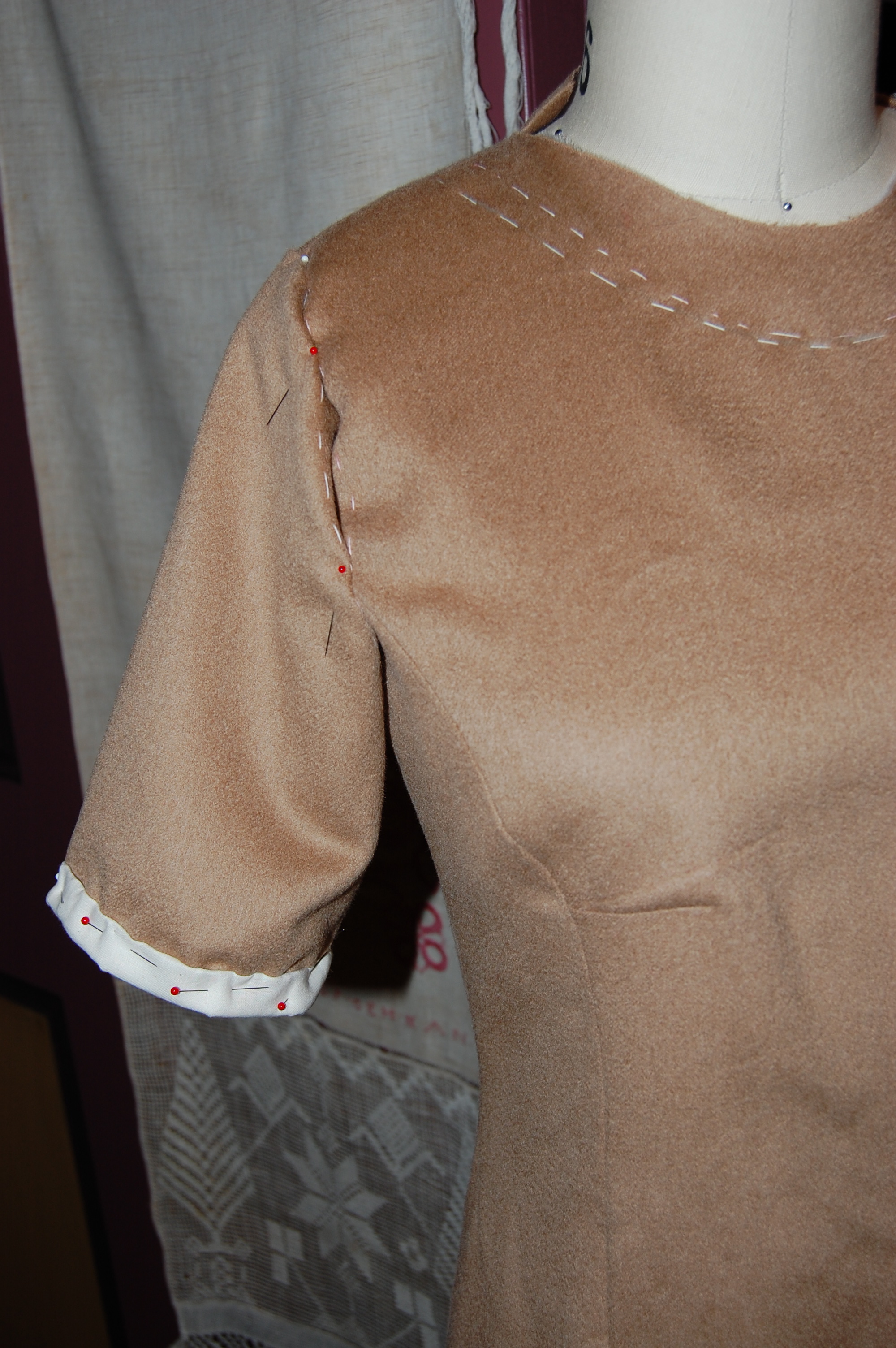
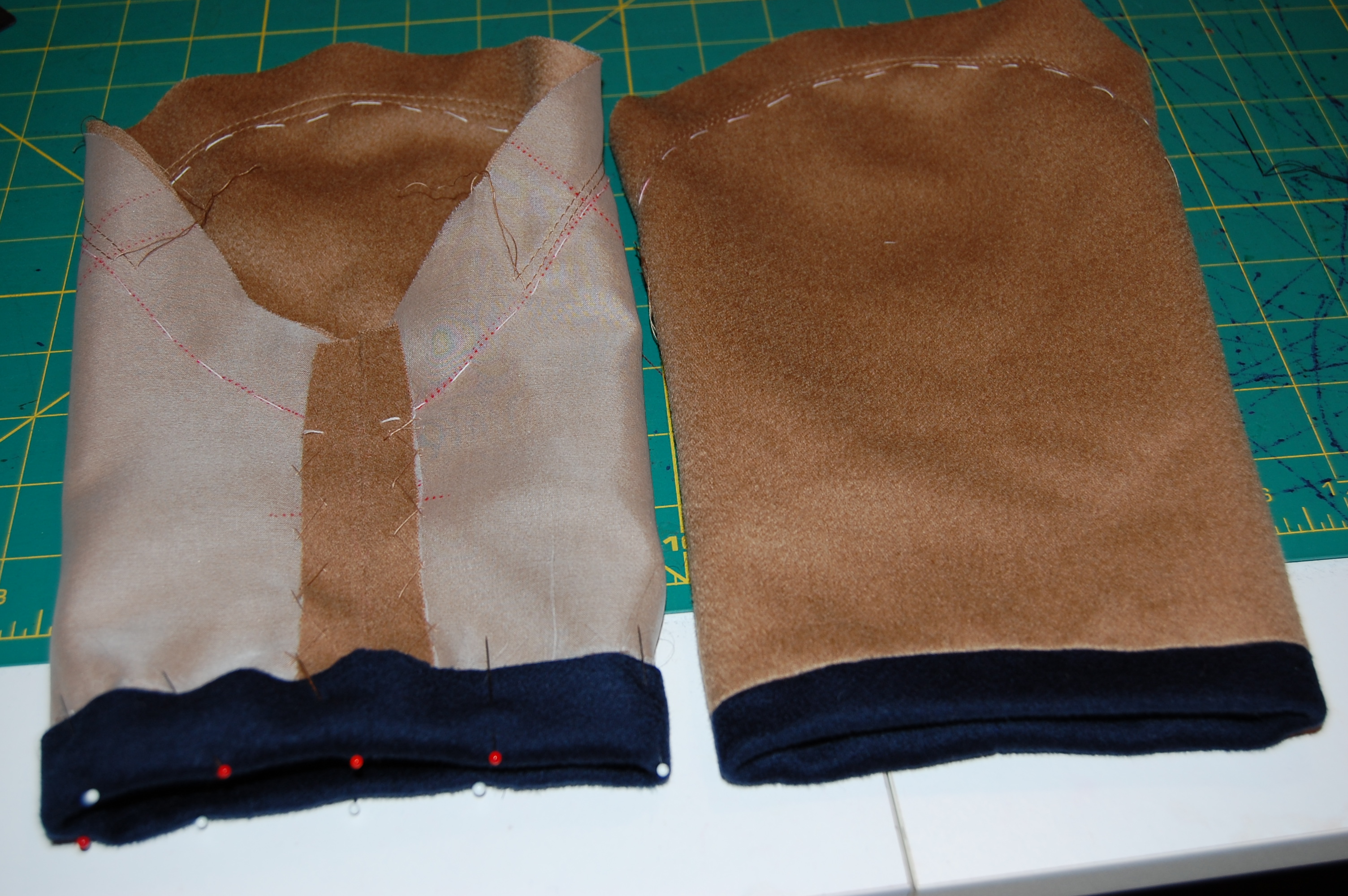
When it came to the sleeves, they are shown in the illustration with a contrasting band. However, no band was included with the pattern. I did a muslin mock-up to test the visual appearance of the width of the band.

Marfy Dress

Because I had cut the sleeves with a slight curve to the lower edge, I had to make a muslin guide for the bands, which included the same curve.

The sleeves with bands attached

The sleeves with bands attached

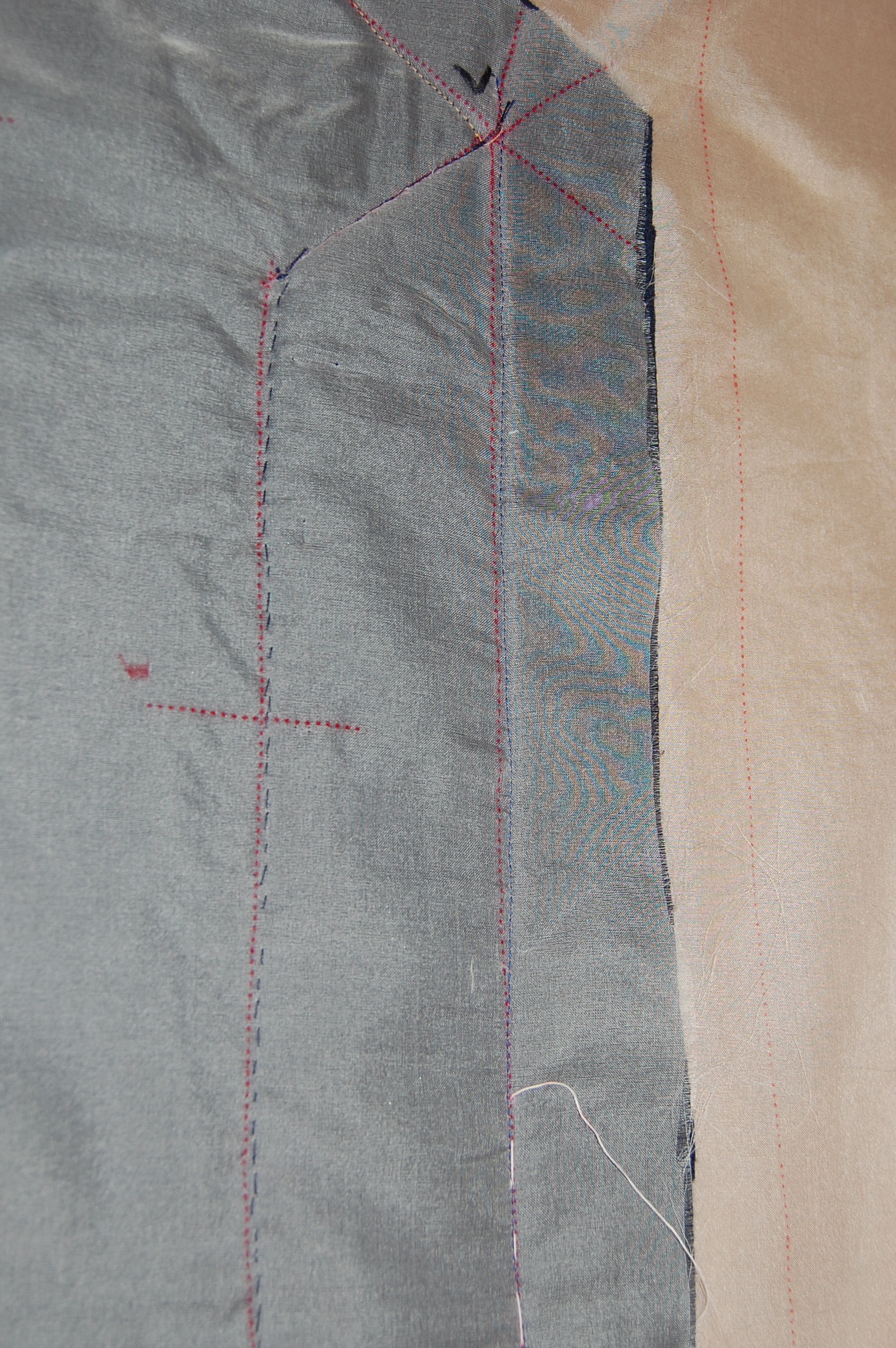
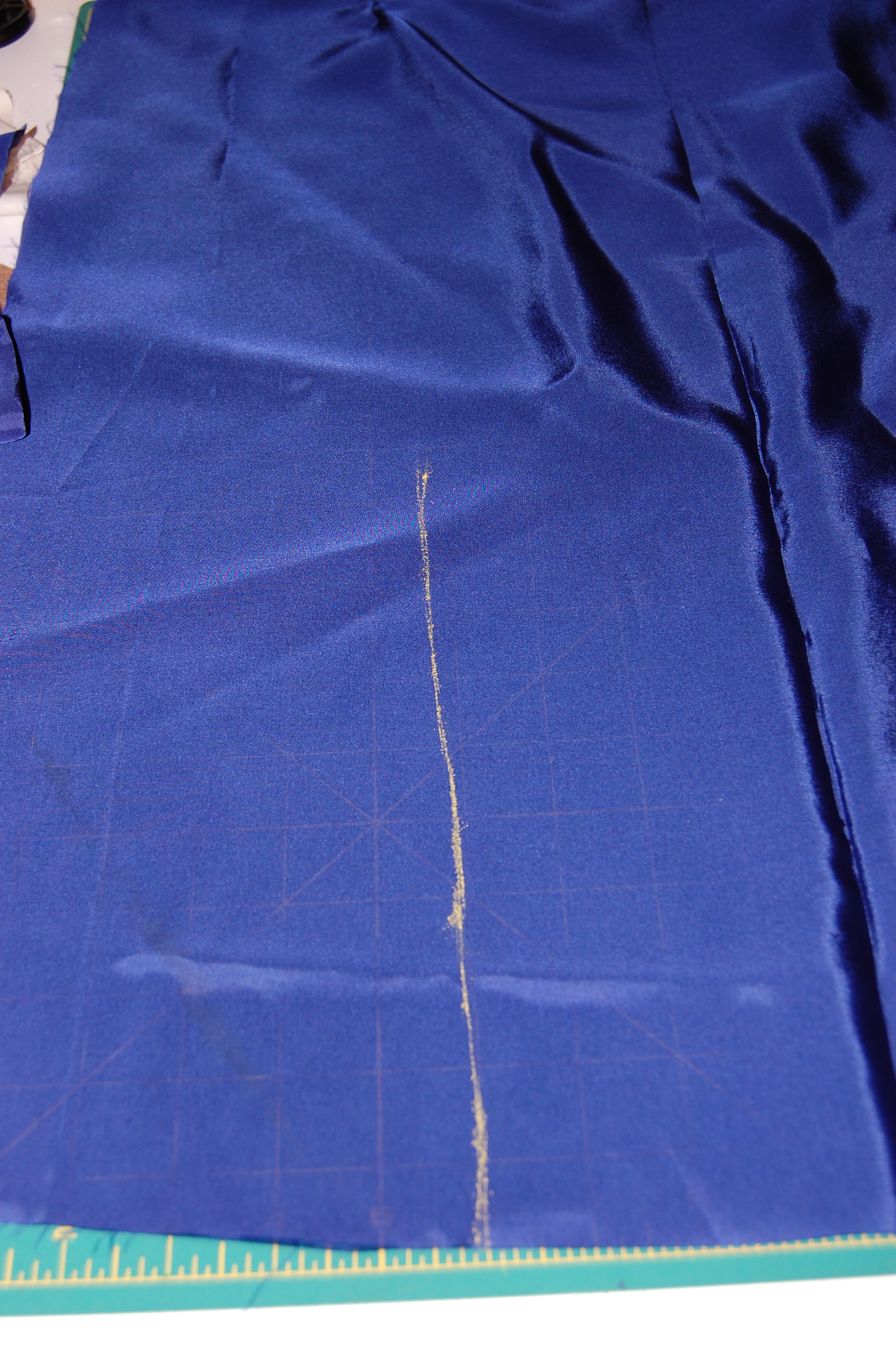
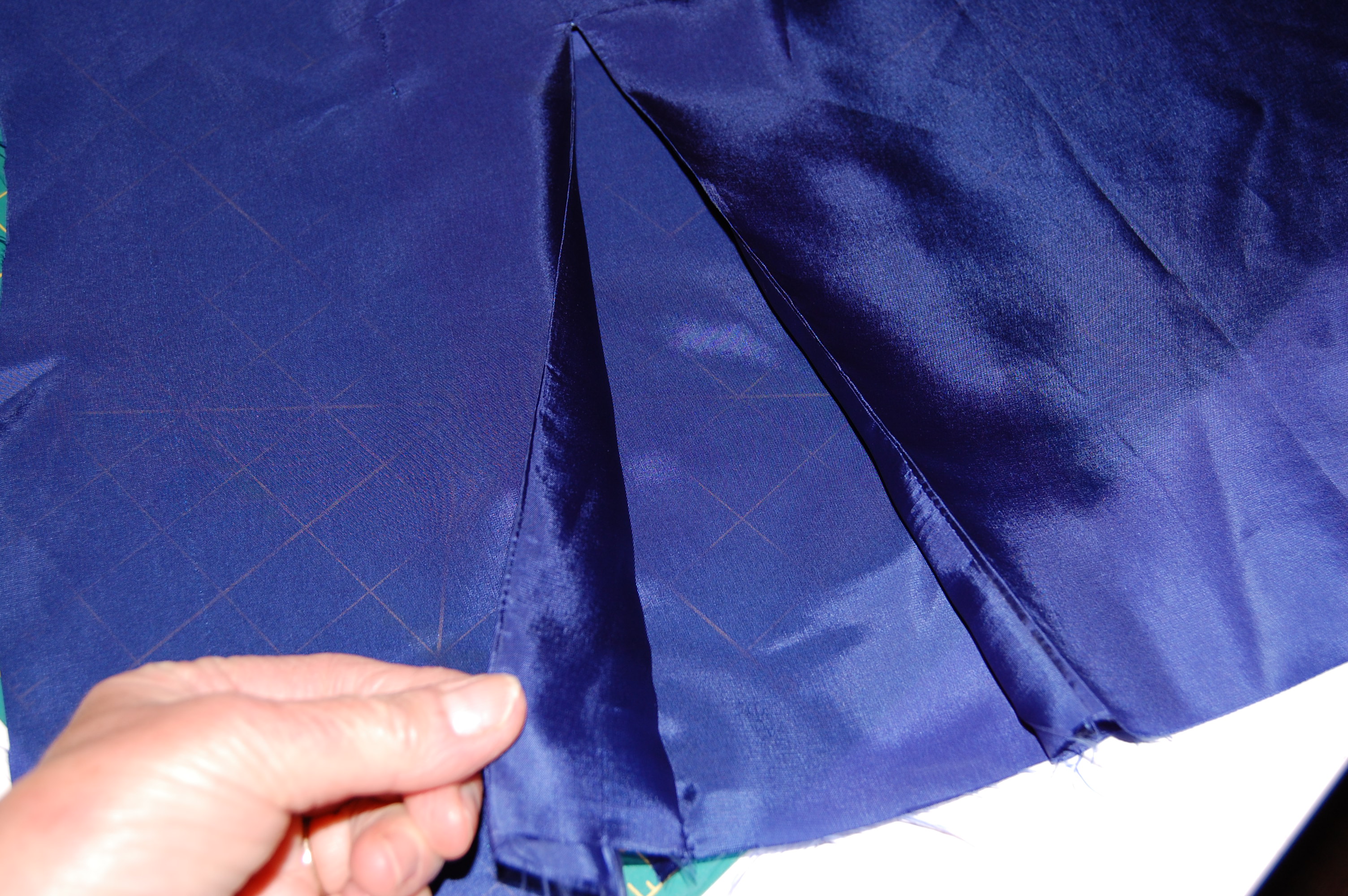
With sleeves, hand-picked zipper and all seams complete, I turned my attention to the lining. Instead of cutting the lining with the same angled detail as in the dress, I chose to cut a symmetrical front, thus reducing bulk at that critical waist area. However, I needed to add a kick pleat to the front lining to coincide with the built-in kick pleat of the dress. Here is how I did that:

First I marked where I wanted the pleat in the lining to be.  By the way, the lining is Bemberg rayon.  I usually like to use crepe de cine for my linings, but I had this Bemberg in the right color, so I decided to use it.

First I marked where I wanted the pleat in the lining to be. By the way, the lining is Bemberg rayon. I usually like to use crepe de chine for my linings, but I had this Bemberg in the right color, so I decided to use it.

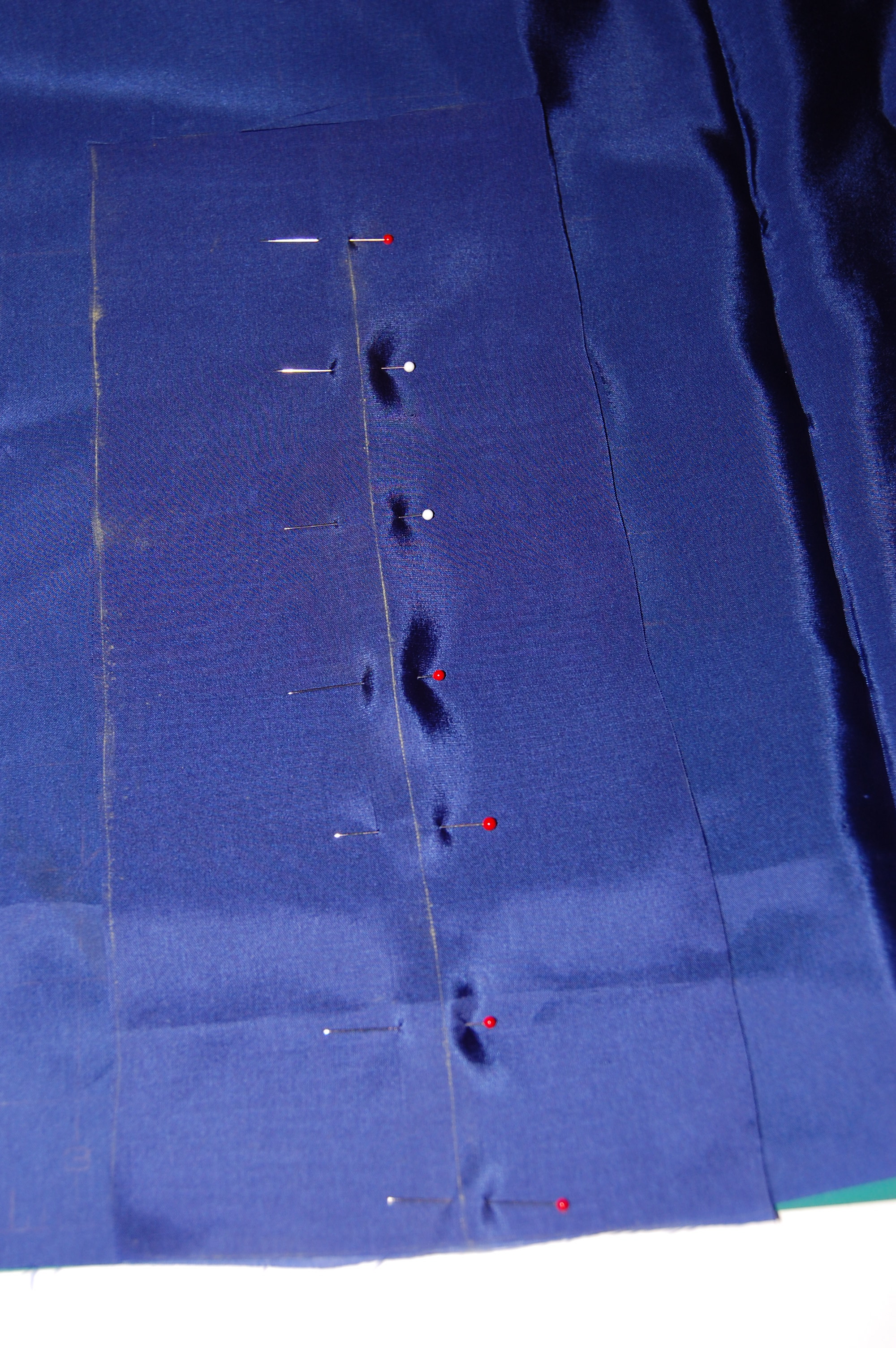
I centered a triangle of the lining fabric  (about 10" x 8") on top of the marked line.

I centered a triangle of the lining fabric (about 10″ x 8″) on top of the marked line.

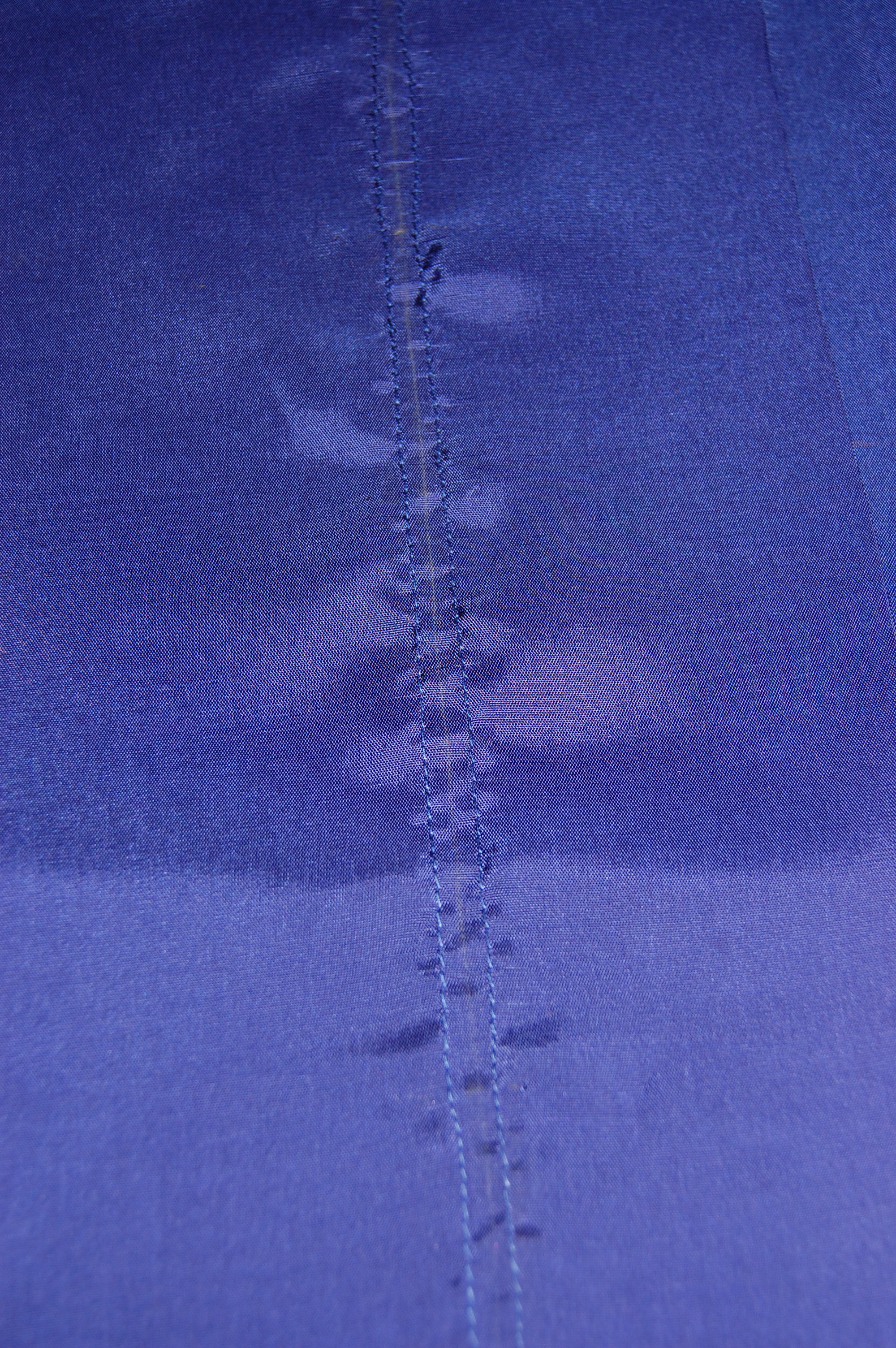
I stitched on either side of the marked line, graduating up to a point at the top.

I stitched on either side of the marked line through both layers of lining, graduating up to a point at the top.

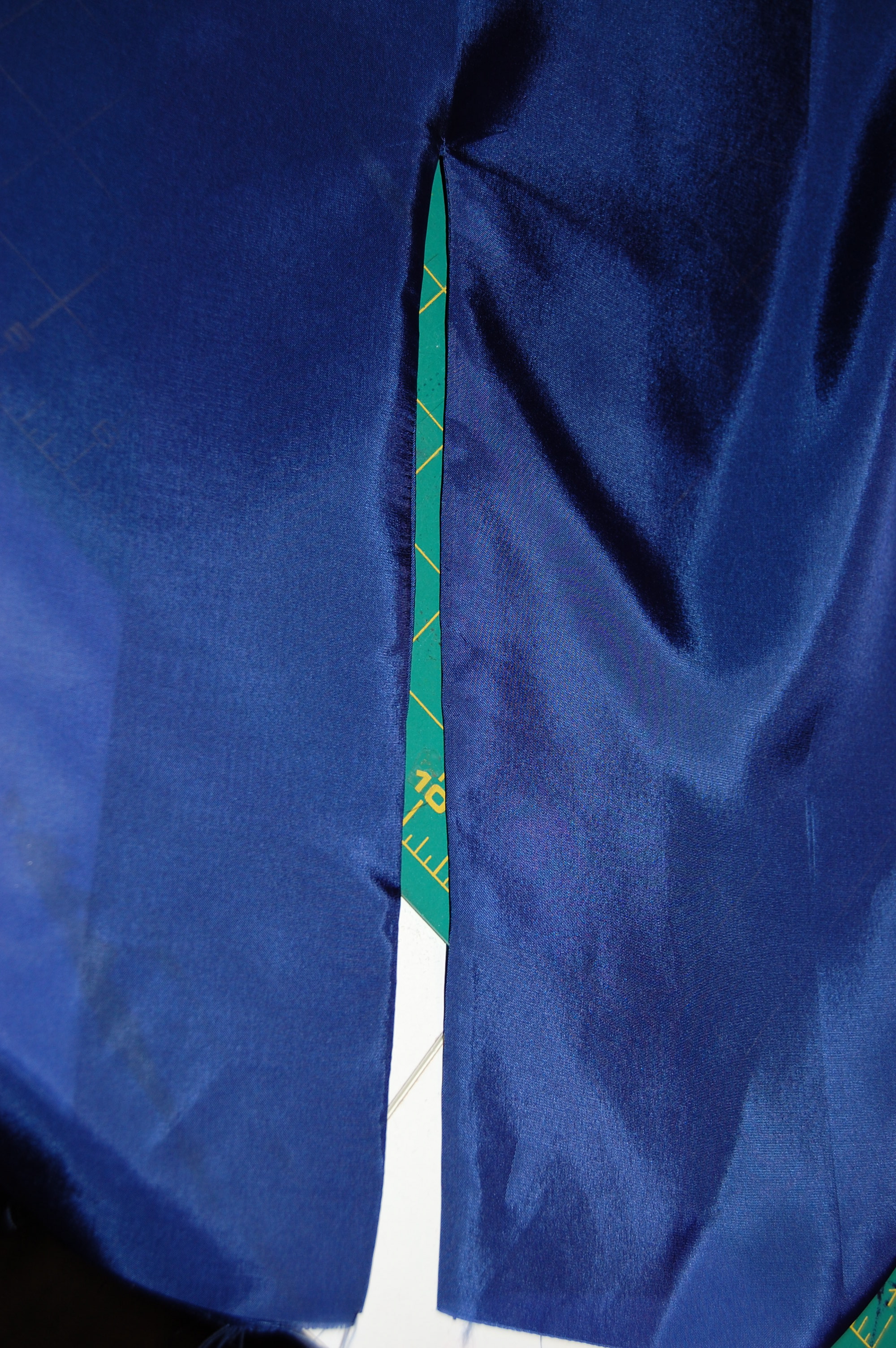
I cut along the marked line and turned the placket to the wrong side.

I cut along the marked line and turned the placket to the wrong side.

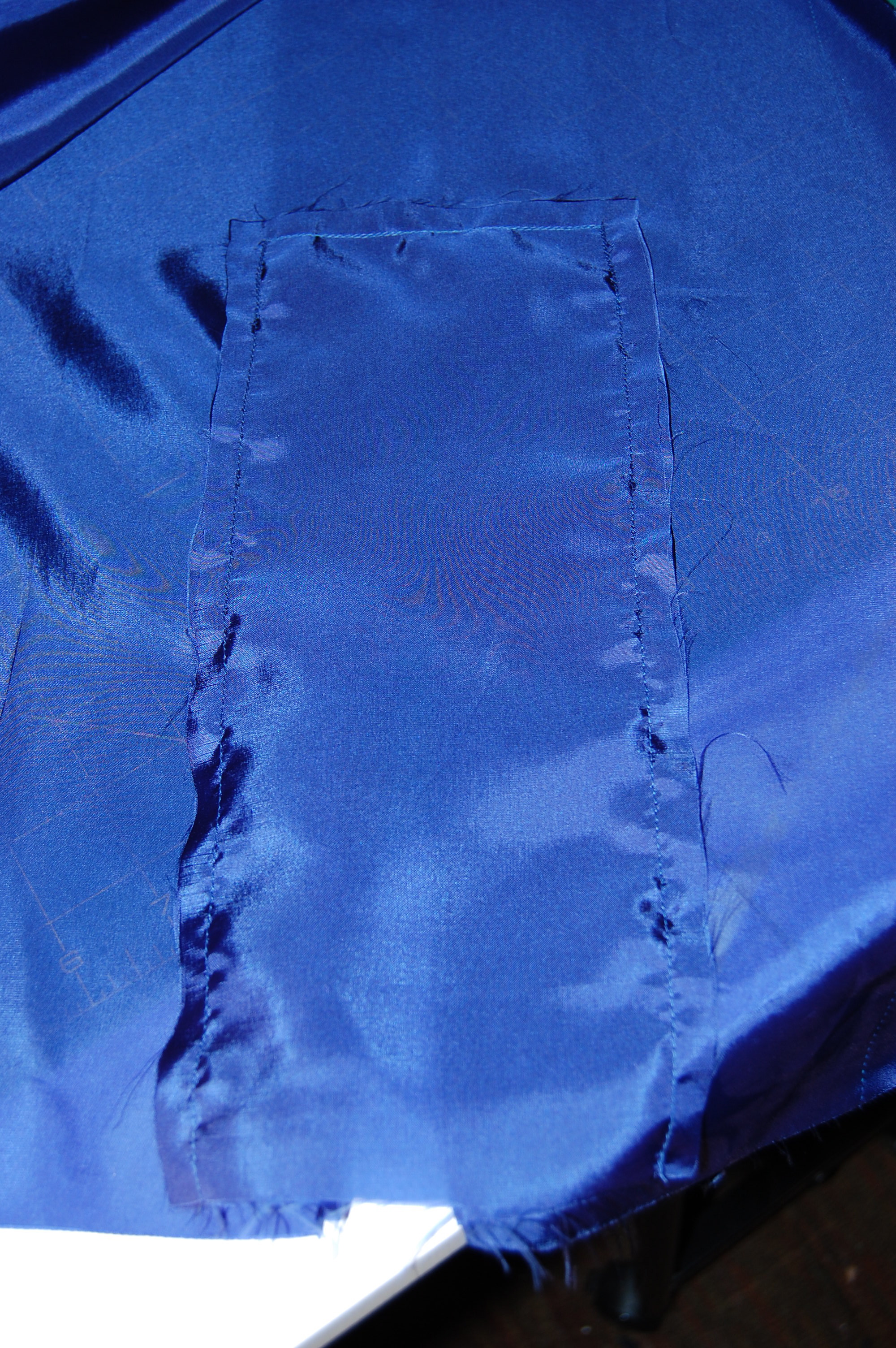
I sewed another piece of ling fabric (10" x 8") to the wrong side of the turned placket.  It is stitched around the edges - a little difficult to see.

I sewed another piece of ling fabric (10″ x 8″) to the wrong side of the turned placket. It is stitched around the edges in a 1/2″ seam.

After securing these stitched together pieces across the top through all layers, I had a kick pleat!
After securing these stitched-together pieces across the top through all layers, I had a kick pleat!

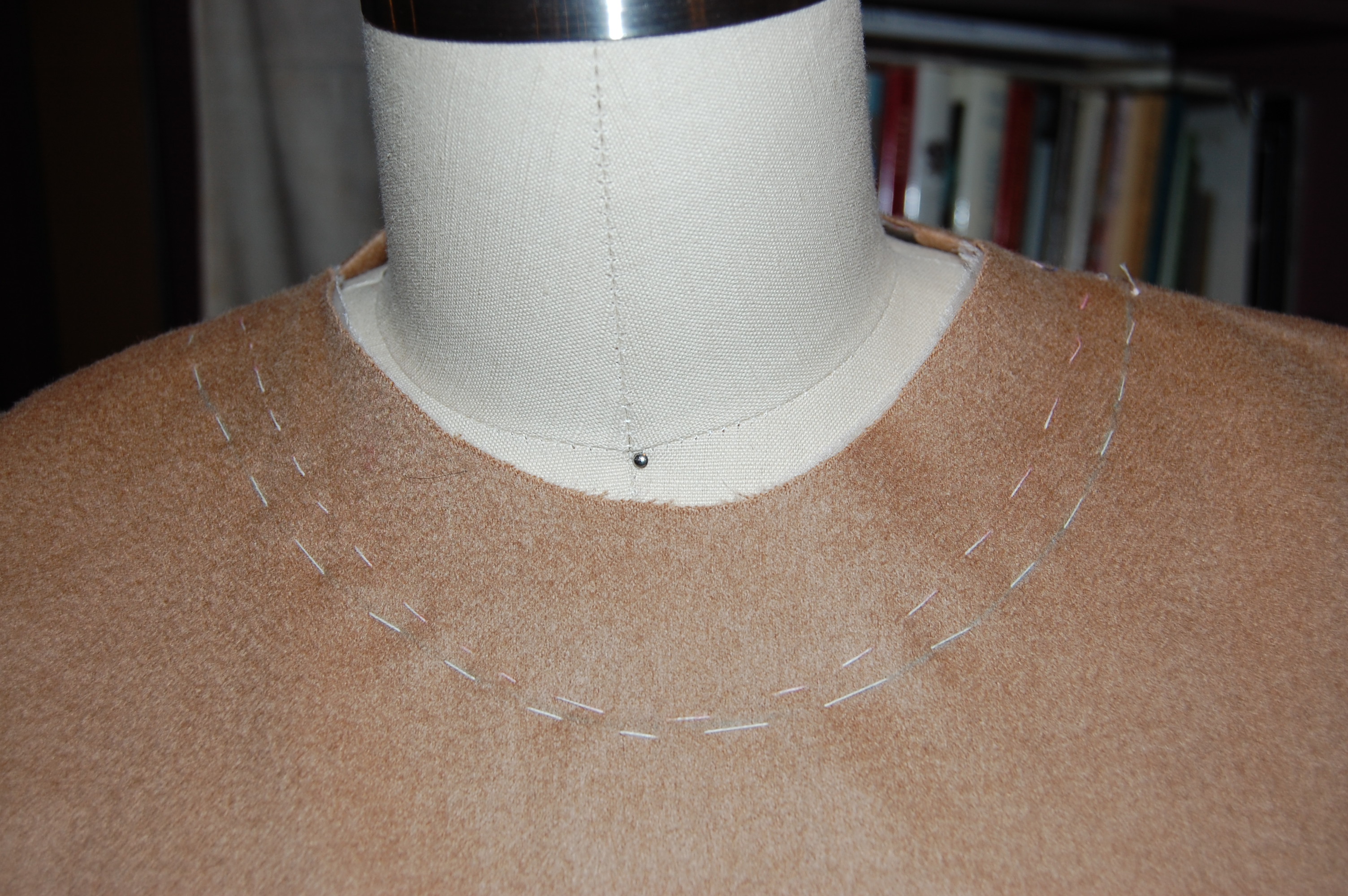
Back to the final part of the dress: the neckline. I still wasn’t sure I had a pleasing neckline, so I got out my French rule and re-chalked one with a little wider stance and depth.

Marfy Dress

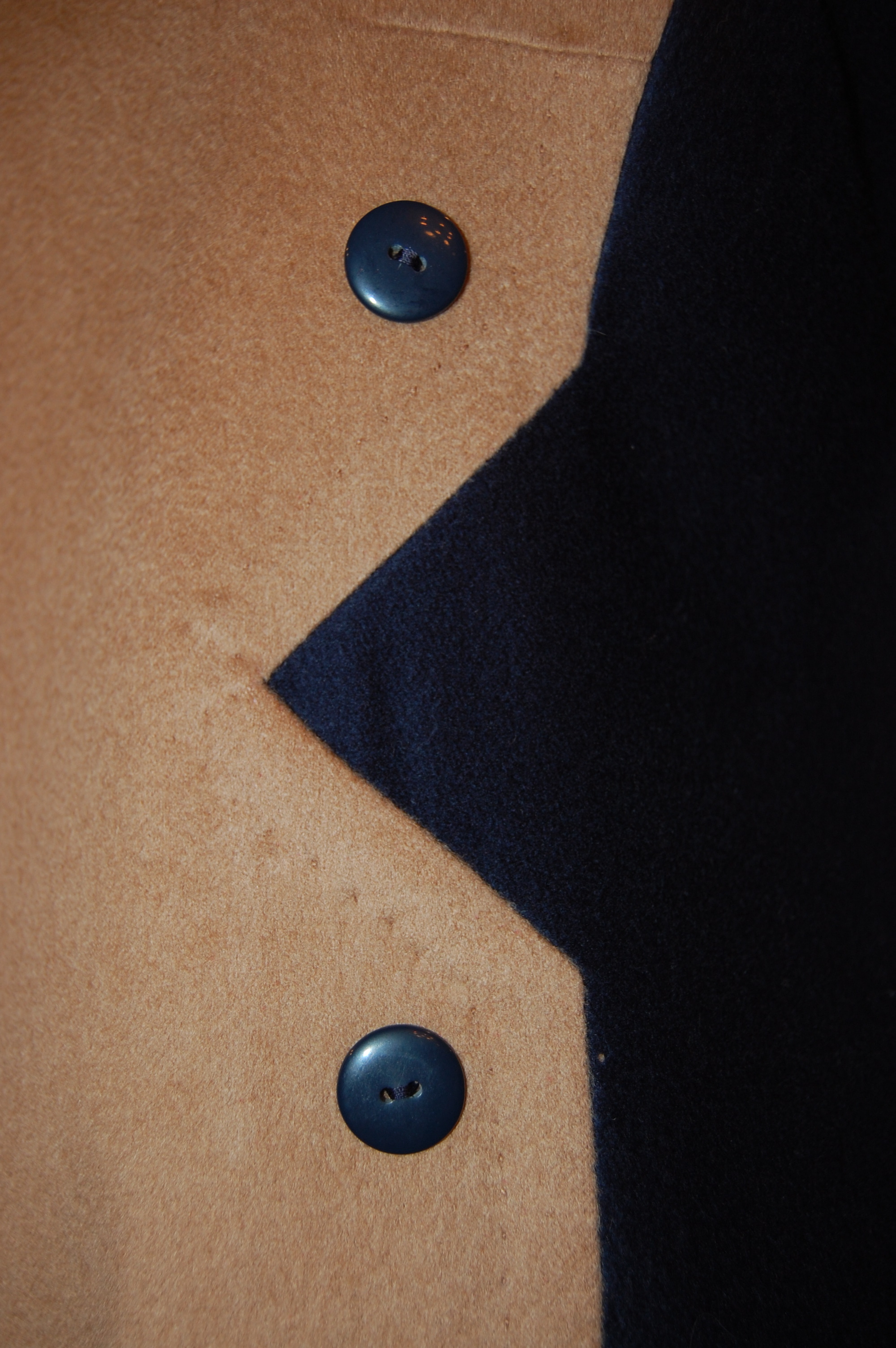
For the top-stitching around the neck and around the angled detail on the front, I did what I did with my jacket out of the same fabric: I hand-picked it. I am so happy with how it looks. It’s very subtle, but adds just the right emphasis. The buttons are smaller versions of the (concealed) buttons on my jacket.

Marfy Dress

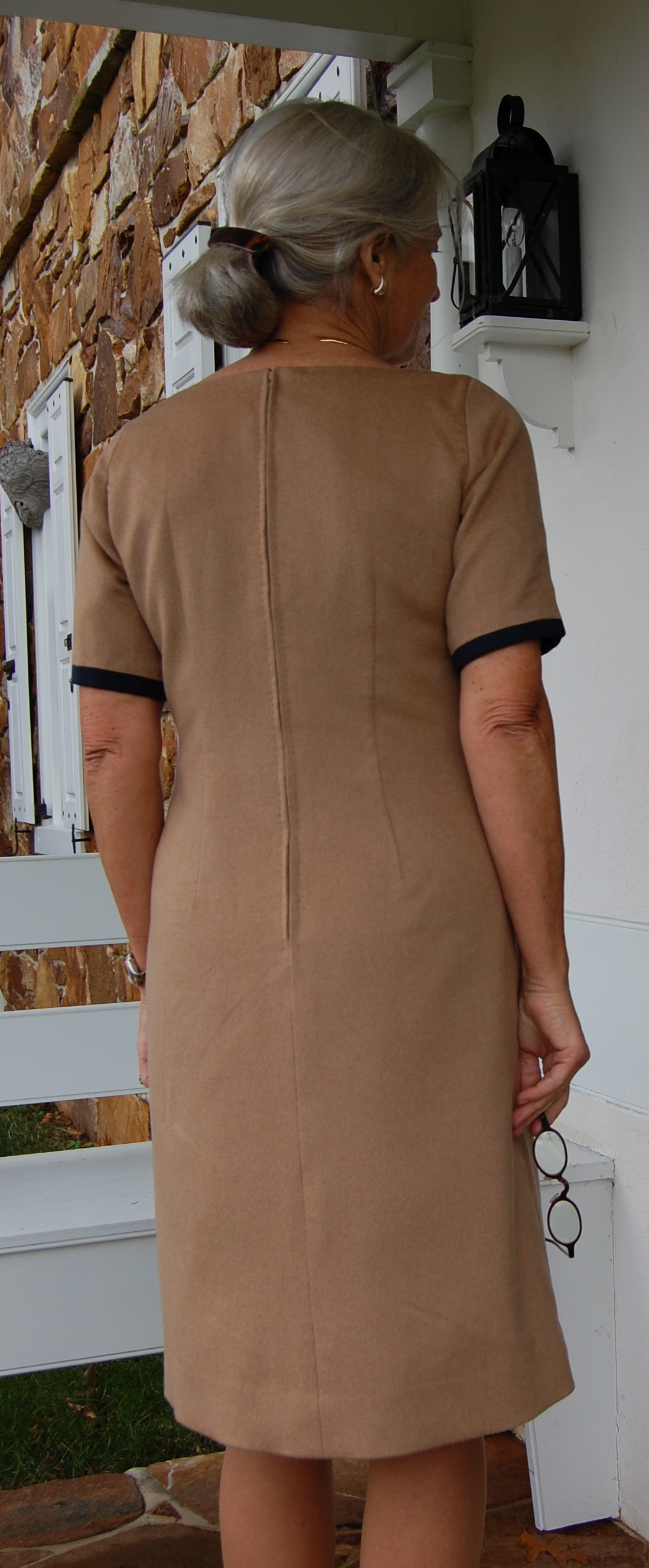
I set the lining in by hand, under-stitched the neck-edge by hand, and finally the dress was complete.

Marfy Dress

Marfy Dress

Marfy Dress

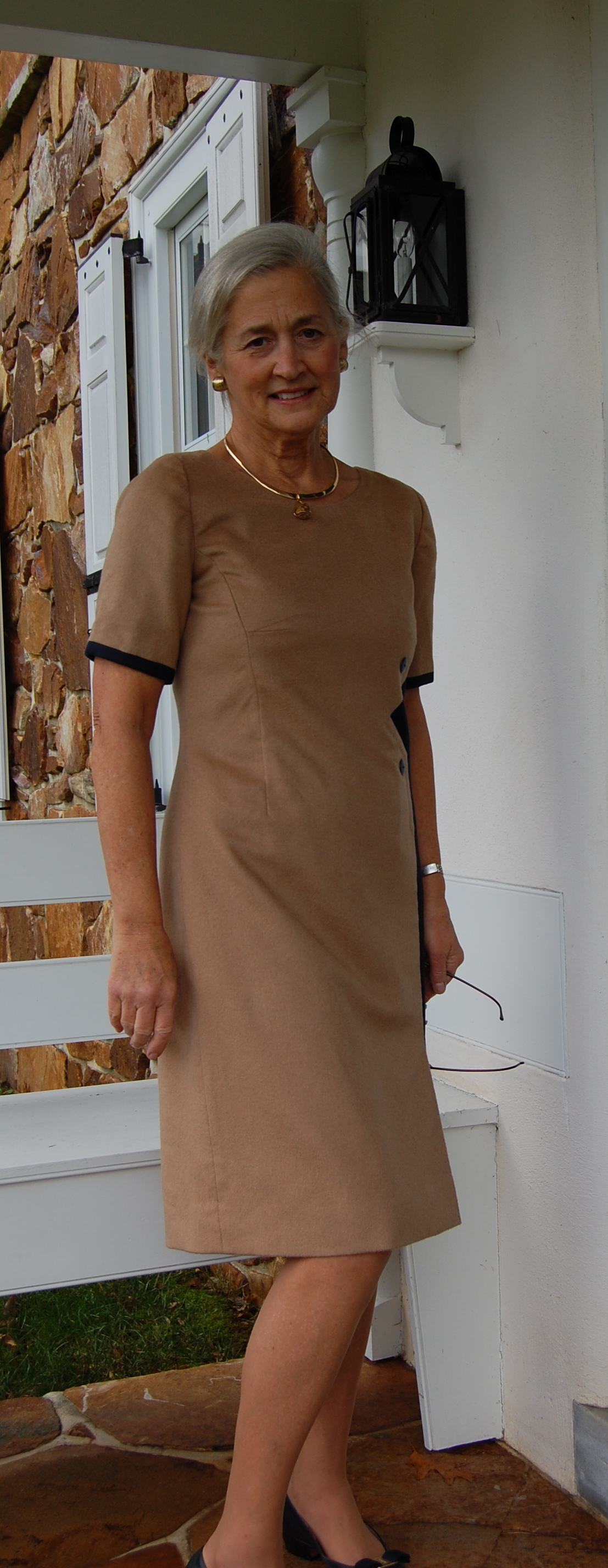
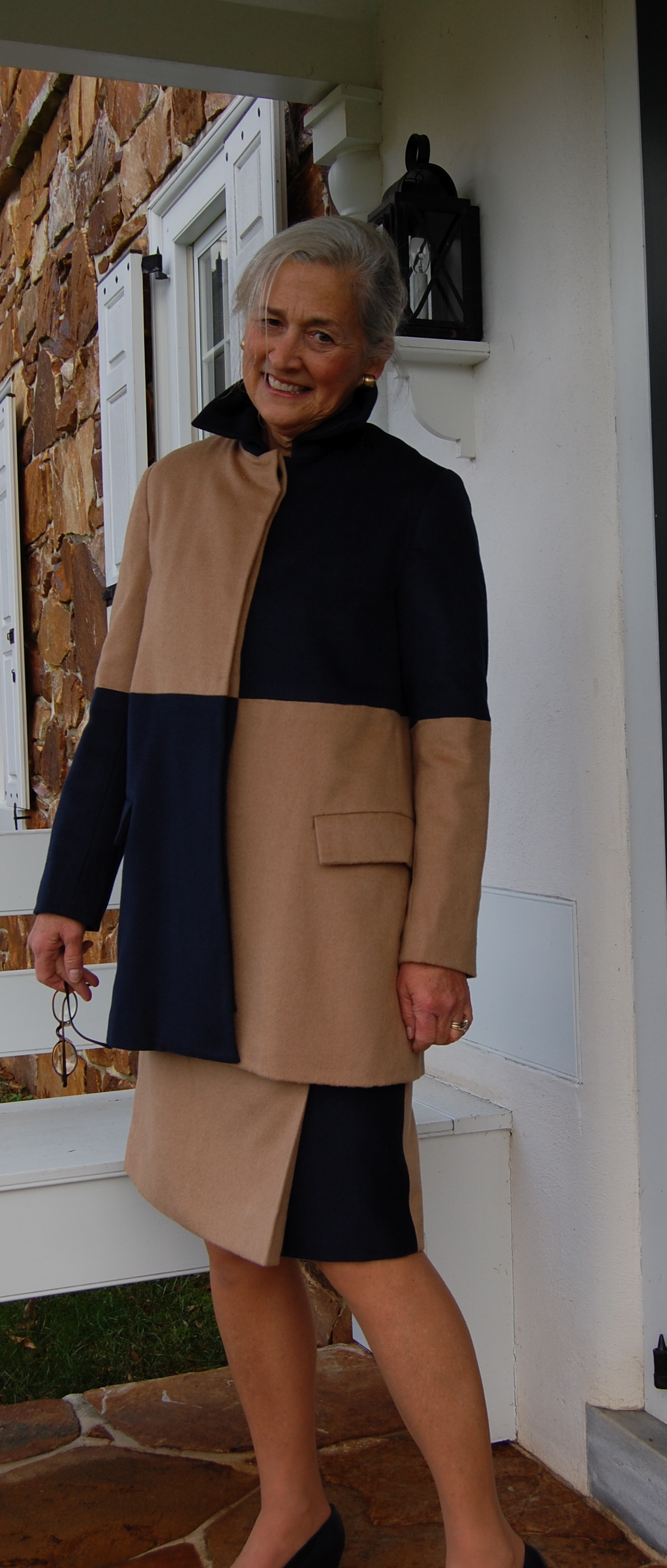
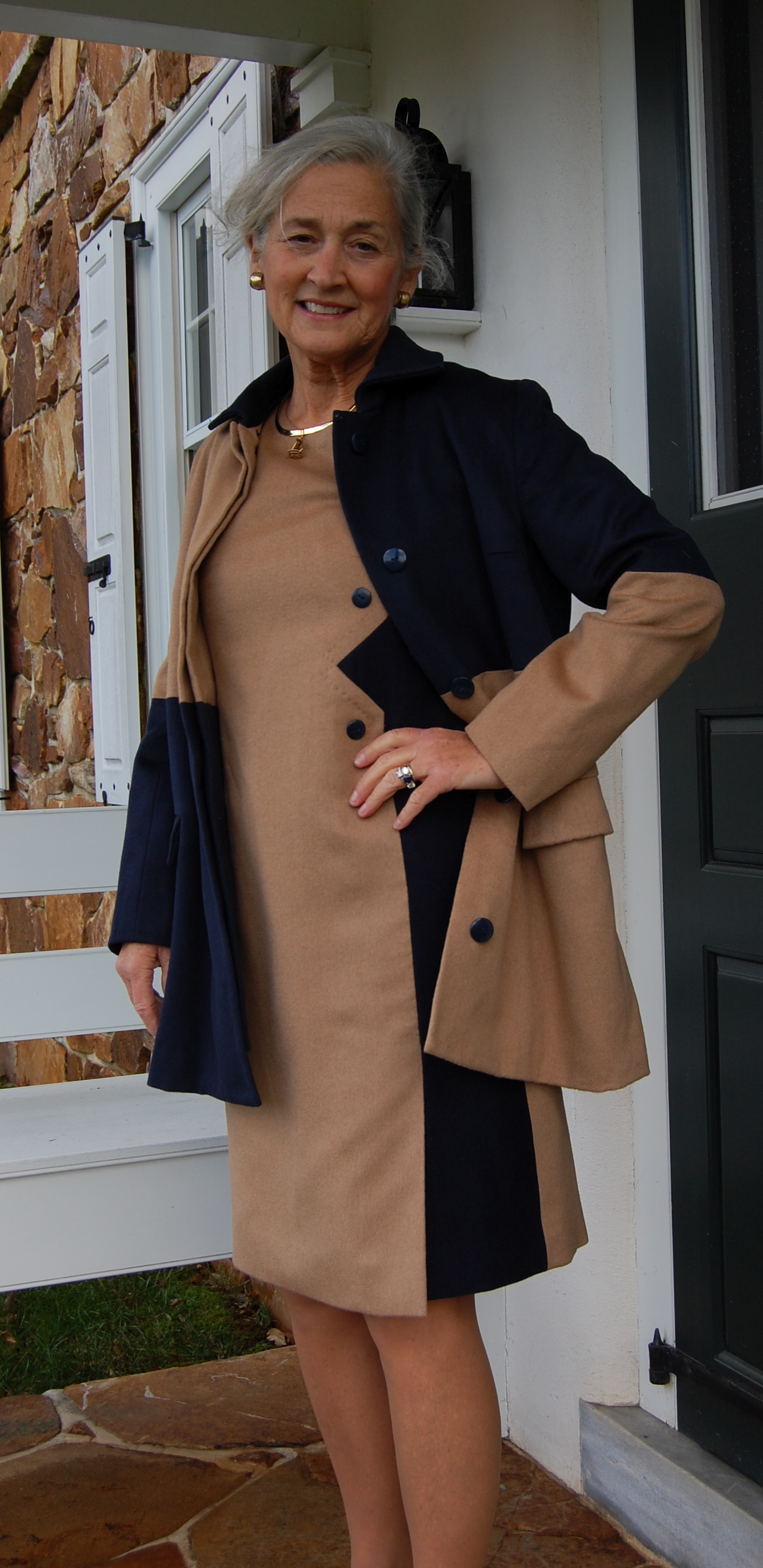
And of course I have to show it with the coat!

And of course I have to show it with the coat!

Fifty Dresses

Marfy Dress

It is probably unfair to do an assessment of Marfy patterns after just one make, but I’m going to anyway! The things I really like, so far, about using a Marfy pattern are 1) its preciseness, 2) the individually sized patterns, 3) the pattern pieces without seam allowance added. And is there anything I dislike about Marfy so far? Yes, one big thing! I really miss having a pattern envelope with an illustration, variant views and back views. I am so accustomed to vintage patterns, most of which sport envelopes which are like small works of art. There is so much pertinent information on them (fabric suggestions, zipper sizes, garment descriptions, thumbnail pattern piece diagrams, etc.) and even wearing suggestions. The illustrations show outfit styling suggestions (hats, handbags, shoes, etc.). I love studying them. So, yes, it’s true – I feel like something is lost without a pattern envelope for this dress which I like so much.

I won’t be waiting long to wear this dress. Our American holiday of Thanksgiving is this Thursday, and Marfy will be one of my dining companions. To my fellow citizens, may the day be as meaningful and blessed for you as it always is for our family. To all my readers around the globe, my thanks to you for sharing your love of sewing with me!


37 Comments

Filed under Buttons - choosing the right ones, car coats, Color blocking, couture construction, Marfy patterns, Mid-Century style, Uncategorized, woolens

Time for Wool and Something Marfy

It seems like we just welcomed in Autumn – and although the calendar says it will still be Autumn for a few more weeks, the chill in the air tells me that Winter is bearing down on the northeastern United States. Winter means many wonderful things, including WOOL season.

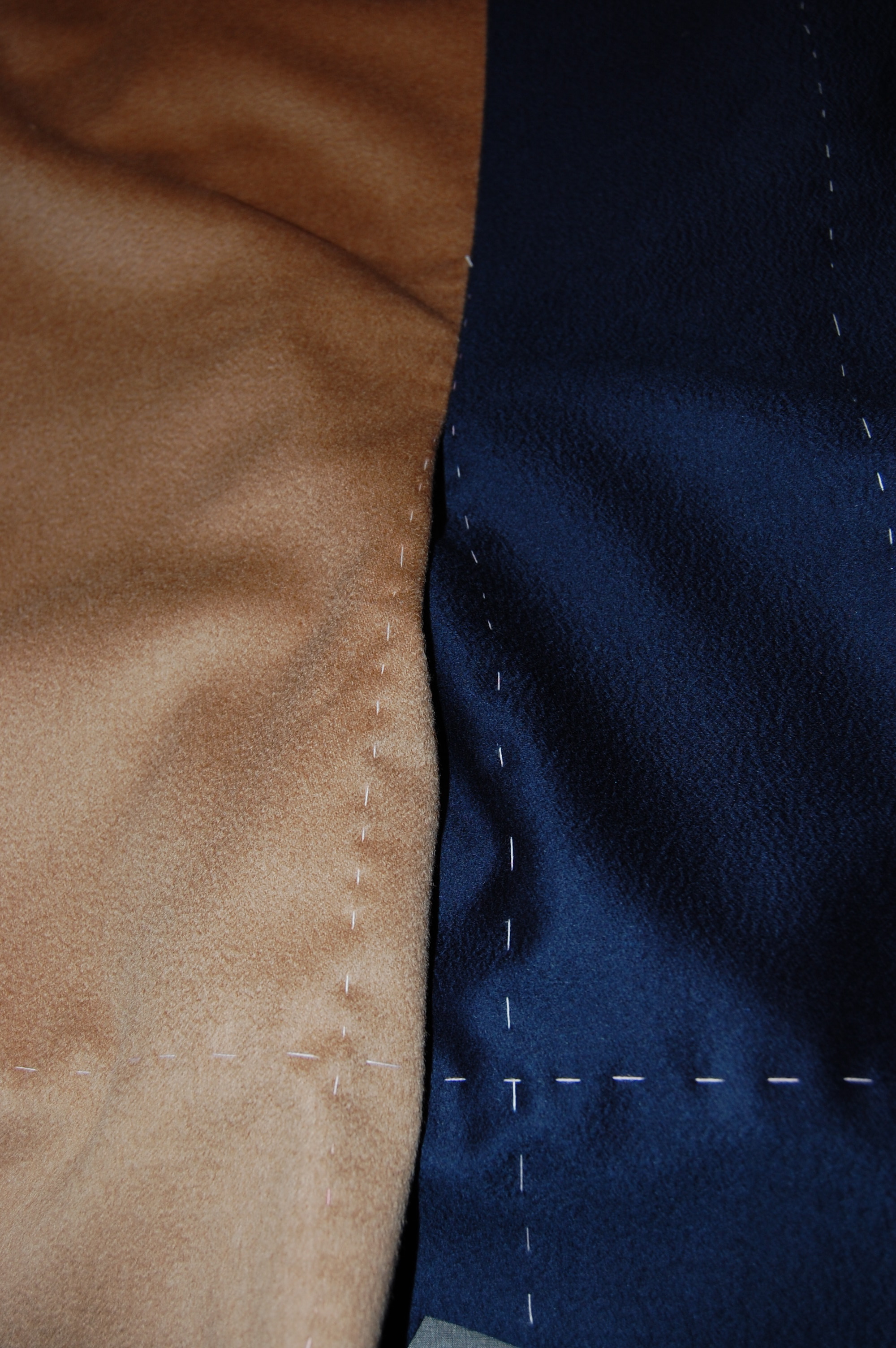
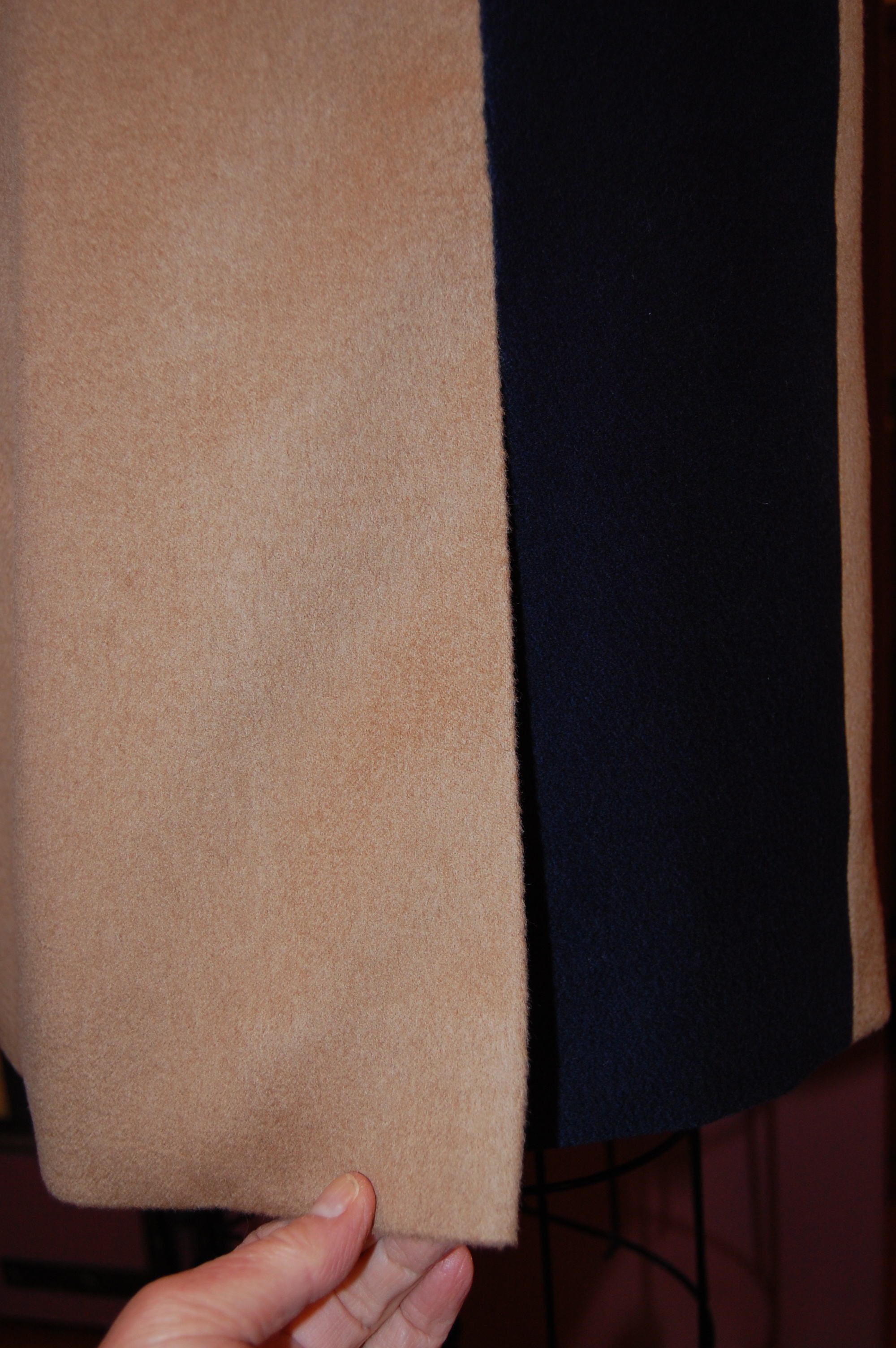
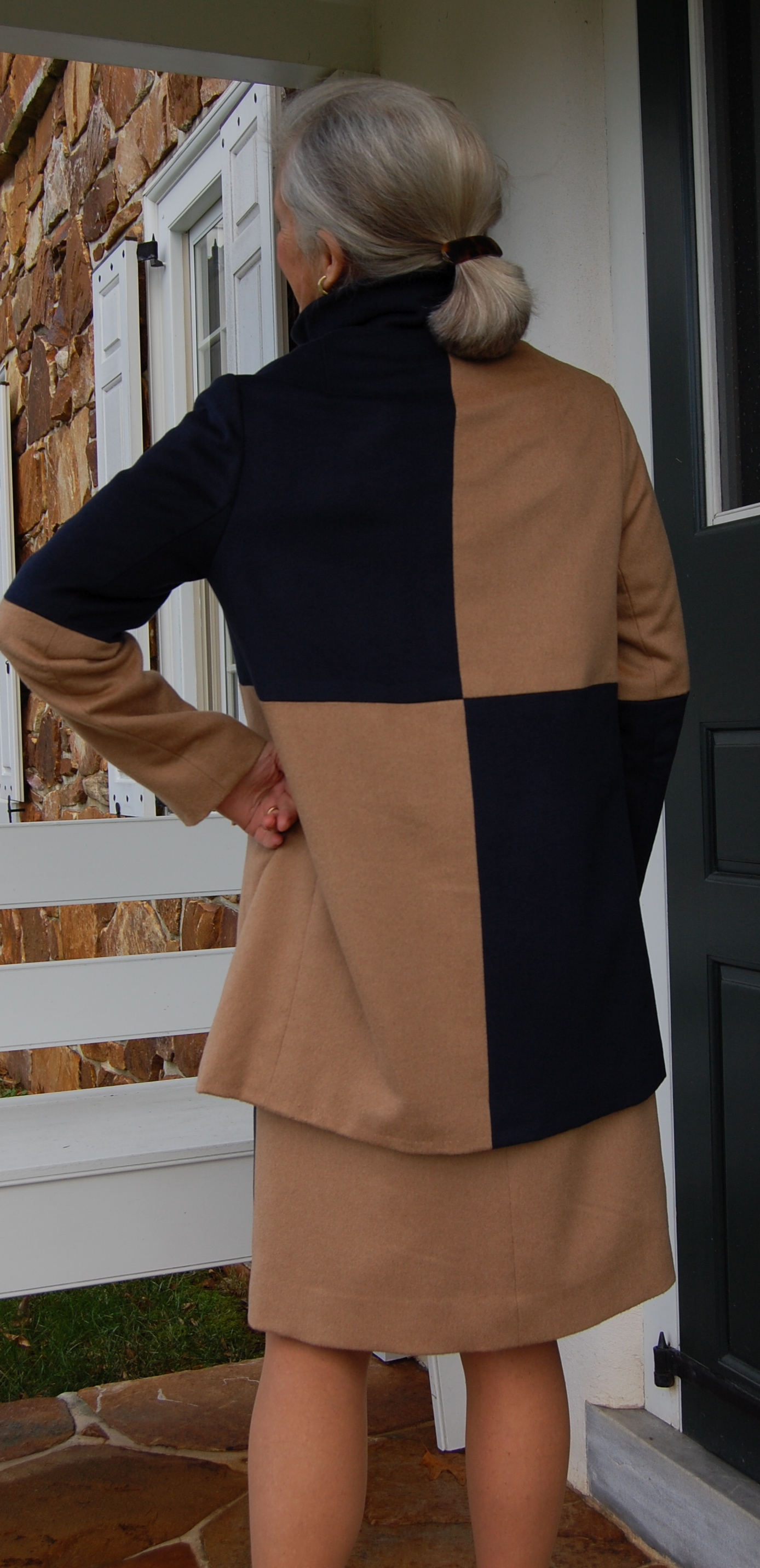
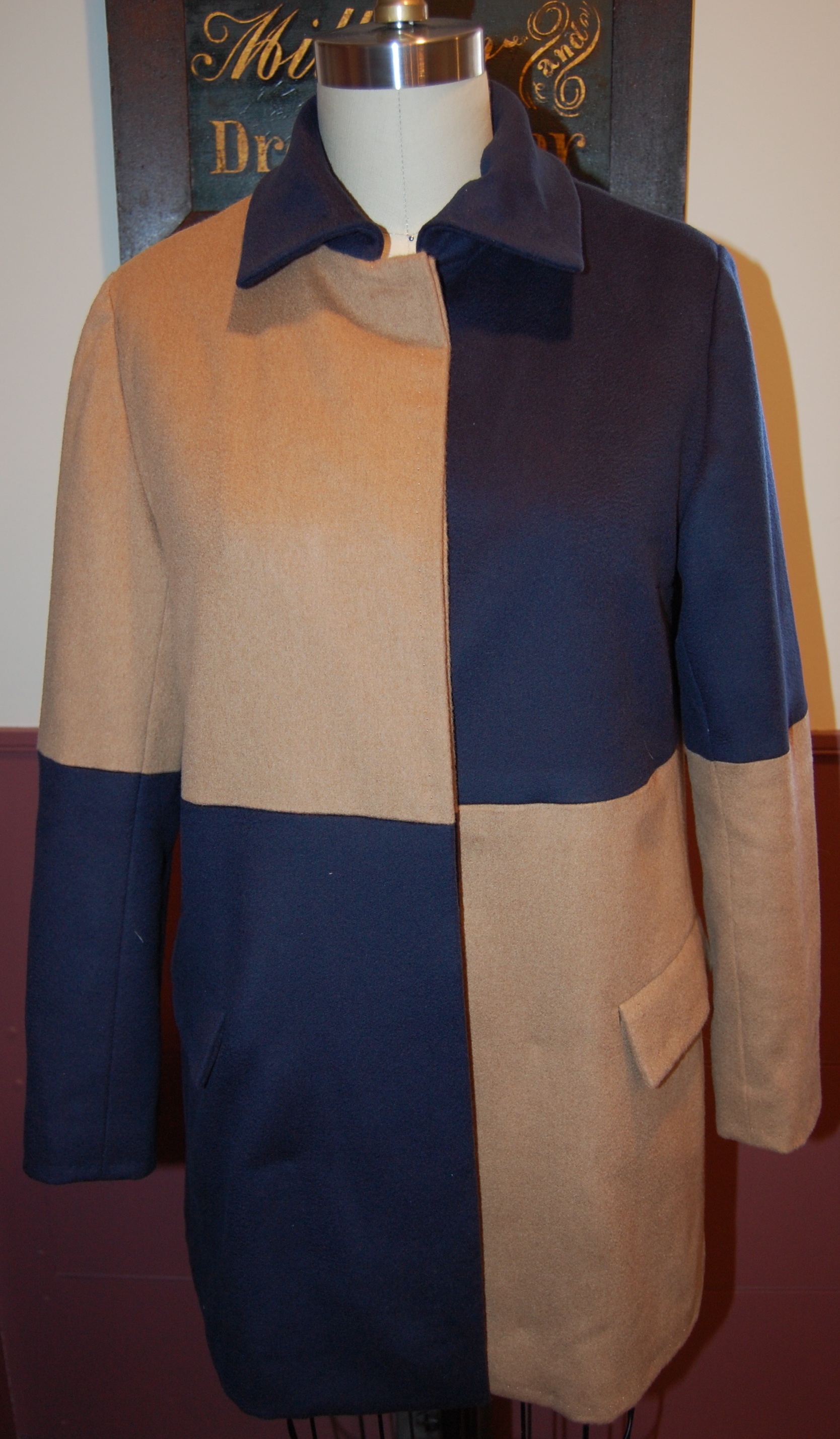
When I made my color-blocked coat last Winter, I purchased some extra yardage from Britex Fabrics with the thought of making a sheath dress to wear with it on occasion, but not exclusively with it.

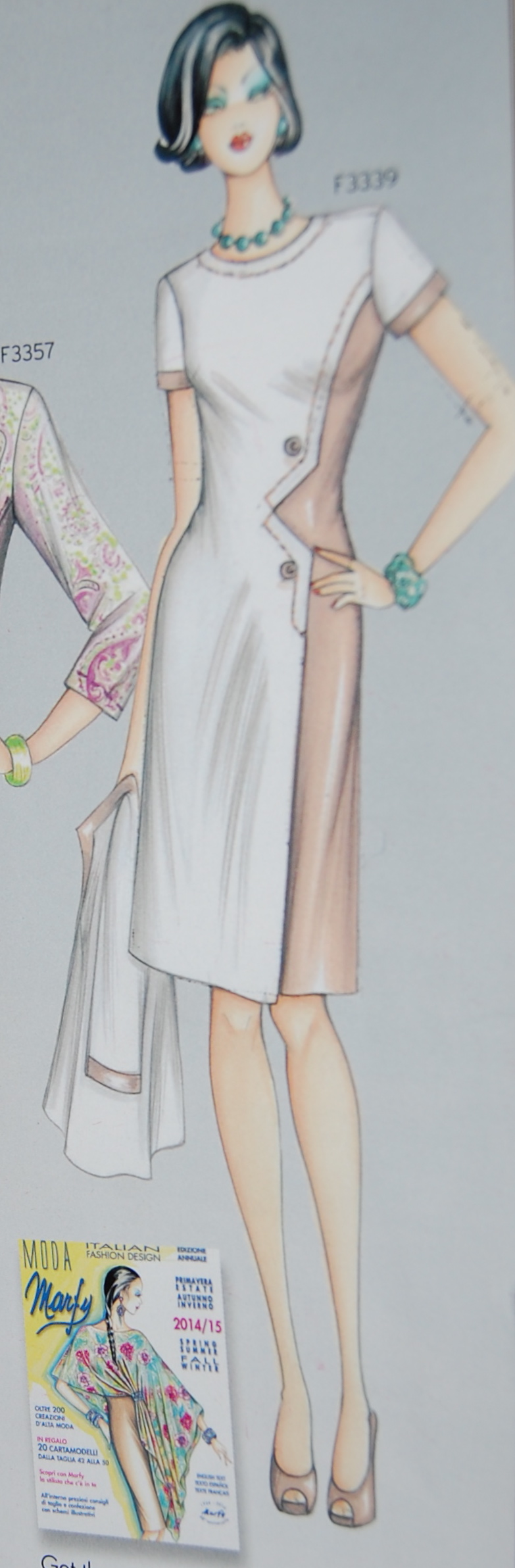
Magnificent Obsession My original intent was to make a two-toned dress, with a front and back yoke with short sleeves. The bottom, longer section of the dress would be out of the camel wool, with the yoke and sleeves in navy, zipped up the back.   I did not think much more about it during the Spring and Summer, but a few weeks ago, after seeing a full page Marfy ad in a current Vogue Pattern Magazine, I began to think of an alternative to my plan. This dress was featured in the ad:

Marfy Dress

I not only really liked the dress, but it seemed designed with my two color-blocking fabrics in mind. I also liked its mid-century styling. For a while now I’ve been thinking of trying a Marfy pattern, and, I thought “Why not now?”

I wasn’t exactly sure what to expect. I knew that Marfy patterns come without seam allowances (the stitching line is the outside perimeter of each pattern piece), and in only one ordered size. One of the reasons I love vintage patterns so much is that they, too, were produced by particular size. (So that, for those of you who only sew from current multi-sized patterns, if you ordered a size 10, only a 10 was in the envelope.) Most vintage patterns include seam allowances, and the stitching line is marked as well. For those of us who use couture methods for our fashion sewing, having the stitching line marked is incredibly helpful. The stitching line is THE point of reference for alterations, for basting, for sewing. Knowing these two facts about Marfy patterns made me comfortable with the idea of sewing with them, even though they come with no written construction details other than a few notations on the pattern pieces.

What I did not expect was the teeny tiny package in which the pattern arrived. The only identifying mark on the folded up pattern was the pattern number.

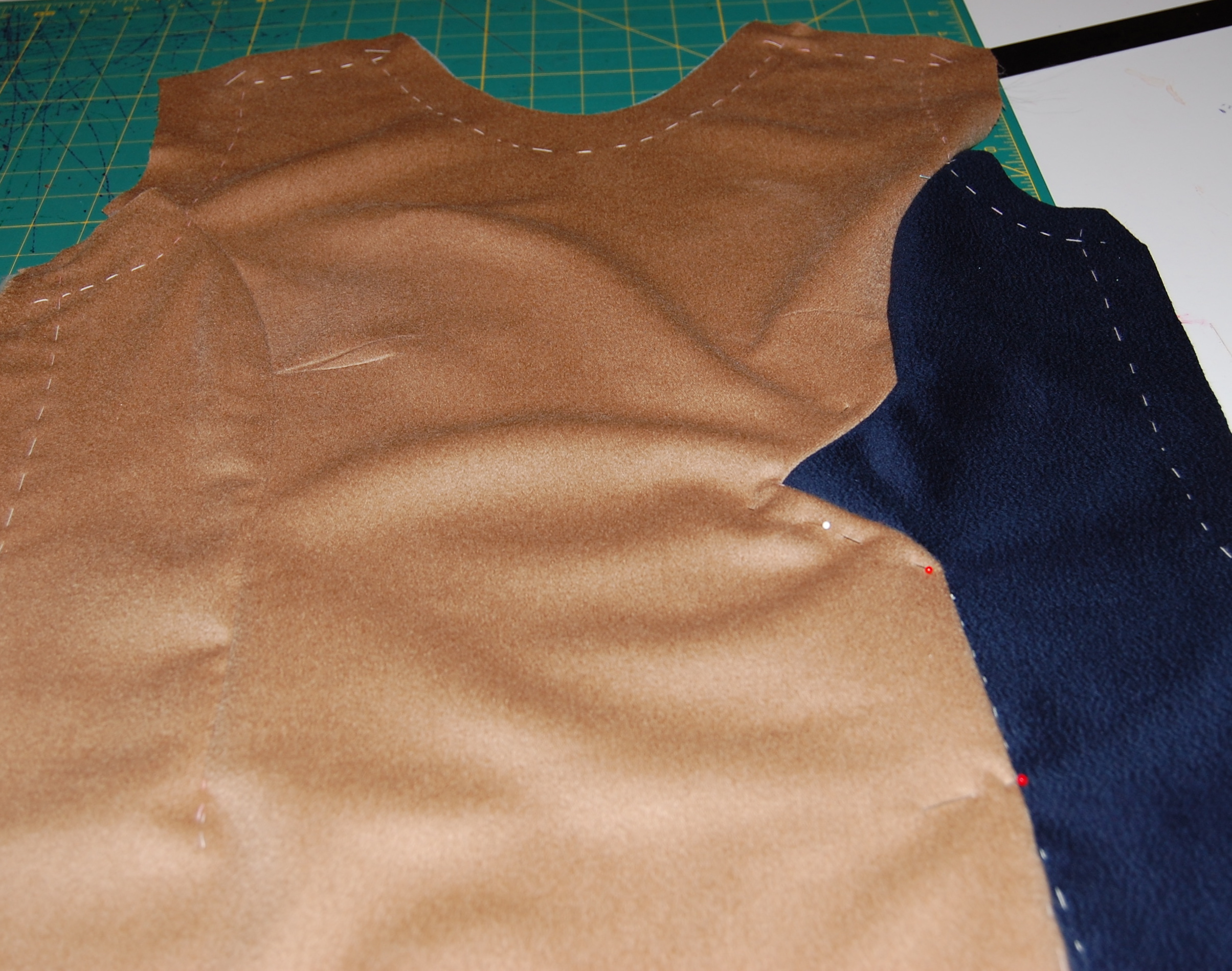
Marfy dress I pressed the pattern pieces and got busy making my muslin (toile). From my adjusted muslin, which took the better part of a week to perfect (hopefully perfected, that is), I transferred sewing lines onto white silk organza underlining. (I will go into some of the changes I made in my next post on this dress.) In true couture mode, I then basted the organza onto the fashion fabric. It is always rewarding to sew the first “real” dart or seam! I feel like the dress is practically finished, although reality is sure to set in when all the finishing details start to occupy my time.

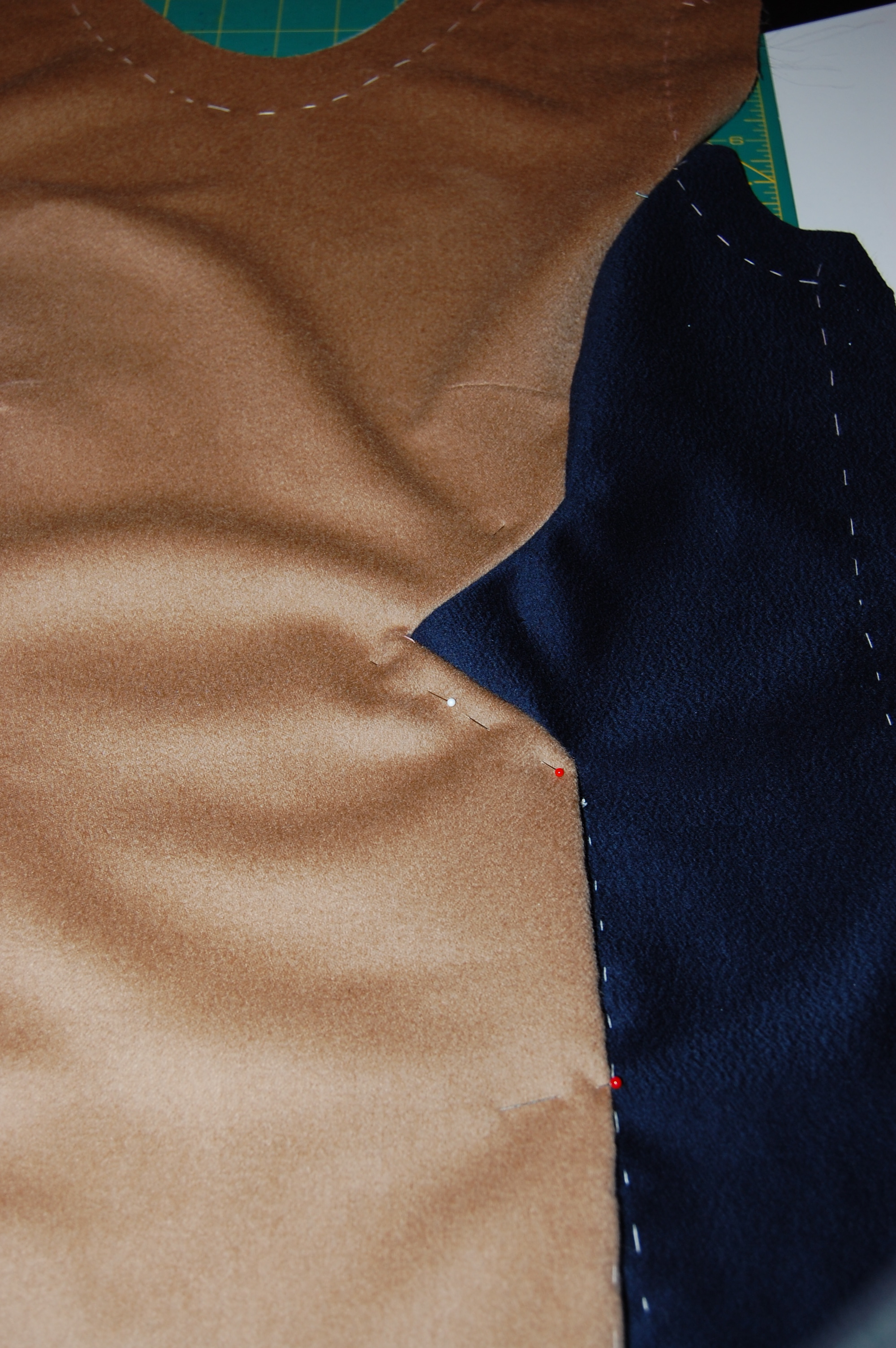
The front, showing the seam detail which I like so much.

The front, showing the seam detail which I like so much.

Marfy dress


Incentive to finish this wool dress is fanned by Winter winds to my back , by looming holiday sewing, and the excitement of finishing my first Marfy.  To be continued, hopefully soon!

16 Comments

Filed under Color blocking, couture construction, woolens

Sewing Ghosts

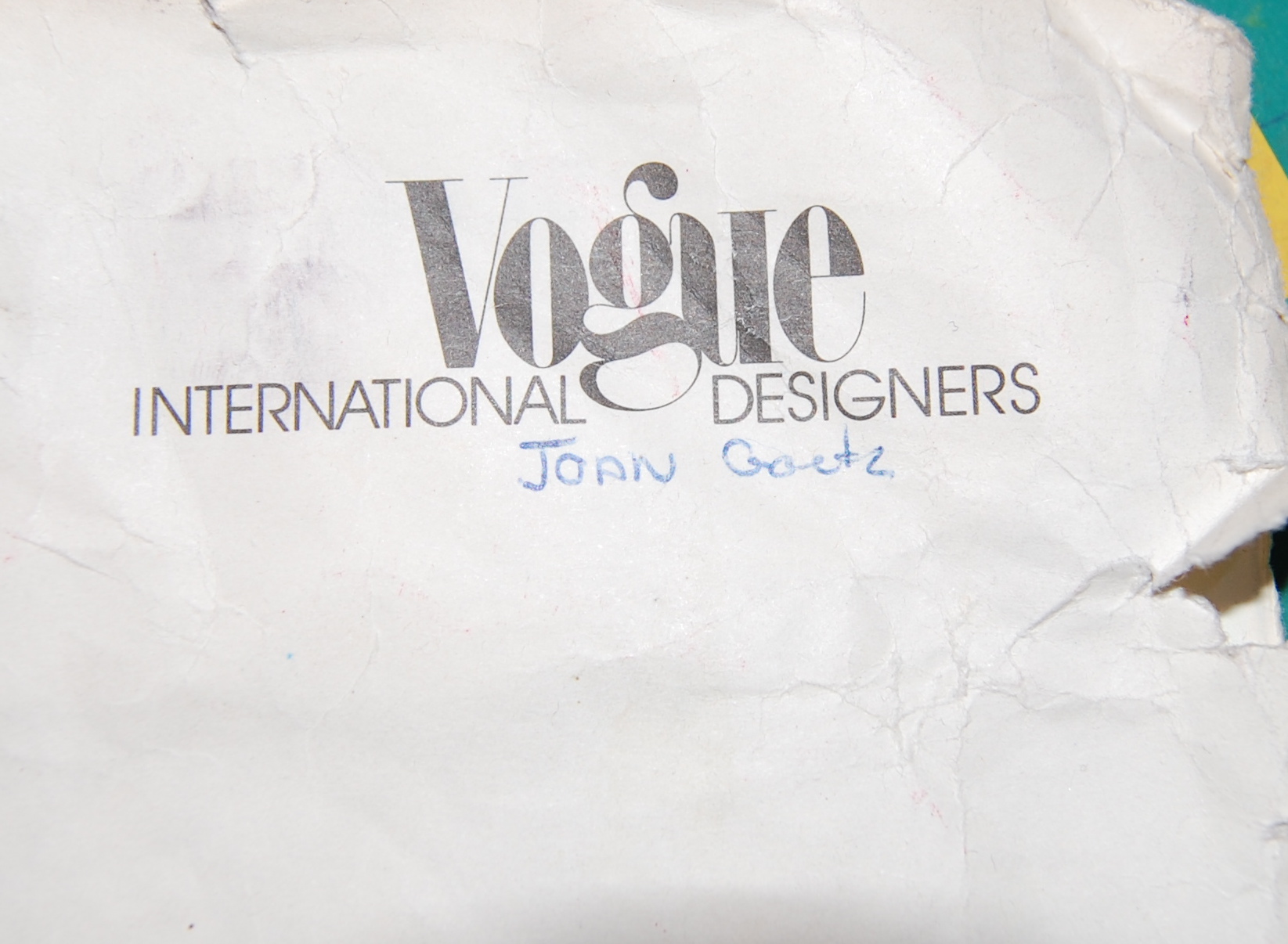
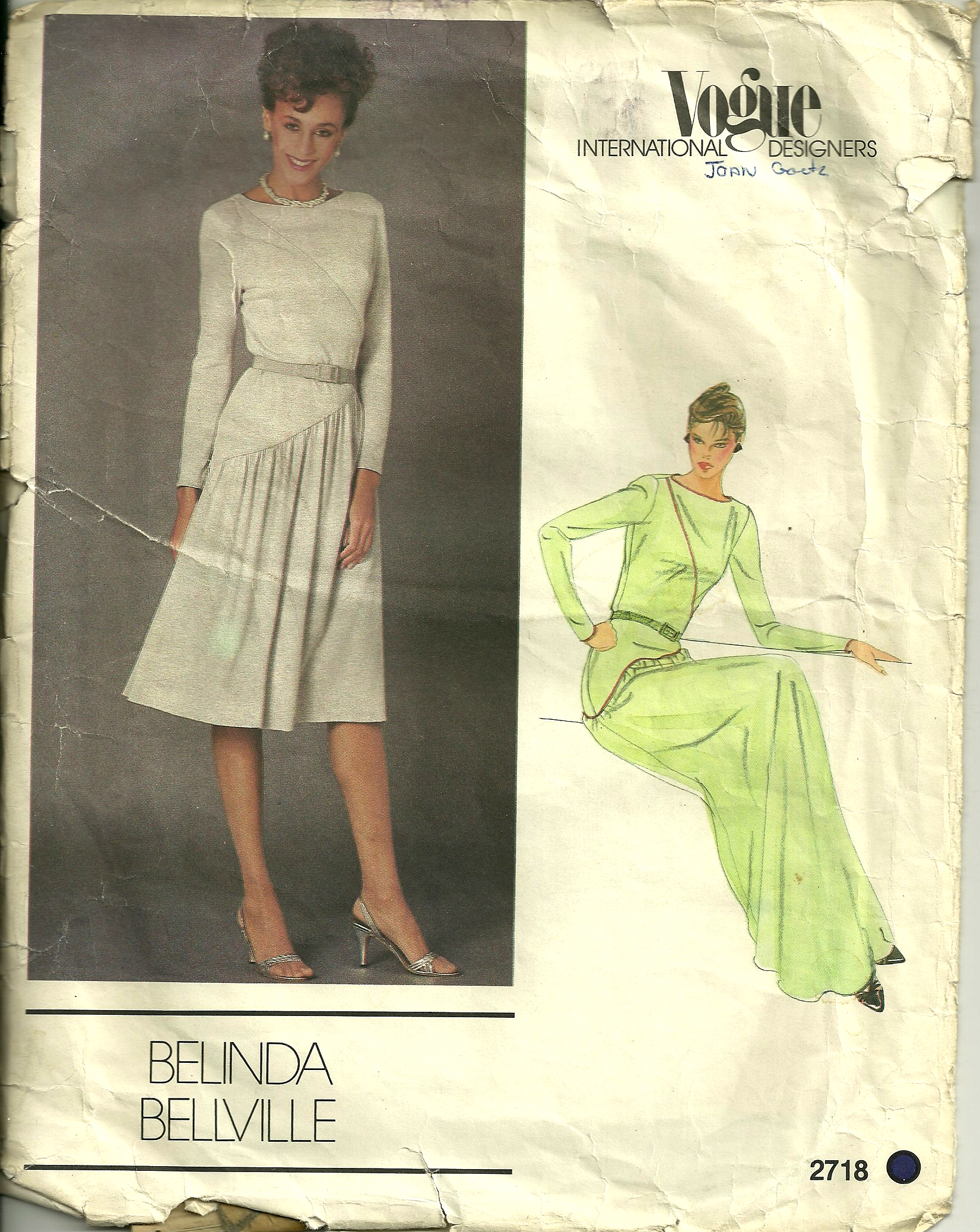
The ghost of Joan Goetz has been hanging over my shoulder for the last several weeks. She wrote her name on the envelope of vintage Vogue pattern #2718 which has caused me so angst. I can’t help but wonder who this woman was!

Sewing Ghosts

Goetz sounds awfully like Ghost, don’t you think?

I can tell from the changes she made to the pattern that she was much taller than I, with much longer arms! She added 1” to the arm length, while I subtracted 1½”. She also added three inches to the hem length, and I ended up cutting off 3” from the length. However, nowhere on the pattern does she indicate any problems with construction. I, myself, refrained from scribbling “ARG-G-G-H“ on the pattern, although I was certainly thinking it. When last I wrote about this doomed project, I wasn’t sure if I could save it. Thanks to many good suggestions and words of encouragement from my readers, the future for this dress is looking less ghostly and ghastly. Some of you suggested a break from it, working perfectly into my schedule, which included another trip out of state. Others suggested I sew on something else for a while, which I did and will write about soon. The one thing I did not do was set it aside completely. I was afraid if I left it to finish (if even possible) another time, I never would get back to it.

Actually, I have to admit, that the problems I encountered with this pattern were really not the fault of the pattern. It was entirely of my own making. The pattern required a stretch knit fabric. I used a stretch silk woven charmeuse. That would have been fine, except I insisted on underlining it. I cut the underlining on the bias, which I thought would work, but it was a disaster. It caused the bodice to bind crosswise, pull up lengthwise, and it restricted the stretch of the silk, which was necessary for this particular pattern.

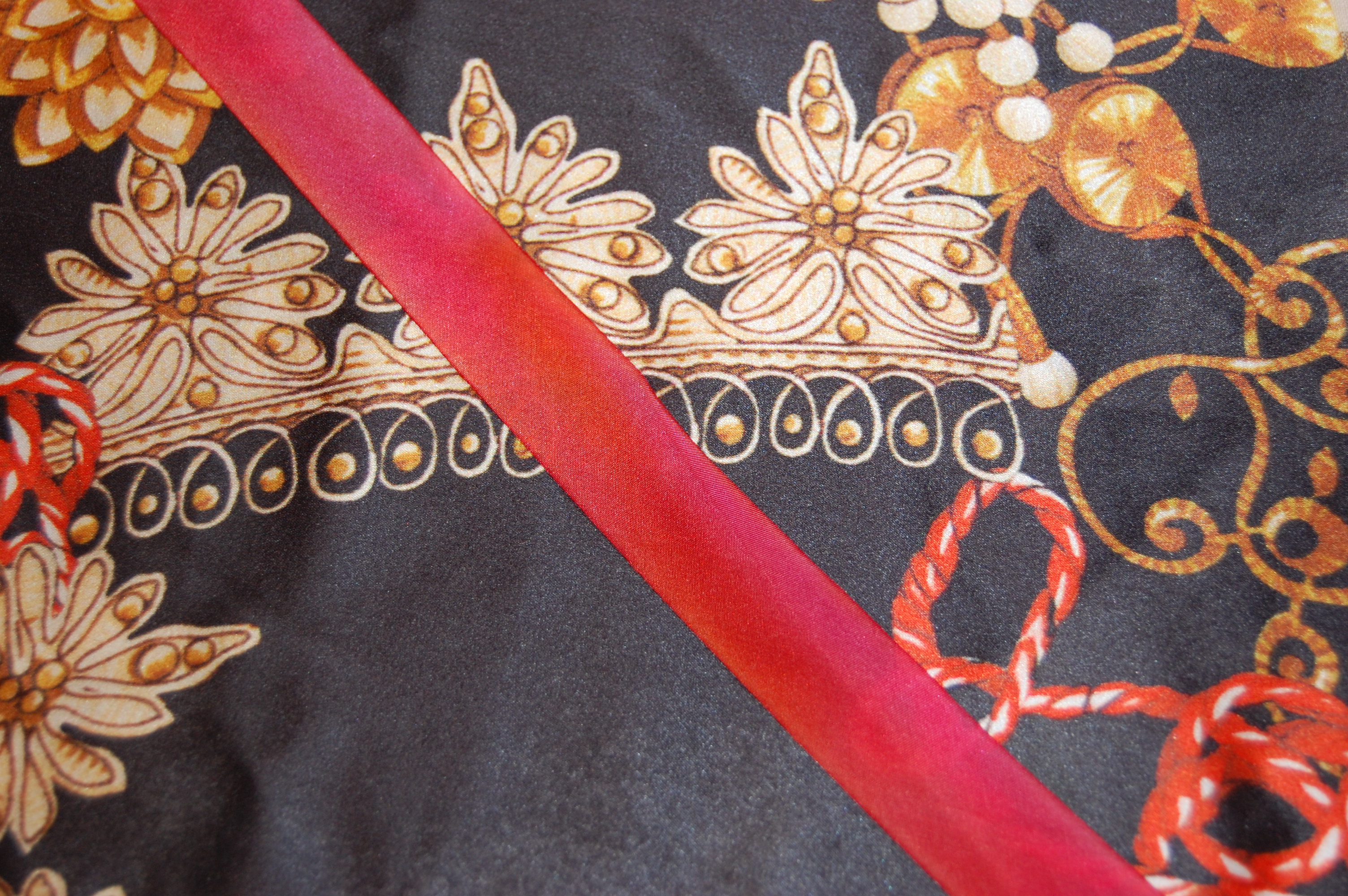
This fabric from Mendel Goldberg Fabrics in NYC is a stretch silk charmeuse, with a wonderful drape to it.

This fabric from Mendel Goldberg Fabrics in NYC is a stretch silk charmeuse, with a wonderful drape to it.

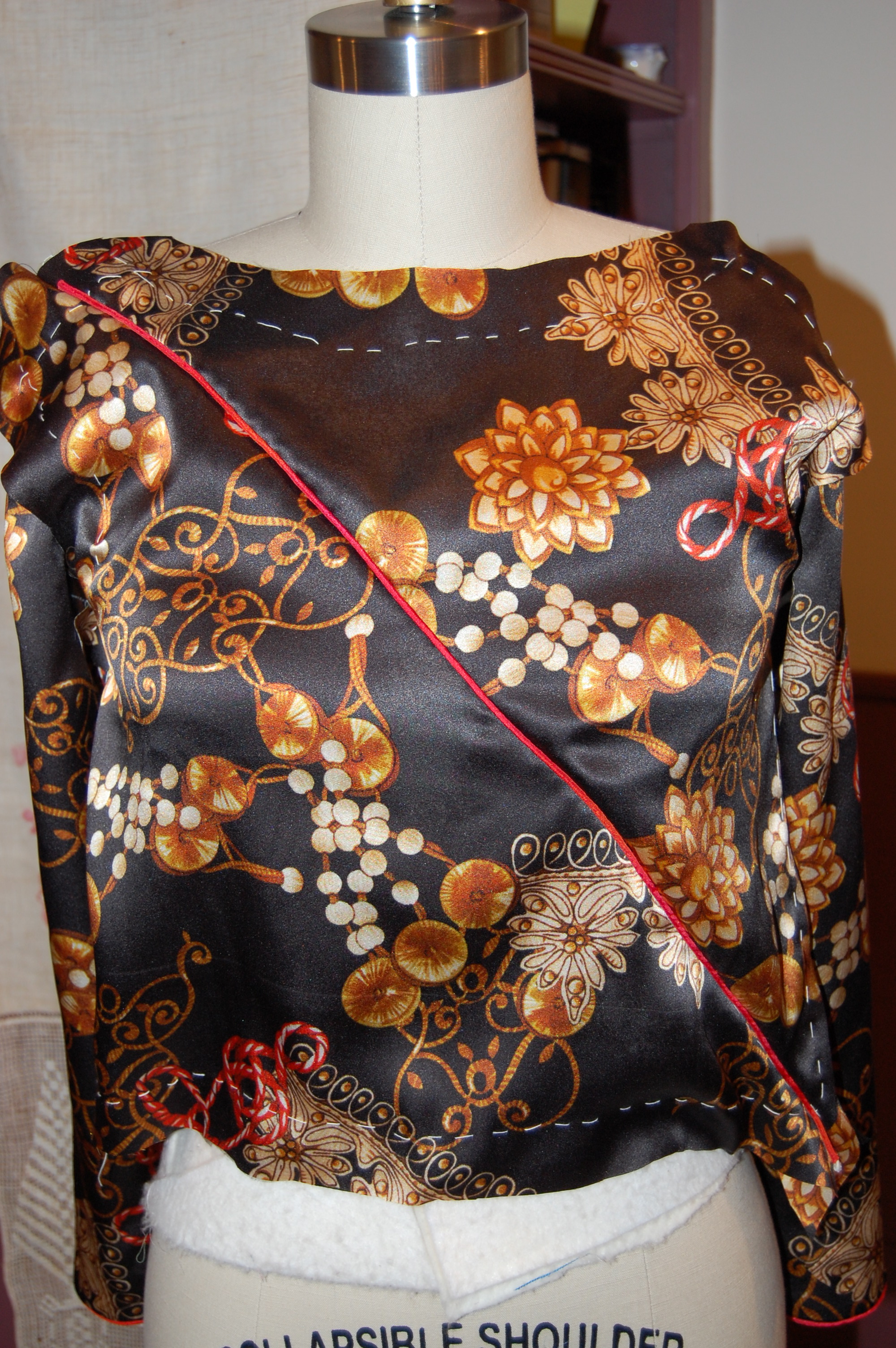
With nothing to lose, I started to remove, meticulously, the silk gauze underlining from all the bodice pieces, starting with the back. I was encouraged enough at the improvement that task made, to continue to do the same with front. Then I tackled the sleeves. What a difference it made! The bodice actually started to fit, although it was still tight across the bust. I then reset the sleeves, releasing about 1/4 “ in the front seam on each side. That was all I could steal from my already-trimmed seam allowances.

The reset sleeves and the finished neckline, cut a little wider than the pattern.

The reset sleeves and the finished neckline, cut a little wider than the pattern.

I sewed the skirt yoke without underlining, but I did use an underlining, cut on the straight of grain, for the gathered skirt. Once all assembled, I basted in the zipper to check the fit. Still a little tight over the bust, but otherwise, not bad!!

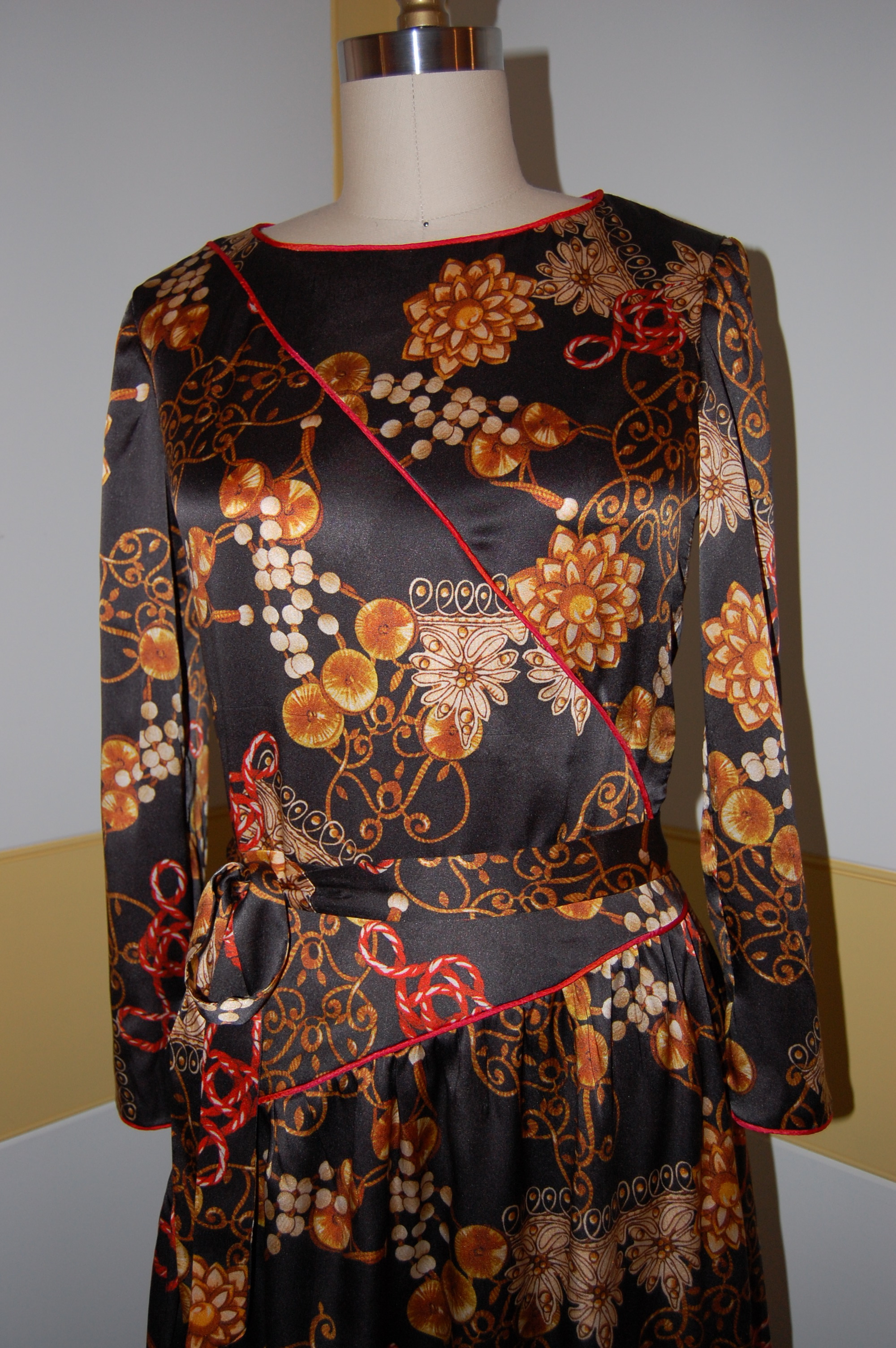
Both views of the pattern show the dress with a purchased belt. I tried three different black belts, of varying widths, and did not like the effect of any of them. All made the dress look like it was cut in half. I took a few scraps of my fabric and tied them around the waist on my dress form. From this I could tell a self-belt would look so much better, but all I had left were scraps. Hopefully no one will notice that this sash is pieced together in four places!

the pieced sash.  I'm glad this fabric design is so busy, otherwise the multiple seams in this sash would definitely show.

The pieced sash. I’m glad the fabric design is so busy, otherwise the multiple seams in this sash would definitely show.

The finale details of this dress (snaps at the sleeve vents and a good press, for starters) are finally complete.  I think I can finally say that I have saved this dress from a ghostly demise.

Sewing ghosts

The dress on the form does not show the slight tightness across the bust.

Sewing ghosts

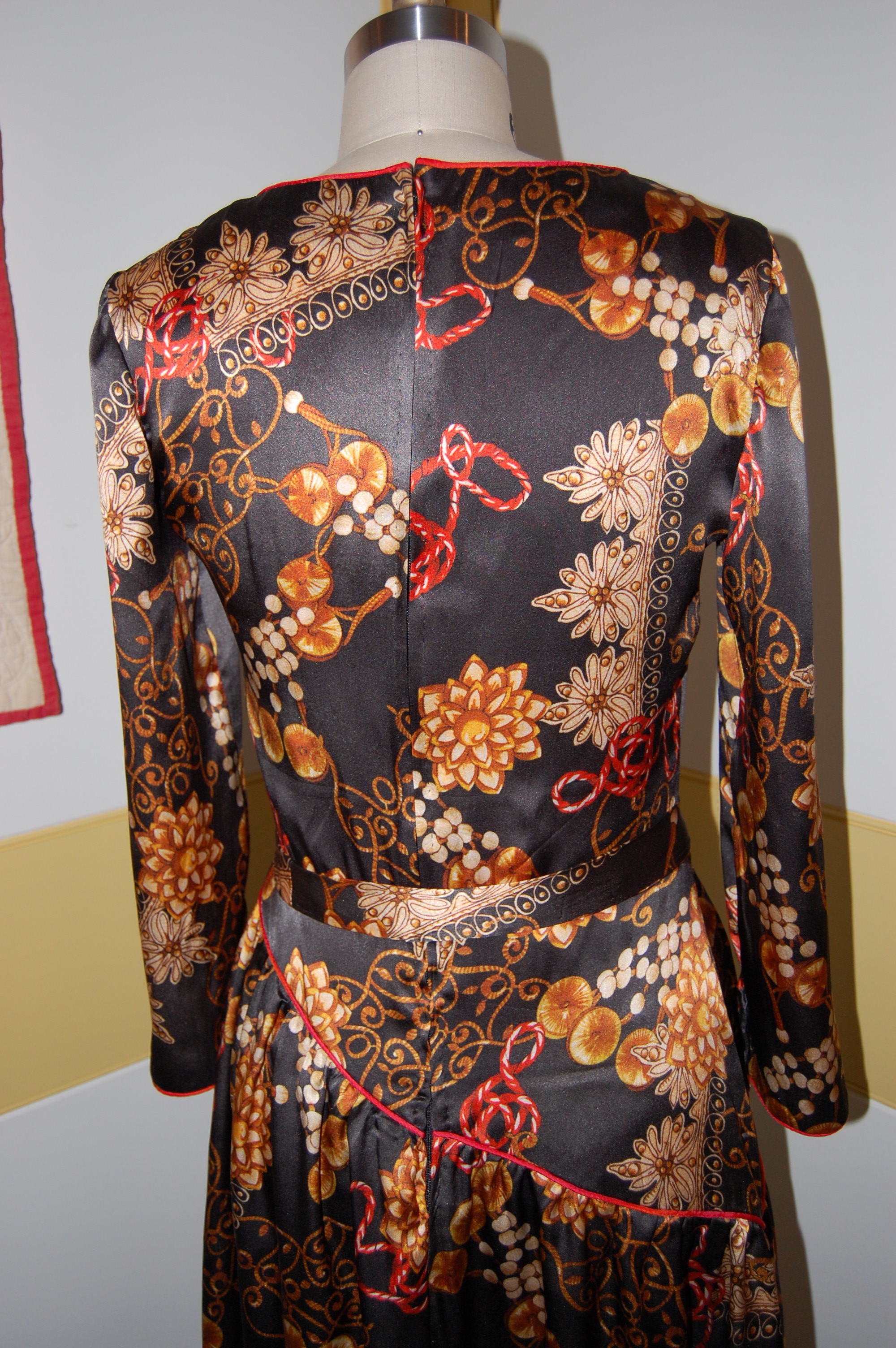
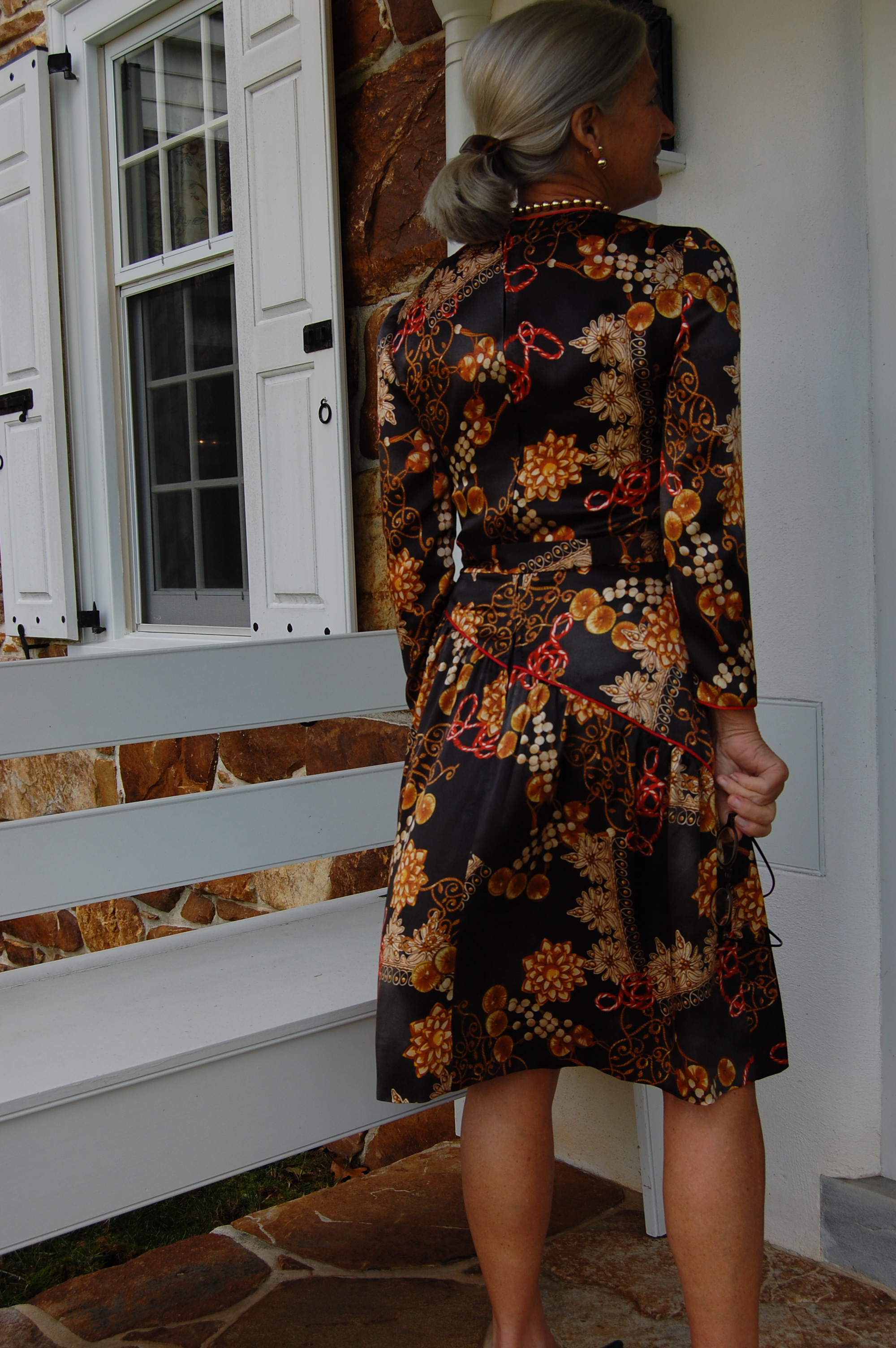
A back view. Notice the asymmetrical skirt yoke, which I think is a nice detail.

Sewing ghosts

I do love this fabric!

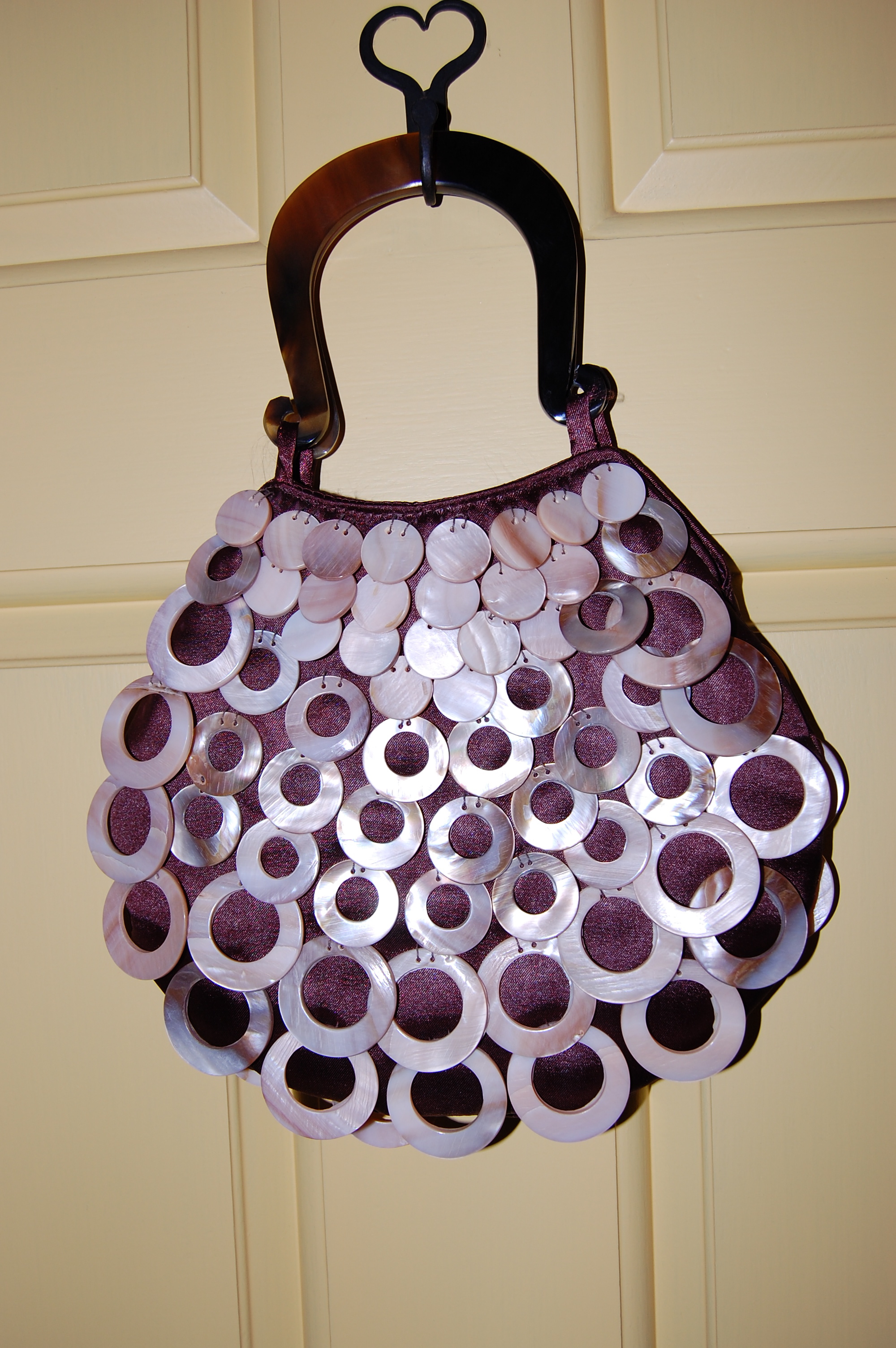
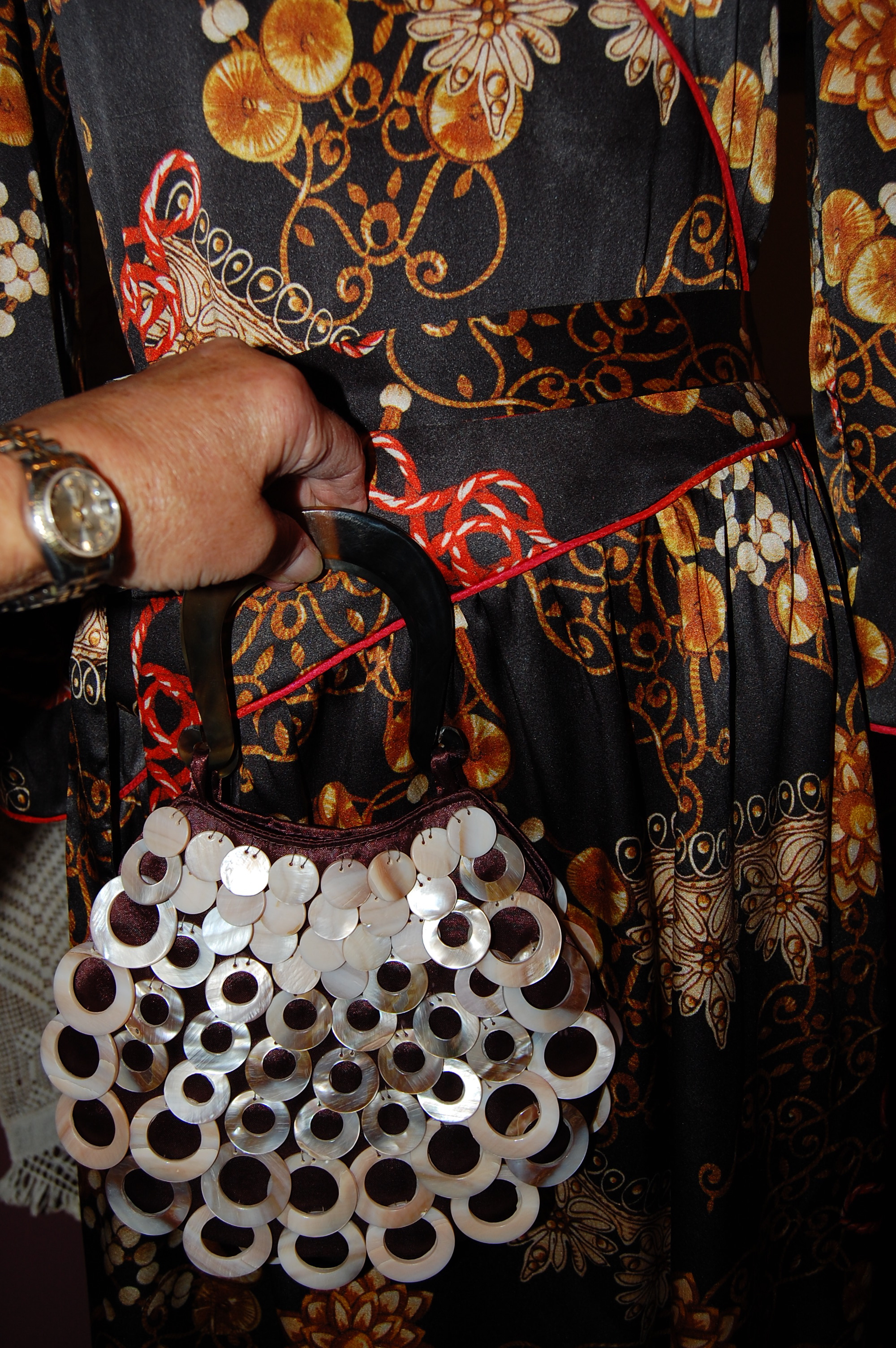
And here is something fun - a dressy handbag to wear with this dress ( a recent find from one of my travels).

And here is something fun – a dressy handbag to wear with this dress ( a recent find from one of my travels).

A nice complement to the dress...

A nice complement to the dress…

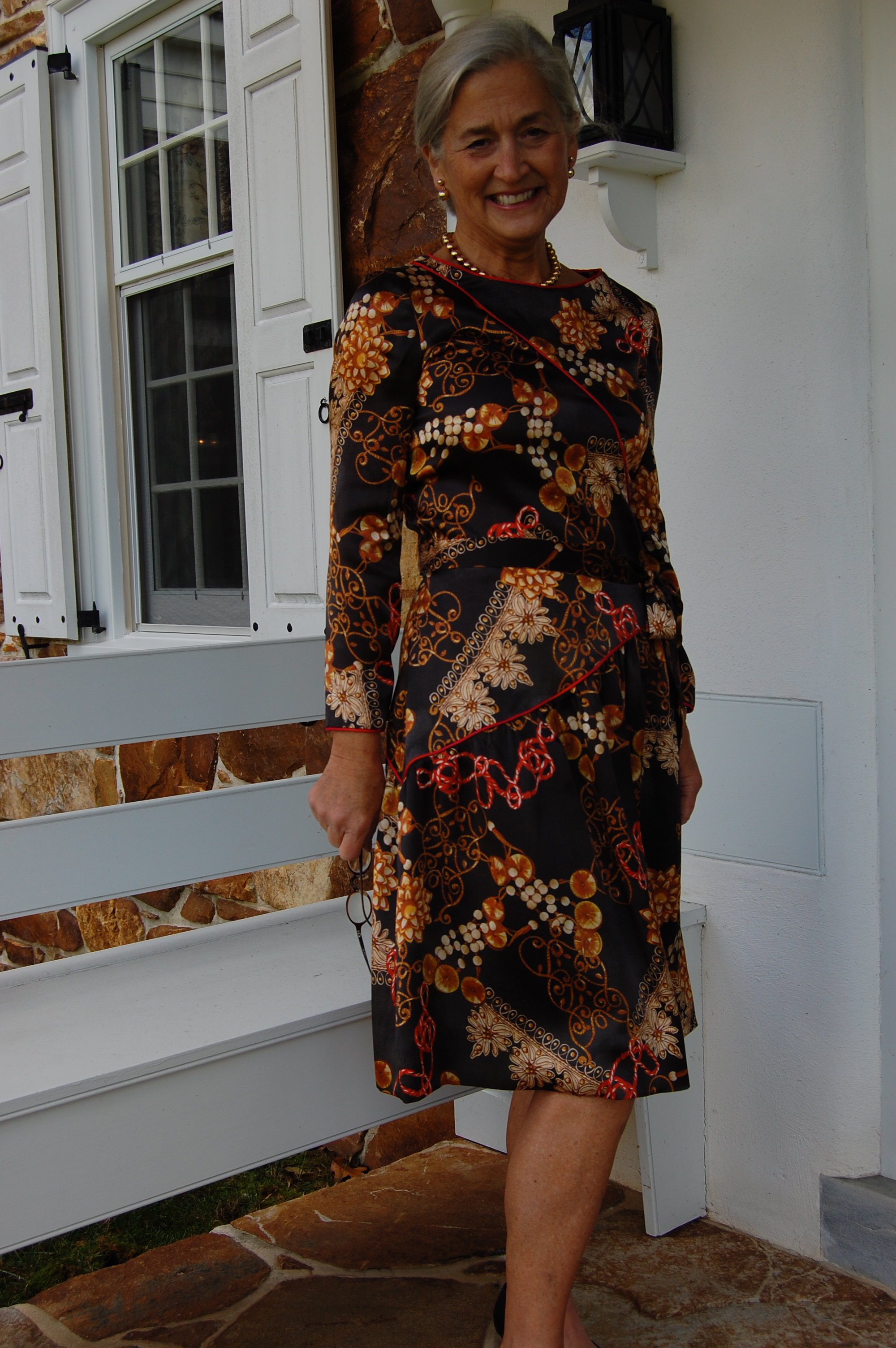
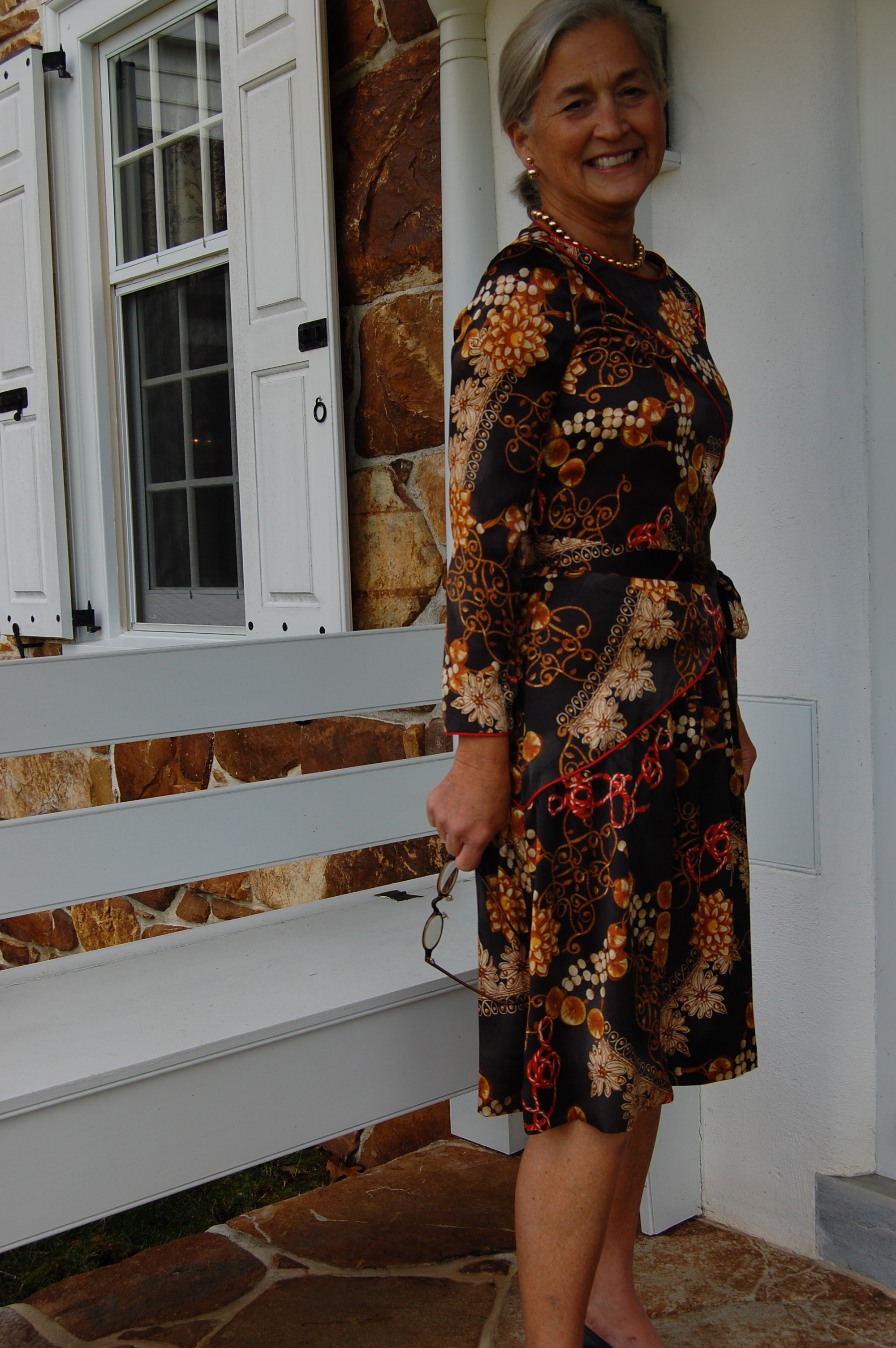
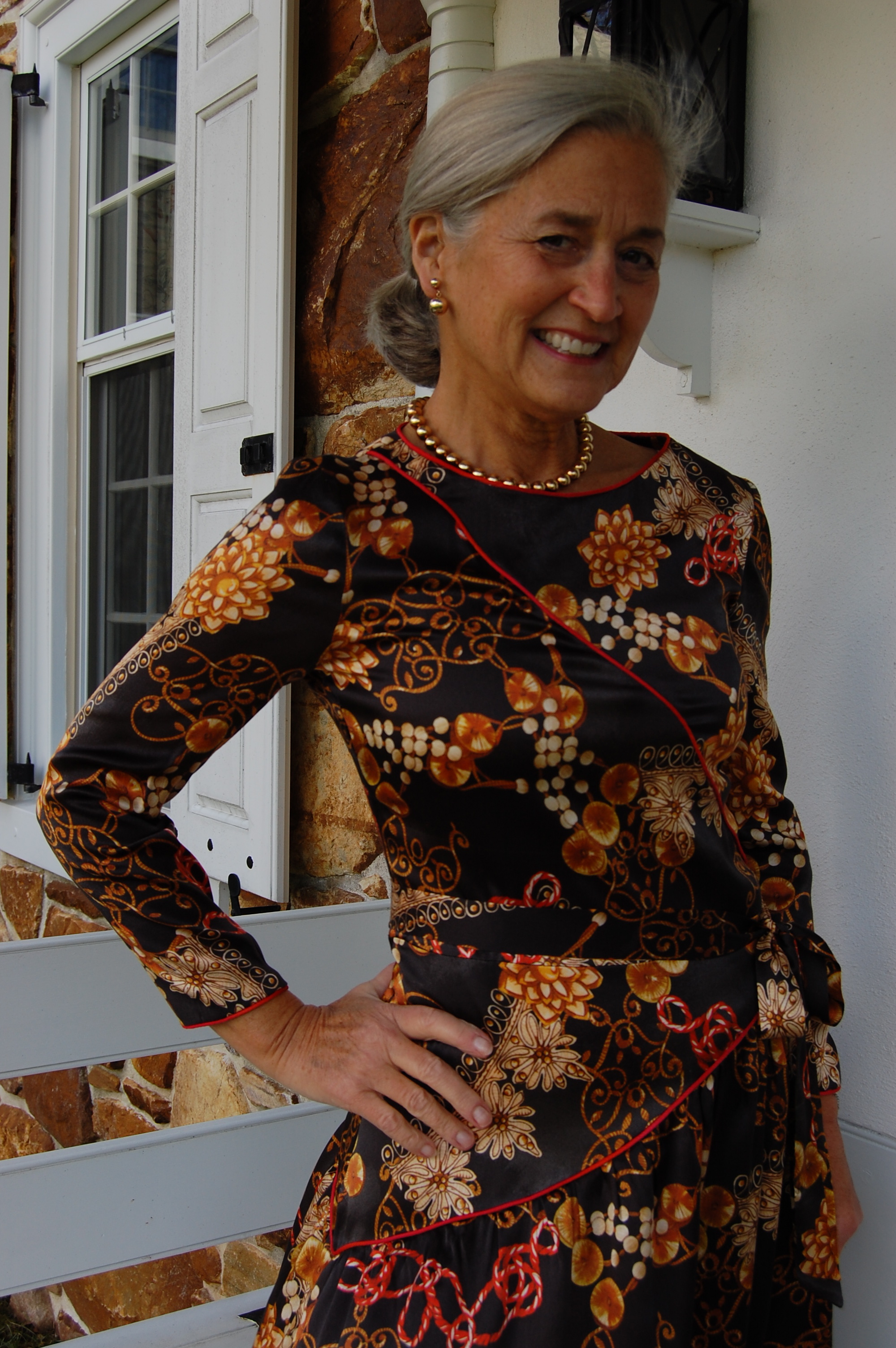
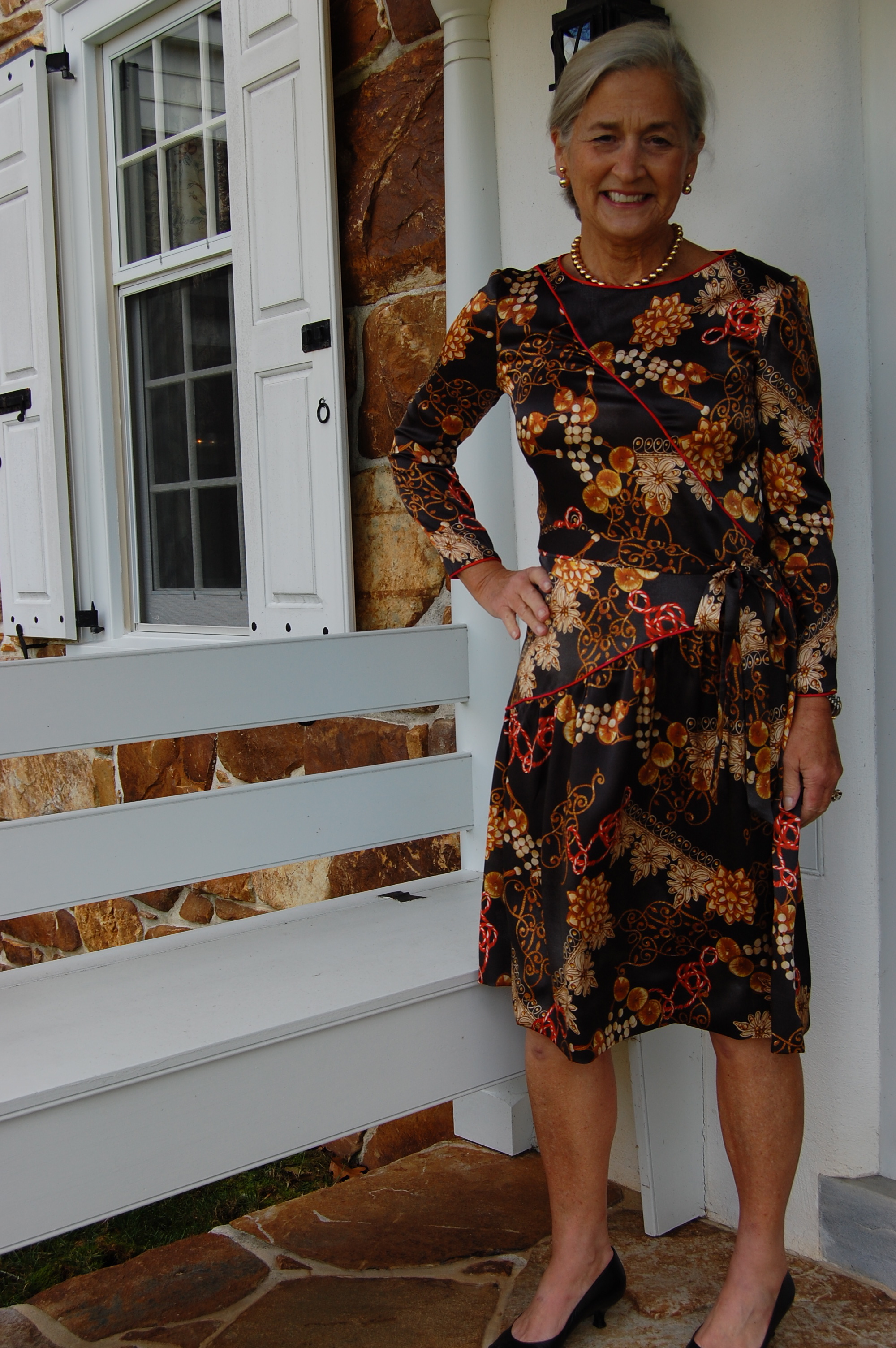
Finally, some photos of me wearing the "ghost" dress!

Finally, some photos of me wearing the “ghost” dress!

Sewing ghosts

DSC_0322

sewing ghosts

sewing ghosts

Finishing this dress successfully definitely warrants a smile!

Will I ever make this pattern again? No.   Have I learned from this project? Yes. Will I enjoy wearing this dress? I think so. And right now, that’s good enough.

22 Comments

Filed under 1980's dress patterns, piping, sewing in silk, vintage Vogue Designer patterns

Panic and Patterns

Being away, as “on vacation” (or “on holiday” as many express it), can take its toll on sewing projects. If I have to leave a project in mid-stream, it seems to take even longer to get back to it and pick up where I left off. A recent trip to the western state of Wyoming necessitated that I abandon my current “Fall” dress at precisely the time of year when I need to complete it! And now I’ve run into some complications with it.

I guess you could say that panic has set in. Here is what the dress bodice looks like on my dress form:

Panic and patterns

I am using vintage Vogue pattern 2718 for this dress.

The fit seems okay. The neckline will need a little adjustment, but nothing out of the ordinary. The sleeves look good, and I am pleased with the piping so far. So what is the problem? When I try the bodice on, it looks awful. It pulls across the bust, it doesn’t want to move with me at all, and the front seems too short-waisted even though it measures perfectly for me when on the form. Worse still, this fabric is too dear (as in expensive) to put it aside or to think about abandoning this dress.

I think I know what is wrong, and it will take a great deal of effort to try to correct it – and hopefully it will be correctable! I insisted on using an underlining on this stretch silk fabric. I thought I could accommodate the stretch by cutting the underlining on the bias. Guess what? It doesn’t work. The bias pulls from underneath, restricting the stretch of the silk. What this means is that I am going to have to remove the underlining. It is not going to be fun to remove black underlining from black fabric, sewn together with black thread, is it?

I have consoled myself with the thought that I can salvage this project by making a skirt instead of a dress, which may be what I end up doing. Needless to say, I am fighting my discouragement, and trying to stay focused so I can finish this and move on to something more fun.

While traveling is not conducive to sewing, it doesn’t put a damper on looking at more patterns and fabrics online! Sometimes I go weeks without finding a pattern and then I’ll find several all bunched together in the space of a few days. You might be guessing that such was the case during the last few weeks. So while I am struggling with vintage Vogue 2718 right now, I look at my new acquisitions to give me encouragement for the future. Here are some of my “new” finds:

I was delighted to find this DvF pattern in my size, at a reasonable cost!  This one should see some fabric next Spring or Summer.

I was delighted to find this DvF pattern in my size, at a reasonable cost! This one should see some fabric next Spring or Summer.

DSC_0303

This one was too good to pass up, although I don’t have any plans for it right now. This looks like a dress, but it is really a skirt and top, paired with the jacket.

DSC_0304

What can I say? I love coats.

DSC_0305

I have been on the search for this pattern for a long time. I hope I’ll have some reason to make this dress sometime soon…

DSC_0306

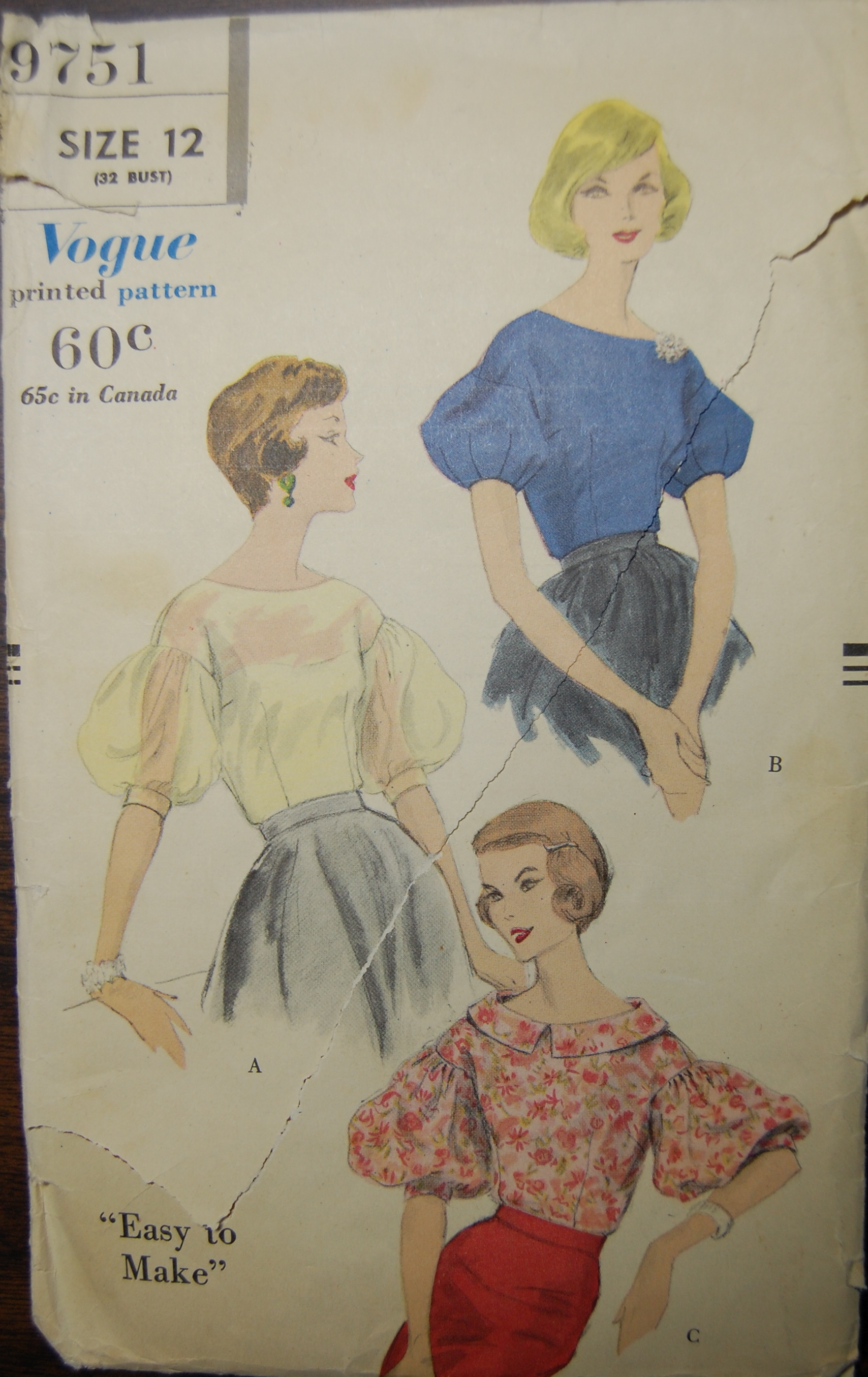
The sleeves on the blue version of this blouse are so pretty!

In addition to these new patterns, I just ordered two Marfy patterns, which should either add to my current sewing anxiety or help alleviate it. I hope it is the latter!

17 Comments

Filed under 1980's dress patterns, Blouse patterns from the 1950's, Coats, Cocktail dresses, piping, Uncategorized, vintage Vogue Designer patterns, vintage Vogue patterns from the 1950s, vintage Vogue patterns from the 1960s, vintage Vogue patterns from the 1970s, Wrap dresses

Light Load


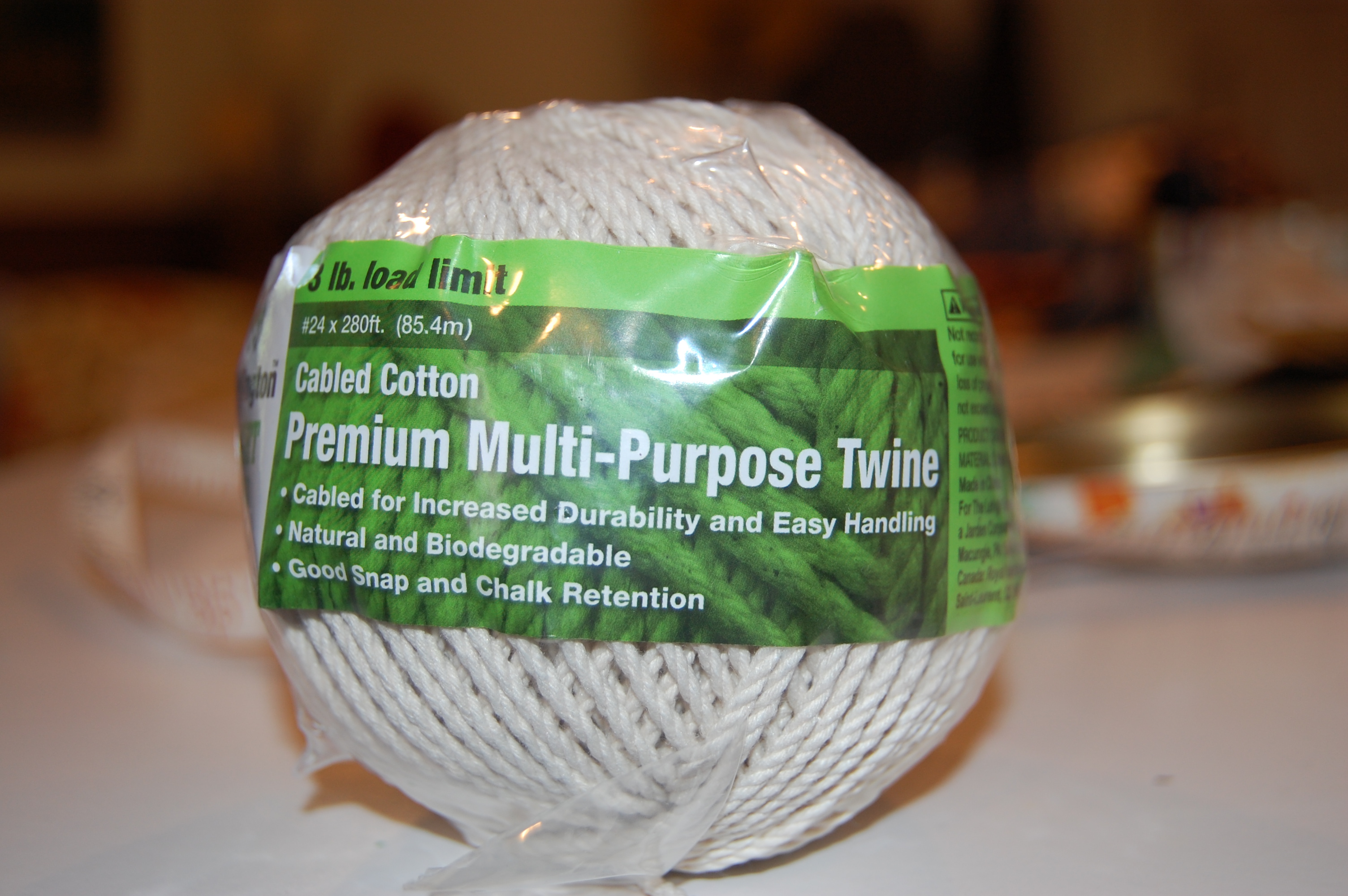
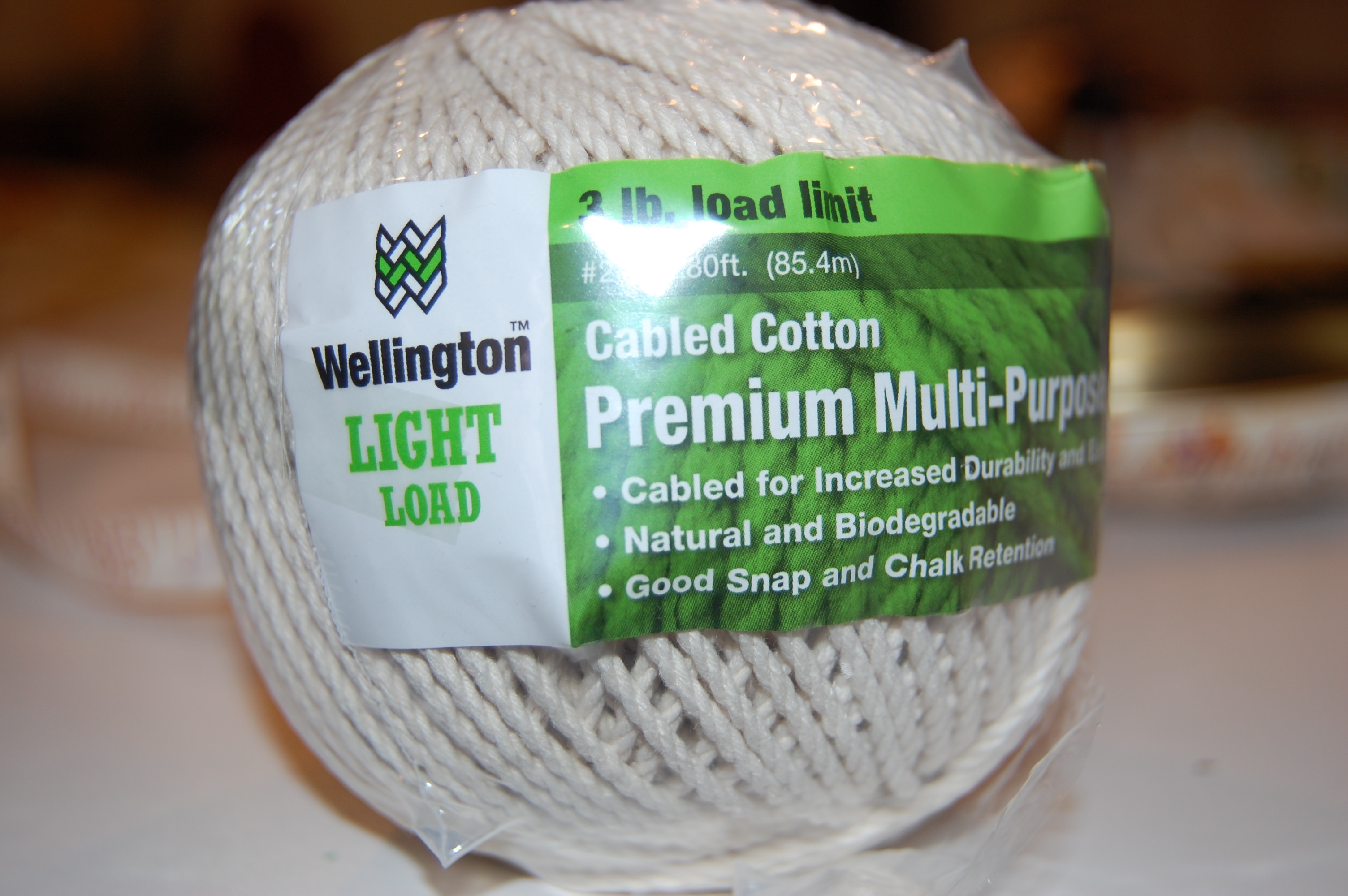
String is a wonderful thing. I am particularly fond of kitchen string. Usually twisted cotton or a twisted cotton blend, it is useful for many things (such as tying together the newspapers for recycling, playing with the cats, securing open bags of flour and sugar, etc., etc.) It also occasionally makes its way upstairs to my sewing room.
Light Load DSC_1380

“Light load” kitchen string happens to be the perfect weight and diameter for making piping to be used in apparel. And – my current project for Fall features piping as one of the main design details.

The piping is more clearly visible on the green view of this dress.

The piping is more clearly visible on the green view of this dress.

As luck would have it, I had purchased some hand-dyed silk bias ribbon from Britex Fabrics a couple of years ago. One of the colors I had ordered turned out to be a perfect complement to this silk from Mendel Goldberg, which is slowly making its transformation into a dress.

Light Load

After hours and hours of working on the muslin (toile), cutting out the underlining (on the bias to accommodate the stretch of the silk fabric), checking and re-checking (multiple times) to make sure my pattern pieces were laid out properly, and then meticulously basting the gossamer silk gauze underlining and the slippery fashion fabric together, I was ready to do something fun. “What could be easier?” I thought. “The ribbon is already cut on the bias so I’ll just sew up three yards of piping and I’ll be in business.” Except that I kept getting ridges and lumps in my piping as I encased that kitchen string in the silk ribbon. I thought maybe if I stretched it a bit, it might look better, but it really didn’t. I must admit I was discouraged – actually very discouraged. I could not figure out what I was doing wrong, but I knew I needed to take a break from this mess and come back the next day.

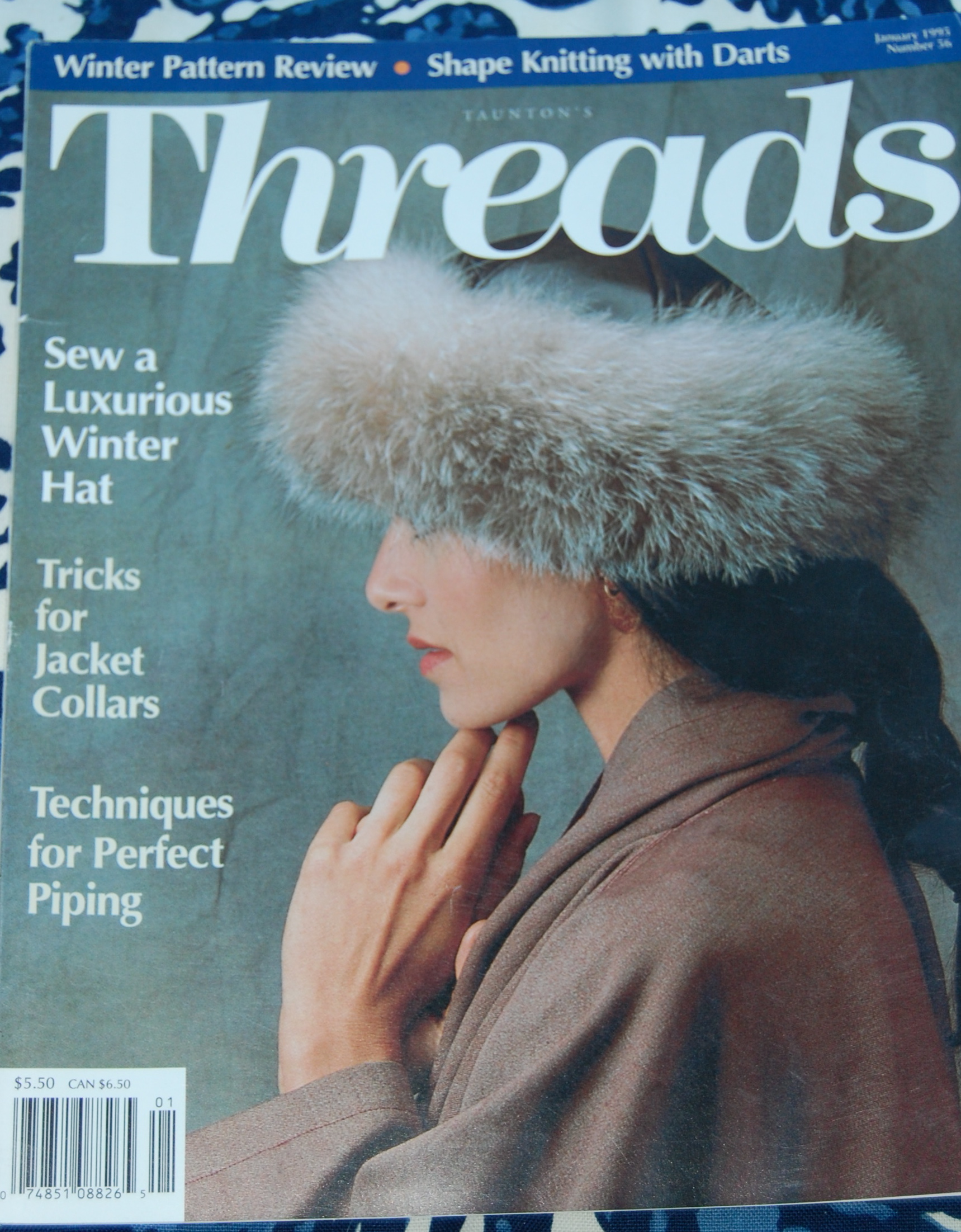
Before I left my sewing room, I went to my stack of Threads Magazines to look for a particular issue recently recommended to me for another reason, and in my search found, by chance, the December 1994/January 1995 issue. There on the cover “Techniques for Perfect Piping” was a featured article.

I have many odd issues of Threads Magazine, but earlier in the year I bought the Threads Magazine Archive 1985-2013, available on their website. I can't recommend it highly enough - decades of sewing advice and expertise is readily available at the click of your computer mouse!

I have many odd issues of Threads Magazine, but earlier in the year I bought the Threads Magazine Archive 1985-2013, available for purchase on their website. I can’t recommend it highly enough – decades of sewing advice and expertise is readily available at the click of your computer mouse!

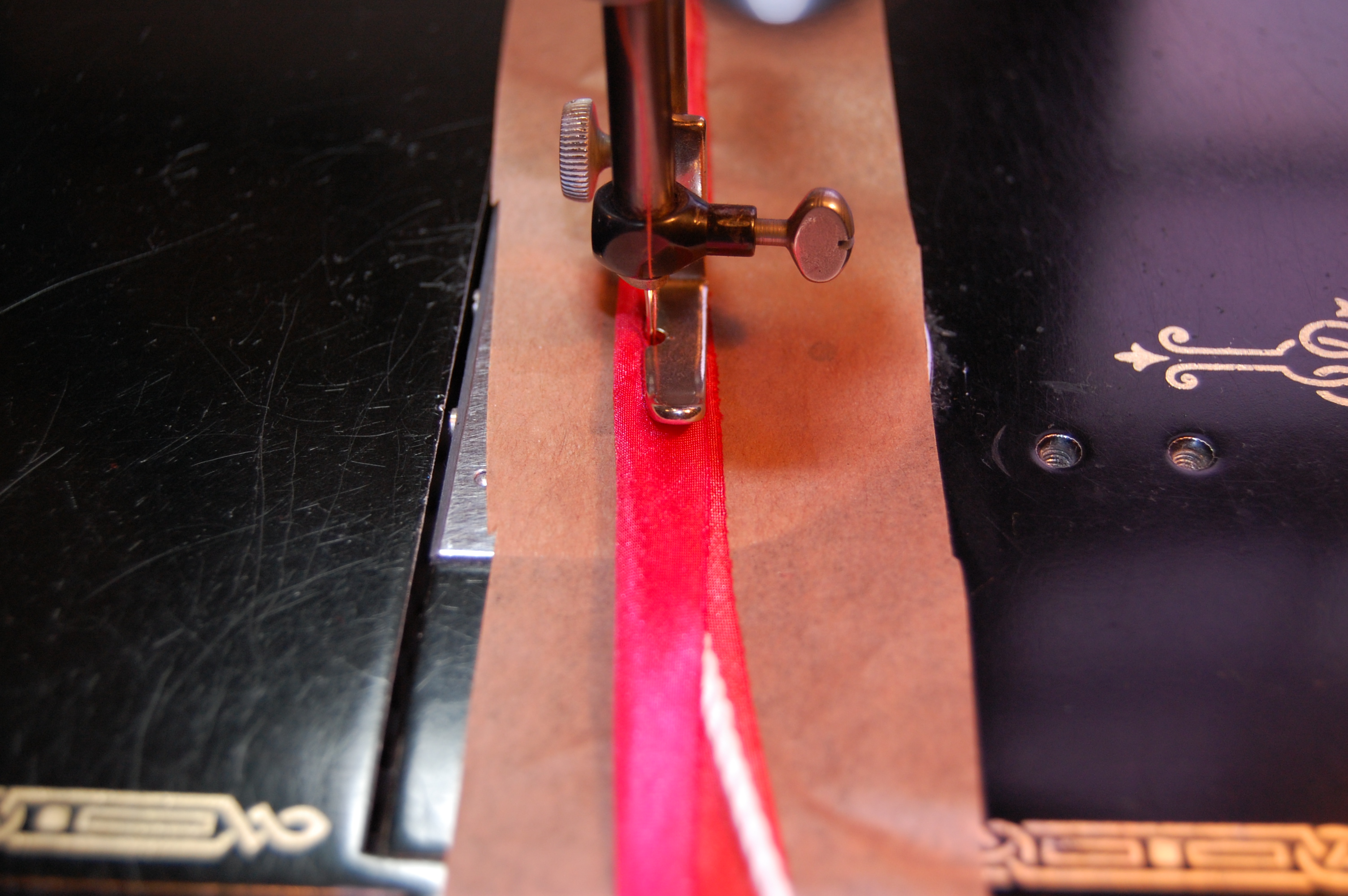
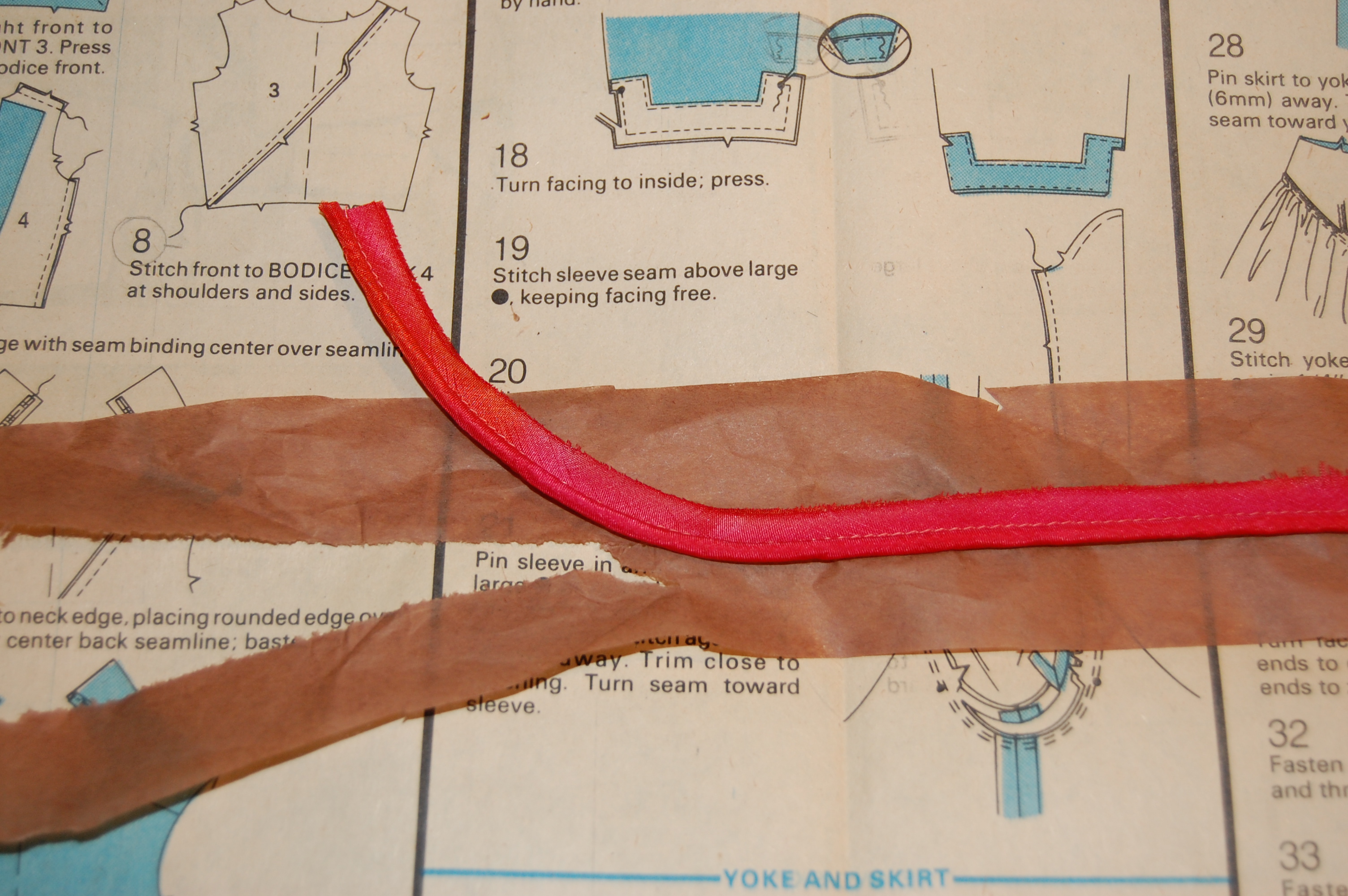
Needless to say, that became my evening reading. One line in this article by Linda Wakefield led me to the solution to my problem: “I also recommend reducing presser foot pressure, if possible, so that the fabric doesn’t twist or ripple as you stitch.” Even though I am unable to change the presser foot tension on my machine, that advice made me think that I needed to stabilize and reinforce the silk bias ribbon somehow to make it feed more evenly through the needle. The next day, back in my sewing room, I got some tissue paper – the kind one uses for wrapping presents – and cut it into strips. I placed a single layer of tissue under the silk ribbon as I stitched – and voila! Perfect piping emerged from my machine.

The tissue is brown (which is just some I happened to have with my gift wrapping supplies.)

The tissue is brown (which is just some I happened to have with my gift wrapping supplies.)


 The tissue paper tears off easily and cleanly from the silk piping.


The tissue paper tears off easily and cleanly from the silk piping.

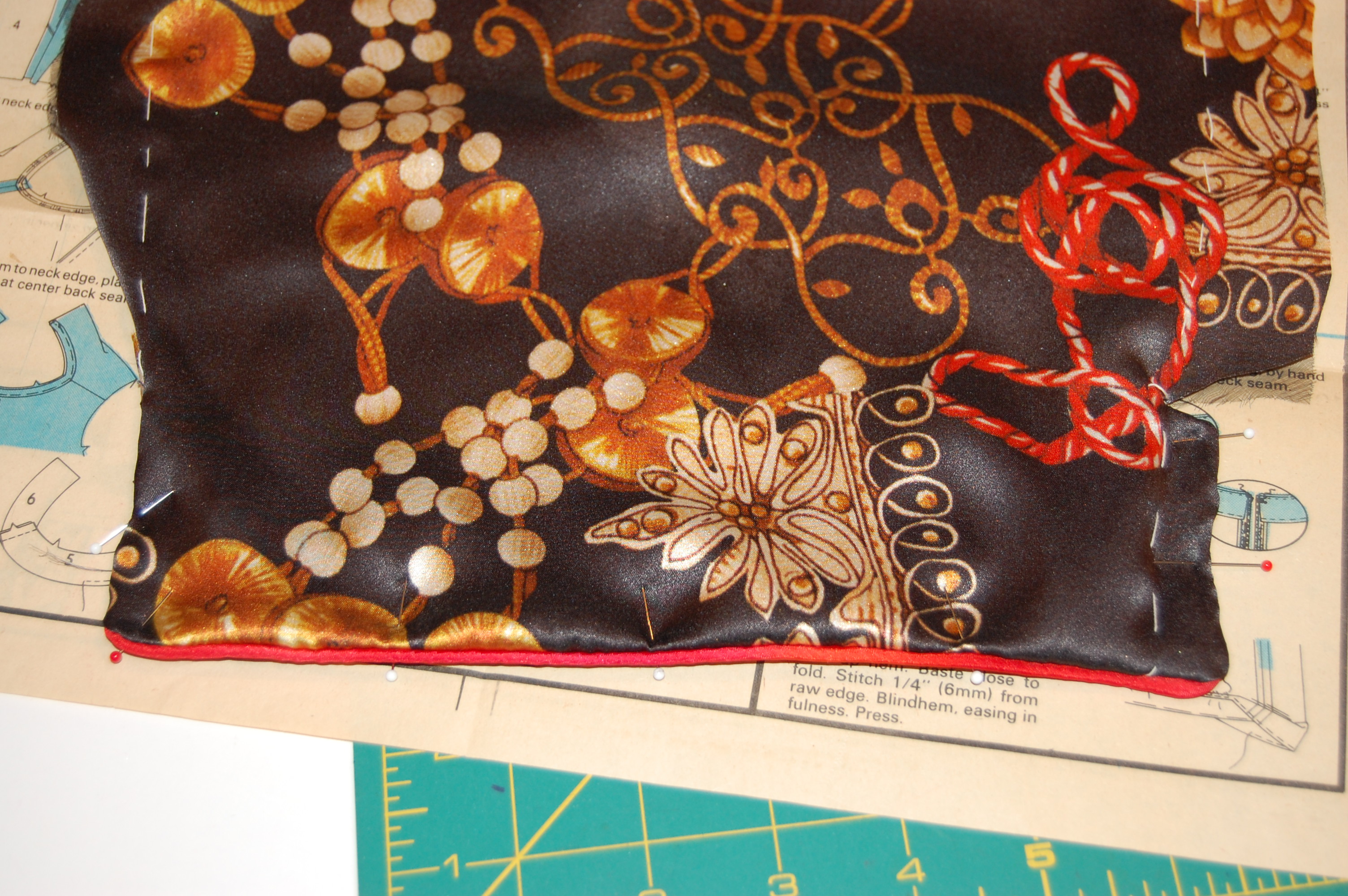
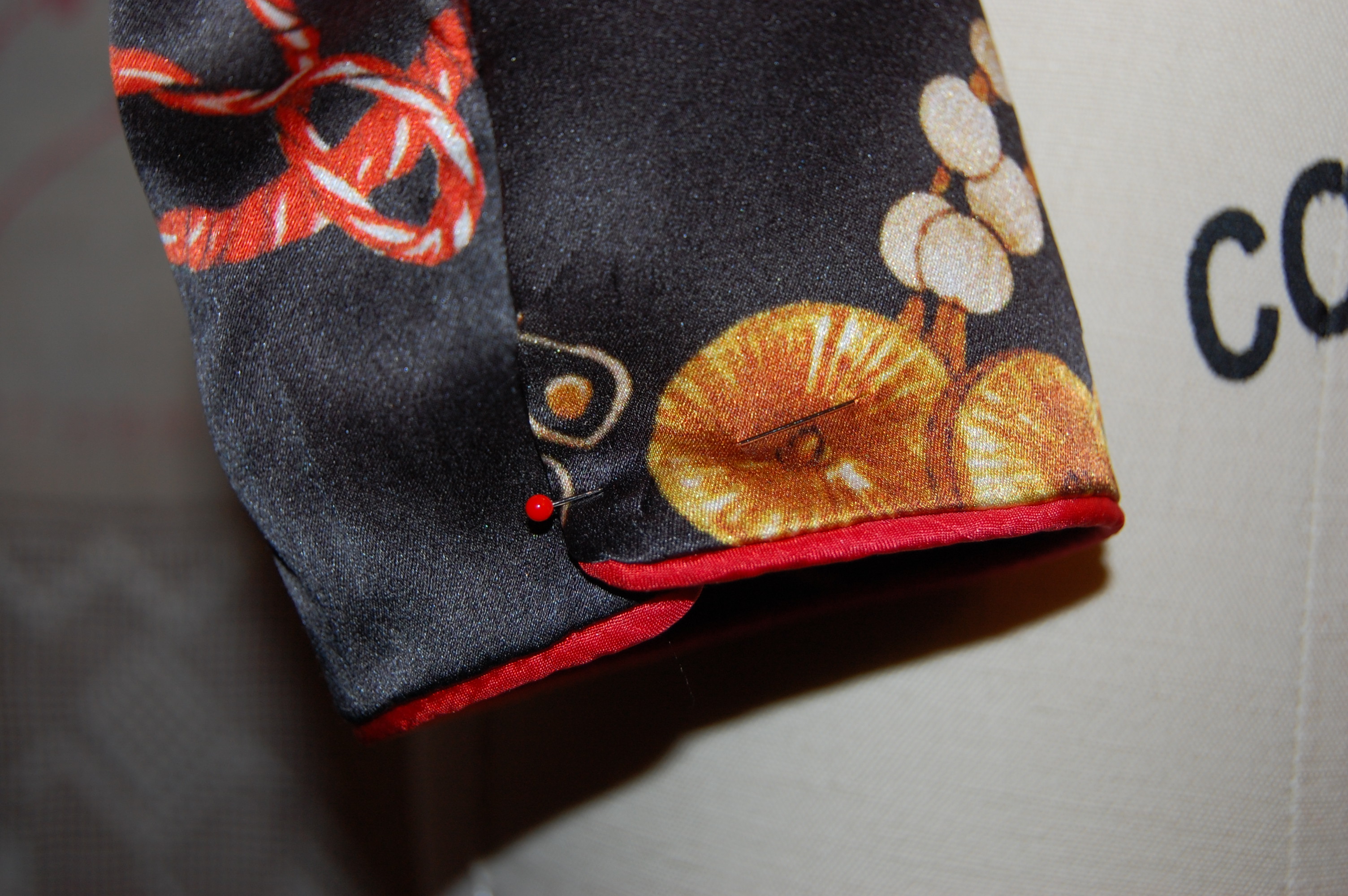
Further advice in the article gave tips on applying the piping. I decided to try my hand with this added guidance, choosing to start with the sleeves. The pattern calls for piping around the lower edge – a nice short distance and easy to fix if I wasn’t happy with the finished look. What do you think?

Light Load

The sleeve has a side opening - to be secured by snaps.  Here it is just pinned.

The sleeve has a side opening – to be secured by snaps. Here it is just pinned.

There will still, I am sure, be some tedious moments as I continue work on this dress, but my load was definitely made lighter by something as simple as —- tissue paper!

26 Comments

Filed under 1980's dress patterns, piping, sewing in silk, vintage Vogue Designer patterns

“Cheers!”

Cocktails in our home – and in our family – are always preceded by a toast of some sort. Usually a simple “Cheers!” will suffice, but sometimes the occasion calls for something more meaningful. One of the most memorable cocktail toasts I have ever heard was standard fare for one of my late mother-in-law’s good friends. By the time I met her, she was a little shaky, which made the toast even more charming. She would raise her trembly glass with great ceremony and declare “To our noble selves!”

As I was working on my latest project – yes, a cocktail dress – I thought about all the possible declarations we, as sewers, could add to the vocabulary of toasts. More about those thoughts later… First up is something to wear to that cocktail/dressy party!

This Vogue Designer pattern is from the early 1960s.

This Vogue Designer pattern is from the early 1960s.

The lengthy process of perfecting the muslin (toile) for my blue cocktail dress revealed a few minor changes I needed to make – four of them, to be exact.   You might be able to see on the pattern envelope, that the “overblouse” in the front actually hits about an inch above the waistline. This just did not look good on me, so I extended the length of those two over-lapping fronts an inch so that they would lay directly at my waist. Second, the under-dress, the top of which is not seen when being worn is cut low so that it does not show beneath the “V” of the overblouse. However, it was cut much lower than I needed, so I raised it a bit.

I thought the shoulders of the overblouse extended a little bit too wide, so I cut the top of the armscye in about ¾ of an inch, graduating it down to join the lower part of the armscye. And fourth – I added a slit at the lower back center seam to make walking easier. I seem to do this frequently with vintage patterns.

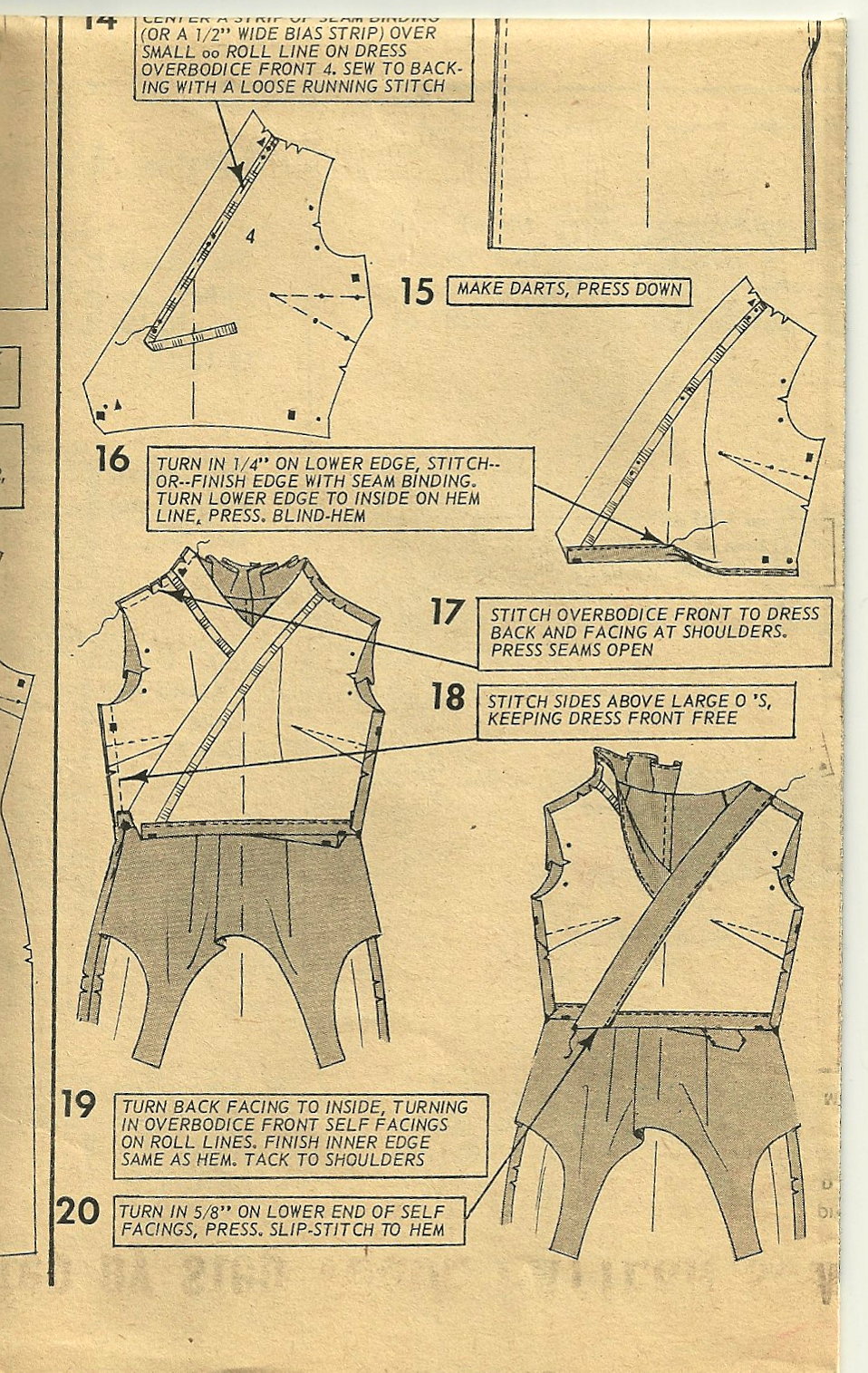
The pattern called for the fashion fabric to be underlined, but not lined.   I wanted to line the dress – and actually felt it was a necessity with the fabric I was using. Because of the unusual construction of the dress, I knew that this was going to be interesting – and that I was going to have to make it up as I went. To see what I mean about the unusual construction, take a look at the pattern instructions. The front of the “underdress” is sewn to the back of the dress at the side seams only to the waistline. The bodice part of the front “underdress” hangs loose while the two sections of the overblouse are first sewn to the dress back. Then that bodice is hand sewn in place.

To our sewing selves - pattern diagram

To line the dress, I first sewed the lining to the front underdress at the neck and the armscyes by machine. I under stitched these sections by hand, leaving about an inch free on either end.

Cheers

Next I lined the two front overblouse sections, stitching only the front armscyes by machine; I attached the rest of these linings by hand, using fell stitches.  Then I joined the overblouse sections to the (unlined at this point) dress back.

The front overblouse sections are attached to the side seams, but the front underdress is hanging loose, which does not show in this photo.

The front overblouse sections are attached to the side seams, but the front underdress is hanging loose, visible at the lower left.

I had pieces of dress and overblouse and lining hanging every which way! Any of you who have made a “Chanel” type jacket know how unruly the process is before the lining is seamed in place by hand. This reminded me of that. Somehow I would have to make order out of chaos!

To line the back dress section, I pinned the lining to the armscyes and neck and fell stitched in place by hand. Then I was able to sew each side seam on the machine. The shoulder seams were the final ones to finish, which I did by hand. Then it was only a matter of fell stitching the lining to the hand-picked zipper and understitching the neck and arm sections.

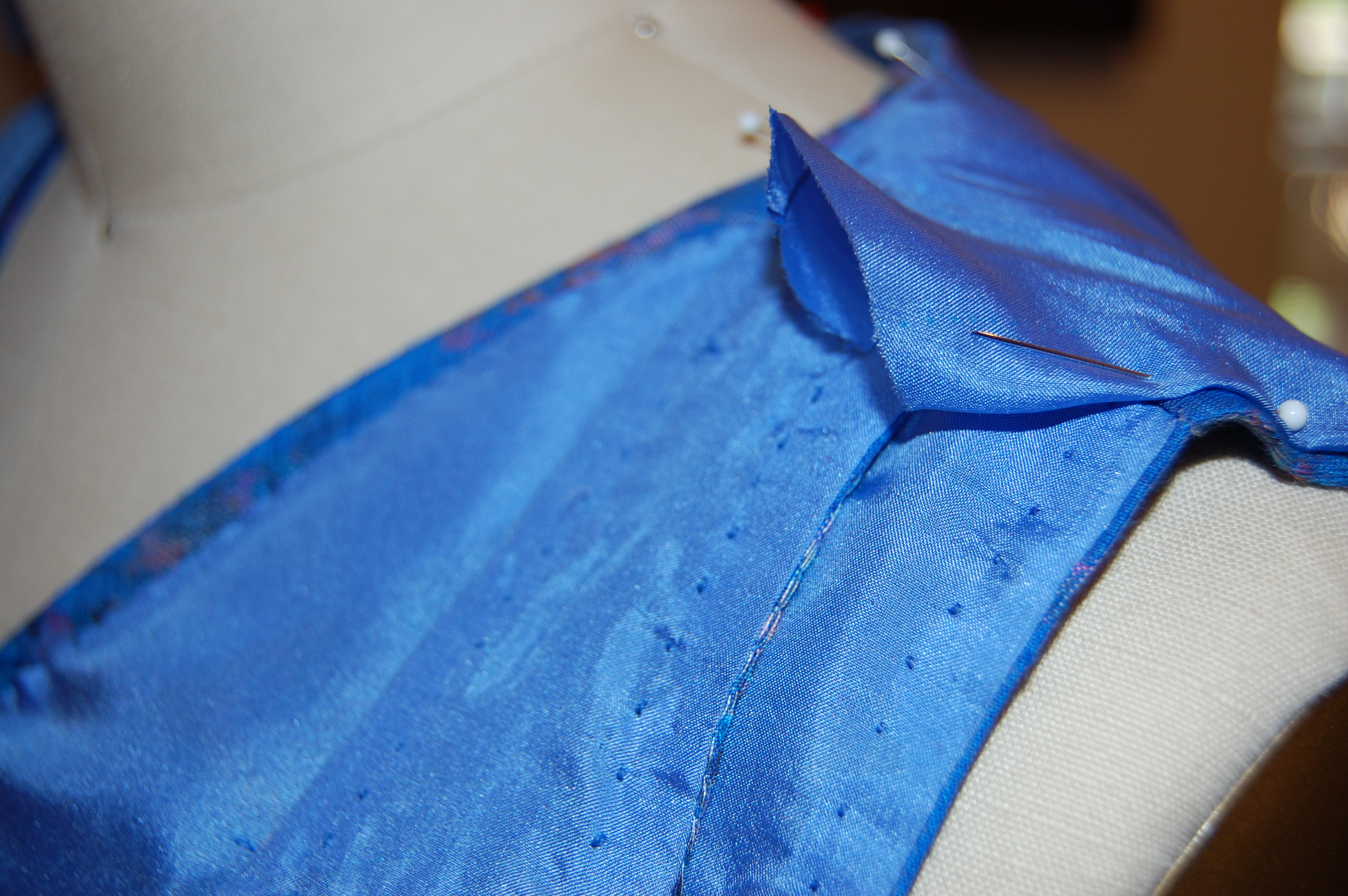
The shoulder seam encloses two finished layers in front.

The shoulder seam encloses two finished layers in front.

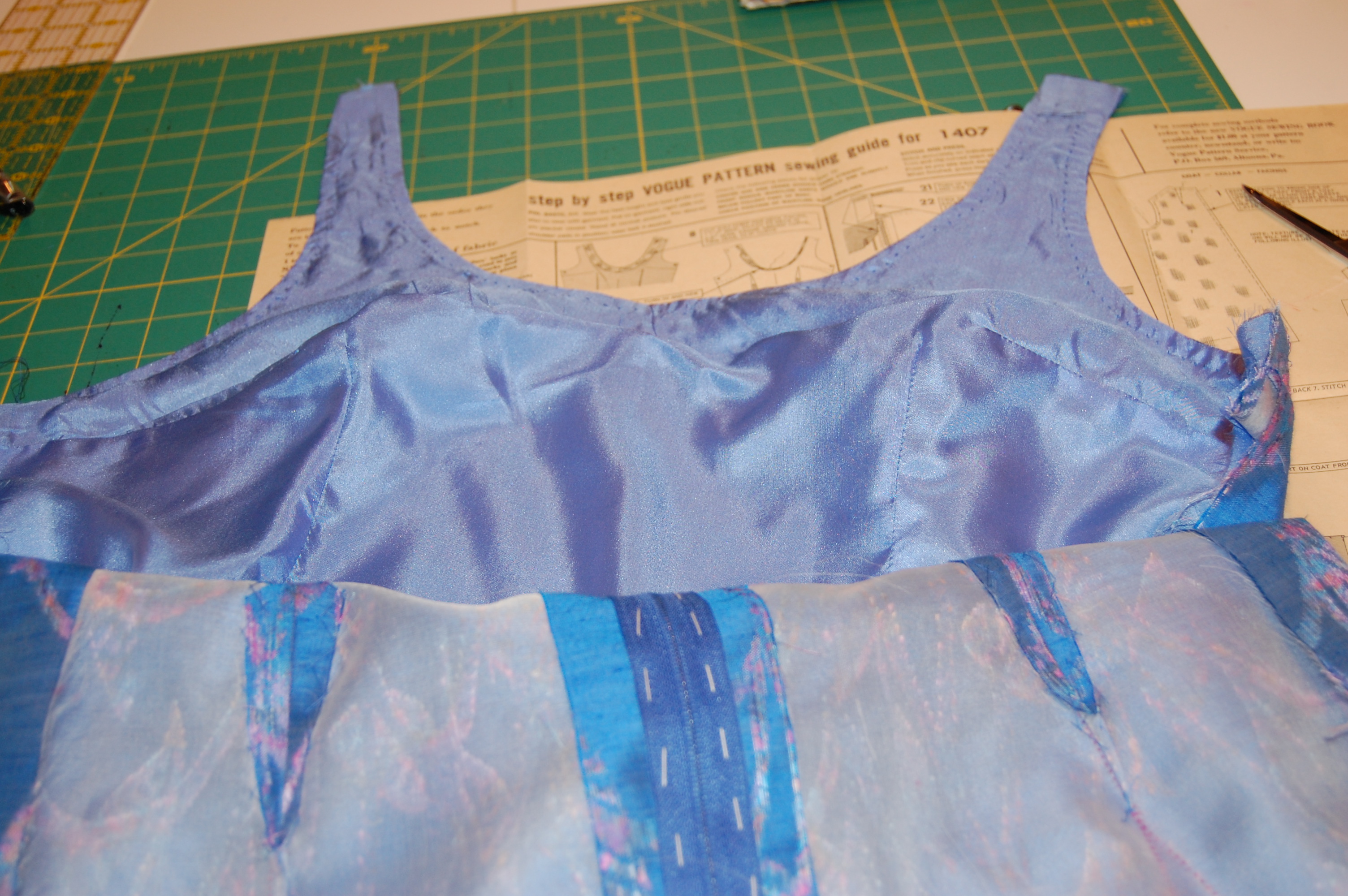
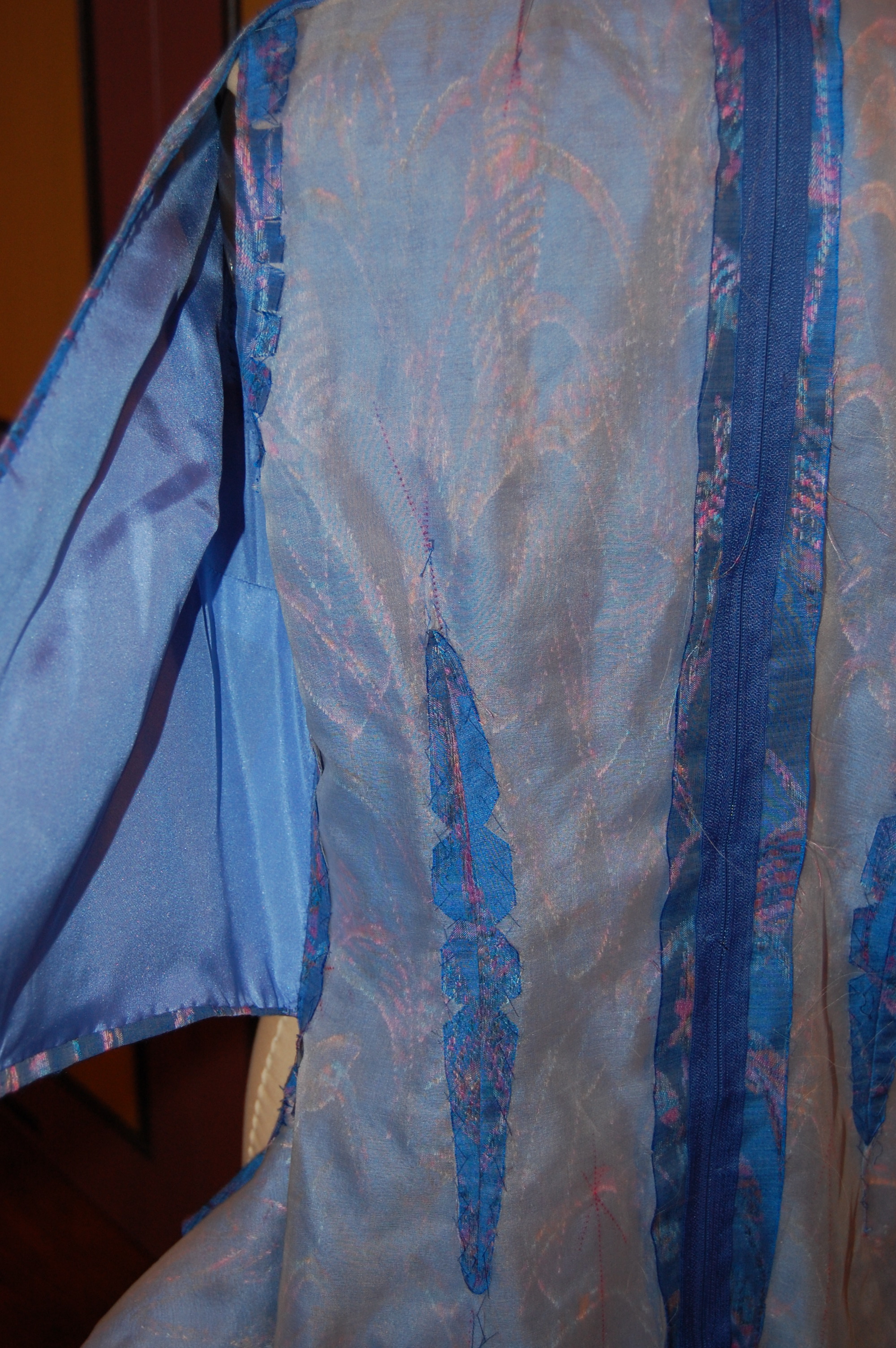
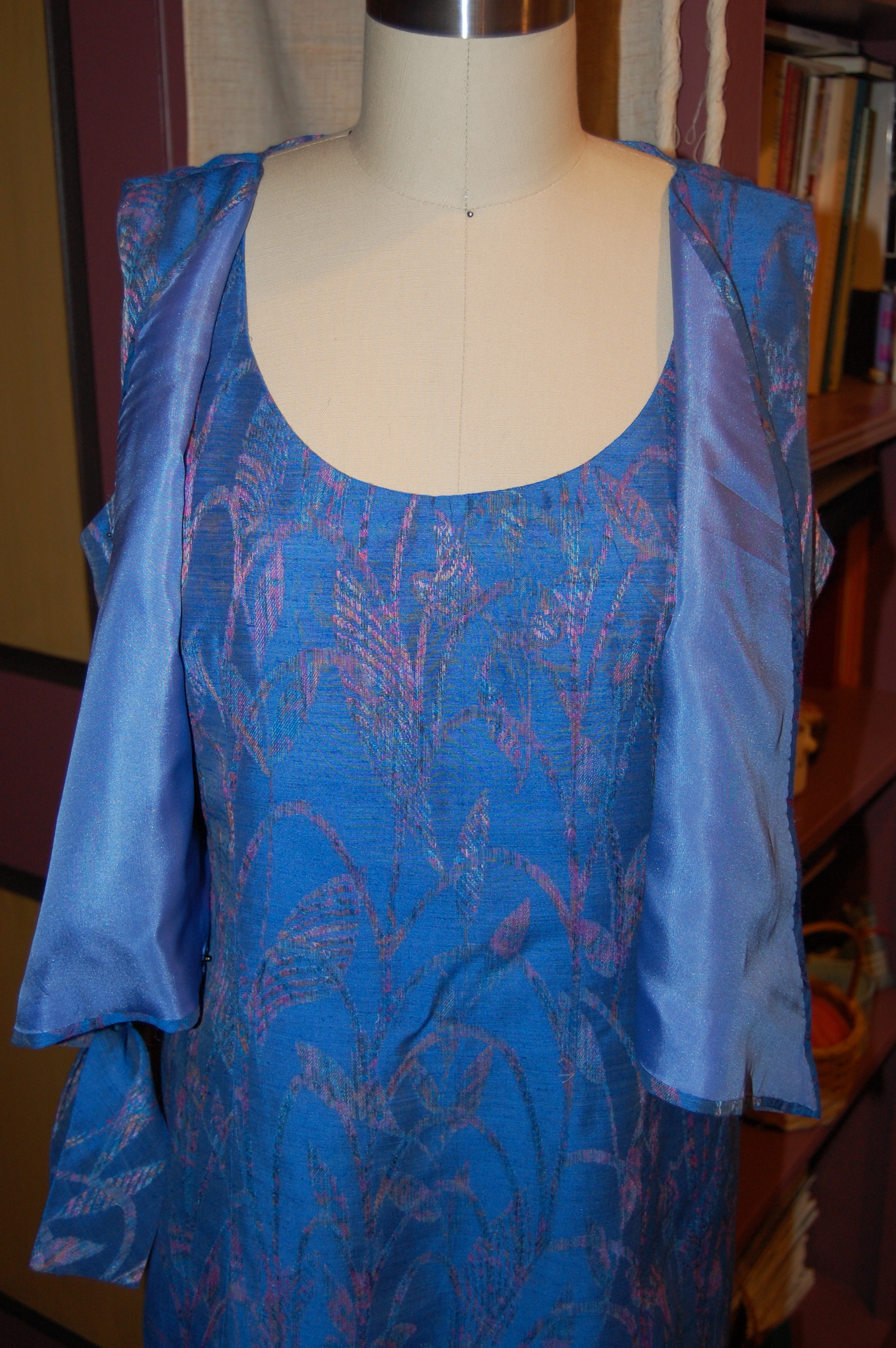
It worked! The lining fit perfectly and made for a pretty “insides”!

An inside look at the underdress and the overblouse.

An inside look at the underdress and the overblouse.

The pattern called for tacking the front overblouse sections to the underdress, but I decided to use snaps instead. Ironing this dress will be so much easier with the overblouse sections opened up. However, I did permanently tack the looped tie in place, as indicated in the pattern directions. There was much more hand sewing involved in this dress because of the added lining, but the process was so rewarding in the end.

DSC_1374

Cheers

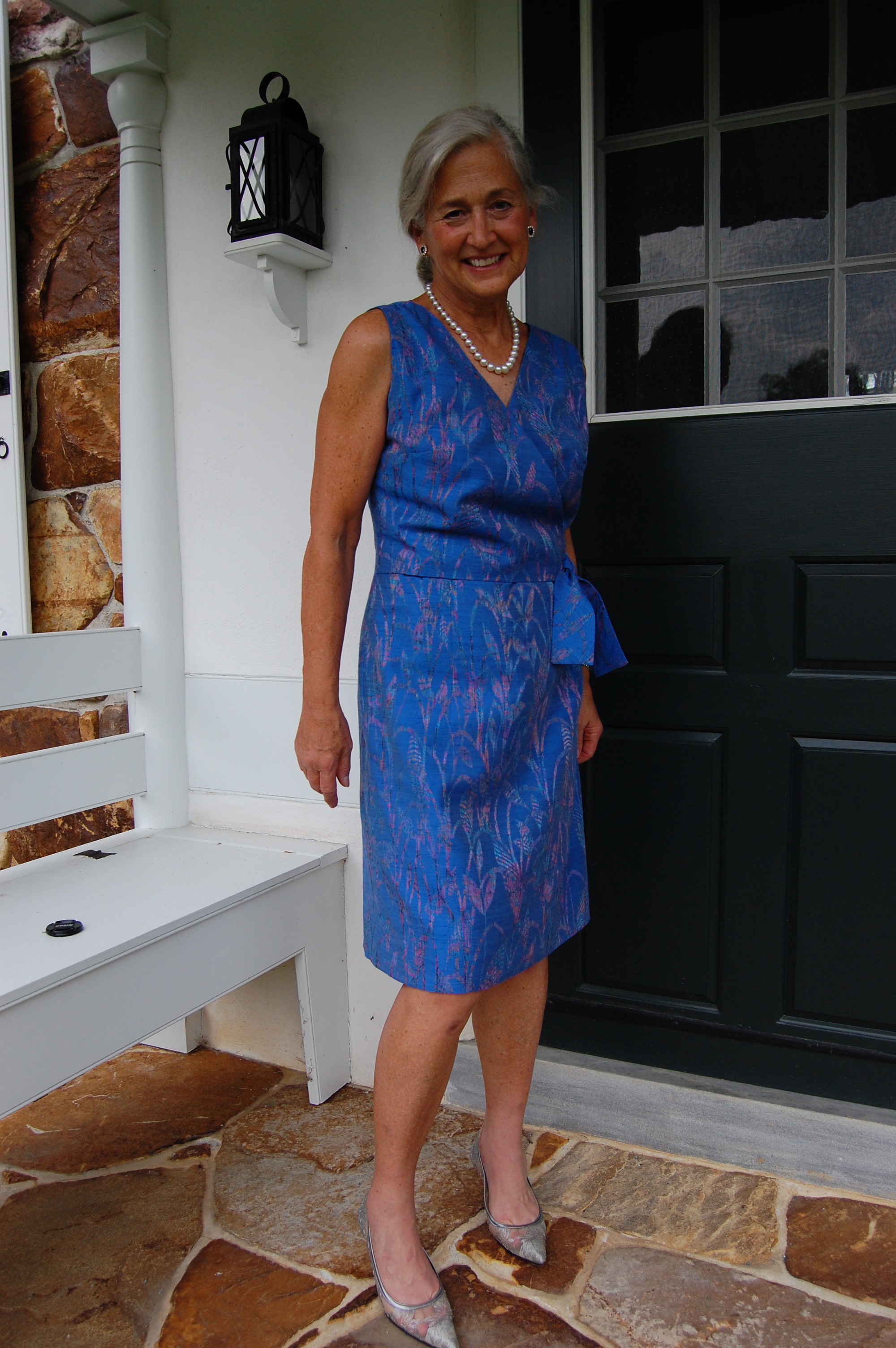
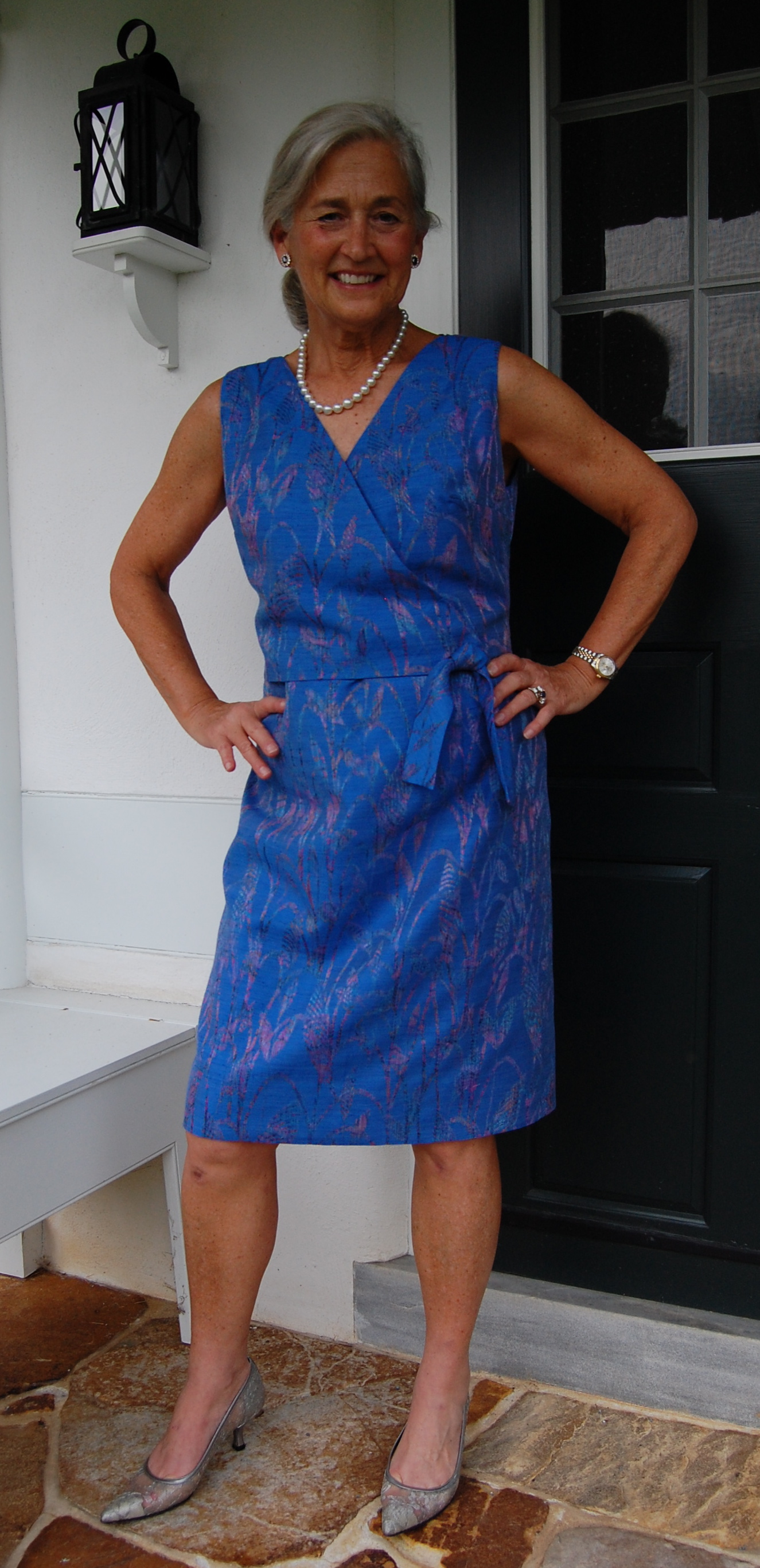
I anticipate this dress being perfect for not only cocktails, but also weddings and other dressy occasions (particularly if I get the coat made, too!).

Cheers

DSC_1369


DSC_1362

Although I doubt I’ll be clinking my cocktail glass with many other dressmakers, I like the thought of a “virtual” toast with my fellow sewing enthusiasts. Some possibilities I have come up with are “To needle and thread” – or “To weft and to warp” – or “To scissors and seams” – or the one I think I prefer, with thanks to a lady from the past – “To our sew-able selves!”

40 Comments

Filed under Cocktail dresses, couture construction, hand-sewn zippers, sewing in silk, Uncategorized, underlinings, vintage Vogue Designer patterns, vintage Vogue patterns from the 1960s

The Search for the Perfect Blue

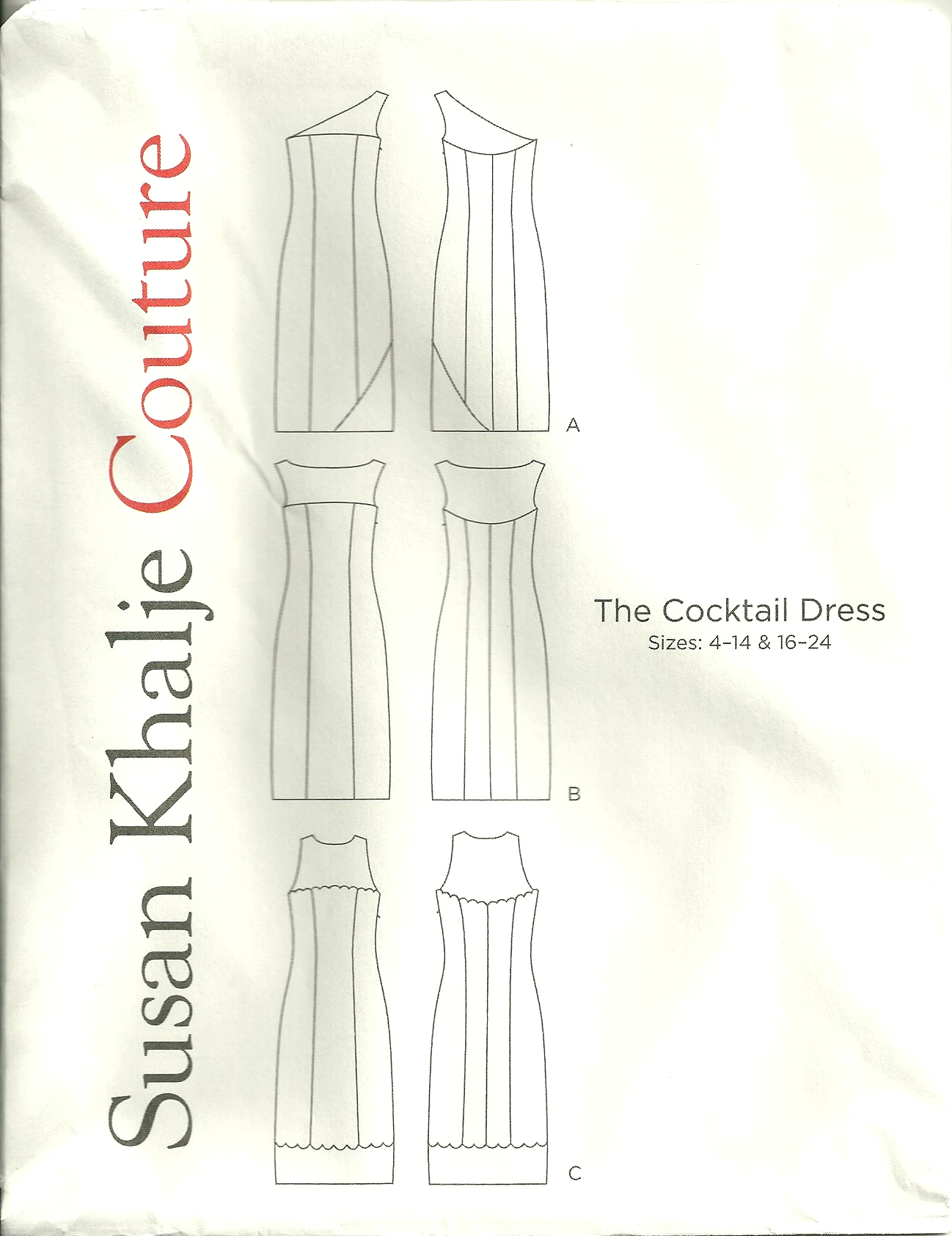
Do you ever have a specific color in mind when looking for fabric for a specific type of dress? I am usually open to changing my mind if something else wonderful appears, but this time I really, really wanted to find a blue fabric for a cocktail dress. I started out thinking I would like a pale or periwinkle blue silk to pair with white lace, having Susan Khalje’s new Cocktail Dress pattern in mind.

The version I was thinking I'd like to make is the third one, with lace for the top and bottom panels.

The version I was thinking I’d like to make is the third one, with lace for the top and bottom panels.

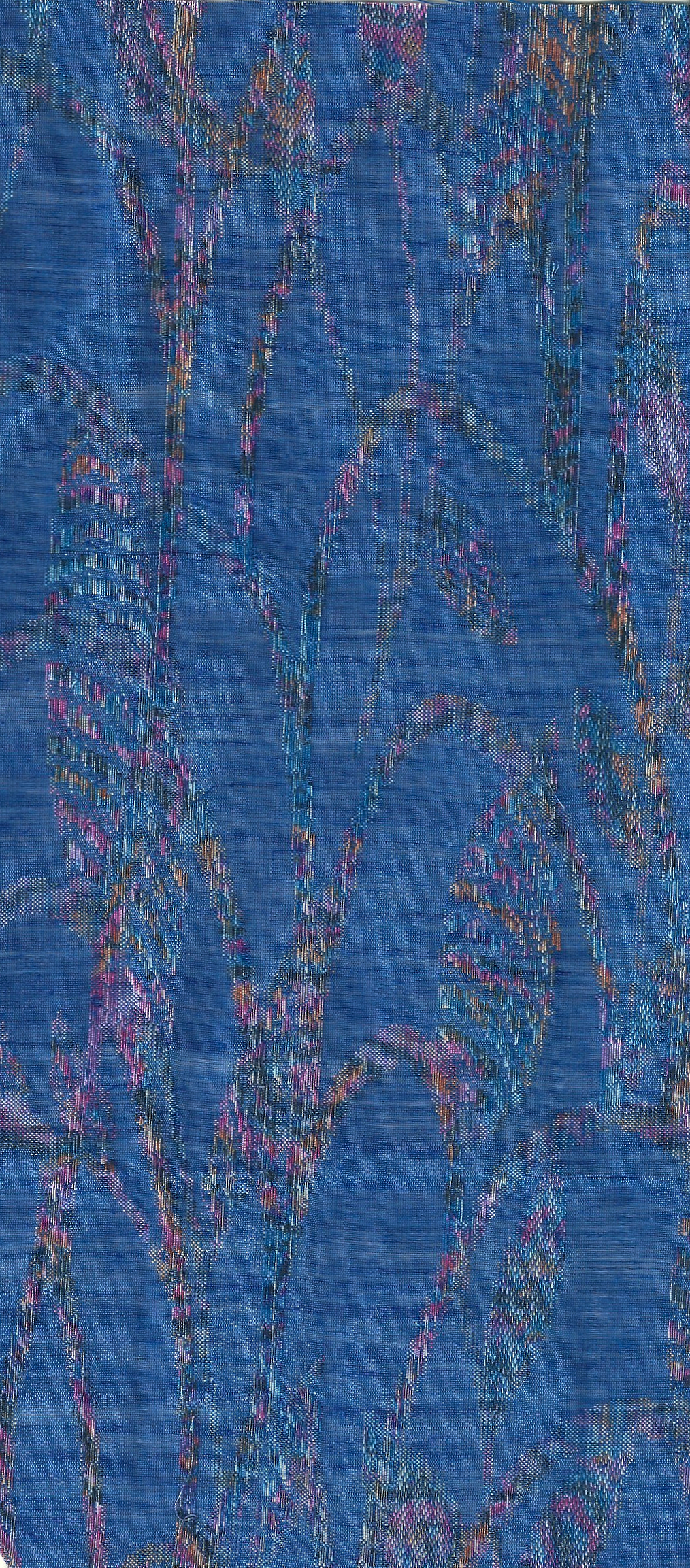
I sent off for swatches – and more swatches – and even more, but I couldn’t find what I was looking for. This is what happens when one lives in an area which is devoid of fine fabric stores. ARGH! Then I found this lovely lightweight silk/linen/viscose blend at Emma One Sock. The color was just what I had in mind and I loved the feel of the fabric. The delicate woven design within this fabric catches glimmers of light.

The subtle design is in shades of pink, green and peach.

The subtle design is in shades of pink, green and peach.

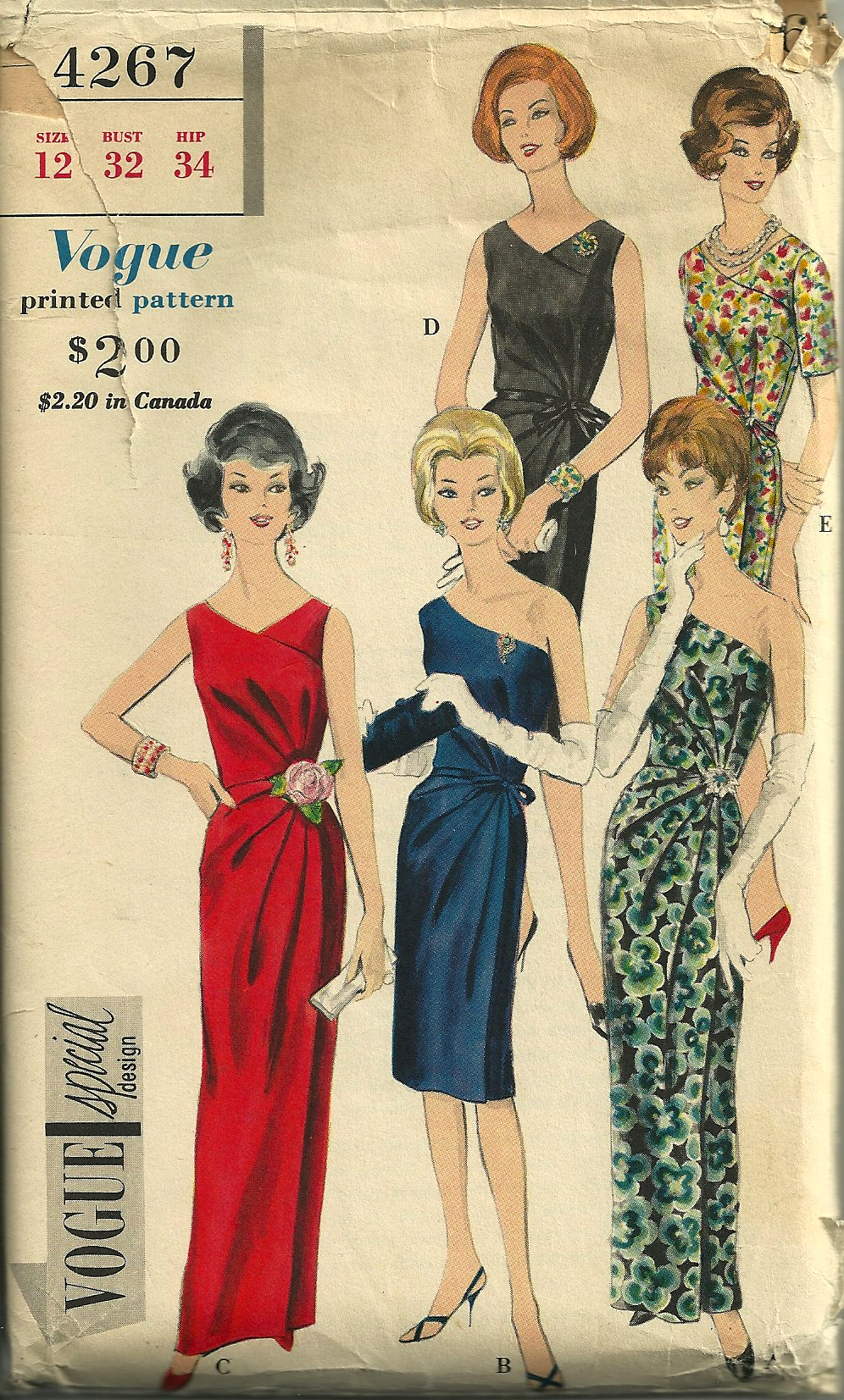
I really loved it. BUT – I knew it wouldn’t look good paired with lace. So-o-o-o, I thought to myself, maybe I’ll save the lace idea for another time. Maybe I should look at my pattern collection and see what other cocktail dress patterns might be more suitable.  I picked out two more designs and gave myself some thinking time.

Perfect Blue - Mattli pattern

View D would be my choice.

View D would be my choice.

Since the yardage needed was about the same for all the patterns, I felt confident ordering the fabric and making my decision after it arrived. Can you guess which design I finally chose – and why?

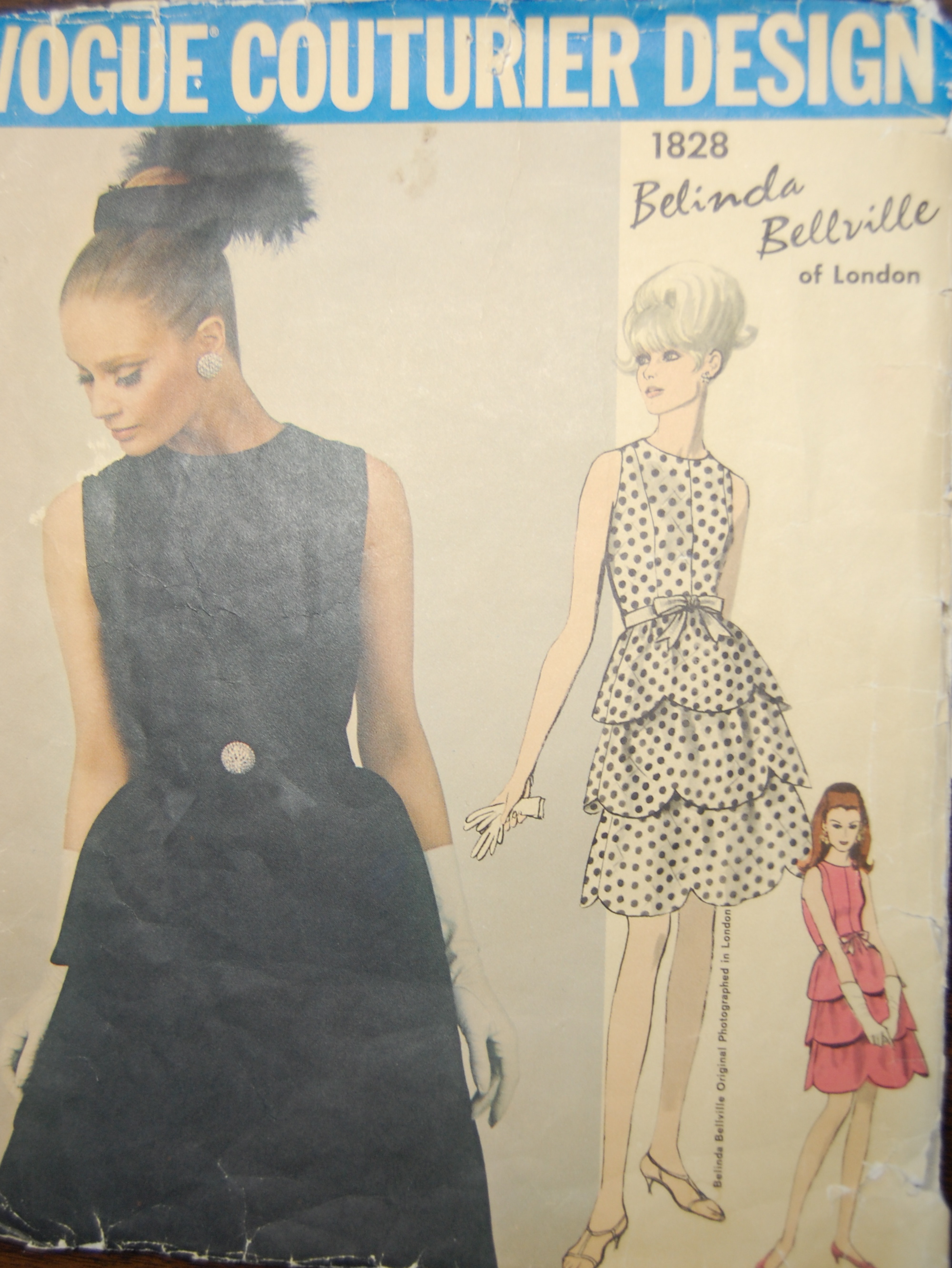
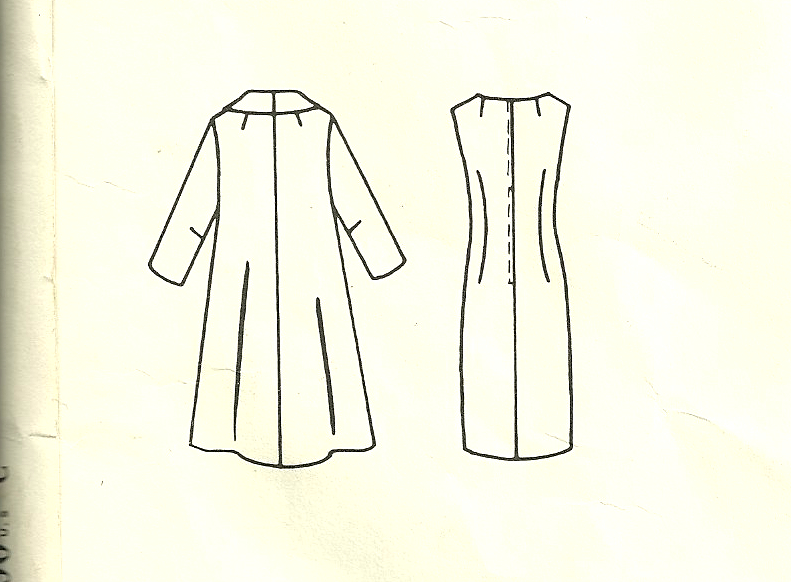
The Vogue Couturier Design by Jo Mattli was the winner. I felt like the vertical “stems” and “leaves” woven into the fabric would be shown to best advantage by a dress that did not have a whole lot going on in it in the way of seams and tucks and gathers. I also like the fact the Mattli design very cleverly gives the feel of a two-piece dress, but in reality, it is one-piece. In fact, only the front of the dress looks two-piece. Here is the back view:

Perfect Blue - thumbnail sketch of backs

The lightweight nature of this fabric also means that there will not be an excess amount of bulk in that double layered front. The fabric is ideal for underlining in silk organza, with a lining in luscious china silk which Emma One Sock helped to select for me.

I spent several days working on a muslin (toile) for the dress, making some subtle changes which I’ll cover in a future post. The dress itself is now “under construction”! Of course, the longer I work with this beautiful fabric, the more I wonder if I should order more of it….?   A coat with a lining to match the dress would be quite something, wouldn’t it? (Any coat would not be finished in time to wear to the early September event for which I am making this dress, but would I let a small detail like that keep me from a vision?) What do you think? Coat or no coat? And if I did make a coat, what color should it?


21 Comments

Filed under Uncategorized, underlinings, vintage Vogue Designer patterns, vintage Vogue patterns from the 1960s

Sometimes It’s All About the Shoes

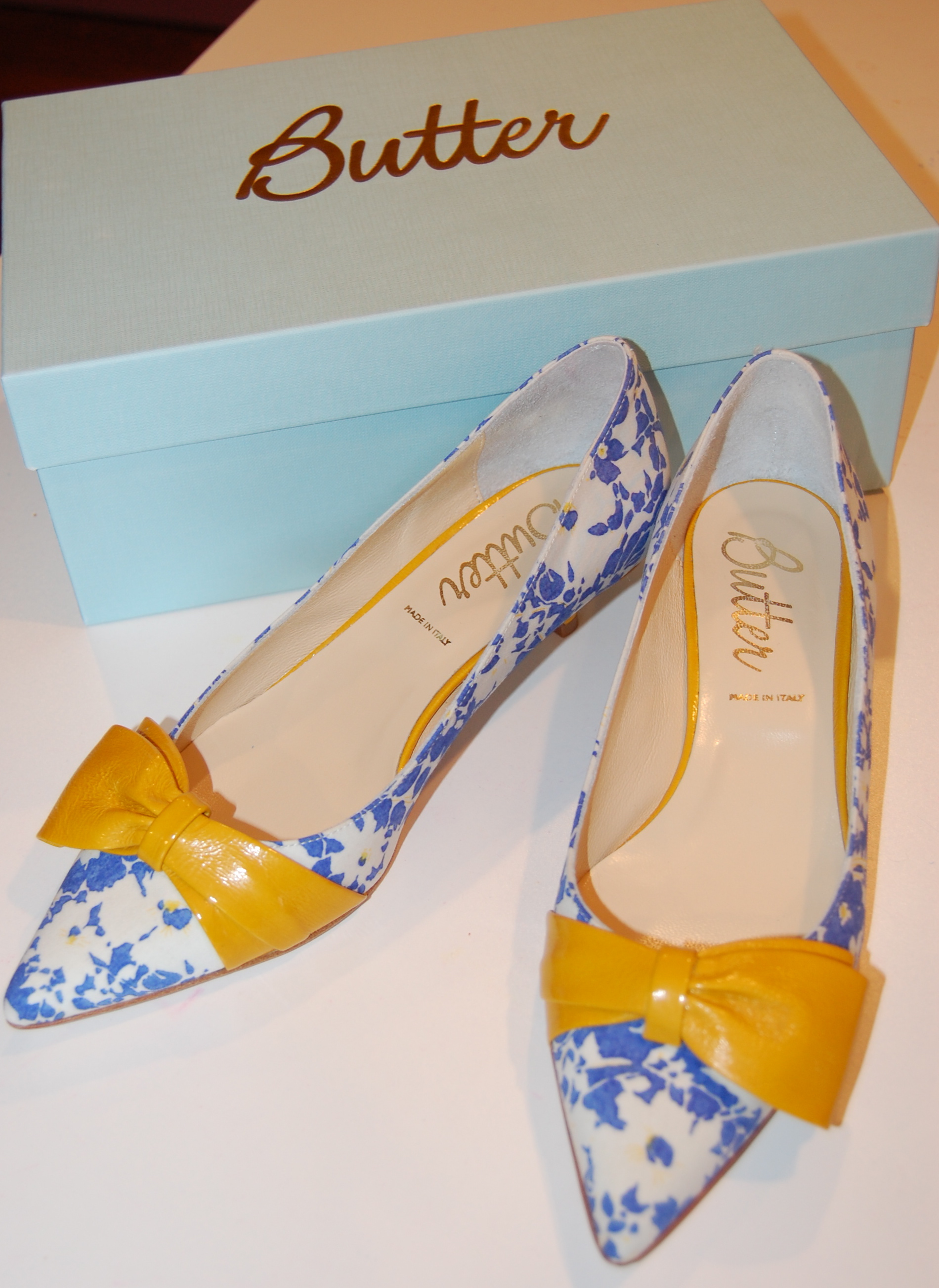
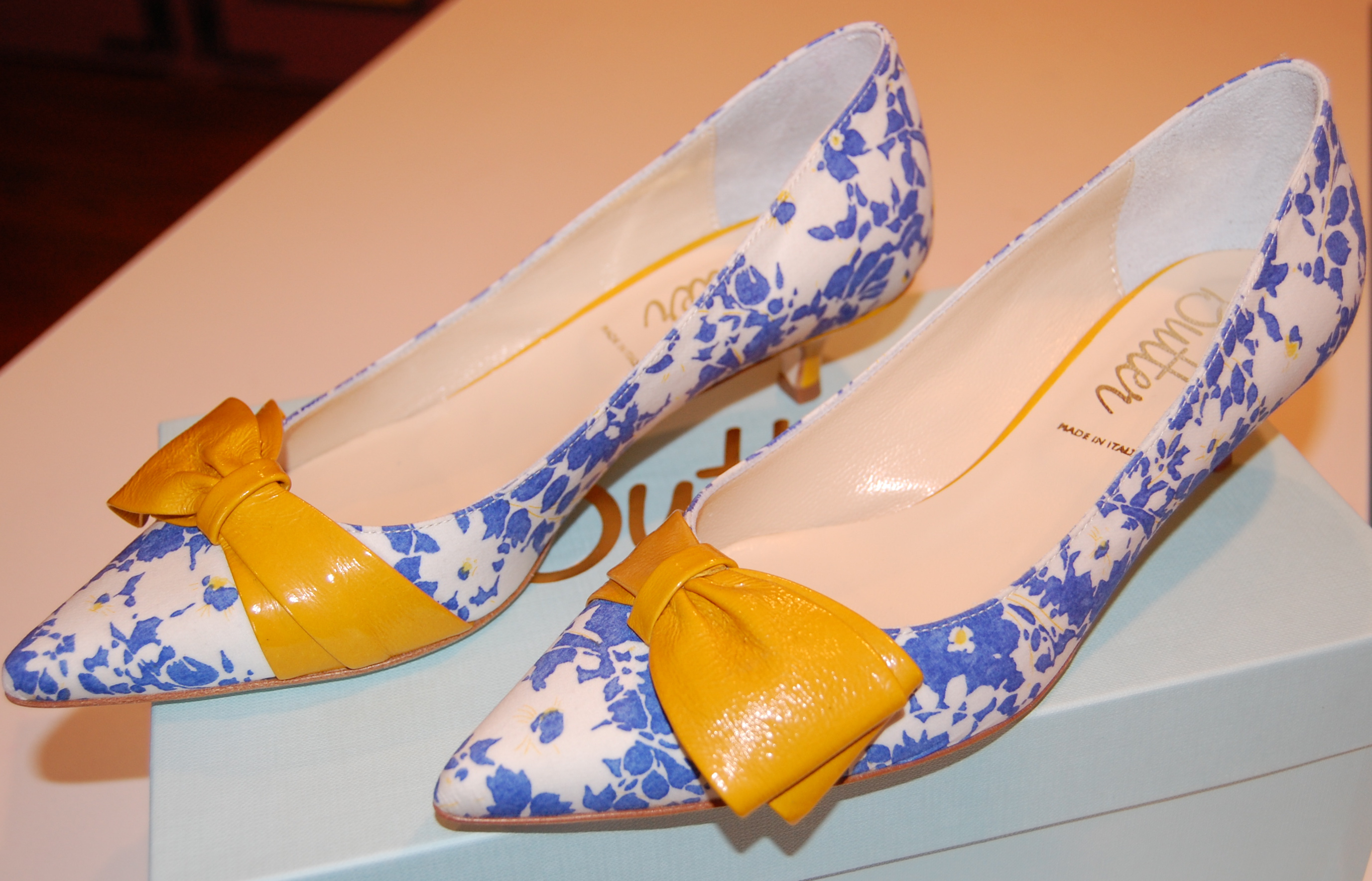
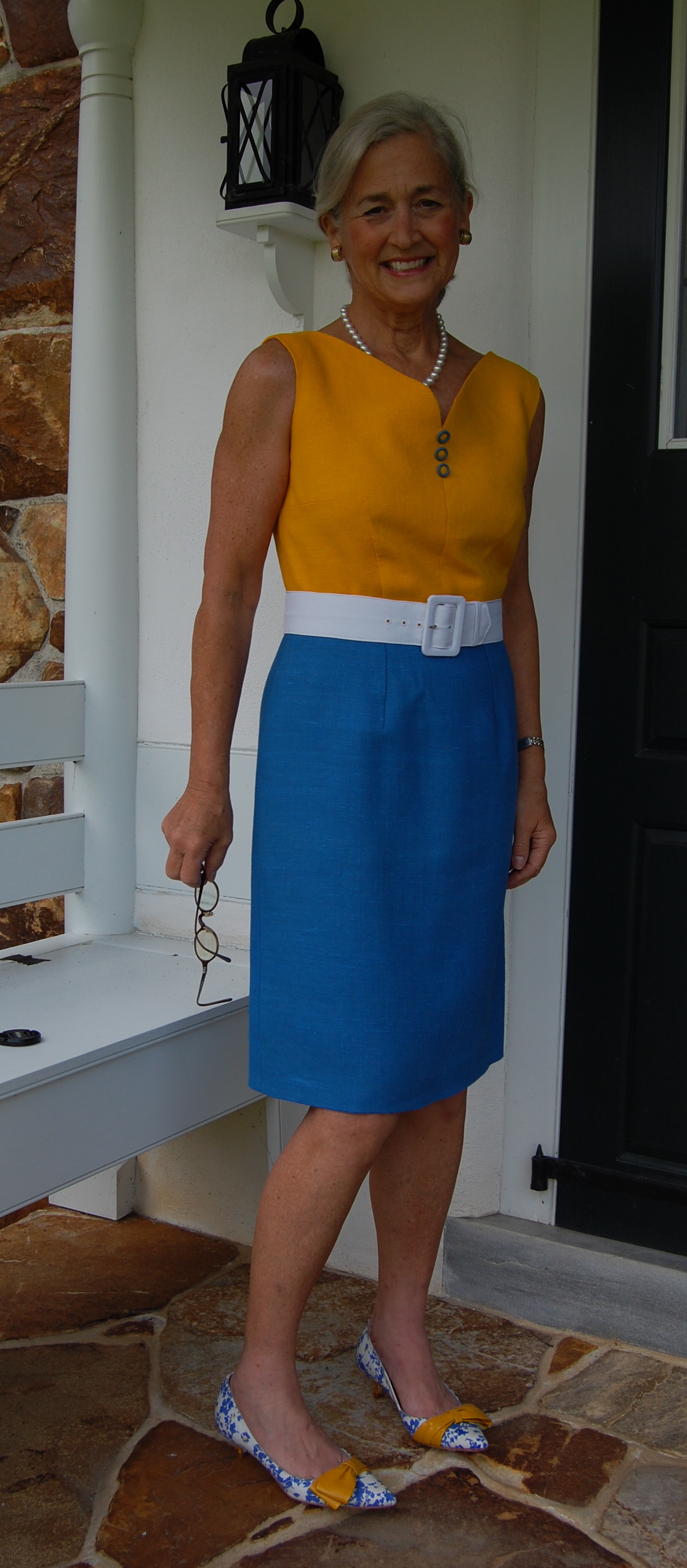
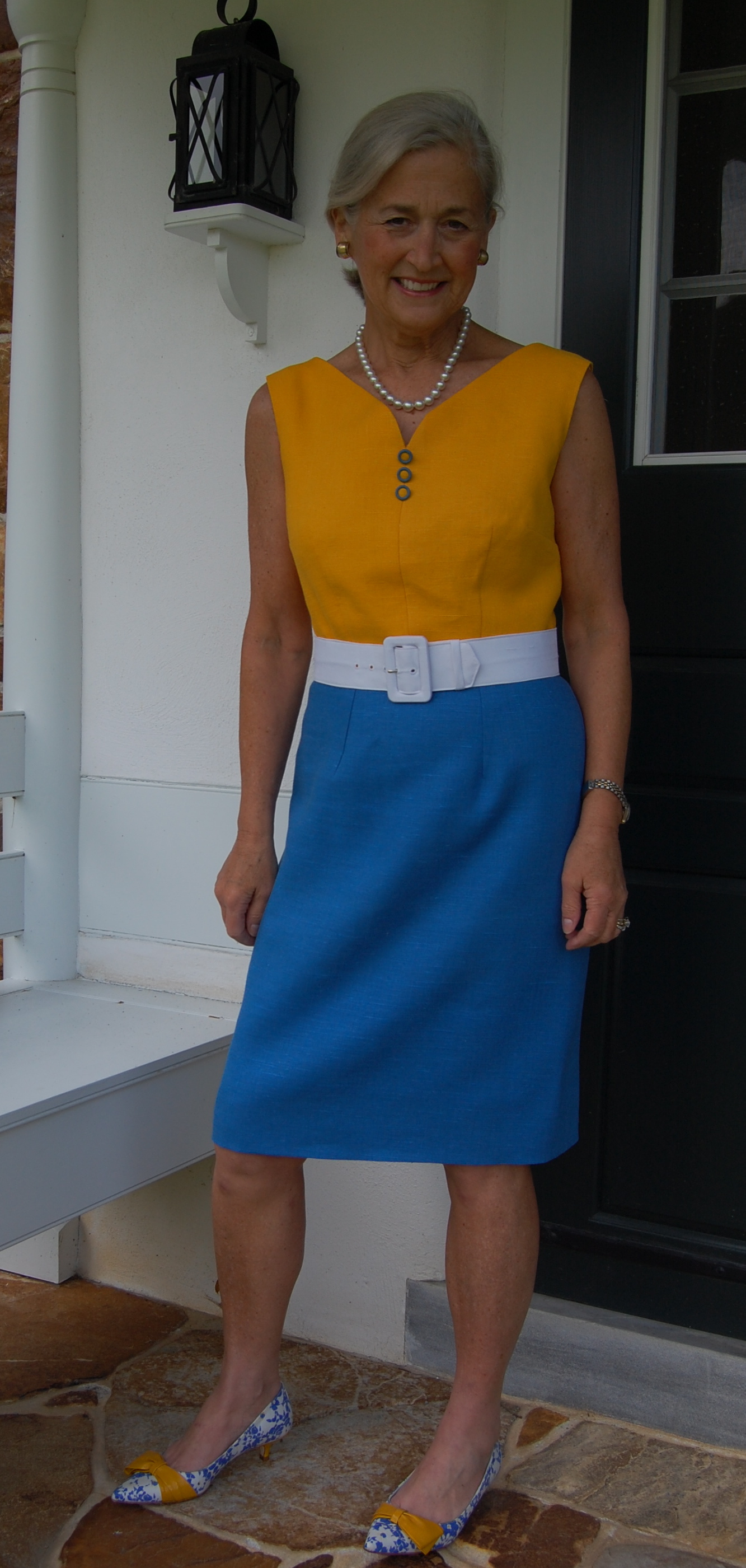
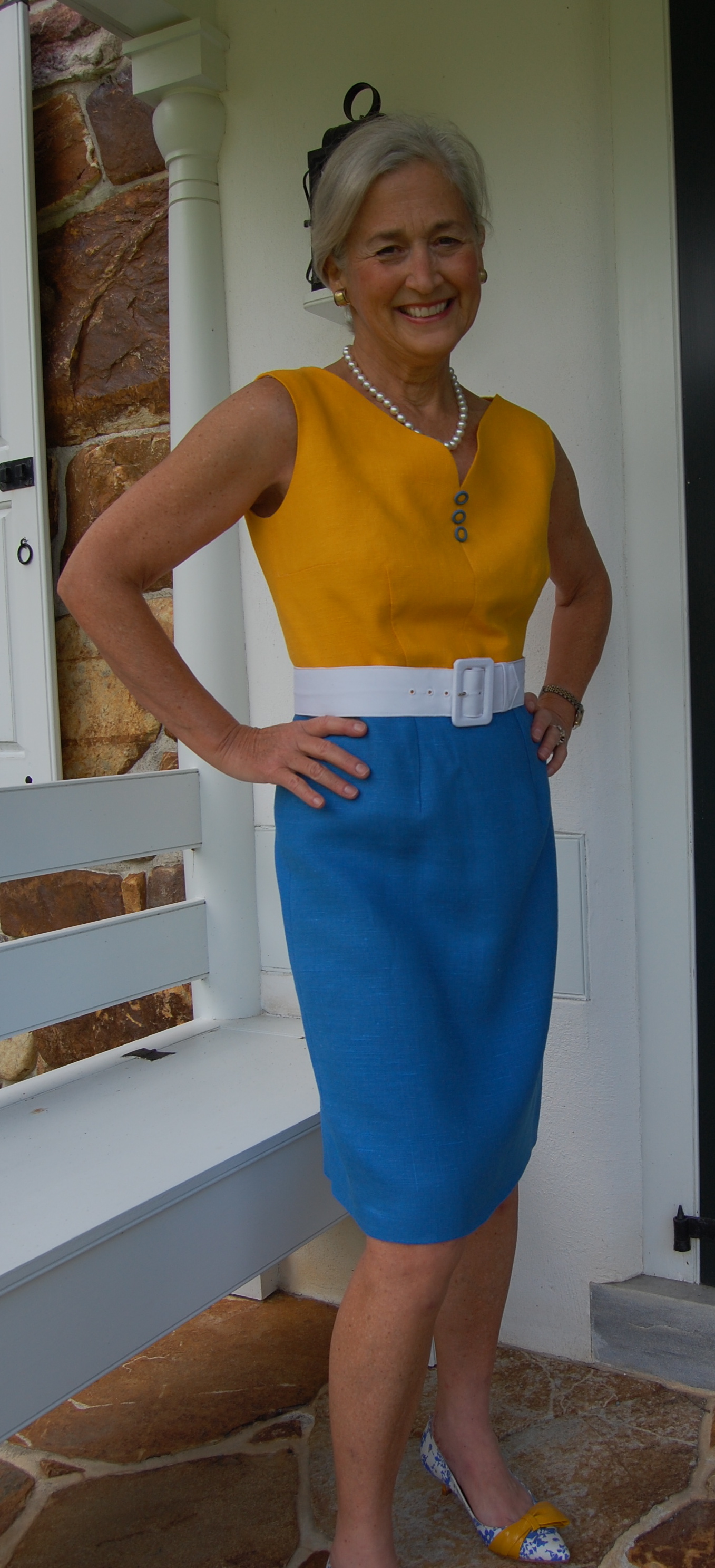
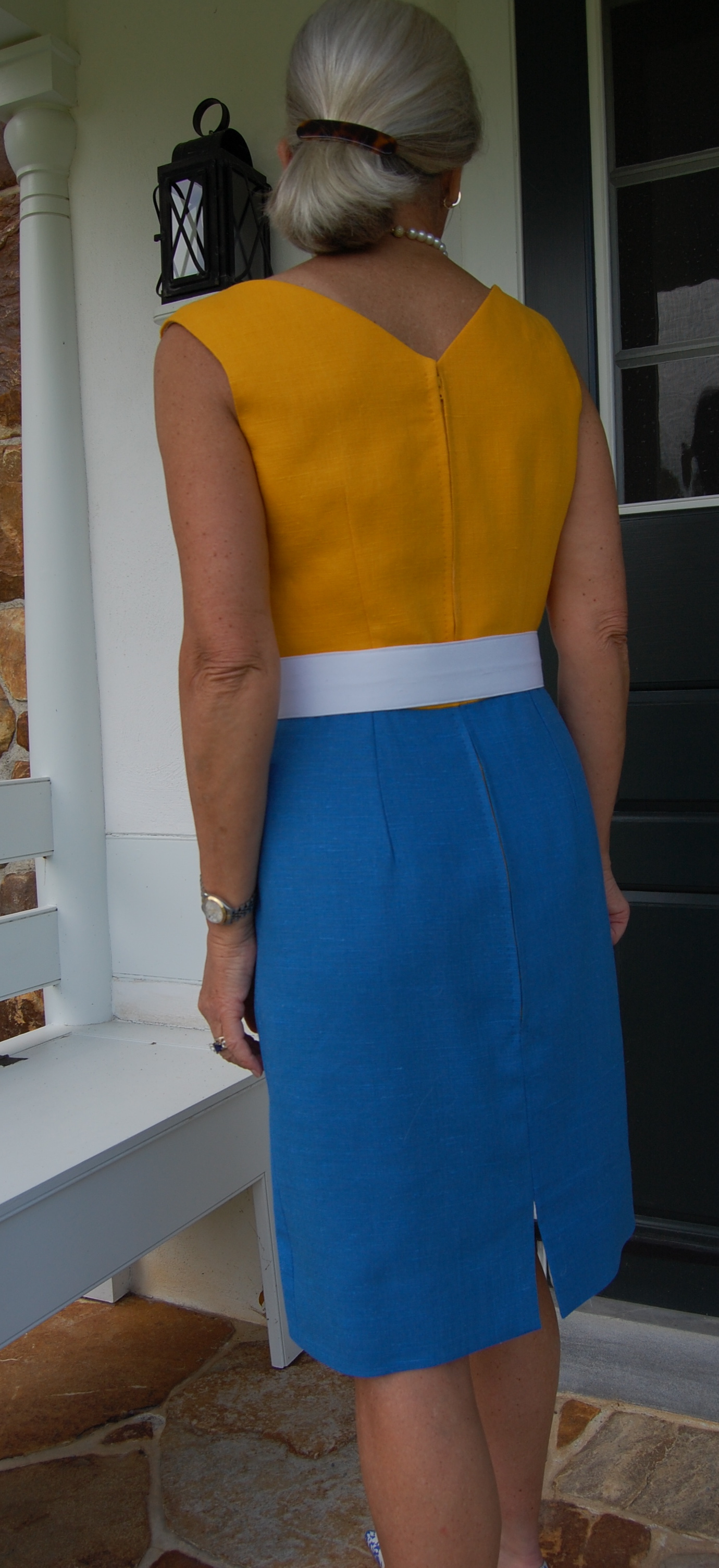
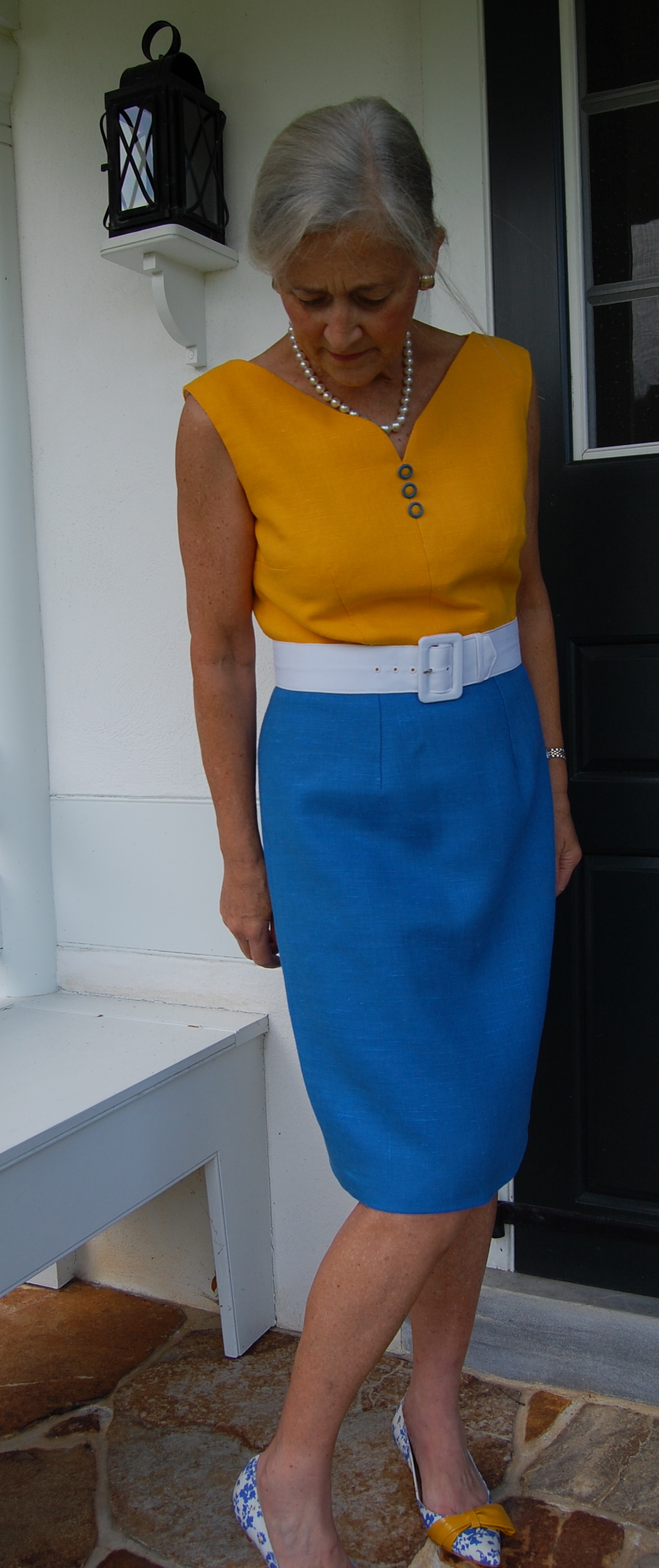
Well, maybe it’s not entirely about the shoes, although they do promise to share a starring role with my just-completed yellow and blue linen dress.

All about the shoes

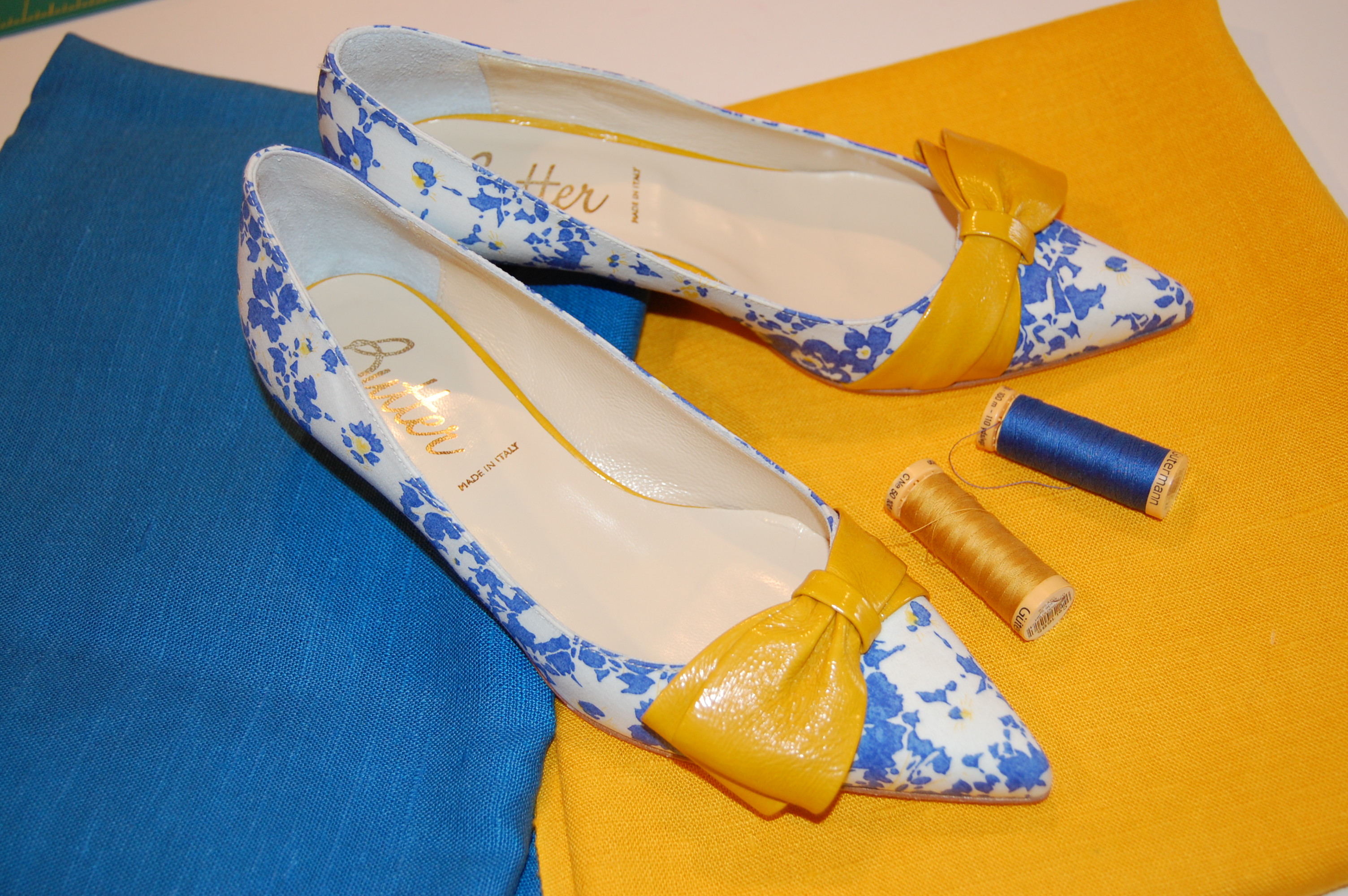
I first spied these lovelies on the Simply Soles website last winter, as part of the offerings for Spring/Summer shoes. Although I loved everything about them (the combination of colors, the fabric, the asymmetrical bow, the kitten heel, the brand – knowing from experience that Butter shoes are extremely comfortable), I decided not to purchase them. At that point in time, I had not yet bought the bittersweet yellow linen, so I had no reason to buy shoes with such a limited color palette. By the time I had a good reason to buy them, they were no longer available in my size.

All about the shoes However, the Simply Soles website allows one to request an email advice should the correctly sized shoe become available. Weeks went by, Summer arrived, and by then I had paired the recently purchased deep yellow linen with the pottery blue linen. Goodness, I could not stop thinking about those shoes and how perfect they would be with my envisioned dress. And then – they were suddenly available – in my size – and on sale!

All about the shoes

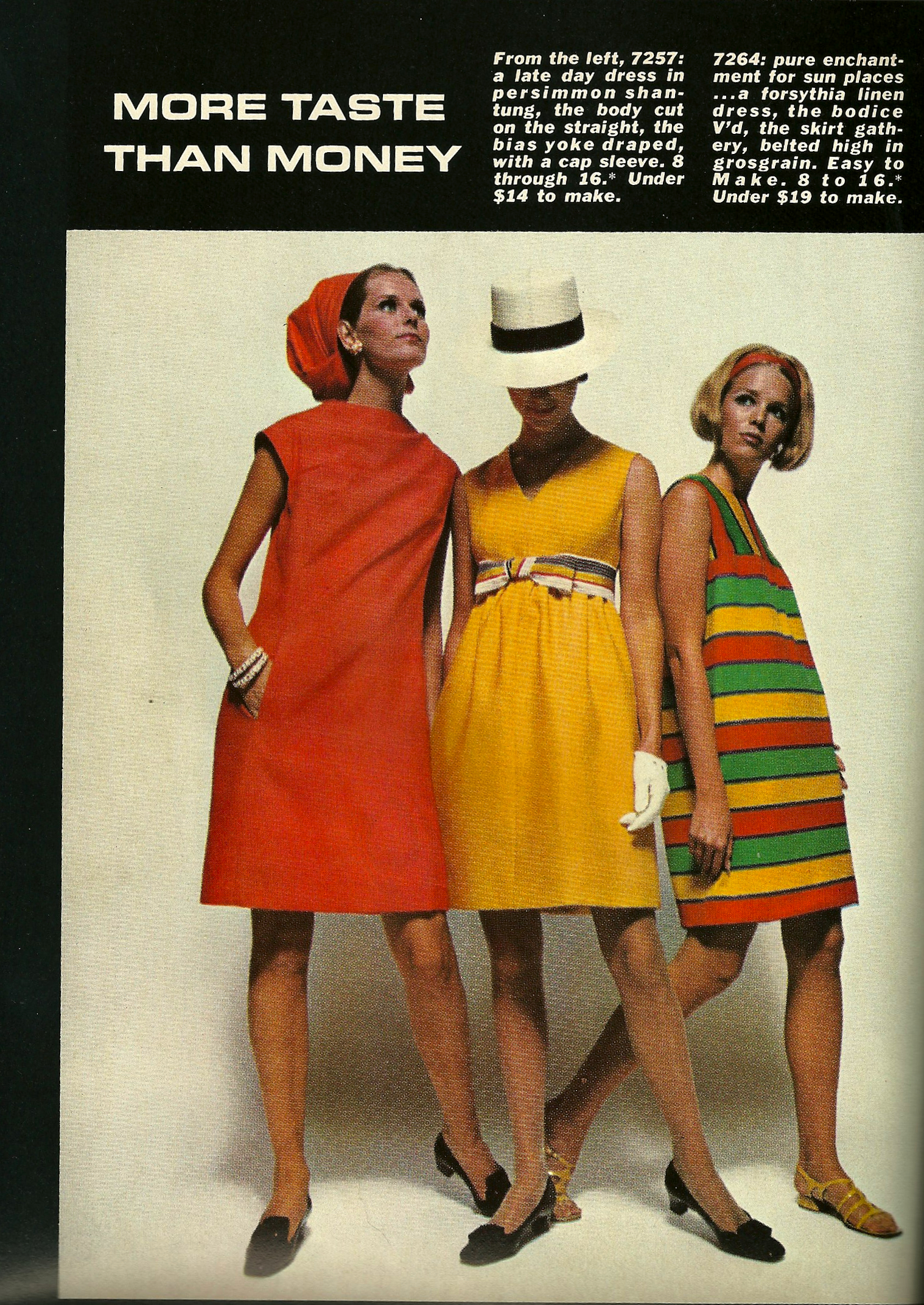
By this time I was already immersed in making my second linen dress of the Summer, so I planned for the blue and yellow linen to be number “3”. In the meantime, I happened upon more documentation of Moygashel linen, this one for the “yellow” piece. Those of you who follow this blog know how much I love to make these connections!

"... pure enchantment for sun places ... a forsythia linen dress ..."  and the source information in the back of this Vogue Pattern Book Magazine from February/March, 1968 credits Moygashel as the brand of linen.

“… pure enchantment for sun places … a forsythia linen dress …” and the source information in the back of this Vogue Pattern Book Magazine from February/March, 1968 credits Moygashel as the brand of linen.

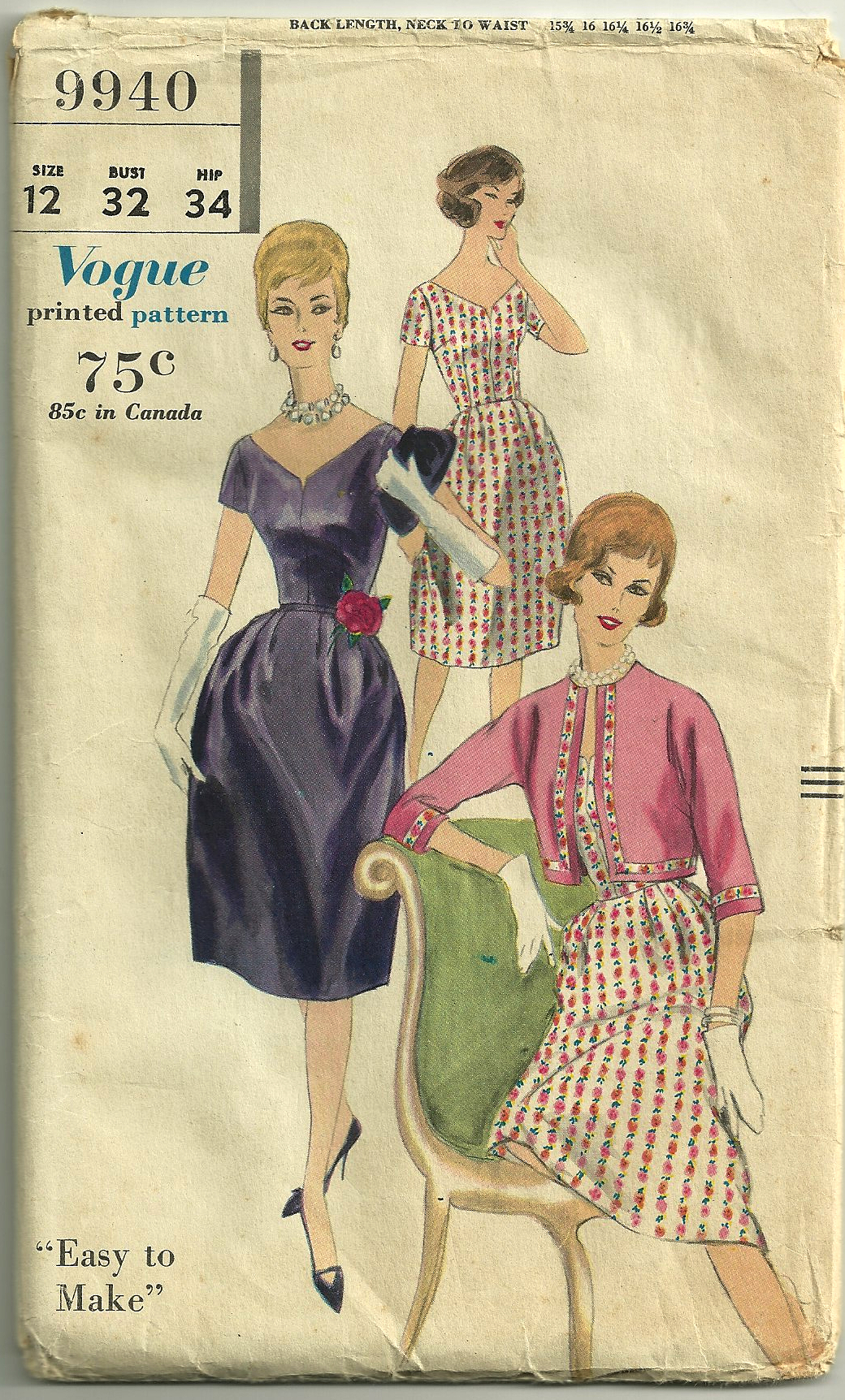
Seeing an entire dress made out of the forsythia linen helped me to feel confident about having such a bright color as the bodice part of my planned dress.  As I stated in my last post, I decided to use the bodice from this early ‘60s’ Vogue pattern, pairing it with a slim skirt and a belt.

The neckline dips down to a slightly curved V, with a center seam.

The neckline dips down to a slightly curved V, with a center seam.

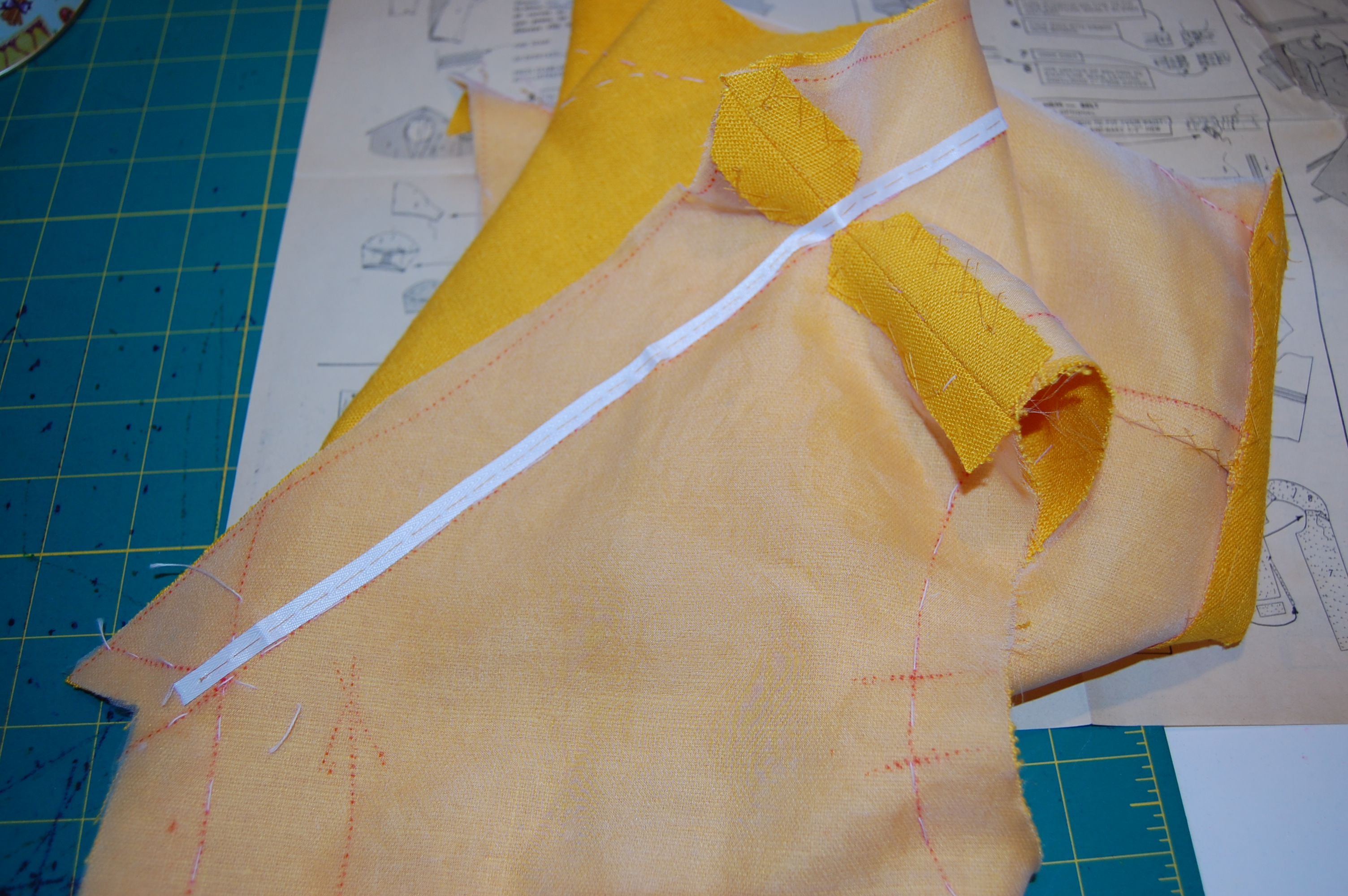
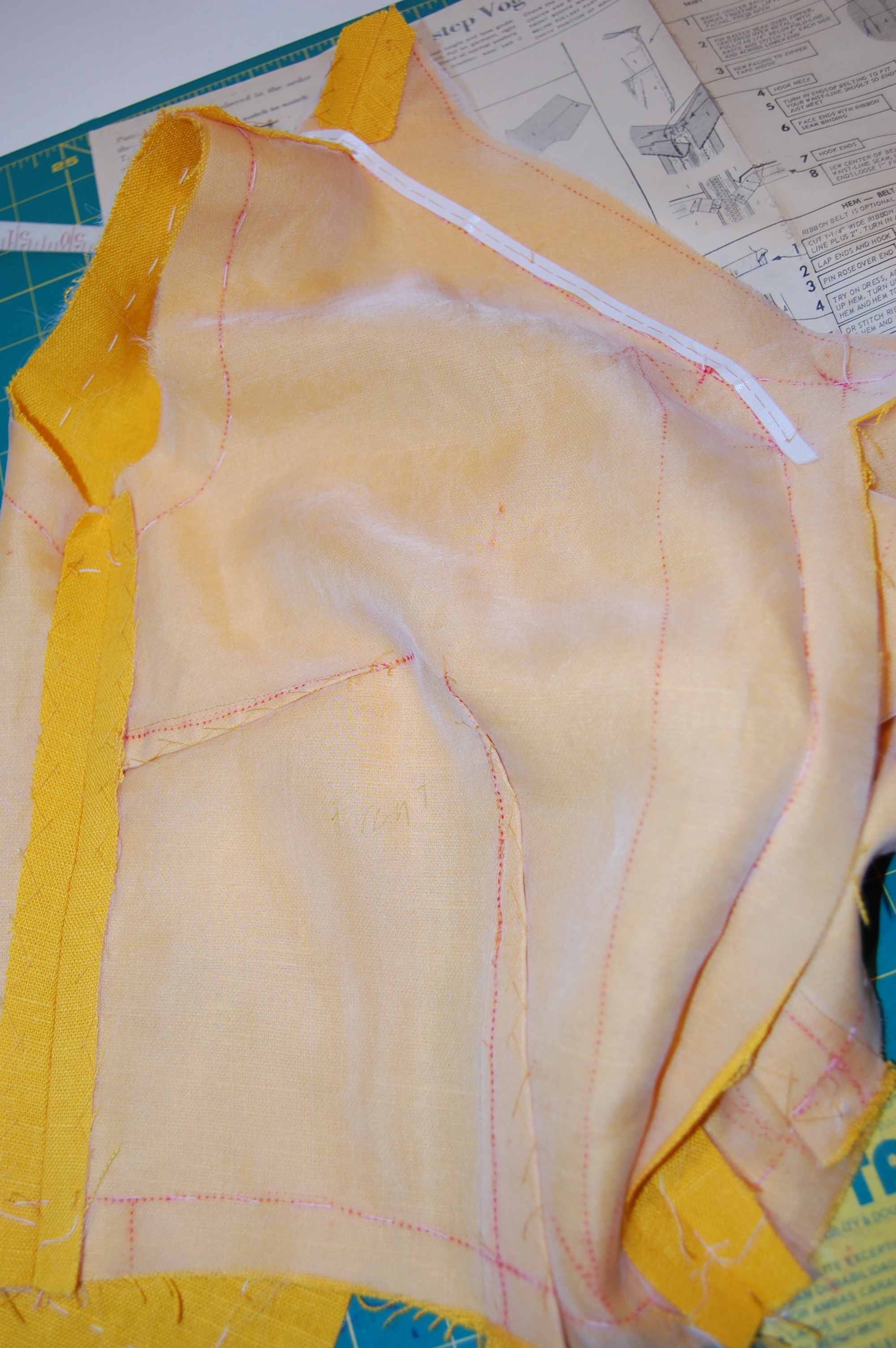
As this would be a dressier type of frock, and because I know how foolproof couture construction is (with silk organza underlining and crepe de chine lining), I proceeded using those techniques. The facings on the V-shape of the bodice front and back were cut as part of the pattern, instead of being separate pieces. I followed the instructions to reinforce the edges of the fold with ¼” twill tape.

I basted the twill tape just to the outside of the fold line on the "all-in-one" facing.

I basted the twill tape just to the outside of the fold line on the “all-in-one” facing.  This is the back bodice.

And this is the front bodice, showing the deep V and the center seam.

And this is the front bodice, showing the deep V and the center seam.

Normally, couture construction does not use facings, but in this application, they were indispensible. Then the rest of the dress proceeded without a hitch.

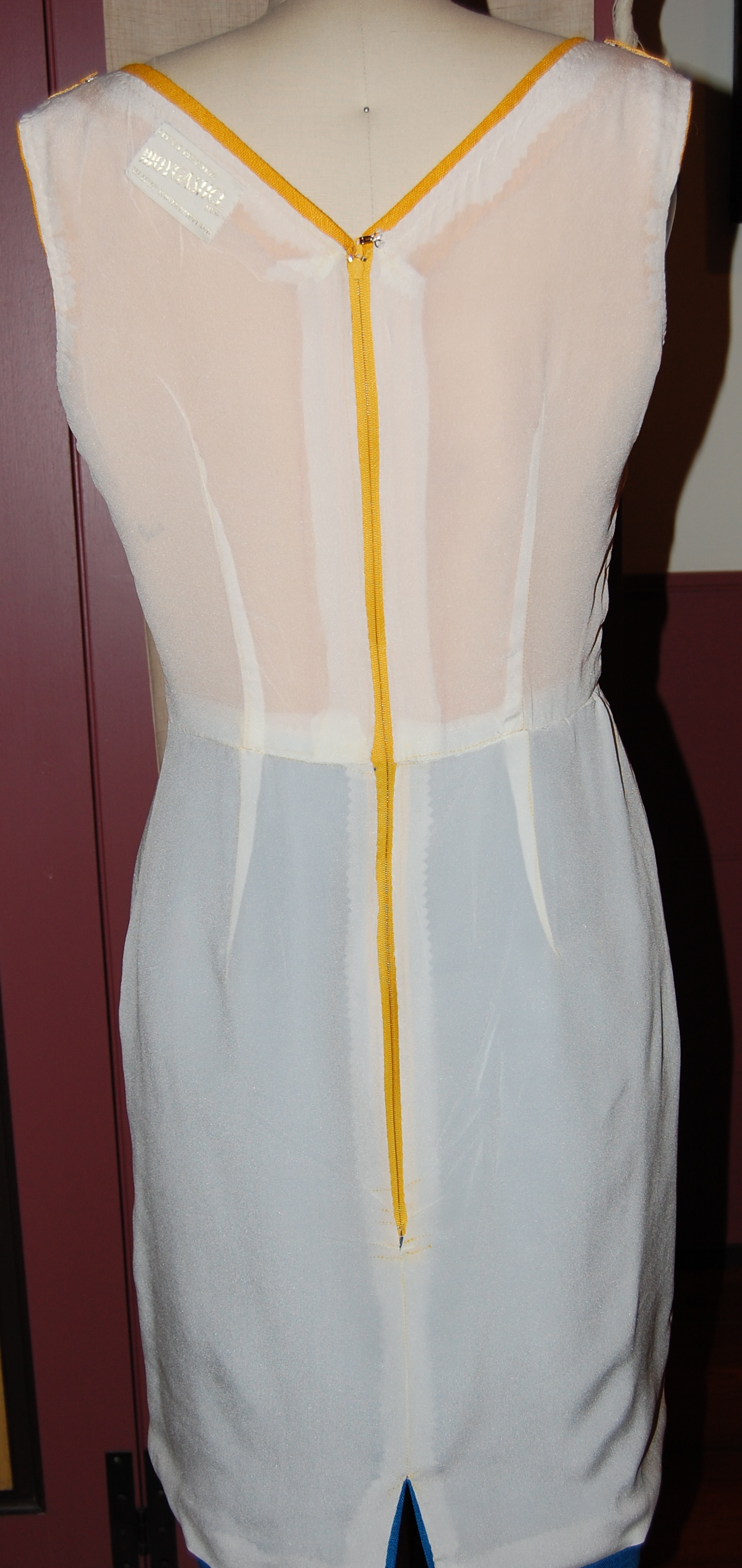
Here is the dress turned inside out.  I used a forsythia-yellow zipper as i thought it more important to match the bodice than the skirt of the dress.

Here is the dress turned inside out. I used a forsythia-yellow zipper as I thought it more important to match the bodice than the skirt of the dress.

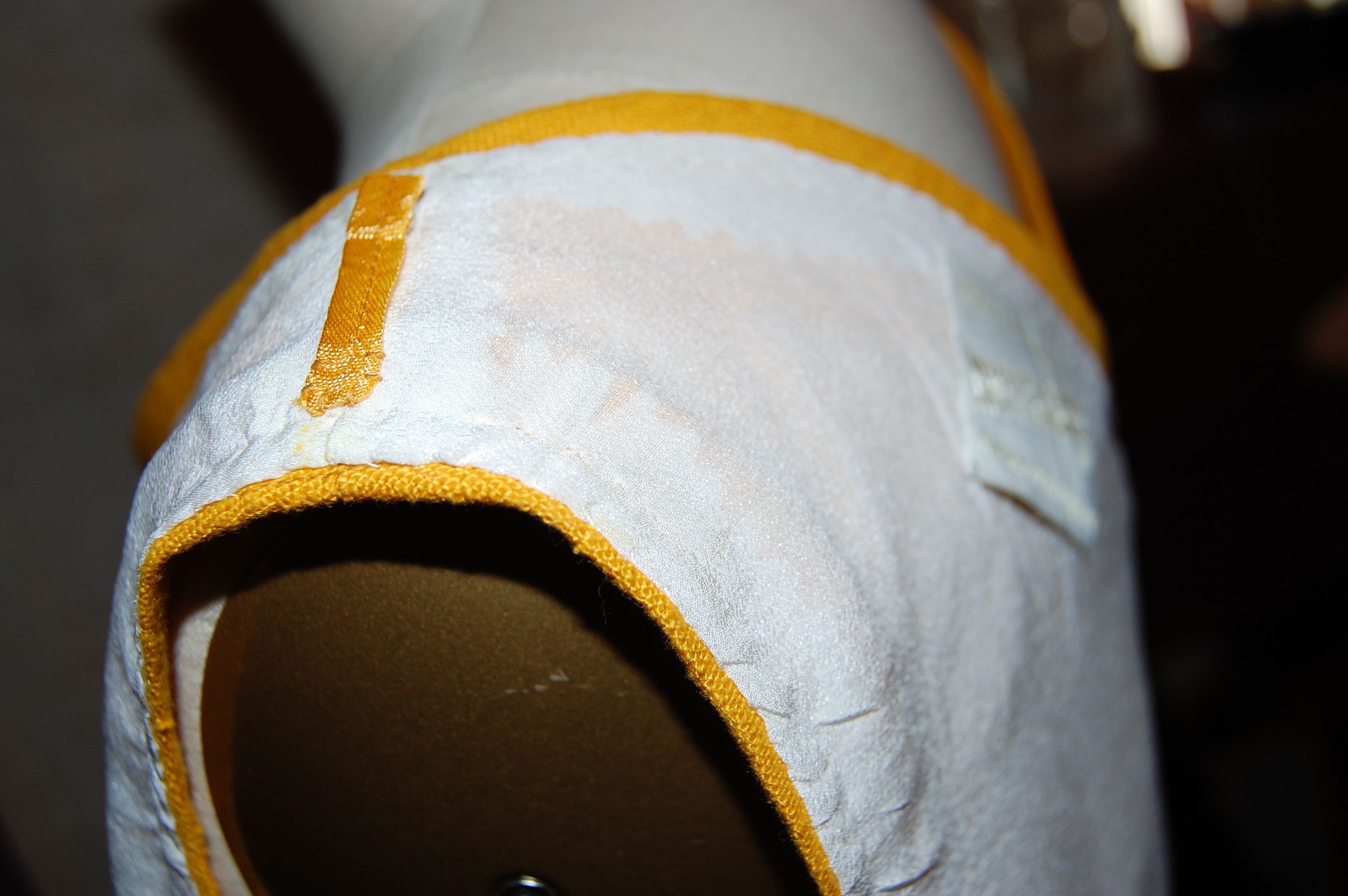
Here is the shoulder with the crepe de chine fell-stitched and understitched in place around the shouilder.  Note the lingerie stay made with a folded piece of Hug Snug Rayon woven tape.

Here is an inside look at the crepe de chine fell-stitched and understitched in place around the shouilder. Note the lingerie stay made with a folded piece of Hug Snug rayon woven tape.

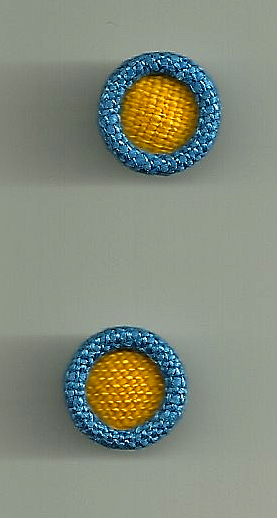
About halfway through the construction of the dress, I got the idea to have decorative buttons made – to compliment the front V of the neckline.

I sent scraps of my fabric off to Pat Mahoney in California to have these buttons made.  Sadly, Pat is retiring from her business at the end of August...

I sent scraps of my fabric off to Pat Mahoney in California to have these buttons made. Sadly, Pat is retiring from her business at the end of August…

I actually was not sure I was going to use them until I had finished the dress, but I think they add just the right amount of detail.

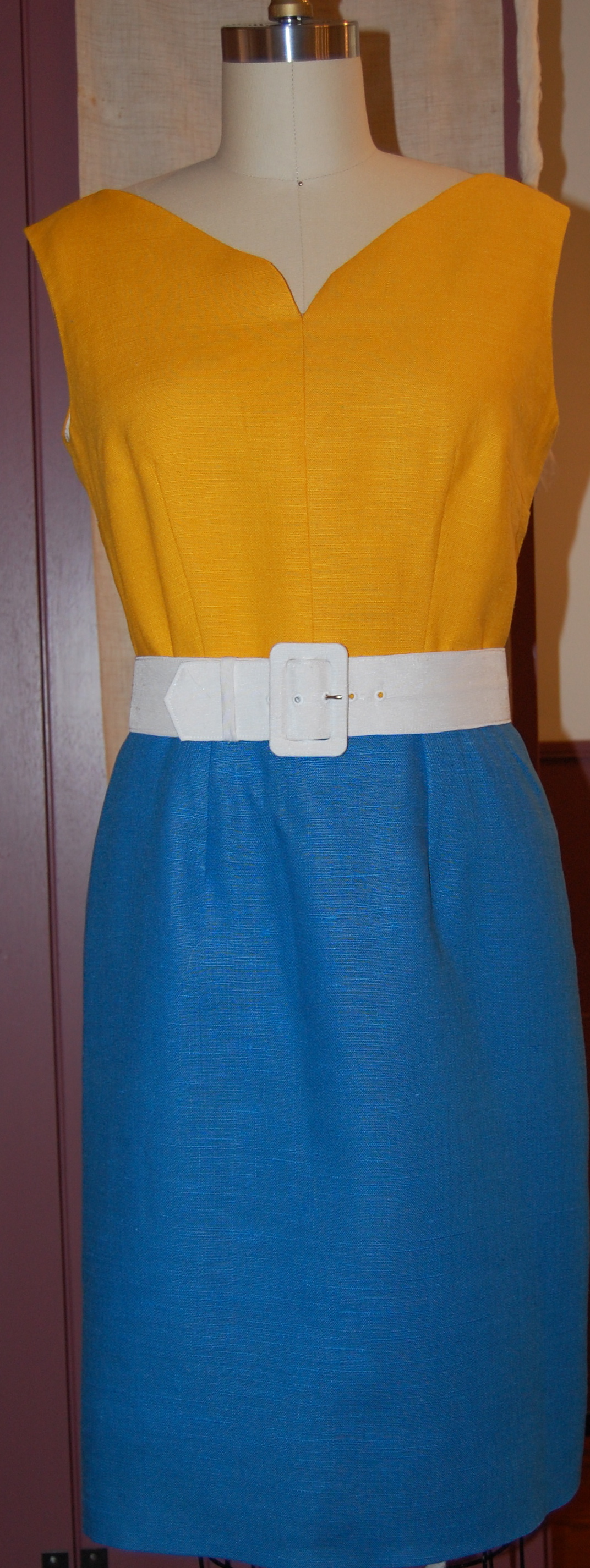
Here is the dress without the buttons . . .

Here is the dress without the buttons . . .

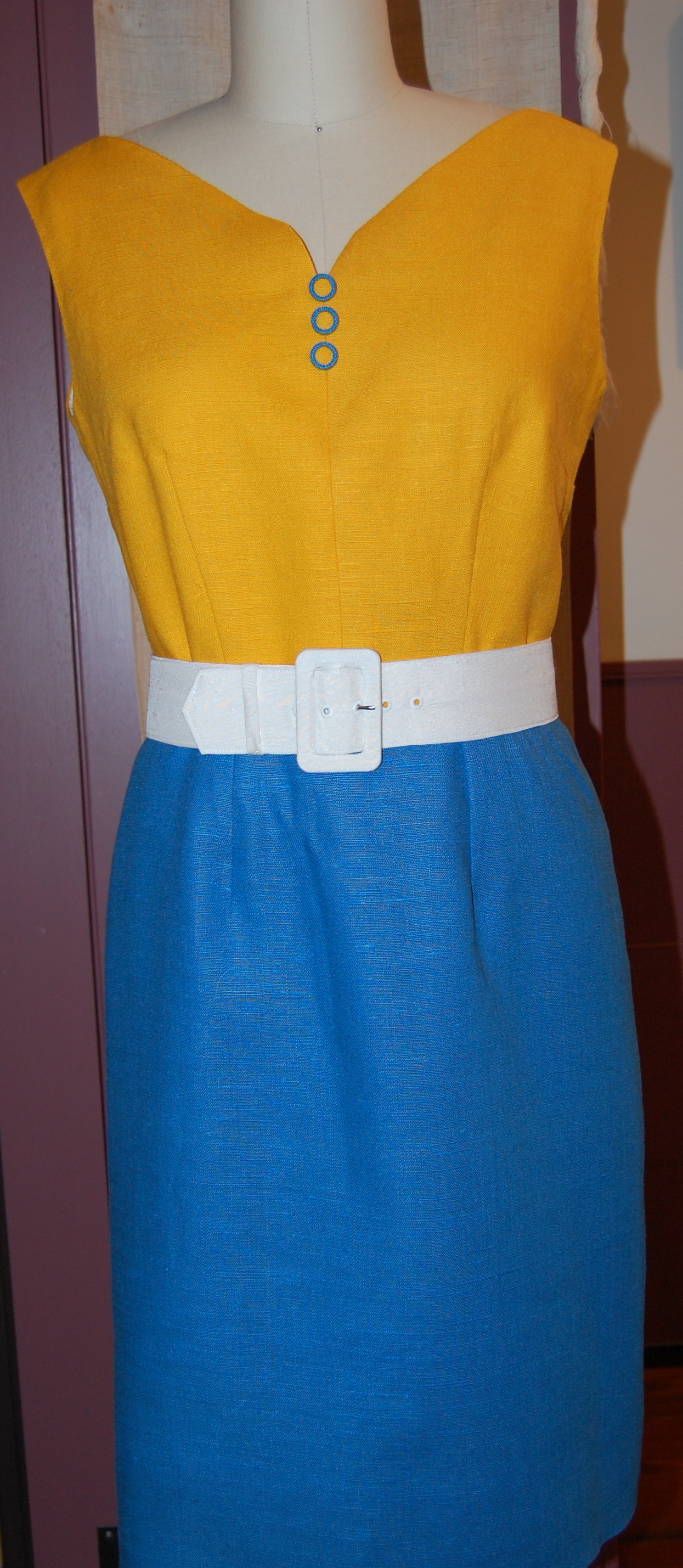
. . . and here is the dress with the buttons.  What do you think?  With or without?

. . . and here is the dress with the buttons. What do you think? With or without?

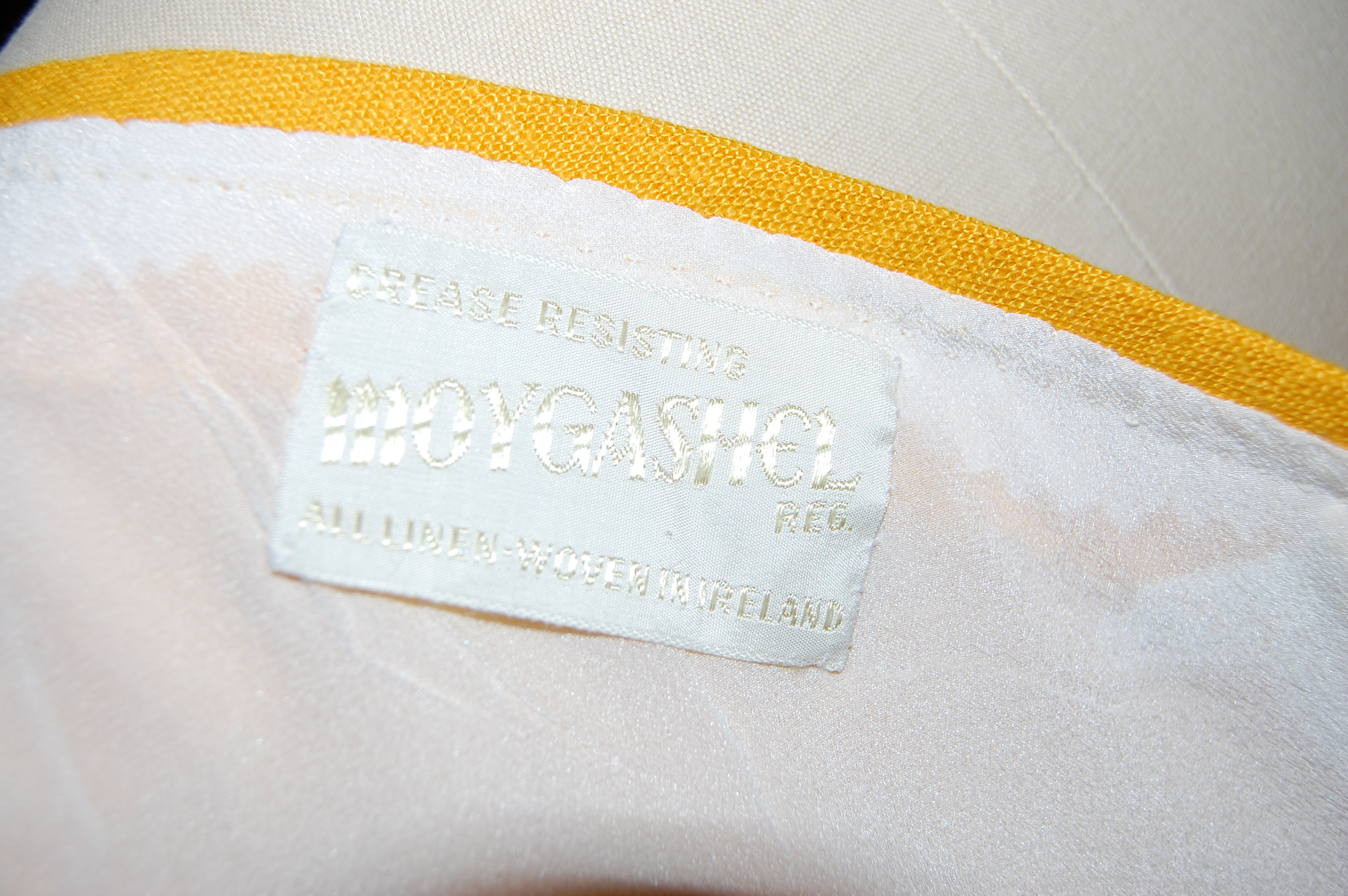
Another detail I was happy to add was the Moygashel linen label which had been attached to the forsythia yellow linen yardgoods.

I attached the label inside the back neckline.

I attached the label inside the back neckline.

The belt is also a Pat Mahoney product, made from a silk dupioni.

The belt is also a Pat Mahoney product, made from a silk dupioni.

All about the shoes

All about the shoes

I like the V-ed back!

I like the V-ed back!

Love those shoes!

Love those shoes!

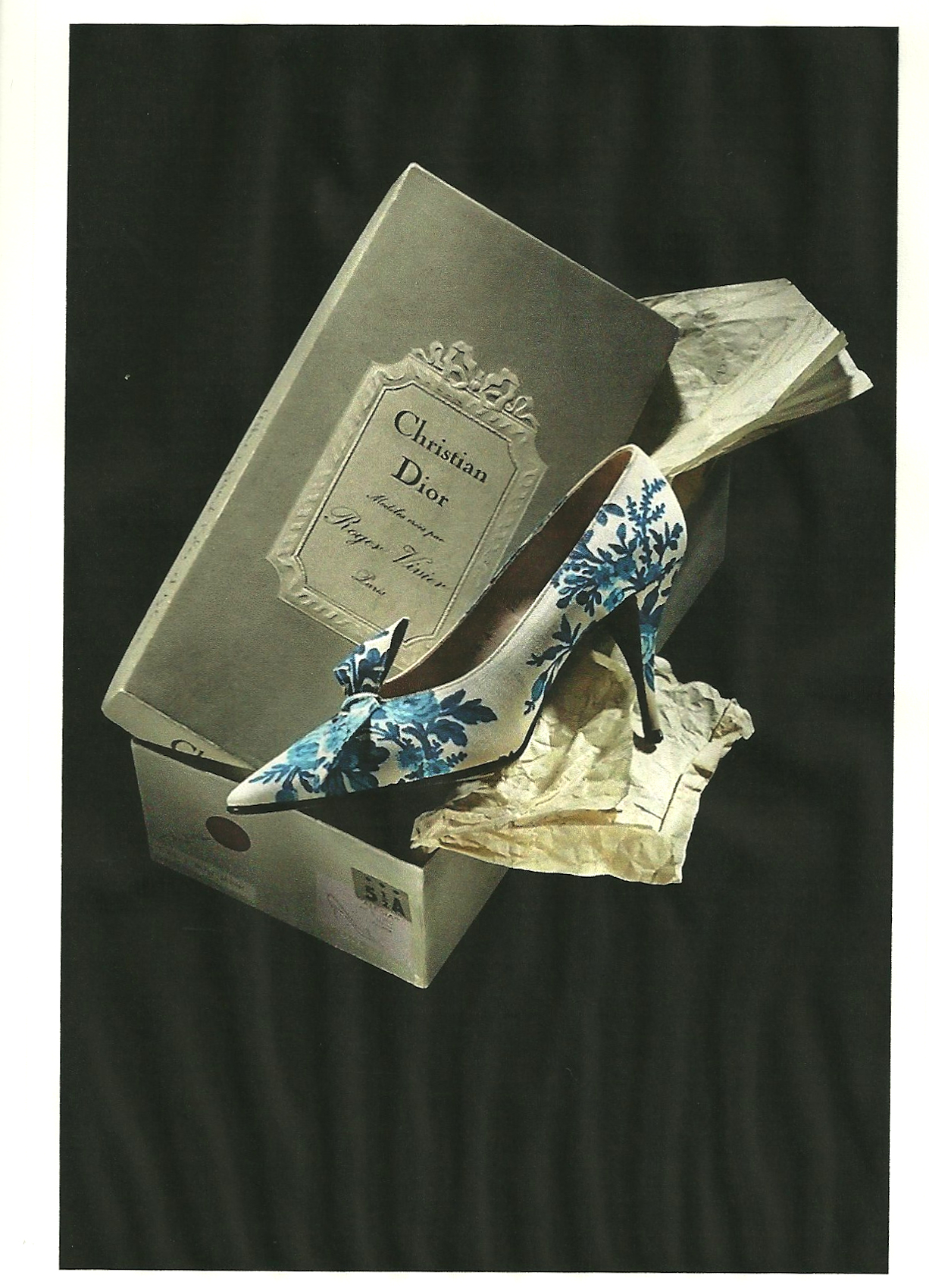
To me, this dress is reminiscent of a 1950s’ “wiggle dress” – although I added a back slit so that I can walk easily, which I guess would have been “cheating” in the 1950s! I was delighted to make another 1950s’ connection when I saw this pair of Roger Vivier shoes for Christian Dior on Pinterest:

All about the shoes - Pinterest pin

The similarities with my shoes are remarkable! Now that I have one dress perfectly suited for my Christian Dior-inspired shoes, I will be looking for other “perfect pairings”. Who knows what fabric treasures will present themselves next Spring or Summer for just such an undertaking?


44 Comments

Filed under Buttons - choosing the right ones, couture construction, hand-sewn zippers, Linen, Moygashel linen, Shoes to make an outfit complete, The Conde Nast Publications, Uncategorized, underlinings, Vintage fabric, vintage Vogue patterns from the 1960s