Tag Archives: Moygashel linen

Sometimes It’s All About the Fabric

Great fabric – just like great art – can (and probably should) elicit an emotional response from an engaged viewer and/or potential purchaser. It’s a very individual preference, of course, influenced by sewing knowledge, intended purpose, wear-ability, one’s fashion style, and nostalgia.

I freely admit to being nostalgic about polka dots. I have always loved them. And I have always been drawn to fabrics and fashions featuring dots, whether they be large, jumbo, small, tiny, or medium. In my fashion lexicon, they are never out of style, but it is always particularly rewarding to see dots featured as “fashion forward” – as in the July 2014 Harpers Bazaar.
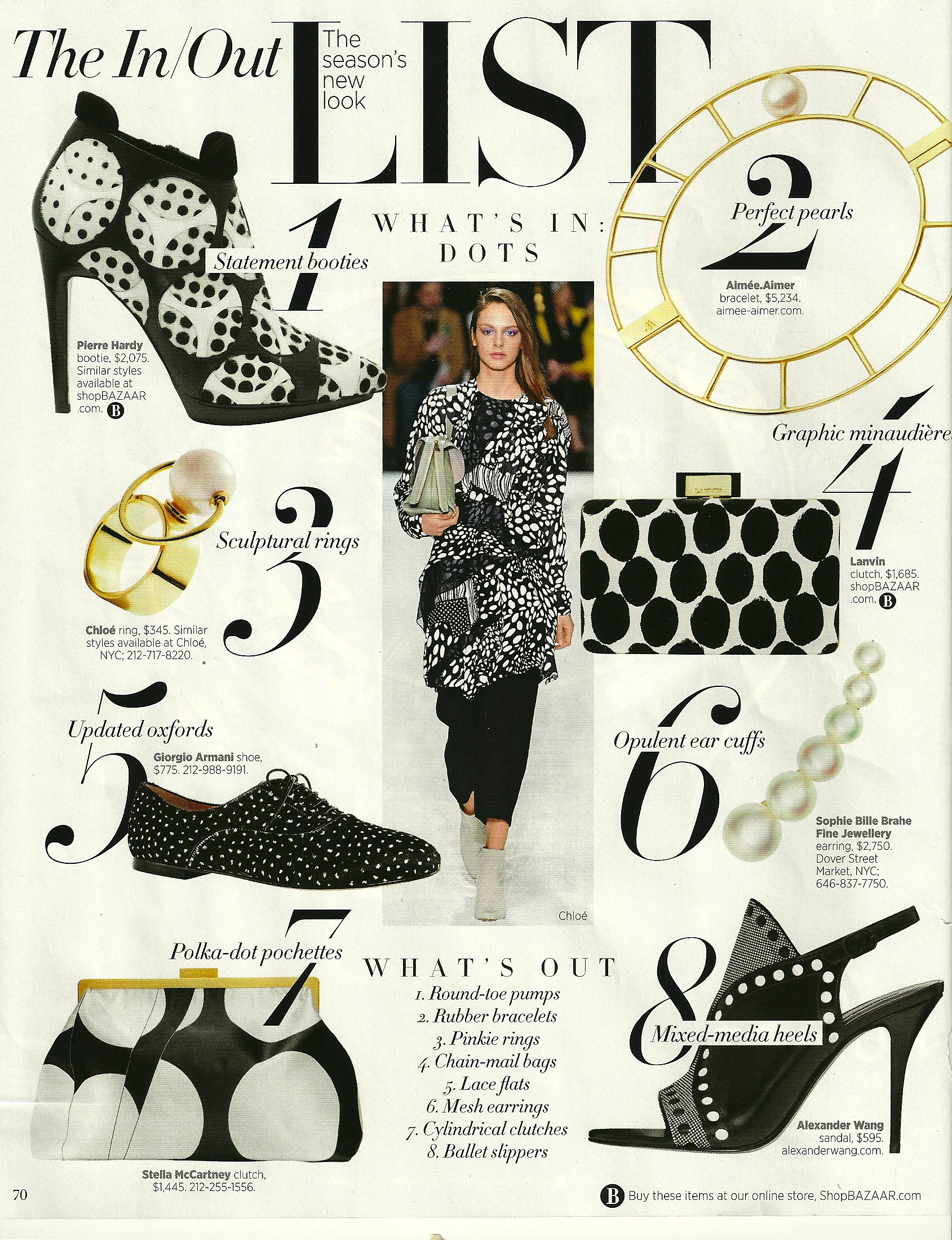
Linen dotted dress - HB magazine

The dots I have been focusing on the last week or so, however, could tell those new dots a thing or two about fashion trends and durability. My beloved dots are probably celebrating their half-century mark, without a wrinkle to show for it!
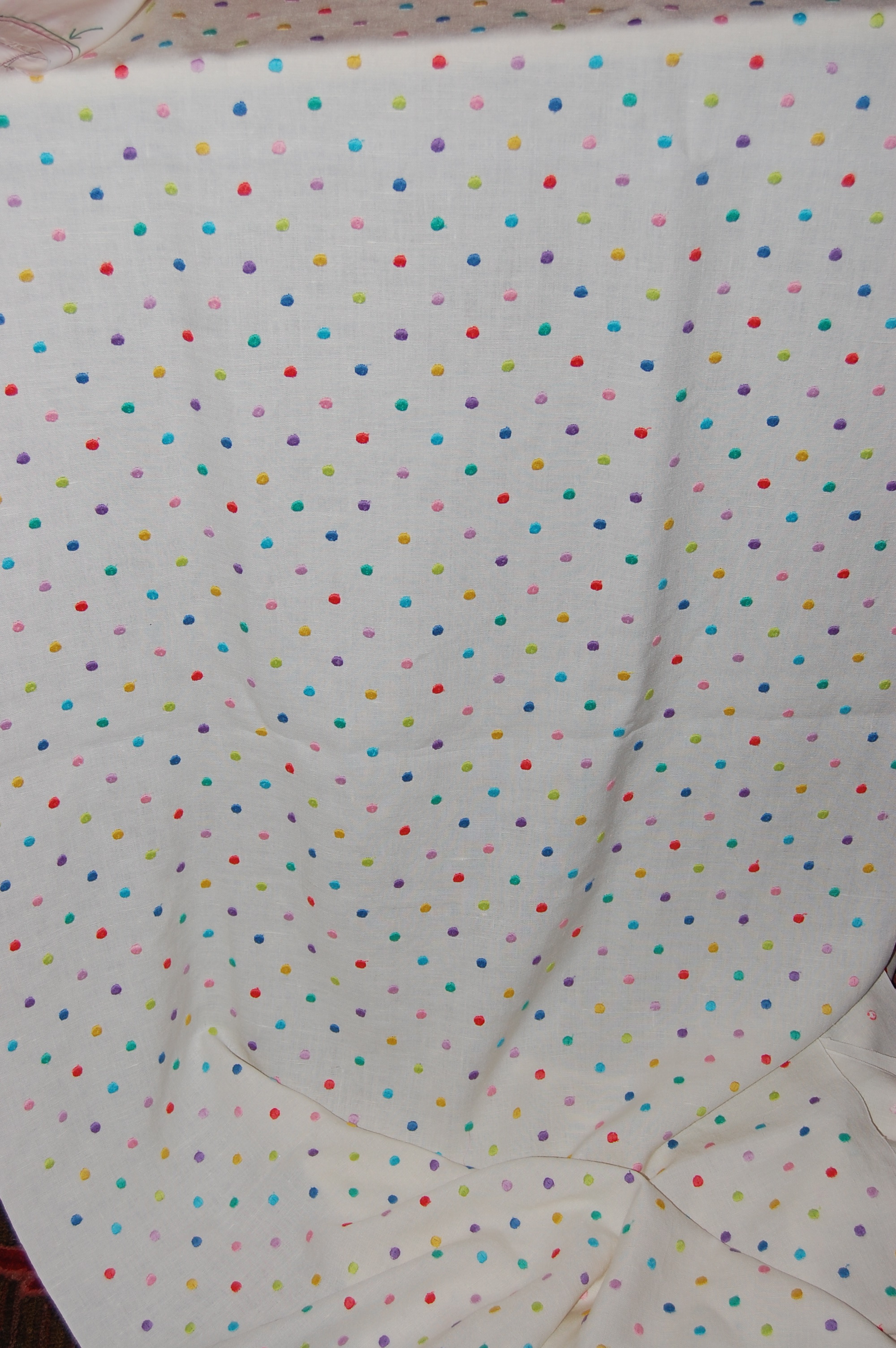
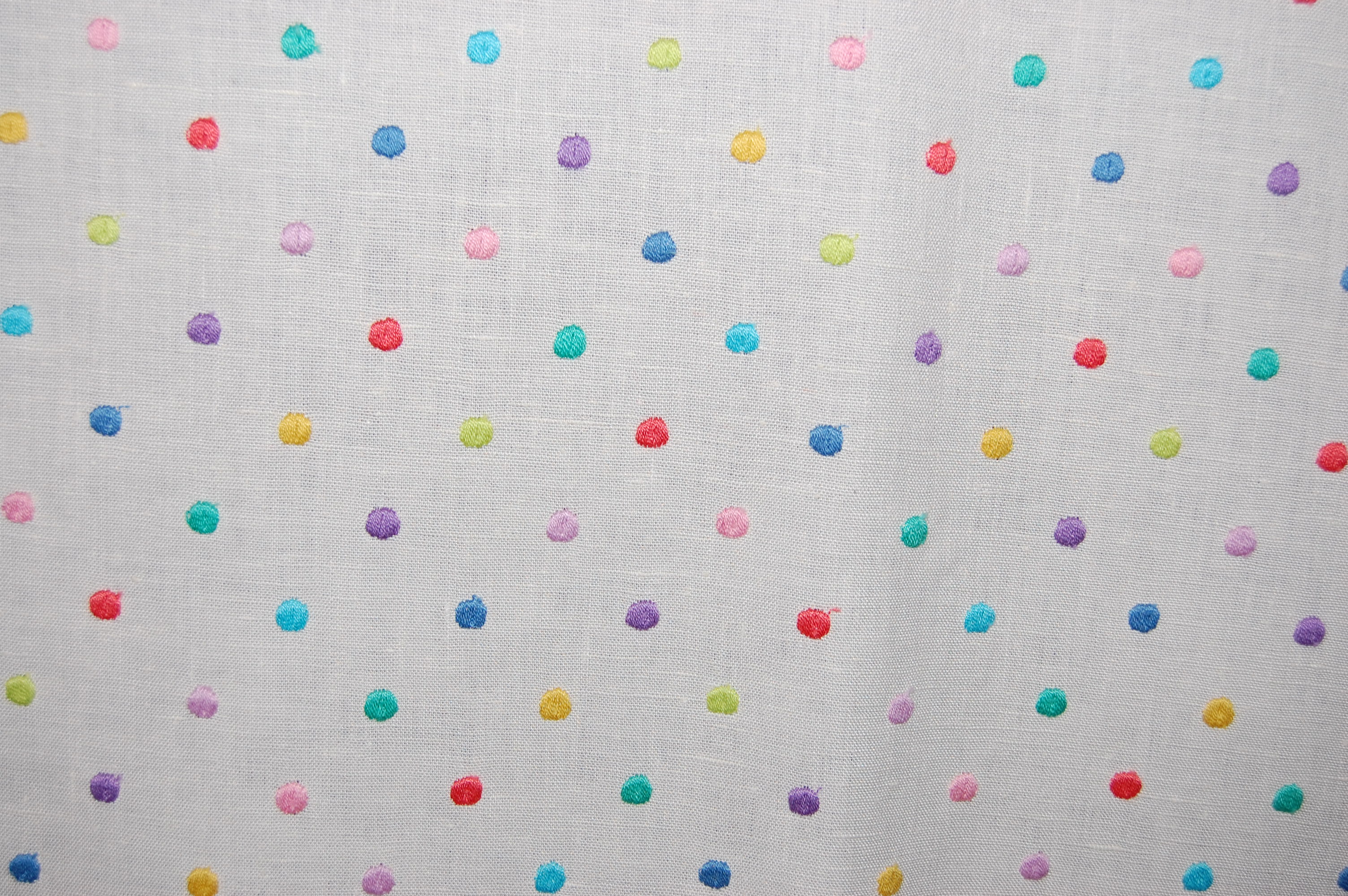
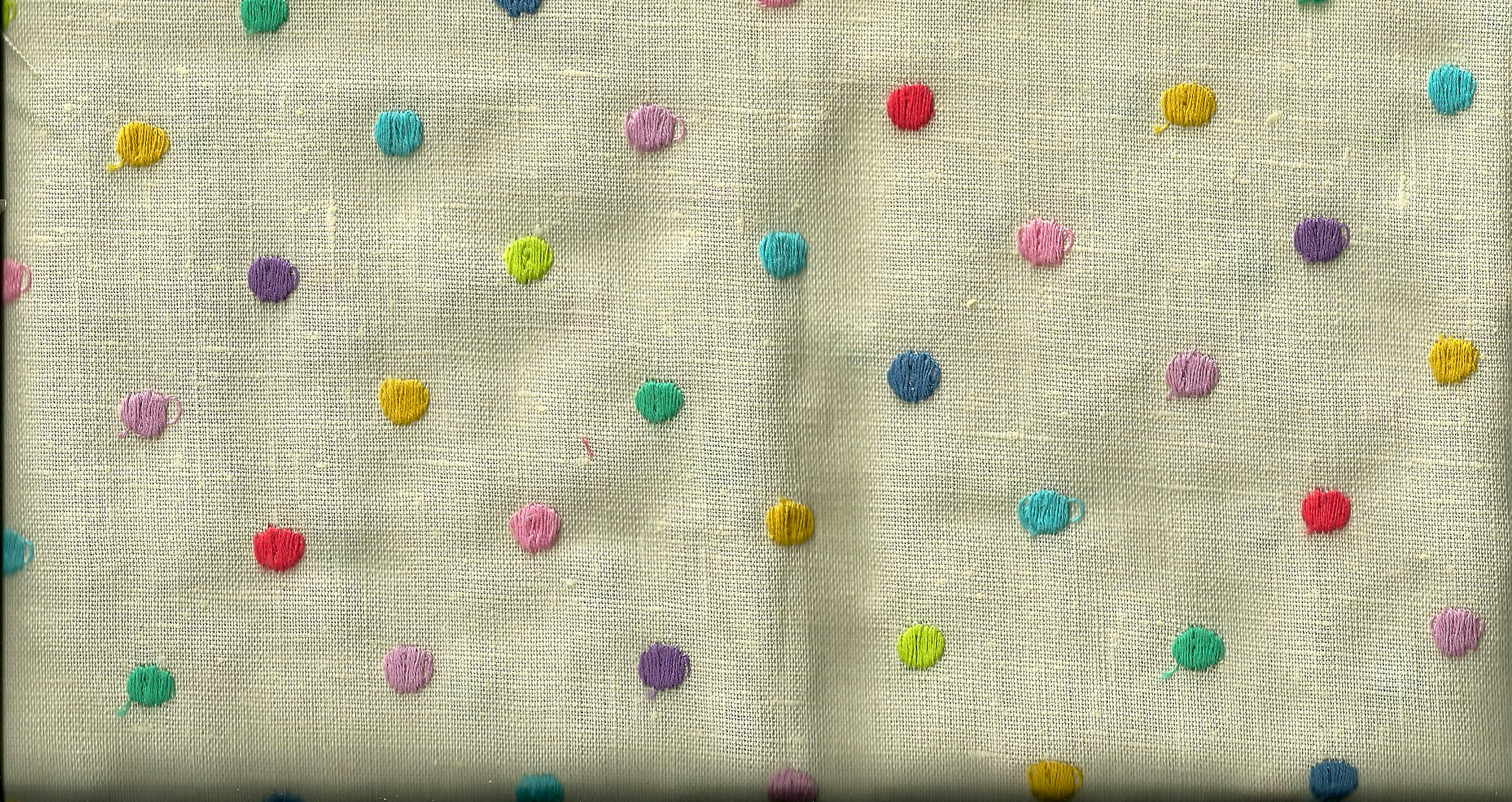
Linen dotted fabric

Linen dotted fabric

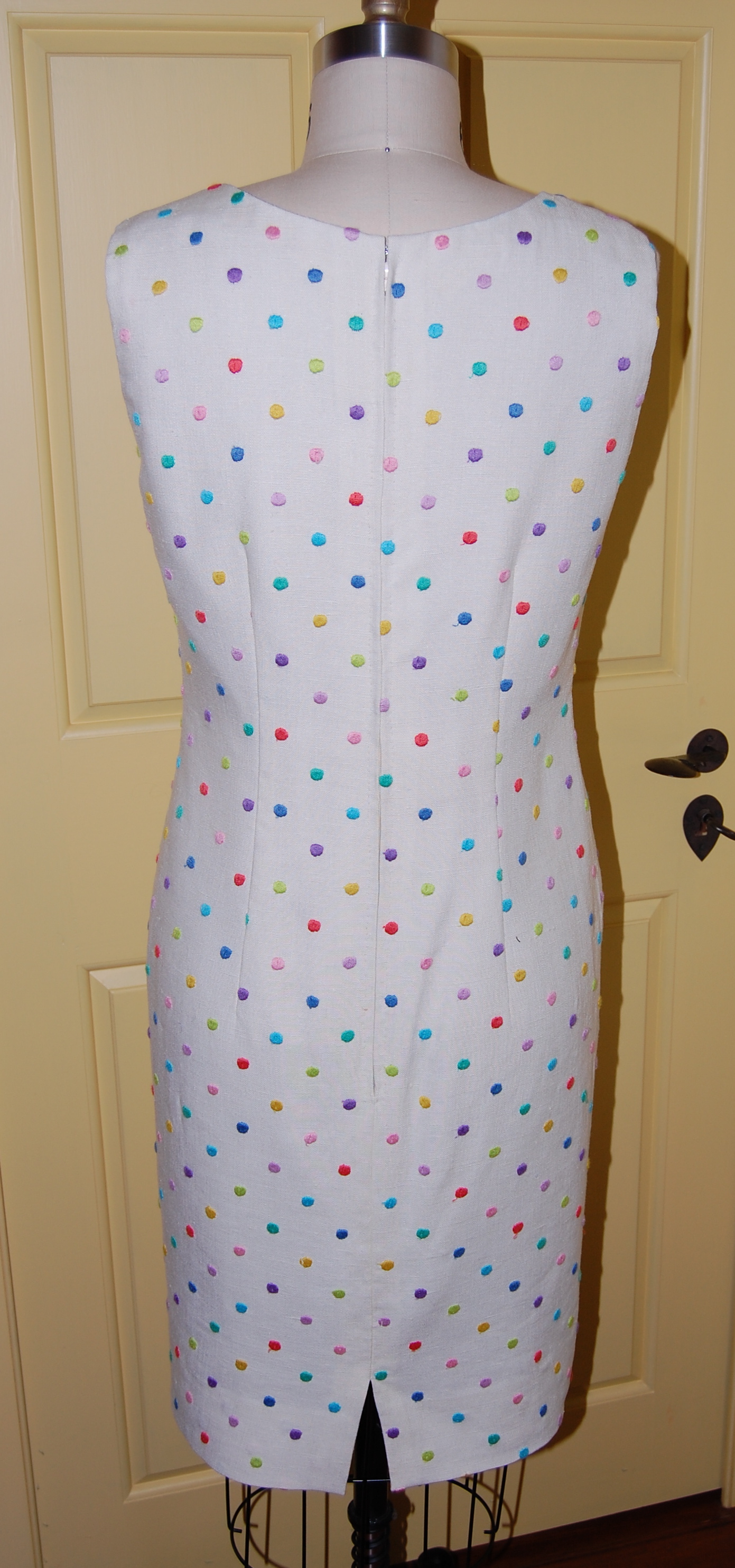
Each dot is individually embroidered onto the base linen fabric.

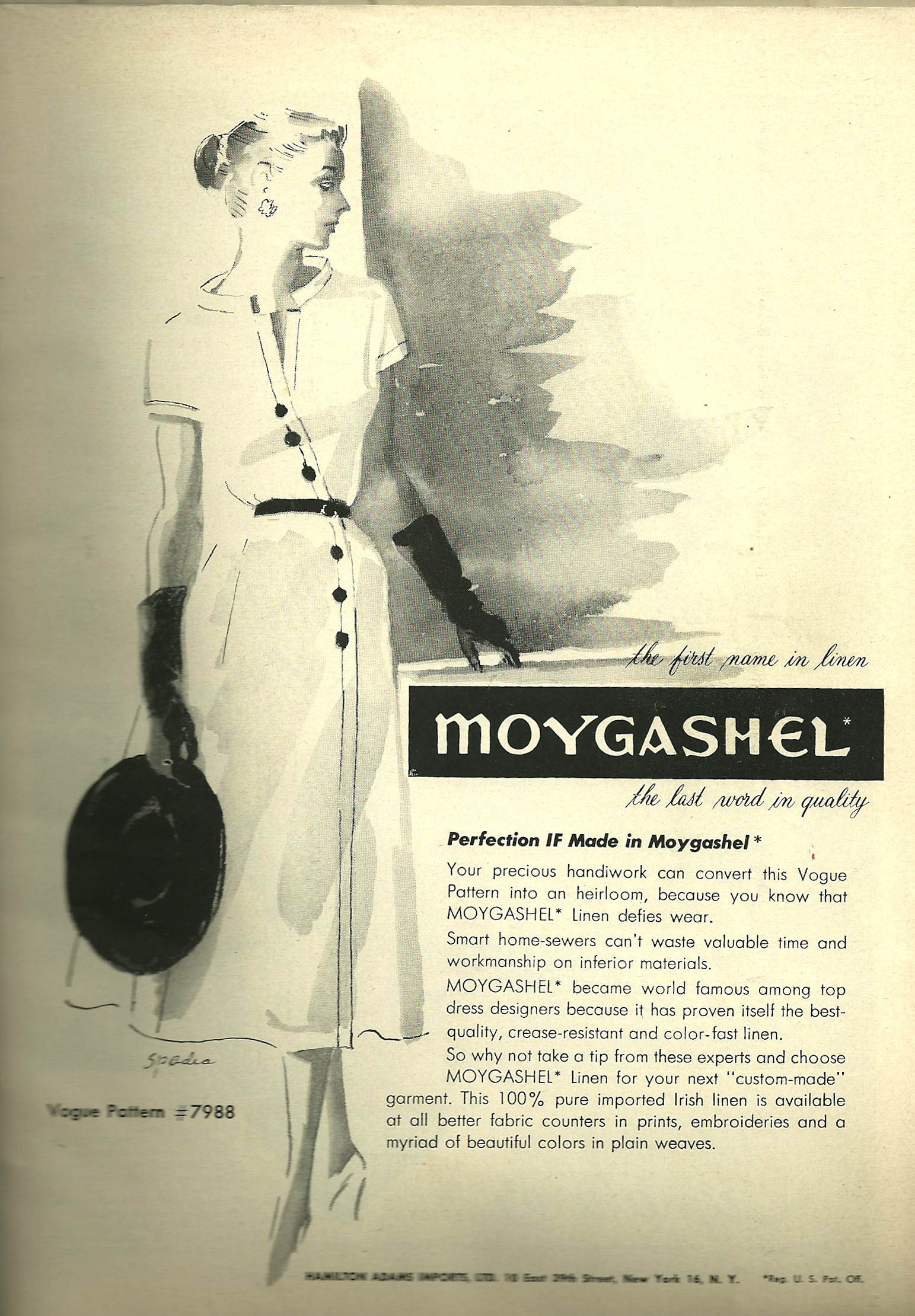
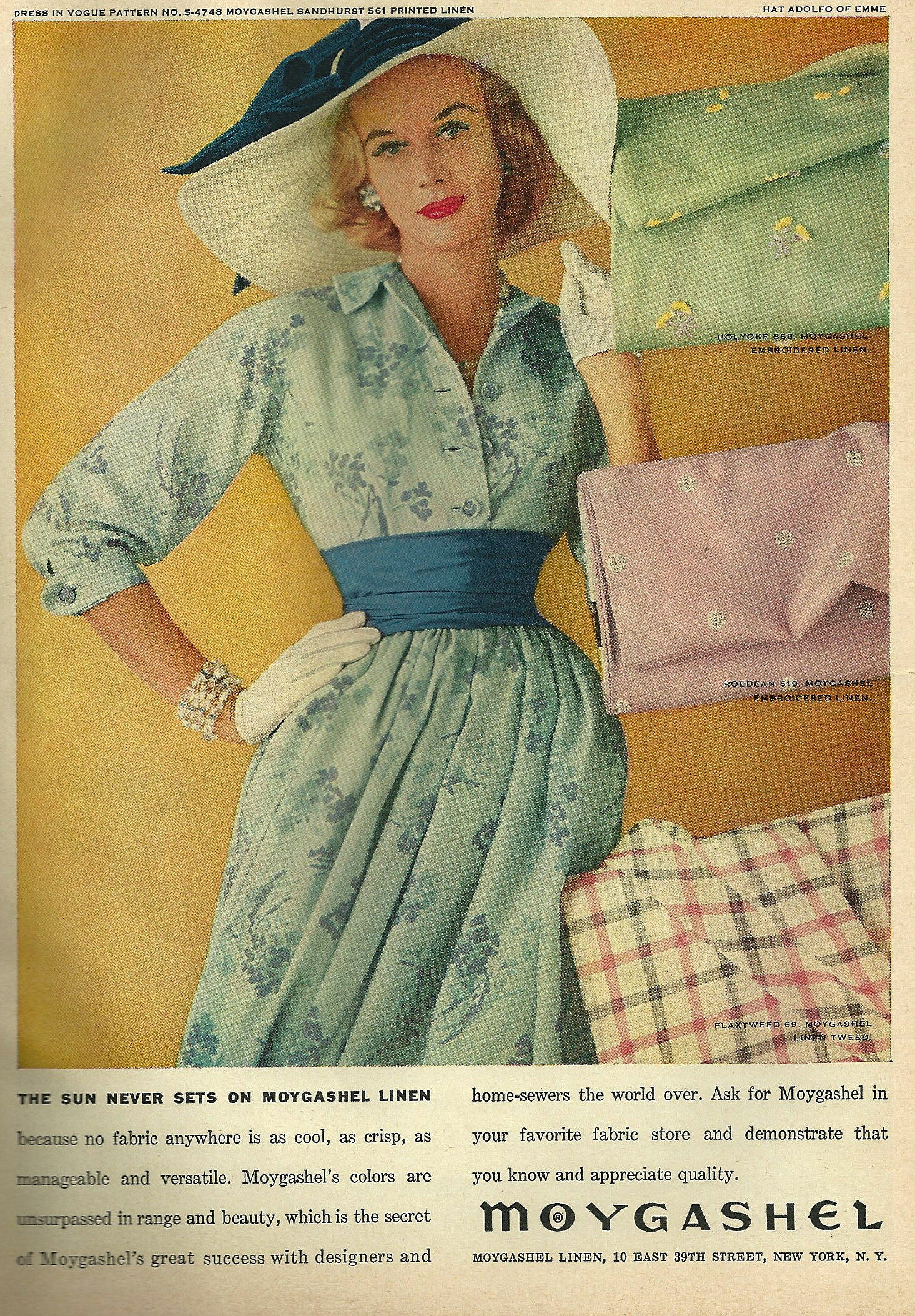
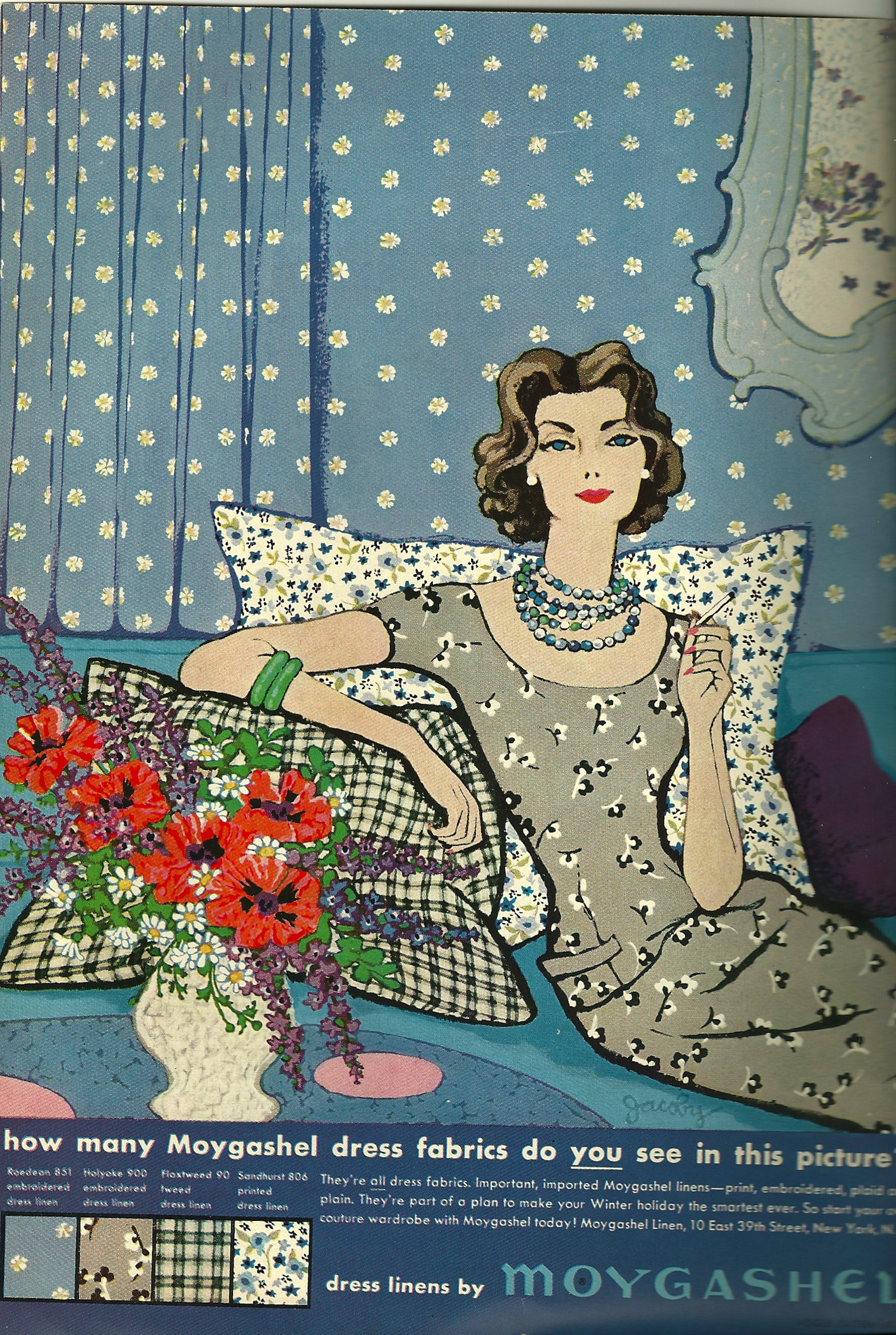
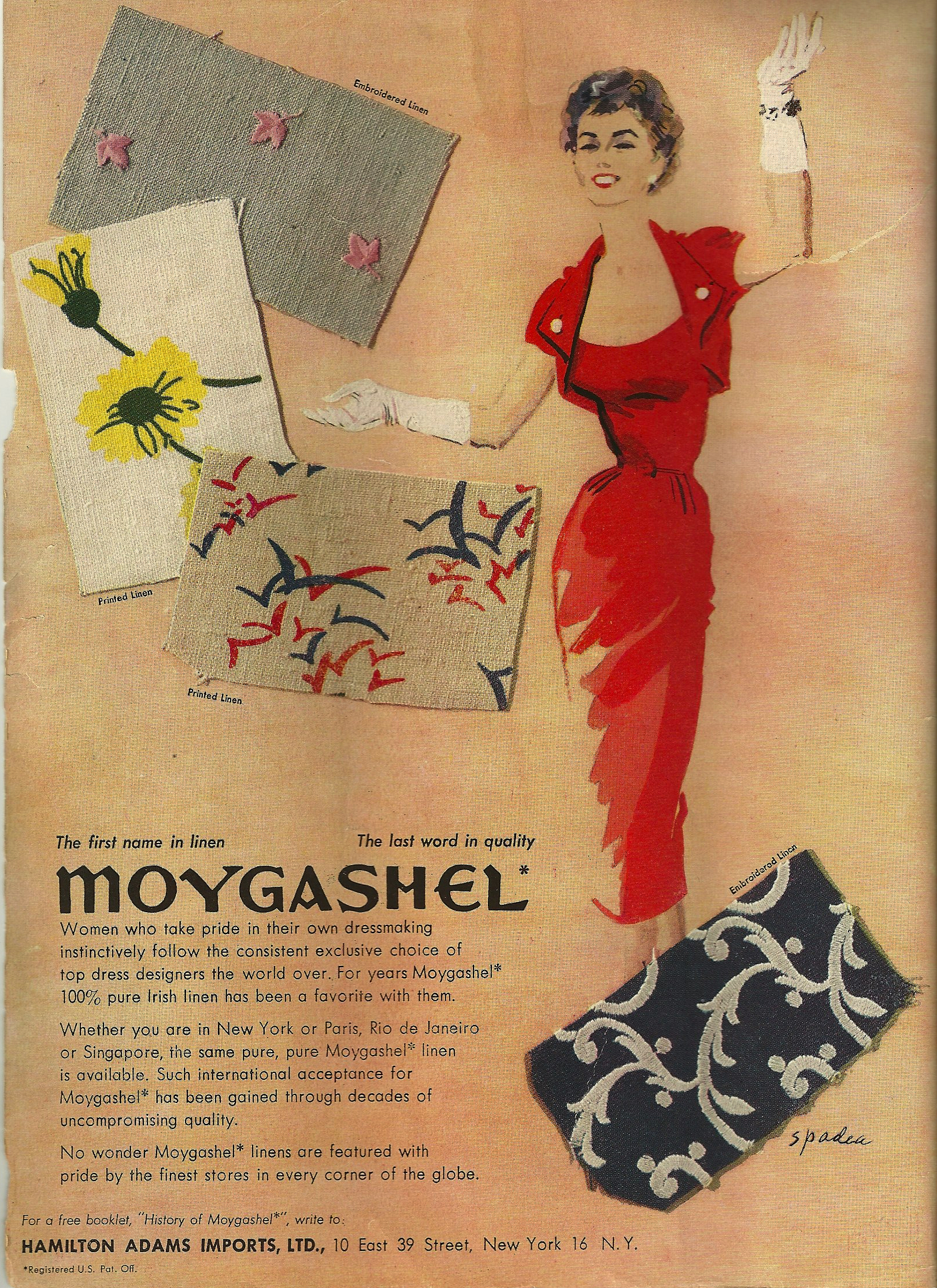
When I purchased this vintage linen fabric online, all I had was a photo or two. There was no selvedge marking, no attached label, no sales receipt to give any clue to its origin. However, the photos were clear, the weave of the fabric was visible enough, that I felt fairly confident that I was looking at a mid-century Moygashel linen. At 36” wide, I knew from experience it was prior to 1960. I also knew that Moygashel produced many embroidered dress linens in the 1950s. Here are two Moygashel linen ads which show both printed and embroidered linens:
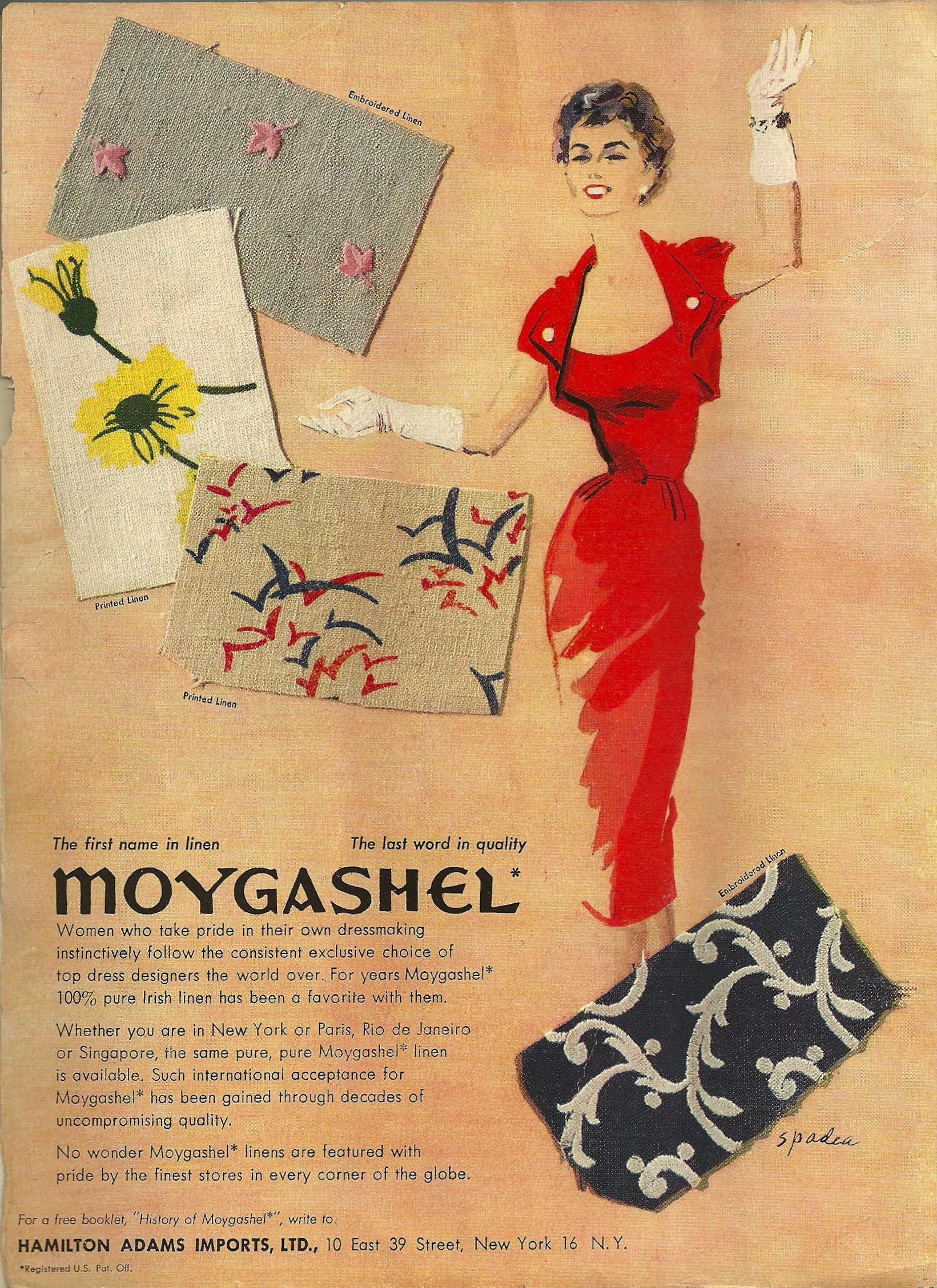
This ad was on the inside front cover of Vogue Pattern Book magazine from December/January 1953-54.
This ad was on the inside front cover of Vogue Pattern Book magazine from December/January 1953-54.

And this ad was on the inside front cover of Vogue pattern Book Magazine from December/January 1957-58.

And this ad was on the inside front cover of Vogue Pattern Book magazine from December/January 1957-58.

I knew the real “proof of the pudding” – to authenticate the linen as Moygashel – would be in how it laundered.  Moygashel linen was known for its resistance to wrinkling! Months went by after the fabric arrived in the mail, but a couple of weeks ago, I retrieved it from my fabric closet, put it in a gentle wash cycle (with Woolite detergent), tumble dried it on medium heat, and out it came, as I had hoped, crisp, clean, and looking like new. All it needed was just a quick ironing on high heat to make sure the fabric would lay flat for marking and cutting.

Yes, I knew I had an authentic Moygashel linen in hand, and I wanted to make a dress that would be all about the fabric. I envisioned a simple sheath, whose look could be changed so easily with different color accessories. Knowing I already had a sheath dress pattern that fit me well, I made my sewing life simple (for a change!) and went with it.
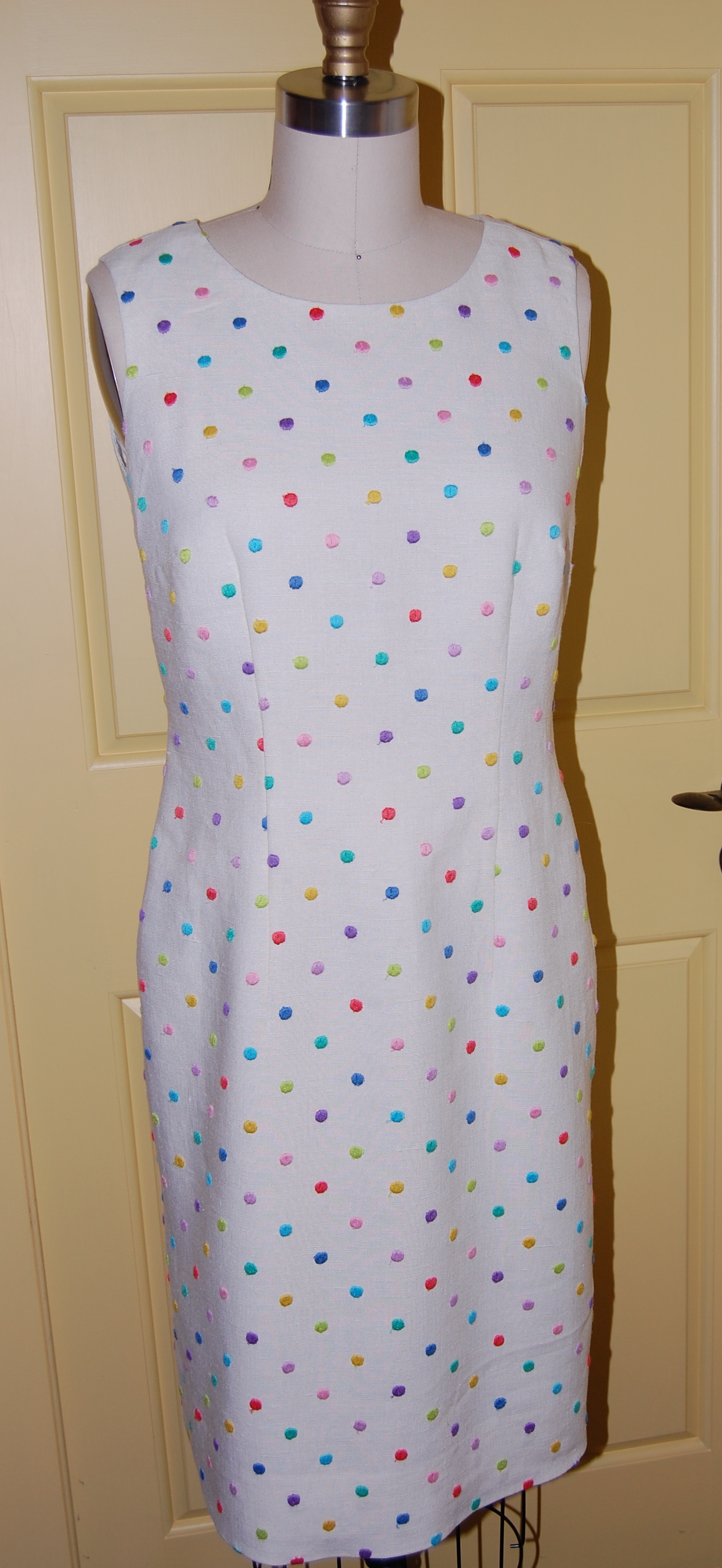
One can't get much simpler than this classic sheath design!

One can’t get much simpler than this classic sheath design!

First, a few details and precautions about sewing with embroidered linen:

1) All ironing must be done on the wrong side of the fabric, in order not to squash the embroidered details.

2) All ironing must be done on top of a towel, also for the same reason.

3) It’s best to sandwich paper under seam allowances before pressing to prevent “impressions” from going through to the right side of your fabric.

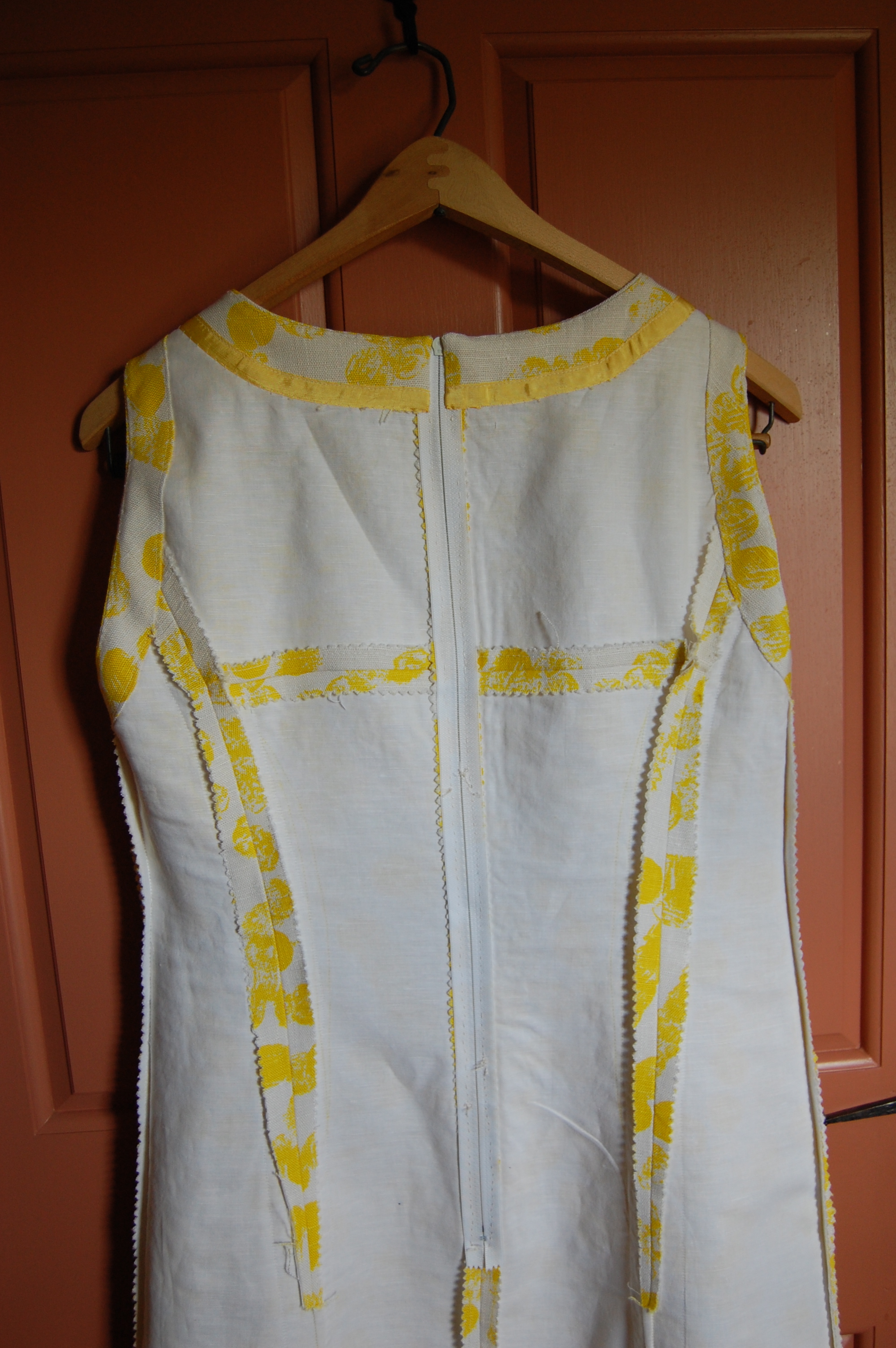
4) Because cut embroidery details have a tendency to fray along the edges of seam allowances, it is best to finish them with either a Hong Kong finish or with rayon (Snug Hug) hem tape. I used Snug Hug as it did not add any extra bulk to the inside of my garment.
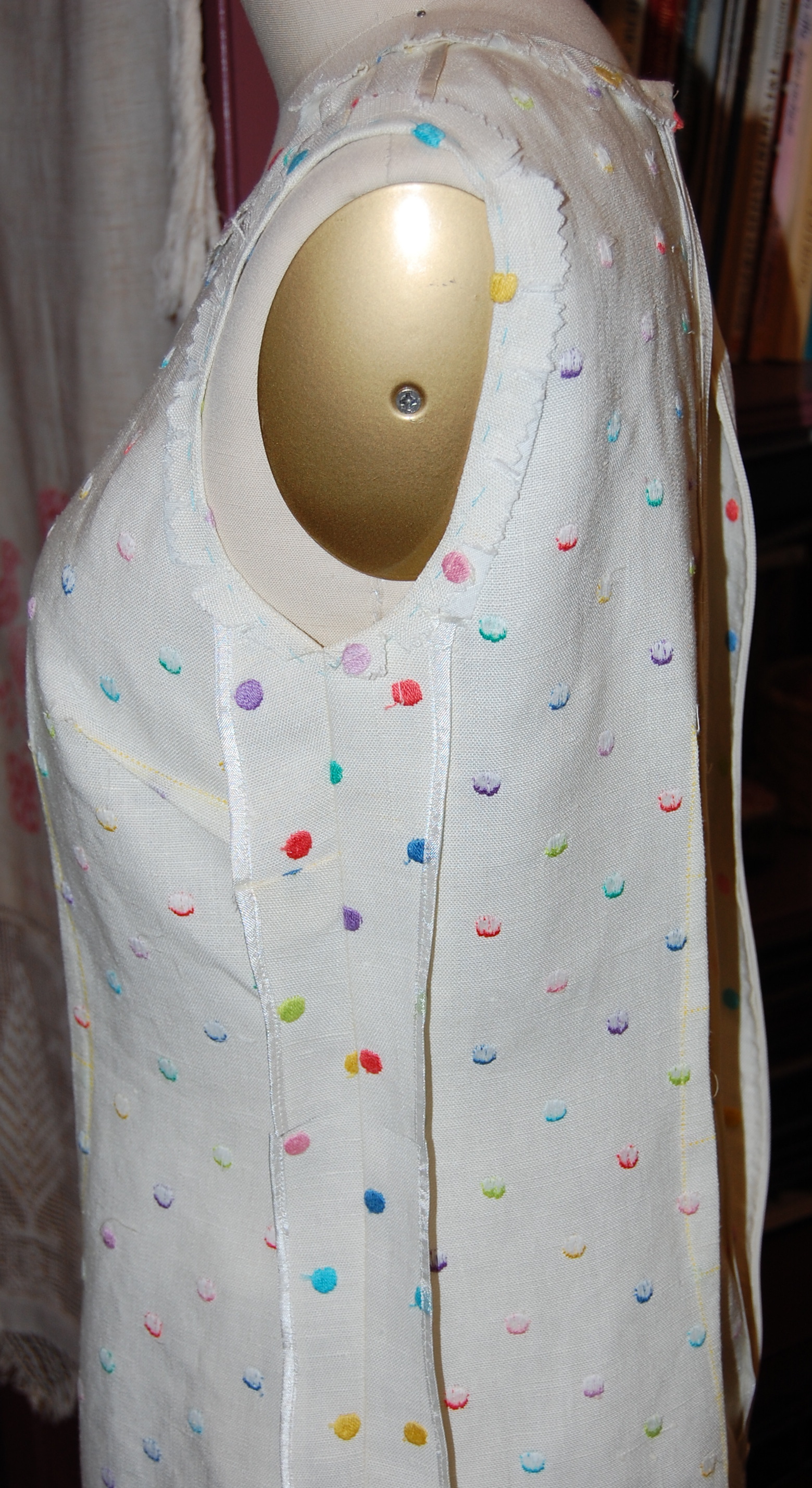
Side seams finished with Snug Hug.

Side seams finished with Snug Hug.

I did not want to underline my dress (as in silk organza), as I wanted to preserve the lovely breathability of the linen fabric. However, I did want to line it, so I used a very light, almost gauzy, cotton/linen blend.
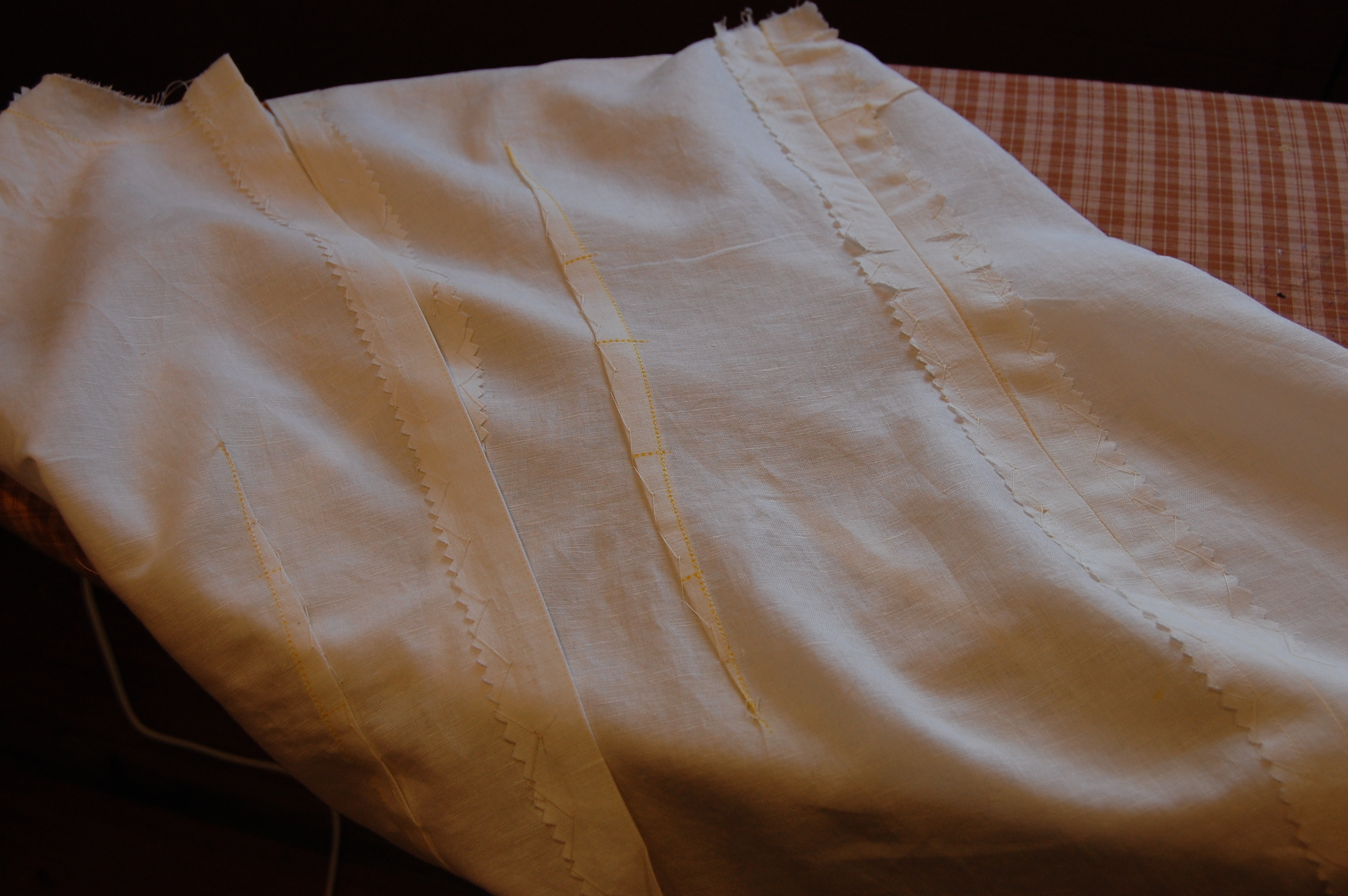
I actually catch-stitched all the seams and dart edges on the lining, to help it mold as nicely as possible with the interior of the dress.

I actually catch-stitched all the seams and dart edges on the lining, to help it mold as nicely as possible with the interior of the dress.

I decided to make the lining entirely separate and then attach it to the dress at the neck, armholes, zipper and back hem slit using a fell stitch. However, once I had my seam allowance folded back at the neck and armholes, I noticed a little bit of “shadowing through” of some of the colored dots along those edges.
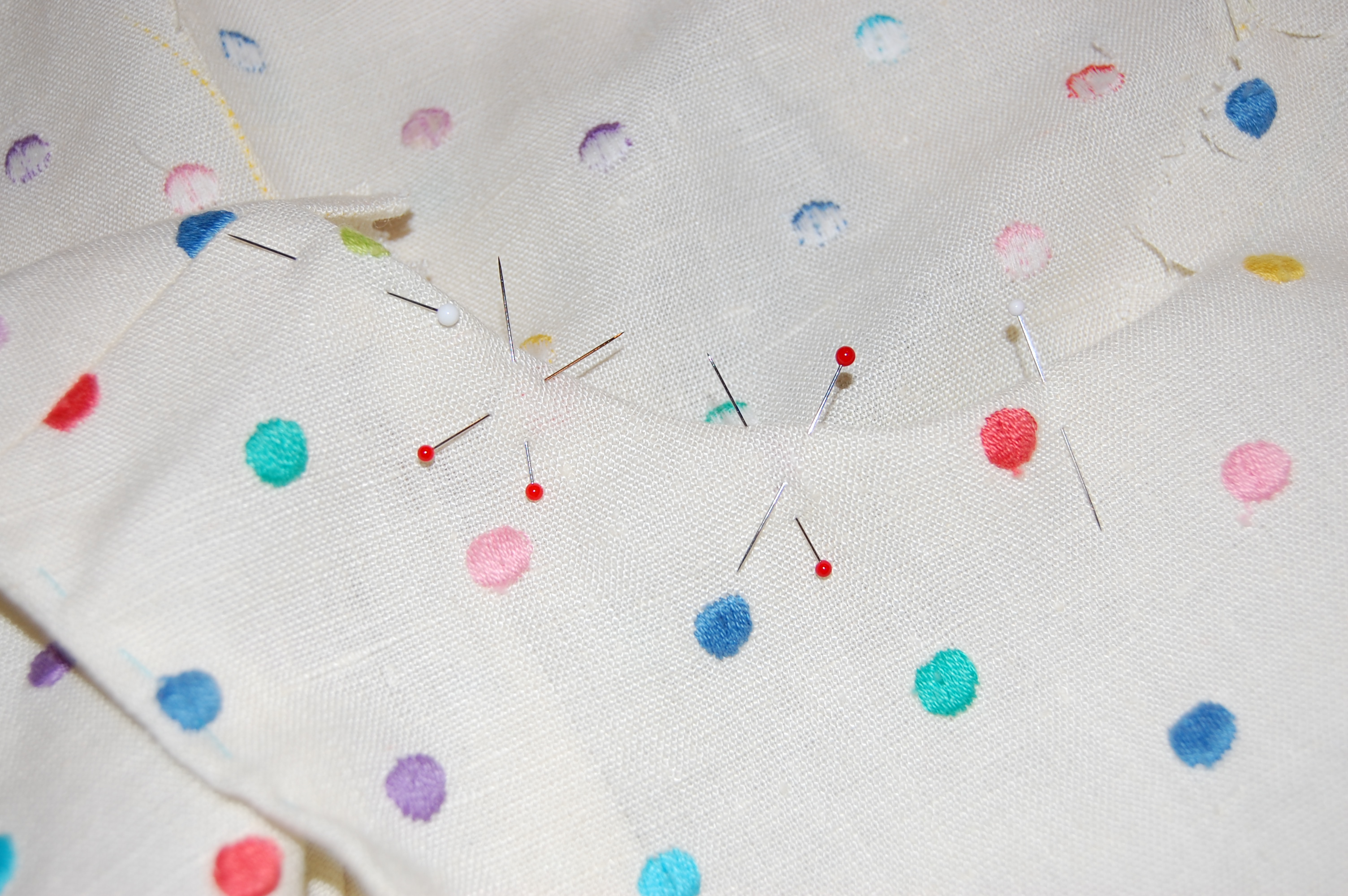
Perhaps you can see the shadowing of the dots underneath the crossed pins?

Perhaps you can see the shadowing of the dots underneath the crossed pins?

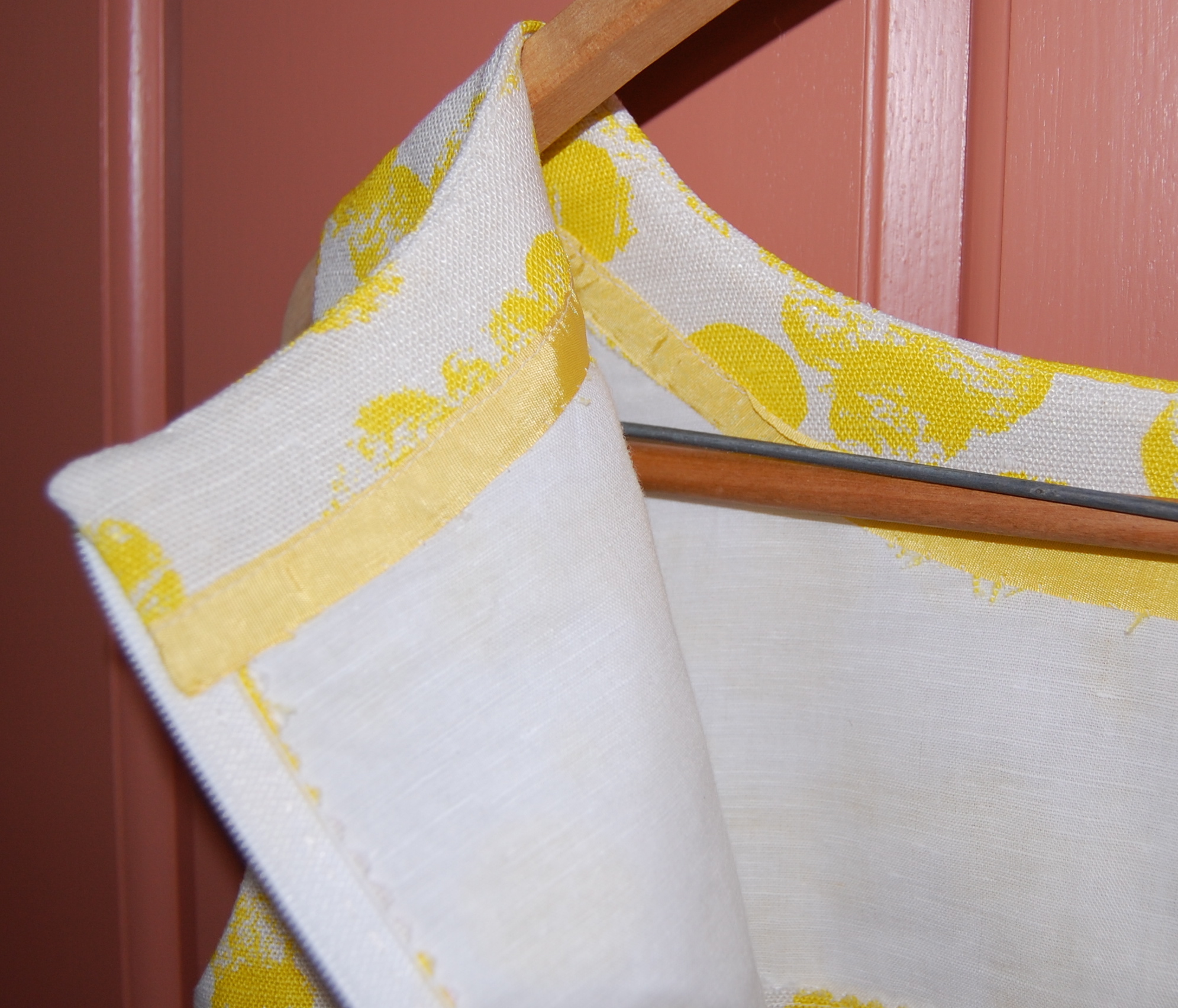
To remedy this, I cut 5/8” wide strips of bias lining fabric and basted them onto the seam allowances in those areas. That was just enough to take care of that problem.
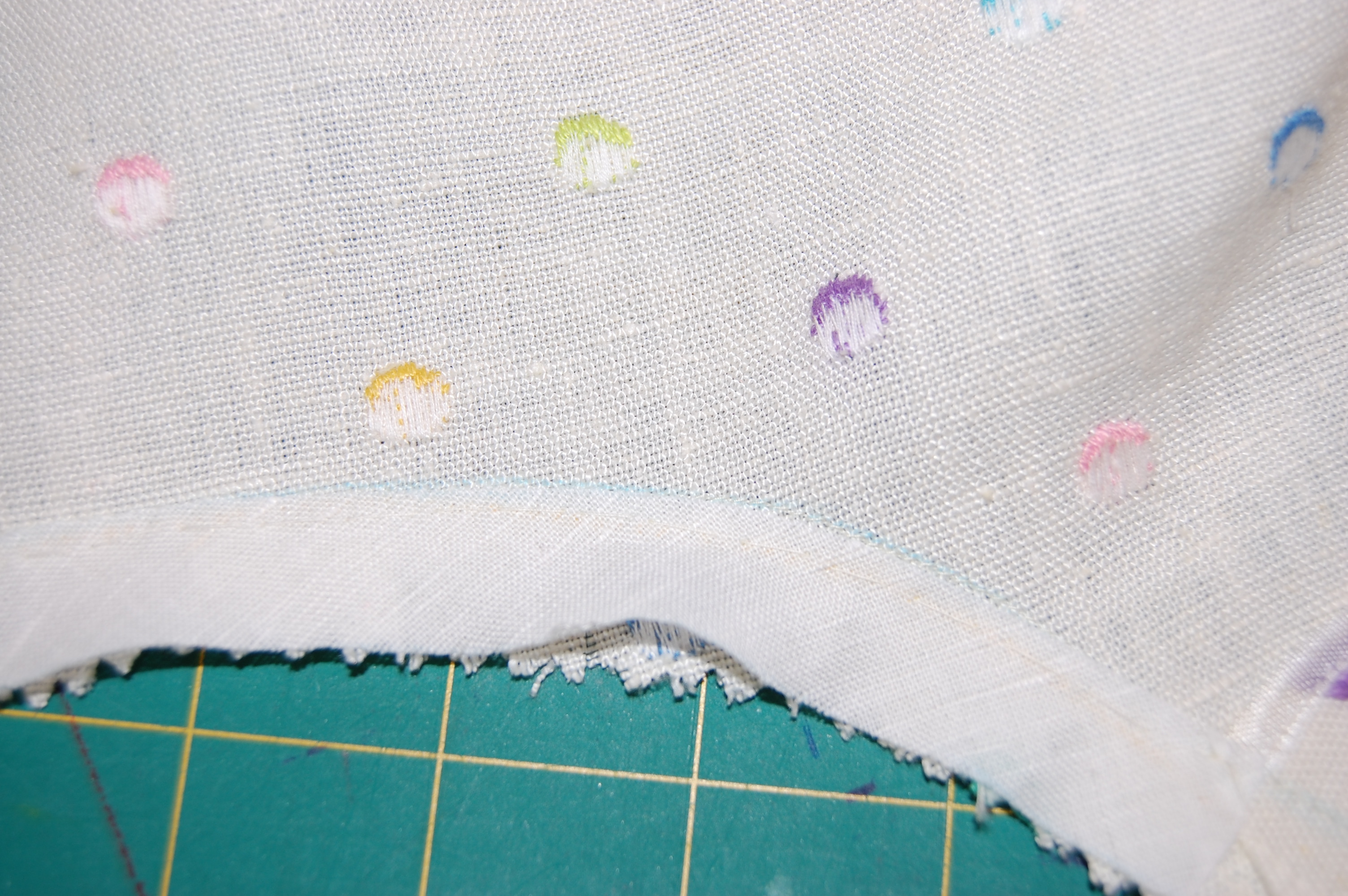
This narrow strip of lining fabric prevents the color of those dots from showing through.

This narrow strip of lining fabric prevents the color of those dots from showing through.  This is the wrong side of the fabric.

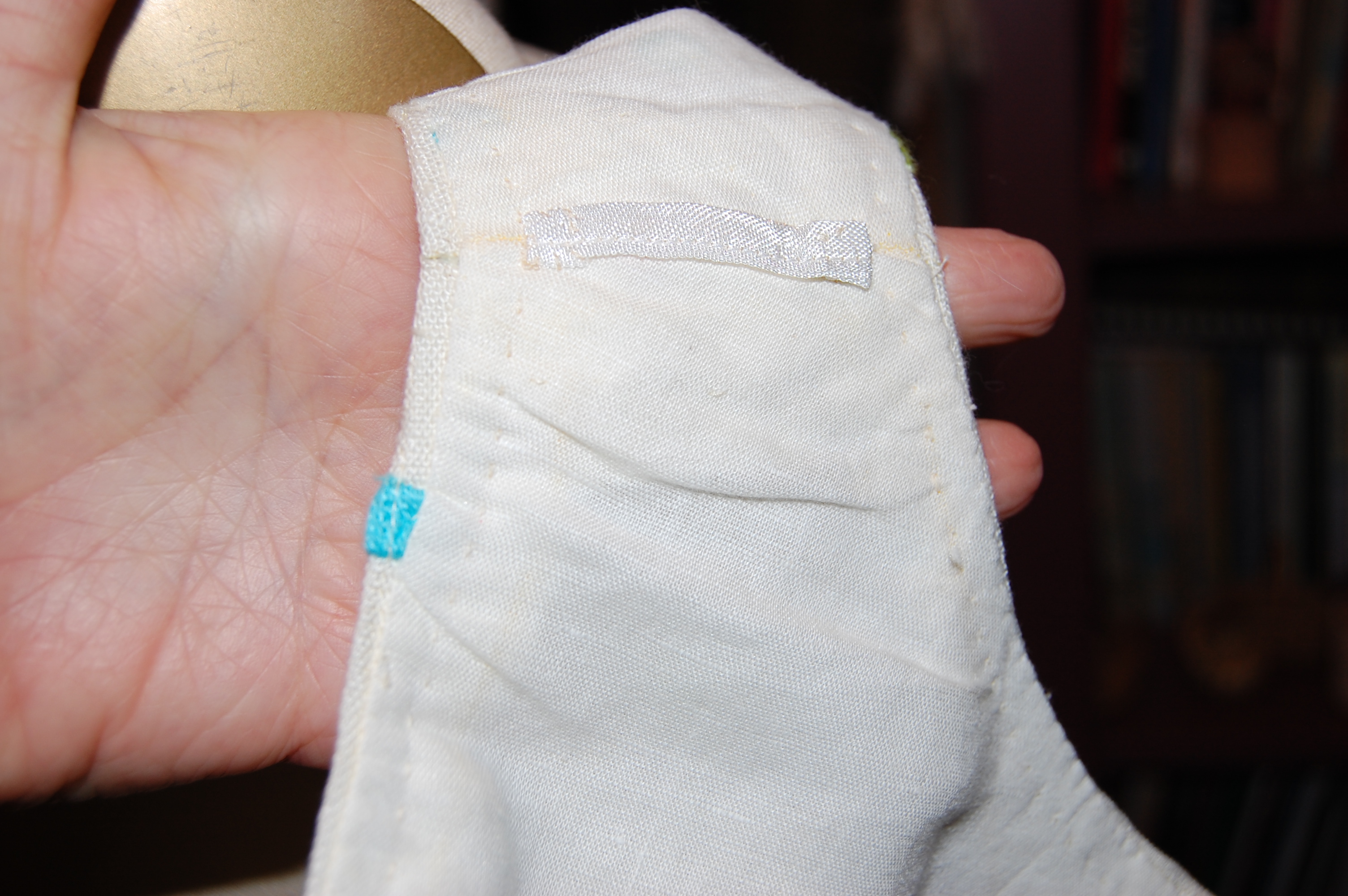
Once the dress and lining were attached, I under-stitched the neck and armhole edges by hand. It really makes a lovely interior!
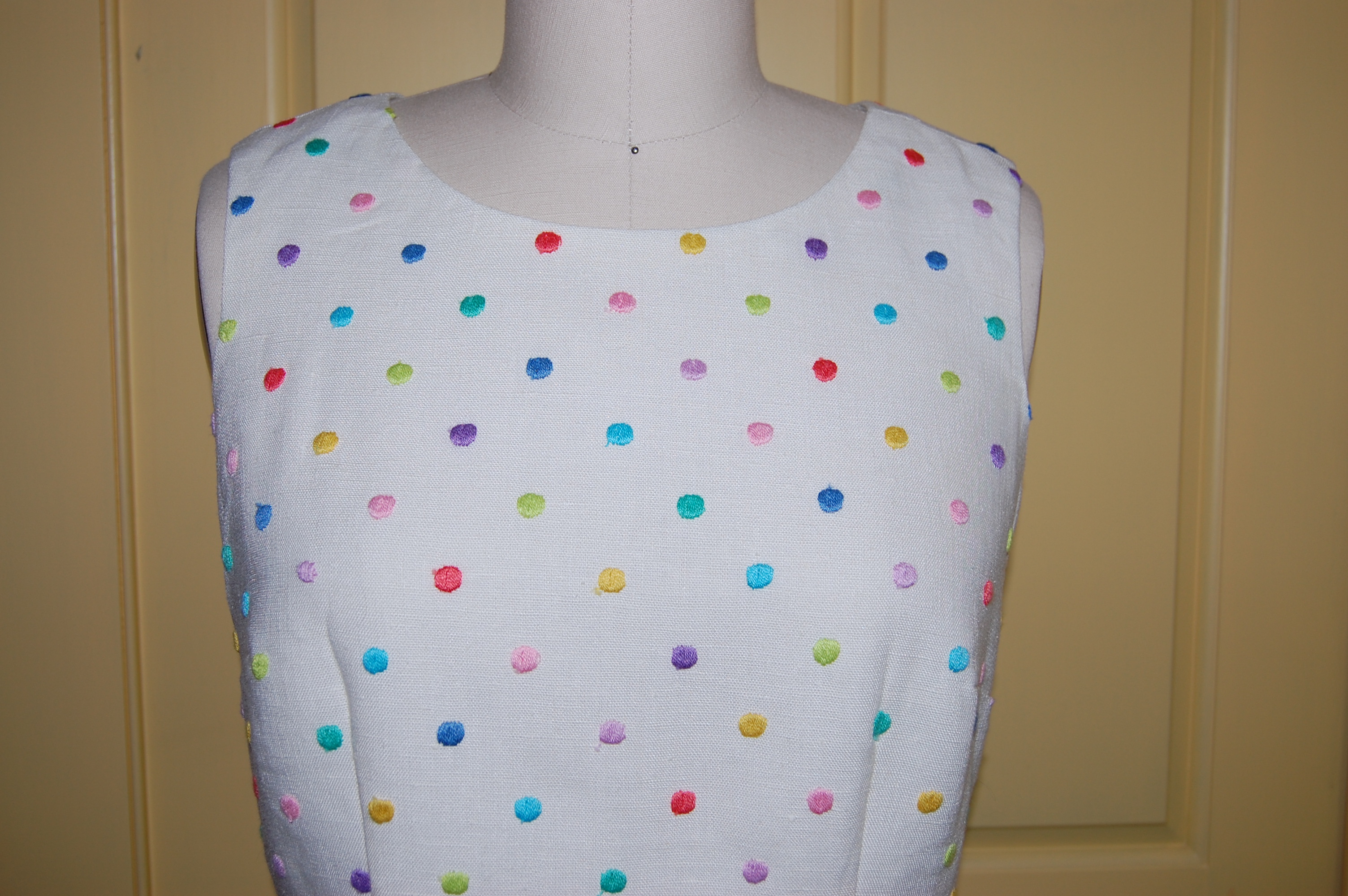
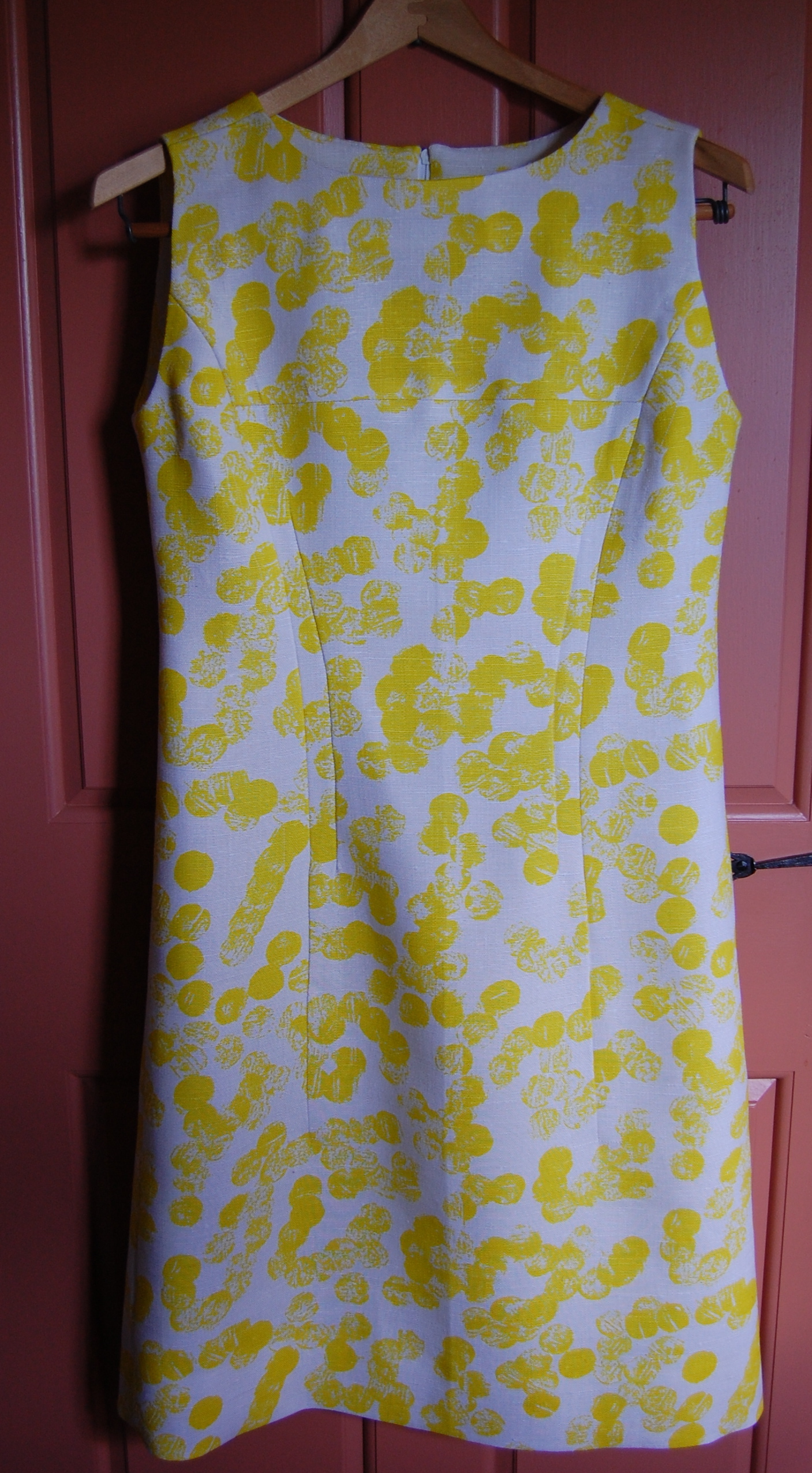
Linen dot dress

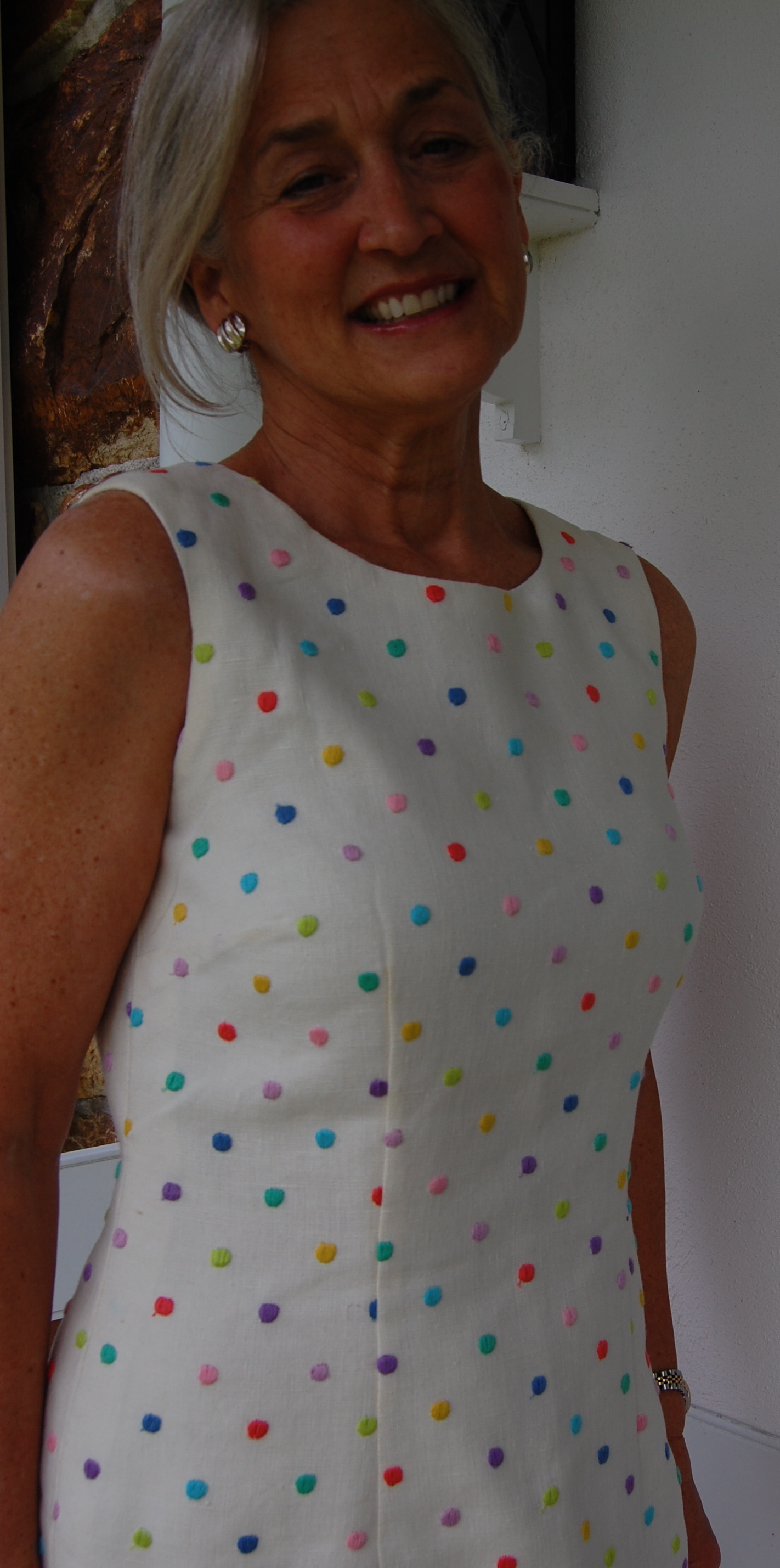
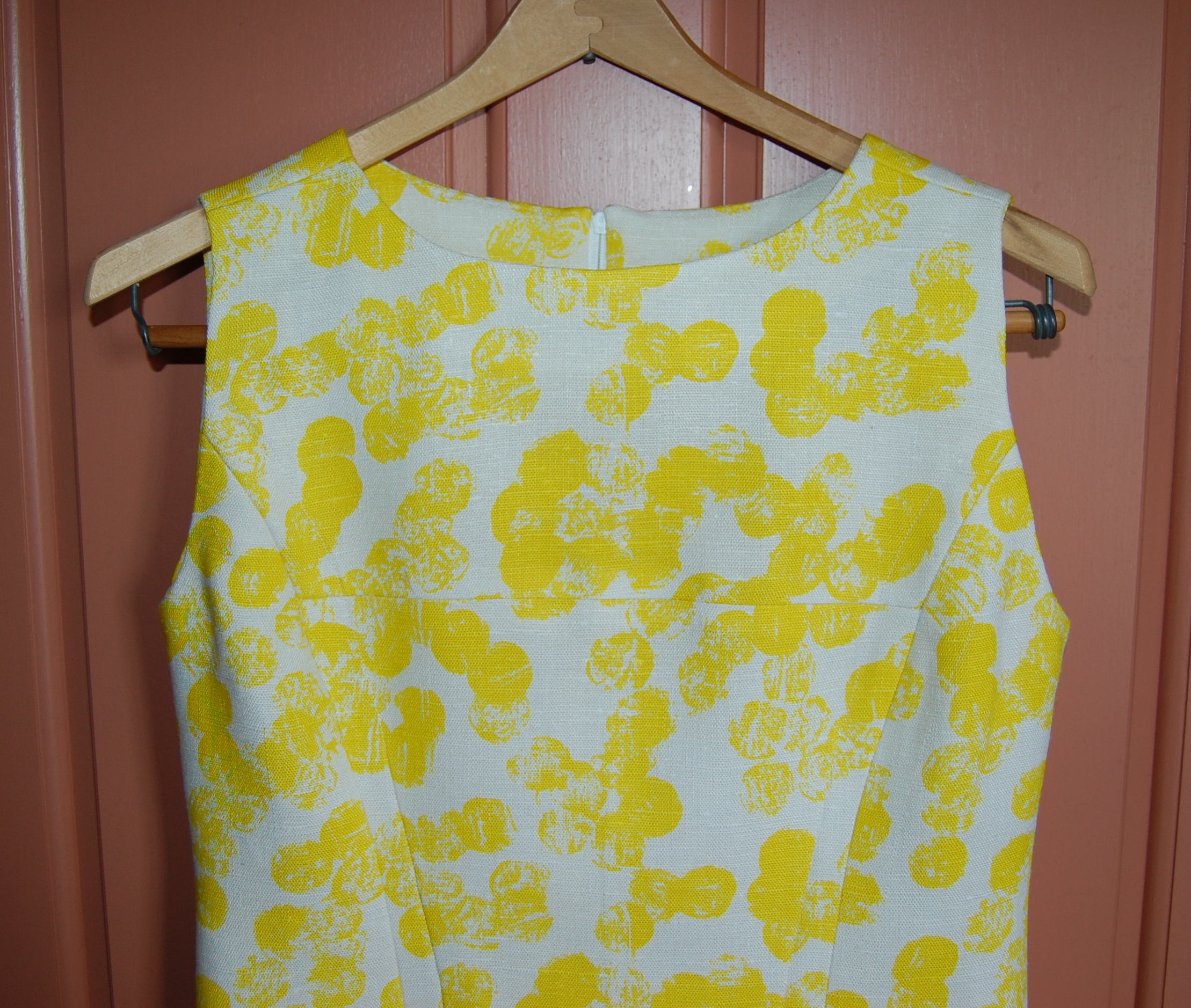
A close-up of the bodice.

A close-up of the bodice.

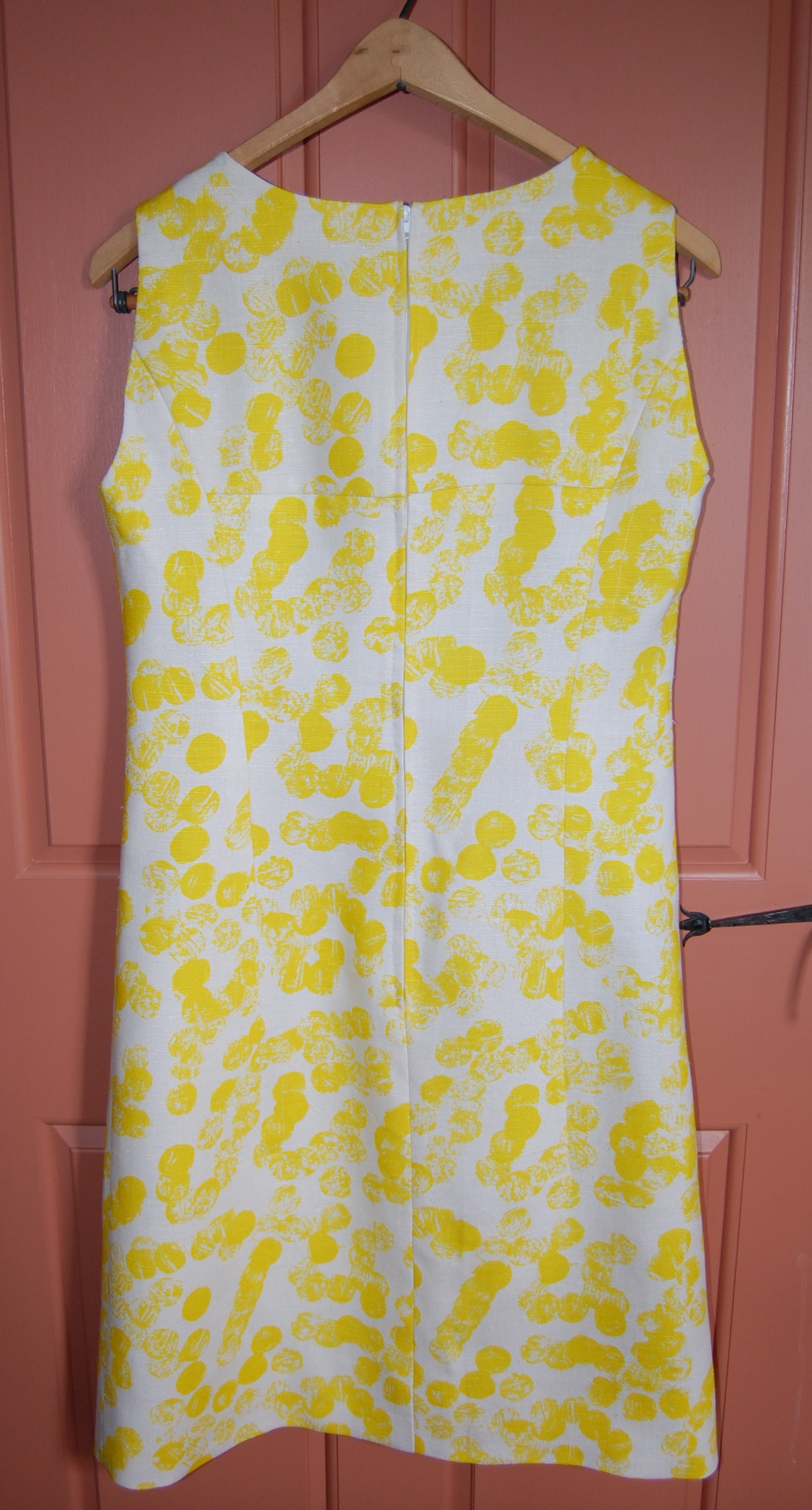
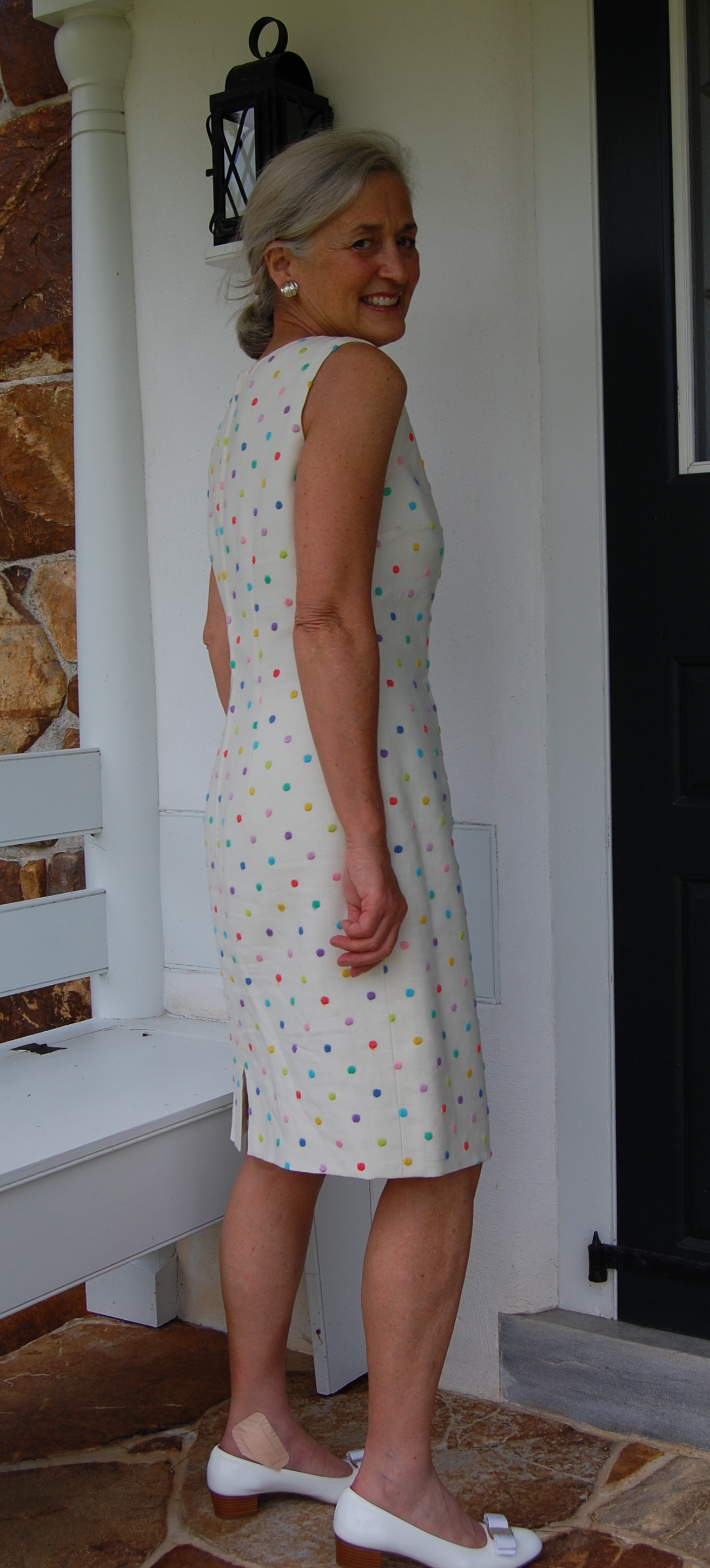
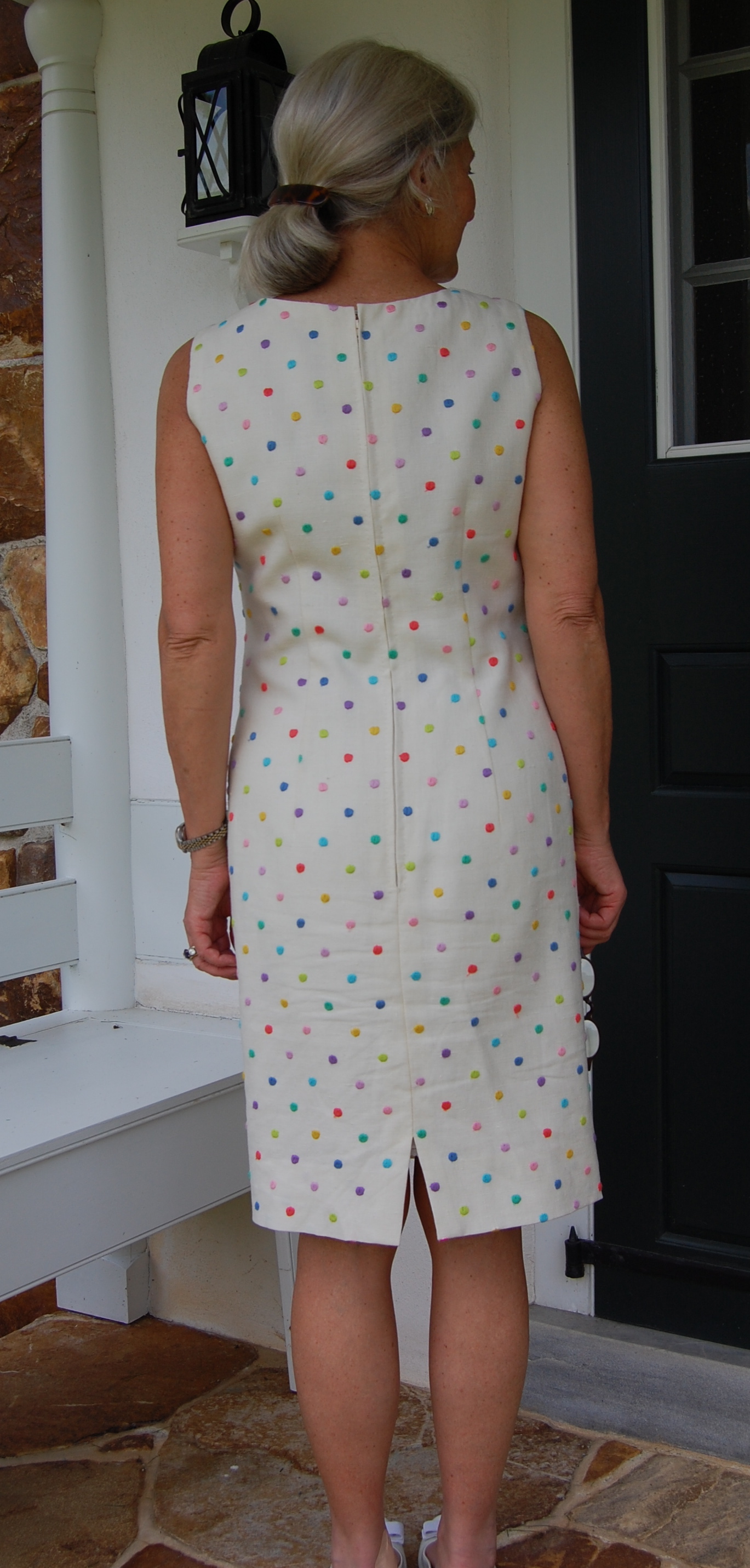
The back of the dress, with its hand-picked zipper.
The back of the dress, with its hand-picked zipper.

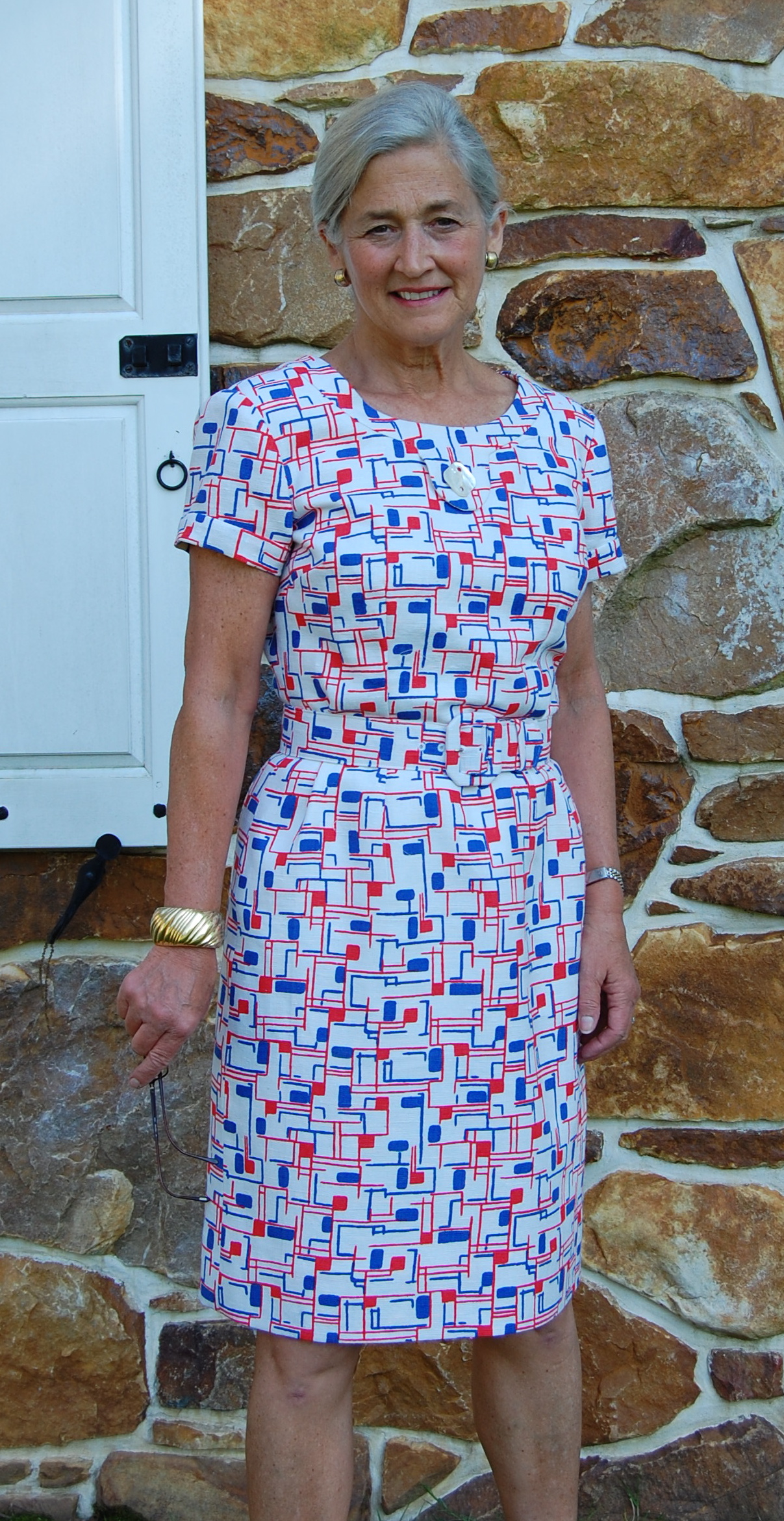
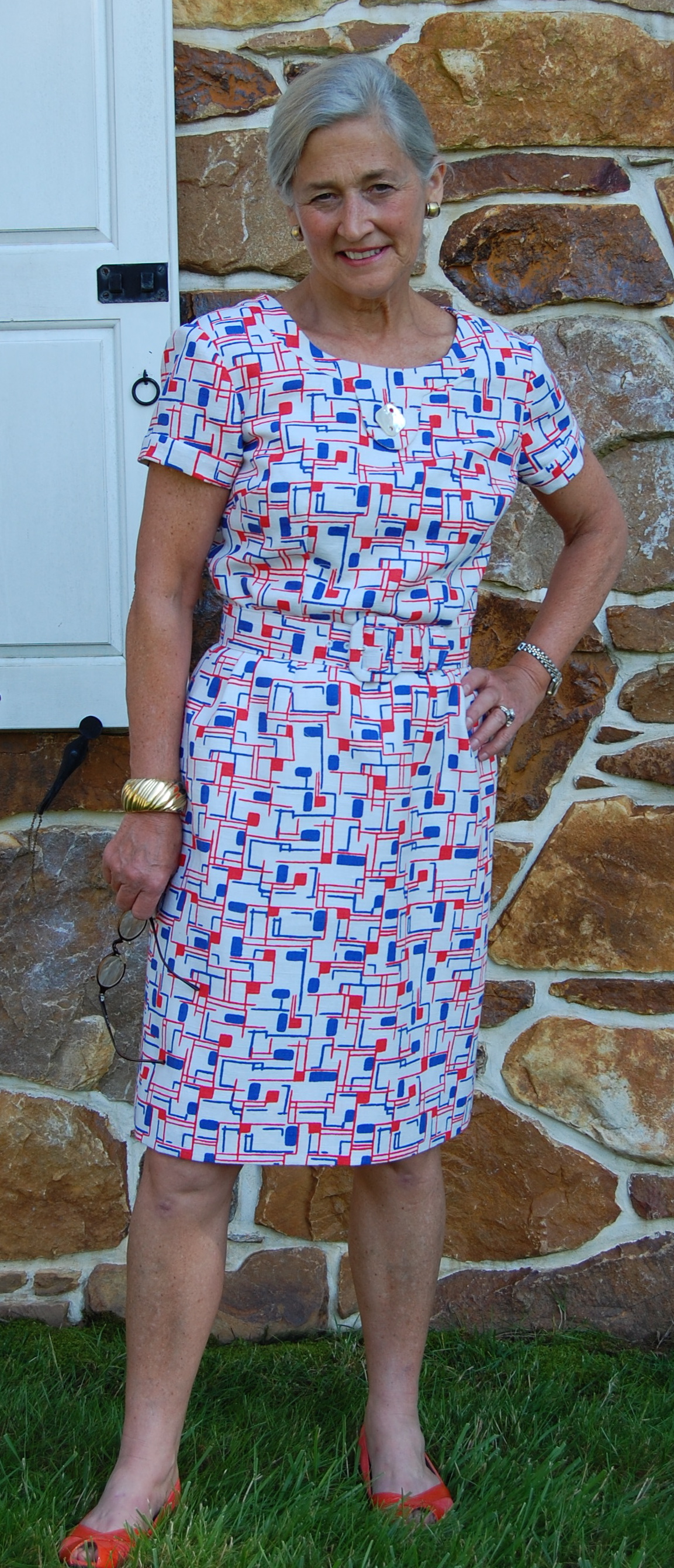
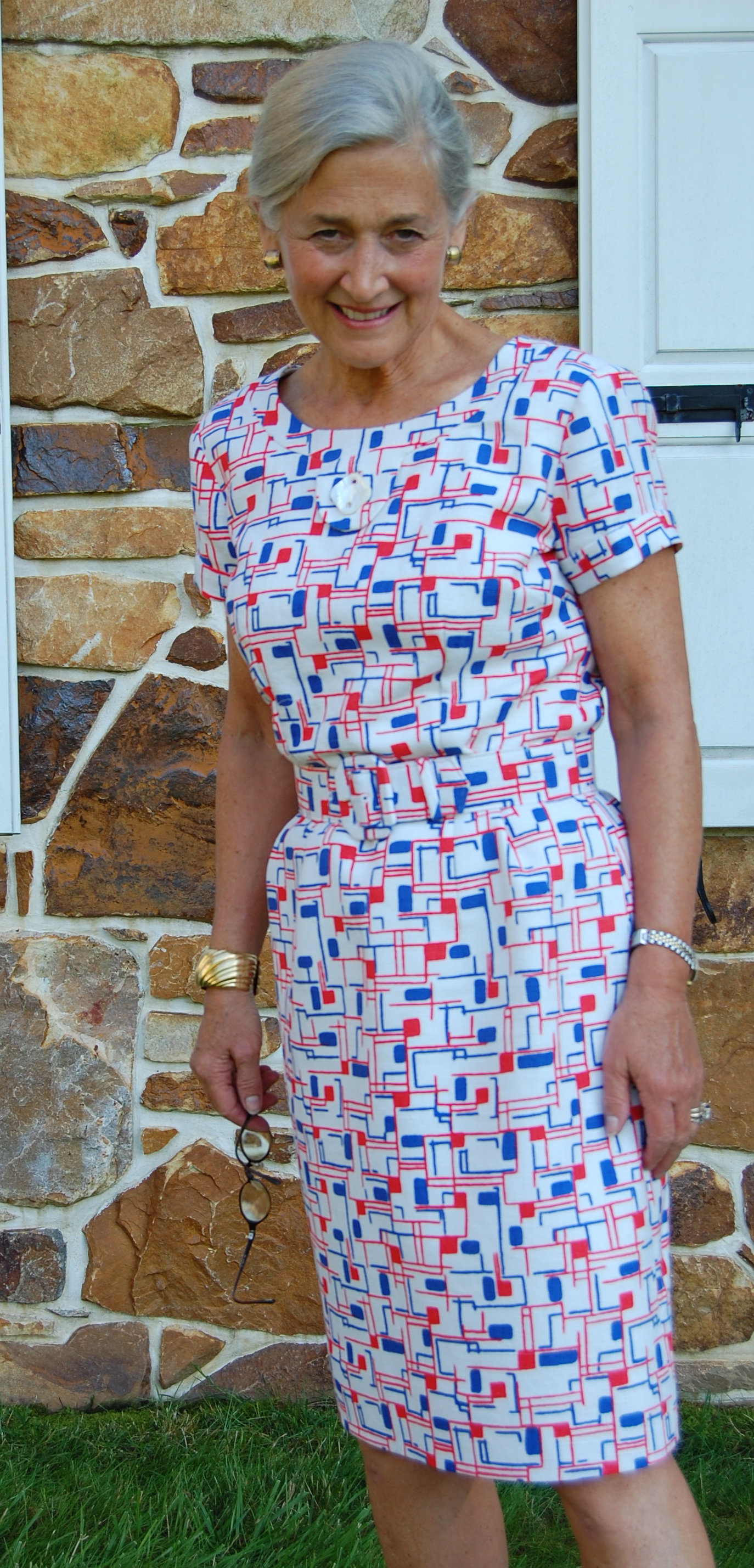
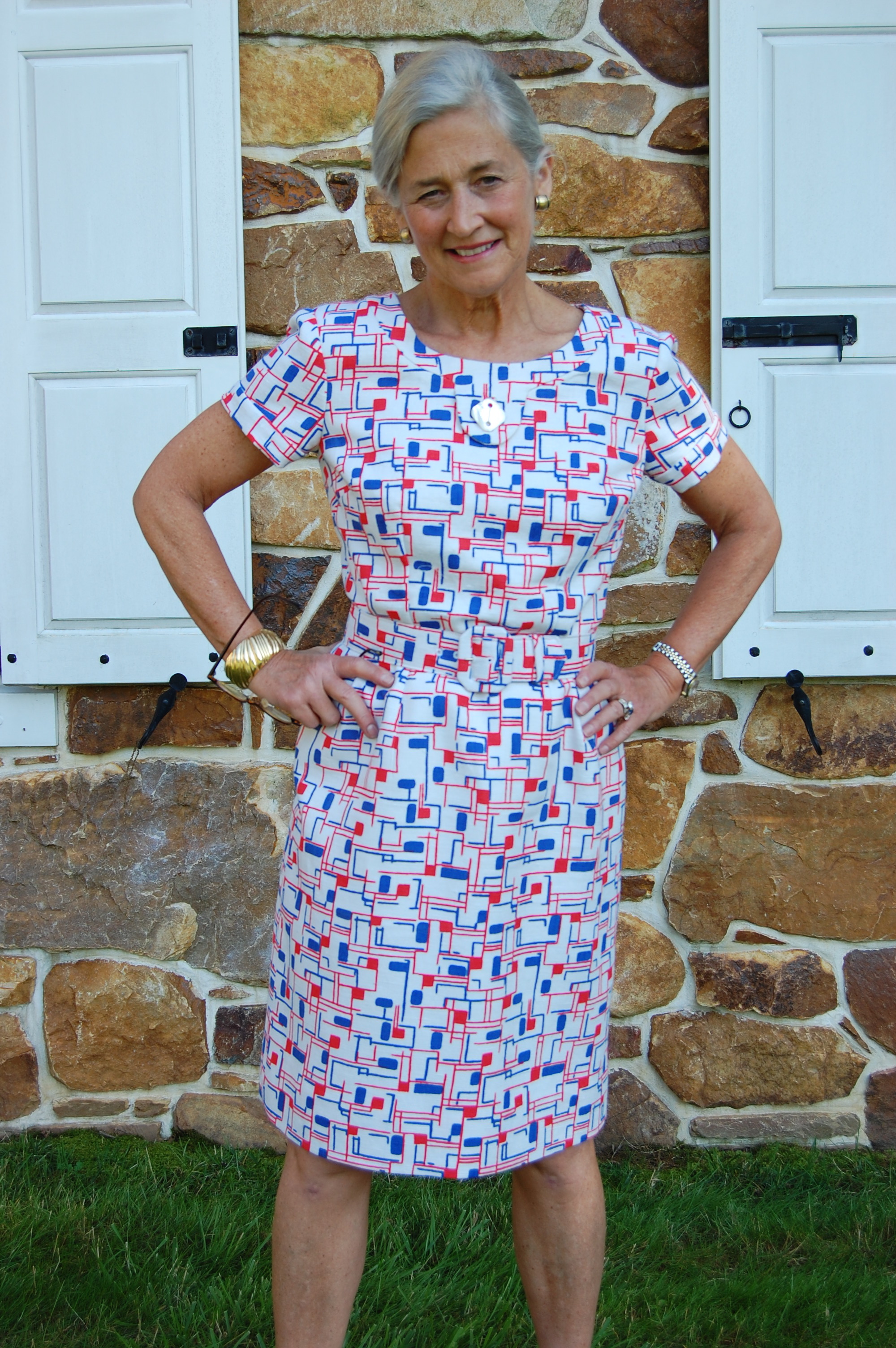
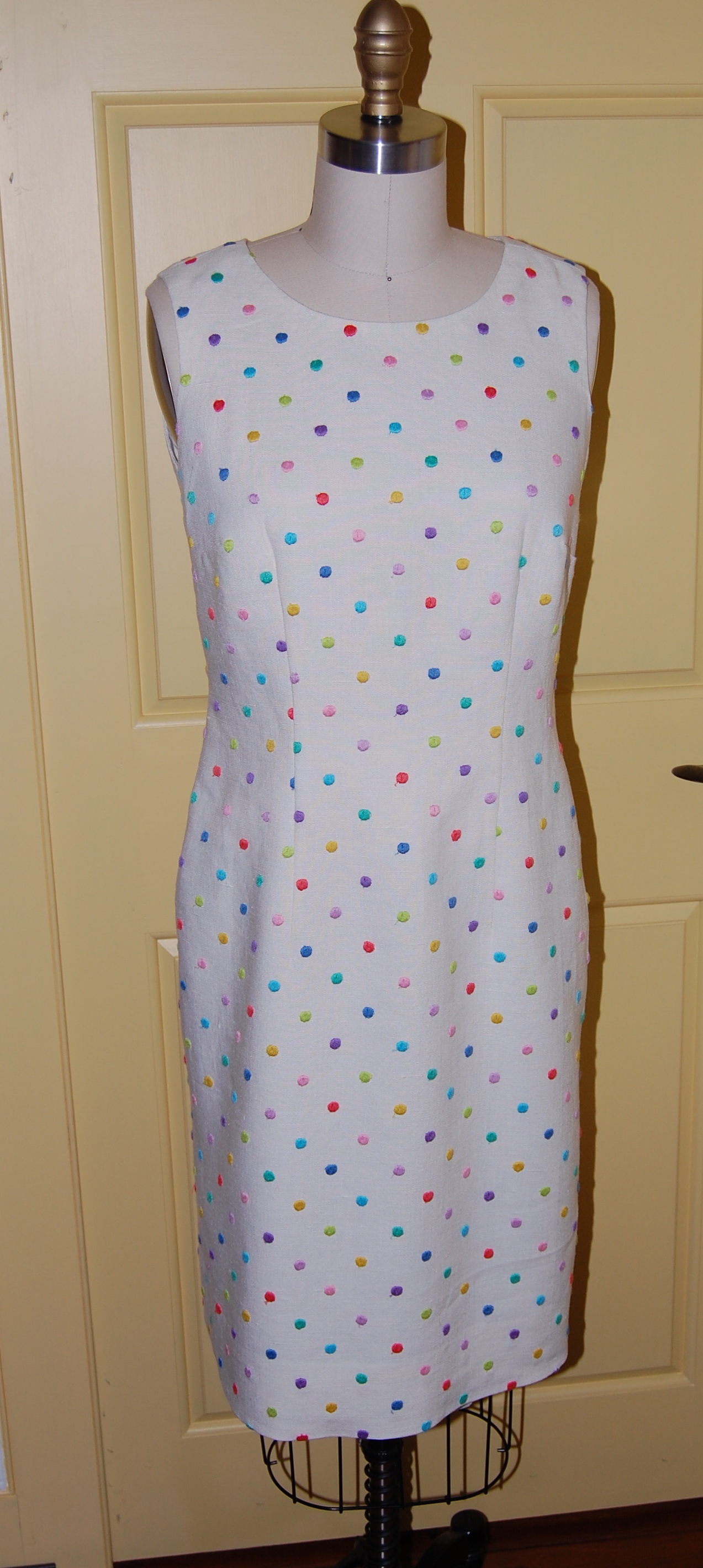
And one more view of the full dress.
And one more view of the full dress.

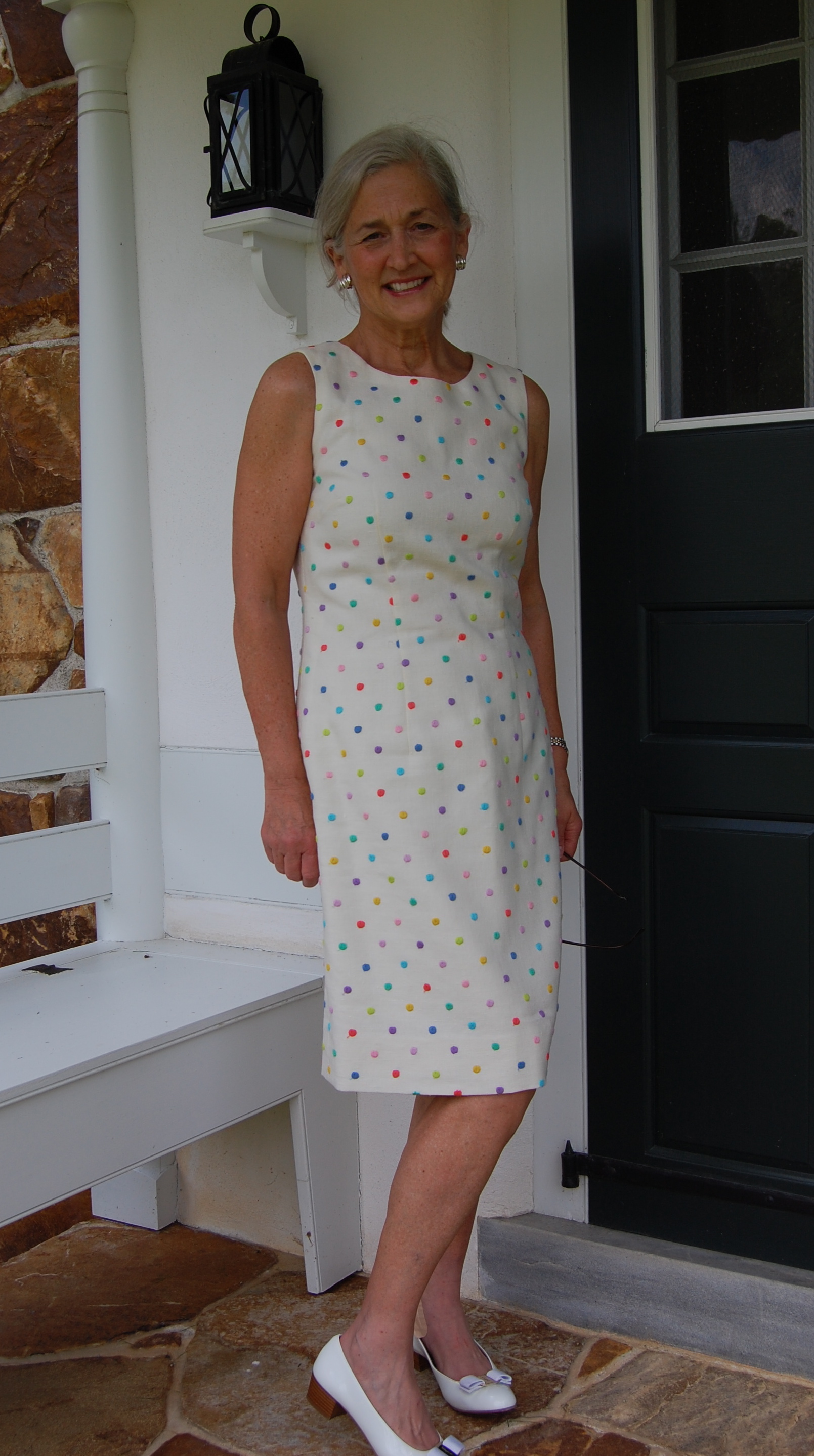
I finally (as of July 1, 2014) got some pictures taken!
I finally (as of July 1, 2014) got some pictures taken!
Polka dotted linen sheath

Polka dotted linen sheath

I love this dress!

I love this dress!

Moygashel linen is, sadly, no longer manufactured, about which I have written previously. One of its tag lines was “The first name in linen – The last word in quality”. I might change that to read “… The lasting word in quality.” Of course, there are some beautiful linens being manufactured today, but none will ever command a dressmaker’s imagination in quite the same way that Moygashel linen did for decade after fashionable decade.


22 Comments

Filed under hand-sewn zippers, Linen, Moygashel linen, Polka dots, Uncategorized

Thoughts on Fabric

One theme I often see in New Year’s sewing resolutions is an emphasis on sewing from one’s “stash” rather than purchasing more new fabric.  I don’t know too many serious sewers who don’t harbor at least a little guilt about all the fabric they have squirreled away (the word “stash” actually does imply something put away, usually in a secretive place!).  I used to feel a lot more guilt about all my fabric than I do now, and here’s why.  First, I don’t consider my fabric a “stash” of anything.  I look at it as a collection, to be used, admired, and taken care of like any valuable thing.  And second, I believe having a selection/collection of beautiful and inspirational fabric adds to the creative process of sewing.

As with the selection and collection of any worthwhile genre, it’s usually best to buy the best you can afford.   There used to be much more stated emphasis on “quality” in fabric than there is now.   It is so interesting to me that fabric manufacturers used to advertise their products by name, obviously with great pride in their newest line of designs.  Some of the manufacturers were almost household names, with tag lines such as  “A fabric you can lean on – that’s Klopman”.  Woolens were known by their manufacturer’s name, such as Forstman and Anglo, to mention just two.  The same was true for cottons, linens, silks, and synthetics. So many of the full-page advertisements in Vogue Pattern Book Magazine in the 1950s, ‘60s, and ‘70s were from fabric manufacturers (whereas now there are virtually none).  Here is a quick look at some from each of those decades:

Moygashel Linen advertised heavily in VPB Magazine during that 30-year span of time.  Here is an ad from the inside front cover of the December/January 1953/54 issue:

Thoughts on Fabric - 54

“The first name in linen… The last word in quality”

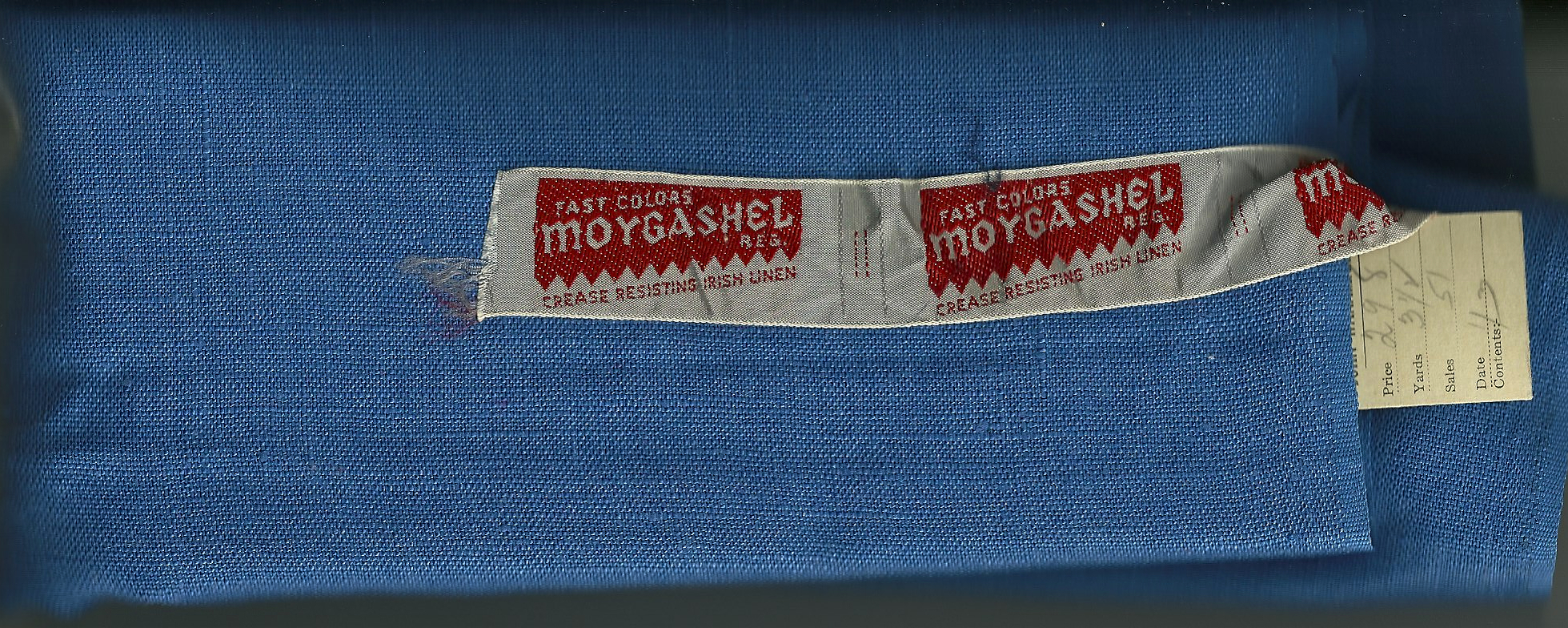
Moygashel was also one of those fabric companies which supplied labels with purchases of their linens.  Here is a string of labels, which came with a recent purchase I made of vintage Moygashel:

Thoughts on Fabric - Moygashel w: tag

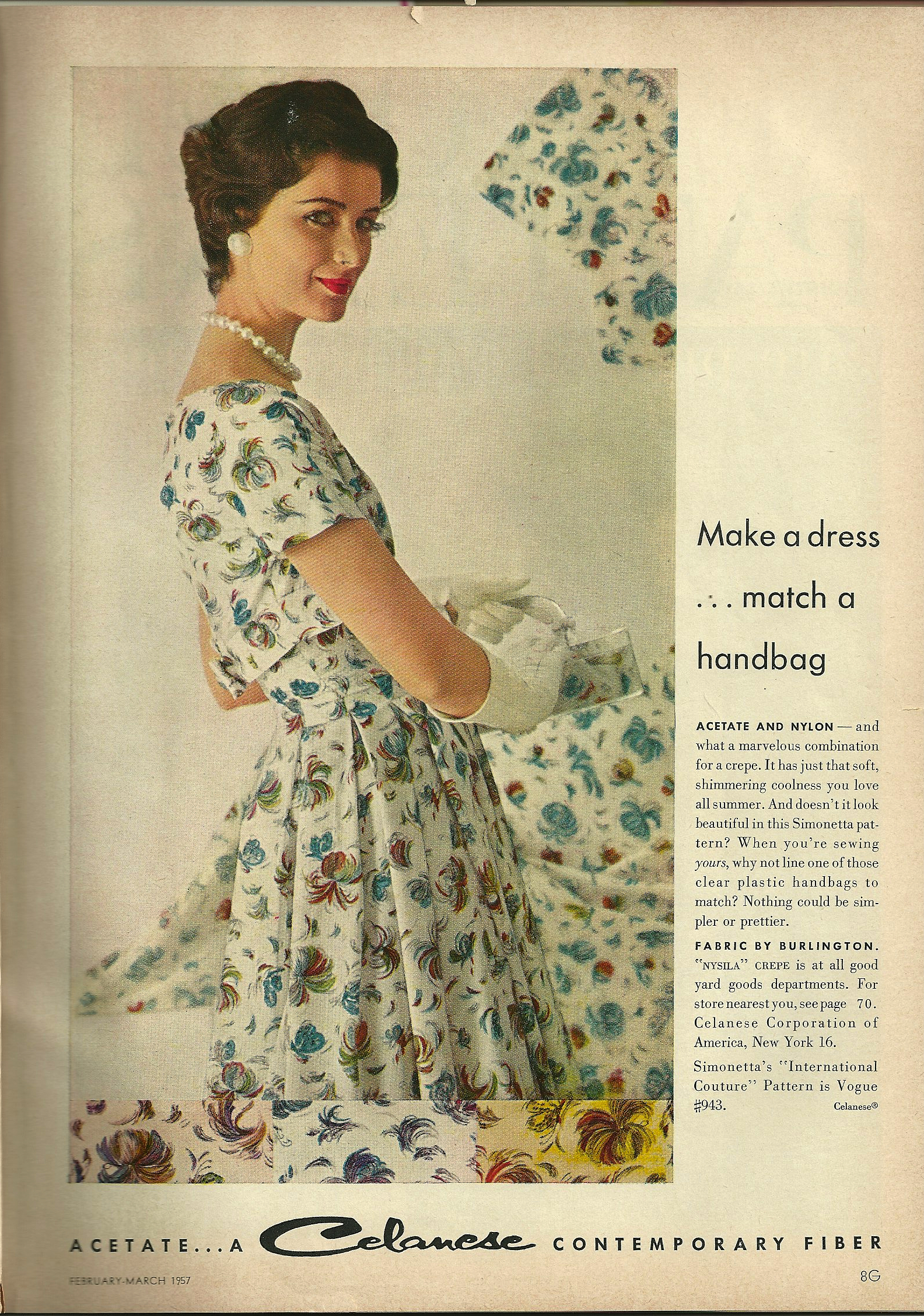
Many new synthetic fabrics were being developed in the post-war era, as evidenced by the many ads from manufacturers of these yard goods.  Here is an ad for acetate, made by the Celanese Corporation of America.  It appeared in the February/March 1957 issue of Vogue Pattern Book Magazine.

Thoughts on Fabric - 57

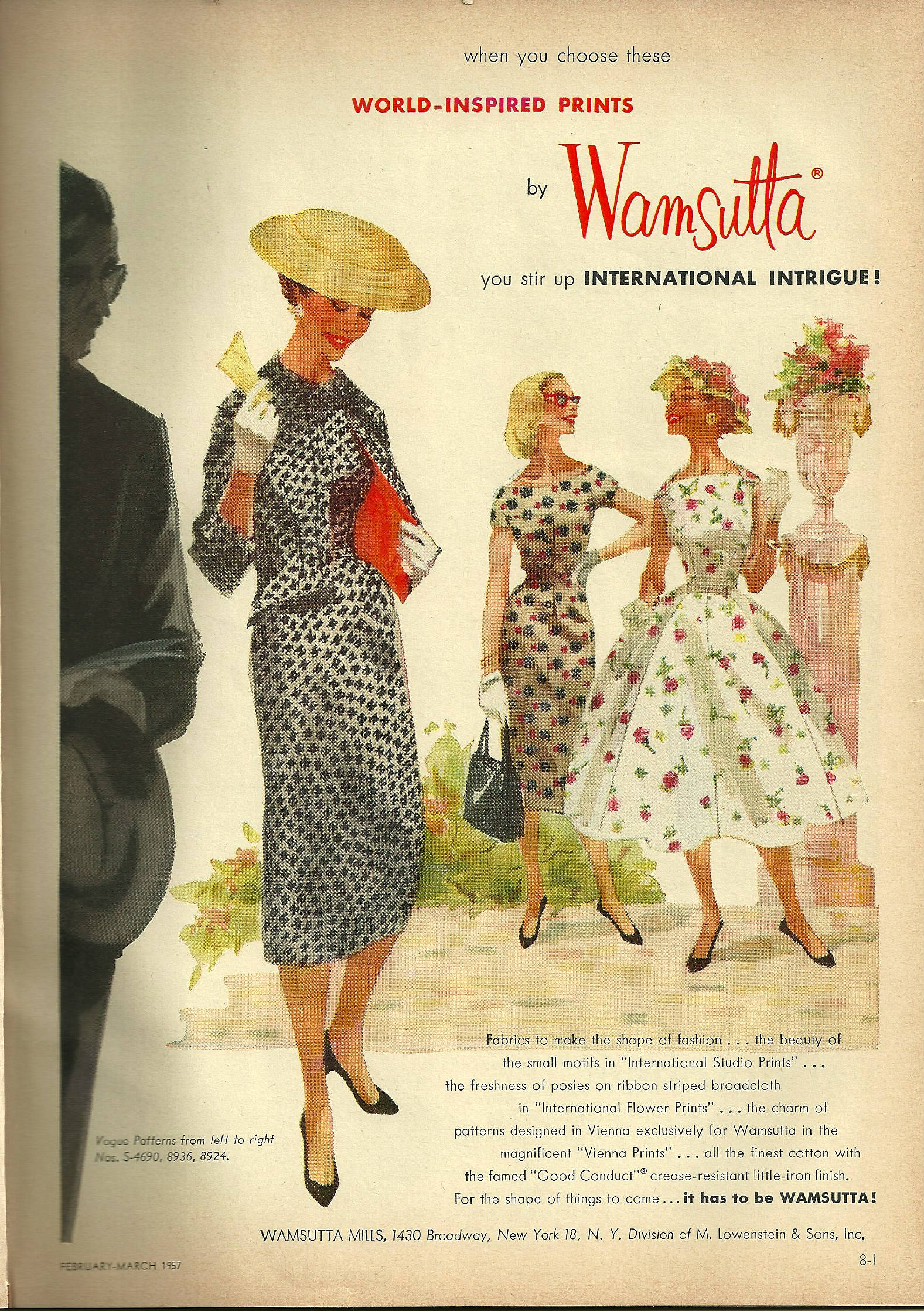
In the same issue was this full page ad for Wamsutta cotton prints.  Now known primarily for sheets, Wamsutta once had the tagline “it has to be WAMSUTTA!” which many a home sewer knew as a sign of quality.

Thoughts on Fabric - 57-2

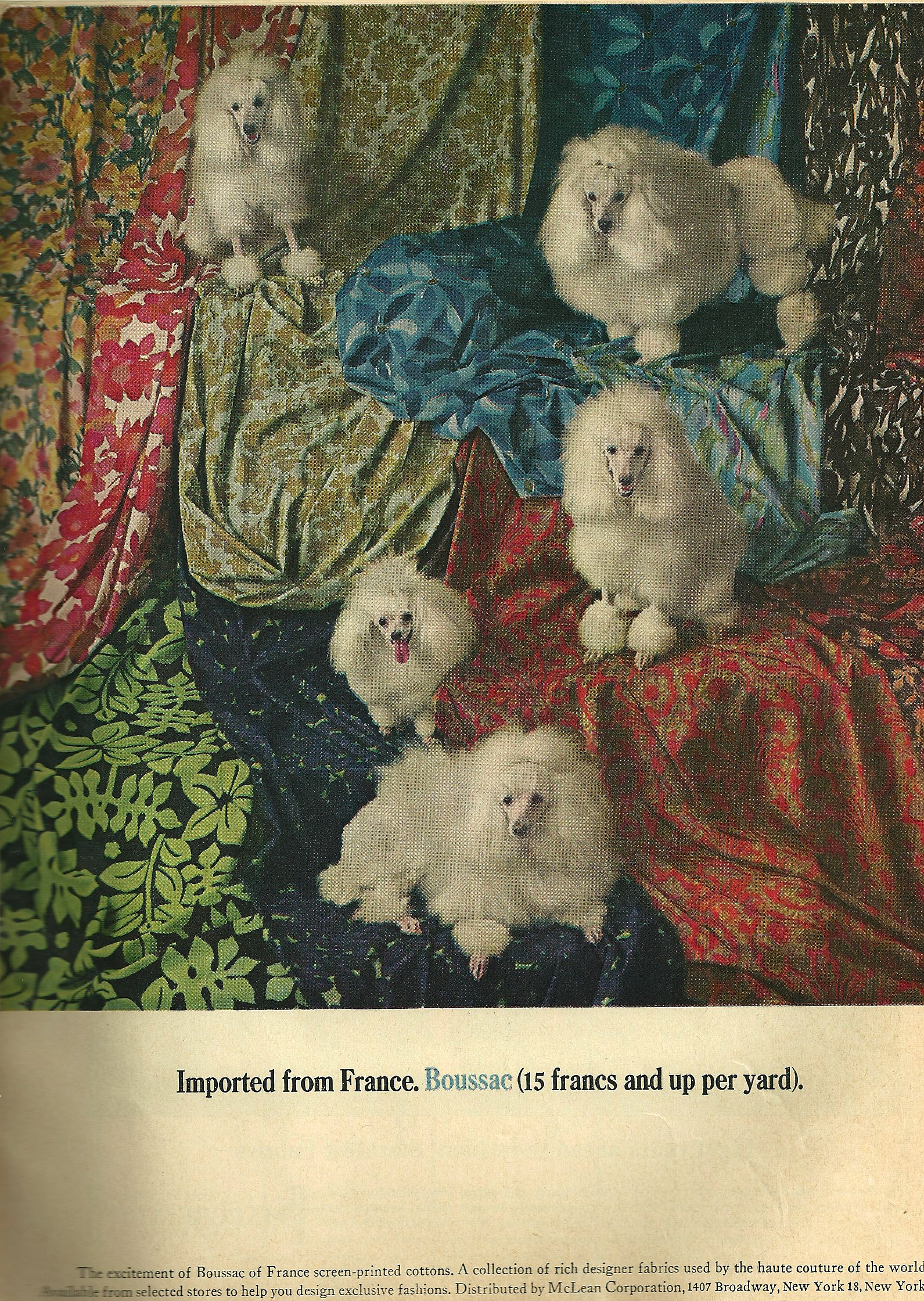
European fabrics also found their place in VPB.  Here is an ad from February/March 1964 for Boussac screen-printed cottons.  “A collection of rich designer fabrics used by the haute couture of the world.”

Thoughts on Fabric - 64

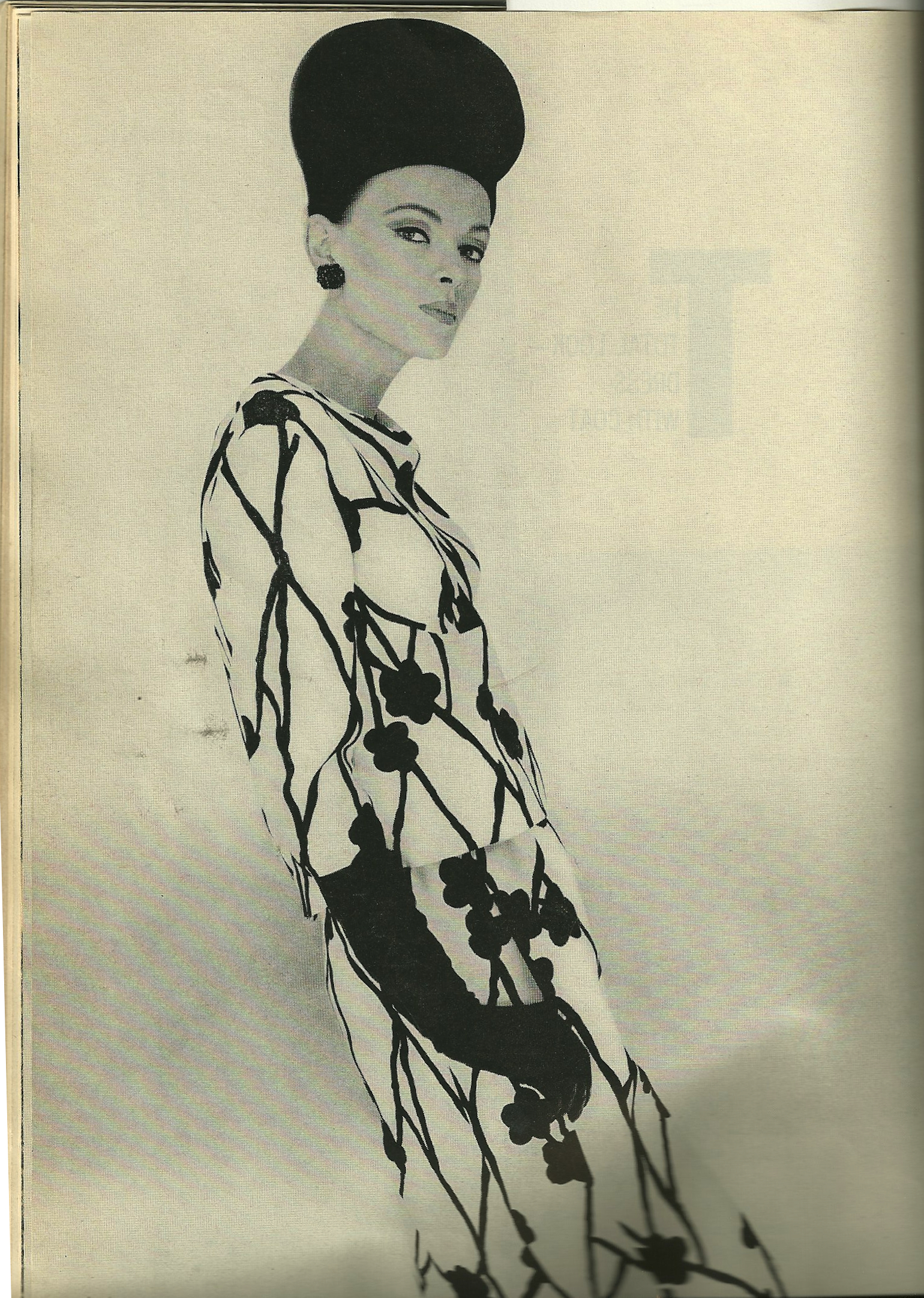
I want to show you something else in that same issue.  Although there was not a dedicated ad for American Silk, Vogue pattern #6105 was sewn in American Silk, as stated in its accompanying caption.

How I would love to find a piece of this silk tucked away in some drawer!

How I would love to find a piece of this silk tucked away in some drawer!

Twelve years later, in 1976, I attended a fashion show featuring the various dress silks made by this company for the home sewing market, another example of the effort put into marketing by specific fabric manufacturers.

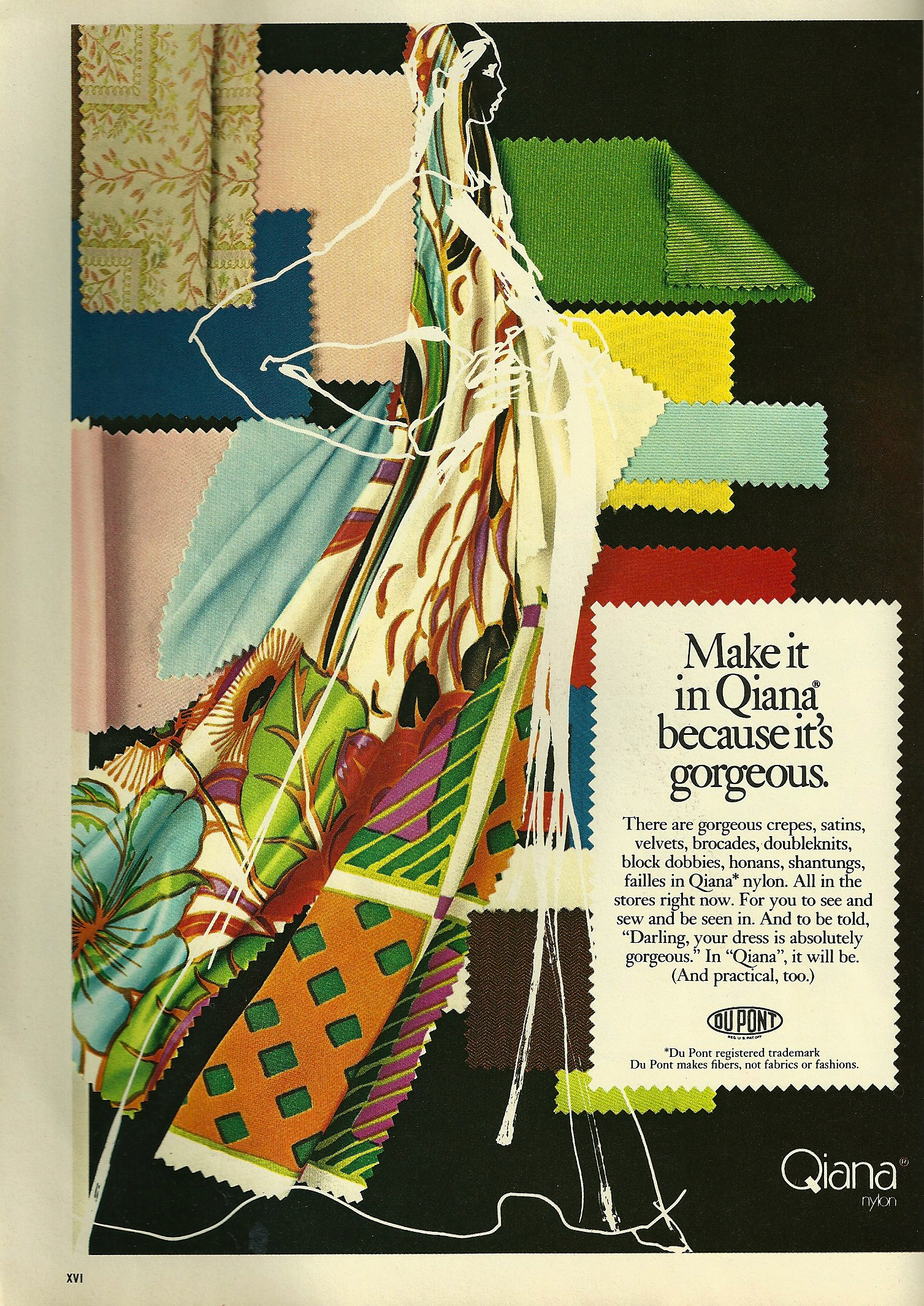
By 1972, the look of VPB Magazine was becoming more sophisticated, but those full-page fabric ads were still abundant.  Here is an ad in the October/November issue devoted to Qiana, a nylon made by DuPont:

Thoughts on Fabric - 72

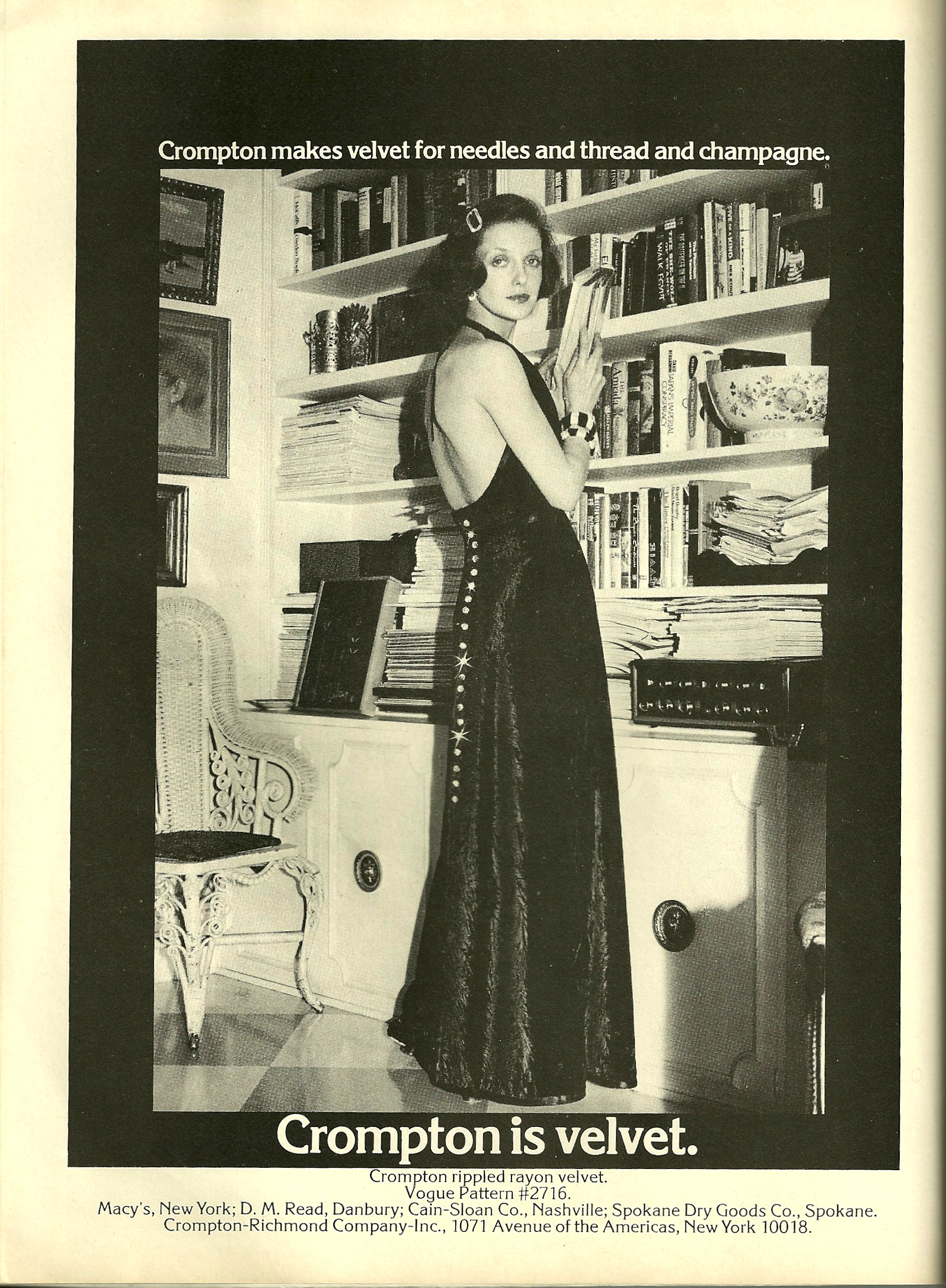
And – Crompton is velvet appeared a few pages further in the same issue:

Thoughts on Fabric - 72-2

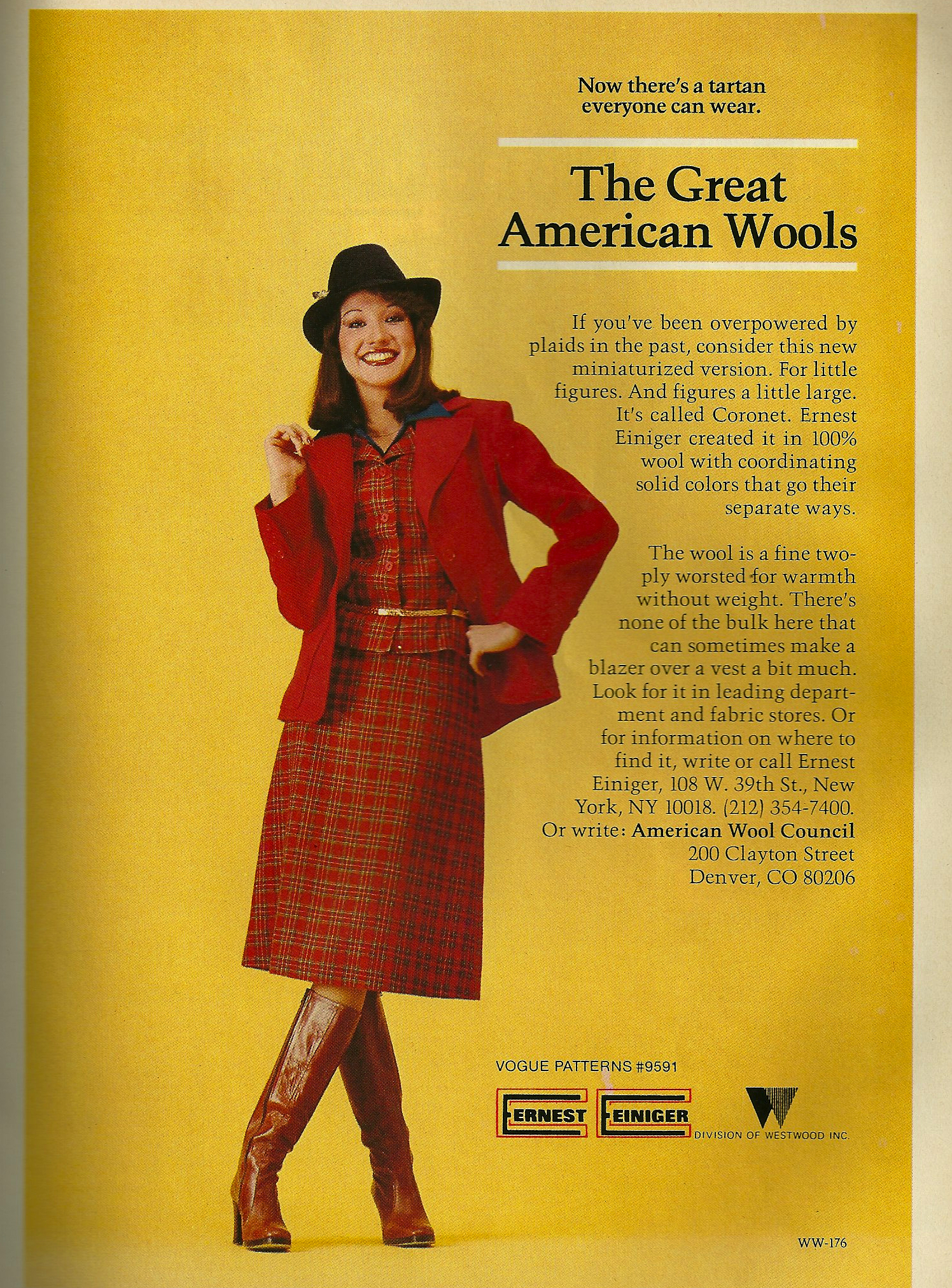
In September/October 1976, Diane von Furstenberg was featured on the cover, and Ernest Einiger had a full-page color ad for “The Great American Wools”.

Thoughts on Fabric - 76-3

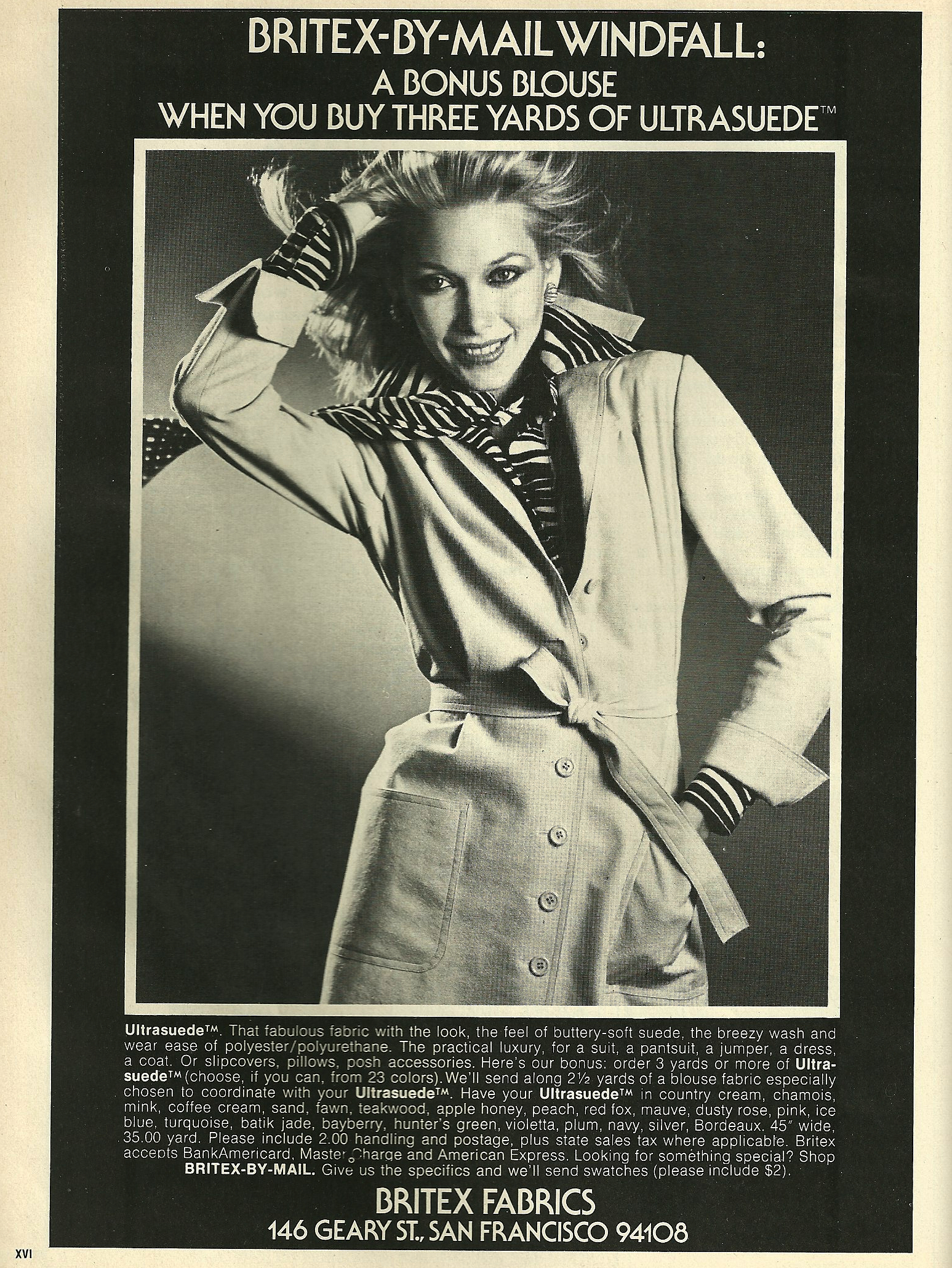
In the same issue, Britex Fabrics in San Francisco offered a buy-by-mail offer for Ultrasuede, the “it” fabric of the decade!

Thoughts on Fabric - 76-2

I can really only think of a few current fabric lines that still retain the distinction of being “known” by their names: Liberty, Pendleton, and Linton Tweeds come to mind.  (Linton Direct advertises in the current VPB magazine, but it is a small column ad, not a full-page “look at me” type of statement.) Then, of course, there are designer fabrics, but the manufacturers of these “name” goods are generally not listed.  For the most part, unless you ask, when you are buying yard goods, the names of the manufacturers are virtually unknown.  It is really kind of a shame, as there are so many exquisite fabrics of the highest quality still being woven in certain parts of the world.  These fabrics (and others, some vintage) make it difficult to say “no” to the opportunity to add to one’s fabric collection.  Here are two such fabrics I could not resist:

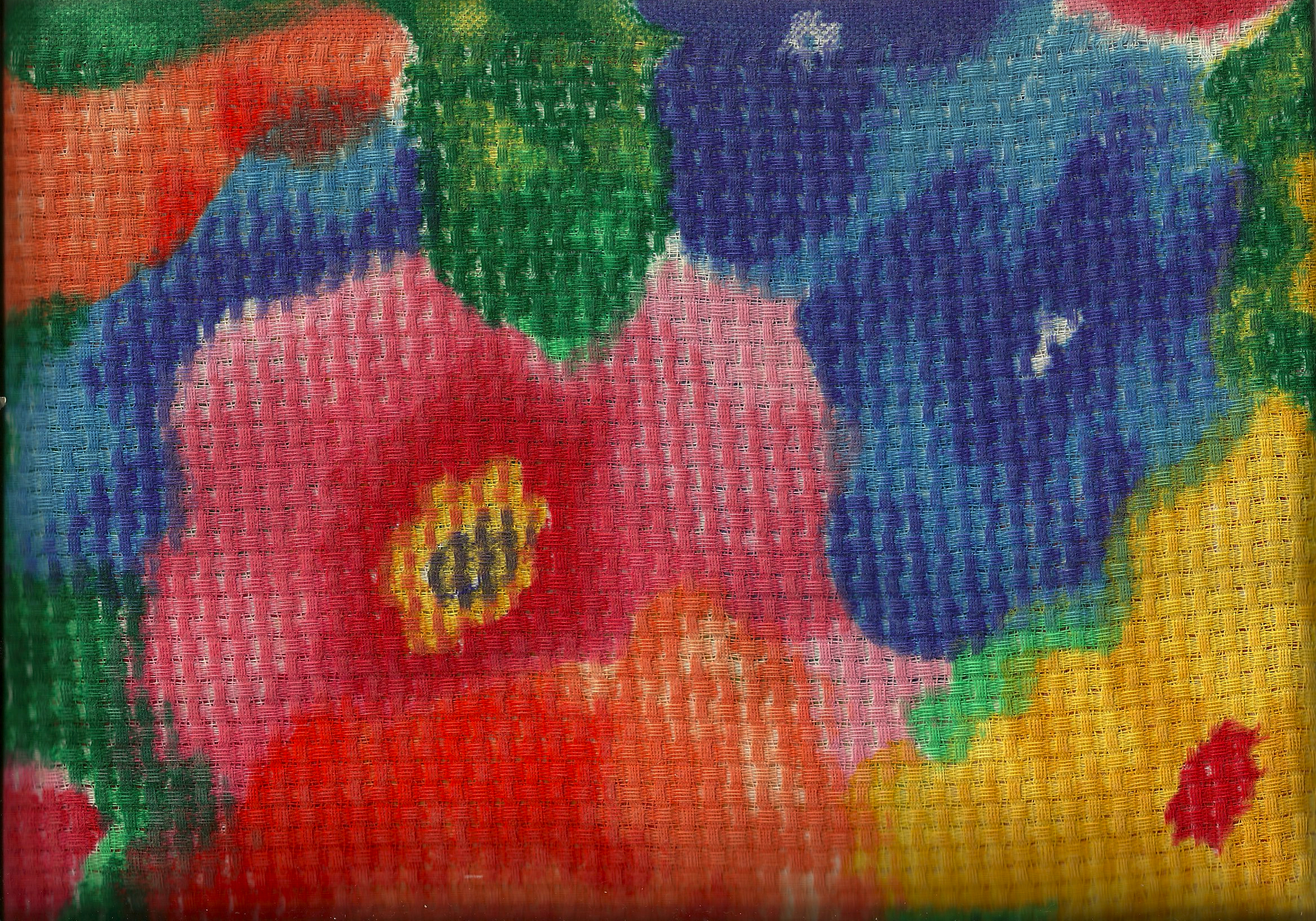
This is a linen and cotton blend I purchased from Mood Fabrics a while ago.  It is patiently waiting to be cut and sewn . . .

This is a loosely woven linen and cotton blend I purchased from Mood Fabrics a while ago. It is patiently waiting to be cut and sewn . . .

This is a vintage linen, newly acquired by me.  Although there is nothing printedon the selvedge, I believe it is a Moygashel linen from the 1950s.

This is a vintage linen, newly acquired by me. Although there is nothing printed on the selvedge, I believe it is a Moygashel linen from the 1950s.  I plan to make a sheath dress from this fabric sometime during the Summer of 2014.

William Blake notably said “The road of excess leads to the palace of wisdom.”  I must confess I never knew what that meant until I applied it, somewhat sheepishly,  to collecting fabrics.  It seems the more various and beautiful fabrics I can look at and choose from, the more I am able to determine the perfect pattern with which to pair them.  If I own the fabric already, so much the better!  Sometimes the fabric dictates the sort of garment I should make and sometimes I have a pattern which leads me to my (excessive?) fabric collection, where I can admire anew and oftentimes choose a long-before purchased length of the perfect silk, linen, cotton, or wool.  It is a back and forth process, one filled with visual and tactile components, demanding – and developing – sewing wisdom.  It is one of the reasons I love to sew.

20 Comments

Filed under Liberty cotton, Linen, Love of sewing, Moygashel linen, Polka dots, The Conde Nast Publications, Uncategorized, woolens

Inspiration and Adaptation

Sometimes in life – and in sewing – you have to alter your plans to accommodate the situation at hand.

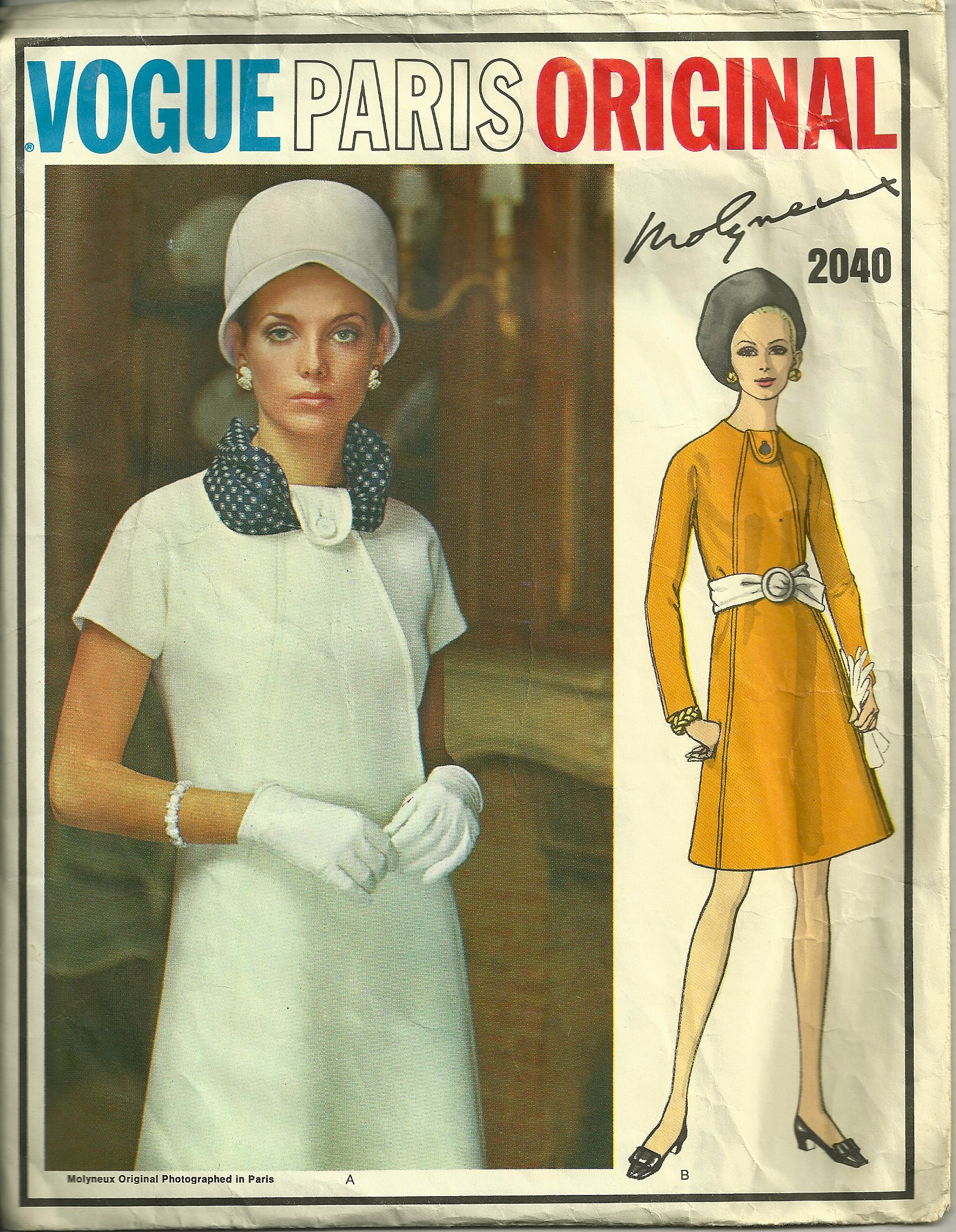
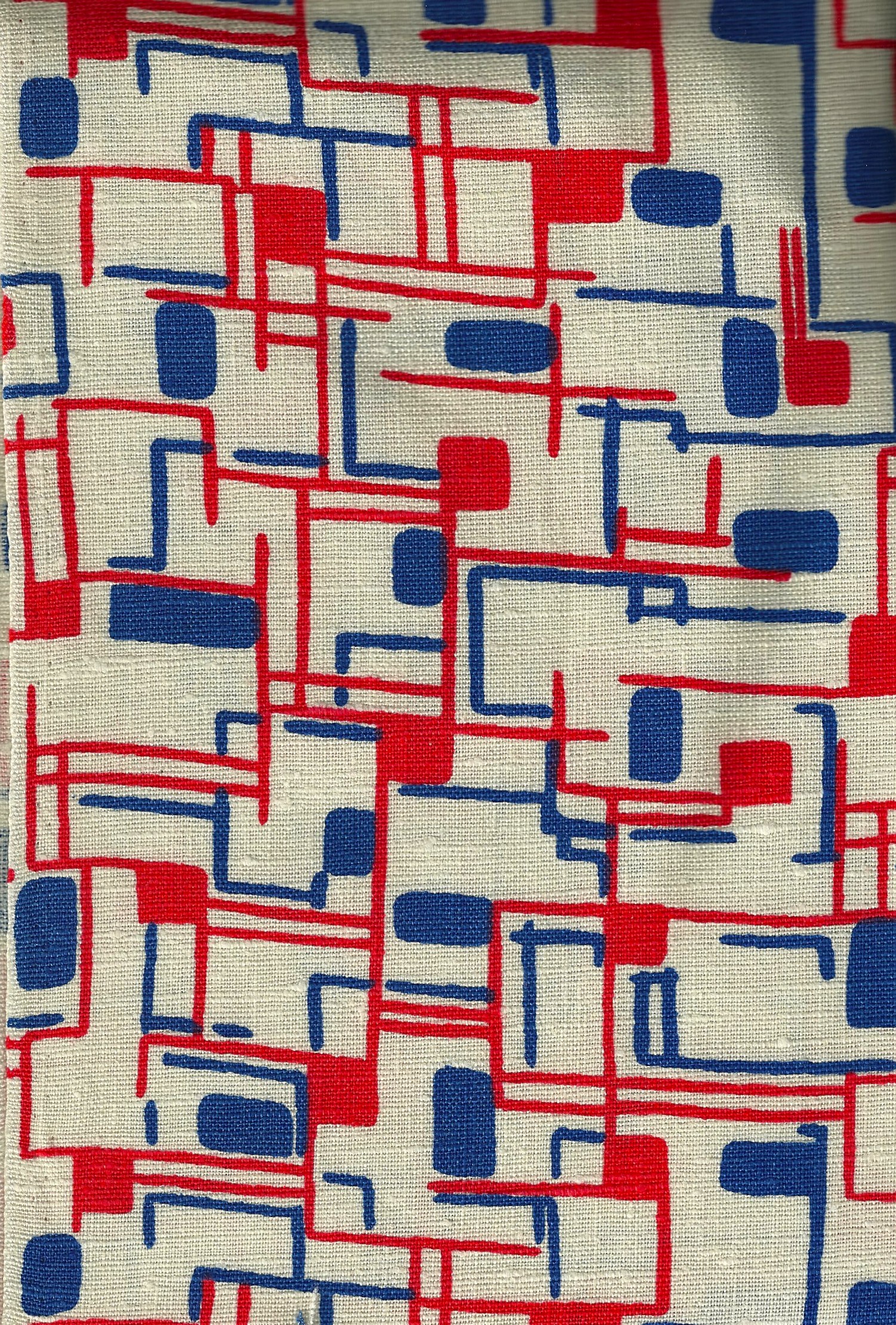
This is the situation I found myself in:  I had my heart set on pairing a favorite vintage Vogue Designer pattern with a piece of vintage Moygashel linen I had found in an Etsy shop.  They are both likely from the early 1970s and seemed destined to be together.

Molyneux has always been a favorite designer of mine.  My thought was to make the dress with short sleeves, but belt it as shown in View B.

Molyneux has always been one of my favorite designers. My thought was to make the dress with short sleeves, but with a belt as shown in View B.

My best guess is that this Moygashel linen is from the very early '70s.

My best guess is that this Moygashel linen is from the very early ’70s.

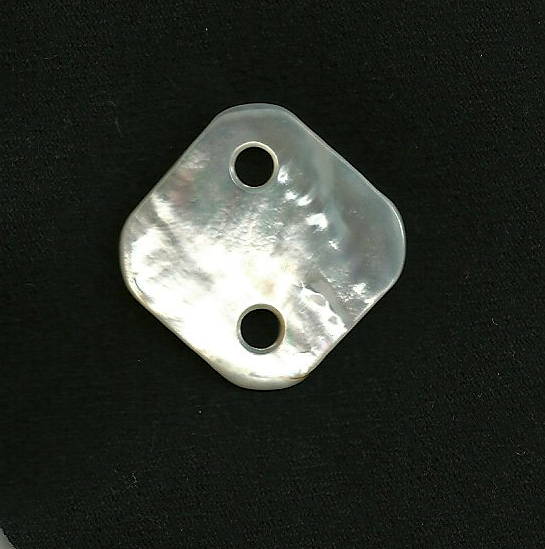
To make this pairing of fabric and pattern even more enticing, I was given this amazing pearl button by my dear friend Nancy C.  (Thanks, Nancy!)

I love this unique button!

I love this unique button!

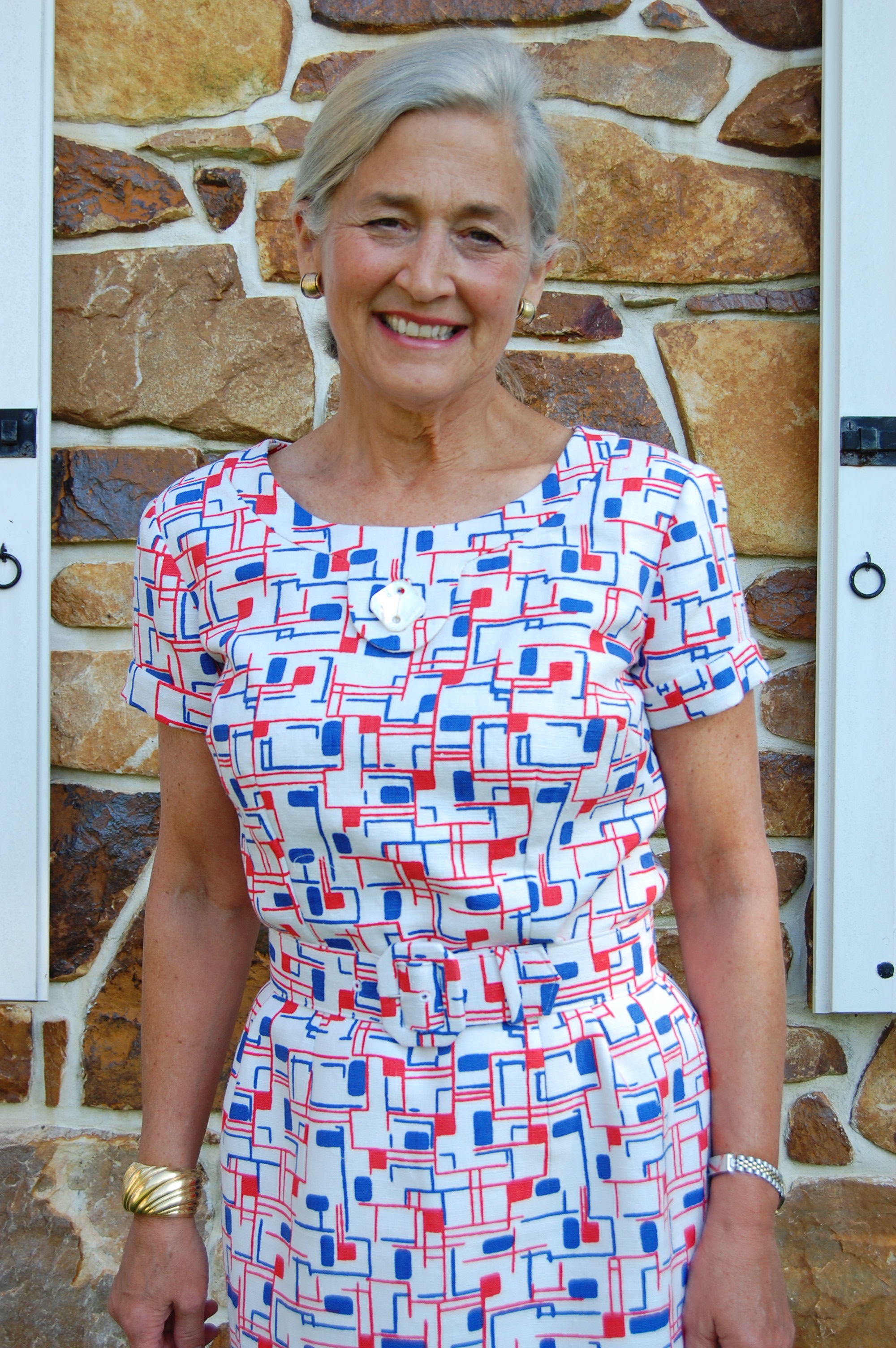
The square shape of the button – and its largeness (1 3/16” square) – and the fact that I had exactly one of these beauties – made it seem custom made for the design of the fabric and the tab featured on the pattern.

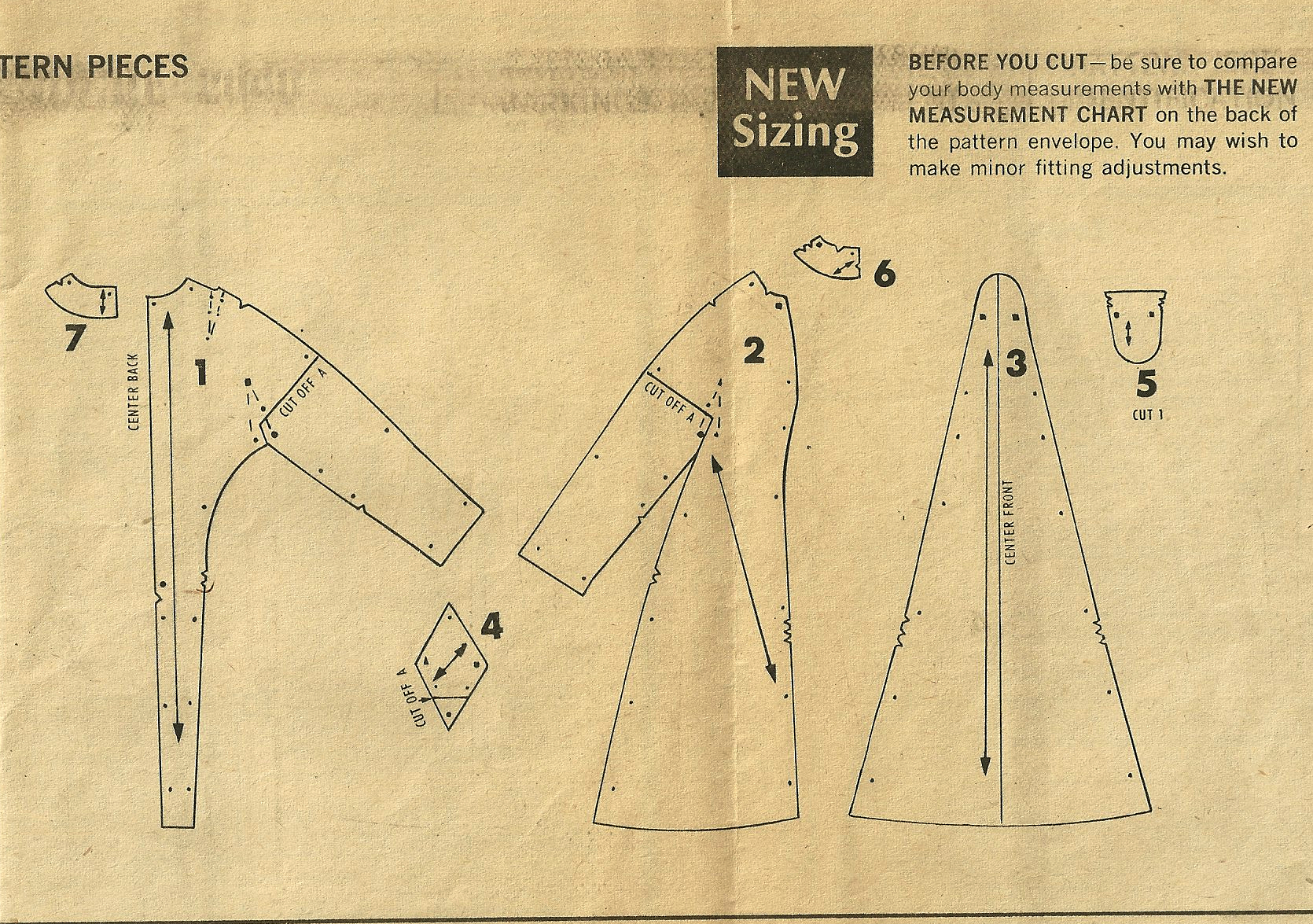
I couldn’t wait to get started!  I pulled out all the pattern pieces, ironed them flat, ready to make a muslin – and then the “uh-oh” moment struck.  The “straight of grains” on the pattern pieces could not have signaled more trouble if they had been flashing in bright red.   I grabbed the pattern envelope – and right there in plain English was stated:  “Not suitable for obvious plaids.”  (Why won’t I learn to read those envelopes more closely???)  While this fabric is not a plaid, it reads like a plaid.  My heart sank – as I realized very quickly that I absolutely could not use this pattern for this fabric.  It just would not work.  End of discussion.

If you look carefully at these line drawings, it's obvious that "plaids" would not work.

If you look carefully at these line drawings, it’s obvious that “plaids” will not work.

I took a few deep breaths – and went back to my vintage pattern file.  None of my other vintage patterns would do.  I had my vision for this fabric and no pattern came even remotely close.   It was then I decided I would have to adapt a new pattern to achieve the look I wanted.  Once I made this decision (Plan B, as in “it BETTER work!”), I began to see the advantages, and the possibilities for an even better look than I originally thought.

The first thing that went right was having this pattern in my “new pattern” file:

I picked up this pattern a few months ago as i thought it looked very versatile!

I picked up this pattern a few months ago as I thought it looked very versatile.

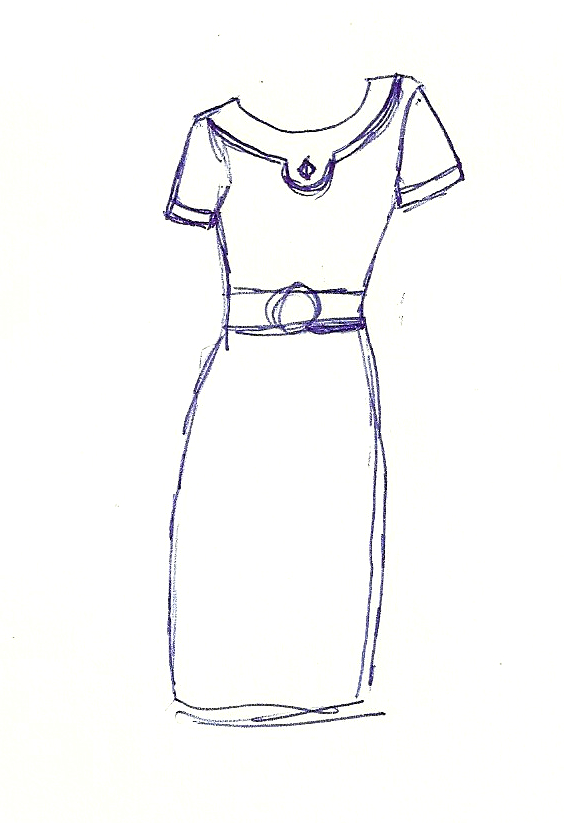
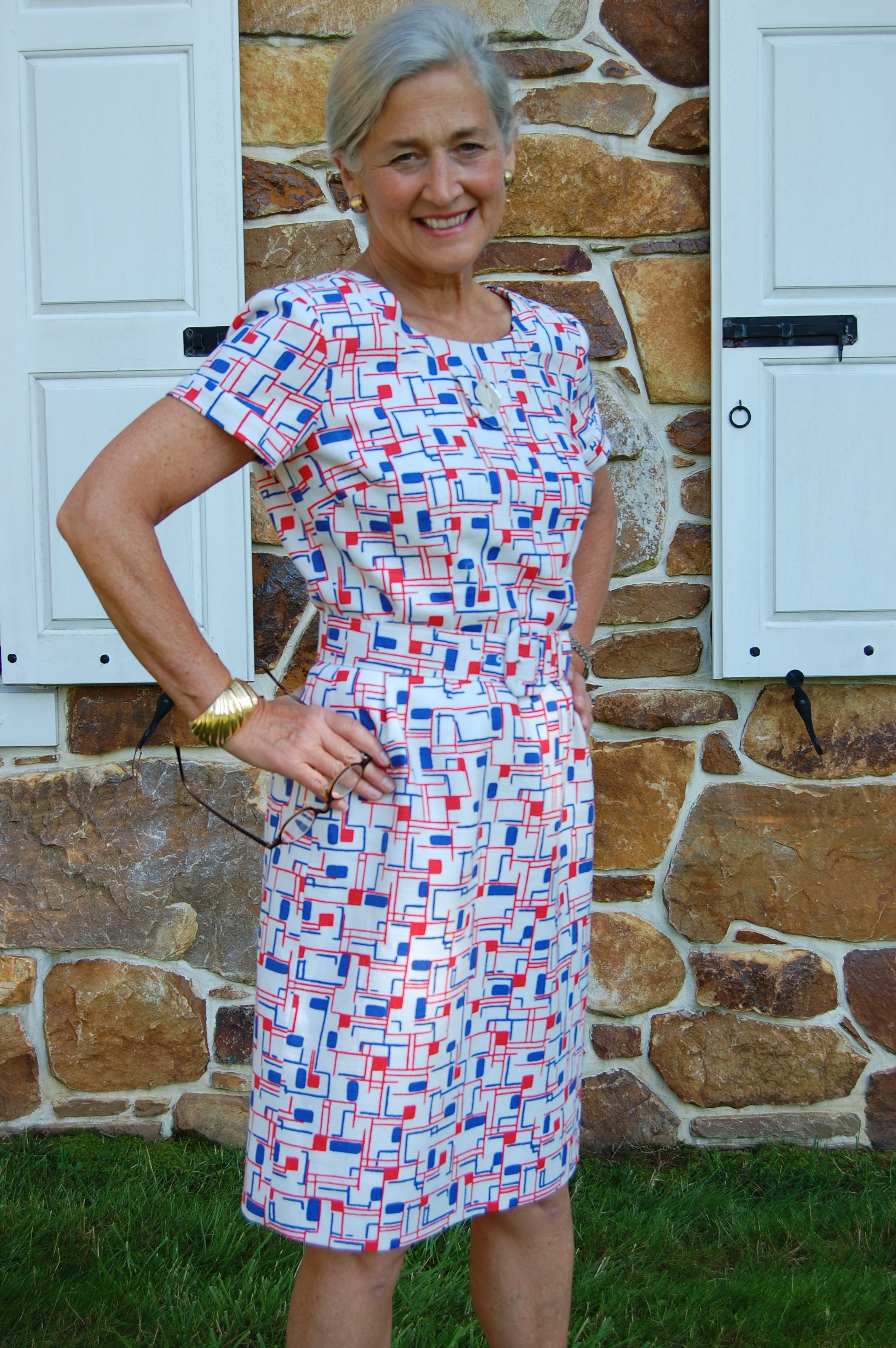
I figured if I used View B, I could alter the neck band to incorporate a center tab.  I wanted to belt it, but I happily thought the tapered darts at the mid-section, front and back, would help create less bulk at the waist (and that’s always welcome).  I liked the shape of the neck (and had actually planned to widen and lower the neckline on the vintage Vogue….).  I would have to lengthen it, but I had plenty of fabric.  I also like the banded sleeves.  To envision the look, I did a quick sketch:

More about the belt later - it was ready before the dress was even cut out.

More about the belt later – it was ready before the dress was even cut out.

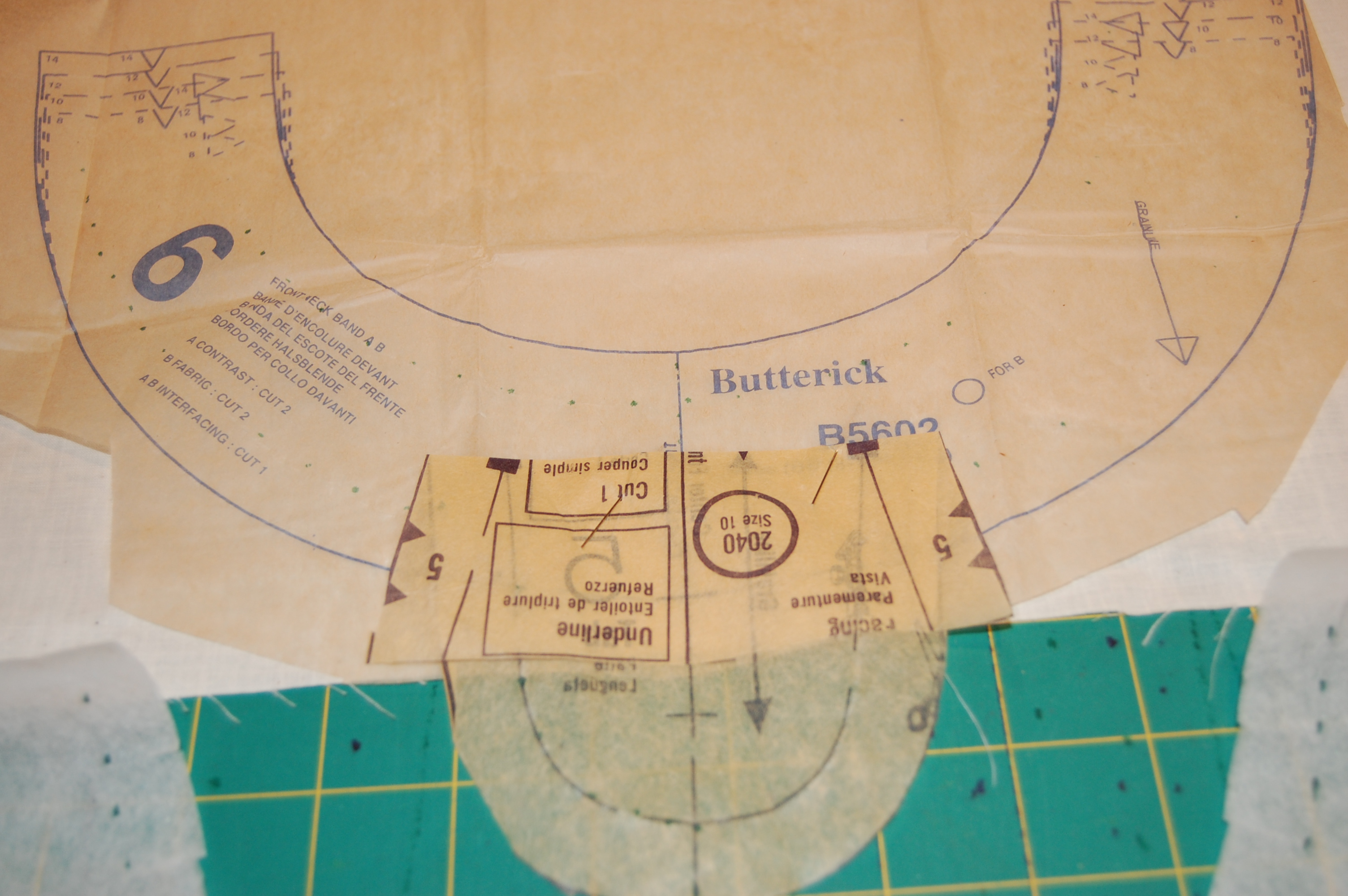
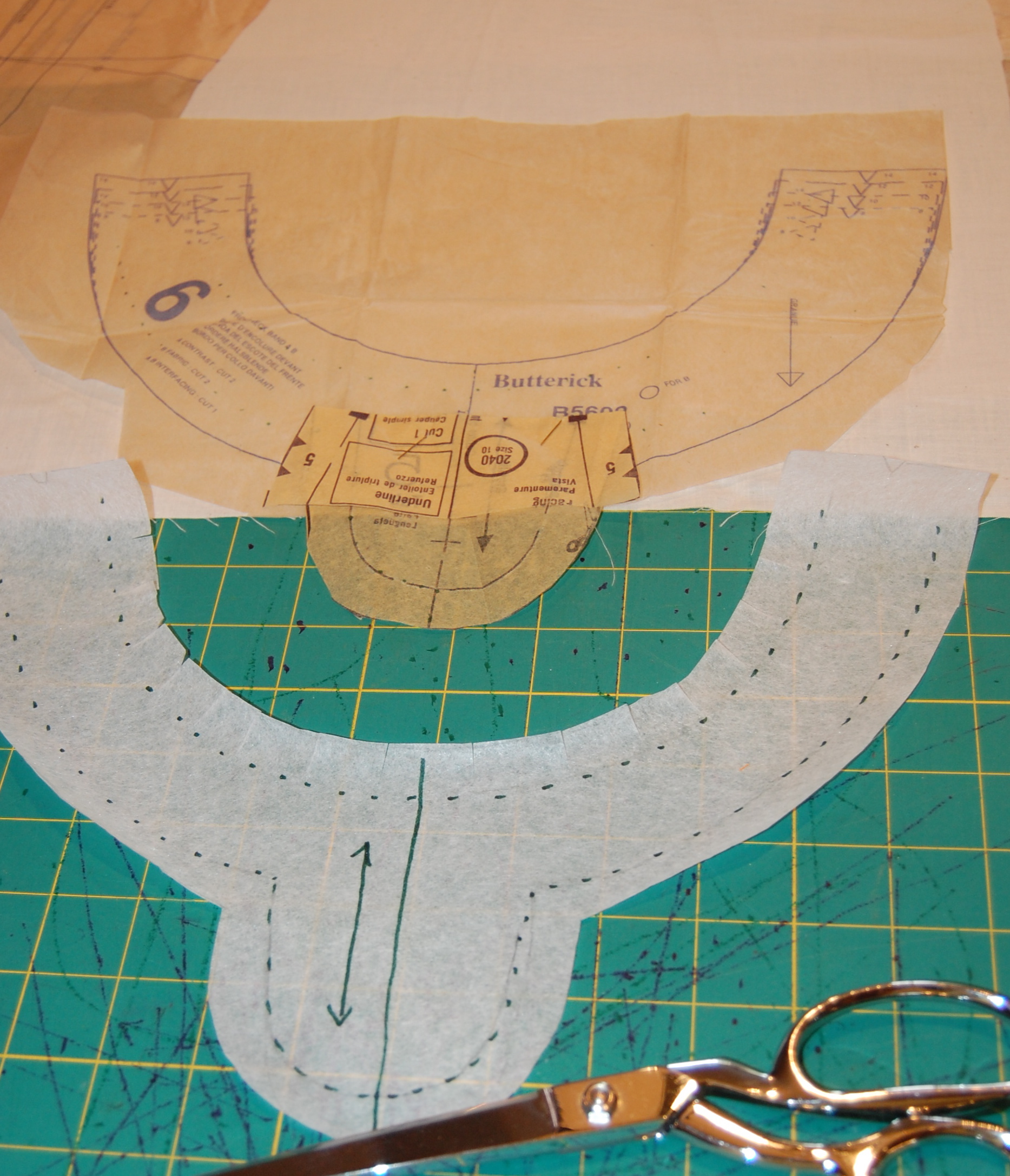
Then I set about adding the 1970’s tab to the neckband.  I actually used the pattern piece for the original tab facing so that I could get the correct size and look.

I placed the old pattern piece onto the new neckband.

I placed the old pattern piece onto the new neckband.

Then I made a new pattern piece.

Then I made a new pattern piece.

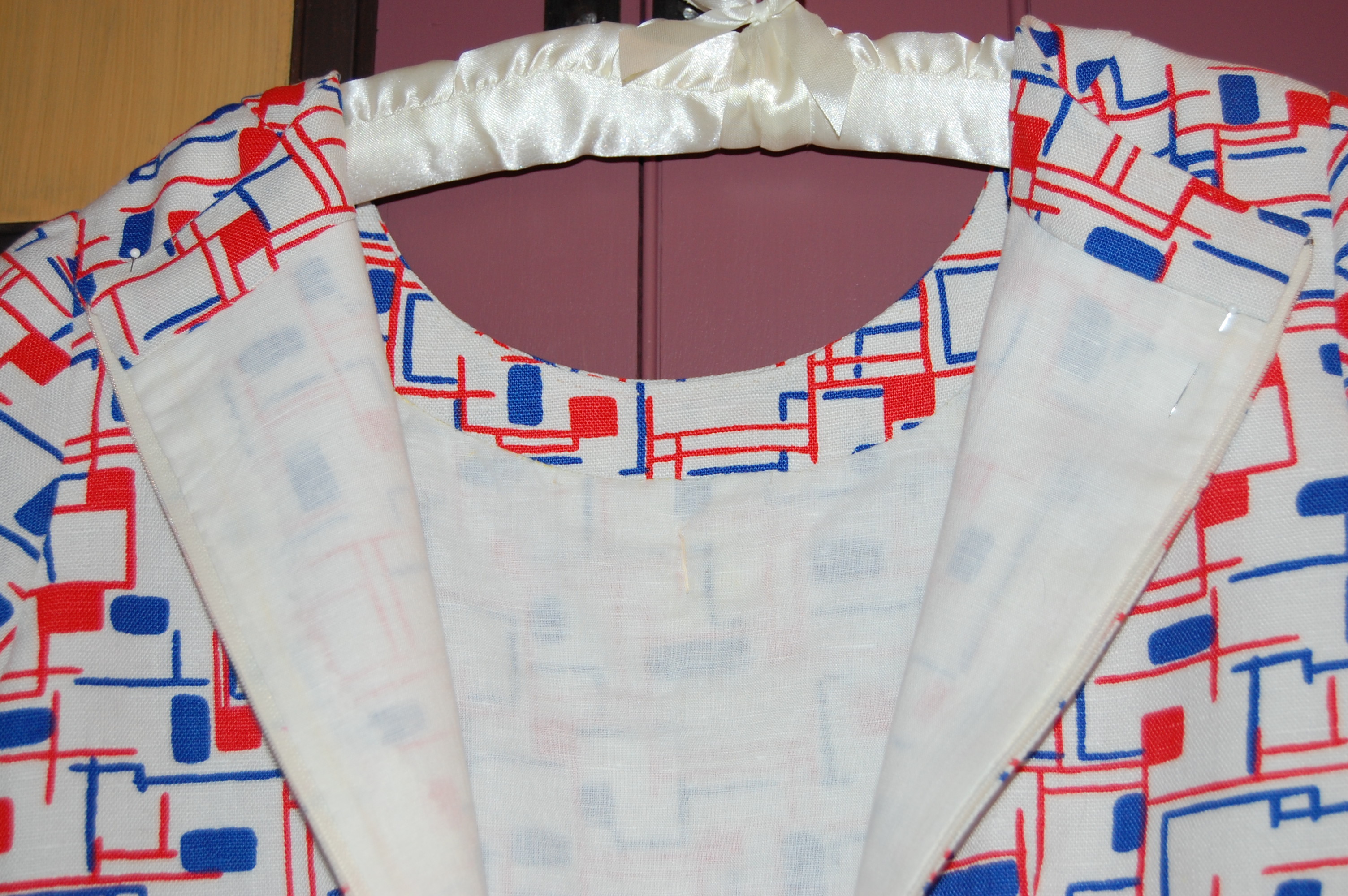
I made my muslin and then proceeded to use some couture techniques, but not all I normally would.  For one thing, I did not want to underline this linen fabric with silk organza (to preserve the breathability of the linen and keep it as light as possible).  The pattern called for the dress (but not the sleeves) to be lined.  I used a very lightweight cotton/linen blend for this which worked beautifully.  I also decided to use the facings included in the pattern (usually eliminated with couture sewing), and I’m really happy with that decision.

This photo shows the neck facing and the off-white lining I used for the body of the dress.

This photo shows the neck facing and the off-white lining I used for the body of the dress.

I hand-picked the zipper, understitched the facings by hand, and sewed the hem oh-so-carefully so that my stitches would not show (one of the disadvantages of not using an underlining is that there is no layer to sew the hem to, except for the actual fashion fabric). I made a bound buttonhole for that big lovely button (the original Vogue pattern calls for a bound buttonhole).

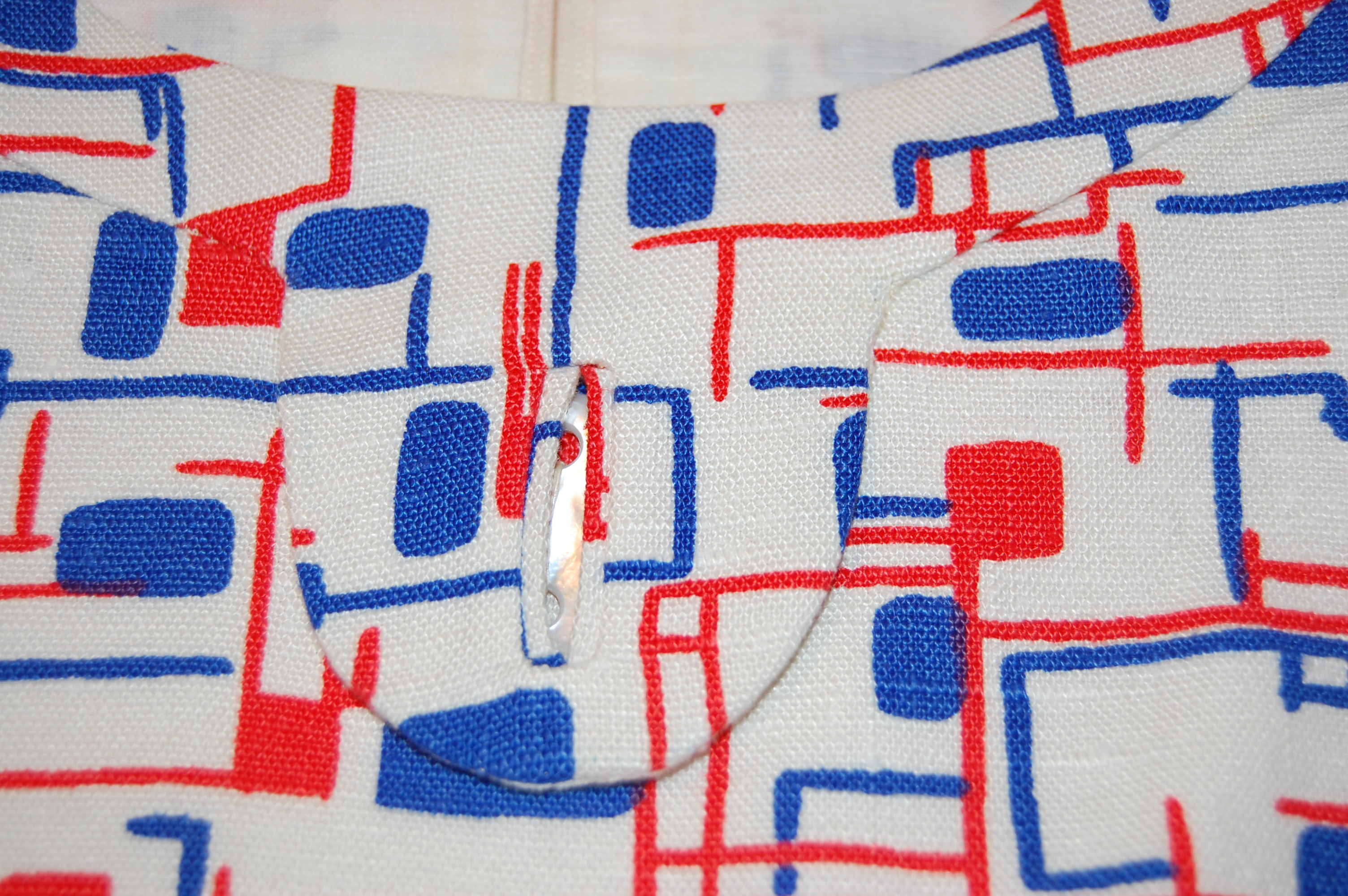
Here's the buttonhole, with the button peeking through!

Here’s the buttonhole, with the button peeking through!

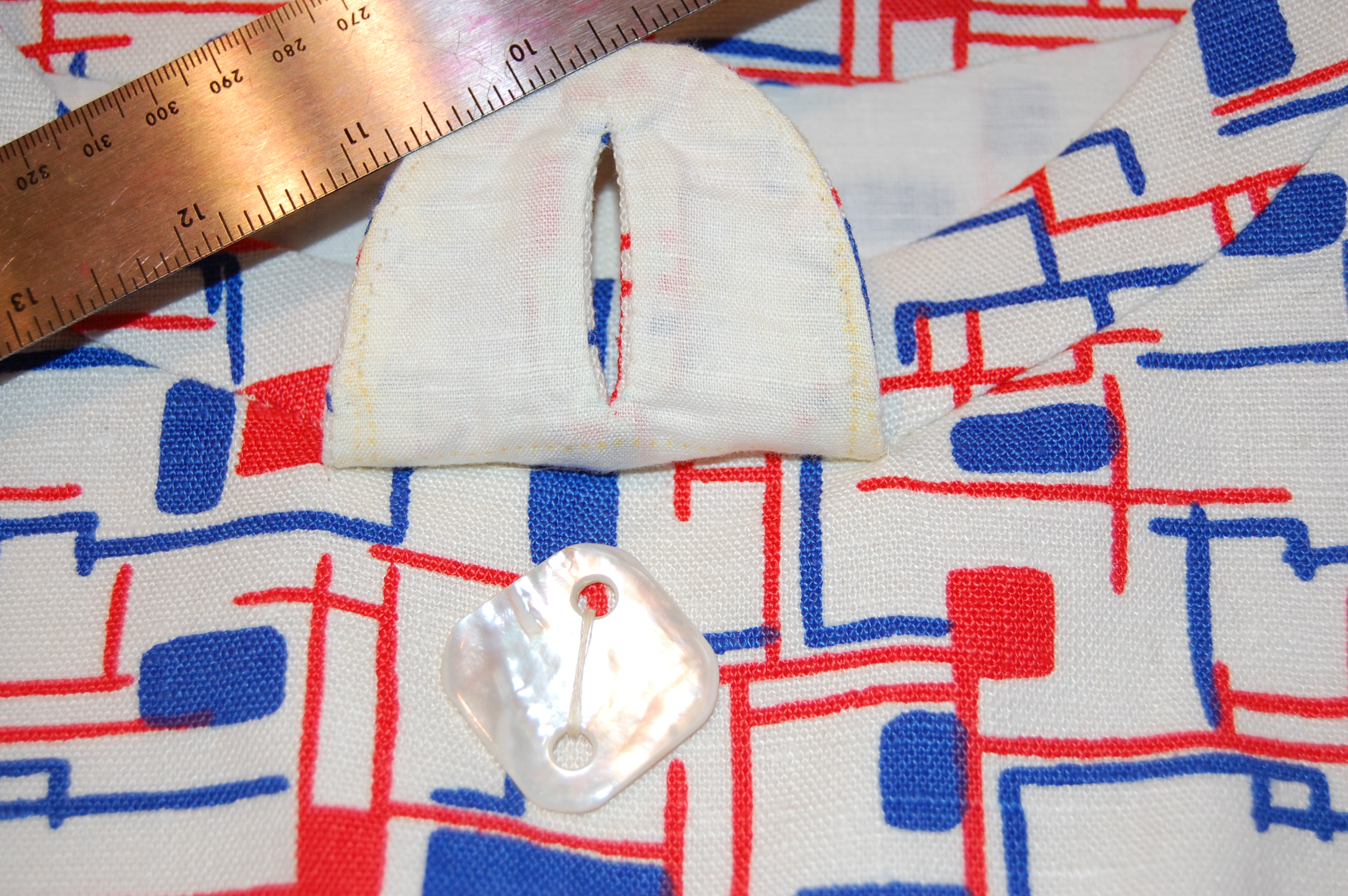
The underside of the tab.

The underside of the tab.

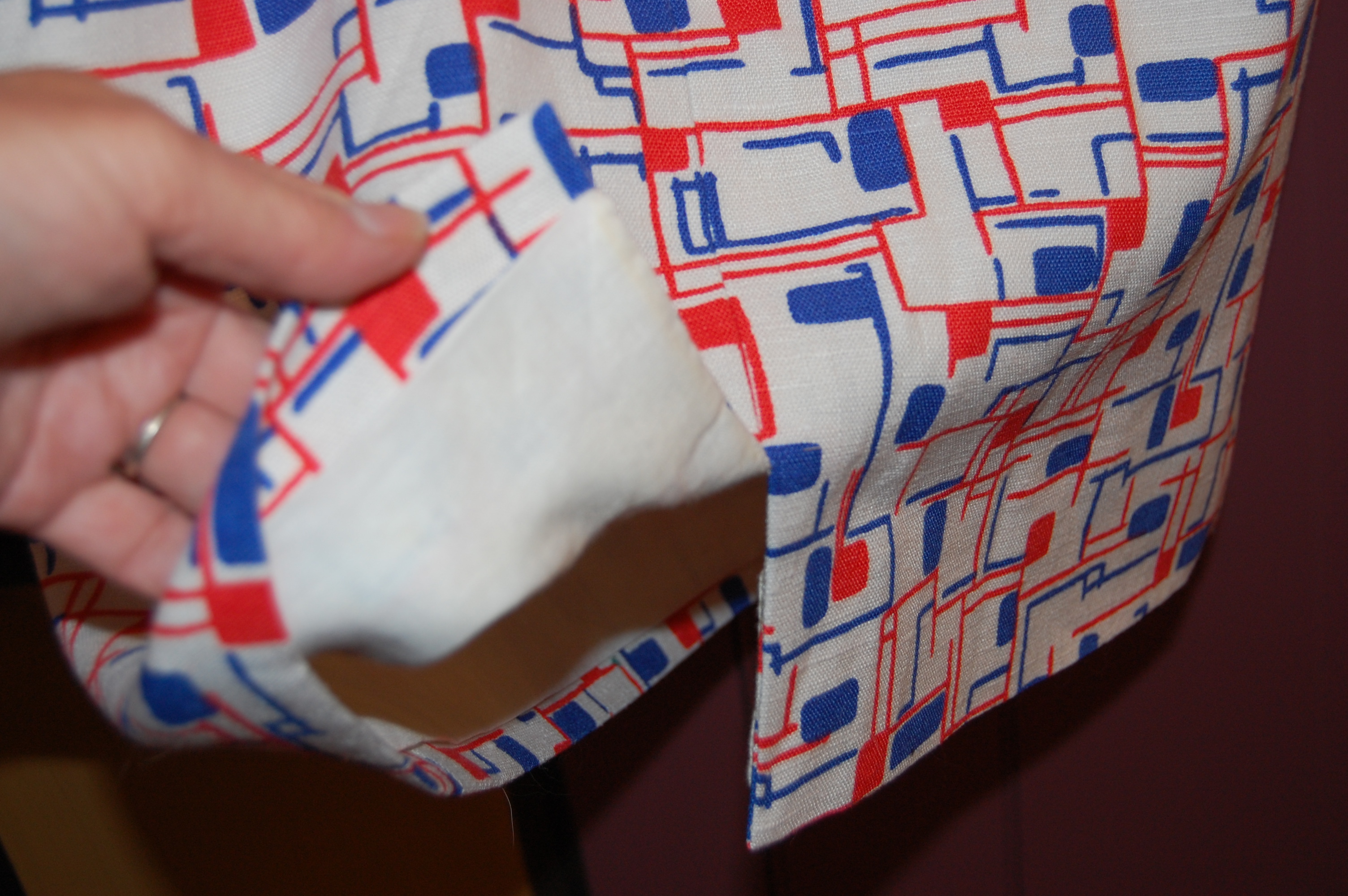
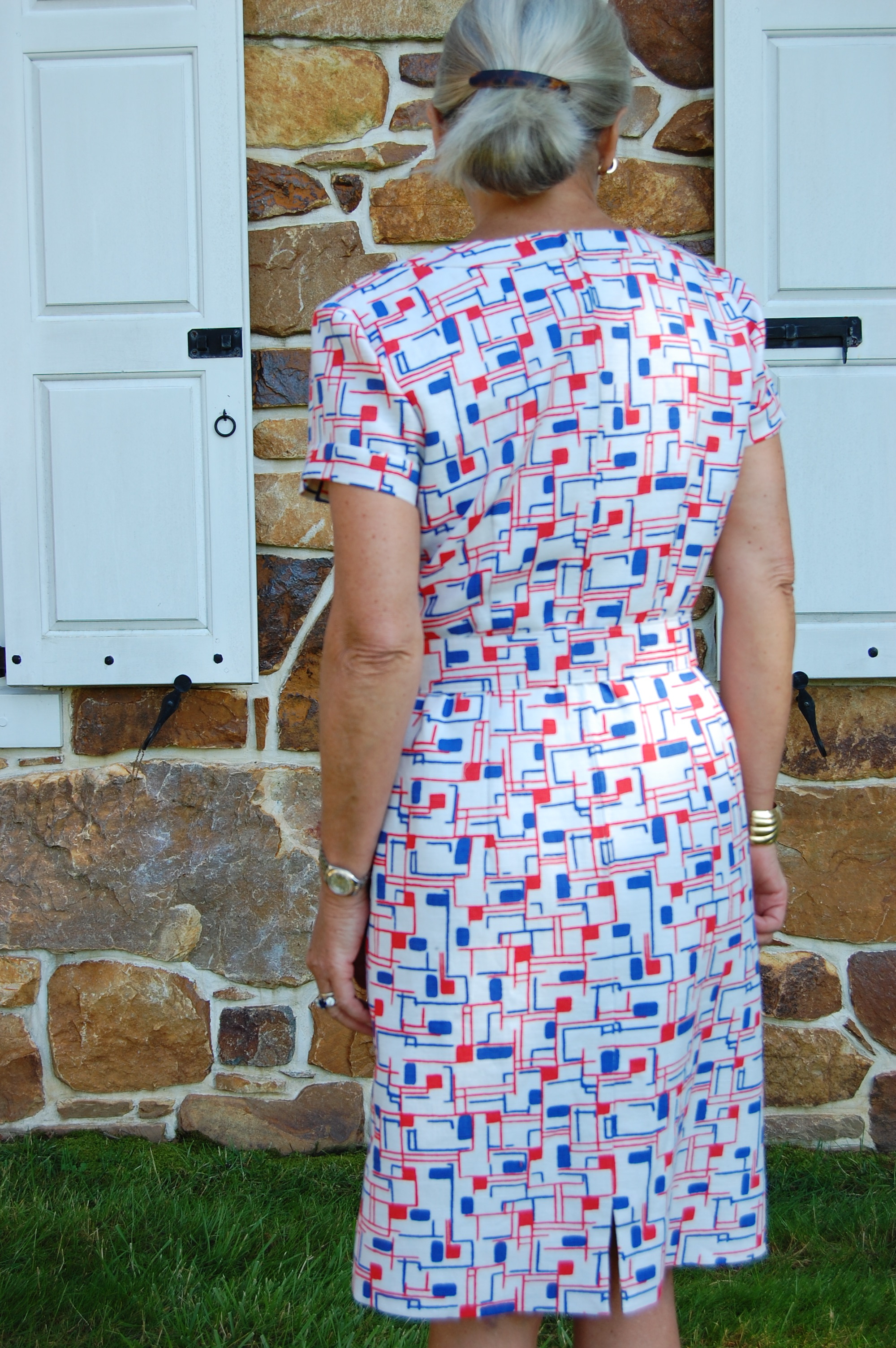
I also added a slit to the back seam as once I lengthened the dress, I thought I might need the extra wiggle room.

a quick look at the slit I added to the back center seam.

A quick look at the slit I added to the back center seam.

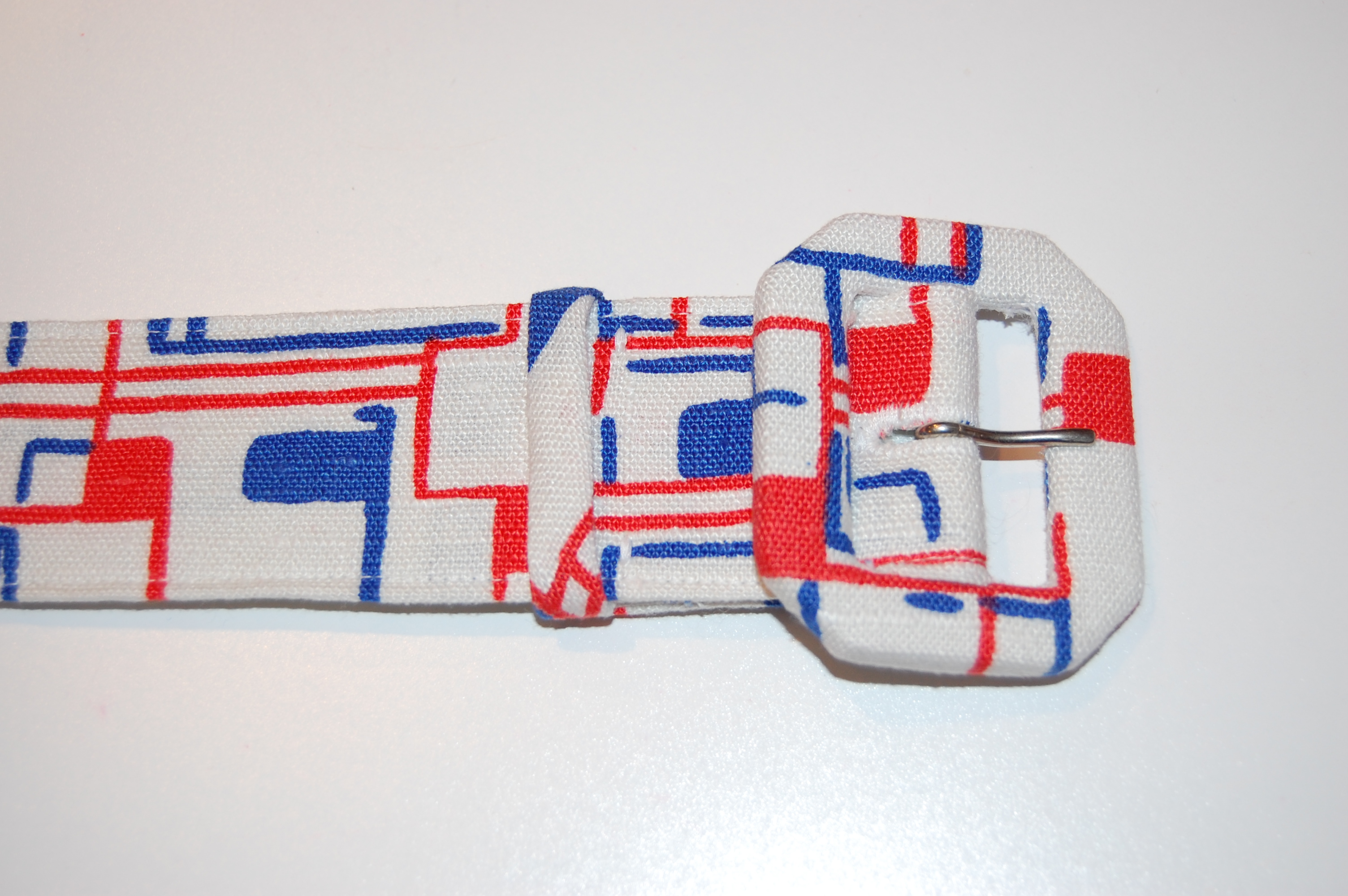
I had the belt made by Pat Mahoney of Pat’s Custom Belts and Buckles.  What a great decision!  I could never make as neat a belt and buckle as she does.

Pat Mahoney does nt have a website, but she can be contacted at: 209-369-5410; 537 York Street, P.O. Box 335, Lodi, California 95241, USA.

Pat Mahoney does not have a website, but she can be contacted at: 209-369-5410; 537 York Street, P.O. Box 335, Lodi, California 95241, USA.

Here is the finished dress.

linen tab dress

DSC_0882

DSC_0886

DSC_0887

DSC_0892

DSC_0893

DSC_0894

I am bound and determined to make a summer dress using that vintage Vogue pattern.  But – now I know I’ll have to use a plain fabric for best results (maybe a solid linen…).  It will, however,  have to wait for another Summer, as  I have other projects in mind!

Making this dress has reminded me that sometimes Plan B turns out to be the BEST plan of all.

21 Comments

Filed under bound buttonholes, Buttons - choosing the right ones, couture construction, Linen, Moygashel linen, Uncategorized, vintage buttons, vintage Vogue Designer patterns, vintage Vogue patterns from the 1970s, Vogue patterns

Saying YES to a Ladylike Dress

What is it exactly that makes a particular dress elicit the description “ladylike”?  Is it primarily the fabric – or the color – or the style – or, as most would suggest, a combination of all these things?  And why, exactly, am I asking this question??

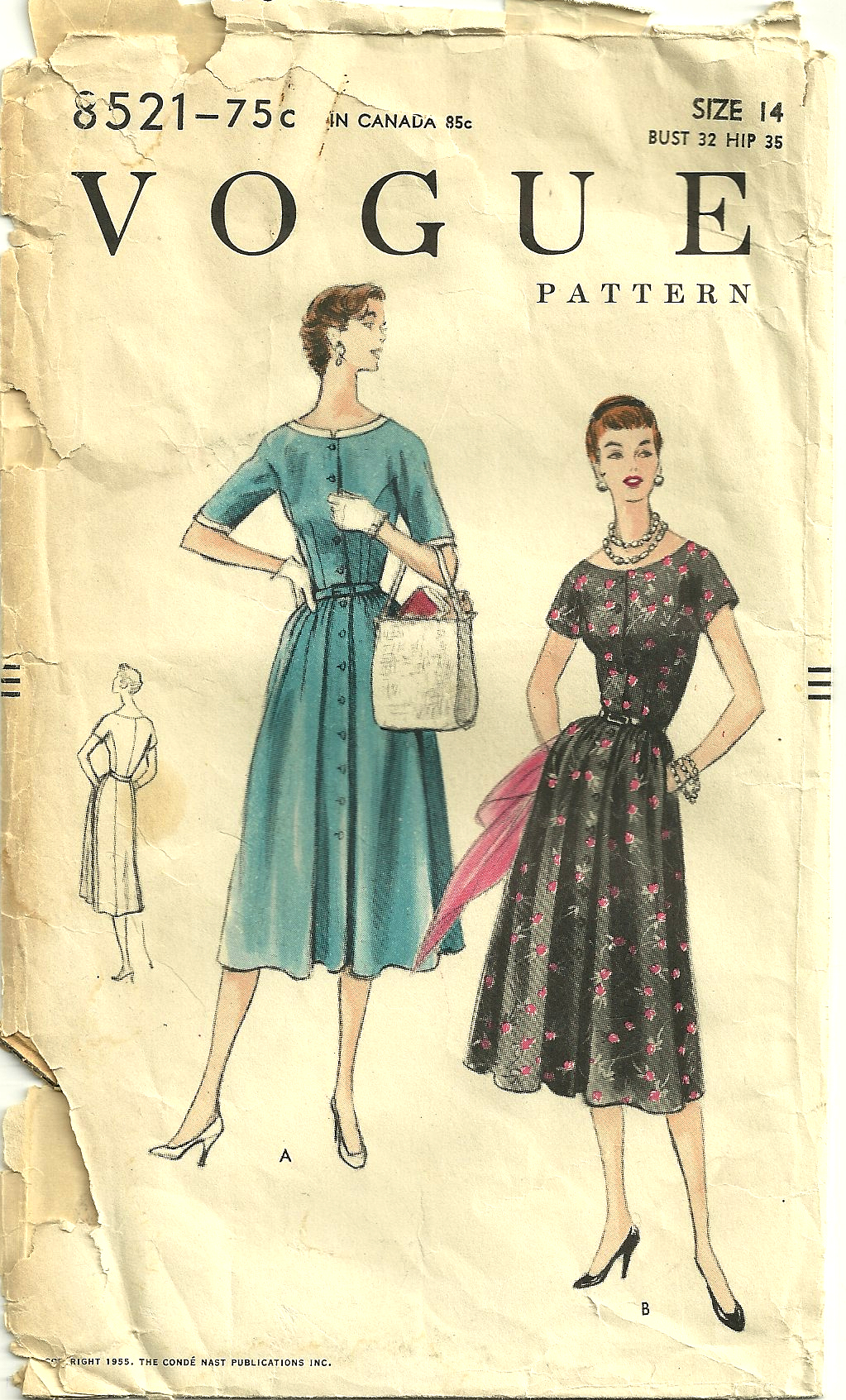
As one who generally is attracted to tailored, usually unfussy “frocks”, I had to answer this question for myself about this pattern, which, although still unfussy, with simple lines, just seems to be such a ladylike look:

Dated 1958, this pattern shows the influence of Christian Dior.

Dated 1958, this pattern shows the influence of Christian Dior.

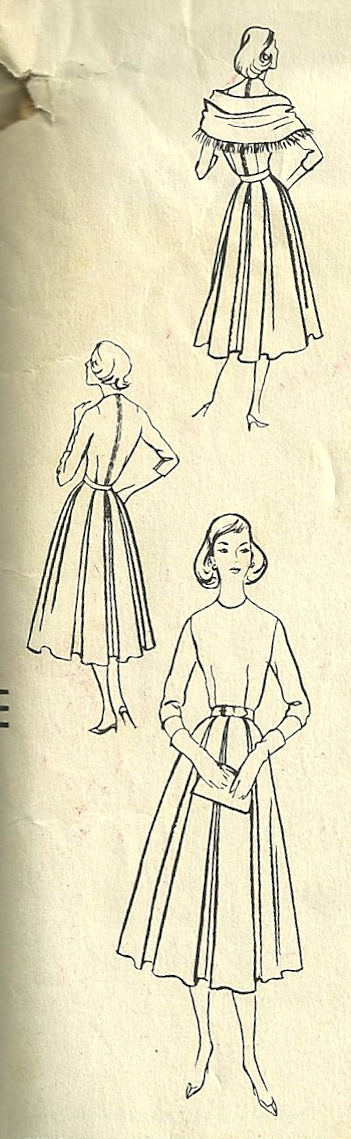
This is what I’ve decided.  I definitely think you start with the style – or the pattern – and this one has it.  There are four elements which work together to make this a ladylike look: 1) a defined waist, here further delineated with a purchased belt (or, as the pattern calls it, a “novelty” belt); 2) a soft shoulder line, which in this pattern consists of a set-in sleeve on the front bodice, but kimono in the back – very clever; 3) a full skirt, this one with inverted box pleats which soften the fullness to a considerable degree (although not quite enough for me, as I will explain later); 4) three-quarter length sleeves, which are the most flattering for most women, and which provide the perfect foil for bracelets or gloves.

The middle sketch on the back of the envelope shows the kimono sleeve detail on the back of the dress.

The middle sketch on the back of the envelope shows the kimono sleeve detail on the back of the dress.

I’ve had this pattern for well over a year, but it took me a while to pair it with this fabric which I’ve had forever (well, not that long, but probably close to 10 years – which makes it seem like a baby compared to how long I’ve had some of my Moygashel linen!).

I'm not sure the fine twill weave of this fabric is visible here.

I’m not sure the fine twill weave of this fabric is visible here.

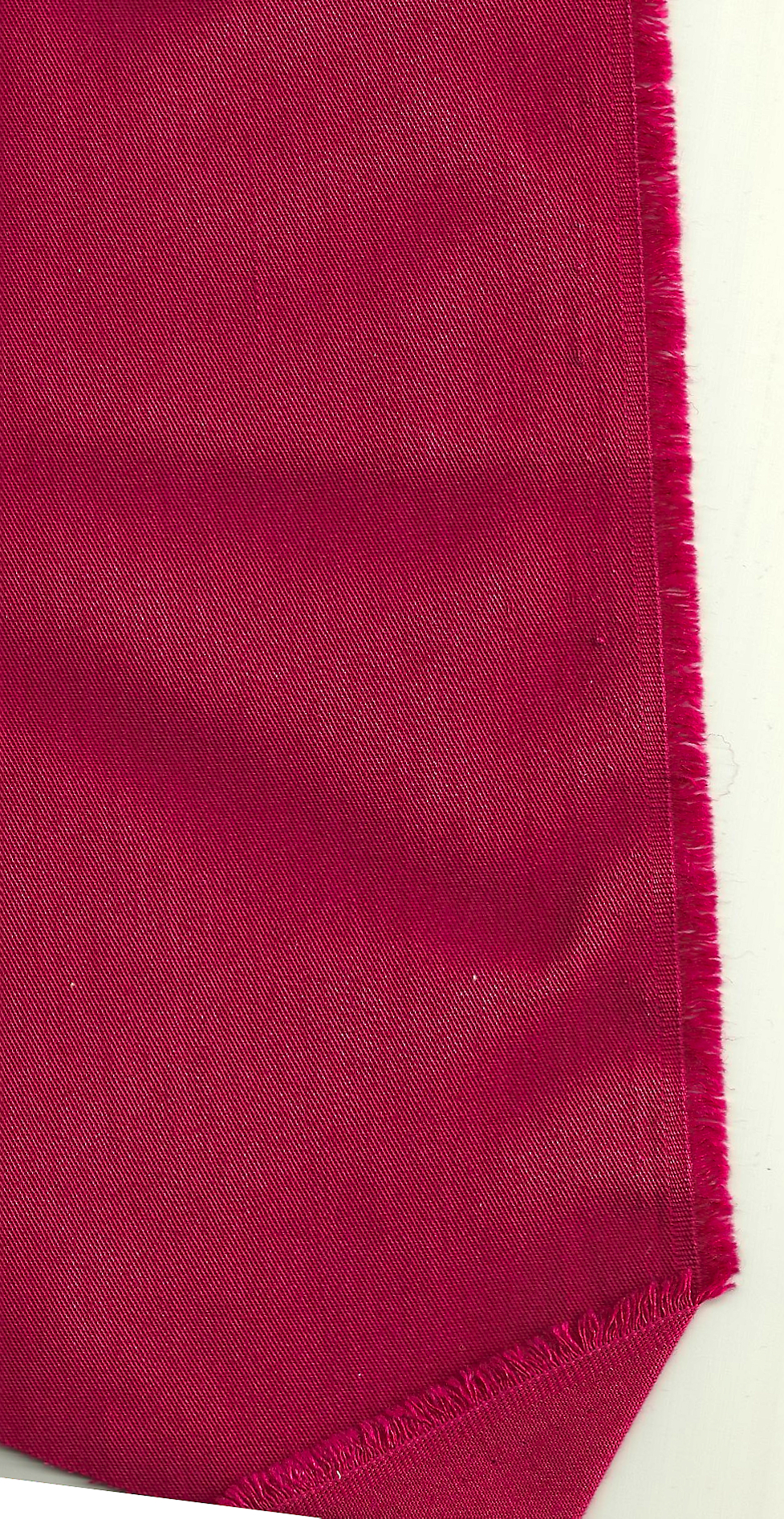
This fabric is a very beautiful wool/cotton blend, lightweight, but with a solid hand and very subtle fine twill weave to it.  It’s 60” wide and I bought three yards, so I obviously had plenty of fabric with which to work.  I’m in love with the color, a deep raspberry pink – I just cannot stay away from pinks of any shade.
Knowing that I would be making this dress in knee-length rather than mid-calf made me reconsider the fullness of the skirt.  In thinking about this, I remembered another pattern in my collection, which shows a full skirt in the front and a fitted, plain skirt in the back.

This is an unprinted pattern, which makes working with its pieces  difficult.

This is an unprinted pattern, which makes working with its pieces difficult.

So – I decided to see if I could combine the two patterns to create the same look, but with less fullness.  The second pattern has a three piece back, which obviously would not work with a center back zipper.

Here is the detail of the skirt back.

Here is the detail of the skirt back.

So I decided to combine the side back and center back pattern pieces, add two darts to achieve a similar fit, and add a center back seam to match the seaming in the first pattern.

This is how I fit the two back skirt pieces together to make one piece.  The "triangle" became two narrow darts, which seemed to work better than one wide one.

This is how I fit the two back skirt pieces together to make one piece. The “triangle” became two narrow darts, which seemed to work better than one wide one.

I took a little more fullness out of the front pattern pieces of the first dress and reconfigured the box pleats.  Then, of course, I made a muslin to see if this would all work.  It certainly seems like it will.  The width of the skirt, according to the pattern envelope, was originally supposed to be about 100”.  The width of my muslin skirt is 56” – which means I removed over a yard in the skirt width!  Sometimes things look and hang a bit differently in the fashion fabric as compared to the muslin, so I am proceeding with cautious optimism.

I am making the dress with couture techniques – and I’m ready to do some serious sewing now that I have silk organza hand-basted to all the pattern pieces.

My pile of basted pieces.

My pile of basted pieces.

In sewing, I am always reminded of this quote from Wilhela Cushman:  “Just around the corner in every woman’s mind – is a lovely dress, a wonderful suit, or an entire costume which will make an enchanting new creature of her.”  I do indeed hope this will turn out to be a lovely dress – with enchanting ladylike qualities!

6 Comments

Filed under couture construction, kimono sleeves, Uncategorized, Unprinted patterns from the 1950s, vintage Vogue patterns from the 1950s, Vogue patterns

Green, green, and more green

When Pantone announced the color of the year for 2013 last week, I was immediately smitten.  Actually, I’ve been smitten with Emerald Green (Pantone 17-5641 TCX) for as long as I can remember – and finally, finally, it’s going to be center stage again after at least 30 years in hiding (as deliciously detailed by Christina Binkley on the Personal Journal front page of The Wall Street Journal on December 6.)

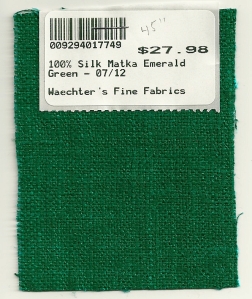
My initial euphoria turned to smug (yes, I admit it!) satisfaction.  Why is this?  Just this Fall I had seen emerald green silk matka on the website of Waechter’s Fine Fabrics.    Well, I sent for a swatch and upon its arrival I speedily ordered three+ yards. I knew I would have to make a Spring suit out of this fabric.

This is the swatch I ordered from Waechter's Fine Fabrics

This is the swatch I ordered from Waechter’s Fine Fabrics.

Of course, this was before Pantone made its announcement. And although I still would have purchased it even if this shade of green were the “uncolor” of the coming year, I’m looking forward to being stylish, to boot!

But wait, that’s not all!

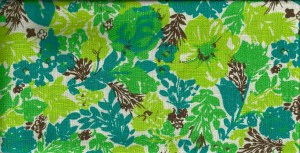
Much earlier in the year, I had purchased this yardage of Moygashel linen from an Etsy shop.  What attracted me to it was that emerald green is featured so dominantly in it.  I’ve shown this fabric before on this blog, but I could not resist showing another peek at it.  I still keep thinking it would make a gorgeous Spring coat… or pants.

The emerald green in this design really makes it pop!

The emerald green in this design really makes it pop!

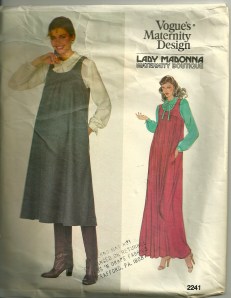
Finally, this color – this Emerald Green – has given me the perfect opportunity to tell (and complete) a story about a dress I made for myself in 1980 – and share some wonderful, wonderful family news, too.  Here’s the pattern:

Yes - it is for a maternity dress...  from 31 years ago.

Yes – it is for a maternity dress… from 32 years ago.

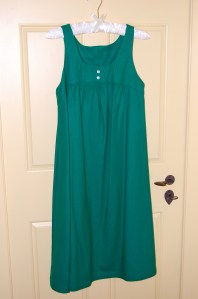
And yes, I made it in Emerald Green:

With a few hang lines after 32 years!

With a few hang lines after 32 years!

DSC_0737

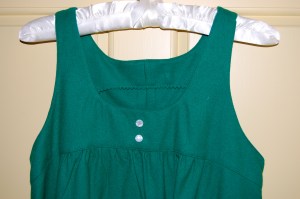
A detail of the yoke. I chose two pearl buttons from my button box of 32 years ago to add a little interest.

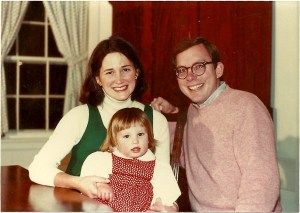
This was a piece of Pendleton wool I picked up on sale in the Fall of 1980 when I was scrambling to make some dresses for my first pregnancy (our daughter was born in April 1981).  I loved the color and thought it would be quite beautiful over the holidays. In fact, two years later, when I was pregnant again (with our son), I wore it for our Christmas photo:

.

Our growing family, in 1982.

Whatever possessed me to save this dress, I’ll never know.  I actually saved all the maternity clothes I made for myself.  I dug them out of the cedar closet this Fall to show to our daughter (the little girl in the photo)– who (taa daa!), with her husband, is excitingly expecting their first child (our first grandchild!).  Whatever thoughts I had about the suitability of these dresses for “today’s” pregnant style made both of us laugh!  My daughter will not be wearing vintage maternity dresses, even if one of them is an au courant color.  But oh dear, the wheels started to turn in my head.     Hm-m-m-m, why not take this green “tent” and make a skirt for MYSELF out of it??  Wouldn’t that be a story to tell?

So now, I’m realigning my winter projects.  Come January I’ll be seeing and sewing GREEN.

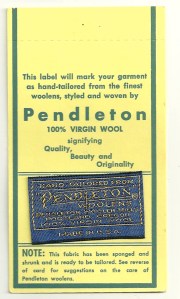
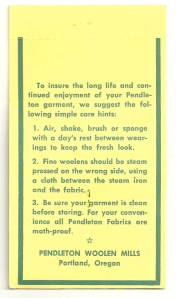
By the way, Pendleton fabric yardage used to come with labels to sew into finished garments.  I never sewed the label into this dress, but here it is:

A pristine label, still attached to its card.

A pristine label, still attached to its card…

... with care instructions on the back.

… with care instructions on the back.

This time around I plan to use it!

14 Comments

Filed under 1980's dress patterns, Uncategorized, vintage Vogue patterns from the 1970s, woolens

My very stylish pants.

For several months I was watching a piece of Moygashel linen for sale by Revival Fabrics.  When I first saw this offering, I had the eerie feeling of déjà vu – I was sure I remembered seeing this patterned fabric in the late ‘60s or early ‘70s when I was a steady admirer and occasional purchaser of this brand of linen I love so much.  The piece that was being offered was three yards long, 44″ wide and included a Moygashel label.  The description accompanying it suggested making patio furniture pillows or tote bags with it, neither of which much appealed to me.  And actually, this suggestion threw me off a bit ; I wondered if it was drapery-weight linen, not dress-weight.  But the more I looked at it online (clicking close-ups of the images), the more convinced I became that it was dress-weight.  I finally decided to buy it, not really knowing what I was going to make out of it (maybe a sheath dress…?)

When the package arrived and I finally saw this linen in person, I was – so excited! It was gorgeous – and my suspicions were correct – it was definitely dress-weight.

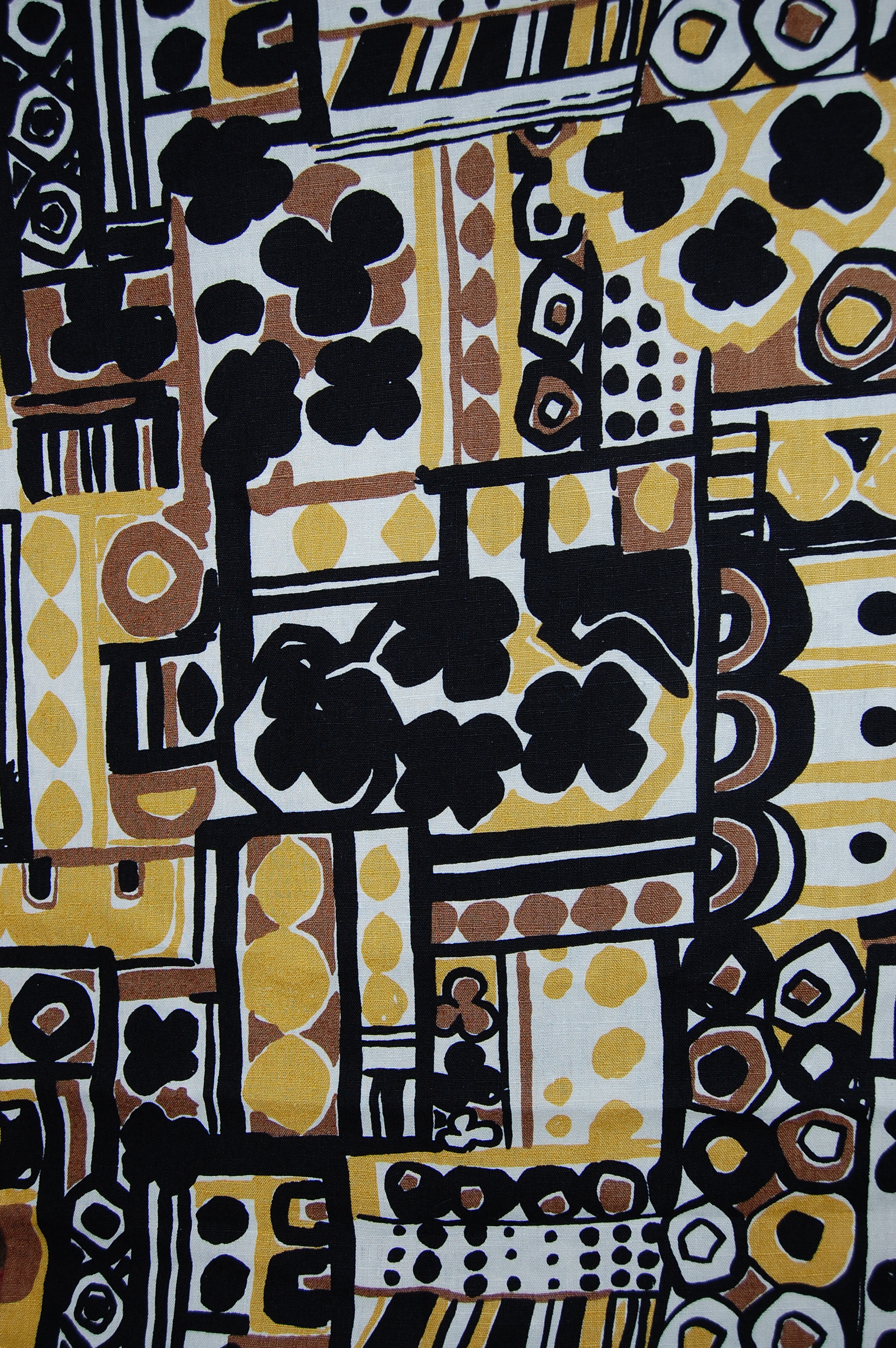
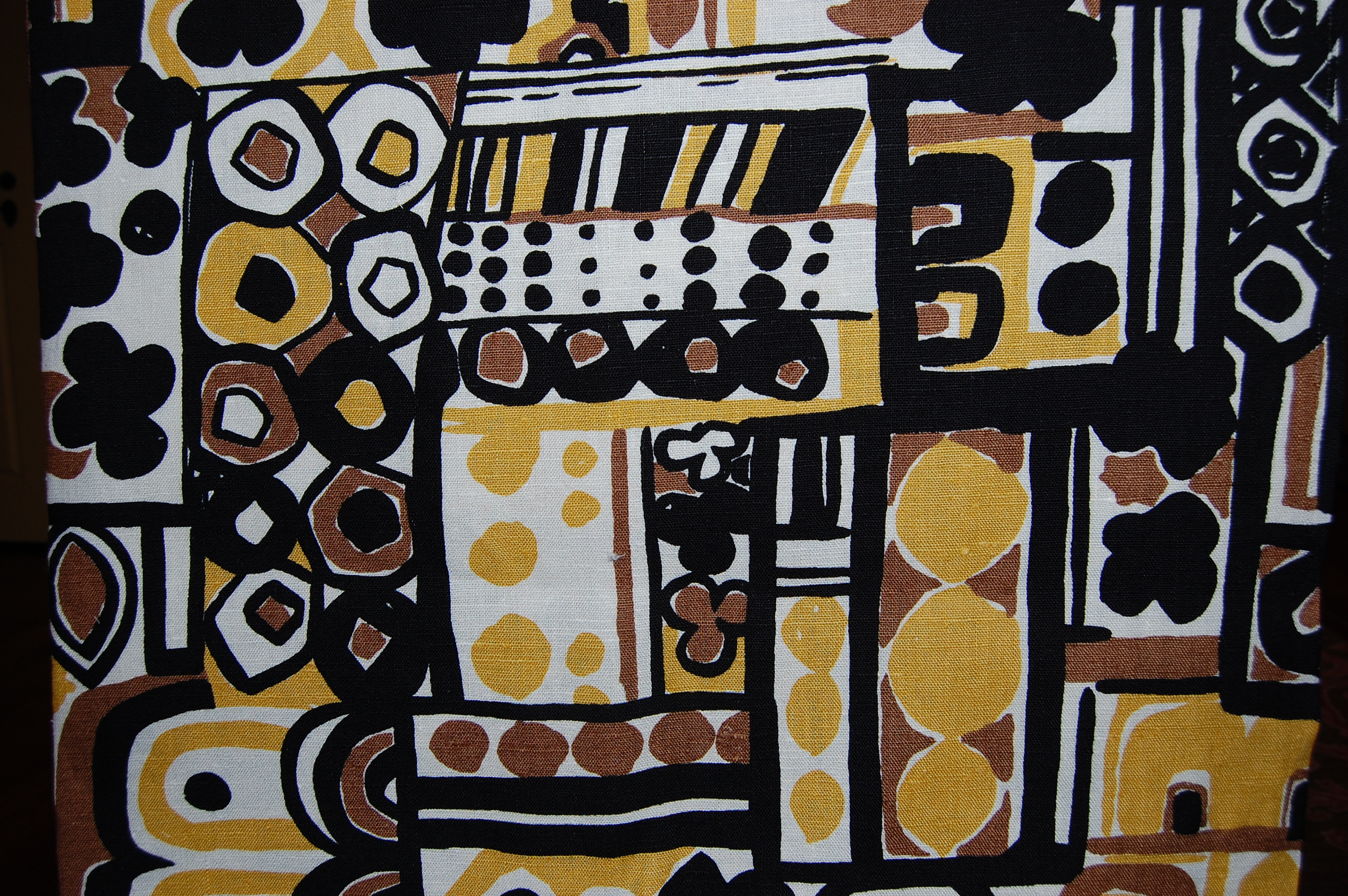
Here is a lengthwise view of the linen.

Here is closer view of this amazing pattern.

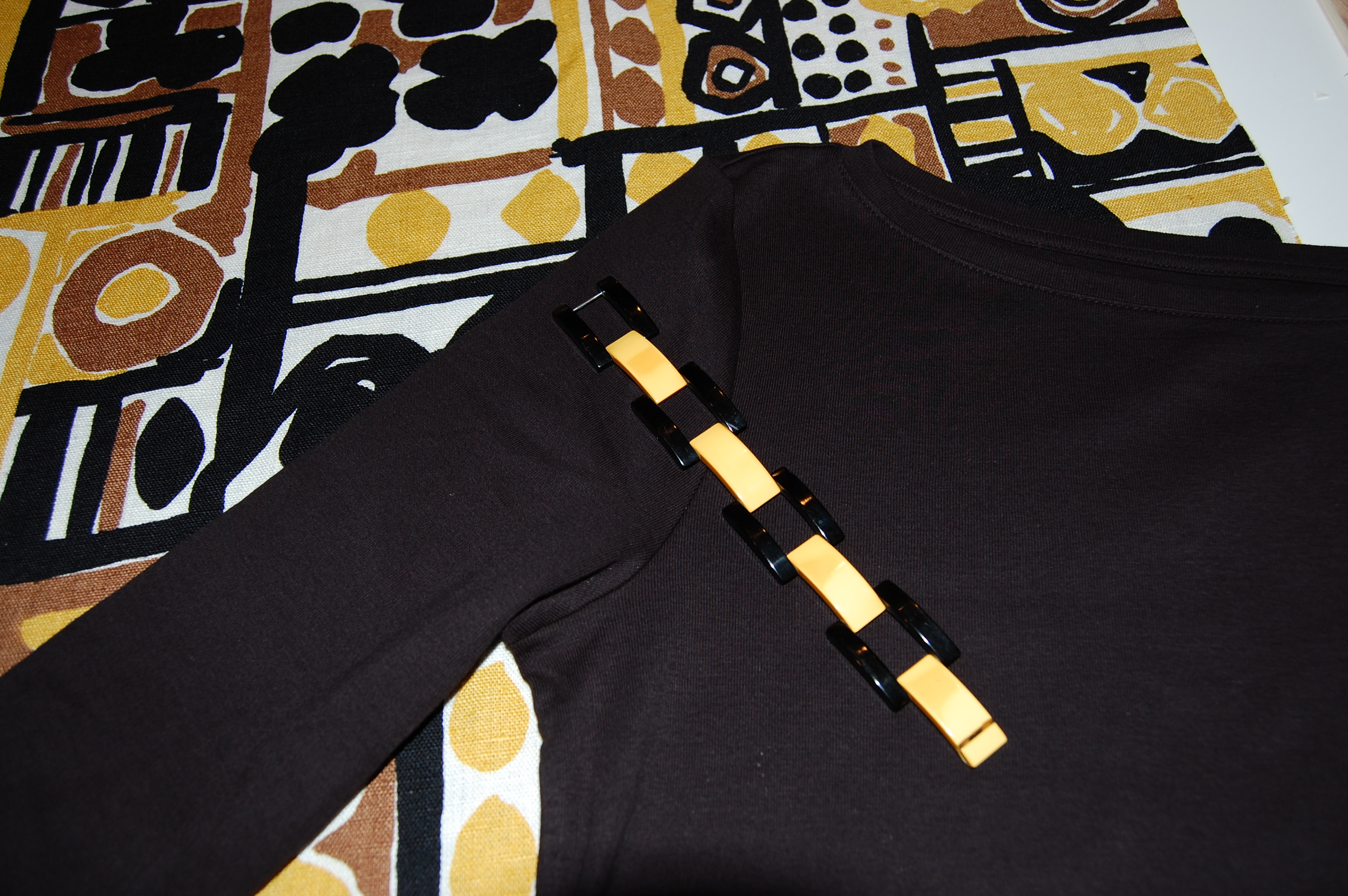
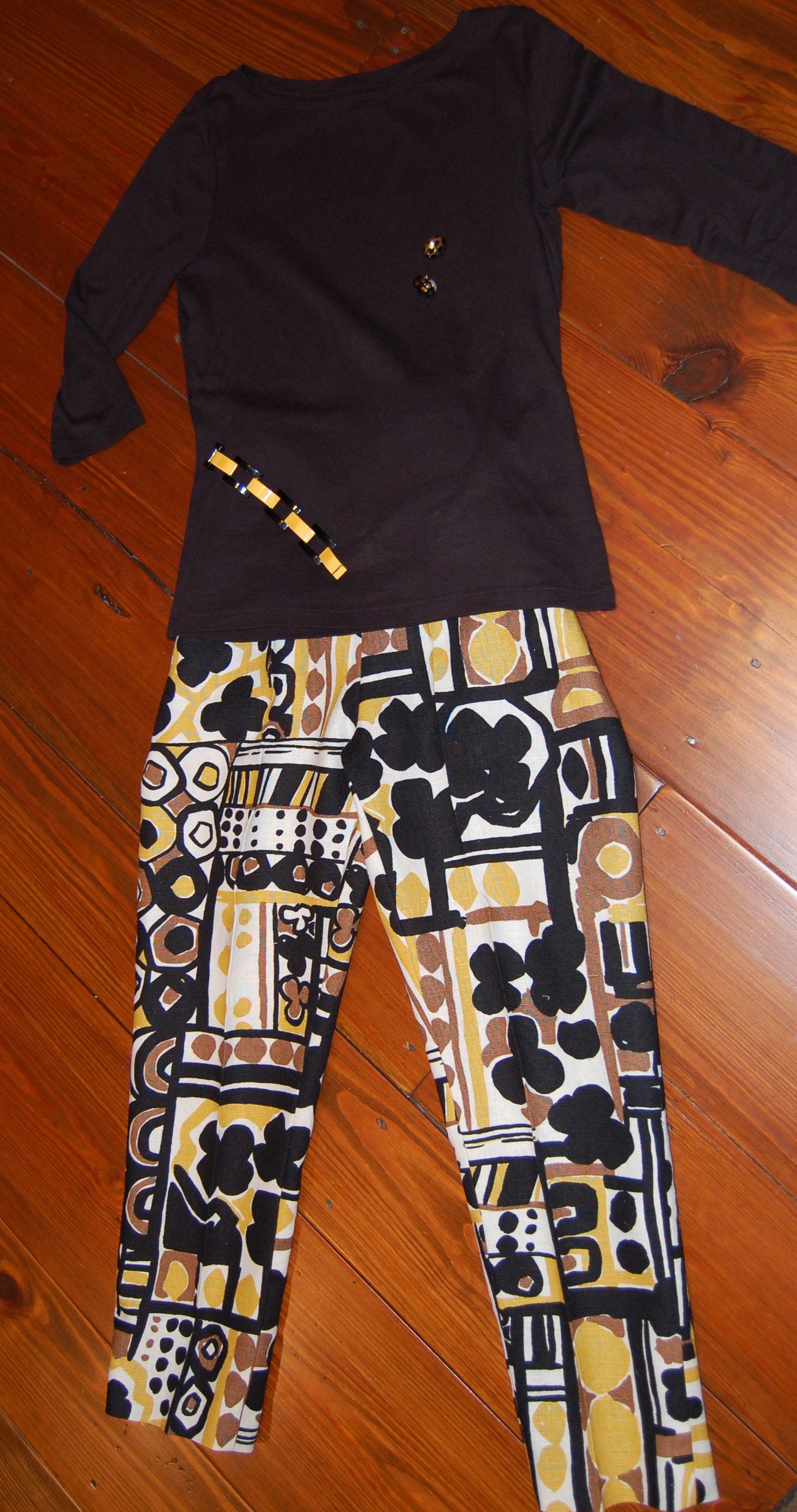
My first thought after my initial euphoria was:  This would make up into fabulous ankle-length pants (worn with a black, yellow or khaki top – and of course my black and yellow Bakelite bracelet).  And yes, I was sure I would have the nerve to wear them!

I laid out the fabric with a black cotton knit top and my Bakelite bracelet just to see how it would look.

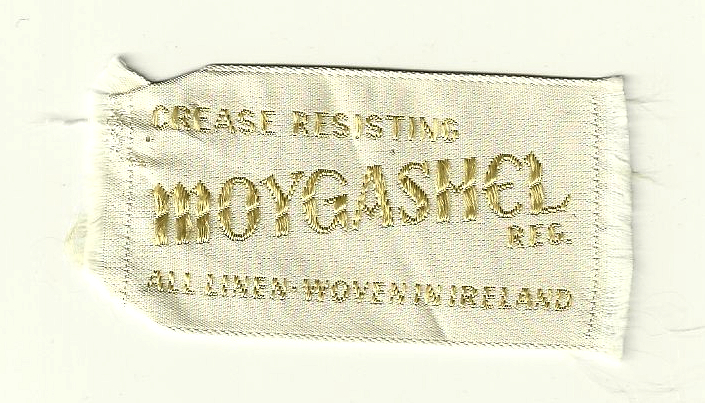
And here is the label which came with the fabric.

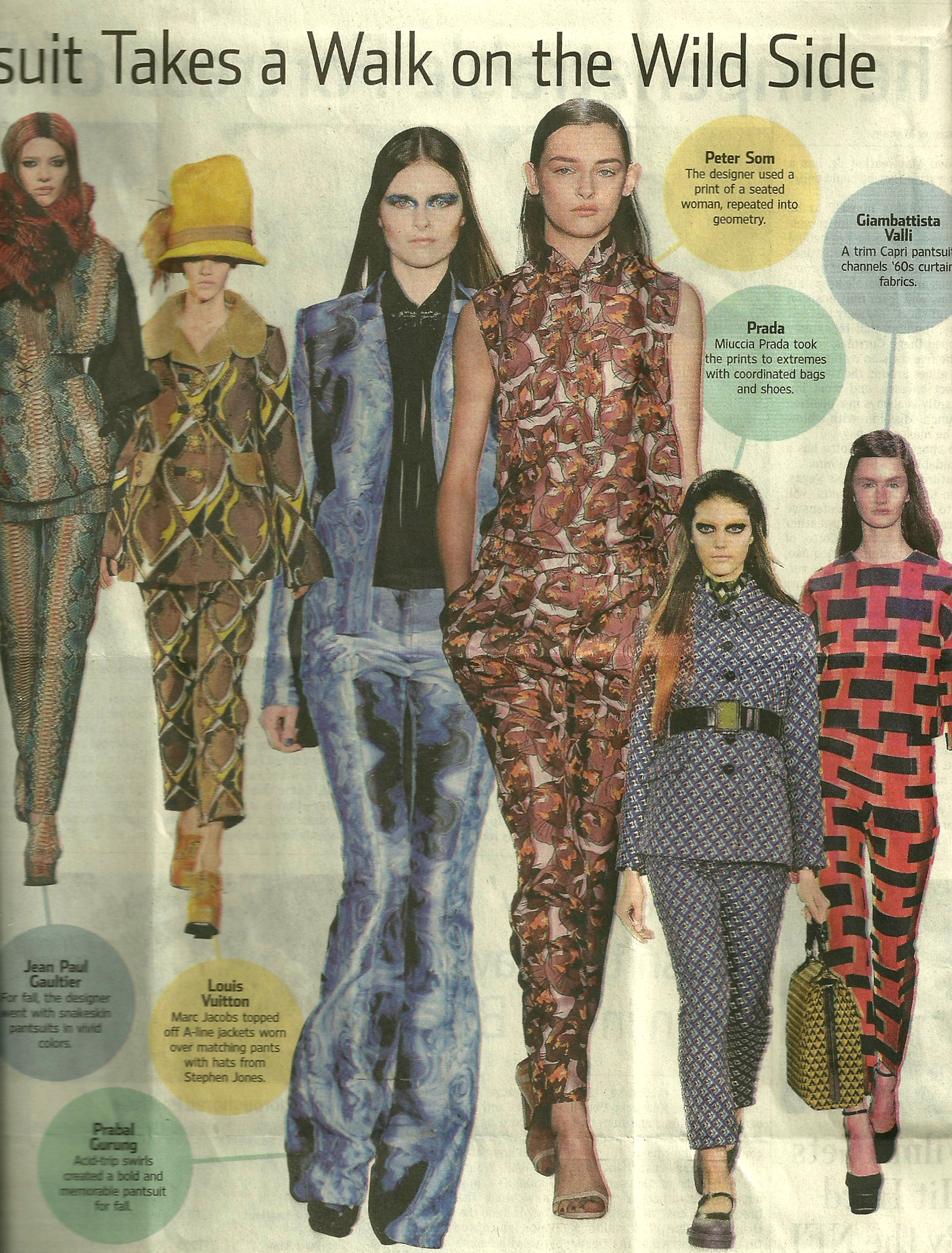
With my plan in place, I decided this would be my next project after I finished the one I was on.  Then something really amazing happened.  A fashion article in the May 3, 2012 edition of The Wall Street Journal caught my eye.   Christina Binkley, one of the newspaper’s fashion reporters, headlined her weekly column “On Style”  with The Pantsuit Takes a Walk on the Wild Side.
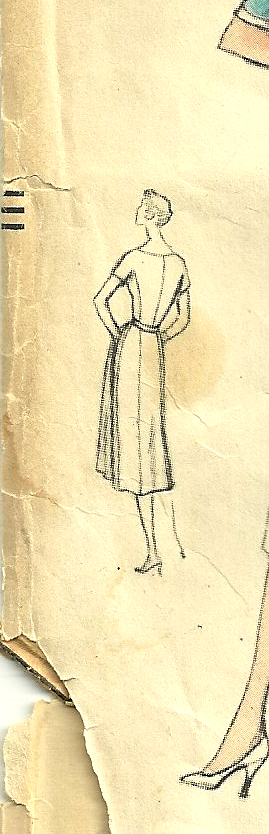
I don’t like any of these fabric designs as much as I like my Moygashel linen!

I’ve never been a fan of pantsuits, but some of the fabrics featured had that same ‘60s’ feel as my new vintage linen.  The reporter rightly questioned how well these head to toe outfits would “play on the streets”, but then she added:

“…at least one mainstream retailer will highlight the idea that the pantsuit can be worn as separates…  There will be more busy pants than busy jackets.  ‘There may be women who wear it head-to-toe – very daring,’ says Sak’s Ms. Sherin.  ‘But for us, it’s probably about the patterned pant’.”

Then, Ms. Binkley suggested:  “The key to wearing this trend is not straying too far from your safety zone.  Stick to colors and patterns you will still love in five years.  And let the bold pattern do the talking – go with a conservative fit if you’d rather not be the center of attention.”
Further:  “It’s probably not a coincidence that wild pantsuits are appearing just as ‘Mad Men,’ the style-influencing television show, is entering the psychedelic phase of the ‘60s.”

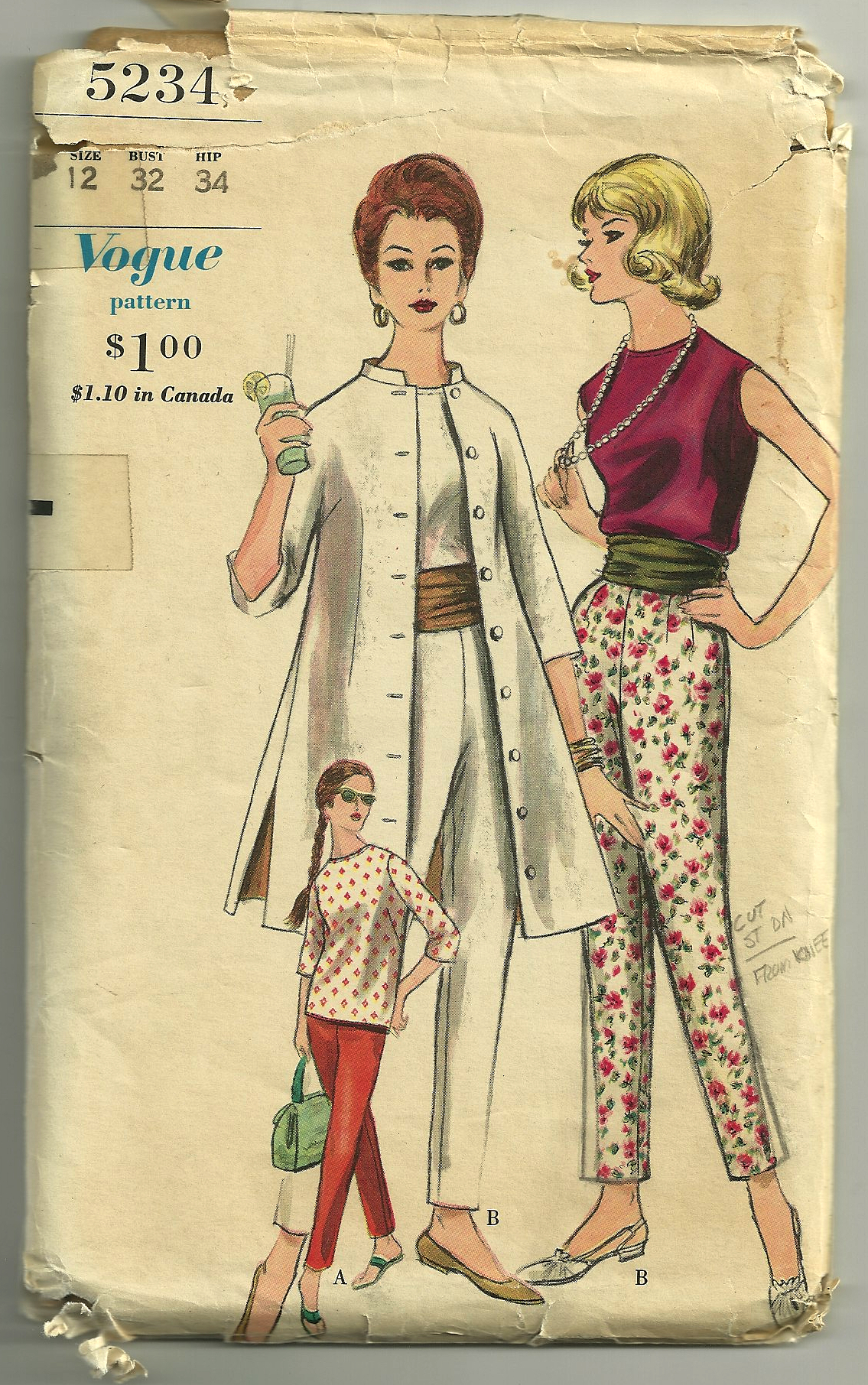
Well, my linen fabric is far from psychedelic, but it is bold – and reading this article certainly did validate my plans for making pants.   I also already knew the pattern I wanted to use, one quite appropriately from the early to mid ‘60s!

I really like all the styles featured on this pattern – the coat, the two blouse variations, the cummerbund –and the “conservative” pants.Classic looks – all of them!

Okay – I was ready to start this project.  First I washed the linen in cool water, delicate cycle, and dried it on medium heat.  This way I know my pants are totally machine washabIe.  Next I made a muslin of the pants pattern to check for fit.  I should have done a little more measuring first, as the crotch was too deep and had to be redrawn.  Also, although I like slim-ankled pants, these were just a bit too slim, so that was another adjustment.  I ended up making muslin #2, which was much closer to the final version from which I cut my pants.  However, I had made so many adjustments, that I decided to copy the final pattern onto freezer paper. (Freezer paper is my secret sewing friend – the dull side provides a wonderful surface upon which to draw in pencil and the shiny side can be ironed to fabric to cut out appliqués or anything, really, and then easily removed.  And the long continuous roll of paper is perfect for long pattern pieces like pants, coats, etc.)  The good news is that now I have a pants pattern that fits really well with the slim, but not too slim, legs that I like.

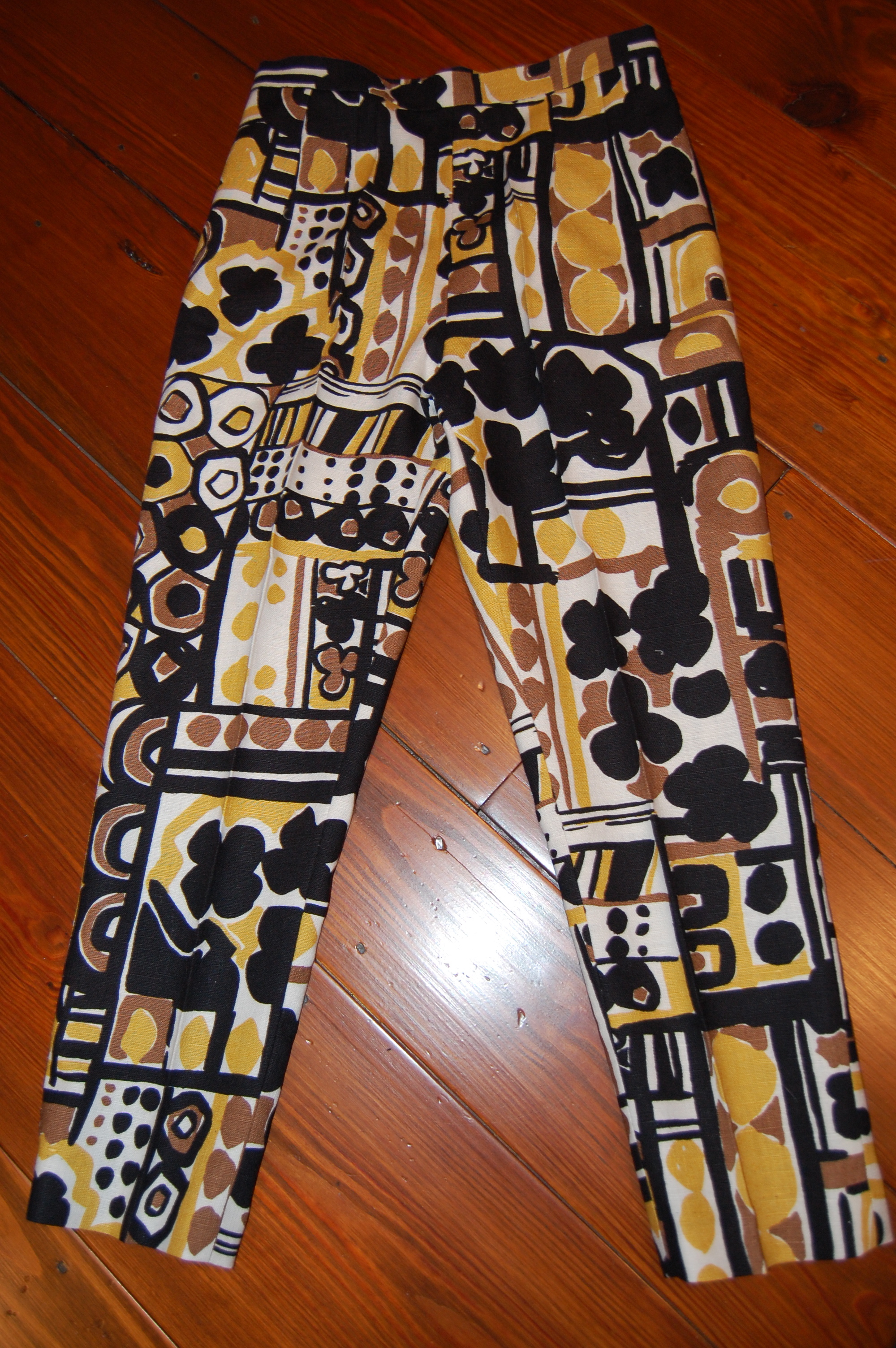
During construction, I tried on these pants about a ga-zillion times.  This fabric was just too dear to make any mistakes, and the more I tried them on, the more I liked them.  Here they are, all finished.

I’d say these are definitely bold!

Here is my outfit, complete with Bakelite bracelet.  (I think the camera angle makes the legs look different lengths??)

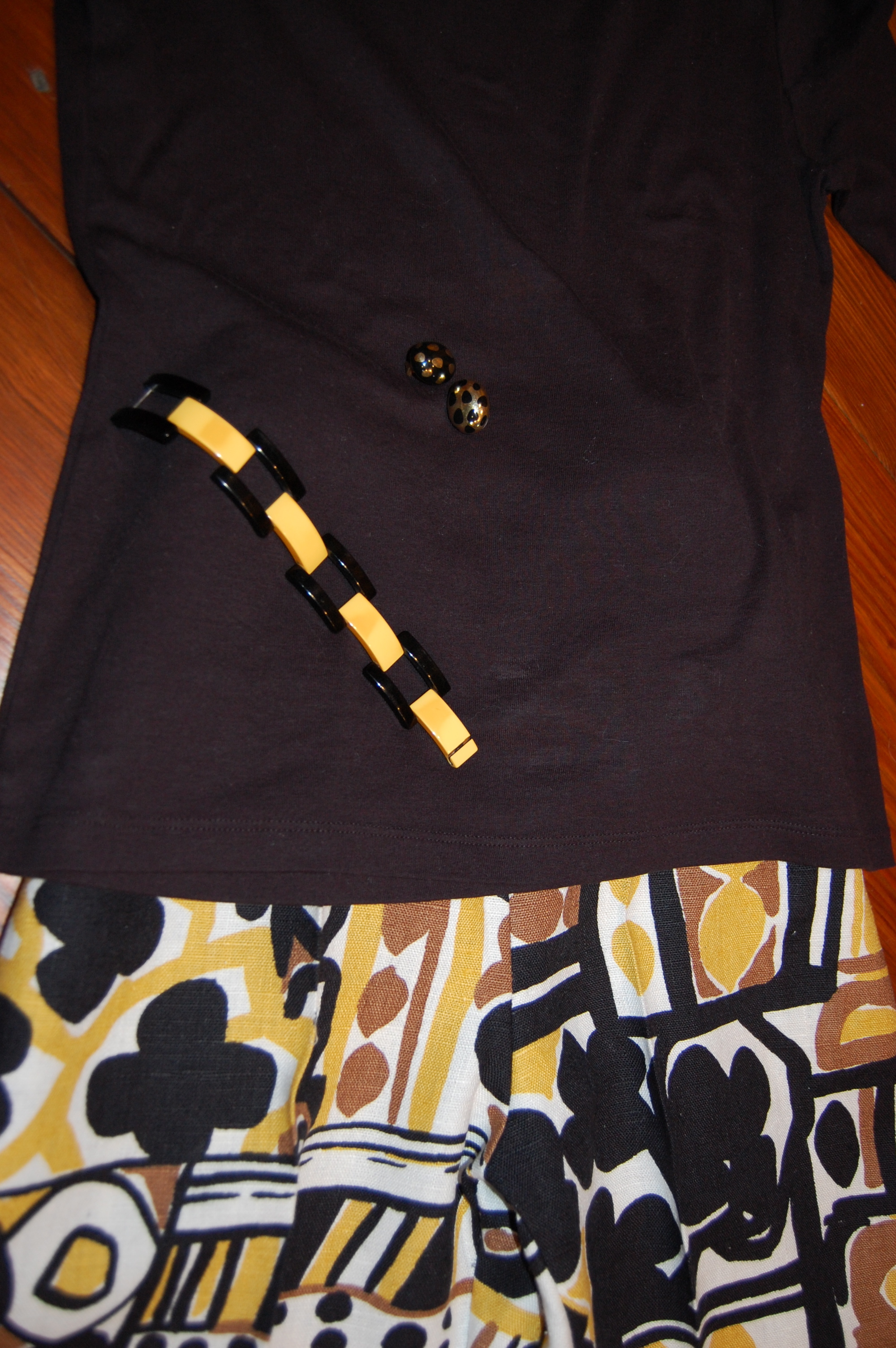
A close-up of same, with the earrings I’ll also wear with this outfit. (Click on the image).

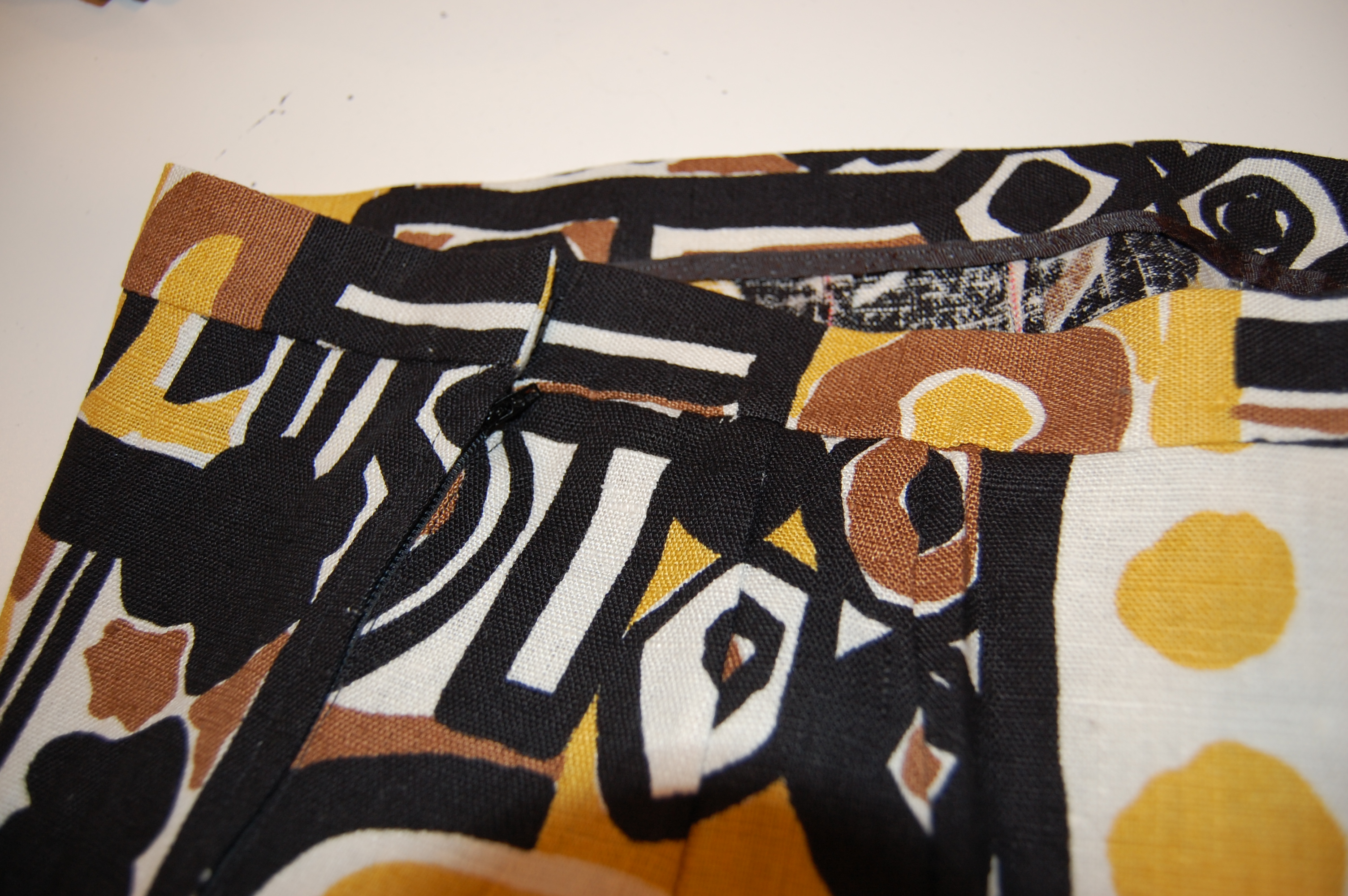
Here is a view of the waistband and zipper.

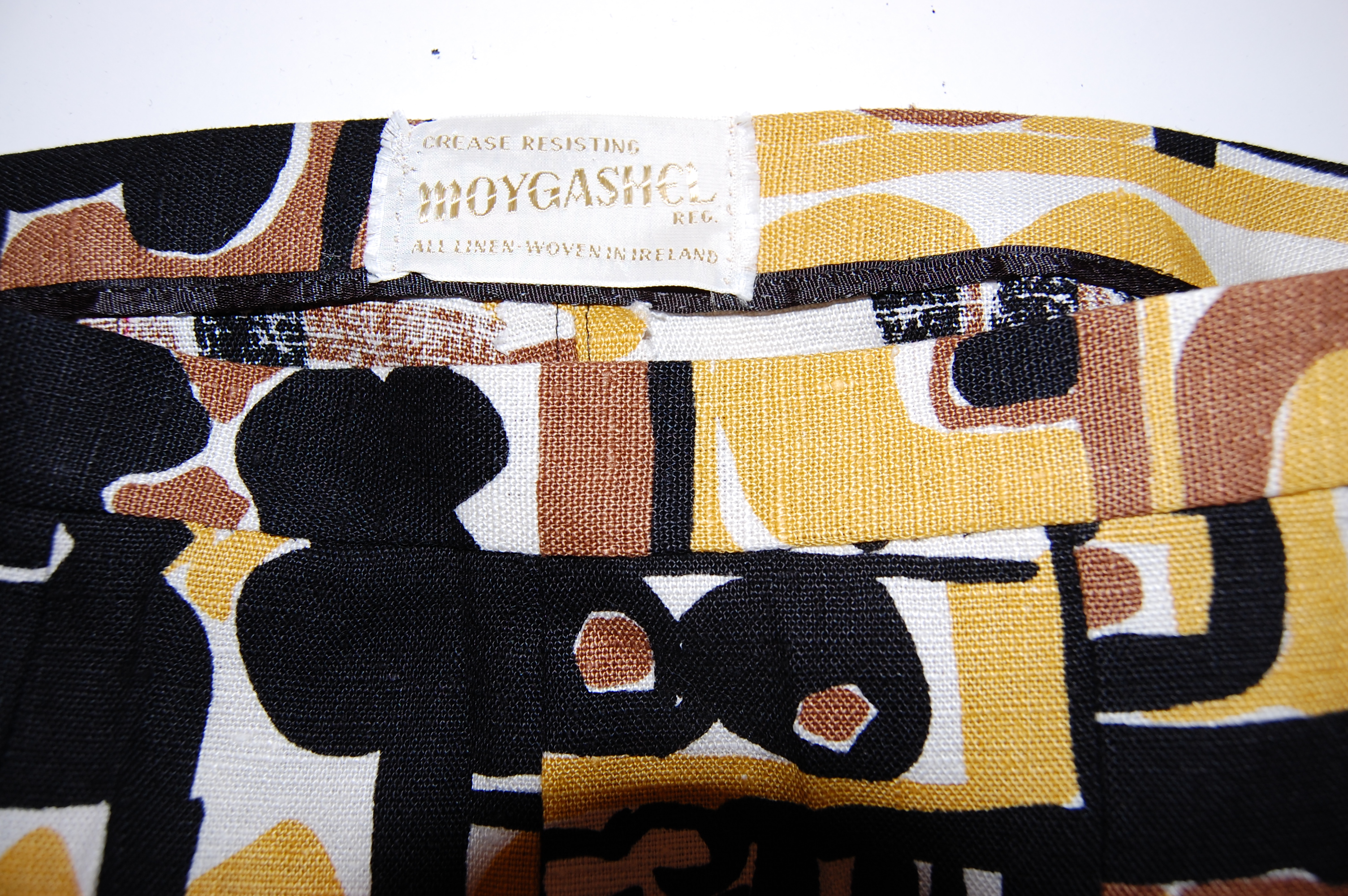
And here is the final touch – the label attached to the inside back of the waistband!

How neat is it to sew something up in vintage fabric, using a vintage pattern – and be totally stylish in 2012? And – I still have enough of this fabric left over to make a skirt.  Hopefully that will be very stylish, too, whenever I get around to making it!

12 Comments

Filed under Bakelite buttons and/or jewelry, Coats, Linen, Uncategorized, vintage Vogue patterns from the 1960s, Vogue patterns

A modern American translation: vintage Irish linen and 1966 French design

I’m never completely sure where pattern/fabric-pairing inspiration and decision- making comes from.  I kind of imagine all kinds of synapses going on in my brain, pulling information both stored and recently learned, which enable me to visualize a particular pattern made up in a particular fabric.  Somehow, most of us who sew  know what works – or doesn’t work – and then we can proceed, or not!  Well, my brain was telling me that this ca. 1965 Moygashel linen would look great made up in this 1966 Jacques Heim-designed dress:

Congratulations to those of you who picked this fabric in my Quiz #2!

I promise this will be the last time I show this pattern evelope!

Before I actually began work on the dress, I looked up Jacques Heim in one of my favorite reference books, The St. James Fashion Encyclopedia: A Survey of Style from 1945 to the Present. “Mr. Heim’s fashion house designed and made clothes of a modest style…” (p. 186) It appears he was not a great innovator, although he was interested in many styles, and his loyalty to a ladylike interpretation of those styles gave him staying power over his 45-year career.

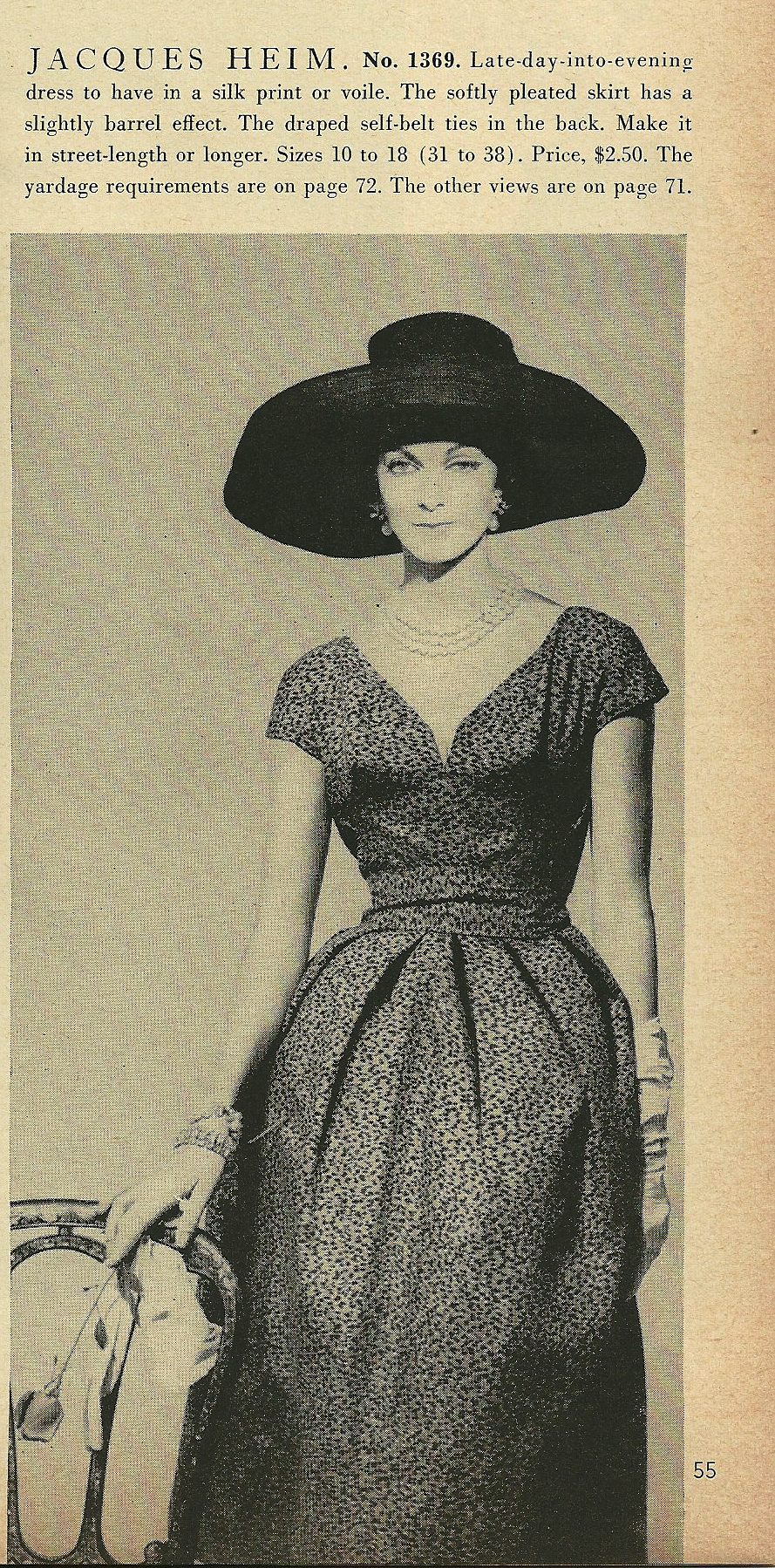
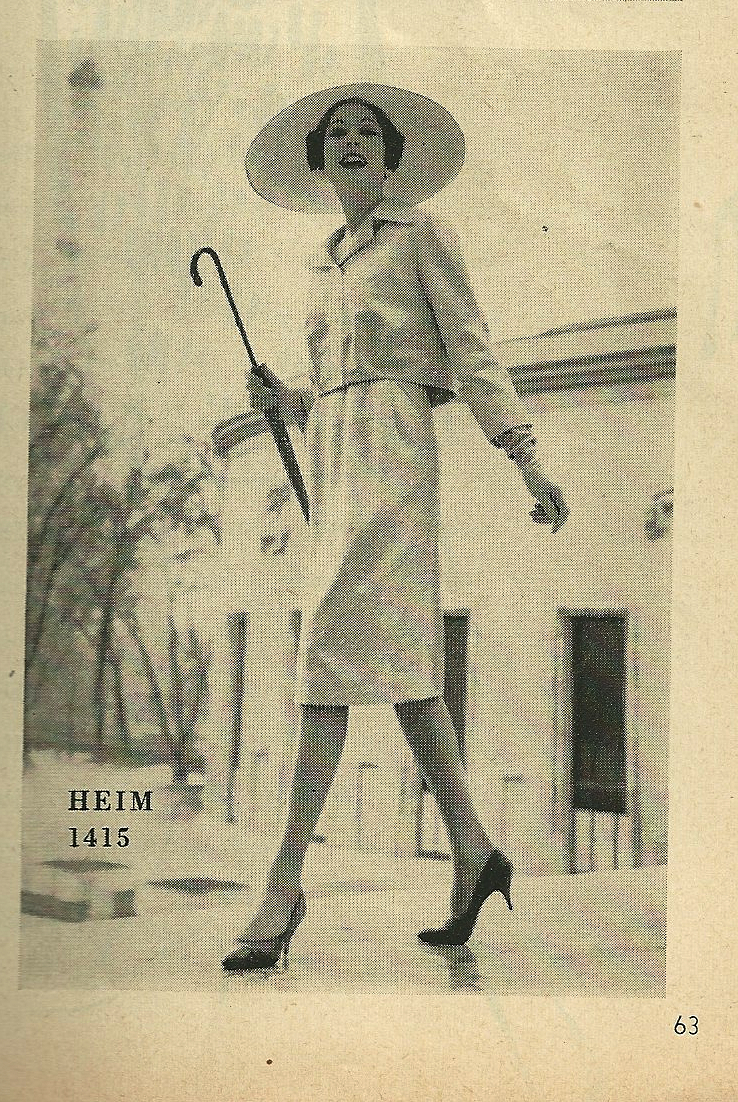
Vogue Patterns started featuring his designs in the early ‘50s as part of their designer series.  It was interesting to go through some of my Vogue Pattern Book magazines and see the progression of his fashions.

In chronological order, here are four examples of his work:

This dress was featured in the June/July 1957 Vogue Pattern Book magazine.

This ladylike suit was pictured in the August/September 1958 issue of the Vogue Pattern Book magazine.

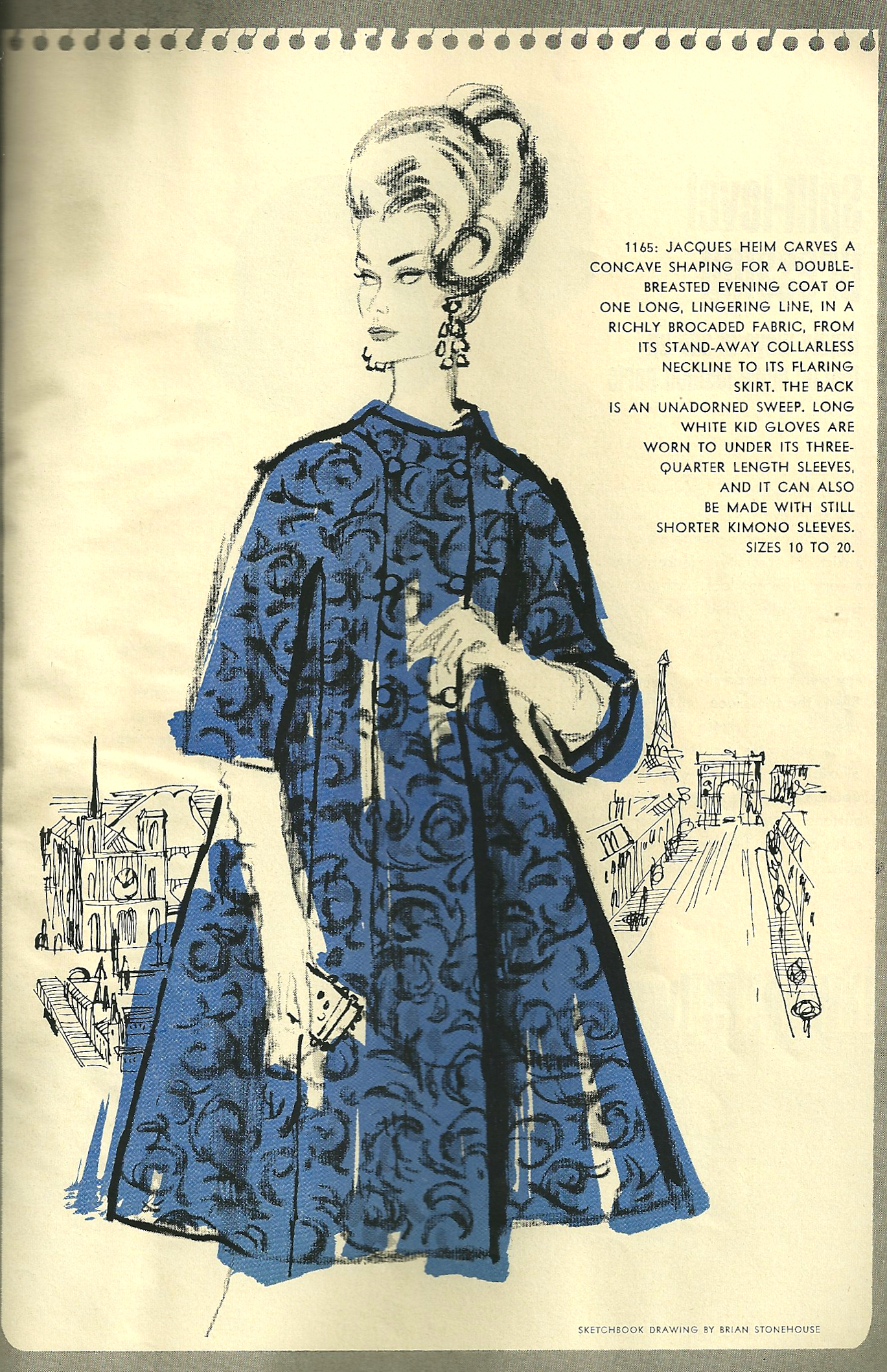
Here is a Jacques Heim evening coat from the August/September 1962 Vogue pattern Book magazine.

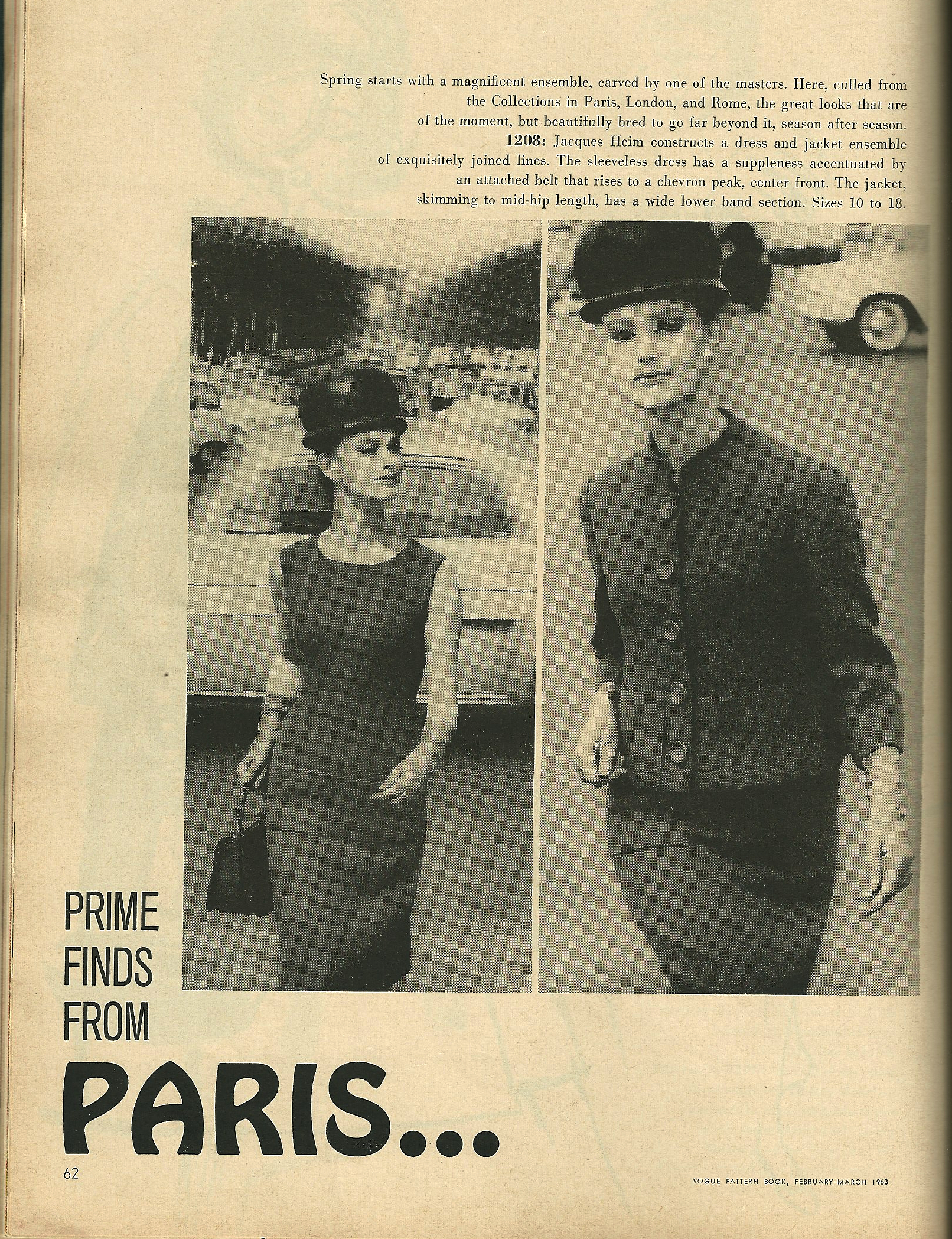
This ensemble was one of Mr. Heim’s February/March 1963 designs. The waist on the dress has a set-in chevron-peaked belt detail. Very lovely!

The pattern I chose was actually featured in one of the free “flyers” which were available in fine fabric stores in the ‘60s.  It is dated Fall 1966.  I just happened to find this copy on eBay – no one bid against me, so I guess I was meant to have it!

I felt very lucky to find this item on eBay!  Note the hair-do.

Mr. Heim died in early January 1967, so this particular pattern must have been one of the last ones which he designed or which was designed under his name before his death.  His fashion house then only lasted for 2 more years, closing operation in 1969 .

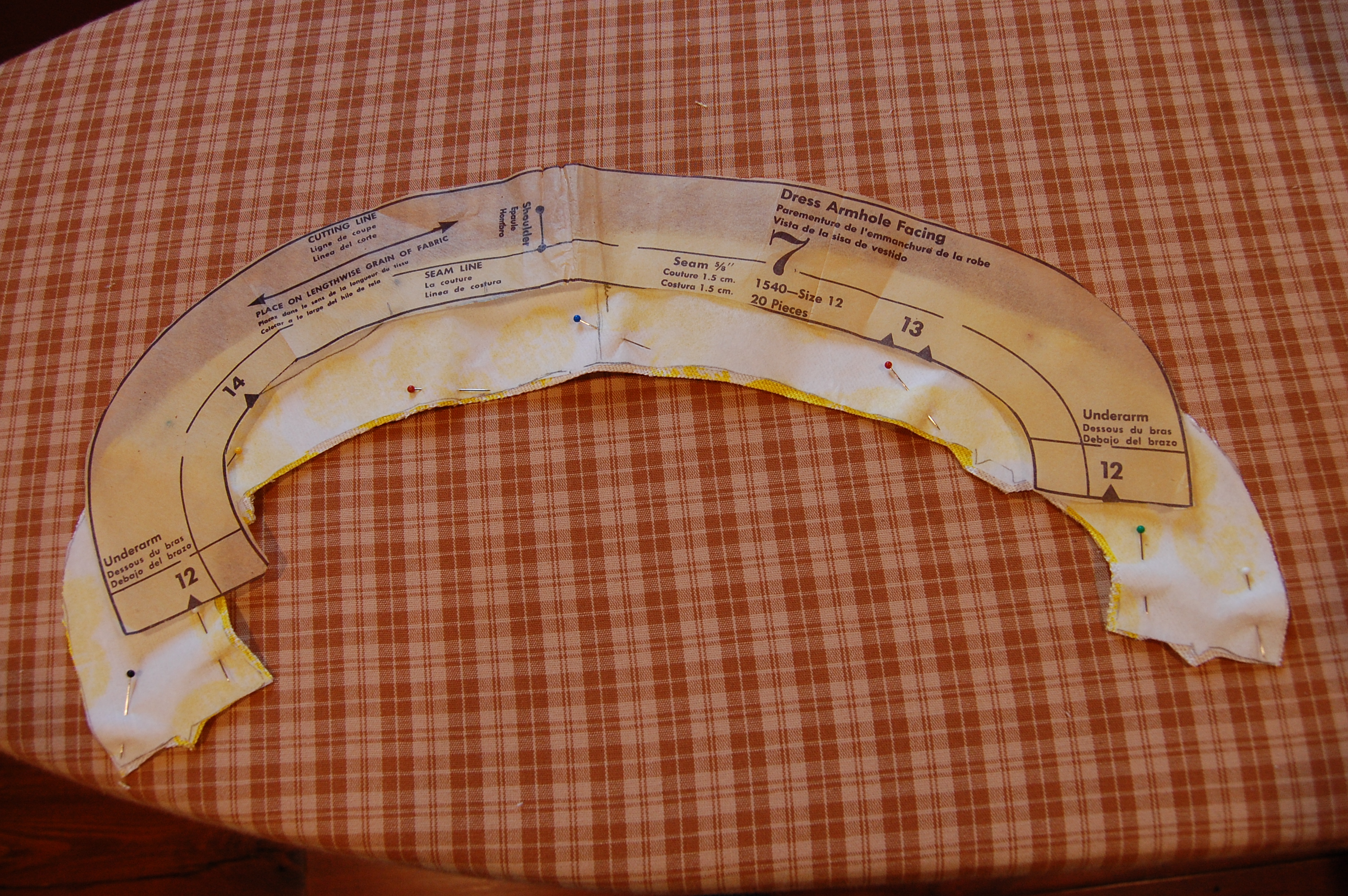
So – now on to construction of my dress.  I made a muslin of the bodice yoke  so I could check on the neckline and shoulder line, both of which seem to be an ongoing challenge for me with these vintage patterns.  Although the neck seemed to be okay, the shoulder line appeared to me to extend a little too far out over the shoulders.   So I re-cut the pattern piece, which meant that the facing had to be re-cut as well.

I had to extend the length of the armhole facing to accommodate my changes to the shoulder line.

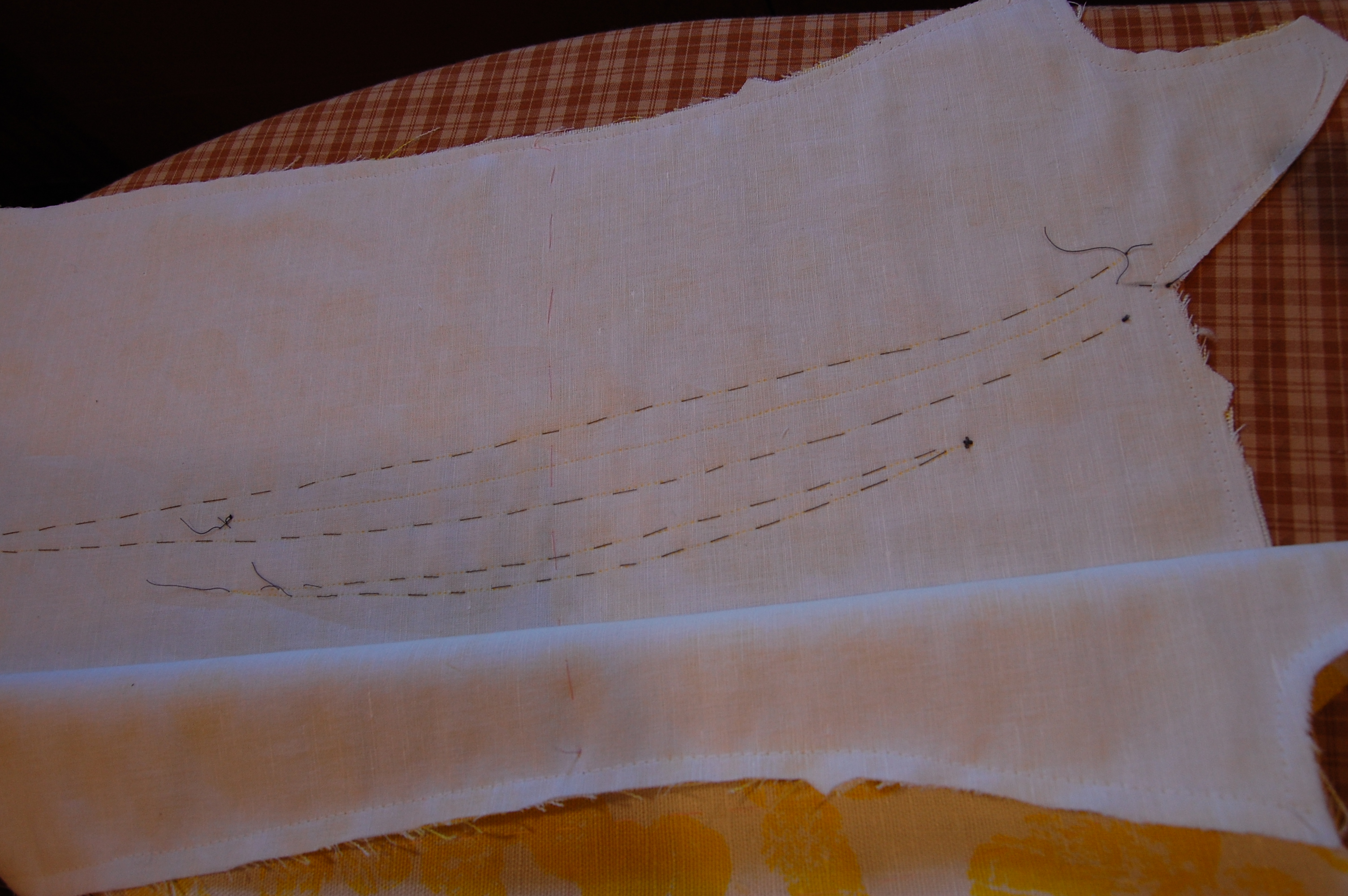
The pattern called for the dress to be interlined, for which I chose a lightweight linen/cotton blend.  I basted all the pieces together by hand, kind of in a grid before machine basting them together just inside the seam lines.  I also basted all the dart lines, as indicated on the pattern instructions.

Here are the “bodice/yoke” pieces shown with their underlinings.

This shows my basting stitches on the dart lines.

As I got near to the end of the construction, I was very happy that I had re-cut the shoulders, but I began to sense that the neck was going to be a problem.  After I had the facings in the armholes, I tried the dress on, and yes, the neck was tighter than I wanted it to be.  I cut off the 5/8” seam allowance on the neckline and the matching part of the facing, which made it perfect!

Here is the finished dress.

Here is the back view.

A close-up of the top of the dress. I used vintage silk thread to do the topstitching. It’s very subtle, but effective, I think, particularly in person…

I had just enough of this yellow vintage seam tape to do the neck. It makes a nice flat finish. I sometimes do the understitching on the facings by hand. If you click on the photo, you can probably see this detail. It’s time-consuming, but makes a nice finish!

Finally, for anyone who’s interested, here’s the inside story!

I really like this dress – it’s cheery, comfortable and casually dressy – what more could one ask for?

8 Comments

Filed under Linen, Polka dots, Uncategorized, vintage Vogue patterns from the 1960s, Vogue patterns

Quiz #2: Match the fabric to the pattern

Of all my sewing projects, which are either in the works or in the planning stages, two of them will be completed shortly. (At least I hope they will be.  Everything always seems to take longer than I anticipate…  Does anyone else find that to be true?)   However, I’m just not ready to report on either of these “almost-finished” endeavors yet.  . . . So I thought I would take this opportunity to expand a bit on my infatuation with Moygashel linen – and give you, my readers, some more beautiful vintage fabrics to see – and to allow you to imagine them all dressed up and ready to wear.

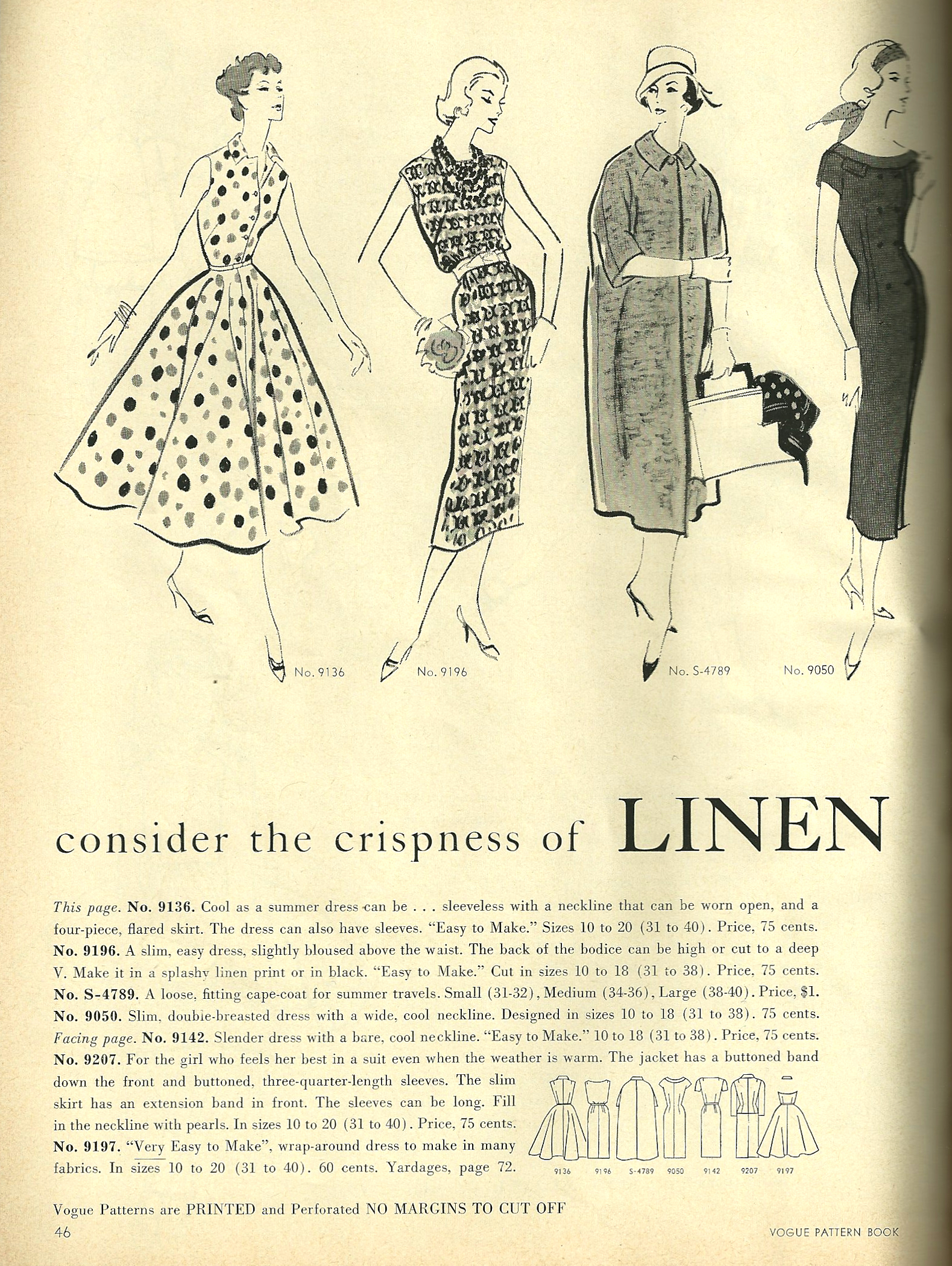
In the Vogue Pattern Book from Summer of 1957, one of the articles implores the reader to “consider the crispness of LINEN”.

This June/July issue is perfect to feature linen - it is a great fabric for Summer - cool, crisp, washable, and the perfect weight for dresses and suits.

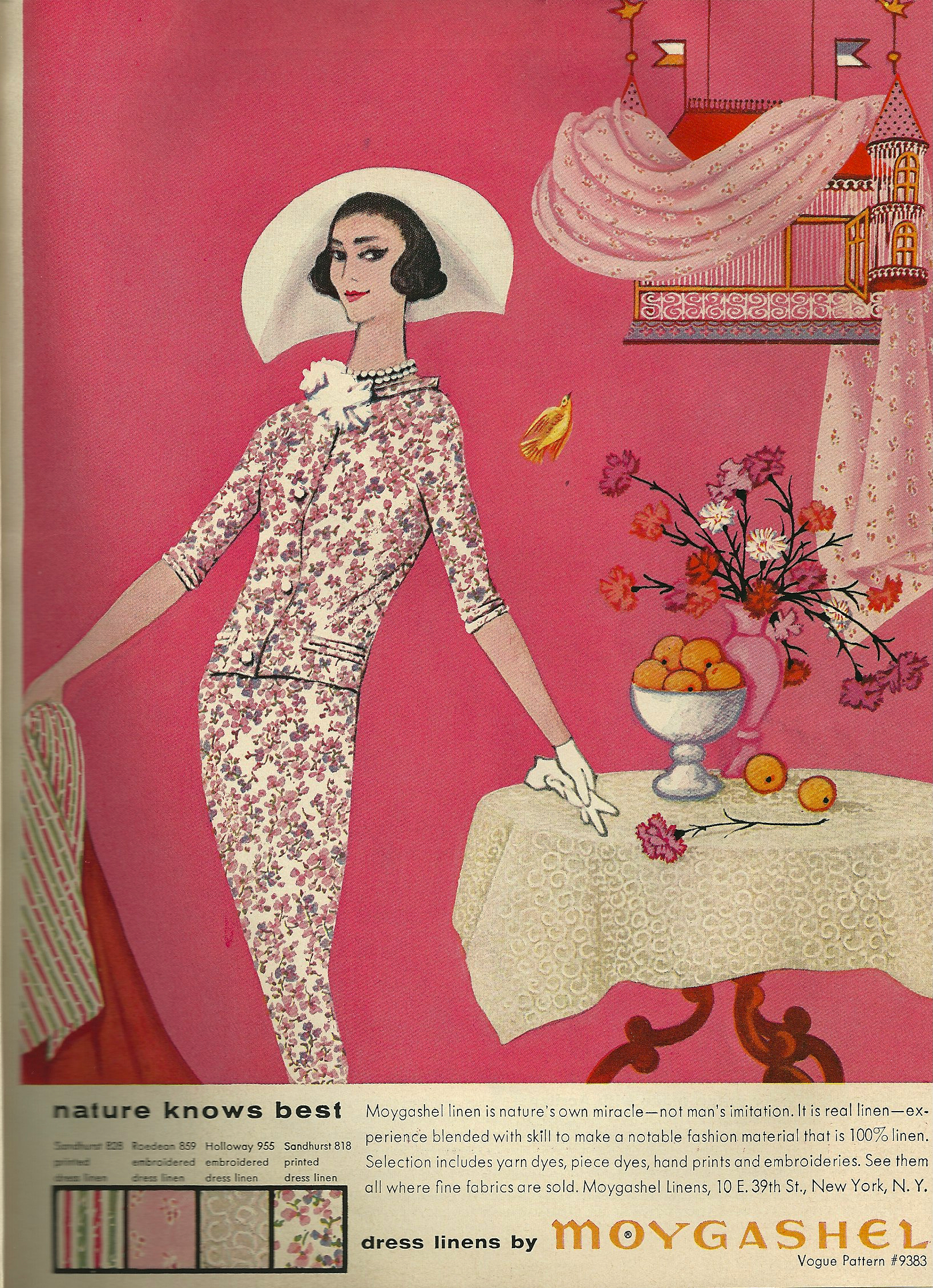
Articles like this, and ads for linen fabrics, showcase the popularity of sewing with linen in the 1950s, ‘60s, and ‘70s.  I shared a few Moygashel linen ads with you recently, and here are three more, which illustrate the range of designs and colors available to the mid-century home sewer.

This almost whimsical illustration depicts four designs of Moygashel linen. It appeared in the February/March 1958 issue of Vogue Pattern Book magazine.

This ad states: "Your precious handiwork can convert this Vogue Pattern into an heirloom, because you know that Moygashel Linen defies wear." Those words were certainly presentient! It appeared in the April/May 1953 Vogue Pattern Book magazine.

Here are four more Moygashel linens, featured in the February/March 1957 Vogue Pattern Book magazine.

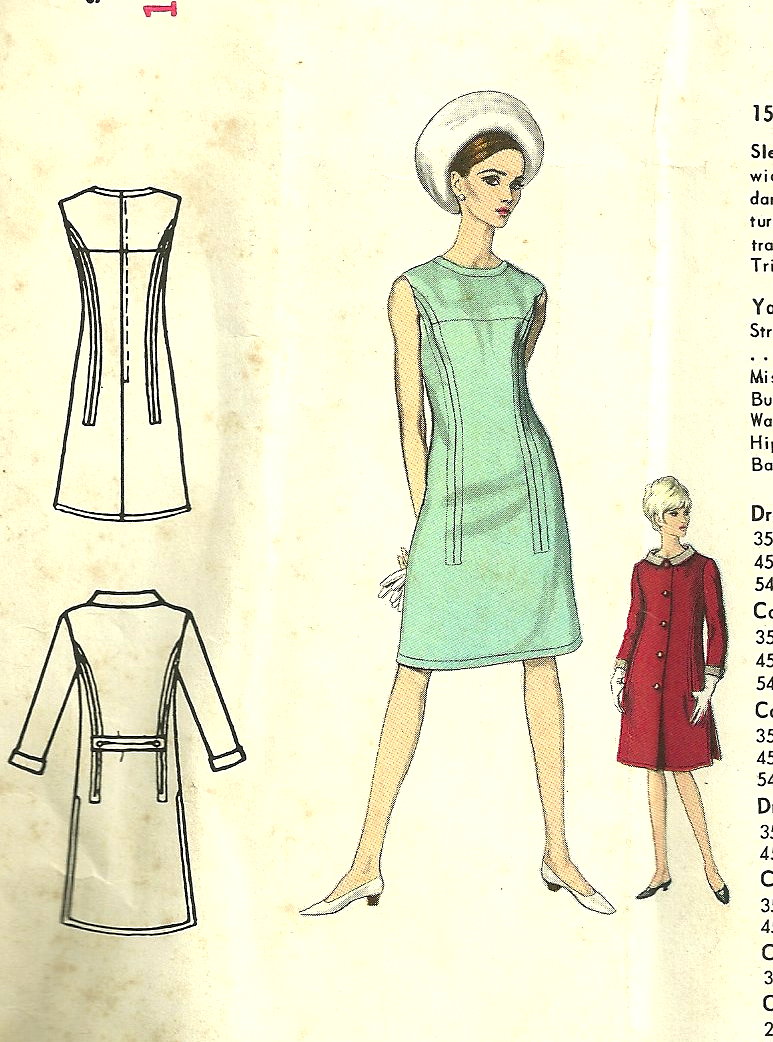
I certainly decided to “consider” linen when I purchased this 1965 Vogue pattern a few months ago:

This pattern is for a paring of coat and dress, but the dress stands alone beautifully.

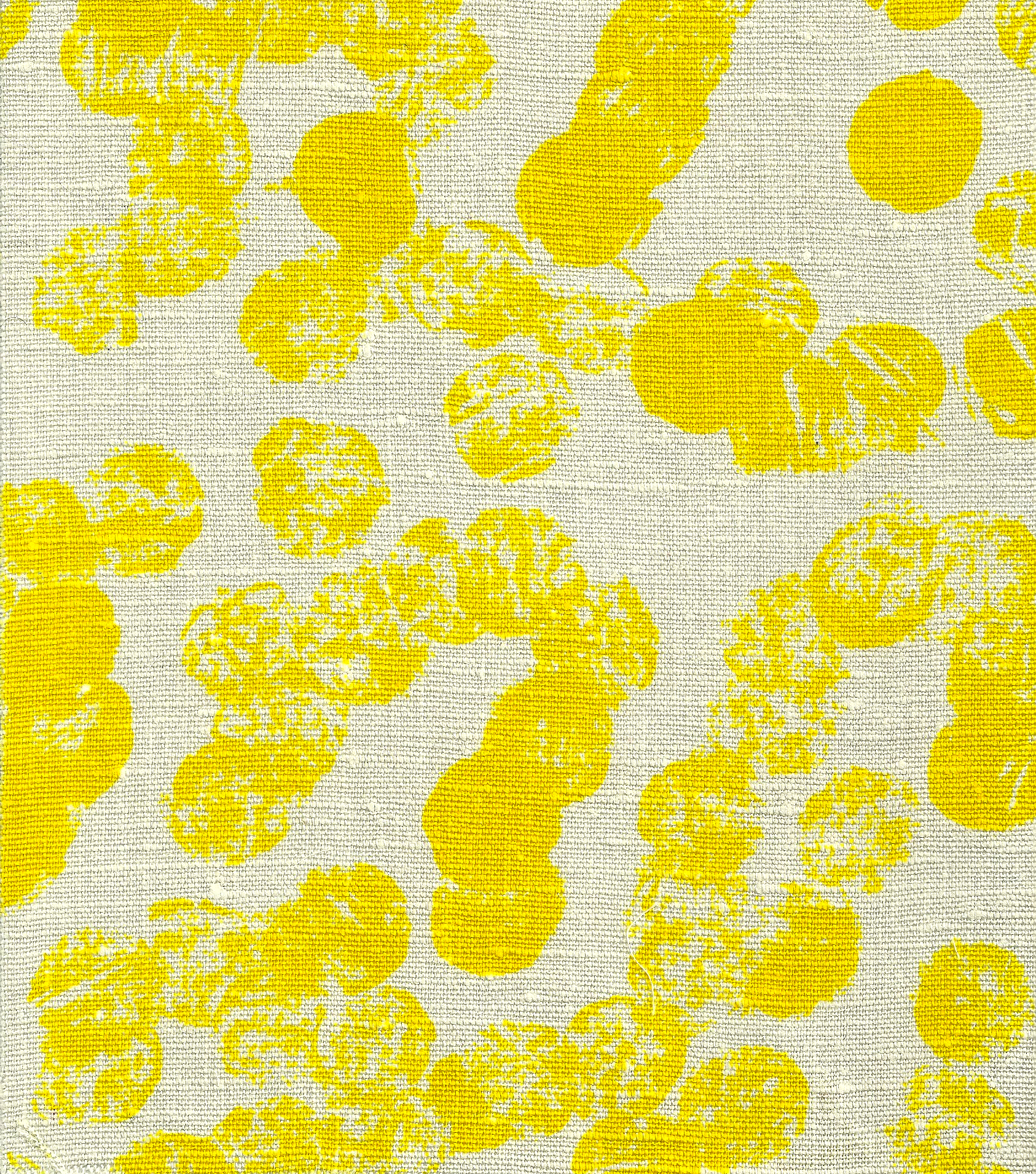
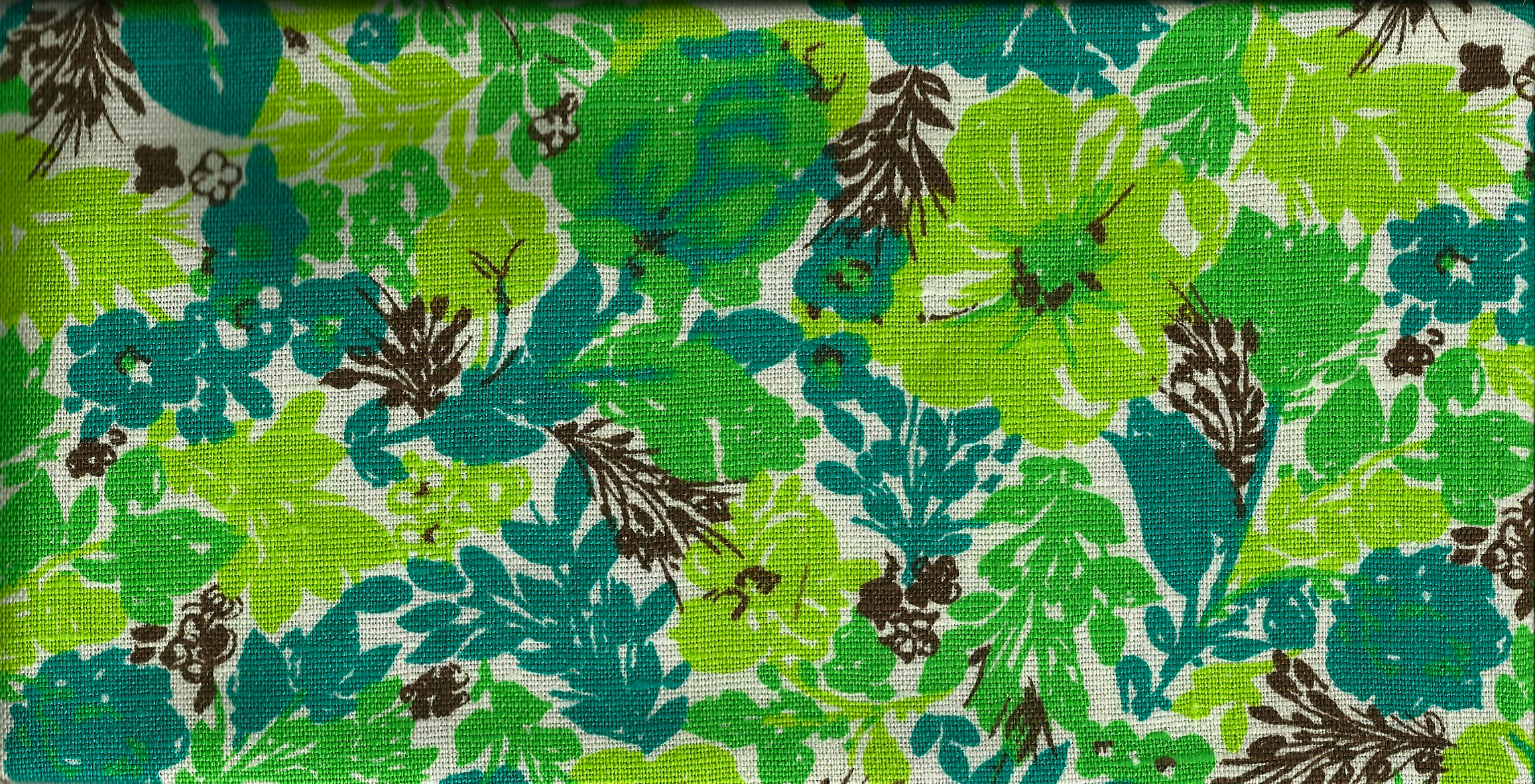
My intention was to make the dress only – a lovely sheath with some distinctive seaming and top-stitching.  So I went to my fabric closet to see what linens I could “consider” for a crisp Spring/Summer dress.  Here are the four that I decided to choose from:

#1 - Bright and sunny, this design is a subtle play on the polka dot theme.

#2 - The colors in this design are very 2012-current-and- fashionable!

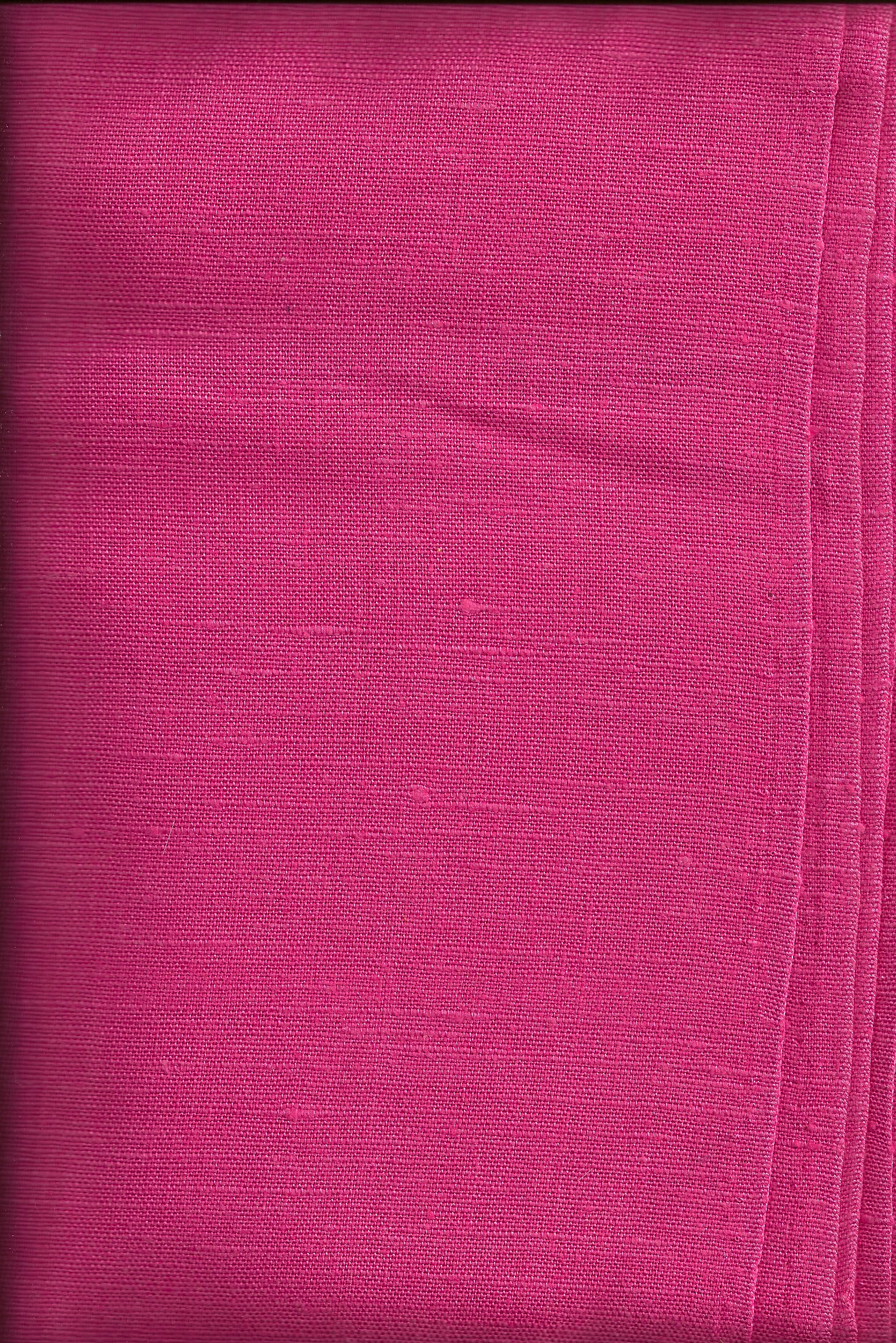
#3 - Decorative topstitching on this solid pink linen would be quite attractive.

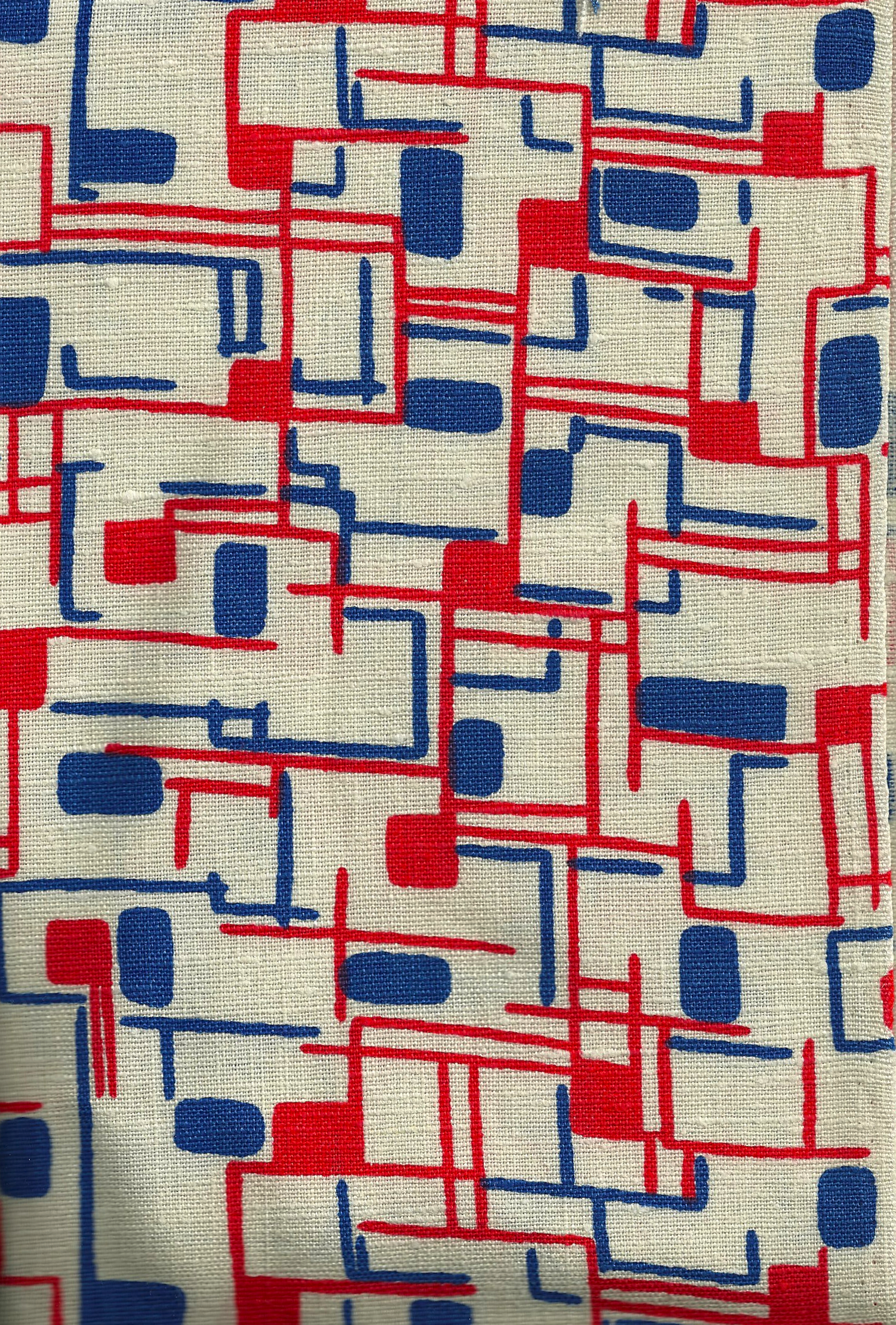
#4 - This geometric print is probably from the late '60s, so it would make up beautifully in a pattern from the '60s!

Which fabric would you choose for this dress pattern?  Which one do you think I chose to make into this dress?

6 Comments

Filed under Linen, Polka dots, Uncategorized, vintage Vogue patterns from the 1950s, vintage Vogue patterns from the 1960s, Vogue patterns

Shopping in my (cedar) closet.

In the 1940s, ‘50s, ‘60s and ‘70s, most well appointed ladies’ closets contained at least one dress or suit made from Moygashel linen.  The cachet around this product of Ireland was legendary:  it was touted as crease resistant, made so by  a special process in its manufacture which used soft rainwater from the streams in the Mourne Mountains of northern Ireland.    It has many virtues, including:

1)   it was available in many beautiful solid colors…

2)   and in amazing prints, which by themselves are like mini works of art….

3)   and in embroidered designs, which are still today instantly recognizable as Moygashel.

4)   It is machine washable.

5)   It does not wrinkle, truly!!

6)   It lasts and lasts.

It’s no wonder that designers and high-end ready-to-wear garment manufacturers used Moygashel linen and proudly displayed the name of Moygashel along with, and in addition to, their own labels.

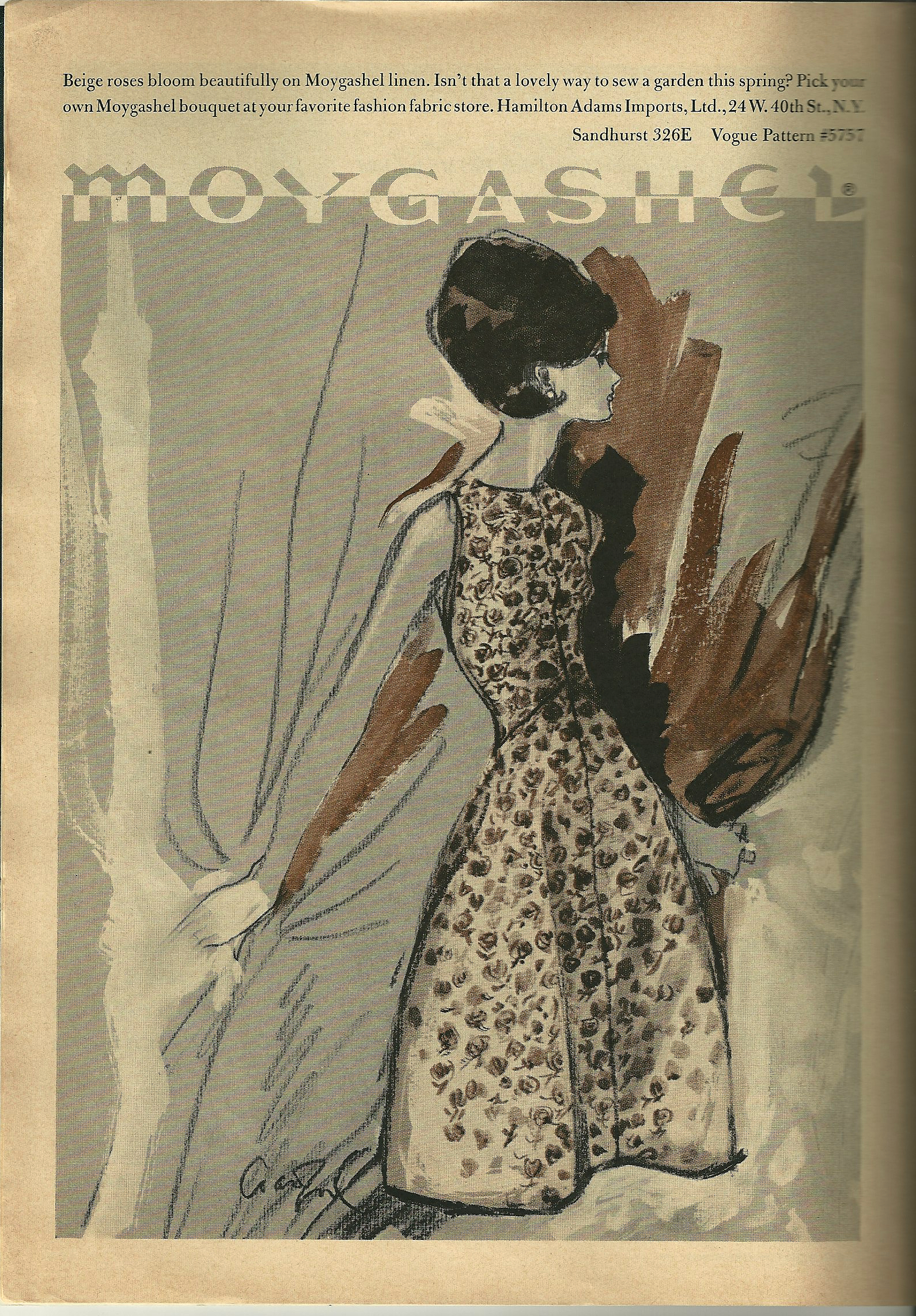
Luckily for the home sewer and dressmaker, Moygashel linen was also available in yardage at the finest fabric stores and departments.  Obviously home sewers took to it readily.  Artful, full-page ads for Moygashel linen in sewing and pattern magazines were commonplace.  Here are a few that were given up-front placement in issues of the Vogue Pattern Book magazine from various dates in the ‘60s:

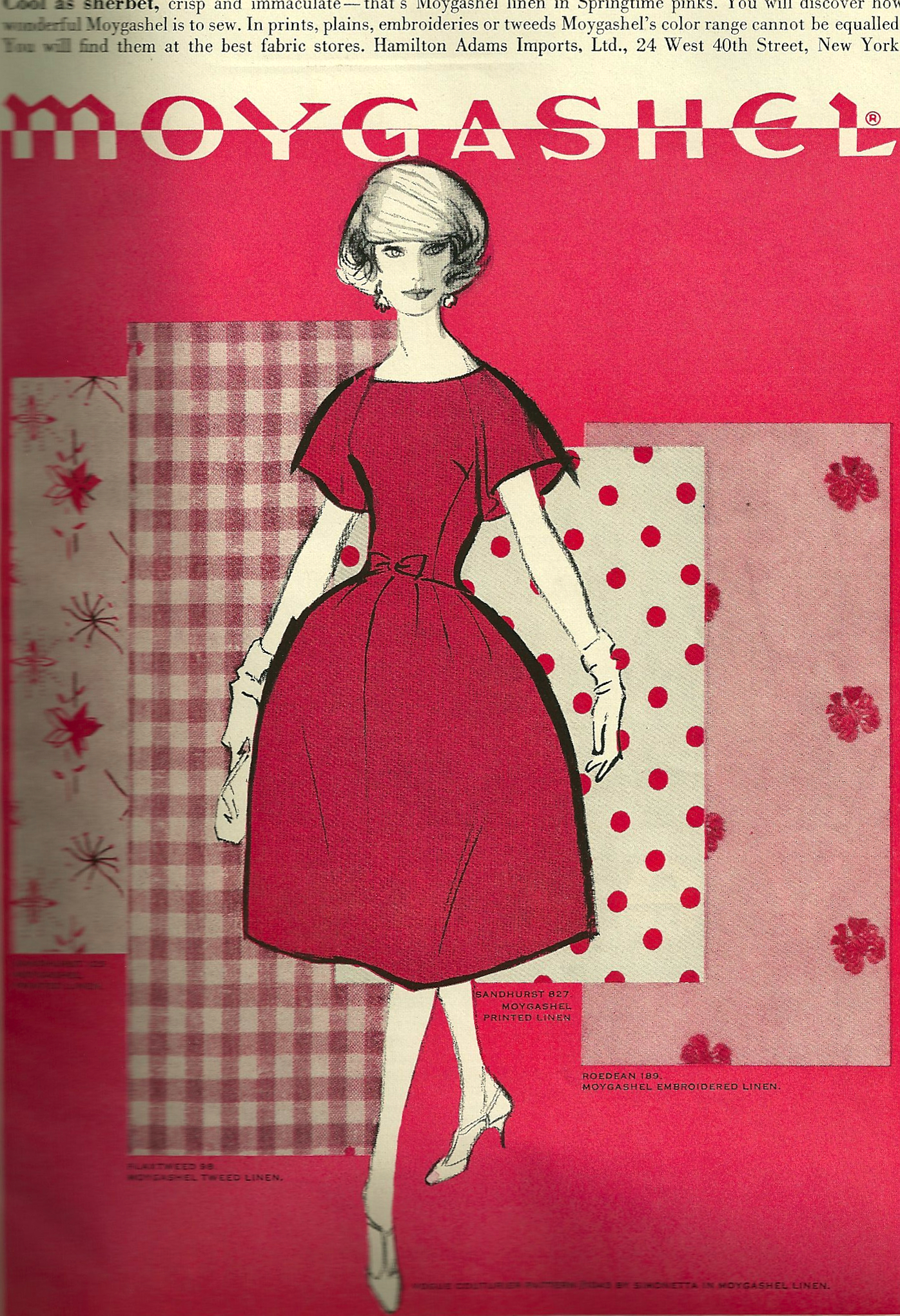
This ad was featured in the February/March 1961 issue of Vogue Pattern Book magazine. The dress illustrated is a Vogue pattern from the designer series. I love that this ad shows 5 different linens available for purchase.

This ad appeared in the February/March 1963 issue of Vogue pattern Book. It has such a sophisticated look to it, which was a hallmark of Moygashel ads.

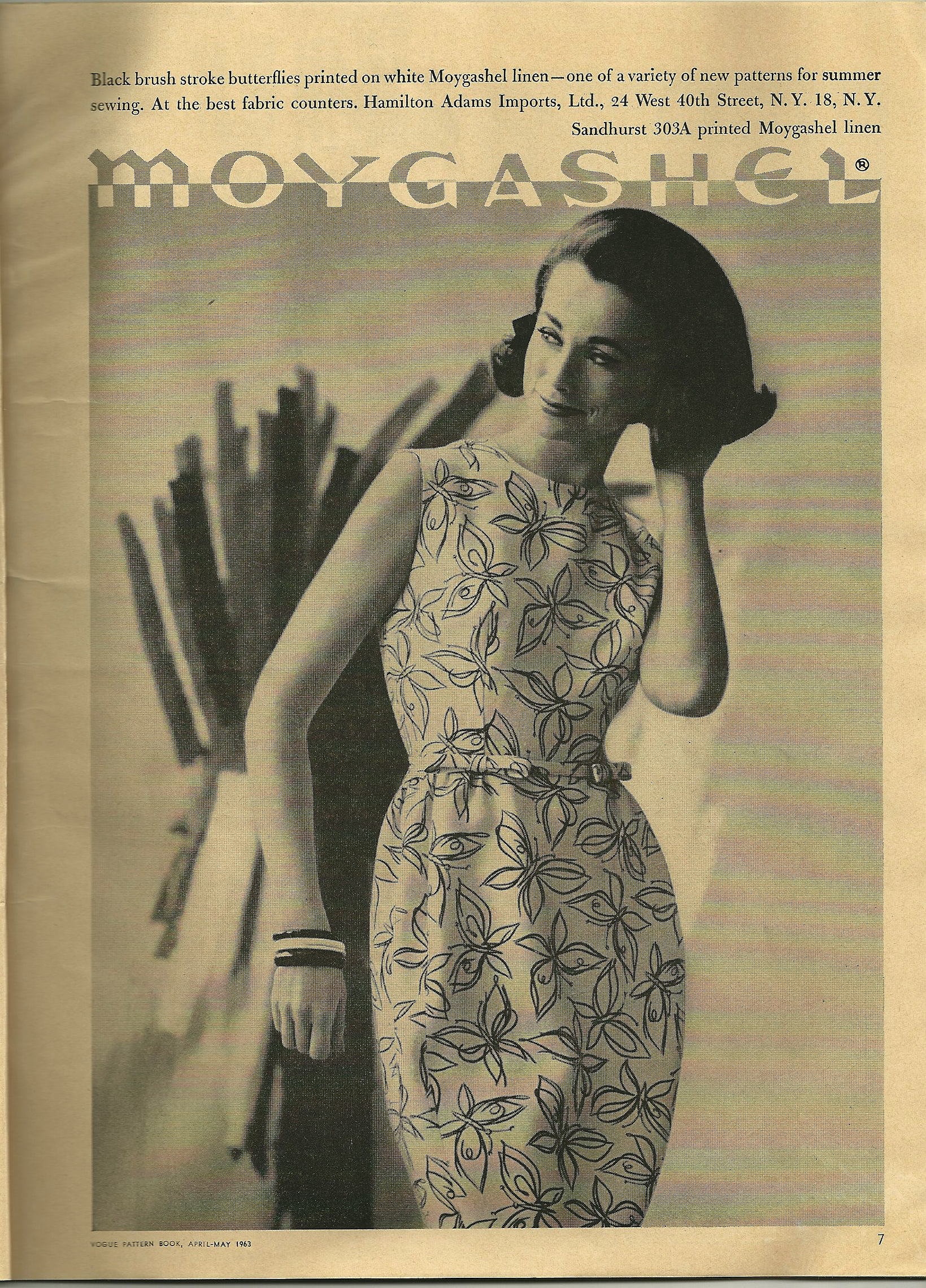
Occasionally Moygashel ads would feature a real model, such as this one from the April/May 1963 issue of Vogue pattern Book.

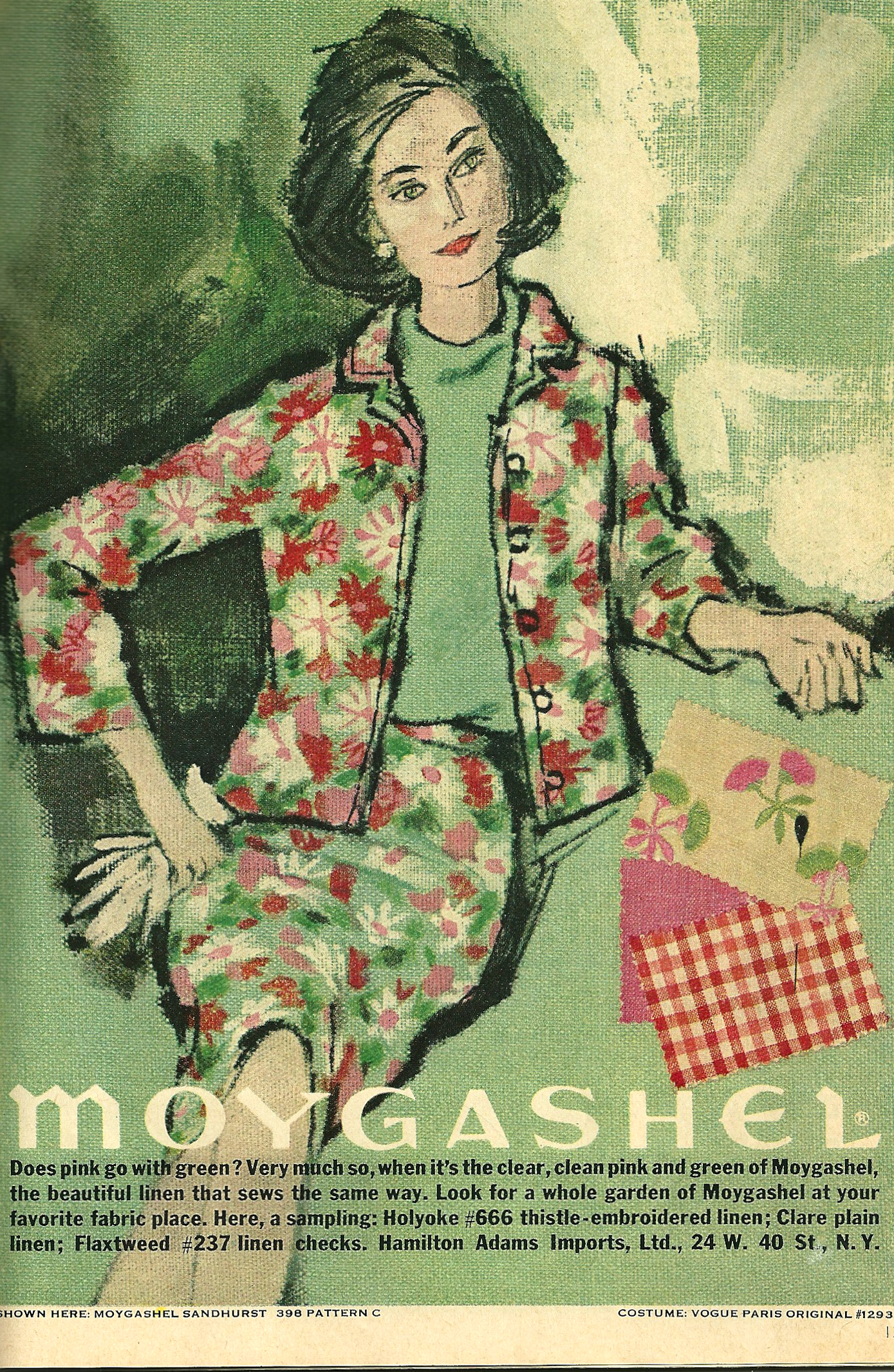
As I am a big fan of the color pink, I'm particularly fond of the linens featured in this ad from the February/March 1964 Vogue Pattern Book.

As I began to do more and more serious sewing for myself in the late ‘60s, I, too, took notice of Moygashel linen, which started my long love-affair with it.  I was even fortunate enough to purchase a few select pieces in the 70’s: I made dresses and suits and skirts, most of which I no longer have.  However, my current renewed interest in sewing and mid-century fashion and patterns led me to my cedar closet with a fresh eye.  So what did I find in that fragrant repository of out-of-season, out-of-date, and too-sentimental-to-give-away clothing ?  In reverse chronological order, here are three Moygashel treasures:

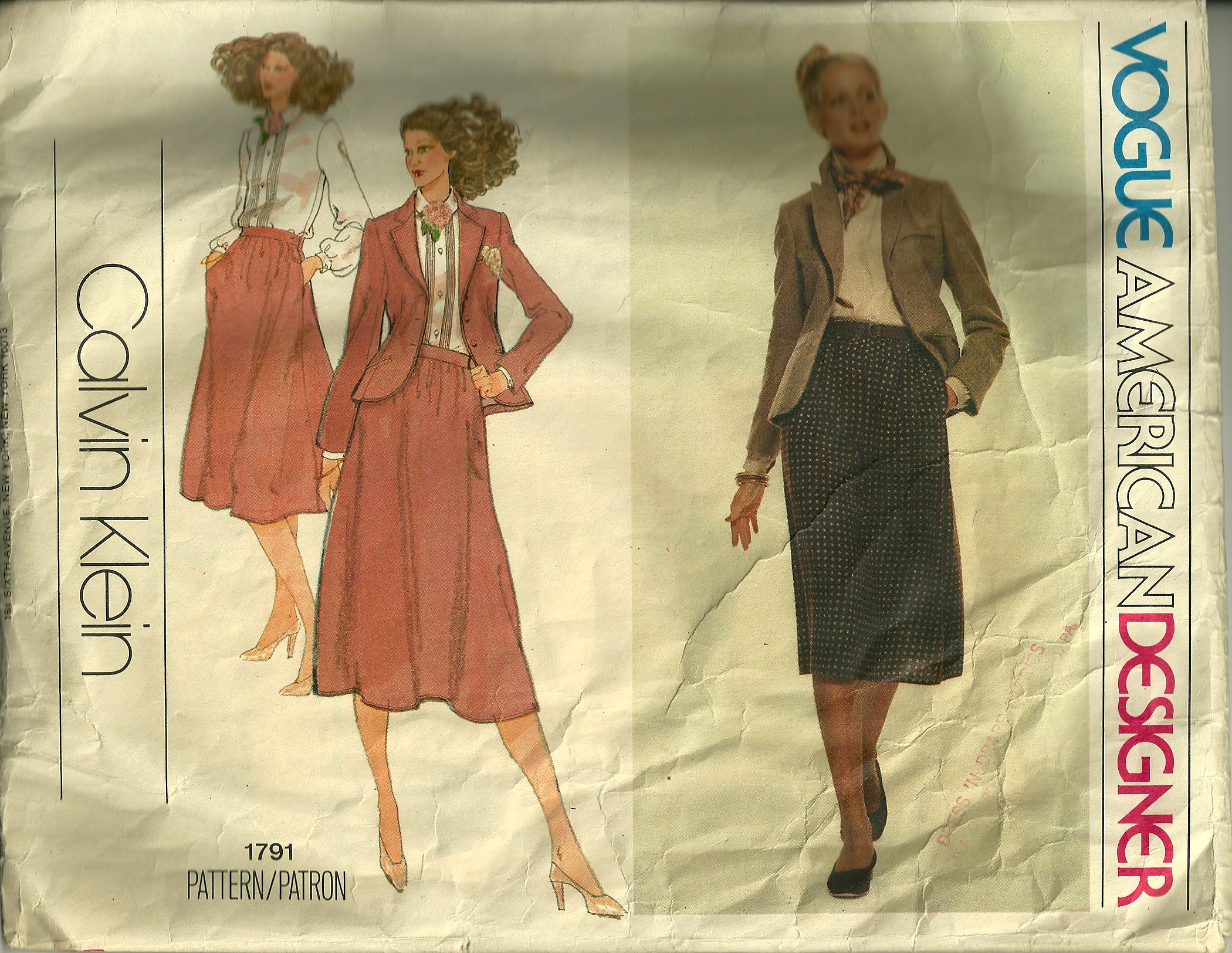
1)   Carefully packed away in a box I found an almost-completed jacket and unfinished skirt, complete with pattern and pins and thread.  Here is the pattern, which is from 1981:

The jacket of this pattern looks just as stylish today as it did in 1981. I'm not sure why I never finished it three decades ago.

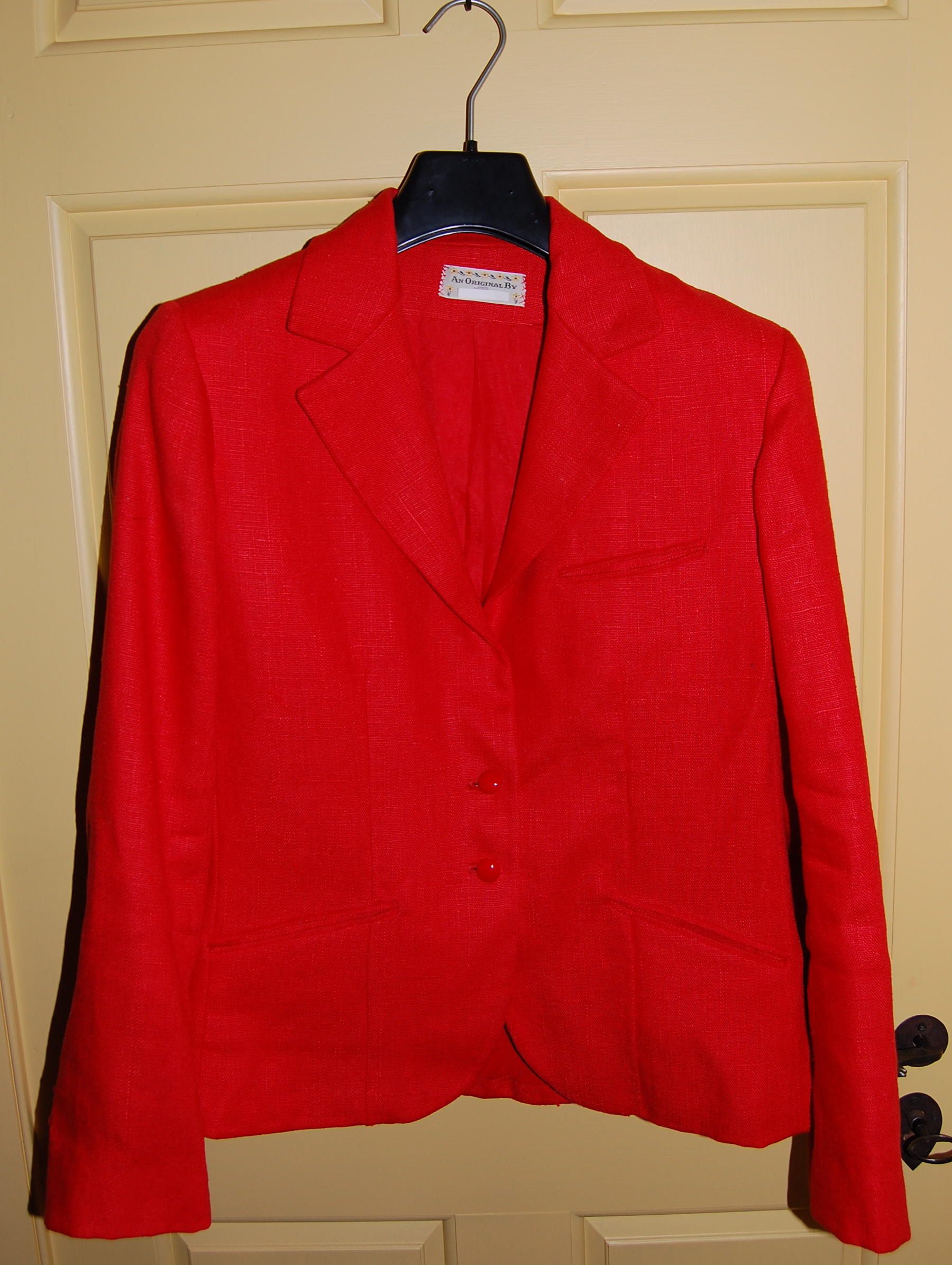
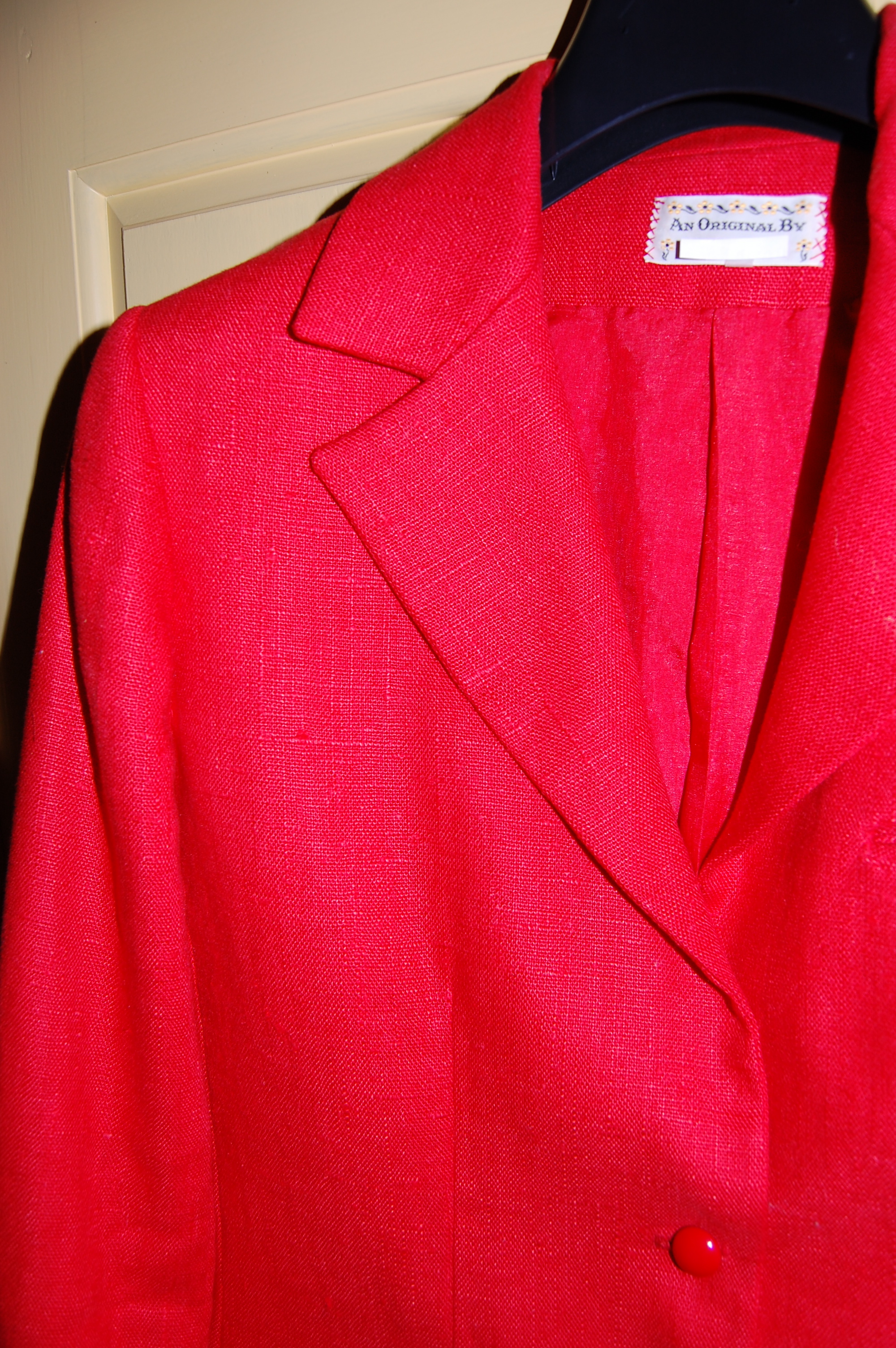
Last Spring I (finally) completed the jacket, with buttons and a few stitches here and there,  and it is now a valued member of my Spring and Summer wardrobe.  I’ll probably recycle the skirt fabric into something else, still to be determined.

I am also a big fan of the color red, so I couldn't be more pleased that I chose this red for this jacket so many years ago.

Here is a close-up of my 1981 jacket. I hope you can see the beautiful quality of the linen.

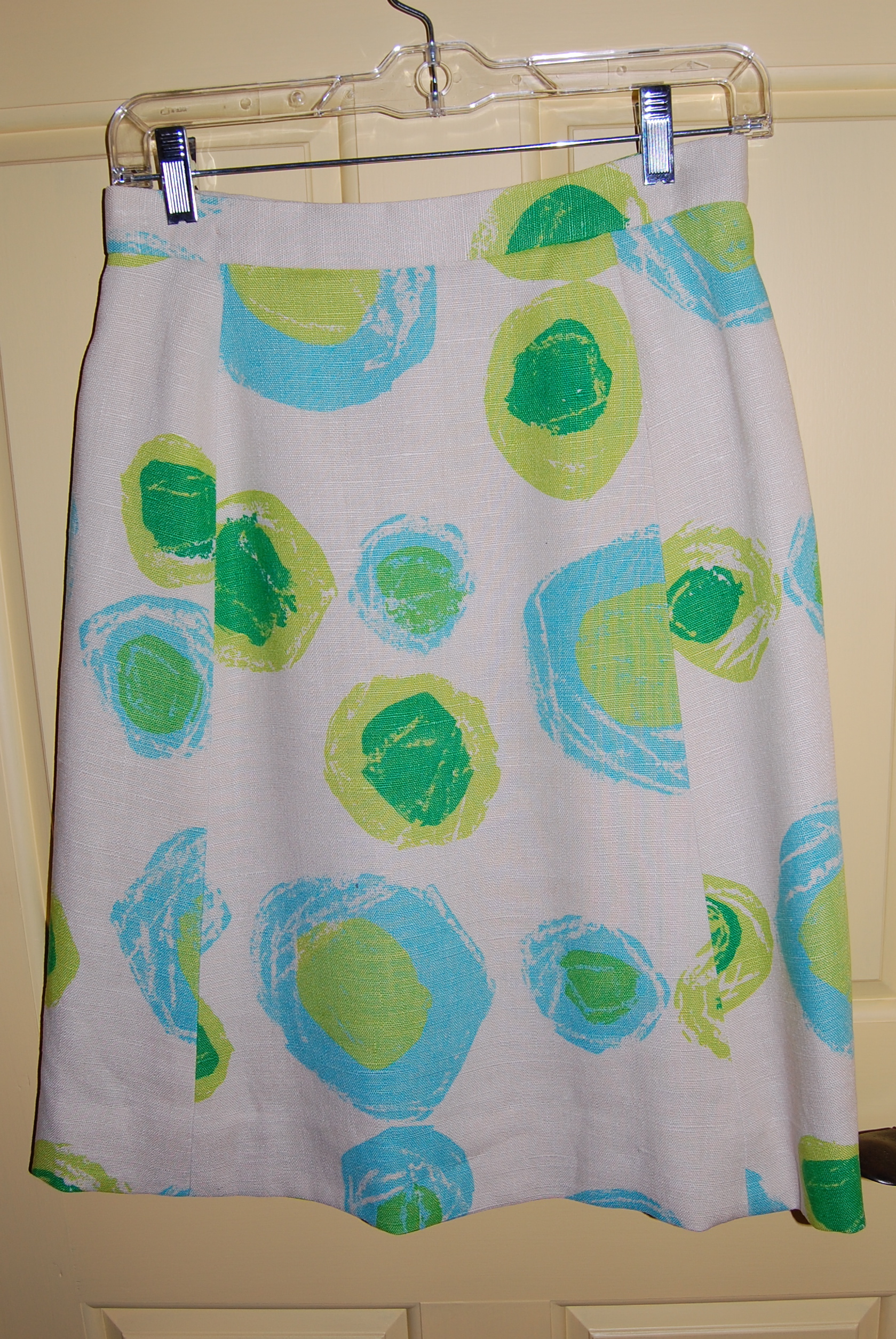
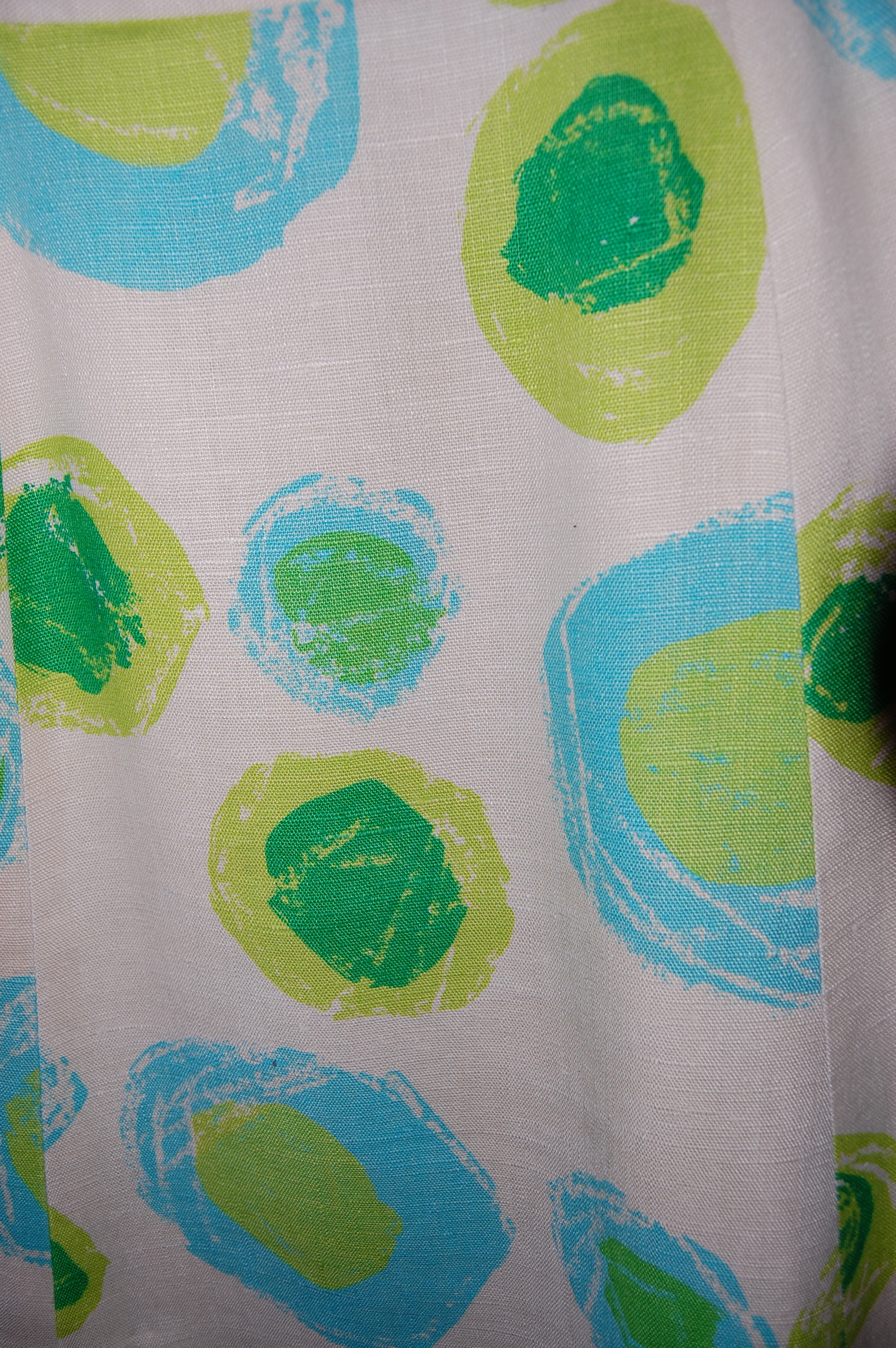
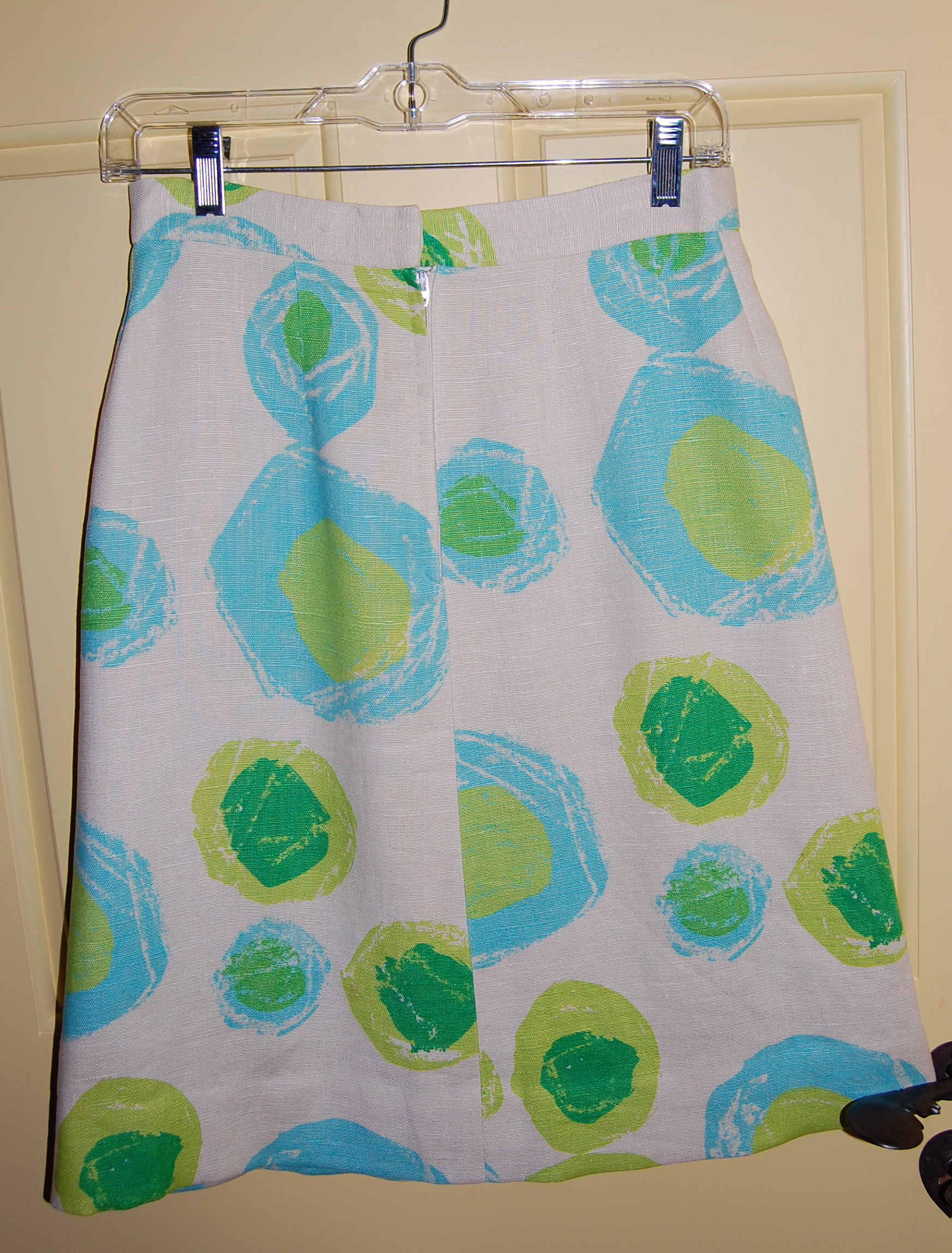
2)  My mother-in-law was a lady of great taste in clothes, and although she did not sew, she would occasionally have her “dear little German dressmaker” make something special for her.  I told her about the wonderful fabrics available at Stapler’s on Walnut Street in Philadelphia, and I believe she made some fabric purchases in combination with one of her many day trips with friends to the city and to the Forrest Theatre.   One of her purchases (circa 1975) was a colorful piece of Moygashel linen, from which she had a long “hostess” skirt made.  I eventually ended up with this skirt, which I took apart and remade two years ago into this shorter version:
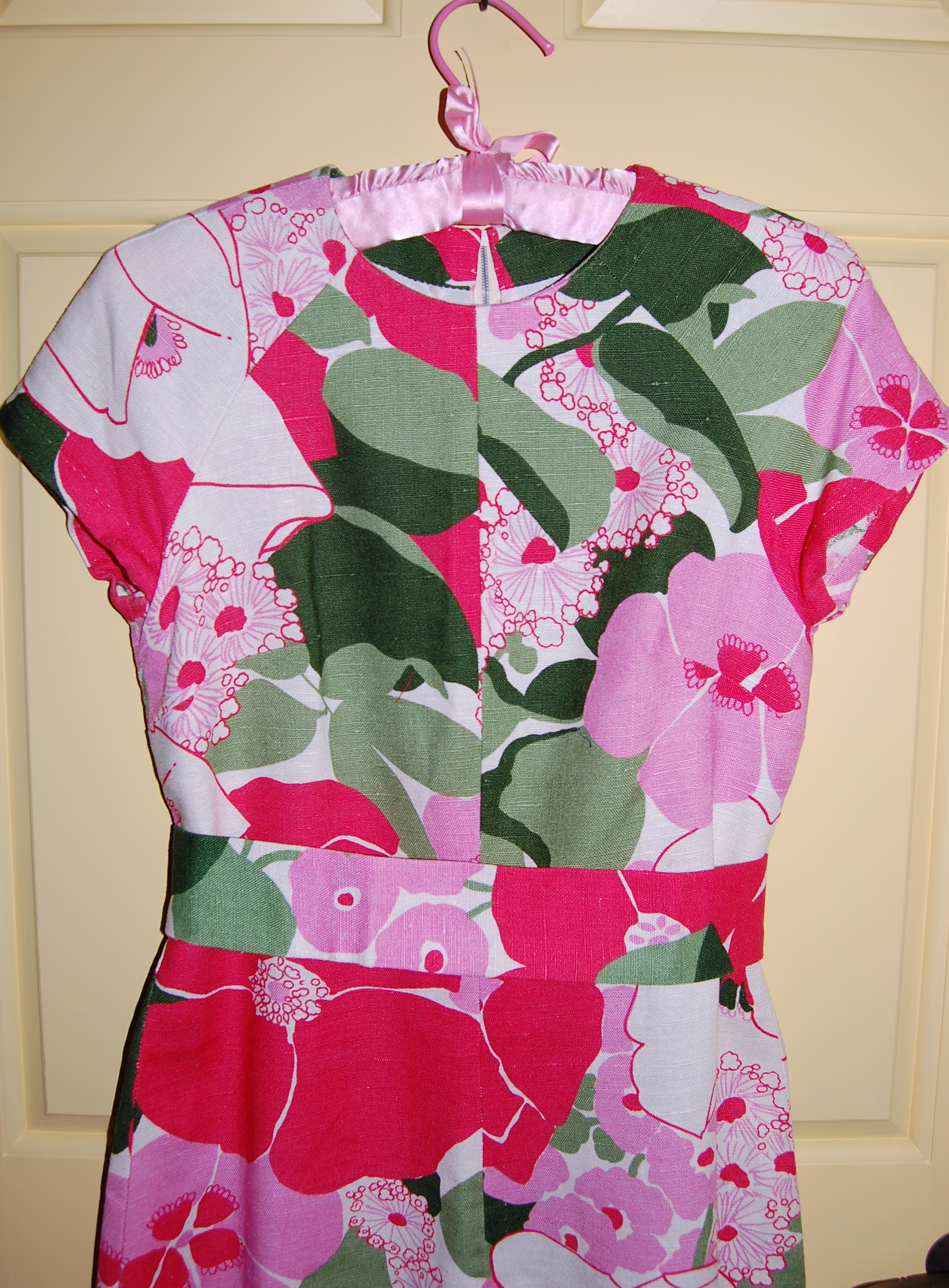
The colors and design in this fabric are so eye-catching.

Here is a close-up of the skirt fabric, which is quintessential '70s!

Here is the back of my re-made skirt.

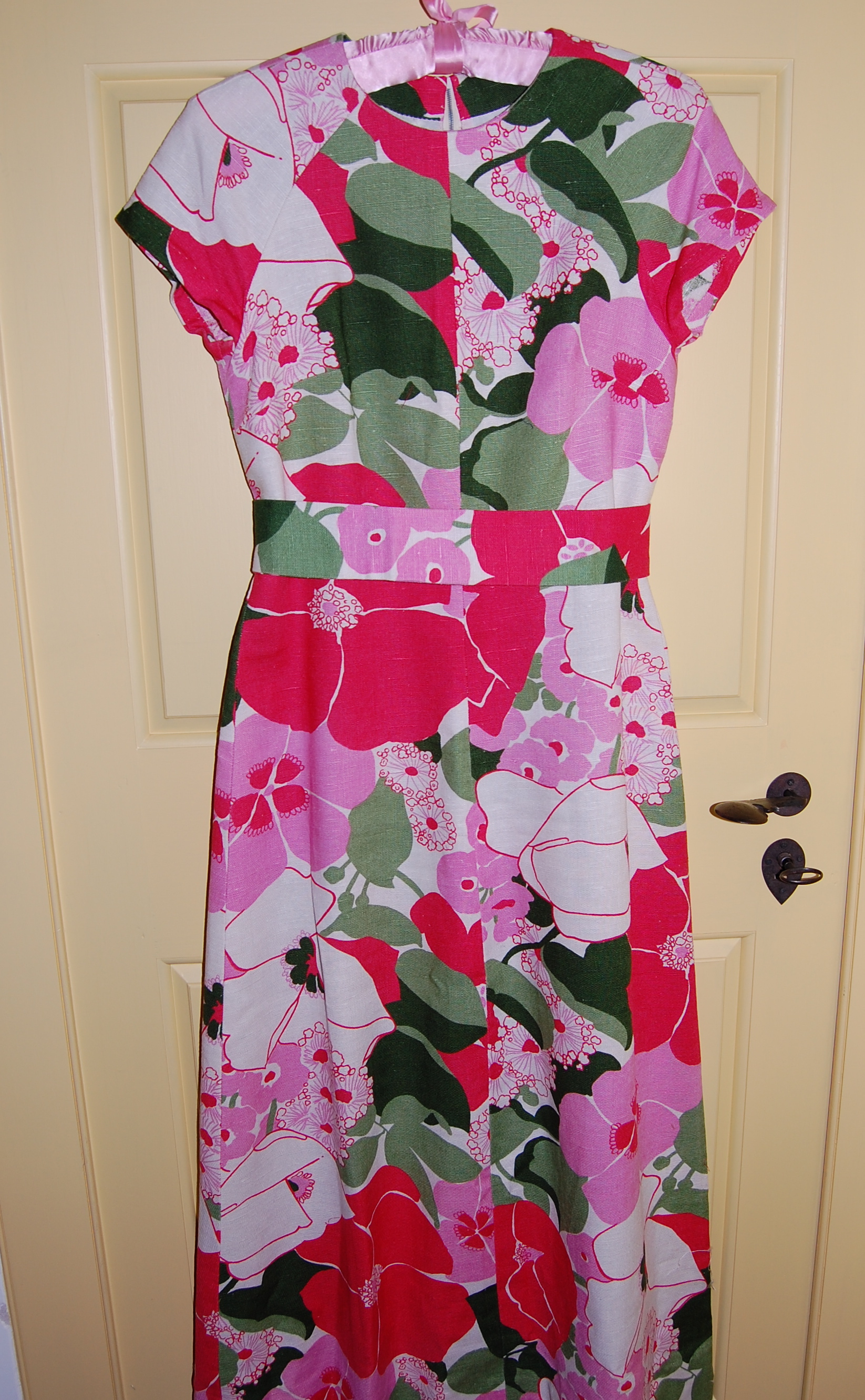
3)   In 1973, I made my own purchase of Moygashel linen at Stapler’s, this one for a dress to accompany me on my honeymoon:

This simple A-line dress, with raglan sleeves, was made from a Vogue pattern, long gone. Ankle-length dresses like this were very fashionable in 1973.

Here is a back view of the dress. The zipper is metal (that really dates me!) which I inserted by hand.

A few years later I made a belt to wear with it, to “update” it a bit, but since then it has hung in my cedar closet, a sweet reminder of years past.

This photo shows the dress belted. The bright, bold print of this linen makes a statement.

Somehow what fit me in my twenties just doesn’t look the same in my early sixties.  Imagine that!   So this dress, made from one of Moygashel’s classically timeless linens, is in that category of “too-sentimental-to-give-away”.  But now I wonder.  Should I remake it into something I can wear and use?  Would I have the nerve to cut it apart?  Should I be practical or nostalgic?  Whoever knew that the contents of a cedar closet could pose such existential questions to ponder? What should I do?

5 Comments

Filed under Linen, Uncategorized, vintage Vogue patterns from the 1960s, vintage Vogue patterns from the 1970s, Vogue patterns