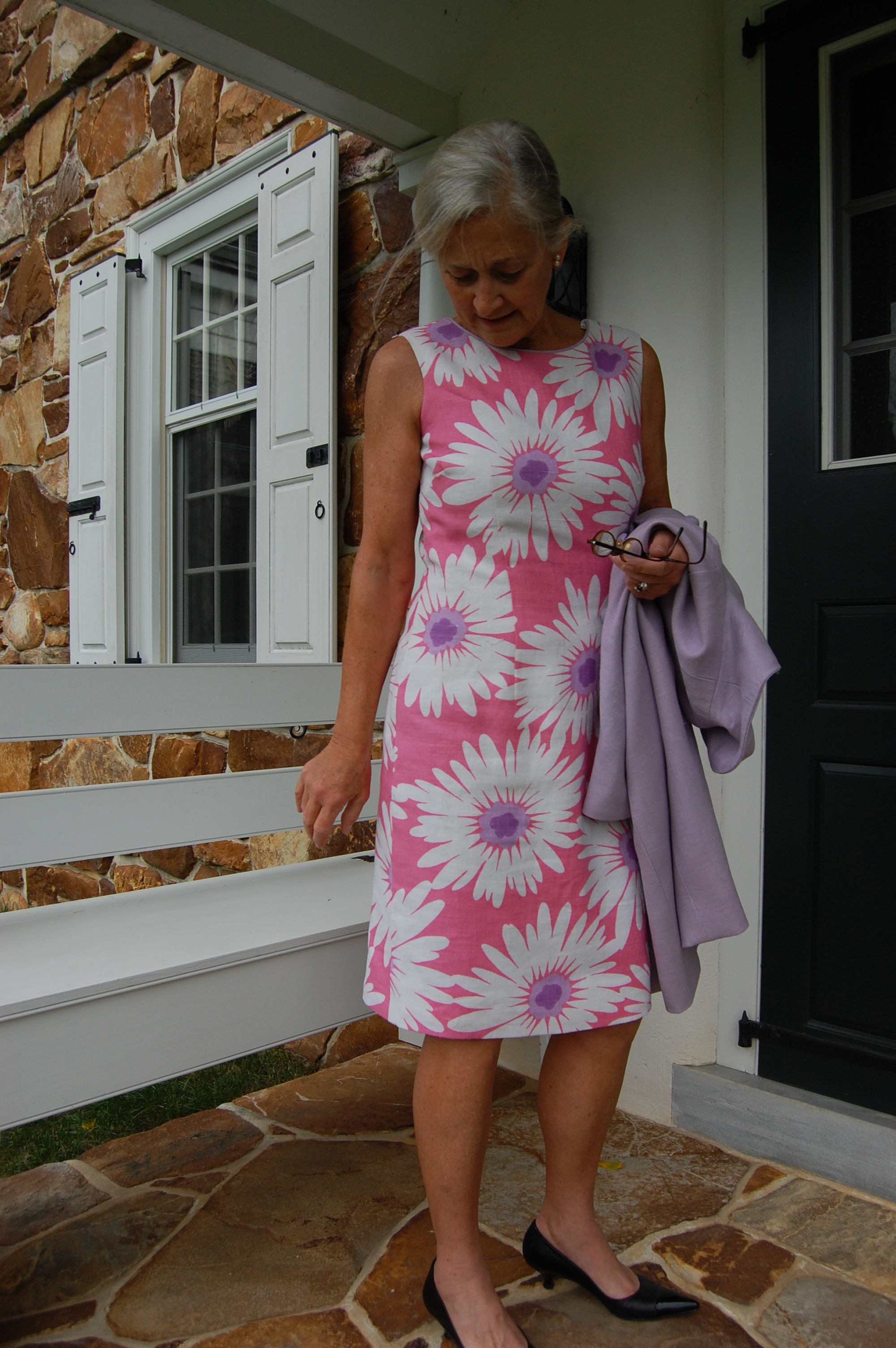
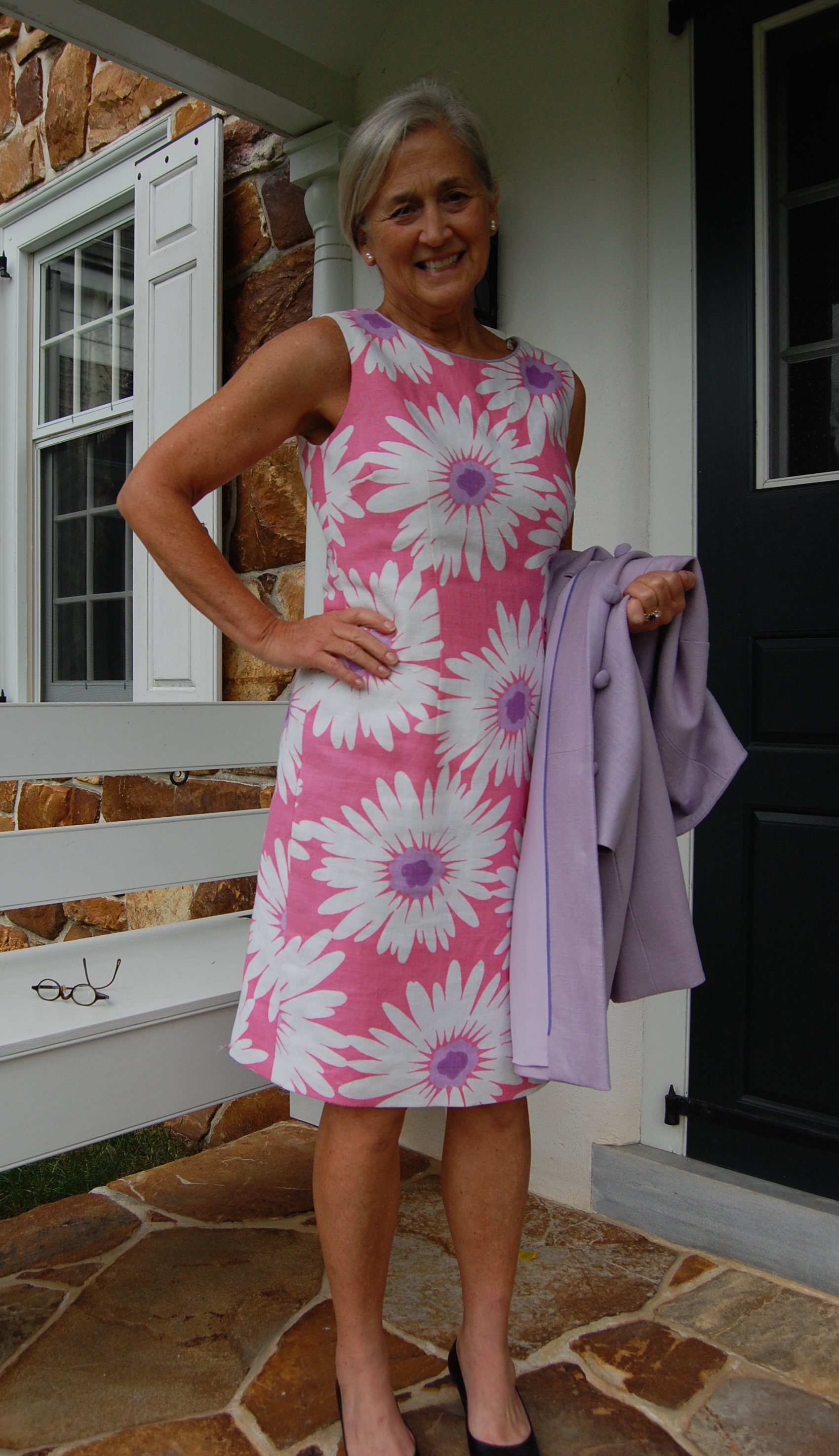
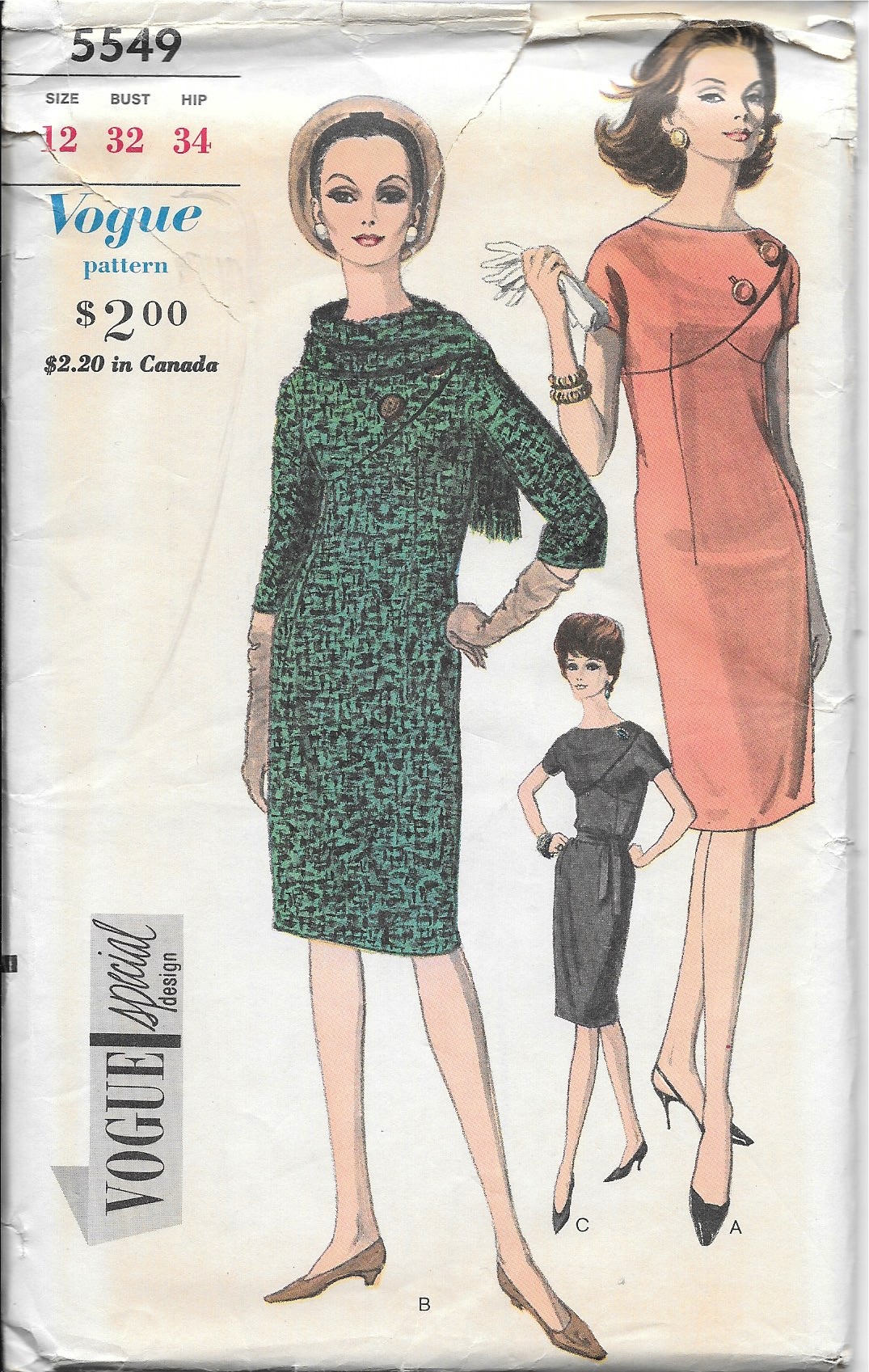
Category Archives: vintage Vogue patterns from the 1960s

One Year at a Time

Let’s start with 2016. Although, truthfully, right now in January 2016, I could probably plan at least three years’ worth of sewing. That is how many patterns and fabrics I have tucked away, waiting for their turn. But it is time to concentrate on the year at hand and get on with it!

Some of the year is shaped by events that I know will be happening – such as weddings and fancy parties. Some of it will be devoted to little granddaughters who are already growing too fast for me to indulge all my sewing fantasies for them.   And some of it will be my own self-determined challenges – coats and dresses I want to make – that right now are looking like small Mt. Everests, waiting to be conquered!

I probably should be sewing right now for Spring and Summer, but I have wools that are too enticing to ignore during these current Winter months:
Wool challis on the left and vintage cashmere on the right.
Wool challis on the left and vintage cashmere on the right.

Navy and white houndstooth.

Navy and white houndstooth.

Some cute and classic cottons for little girls should be able to find themselves tucked in amongst my plans for Springtime.
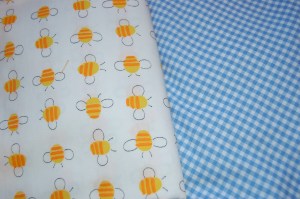
The buzzy bee fabric is a vintage cotton. The blue gingham is new.

The buzzy bee fabric is a vintage cotton. The blue gingham is new.

Looking towards Spring weddings already on the calendar, I am excited for the opportunity to use this amazing printed silk for a dress and perhaps pairing it with the plain yellow silk taffeta left over from my fancy dress from last Summer.
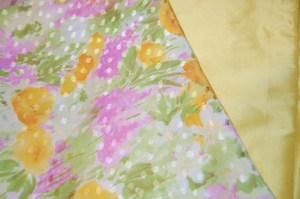
One year at a time

I have so many vintage linens in my collection, that it is difficult to narrow down my focus, but here are four that just may see the sewing shears this year:
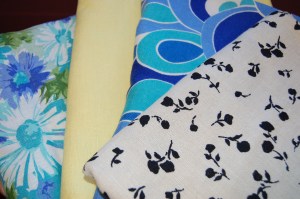
These are all vintage Moygashel linen.

These are all vintage Moygashel linen.

This vintage, authentic Diane von Furstenberg cotton blend knit has been calling my name for quite some time.
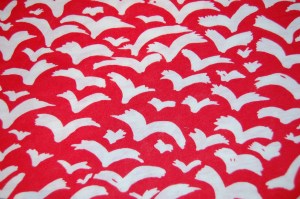
One year at a time = DvF

Hopefully this fabric and this pattern will finally find each other this year!
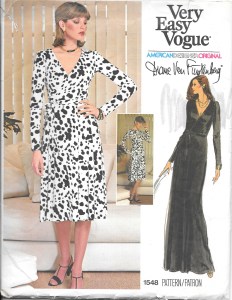
One year at a time - DvF pattern

The sewing year will no doubt end next Fall with a return to wool. The polka dotted wool is similar to the wool in a dress I made in Fall of 2015. It is from Mendel Goldberg Fabrics in NYC.
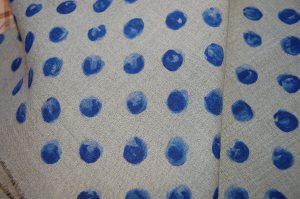
As one who loves polka dots, I could not pass up this wool/silk blend fabric.

As one who loves polka dots, I could not pass up this wool/silk blend fabric.

When I purchased it, several swatches of boucle were in the package – and I was in a swoon over this blue and pink sample:
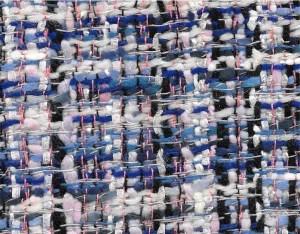
How wonderful that Pantone's two "colors of the year" - pink and blue - are the color way for this boucle.

How wonderful that Pantone’s two “colors of the year” – pink and blue – are the colorway for this boucle.

Lucky me to open a box on Christmas morning to find 2 yards of it (thank you to my dear children!) – enough for another Classic French Jacket.
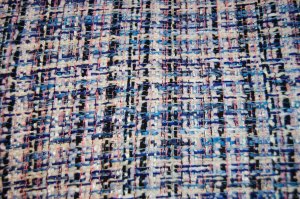
2 full yards of this glorious boucle! What a wonderful gift!

Two full yards of this glorious boucle! What a wonderful gift!

Some of the patterns I might be using this year are all vintage ones that deserve attention. I tidied up the boxes where I keep my pattern collection and these just happened to be some which would NOT go back in silence, so here they are with all their wily temptations!
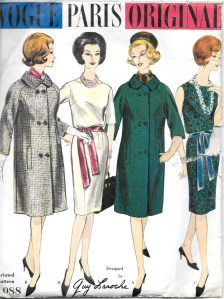
One of my big projects for this year is this coat.

One of my big projects for 2016 is this coat.

I have been wanting to make the dress on the right for quite a while - this may be the year it happens!

I have been wanting to make the dress on the right for quite a while – this may be the year it happens!
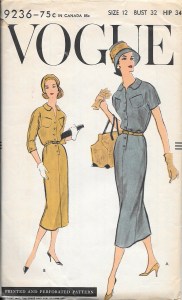
I really like this shirtwaist dress (a little shorter, of course) and I envision it made out of a lovely summer linen.
I really like this shirtwaist dress (a little shorter, of course) and I envision it made out of a lovely summer linen.

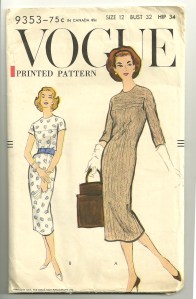
I think I could make either view of this dress over and over and not get tired of it.

I think I could make either view of this dress over and over and not get tired of it.

One thing I learned a long time ago is the importance of flexibility in planning my sewing year. Sometimes things happen that impede my sewing plans. Sometimes I change my mind. And always, always, I plan too much. And when (not if) that happens, there is always 2017 right around the corner.
17 Comments

Filed under Boucle for French style jackets, Diane von Furstenberg Vogue patterns, Linen, Moygashel linen, Polka dots, Sewing for children, Uncategorized, Vintage fabric, vintage Vogue Designer patterns, vintage Vogue patterns from the 1950s, vintage Vogue patterns from the 1960s, vintage Vogue patterns from the 1970s, woolens, Wrap dresses

A Collection of Coats

When the weather turns wintry, warm coats become a wardrobe staple. One or two “practical – wear everywhere” coats are a must. (I just added years to the life of a 2+ decades-old cashmere, classic, double-breasted coat by having the tattered lining replaced by a local tailor – and I will continue to wear this coat often!) But how delightful to have a collection of coats – and how much better if they are not only warm, but also stylish. If you were sewing in the 1950s and 1960s you were fortunate to have many, many coat styles and patterns available to you – and if you are sewing now, you are also fortunate to have access to many of these same patterns through the internet – and they are just as stylish now as they were 50+ years ago. I am, of course, speaking of “dressmaker coats.”

Quoting from Fairchild’s Dictionary of Fashion, (Third Edition, by Charlotte Mankey Calasibetta and Phyllis Tortora; Fairchild Publications, Inc, New York, New York, copyright 2003) a dressmaker coat is: “A woman’s coat designed with softer lines and more details than the average coat. May have a waistline and unusual details, e.g., tucks or pleats.” Such coats are so-called because they are styled more like a dress.

It doesn’t take very long to find examples of such coats in the Vogue Pattern Book Magazines from those two decades. The sheer numbers of patterns for such coats – and coat and dress ensembles – make me believe that home dressmakers from that period of time did not shy away from such sewing challenges. And why should we when so many gorgeous coats are waiting to be sewn?

Here are a few examples to tempt you:

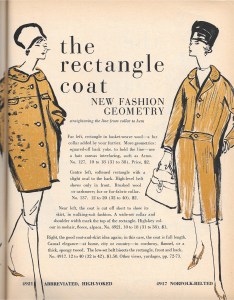
“The Rectangle Coat: New Fashion Geometry” was a feature in the December 1958/January 1959 Vogue Pattern Book Magazine.

Dressmaker coats - rectangle #1

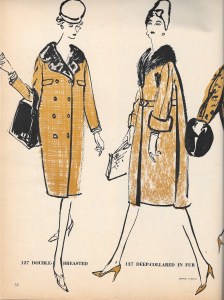
Both of these coats feature fur collars “added by your furrier.” The one on the left has a “slight oval to the back” – and a half belt.

Suggestions for suitable fabrics are given for each of these designs.

Suggestions for suitable fabrics are given for each of these designs.

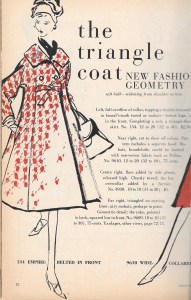
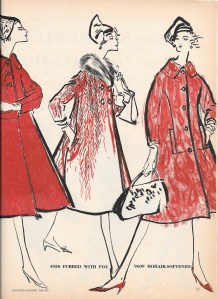
Continuing with the theme of “New Fashion Geometry,” the following pages of the same Vogue Pattern Book Magazine show examples of “the triangle coat.” Other terminology for this style of coat is the A-line coat. First introduced in 1955 by Christian Dior, this coat was “made close and narrow at the shoulders, flaring gently from under the arms to hem; shaped like letter A, made in single-or double-breasted style with or without a collar,” according to Fairchild’s Dictionary of Fashion, page 85.

Dressmaker coats - triamgle coat #1

The coat on the right has unusual princess seaming.

The coat on the right has unusual princess seaming.

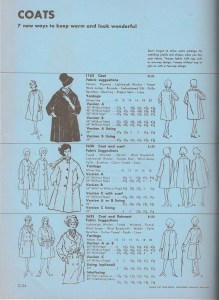
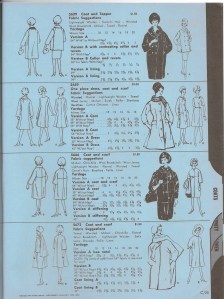
A few years later, the December 1962/January 1963 issue of Vogue Pattern Book Magazine featured “7 new ways to keep warm and look wonderful.”

Dressmaker coats - 7 coats 1

Several of the coats in this section feature "fullness" in the body of the coat.

Several of the designs in this section feature “fullness” in the body of the coat.

For me, however, it is the “ensembles” that make the ultimate fashion statement when speaking of coats. Christian Dior succinctly sums up their allure in The Little Dictionary of Fashion (Abrams, New York, New York, copyright 2007), page 40: “A very elegant way of dressing is to have a coat and dress matching together, making an ensemble… The frock should be fairly simple and the coat can be either fitted or loose, according to your taste. It can also be either long or short.” Vogue Patterns had no shortage of offerings for such ensembles. Here are four wonderful Vogue patterns – which are part of my pattern collection – and which are “ensembles.”

Note the "fullness" in this coat as well.

Note the “fullness” in this coat as well.

The princess seaming on this coat is similar to the red one mentioned above.

The princess seaming on this coat is similar to the red one mentioned above.

Somehow, this Guy Laroche pattern shows better in this photograph than in its drawing.

Another view of this  Guy Laroche pattern; it seems to show better in a photograph than in its pattern illustration.

This pattern was featured in that same VPB Magazine issue from December 1962/January 1963.

This pattern was featured in that same VPB Magazine issue from December 1962/January 1963.

And here it is in black and white in that issue. Stunning, isn't it?

And here it is in black and white in that issue. Stunning, isn’t it?

I love the knee length coat, although I may substitute another pattern for the coordinating dress.

The neckline on this coat is lovely and perfectly suited for a coordinating dress.

I actually have fabric for three of these patterns – with plans to sew them of course.  (Can you guess which one is the fabric-less orphan?)   However, all of them will remain part of my sewing dreams until after the holiday season – which “officially” begins this week with our American Thanksgiving celebration. I have festive attire and a few homemade gifts to fill my sewing days through December. Building my collection of coats will just have to wait.
Happy, Happy Thanksgiving to all my American readers – and my heartfelt thanks to my loyal readers worldwide in this season of gratitude.

11 Comments

Filed under Coats, Dressmaker coats, Mid-Century style, The Conde Nast Publications, Uncategorized, vintage Vogue Designer patterns, vintage Vogue patterns from the 1950s, vintage Vogue patterns from the 1960s

Sweet November

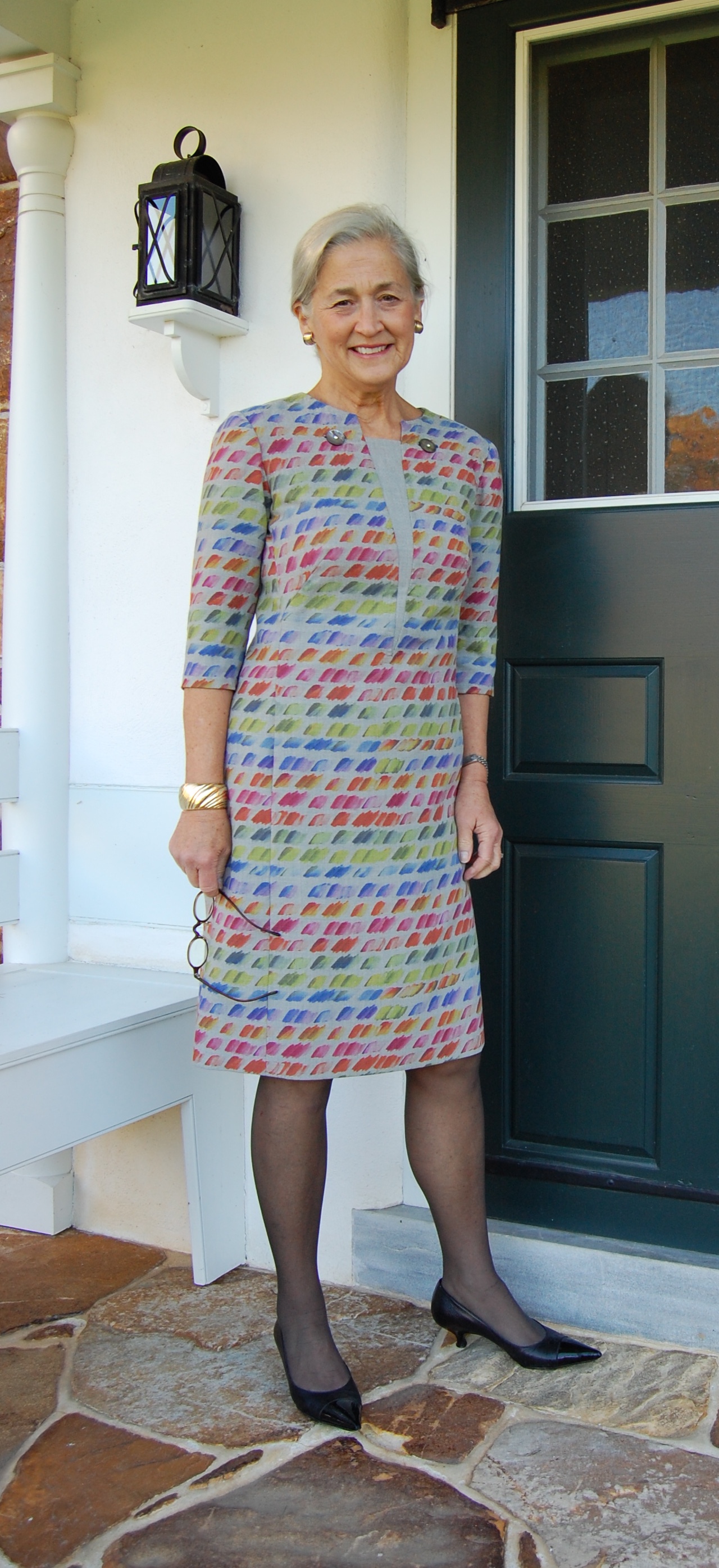
The trickery, which defined my October sewing, finally floated away with the leaves and the goblins, leaving sweet November with her welcome reward, a new dress for Autumn and Winter.
Sweet November

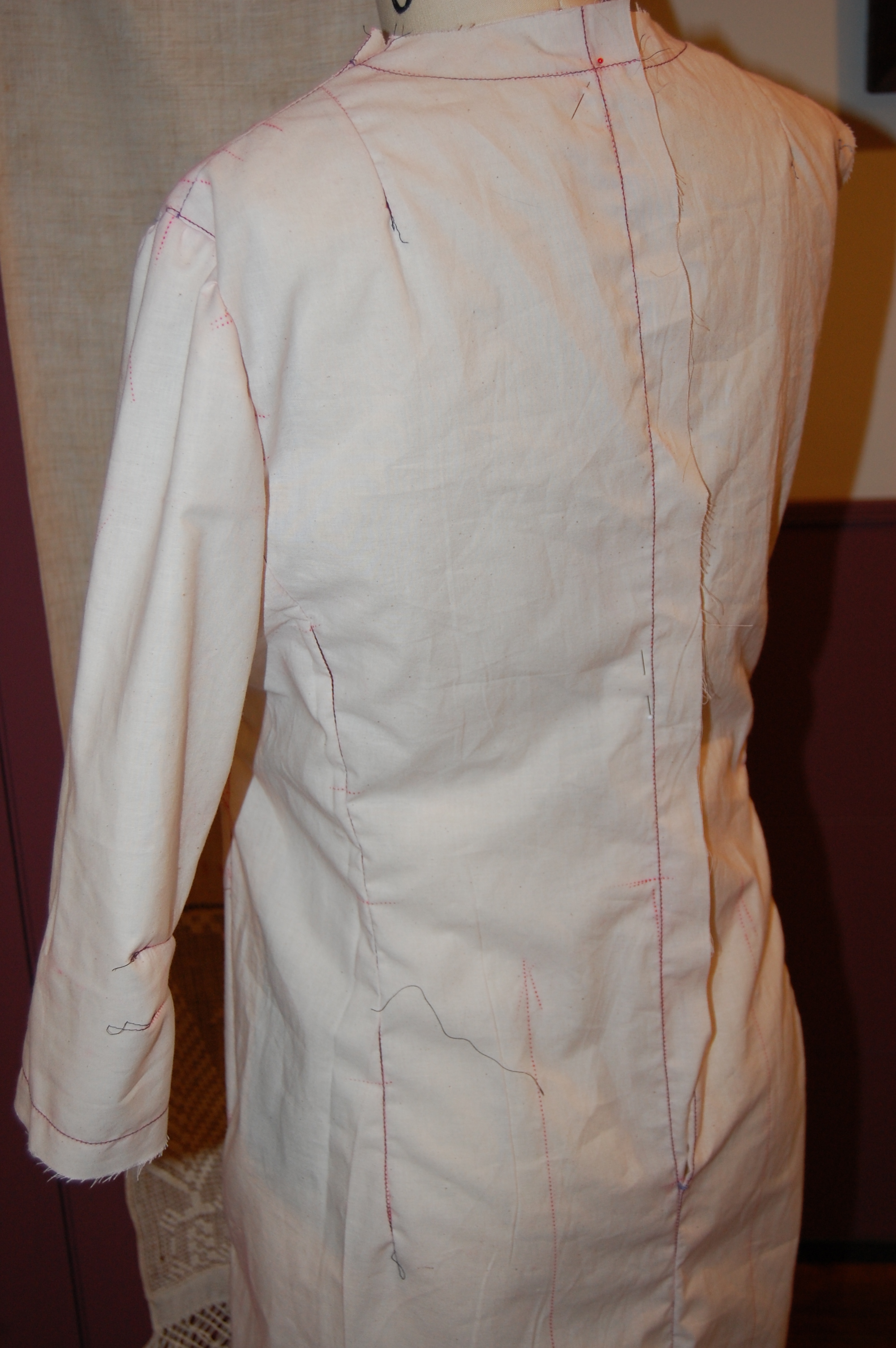
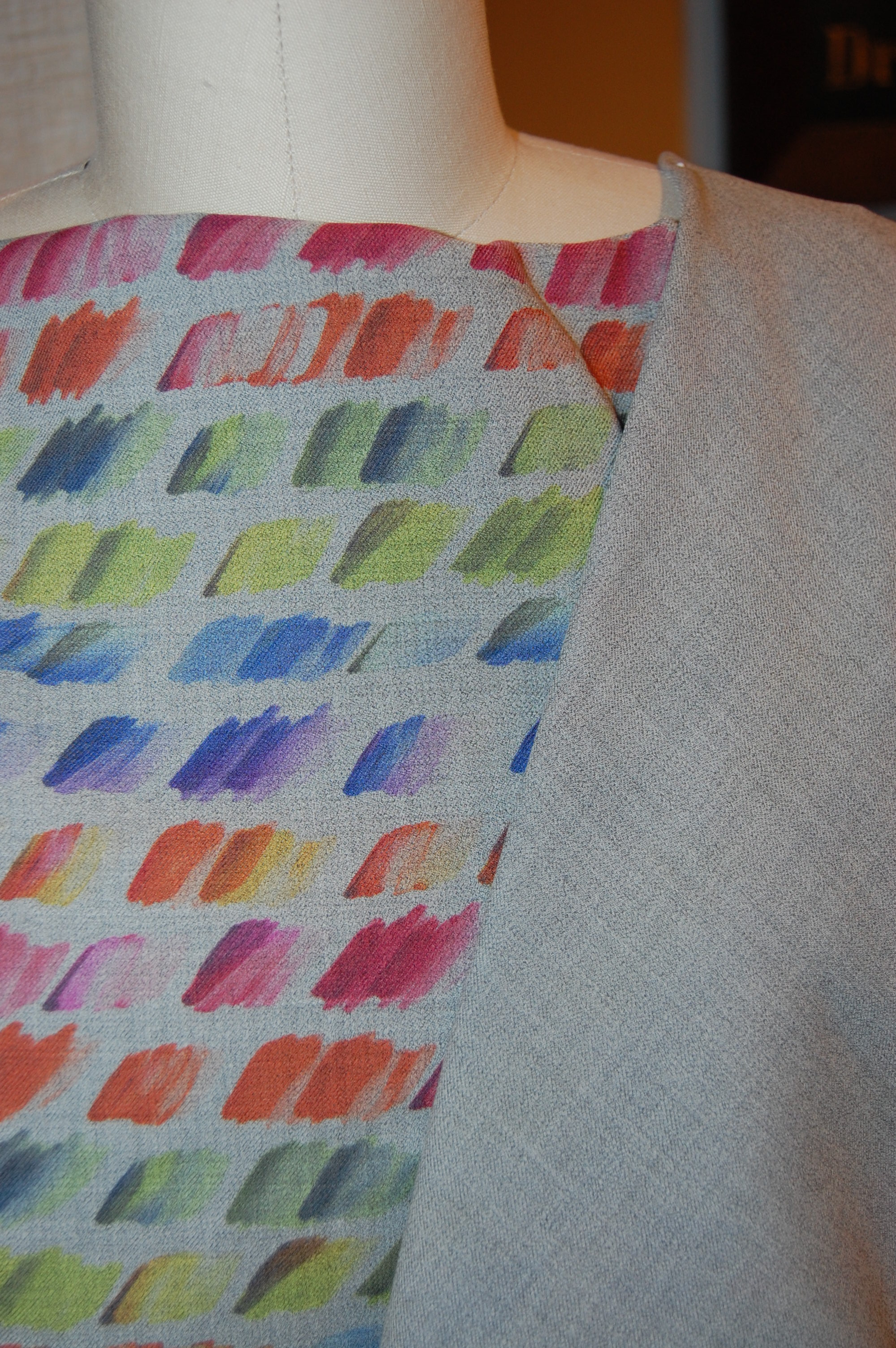
So what made vintage Vogue 1395 such a tricky dress to make? I documented my efforts to get a workable muslin (toile) in a post from early October. Once I had my adjusted muslin pattern, I transferred it onto black silk organza to use as my cutting guide. It was then I realized that, because the design on the fabric, a silk and wool blend, was printed on it, not woven into it, I needed to work from the right side of the fabric in order to match the horizontal “lines.” This meant that I had to flip every piece that I cut out and then exchange the organza with its opposing side. (I hope this makes sense.) It added a bit of uncertainty to the process and I was fanatical with flipping and checking to make sure I kept the design in line. Something told me I should delay cutting out the sleeves until I had the body of the dress together – my sewing godmother at work, I guess – and I am glad I did, as I’ll detail in a bit.
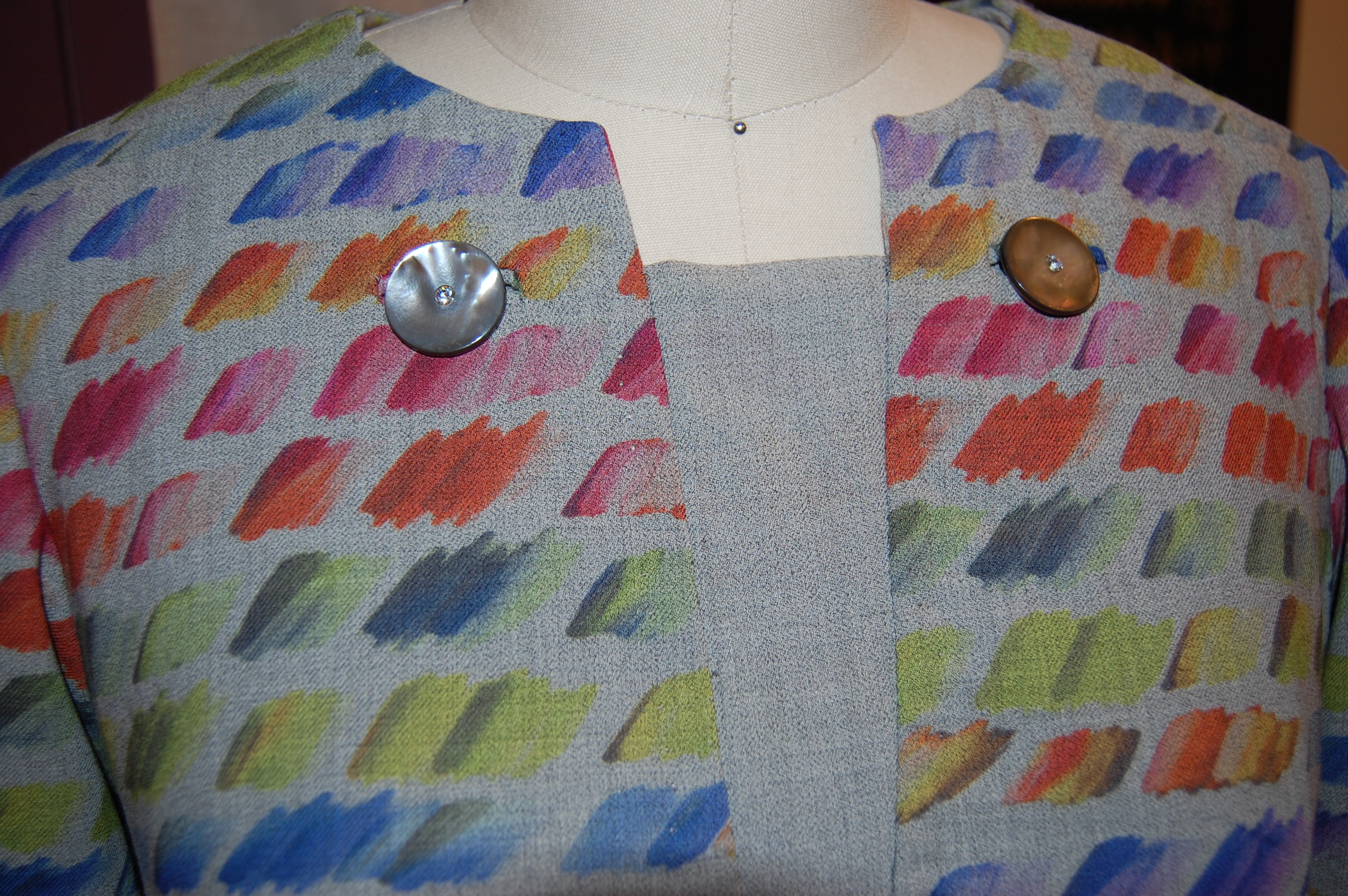
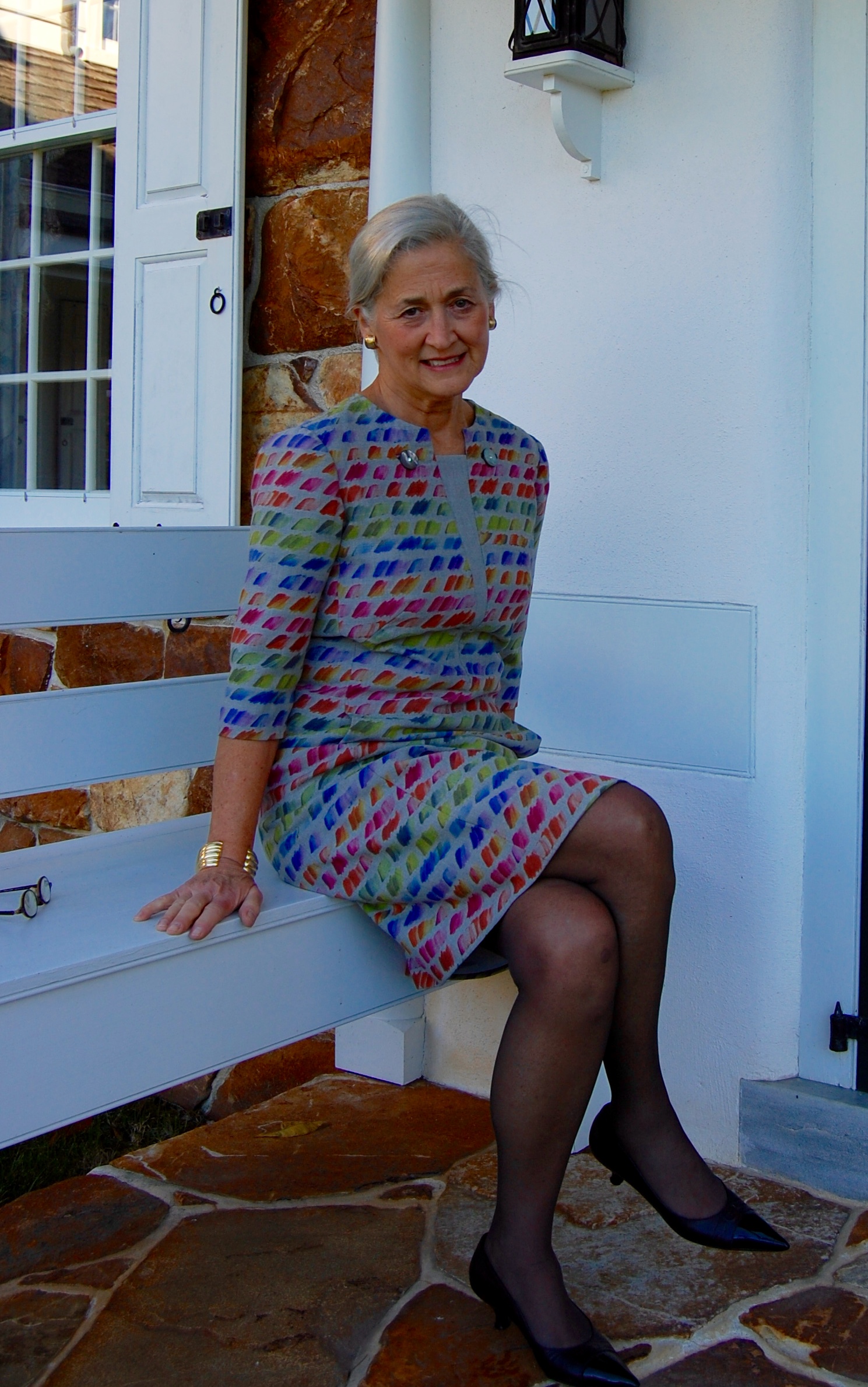
I had made the decision at the beginning of the project to cover the dress’s two buttons in the plain gray “wrong” side of the fabric. But once I “semi-made” a covered button, and tried it out, it was DULL. It added nothing to the dress. I went to my button box and all I could find was a small gray pearl that was close in color. But I loved the iridescence of it and determined that gray pearl buttons were what I needed. I seem to have such good luck with buttons from Britex – even though I am ordering online – and found 1” gray pearl buttons with a rhinestone in their centers. Although I am not a rhinestone-y type of person, something about them spoke to me. I remembered what Susan Khalje said in one of the classes I have taken with her – that couture often has a bit of “whimsy” to it. Well, I ordered those buttons as as fast as I could! I think they are just what was needed!

Sweet November

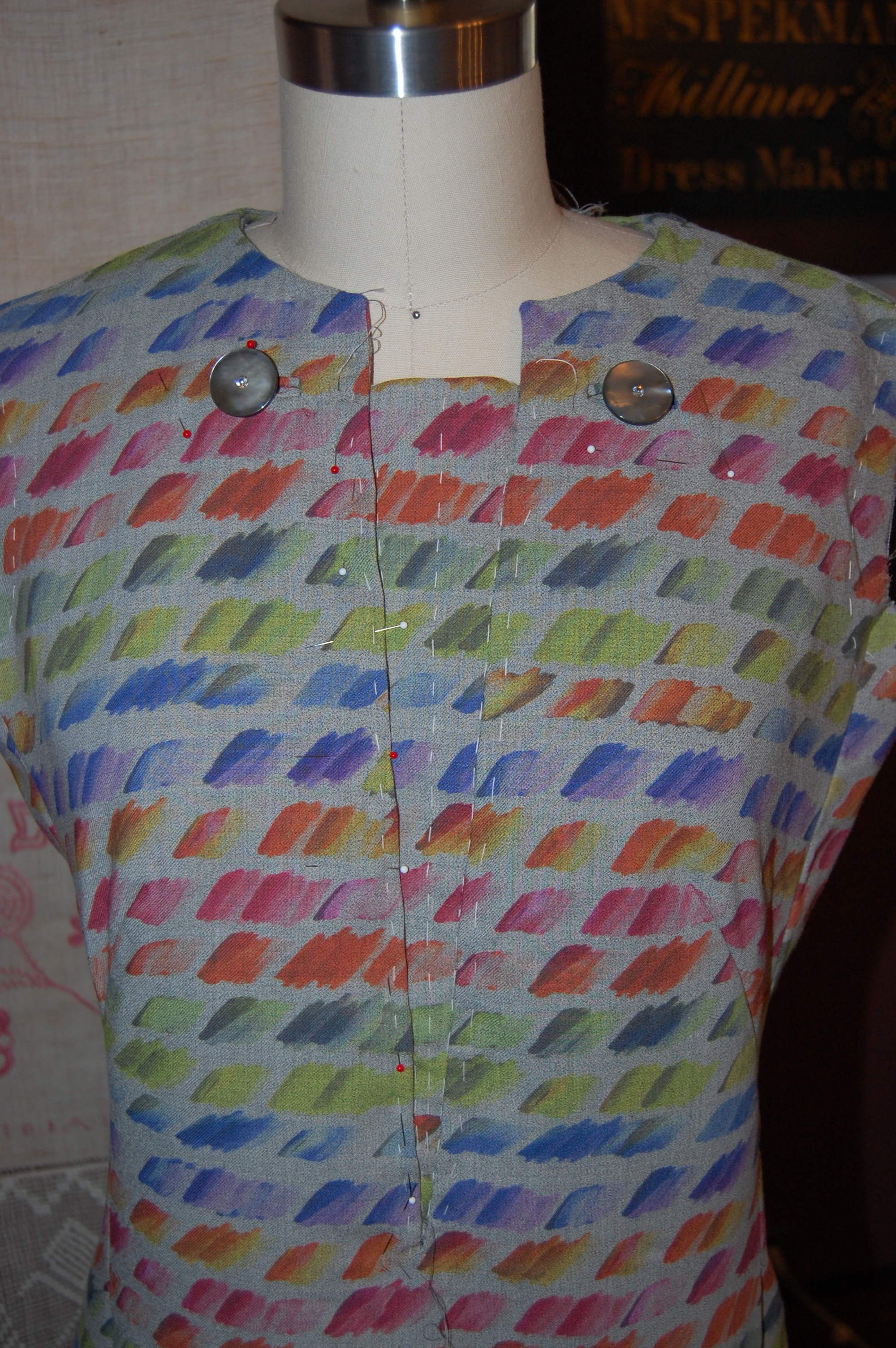
I had also made the decision to make the “dickey” part of the dress out of the side of the fabric with the printed design – so that the horizontal line would be uninterrupted across the bodice. Here is what it looked like once I had it done:

Sweet November

There was not enough definition between the dress and dickey to make it interesting.

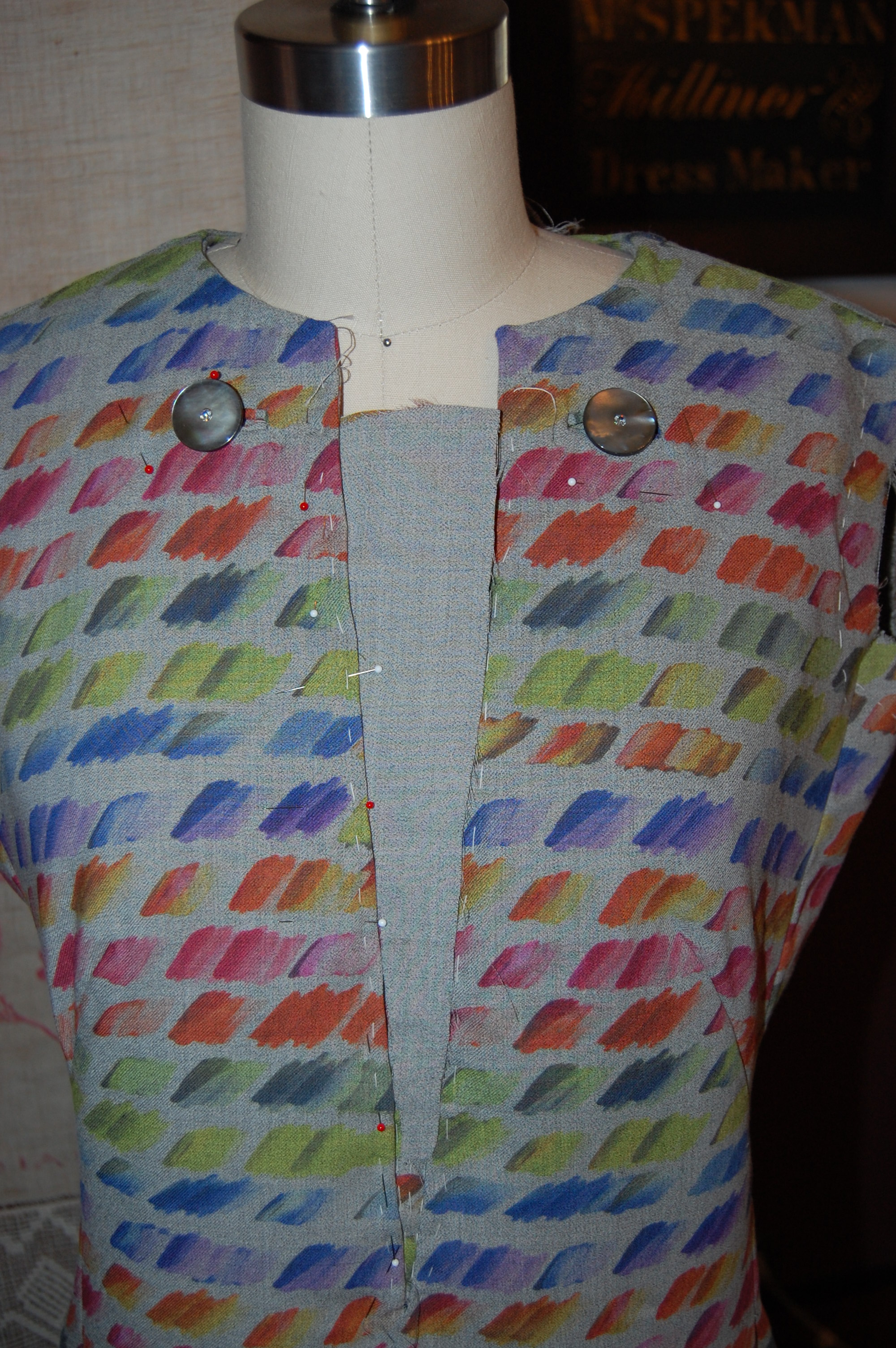
I cut some scraps to see what it would look like with a play gray insert – and it was so much better!

Sweet November

So – I took the dickey all apart and flipped it over so it would be out of the plain gray “wrong side.” By now I was enjoying the versatility of this fabric (which I bought online from Mendel Goldberg Fabrics) and appreciating the serendipity of having this fabric for this pattern, giving me options.

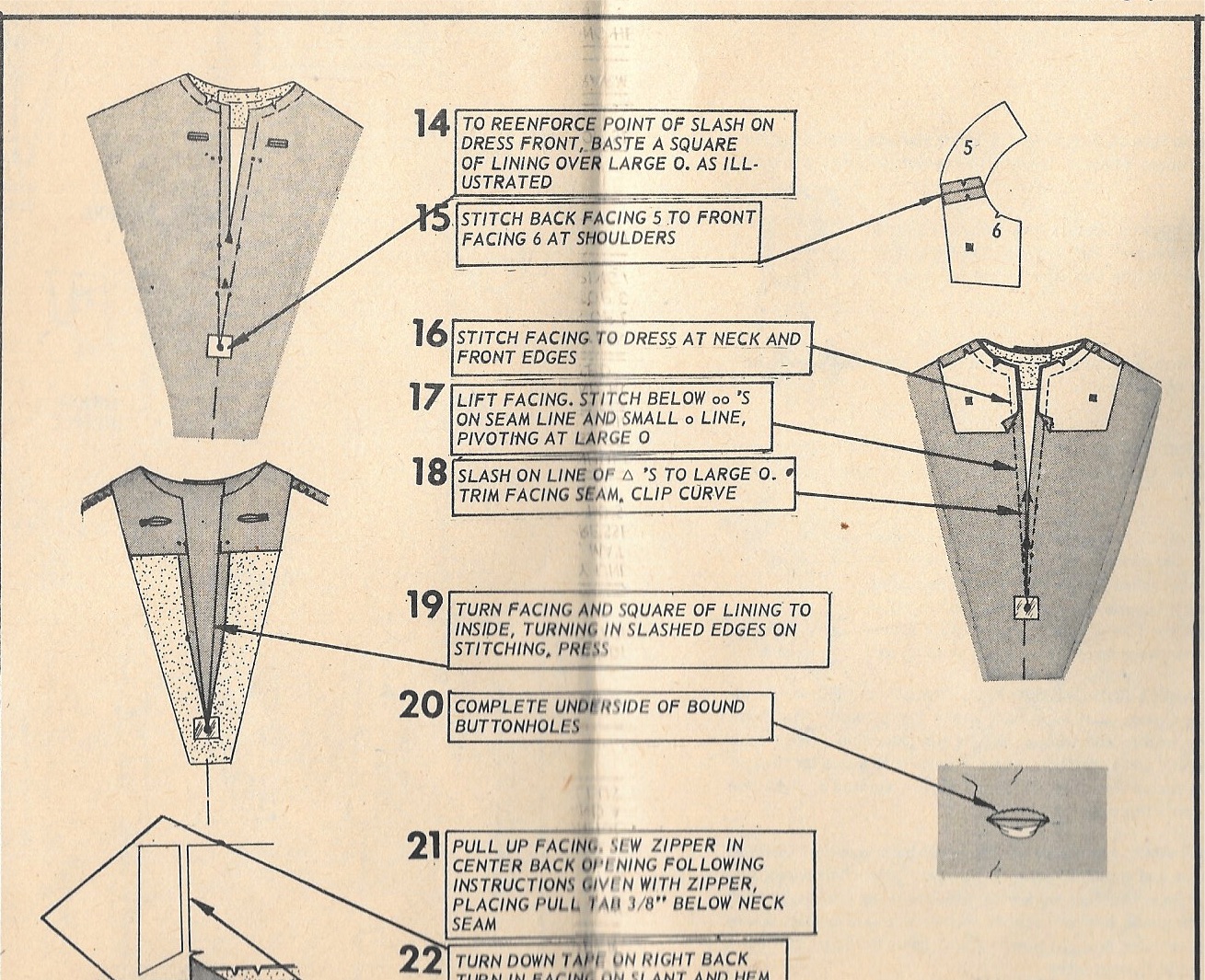
However, the fabric posed another challenge when I got to the point of finishing the front opening in the bodice. This fabric frays enough that I was not comfortable following the directions given in the pattern instructions:

The instructions directed me to just turn back the seam allowance, but because of the ravel-ly nature of the fabric, I was certain it would pull out with wear.

The instructions directed me to just turn back the seam allowance, but because of the ravel-ly nature of the fabric, I was certain it would pull out with wear.

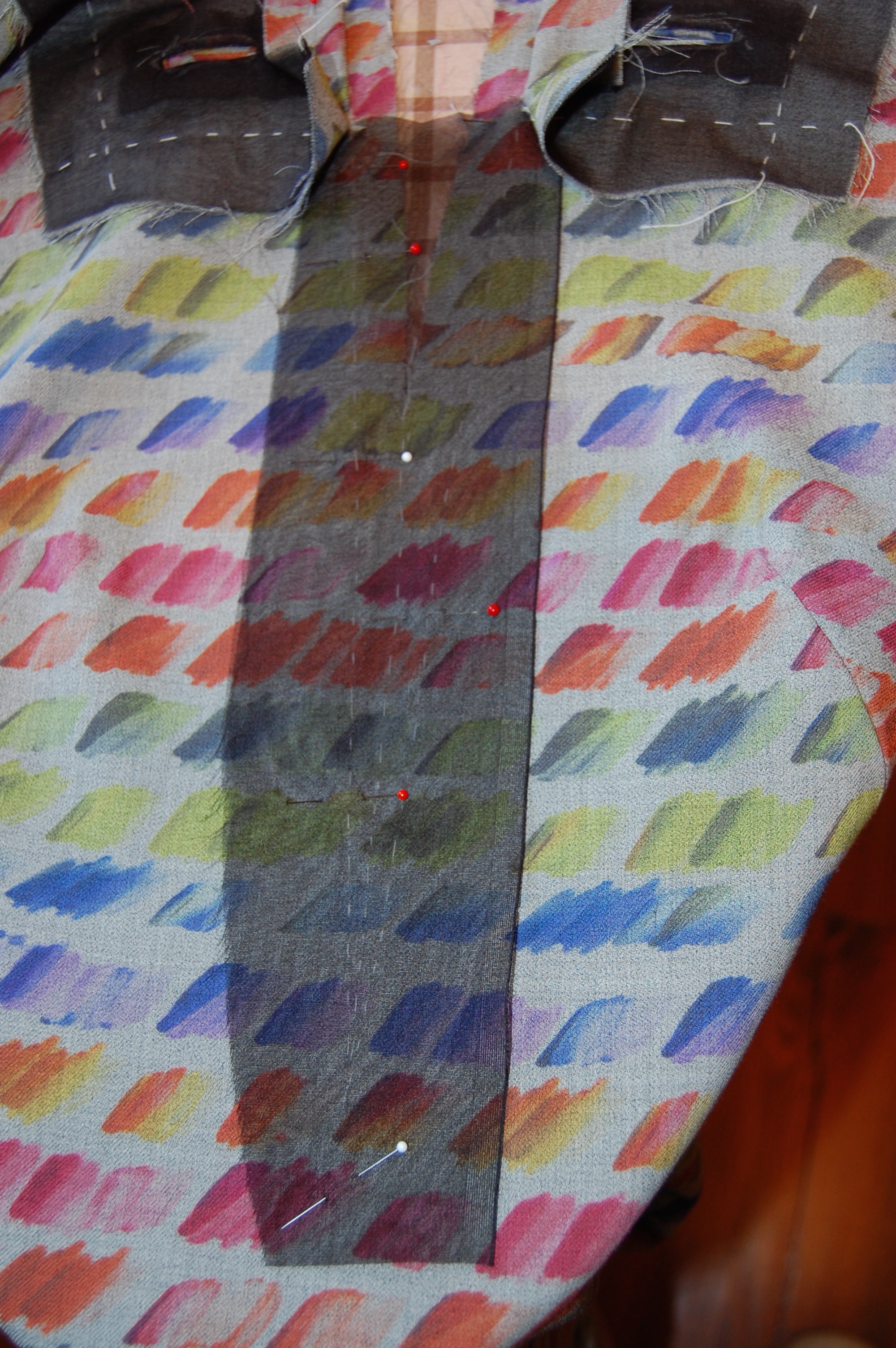
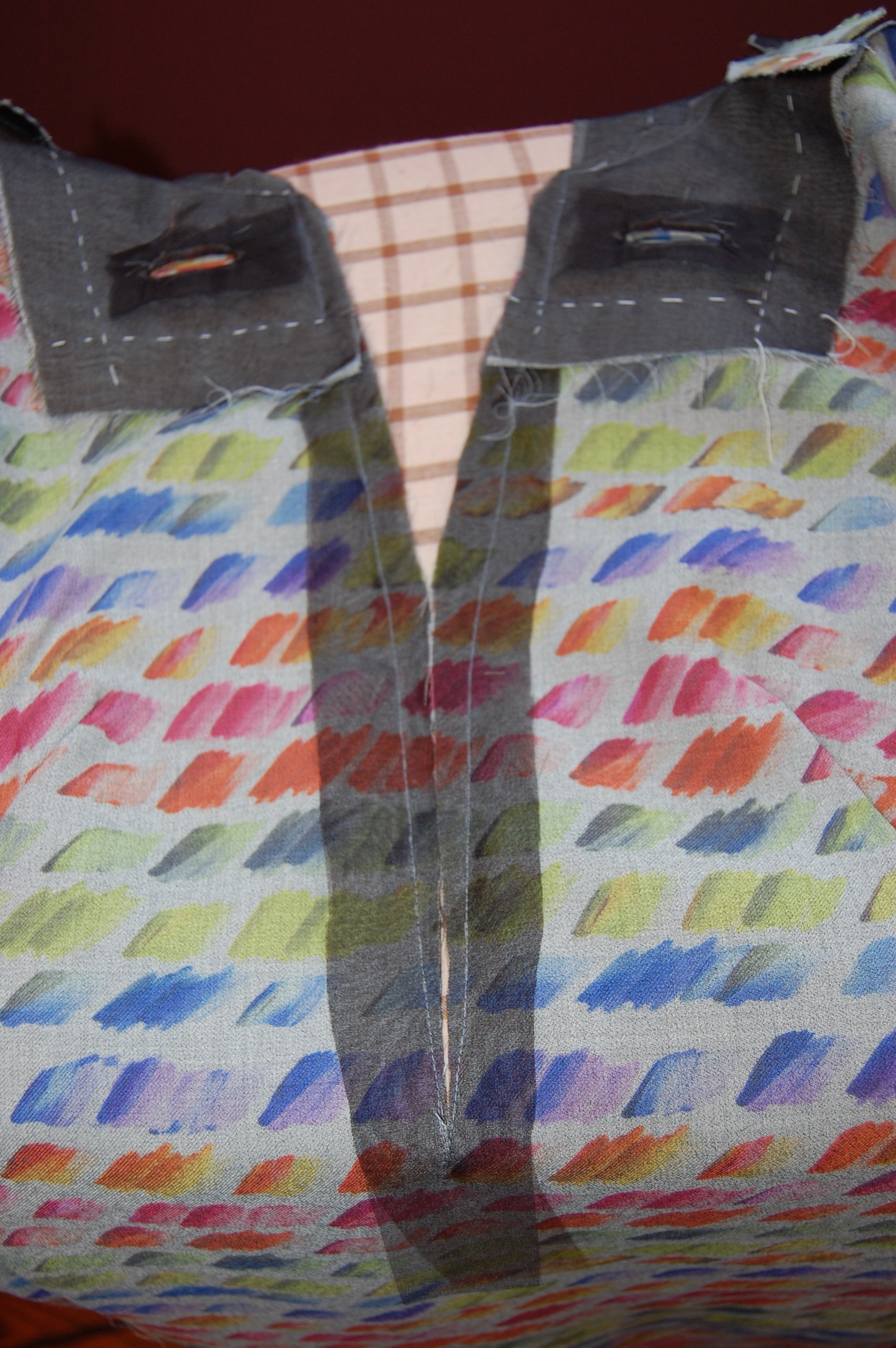
Instead, I opted to make a “facing” for the opening out of black organza. It is situations like this that make me feel so fortunate to have enough “sewing sense” to be able to recognize potential difficulties and then have the ability to work out creative solutions to them.

Sweet November

Silk organza pinned in place.

And here it is sewn in place.

And here it is sewn in place.

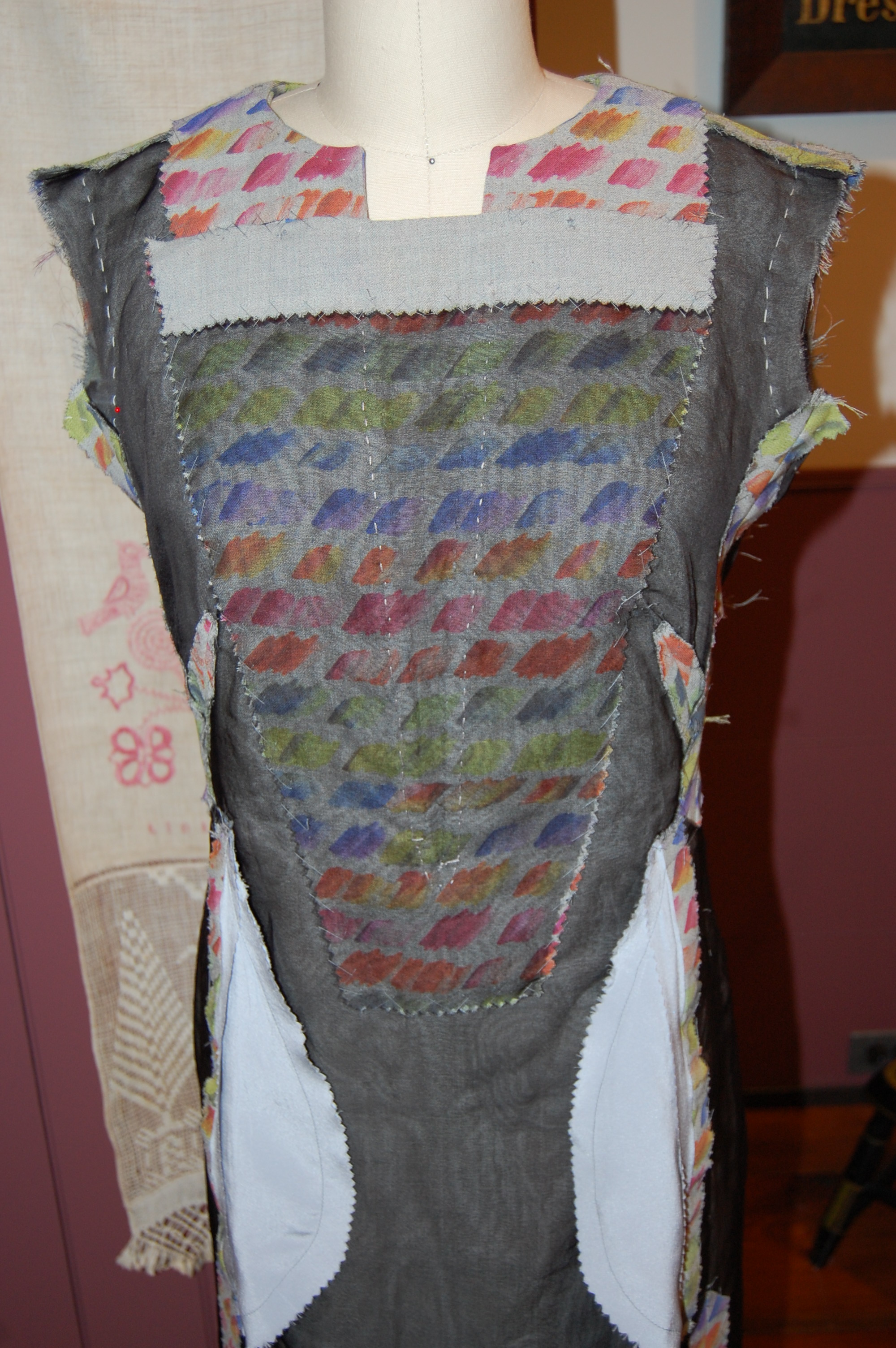
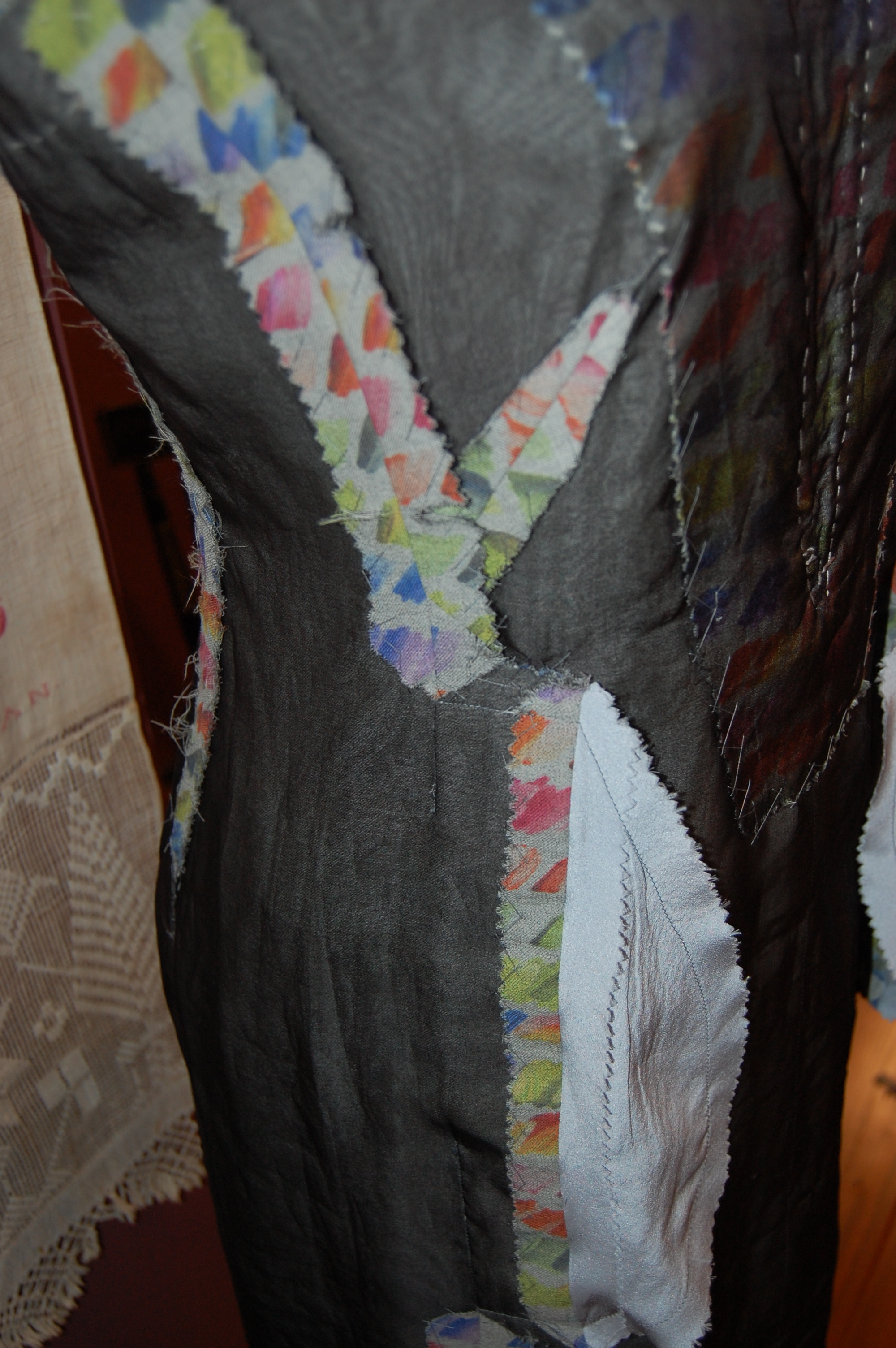
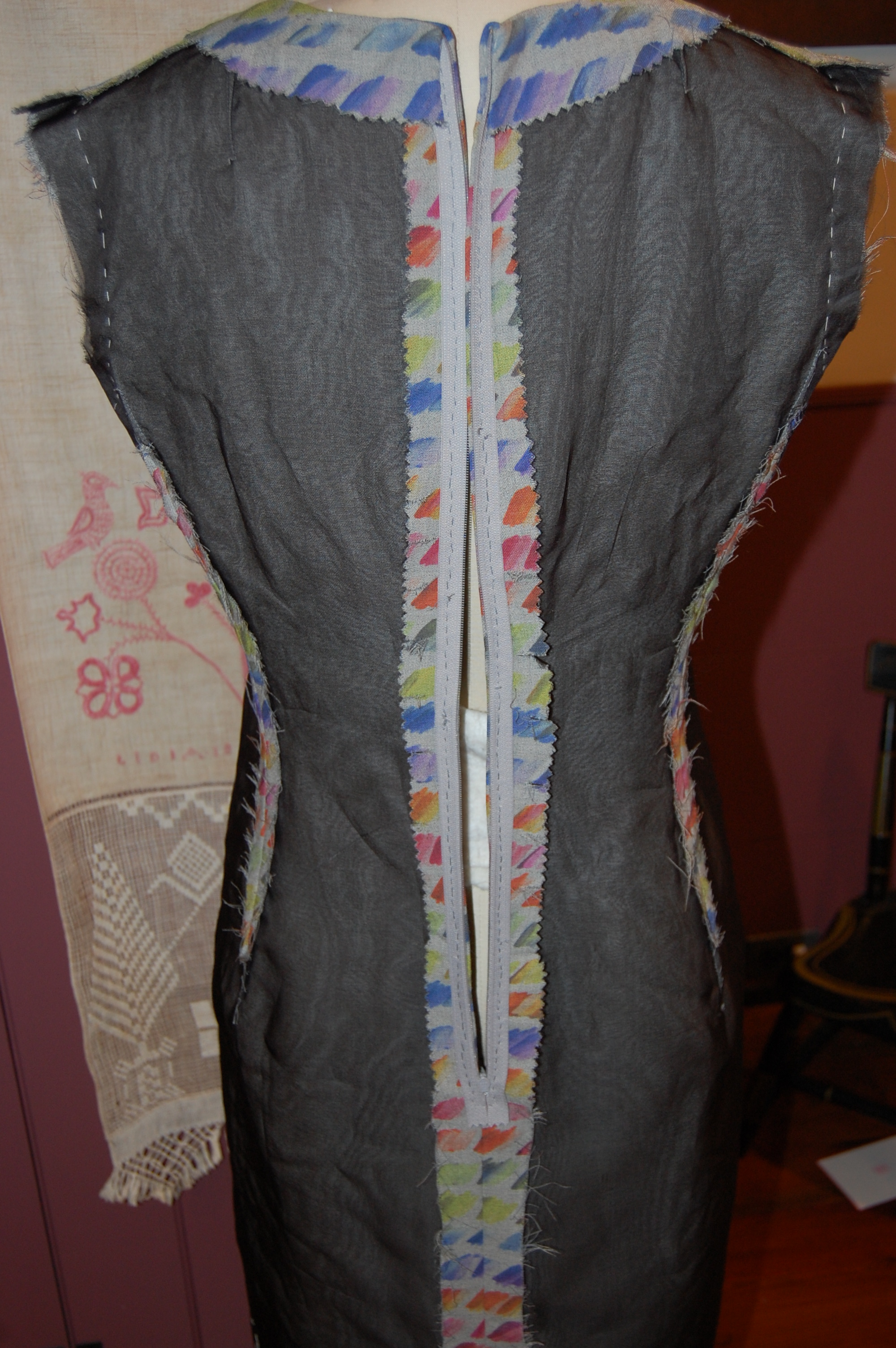
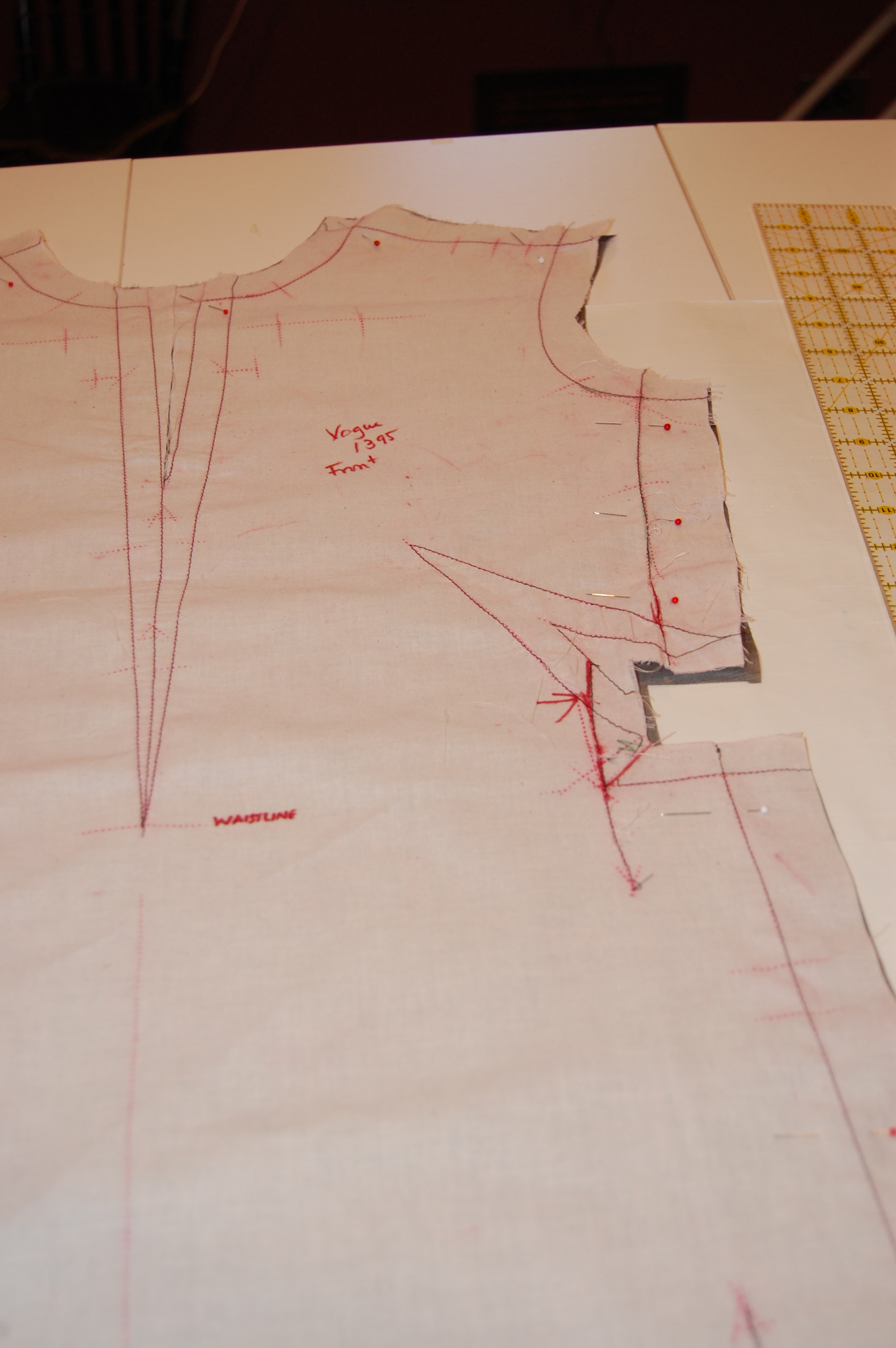
I took some pictures at this point to show the inside of the body of the dress:

Yes, those are pockets hanging on the front.

Yes, those are pockets hanging on the front.

This shows those darts with their slanted orientation.

This shows those bust darts with their slanted orientation.

The zipper is inserted by hand, as usual! Once I had it basted in place, I tried the dress on for fit and determined I had to take it in a bit at the waistline.

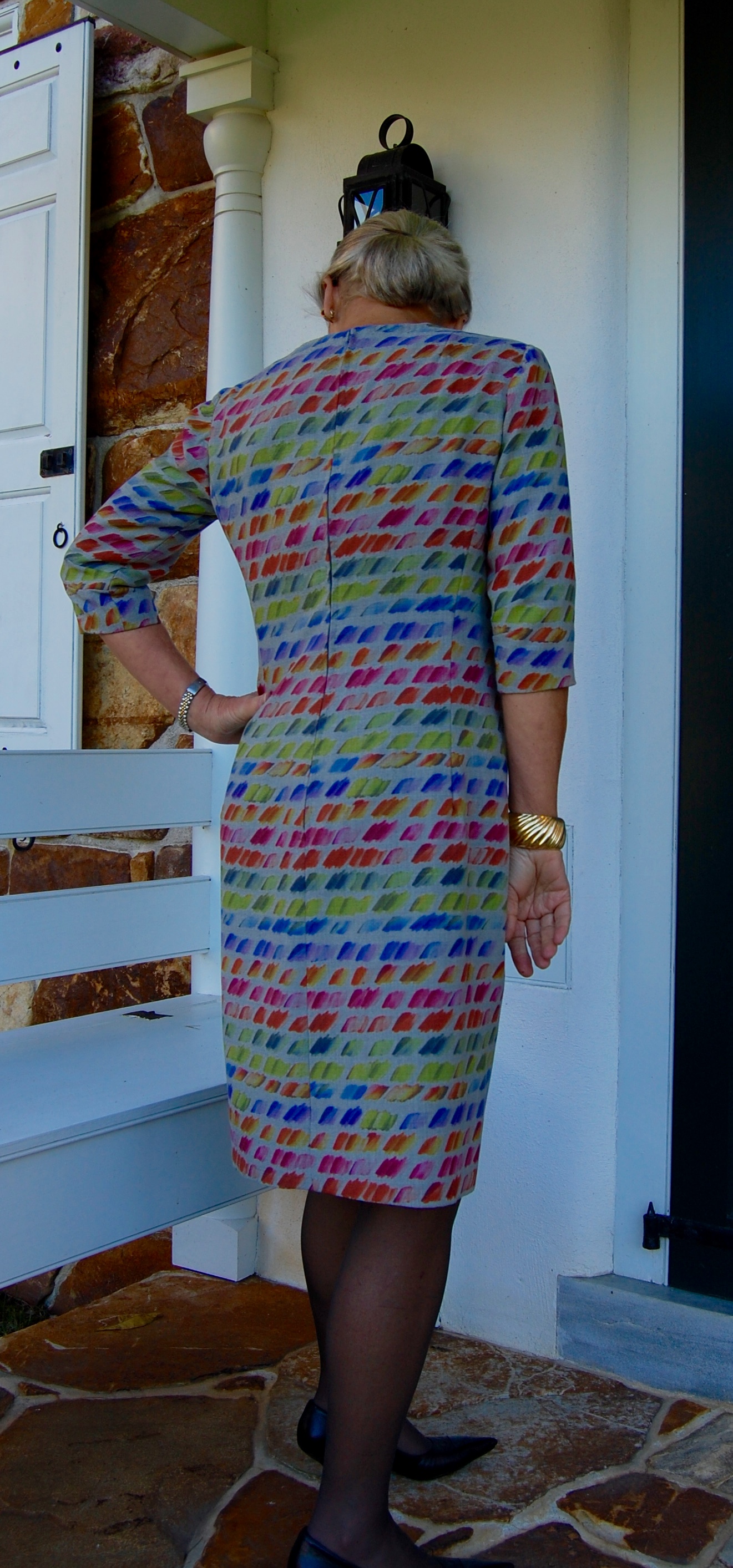
Then I tackled the sleeves. I had quite a time determining how to place the sleeve patterns on the remaining fabric. Some of those horizontal lines of “paintbrush strokes” change color across the fabric! And my adapted sleeve pattern has two elbow darts, which changed the horizontal line. I had to make a decision about where I wanted the best match to be, as I determined I could not match it across and up and down as I would normally want to do. I opted for a match across the shoulders – and I now believe that was the best decision.

DSC_0924

I also added a soft “cigarette” sleeve heading to each shoulder seam.

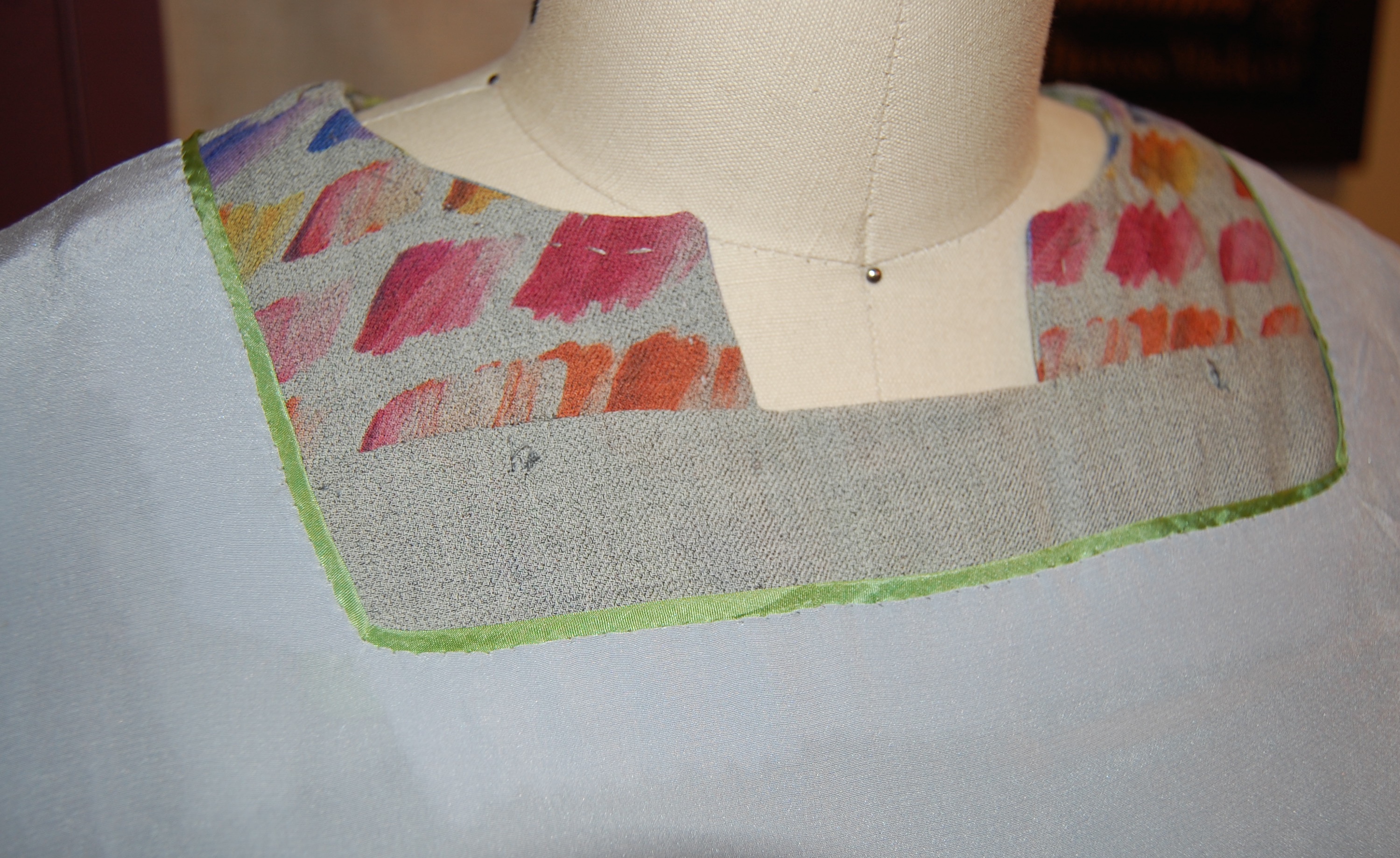
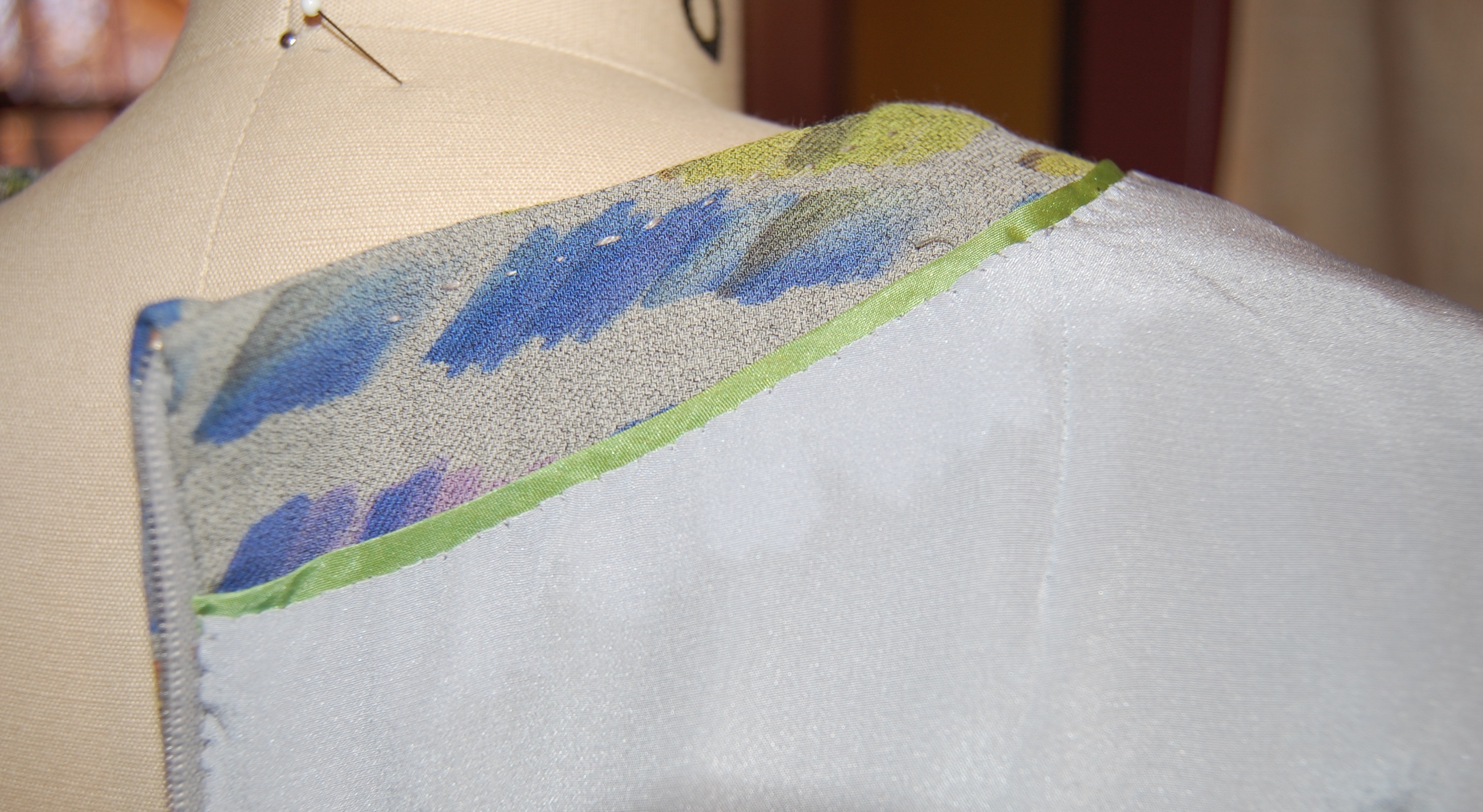
Next to the lining – and bless those vintage Vogue patterns – the lining for this dress included separate and distinct pattern pieces. I made the sizing and dart changes to the lining (in keeping with the dress) and it went together effortlessly. When I got to the point of inserting the lining by hand, I just could not resist adding silk piping to the inside neck edge. I know I am the only one who will ever see it, but it makes me happy!

Sweet November

I used a bias strip of lightweight silk for the piping.

I used a bias strip of lightweight silk for the piping.

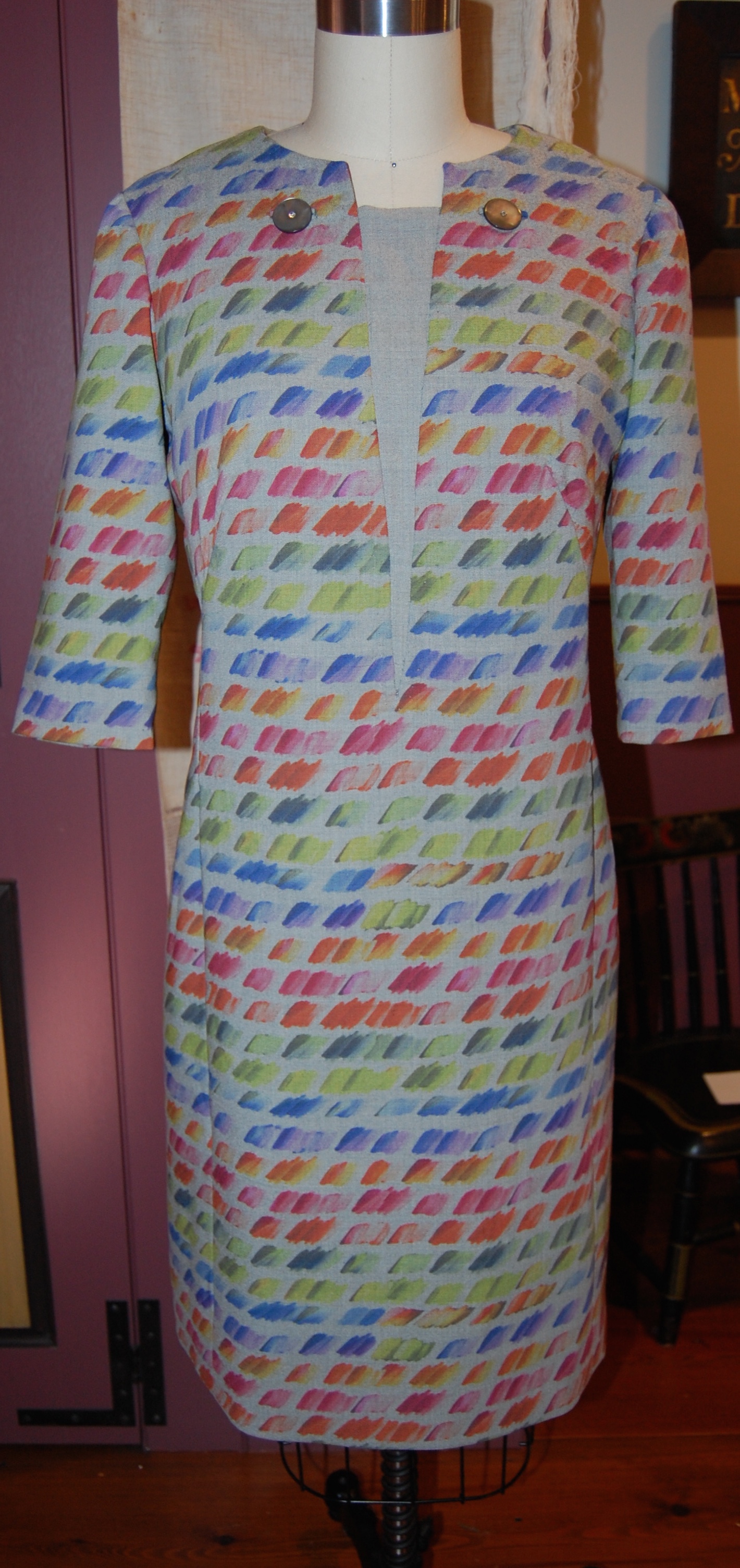
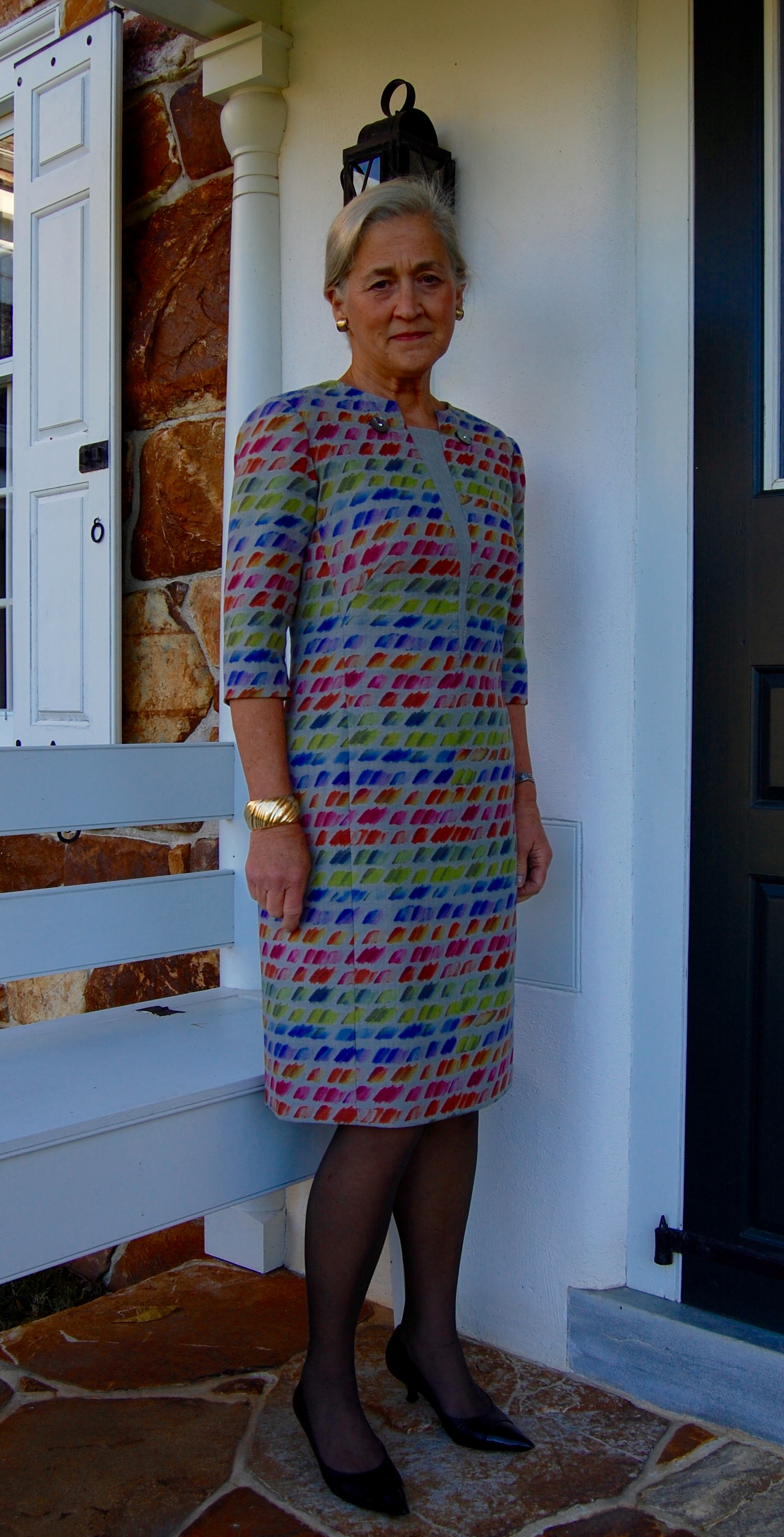
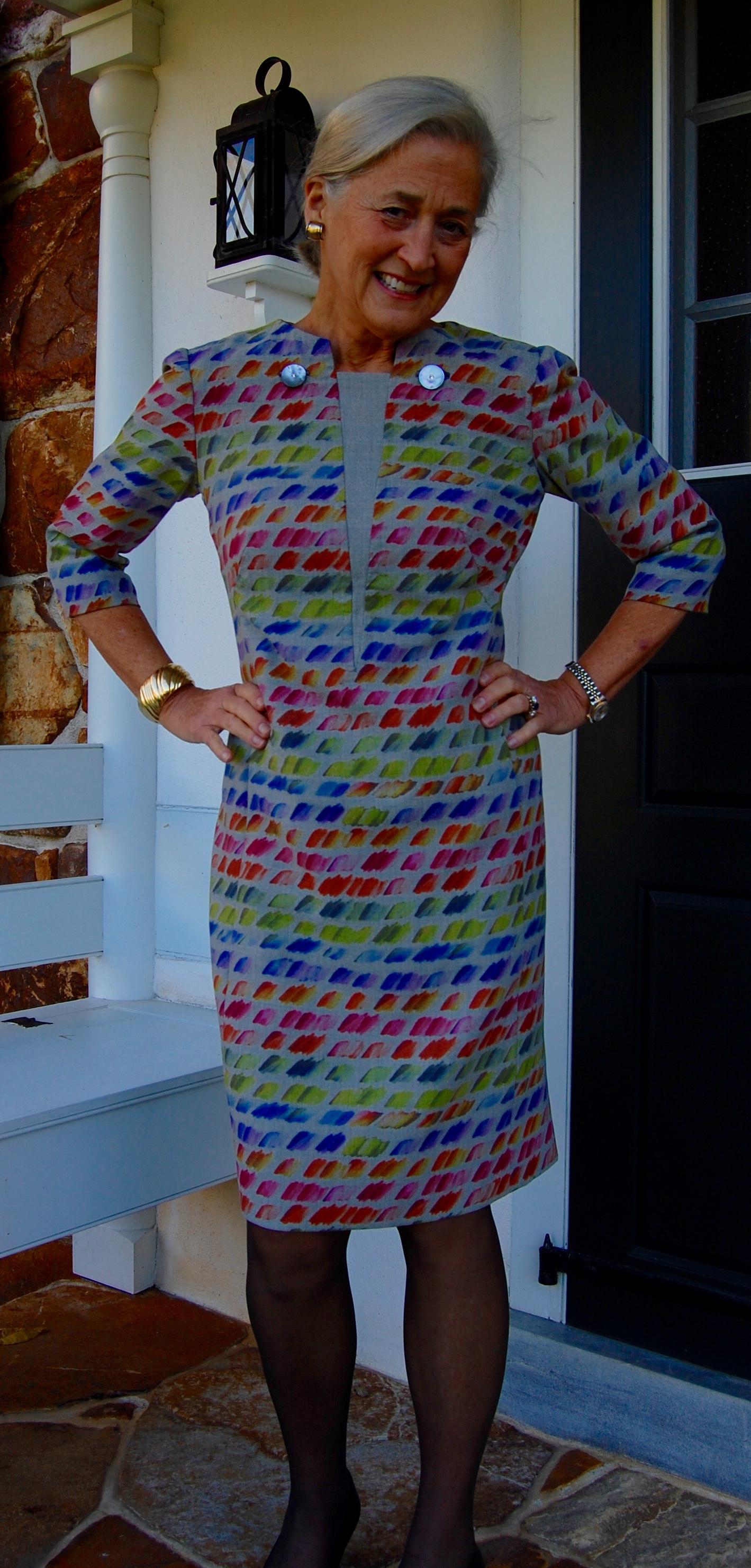
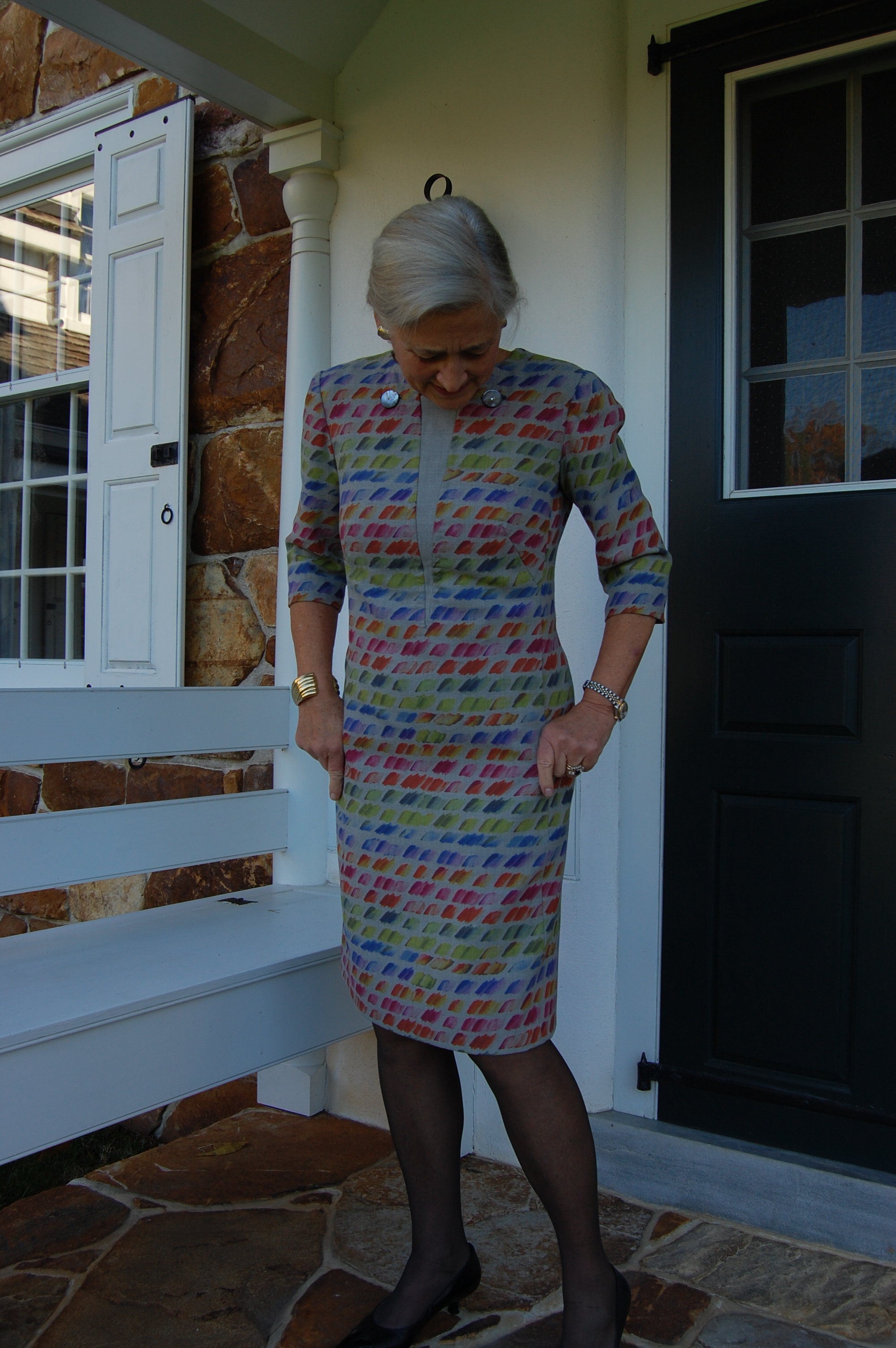
How wonderful to have this dress completed!

Sweet November

The buttons really show in this picture.

The buttons really show in this picture.

Sweet November

Sweet November

Sweet November

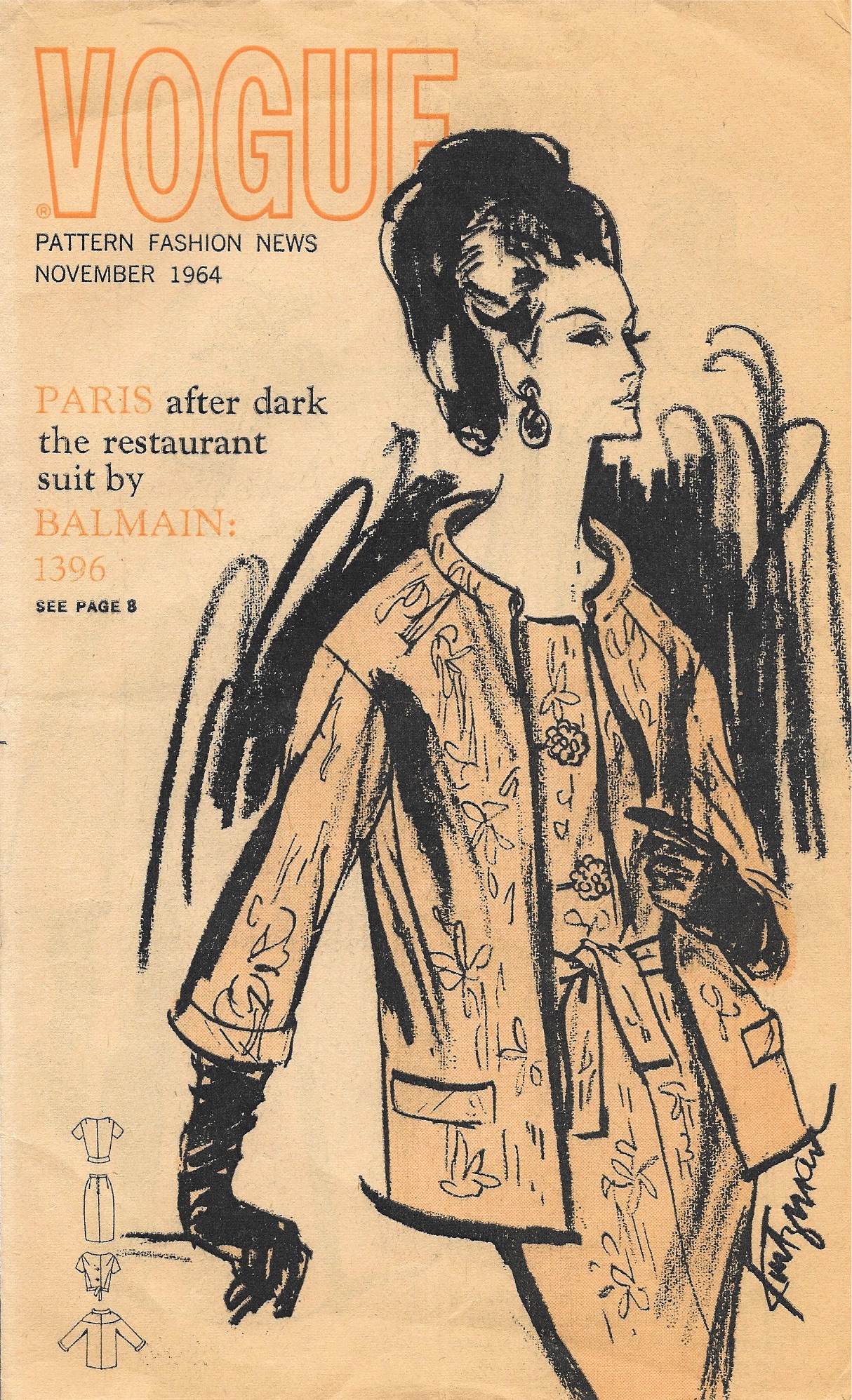
There was one more aspect of serendipity to this project. Those of you who follow my blog know that part of my fascination with vintage Vogue patterns is making connections between the past and the present. I love to “place” a pattern in its correct year – and then wonder in amazement at how classic fashions are so enduring. It was my great good fortune to have this Vogue Pattern Fashion News from November 1964 in my collection of vintage fashion magazines:

Sweet November - flyer cover

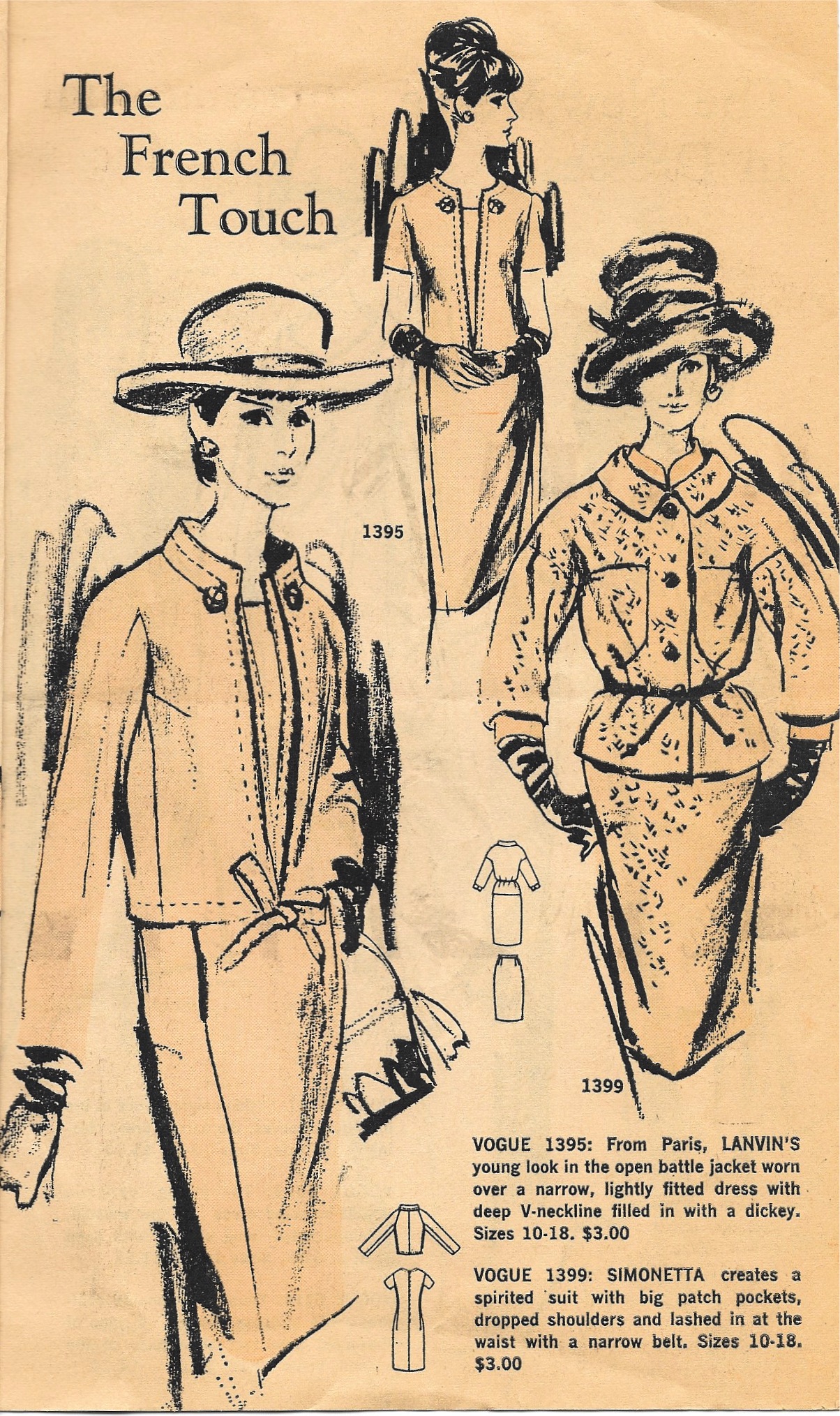
Inside on page 3 is, yes, my dress!

Sweet November - flyer illustration

Just imagine – 51 years ago this month, this dress made its debut. Happy Sweet November Everyone!

38 Comments

Filed under Buttons - choosing the right ones, couture construction, Day dresses, hand-sewn zippers, Love of sewing, Mid-Century style, Uncategorized, underlinings, vintage Vogue Designer patterns, vintage Vogue patterns from the 1960s, woolens

Scrap

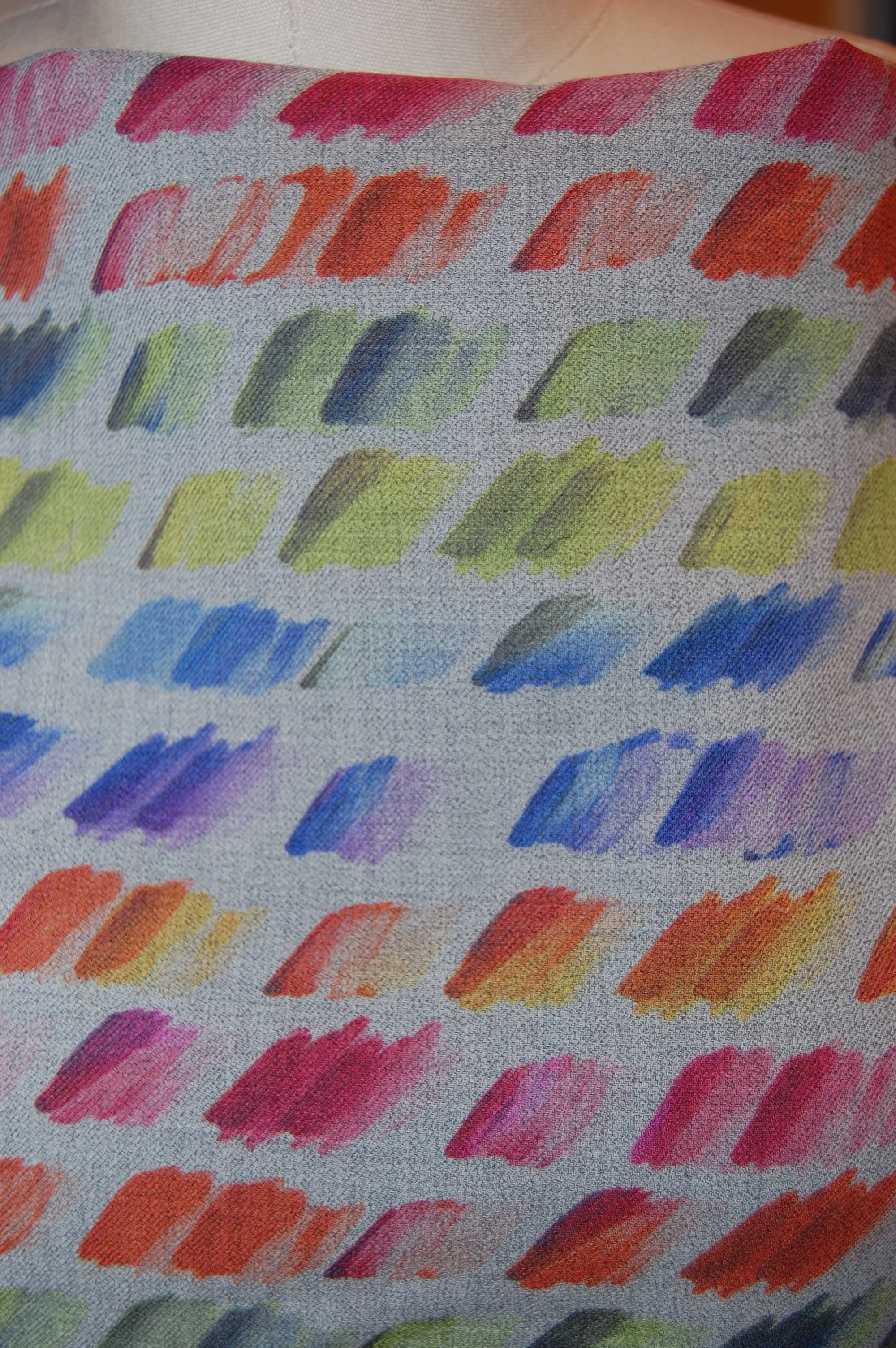
This particular word seems to sum up my experience – so far – with my new project of the month. I have had to “scrap” three complete muslins – as in “throw away” and “discard.” I rather like one of the other definitions for this particular word to sum up my past week of sewing – “a fight or quarrel.”   Yes, it’s been a battle, but I believe I am winning! It all started with this fabric – a soft, lovely, light-weight wool and silk blend – from Mendel Goldberg Fabrics.

Scrap

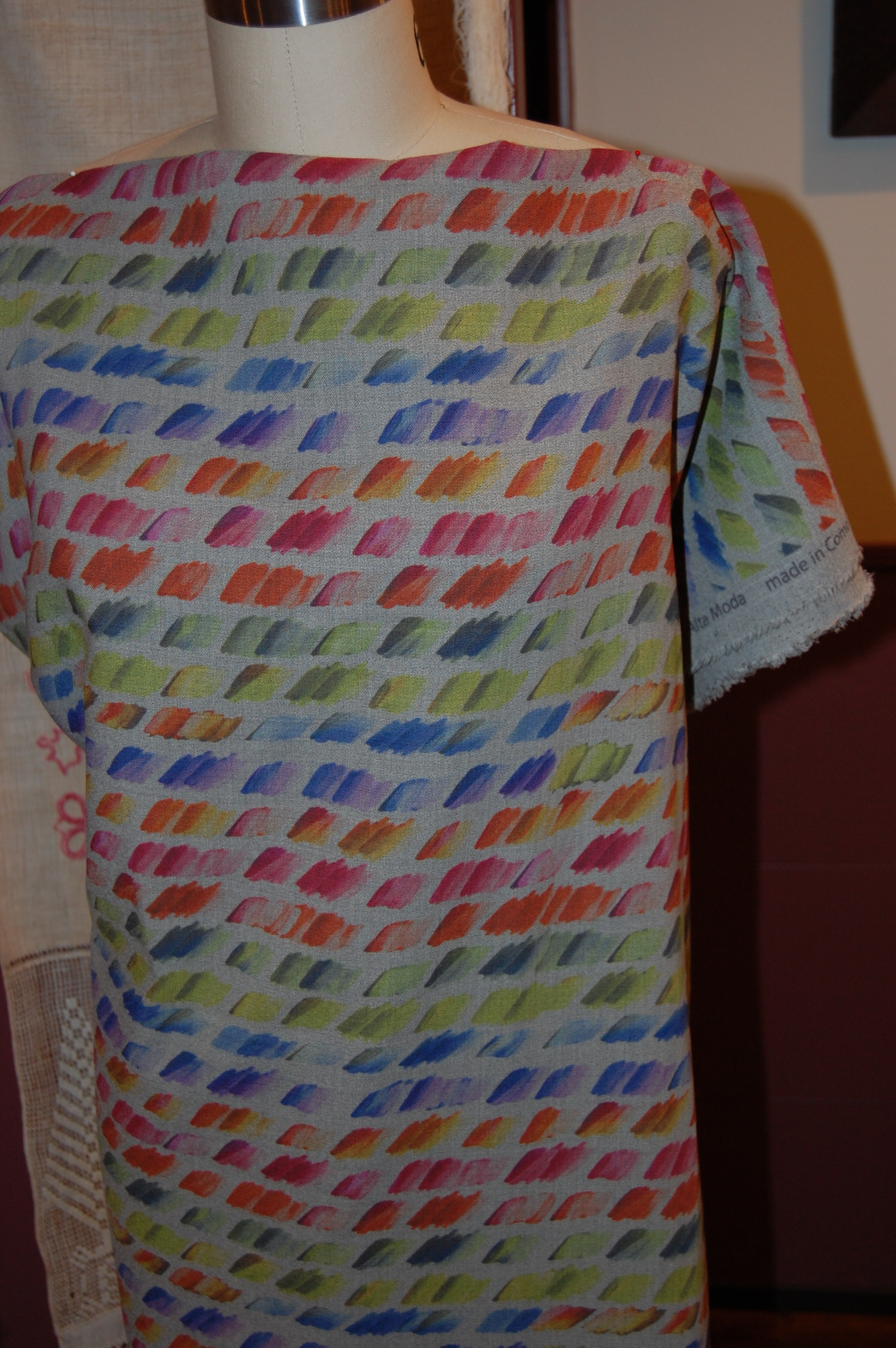
Here it is draped over my dress form.

Here it is draped over my dress form.

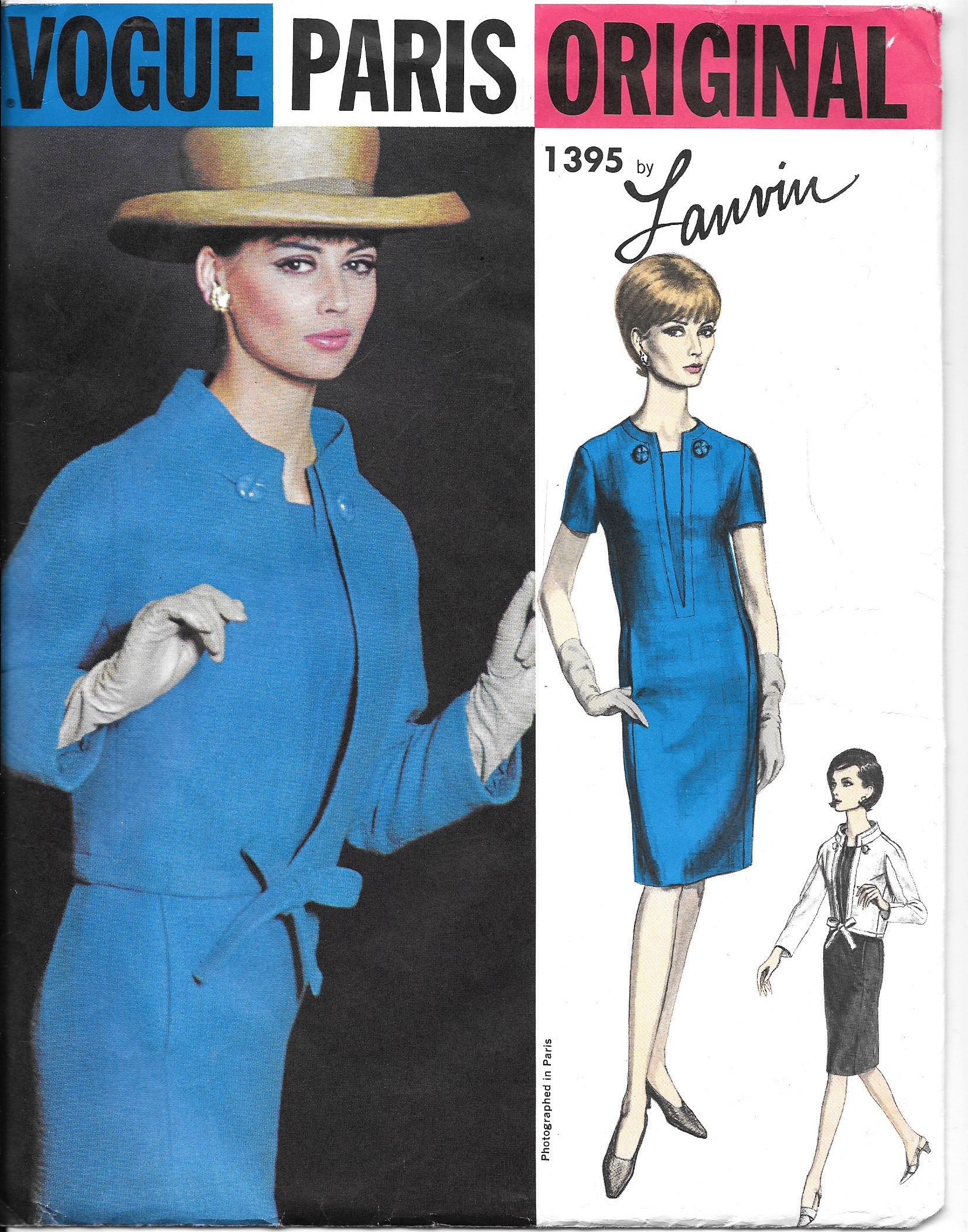
Although I knew I wanted to make a dress with a slim profile – to minimize the fabric’s horizontal design – it took me a while to find the right pattern. I started with one that had curved lines in its bodice and “scraped” that idea after my muslin (toile) revealed many fitting issues. I took that as a sign that the pattern wasn’t the best one to use anyway (which I suspected all along. It’s really important to listen to one’s intuition in things like this!) After another search in my pattern collection, I settled on this dress.

Gray painterly dress - Lanvin pattern

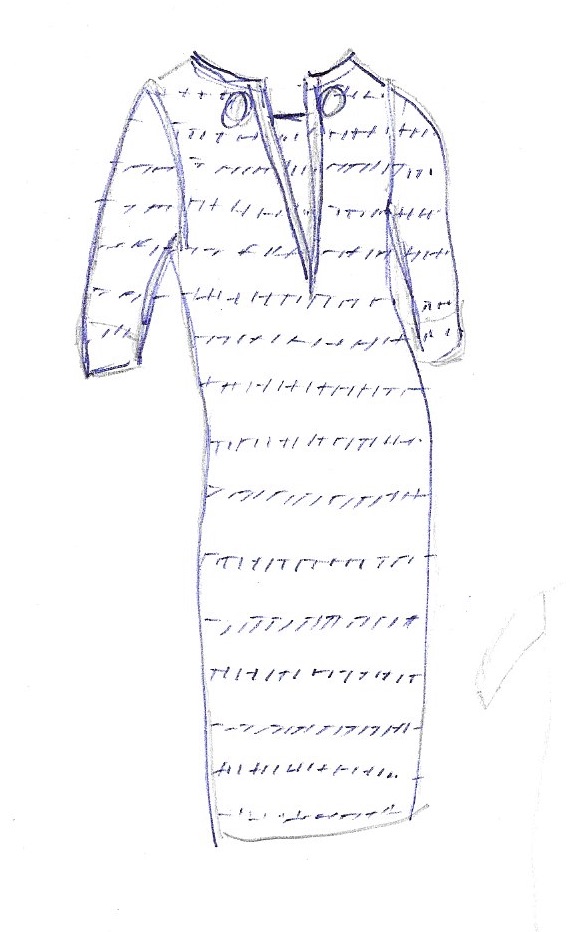
However, I want below-elbow length sleeves so I did a little sketch to try out the look:

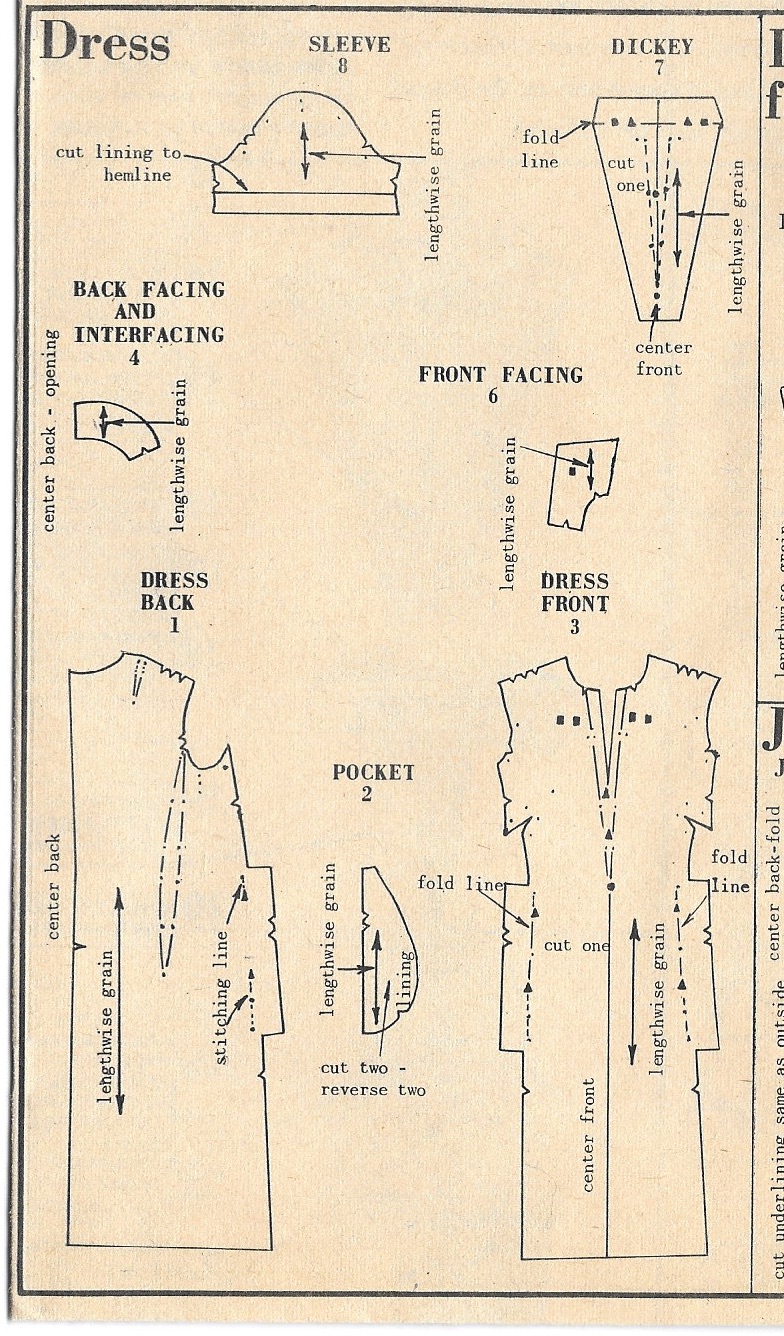
Gray painterly dress - sketchAfter finding a sleeve pattern from another dress which sports two elbow darts, I figured I was in business. Ah, the battle was just beginning. The first muslin I made revealed bust darts that were two inches (two!!) too high. And although I wanted a slim profile, I do have to be able to move in the dress!  I figured I needed to add two inches in total width from the lower armscye down.  Here is a diagram of the pattern pieces. The angle of the bust darts is vital to the fit of the dress so I could not just pivot the apex of the bust. I had to reposition the entire dart, which was getting it awfully close to the pocket.

Gray painterly dress - pattern diagram

Making changes in that first muslin was just a study in frustration, so I scraped it and made a new one. My second one was better, but still had some kinks in it. The armscye seemed to be off kilter, the reason for which I could not figure out. I’m telling you these are the things that keep me up at night. At this point I went to JoAnn’s and bought more muslin. I was determined to win this fight! A whole new muslin and finally I had one that fit. I was even happy with my mish-mash sleeve (after making a few minor adjustments.)

Scrap

Scrap

I have now progressed to the silk-organza underlining stage of construction.   Matching the horizontal design of the fabric across the various components of the pattern will take concentration, but that’s a task that always intrigues me.

Scrap

A decision about those two buttons, such an important focal point of the dress, is still to be made. The wrong side of the fabric is plain gray, so I might end up using that side for covered buttons. Suggestions, anyone??

DSC_0900

Other than these challenges, I am feeling fairly confident that my next post will not have to be entitled “Scrap – Continued.”

20 Comments

Filed under Buttons - choosing the right ones, Uncategorized, underlinings, vintage Vogue Designer patterns, vintage Vogue patterns from the 1960s, woolens

A Fitting Finish to Summer Sewing

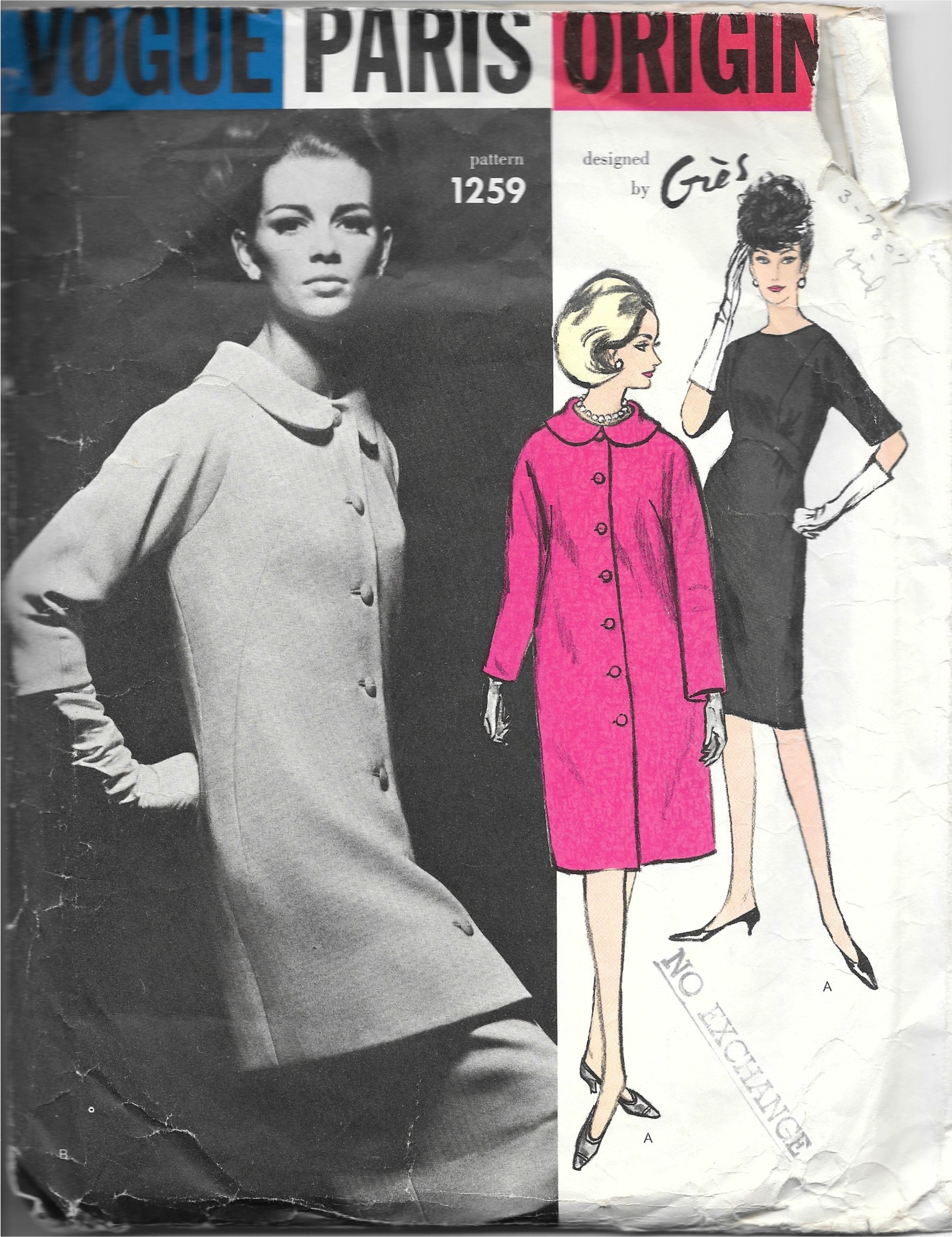
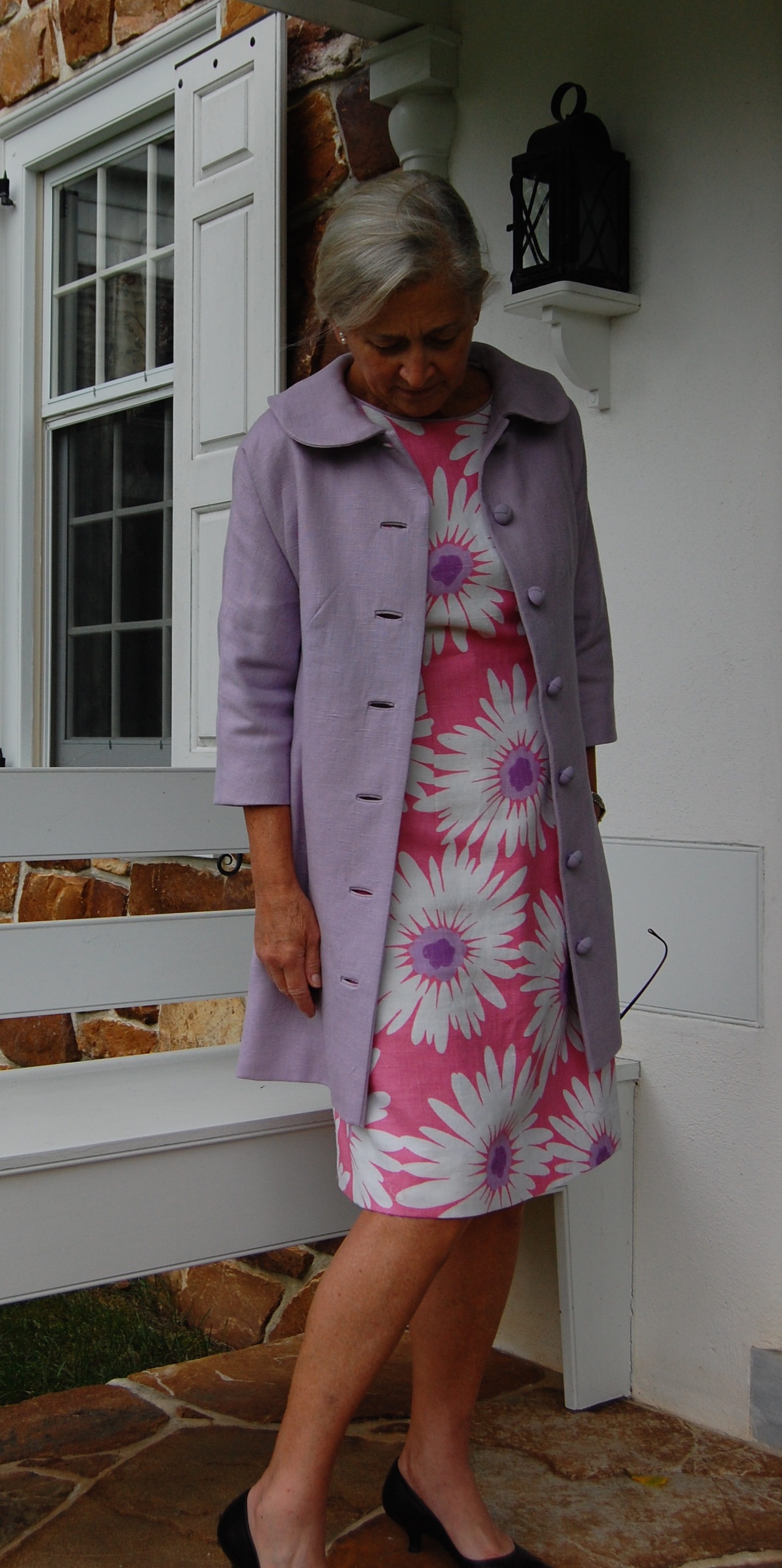
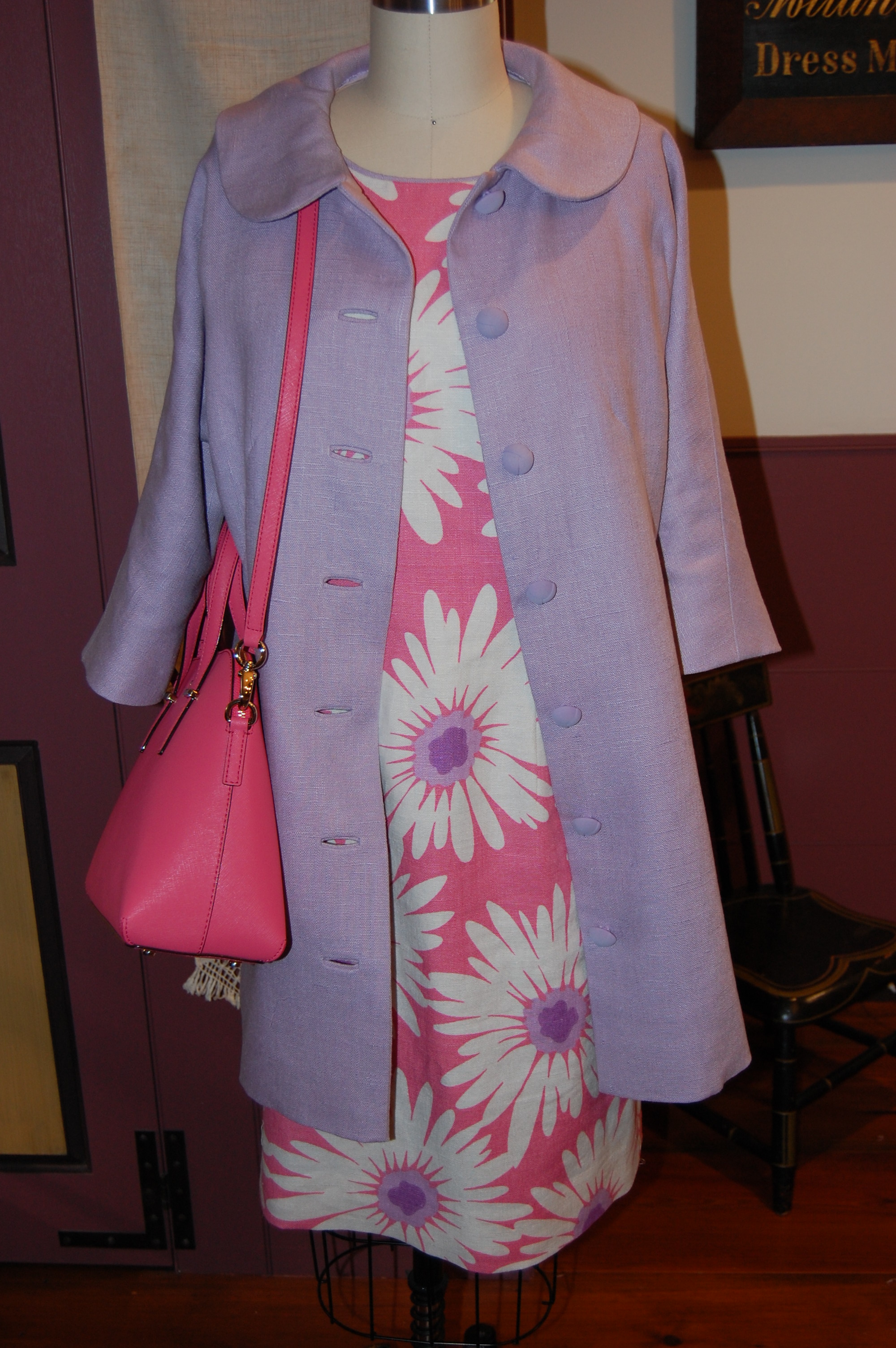
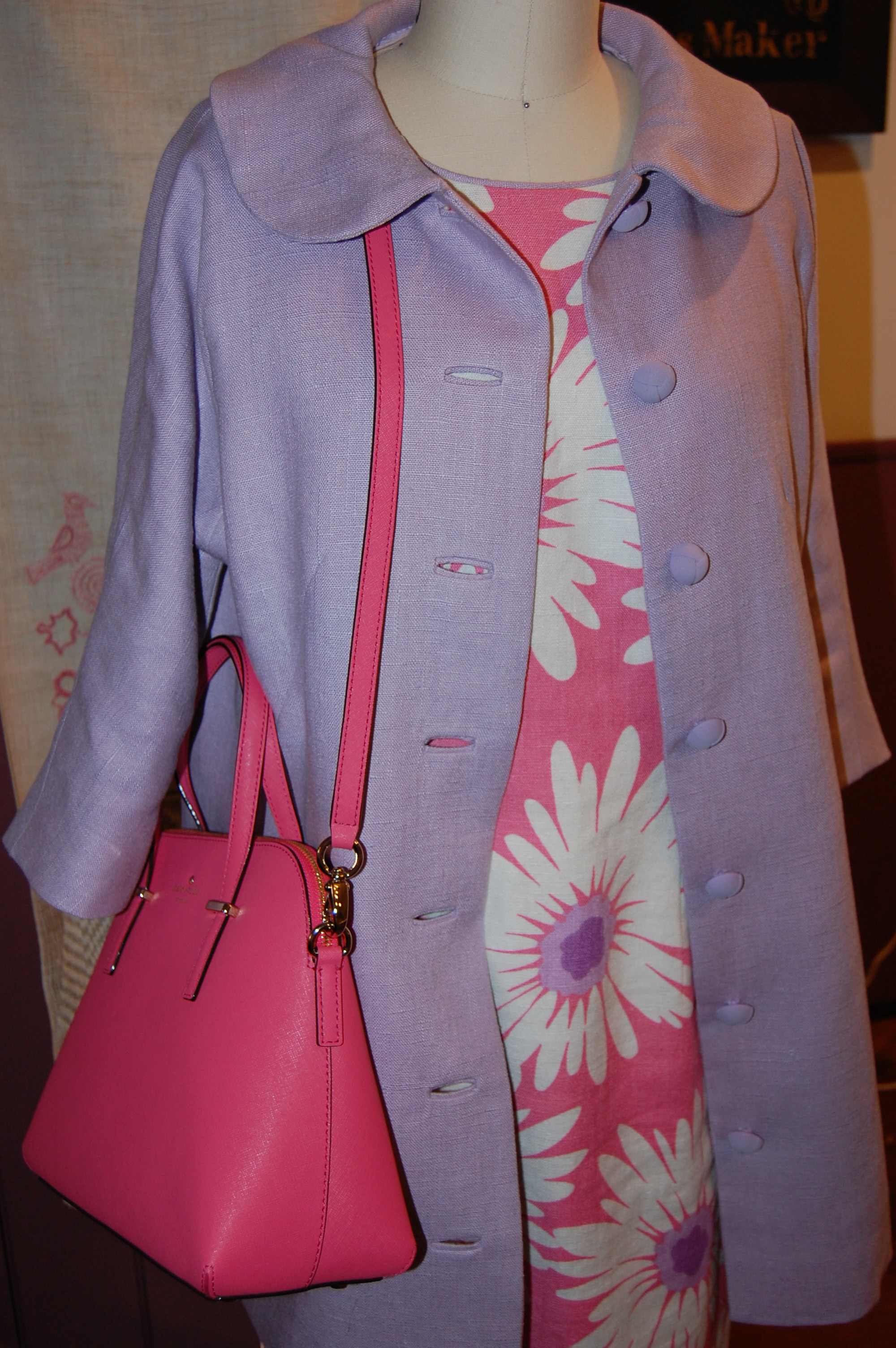
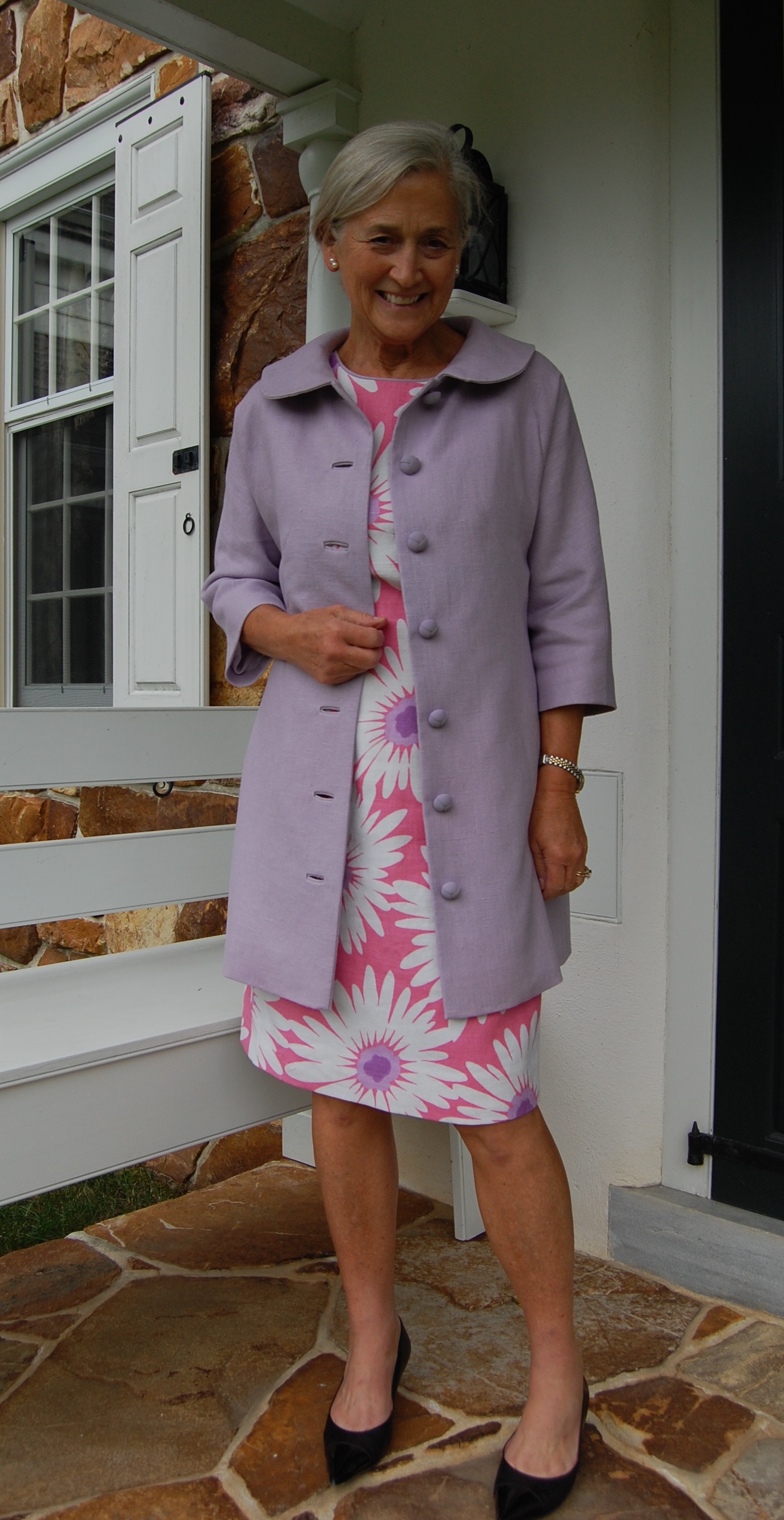
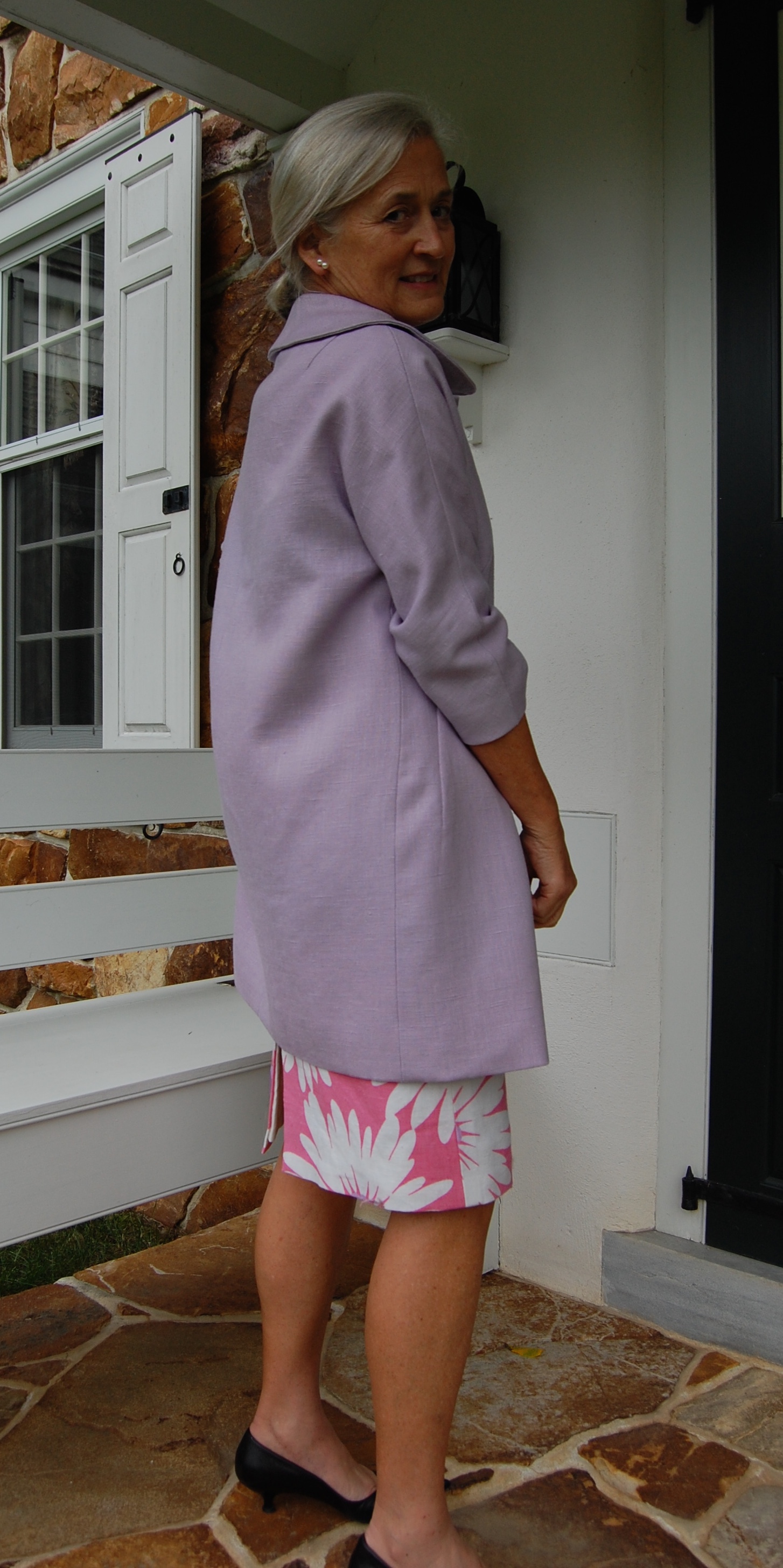
Summer slipped quietly away this week with nary a peep except for the sighs coming from my sewing room. No matter how hard I tried, I could not keep up with the calendar to finish my final Summer project.  However, a few days late on “delivery” doesn’t really upset me, as I can look forward to wearing my Madame Gres-designed coat next Spring.

Vogue Gres coat and dress

DSC_0851

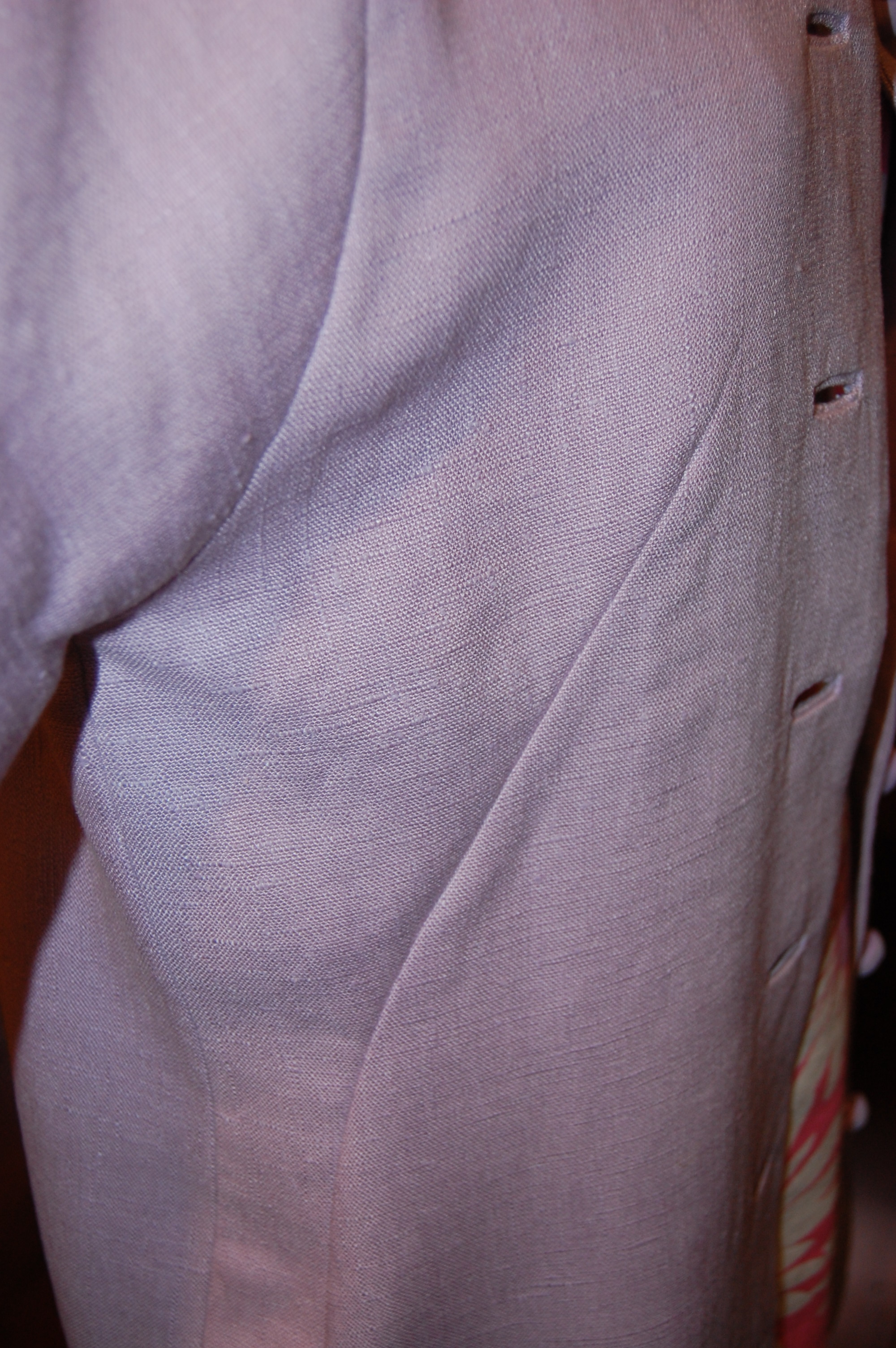
I am not sure I can remember a sewing project which I have enjoyed more. The coat pattern is actually quite a simple design, imaginatively shaped with unusual darts and seams. Perhaps the fact that I made it from vintage Moygashel linen helped make the sewing of it enjoyable, as the linen is so stable. Darts and seams can be crisply sewn and ironed, the grain of the fabric is so easy to see, and the fabric drapes with a fluid sturdiness, if that makes sense.

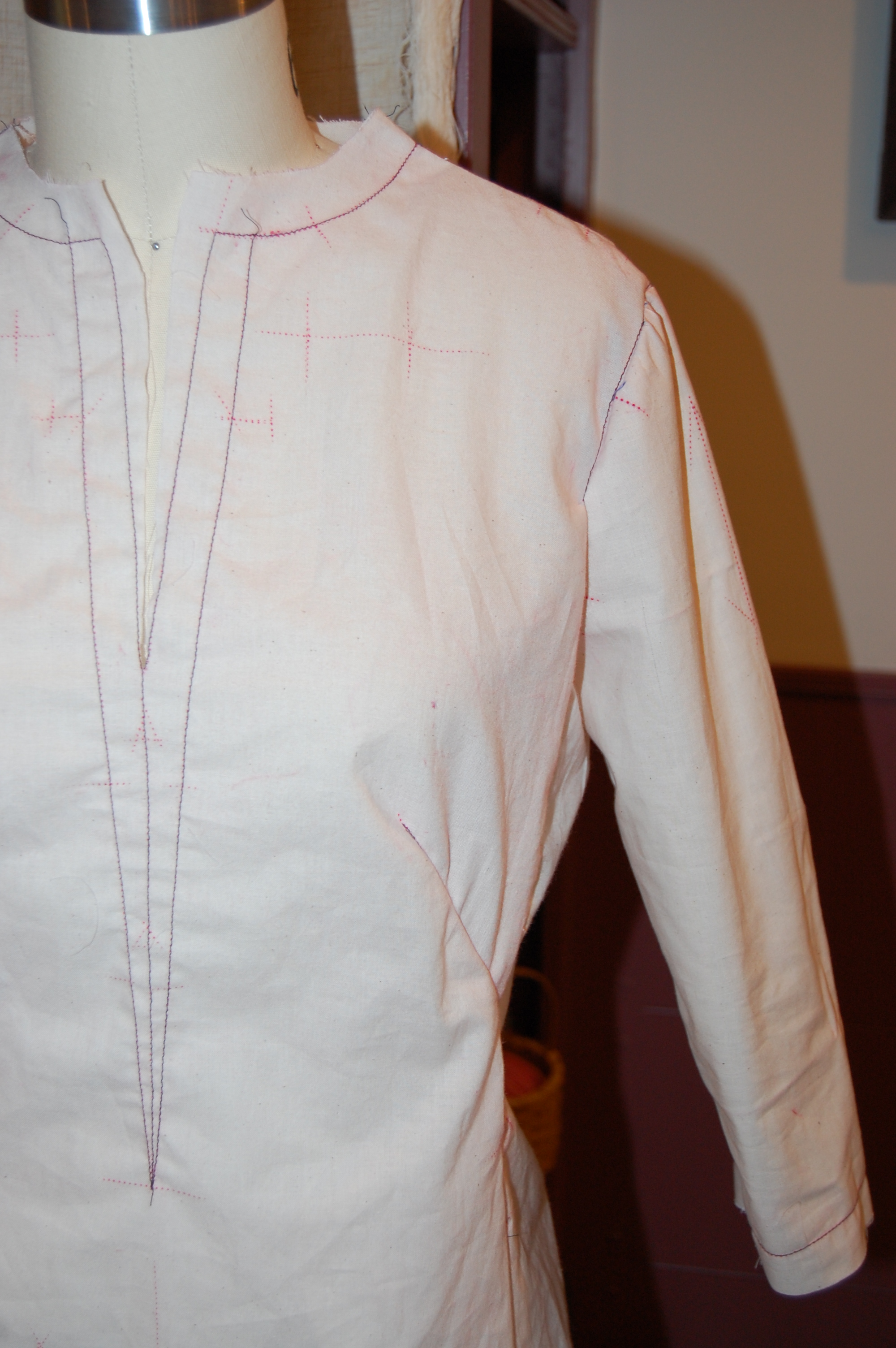
This shows the side darts which shape the coat and the dart/seam at the front of the kimono sleeve.

This shows the side darts which shape the coat and the dart/seam at the front of the kimono sleeve.

I covered the changes I made to those front darts in an earlier post; those were the only alterations I made to the final design except for lengthening the sleeves by one inch and the length of the coat by 1½ inches. Besides those shaping darts, there is one other feature of this coat which defines it. Do you know what it is?   Yes, it is the bound buttonholes and their buttons. Seven of them, to be precise.

The pattern instruction sheets call for bound buttonholes, as shown here:

I love how these vintage Vogue patterns give such precise instructions; there are various ways to make bound buttonholes, but the method described here is my favorite.

I love how these vintage Vogue patterns give such precise instructions; there are various ways to make bound buttonholes, but the method described here is my favorite.

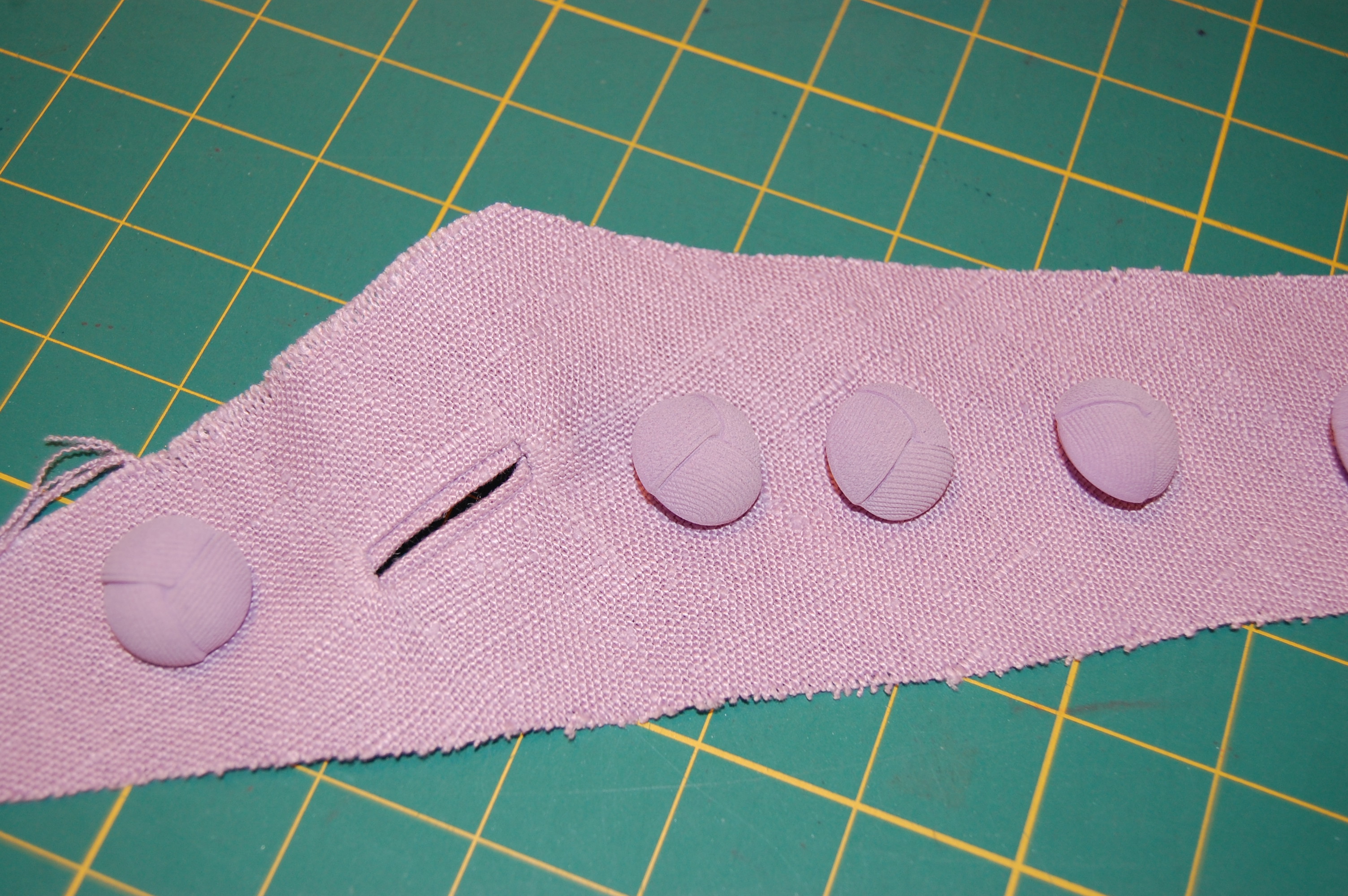
I have made a lot of bound buttonholes in my sewing life, but seven of them lined up as the focal point of the front of my coat is still a little intimidating. First of all, I had to find buttons that were “perfect.” I found some lavender buttons on the Britex website, and although they looked like a good match in color and appearance, ordering something like that online is always imprecise. However, when they arrived, they were, indeed, “perfect!” With buttons in hand, I made a sample buttonhole, as I always do.

DSC_0819

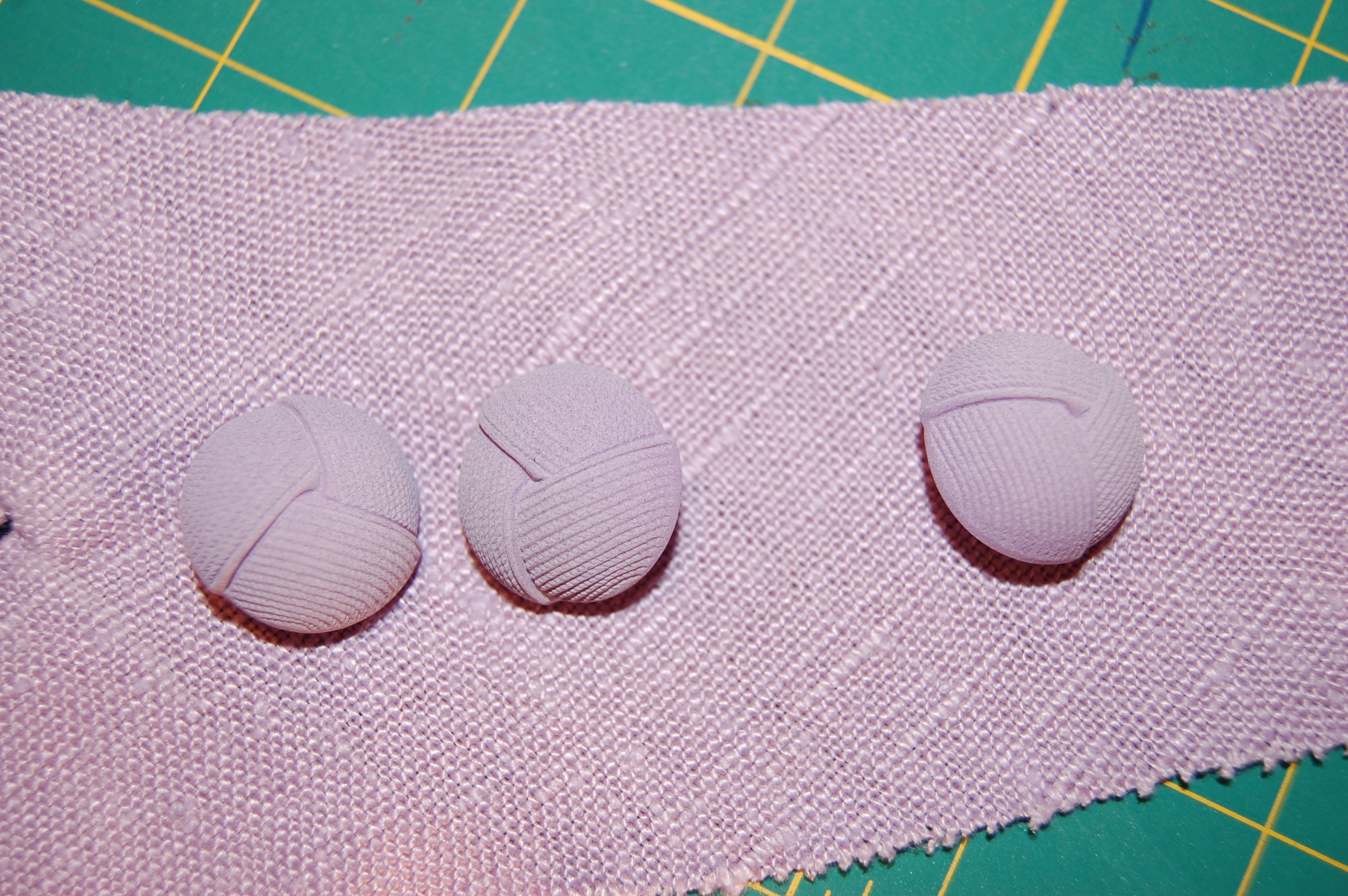
I think this photo shows the "monkey's knot" design in the buttons, which compliments the linen weave, I think.

This photo shows the “monkey’s knot” design in the buttons, which compliments the linen weave, I think.

Then it was on to a marathon buttonhole session one afternoon.

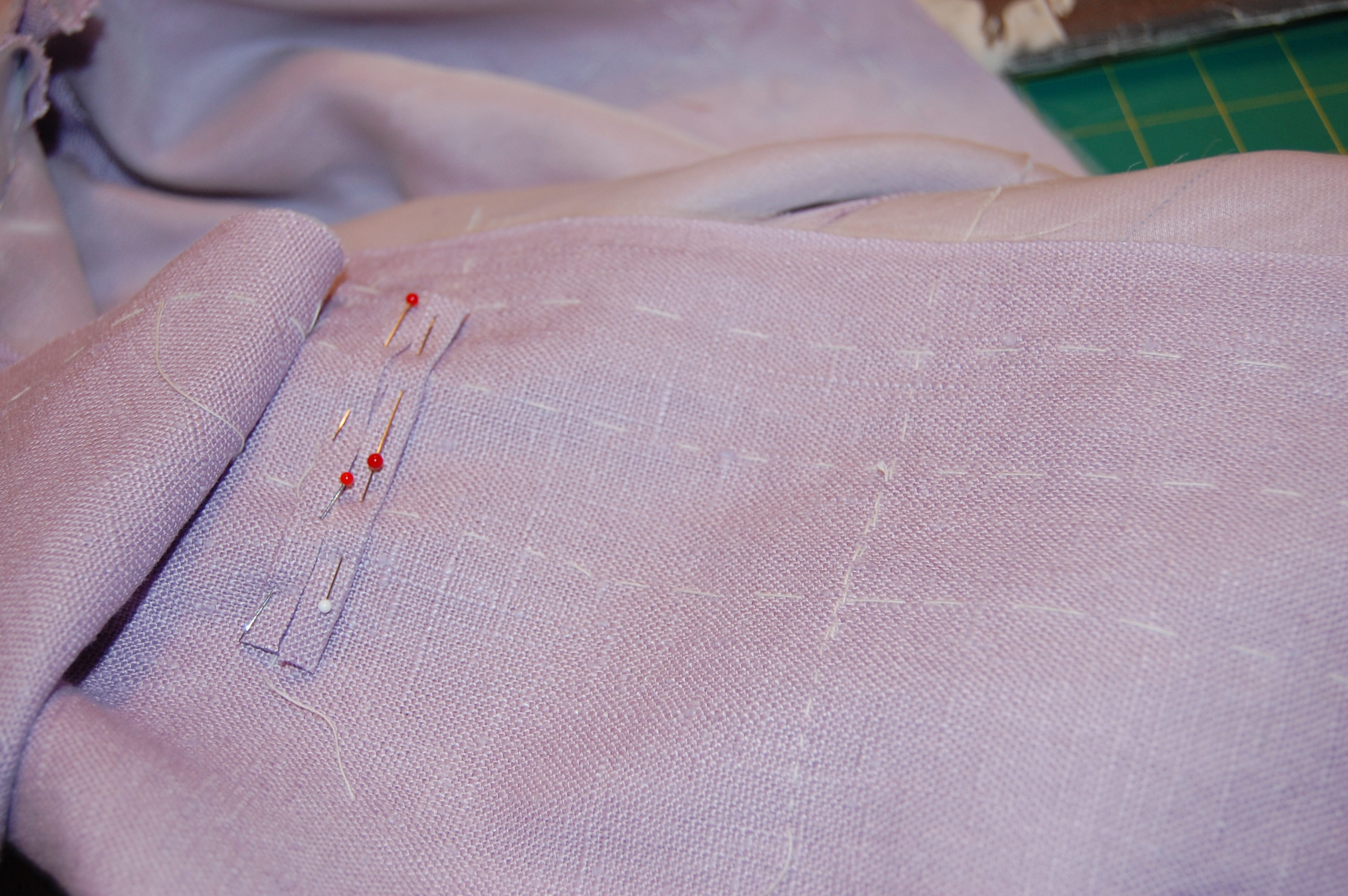
The most important ingredient in making successful bound buttonholes is precise marking.

The most important ingredient in making successful bound buttonholes is precise marking.

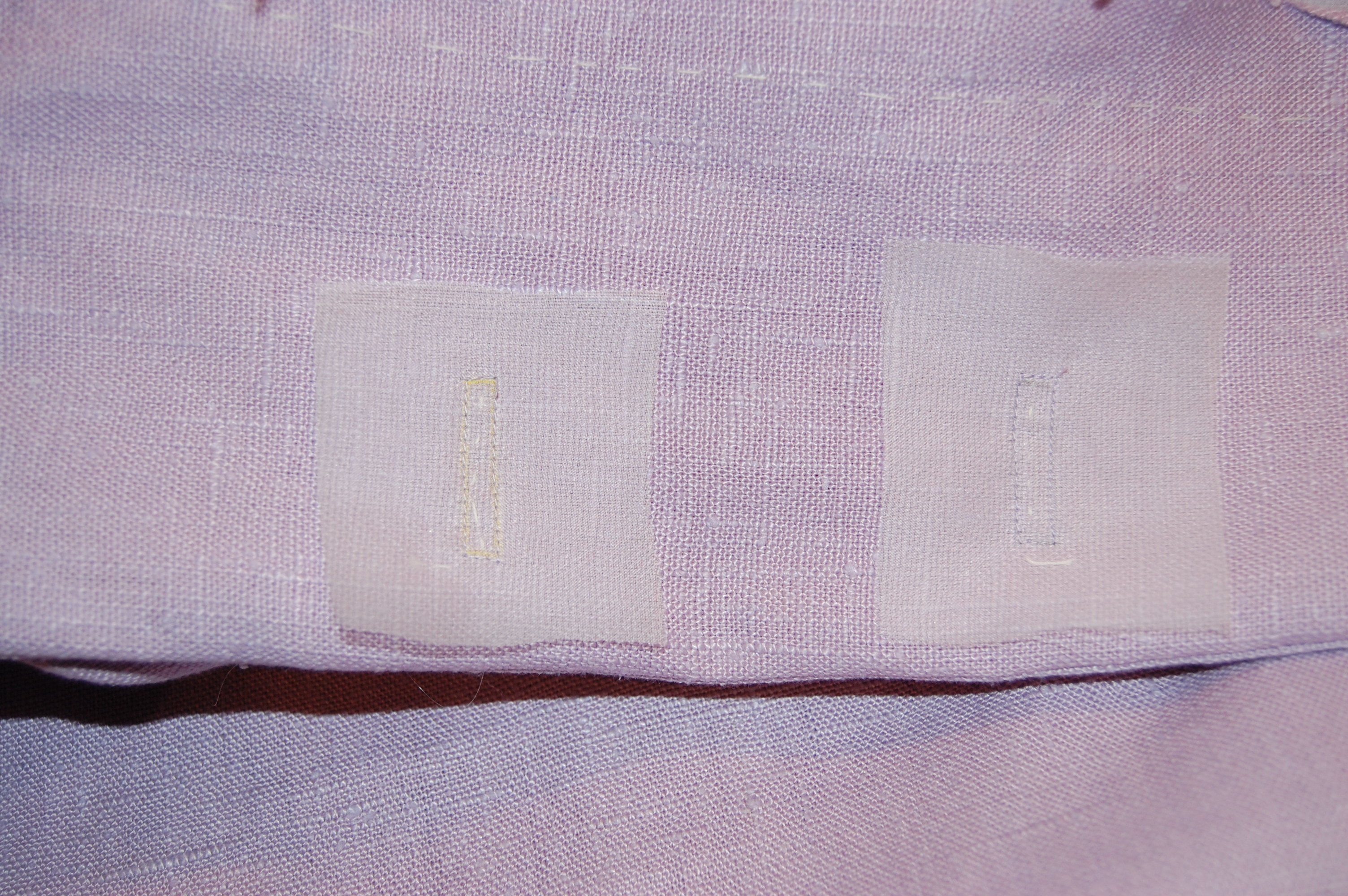
I finished the underside (on the facing) of the buttonholes using organza patches, which makes a beautiful, sturdy finish.

I finished the underside (on the facing) of the buttonholes using organza patches, which makes a beautiful, sturdy finish.

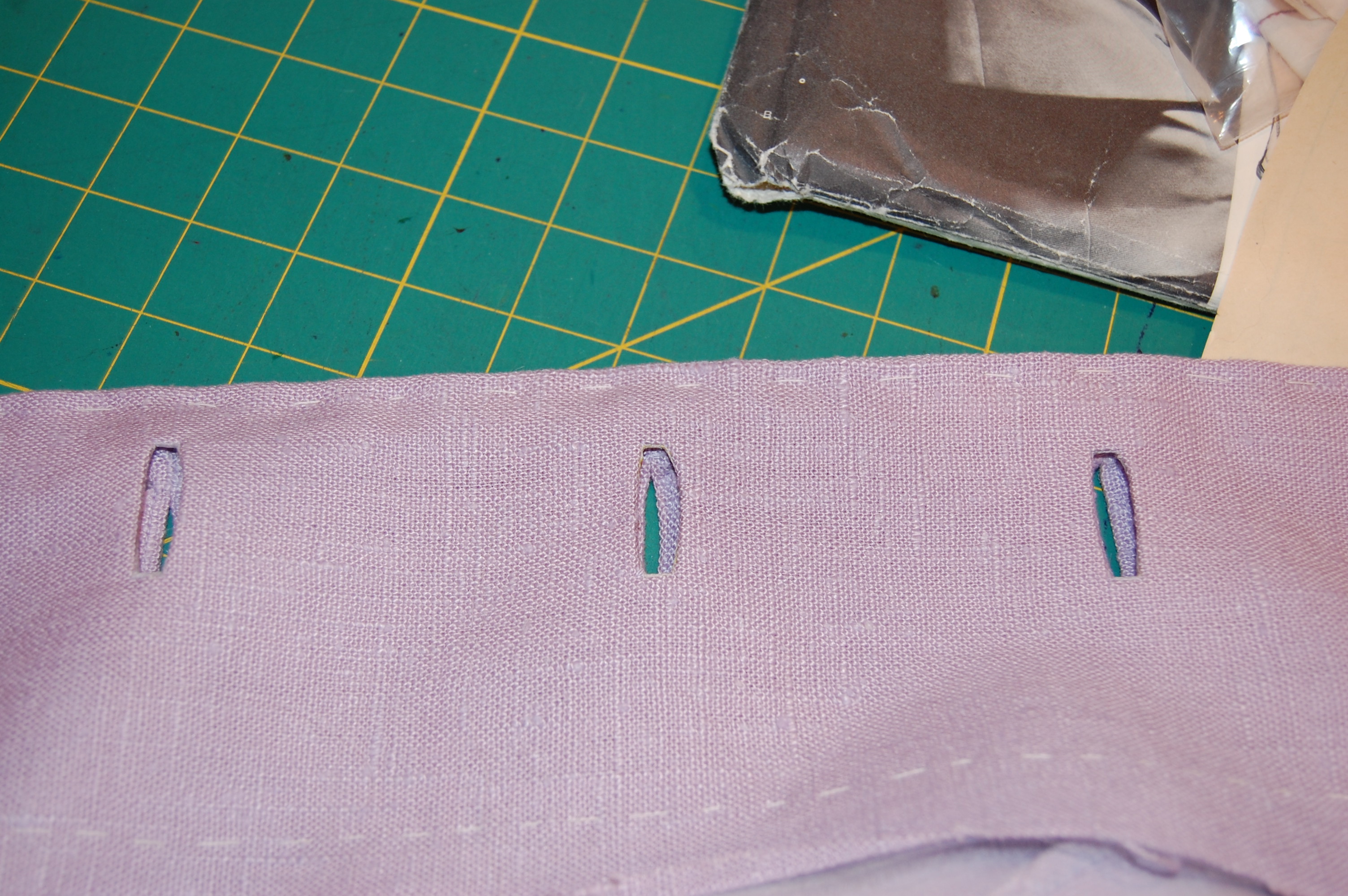
Here is the underside of the buttonholes before I finished the edges.

Here is the underside of the buttonholes before I finished the edges.

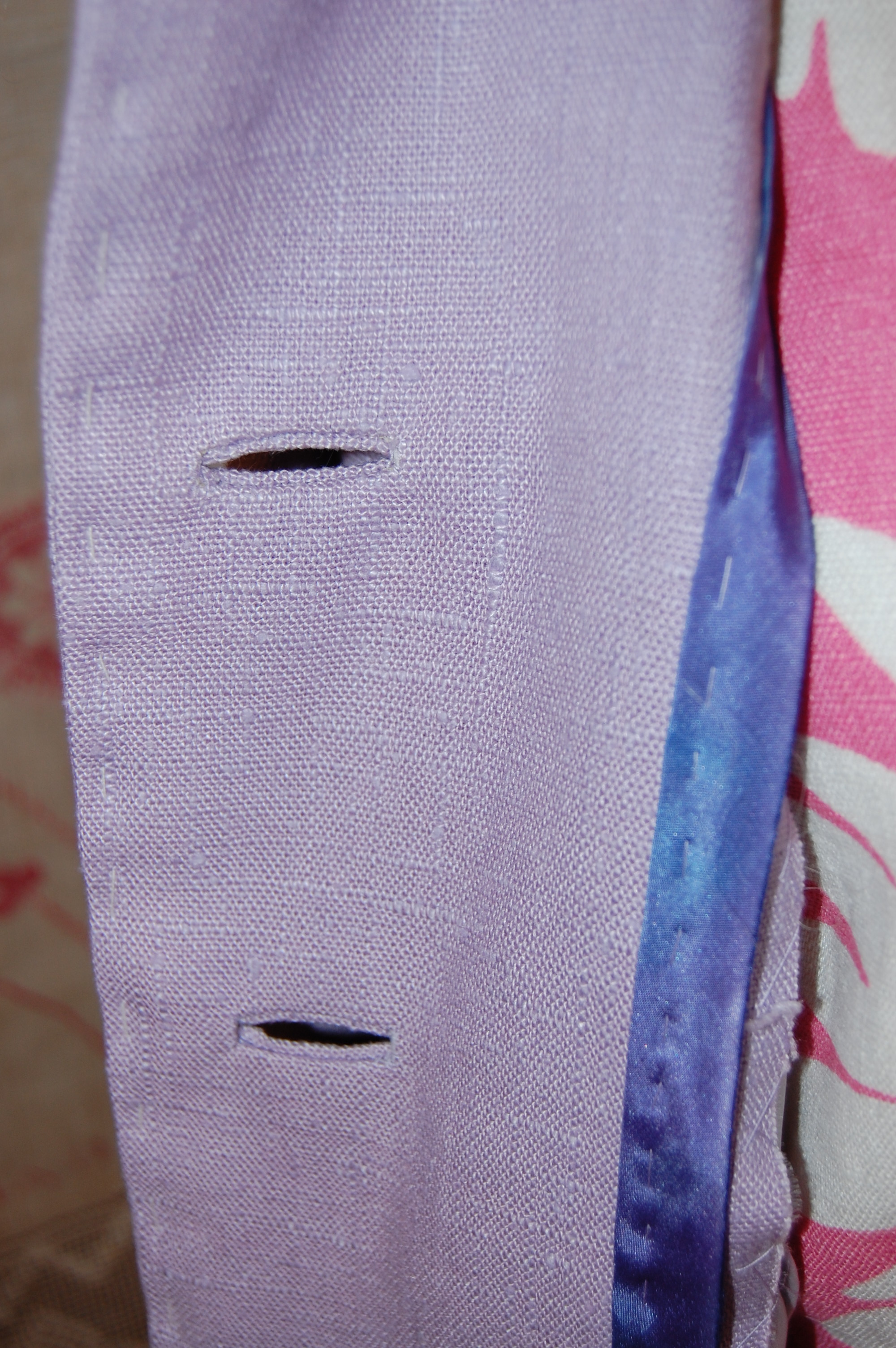
And here is the facing side, finished.

And here is the facing side, finished.

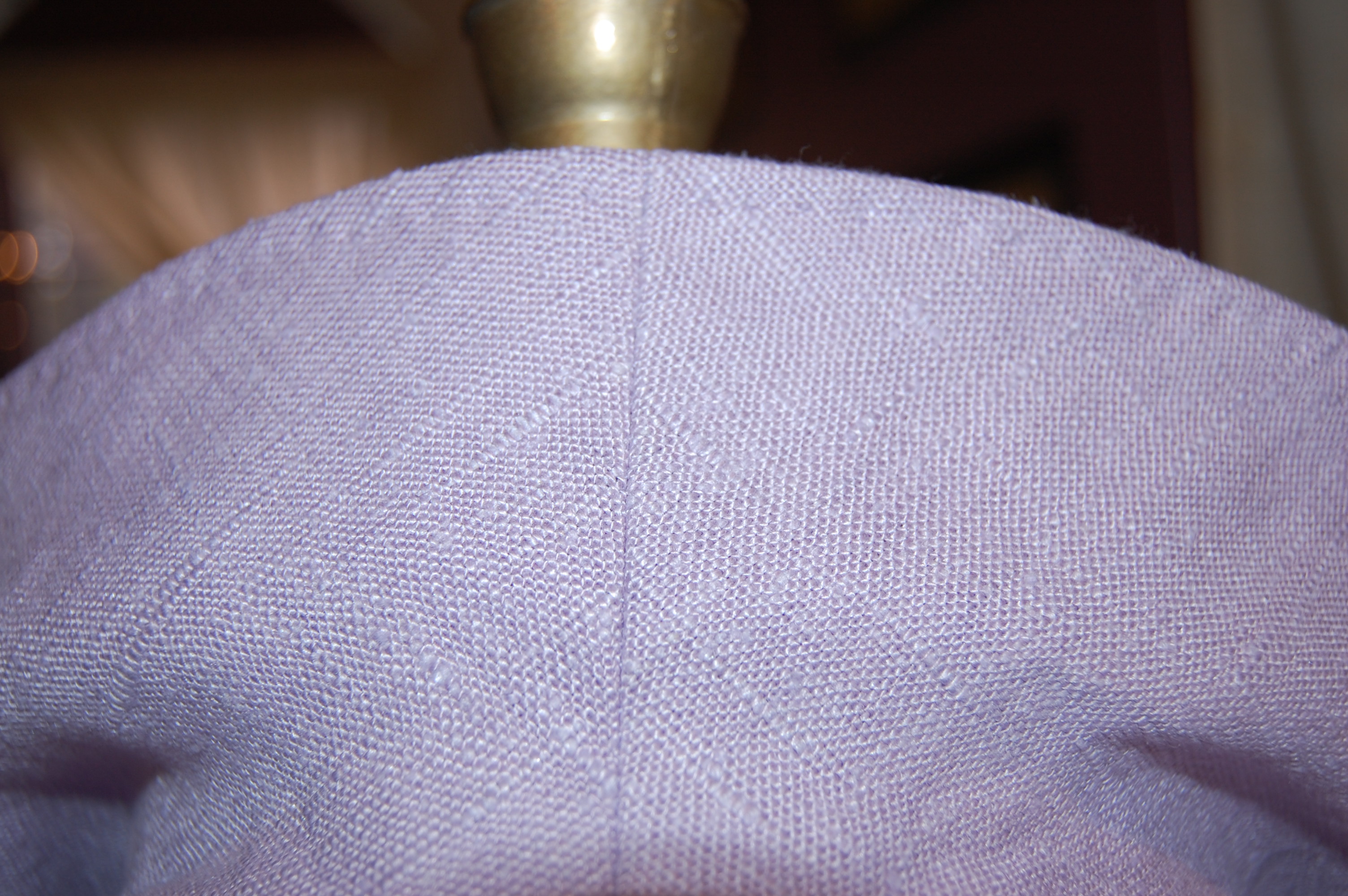
Another charm of this pattern is the coat collar, which is seamed in the center back on the bias, causing it to “turn” beautifully. I under-stitched the undercollar to help keep the perimeter seam properly in line (this is a trick I learned from one of Susan Khalje’s classes):

This is the undercover, showing center back seam and the under-stitching I used to secure the perimeter seam.

This is the undercollar, showing center back seam and the under-stitching I used to secure the perimeter seam.

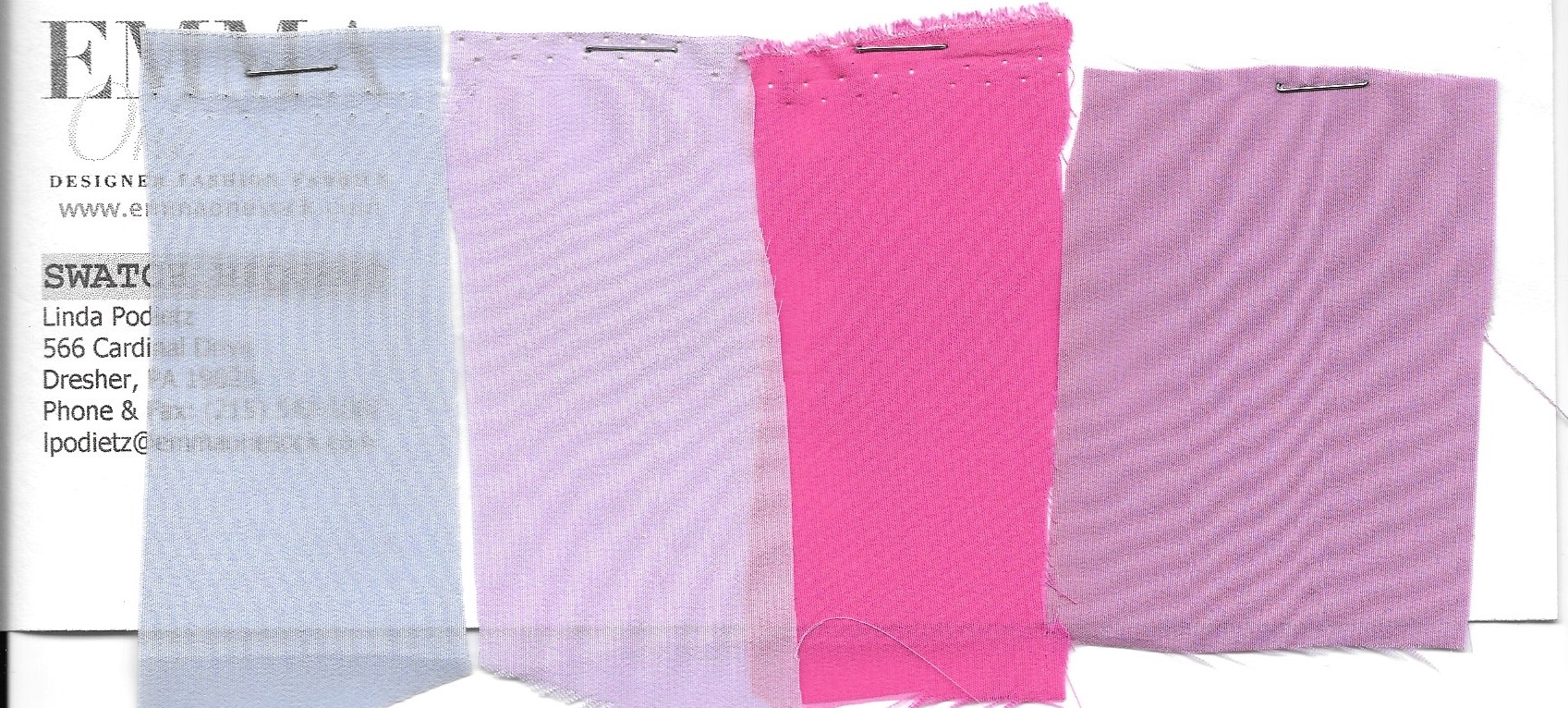
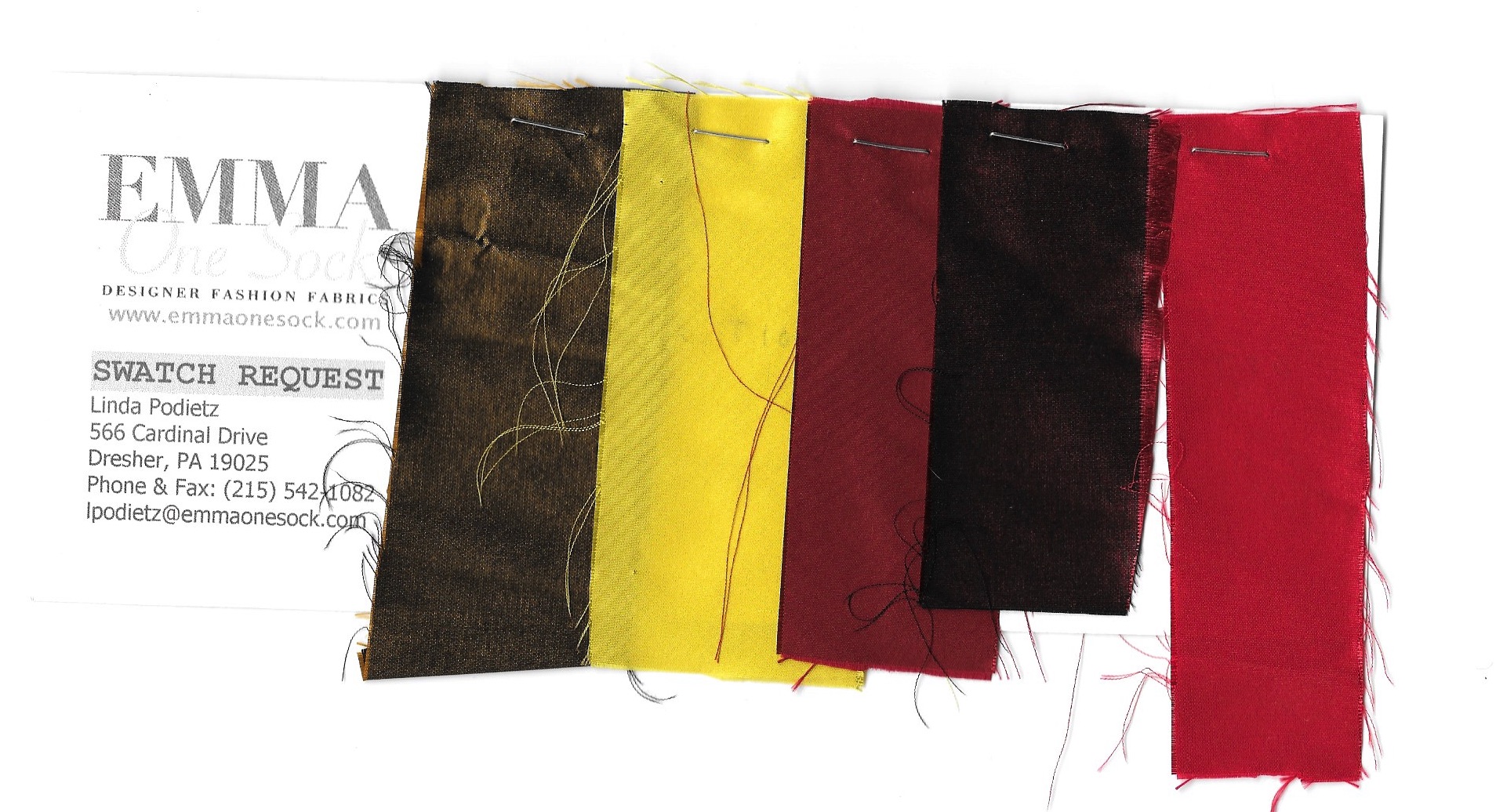
When it came to the lining, I knew I wanted to use silk crepe de chine. I ordered some swatches from Emma One Sock fabrics:

A Fitting finish swatches

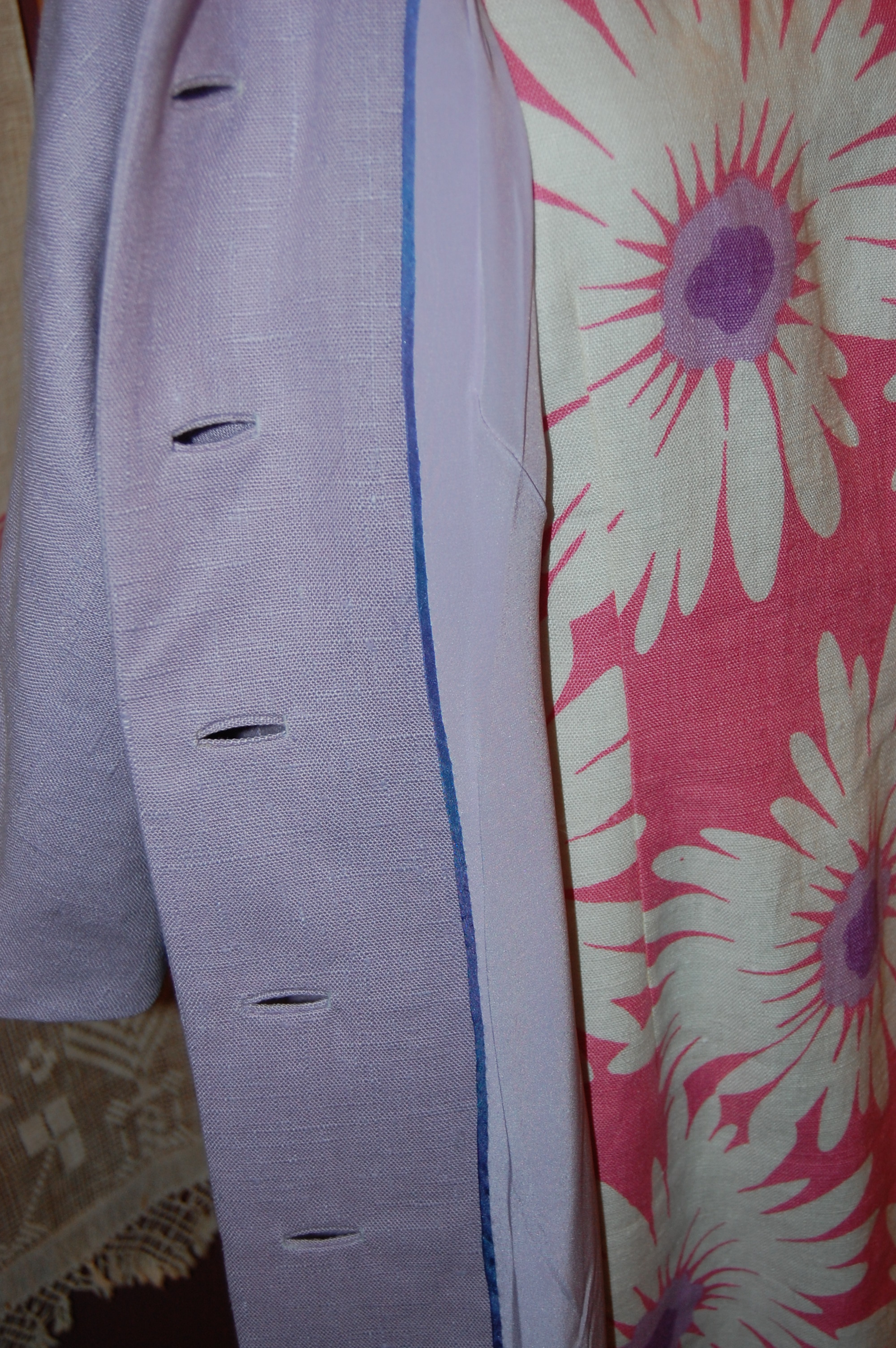
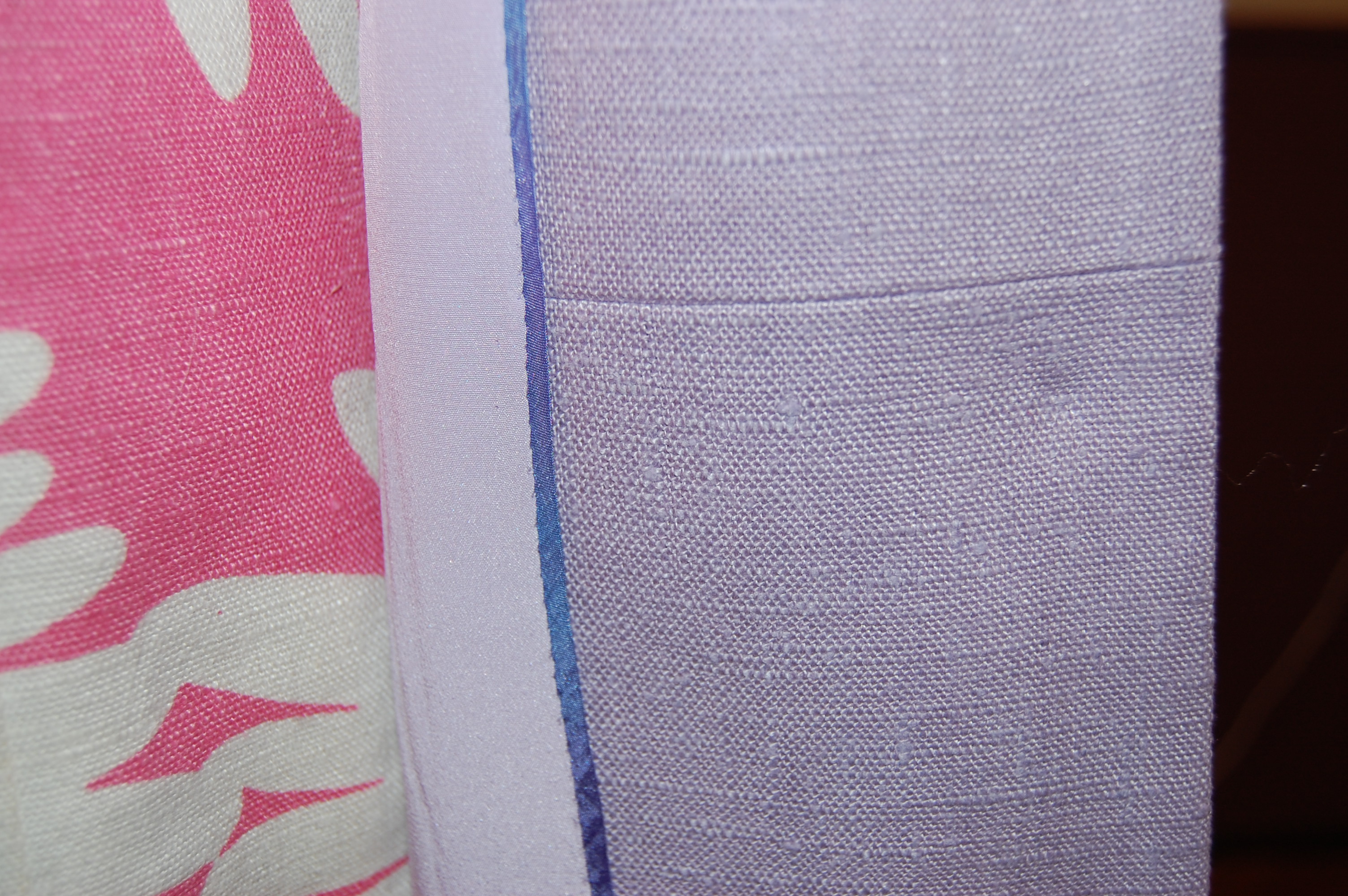
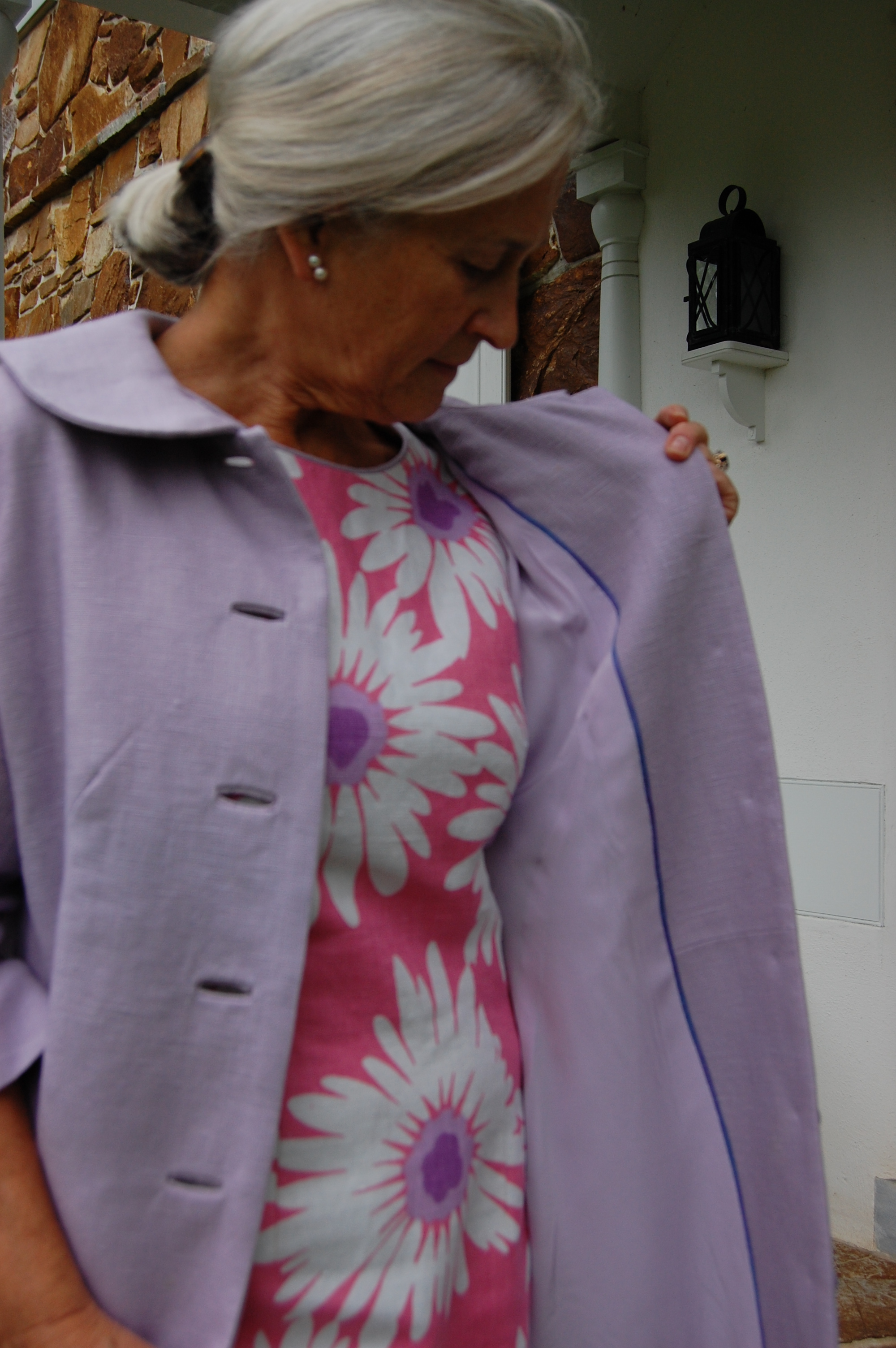
Fortunately my sister was visiting and so I could get her opinion on which one to order. I was a bit smitten with the idea of a bright pink lining, but she wisely asked if I hoped to wear this Spring coat with dresses other than the pink flowered one which had inspired it. Well, yes, I do want that flexibility! That made the decision easy – I chose the pale lavender silk, which is just about a perfect match. I added a bias, flat piped edge to the lining, which is now something I always do with coats and jackets I make. It is so easy and adds so much!
Fitting finish

Some of you may recall that I had to piece one of the facings because I was just a little short of the fabric I needed. Here is the seam on the left facing. I really don't think anyone will ever see it! (Except all of you, of course!)

Some of you may recall that I had to piece one of the facings because I was just a little short of  fabric. Here is the seam on the left facing. I really don’t think anyone will ever see it (except all of you, of course!)

DSC_0844

This is a good look at the bound buttonholes and what they add to the overall look of the coat. If you visualize machine made buttonholes in their place, you will get an idea of how vital the bound ones are to the design of the coat.

Another thing that will add to the total look of my 2016 Spring ensemble is this Kate Spade handbag which my grown children gave to me:

Fitting finish

DSC_0855

Fitting Finish

Fitting finish

Fitting finish

DSC_0837

Now all I need are lavender pumps…

43 Comments

Filed under bound buttonholes, Buttons - choosing the right ones, Coats, couture construction, kimono sleeves, Linen, Love of sewing, Moygashel linen, Uncategorized, Vintage fabric, vintage Vogue Designer patterns, vintage Vogue patterns from the 1960s

Oh, The Things We Can Learn!

When is a pattern envelope not just a place to keep a tissue pattern? When it is a mini lesson in sewing, style, history, elegance, and story-telling. Of course, I am thinking primarily of vintage pattern envelopes – and because I primarily sew from Vogue patterns, those are the focus of my thoughts.

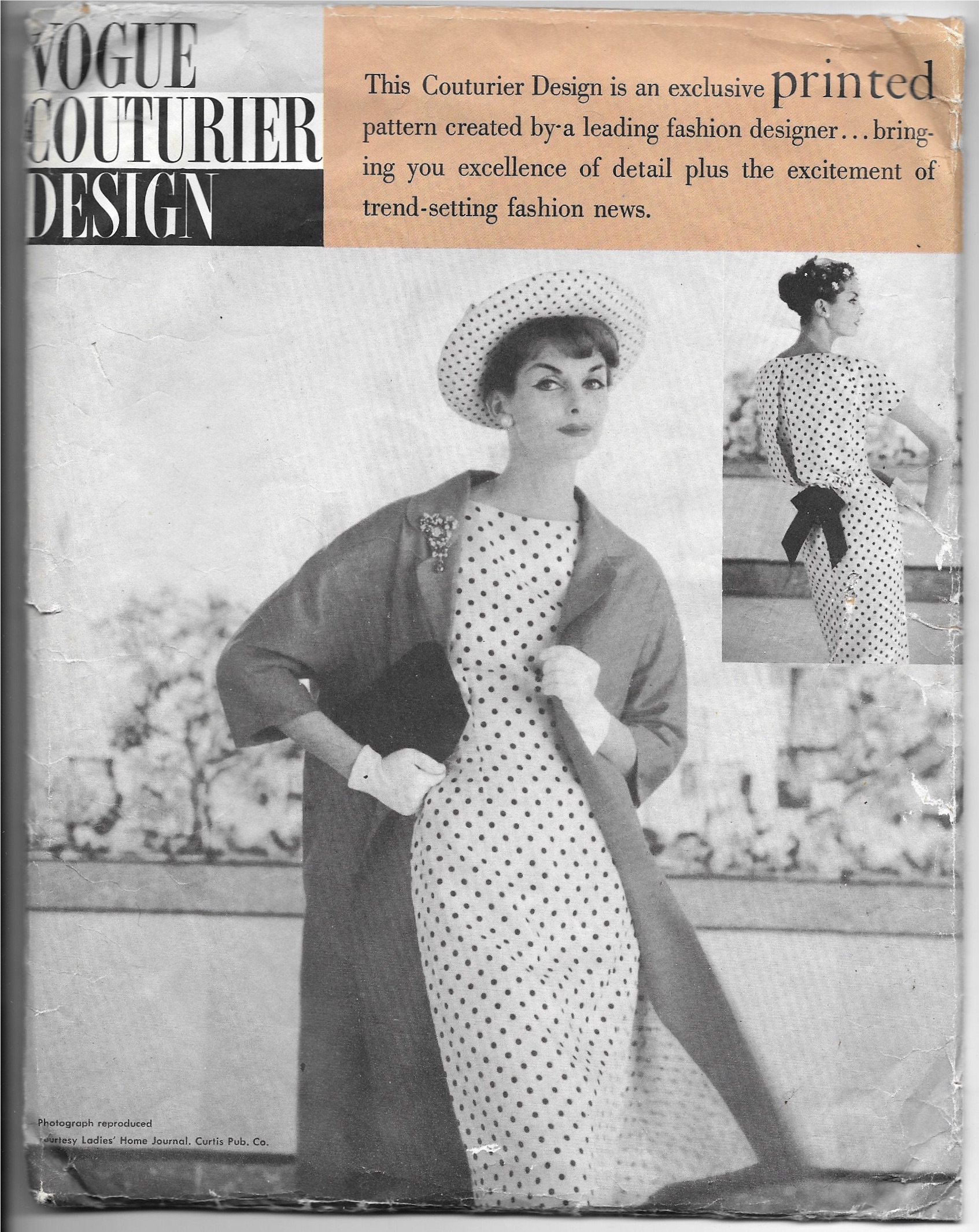
I am also limiting my short exploration of these topics to the course of about ten years, from approximately 1956 until 1966. Most of the pattern art from this time period was in illustration form rather than photography. There were exceptions, such as this classic polka-dotted dress and coat ensemble from 1959:

The reverse of this envelope has very precise sketches of the fronts and backs of the dress and coat. This is one of the few envelopes from this period - 1958 - that I have seen that features photography rather than illustration art.

The reverse of this envelope has very precise sketches of the fronts and backs of the dress and coat. This is one of the few envelopes from this period – 1958 – that I have seen that features photography rather than illustration art.

It was up to the fashion illustrators and artists to represent the pattern accurately. Darts, seams, buttons, belts, pockets, etc. all had to be clearly indicated in the illustrations on the fronts of the envelopes and in the thumbnail sketches on the back of the envelopes. Home dressmakers wanted to know these things about a pattern before purchasing it – we still do! Here is a great example of the clarity of these pattern illustrations in regard to these items:

The darts, seams, and buttons are clearly delineated in this artwork.

The darts, seams, and buttons are clearly delineated in this artwork.

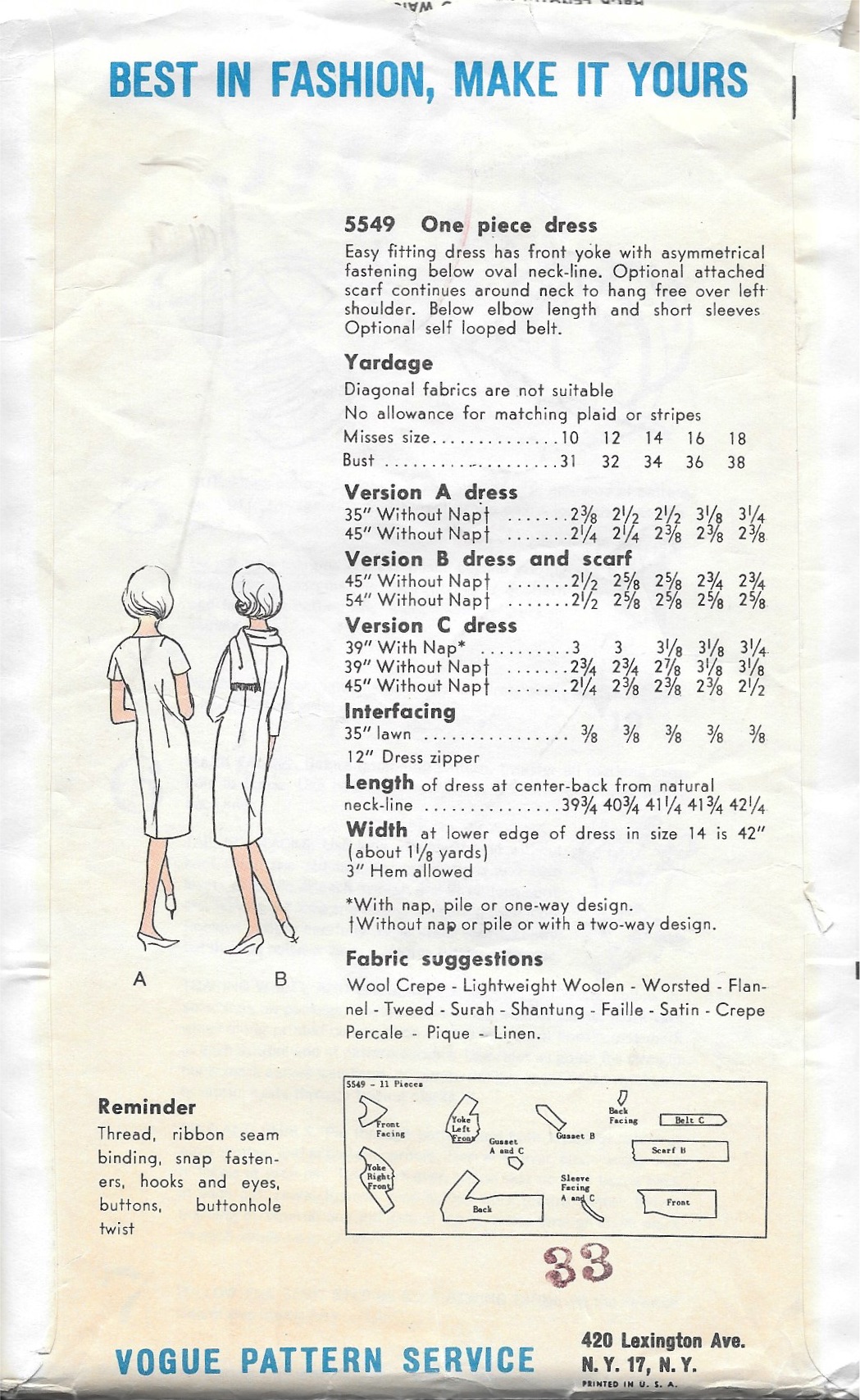
The back of this pattern also gives lots of additional sewing information. The thumbnail sketches clearly show that there is no back zipper. Among the details listed is a 12” zipper. That can only mean that a side zipper is used – which makes sense as it is paired with the front-buttoned bodice.
Oh the things we can learn, no 2

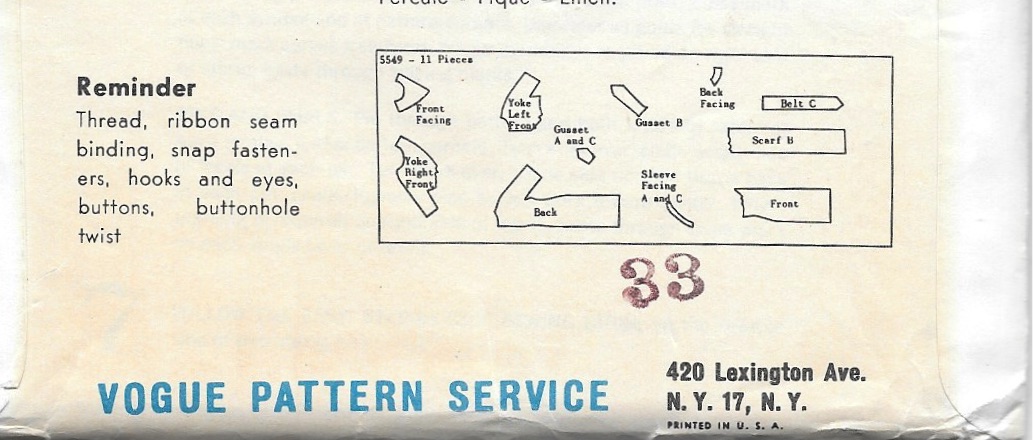
Further scrutiny of the pattern layout shows a gusset, obviously for use under the arm. If you, as a dressmaker, were uncomfortable with putting in a gusset, then maybe you would want to avoid this particular pattern!

It is such an advantage to be able to see the shapes of the pattern pieces in these layouts.

It is such an advantage to be able to see the shapes of the pattern pieces in these layouts.

It was also up to the fashion illustrator to make the pattern look relevant to one’s life. Different views were often shown in varying colors, widening the visual appeal. They were also shown in dressier or more casual renditions, making the pattern attractive to different lifestyles and age groups. These two patterns clearly show this endeavor:

Oh the things we can learn, no 4

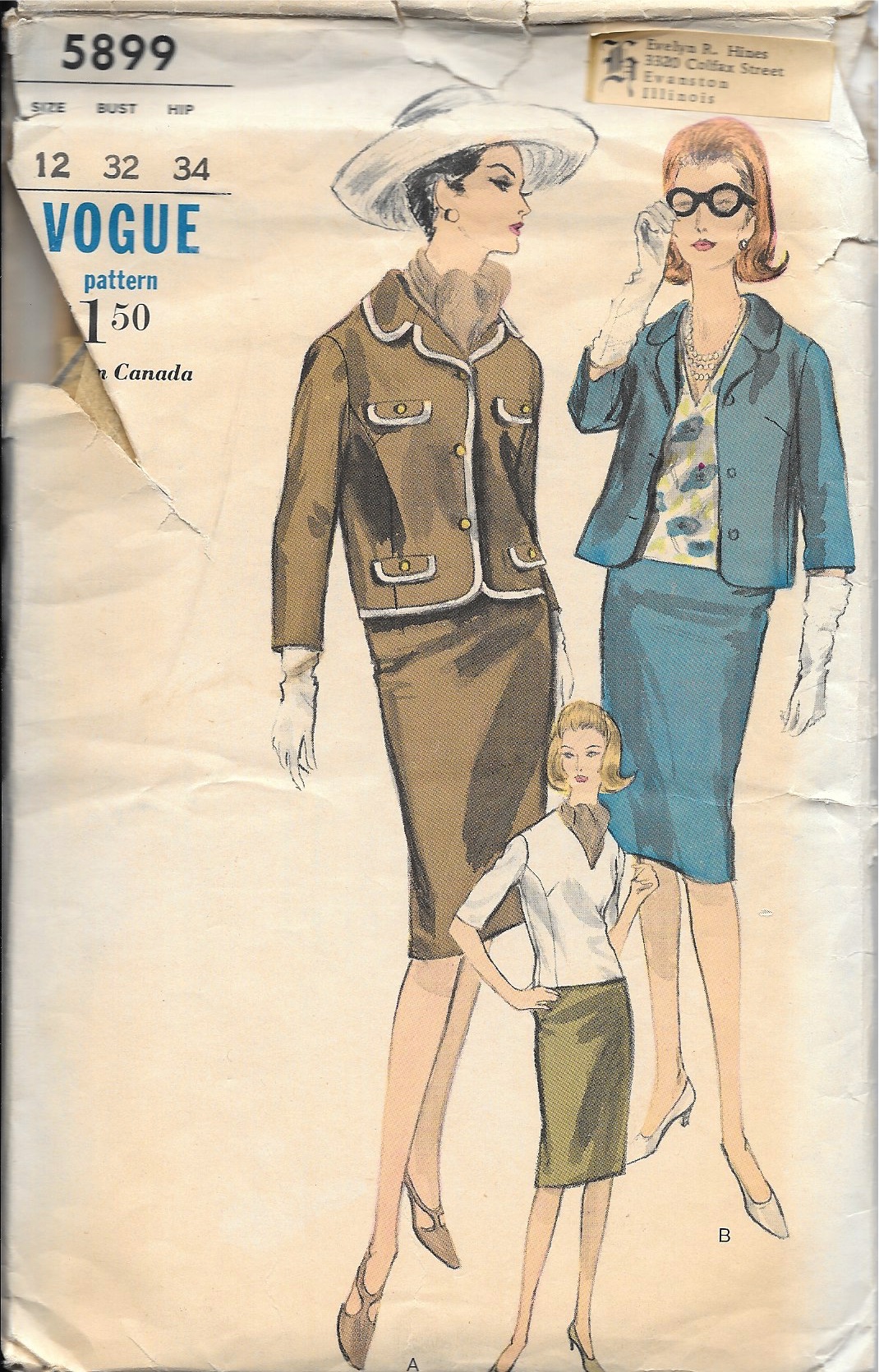
The inclusion of accessories in the pattern illustration from this time period shows just how much Vogue and other pattern companies were selling a complete look. They were saying “Start with this pattern, add gloves, a bangle bracelet or two, sunglasses or a hat, maybe a scarf, earrings, high heels, and a handbag, and you, too, can walk out looking like a million dollars!” The great desire in looking well-dressed and chic during this time period is so beautifully reflected in these pattern envelopes.

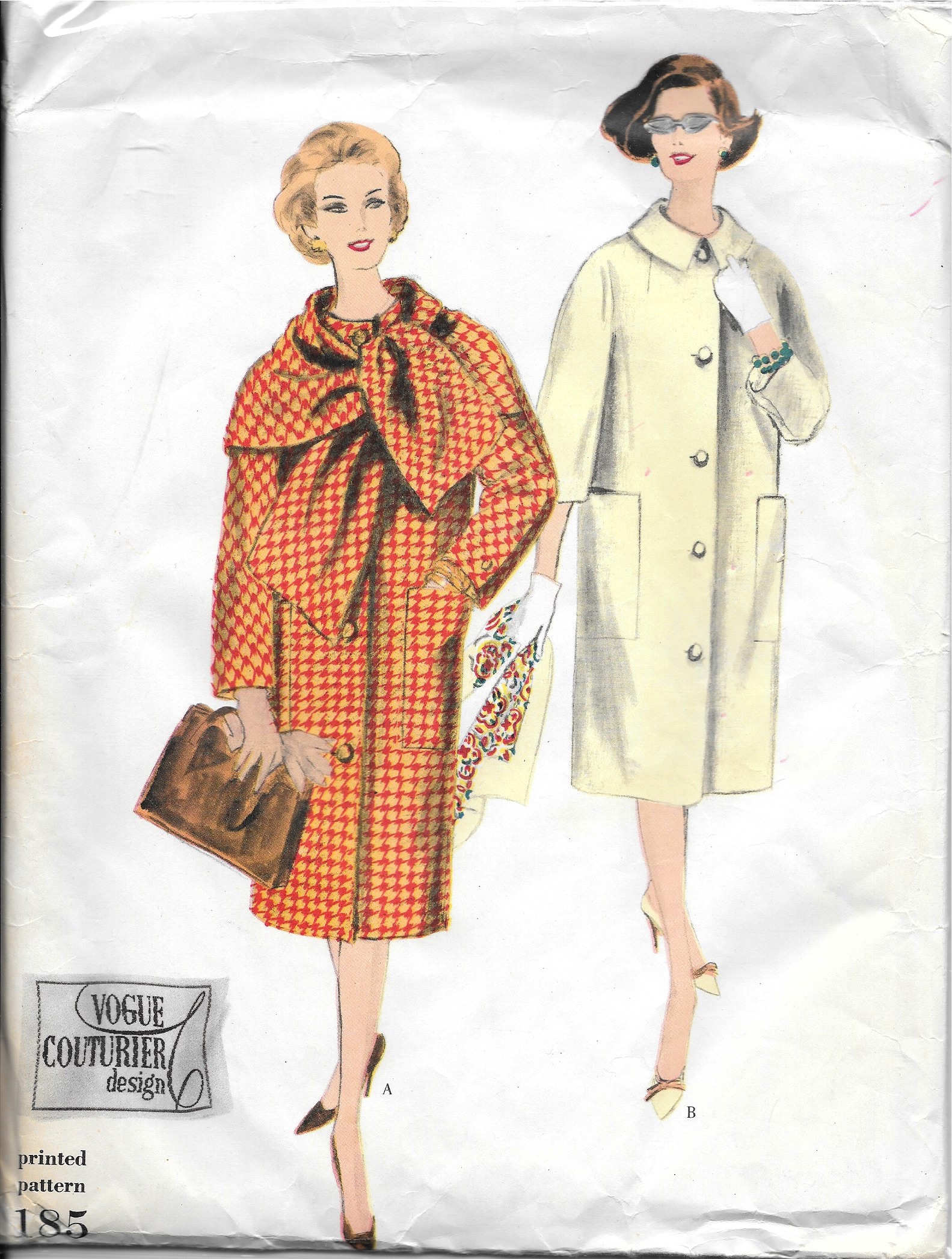
Gloves, gloves and more gloves! And look at those glasses!

Gloves, gloves and hats and scarves…   And look at those glasses!

This has got to be one of my favorite examples of pattern art: the model in white holding the scarf so casually, the stylish shoes, and the large clutch handbag on the model on the left - lovely and evocative!

This has got to be one of my favorite examples of pattern art: the model in white holding the scarf so casually, the stylish shoes, and the large clutch handbag on the model on the left – lovely and evocative!

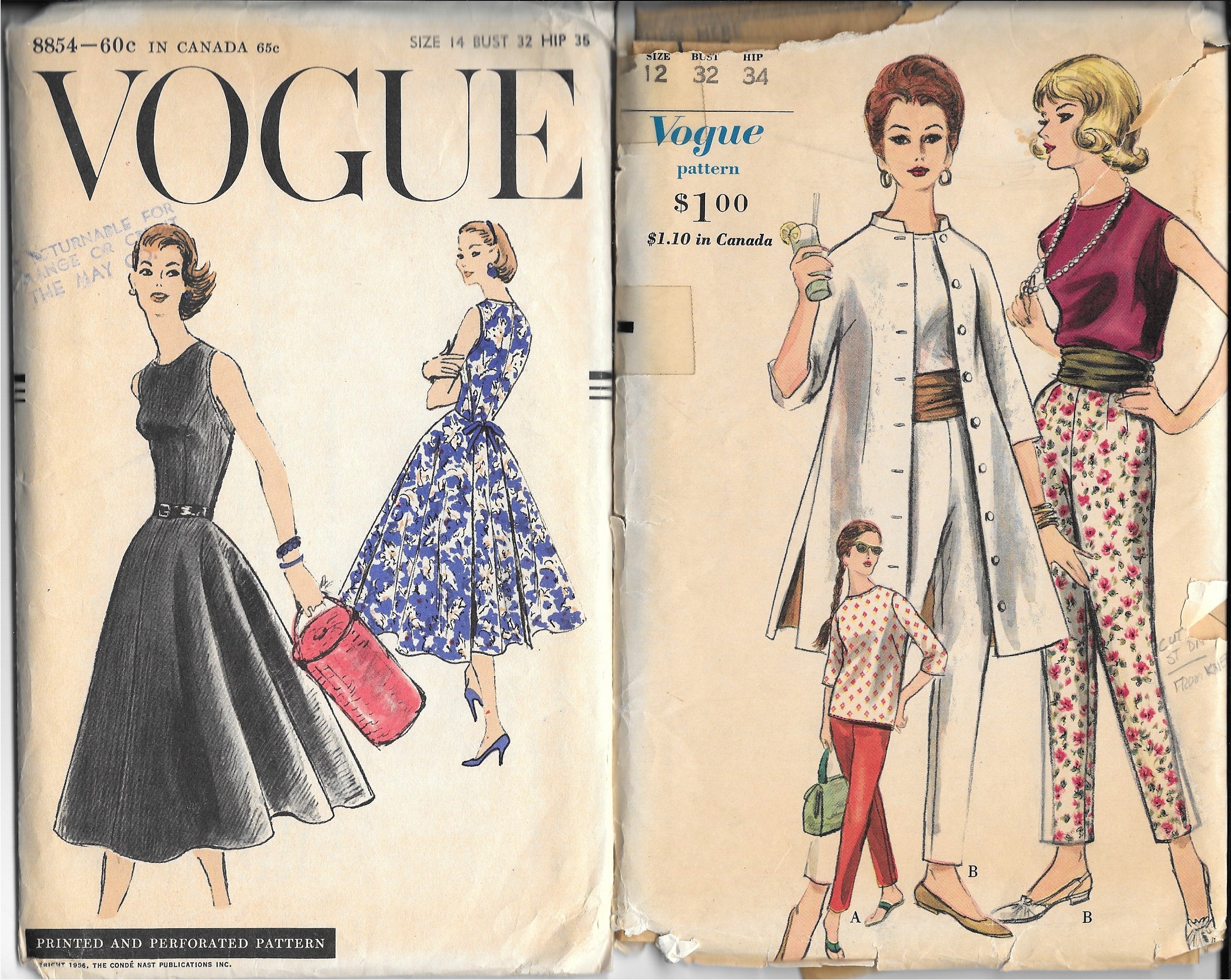
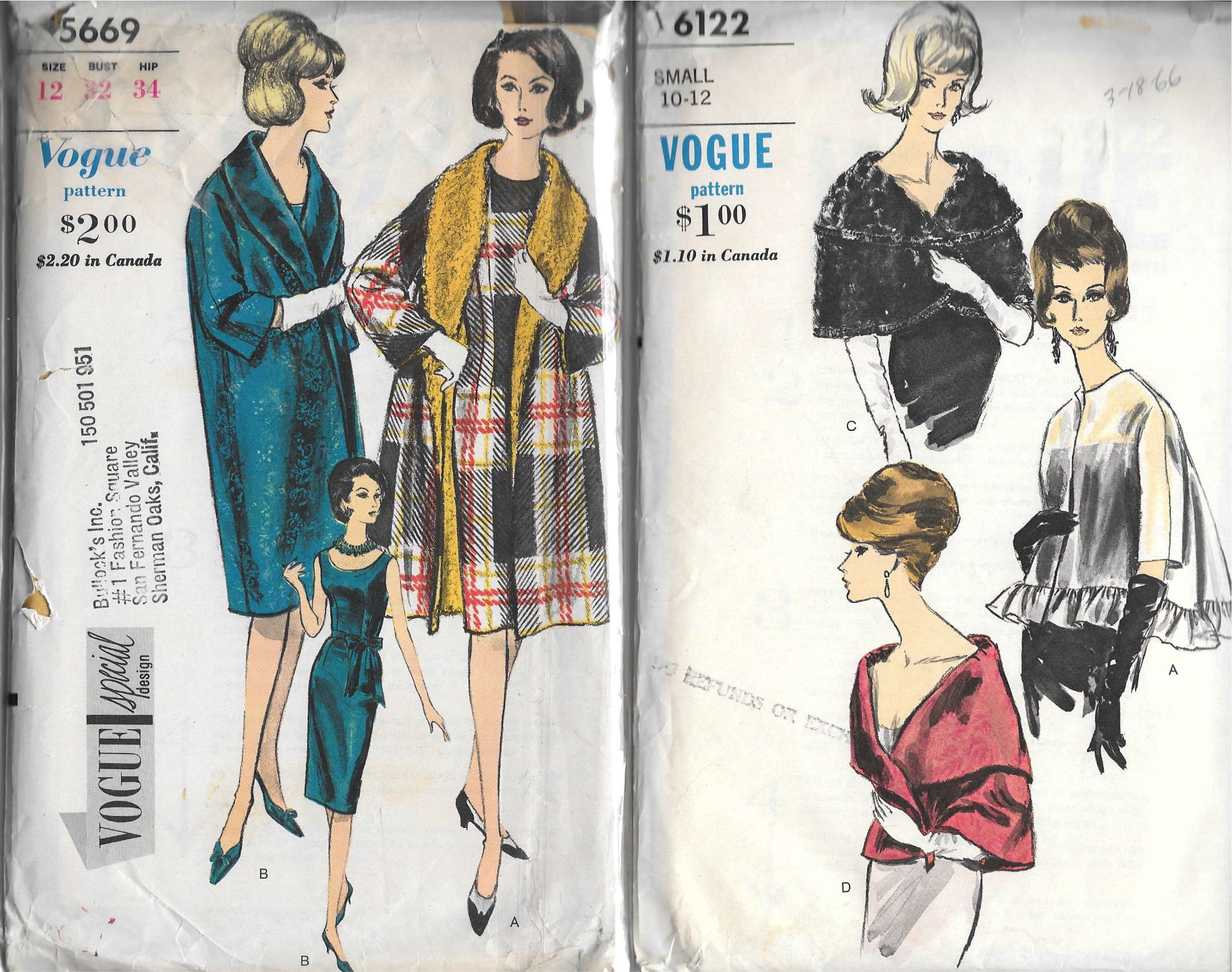
One way of dating pattern envelopes is by looking at the hairstyles of the illustrated “models.” After about 1960, Vogue stopped including the copyright date on their envelopes. But it’s fairly clear by the bouffant and flipped hairstyles on the pattern on the left that we are looking at one from the early to mid-‘60s.  The one on the right is a few years later, based on the hairstyles alone.

Note, too, how the Vogue masthead changed during this short time period.

Note, too, how the Vogue masthead changed during this short time period.

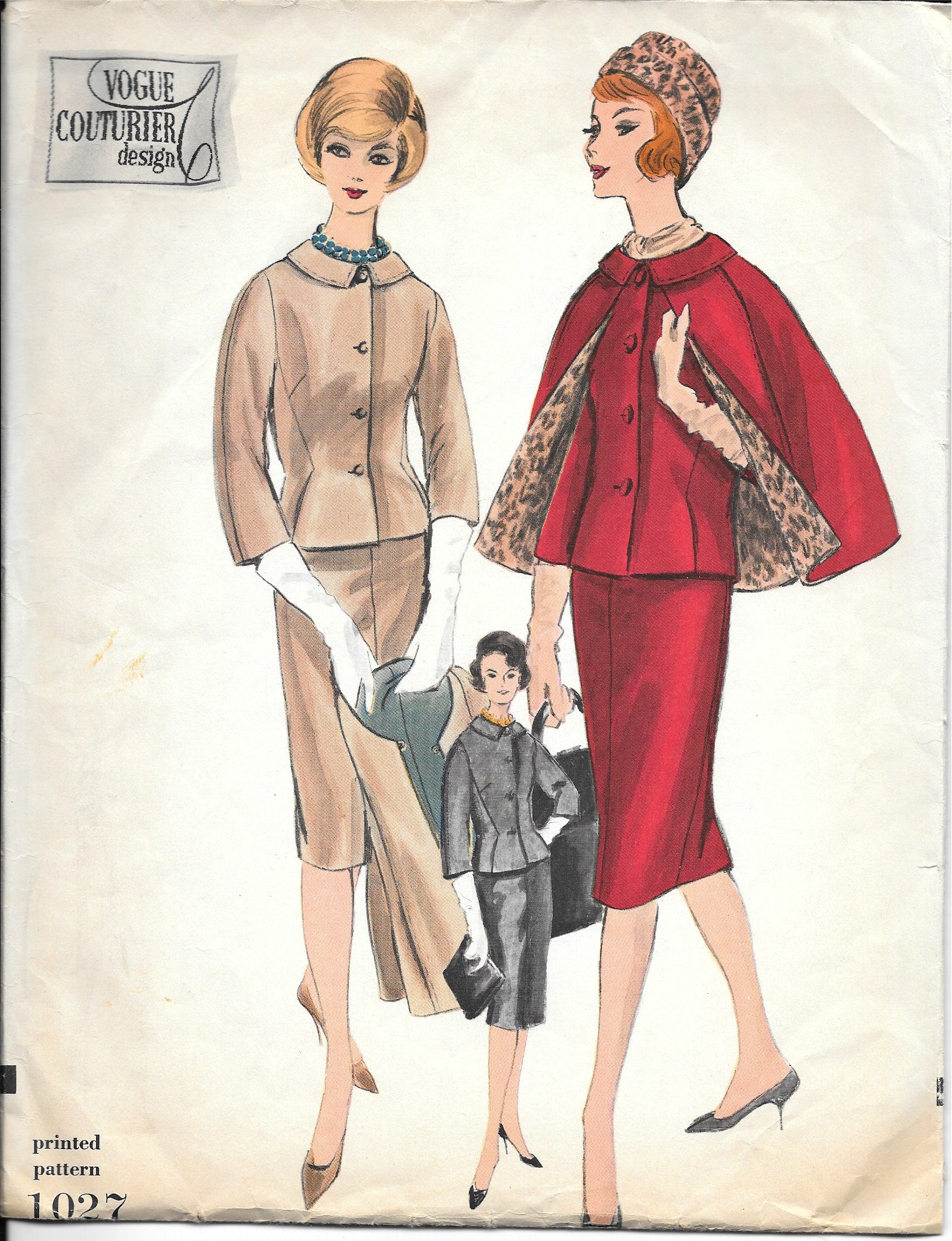
Finally, I am delightfully intrigued by the almost universal depiction of “elegance” on the pattern envelopes from this period. From the leopard print hat and lined cape on this suit from 1959:

Oh the things we can learn, no 8

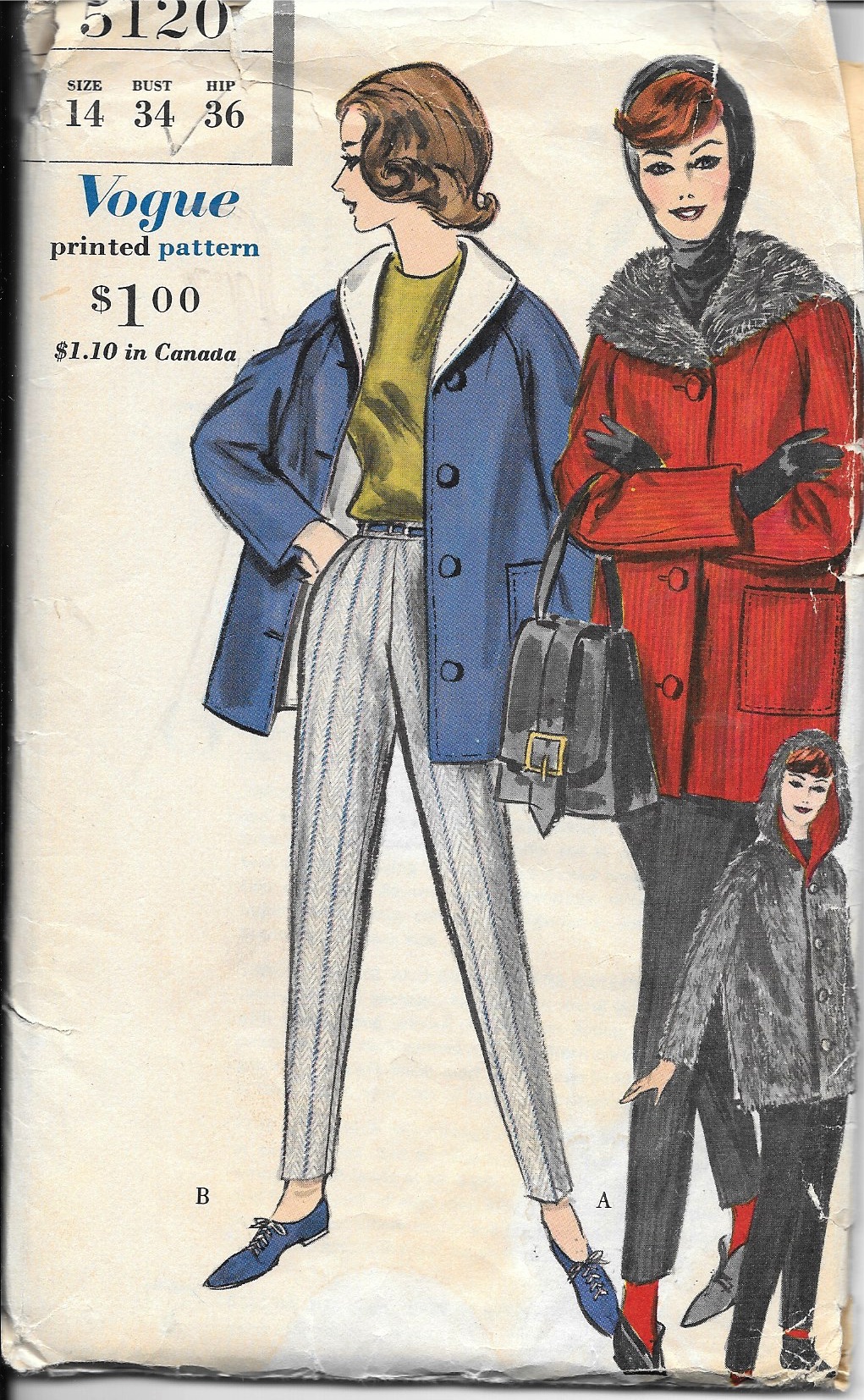
to this reversible car coat from the early ‘60s:

The model in the red version of the coat strikes a chic and elegant pose with her hair tucked under a scarf, her arms casually folded, and with her stylish handbag...

The model in the red version of the coat strikes a chic and elegant pose with her hair tucked under a scarf, her arms casually folded, her stylish handbag looped over one arm …

to this cocktail dress and coat ensemble from the mid ‘60s:

Oh the things we can learn, no 10

the message seemed to be: “These beautiful clothes which you can create are ladylike and elegant (even the casual ones), and you will be, too, when you wear them!” Perhaps Virginia Woolf said it best: “There is much to support the view that it is clothes that wear us and not we them; we may make them take the mould of arm or breast, but they would mould our hearts, our brains, our tongues to their liking.”

And therein lies the intrigue of it all. The story, which begins on the outside of the pattern envelope by way of the artist’s hand, becomes our own to finish when we are creators of our own clothing. How much fun is that?

26 Comments

Filed under Mid-Century style, Pattern Art, The Conde Nast Publications, Uncategorized, vintage Vogue patterns from the 1950s, vintage Vogue patterns from the 1960s

The Allure of Silk, Part 3: Finishing Touches for a Fancy Frock

In planning for my ‘50s-inspired silk party dress, my original intention was to use a red sash, just as shown on the original dress which I first saw on Pinterest.

Blue taffeta:silk dress - originalWhen I sent off for swatches of silk taffeta from Emma One Sock Fabrics, however, I requested reds and yellows, just in case I might change my mind. When the swatch card arrived, there were clearly two obvious choices – the clear red and the vibrant yellow.Allure of silk - cummerbund picture

Then a funny thing happened. I ordered the red, which was out-of-stock temporarily. The owner of Emma One Sock (who, I might add, is one of the pleasantest and most helpful people from whom one will ever order fabric!), held up the order, at my request, while I thought about it some more. By the time I went to Baltimore to start my dress in Susan Khalje’s Couture Sewing School, I had just about decided to switch to yellow. With Susan’s hearty endorsement and the additional approval of my classmates, the decision was made: the sash would be yellow, not red.

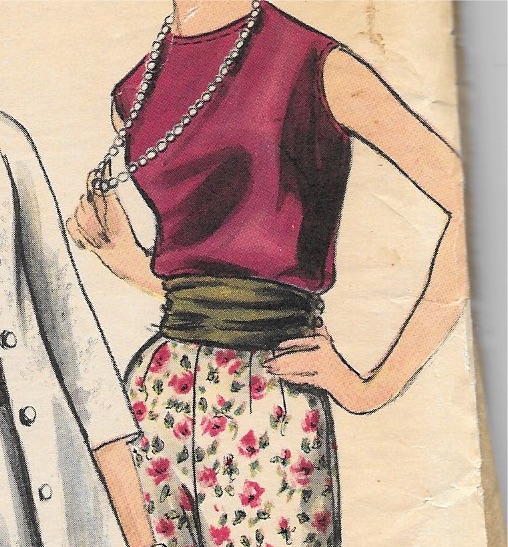
When the yellow silk taffeta arrived, I knew the decision was the right one. All I had to do then was figure out how to make the sash. Easy, right? With lots of time to think about this while I finished the embroidered organza top and the sapphire blue skirt – and the dress lining – I gradually came up with a plan. I decided a more structured cummerbund and bow would be the best look. First I went in search of a cummerbund pattern, which I found in an early 1960s pattern in my collection:

Allure of silk - cummerbund picture-1

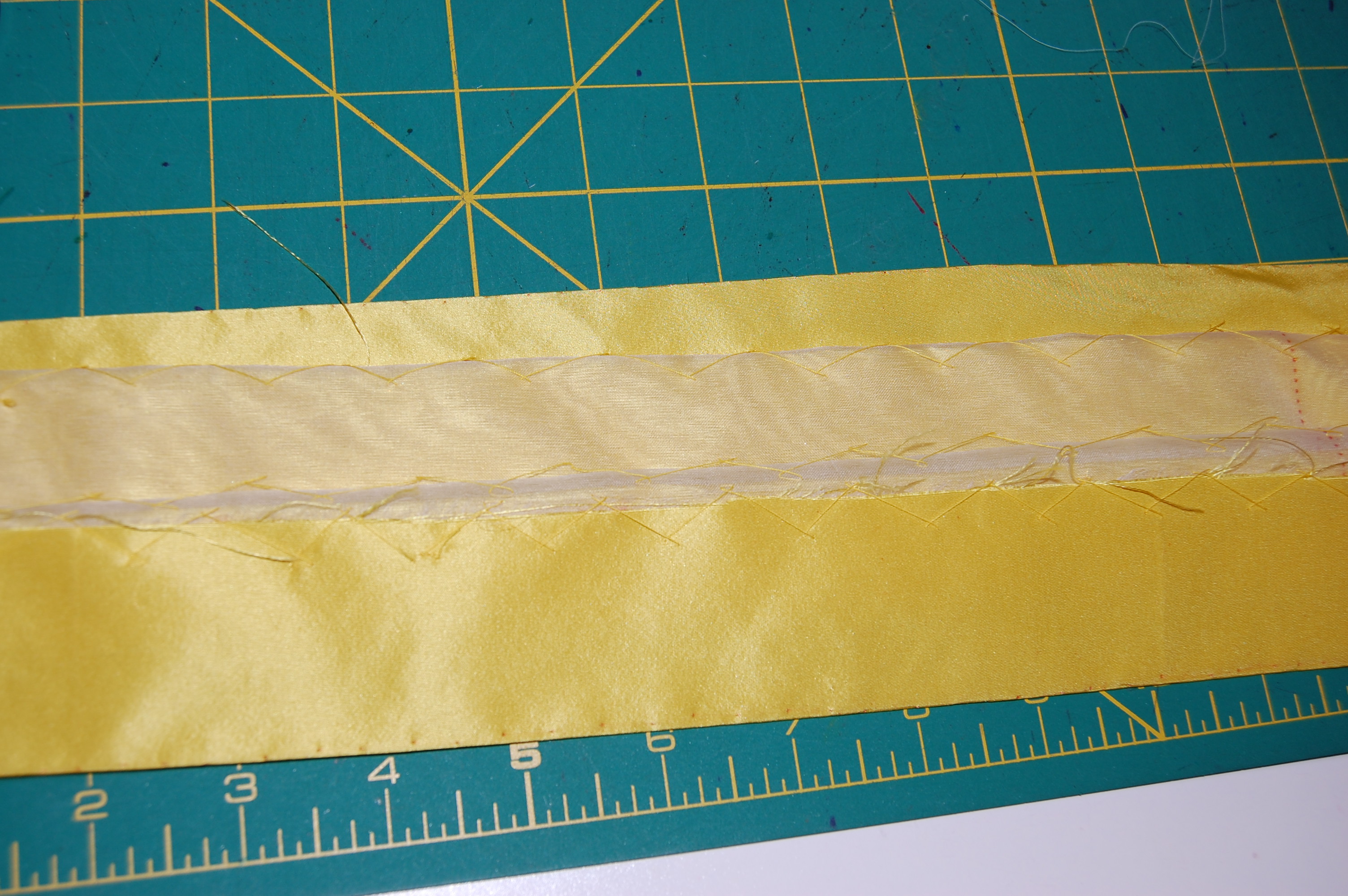
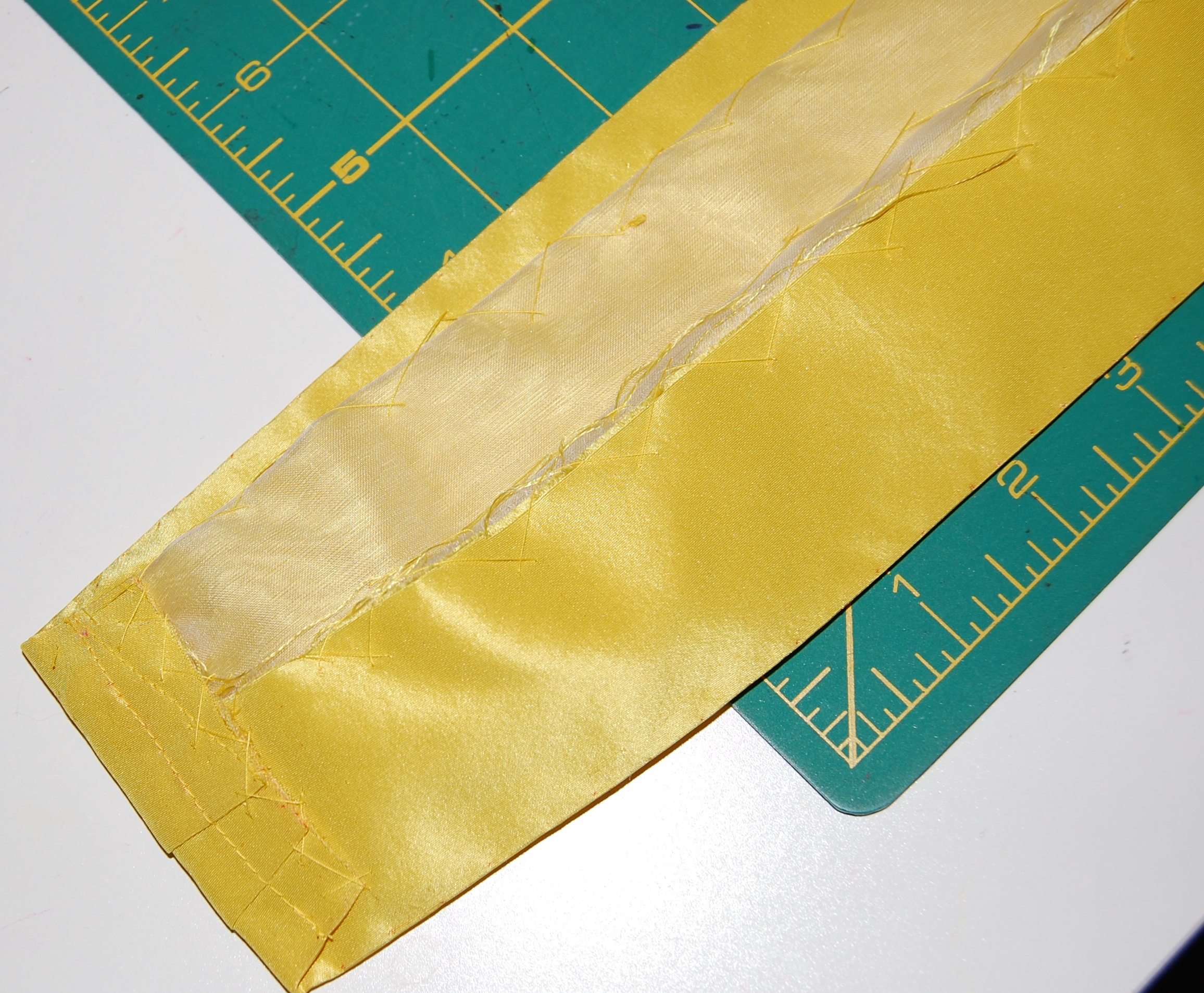
I decided to loosely pleat it instead of gathering it, so it would appear smoother around my waist. Because I had underlined it with silk organza, I had an anchor upon which to secure the soft pleats:

I used a loose catch-stitch to secure the pleats.

I used a loose catch-stitch to secure the pleats.

allure of silk final

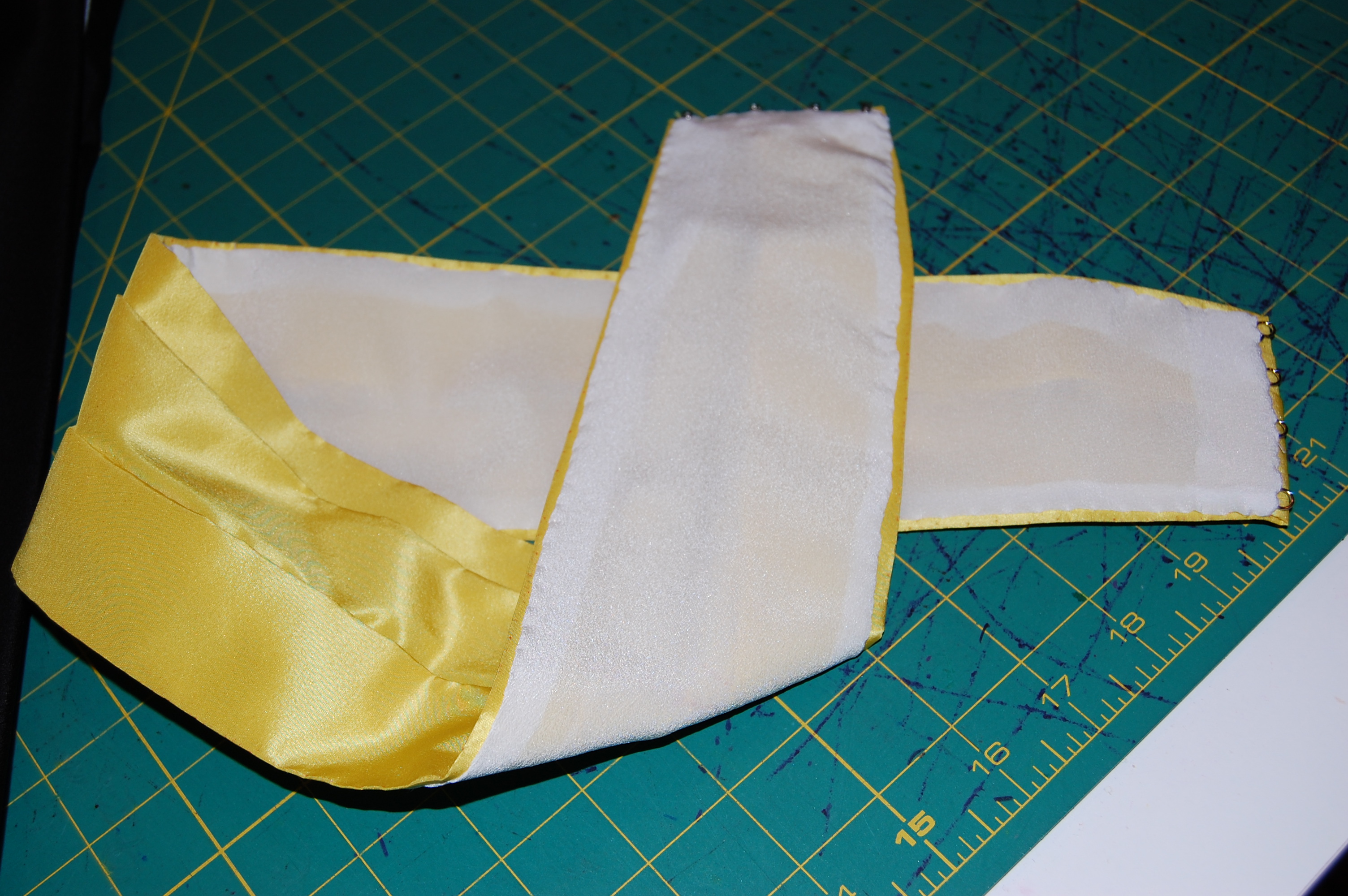
And I folded in the two ends, ready for hooks and eyes.

Then I lined it with silk crepe de chine.

Allure of silk final

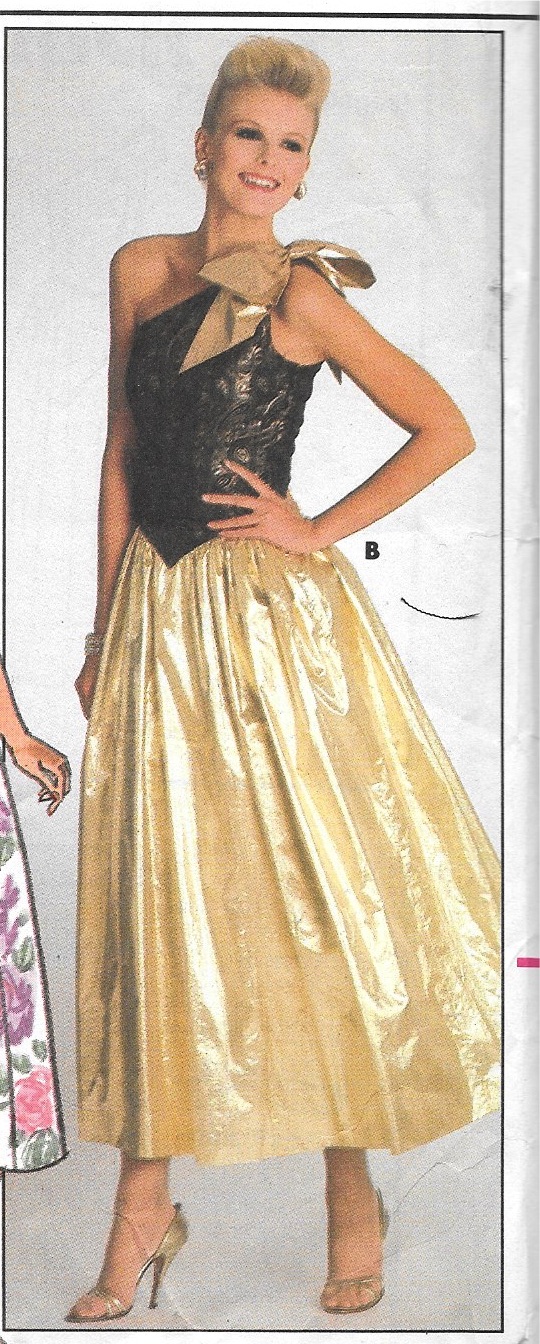
Now –  I really love a beautiful bow. And I knew just where to go to get the perfect bow pattern. I made this Butterick pattern in the early 1990s, and while I still like the dress I made (I’ll feature it sometime… it’s still in my closet!), I love the bow. I have used this bow pattern numerous times, always successfully.

Allure of silk - bow picture-2

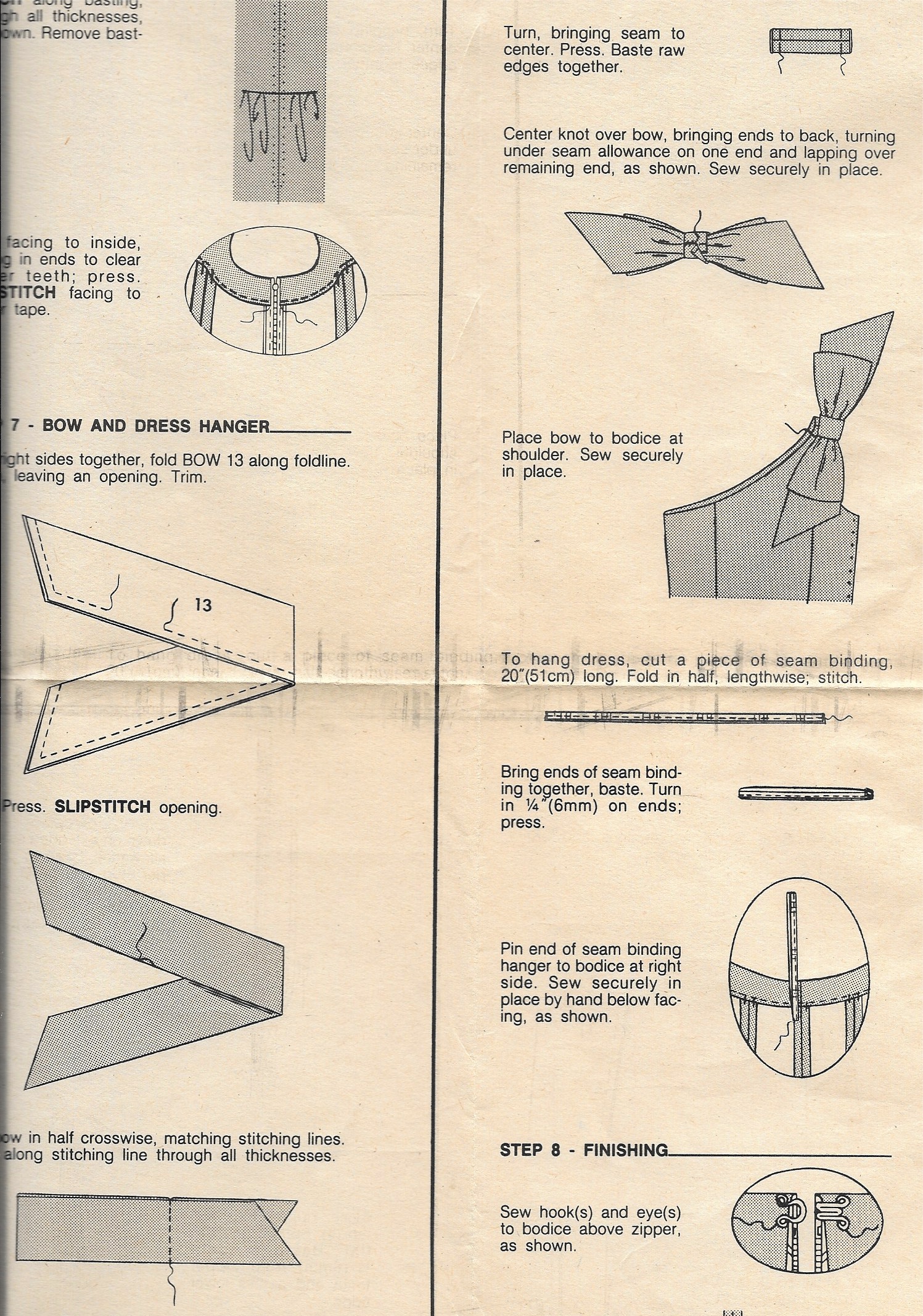
Here is a close-up of the instruction sheet, showing the simple but effective construction of this bow.

Allure of silk - bow diagram-3

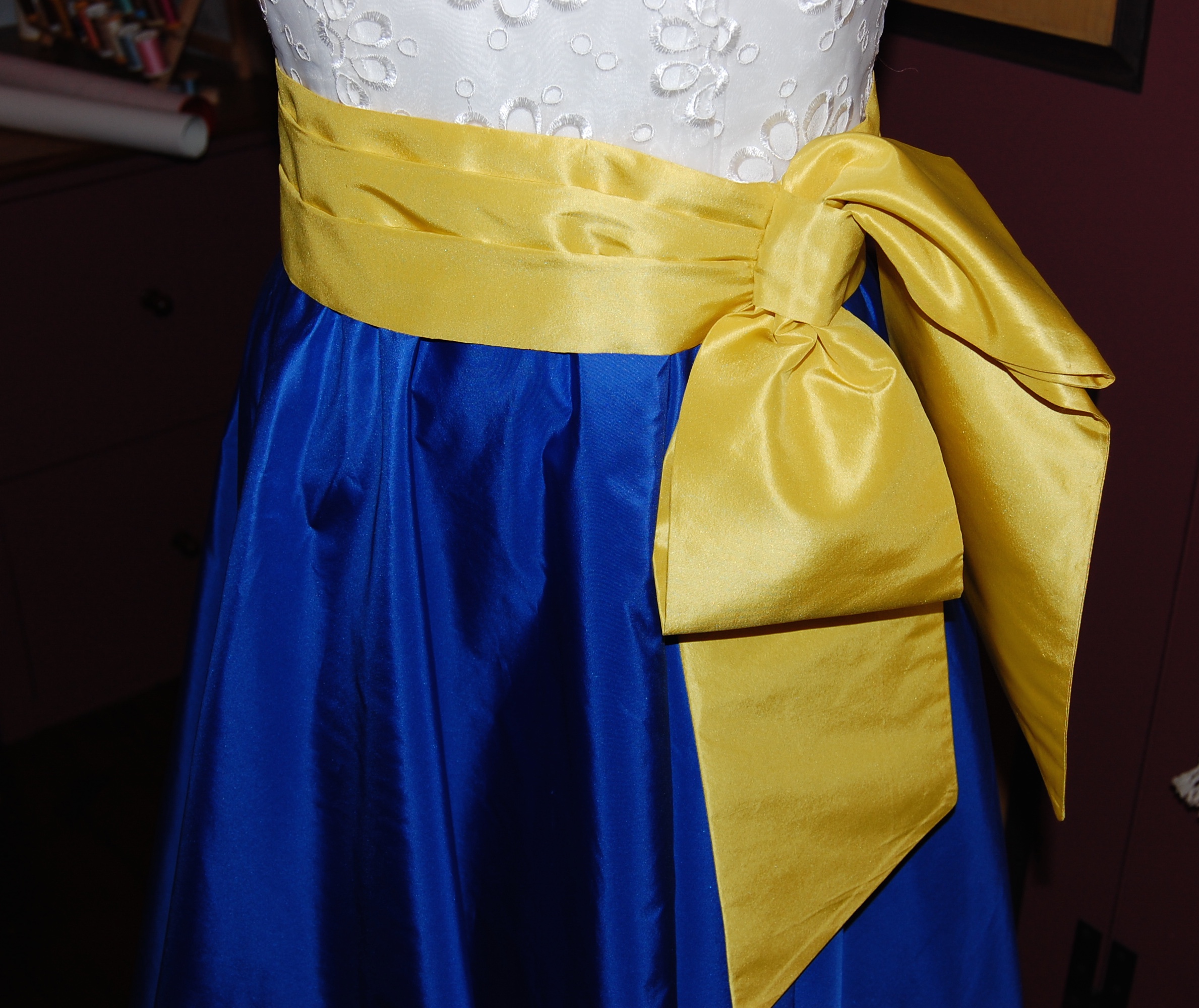
I increased the width and length a bit, as I knew it would need to be a focal point of the dress. I attached the bow to one end of the cummerbund, and used a snap to secure it in place on the other end.

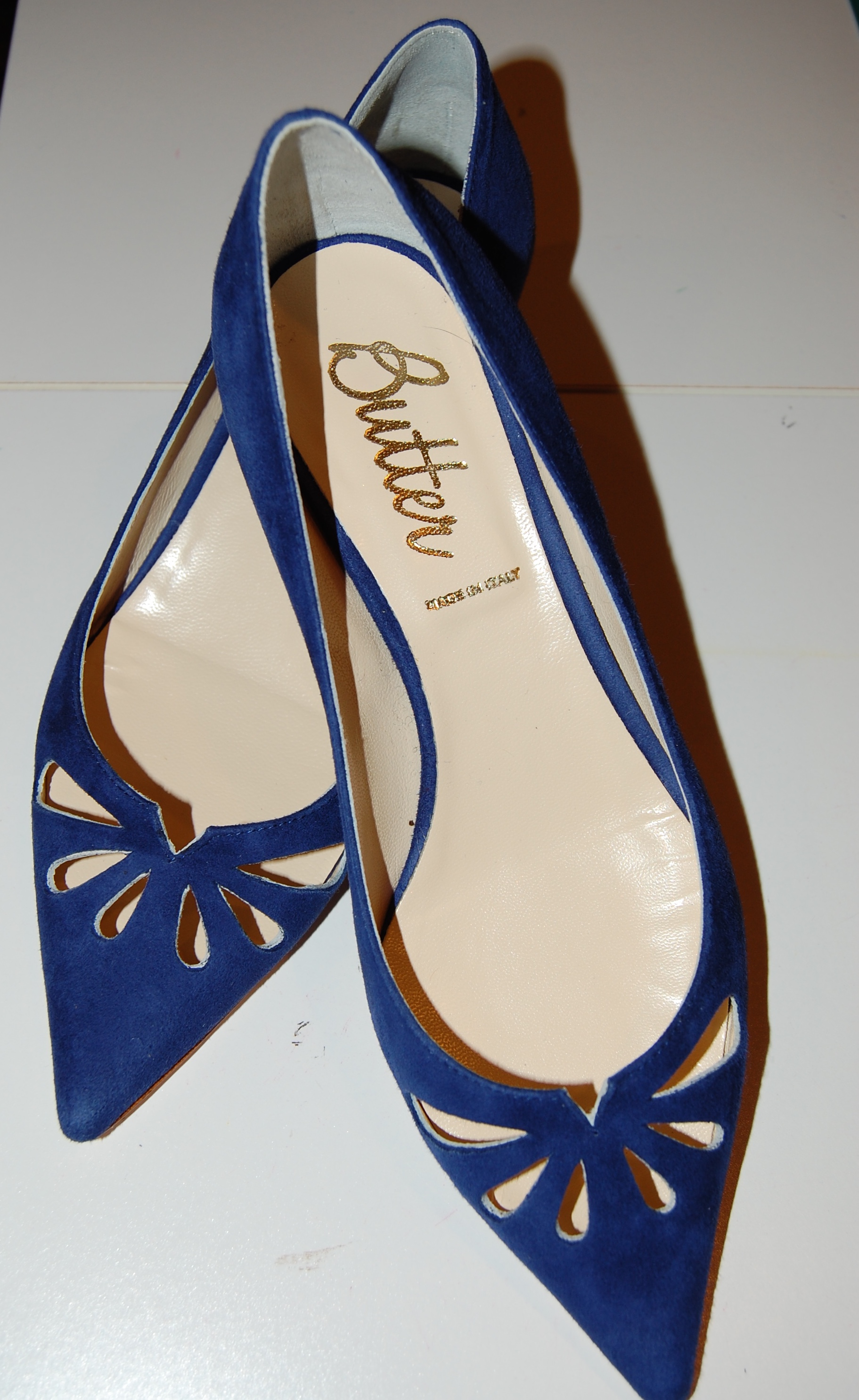
All of this took more time than I could have ever imagined! The event for which I made this dress is next week, and I’ll get proper pbotos taken then. But here is a sneak peek, first of the shoes I found which really seem to be the perfect pairing for this dress:

allure of silk final

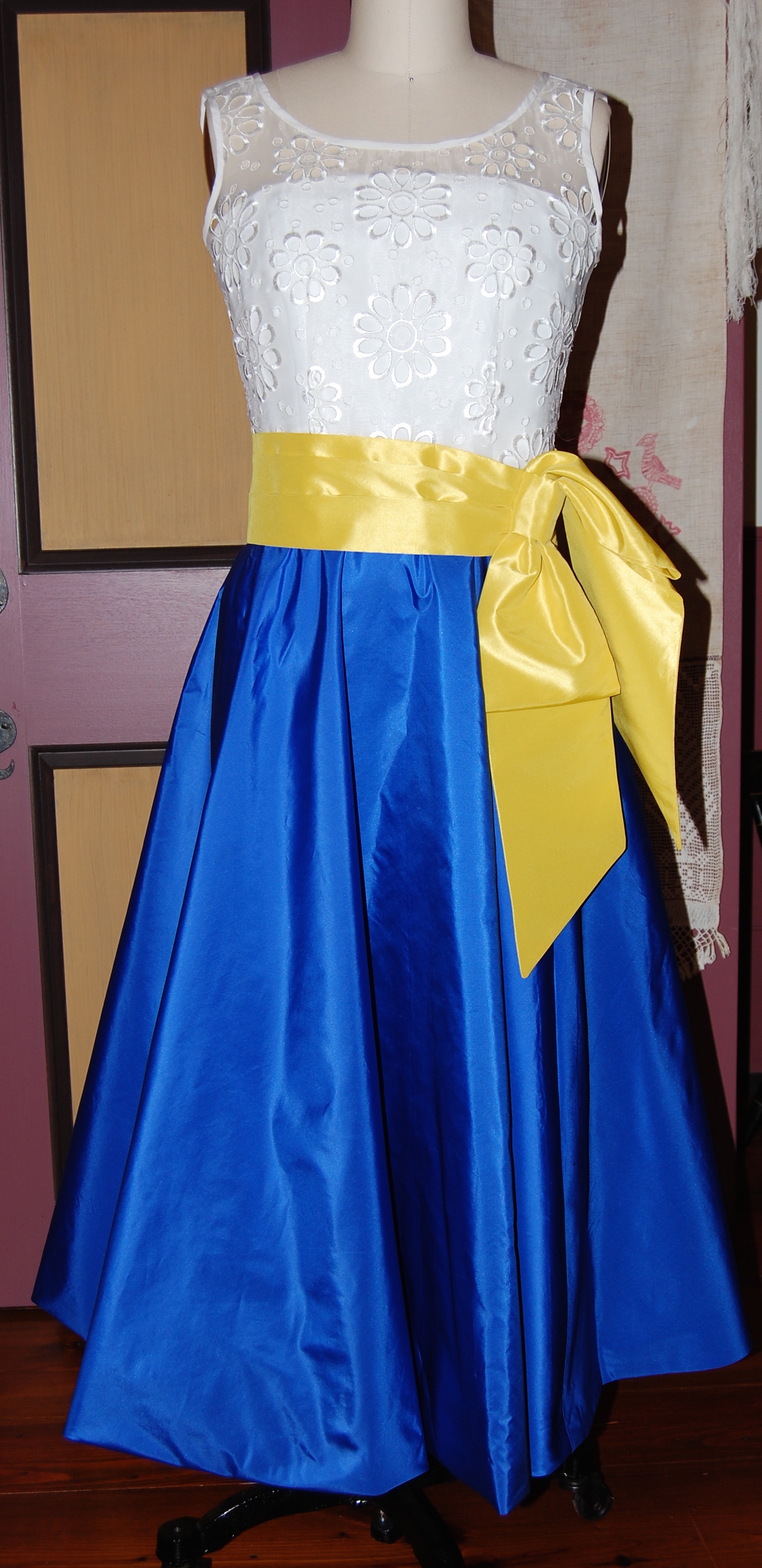
And here is the dress on my dress form:

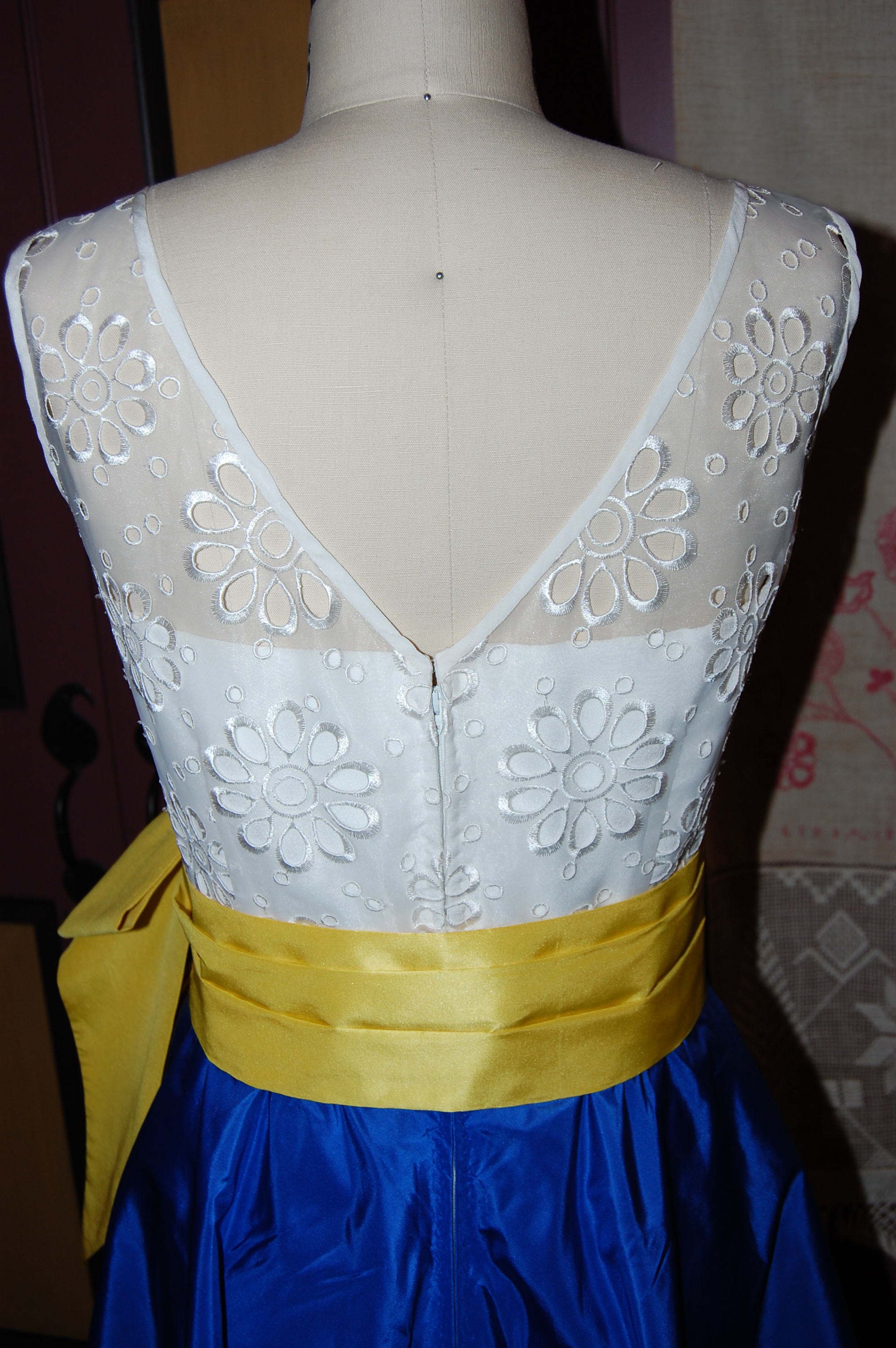
Allure of silk final

Allure of silk final

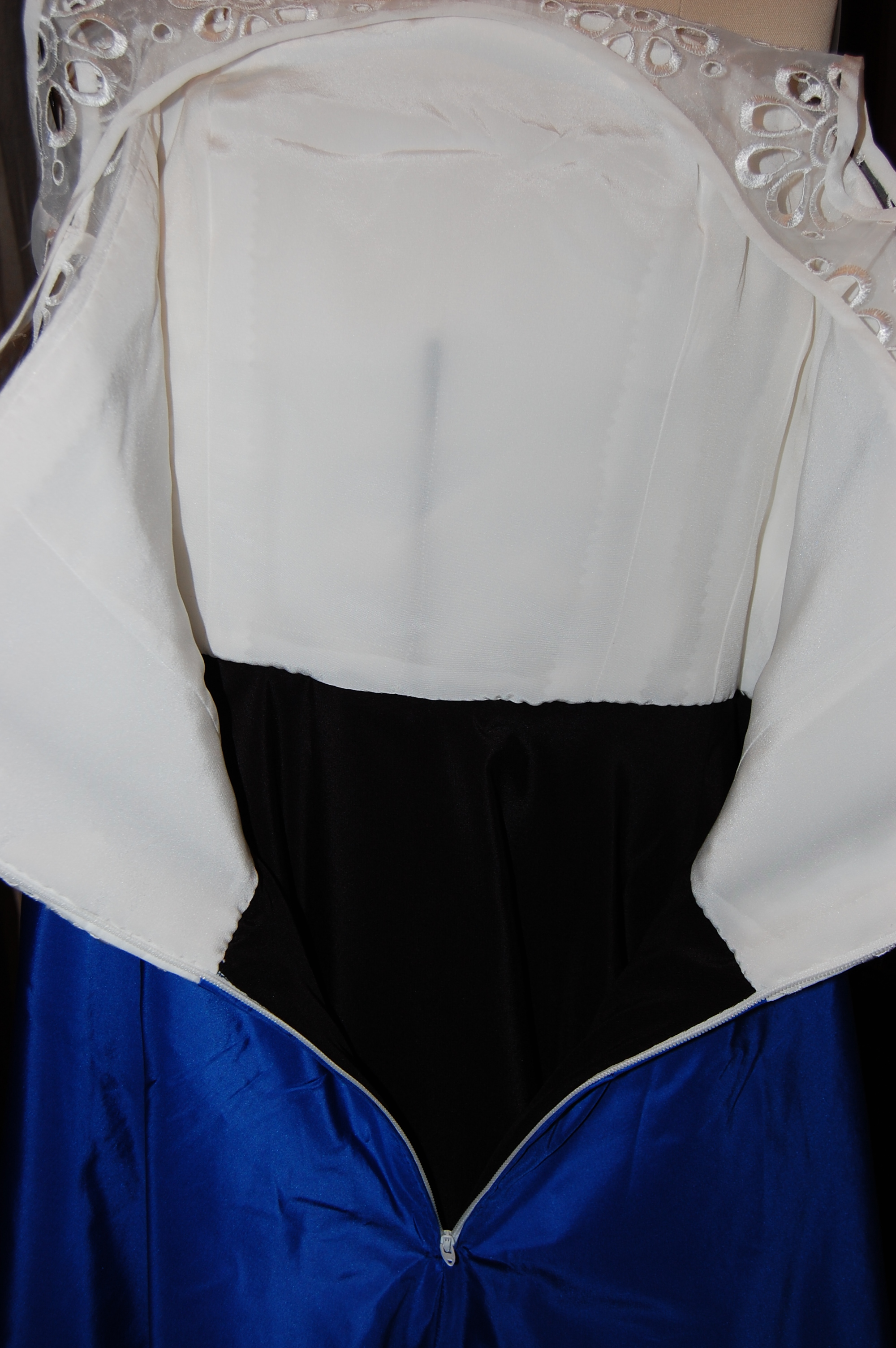
I thought I'd include this photo of the dress lining for anyone interested in seeing it.

I thought I’d include this photo of the dress lining for anyone interested in seeing it.

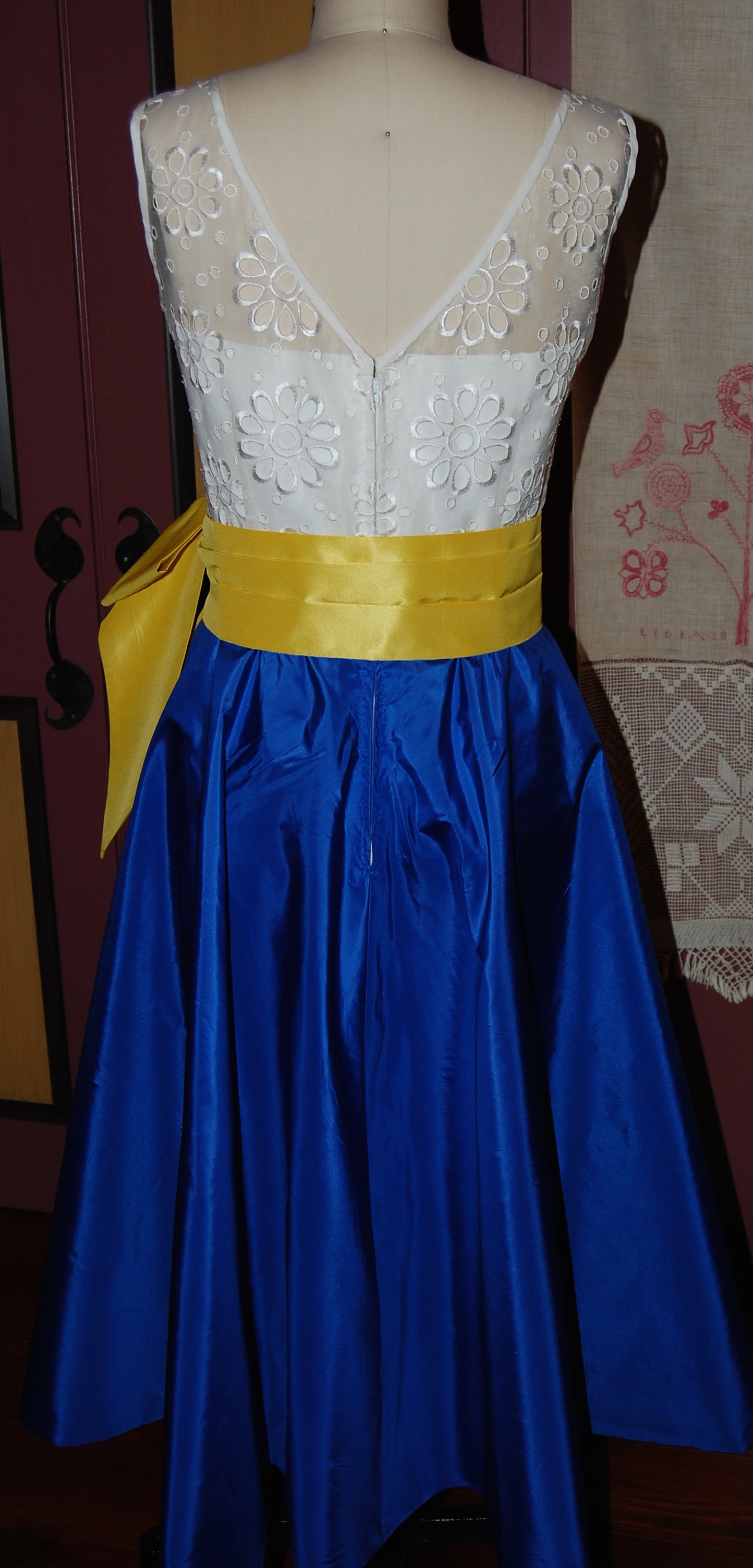
I am very pleased that I decided to "V" the back of the outer bodice!

I am very pleased that I decided to “V” the back of the outer bodice!

A close-up of the bow.

A close-up of the bow.

One of my favorite fashion quotes is one from Madeleine Vionnet: “The dress must not hang on the body but follow its lines. It must accompany its wearer and when a woman smiles the dress must smile with her.” Will my dress put a smile on my face when I wear it? Yes, if only for the fact that it has been finished just in time!

Details:

Blue silk taffeta:  Britex Fabrics

White embroidered organza:  Waechter’s Fabrics (now out of business)

Yellow silk taffeta:  Emma One Sock Fabrics.

Under bodice and outer bodice pattern:  Vogue 8766

Cummerbund pattern:  Vogue 5234 (vintage)

Bow pattern:  Butterick 3582 (vintage)

Shoes:  Butter, sold by Simply Soles

40 Comments

Filed under Cocktail dresses, couture construction, Mid-Century style, sewing in silk, Shoes to make an outfit complete, Uncategorized, vintage Vogue patterns from the 1960s, Vogue patterns

Mellow Yellow

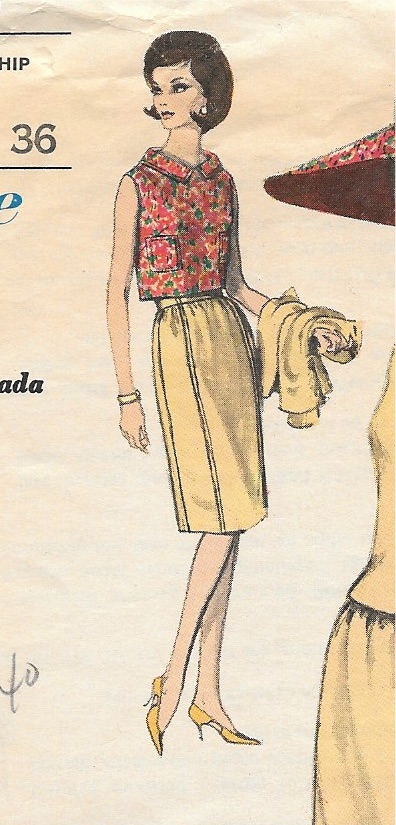
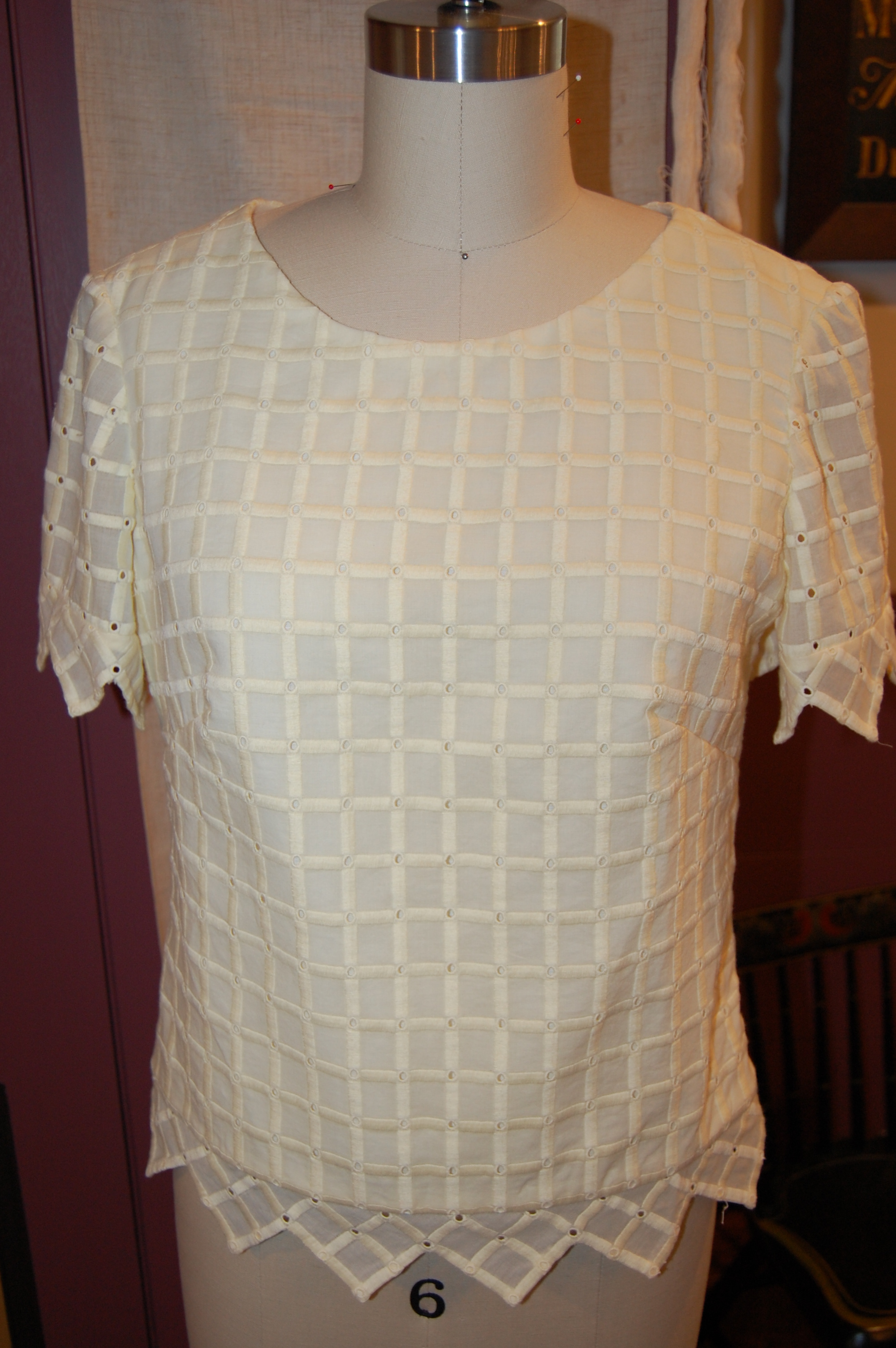
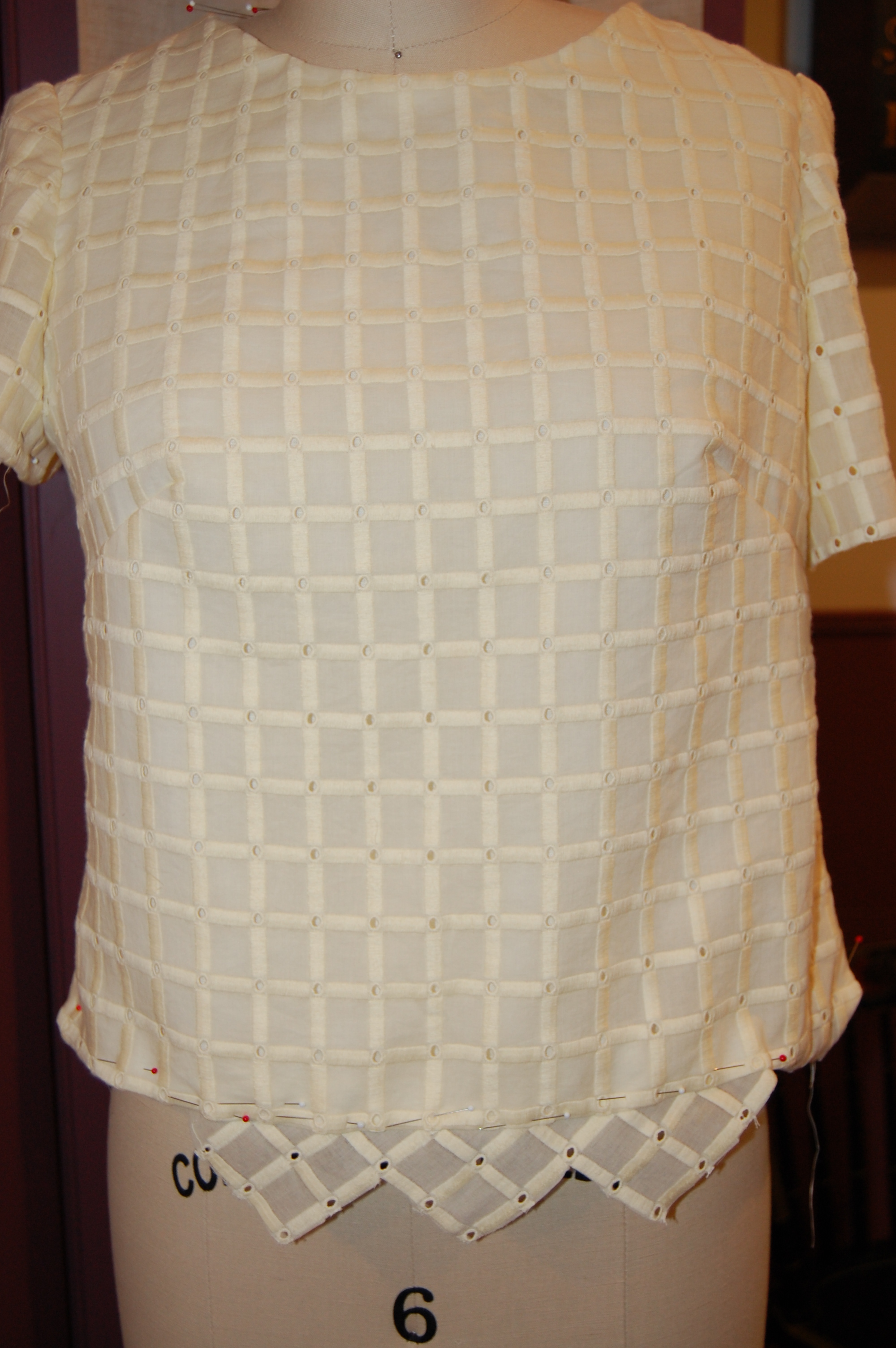
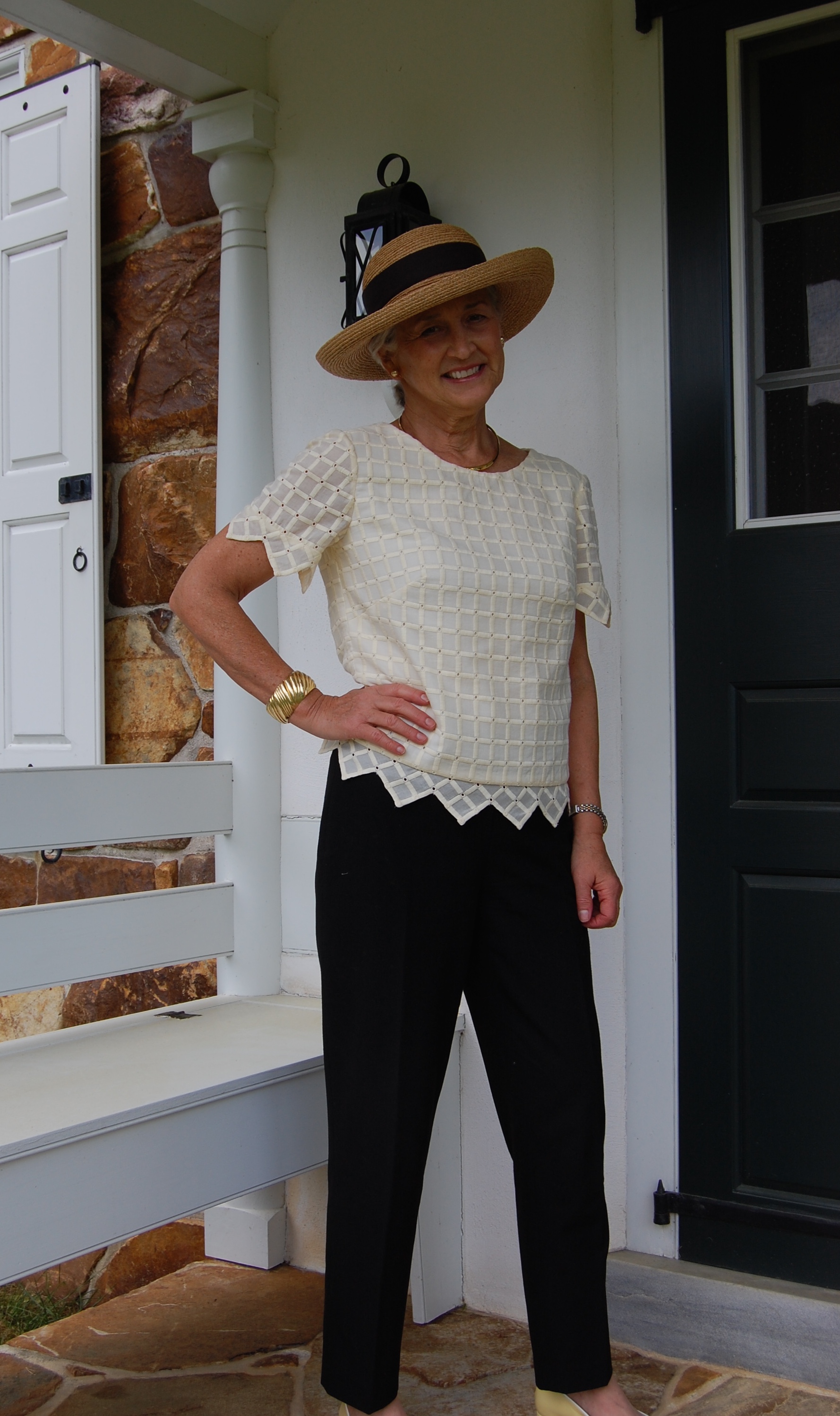
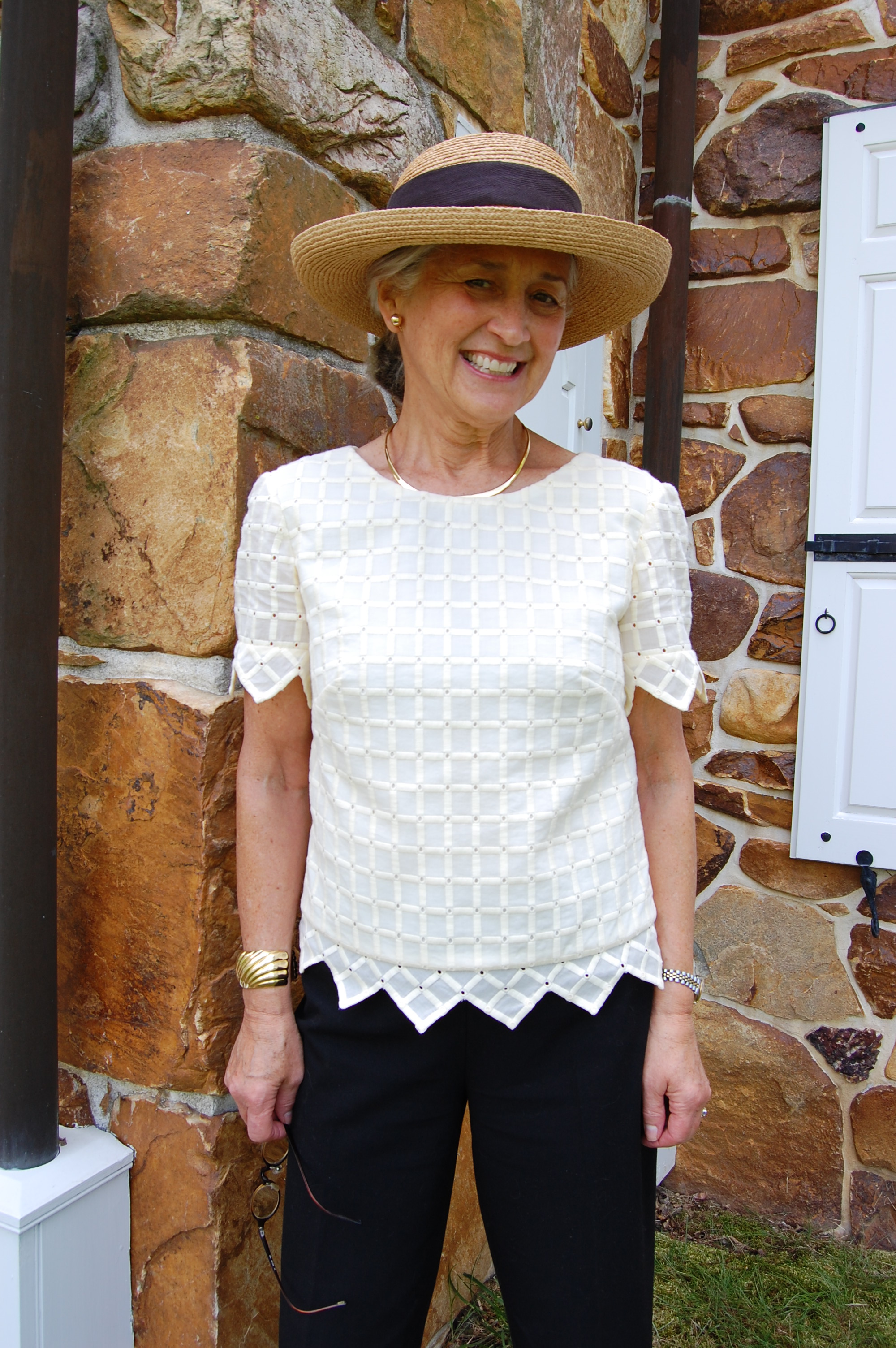
How did I go from this . . .

A collared overblouse.

A collared overblouse.

to this?

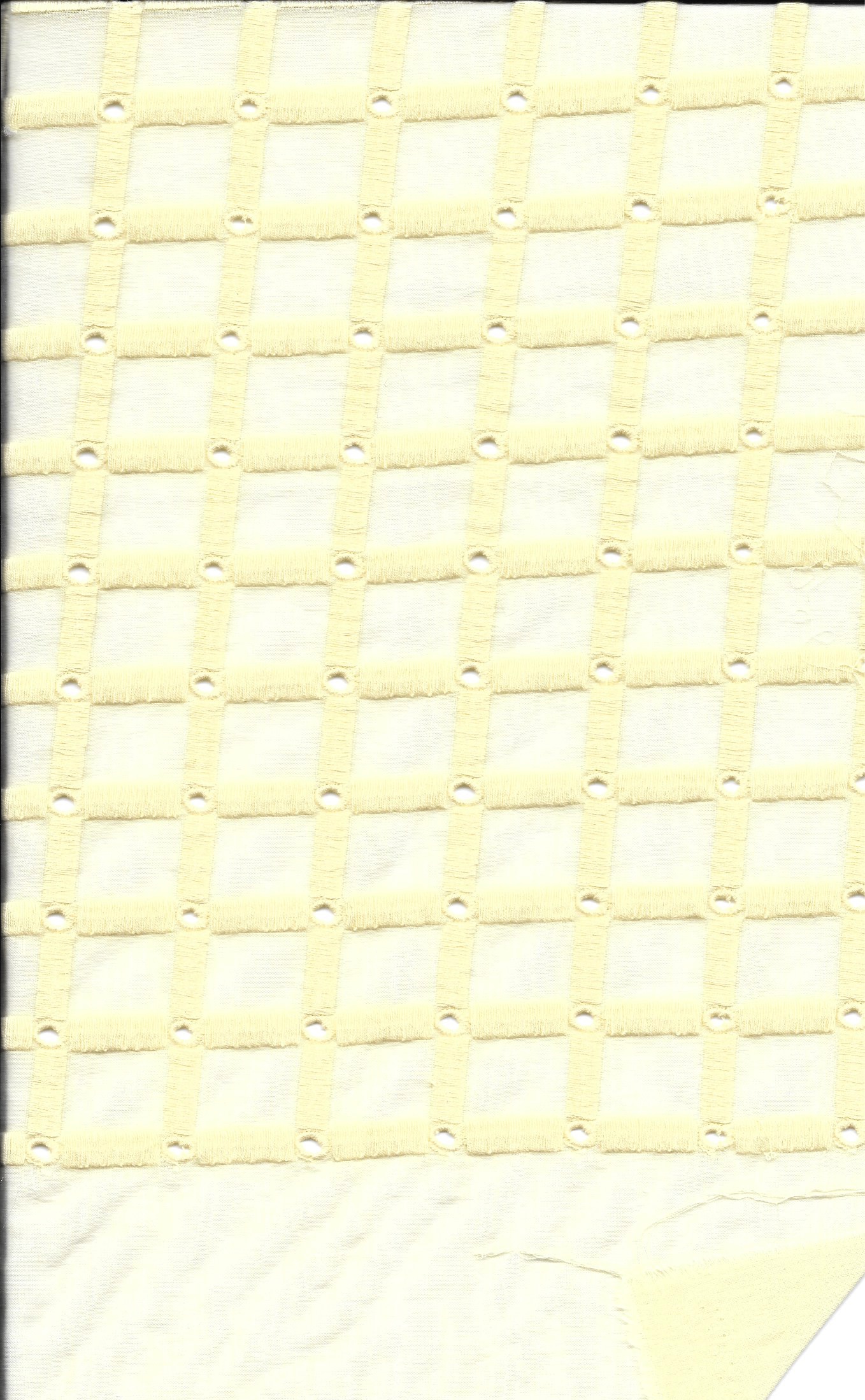
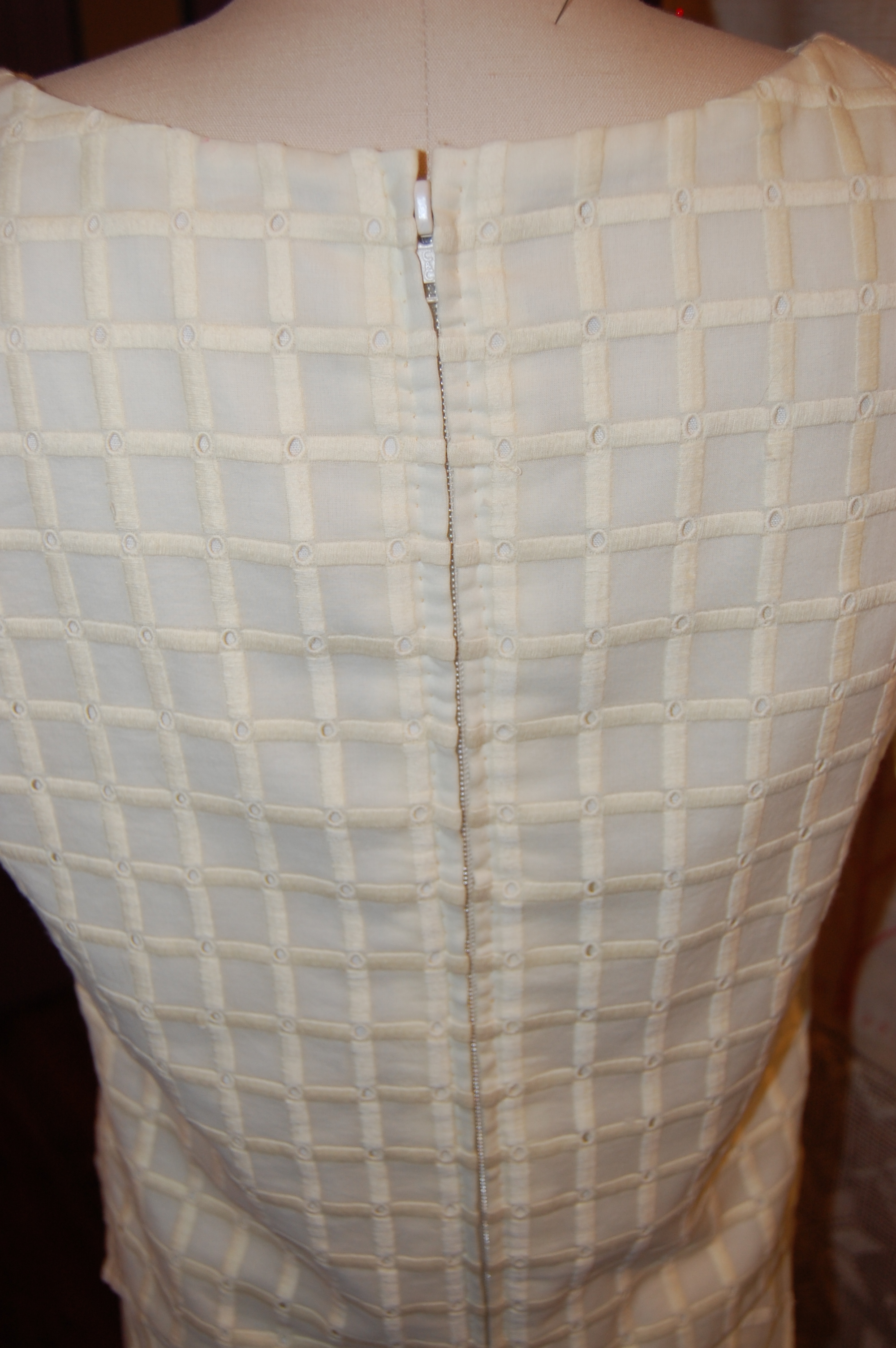
Mellow YellowIt all started about a year ago when I saw this fabric – called Devonshire Cream Geometric Cotton Eyelet Batiste on the Britex Fabrics website. I sent off for a swatch and then ordered enough for a “blouse” although at the time, I wasn’t so sure what kind of a blouse it would be. I knew I would want sleeves in it. While the body of the blouse would need to be lined, the sleeves could be unlined to show off the gauzy design in the eyelet.

Eyelet overblouse - fabric

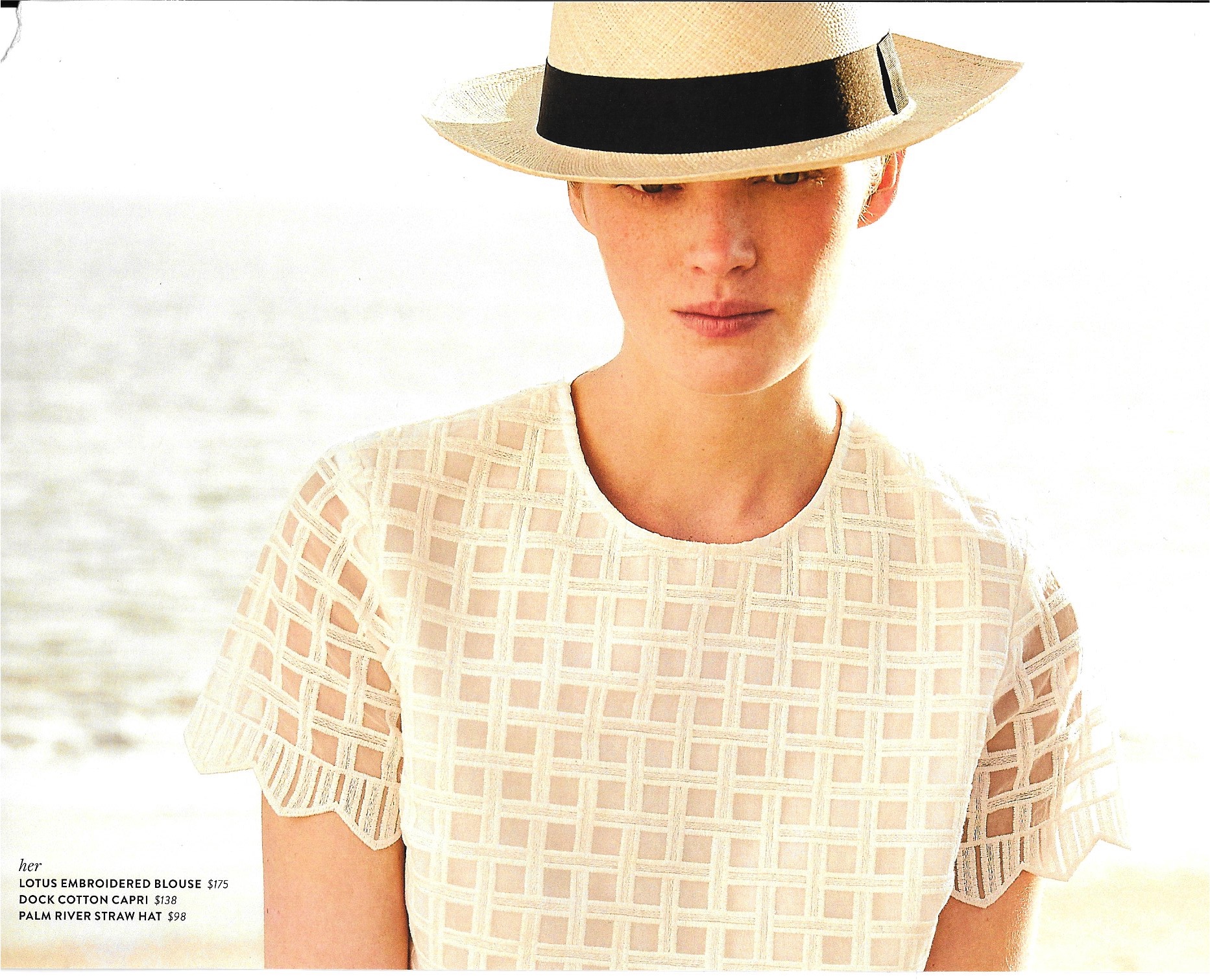
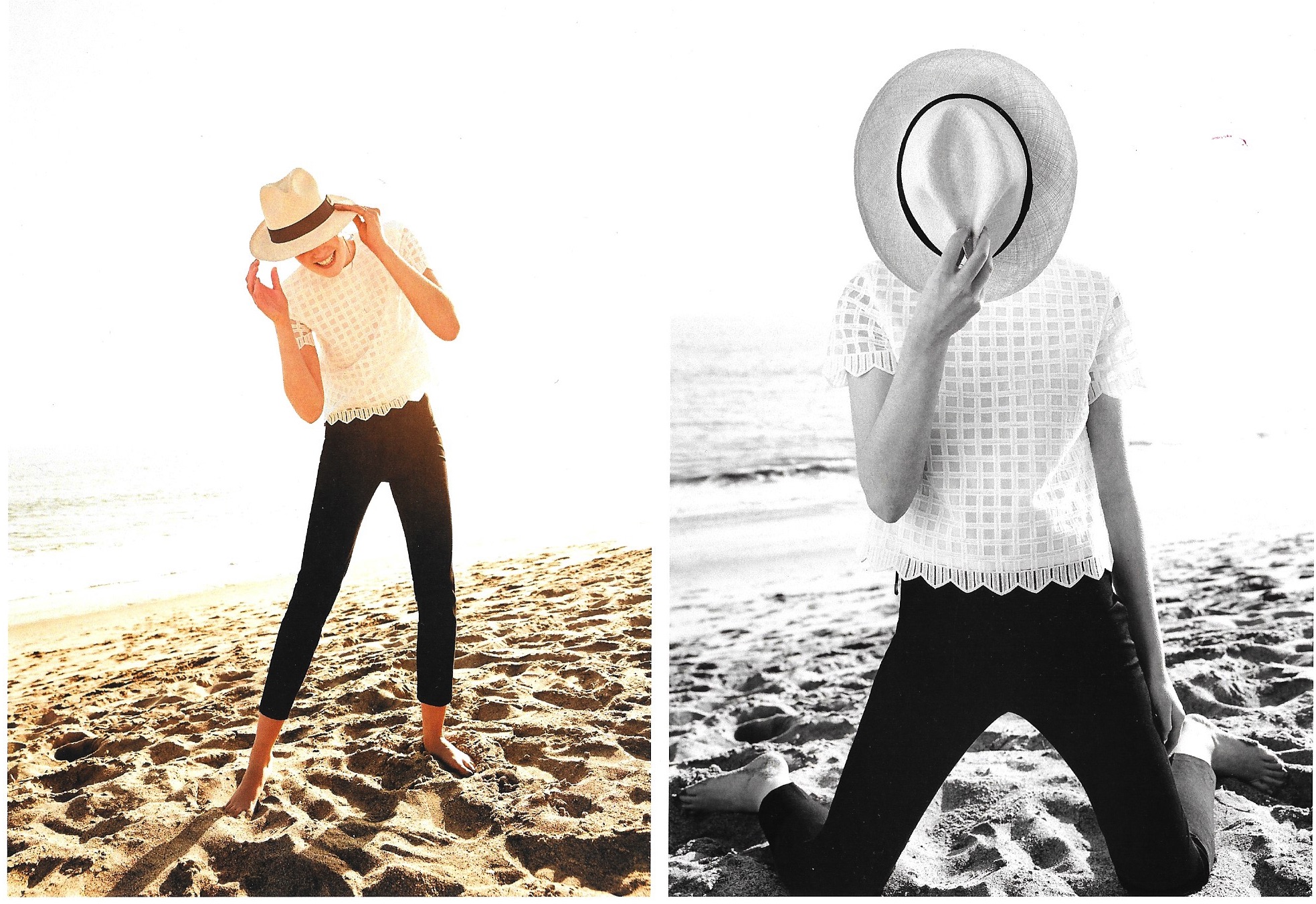
Inspiration finally struck a short few weeks ago when I got a small catalogue from J McLaughlin clothing company. Pictured in it was this “Lotus Blouse”:

Eyelet overblouse - JMcL #2-2

Eyelet overblouse - JMcL #2-3

As soon as I saw the “square” design in the fabric, I thought of my eyelet – and then it did not take long for me to decide to make my own version of that blouse. The construction details? Well, I knew I would have to make those up as I went along. I started with the pattern shown above, a classic early 1960s short overblouse that zipped up the back. What could be better? It really didn’t matter that the neckline would be changed, sleeves added, inches added to the length – the basics were there and so I made a muslin/toile.

I cut an underlining for the body of the blouse from a lightweight linen/cotton blend that I always keep on hand. I marked the seam lines of that underlining with waxed tracing paper and then used it as my “pattern” for the eyelet, which allowed me to make sure that all the lines and corners of the eyelet matched across seams. I hand basted the underlining and the eyelet together which made machine sewing the darts and seams very precise.

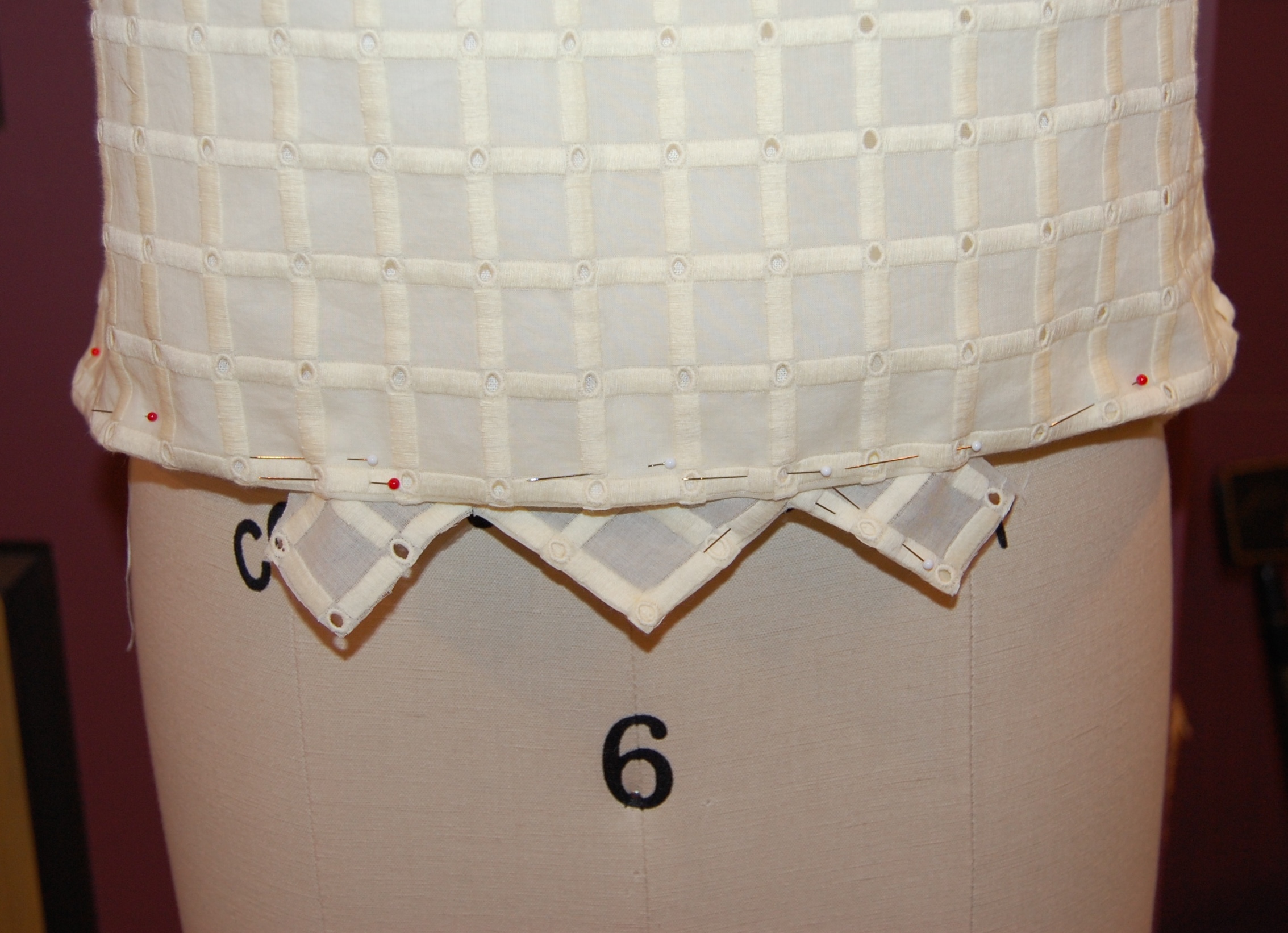
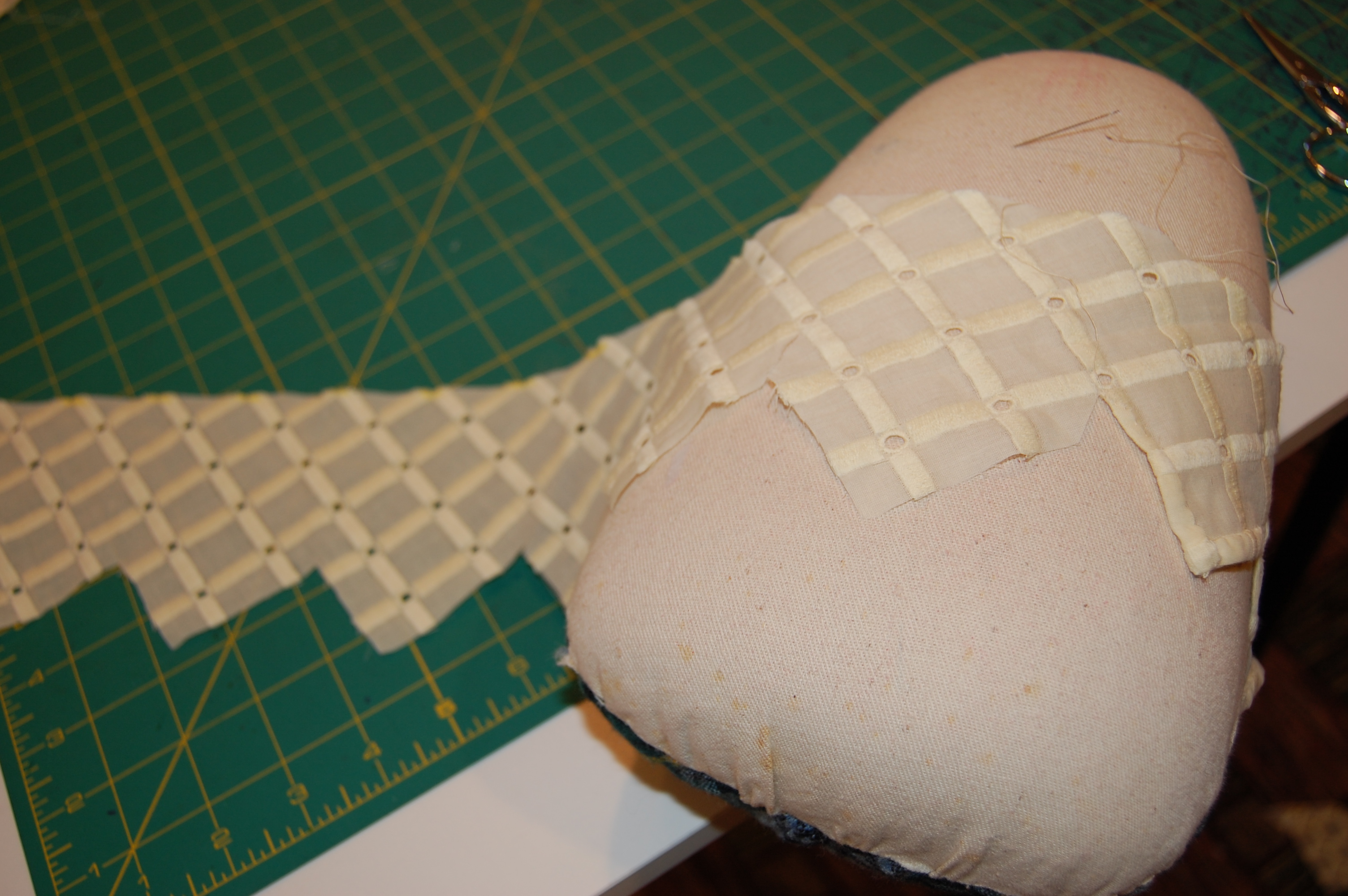
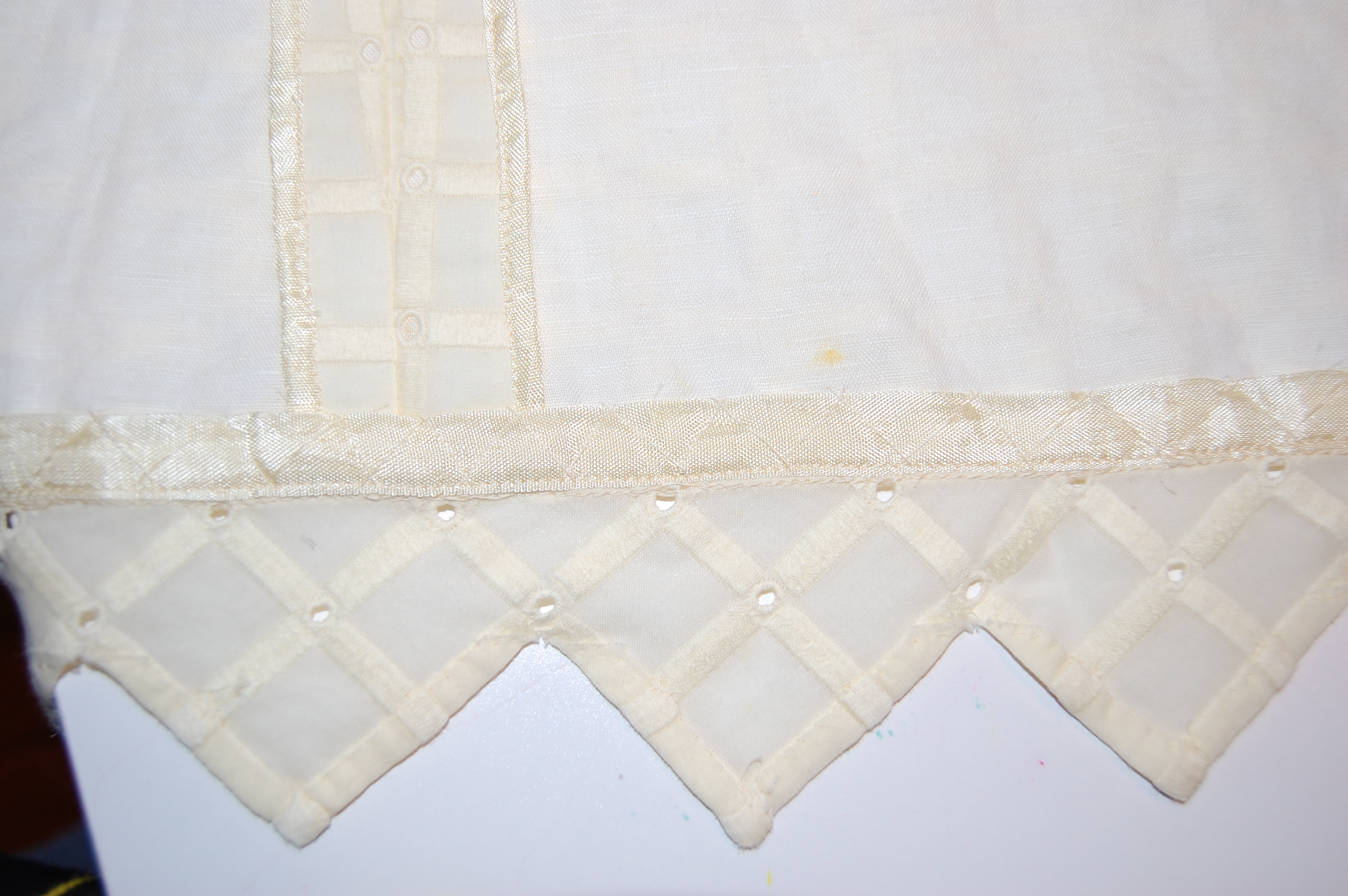
In order to put a sawtooth edge on the sleeves and the bottom of the blouse, I knew I would have to cut fabric on the bias. But first I had to decide how deep to make this self-trim. I did some experimenting to figure that out:

Should it be this narrow?

Should it be this narrow?

Or would a wider trim be   better?

Or would a wider trim be better?

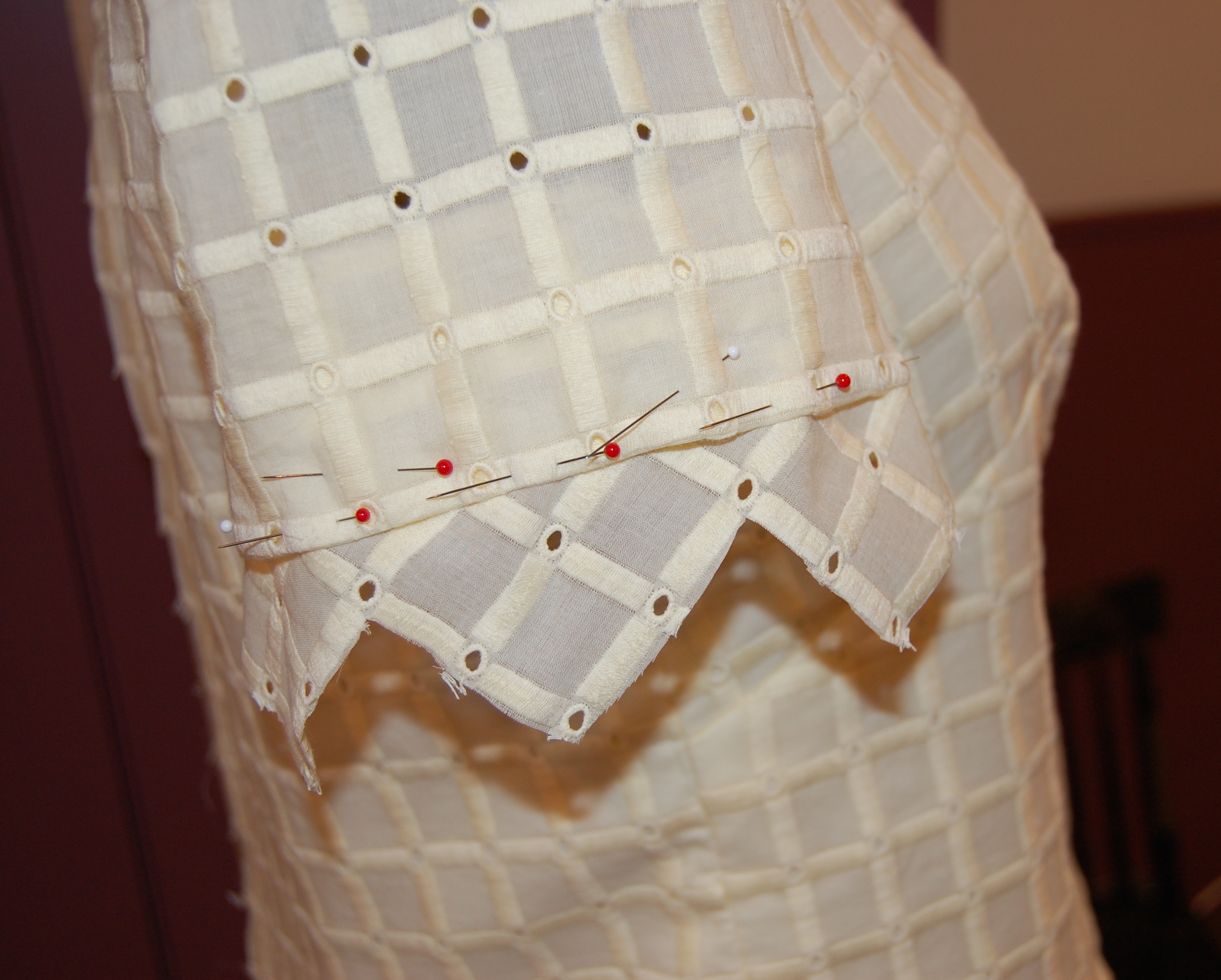
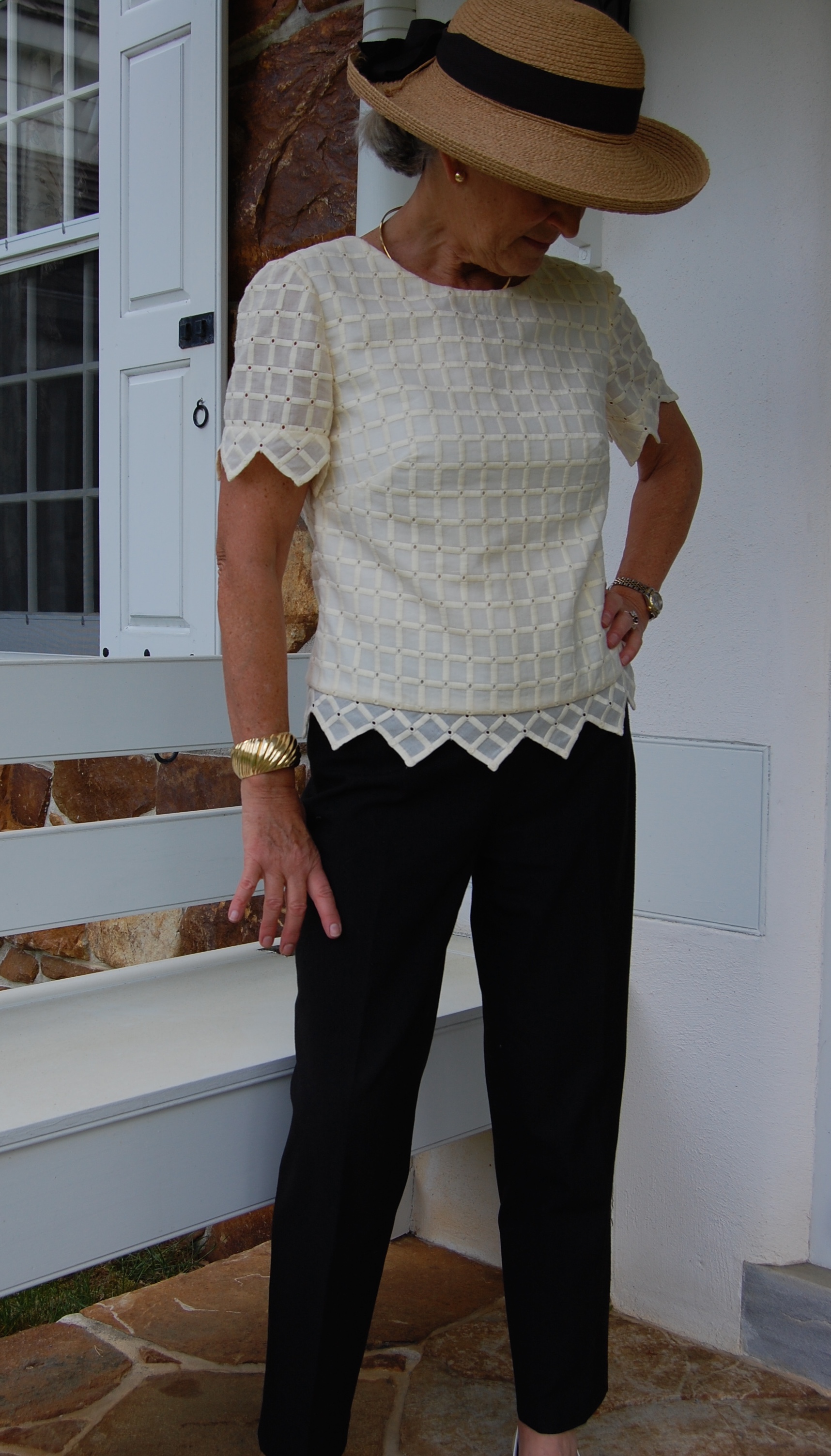
I decided the wider trim was necessary to make the proper impact.  Here it is pinned onto one sleeve.

I decided the wider trim was necessary to make the proper impact. Here is a sample of it pinned onto one sleeve.

Once I decided the proper width of the trim, I set about hemming it by hand.  Here is a photo of that “hemming” process.

On the right you can see one "peak" already stitched.

On the right you can see one “peak” already stitched.

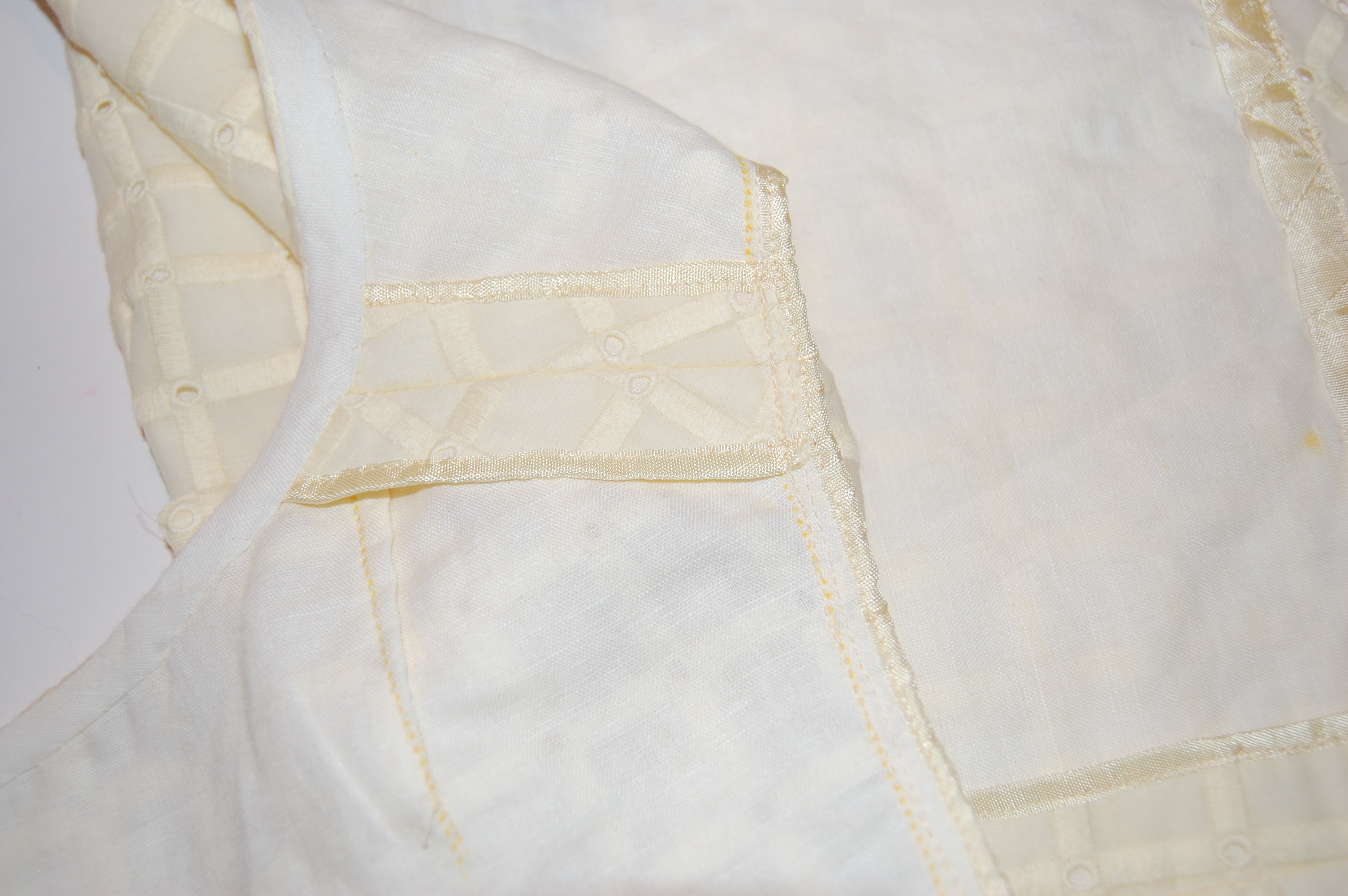
Having the trim cut on the bias gave me flexibility in attaching it to the sleeve and bottom edges. Then finishing the inside raw edges provided its own challenge. I had already used Hug Snug rayon tape to finish the interior seams. The soft, non-bulky nature of this wonder tape gave me the idea to use it for finishing the armscyes and the interior sleeve edges.

I made a bias tape out of the underlings fabric to bind the neck edge.  Seam edges are encased in Hug Snug.

I made a bias tape out of the underling fabric to bind the neck edge. Seam edges are encased in Hug Snug. Click on the photo to see more detail.

The actual hem on the blouse presented me with three edges (the fashion fabric, the underlining, and the bias trim) to control and hold together. I used Hug Snug again, this time flat and sewn with a catchstitch (a fabulous idea I just got from Lilacs and Lace blog, which I will use again and again! Thanks, Laura Mae!)

The catch stitch is done across the width of the Snug Hug tape.  It is the perfect technique for this application.

The catch stitch is done across the width of the Snug Hug tape. It is the perfect technique for this application.  Again, click on the photo for more detail.

I had some difficulty finding an 18” separating zipper that was lightweight enough for this blouse. I still think the one I finally ended up using is a bit heavy, but until I find another one, this one will have to do.

Mellow Yellow

I still need to add a hook and eye at the top!

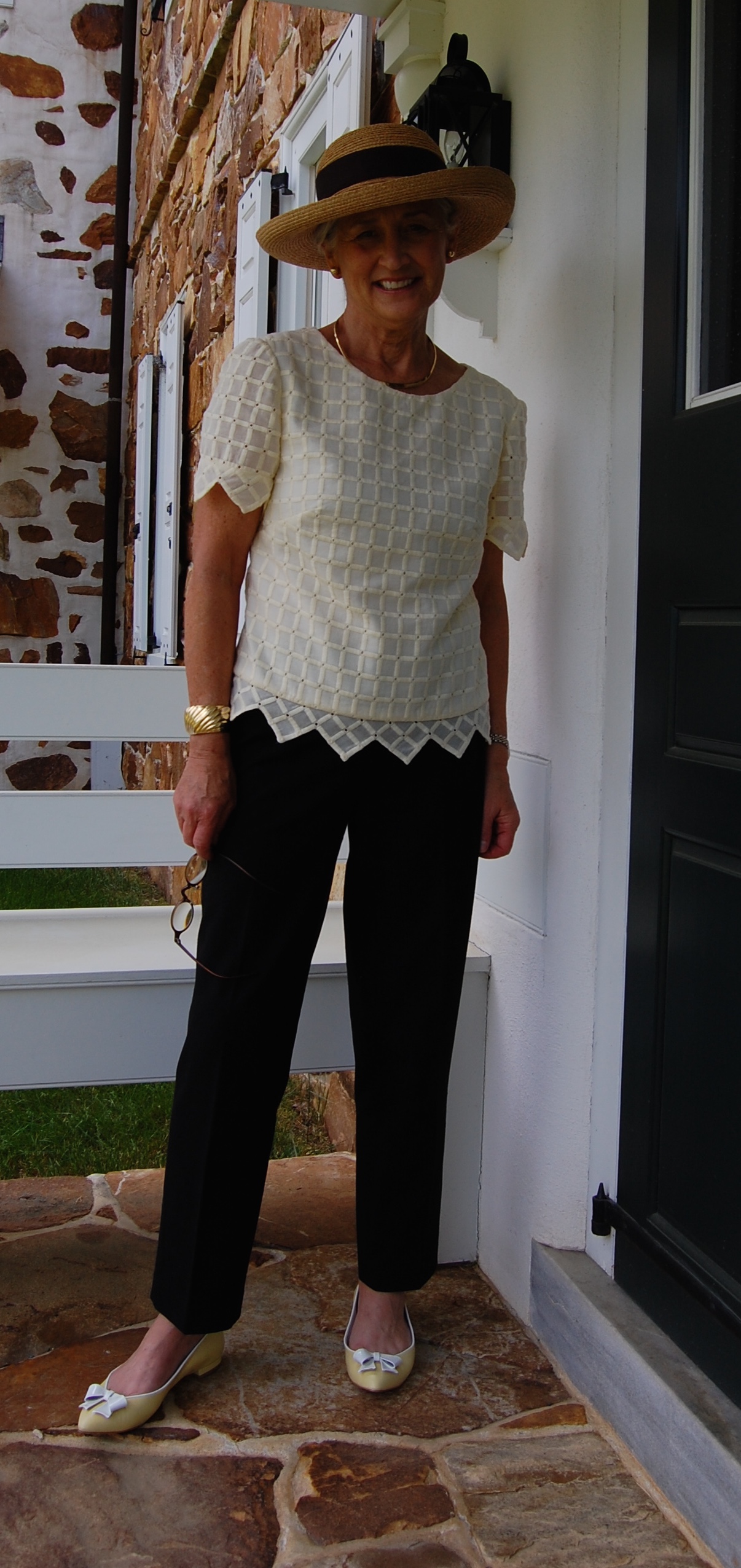
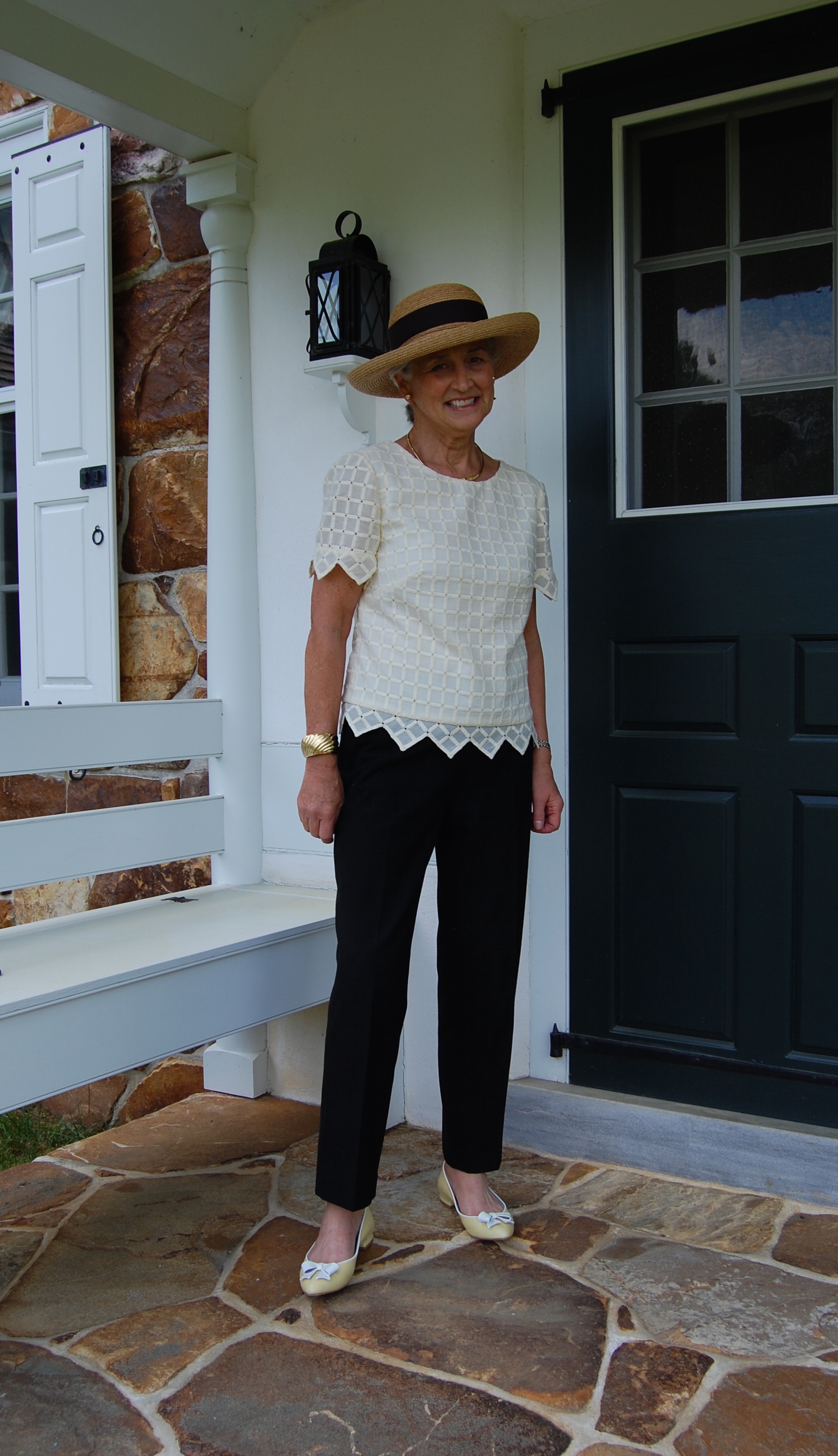
I have always loved overblouses. They are comfortable, classic, versatile, and just a little bit different of a look. I think this one fits that description well – I like it!

I could not resist styling this blouse with a hat!

I could not resist styling this blouse with a hat!

Mellow Yellow

Mellow Yellow

Mellow Yellow

Pale yellow shoes help complete the outfit!

Pale yellow shoes help complete the outfit!

After Mellow Yellow, where do I go? My next project is anything but mellow – or yellow, for that matter.  June will find me thinking – and making – fancy, but not frilly. Details soon . . .

35 Comments

Filed under Blouses, Eyelet, Mid-Century style, Uncategorized, underlinings, vintage Vogue patterns from the 1960s

The Evolution of a Suit Dress, Part 4: An Appreciation of Jo Mattli, and Dress-making Days Commence

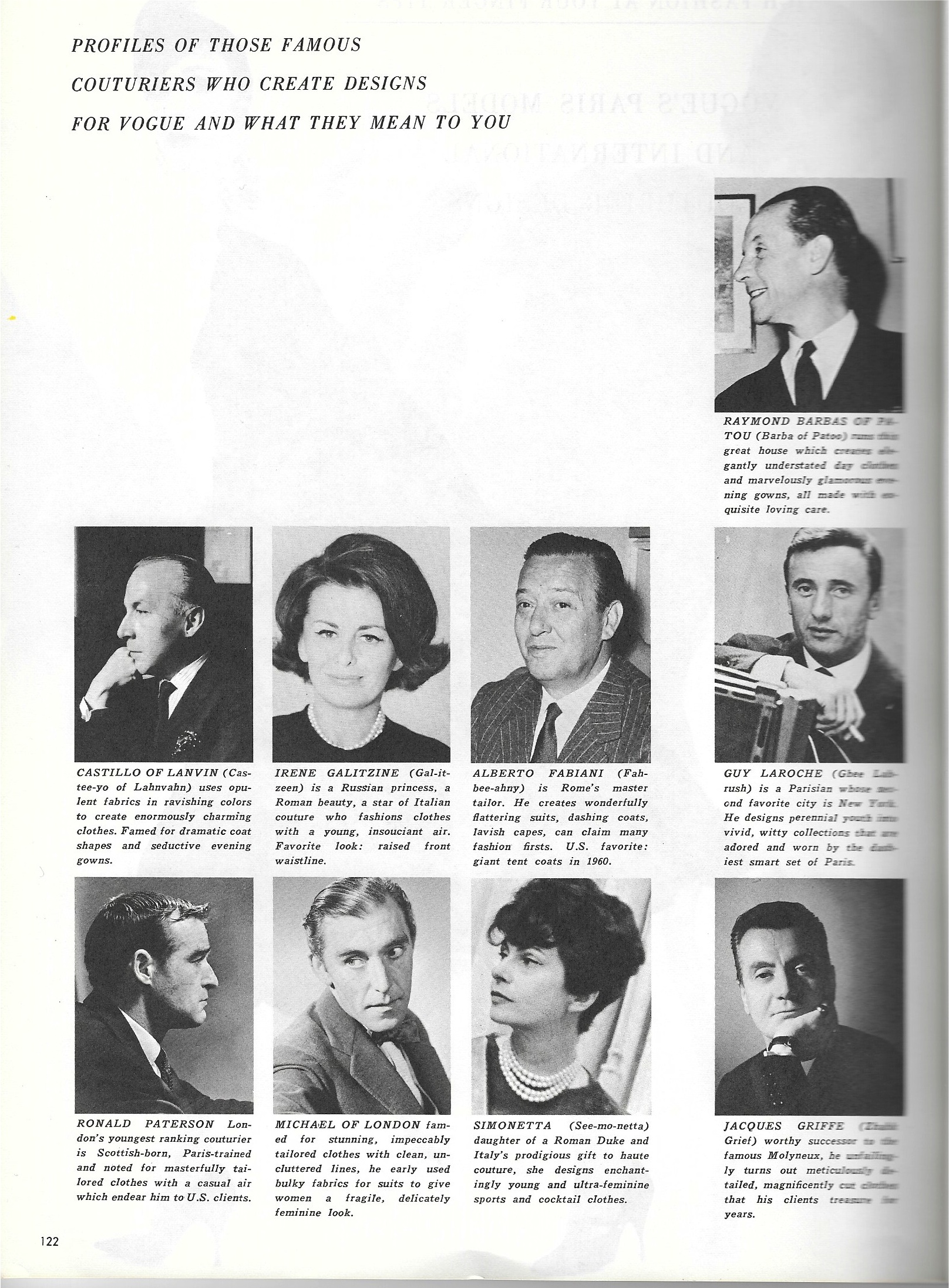
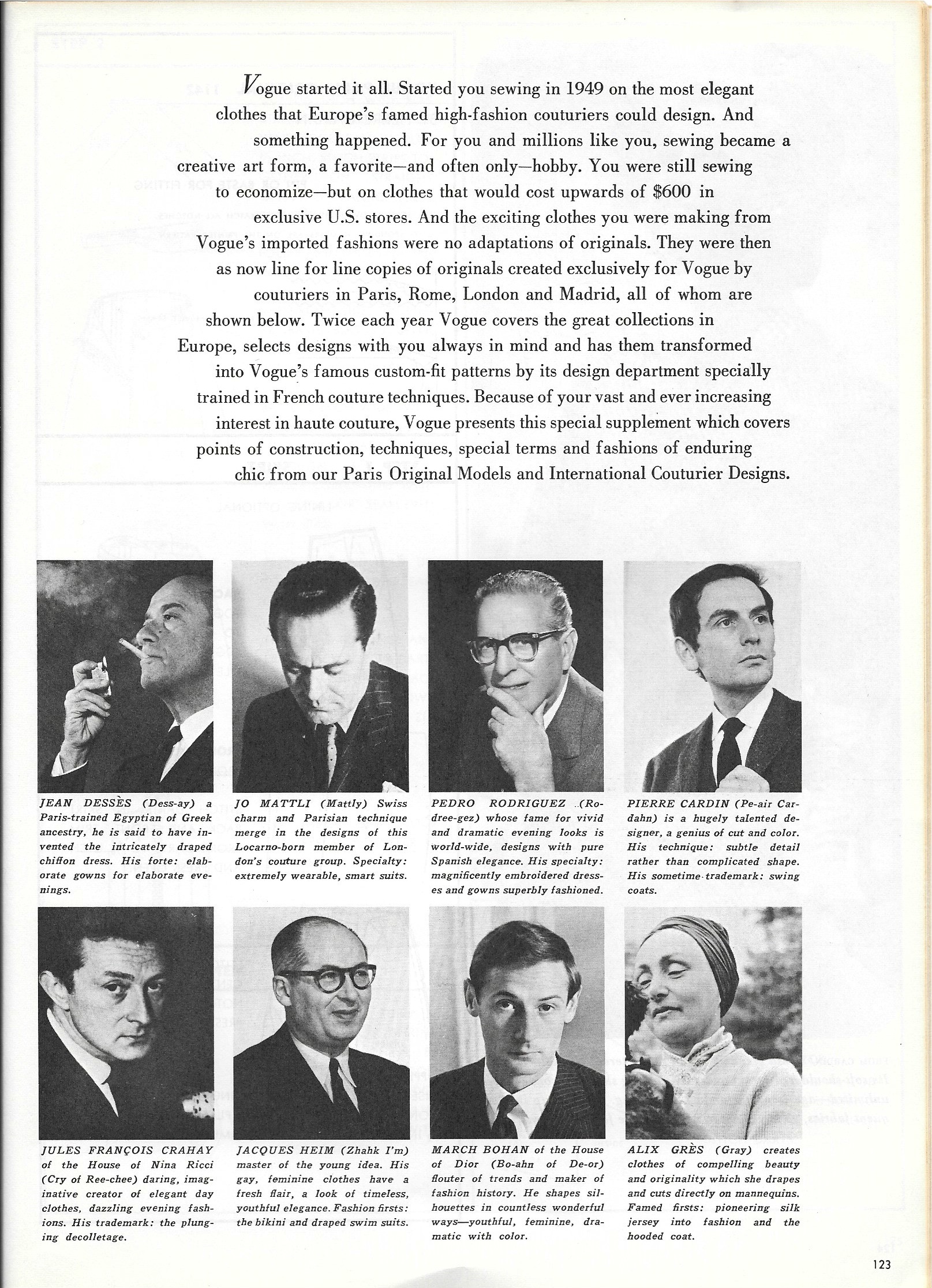
The New Vogue Sewing Book published in 1963 contained a “Couturier Supplement”. According to the Foreword in this magazine-styled book, “Only Vogue Patterns can bring you original designs from the Paris and International Couture houses, because of an exclusive arrangement with world famous designers.” One of the 17 designers featured in the supplement was Jo Mattli.

Designers in Vogue

Designers in Vogue-1

Jo Mattli is second from the left on the top row. Click on the photo to see the image up close.

A quick look at the two-page spread on these designers shows a veritable who’s who of fashion design, with names very much still known today. Except for perhaps Jo Mattli.   (Mattli was born Giuseppe Gustavo Mattli in 1907 in Locarno, Swirtzerland; he died in 1982 in England). He is absent from The St. James Fashion Encyclopedia, even though he was considered one of the “big ten” London couturiers in 1953, when London Society was busy readying for the coronation of Queen Elizabeth II. Perhaps it was his move into ready-to-wear in 1955 that relegated him to lesser status among the world’s great couturiers. This did not keep Vogue Patterns from recognizing his wide appeal to stylish women who appreciated his attention to fine detailing, and his expertise in creating practical, wearable and charming dresses and suits.   As one of Vogue’s featured designers in their Vogue Couturier Design-labeled series, Jo Mattli made his mark. Indeed, even he recognized the value of being part of Vogue Patterns, saying “the royalties from these patterns had helped support his couture business” (from Wikipedia, the free encyclopedia).

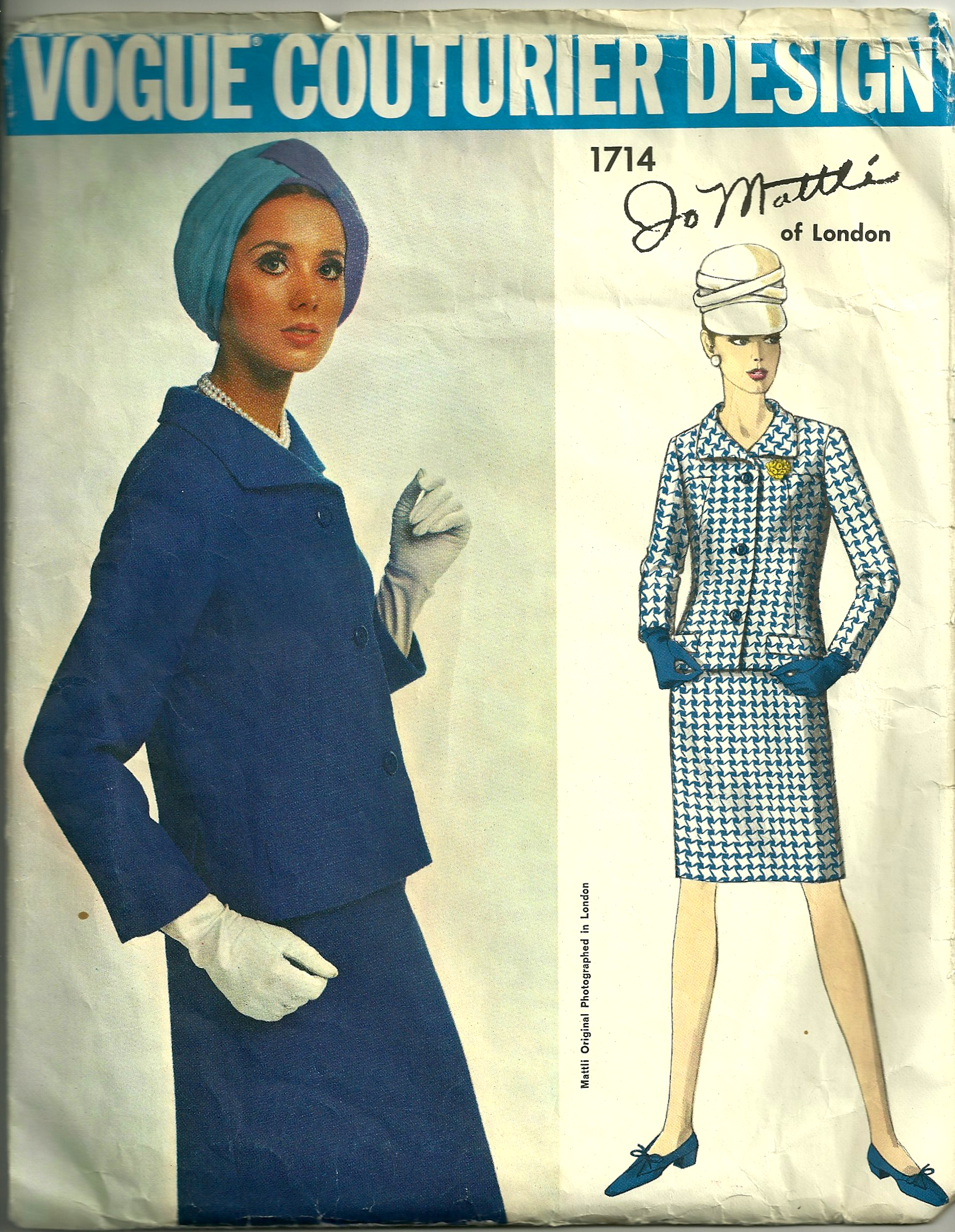
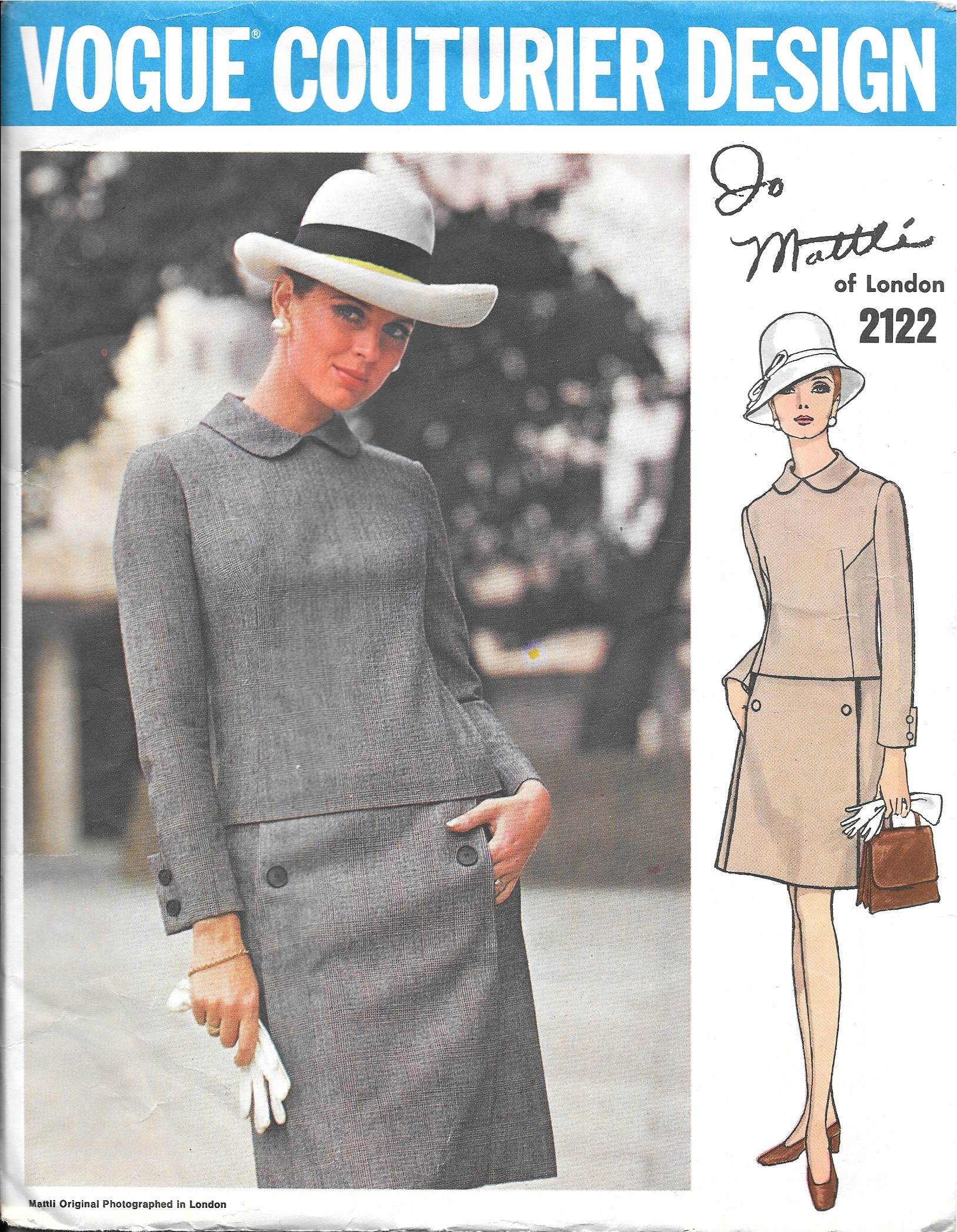
The jacket I just completed (part one of a two-part jacket and dress ensemble) is the third Jo Mattli Vogue design I have sewn. Two years ago I made a suit from this pattern:

From Vogue's Designer series, ca 1970.

I would like to make this pattern again. The first time I made it, the fabric I chose was too heavy, but the fit and the styling were excellent.

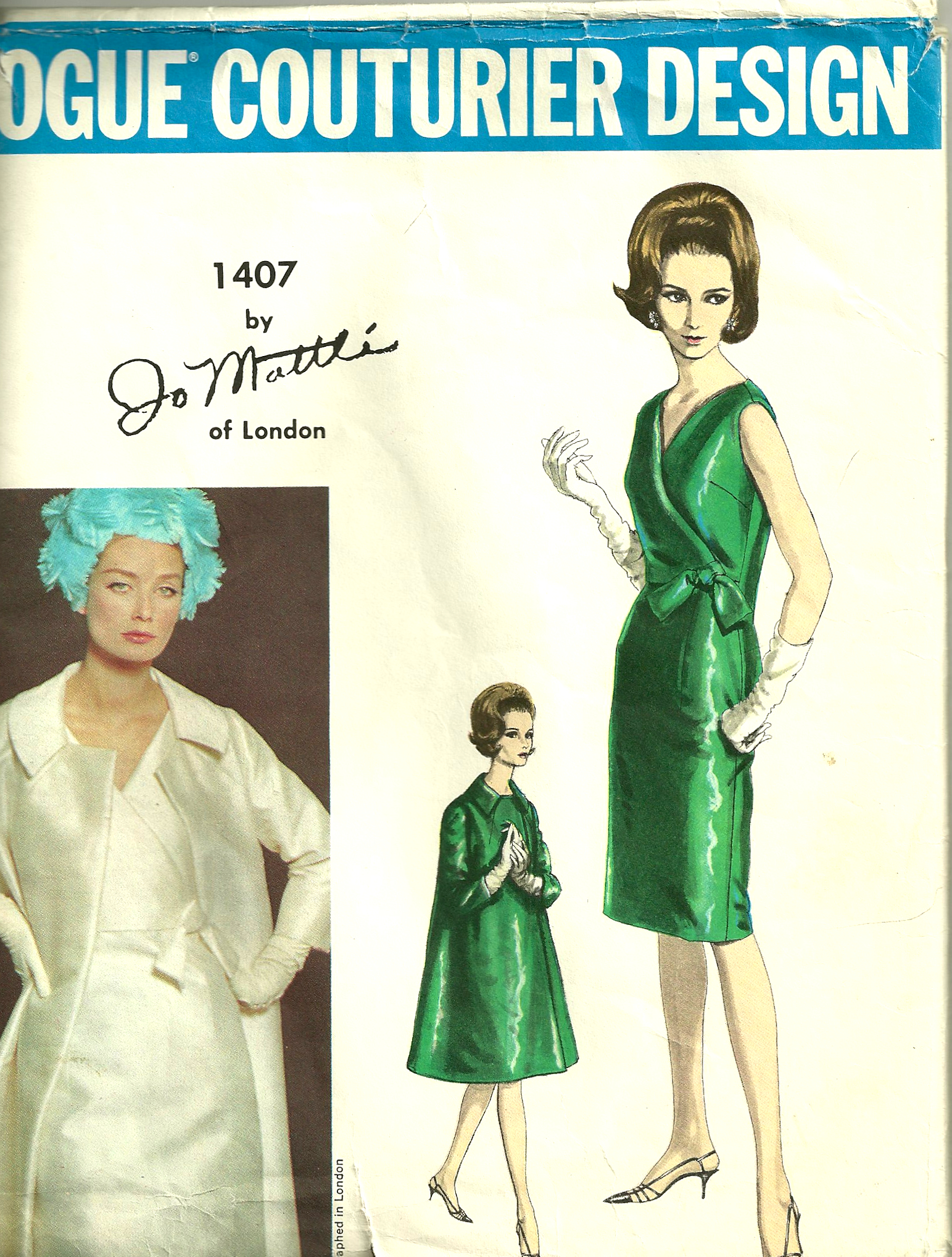
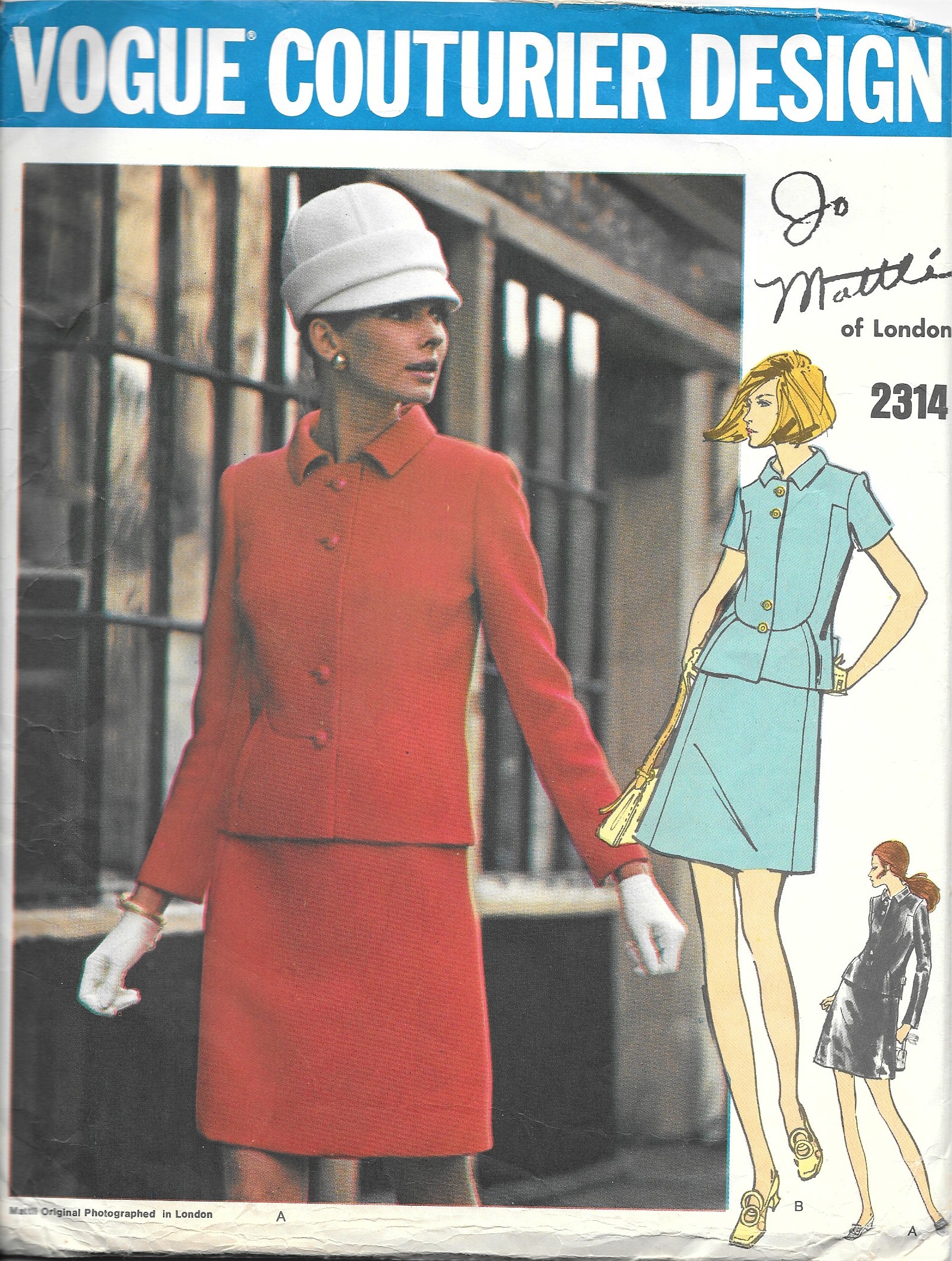
Late last summer I made a cocktail dress from this pattern:

I still have plans to make the coat, to coordinate with the cocktail dress.

I still have plans to make the coat, to coordinate with the cocktail dress.

And now with three “makes” under my belt, my appreciation for Mattli’s design and construction sense is growing. Not only that, I realized after going through my pattern collection, that I have two more Mattli patterns, each of which also displays his characteristic and interesting seam detailing.

This is actually a one-piece dress, although it looks like it is a two-piece outfit.

This is actually a one-piece dress, although it looks like it is a two-piece outfit.

Dress Suit - red Mattli suit

Another beautiful suit!

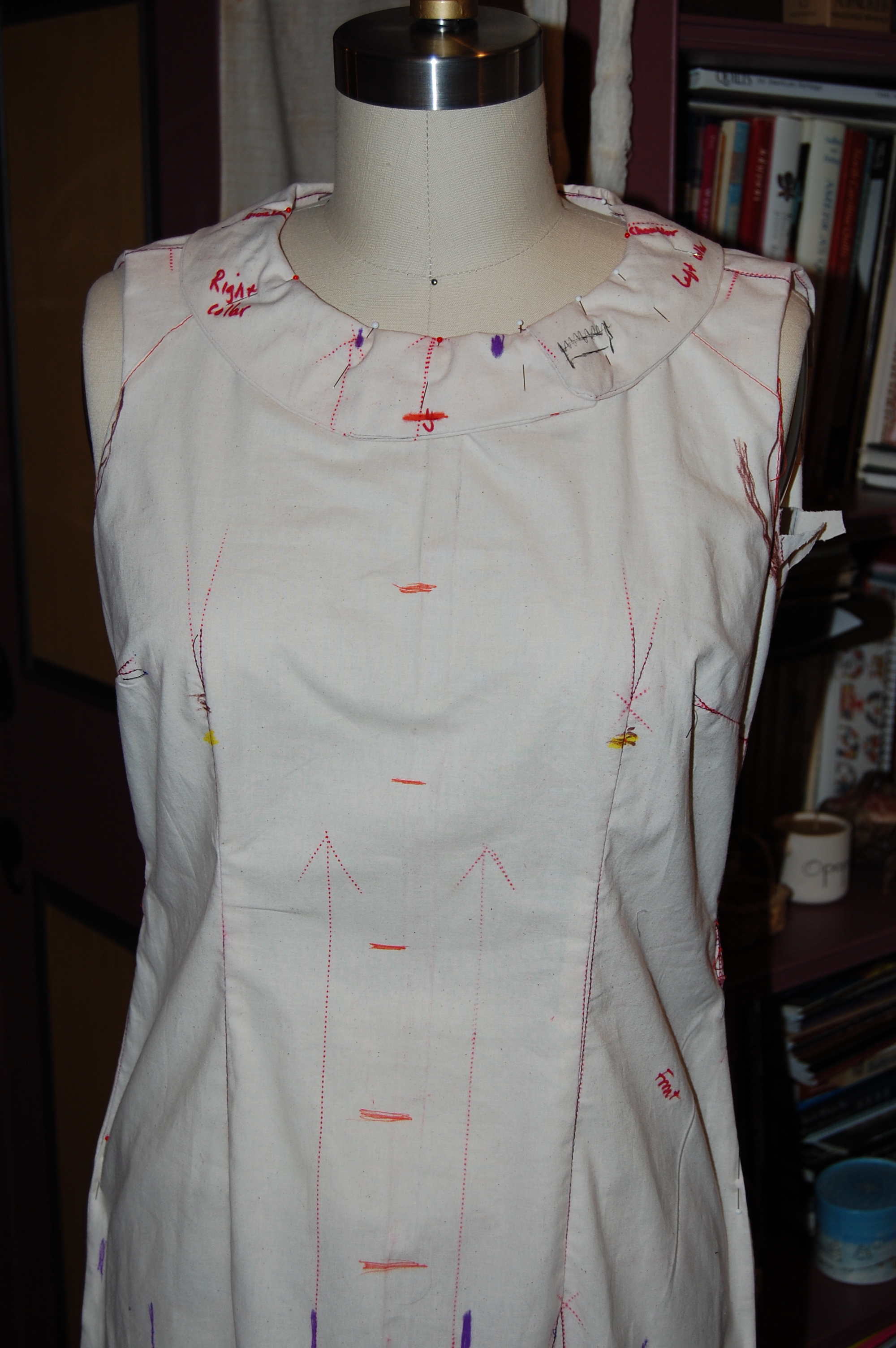
While the Mattli-designed jacket in my suit dress ensemble is certainly the star of the outfit, I am hoping the dress will have its own charms. After being out of town and away from my sewing all last week, I have now been able to turn my attention to the dress part of the outfit. I believe I have successfully combined two patterns (sheath dress and collared blouse) to create – what else? – a collared sheath!

Dress for Mattli jacket

I was still adjusting the fit when I took this photo. Hopefully it will not look like a bag when I actually wear it!

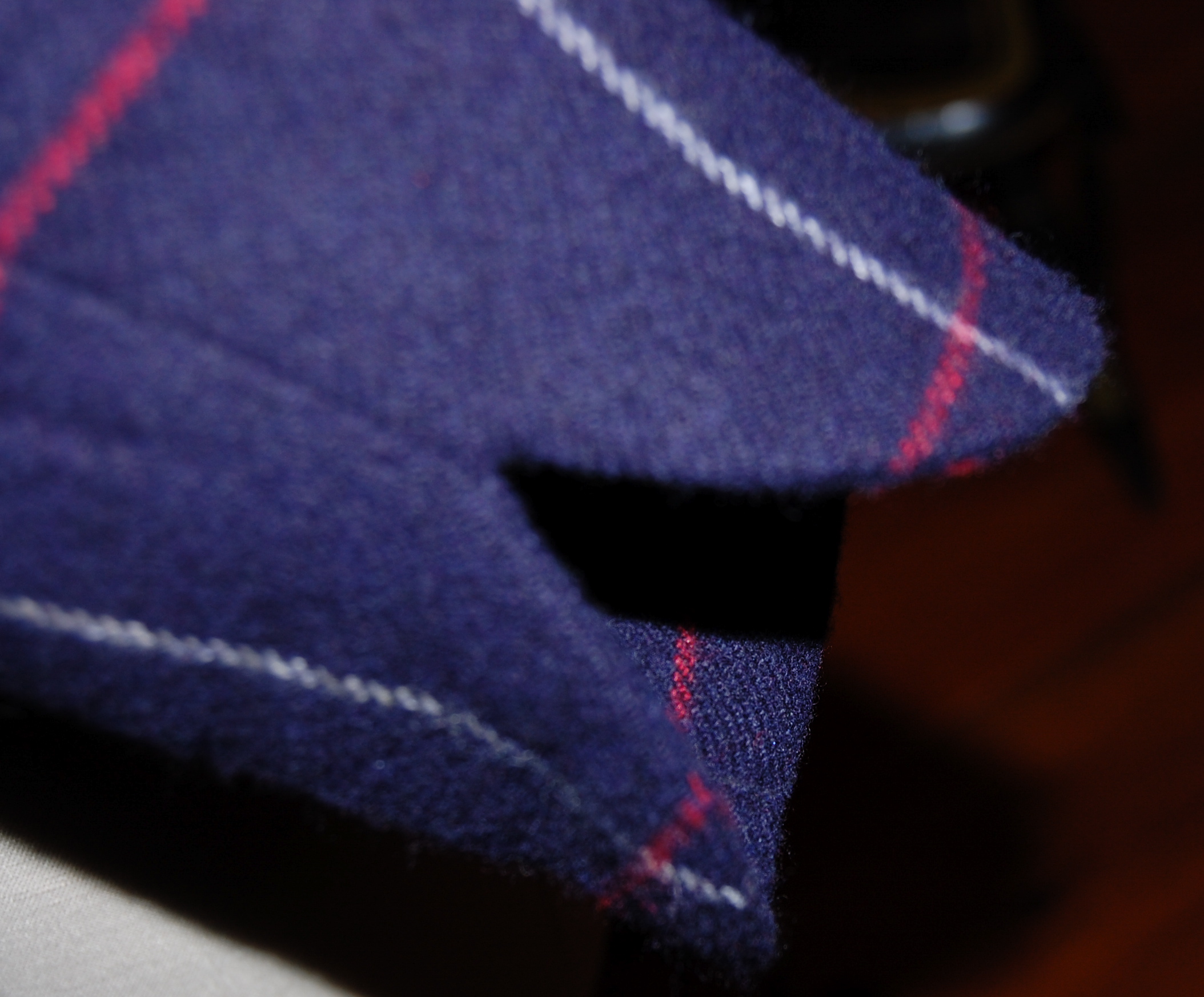
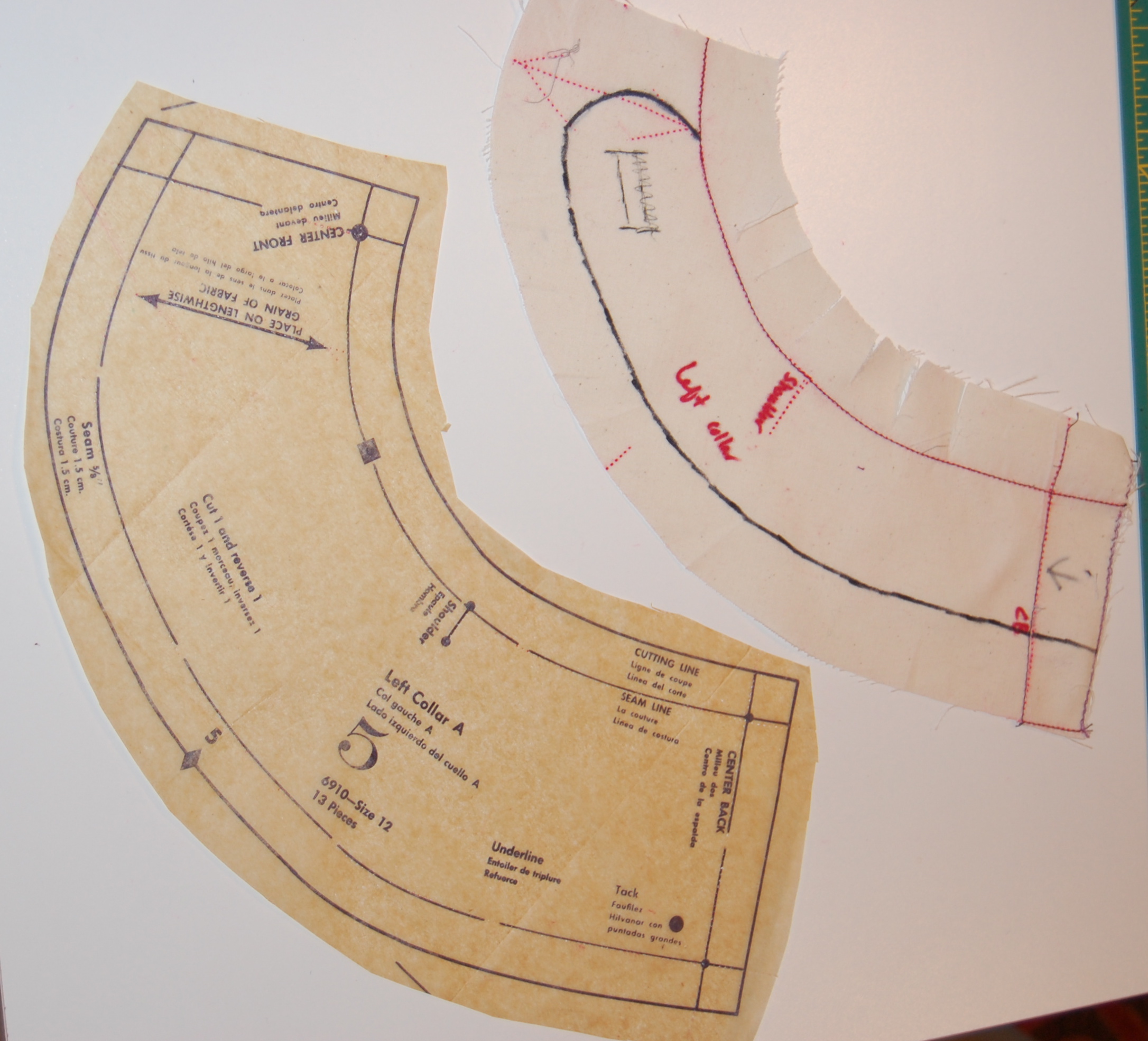
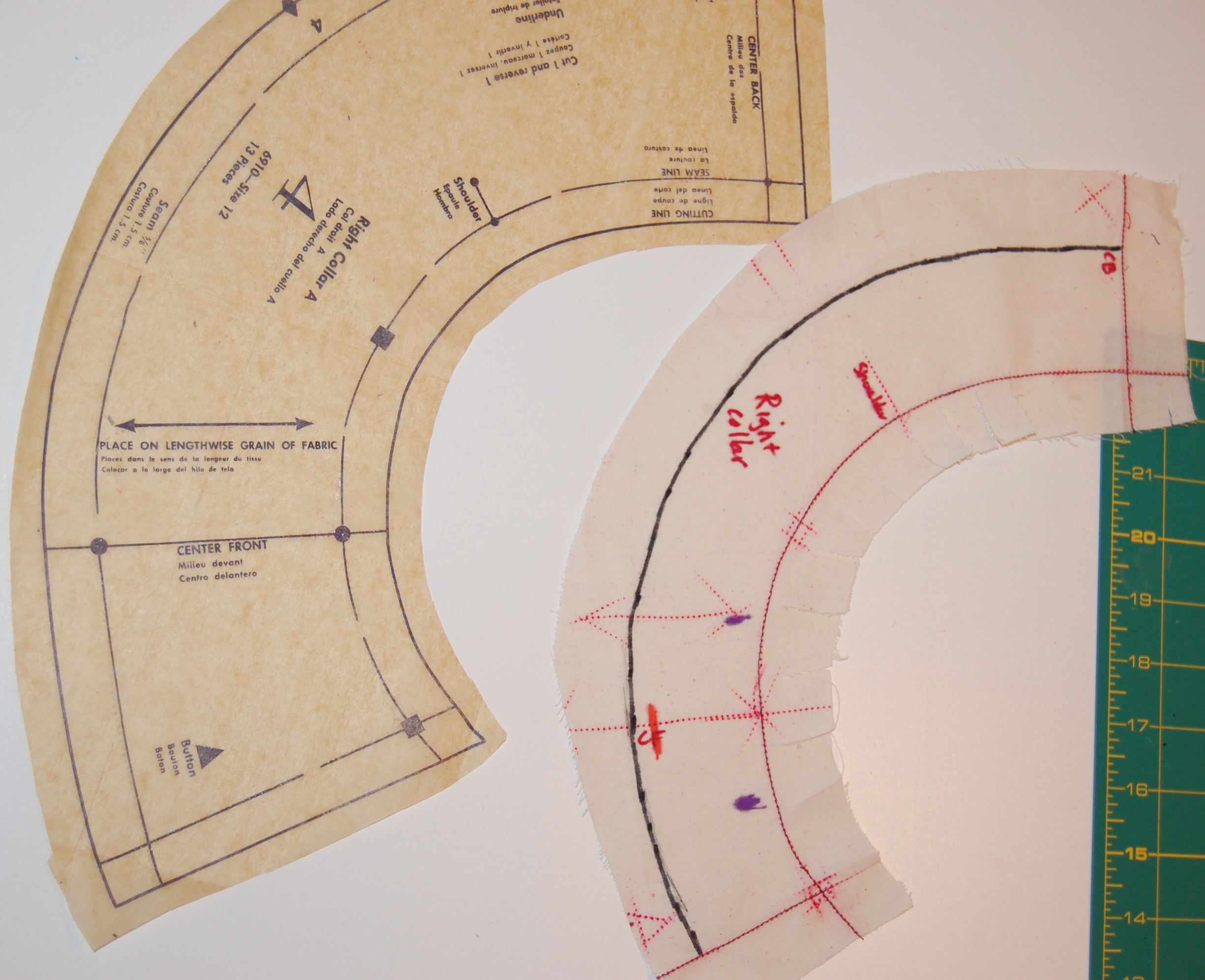
After I had the muslin fitted and completed, I got the idea to make the end of the tab on the collar rounded, to mimic the curves on the jacket’s sleeves and on the jacket’s lower front edges.   I also had to take significant width out of the collar. I am hoping it will work and look good…

This shows the curved detail on the edge of the sleeve.

This shows the curved detail on the edge of the sleeve.

This shows not only the added curve to the collar end, but also how much width I had to remove from the collar pattern

This shows not only the added curve to the left collar end, but also how much width I had to remove from the collar pattern.

And here is the right collar section.

And here is the right collar section.

I  hope that Jo Mattli would approve of a dress being paired with his jacket. He would probably refer to it as a “slimline afternoon dress” were he alive. I have no doubt he created many such beautiful dresses in his lifetime.

[NOTE: Jo Mattli is the subject of a thesis by Dr. Caroline Ness entitled Famous, Forgotten, Found: rediscovering the career of London couture fashion designer Giuseppe (Jo) Mattli, 1934-1980.]

10 Comments

Filed under Cocktail dresses, Dressmaker suits, Jo Mattli, Suit dresses, Uncategorized, vintage Vogue Designer patterns, vintage Vogue patterns from the 1960s

The Year of Magical Sewing

“Just around the corner in every woman’s mind – is a lovely dress, a wonderful suit, or entire costume which will make an enchanting new creature of her.”                                                               —  Wilhela Cushman

For those of us who sew, this statement takes on extra meaning, as it is in our power to create that lovely dress, wonderful suit or entire costume. But have you ever thought about the process of sewing – and how magical it is?   Magical in the sense of being “mysteriously skillful, effective, and enchanting” (as Webster defines one meaning of magic).   I love that I can start with a piece of fabric – or a pattern – or an idea spawned by something I have seen and admired – and, using skills I have learned, proceed to actually make my own interpretation. It’s a remarkable process, when you really take the time to think about it. So I am dubbing this year, 2015, for me, as The Year of Magical Sewing, with emphasis on the transformational qualities and joys inherent in fashion sewing.

So what do I have planned for my year of magical sewing? I am beginning the year with several new vintage patterns in my collection, which are inspiring me no end. Add to that some amazing fabric selections, both vintage and new, and I am already certain I’ll never complete every thing I’d like to!  So – here is a general outline for 2015:

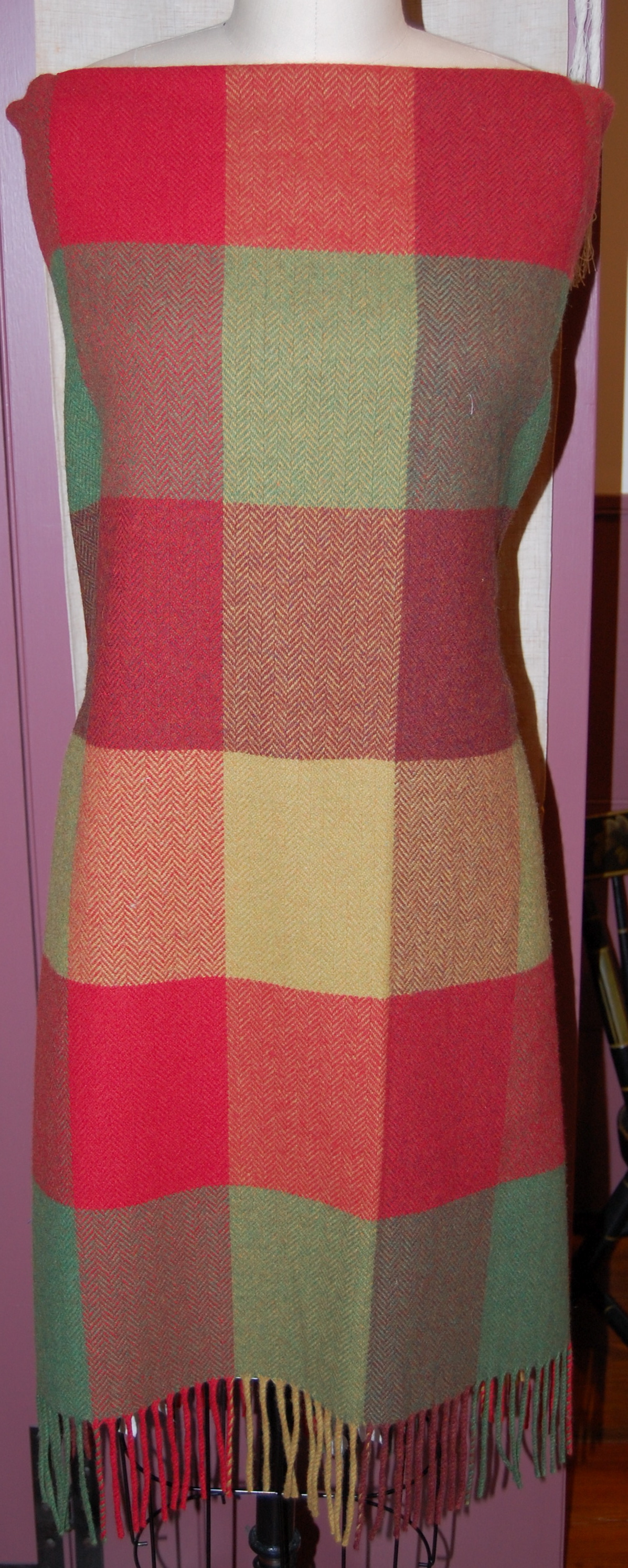
It is always easiest for me to segment the year into its seasons as I think about what I’d like to sew. Starting with Winter, I have two wool projects which will take me into March, I am sure: One is my fringed “blanket” dress, currently underway in my Sewing Room. After that I will be sewing with a piece of navy blue cashmere, from which I hope to squeak out a dress and jacket. (Valentine’s Day will find me interrupting my wool projects to make a sweet treat or two for granddaughter Aida.)

With any luck, I'll soon be wearing my blanket dress.

With any luck, I’ll soon be wearing my blanket dress.

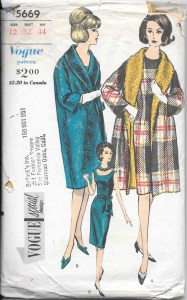
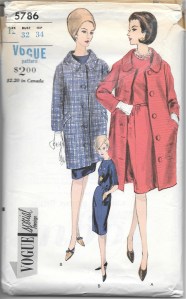
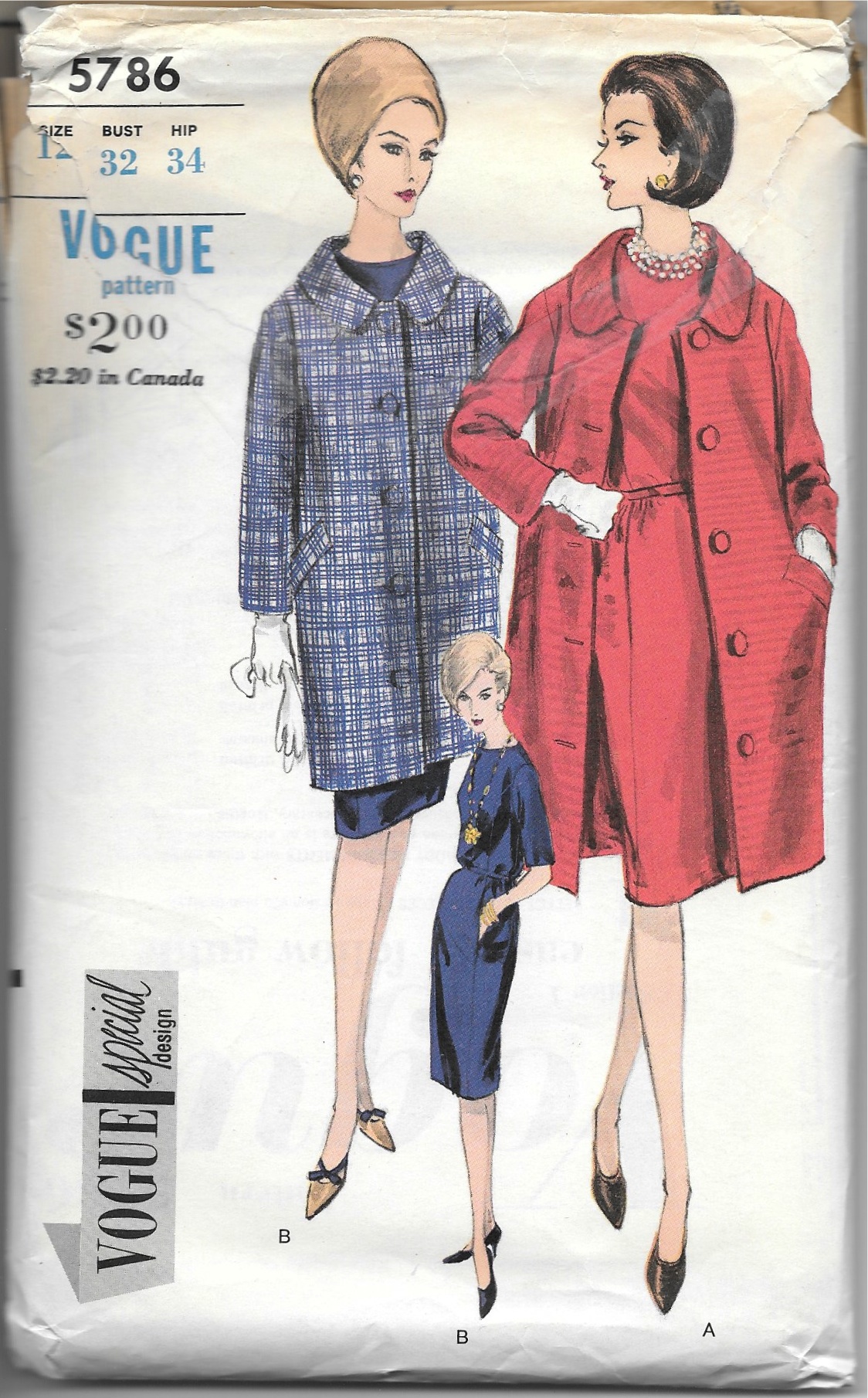
Spring is especially enticing to consider. Somehow I have become obsessed with dress and coat ensembles. Here are two patterns which would make up into “Spring” coats and coordinating dresses. I definitely will be using vintage linen for one of these two-part looks.

I love the knee length coat, although I may substitute another pattern for the coordinating dress.

I love the knee length coat, although I may substitute another pattern for the coordinating dress.

Or I may decide to use this Madame Gres design fopr a coat and dress.  The coat has very unusual darts along the side, which you may be able to see here.

Or I may decide to use this Madame Gres design for a coat and dress. The coat has very unusual darts along the side, which you may be able to see here.

Another Diane von Furstenberg wrap dress is also on my agenda for late Spring/early Summer. Thanks to one of my readers, I was able to purchase some authentic Cohama DvF fabric, so I am excited to contemplate the beginning of this dress.

Circa 1976, this fabric is still soft and lovely.

Circa 1976, this fabric is still soft and lovely.

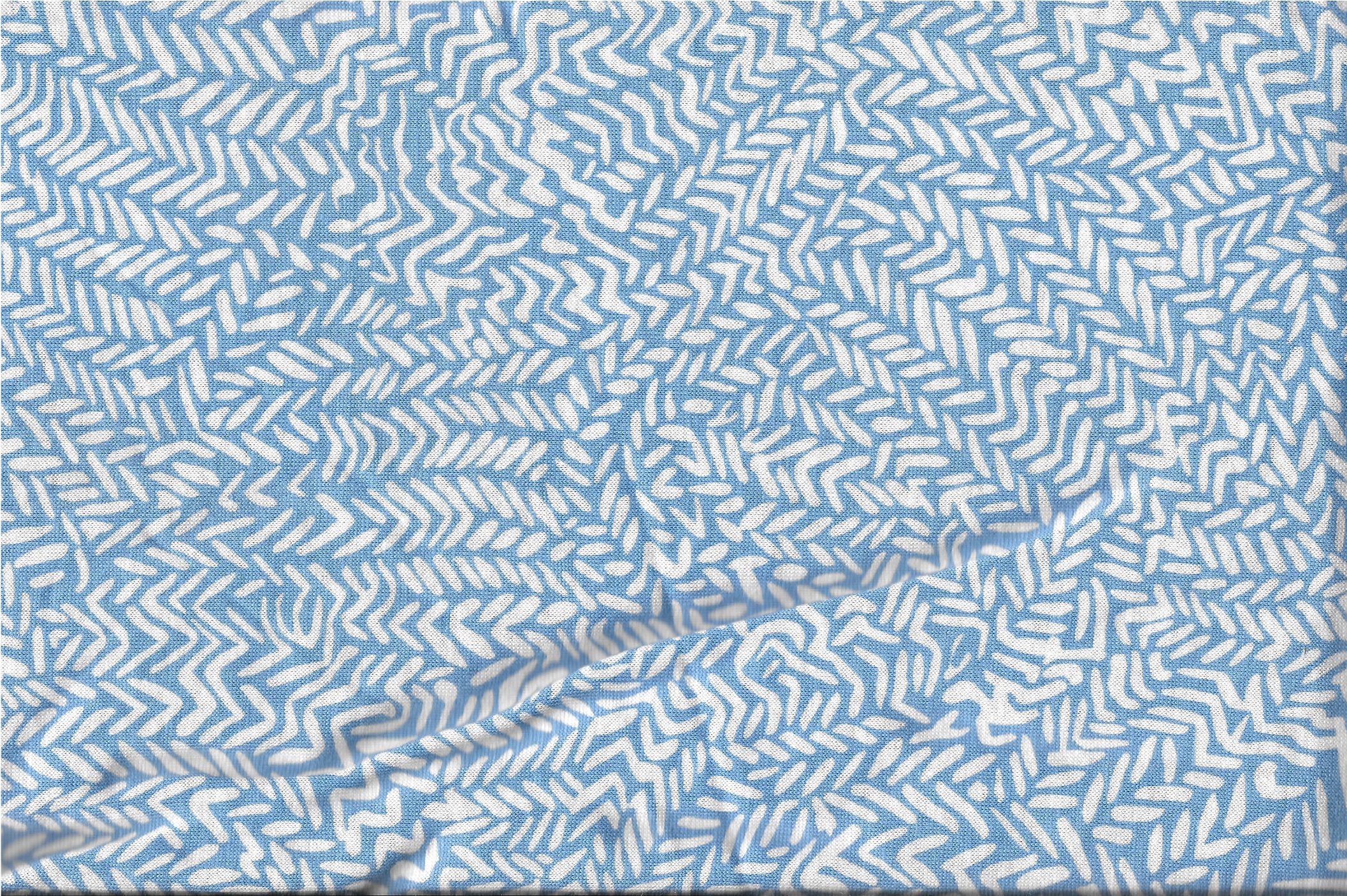
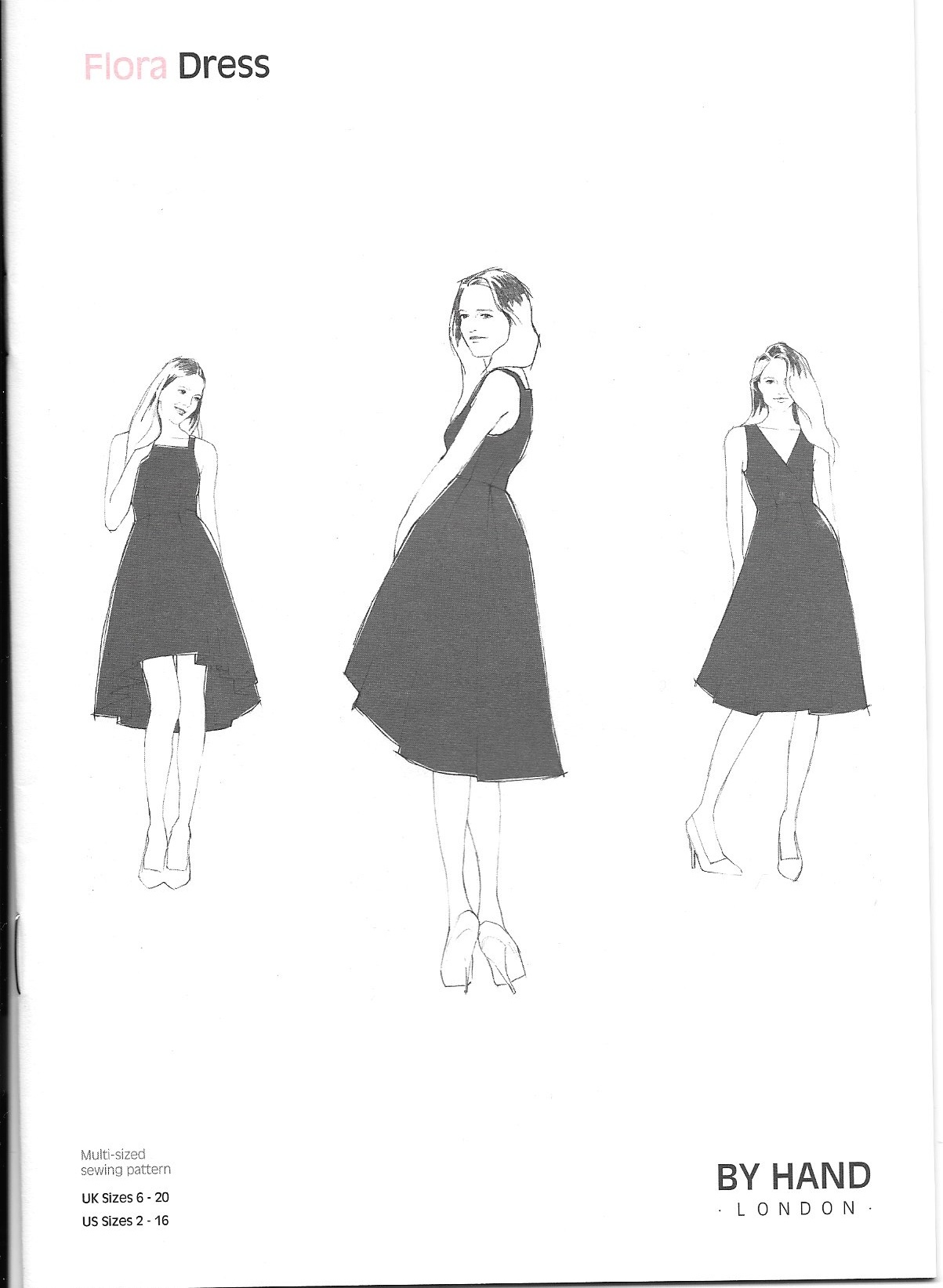
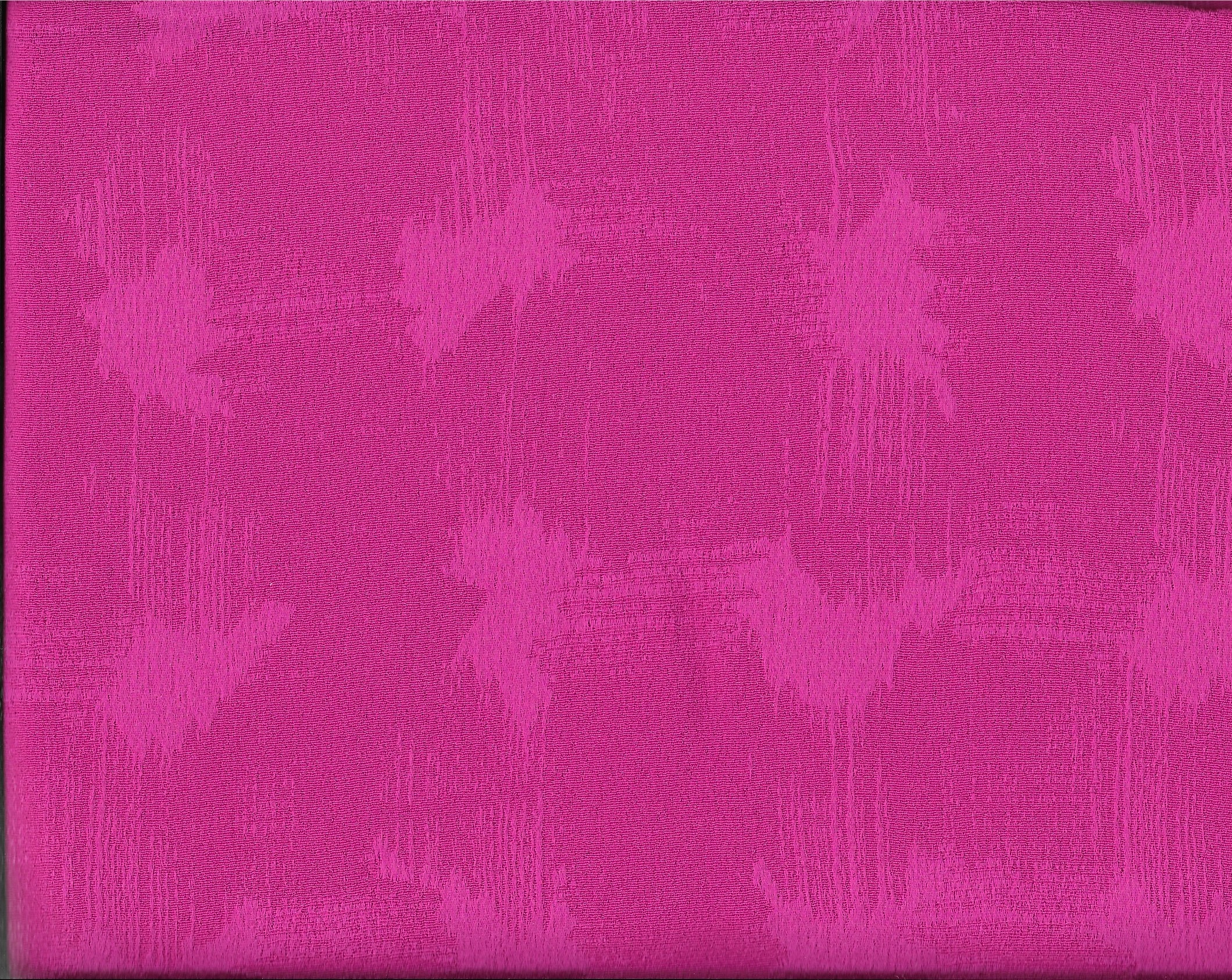
Summer will find us traveling quite a bit, so I am trying to be realistic about the time I’ll have to sew. If I can get one “fancy/formal” dress made, I’ll consider it a success. I might be using this By Hand London “Flora” pattern with this fabric, unless, of course, I change my mind.

Aspects of this pattern remind me of classic Balenciaga.  I'll have to make the skirt longer, however...

Aspects of this pattern remind me of classic Balenciaga. I’ll have to make the skirt longer, however…

I watched this fabric on the website of Britex Fabrics for months, and finally decided I had to have it.  It is silk charmeuse, very soft with the abstract design woven in.

I watched this fabric on the website of Britex Fabrics for months, and finally decided I had to have it. It is silk charmeuse, very soft, with the abstract design woven in.

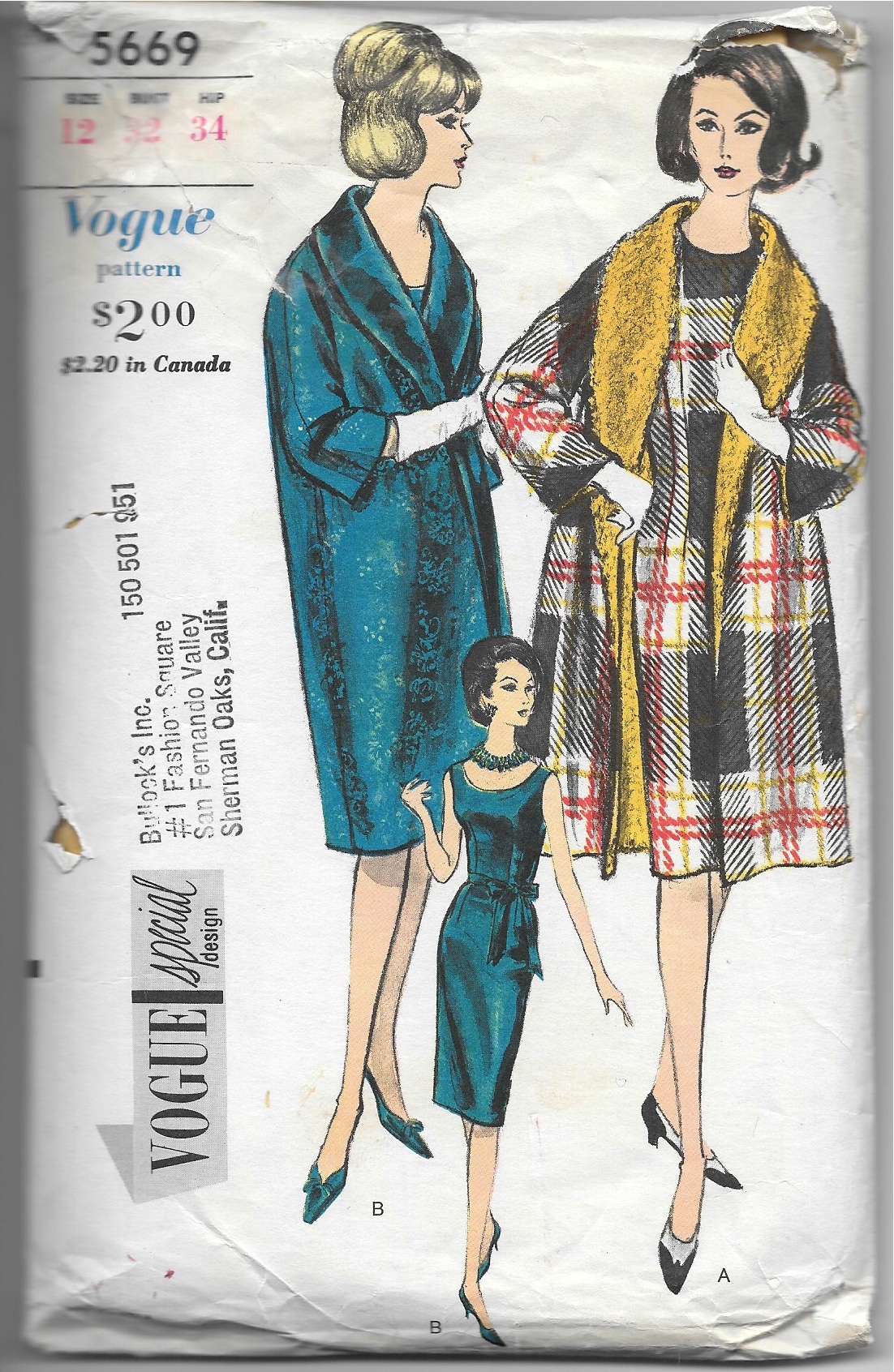
Fall will once again find me thinking coats and dresses. One of these two patterns will probably get the nod for a Fall/Winter ensemble:

I love both the coat and the dress (with two variations) featured in this pattern.

I love both the coat and the dress (with two variations) featured in this pattern.

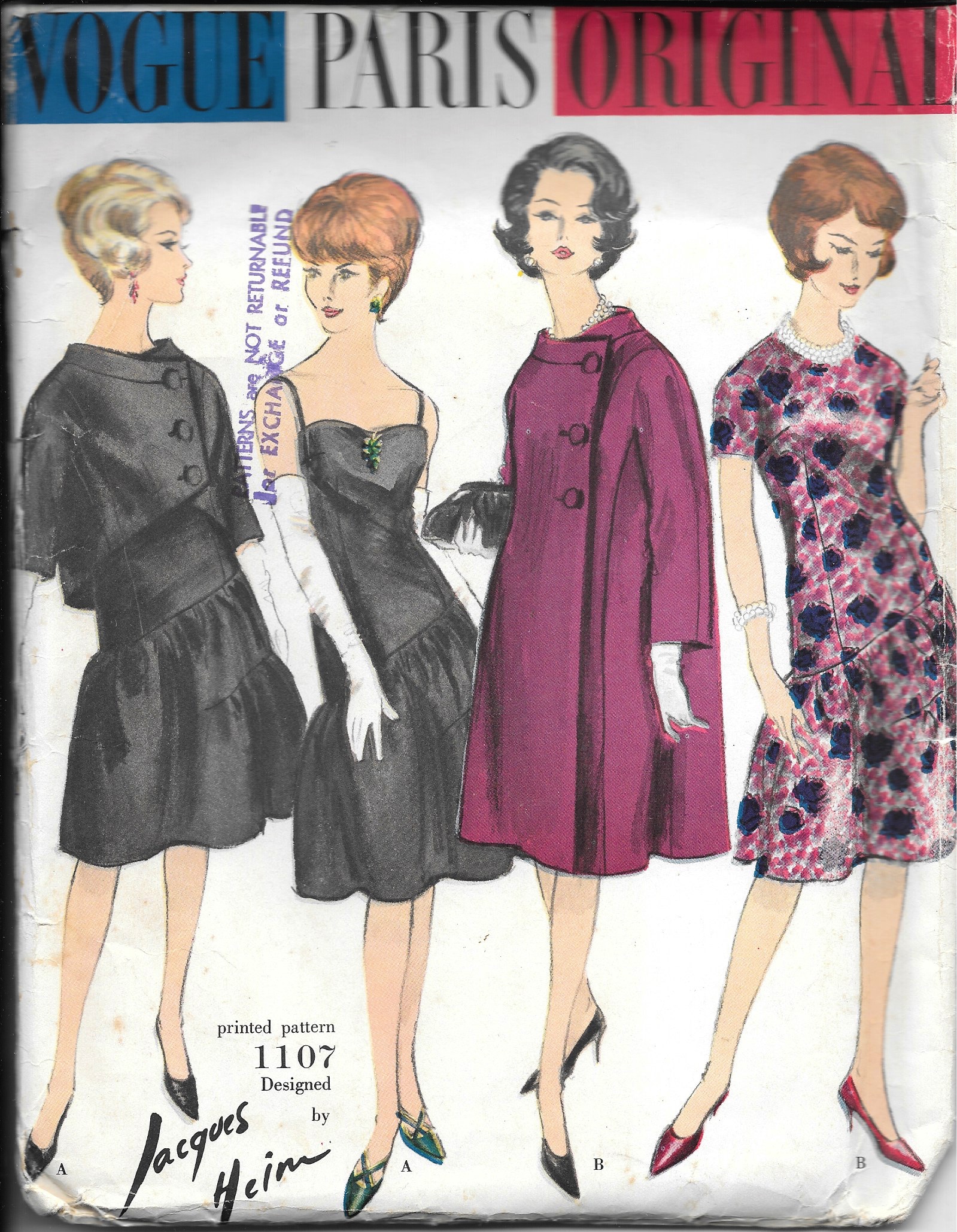
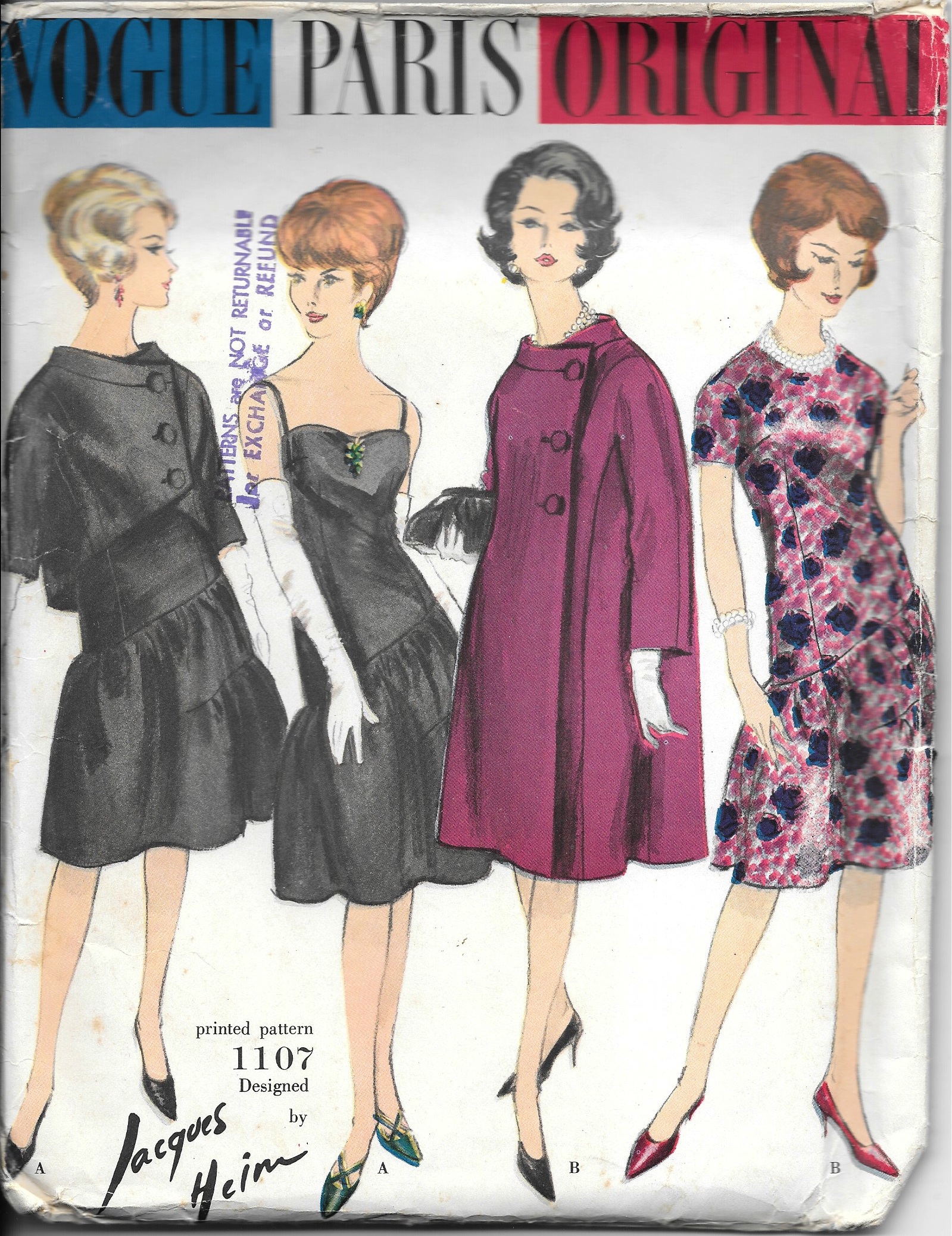
This Jacques Heim design has very unusual seaming in the skirt.  And the short jacket looks like it would be very flattering.  However, this pattern needs just the perfect fabric to showcase the design.

This Jacques Heim design has very clever seaming in the skirt. And the short jacket looks like it would be very flattering. However, this pattern needs just the perfect fabric to showcase the design.

And I am still looking for the perfect fabric with which to make the coordinating coat for this dress which I completed last Fall:

The Year of Magical Sewing

And here is the Mattli pattern showing the coat...

And here is the Mattli pattern showing the coat.

And then there is that baby quilt I want to make for “number 2” grandchild…   And more little dresses to make…

Perhaps the real magic of the year will be in completing even half of all I’d like to sew?  Here’s hoping that what is just around the corner for you, my readers, in 2015, holds its own magic and enchantment!


23 Comments

Filed under Coats, Love of sewing, Uncategorized, Vintage fabric, vintage Vogue Designer patterns, vintage Vogue patterns from the 1960s, Wrap dresses