Sweet November

The trickery, which defined my October sewing, finally floated away with the leaves and the goblins, leaving sweet November with her welcome reward, a new dress for Autumn and Winter.
Sweet November

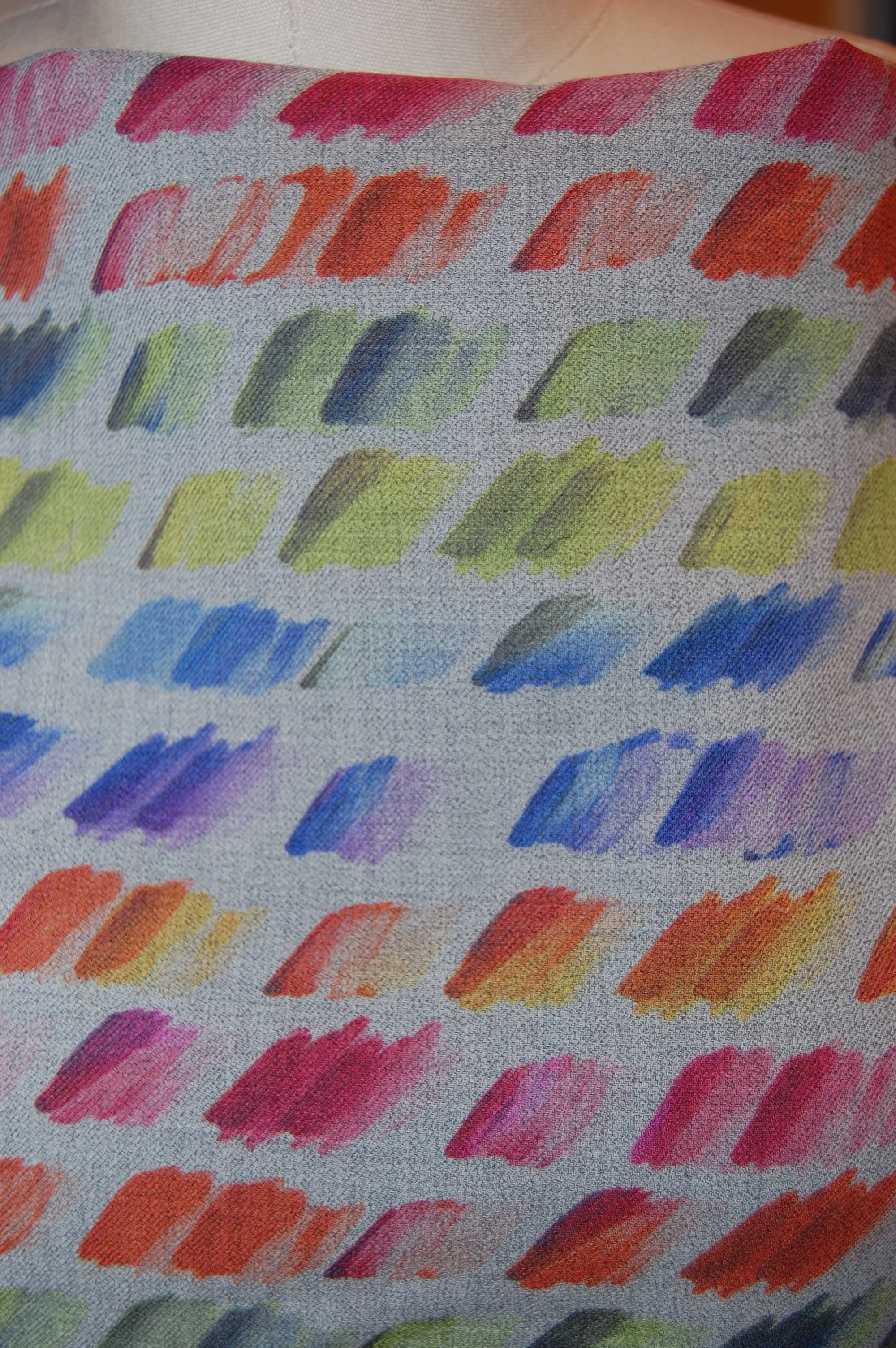
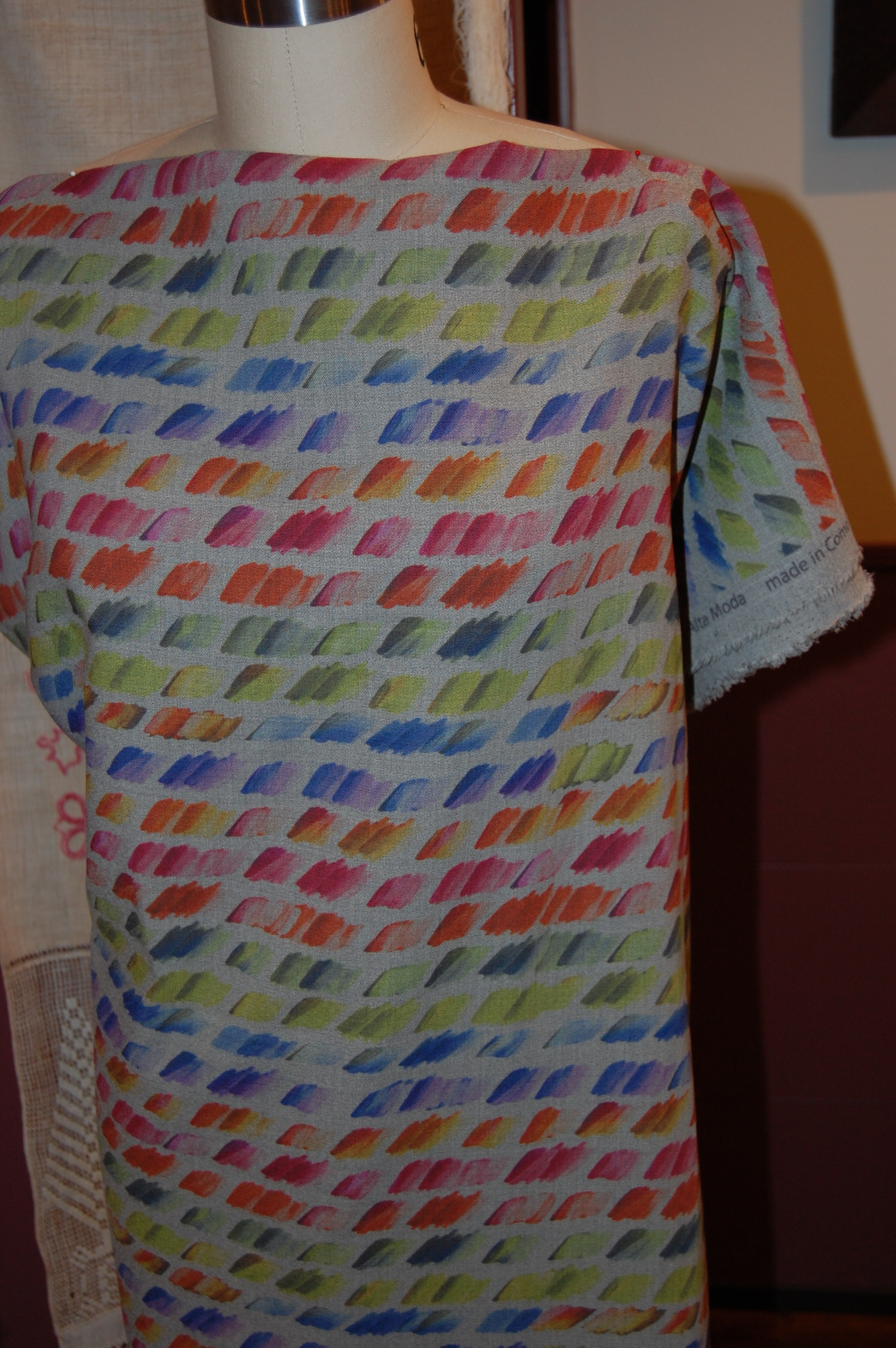
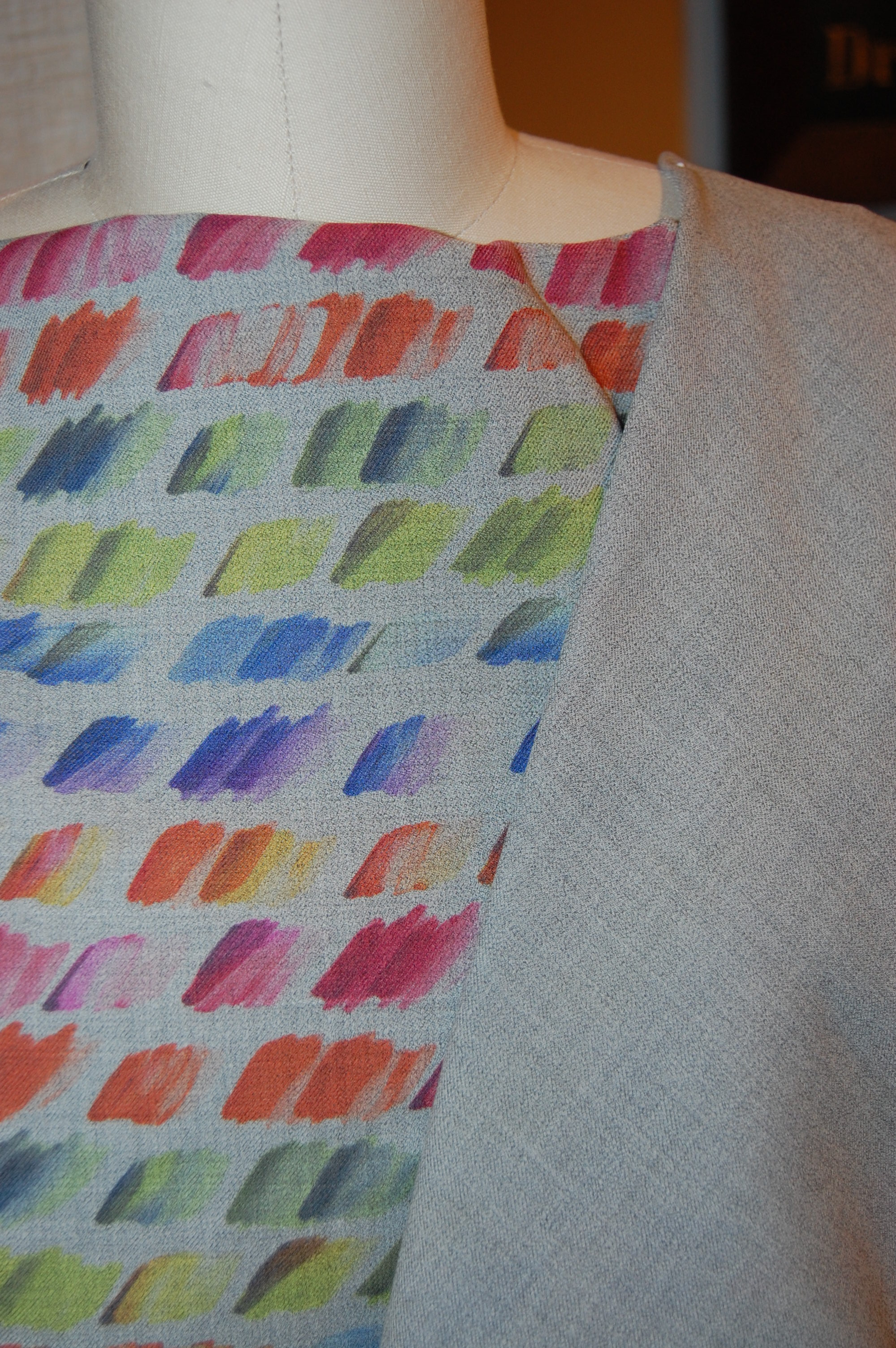
So what made vintage Vogue 1395 such a tricky dress to make? I documented my efforts to get a workable muslin (toile) in a post from early October. Once I had my adjusted muslin pattern, I transferred it onto black silk organza to use as my cutting guide. It was then I realized that, because the design on the fabric, a silk and wool blend, was printed on it, not woven into it, I needed to work from the right side of the fabric in order to match the horizontal “lines.” This meant that I had to flip every piece that I cut out and then exchange the organza with its opposing side. (I hope this makes sense.) It added a bit of uncertainty to the process and I was fanatical with flipping and checking to make sure I kept the design in line. Something told me I should delay cutting out the sleeves until I had the body of the dress together – my sewing godmother at work, I guess – and I am glad I did, as I’ll detail in a bit.

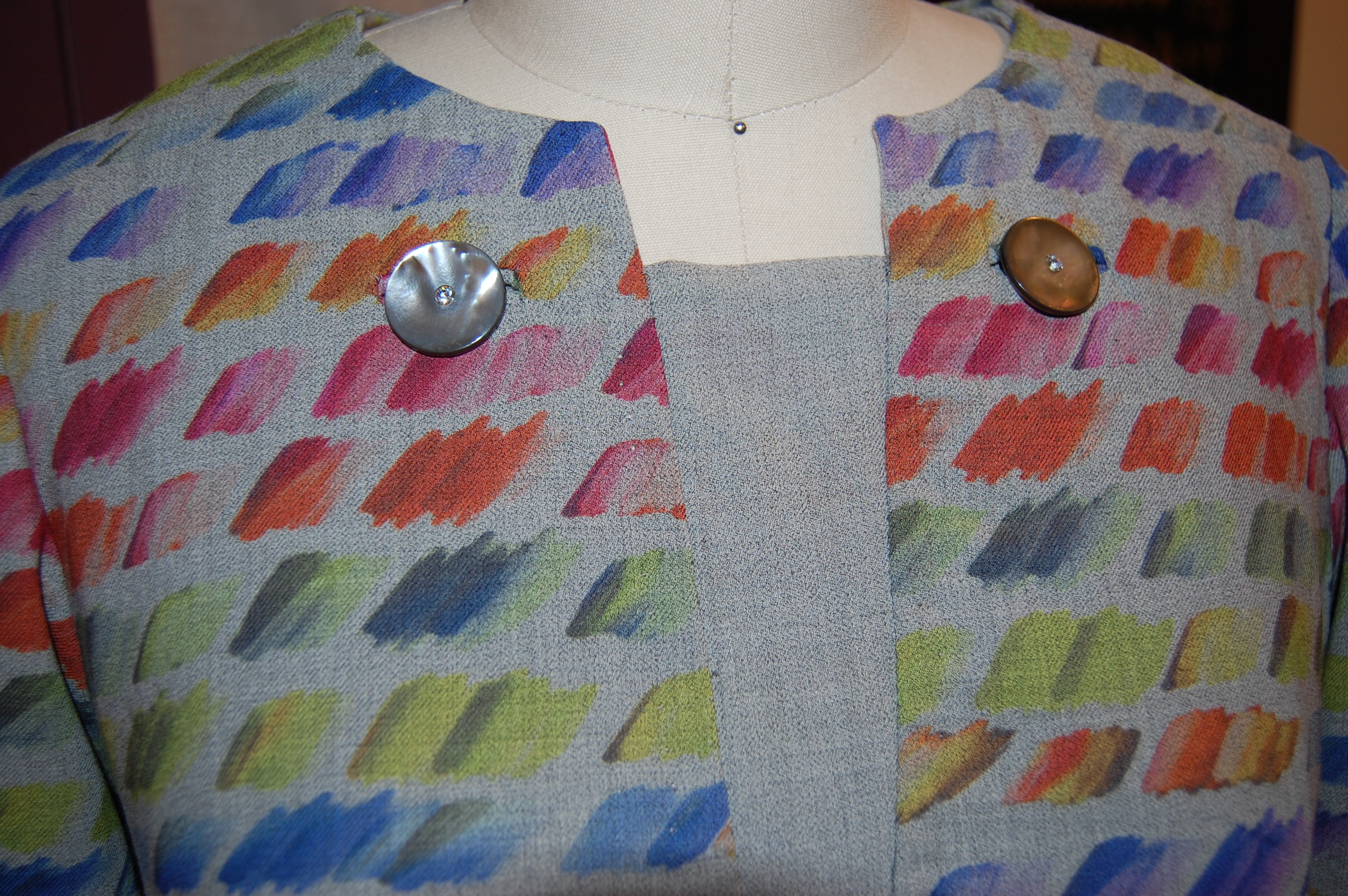
I had made the decision at the beginning of the project to cover the dress’s two buttons in the plain gray “wrong” side of the fabric. But once I “semi-made” a covered button, and tried it out, it was DULL. It added nothing to the dress. I went to my button box and all I could find was a small gray pearl that was close in color. But I loved the iridescence of it and determined that gray pearl buttons were what I needed. I seem to have such good luck with buttons from Britex – even though I am ordering online – and found 1” gray pearl buttons with a rhinestone in their centers. Although I am not a rhinestone-y type of person, something about them spoke to me. I remembered what Susan Khalje said in one of the classes I have taken with her – that couture often has a bit of “whimsy” to it. Well, I ordered those buttons as as fast as I could! I think they are just what was needed!
Sweet November

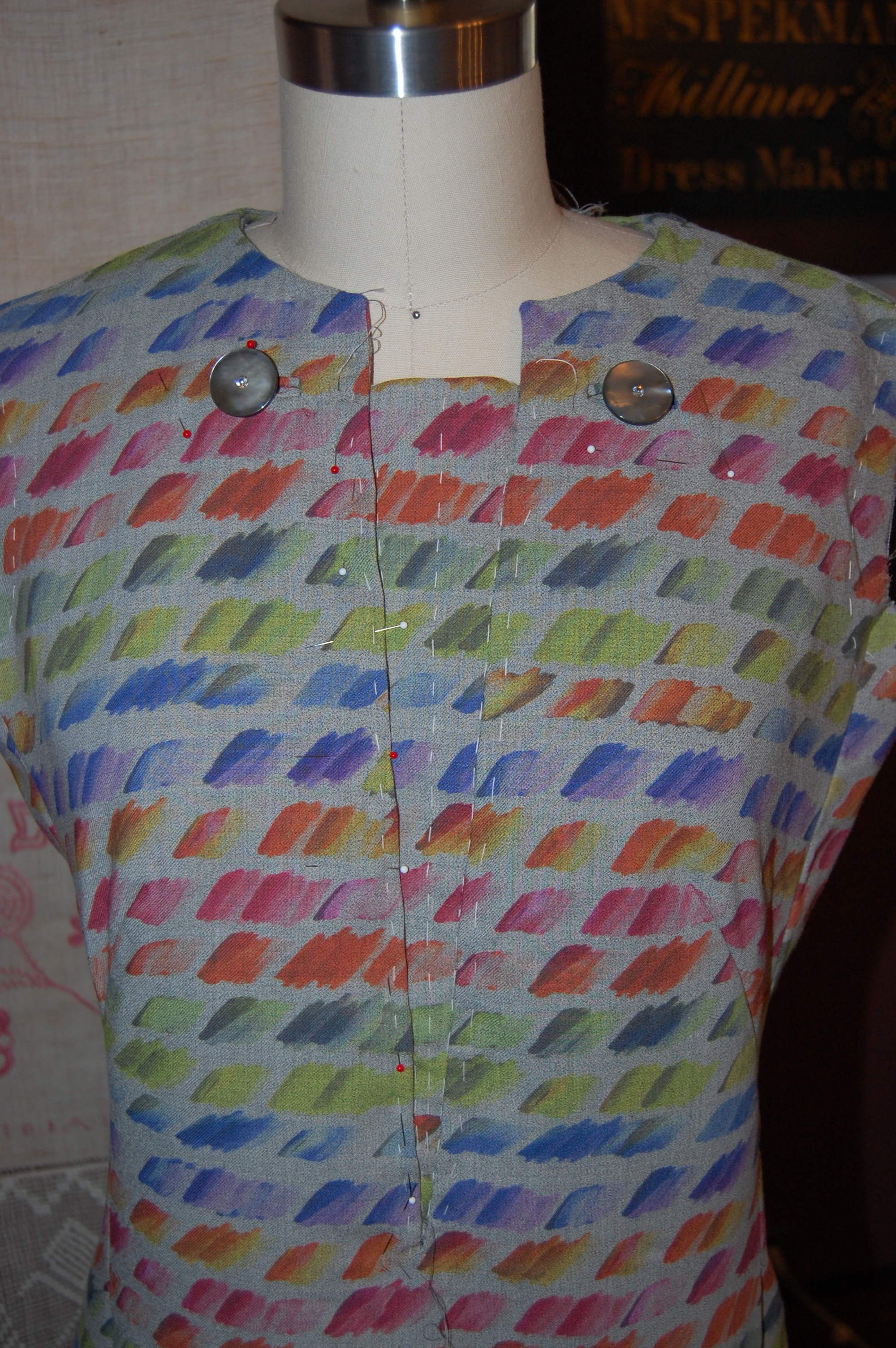
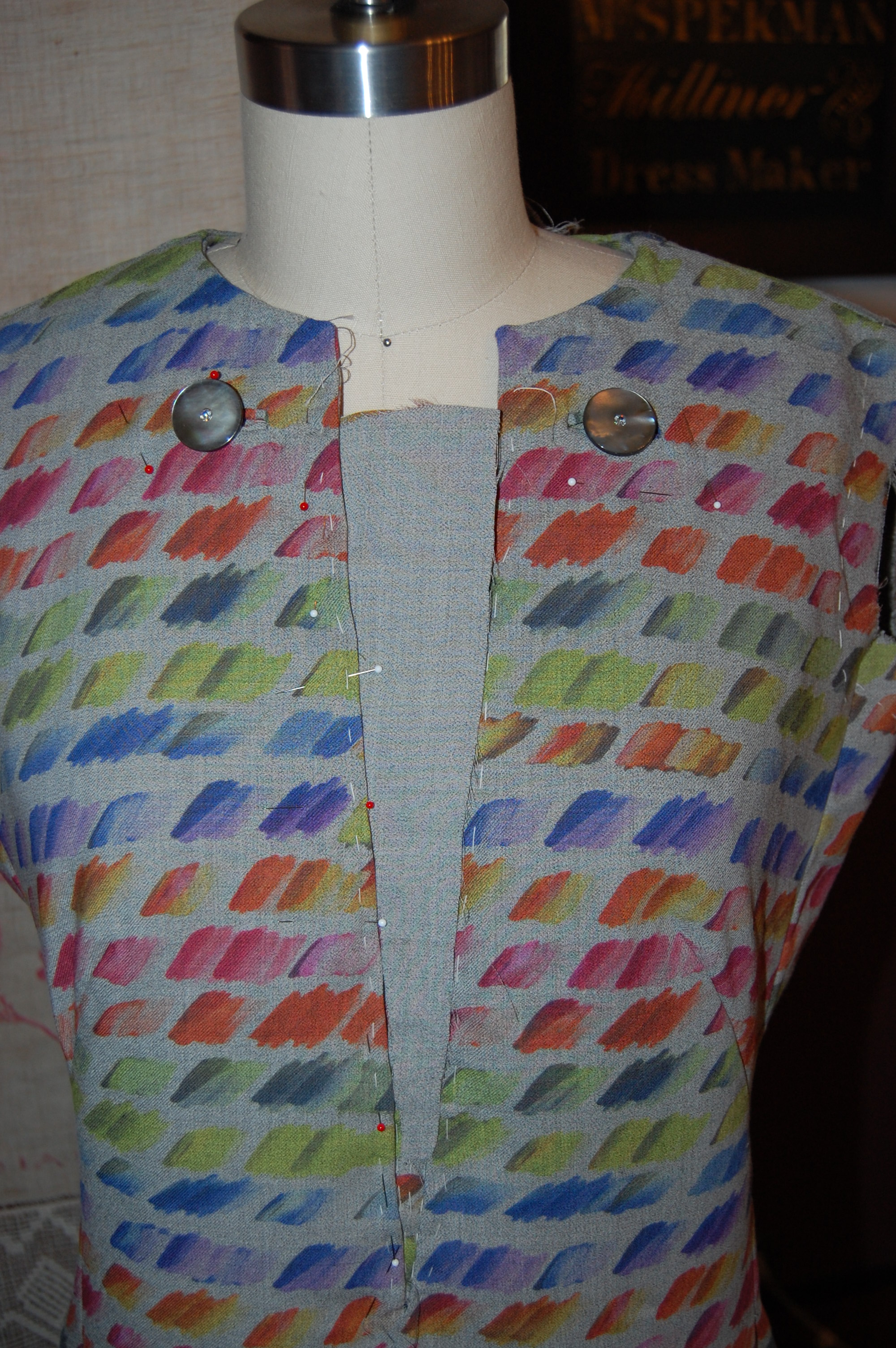
I had also made the decision to make the “dickey” part of the dress out of the side of the fabric with the printed design – so that the horizontal line would be uninterrupted across the bodice. Here is what it looked like once I had it done:
Sweet November

There was not enough definition between the dress and dickey to make it interesting.

I cut some scraps to see what it would look like with a play gray insert – and it was so much better!
Sweet November

So – I took the dickey all apart and flipped it over so it would be out of the plain gray “wrong side.” By now I was enjoying the versatility of this fabric (which I bought online from Mendel Goldberg Fabrics) and appreciating the serendipity of having this fabric for this pattern, giving me options.

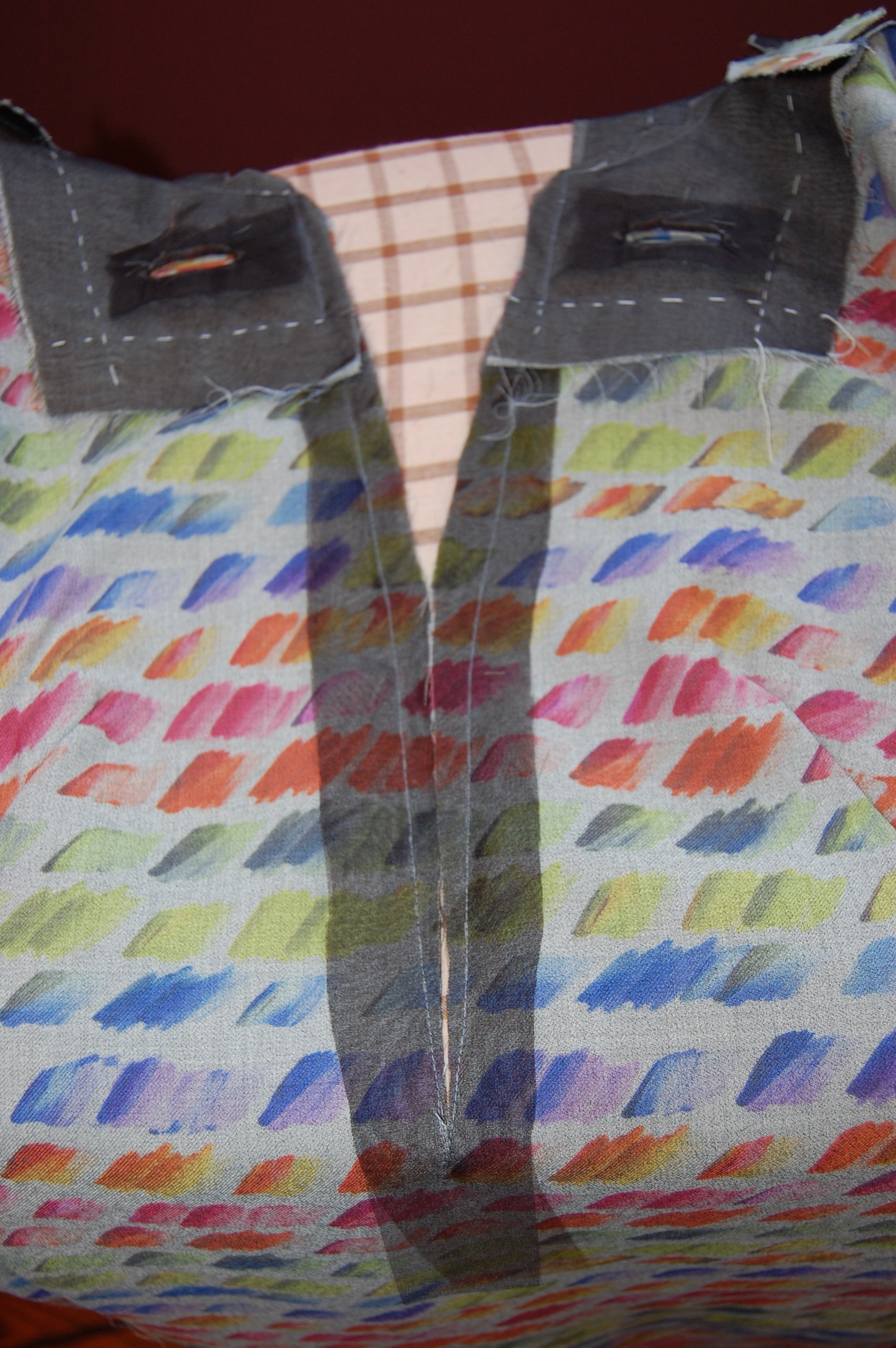
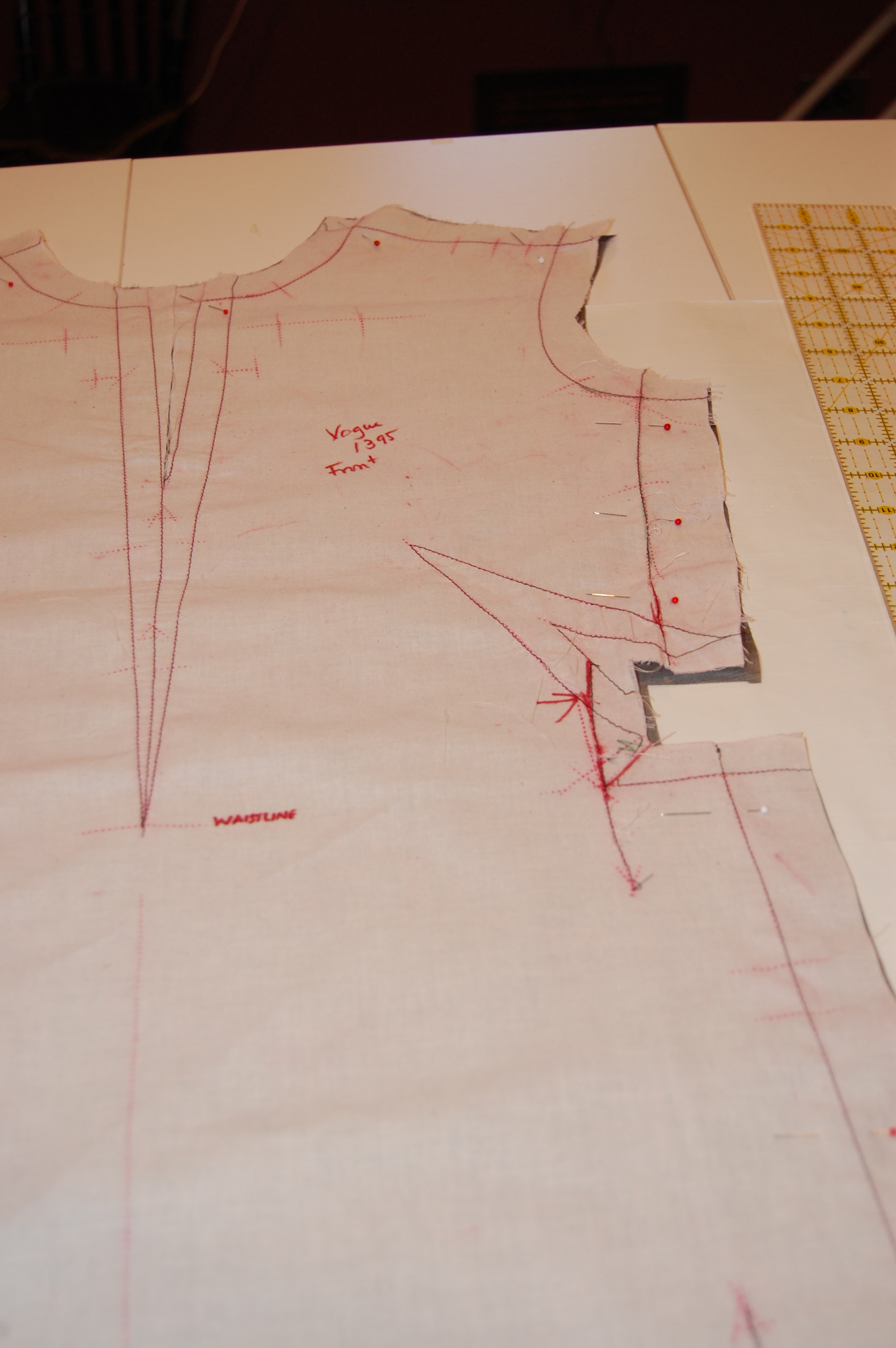
However, the fabric posed another challenge when I got to the point of finishing the front opening in the bodice. This fabric frays enough that I was not comfortable following the directions given in the pattern instructions:
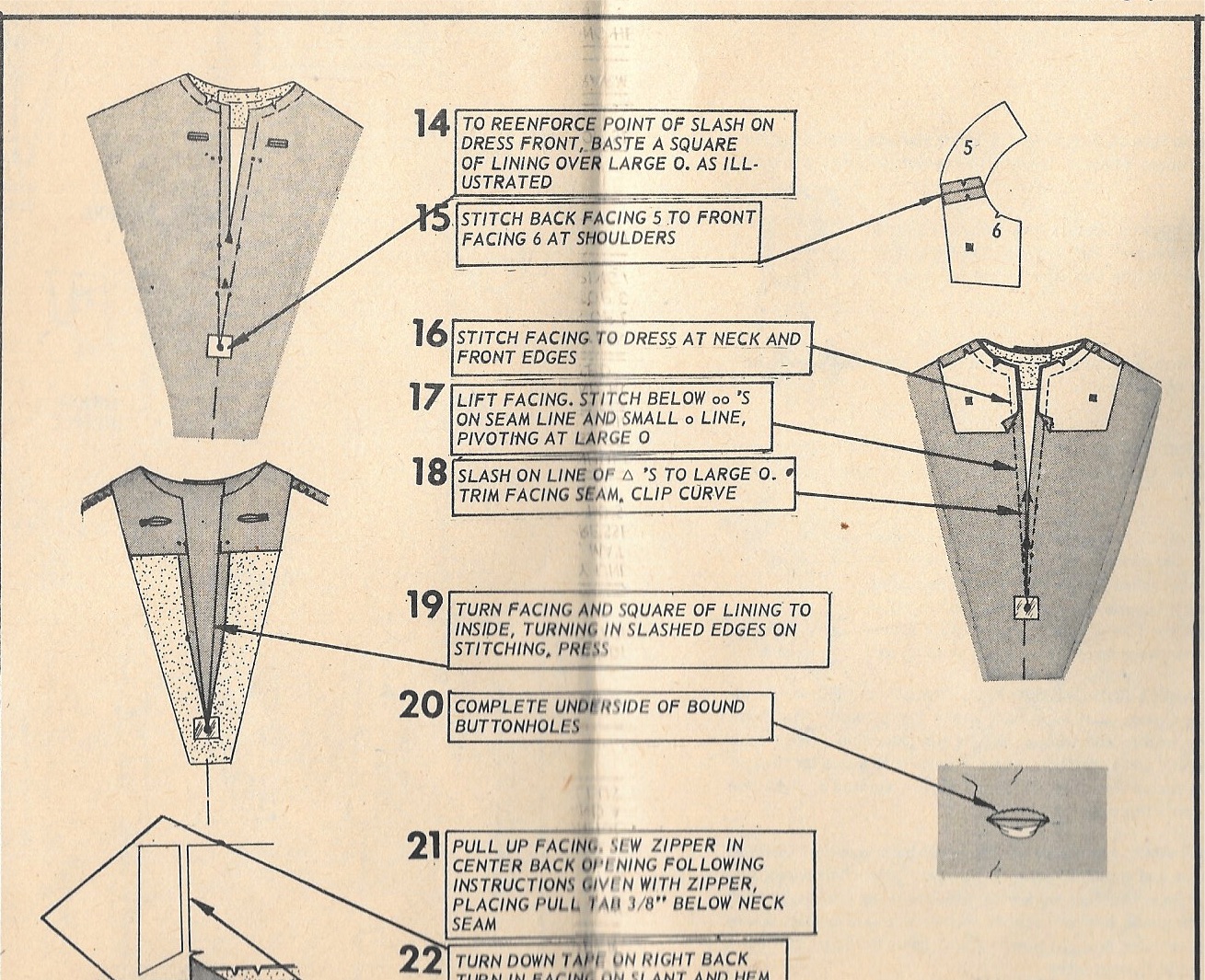
The instructions directed me to just turn back the seam allowance, but because of the ravel-ly nature of the fabric, I was certain it would pull out with wear.

The instructions directed me to just turn back the seam allowance, but because of the ravel-ly nature of the fabric, I was certain it would pull out with wear.

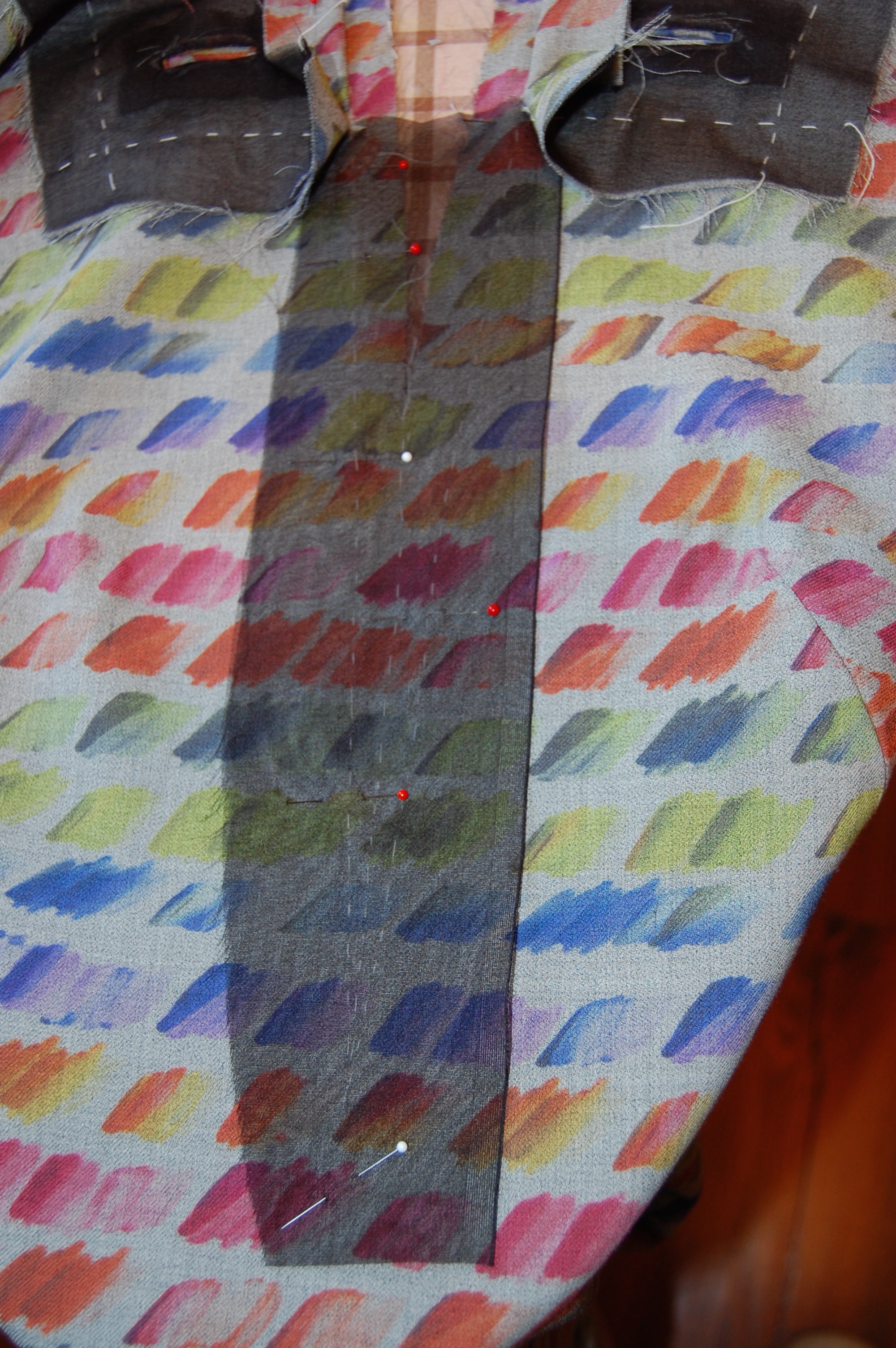
Instead, I opted to make a “facing” for the opening out of black organza. It is situations like this that make me feel so fortunate to have enough “sewing sense” to be able to recognize potential difficulties and then have the ability to work out creative solutions to them.
Sweet November

Silk organza pinned in place.

And here it is sewn in place.

And here it is sewn in place.

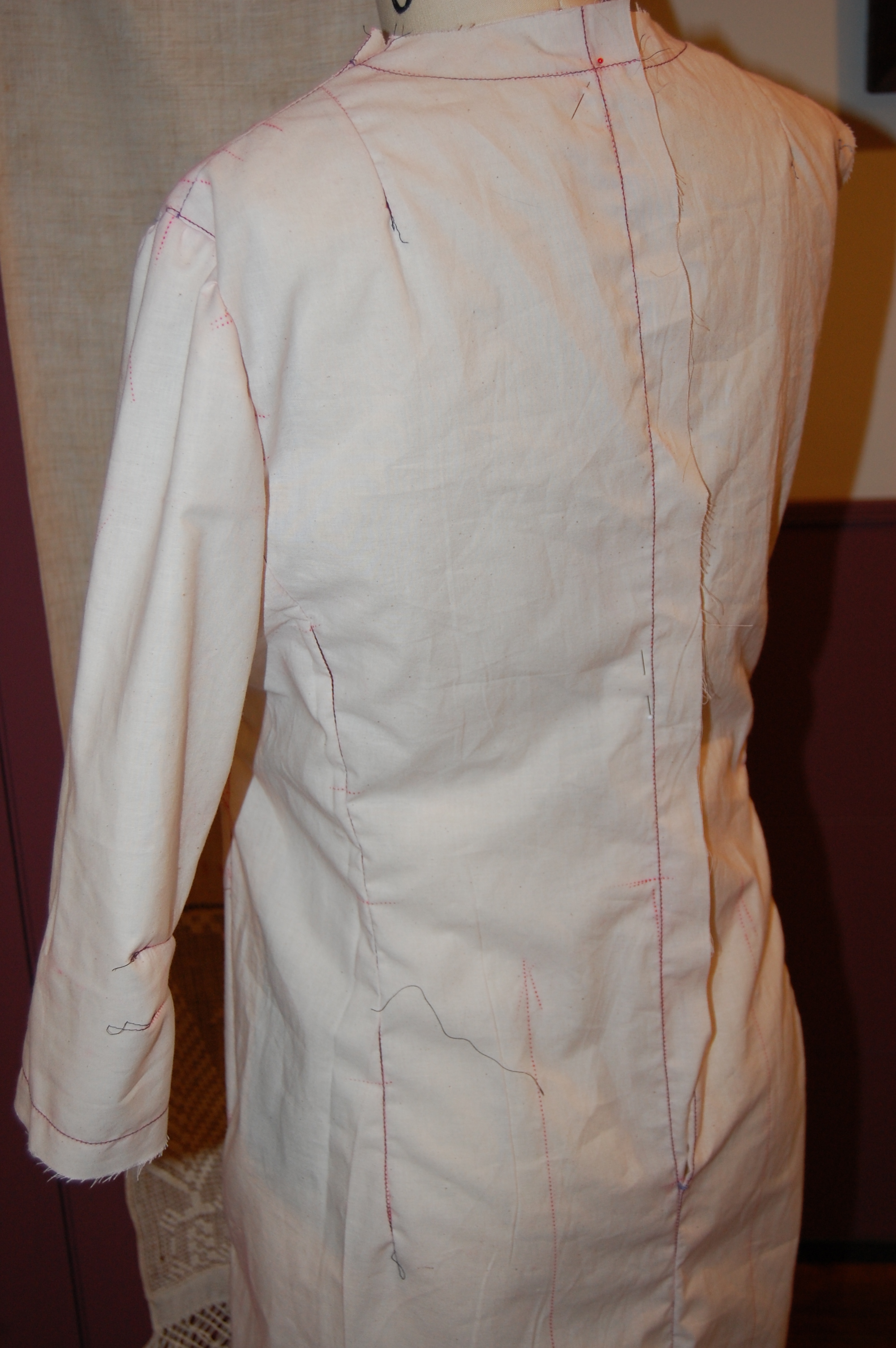
I took some pictures at this point to show the inside of the body of the dress:
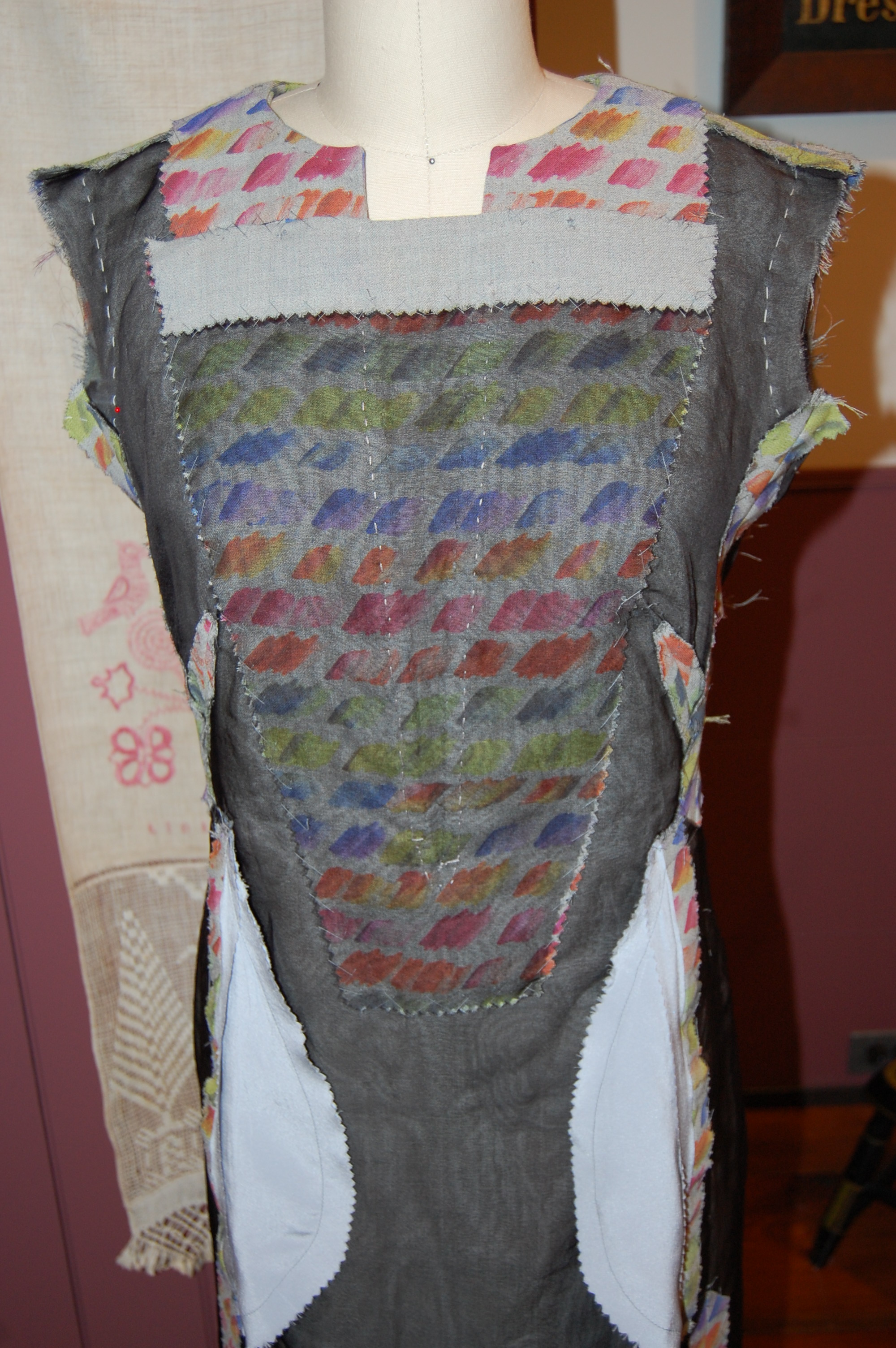
Yes, those are pockets hanging on the front.
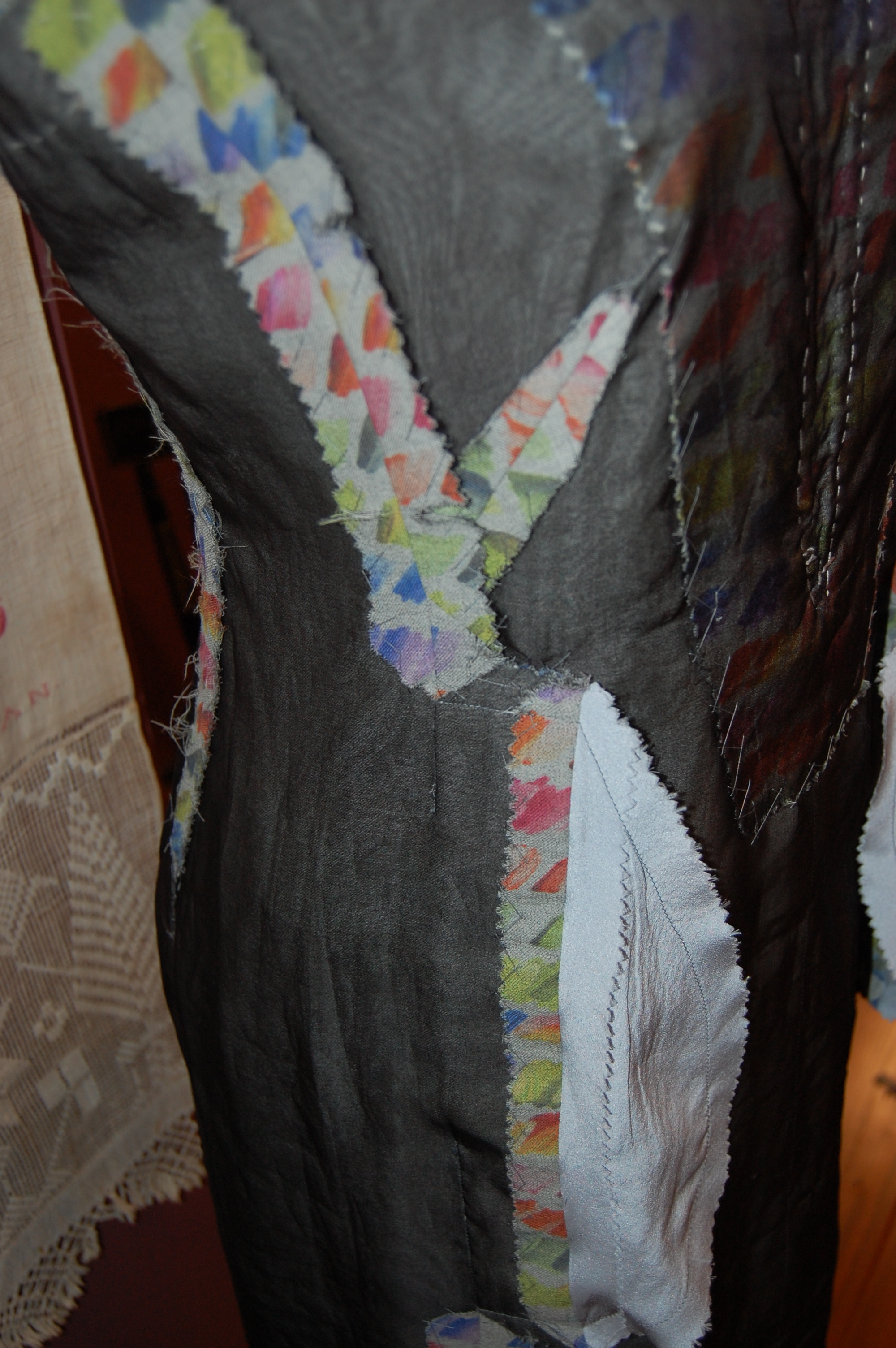
Yes, those are pockets hanging on the front.

This shows those darts with their slanted orientation.

This shows those bust darts with their slanted orientation.
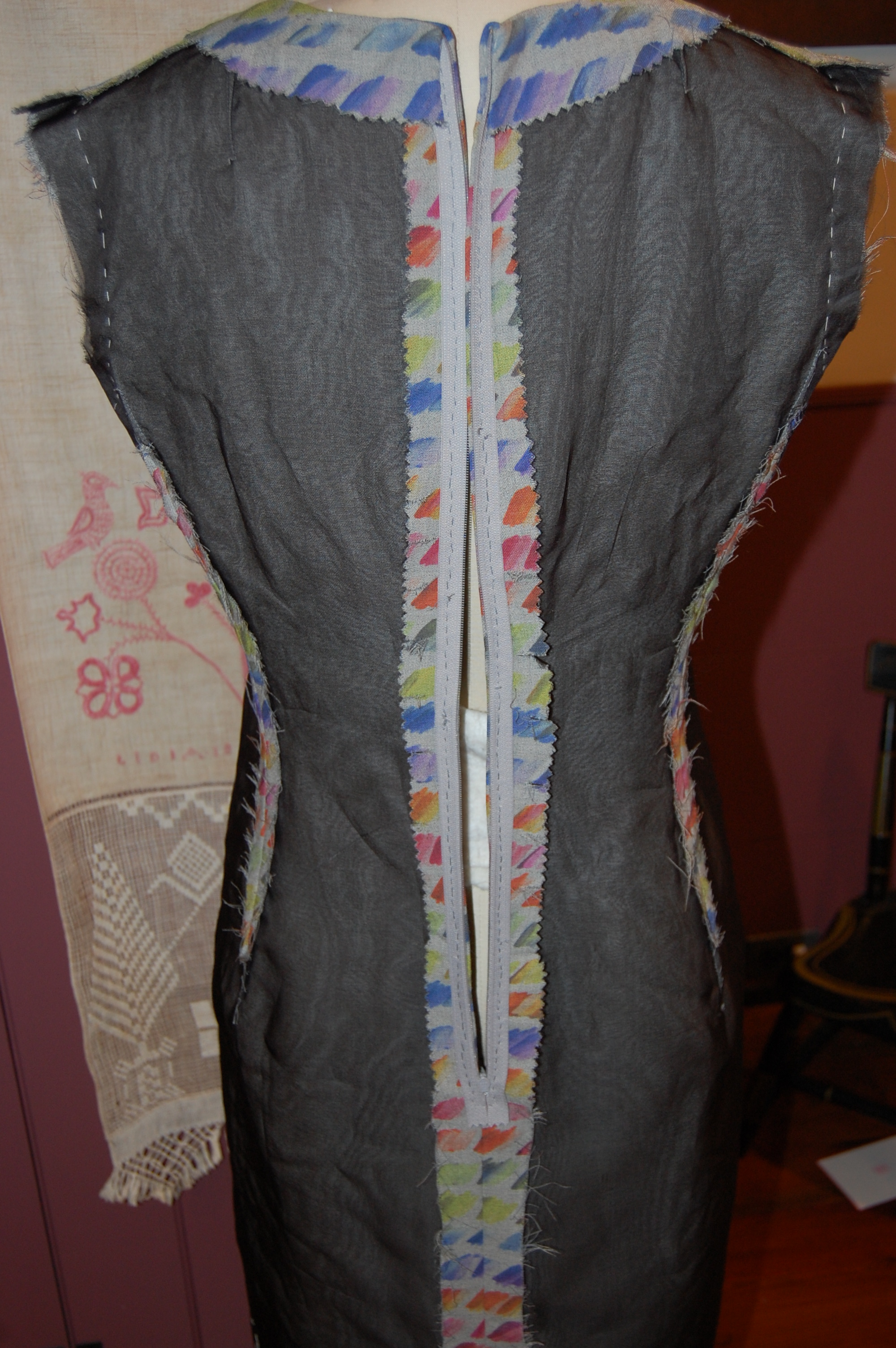
The zipper is inserted by hand, as usual! Once I had it basted in place, I tried the dress on for fit and determined I had to take it in a bit at the waistline.

Then I tackled the sleeves. I had quite a time determining how to place the sleeve patterns on the remaining fabric. Some of those horizontal lines of “paintbrush strokes” change color across the fabric! And my adapted sleeve pattern has two elbow darts, which changed the horizontal line. I had to make a decision about where I wanted the best match to be, as I determined I could not match it across and up and down as I would normally want to do. I opted for a match across the shoulders – and I now believe that was the best decision.
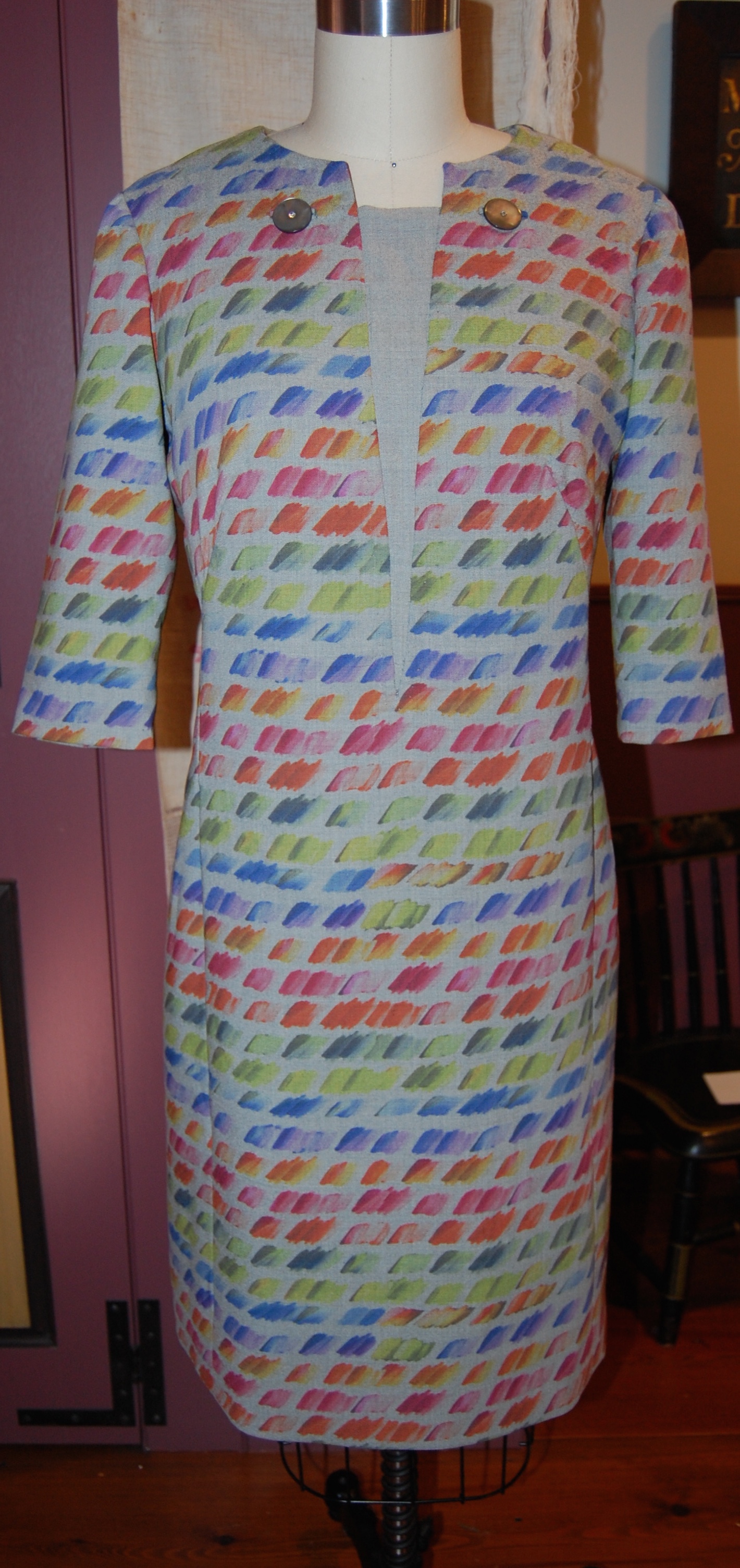
DSC_0924

I also added a soft “cigarette” sleeve heading to each shoulder seam.

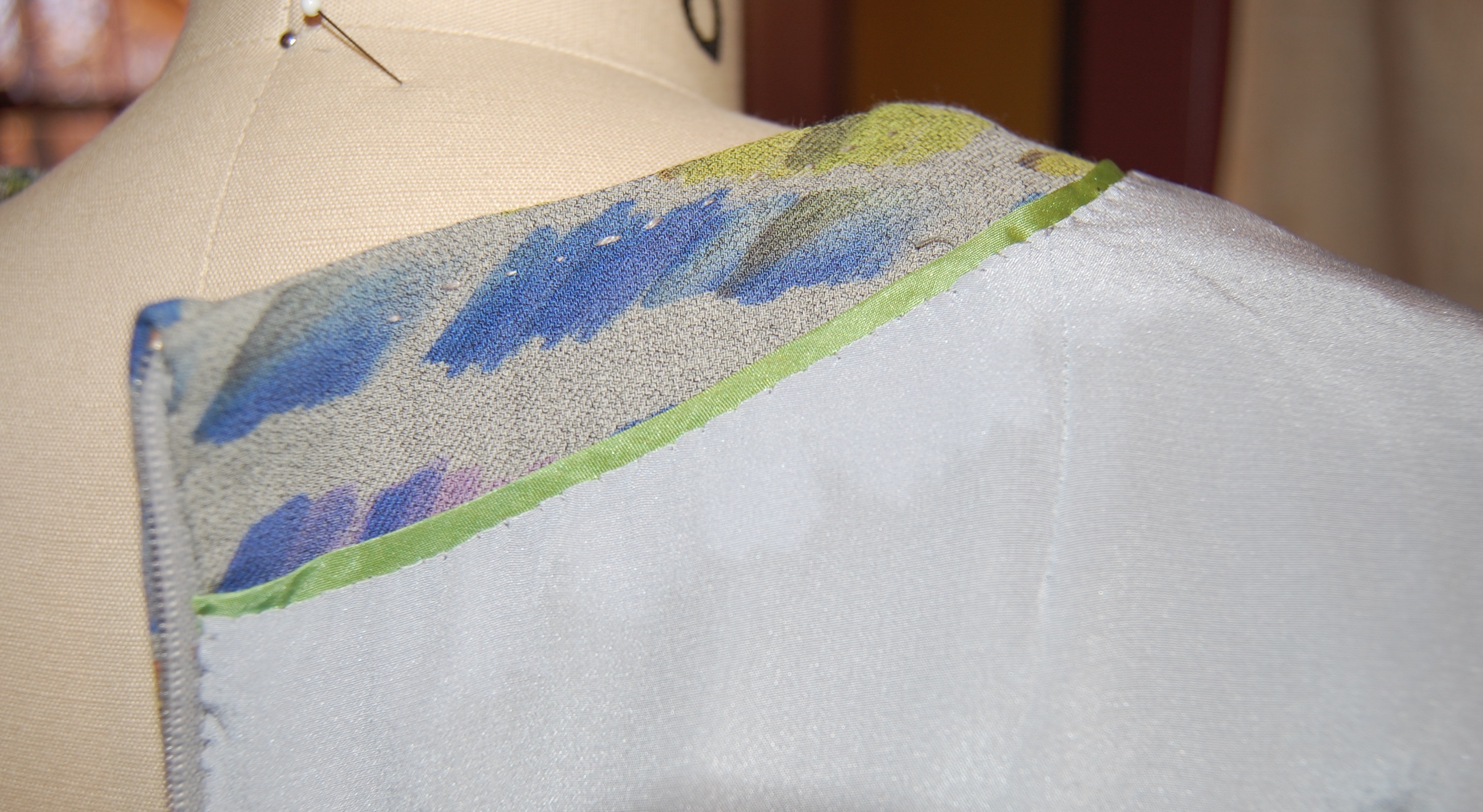
Next to the lining – and bless those vintage Vogue patterns – the lining for this dress included separate and distinct pattern pieces. I made the sizing and dart changes to the lining (in keeping with the dress) and it went together effortlessly. When I got to the point of inserting the lining by hand, I just could not resist adding silk piping to the inside neck edge. I know I am the only one who will ever see it, but it makes me happy!
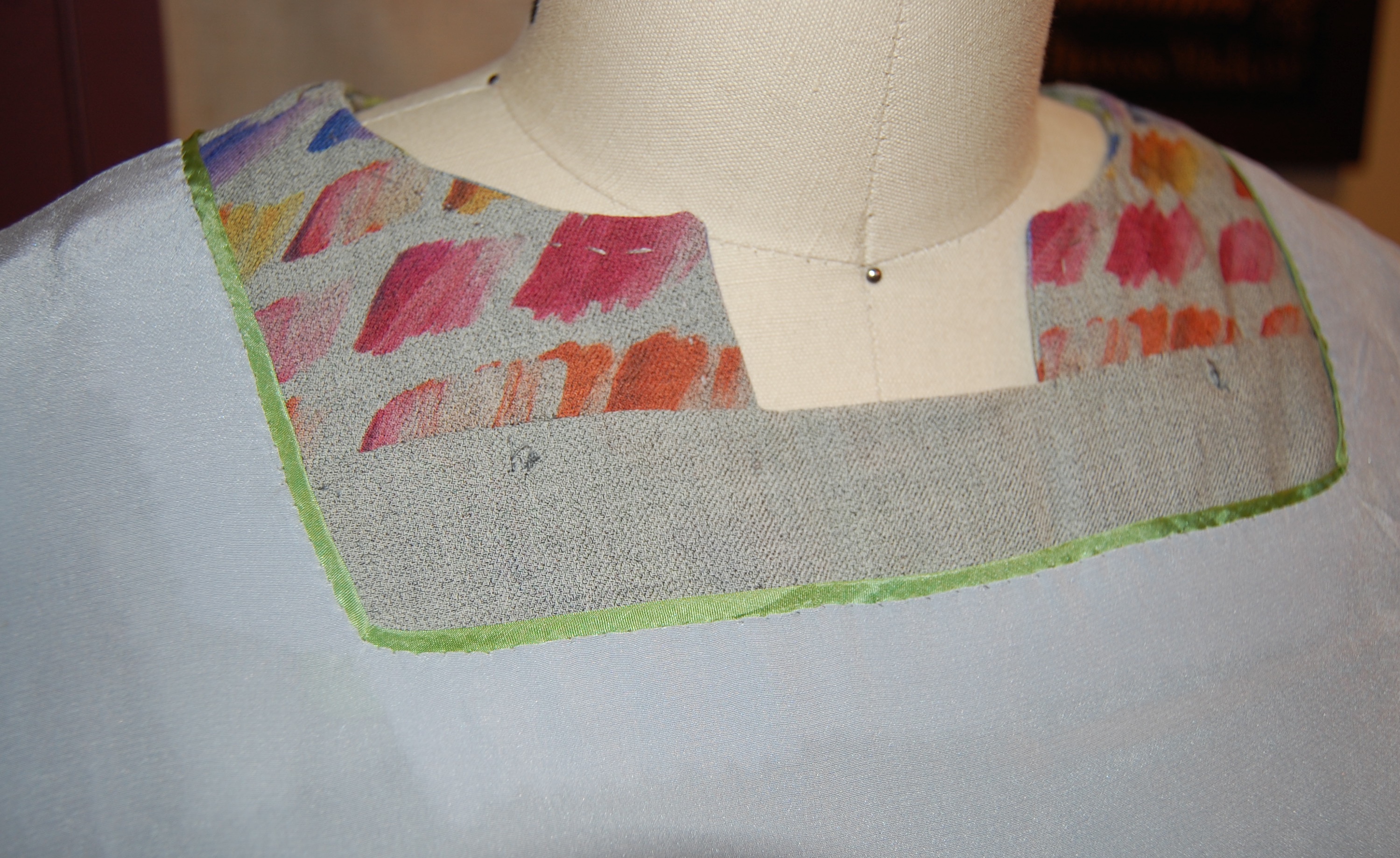
Sweet November

I used a bias strip of lightweight silk for the piping.

I used a bias strip of lightweight silk for the piping.

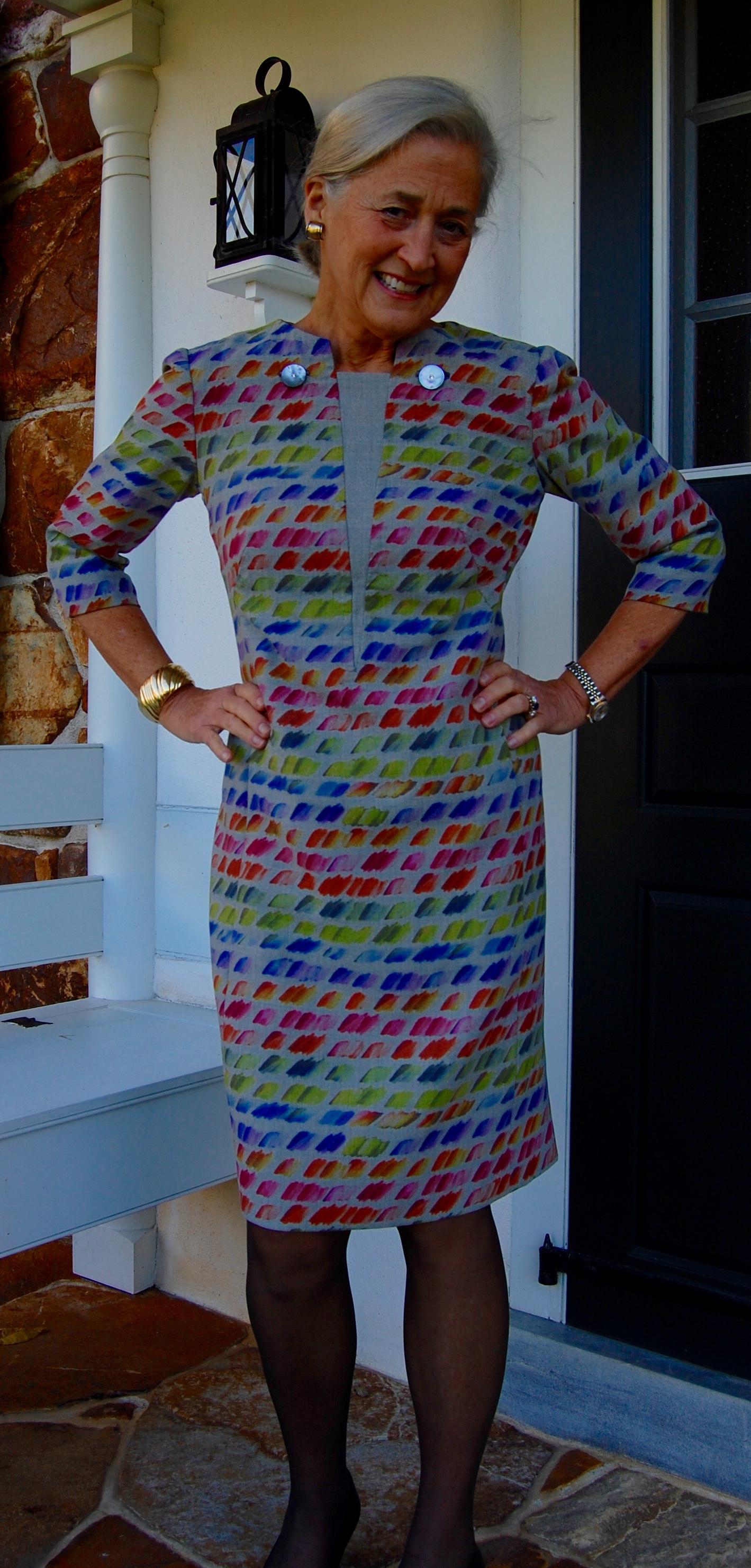
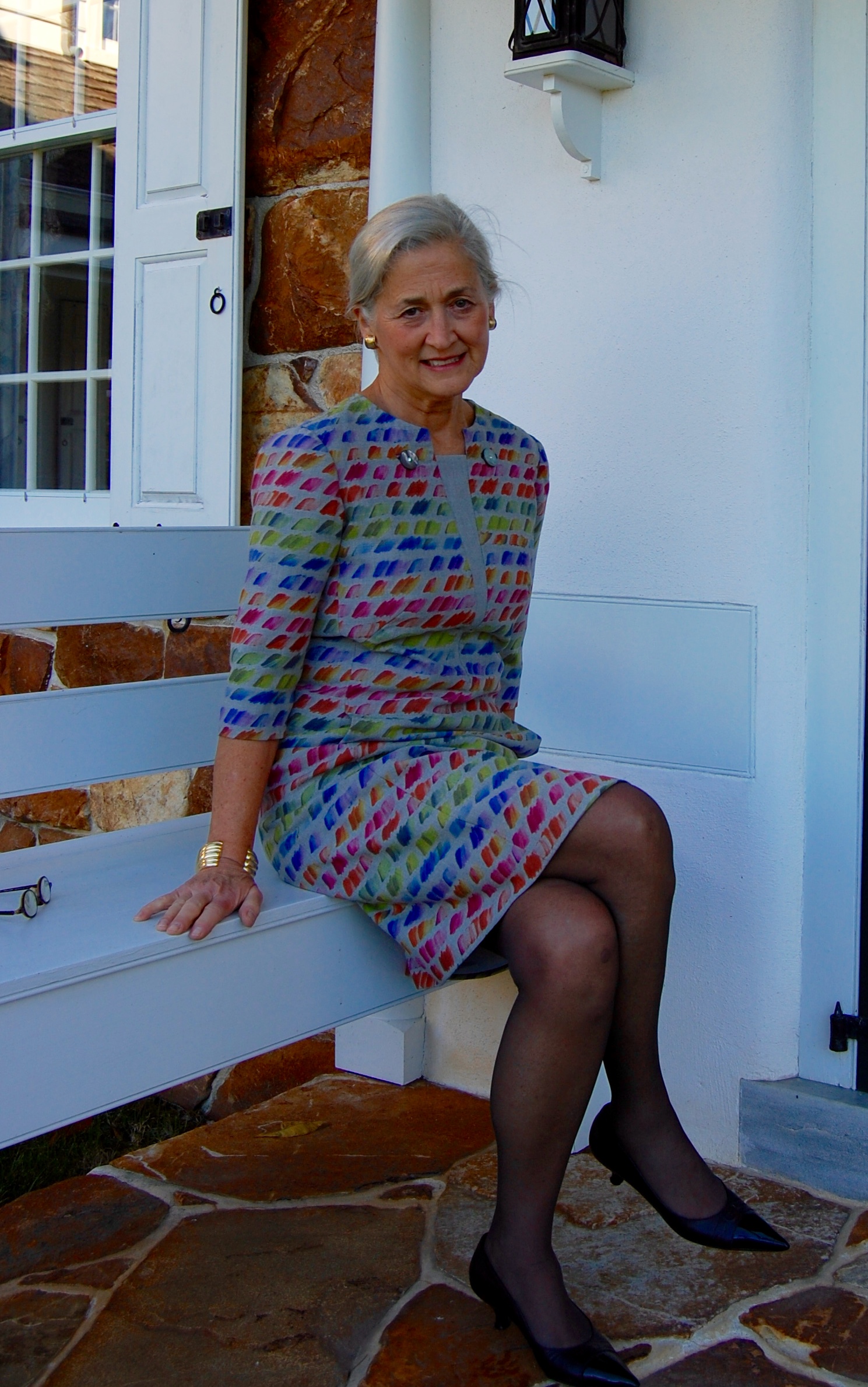
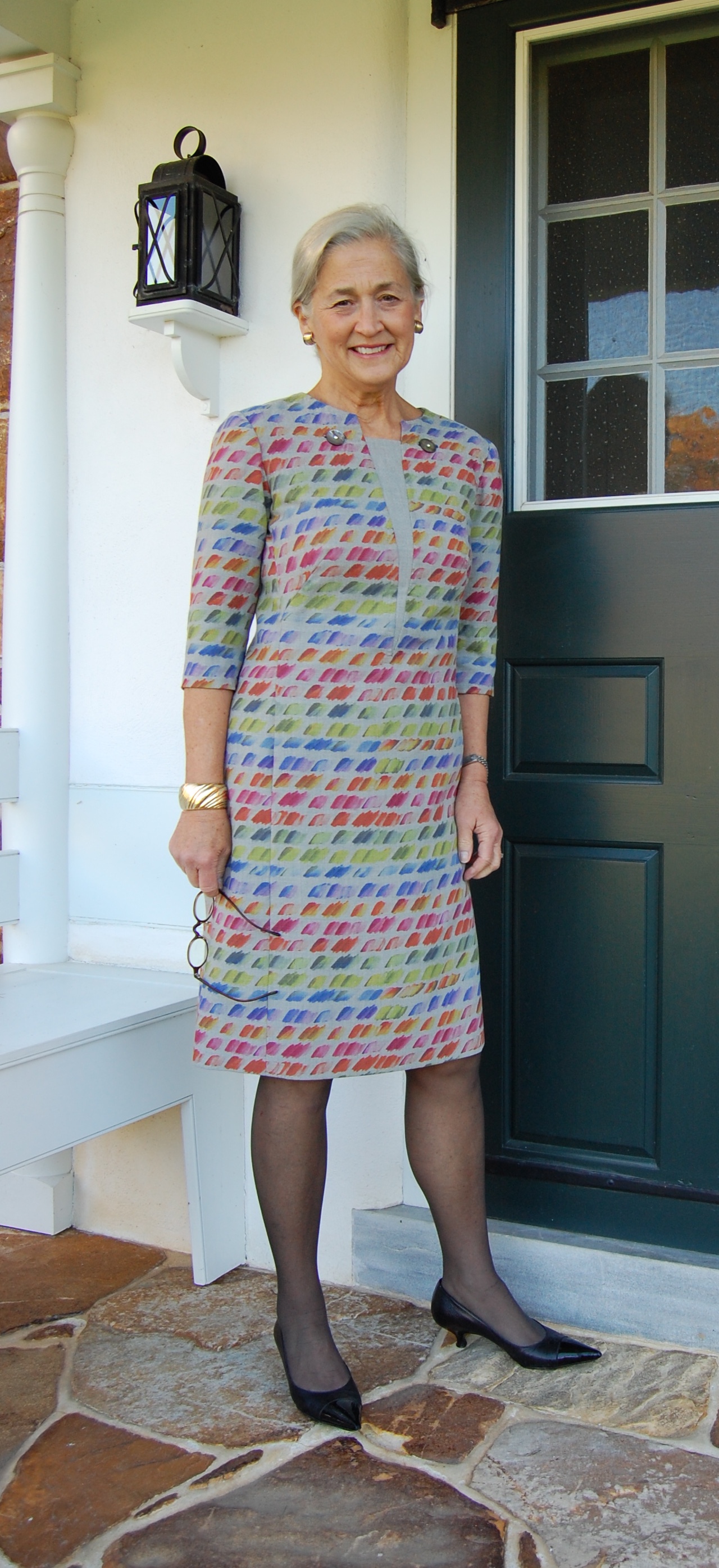
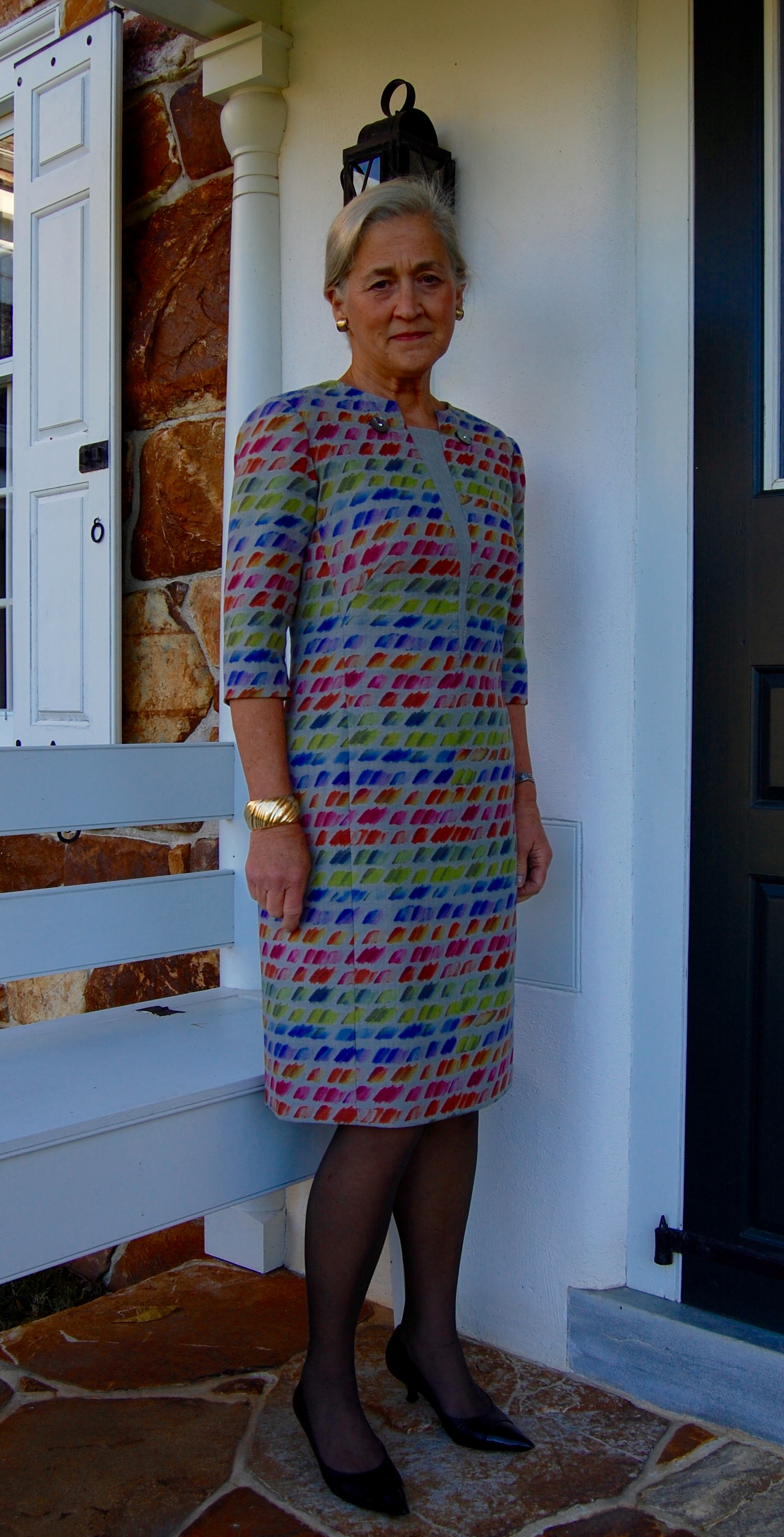
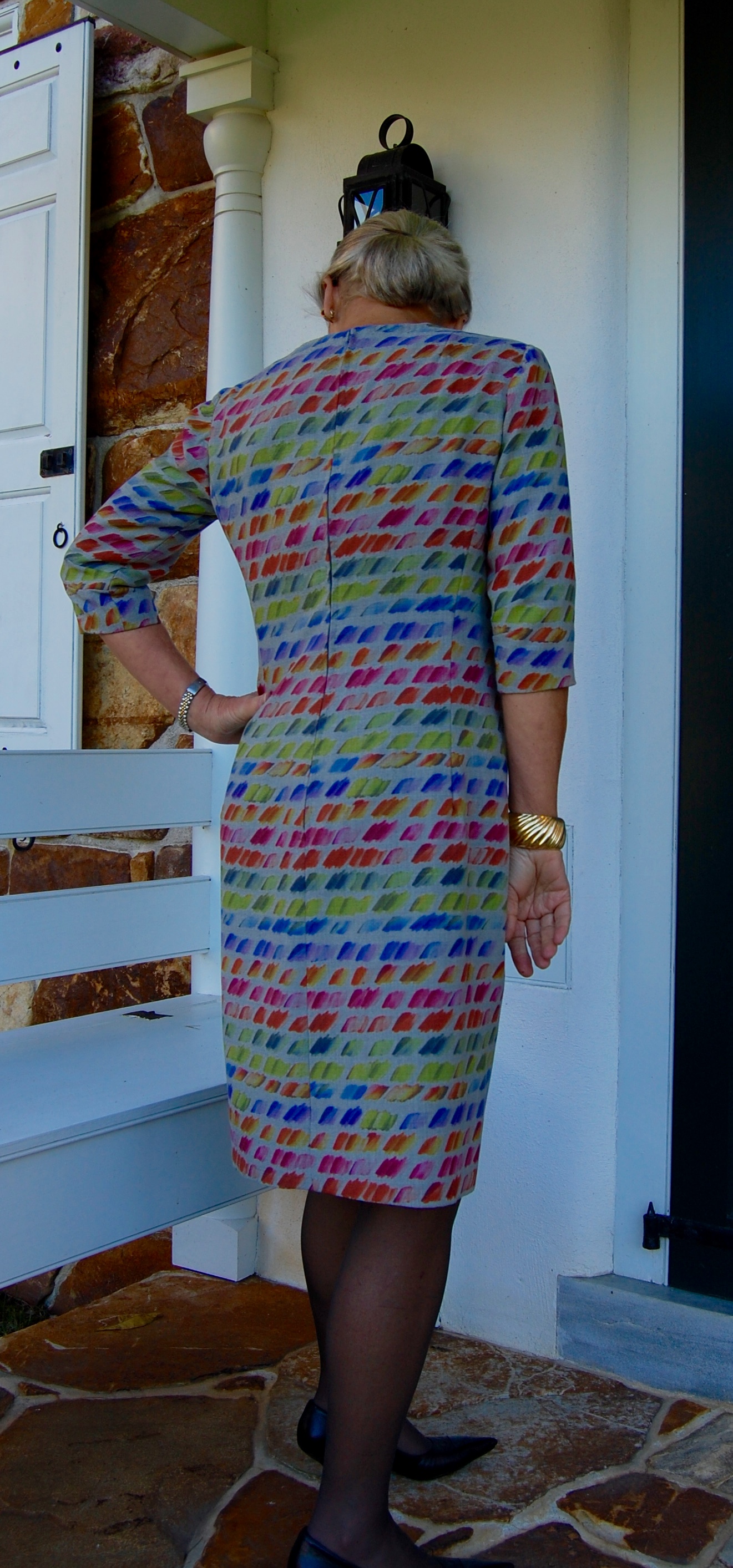
How wonderful to have this dress completed!
Sweet November

The buttons really show in this picture.
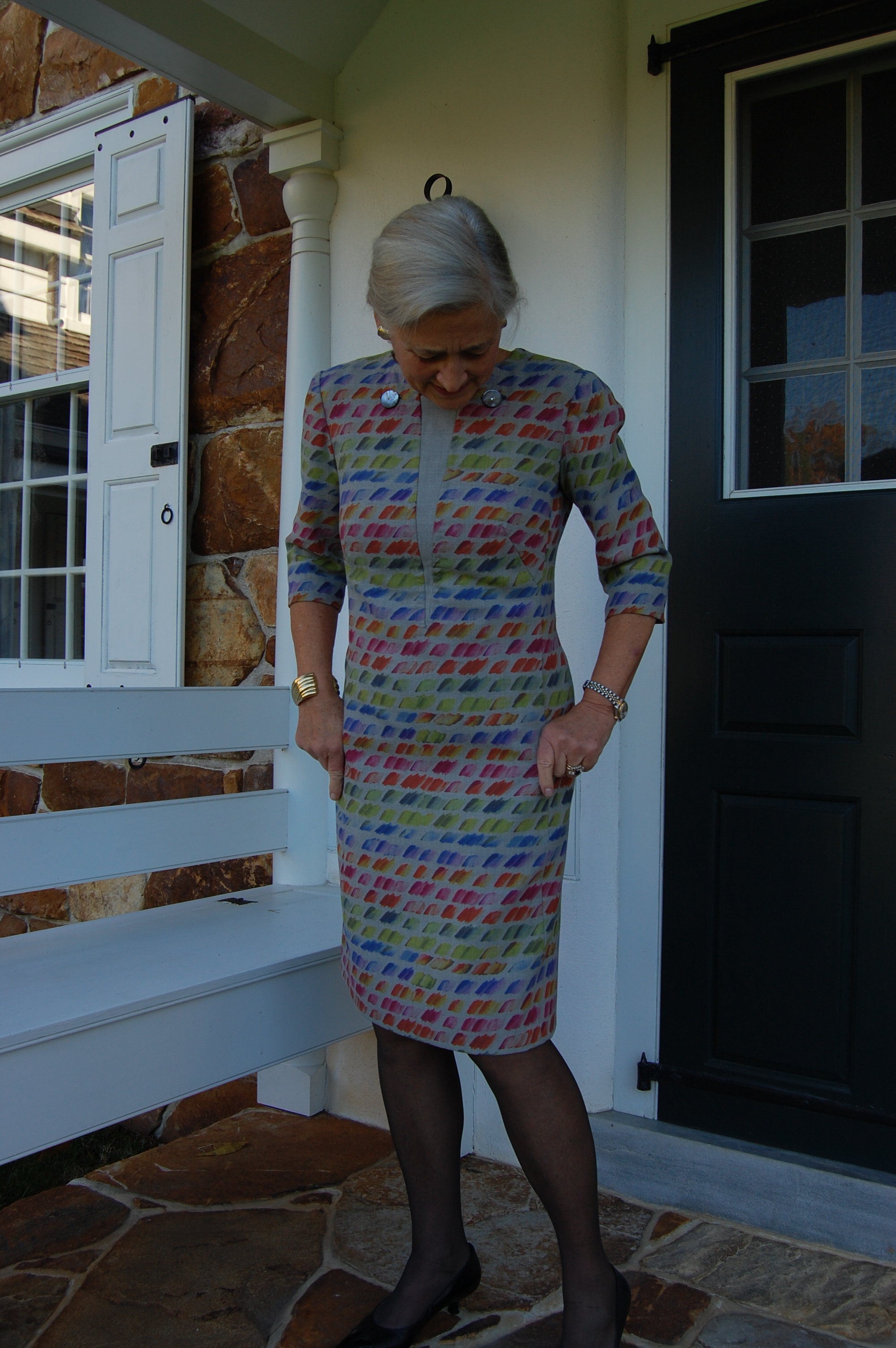
The buttons really show in this picture.
Sweet November

Sweet November

Sweet November

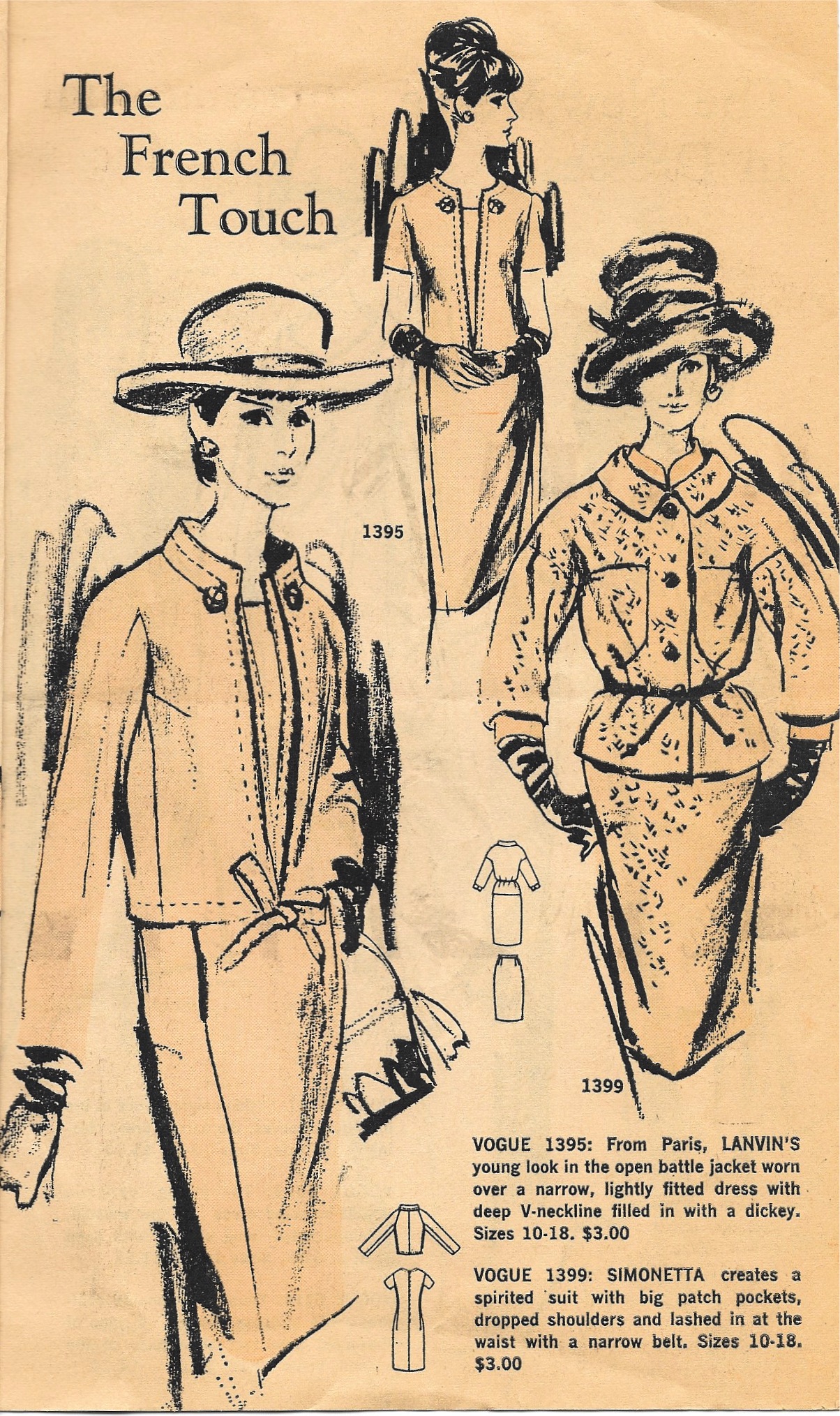
There was one more aspect of serendipity to this project. Those of you who follow my blog know that part of my fascination with vintage Vogue patterns is making connections between the past and the present. I love to “place” a pattern in its correct year – and then wonder in amazement at how classic fashions are so enduring. It was my great good fortune to have this Vogue Pattern Fashion News from November 1964 in my collection of vintage fashion magazines:
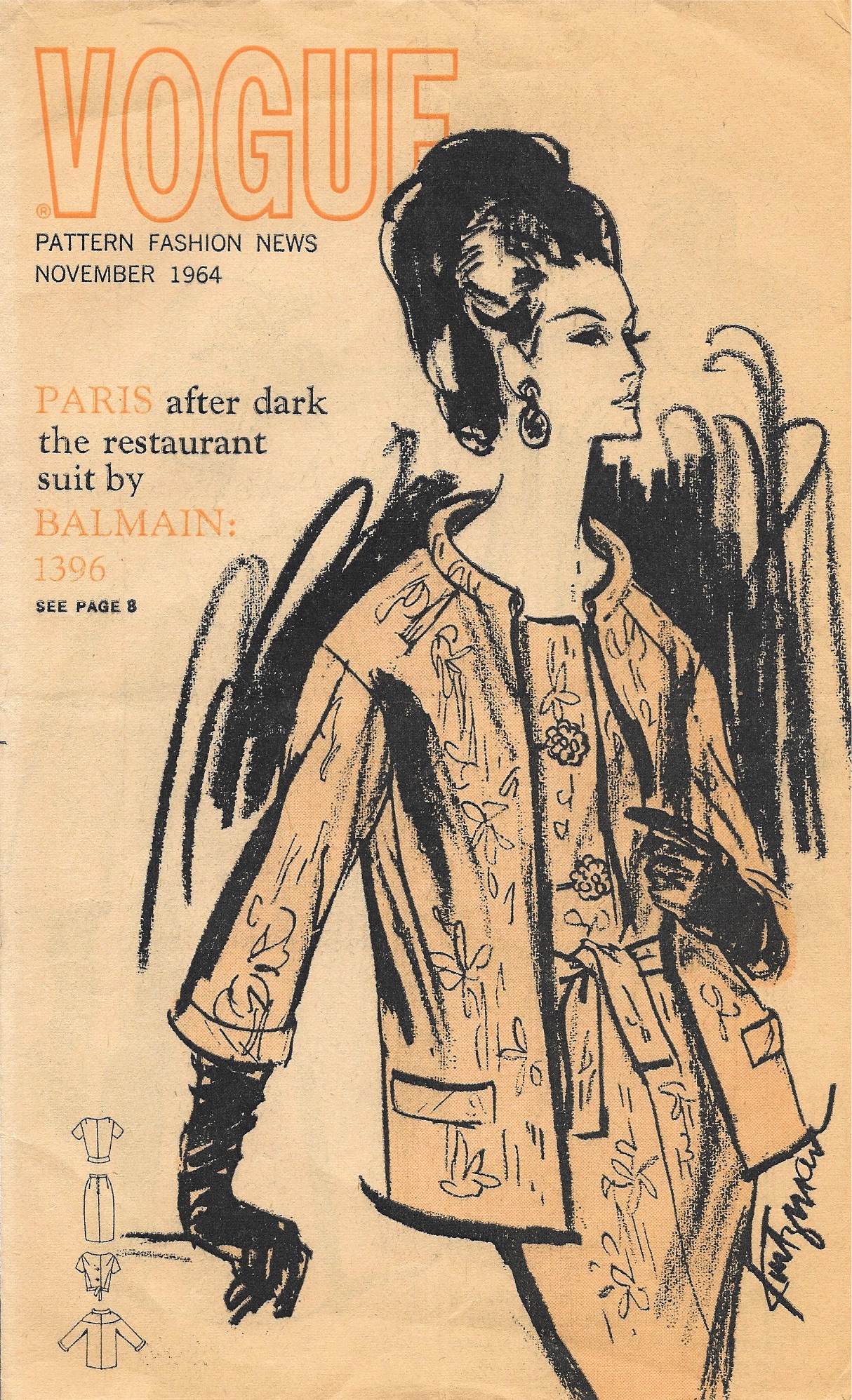
Sweet November - flyer cover

Inside on page 3 is, yes, my dress!

Sweet November - flyer illustration

Just imagine – 51 years ago this month, this dress made its debut. Happy Sweet November Everyone!
38 Comments

Filed under Buttons - choosing the right ones, couture construction, Day dresses, hand-sewn zippers, Love of sewing, Mid-Century style, Uncategorized, underlinings, vintage Vogue Designer patterns, vintage Vogue patterns from the 1960s, woolens

A Notable Exhibit of Twentieth Century Fashion

Fascination with international high-styled fashion really knows no boundaries when it comes to audiences. Last past week I had the opportunity to see “Immortal Beauty: Highlights from the Robert and Penny Fox Historic Costume Collection” at Drexel University’s Antoinette Westphal College of Media Arts & Design in Philadelphia, Pennsylvania (USA). This is the first time that any of Drexel’s extensive fashion collection has been exhibited – and judging from the crowded gallery, interest in it abounds. Besides students with sketch pads, other attendees were intrigued with the history of “famous” ownership of many of the items (including Babe Paley, Mrs. Walter Annenberg, Princess Grace of Monaco – to name just a few), some were there as students of fashion history, others had just a casual interest in clothing and fashion, and then there were those like me, who look at everything through the eyes of a dressmaker.

Although the Exhibit spans a period of three centuries, the majority of the items on display are mid-nineteenth century, and include not only dresses, but also shoes, handbags, hats and other accessories. I will share some of my favorite selections, some of which are inspiring to me for a number of reasons. Although I was allowed to take photos, “flashes” were not permitted, so the quality of my pictures is somewhat compromised.

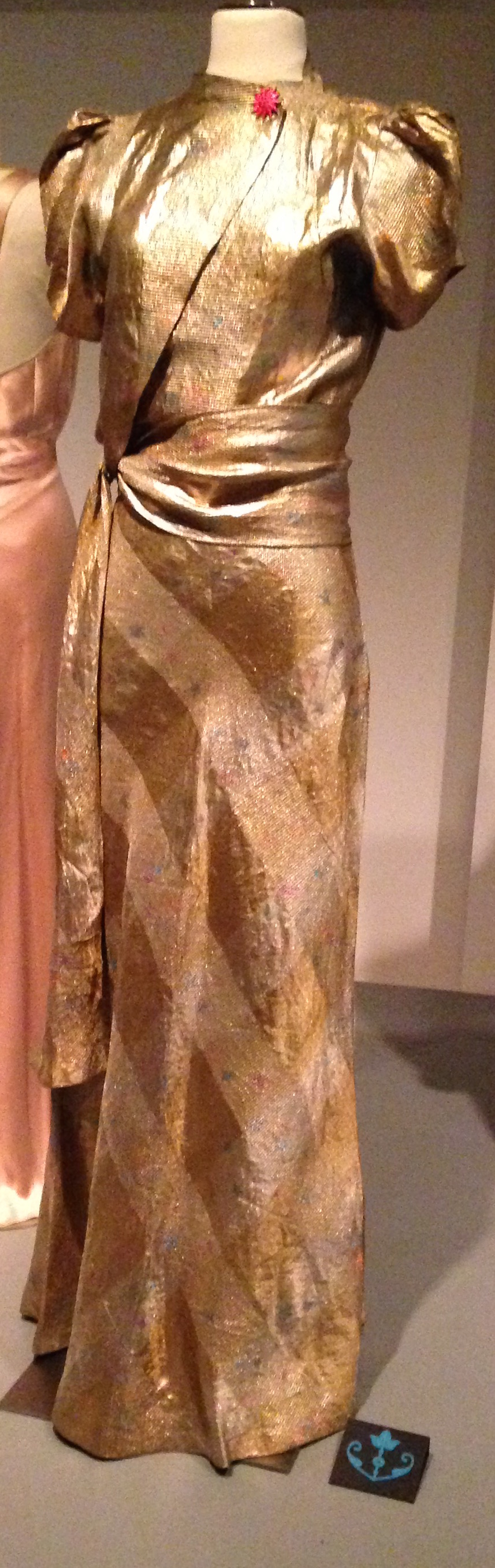
The fabric in this Elsa Schiaparelli gown, from her Zodiac Collection, 1938-1939, positively shimmers. This gown, cut on the bias, is a wrapped design, with a wide sash tied on one side.

Drexel - Schaparelli dress

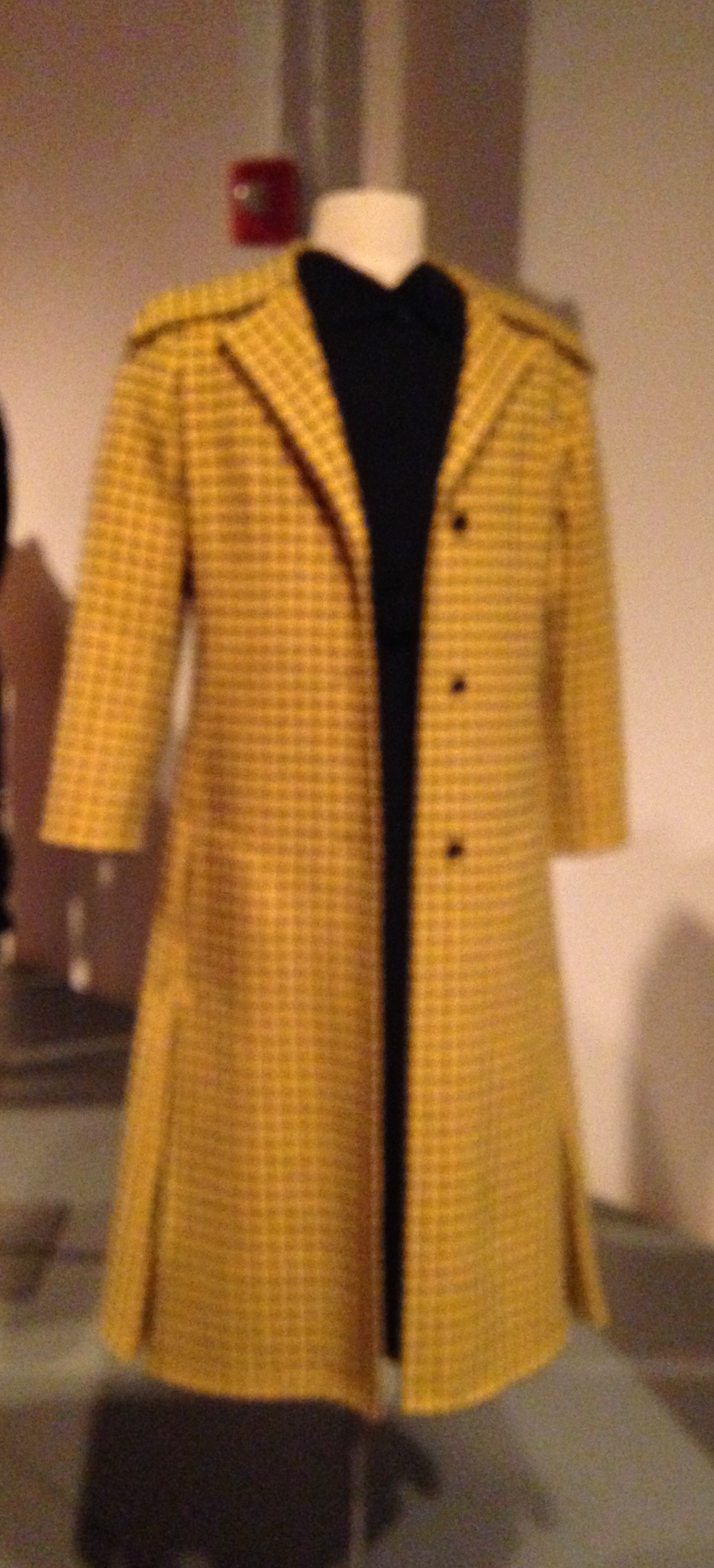
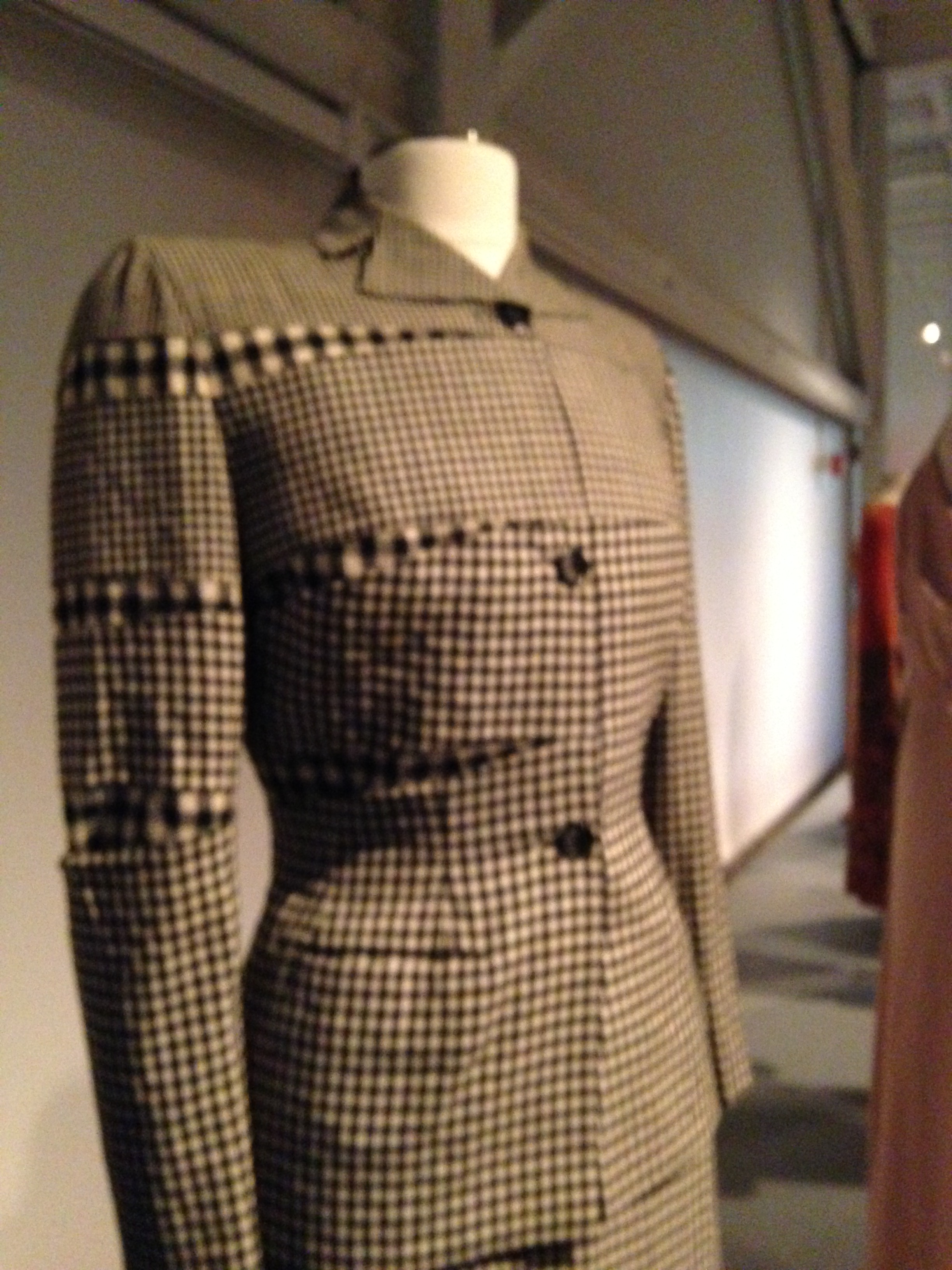
One of my favorite items in the exhibit is a wool suit by Gilbert Adrian, an American, circa 1947. The “slashed” detailing as shown in my photo still has me scratching my head, trying to figure out how this was achieved so successfully.

Drexel - black and white suit

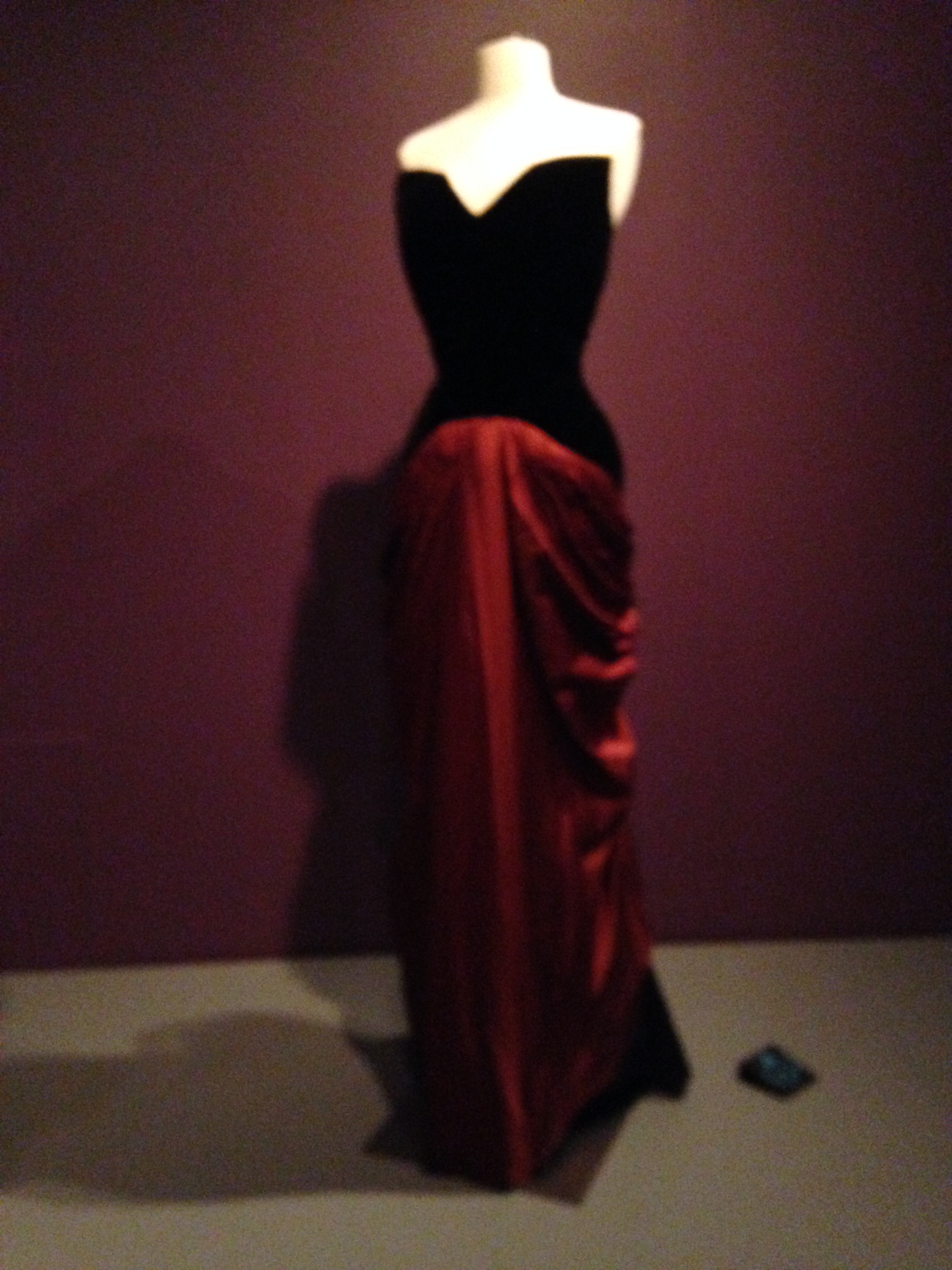
I guess no fashion exhibit with highlights from the twentieth century is complete without a Charles James gown. Dating from 1948, this gown, a gift from Mrs. William S. (Babe) Paley, is absolutely serene.

Drexel - Charles James gown

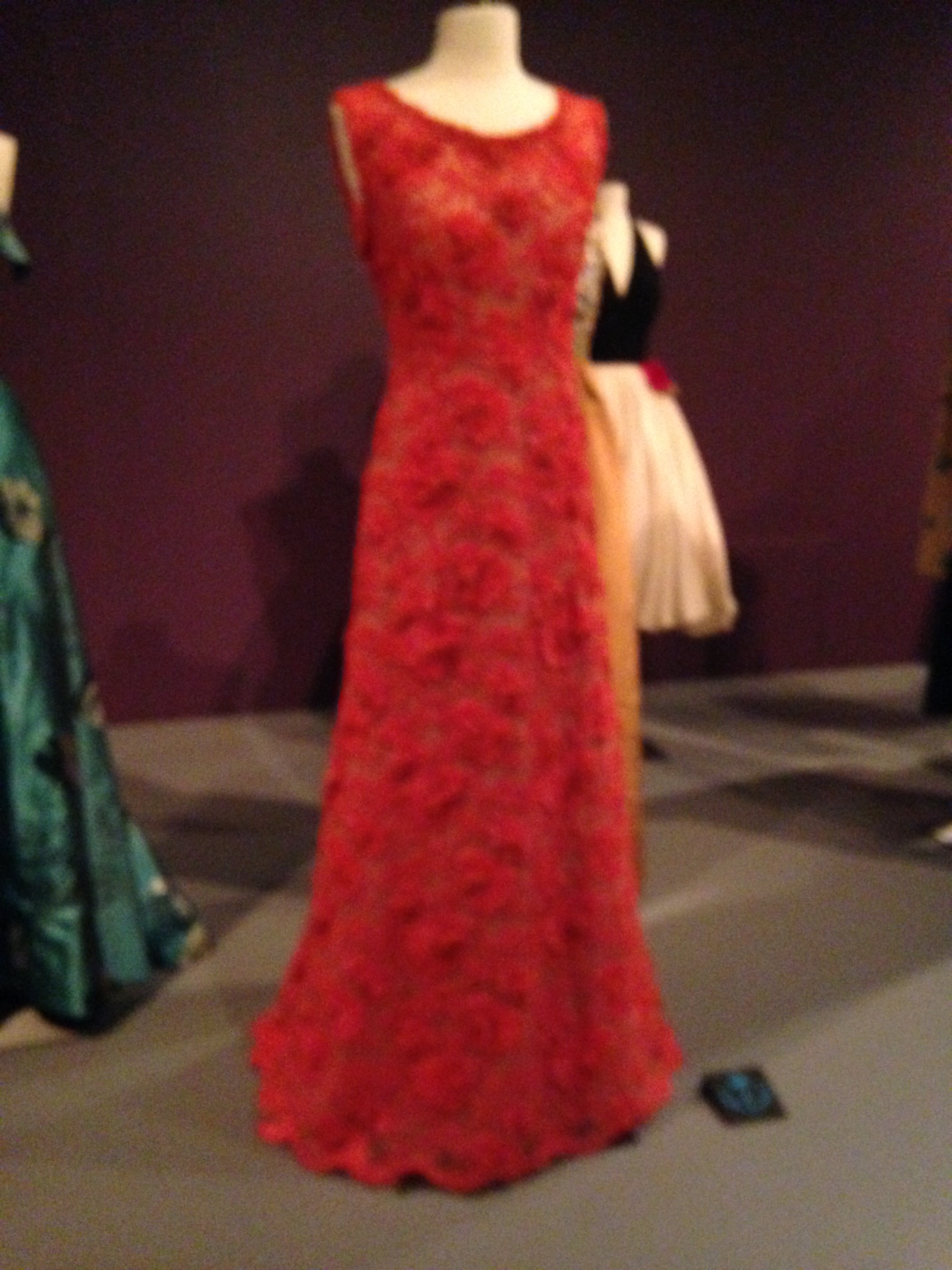
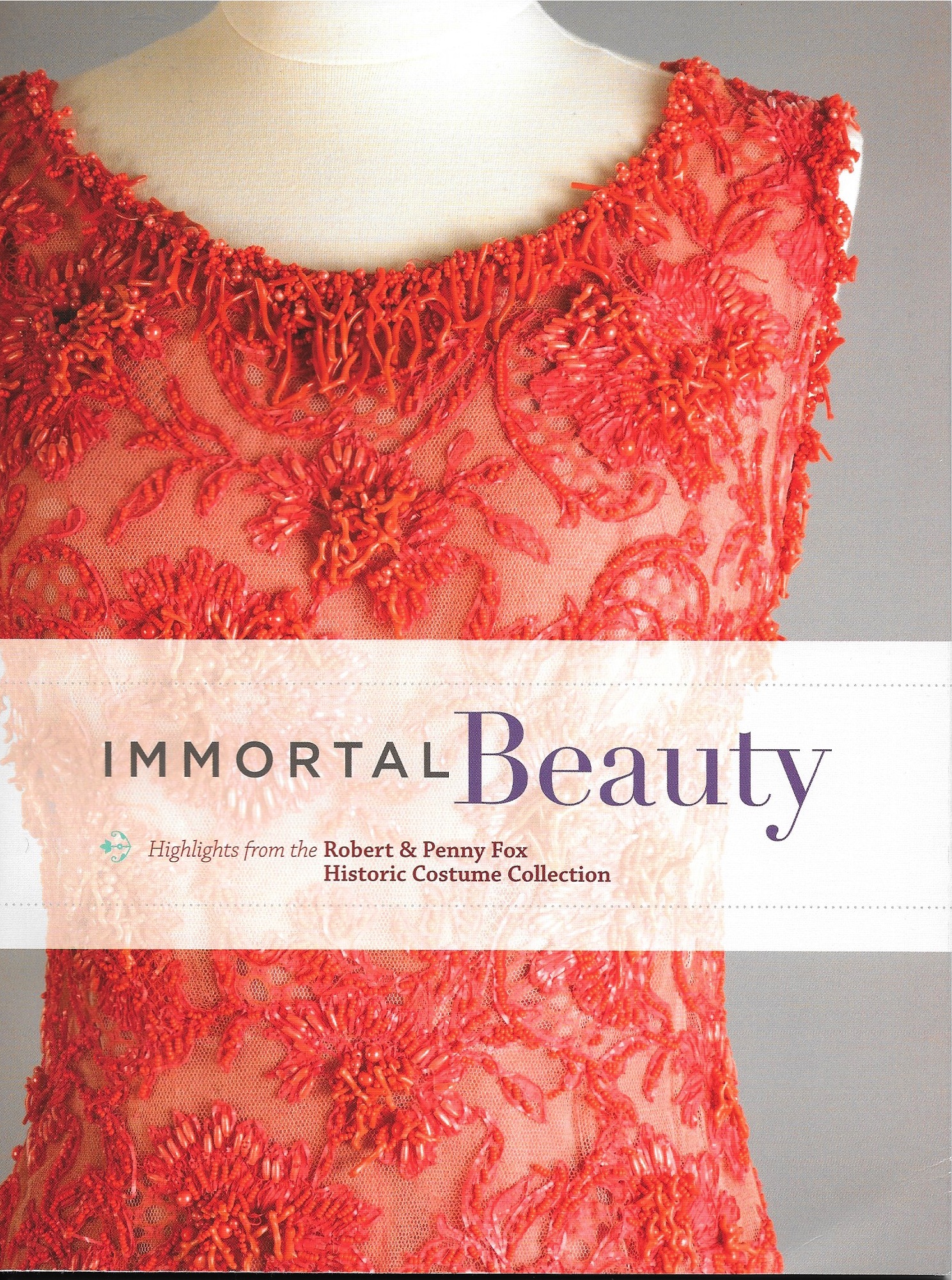
The gown that struck me as the most amazing feat of construction is a coral-embroidered dress owned by Princess Grace of Monaco and given by Her Serene Highness to the collection at Drexel. Dating to 1964, the dress, which was designed by Hubert Givenchy, was executed by Marie Therese of Nice, who must have been a remarkable dressmaker!

A detail of the bodice of this gown is featured on the cover of the Exhibit catalogue, shown further down in this post.

A detail of the bodice of this gown is featured on the cover of the Exhibit catalogue, shown further down in this post.

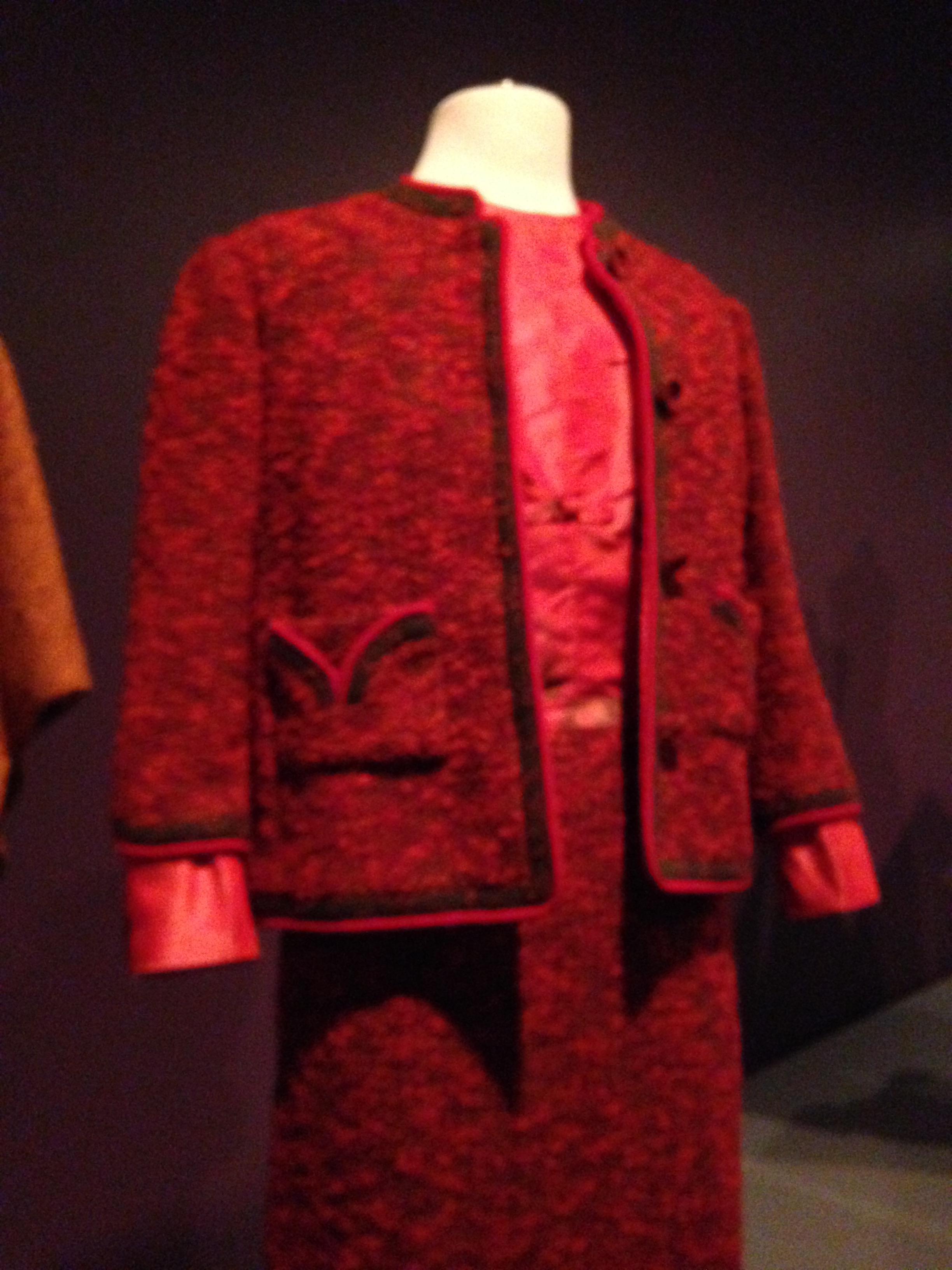
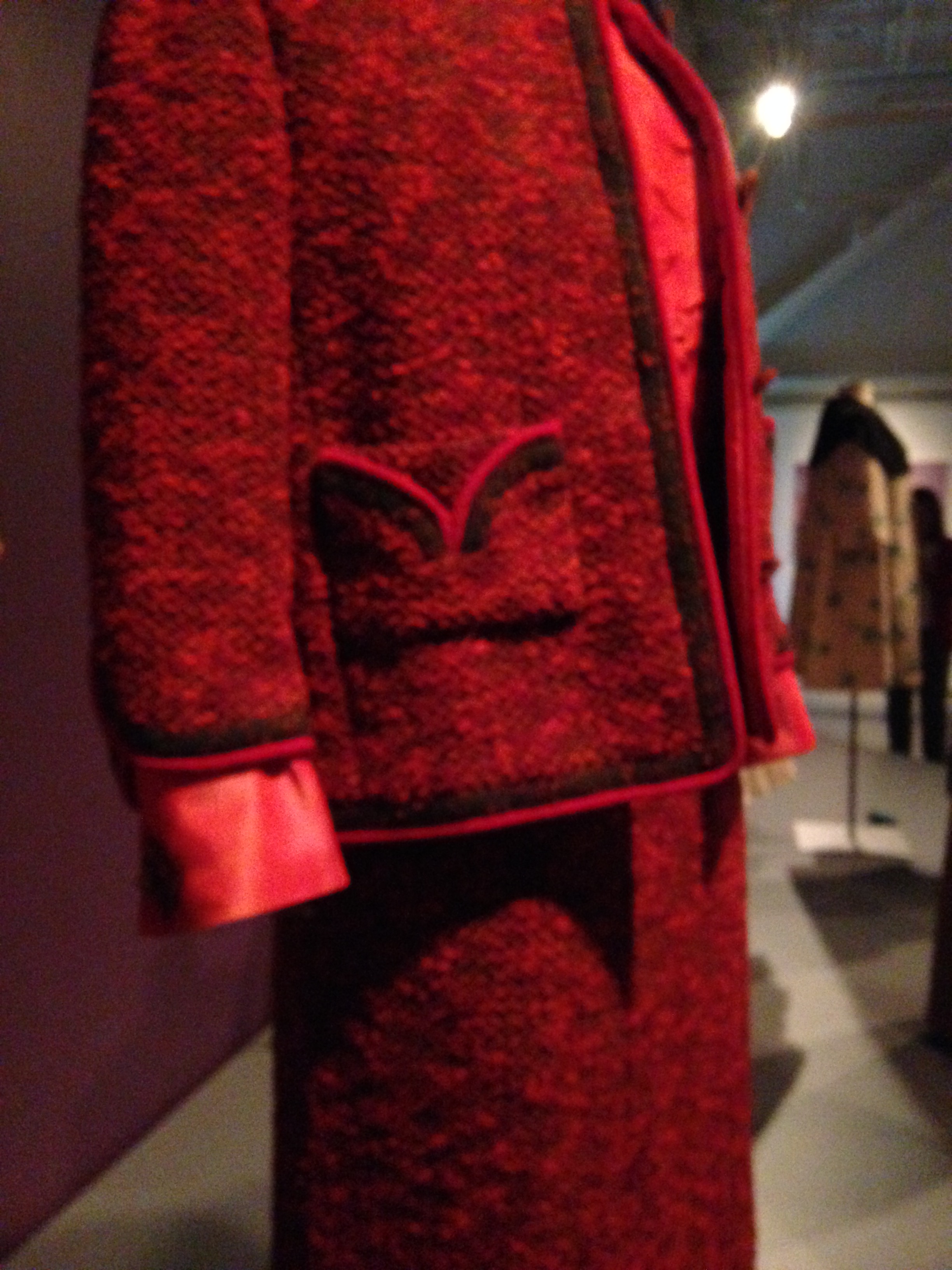
This Exhibit does not disappoint when it comes to a classic Chanel suit. Having made two Chanel-type jackets myself, one under the tutelage of Susan Khalje and one on my own, I am always excited to see pocket and trim details on a “real” Chanel. These are the techniques which we, as dressmakers, can mimic.

Drexel - Chanel suit 1

Drexel - Cahnel suit 2

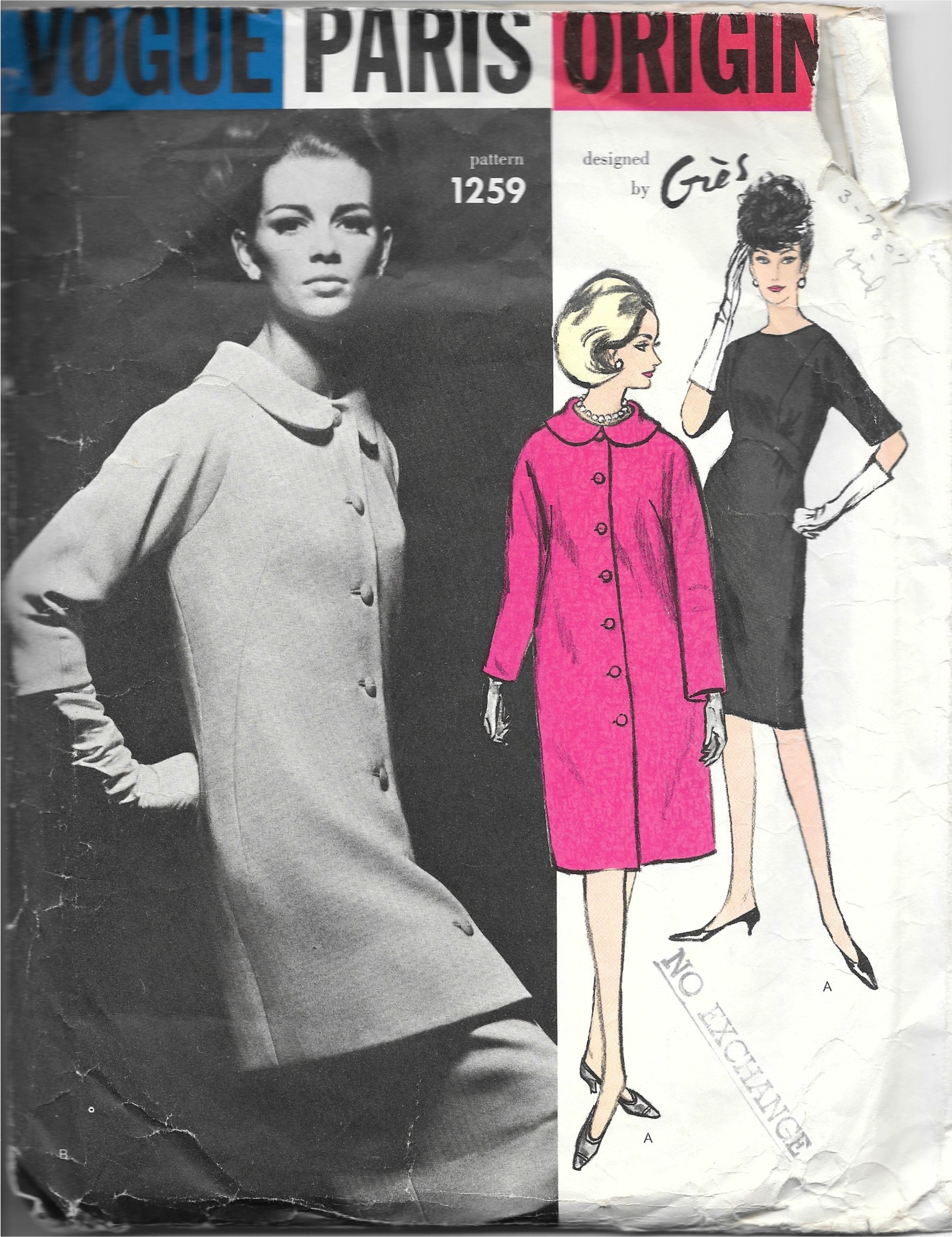
Having just finished a 1960s’ Madame Gres-designed coat, using a Vogue Designer pattern, I was excited to see this Madame Gres coat from the early 1970s. I am a fan of her unusual seaming and reserved elegance.

Drexel - Madame Gres coat

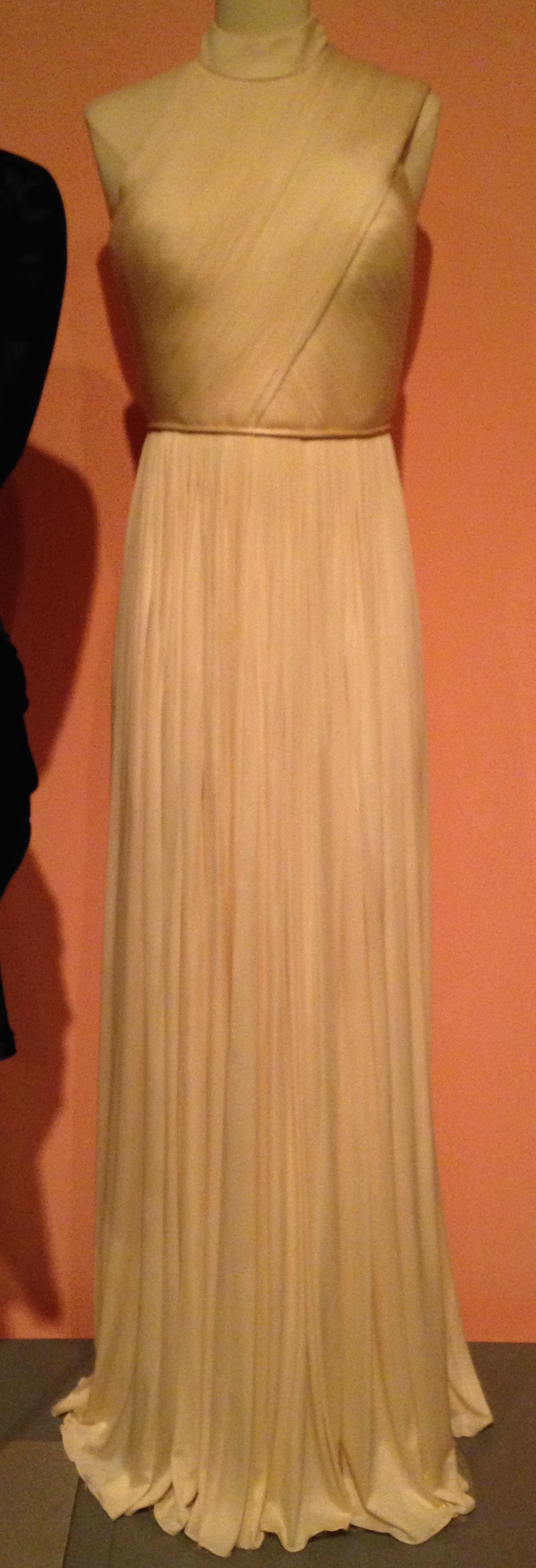
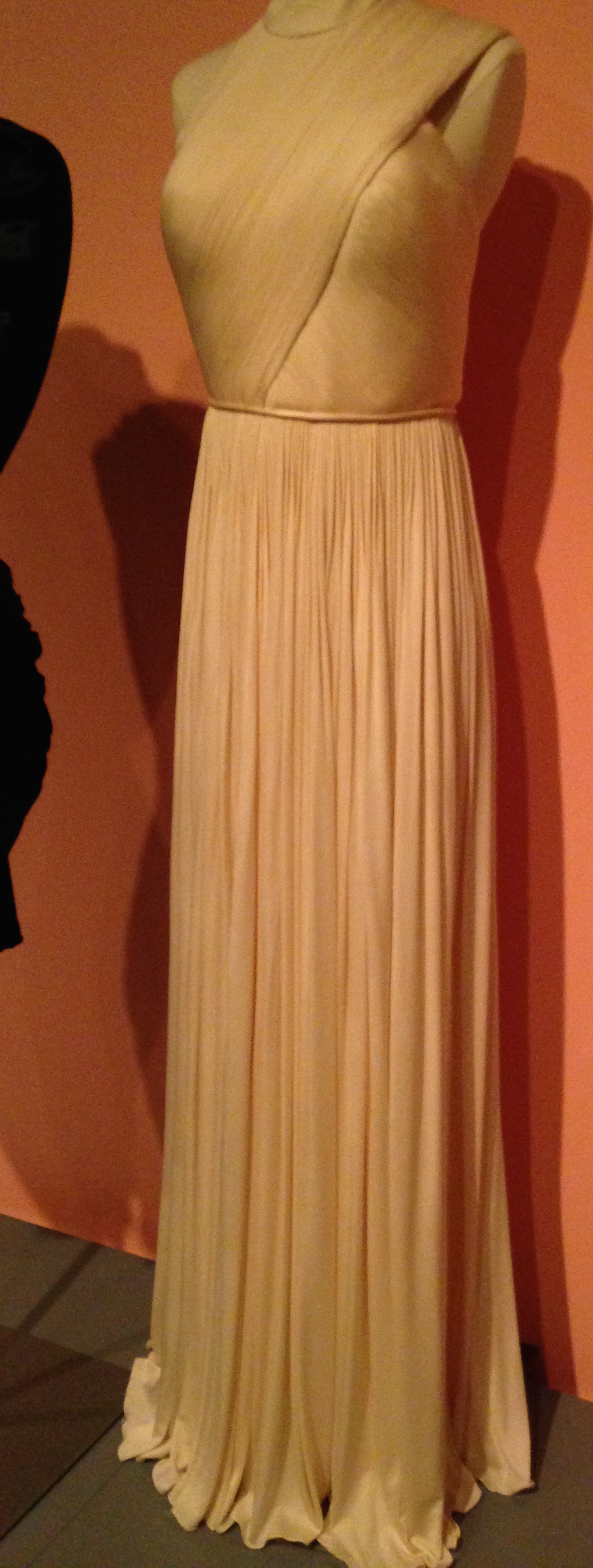
Nowhere is elegance more in focus than with this quintessential gown, also by Madame Gres, circa 1980. From across the gallery, this gown was recognizable as a Gres design, with its petite soft pleats and Classically-inspired demeanor.

Drexel - Madame Gres gown - 2

Drexel - Madame Gres gown

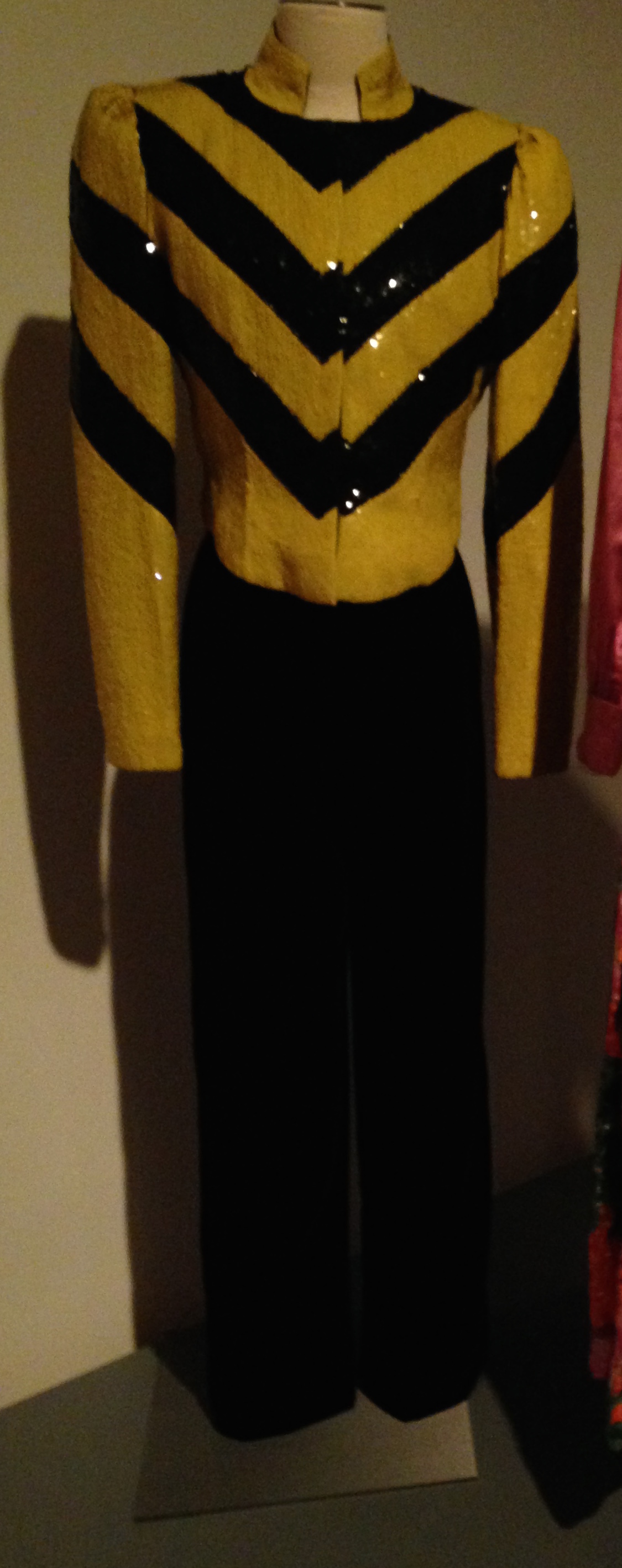
Heralding from the 1990s is this Carolina Herrera sequined jacket, a gift from the designer to the collection. Deep yellow and black are not colors one usually associates with “evening wear;” enhanced with pave sequins, these colors make this a striking ensemble.

Drexel - Carolina Herrara jacket

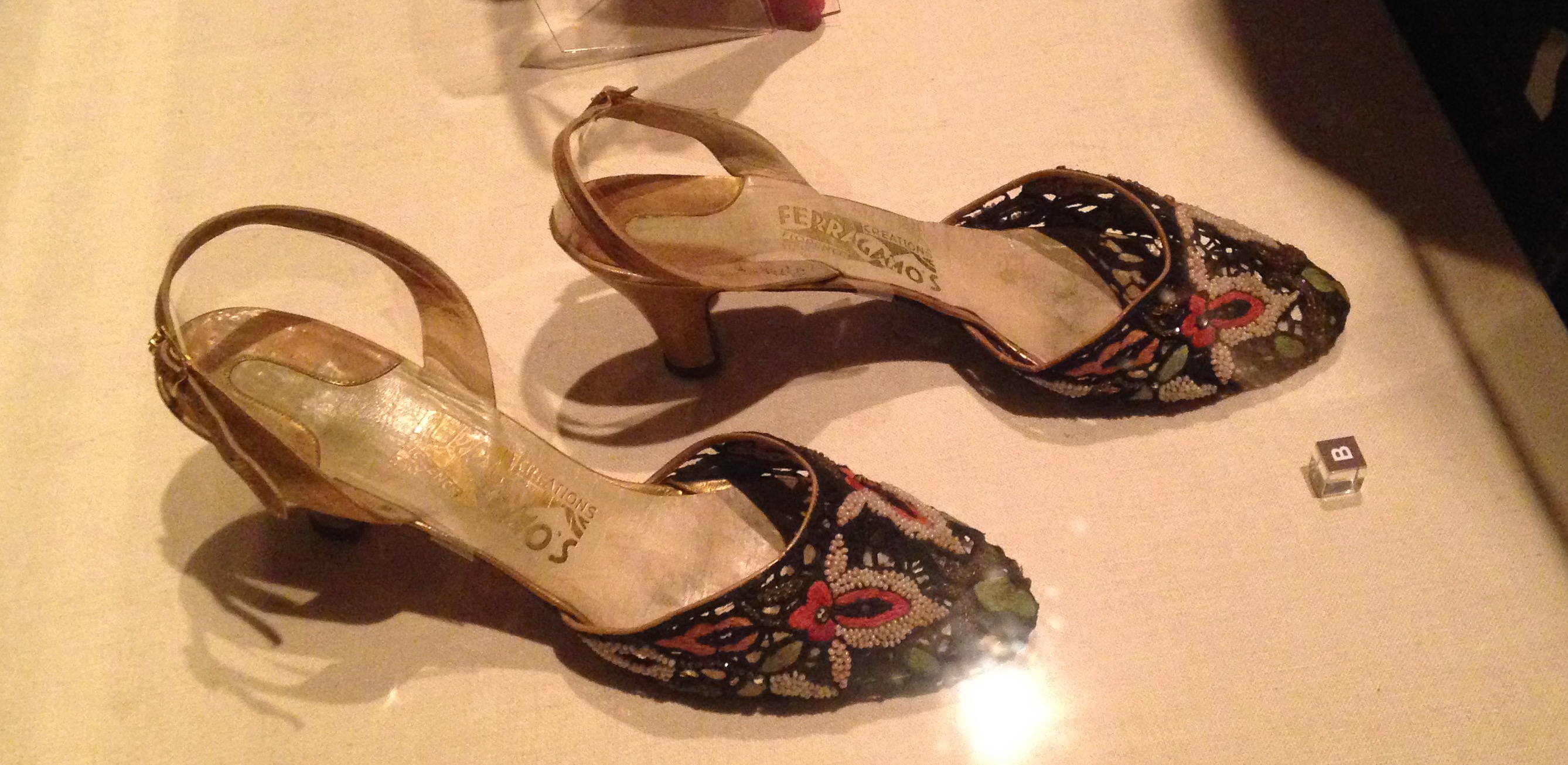
I can’t leave my short synopsis of this exhibit without showing one of the beautiful pairs of shoes on display. Evening shoes by Ferragamo – what a delight to see these beauties!

Drexel - Ferragamo shoes

The curator of the Exhibit is Clare Sauro. She is also co-author of the catalogue accompanying the Exhibit, entitled: Immortal Beauty.

Drexel - Catalog

The final display in the Exhibit is an ethereal ball gown by Chado Ralph Rucci. Dating to just 2006, it is remarkable for its complex fabric and simplicity of form. Unable to do any justice to it with a photograph, I refer to the catalogue for excellent views of it and other of the beautiful fashions on display, too many to detail here.

10 Comments

Filed under Fashion Exhibits, Uncategorized

Shopping in My (Cedar) Closet – Again!

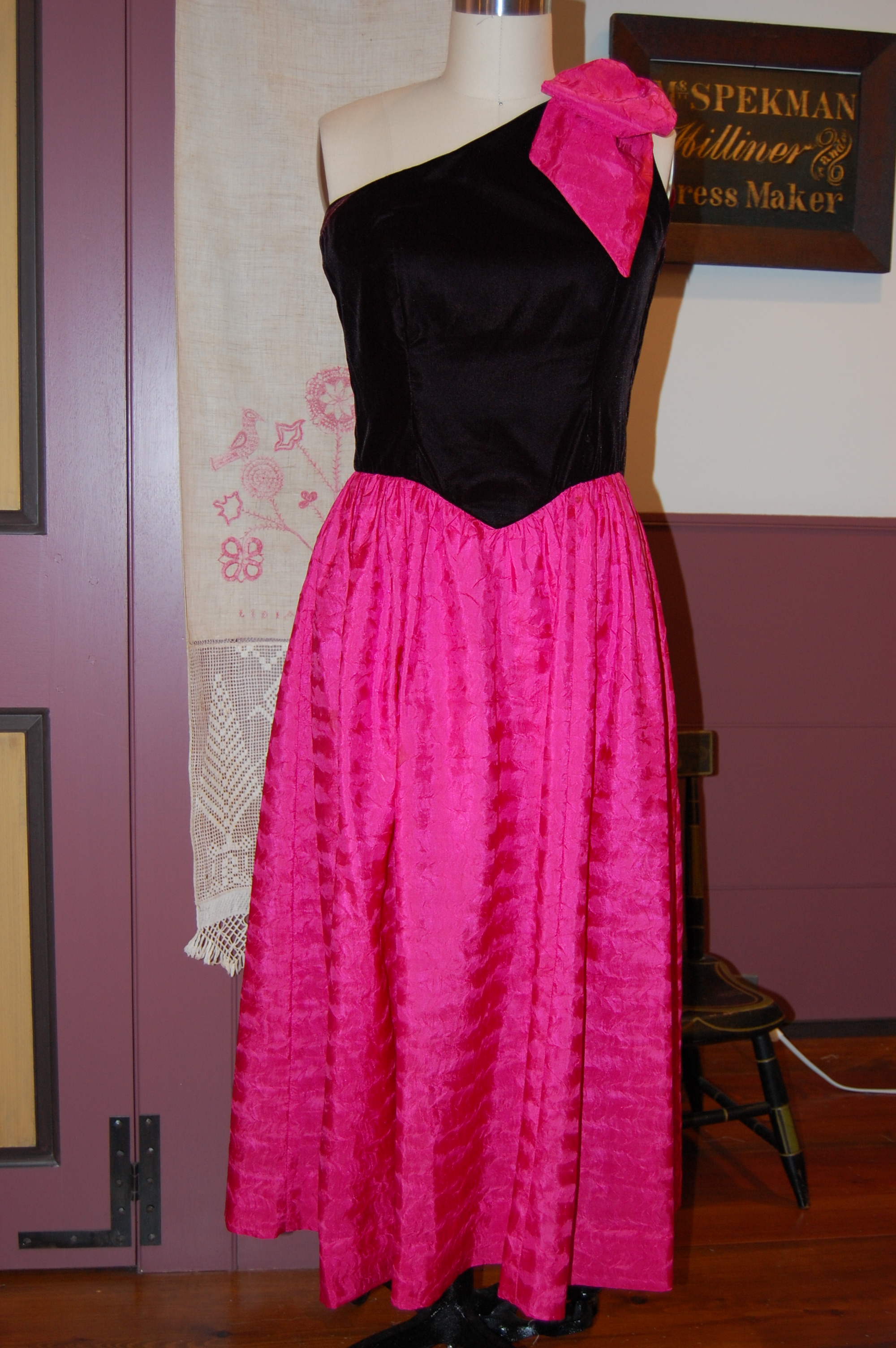
Some dresses – and patterns – just keep giving and giving. As the date approached for a “black tie/ masquerade” ball which my husband and I planned to attend, I decided I had better start to think about what I was going to wear. I reluctantly admitted that the fancy dress I made this past Summer was really too summery to wear to a mid-October event, so I went into my cedar closet in search of another party dress. Still looking like the day I made it 22 years ago was this dress, made from a Butterick pattern:

DSC_0904

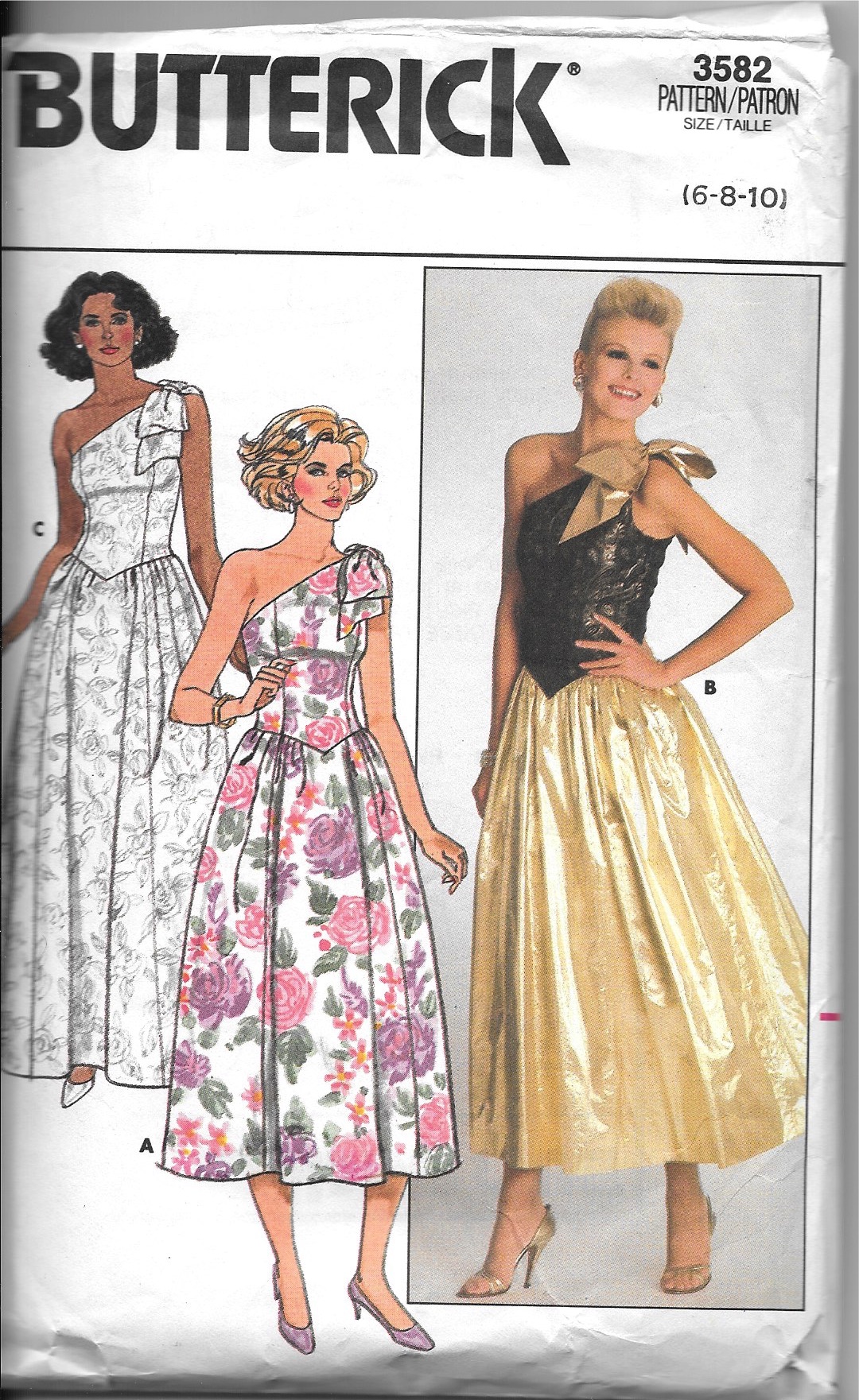
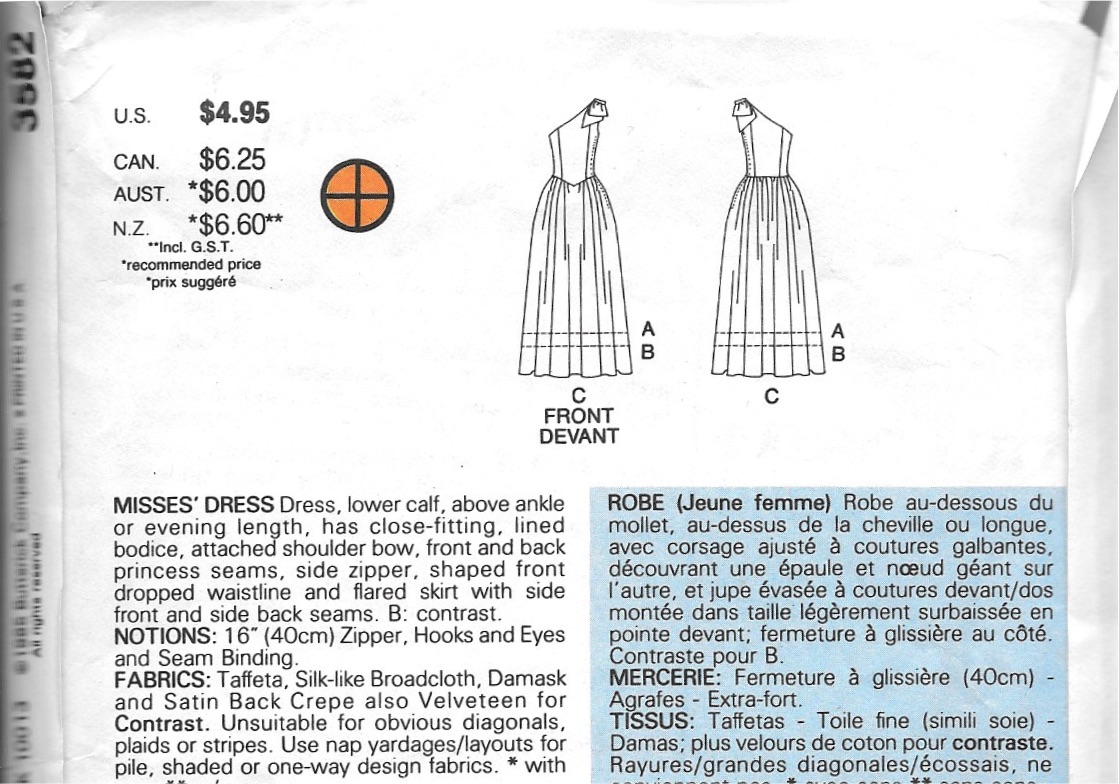
And here is the pattern.

Here is the pattern.

The thumbnail drawings shoe the process lines in the bodice. The description explains the construction of the skirt. I made it in the ankle length version.

The thumbnail drawings show the princess lines in the bodice. The description explains the construction of the skirt. I made it in the ankle length version. And yes – it has a side zipper.

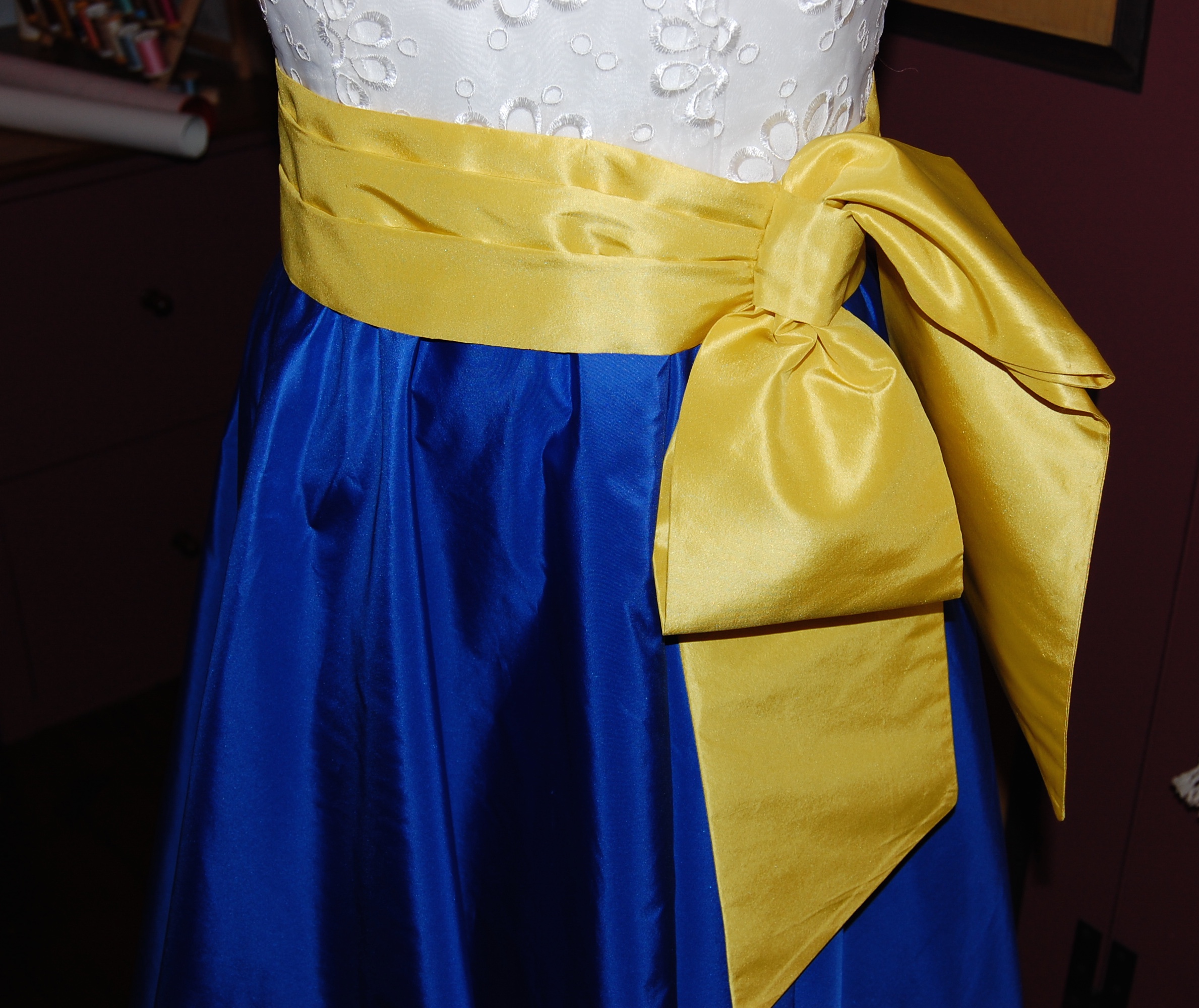
Although I have actually made just one dress from this pattern, I have used the bow pattern (or some “sized-up” or “sized-down” variation of it) again and again. My most recent use of it was for the waist bow on my Summer dress:

 I enlarged the pattern a bit to make this bow.

I enlarged the pattern a bit to make this bow.

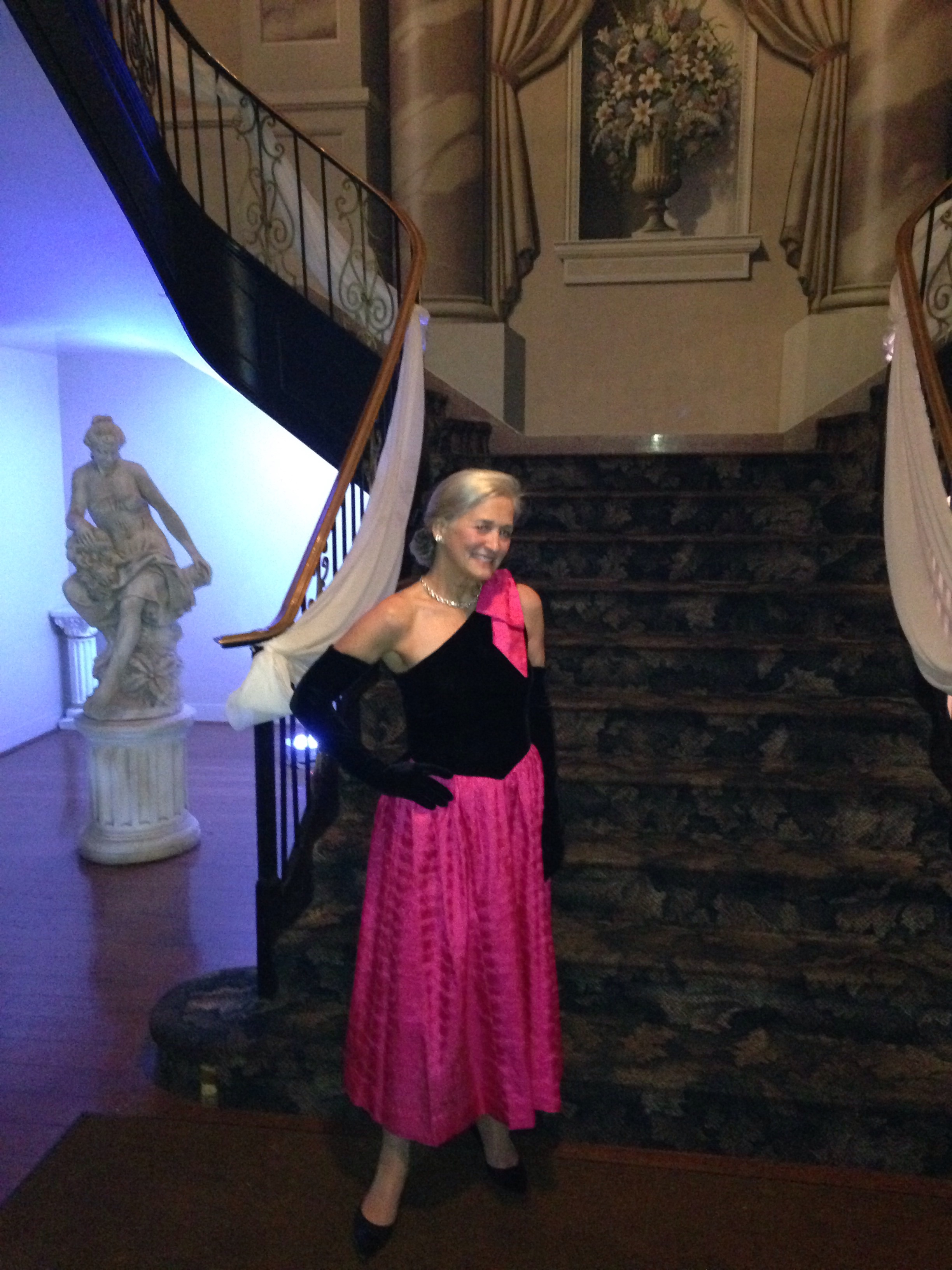
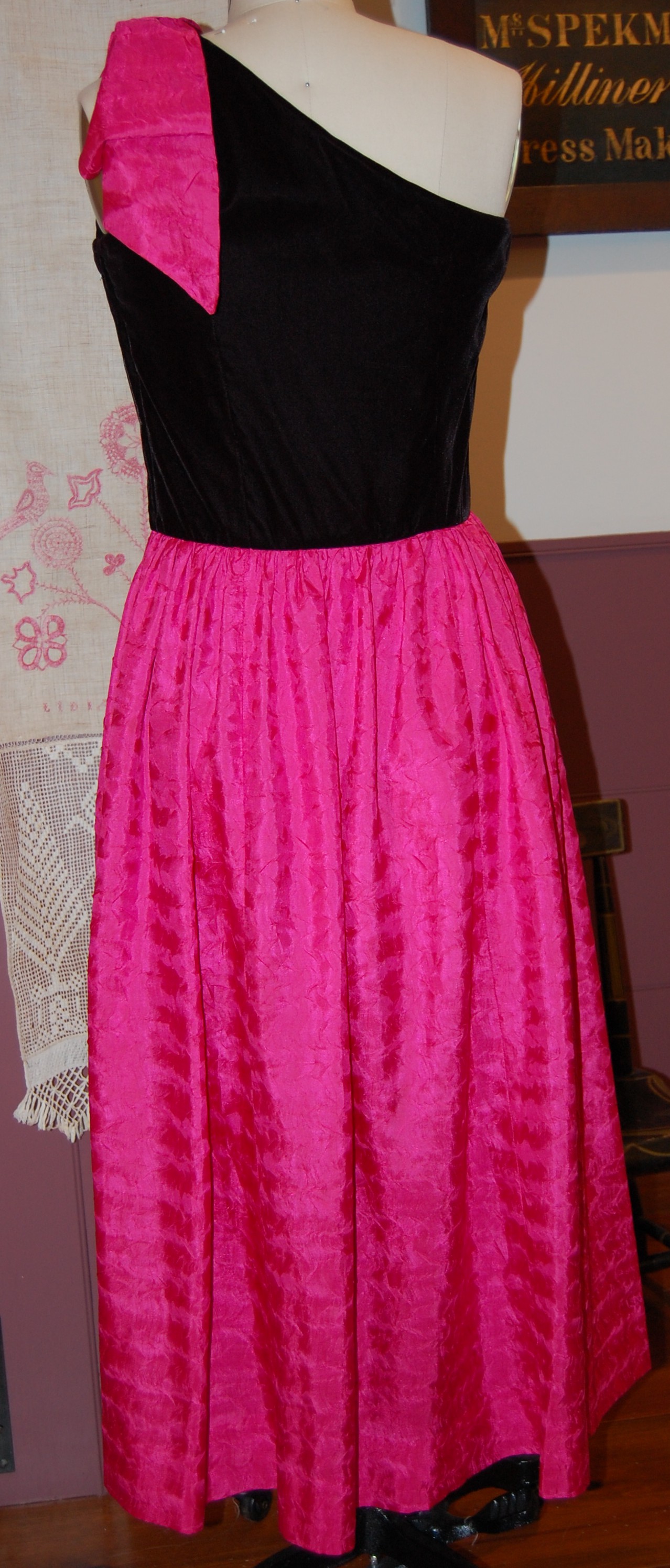
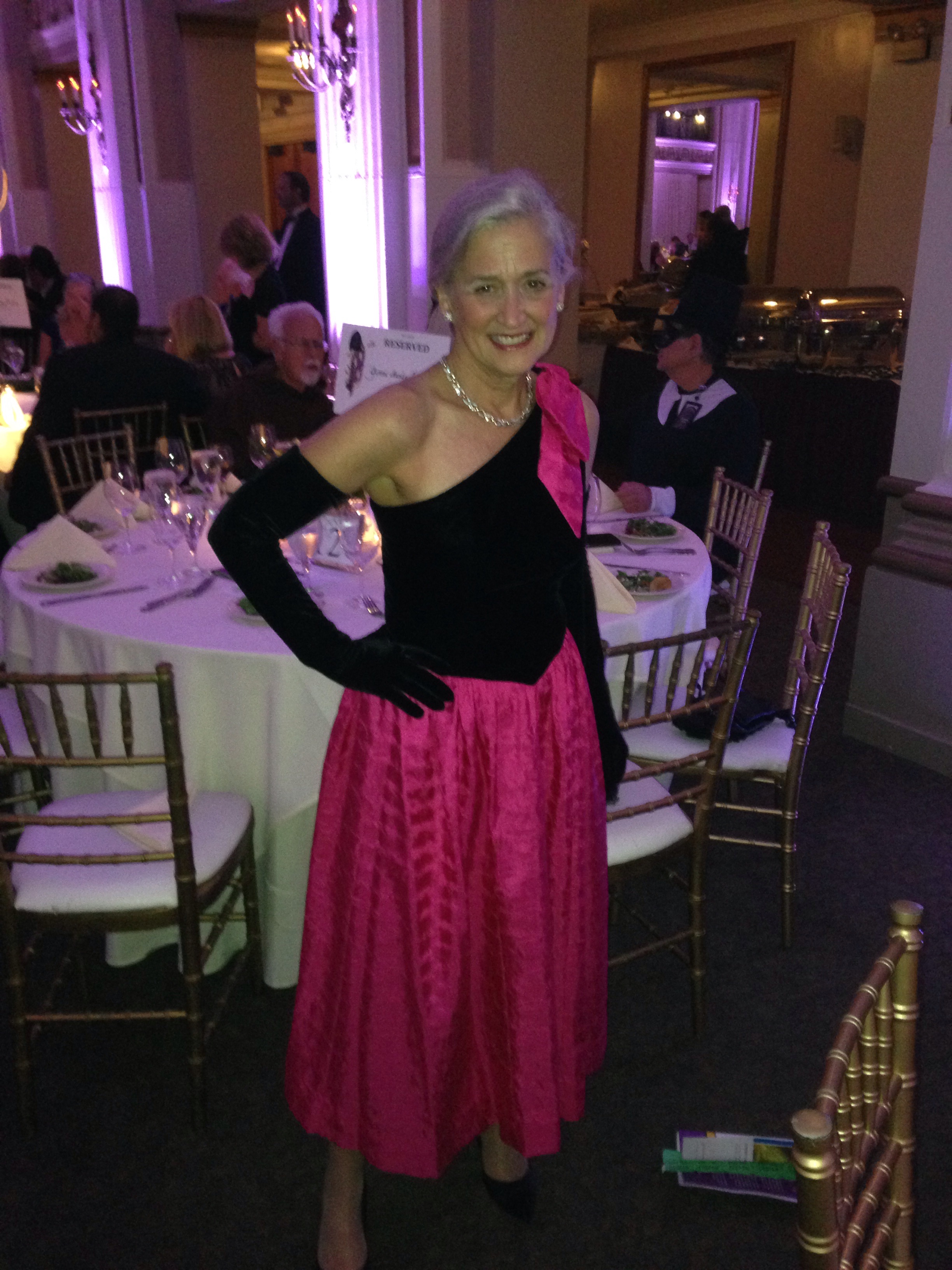
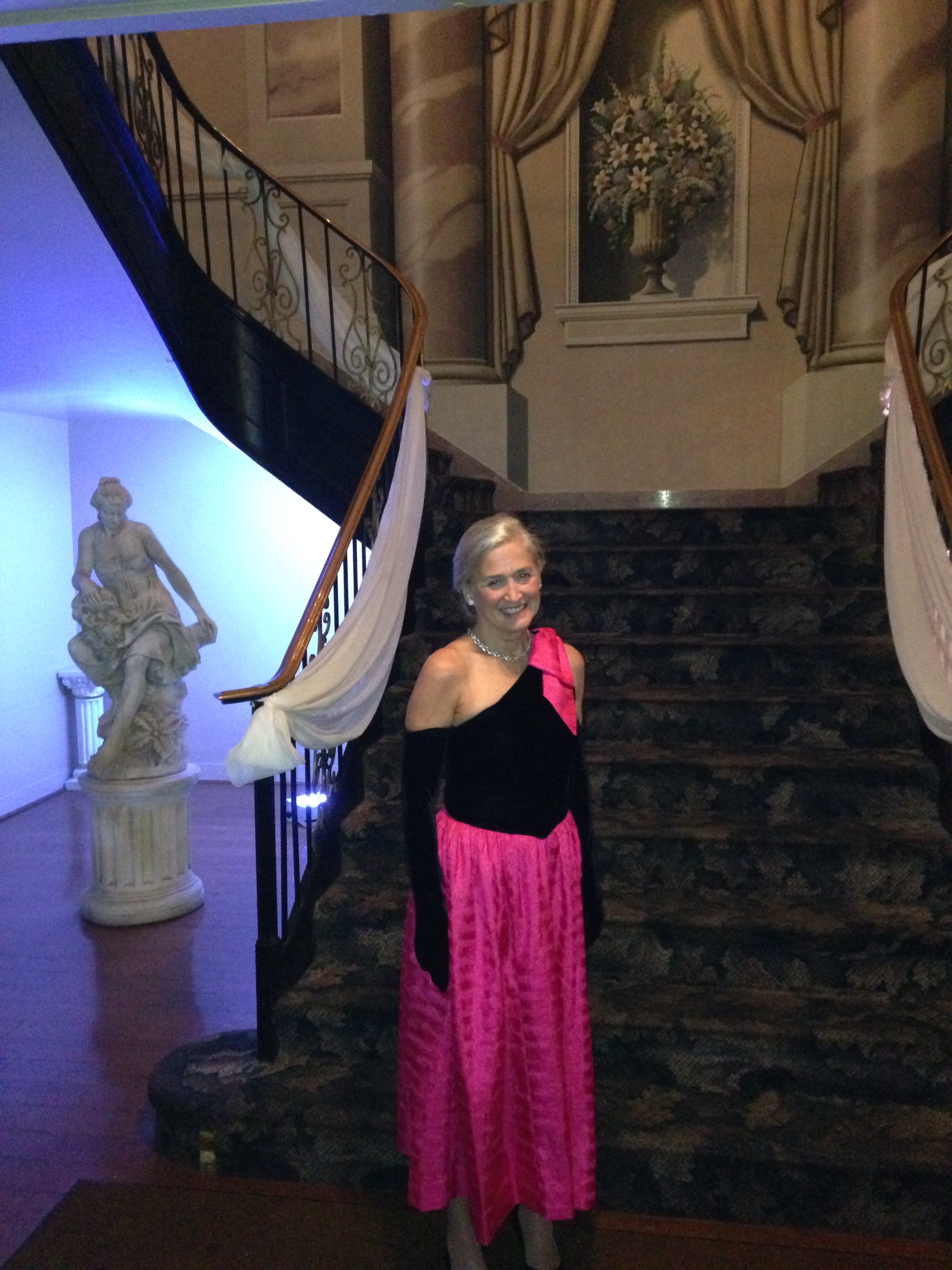
With a black velvet bodice, the dress from my cedar closet is definitely more suitable for cooler weather, and I didn’t think it looked too dated to wear.

GD Ball 3

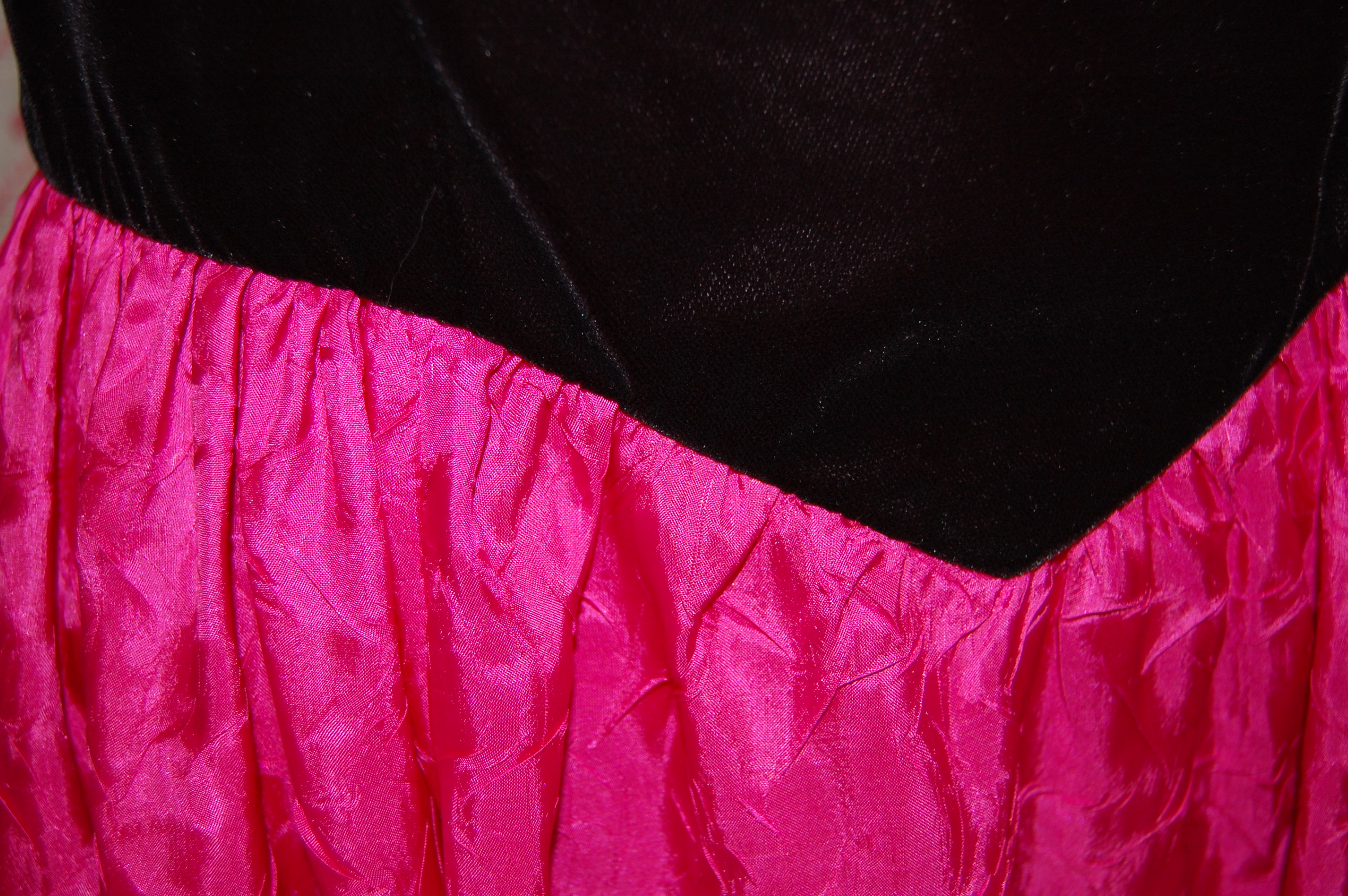
I like the dropped front waistline – a detail not often seen in current patterns – at least to my knowledge.

Black and pink fancy dress

The pink fabric is polyester, although it certainly resembles silk. I never forgot the “name” of this fabric – it was called “Eyelash”! It has a crinkled effect to it, but is soft and wrinkle resistant.

This is a view of the back of the dress.

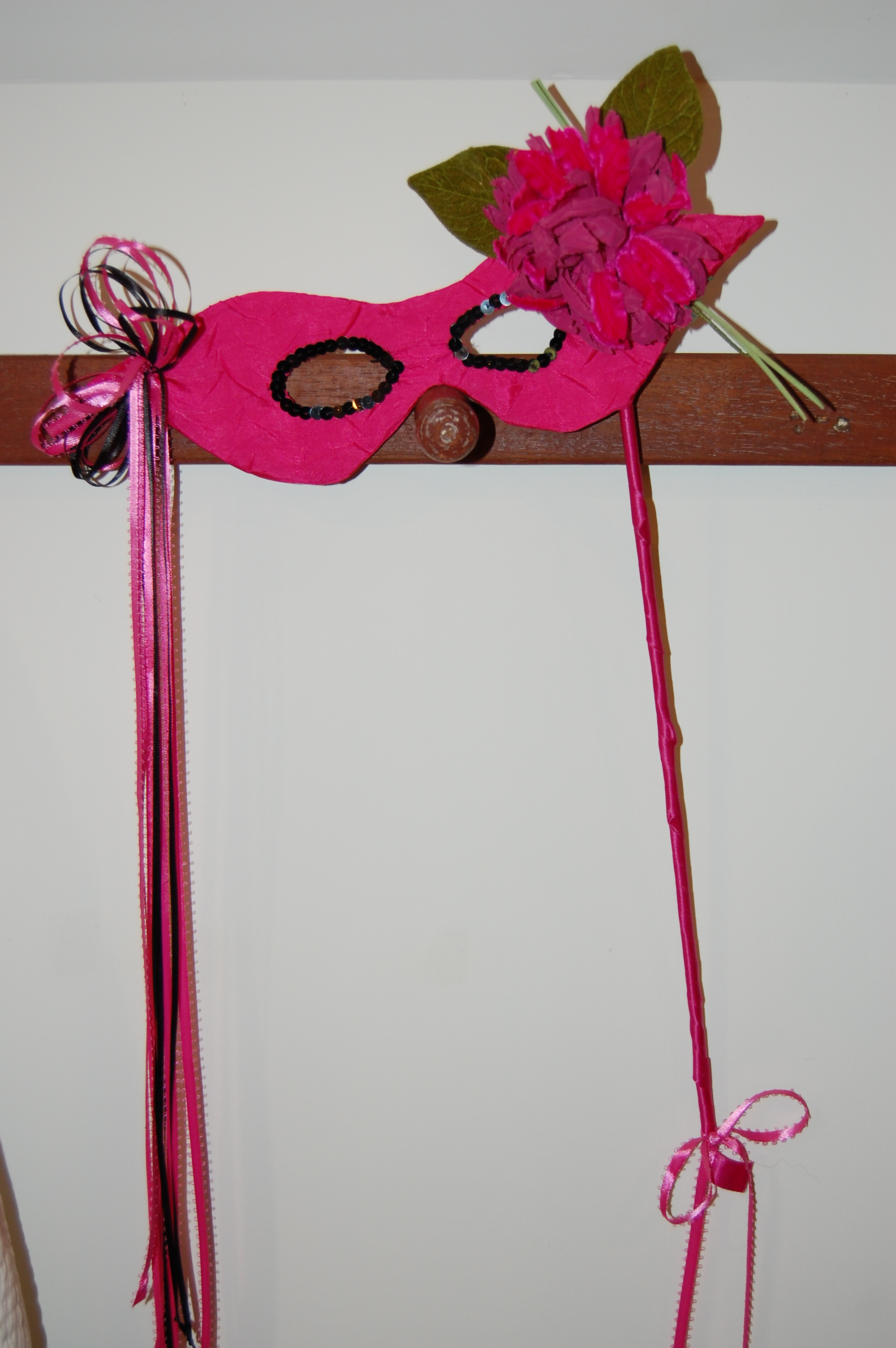
And, as luck would have it, several years ago I made a mask to wear to some other event, the purpose of which now is lost to the ages! Fortunately I had used some left over fabric from my “cedar closet” dress – so it matched perfectly.

Mask Pink

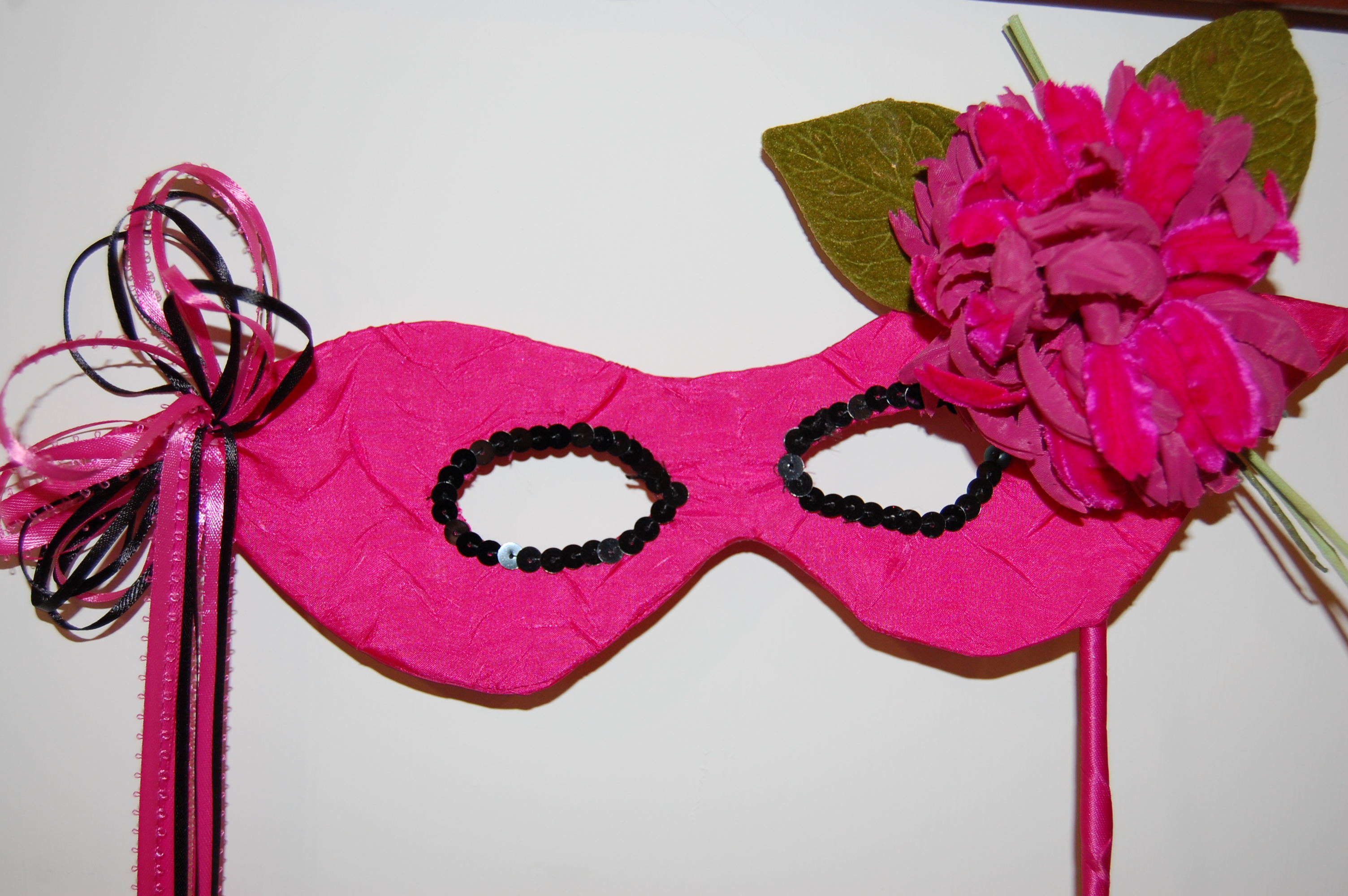
I love a mask on a stick – it doesn’t muss one’s hair! I added that vintage flower to give it extra allure. The stick is just that – a skinny dowel which I covered with ribbon.

Those are sequins around the eyes!

Those are sequins around the eyes!

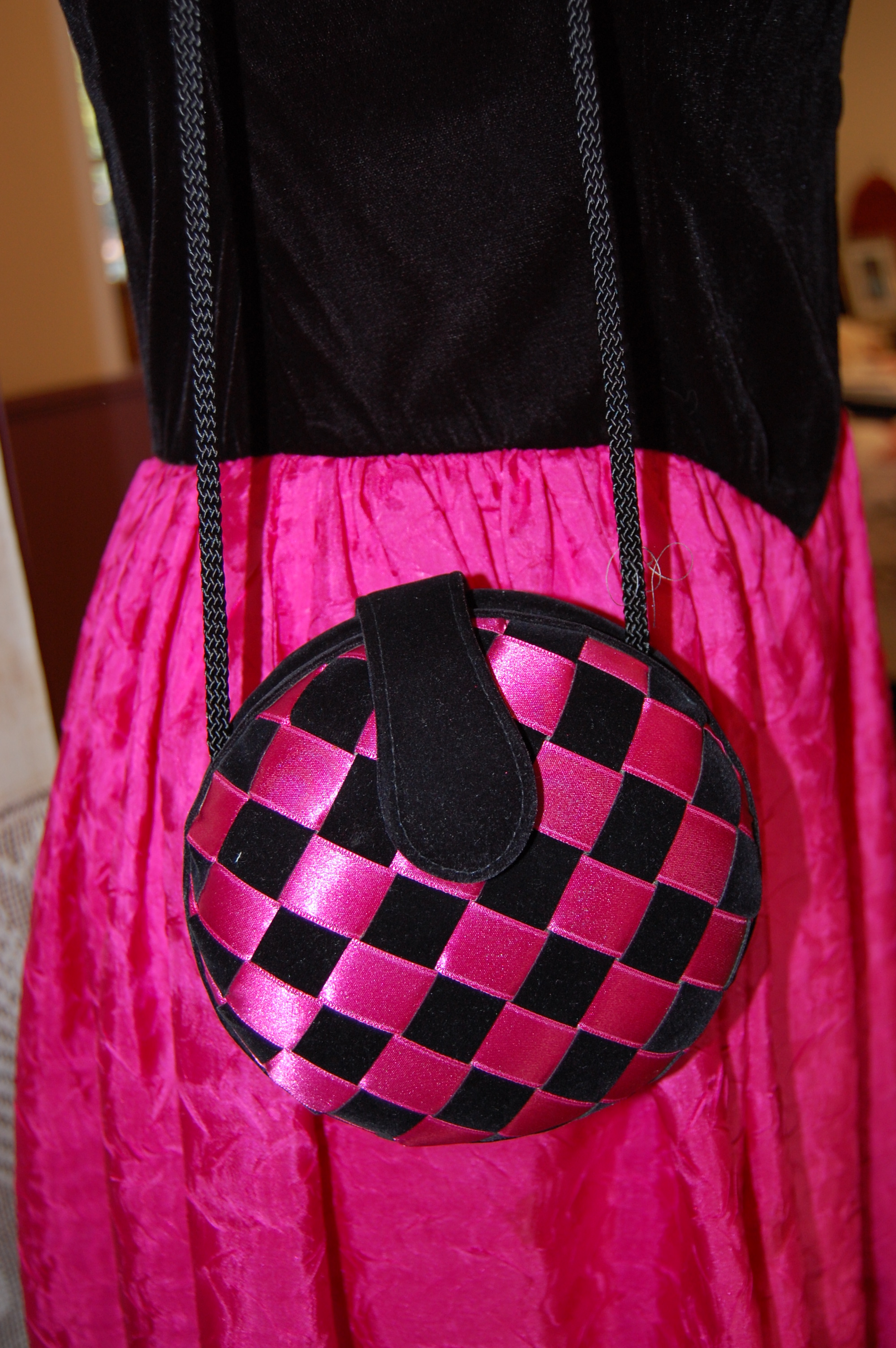
When I made the dress back in the 1990s, I found this evening bag to use with it, so, of course, I wanted to use it again. How times do change! I tried every which way to fit my smartphone in it, and no amount of “schmushing” or angling allowed me to do so. Fortunately, my husband’s tux has lots of pockets, so he toted my phone for me!
Black and pink fancy dress

The final touch to my outfit was long black velvet gloves. I adore long gloves; they are elegant, fetching and … warm! I did not see another pair of formal gloves the entire evening, which to me is a little sad. Accessories like that add so much to our attire and to our “presentation” and unfortunately are one of those fashion niceties being lost in an increasingly casual world.

GD Ball 1

Click on the photo for a closer look…

GD Ball 2

Some of the people in attendance at the Ball were in costume, but I loved the fact that I could get one more wearing out of a formal dress made so long ago. Back into the cedar closet it has gone – sharing space with other out-of-season or “too sentimental-to-give-away” pieces. It is anybody’s guess whether I will ever have another opportunity to wear it. But those gloves? I am keeping those handy!


26 Comments

Filed under Bows as design feature, Formal or fancy dresses, side-placed zippers, Uncategorized

Scrap

This particular word seems to sum up my experience – so far – with my new project of the month. I have had to “scrap” three complete muslins – as in “throw away” and “discard.” I rather like one of the other definitions for this particular word to sum up my past week of sewing – “a fight or quarrel.”   Yes, it’s been a battle, but I believe I am winning! It all started with this fabric – a soft, lovely, light-weight wool and silk blend – from Mendel Goldberg Fabrics.

Scrap

Here it is draped over my dress form.

Here it is draped over my dress form.

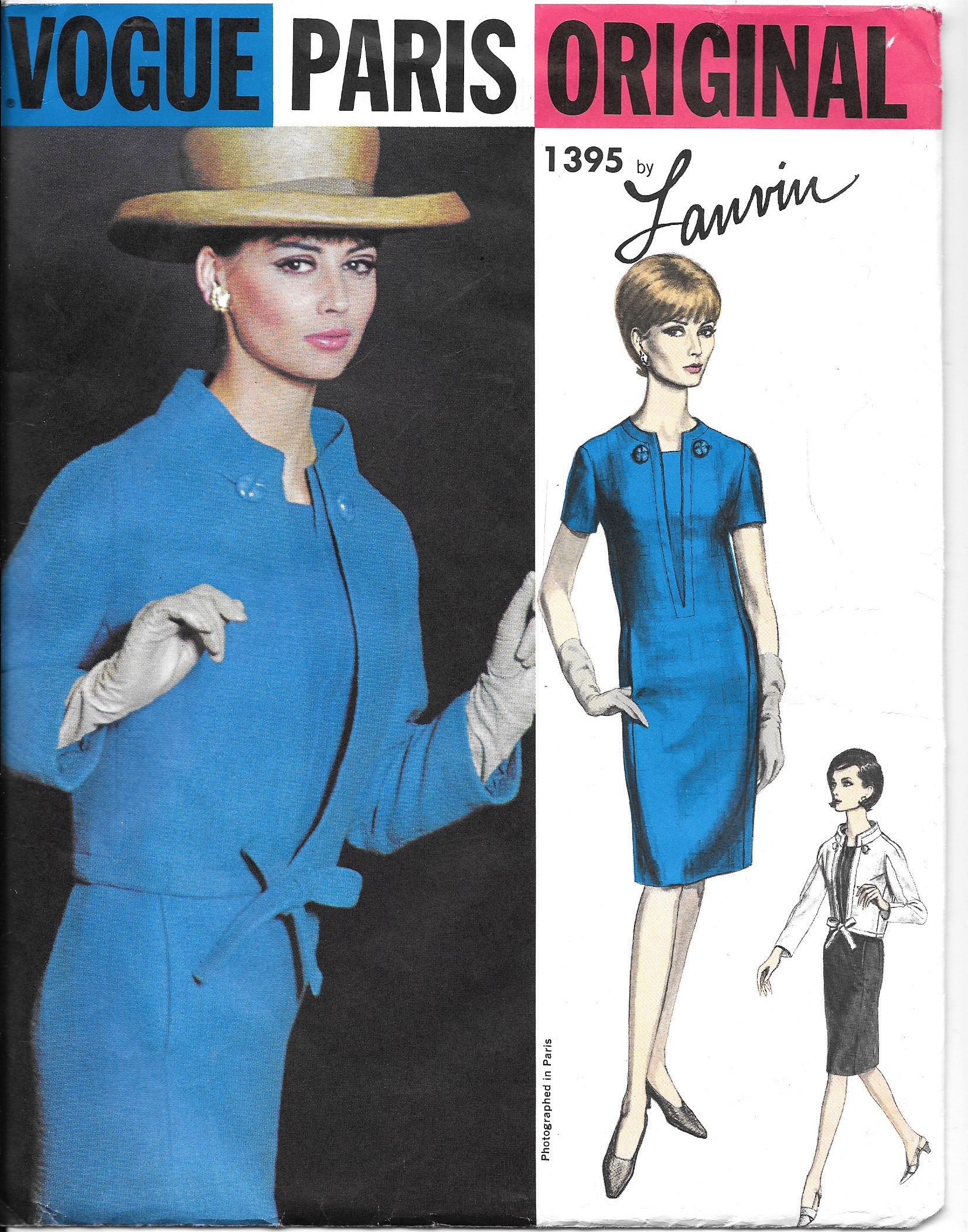
Although I knew I wanted to make a dress with a slim profile – to minimize the fabric’s horizontal design – it took me a while to find the right pattern. I started with one that had curved lines in its bodice and “scraped” that idea after my muslin (toile) revealed many fitting issues. I took that as a sign that the pattern wasn’t the best one to use anyway (which I suspected all along. It’s really important to listen to one’s intuition in things like this!) After another search in my pattern collection, I settled on this dress.

Gray painterly dress - Lanvin pattern

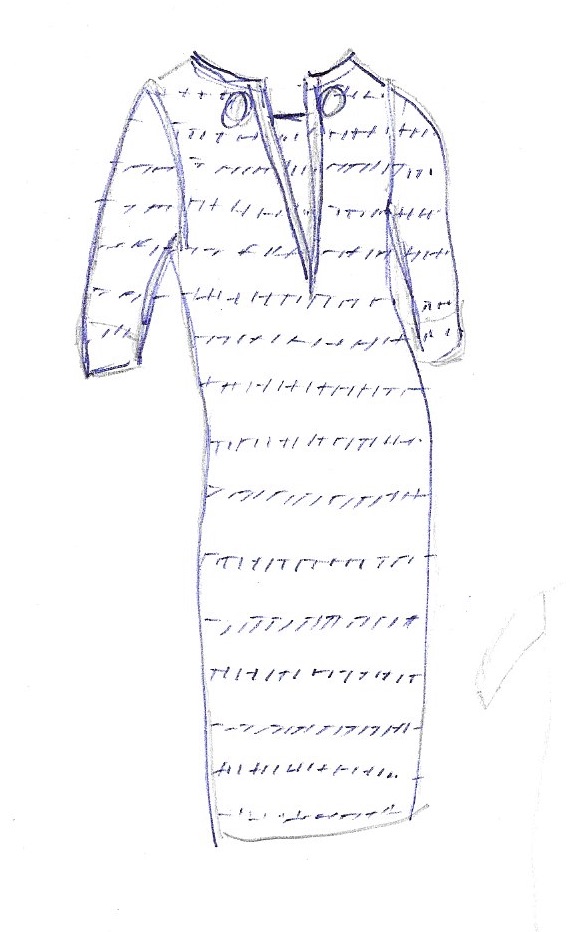
However, I want below-elbow length sleeves so I did a little sketch to try out the look:

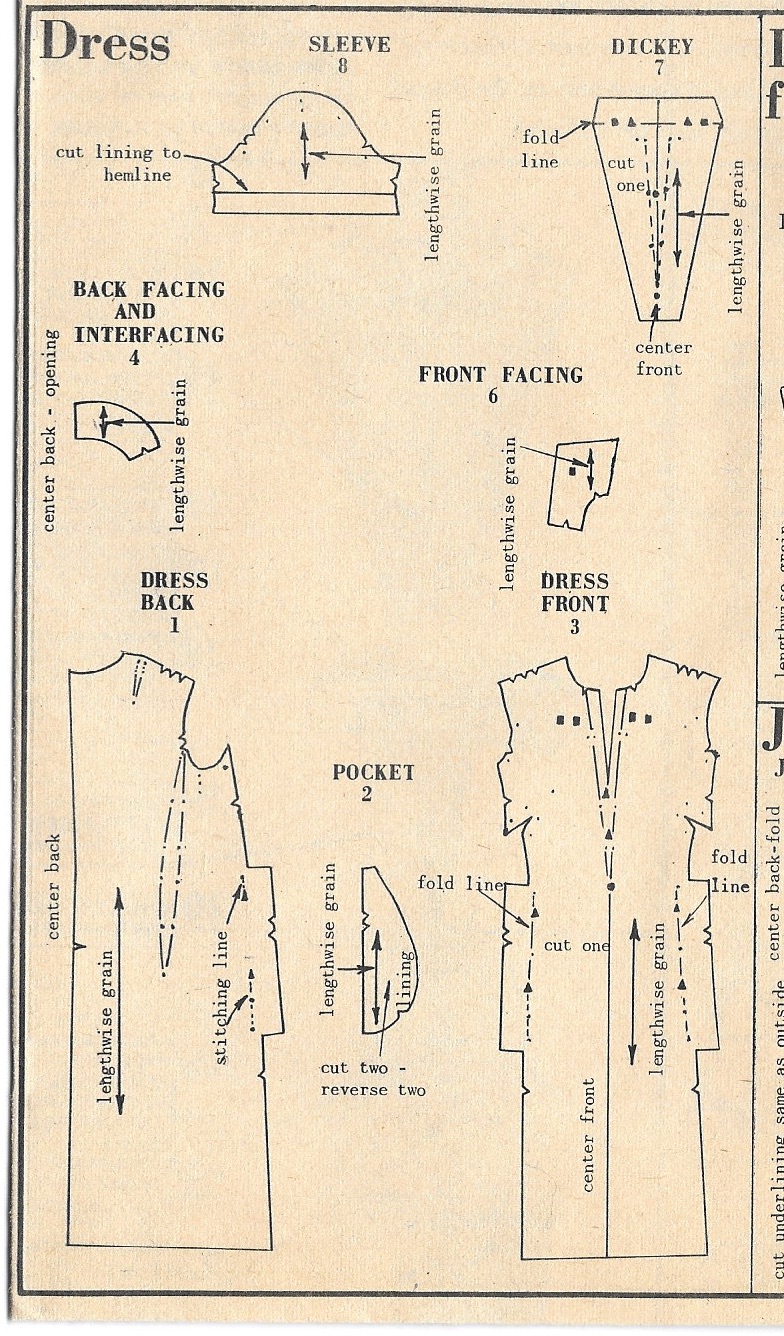
Gray painterly dress - sketchAfter finding a sleeve pattern from another dress which sports two elbow darts, I figured I was in business. Ah, the battle was just beginning. The first muslin I made revealed bust darts that were two inches (two!!) too high. And although I wanted a slim profile, I do have to be able to move in the dress!  I figured I needed to add two inches in total width from the lower armscye down.  Here is a diagram of the pattern pieces. The angle of the bust darts is vital to the fit of the dress so I could not just pivot the apex of the bust. I had to reposition the entire dart, which was getting it awfully close to the pocket.

Gray painterly dress - pattern diagram

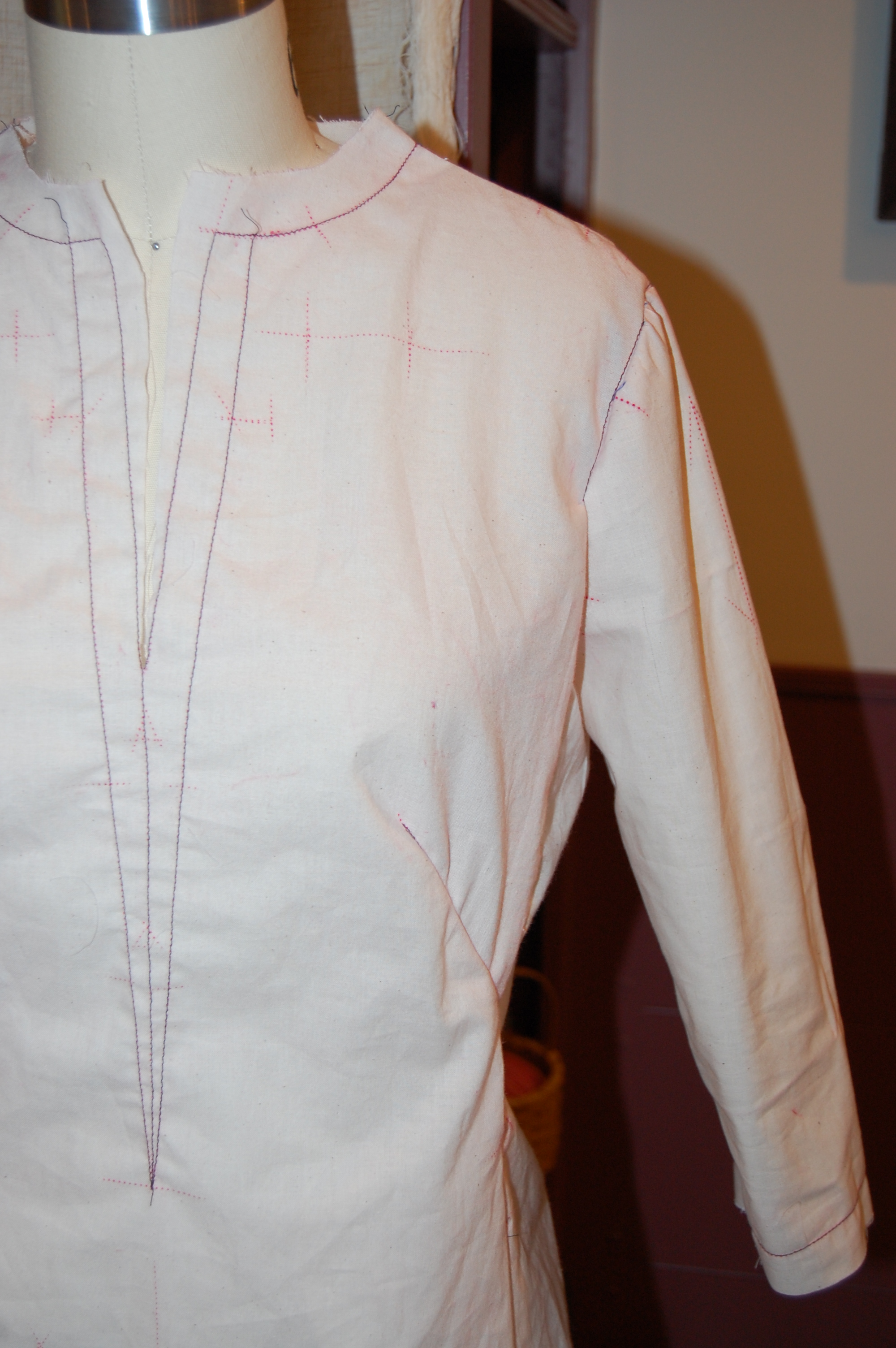
Making changes in that first muslin was just a study in frustration, so I scraped it and made a new one. My second one was better, but still had some kinks in it. The armscye seemed to be off kilter, the reason for which I could not figure out. I’m telling you these are the things that keep me up at night. At this point I went to JoAnn’s and bought more muslin. I was determined to win this fight! A whole new muslin and finally I had one that fit. I was even happy with my mish-mash sleeve (after making a few minor adjustments.)

Scrap

Scrap

I have now progressed to the silk-organza underlining stage of construction.   Matching the horizontal design of the fabric across the various components of the pattern will take concentration, but that’s a task that always intrigues me.

Scrap

A decision about those two buttons, such an important focal point of the dress, is still to be made. The wrong side of the fabric is plain gray, so I might end up using that side for covered buttons. Suggestions, anyone??

DSC_0900

Other than these challenges, I am feeling fairly confident that my next post will not have to be entitled “Scrap – Continued.”

20 Comments

Filed under Buttons - choosing the right ones, Uncategorized, underlinings, vintage Vogue Designer patterns, vintage Vogue patterns from the 1960s, woolens

A Fitting Finish to Summer Sewing

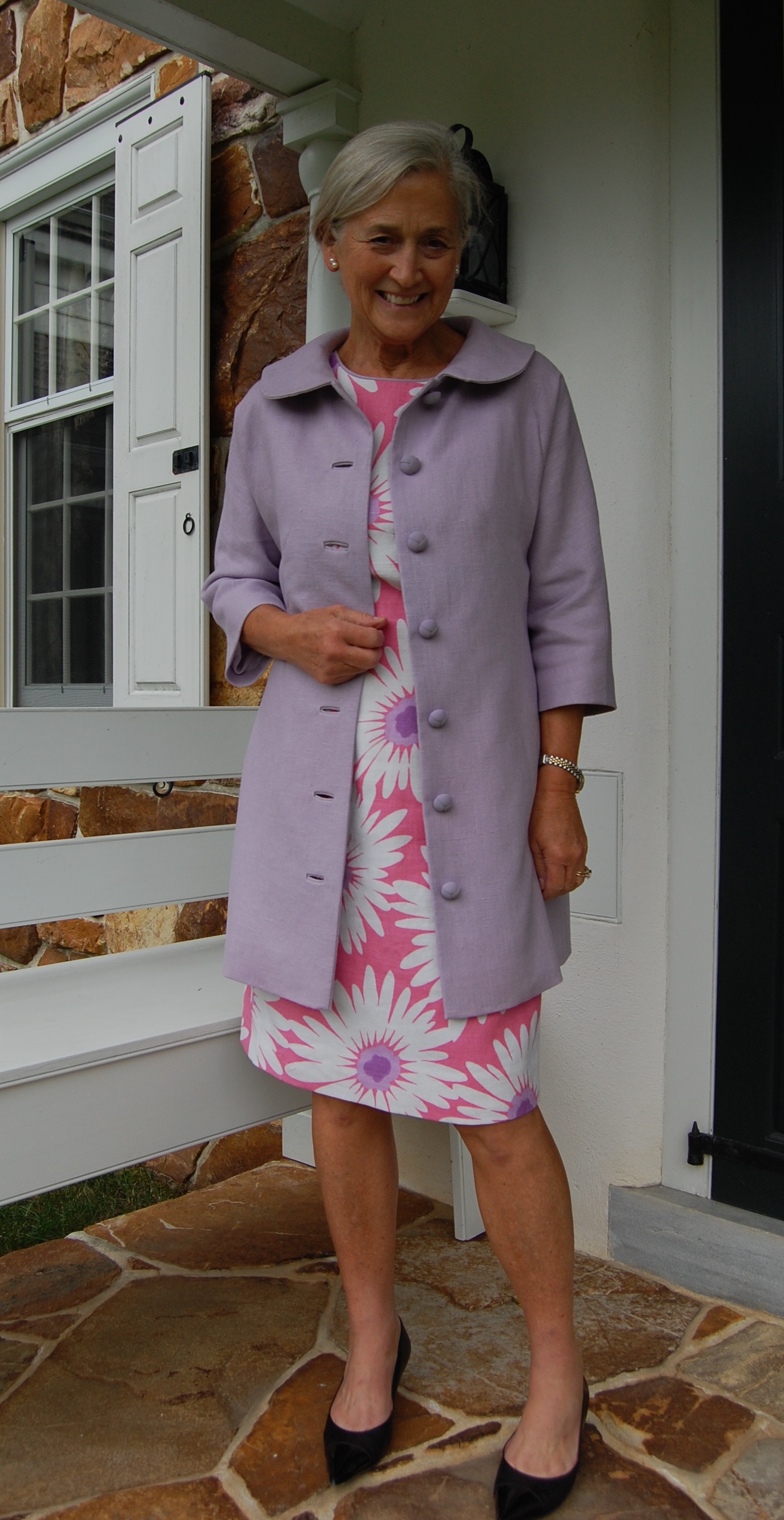
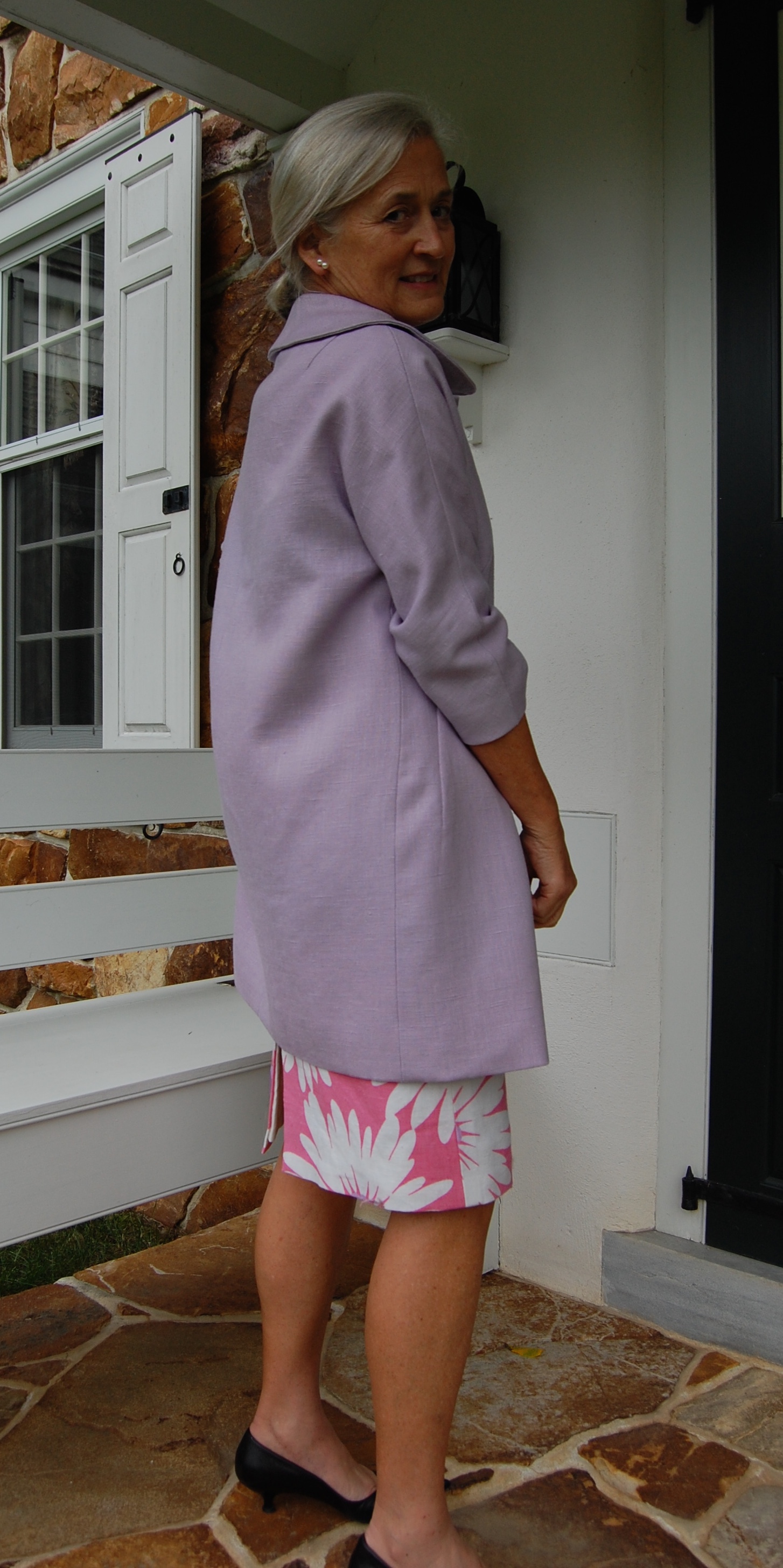
Summer slipped quietly away this week with nary a peep except for the sighs coming from my sewing room. No matter how hard I tried, I could not keep up with the calendar to finish my final Summer project.  However, a few days late on “delivery” doesn’t really upset me, as I can look forward to wearing my Madame Gres-designed coat next Spring.

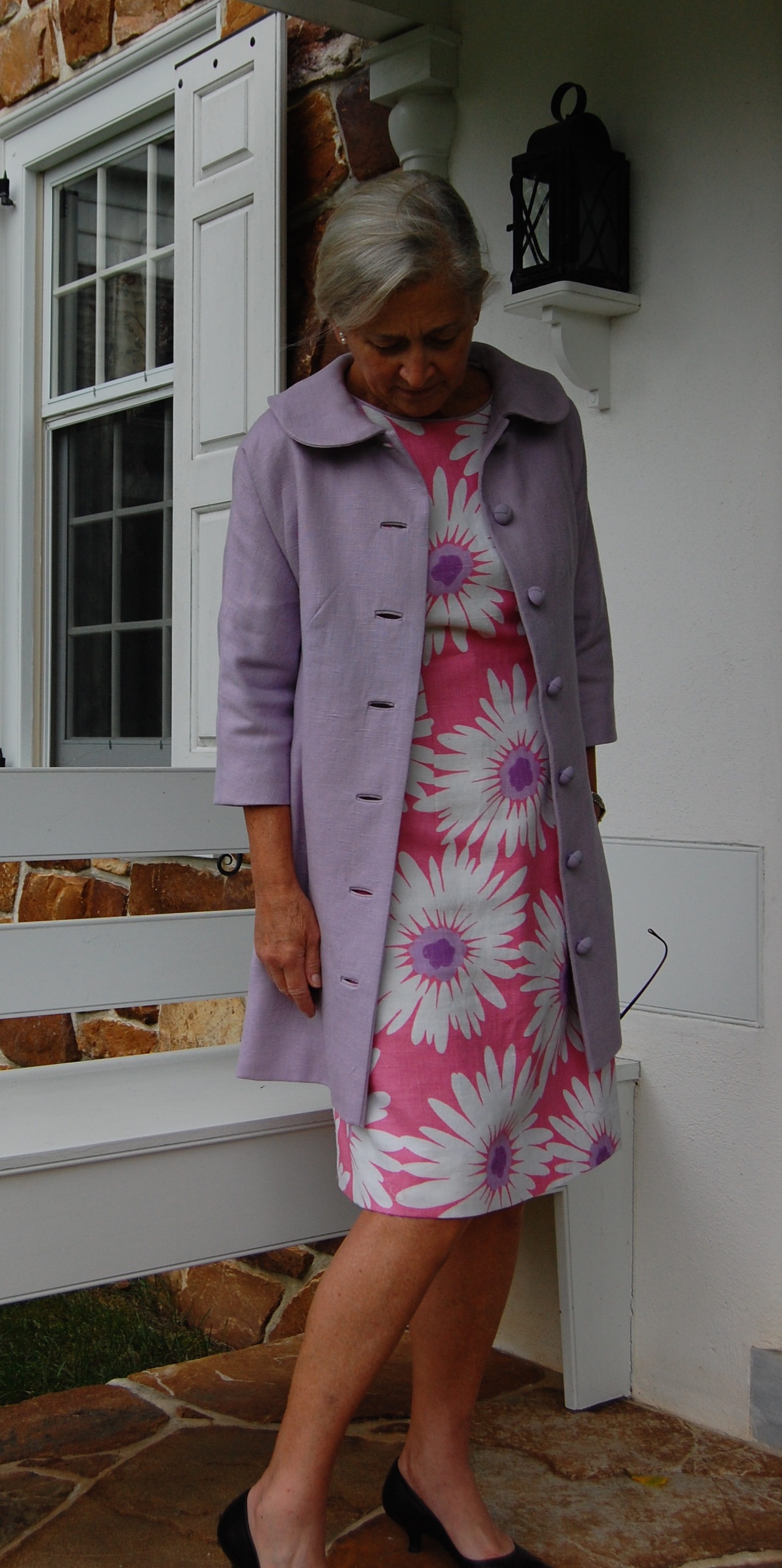
Vogue Gres coat and dress

DSC_0851

I am not sure I can remember a sewing project which I have enjoyed more. The coat pattern is actually quite a simple design, imaginatively shaped with unusual darts and seams. Perhaps the fact that I made it from vintage Moygashel linen helped make the sewing of it enjoyable, as the linen is so stable. Darts and seams can be crisply sewn and ironed, the grain of the fabric is so easy to see, and the fabric drapes with a fluid sturdiness, if that makes sense.

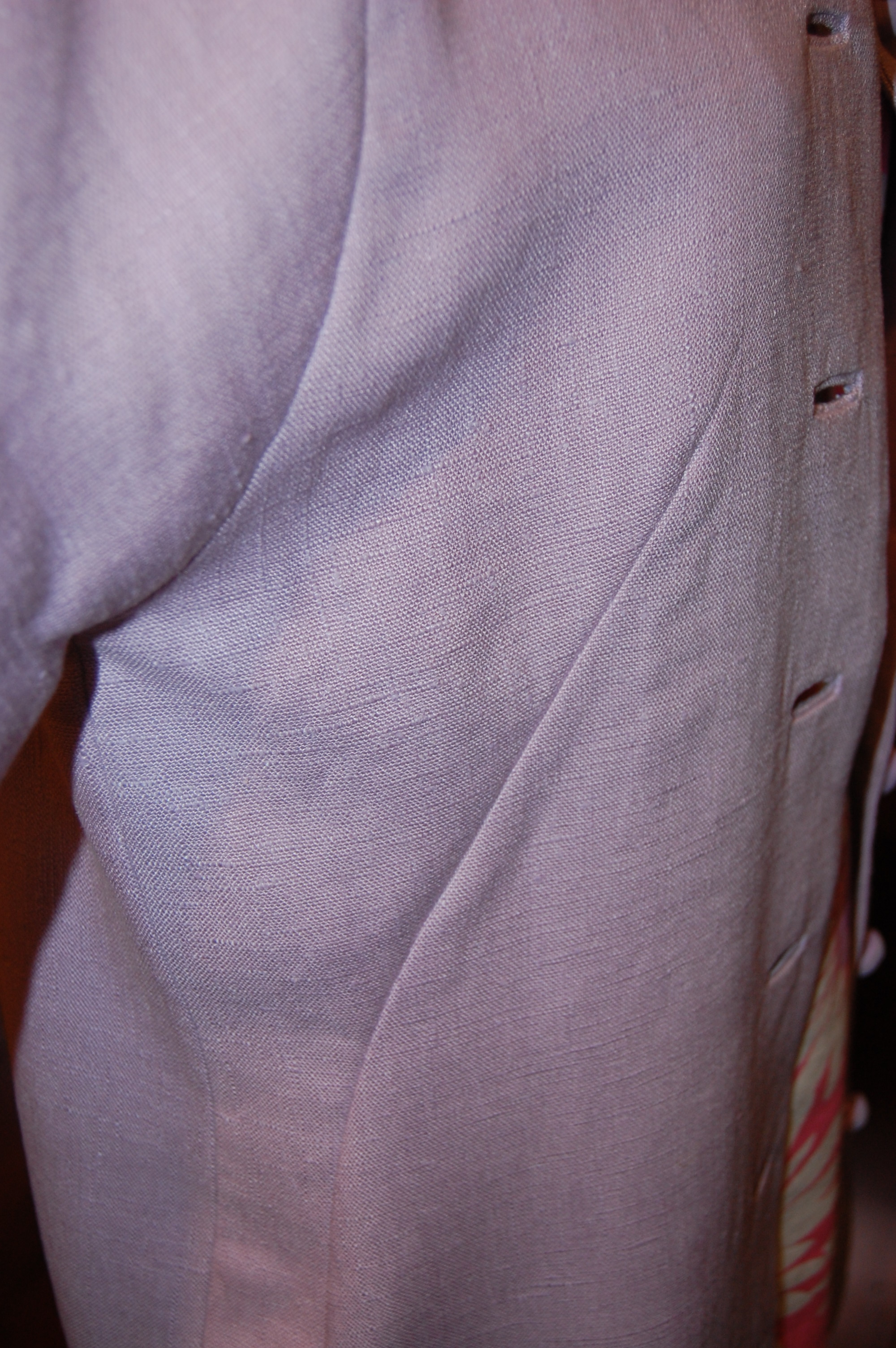
This shows the side darts which shape the coat and the dart/seam at the front of the kimono sleeve.

This shows the side darts which shape the coat and the dart/seam at the front of the kimono sleeve.

I covered the changes I made to those front darts in an earlier post; those were the only alterations I made to the final design except for lengthening the sleeves by one inch and the length of the coat by 1½ inches. Besides those shaping darts, there is one other feature of this coat which defines it. Do you know what it is?   Yes, it is the bound buttonholes and their buttons. Seven of them, to be precise.

The pattern instruction sheets call for bound buttonholes, as shown here:

I love how these vintage Vogue patterns give such precise instructions; there are various ways to make bound buttonholes, but the method described here is my favorite.

I love how these vintage Vogue patterns give such precise instructions; there are various ways to make bound buttonholes, but the method described here is my favorite.

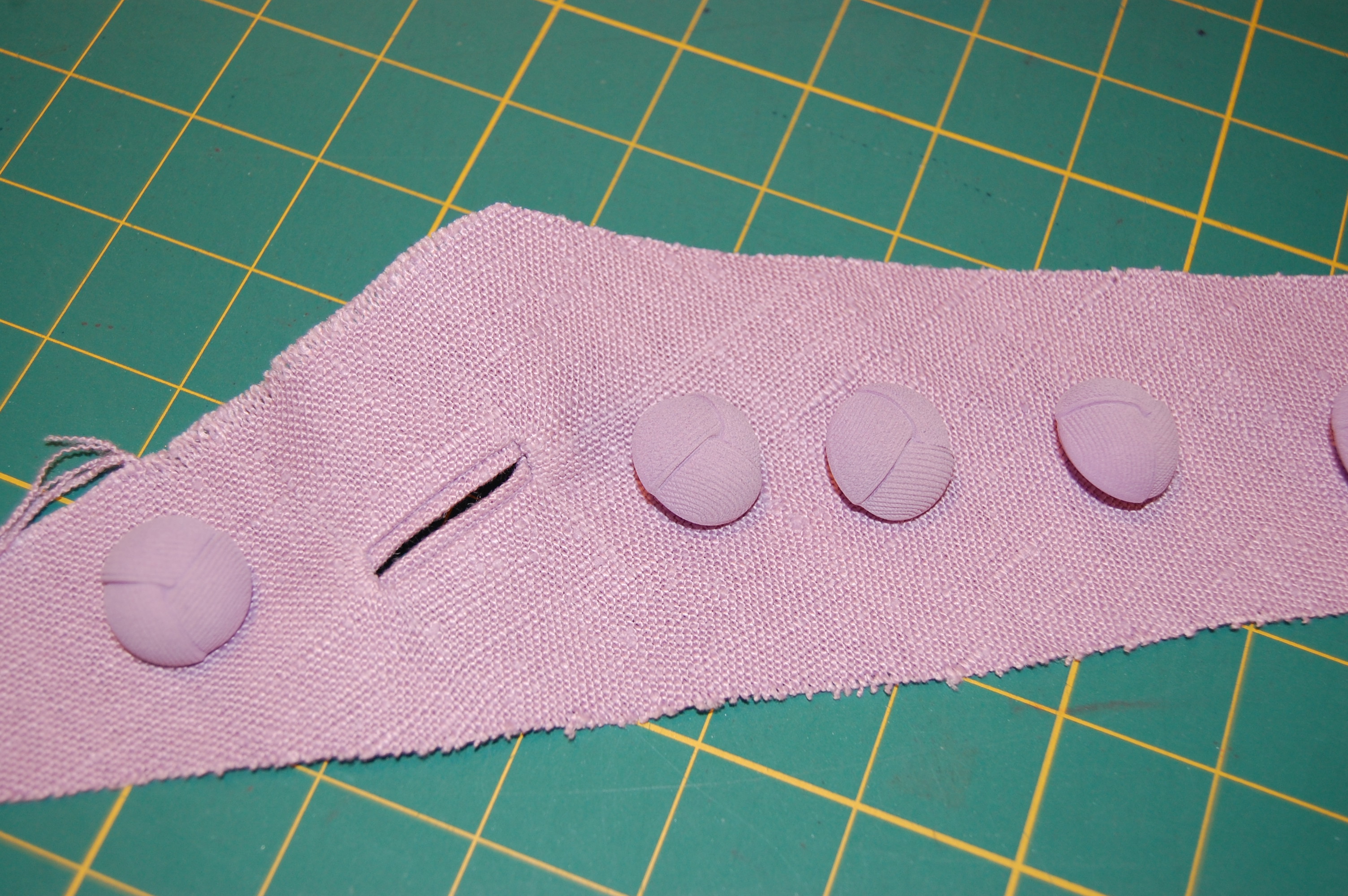
I have made a lot of bound buttonholes in my sewing life, but seven of them lined up as the focal point of the front of my coat is still a little intimidating. First of all, I had to find buttons that were “perfect.” I found some lavender buttons on the Britex website, and although they looked like a good match in color and appearance, ordering something like that online is always imprecise. However, when they arrived, they were, indeed, “perfect!” With buttons in hand, I made a sample buttonhole, as I always do.

DSC_0819

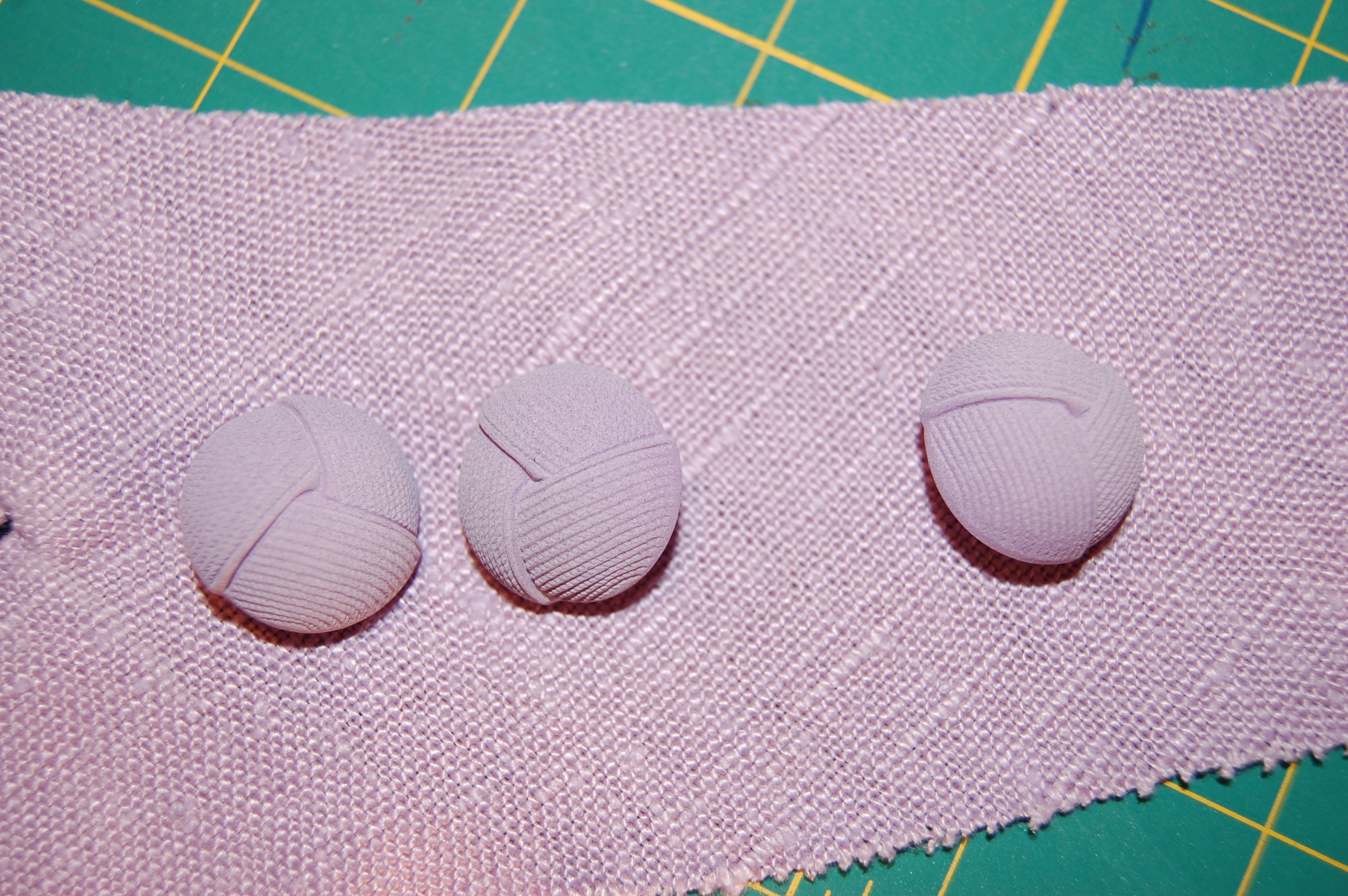
I think this photo shows the "monkey's knot" design in the buttons, which compliments the linen weave, I think.

This photo shows the “monkey’s knot” design in the buttons, which compliments the linen weave, I think.

Then it was on to a marathon buttonhole session one afternoon.

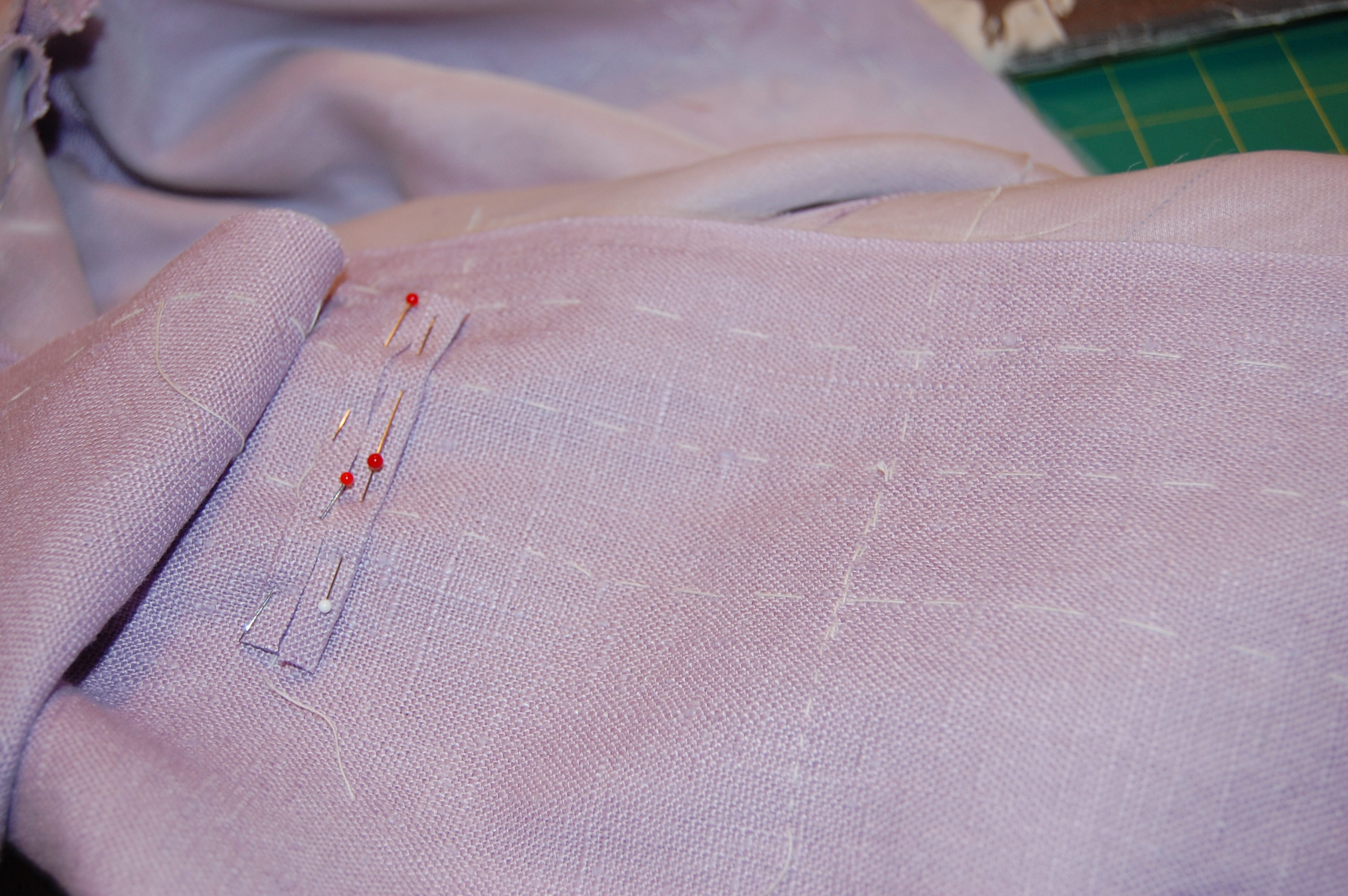
The most important ingredient in making successful bound buttonholes is precise marking.

The most important ingredient in making successful bound buttonholes is precise marking.

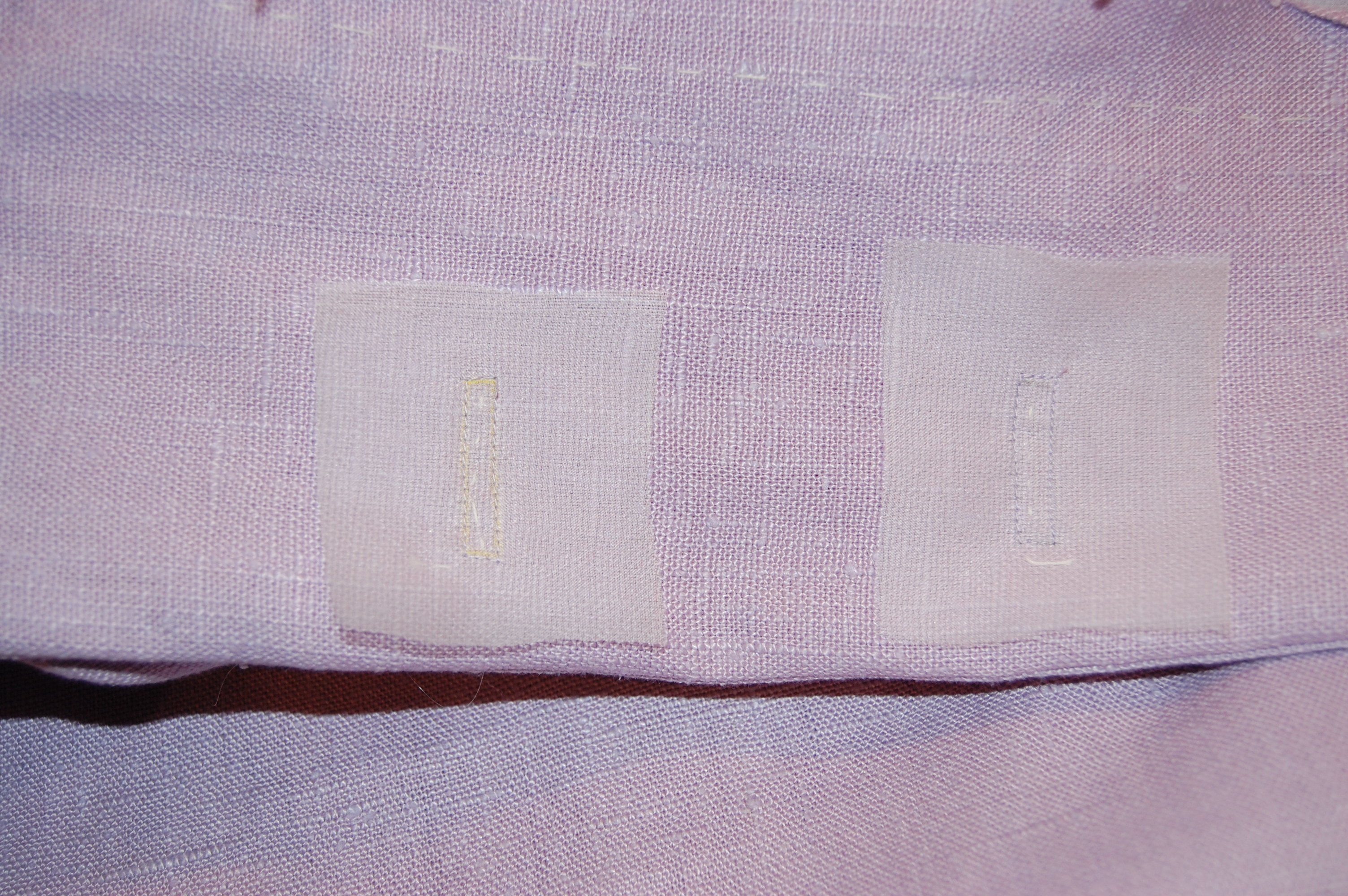
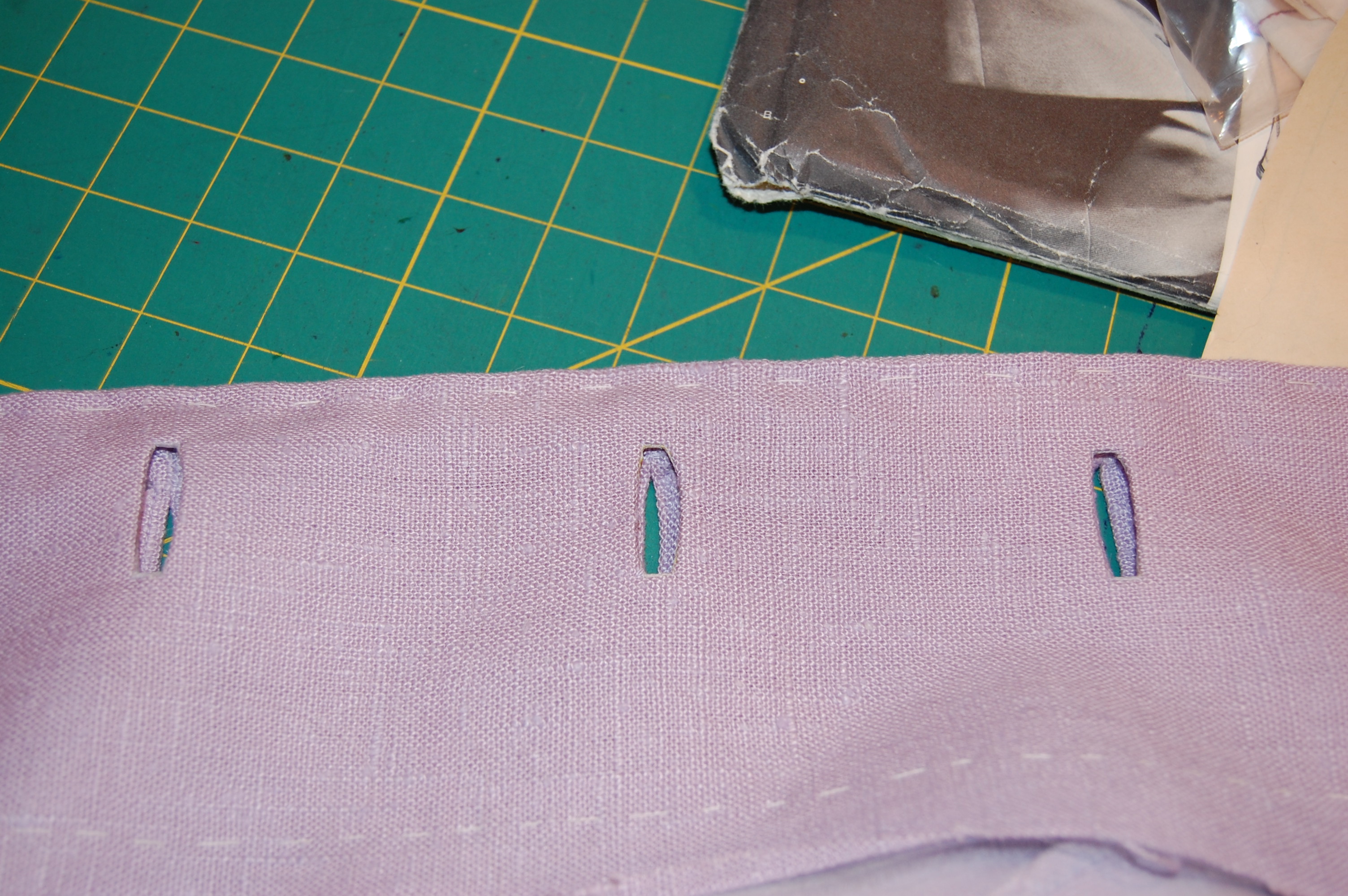
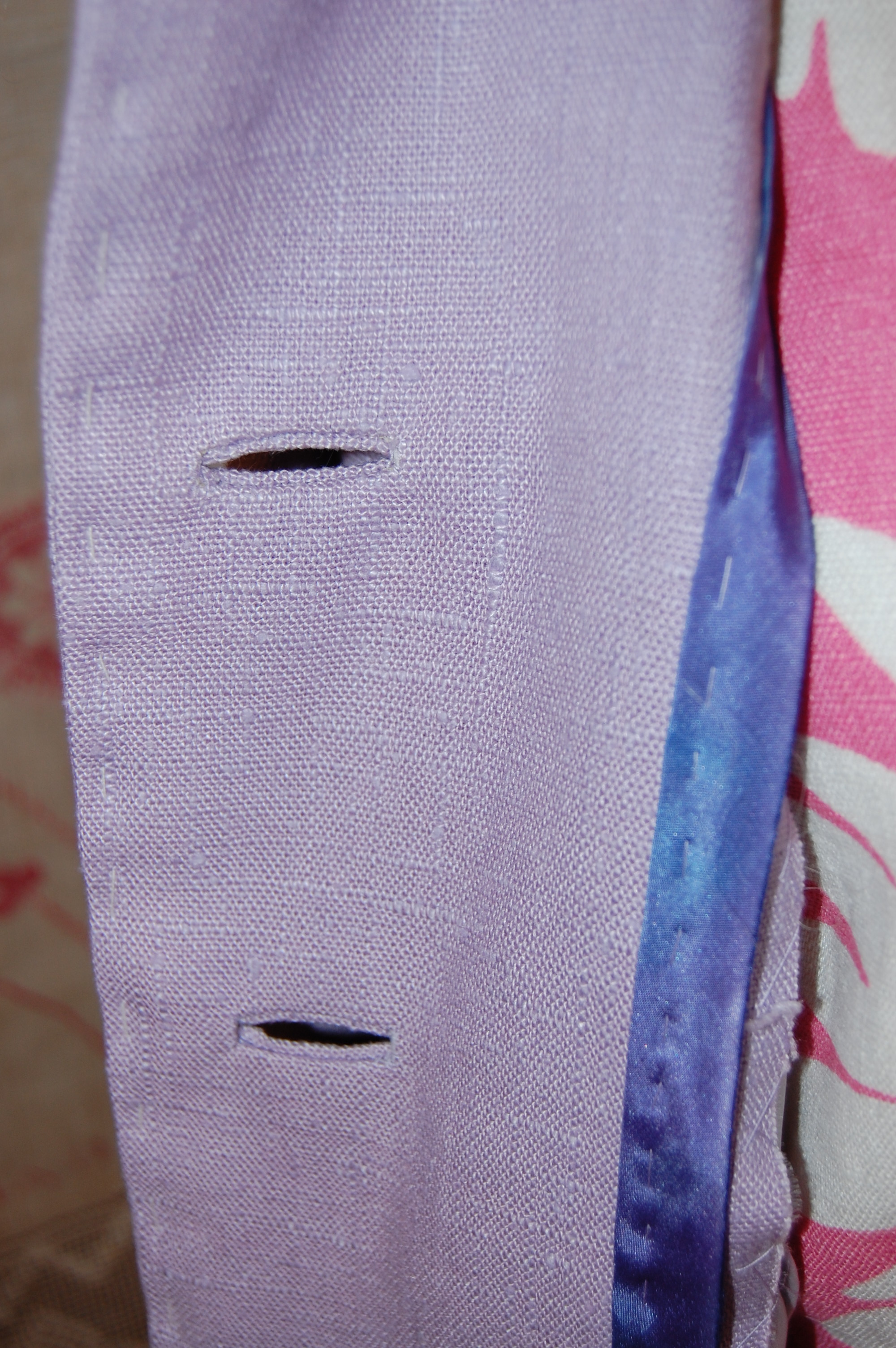
I finished the underside (on the facing) of the buttonholes using organza patches, which makes a beautiful, sturdy finish.

I finished the underside (on the facing) of the buttonholes using organza patches, which makes a beautiful, sturdy finish.

Here is the underside of the buttonholes before I finished the edges.

Here is the underside of the buttonholes before I finished the edges.

And here is the facing side, finished.

And here is the facing side, finished.

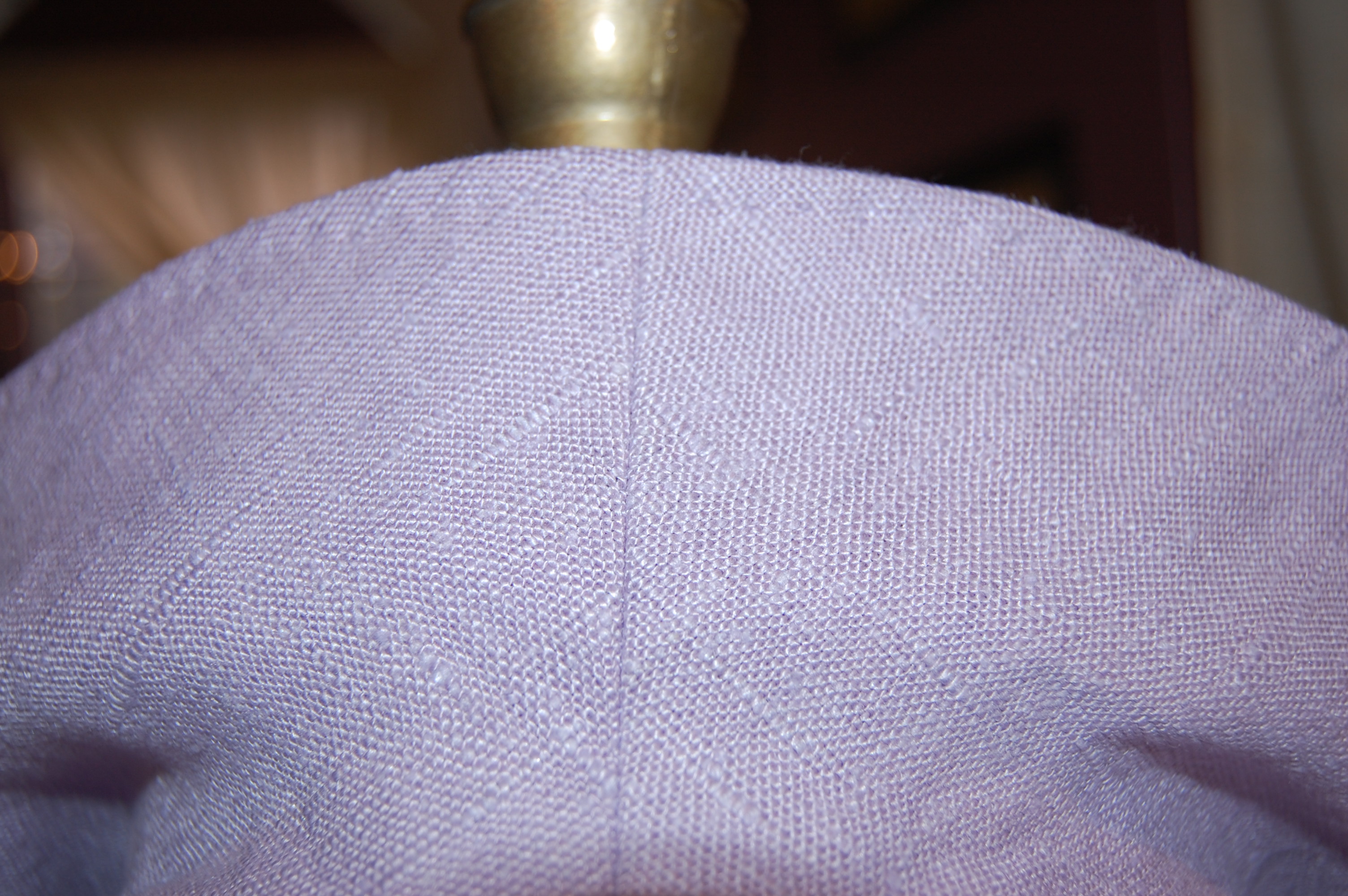
Another charm of this pattern is the coat collar, which is seamed in the center back on the bias, causing it to “turn” beautifully. I under-stitched the undercollar to help keep the perimeter seam properly in line (this is a trick I learned from one of Susan Khalje’s classes):

This is the undercover, showing center back seam and the under-stitching I used to secure the perimeter seam.

This is the undercollar, showing center back seam and the under-stitching I used to secure the perimeter seam.

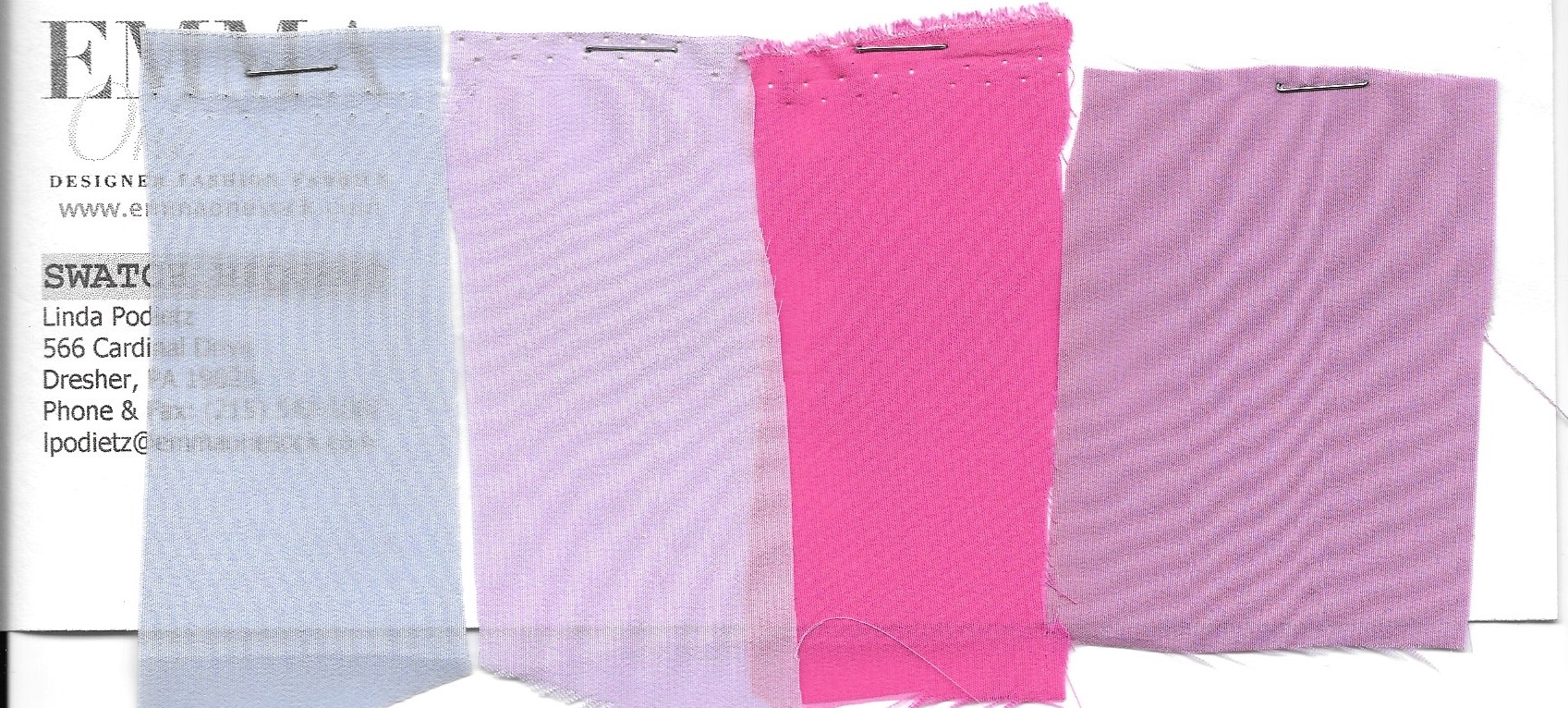
When it came to the lining, I knew I wanted to use silk crepe de chine. I ordered some swatches from Emma One Sock fabrics:

A Fitting finish swatches

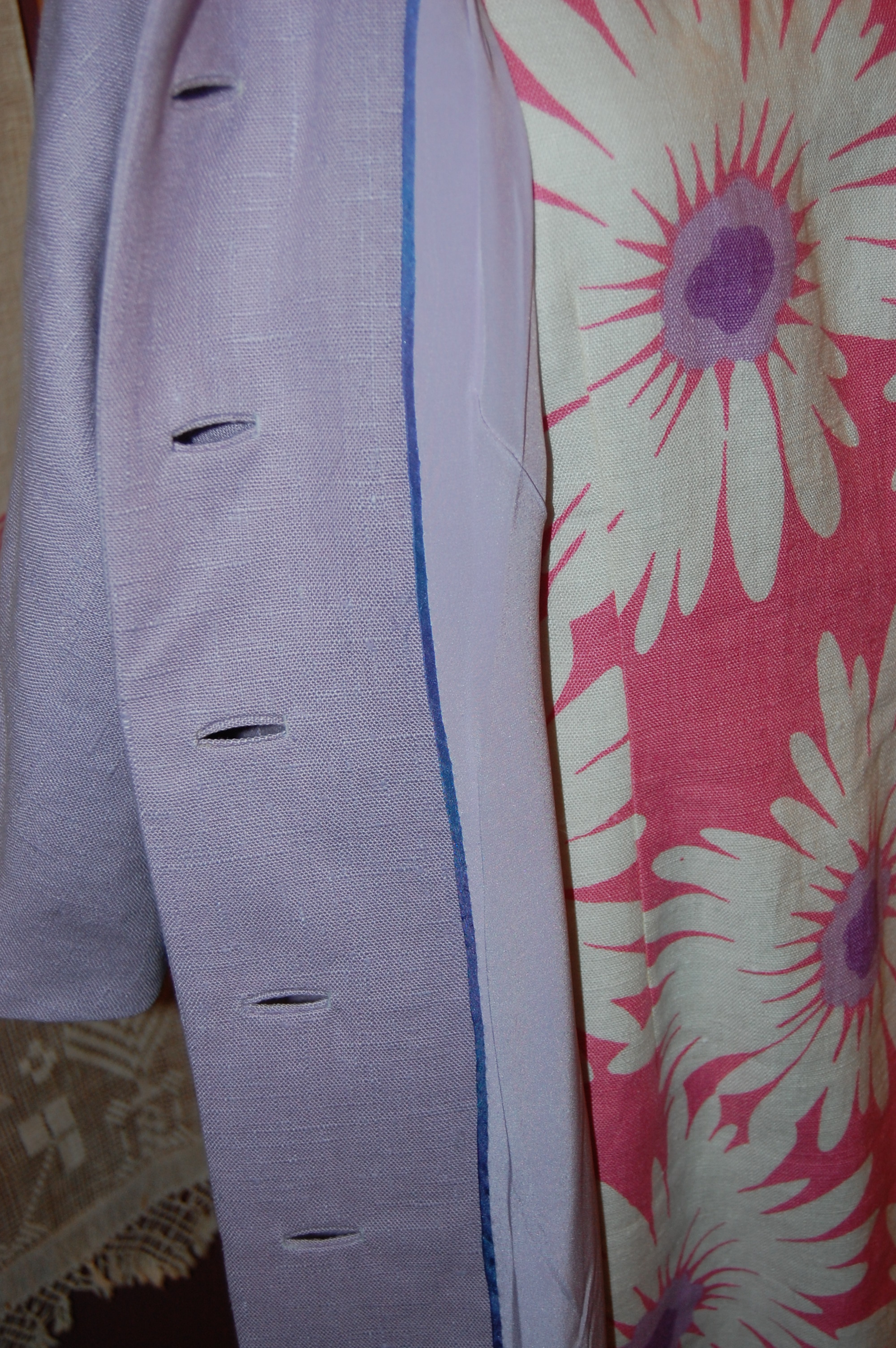
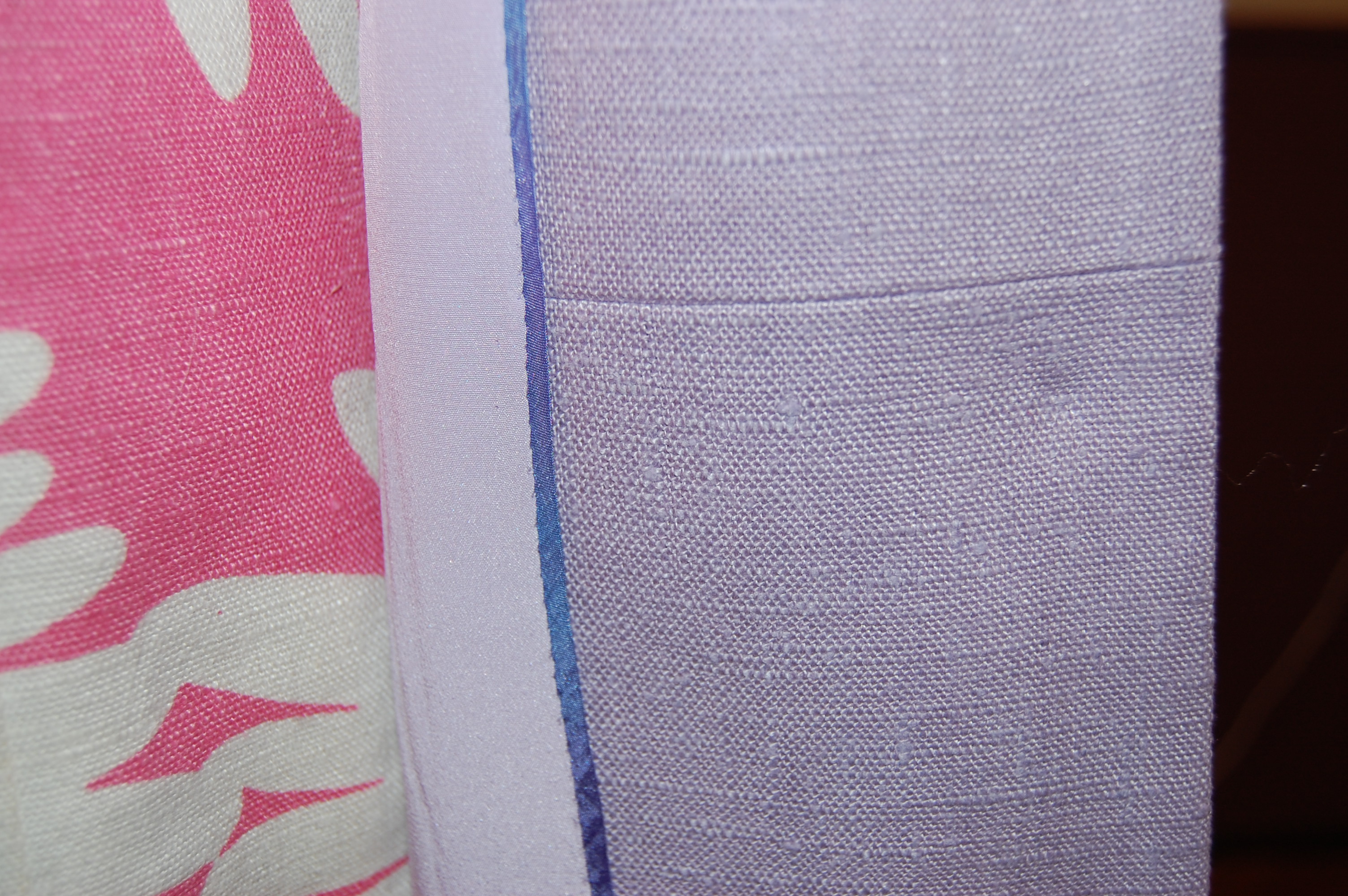
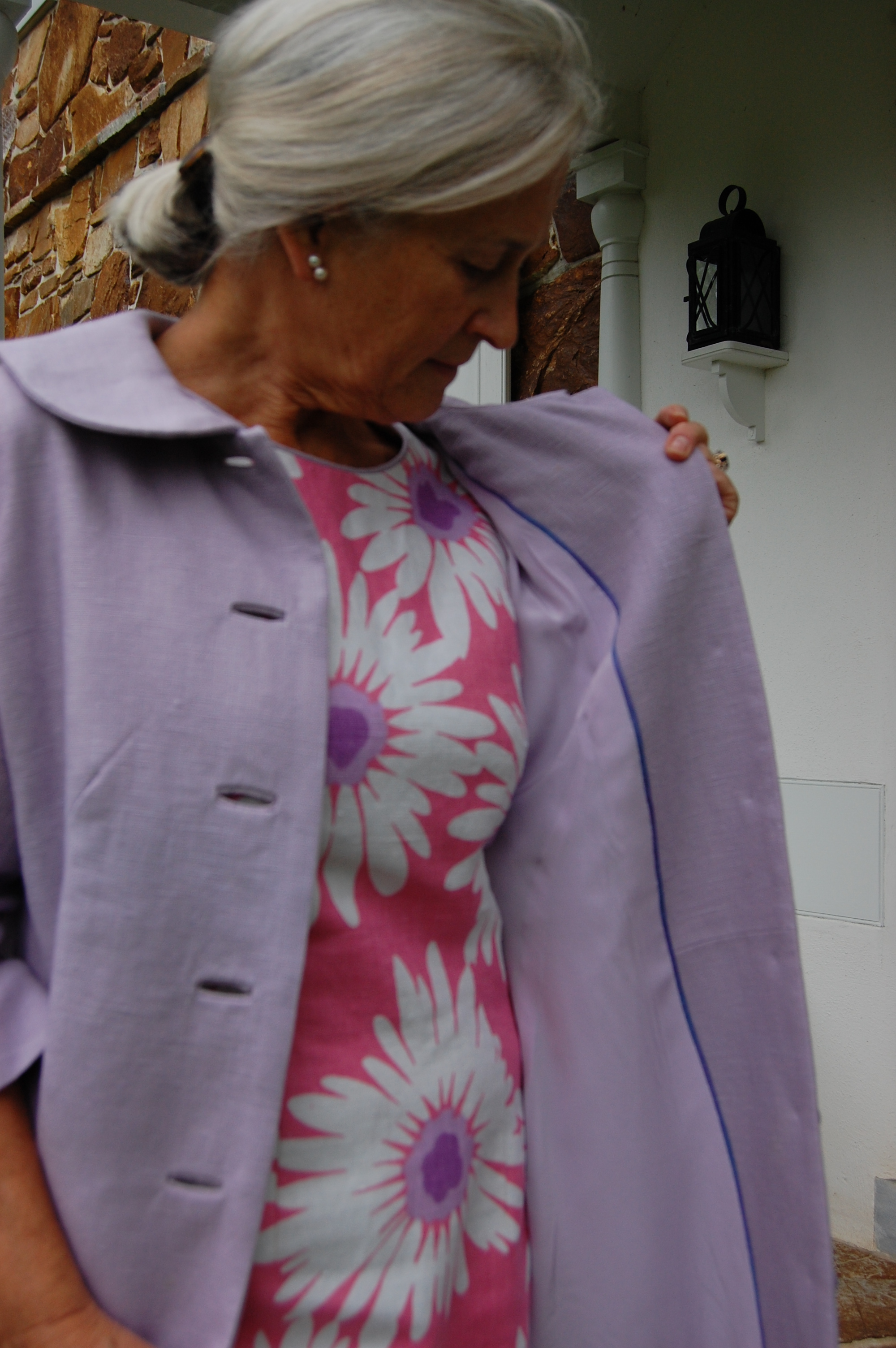
Fortunately my sister was visiting and so I could get her opinion on which one to order. I was a bit smitten with the idea of a bright pink lining, but she wisely asked if I hoped to wear this Spring coat with dresses other than the pink flowered one which had inspired it. Well, yes, I do want that flexibility! That made the decision easy – I chose the pale lavender silk, which is just about a perfect match. I added a bias, flat piped edge to the lining, which is now something I always do with coats and jackets I make. It is so easy and adds so much!

Fitting finish

Some of you may recall that I had to piece one of the facings because I was just a little short of the fabric I needed. Here is the seam on the left facing. I really don't think anyone will ever see it! (Except all of you, of course!)

Some of you may recall that I had to piece one of the facings because I was just a little short of  fabric. Here is the seam on the left facing. I really don’t think anyone will ever see it (except all of you, of course!)

DSC_0844

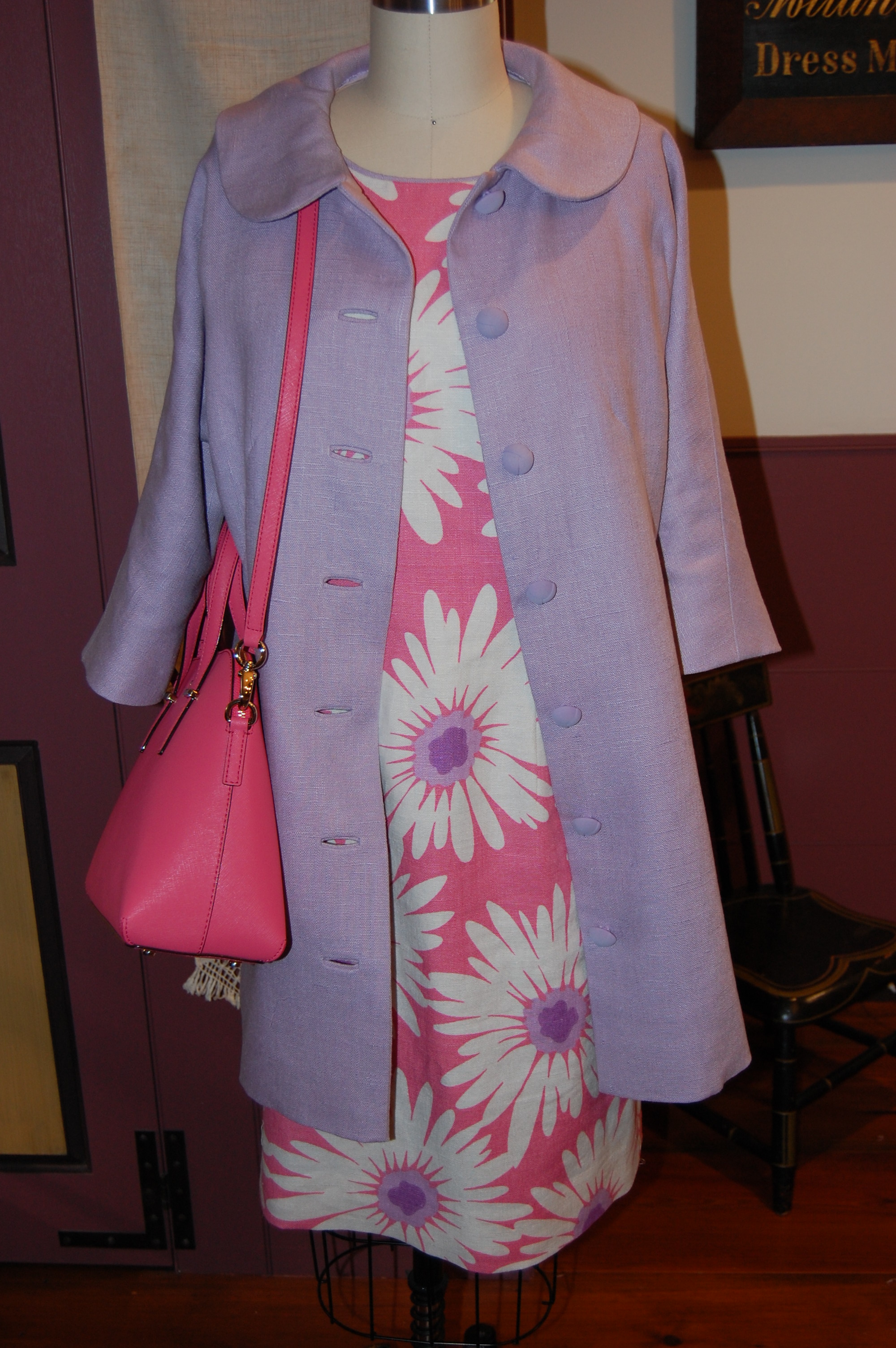
This is a good look at the bound buttonholes and what they add to the overall look of the coat. If you visualize machine made buttonholes in their place, you will get an idea of how vital the bound ones are to the design of the coat.

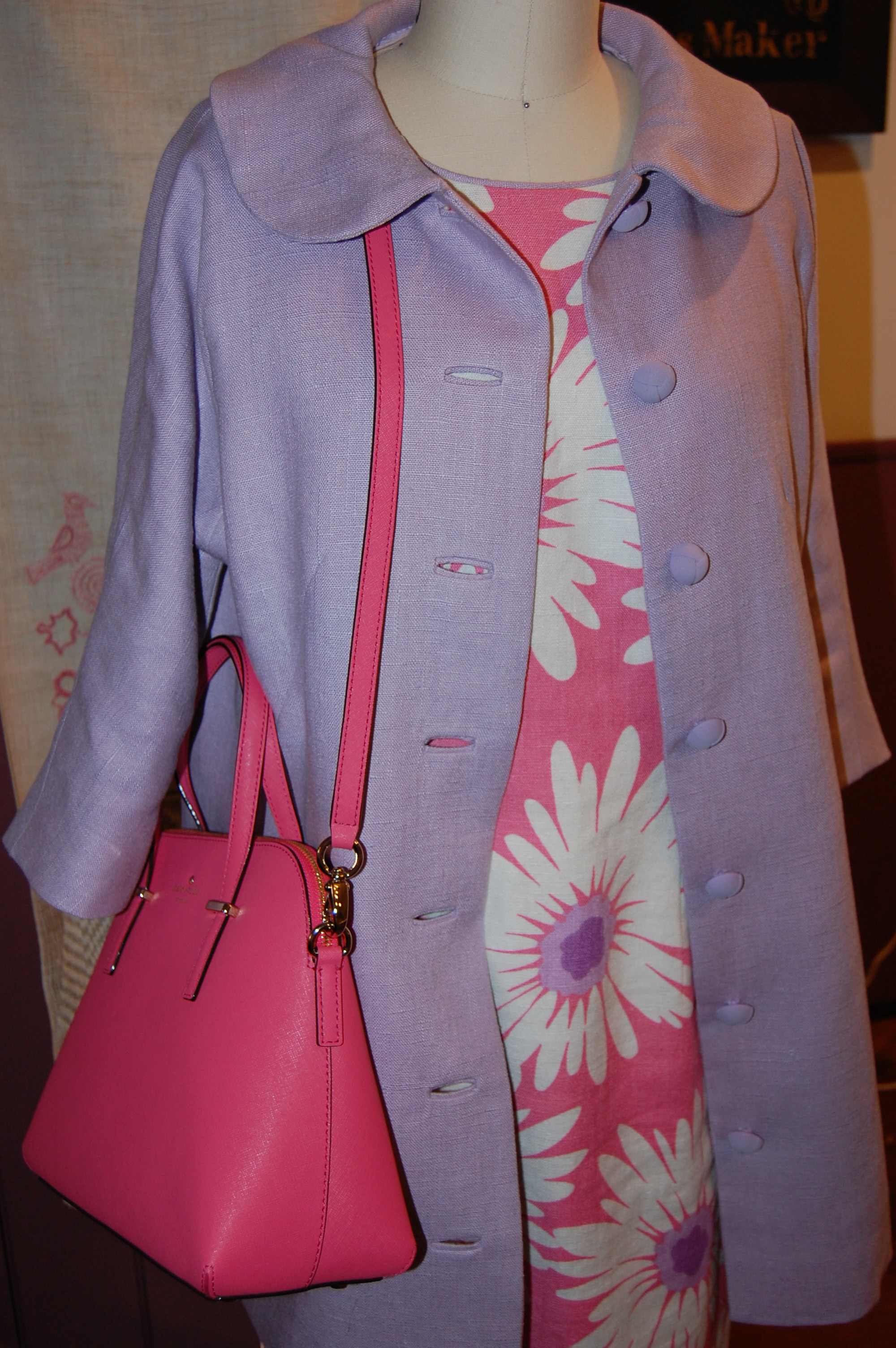
Another thing that will add to the total look of my 2016 Spring ensemble is this Kate Spade handbag which my grown children gave to me:

Fitting finish

DSC_0855

Fitting Finish

Fitting finish

Fitting finish

DSC_0837

Now all I need are lavender pumps…

43 Comments

Filed under bound buttonholes, Buttons - choosing the right ones, Coats, couture construction, kimono sleeves, Linen, Love of sewing, Moygashel linen, Uncategorized, Vintage fabric, vintage Vogue Designer patterns, vintage Vogue patterns from the 1960s

Oh, The Things We Can Learn!

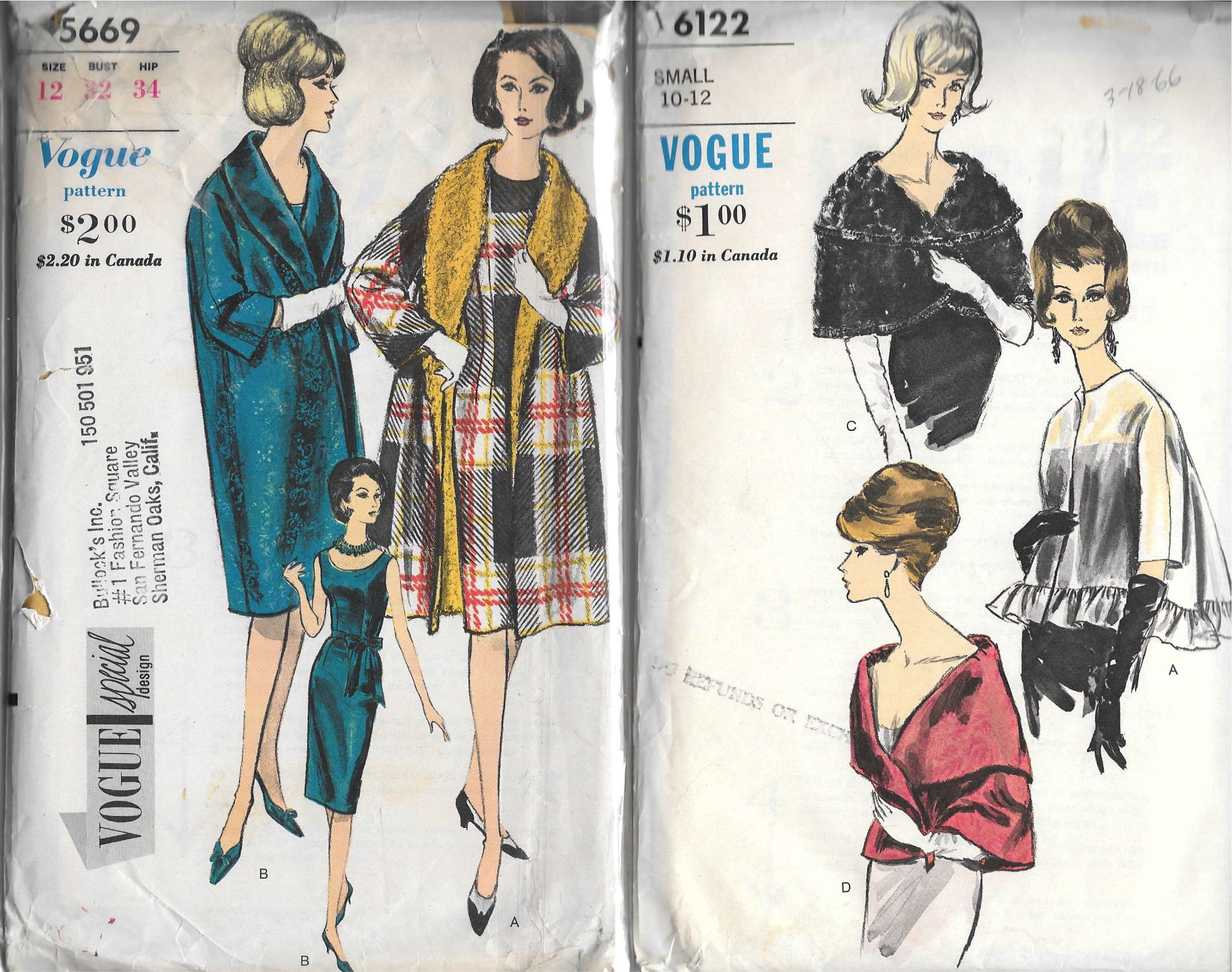
When is a pattern envelope not just a place to keep a tissue pattern? When it is a mini lesson in sewing, style, history, elegance, and story-telling. Of course, I am thinking primarily of vintage pattern envelopes – and because I primarily sew from Vogue patterns, those are the focus of my thoughts.

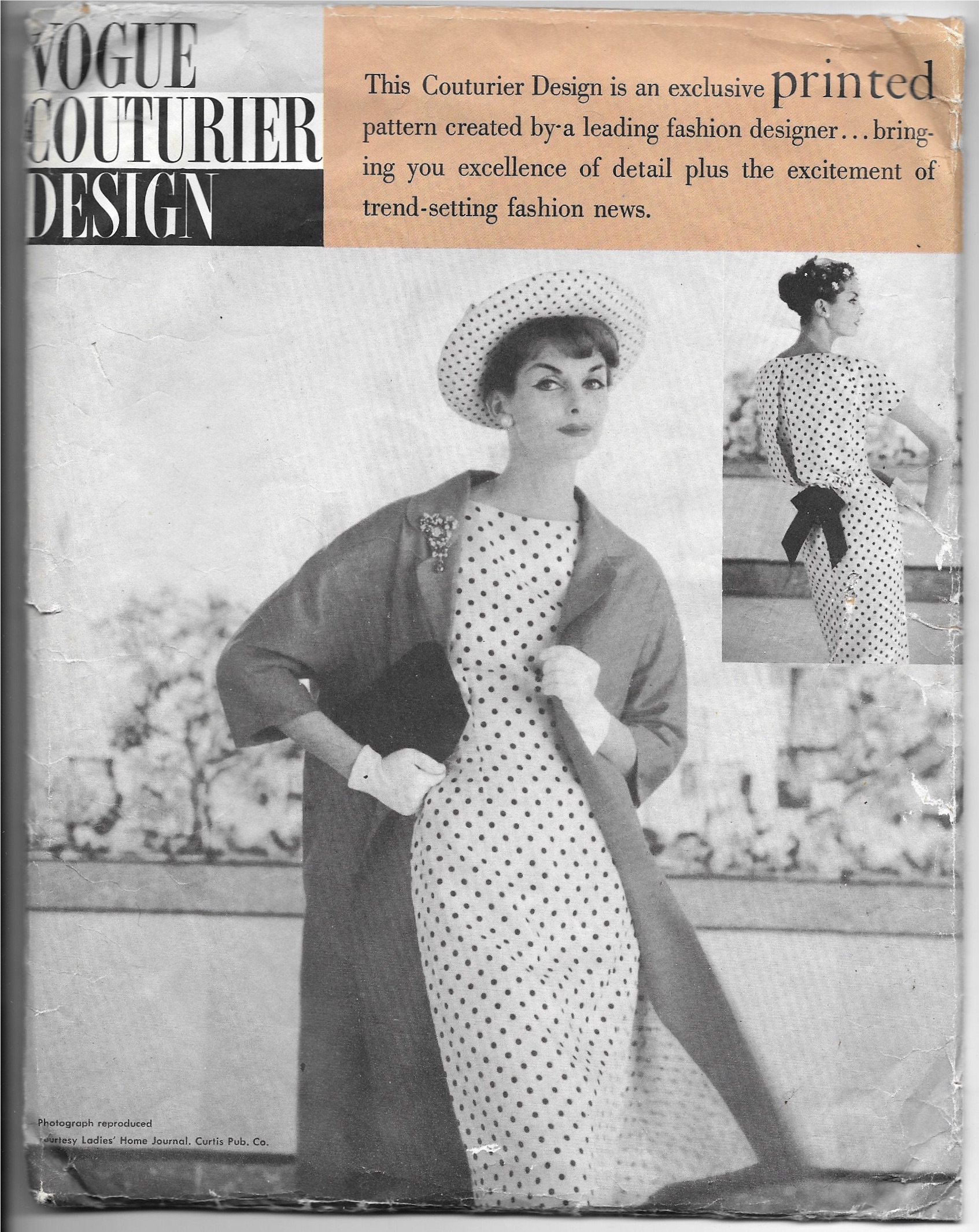
I am also limiting my short exploration of these topics to the course of about ten years, from approximately 1956 until 1966. Most of the pattern art from this time period was in illustration form rather than photography. There were exceptions, such as this classic polka-dotted dress and coat ensemble from 1959:

The reverse of this envelope has very precise sketches of the fronts and backs of the dress and coat. This is one of the few envelopes from this period - 1958 - that I have seen that features photography rather than illustration art.

The reverse of this envelope has very precise sketches of the fronts and backs of the dress and coat. This is one of the few envelopes from this period – 1958 – that I have seen that features photography rather than illustration art.

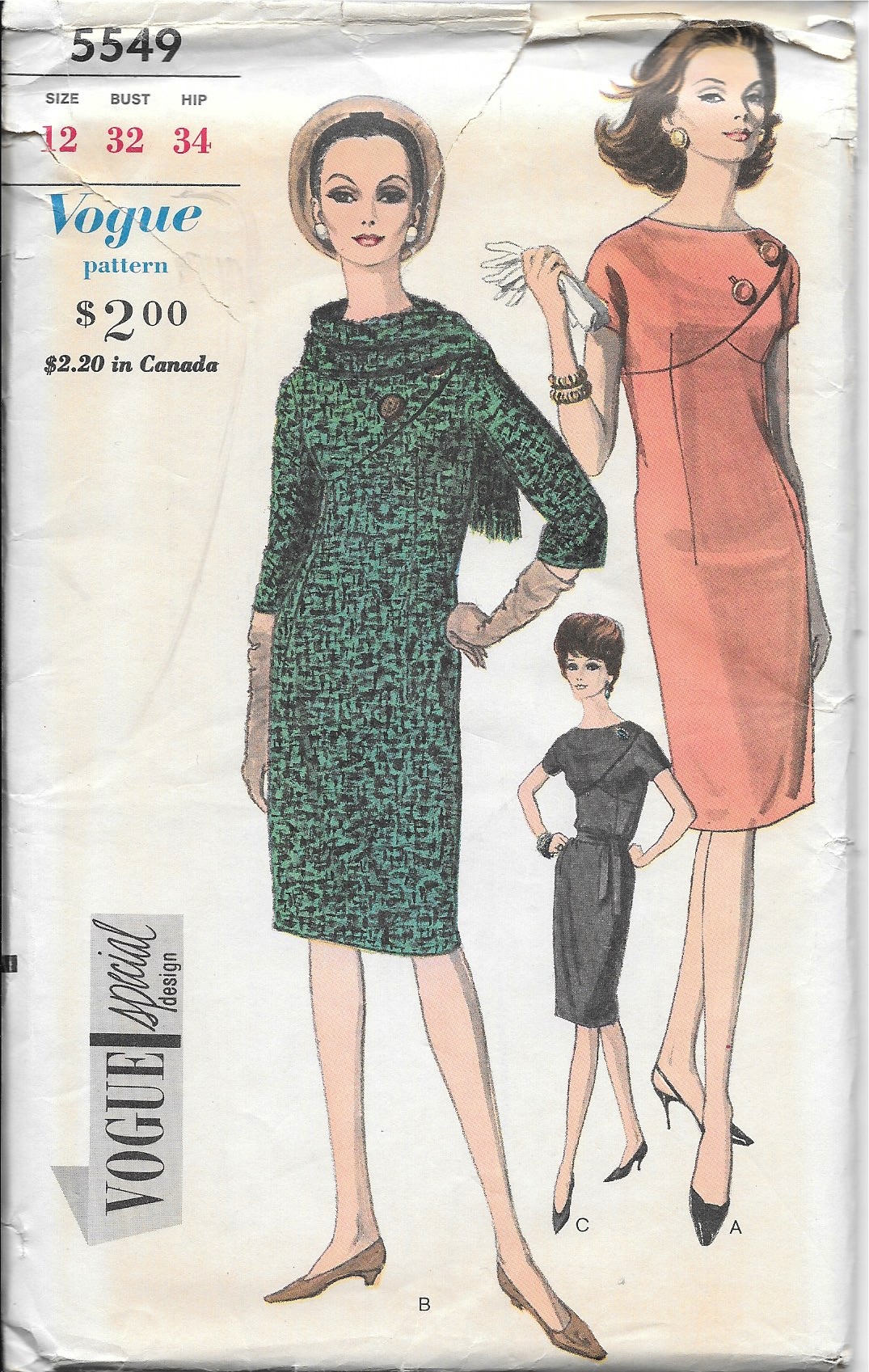
It was up to the fashion illustrators and artists to represent the pattern accurately. Darts, seams, buttons, belts, pockets, etc. all had to be clearly indicated in the illustrations on the fronts of the envelopes and in the thumbnail sketches on the back of the envelopes. Home dressmakers wanted to know these things about a pattern before purchasing it – we still do! Here is a great example of the clarity of these pattern illustrations in regard to these items:

The darts, seams, and buttons are clearly delineated in this artwork.

The darts, seams, and buttons are clearly delineated in this artwork.

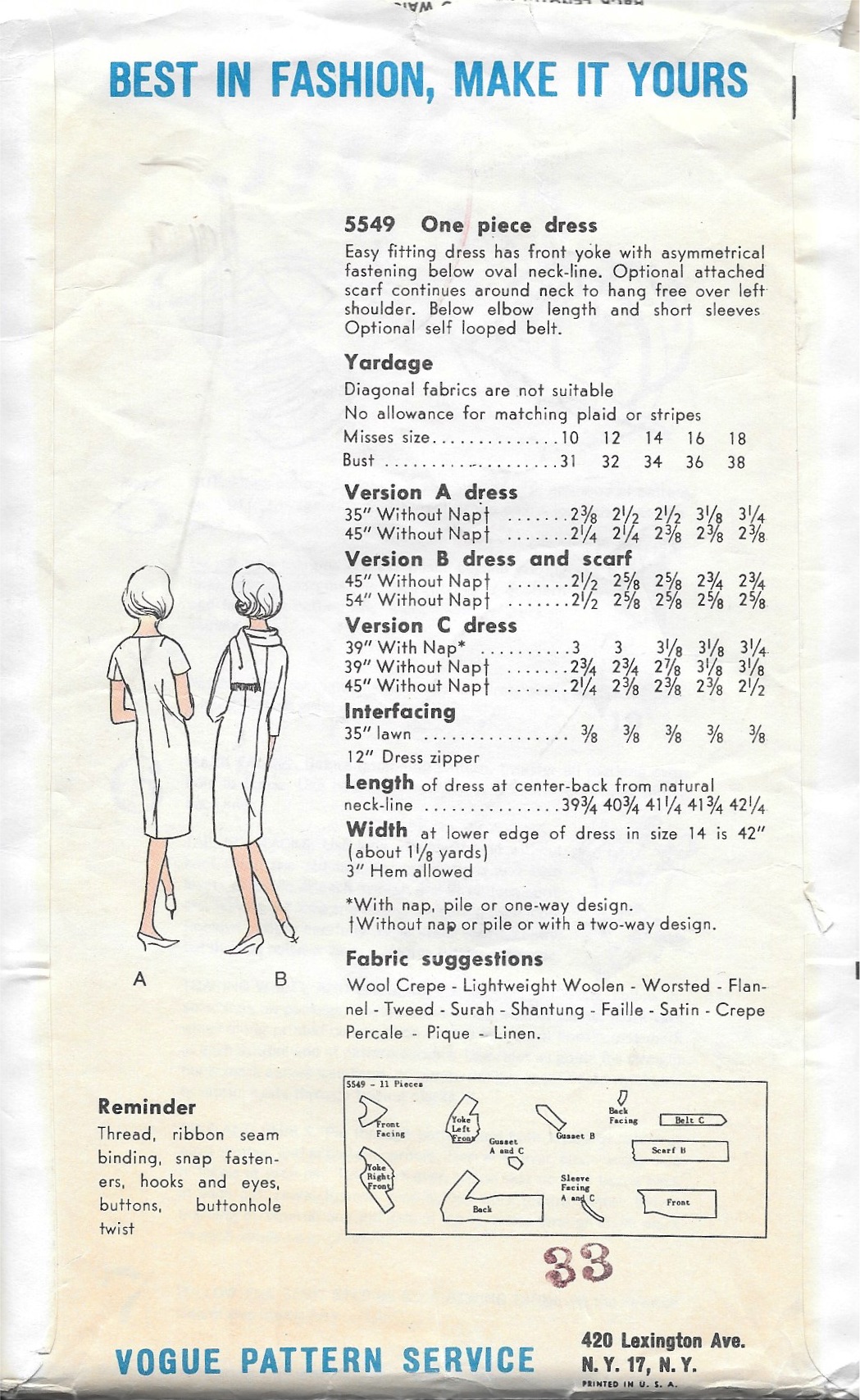
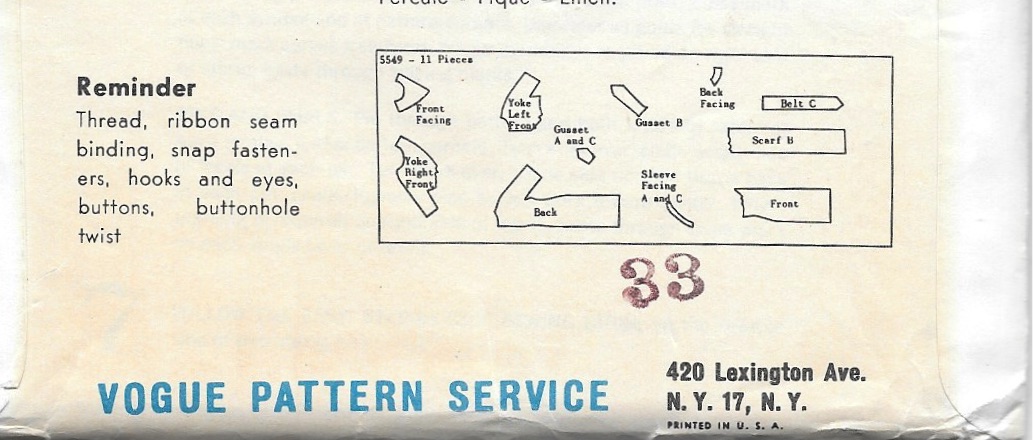
The back of this pattern also gives lots of additional sewing information. The thumbnail sketches clearly show that there is no back zipper. Among the details listed is a 12” zipper. That can only mean that a side zipper is used – which makes sense as it is paired with the front-buttoned bodice.

Oh the things we can learn, no 2

Further scrutiny of the pattern layout shows a gusset, obviously for use under the arm. If you, as a dressmaker, were uncomfortable with putting in a gusset, then maybe you would want to avoid this particular pattern!

It is such an advantage to be able to see the shapes of the pattern pieces in these layouts.

It is such an advantage to be able to see the shapes of the pattern pieces in these layouts.

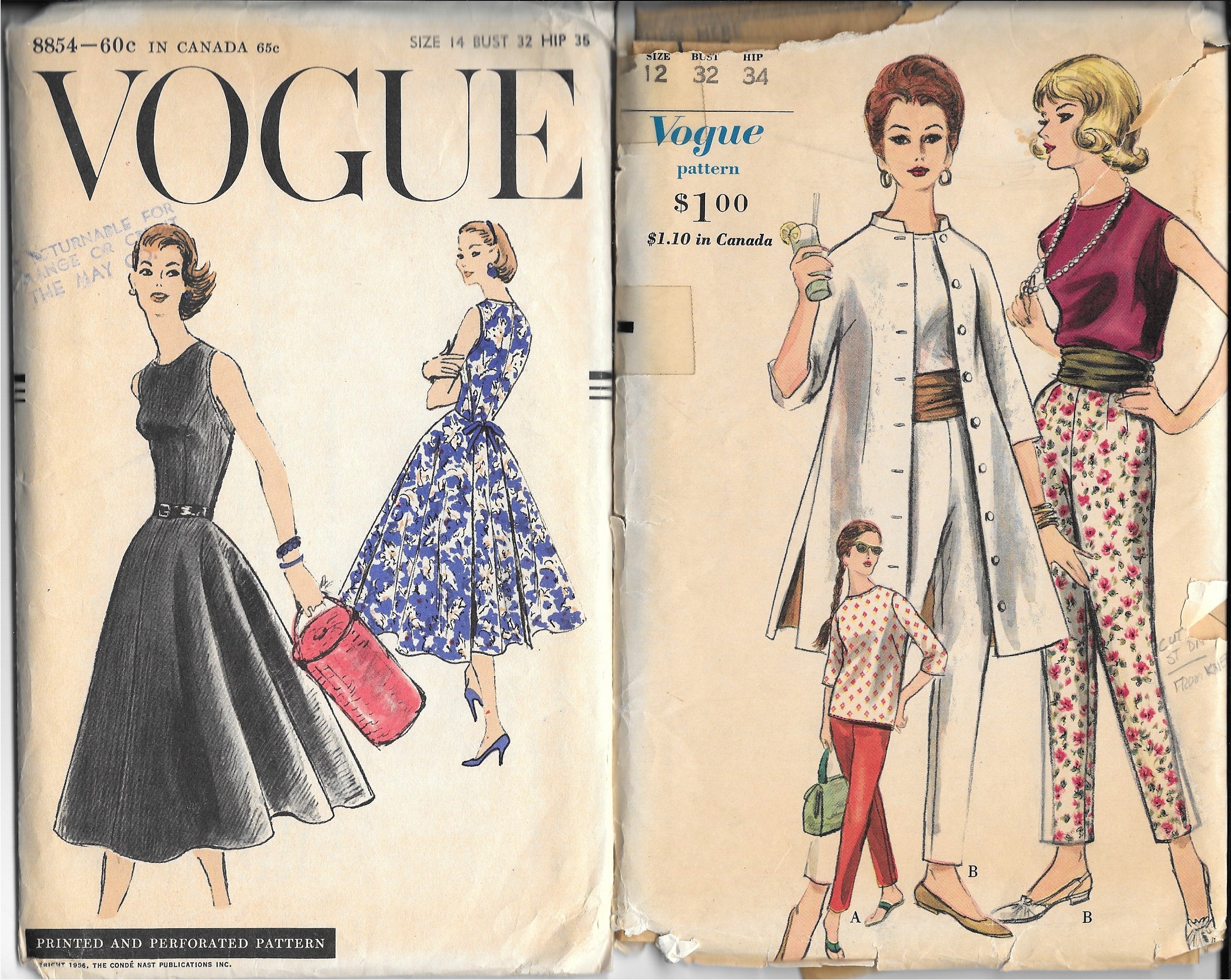
It was also up to the fashion illustrator to make the pattern look relevant to one’s life. Different views were often shown in varying colors, widening the visual appeal. They were also shown in dressier or more casual renditions, making the pattern attractive to different lifestyles and age groups. These two patterns clearly show this endeavor:

Oh the things we can learn, no 4

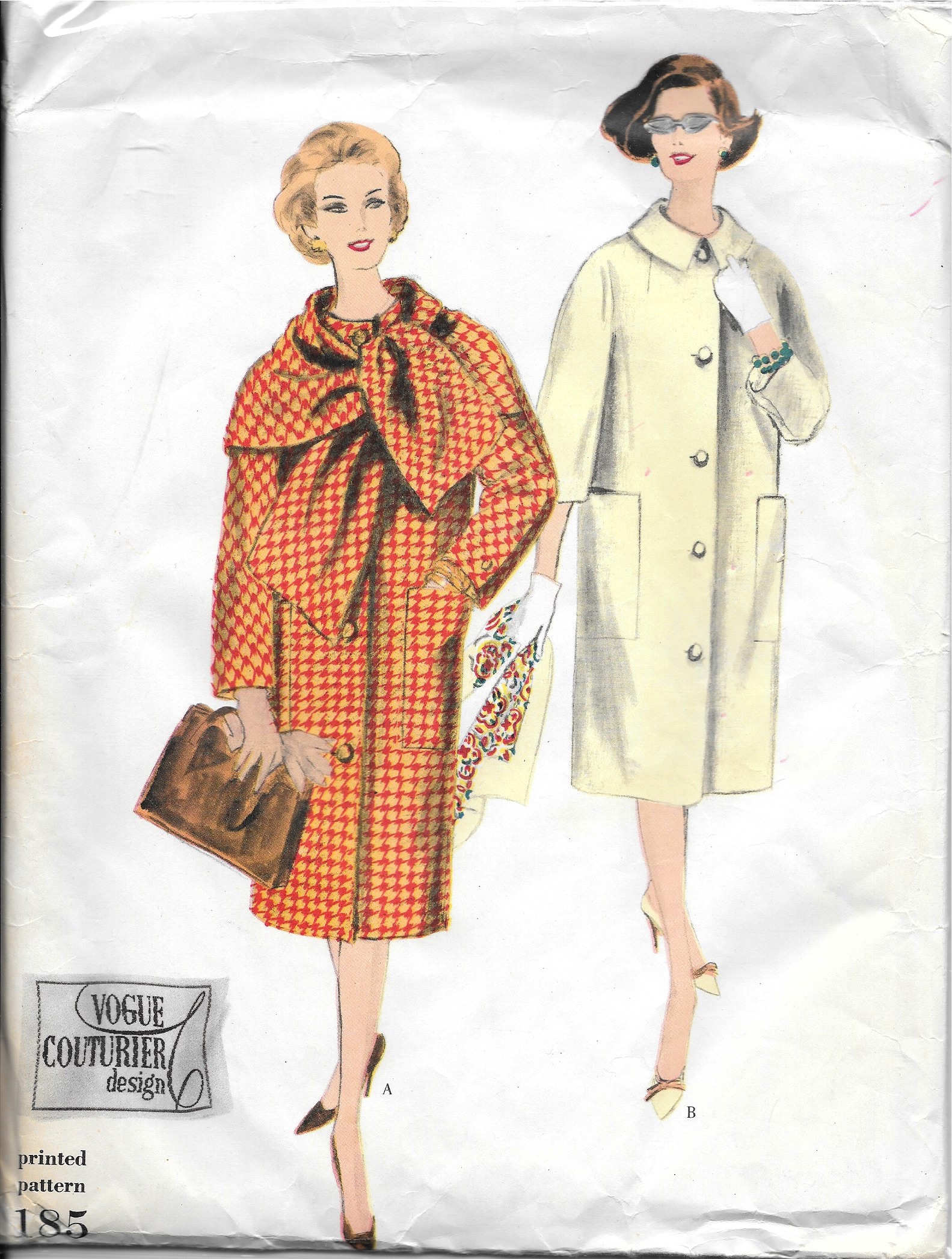
The inclusion of accessories in the pattern illustration from this time period shows just how much Vogue and other pattern companies were selling a complete look. They were saying “Start with this pattern, add gloves, a bangle bracelet or two, sunglasses or a hat, maybe a scarf, earrings, high heels, and a handbag, and you, too, can walk out looking like a million dollars!” The great desire in looking well-dressed and chic during this time period is so beautifully reflected in these pattern envelopes.

Gloves, gloves and more gloves! And look at those glasses!

Gloves, gloves and hats and scarves…   And look at those glasses!

This has got to be one of my favorite examples of pattern art: the model in white holding the scarf so casually, the stylish shoes, and the large clutch handbag on the model on the left - lovely and evocative!
This has got to be one of my favorite examples of pattern art: the model in white holding the scarf so casually, the stylish shoes, and the large clutch handbag on the model on the left – lovely and evocative!

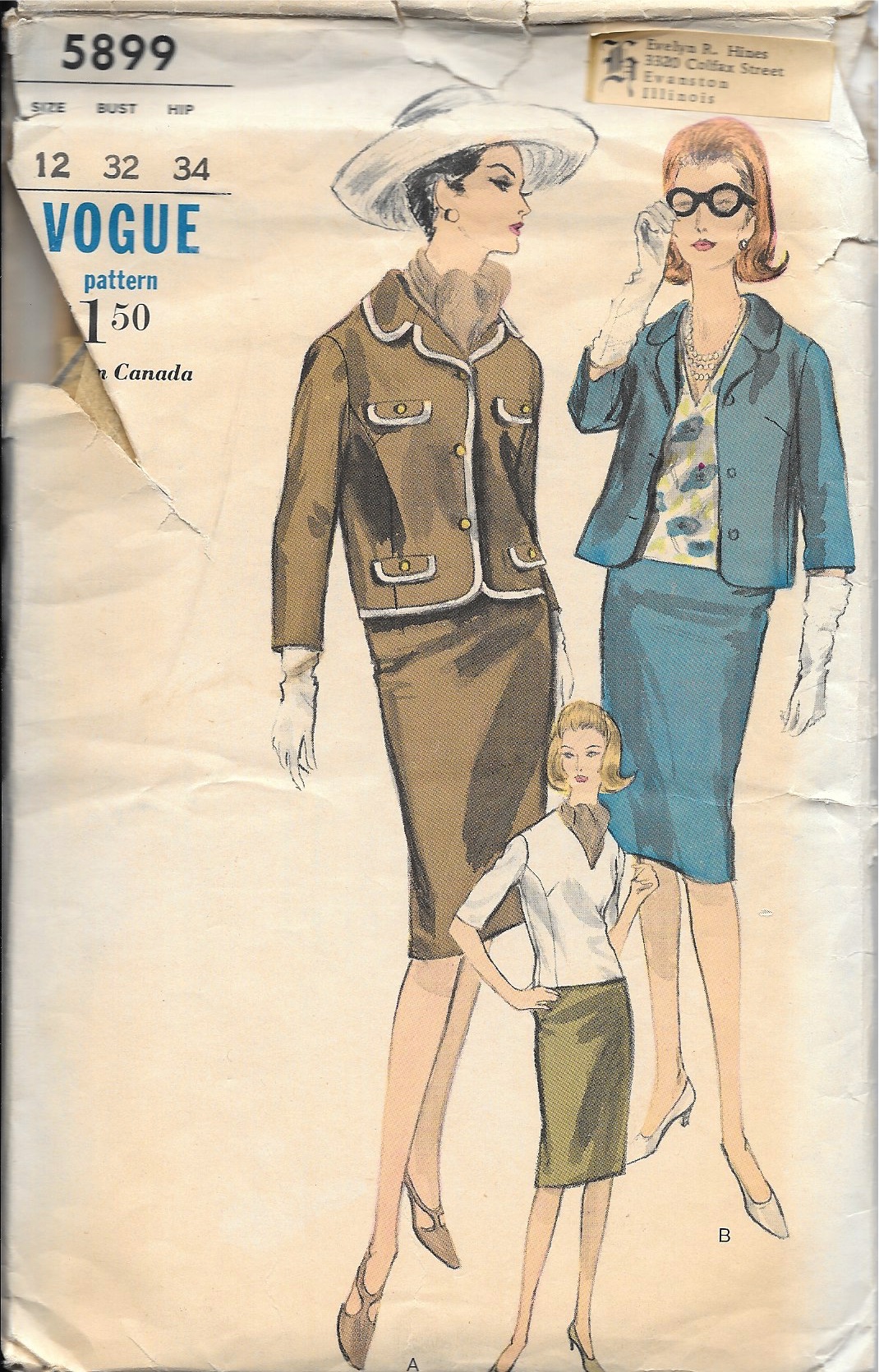
One way of dating pattern envelopes is by looking at the hairstyles of the illustrated “models.” After about 1960, Vogue stopped including the copyright date on their envelopes. But it’s fairly clear by the bouffant and flipped hairstyles on the pattern on the left that we are looking at one from the early to mid-‘60s.  The one on the right is a few years later, based on the hairstyles alone.

Note, too, how the Vogue masthead changed during this short time period.

Note, too, how the Vogue masthead changed during this short time period.

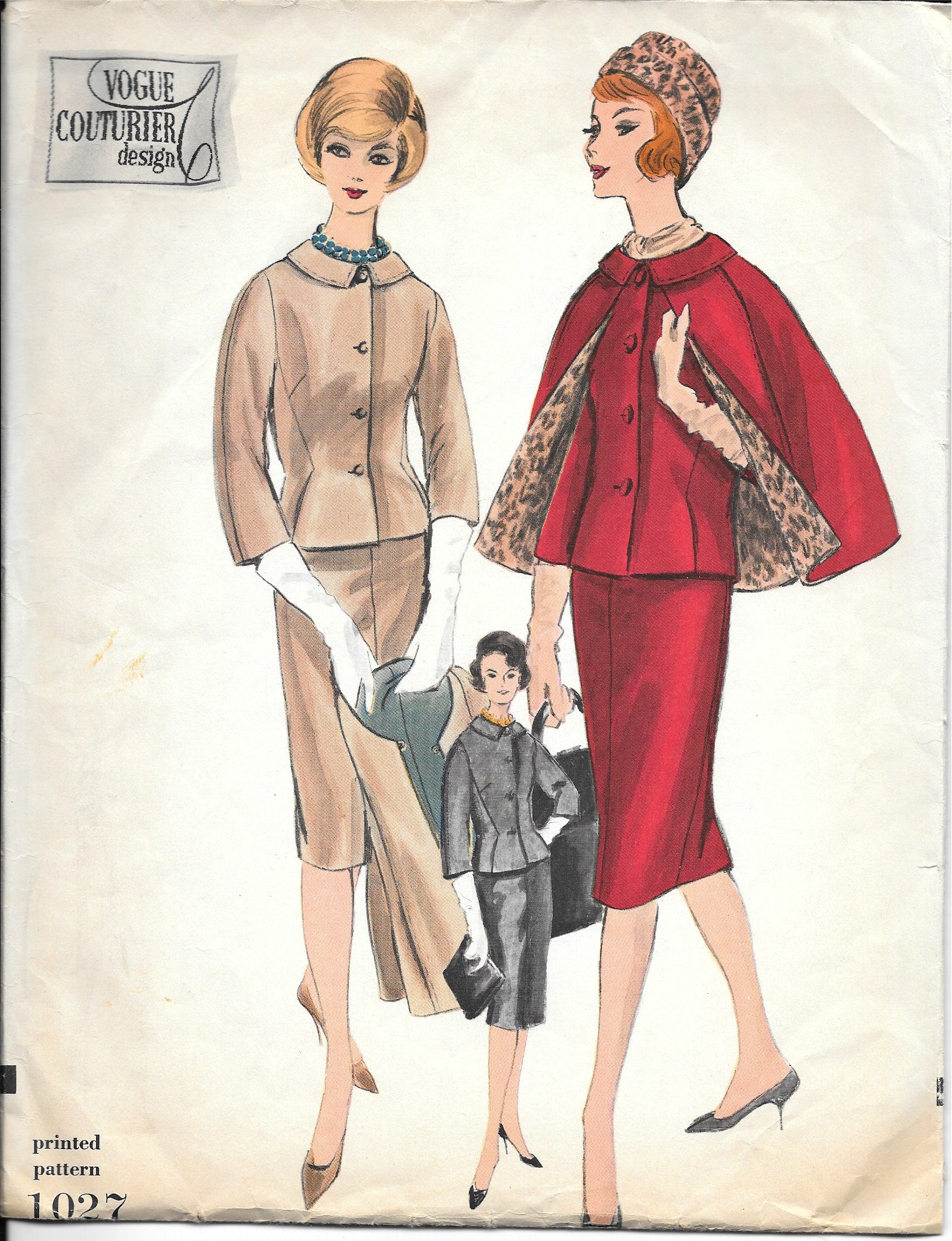
Finally, I am delightfully intrigued by the almost universal depiction of “elegance” on the pattern envelopes from this period. From the leopard print hat and lined cape on this suit from 1959:

Oh the things we can learn, no 8

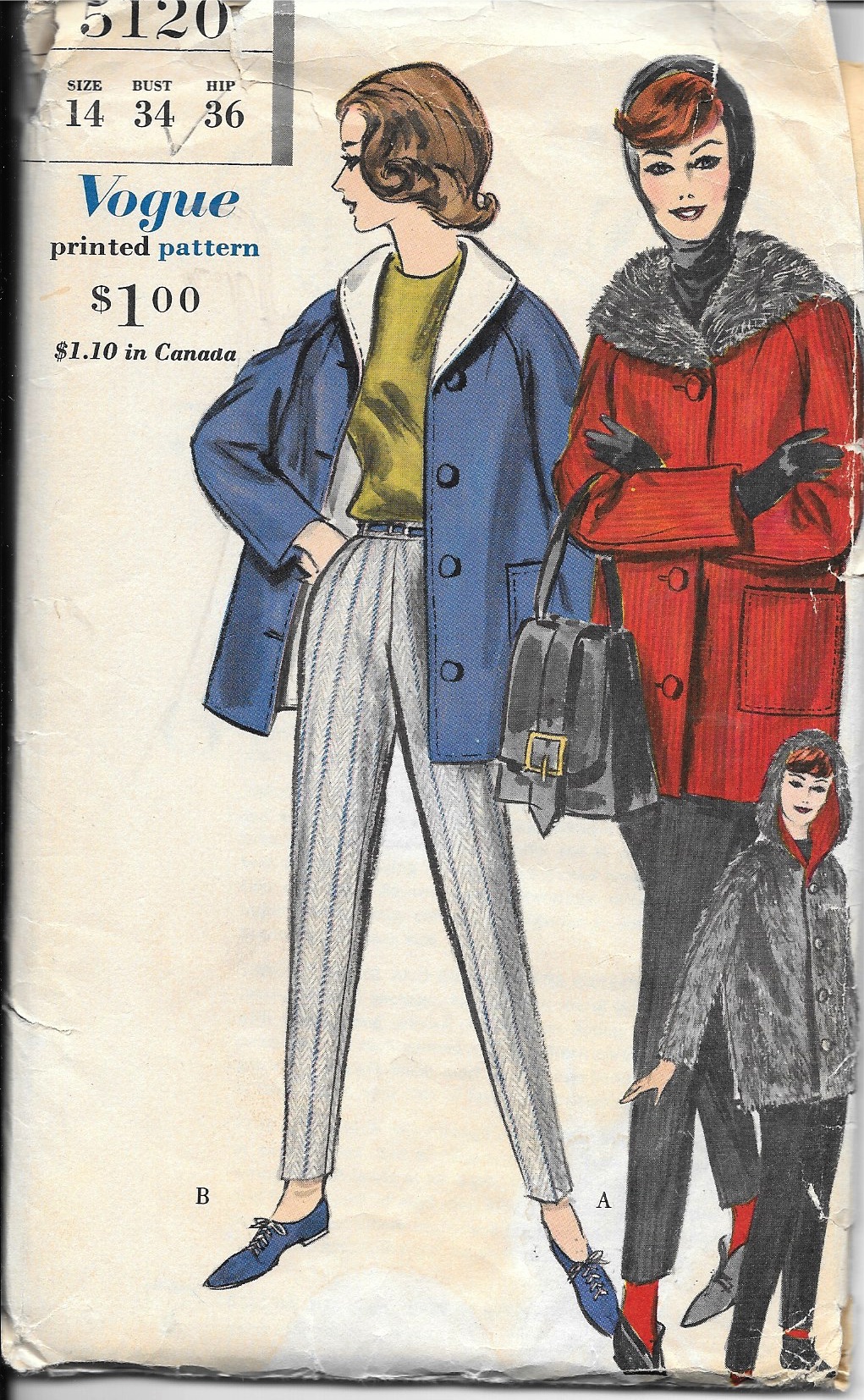
to this reversible car coat from the early ‘60s:

The model in the red version of the coat strikes a chic and elegant pose with her hair tucked under a scarf, her arms casually folded, and with her stylish handbag...

The model in the red version of the coat strikes a chic and elegant pose with her hair tucked under a scarf, her arms casually folded, her stylish handbag looped over one arm …

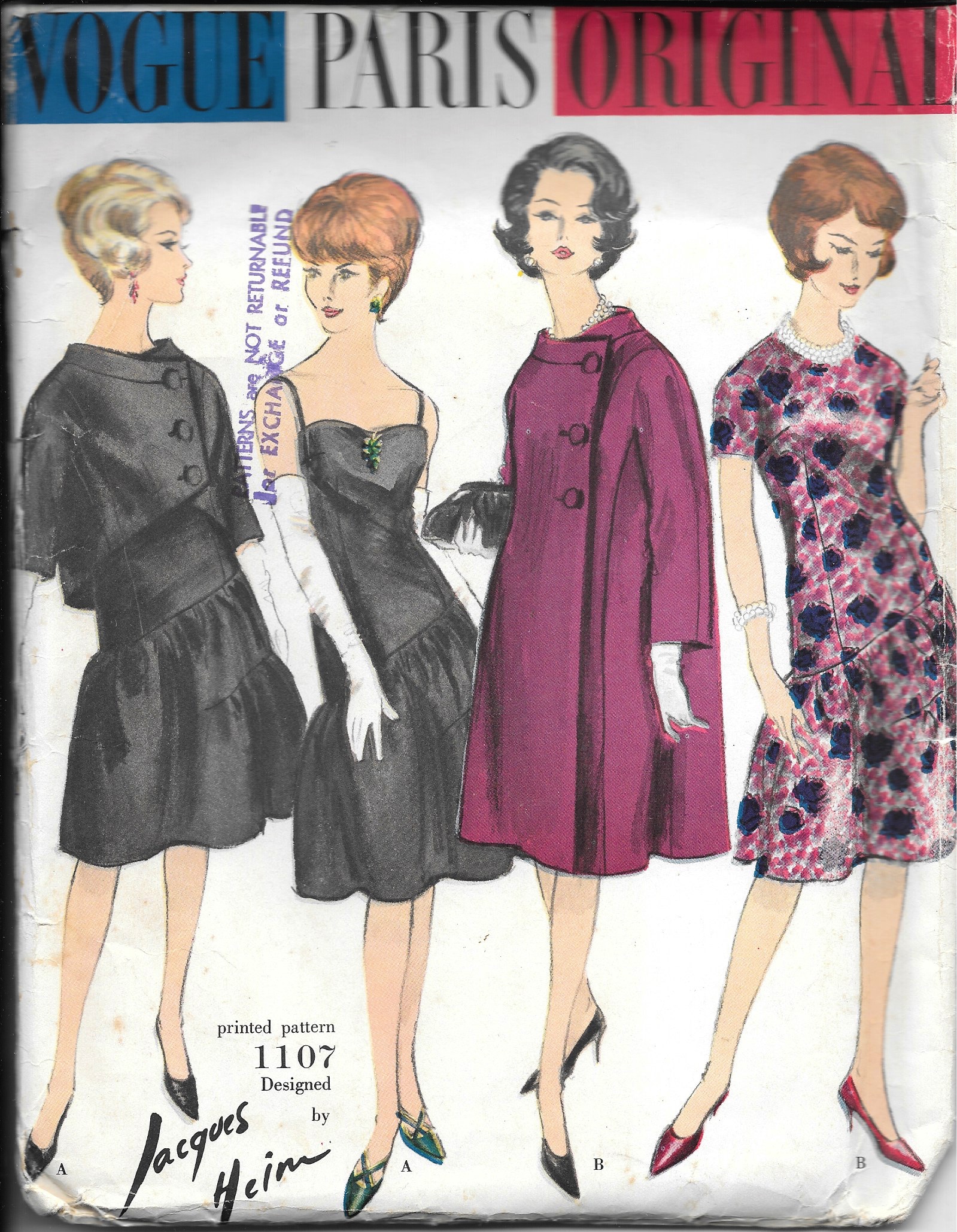
to this cocktail dress and coat ensemble from the mid ‘60s:

Oh the things we can learn, no 10

the message seemed to be: “These beautiful clothes which you can create are ladylike and elegant (even the casual ones), and you will be, too, when you wear them!” Perhaps Virginia Woolf said it best: “There is much to support the view that it is clothes that wear us and not we them; we may make them take the mould of arm or breast, but they would mould our hearts, our brains, our tongues to their liking.”

And therein lies the intrigue of it all. The story, which begins on the outside of the pattern envelope by way of the artist’s hand, becomes our own to finish when we are creators of our own clothing. How much fun is that?

26 Comments

Filed under Mid-Century style, Pattern Art, The Conde Nast Publications, Uncategorized, vintage Vogue patterns from the 1950s, vintage Vogue patterns from the 1960s

Saddle Up!

Western style (as in American cowgirl and cowboy) is not something that regularly occupies my mind – until I see something that is quintessentially Western fashion, and then it grabs my attention. I have often wondered if the styling on the pattern envelope for my color-blocked coat, featuring the model in a Western-style cowboy-inspired hat, may have been added to my great predilection for this coat!

Coats of certain length - 7

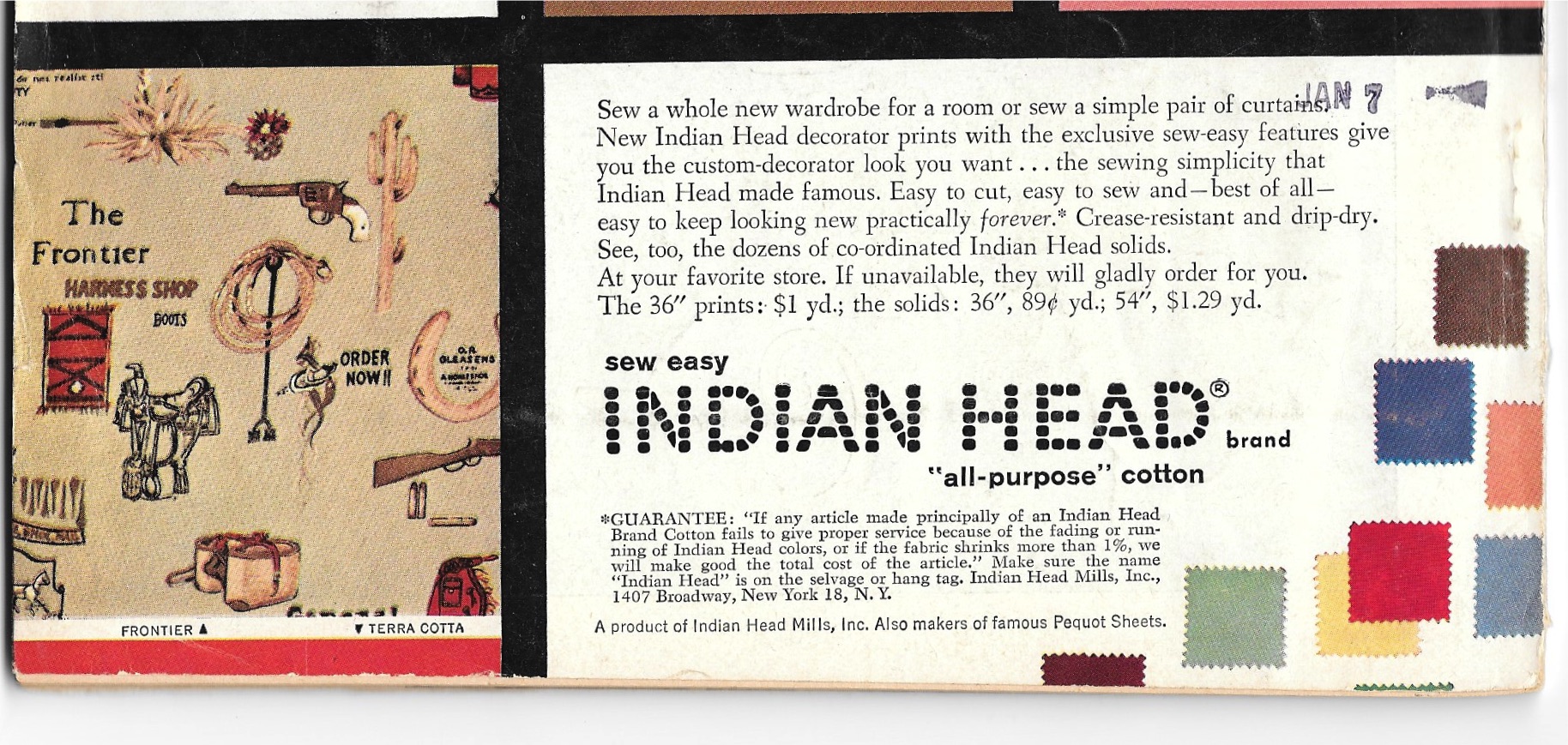
Because I knew I was going to be spending a good bit of my 2015 Summer in Wyoming (in the American West), I thought it might be fun to see if I could find Vogue patterns (or anything else) featured in any of my vintage Vogue Pattern Book Magazines, that were clearly Western style.  Well, there is no doubt about the Western theme of this decorator fabric pictured in an ad in the February/March issue of VPB Magazine:

What little cowboy - or cowgirl - in 1958 would not love curtains made of this fabric?

What little cowboy – or cowgirl – in 1958 would not love curtains made of this fabric?

And what could be more Western than cowboy and cowgirl shirts? The July/August 1974 issue of VPB Magazine clearly met my challenge:

Western style - shirts, no 1

Western style - shirts, no 2

Somehow, however, I just can’t see myself making a cowgirl shirt. Out here in Wyoming, it would look like it belongs. Wearing something like this at home in Pennsylvania might get heads turning for the wrong reason. So my search continued for something else that evoked the West without screaming it. Who would have ever thought I was going to find it in the same Vogue Pattern Book Magazine that featured Diane von Furstenberg on its cover?

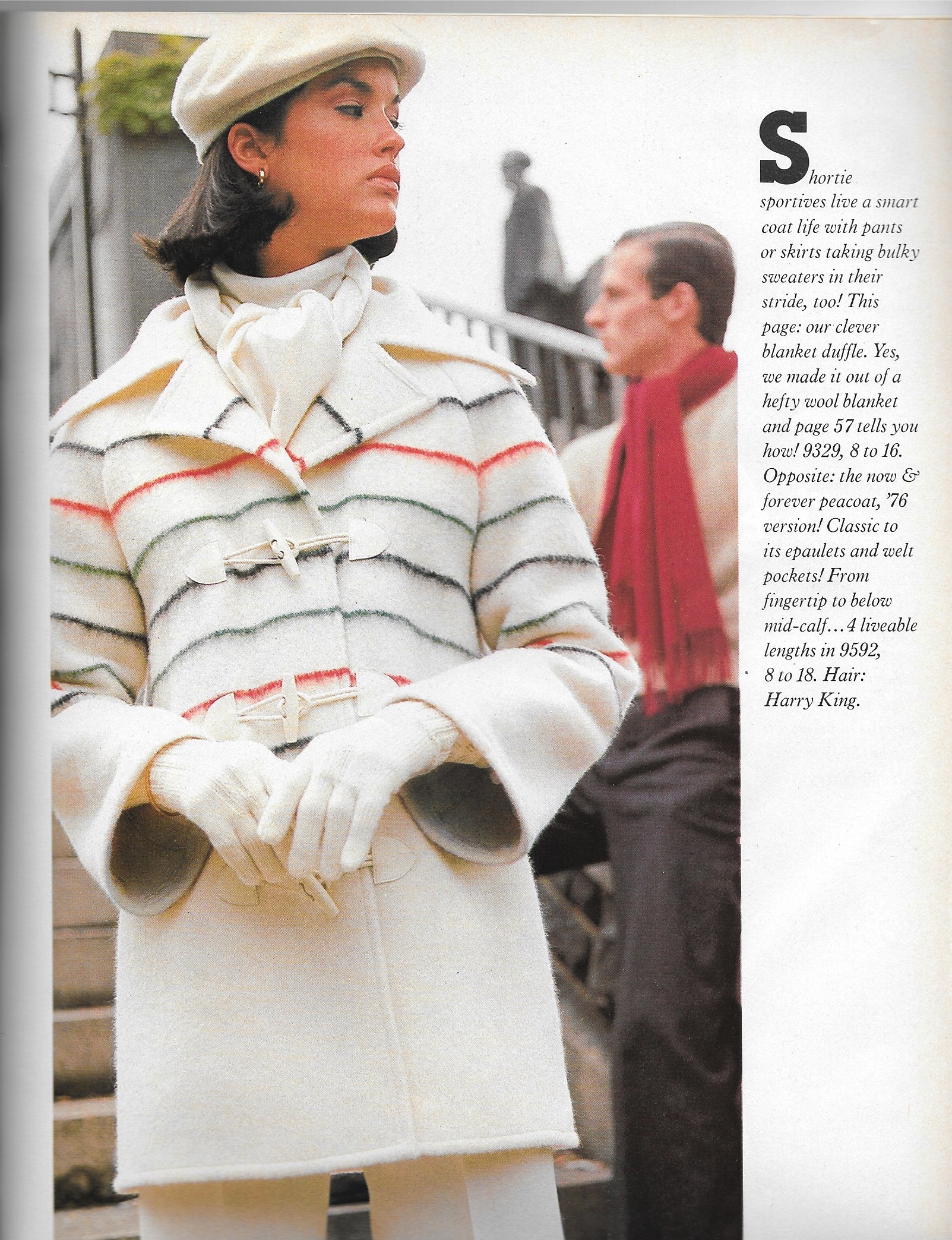
Sure enough, this September/October 1976 issue featured a coat constructed out of an American-made blanket. (Anyone who reads my blog will perhaps remember the jumper I made from an Irish blanket last year. When one can’t find yardgoods, buy a blanket and see what happens!)

Western style - coat-1

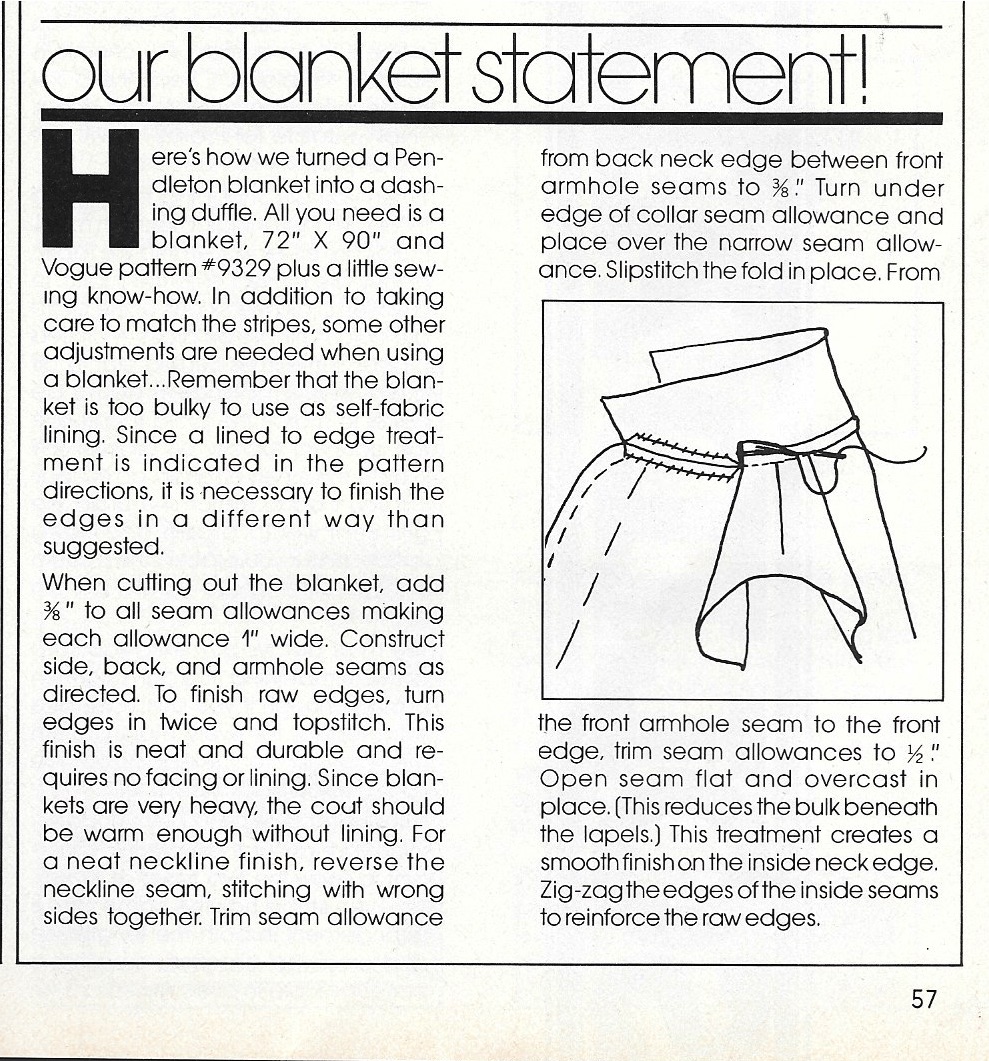
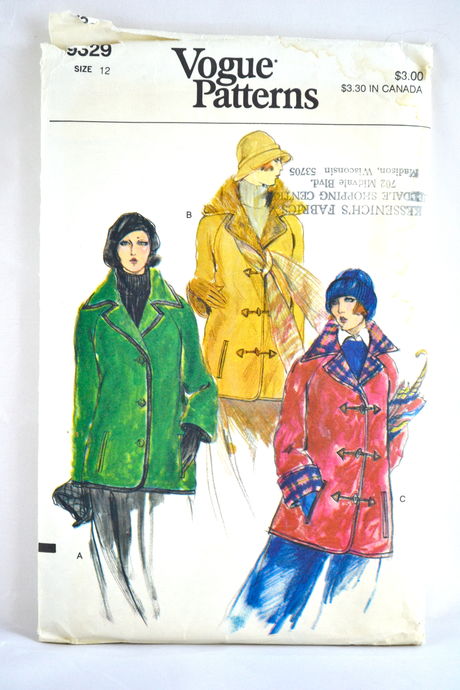
Accompanying the picture in the magazine were these instructions for making a “blanket coat” using Vogue pattern 9329:

Western style - coat instructions

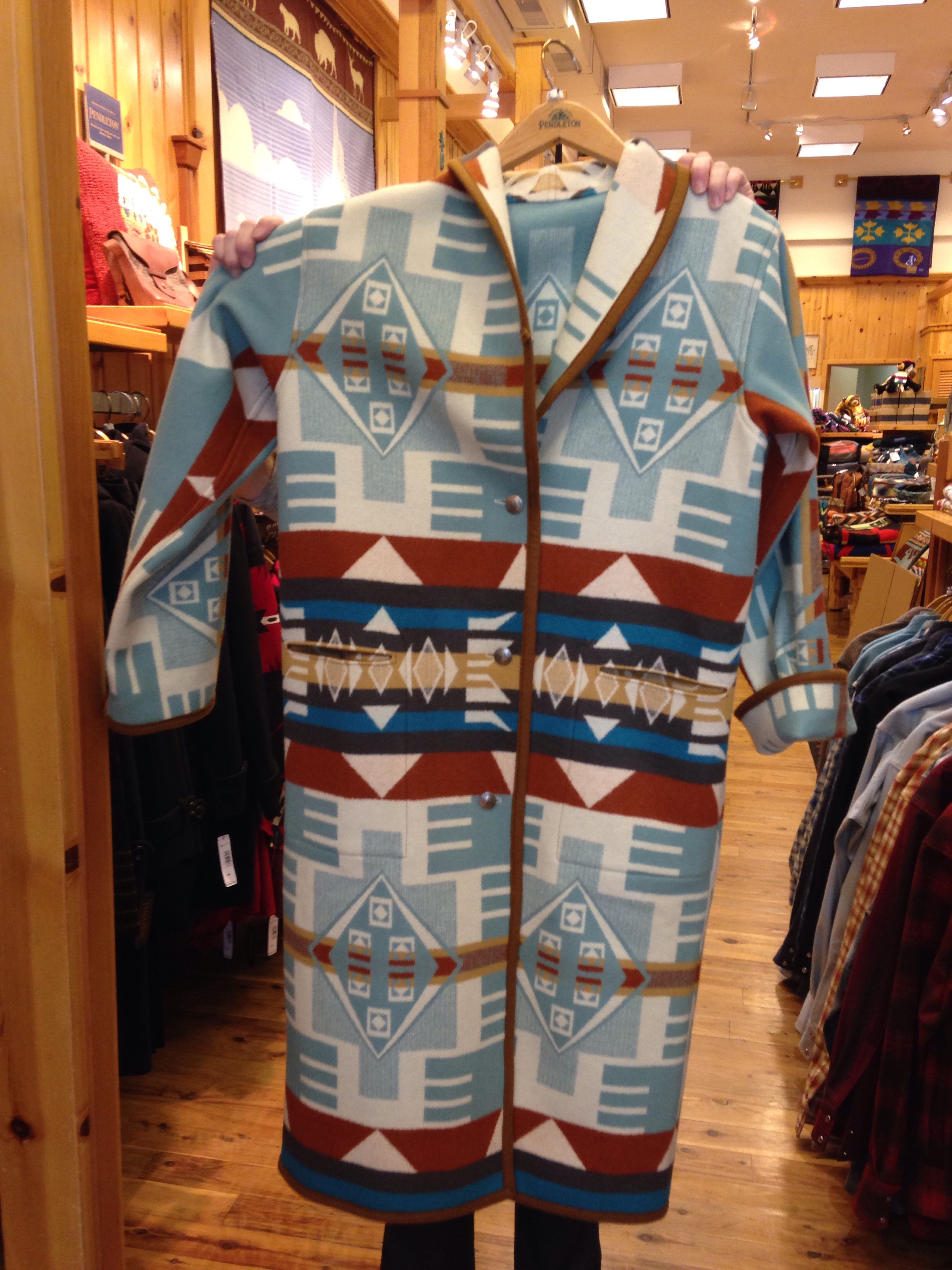
Forty years later the same thing is being done with Pendleton blankets. I never miss the opportunity to look at the handsome Western and Native American-inspired Pendleton blankets in the Pendleton Store in Jackson, Wyoming. Hanging on one of the clothing racks in the store was this custom-made coat:

This particular coat was made for a very large lady, which just goes to show that a twin size blanket is sufficient for all sizes of coats.

This particular coat was made for a very large lady, which just goes to show that a twin size blanket is sufficient for all sizes of coats.

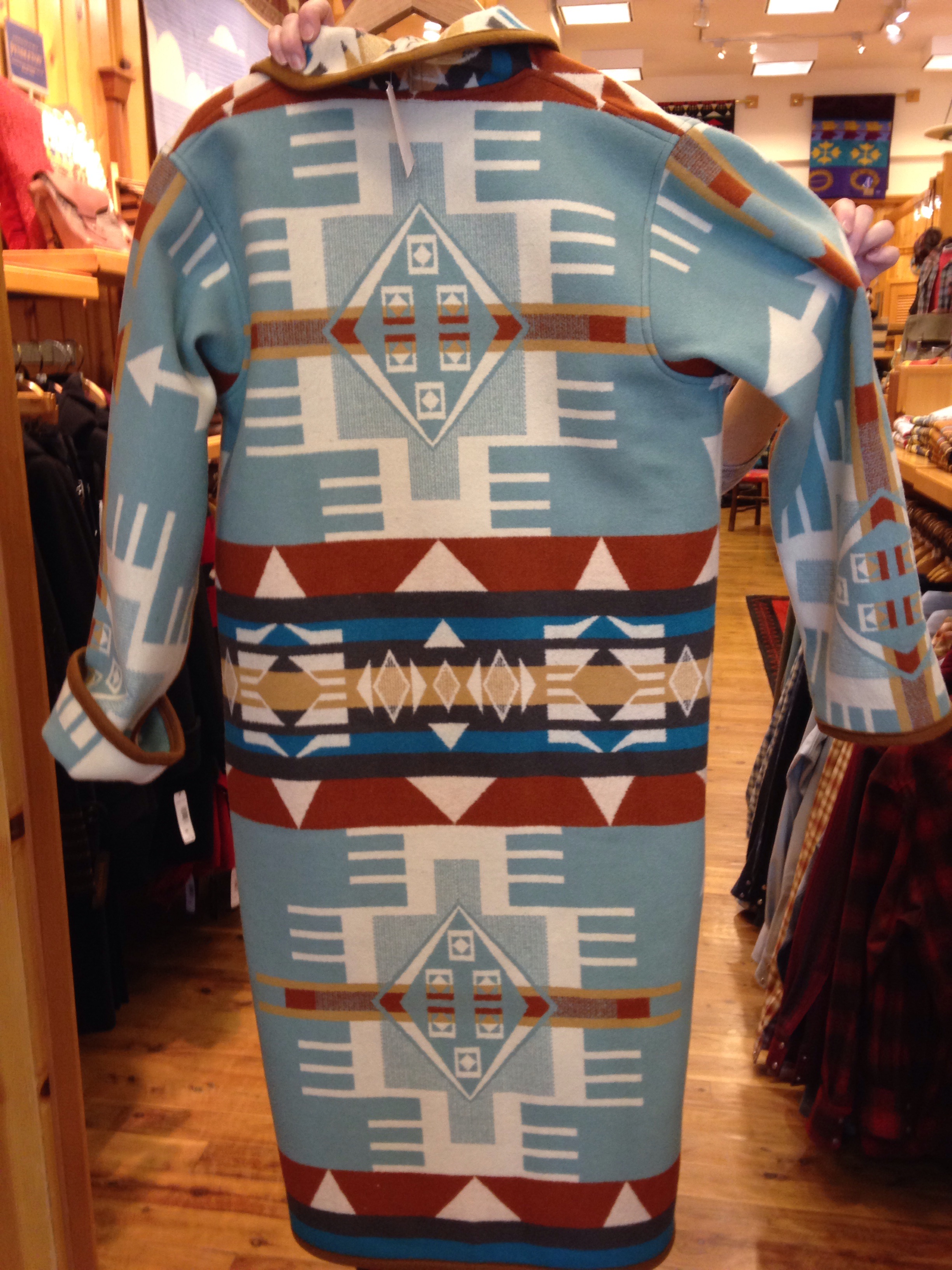
The back of the coat.

The back of the coat.

Made, as stated above, from a twin-size blanket, the coat can be made in long, medium or short lengths, with hood or without hood, with pockets or without them – and it is reversible, too. Customers in the store pick out the blanket they like, measurements are taken: both are sent off to a coat-maker, with whom the store has a relationship, and returned about 6 weeks later. The construction is very much the same as what is detailed in the instructions above; however, the coat-maker removes the narrow wool binding from the blanket before cutting into it. Then she uses that binding for all the edges of the coat.

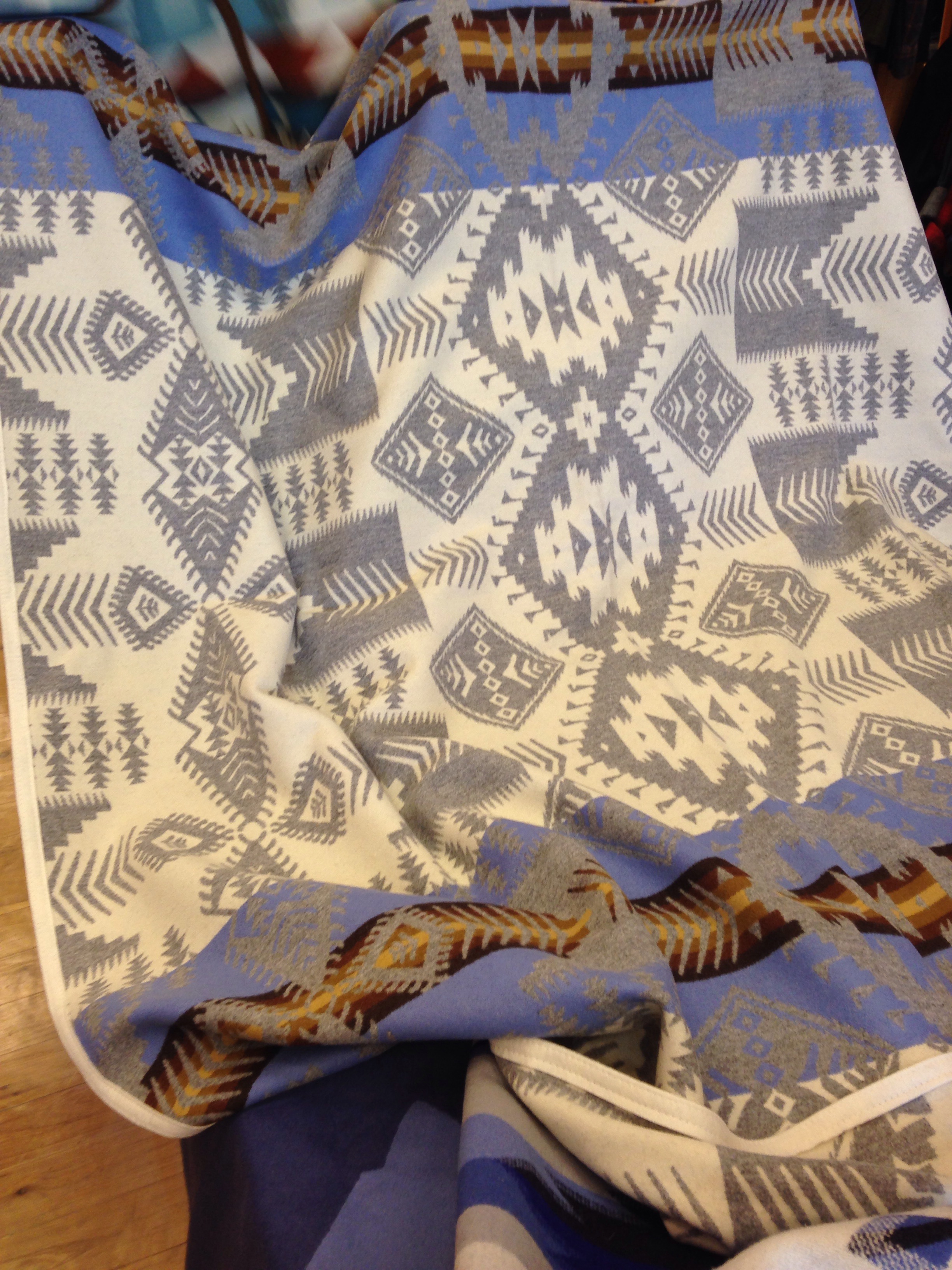
The lovely staff in the Pendleton store pulled out this blanket to tempt me:

The grey, white and periwinkle blue color way would definitely compliment me, I think.

The grey, white and periwinkle blue colorway would definitely compliment me, I think.

So far, however, I have resisted the urge to make a blanket coat, although it might be a fun project with just the right blanket – sometime. But for now I am saddling up to head East, home to beloved Pennsylvania, back to animals and pets I love, back to my by-now-overgrown gardens, and back to my snug little sewing machine who must be wondering where I have been!

9 Comments

Filed under Coats, Uncategorized, vintage Vogue patterns from the 1970s, woolens

“Do What You Can…”

“Do what you can, with what you have, where you are.” – Teddy Roosevelt

I had never seen nor read this quote before three weeks ago, seeing it for first time carved into the slats of this rustic bench:

DSC_0652

There is a lot of wisdom in those few words, especially meaningful to many people in many different walks of life, I am sure, but especially pertinent to those of us who sew. Why so, do you ask?

Do you, as I do, plan sewing projects which are transportable when you travel? Can you quite imagine being without needle and thread – or at the least, a book or magazine on sewing or fashion? What do you do when you can’t (gasp!) bring along your sewing machine when traveling far from home? Well, you do what you can, with what you have, where you are….

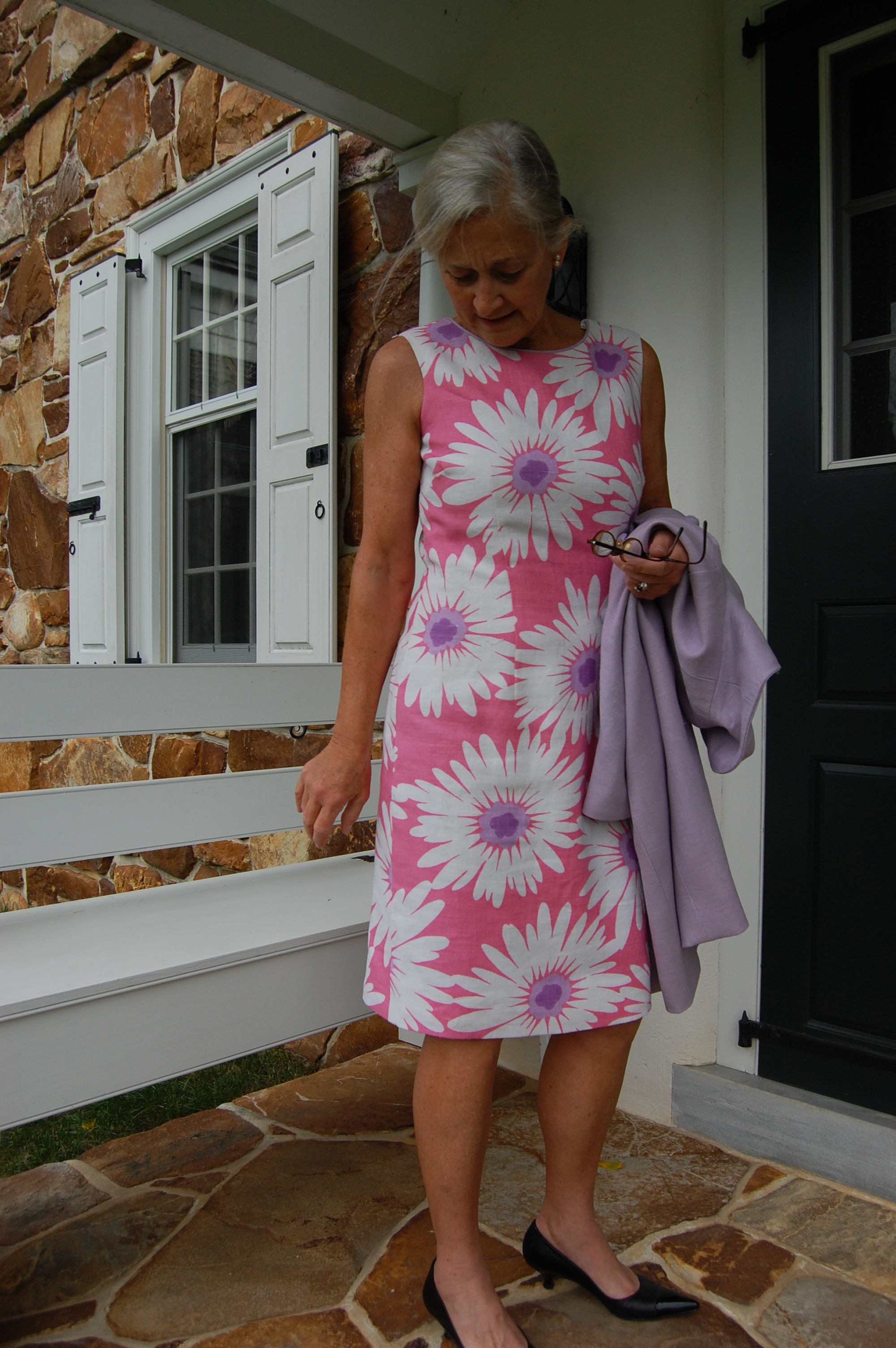
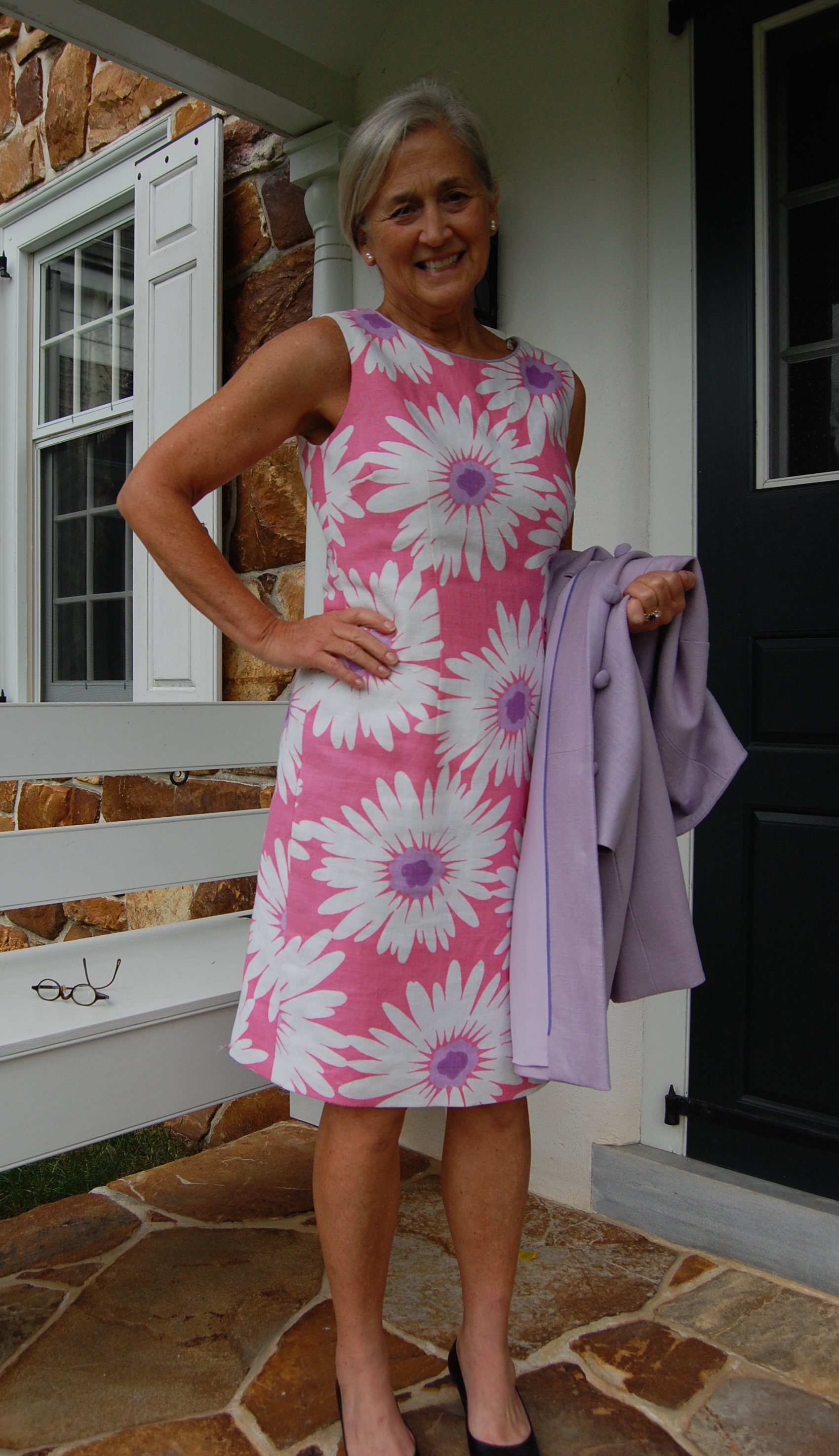
What I knew I could do before we left our home in Pennsylvania three weeks ago for a month in Wyoming – was plan to do hand-sewing on two or three projects. What I had for a “first-project-to-finish” before I departed home (sans sewing machine) – was the unfinished pink-flowered linen dress, started what seems like a lifetime ago.

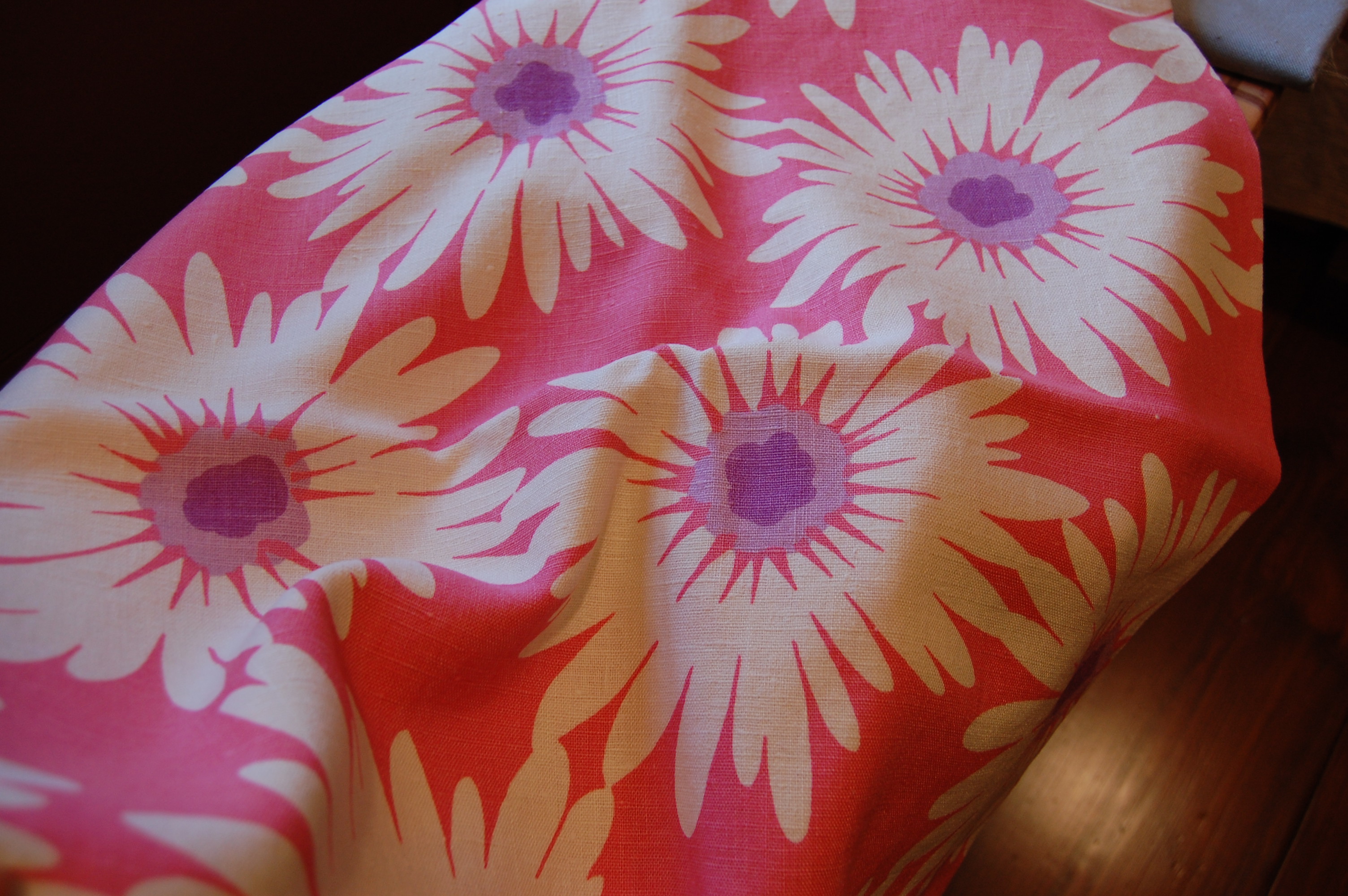
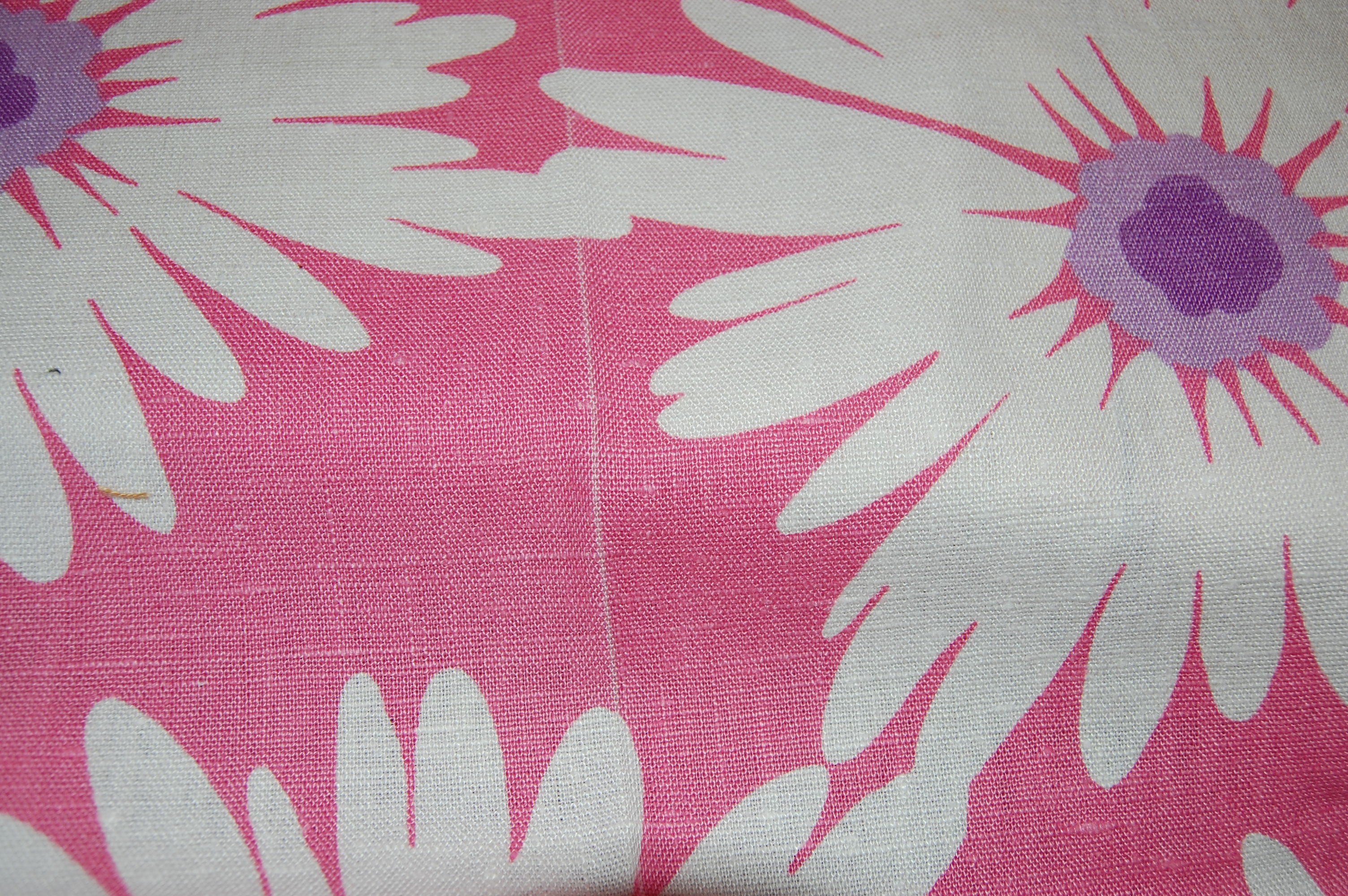
Big, bright daisies with lavender centers.

Big, bright daisies with lavender centers.

And where I was going to be – had possibility and promise and “best plans” written all over it. The possibility and promise have come in bucketfuls, with days and weeks of family fun: hiking; wildlife-sightings; story times with little granddaughters; diaper changing and laundry; shopping a la Western style; cocktail hour every evening; magnificent mountain peaks, valleys, lakes and rivers; grocery shopping and more grocery shopping; and the list goes on and on. I realized a week into our stay that all my planning for some strategic hand-sewing tucked into these busy days was, well, quite simply, not going to happen – at least not while grown children and little grandchildren took loving precedence!

And then suddenly, all too soon, the house was much too quiet, the toys were put away, and while hiking and wildlife sightings are happily still commonplace, my sewing – and my pink linen “not-quite-a-dress-yet” dress – came out to give me a different type of focus.

I was scrambling before I left home to get it to the point where I had only the hand-sewn finishing to complete. The first challenge I had was with the layout of the sheath dress pattern on that large floral print. The linen is a piece of vintage Moygashel, dating to the late 1960s. By this date, Moygashel was being produced in 45” width, rather than 35”. I have found that it is not uncommon to find center crease lines in the linen from this era, where decades of storage have caused the fabric dye to rub off enough to leave a faint pale line.

The fold line - and subsequent faint white line showing dye loss is visible in this photograph.

The fold line – and subsequent faint white line showing dye loss is visible in this photograph.

This left me with only one option: I had to place the dress front and the two side backs on either side of the center line of fabric, to avoid that pale line. But I also had to think about the placement of those large daisies. I wanted to try to match the fabric design as much as possible along the center back seam. To accomplish both these goals, I had to line up the front of the dress and one of the side backs, one above the other. (I forgot to take a photo.)  It turned out I was a couple of inches short of the length I needed to do this. So – I knew I would need to face the hem.

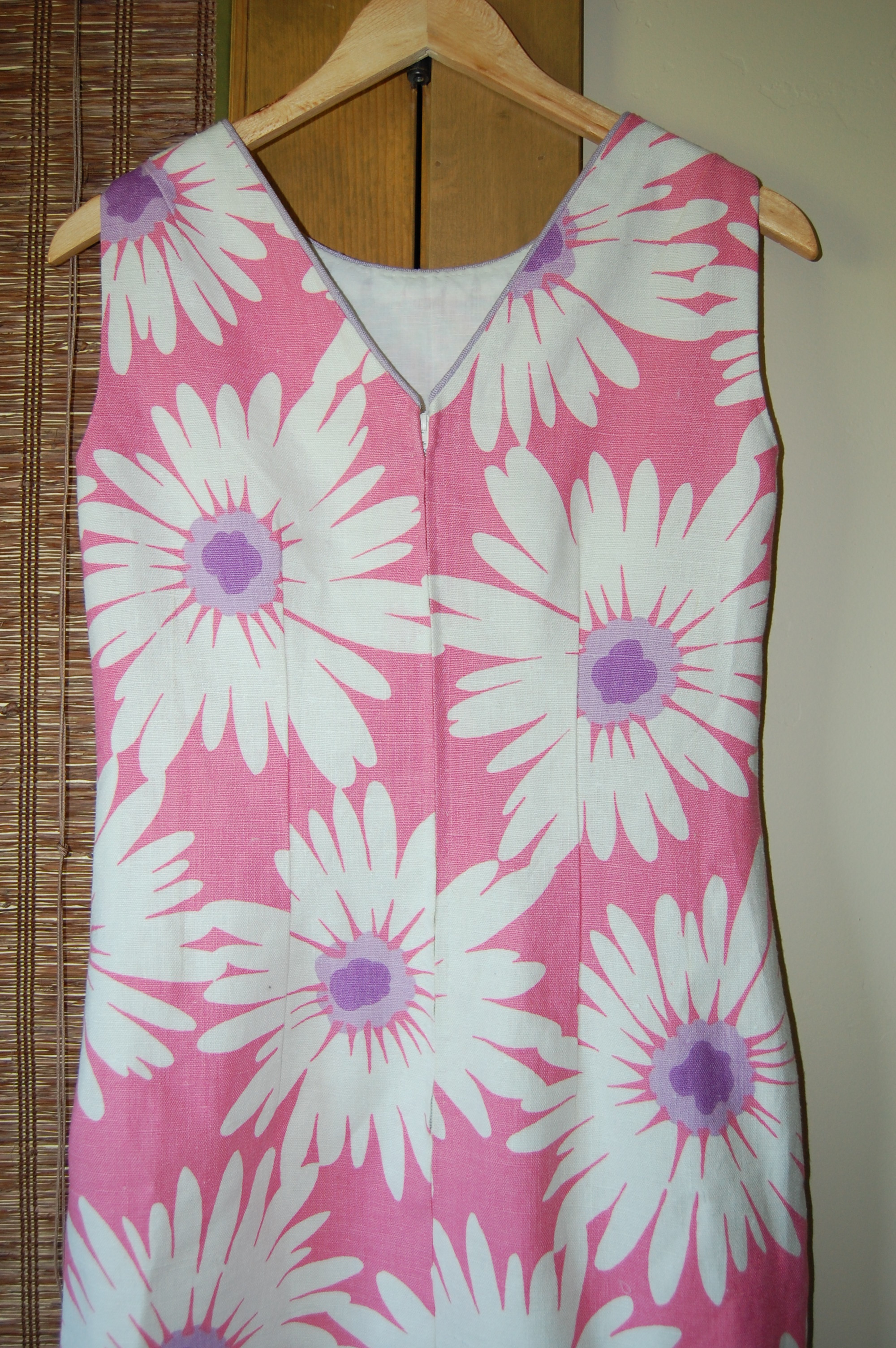
I was fairly successful in matching the flower design along the back seam . . .

I was fairly successful in matching the flower design along the back seam . . .

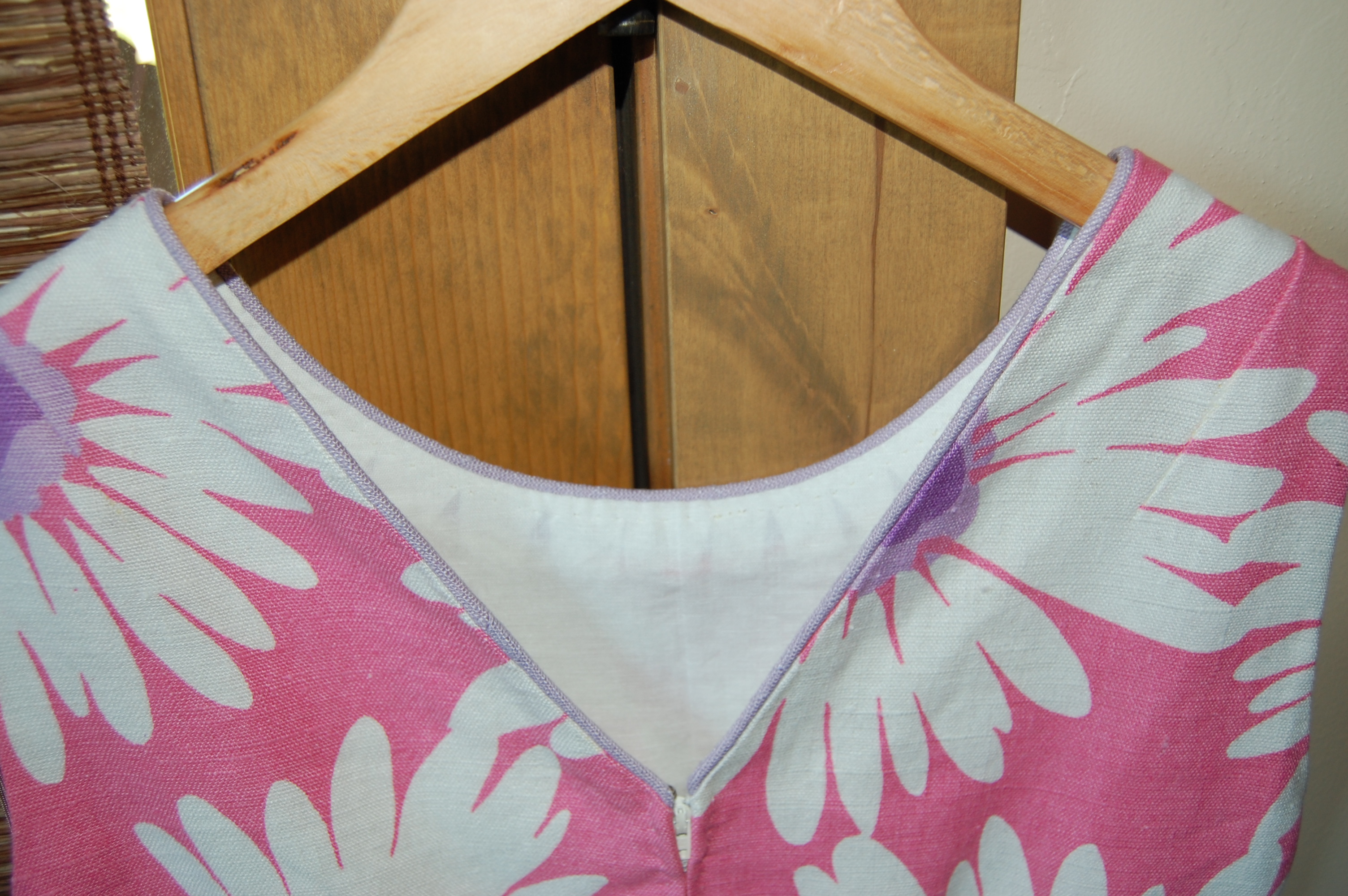
Then on to the machine sewing of darts, seams, seam finishings. With those completed, I turned my attention to the lavender piping I wanted to put around the neck edge. I used the same cotton kitchen string I had used on my “ghost dress” to use as the filler for the piping. The heavier weight of the linen made the piping more substantial, which is exactly what I wanted.

I added piping only to the neck edge.

I added piping only to the neck edge.

With the piping sewn in place, I could proceed to the zipper. Even though I would be hand-picking the zipper, I wanted to complete it, to double-check the fit before I left on our journey. Then I realized that I had purchased the wrong length zipper! I had picked up a 20” zipper, forgetting that I was adding a V to the back neck. I needed a 16” zipper and had no time to make the trip to JoAnn’s to get a new one. In desperation I searched through my notions drawers and found every color and length of zipper under the sun except a 16” white one. (I’m exaggerating, of course.) Then I looked through a bag of zippers I had gotten from my mother, and lo and behold, there was a 16” white metal zipper, still in its original wrapper. Well, why not? A vintage metal zipper would be perfect for vintage linen. Crisis averted.

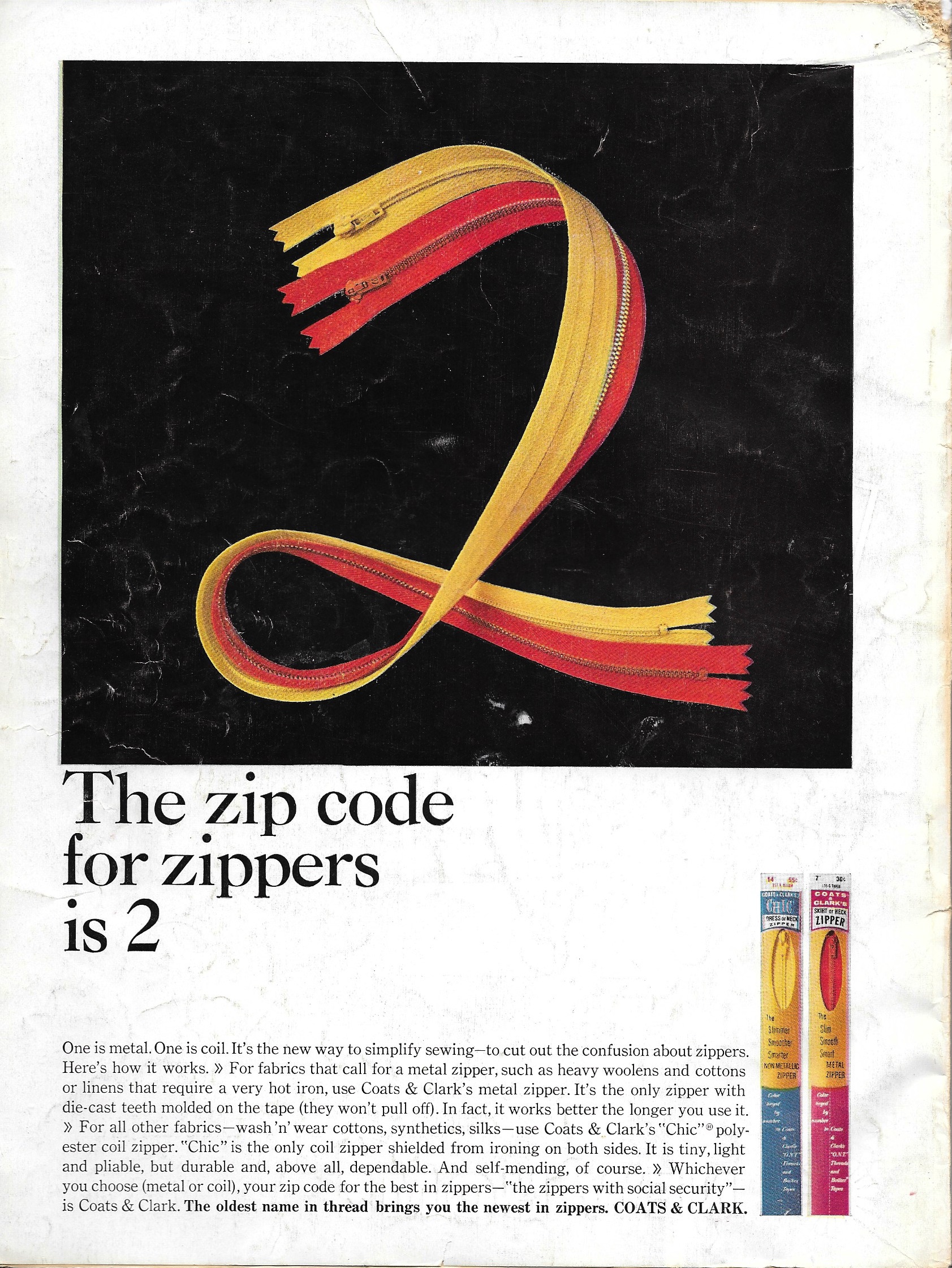
As it turns out, I found this ad for metal versus nylon coil zippers in a 1964 Vogue Pattern Book Magazine. If you read the copy, they recommend using metal zippers for fabrics like cotton and linen which require a hot iron. The quality of nylon coil zippers is now such that they can be used for these fabrics without a worry.

As it turns out, I found this ad for metal versus nylon coil zippers in a 1964 Vogue Pattern Book Magazine. If you read the copy (click on the photo for easier reading), they recommend using metal zippers for fabrics like cotton and linen which require a hot iron. The quality of nylon coil zippers is now such that they can be used for these fabrics without a worry.

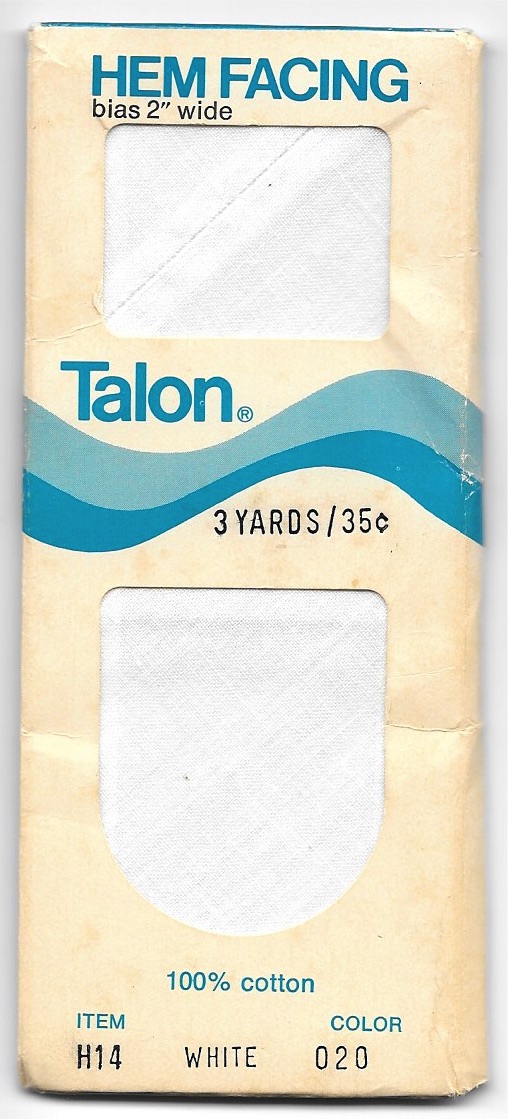
Before I turned my attention to making the lining for the dress, I wanted to address that faced hem. With no time to think about making a facing from the lining fabric, I went back to my notions drawer. Once again, sewing hand-me-downs from my mother came to the rescue! I found this package of white cotton hem facing, which would be perfect for my needs.

Look at the price on this! Also, now I am quite sure the hem facing would be a cotton blend rather than 100% cotton.

Look at the price on this! Also, now I am quite sure purchased hem facing would be a cotton blend rather than 100% cotton.

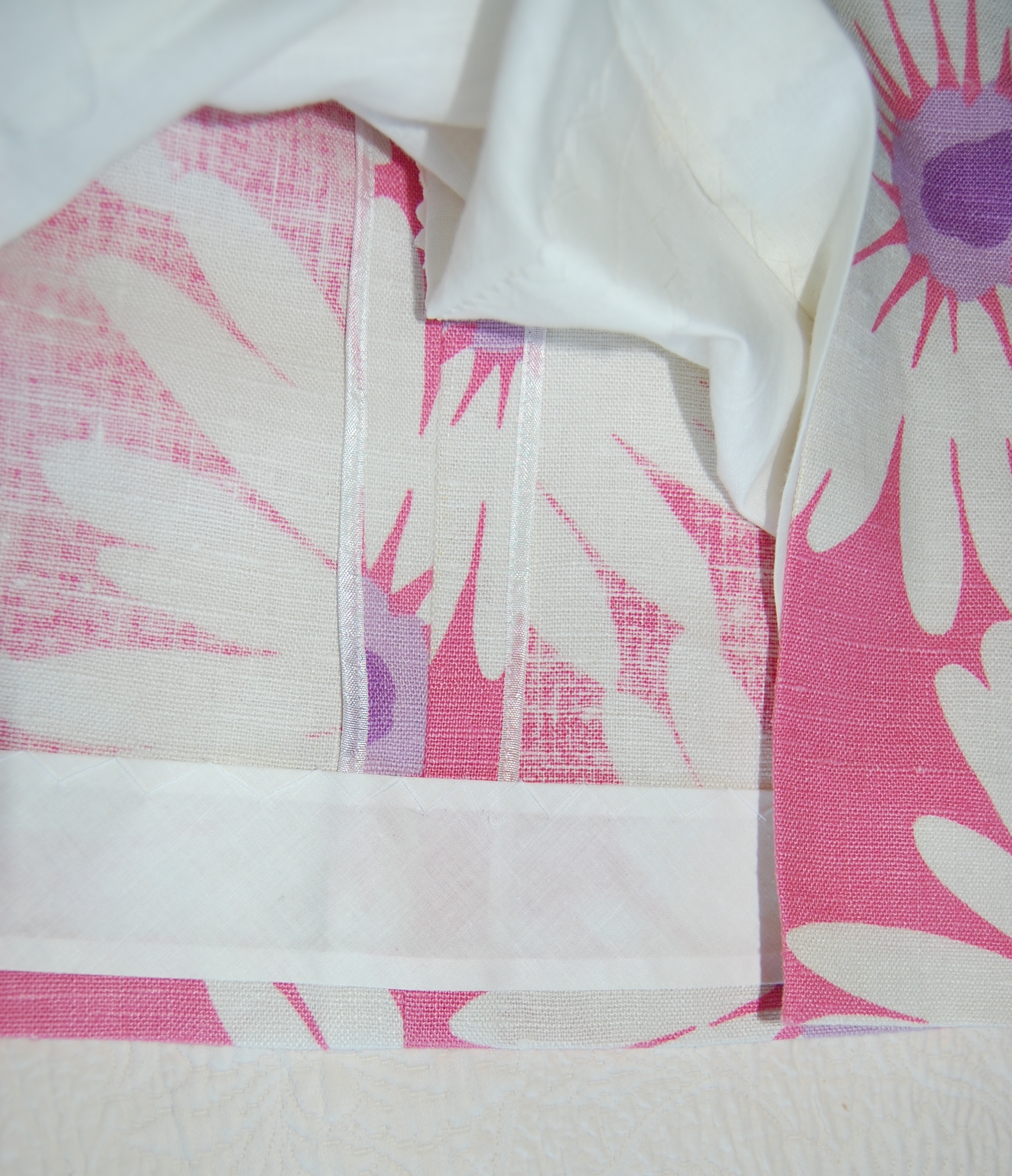
The faced hem, plus a view of the seams which I finished with Hug Snug seam binding.

The faced hem, plus a view of the seams which I finished with Hug Snug seam binding.

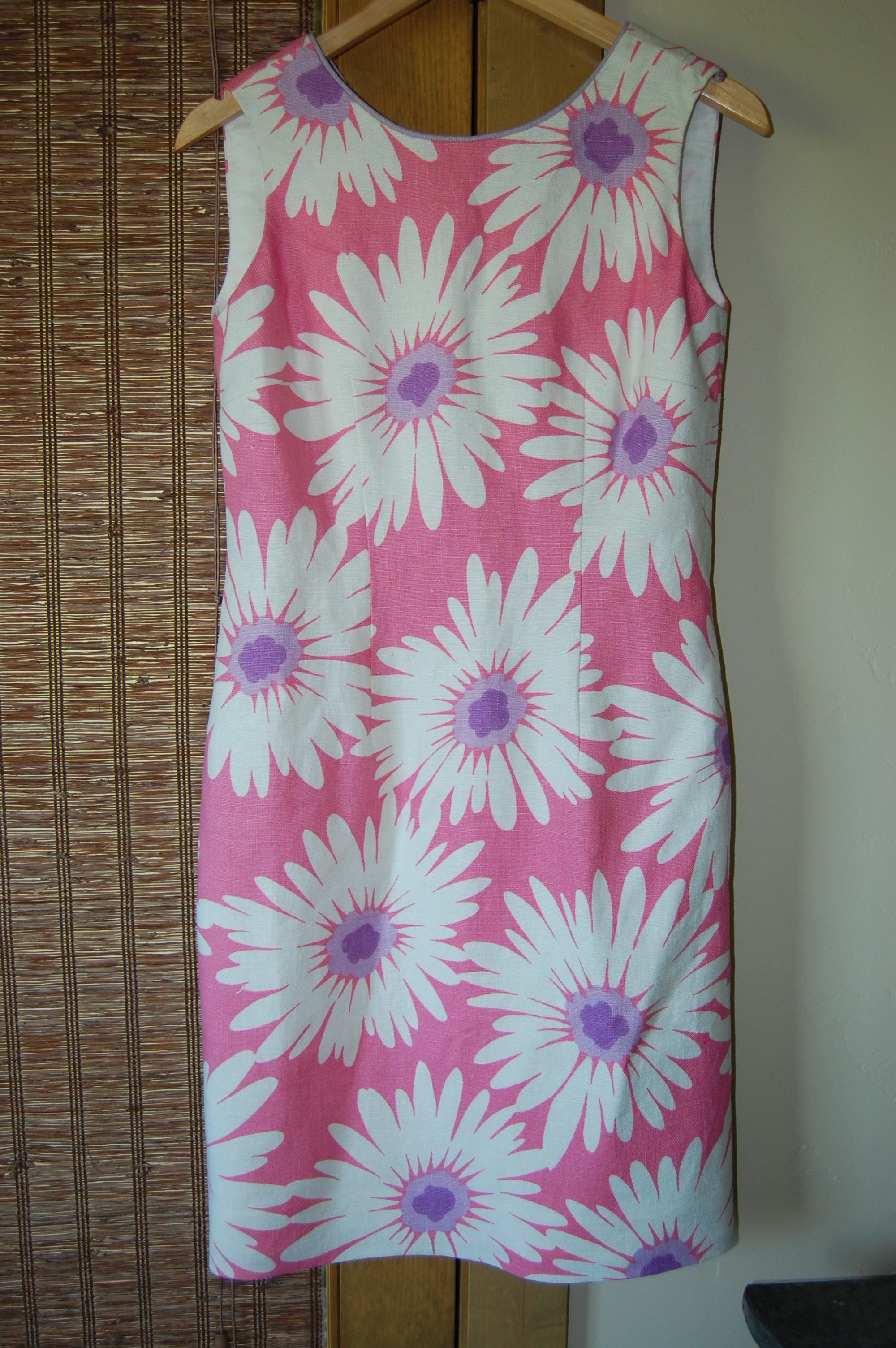
Once the lining was sewn, I gathered all the tools and notions I would need to finish the dress by hand. Off it all flew to Wyoming, where finally I finished this flower-powered dress under the expansive Western skies.

The front of the dress. No time to get photos of me in it yet, unfortunately!

The front of the dress. No time to get photos of me in it yet, unfortunately!

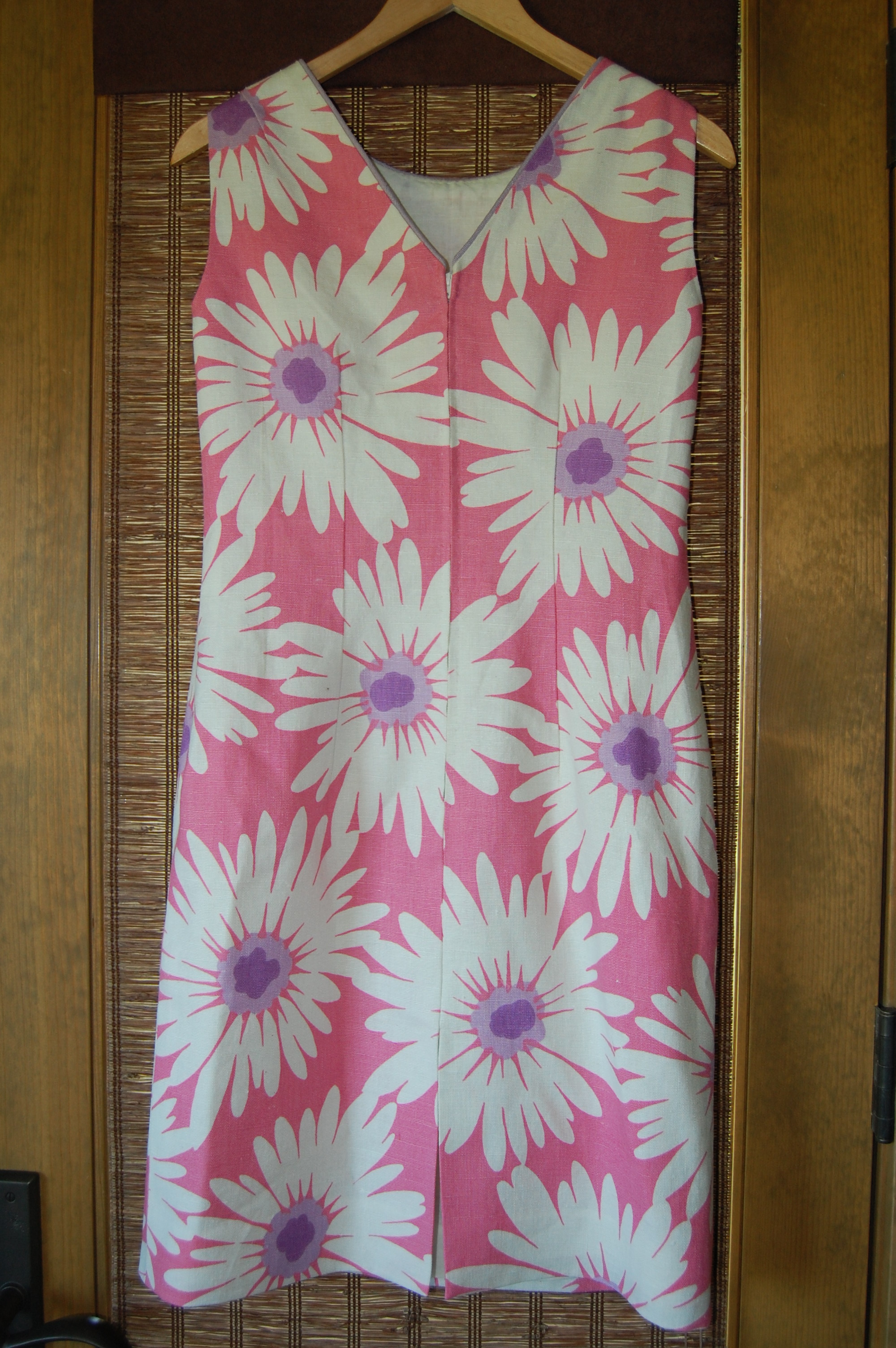
This full photo of the back of the dress shows some more of the pattern matching.

This full photo of the back of the dress shows some more of the pattern matching.

I did what I could, with what I had, where I was.

20 Comments

Filed under Linen, Moygashel linen, piping, Uncategorized, Vintage fabric

The Domino Effect

Being totally smitten with this bold floral linen, purchased within the past year, I have had my heart set on making it into a day dress this Summer.

Big, bright daisies with lavender centers.

Big, bright daisies with lavender centers.

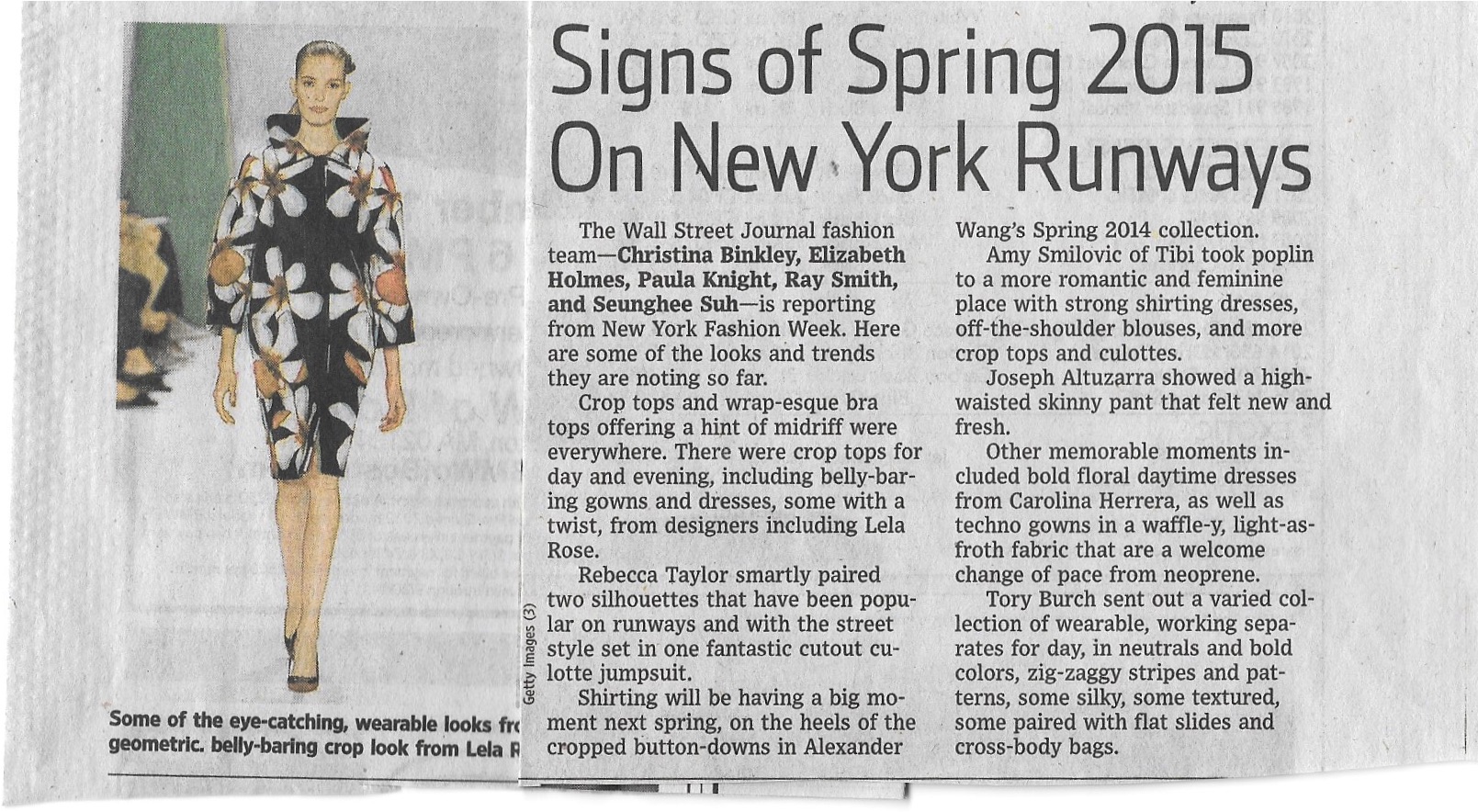
Not long after I purchased it, this small article on “Signs of Spring 2015 On New York Runways” appeared in the September 10, 2014 Wall Street Journal.

"Memorable moments included bold floral daytime dresses from Carolina Herrara..."

“Memorable moments included bold floral daytime dresses from Carolina Herrera…”

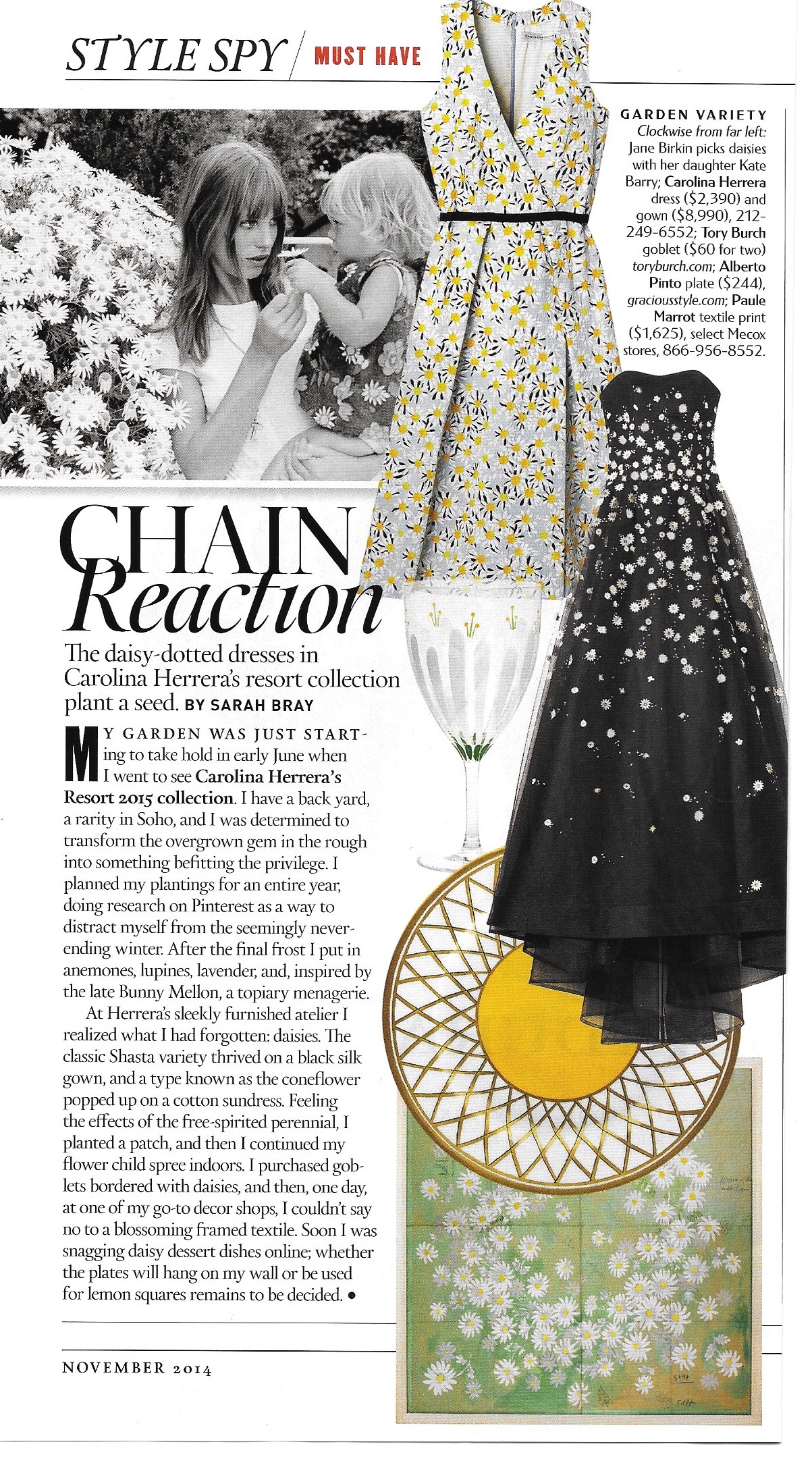
And then in November of 2014, more of Carolina Herrera’s Spring/Resort collection for 2015 was featured in Town & Country magazine.

Perennial daises on two lovely Carolina Herrera dresses.

Perennial daises on two lovely Carolina Herrera dresses.

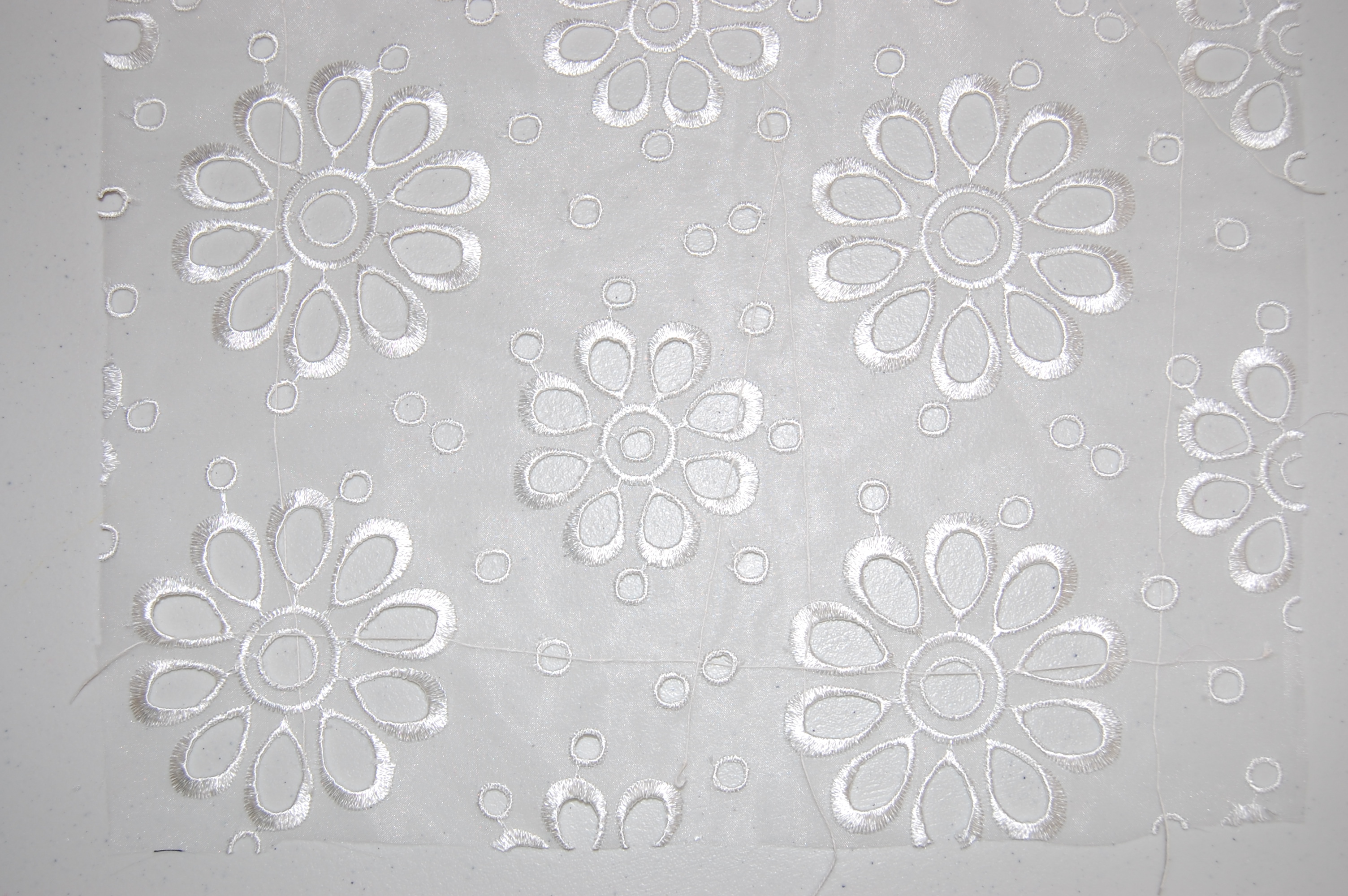
It seems this vintage Moygashel linen from the late 1960s, with its bold daisy design is very much in vogue currently, both for its size and its floral motif. (The bodice of my recent fancy dress also featured a “daisy” motif in the silk embroidered organza):

The Allure of silk, pt 1

Although I am of the mind that daisies are always in vogue, nevertheless, this seems like the perfect year to fashion a dress from this linen. Such a demonstrative print begs for a simply-styled dress, such as – you guessed it – a sheath dress.   The fabric will make this dress, not the pattern. How could I, I wondered, do something a little different and still keep it simple? The answer to that question began to take shape when I found a length of pale lavender Moygashel linen this past Spring. Suddenly I envisioned a V-back to a sheath dress with a rounded neck, detailed with piping made from this lavender linen.

Then it began to get complicated. With just a few inches over 3 yards of the 35” wide lavender fabric, I knew I would have to calculate carefully when I cut bias strips for the piping, if I wanted to fashion another garment out of the lavender. And of course, I do! Actually, when I looked at the lavender fabric, and paired it with any number of my other fabrics and/or dresses, it seemed the only thing to use it for was a “Spring” coat. But would I have enough fabric for both a coat and bias strips for piping?

Obviously, I would have to find a coat pattern and lay it out leaving enough space for bias strips, to see if I could manage this minor miracle. Of all my coat patterns, this Madame Gres design is the one I decided had the best chance of working, both for my limited yardage and for the pattern’s simple, uncluttered lines:

The short version of the coat is on the left.

The short version of the coat is on the left.

The fact that it is featured with below elbow length sleeves and in a shorter version – perfect for pairing with coordinating dresses – worked in my favor. The entire coat has only 5 pattern pieces: front, back, collar, undercollar, and front facing. First I positioned the tissue pattern pieces on my fabric, strewn out on the floor selvedge to selvedge. I was heartened enough by this exercise to go ahead and make a muslin, so I could have a “real” pattern to work from. All this time, the pink flowered daisy linen lay folded, awaiting her turn.

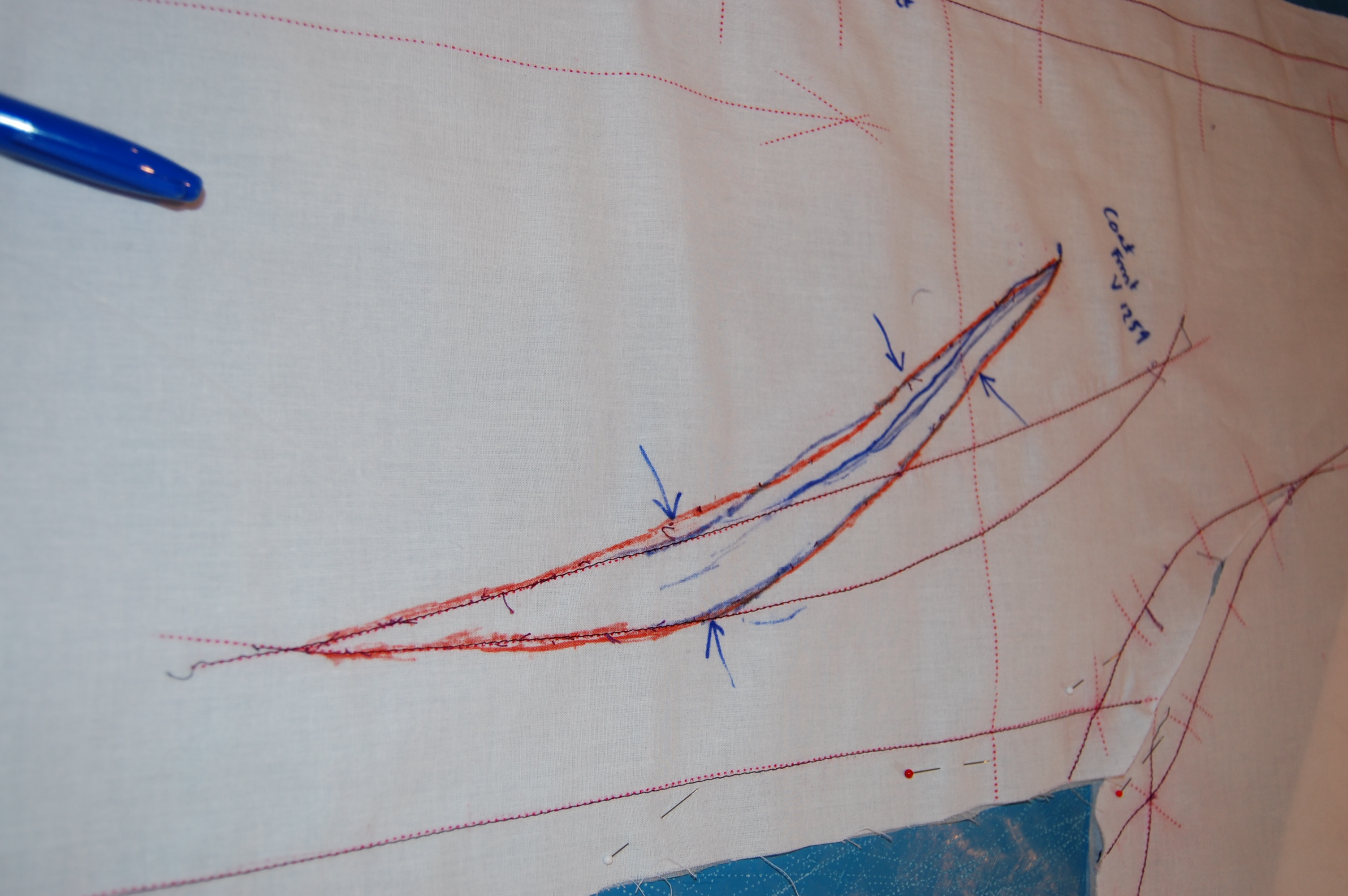
One of the most unusual features of the coat design is the front dart, which serves both as a bust dart and as a side-shaping dart. As is so often the case with these vintage patterns, the dart sewn as indicated on the pattern was too high for me. In addition, it pulled and stretched the kimono shoulder in all the wrong ways. I lowered the apex of the dart and re-sewed it, trying to preserve its curve, and suddenly it fit like a charm.

The newly drawn dart is in orange, while its original position is in red.

The newly drawn dart is in orange, while its original position is in red.

Now that I had a workable pattern, I knew I could just eke out the coat if I “pieced” the left front facing. I could live with that! And, just as important, I would have enough of the fabric to cut bias strips for piping for my daisy sheath. Whew!

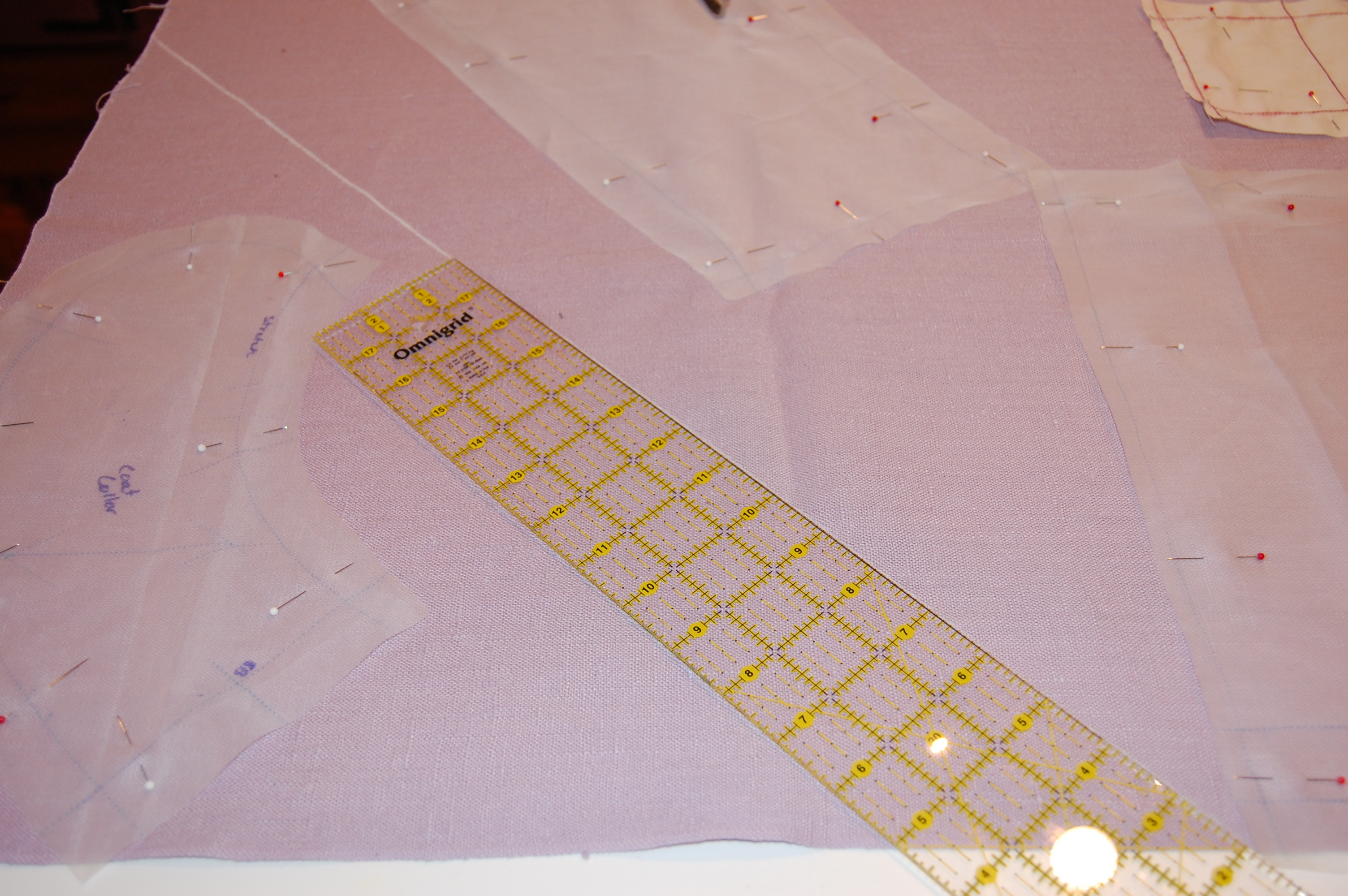
This see-through ruler helped me find a corner from which to cut the bias strips for the piping.

This see-through ruler helped me find a corner from which to cut the bias strips for the piping.

So now, the pieces for the coat, with their silk organza underlinings pinned in place, are taking their turn waiting for further attention. One project started another and now both are lined up like a circle of dominoes, ready to go down in an orderly fashion, albeit in slo-o-o-w motion.

13 Comments

Filed under kimono sleeves, Linen, Moygashel linen, piping, Uncategorized, Vintage fabric, vintage Vogue Designer patterns

Out and About in Los Angeles

One sure way to get me away from my sewing room is TRAVEL. Sometimes, however, there is a lot of sewing that happens before that travel commences. The impetus to the creation of my recent fancy dress was, indeed, a recent trip to Los Angeles, California, which was part business for my husband and pure pleasure for me. The lovely hotel where we were staying was actually in Beverly Hills, at the intersection of Wilshire Boulevard and Rodeo Drive. For those of you unfamiliar with Rodeo Drive, it is one of the most exclusive shopping areas for fashion and jewelry in the US. Although I am not much of a shopper at home – either window shopping or real shopping – it is quite a pleasure to do just that while on vacation.

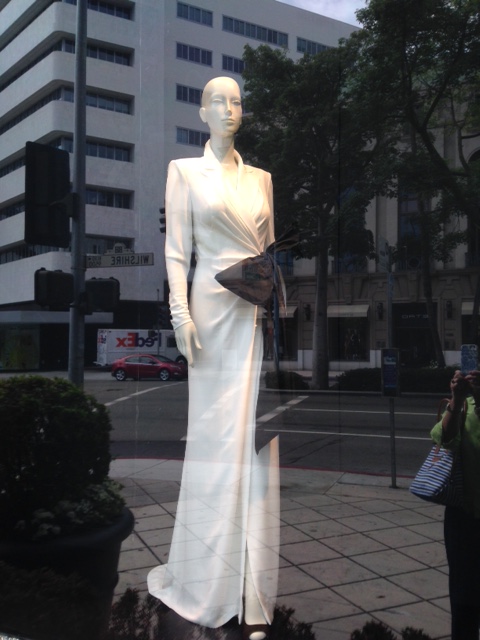
Because I sew, I probably look at fashions with quite a different eye than most people.   My interest in the current influence of mid-century fashion and the use of beautiful, fine fabrics guided my approach, as both were on full view on Rodeo Drive. The first morning while my husband was in business meetings, I went out before most stores were open and snapped a few pictures of store windows. I was delighted to see this tailored Escada gown transformed into a totally feminine look with its voluminous bow:

Escada gown

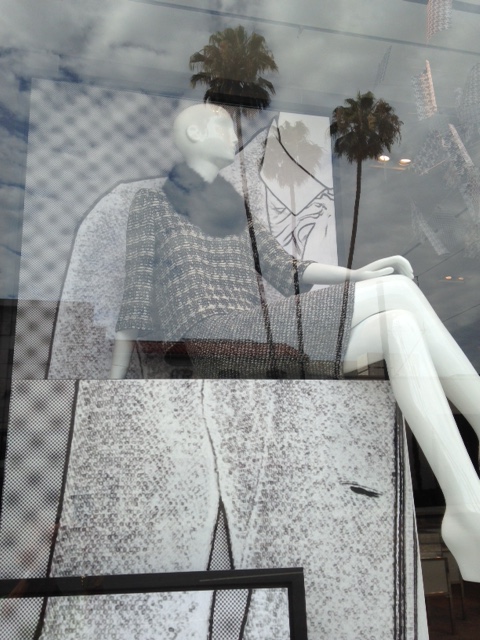
The St. John Store featured this straight skirt and overblouse (with demure fur collar), with a flavor reminiscent of the 1960s:

The reflection of palm trees in the window obscures some of the fashions.

The reflection of palm trees in the window obscures some of the fashions, but I love this understated, but sophisticated look.

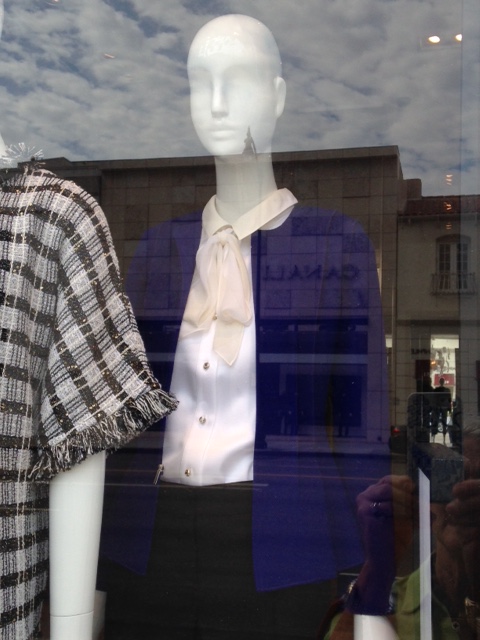
And what could be more classic than this jacket and blouse with a bow, also St. John.

St John jacket and blouse

How I loved this Little Black Dress by St. John, made with lace-embellished fabric:

A front view ...

A front view …

... and a back view.  The V-back is just lovely!

… and a back view. The V-back is just lovely!

Later in the day, I was captivated by some of the fashions I saw in some of the stores, especially Dolce and Gabbana and Hermes. Unfortunately photos were not allowed, so I cannot show you the classic princess lined coats and lace dresses in Dolce and Gabbana made from fabrics which were either identical to or close relatives to some pique and lace that Mendel Goldberg carries in their store in NYC. And Hermes had a color-blocked coat that looked right out of the early 1970s.

One excursion I wanted to make while we were in LA was to the museum of the Fashion Institute of Design and Marketing. I follow their blog, which regularly features items and fashion from their permanent collection, from all time periods. They have two small exhibit spaces which were currently featuring items from the Helen Larson Historic Fashion collection in one gallery and “Inspired Eye” in another gallery.

Inspired Eye is an exhibit of items from the Donald and Joan Damask Design Collection.  The exhibit  includes classic photographs as well as accessories and items of apparel.

Inspired Eye is an exhibit of items from the Donald and Joan Damask Design Collection. The exhibit includes classic photographs as well as accessories and items of apparel.

It was fun to see this Claire McCardell dress, circa 1950, looking every bit as fashionable now as then.

Claire McCardell dress

(Check out Julie’s recreation of a similar Claire McCardell dress on her blog, JetSetSewing)

Of course, for me, one thing I was looking forward to was the event to which I could wear my new fancy dress. As luck would have it, our camera was acting up for some unknown reason, so my husband had to resort to his iPhone for a couple of pictures of me wearing it.

LA fancy dress

One thing was certain – no one else at the party was wearing anything quite like it!

LA fancy dress

Our trip continued up to northern California, where we spent a few days with our son and his girlfriend, and which also included a trip to Britex Fabrics in San Francisco, where I picked up a few choice notions and buttons. Now we are home and a new project is strewn out in my sewing room, asking for attention before TRAVEL once again will wisk me away.

32 Comments

Filed under Cocktail dresses, Little Black Dress, Mid-Century style, Uncategorized