Tag Archives: Blouses

A Three-Piece Outfit for the Holidays: Part One, The Blouse

“Today blouses are not worn quite as much as they used to be and I think it is a pity.” So said Christian Dior in 1954. With that in mind, hopefully he would have approved of this Vogue blouse pattern from 1958:
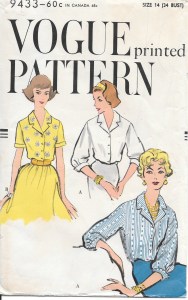
You have already seen my toile of this blouse, where I worked out all the “kinks.” I liked it made up in muslin and now I am quite thrilled with it made up in silk dupioni, purchased from Britex Fabrics.
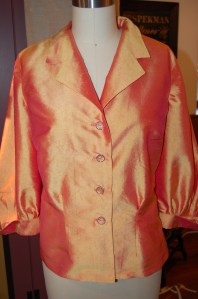
The iridescent quality of silk dupioni woven with two contrasting colors, such as this one, makes it an excellent fabric to use for “fancy” attire. The only reservation I had was whether it would be too stiff for use in a blouse. It is by nature rather “papery” in composition. I was a little concerned it might not have enough drapeability for this blouse, where a major focus is on the softly pleated sleeves. I did a little research, and of course, the first guideline I found was an admonishment not to wash dupioni! Doing so would diminish that papery nature. Well, that was exactly what I wanted to do – soften it a bit. Further research led me to an article in Threads Magazine from a few years back, where, indeed, a reader had successfully washed dupioni in her quest to make it suppler. Off to my washing machine I went with a large swatch for a (successful) trial run. Soon the entire two yards were gently swashing around in cold water on the delicate cycle. It took quite a bit of heavy steam to wrestle out the wrinkles, but I was left with a soft, drapeable fabric for my blouse.
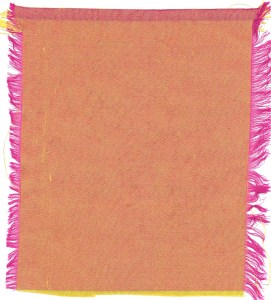
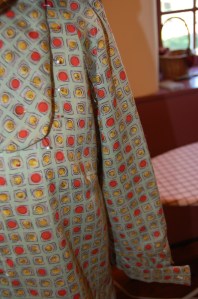
Quite apparent in this image are the two contrasting threads, one fuchsia and the other bright yellow, which, woven together made a shimmery apricot color.

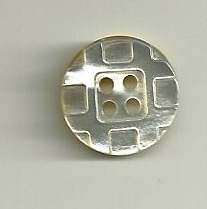
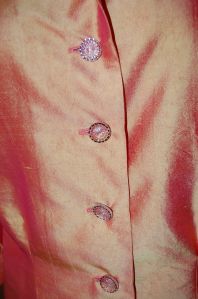
Buttons for a blouse such as this one are an important element. I knew they needed to be special, and what could be more special than vintage glass buttons from France? I found these listed in an Etsy store (YumYum Objects).
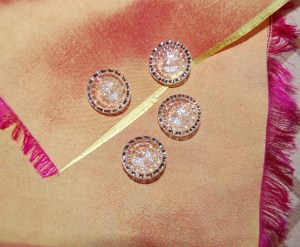
These glass buttons have silver accents, adding just a bit more depth to their appearance.

The listing was for a set of 6, and I needed 8 for this blouse. The French cuffs required two buttons each. These buttons were too perfect to pass up, however, so I decided I could use two buttons of another style for the rear-facing part of the cuff. I found a set of little, clear glass, ball buttons in my button box, which seemed appropriate and a good compromise!
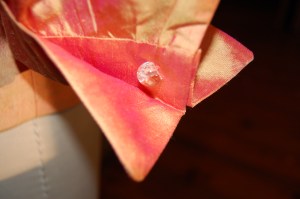
The ball button on the back.

For some reason I always like to make sleeves first, so that is what I did. The French cuffs, by their very nature, of course, call for two buttonholes with two buttons looped together to thread through those openings, one on each side. However, I placed a buttonhole on the front part of the cuff only. I then sewed the two buttons together, back to back through the back part of the cuff, with the fancy button meant to thread through that single buttonhole and the other button to be stationary. I liked the idea that this method would hold the two sides of the cuff more tightly together.
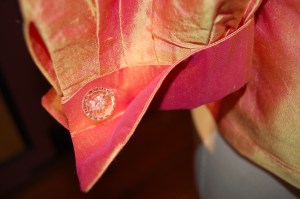
The fancy glass button on the front.
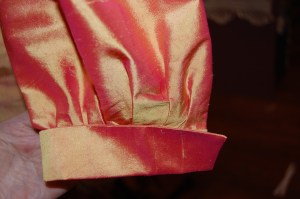
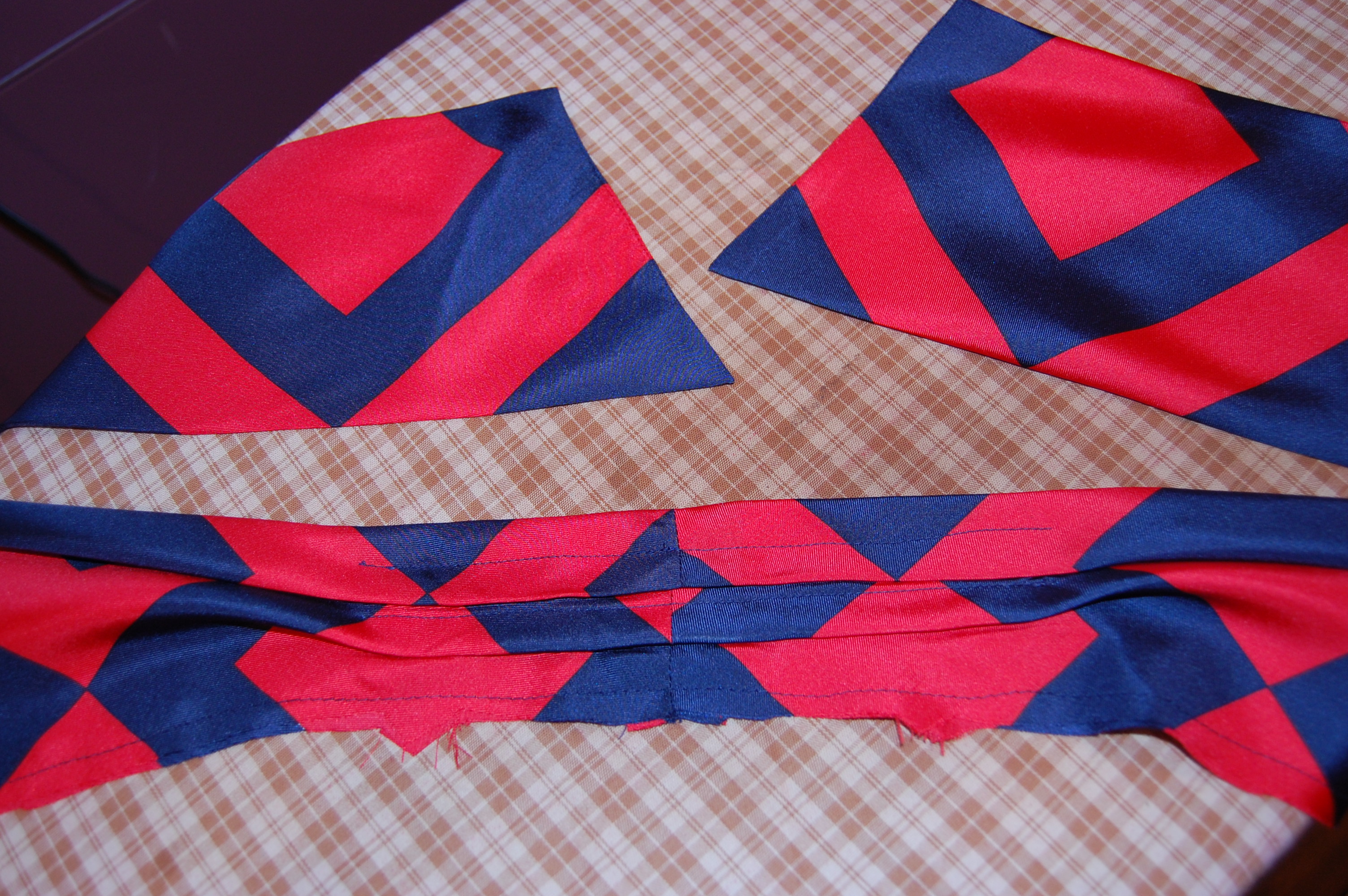
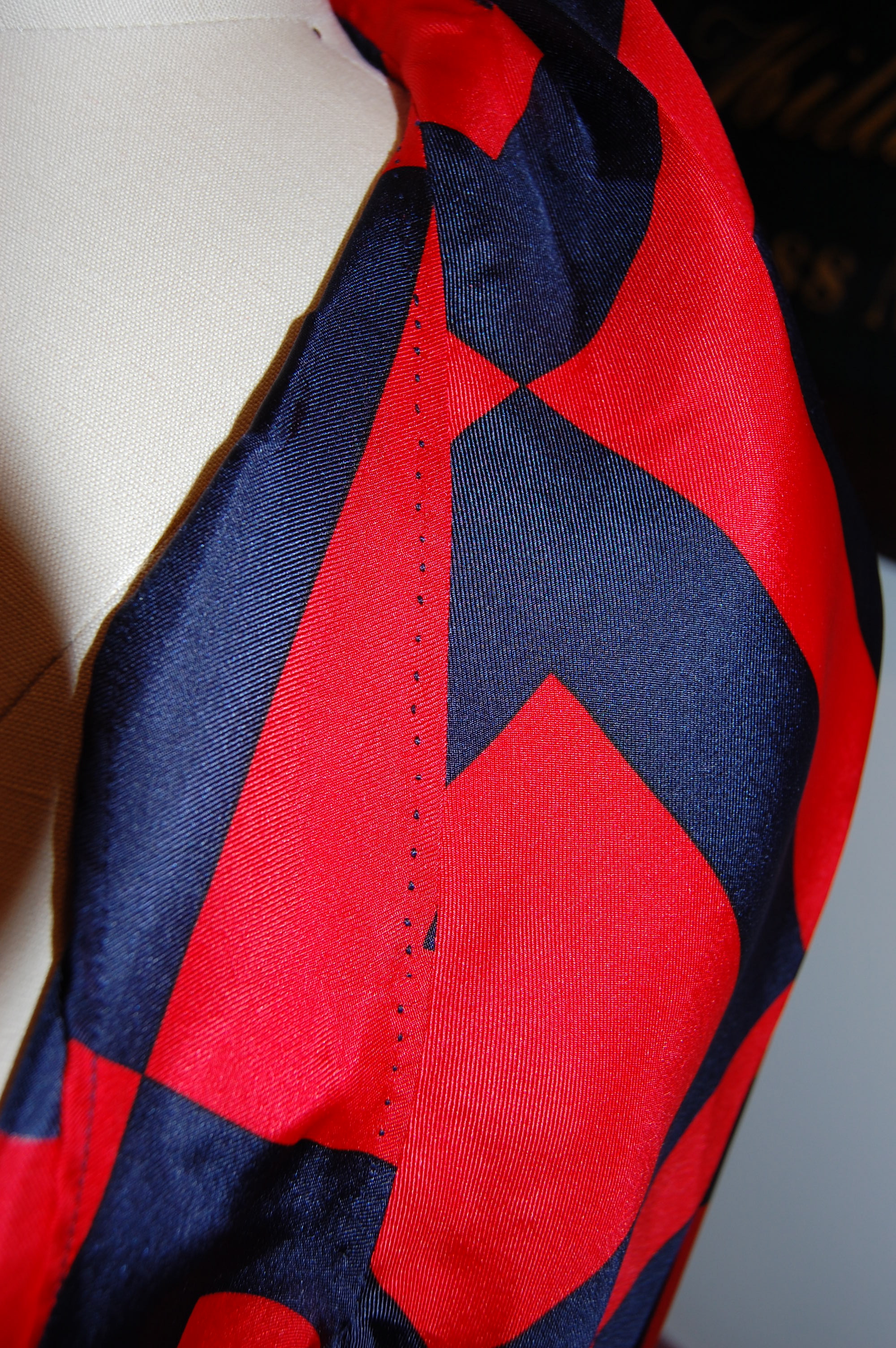
This view shows the three pleats in the sleeve. In addition, there is a small amount of gathering which adds to the blouson effect of the lower sleeve.

Being a pattern from 1958, the instructions called for bound buttonholes, of course. However, due to the nature of the fabric, I decided machine buttonholes would make a nicer finish, so that is what I did (with a little hand-finishing on each one…)
The rest of the blouse was quite straightforward.
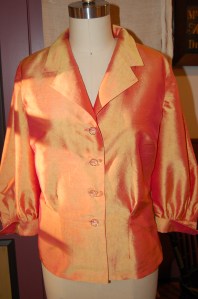
I took this picture with the sun streaming in one of my sewing room windows. It really shows the luminosity of the fabric.
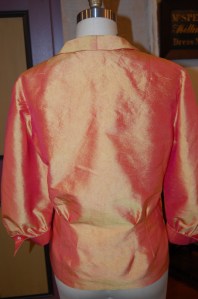
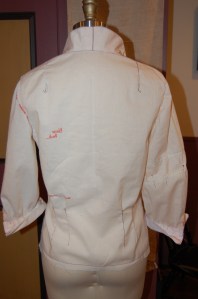
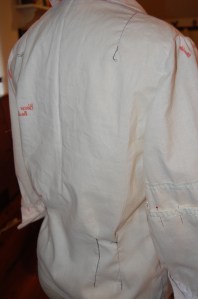
I am so happy I decided to keep the released darts at the waistline. I think they will work beautifully with the skirt I have planned.

I gave my usual attention to hand-finishing the hem and facings (it just looks nicer!) and marveled again at the finesse added to this notched shawl collar by that small dart in the collar crease. Hopefully you can see this detail here:
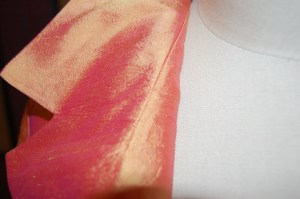
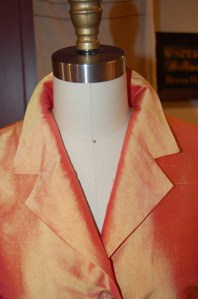
That dart makes the collar turn beautifully.

Next up is a guipure lace skirt! I wonder what Christian Dior would have to say about that?
11 Comments

Filed under Blouse patterns from the 1950's, Blouses, Buttons - choosing the right ones, sewing in silk, silk, Uncategorized, vintage buttons, vintage Vogue patterns from the 1950s

Prepping for the Next Project

Sewing is a little bit like house painting in that successful end results are often dependent upon good prep work. Well, I don’t know about you, but I’d much rather be making a muslin (toile), tedious as it sometimes is, than sanding, spackling, and cleaning walls or woodwork. And sometimes, a pattern reveals unknown charms as its toile comes to life.

Such has certainly been the case with my next project, a three-part ensemble, the first of which is a blouse, to be made out of lightweight and shimmery silk dupioni. This is to be a dressy blouse in which I want to emphasize the fabric and some amazing French buttons I found for it. Because I love a notched collar which can be raised up at the back of the neck and frame the neck and face in the front, I looked for a pattern which had that feature, but also some feminine sleeves. Among the possibilities in my pattern collection was this Vogue pattern from 1958.

Of course, View A is my version of choice.

After studying the pattern pieces, I determined it had just about everything I was looking for, even though the pattern art doesn’t make this look like a particularly fancy blouse.

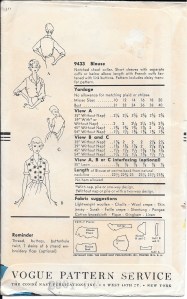
The back of the pattern envelope often gives important information, such as placement of darts. This one also told me that the collar has a center back seam, which is a stylistic detail I like.

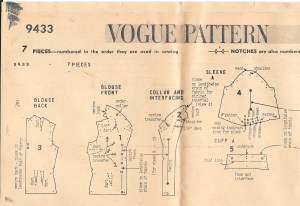
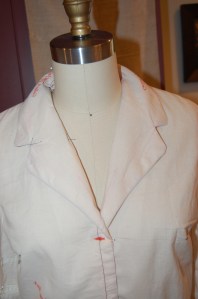
I was especially intrigued by the small diagonal darts you can see here on the “blouse front” and “collar and interfacing” diagrams. The instructions were to graduate the dart down from 1/8 of an inch at the center point to nothing at both ends. I discovered that little bit of shaping makes a huge difference in the way the collar turns, allowing it to emphasize the neckline.

Click on the image for enlargement.

I show the collar flat here, but I intend to wear it with the back of the neck standing up.

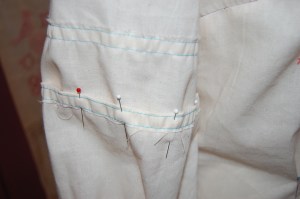
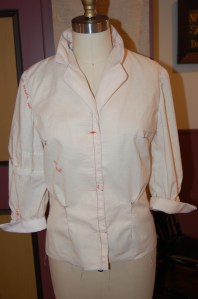
The sleeve pattern called for three tucks (also visible above on the pattern diagram) as well as gathering at the cuff, which I knew would add a gentle feminine silhouette, especially in dupioni. And the cuffs are French cuffs, but very petite ones, with a small angled turn-back, which is just such a lovely feature. The only thing I could not determine was if the sleeves were too short for my “vision.” Of course, that is what muslins/toiles are for, and indeed, the first sleeve was too short. I added a three-inch extension to the next sleeve, knowing I could always take it up. I finally settled on lengthening the pattern by 1.5 inches.

Here is the blouse with the original sleeve on the right (as you are looking at it, actually the left side of the blouse), and the sleeve with an extension of 1.5 inches opposite.

I believe the longer sleeve looks less like 1958 and more like 2017. I love using vintage patterns, but I don’t want to look vintage!

The toile also told me that the top button needed to be lowered, and I needed to add a bit of width around the hips. I originally thought I might not want to use the released darts at the waistline, but I love the effect they make.

It’s not often that I stand back and admire a muslin, with its loose threads, its uncut seam allowances and lumpy corners. I am usually anxious to tear it apart so I can quickly proceed to use its pieces for my working pattern. Of course, I will be doing that, but until then, I will marvel at all the design secrets it has revealed to me in its humble cloth.

19 Comments

Filed under Blouse patterns from the 1950's, Blouses, Pattern Art, Uncategorized, vintage Vogue patterns from the 1950s

A Lesson from Lilly

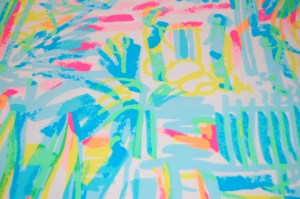
Have you ever purchased a piece of fabric on a whim – and then regretted it? That’s exactly what happened to me, here in the midst of July. I saw this piece of Lilly Pulitzer silk fabric offered on eBay, and without giving it too much thought, I bought two yards.

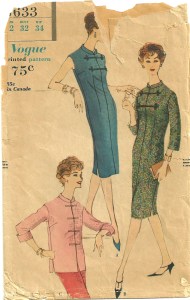
I have always loved most of the Lilly prints and color combinations, and something about this silk just looked fresh and summery to me. I have long wanted to make the pattern pictured below again, and with its Asian flare, I thought the multi-colored, abstract printed Lilly silk would pair well with it.

The date on this pattern is 1958. I made the blouse/tunic a few years ago and still enjoy wearing it. I would like to make view B sometime…

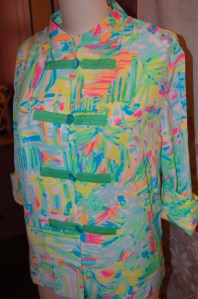
I had several scraps of solid green silk, one of which I thought would be good as a contrast fabric for the button details on the front of the blouse. (The pattern calls it a tunic, but it looks more like a blouse to me.) As it turned out, I used a scrap of green silk out of which I had made a blouse to go with a purchased Lilly skirt way back in the 1970s! I still have the skirt, but not the blouse…

Anyway, I am digressing. When the fabric arrived – in an itsy-bitsy package that weighed about an ounce – I knew I had made a mistake. Yes, it was silk, but it was so flimsy and slippery I wasn’t very sure it could be sewn with any sort of finesse. (Now I know that assessment was correct.) I contemplated saving it for a lining for something sometime, although truly, it would make a flopsy lining.  Deep down, I knew if I didn’t make it right now, I would never, ever use it. And that would be a waste of money for sure.

Well, now I am going to digress. I find that if I purchase a piece of fabric of impeccable quality, I can hold onto to it for months or even years without ever fearing it will never be used. In fact, the better quality the fabric is, sometimes the longer I wait to use it. That allows me time to think about and search for the perfect pattern, time to explore possible dressmaker details for it, and time to savor its beauty. When it comes to silk in particular, I have found that high quality, fine silk, even very lightweight silk, has a substance to it and a hand to it that makes sewing with it a pleasure.

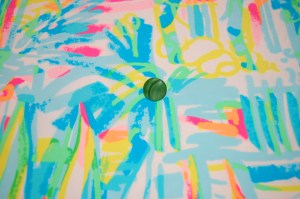
Let me tell you, this was not a pleasure. I slipped and slid the whole way through the construction of this tunic/blouse. My pins would not stay in place, falling out willy-nilly. Clipping and trimming was a nightmare, as the fabric kept sliding in the way of my scissors. I contemplated spraying the entire thing with hairspray to stabilize it! Then, once I had enough of the tunic/blouse sewn that I was able to visualize my green silk accent strips on it, I realized that the green buttons I had planned to use were going to look – awful.

The green of this button is too deep for the colors of this fabric.

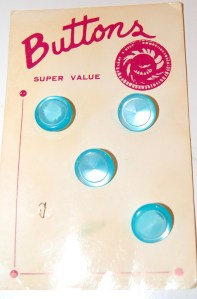
Happily, my luck changed just a bit. I went to my button box and found this card of four buttons.

One button was missing, but that was okay, as I only needed four.

They had been a “bonus” addition in an order of buttons from an Etsy shop, and I really thought I would never have any use for them. But guess what? They were just right for this tunic/blouse. At least this one thing was easy!

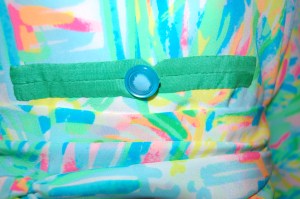
The blue of the button seems to work well with the solid green.

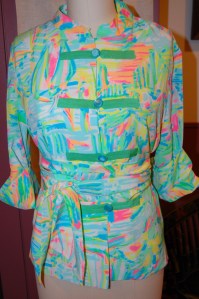
As you can see, I persevered and finished this monster.

I made an Obi-style sash to wear with it, which I think improves its appearance.

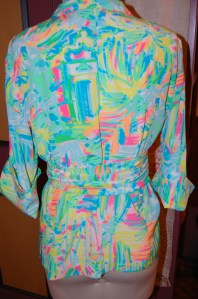
The back of this blouse has a center seam, which allows for some really nice shaping. I haven’t had a chance to get any self-modeled photos made yet, for which I apologize.

Here it is without the sash. In order to keep the slippery sleeves folded up, I had to add a snap on the inside seam of each sleeve.

I haven’t worn it anywhere yet. We shall see if I get any favorable comments; if I do, then perhaps I will eventually enjoy wearing it. At the least, it will stand as a lesson to me – never, ever again to buy any fabric on a whim.

30 Comments

Filed under Asian-inspired dress designs, Blouse patterns from the 1950's, Blouses, Buttons - choosing the right ones, sewing in silk, Uncategorized, vintage Vogue patterns from the 1950s

A Practical Decision

A practical decision, made out of desperation, that is! It is a rare occurrence that I stop working on a project before it is completed, but that’s what I decided to do with my cashmere coat, skirt and blouse ensemble. Quite simply, life got in the way, without asking me first! Robbed of sewing time for one reason or another, I had to make a decision: should I quietly and gently fold my unfinished skirt and blouse away for a summer sleep, and get busy on my Spring sewing? Or should I plow through and continue work on this wool ensemble as the allure and charms of Spring sewing beckoned me on? Well, Spring’s charms won, especially as I am now facing middle-to-late May deadlines for a silk dress to wear to a wedding and another fancy event.
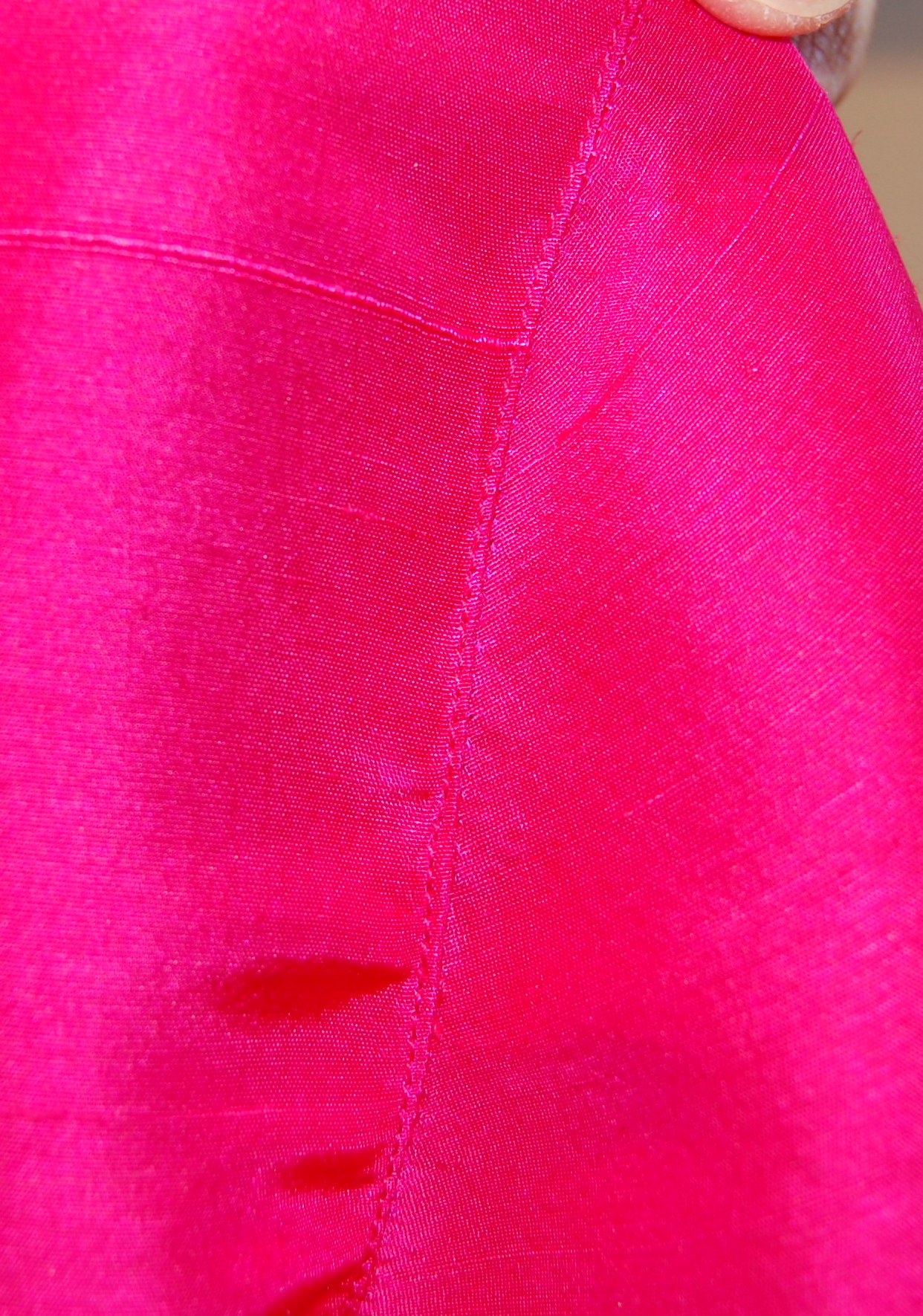
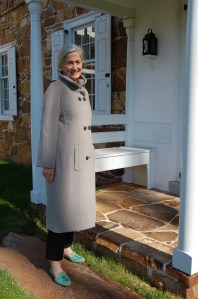
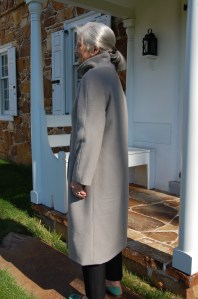
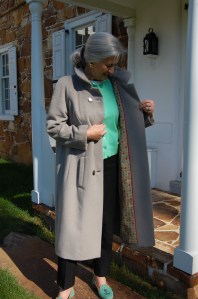
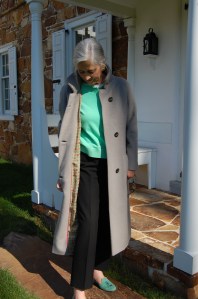
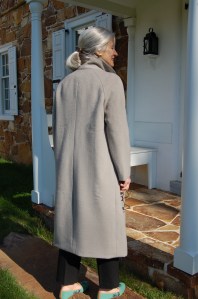
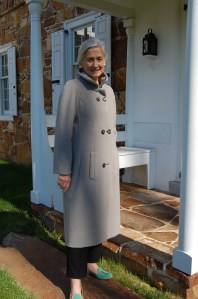
But I had promised photos of my coat, so before everything goes in the cedar closet until next September, I thought I should share the progress I did make. Even on a cool Spring day, this Cashmere coat felt glorious to wear, even briefly.

A Practical Decision

A Practical Decision

I am very happy with the lining!

I am very happy with the lining!

A Practical Decision

A Practical Decision

This coat is very warm and buttery soft.

This coat is very warm and buttery soft. These photos confirm for me that I need to reset the working buttons, making longer thread shanks, to accommodate the bound buttonholes.

The skirt is a six-panel slight A-line style.  Because the fabric is heavier than I would normally use for a skirt, I wanted to eliminate darts and a waistband, to help control the bulk. I decided to make a waist facing made out of wool challis (used for the coat lining and the blouse), and attach it to a skirt lining made of Bemberg rayon. The skirt is completed except for the hem.

This shows the waist facing, with the Bemberg lining attached to it.

This shows the waist facing, with the Bemberg lining attached to it.

Making a blouse out of wool challis demanded some special considerations. The fabric is finely woven and lightweight, making me hesitant to use waxed tracing paper to make any markings on it. So, I decided to thread trace all the seam lines and markings. This is, of course, the process one uses for the construction of a classic French jacket, so I am comfortable with it. It sounds time-consuming, but it goes fairly fast, and is fool-proof.

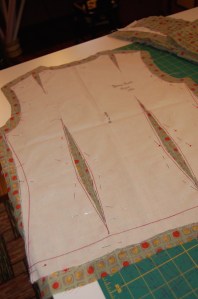
This shows my muslin pattern, cut on the seam lines, and with the darts cut out, so that I could tread trace along all sewing lines.

This shows my muslin pattern (with the changes I made to it), cut on the seam lines, and with the darts cut out, so that I could tread trace along all sewing lines.

Click on this for a close-up look at the thread tracing of seam lines and darts.

Click on this for a close-up look at the thread tracing of seam lines and darts.

I got as far as having both sleeves completed, the body of the blouse put together, and the collar pinned in place. I am feeling good about my progress, and I know I can pick this up again, knowing that I really am in the home stretch on this particular project.

The pinned collar, placed along the neckline.

The pinned collar, placed along the neckline.

One of the sleeves pinned in place.

One of the sleeves pinned in place.  The sleeves are three-quarter length.

Good-bye to Winter and Hello to Spring!  Right now it feels wonderful to be focusing on silks and linens, bright colors and feminine fancy things. I am “desperately” happy with my decision!

21 Comments

Filed under Blouse patterns from the 1950's, Blouses, Coats, couture construction, Dressmaker coats, Mid-Century style, Uncategorized, Vintage fabric, vintage Vogue Designer patterns, vintage Vogue patterns from the 1960s, woolens

Festive Attire

This time of year is not called The Festive Season without good reason. Replete with parties and holiday events, December is like no other month of the year. Particularly delightful are the parties which are given in someone’s home – and they deserve special attention to attire. I firmly believe it is a compliment to your host and/or hostess to dress up according to the season – which means Festive Attire.

When I am considering what to make (and wear) for a Christmas Party, I keep these things in mind:

1) It should be feminine – as in a party skirt or dress (not pants, with my apologies to those of you who prefer them).

2) If possible, all or some of it should be silk, that luxurious and elegant fabric which always makes a statement.

3) It should be fancy which leaves open many possibilies.

4) Something about it should be colorful – preferably red, the perfect hue for a bright holiday look.

So, how did I do?

Festive Attire

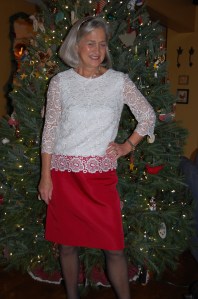
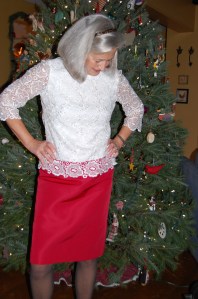
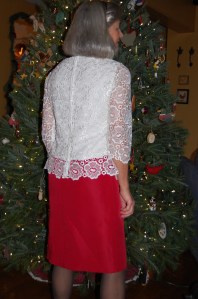
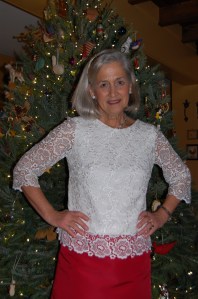
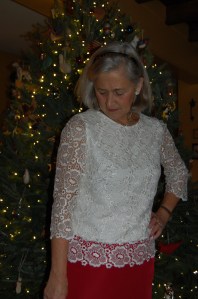
The lace for the overblouse is from Mendel Goldberg Fabrics. I found it online this past summer. Although at the time, I did not know what I was going to make, it was an end-cut, so the yardage was ample. I figured I’d make that decision later. The red fabric for the skirt is a silk faille. I purchased it several years ago and had it in my fabric storage closet. Now I can’t remember what I intended to use it for; I remember when it arrived, I thought it was too stiff for whatever that was. I kind of despaired that I’d never find a suitable use for it, until I got the idea for this outfit.

I used the same overblouse pattern that I worked from this past summer for an eyelet blouse – and set to work on this incredible lace.

I made lots of changes to this overblouse pattern, but it gave me the basics I needed.

I made lots of changes to this overblouse pattern, but it gave me the basics I needed.

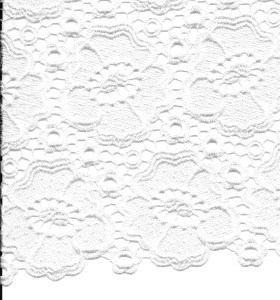
With two scalloped “selvedge edges,” the lace is very versatile. I underlined the body of the blouse with a lightweight cotton/linen blend, and then I lined it with silk crepe de chine.

Festove attire - lace

Perhaps you can see the lovely detail in this small segment of the lace.

Here is an interior look at the silk lining sewn carefully to the armscye.

Here is an interior look at the silk lining sewn carefully to the armscye.

I used a tired and true skirt pattern for the red silk faille.

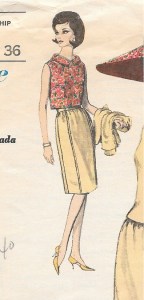
From Vogue's Designer series, ca 1970.

From Vogue’s Designer series, ca 1970.

Because of the stiffness of the fabric, I added about 1/8 of an inch to the side seams to give me a little more flexibility in movement, but now that it is finished, I really don’t think that was necessary. Even though the fabric is stiff-ish, it’s flexible – and I love the sheen it has.

With no construction photos to show you (too busy sewing to take pictures!), I have to be content showing you just the finished product.

DSC_1002

DSC_1000


DSC_1011

DSC_1013

Somehow I was able to cover all my “festive” criteria with this outfit: feminine, silk, fancy and colorful. I must remember this recipe for next year’s Festive Season.

33 Comments

Filed under Formal or fancy dresses, Lace, sewing in silk, Uncategorized

Saddle Up!

Western style (as in American cowgirl and cowboy) is not something that regularly occupies my mind – until I see something that is quintessentially Western fashion, and then it grabs my attention. I have often wondered if the styling on the pattern envelope for my color-blocked coat, featuring the model in a Western-style cowboy-inspired hat, may have been added to my great predilection for this coat!

Coats of certain length - 7

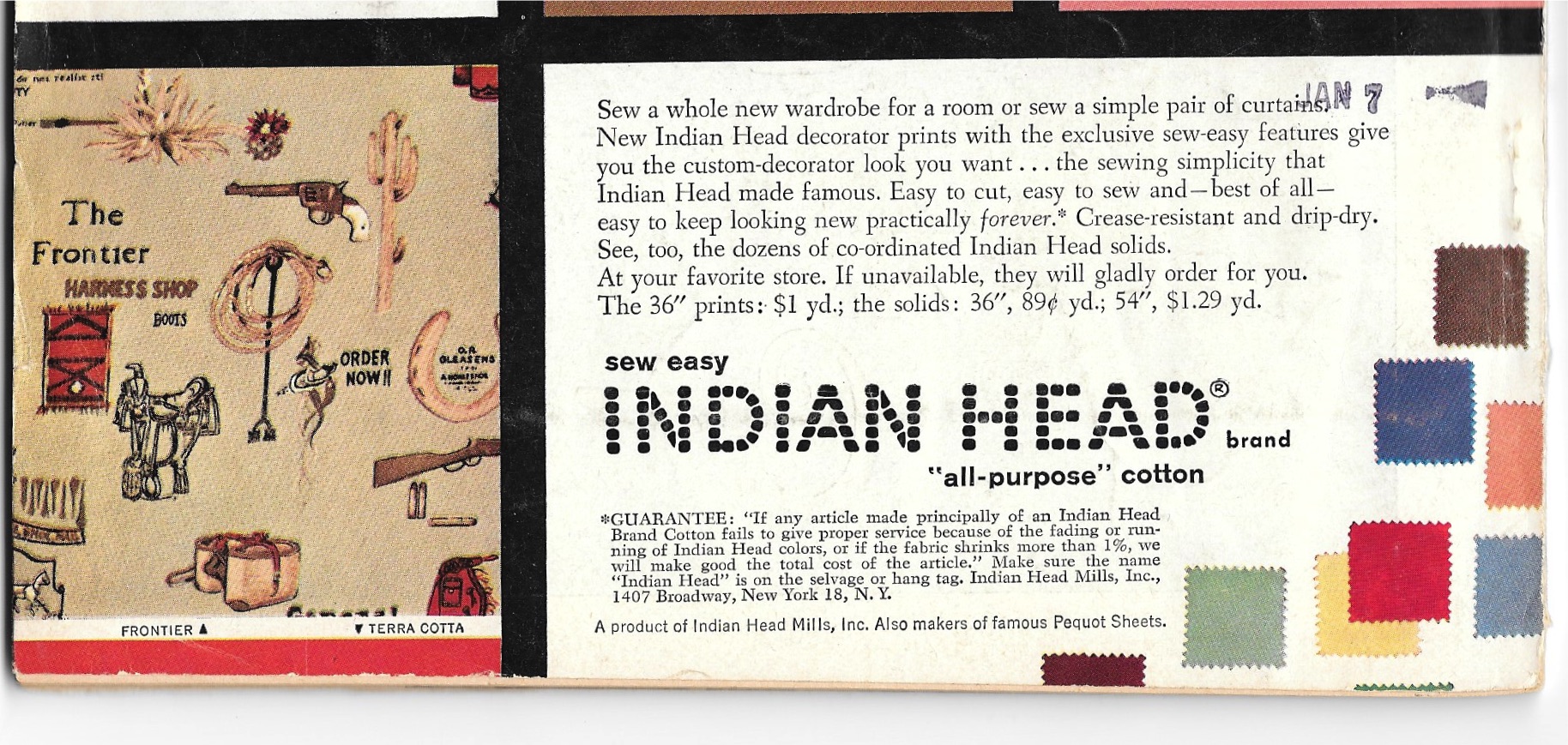
Because I knew I was going to be spending a good bit of my 2015 Summer in Wyoming (in the American West), I thought it might be fun to see if I could find Vogue patterns (or anything else) featured in any of my vintage Vogue Pattern Book Magazines, that were clearly Western style.  Well, there is no doubt about the Western theme of this decorator fabric pictured in an ad in the February/March issue of VPB Magazine:

What little cowboy - or cowgirl - in 1958 would not love curtains made of this fabric?

What little cowboy – or cowgirl – in 1958 would not love curtains made of this fabric?

And what could be more Western than cowboy and cowgirl shirts? The July/August 1974 issue of VPB Magazine clearly met my challenge:

Western style - shirts, no 1

Western style - shirts, no 2

Somehow, however, I just can’t see myself making a cowgirl shirt. Out here in Wyoming, it would look like it belongs. Wearing something like this at home in Pennsylvania might get heads turning for the wrong reason. So my search continued for something else that evoked the West without screaming it. Who would have ever thought I was going to find it in the same Vogue Pattern Book Magazine that featured Diane von Furstenberg on its cover?

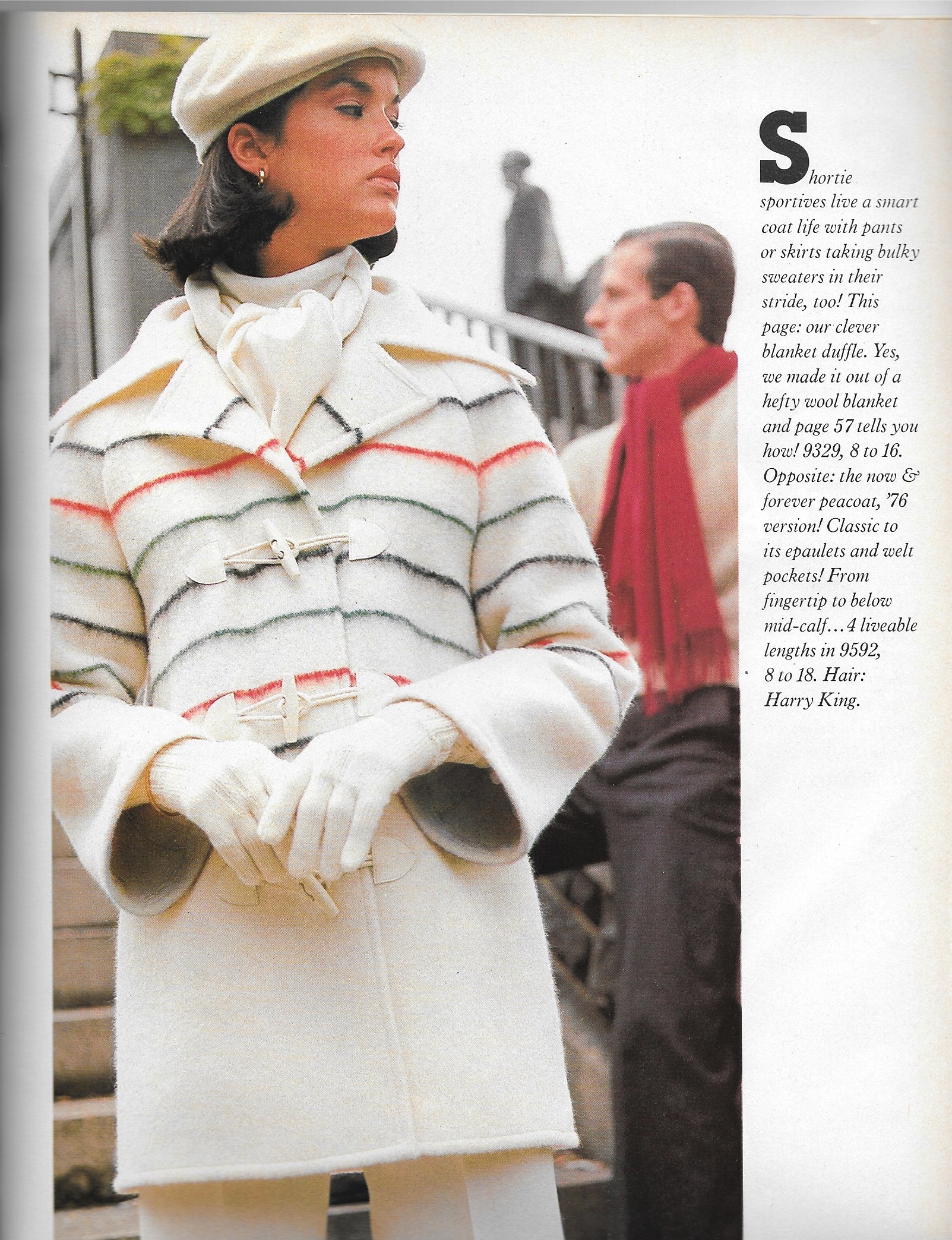
Sure enough, this September/October 1976 issue featured a coat constructed out of an American-made blanket. (Anyone who reads my blog will perhaps remember the jumper I made from an Irish blanket last year. When one can’t find yardgoods, buy a blanket and see what happens!)

Western style - coat-1

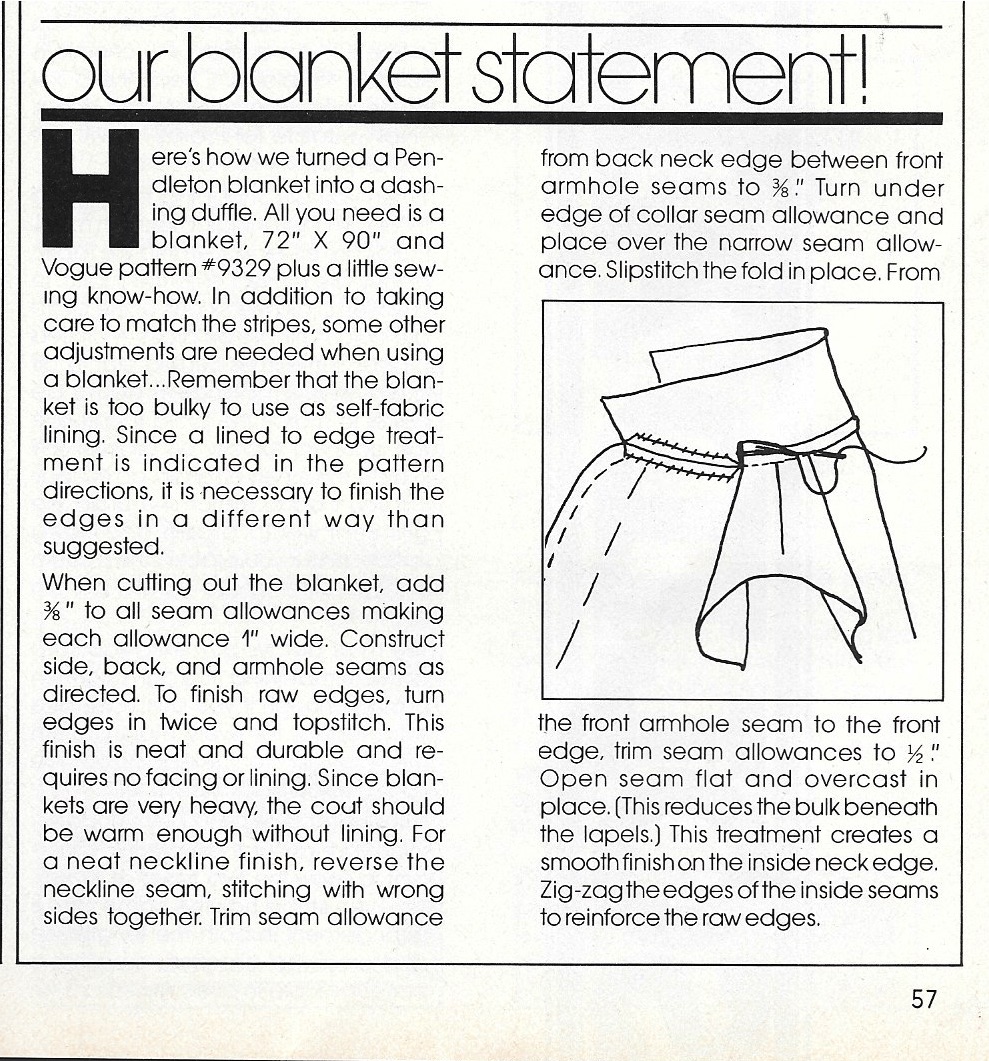
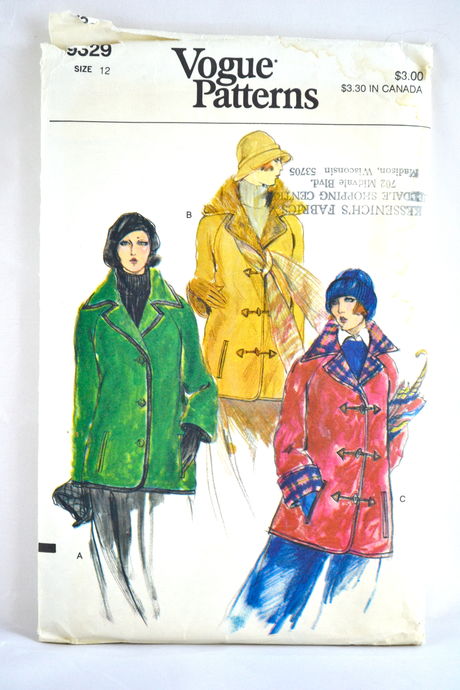
Accompanying the picture in the magazine were these instructions for making a “blanket coat” using Vogue pattern 9329:

Western style - coat instructions

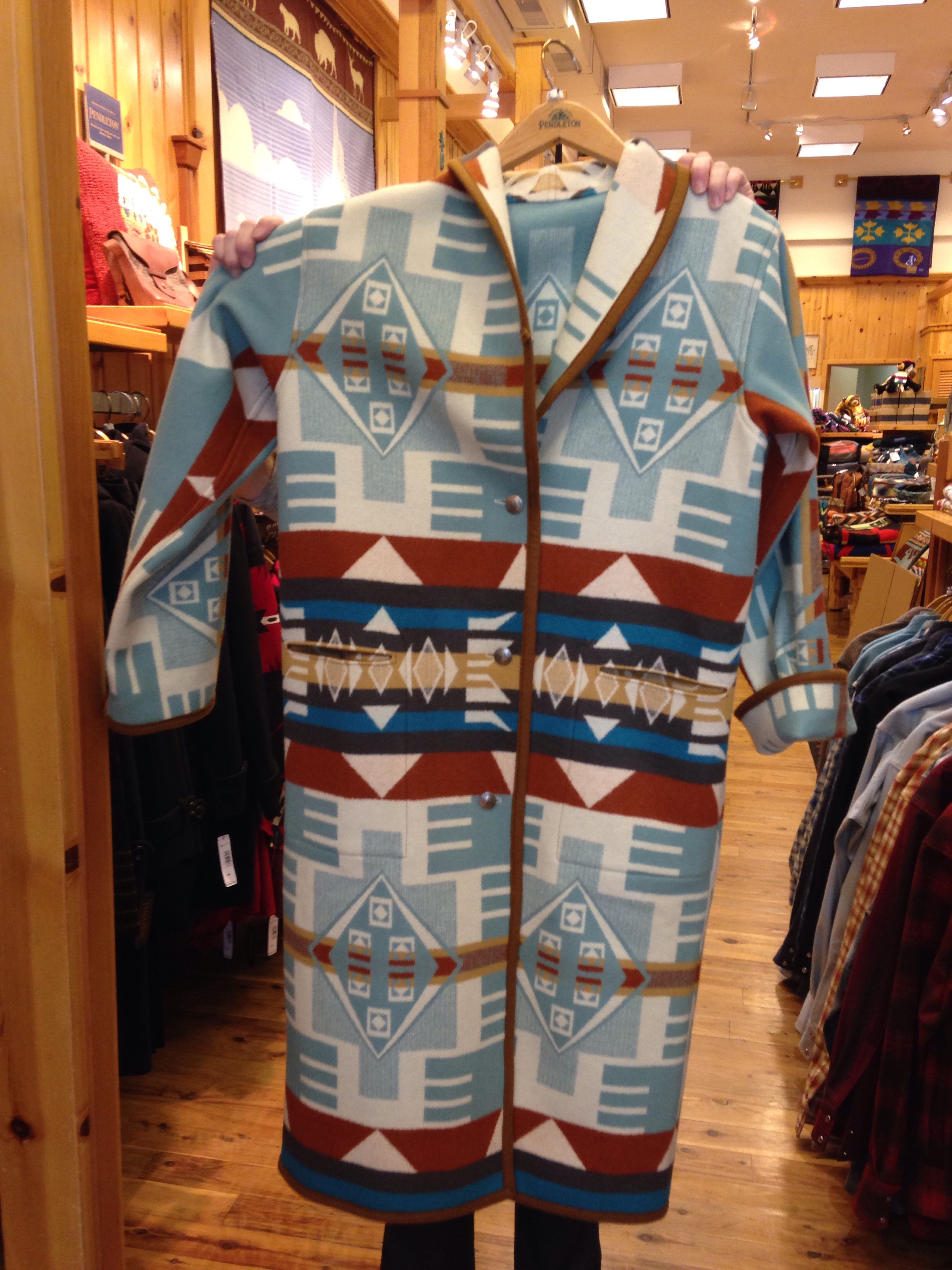
Forty years later the same thing is being done with Pendleton blankets. I never miss the opportunity to look at the handsome Western and Native American-inspired Pendleton blankets in the Pendleton Store in Jackson, Wyoming. Hanging on one of the clothing racks in the store was this custom-made coat:

This particular coat was made for a very large lady, which just goes to show that a twin size blanket is sufficient for all sizes of coats.

This particular coat was made for a very large lady, which just goes to show that a twin size blanket is sufficient for all sizes of coats.

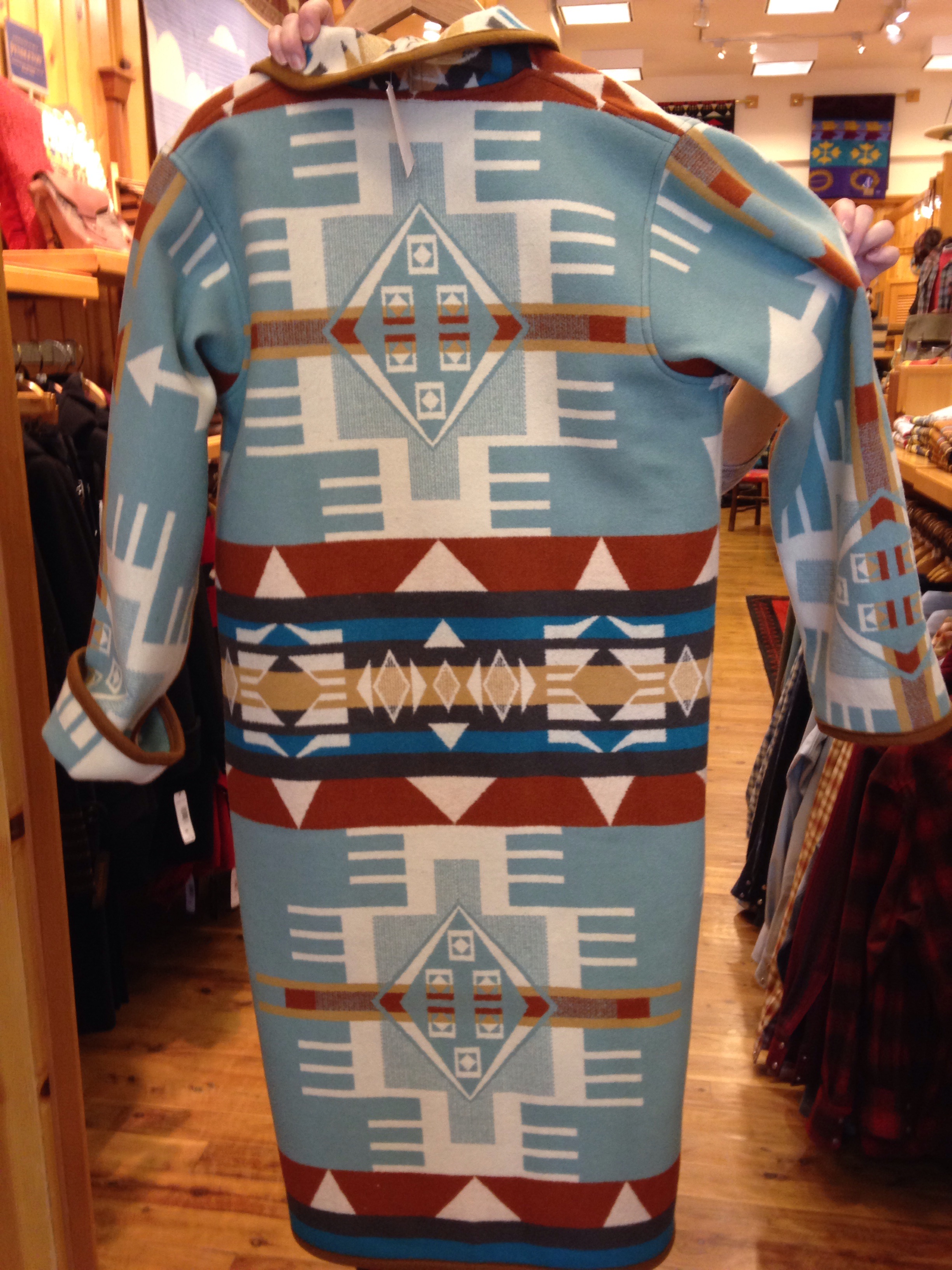
The back of the coat.

The back of the coat.

Made, as stated above, from a twin-size blanket, the coat can be made in long, medium or short lengths, with hood or without hood, with pockets or without them – and it is reversible, too. Customers in the store pick out the blanket they like, measurements are taken: both are sent off to a coat-maker, with whom the store has a relationship, and returned about 6 weeks later. The construction is very much the same as what is detailed in the instructions above; however, the coat-maker removes the narrow wool binding from the blanket before cutting into it. Then she uses that binding for all the edges of the coat.

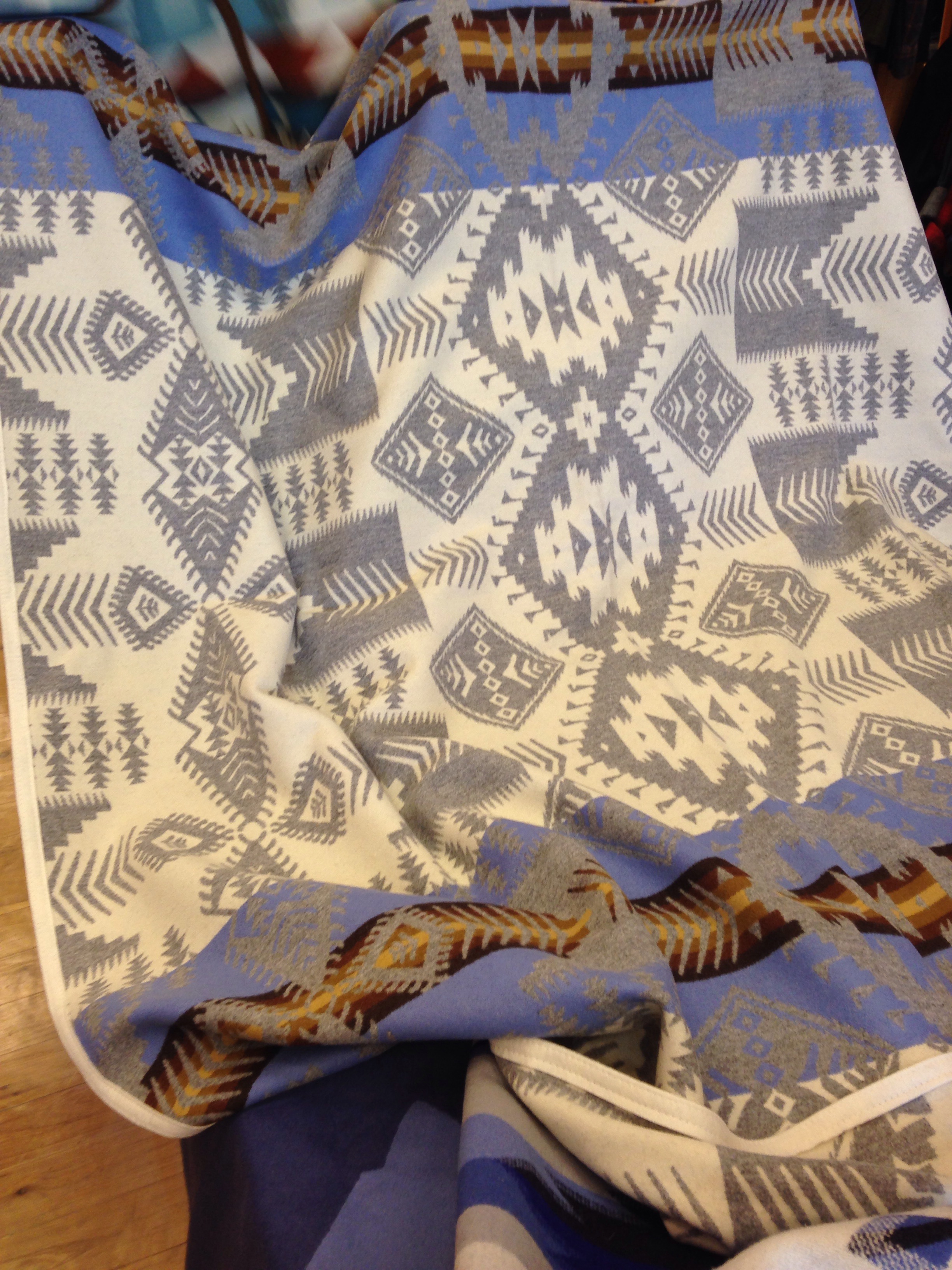
The lovely staff in the Pendleton store pulled out this blanket to tempt me:

The grey, white and periwinkle blue color way would definitely compliment me, I think.

The grey, white and periwinkle blue colorway would definitely compliment me, I think.

So far, however, I have resisted the urge to make a blanket coat, although it might be a fun project with just the right blanket – sometime. But for now I am saddling up to head East, home to beloved Pennsylvania, back to animals and pets I love, back to my by-now-overgrown gardens, and back to my snug little sewing machine who must be wondering where I have been!

9 Comments

Filed under Coats, Uncategorized, vintage Vogue patterns from the 1970s, woolens

Mellow Yellow

How did I go from this . . .

A collared overblouse.

A collared overblouse.

to this?

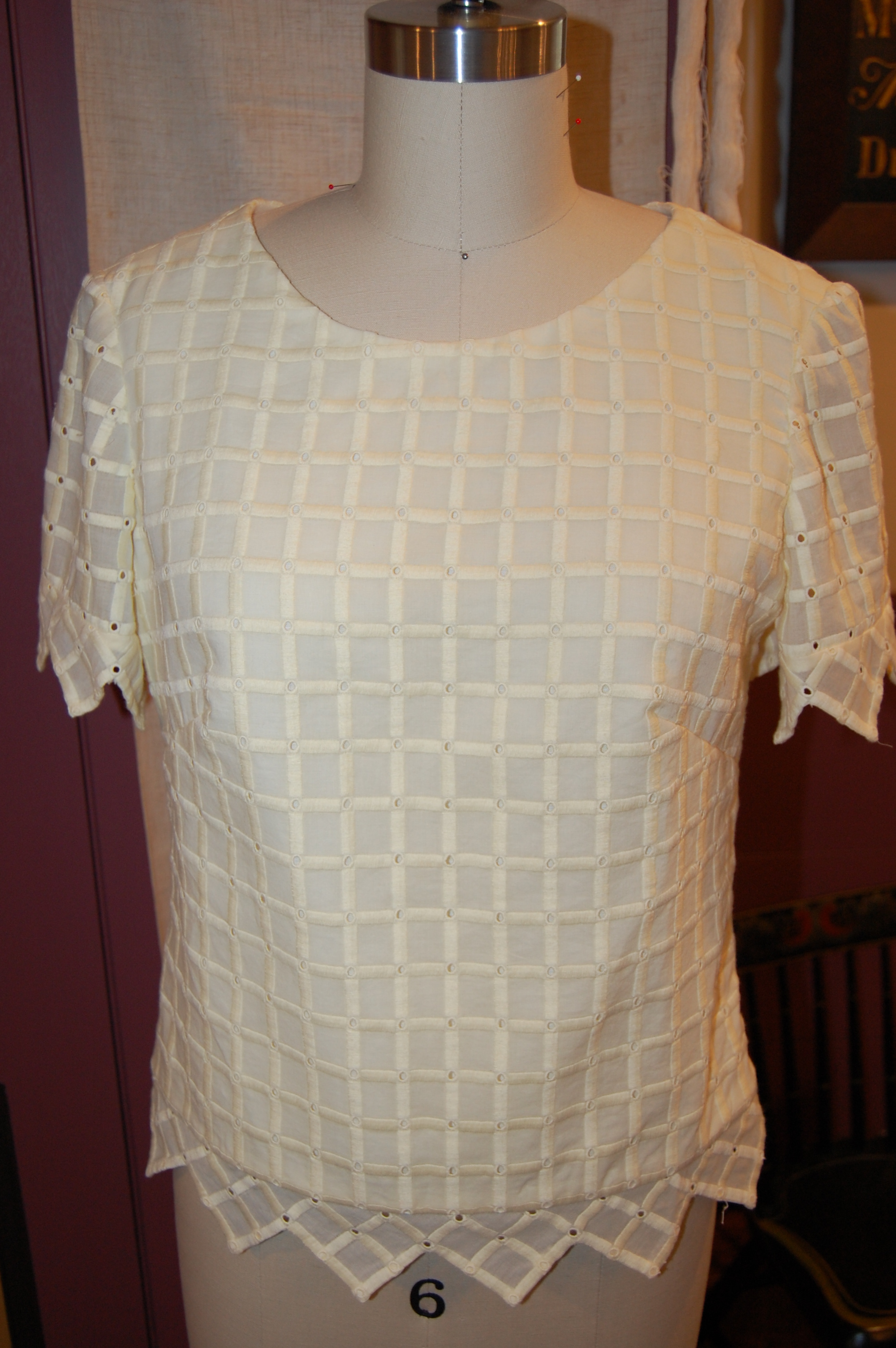
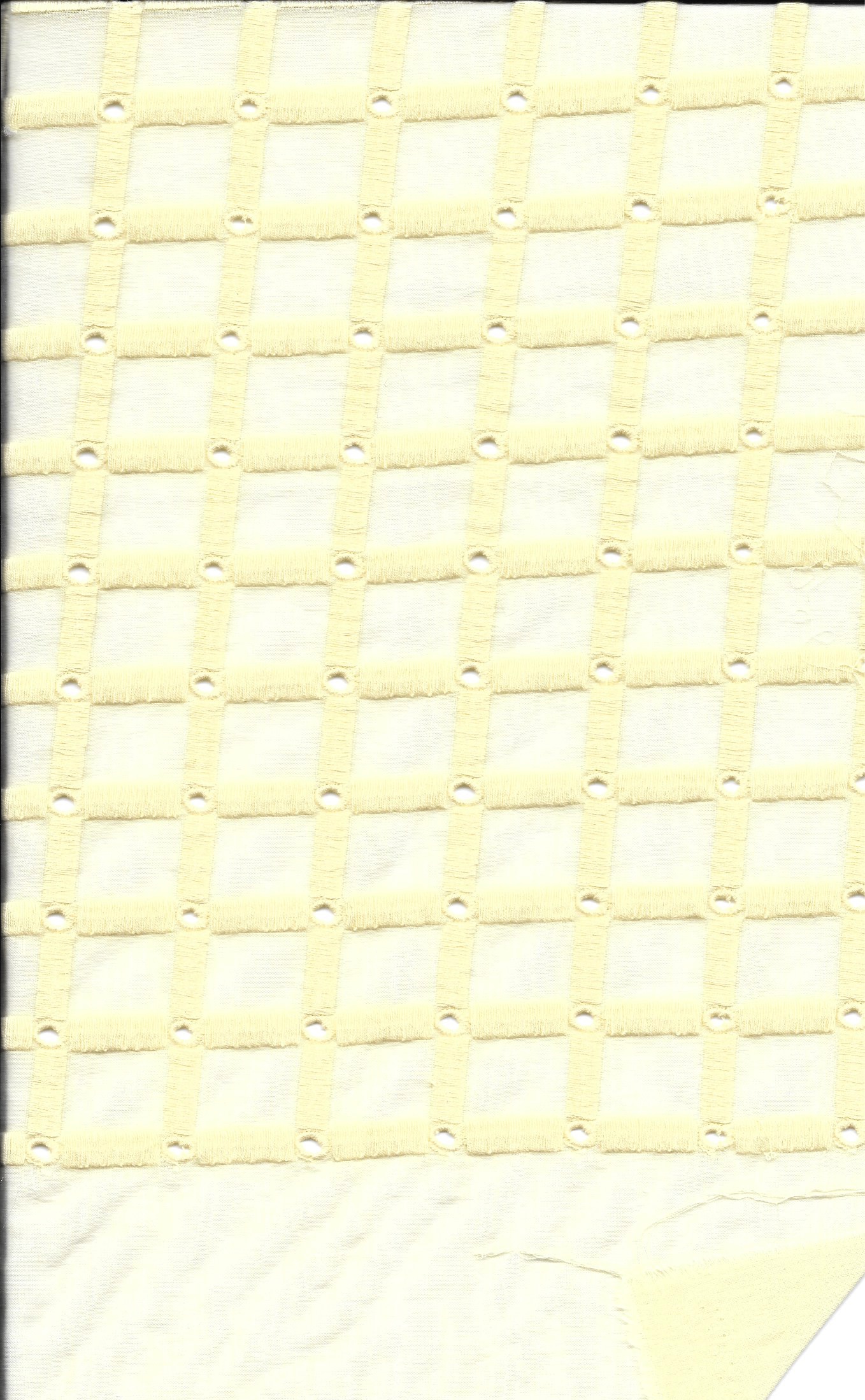
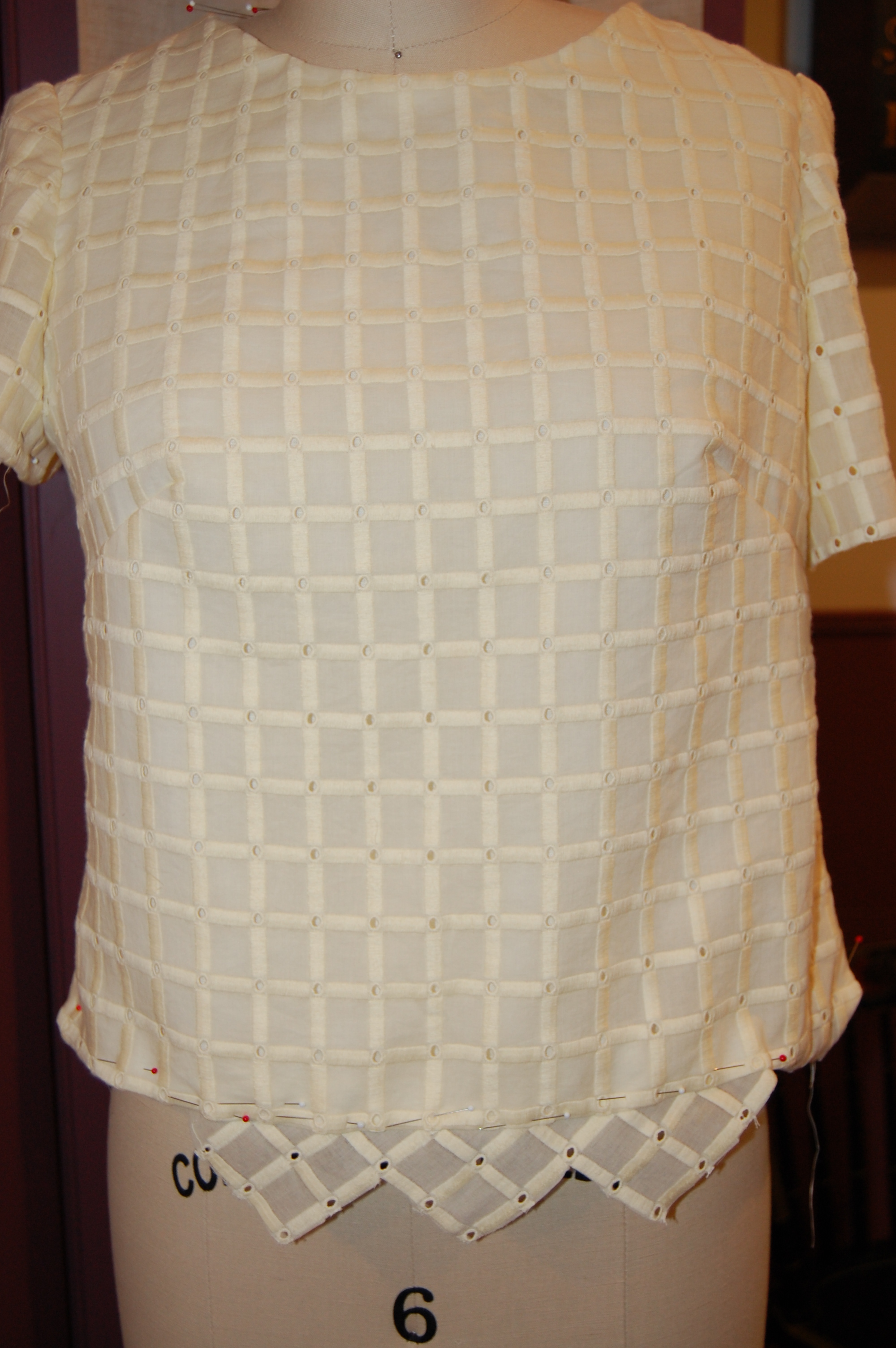
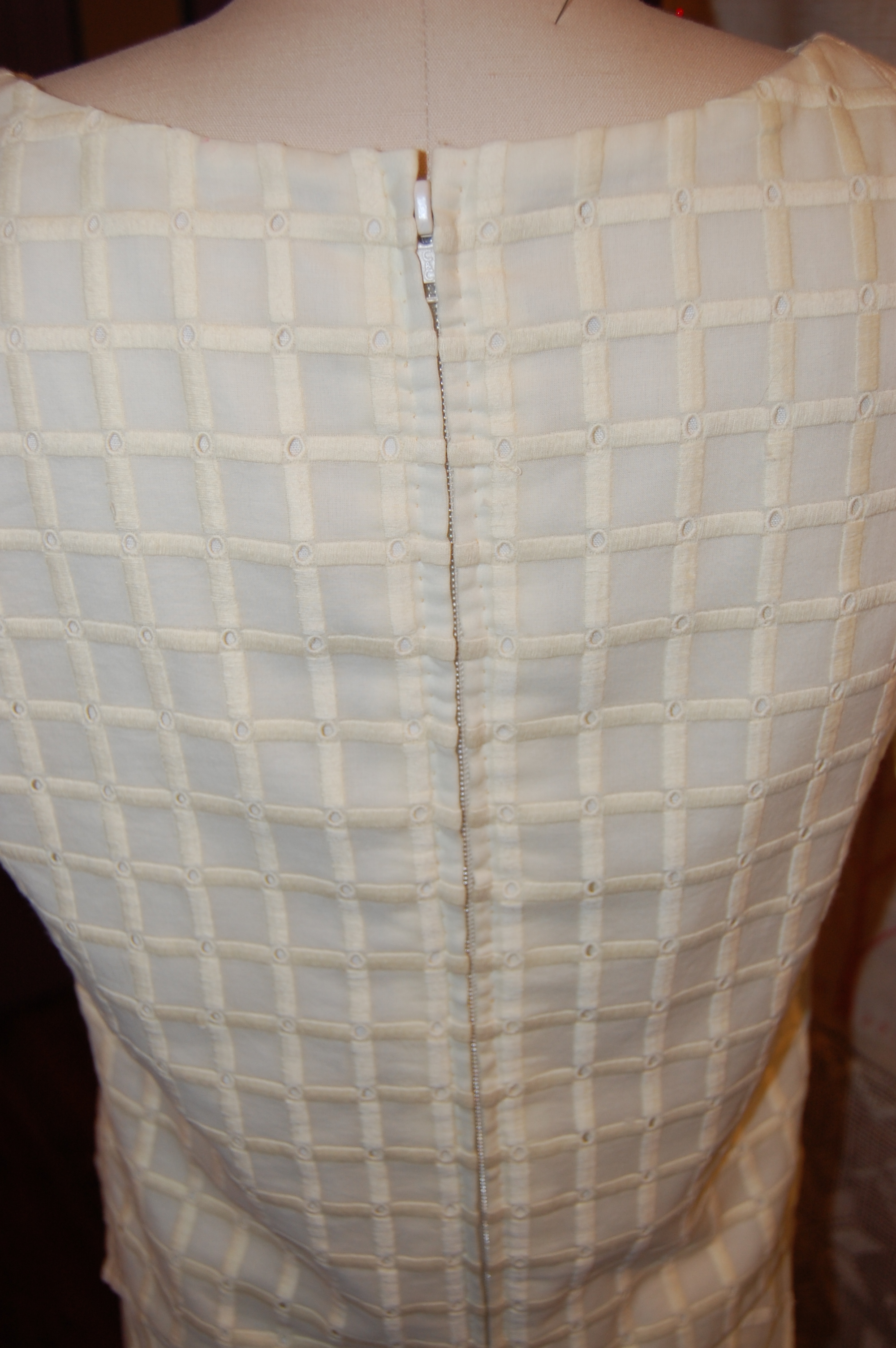
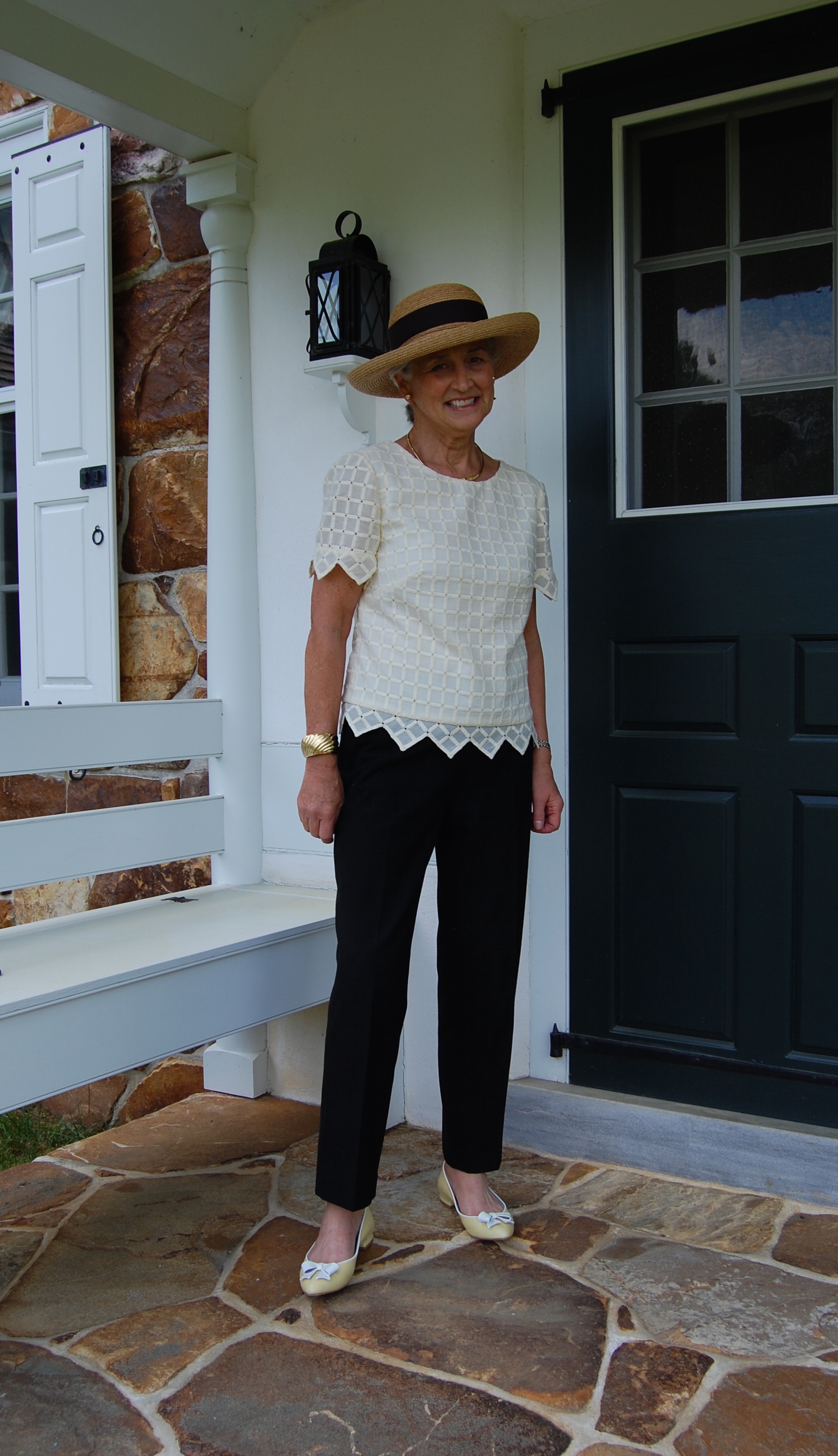
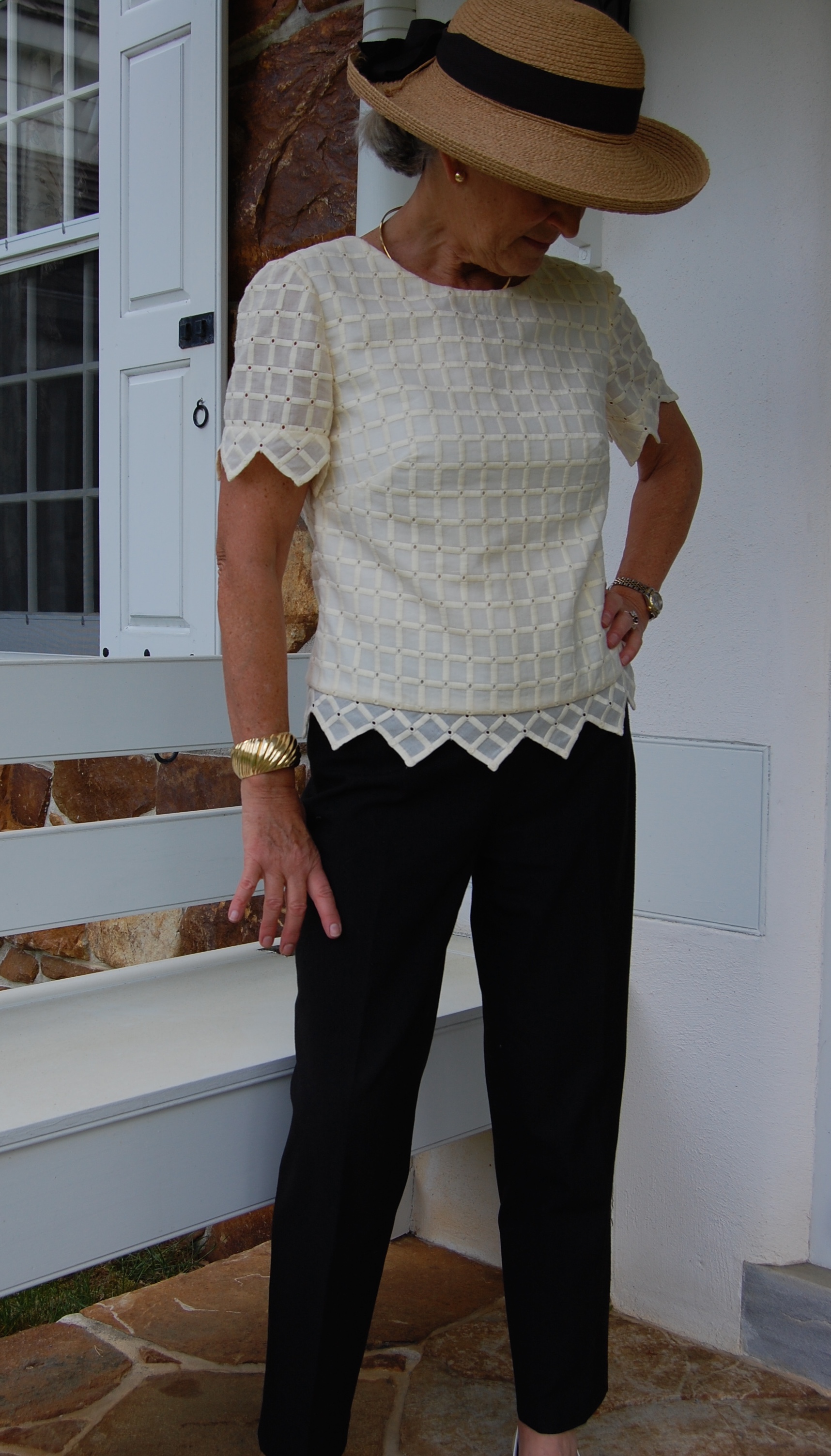
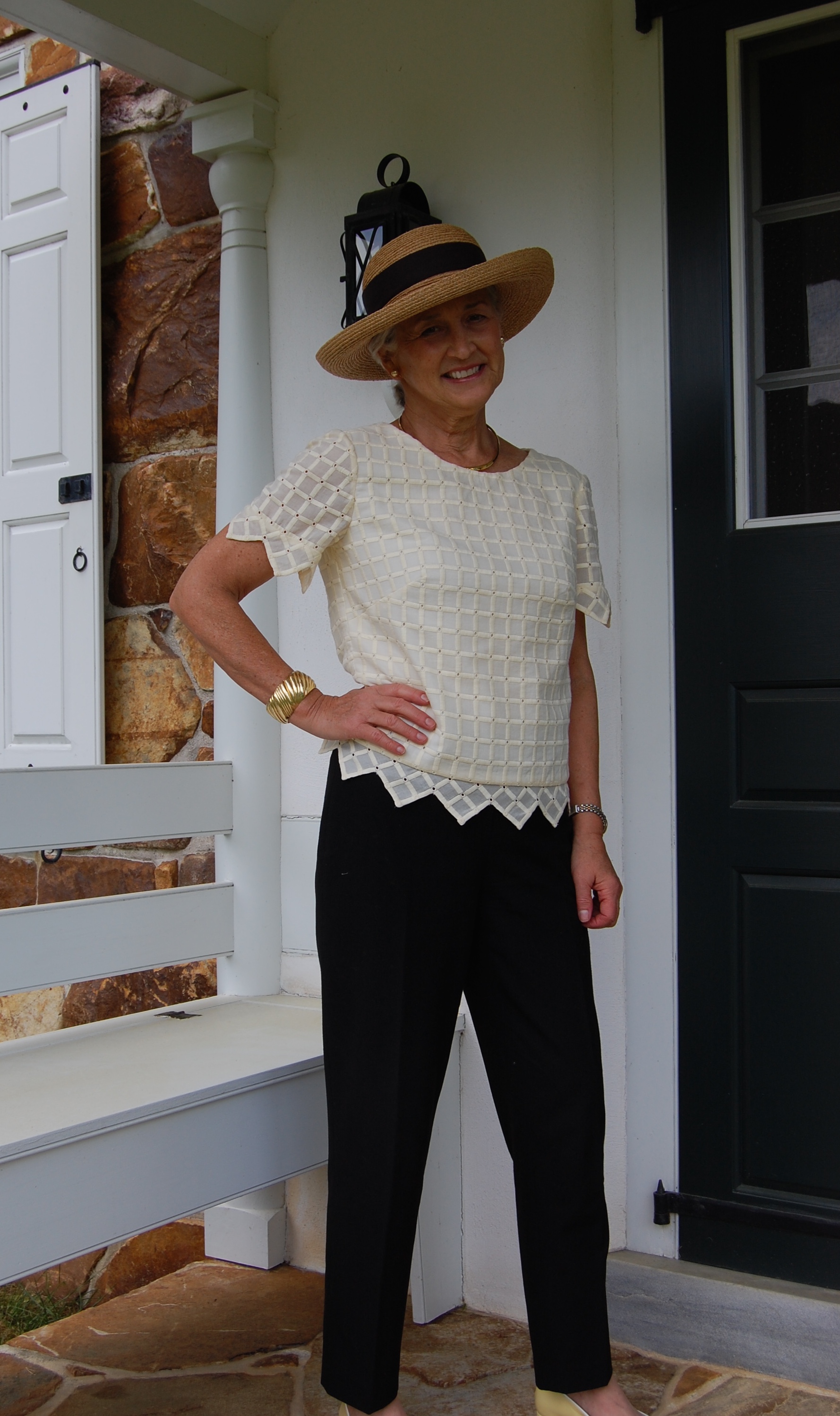
Mellow YellowIt all started about a year ago when I saw this fabric – called Devonshire Cream Geometric Cotton Eyelet Batiste on the Britex Fabrics website. I sent off for a swatch and then ordered enough for a “blouse” although at the time, I wasn’t so sure what kind of a blouse it would be. I knew I would want sleeves in it. While the body of the blouse would need to be lined, the sleeves could be unlined to show off the gauzy design in the eyelet.

Eyelet overblouse - fabric

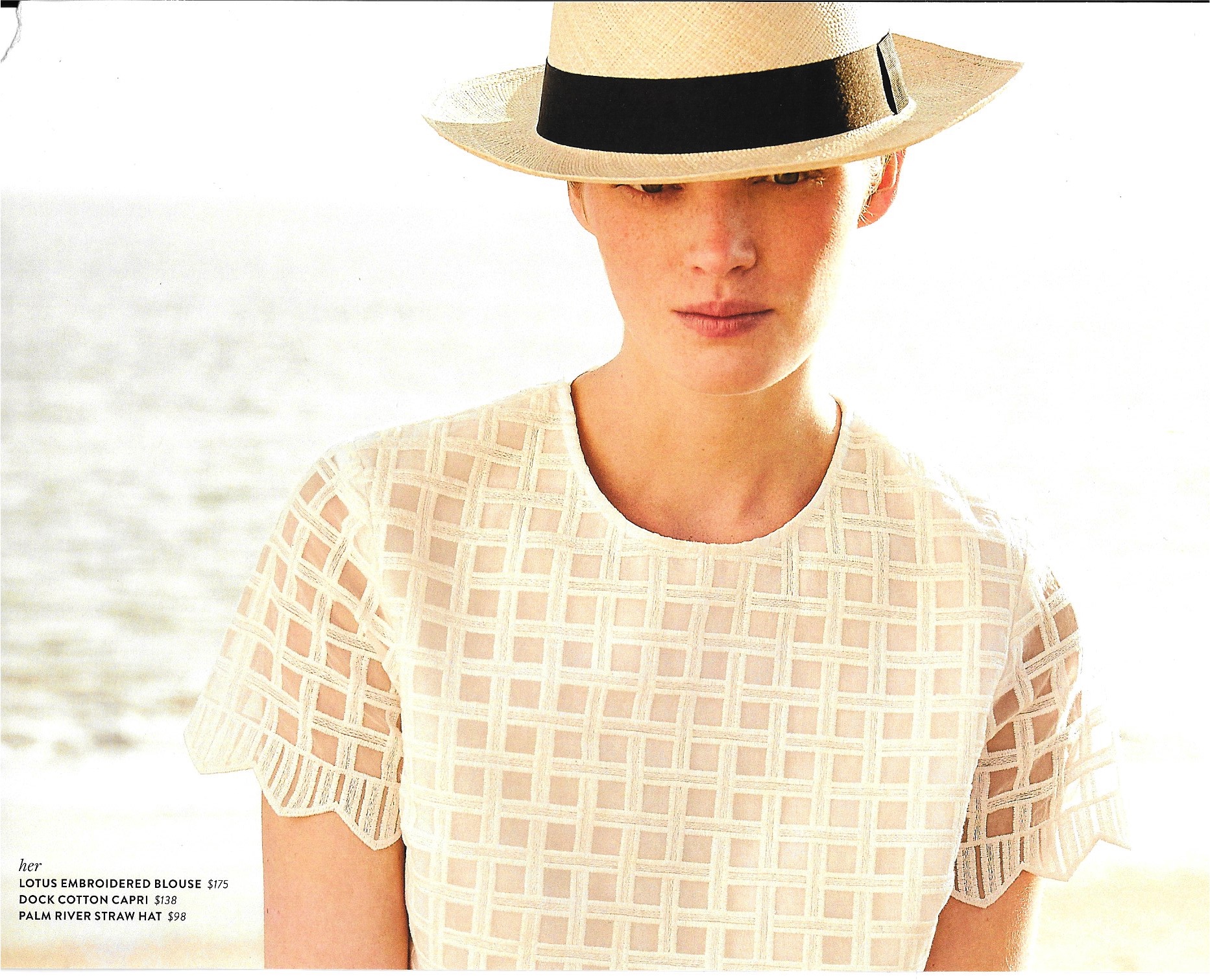
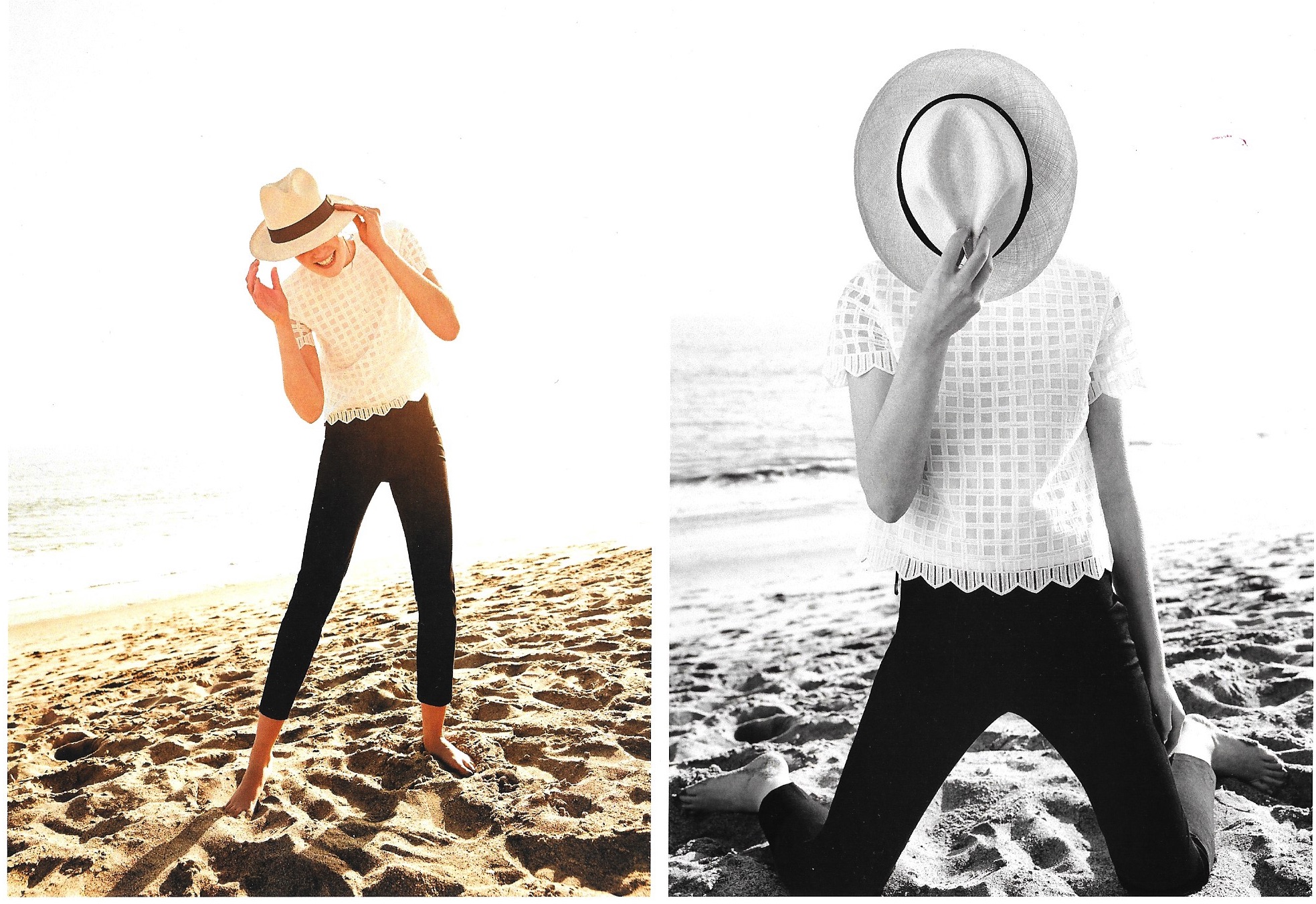
Inspiration finally struck a short few weeks ago when I got a small catalogue from J McLaughlin clothing company. Pictured in it was this “Lotus Blouse”:

Eyelet overblouse - JMcL #2-2

Eyelet overblouse - JMcL #2-3

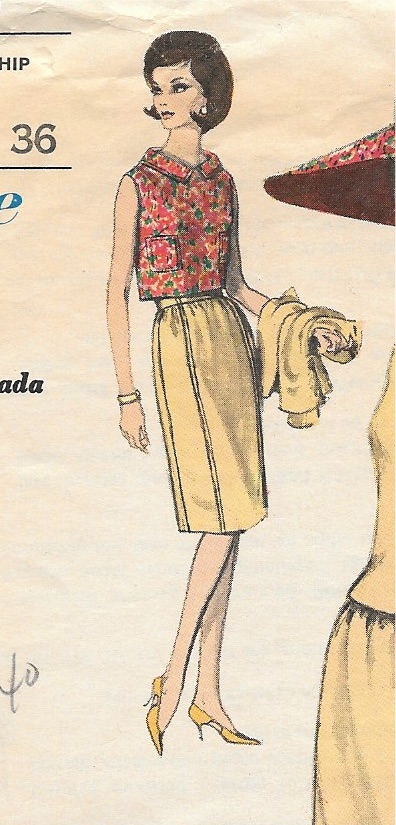
As soon as I saw the “square” design in the fabric, I thought of my eyelet – and then it did not take long for me to decide to make my own version of that blouse. The construction details? Well, I knew I would have to make those up as I went along. I started with the pattern shown above, a classic early 1960s short overblouse that zipped up the back. What could be better? It really didn’t matter that the neckline would be changed, sleeves added, inches added to the length – the basics were there and so I made a muslin/toile.

I cut an underlining for the body of the blouse from a lightweight linen/cotton blend that I always keep on hand. I marked the seam lines of that underlining with waxed tracing paper and then used it as my “pattern” for the eyelet, which allowed me to make sure that all the lines and corners of the eyelet matched across seams. I hand basted the underlining and the eyelet together which made machine sewing the darts and seams very precise.

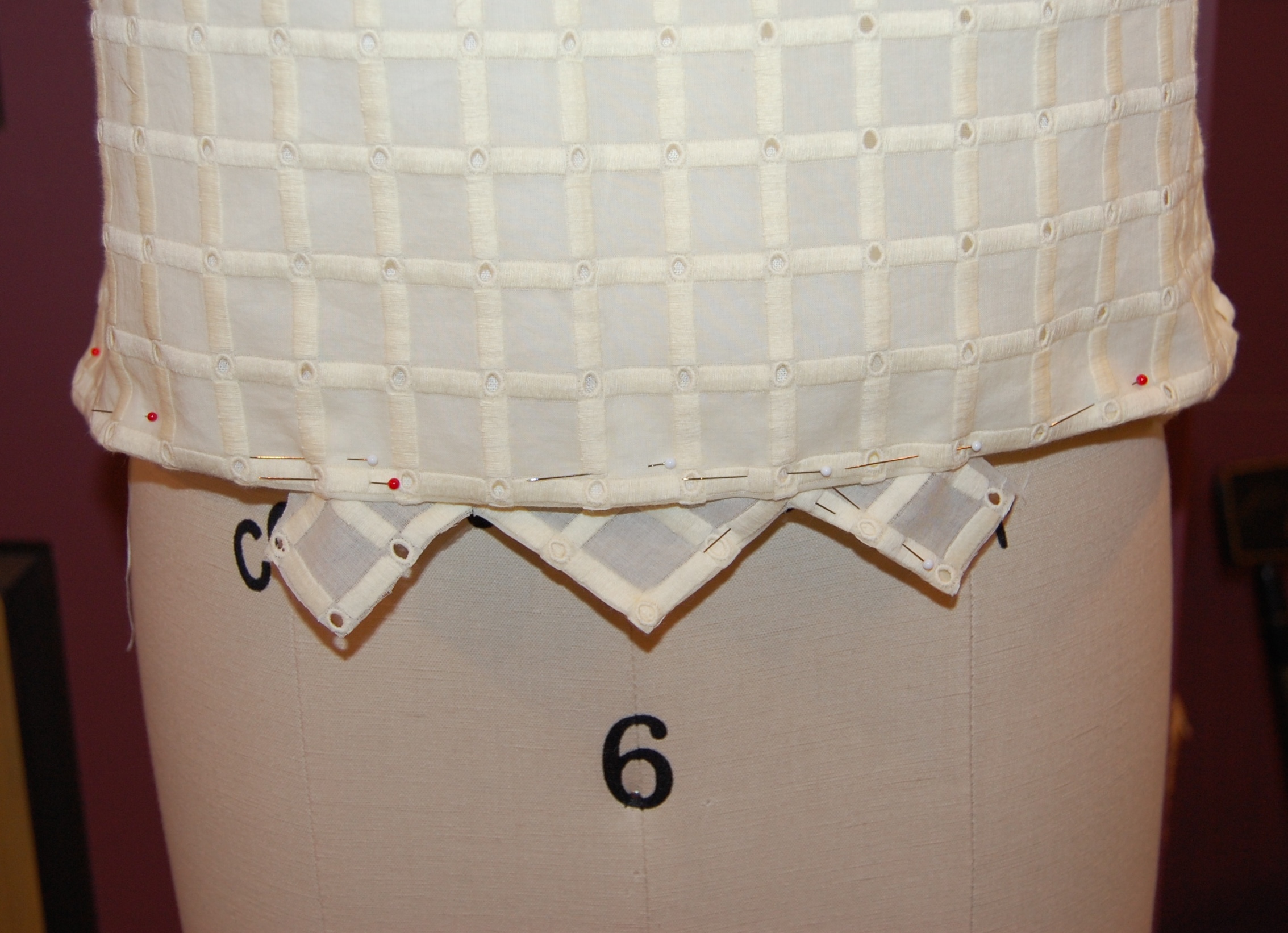
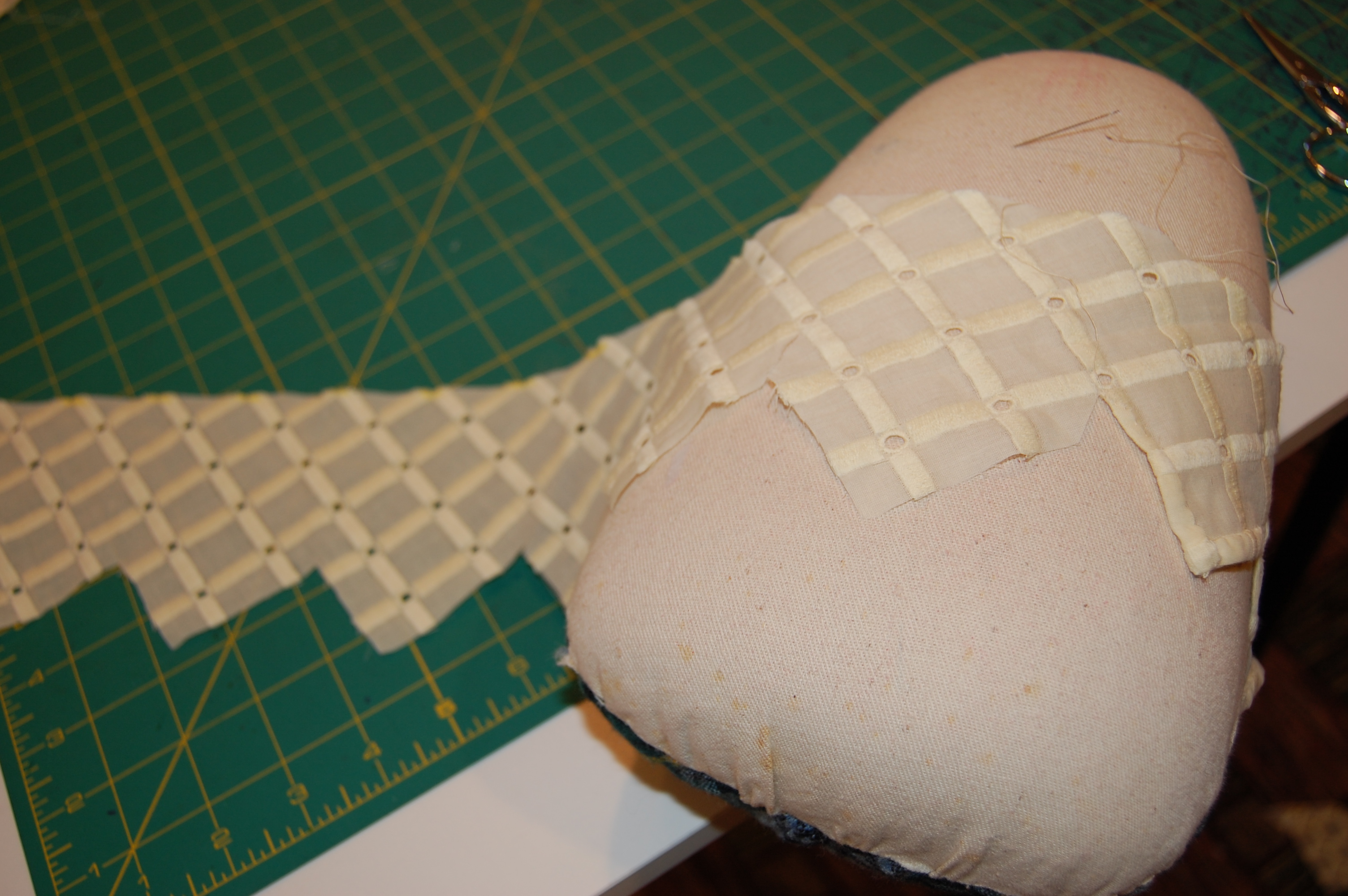
In order to put a sawtooth edge on the sleeves and the bottom of the blouse, I knew I would have to cut fabric on the bias. But first I had to decide how deep to make this self-trim. I did some experimenting to figure that out:

Should it be this narrow?

Should it be this narrow?

Or would a wider trim be   better?

Or would a wider trim be better?

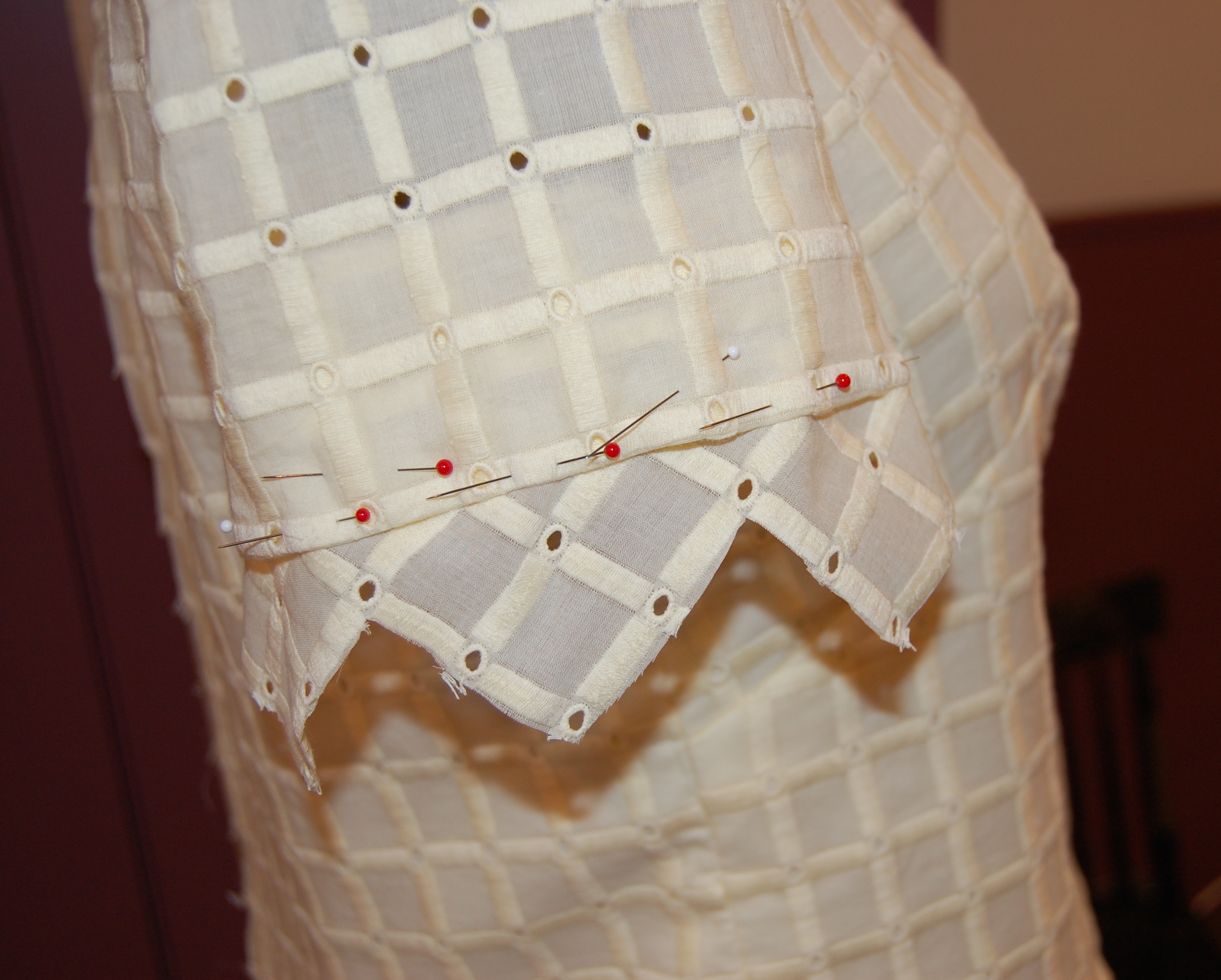
I decided the wider trim was necessary to make the proper impact.  Here it is pinned onto one sleeve.

I decided the wider trim was necessary to make the proper impact. Here is a sample of it pinned onto one sleeve.

Once I decided the proper width of the trim, I set about hemming it by hand.  Here is a photo of that “hemming” process.

On the right you can see one "peak" already stitched.

On the right you can see one “peak” already stitched.

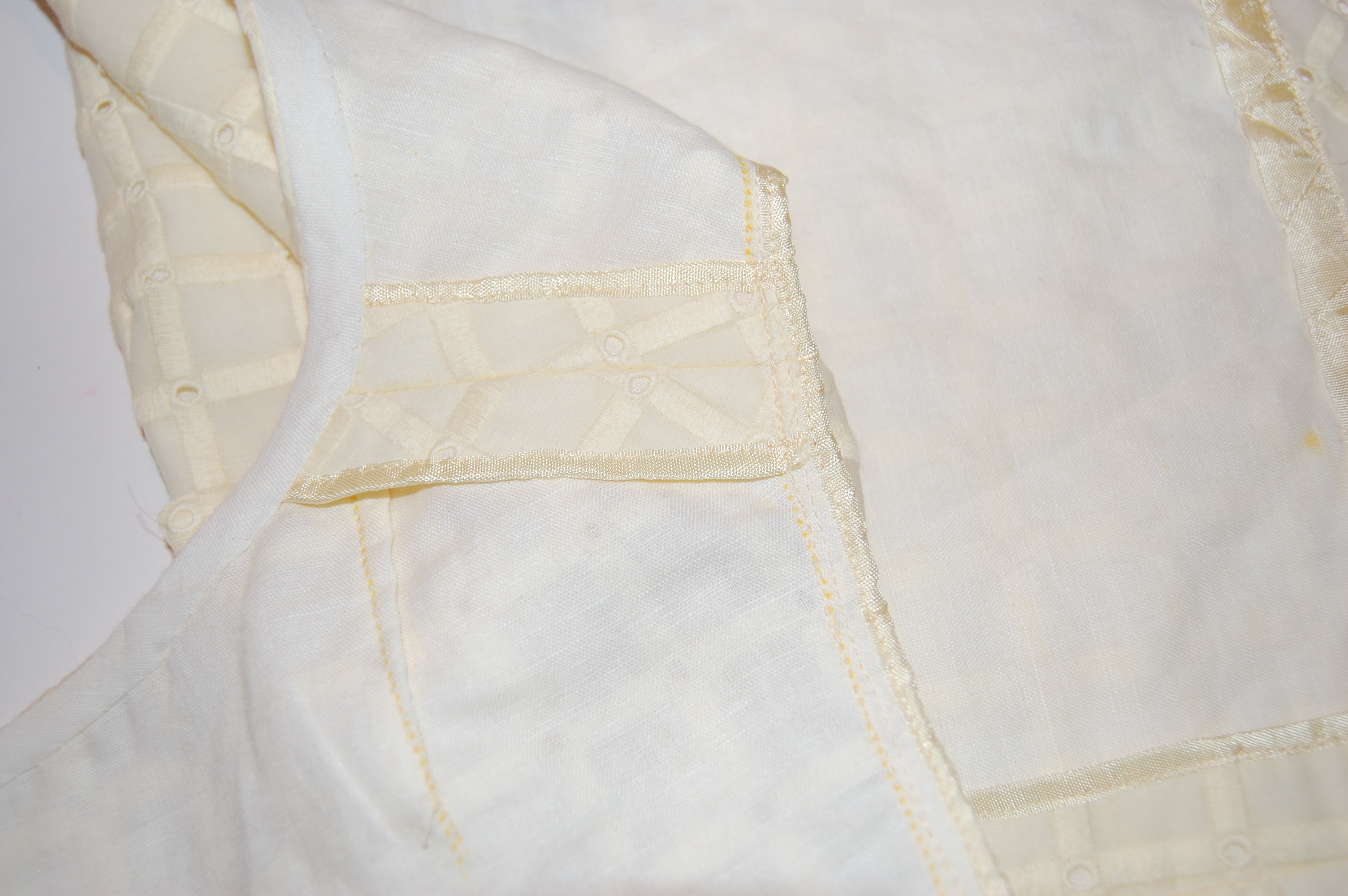
Having the trim cut on the bias gave me flexibility in attaching it to the sleeve and bottom edges. Then finishing the inside raw edges provided its own challenge. I had already used Hug Snug rayon tape to finish the interior seams. The soft, non-bulky nature of this wonder tape gave me the idea to use it for finishing the armscyes and the interior sleeve edges.

I made a bias tape out of the underlings fabric to bind the neck edge.  Seam edges are encased in Hug Snug.

I made a bias tape out of the underling fabric to bind the neck edge. Seam edges are encased in Hug Snug. Click on the photo to see more detail.

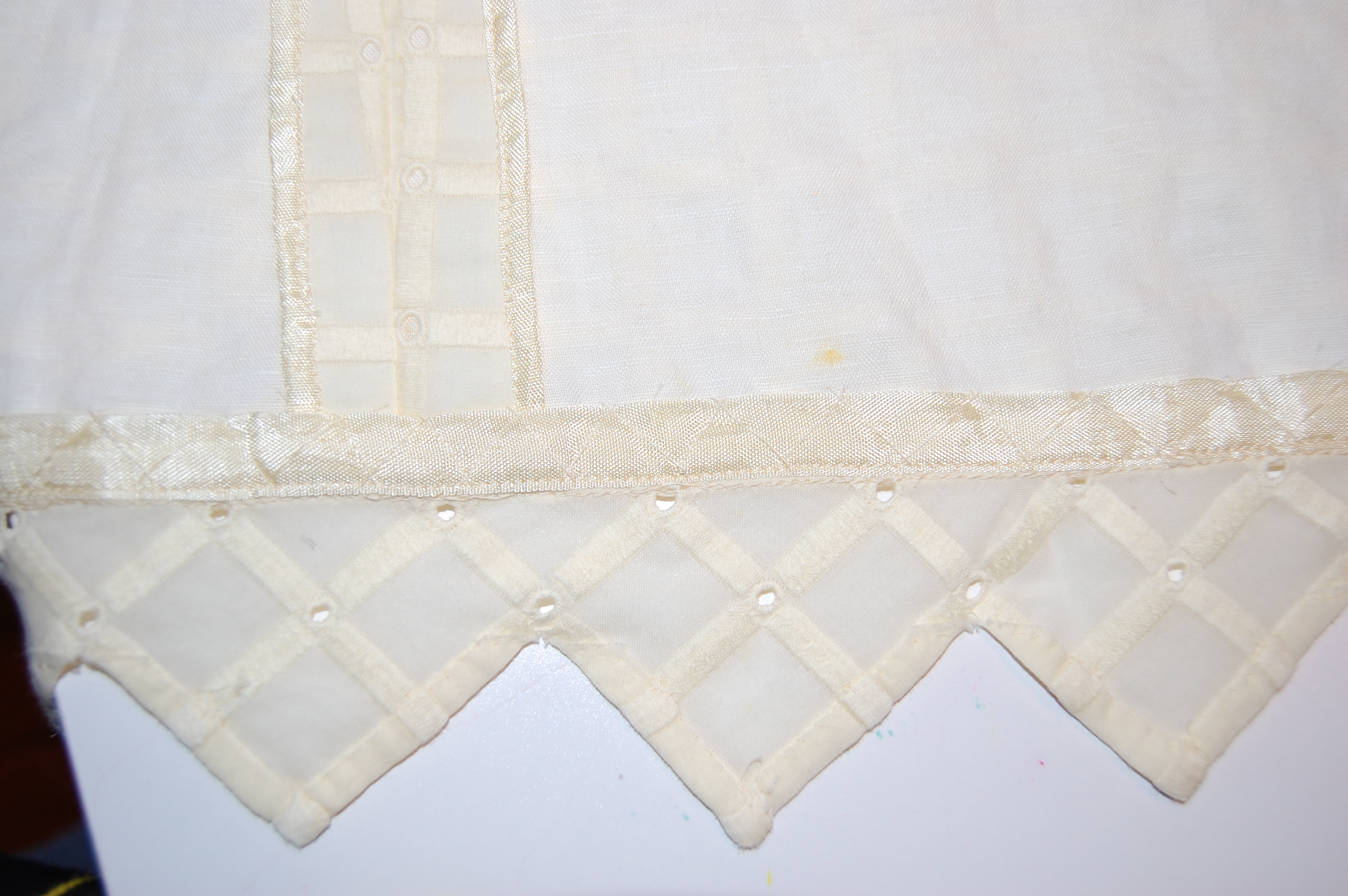
The actual hem on the blouse presented me with three edges (the fashion fabric, the underlining, and the bias trim) to control and hold together. I used Hug Snug again, this time flat and sewn with a catchstitch (a fabulous idea I just got from Lilacs and Lace blog, which I will use again and again! Thanks, Laura Mae!)

The catch stitch is done across the width of the Snug Hug tape.  It is the perfect technique for this application.

The catch stitch is done across the width of the Snug Hug tape. It is the perfect technique for this application.  Again, click on the photo for more detail.

I had some difficulty finding an 18” separating zipper that was lightweight enough for this blouse. I still think the one I finally ended up using is a bit heavy, but until I find another one, this one will have to do.

Mellow Yellow

I still need to add a hook and eye at the top!

I have always loved overblouses. They are comfortable, classic, versatile, and just a little bit different of a look. I think this one fits that description well – I like it!

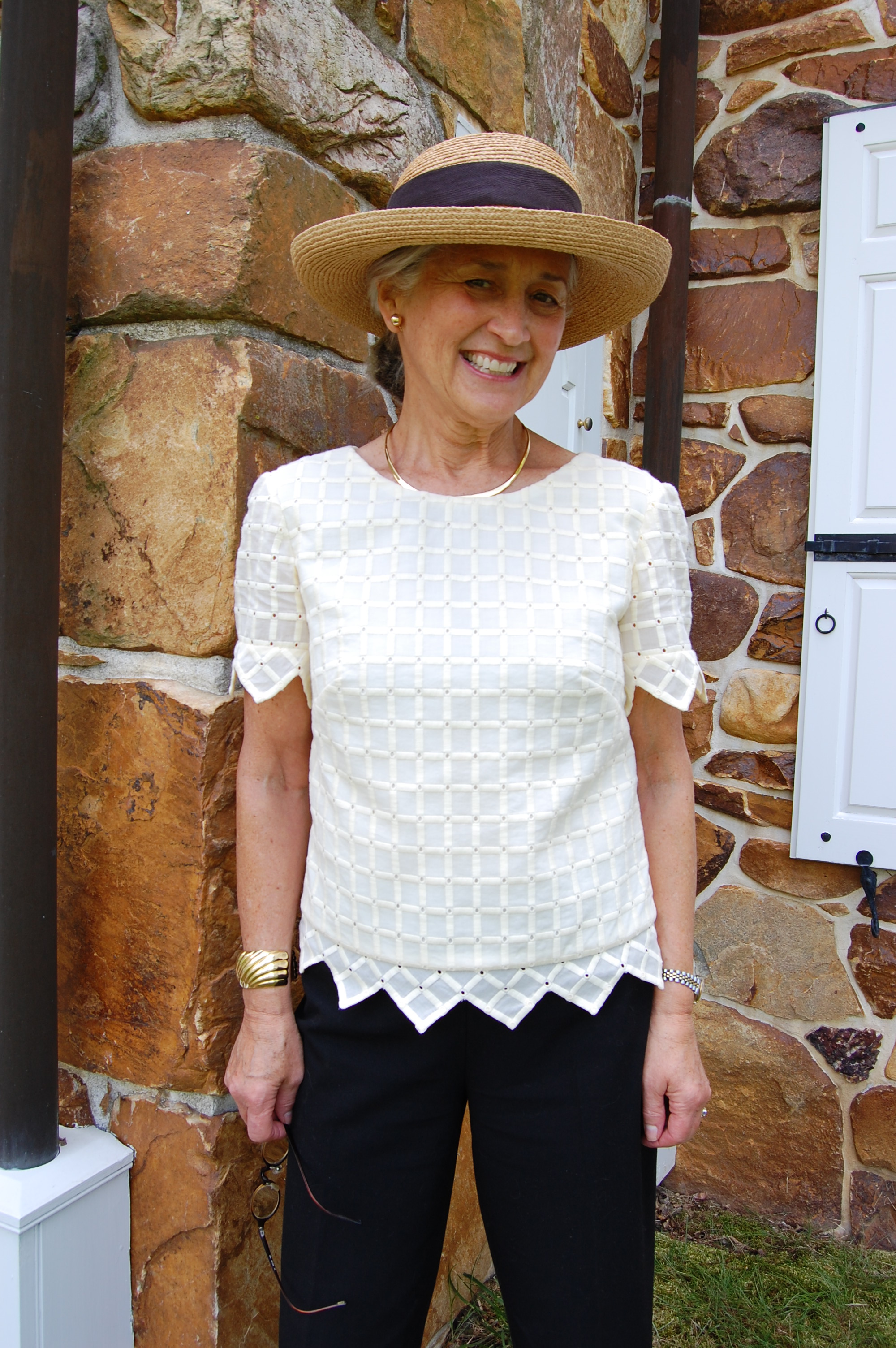
I could not resist styling this blouse with a hat!

I could not resist styling this blouse with a hat!

Mellow Yellow

Mellow Yellow

Mellow Yellow

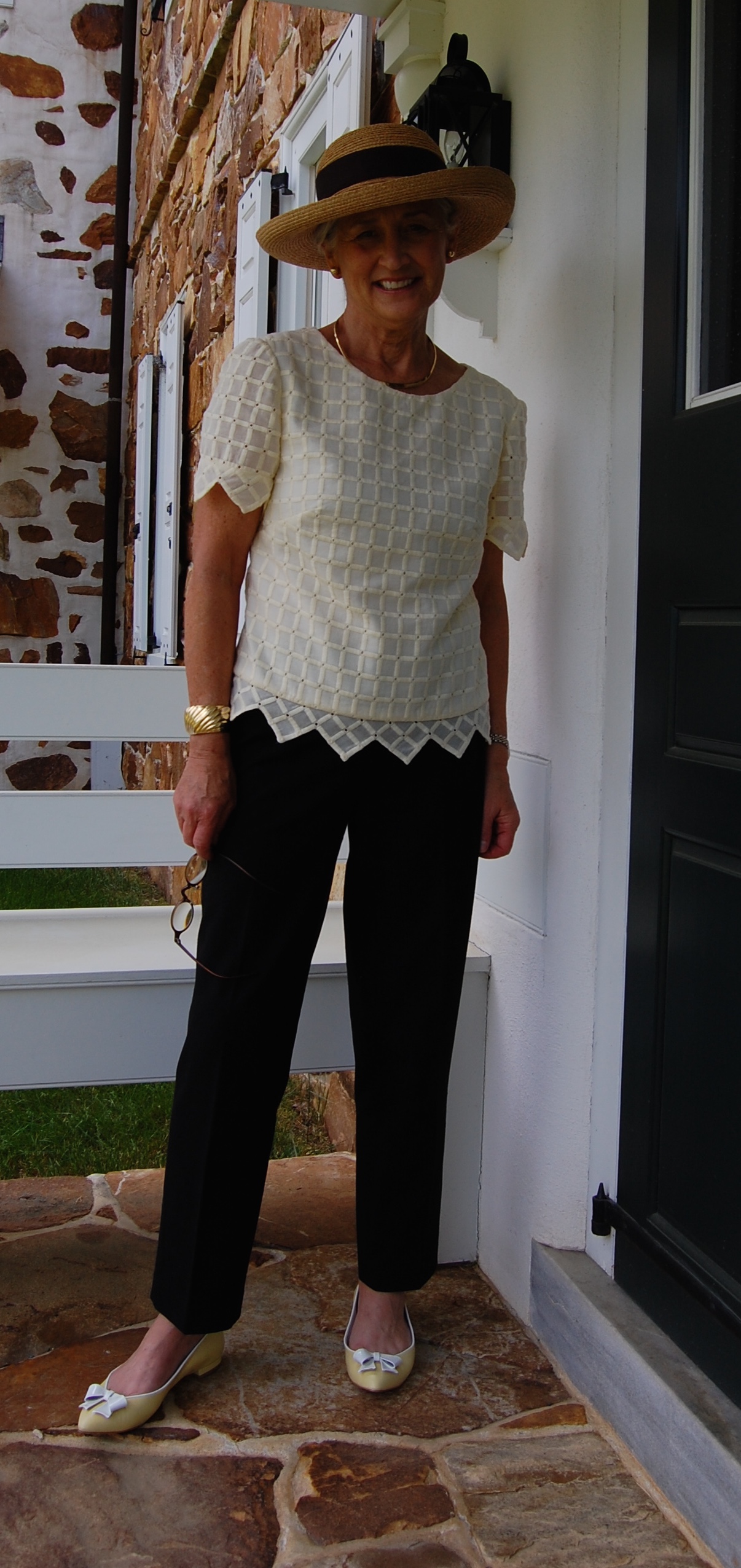
Pale yellow shoes help complete the outfit!

Pale yellow shoes help complete the outfit!

After Mellow Yellow, where do I go? My next project is anything but mellow – or yellow, for that matter.  June will find me thinking – and making – fancy, but not frilly. Details soon . . .

35 Comments

Filed under Blouses, Eyelet, Mid-Century style, Uncategorized, underlinings, vintage Vogue patterns from the 1960s

Good Bones

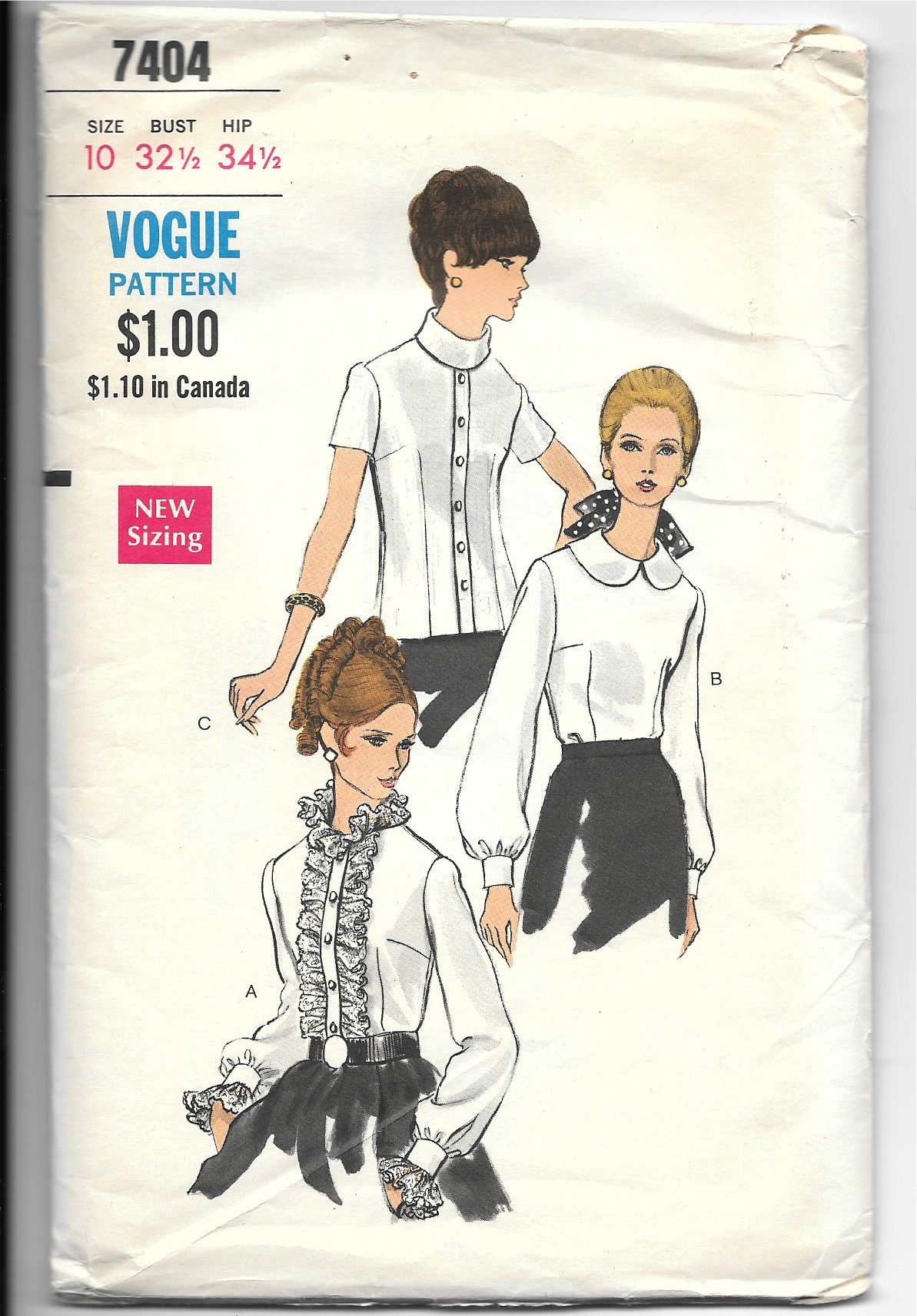
Can a pattern have good bones? I think so. When I purchased this blouse pattern a while ago, I did so knowing that I would not be making a blouse that looked exactly like any of the three illustrated on the pattern envelope.

Blouse pattern - PP collar

I have always liked a feminine-looking blouse that opens in the back, and I have always liked Peter Pan collars (which seem to come in and out of fashion). I also like a blouse that is fitted with darts through the body of the blouse. You can easily see the darts illustrated above. The thumbnail views of the blouses also show the darted fitting in the backs of the blouses.

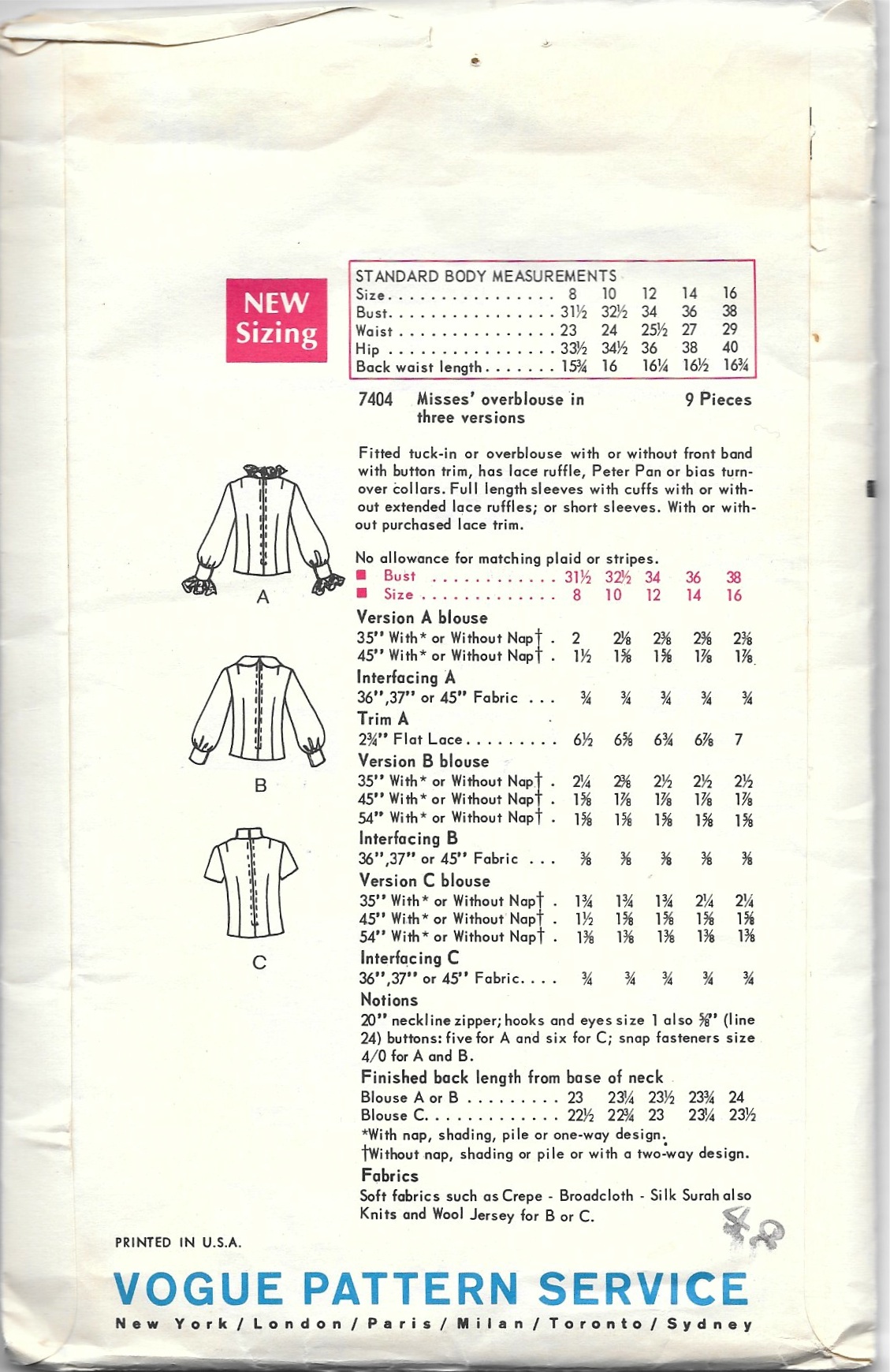
Blouse pattern - PP collar - rear views I found it interesting that these blouses are constructed with zippers in the backs. I am not fond of blouses that are zippered up the back, but I knew that I could easily make the back into a buttoned closure.

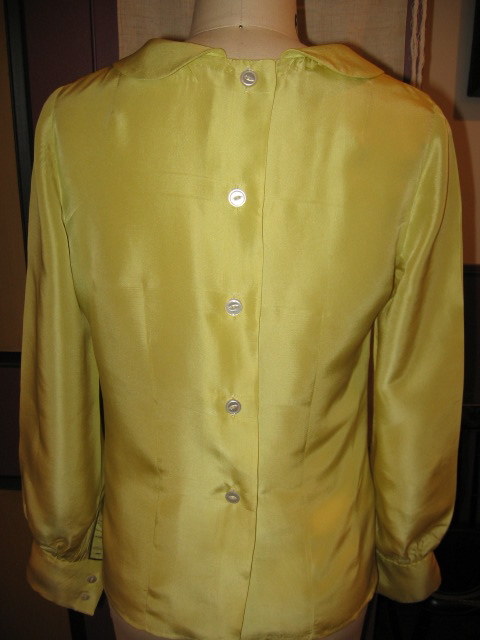
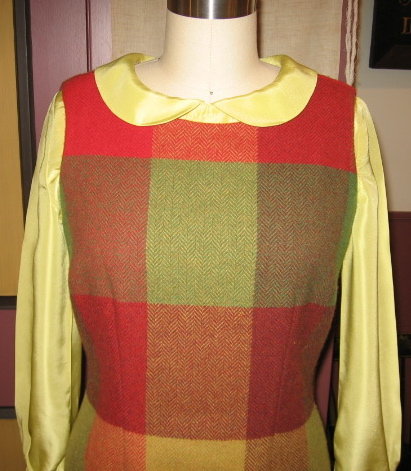
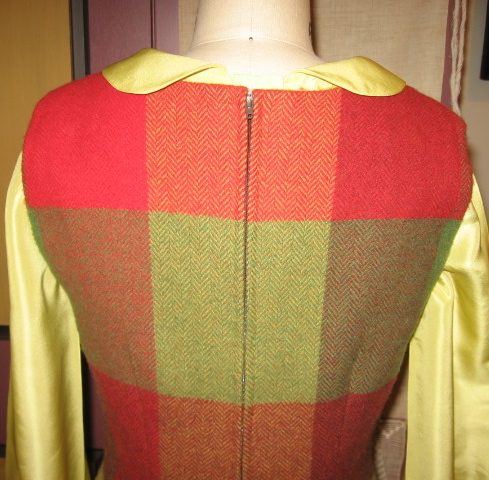
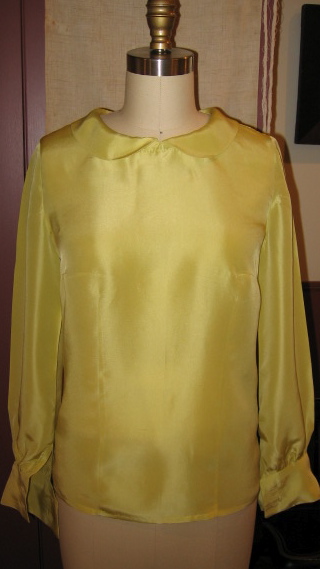
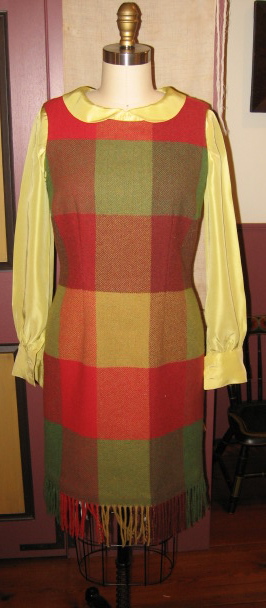
January Jumper blouse Interestingly, this pattern is from a narrow period of time when Vogue initiated their “new” sizing, which added a half-inch to sizes 8 and 10 in the bust and in the hip. I believe this new sizing was only in effect from about 1968 through about 1972 or ’73. In any event, it helps to date this particular pattern.  When I decided to make my blanket dress into a jumper, with a blouse matching the yellow lining, I went to this pattern for its good bones: darted fit, back opening, and pretty sleeves.

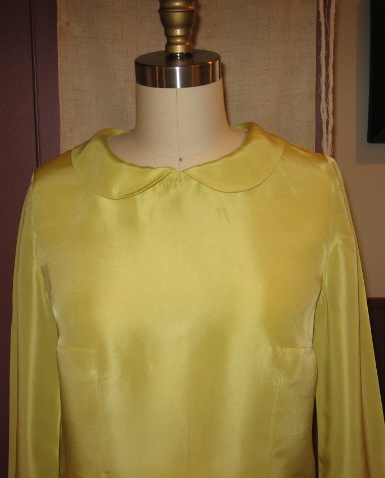
I re-cut the neckline so that it was wider, following the neckline on my completed jumper. The Peter Pan collar was too wide to my thinking, so I narrowed it by about an inch. Instead of using facings, I bound the raw neck edge with self bias binding. The hand-stitching on that is hidden beneath the collar.

January Jumper blouse

You can see the wider cut of the neckline of the blouse in this photo.

You can see the wider cut of the neckline of the blouse in this photo.

IMG_1073

I added two inches to each of the the back seam lines so that I could button , rather than zip, the back, and I took a bit of the width out of the sleeves so they would be a bit less flow-y (is that a word?)

IMG_1069

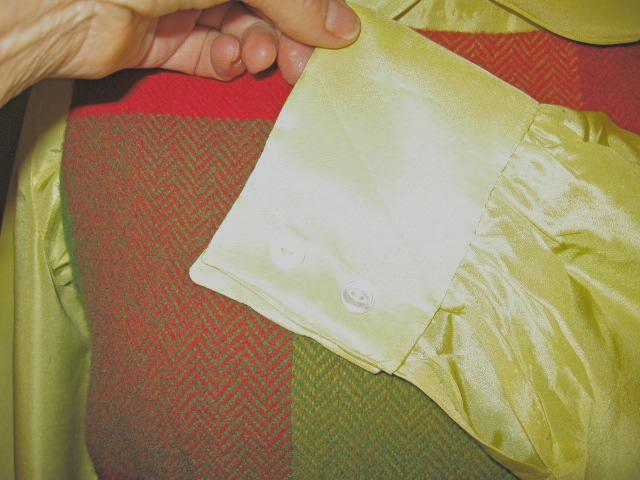
The slightly fitted bodice helps it to lay without bulkiness underneath the jumper. I found vintage mother-of-pearl buttons in my button box, two smaller ones for each sleeve and five slightly larger ones for the back. Why it always give me satisfaction to use buttons I have on hand, I don’t know, but I was feeling quite delighted with my finds!

IMG_1077

Unfortunately, I am having problems with the main lens I use for my camera, so I had to resort to my old “point and shoot” for these photos, which makes them adequate, but that’s about all. Also, I’ll have to add photos of me actually wearing my new jumper and blouse at a later date, due to this inconvenience. My apologies…

January Jumper and blouse

Less than a month ago, when I was “planning” out 2015’s sewing, I did not envision that January would also produce a blouse to wear with my blanket dress. But that is one of the charms of fashion sewing – the spontaneity of a project that says “Me, Me, choose Me!” And so I did, and I am not only happy with the result, but delighted to have a tried and true “good bones” blouse pattern to use again and again, whether in the plan or not.

18 Comments

Filed under Blouses, Buttons - choosing the right ones, Love of sewing, sewing in silk, Uncategorized, vintage buttons, vintage Vogue patterns from the 1970s

The Necessary Blouse

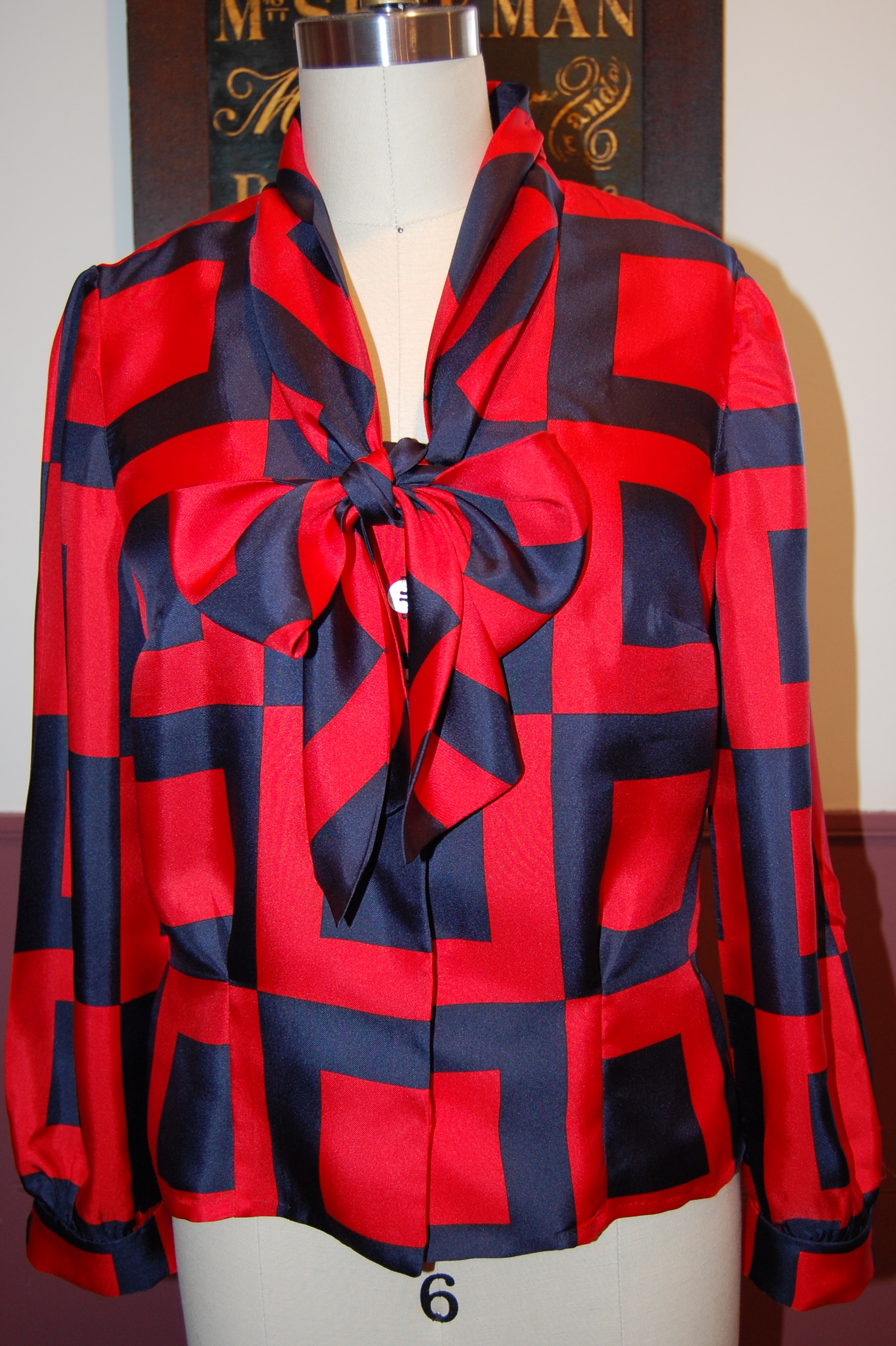
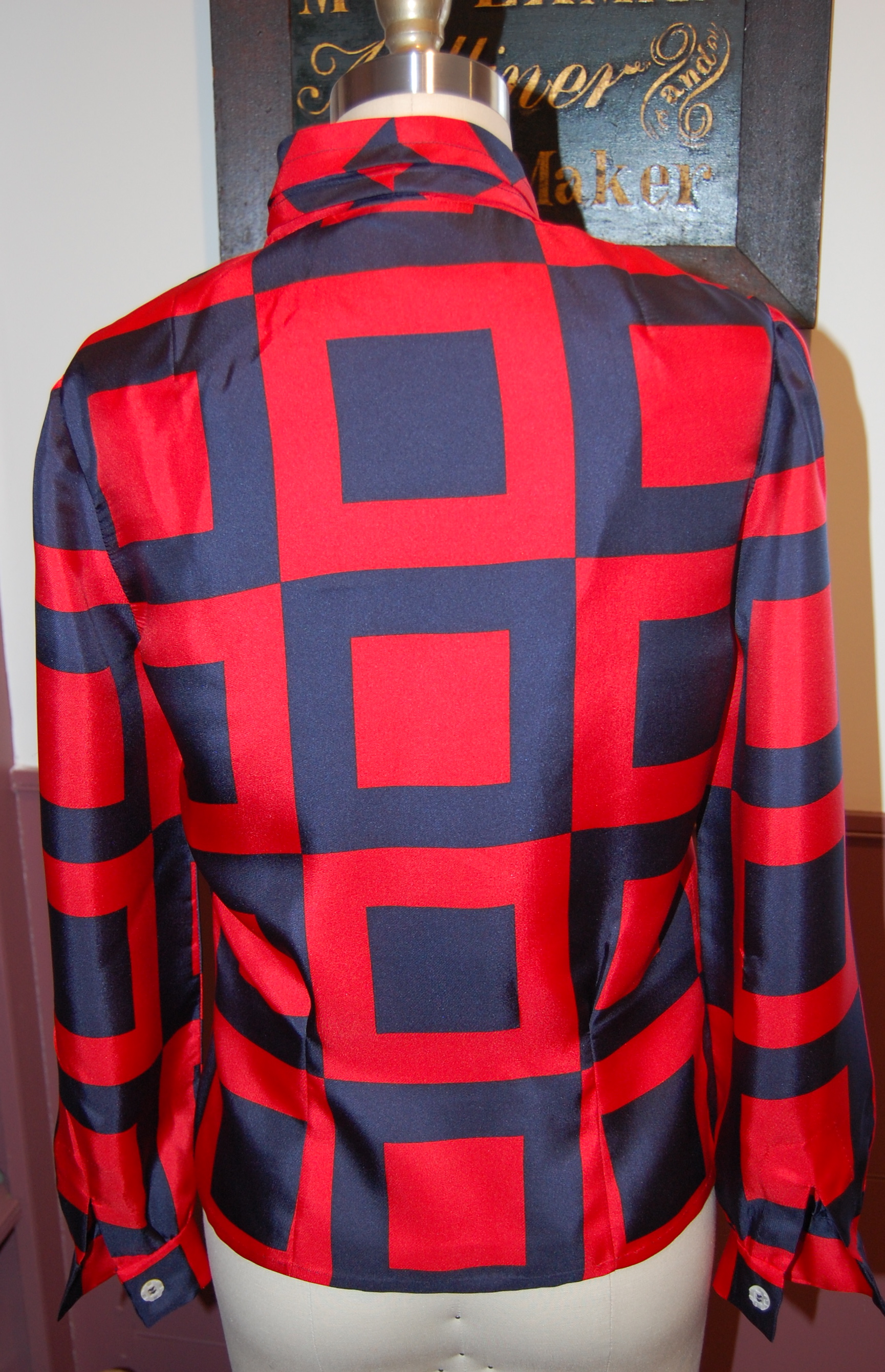
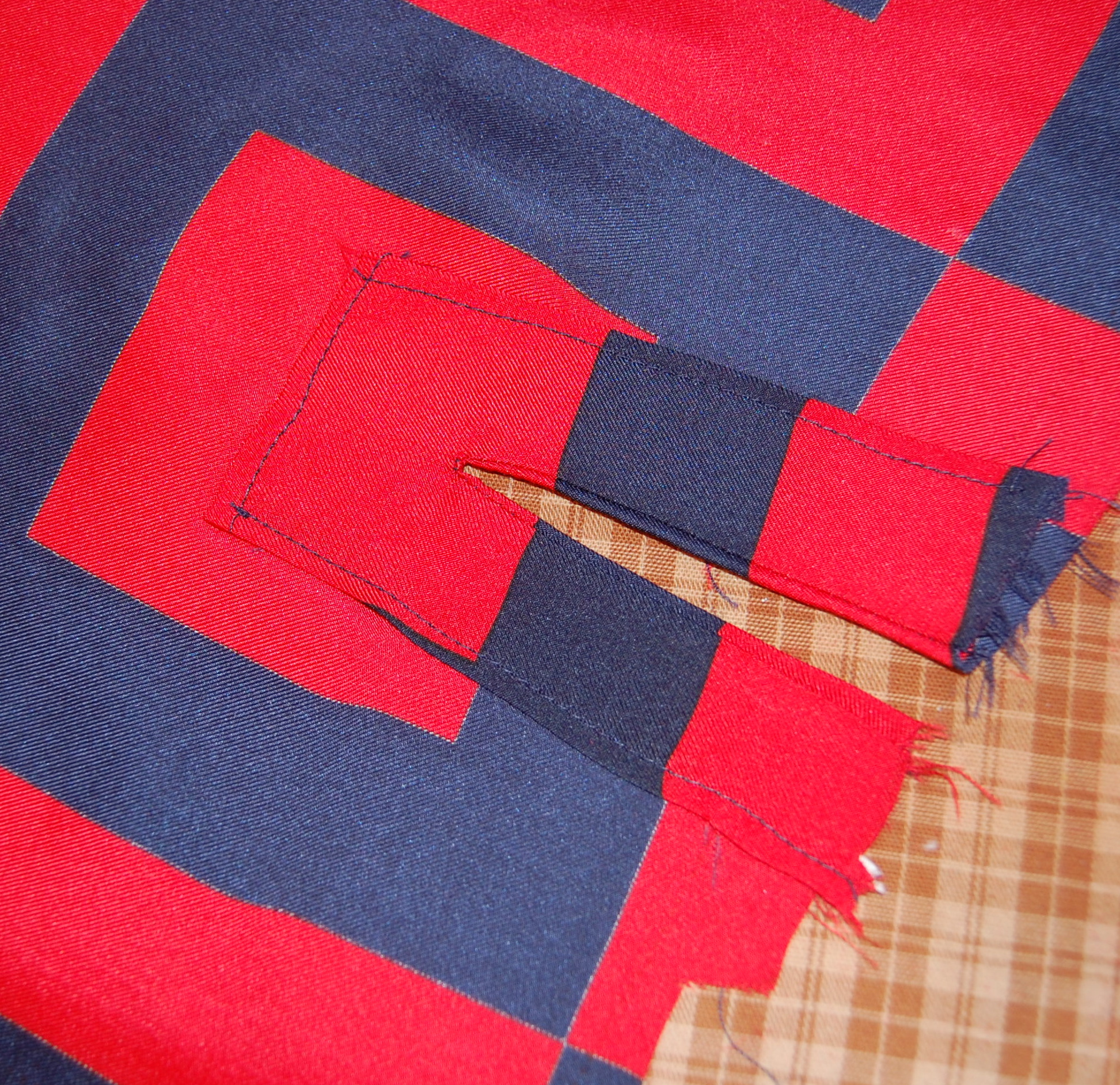
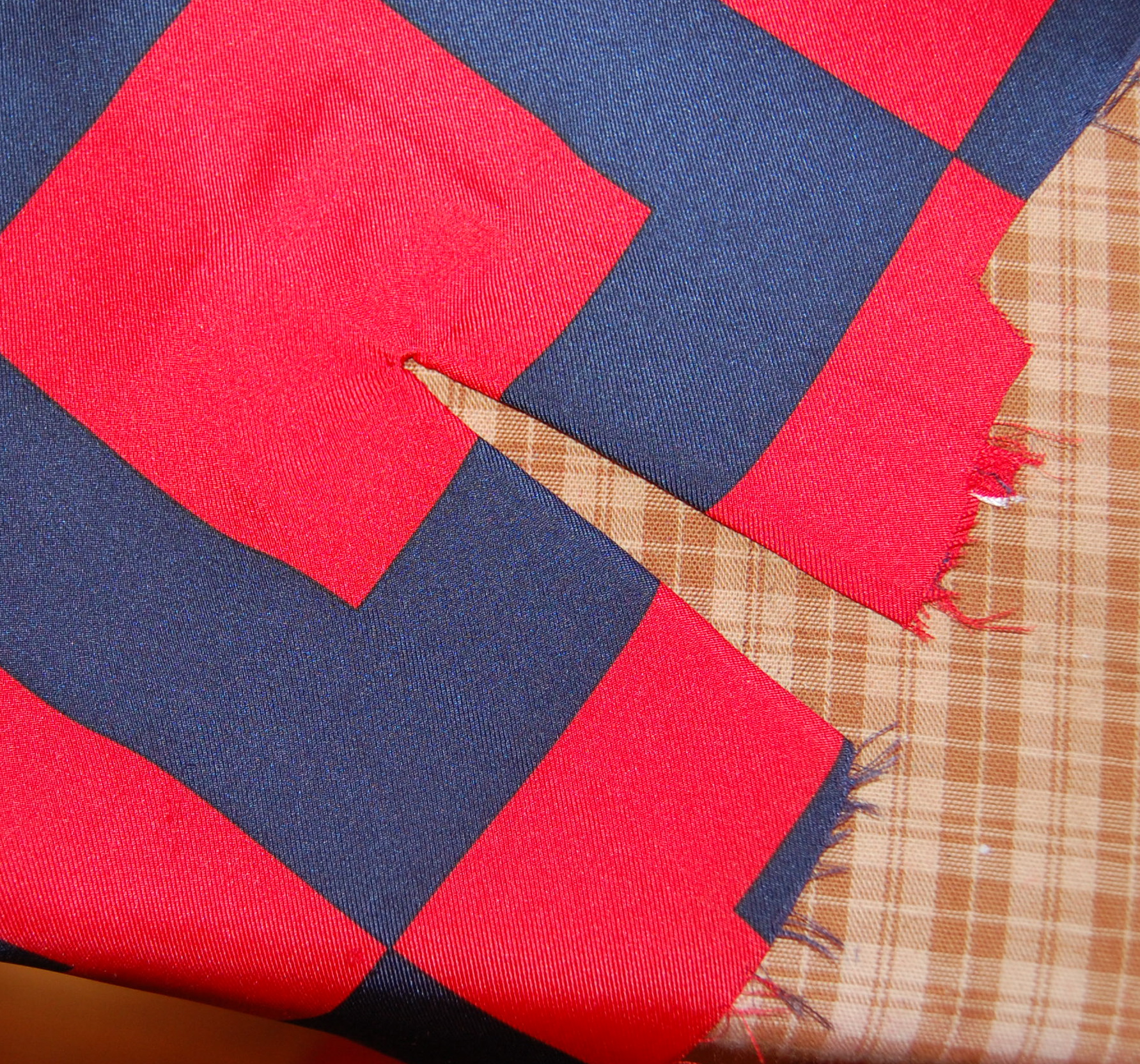
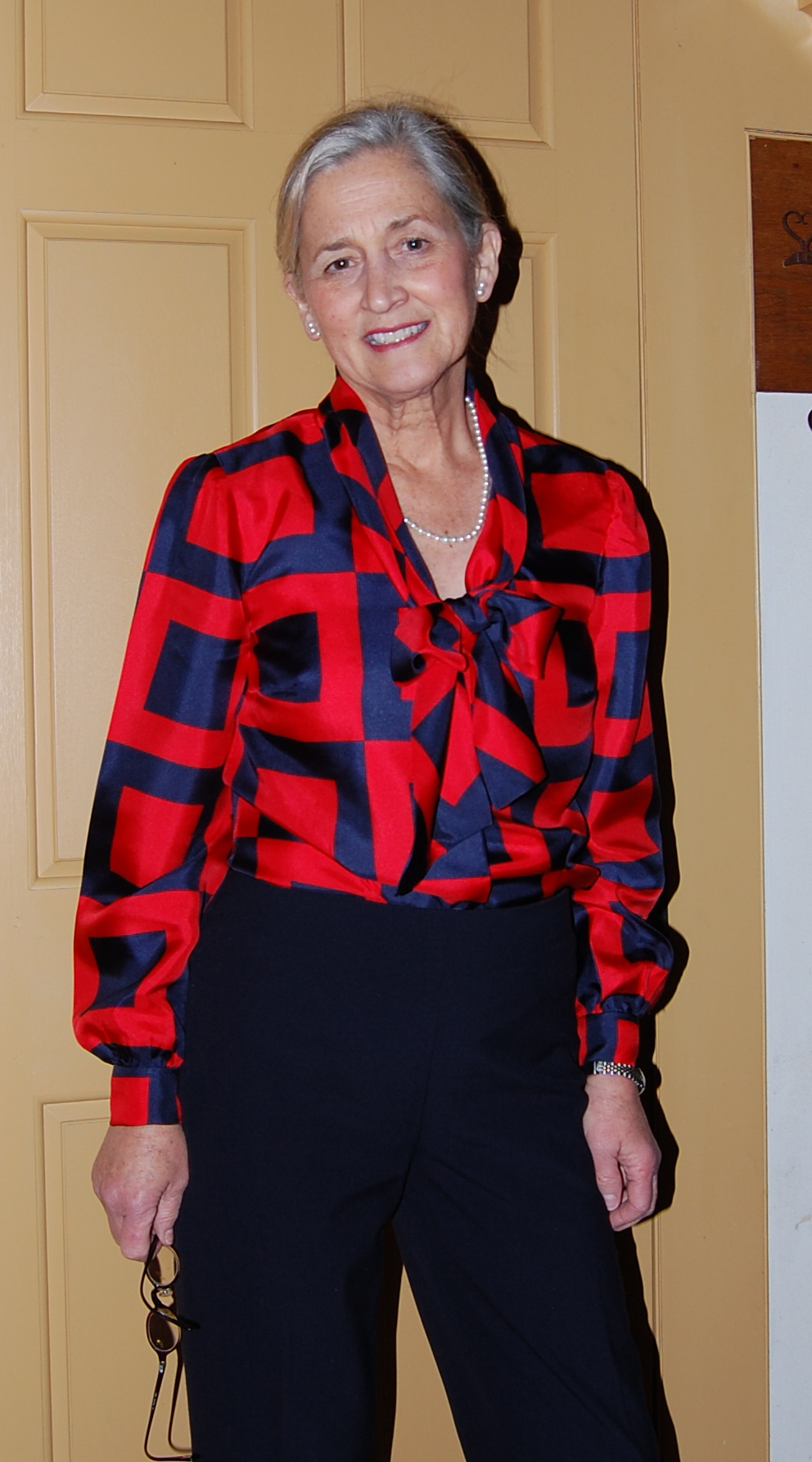
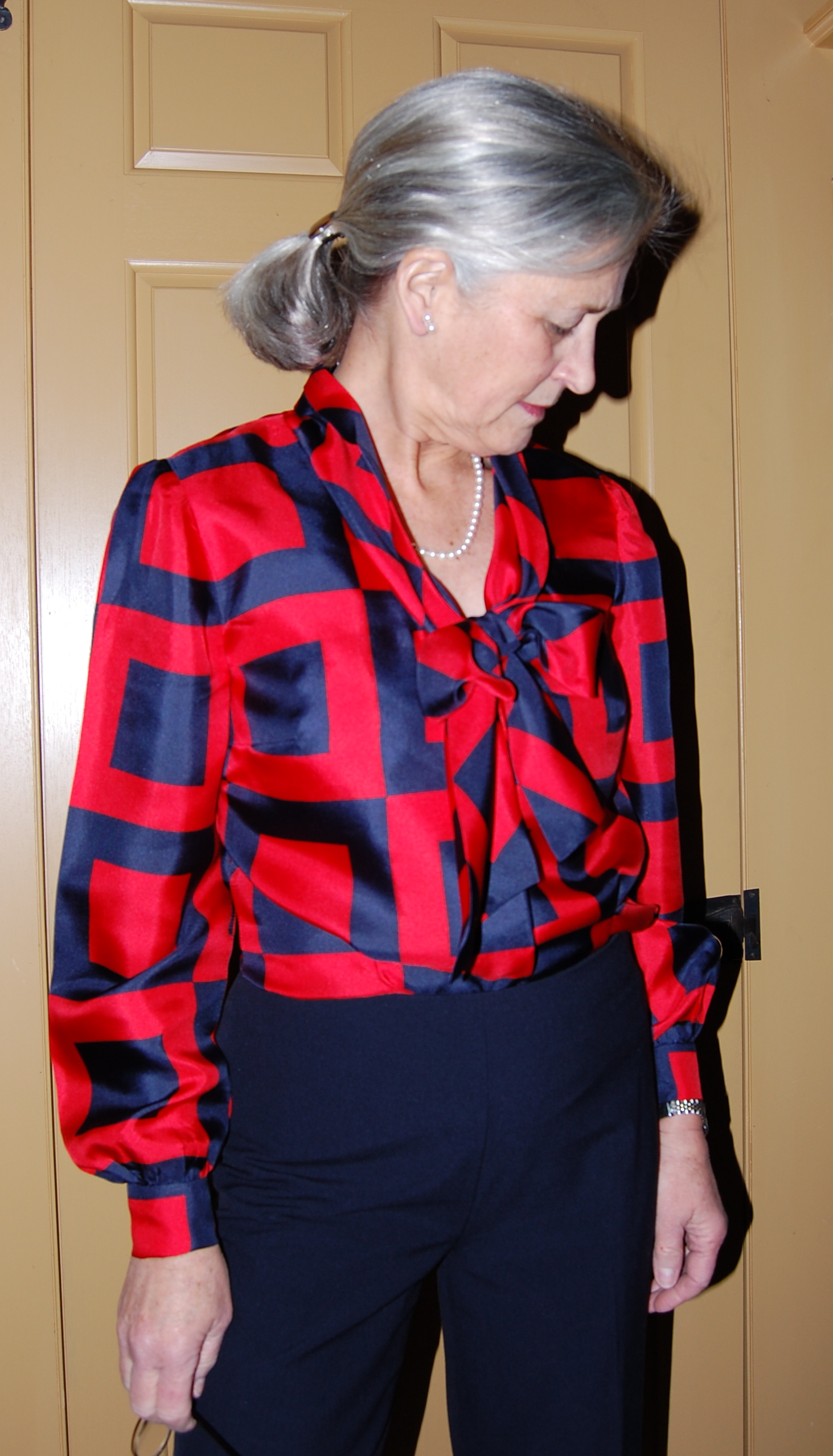
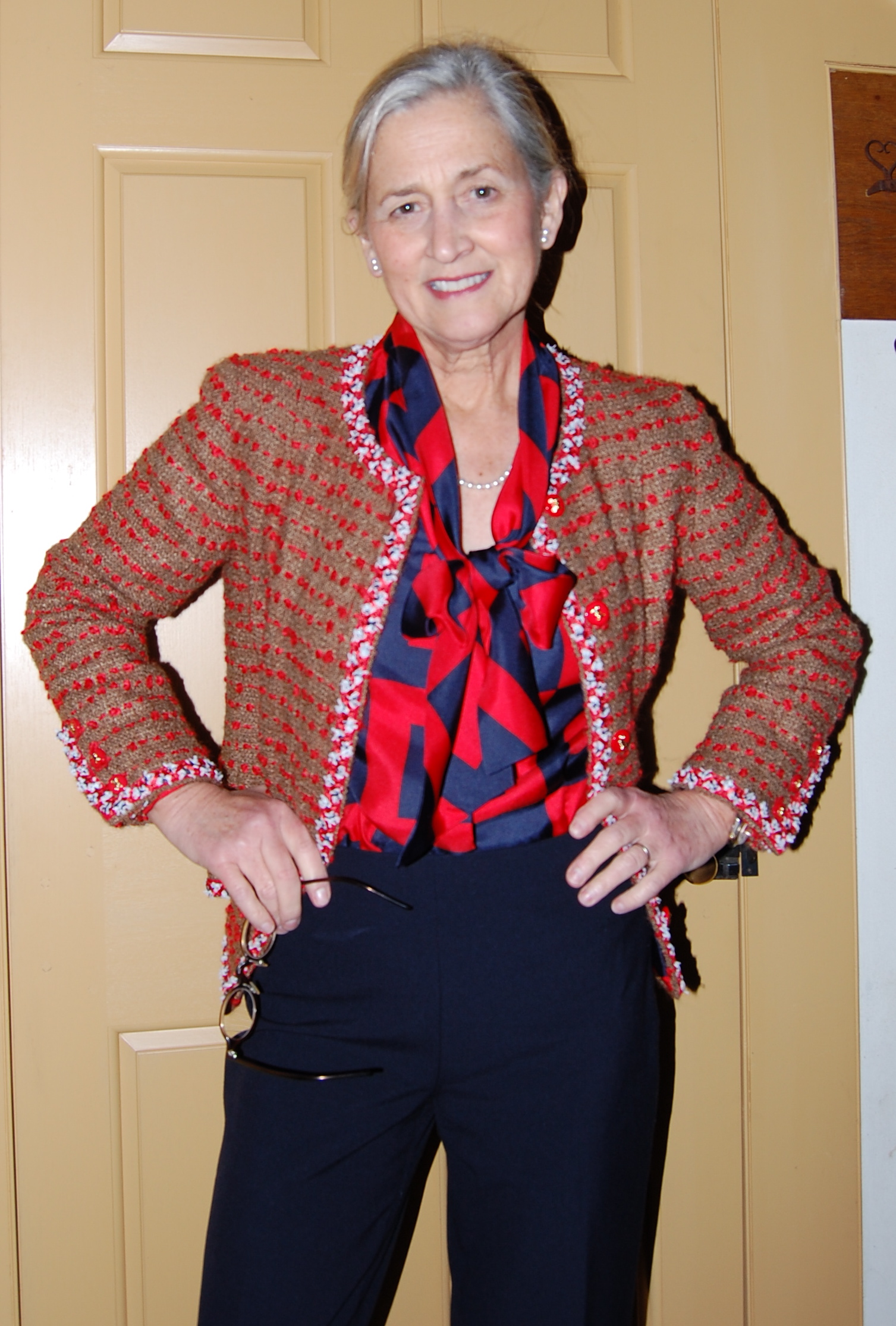
Fashion sewing is an interesting combination of inspiration, aspiration, indulgence and necessity, manifested singly or collectively.  My newly completed bow blouse is an example of a bit of all of these motivations rolled into one.  This is the blouse I made to go with my No. 2 Chanel-inspired jacket, made from the same red and navy blue geometric print silk with which I lined the jacket.

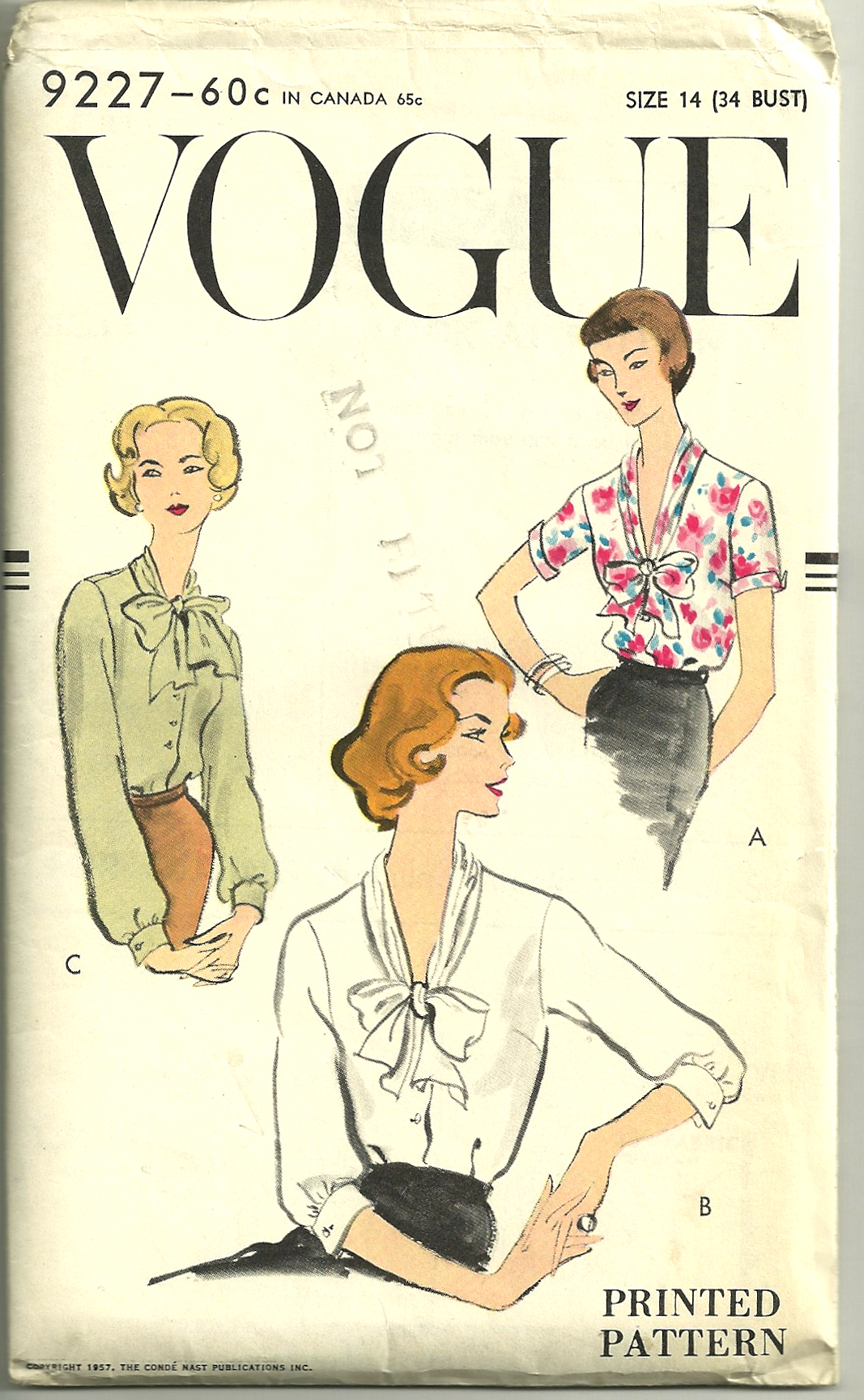
The Necessary Blouse Inspiration came from several sources.  I was mostly inspired by the pattern, which is copyright 1957 by The Conde Nast Publications, Inc. (Vogue Patterns) – so much so, that I purchased it in a size larger than I usually wear, as that was what was available – and with vintage patterns, one is never sure to find a favorite one again soon – or ever.

Looking at blouses 1957

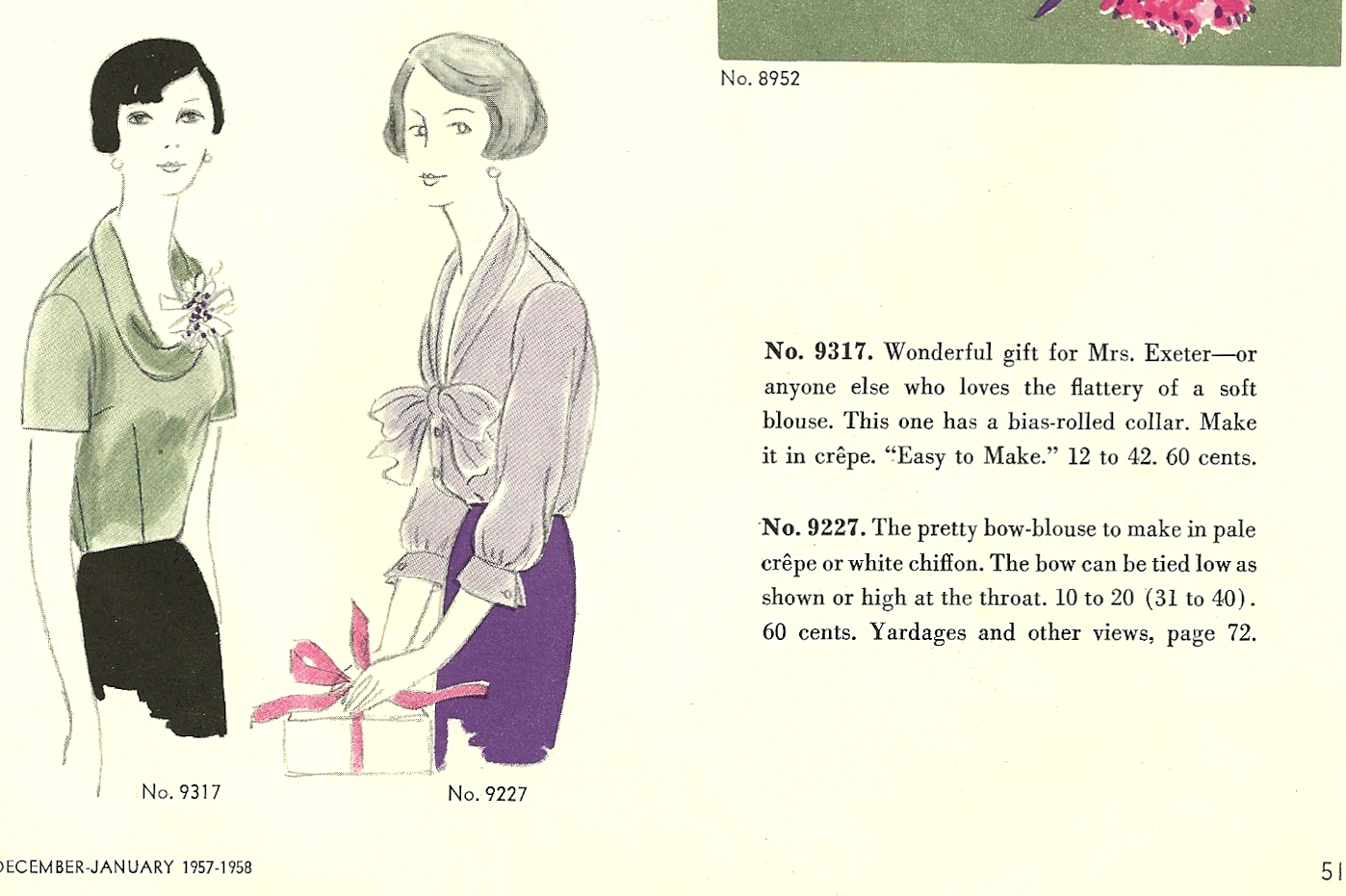
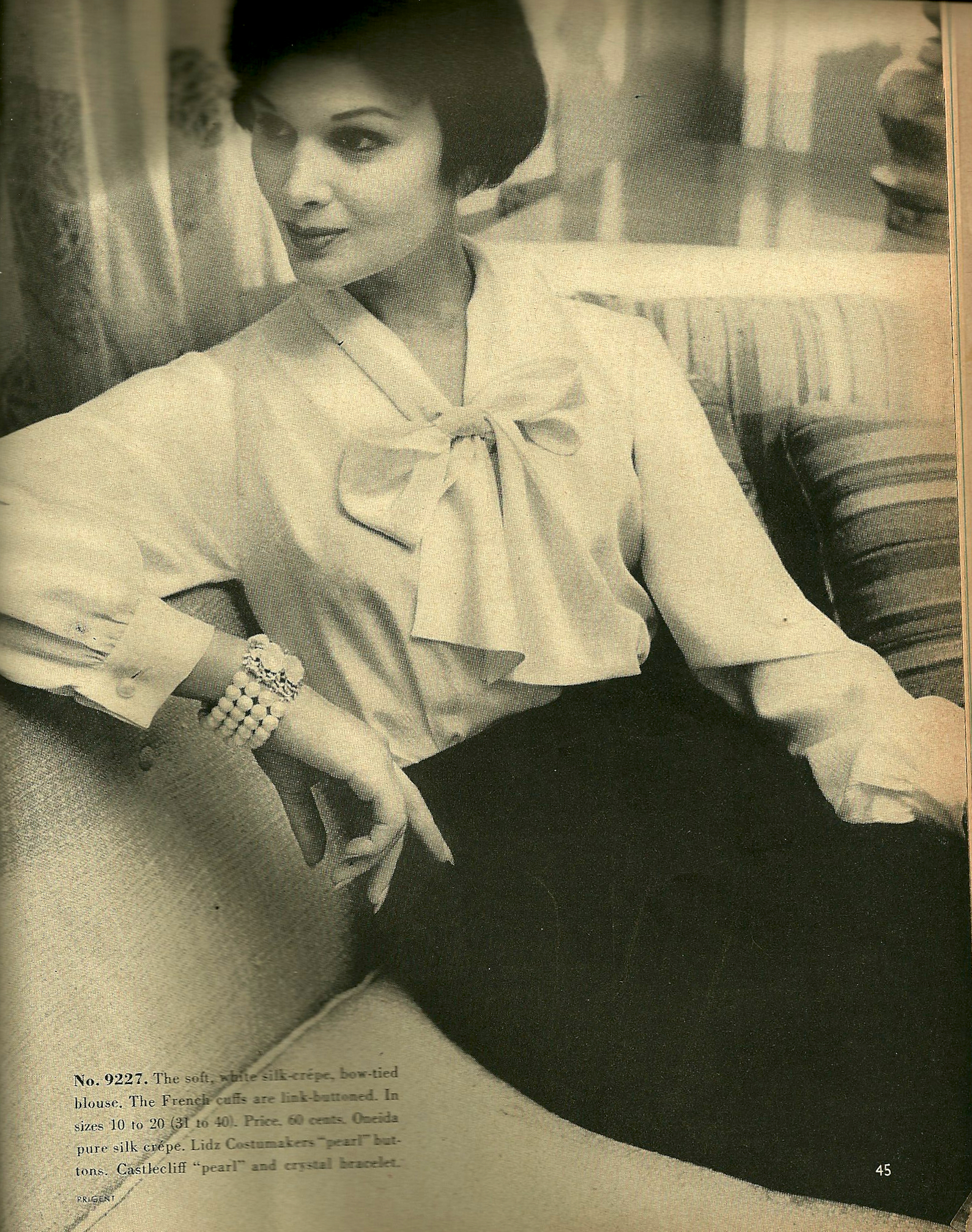
Some of the aspects of the pattern which appealed to me are: 1) the “dropped” bow shown in views A and B; 2) the various sleeve lengths; 3) the shaping in the body of the blouse – soft and understated, but very feminine.  Just for fun, I looked through a few of my Vogue Pattern Book Magazines from 1957 and 1958, to see if I could find examples of this blouse pattern.  That was easy!  Here is one sketch and one photograph of Vogue 9227:

The blouse was featured in the December/January 1957-58 issue.

The blouse was featured in the December/January 1957-58 issue.

Part of a feature entitled "A new era for the soft BLOUSE."  In the August/September, 1957 issue of VPB.

Part of a feature entitled “A new era for the soft BLOUSE.” In the August/September, 1957 issue of VPB. 

After making a sheath dress to coordinate with my Chanel-inspired jacket No. 1, I aspired to pair my Jacket No. 2 with a suitable companion, too.  A bow blouse seemed to be a versatile and useful solution.  And then it became a necessity!   I decided my Jacket No. 2 would not be complete until I finished this blouse.

Back view

Back view

Step number one was to make a muslin (of course), knowing that I would need to alter the pattern to fit me correctly.  Sure enough, I needed to take out the bagginess in the bust and body of the blouse, and I needed to shorten the sleeves.  I went to my favorite book on making alterations which guided me through the correct changes:

I highly recommend this book.

I highly recommend this book.

My muslin showed me that the sleeves were also a little too full for me and for current 2014 styles, so I removed some girth from them as well.  I was skeptical of the bow (cut on the diagonal) when I looked at the pattern and then the muslin.  Would it be too full?  Made up in muslin it seemed a little overwhelming.  But, my silk was so lightweight and fine, that I decided it might just be okay, using the original dimensions.

Here is the bow/collar ready to be attached to the body of the blouse.

Here is the bow/collar ready to be attached to the body of the blouse.

This blouse went together quite as planned, although I worked on one side where the bow/collar joins the corner at the front facing for hours, until I had it inserted correctly.  I kept making the same mistake over and over, which was a little irritating.  I also added some extra hand-sewing, understitching the facing by hand and hand-stitching the hem.

Hand understitching looks just so much nicer than machine stitching!

Hand understitching looks just so much nicer than machine stitching!

When I started the blouse, I had not yet picked out buttons, thinking I would use some that I have in my vintage collection.  But then I was on Waechter’s website and found these buttons, which seemed just about perfect:

The Necessary Blouse - button

These buttons measure 5/8″. 

(Sadly, Waechter’s is closing their business in Asheville, N. C., to my great dismay.  This makes me even more grateful for Britex Fabrics in San Francisco, from which I purchased all the fabric for this blouse and my Jacket No. 2.)

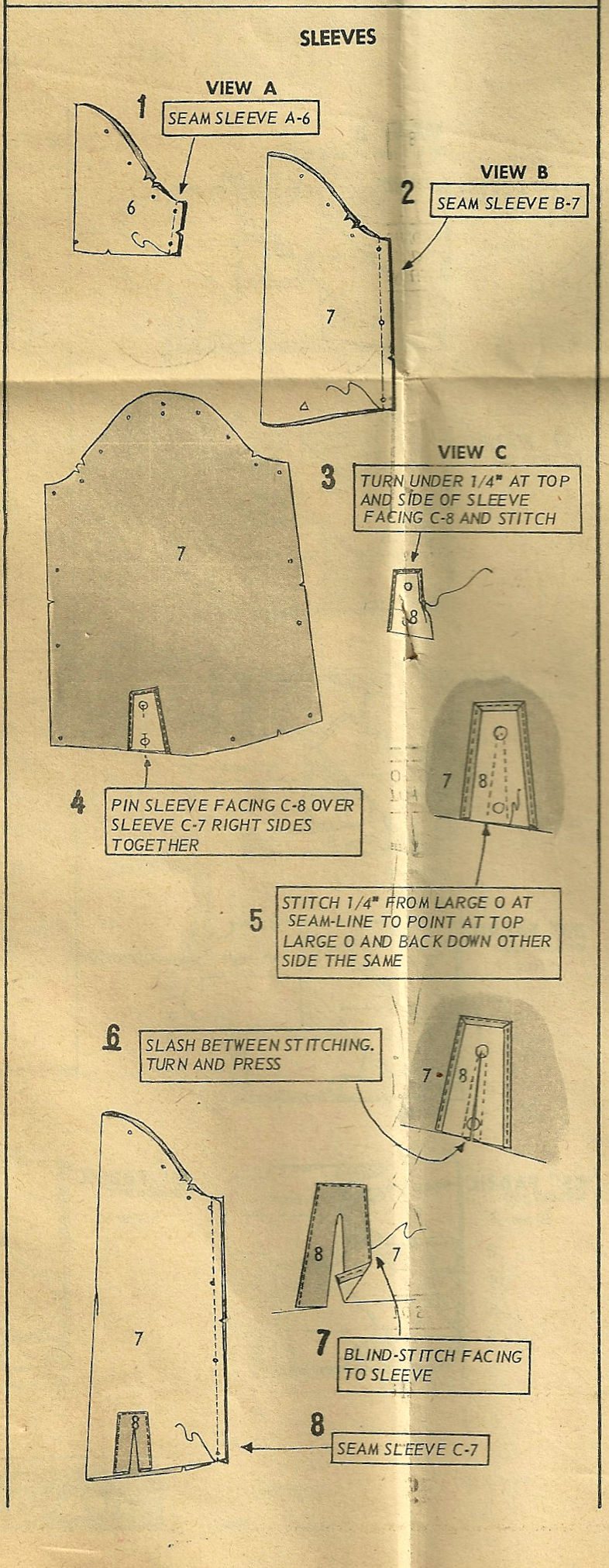
Sewing with vintage patterns is such a pleasure in so many ways.  For example, the sleeve vents had their own separate pattern piece:

The instruction sheet from the pattern . . . .

The instruction sheet from the pattern . . . .

The vent sewn on . . . .

The vent sewn on . . . .

. . . . and the finished vent.

. . . . and the finished vent.

Another classic vintage aspect is the proscribed use of snaps  – in this pattern, at the waist and below, which takes bulk away from the “tuck-in” part of the blouse.

And that bow?  Once I had it made up, was it too much?

I think the bow is just about perfect.

I think the bow is just about perfect.

I am very glad I didn't tinker with the size of the bow!

I am very glad I didn’t tinker with the size of the bow!

Shown with the jacket.  I really like how the collar on the blouse shows a bit when i have the jacket on.

Shown with the jacket. I really like how the collar on the blouse shows a bit when I have the jacket on.

The Necessary Blouse

A comfortable fit.

The Necessary Blouse

Would be nice with a navy skirt as well …

The Necessary Blouse

Whew!  Blouse and jacket turned out as I had hoped!

Whew! Blouse and jacket turned out as I had hoped!

I am feeling quite good about indulging in the extra fabric and extra time needed to make this blouse.  Now that my No. 2 Jacket is complete, I can indulge in my other current project – my color-blocked coat –  which might add a new word to the vocabulary of fashion sewing – obsession!

16 Comments

Filed under Blouse patterns from the 1950's, Blouses, Buttons - choosing the right ones, Chanel-type jackets, sewing in silk, The Conde Nast Publications, Uncategorized, vintage Vogue patterns from the 1950s, Vogue patterns

Date Night

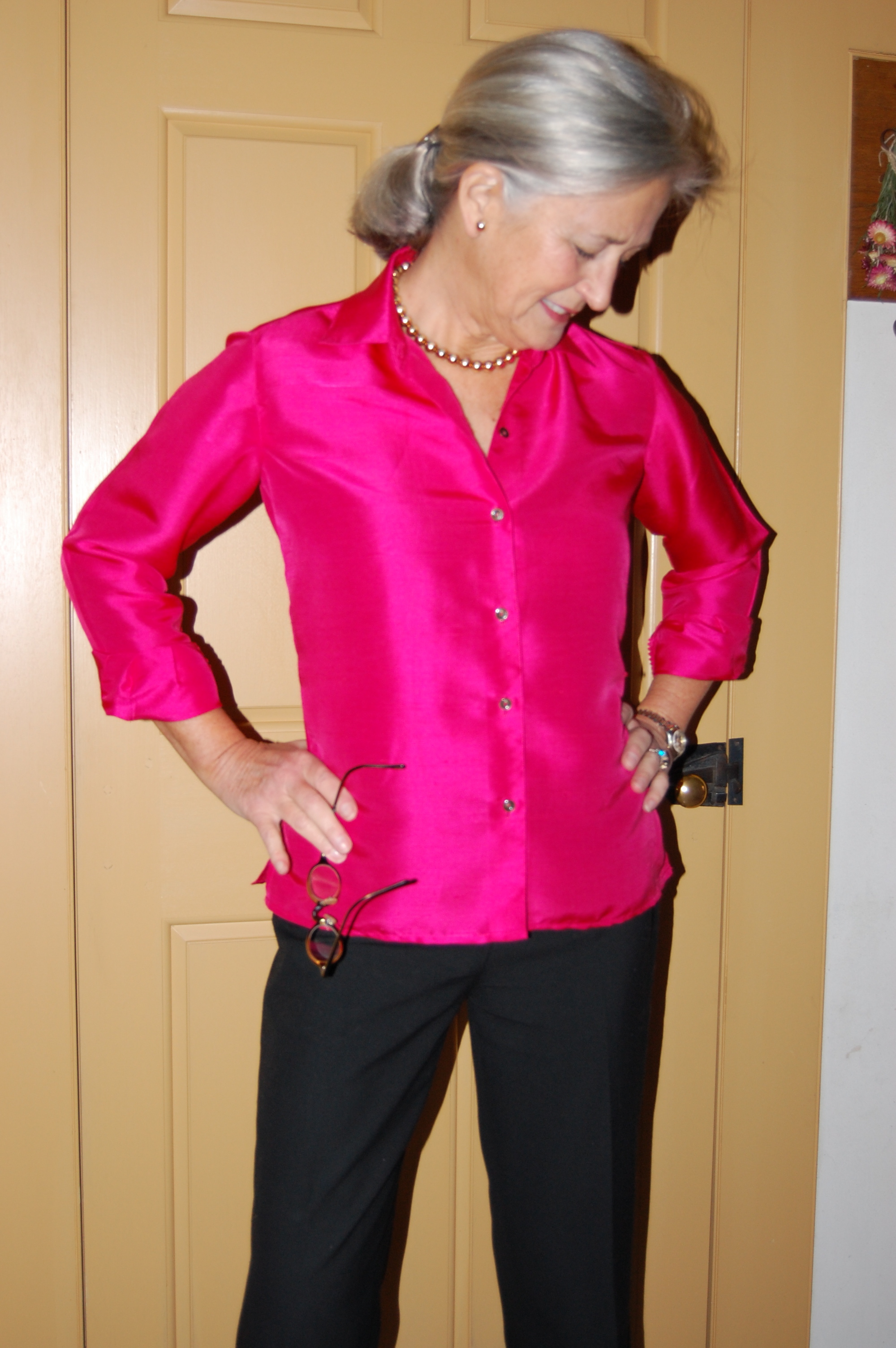
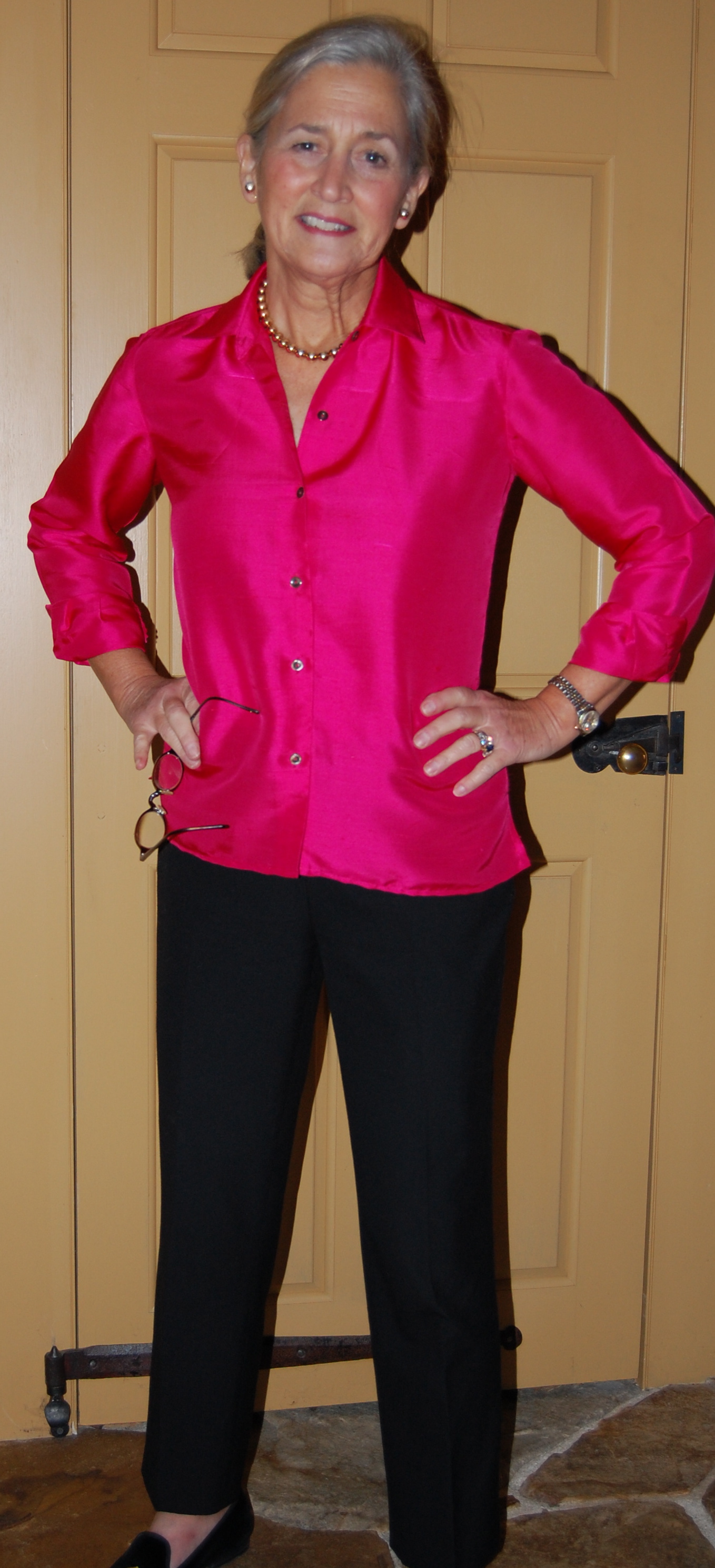
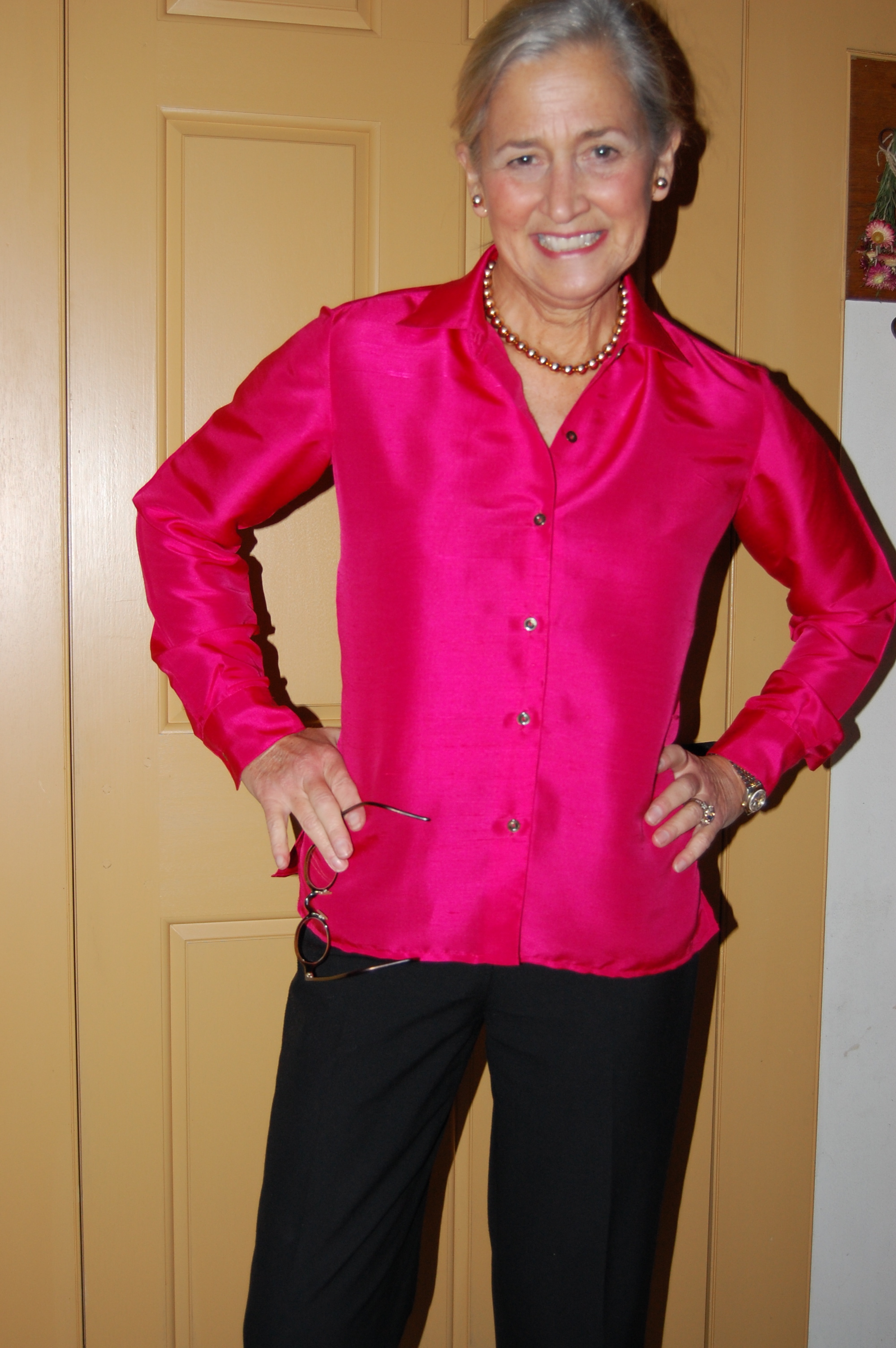
For a number of years now, Thursday evening has been “date night” for my husband and me.  That’s what we call it, but it really just means that we always go out for drinks and dinner.  It is always one of my favorite nights of the week.  Part of the fun of it is the “standing reservation” we have at a favorite local “drinkery/eatery”, where we are always met by friendly staff and a “kitchen” that knows our favorite choices.  Because we so often go to this same place, I like to mix up what I wear.  I doubt anybody actually notices, but it is just one of those things which is important to me!  Anyway, my new blouse is going to be a colorful, welcome addition to my Thursday night wardrobe.

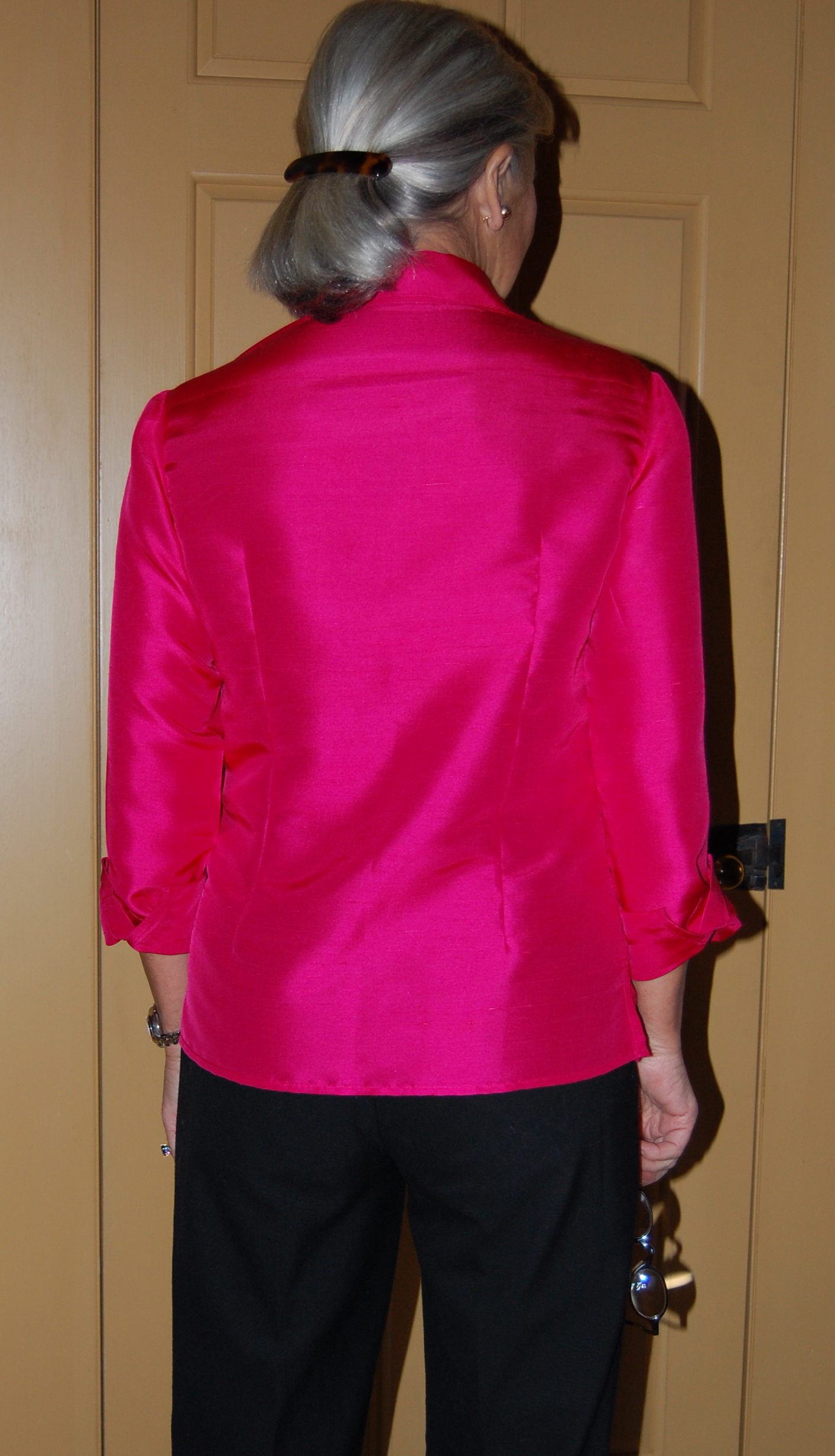
Made from pink silk which i purchased in the 1980s.

Made from pink silk which I purchased in the 1980s.

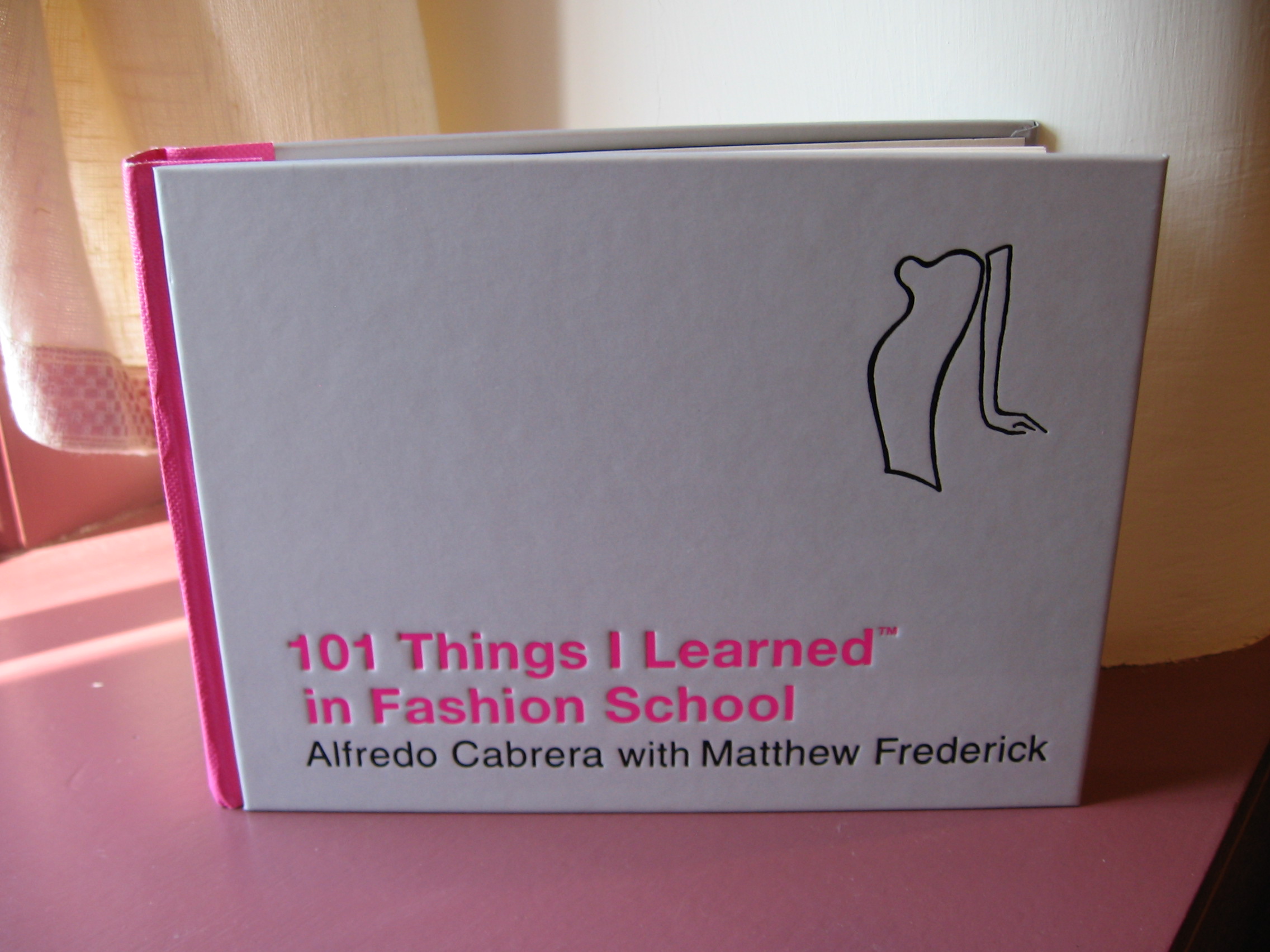
As I stated in my last post (distanced from this one by a sojourn to California, from which I did not return empty-fabric-handed…!), I based this blouse on a RTW one I have worn for years.  I always remember the good advice given on page 86 in 101 Things I learned in Fashion School (by Alfedo Cabrera with Matthew Frederick.  Copyright 2010, Grand Central Publishing, New York, New York):  “When in doubt, look in your closet.  When unsure about how a garment you’ve designed should be constructed, look at your own wardrobe:  We all have at least one pair of fly-front pants and a garment that buttons down the front.  It doesn’t take much time or effort to pull it out and replicate or adapt what one sees.”

A little book filled with great information

A little book filled with great information

Of course, I wanted to start with a basic blouse pattern, which I could tweak to recreate my old favorite one.  At this point, you might ask, “How difficult can it be to find a basic, long-sleeved, banded collar blouse pattern?”  A lengthy search through my patterns produced exactly one with some of the lines I wanted.  Just looking at it kind of made me cringe.  But then I realized that, with certain changes, it would probably be just about perfect.  Copyright 1972, this Simplicity pattern looks about as dated as it is, but its “bones” are still good!

Date night Simplicity pattern Among the details I needed to change:

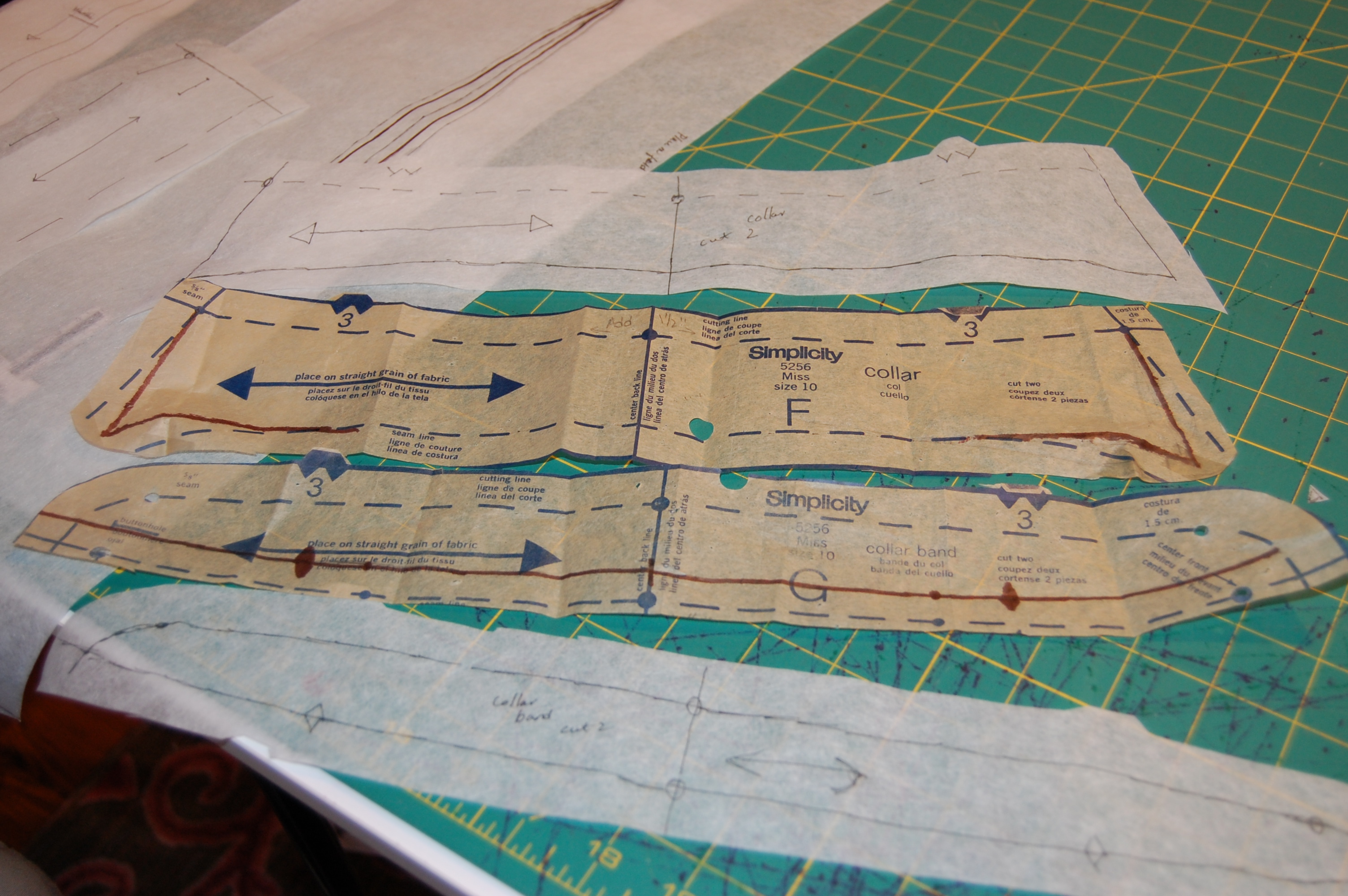
1) The collar band was much too wide, so I narrowed it by about 50%.

2) The collar was too big and too pointed, so I redrafted it to match the collar on my green blouse.

Changes to the collar band and the collar.

Changes to the collar band and the collar.

3) I eliminated the back yoke.

4) I made the front and back pieces a little straighter at the side seams, and then added two darts to the back to take in some of the fullness and make the blouse curve over the hips  a little more flatteringly.

Date Night

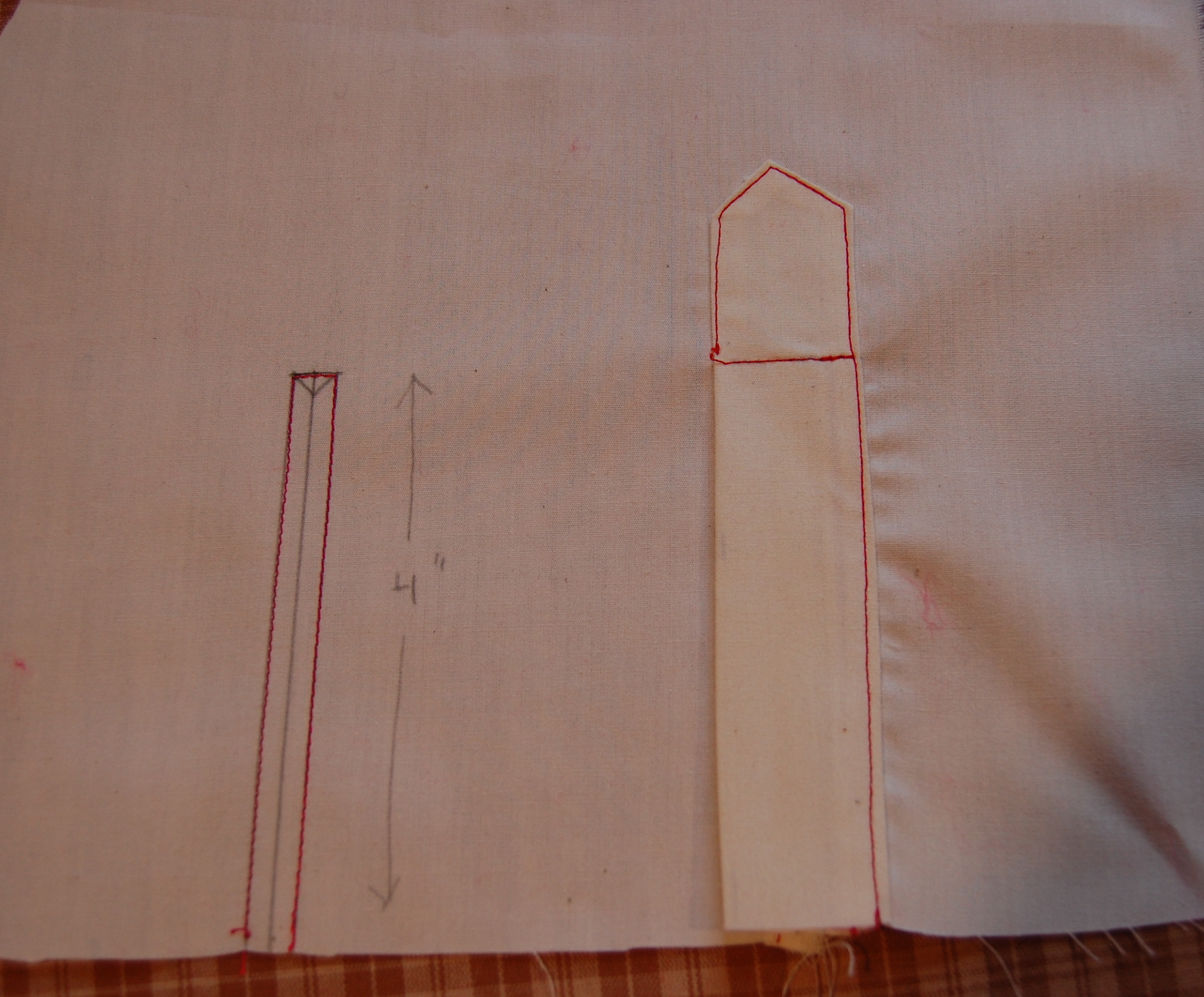
5) I loved the “sportshirt” sleeve plackets on my green blouse, so I went to my 1972 Vogue Sewing Book to find out how to add them to this blouse.  I narrowed the cuffs, too.

I practiced on muslin first!

I practiced on muslin first!

I am fairly happy with how these plackets turned out.  I can't ever remember making this type of placket before, so I guess it was a first for me!

I am fairly happy with how these plackets turned out. I can’t ever remember making this type of placket before, so I guess it was a first for me! 

6) I eliminated the front button band.

7) I added side slits and narrow topstitching to all the edges, just like on my green blouse.

This shows the sleeve heading, which I narrowly topstitched.  Click on the photo for a better look.

This shows the sleeve heading, which I narrowly topstitched. Click on the photo for a better look.

Here is the topstitching on the front edge.

Here is the topstitching on the front edge.

Oh, there is more, but you get the idea.  I made a permanent record of all these changes with a whole new set of pattern pieces.

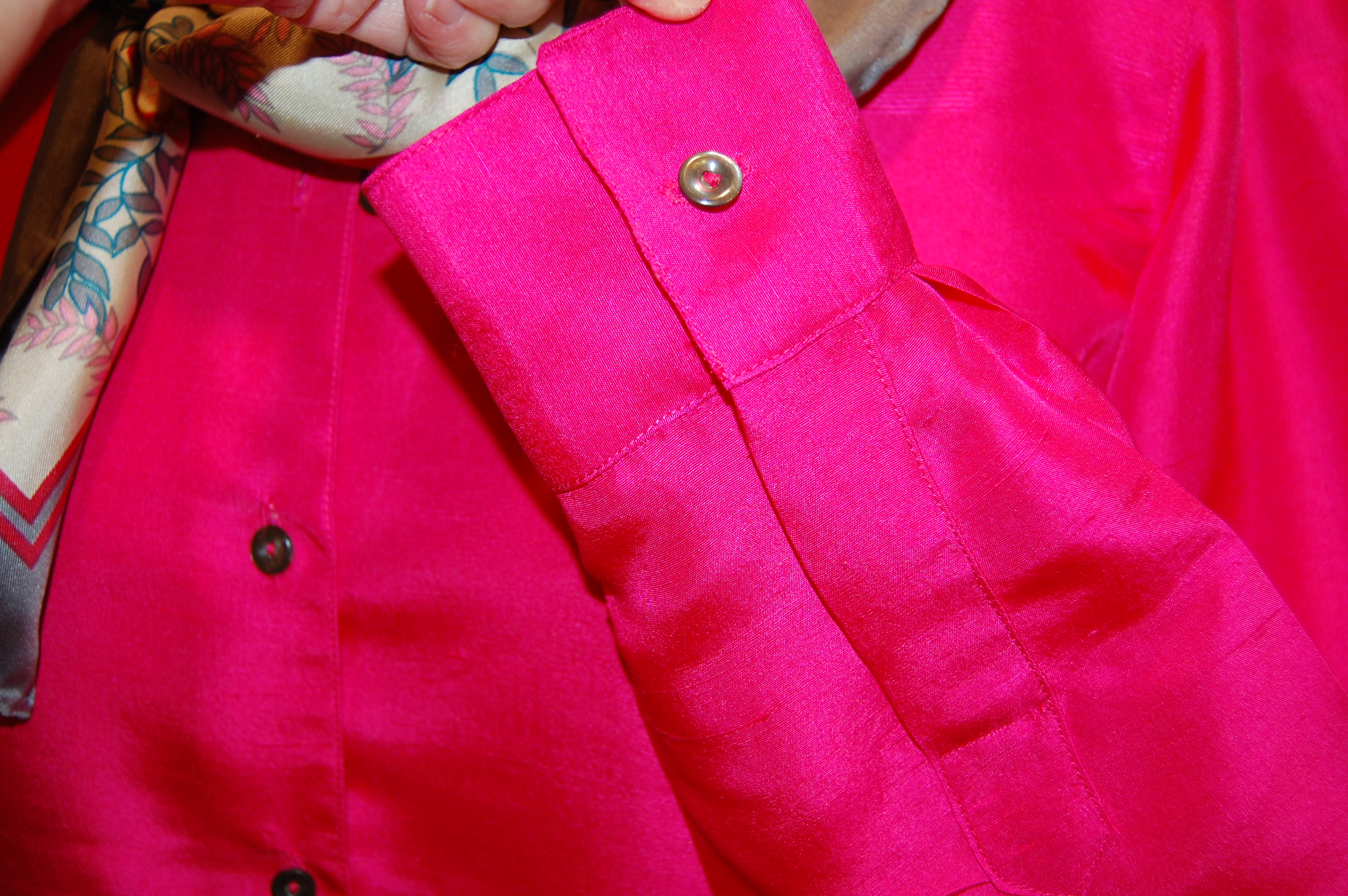
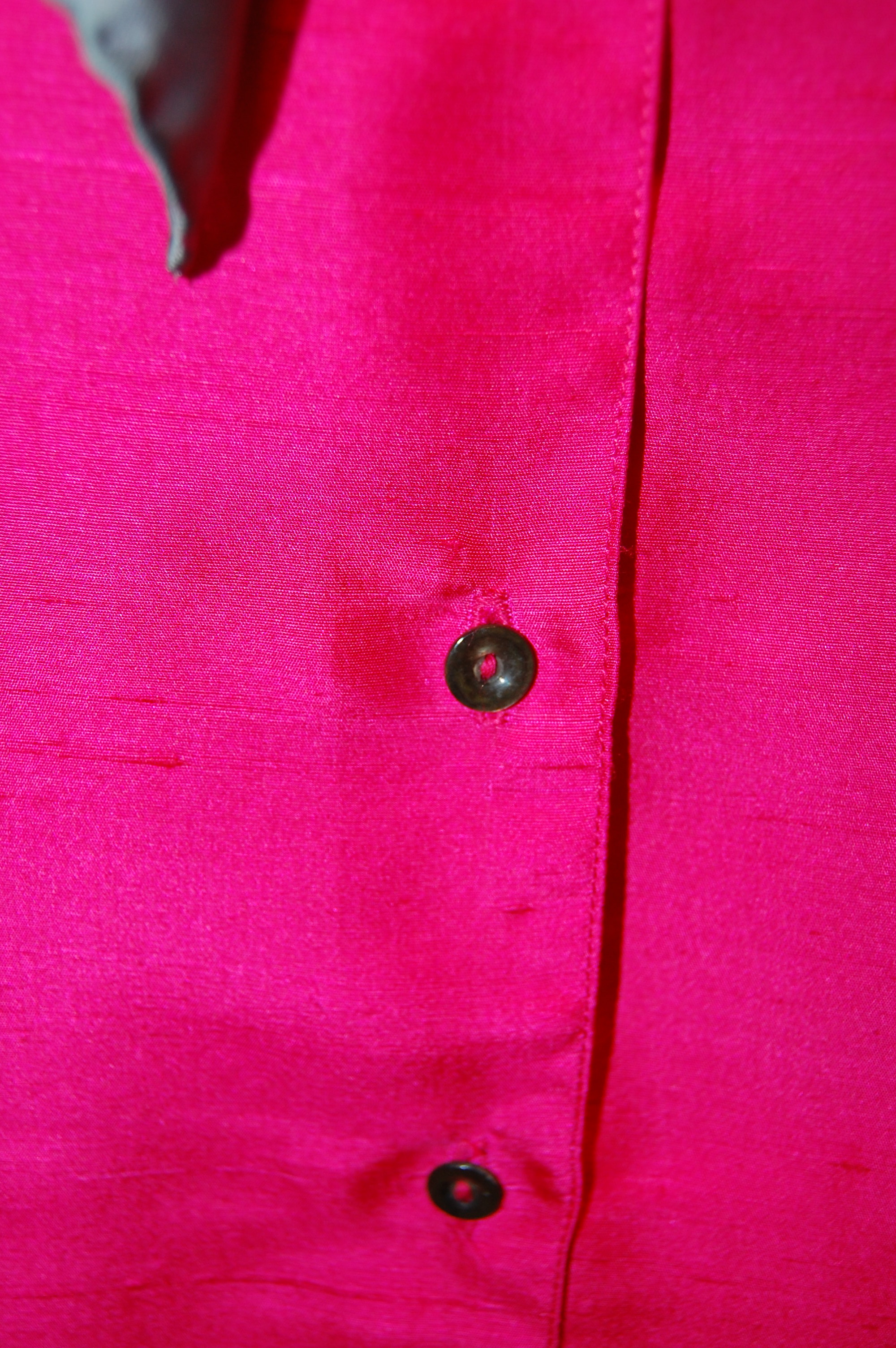
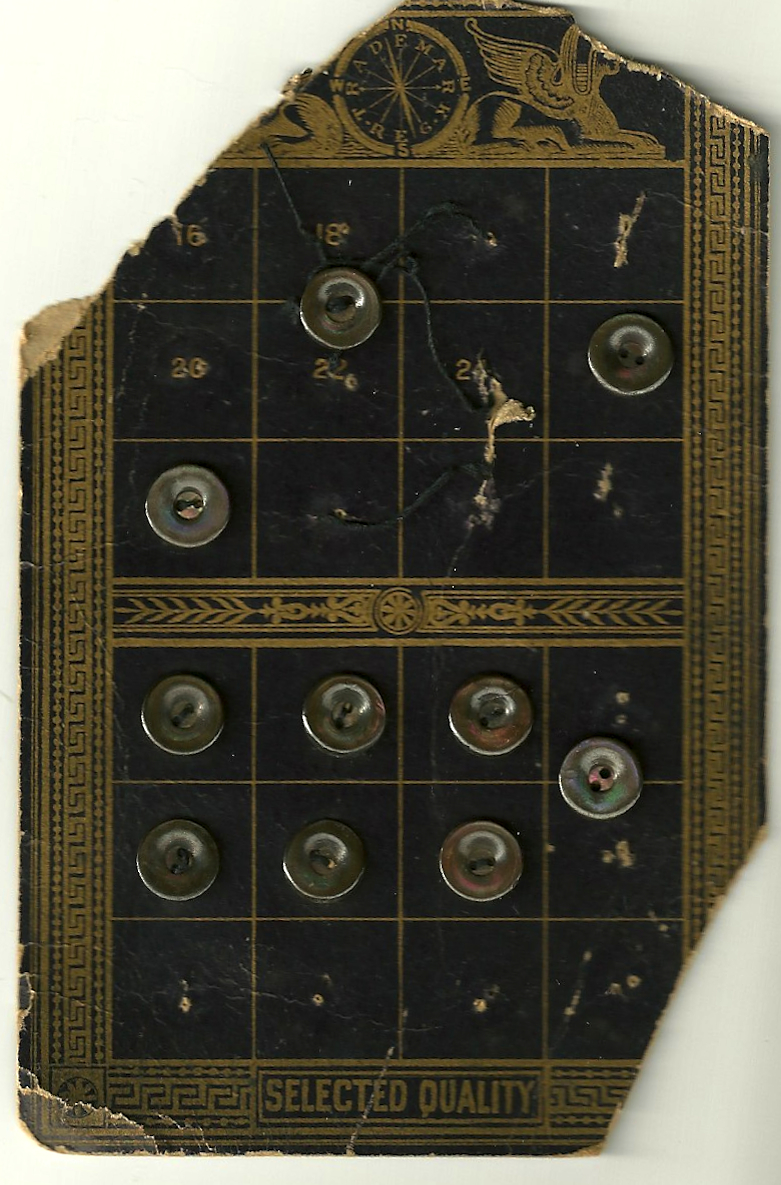
When it came to choosing buttons, I hoped to find some vintage ones to compliment the bright pink.  I found this gray pearl set (picked up somewhere for 50 cents), and the iridescence in them shimmered a bit of pink.

The holes on two of the buttons were a little off center, but fortunately, I only needed 8 of them!

The holes on two of the buttons were a little off center, but fortunately, I only needed 8 of them!

The process of making this blouse was fun and low-stress: I interfaced the collar and cuffs with silk organza, of course, but other than that, there were no underlinings, no linings, no bound buttonholes to worry about!

Date night

Date night

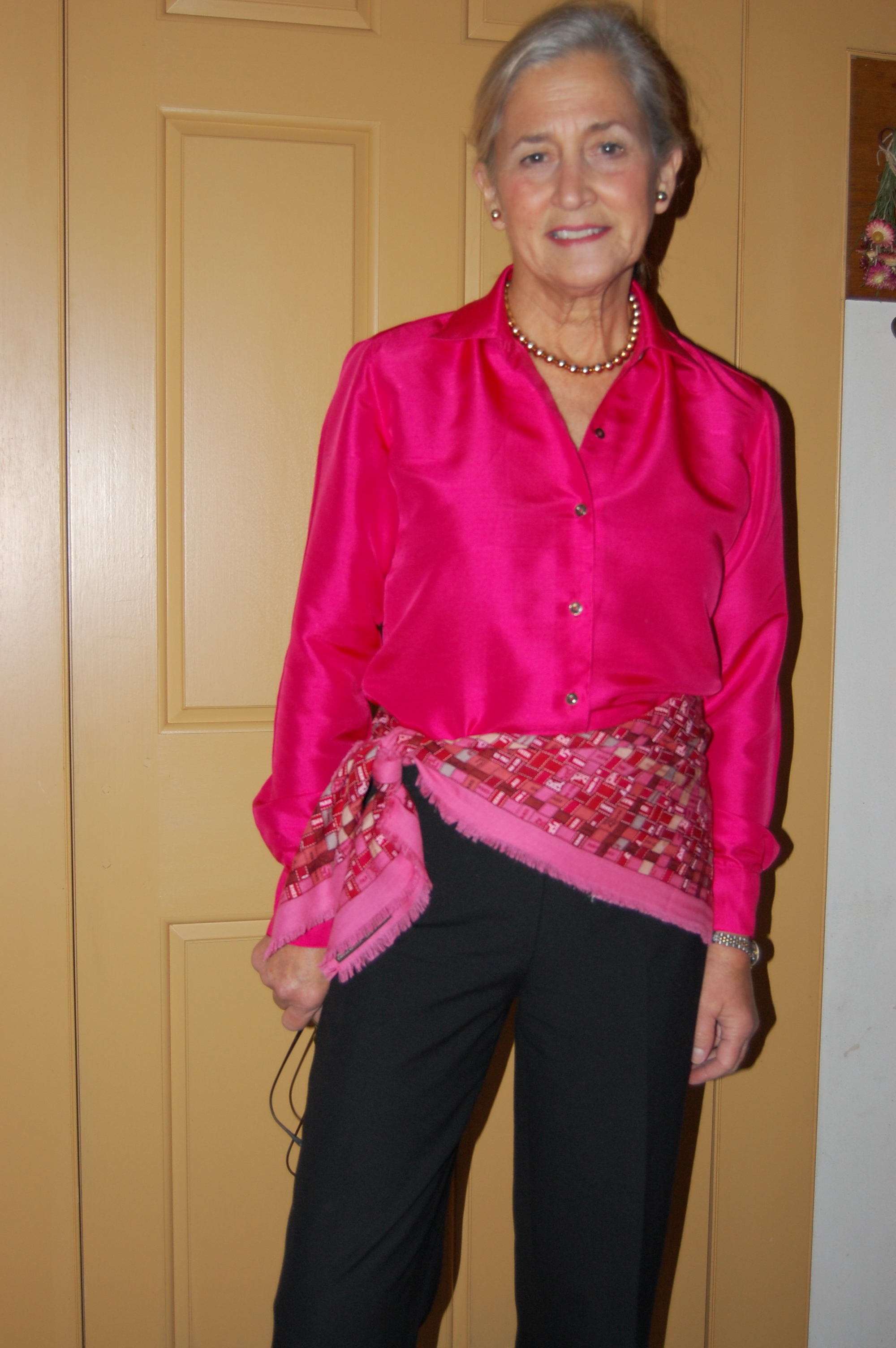
With a cashmere blend scarf, for a dressier look.

With a cashmere blend scarf, for a dressier look.

A vintage scarf to go with this vintage fabric!

A vintage scarf to go with this vintage fabric!

I’m looking forward to wearing this blouse often, but especially for date night, which just so happens to make “date day” also fun and low stress: no dinner to plan and cook  –  which means more time in the sewing room!

15 Comments

Filed under Blouses, Buttons - choosing the right ones, Scarves, sewing in silk, Uncategorized, vintage buttons, vintage Vogue patterns from the 1970s