Tag Archives: coats

A Collection of Coats

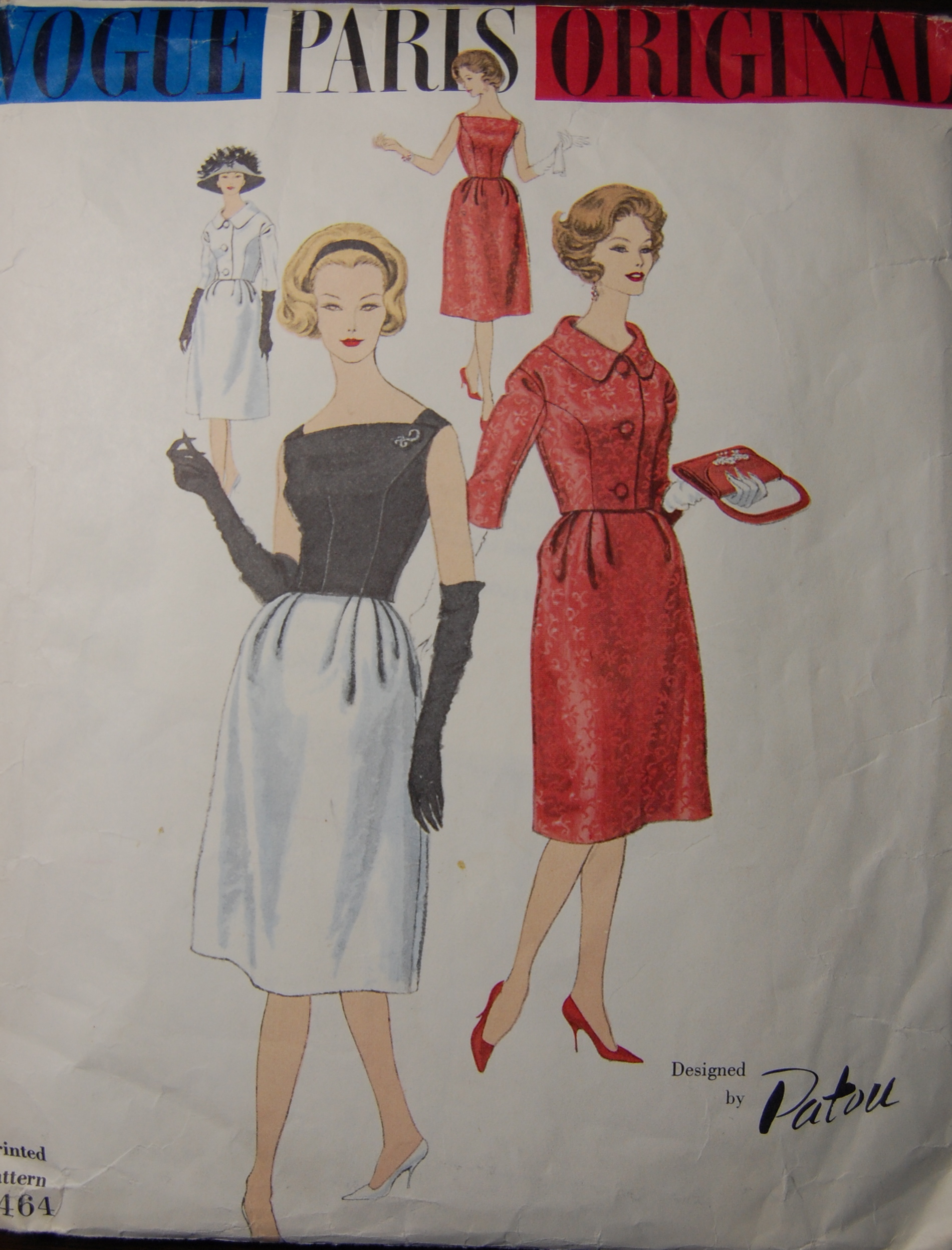
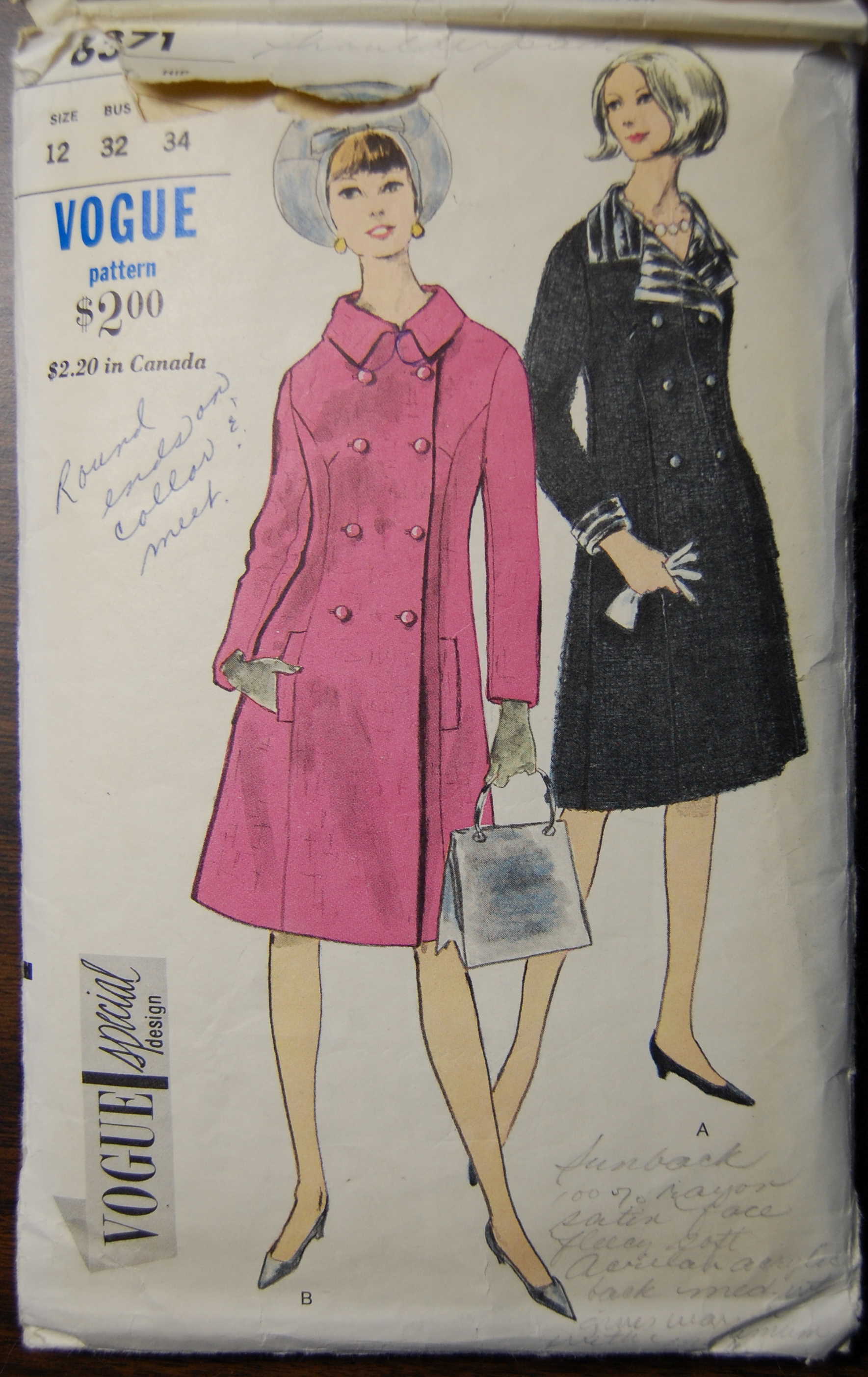
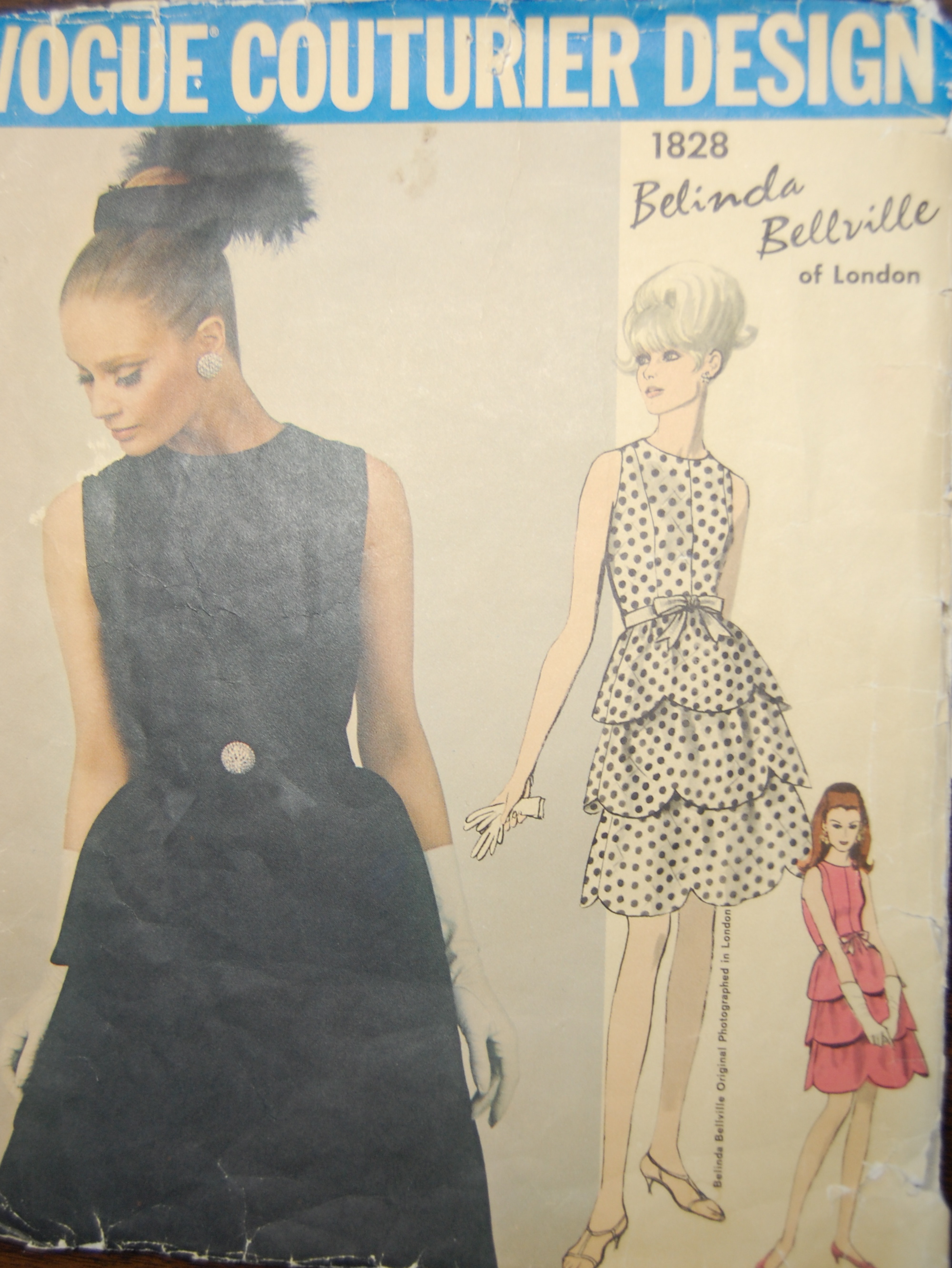
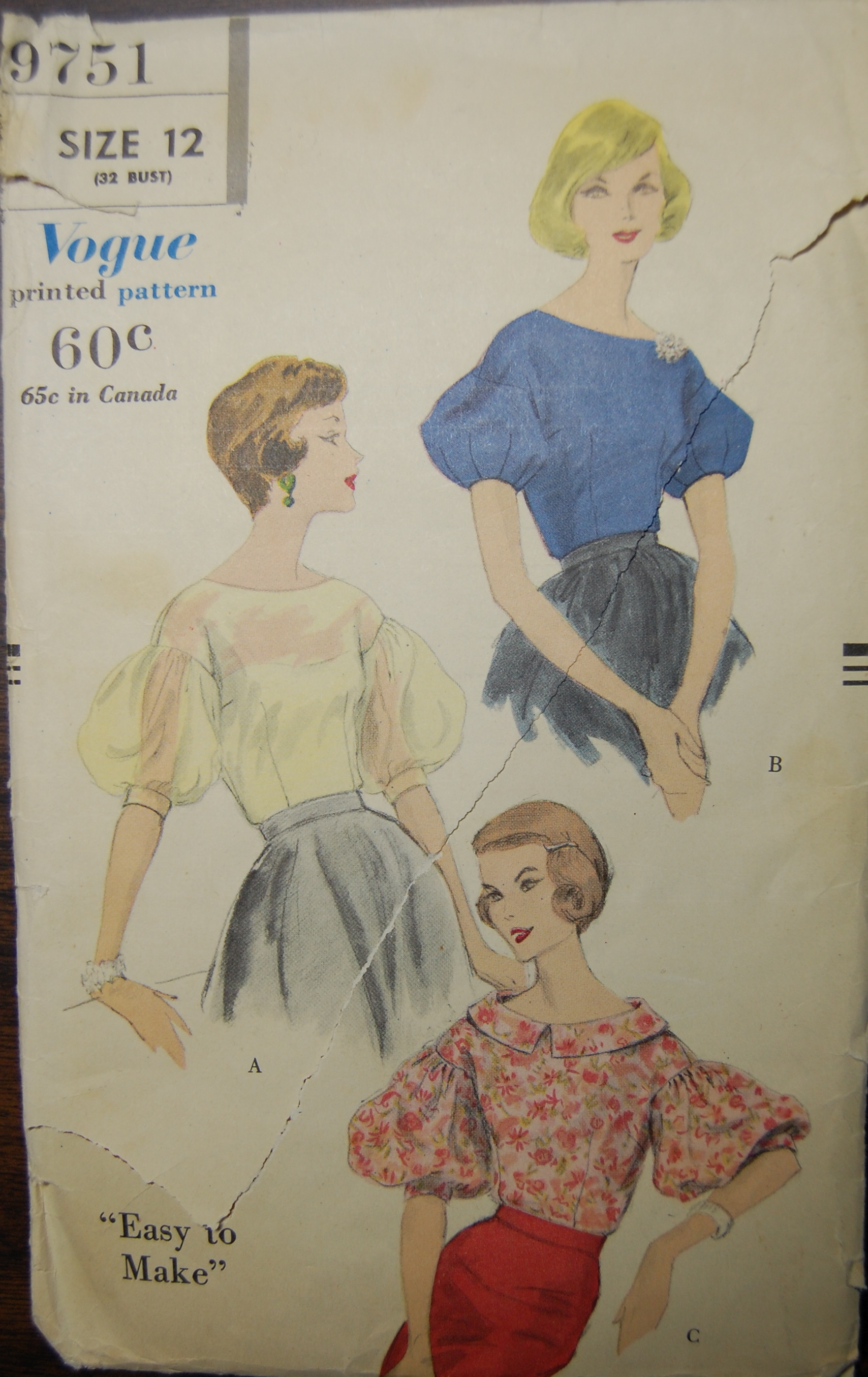
When the weather turns wintry, warm coats become a wardrobe staple. One or two “practical – wear everywhere” coats are a must. (I just added years to the life of a 2+ decades-old cashmere, classic, double-breasted coat by having the tattered lining replaced by a local tailor – and I will continue to wear this coat often!) But how delightful to have a collection of coats – and how much better if they are not only warm, but also stylish. If you were sewing in the 1950s and 1960s you were fortunate to have many, many coat styles and patterns available to you – and if you are sewing now, you are also fortunate to have access to many of these same patterns through the internet – and they are just as stylish now as they were 50+ years ago. I am, of course, speaking of “dressmaker coats.”

Quoting from Fairchild’s Dictionary of Fashion, (Third Edition, by Charlotte Mankey Calasibetta and Phyllis Tortora; Fairchild Publications, Inc, New York, New York, copyright 2003) a dressmaker coat is: “A woman’s coat designed with softer lines and more details than the average coat. May have a waistline and unusual details, e.g., tucks or pleats.” Such coats are so-called because they are styled more like a dress.

It doesn’t take very long to find examples of such coats in the Vogue Pattern Book Magazines from those two decades. The sheer numbers of patterns for such coats – and coat and dress ensembles – make me believe that home dressmakers from that period of time did not shy away from such sewing challenges. And why should we when so many gorgeous coats are waiting to be sewn?

Here are a few examples to tempt you:

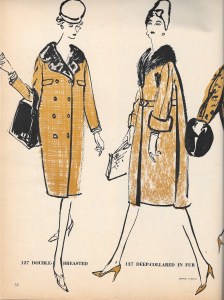
“The Rectangle Coat: New Fashion Geometry” was a feature in the December 1958/January 1959 Vogue Pattern Book Magazine.
Dressmaker coats - rectangle #1

Both of these coats feature fur collars “added by your furrier.” The one on the left has a “slight oval to the back” – and a half belt.
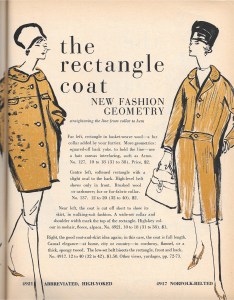
Suggestions for suitable fabrics are given for each of these designs.

Suggestions for suitable fabrics are given for each of these designs.

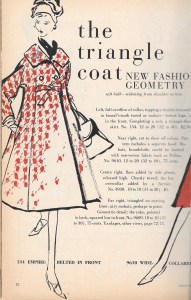
Continuing with the theme of “New Fashion Geometry,” the following pages of the same Vogue Pattern Book Magazine show examples of “the triangle coat.” Other terminology for this style of coat is the A-line coat. First introduced in 1955 by Christian Dior, this coat was “made close and narrow at the shoulders, flaring gently from under the arms to hem; shaped like letter A, made in single-or double-breasted style with or without a collar,” according to Fairchild’s Dictionary of Fashion, page 85.
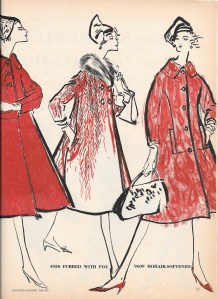
Dressmaker coats - triamgle coat #1

The coat on the right has unusual princess seaming.

The coat on the right has unusual princess seaming.

A few years later, the December 1962/January 1963 issue of Vogue Pattern Book Magazine featured “7 new ways to keep warm and look wonderful.”
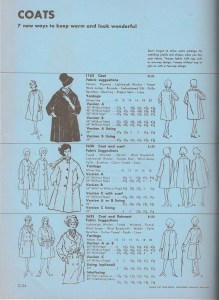
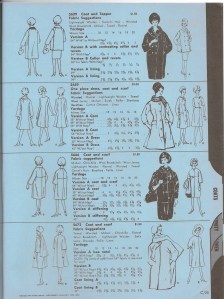
Dressmaker coats - 7 coats 1

Several of the coats in this section feature "fullness" in the body of the coat.

Several of the designs in this section feature “fullness” in the body of the coat.

For me, however, it is the “ensembles” that make the ultimate fashion statement when speaking of coats. Christian Dior succinctly sums up their allure in The Little Dictionary of Fashion (Abrams, New York, New York, copyright 2007), page 40: “A very elegant way of dressing is to have a coat and dress matching together, making an ensemble… The frock should be fairly simple and the coat can be either fitted or loose, according to your taste. It can also be either long or short.” Vogue Patterns had no shortage of offerings for such ensembles. Here are four wonderful Vogue patterns – which are part of my pattern collection – and which are “ensembles.”

Note the "fullness" in this coat as well.

Note the “fullness” in this coat as well.
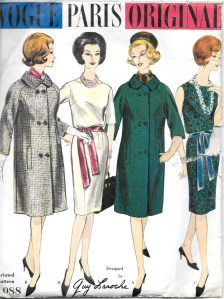
The princess seaming on this coat is similar to the red one mentioned above.
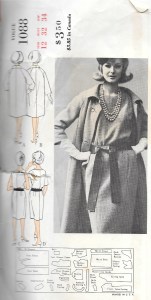
The princess seaming on this coat is similar to the red one mentioned above.

Somehow, this Guy Laroche pattern shows better in this photograph than in its drawing.

Another view of this  Guy Laroche pattern; it seems to show better in a photograph than in its pattern illustration.
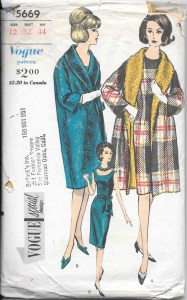
This pattern was featured in that same VPB Magazine issue from December 1962/January 1963.
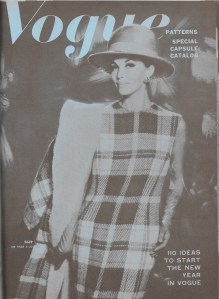
This pattern was featured in that same VPB Magazine issue from December 1962/January 1963.

And here it is in black and white in that issue. Stunning, isn't it?

And here it is in black and white in that issue. Stunning, isn’t it?
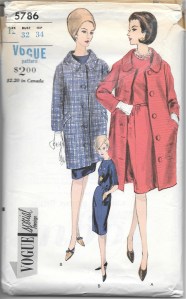
I love the knee length coat, although I may substitute another pattern for the coordinating dress.

The neckline on this coat is lovely and perfectly suited for a coordinating dress.

I actually have fabric for three of these patterns – with plans to sew them of course.  (Can you guess which one is the fabric-less orphan?)   However, all of them will remain part of my sewing dreams until after the holiday season – which “officially” begins this week with our American Thanksgiving celebration. I have festive attire and a few homemade gifts to fill my sewing days through December. Building my collection of coats will just have to wait.

Happy, Happy Thanksgiving to all my American readers – and my heartfelt thanks to my loyal readers worldwide in this season of gratitude.

11 Comments

Filed under Coats, Dressmaker coats, Mid-Century style, The Conde Nast Publications, Uncategorized, vintage Vogue Designer patterns, vintage Vogue patterns from the 1950s, vintage Vogue patterns from the 1960s

Saddle Up!

Western style (as in American cowgirl and cowboy) is not something that regularly occupies my mind – until I see something that is quintessentially Western fashion, and then it grabs my attention. I have often wondered if the styling on the pattern envelope for my color-blocked coat, featuring the model in a Western-style cowboy-inspired hat, may have been added to my great predilection for this coat!

Coats of certain length - 7

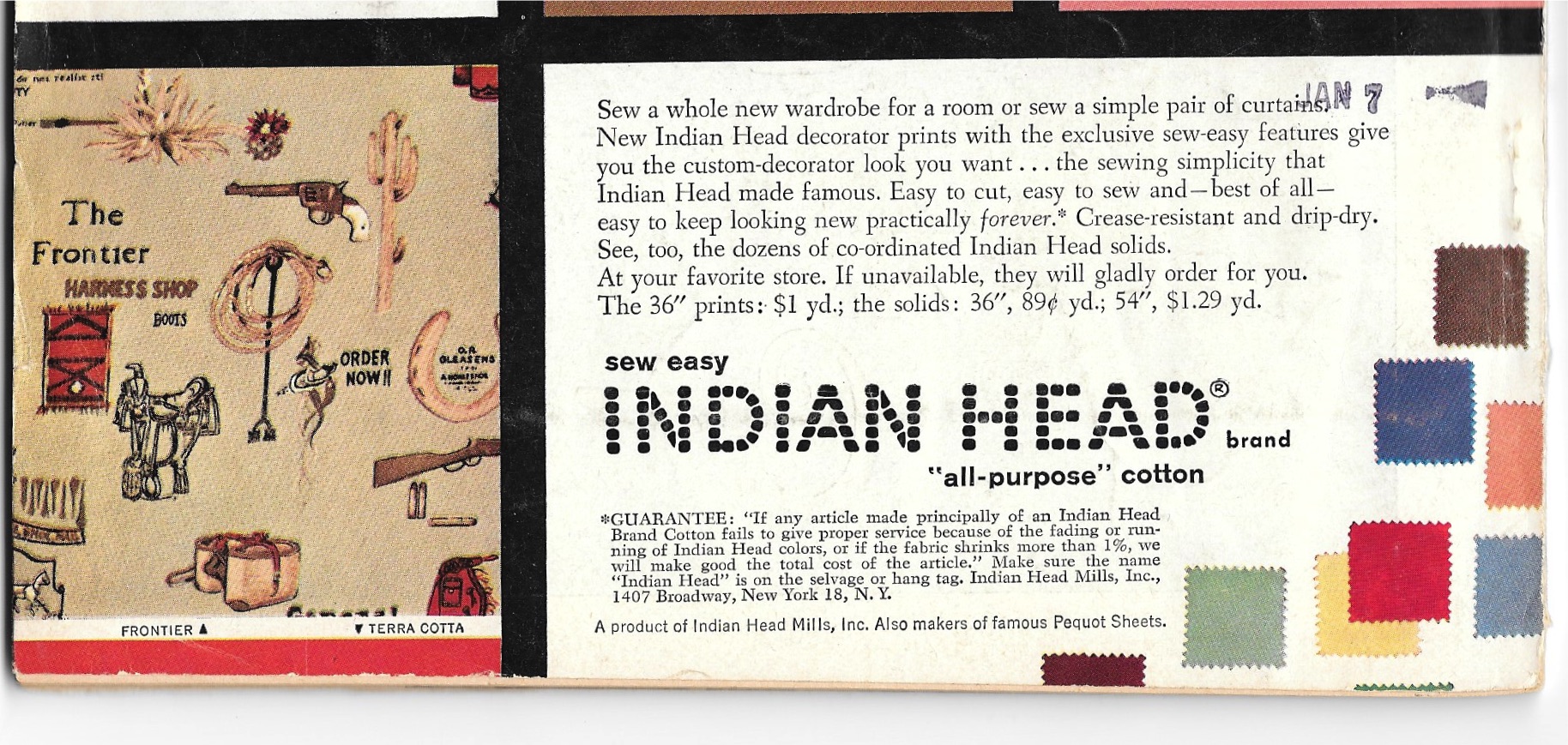
Because I knew I was going to be spending a good bit of my 2015 Summer in Wyoming (in the American West), I thought it might be fun to see if I could find Vogue patterns (or anything else) featured in any of my vintage Vogue Pattern Book Magazines, that were clearly Western style.  Well, there is no doubt about the Western theme of this decorator fabric pictured in an ad in the February/March issue of VPB Magazine:

What little cowboy - or cowgirl - in 1958 would not love curtains made of this fabric?

What little cowboy – or cowgirl – in 1958 would not love curtains made of this fabric?

And what could be more Western than cowboy and cowgirl shirts? The July/August 1974 issue of VPB Magazine clearly met my challenge:

Western style - shirts, no 1

Western style - shirts, no 2

Somehow, however, I just can’t see myself making a cowgirl shirt. Out here in Wyoming, it would look like it belongs. Wearing something like this at home in Pennsylvania might get heads turning for the wrong reason. So my search continued for something else that evoked the West without screaming it. Who would have ever thought I was going to find it in the same Vogue Pattern Book Magazine that featured Diane von Furstenberg on its cover?

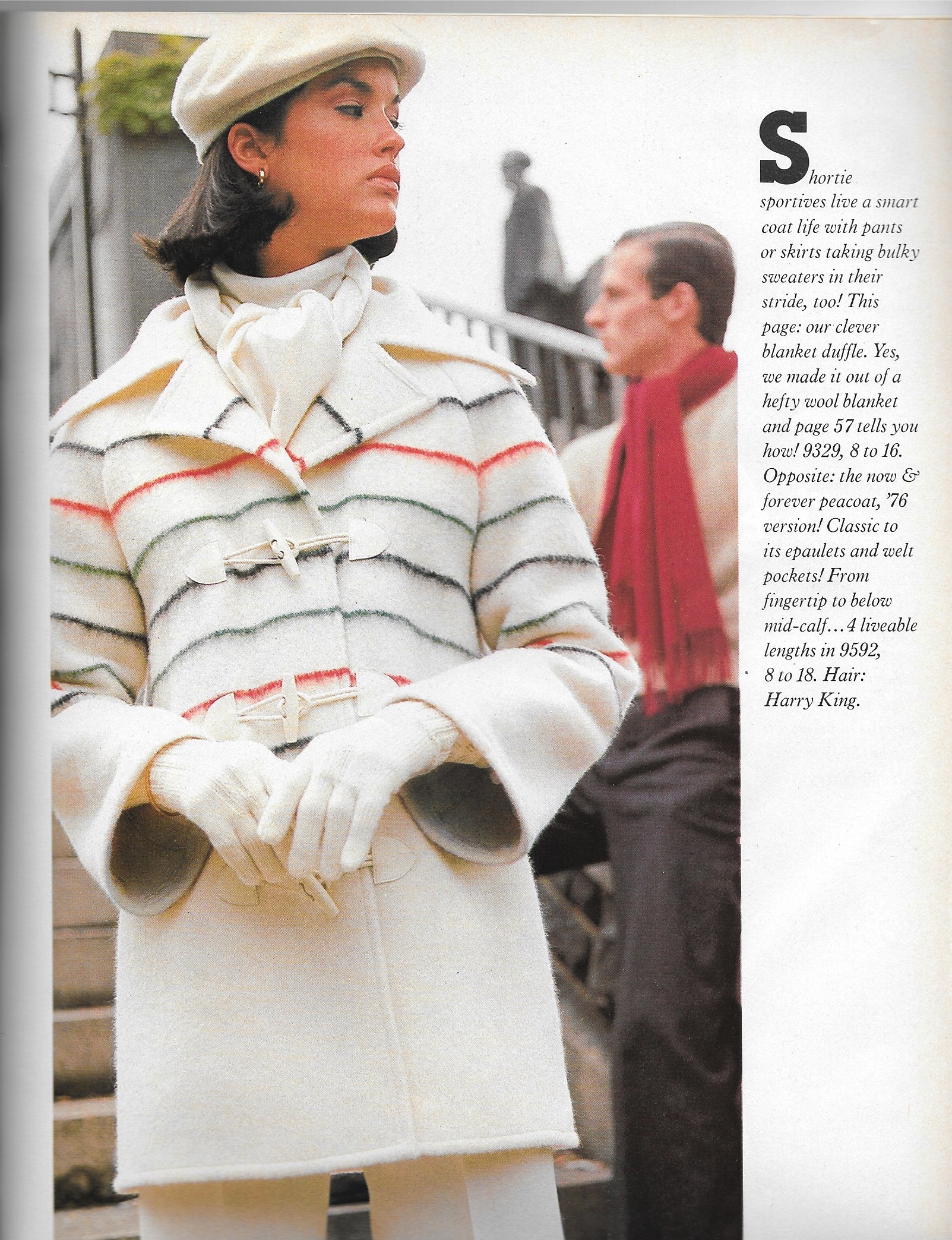
Sure enough, this September/October 1976 issue featured a coat constructed out of an American-made blanket. (Anyone who reads my blog will perhaps remember the jumper I made from an Irish blanket last year. When one can’t find yardgoods, buy a blanket and see what happens!)

Western style - coat-1

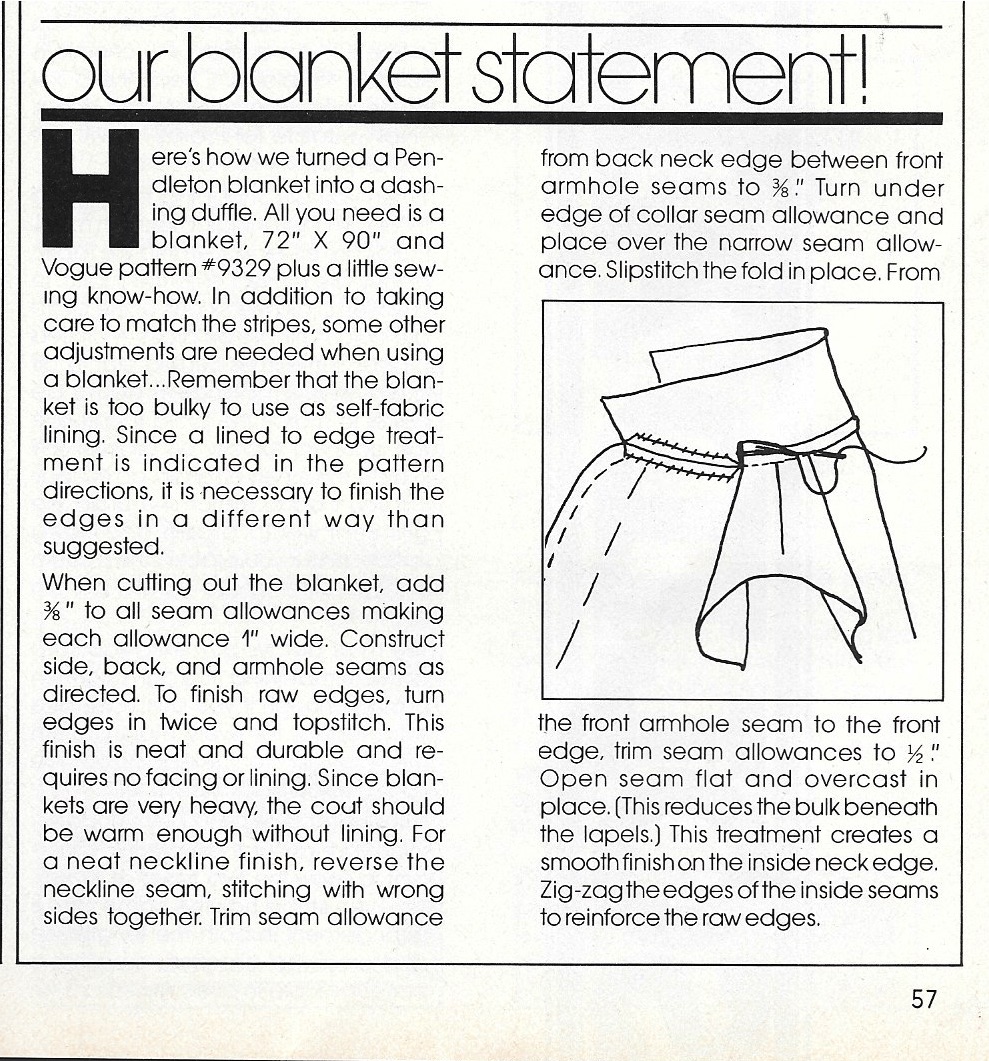
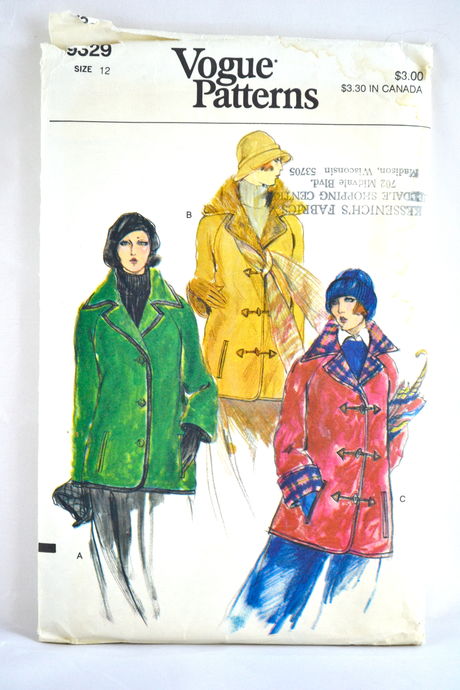
Accompanying the picture in the magazine were these instructions for making a “blanket coat” using Vogue pattern 9329:

Western style - coat instructions

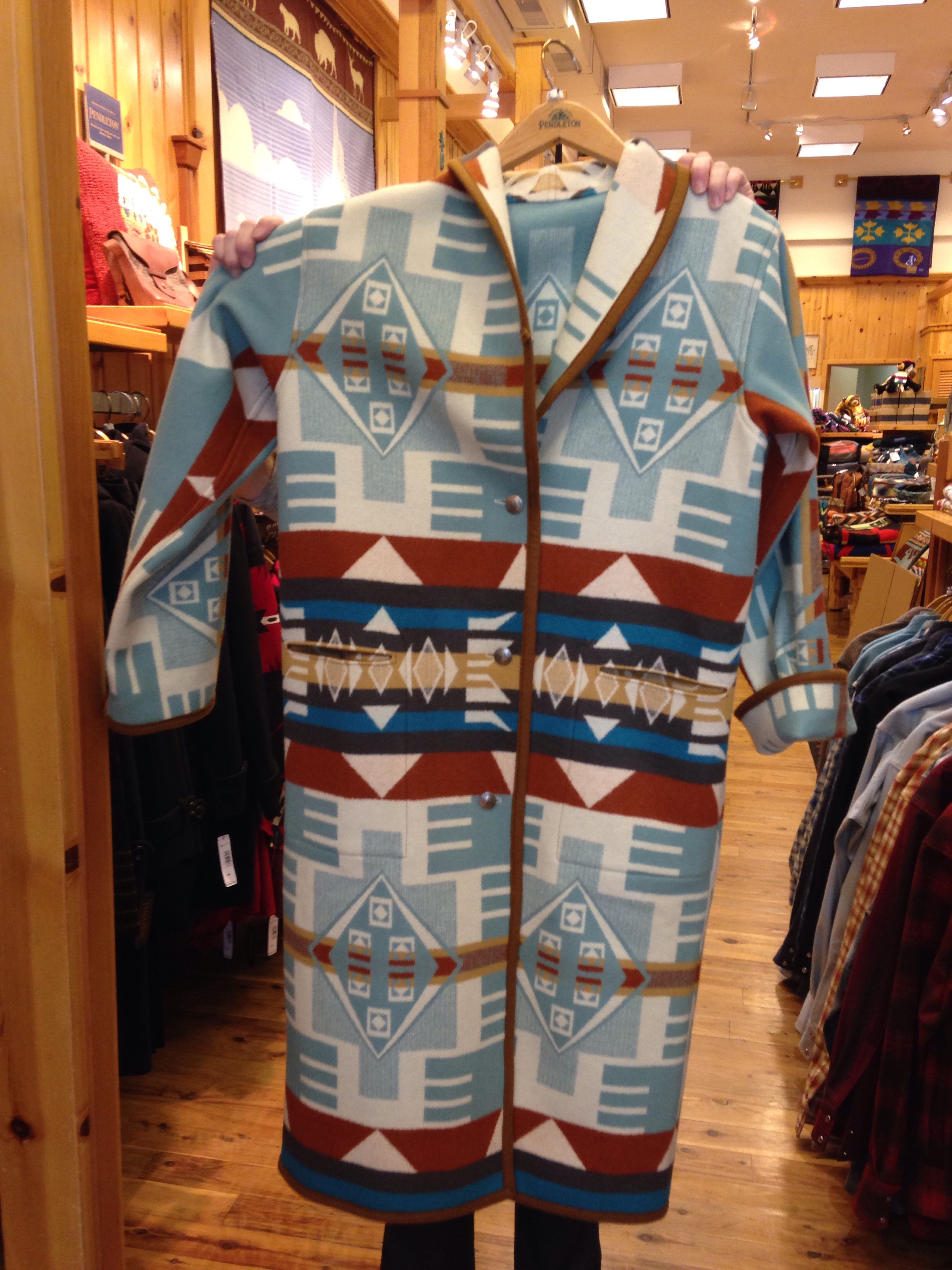
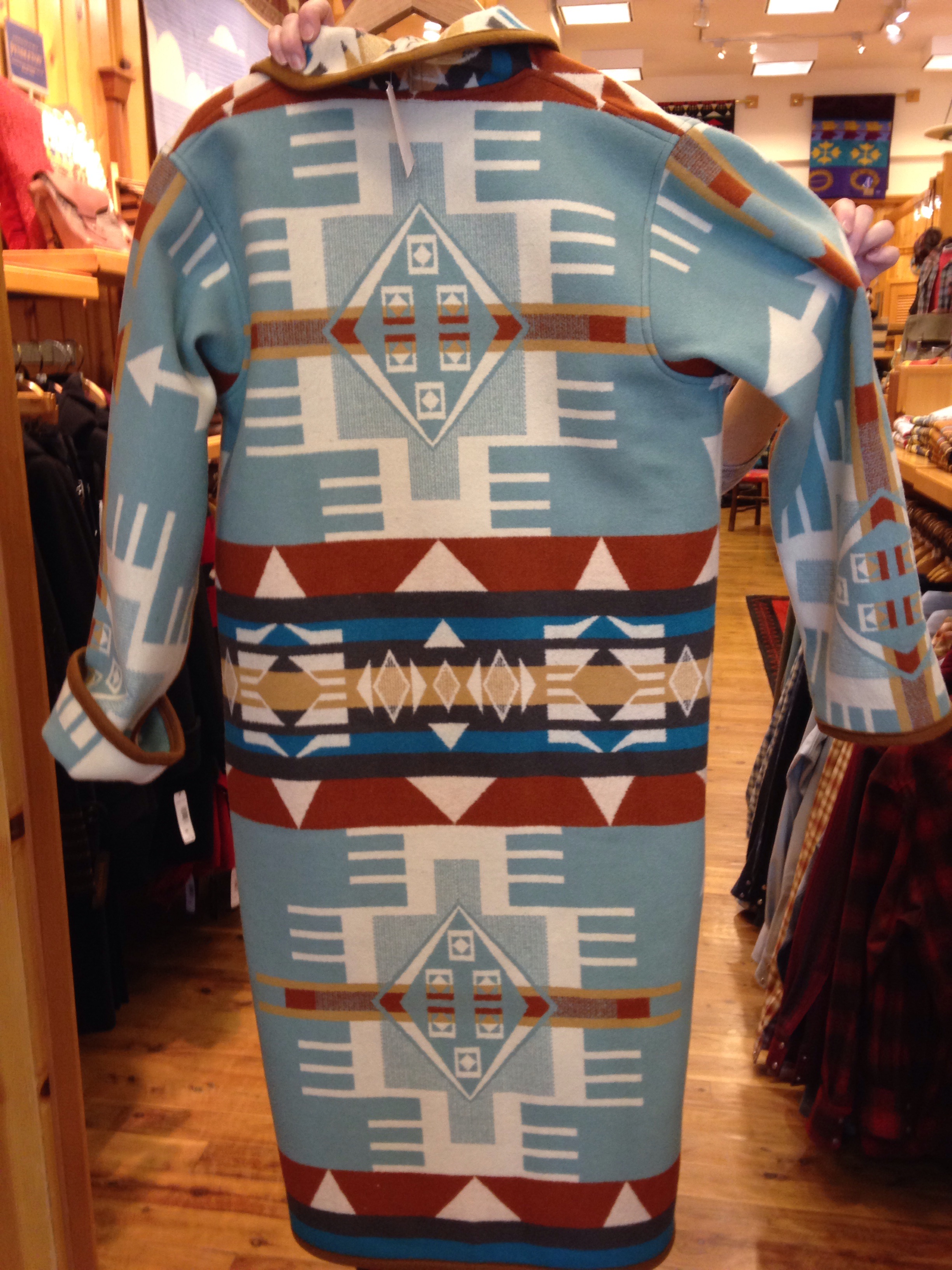
Forty years later the same thing is being done with Pendleton blankets. I never miss the opportunity to look at the handsome Western and Native American-inspired Pendleton blankets in the Pendleton Store in Jackson, Wyoming. Hanging on one of the clothing racks in the store was this custom-made coat:

This particular coat was made for a very large lady, which just goes to show that a twin size blanket is sufficient for all sizes of coats.

This particular coat was made for a very large lady, which just goes to show that a twin size blanket is sufficient for all sizes of coats.

The back of the coat.

The back of the coat.

Made, as stated above, from a twin-size blanket, the coat can be made in long, medium or short lengths, with hood or without hood, with pockets or without them – and it is reversible, too. Customers in the store pick out the blanket they like, measurements are taken: both are sent off to a coat-maker, with whom the store has a relationship, and returned about 6 weeks later. The construction is very much the same as what is detailed in the instructions above; however, the coat-maker removes the narrow wool binding from the blanket before cutting into it. Then she uses that binding for all the edges of the coat.

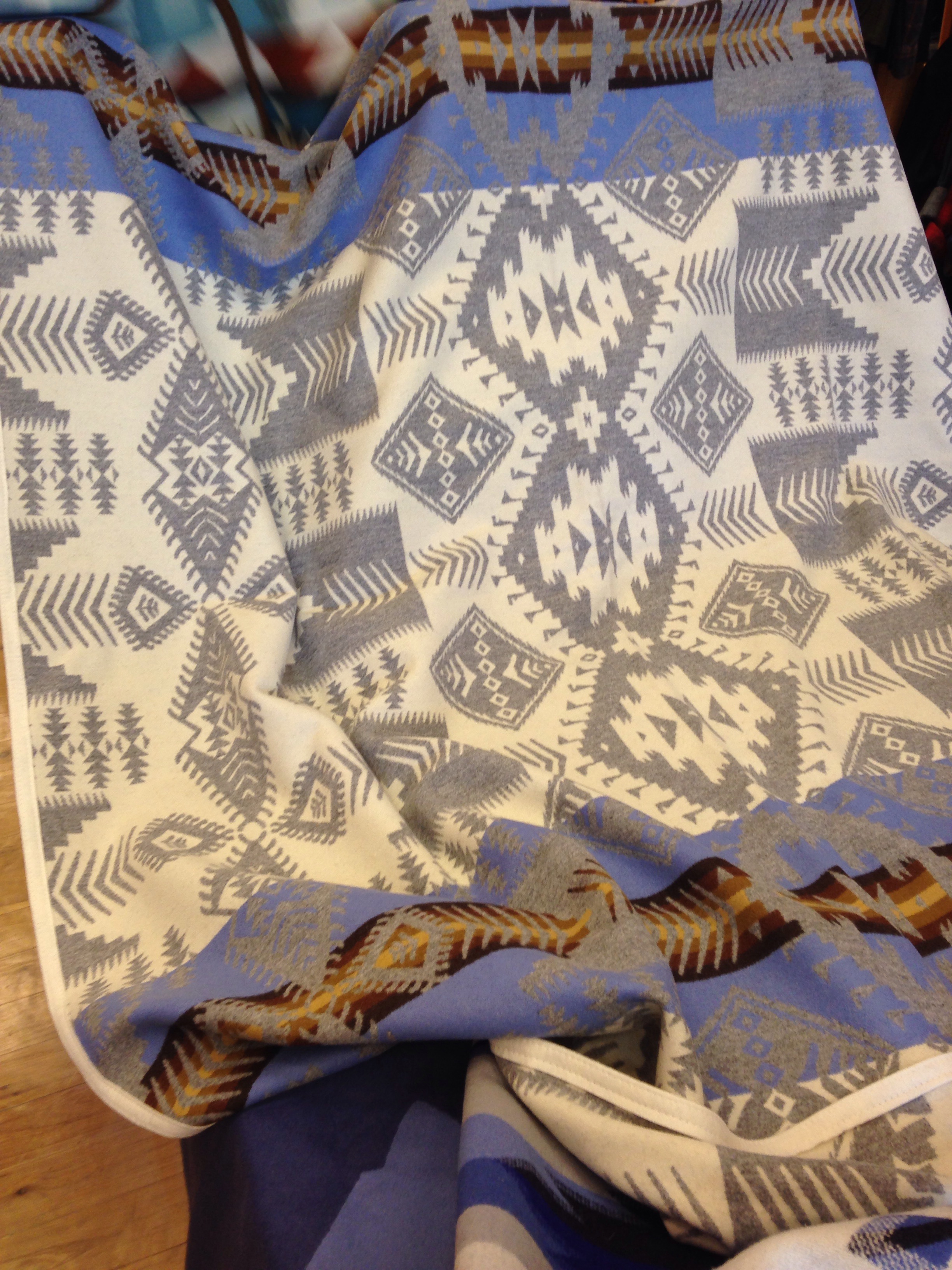
The lovely staff in the Pendleton store pulled out this blanket to tempt me:

The grey, white and periwinkle blue color way would definitely compliment me, I think.

The grey, white and periwinkle blue colorway would definitely compliment me, I think.

So far, however, I have resisted the urge to make a blanket coat, although it might be a fun project with just the right blanket – sometime. But for now I am saddling up to head East, home to beloved Pennsylvania, back to animals and pets I love, back to my by-now-overgrown gardens, and back to my snug little sewing machine who must be wondering where I have been!

9 Comments

Filed under Coats, Uncategorized, vintage Vogue patterns from the 1970s, woolens

The Domino Effect

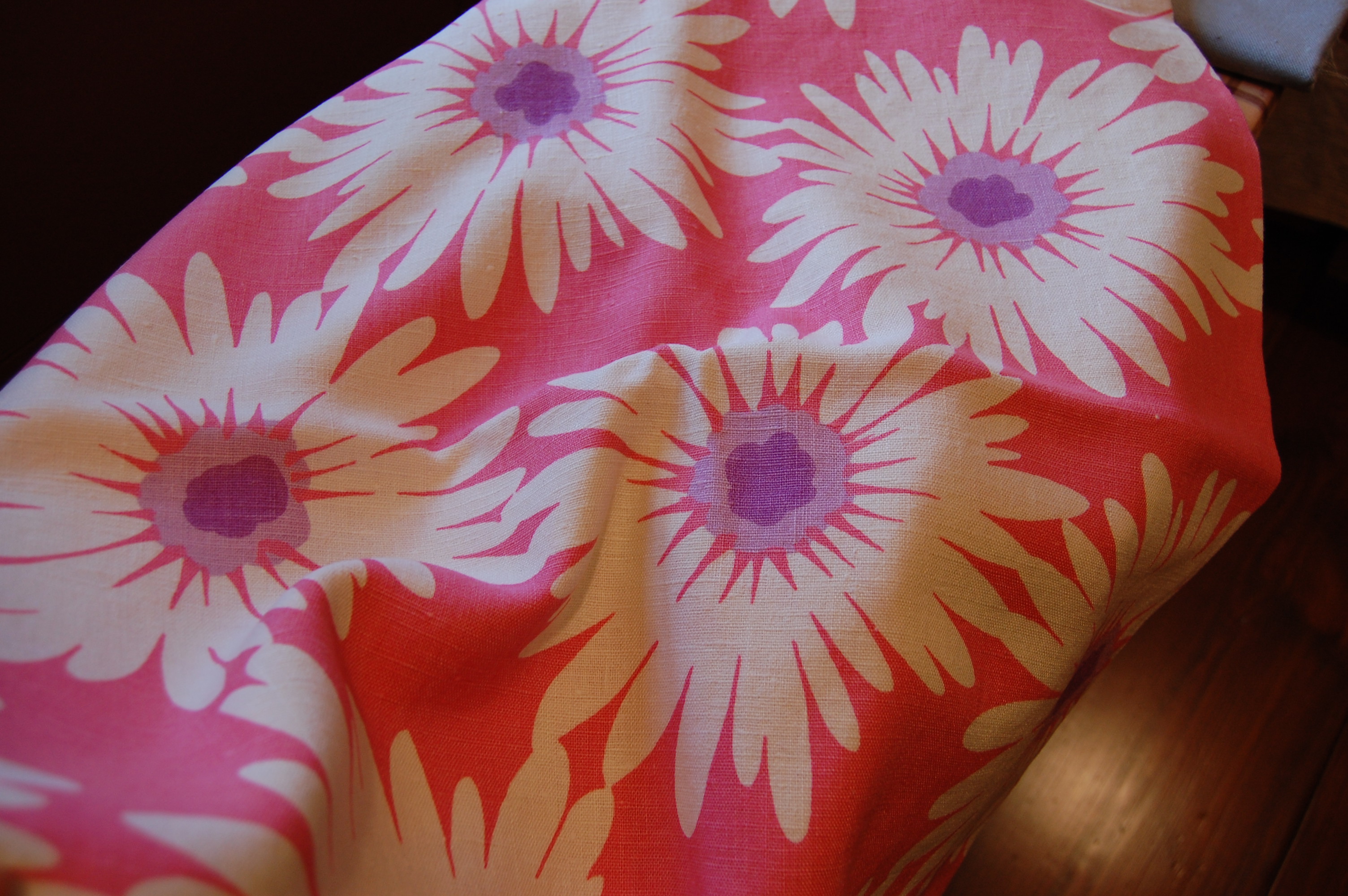
Being totally smitten with this bold floral linen, purchased within the past year, I have had my heart set on making it into a day dress this Summer.

Big, bright daisies with lavender centers.

Big, bright daisies with lavender centers.

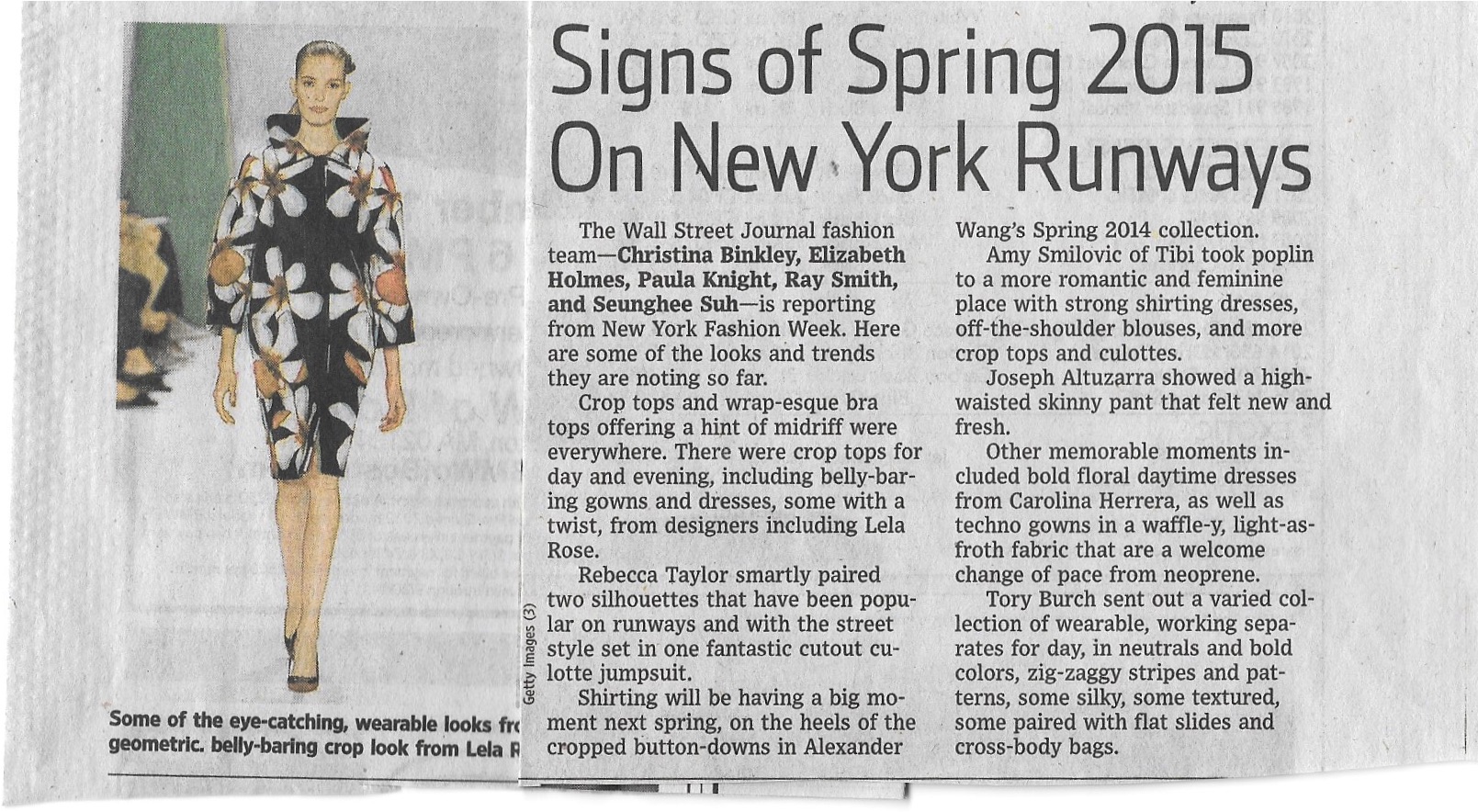
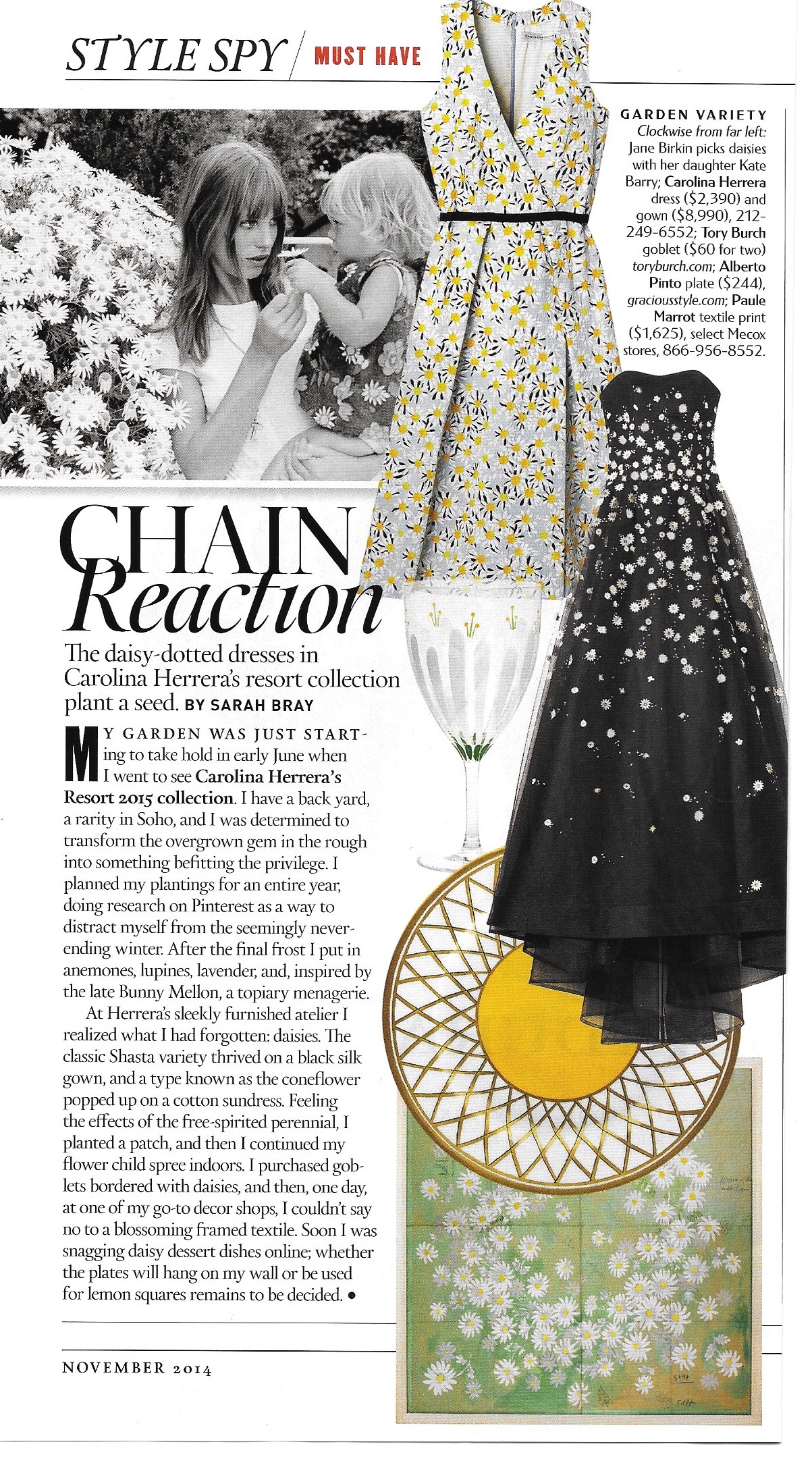
Not long after I purchased it, this small article on “Signs of Spring 2015 On New York Runways” appeared in the September 10, 2014 Wall Street Journal.

"Memorable moments included bold floral daytime dresses from Carolina Herrara..."

“Memorable moments included bold floral daytime dresses from Carolina Herrera…”

And then in November of 2014, more of Carolina Herrera’s Spring/Resort collection for 2015 was featured in Town & Country magazine.

Perennial daises on two lovely Carolina Herrera dresses.

Perennial daises on two lovely Carolina Herrera dresses.

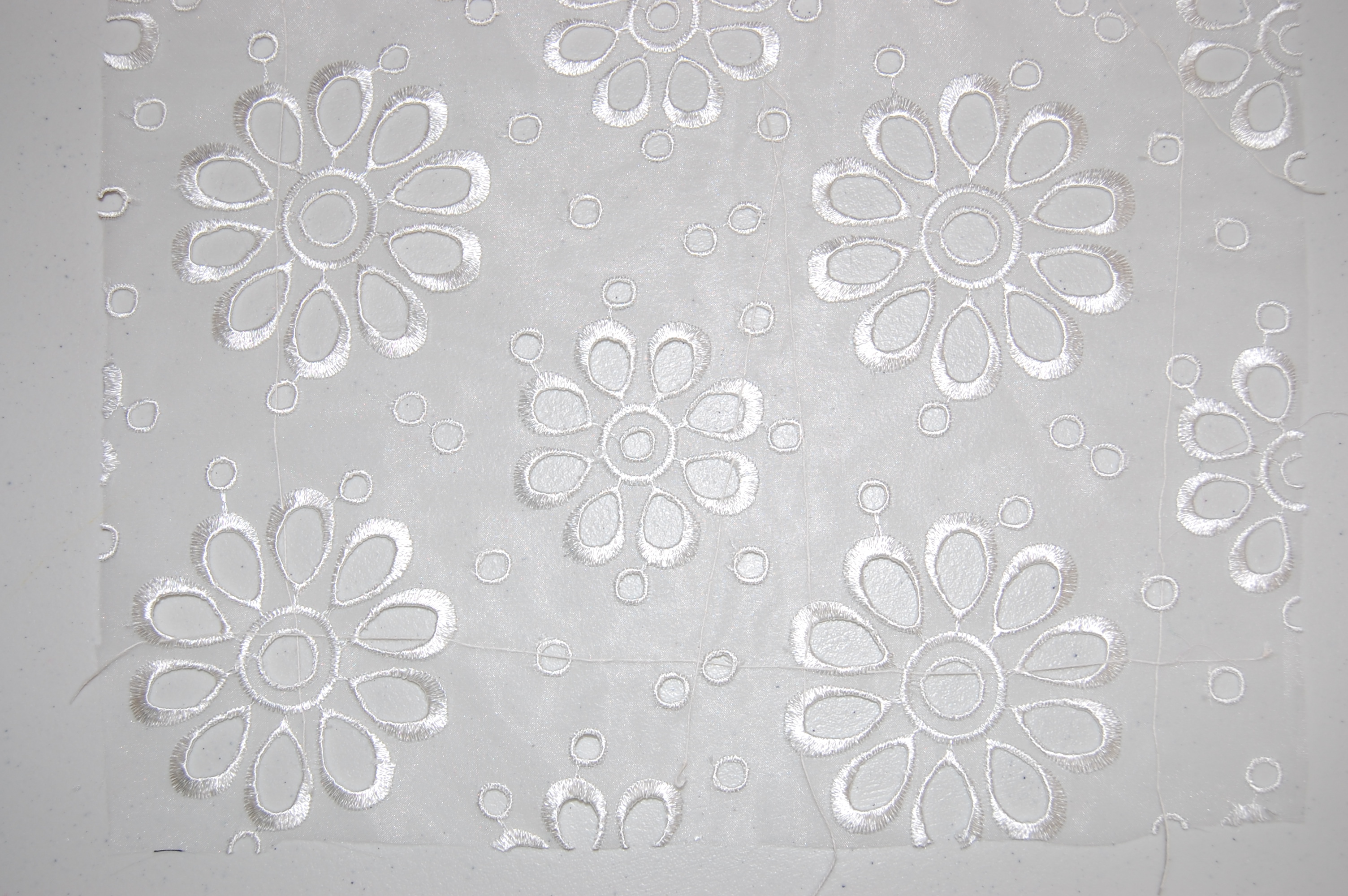
It seems this vintage Moygashel linen from the late 1960s, with its bold daisy design is very much in vogue currently, both for its size and its floral motif. (The bodice of my recent fancy dress also featured a “daisy” motif in the silk embroidered organza):

The Allure of silk, pt 1

Although I am of the mind that daisies are always in vogue, nevertheless, this seems like the perfect year to fashion a dress from this linen. Such a demonstrative print begs for a simply-styled dress, such as – you guessed it – a sheath dress.   The fabric will make this dress, not the pattern. How could I, I wondered, do something a little different and still keep it simple? The answer to that question began to take shape when I found a length of pale lavender Moygashel linen this past Spring. Suddenly I envisioned a V-back to a sheath dress with a rounded neck, detailed with piping made from this lavender linen.

Then it began to get complicated. With just a few inches over 3 yards of the 35” wide lavender fabric, I knew I would have to calculate carefully when I cut bias strips for the piping, if I wanted to fashion another garment out of the lavender. And of course, I do! Actually, when I looked at the lavender fabric, and paired it with any number of my other fabrics and/or dresses, it seemed the only thing to use it for was a “Spring” coat. But would I have enough fabric for both a coat and bias strips for piping?

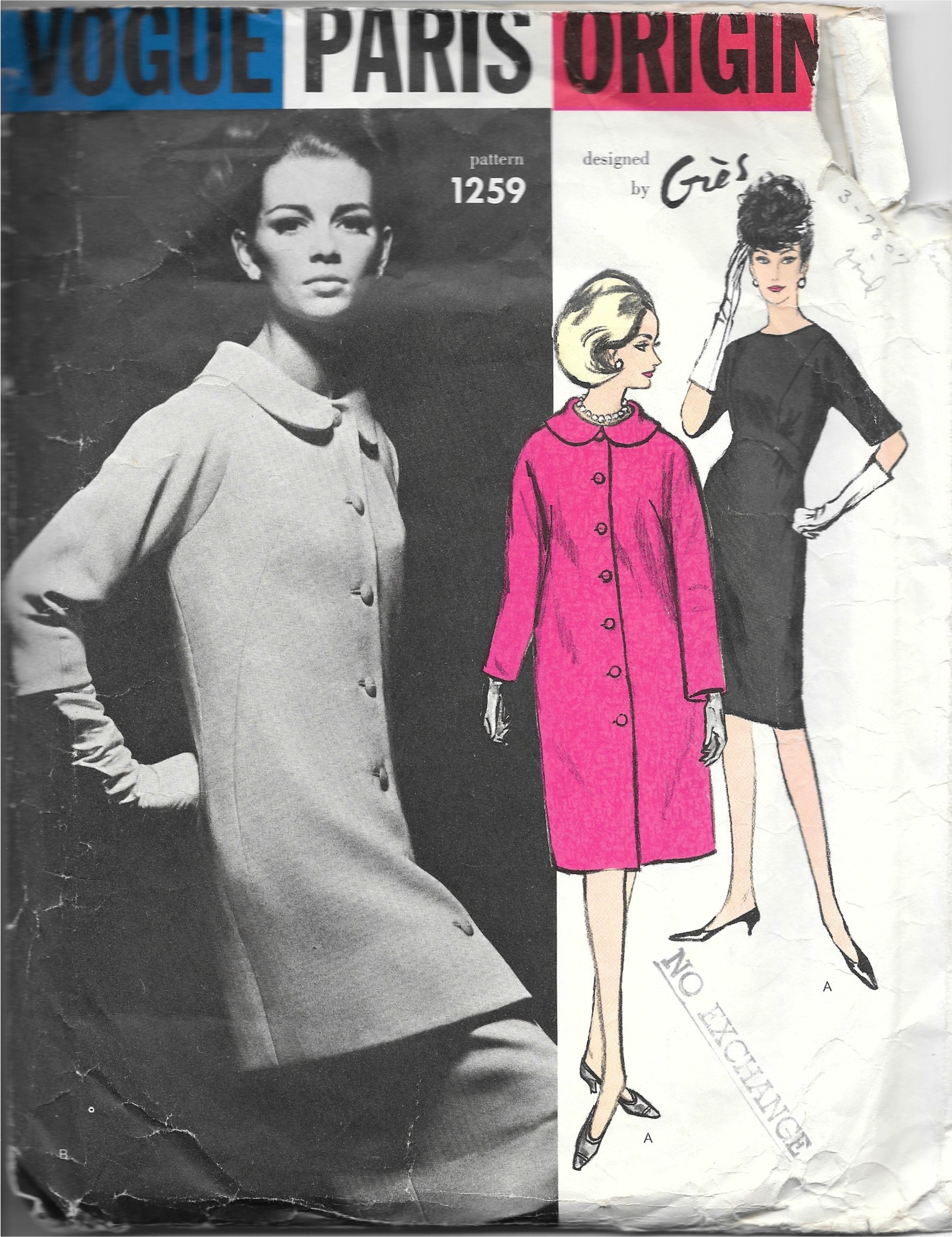
Obviously, I would have to find a coat pattern and lay it out leaving enough space for bias strips, to see if I could manage this minor miracle. Of all my coat patterns, this Madame Gres design is the one I decided had the best chance of working, both for my limited yardage and for the pattern’s simple, uncluttered lines:

The short version of the coat is on the left.

The short version of the coat is on the left.

The fact that it is featured with below elbow length sleeves and in a shorter version – perfect for pairing with coordinating dresses – worked in my favor. The entire coat has only 5 pattern pieces: front, back, collar, undercollar, and front facing. First I positioned the tissue pattern pieces on my fabric, strewn out on the floor selvedge to selvedge. I was heartened enough by this exercise to go ahead and make a muslin, so I could have a “real” pattern to work from. All this time, the pink flowered daisy linen lay folded, awaiting her turn.

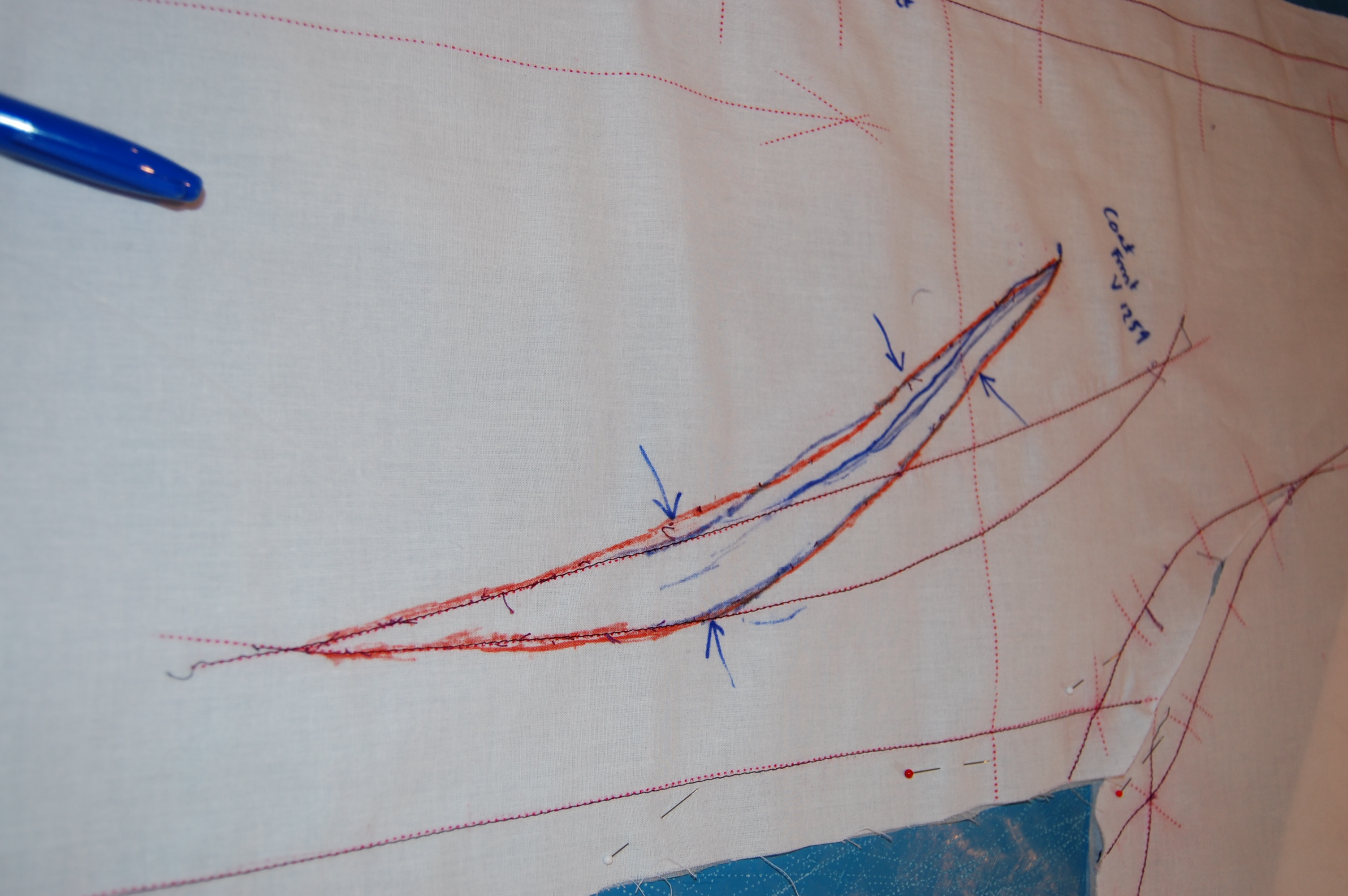
One of the most unusual features of the coat design is the front dart, which serves both as a bust dart and as a side-shaping dart. As is so often the case with these vintage patterns, the dart sewn as indicated on the pattern was too high for me. In addition, it pulled and stretched the kimono shoulder in all the wrong ways. I lowered the apex of the dart and re-sewed it, trying to preserve its curve, and suddenly it fit like a charm.

The newly drawn dart is in orange, while its original position is in red.

The newly drawn dart is in orange, while its original position is in red.

Now that I had a workable pattern, I knew I could just eke out the coat if I “pieced” the left front facing. I could live with that! And, just as important, I would have enough of the fabric to cut bias strips for piping for my daisy sheath. Whew!

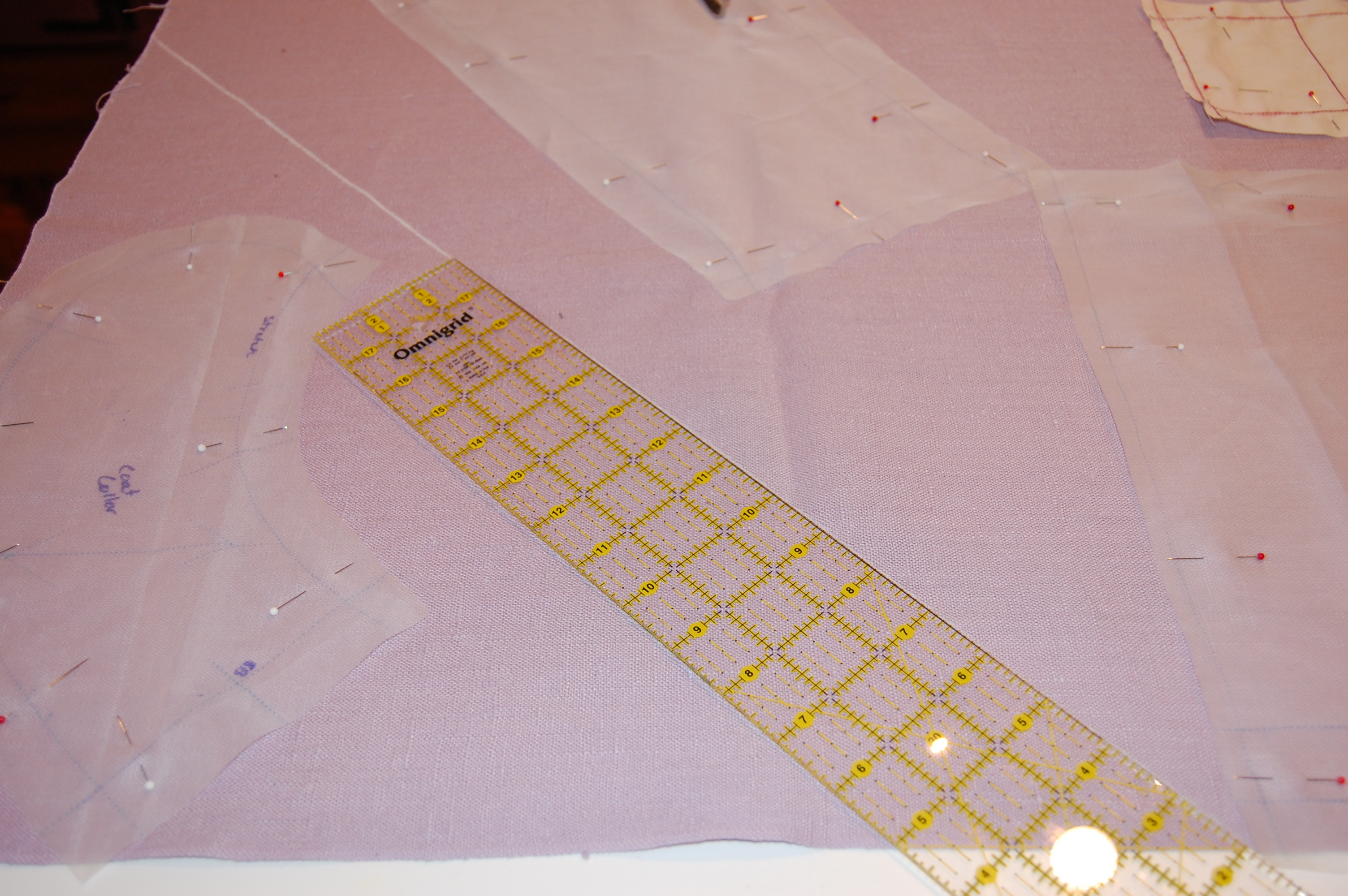
This see-through ruler helped me find a corner from which to cut the bias strips for the piping.

This see-through ruler helped me find a corner from which to cut the bias strips for the piping.

So now, the pieces for the coat, with their silk organza underlinings pinned in place, are taking their turn waiting for further attention. One project started another and now both are lined up like a circle of dominoes, ready to go down in an orderly fashion, albeit in slo-o-o-w motion.

13 Comments

Filed under kimono sleeves, Linen, Moygashel linen, piping, Uncategorized, Vintage fabric, vintage Vogue Designer patterns

Figuring It Out

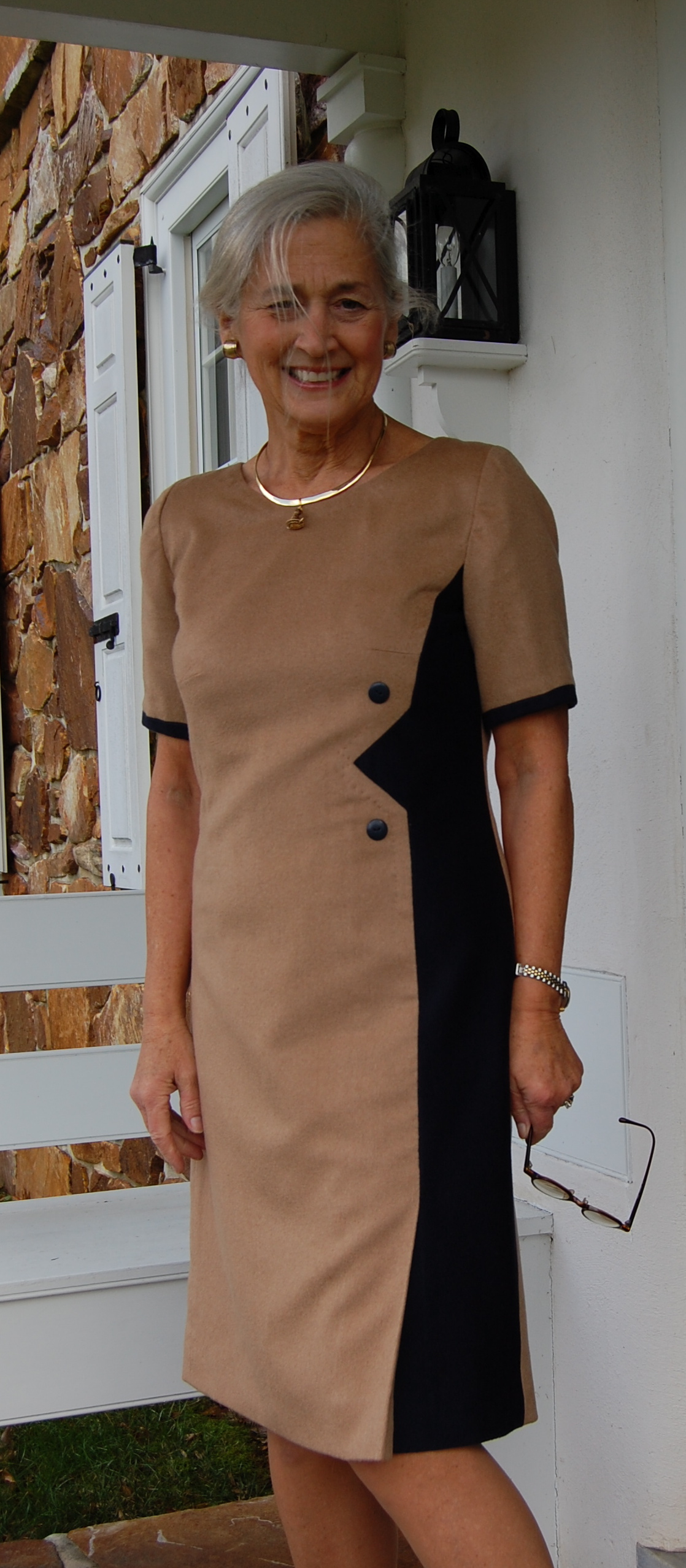
Having completed my first Marfy dress, I now have the pleasure of reflecting upon its creation. Unlike my “Ghost Dress” which caused me so much angst (but turned out okay in the end), this ‘60s-inspired design went together without a hitch, although it definitely took some “figuring it out” along the way.

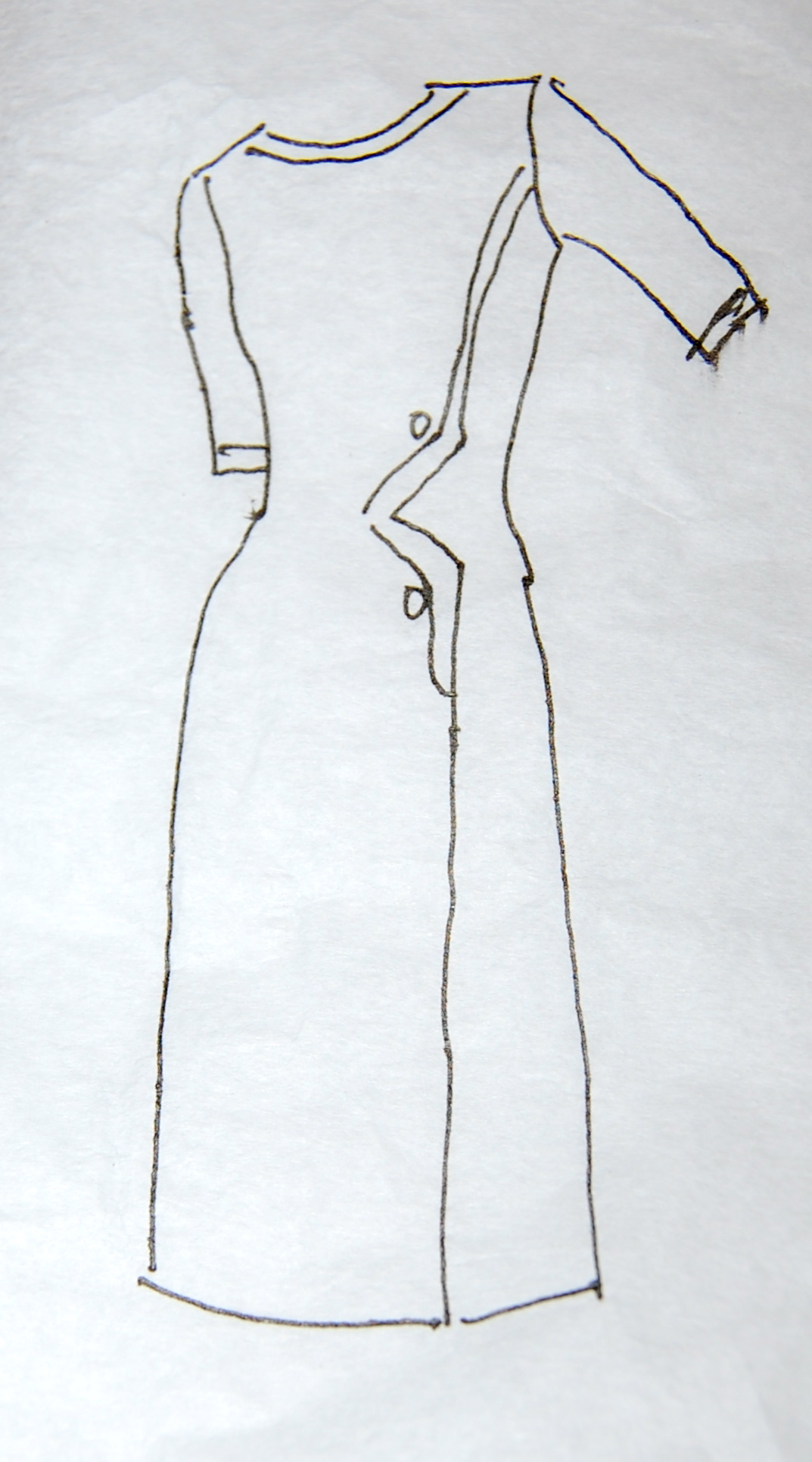
First I’ll cover the four changes I made to the dress, based on my muslin (toile). Initially I had to lower the apex of the bust darts, an alteration I am now used to making. Second, I decided to lengthen the sleeves by about 2 inches. I did this mostly to make the dress more comfortable to wear in the cold winter months. Even covering bare upper arms just a little bit more is helpful. I was hoping this would not detract from the lines of the dress otherwise. I made a tracing to try it out on paper first:

Marfy Dress

Somehow, the longer sleeves did not look good with the very distinct A-line silhouette of the dress. I thought they would look better with more of a straight skirt. I knew from the muslin that the front detailing had a built-in kick pleat, so narrowing the skirt was entirely doable. I would still be able to walk in it!

Alteration number four was the neckline. I widened it a bit, as I think that looks better on me. Then I widened it again later in the process (I’ll get to that in a bit.)

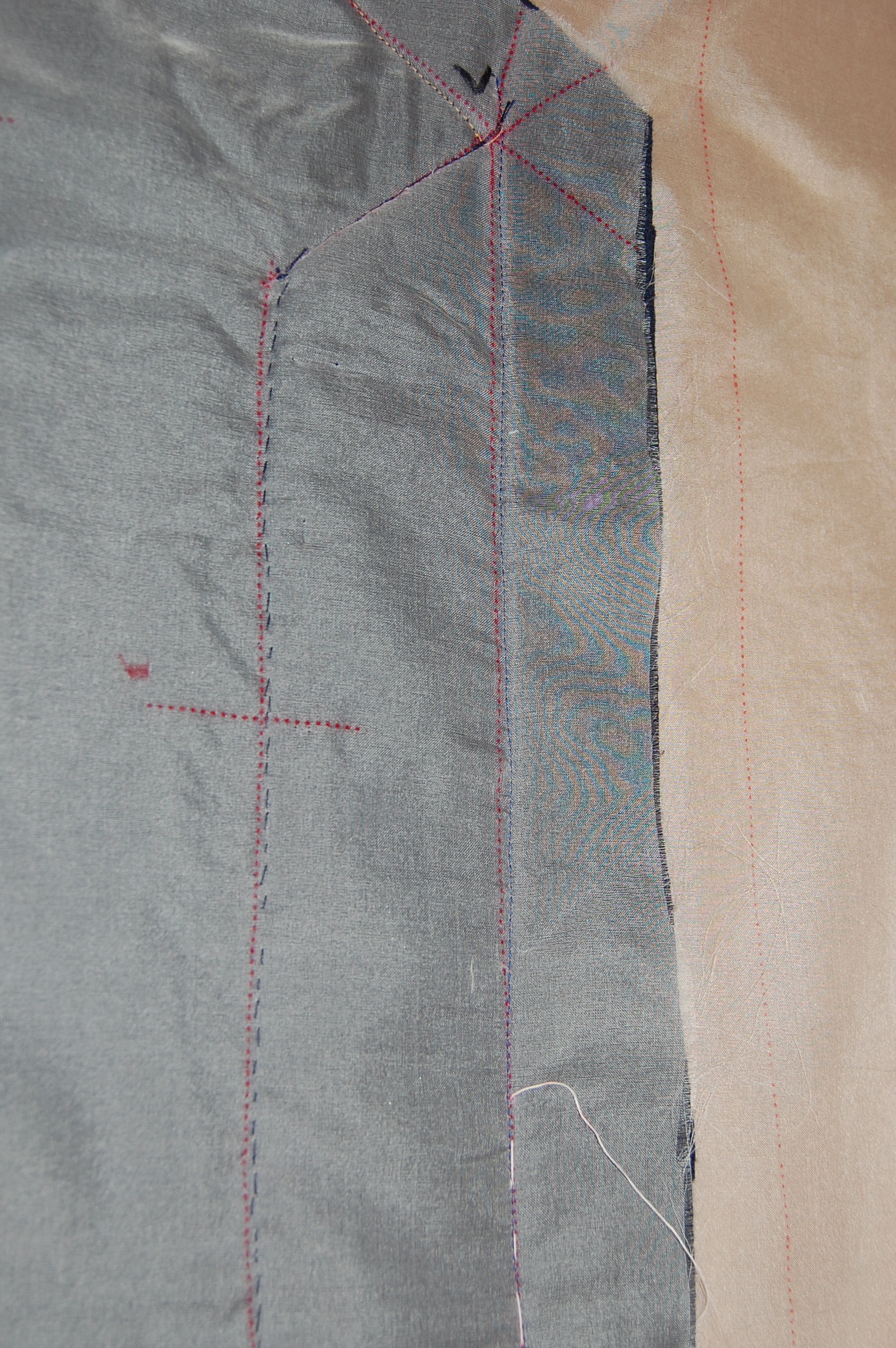
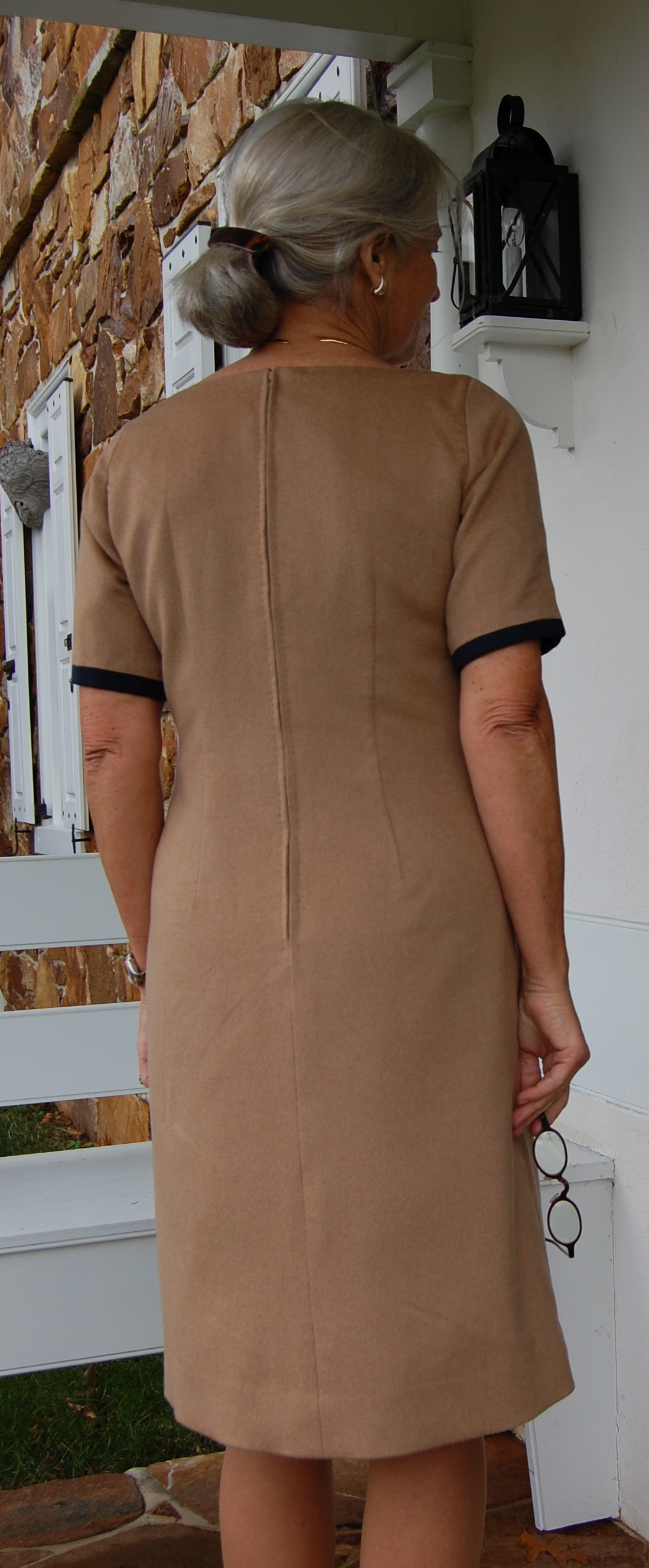
With no written and illustrated instructions to follow, I relied on my sewing knowledge and experience to execute the seaming on the front left of the dress. I was able to sew the seam by machine from the sleeve down to the lower angle of the point. From there down to about 8” from the hemline, I sewed the seam by hand.

An inside look at the this seam stitched by hand

An inside look at the this seam stitched by hand

There is a pleat hidden beneath the dress here, and sewing by hand seemed to be the only solution.

Showing the built-in kick pleat

Showing the built-in kick pleat, before the hem is sewn

And here is the finished kick pleat.

And here is the finished kick pleat.

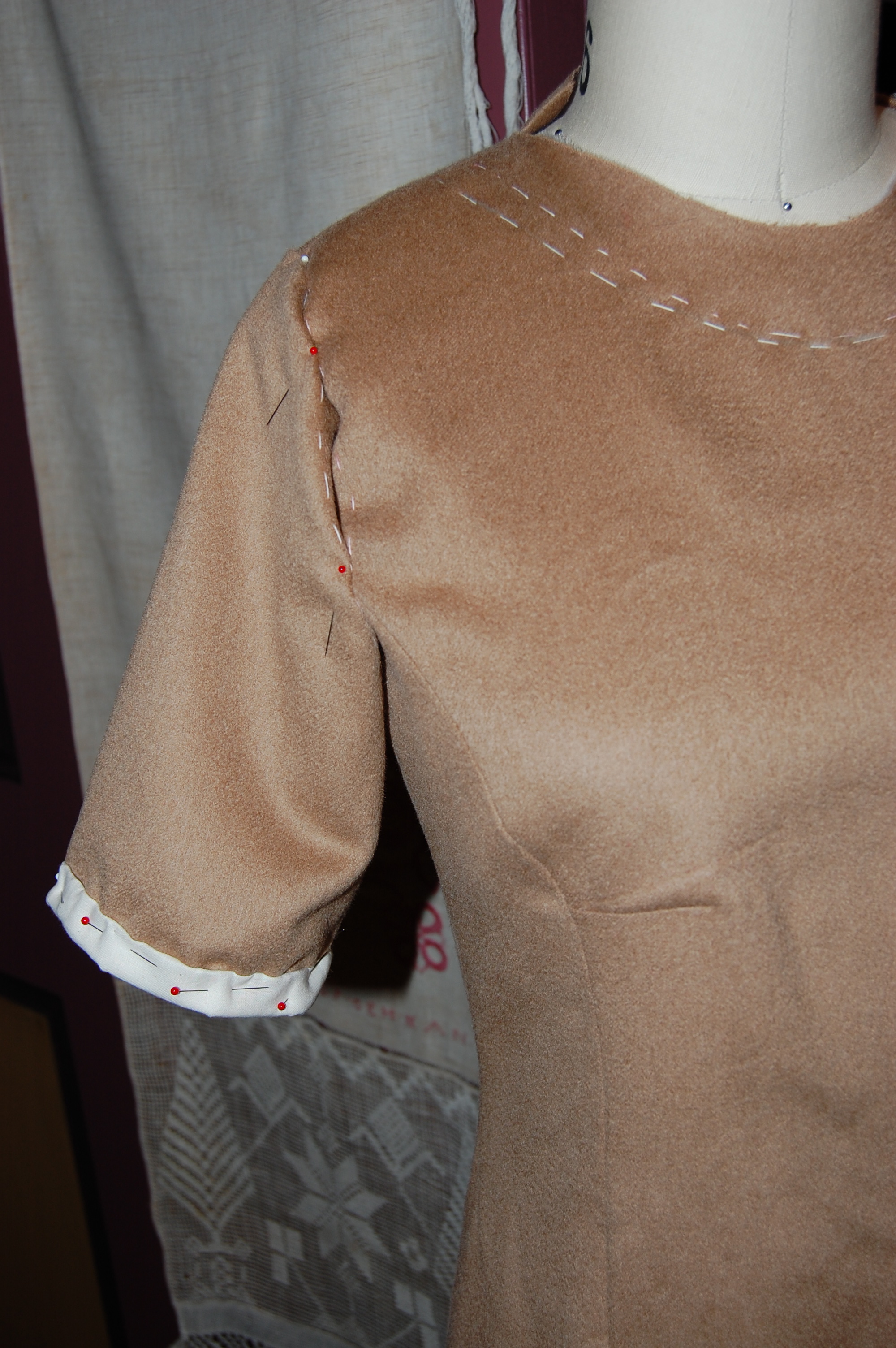
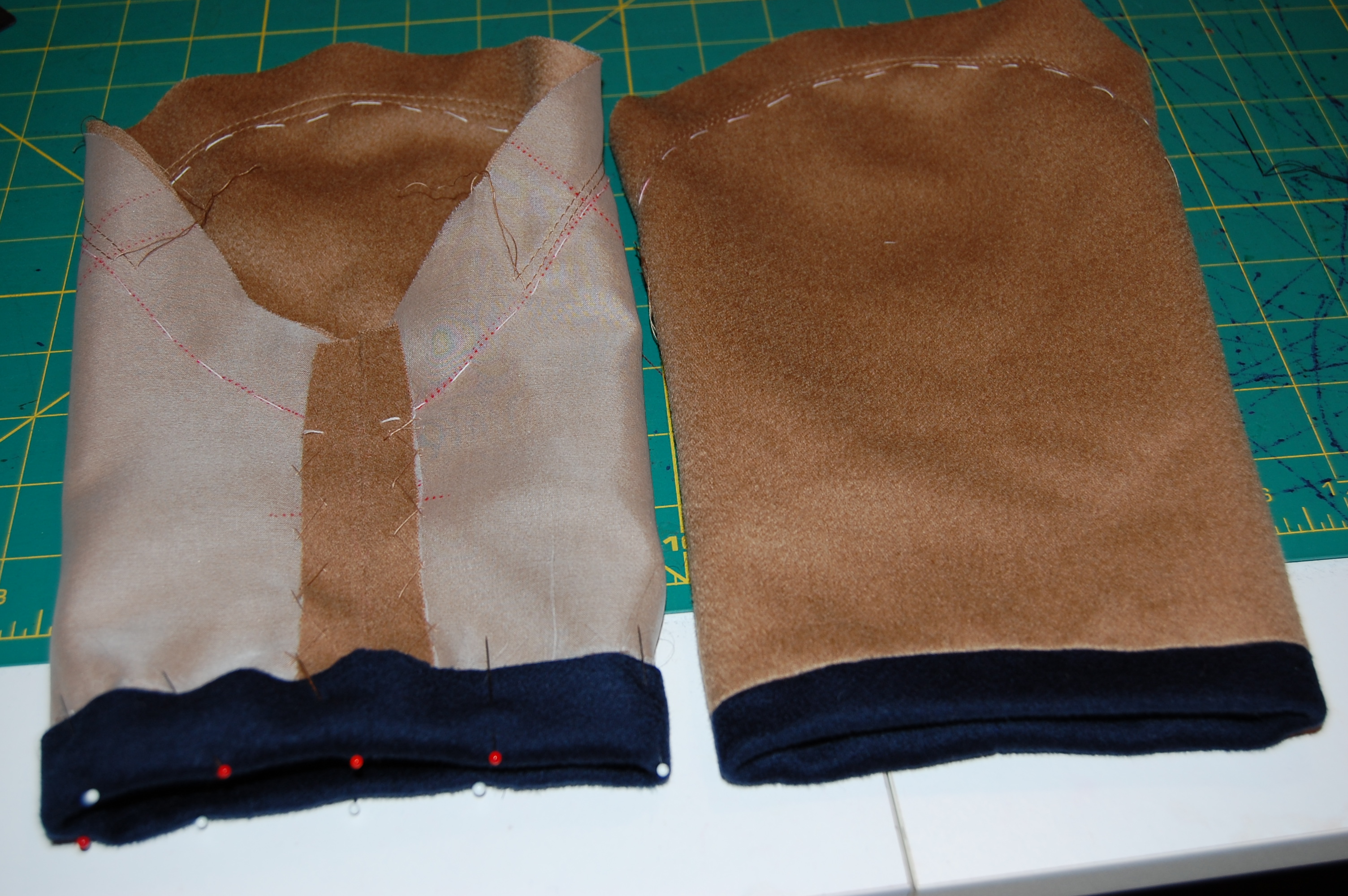
When it came to the sleeves, they are shown in the illustration with a contrasting band. However, no band was included with the pattern. I did a muslin mock-up to test the visual appearance of the width of the band.

Marfy Dress

Because I had cut the sleeves with a slight curve to the lower edge, I had to make a muslin guide for the bands, which included the same curve.

The sleeves with bands attached

The sleeves with bands attached

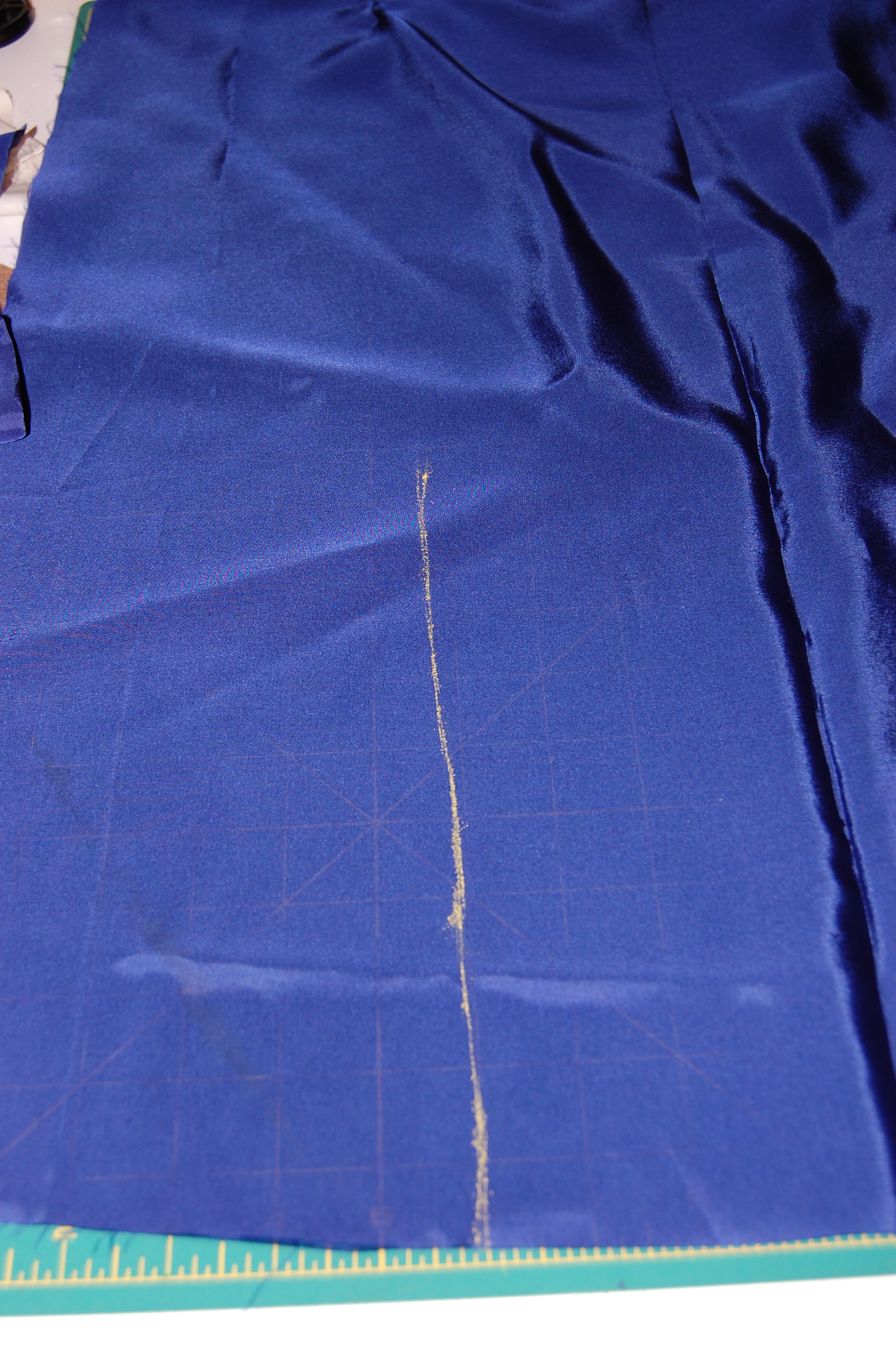
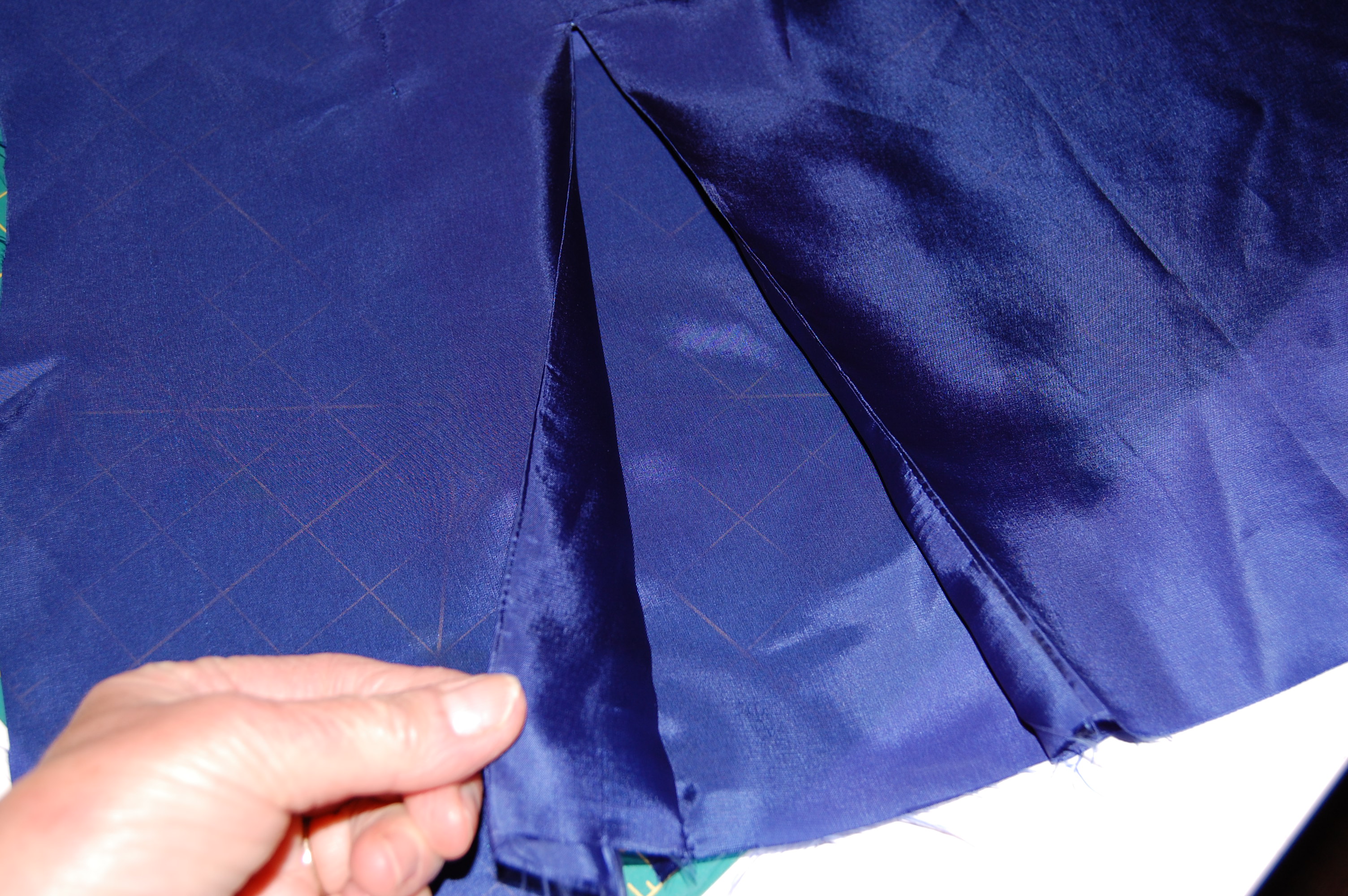
With sleeves, hand-picked zipper and all seams complete, I turned my attention to the lining. Instead of cutting the lining with the same angled detail as in the dress, I chose to cut a symmetrical front, thus reducing bulk at that critical waist area. However, I needed to add a kick pleat to the front lining to coincide with the built-in kick pleat of the dress. Here is how I did that:

First I marked where I wanted the pleat in the lining to be.  By the way, the lining is Bemberg rayon.  I usually like to use crepe de cine for my linings, but I had this Bemberg in the right color, so I decided to use it.

First I marked where I wanted the pleat in the lining to be. By the way, the lining is Bemberg rayon. I usually like to use crepe de chine for my linings, but I had this Bemberg in the right color, so I decided to use it.

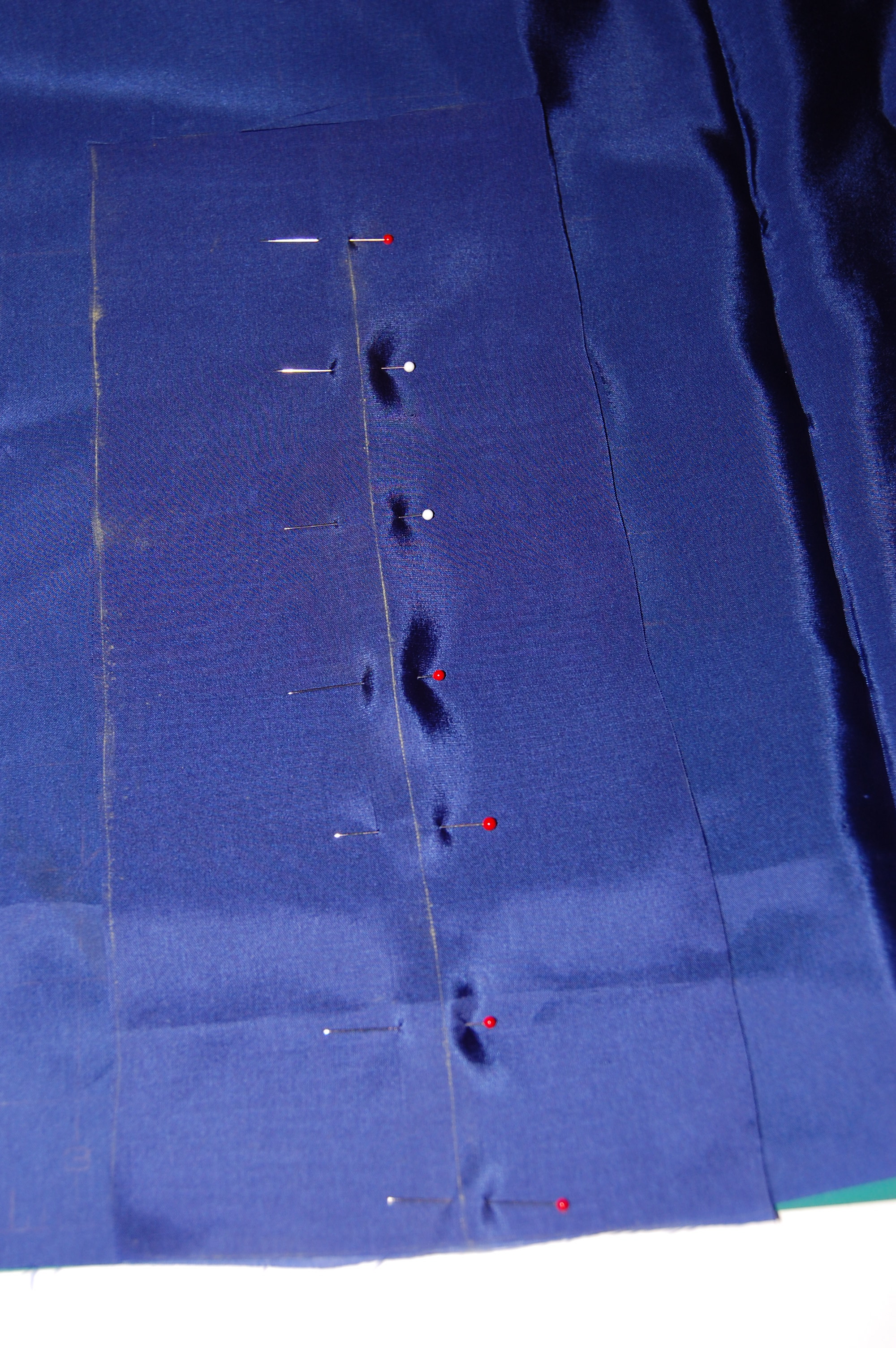
I centered a triangle of the lining fabric  (about 10" x 8") on top of the marked line.

I centered a triangle of the lining fabric (about 10″ x 8″) on top of the marked line.

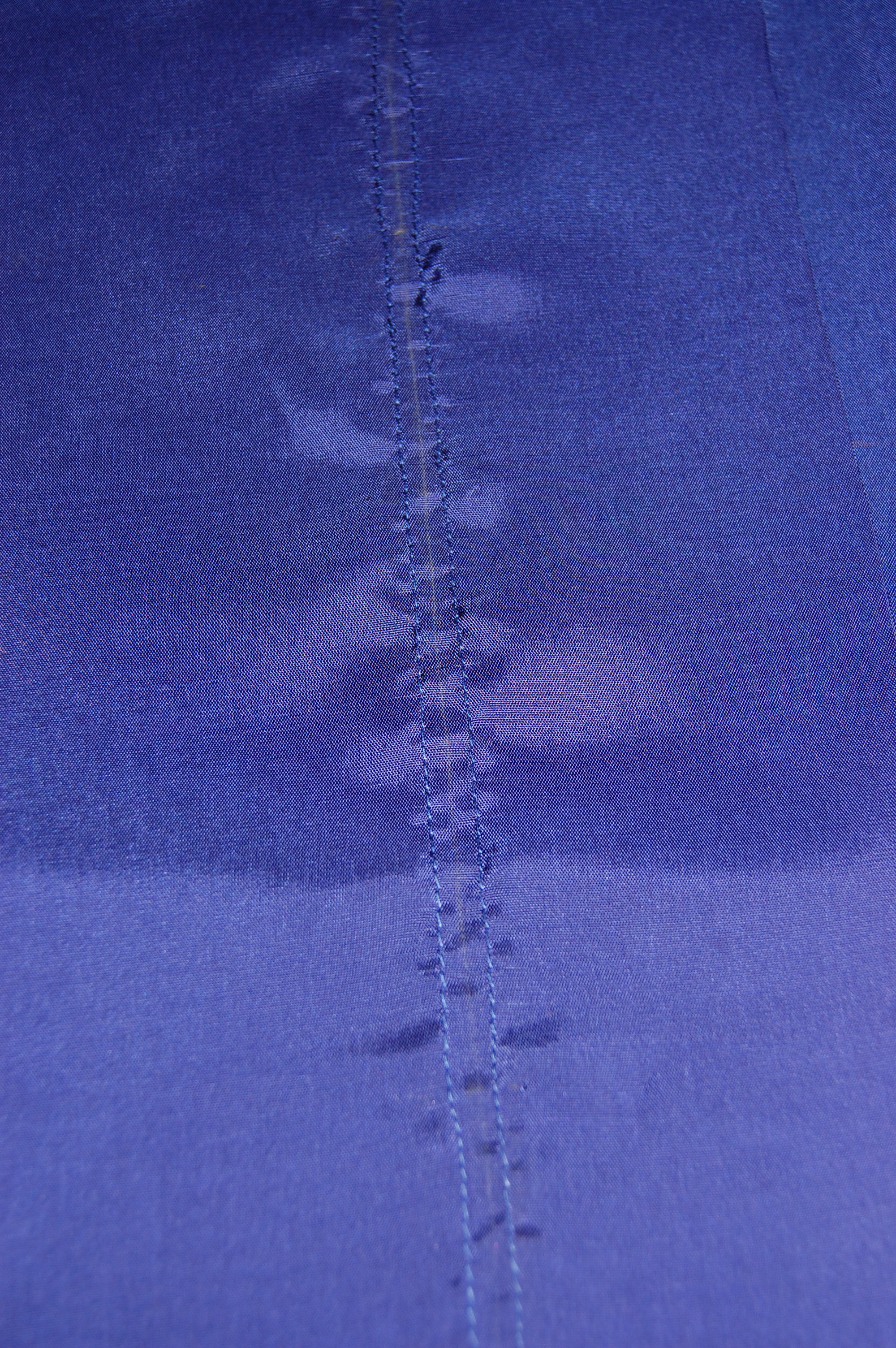
I stitched on either side of the marked line, graduating up to a point at the top.

I stitched on either side of the marked line through both layers of lining, graduating up to a point at the top.

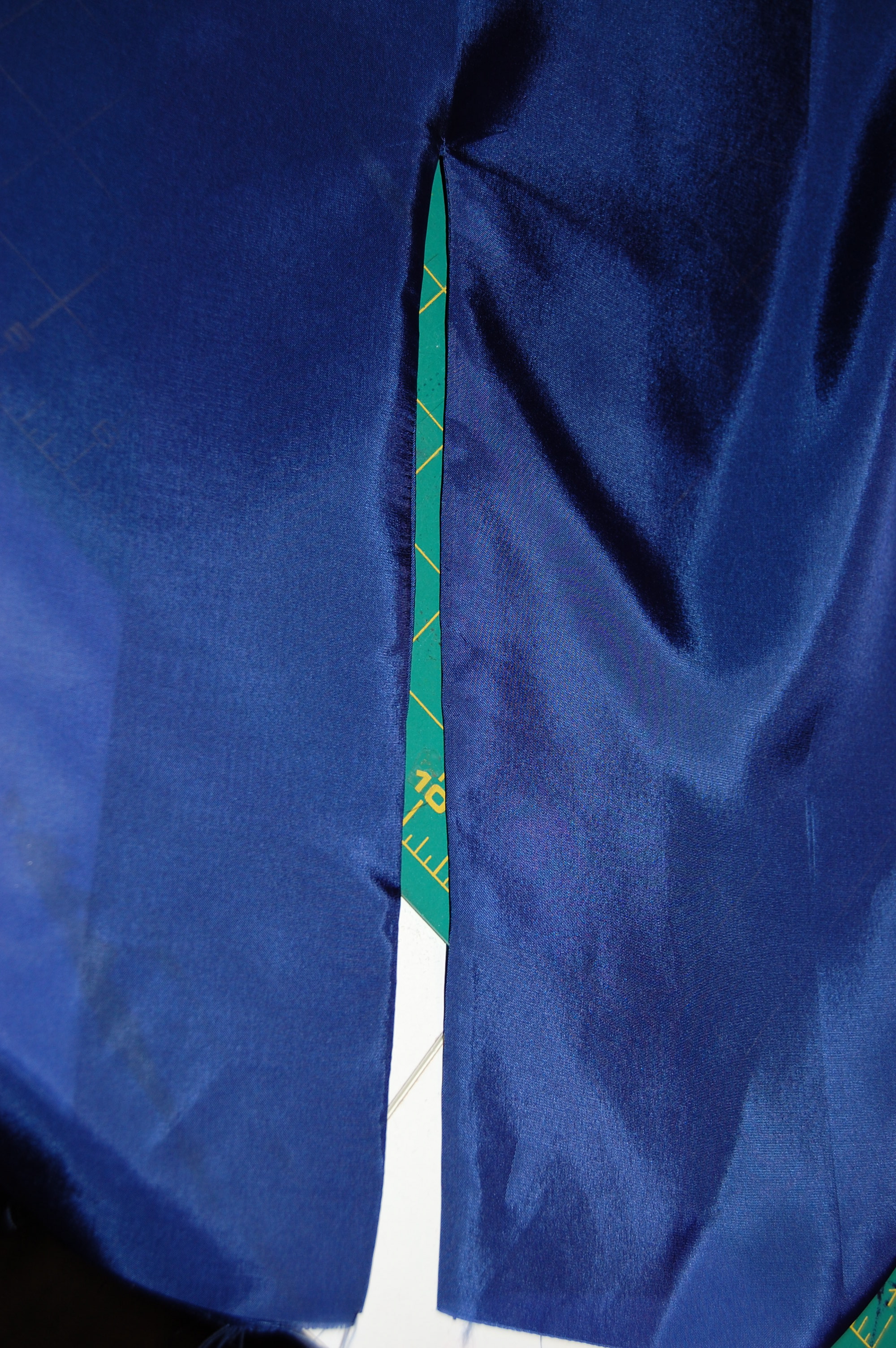
I cut along the marked line and turned the placket to the wrong side.
I cut along the marked line and turned the placket to the wrong side.
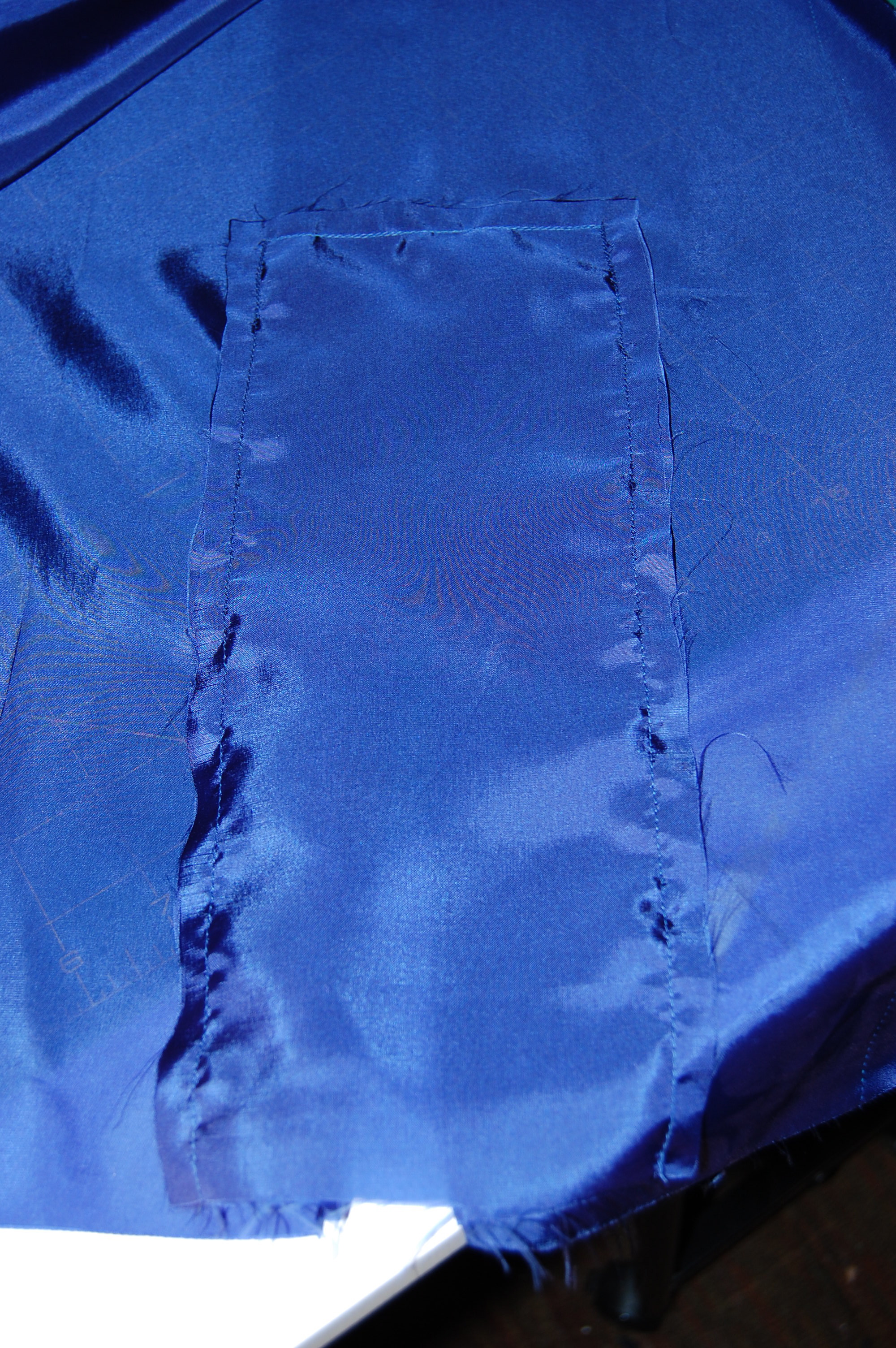
I sewed another piece of ling fabric (10" x 8") to the wrong side of the turned placket.  It is stitched around the edges - a little difficult to see.
I sewed another piece of ling fabric (10″ x 8″) to the wrong side of the turned placket. It is stitched around the edges in a 1/2″ seam.

After securing these stitched together pieces across the top through all layers, I had a kick pleat!

After securing these stitched-together pieces across the top through all layers, I had a kick pleat!

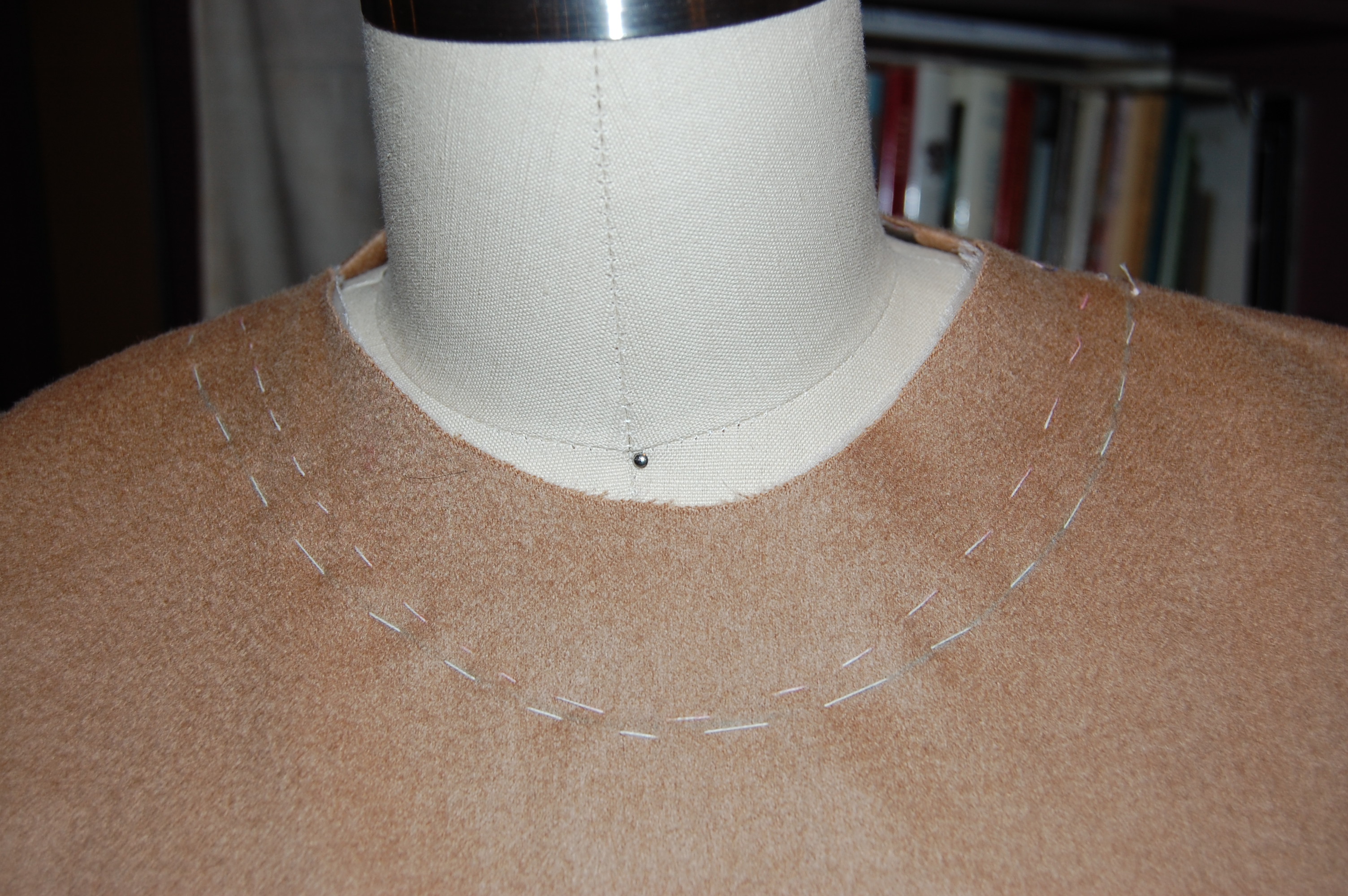
Back to the final part of the dress: the neckline. I still wasn’t sure I had a pleasing neckline, so I got out my French rule and re-chalked one with a little wider stance and depth.

Marfy Dress

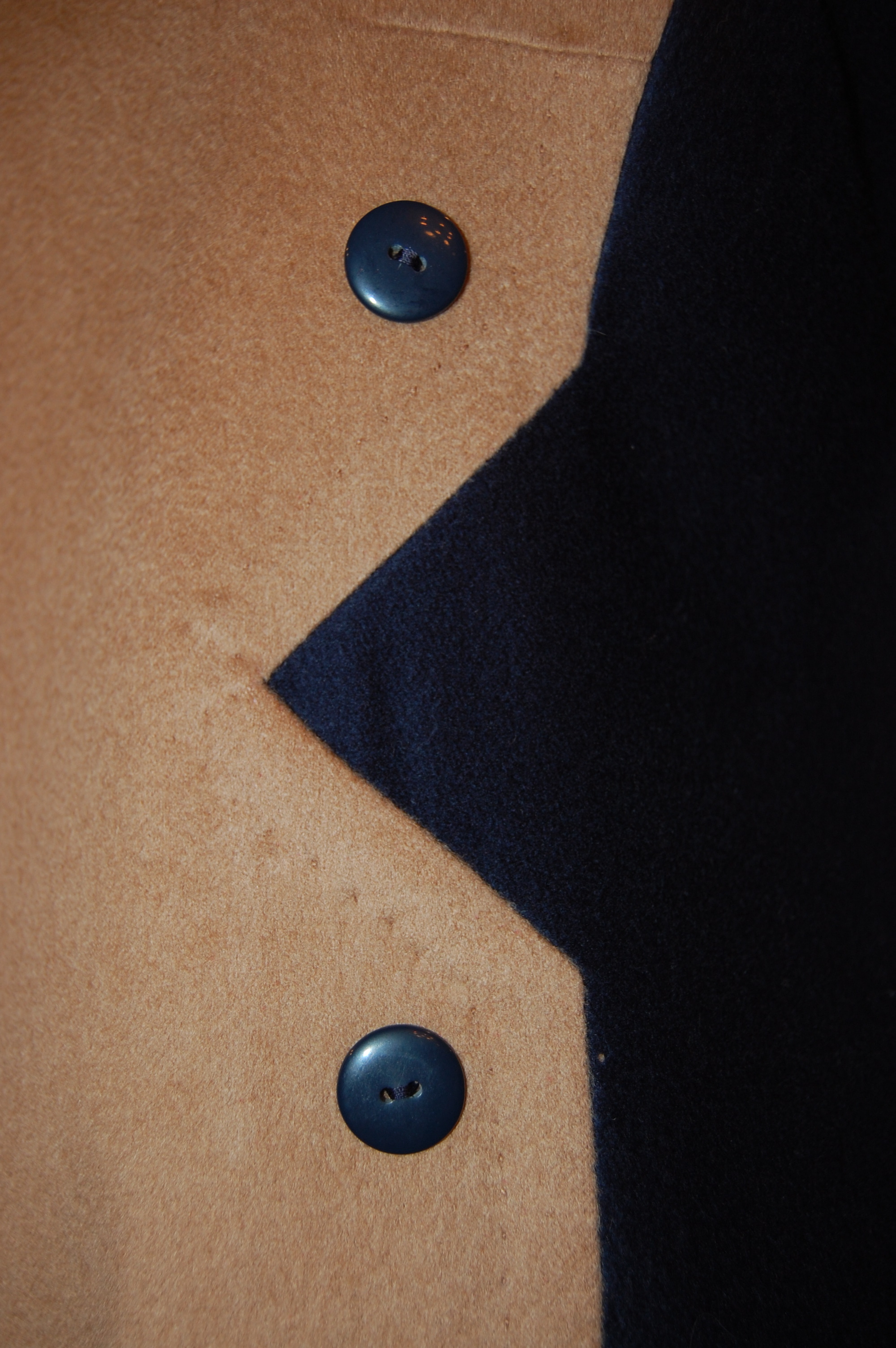
For the top-stitching around the neck and around the angled detail on the front, I did what I did with my jacket out of the same fabric: I hand-picked it. I am so happy with how it looks. It’s very subtle, but adds just the right emphasis. The buttons are smaller versions of the (concealed) buttons on my jacket.

Marfy Dress

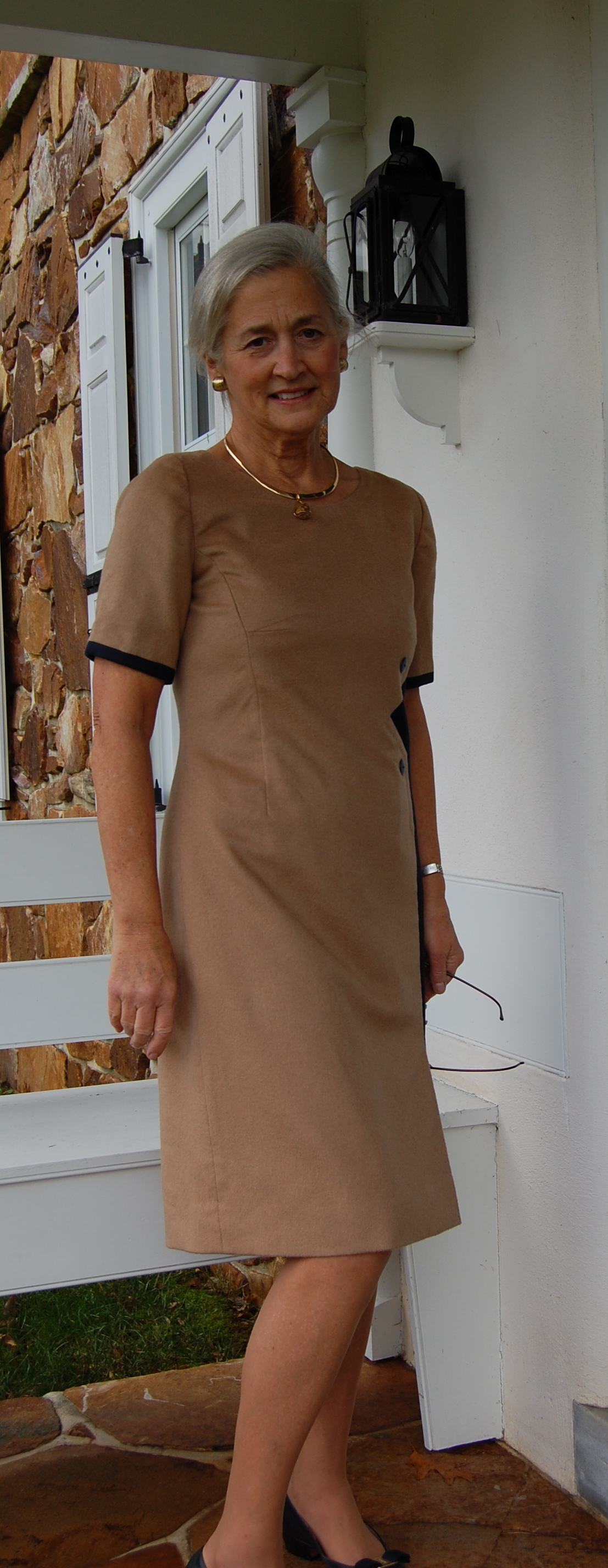
I set the lining in by hand, under-stitched the neck-edge by hand, and finally the dress was complete.

Marfy Dress

Marfy Dress

Marfy Dress

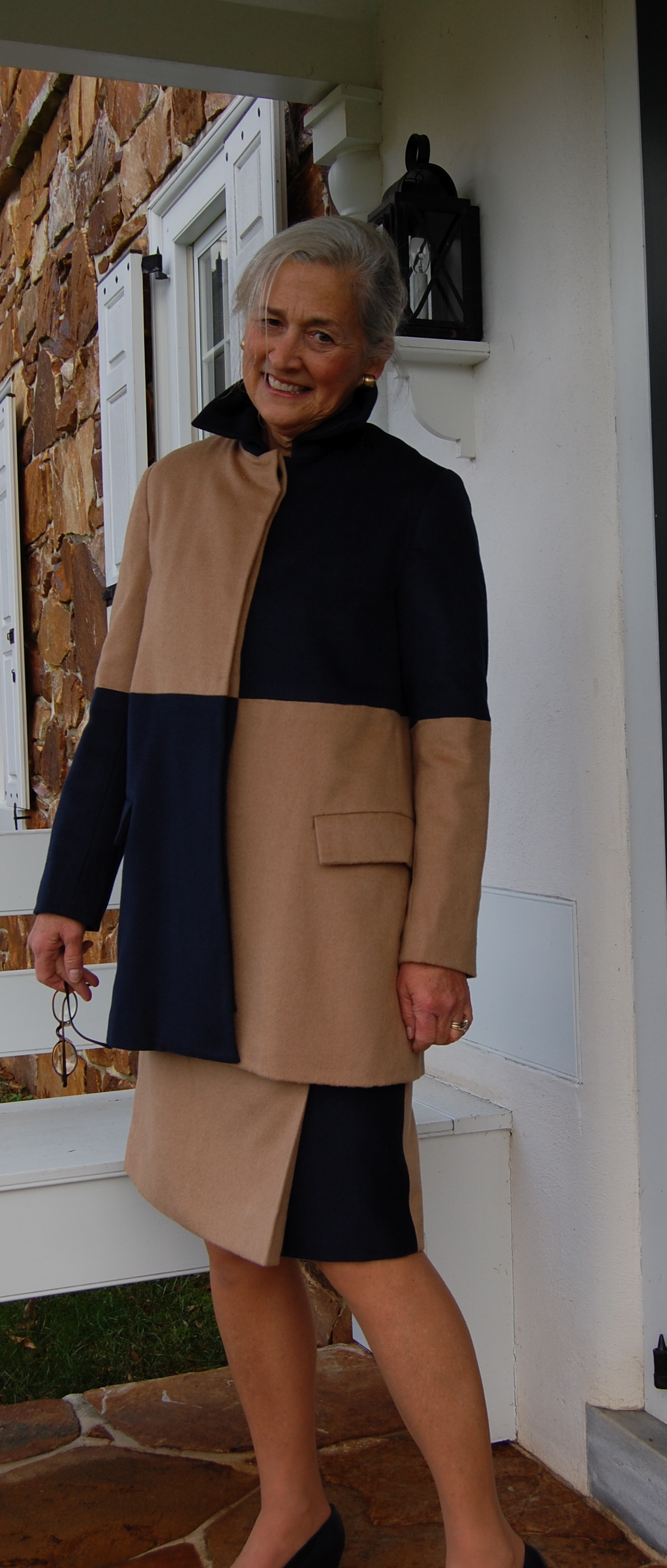
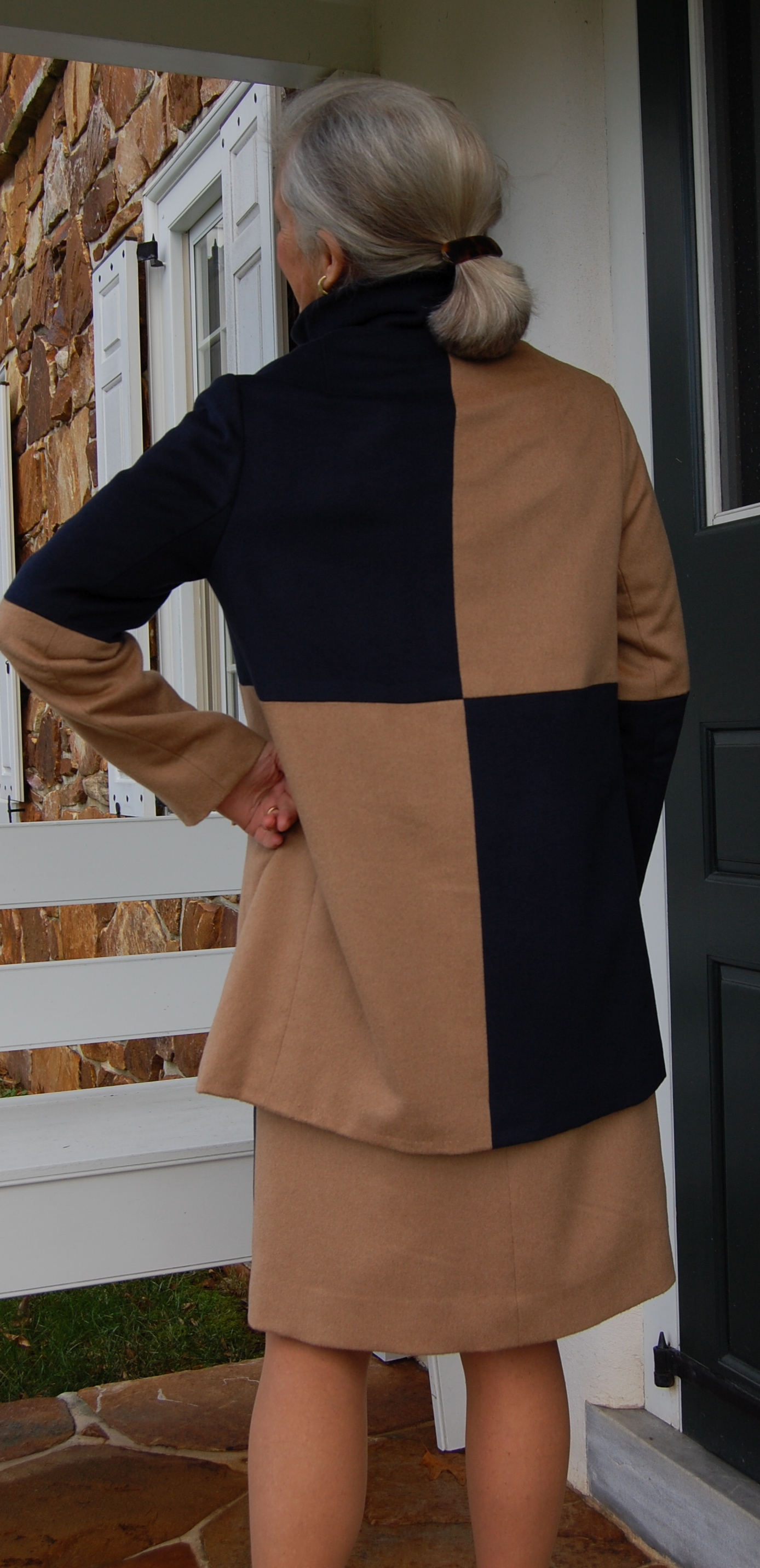
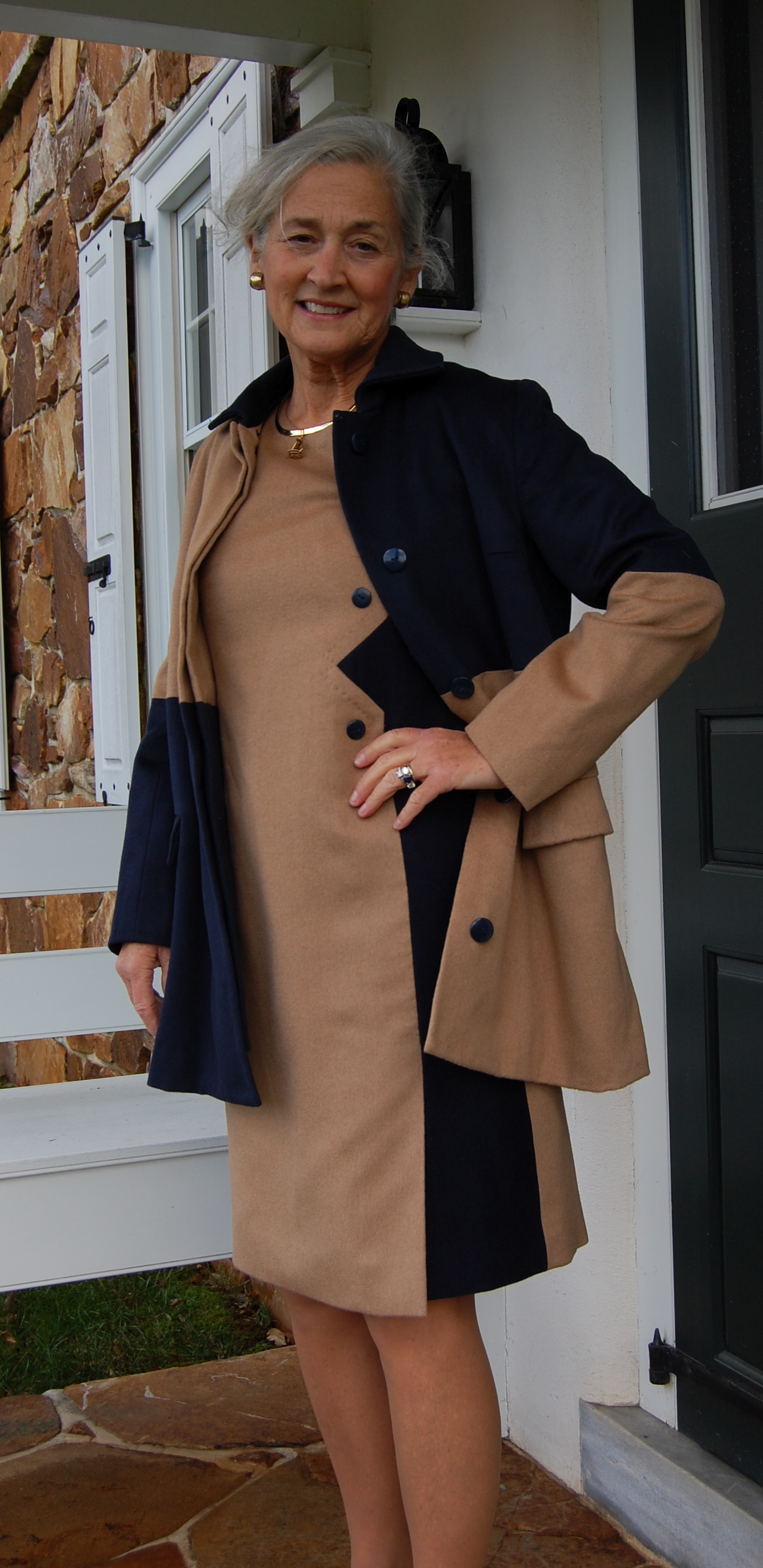
And of course I have to show it with the coat!

And of course I have to show it with the coat!

Fifty Dresses

Marfy Dress

It is probably unfair to do an assessment of Marfy patterns after just one make, but I’m going to anyway! The things I really like, so far, about using a Marfy pattern are 1) its preciseness, 2) the individually sized patterns, 3) the pattern pieces without seam allowance added. And is there anything I dislike about Marfy so far? Yes, one big thing! I really miss having a pattern envelope with an illustration, variant views and back views. I am so accustomed to vintage patterns, most of which sport envelopes which are like small works of art. There is so much pertinent information on them (fabric suggestions, zipper sizes, garment descriptions, thumbnail pattern piece diagrams, etc.) and even wearing suggestions. The illustrations show outfit styling suggestions (hats, handbags, shoes, etc.). I love studying them. So, yes, it’s true – I feel like something is lost without a pattern envelope for this dress which I like so much.

I won’t be waiting long to wear this dress. Our American holiday of Thanksgiving is this Thursday, and Marfy will be one of my dining companions. To my fellow citizens, may the day be as meaningful and blessed for you as it always is for our family. To all my readers around the globe, my thanks to you for sharing your love of sewing with me!


37 Comments

Filed under Buttons - choosing the right ones, car coats, Color blocking, couture construction, Marfy patterns, Mid-Century style, Uncategorized, woolens

Time for Wool and Something Marfy

It seems like we just welcomed in Autumn – and although the calendar says it will still be Autumn for a few more weeks, the chill in the air tells me that Winter is bearing down on the northeastern United States. Winter means many wonderful things, including WOOL season.

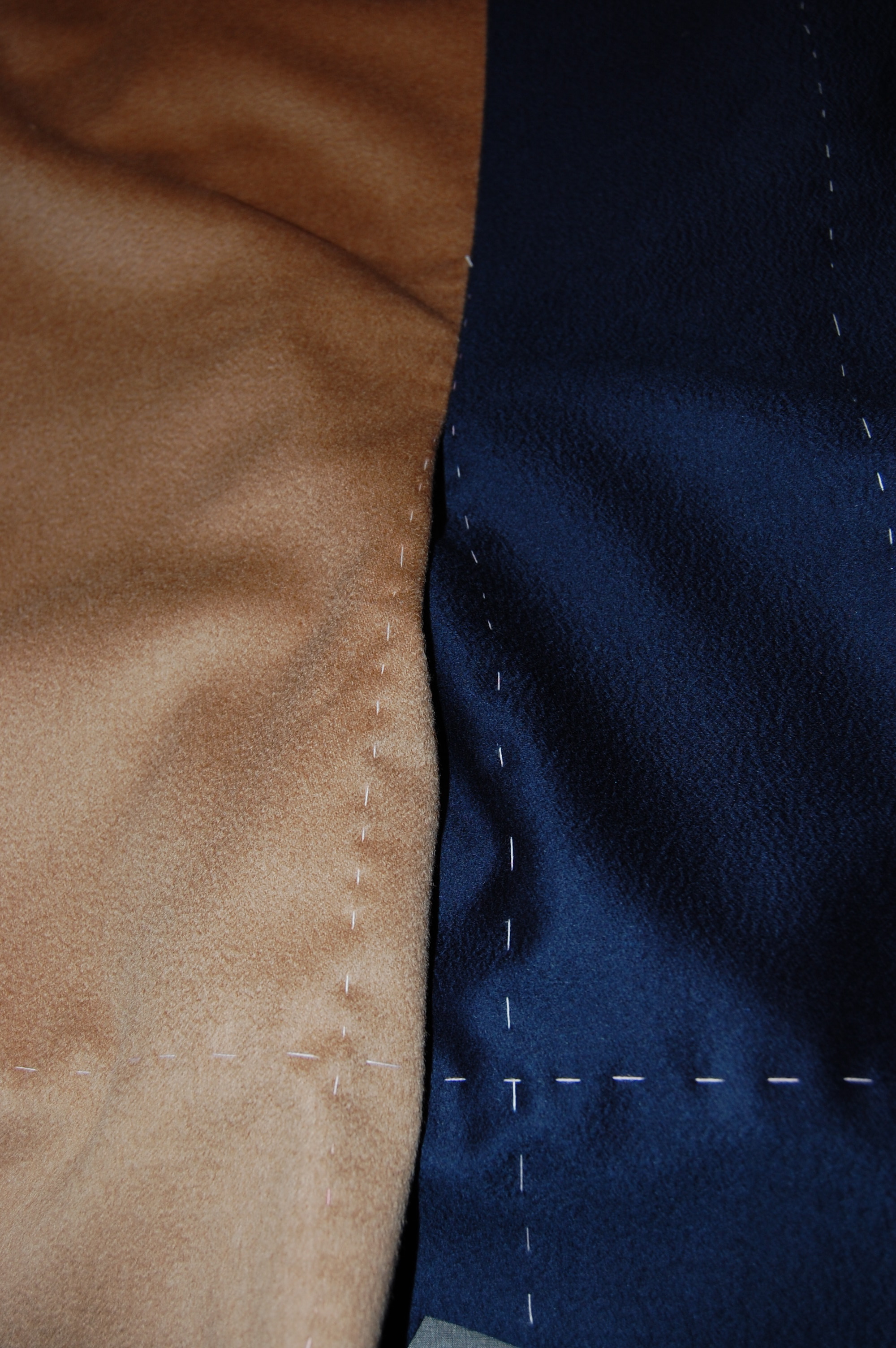
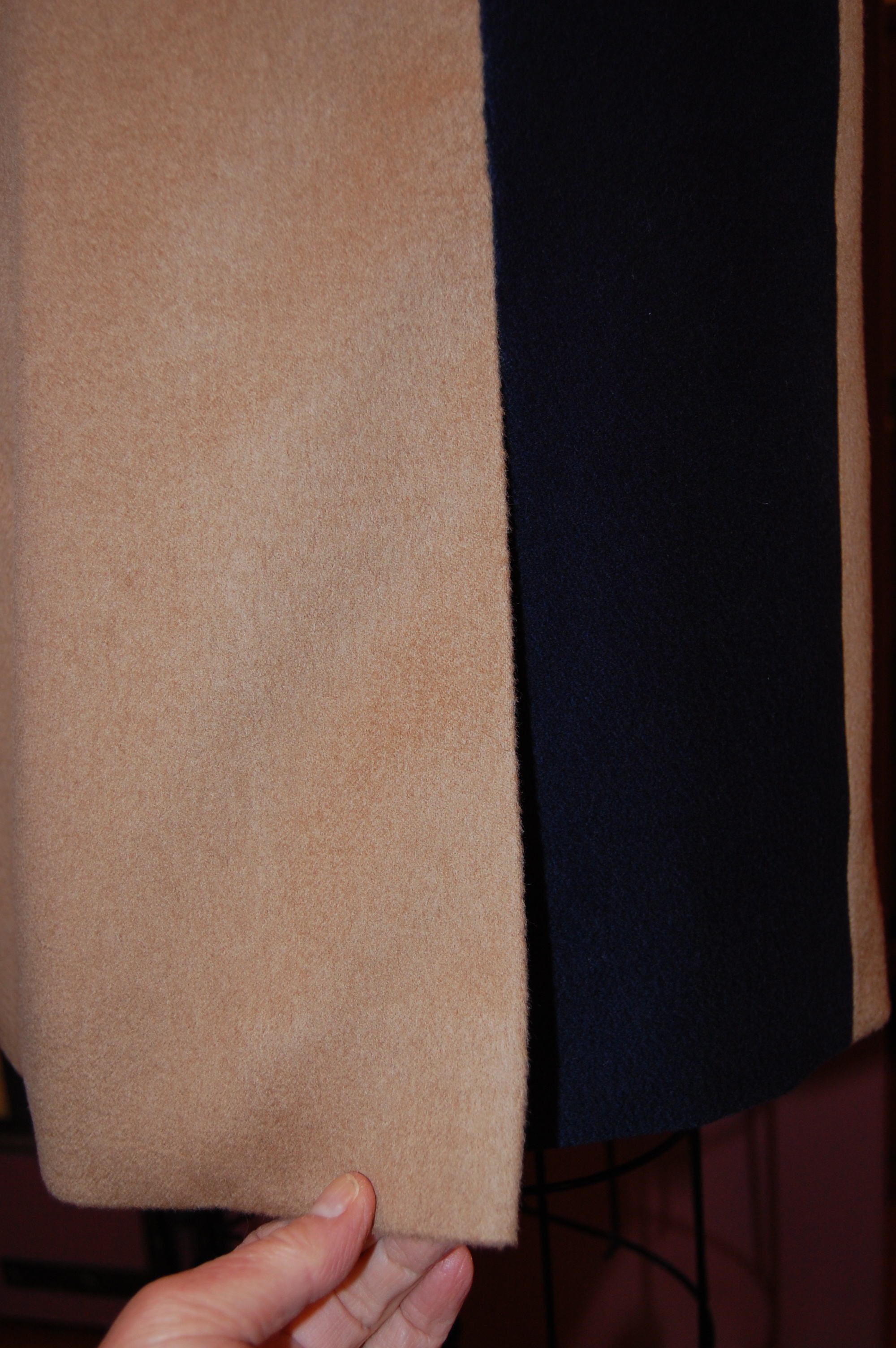
When I made my color-blocked coat last Winter, I purchased some extra yardage from Britex Fabrics with the thought of making a sheath dress to wear with it on occasion, but not exclusively with it.

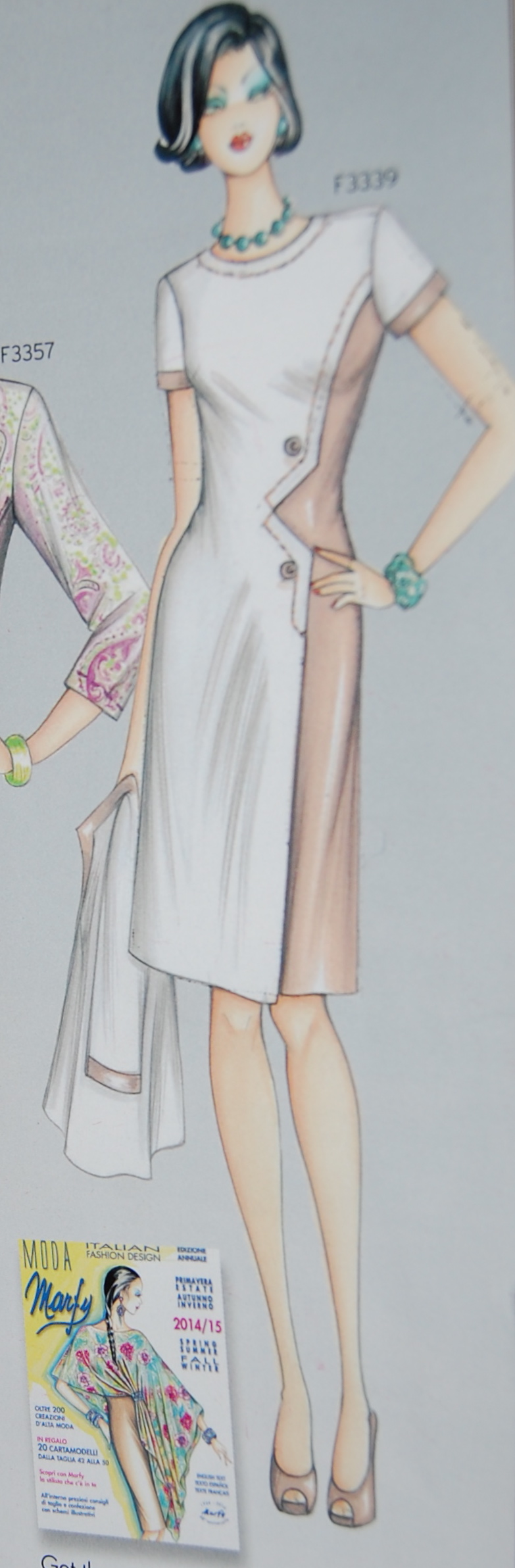
Magnificent Obsession My original intent was to make a two-toned dress, with a front and back yoke with short sleeves. The bottom, longer section of the dress would be out of the camel wool, with the yoke and sleeves in navy, zipped up the back.   I did not think much more about it during the Spring and Summer, but a few weeks ago, after seeing a full page Marfy ad in a current Vogue Pattern Magazine, I began to think of an alternative to my plan. This dress was featured in the ad:

Marfy Dress

I not only really liked the dress, but it seemed designed with my two color-blocking fabrics in mind. I also liked its mid-century styling. For a while now I’ve been thinking of trying a Marfy pattern, and, I thought “Why not now?”

I wasn’t exactly sure what to expect. I knew that Marfy patterns come without seam allowances (the stitching line is the outside perimeter of each pattern piece), and in only one ordered size. One of the reasons I love vintage patterns so much is that they, too, were produced by particular size. (So that, for those of you who only sew from current multi-sized patterns, if you ordered a size 10, only a 10 was in the envelope.) Most vintage patterns include seam allowances, and the stitching line is marked as well. For those of us who use couture methods for our fashion sewing, having the stitching line marked is incredibly helpful. The stitching line is THE point of reference for alterations, for basting, for sewing. Knowing these two facts about Marfy patterns made me comfortable with the idea of sewing with them, even though they come with no written construction details other than a few notations on the pattern pieces.

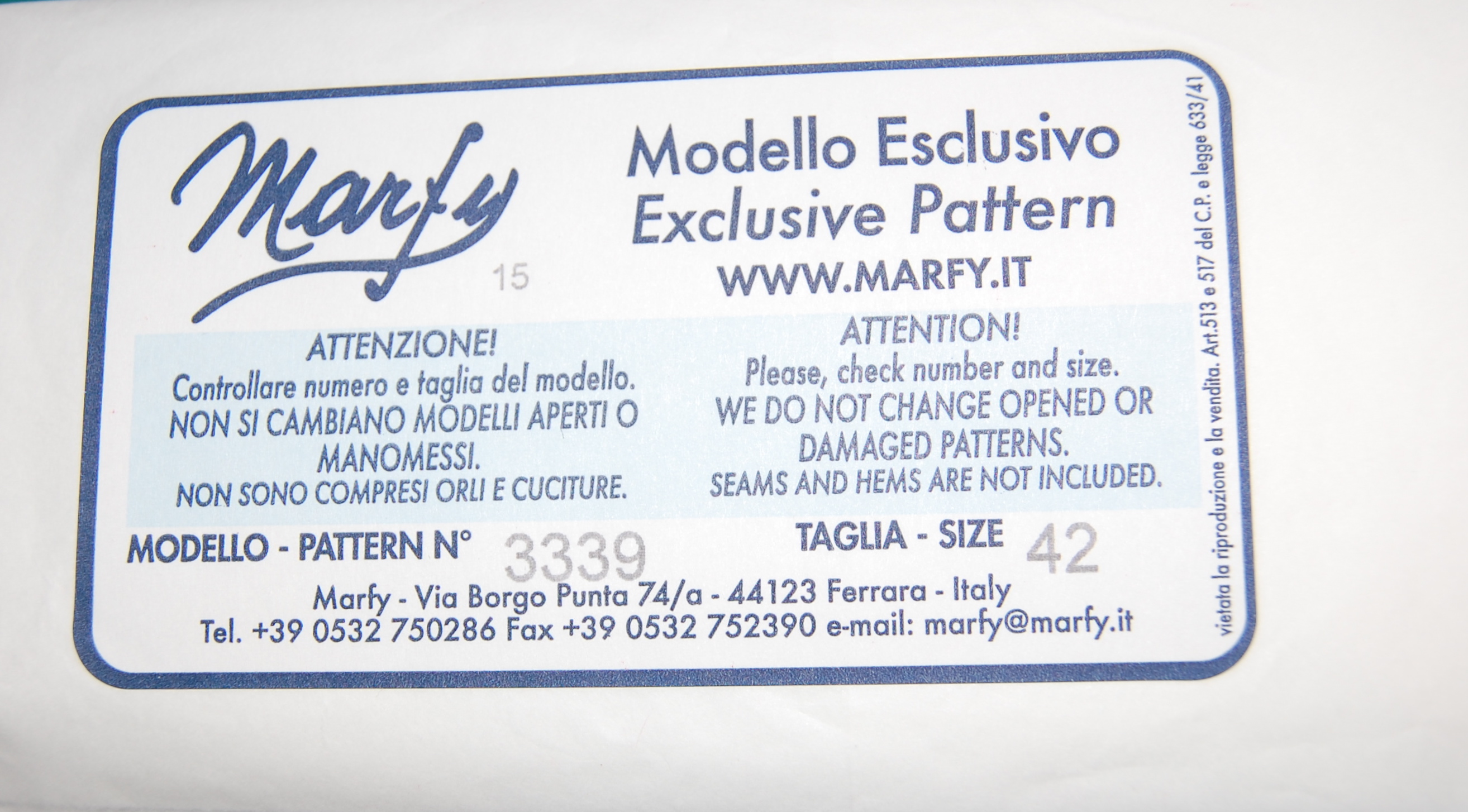
What I did not expect was the teeny tiny package in which the pattern arrived. The only identifying mark on the folded up pattern was the pattern number.

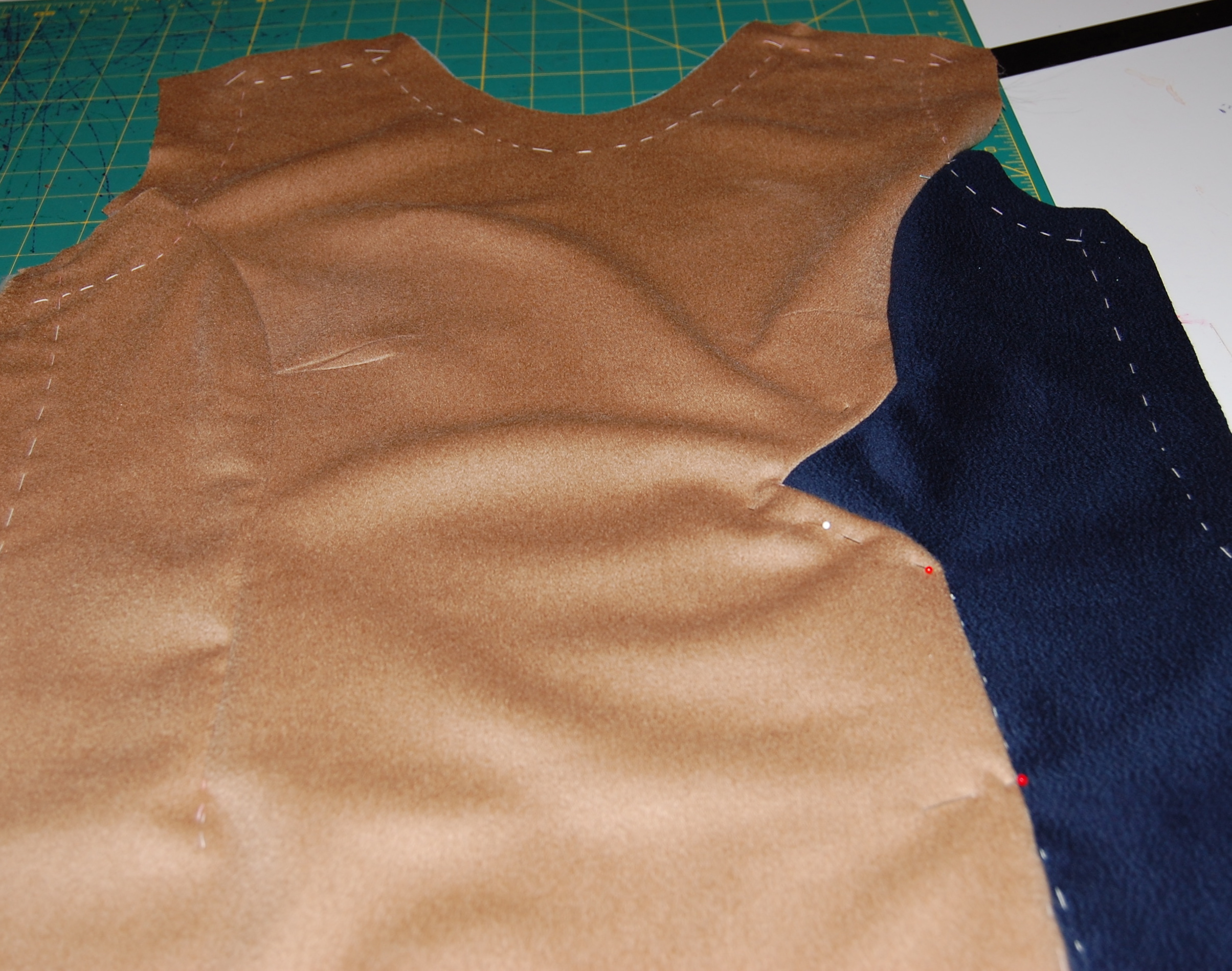
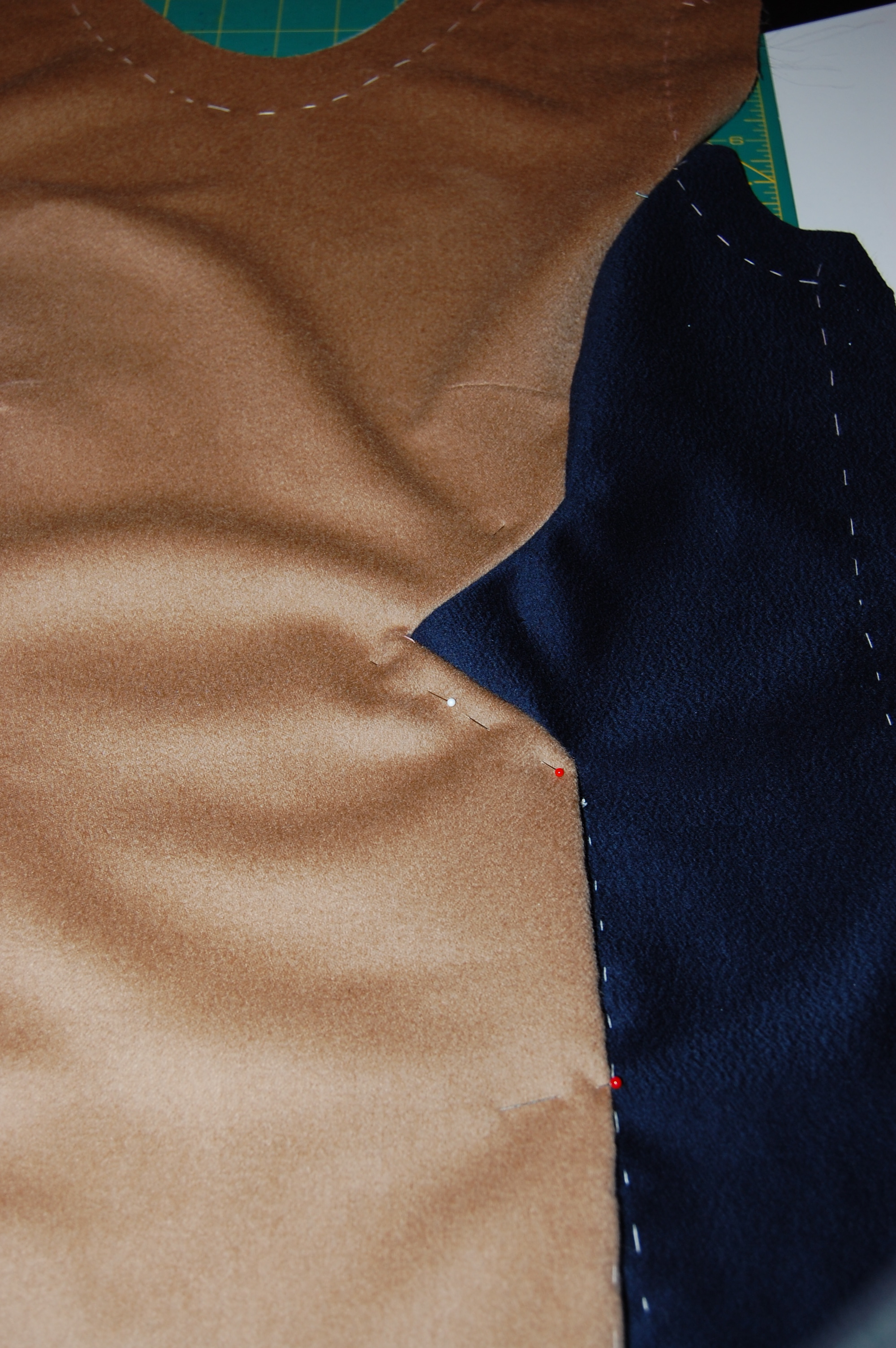
Marfy dress I pressed the pattern pieces and got busy making my muslin (toile). From my adjusted muslin, which took the better part of a week to perfect (hopefully perfected, that is), I transferred sewing lines onto white silk organza underlining. (I will go into some of the changes I made in my next post on this dress.) In true couture mode, I then basted the organza onto the fashion fabric. It is always rewarding to sew the first “real” dart or seam! I feel like the dress is practically finished, although reality is sure to set in when all the finishing details start to occupy my time.

The front, showing the seam detail which I like so much.

The front, showing the seam detail which I like so much.

Marfy dress


Incentive to finish this wool dress is fanned by Winter winds to my back , by looming holiday sewing, and the excitement of finishing my first Marfy.  To be continued, hopefully soon!

16 Comments

Filed under Color blocking, couture construction, woolens

Panic and Patterns

Being away, as “on vacation” (or “on holiday” as many express it), can take its toll on sewing projects. If I have to leave a project in mid-stream, it seems to take even longer to get back to it and pick up where I left off. A recent trip to the western state of Wyoming necessitated that I abandon my current “Fall” dress at precisely the time of year when I need to complete it! And now I’ve run into some complications with it.

I guess you could say that panic has set in. Here is what the dress bodice looks like on my dress form:

Panic and patterns

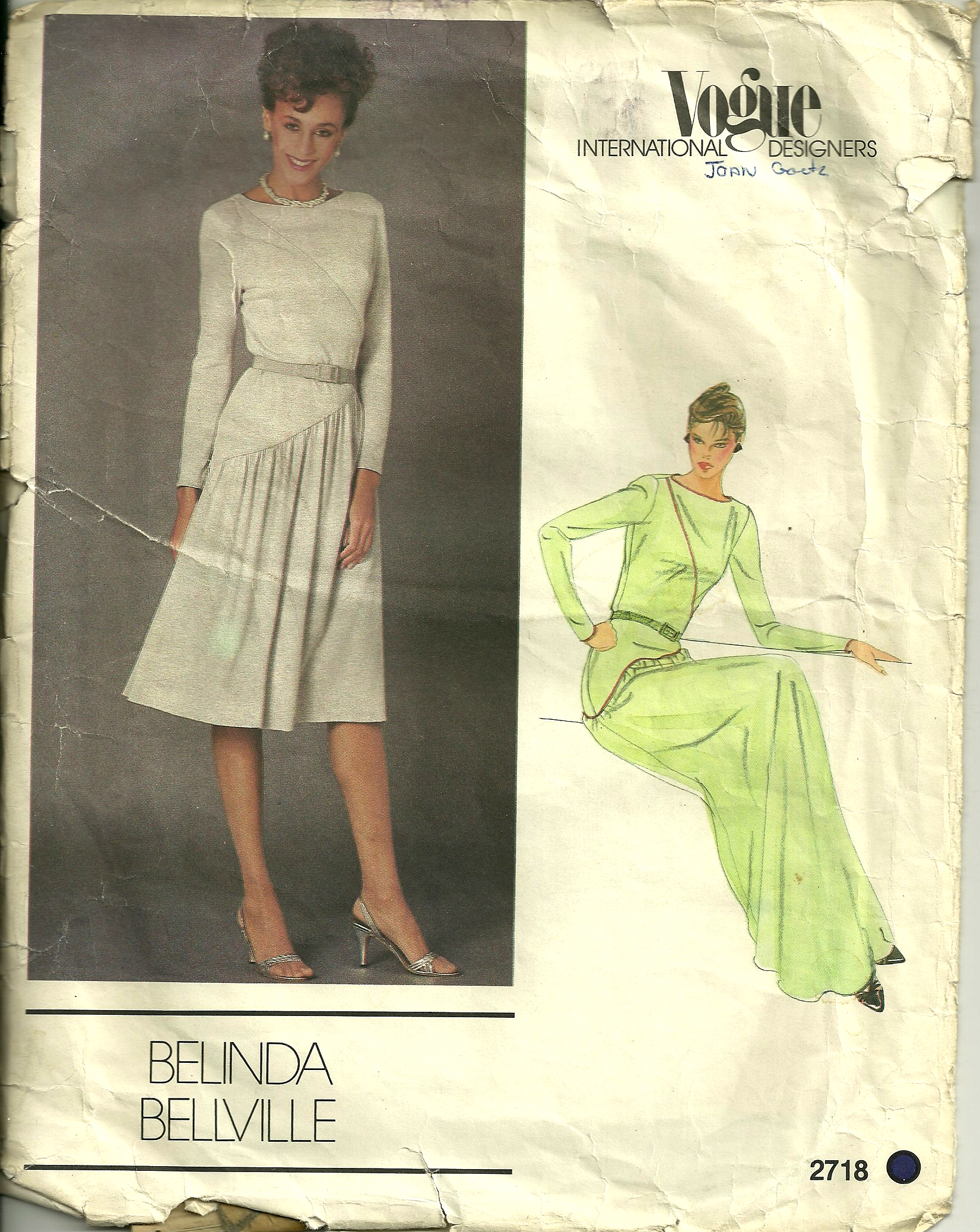
I am using vintage Vogue pattern 2718 for this dress.

The fit seems okay. The neckline will need a little adjustment, but nothing out of the ordinary. The sleeves look good, and I am pleased with the piping so far. So what is the problem? When I try the bodice on, it looks awful. It pulls across the bust, it doesn’t want to move with me at all, and the front seems too short-waisted even though it measures perfectly for me when on the form. Worse still, this fabric is too dear (as in expensive) to put it aside or to think about abandoning this dress.

I think I know what is wrong, and it will take a great deal of effort to try to correct it – and hopefully it will be correctable! I insisted on using an underlining on this stretch silk fabric. I thought I could accommodate the stretch by cutting the underlining on the bias. Guess what? It doesn’t work. The bias pulls from underneath, restricting the stretch of the silk. What this means is that I am going to have to remove the underlining. It is not going to be fun to remove black underlining from black fabric, sewn together with black thread, is it?

I have consoled myself with the thought that I can salvage this project by making a skirt instead of a dress, which may be what I end up doing. Needless to say, I am fighting my discouragement, and trying to stay focused so I can finish this and move on to something more fun.

While traveling is not conducive to sewing, it doesn’t put a damper on looking at more patterns and fabrics online! Sometimes I go weeks without finding a pattern and then I’ll find several all bunched together in the space of a few days. You might be guessing that such was the case during the last few weeks. So while I am struggling with vintage Vogue 2718 right now, I look at my new acquisitions to give me encouragement for the future. Here are some of my “new” finds:

I was delighted to find this DvF pattern in my size, at a reasonable cost!  This one should see some fabric next Spring or Summer.

I was delighted to find this DvF pattern in my size, at a reasonable cost! This one should see some fabric next Spring or Summer.

DSC_0303

This one was too good to pass up, although I don’t have any plans for it right now. This looks like a dress, but it is really a skirt and top, paired with the jacket.

DSC_0304

What can I say? I love coats.

DSC_0305

I have been on the search for this pattern for a long time. I hope I’ll have some reason to make this dress sometime soon…

DSC_0306

The sleeves on the blue version of this blouse are so pretty!

In addition to these new patterns, I just ordered two Marfy patterns, which should either add to my current sewing anxiety or help alleviate it. I hope it is the latter!

17 Comments

Filed under 1980's dress patterns, Blouse patterns from the 1950's, Coats, Cocktail dresses, piping, Uncategorized, vintage Vogue Designer patterns, vintage Vogue patterns from the 1950s, vintage Vogue patterns from the 1960s, vintage Vogue patterns from the 1970s, Wrap dresses

Magnificent Obsession

Sometimes the dreams and aspirations of our younger days take a long time to come to fruition.  Although I was doing a lot of fashion sewing for myself when I was in my twenties, there were many more Vogue pattern designs which I never had the opportunity to make.  One was Vogue Paris Original #2668 by Hubert de Givenchy (1927-).

Coats of certain length - 7 I never forgot the jacket, in particular, featured in this Designer Pattern.  Over the years I occasionally obssessed about this pattern, regretting that I had not purchased it.  I never imagined I would have a second chance to make it mine, but thanks to the marvels of the Internet, I did.  When I saw a listing for it in this Etsy store months ago, and it was in my size, I knew it was time to buy it.

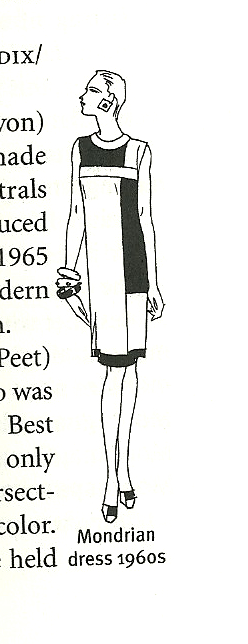
The use of color blocking, as featured in View A, became stylish in the mid-1960s, when Yves Saint Laurent introduced his classic Mondrian dress.

This little sketch from The Fairchild Dictionary of Fashion, Fairchild Publications, Inc., New York, New , York, 2010, p. 329, shows the classic blocked design.

This little sketch from The Fairchild Dictionary of Fashion, Fairchild Publications, Inc., New York, New  York, 2010, p. 329, shows the classic blocked design.

The appeal of the use of large geometrical sections of contrasting colors was widespread then and has, for many of us, never lost its cachet.  The clean precise lines, and diverse use of fabrics in color blocking must have appealed to Hubert de Givenchy’s sense of design.  Known for simplicity and refinement, according to Arlene C. Cooper, writing in the St. James Fashion Encyclopedia, Givenchy emphasizes “line rather than decoration”.  Further, Givenchy is known for “coats that are marvels of line and volume…”  (St. James Fashion Encyclopedia, Visible Ink Press, Detroit, MI, 1997, p. 154).  Vogue Patterns must have been exceptionally pleased to have the rights to this design for its Designer Series in the early 1970’s.

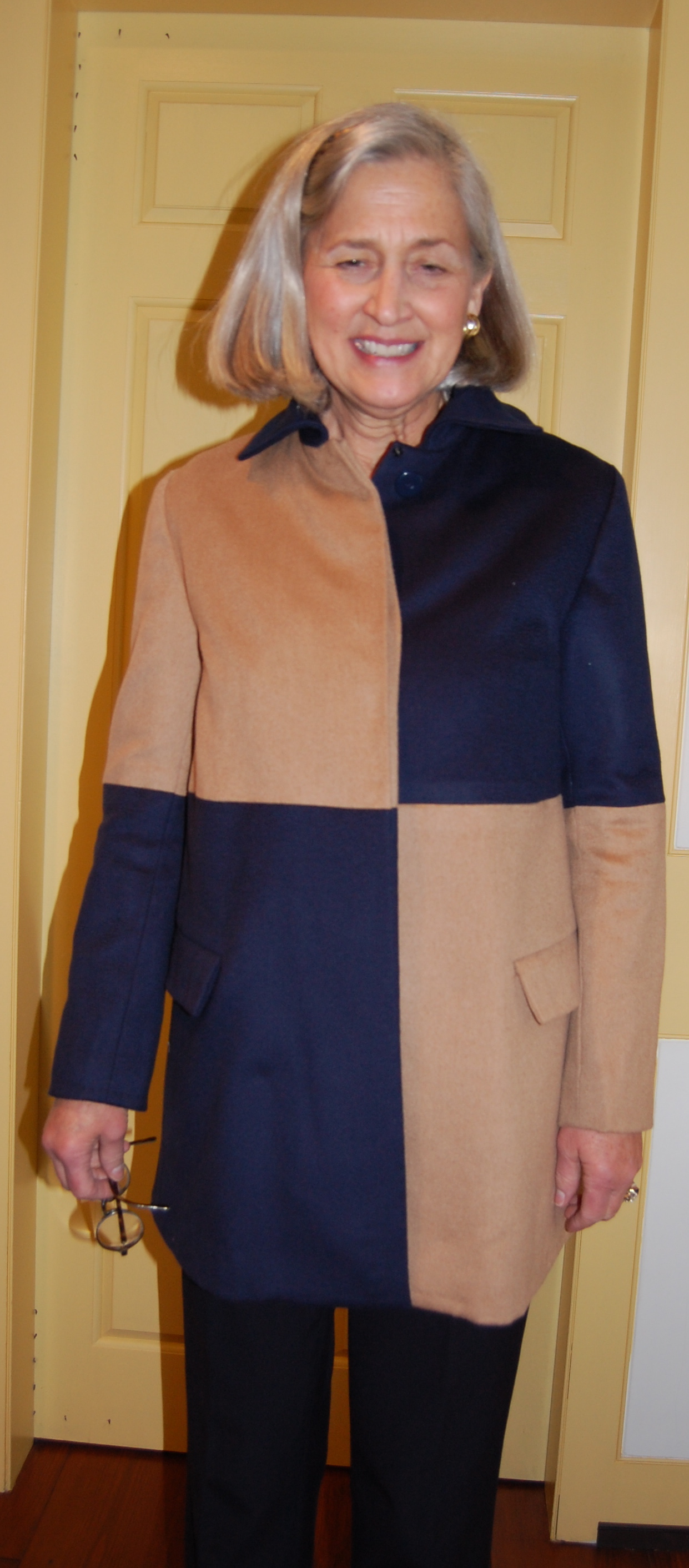
I started my jacket in early February this year in Susan Khalje’s Couture Sewing School class in San Francisco.  I just finished it.

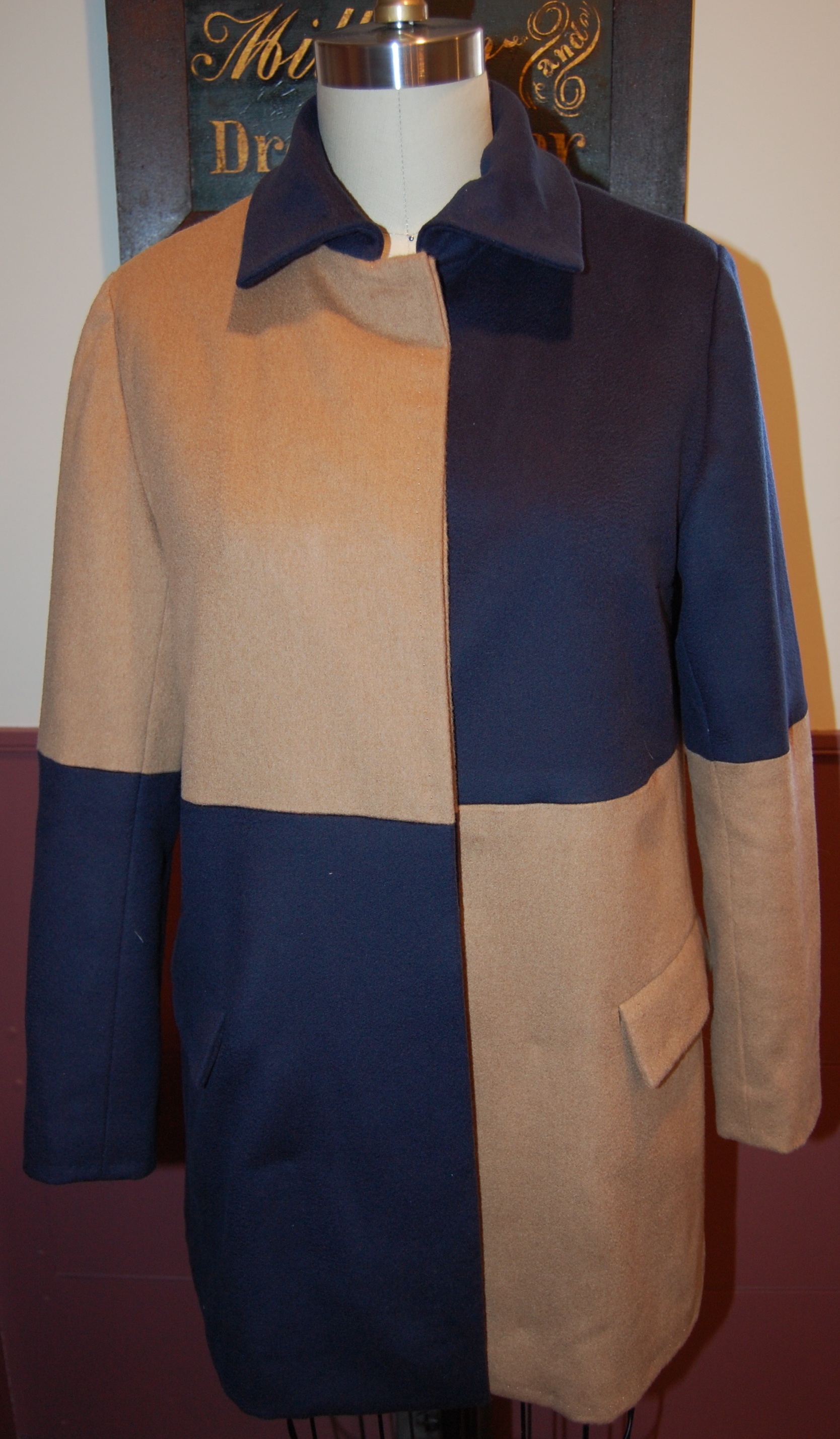
Magnificent Obsession

Magnificent Obsession

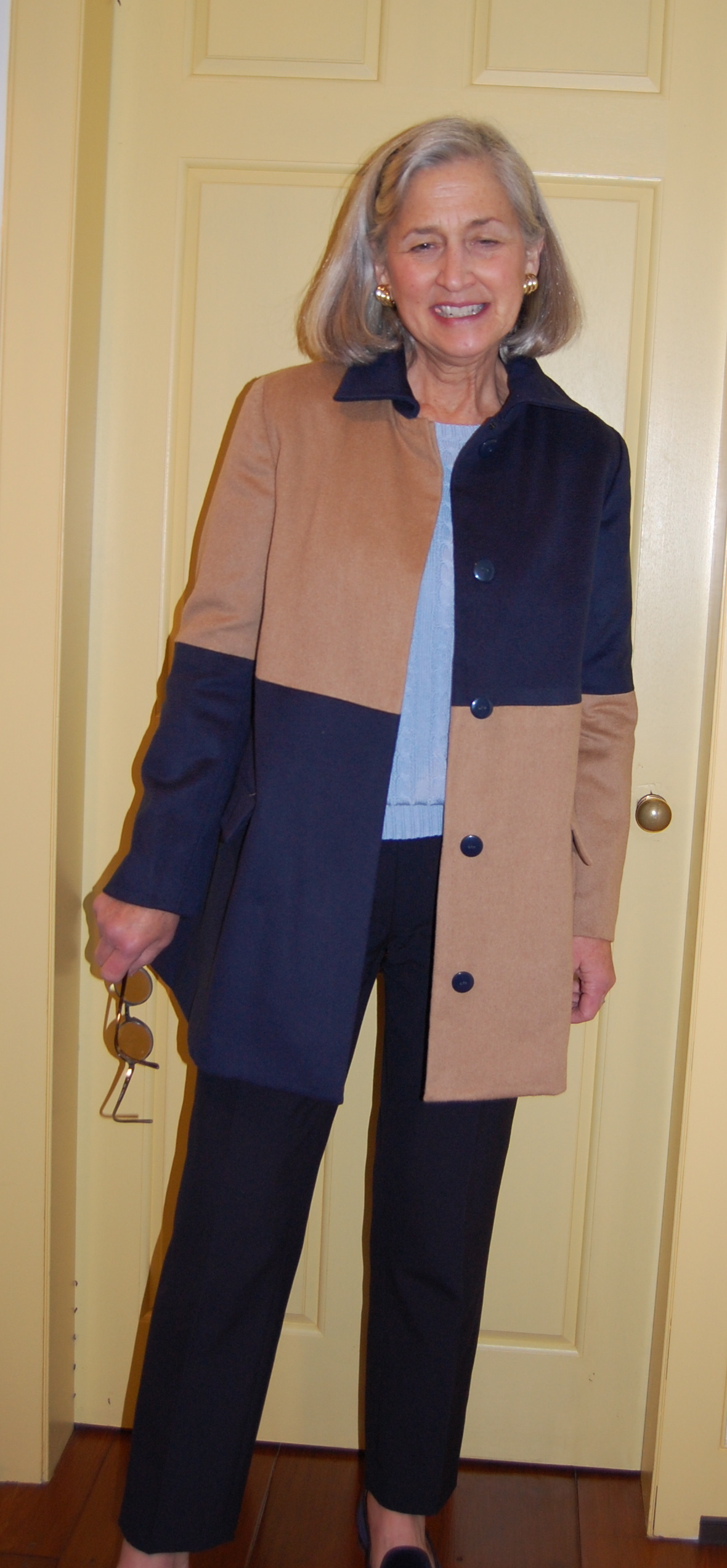
I like it worn open as well...

I like it worn open as well…

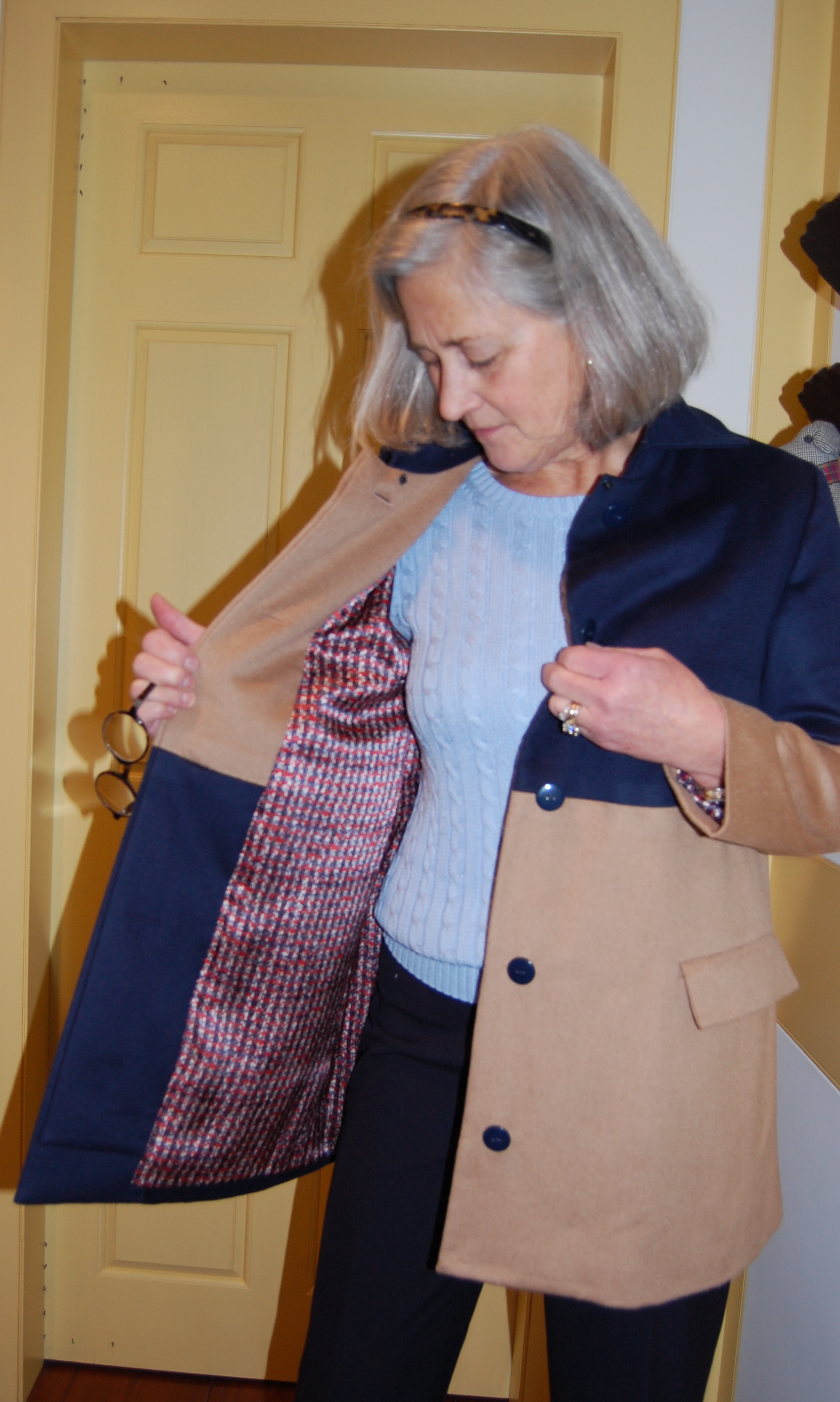
A look inside...

A look inside…

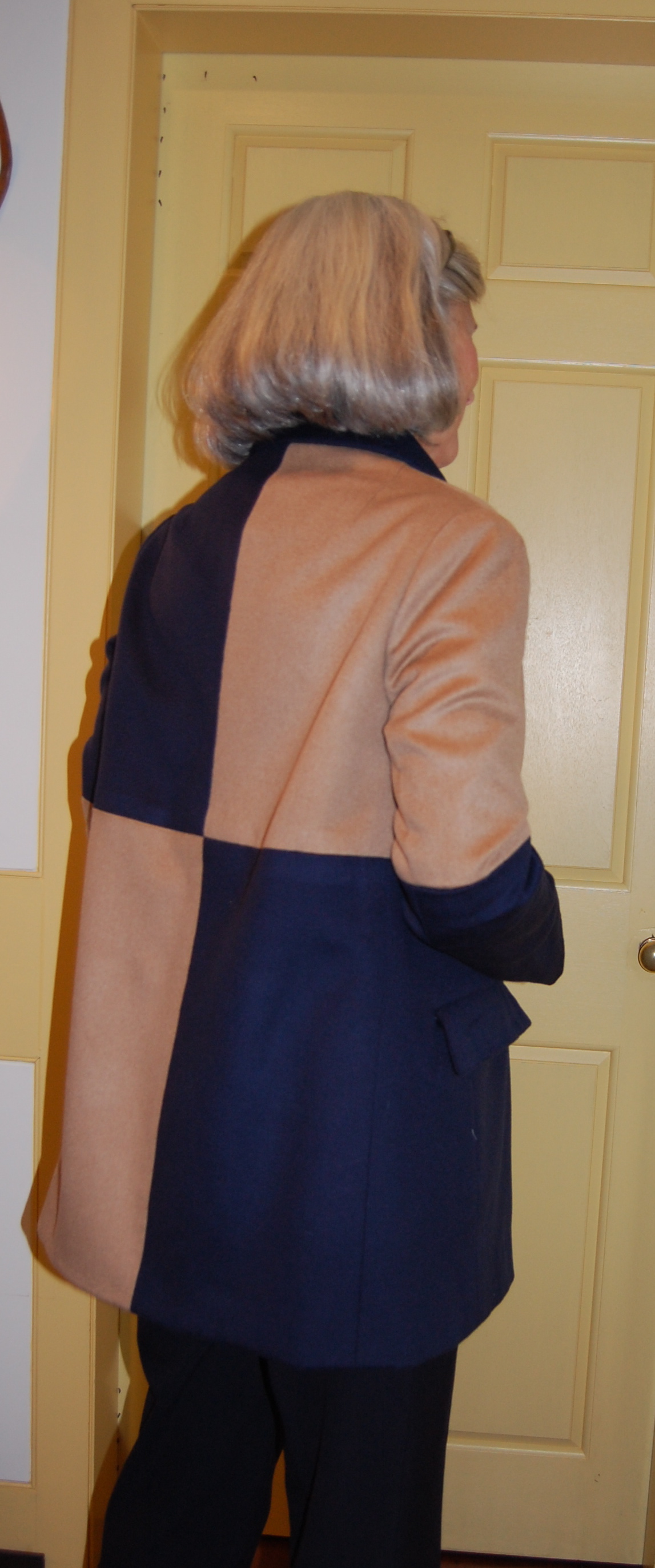
A back view.

A back view.

Making this was one of the most enjoyable sewing experiences I have ever had.  Being privileged to get Susan’s expert guidance on some parts of the jacket certainly was part of the equation.  In addition to that, however, were the preciseness and subtle design details of the pattern, which made it a pleasureable sew.  A few of those details are:

1)  the genius of the extra side panel, which enhances the “swing” line of the coat.

2) that side panel  also allows the use of a Dior dart which adds just enough to the bust to keep the line smooth, but ample.

Th instruction sheet gives a good diagram of the small Dior dart tucked into that front side seam.

The instruction sheet gives a good diagram of the small Dior dart tucked into that front side seam.

3) the concealed front allows the clean appearance of the coat to be unencumbered by buttons.

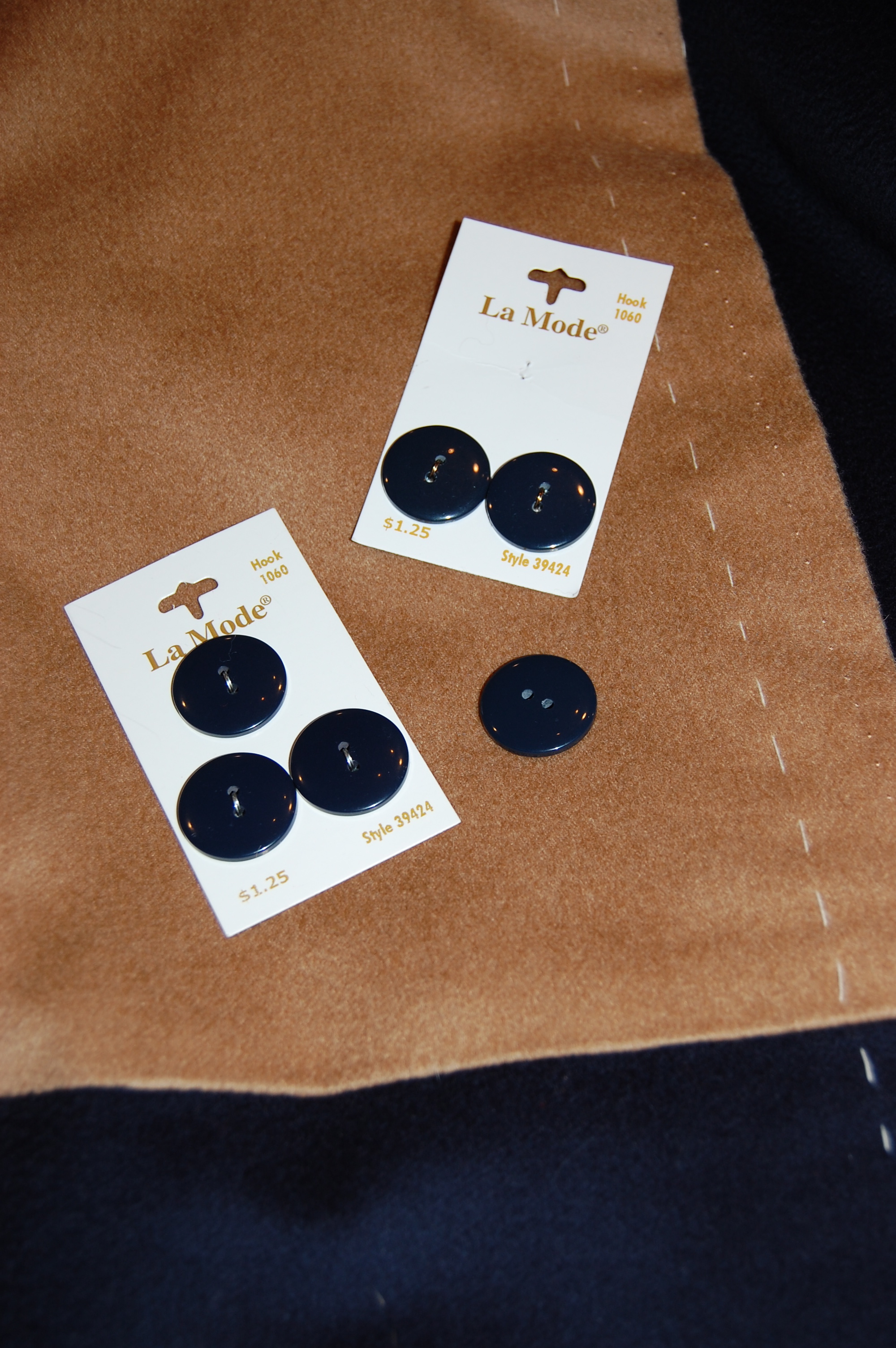
I chose these navy blue buttons for the concealed front.  They are flat, simple, and match the blue exactly.

I chose these navy blue buttons for the concealed front. They are flat, simple, and match the blue exactly.

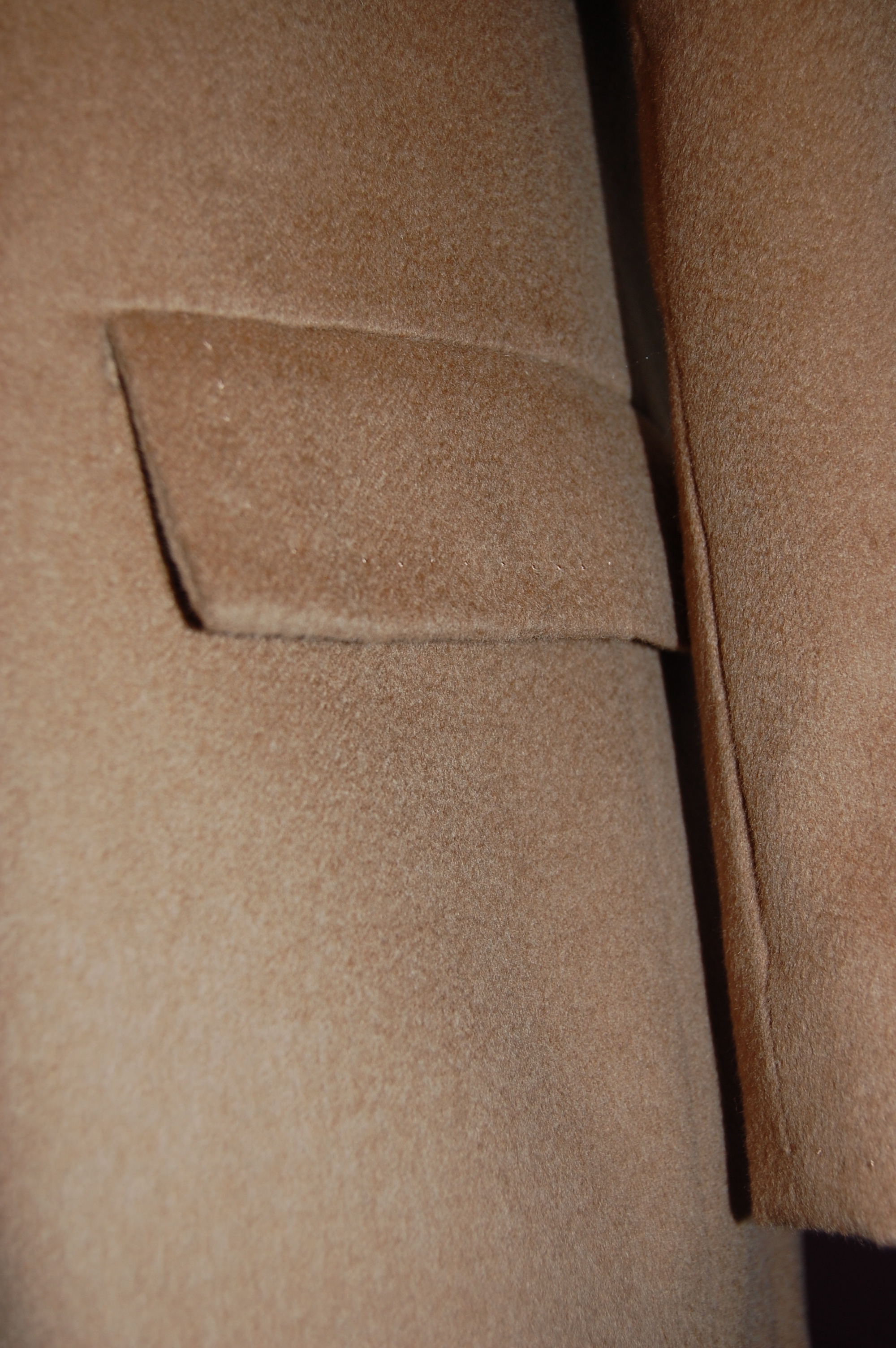
4) the flap pockets, which conceal the openings, again with minimal interruption to the clean and “simple” look.

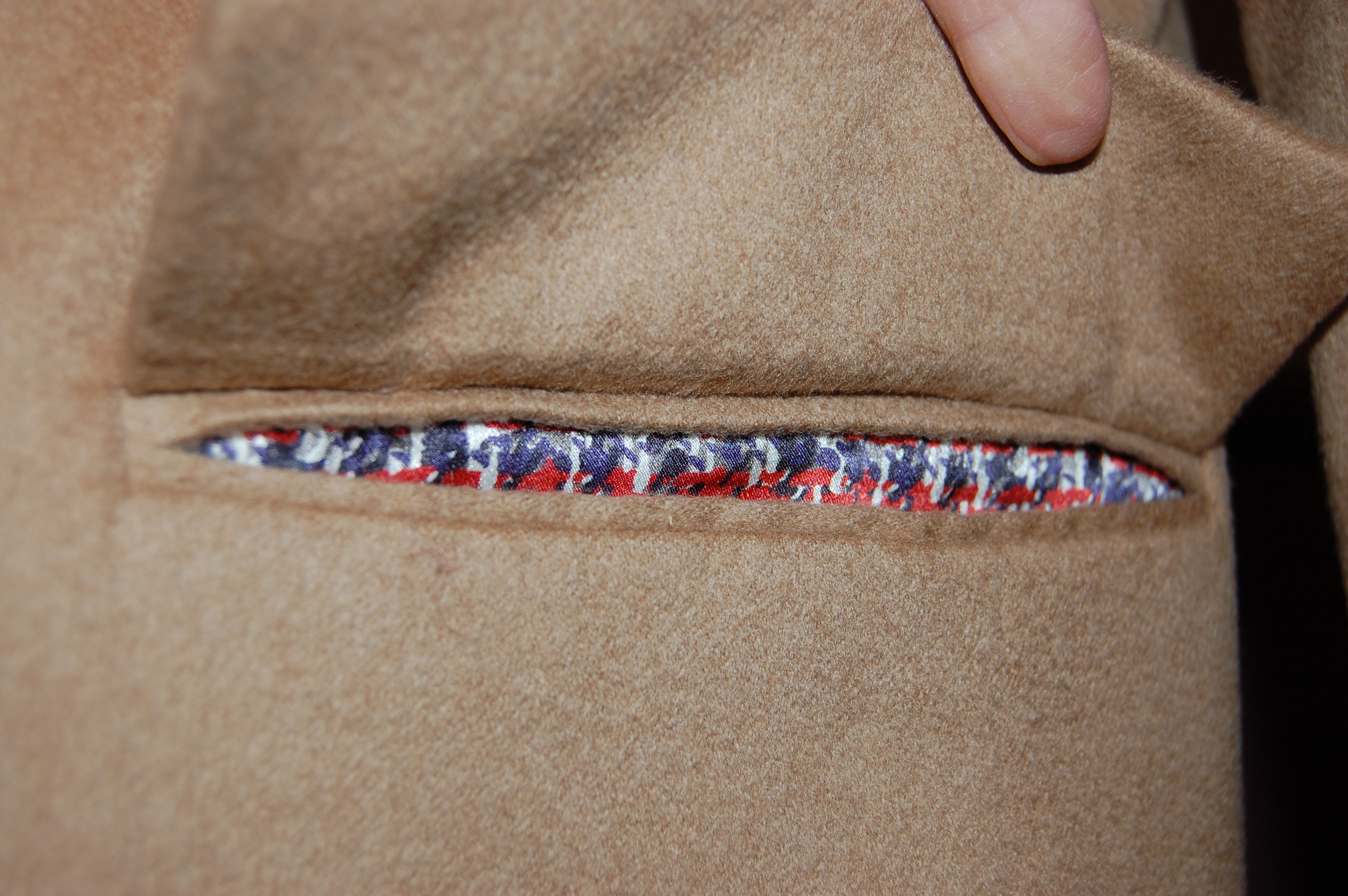
The concealed opening, with a flash of pretty pocket lining.

The concealed opening, with a flash of pretty pocket lining.

I did make a few changes/alterations to the jacket, ensuring a better fit for me in 2014.

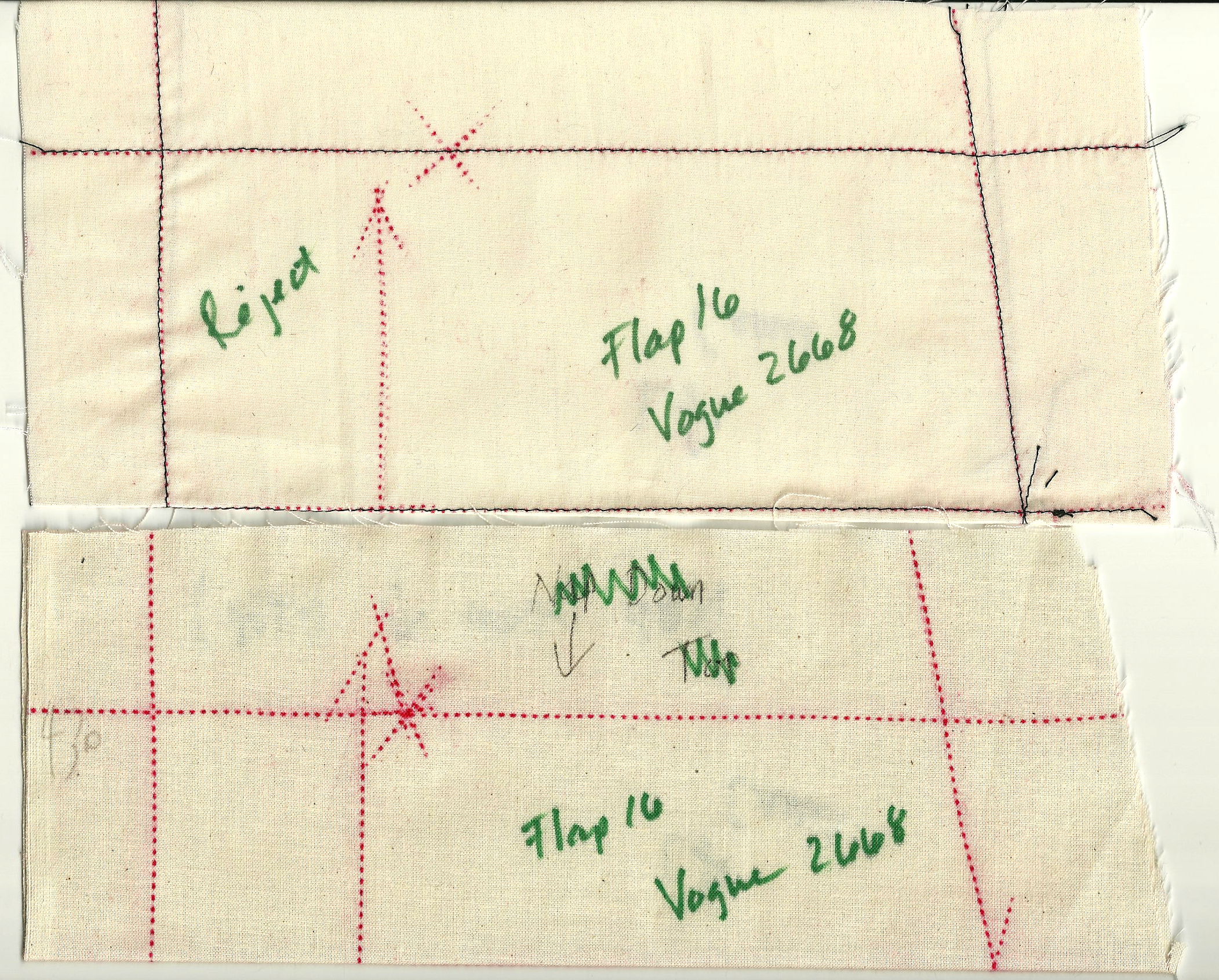
First, with Susan’s assistance, I took some of the volume out of the back seam, as it was just too full for my frame.  Second, I added ½ “ to the diameter of each sleeve, as they were just a little too slim for comfort.  Doing this allowed me to enlarge the lower armscye, also adding comfort and more flexibility.  I felt like I was able to do these alterations without changing the look of the jacket.  I also made two “visible” changes, although still in keeping with the design.  The original flaps looked a little too “’70s” to me.  I reduced the “depth” of them by 7/8″, so that they are more in keeping with modern sensibility.

These muslin patterns are folded in half to show the depth of the original flap and the depth of the altered one below.

These muslin patterns are folded in half to show the depth of the original flap and the depth of the altered one below.

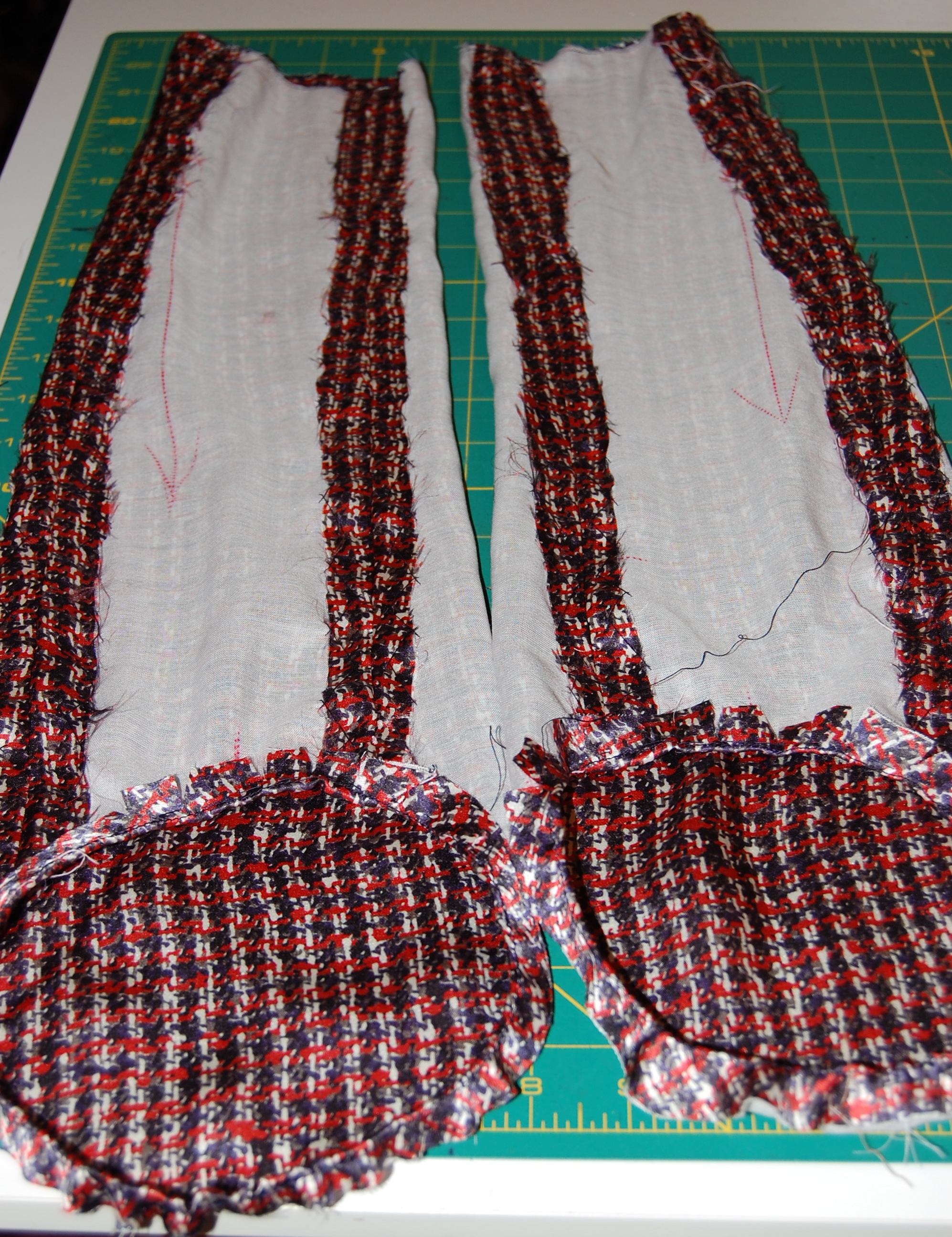
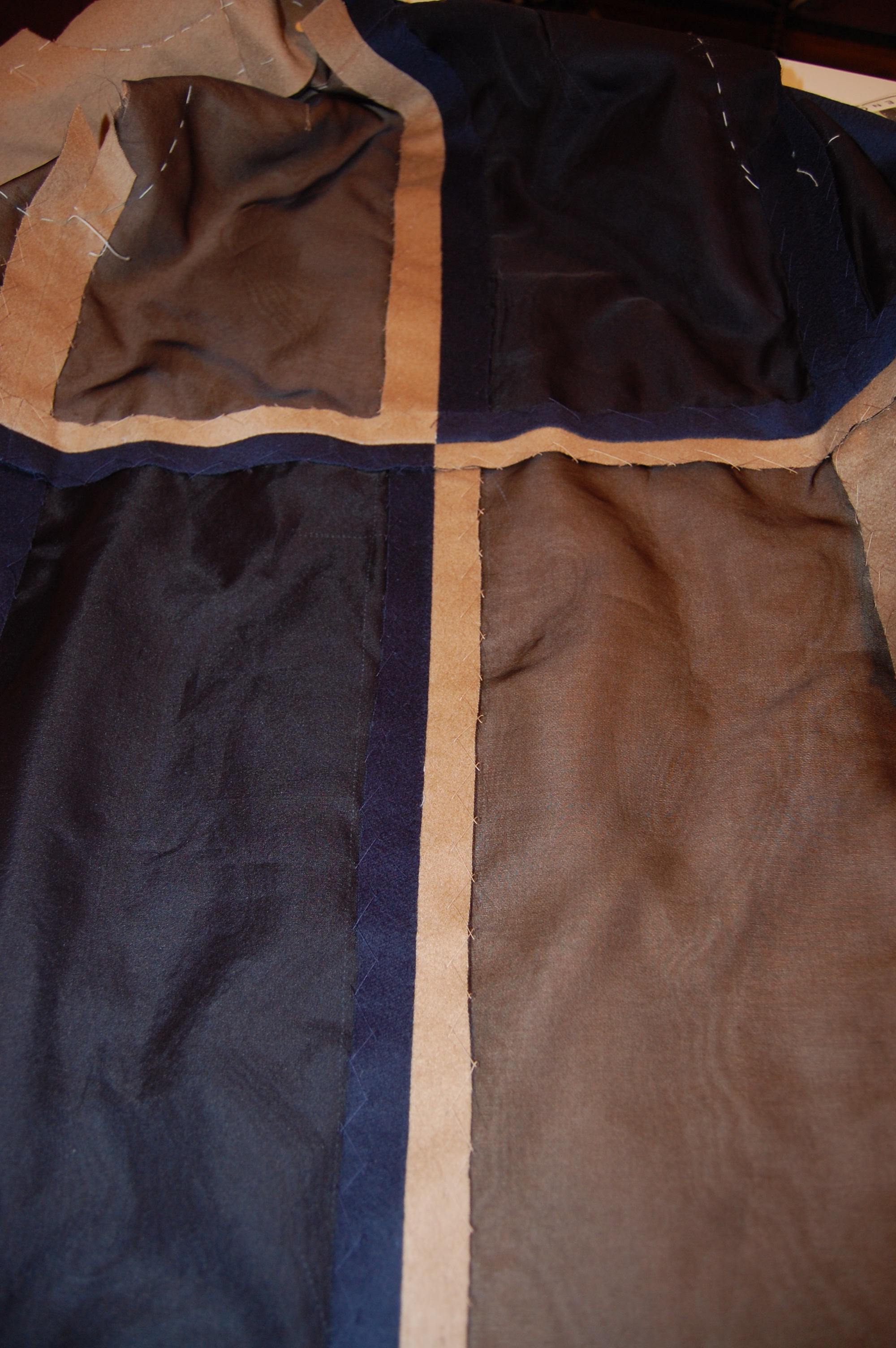
The pattern had separate pieces for the lining, and even the lining followed the blocked design.  I had chosen a printed silk charmeuse (at Britex , naturally!) for my lining, which did not need to be block sewn.  So, using the muslin I had made for the lining, I cut the “lengths” as one piece, eliminating 16 horizontal seams.  I also underlined the silk charmeuse with a very lightweight rayon voile, which made the lining fabric easy to control, and adds another layer of warmth to the overall coat.  This photo shows the underlining in the sleeve linings before I sewed them into the coat.

Magnificent Obsession

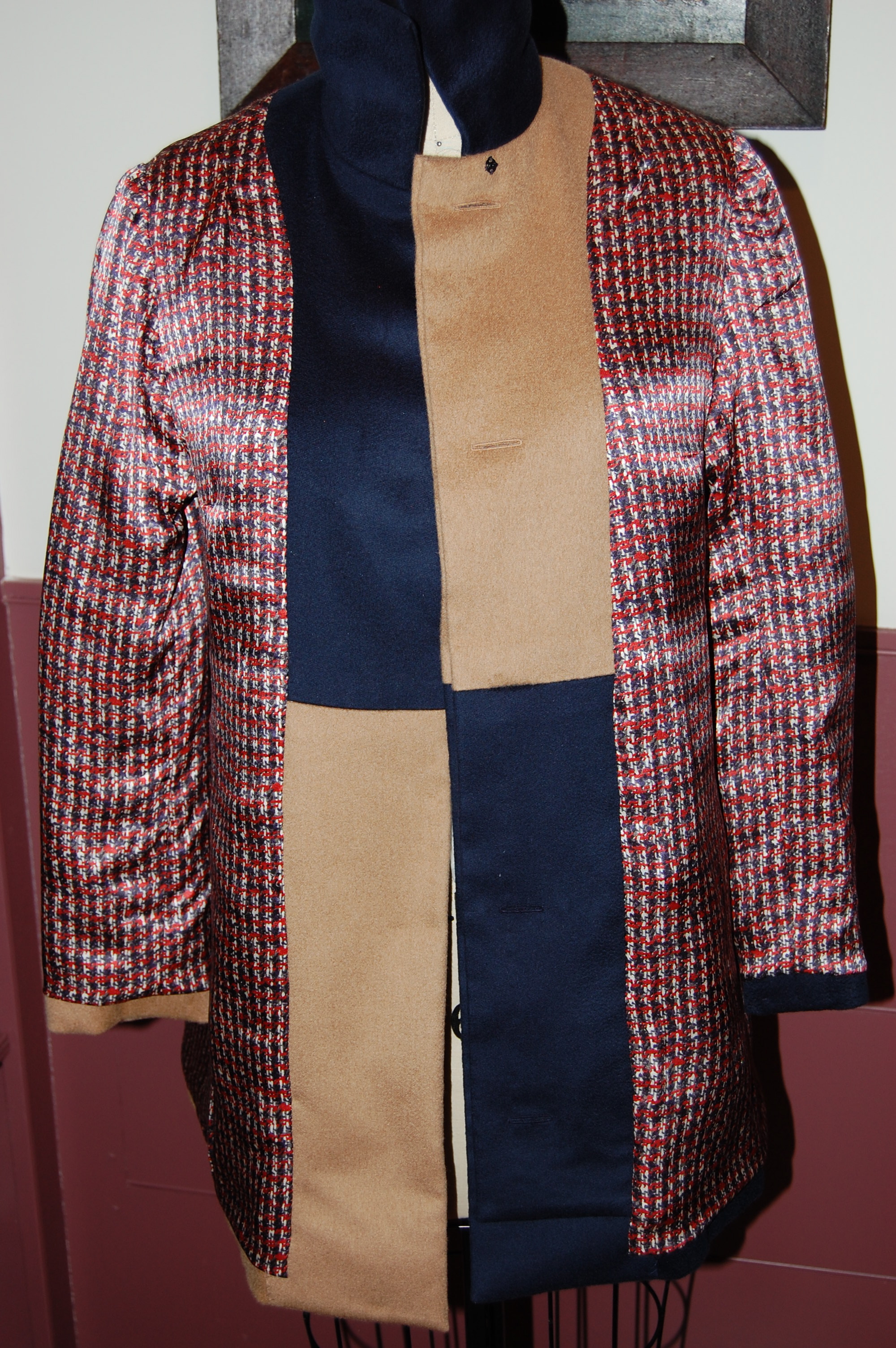
The jacket turned inside out, showing the lining.

The jacket turned inside out, showing the lining.

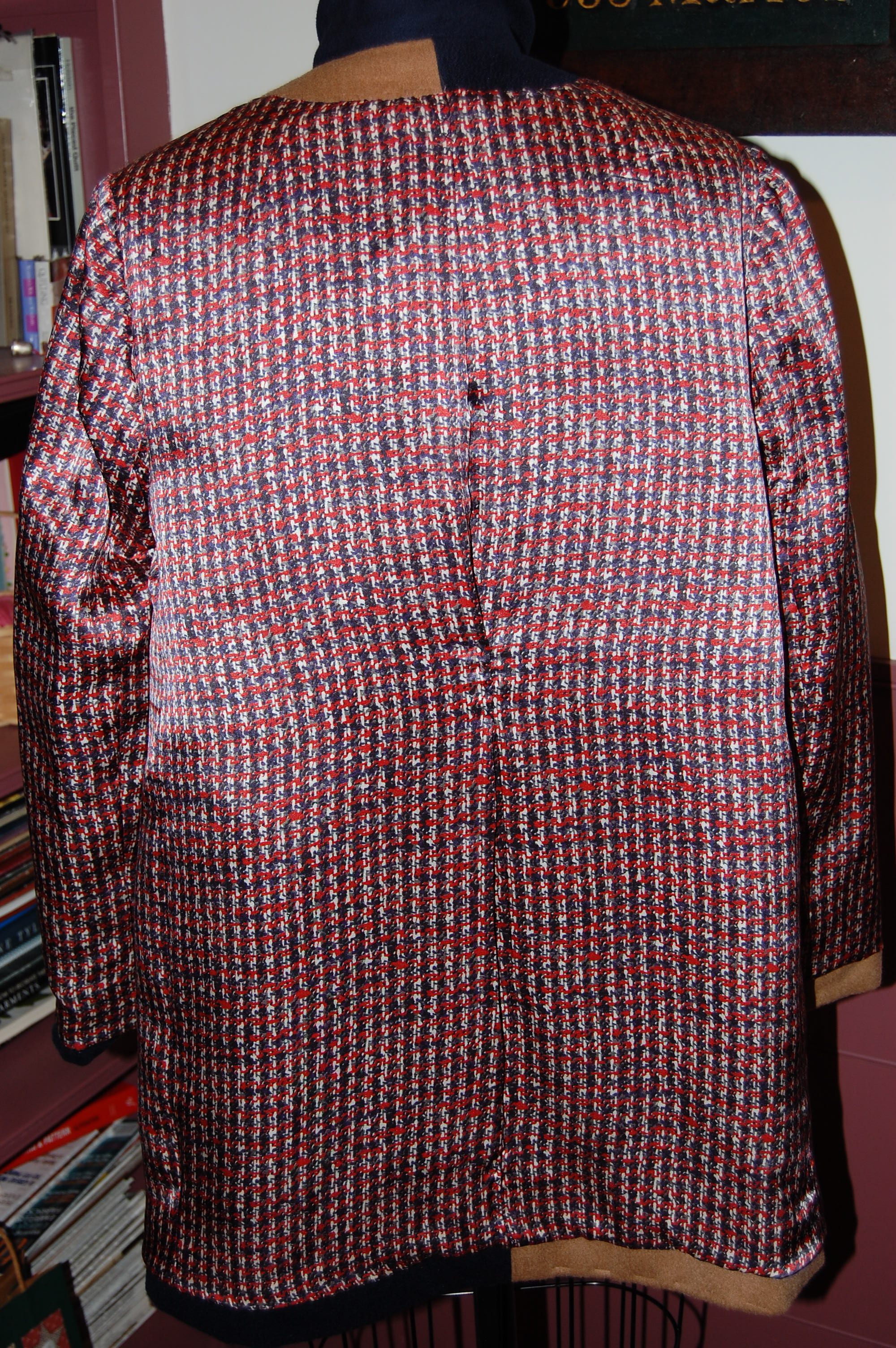
The inside back of the coat.

The inside back of the coat.

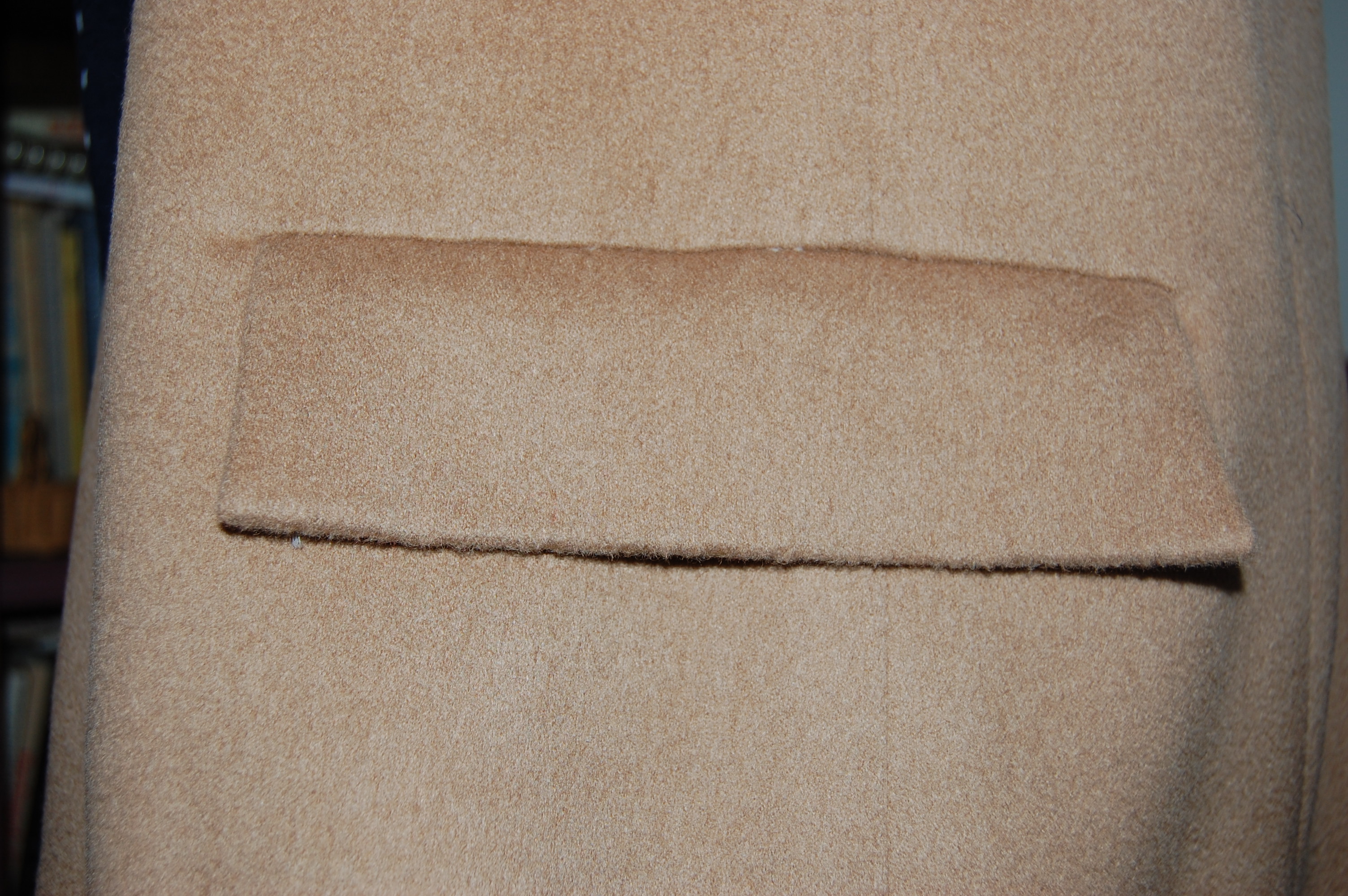
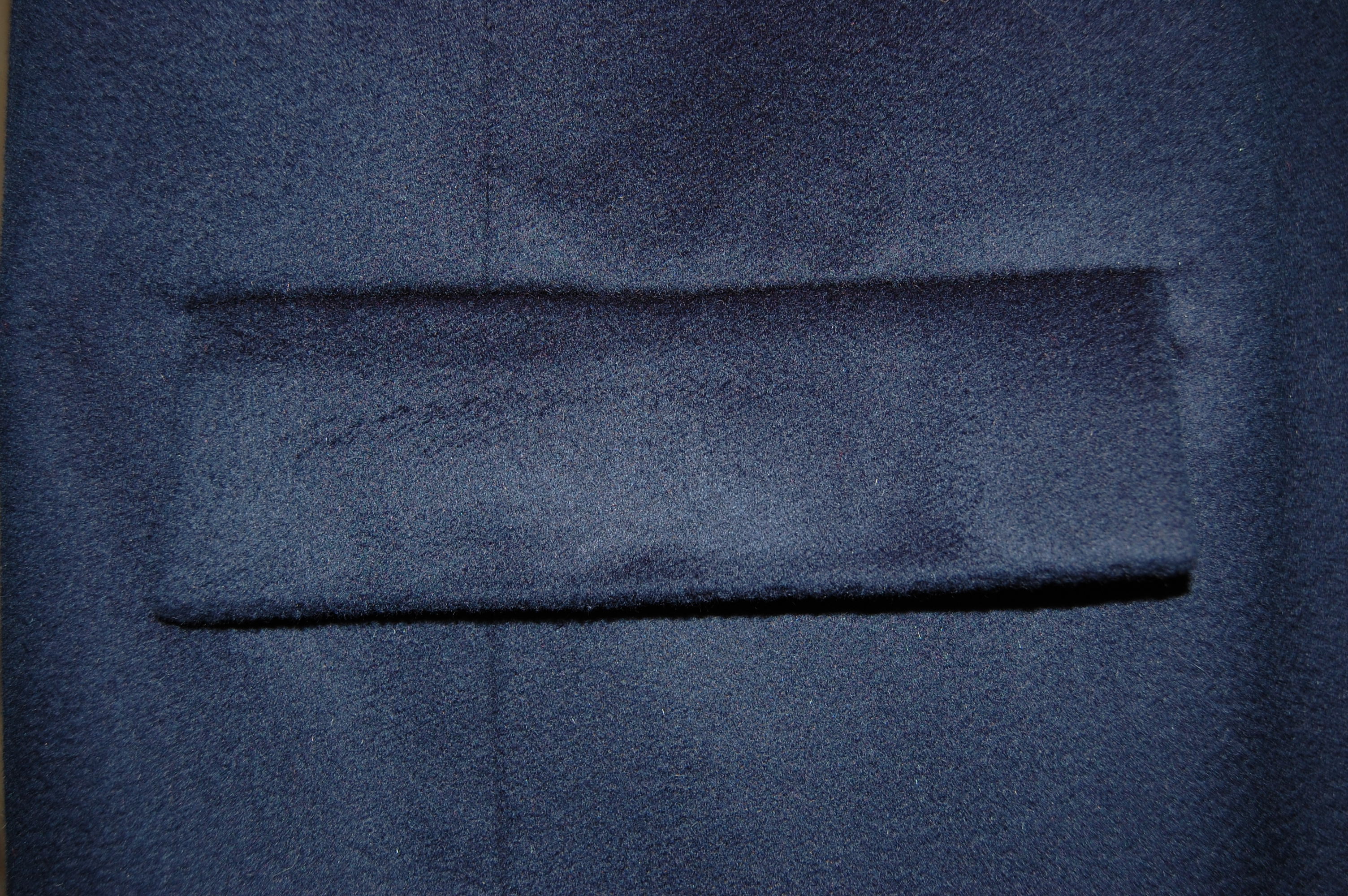
Finally, the pattern called for topstitching the exterior edges of the coat.  Due to the nature of my napped fabric, I thought machine topstitching would detract rather than add.  But – I wasn’t happy with the thought of no topstitching, either.  So I decided to do it by hand.  It wasn’t nearly as time-consuming as I thought it would be, and I am happy with the result.

The topstitching is very subtle, but you can see it here on the pocket flap.

The topstitching is very subtle, but you can see it here on the pocket flap.  Click on the photo for a close-up.

One more thing about this pattern.   When I received it, the pattern pieces for the pants and sleeveless tunic were cut and had obviously been used (although every piece is intact).  The tissue pieces for the coat were still in their factory folds.  On the outside of the pattern in the upper right hand corner is the name Georgia Sanders.  I guess I’ll always wonder if she had plans to make the jacket, too.  I’m so glad she bought this pattern and kept it in such good condition so that it could find its way eventually to me – to help me realize my magnificent obsession from my younger self.

20 Comments

Filed under Buttons - choosing the right ones, Coats, Color blocking, couture construction, Dior darts, underlinings, vintage Vogue Designer patterns, vintage Vogue patterns from the 1970s, Vogue patterns, woolens

The Inside Story

Silk organza must be the best fabric ever made.  The more I use it, the more I appreciate and value its unique properties.  Having first become aware of it as the building block of couture sewing in the Couture Dress Class by Susan Khalje on Craftsy, I quickly adapted my sewing to incorporate it whenever possible and feasible.  Although I fully expected to be using it for my color-blocked coat, I wasn’t sure if I would need to add more to the inside construction in the way of interfacings or other support techniques.

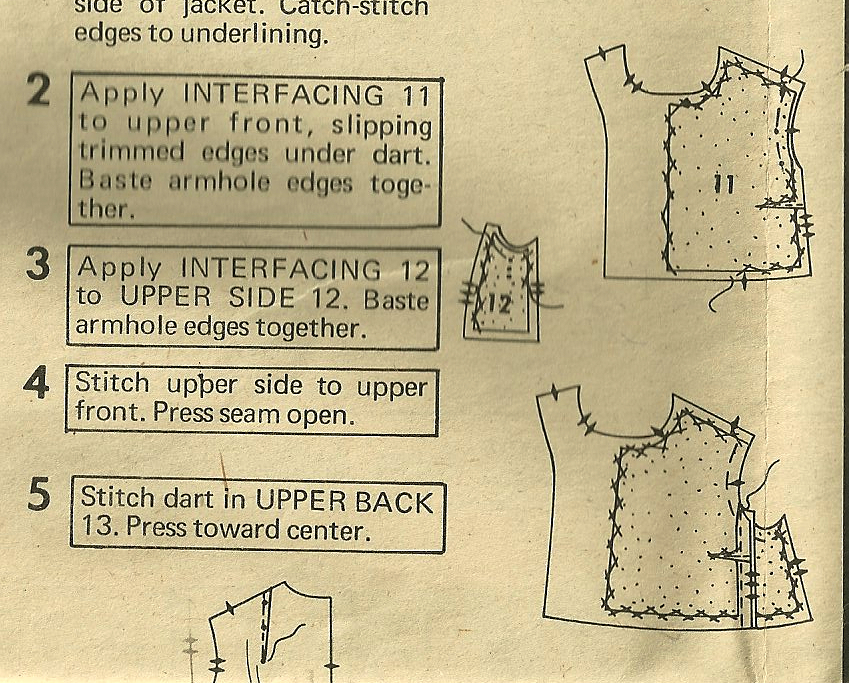
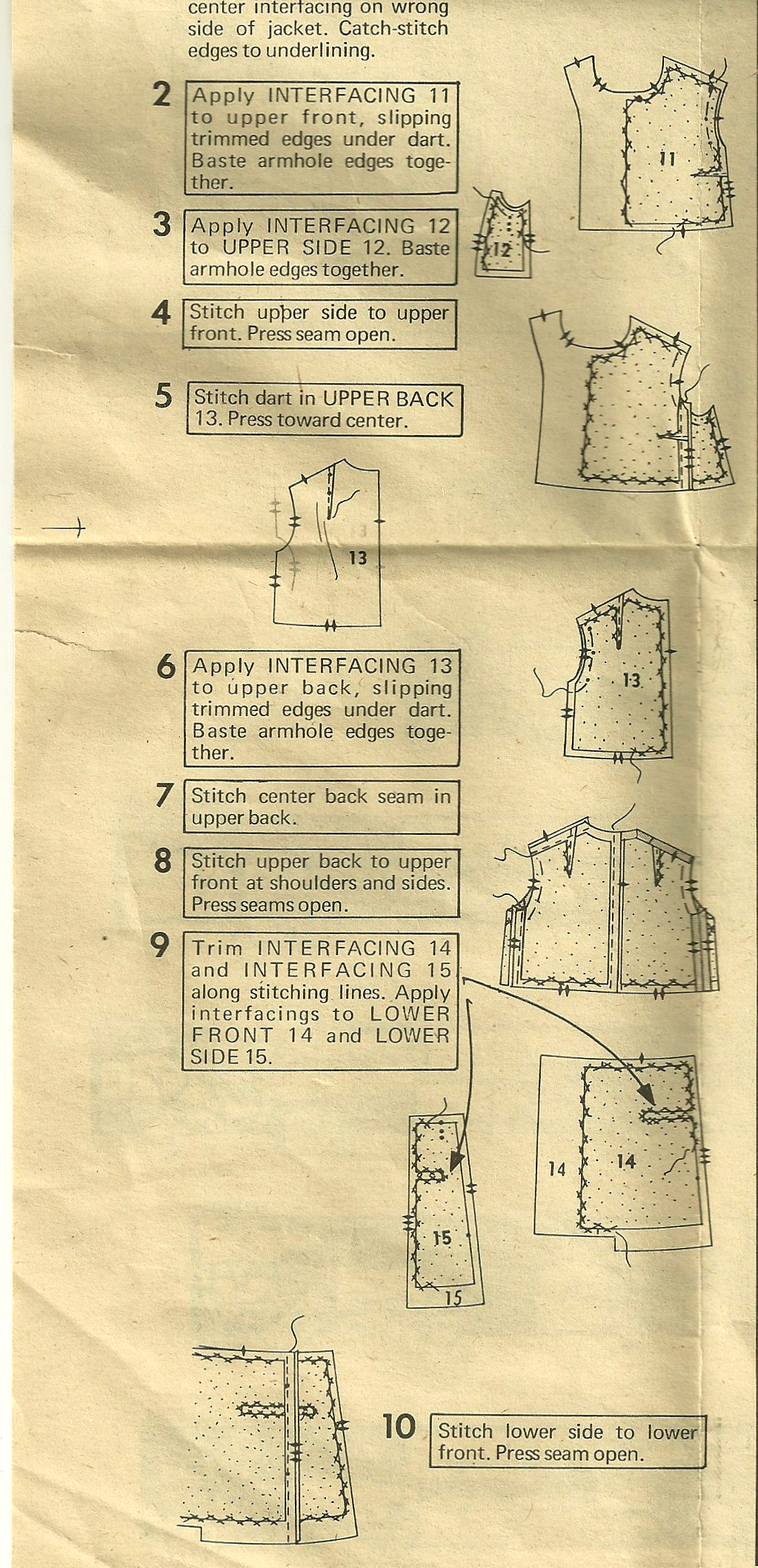
The pattern envelope and instruction sheets were somewhat mystifying, as they listed yardages for both interfacings and underlinings.  However, the diagrams on the instruction sheets clearly showed interfacings only.

The Inside Story - interfacing detail from instruction sheet It was just so lovely to have Susan Khalje’s input and expertise to help me with this during my Couture Sewing School class with her in February.  Silk organza was clearly going to be the only “support” mechanism I was going to need (with the exception of the collar, to be discussed below.)  With each jacket section underlined with black silk organza, I was able to control the inside seams by catch-stitching them to the silk organza.

Here is the inside of the back of the coat, with the seams catch-stitched to the organza.

Here is the inside of the back of the coat, with the seams catch-stitched to the organza.  Click on the photo to see  details.

A quick note here on pressing.  Because my fabrics each have a distinct nap to them, making them easily impressionable, and because they are heavier coat weight fabrics, pressing seams required some extra attention.  Susan had me insert sheets of paper under the two edges of each seam for its initial press (before trimming  them down for catch-stitching).  This prevented the impression of the seam allowances to show up on the right side.  With a really good steam iron, a wonderful finish can be achieved with this method.

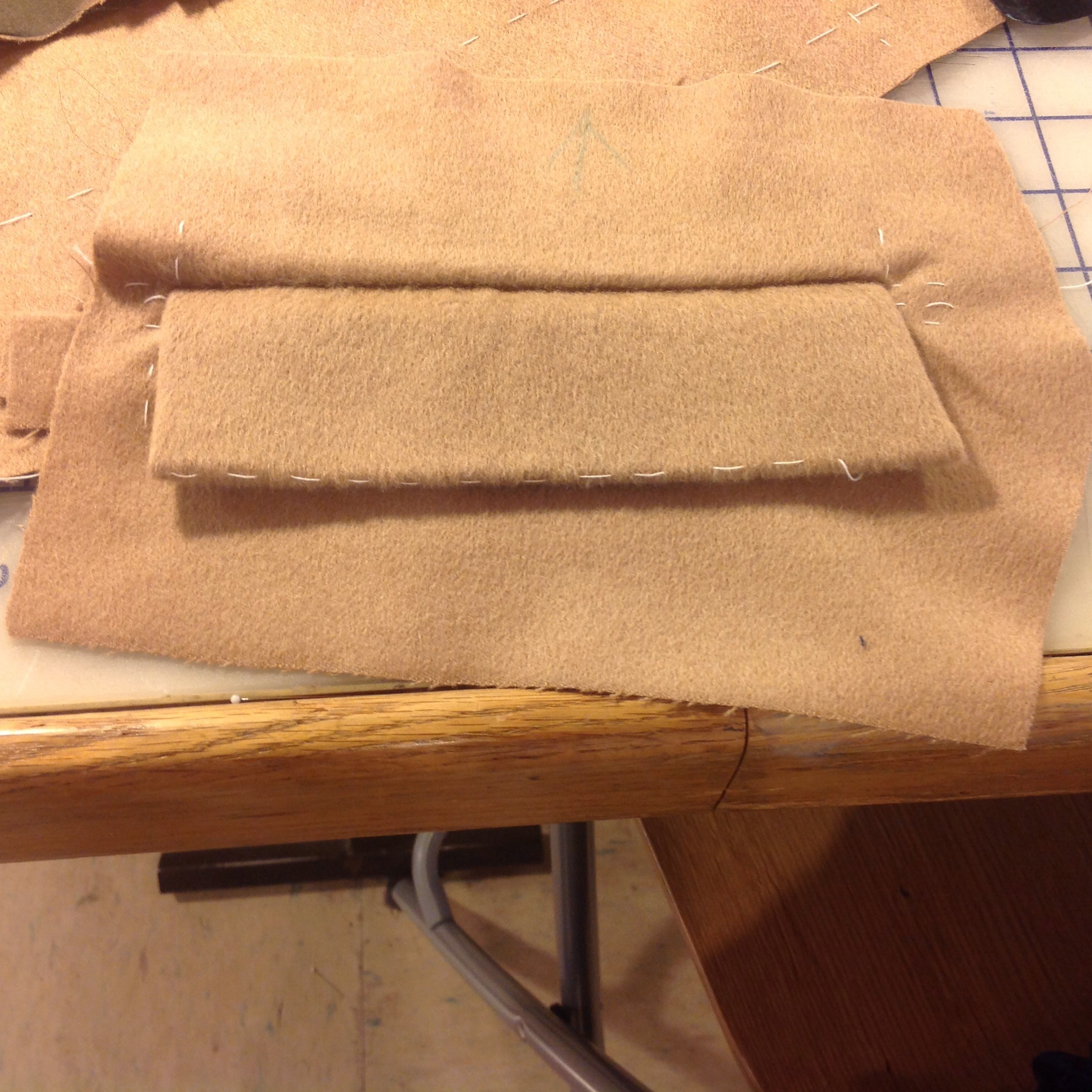
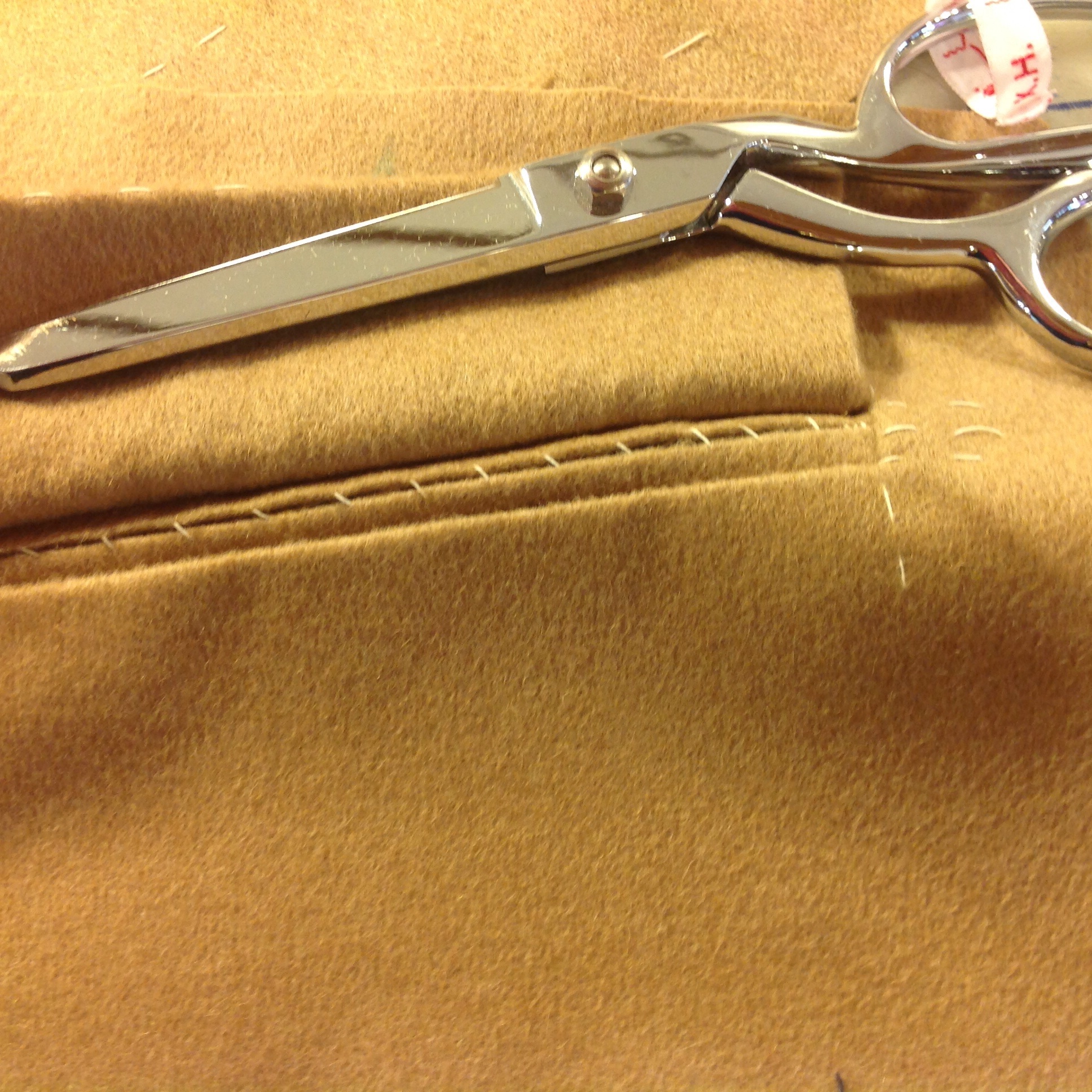
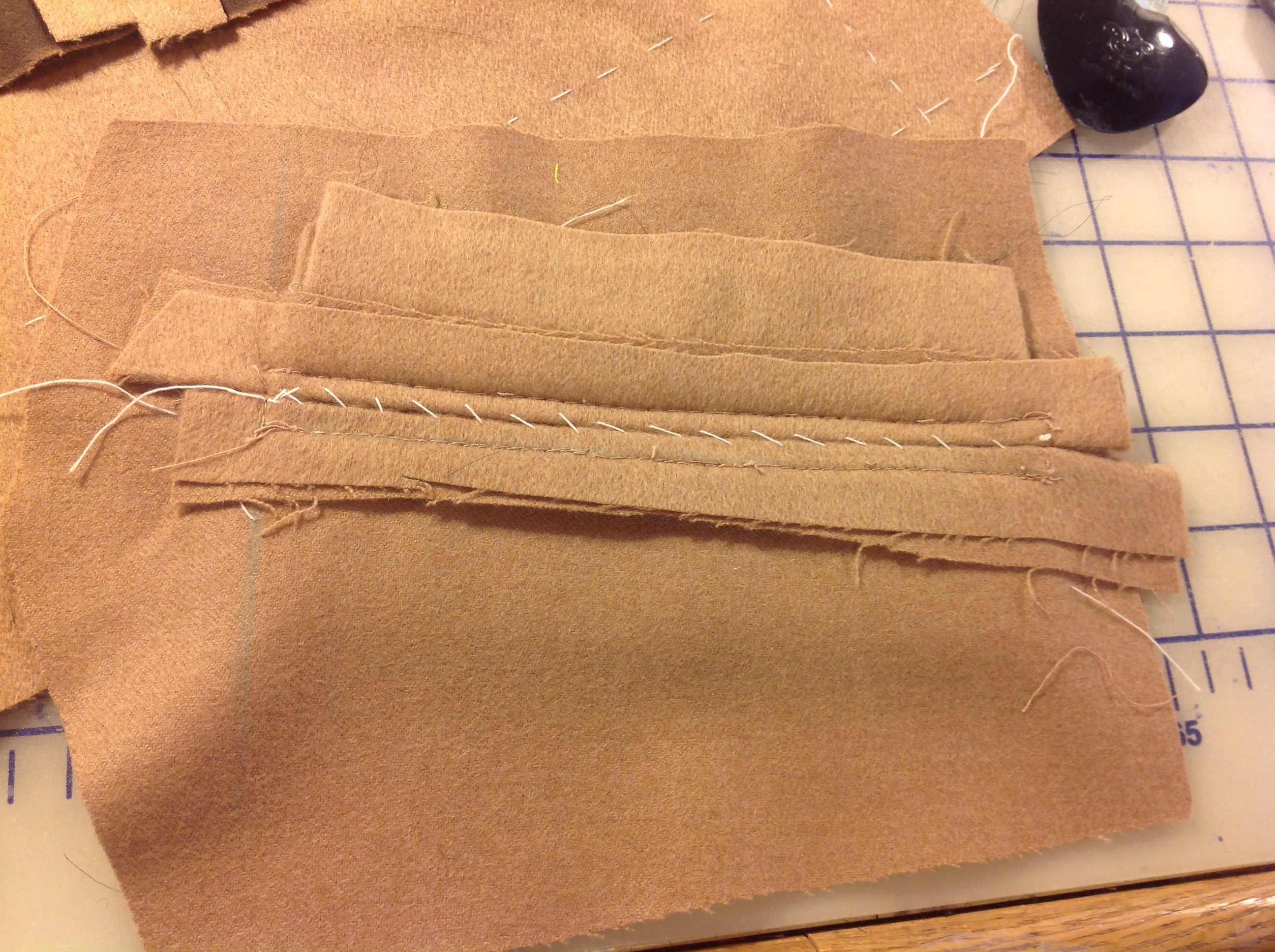
The pockets were one of the first details to be tackled.  It had been a while (like years!) since I had made flap/buttonhole pockets.  Once again, Susan’s guidance gave me confidence.  She had me make a trial pocket first, and then I was ready for the real thing.

My sample flap before pressing.

My sample flap before pressing.

Showing the "buttonhole" type opening.

Showing the “buttonhole” type opening.

Showing the "inside" of my trial pocket.

Showing the “inside” of my trial pocket. 

With the flap concealing the opening of the pocket, there is no room for error (or else you will end up with puckers at the edges of the flaps).  I basted and basted and sewed with extreme caution.  I ended up with pockets with which I can, thankfully (whew!), be  happy.

One finished pocket . . .

One finished pocket . . .

. . . and the other one.

. . . and the other one.

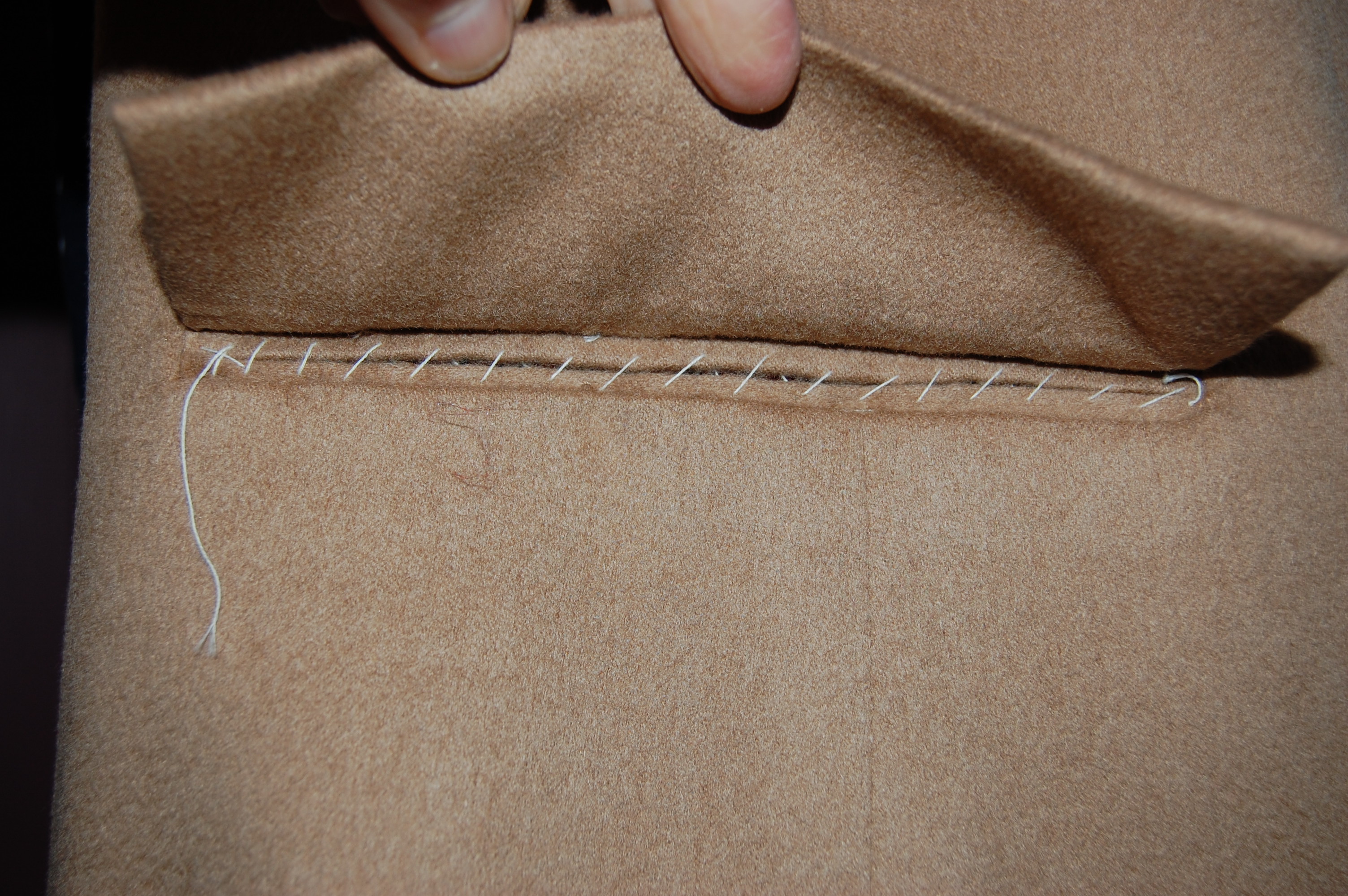
And here is what it looks like under the flap, with the opening basted together temporarily.

And here is what it looks like under the flap, with the opening basted together temporarily.

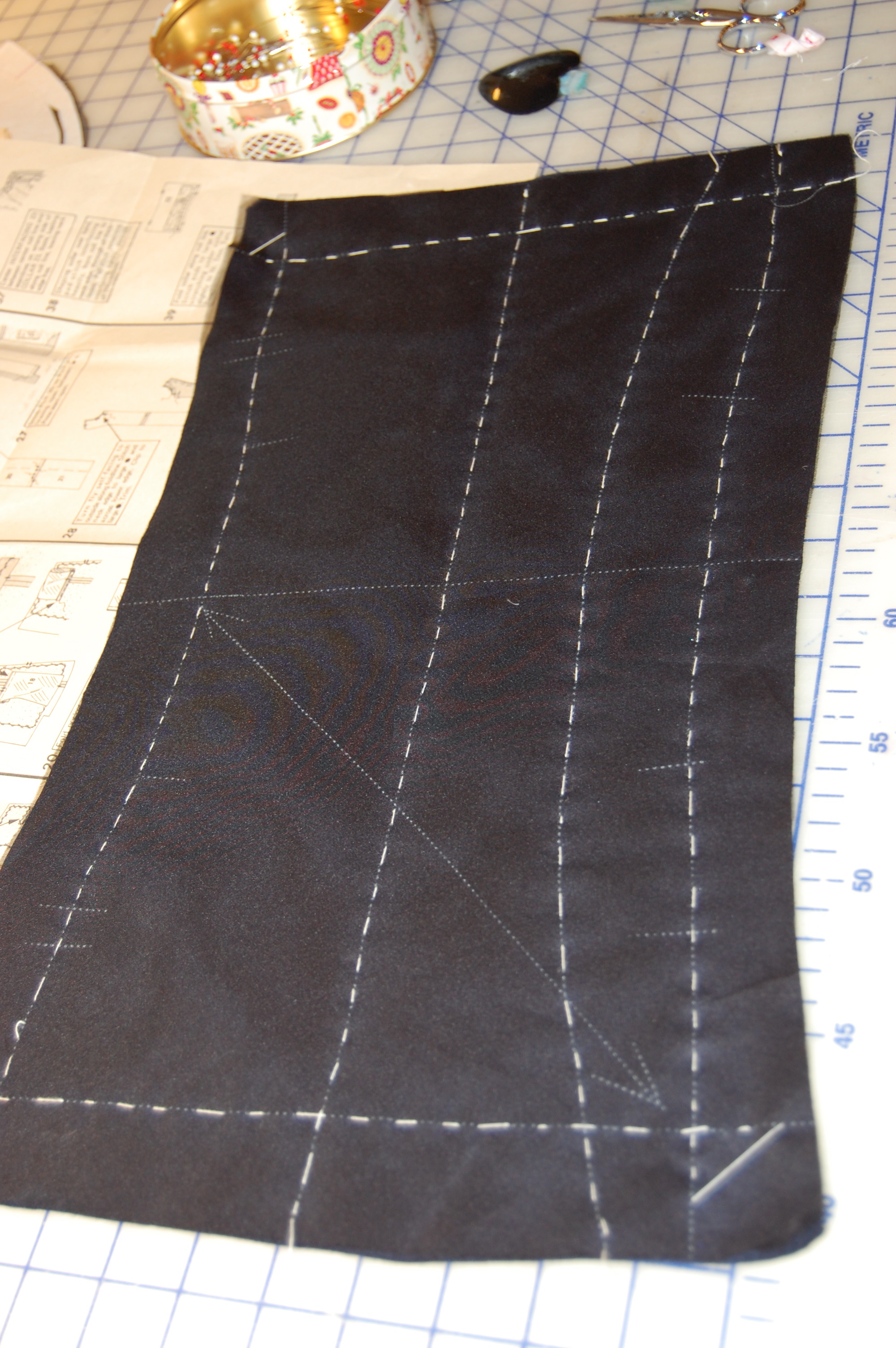
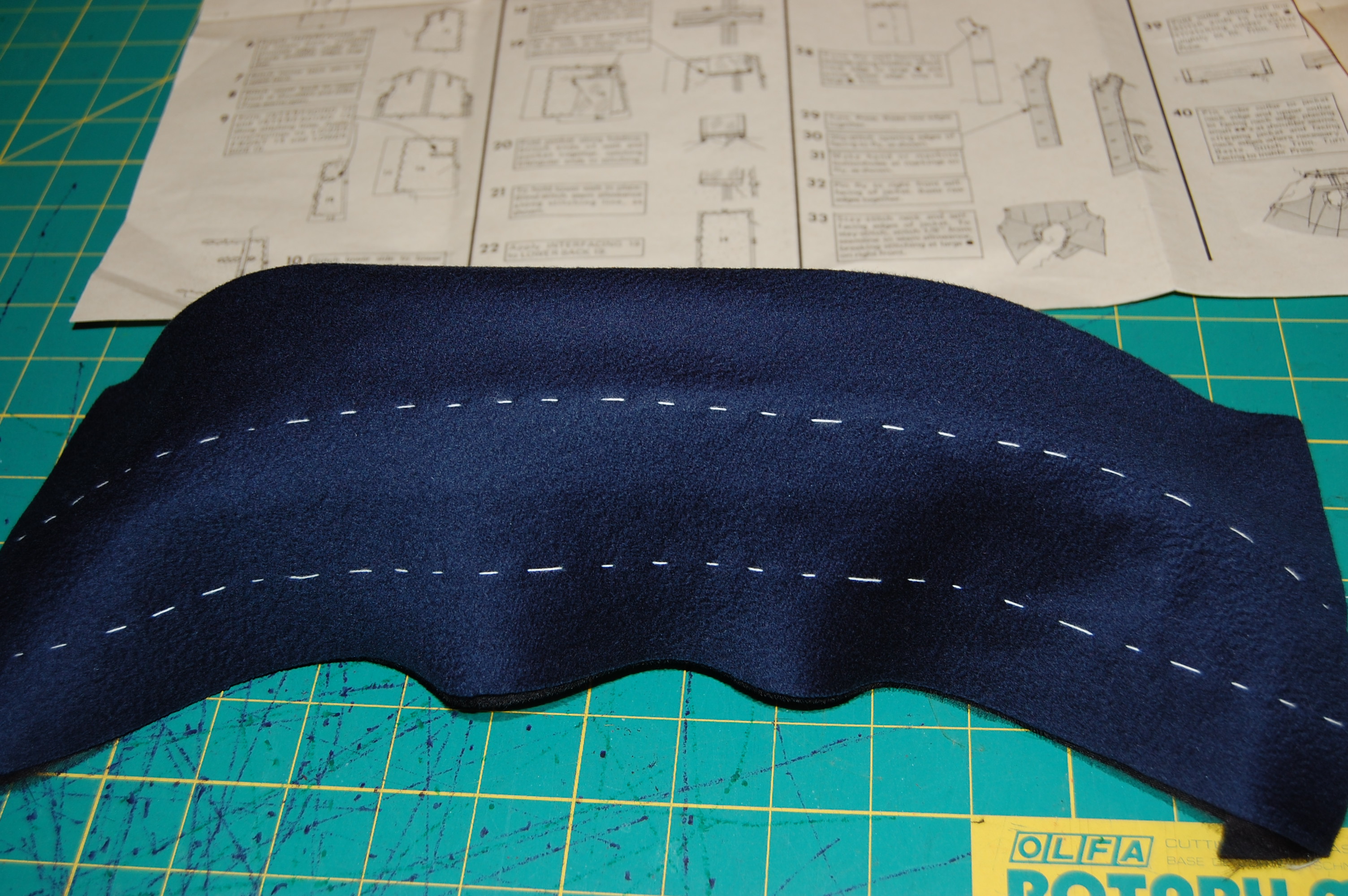
So now on to the collar.  The collar was cut on the bias, and it had a clearly marked roll line.  With the organza basted on (the only “interfacing” I would need), Susan had me run an invisible line of tiny hand stitching along the roll line.

The curved line is the roll line.

The curved line is the roll line.

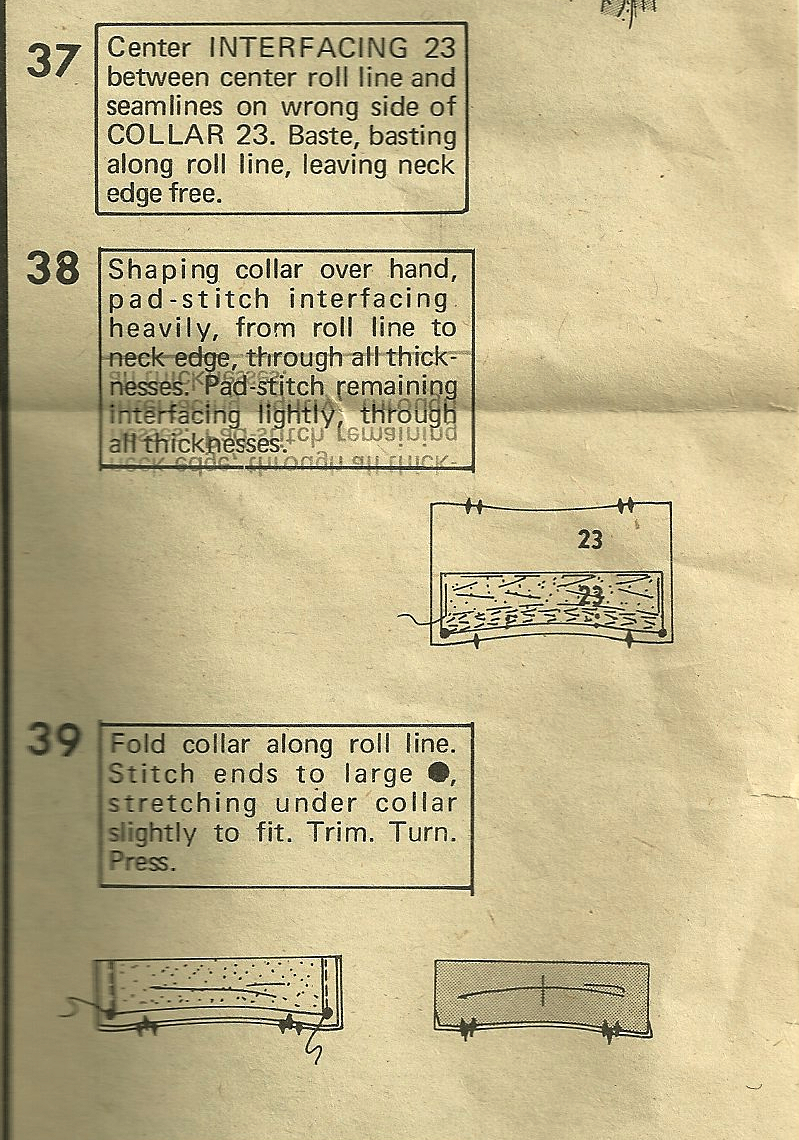
This anchors it for the subsequent pad-stitching.  Although the pattern instruction sheet shows only half of the collar interfaced, you will see the pad-stitching detail, which is required to get the collar to roll properly.

The Inside Story - collar detail

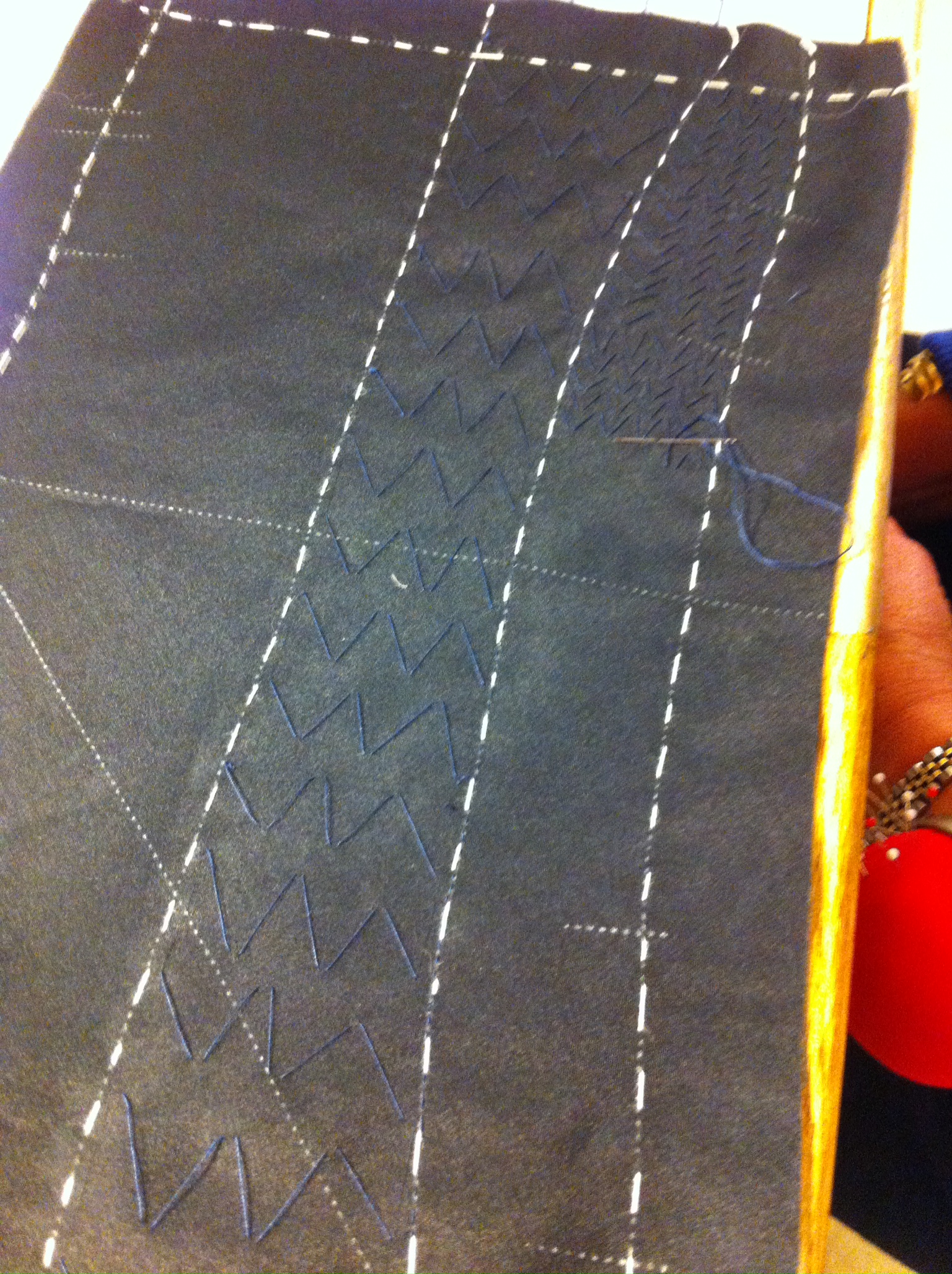
I am grateful to my classmate Sylvia for taking a photo of the pad-stitching which I did on the collar.  What this shows is the small pad-stitching below the roll line, with larger pad-stitching above it, extending to the fold line.

The inside story - collar pad-stitching

Click on the photo to see it in detail.

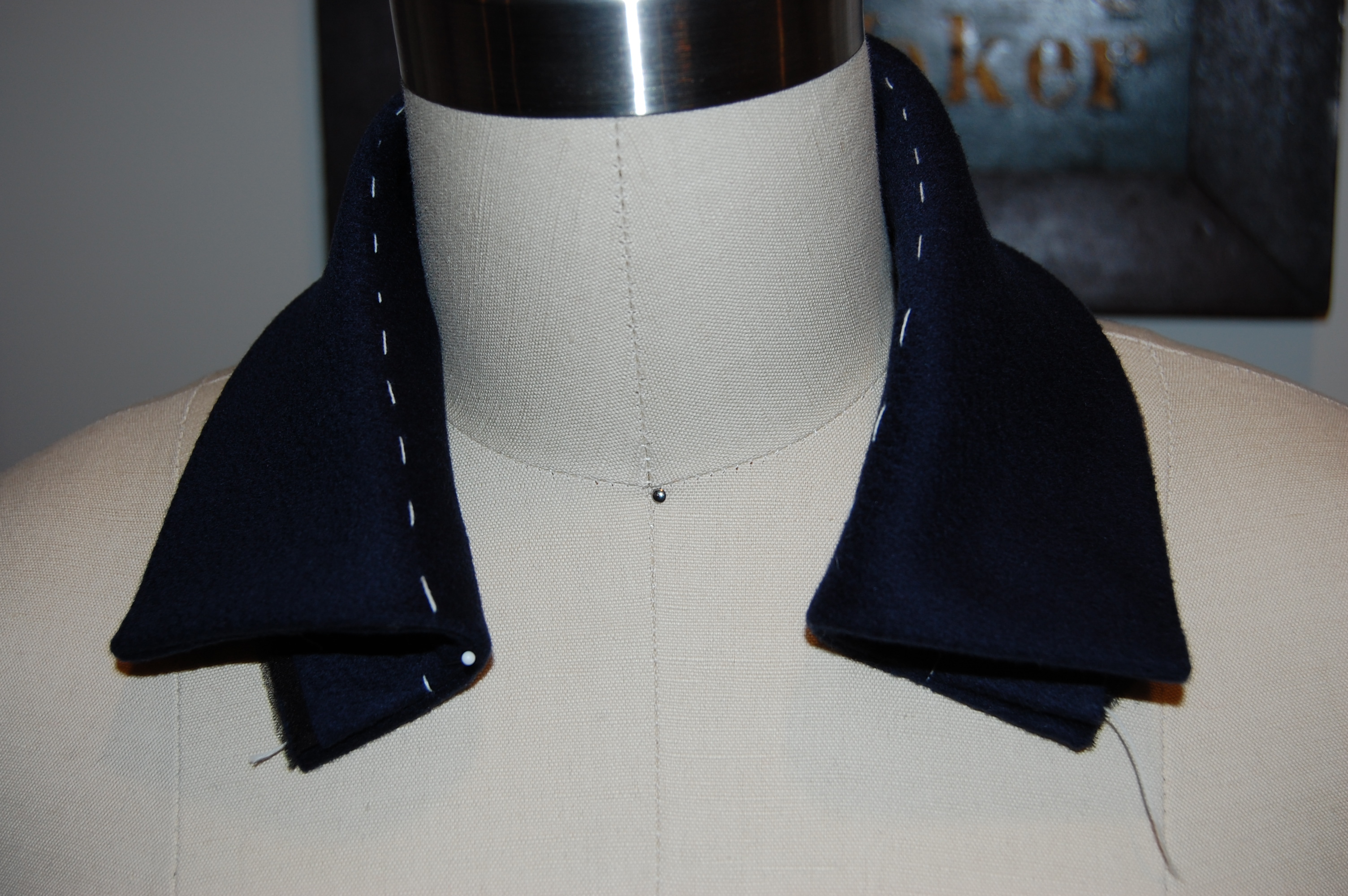
With the side seams sewn, my collar showed a clear roll where it was supposed to be.

The inside story

And here is the collar on my dress form.

And here is the collar on my dress form.

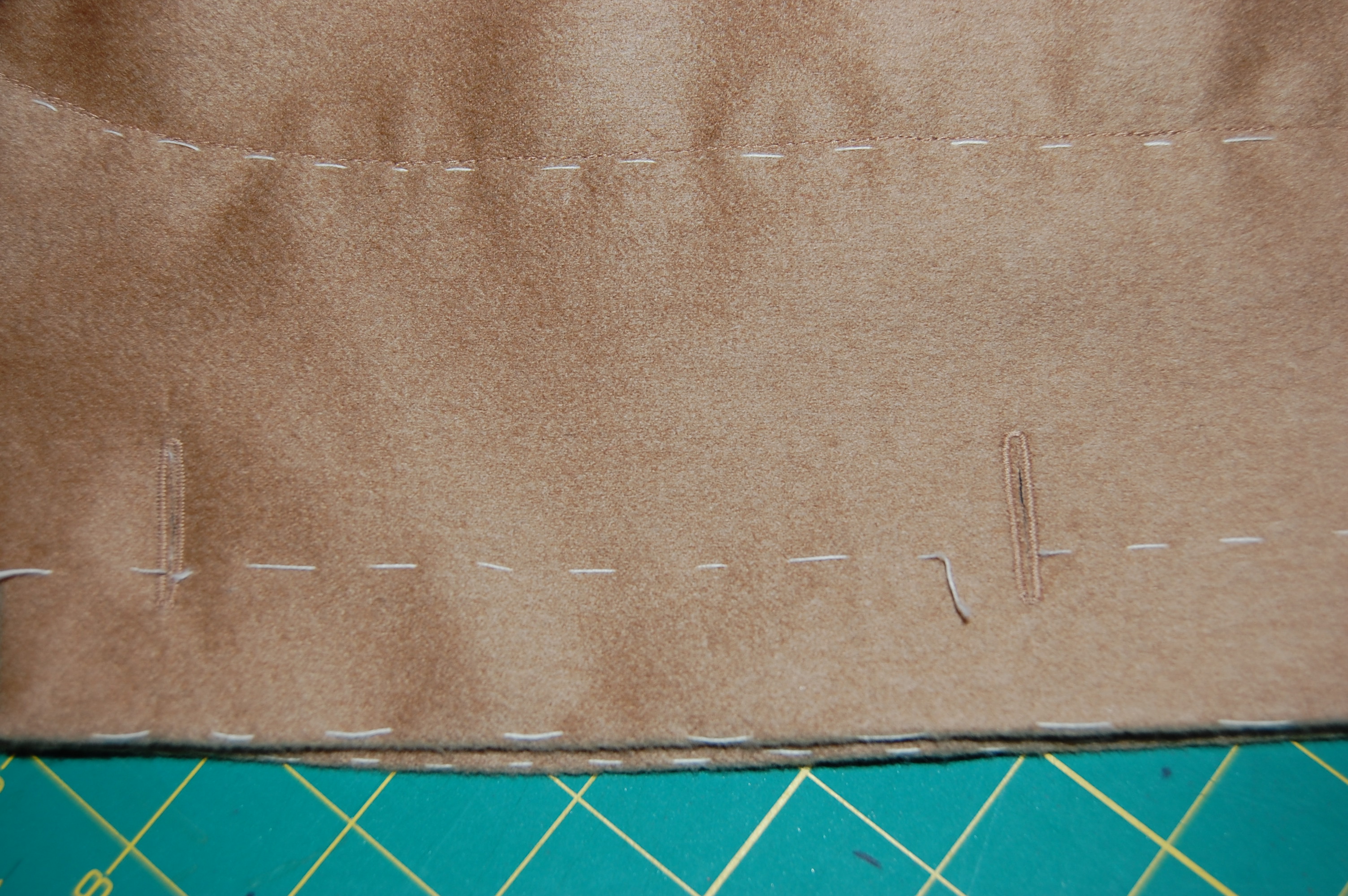
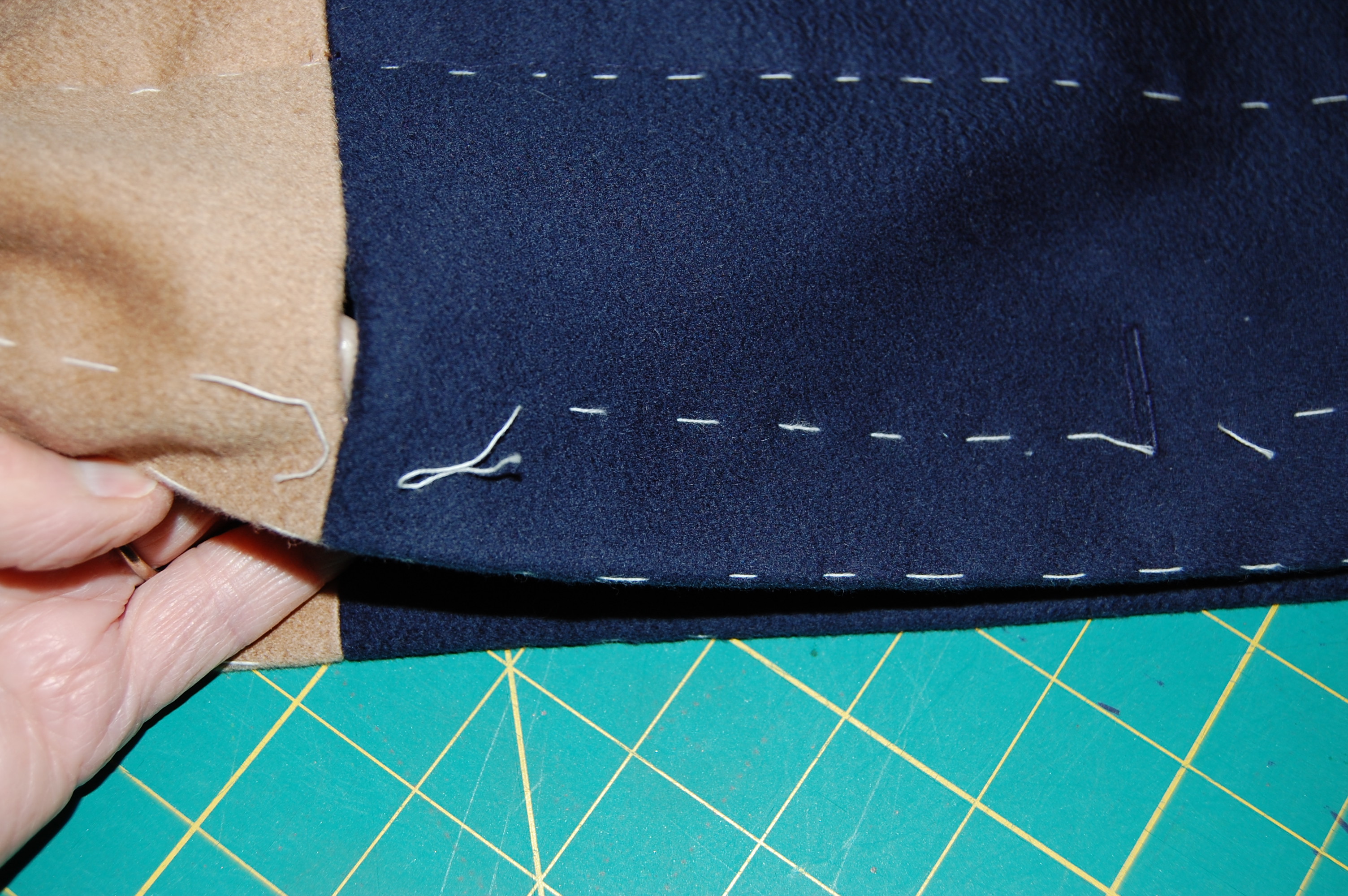
I had one more important question for Susan:  what about the buttonholes on that concealed fly front?  Normally, when sewing with wool, I would do bound buttonholes, but we both agreed that would add too much bulk to what should be a clean, sleek finish on this coat.  It seemed machine-made buttonholes would be the ones of choice.  I must admit, I had a bit of reluctance to do machine buttonholes in wool.  I even practiced making buttonholes by hand, but I wasn’t happy with my trial runs, and even they seemed too bulky.  So, I simulated the thickness of my layers at the fly front and made some machine buttonholes in a sample piece.  And – I thought they were great!  On to the real thing – and this was clearly the way to go:

The buttonholes show up better on the camel wool. Click on the photo for a close-up.

The buttonholes show up better on the camel wool. Click on the photo for a close-up.

The middle buttonhole is a slot-seam one.

The middle buttonhole is a slot-seam one.

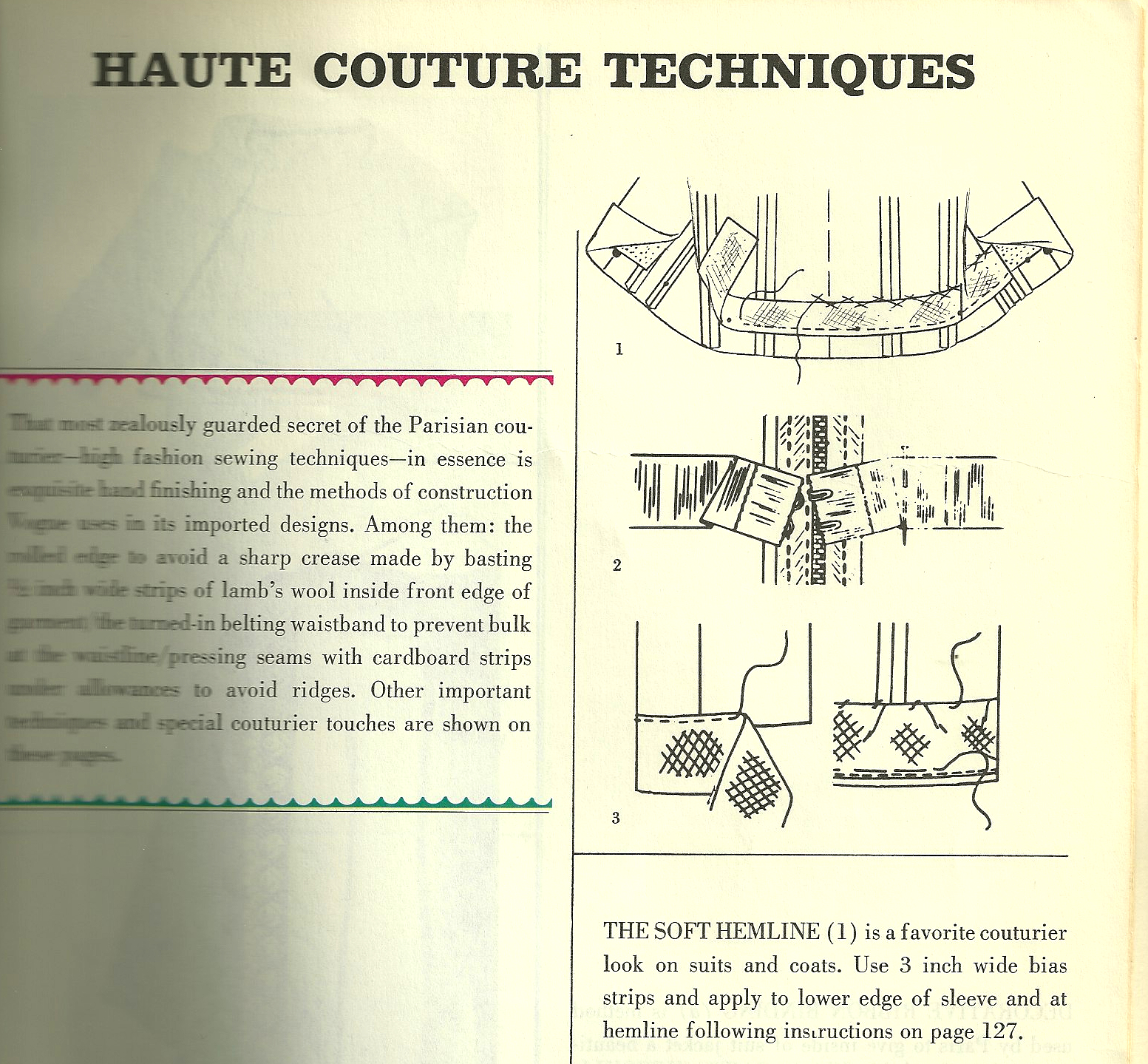
The next step, before inserting the lining, is to finish the hems in the sleeves and the body of the coat.  Here I may add a bias strip of soft interfacing to insure that the hem has a soft edge to it.

The Vogue Sewing Book from 1963 includes this detail on The Soft Hemline, as part of its section on Haute Couture Techniques.

The Vogue Sewing Book from 1963 includes this detail on The Soft Hemline, as part of its section on Haute Couture Techniques.  I also asked Susan about sewing on a chain at the hem as well.  Because the two wools I have used are slightly different weights, she agreed this may be a good idea, to help ensure an even hang.

So – the miracle of silk organza, pressing techniques, and practice, practice, practice – are helping to make my long-awaited color-blocked coat a reality.  On to the finish line!

15 Comments

Filed under Coats, Color blocking, couture construction, Uncategorized, underlinings, vintage Vogue Designer patterns, vintage Vogue patterns from the 1970s, woolens

Happy New Sewing Year

“Dresses for breakfasts, and dinners, and balls;

Dresses to sit in, and stand in, and walk in;

Dresses to dance in, and flirt in, and talk in;

Dresses in which to do nothing at all;

Dresses for Winter, Spring, Summer and Fall”

William Allen Butler (1825-1902) may have thought “Nothing to Wear”, from which these lines are taken, was a satirical poem, but he obviously did not know 21st century fashion sewers.  Isn’t January just the perfect time to plan for the creation of “dresses for Winter, Spring, Summer, and Fall”?  Yes, thank you for agreeing with me.

Last year I took a rather theoretical approach to the new sewing year, but this year I am focusing on more specific plans.  Let me start with Winter.

I have three things that I want to complete while the snow is still flying (which gives me until the end of March, more or less):

1)  My Chanel-inspired classic French jacket is my current project, and I am happy to report that I am making slow but steady progress on it.

2) I won’t consider the jacket really complete until I have made the bow blouse that will match its lining.

3) I am excited to say that I am going to be joining one of Susan Khalje’s Couture Sewing Classes in February, and my intended project is — ta-daa — this jacket which I have wanted to make ever since Vogue Patterns first issued it in the 1970s!

I will definitely be doing the color blocked version when I make this coat.

I will definitely be doing the color blocked version when I make this coat.

With any luck (or maybe lots of it will be needed), it may still be Winter when I start this project intended for an event in late April event:

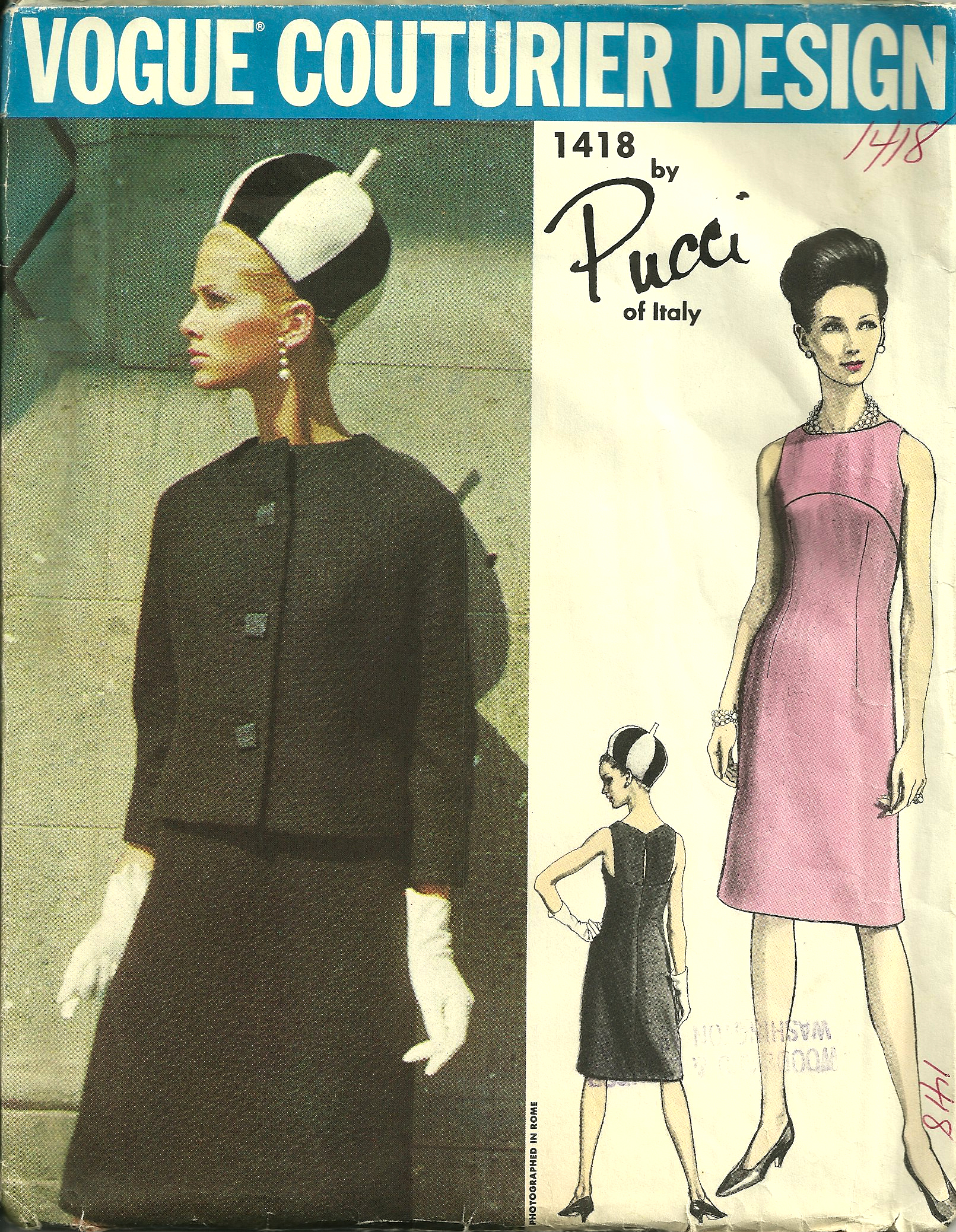
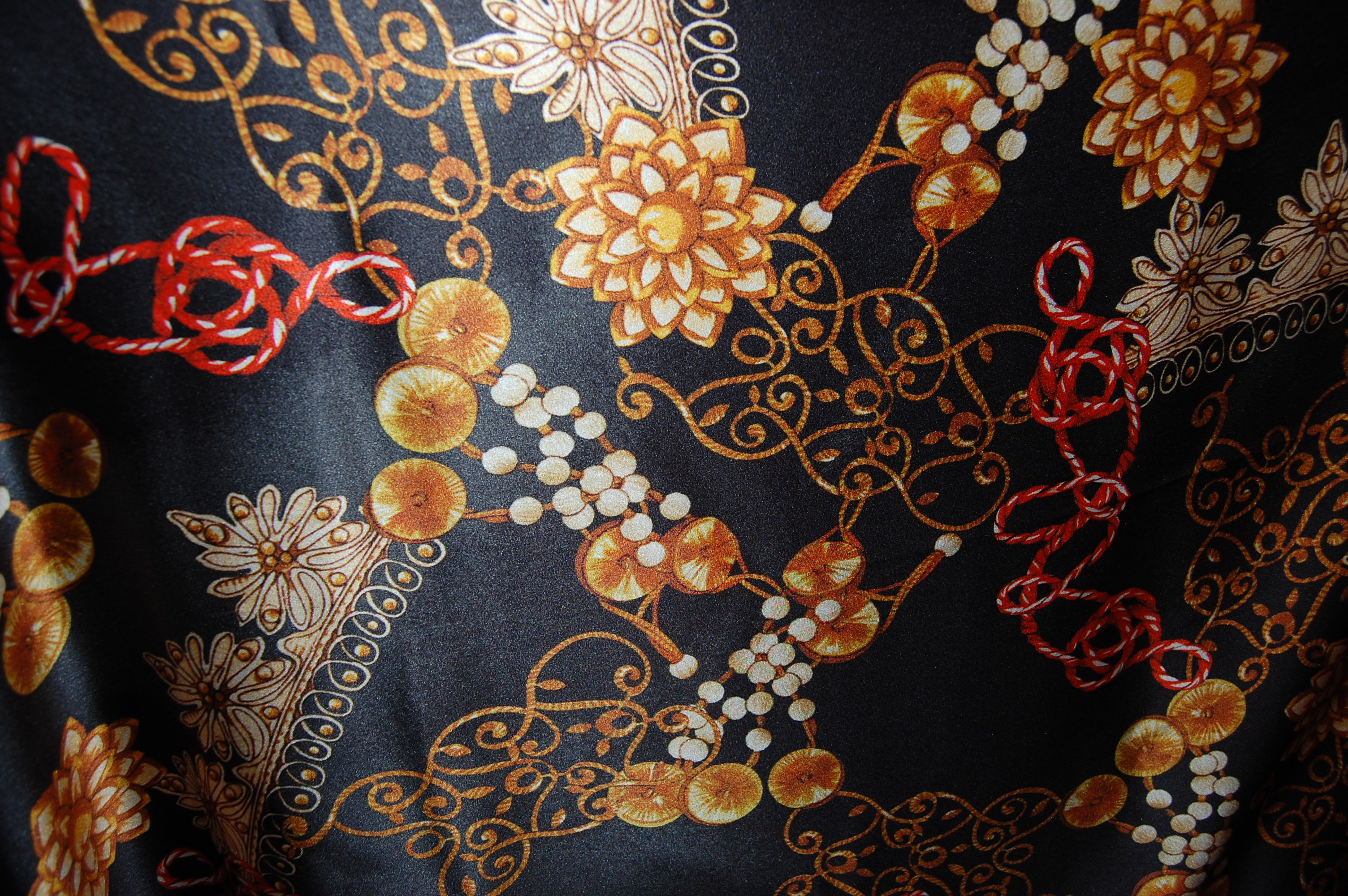
I have an authentic Pucci silk from which to make the dress and line the jacket.

I have an authentic Pucci silk from which to make the dress and line the jacket.

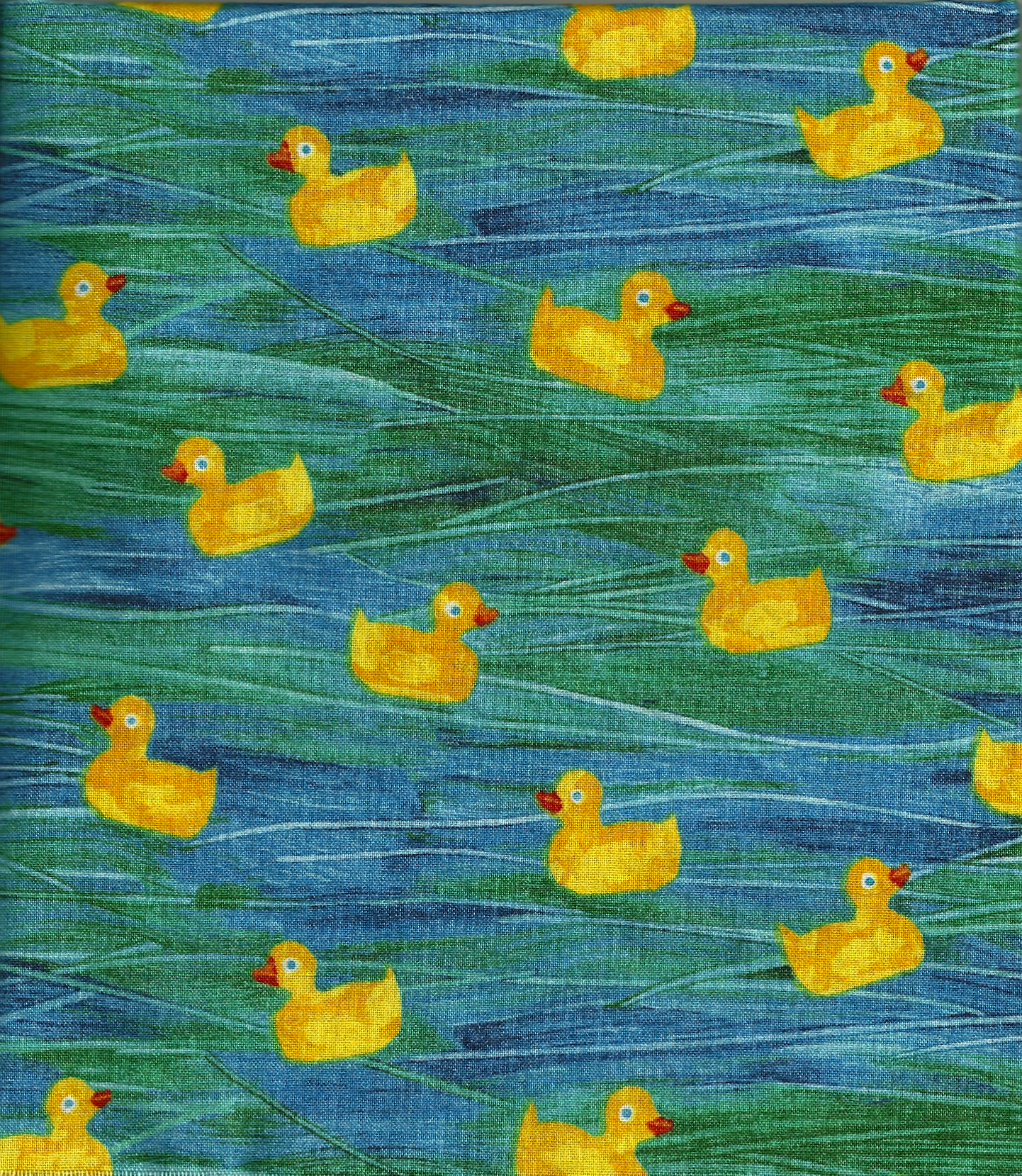
In addition, Spring will not be complete for me until I make a dress for my granddaughter who will be 1-year-old in March.  I purchased this fabric last Fall when I was at the Eric Carle Museum in Amherst, Massachusetts.  You can imagine my excitement when I saw that the gift shop included yardage of soft, quality cotton featuring designs from his books.  I envision these little ducks embellished with yellow rick-rack.

Happy New Sewing Year - carle fabric Before Spring bids us adieu, I may divert from dresses to make another pair of slim pants in this vintage 1950s’ linen:

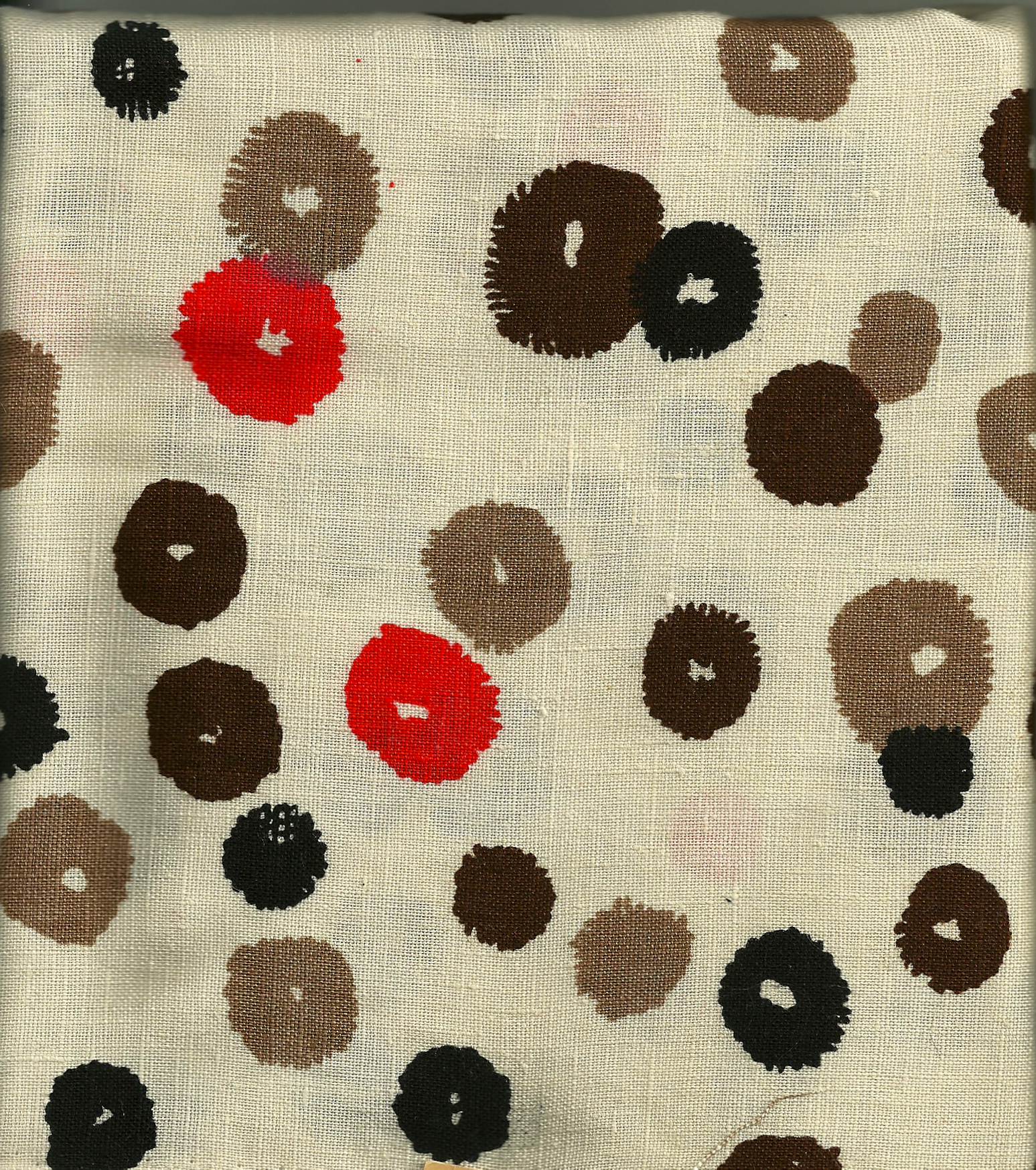
I only have 1 5/8 yards of this 35" wide fabric, so it remains to be seen if i can squeeze pants out of it.

I only have one and 5/8 yards of this 35″ wide fabric, so it remains to be seen if I can squeeze pants out of it.

If Summer of 2014 is as hot as last Summer (or even if it is not), I’ll be making at least two more cool, linen dresses, one sheath-style and one belted.  More on these linen fabric finds in a future post…

And a bathrobe!!  I am dying to make a swishy bathrobe!

Ah, and then comes Fall (already??), probably my favorite season of all.  I have two projects envisioned:

1) I found this stretch silk charmeuse at Mendel Goldberg Fabrics on a quick day trip to NYC in early Fall.

Another gorgeous Italian silk!

Another gorgeous Italian silk!

I bought it thinking I may use it for the lining for my No. 2 French jacket, but shortly after that I found this pattern on eBay and promptly decided it would be perfect made up in this dress (which requires a stretch fabric.  Well, it says “ knit fabrics only” but I say stretch fabric will do just fine).

This os one of the few patterns from the 1980s which I really like.  However, i will not be duplicating the hairstyle.

This is one of the few patterns from the 1980s which I really like. However, I will not be duplicating the hairstyle.

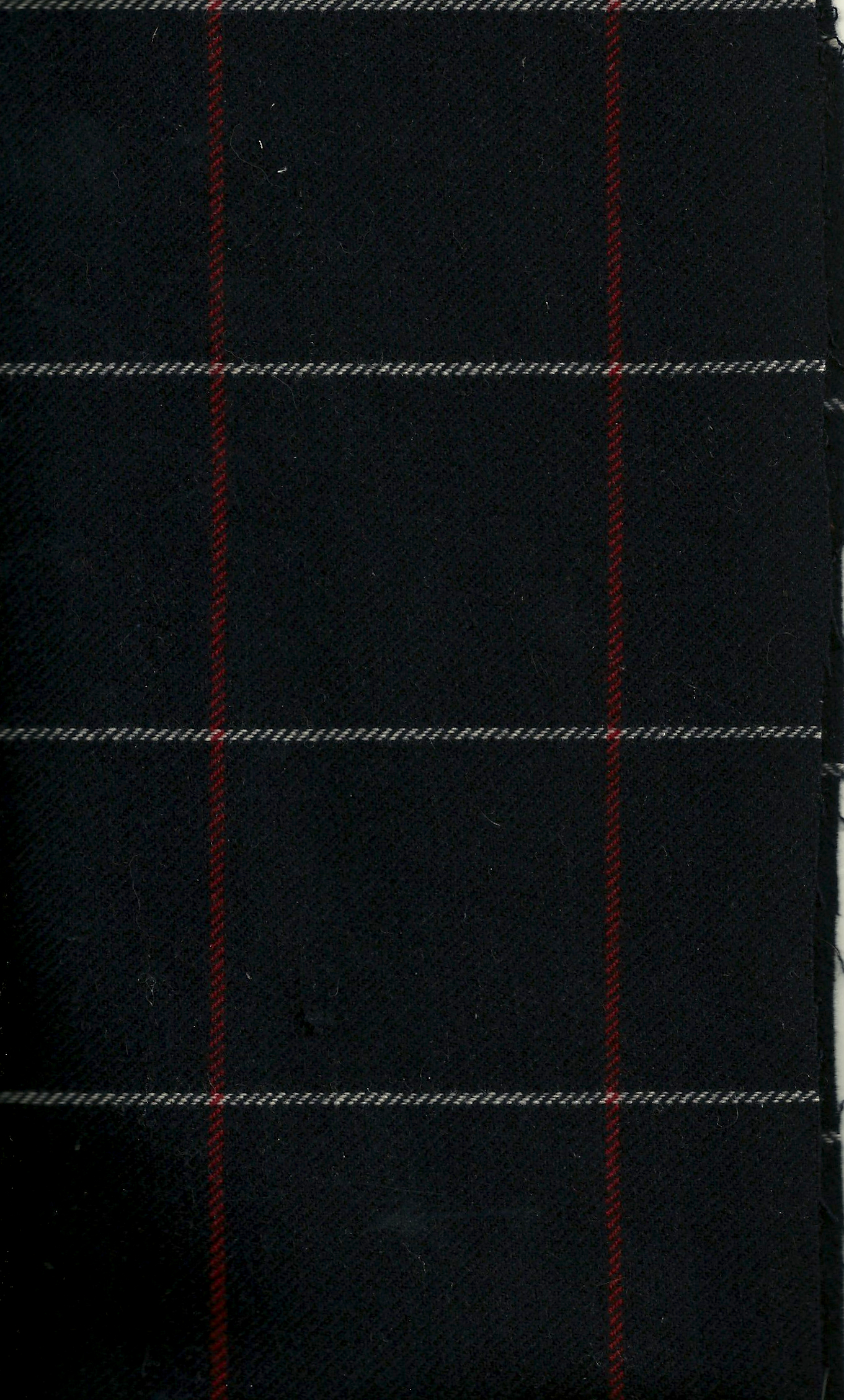
2) I’ve had this buttery soft cashmere wool for a couple of years now.  I originally thought I’d make a suit, but now I’m thinking long-sleeved dress instead.  I’m still sorting this one out in my head so I’m very glad I have until next Fall.

A subtle windowpane check in navy with deep red and ivory intersecting lines.

A subtle windowpane check in navy with deep red and ivory intersecting lines.

Sprinkled among these plans for Winter, Spring, Summer and Fall will surely be more little dresses for granddaughter Aida.  I fully intend for her to have some of the cutest frocks in all of New England.

Finally, if 2013 taught me anything, it is that the unexpected is waiting around every corner.

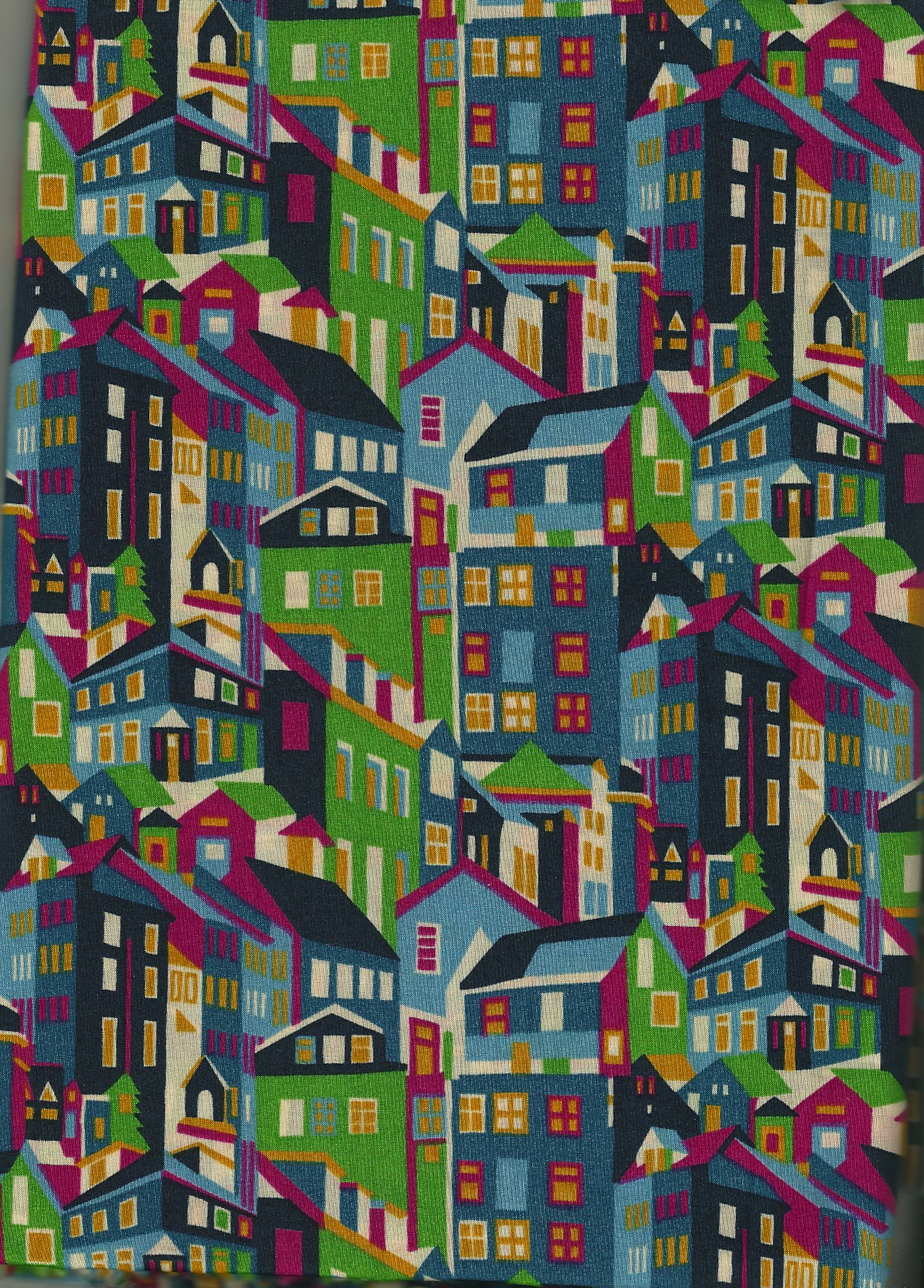
Lots of corners lurking in this Liberty cotton!

Lots of corners lurking in this Liberty cotton!

Life can take sudden turns and twists that are not always sewing-friendly, so I plan to be kind to myself if that happens.  But wouldn’t it be nice for all of us to have the kind of year when we have the extra time to make a dress in which to do “nothing at all”?

14 Comments

Filed under 1980's dress patterns, Boucle for French style jackets, Chanel-type jackets, Coats, Liberty cotton, Linen, Polka dots, Uncategorized, vintage Vogue Designer patterns, vintage Vogue patterns from the 1970s, Vogue patterns, woolens

Feathers for Fancy, Feathers Forever

I really had no intention of writing a new post today.  I have been away from home quite a bit, and the few days I have had at home, I have been working on “perfecting” (hopefully) a muslin for my wrap dress.  But – I was inspired yesterday when I read the fashion section of the Weekend Wall Street Journal.  Meenal Mistry devoted her front-page article to Fall’s “feathered looks” which range from casual to office to evening attire.  This was the only excuse I needed to join the feather frenzy.

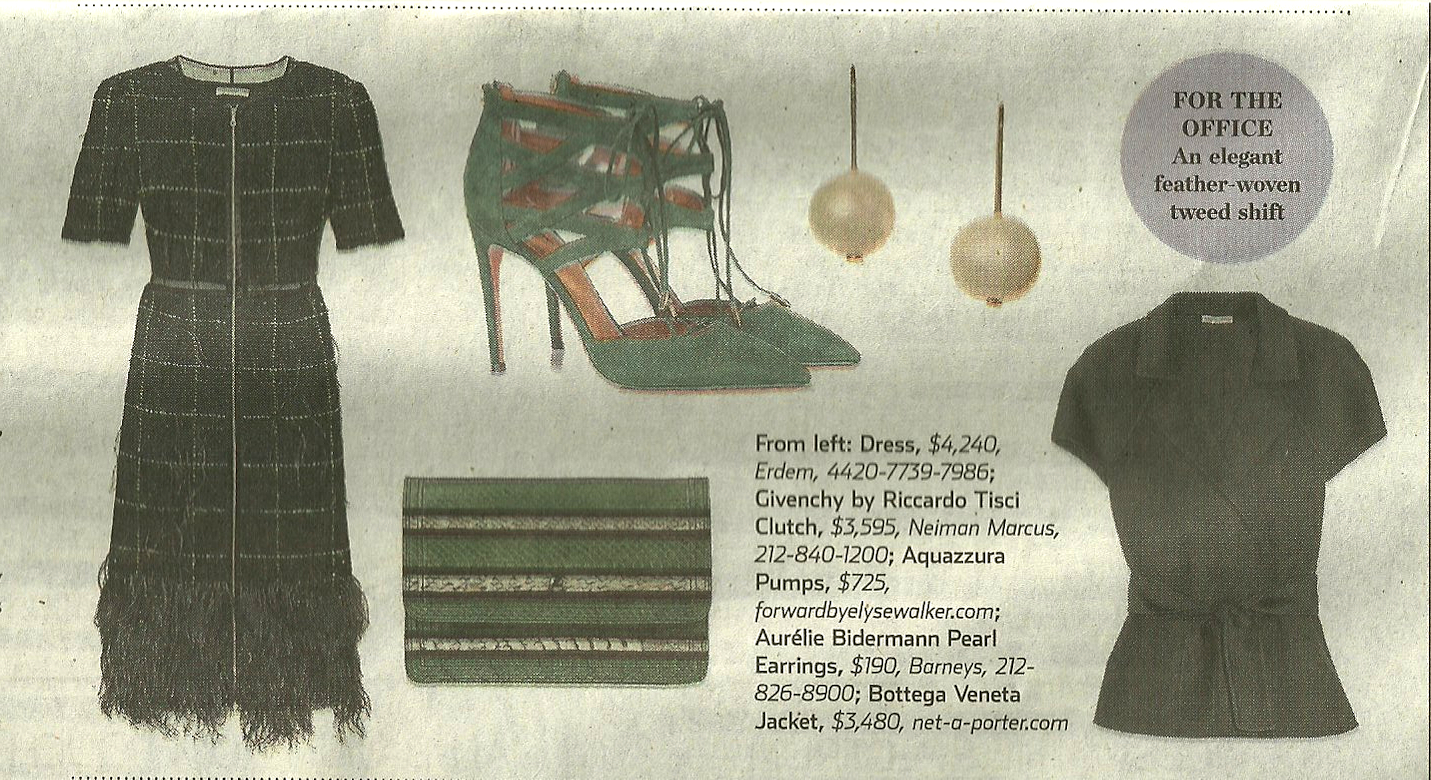
But, first, here is an example of what is being offered this Fall “for the office:

The dress on the left features feathers at the hem. I'm not sure I'd wear feathers to an office (if i went to an office!), but I love the dress.

The dress on the left features feathers at the hem. I’m not sure I’d wear feathers to an office (if I went to an office!), but I love the dress.

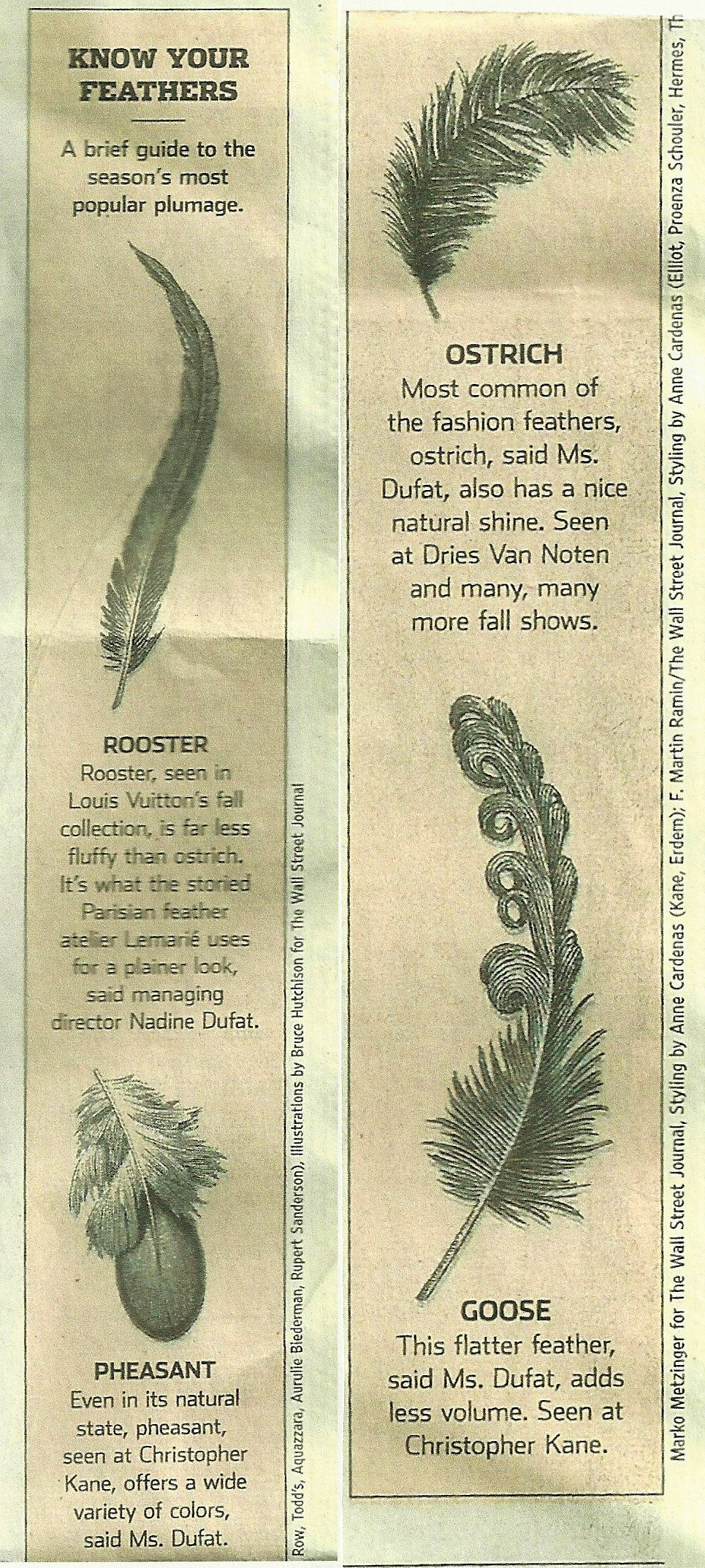
Included with the article is “A brief guide to the season’s most popular plumage”:

This is a handy little chart to the season's most popular fashion feathers.

This is a handy little chart to the season’s most popular fashion feathers.

Quoted and featured in the article is Nadine Dufat, who is the managing director of Lemarie, the Parisian feather atelier which does haute couture work for the houses of Louis Vuitton, Chanel and Dior:  “I think designers like feathers because there are so many different possibilities with them.”   Commenting on Lemarie, the author muses, “Certainly the 133-year-old plumassier can make magic happen when it comes to all things avian, but no matter who’s doing your feather work, there’s something about plumes that’s fascinating and otherworldly and therein lies the allure – eternal for some, fleeting for others.”

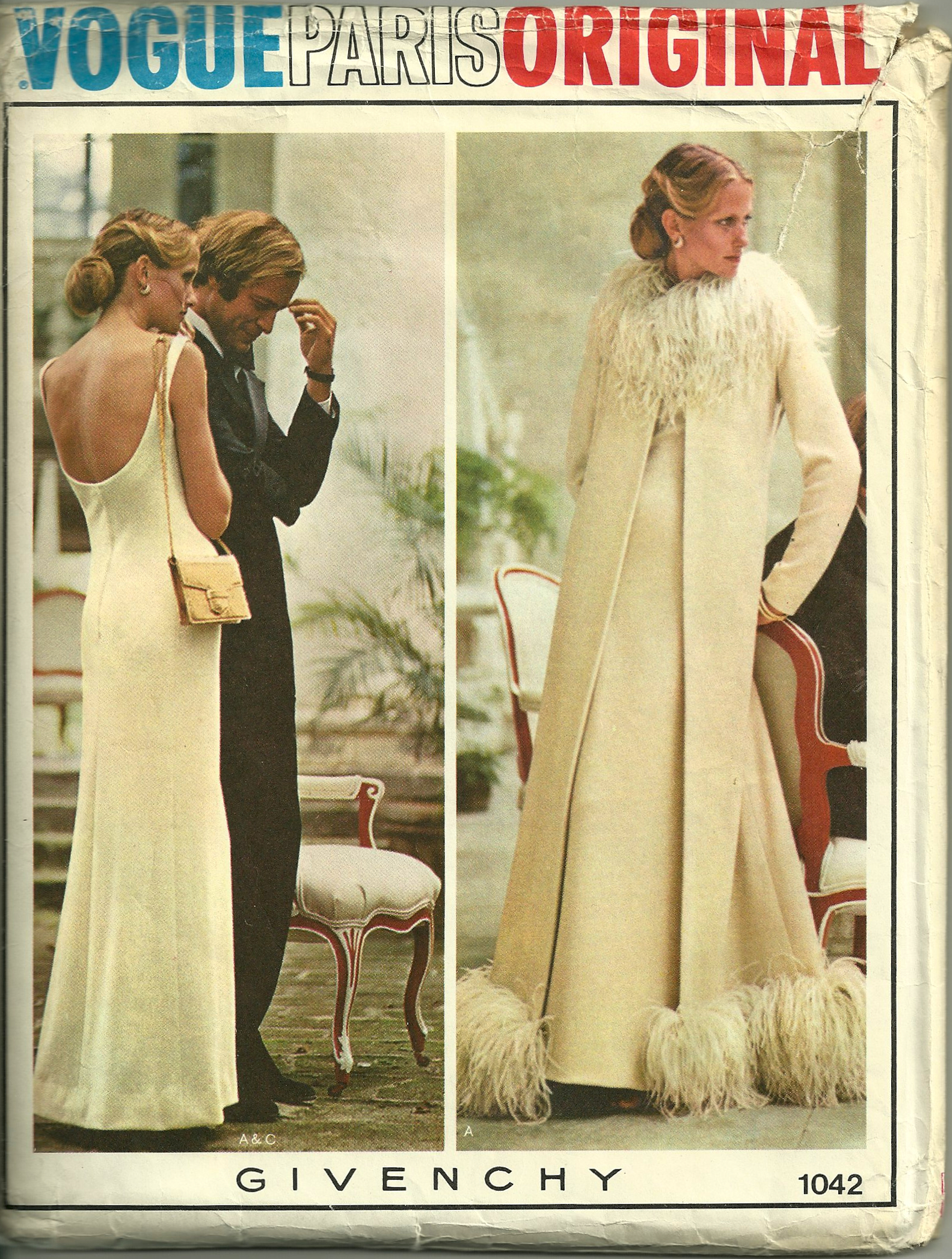
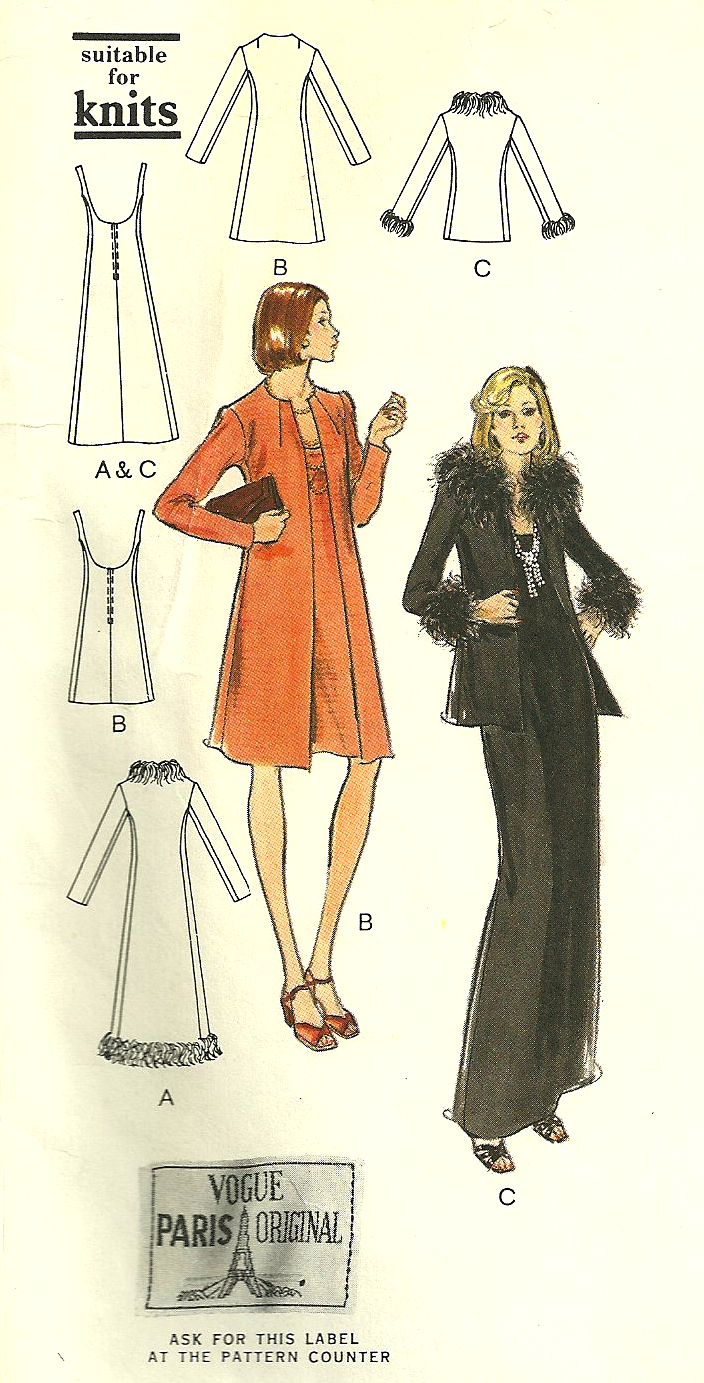
“Eternal” is certainly more than 40 years, but a Vogue pattern from about 1973 proves the point about the elegance and staying power of feathered fashions.  I immediately thought of this pattern while reading the article, and went directly to my pattern file to retrieve it.  This pattern, a Paris Original by none other than Hubert de Givenchy, is one of my all-time favorite Vogue Designer patterns:

This evening coat makes my heart skip a beat!

This evening coat makes my heart skip a beat!

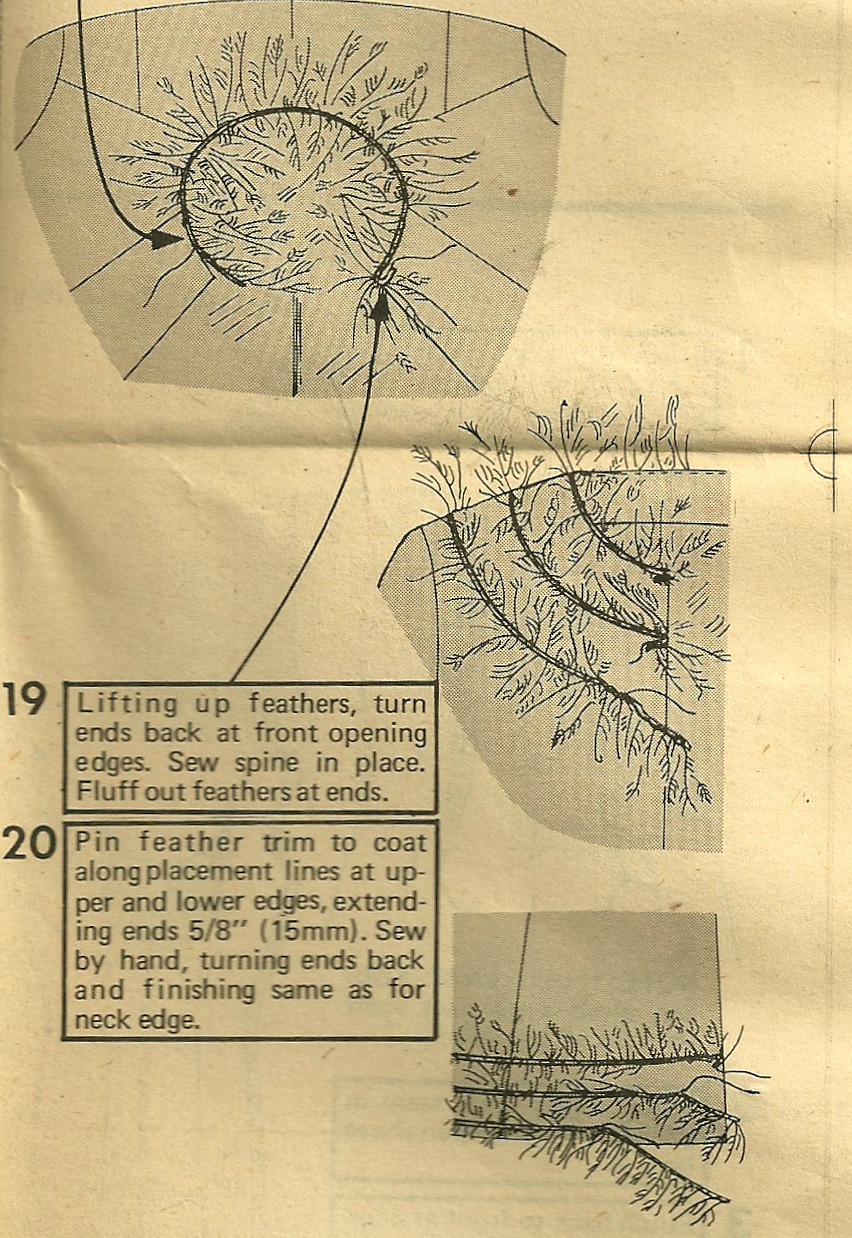
Princess seaming and the use of few darts insure that the long fluid lines of the low-backed dress and the evening coat are unencumbered with excess fabric.  The ostrich feather trim is attached to the coat in three evenly spaced rows at both the neck and hem.

Feathered coat - pattern instructions

For those wanting more of a “cocktail” version of dress and coat, shorter views offer variety and versatility:

The knee-length coat could certainly sport feathers at least at the hem line, don't you think?

The knee-length coat could certainly sport feathers at least at the hem line, don’t you think?

I did a lot of “pattern dreaming” during the decade of the 1970s.  I apparently never had an occasion to make this dress and coat, as I never purchased it when it was available in the pattern catalogs.  But I did, indeed, dream about it – many times.  When I found it again – in my size, in factory folds, with label intact – in an Etsy store a while ago, I indulged that dream – and I bought it.  Will I ever make it?  The dress, probably “no” unless I alter it to show a little less skin!  But the coat – if the occasion is special and worthy of this level of simple elegance  – then “yes”.  And – I’ll definitely be using feathers.

6 Comments

Filed under Coats, Uncategorized, vintage Vogue Designer patterns, vintage Vogue patterns from the 1970s