Tag Archives: vintage Vogue patterns

Thoughts on Fabric

One theme I often see in New Year’s sewing resolutions is an emphasis on sewing from one’s “stash” rather than purchasing more new fabric.  I don’t know too many serious sewers who don’t harbor at least a little guilt about all the fabric they have squirreled away (the word “stash” actually does imply something put away, usually in a secretive place!).  I used to feel a lot more guilt about all my fabric than I do now, and here’s why.  First, I don’t consider my fabric a “stash” of anything.  I look at it as a collection, to be used, admired, and taken care of like any valuable thing.  And second, I believe having a selection/collection of beautiful and inspirational fabric adds to the creative process of sewing.

As with the selection and collection of any worthwhile genre, it’s usually best to buy the best you can afford.   There used to be much more stated emphasis on “quality” in fabric than there is now.   It is so interesting to me that fabric manufacturers used to advertise their products by name, obviously with great pride in their newest line of designs.  Some of the manufacturers were almost household names, with tag lines such as  “A fabric you can lean on – that’s Klopman”.  Woolens were known by their manufacturer’s name, such as Forstman and Anglo, to mention just two.  The same was true for cottons, linens, silks, and synthetics. So many of the full-page advertisements in Vogue Pattern Book Magazine in the 1950s, ‘60s, and ‘70s were from fabric manufacturers (whereas now there are virtually none).  Here is a quick look at some from each of those decades:

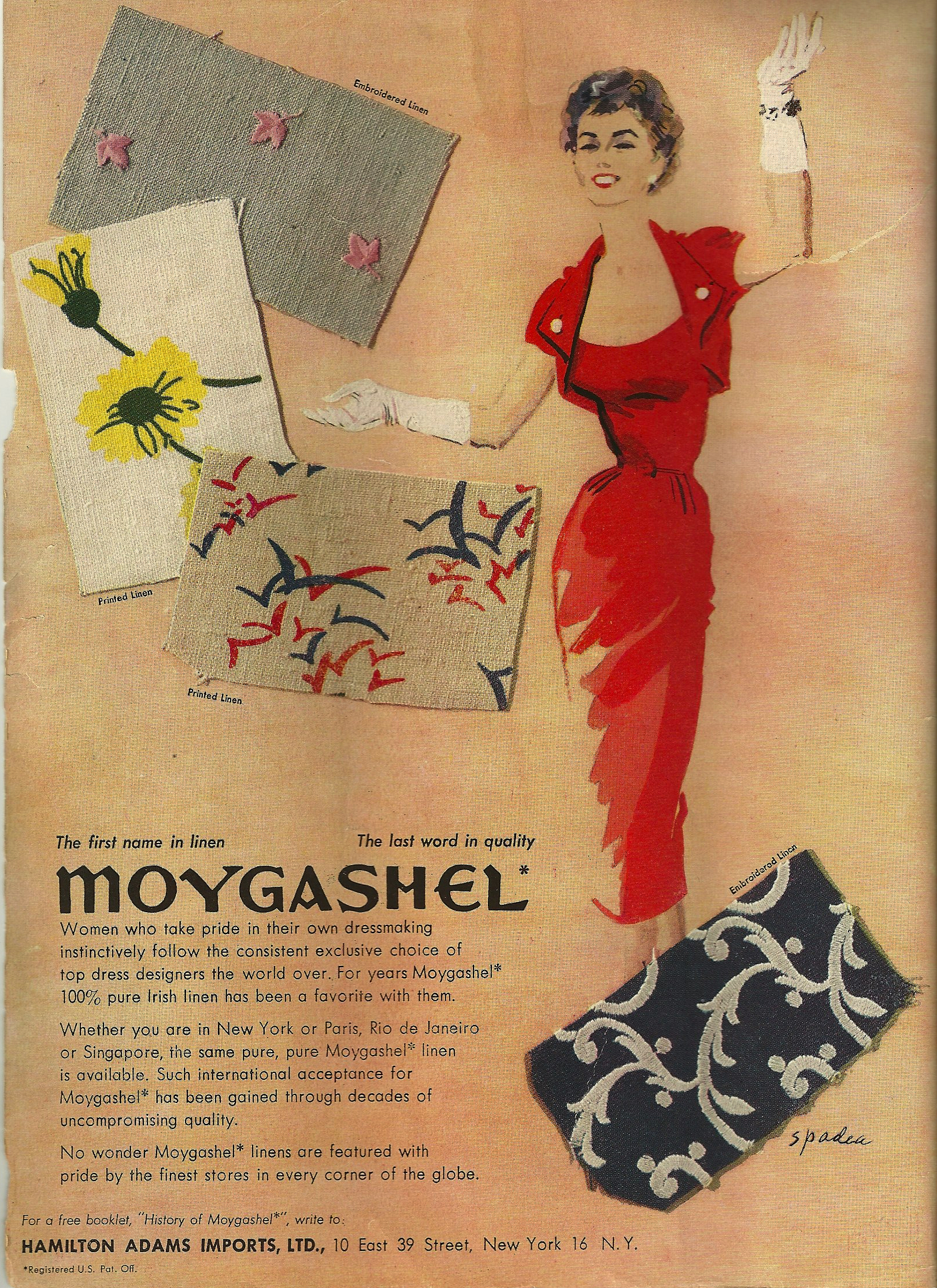
Moygashel Linen advertised heavily in VPB Magazine during that 30-year span of time.  Here is an ad from the inside front cover of the December/January 1953/54 issue:
Thoughts on Fabric - 54

“The first name in linen… The last word in quality”

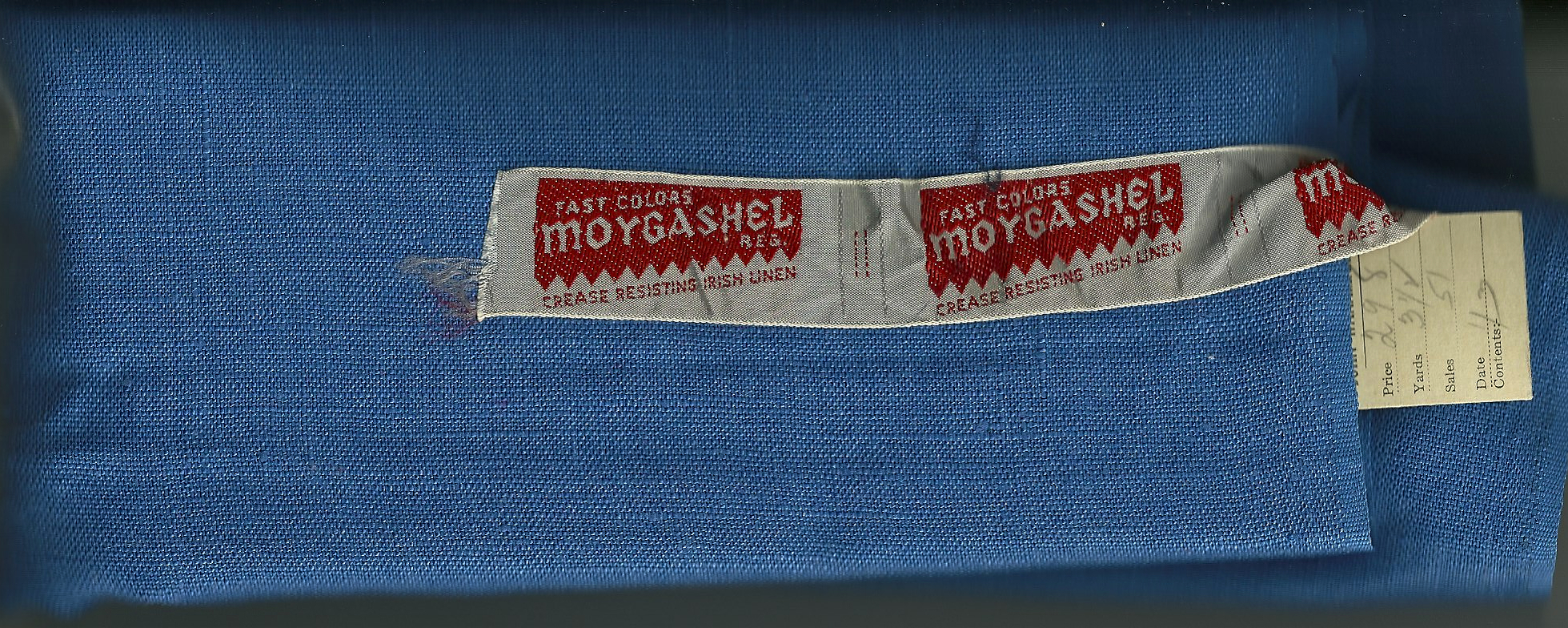
Moygashel was also one of those fabric companies which supplied labels with purchases of their linens.  Here is a string of labels, which came with a recent purchase I made of vintage Moygashel:
Thoughts on Fabric - Moygashel w: tag

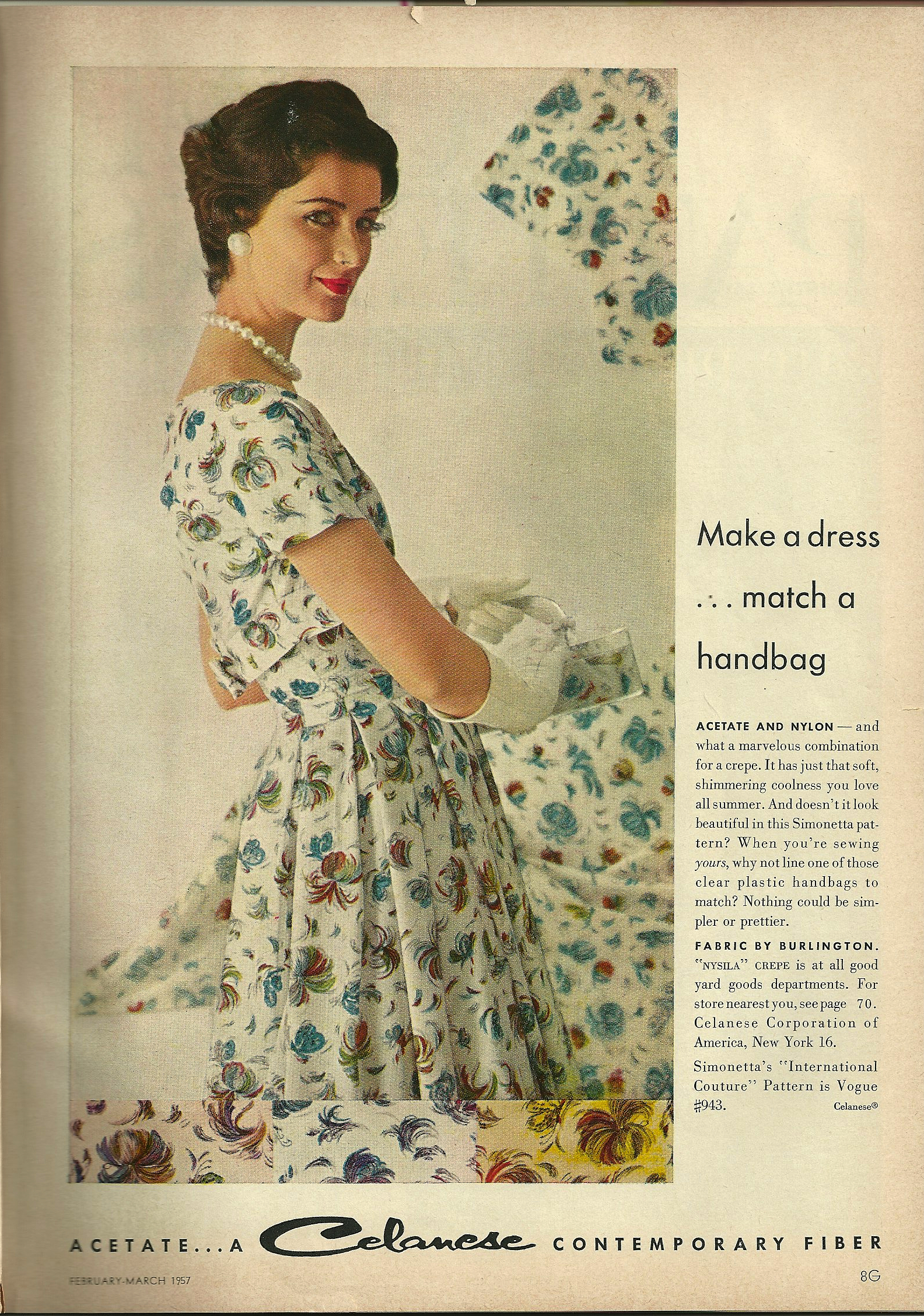
Many new synthetic fabrics were being developed in the post-war era, as evidenced by the many ads from manufacturers of these yard goods.  Here is an ad for acetate, made by the Celanese Corporation of America.  It appeared in the February/March 1957 issue of Vogue Pattern Book Magazine.
Thoughts on Fabric - 57

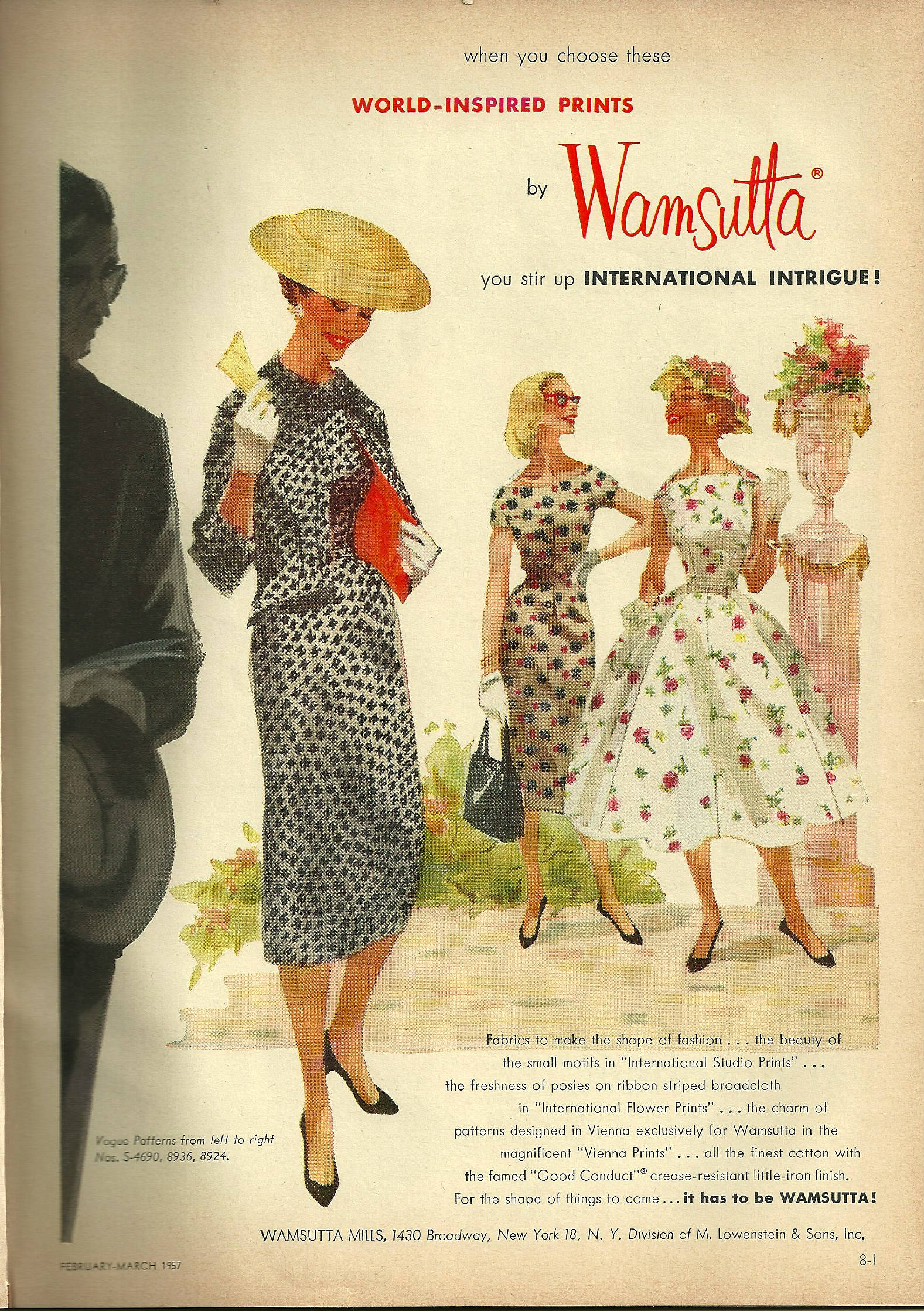
In the same issue was this full page ad for Wamsutta cotton prints.  Now known primarily for sheets, Wamsutta once had the tagline “it has to be WAMSUTTA!” which many a home sewer knew as a sign of quality.
Thoughts on Fabric - 57-2

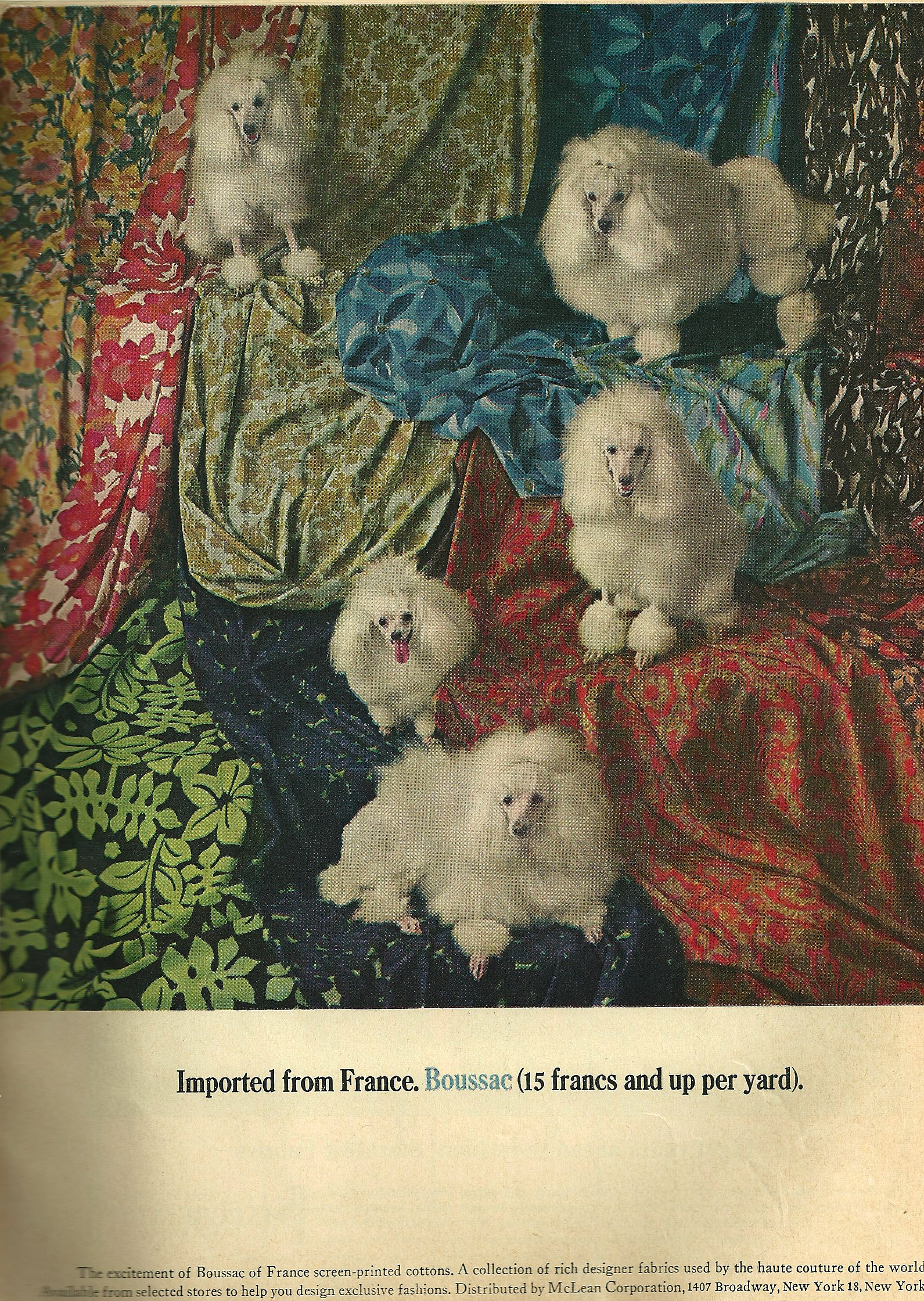
European fabrics also found their place in VPB.  Here is an ad from February/March 1964 for Boussac screen-printed cottons.  “A collection of rich designer fabrics used by the haute couture of the world.”
Thoughts on Fabric - 64

I want to show you something else in that same issue.  Although there was not a dedicated ad for American Silk, Vogue pattern #6105 was sewn in American Silk, as stated in its accompanying caption.
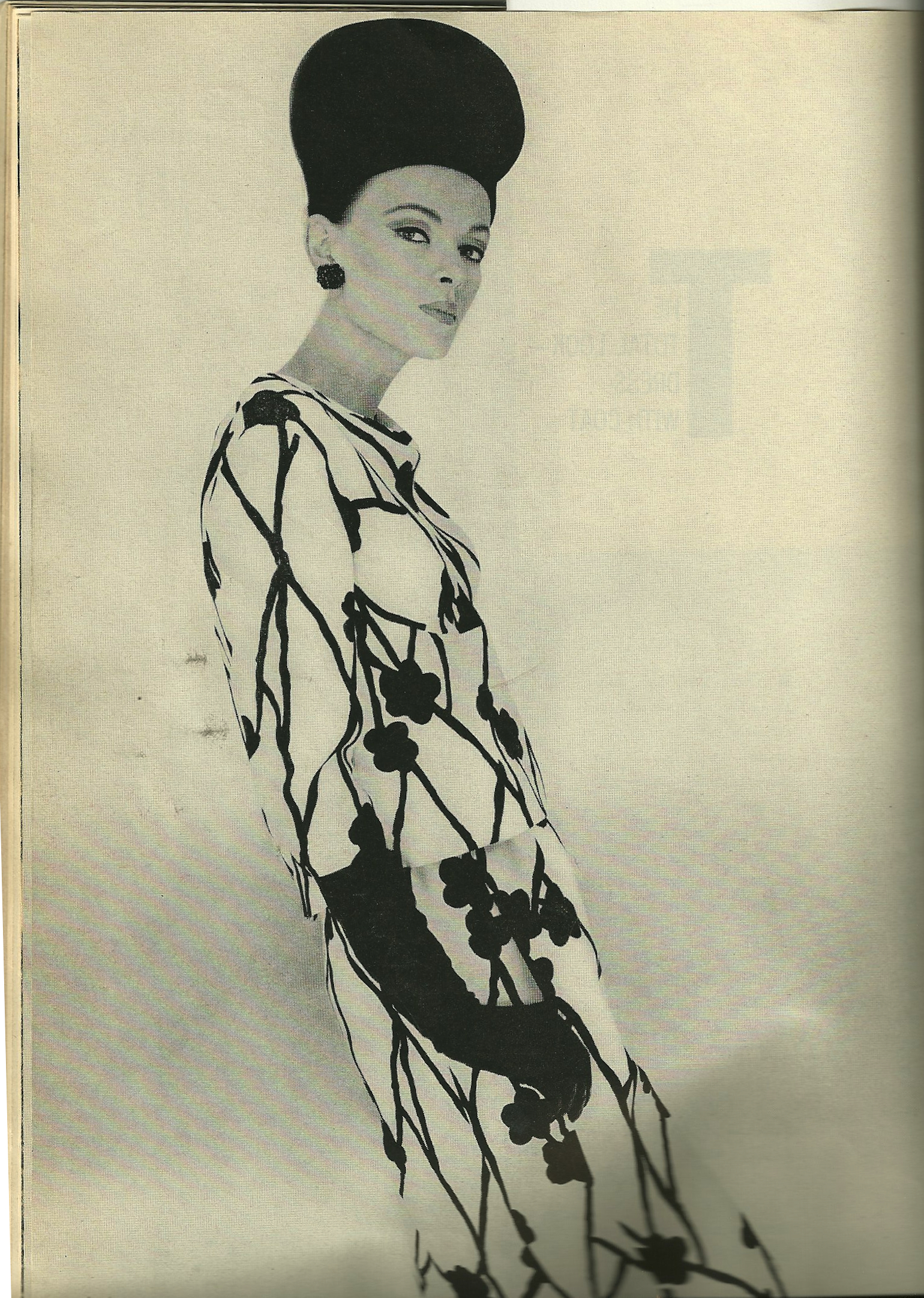
How I would love to find a piece of this silk tucked away in some drawer!

How I would love to find a piece of this silk tucked away in some drawer!

Twelve years later, in 1976, I attended a fashion show featuring the various dress silks made by this company for the home sewing market, another example of the effort put into marketing by specific fabric manufacturers.

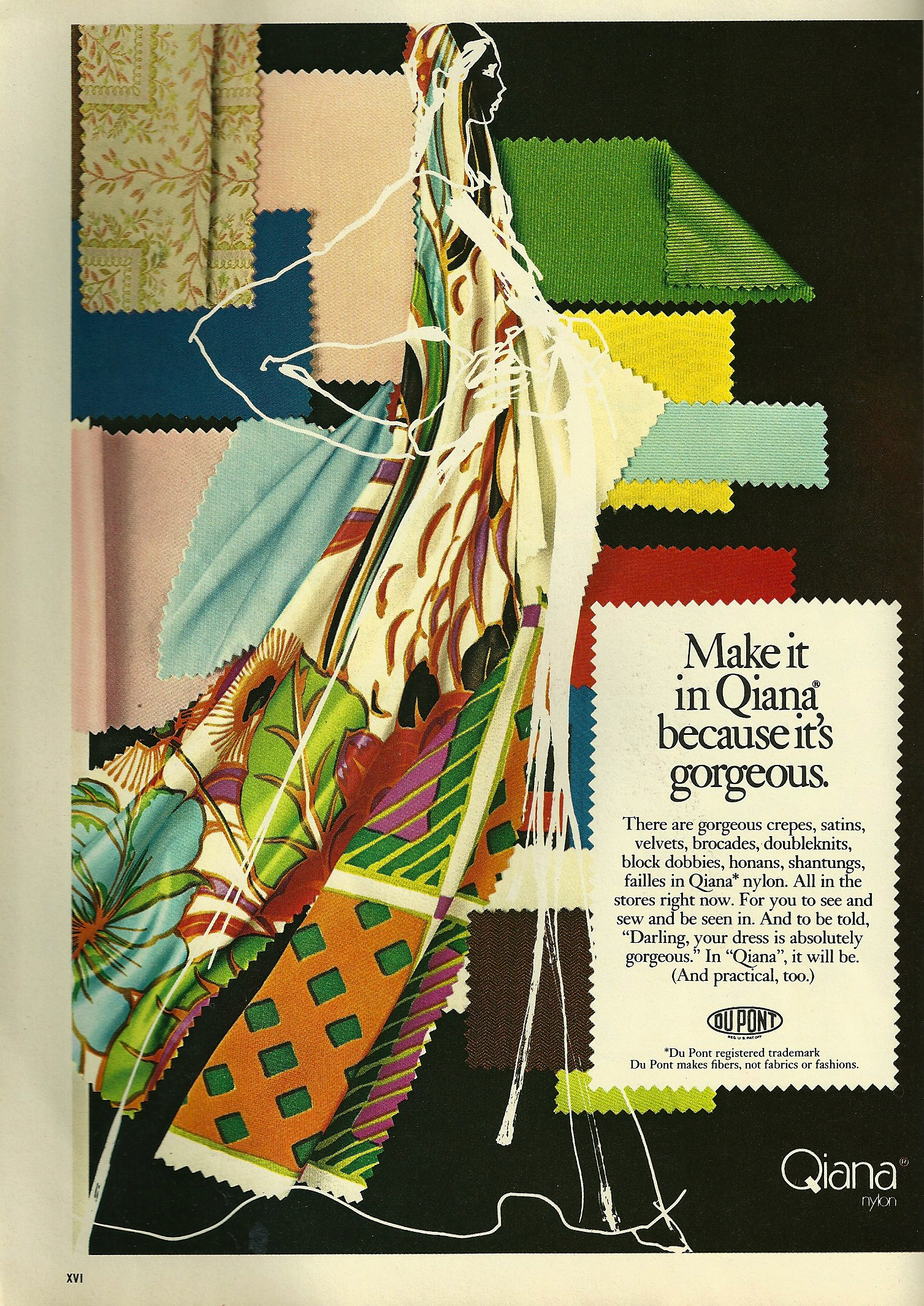
By 1972, the look of VPB Magazine was becoming more sophisticated, but those full-page fabric ads were still abundant.  Here is an ad in the October/November issue devoted to Qiana, a nylon made by DuPont:
Thoughts on Fabric - 72

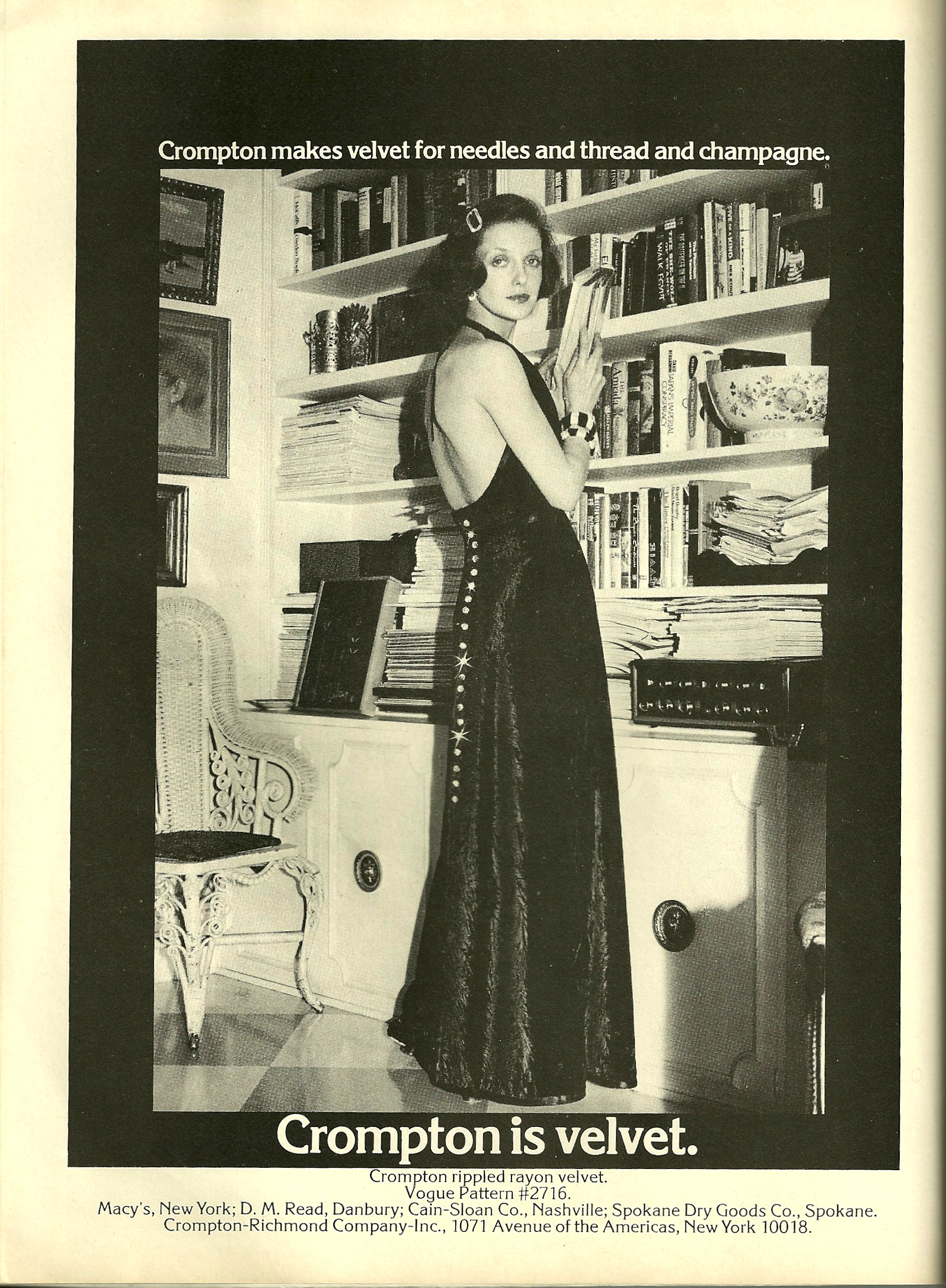
And – Crompton is velvet appeared a few pages further in the same issue:
Thoughts on Fabric - 72-2

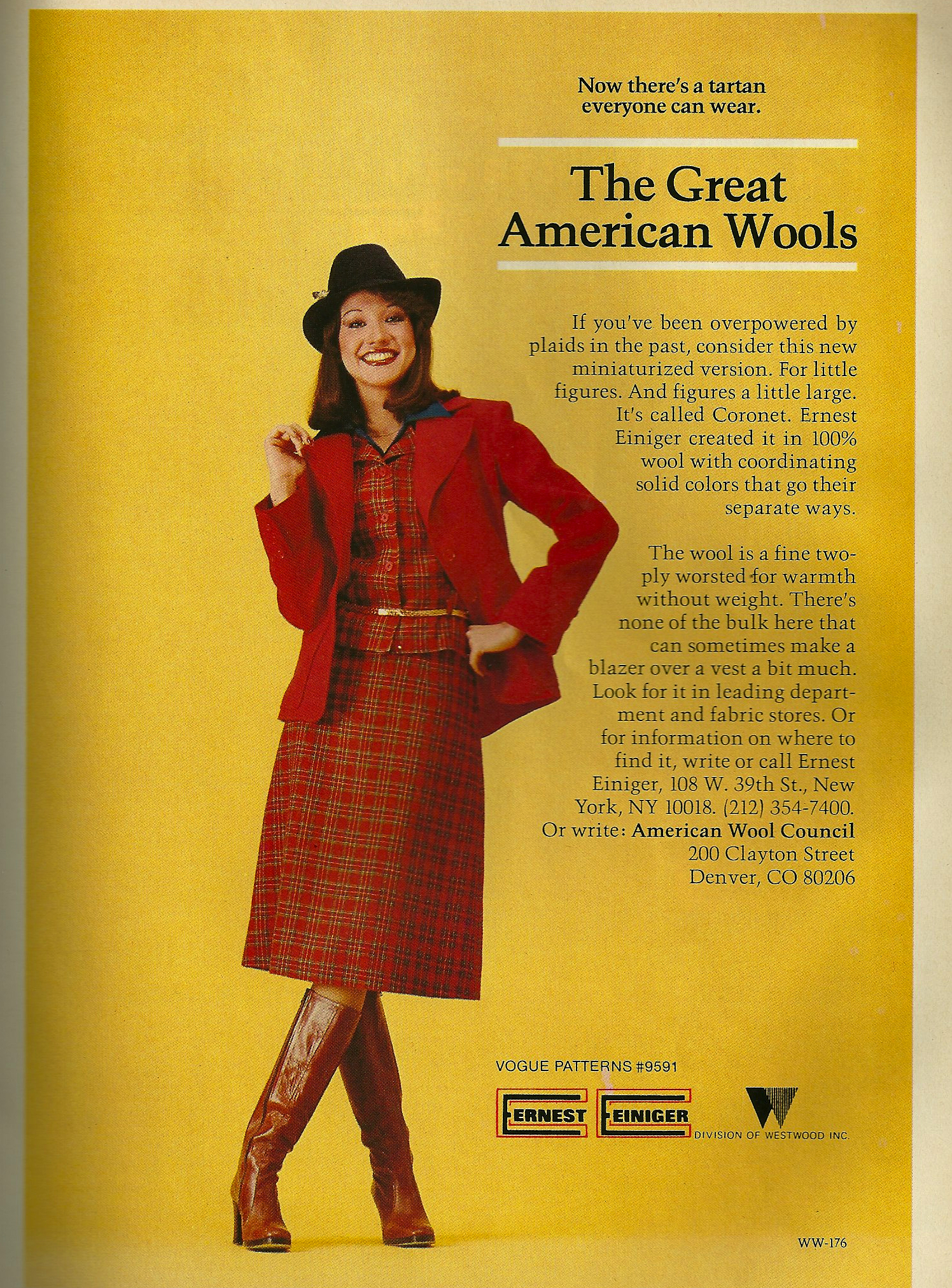
In September/October 1976, Diane von Furstenberg was featured on the cover, and Ernest Einiger had a full-page color ad for “The Great American Wools”.
Thoughts on Fabric - 76-3

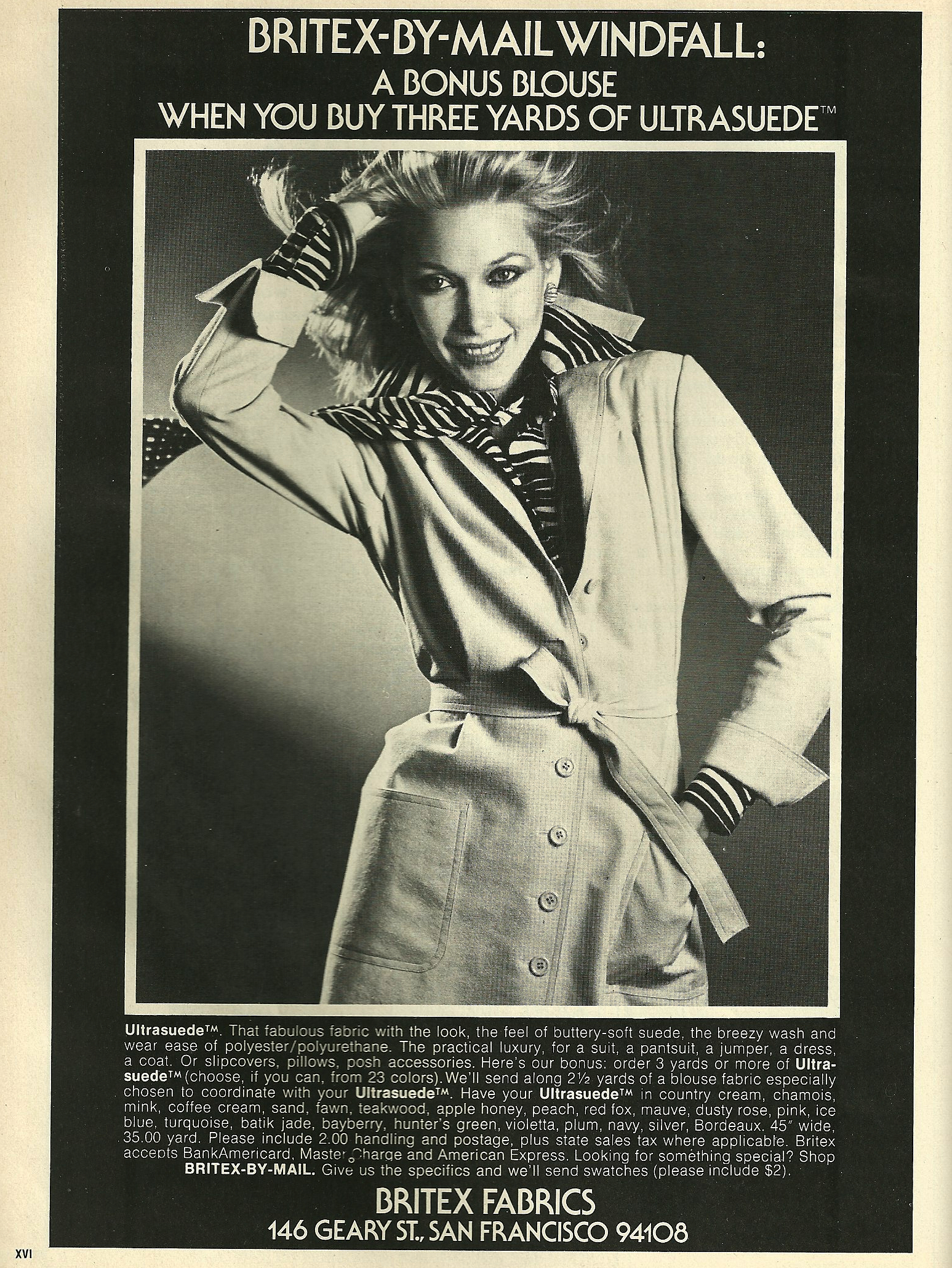
In the same issue, Britex Fabrics in San Francisco offered a buy-by-mail offer for Ultrasuede, the “it” fabric of the decade!
Thoughts on Fabric - 76-2

I can really only think of a few current fabric lines that still retain the distinction of being “known” by their names: Liberty, Pendleton, and Linton Tweeds come to mind.  (Linton Direct advertises in the current VPB magazine, but it is a small column ad, not a full-page “look at me” type of statement.) Then, of course, there are designer fabrics, but the manufacturers of these “name” goods are generally not listed.  For the most part, unless you ask, when you are buying yard goods, the names of the manufacturers are virtually unknown.  It is really kind of a shame, as there are so many exquisite fabrics of the highest quality still being woven in certain parts of the world.  These fabrics (and others, some vintage) make it difficult to say “no” to the opportunity to add to one’s fabric collection.  Here are two such fabrics I could not resist:
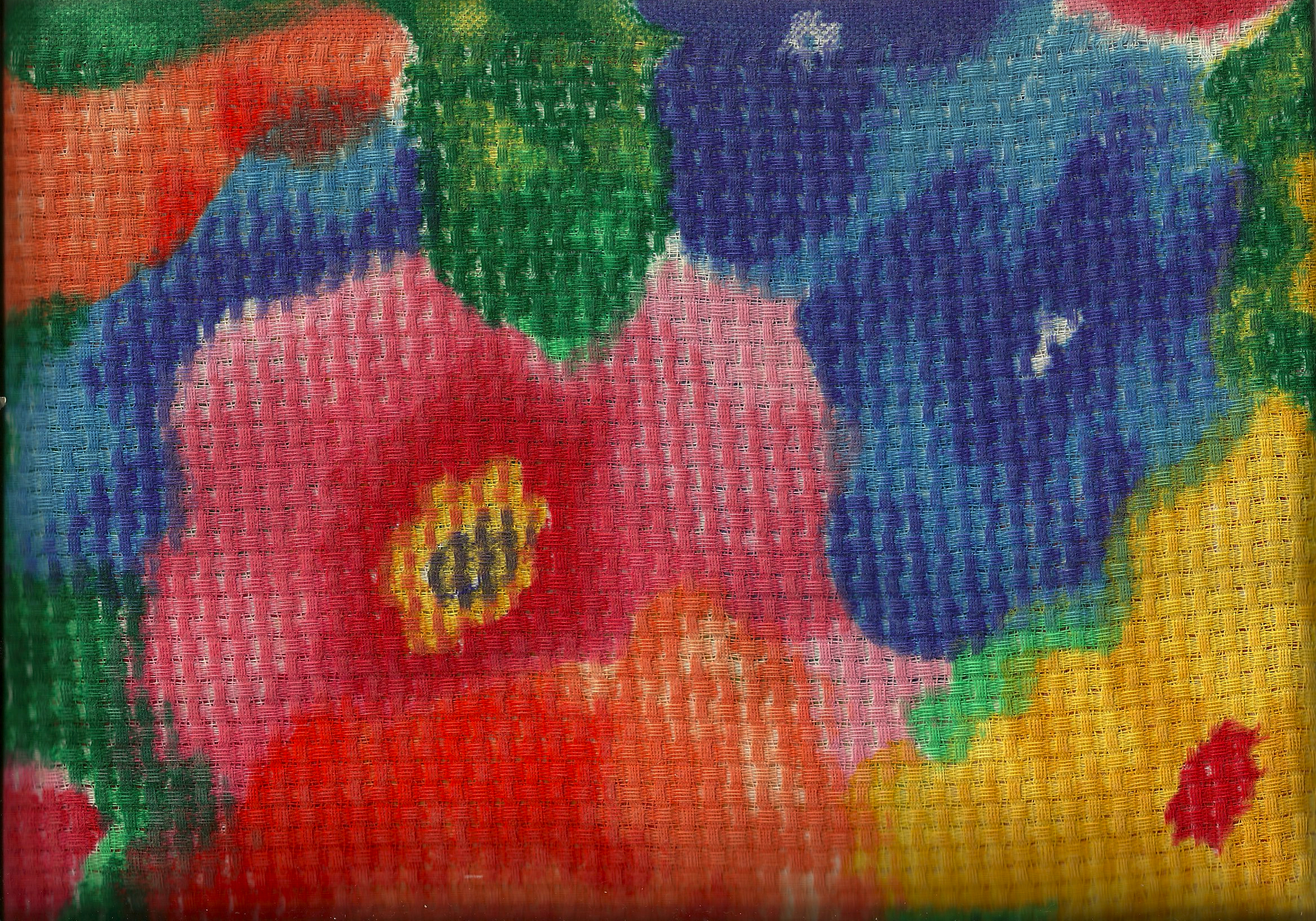
This is a linen and cotton blend I purchased from Mood Fabrics a while ago.  It is patiently waiting to be cut and sewn . . .

This is a loosely woven linen and cotton blend I purchased from Mood Fabrics a while ago. It is patiently waiting to be cut and sewn . . .
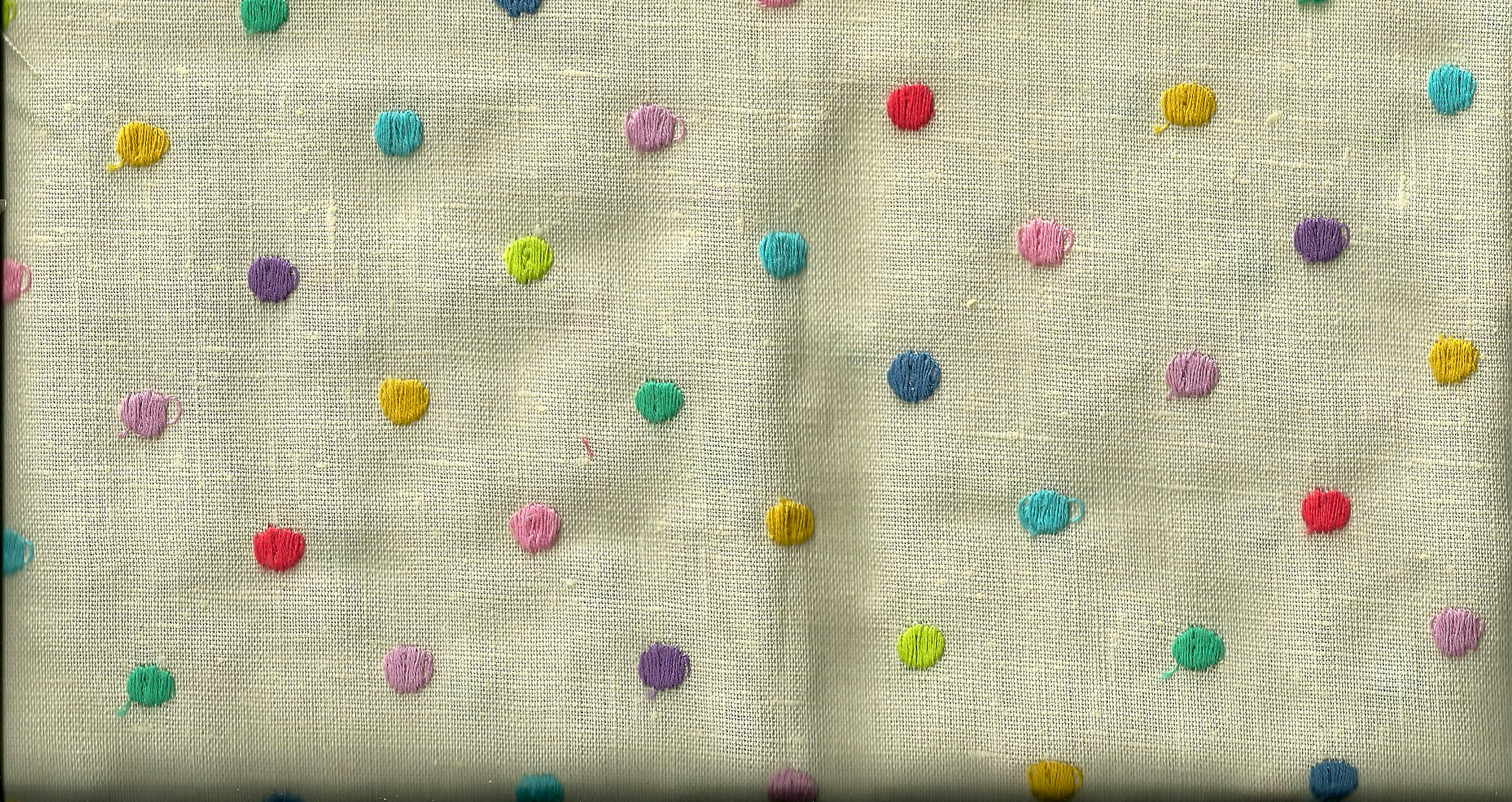
This is a vintage linen, newly acquired by me.  Although there is nothing printedon the selvedge, I believe it is a Moygashel linen from the 1950s.

This is a vintage linen, newly acquired by me. Although there is nothing printed on the selvedge, I believe it is a Moygashel linen from the 1950s.  I plan to make a sheath dress from this fabric sometime during the Summer of 2014.

William Blake notably said “The road of excess leads to the palace of wisdom.”  I must confess I never knew what that meant until I applied it, somewhat sheepishly,  to collecting fabrics.  It seems the more various and beautiful fabrics I can look at and choose from, the more I am able to determine the perfect pattern with which to pair them.  If I own the fabric already, so much the better!  Sometimes the fabric dictates the sort of garment I should make and sometimes I have a pattern which leads me to my (excessive?) fabric collection, where I can admire anew and oftentimes choose a long-before purchased length of the perfect silk, linen, cotton, or wool.  It is a back and forth process, one filled with visual and tactile components, demanding – and developing – sewing wisdom.  It is one of the reasons I love to sew.

20 Comments

Filed under Liberty cotton, Linen, Love of sewing, Moygashel linen, Polka dots, The Conde Nast Publications, Uncategorized, woolens

Happy New Sewing Year

“Dresses for breakfasts, and dinners, and balls;

Dresses to sit in, and stand in, and walk in;

Dresses to dance in, and flirt in, and talk in;

Dresses in which to do nothing at all;

Dresses for Winter, Spring, Summer and Fall”

William Allen Butler (1825-1902) may have thought “Nothing to Wear”, from which these lines are taken, was a satirical poem, but he obviously did not know 21st century fashion sewers.  Isn’t January just the perfect time to plan for the creation of “dresses for Winter, Spring, Summer, and Fall”?  Yes, thank you for agreeing with me.

Last year I took a rather theoretical approach to the new sewing year, but this year I am focusing on more specific plans.  Let me start with Winter.

I have three things that I want to complete while the snow is still flying (which gives me until the end of March, more or less):

1)  My Chanel-inspired classic French jacket is my current project, and I am happy to report that I am making slow but steady progress on it.

2) I won’t consider the jacket really complete until I have made the bow blouse that will match its lining.

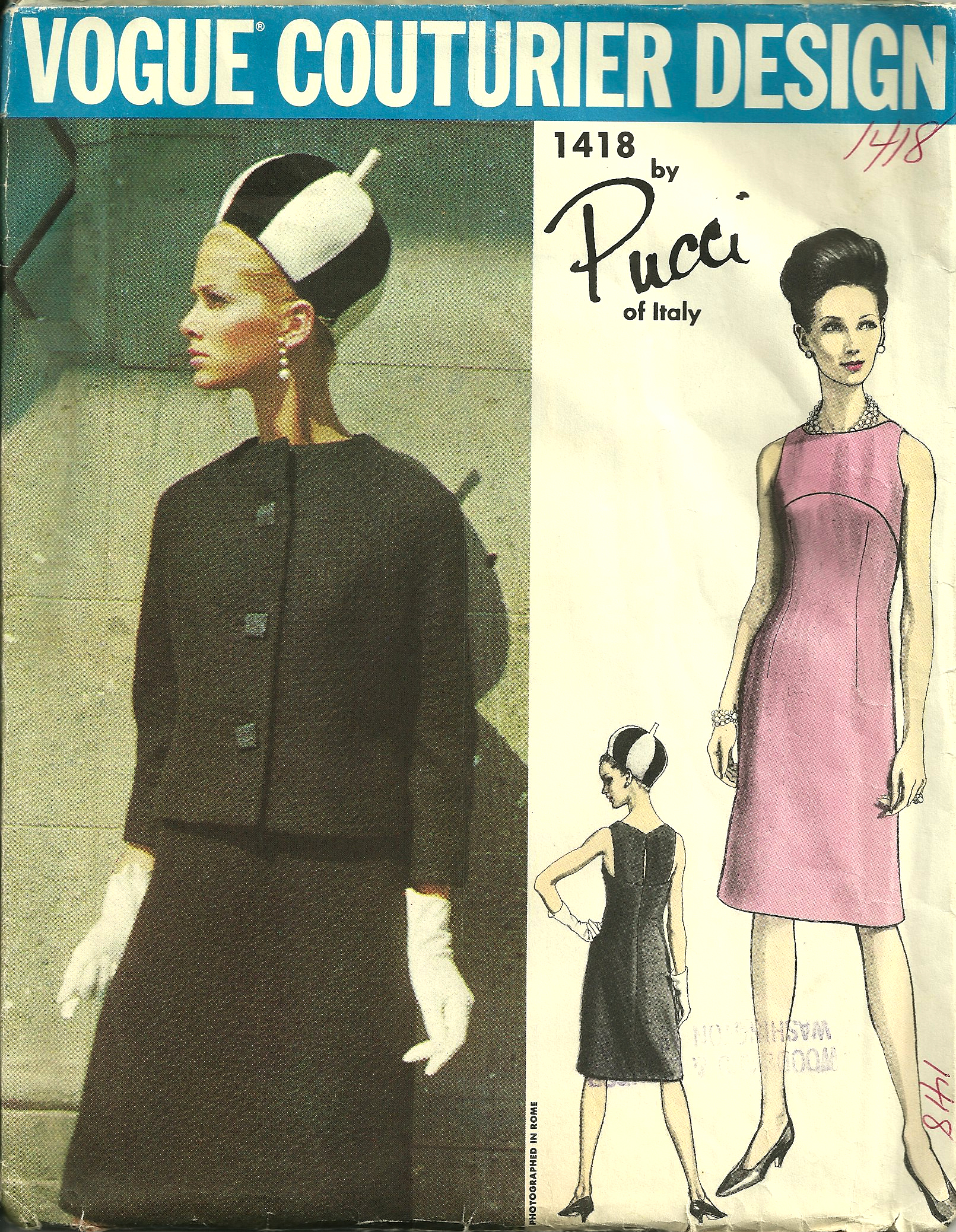
3) I am excited to say that I am going to be joining one of Susan Khalje’s Couture Sewing Classes in February, and my intended project is — ta-daa — this jacket which I have wanted to make ever since Vogue Patterns first issued it in the 1970s!

I will definitely be doing the color blocked version when I make this coat.

I will definitely be doing the color blocked version when I make this coat.

With any luck (or maybe lots of it will be needed), it may still be Winter when I start this project intended for an event in late April event:

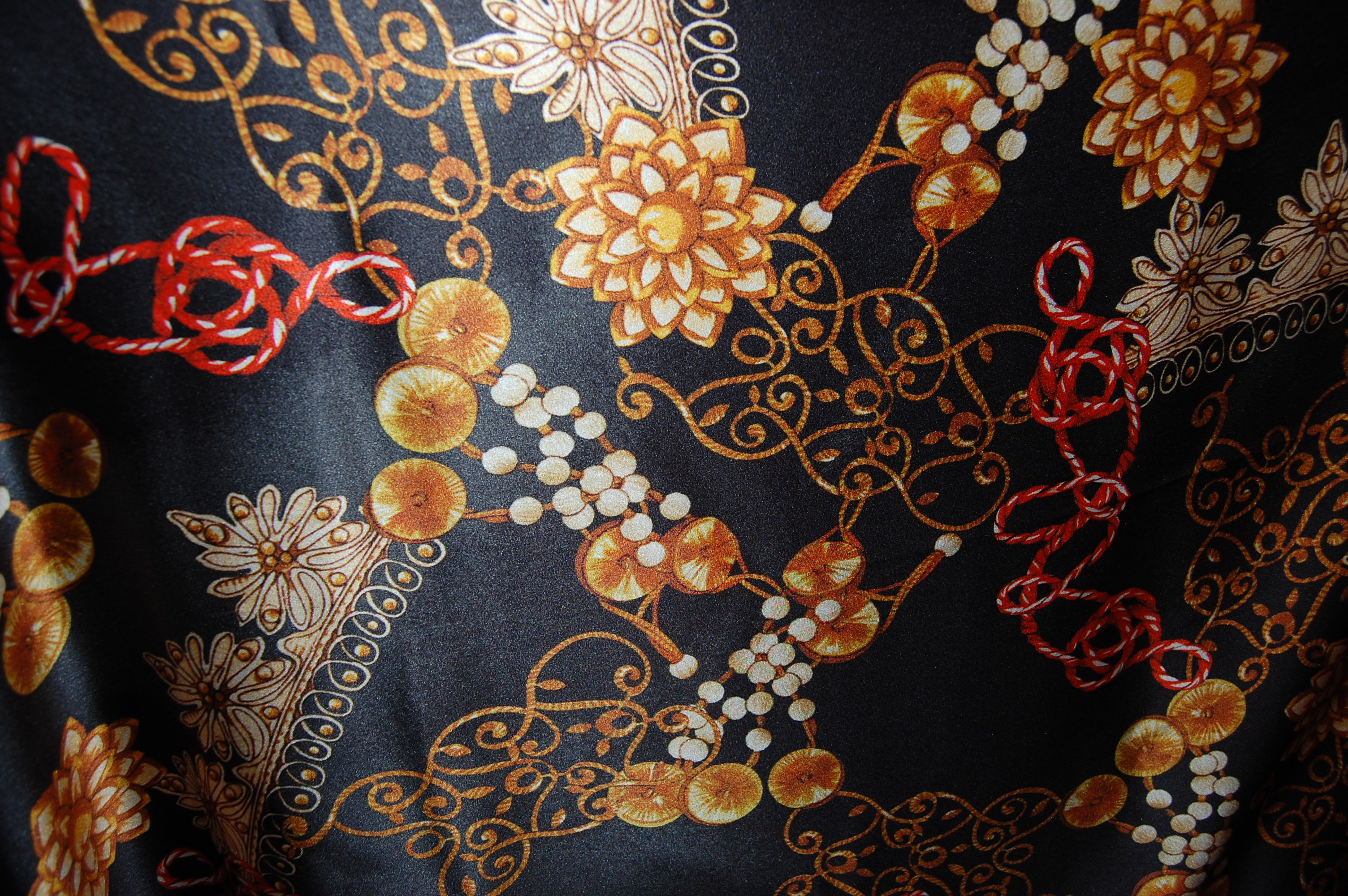
I have an authentic Pucci silk from which to make the dress and line the jacket.

I have an authentic Pucci silk from which to make the dress and line the jacket.

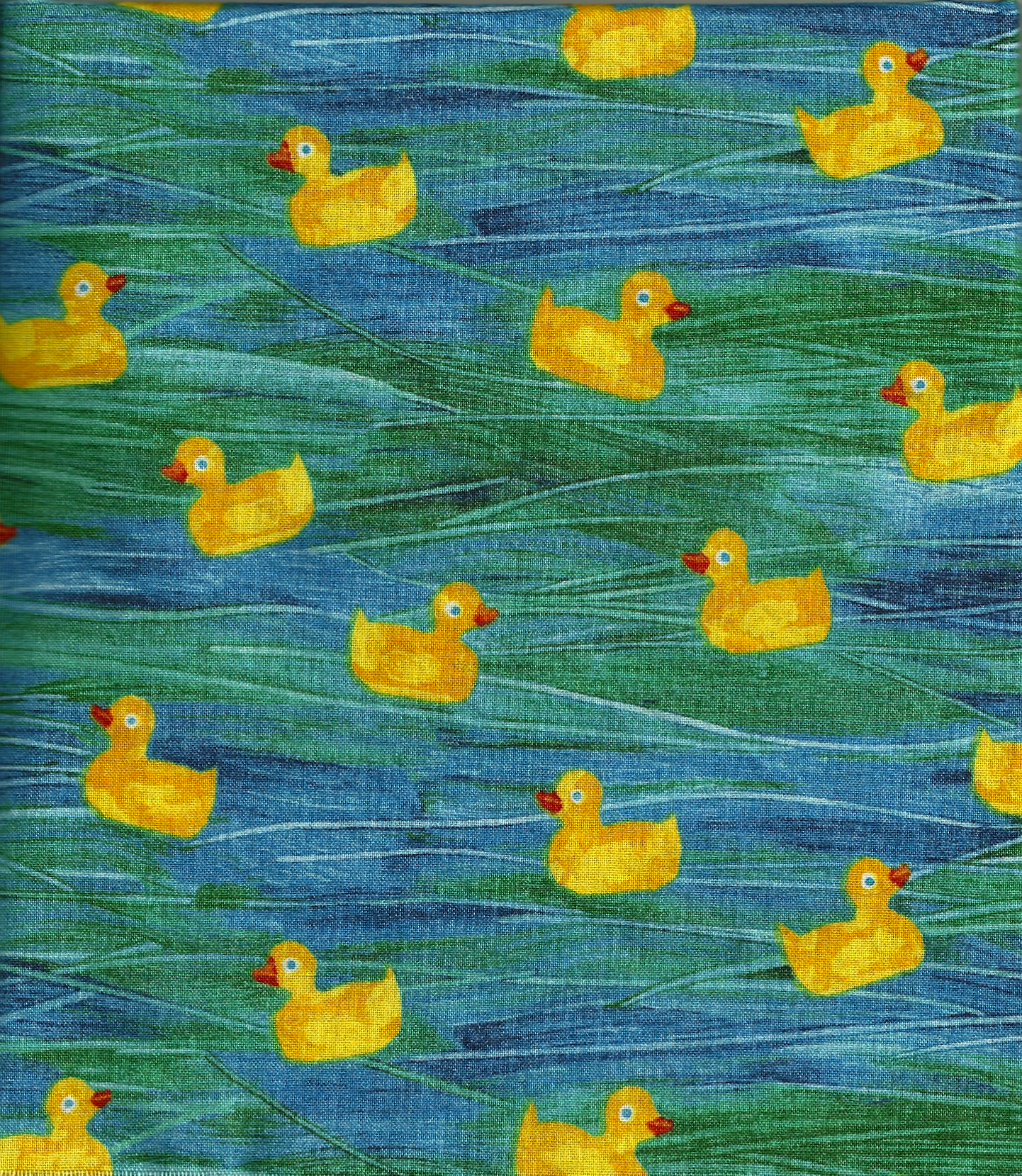
In addition, Spring will not be complete for me until I make a dress for my granddaughter who will be 1-year-old in March.  I purchased this fabric last Fall when I was at the Eric Carle Museum in Amherst, Massachusetts.  You can imagine my excitement when I saw that the gift shop included yardage of soft, quality cotton featuring designs from his books.  I envision these little ducks embellished with yellow rick-rack.

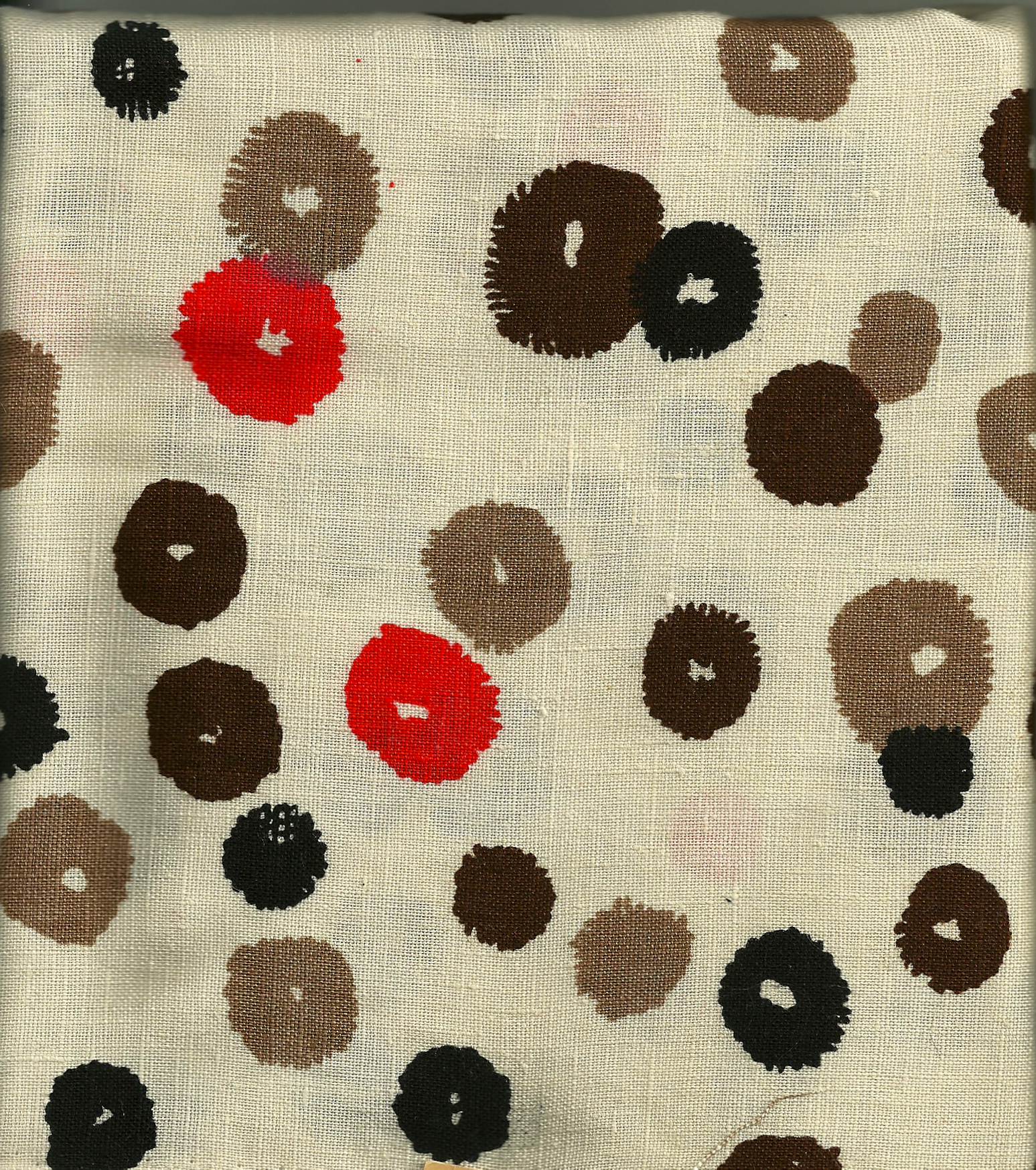
Happy New Sewing Year - carle fabric Before Spring bids us adieu, I may divert from dresses to make another pair of slim pants in this vintage 1950s’ linen:

I only have 1 5/8 yards of this 35" wide fabric, so it remains to be seen if i can squeeze pants out of it.

I only have one and 5/8 yards of this 35″ wide fabric, so it remains to be seen if I can squeeze pants out of it.

If Summer of 2014 is as hot as last Summer (or even if it is not), I’ll be making at least two more cool, linen dresses, one sheath-style and one belted.  More on these linen fabric finds in a future post…

And a bathrobe!!  I am dying to make a swishy bathrobe!

Ah, and then comes Fall (already??), probably my favorite season of all.  I have two projects envisioned:

1) I found this stretch silk charmeuse at Mendel Goldberg Fabrics on a quick day trip to NYC in early Fall.

Another gorgeous Italian silk!

Another gorgeous Italian silk!

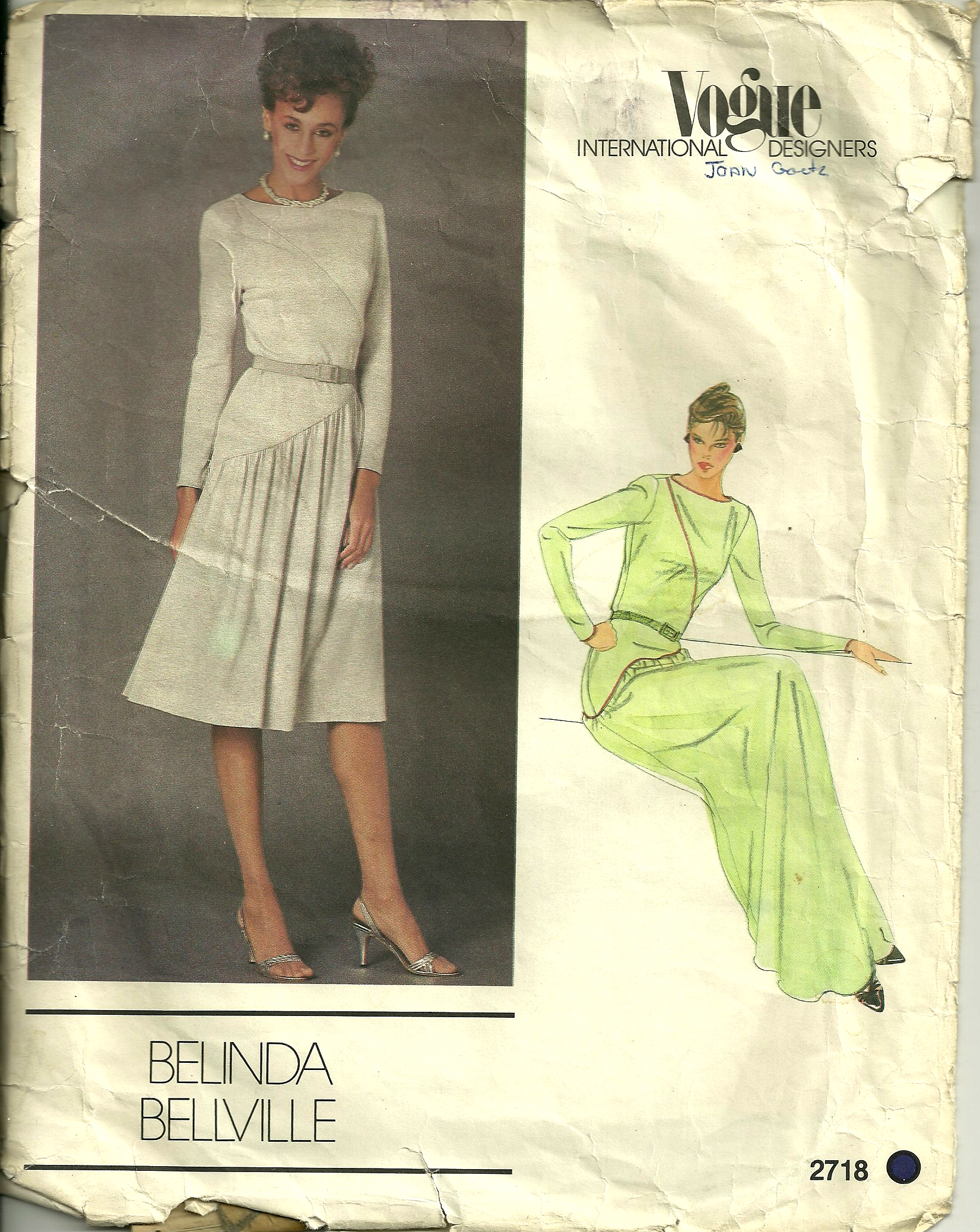
I bought it thinking I may use it for the lining for my No. 2 French jacket, but shortly after that I found this pattern on eBay and promptly decided it would be perfect made up in this dress (which requires a stretch fabric.  Well, it says “ knit fabrics only” but I say stretch fabric will do just fine).

This os one of the few patterns from the 1980s which I really like.  However, i will not be duplicating the hairstyle.

This is one of the few patterns from the 1980s which I really like. However, I will not be duplicating the hairstyle.

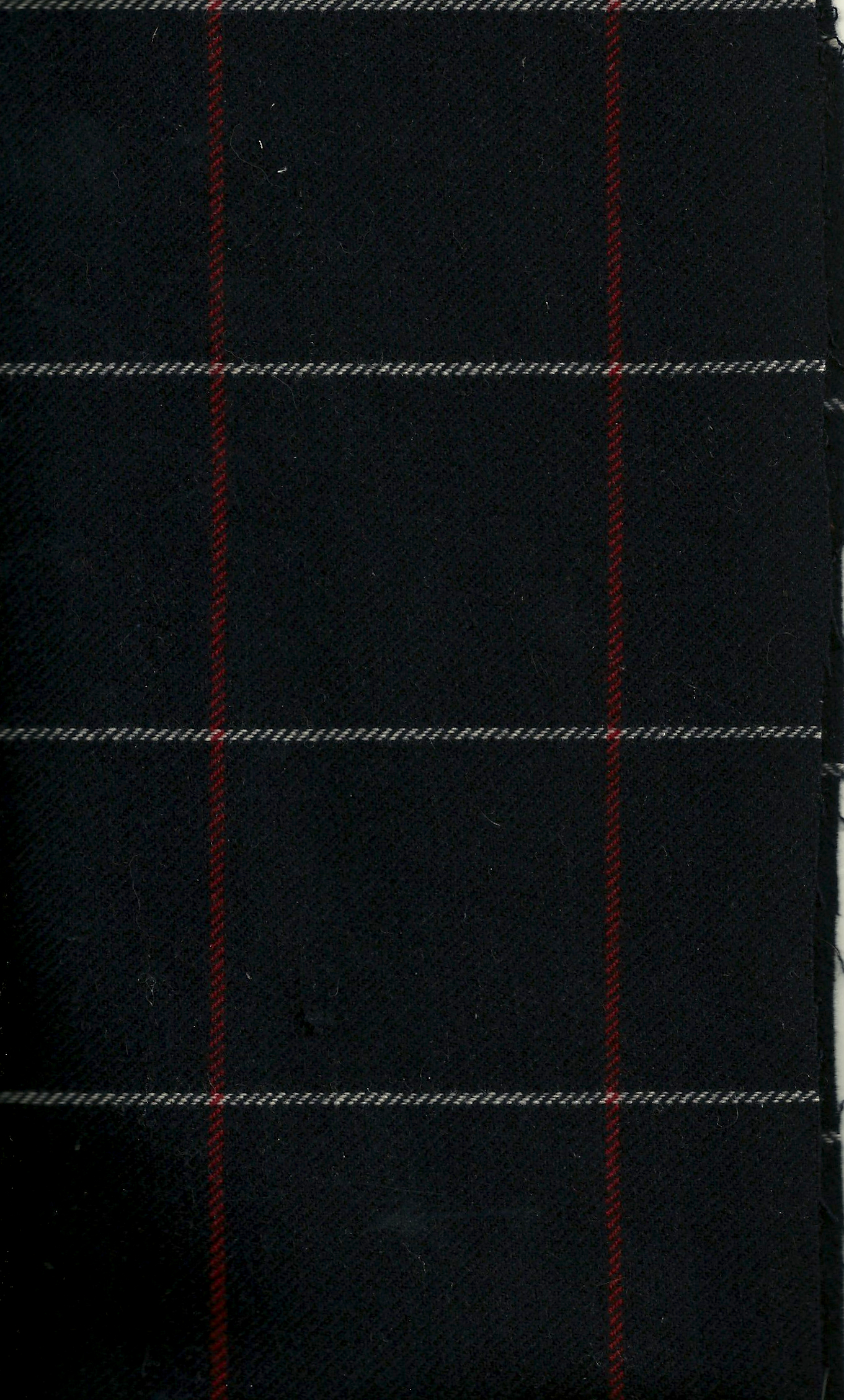
2) I’ve had this buttery soft cashmere wool for a couple of years now.  I originally thought I’d make a suit, but now I’m thinking long-sleeved dress instead.  I’m still sorting this one out in my head so I’m very glad I have until next Fall.

A subtle windowpane check in navy with deep red and ivory intersecting lines.

A subtle windowpane check in navy with deep red and ivory intersecting lines.

Sprinkled among these plans for Winter, Spring, Summer and Fall will surely be more little dresses for granddaughter Aida.  I fully intend for her to have some of the cutest frocks in all of New England.

Finally, if 2013 taught me anything, it is that the unexpected is waiting around every corner.

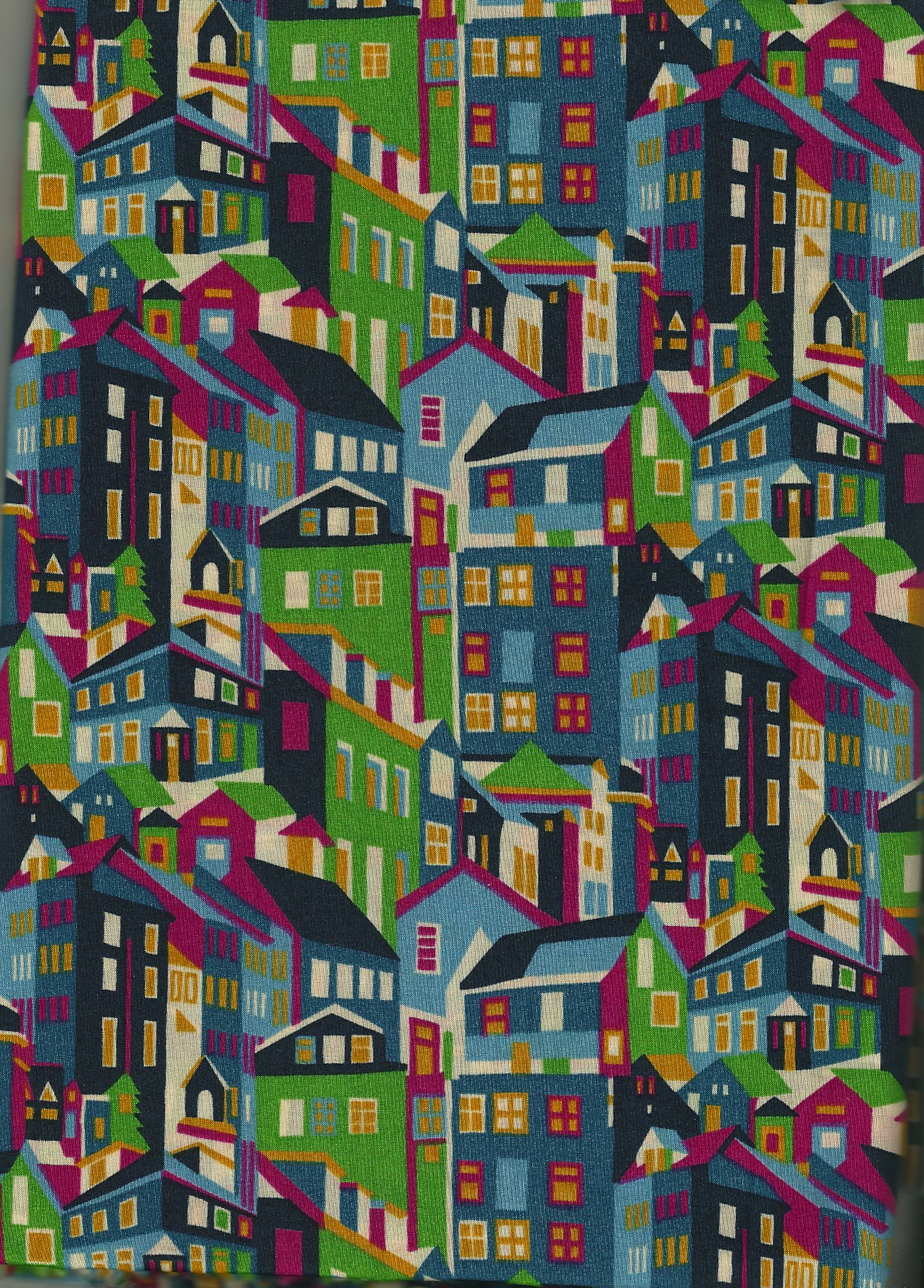
Lots of corners lurking in this Liberty cotton!

Lots of corners lurking in this Liberty cotton!

Life can take sudden turns and twists that are not always sewing-friendly, so I plan to be kind to myself if that happens.  But wouldn’t it be nice for all of us to have the kind of year when we have the extra time to make a dress in which to do “nothing at all”?

14 Comments

Filed under 1980's dress patterns, Boucle for French style jackets, Chanel-type jackets, Coats, Liberty cotton, Linen, Polka dots, Uncategorized, vintage Vogue Designer patterns, vintage Vogue patterns from the 1970s, Vogue patterns, woolens

Color Wheel

Pantone’s annual announcement of “the color” of the coming year is always notable.  Last week’s revelation of Radiant Orchid as the newest “it” color caught me a little by surprise.  After emerald green’s reign over 2013, I just was not expecting such a dramatic turn on the color wheel.  But, being a “pink” person, I think I can be persuaded to embrace this violet-y pink, although right now I have no fabric or project planned to do so.  I am actually thinking that this color might suit me better in accessories rather than a full outfit in it.  Handbags and shoes?  Yes, I could get excited about that.

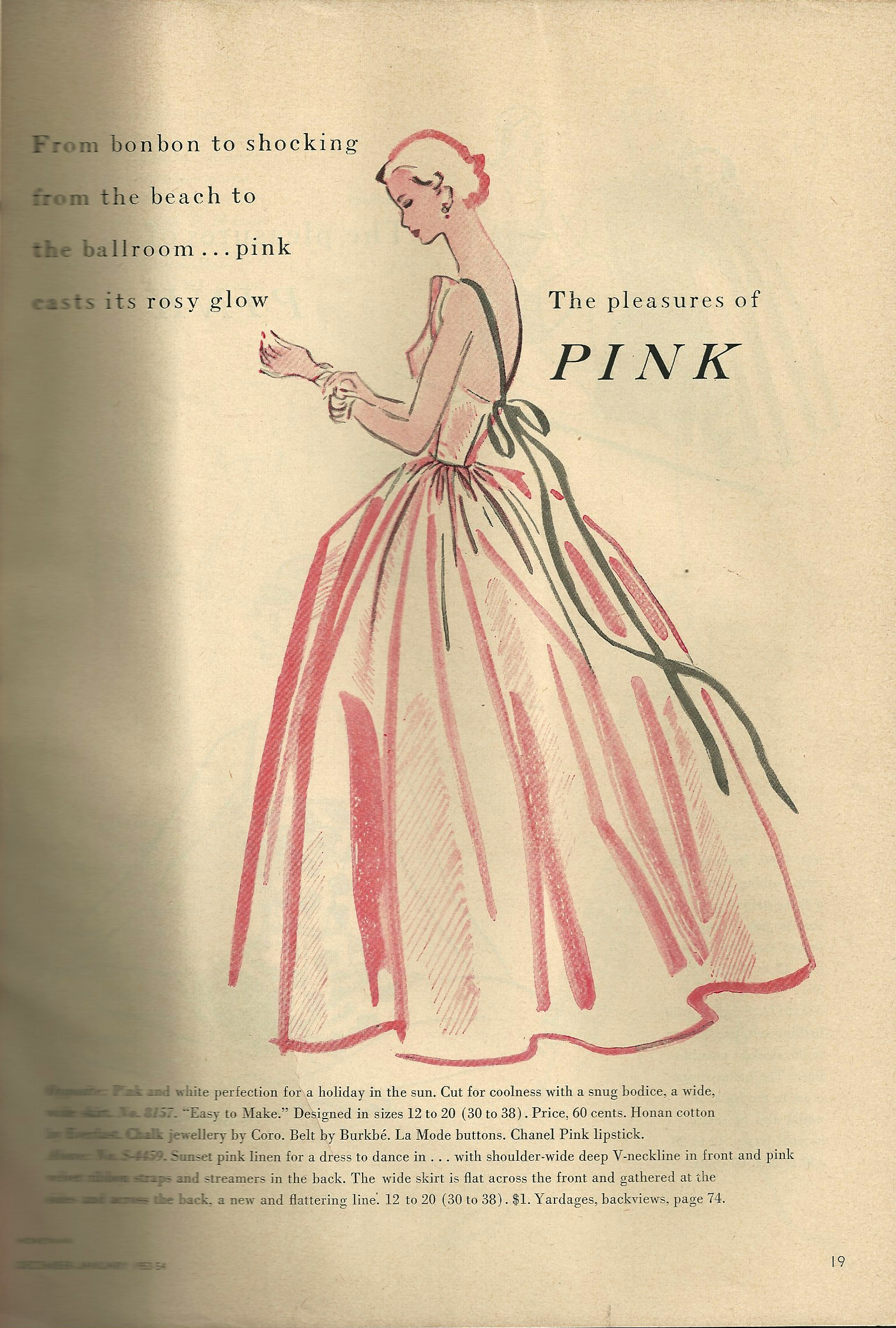
This choice of color made me start to think about predecessors to it, so back I went to my Vogue Pattern Magazines, two from the 1950s and one from the 1960s, to see what I could find.  In December/January of 1953-54, an entire feature focused on The Pleasures of Pink. 

"From bon bon to shocking - from the beach to the ballroom ... pink casts its rosy glow"

“From bon bon to shocking – from the beach to the ballroom … pink casts its rosy glow”

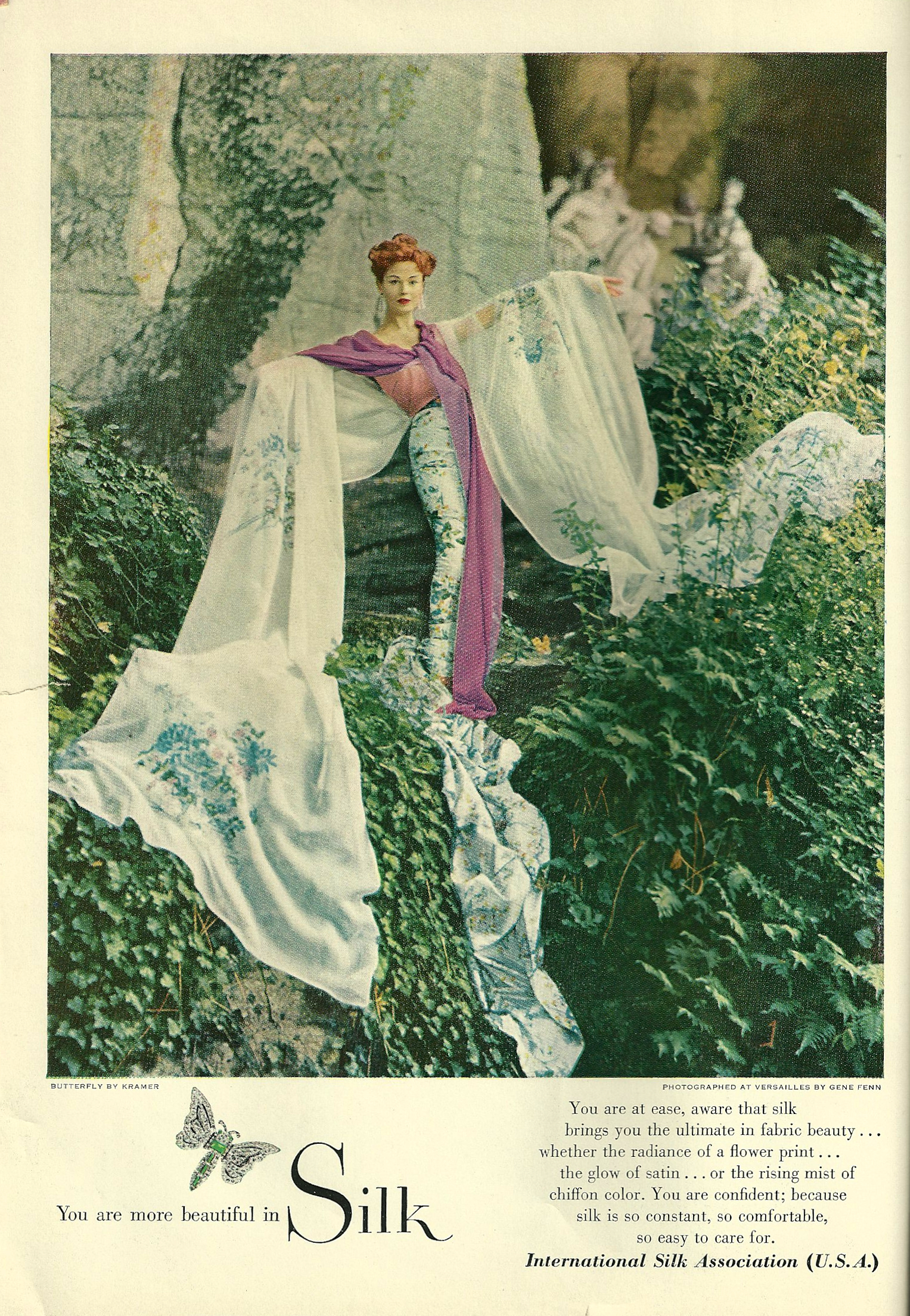
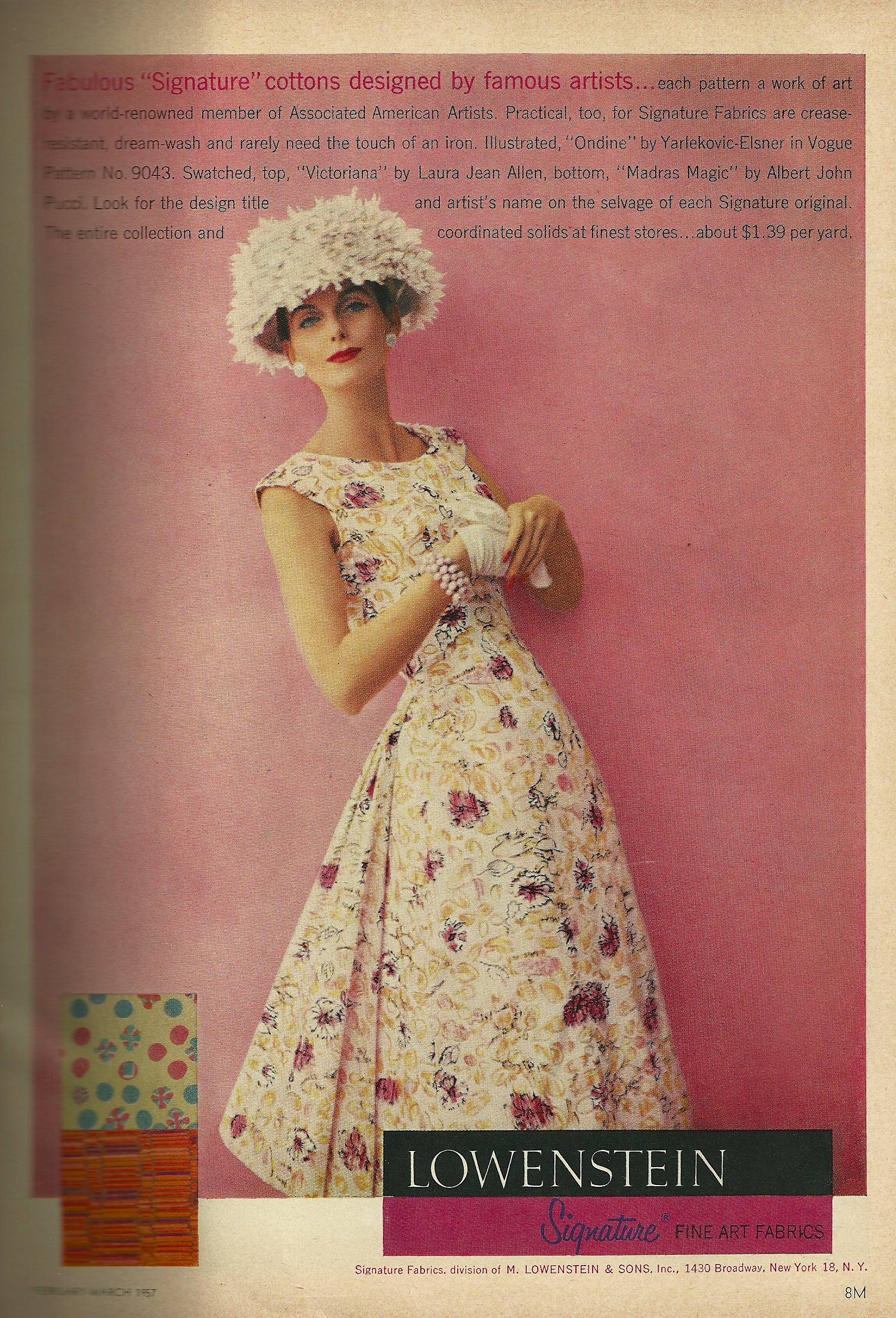
Two ads from the February/March 1957 VPM featured a pink, which is very close to 2014’s radiant orchid.  Who could argue with the statement “You are more beautiful in Silk”?

Here is" Radiant Orchid", mid-century style!

Here is” Radiant Orchid”, mid-century style!

Lowenstein’s ad features “Signature” cottons designed by famous artists.  If you read the caption fully, you will see that the price per yard is listed at “about $1.39”.

And don't you love the hat??

And don’t you love the hat??

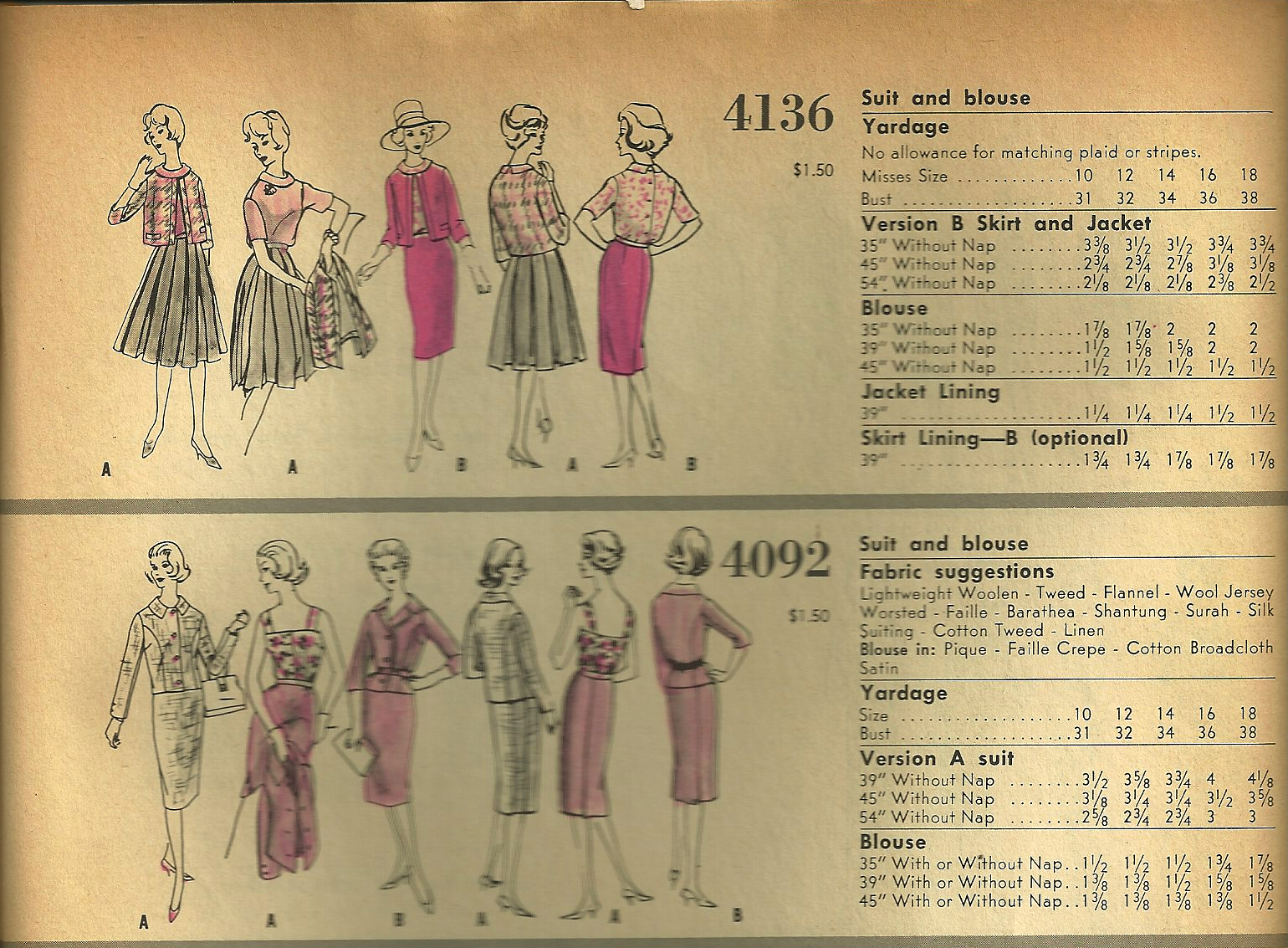
December/January of 1960-61 shows two of the suit and blouse patterns in what could definitely be called Radiant Orchid.

Look at that Chanel-type jacket in Pattern #4136.

Look at that Chanel-type jacket in Pattern #4136. 

While 2014 is set to be the year of “Radiant Orchid”, dear old 2013 is just not quite over yet.  Busy December of every year finds me focusing on the colors of  Christmas and the holiday season more than on the current fashionable colors.

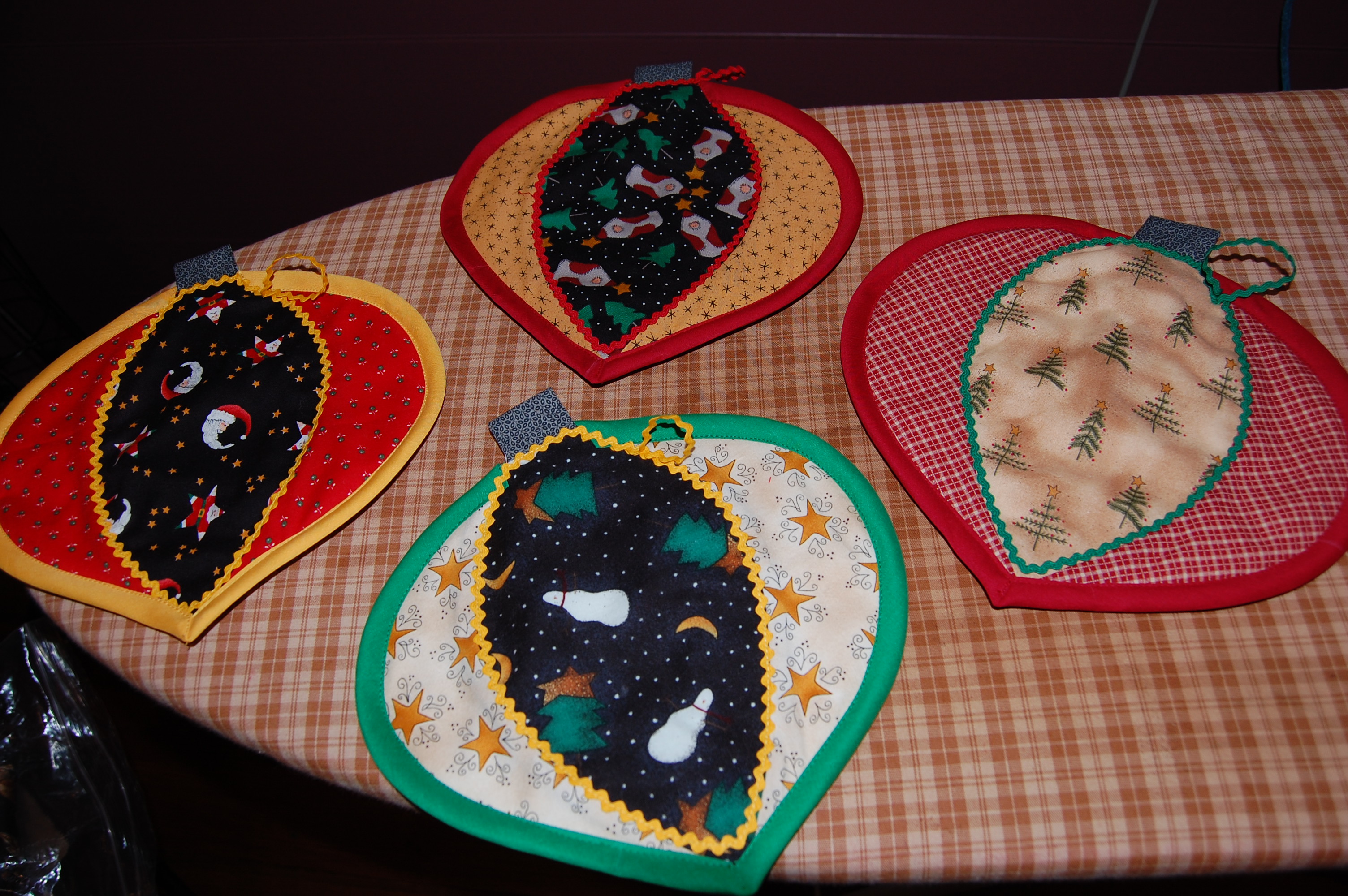
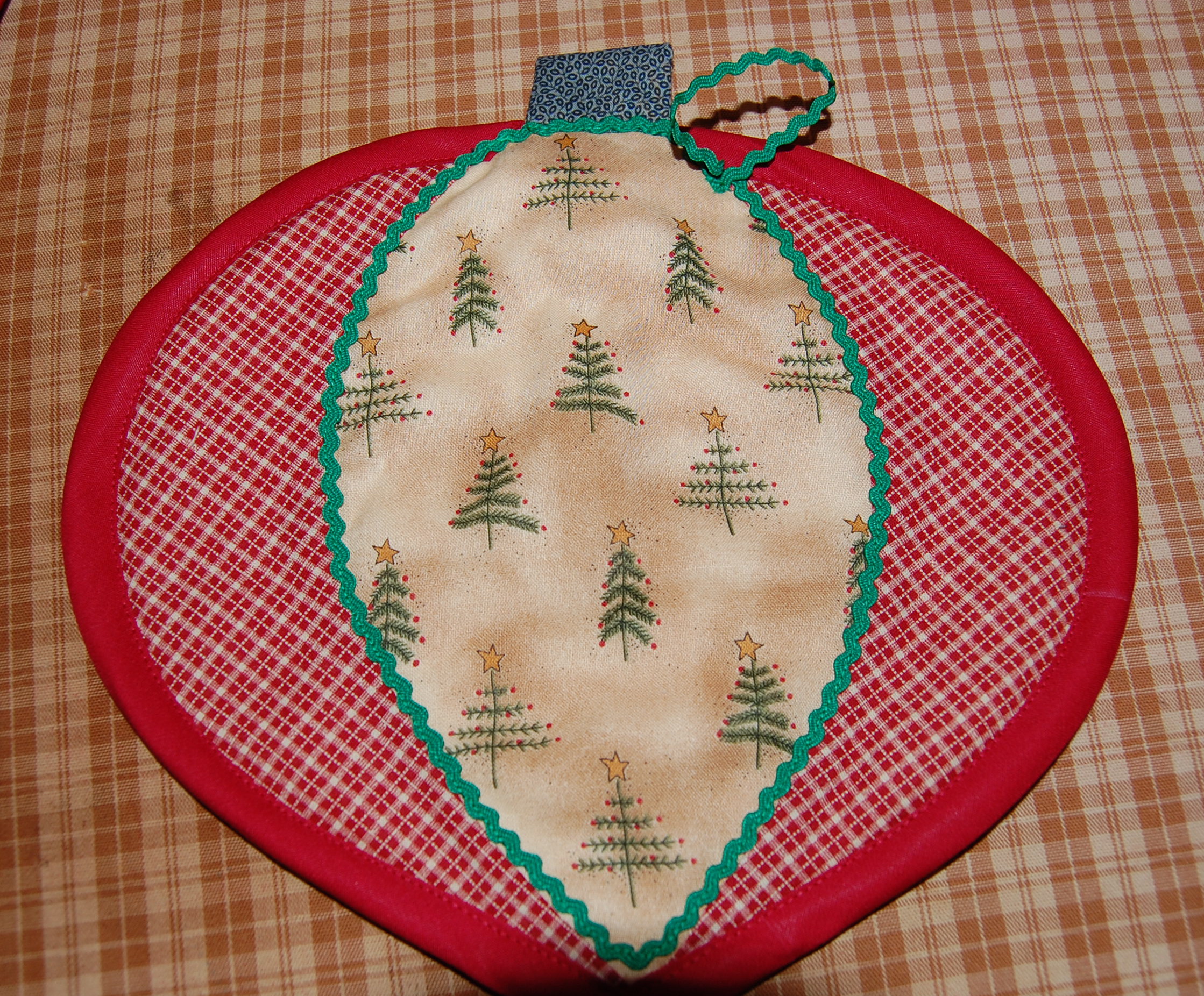
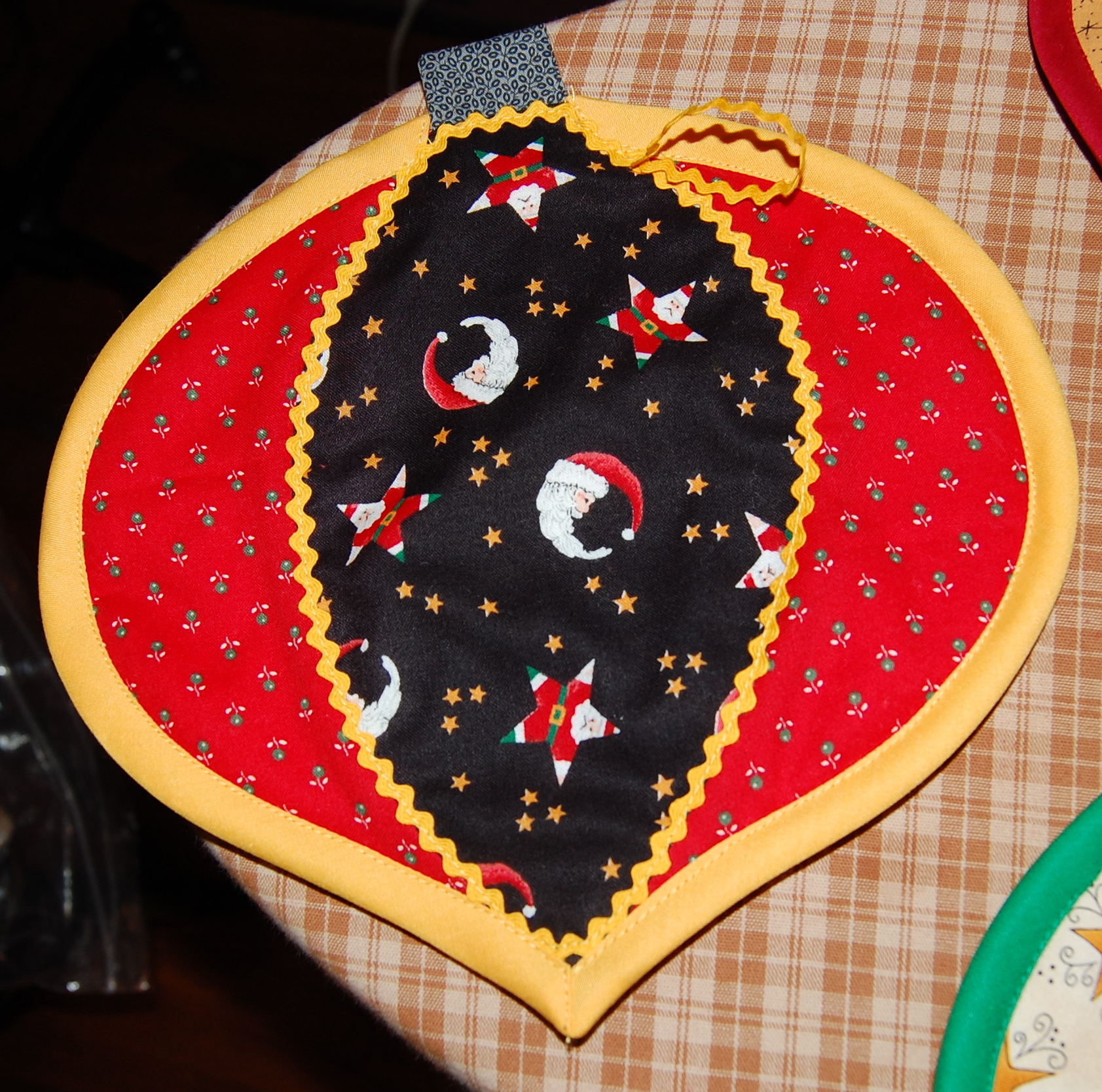
Somehow, Christmas just would not be Christmas if I were not scrambling to finish some handmade gifts.   This year is no different, as I conjured up some crazy idea to design and make Christmas-themed potholders as a small addition to the presents I give to some very wonderful ladies who help me in my house (and vacuum many a thread off the floor of my sewing room!)    I dug through my stash of “quilting” cottons and came up with some holiday themed fabric, which I used as my starting point.  Then I paired each fabric with some complementary small prints, and concocted what I hope looks like fancy Christmas balls – except that they are large enough to use on a hot pan!

Color wheel potholders I indulged my love of rickrack, and the most fun part was deciding which color binding and which color rickrack to use to enhance the finished product.

color wheel potholder

I added a small gray “cap” at the top to simulate a Christmas ball hook-holder, and a rick-rack loop for hanging.

color wheel potholder

This is my favorite one…

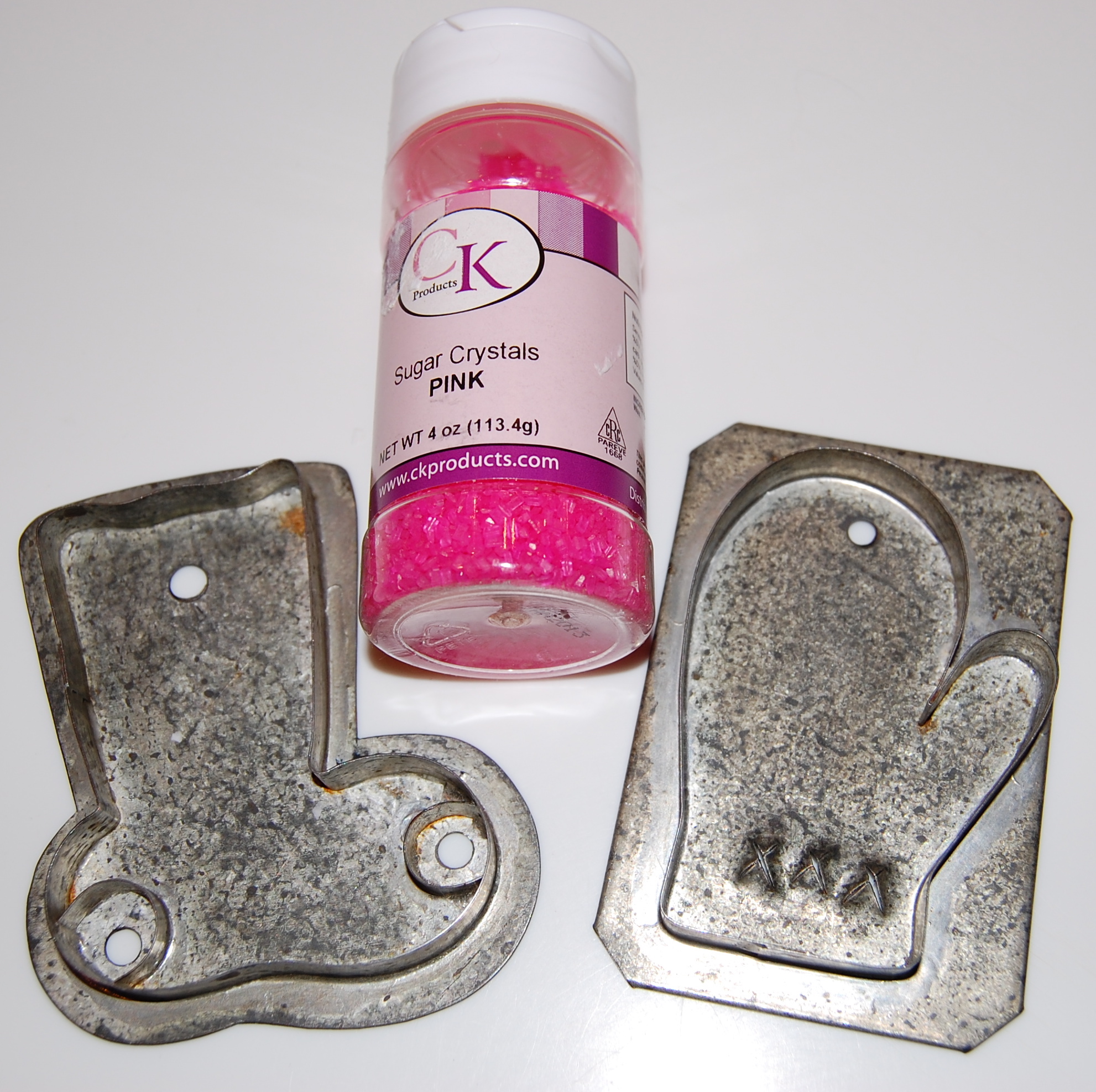
Coming full circle (pardon the pun) on the color wheel brings me back to radiant orchid – and whether  our holiday celebrations will possibly see any pink hues peeking out between the Christmas reds and greens?  Oh, yes!  Once I get around to cookie-making, I’ll be certain to make  fashionably forward stockings and mittens decorated with sparkly pink sugar!

color wheel

14 Comments

Filed under Chanel-type jackets, Uncategorized, vintage Vogue patterns from the 1950s, vintage Vogue patterns from the 1960s

No. 2 ~ The Beginning

I may – or may not – find Chanel No. 5 Paris Parfum in my Christmas stocking, but Chanel-inspired, Classic French Jacket No. 2 can currently, definitely, be found in my sewing room.  Well, actually, it’s not a jacket yet.  It is just lengths of fabric and loose trims and buttons, but that is how these things begin, as every home dressmaker knows.

I actually started planning this jacket long before I took the Classic French Jacket Class with Susan Khalje this past summer.  In September of 2012 when I was at Britex Fabrics in San Francisco, I found this boucle and purchased it – even then – as my intended Jacket No. 2.

This fabric is very soft, perhaps due to a certain percentage of mohair wool in its composition.

This fabric is very soft, perhaps due to a certain percentage of mohair wool in its composition.

My first jacket is definitely very dressy, so I wanted this one to be less so, which meant I had to find just the right lining, trim, and buttons.  It took another, recent, trip to San Francisco to produce those ingredients – and I couldn’t be more pleased with what I found again at Britex.

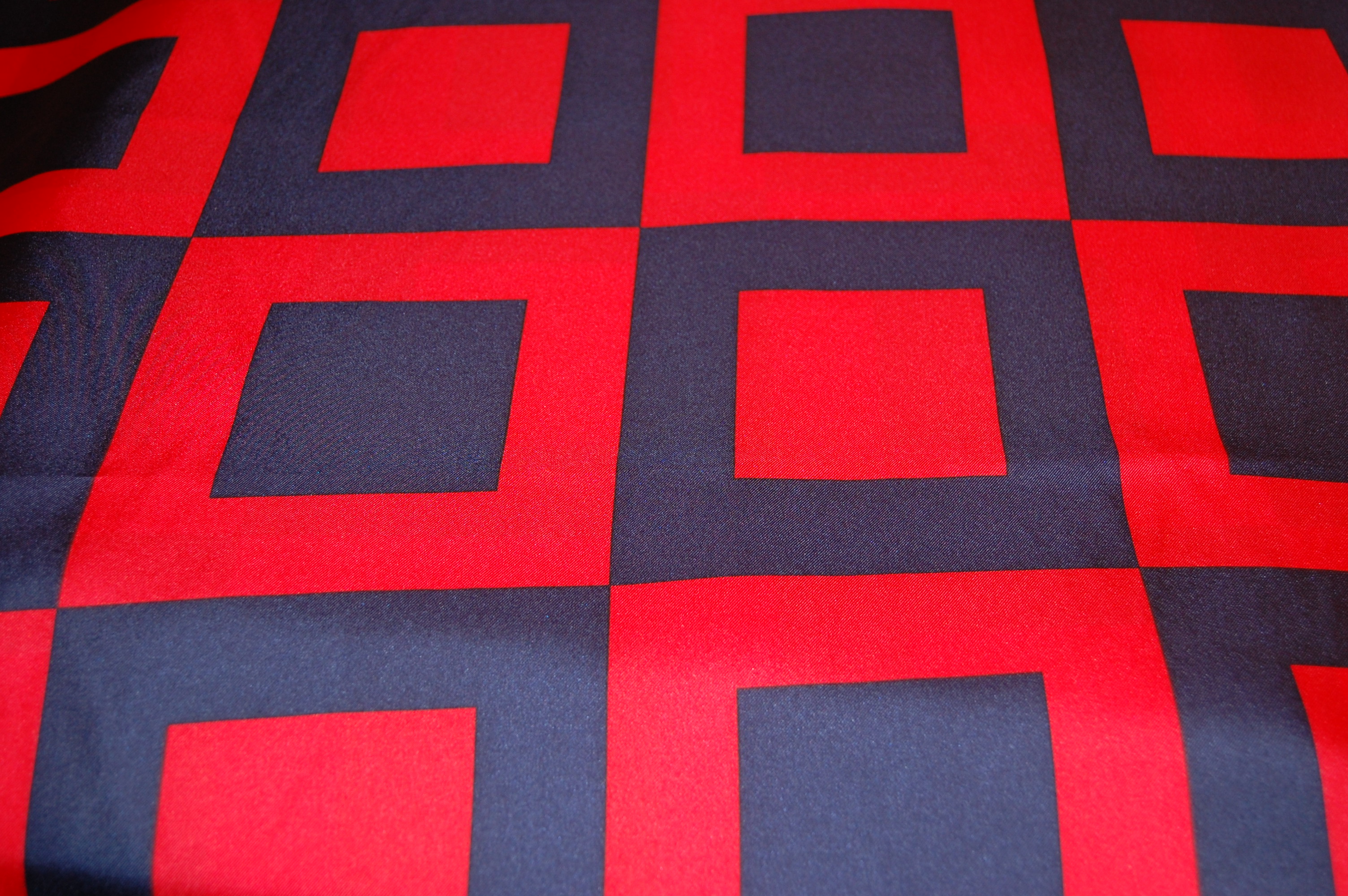
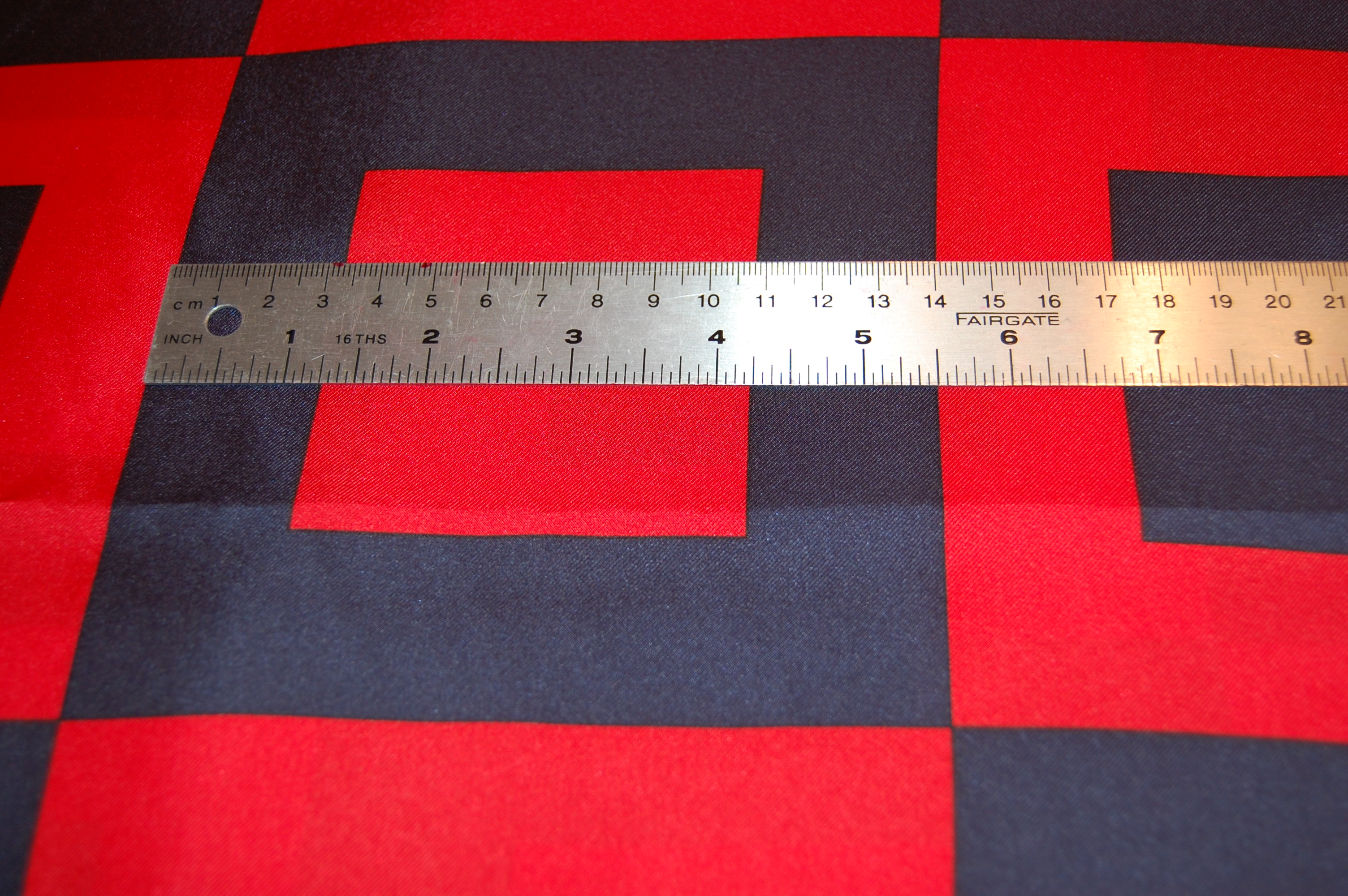
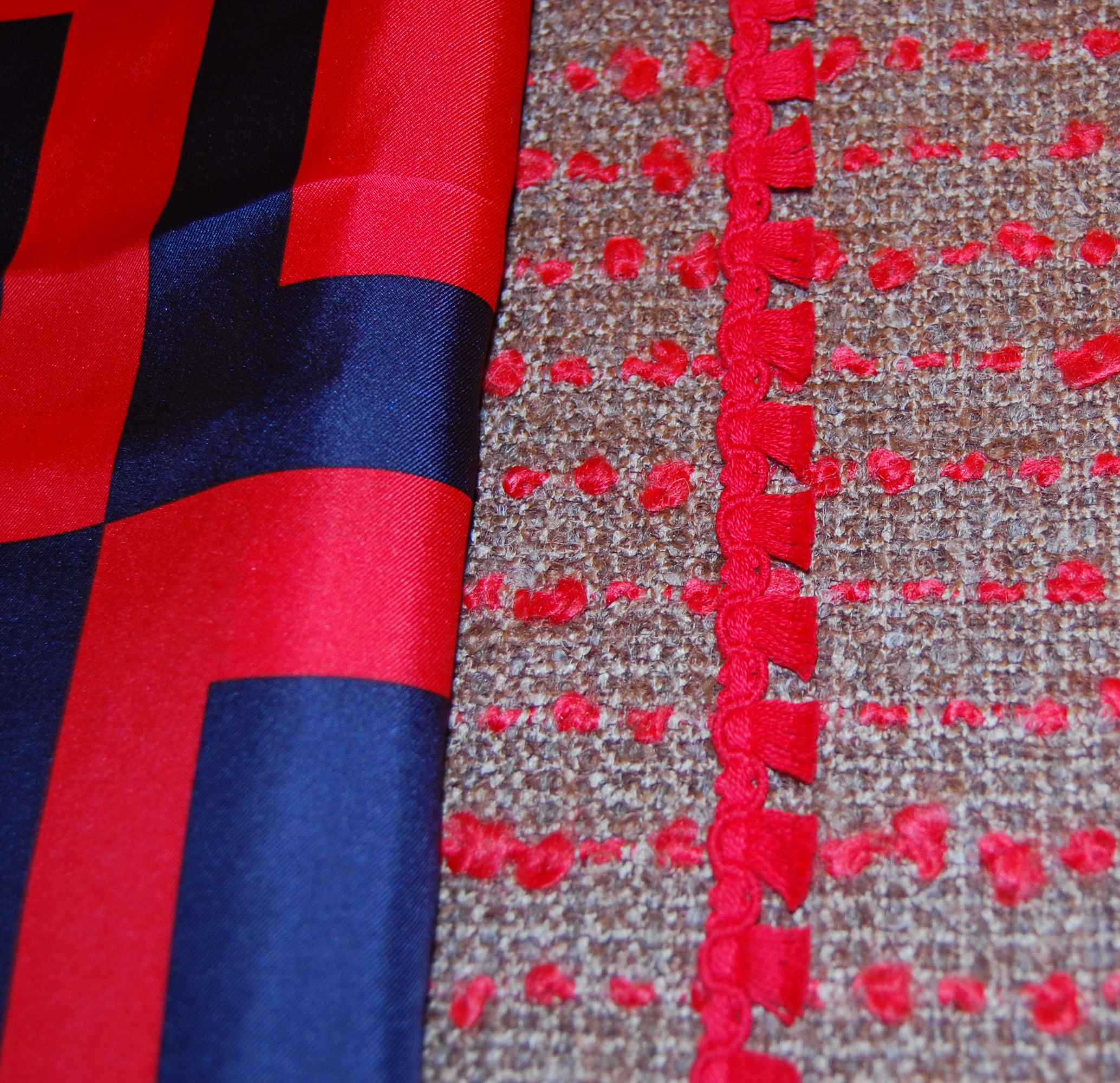
A bolt of this light-weight silk twill was tucked under one of the front tables, and it was love at first sight.  I was hoping to find something with navy blue in it, and the geometric pattern in this fabric makes it bold and less dressy than a floral silk charmeuse would be.

No. 2 jacket

The ruler will help you get a feel for the size of the squares.  Click on the photo for a close-up view.
The ruler will help you get a feel for the size of the squares. Click on the photo for a close-up view.
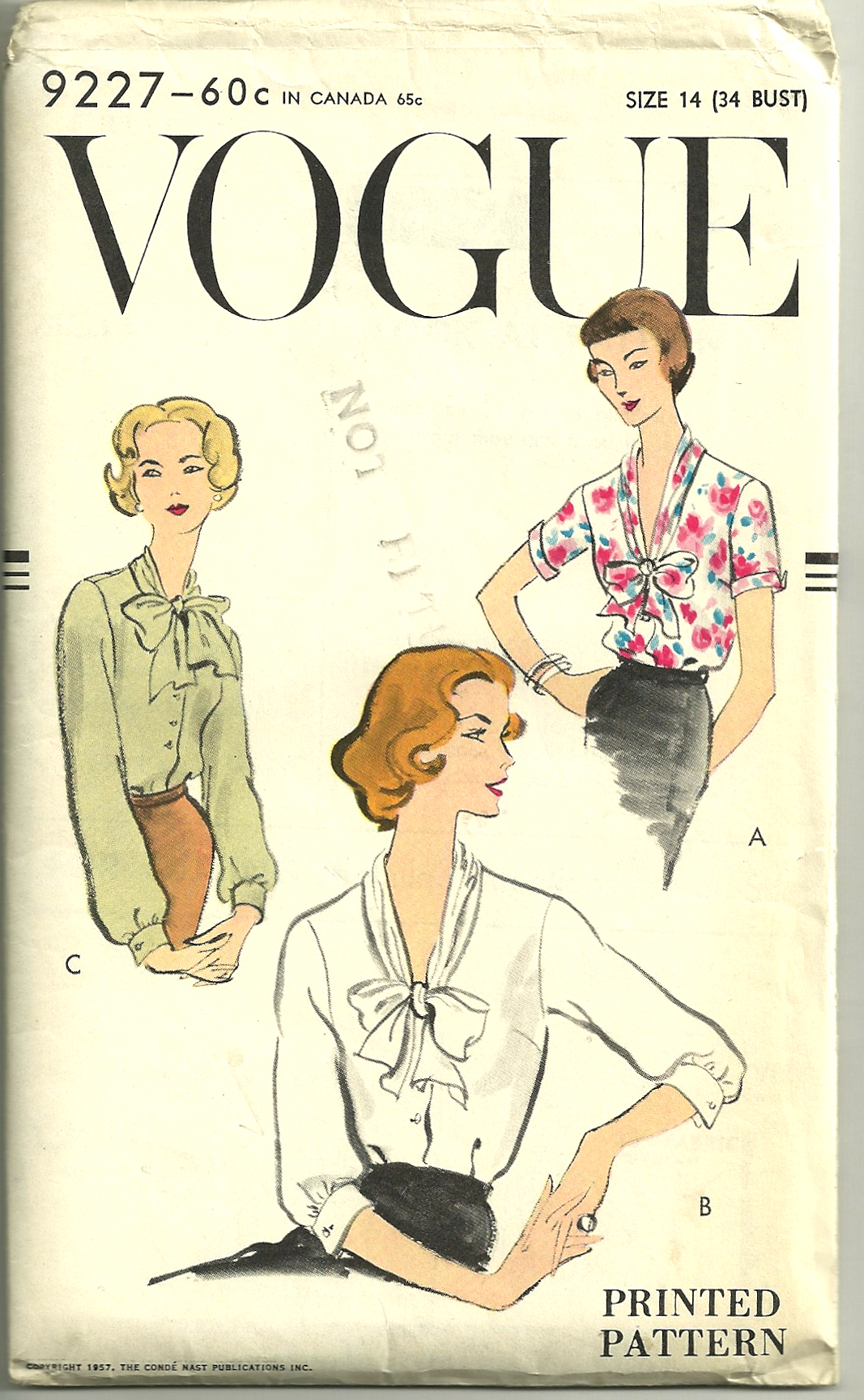
Immediately, however, I knew that I had to purchase enough for a blouse as well, which I did.  I suspect I’ll be using this pattern from 1957 for a blouse with a bow, which should evoke the correct Coco Chanel look. (A muslin should tell me if I need to tame the bow.  I don’t want it to be overwhelming…)

View B with long sleeves has my vote.

View B with long sleeves has my vote. 

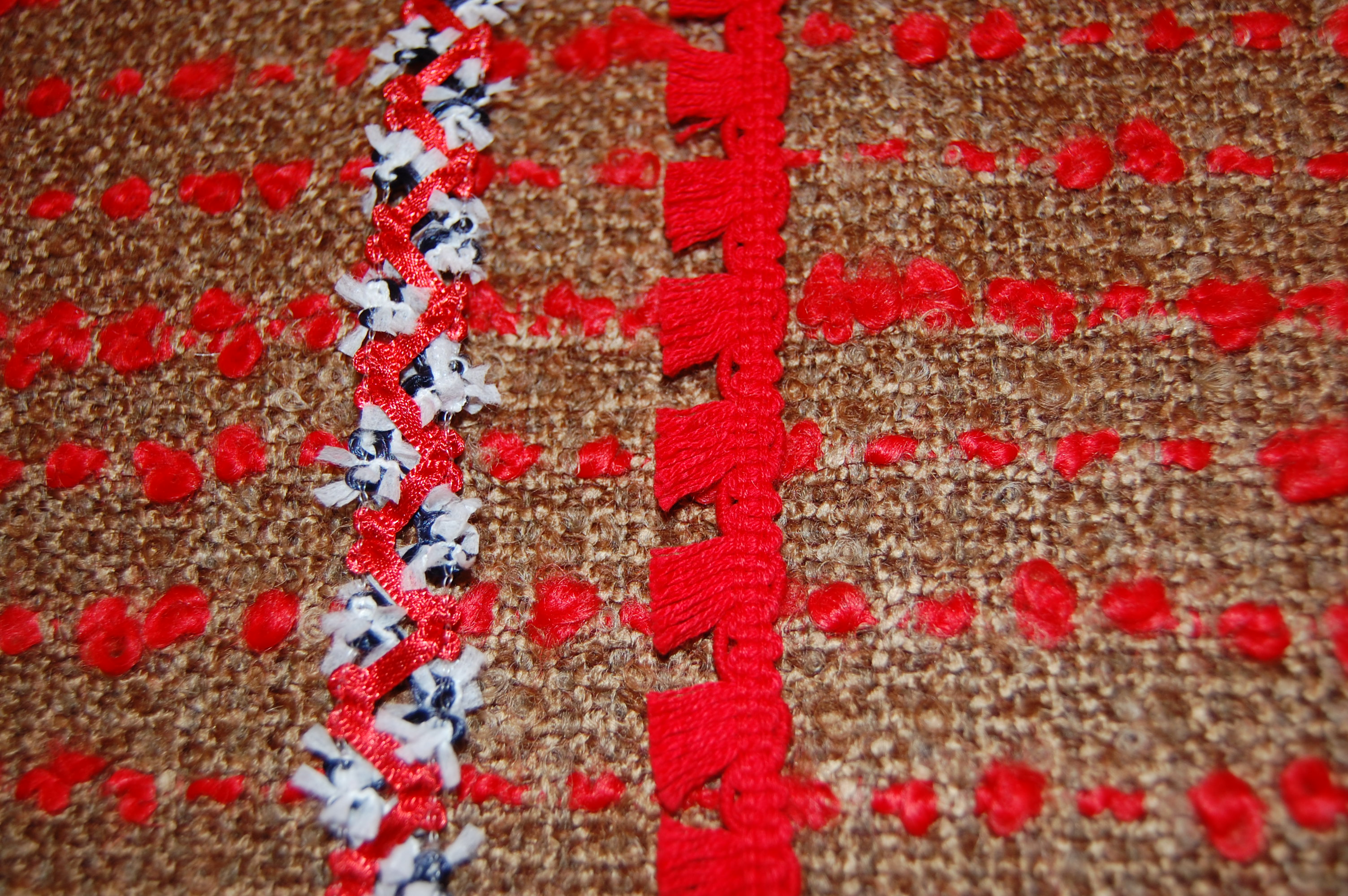
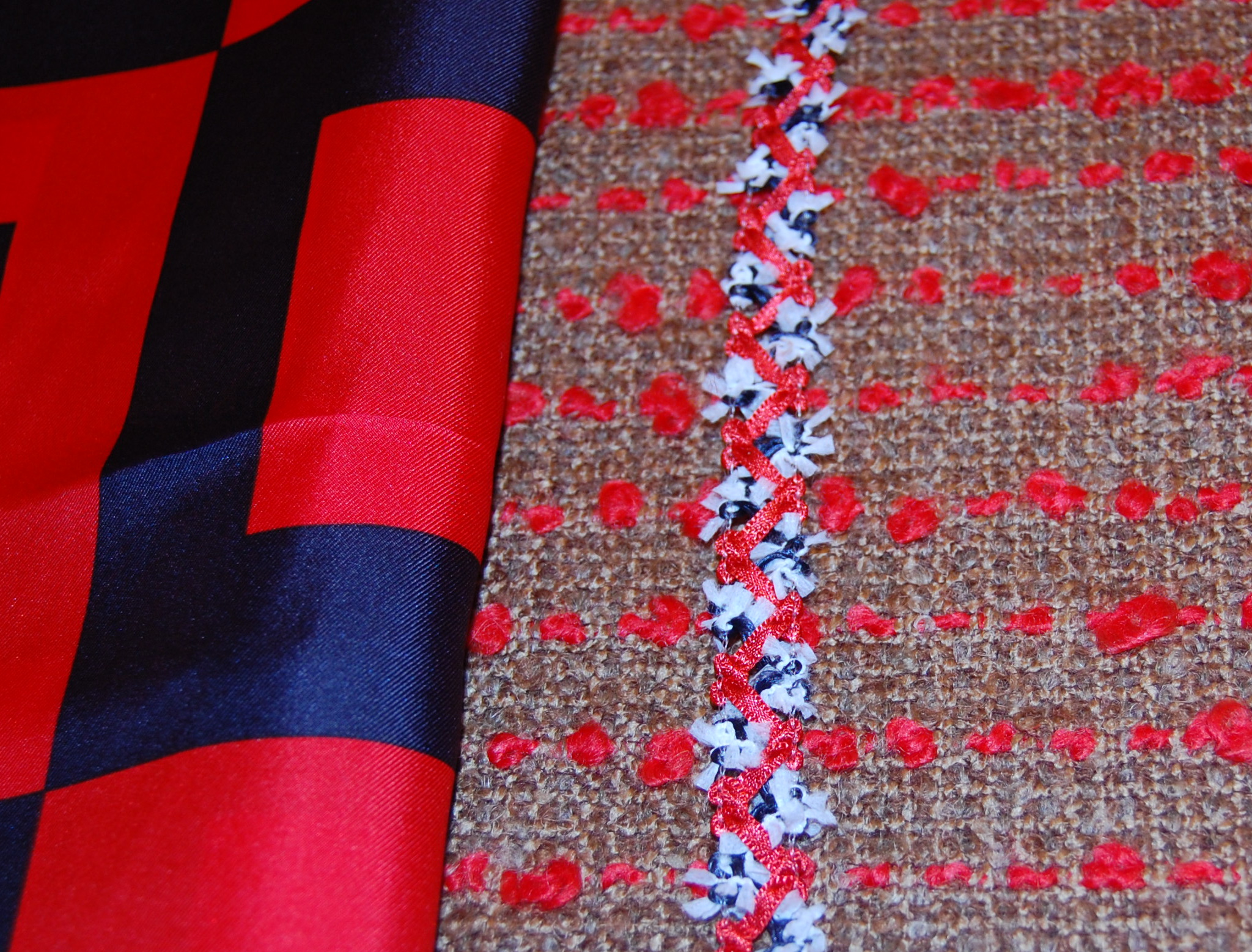
With fabrics in tow, I then headed up to the Buttons and Trims Department on the 3rd floor.  An initial look at the red trims flummoxed me, as none of them seemed right.  Then one of the wonderful assistants in the Department came to my rescue and found these two trims.

No. 2 Jacket

Shown with the lining/blouse fabric...

Shown with the lining/blouse fabric . . .

... and again.

. . . and again. 

Back and forth I went between them, unable to make a decision.  It was then that I went to my fail-safe method of choosing between two equally wonderful trims:  I bought both of them! ( It certainly helped that neither was terribly expensive – and both very versatile.)

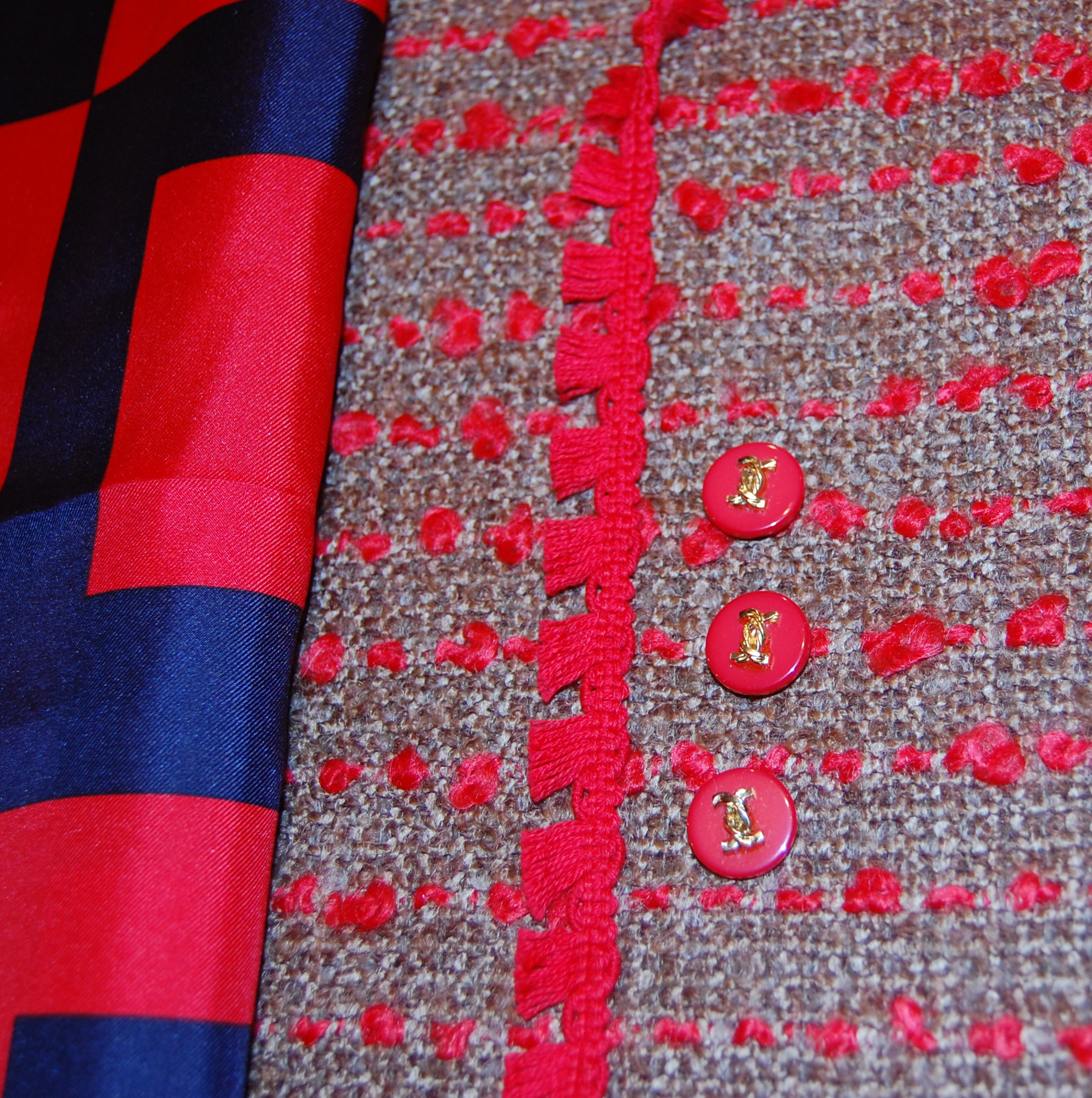
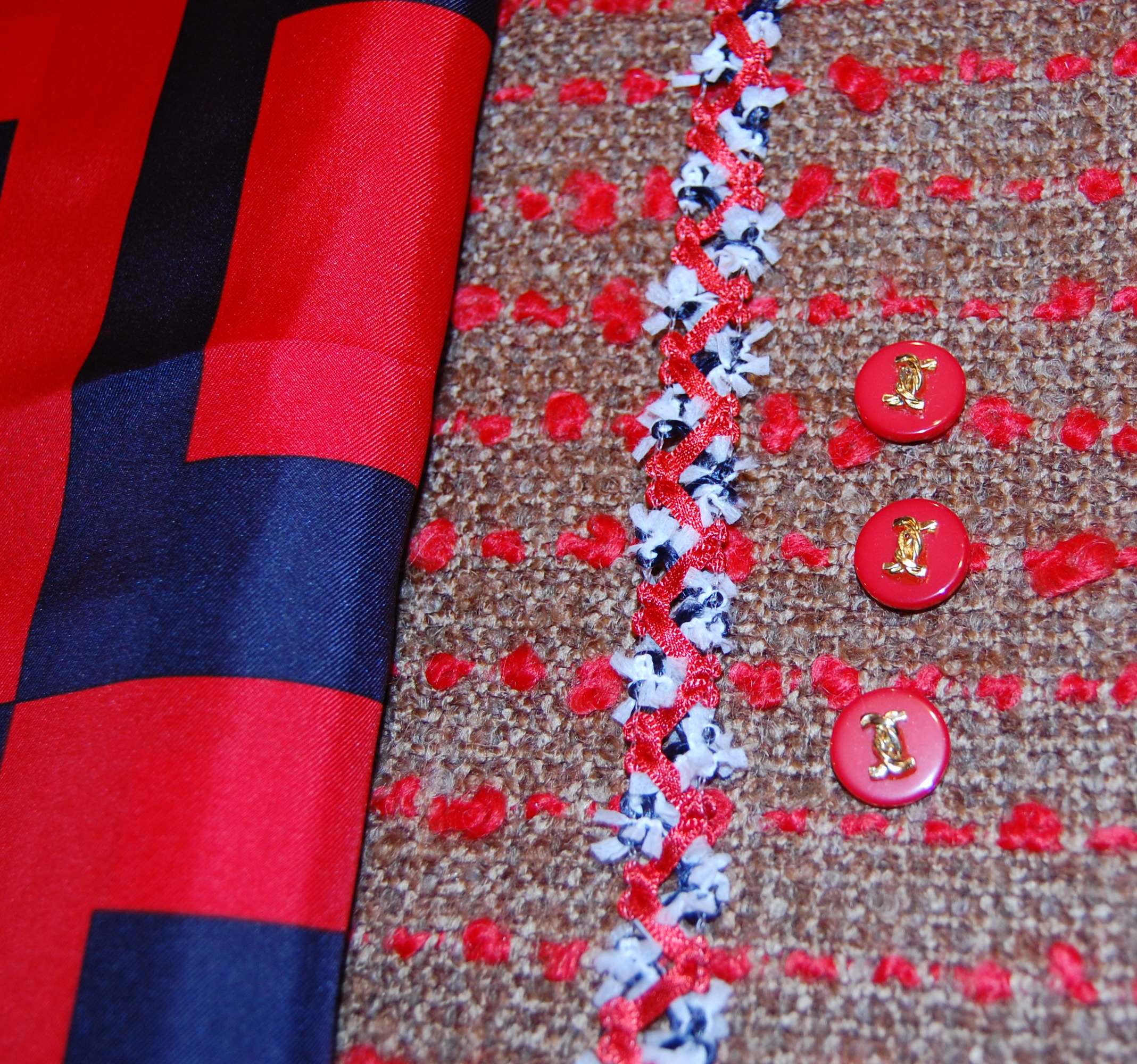
Now that I have them home, I am leaning toward one of them – can you guess which one?  Does it help to see the buttons, too?  Once again, the experienced button assistant quickly found these – and there was no question in my mind that they were just what I wanted for this jacket.

These are shank buttons, with gold decoration reminiscent of Chanel "C"s.

These are shank buttons, with gold decoration slightly reminiscent of intertwined Chanel “C”s.

And here with the other trim.

And here with the other trim. 

Well, as in so much in life, timing is everything – or it sometimes seems that way.  My timing could be better to be starting such a lengthy project.  It is, after all, one month until Christmas.  I have those proverbial stockings to fill and much to do, but I’ll just bet I can squeeze in some sewing time before my sewing room transforms into Santa’s workshop.

15 Comments

Filed under Blouse patterns from the 1950's, Boucle for French style jackets, Buttons - choosing the right ones, Chanel-type jackets, Coco Chanel, Uncategorized, vintage Vogue patterns from the 1950s

Looking at Blouses

In my quest to make a couple of “simple” pieces before I start another “Chanel-inspired” jacket, I decided to make a blouse.  I am very partial to the color of deep pink – and the remains of a length of silk, which I have already used in two projects (here and here), kept surfacing whenever I went through my fabric collection.  The weight is perfect for a blouse – so my plans starting taking shape, based on this fabric.

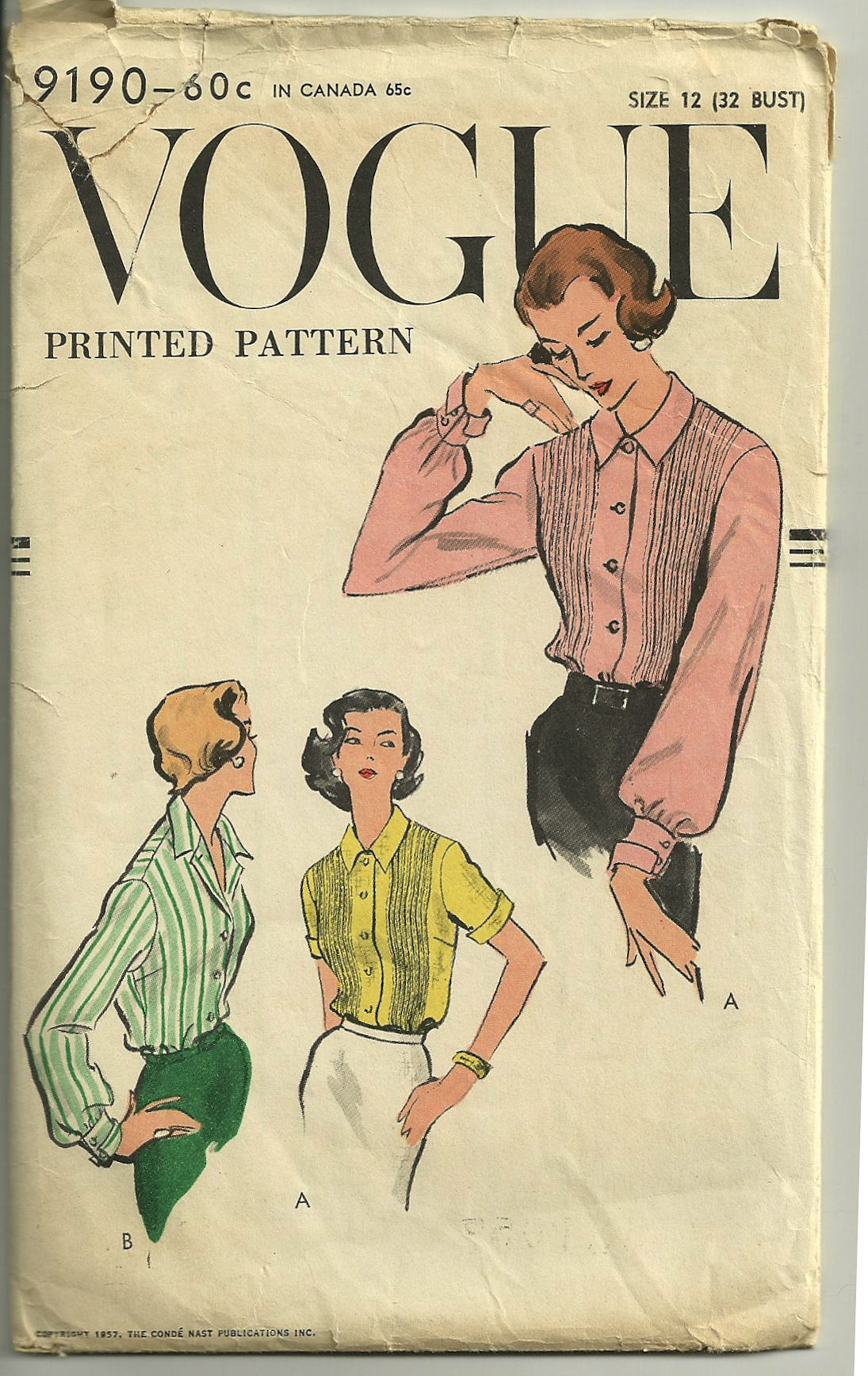
First I went through my pattern collection to see what I could find.  Two blouse patterns from 1957 and one from 1959 are lovely but did not seem quite right for my fabric.

View B is my favorite - and how current is this look?

View B is my favorite – and how current is this look?

I have already used this pattern once, but I think I took some of the fullness out of the sleeves.

I have already used this pattern once, but I think I took some of the fullness out of the sleeves.

This blouse pattern is part of a suit.

This blouse pattern is part of a suit. 

Just for fun, I thought I would look at some of my early Vogue Pattern Book Magazines to see what else was being featured for blouses.  In February/March of 1955, this tucked shirtwaist is the very picture of elegance:

The tucks make this blouse very ladylike.

The tucks make this blouse very ladylike.

In the same issue, this “bloused jacket” gives the appearance of a classic shirtwaist blouse:

Looking at blouses 1955 - dress shirt style

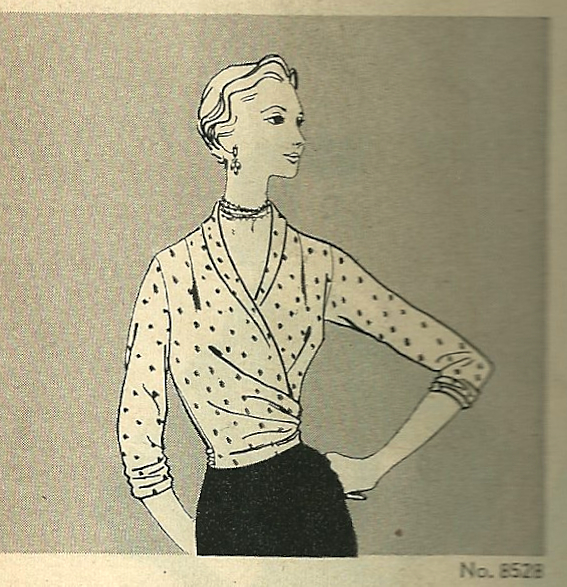
And look at this “wrap” blouse, also from 1955:

Looking at blouses 1955 - wrap style

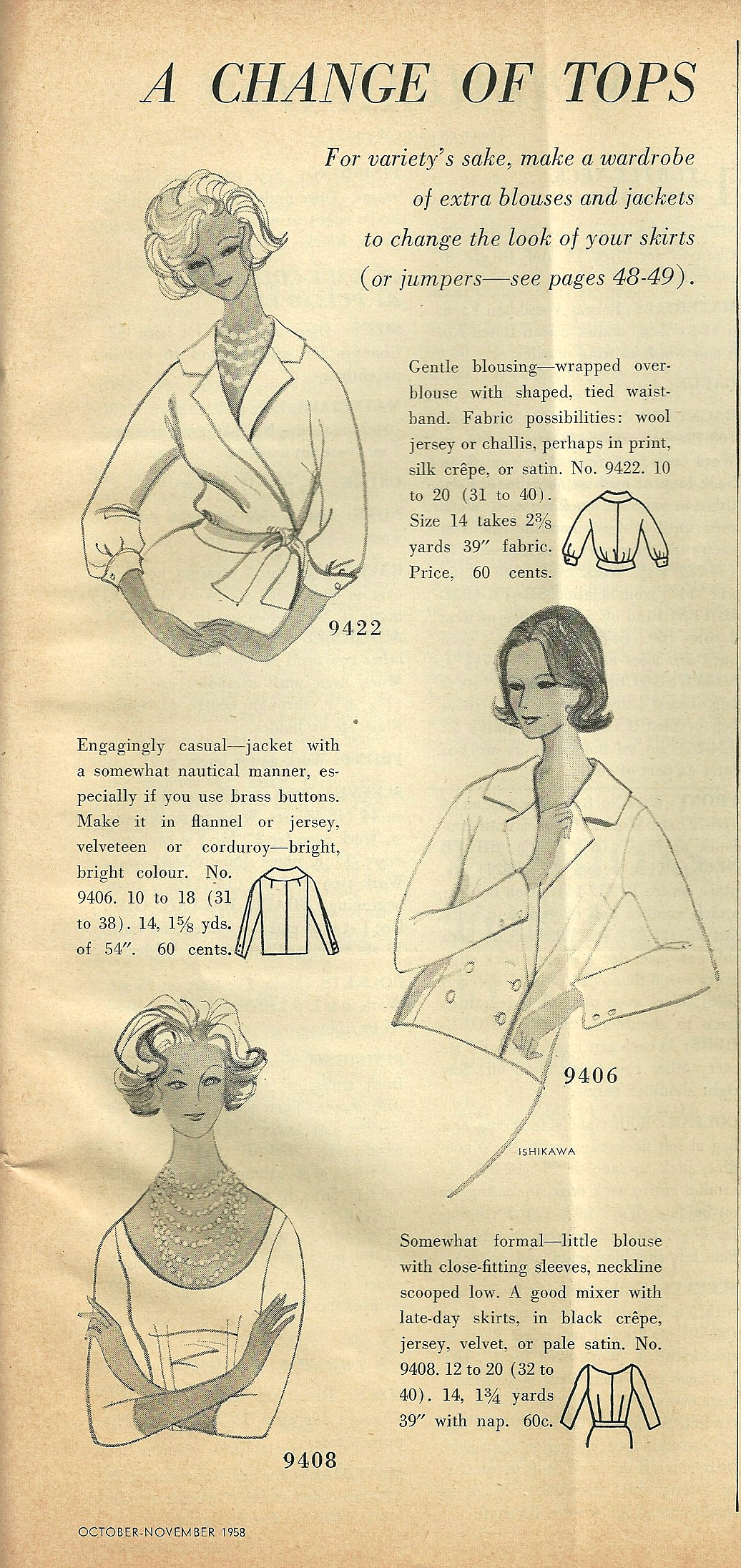
Three years later, in October/November of 1958,  “A Change of Tops” was suggested.  “For variety’s sake, make a wardrobe of extra blouses and jackets to change the look of your skirts…”  That sounds like a good idea to me, especially with the pretty styles that are featured:

Another beautiful wrap blouse among the suggestions!

Another beautiful wrap blouse among the suggestions!

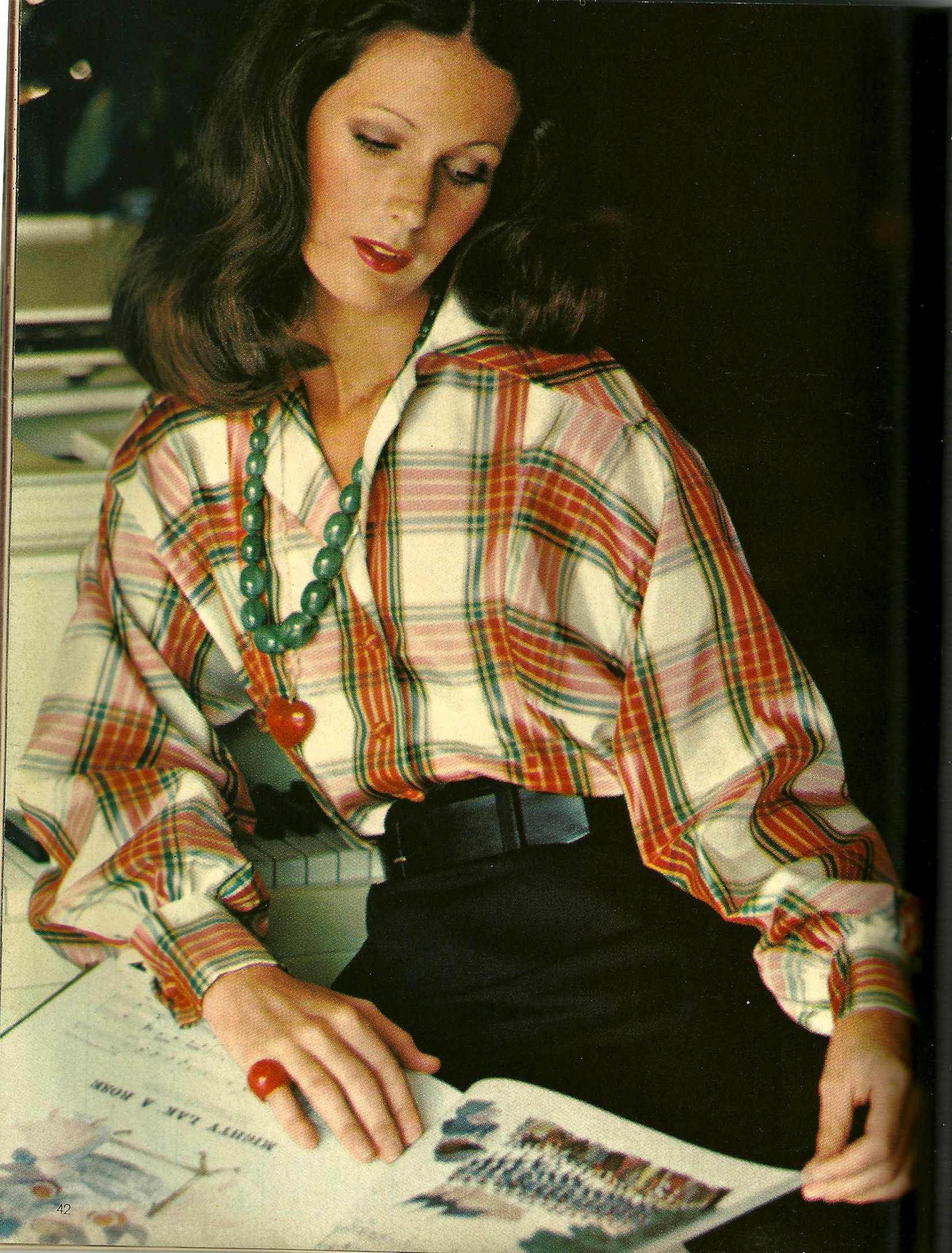
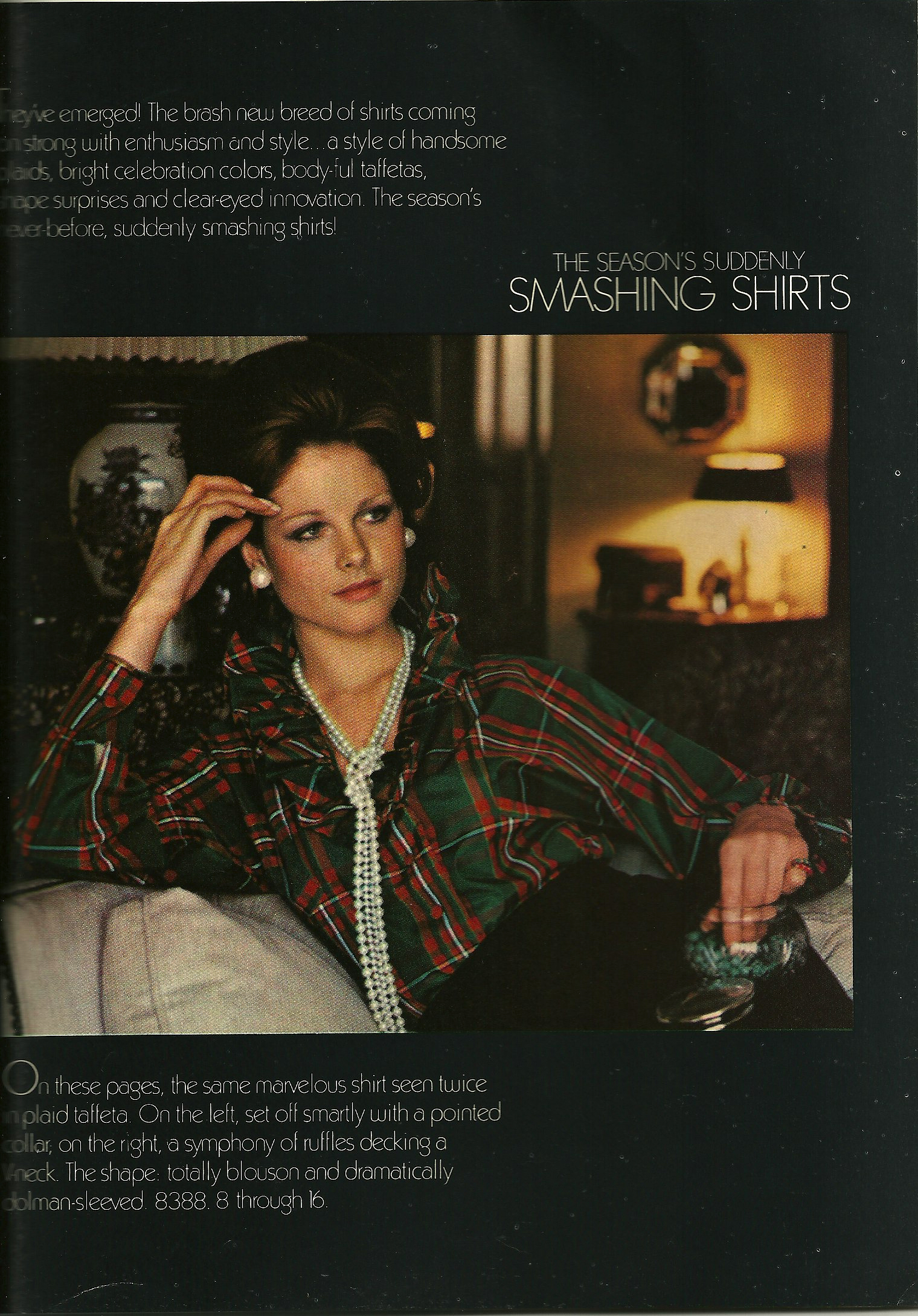
By 1972, collars were beginning to be a bit on the large side for my taste, but these three blouses are still “smashing” even 40 years later!

Made up in a plaid taffeta.

Made up in a plaid taffeta.

This is the same pattern as the blouse above, but with a ruffled collar.

This is the same pattern as the blouse above, but with a ruffled collar.

The diagonal print is very effective in this style.

The diagonal print is very effective in this style.

I was particularly drawn to the diagram for the blouse shown above, as it is just a classic shirtwaist style:

Looking at blouses 1972 - plaid 3 sketch

Seeing this blouse reminded me of how much I like an old (very old) RTW David Brooks blouse that I have been wearing for years.

Looking at blouses

It still looks stylish, and I really enjoy wearing it.  So – why not make a “copy” in my pink silk?  Could I possibly find another pattern in my collection that could be suitably altered to achieve this look and style?

Well, I did.  My blouse is currently “under construction” – but the pattern (to be revealed in my next post) is so funny looking that one may truly ask “Why did you ever save that one?”  Hopefully I’ll have a really good, bright pink answer to that soon!

2 Comments

Filed under Blouse patterns from the 1950's, Uncategorized, vintage Vogue patterns from the 1950s, vintage Vogue patterns from the 1970s, Wrap blouses

“P” is for Pearl — and — Perseverance

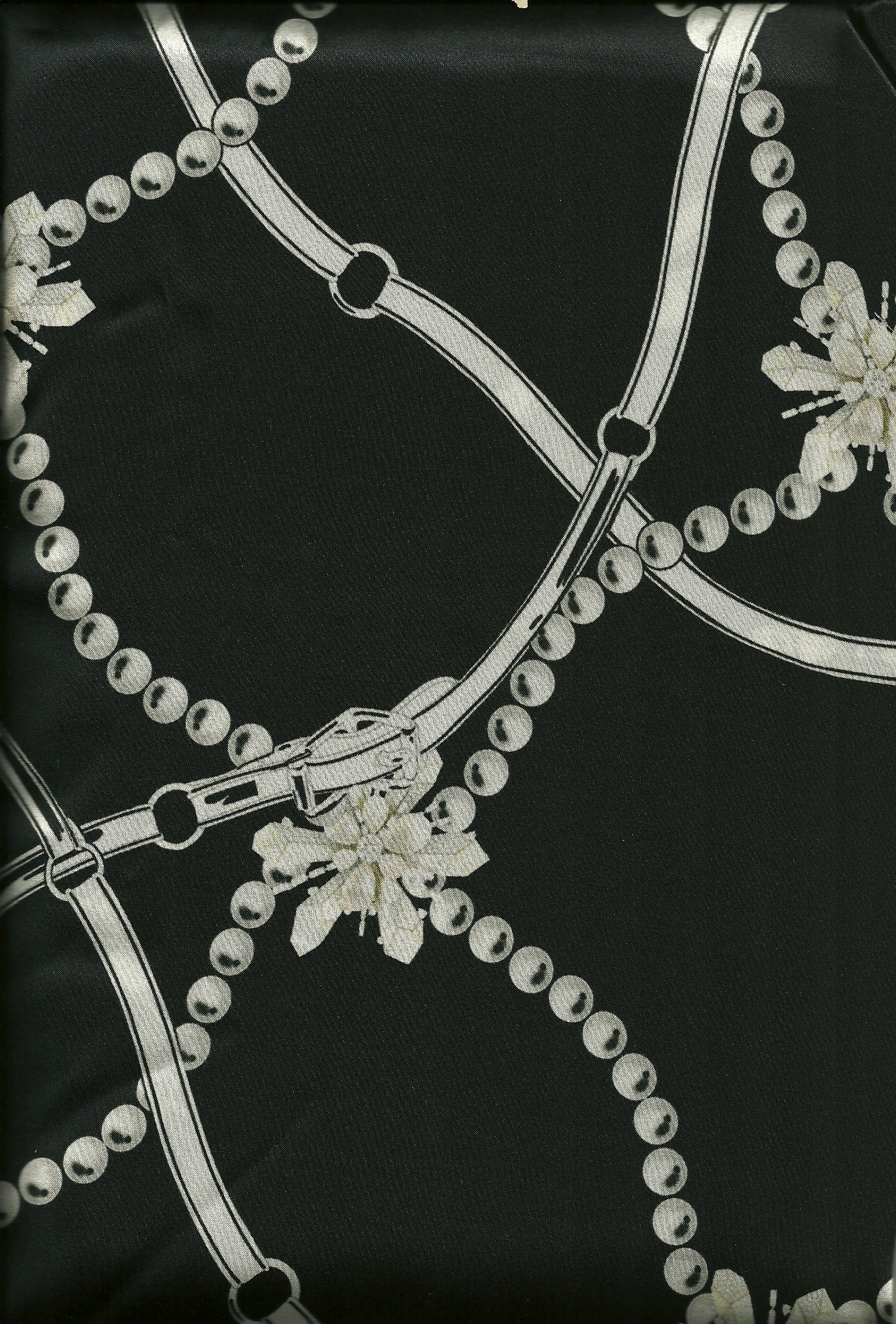
Among timeless fashion statements, pearls and wrap dresses both make my top-ten list.  The opportunity to combine the two was just too good to pass by, especially after being inspired by a silk charmeuse perfectly suited for just such a pairing.

Pearls and ribbons and clusters!

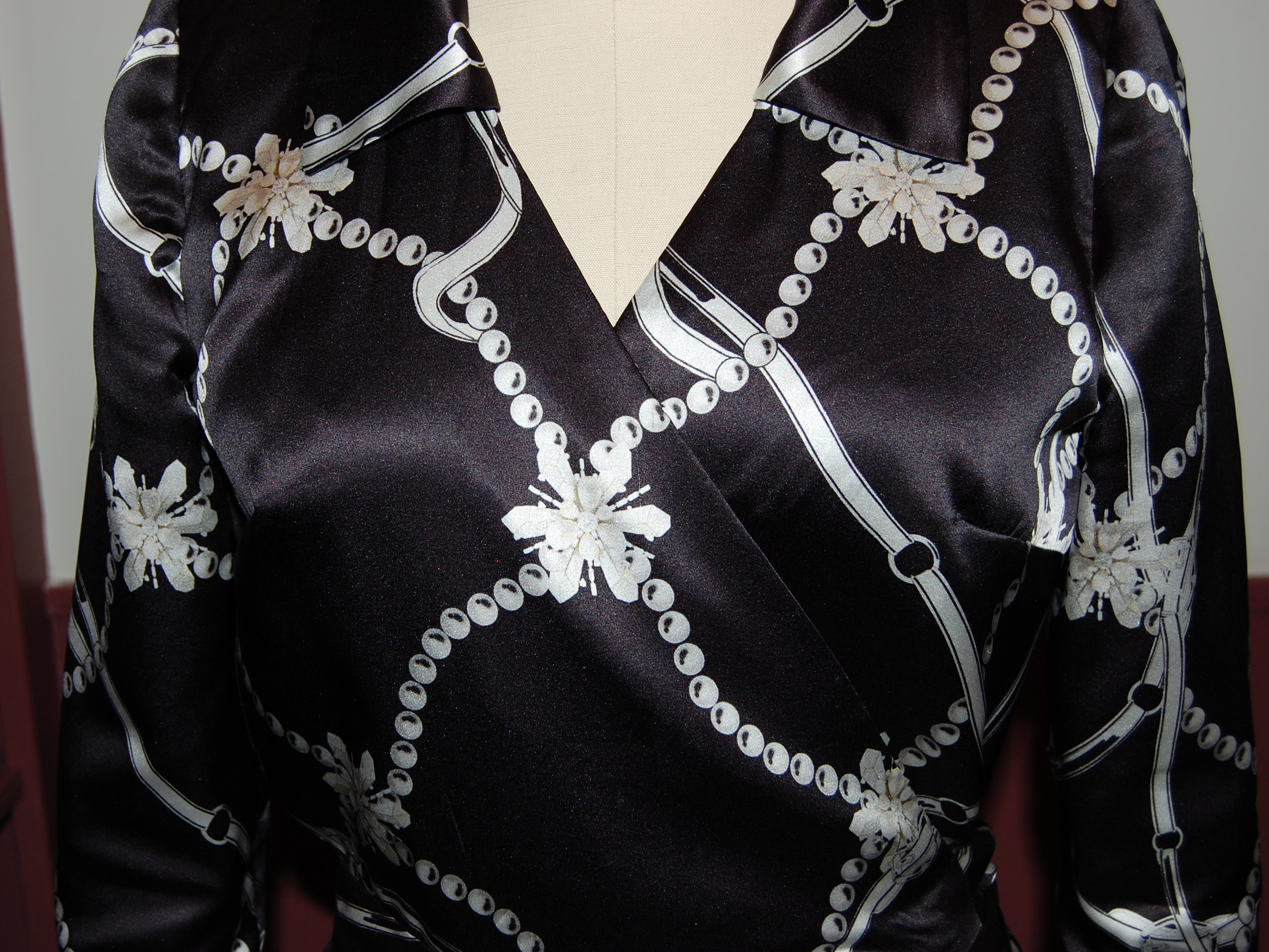
Pearls and ribbons and clusters, fabric purchased from Mendel Goldberg Fabrics in NYC.

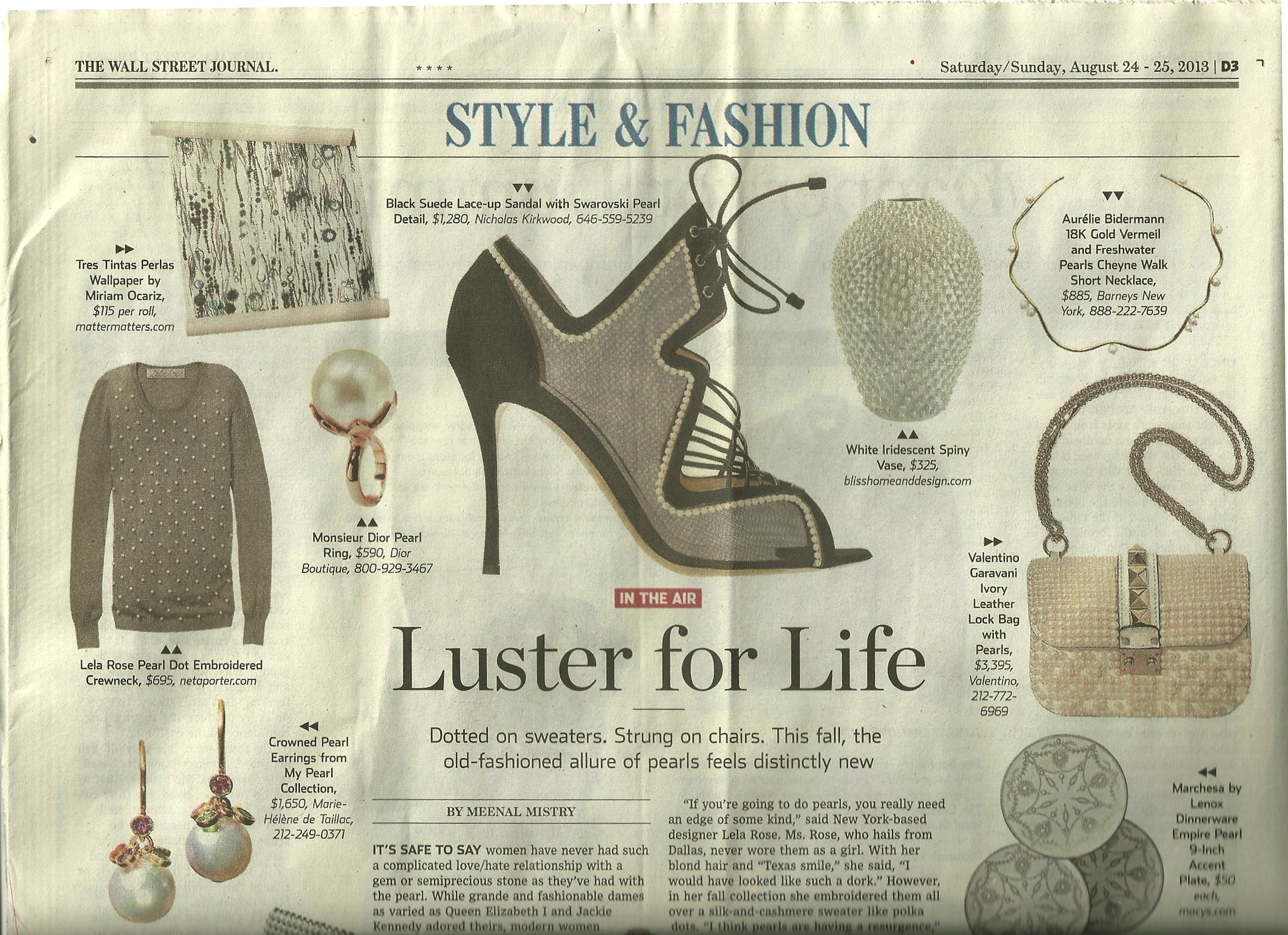
As luck would have it, shortly after I purchased the silk for this dress, an entire article in the Style & Fashion section of The Weekend Wall Street Journal of August 24 – 25 (2013) was devoted to “the old-fashioned allure of pearls…”  It seems that pearls are “showing up on everything from shoes to wallpaper to chairs”  – and to fabric, as evidenced by my Italian silk charmeuse.  I am just “old-fashioned” enough to think that pearls are never not in style, but I must admit that even I was smitten with the unusual and modern approach of this fabric design.

Pearls required - WSJ article

Pearls are showing up everywhere, it seems.

So – how would this modern fabric look, made up in a mid-1970s’ wrap dress pattern?   I thought it would work quite well. But getting there turned out to be challenge.  Although I was lacking the classic Diane von Furstenberg wrap dress pattern that I envisioned for this dress (blogged about here), I thought I could piece together a 1976 Simplicity version and a new Vogue wrap dress pattern to achieve my goal.

This is the dress I wanted to recreate...

This is the dress I wanted to recreate…

The Simplicity "version" of the Diane von Furstenberg wrap dress.

The Simplicity “version” of the Diane von Furstenberg wrap dress.

Vogue 8784 diagrams

Vogue 8784 diagrams

Here’s what I did:

1) I decided to use the princess-seamed bodice back from the new Vogue pattern.

2) I re-cut the collar and the cuffs from the Simplicity pattern so that the points on them would not so extreme.

3) Because the ties on the Simplicity pattern were not attached to the dress (the tie was just like a very long separate sash) I used the ties from this DvF pattern, and attached them to the side seams.

Pearls required - DvF pattern

4) The missing sleeve pattern piece in the Simplicity pattern meant that I had to use the sleeve from the new Vogue pattern and basically redraft it, with an elbow dart, and with cuffs.  I also used Simon Henry’s book The Little Black Dress: How to make the perfect one for you as a reference.

Pearls required - LBD book

This is the wrap LBD dress featured in the book.

5) I ended up making two complete muslins and re-stitching one of those muslins, before I had a workable pattern.  All of this seemed to take forever!

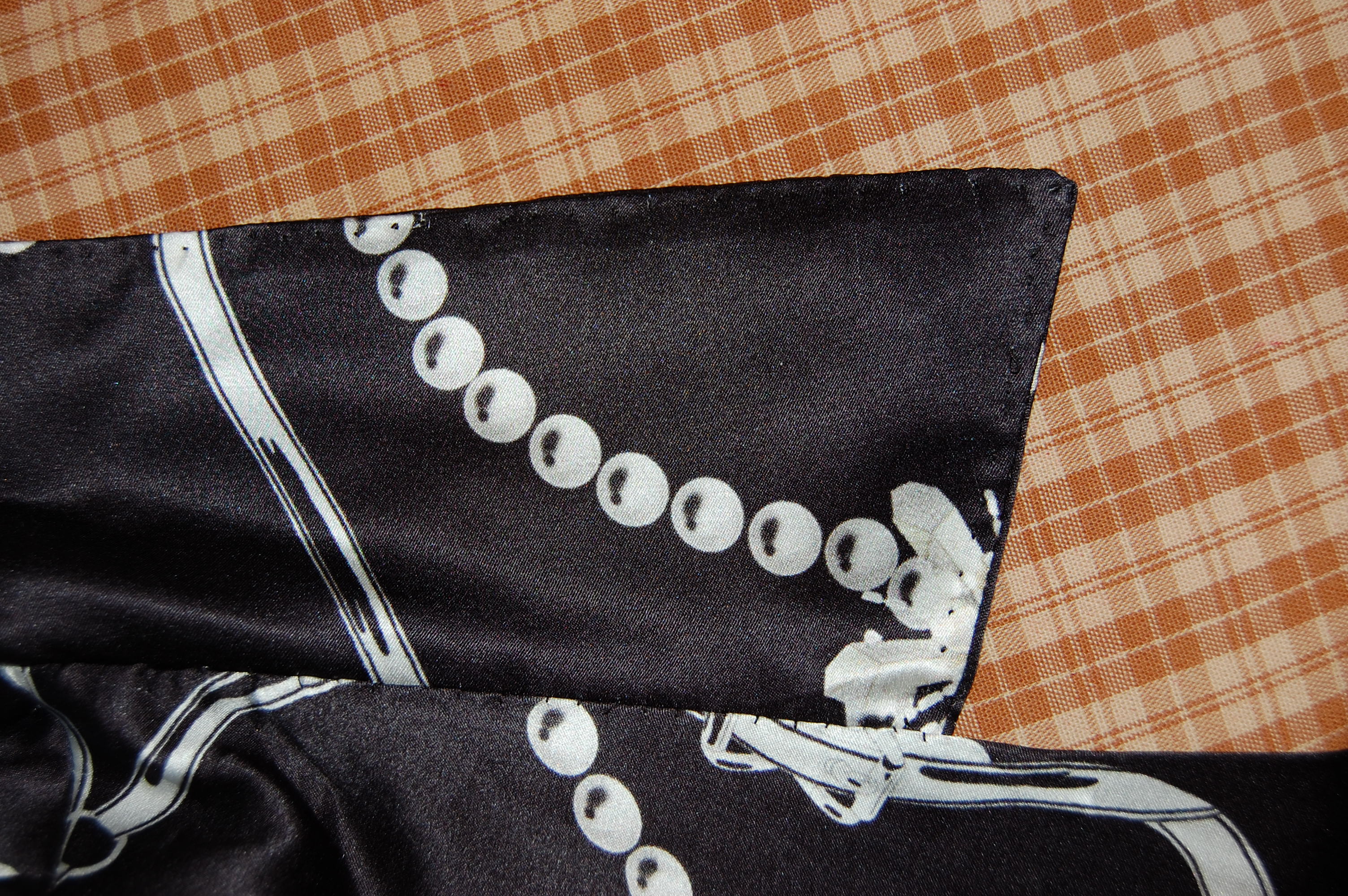
When I finally cut out the black silk organza underlining, I was ready for a celebration, but of course, that would have been premature.  Although the design in the fashion fabric really could not be “matched”, I still had to respect the placement of the “clusters” as they would relate to the bodice.  (I did not want “clusters” at the apex of the bust darts, for example.)   And I felt like the “clusters” should be placed at equal distances from each other over the expanse of the dress, if possible.  After determining all this and  cutting out the fashion fabric, I finally got to sewing, which included lots of basting, catch-stitching all the seams to the underlining, understitching the collar by hand (which worked beautifully, for which I was very grateful!), setting in the sleeves, making the lining, etc., etc.

Here is the final placement of the fabric design on the front of the bodice . . .

Here is the final placement of the fabric design on the front of the bodice . . .

P is for pearl

. . . and here is the bodice back.

Understitching the collar created a slight under-curve which helps the collar lay flat.

Understitching the collar created a slight under-curve which helps the collar lay flat.

This boring view just shows the lining that was so tedious to attach!

This boring view just shows the lining that was so tedious to attach!

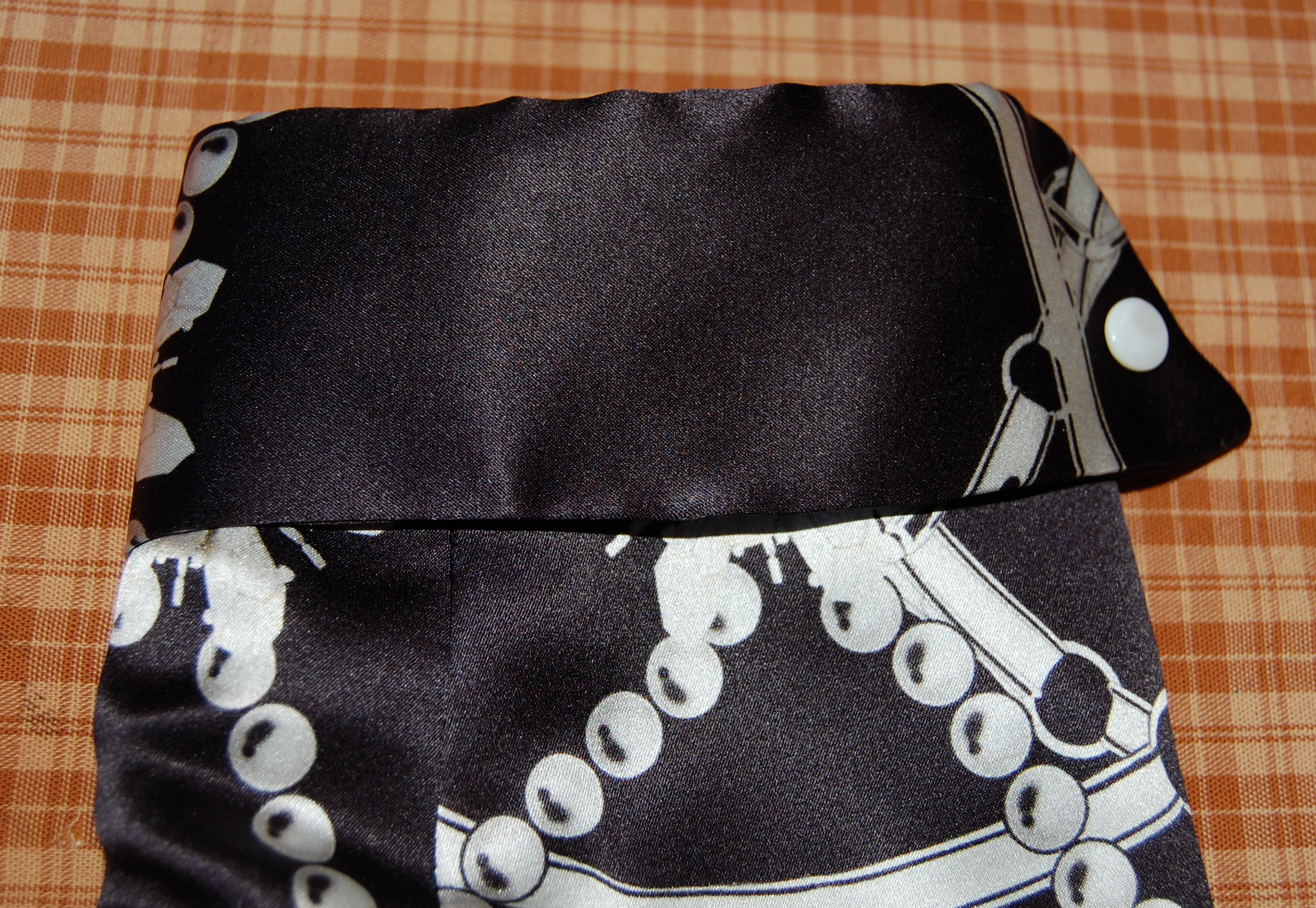
I made the mistake of making the cuffs before a final fitting of the sleeves. (I thought I was being smart and getting “prep” work done, but I just made more work for myself).  I ended up shortening the sleeves and enlargening the openings so that I would be able to push them up on my arms if I wanted to.  The cuffs I had made were not long enough to accommodate these adjustments, so back I went to cut and make new cuffs.  Fortunately I had just enough fabric to squeeze these out!

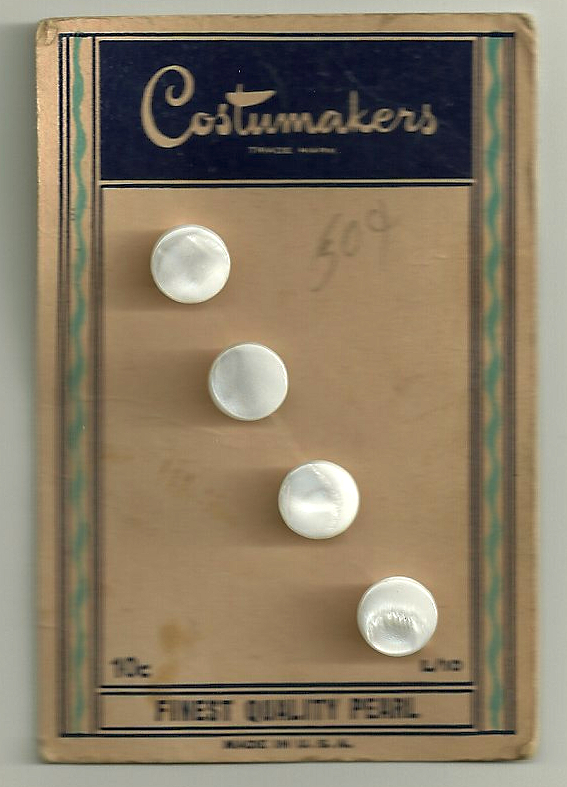
For buttons for the cuffs, I went to my button box and came up with this card:

The original price of these buttons was 10 cents.  I picked them up for 50 cents at some point.  It almost seemed a shame to cut them off of the card!

The original price of these buttons was 10 cents. I picked them up for 50 cents at some point. It almost seemed a shame to cut them off of the card!

Because I had reduced the points on the cuffs, I needed “not-too-big” buttons and these proved to be perfect, I thought, and in keeping with the “pearl” theme.

Here is one of the cuffs with buttons attached.

Here is one of the cuffs with buttons attached.

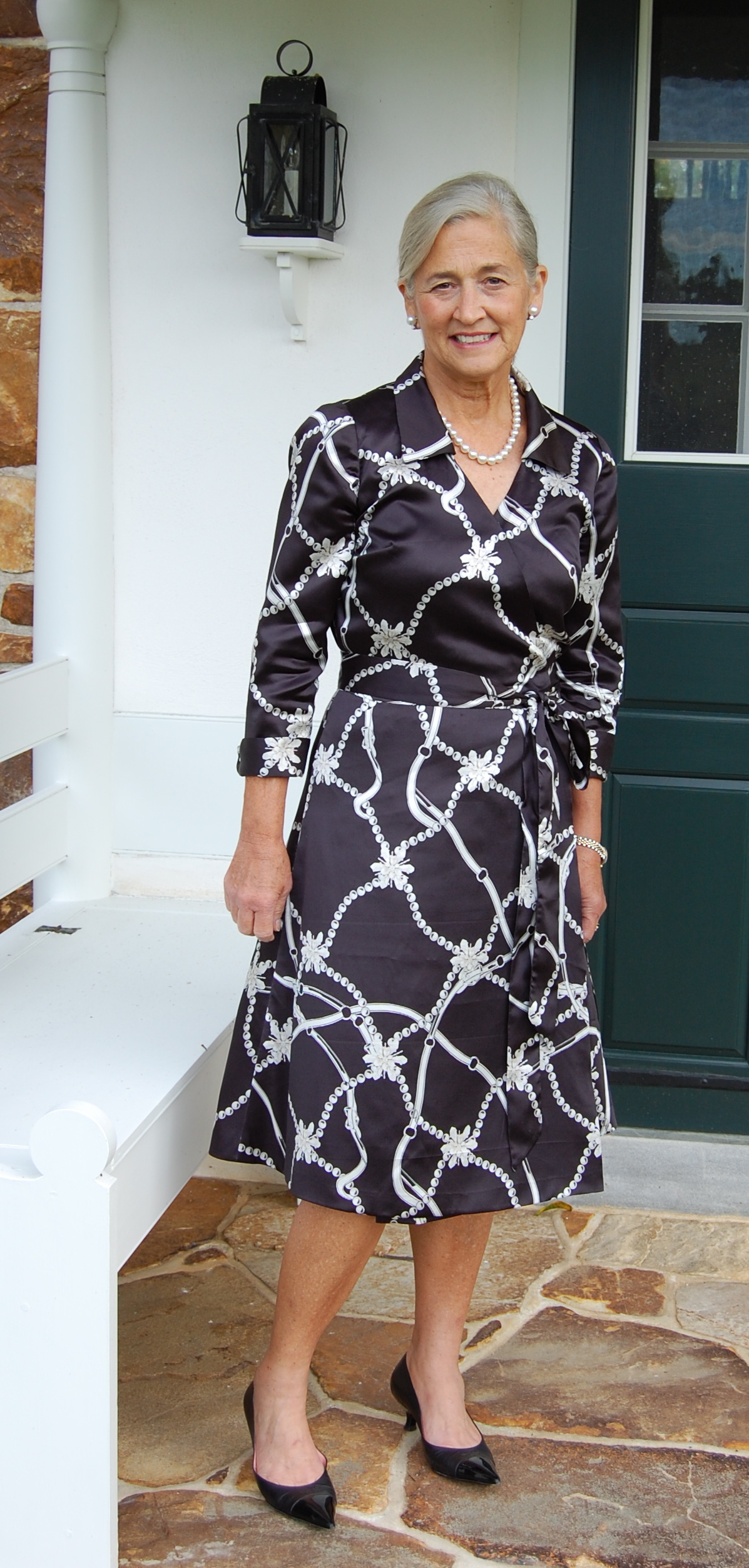
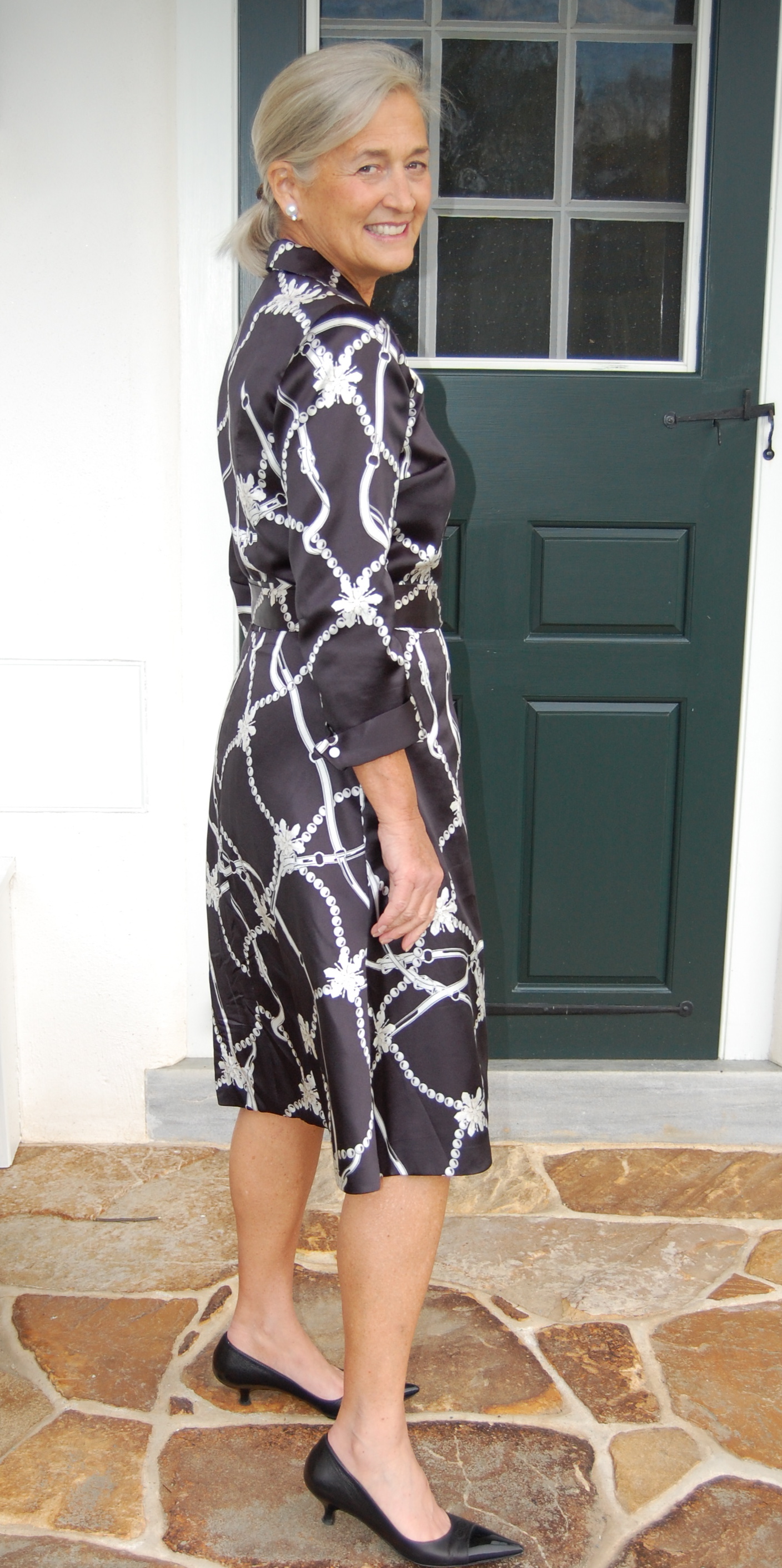
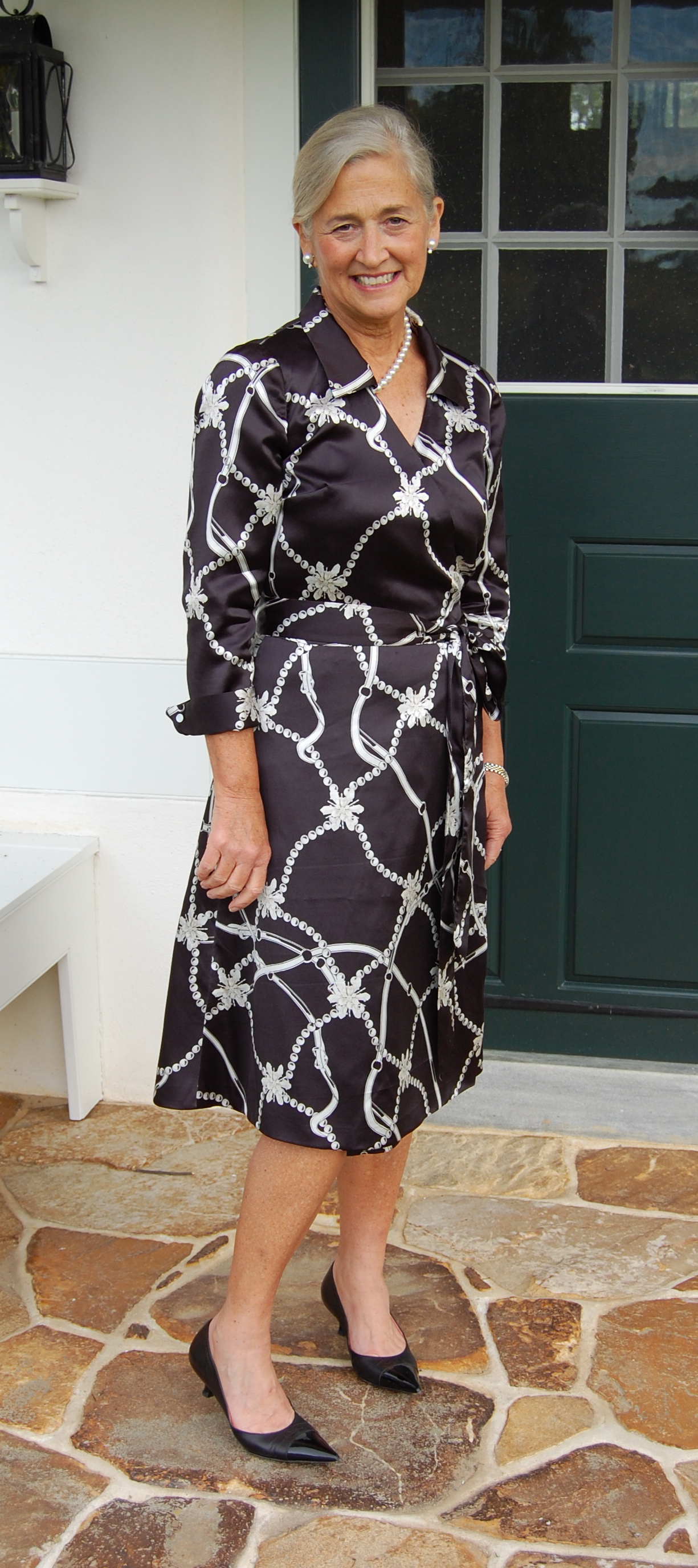
Working on the black fashion and lining fabrics was tedious.  And it seemed the more I worked on this dress, the more there was to do on it!  Kind of like eating a big bowl of pasta – the work seemed to multiply before my eyes.  Fast, easy, and jiffy this was not!  It’s times like this that being of a stubborn nature serves me well.  I persevered and got it done!  And even better, I am really happy with the results.

I will replace this photo with one of me in the dress as soon as I can!

Here is the dress on my new dress form . . .

. . . and here it is on ME!

. . . and here it is on ME!

DSC_1022

DSC_1028

P is for pearl

Now – two more “P” words.  I have “P”romised myself that my next “P”roject will be simple.  Maybe a blouse – or even a blanket?

15 Comments

Filed under Buttons - choosing the right ones, couture construction, Little Black Dress, sewing in silk, Uncategorized, vintage buttons, vintage Vogue Designer patterns, vintage Vogue patterns from the 1970s, Wrap dresses

Feathers for Fancy, Feathers Forever

I really had no intention of writing a new post today.  I have been away from home quite a bit, and the few days I have had at home, I have been working on “perfecting” (hopefully) a muslin for my wrap dress.  But – I was inspired yesterday when I read the fashion section of the Weekend Wall Street Journal.  Meenal Mistry devoted her front-page article to Fall’s “feathered looks” which range from casual to office to evening attire.  This was the only excuse I needed to join the feather frenzy.

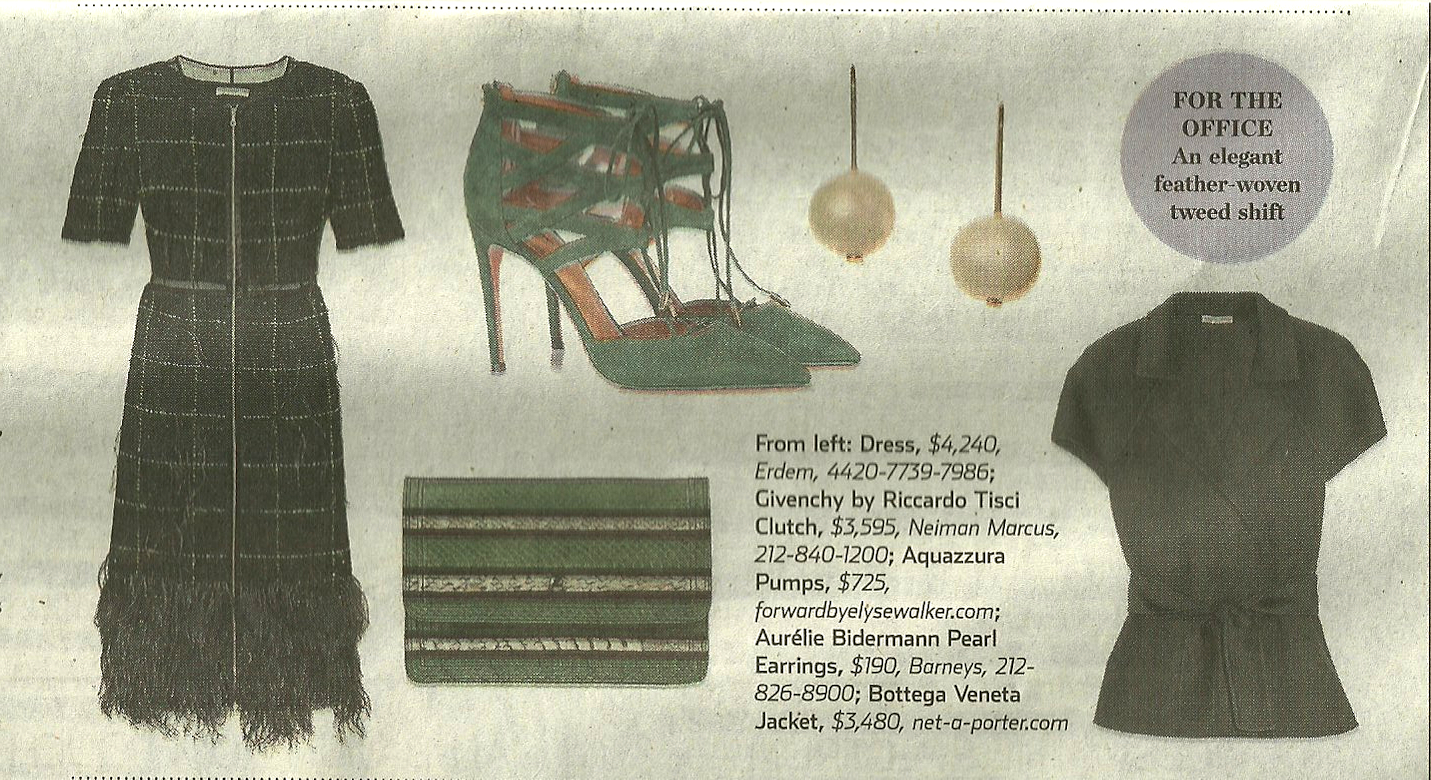
But, first, here is an example of what is being offered this Fall “for the office:

The dress on the left features feathers at the hem. I'm not sure I'd wear feathers to an office (if i went to an office!), but I love the dress.

The dress on the left features feathers at the hem. I’m not sure I’d wear feathers to an office (if I went to an office!), but I love the dress.

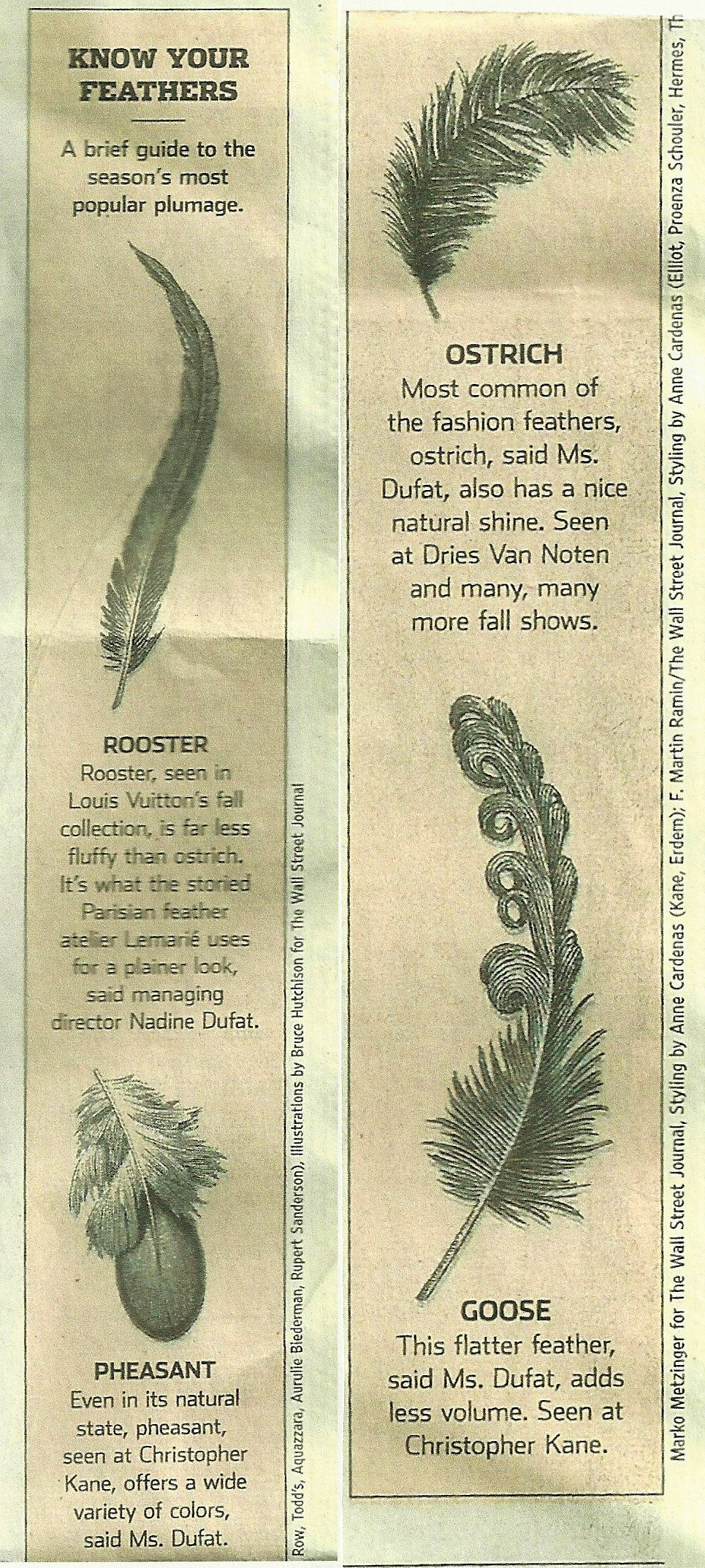
Included with the article is “A brief guide to the season’s most popular plumage”:

This is a handy little chart to the season's most popular fashion feathers.

This is a handy little chart to the season’s most popular fashion feathers.

Quoted and featured in the article is Nadine Dufat, who is the managing director of Lemarie, the Parisian feather atelier which does haute couture work for the houses of Louis Vuitton, Chanel and Dior:  “I think designers like feathers because there are so many different possibilities with them.”   Commenting on Lemarie, the author muses, “Certainly the 133-year-old plumassier can make magic happen when it comes to all things avian, but no matter who’s doing your feather work, there’s something about plumes that’s fascinating and otherworldly and therein lies the allure – eternal for some, fleeting for others.”

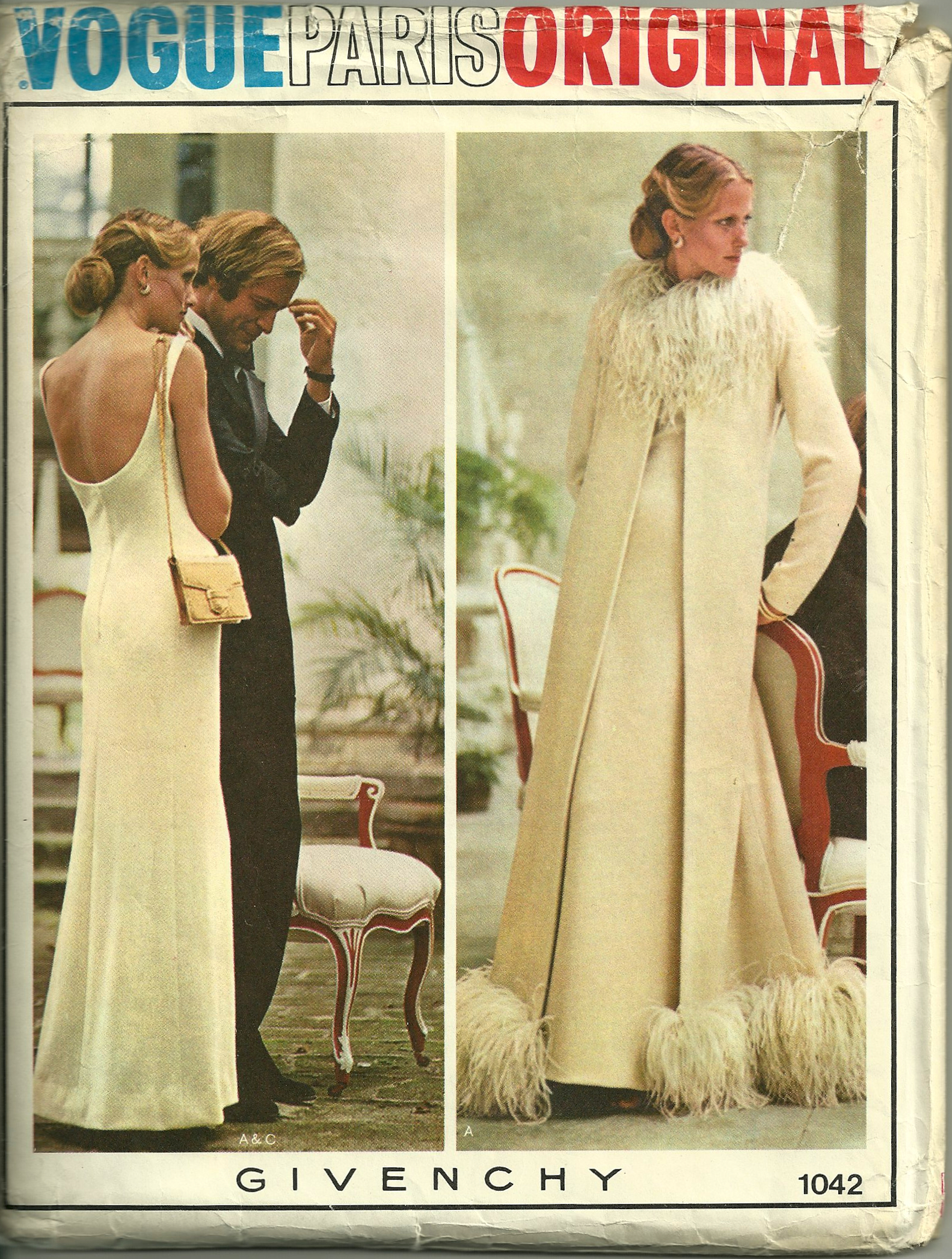
“Eternal” is certainly more than 40 years, but a Vogue pattern from about 1973 proves the point about the elegance and staying power of feathered fashions.  I immediately thought of this pattern while reading the article, and went directly to my pattern file to retrieve it.  This pattern, a Paris Original by none other than Hubert de Givenchy, is one of my all-time favorite Vogue Designer patterns:

This evening coat makes my heart skip a beat!

This evening coat makes my heart skip a beat!

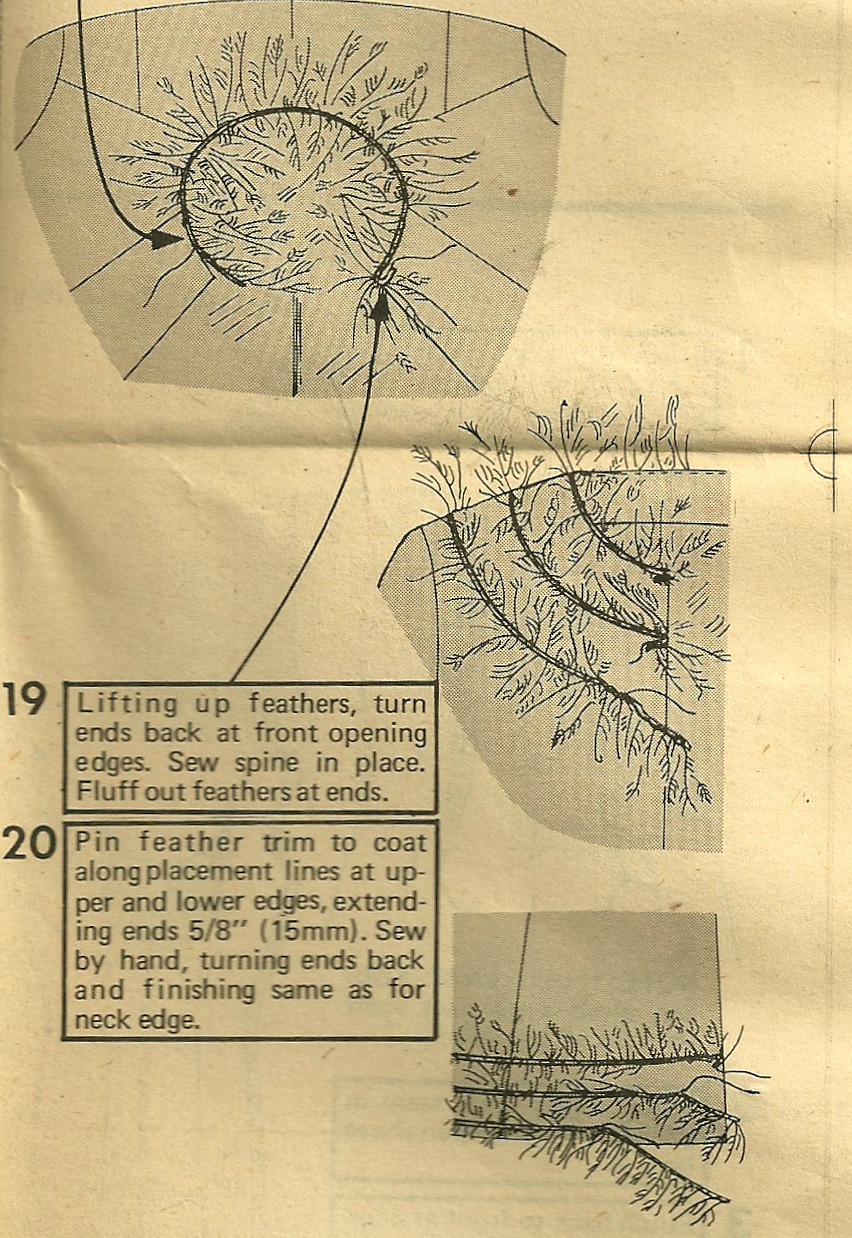
Princess seaming and the use of few darts insure that the long fluid lines of the low-backed dress and the evening coat are unencumbered with excess fabric.  The ostrich feather trim is attached to the coat in three evenly spaced rows at both the neck and hem.

Feathered coat - pattern instructions

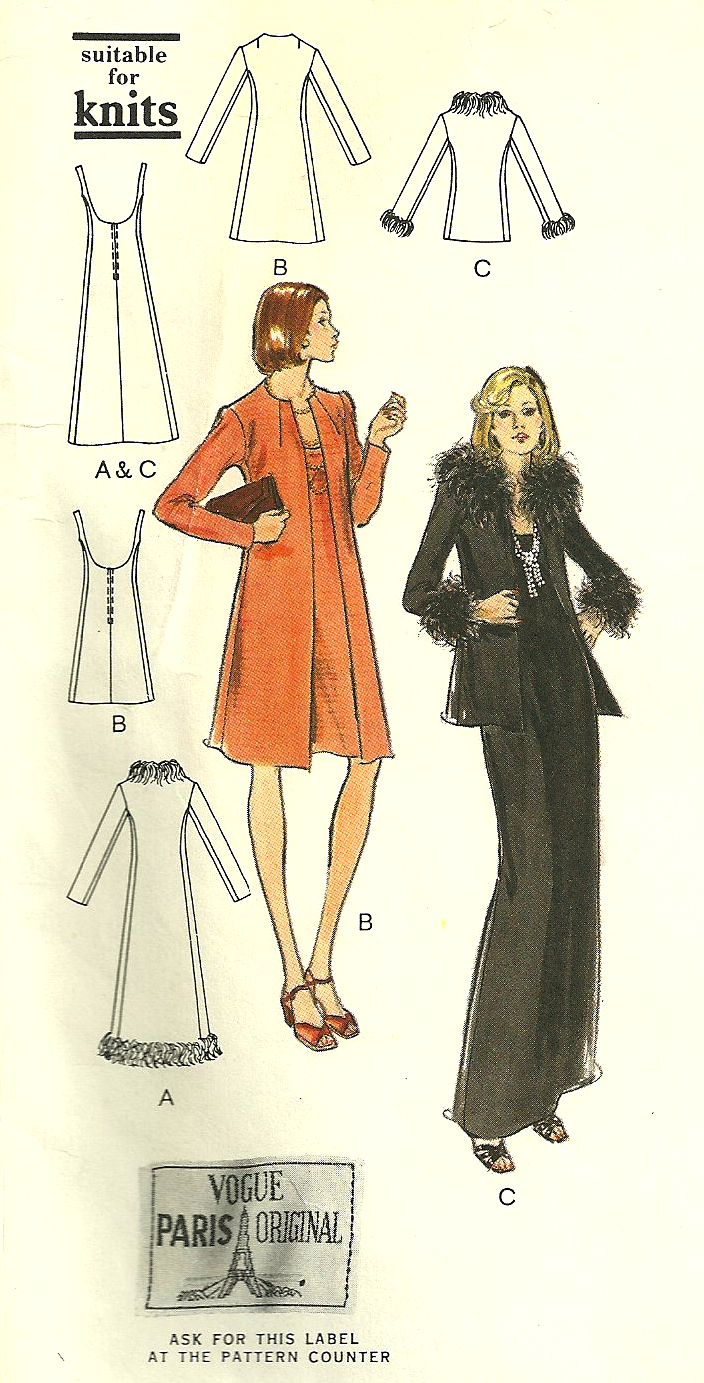
For those wanting more of a “cocktail” version of dress and coat, shorter views offer variety and versatility:

The knee-length coat could certainly sport feathers at least at the hem line, don't you think?

The knee-length coat could certainly sport feathers at least at the hem line, don’t you think?

I did a lot of “pattern dreaming” during the decade of the 1970s.  I apparently never had an occasion to make this dress and coat, as I never purchased it when it was available in the pattern catalogs.  But I did, indeed, dream about it – many times.  When I found it again – in my size, in factory folds, with label intact – in an Etsy store a while ago, I indulged that dream – and I bought it.  Will I ever make it?  The dress, probably “no” unless I alter it to show a little less skin!  But the coat – if the occasion is special and worthy of this level of simple elegance  – then “yes”.  And – I’ll definitely be using feathers.

6 Comments

Filed under Coats, Uncategorized, vintage Vogue Designer patterns, vintage Vogue patterns from the 1970s

Wrapping My Mind Around a New Dress for Fall

I am not sure why, but I have been obsessed with wrap dresses lately.  I think it began in May when I wore the dress I made last summer from a mid-‘70s Vogue Diane von Furstenberg pattern.   It seemed to make a hit whenever I had it on – and there is nothing like a compliment to make one try for a repeat!  I just needed to find the perfect fabric – and another perfect pattern.

I made the sleeveless version of this dress in a red and white print.

I made the sleeveless version of this dress in a red and white print.

The perfect fabric turned out to be the easy part of the equation.  One of my classmates in Susan Khalje’s Classic French Jacket Class chose this silk charmeuse for her jacket lining:

Wrap dress - 9 - fabric I loved the design so much that I asked for a swatch of it while I was at Mendel Goldberg Fabrics in NYC with my classmates.  Well, you can guess the end of this part of the story.  A few weeks after arriving home, I called up Alice at Mendel Goldberg and ordered some yardage.  I could picture this fabric as a wrap dress with ¾ or bracelet-length sleeves.  However, it is a woven fabric (of course), and even though it does have a slight stretch to it, those vintage Diane von Furstenberg patterns require “stretchable knits”, even including a stretch gauge on the pattern envelopes to ensure success.

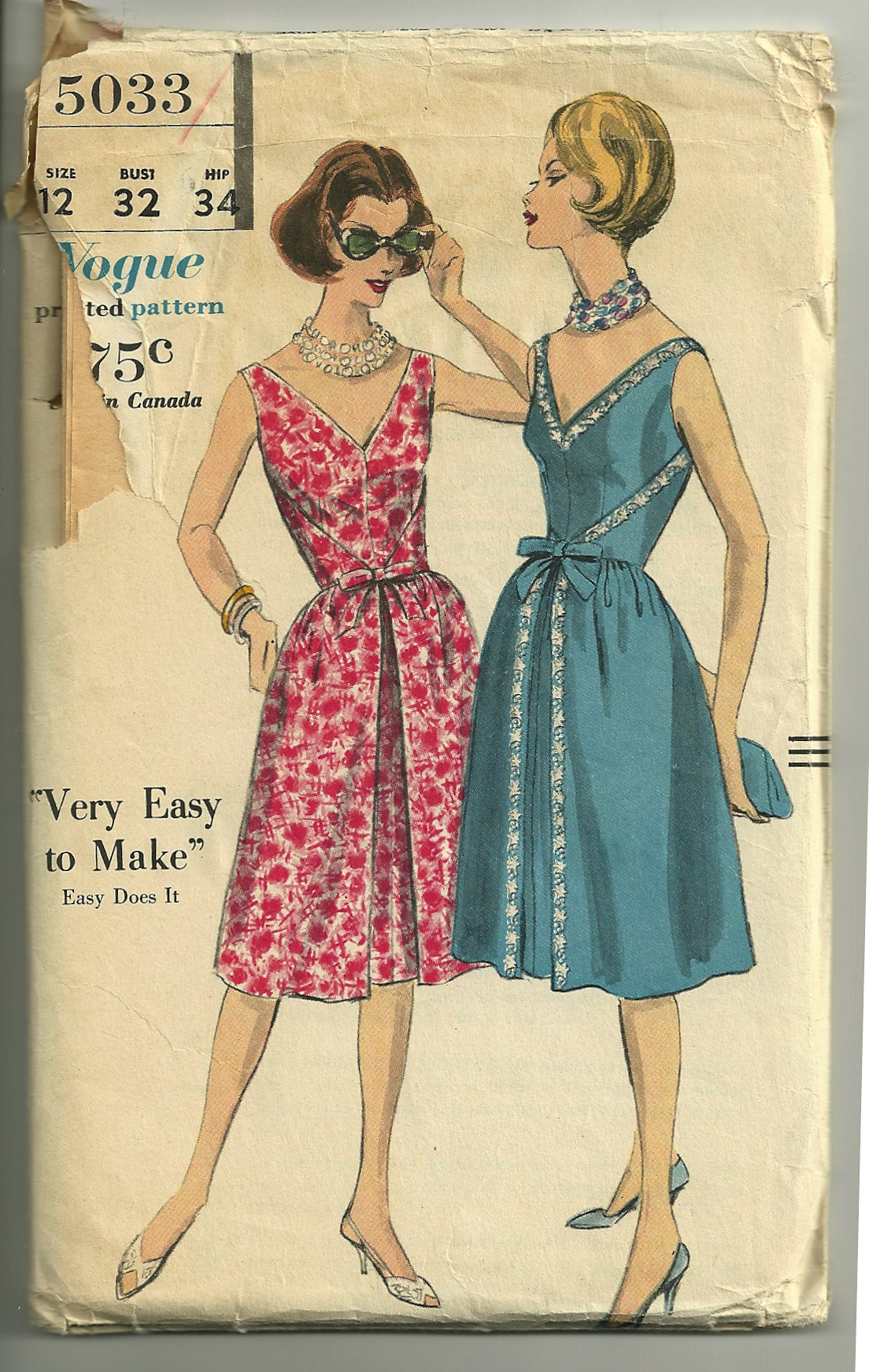
Wrap dress - 8 - stretch gauge Out of curiosity I went through my collection of vintage patterns to see what other “wrap” dresses I could find, and although none of these three were quite the look I wanted, I was struck by the variety of wrap dress patterns available, obviously some long before Diane von Furstenberg made them so popular.

This pattern is copyright 1960.  "slightly gathered skirt back of the sleeveless, easy-does-it dress wraps around plain front to fasten at waist-line with tied belt."

This pattern is copyright 1960. “slightly gathered skirt back of the sleeveless, easy-does-it dress wraps around plain front to fasten at waist-line with tied belt.”

A thumbnail diagram on the back of the pattern envelope.  "Dress opens flat for ironing."

A thumbnail diagram on the back of the pattern envelope. “Dress opens flat for ironing.”

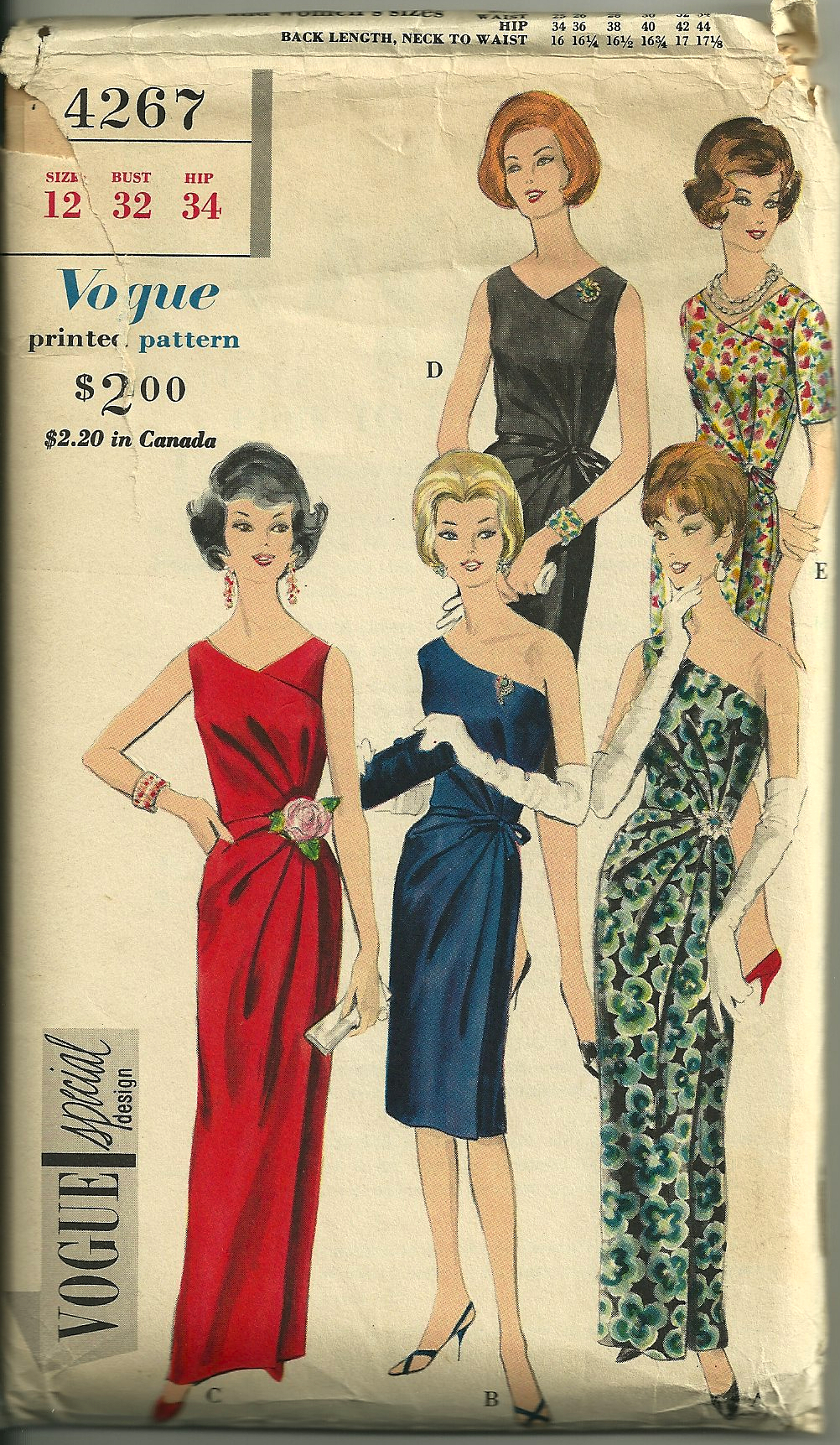
Here is a slightly more elegant wrap dress, also from the early ’60s:

Actually, just the skirt is a wrap on this dress, which has so many different looks, all of them quite stunning.

Actually, just the skirt is a wrap on this dress, which has so many different looks, all of them quite stunning.

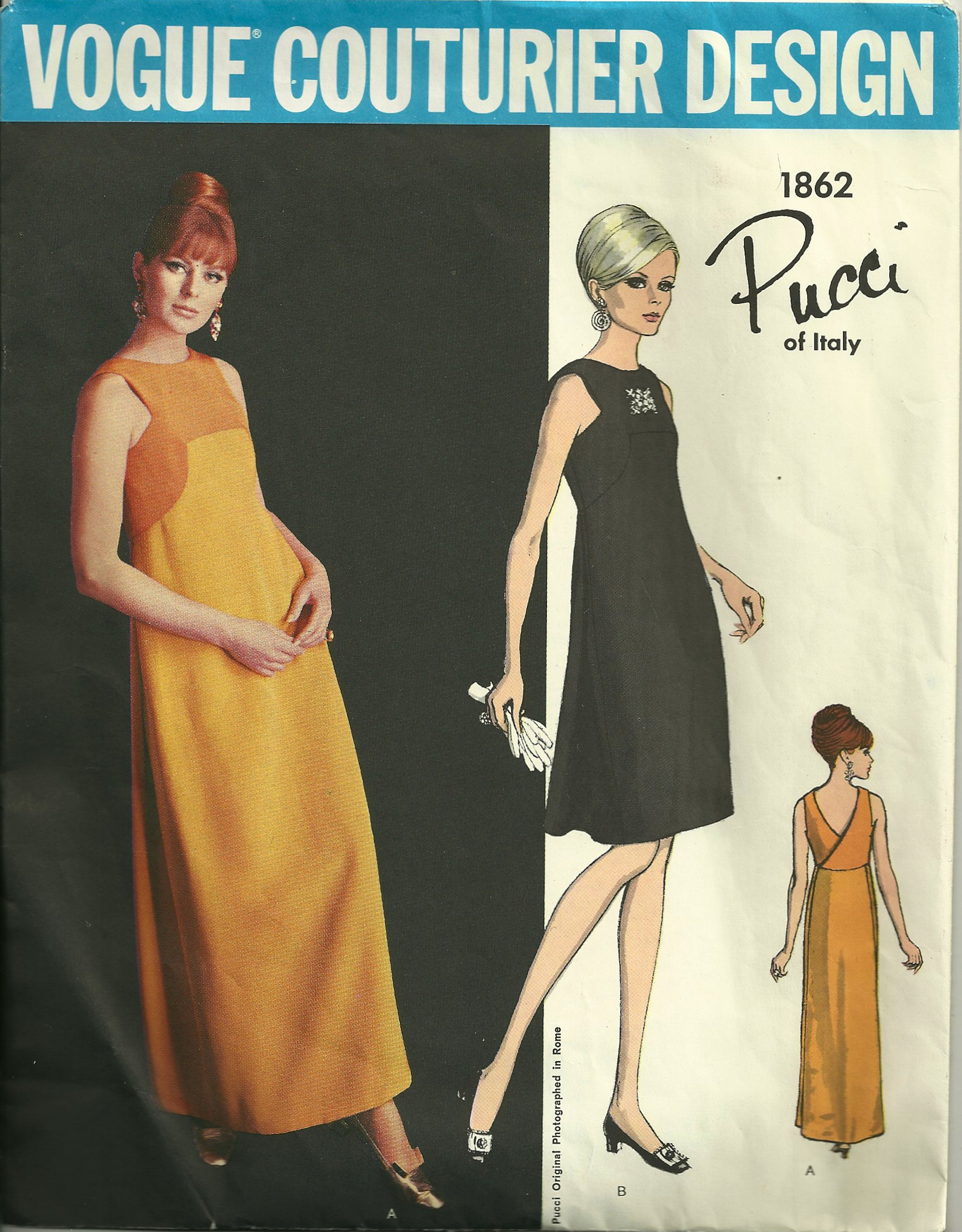
Finally this Pucci design, which is another elegant wrap dress:

"Slim, high fitted dress in evening r street length has wrapped back closing, soft side back folds."

“Slim, high fitted dress in evening or street length has wrapped back closing, soft side back folds.”

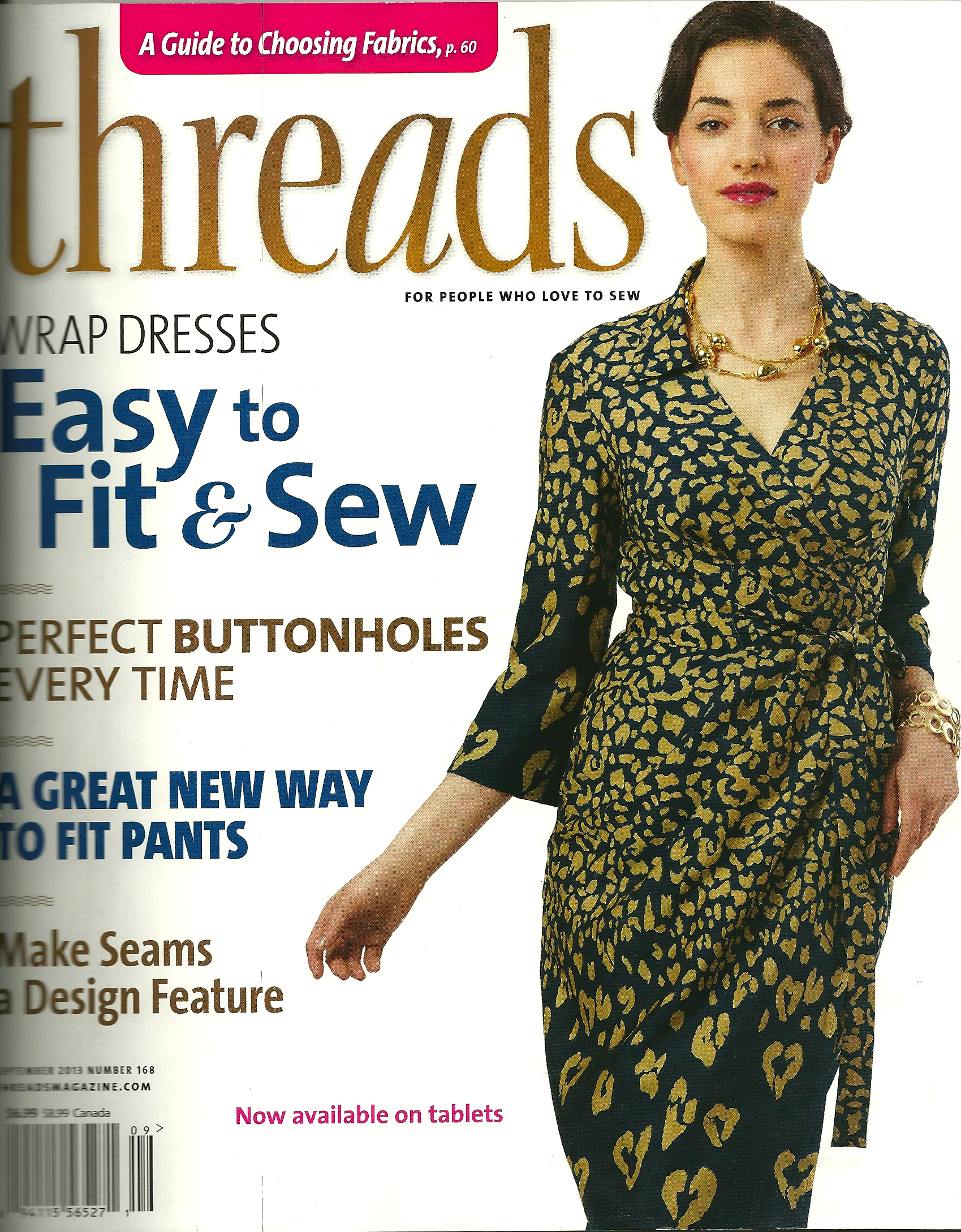
It was about this time that the September issue of Threads magazine arrived in my mailbox.  Now my obsession was in full force, as the main feature article was on Wrap Dresses: Easy to Fit and Sew.
Wrap dress I liked the dress featured on the cover – which happens to be a new Vogue pattern (V8784).  I also liked the fact that it does not require a knit fabric, and that it is to be lined (I could make it using couture techniques).  I did not like the sleeves, however – too baggy and shapeless.

I could not get around the idea that the look I thought I wanted was this D v F dress, featured on the front cover of Vogue Patterns for September/October 1976:

Wrap dress - 6 DvF cover

This presented two major problems, however,  First, I do not own this vintage pattern (yet), which commands high prices when it comes on the market.  And second, even if I did own it, my woven silk fabric would not be appropriate to use for it.

Well, this second part of the equation was beginning to be a problem.  Then, quite by luck, I stumbled on a Simplicity pattern from 1976 in an Etsy store.  The pattern  is obviously a knock-off of the classic Diane von Furstenberg dress I like so much.  However, it is for woven fabrics!  It was in my size, which I took as a “sign” that I was supposed to buy it – which I did.  I thought my search was over.  With a few minor adjustments to the “extreme” points on the collar and the cuffs, I felt sure this pattern would work.

I really don't think there is anything "JIffy" about this pattern . . .

I really don’t think there is anything “JIffy” about this pattern . . .

A few weeks passed as life took me in other directions and with other projects. Then, finally, I eagerly started on the muslin for this dress.   I was eager, that is, until I realized that the pattern piece for the sleeve is missing –  and the pattern is going to require many more alterations than I usually have.

This is not fun.

There – I feel better now that I have said that!  So my quest for the perfect pattern has been a challenge, but it’s not Fall yet.  By hook or by crook, I’ll be wearing a new silk wrap dress before the trees gently release their leaves into the cool, crisp autumn air.


15 Comments

Filed under Uncategorized, vintage Vogue Designer patterns, vintage Vogue patterns from the 1960s, vintage Vogue patterns from the 1970s, Vogue patterns

Inspiration and Adaptation

Sometimes in life – and in sewing – you have to alter your plans to accommodate the situation at hand.

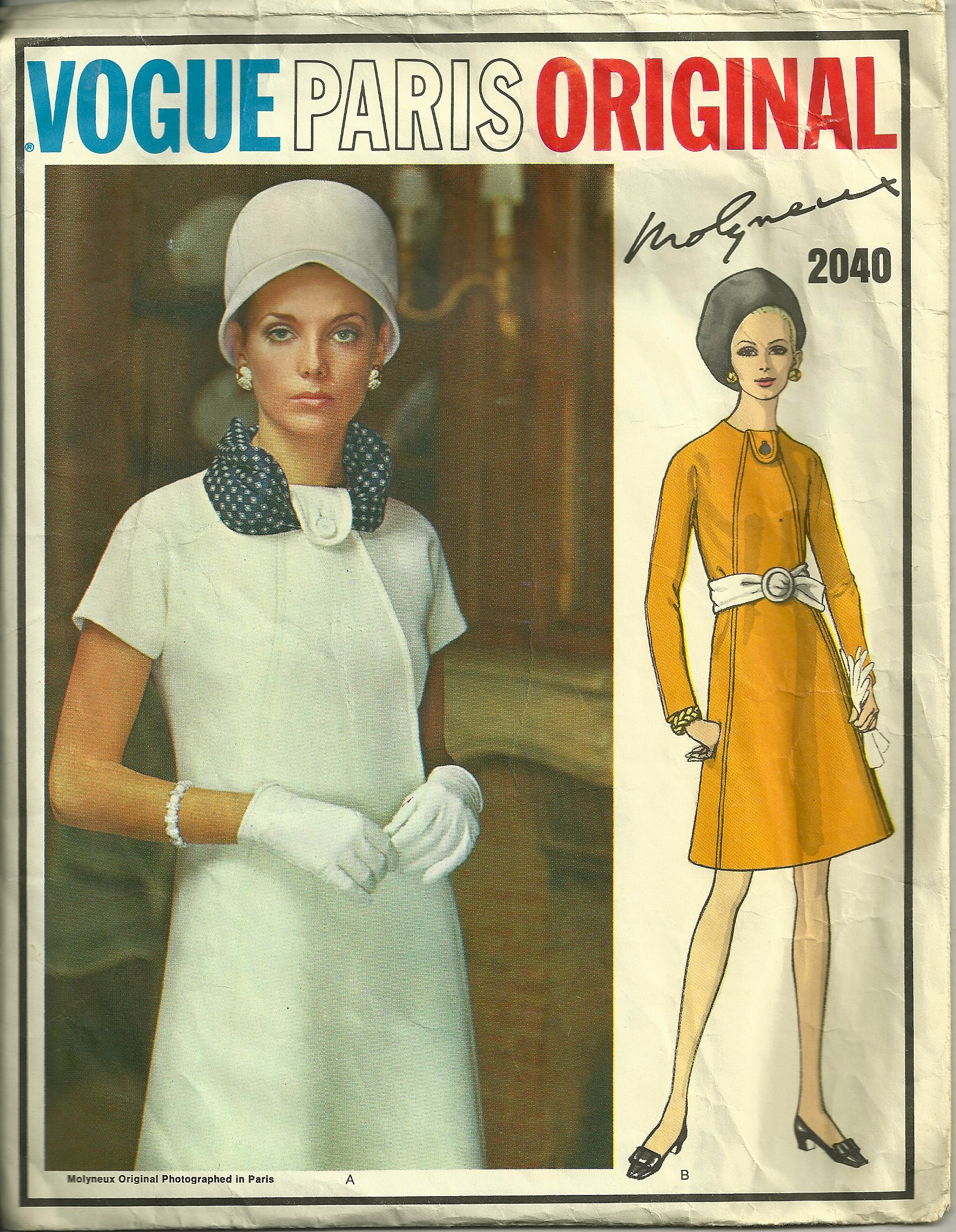
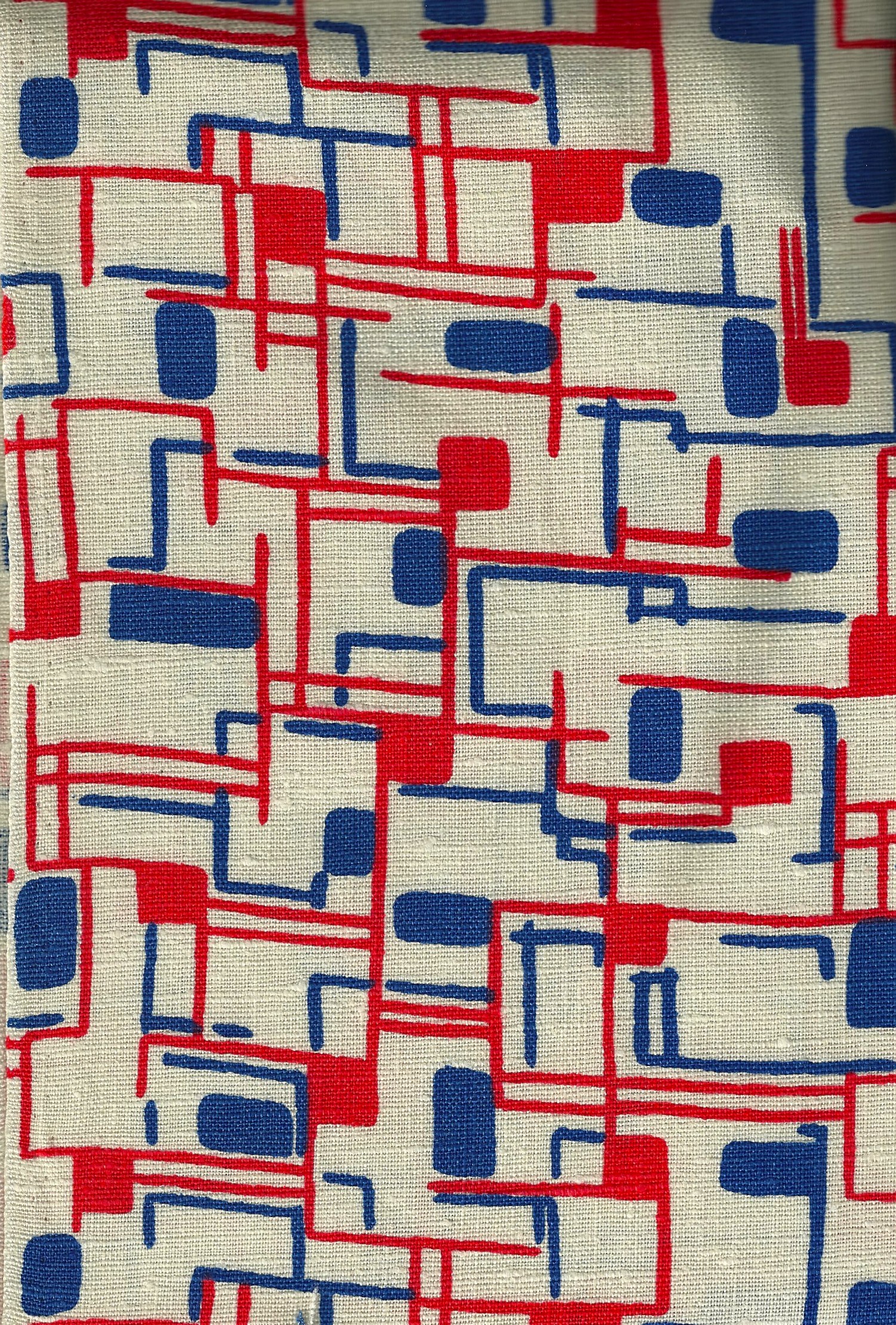
This is the situation I found myself in:  I had my heart set on pairing a favorite vintage Vogue Designer pattern with a piece of vintage Moygashel linen I had found in an Etsy shop.  They are both likely from the early 1970s and seemed destined to be together.

Molyneux has always been a favorite designer of mine.  My thought was to make the dress with short sleeves, but belt it as shown in View B.

Molyneux has always been one of my favorite designers. My thought was to make the dress with short sleeves, but with a belt as shown in View B.

My best guess is that this Moygashel linen is from the very early '70s.

My best guess is that this Moygashel linen is from the very early ’70s.

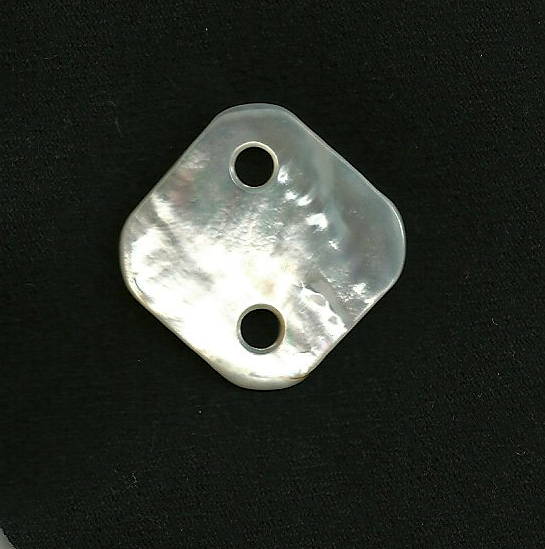
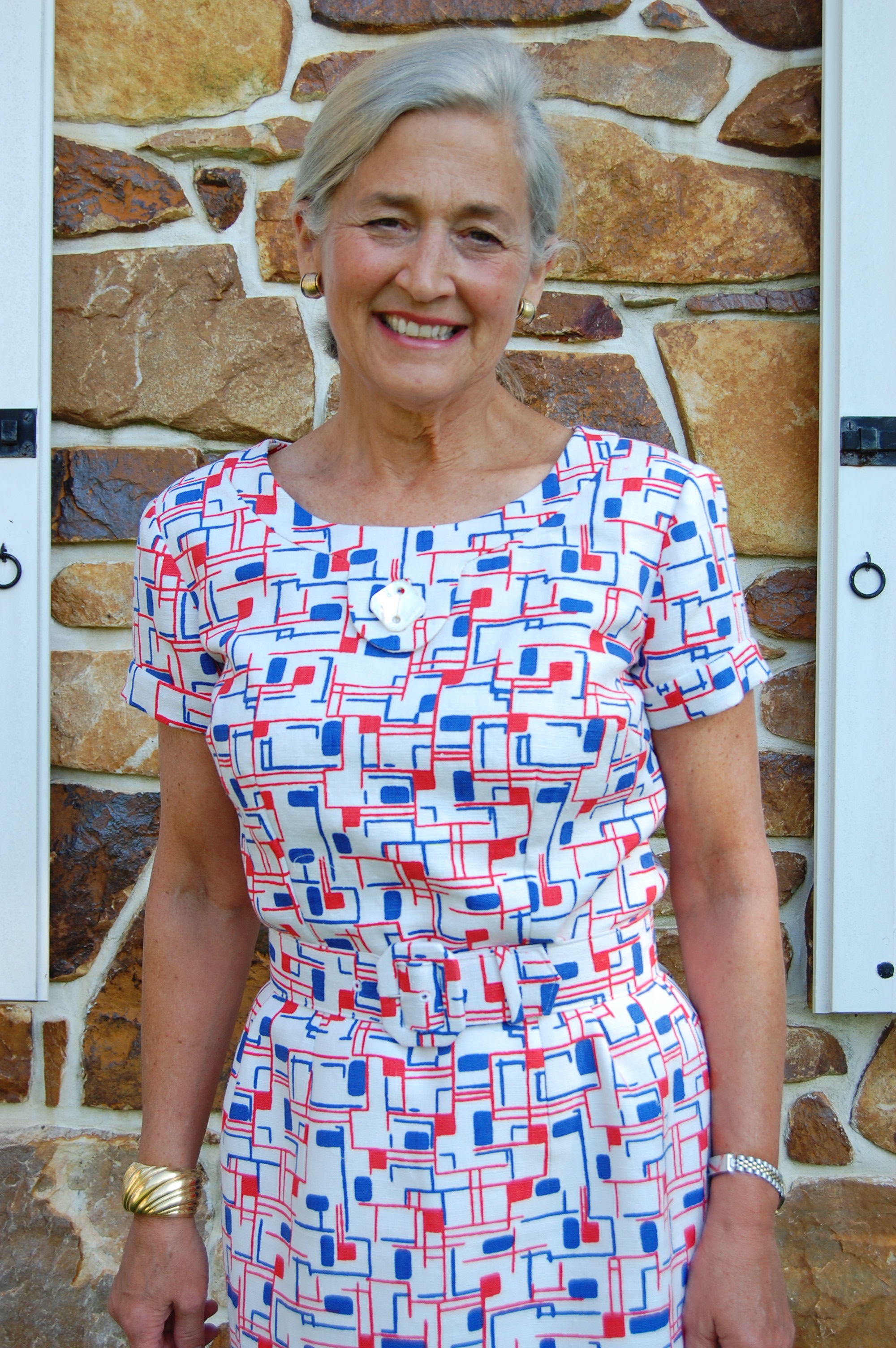
To make this pairing of fabric and pattern even more enticing, I was given this amazing pearl button by my dear friend Nancy C.  (Thanks, Nancy!)

I love this unique button!

I love this unique button!

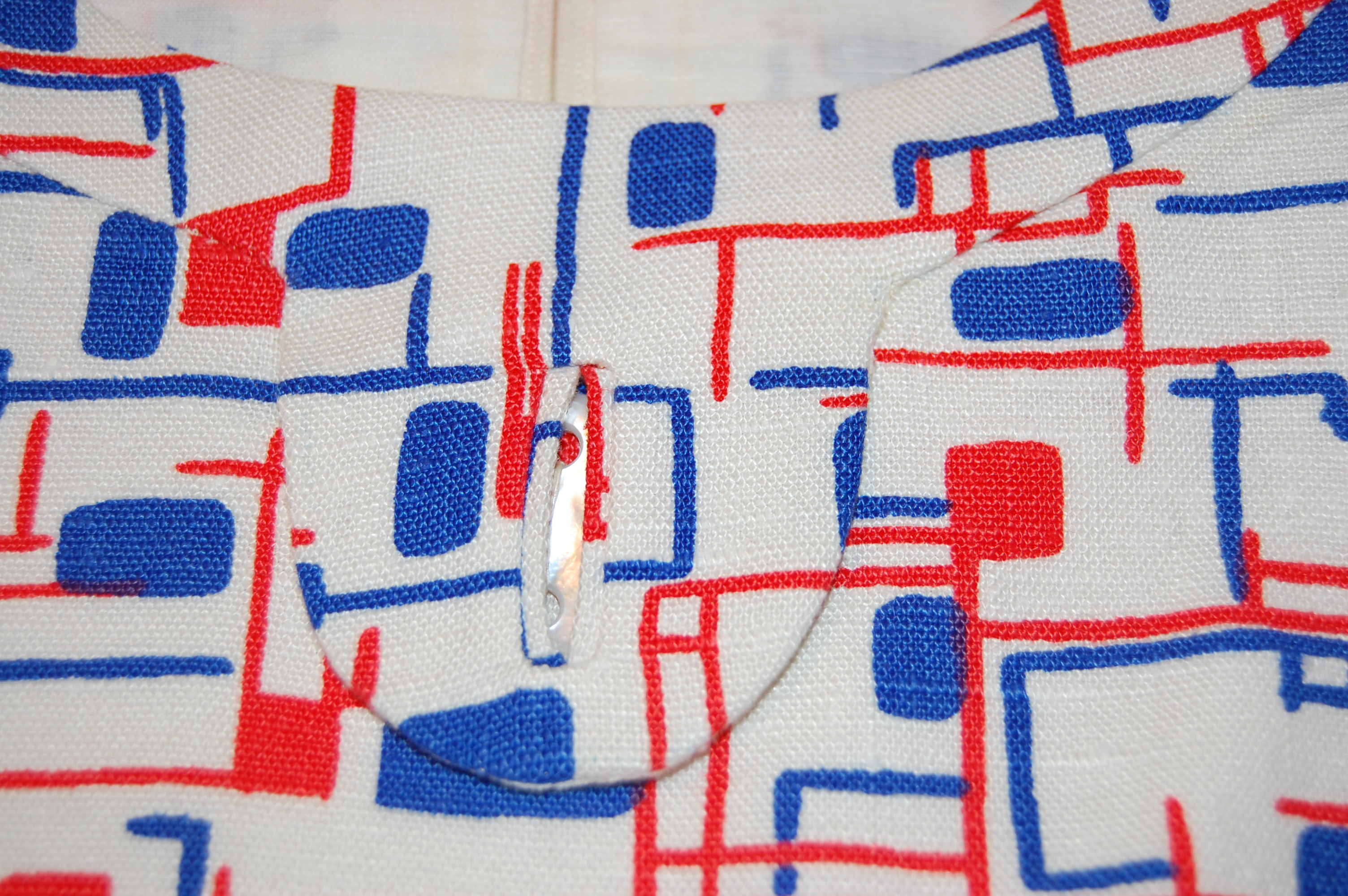
The square shape of the button – and its largeness (1 3/16” square) – and the fact that I had exactly one of these beauties – made it seem custom made for the design of the fabric and the tab featured on the pattern.

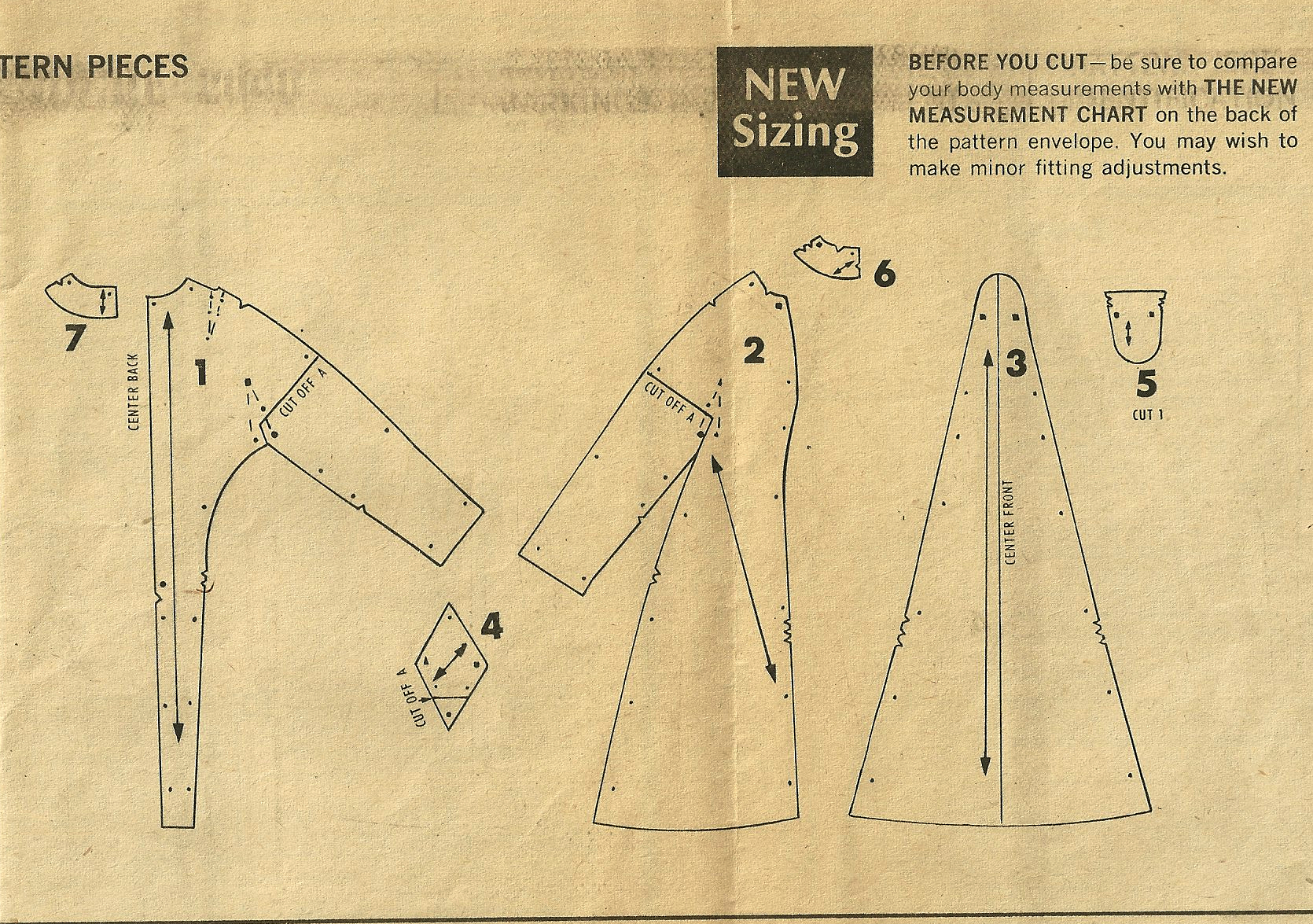
I couldn’t wait to get started!  I pulled out all the pattern pieces, ironed them flat, ready to make a muslin – and then the “uh-oh” moment struck.  The “straight of grains” on the pattern pieces could not have signaled more trouble if they had been flashing in bright red.   I grabbed the pattern envelope – and right there in plain English was stated:  “Not suitable for obvious plaids.”  (Why won’t I learn to read those envelopes more closely???)  While this fabric is not a plaid, it reads like a plaid.  My heart sank – as I realized very quickly that I absolutely could not use this pattern for this fabric.  It just would not work.  End of discussion.

If you look carefully at these line drawings, it's obvious that "plaids" would not work.

If you look carefully at these line drawings, it’s obvious that “plaids” will not work.

I took a few deep breaths – and went back to my vintage pattern file.  None of my other vintage patterns would do.  I had my vision for this fabric and no pattern came even remotely close.   It was then I decided I would have to adapt a new pattern to achieve the look I wanted.  Once I made this decision (Plan B, as in “it BETTER work!”), I began to see the advantages, and the possibilities for an even better look than I originally thought.

The first thing that went right was having this pattern in my “new pattern” file:

I picked up this pattern a few months ago as i thought it looked very versatile!

I picked up this pattern a few months ago as I thought it looked very versatile.

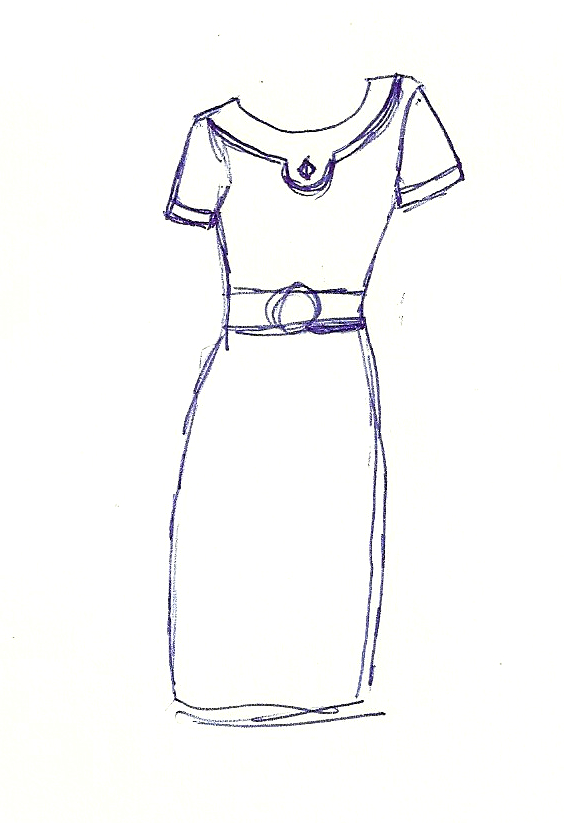
I figured if I used View B, I could alter the neck band to incorporate a center tab.  I wanted to belt it, but I happily thought the tapered darts at the mid-section, front and back, would help create less bulk at the waist (and that’s always welcome).  I liked the shape of the neck (and had actually planned to widen and lower the neckline on the vintage Vogue….).  I would have to lengthen it, but I had plenty of fabric.  I also like the banded sleeves.  To envision the look, I did a quick sketch:

More about the belt later - it was ready before the dress was even cut out.

More about the belt later – it was ready before the dress was even cut out.

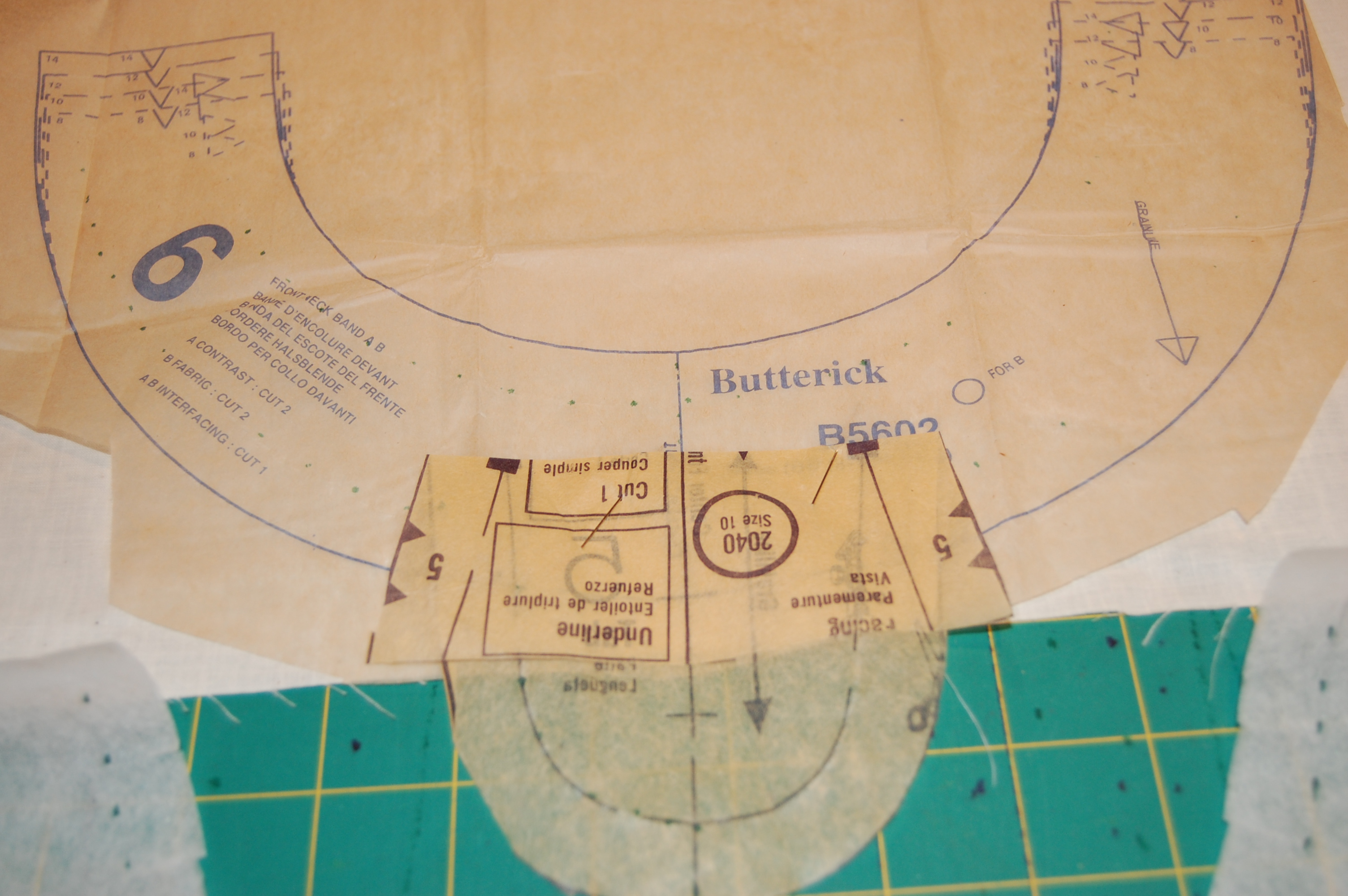
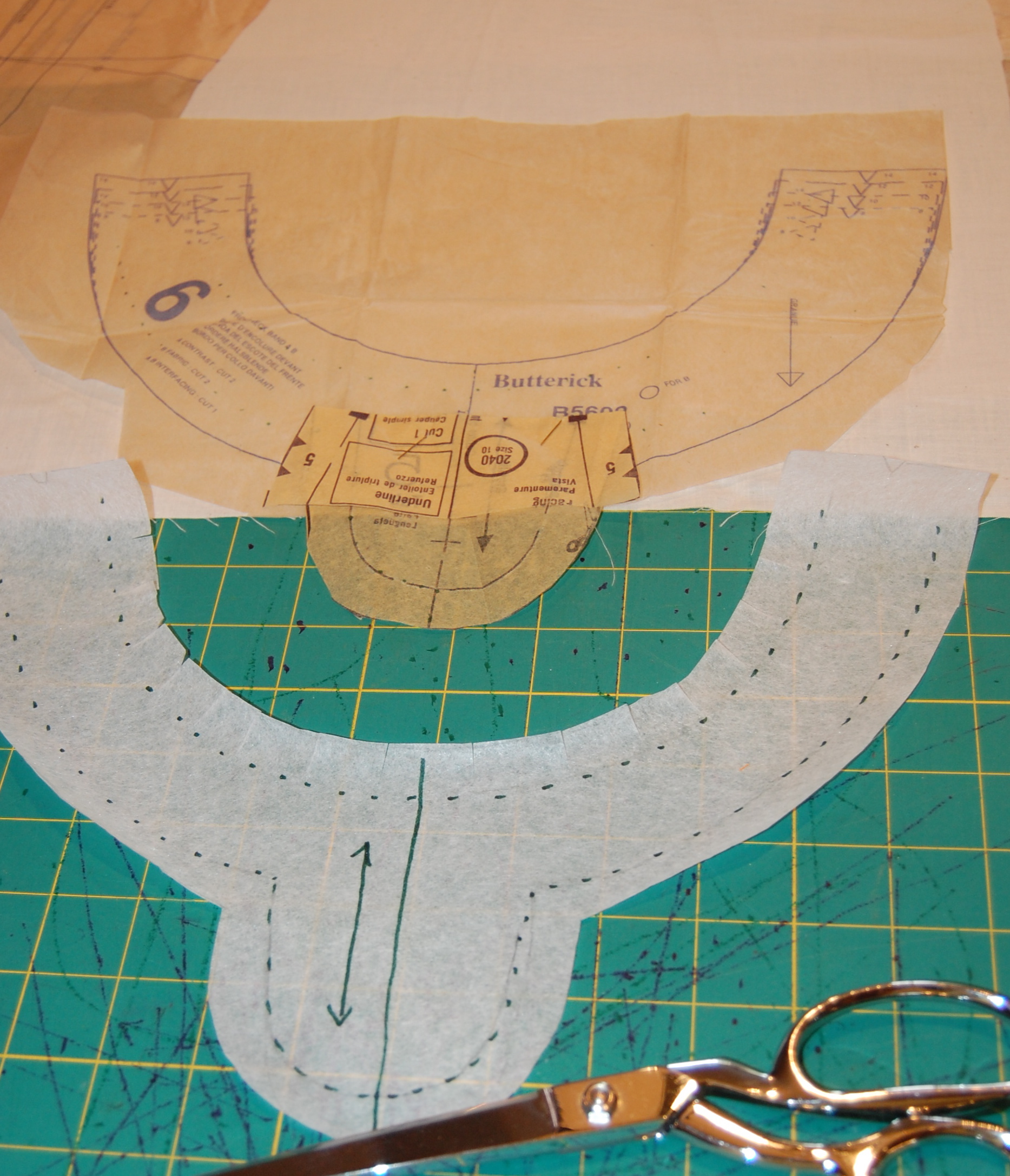
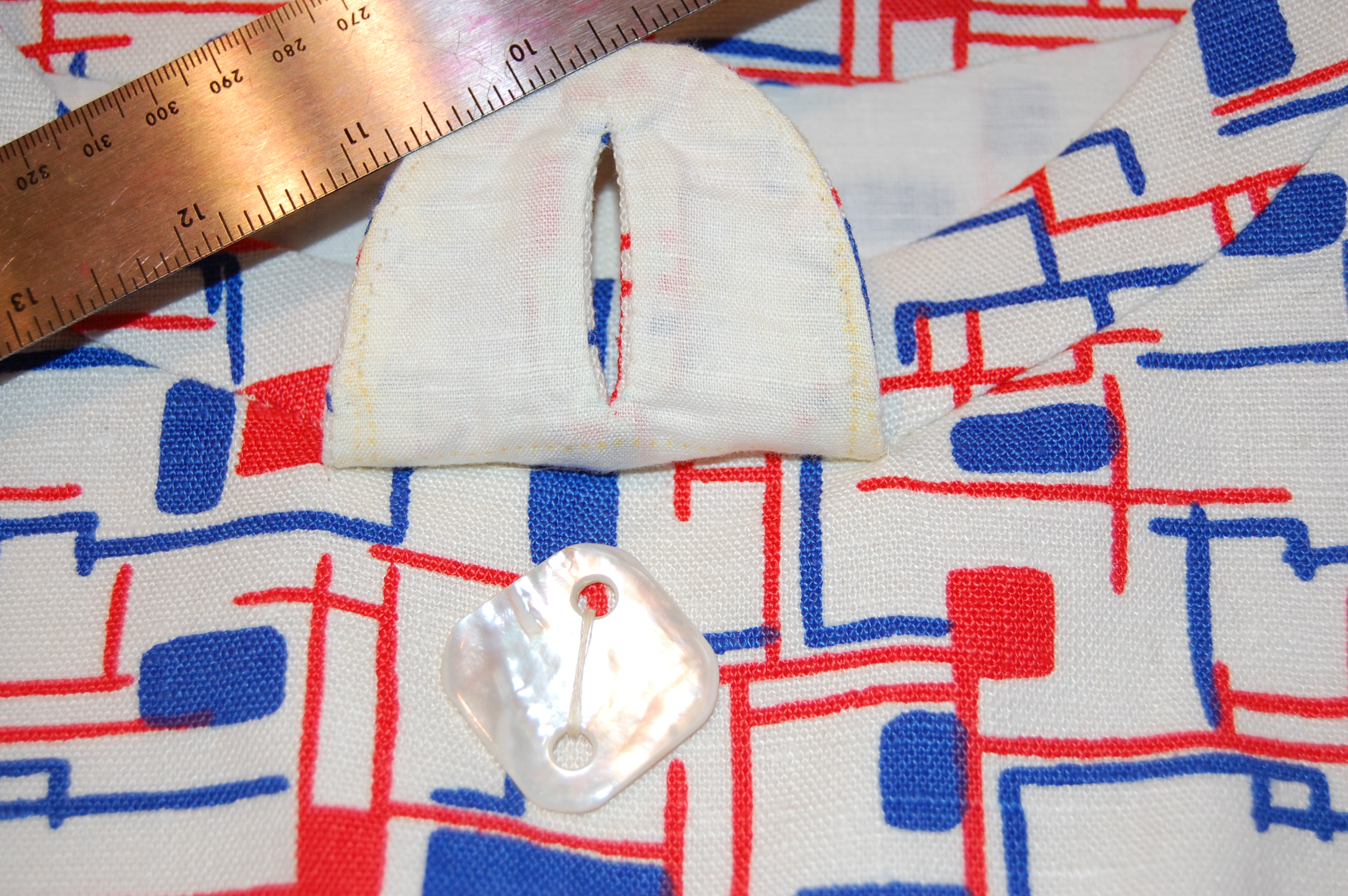
Then I set about adding the 1970’s tab to the neckband.  I actually used the pattern piece for the original tab facing so that I could get the correct size and look.

I placed the old pattern piece onto the new neckband.

I placed the old pattern piece onto the new neckband.

Then I made a new pattern piece.

Then I made a new pattern piece.

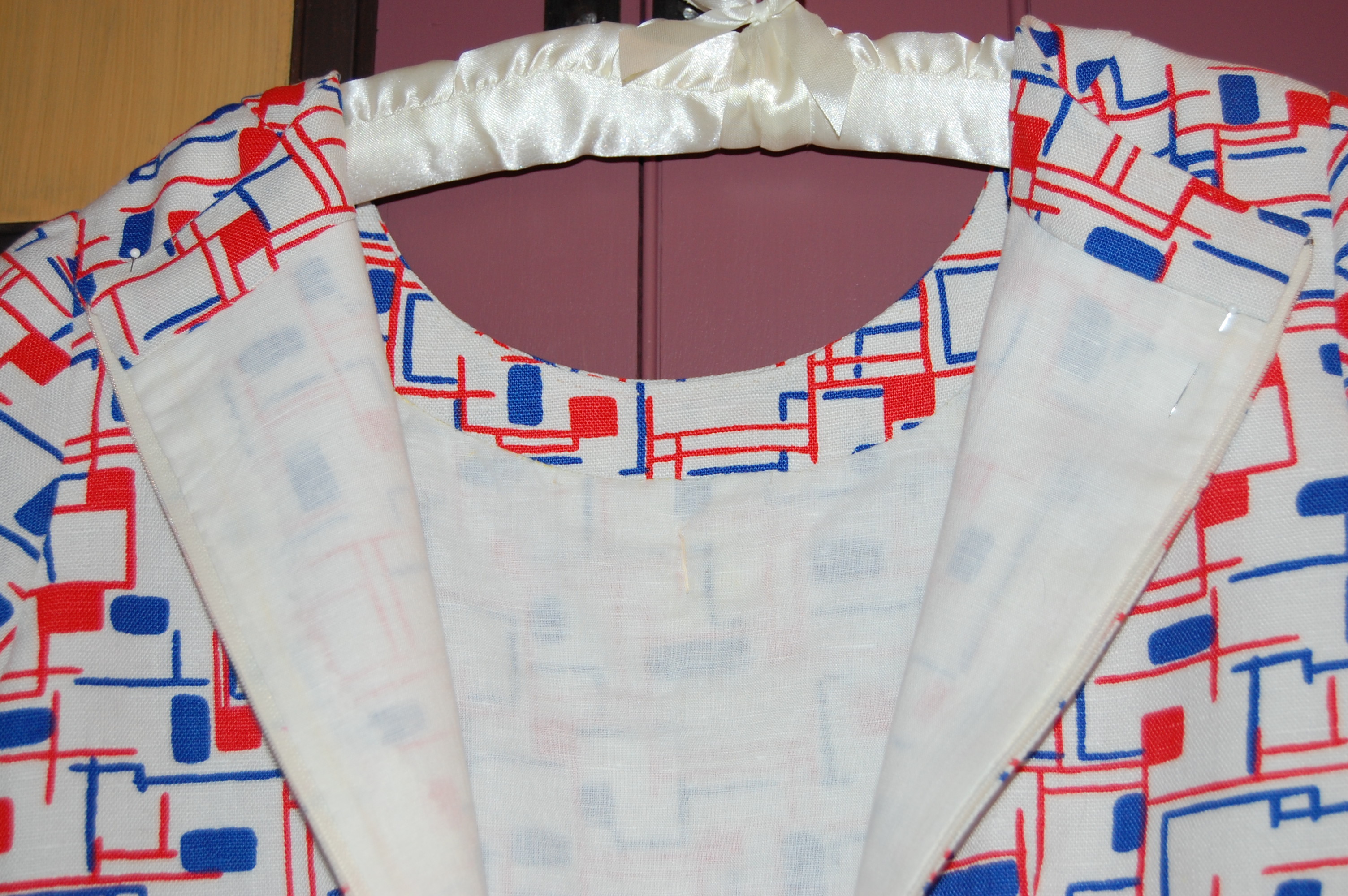
I made my muslin and then proceeded to use some couture techniques, but not all I normally would.  For one thing, I did not want to underline this linen fabric with silk organza (to preserve the breathability of the linen and keep it as light as possible).  The pattern called for the dress (but not the sleeves) to be lined.  I used a very lightweight cotton/linen blend for this which worked beautifully.  I also decided to use the facings included in the pattern (usually eliminated with couture sewing), and I’m really happy with that decision.

This photo shows the neck facing and the off-white lining I used for the body of the dress.

This photo shows the neck facing and the off-white lining I used for the body of the dress.

I hand-picked the zipper, understitched the facings by hand, and sewed the hem oh-so-carefully so that my stitches would not show (one of the disadvantages of not using an underlining is that there is no layer to sew the hem to, except for the actual fashion fabric). I made a bound buttonhole for that big lovely button (the original Vogue pattern calls for a bound buttonhole).

Here's the buttonhole, with the button peeking through!

Here’s the buttonhole, with the button peeking through!

The underside of the tab.

The underside of the tab.

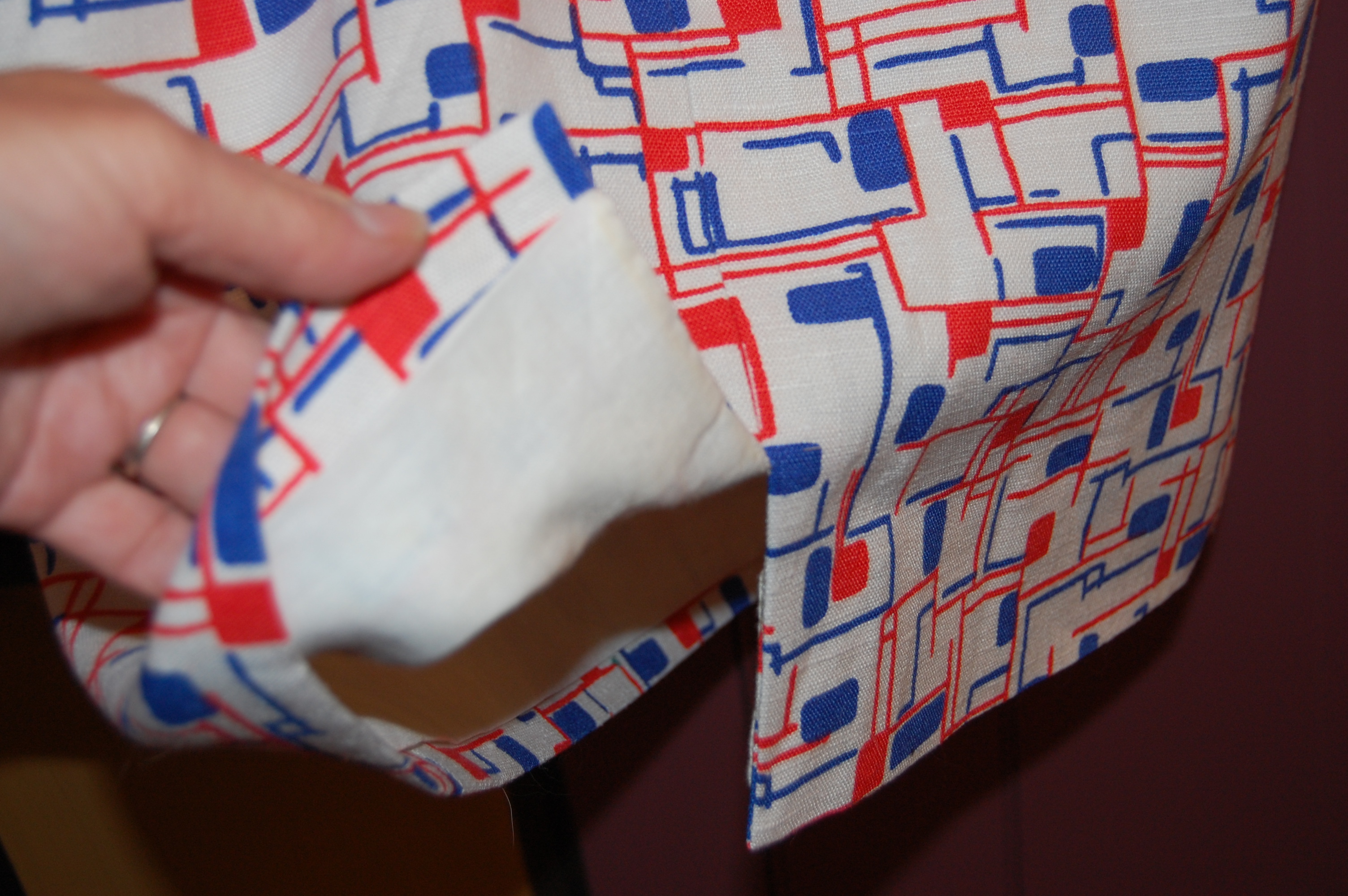
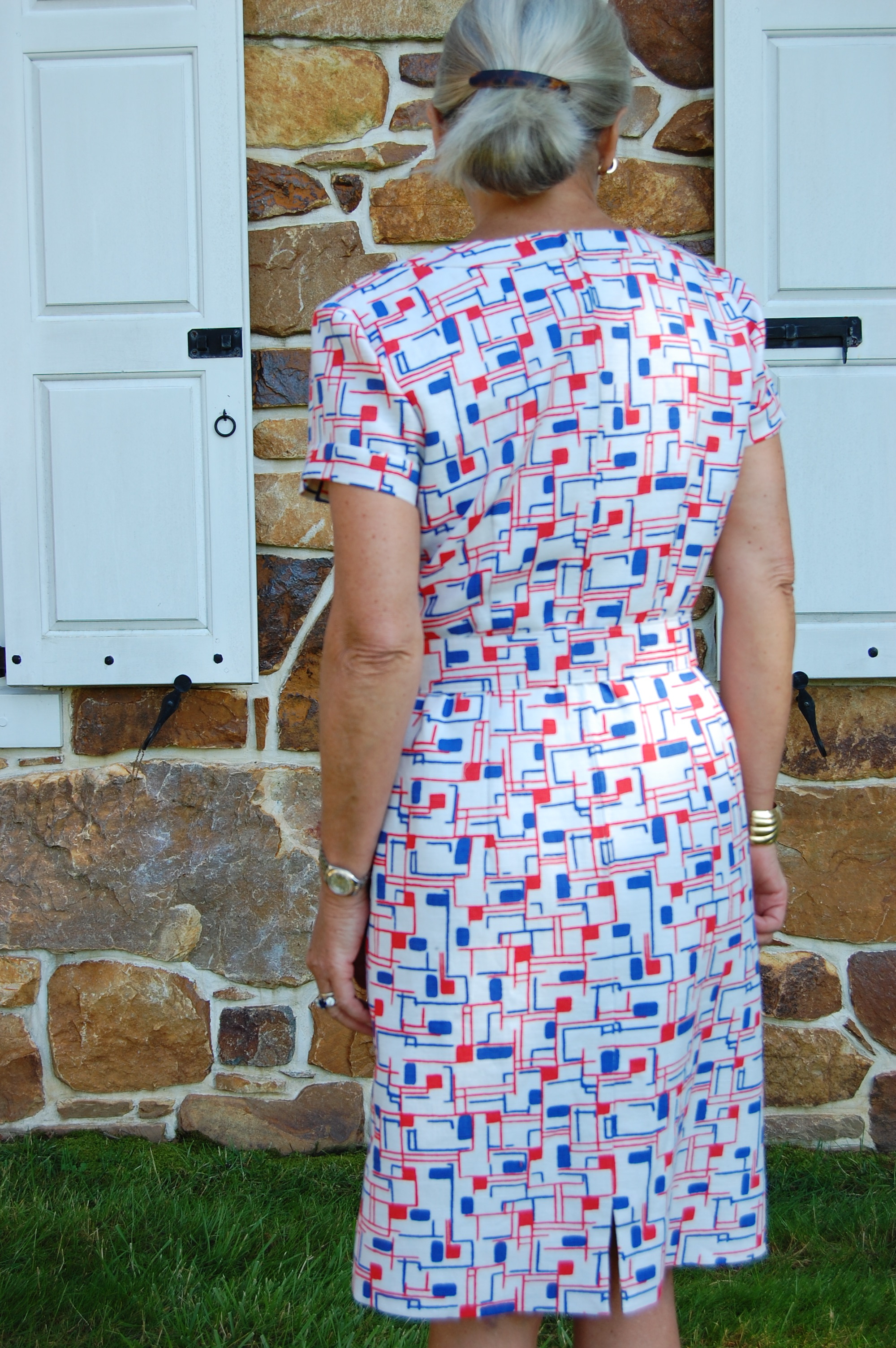
I also added a slit to the back seam as once I lengthened the dress, I thought I might need the extra wiggle room.

a quick look at the slit I added to the back center seam.

A quick look at the slit I added to the back center seam.

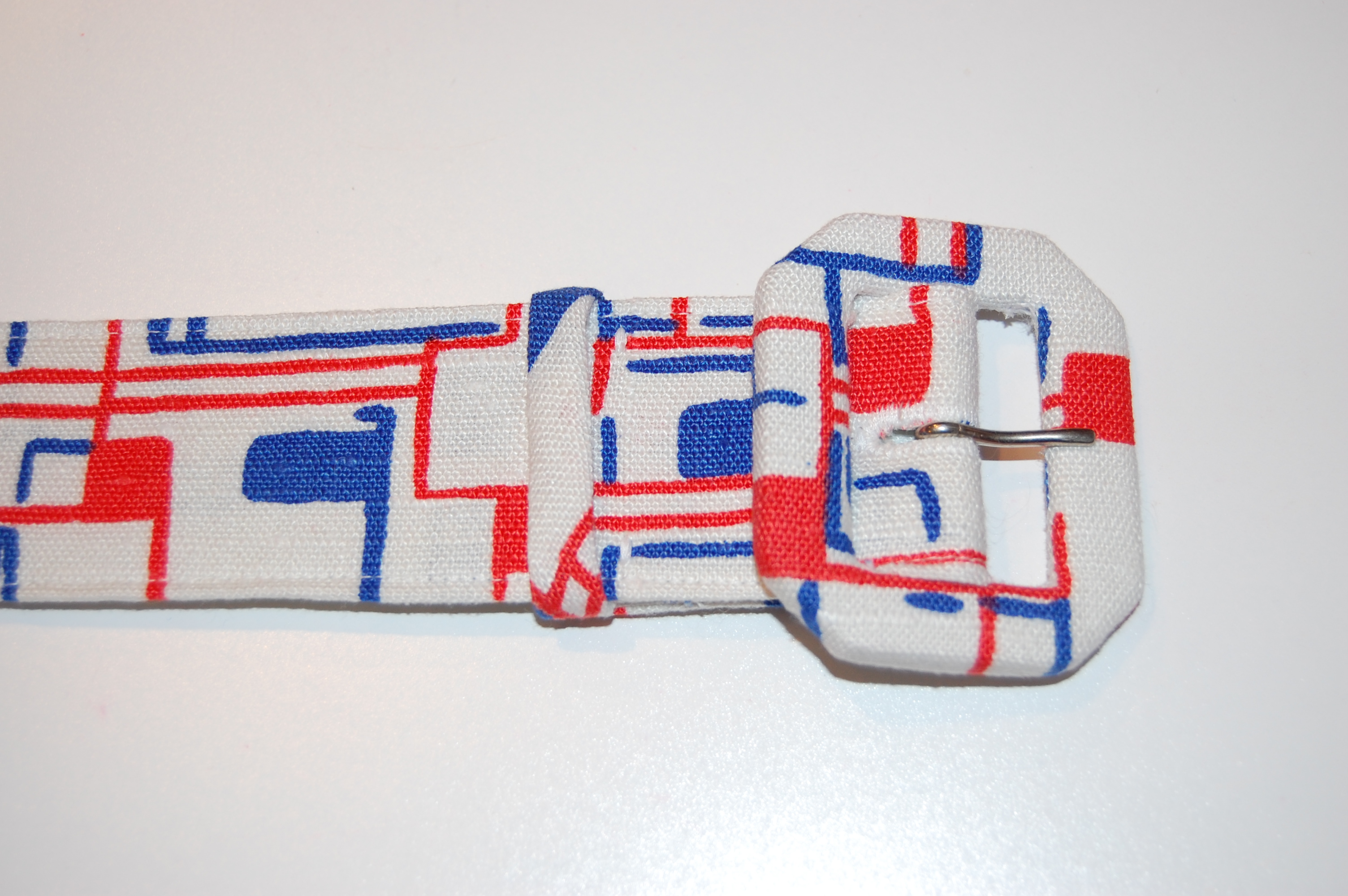
I had the belt made by Pat Mahoney of Pat’s Custom Belts and Buckles.  What a great decision!  I could never make as neat a belt and buckle as she does.

Pat Mahoney does nt have a website, but she can be contacted at: 209-369-5410; 537 York Street, P.O. Box 335, Lodi, California 95241, USA.

Pat Mahoney does not have a website, but she can be contacted at: 209-369-5410; 537 York Street, P.O. Box 335, Lodi, California 95241, USA.

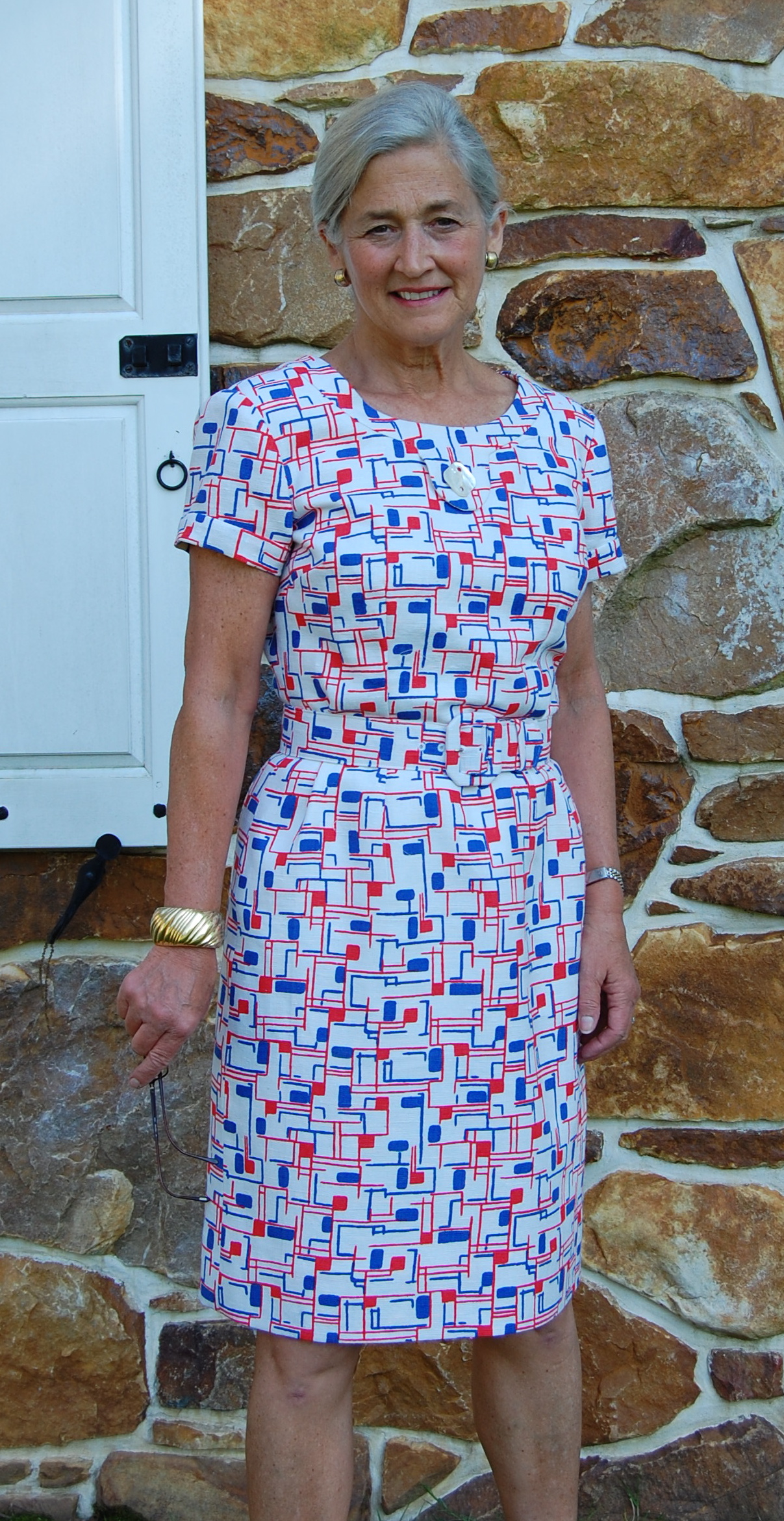
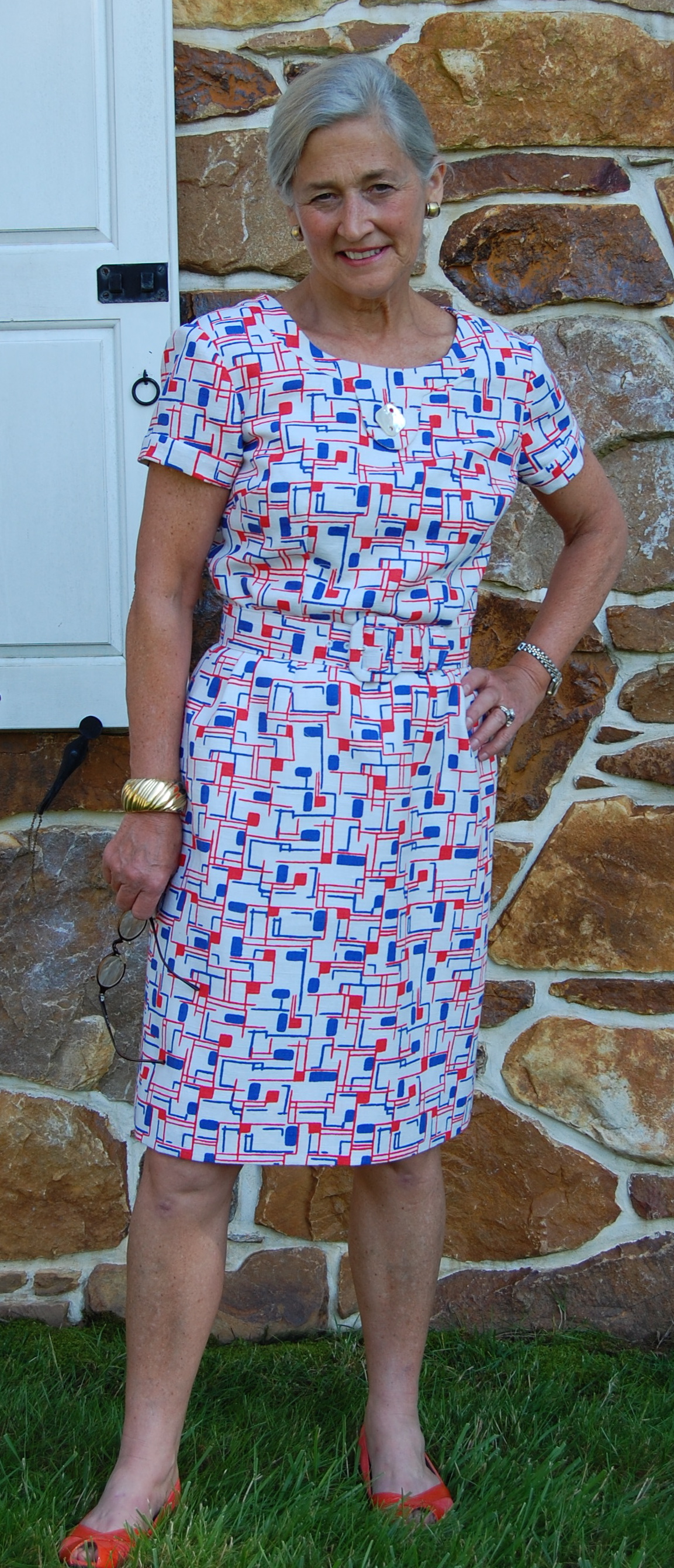
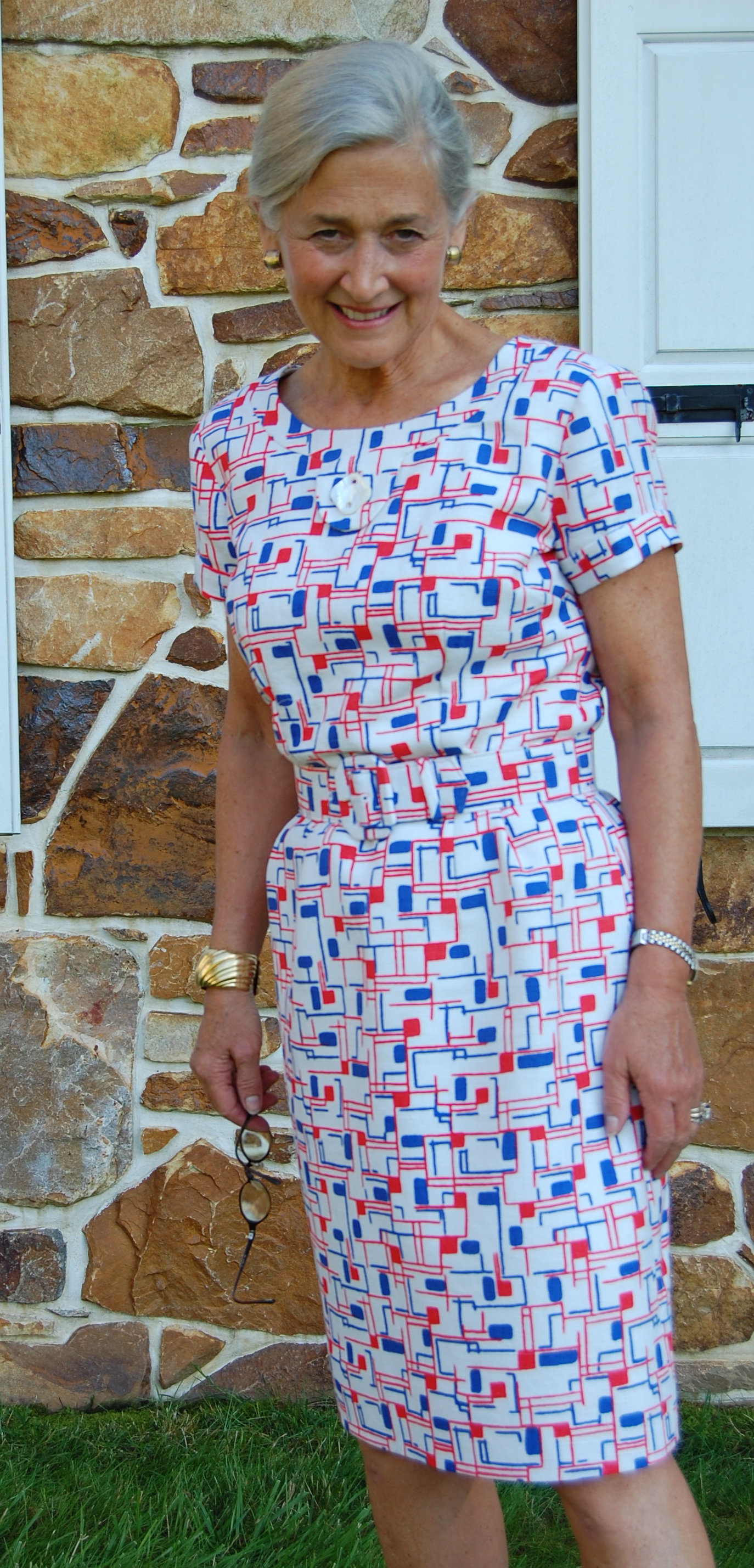
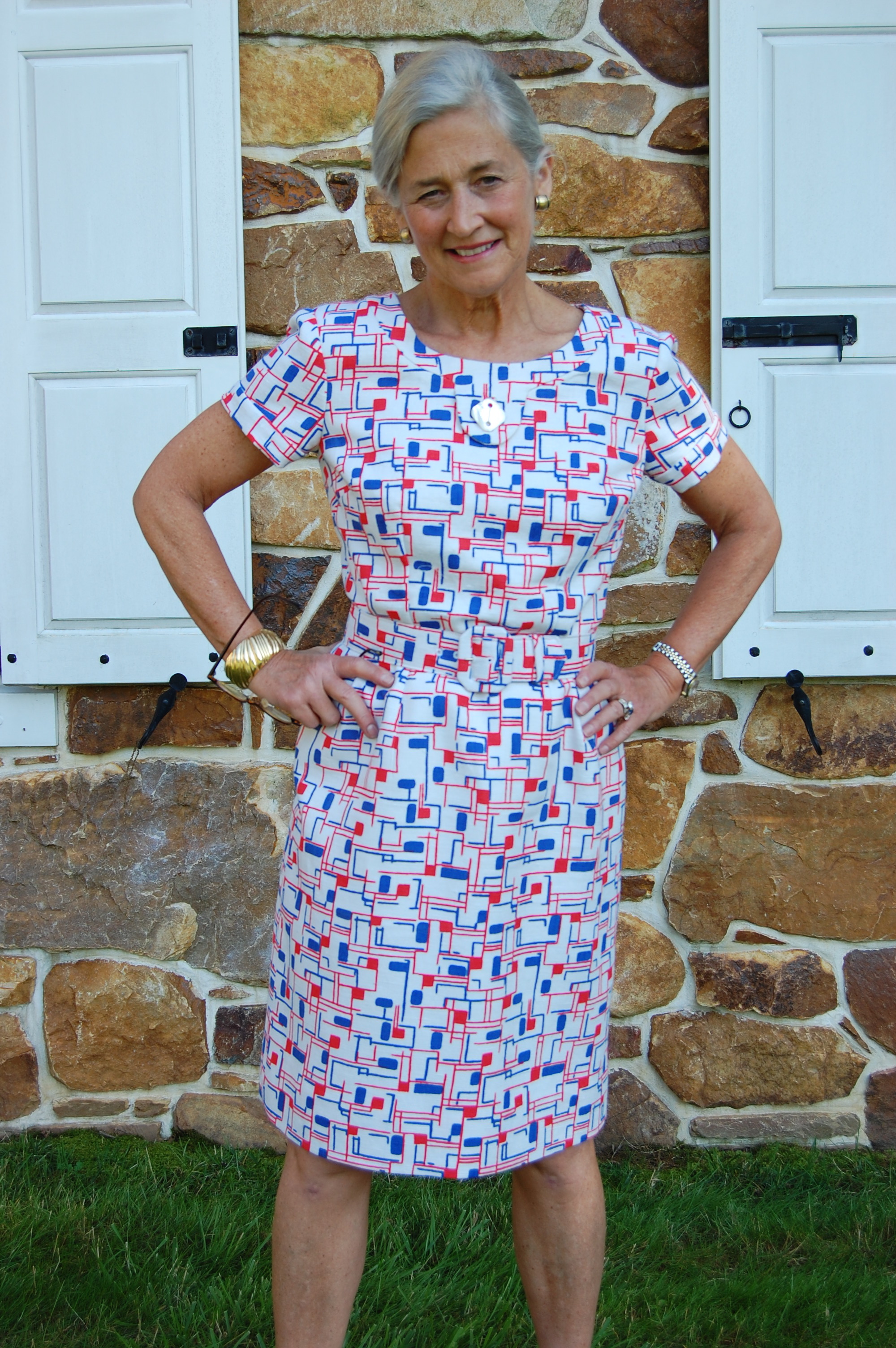
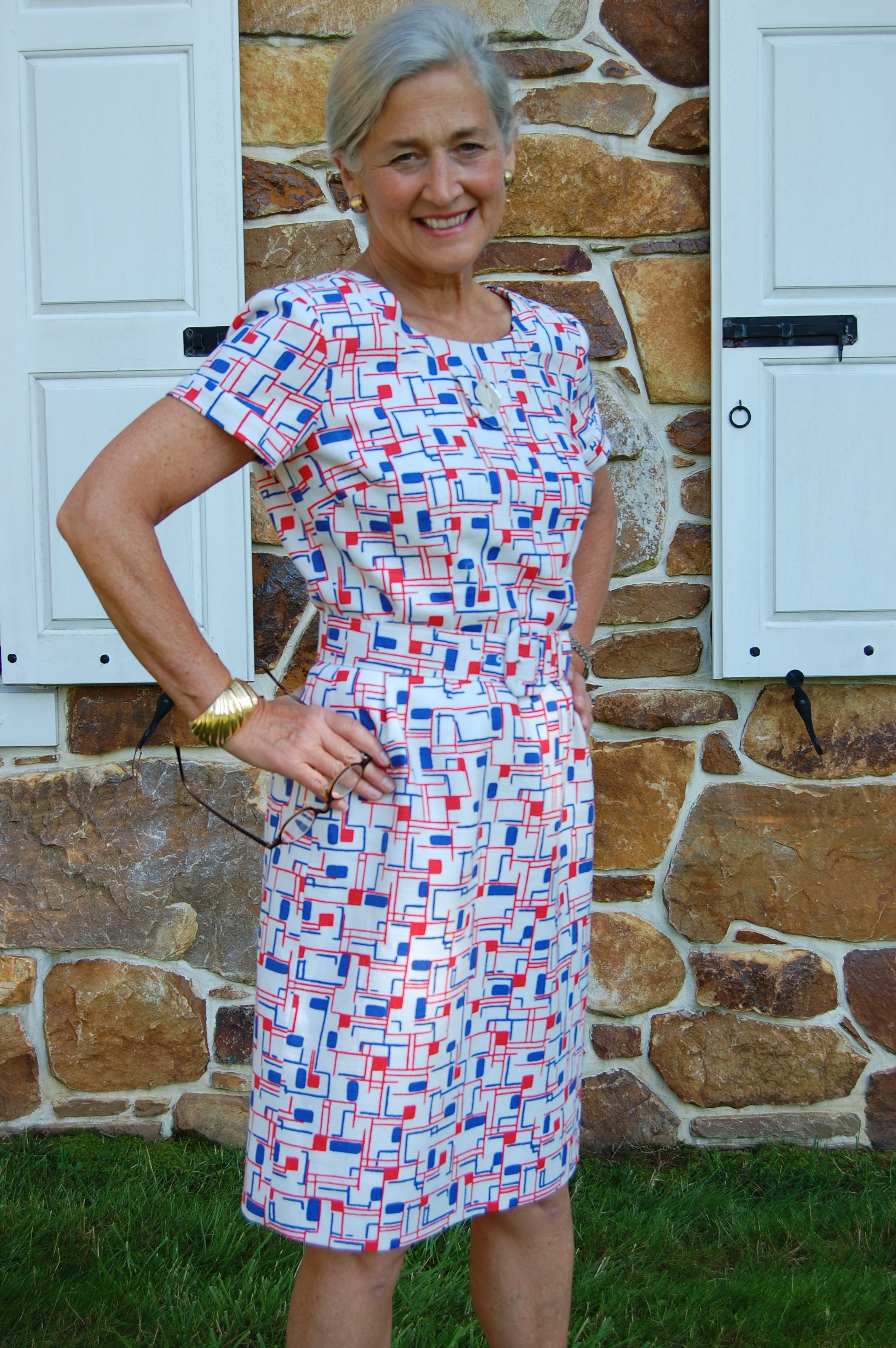
Here is the finished dress.

linen tab dress

DSC_0882

DSC_0886

DSC_0887

DSC_0892

DSC_0893

DSC_0894

I am bound and determined to make a summer dress using that vintage Vogue pattern.  But – now I know I’ll have to use a plain fabric for best results (maybe a solid linen…).  It will, however,  have to wait for another Summer, as  I have other projects in mind!

Making this dress has reminded me that sometimes Plan B turns out to be the BEST plan of all.

21 Comments

Filed under bound buttonholes, Buttons - choosing the right ones, couture construction, Linen, Moygashel linen, Uncategorized, vintage buttons, vintage Vogue Designer patterns, vintage Vogue patterns from the 1970s, Vogue patterns

In Pursuit of My Very Own Classic Cardigan (aka Chanel) Jacket

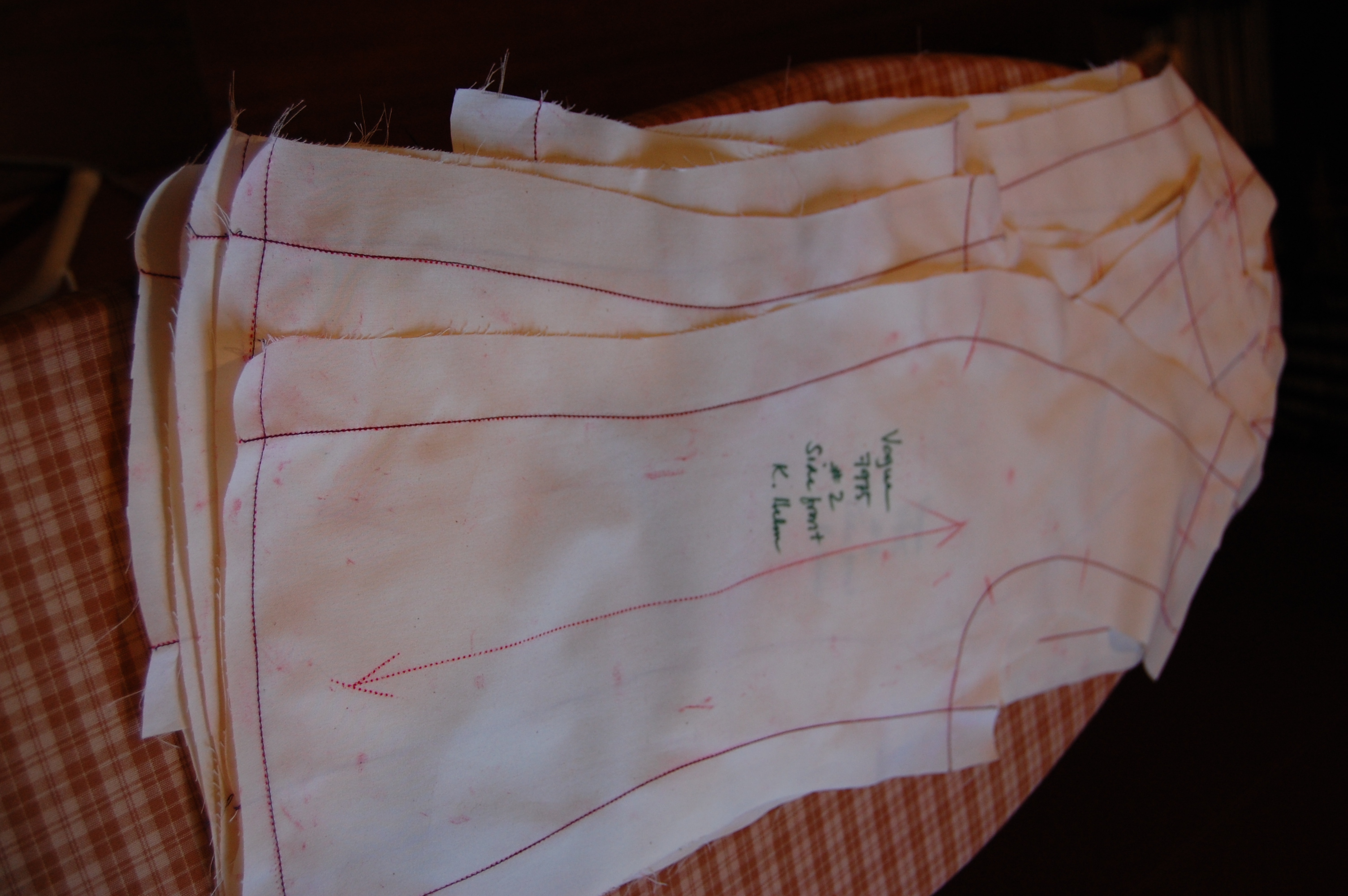
As I eagerly anticipate the Classic French Jacket class I will be taking with Susan Khalje in June, there are several things I am doing to get ready for it.  First, of course, is doing my homework.  That includes selecting the pattern I want to use and making the muslin.  I am sticking with the old stand-by Vogue pattern #7975 (which Susan recommends), as I really do want the classic princess-seamed cardigan look that has evolved from its original “boxy” styling.

Chanel jacket pattern

The view in the lower righthand corner is the version I anticipate starting with.

I’ve prepared my thread-traced muslin pieces, as seen here –

Chanel jacket muslin

And now those pieces are sewn together as well.  We (the members of the class) will be shopping for fabric and trim(s) on the first day of class, so what I end up with is still to de determined.  Am I looking for a particular color?  Yes, sort of, but who knows what wool will entice me – other than probably the most expensive one!

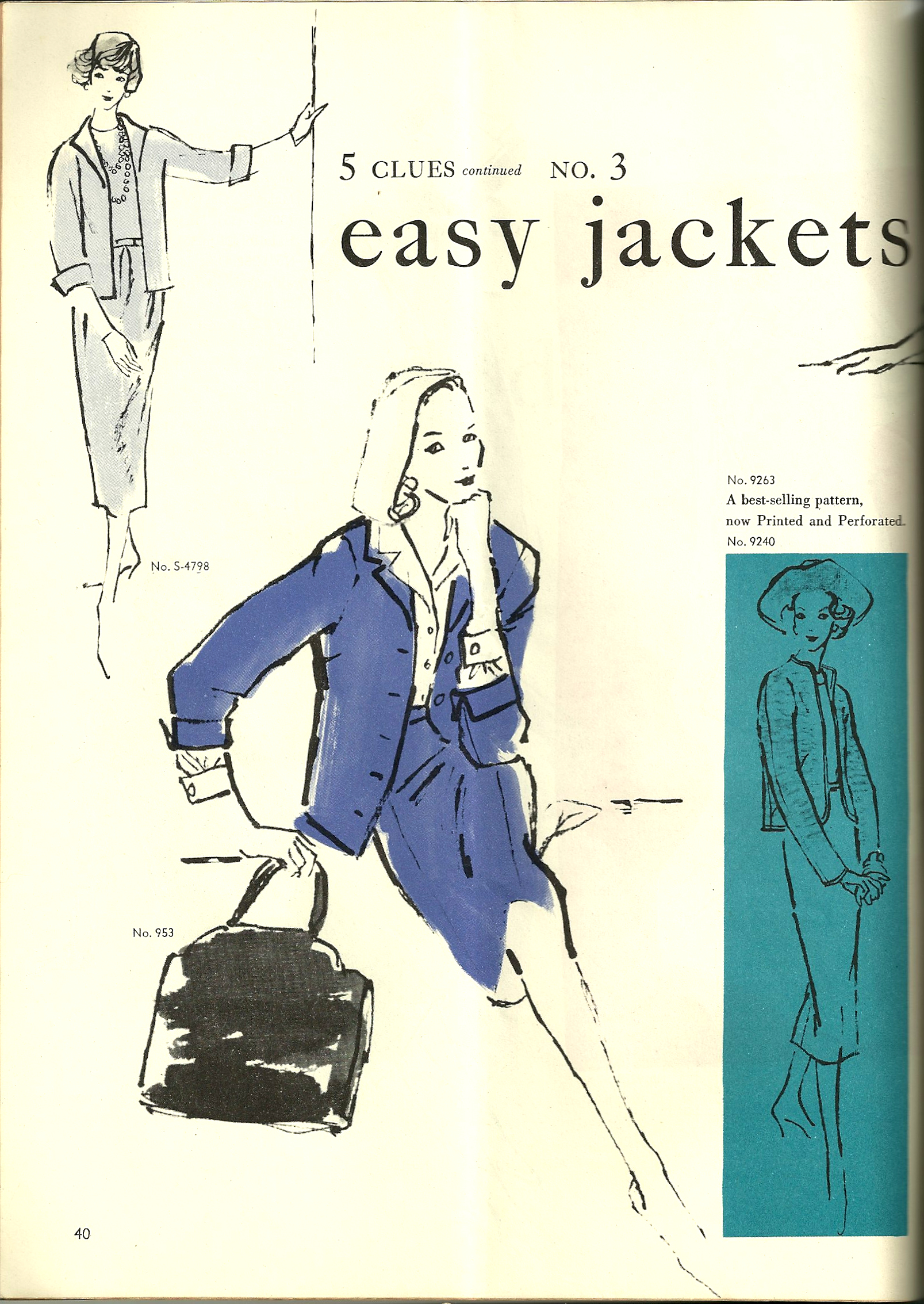
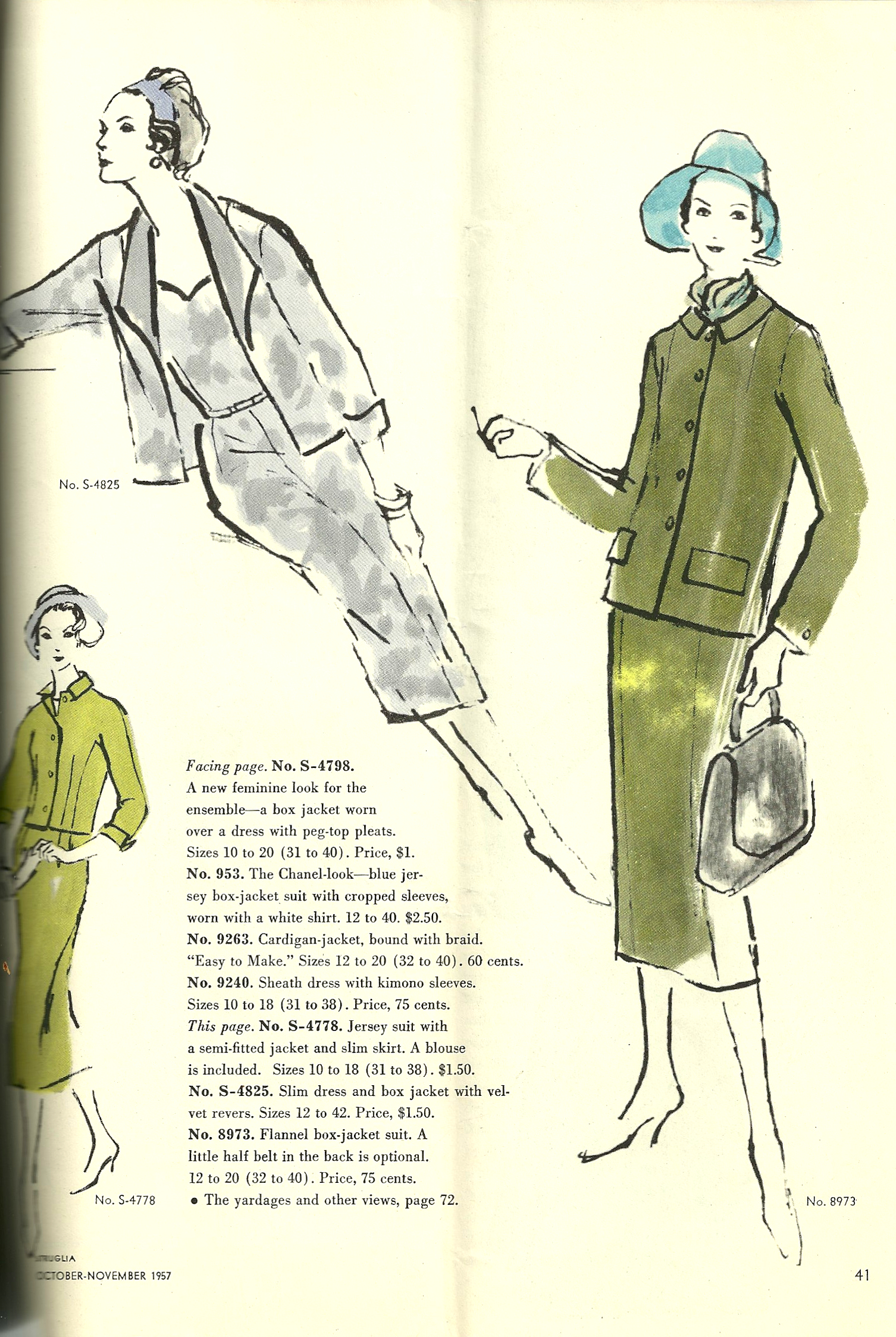
Having classic “Chanel” on my mind has made me think about how enduring this style jacket has been over so many decades.  From looking through some of my Vogue Pattern Book Magazines from the 1950s and 1960s, it is obvious that this is one fashion that is always in Vogue (pardon the pun).  The October/November 1957 issue stated “The Chanel look of the easy jacket is in the news in both suits and ensembles.  Box jackets often have cropped sleeves to show cuff-linked shirt sleeves.”  Here is how that statement is llustrated:

The sketch in jade shows a "best-selling" pattern, newly available printed and perforated.

The sketch in jade shows a “best-selling” pattern, newly available printed and perforated.

Here is the opposing page to the previous illustration - more on the "Chanel look."

Here is the opposing page to the previous illustration – more on the “Chanel look.”

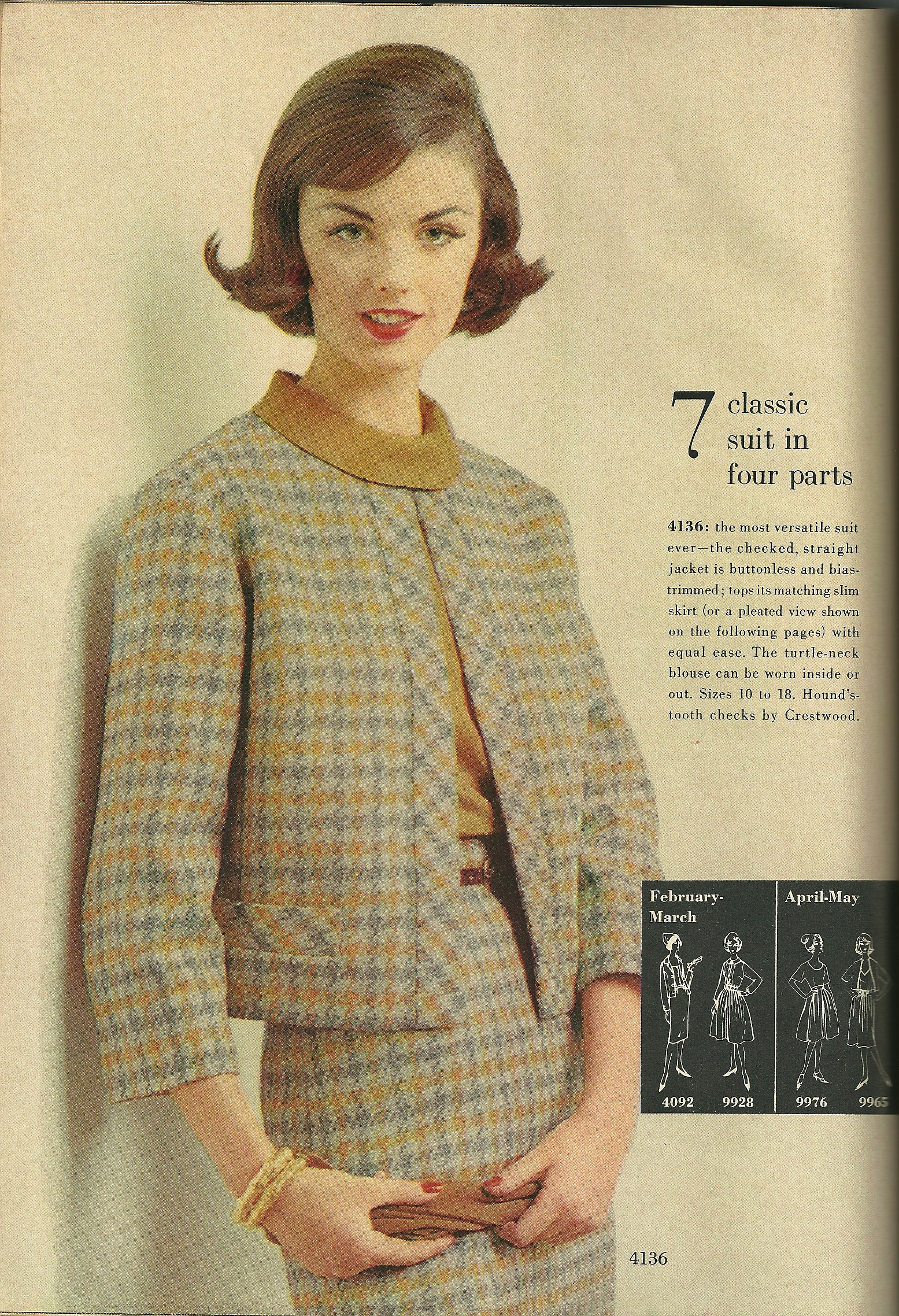
Shades of Chanel are obvious in this style from the August/September 1960 issue, with the statement:  “[T]he most versatile suit ever – the checked, straight jacket is buttonless and bias-trimmed…”

This suit definitely shows shades of Chanel!

This suit definitely shows shades of Chanel!  I like the suit much better than the hairstyle.

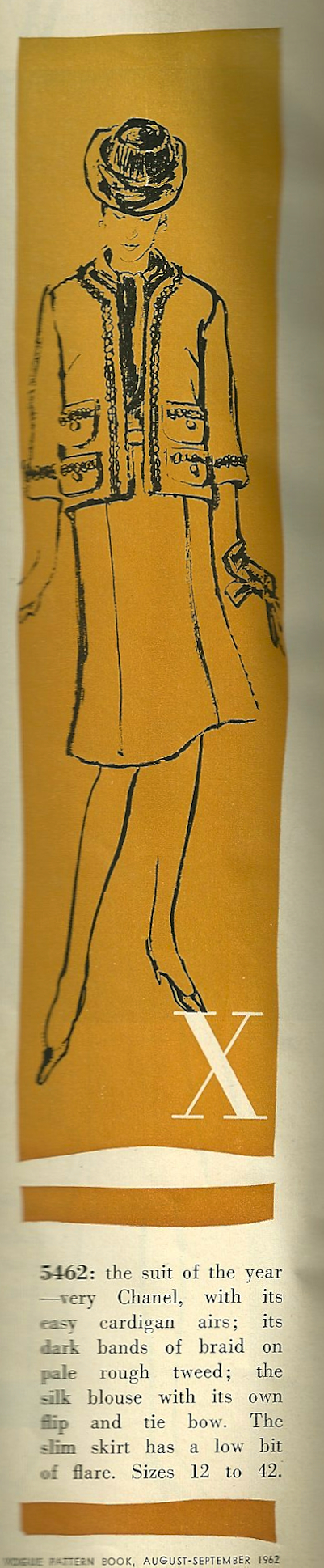
Two years later, the August/September issue included a classic Chanel-look suit in its wardrobe for Vogue’s fictional character, Mrs. Exeter.  Called “the suit of the year”, it is described as “. . . very Chanel, with its easy cardigan airs; its dark bands of braid on pale rough tweed; the silk blouse with its own flip and tier bow.  The slim skirt has a low bit of flare.”

This is the most classic Chanel image I found from the 1960s in my copies if VPB.

This is the most classic Chanel image I found from the 1960s in my copies if VPB.

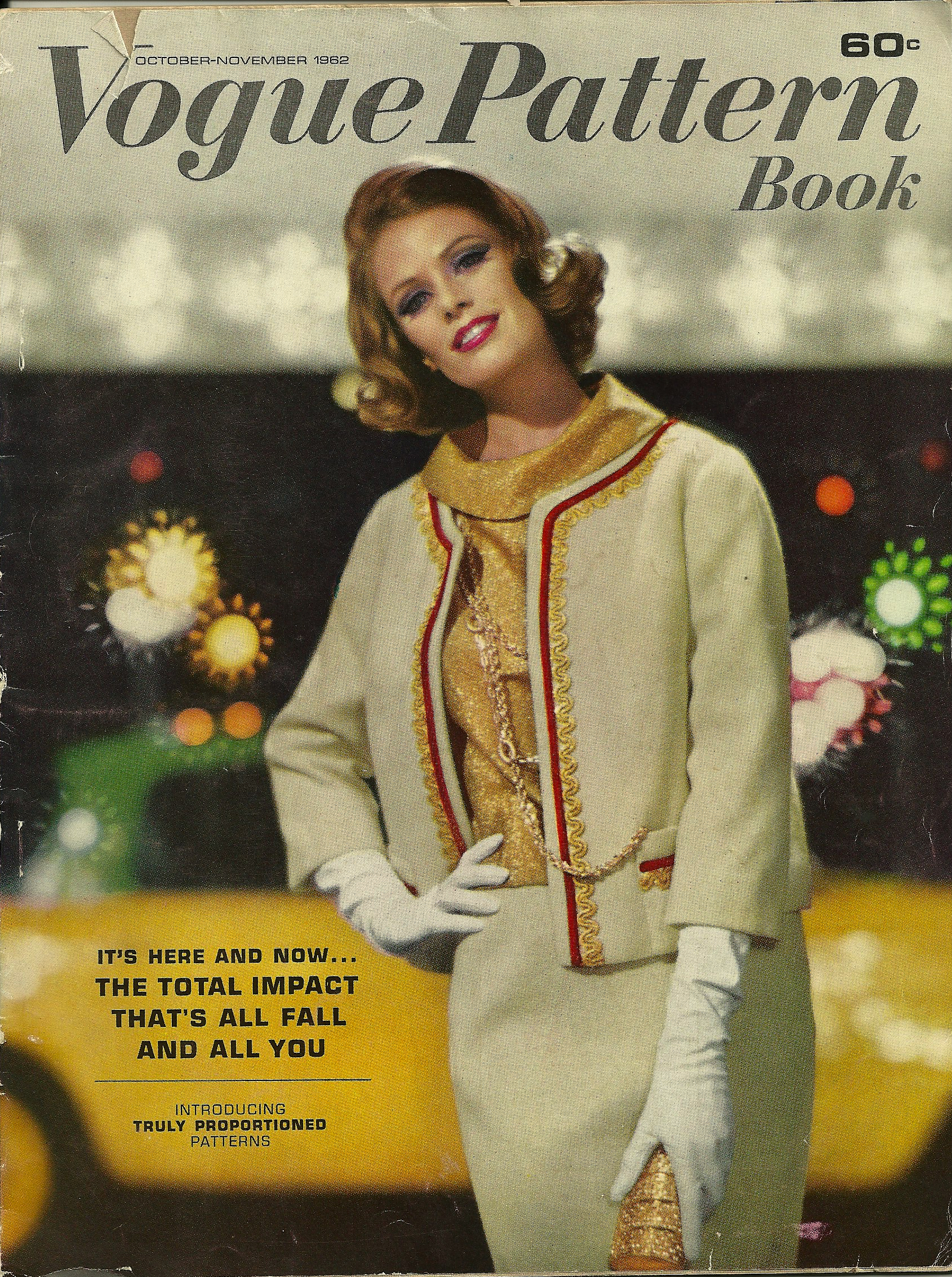
The very next issue in 1962 featured a classic Chanel look on its cover.  The accompanying caption states:  “Take a clean-lined suit design (shades of Chanel) and make it shimmer:  a springy white suit wool scored with gold metallic and red braid . . .”

Chanel jacket images #9

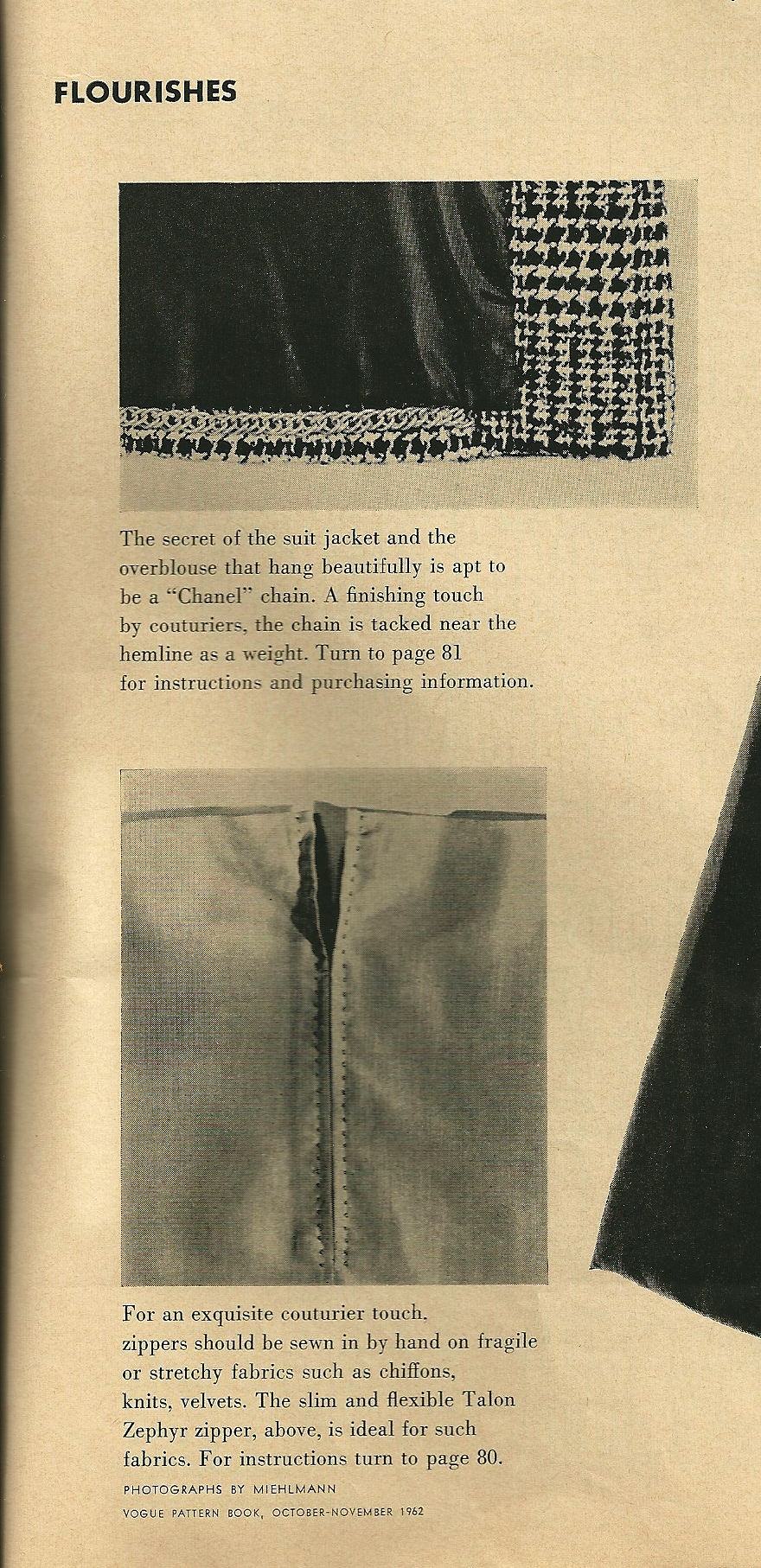
That same issue of Vogue Pattern Book Magazine gave away this “secret” in a feature entitled VPB’s Boutigue Corner:  Couturier Flourishes:  “The secret of the suit jacket and the overblouse that hang beautifully is apt to be a “Chanel” chain.  A finishing touch by couturiers, the chain is tacked near the hemline as a weight.”

The topic figure shows the "Chanel" chain fastened to a hemline.

The topic figure shows the “Chanel” chain fastened to a hemline.

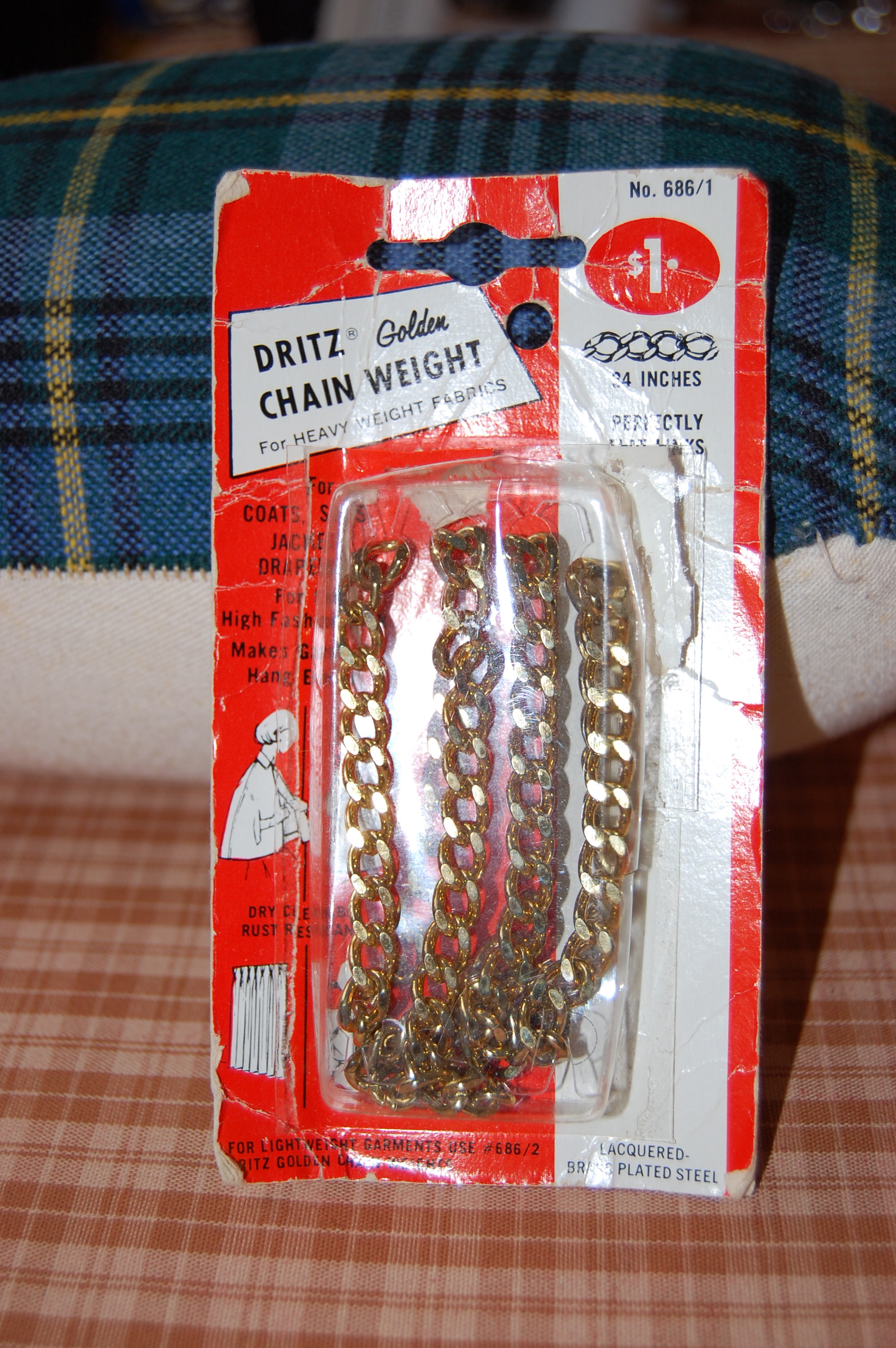
Ordering information for such chains was included in the same issue.  However, I know for a fact that these types of chains could be purchased in fabric stores, as I still have one (in its original –albeit tattered – packaging) that I purchased in the late ‘60s!

This "vintage" chain still looks new!

This “vintage” chain still looks new!

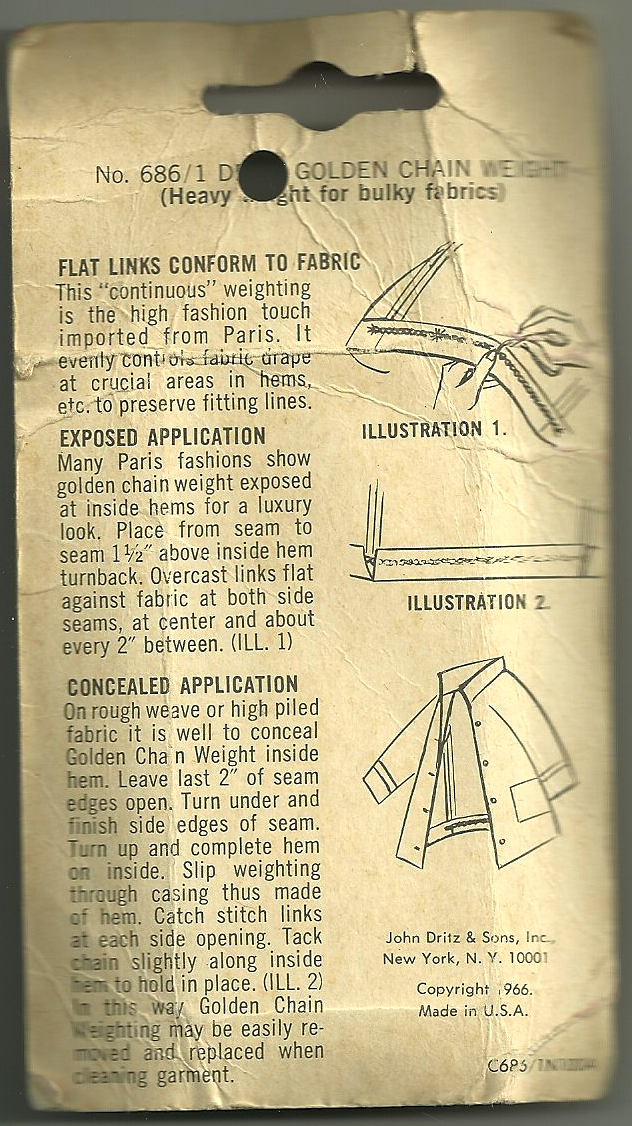
The back of the packeage shows the copyright date, 1966, and includes instructions on attaching the chain.

The back of the package shows the copyright date, 1966, and includes instructions on attaching the chain. 

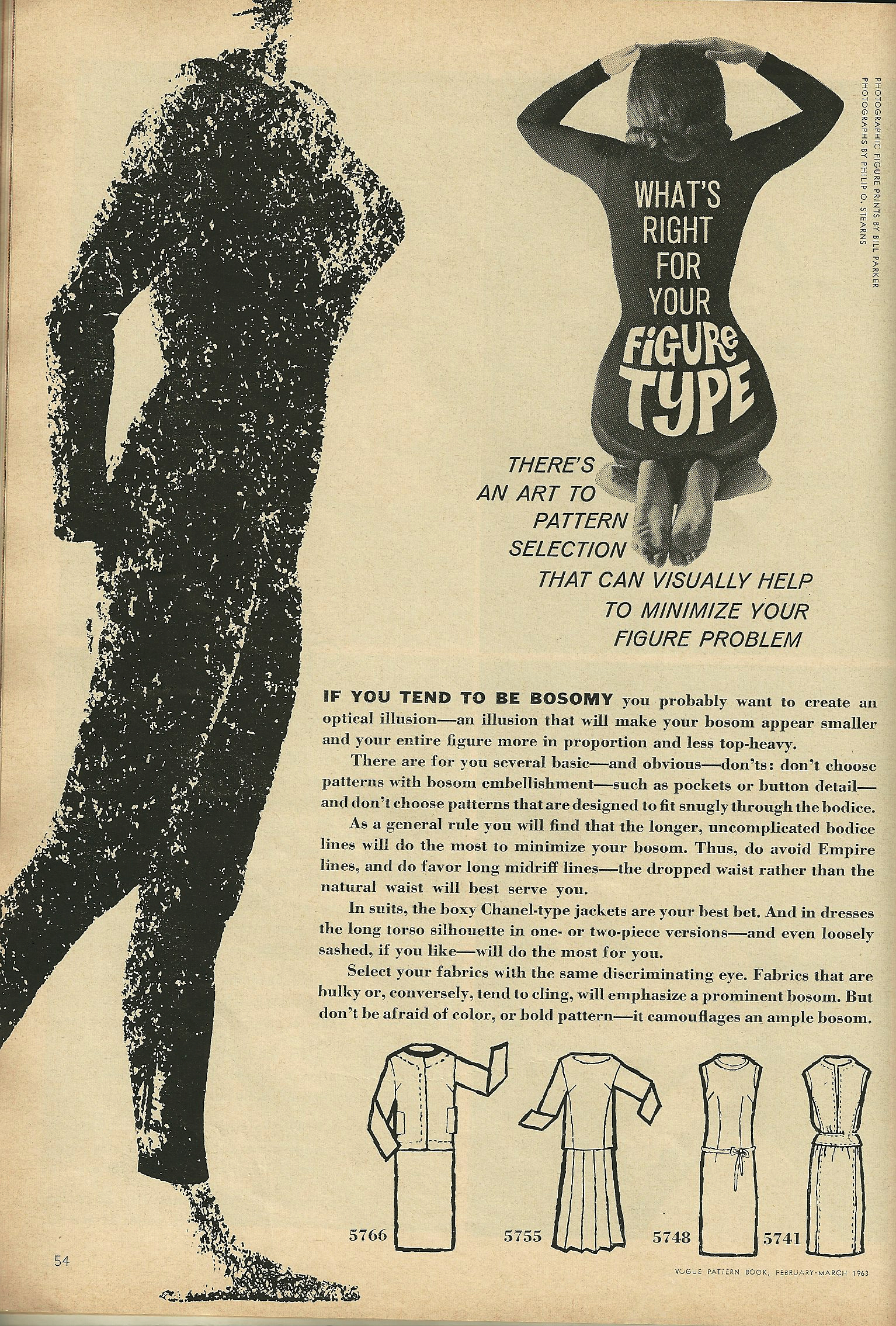
Finally, an article in the February/March 1963 issue of the magazine gave some of that age-old advice on “pattern selection that can visually help to minimize your figure problem.”  The advice given “if you tend to be bosomy” seems like it could be good advice for just about every figure problem (or problem figure, depending on your point of view) as it states “In suits, the boxy Chanel-type jackets are your best bet…”

If you can get past this awful illustration, you can read the accompanying text about Chanel-type jackets!

If you can get past this awful illustration, you can read the accompanying text about Chanel-type jackets!

Gosh, I think Chanel-type jackets are just about perfect for everyone.  How else would this classic style have endured so beautifully for so long?

12 Comments

Filed under Chanel-type jackets, couture construction, The Conde Nast Publications, Uncategorized, vintage Vogue patterns from the 1950s, vintage Vogue patterns from the 1960s, Vogue patterns, woolens