Category Archives: Mid-Century style

Something Old, Something New – and Pulling It All together

Every once in a while, a unique opportunity comes along in the form of fabric. We all know those times – when the end of the bolt is just the amount you need, or a single bolt of one-of-a-kind designer fabric comes to your favorite store, or a long-awaited re-order makes possible your dream of owning that exact piece. For me, it was an offer from a reader of my blog. She had two pieces of vintage wool which had belonged to her aunt, dating from probably the late 1950s or very early 1960s. Once I saw swatches of both fabrics, I immediately saw the possibilities inherent in each one, and the colors were not only yummy, but also ones that I can wear well (a fact which was correctly noted by my dear reader.) I purchased both pieces well over a year ago, and ever since, I have been dreaming about sewing with them, starting with this gray (what I believe to be) coat-weight cashmere.
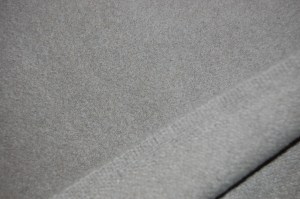
The top part of the photo shows the right side of the fabric. It has a soft, luscious nap to it. The contrast of the weave on the underside is hopefully discernible.

The top part of the photo shows the right side of the fabric. It has a soft, luscious nap to it. The contrast of the weave on the underside is hopefully discernible.

As luck would have it, I had already picked up some swatches of (new) wool challis and various dress-weight silks one of the last times I was at Mendel Goldberg Fabrics in New York City. It did not take me long to pair this Swiss challis with the gray wool.
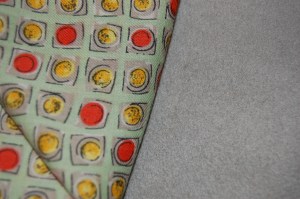
The gray in each little square is a perfect match to the cashmere.

The gray in each little square is a perfect match to the cashmere.

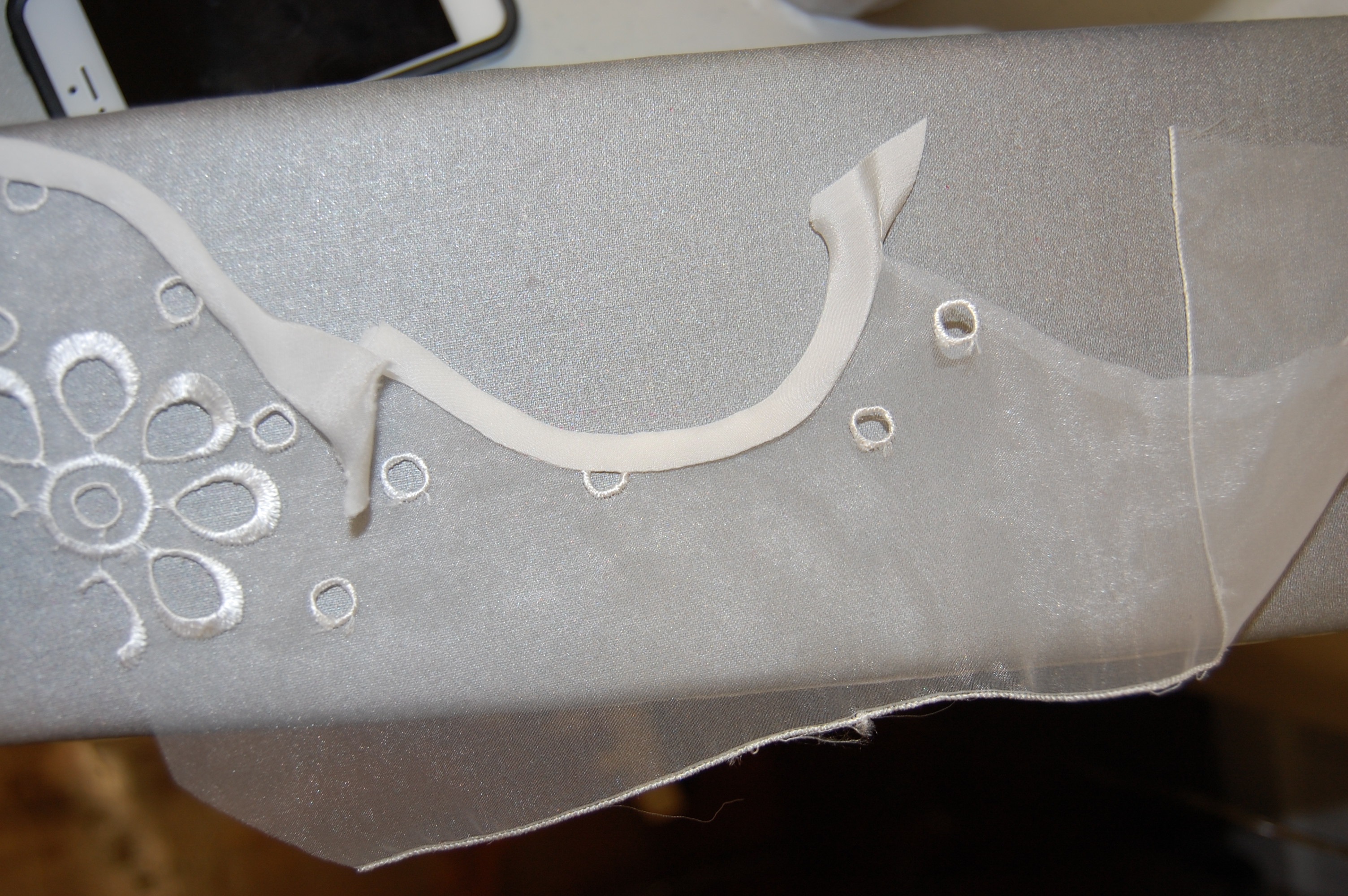
Both fabrics lend themselves to be beautifully complimented by a further pop of color as demonstrated by this silk bias ribbon:
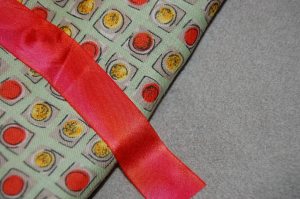
I will definitely be accenting my outfit with something like this.

I will definitely be accenting my outfit with something in this color.

Before I go into patterns and process, I want to share the thoughts of Christian Dior on the color “gray” as written in his The Little Dictionary of Fashion, Abrams, New York, New York, 2007, page 50:

“The most convenient, useful, and elegant neutral color. Lovely in flannel, lovely in tweed, lovely in wool. And, if it suits your complexion, there is nothing more elegant than a wonderful, gray satin evening dress. For day frocks, suits and coats, it is ideal. I would always advise it. And many people who cannot wear black, can wear a dark gray. (Remember that if you are big you must choose a dark gray and if you are petite a light gray is better for you.)

“It is the most convenient color, too, for people who live half in town and half in the country because, with different accessories, a gray suit or coat may be equally suitable for both. It is a good color for accessories, too – almost anything goes with gray. White is perhaps the freshest and sweetest contrast but it is safe to say that whatever your favorite color is, you can safely wear it with gray.”

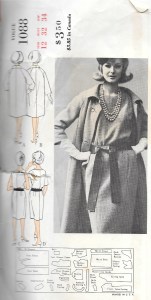
 Armed with this send-off, I immediately began to look in earnest for a coat pattern. I did not want to purchase the wool challis before I had a pattern, but my thought was to line the coat (except for the sleeves, of course) with it, and then make a coordinating dress or blouse as well. When I found this Guy Laroche coat (and dress) pattern, it seemed to be just what I was looking for, even though when I purchased it, I knew that the pocket flap pattern piece was missing. I was confident, however, that piece would be easy to recreate.
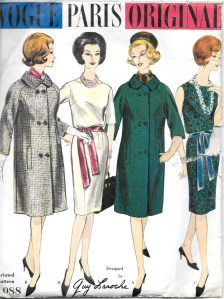
Early Guy Laroche (1921-1989) patterns are somewhat difficult to come by. A Parisian, he worked for Jean Desses (eventually becoming his assistant) from 1949 to 1957, at which time he opened his own atelier. In 1961, his fashion house was known as Guy Laroche Couture. It seems to be about this time that Vogue Patterns began to feature his designs in their Couturier Designer line (Jean Desses designs are also in this line of Vogue patterns). He was one of the featured designers in the 1963 New Vogue Sewing Book, which included “profiles of Europe’s great designers.” This gorgeous suit by him is shown on page 128 in that book:
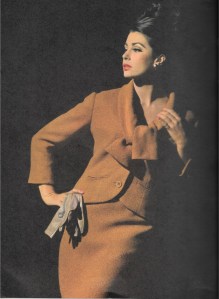
The collar of this jacket extends so that it can be looped.

The collar of this jacket extends so that it can be looped.

Another one of his suits was shown in Vogue Printed Pattern News from March 15, 1961:
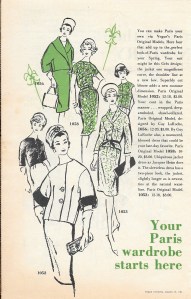
The Laroche design is in the lower lefthand corner. I have never seen this pattern available for purchase...

The Laroche design is in the lower lefthand corner. I have never seen this pattern available for purchase…  (Click on the image to read the caption.)

And a coat and dress ensemble was part of the “French Dressing” section of Vogue Pattern Fashion News from April 1965:
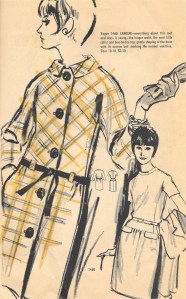
The diagonal direction of the weave in the jacket is a lovely foil for the dress.

The diagonal direction of the weave in the top part of the coat is a lovely contrast for the rest of the ensemble.

I believe the pattern I am using for my gray cashmere coat is from 1962 or 1963. (The patterns from 1961 were priced at $3.00 while my pattern and the ones I have found from 1964-65 were priced at $3.50. That’s one way to help determine a date, although my intuition suggests to me that my pattern is not as late as ’64.)

Once I had my pattern, I ordered the wool challis from Mendel Goldberg (still in stock, thank goodness!) Now, at this point, I did not know exactly how much to order. The body of the coat will be lined in the challis, while the sleeves will be lined in gray Bemberg. I couldn’t go by the yardage on the envelope for the lining since I was “mixing it up.” I think I may have enough of the gray cashmere to make a skirt, but the fabric might be too heavy for a skirt. I’ll know more once I start to sew with it. The rambling on in my head told me that I needed to get enough of the challis to either make a long-sleeved blouse to go with a “maybe” skirt – or enough challis to make an entire dress, as well as the coat lining. So – I ordered PLENTY!! Now I have options.

For some reason I always find coats to be a little intimidating – at least at the beginning. However, when you look at the few pattern pieces that go into this design, it seems to look more complicated than it really is (I hope I am not jinxing or deluding myself):
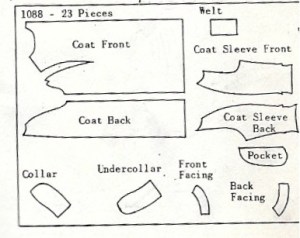
The main body of the coat really has just 8 pattern pieces (the facings you see are for the dress included in the pattern.) Of course, the lining adds more, but compared to the number of pieces in the coat I made two years ago, this is minimal!

The main body of the coat really has just 8 pattern pieces (the facings you see are for the dress included in the pattern.) Of course, the lining adds more, but compared to the number of pieces in the coat I made two years ago, this is minimal!

I am currently working on my muslin, and I am so excited to be starting this project. Thank you, EG, for allowing me to purchase this beautiful vintage fabric. I feel a great responsibility to honor this “something old” wool in a coat worthy of its quality and provenance.
24 Comments

Filed under Coats, Mid-Century style, Uncategorized, Vintage fabric, vintage Vogue Designer patterns, vintage Vogue patterns from the 1960s, woolens

A Collection of Coats

When the weather turns wintry, warm coats become a wardrobe staple. One or two “practical – wear everywhere” coats are a must. (I just added years to the life of a 2+ decades-old cashmere, classic, double-breasted coat by having the tattered lining replaced by a local tailor – and I will continue to wear this coat often!) But how delightful to have a collection of coats – and how much better if they are not only warm, but also stylish. If you were sewing in the 1950s and 1960s you were fortunate to have many, many coat styles and patterns available to you – and if you are sewing now, you are also fortunate to have access to many of these same patterns through the internet – and they are just as stylish now as they were 50+ years ago. I am, of course, speaking of “dressmaker coats.”

Quoting from Fairchild’s Dictionary of Fashion, (Third Edition, by Charlotte Mankey Calasibetta and Phyllis Tortora; Fairchild Publications, Inc, New York, New York, copyright 2003) a dressmaker coat is: “A woman’s coat designed with softer lines and more details than the average coat. May have a waistline and unusual details, e.g., tucks or pleats.” Such coats are so-called because they are styled more like a dress.

It doesn’t take very long to find examples of such coats in the Vogue Pattern Book Magazines from those two decades. The sheer numbers of patterns for such coats – and coat and dress ensembles – make me believe that home dressmakers from that period of time did not shy away from such sewing challenges. And why should we when so many gorgeous coats are waiting to be sewn?

Here are a few examples to tempt you:

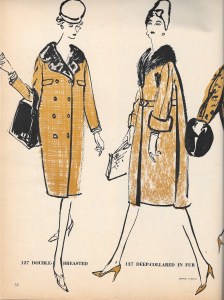
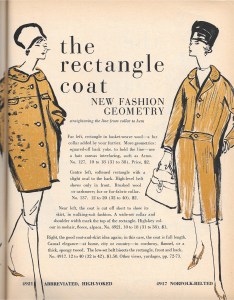
“The Rectangle Coat: New Fashion Geometry” was a feature in the December 1958/January 1959 Vogue Pattern Book Magazine.

Dressmaker coats - rectangle #1

Both of these coats feature fur collars “added by your furrier.” The one on the left has a “slight oval to the back” – and a half belt.

Suggestions for suitable fabrics are given for each of these designs.

Suggestions for suitable fabrics are given for each of these designs.

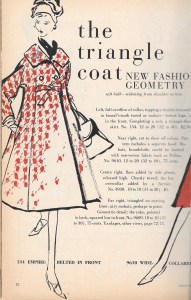
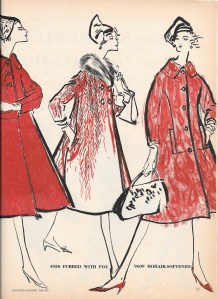
Continuing with the theme of “New Fashion Geometry,” the following pages of the same Vogue Pattern Book Magazine show examples of “the triangle coat.” Other terminology for this style of coat is the A-line coat. First introduced in 1955 by Christian Dior, this coat was “made close and narrow at the shoulders, flaring gently from under the arms to hem; shaped like letter A, made in single-or double-breasted style with or without a collar,” according to Fairchild’s Dictionary of Fashion, page 85.

Dressmaker coats - triamgle coat #1

The coat on the right has unusual princess seaming.

The coat on the right has unusual princess seaming.

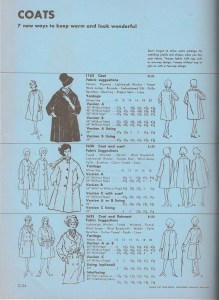
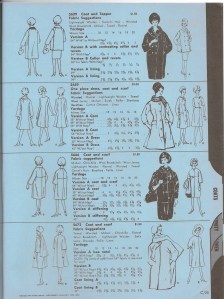
A few years later, the December 1962/January 1963 issue of Vogue Pattern Book Magazine featured “7 new ways to keep warm and look wonderful.”

Dressmaker coats - 7 coats 1

Several of the coats in this section feature "fullness" in the body of the coat.

Several of the designs in this section feature “fullness” in the body of the coat.

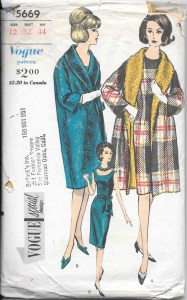
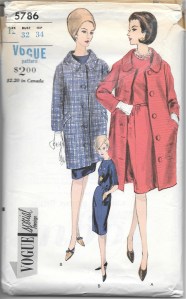
For me, however, it is the “ensembles” that make the ultimate fashion statement when speaking of coats. Christian Dior succinctly sums up their allure in The Little Dictionary of Fashion (Abrams, New York, New York, copyright 2007), page 40: “A very elegant way of dressing is to have a coat and dress matching together, making an ensemble… The frock should be fairly simple and the coat can be either fitted or loose, according to your taste. It can also be either long or short.” Vogue Patterns had no shortage of offerings for such ensembles. Here are four wonderful Vogue patterns – which are part of my pattern collection – and which are “ensembles.”

Note the "fullness" in this coat as well.

Note the “fullness” in this coat as well.

The princess seaming on this coat is similar to the red one mentioned above.

The princess seaming on this coat is similar to the red one mentioned above.

Somehow, this Guy Laroche pattern shows better in this photograph than in its drawing.

Another view of this  Guy Laroche pattern; it seems to show better in a photograph than in its pattern illustration.

This pattern was featured in that same VPB Magazine issue from December 1962/January 1963.

This pattern was featured in that same VPB Magazine issue from December 1962/January 1963.

And here it is in black and white in that issue. Stunning, isn't it?

And here it is in black and white in that issue. Stunning, isn’t it?

I love the knee length coat, although I may substitute another pattern for the coordinating dress.

The neckline on this coat is lovely and perfectly suited for a coordinating dress.

I actually have fabric for three of these patterns – with plans to sew them of course.  (Can you guess which one is the fabric-less orphan?)   However, all of them will remain part of my sewing dreams until after the holiday season – which “officially” begins this week with our American Thanksgiving celebration. I have festive attire and a few homemade gifts to fill my sewing days through December. Building my collection of coats will just have to wait.

Happy, Happy Thanksgiving to all my American readers – and my heartfelt thanks to my loyal readers worldwide in this season of gratitude.

11 Comments

Filed under Coats, Dressmaker coats, Mid-Century style, The Conde Nast Publications, Uncategorized, vintage Vogue Designer patterns, vintage Vogue patterns from the 1950s, vintage Vogue patterns from the 1960s

Because We Can’t Spend Every Waking Hour Sewing . . .

Or can we? If you are like me, you spend a lot of time thinking about sewing even when you aren’t actively engaged in the process. And how fortunate, for those of us who also enjoy a good read, to find a novel which speaks the language of couture fashion sewing.

The Pink Suit, by Nicole Mary Kelby, was published in April of 2014, so it is not a particularly new book – it took me a while to decide to read it. I knew it was about the iconic “Chanel” suit which Jackie Kennedy wore the day her husband was assassinated in November of 1963. Although I am truly a fan of historical fiction, for some reason I had my doubts about the supposed story line of this book. Could an author really convey the emotional and professional commitment that a “dressmaker to the Famous” would have to have? Well, yes. I finally succumbed to reading this novel and I am so happy I did. This is a wonderful story, on three important levels – as a narrative story, as a lesson in fashion history from a very specific period of the 1960s, and as an appreciation of couture sewing.

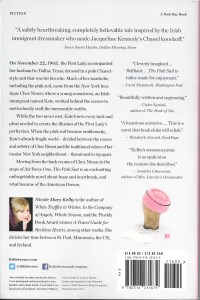
The Pink Suit - book cover

The heroine of the story is Kate, an Irish immigrant dressmaker who works for the prestigious Chez Ninon boutique in New York City. Extremely skilled at couture sewing, Kate is always responsible for the creation of the fashions which First Lady Jackie Kennedy orders. Although Mrs. Kennedy’s tastes gravitate towards French style, she is savvy enough to realize that her clothes must be American made. So it is that Chez Ninon and Kate endeavor to provide her with the finest French styles, American made. As talented a dressmaker that Kate is, she balances between two worlds – that of the rich, famous, and beautifully dressed – and that of the “working class.” We do not find out until close to the end of the novel that Kate is exactly the same age as Mrs. Kennedy, which, for me, emphasized this dichotomy. (There is a parallel love story, in which Kate finally marries Patrick, who has a butcher shop business in Manhattan.) However, even though Kate is part of the “working class,” this does not mean that she does not want to dress as beautifully as those for whom she sews. I do not want to give away more of the narrative, but there is a wonderful scene where Kate is dressed in a couture suit and finds herself in the Carlyle Hotel where she deftly opines to herself “A woman in a beautiful suit can go anywhere.”

I love that the back cover of the book shows a hat and gloves - two essential ingredients to being well dressed in the early 1960s.

I love that the back cover of the book shows a hat and gloves – two essential ingredients to being well dressed in the early 1960s.

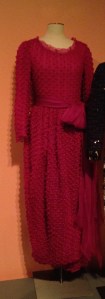
As a lesson in fashion history, The Pink Suit is beautifully composed. I learned things I never knew – such as Coco Chanel allowing line-by-line “copies” of her jackets and suits under certain circumstances. The pink boucle, the trim and the buttons for the First Lady’s suit were actually supplied by Chanel herself to Chez Ninon – at a hefty price, of course. Although Oleg Cassini was the “official” fashion designer to the White House, Mrs. Kennedy obviously had the ultimate say over what she wanted to wear – and what she wanted to have made for herself. There are hints in the book at the professional snobbery and envy, which certainly circled around some of her decisions. The inner workings of Chez Ninon are described with great detail, with especial emphasis placed on the two sisters who were the owners and “manipulators” of French fashion, done American style. (I was certainly thrilled to see a Chez Ninon gown in the Exhibit at Drexel University which I attended a few weeks ago. Although from a later period of time – and certainly not my favorite – simply the inclusion of such a gown speaks to the importance of this fashion boutique in the history of dress:)

Drexel - red Chez Ninon dress

How I would love to see the inside of this dress!

One of the more charming aspects of the novel is the inclusion of a “fashion” quote at the beginning of each chapter. For example:

From Diana Vreeland: “A new dress doesn’t get you anywhere; it’s the life you’re living in the dress, & the sort of life you had lived before, & what you will do in it later.”

From Karl Lagerfeld: “Fashion is a language that creates itself in clothes to interpret reality.”

From Oleg Cassini: “To be well dressed is a little like being in love.”

From Yves Saint Laurent: “Over the years I have learned that what is important in a dress is the woman who is wearing it.”

From Coco Chanel: “Adornment, what a science! Beauty, what a weapon! Modesty, what elegance!”

Finally, I cannot give the author of this novel enough credit for her understanding and interpretation of the thrill of couture sewing and appreciation of beautiful fabrics. One can feel the stress that Kate experiences when she is working on her “assignments” – the tremendous time involved in intricate, custom sewing, the dedication to excellence she feels for each piece. And when beautiful fabrics come into the boutique, the reader can almost feel the luxurious hand of each one, see the perfect color and imagine the beauty of it made up into an exquisite dress. There is one scene where Kate is given a piece of the Linton Tweeds “Chanel” pink boucle – and I could fully feel her overpowering emotion at receiving such a gift.

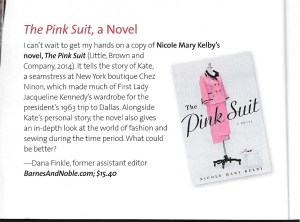
This book has actually been featured in Threads Magazine’s “Great Gifts” feature in the current January 2016 issue:

The Pink Suit - Threads

So – I suggest that if you have not already read this book, you do so. Give yourself a gift, or put it on your list – along with some pink boucle!

22 Comments

Filed under Book reviews, Coco Chanel, Mid-Century style, Uncategorized

Sweet November

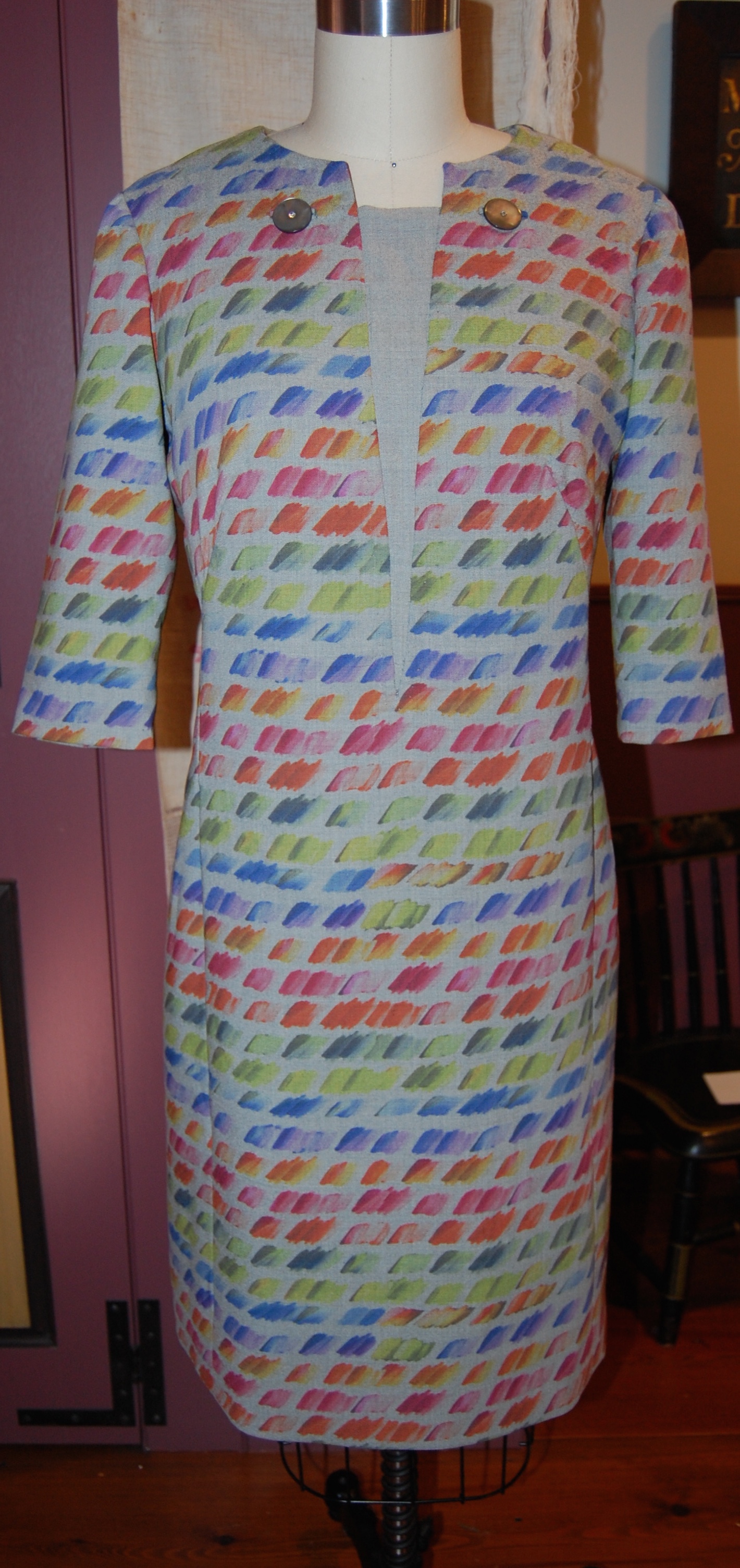
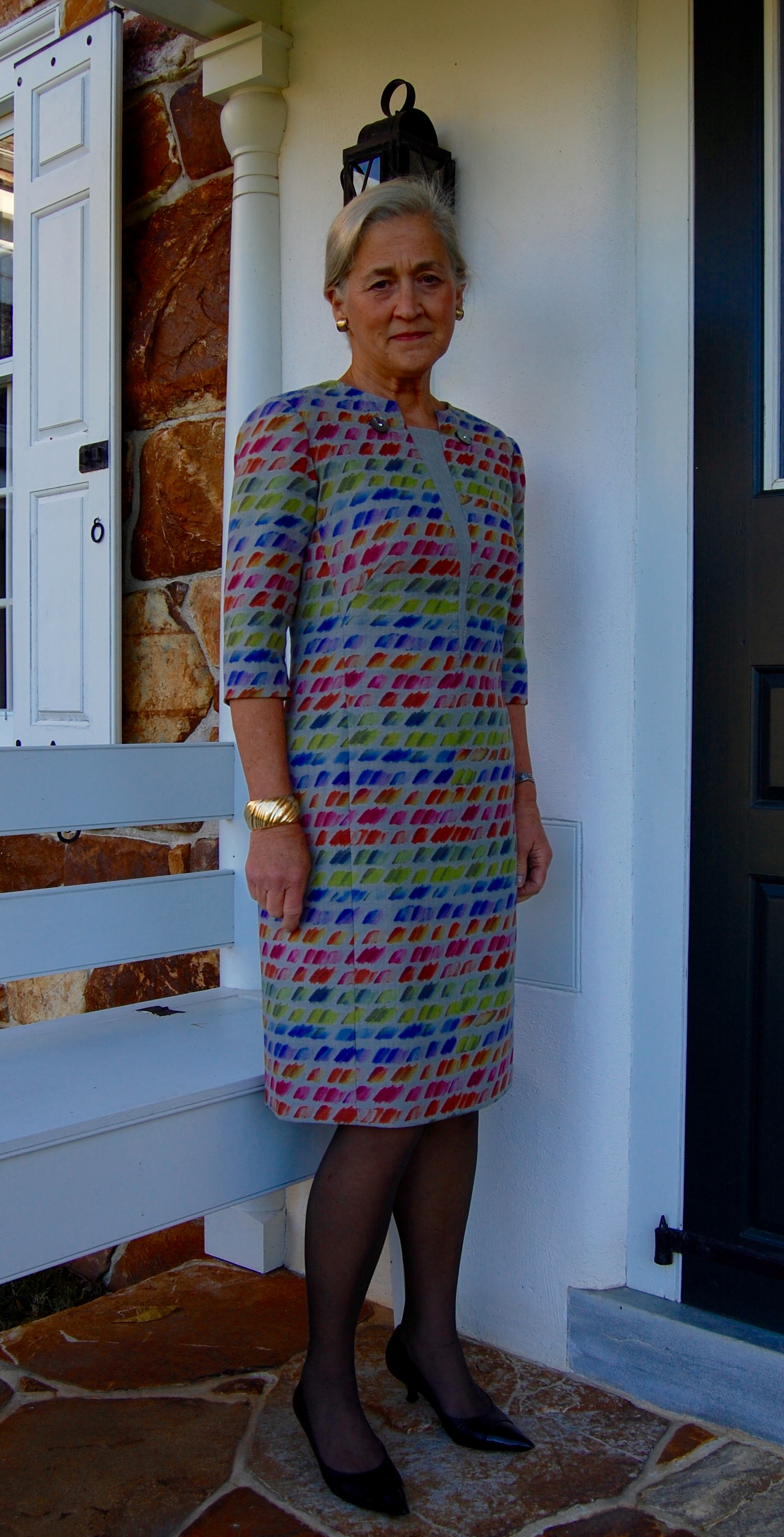
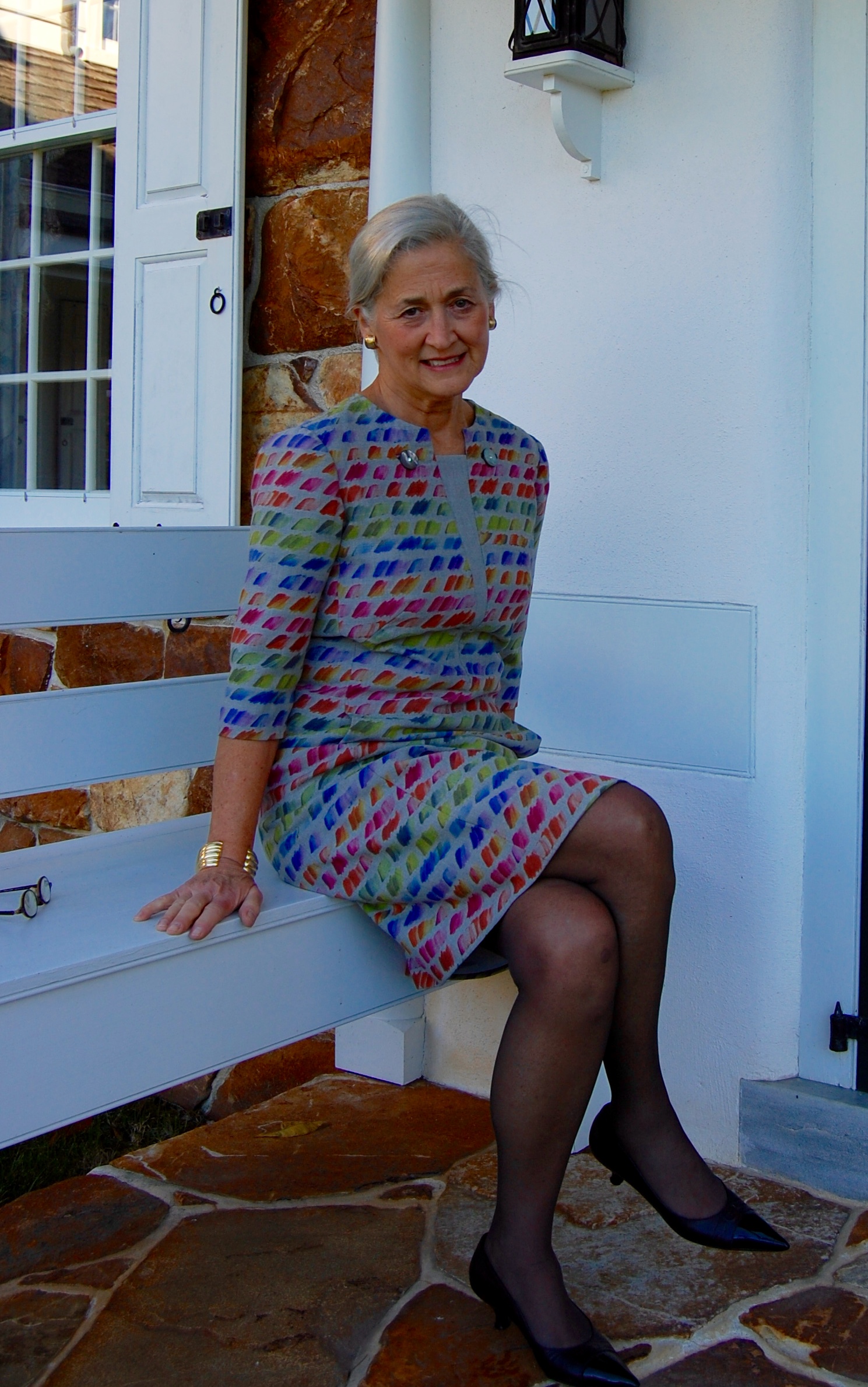
The trickery, which defined my October sewing, finally floated away with the leaves and the goblins, leaving sweet November with her welcome reward, a new dress for Autumn and Winter.

Sweet November

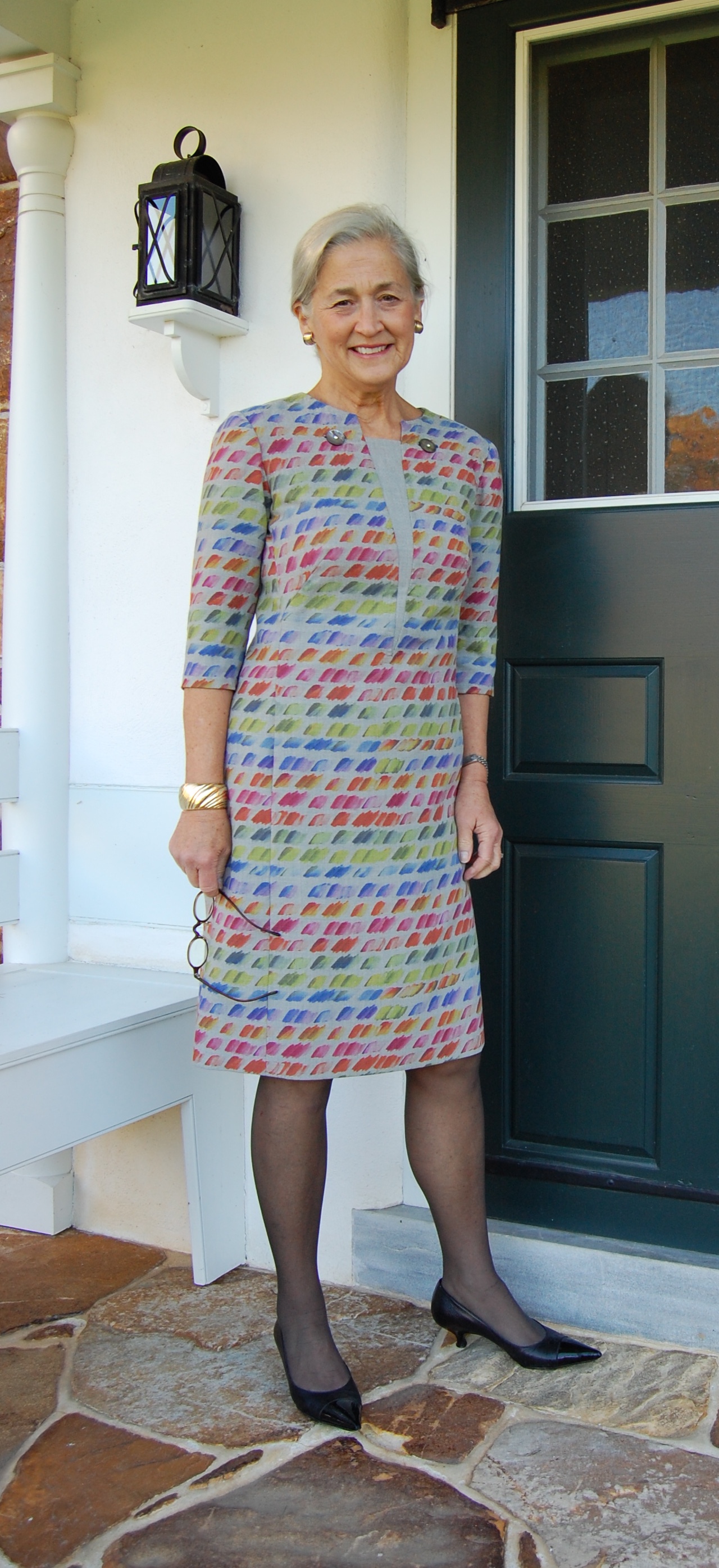
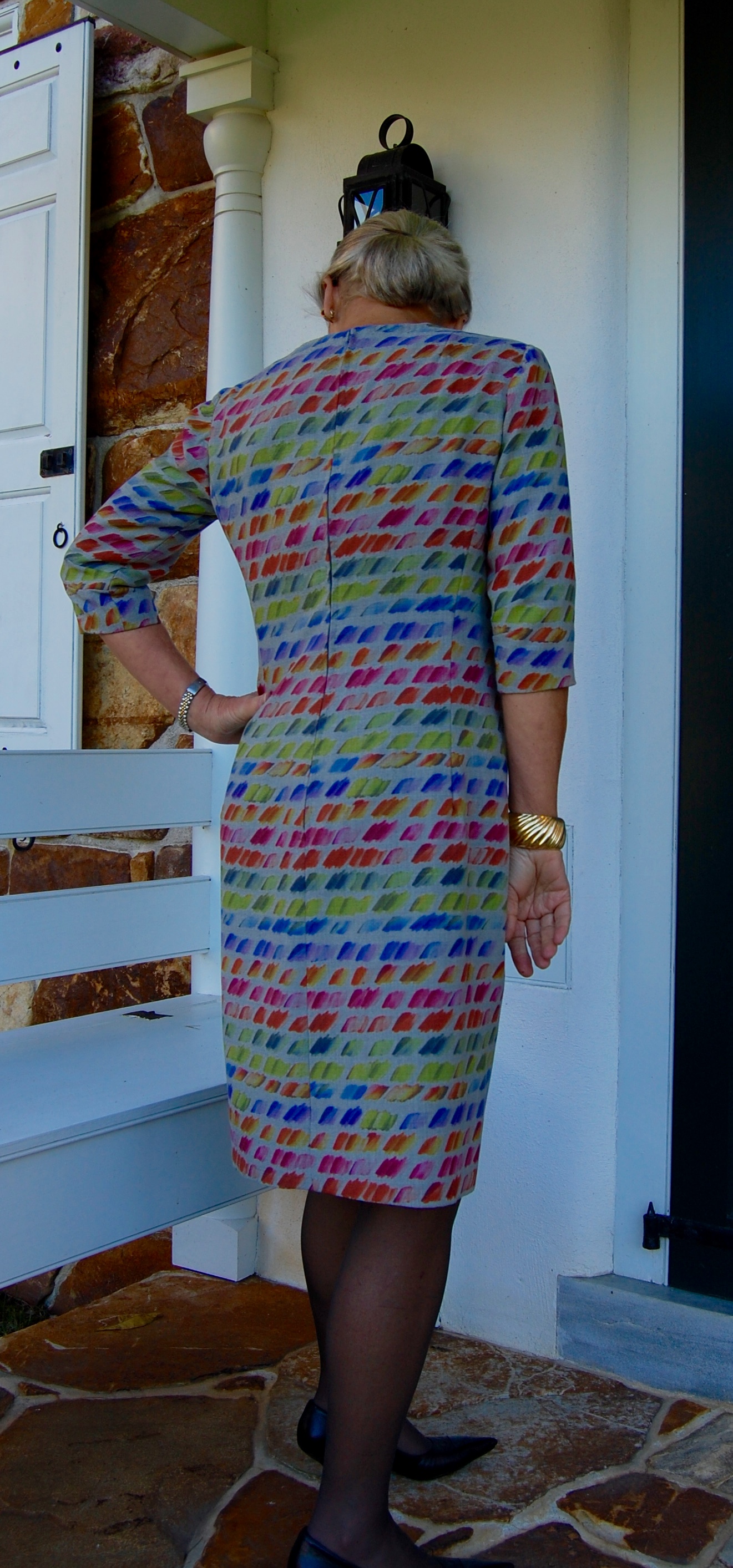
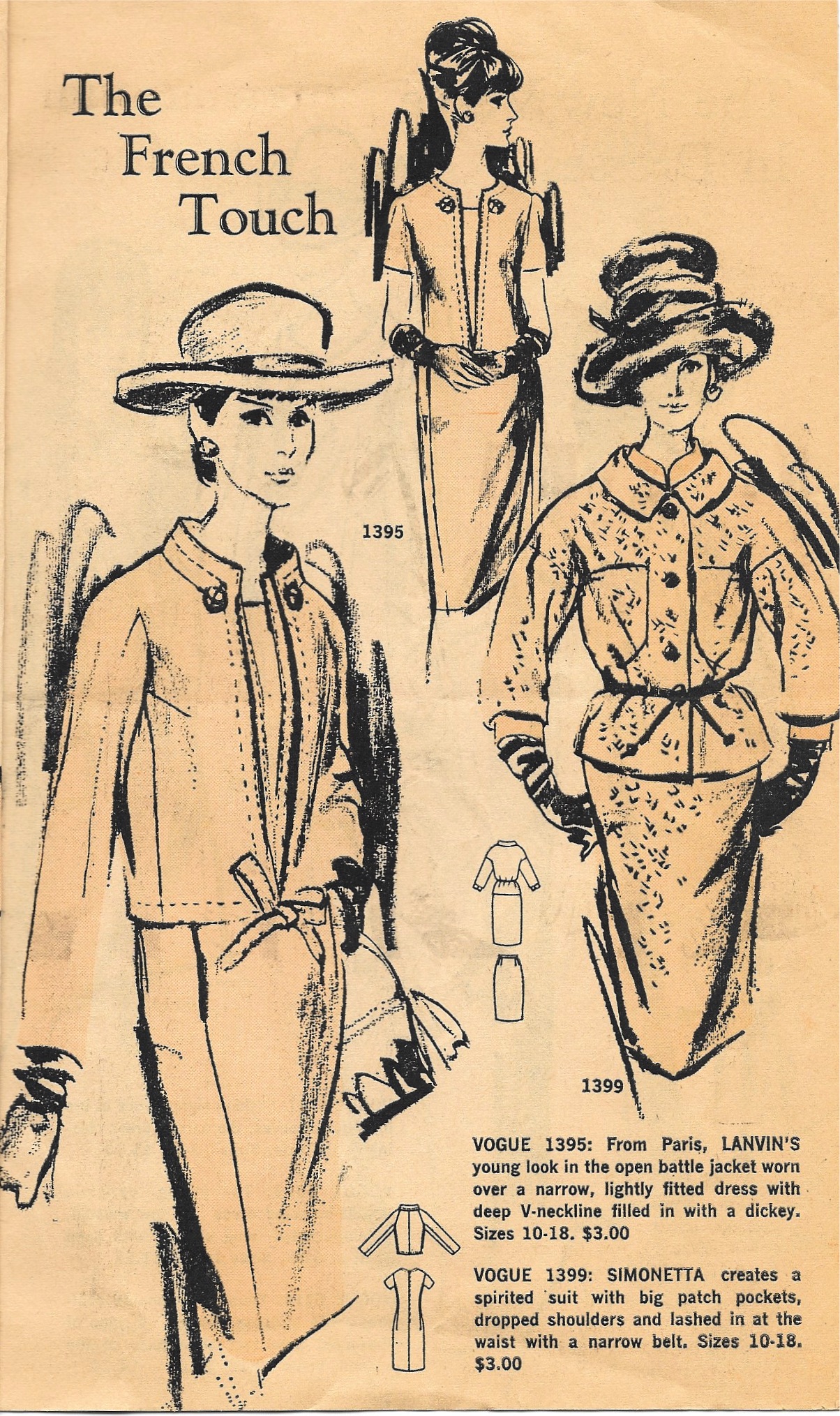
So what made vintage Vogue 1395 such a tricky dress to make? I documented my efforts to get a workable muslin (toile) in a post from early October. Once I had my adjusted muslin pattern, I transferred it onto black silk organza to use as my cutting guide. It was then I realized that, because the design on the fabric, a silk and wool blend, was printed on it, not woven into it, I needed to work from the right side of the fabric in order to match the horizontal “lines.” This meant that I had to flip every piece that I cut out and then exchange the organza with its opposing side. (I hope this makes sense.) It added a bit of uncertainty to the process and I was fanatical with flipping and checking to make sure I kept the design in line. Something told me I should delay cutting out the sleeves until I had the body of the dress together – my sewing godmother at work, I guess – and I am glad I did, as I’ll detail in a bit.

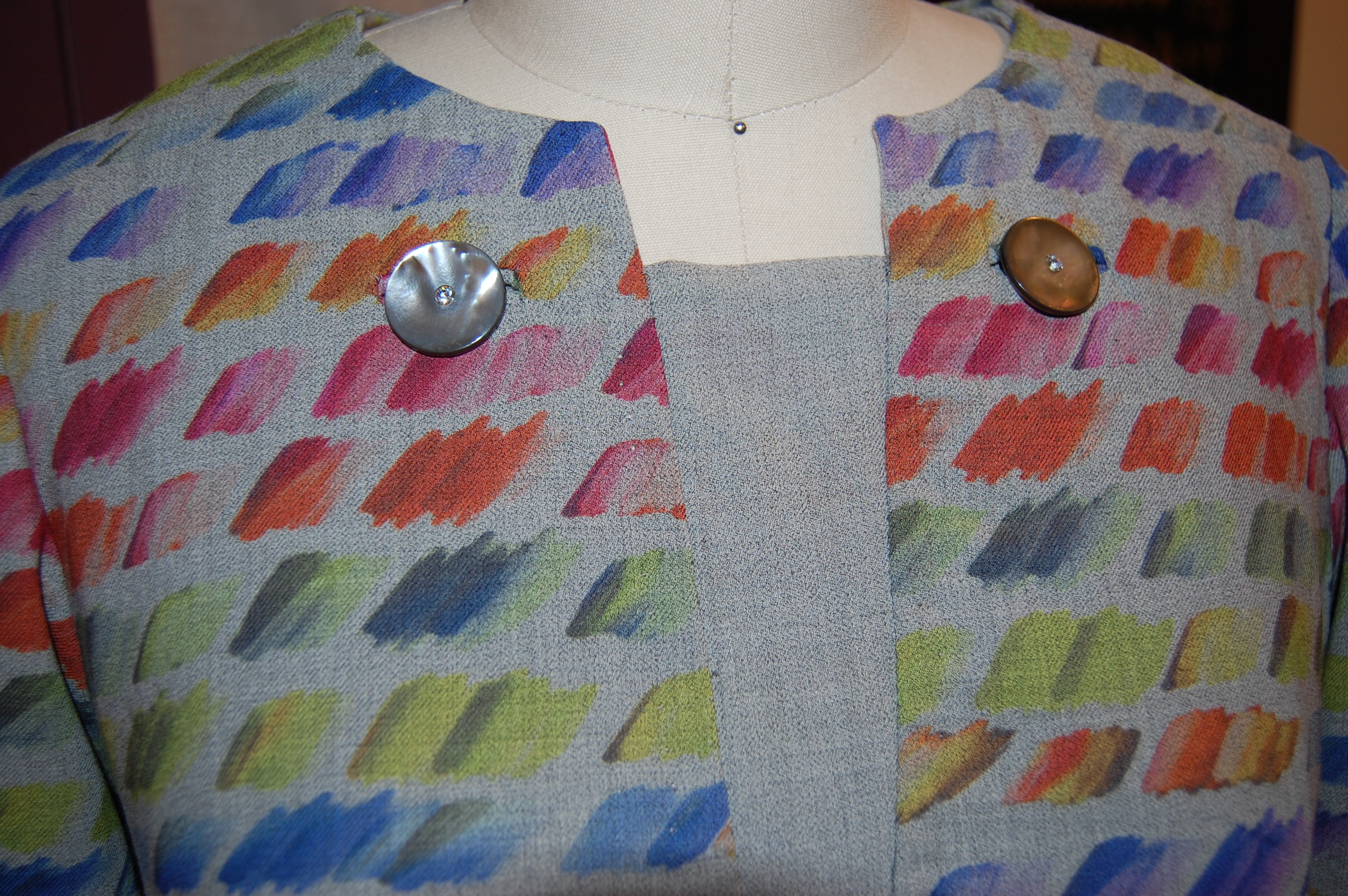
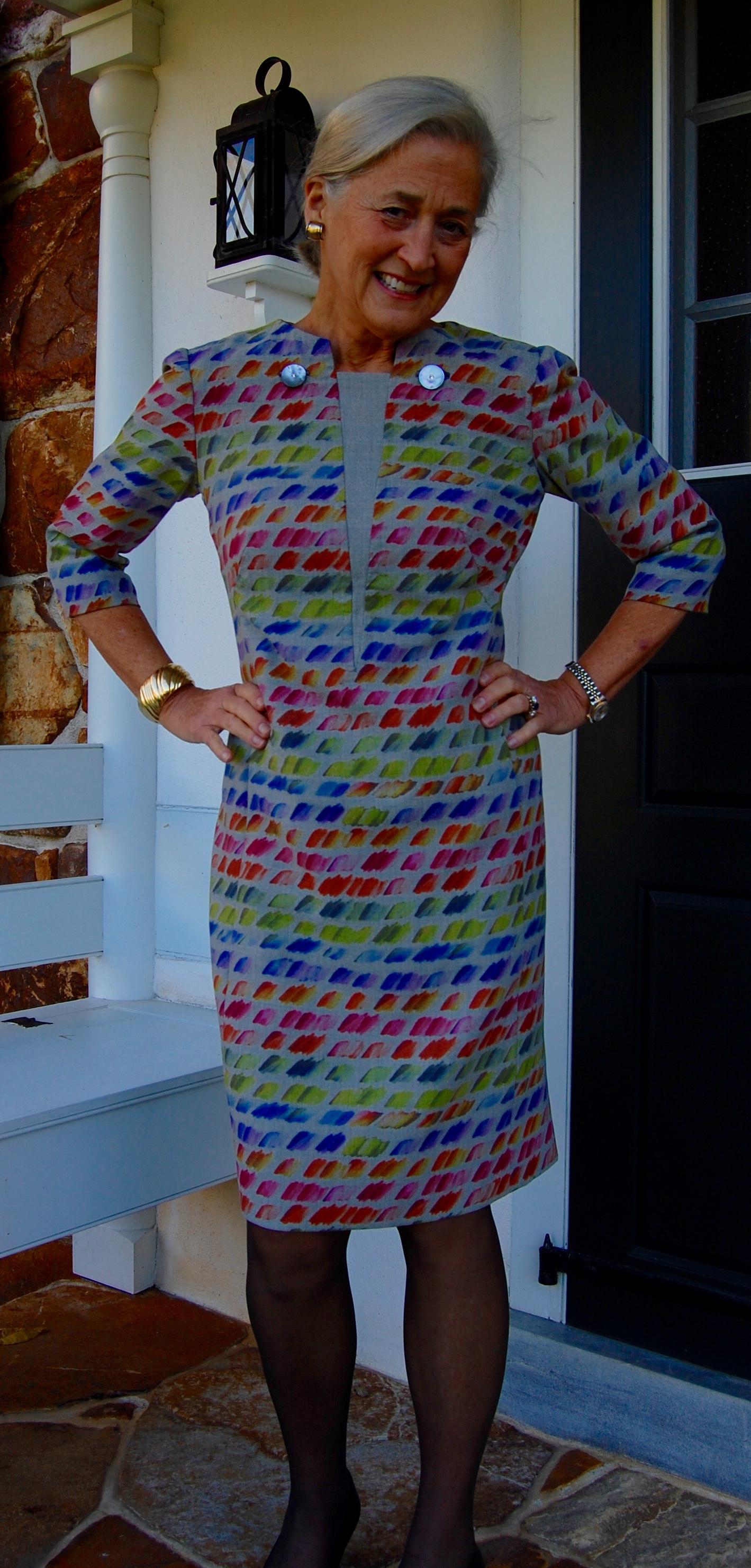
I had made the decision at the beginning of the project to cover the dress’s two buttons in the plain gray “wrong” side of the fabric. But once I “semi-made” a covered button, and tried it out, it was DULL. It added nothing to the dress. I went to my button box and all I could find was a small gray pearl that was close in color. But I loved the iridescence of it and determined that gray pearl buttons were what I needed. I seem to have such good luck with buttons from Britex – even though I am ordering online – and found 1” gray pearl buttons with a rhinestone in their centers. Although I am not a rhinestone-y type of person, something about them spoke to me. I remembered what Susan Khalje said in one of the classes I have taken with her – that couture often has a bit of “whimsy” to it. Well, I ordered those buttons as as fast as I could! I think they are just what was needed!

Sweet November

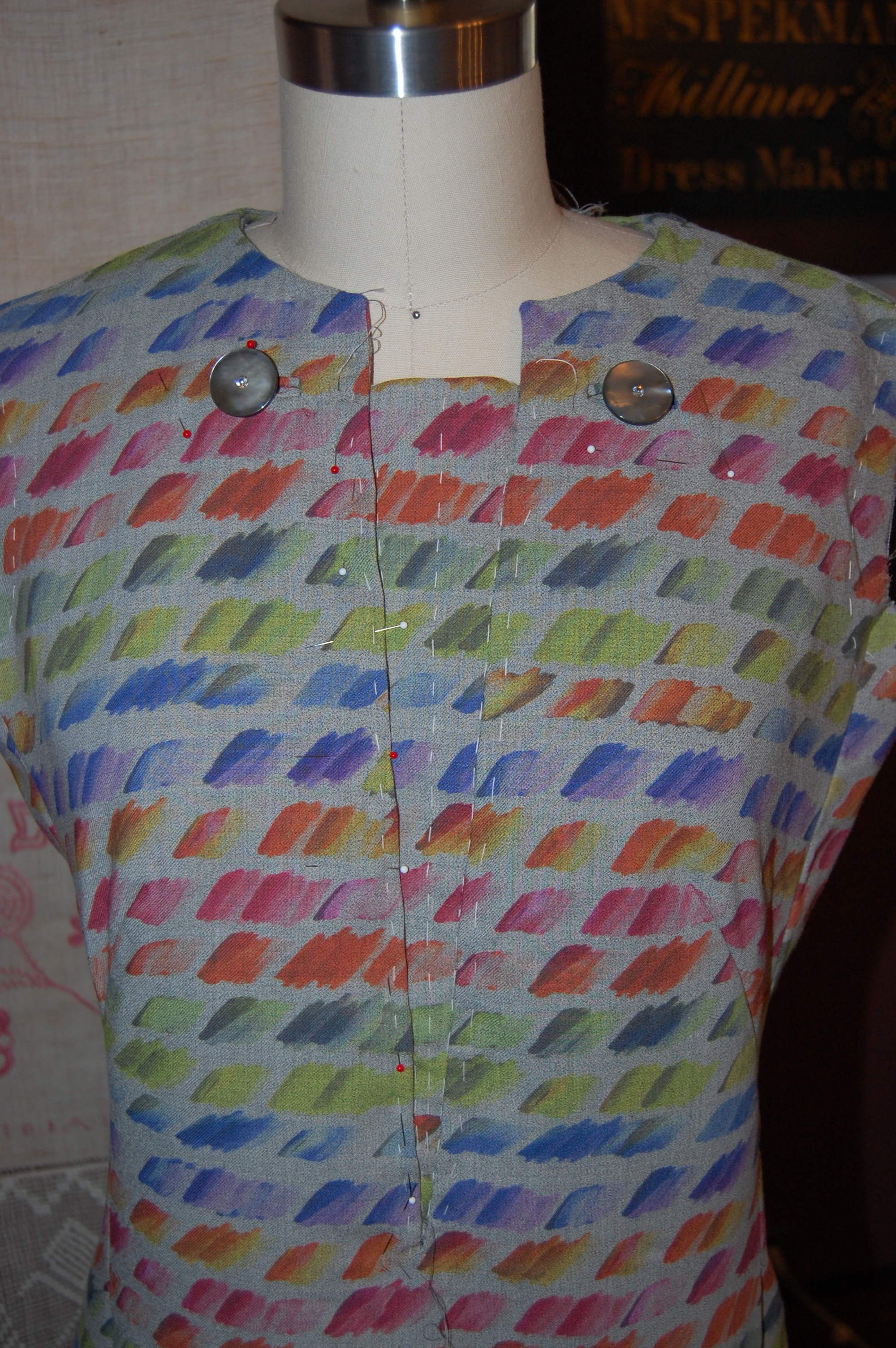
I had also made the decision to make the “dickey” part of the dress out of the side of the fabric with the printed design – so that the horizontal line would be uninterrupted across the bodice. Here is what it looked like once I had it done:

Sweet November

There was not enough definition between the dress and dickey to make it interesting.

I cut some scraps to see what it would look like with a play gray insert – and it was so much better!

Sweet November

So – I took the dickey all apart and flipped it over so it would be out of the plain gray “wrong side.” By now I was enjoying the versatility of this fabric (which I bought online from Mendel Goldberg Fabrics) and appreciating the serendipity of having this fabric for this pattern, giving me options.

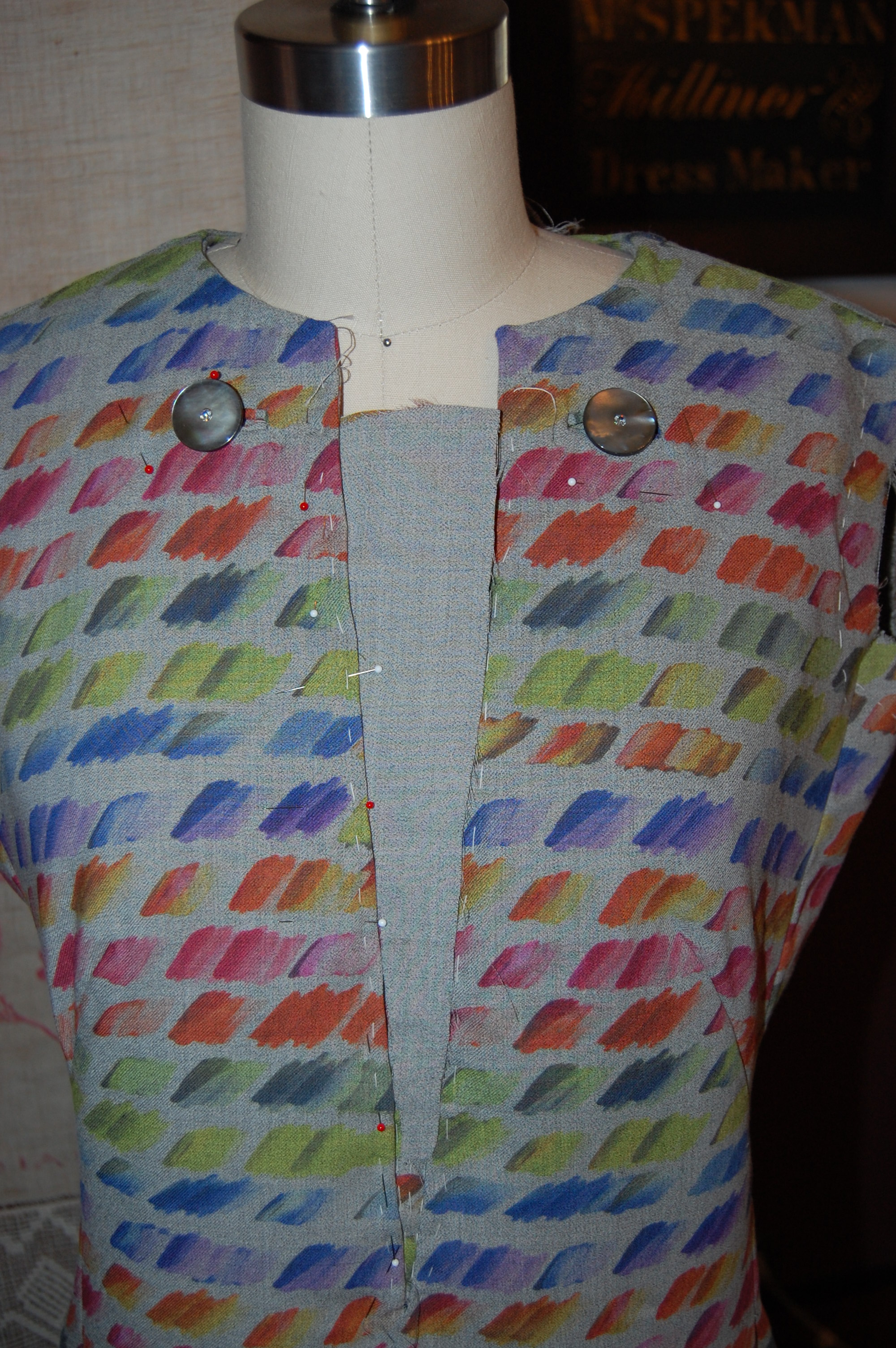
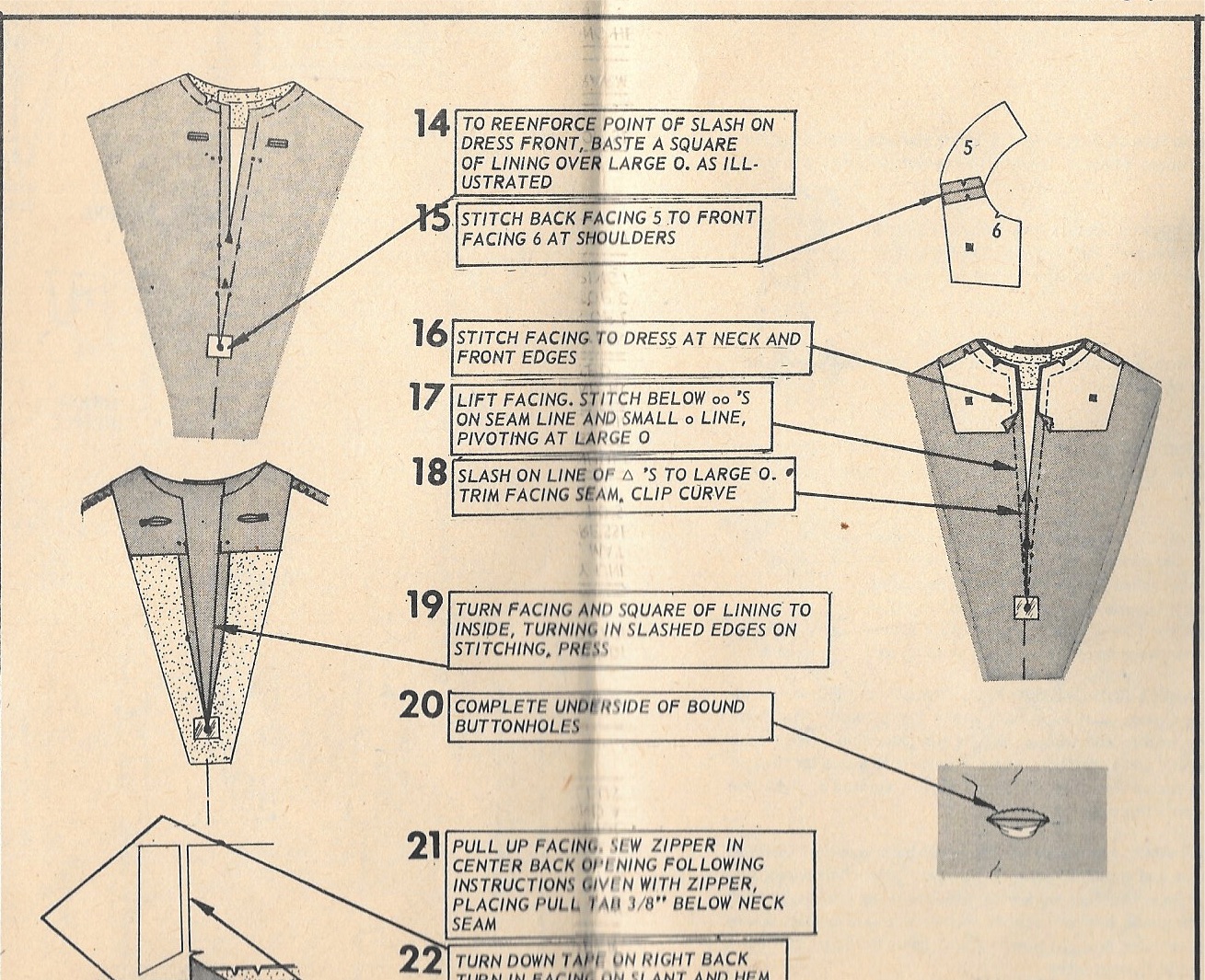
However, the fabric posed another challenge when I got to the point of finishing the front opening in the bodice. This fabric frays enough that I was not comfortable following the directions given in the pattern instructions:

The instructions directed me to just turn back the seam allowance, but because of the ravel-ly nature of the fabric, I was certain it would pull out with wear.

The instructions directed me to just turn back the seam allowance, but because of the ravel-ly nature of the fabric, I was certain it would pull out with wear.

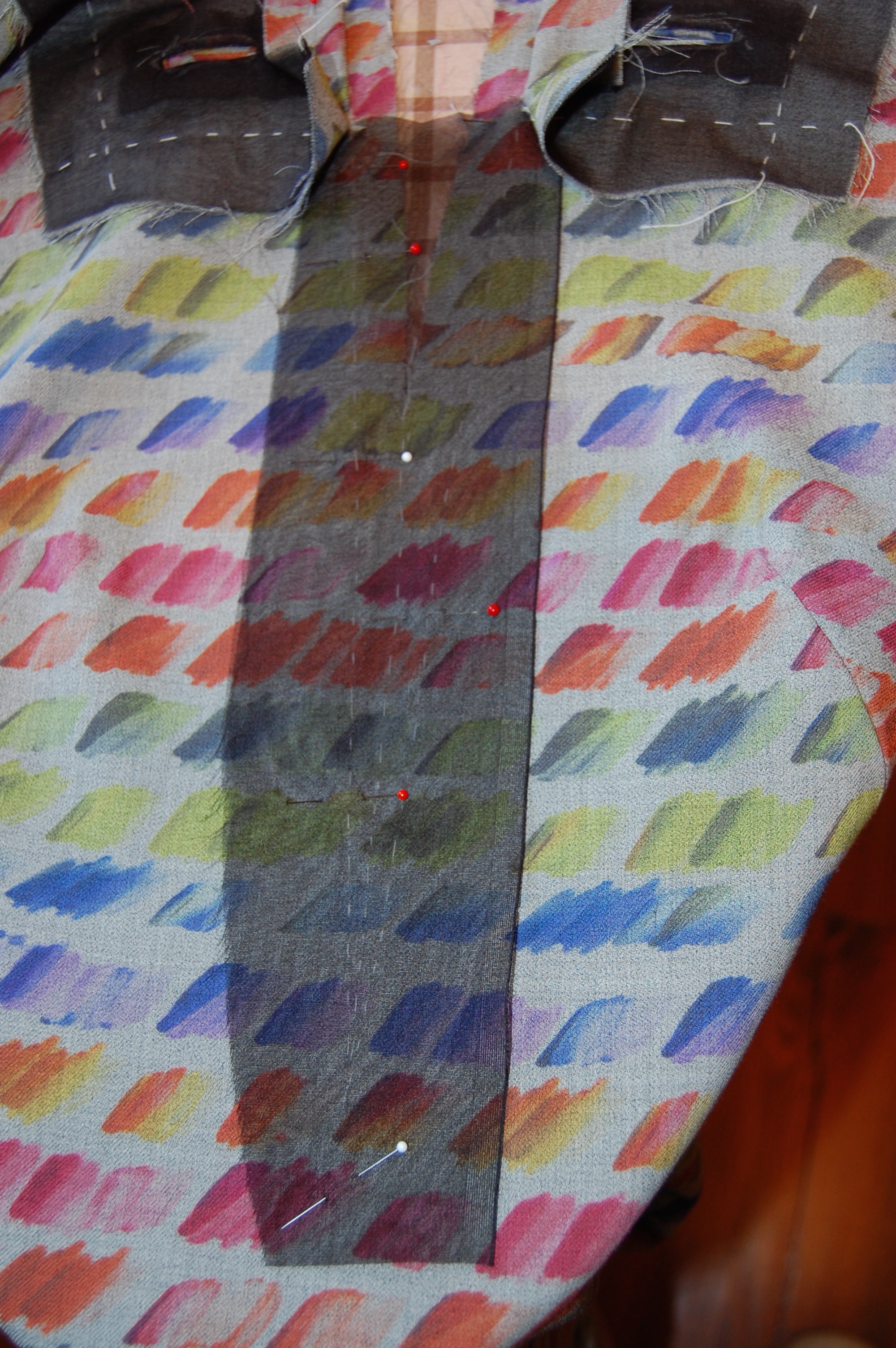
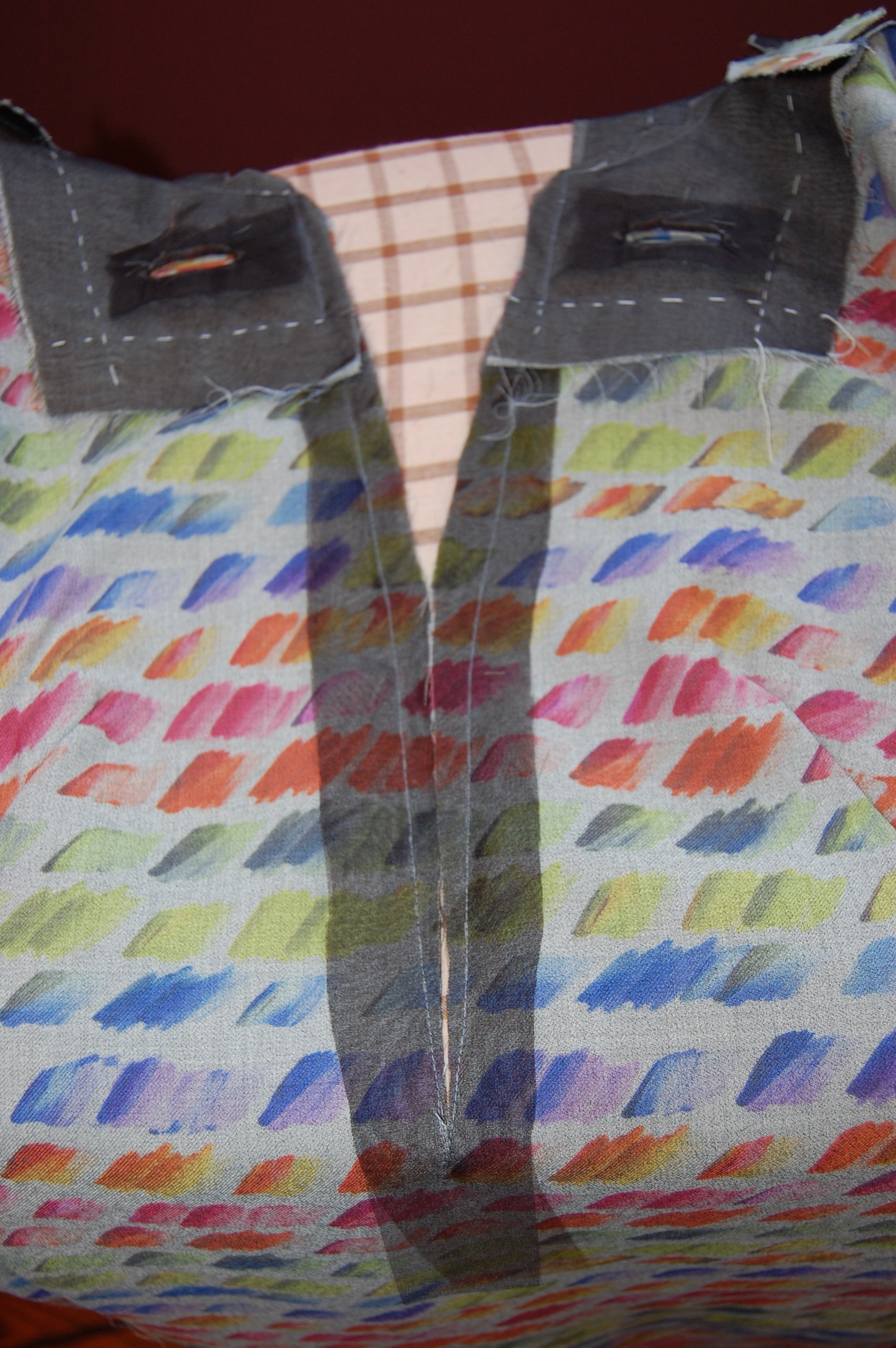
Instead, I opted to make a “facing” for the opening out of black organza. It is situations like this that make me feel so fortunate to have enough “sewing sense” to be able to recognize potential difficulties and then have the ability to work out creative solutions to them.

Sweet November

Silk organza pinned in place.

And here it is sewn in place.

And here it is sewn in place.

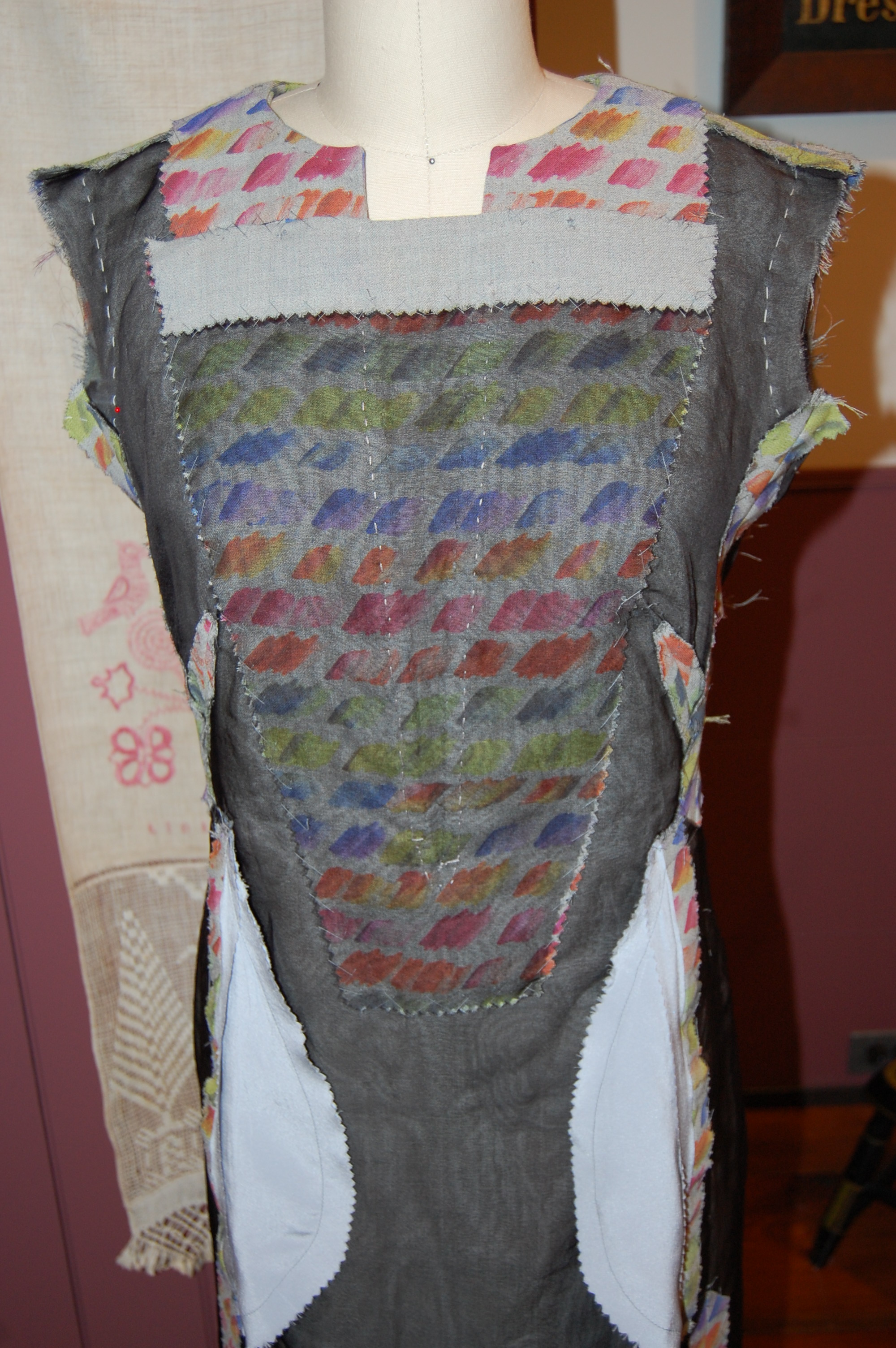
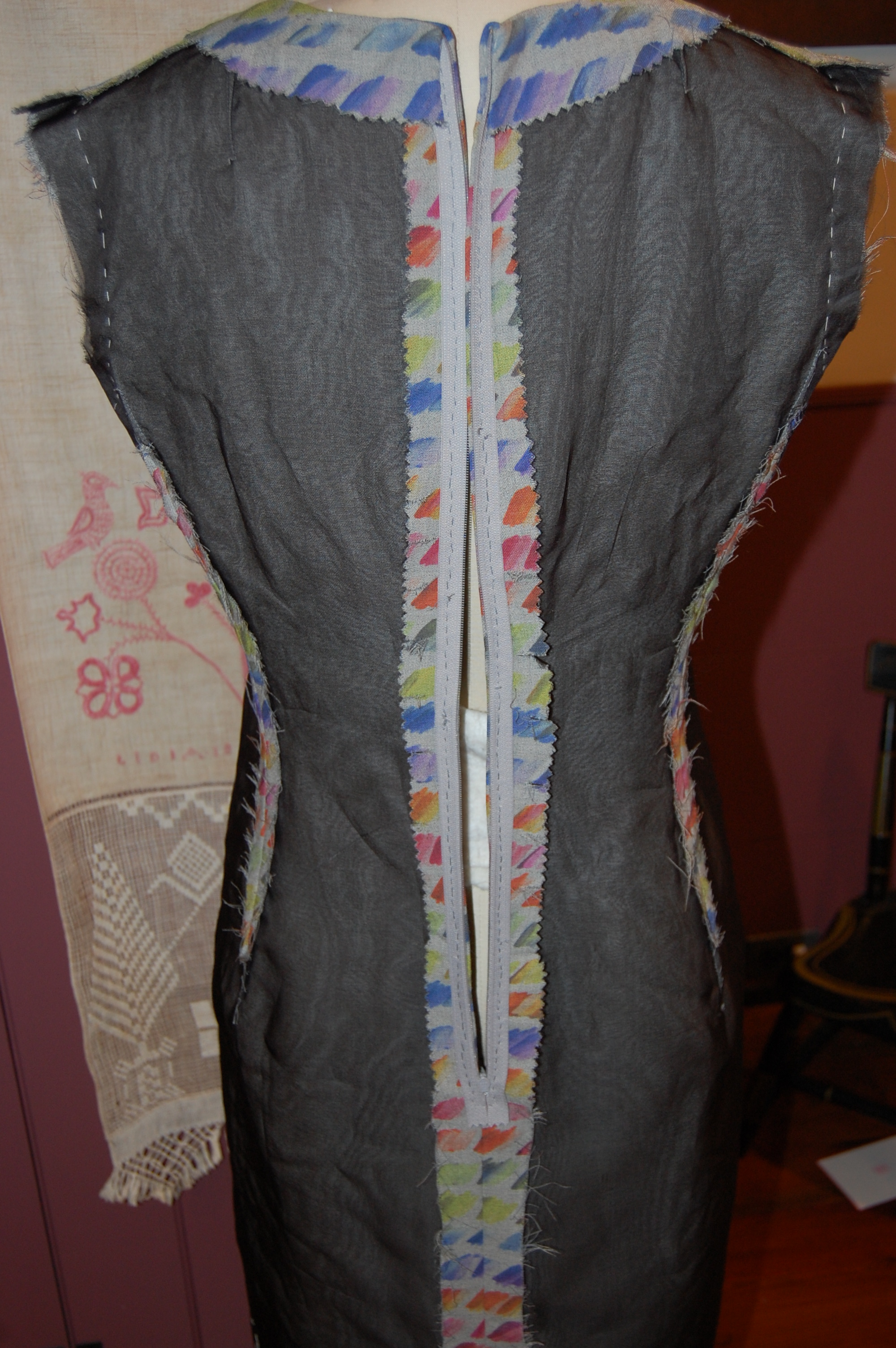
I took some pictures at this point to show the inside of the body of the dress:

Yes, those are pockets hanging on the front.

Yes, those are pockets hanging on the front.

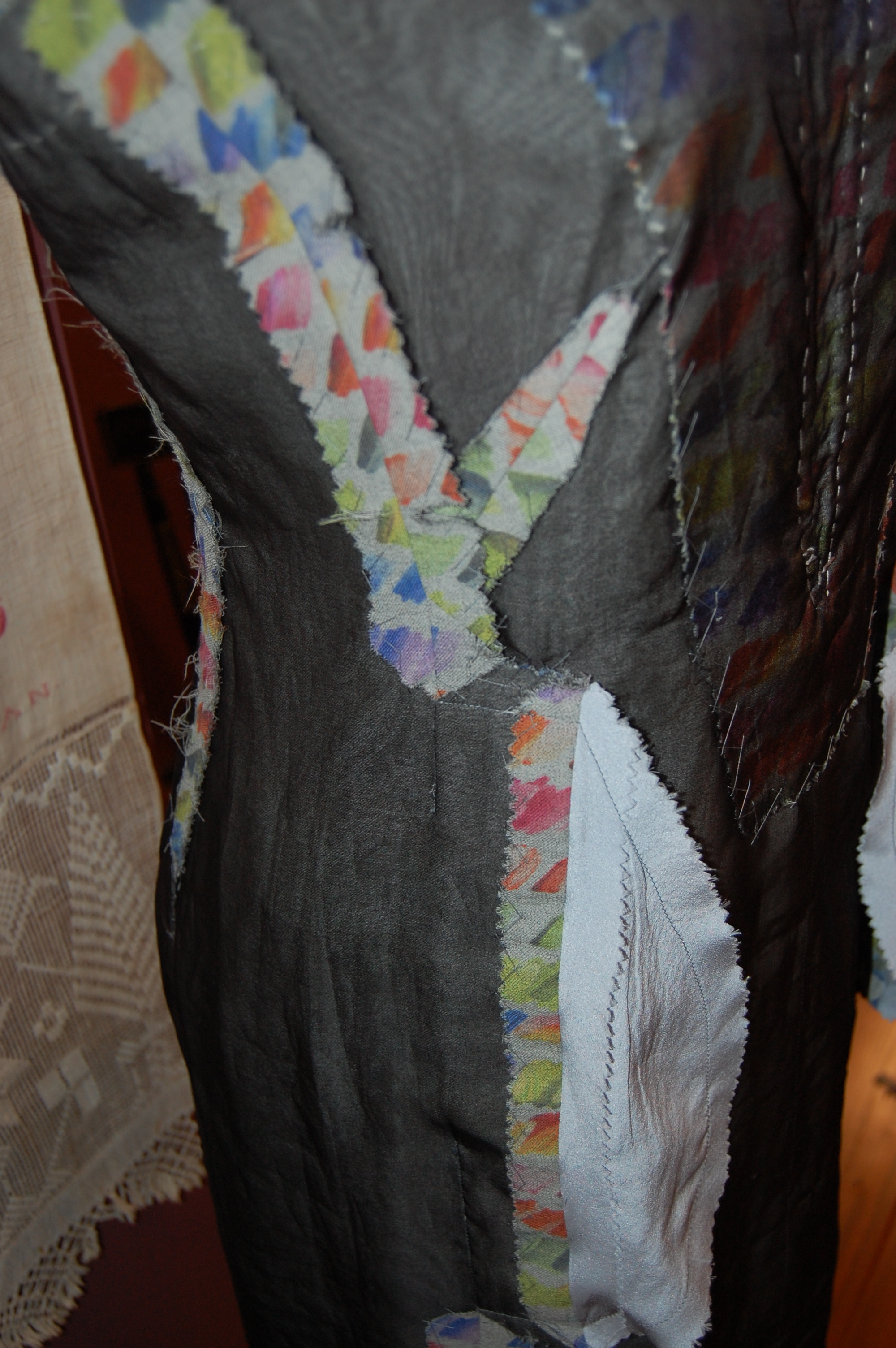
This shows those darts with their slanted orientation.

This shows those bust darts with their slanted orientation.

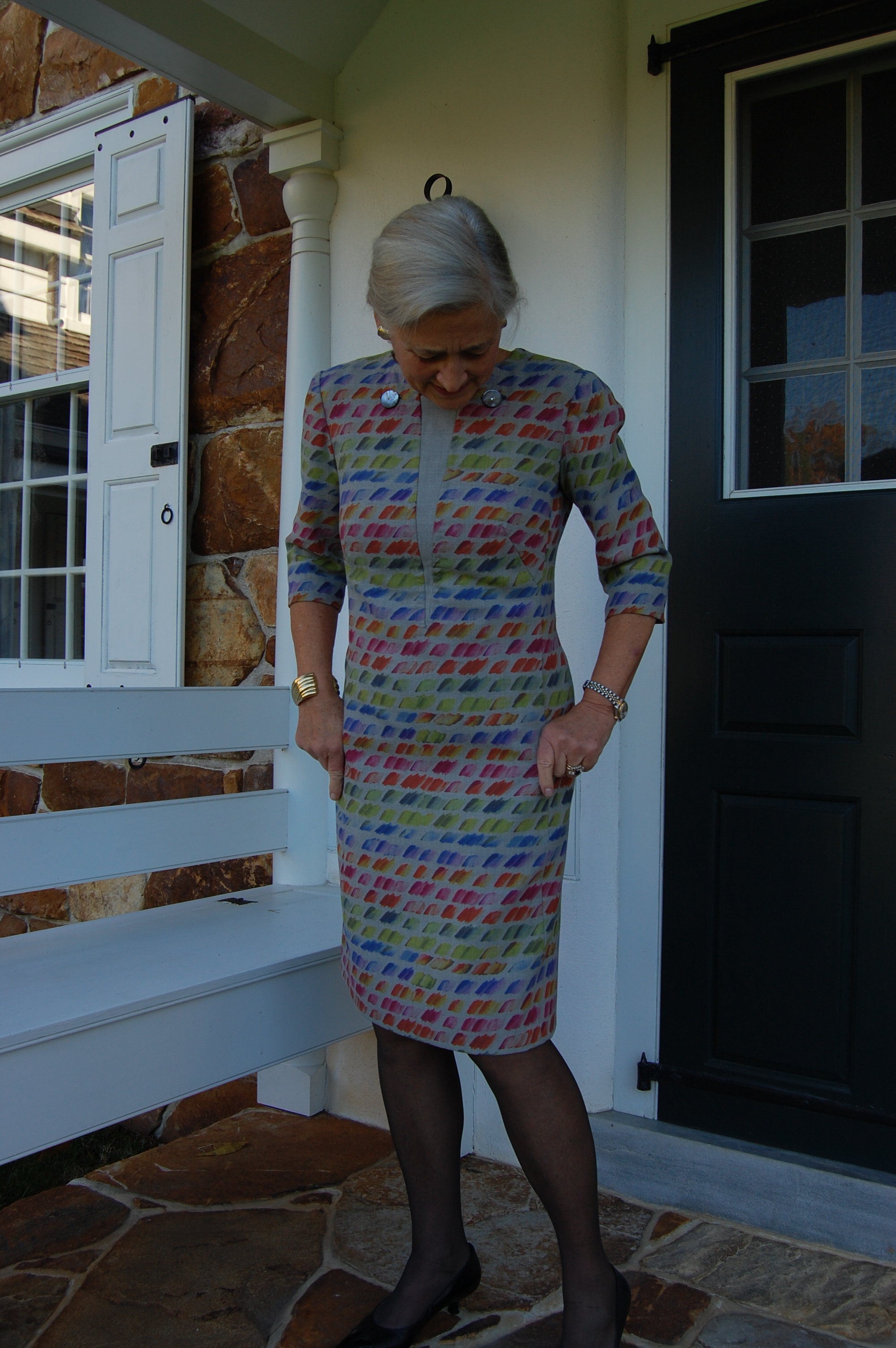
The zipper is inserted by hand, as usual! Once I had it basted in place, I tried the dress on for fit and determined I had to take it in a bit at the waistline.

Then I tackled the sleeves. I had quite a time determining how to place the sleeve patterns on the remaining fabric. Some of those horizontal lines of “paintbrush strokes” change color across the fabric! And my adapted sleeve pattern has two elbow darts, which changed the horizontal line. I had to make a decision about where I wanted the best match to be, as I determined I could not match it across and up and down as I would normally want to do. I opted for a match across the shoulders – and I now believe that was the best decision.

DSC_0924

I also added a soft “cigarette” sleeve heading to each shoulder seam.

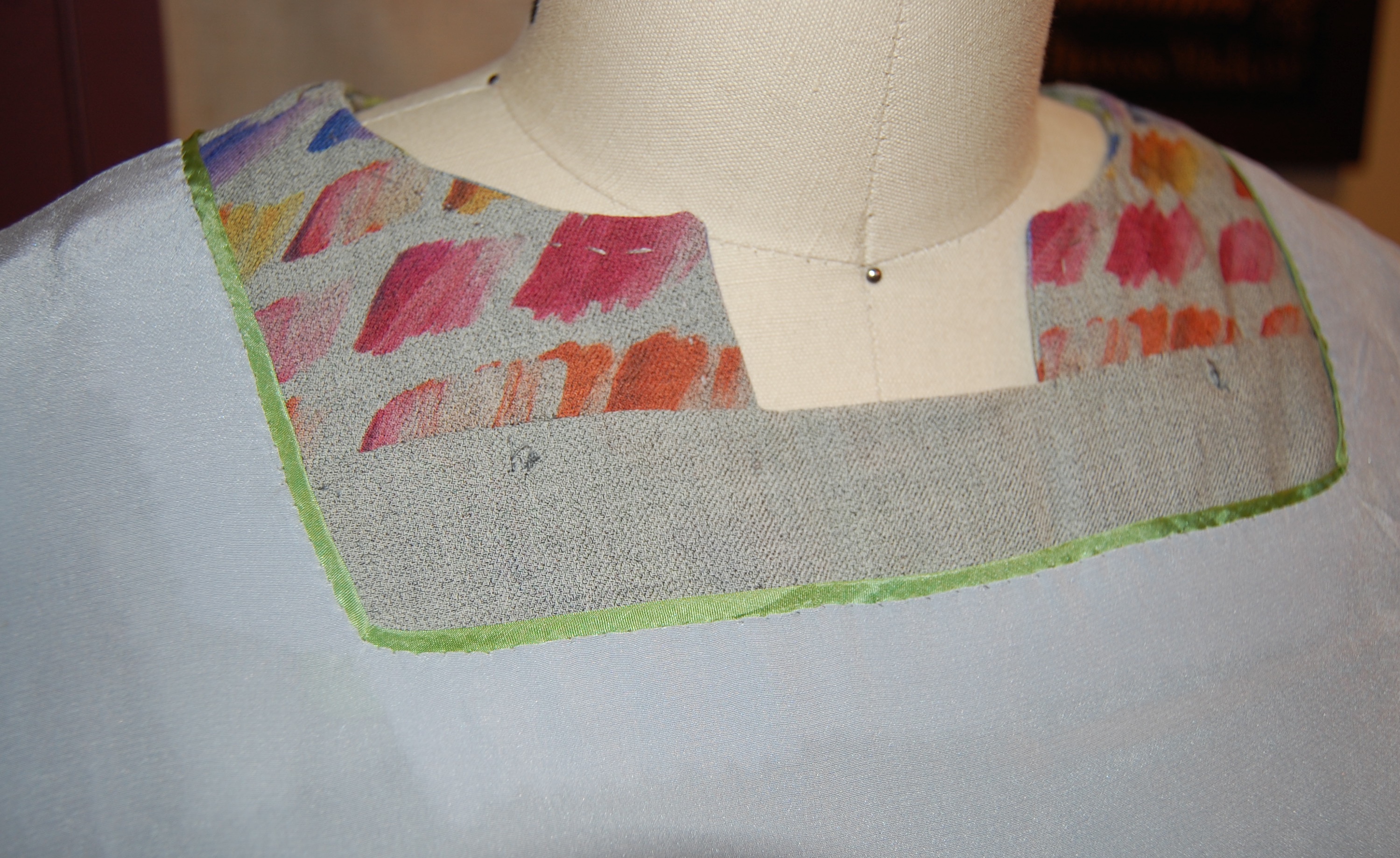
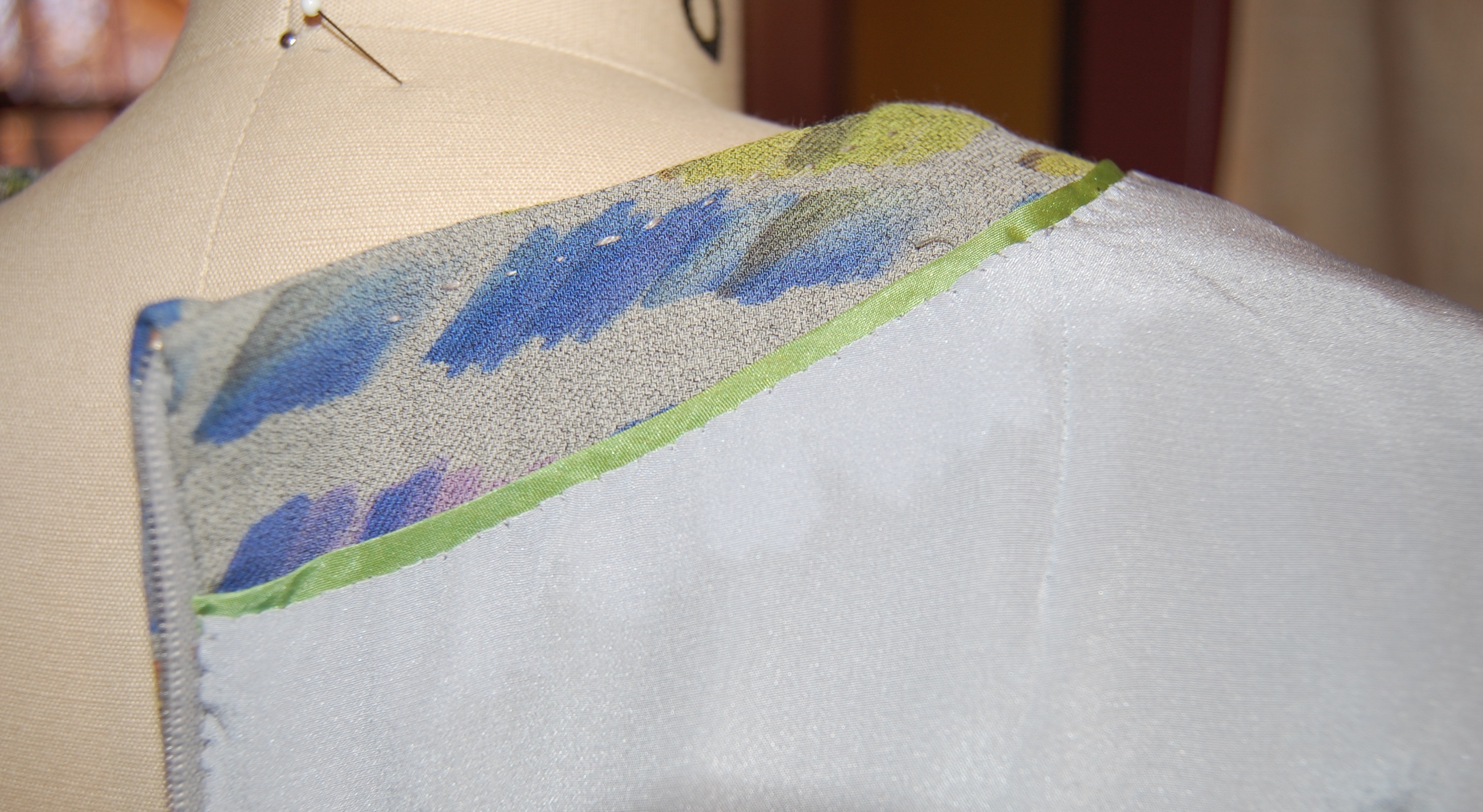
Next to the lining – and bless those vintage Vogue patterns – the lining for this dress included separate and distinct pattern pieces. I made the sizing and dart changes to the lining (in keeping with the dress) and it went together effortlessly. When I got to the point of inserting the lining by hand, I just could not resist adding silk piping to the inside neck edge. I know I am the only one who will ever see it, but it makes me happy!

Sweet November

I used a bias strip of lightweight silk for the piping.

I used a bias strip of lightweight silk for the piping.

How wonderful to have this dress completed!

Sweet November

The buttons really show in this picture.

The buttons really show in this picture.

Sweet November

Sweet November

Sweet November

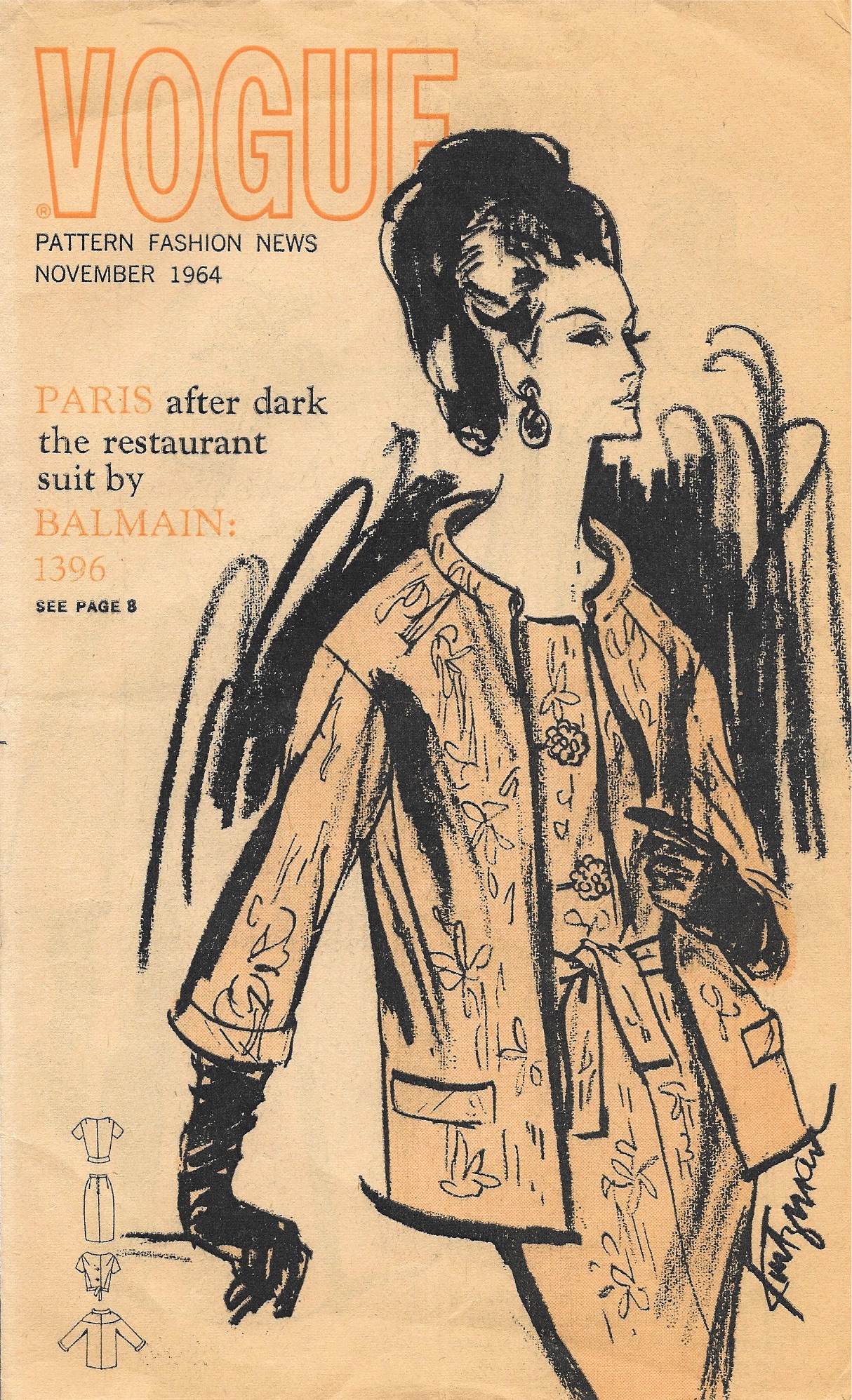
There was one more aspect of serendipity to this project. Those of you who follow my blog know that part of my fascination with vintage Vogue patterns is making connections between the past and the present. I love to “place” a pattern in its correct year – and then wonder in amazement at how classic fashions are so enduring. It was my great good fortune to have this Vogue Pattern Fashion News from November 1964 in my collection of vintage fashion magazines:

Sweet November - flyer cover

Inside on page 3 is, yes, my dress!

Sweet November - flyer illustration

Just imagine – 51 years ago this month, this dress made its debut. Happy Sweet November Everyone!

38 Comments

Filed under Buttons - choosing the right ones, couture construction, Day dresses, hand-sewn zippers, Love of sewing, Mid-Century style, Uncategorized, underlinings, vintage Vogue Designer patterns, vintage Vogue patterns from the 1960s, woolens

Oh, The Things We Can Learn!

When is a pattern envelope not just a place to keep a tissue pattern? When it is a mini lesson in sewing, style, history, elegance, and story-telling. Of course, I am thinking primarily of vintage pattern envelopes – and because I primarily sew from Vogue patterns, those are the focus of my thoughts.

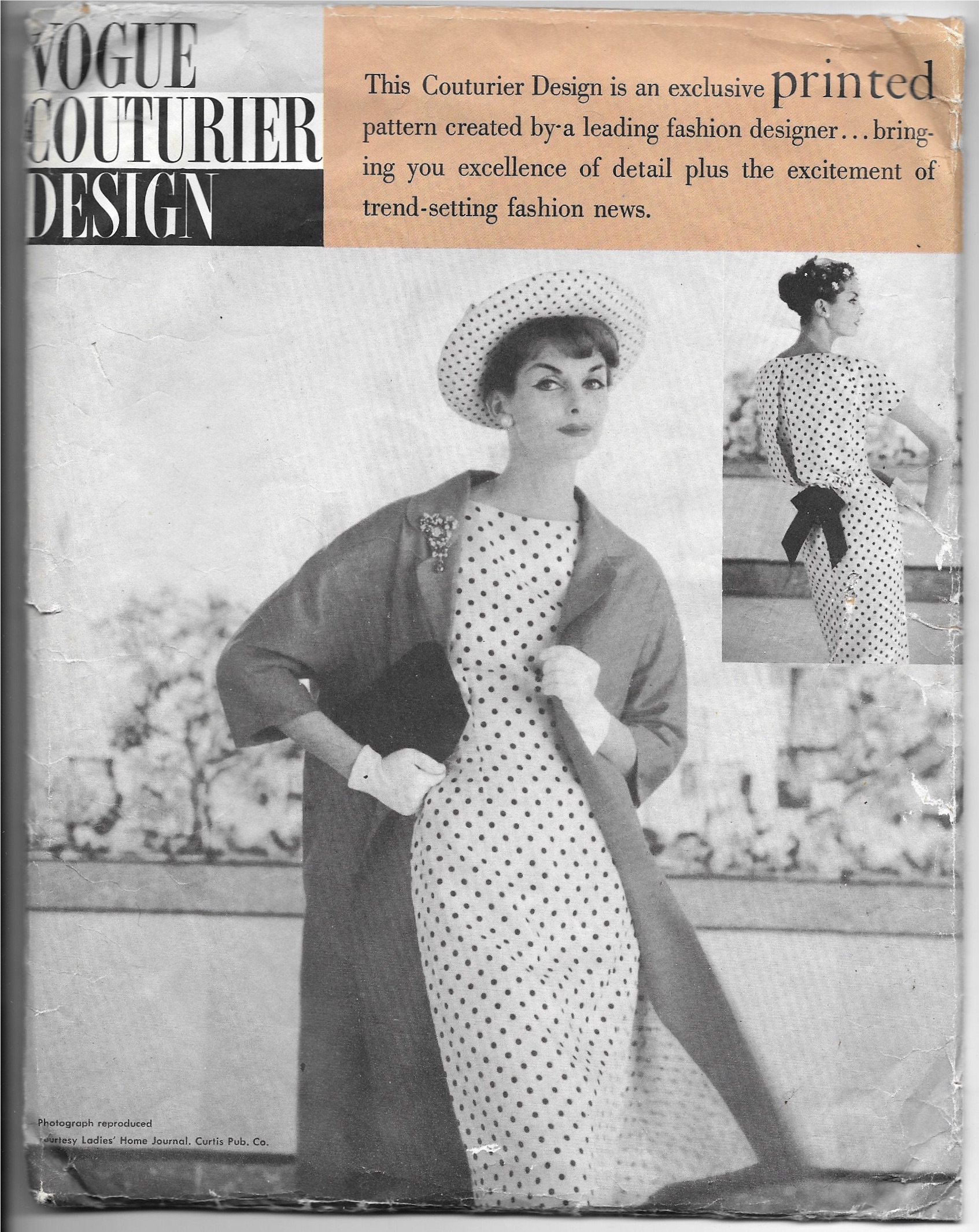
I am also limiting my short exploration of these topics to the course of about ten years, from approximately 1956 until 1966. Most of the pattern art from this time period was in illustration form rather than photography. There were exceptions, such as this classic polka-dotted dress and coat ensemble from 1959:

The reverse of this envelope has very precise sketches of the fronts and backs of the dress and coat. This is one of the few envelopes from this period - 1958 - that I have seen that features photography rather than illustration art.

The reverse of this envelope has very precise sketches of the fronts and backs of the dress and coat. This is one of the few envelopes from this period – 1958 – that I have seen that features photography rather than illustration art.

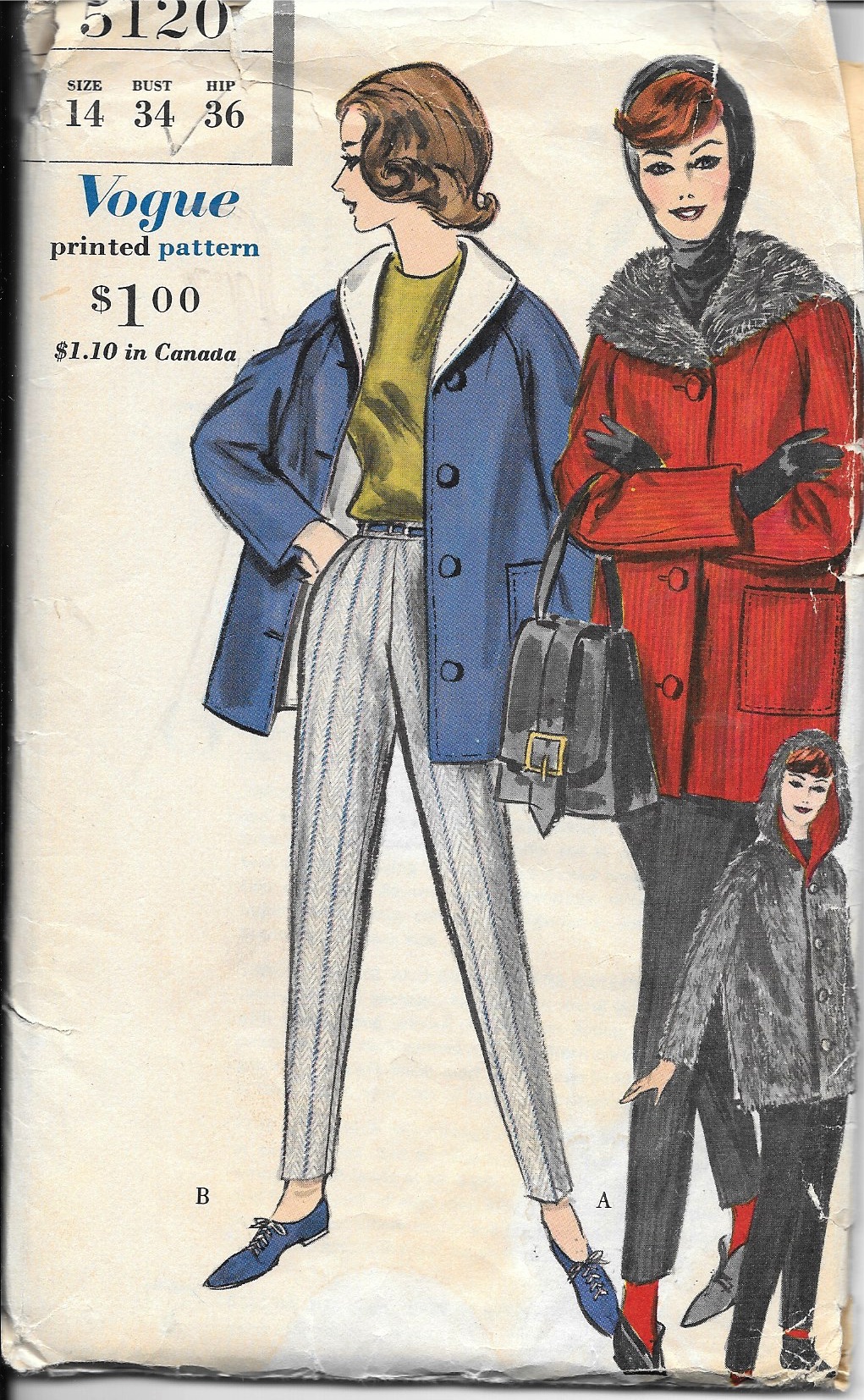
It was up to the fashion illustrators and artists to represent the pattern accurately. Darts, seams, buttons, belts, pockets, etc. all had to be clearly indicated in the illustrations on the fronts of the envelopes and in the thumbnail sketches on the back of the envelopes. Home dressmakers wanted to know these things about a pattern before purchasing it – we still do! Here is a great example of the clarity of these pattern illustrations in regard to these items:

The darts, seams, and buttons are clearly delineated in this artwork.

The darts, seams, and buttons are clearly delineated in this artwork.

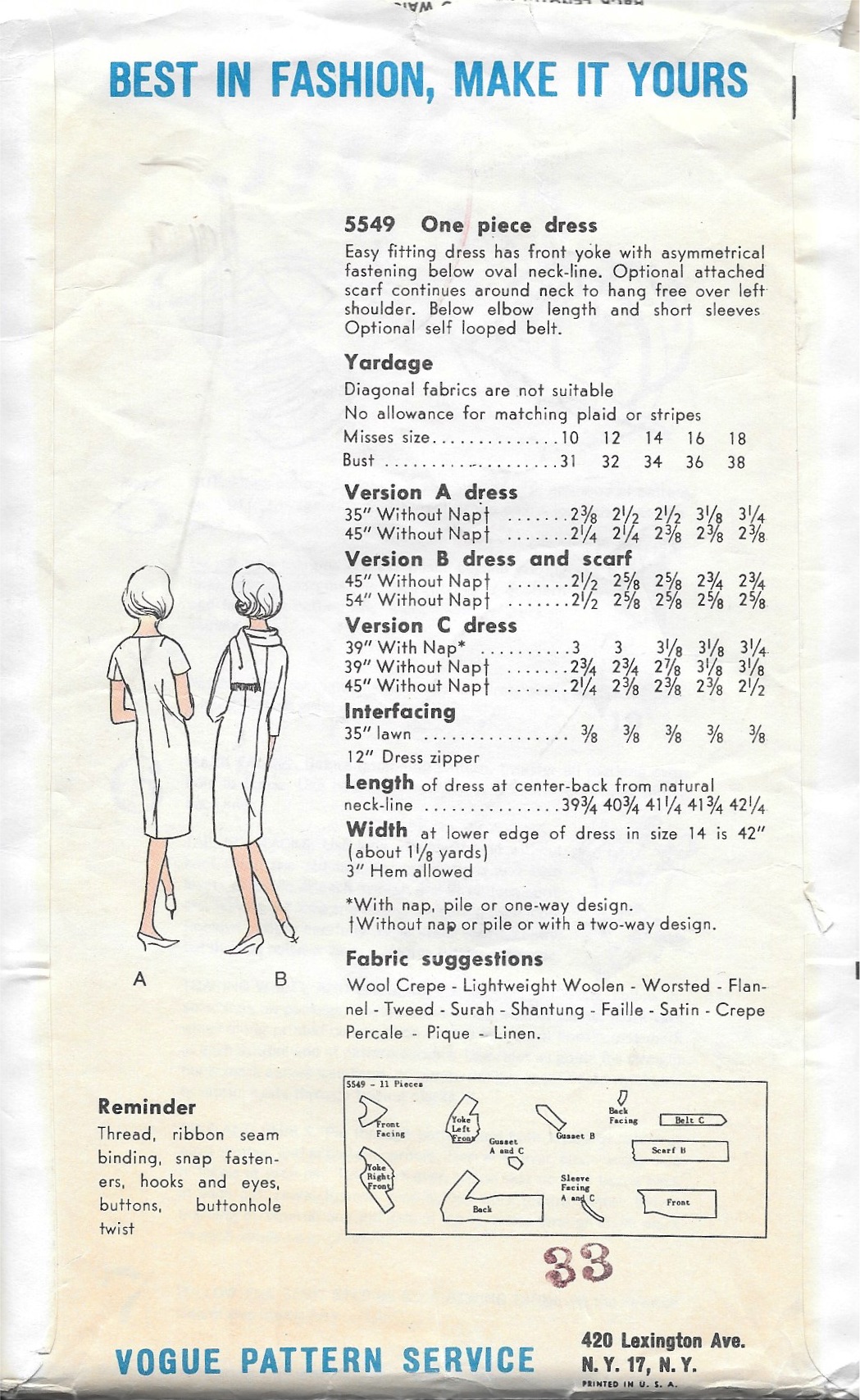
The back of this pattern also gives lots of additional sewing information. The thumbnail sketches clearly show that there is no back zipper. Among the details listed is a 12” zipper. That can only mean that a side zipper is used – which makes sense as it is paired with the front-buttoned bodice.

Oh the things we can learn, no 2

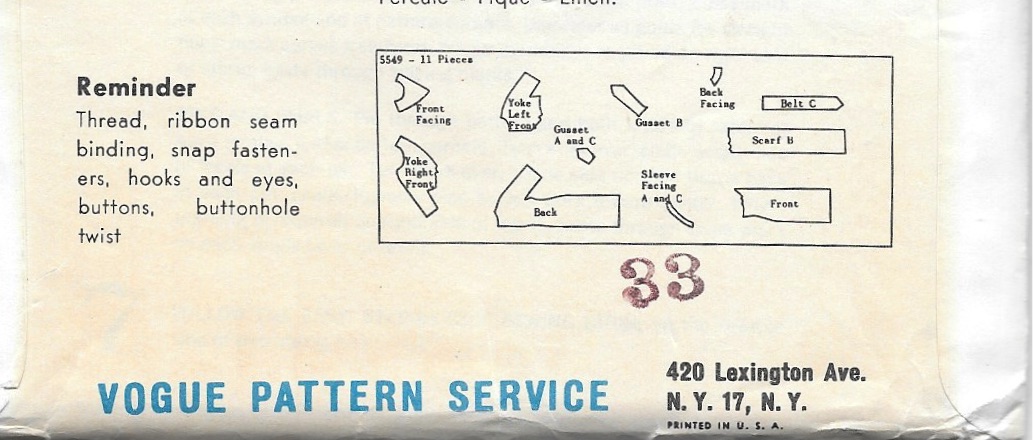
Further scrutiny of the pattern layout shows a gusset, obviously for use under the arm. If you, as a dressmaker, were uncomfortable with putting in a gusset, then maybe you would want to avoid this particular pattern!

It is such an advantage to be able to see the shapes of the pattern pieces in these layouts.

It is such an advantage to be able to see the shapes of the pattern pieces in these layouts.

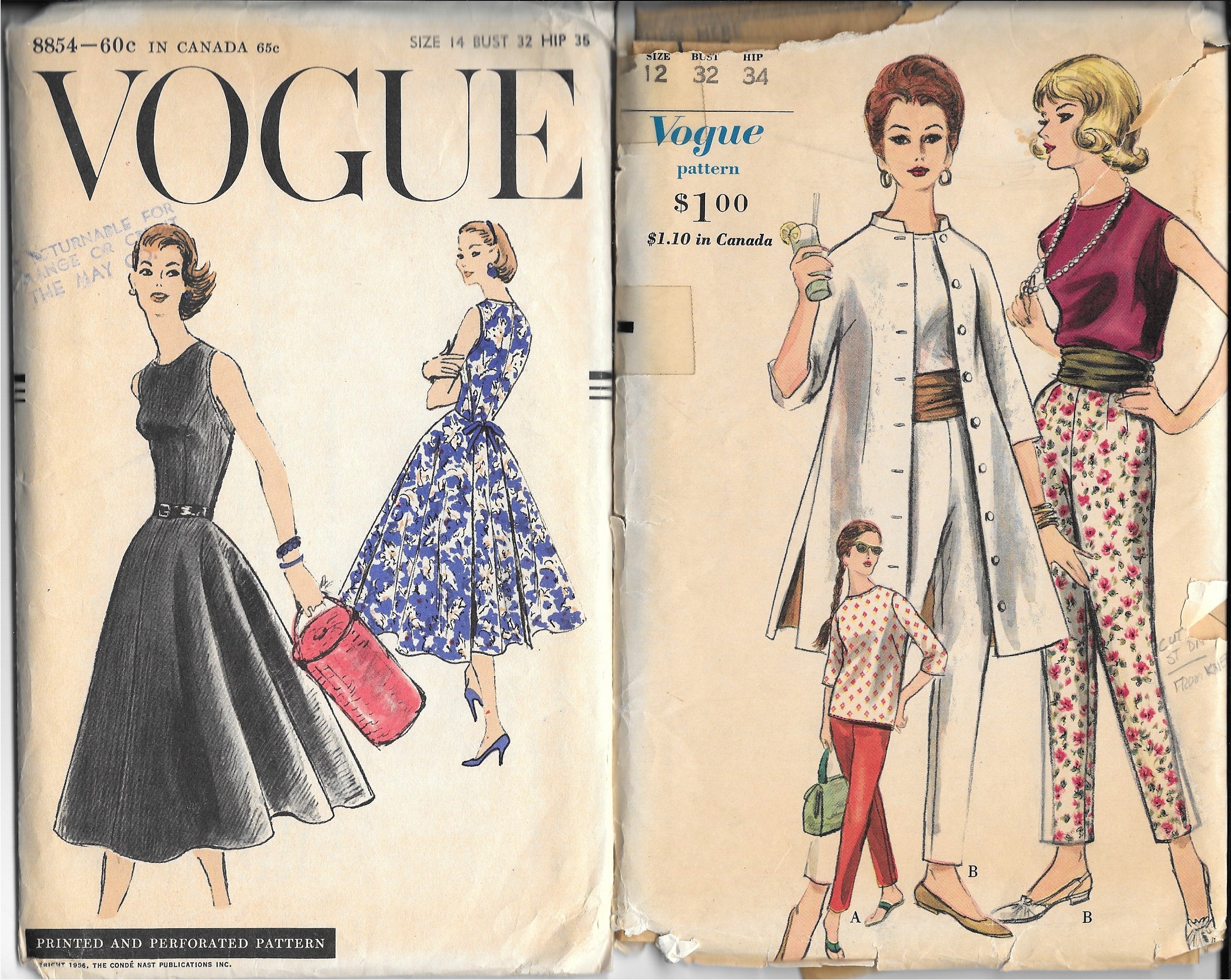
It was also up to the fashion illustrator to make the pattern look relevant to one’s life. Different views were often shown in varying colors, widening the visual appeal. They were also shown in dressier or more casual renditions, making the pattern attractive to different lifestyles and age groups. These two patterns clearly show this endeavor:

Oh the things we can learn, no 4

The inclusion of accessories in the pattern illustration from this time period shows just how much Vogue and other pattern companies were selling a complete look. They were saying “Start with this pattern, add gloves, a bangle bracelet or two, sunglasses or a hat, maybe a scarf, earrings, high heels, and a handbag, and you, too, can walk out looking like a million dollars!” The great desire in looking well-dressed and chic during this time period is so beautifully reflected in these pattern envelopes.

Gloves, gloves and more gloves! And look at those glasses!

Gloves, gloves and hats and scarves…   And look at those glasses!

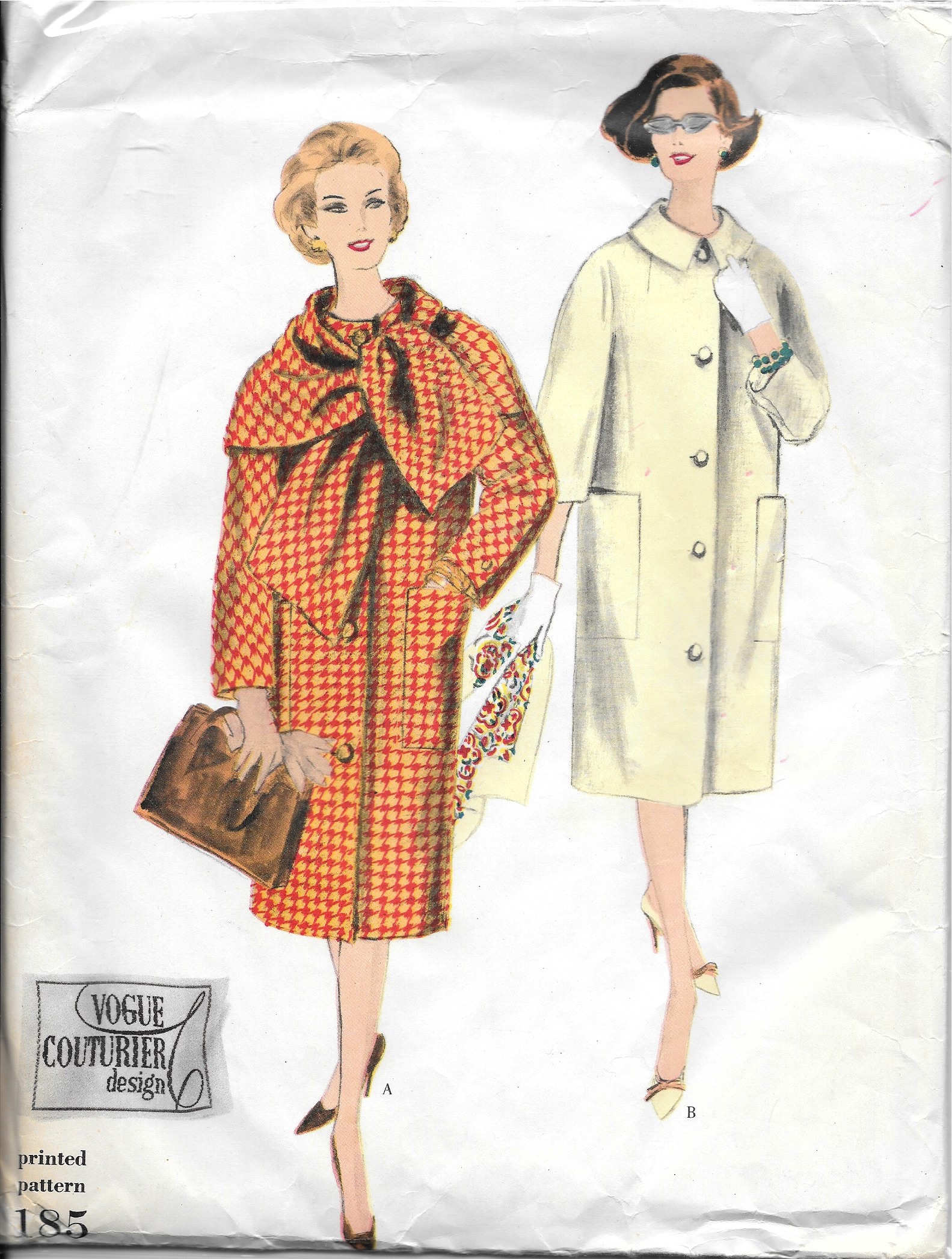
This has got to be one of my favorite examples of pattern art: the model in white holding the scarf so casually, the stylish shoes, and the large clutch handbag on the model on the left - lovely and evocative!

This has got to be one of my favorite examples of pattern art: the model in white holding the scarf so casually, the stylish shoes, and the large clutch handbag on the model on the left – lovely and evocative!

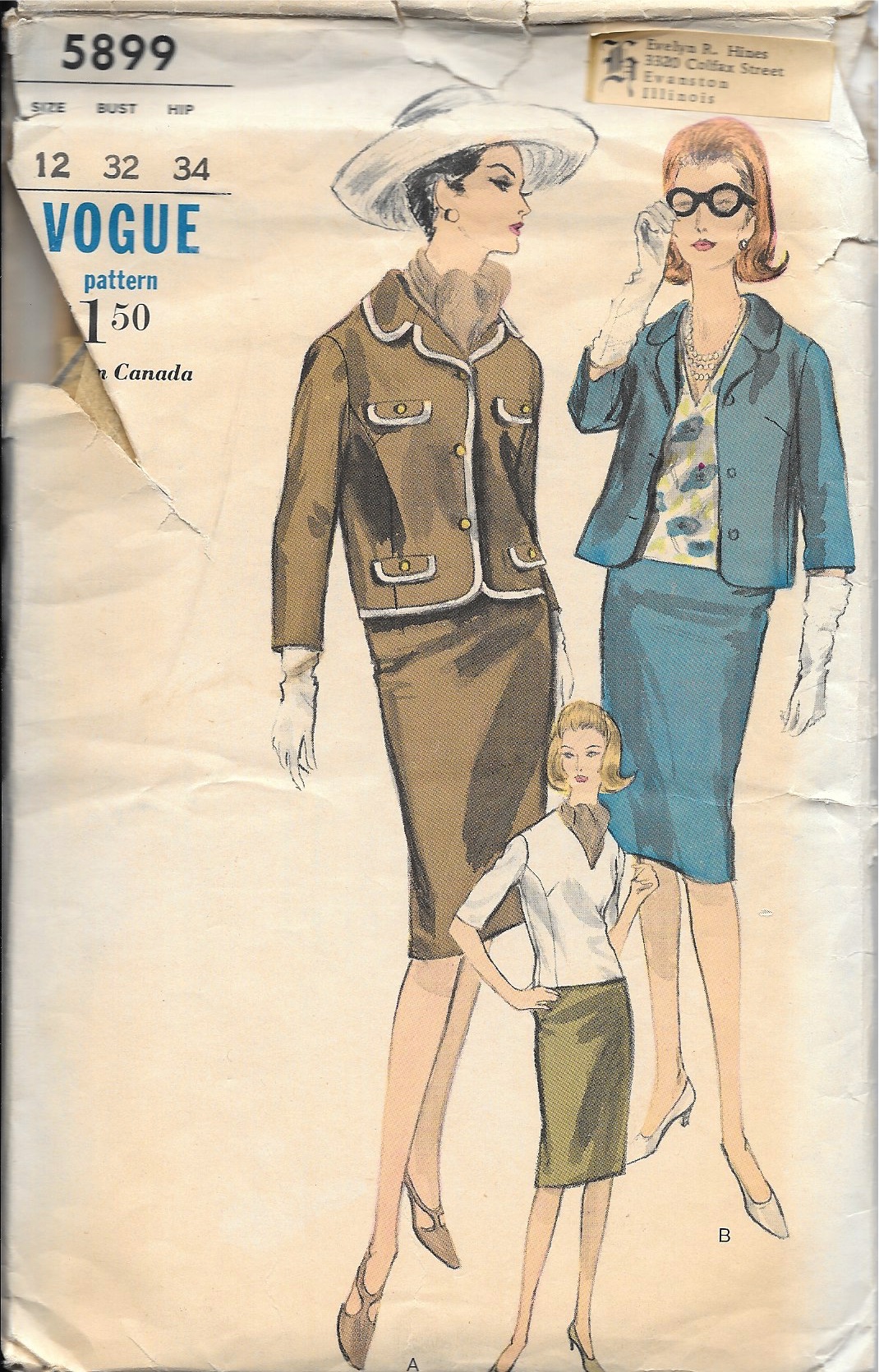
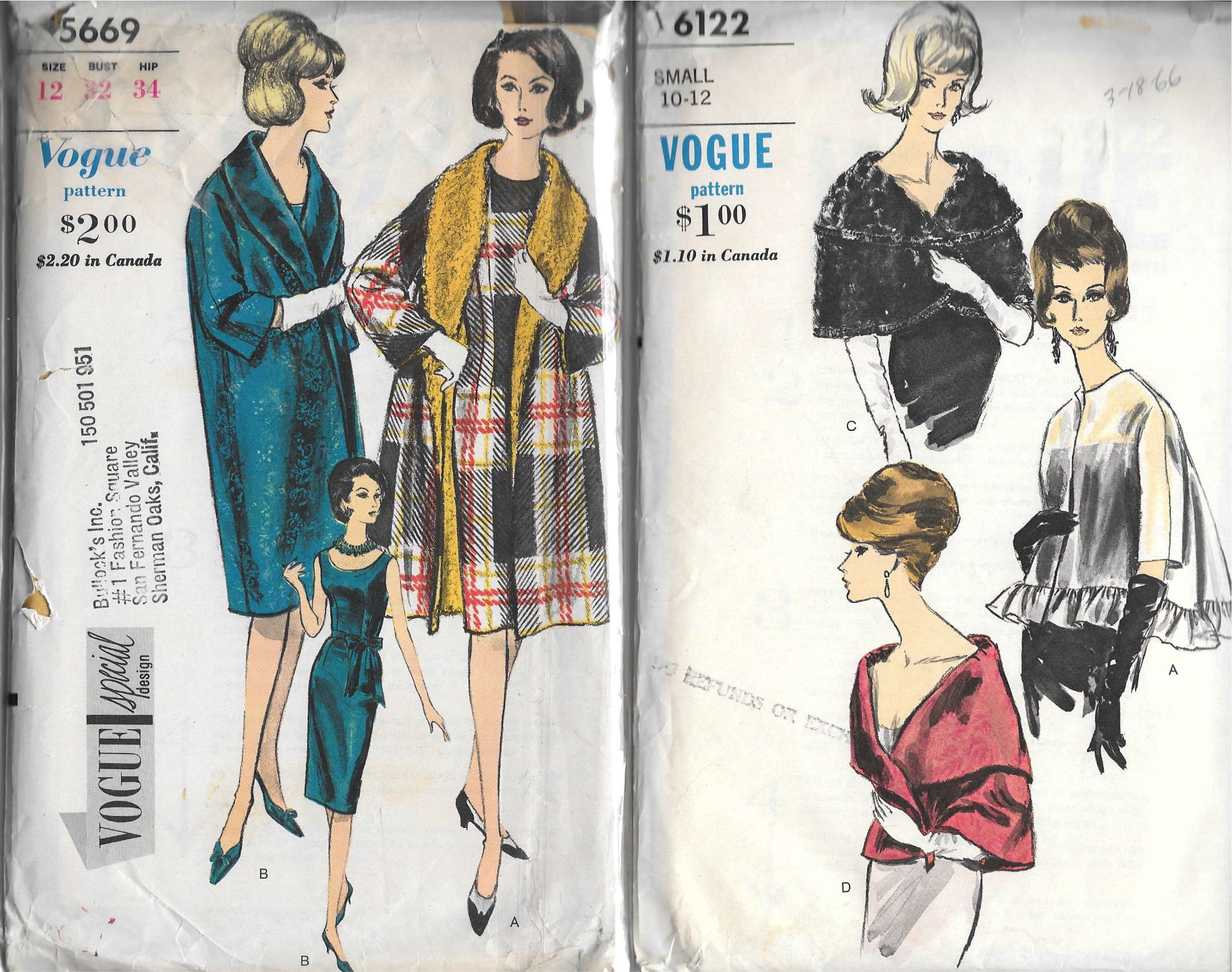
One way of dating pattern envelopes is by looking at the hairstyles of the illustrated “models.” After about 1960, Vogue stopped including the copyright date on their envelopes. But it’s fairly clear by the bouffant and flipped hairstyles on the pattern on the left that we are looking at one from the early to mid-‘60s.  The one on the right is a few years later, based on the hairstyles alone.

Note, too, how the Vogue masthead changed during this short time period.

Note, too, how the Vogue masthead changed during this short time period.

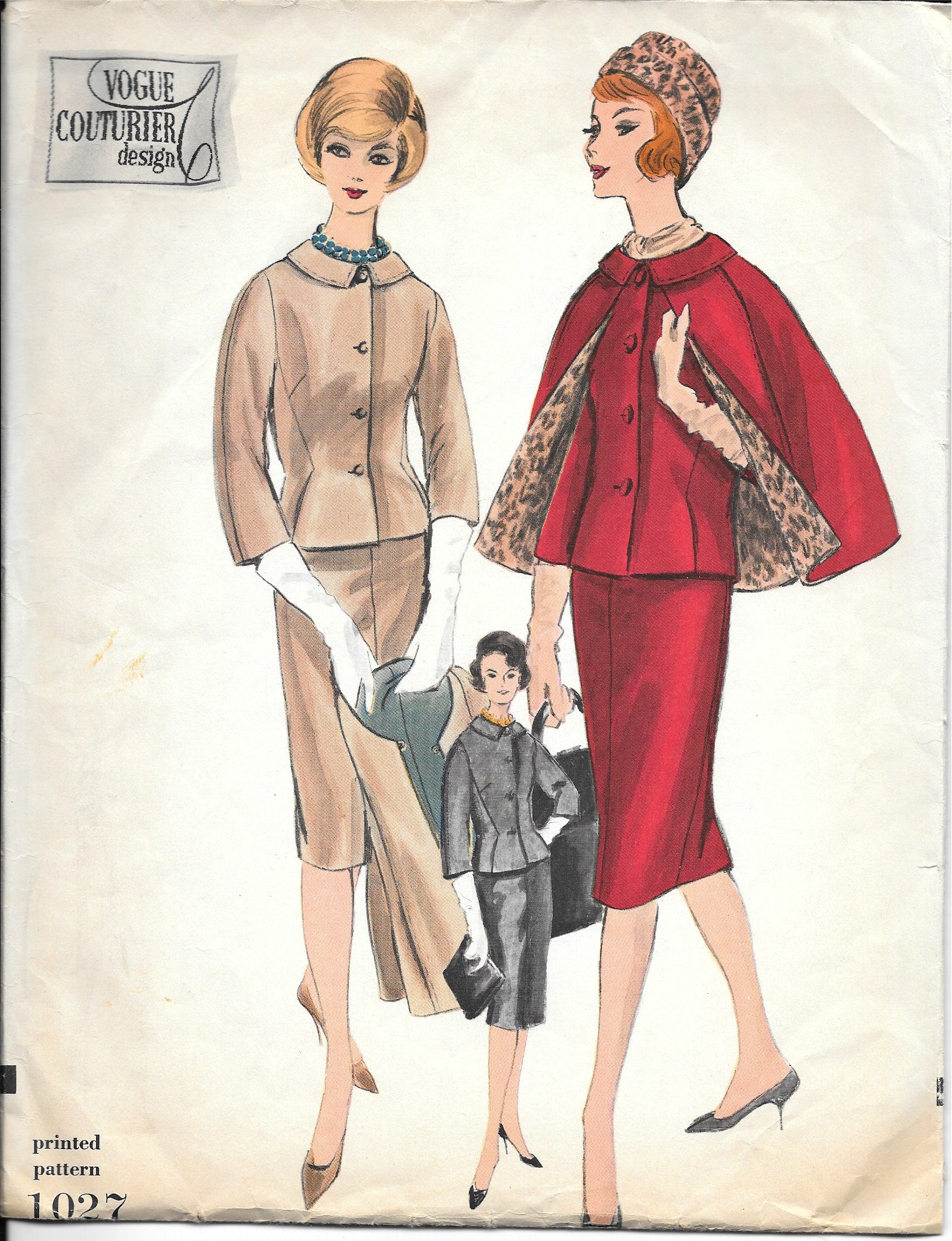
Finally, I am delightfully intrigued by the almost universal depiction of “elegance” on the pattern envelopes from this period. From the leopard print hat and lined cape on this suit from 1959:

Oh the things we can learn, no 8

to this reversible car coat from the early ‘60s:

The model in the red version of the coat strikes a chic and elegant pose with her hair tucked under a scarf, her arms casually folded, and with her stylish handbag...

The model in the red version of the coat strikes a chic and elegant pose with her hair tucked under a scarf, her arms casually folded, her stylish handbag looped over one arm …

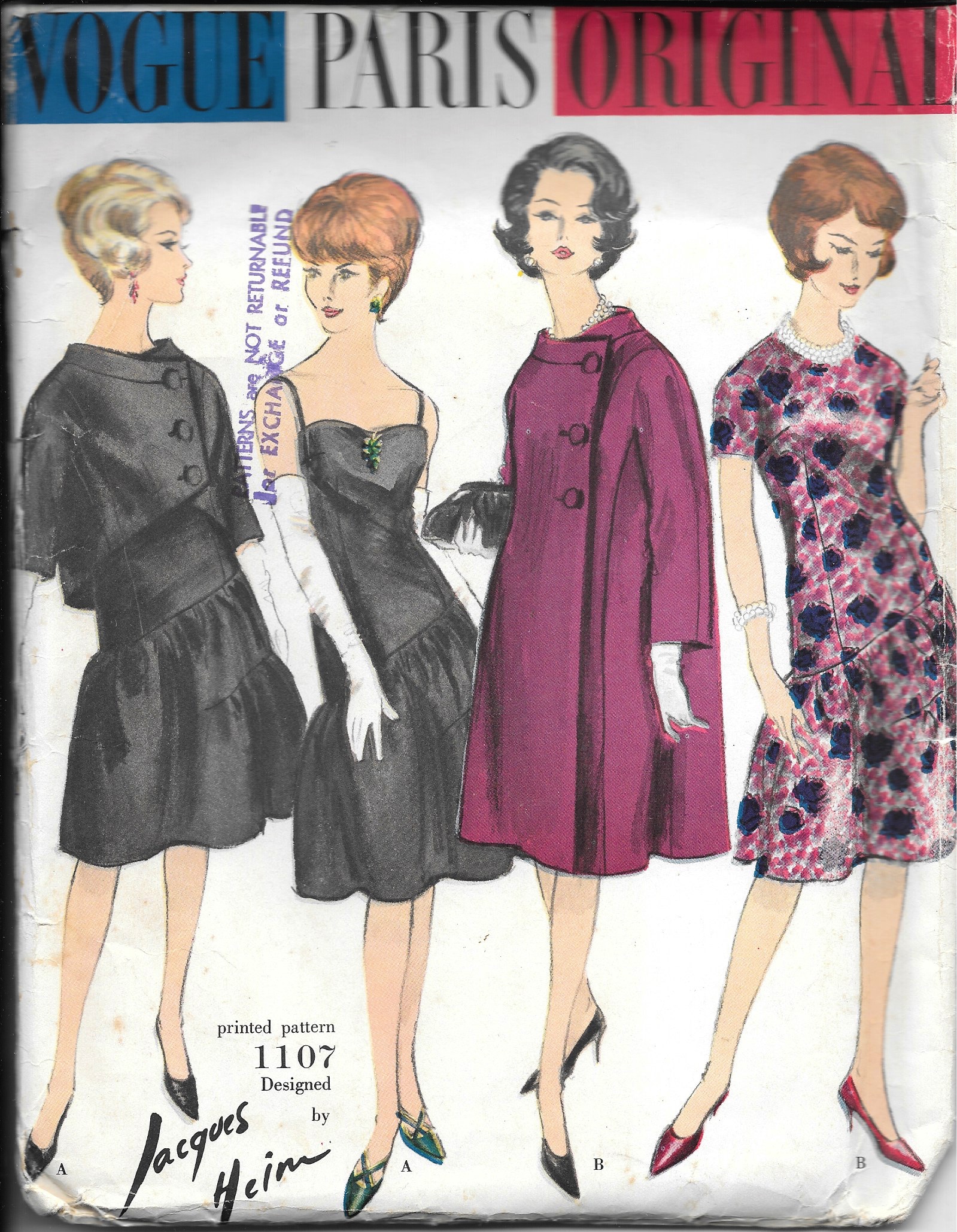
to this cocktail dress and coat ensemble from the mid ‘60s:

Oh the things we can learn, no 10

the message seemed to be: “These beautiful clothes which you can create are ladylike and elegant (even the casual ones), and you will be, too, when you wear them!” Perhaps Virginia Woolf said it best: “There is much to support the view that it is clothes that wear us and not we them; we may make them take the mould of arm or breast, but they would mould our hearts, our brains, our tongues to their liking.”

And therein lies the intrigue of it all. The story, which begins on the outside of the pattern envelope by way of the artist’s hand, becomes our own to finish when we are creators of our own clothing. How much fun is that?

26 Comments

Filed under Mid-Century style, Pattern Art, The Conde Nast Publications, Uncategorized, vintage Vogue patterns from the 1950s, vintage Vogue patterns from the 1960s

Out and About in Los Angeles

One sure way to get me away from my sewing room is TRAVEL. Sometimes, however, there is a lot of sewing that happens before that travel commences. The impetus to the creation of my recent fancy dress was, indeed, a recent trip to Los Angeles, California, which was part business for my husband and pure pleasure for me. The lovely hotel where we were staying was actually in Beverly Hills, at the intersection of Wilshire Boulevard and Rodeo Drive. For those of you unfamiliar with Rodeo Drive, it is one of the most exclusive shopping areas for fashion and jewelry in the US. Although I am not much of a shopper at home – either window shopping or real shopping – it is quite a pleasure to do just that while on vacation.

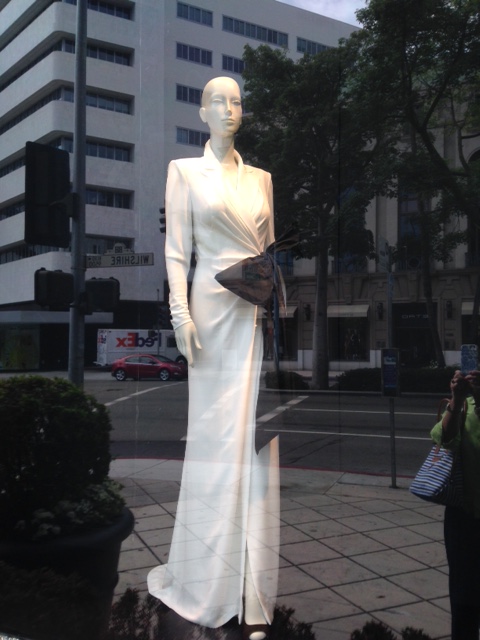
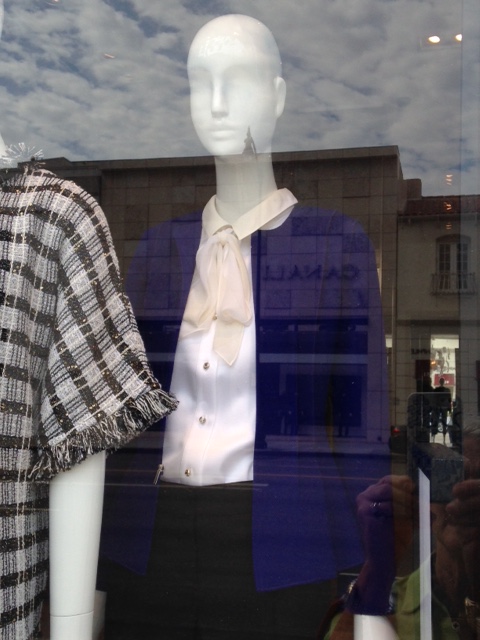
Because I sew, I probably look at fashions with quite a different eye than most people.   My interest in the current influence of mid-century fashion and the use of beautiful, fine fabrics guided my approach, as both were on full view on Rodeo Drive. The first morning while my husband was in business meetings, I went out before most stores were open and snapped a few pictures of store windows. I was delighted to see this tailored Escada gown transformed into a totally feminine look with its voluminous bow:

Escada gown

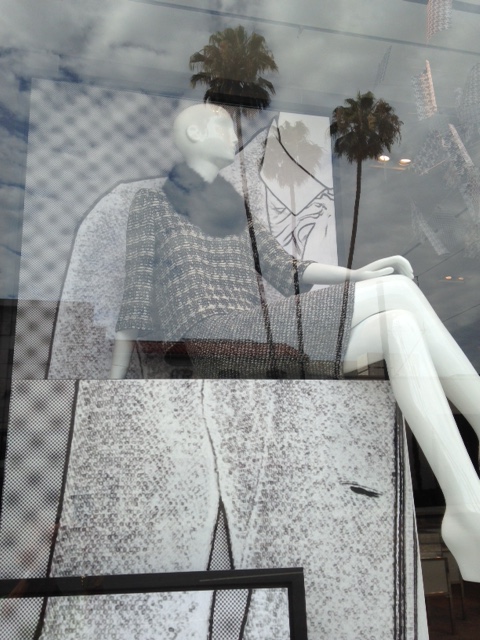
The St. John Store featured this straight skirt and overblouse (with demure fur collar), with a flavor reminiscent of the 1960s:

The reflection of palm trees in the window obscures some of the fashions.

The reflection of palm trees in the window obscures some of the fashions, but I love this understated, but sophisticated look.

And what could be more classic than this jacket and blouse with a bow, also St. John.

St John jacket and blouse

How I loved this Little Black Dress by St. John, made with lace-embellished fabric:

A front view ...

A front view …

... and a back view.  The V-back is just lovely!

… and a back view. The V-back is just lovely!

Later in the day, I was captivated by some of the fashions I saw in some of the stores, especially Dolce and Gabbana and Hermes. Unfortunately photos were not allowed, so I cannot show you the classic princess lined coats and lace dresses in Dolce and Gabbana made from fabrics which were either identical to or close relatives to some pique and lace that Mendel Goldberg carries in their store in NYC. And Hermes had a color-blocked coat that looked right out of the early 1970s.

One excursion I wanted to make while we were in LA was to the museum of the Fashion Institute of Design and Marketing. I follow their blog, which regularly features items and fashion from their permanent collection, from all time periods. They have two small exhibit spaces which were currently featuring items from the Helen Larson Historic Fashion collection in one gallery and “Inspired Eye” in another gallery.

Inspired Eye is an exhibit of items from the Donald and Joan Damask Design Collection.  The exhibit  includes classic photographs as well as accessories and items of apparel.

Inspired Eye is an exhibit of items from the Donald and Joan Damask Design Collection. The exhibit includes classic photographs as well as accessories and items of apparel.

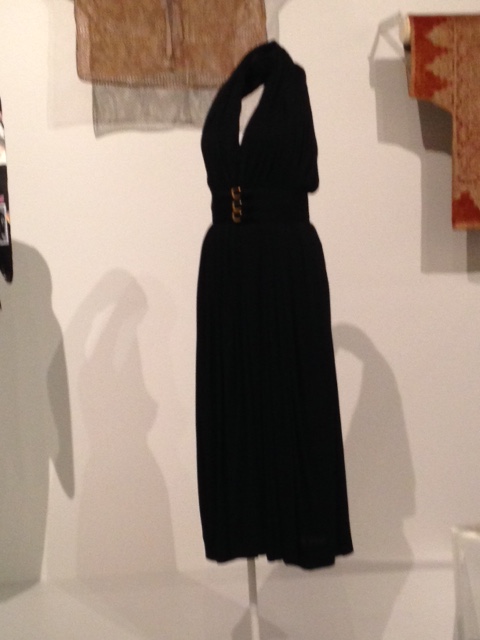
It was fun to see this Claire McCardell dress, circa 1950, looking every bit as fashionable now as then.

Claire McCardell dress

(Check out Julie’s recreation of a similar Claire McCardell dress on her blog, JetSetSewing)

Of course, for me, one thing I was looking forward to was the event to which I could wear my new fancy dress. As luck would have it, our camera was acting up for some unknown reason, so my husband had to resort to his iPhone for a couple of pictures of me wearing it.

LA fancy dress

One thing was certain – no one else at the party was wearing anything quite like it!

LA fancy dress

Our trip continued up to northern California, where we spent a few days with our son and his girlfriend, and which also included a trip to Britex Fabrics in San Francisco, where I picked up a few choice notions and buttons. Now we are home and a new project is strewn out in my sewing room, asking for attention before TRAVEL once again will wisk me away.

32 Comments

Filed under Cocktail dresses, Little Black Dress, Mid-Century style, Uncategorized

The Allure of Silk, Part 3: Finishing Touches for a Fancy Frock

In planning for my ‘50s-inspired silk party dress, my original intention was to use a red sash, just as shown on the original dress which I first saw on Pinterest.

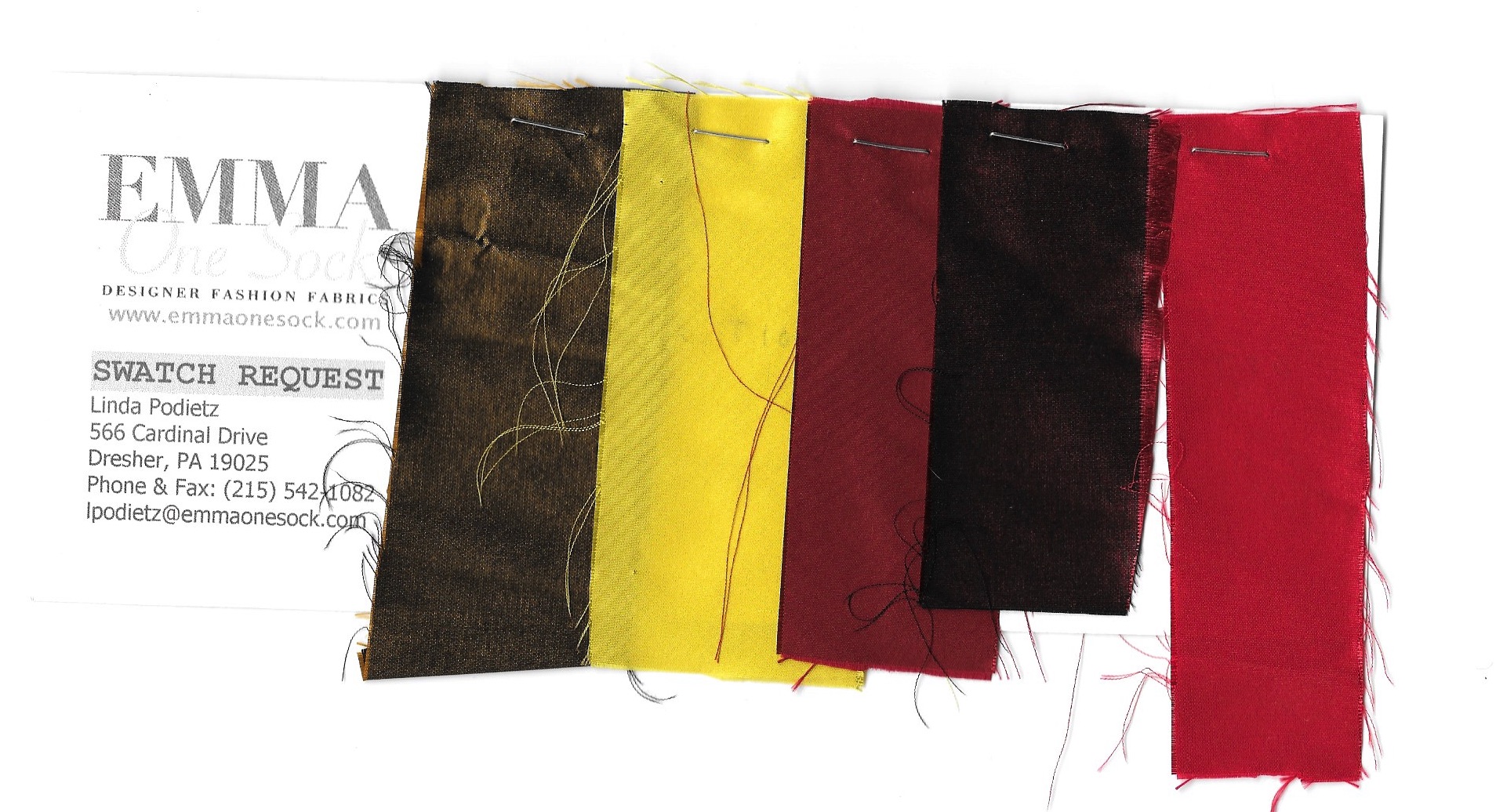
Blue taffeta:silk dress - originalWhen I sent off for swatches of silk taffeta from Emma One Sock Fabrics, however, I requested reds and yellows, just in case I might change my mind. When the swatch card arrived, there were clearly two obvious choices – the clear red and the vibrant yellow.Allure of silk - cummerbund picture

Then a funny thing happened. I ordered the red, which was out-of-stock temporarily. The owner of Emma One Sock (who, I might add, is one of the pleasantest and most helpful people from whom one will ever order fabric!), held up the order, at my request, while I thought about it some more. By the time I went to Baltimore to start my dress in Susan Khalje’s Couture Sewing School, I had just about decided to switch to yellow. With Susan’s hearty endorsement and the additional approval of my classmates, the decision was made: the sash would be yellow, not red.

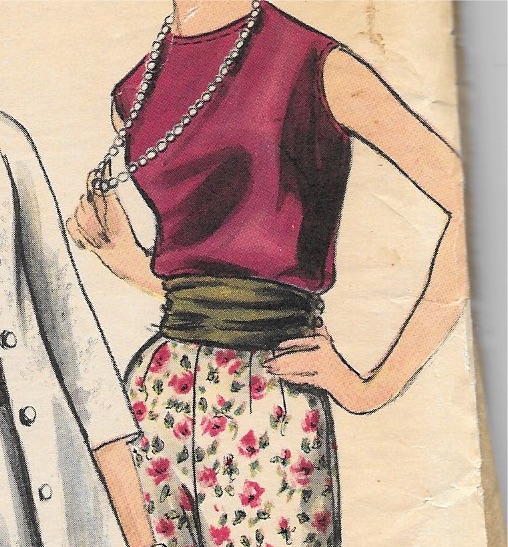
When the yellow silk taffeta arrived, I knew the decision was the right one. All I had to do then was figure out how to make the sash. Easy, right? With lots of time to think about this while I finished the embroidered organza top and the sapphire blue skirt – and the dress lining – I gradually came up with a plan. I decided a more structured cummerbund and bow would be the best look. First I went in search of a cummerbund pattern, which I found in an early 1960s pattern in my collection:

Allure of silk - cummerbund picture-1

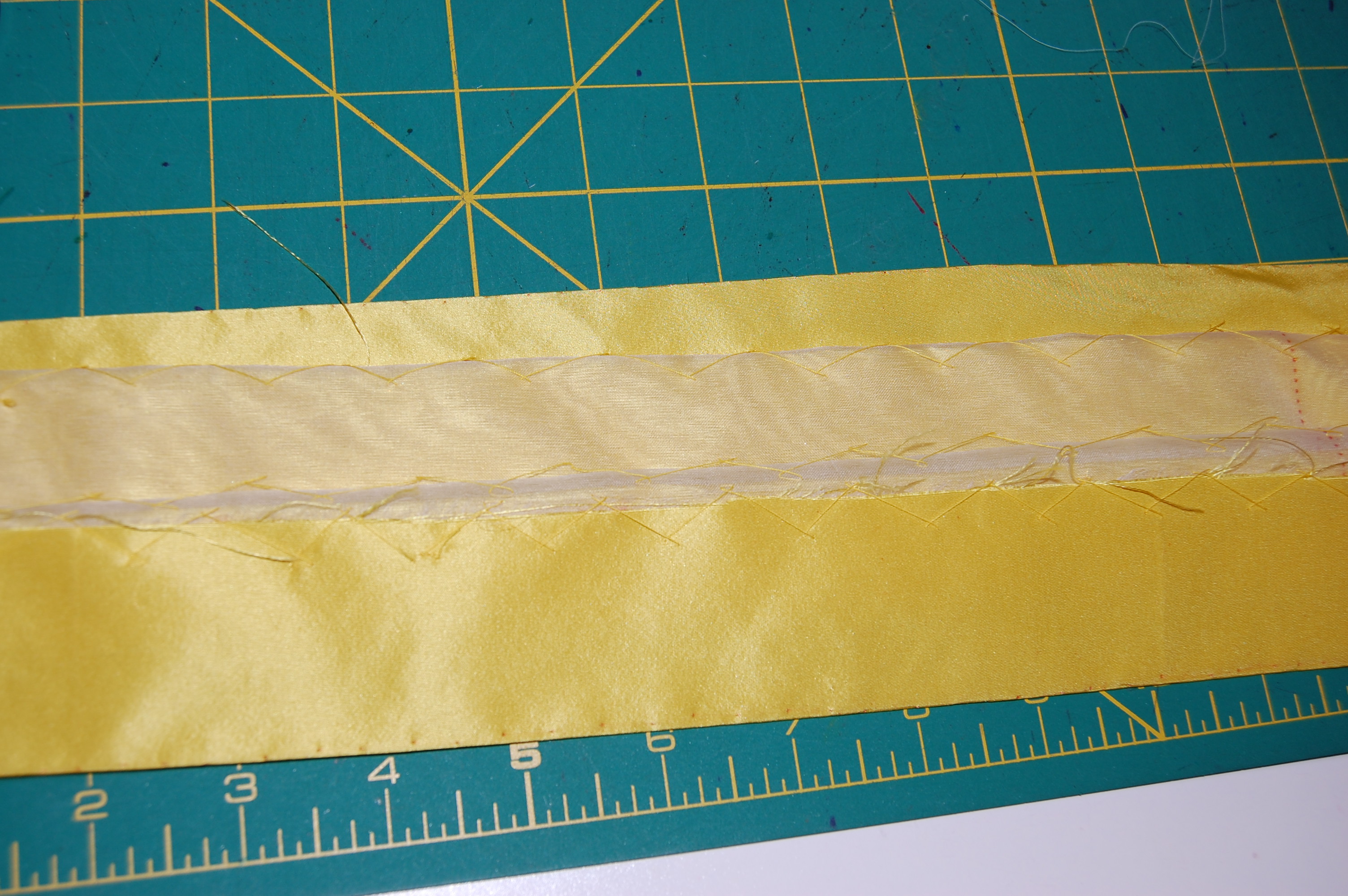
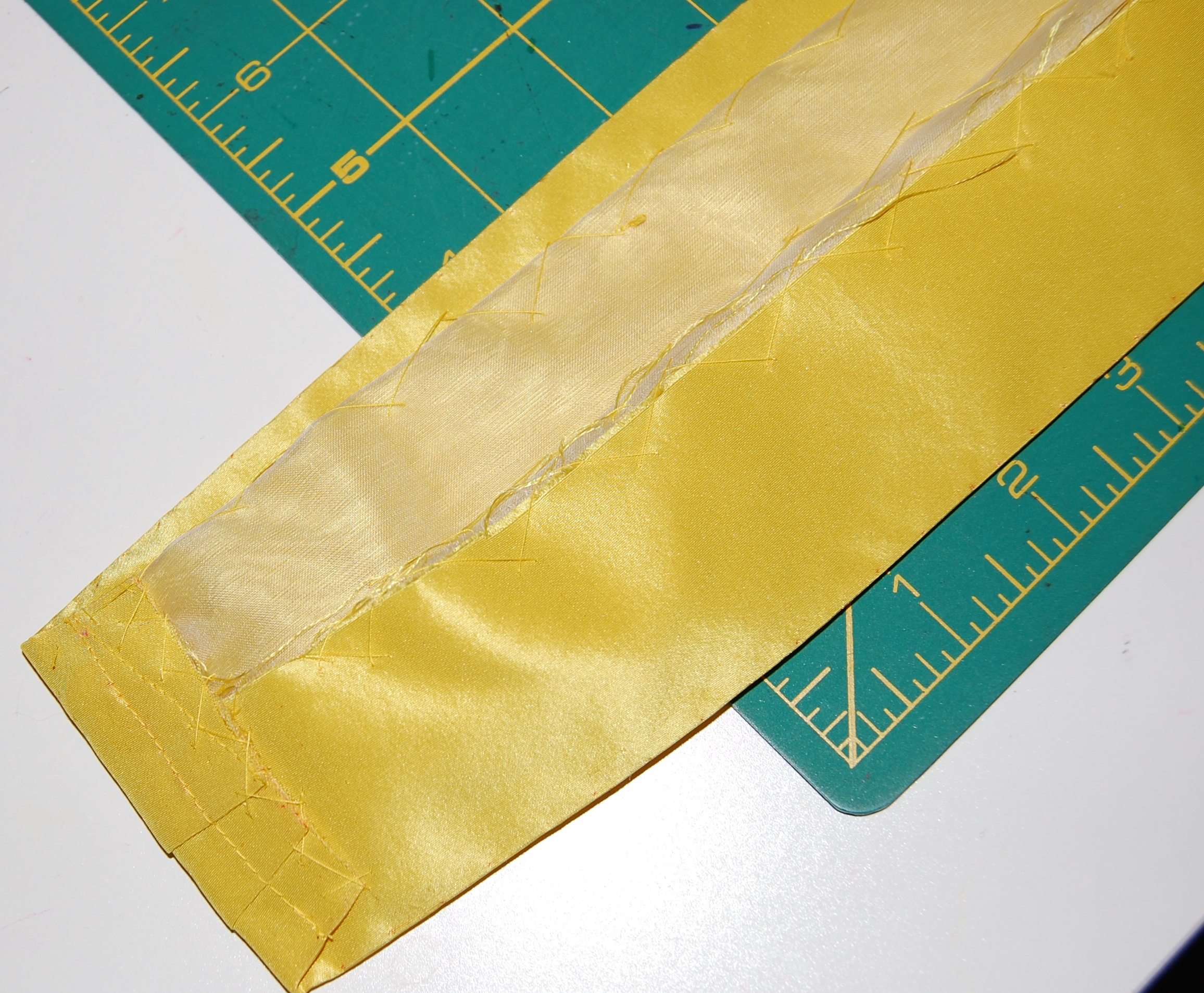
I decided to loosely pleat it instead of gathering it, so it would appear smoother around my waist. Because I had underlined it with silk organza, I had an anchor upon which to secure the soft pleats:

I used a loose catch-stitch to secure the pleats.

I used a loose catch-stitch to secure the pleats.

allure of silk final

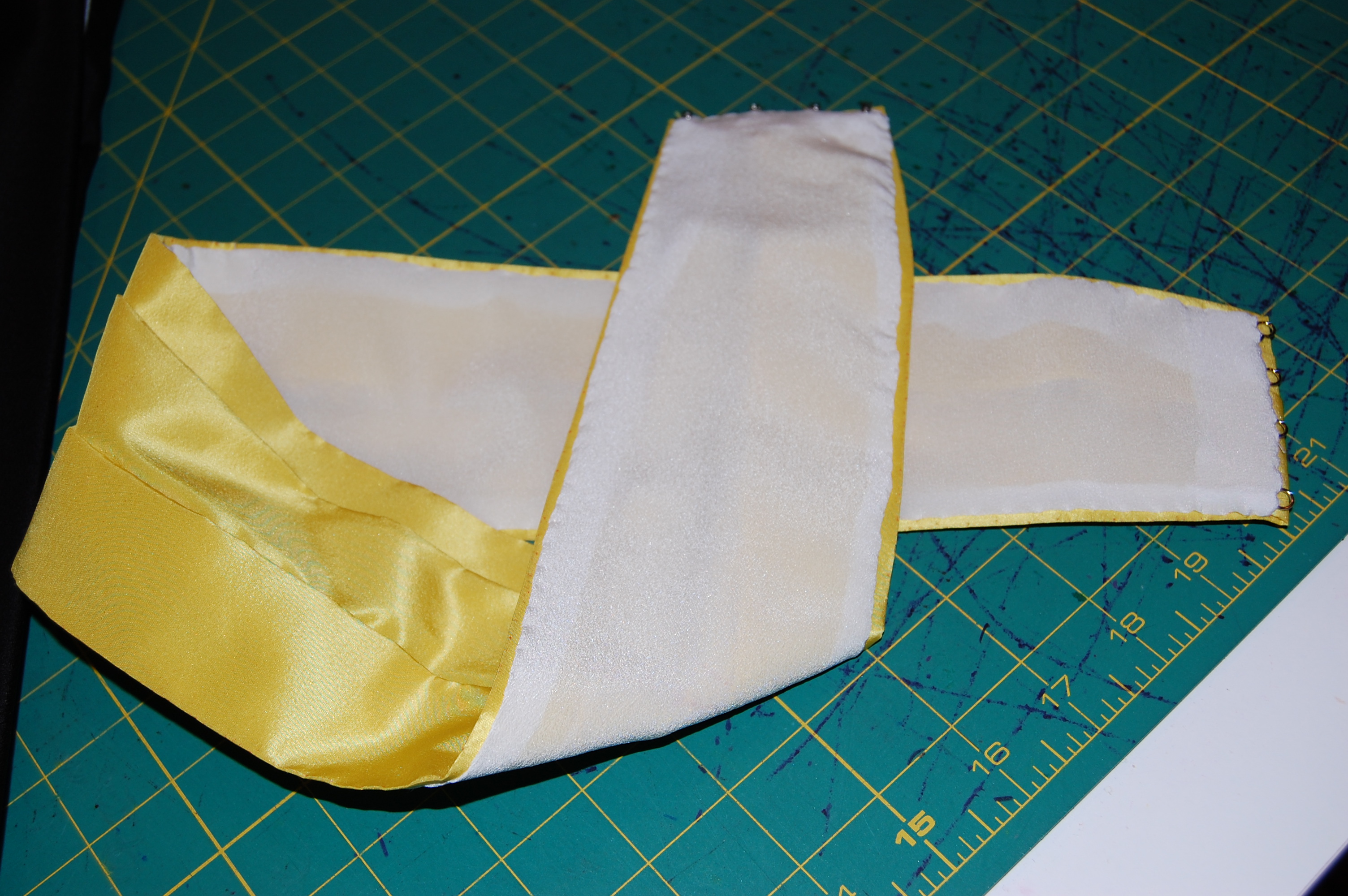
And I folded in the two ends, ready for hooks and eyes.

Then I lined it with silk crepe de chine.

Allure of silk final

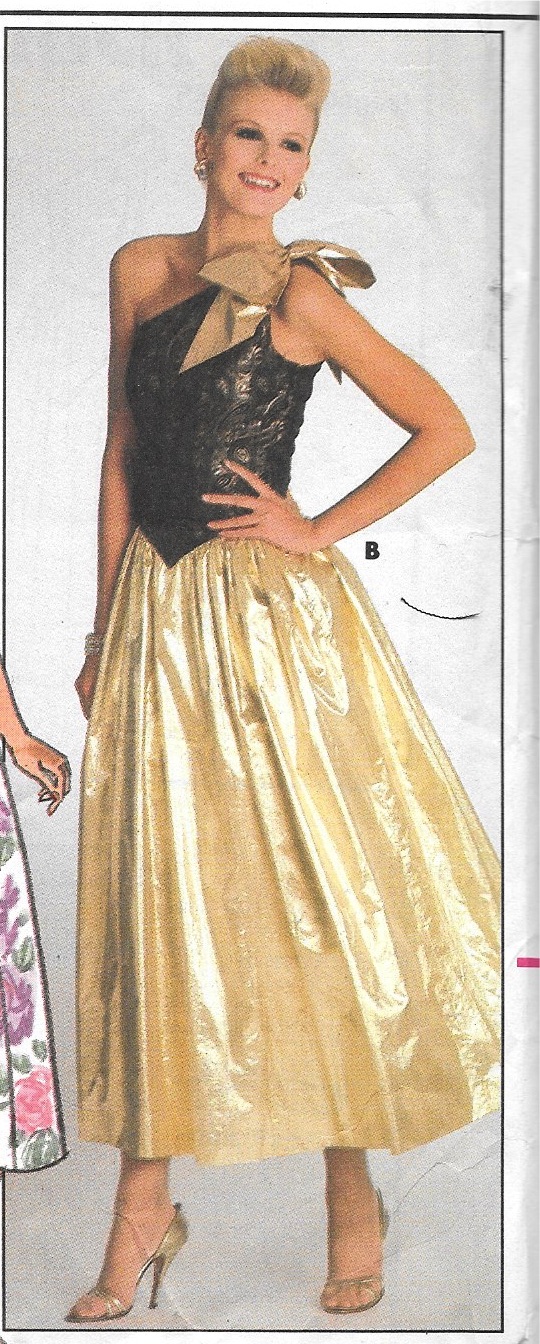
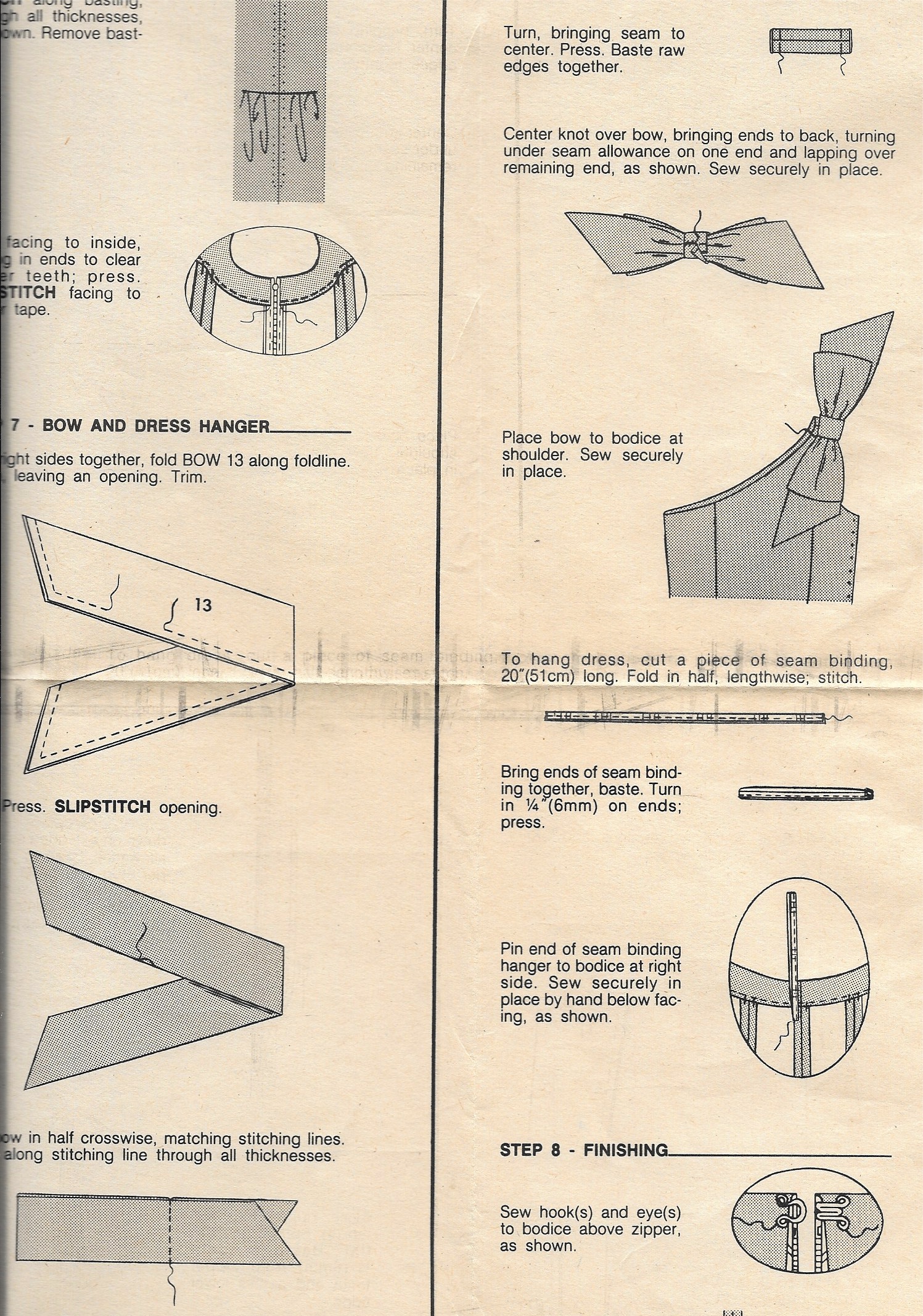
Now –  I really love a beautiful bow. And I knew just where to go to get the perfect bow pattern. I made this Butterick pattern in the early 1990s, and while I still like the dress I made (I’ll feature it sometime… it’s still in my closet!), I love the bow. I have used this bow pattern numerous times, always successfully.

Allure of silk - bow picture-2

Here is a close-up of the instruction sheet, showing the simple but effective construction of this bow.

Allure of silk - bow diagram-3

I increased the width and length a bit, as I knew it would need to be a focal point of the dress. I attached the bow to one end of the cummerbund, and used a snap to secure it in place on the other end.

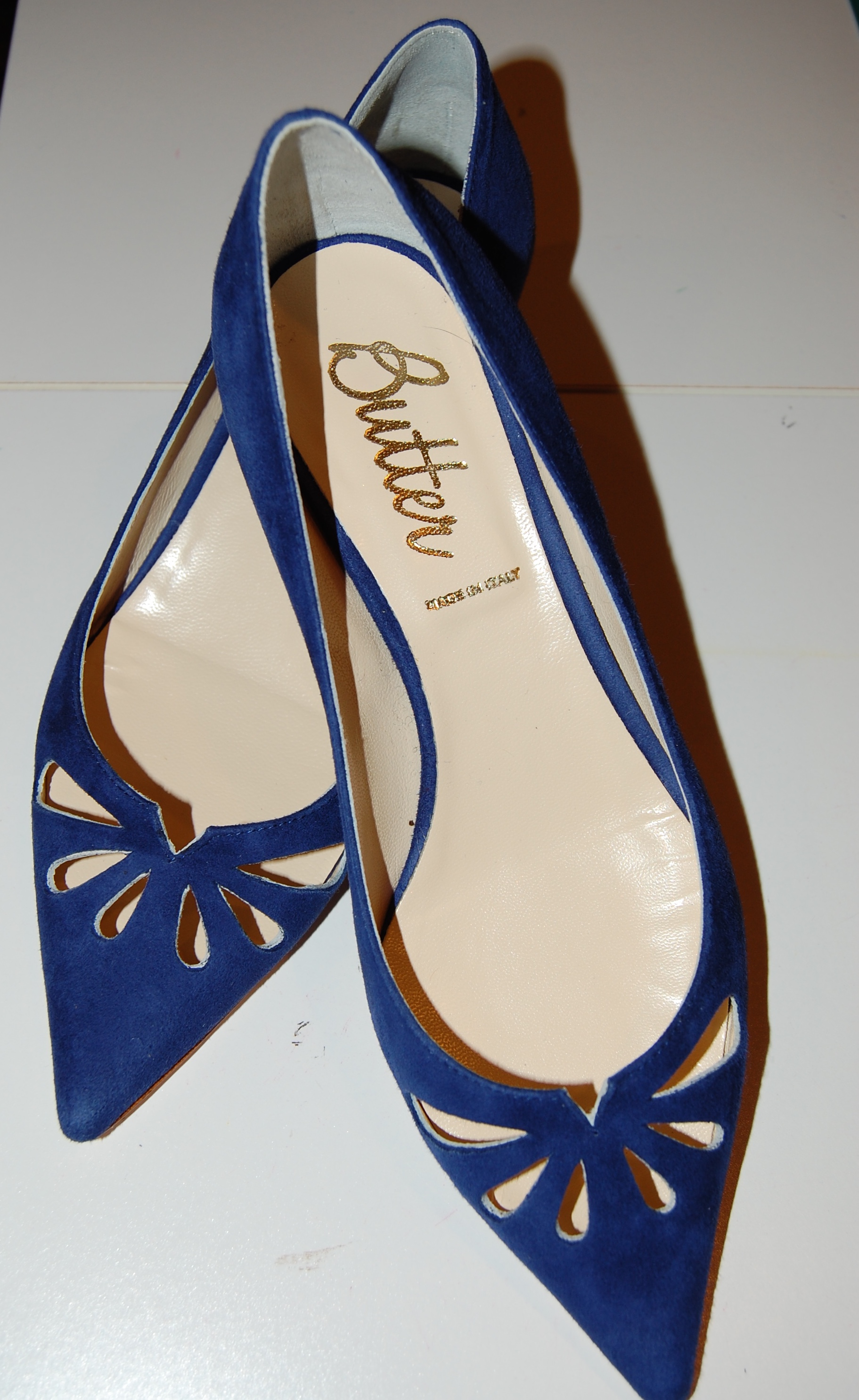
All of this took more time than I could have ever imagined! The event for which I made this dress is next week, and I’ll get proper pbotos taken then. But here is a sneak peek, first of the shoes I found which really seem to be the perfect pairing for this dress:

allure of silk final

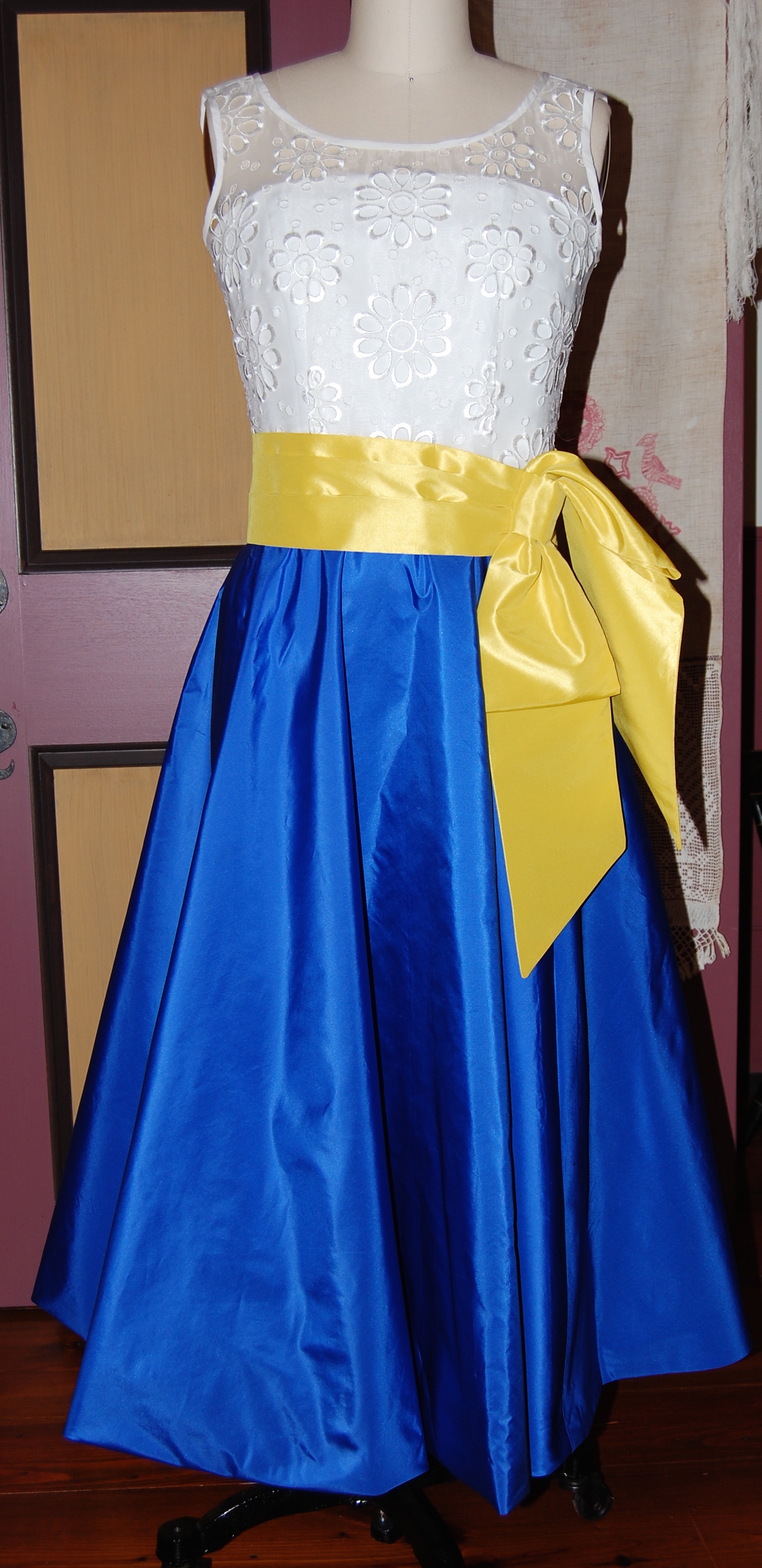
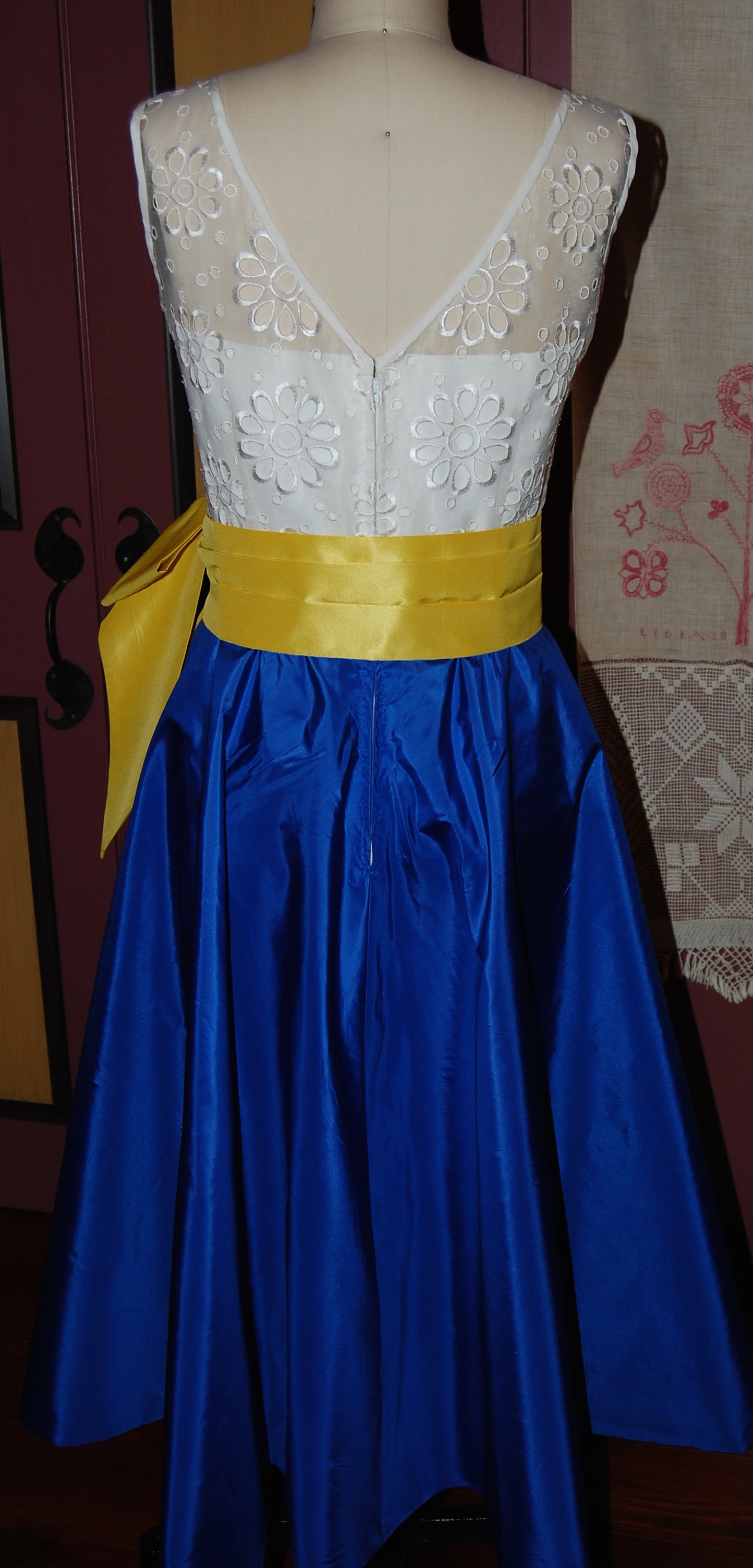
And here is the dress on my dress form:

Allure of silk final

Allure of silk final

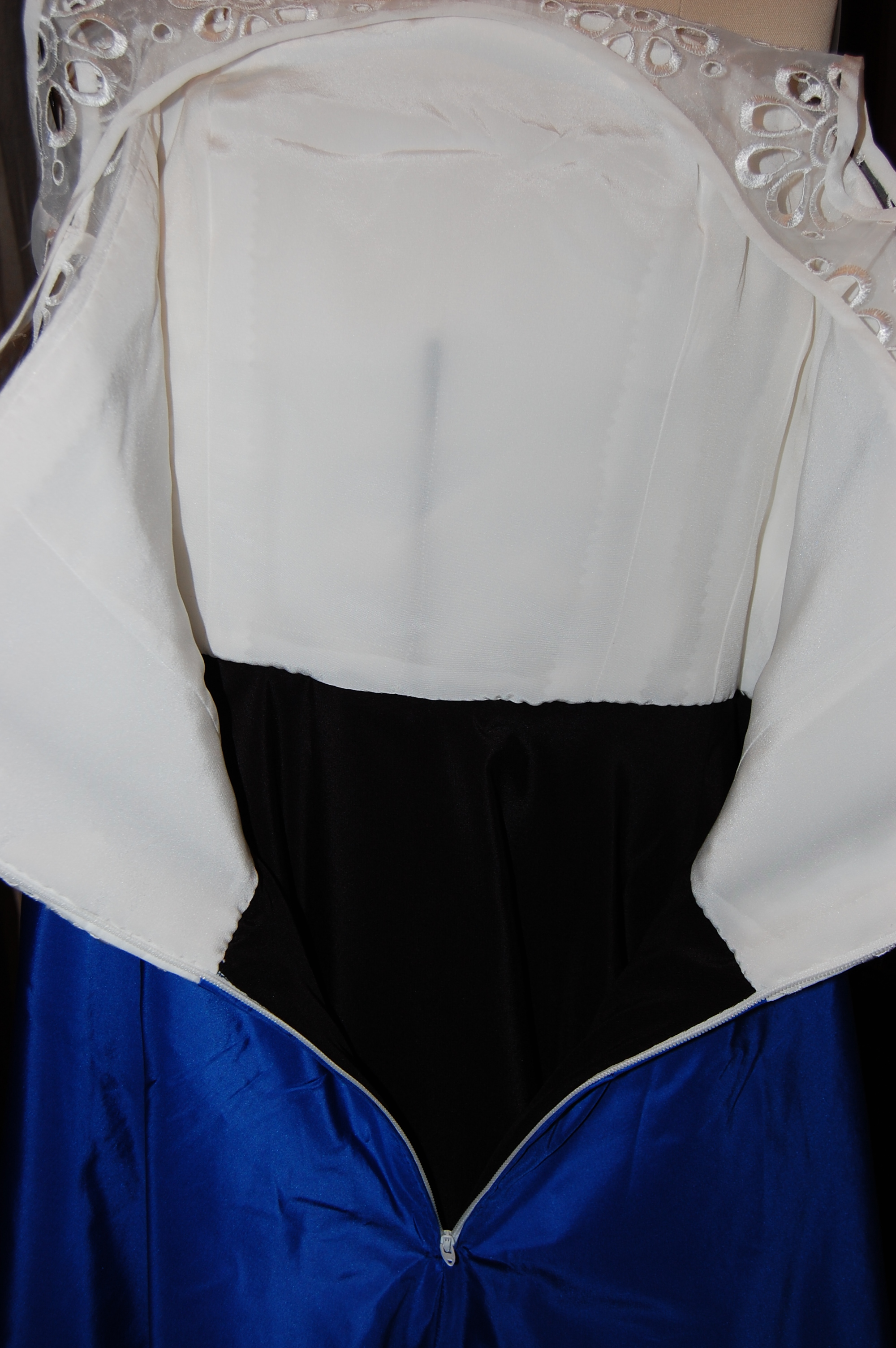
I thought I'd include this photo of the dress lining for anyone interested in seeing it.

I thought I’d include this photo of the dress lining for anyone interested in seeing it.

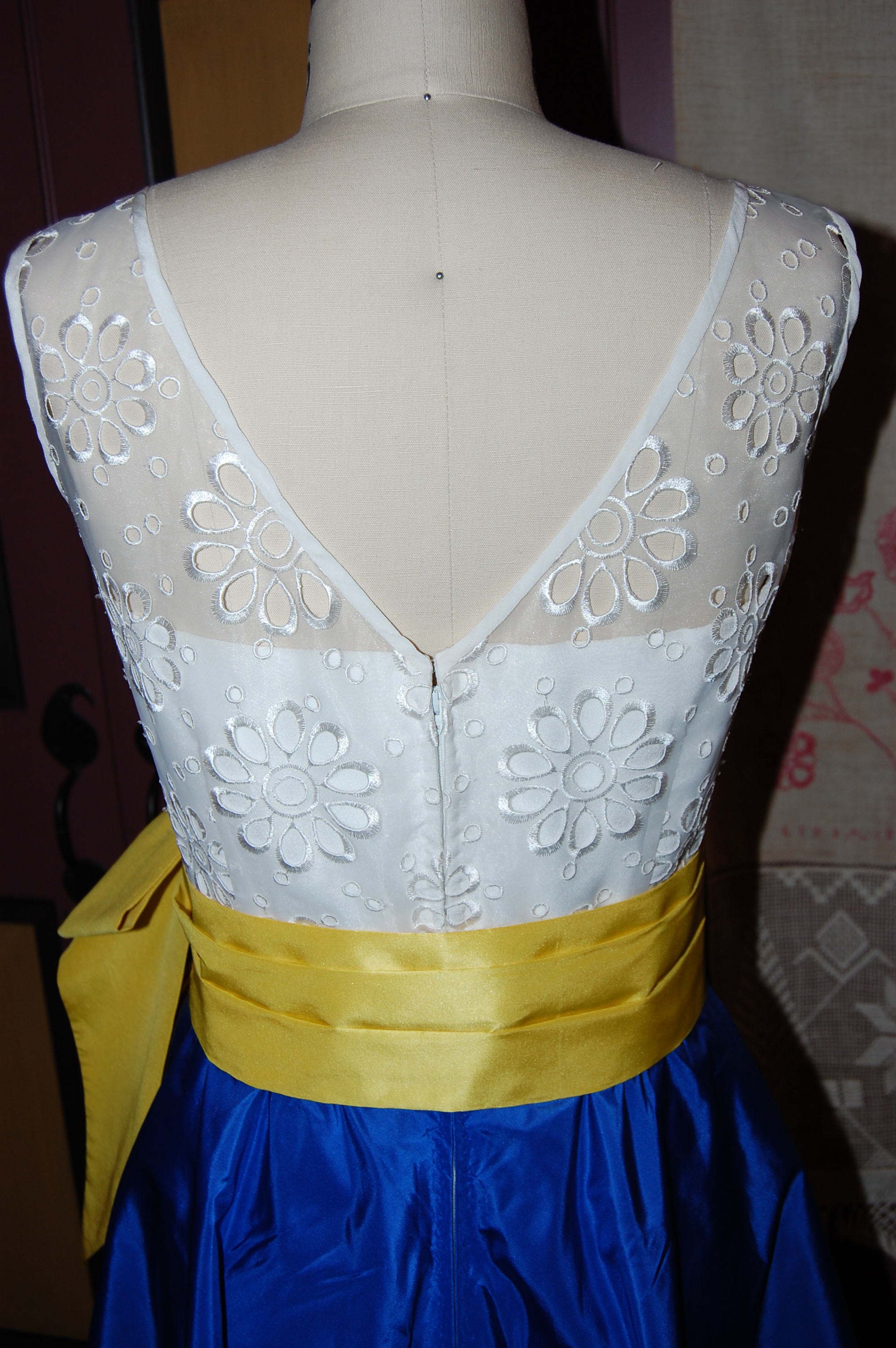
I am very pleased that I decided to "V" the back of the outer bodice!

I am very pleased that I decided to “V” the back of the outer bodice!

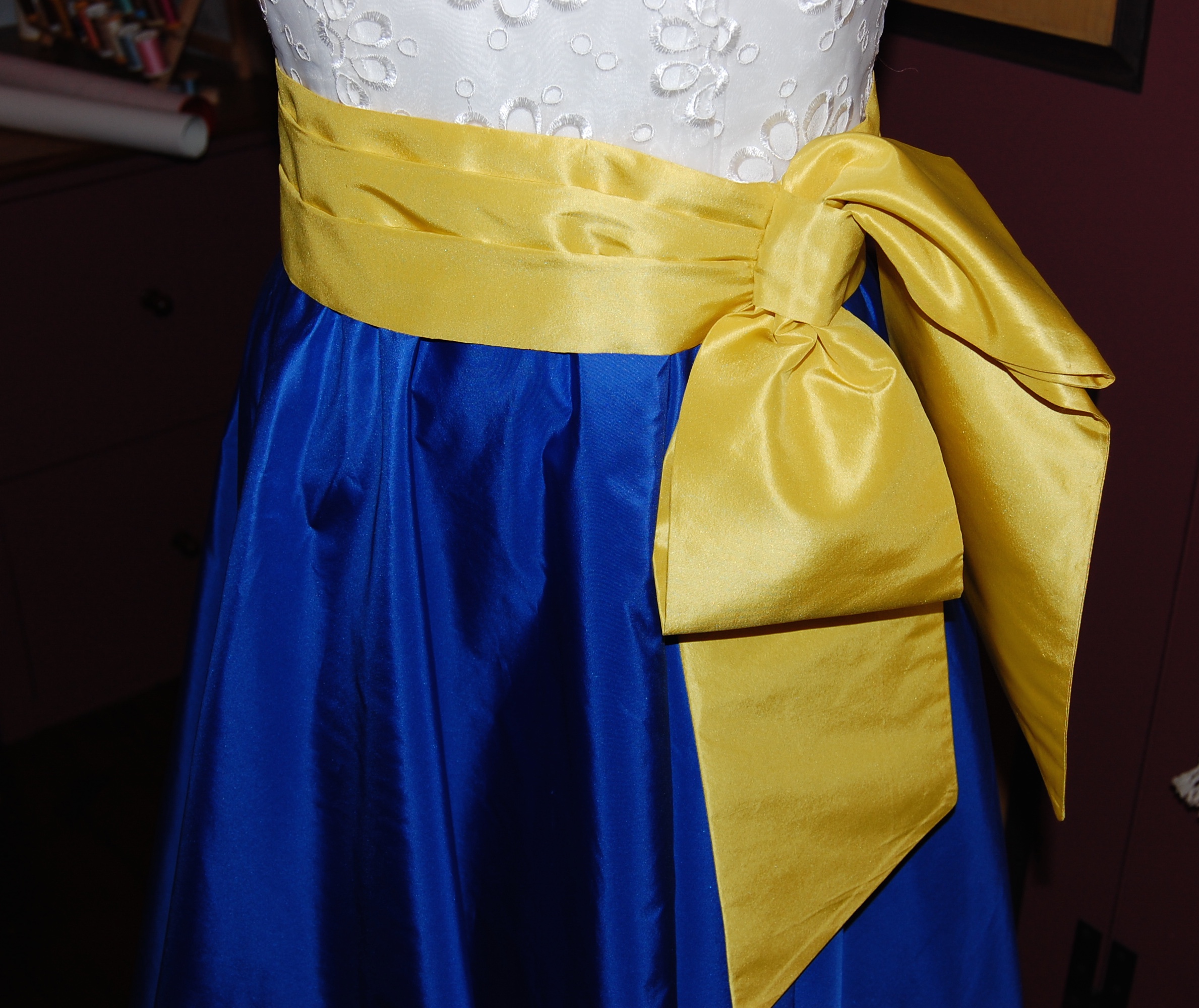
A close-up of the bow.

A close-up of the bow.

One of my favorite fashion quotes is one from Madeleine Vionnet: “The dress must not hang on the body but follow its lines. It must accompany its wearer and when a woman smiles the dress must smile with her.” Will my dress put a smile on my face when I wear it? Yes, if only for the fact that it has been finished just in time!

Details:

Blue silk taffeta:  Britex Fabrics

White embroidered organza:  Waechter’s Fabrics (now out of business)

Yellow silk taffeta:  Emma One Sock Fabrics.

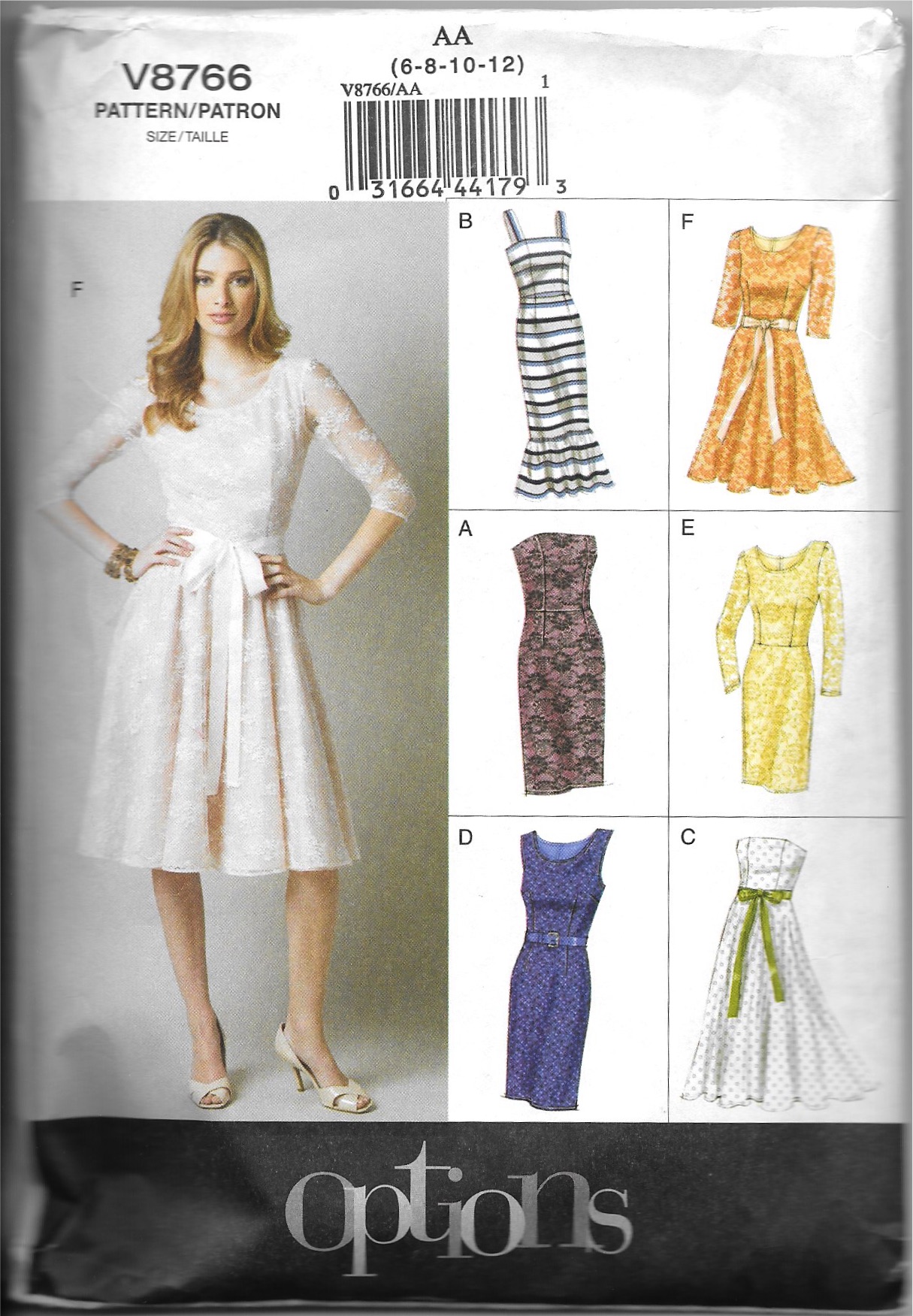
Under bodice and outer bodice pattern:  Vogue 8766

Cummerbund pattern:  Vogue 5234 (vintage)

Bow pattern:  Butterick 3582 (vintage)

Shoes:  Butter, sold by Simply Soles

40 Comments

Filed under Cocktail dresses, couture construction, Mid-Century style, sewing in silk, Shoes to make an outfit complete, Uncategorized, vintage Vogue patterns from the 1960s, Vogue patterns

The Allure of Silk: Sewing with Susan Khalje, Part 1

Any week spent in one of Susan Khalje’s Couture Sewing School classes is a week filled with opportunity. This past class was my third one taken with Susan, and I have come to expect that I will learn unexpected things! My first class with her was the Classic French Jacket; the second class was when I started my color-blocked coat; and this class saw the beginning of a silk formal dress which I need for a black-tie event in early July.

She asks her students to come with a prepared muslin (toile), ready for fitting.  I have so many vintage patterns for long, lovely, fancy dresses, that it was difficult to focus on just one. As it turned out, I found myself drawn repeatedly to a dress which I had pinned to one of my Pinterest boards, and it is this dress which became my inspiration:

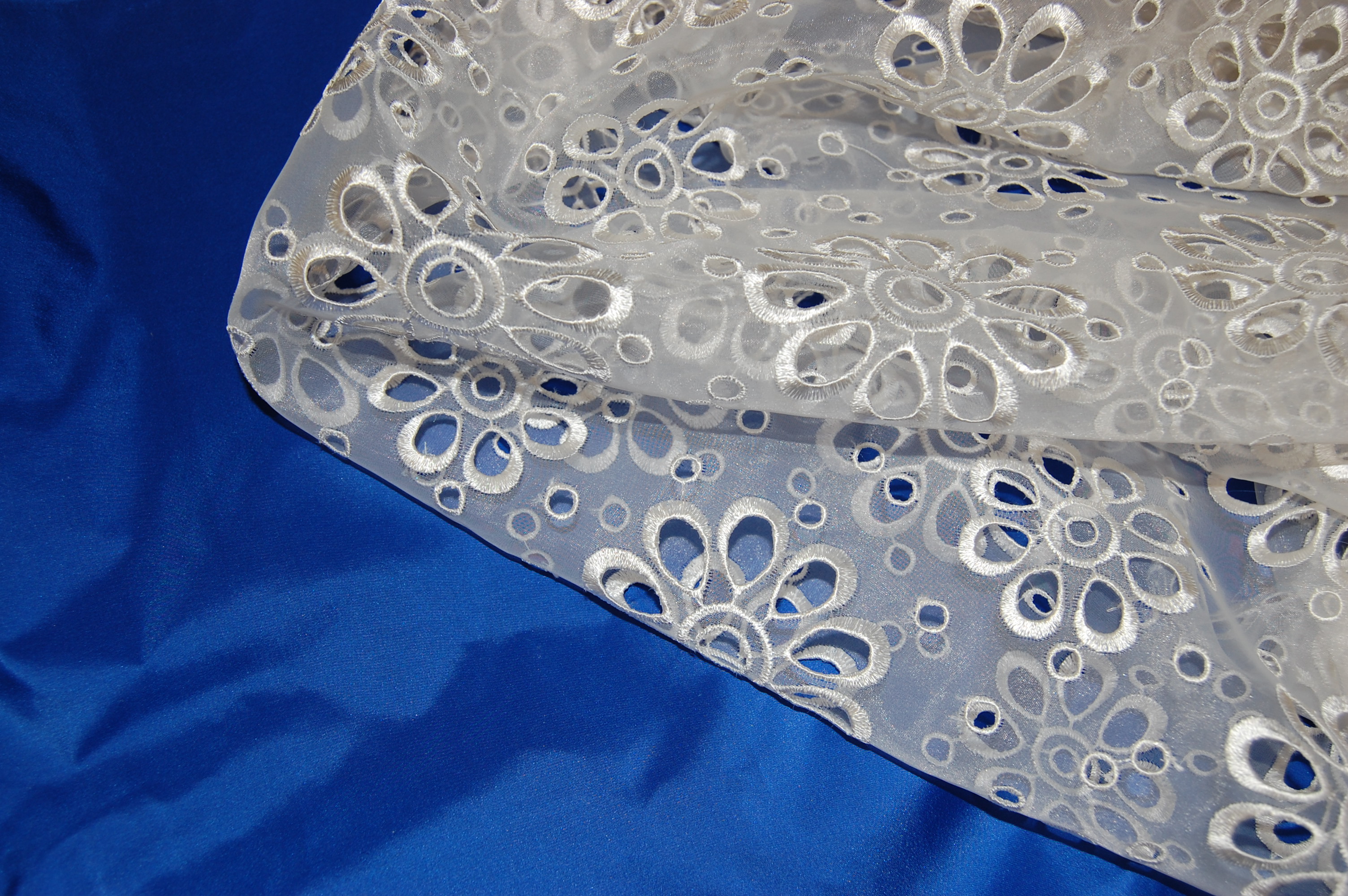
Blue taffeta:silk dress - originalI say “inspiration” as I knew I wanted to make certain changes. I decided I did not want to go completely strapless. Instead I envisioned a strapless underbodice, covered by a lacy, semi-transparent, sleeveless overbodice, both in white. I had already purchased a silk-embroidered organza (from Waechter’s Fabrics, before they closed their business), and I had also already purchased 3½ yards of sapphire-blue silk taffeta from Britex Fabrics. Those were my fabrics of choice for this project.

A Noisy Spring

I started with the strapless top and the sleeveless top from this current Vogue pattern:

Blue taffeta:silk dress - bodice pattern

Here’s what happened when Susan fitted the muslin on me:

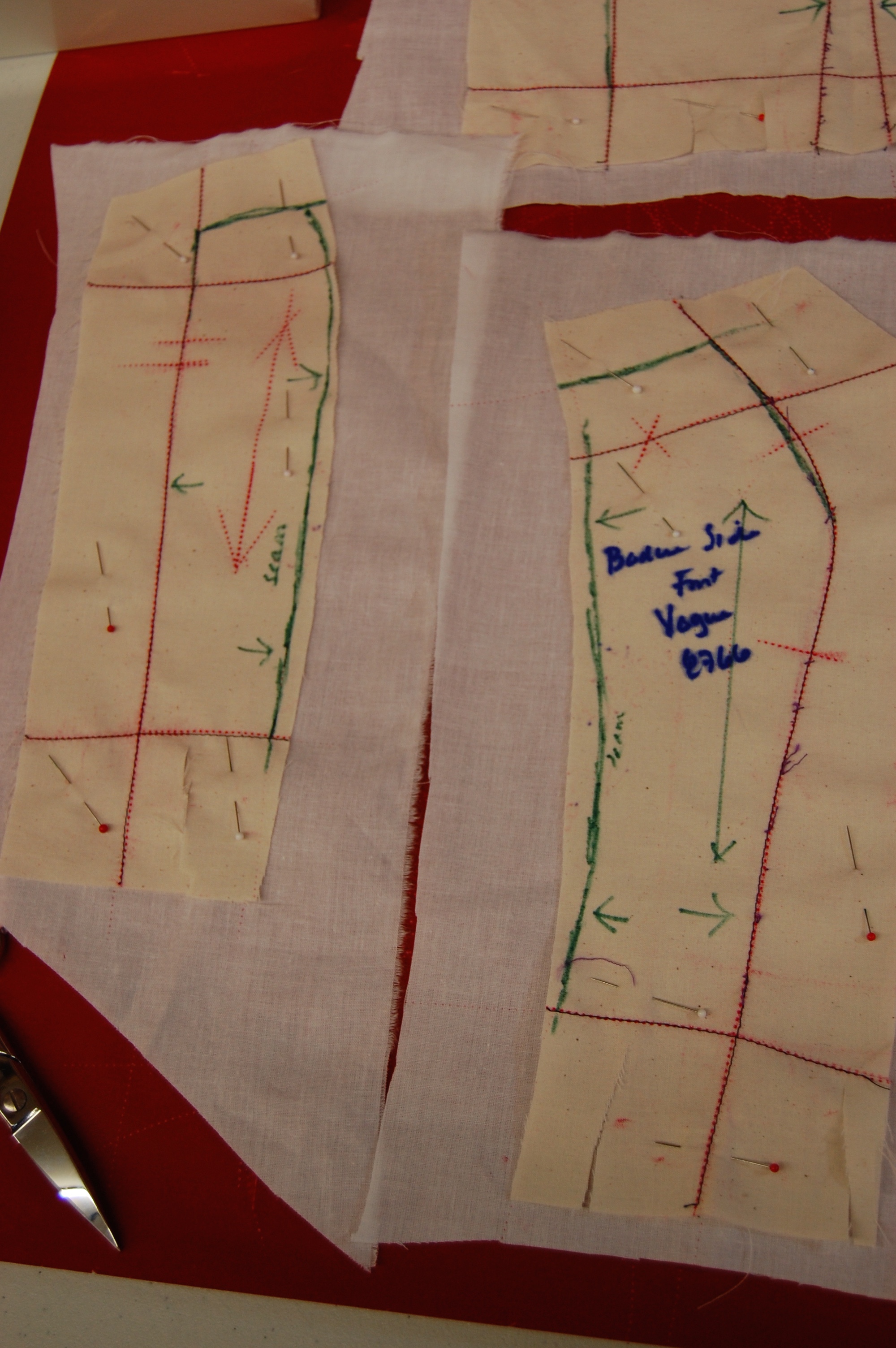
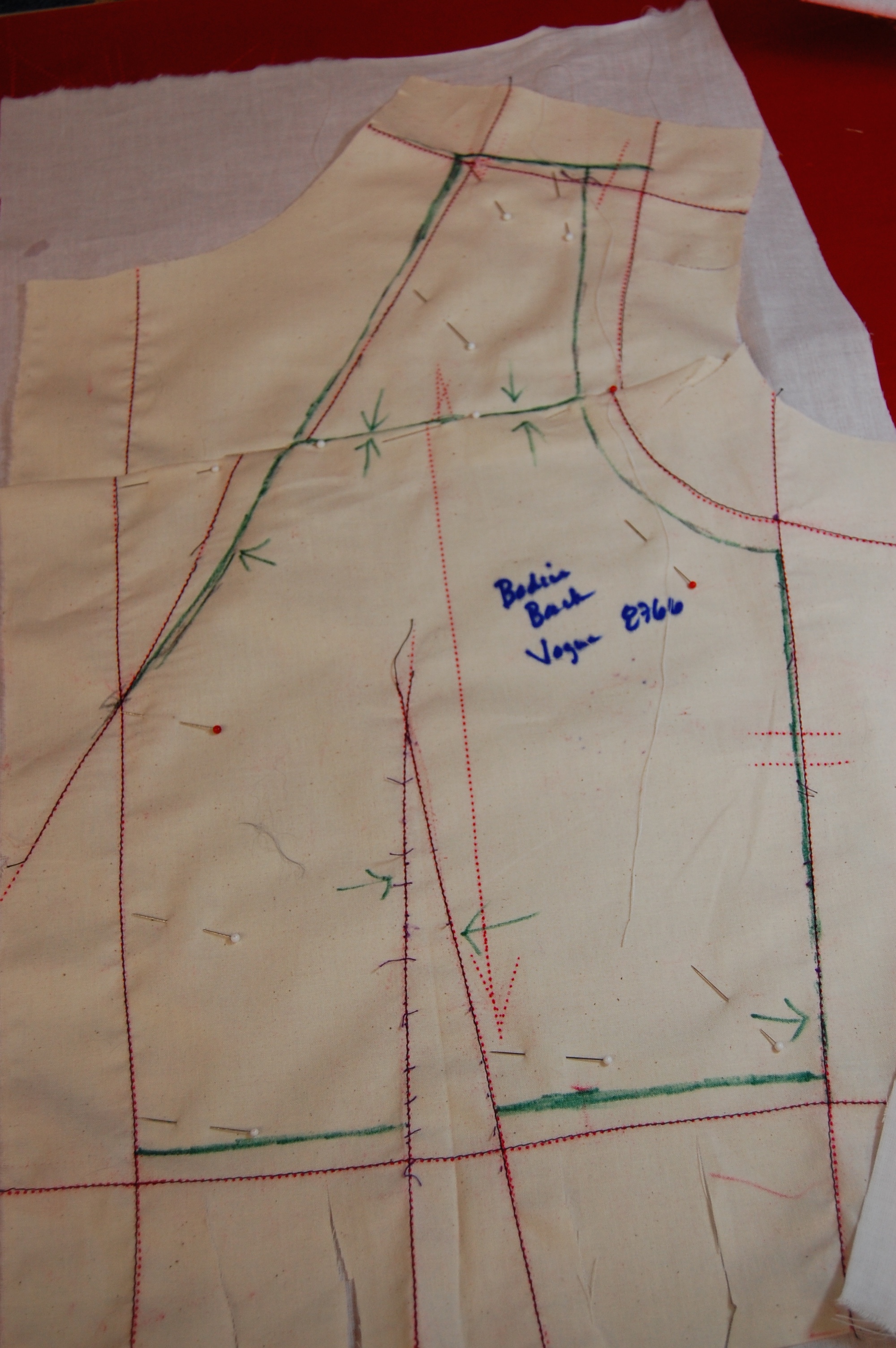
The pattern for the strapless under bodice consisted of a front panel, two side princess panels, and two back panels.  However, Susan divided the side princess panels into two, giving me 7 bodice pieces rather than 5.

The pattern for the strapless under bodice consisted of a front panel, two side princess panels, and two back panels. However, Susan divided each side princess panel into two pieces, giving me 7 bodice pieces rather than 5.

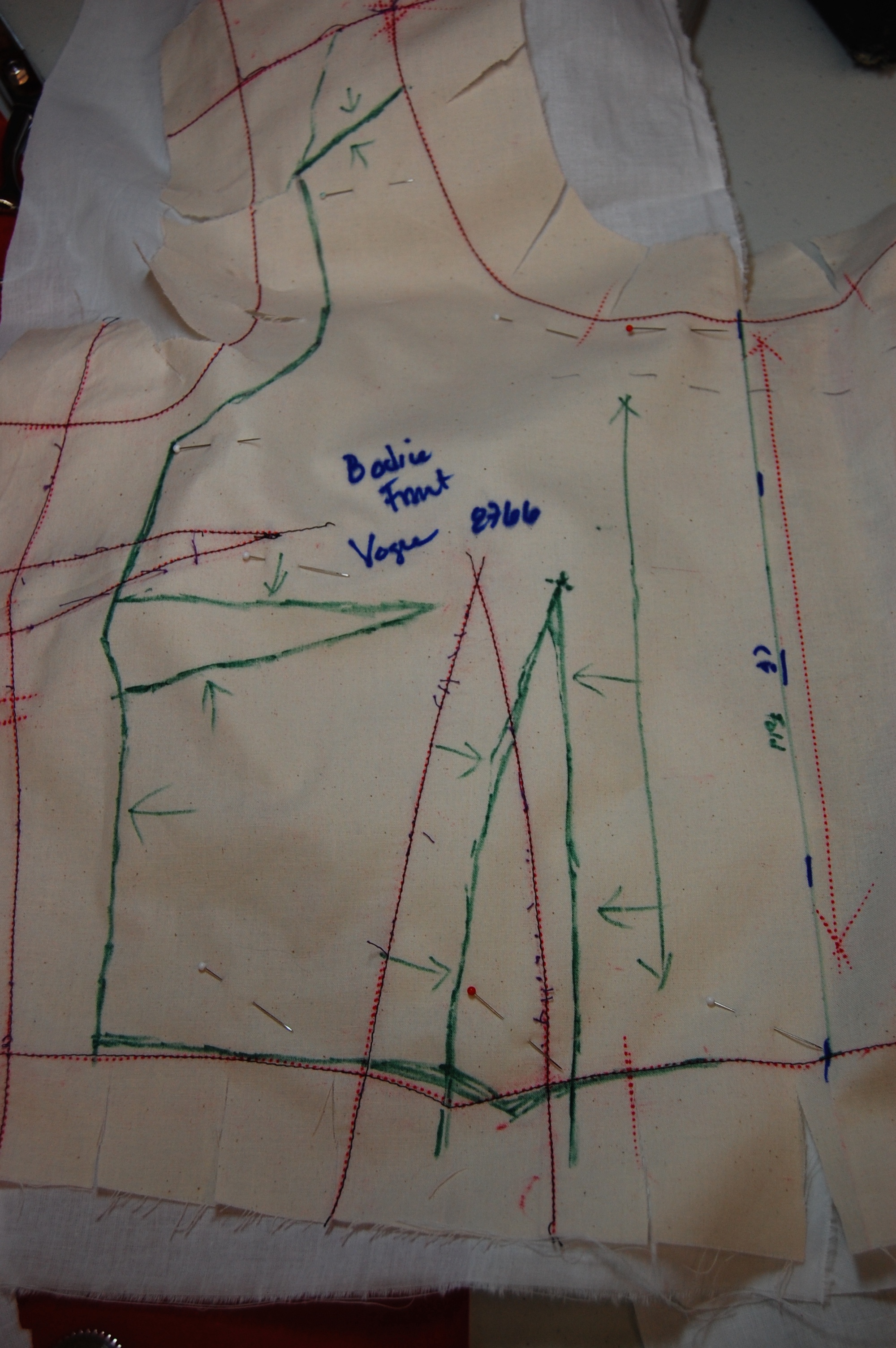
The pattern for the over bodice needed major adjustments.  Here is the front . . .

The pattern for the over bodice needed major adjustments. Here is the front . . .

. . . and here is the back.  I wanted to make the back into a V-shape, which was a minor adjustment to the pattern i was using.

. . . and here is the back. I made the back into a V-shape, which was a minor adjustment to the pattern I was using.

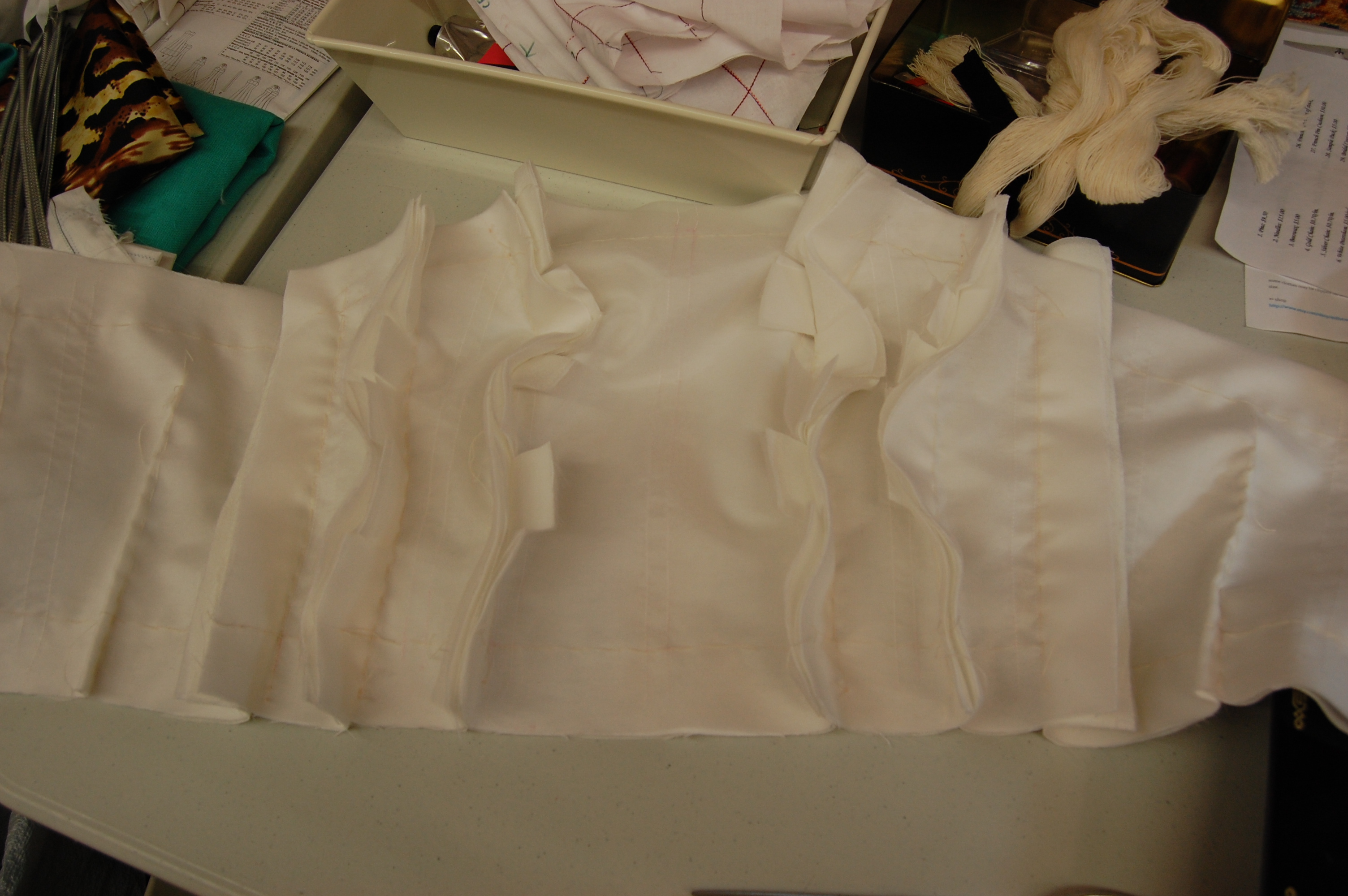
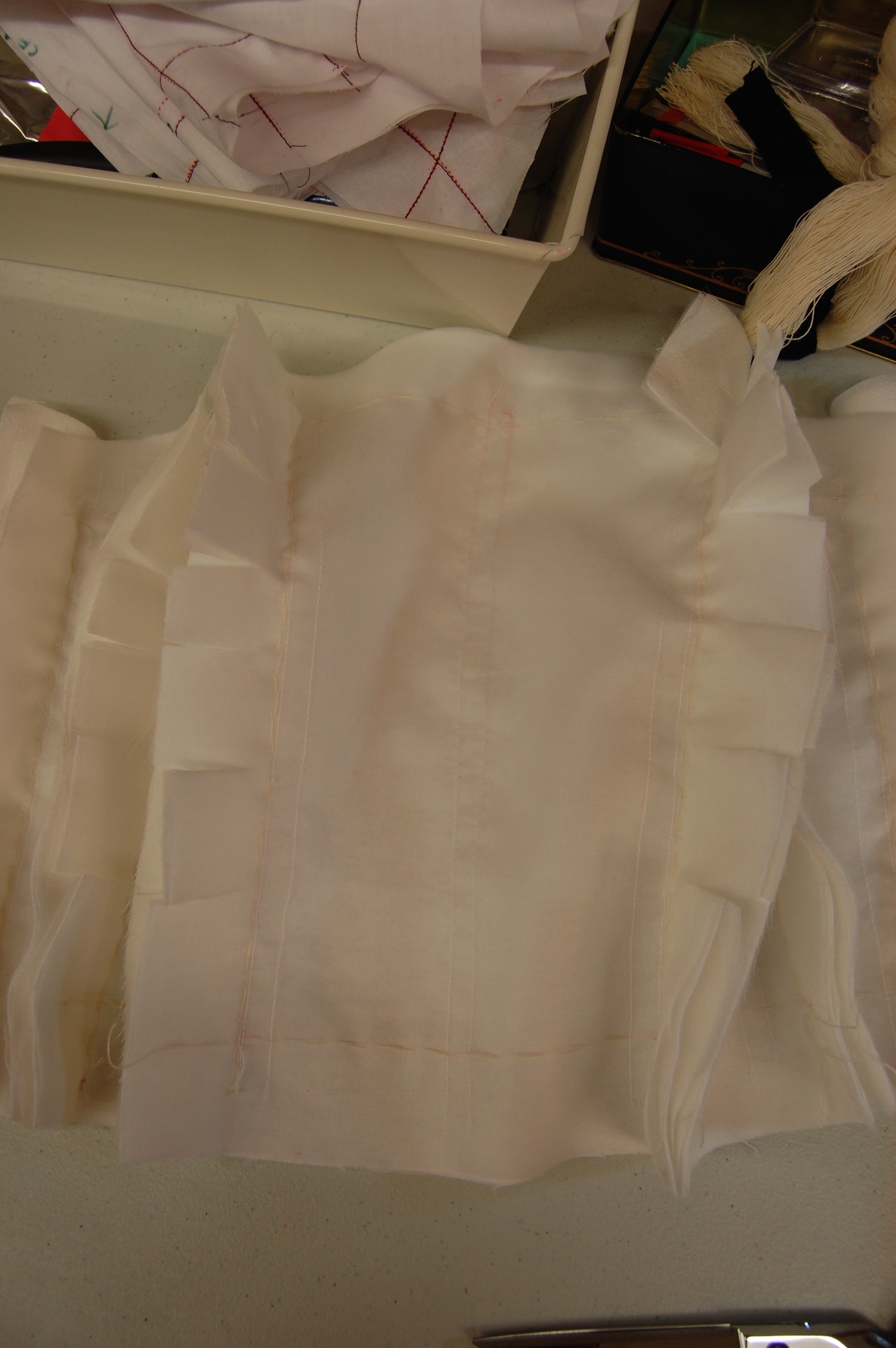
One of the reasons I wanted to start this dress under Susan’s tutelage was for the opportunity to learn how to add boning to a structured bodice. I knew the fashion fabric for the strapless underbodice would be white silk crepe de chine. What I did not know is that the channels for the boning would be cleverly made out of two pieces of silk organza, with parallel stitching strategically placed every couple of inches – making the perfect slots for the pieces of boning.

Lotsa of seams!

Lots of seams!

Click on the photo to see the channels for the boning.

Click on the photo to see the channels for the boning.

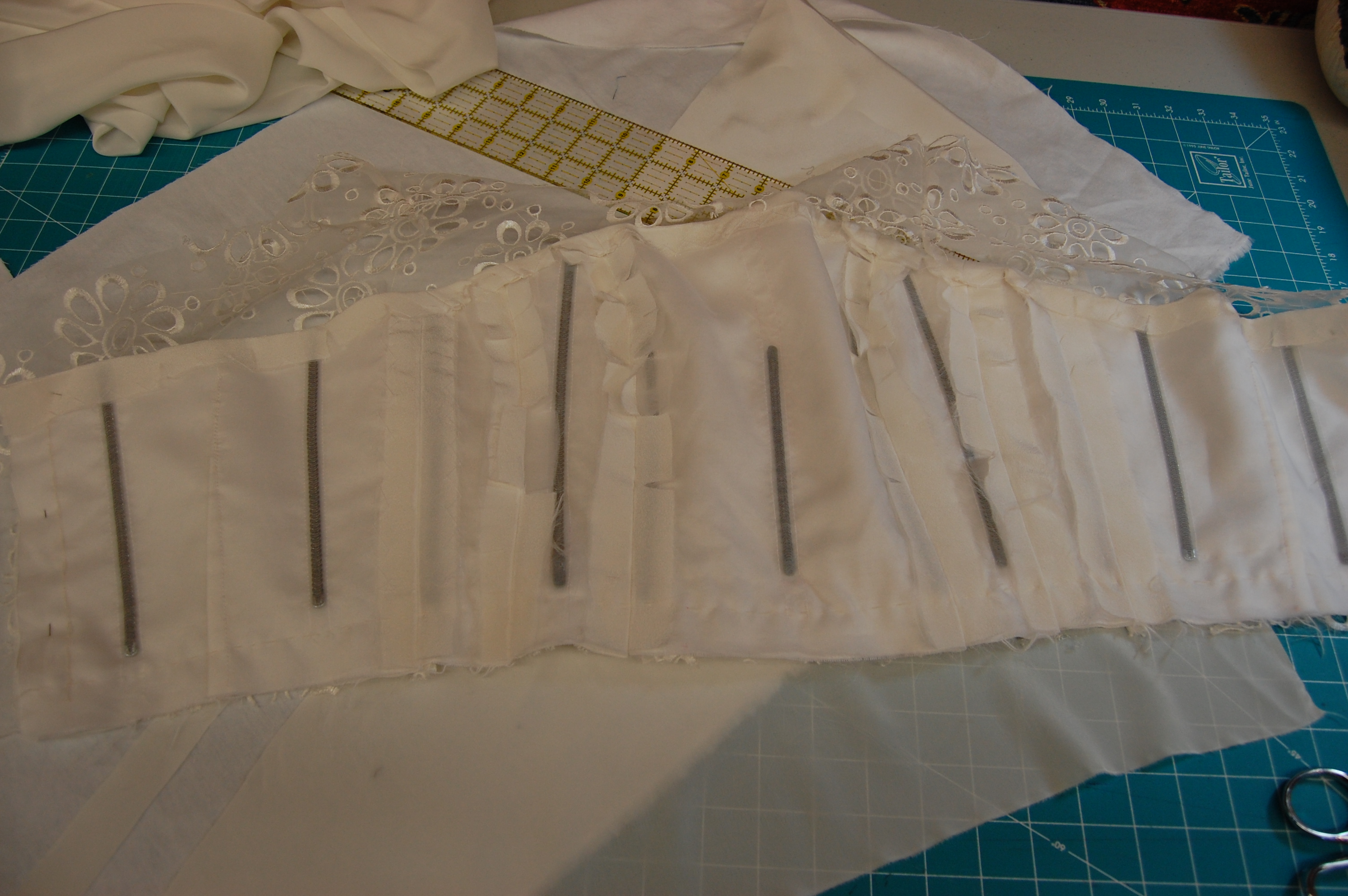
With the boning inserted.

With the boning inserted.

Then the shocker came: in order to keep the boning from showing through to the right side, I needed to add another layer of … something. When Susan suggested white flannel – flannel! – I was skeptical, but trusting (I think!).  I kept thinking of the bulk that flannel was going to add to this very fitted underbodice, but Susan assured me it would work. She consoled me by telling me that we would be able to cut away the seam allowances of the flannel, reducing much of the added bulk. But the real surprise was the wonderful softness the flannel added to the finished underbodice. The flannel not only camouflages the boning on the right side, it also adds an amazing smoothness to the appearance of the underbodice.

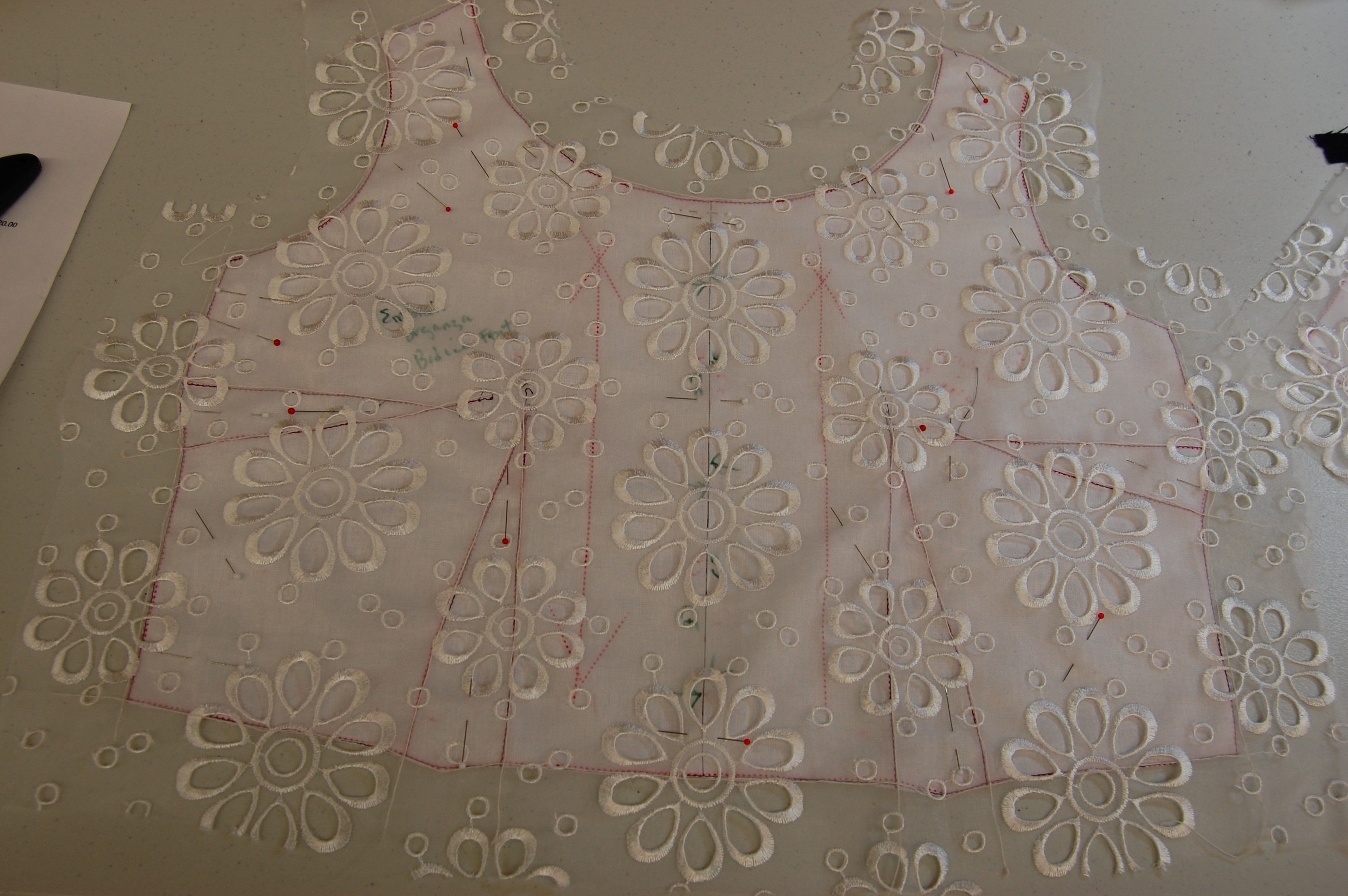
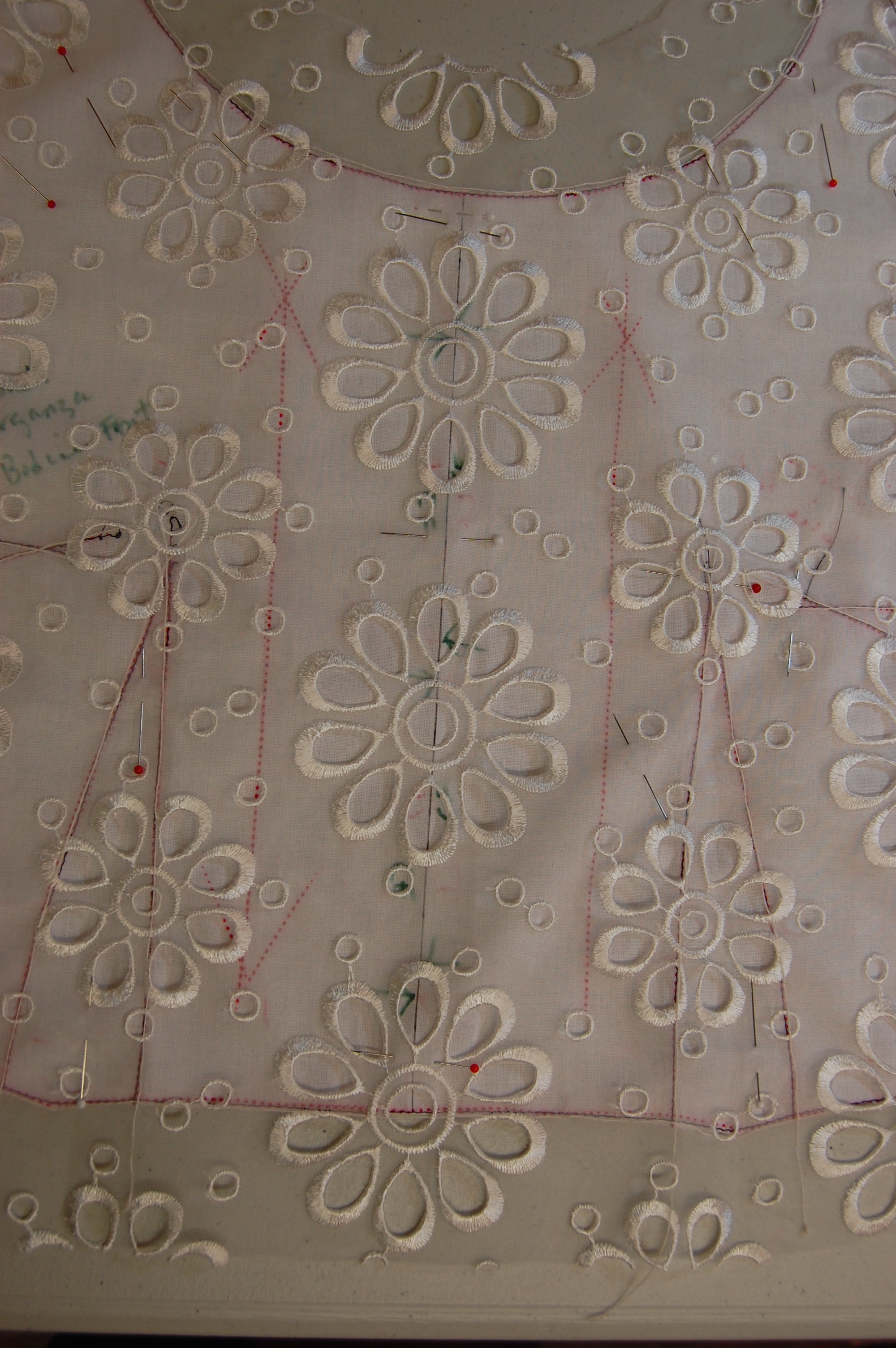
Once the underbodice was complete, I set about to start the embroidered silk organza overbodice. We played around with the placement of the motifs, making sure that two big “daisies” would not be right on top of the bust.

The Allure of Silk, pt 1


Small daisies close to the bust seemed to be okay.

Small daisies close to the bust seemed to be okay.

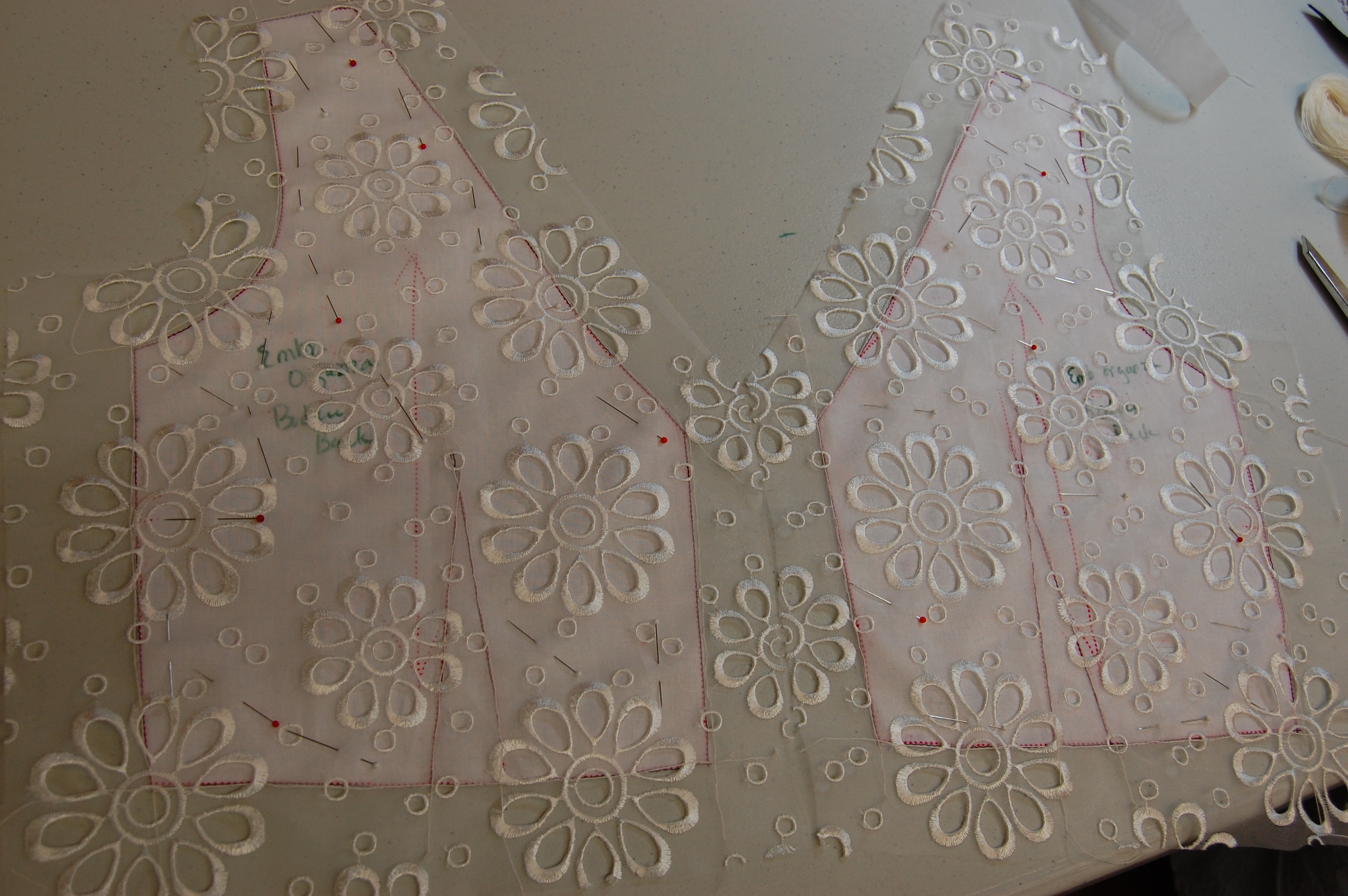
The back of the over bodice

The back of the over bodice

And this is what the embroidered silk organza would look like over the strapless under bodice.

And I wanted to see what the embroidered silk organza would look like over the strapless under bodice.  So pretty!

Interior seams were finished by hand, and darts were left as is, with no additional finishing. The neck and armhole edges were another story, as they would need to be bound in bias-cut crepe de chine. I found this very tedious and time-consuming and appreciated Susan’s suggestions and tips to help make these delicate finished edges as even as possible. First I practiced, then I sewed, then I took out stitches and started over again, carefully clipping away noticeable bulk from the embroidery in that narrow edge.

Practice!

Practice!

Working on that narrow binding. . . .

Working on that narrow binding. . . .

Once both bodices were completed, I basted them together at the waist. The only other place they are joined is at the back seam where the zipper will be inserted.

It surprised me that no other joining of these two bodices would be needed, but once again, I have found that the unexpected often makes the most sense when it comes to couture sewing!

40 Comments

Filed under couture construction, Mid-Century style, sewing in silk, Uncategorized, underlinings

Mellow Yellow

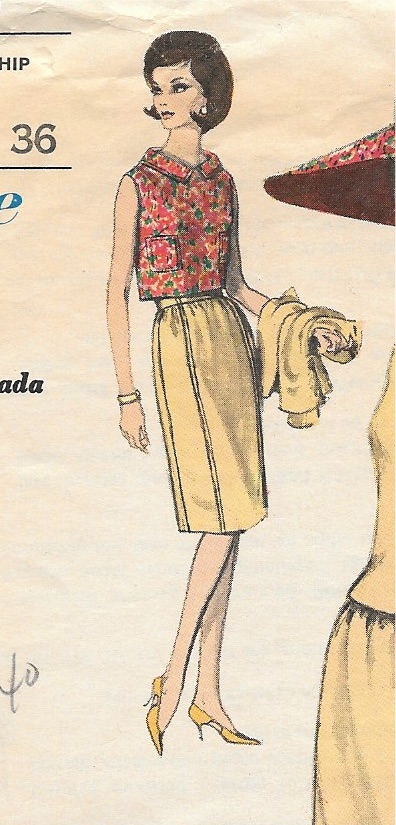
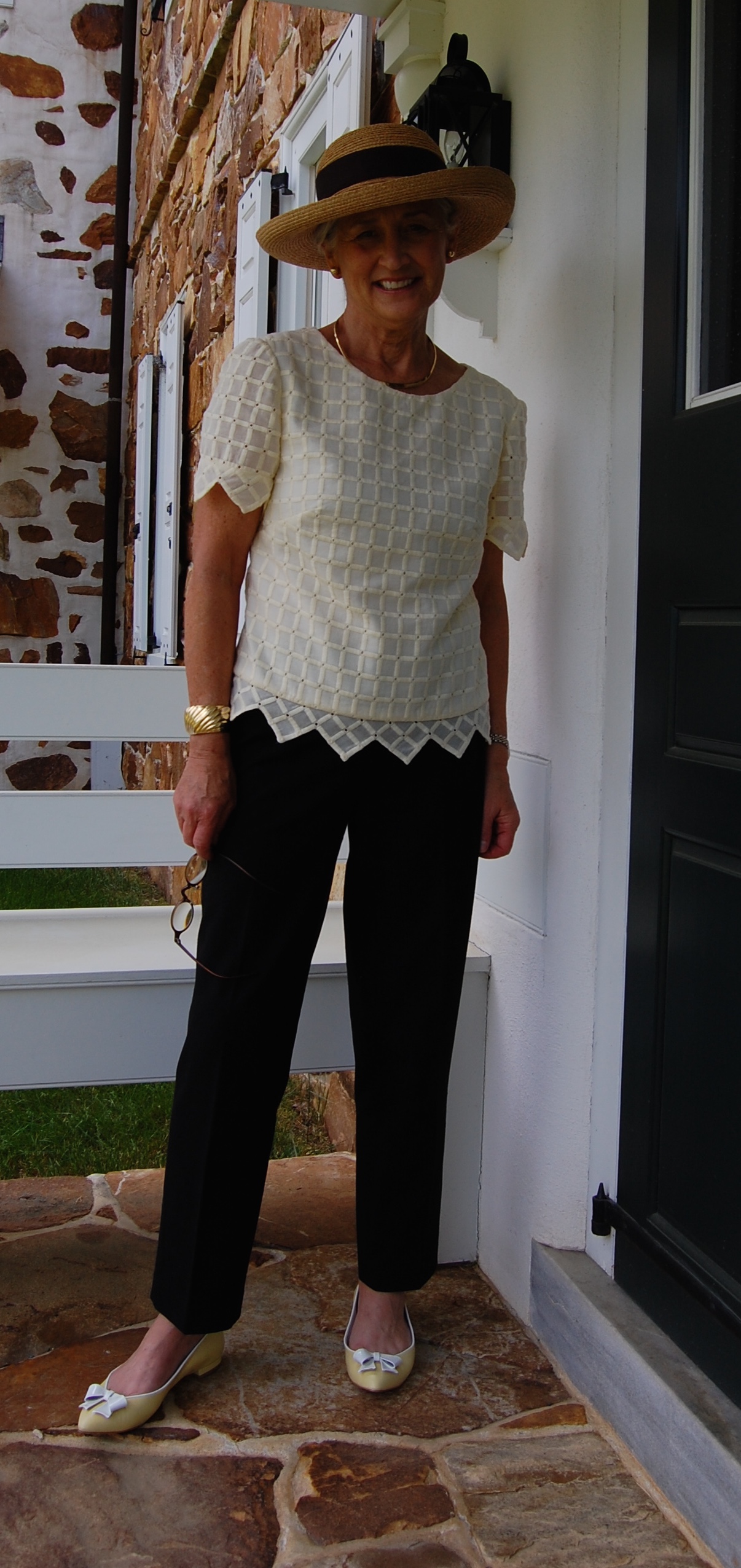
How did I go from this . . .

A collared overblouse.

A collared overblouse.

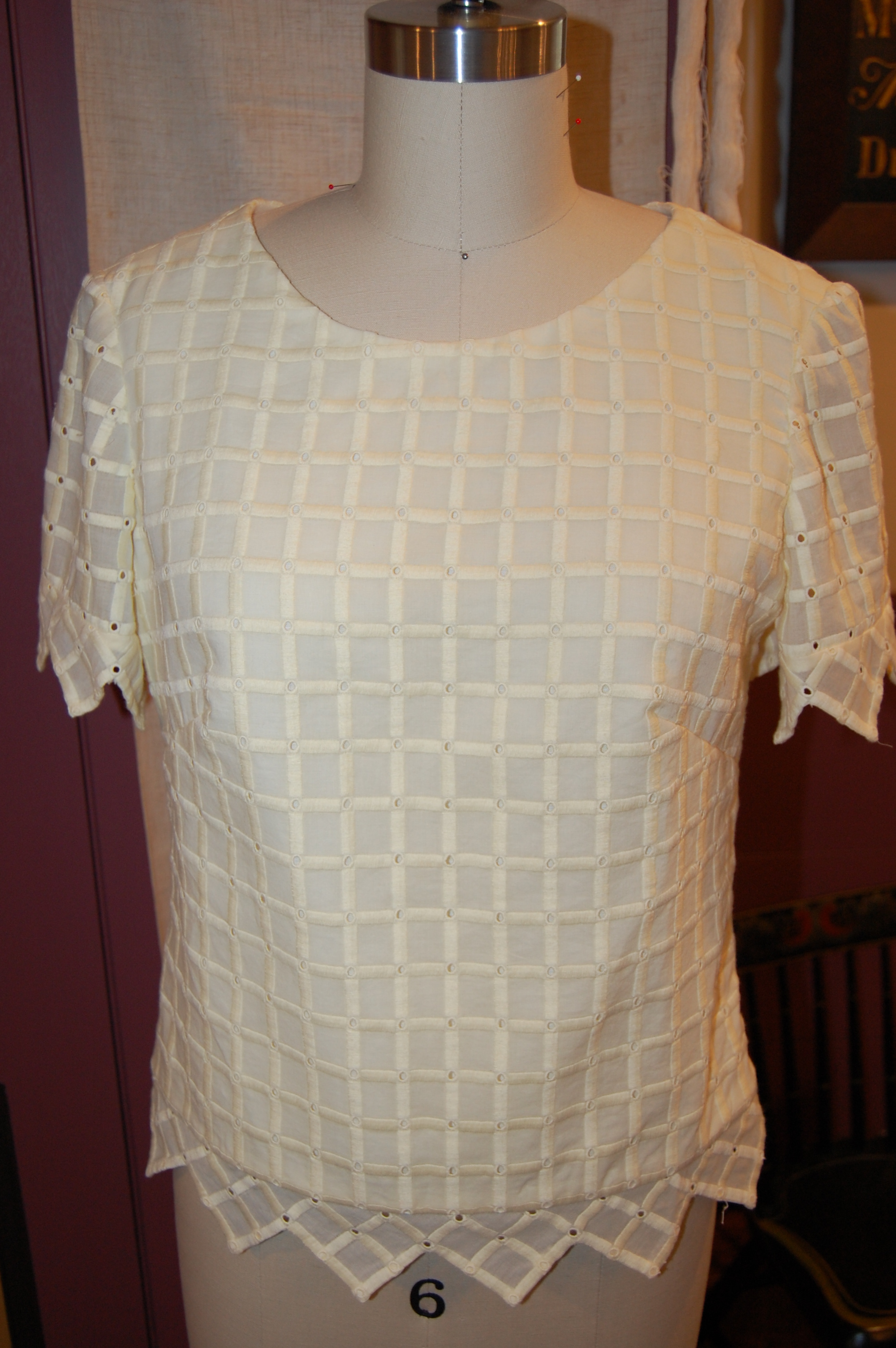
to this?

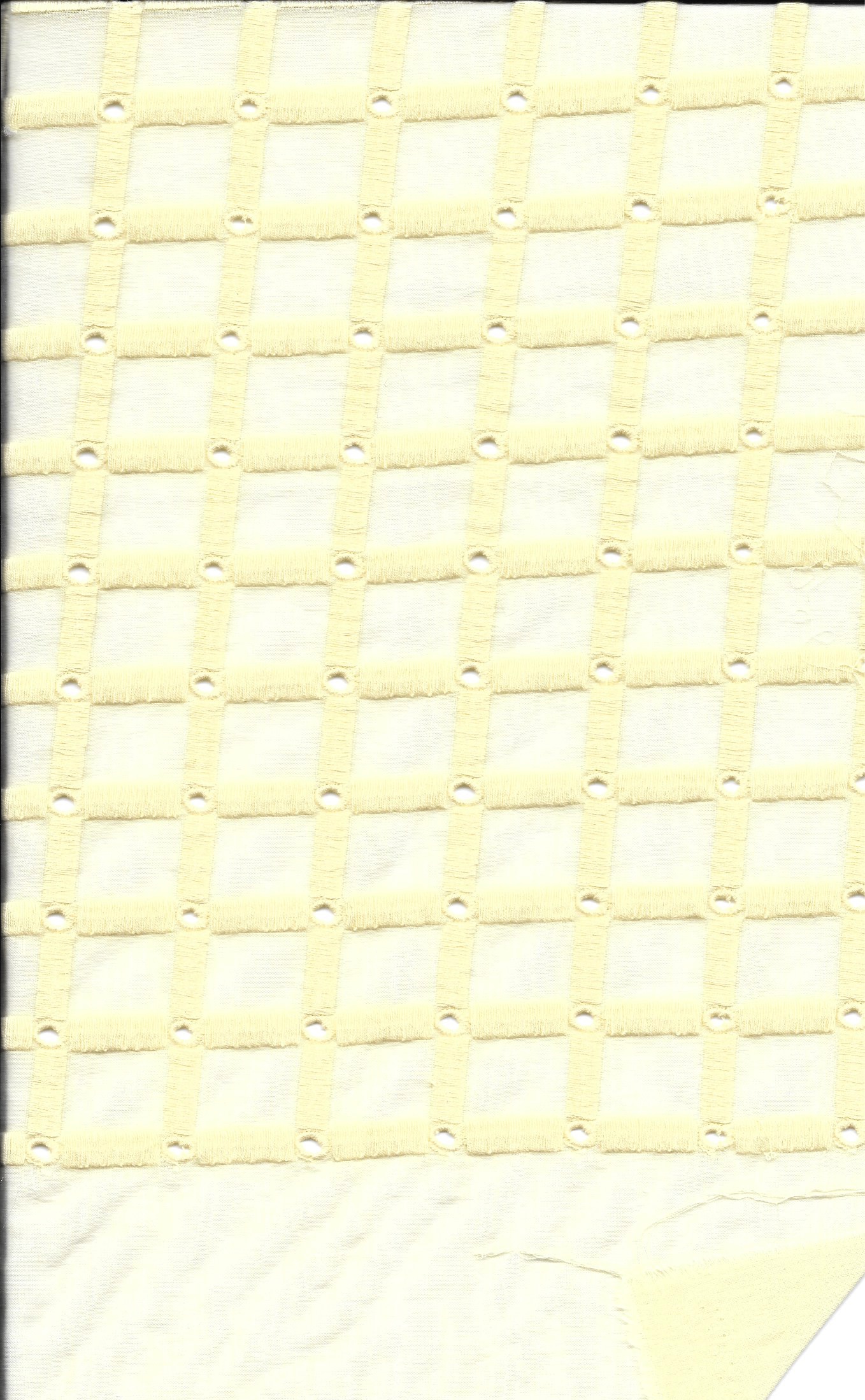
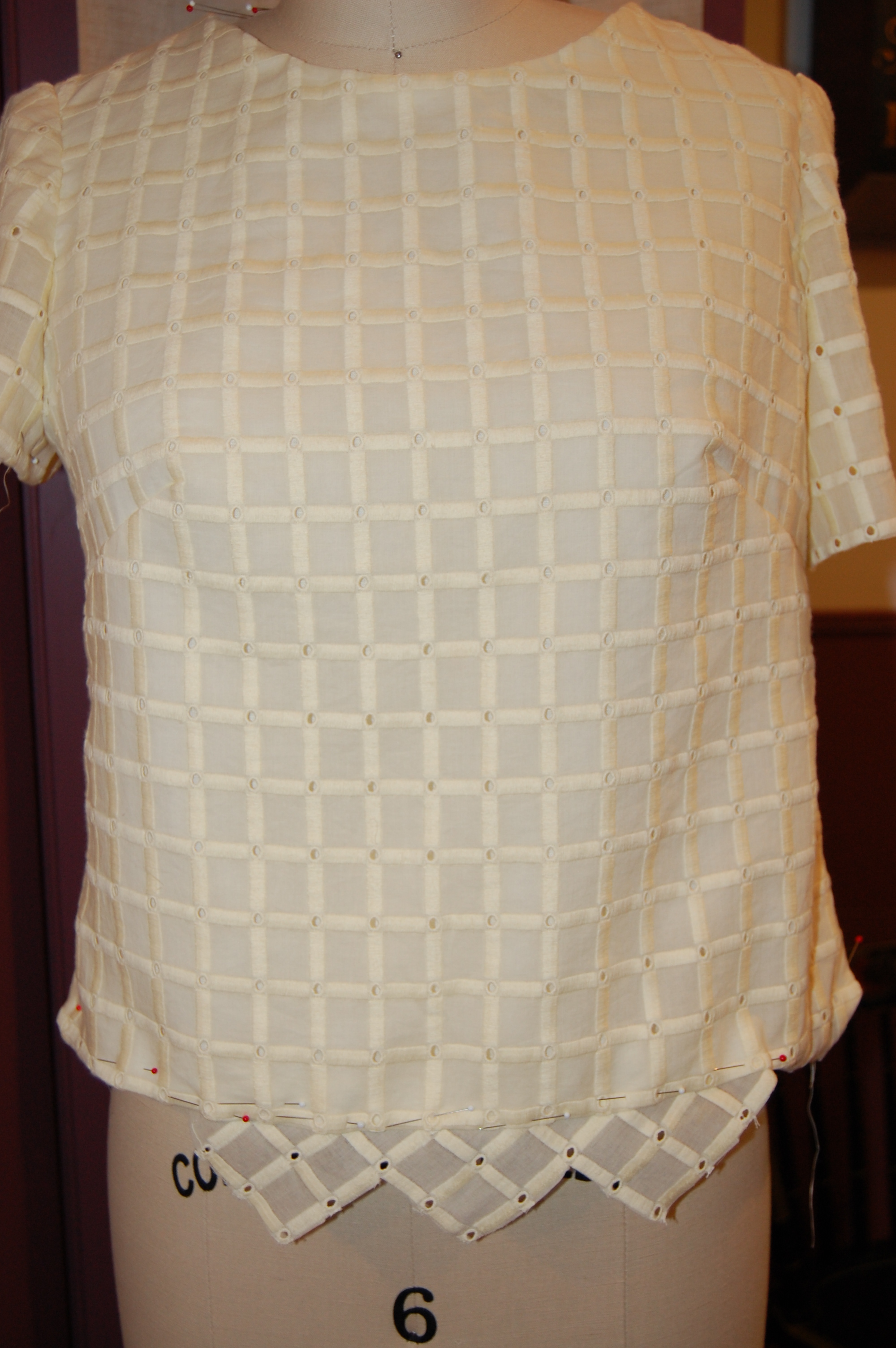
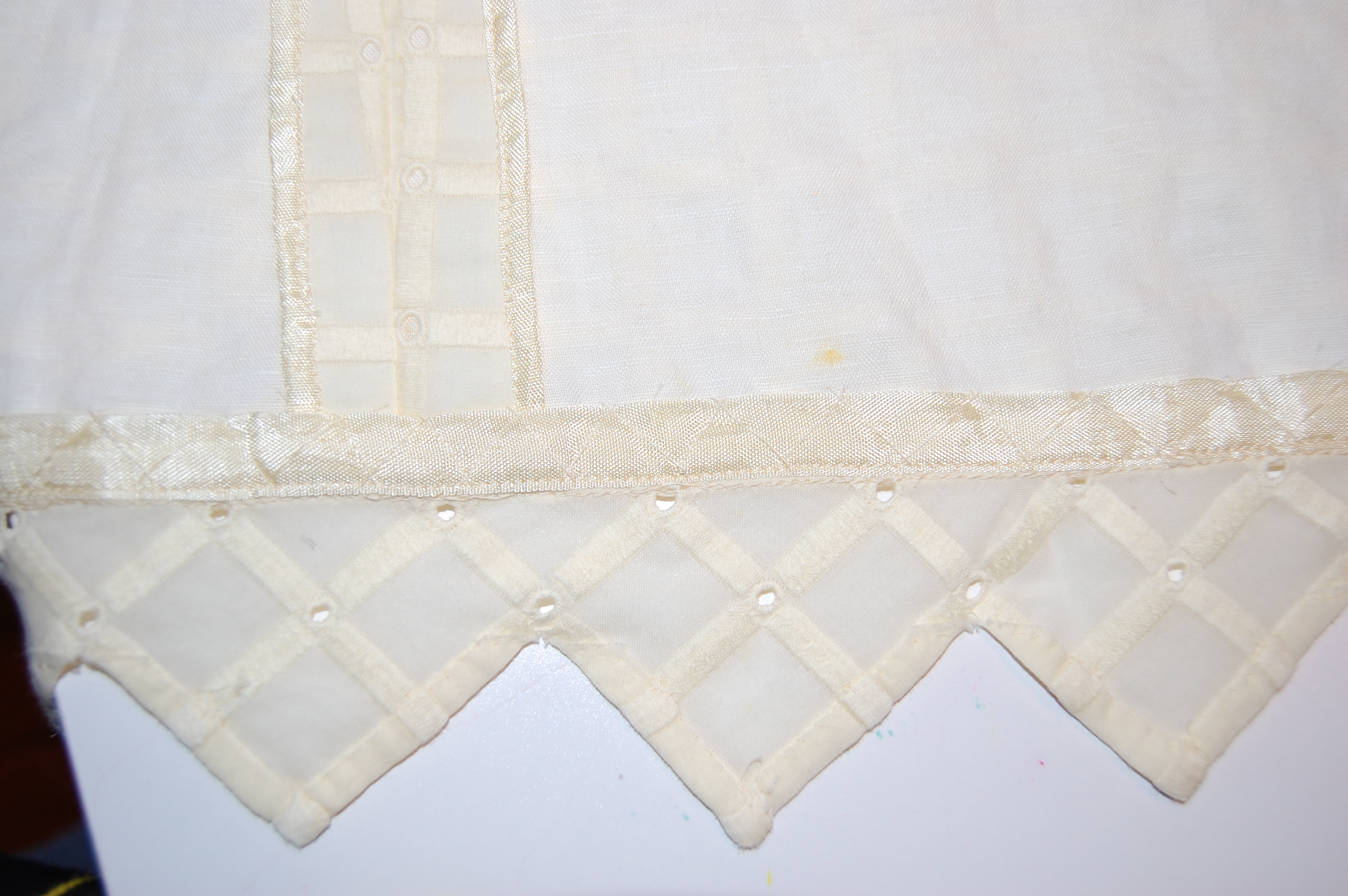
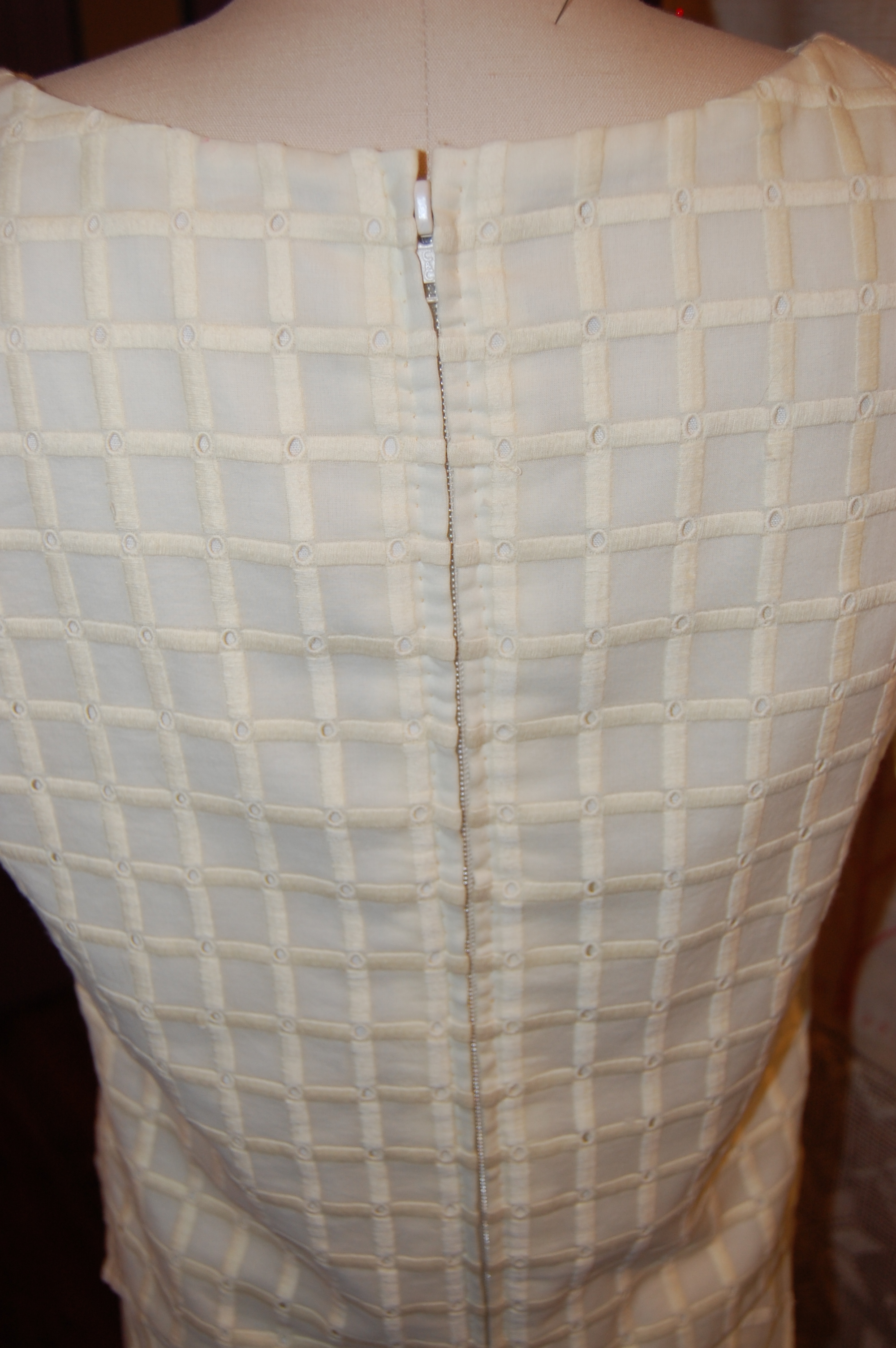
Mellow YellowIt all started about a year ago when I saw this fabric – called Devonshire Cream Geometric Cotton Eyelet Batiste on the Britex Fabrics website. I sent off for a swatch and then ordered enough for a “blouse” although at the time, I wasn’t so sure what kind of a blouse it would be. I knew I would want sleeves in it. While the body of the blouse would need to be lined, the sleeves could be unlined to show off the gauzy design in the eyelet.

Eyelet overblouse - fabric

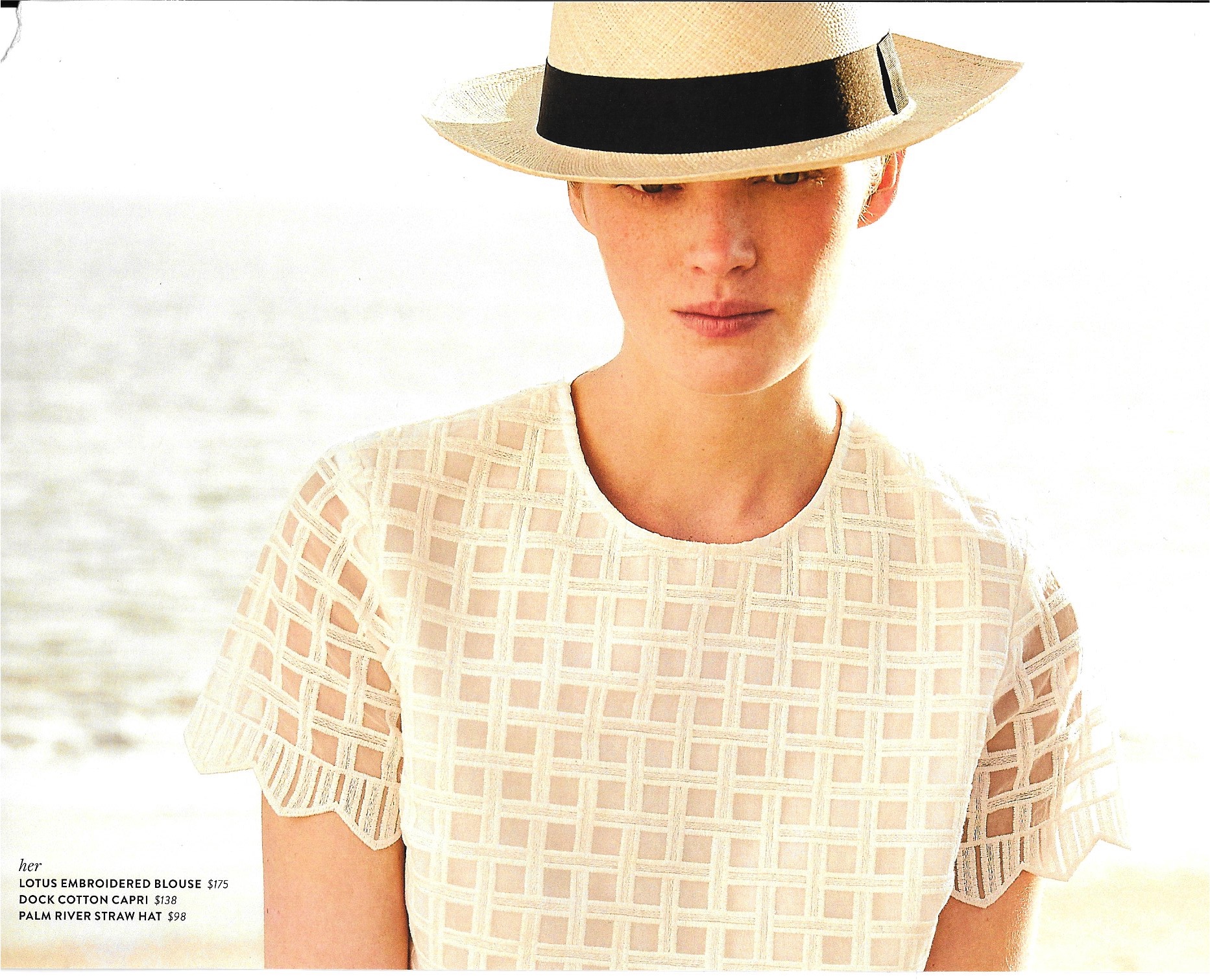
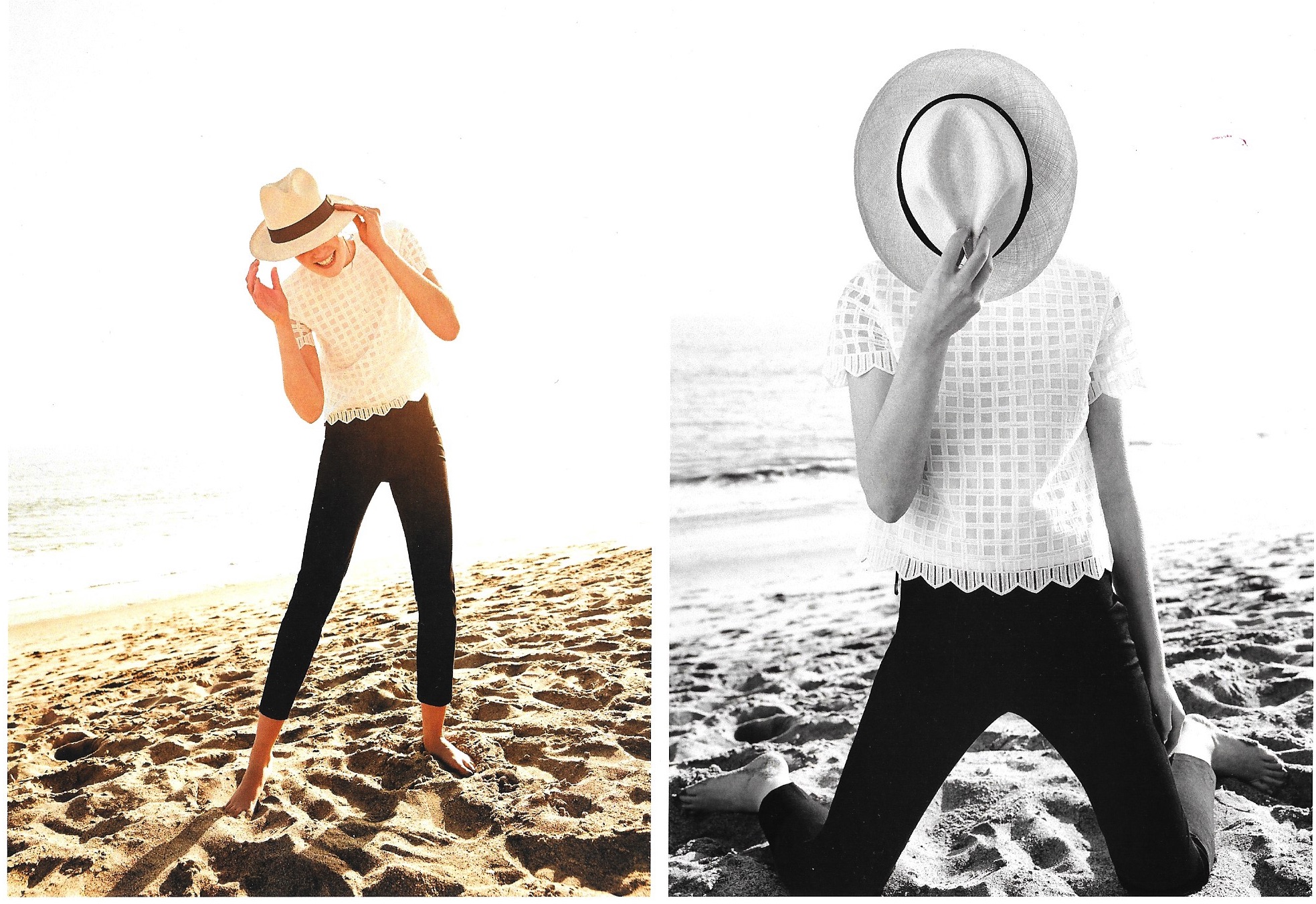
Inspiration finally struck a short few weeks ago when I got a small catalogue from J McLaughlin clothing company. Pictured in it was this “Lotus Blouse”:

Eyelet overblouse - JMcL #2-2

Eyelet overblouse - JMcL #2-3

As soon as I saw the “square” design in the fabric, I thought of my eyelet – and then it did not take long for me to decide to make my own version of that blouse. The construction details? Well, I knew I would have to make those up as I went along. I started with the pattern shown above, a classic early 1960s short overblouse that zipped up the back. What could be better? It really didn’t matter that the neckline would be changed, sleeves added, inches added to the length – the basics were there and so I made a muslin/toile.

I cut an underlining for the body of the blouse from a lightweight linen/cotton blend that I always keep on hand. I marked the seam lines of that underlining with waxed tracing paper and then used it as my “pattern” for the eyelet, which allowed me to make sure that all the lines and corners of the eyelet matched across seams. I hand basted the underlining and the eyelet together which made machine sewing the darts and seams very precise.

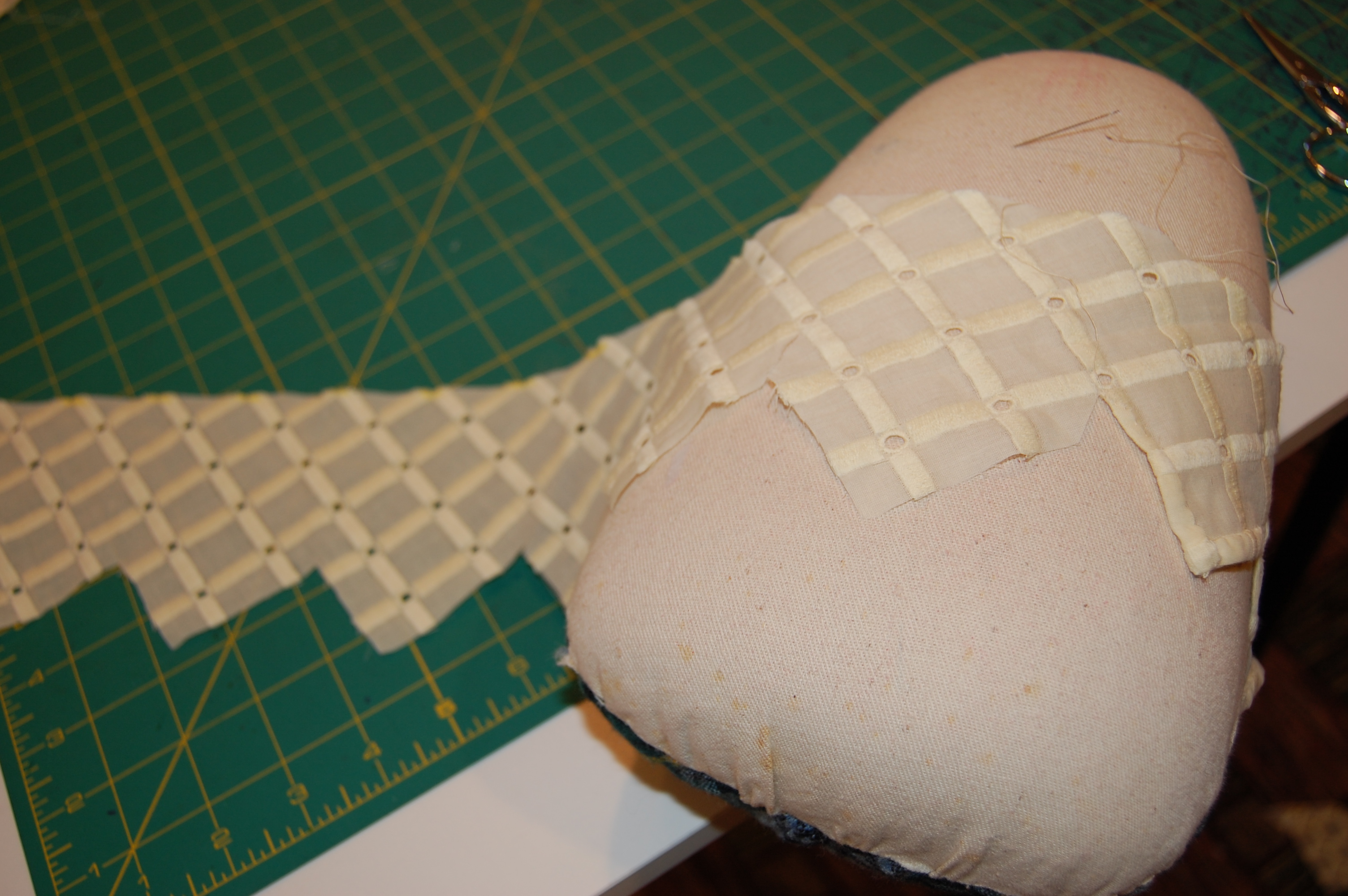
In order to put a sawtooth edge on the sleeves and the bottom of the blouse, I knew I would have to cut fabric on the bias. But first I had to decide how deep to make this self-trim. I did some experimenting to figure that out:

Should it be this narrow?

Should it be this narrow?

Or would a wider trim be   better?

Or would a wider trim be better?

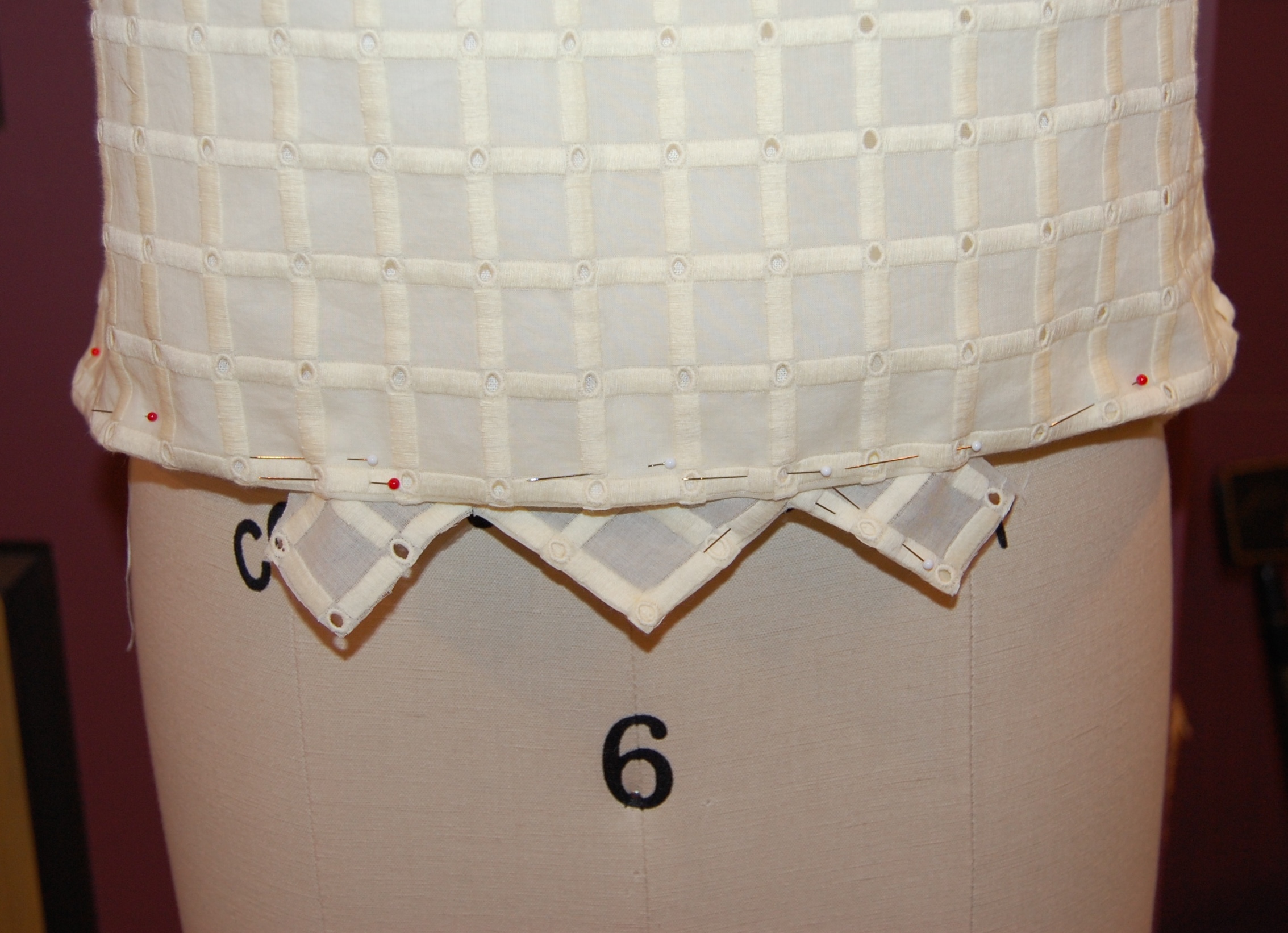
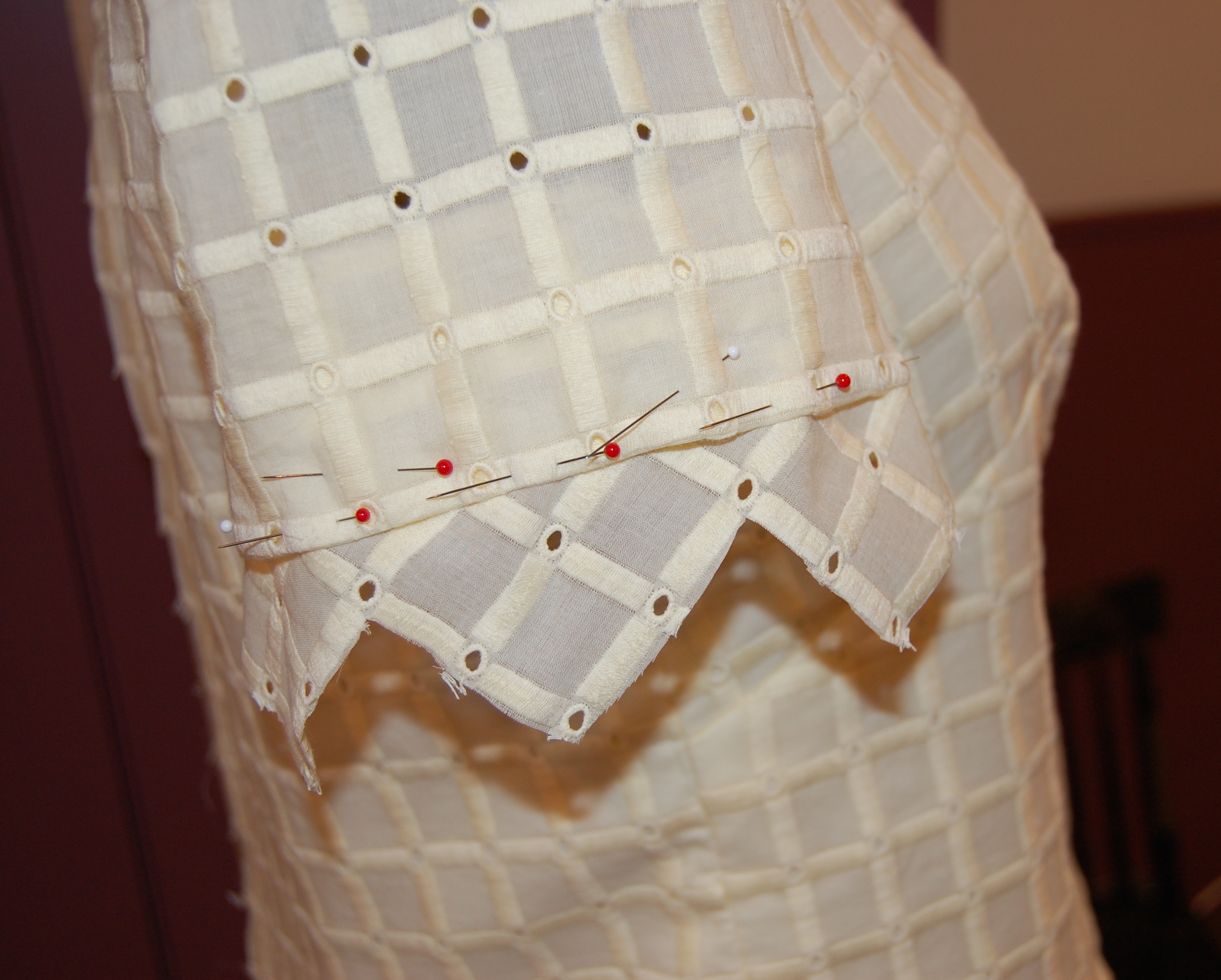
I decided the wider trim was necessary to make the proper impact.  Here it is pinned onto one sleeve.

I decided the wider trim was necessary to make the proper impact. Here is a sample of it pinned onto one sleeve.

Once I decided the proper width of the trim, I set about hemming it by hand.  Here is a photo of that “hemming” process.

On the right you can see one "peak" already stitched.

On the right you can see one “peak” already stitched.

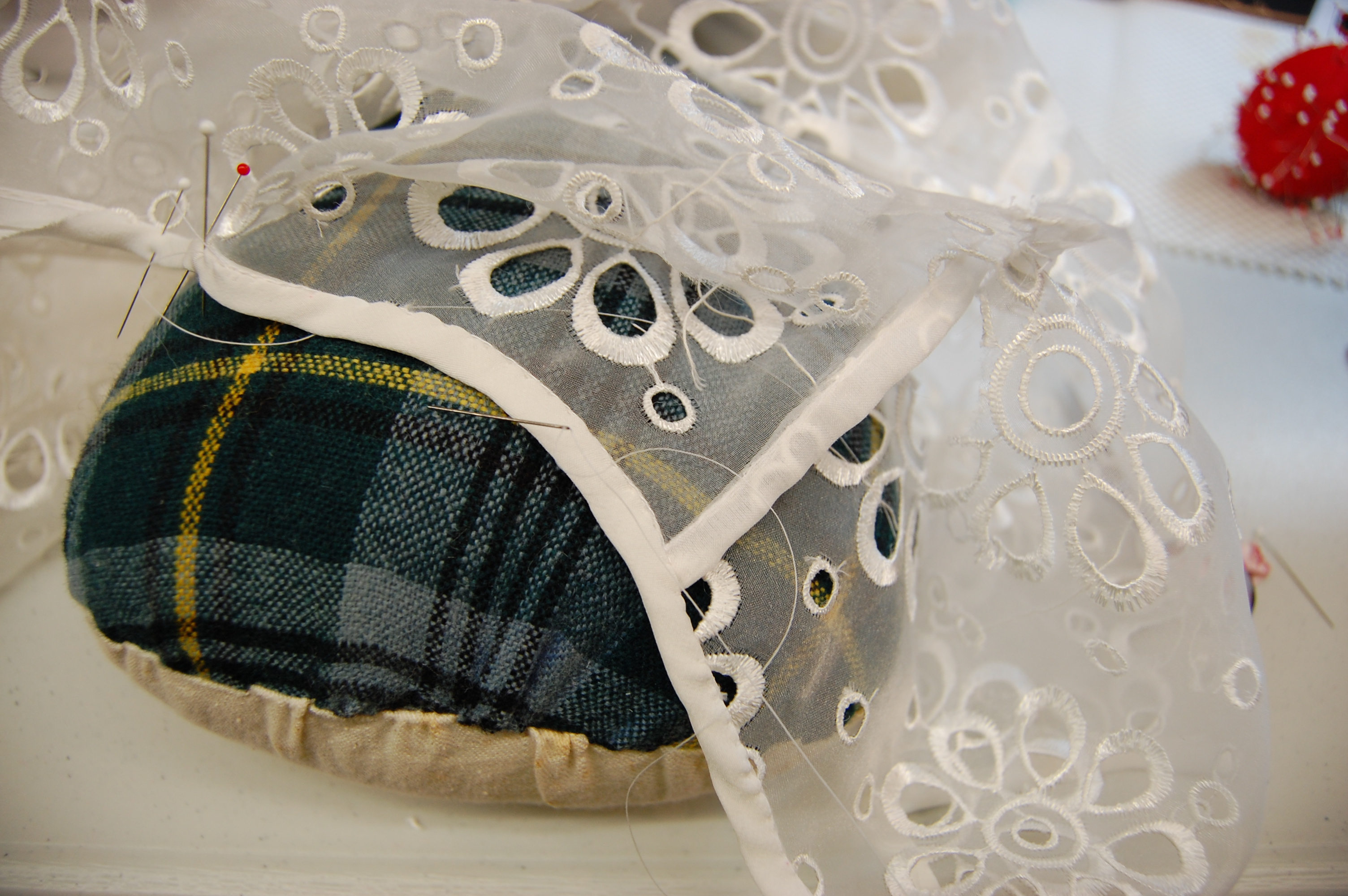
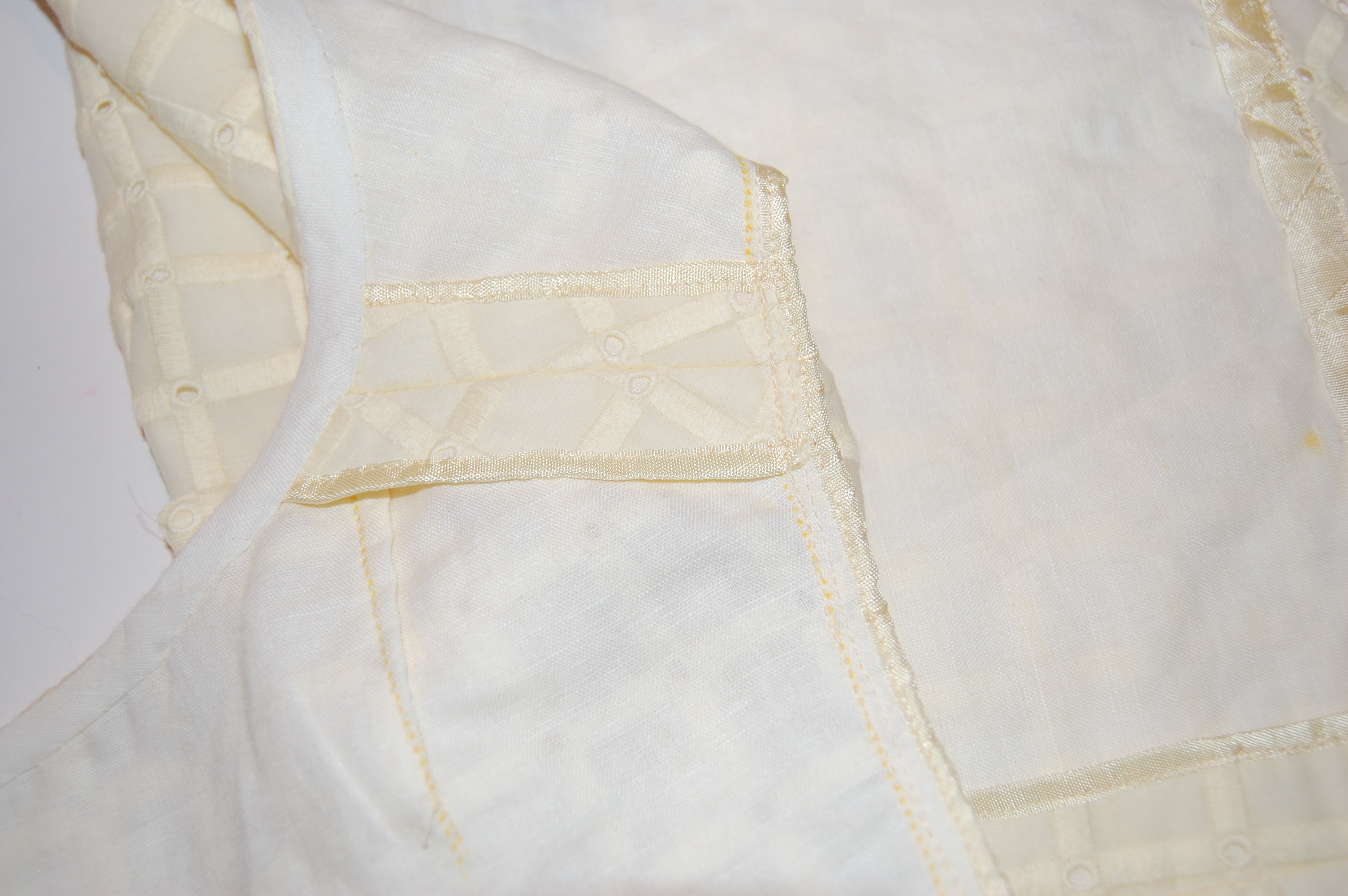
Having the trim cut on the bias gave me flexibility in attaching it to the sleeve and bottom edges. Then finishing the inside raw edges provided its own challenge. I had already used Hug Snug rayon tape to finish the interior seams. The soft, non-bulky nature of this wonder tape gave me the idea to use it for finishing the armscyes and the interior sleeve edges.

I made a bias tape out of the underlings fabric to bind the neck edge.  Seam edges are encased in Hug Snug.

I made a bias tape out of the underling fabric to bind the neck edge. Seam edges are encased in Hug Snug. Click on the photo to see more detail.

The actual hem on the blouse presented me with three edges (the fashion fabric, the underlining, and the bias trim) to control and hold together. I used Hug Snug again, this time flat and sewn with a catchstitch (a fabulous idea I just got from Lilacs and Lace blog, which I will use again and again! Thanks, Laura Mae!)

The catch stitch is done across the width of the Snug Hug tape.  It is the perfect technique for this application.

The catch stitch is done across the width of the Snug Hug tape. It is the perfect technique for this application.  Again, click on the photo for more detail.

I had some difficulty finding an 18” separating zipper that was lightweight enough for this blouse. I still think the one I finally ended up using is a bit heavy, but until I find another one, this one will have to do.

Mellow Yellow

I still need to add a hook and eye at the top!

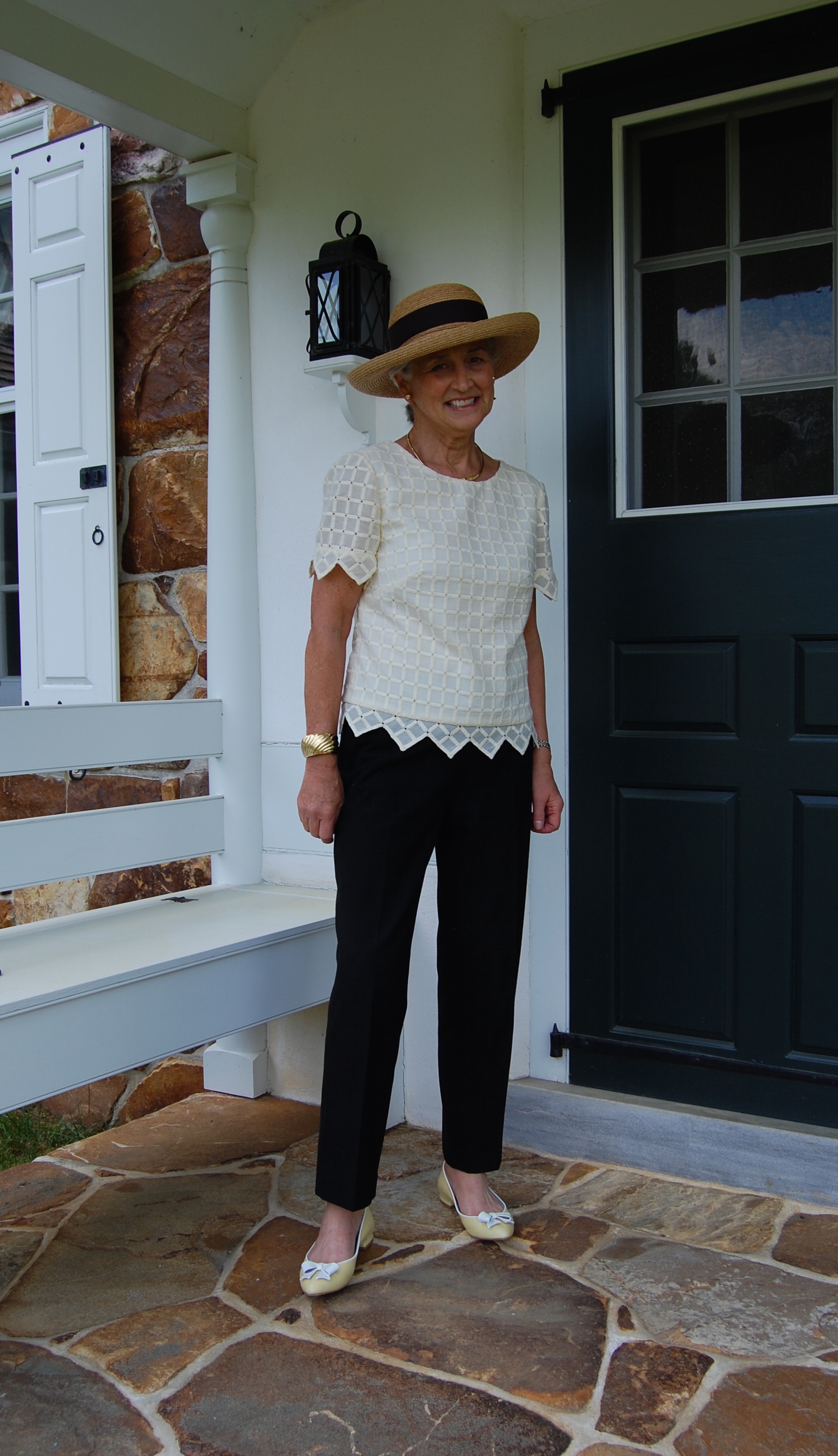
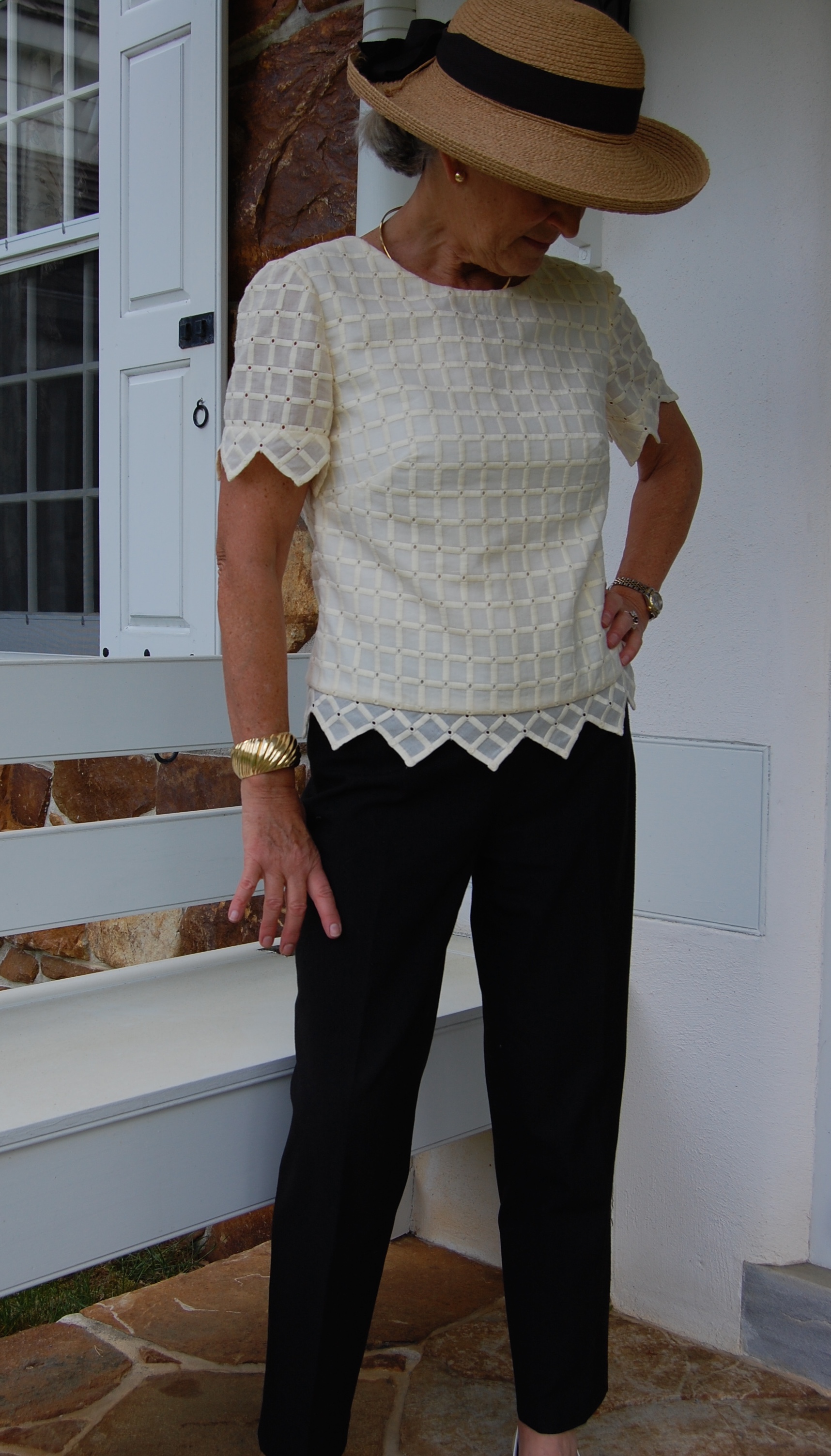
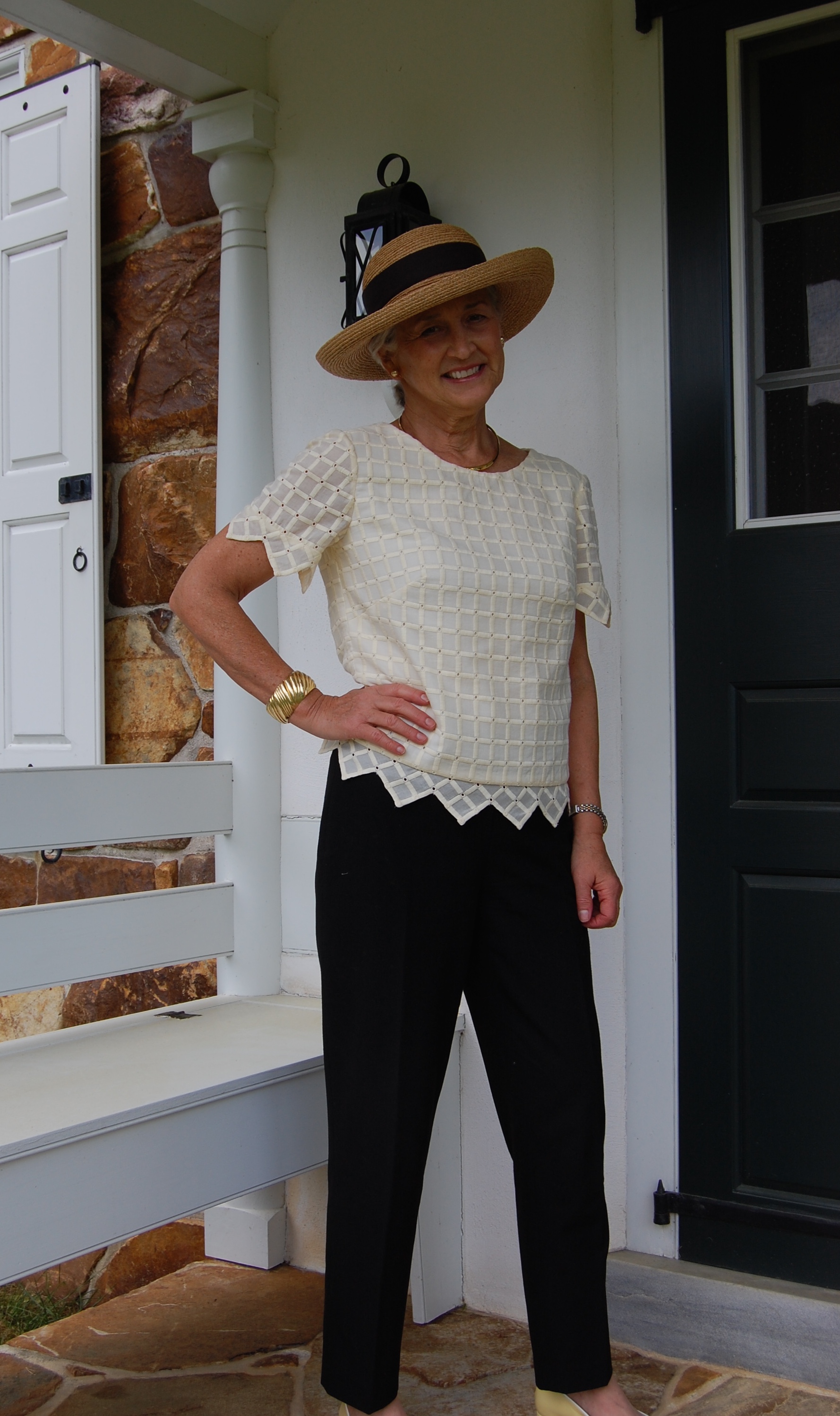
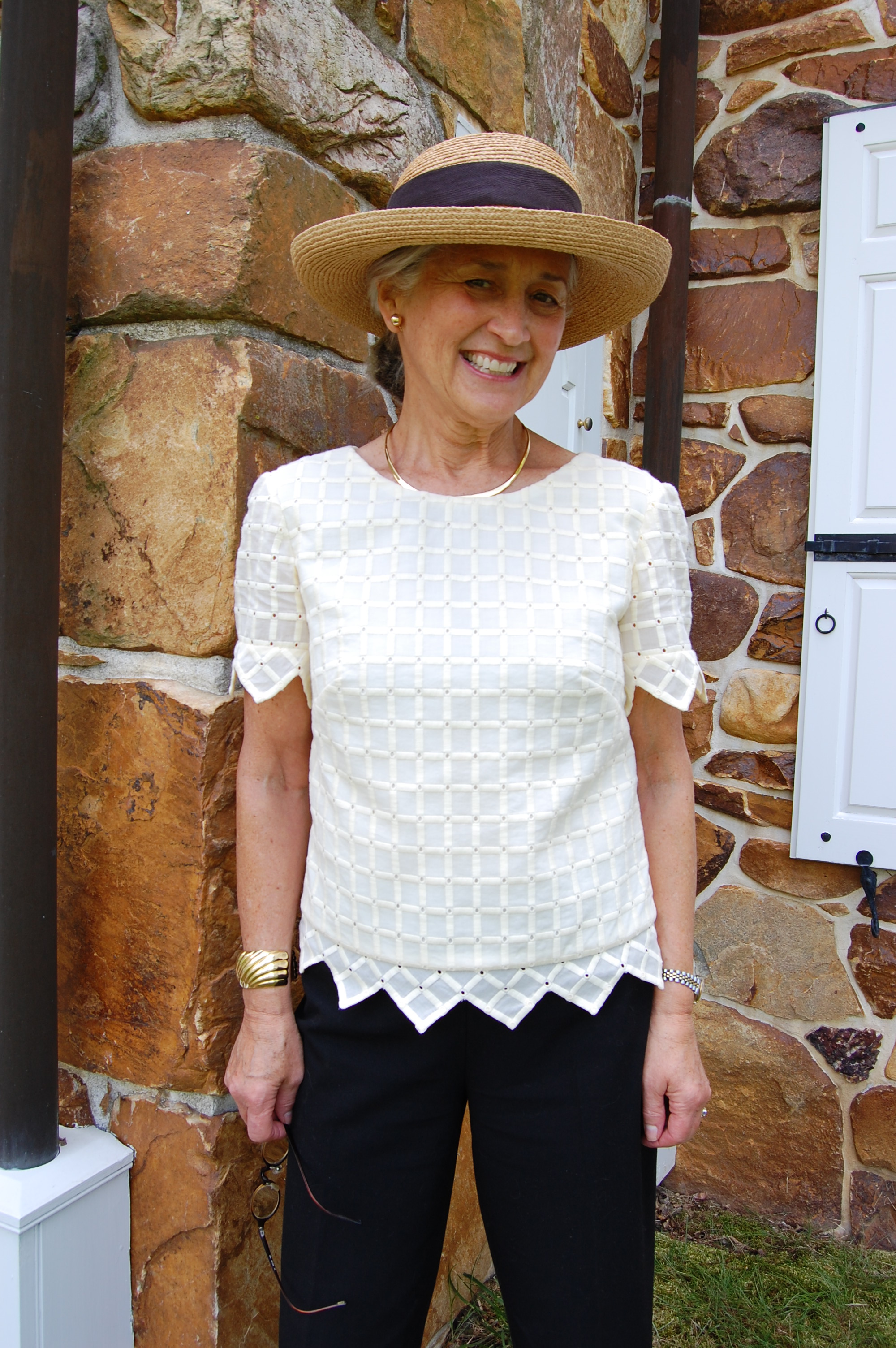
I have always loved overblouses. They are comfortable, classic, versatile, and just a little bit different of a look. I think this one fits that description well – I like it!

I could not resist styling this blouse with a hat!

I could not resist styling this blouse with a hat!

Mellow Yellow

Mellow Yellow

Mellow Yellow

Pale yellow shoes help complete the outfit!

Pale yellow shoes help complete the outfit!

After Mellow Yellow, where do I go? My next project is anything but mellow – or yellow, for that matter.  June will find me thinking – and making – fancy, but not frilly. Details soon . . .

35 Comments

Filed under Blouses, Eyelet, Mid-Century style, Uncategorized, underlinings, vintage Vogue patterns from the 1960s

The Evolution of a Suit Dress, Part 1

“Suit dress – Used in 1960s to refer to a jacket and dress ensemble that resembled a tailored suit.”   (The Fairchild Dictionary of Fashion, Third edition; Fairchild Publications, Inc., New York, New York, 2010)

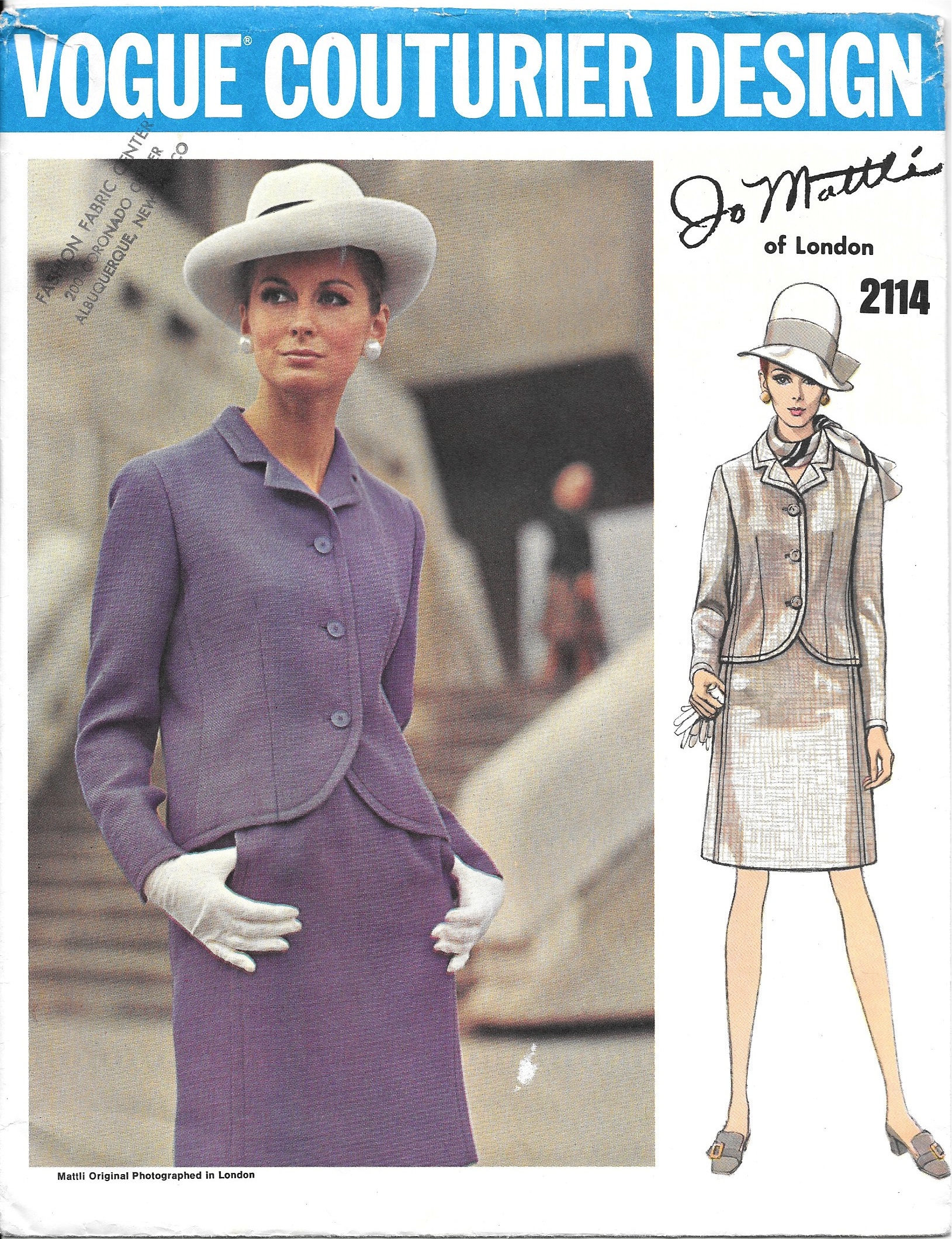
Although the inspiration for my current project does not have its beginnings in the 1960s, it is certainly influenced by that era. The actual beginning was about 1974 or ‘75, although I did not know it then. That was when I first laid my eyes upon this Jo Mattli Designer pattern from Vogue:

Dress Suit - front of pattern envelope

I loved the tailored, but feminine, look of the jacket, with its high, notched collar and its sleeves with gracefully curved slits. (I was less enamored with the style of the skirt, but skirts can easily be substituted, of course.)

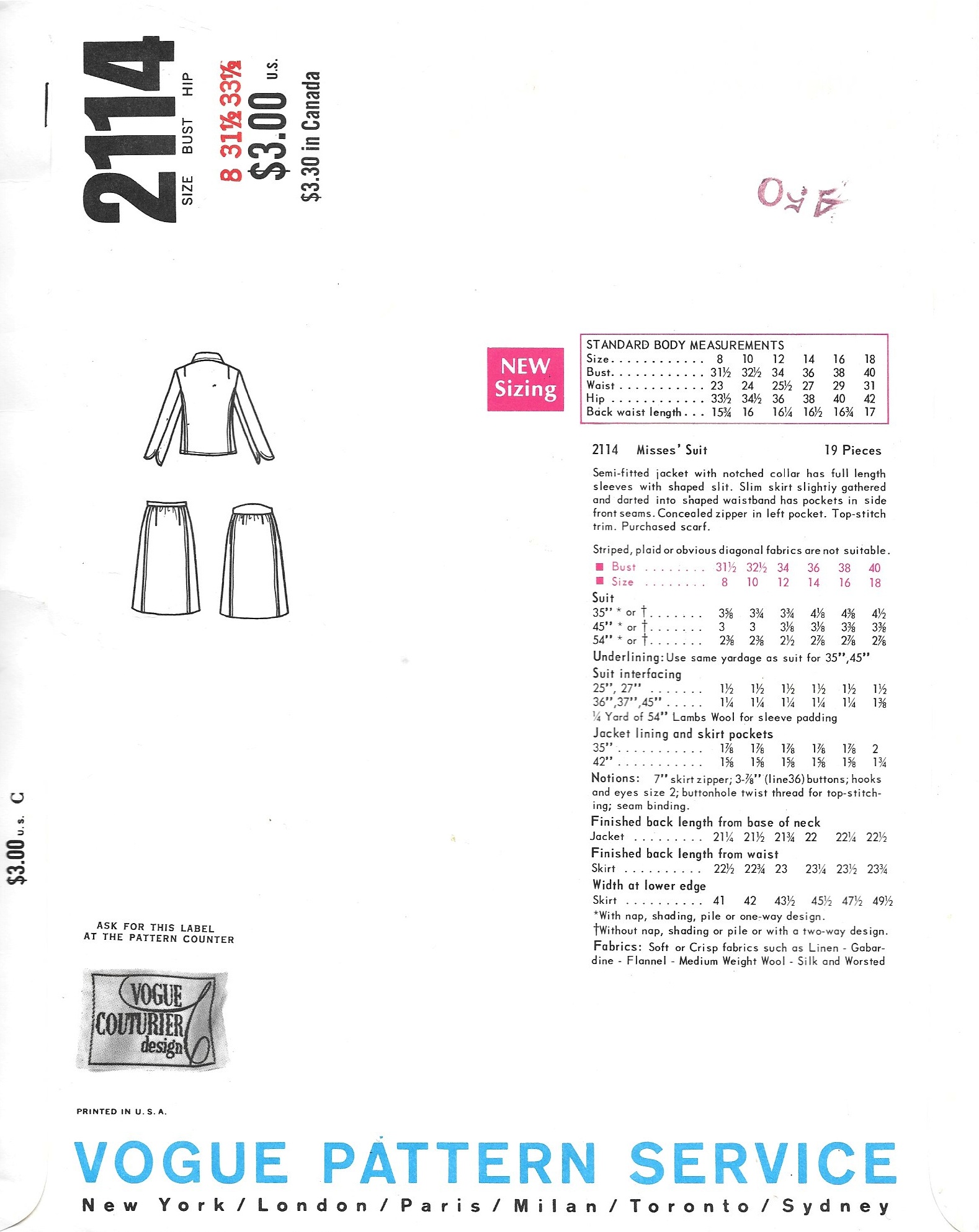
This diagram of the jacket  back better shows the interesting treatment to the cuff edges of the sleeves.

This diagram of the jacket back better shows the interesting treatment to the cuff edges of the sleeves.  Click on the picture to see a close-up view.

I admired this pattern on a regular basis while it was listed for sale in the Vogue Catalogue at my local fabric store, but in the end I didn’t buy it. That hefty $3.00 purchase price, and not knowing for sure that I would actually end up making this outfit,  kept me from its purchase. Now I am not nearly as practical – or maybe I have learned from experience. One must get these things which speak to them while they can! So when I found this pattern a couple of years ago on eBay, I knew it was time to fulfill a long-delayed dream (at a much higher price than $3.00, I might add!).

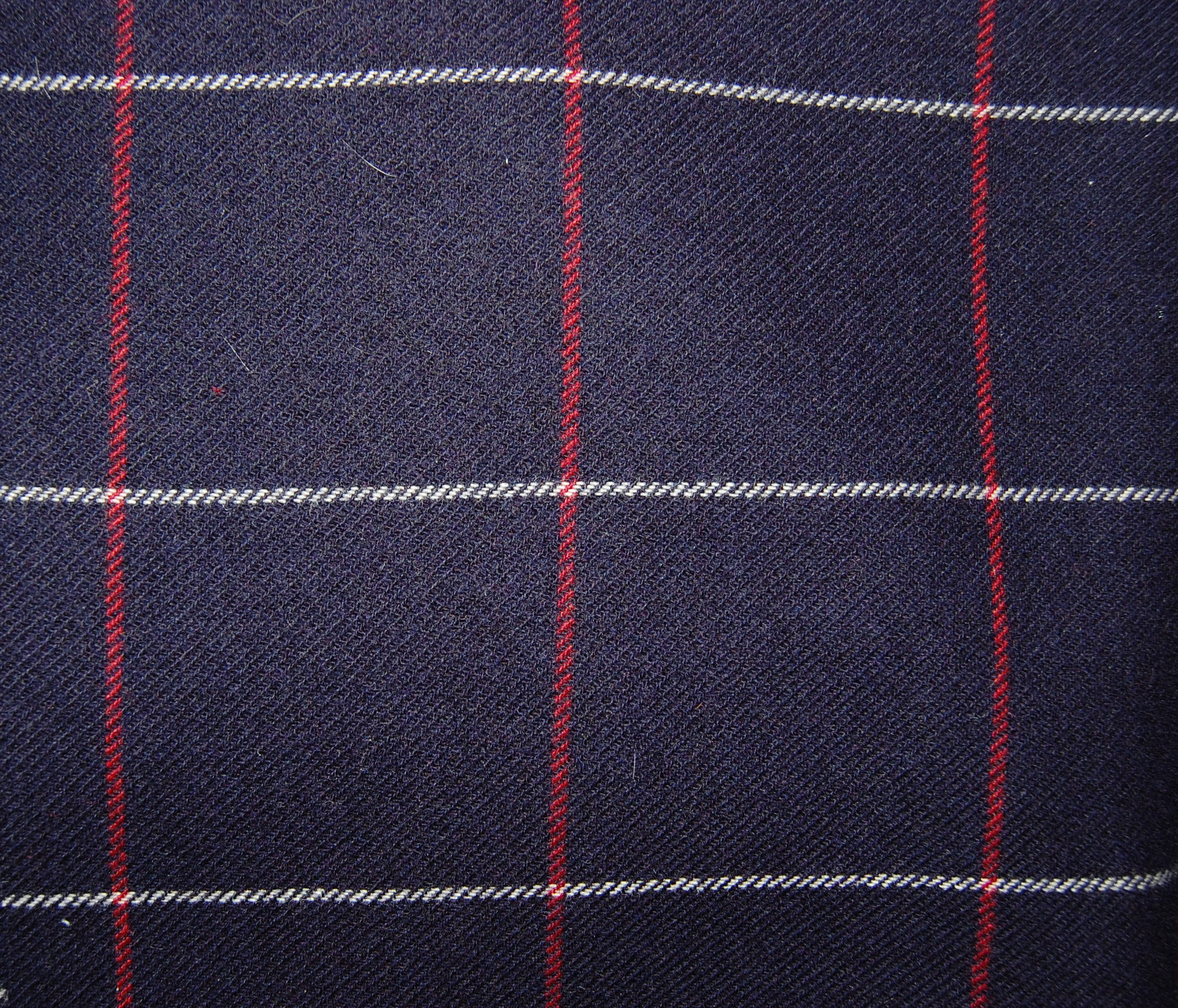
Shortly thereafter I found this navy blue, windowpane-check cashmere fabric on one of my trips to Britex Fabrics in San Francisco. I purchased what I was sure would be ample yardage to make a two-piece suit (jacket and skirt, with this Jo Mattli design in mind) and to compensate for matching the plaid. Then I set it aside, knowing that the time to start this project had to be right.

The feel of this wool is best described as like soft butter.

The feel of this wool is best described as like soft butter.

I am so glad I waited. As I have grown in my sewing and dressmaking skills (with so much credit in that arena attributed to what I have learned in classes with Susan Khalje), I came to see this fabric and this suit taking on a slightly different appearance. I knew I wanted to make the Mattli jacket, but more and more I felt that this fabric was too special to mix it up with a blouse, no matter what color or how simple that blouse might be. I began to envision the jacket paired with a sheath dress – in effect, a classic 1960s’ inspired suit dress.
But would I have enough fabric? Britex has always been very accommodating when cutting yardages for me, adding inches to compensate for the layout of plaids and designs, and simply being generous in adding a few inches to my requested amount. (I have found most fine fabric stores to be similarly inclined – Mendel Goldberg, for example, also adheres to this customer-friendly practice. Have you found this generally to be true as well?)   Well, those of you who read my blog know that a little shortage of fabric has never kept me from my intended goal. Of course, I would have enough fabric… And so I do, especially with those few extra inches courtesy of Britex added on!
Fitting the muslin (toile) for the jacket took more thought and planning than usual. Much of this is because the pattern I found on eBay was actually one size smaller than what I usually buy and wear. For some reason I find it easier to size down patterns than size them up, so I’d rather, if necessary, start with a too-large pattern than one too small. Adding length and width to the body of the jacket, fitting the sleeves (which also needed a little more circumference) into those new dimensions, and adjusting the front/neck facing, which is part of the notched collar, was quite a puzzle. It took days!
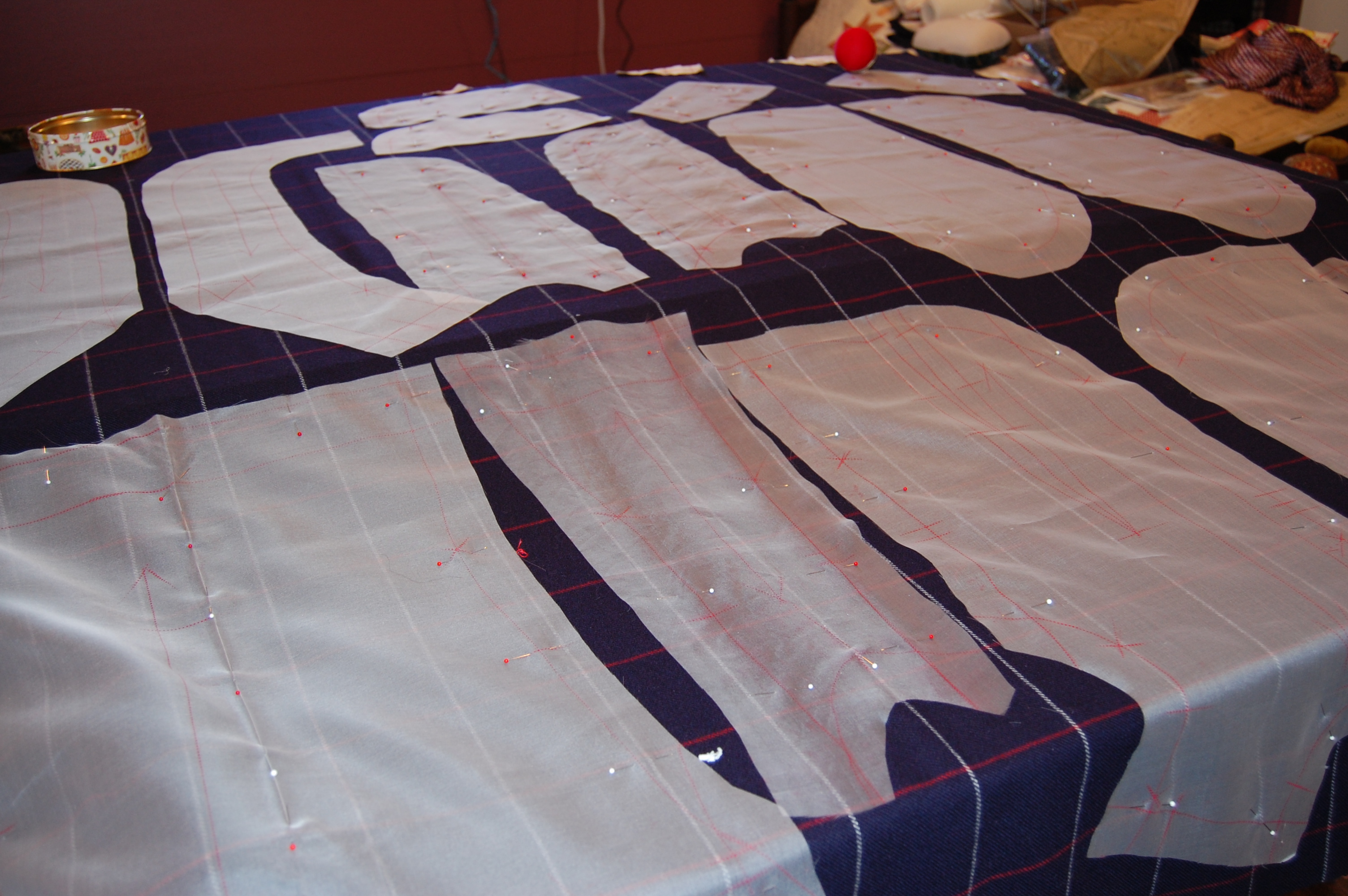
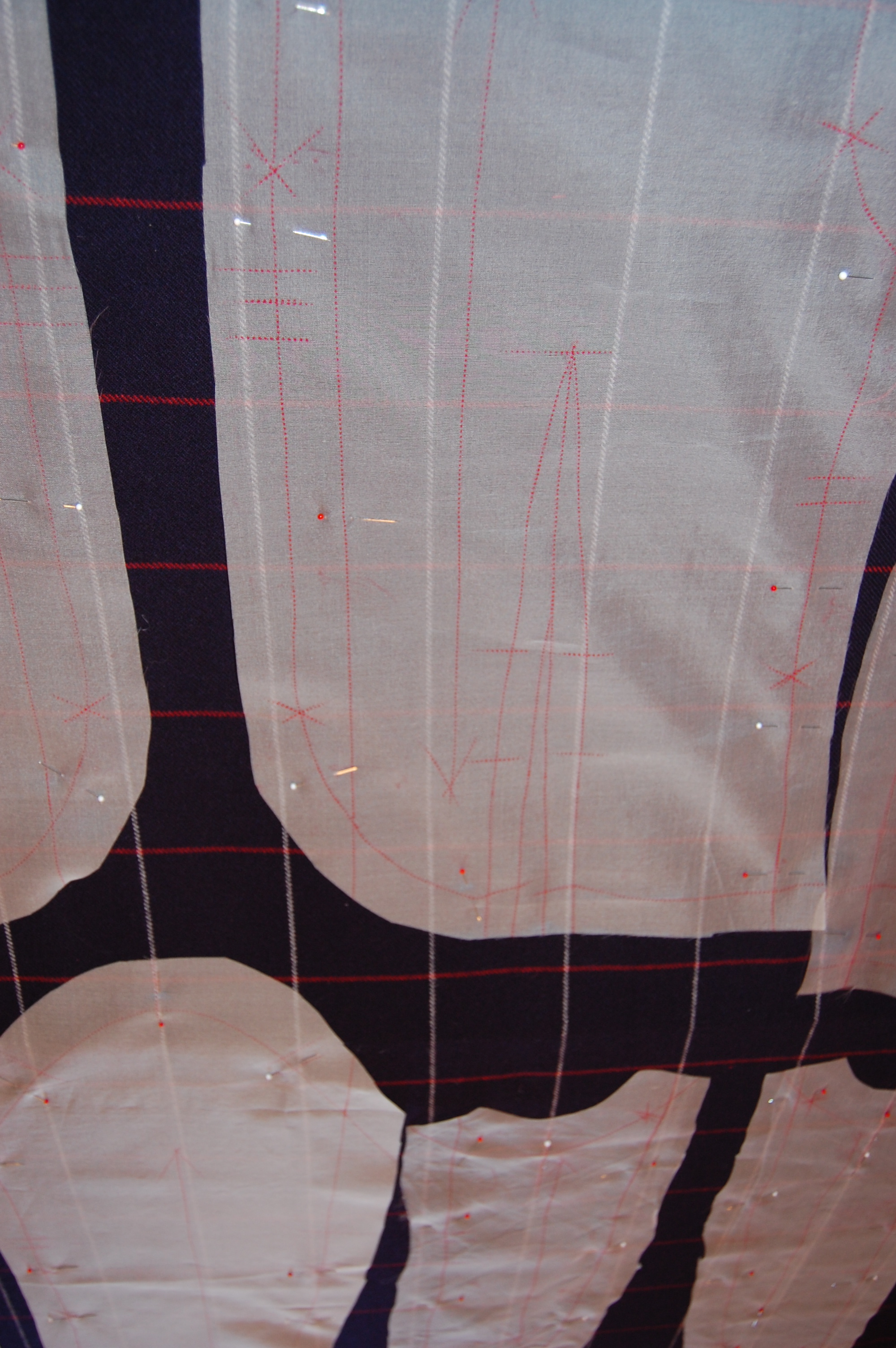
I transferred my final changes from the muslin to silk organza, and then I was in business. I love a challenge, and it’s a good thing I do! Do you know how nerve-racking it is to make sure all your plaid lines match up vertically and horizontally? Also, I knew I could lay out only the jacket pattern pieces initially. There are two reasons for this: one is that I have not yet determined which sheath dress pattern I want to use. The other is that the plaid on the dress is going to have to match – perfectly – the plaid in the jacket horizontally first, with the vertical match being as close as it can be, taking into account darts and the curves in the body of the dress. So – I have to finish the jacket before I can lay out the dress. That fortuitously gives me some more time to think about the dress, which is still taking shape in my mind!
I chose to use white silk organza rather than black, as it is much easier to see the windowpane lines through the white, and easier on the eyes, too.

I chose to use white silk organza underling rather than black, as it is much easier to see the windowpane lines through the white, and easier on the eyes, too.

This photo better shows my markings on the silk organza underlining.

This photo better shows my markings on the silk organza underlining.

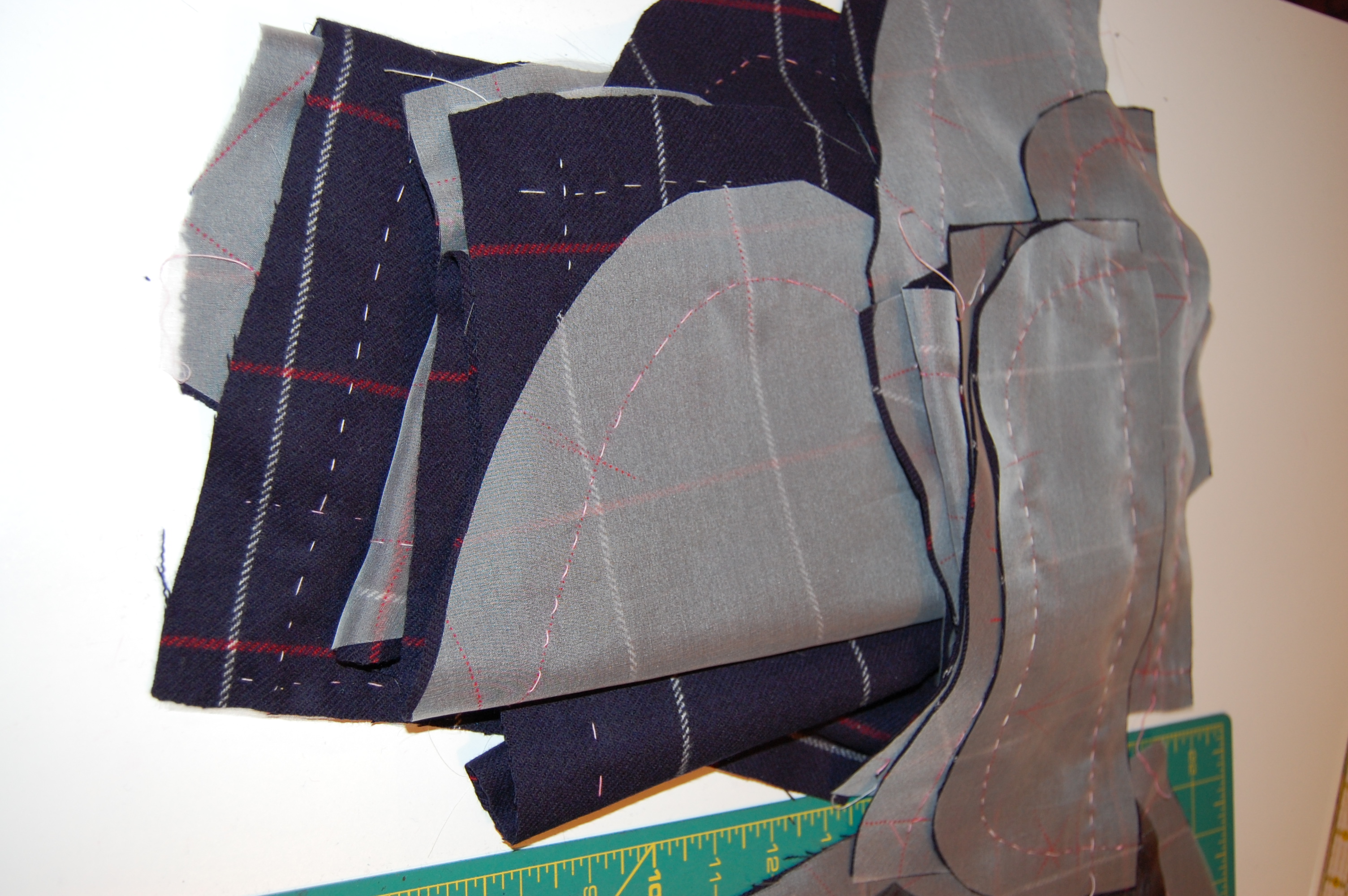
With all the silk organza underlining basted onto the wool, I am ready to sew.

A pile of prepared pieces!

A pile of prepared pieces!

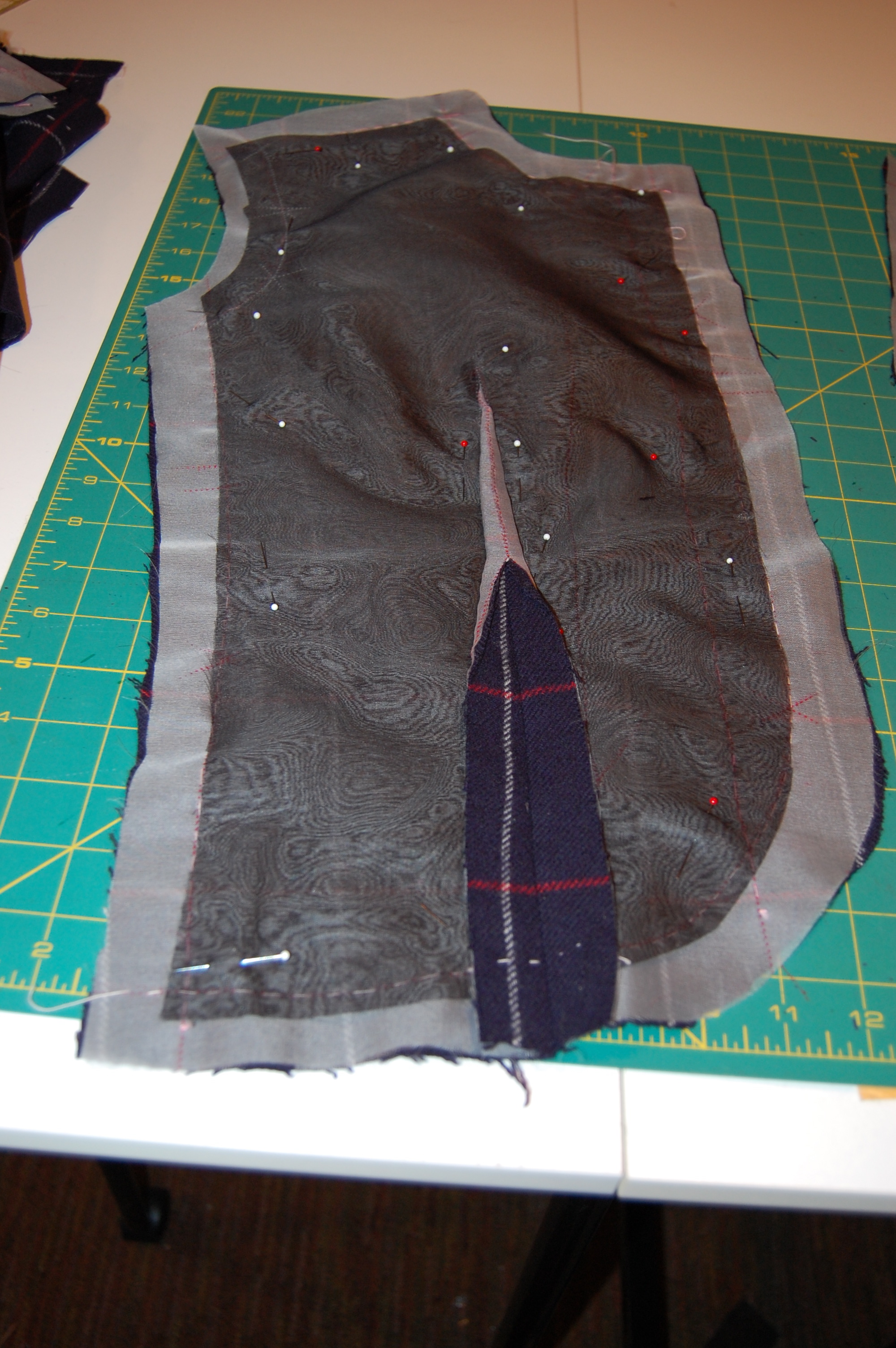
But hold the horses there, Fifty Dresses! First, there are interfacings to be pad-stitched and bound buttonholes to be made.

I am using black silk organza for the interfacing.  This is what I did on my color-blocked coat, under Susan Khalje's tutelage, and I was delighted with the results!

I am using black silk organza for the interfacing. This is what I did on my color-blocked coat, under Susan Khalje’s tutelage, and I was delighted with the results!

It is clear there is no hurrying this jacket, nor should there be. Some dreams just take a little more time.

17 Comments

Filed under couture construction, Dressmaker suits, Mid-Century style, Suit dresses, Uncategorized, vintage Vogue Designer patterns, vintage Vogue patterns from the 1970s, woolens