Category Archives: Uncategorized

The Domino Effect

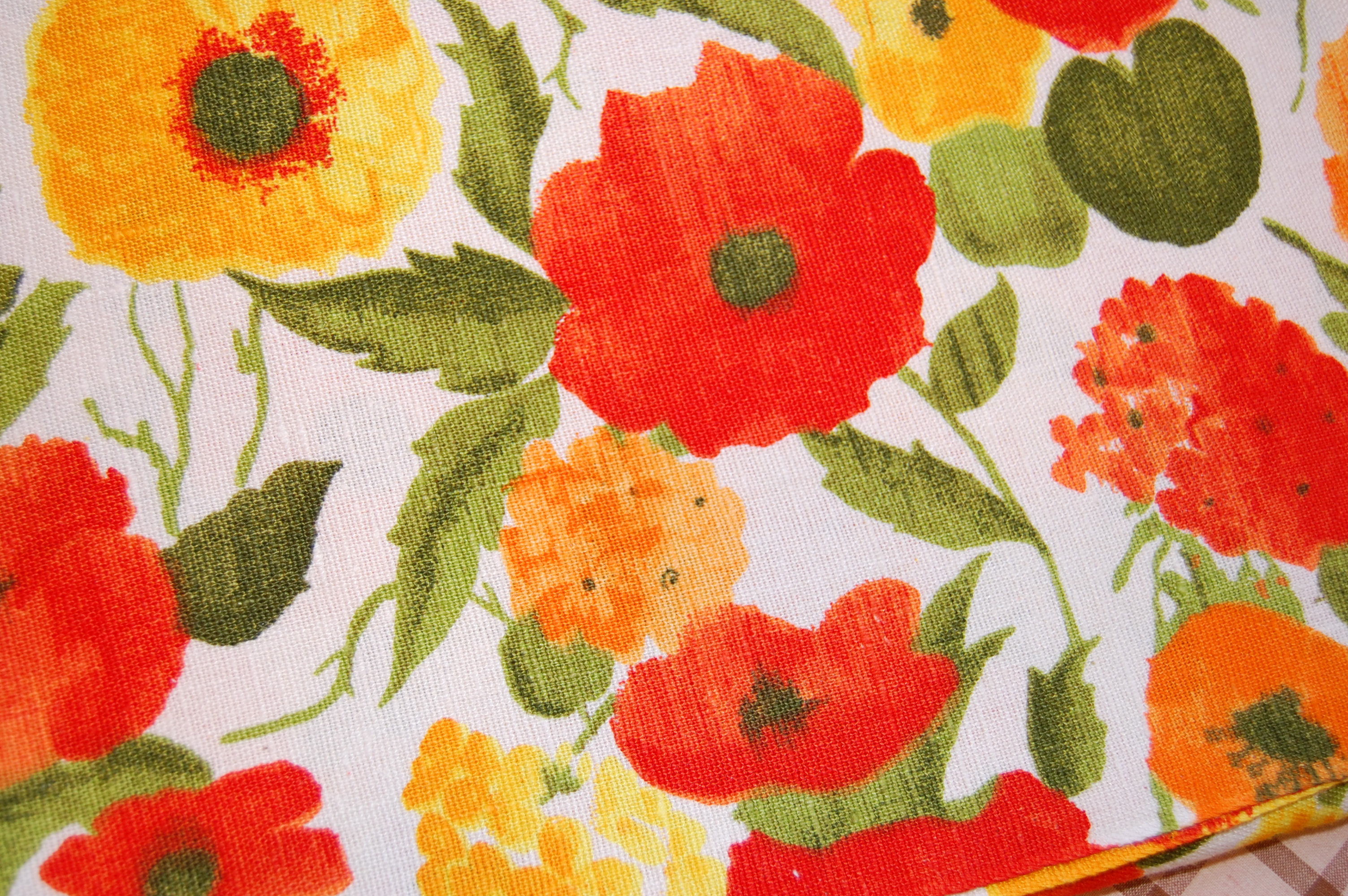
Being totally smitten with this bold floral linen, purchased within the past year, I have had my heart set on making it into a day dress this Summer.
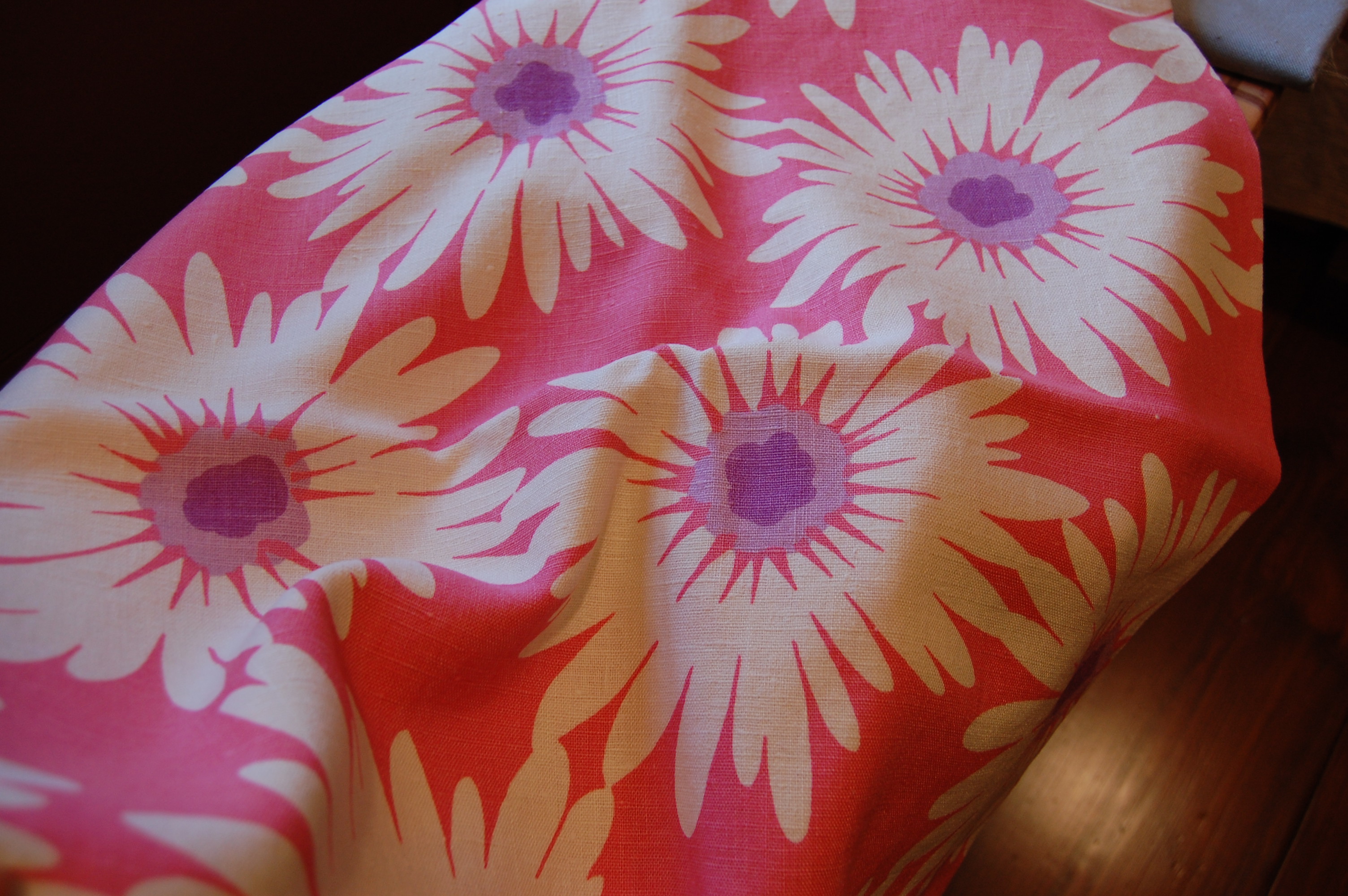
Big, bright daisies with lavender centers.

Big, bright daisies with lavender centers.

Not long after I purchased it, this small article on “Signs of Spring 2015 On New York Runways” appeared in the September 10, 2014 Wall Street Journal.
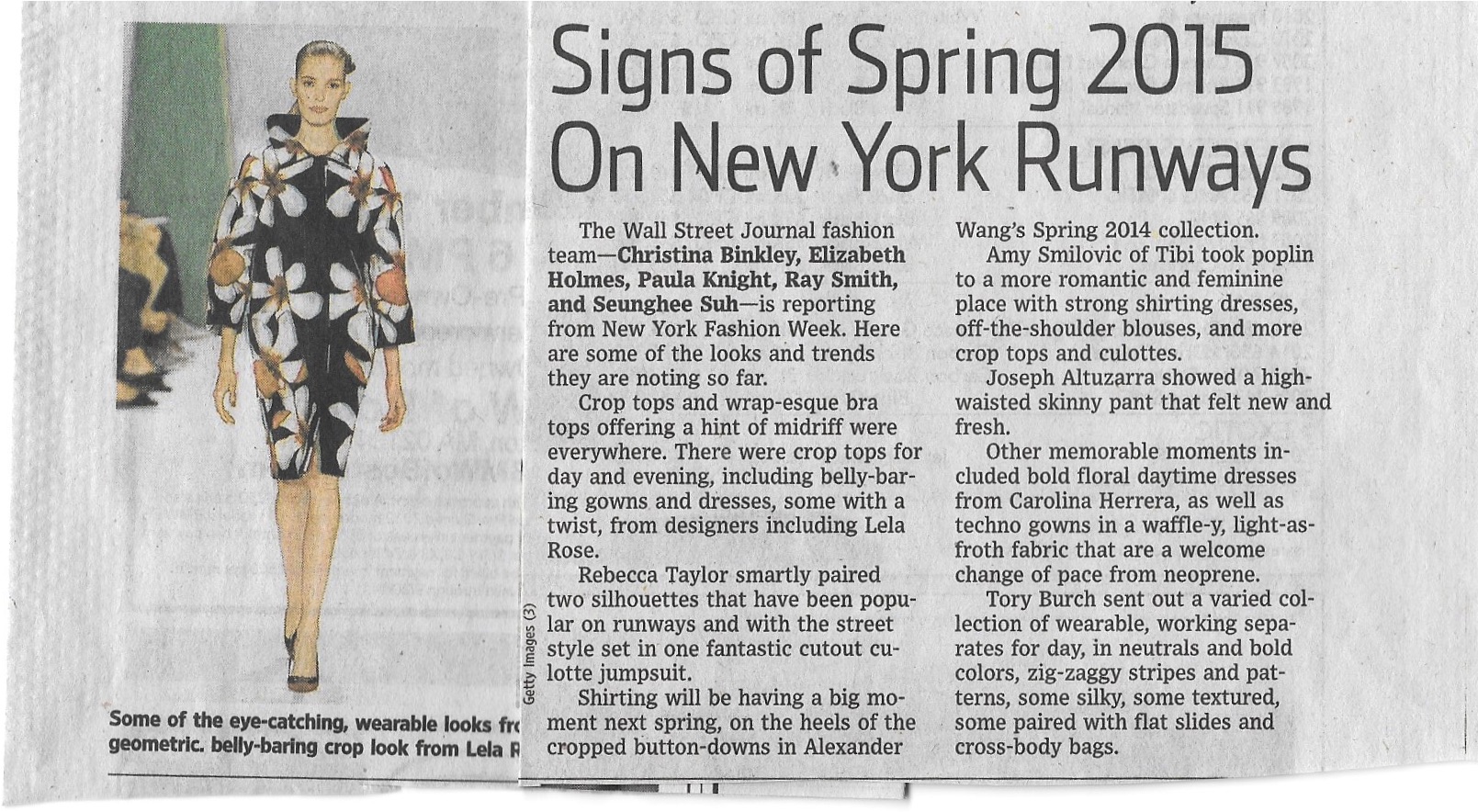
"Memorable moments included bold floral daytime dresses from Carolina Herrara..."

“Memorable moments included bold floral daytime dresses from Carolina Herrera…”

And then in November of 2014, more of Carolina Herrera’s Spring/Resort collection for 2015 was featured in Town & Country magazine.
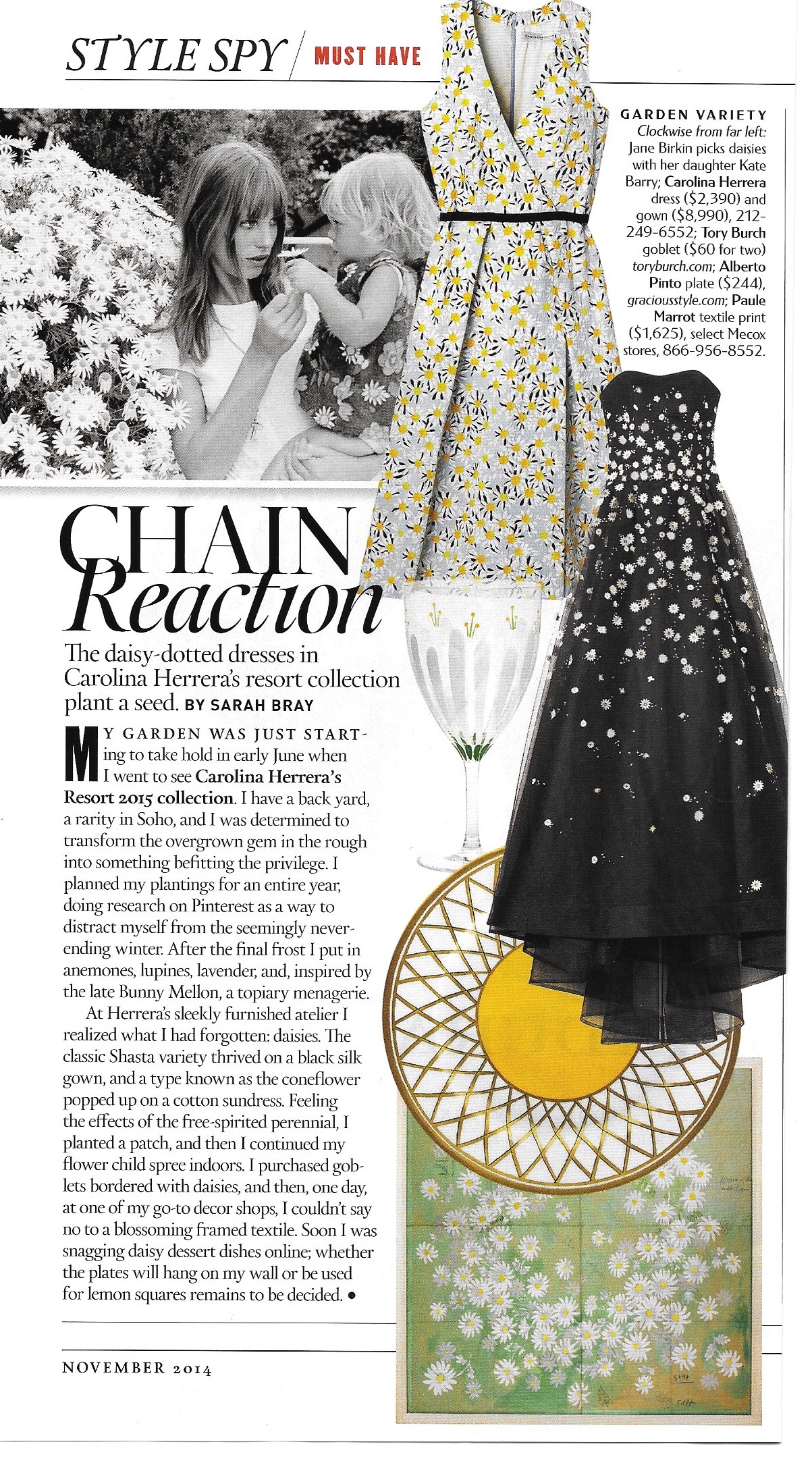
Perennial daises on two lovely Carolina Herrera dresses.

Perennial daises on two lovely Carolina Herrera dresses.

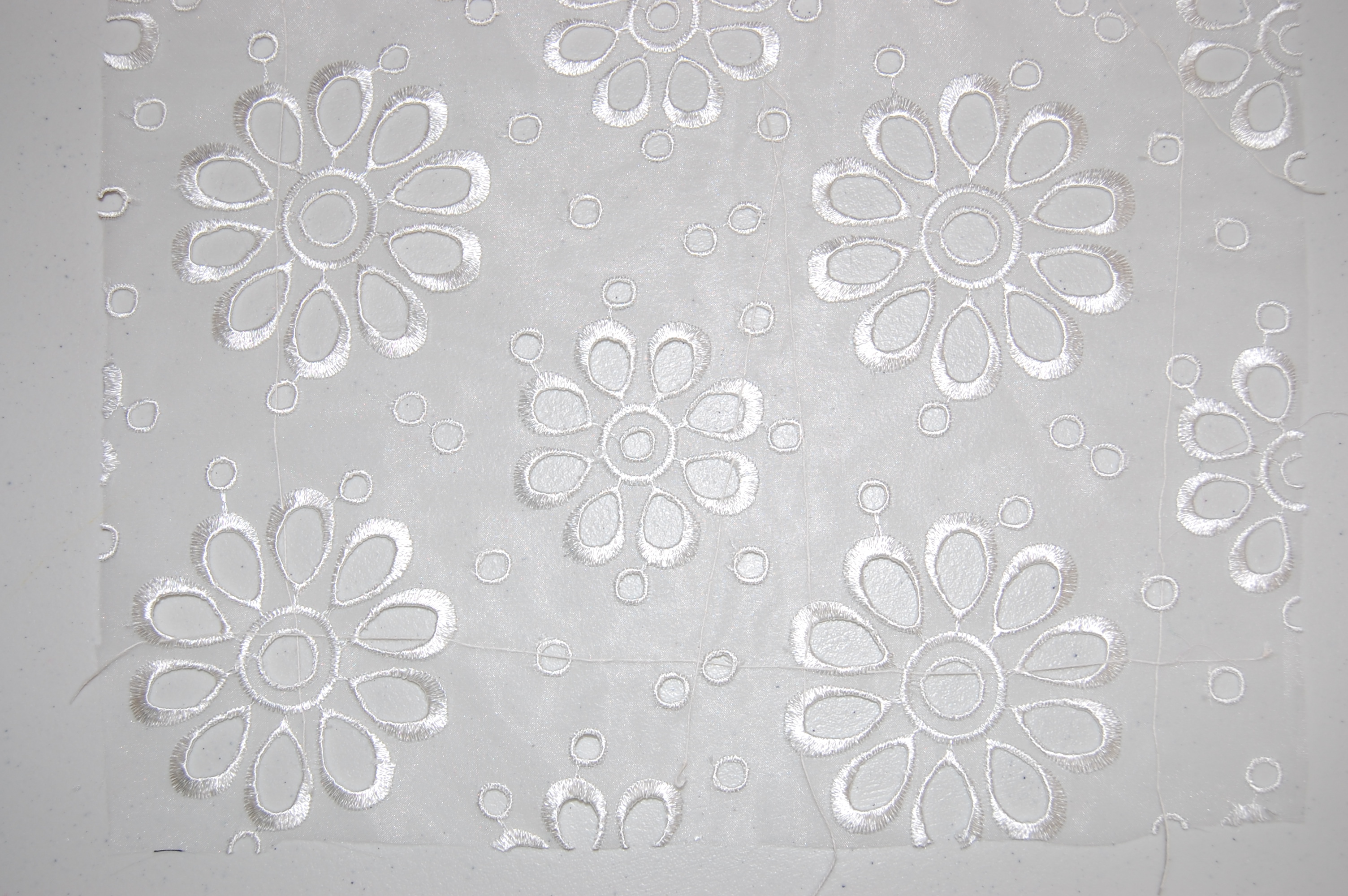
It seems this vintage Moygashel linen from the late 1960s, with its bold daisy design is very much in vogue currently, both for its size and its floral motif. (The bodice of my recent fancy dress also featured a “daisy” motif in the silk embroidered organza):
The Allure of silk, pt 1

Although I am of the mind that daisies are always in vogue, nevertheless, this seems like the perfect year to fashion a dress from this linen. Such a demonstrative print begs for a simply-styled dress, such as – you guessed it – a sheath dress.   The fabric will make this dress, not the pattern. How could I, I wondered, do something a little different and still keep it simple? The answer to that question began to take shape when I found a length of pale lavender Moygashel linen this past Spring. Suddenly I envisioned a V-back to a sheath dress with a rounded neck, detailed with piping made from this lavender linen.

Then it began to get complicated. With just a few inches over 3 yards of the 35” wide lavender fabric, I knew I would have to calculate carefully when I cut bias strips for the piping, if I wanted to fashion another garment out of the lavender. And of course, I do! Actually, when I looked at the lavender fabric, and paired it with any number of my other fabrics and/or dresses, it seemed the only thing to use it for was a “Spring” coat. But would I have enough fabric for both a coat and bias strips for piping?

Obviously, I would have to find a coat pattern and lay it out leaving enough space for bias strips, to see if I could manage this minor miracle. Of all my coat patterns, this Madame Gres design is the one I decided had the best chance of working, both for my limited yardage and for the pattern’s simple, uncluttered lines:
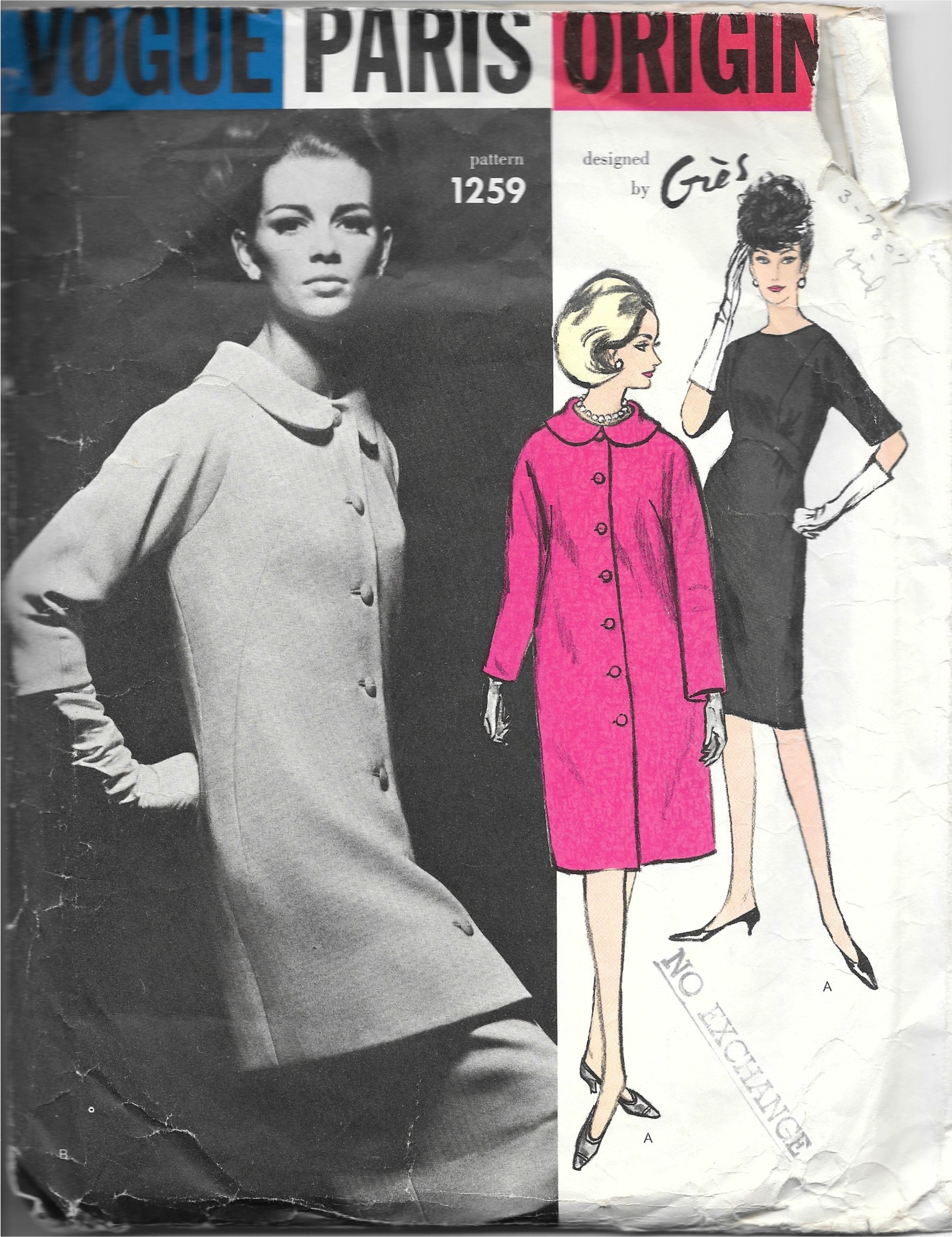
The short version of the coat is on the left.

The short version of the coat is on the left.

The fact that it is featured with below elbow length sleeves and in a shorter version – perfect for pairing with coordinating dresses – worked in my favor. The entire coat has only 5 pattern pieces: front, back, collar, undercollar, and front facing. First I positioned the tissue pattern pieces on my fabric, strewn out on the floor selvedge to selvedge. I was heartened enough by this exercise to go ahead and make a muslin, so I could have a “real” pattern to work from. All this time, the pink flowered daisy linen lay folded, awaiting her turn.

One of the most unusual features of the coat design is the front dart, which serves both as a bust dart and as a side-shaping dart. As is so often the case with these vintage patterns, the dart sewn as indicated on the pattern was too high for me. In addition, it pulled and stretched the kimono shoulder in all the wrong ways. I lowered the apex of the dart and re-sewed it, trying to preserve its curve, and suddenly it fit like a charm.
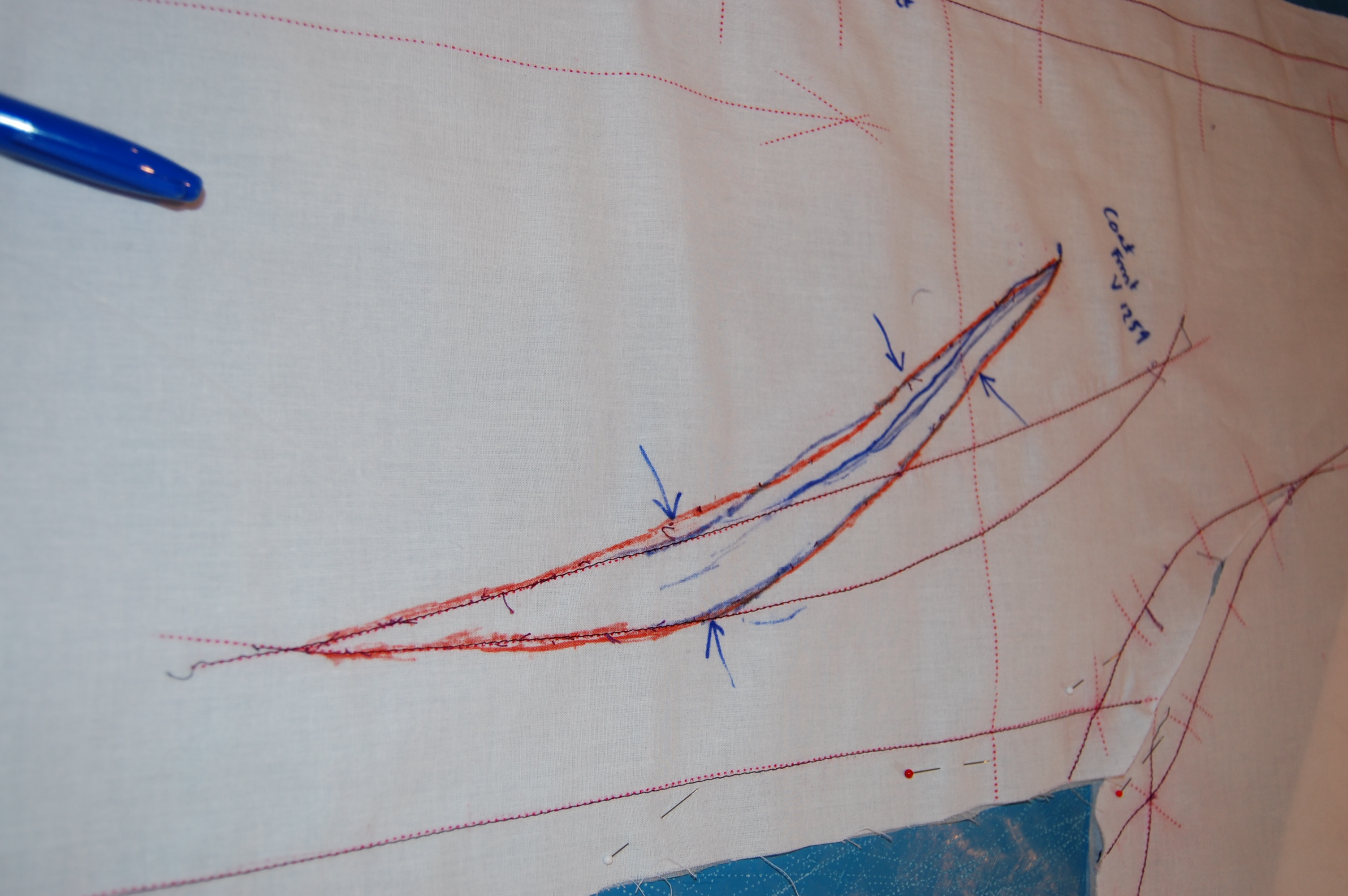
The newly drawn dart is in orange, while its original position is in red.

The newly drawn dart is in orange, while its original position is in red.

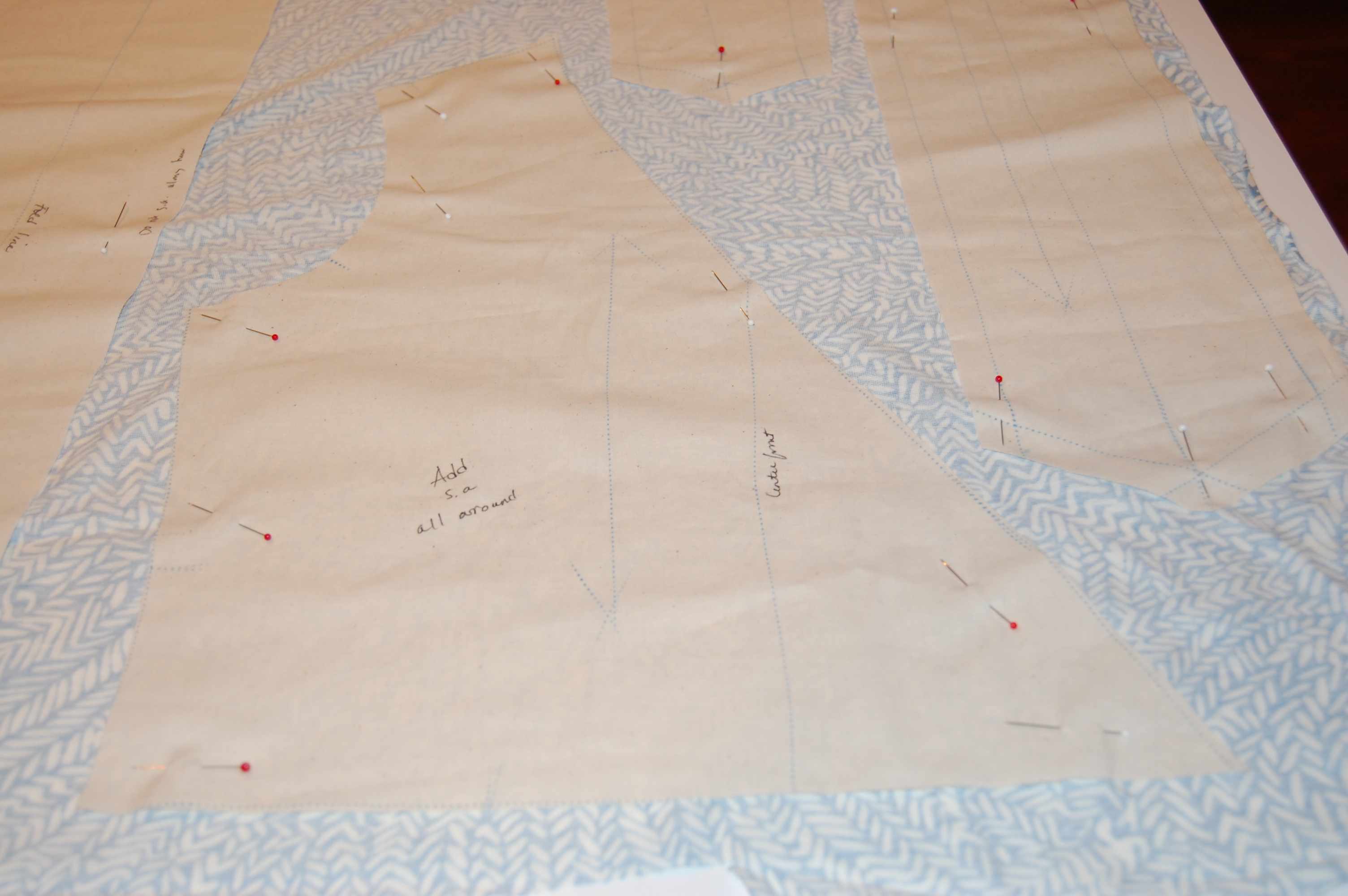
Now that I had a workable pattern, I knew I could just eke out the coat if I “pieced” the left front facing. I could live with that! And, just as important, I would have enough of the fabric to cut bias strips for piping for my daisy sheath. Whew!
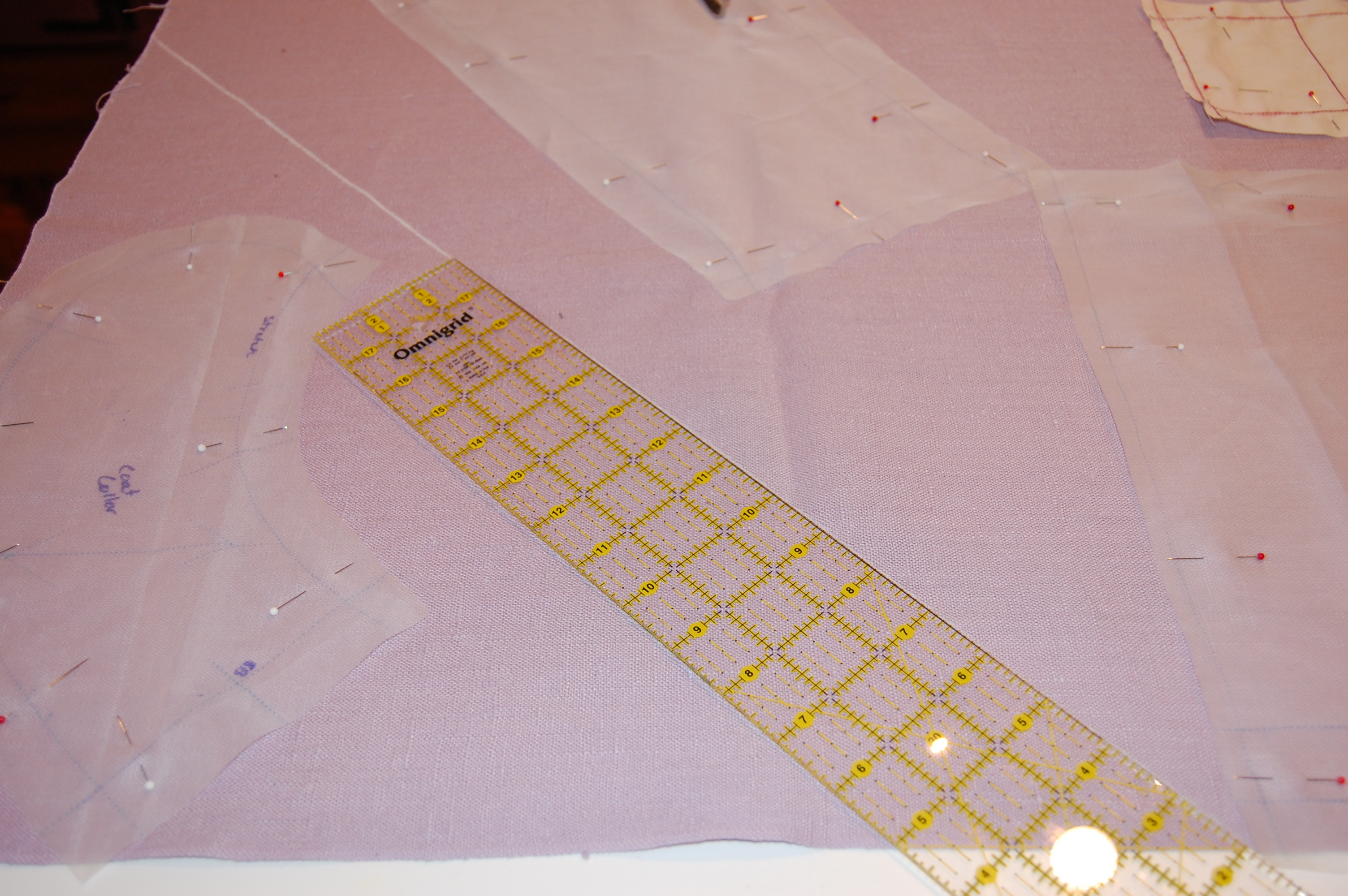
This see-through ruler helped me find a corner from which to cut the bias strips for the piping.

This see-through ruler helped me find a corner from which to cut the bias strips for the piping.

So now, the pieces for the coat, with their silk organza underlinings pinned in place, are taking their turn waiting for further attention. One project started another and now both are lined up like a circle of dominoes, ready to go down in an orderly fashion, albeit in slo-o-o-w motion.
13 Comments

Filed under kimono sleeves, Linen, Moygashel linen, piping, Uncategorized, Vintage fabric, vintage Vogue Designer patterns

Out and About in Los Angeles

One sure way to get me away from my sewing room is TRAVEL. Sometimes, however, there is a lot of sewing that happens before that travel commences. The impetus to the creation of my recent fancy dress was, indeed, a recent trip to Los Angeles, California, which was part business for my husband and pure pleasure for me. The lovely hotel where we were staying was actually in Beverly Hills, at the intersection of Wilshire Boulevard and Rodeo Drive. For those of you unfamiliar with Rodeo Drive, it is one of the most exclusive shopping areas for fashion and jewelry in the US. Although I am not much of a shopper at home – either window shopping or real shopping – it is quite a pleasure to do just that while on vacation.
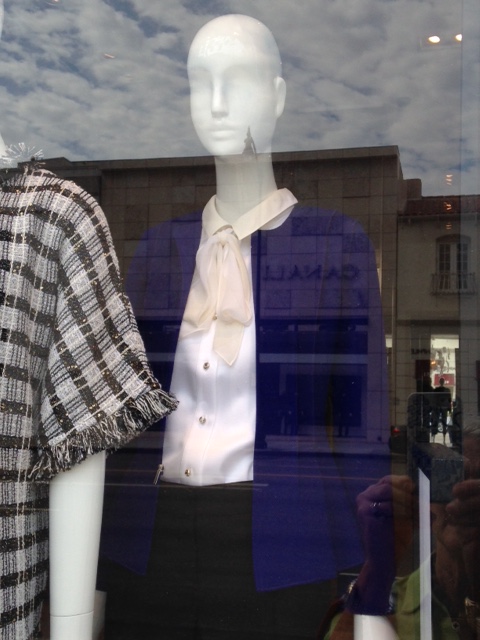
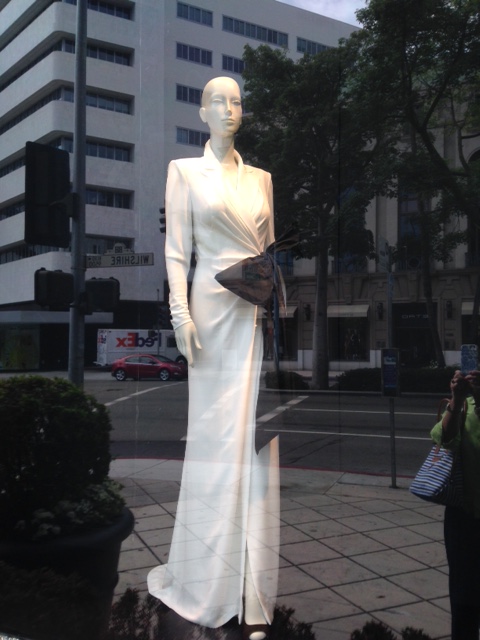
Because I sew, I probably look at fashions with quite a different eye than most people.   My interest in the current influence of mid-century fashion and the use of beautiful, fine fabrics guided my approach, as both were on full view on Rodeo Drive. The first morning while my husband was in business meetings, I went out before most stores were open and snapped a few pictures of store windows. I was delighted to see this tailored Escada gown transformed into a totally feminine look with its voluminous bow:

Escada gown

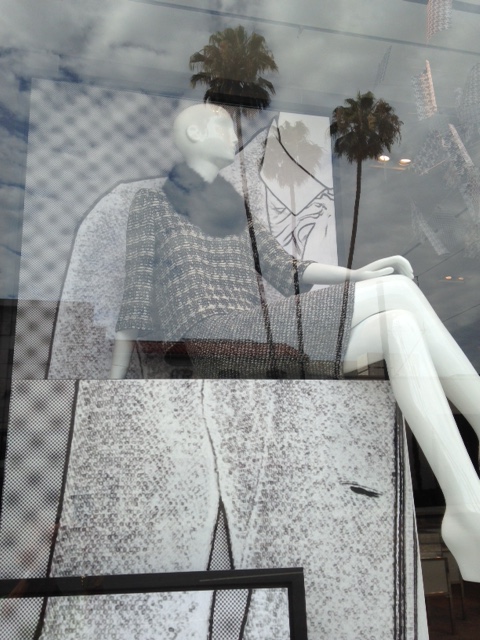
The St. John Store featured this straight skirt and overblouse (with demure fur collar), with a flavor reminiscent of the 1960s:

The reflection of palm trees in the window obscures some of the fashions.

The reflection of palm trees in the window obscures some of the fashions, but I love this understated, but sophisticated look.

And what could be more classic than this jacket and blouse with a bow, also St. John.

St John jacket and blouse

How I loved this Little Black Dress by St. John, made with lace-embellished fabric:

A front view ...

A front view …

... and a back view.  The V-back is just lovely!

… and a back view. The V-back is just lovely!

Later in the day, I was captivated by some of the fashions I saw in some of the stores, especially Dolce and Gabbana and Hermes. Unfortunately photos were not allowed, so I cannot show you the classic princess lined coats and lace dresses in Dolce and Gabbana made from fabrics which were either identical to or close relatives to some pique and lace that Mendel Goldberg carries in their store in NYC. And Hermes had a color-blocked coat that looked right out of the early 1970s.

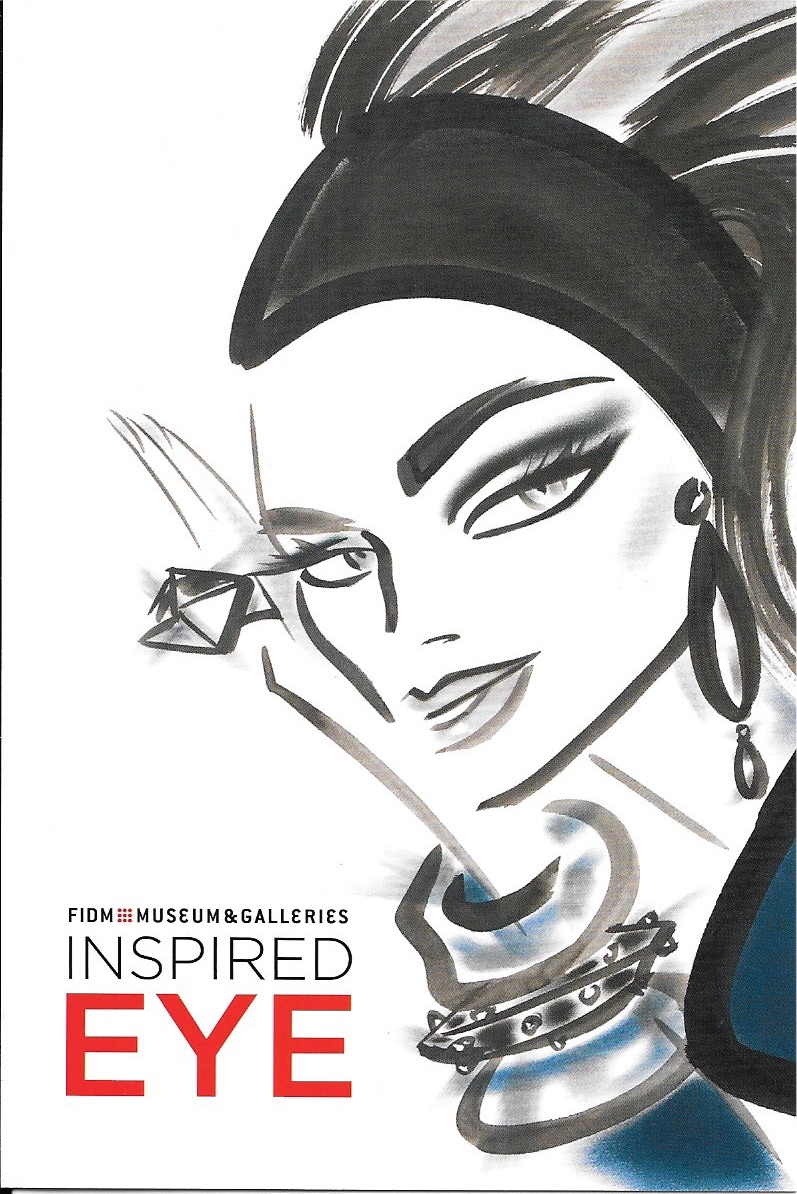
One excursion I wanted to make while we were in LA was to the museum of the Fashion Institute of Design and Marketing. I follow their blog, which regularly features items and fashion from their permanent collection, from all time periods. They have two small exhibit spaces which were currently featuring items from the Helen Larson Historic Fashion collection in one gallery and “Inspired Eye” in another gallery.

Inspired Eye is an exhibit of items from the Donald and Joan Damask Design Collection.  The exhibit  includes classic photographs as well as accessories and items of apparel.
Inspired Eye is an exhibit of items from the Donald and Joan Damask Design Collection. The exhibit includes classic photographs as well as accessories and items of apparel.
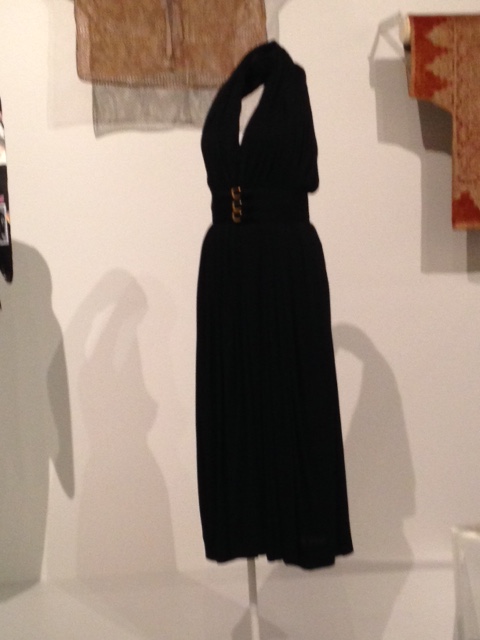
It was fun to see this Claire McCardell dress, circa 1950, looking every bit as fashionable now as then.
Claire McCardell dress

(Check out Julie’s recreation of a similar Claire McCardell dress on her blog, JetSetSewing)

Of course, for me, one thing I was looking forward to was the event to which I could wear my new fancy dress. As luck would have it, our camera was acting up for some unknown reason, so my husband had to resort to his iPhone for a couple of pictures of me wearing it.
LA fancy dress

One thing was certain – no one else at the party was wearing anything quite like it!

LA fancy dress

Our trip continued up to northern California, where we spent a few days with our son and his girlfriend, and which also included a trip to Britex Fabrics in San Francisco, where I picked up a few choice notions and buttons. Now we are home and a new project is strewn out in my sewing room, asking for attention before TRAVEL once again will wisk me away.

32 Comments

Filed under Cocktail dresses, Little Black Dress, Mid-Century style, Uncategorized

The Allure of Silk, Part 3: Finishing Touches for a Fancy Frock

In planning for my ‘50s-inspired silk party dress, my original intention was to use a red sash, just as shown on the original dress which I first saw on Pinterest.

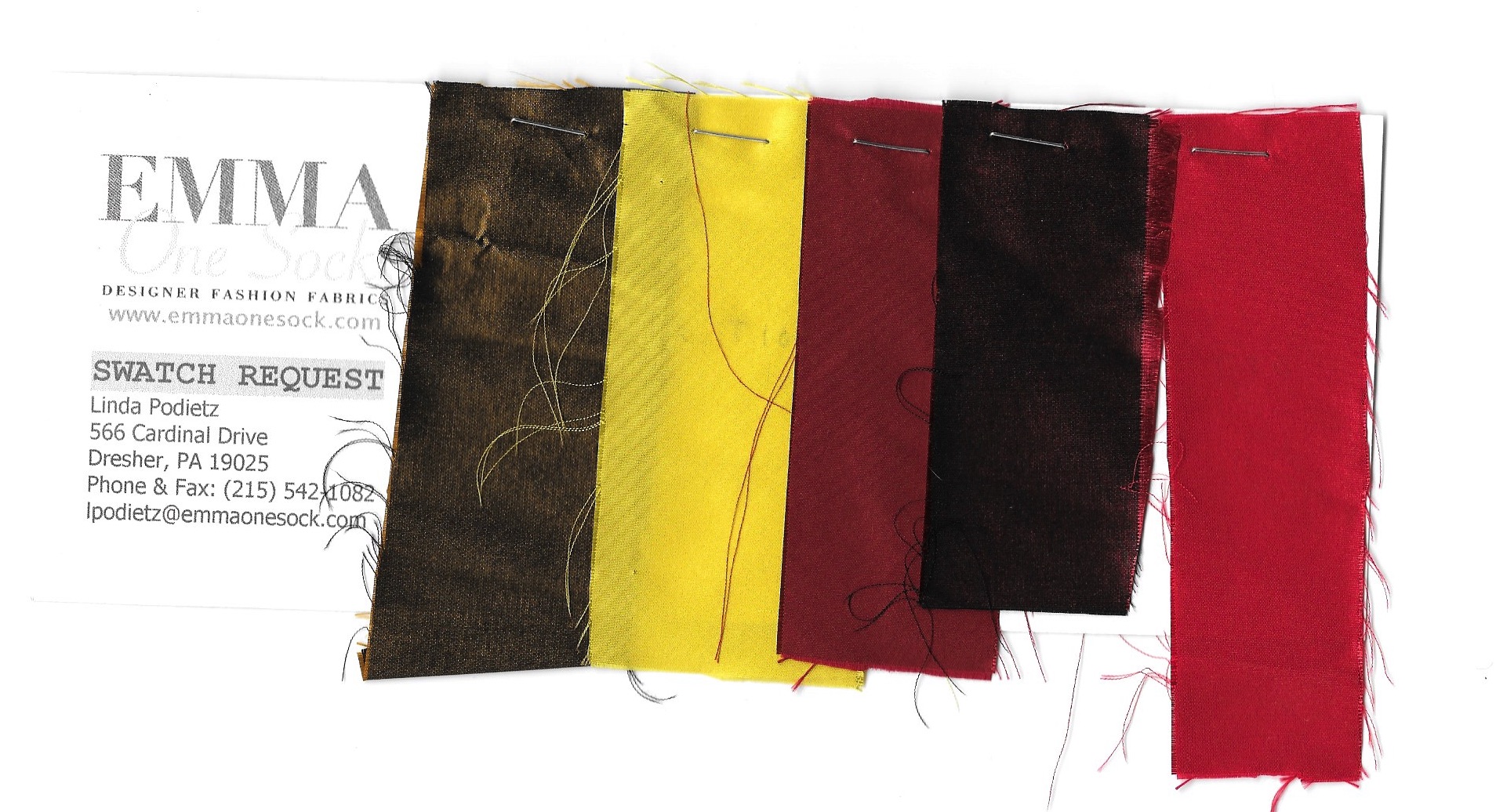
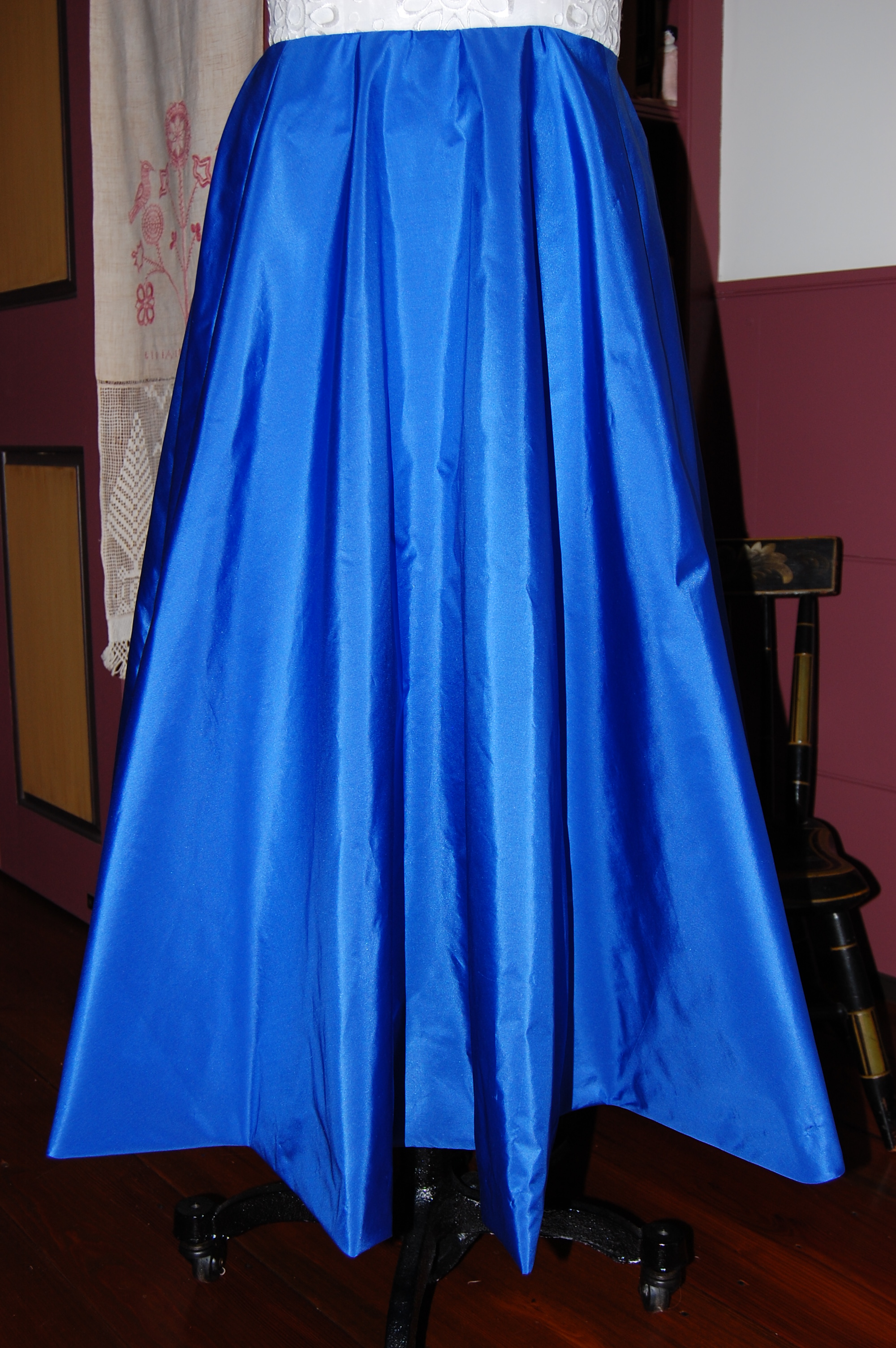
Blue taffeta:silk dress - originalWhen I sent off for swatches of silk taffeta from Emma One Sock Fabrics, however, I requested reds and yellows, just in case I might change my mind. When the swatch card arrived, there were clearly two obvious choices – the clear red and the vibrant yellow.Allure of silk - cummerbund picture

Then a funny thing happened. I ordered the red, which was out-of-stock temporarily. The owner of Emma One Sock (who, I might add, is one of the pleasantest and most helpful people from whom one will ever order fabric!), held up the order, at my request, while I thought about it some more. By the time I went to Baltimore to start my dress in Susan Khalje’s Couture Sewing School, I had just about decided to switch to yellow. With Susan’s hearty endorsement and the additional approval of my classmates, the decision was made: the sash would be yellow, not red.

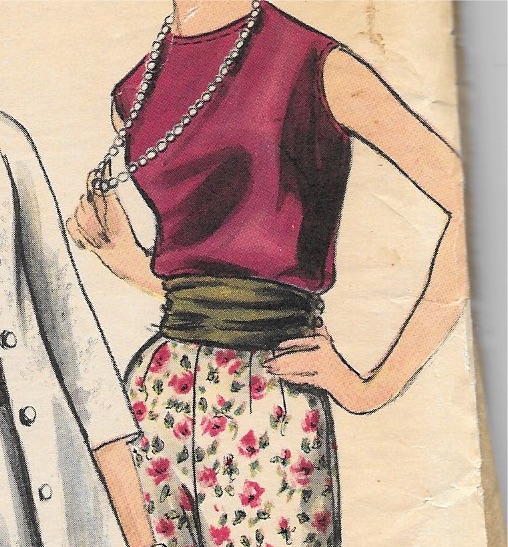
When the yellow silk taffeta arrived, I knew the decision was the right one. All I had to do then was figure out how to make the sash. Easy, right? With lots of time to think about this while I finished the embroidered organza top and the sapphire blue skirt – and the dress lining – I gradually came up with a plan. I decided a more structured cummerbund and bow would be the best look. First I went in search of a cummerbund pattern, which I found in an early 1960s pattern in my collection:

Allure of silk - cummerbund picture-1

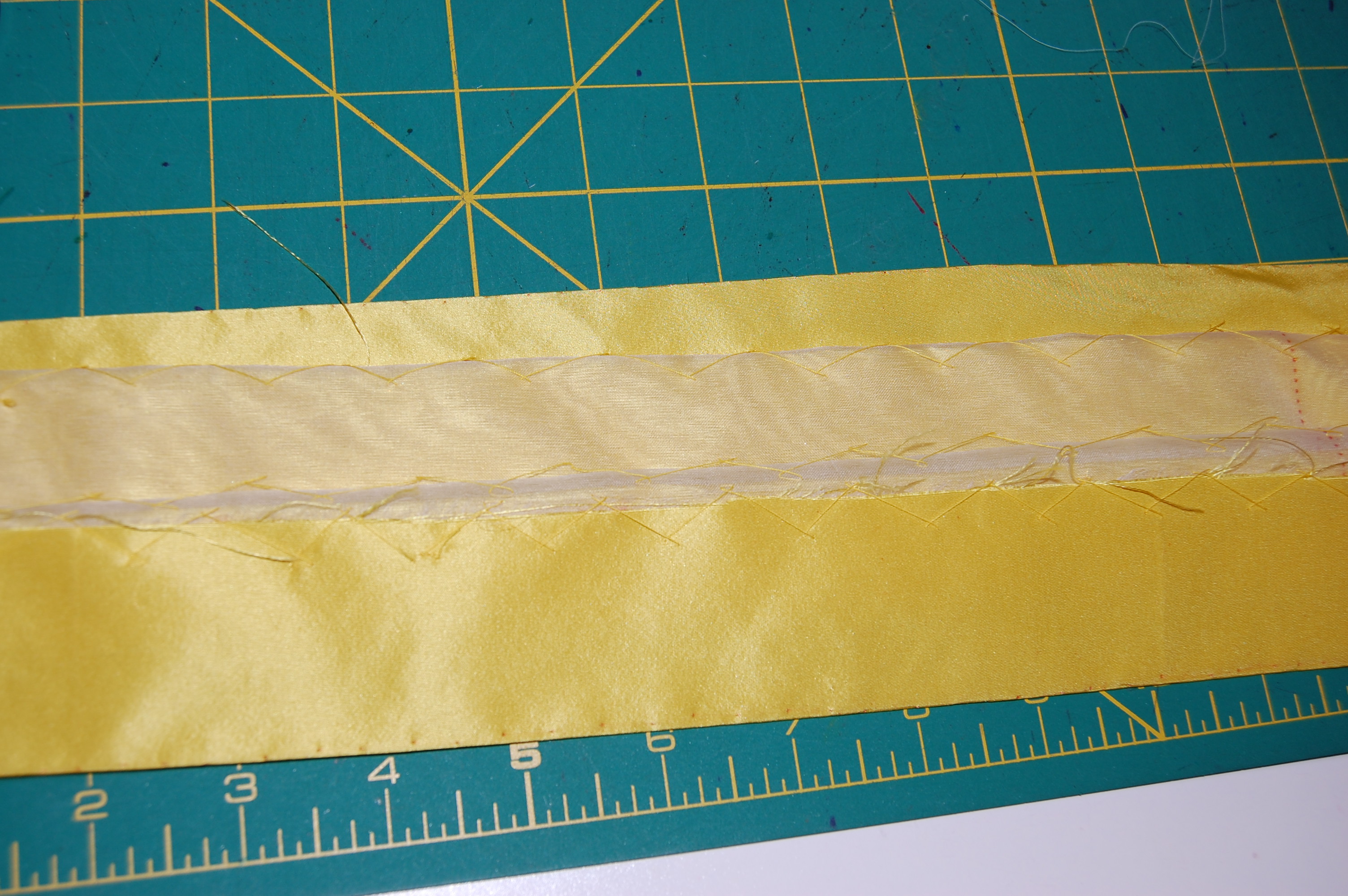
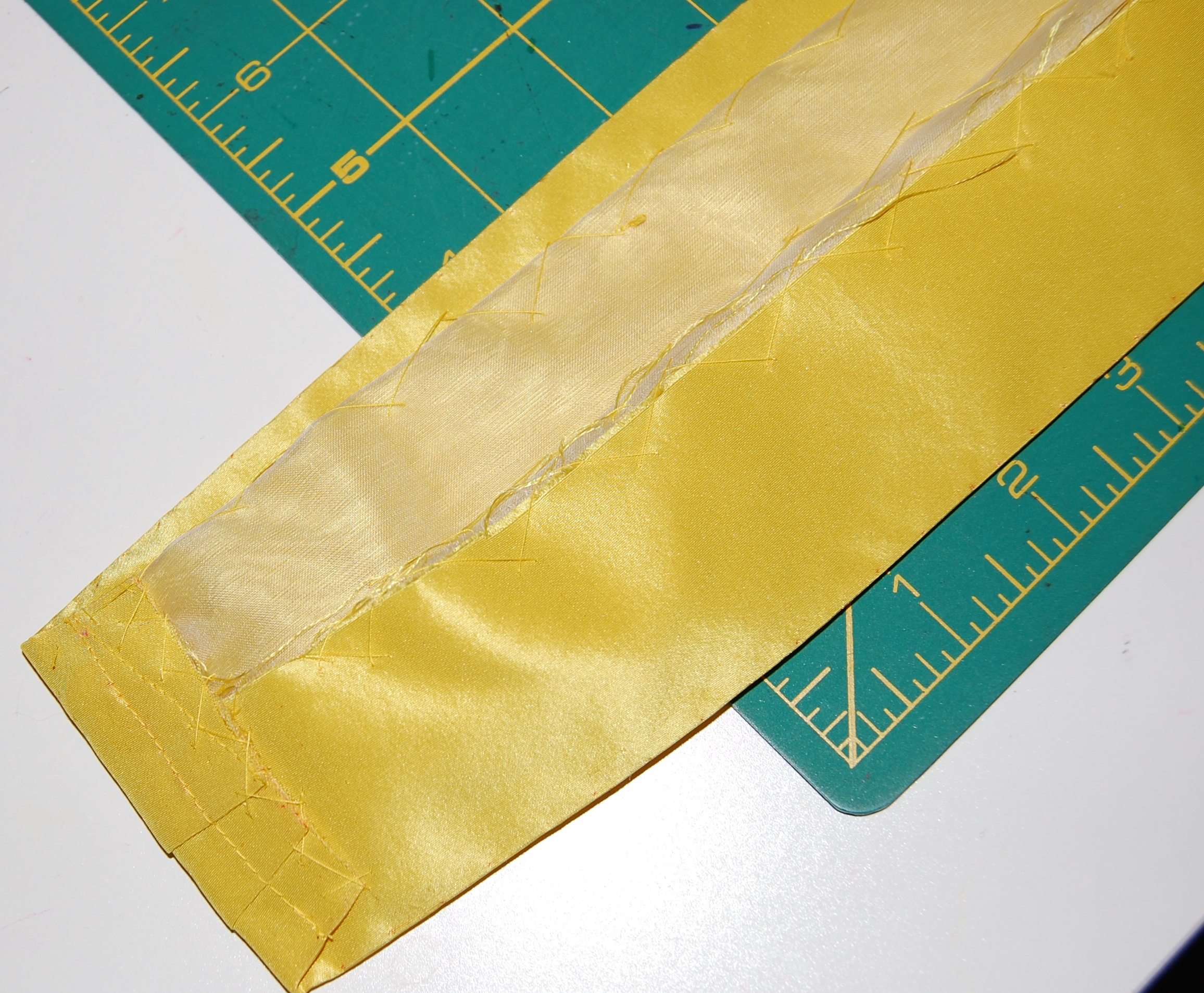
I decided to loosely pleat it instead of gathering it, so it would appear smoother around my waist. Because I had underlined it with silk organza, I had an anchor upon which to secure the soft pleats:

I used a loose catch-stitch to secure the pleats.

I used a loose catch-stitch to secure the pleats.

allure of silk final

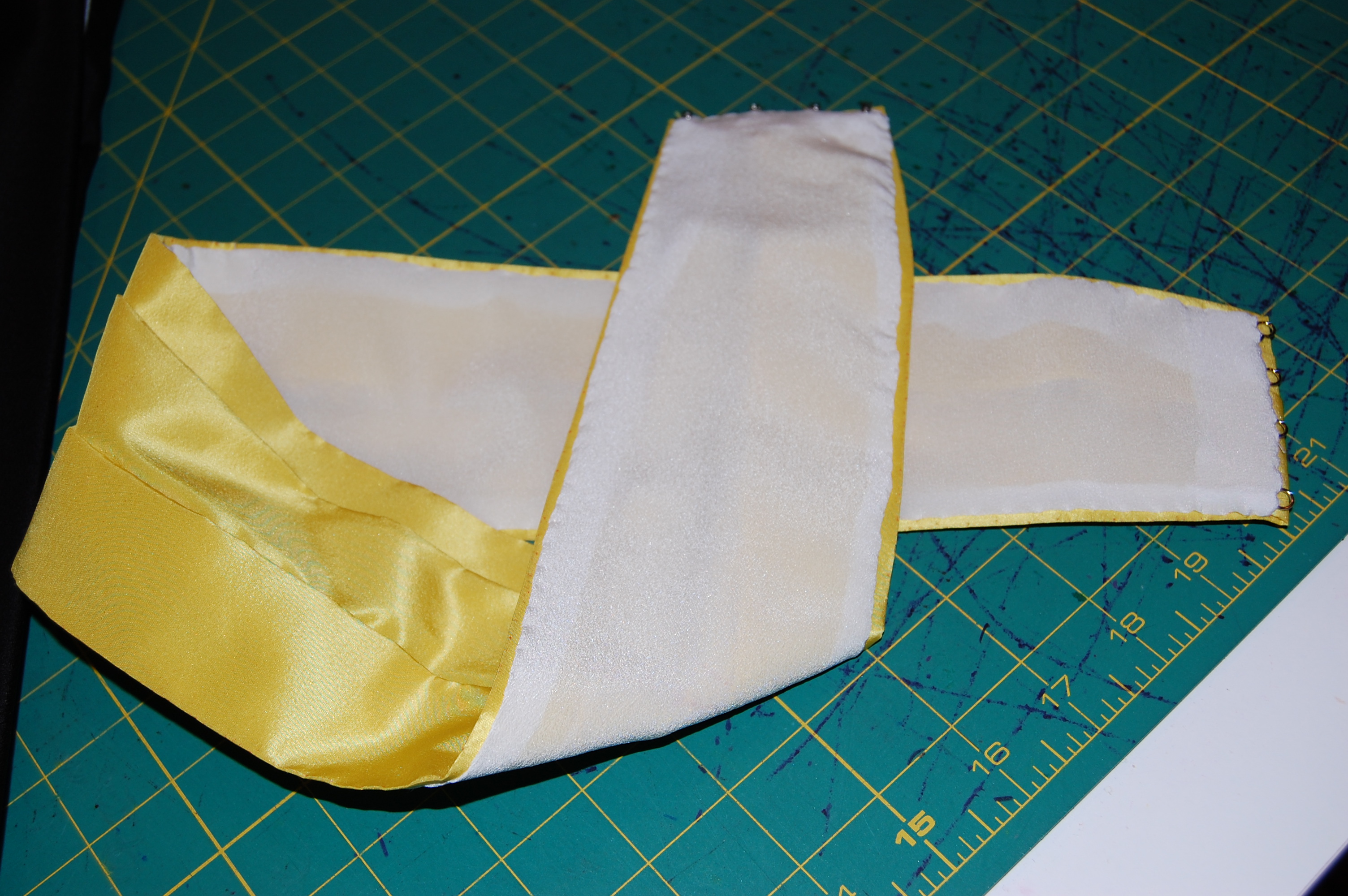
And I folded in the two ends, ready for hooks and eyes.

Then I lined it with silk crepe de chine.

Allure of silk final

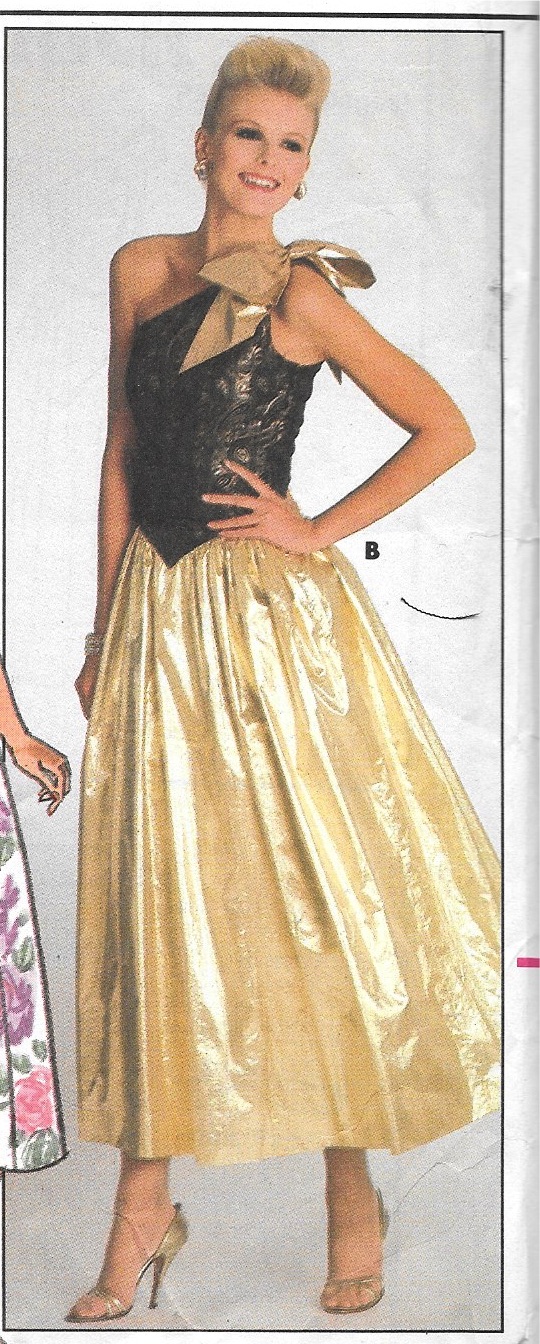
Now –  I really love a beautiful bow. And I knew just where to go to get the perfect bow pattern. I made this Butterick pattern in the early 1990s, and while I still like the dress I made (I’ll feature it sometime… it’s still in my closet!), I love the bow. I have used this bow pattern numerous times, always successfully.

Allure of silk - bow picture-2

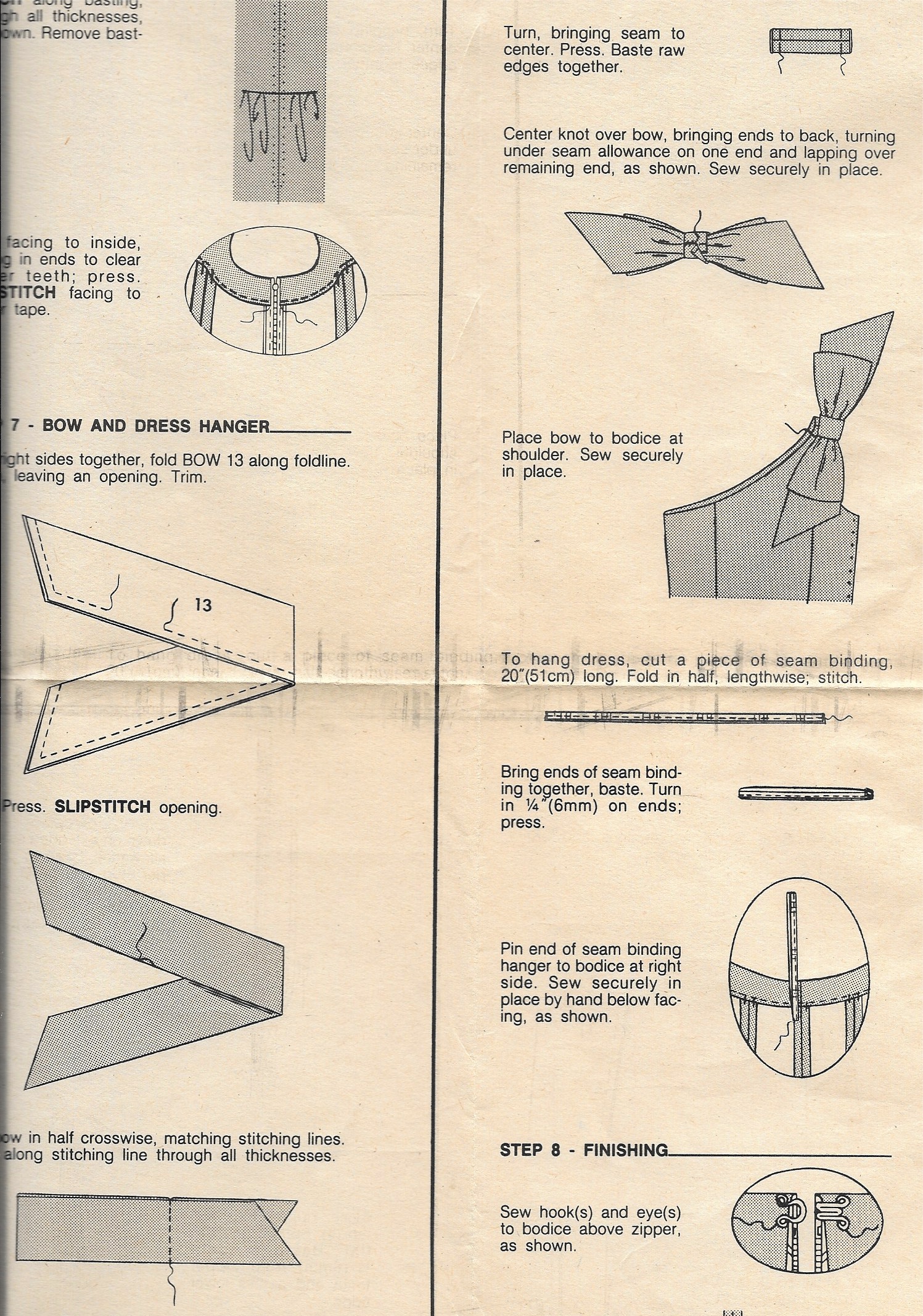
Here is a close-up of the instruction sheet, showing the simple but effective construction of this bow.

Allure of silk - bow diagram-3

I increased the width and length a bit, as I knew it would need to be a focal point of the dress. I attached the bow to one end of the cummerbund, and used a snap to secure it in place on the other end.

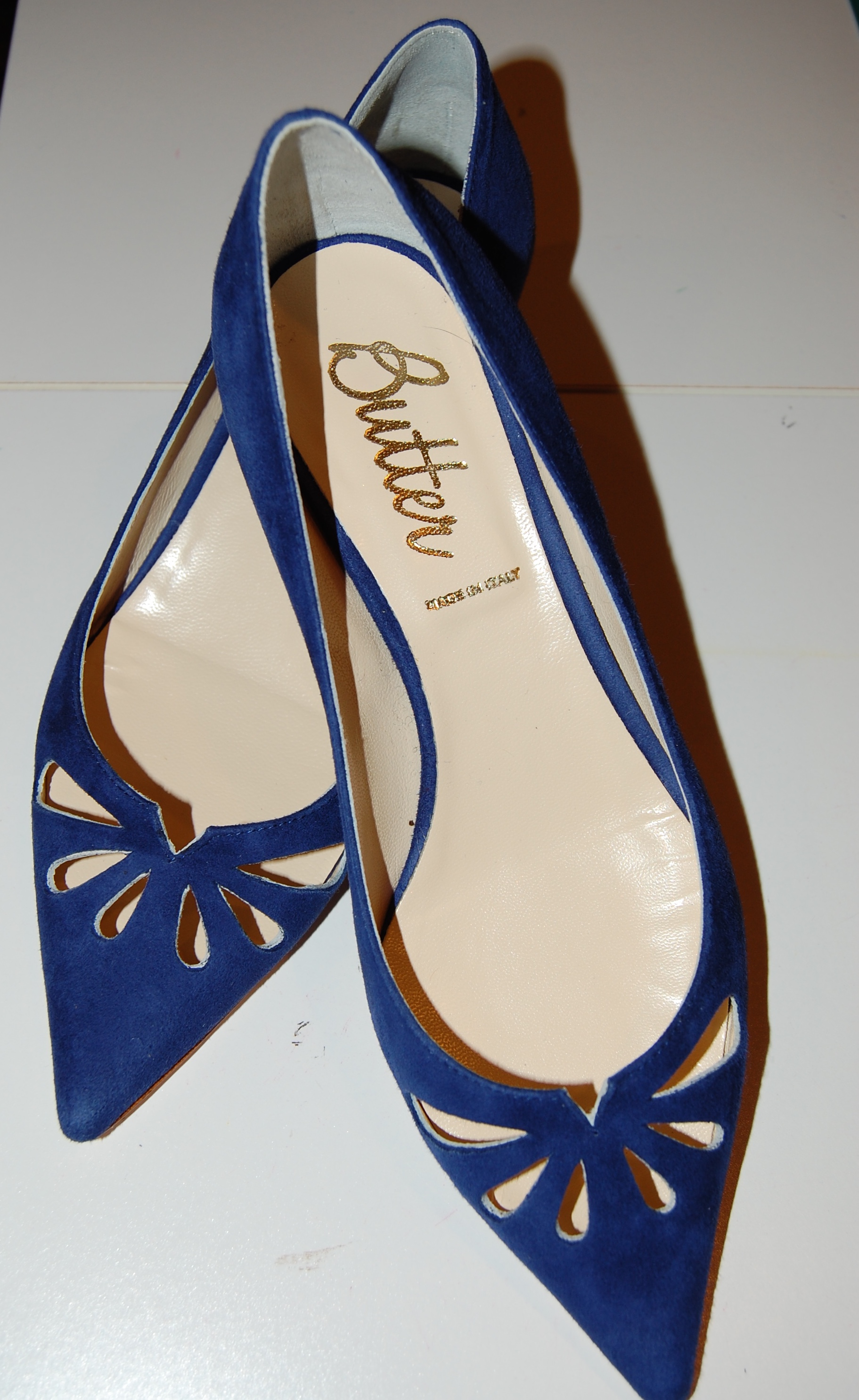
All of this took more time than I could have ever imagined! The event for which I made this dress is next week, and I’ll get proper pbotos taken then. But here is a sneak peek, first of the shoes I found which really seem to be the perfect pairing for this dress:

allure of silk final

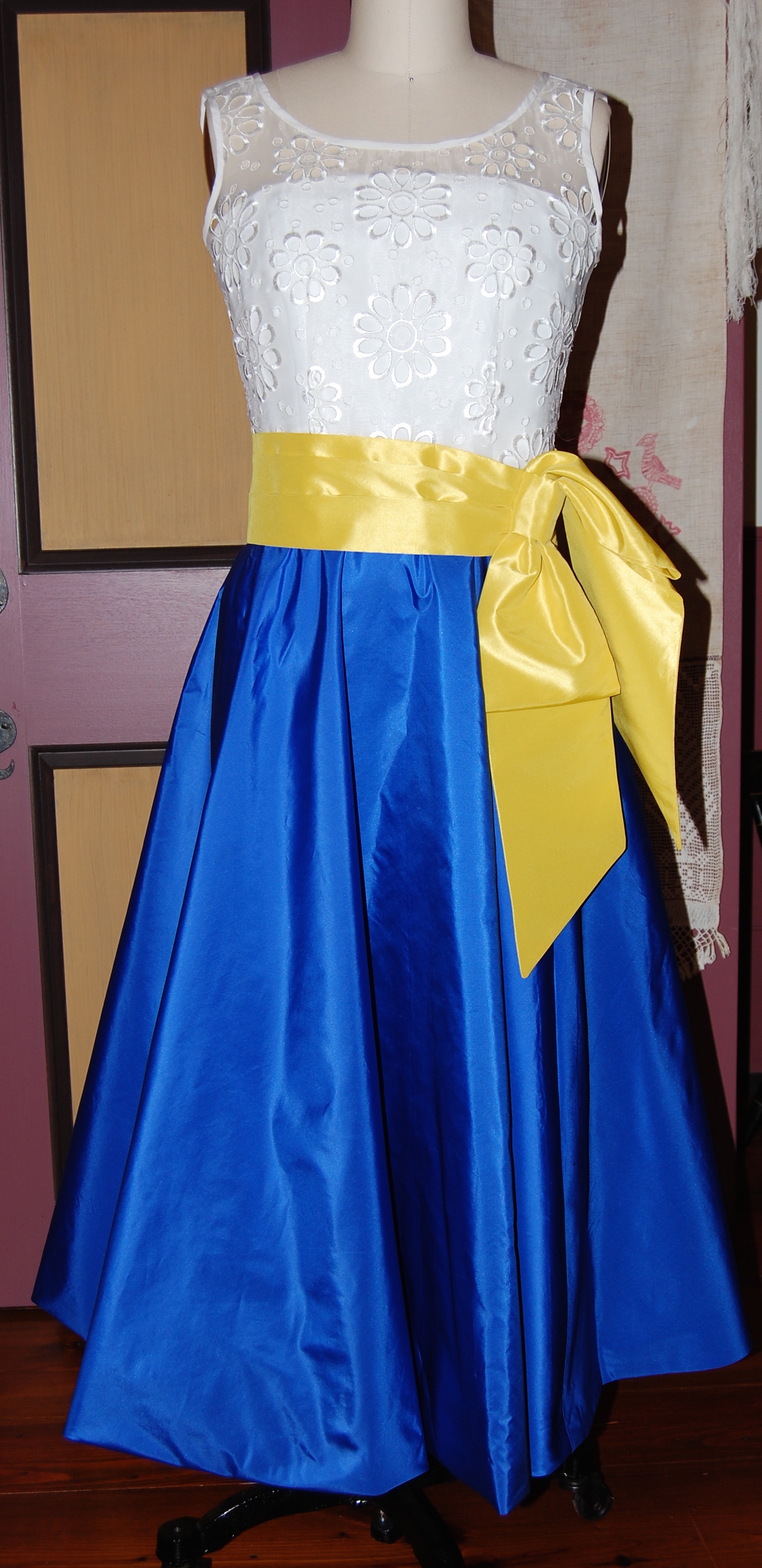
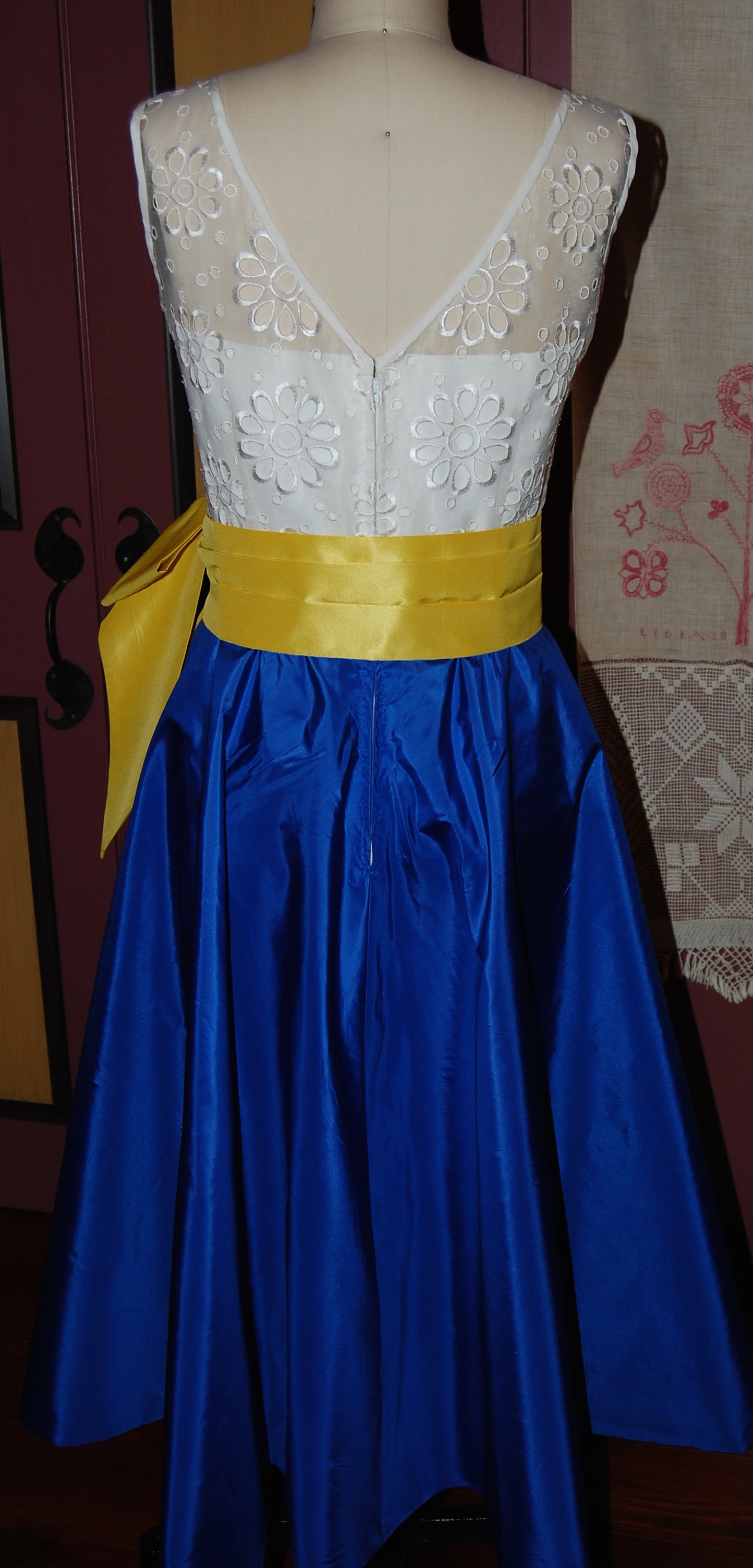
And here is the dress on my dress form:

Allure of silk final

Allure of silk final

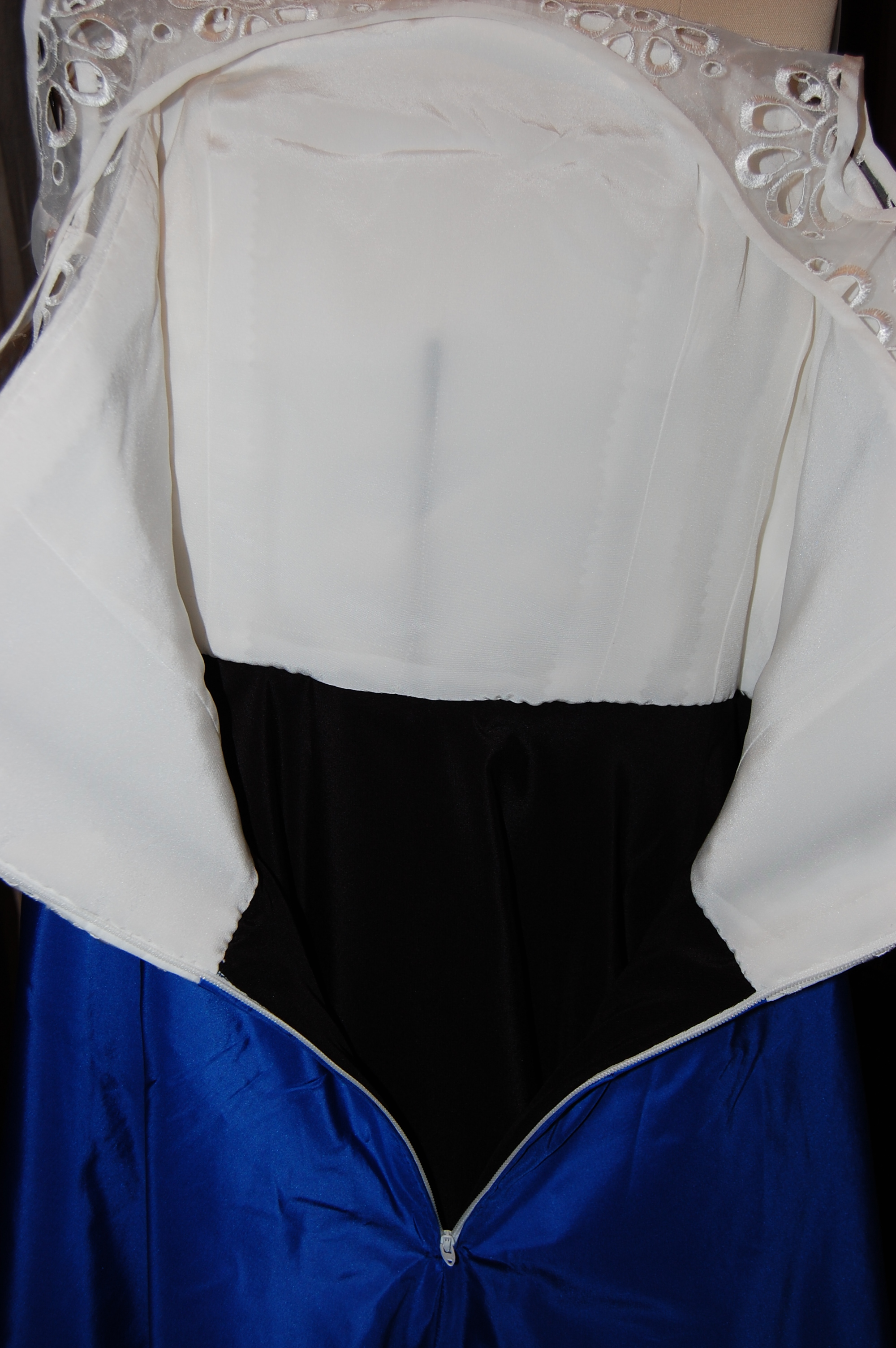
I thought I'd include this photo of the dress lining for anyone interested in seeing it.

I thought I’d include this photo of the dress lining for anyone interested in seeing it.

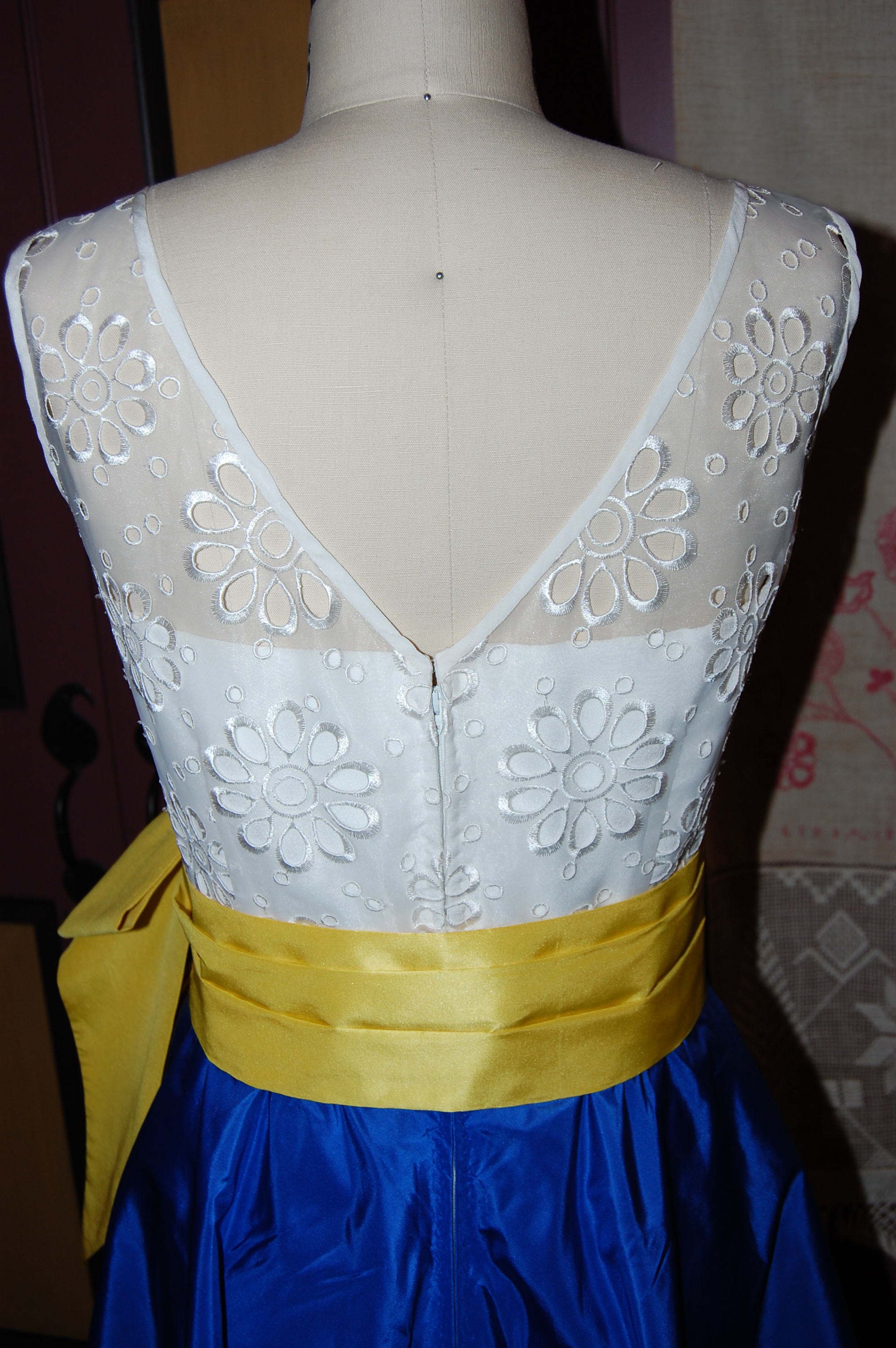
I am very pleased that I decided to "V" the back of the outer bodice!

I am very pleased that I decided to “V” the back of the outer bodice!

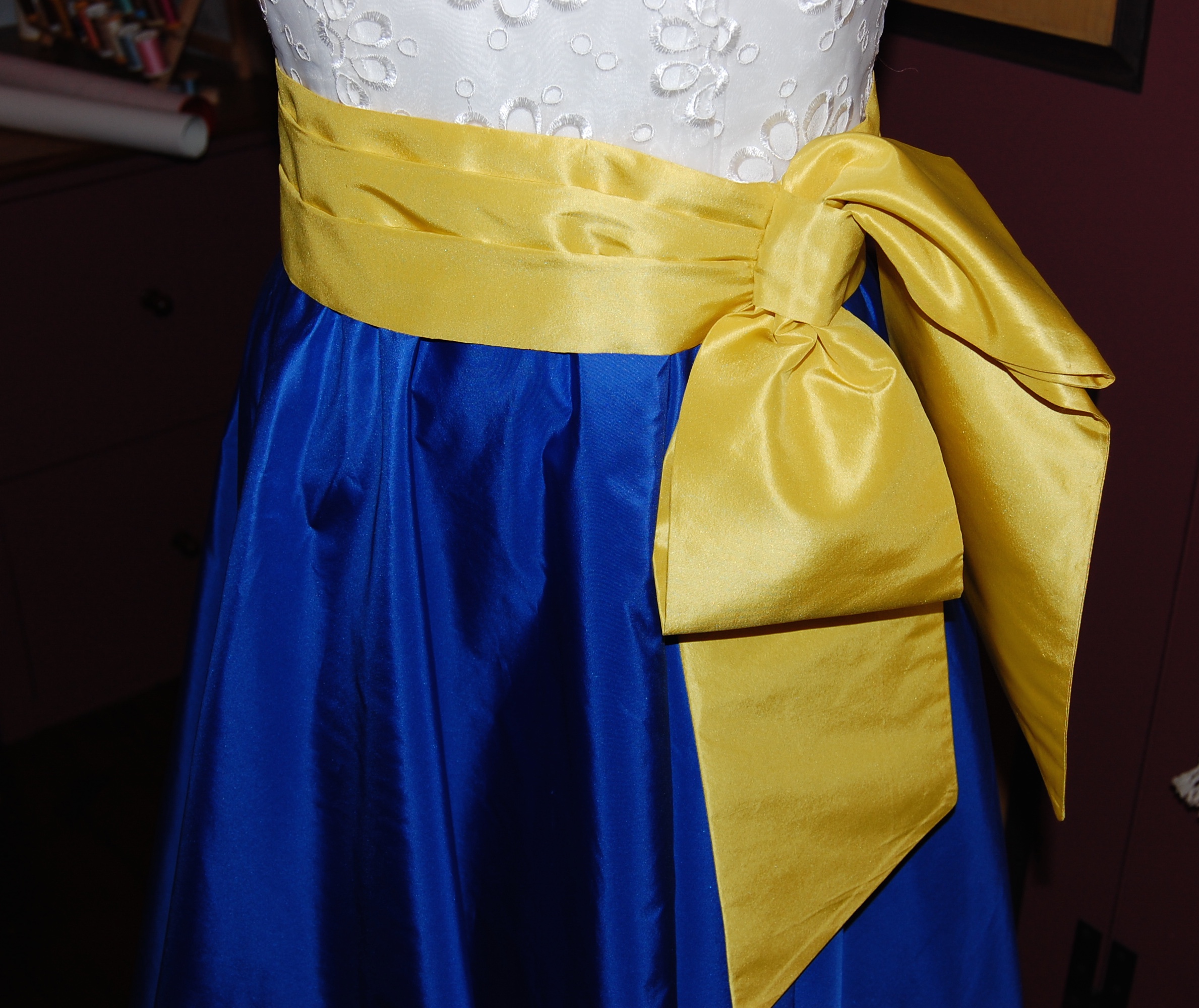
A close-up of the bow.

A close-up of the bow.

One of my favorite fashion quotes is one from Madeleine Vionnet: “The dress must not hang on the body but follow its lines. It must accompany its wearer and when a woman smiles the dress must smile with her.” Will my dress put a smile on my face when I wear it? Yes, if only for the fact that it has been finished just in time!

Details:

Blue silk taffeta:  Britex Fabrics

White embroidered organza:  Waechter’s Fabrics (now out of business)

Yellow silk taffeta:  Emma One Sock Fabrics.

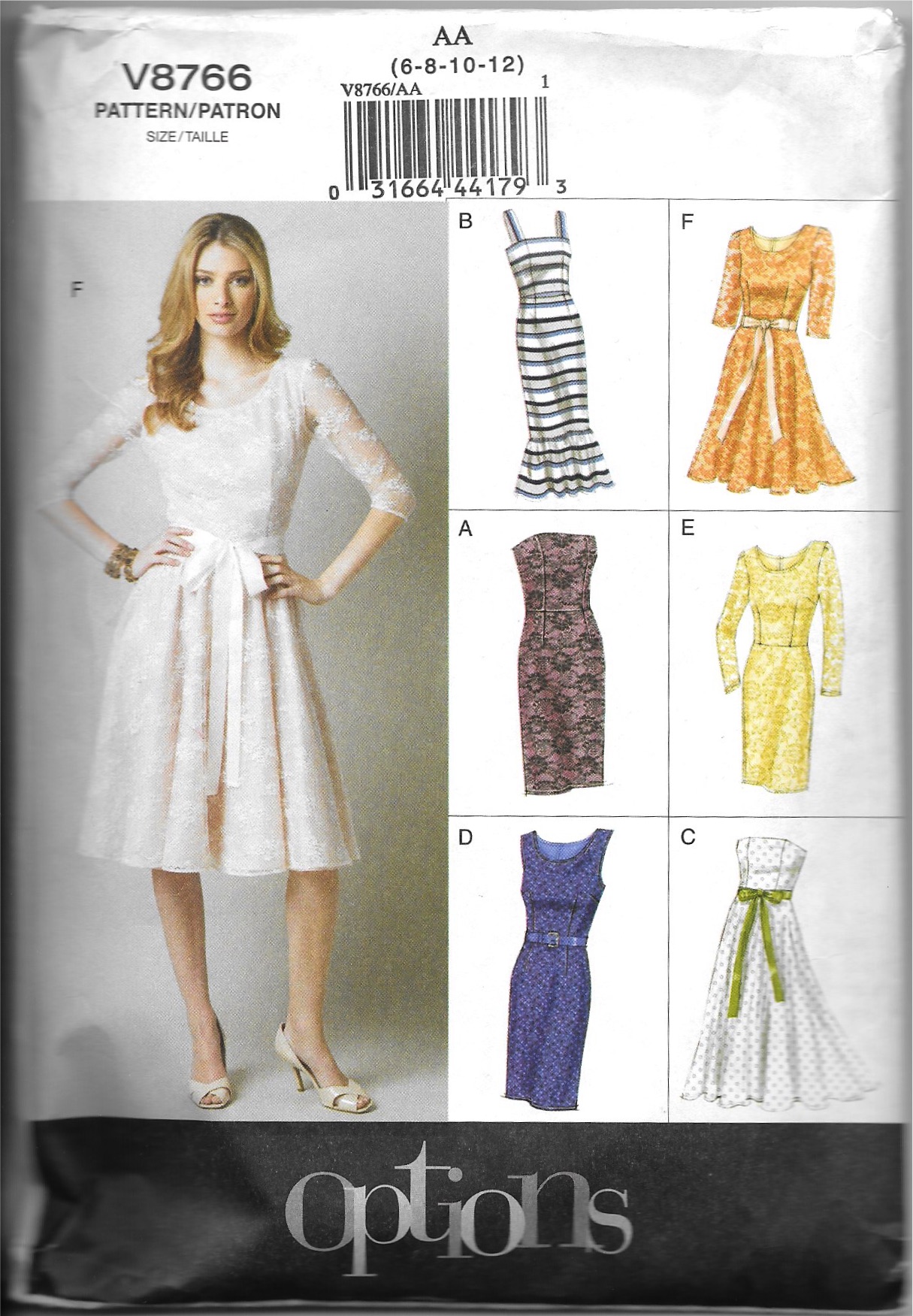
Under bodice and outer bodice pattern:  Vogue 8766

Cummerbund pattern:  Vogue 5234 (vintage)

Bow pattern:  Butterick 3582 (vintage)

Shoes:  Butter, sold by Simply Soles

40 Comments

Filed under Cocktail dresses, couture construction, Mid-Century style, sewing in silk, Shoes to make an outfit complete, Uncategorized, vintage Vogue patterns from the 1960s, Vogue patterns

The Allure of Silk: Sewing with Susan Khalje, Part 2

Whoever knew there could be so many valuable tips to be learned about sewing with taffeta?   The second “part” of my dress, which I began under the tutelage of Susan Khalje in early June, was simple compared with the embroidered silk organza overlaid bodice. However, it proved to be an excellent opportunity to learn about some of the peculiarities inherent in silk taffeta.

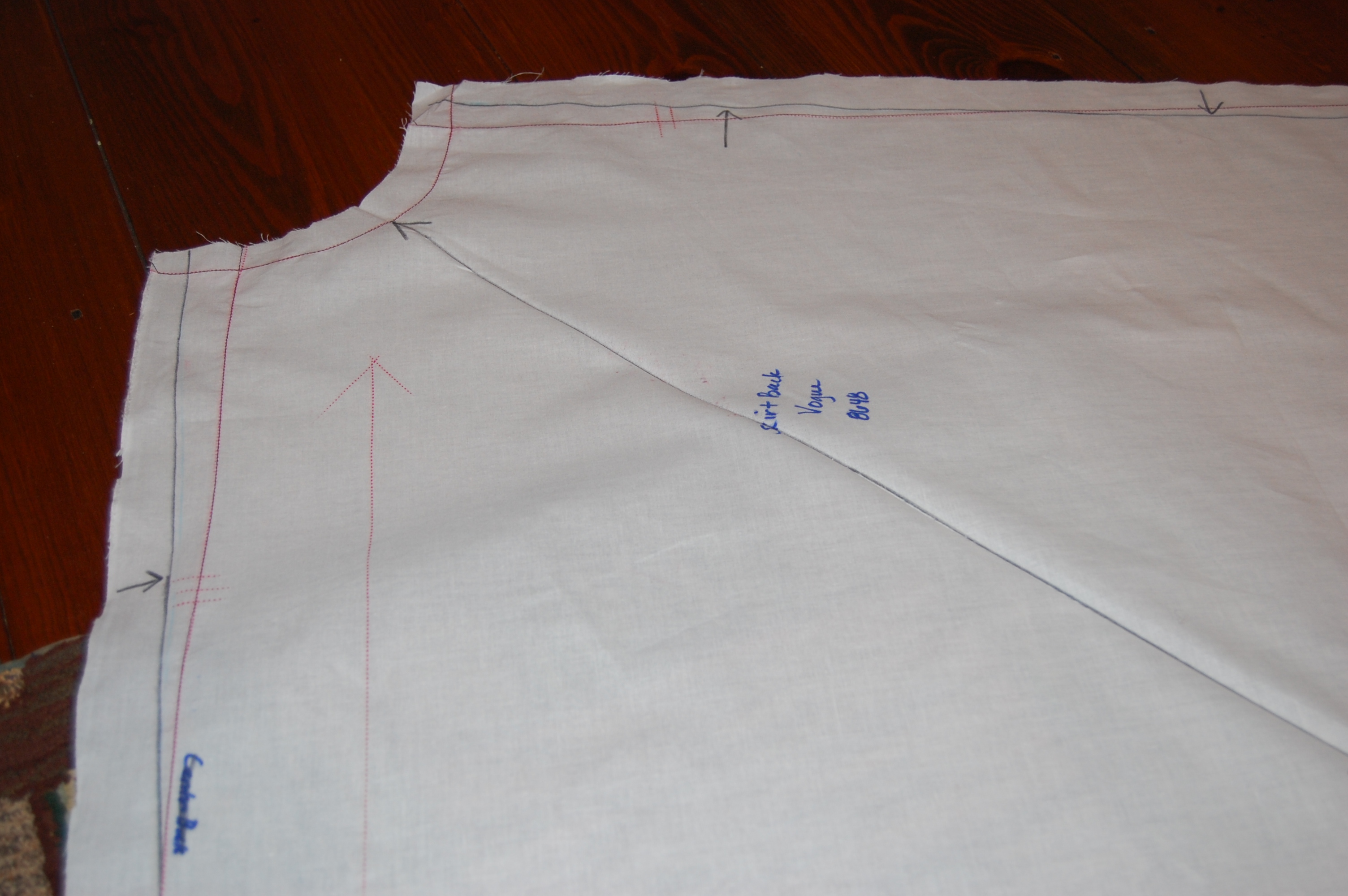
The skirt pattern for which I had made a muslin (toile) in preparation for class was actually a full circle with 4 seams. I wasn’t so sure I wanted anything quite so full, and as I only had 3½ yards of 35” wide taffeta, I also wasn’t so sure I had enough fabric to make such a skirt. But what really put the kibosh to those plans was Susan’s observation that silk taffeta does not perform well with seams cut on the straight of grain (seams sewn thus, apparently do not lie flat and drape well.) She suggested a three-part skirt, with one panel centered on the front, and the other two joined to the sides of that front panel and then seamed together up the back. All cut edges would be on the bias, with the straight of grain being down the center of each panel. So we took one prepared muslin piece and made these changes to it:

This is one of the original 4 panels.  We redrew the side seams, adding enough to the waist to compensate for reducing the skirt to three panels, and by doing that, also reduced the width at the bottom of the panel.

This is one of the original 4 panels. We redrew the side seams, adding enough to the waist to compensate for reducing the skirt to three panels, and by doing that, also reduced the width at the bottom of the panel.

Here is a close-up, with the new straight of grain going up the middle rather than down the side.

Here is a close-up, with the new side seam lines and straight of grain going up the middle rather than down the side. Both are marked in black.

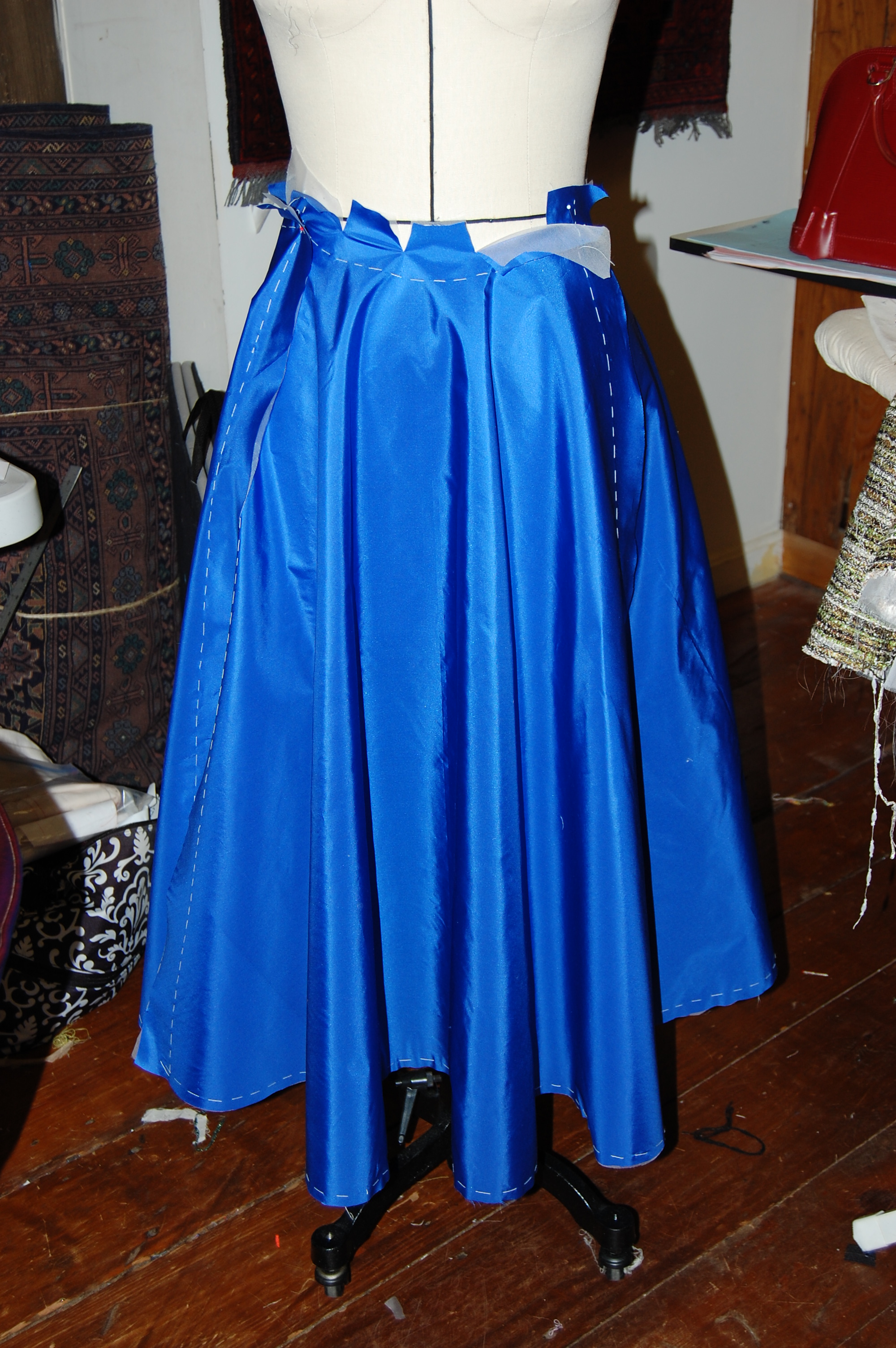
Once I had my new pattern piece, cutting it out was easy and took every inch of the sapphire blue taffeta I had brought with me. Here is what it looked like when the seams were stitched:

All the basting lines are still visible.

All the basting lines are still visible.

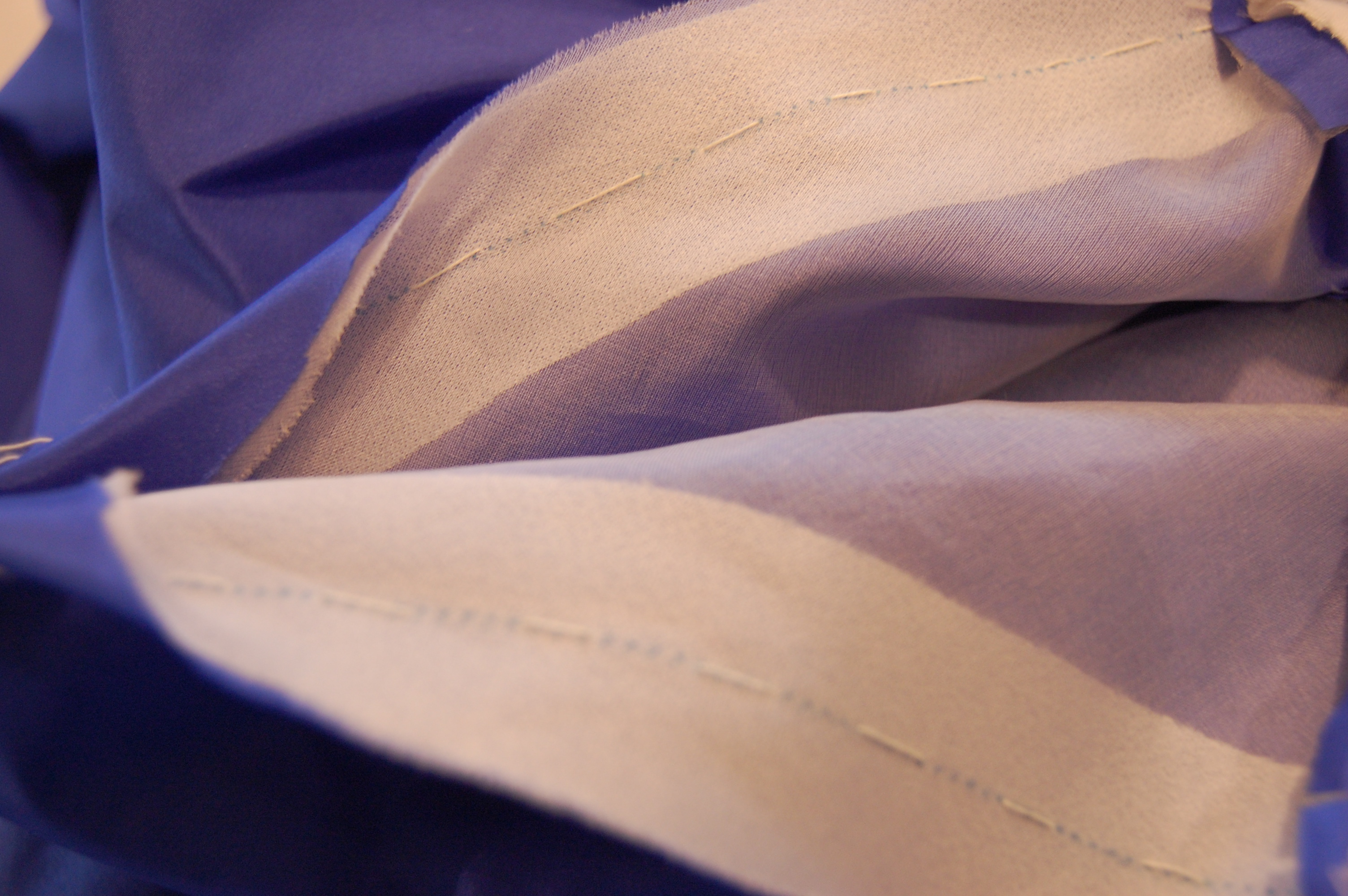
The next surprise I had was about the silk organza underlining. I am so used to catch-stitching seams to organza underlining in couture sewing. But with taffeta, it’s better not to do so. With the impressionable finish of taffeta, such catch-stitching could “shadow” on the front of the garment. So I left the seams unsecured on the wrong side:

Blue taffeta skirt

Ironing those seams also took special attention. Susan had me iron them over a seamroll, taking care to “spread” the seam so that the tight stitching actually would show in front of the point of the iron. This was to get a crisp seam. Once ironed, taffeta does not respond well to changes in your intent (like some people we all know), so it has to be done correctly the first time.
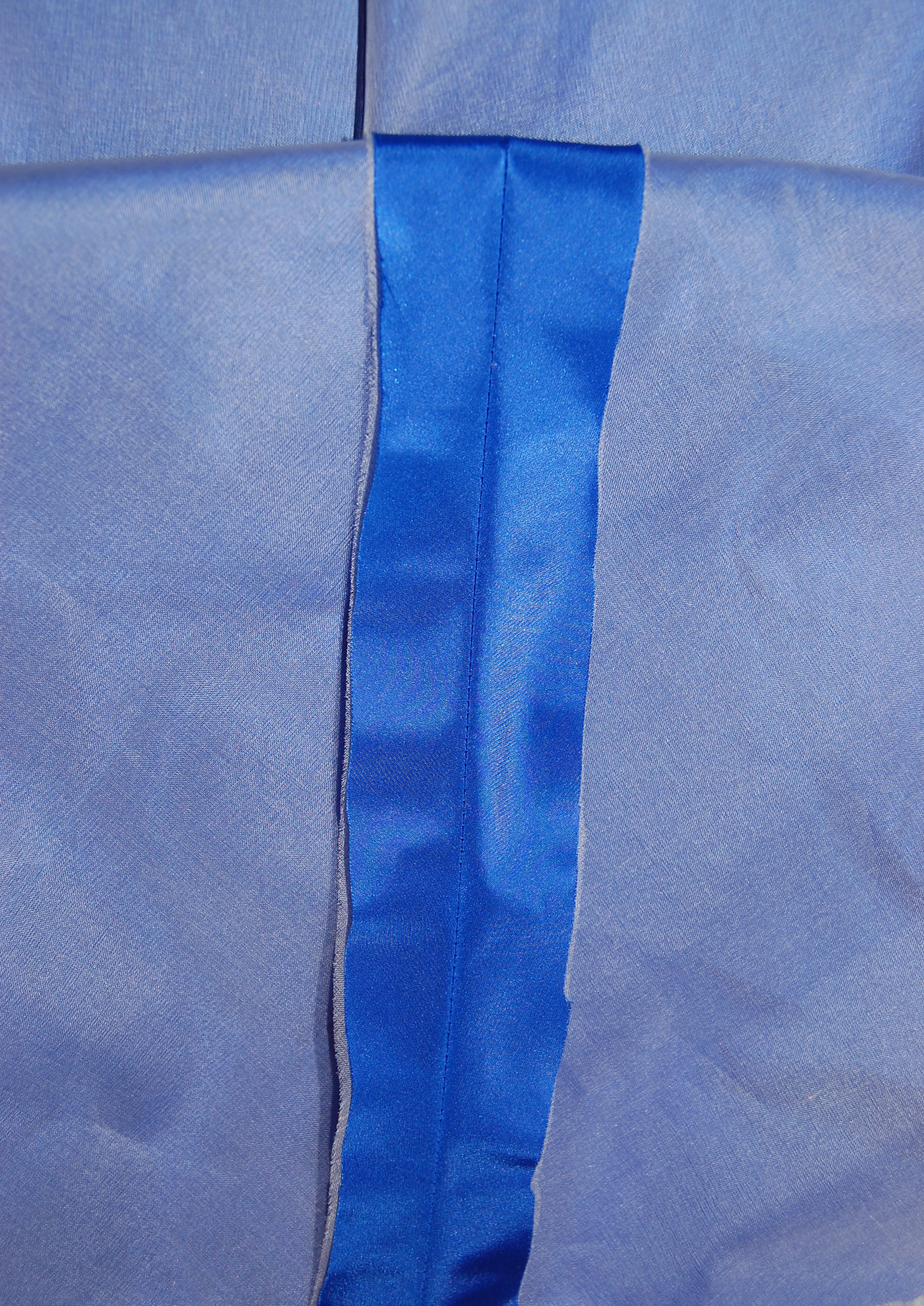
Because the center back zipper would be applied onto the bias, Susan had me use a little fusible interfacing to reinforce that seam. Luckily, Becky, a classmate, had a bag of all kinds of high quality fusible interfacings with her! (Thanks, Becky!)

The interfacing was sandwiched between the fashion fabric and the underlining.

The interfacing was sandwiched between the fashion fabric and the underlining.

I certainly did not get to the hem of the skirt before I left for home, but Susan gave me tips on how to sew that wide and curved expanse. I cut a 2½” strip of silk organza to use as a hem facing. I turned it up with a very narrow strip of blue taffeta exposed on the wrong side. Then I used a very short straight stitch to secure the organza facing to the organza underlining:

Blue taffeta skirt

I haven’t pressed the hem yet, but Susan has instructed me not to press the edge of the hem flat. It should have a little softness to it, which is the French way! I’m all for that.

The hemmed skirt

The hemmed skirt

The lining, which will be the full expanse of the skirt itself, will be out of silk crepe de chine and will hang loose.

In the past, I have always thought of taffeta as kind of stiff and a little too structured for my taste, but now I am a fan. I like the slight rustle to it, and when constructed properly, it drapes and moves beautifully. The secret is to work with very fine quality silk taffeta – and know the tricks! Thanks, Susan!


18 Comments

Filed under couture construction, sewing in silk, Silk taffeta, Uncategorized

The Allure of Silk: Sewing with Susan Khalje, Part 1

Any week spent in one of Susan Khalje’s Couture Sewing School classes is a week filled with opportunity. This past class was my third one taken with Susan, and I have come to expect that I will learn unexpected things! My first class with her was the Classic French Jacket; the second class was when I started my color-blocked coat; and this class saw the beginning of a silk formal dress which I need for a black-tie event in early July.

She asks her students to come with a prepared muslin (toile), ready for fitting.  I have so many vintage patterns for long, lovely, fancy dresses, that it was difficult to focus on just one. As it turned out, I found myself drawn repeatedly to a dress which I had pinned to one of my Pinterest boards, and it is this dress which became my inspiration:

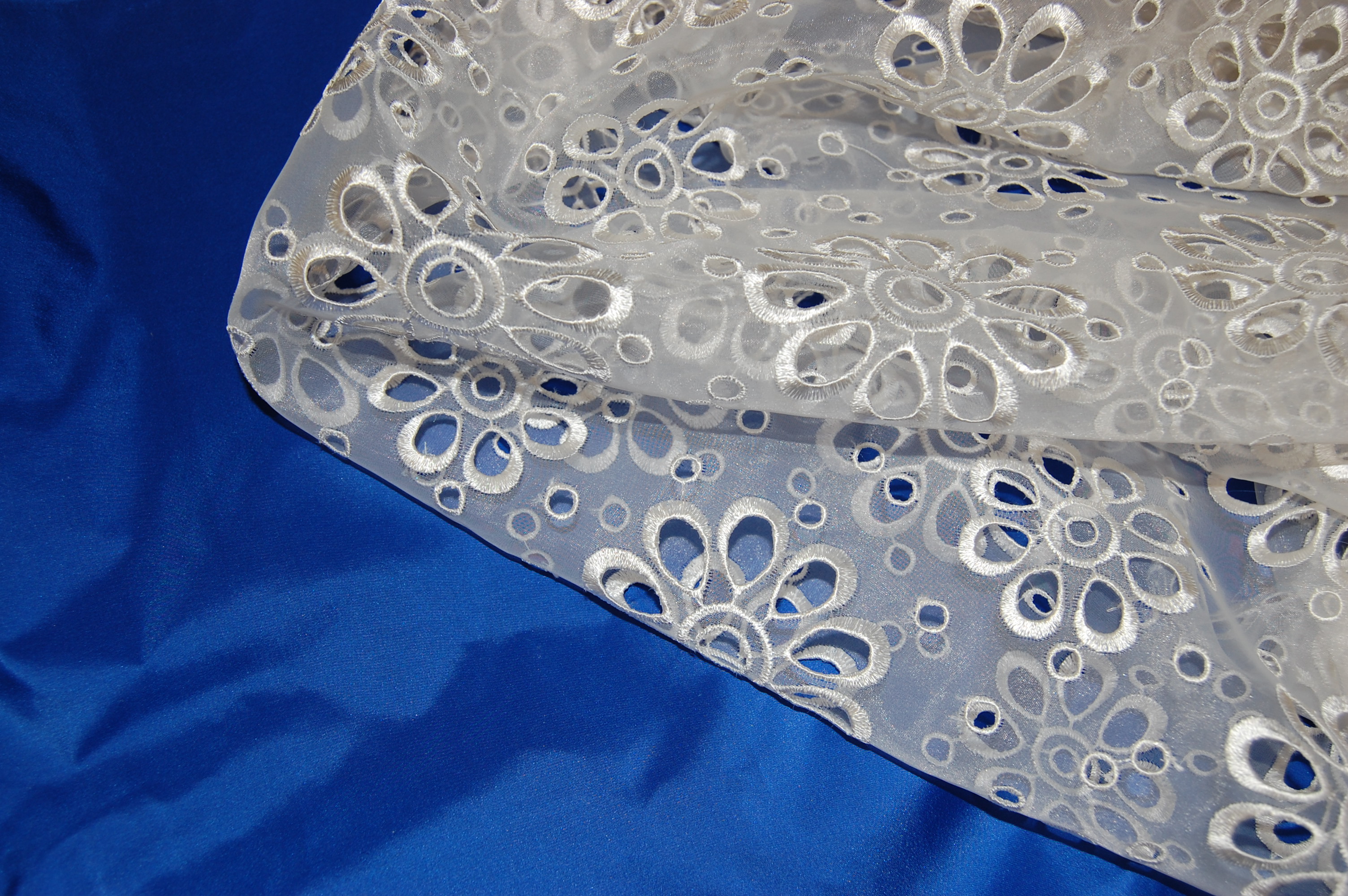
Blue taffeta:silk dress - originalI say “inspiration” as I knew I wanted to make certain changes. I decided I did not want to go completely strapless. Instead I envisioned a strapless underbodice, covered by a lacy, semi-transparent, sleeveless overbodice, both in white. I had already purchased a silk-embroidered organza (from Waechter’s Fabrics, before they closed their business), and I had also already purchased 3½ yards of sapphire-blue silk taffeta from Britex Fabrics. Those were my fabrics of choice for this project.

A Noisy Spring

I started with the strapless top and the sleeveless top from this current Vogue pattern:

Blue taffeta:silk dress - bodice pattern

Here’s what happened when Susan fitted the muslin on me:

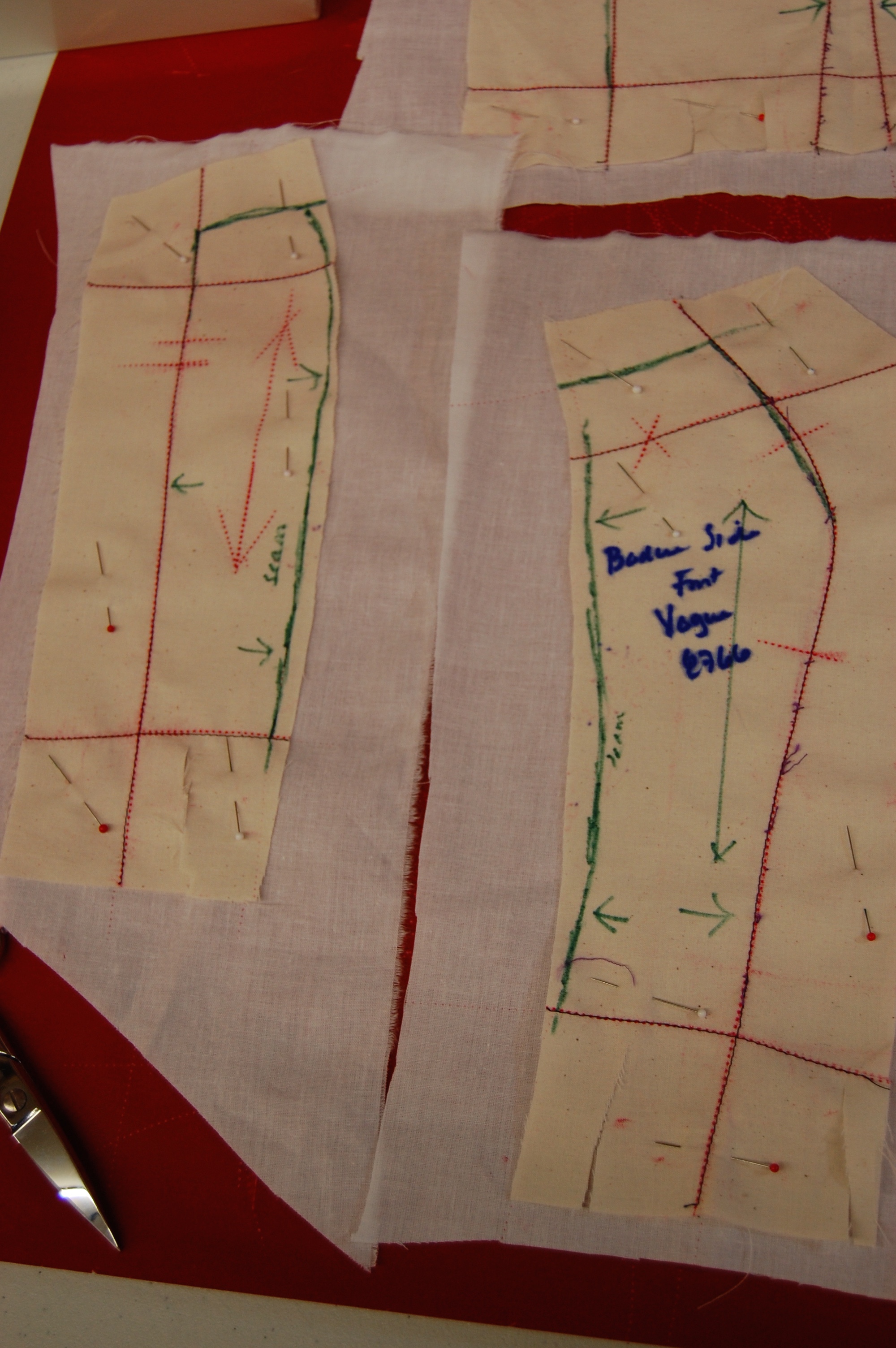
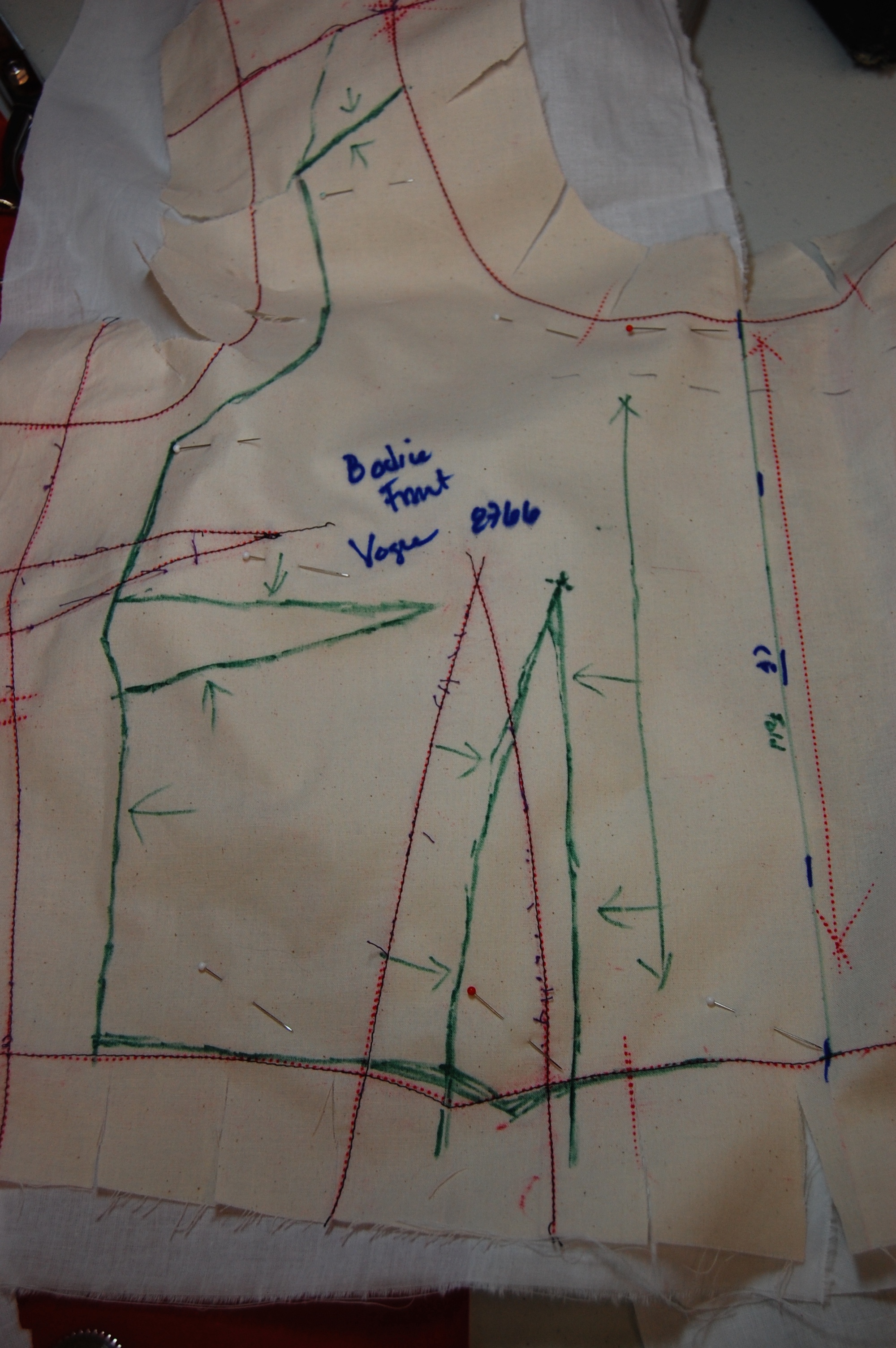
The pattern for the strapless under bodice consisted of a front panel, two side princess panels, and two back panels.  However, Susan divided the side princess panels into two, giving me 7 bodice pieces rather than 5.

The pattern for the strapless under bodice consisted of a front panel, two side princess panels, and two back panels. However, Susan divided each side princess panel into two pieces, giving me 7 bodice pieces rather than 5.

The pattern for the over bodice needed major adjustments.  Here is the front . . .

The pattern for the over bodice needed major adjustments. Here is the front . . .

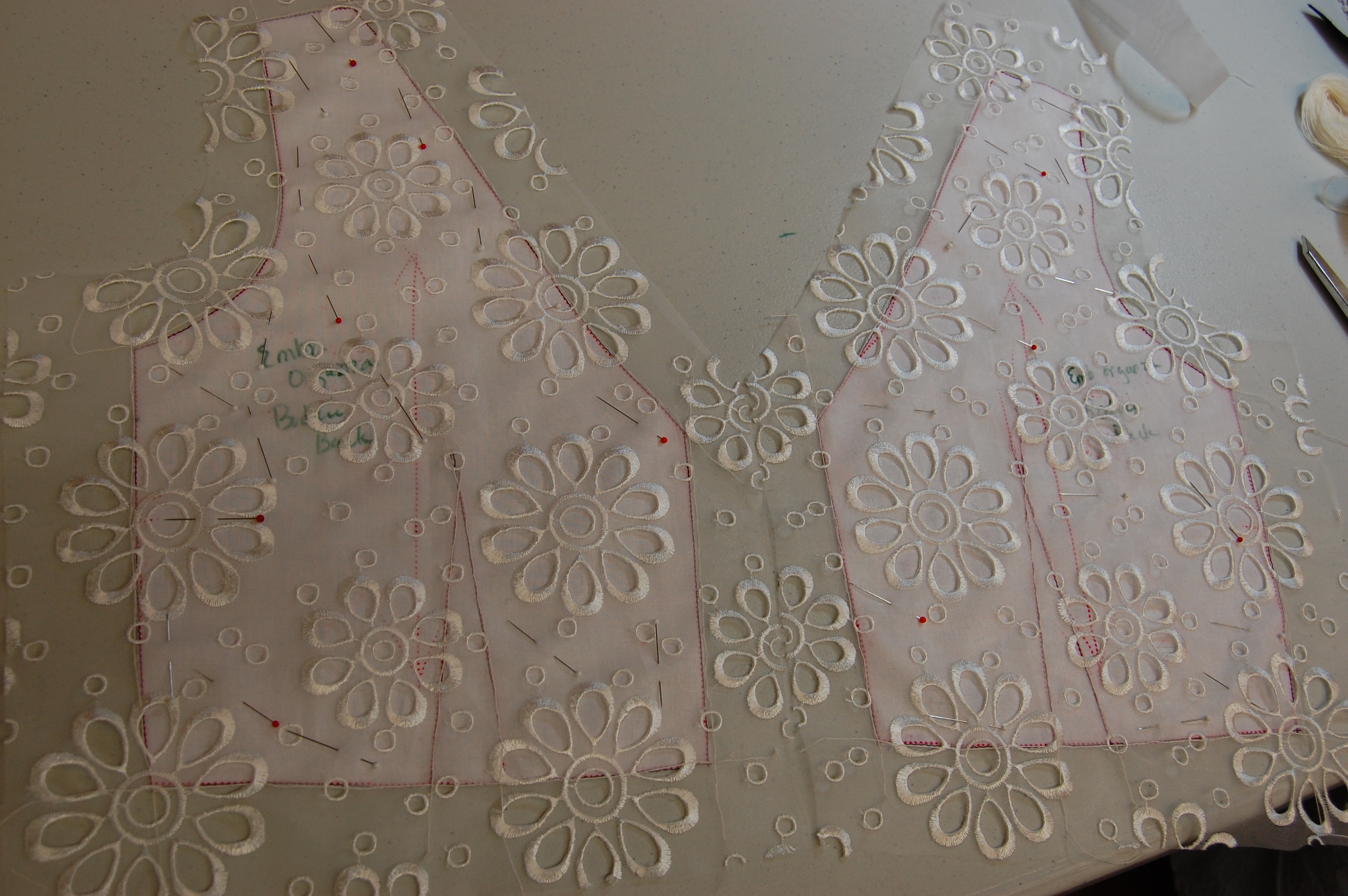
. . . and here is the back.  I wanted to make the back into a V-shape, which was a minor adjustment to the pattern i was using.

. . . and here is the back. I made the back into a V-shape, which was a minor adjustment to the pattern I was using.

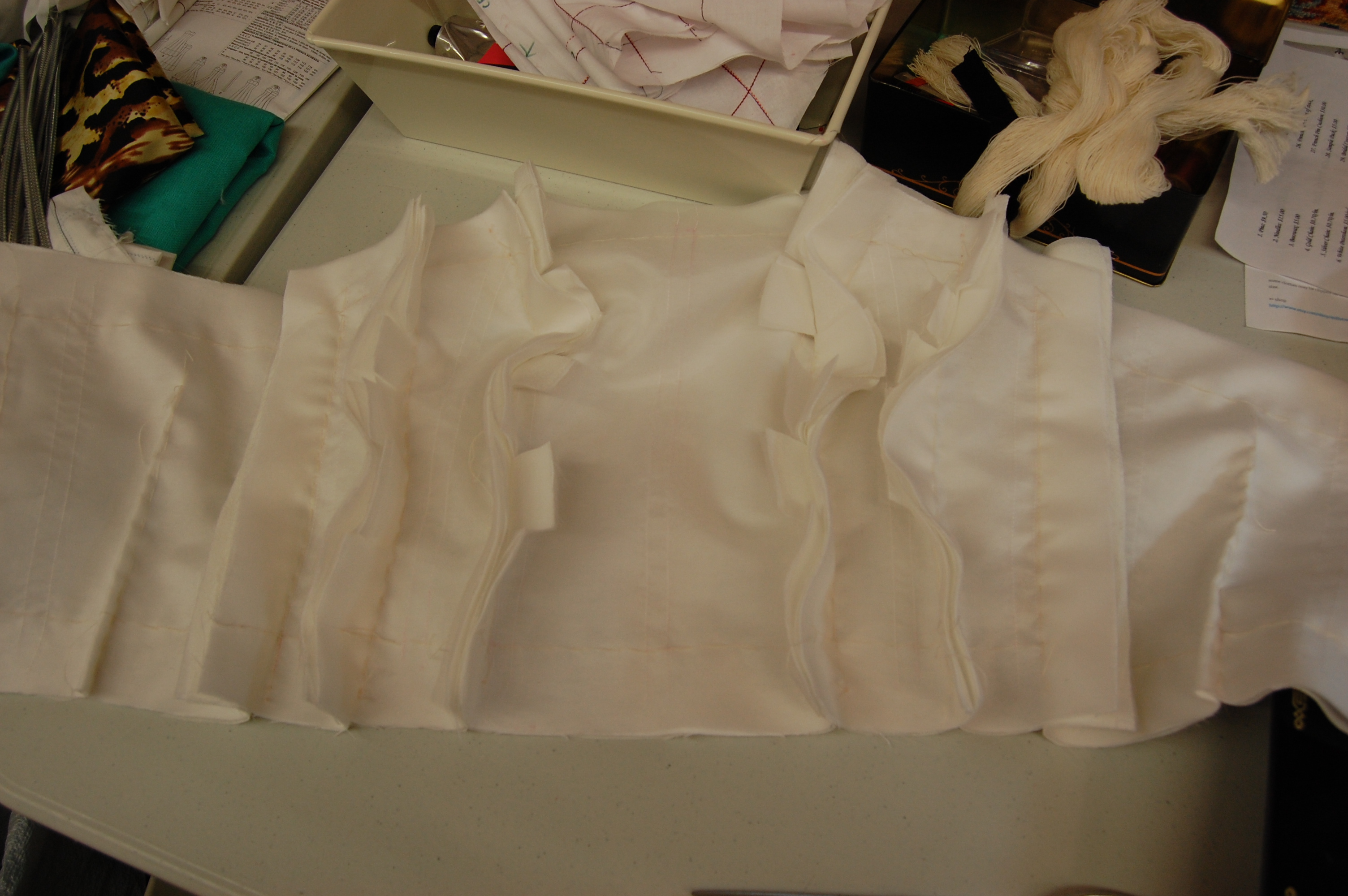
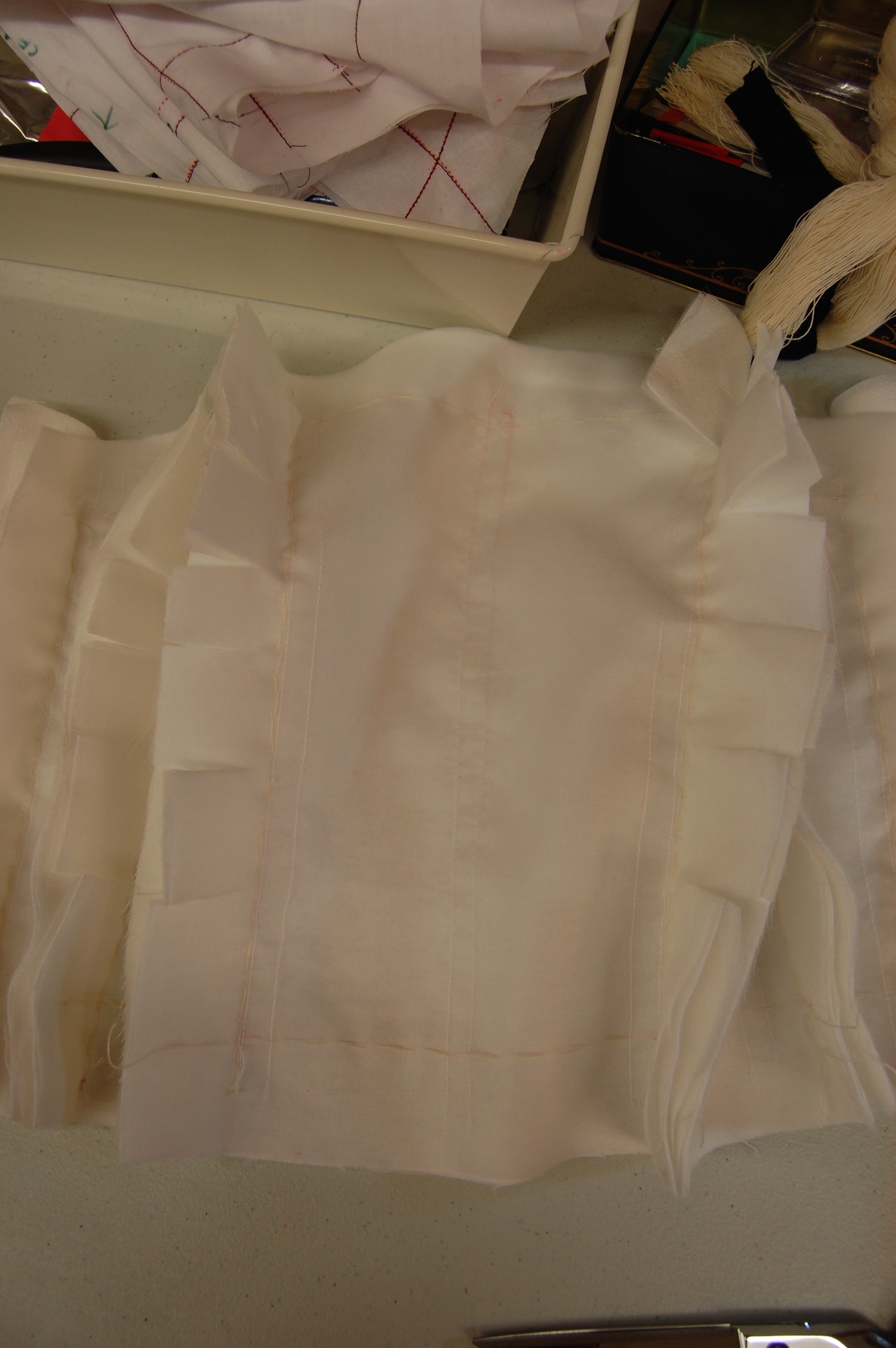
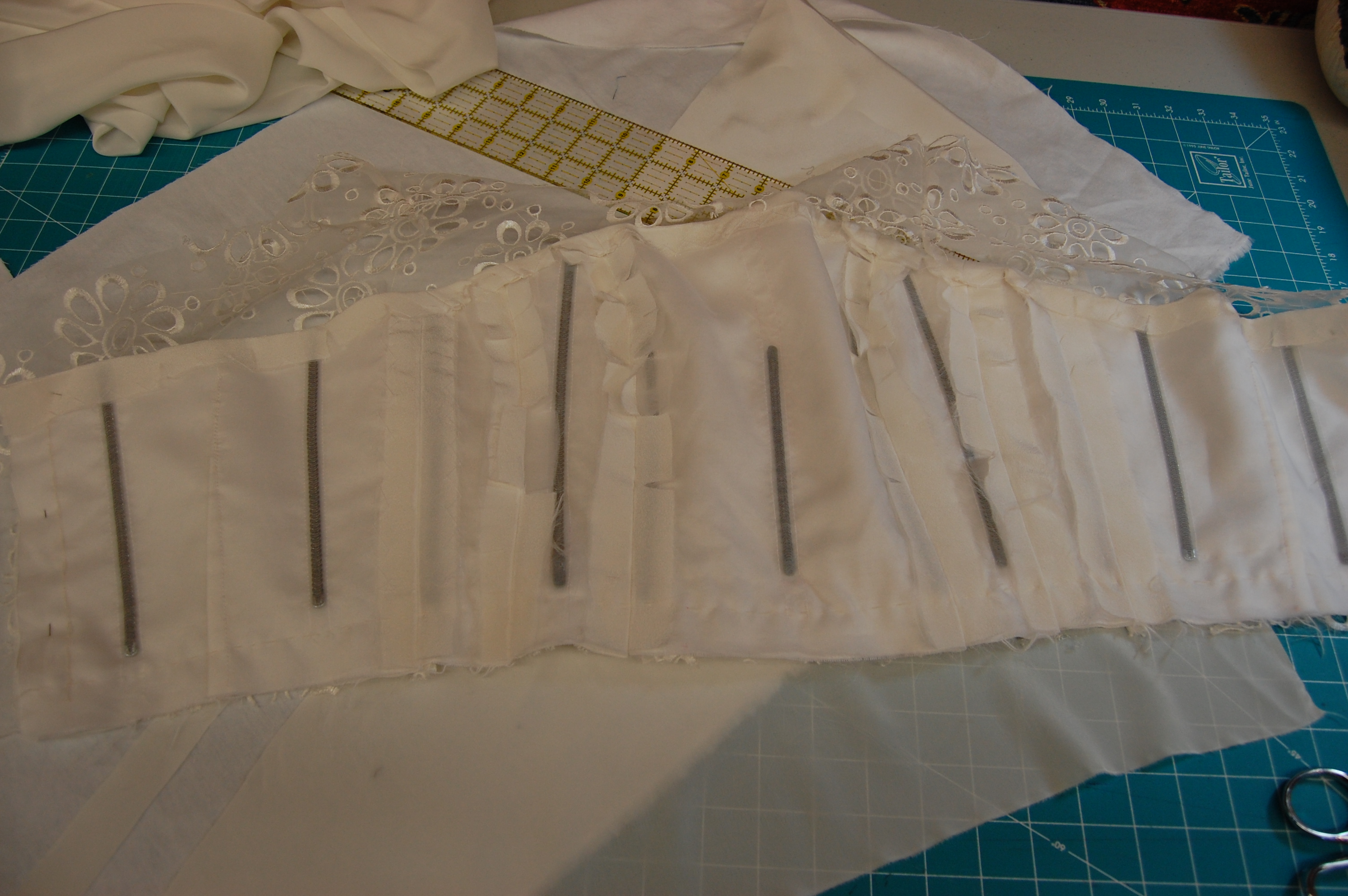
One of the reasons I wanted to start this dress under Susan’s tutelage was for the opportunity to learn how to add boning to a structured bodice. I knew the fashion fabric for the strapless underbodice would be white silk crepe de chine. What I did not know is that the channels for the boning would be cleverly made out of two pieces of silk organza, with parallel stitching strategically placed every couple of inches – making the perfect slots for the pieces of boning.

Lotsa of seams!

Lots of seams!

Click on the photo to see the channels for the boning.

Click on the photo to see the channels for the boning.

With the boning inserted.

With the boning inserted.

Then the shocker came: in order to keep the boning from showing through to the right side, I needed to add another layer of … something. When Susan suggested white flannel – flannel! – I was skeptical, but trusting (I think!).  I kept thinking of the bulk that flannel was going to add to this very fitted underbodice, but Susan assured me it would work. She consoled me by telling me that we would be able to cut away the seam allowances of the flannel, reducing much of the added bulk. But the real surprise was the wonderful softness the flannel added to the finished underbodice. The flannel not only camouflages the boning on the right side, it also adds an amazing smoothness to the appearance of the underbodice.

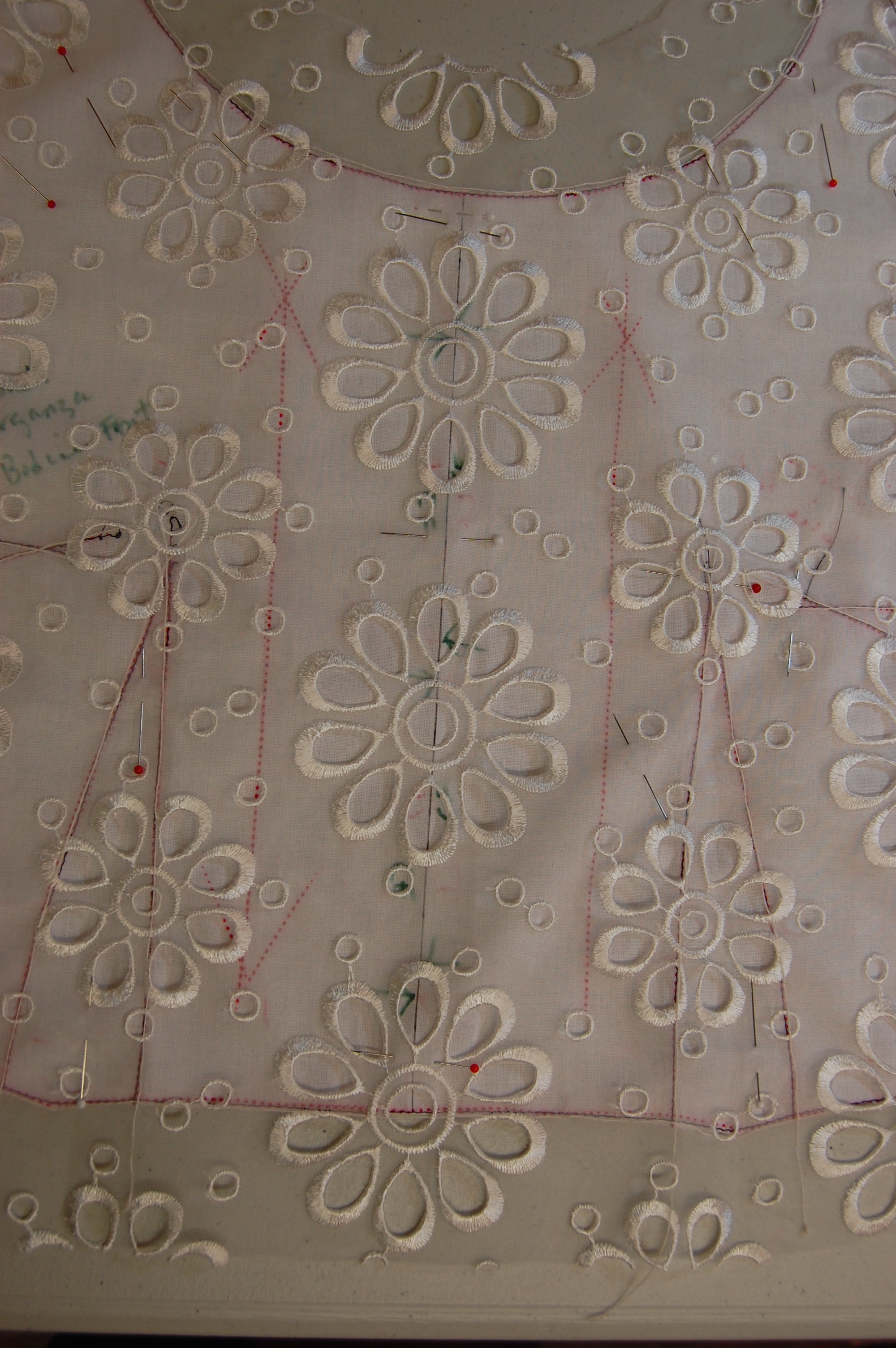
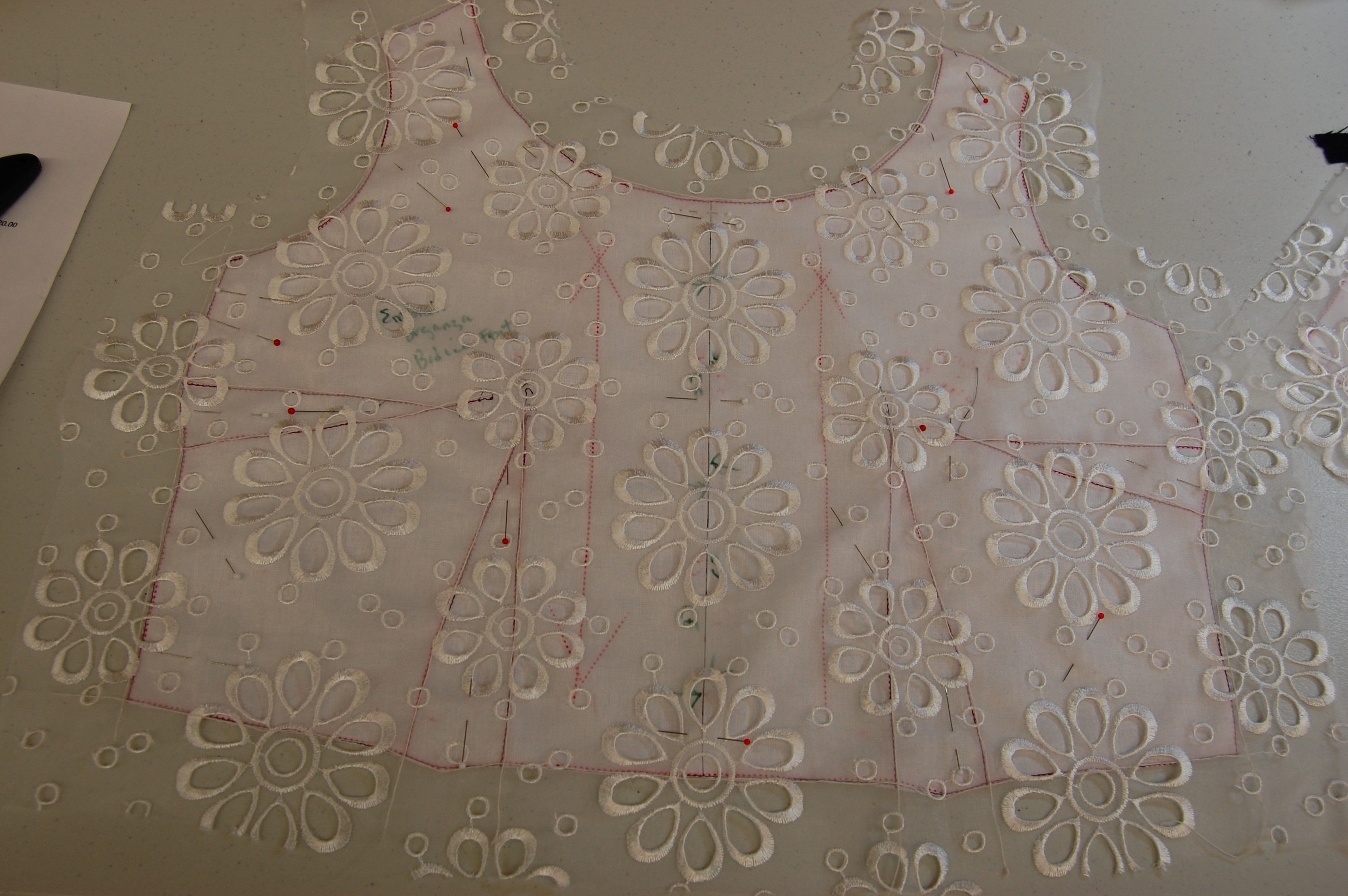
Once the underbodice was complete, I set about to start the embroidered silk organza overbodice. We played around with the placement of the motifs, making sure that two big “daisies” would not be right on top of the bust.

The Allure of Silk, pt 1


Small daisies close to the bust seemed to be okay.

Small daisies close to the bust seemed to be okay.

The back of the over bodice

The back of the over bodice

And this is what the embroidered silk organza would look like over the strapless under bodice.

And I wanted to see what the embroidered silk organza would look like over the strapless under bodice.  So pretty!

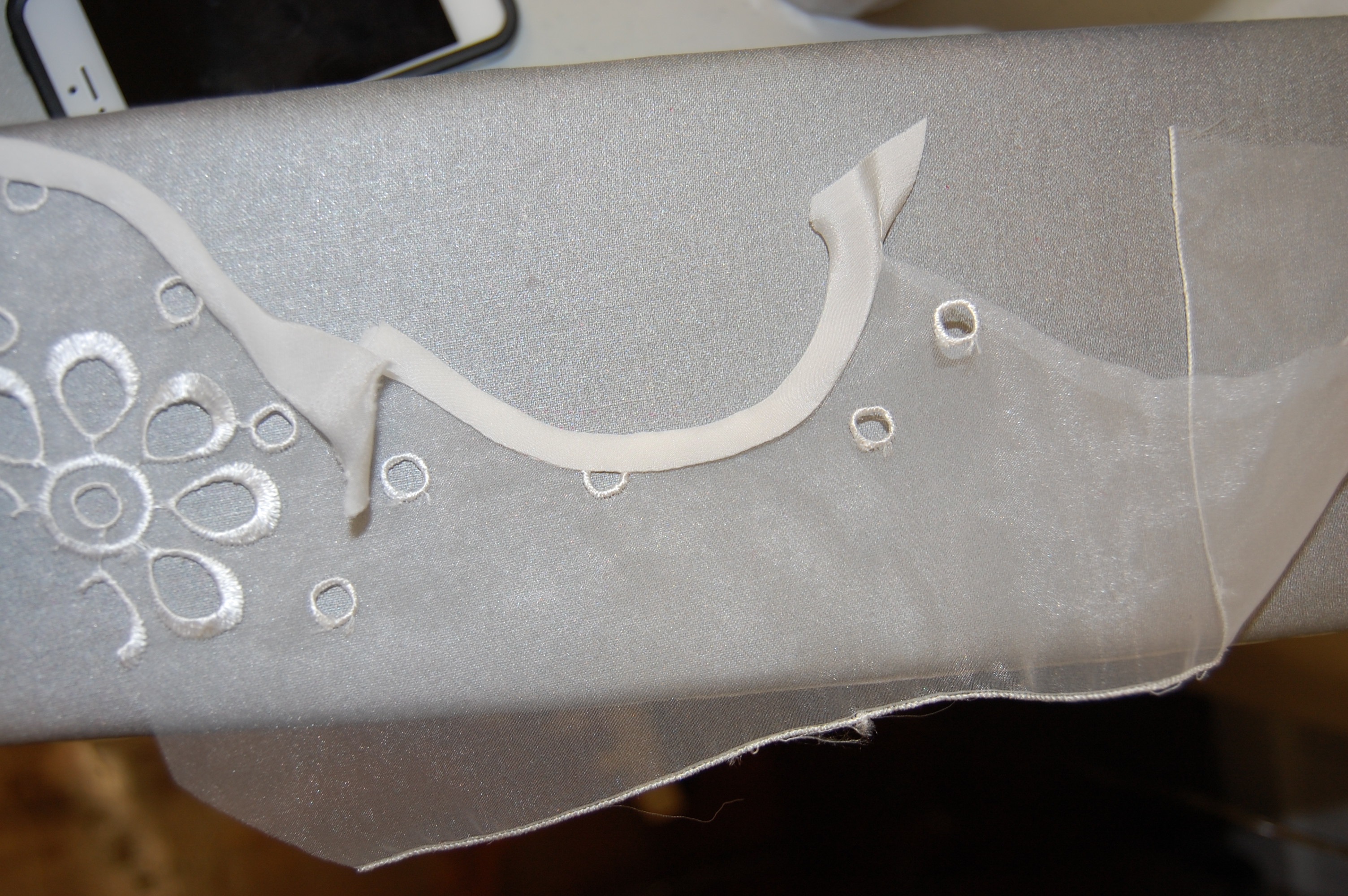
Interior seams were finished by hand, and darts were left as is, with no additional finishing. The neck and armhole edges were another story, as they would need to be bound in bias-cut crepe de chine. I found this very tedious and time-consuming and appreciated Susan’s suggestions and tips to help make these delicate finished edges as even as possible. First I practiced, then I sewed, then I took out stitches and started over again, carefully clipping away noticeable bulk from the embroidery in that narrow edge.

Practice!

Practice!

Working on that narrow binding. . . .

Working on that narrow binding. . . .

Once both bodices were completed, I basted them together at the waist. The only other place they are joined is at the back seam where the zipper will be inserted.

It surprised me that no other joining of these two bodices would be needed, but once again, I have found that the unexpected often makes the most sense when it comes to couture sewing!

40 Comments

Filed under couture construction, Mid-Century style, sewing in silk, Uncategorized, underlinings

A Noisy Spring

The chatter is endless and getting louder. Whenever I walk into my sewing room, I hear it, and there is no avoiding it. All those lengths of linen, most of it vintage Moygashel, are vying for my attention, hoping they might be selected for a starring role in my sewing agenda for Spring and (now, mostly ) Summer of 2015. Is there any fabric I love more? Probably not, although of course I love woolens, silks and cottons, too. However, there is something about linen, with its crispness, its durability, its versatility, and its ability to evoke a summer day in the midst of winter that totally captivates me.

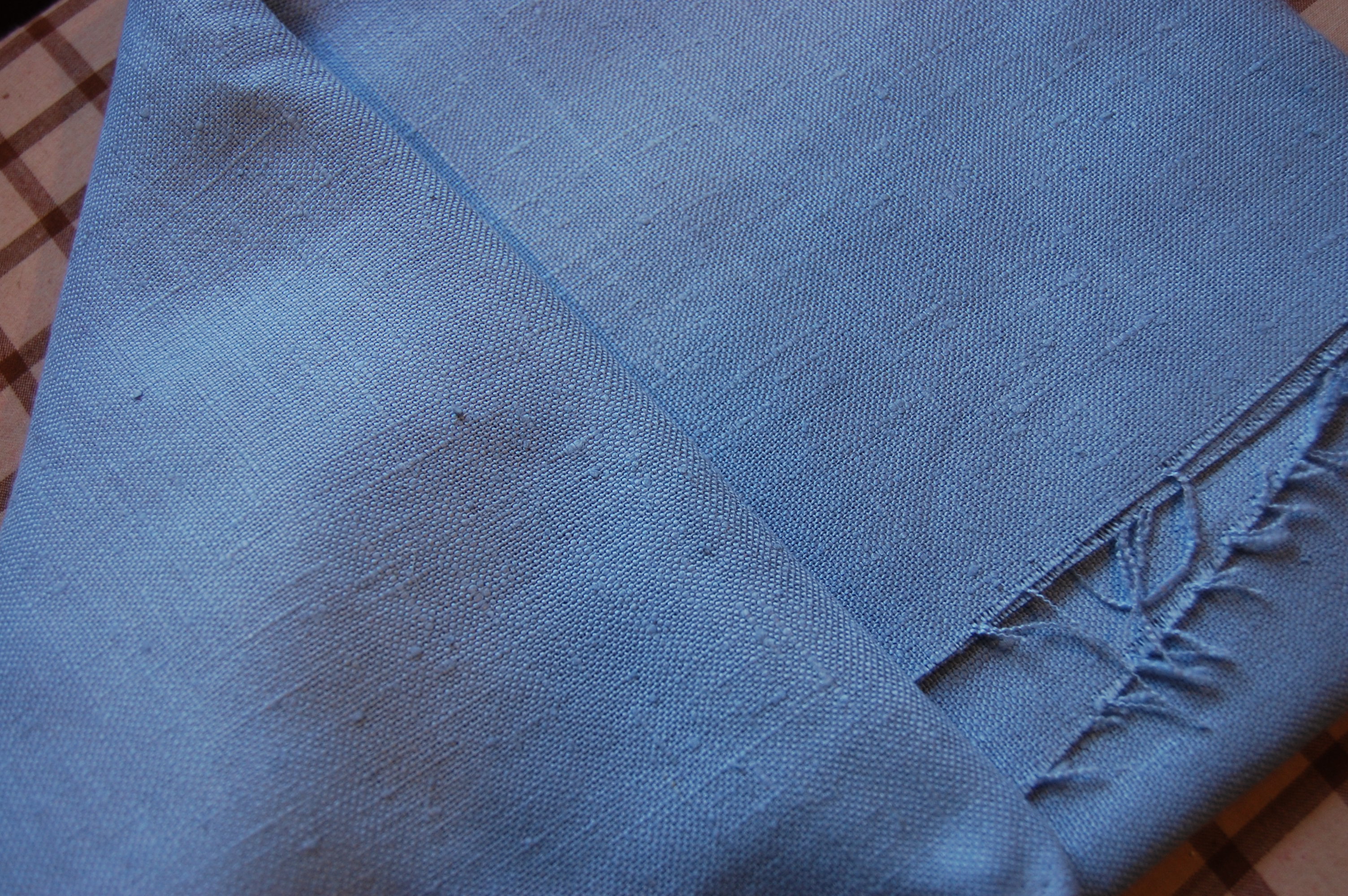
There is linen that looks serene:

Lovely pale blue

Lovely pale blue

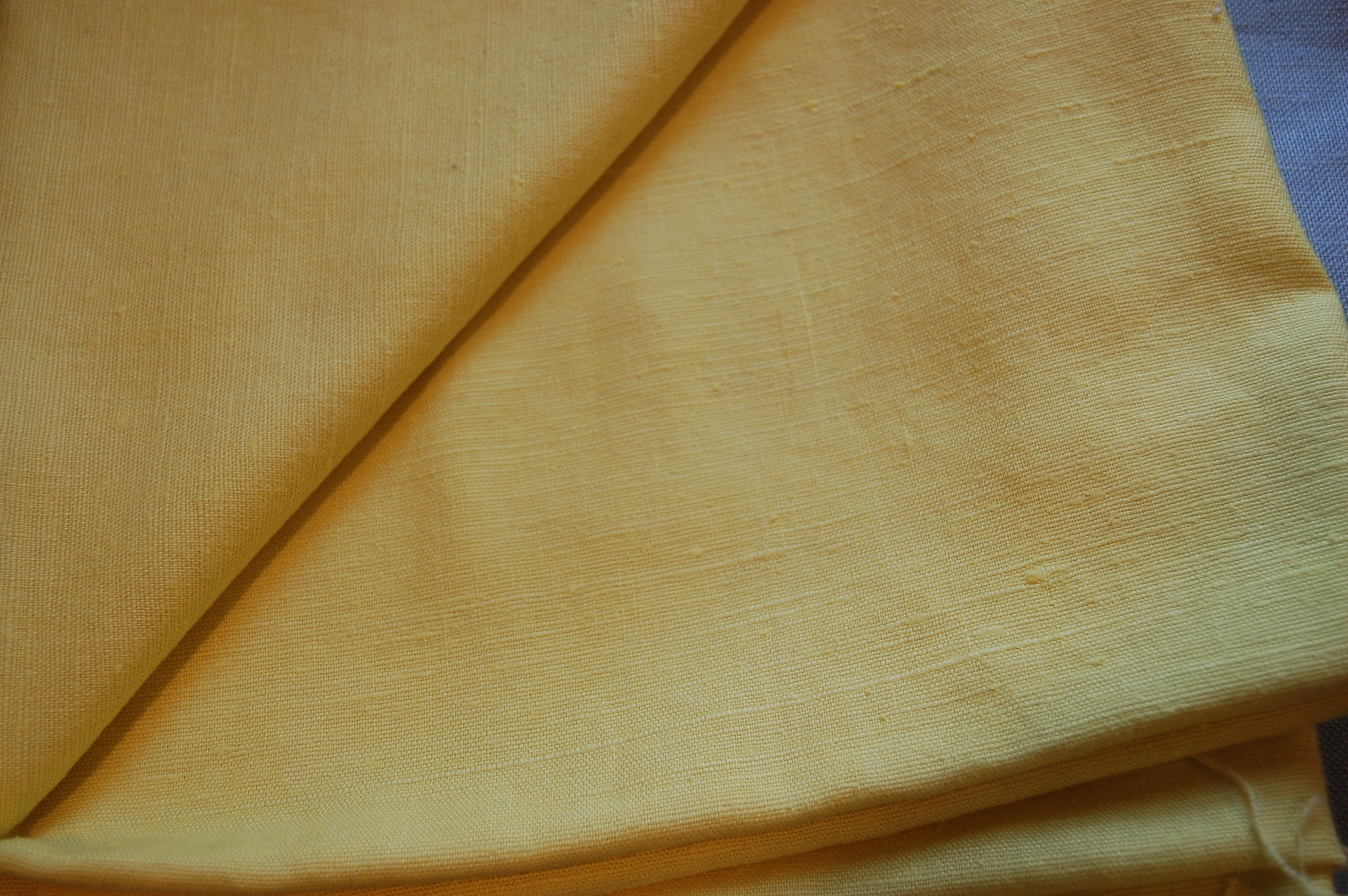
And quiet pale yellow

And quiet pale yellow

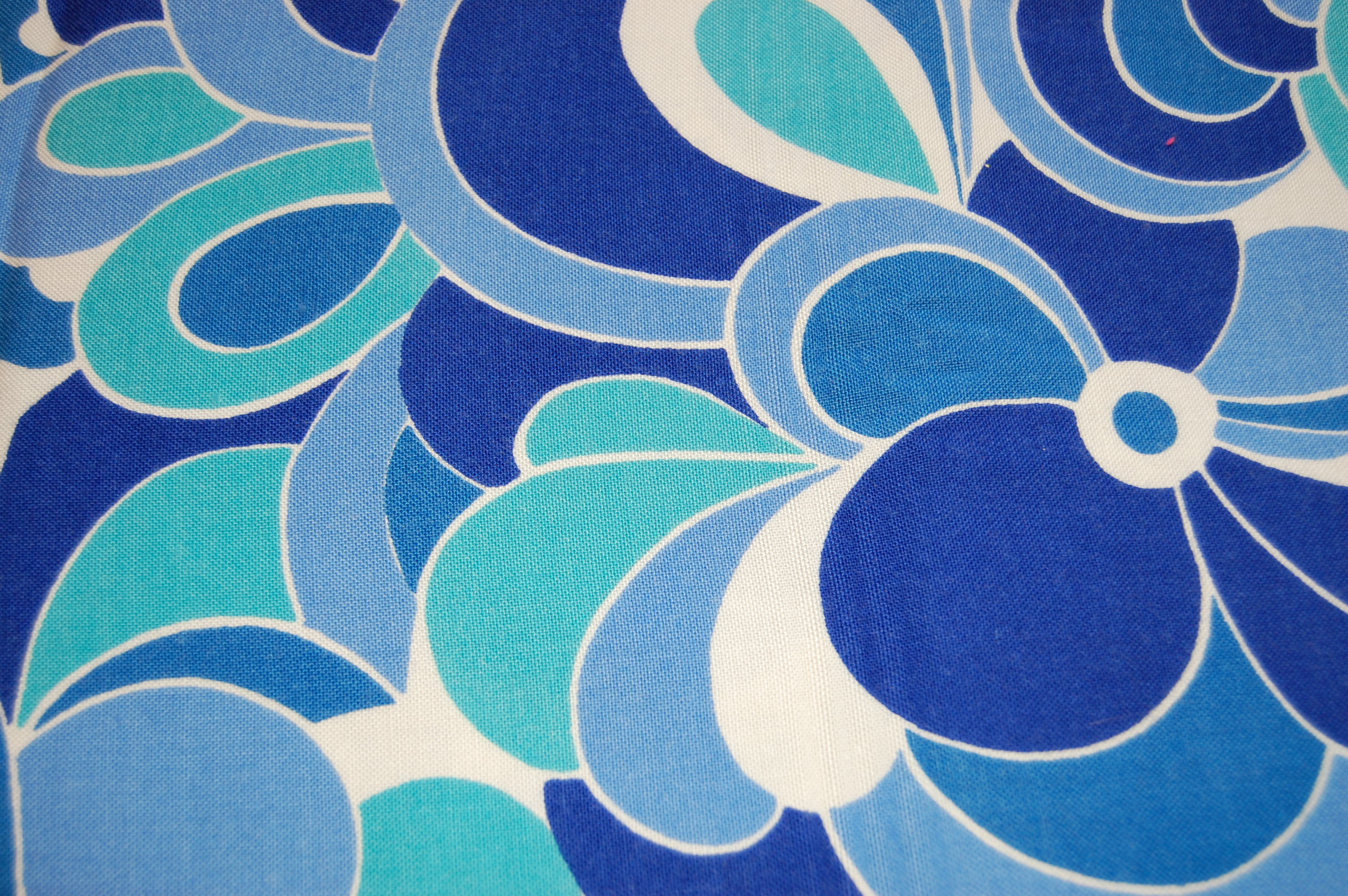
There is linen that looks a bit wild and crazy:

This piece is actually a linen/rayon blend, which has lovely hand to it.

This piece is actually a linen/rayon blend, which has a lovely hand to it.

Big, bright daisies!

Big, bright daisies!

There is linen that says “Look at me!”:

Walking in a field of flowers!

Walking in a field of flowers!

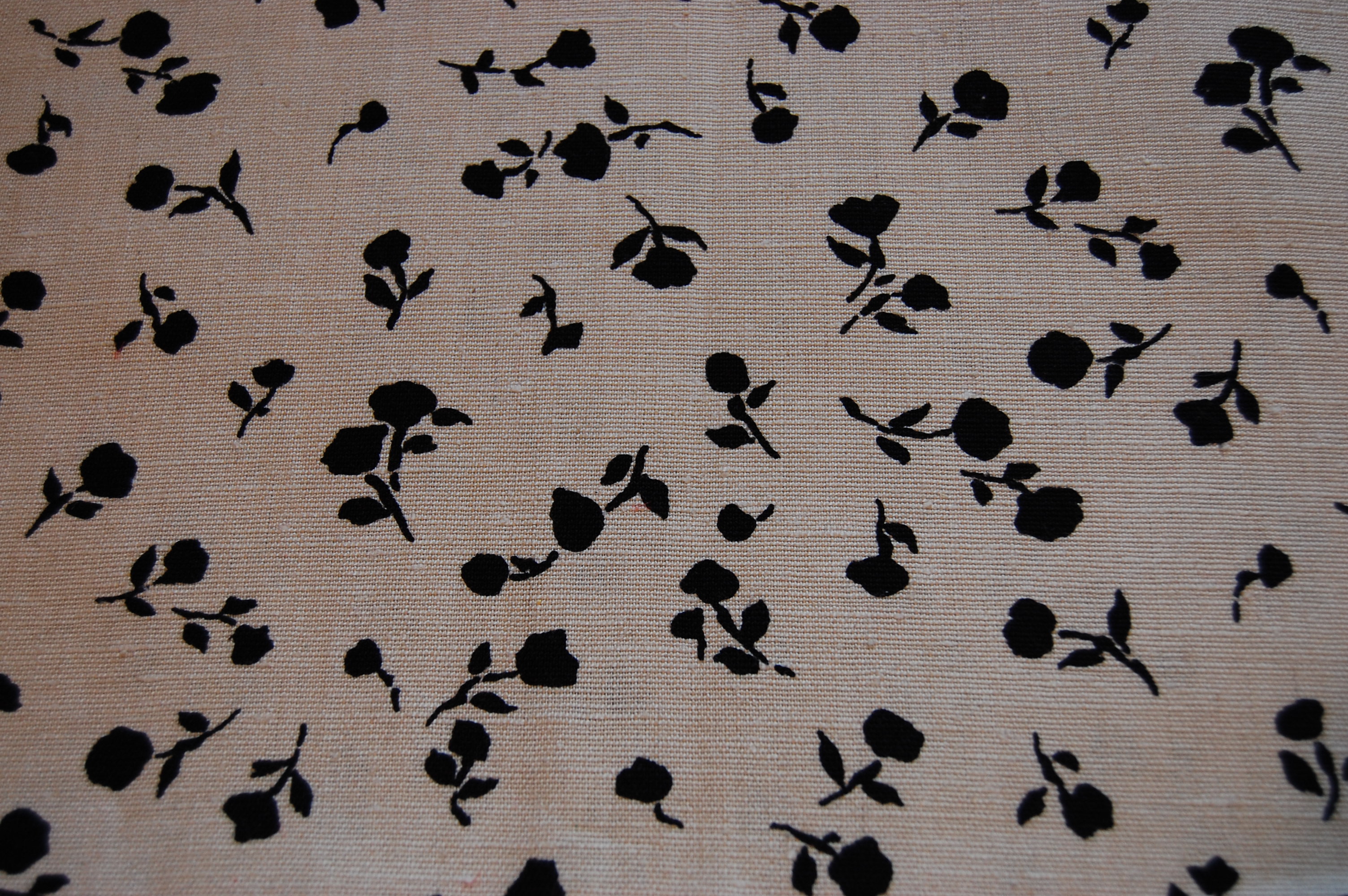
There is linen that is demure:

A very early 1950s' linen, petite black flower silhouettes on a pale ecru background.

A very early 1950s’ linen, petite black flower silhouettes on a pale ecru background.

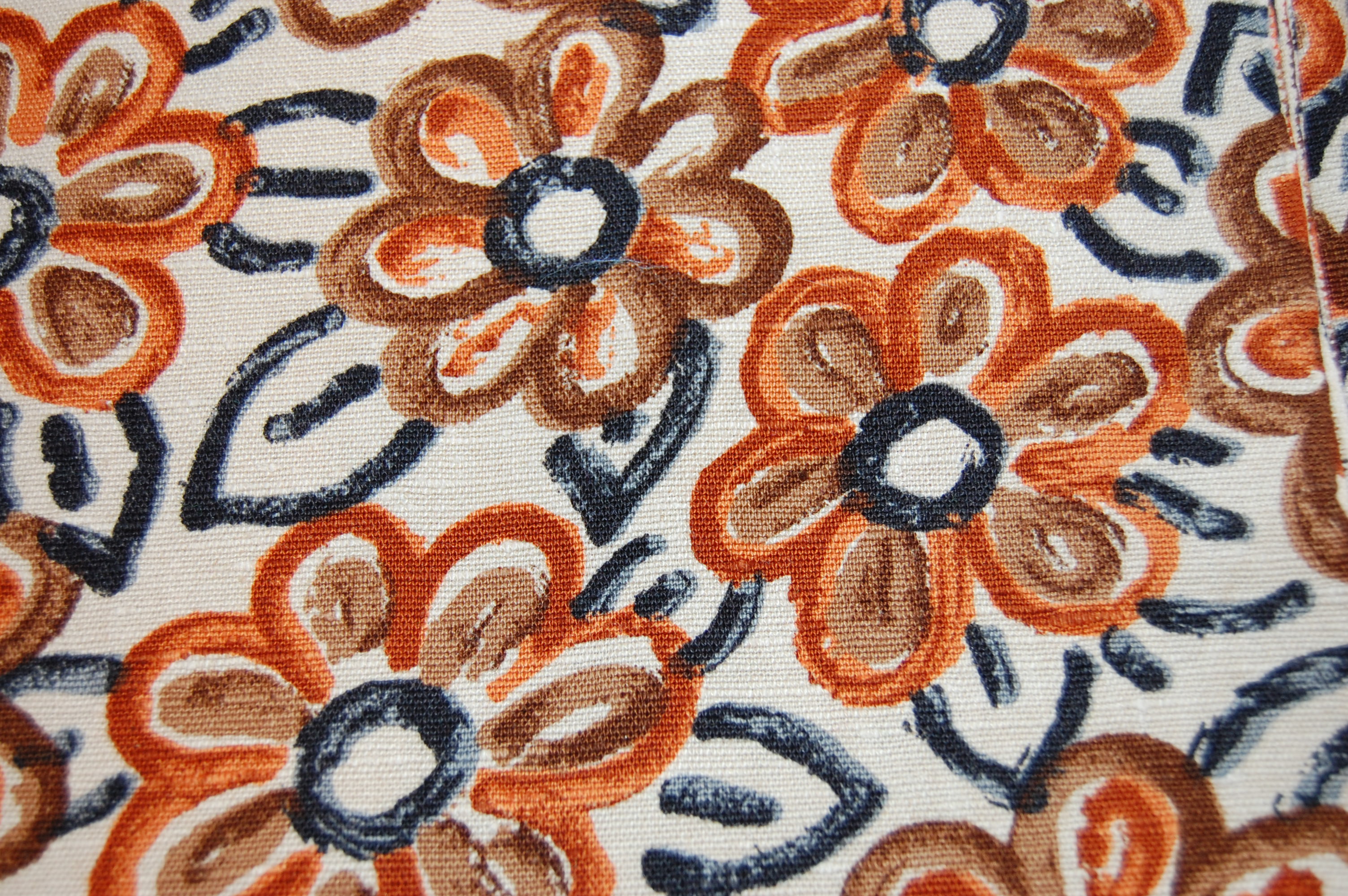
There is linen that is happy:

Navy, rust and brown - perfect for early Fall.

Navy, rust and brown – perfect for early Fall.

There is a lot of linen in my fabric collection! Last year I was able to complete three linen dresses (1; 2; 3)during the warmer months. This year I will not be so productive, for a number of reasons, although I haven’t given up hope of making a linen coat and a coordinating dress. The question then becomes, which piece (or pieces) of linen do I choose for such an undertaking?

While contemplating the answer to that question, I am starting another project out of necessity: a dress to wear to a “black tie” event in early July. It’s an exciting project for me as it is my focus while I spend another week in Baltimore, Maryland with Susan Khalje and other dedicated dressmakers. The start of our week also began with lots of “chatter”: Alice Wildes of Mendel Goldberg Fabrics arrived on Sunday (the day before the official start of our class) with bolts and bolts of gorgeous and glorious fabrics. Did I succumb to any of these delights? What do you think?

A Noisy Spring

A Noisy Spring

An amazing silk charmeuse . . .

An amazing silk charmeuse . . .

. . . with all the inspiration one would need!

. . . with all the inspiration one would need!

Among the projects being started in our class are: a wedding gown for a daughter; a fancy dress for a grown daughter; a dress reminiscent of something Myrna Loy would have worn mid-century; a suit; shift dresses and “day” dresses; cocktail dresses; a dress and jacket; and, of course, my own dress, to be made from silk taffeta and embroidered silk organza.

A Noisy Spring

Those aforementioned noisy linens will just have to wait a little longer – and share some of their space in my fabric closet with newly acquired silks and wools. There is always room for fabric!

21 Comments

Filed under Linen, Moygashel linen, Uncategorized, Vintage fabric

Mellow Yellow

How did I go from this . . .

A collared overblouse.

A collared overblouse.

to this?

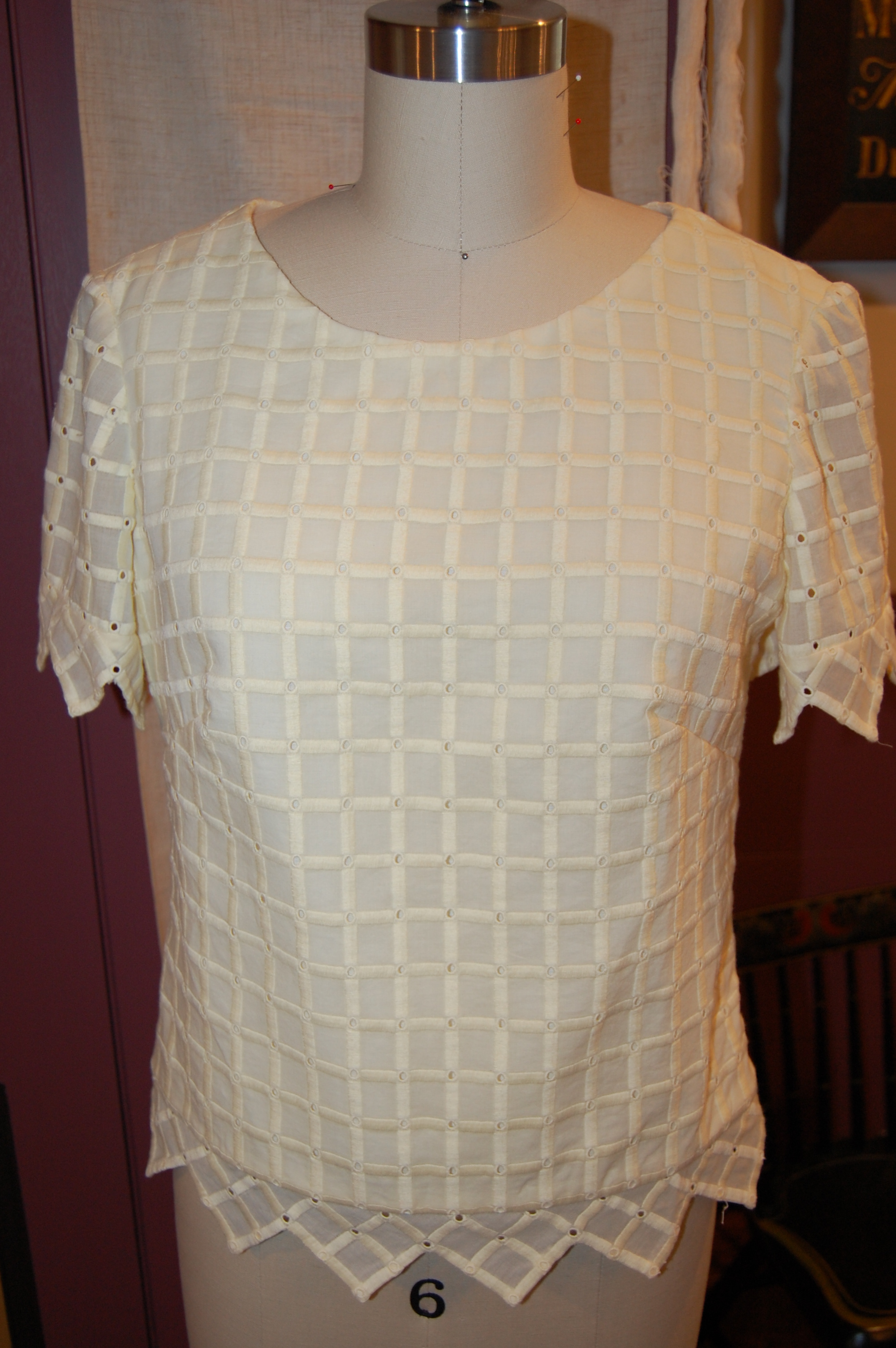
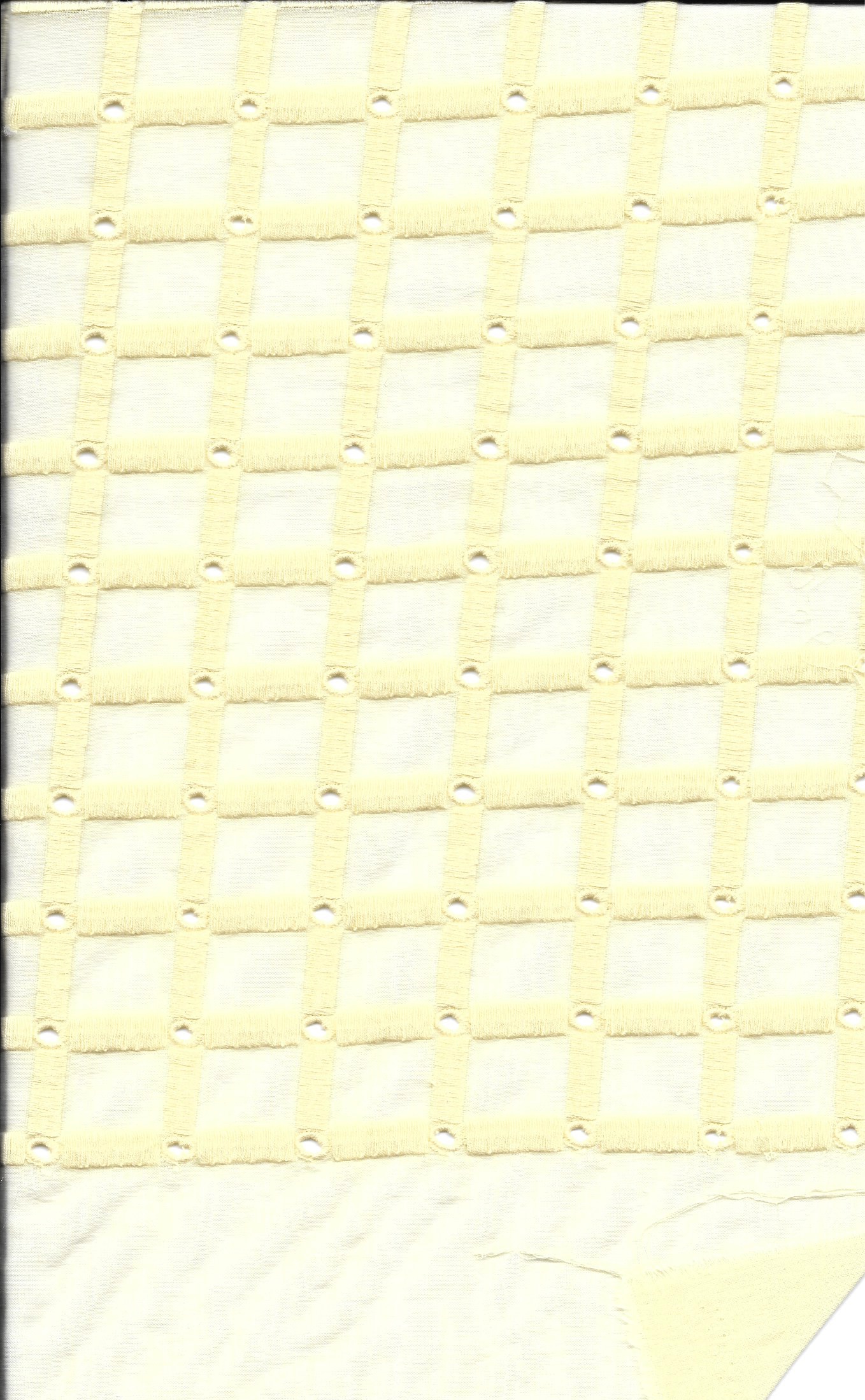
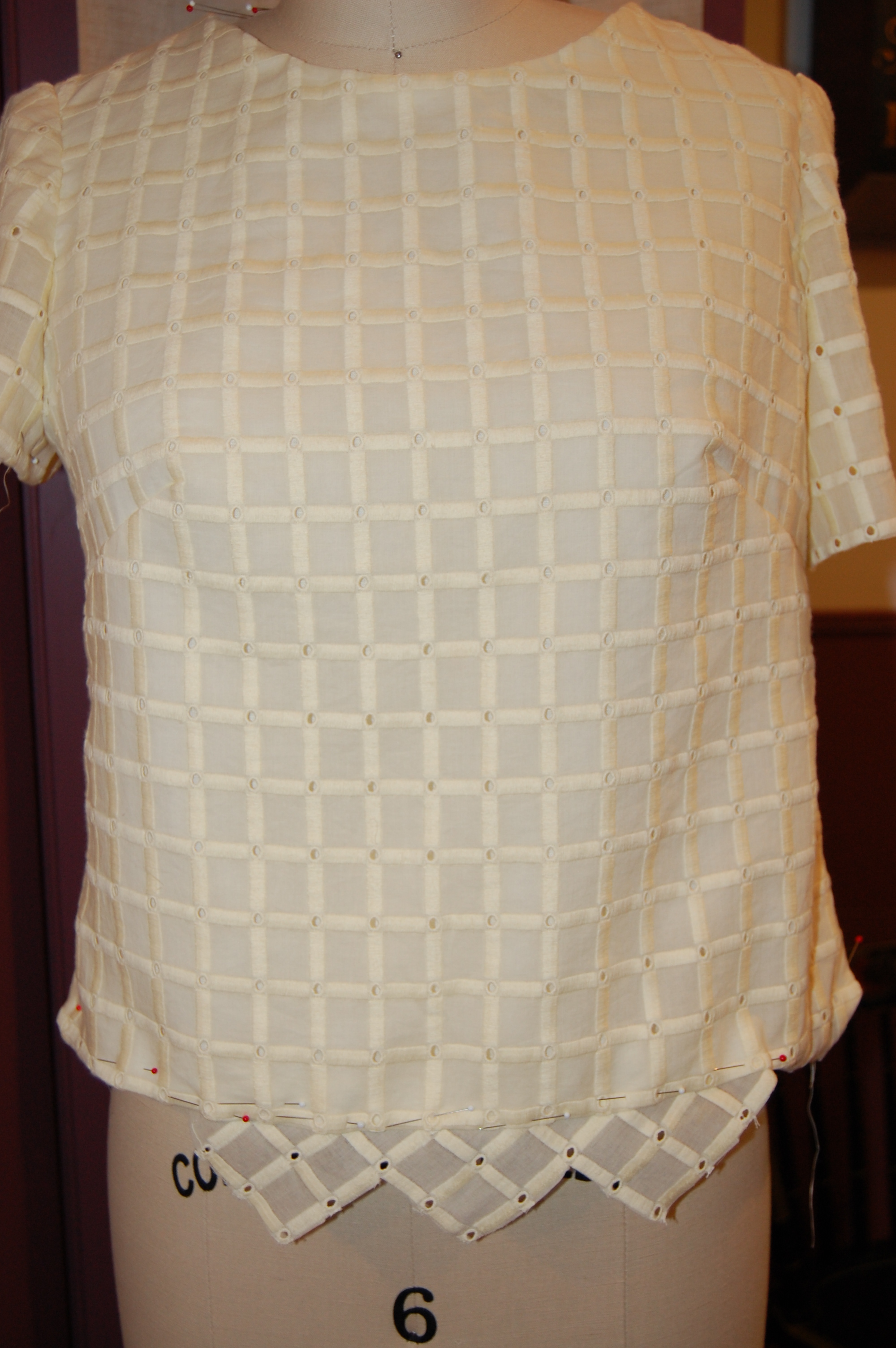
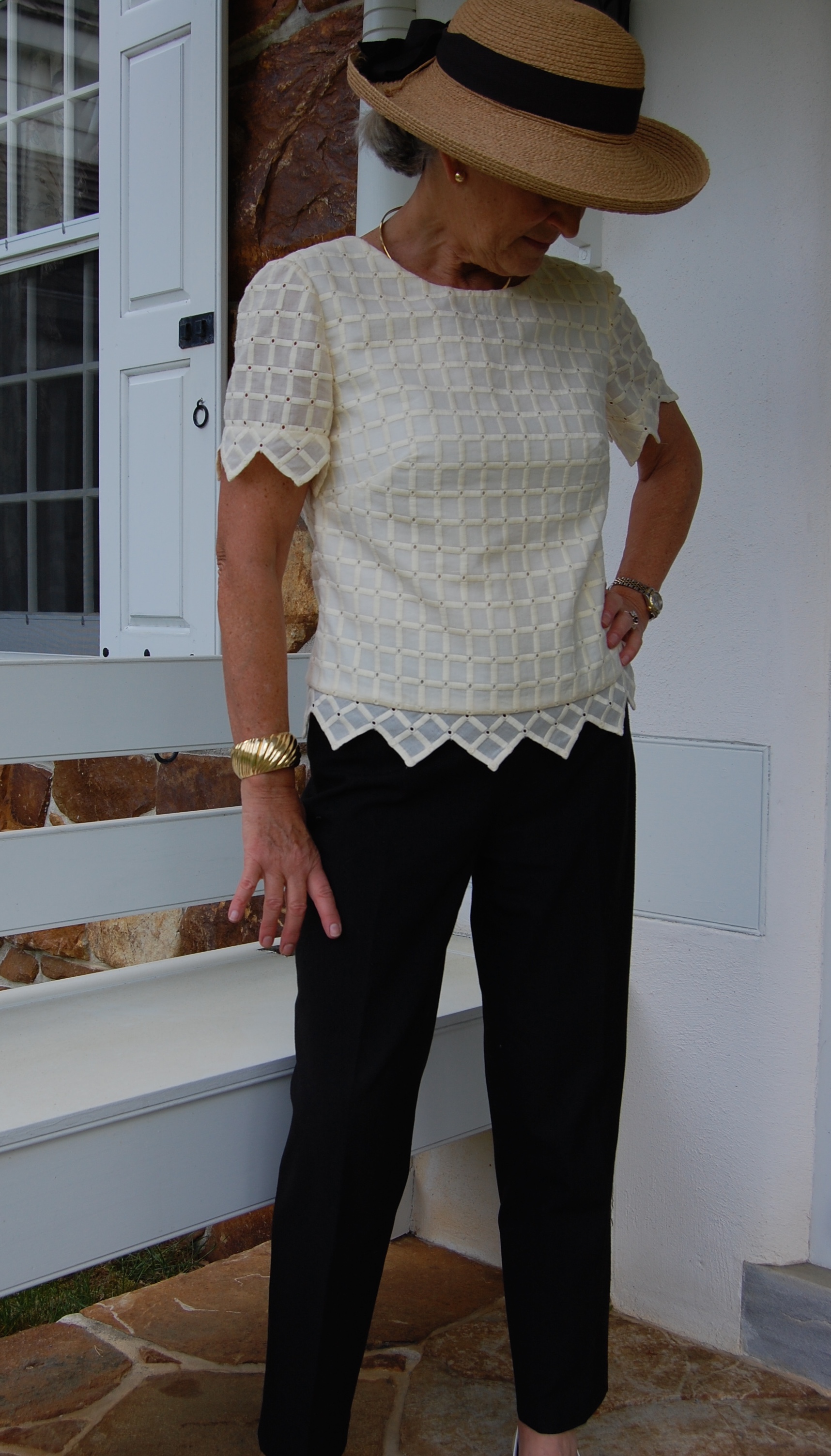
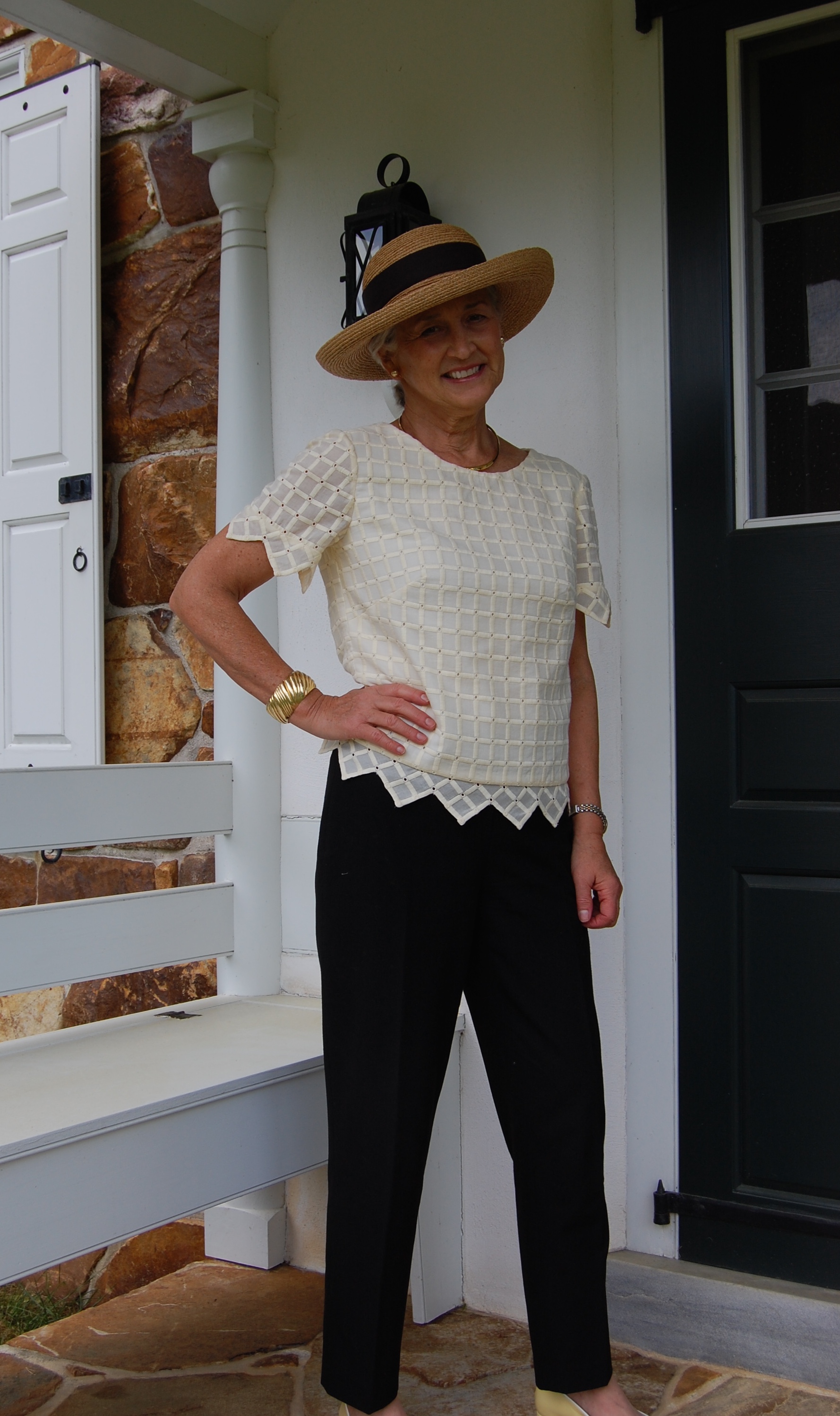
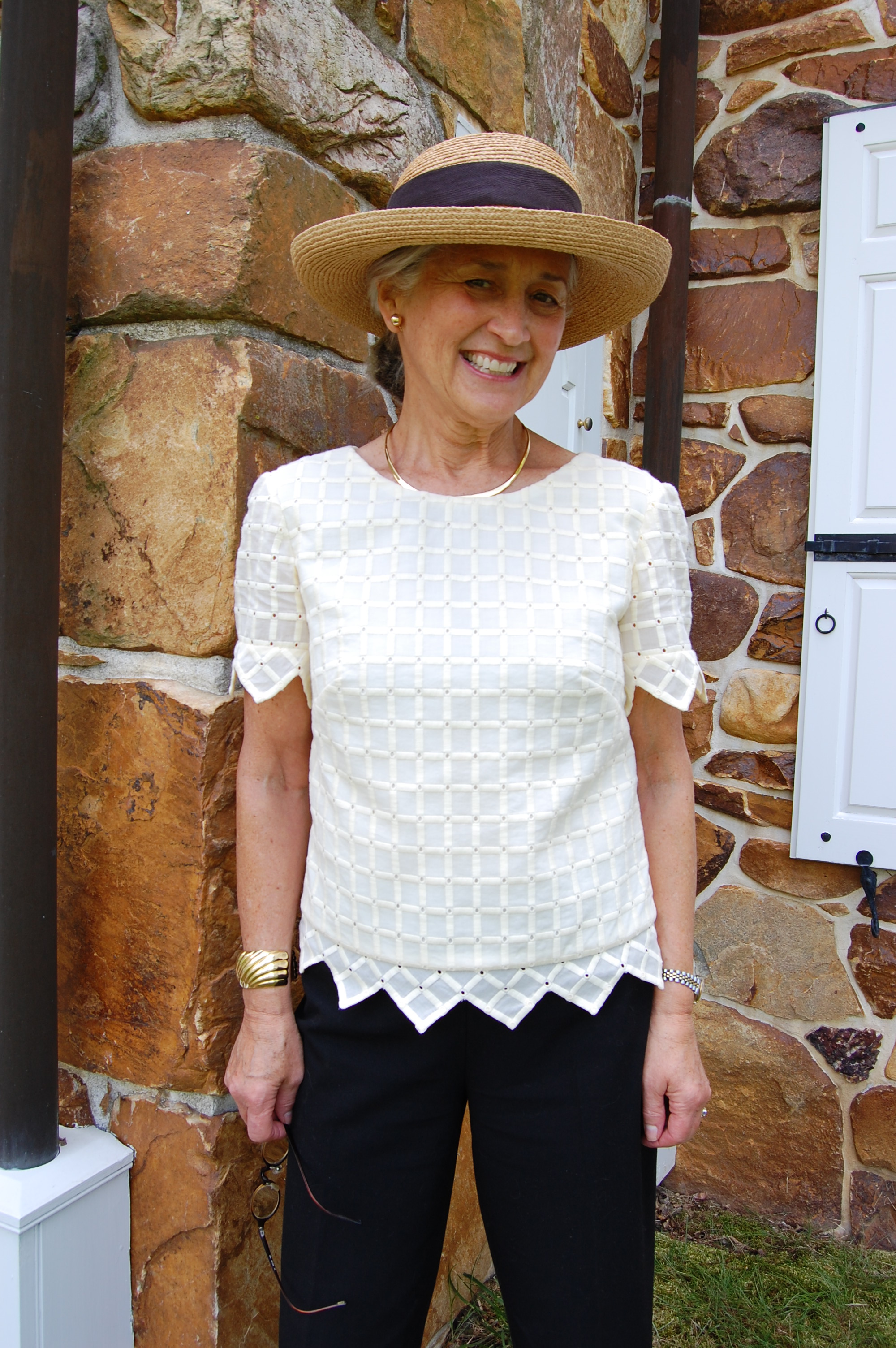
Mellow YellowIt all started about a year ago when I saw this fabric – called Devonshire Cream Geometric Cotton Eyelet Batiste on the Britex Fabrics website. I sent off for a swatch and then ordered enough for a “blouse” although at the time, I wasn’t so sure what kind of a blouse it would be. I knew I would want sleeves in it. While the body of the blouse would need to be lined, the sleeves could be unlined to show off the gauzy design in the eyelet.

Eyelet overblouse - fabric

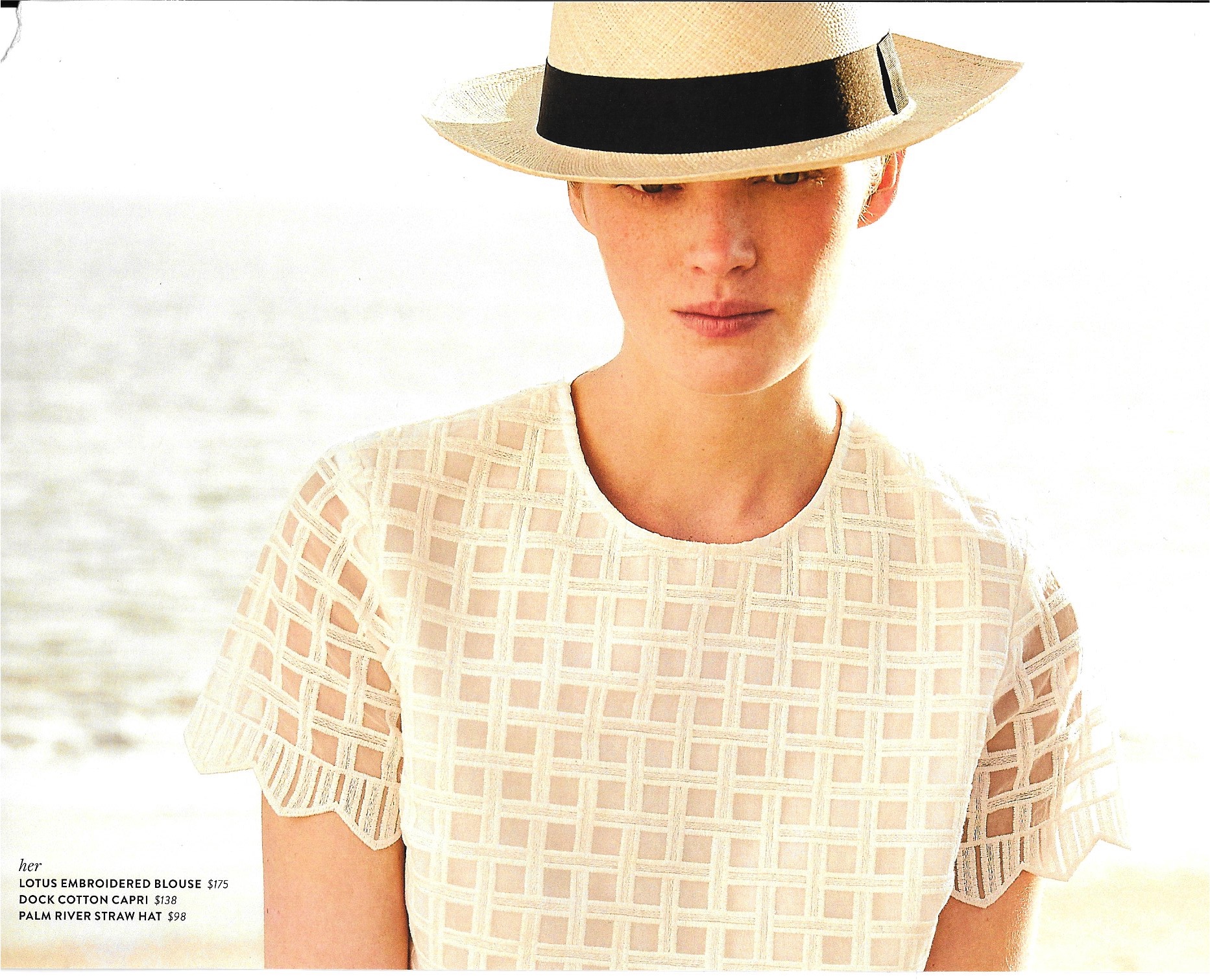
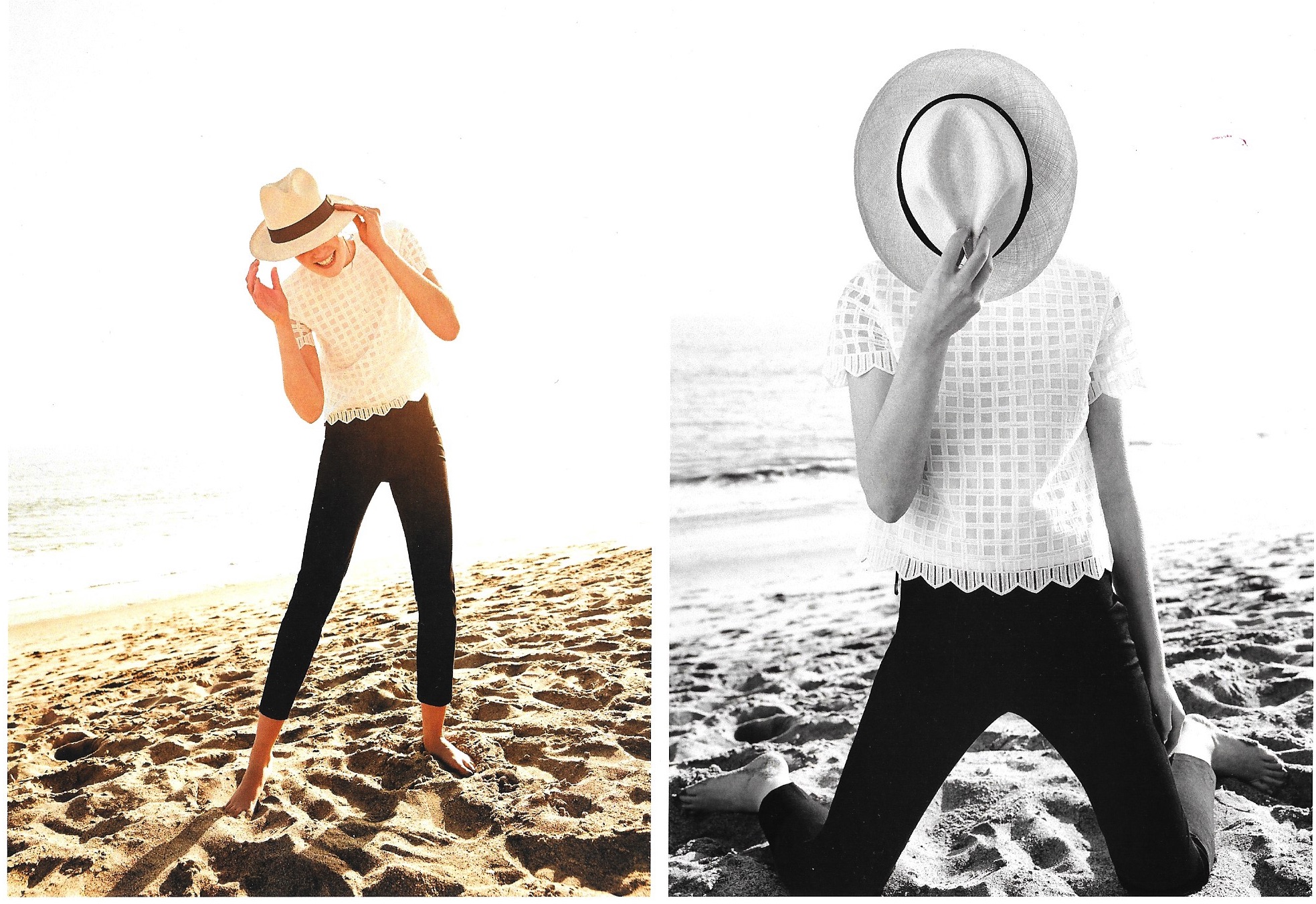
Inspiration finally struck a short few weeks ago when I got a small catalogue from J McLaughlin clothing company. Pictured in it was this “Lotus Blouse”:

Eyelet overblouse - JMcL #2-2

Eyelet overblouse - JMcL #2-3

As soon as I saw the “square” design in the fabric, I thought of my eyelet – and then it did not take long for me to decide to make my own version of that blouse. The construction details? Well, I knew I would have to make those up as I went along. I started with the pattern shown above, a classic early 1960s short overblouse that zipped up the back. What could be better? It really didn’t matter that the neckline would be changed, sleeves added, inches added to the length – the basics were there and so I made a muslin/toile.

I cut an underlining for the body of the blouse from a lightweight linen/cotton blend that I always keep on hand. I marked the seam lines of that underlining with waxed tracing paper and then used it as my “pattern” for the eyelet, which allowed me to make sure that all the lines and corners of the eyelet matched across seams. I hand basted the underlining and the eyelet together which made machine sewing the darts and seams very precise.

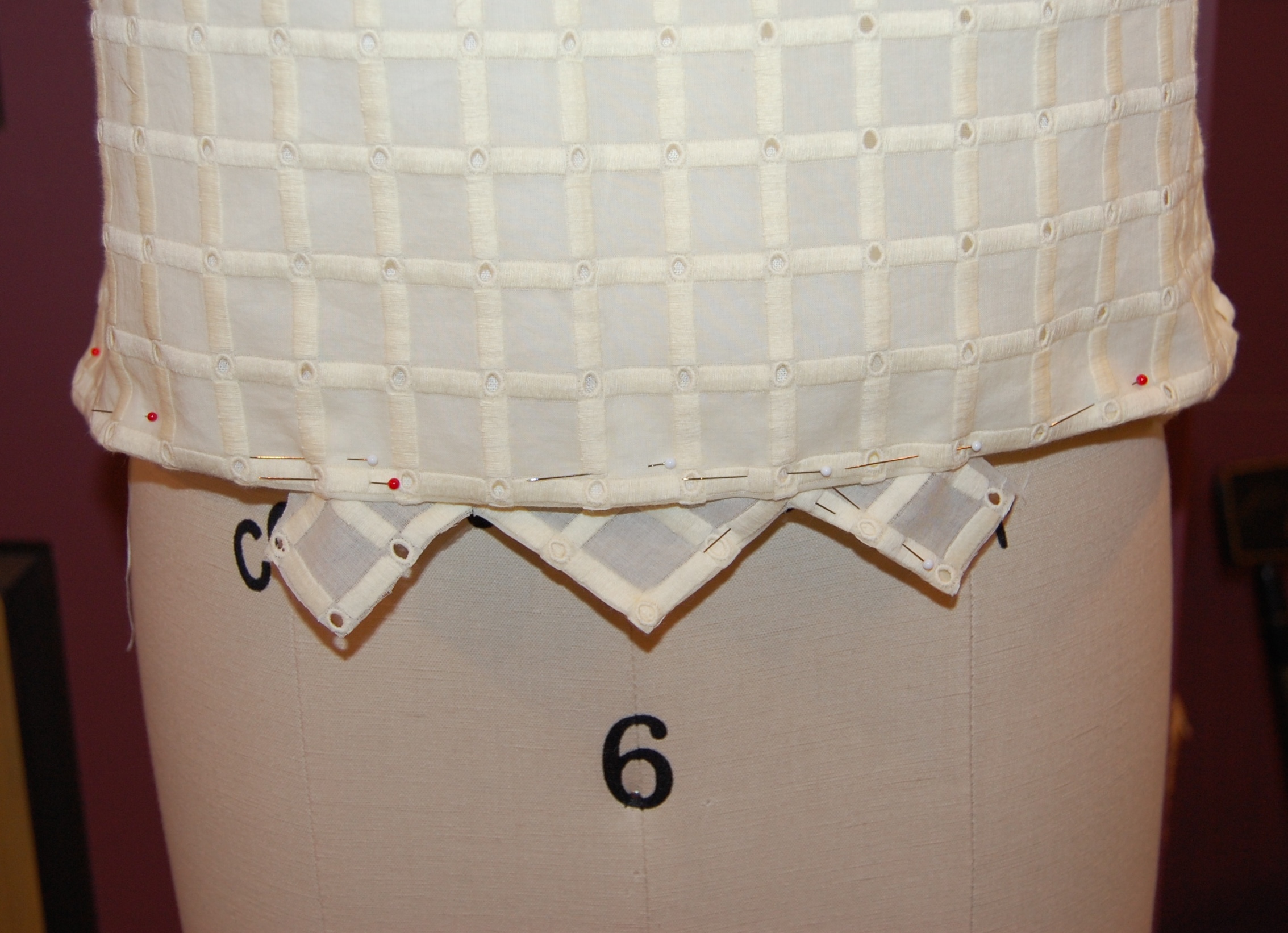
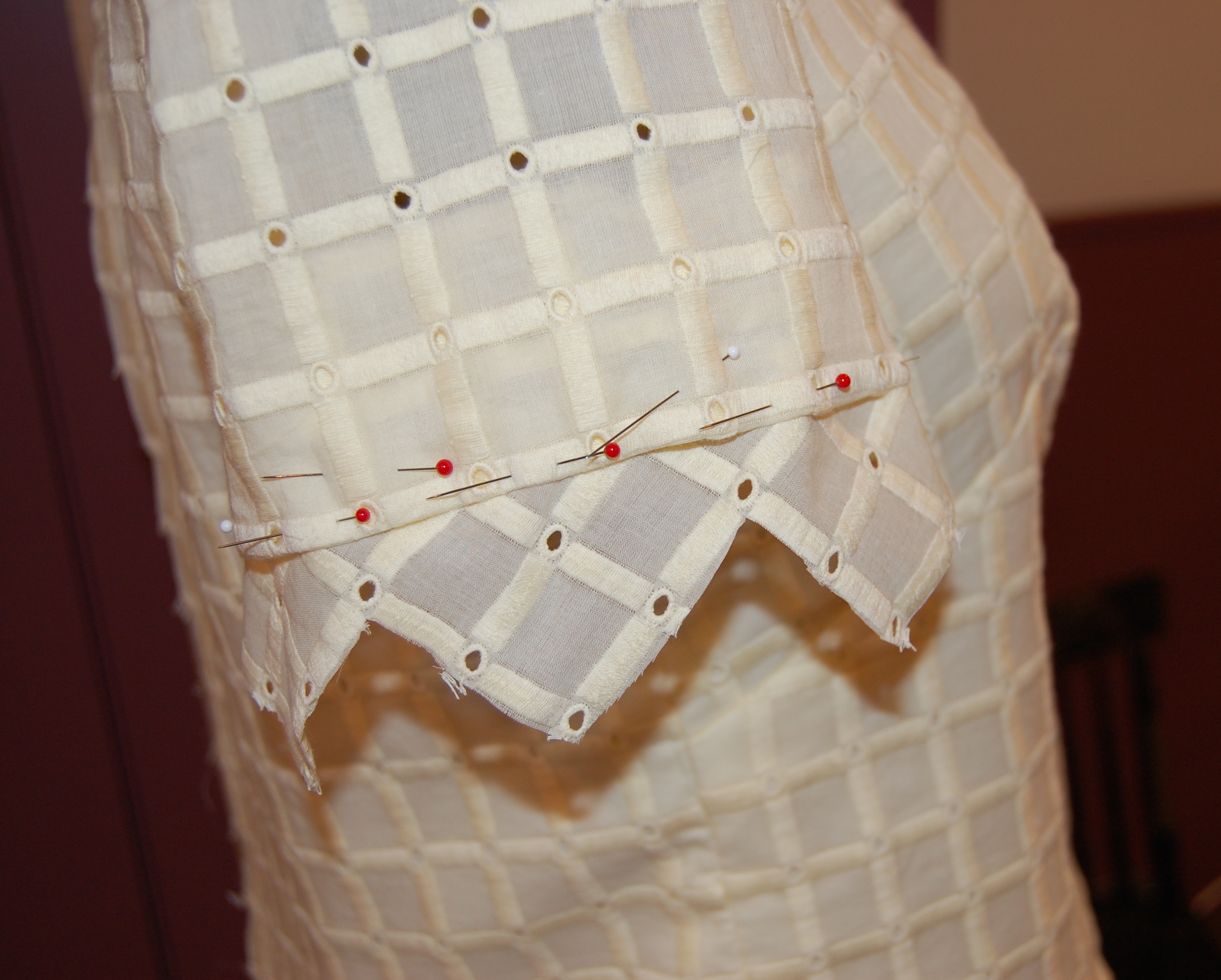
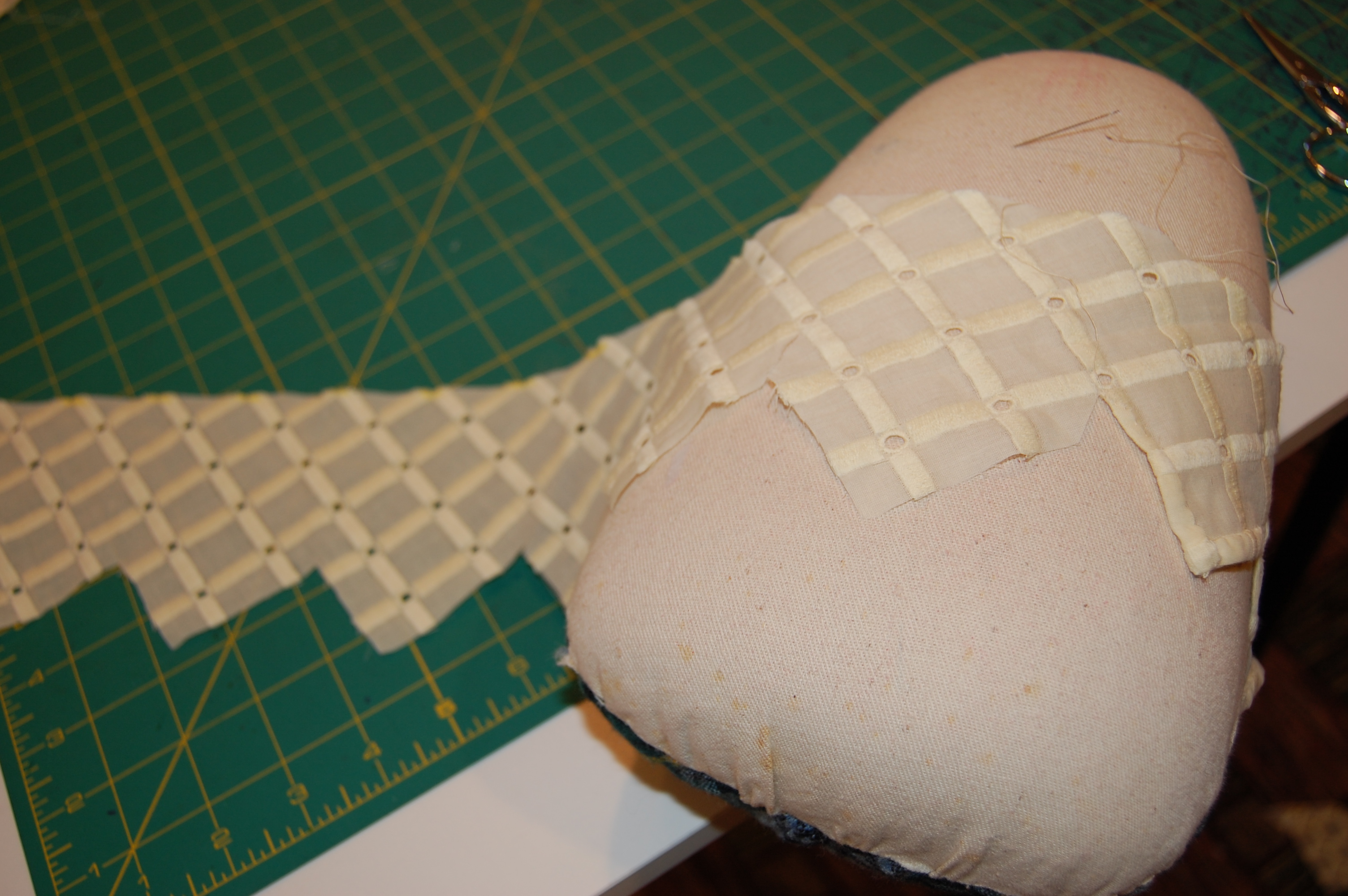
In order to put a sawtooth edge on the sleeves and the bottom of the blouse, I knew I would have to cut fabric on the bias. But first I had to decide how deep to make this self-trim. I did some experimenting to figure that out:

Should it be this narrow?

Should it be this narrow?

Or would a wider trim be   better?

Or would a wider trim be better?

I decided the wider trim was necessary to make the proper impact.  Here it is pinned onto one sleeve.

I decided the wider trim was necessary to make the proper impact. Here is a sample of it pinned onto one sleeve.

Once I decided the proper width of the trim, I set about hemming it by hand.  Here is a photo of that “hemming” process.

On the right you can see one "peak" already stitched.

On the right you can see one “peak” already stitched.

Having the trim cut on the bias gave me flexibility in attaching it to the sleeve and bottom edges. Then finishing the inside raw edges provided its own challenge. I had already used Hug Snug rayon tape to finish the interior seams. The soft, non-bulky nature of this wonder tape gave me the idea to use it for finishing the armscyes and the interior sleeve edges.

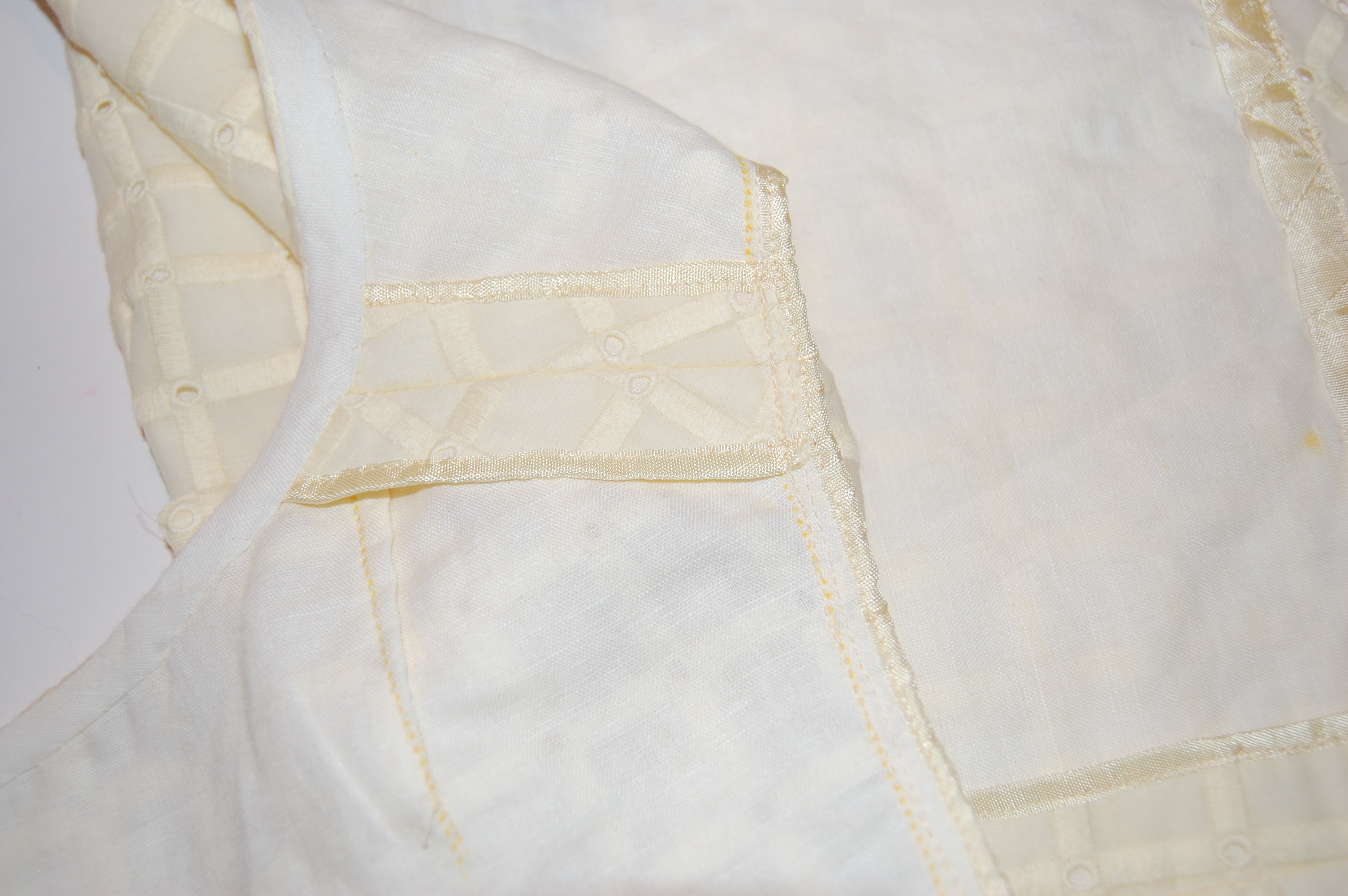
I made a bias tape out of the underlings fabric to bind the neck edge.  Seam edges are encased in Hug Snug.

I made a bias tape out of the underling fabric to bind the neck edge. Seam edges are encased in Hug Snug. Click on the photo to see more detail.

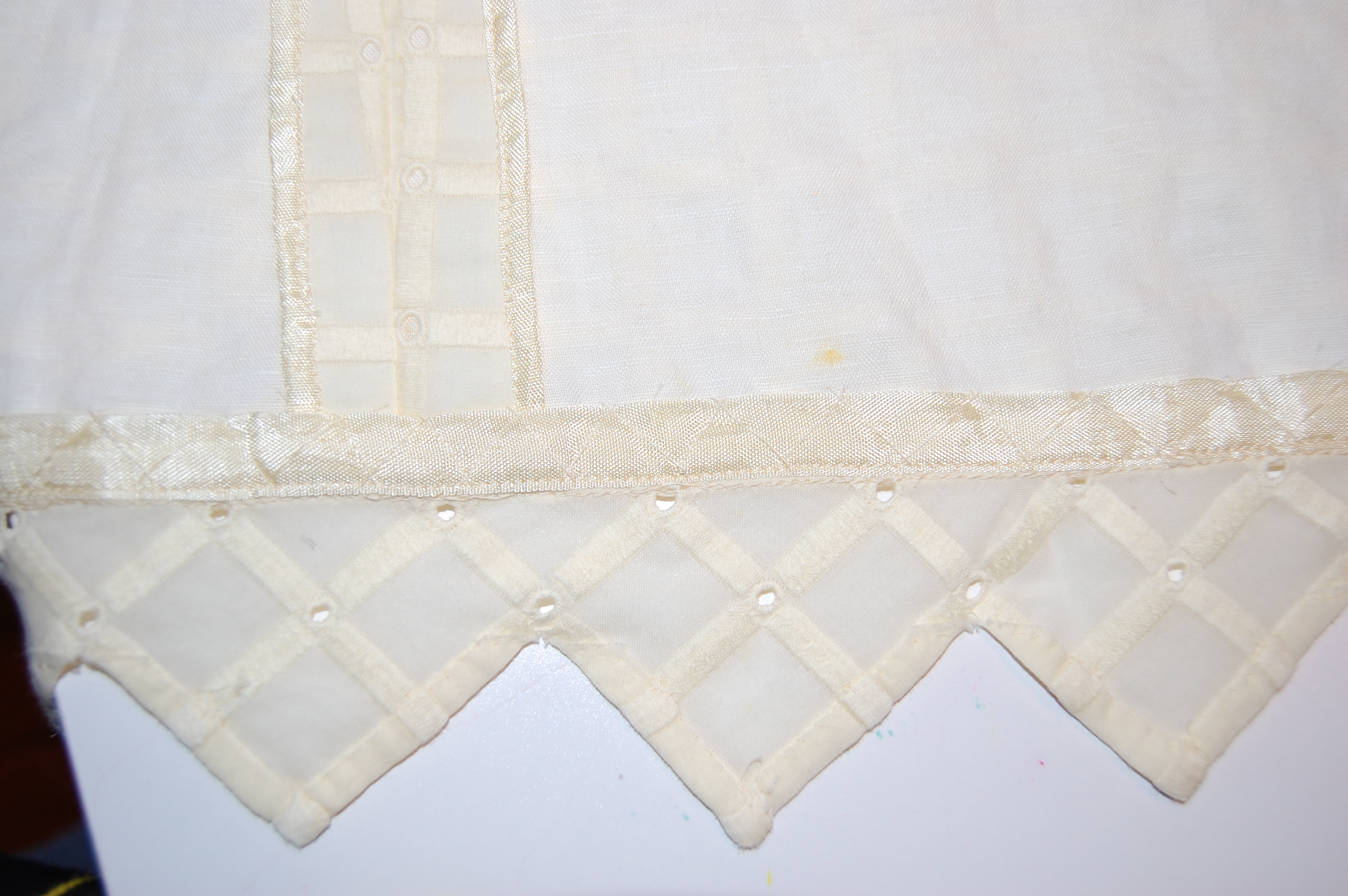
The actual hem on the blouse presented me with three edges (the fashion fabric, the underlining, and the bias trim) to control and hold together. I used Hug Snug again, this time flat and sewn with a catchstitch (a fabulous idea I just got from Lilacs and Lace blog, which I will use again and again! Thanks, Laura Mae!)

The catch stitch is done across the width of the Snug Hug tape.  It is the perfect technique for this application.
The catch stitch is done across the width of the Snug Hug tape. It is the perfect technique for this application.  Again, click on the photo for more detail.

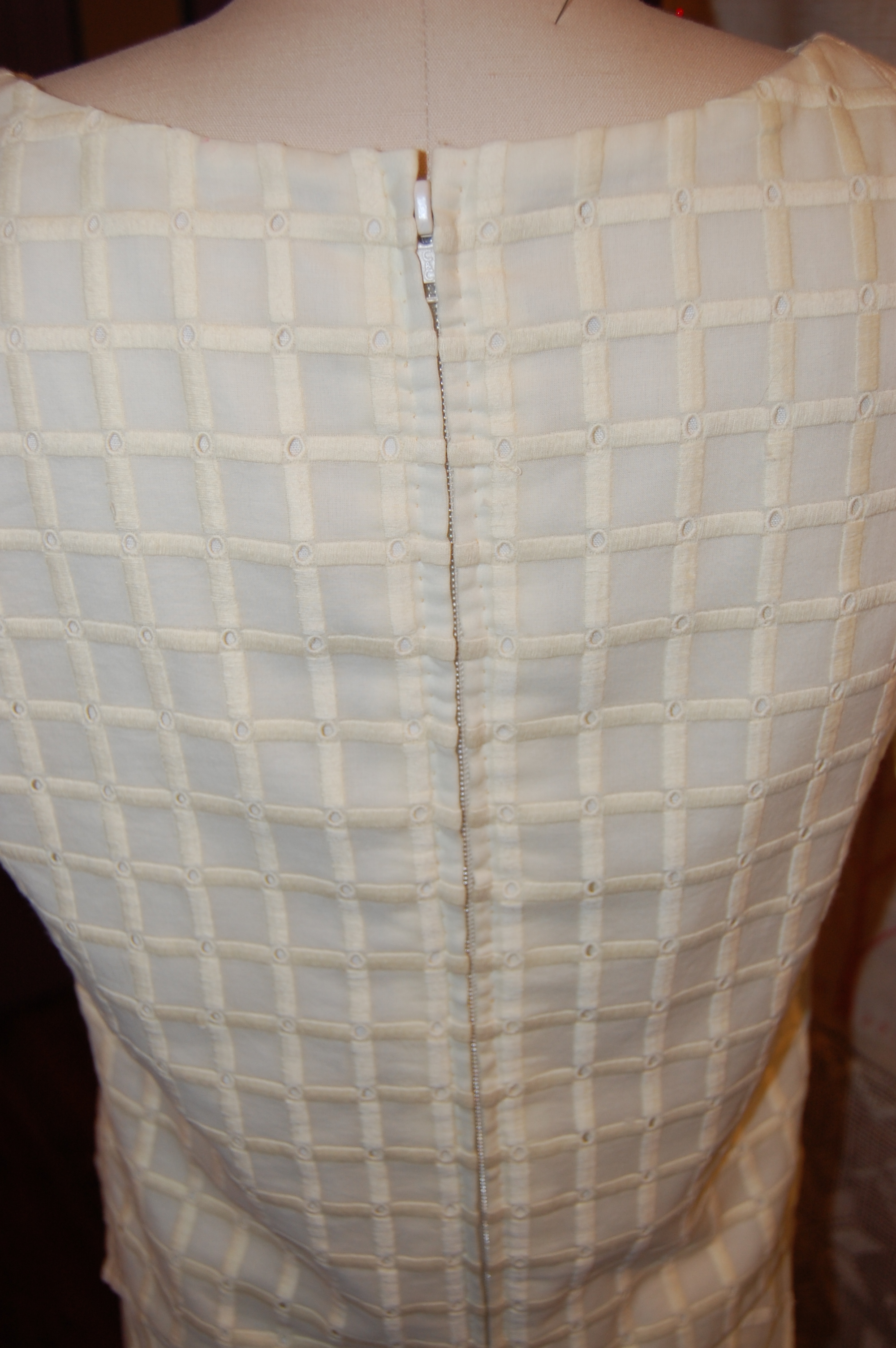
I had some difficulty finding an 18” separating zipper that was lightweight enough for this blouse. I still think the one I finally ended up using is a bit heavy, but until I find another one, this one will have to do.

Mellow Yellow

I still need to add a hook and eye at the top!

I have always loved overblouses. They are comfortable, classic, versatile, and just a little bit different of a look. I think this one fits that description well – I like it!

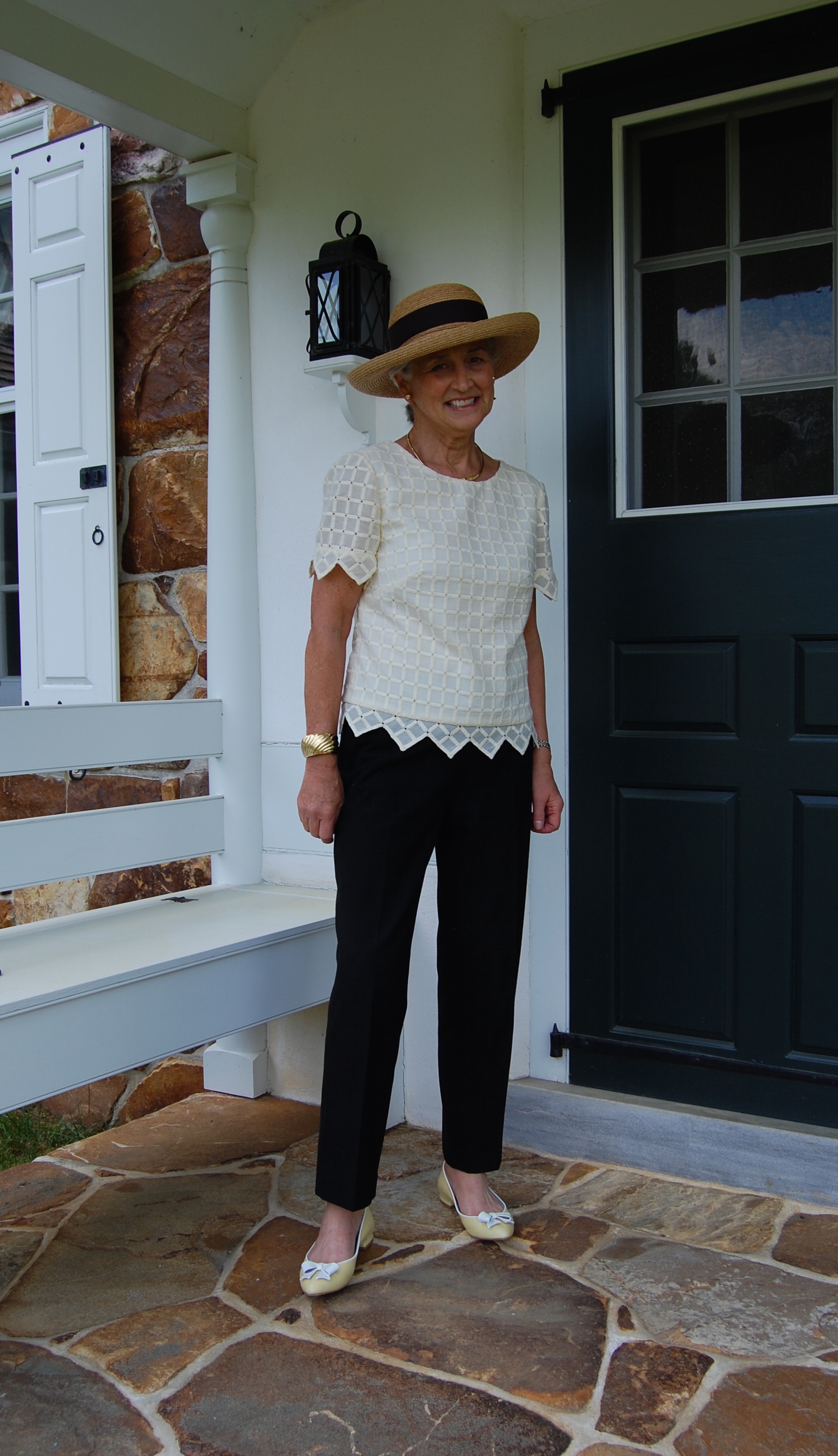
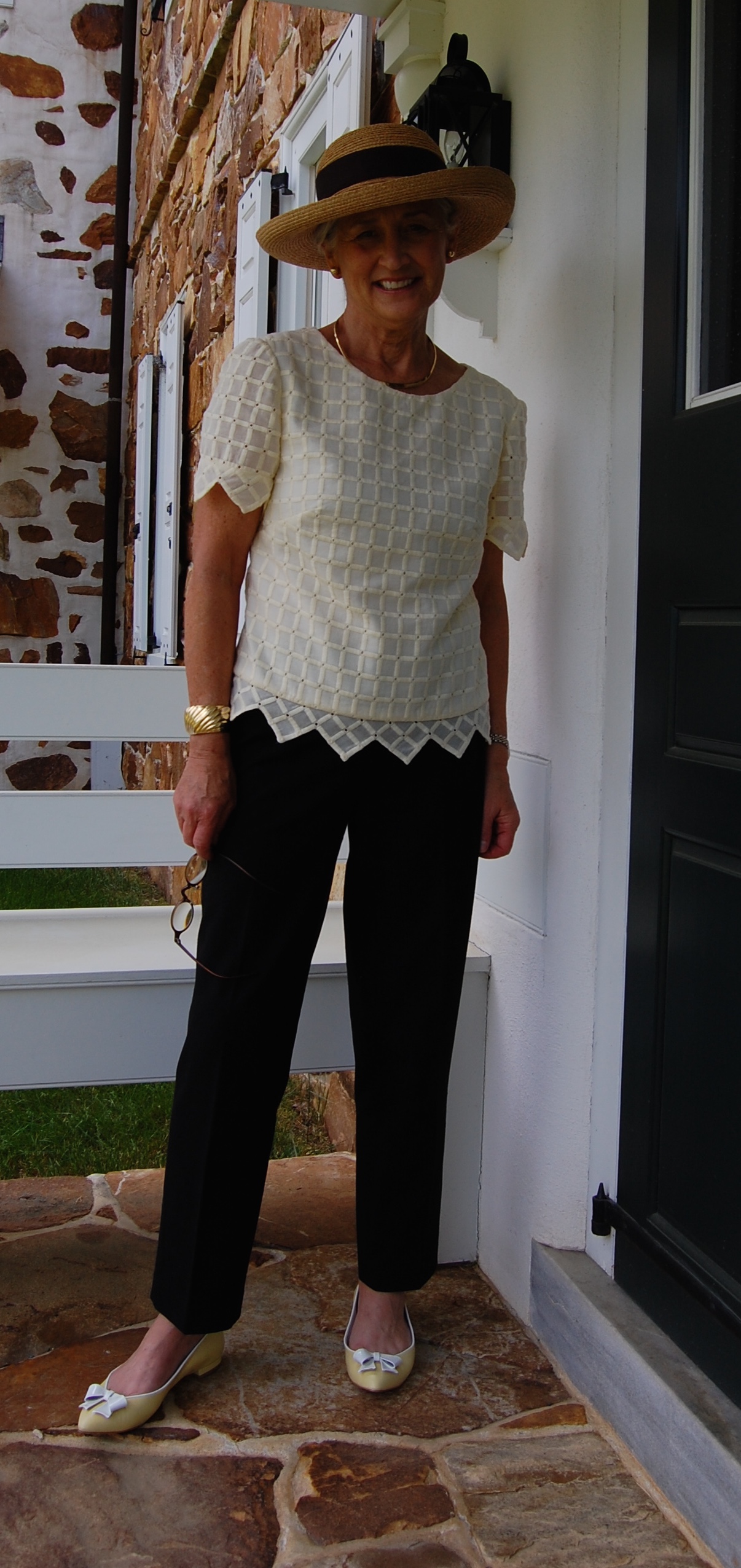
I could not resist styling this blouse with a hat!

I could not resist styling this blouse with a hat!

Mellow Yellow

Mellow Yellow

Mellow Yellow

Pale yellow shoes help complete the outfit!

Pale yellow shoes help complete the outfit!

After Mellow Yellow, where do I go? My next project is anything but mellow – or yellow, for that matter.  June will find me thinking – and making – fancy, but not frilly. Details soon . . .

35 Comments

Filed under Blouses, Eyelet, Mid-Century style, Uncategorized, underlinings, vintage Vogue patterns from the 1960s

The Diane von Furstenberg Formula

Has there ever been a more iconic cover for a pattern/sewing magazine?

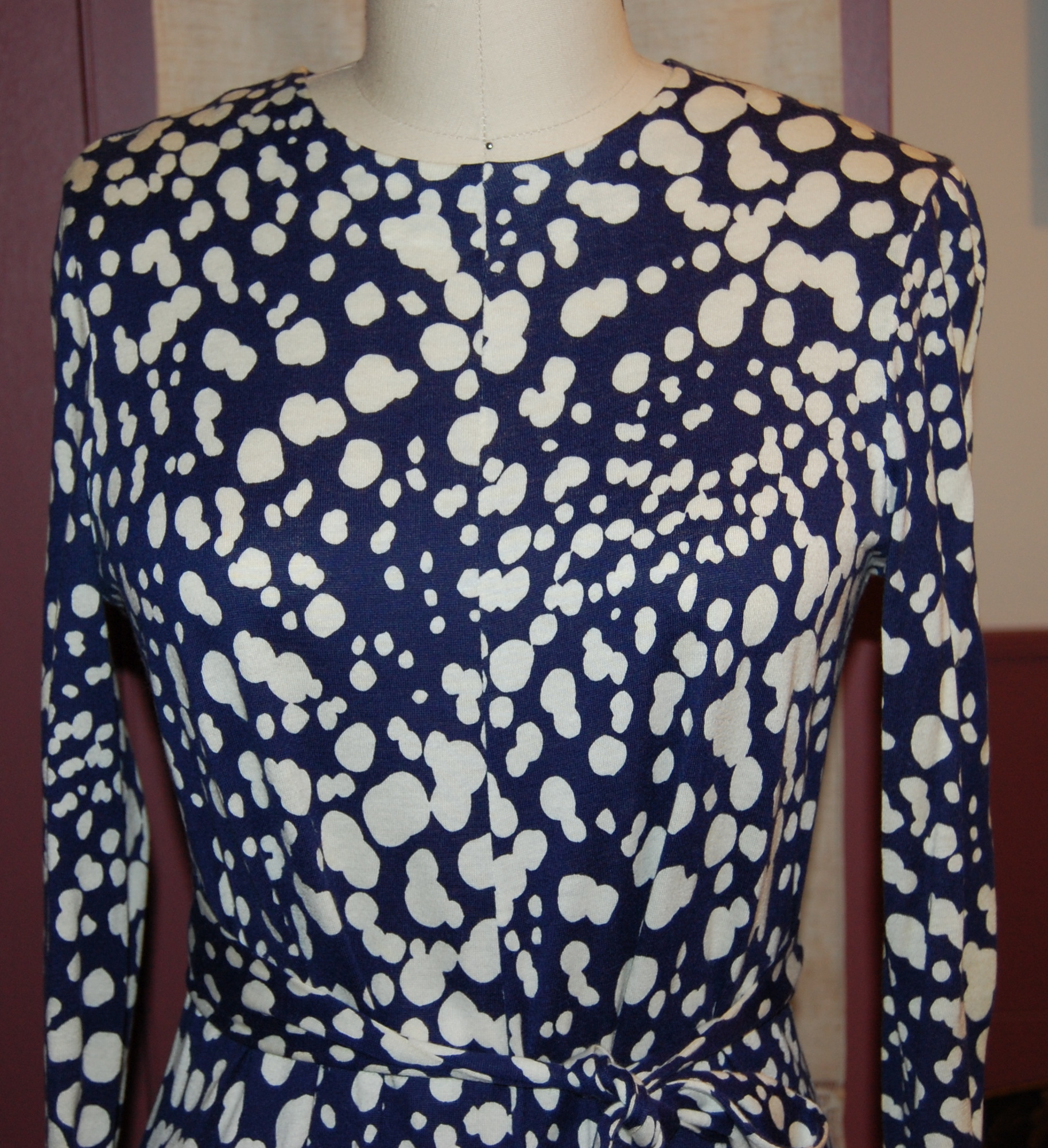
Instantly recognizable in her classic wrap dress, Diane von Furstenberg was featured in this September/October 1976 issue of Vogue Pattern Book Magazine. Her dress dynasty had begun in 1970, driven by her “dedication to dresses that fulfill a woman’s fashion needs from career time to cocktails…” As her business grew over the next few years, it seemed that everyone wanted one of her dresses in their wardrobe. I was no different. You can only imagine my surprise and absolute delight when my husband gave me a DvF dress for Christmas in 1975. Although I have, over the years, discarded most of my dresses from earlier times, this one still hangs in my cedar closet:

Long sleeved and with a separate tie belt.

Long sleeved and with a separate tie belt.

There is a center front seam to this dress which helps to make the skirt flow beautifully.

There is a center front seam to this dress which helps to make the skirt flow beautifully.

The label gives some fascinating information. It gives the composition of the fabric, – 50% cotton and 50% rayon. Interestingly, it includes an “umlaut” over the “u” in Furstenberg, which seems to have been dropped shortly thereafter. And the size 10 would now be a size 6 in USA standards!

DvF label

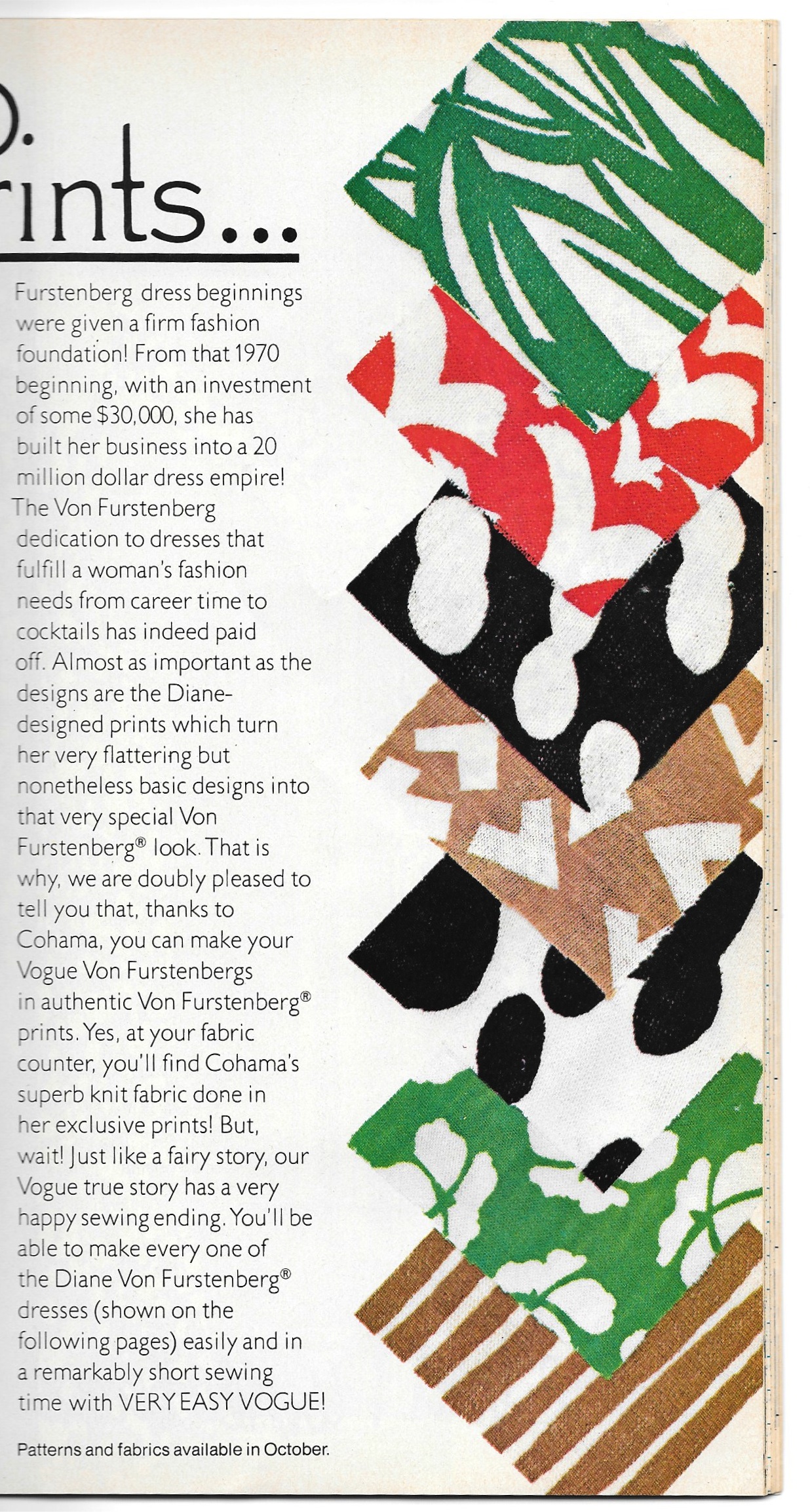
By 1976, Vogue Patterns had entered into a partnership with DvF, with exclusive rights to offer her dress patterns for sale. This was such a smart thing to do for both Vogue Patterns and the Princess – as they referred to her. Even better was when Diane von Furstenberg-designed printed fabric was available in bolts at your local fabric store. I remember having a difficult time finding these yard goods – they sold out so quickly as home dressmakers rushed to make their own genuine DvF wrap dresses. Vogue Pattern Magazine summed it all up quite nicely:

“Almost as important as the designs are the Diane-designed prints which turn her very flattering basic designs into that very special Von Furstenberg look. That is why, we are doubly pleased to tell you that, thanks to Cohama, you can make your Vogue Von Furstenberg in authentic Von Furstenberg prints.” First available in October 1976, many of these prints are still recognizable today as DvF prints, and they still look fresh and stylish!

A sampling of some DvF fabrics.

A sampling of some DvF fabrics.

Here is the editor-in-chief of Vogue Pattern Magazine, Judy Espinar, with Diane von Furstenberg.

Here is the editor-in-chief of Vogue Pattern Magazine, Judy Espinar, with Diane von Furstenberg.

Another beautiful print!

Another beautiful print!

I might not have been able to get my hands on any of that Cohama fabric back in the 1970s, but thanks to this blog and one of my readers with unused DvF yardages, I have been able to fulfill a long-held wish, having purchased two lengths of the Cohama fabric a number of months ago.

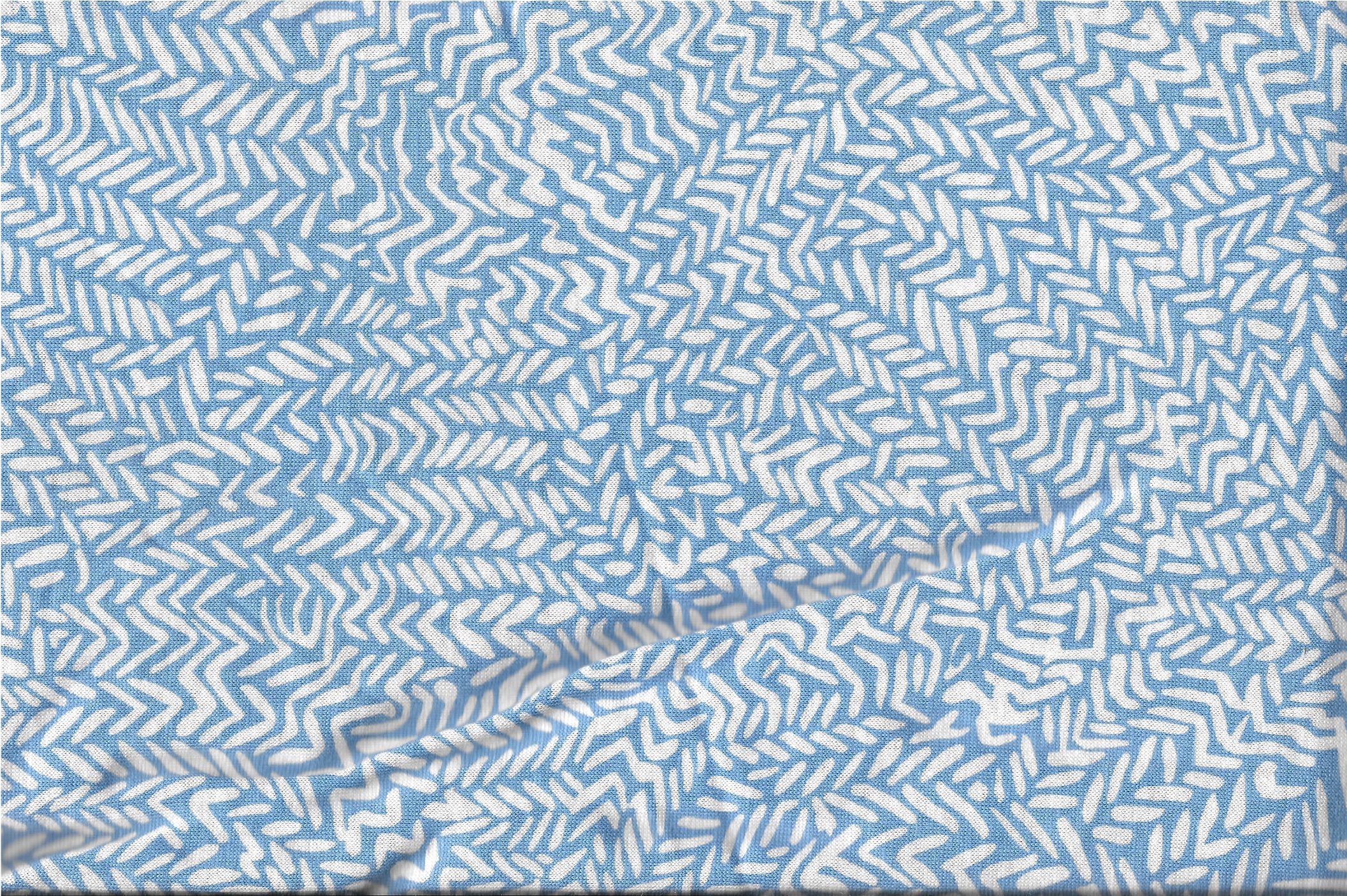
A DvF wrap dress seemed to be the perfect follow-up to my last complicated project, and so I retrieved this fabric from my fabric storage closet:

Cohama blue DvF fabric

I washed it in cold water, gentle cycle, and it came out fresh and like new. I was struck by the quality of the knit fabric, and of course, wanted to know its composition. This is another time when the vintage Vogue Pattern Magazines come in so handy. Each featured pattern is pictured in thumb-nail size in a detailed Patterns Guide in the back of the magazine, giving information on fabrics, accessories, yardages needed, etc. Quickly I was able to determine that the Cohama fabric is Avril II rayon/cotton knit. This fabric is lighter in weight than my “store-bought” DvF dress. It is tightly knit, silky soft, and, like my “store-bought” dress, it cannot be “seen through,” making it easy to wear!

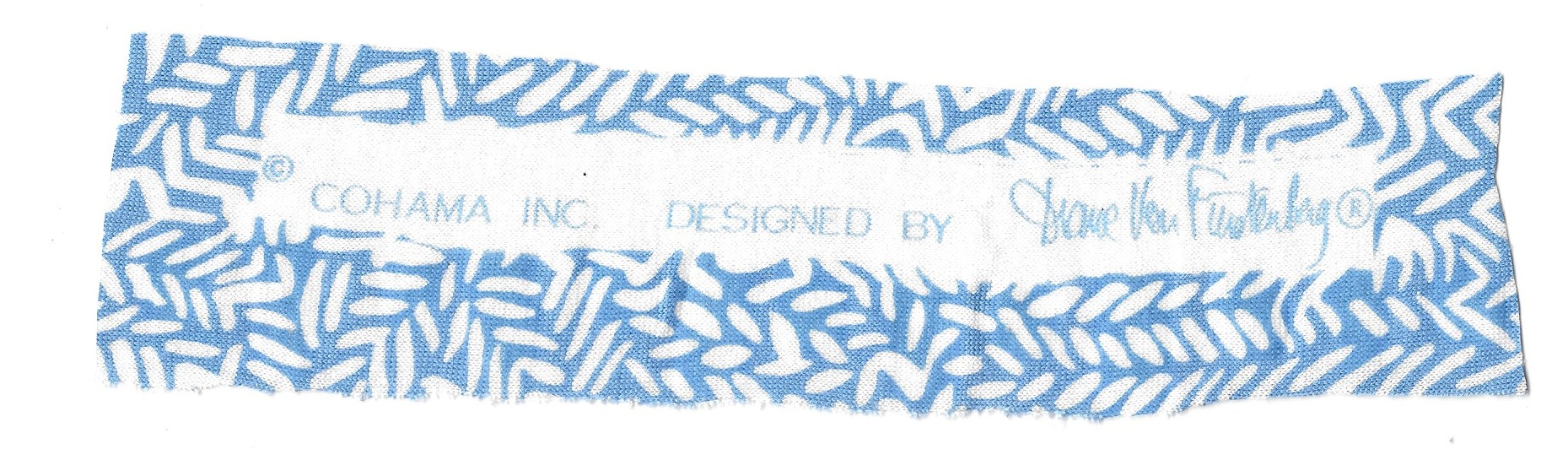
Along the selvedge - the mark of an authentic DvF print!

Along the selvedge – the mark of an authentic DvF print!

I had already made a dress from this pattern three years ago. I have enjoyed wearing it, although the fabric is a bit heavy for the design. So I thought it would be good to make it again, this time in my authentic DvF print.

Decisions #3

I also determined that I had just enough fabric to squeak out this dress in the short sleeveless version. These wrap dresses take an enormous amount of fabric! It makes sense when you think about the overlapping necessary to make the dress wearable. When I spread out my fabric, I thought to myself, “Oh, I have lots of this – no problem!” I should have learned by now not to think such things! It quickly became apparent that I would have to be creative (again!) in my lay-out if I were to be able to make this dress.

First I made a muslin pattern with separate pieces for the reverses. This was so I could lay the pattern pieces out singly, not folded. Ever since sewing with Susan Khalje’s couture techniques, this is how I like to cut my fabric anyway, so I am accustomed to this extra step. But this time, I cut off the seam allowances (except on the long belt pieces), just as you would do when you are making a classic French jacket.

Showing a partial lay-out

Showing a partial lay-out

With a French jacket, you are leaving huge seam allowances (usually as much as 2” all around). With this, my seam allowances had to be much smaller and in some cases a bit less than 5/8” in order to fit all the pieces on the fabric. I had to really concentrate when I was cutting out the pieces, remembering to add seam allowances by “eyeballing” them. Now I am in the process of thread-tracing around each piece of the muslin pattern, to set my sewing line. This seems like a lot of extra work – and it is – but I determined this to be the only fool-proof way to make it work! (I did not want to using tracing paper and wheel to mark the seam lines, as I would risk markings showing up on the right sides.)

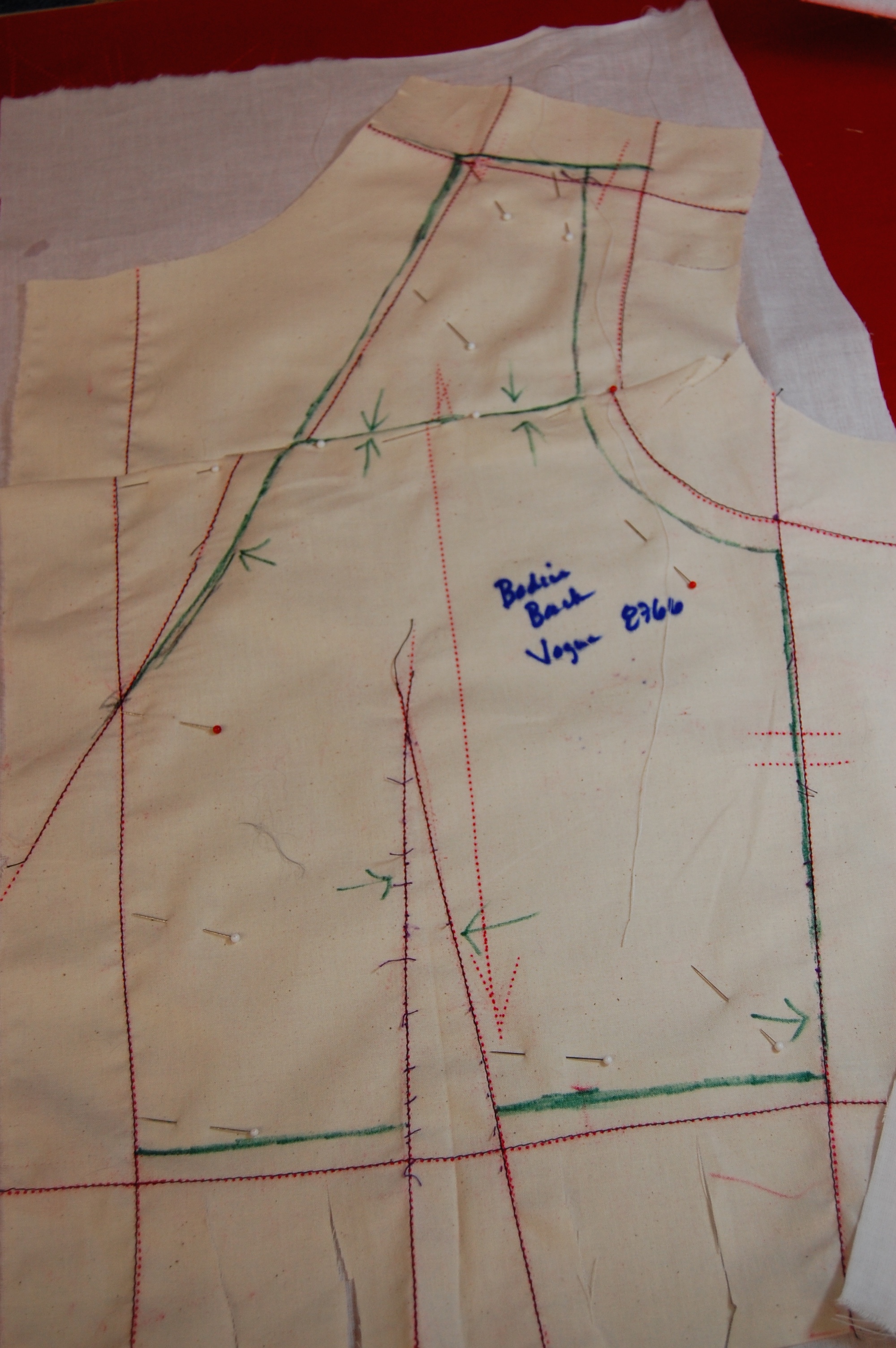
The back bodice piece, ready for thread tracing on the sewing lines.

The back bodice piece, ready for thread tracing on the sewing lines.

I am excited about this dress! Since I have already made this pattern once, I know what needs to be tweaked. And – I am excited that I do not have to line it, it has no buttons or buttonholes, and I know it will be easy-wearing. That, to me, is a formula for fashion sewing success.

23 Comments

Filed under Uncategorized, vintage Vogue Designer patterns, vintage Vogue patterns from the 1970s, Wrap dresses

Fifty Little Dresses – Part 2

Two years ago I was absent from my blog for a few weeks as I helped our daughter and her husband after the arrival of their first child, a beautiful little girl. I have just returned home after another absence, this time to welcome another beautiful little girl!

The snow is gone, and even the mailbox, battered by the snow plows, looks happy.

The snow is gone, and even the mailbox, battered by the snow plows though it be, looks happy.

For almost three weeks, I cooked, I cleaned, I ironed, I shopped for groceries, I did laundry, I baked, I drove hither and yon as chauffeur, I spent untold fun and busy hours with granddaughter number one, and then I started it all over again – and again – and again!

Just as with their first child, our daughter and her husband chose not to learn the sex of their baby ahead of time, so the arrival of this baby girl was another delightful surprise. Now I wonder if I had a premonition that I would have two granddaughters? In the past two years I have come across a couple of lengths of vintage cottons which appealed to me for their possibilities of being turned into little girls’ dresses.

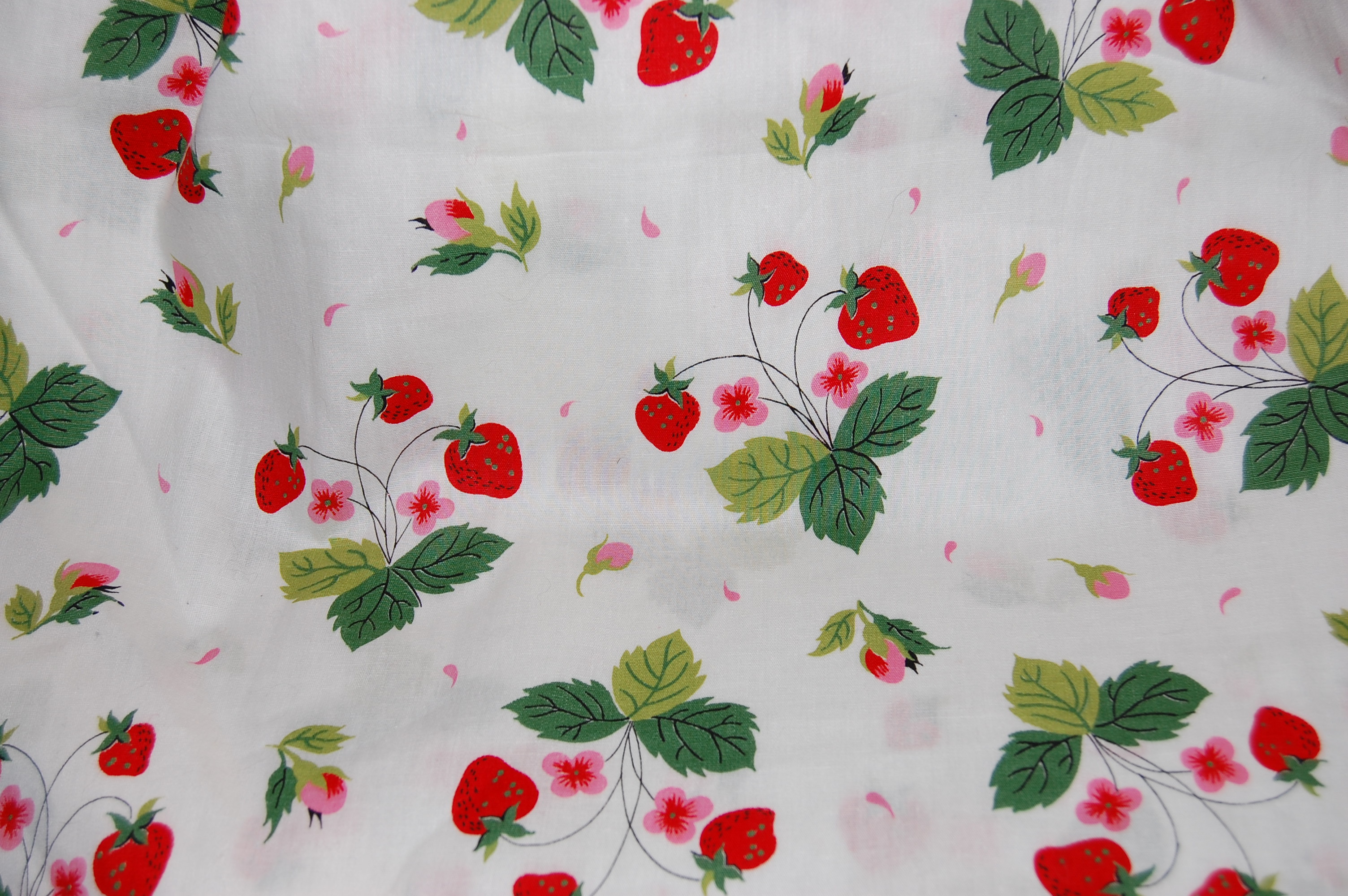
A strawberry print cotton for two little Spring sisters?

A strawberry print cotton for two little Spring sisters?

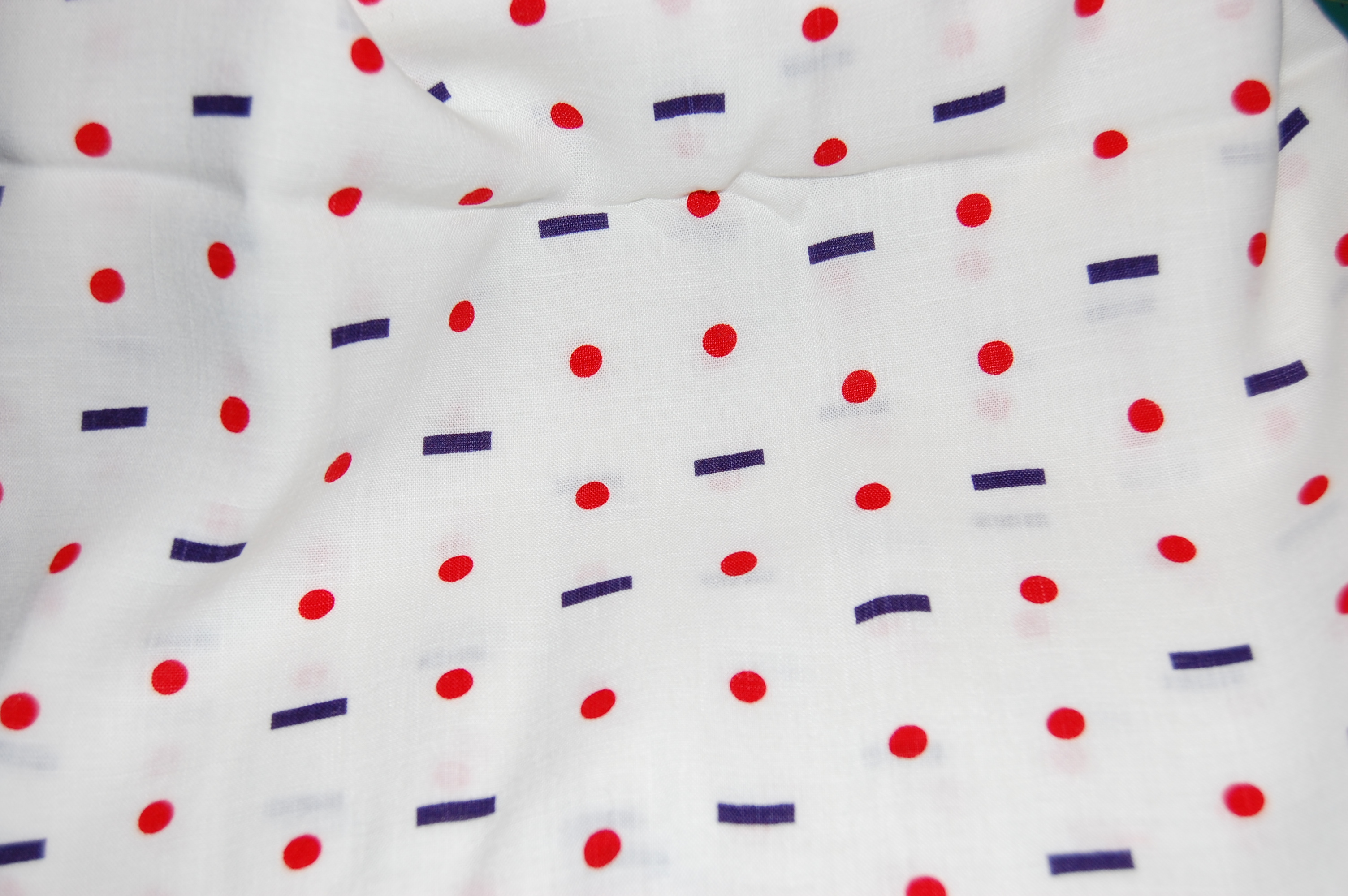
With navy blue sailor collars and red ties?

With navy blue sailor collars and red ties?

The plentiful yardage of both fabrics will be perfect for matching sister dresses, although it will be a couple of years until Aida and Carolina are ready for that. But still, I can start to plan . . .

Sewing, of course, was not on the agenda while I was on grandmother duty. But sewing is a patient endeavor, and sometimes a forced break can be good. When I left home I was one day away from finishing my complete cashmere suit dress ensemble. I will admit I was a little worn out from it, and when I realized I was not going to be able to finish it before I left home, I was definitely feeling discouraged. I saw every perceived flaw in it, and I knew it would no longer be seasonable when I returned. I would be finishing a dress and jacket that I could no longer wear this year.

But when I walked into my sewing room after my long absence and saw the (as yet, unlined) dress and completed jacket on my dress form, I suddenly felt totally energized again. Hey, I thought, it looks pretty good after all! Some things, like new babies, are worth waiting for, aren’t they?

Welcome to the world, dear little Carolina!

Welcome to the world, dear little Carolina!

31 Comments

Filed under Love of sewing, Sewing for children, Uncategorized, Vintage fabric

The Evolution of a Suit Dress, Part 4: An Appreciation of Jo Mattli, and Dress-making Days Commence

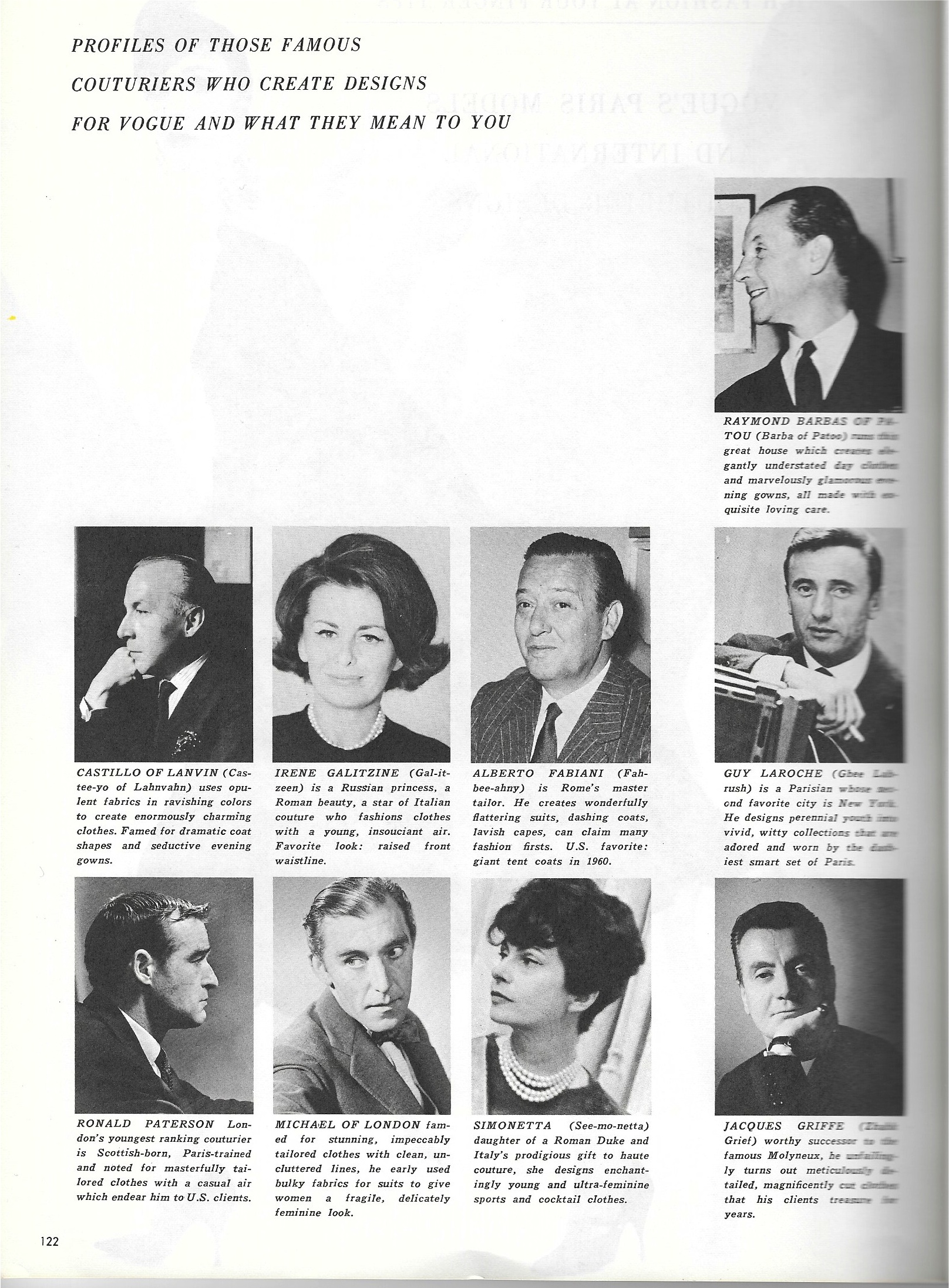
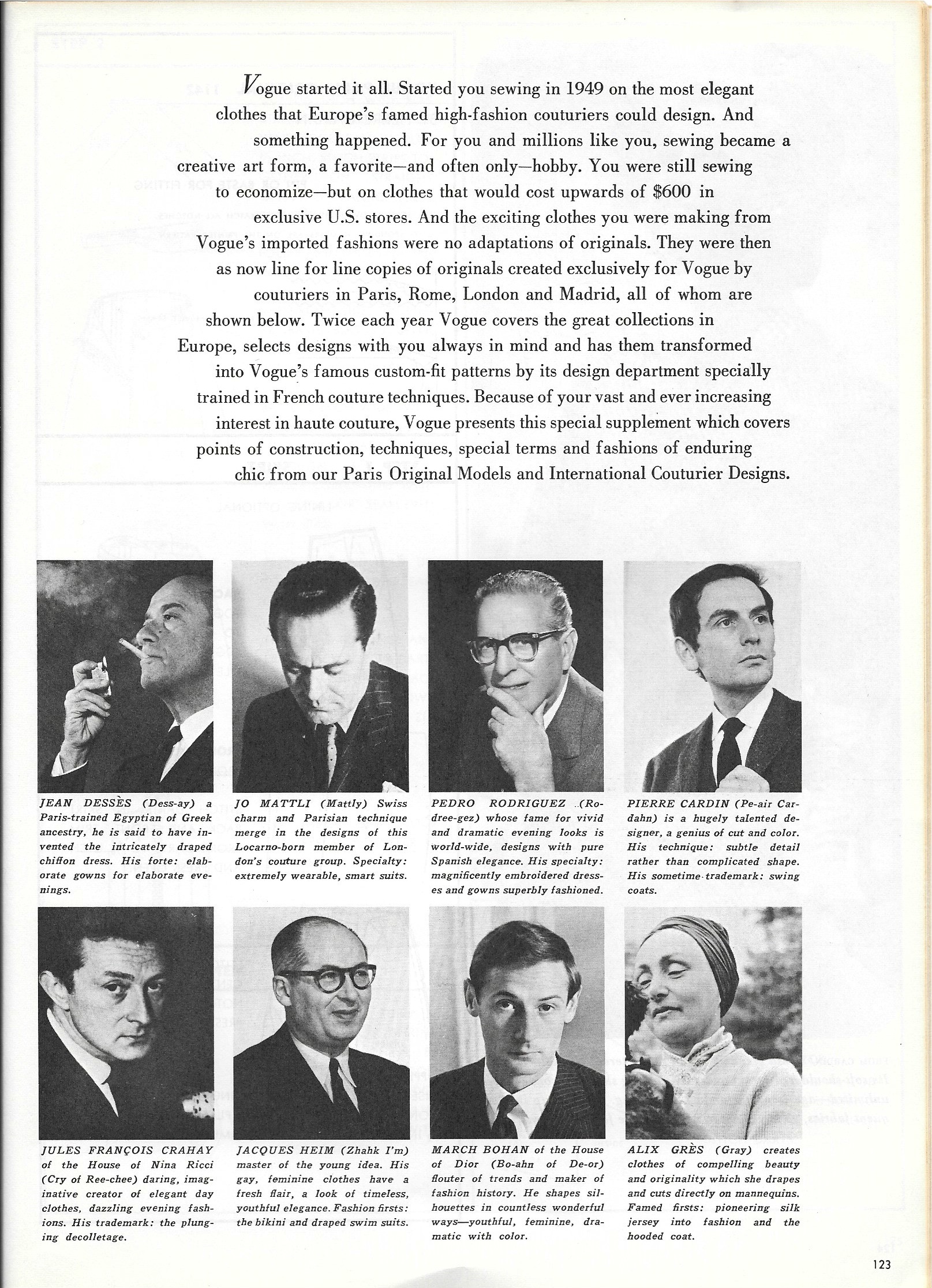
The New Vogue Sewing Book published in 1963 contained a “Couturier Supplement”. According to the Foreword in this magazine-styled book, “Only Vogue Patterns can bring you original designs from the Paris and International Couture houses, because of an exclusive arrangement with world famous designers.” One of the 17 designers featured in the supplement was Jo Mattli.

Designers in Vogue

Designers in Vogue-1

Jo Mattli is second from the left on the top row. Click on the photo to see the image up close.

A quick look at the two-page spread on these designers shows a veritable who’s who of fashion design, with names very much still known today. Except for perhaps Jo Mattli.   (Mattli was born Giuseppe Gustavo Mattli in 1907 in Locarno, Swirtzerland; he died in 1982 in England). He is absent from The St. James Fashion Encyclopedia, even though he was considered one of the “big ten” London couturiers in 1953, when London Society was busy readying for the coronation of Queen Elizabeth II. Perhaps it was his move into ready-to-wear in 1955 that relegated him to lesser status among the world’s great couturiers. This did not keep Vogue Patterns from recognizing his wide appeal to stylish women who appreciated his attention to fine detailing, and his expertise in creating practical, wearable and charming dresses and suits.   As one of Vogue’s featured designers in their Vogue Couturier Design-labeled series, Jo Mattli made his mark. Indeed, even he recognized the value of being part of Vogue Patterns, saying “the royalties from these patterns had helped support his couture business” (from Wikipedia, the free encyclopedia).

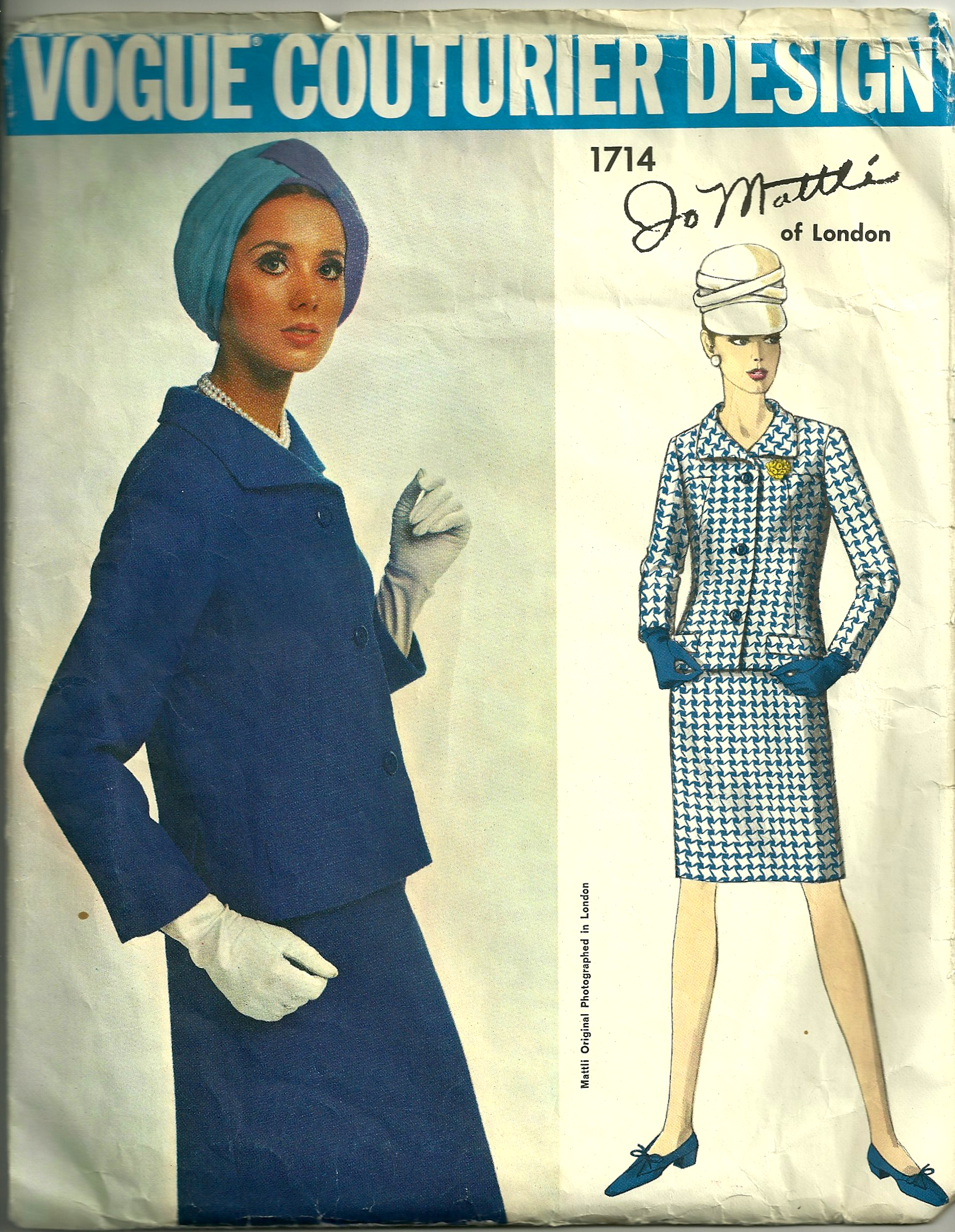
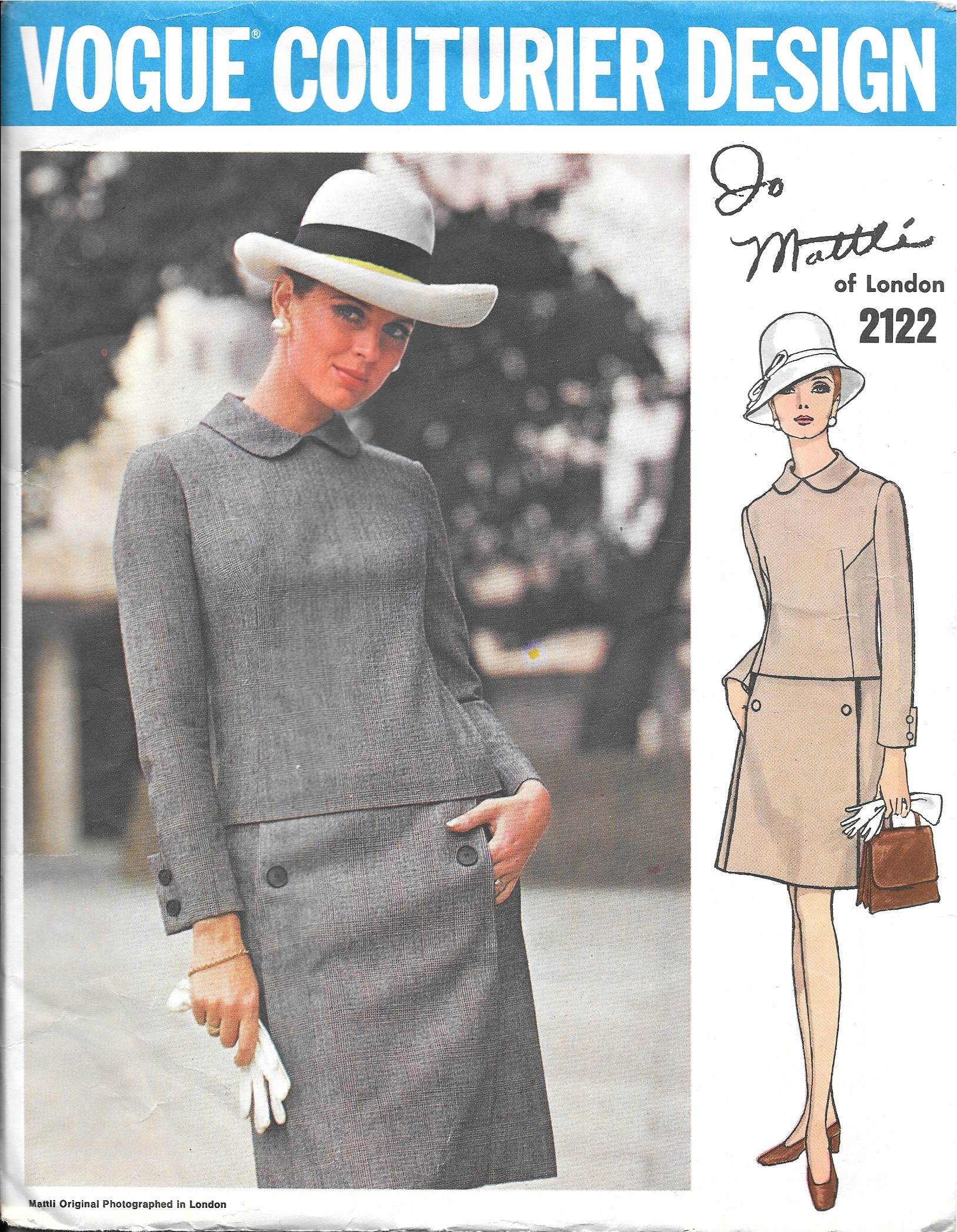
The jacket I just completed (part one of a two-part jacket and dress ensemble) is the third Jo Mattli Vogue design I have sewn. Two years ago I made a suit from this pattern:

From Vogue's Designer series, ca 1970.

I would like to make this pattern again. The first time I made it, the fabric I chose was too heavy, but the fit and the styling were excellent.

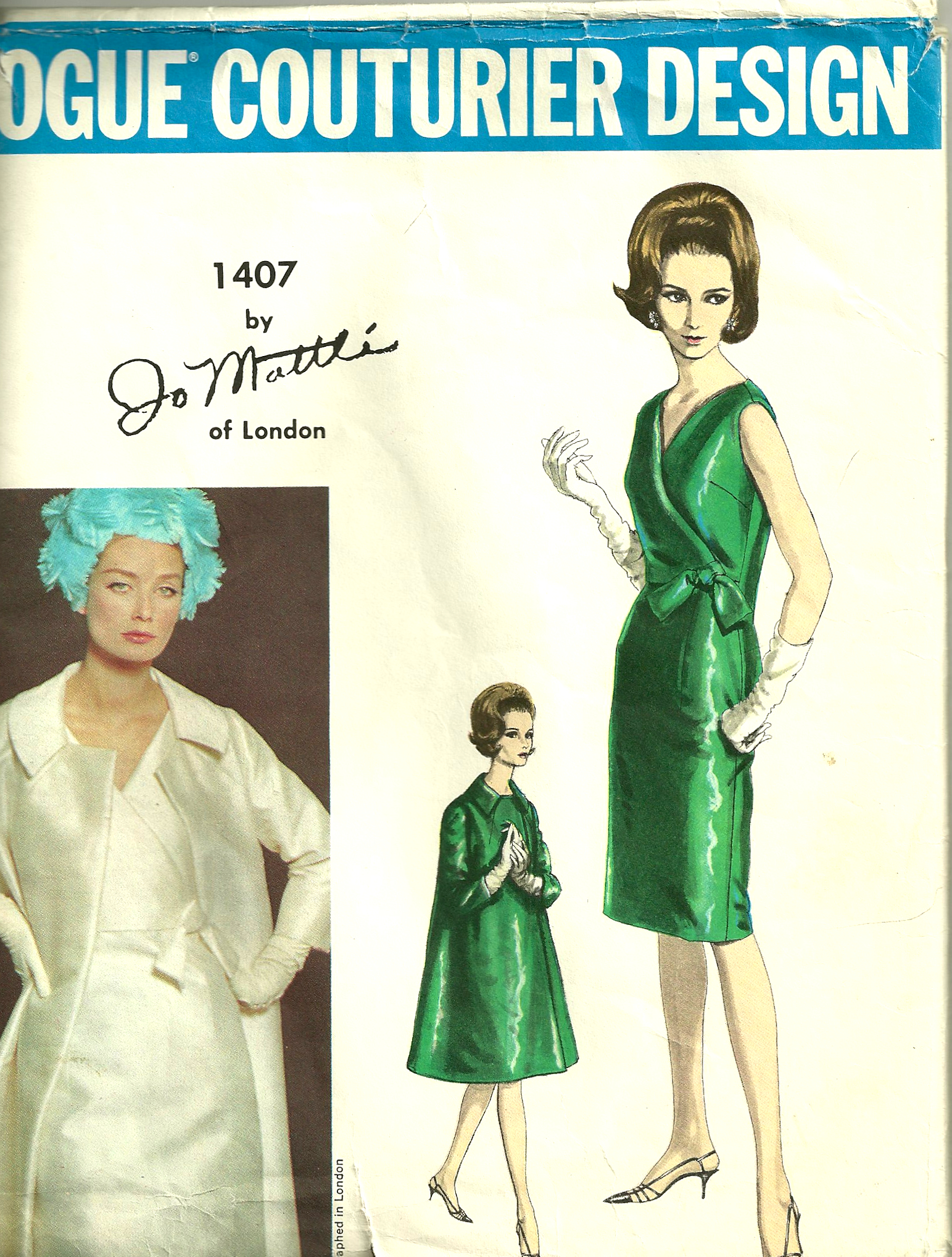
Late last summer I made a cocktail dress from this pattern:

I still have plans to make the coat, to coordinate with the cocktail dress.

I still have plans to make the coat, to coordinate with the cocktail dress.

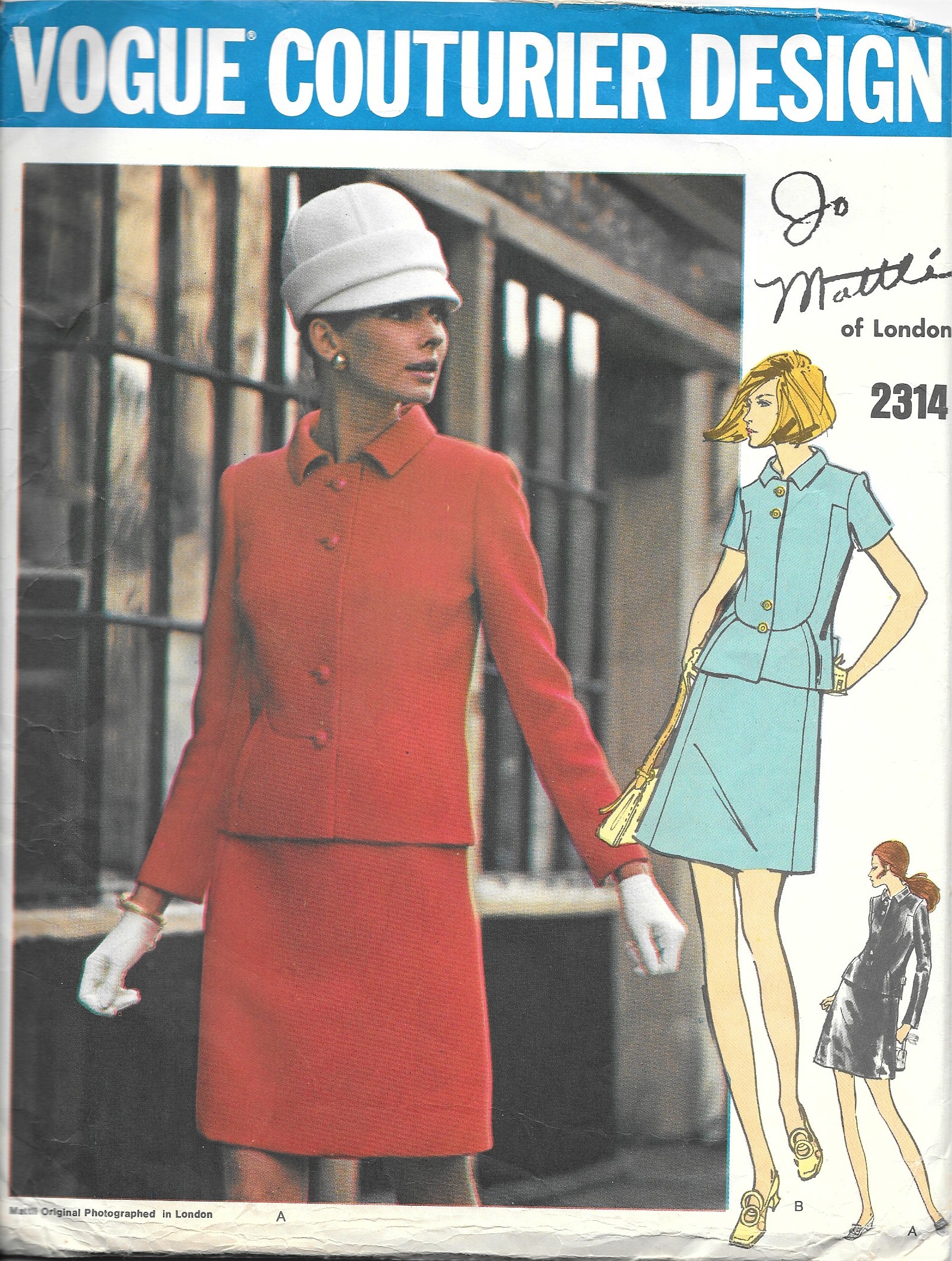
And now with three “makes” under my belt, my appreciation for Mattli’s design and construction sense is growing. Not only that, I realized after going through my pattern collection, that I have two more Mattli patterns, each of which also displays his characteristic and interesting seam detailing.

This is actually a one-piece dress, although it looks like it is a two-piece outfit.

This is actually a one-piece dress, although it looks like it is a two-piece outfit.

Dress Suit - red Mattli suit

Another beautiful suit!

While the Mattli-designed jacket in my suit dress ensemble is certainly the star of the outfit, I am hoping the dress will have its own charms. After being out of town and away from my sewing all last week, I have now been able to turn my attention to the dress part of the outfit. I believe I have successfully combined two patterns (sheath dress and collared blouse) to create – what else? – a collared sheath!

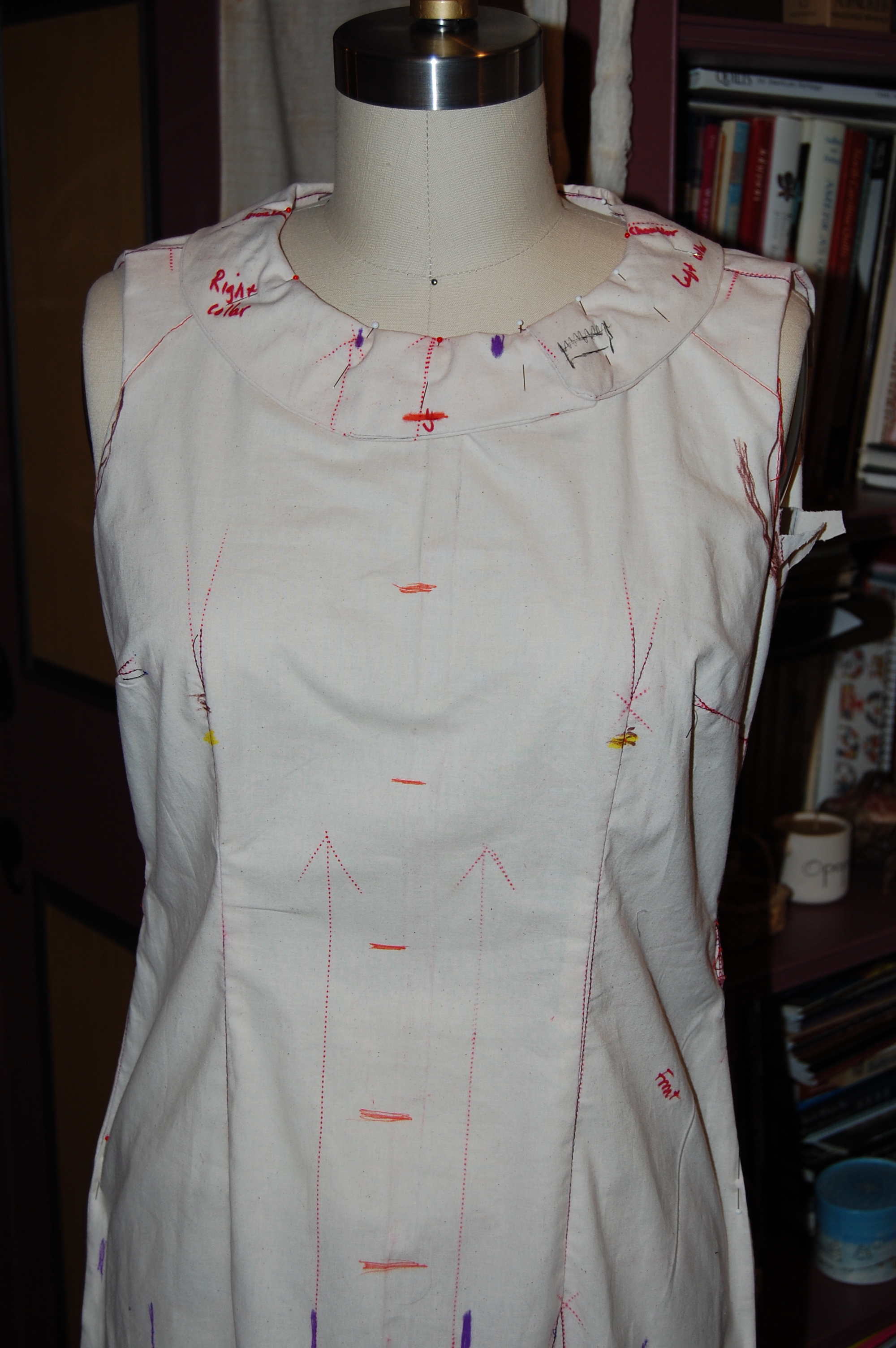
Dress for Mattli jacket

I was still adjusting the fit when I took this photo. Hopefully it will not look like a bag when I actually wear it!

After I had the muslin fitted and completed, I got the idea to make the end of the tab on the collar rounded, to mimic the curves on the jacket’s sleeves and on the jacket’s lower front edges.   I also had to take significant width out of the collar. I am hoping it will work and look good…

This shows the curved detail on the edge of the sleeve.

This shows the curved detail on the edge of the sleeve.

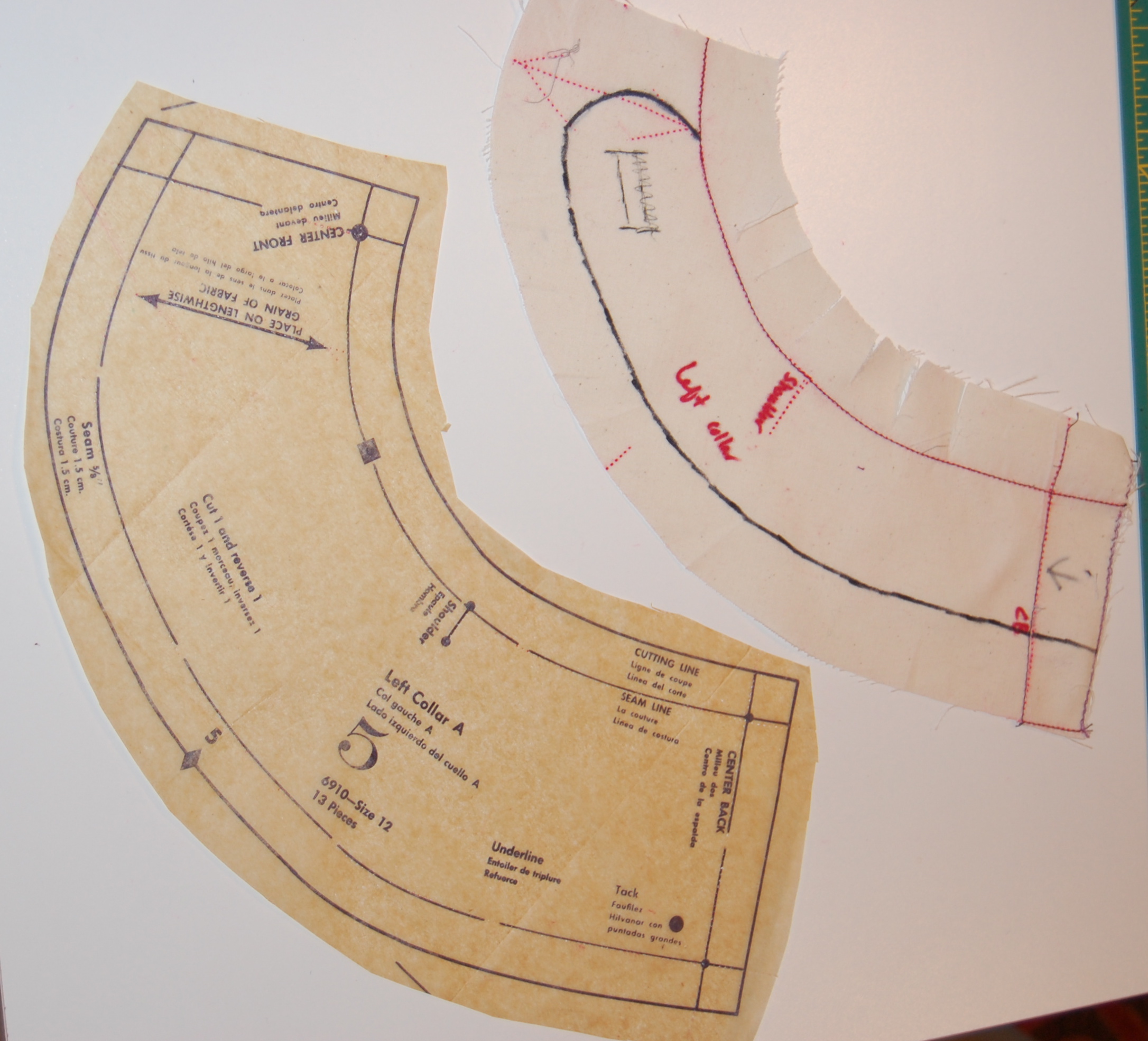
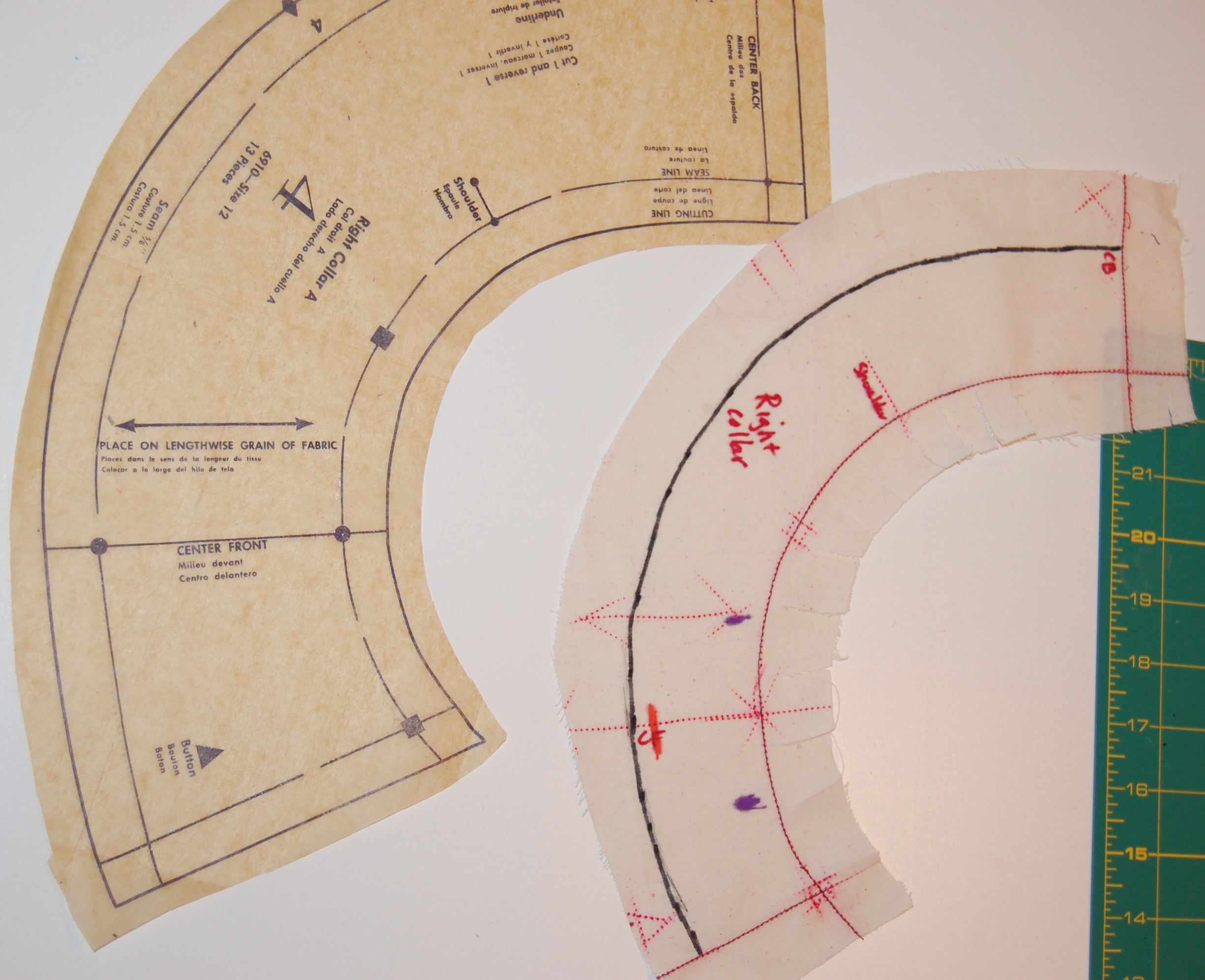
This shows not only the added curve to the collar end, but also how much width I had to remove from the collar pattern

This shows not only the added curve to the left collar end, but also how much width I had to remove from the collar pattern.

And here is the right collar section.

And here is the right collar section.

I  hope that Jo Mattli would approve of a dress being paired with his jacket. He would probably refer to it as a “slimline afternoon dress” were he alive. I have no doubt he created many such beautiful dresses in his lifetime.

[NOTE: Jo Mattli is the subject of a thesis by Dr. Caroline Ness entitled Famous, Forgotten, Found: rediscovering the career of London couture fashion designer Giuseppe (Jo) Mattli, 1934-1980.]

10 Comments

Filed under Cocktail dresses, Dressmaker suits, Jo Mattli, Suit dresses, Uncategorized, vintage Vogue Designer patterns, vintage Vogue patterns from the 1960s