Tag Archives: sewing

A Practical Decision

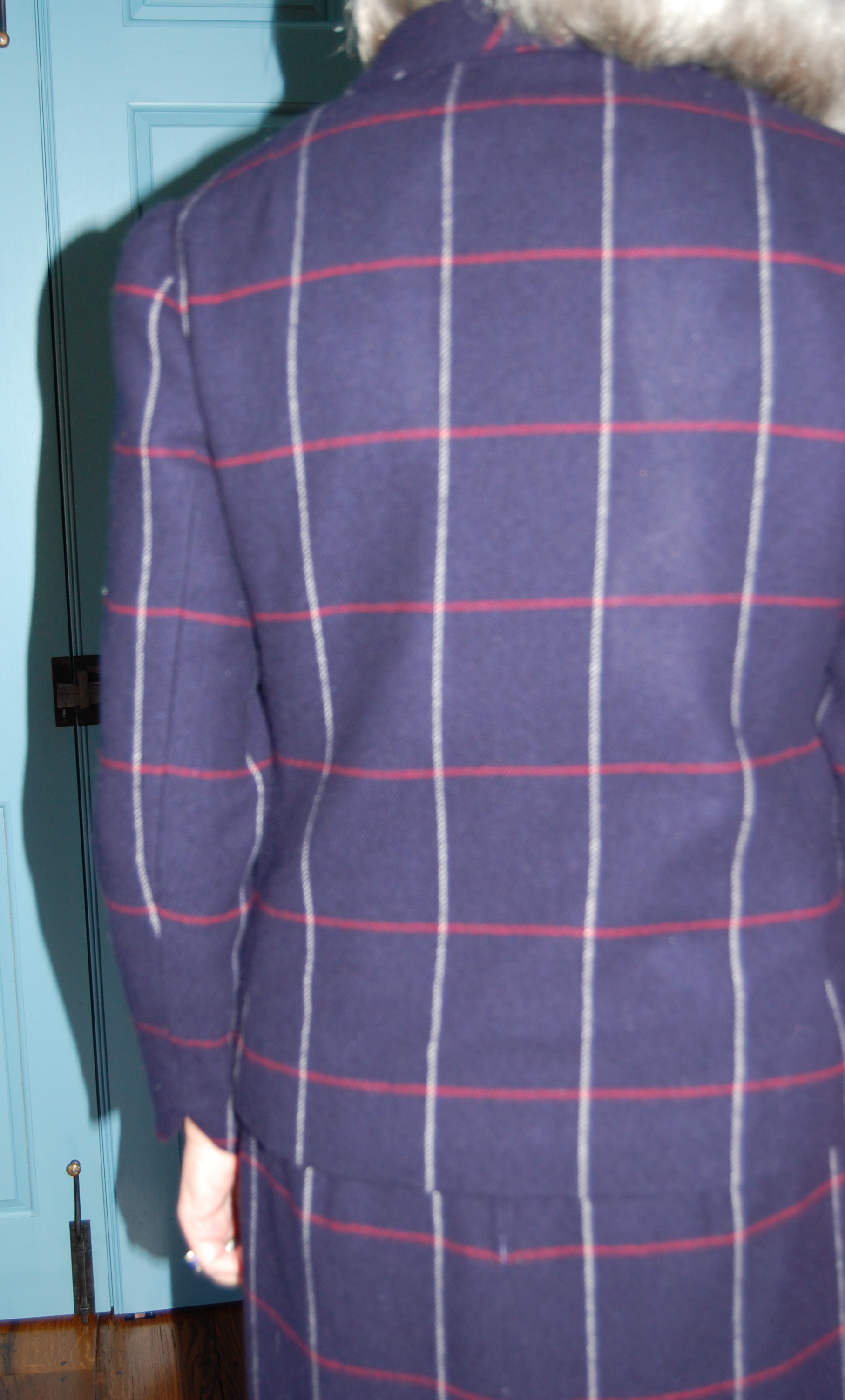
A practical decision, made out of desperation, that is! It is a rare occurrence that I stop working on a project before it is completed, but that’s what I decided to do with my cashmere coat, skirt and blouse ensemble. Quite simply, life got in the way, without asking me first! Robbed of sewing time for one reason or another, I had to make a decision: should I quietly and gently fold my unfinished skirt and blouse away for a summer sleep, and get busy on my Spring sewing? Or should I plow through and continue work on this wool ensemble as the allure and charms of Spring sewing beckoned me on? Well, Spring’s charms won, especially as I am now facing middle-to-late May deadlines for a silk dress to wear to a wedding and another fancy event.

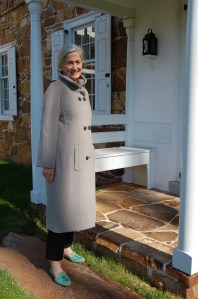
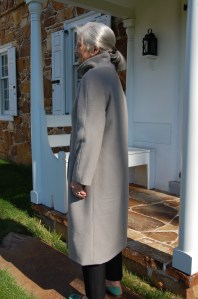
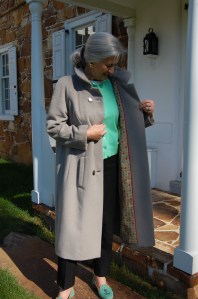
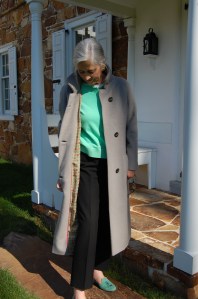
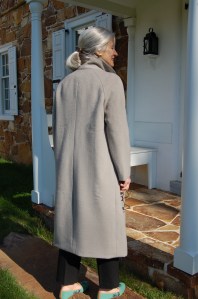
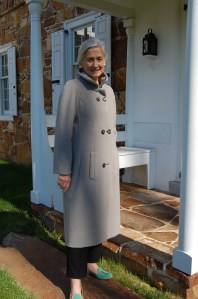
But I had promised photos of my coat, so before everything goes in the cedar closet until next September, I thought I should share the progress I did make. Even on a cool Spring day, this Cashmere coat felt glorious to wear, even briefly.

A Practical Decision

A Practical Decision

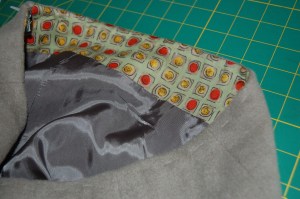
I am very happy with the lining!

I am very happy with the lining!

A Practical Decision

A Practical Decision

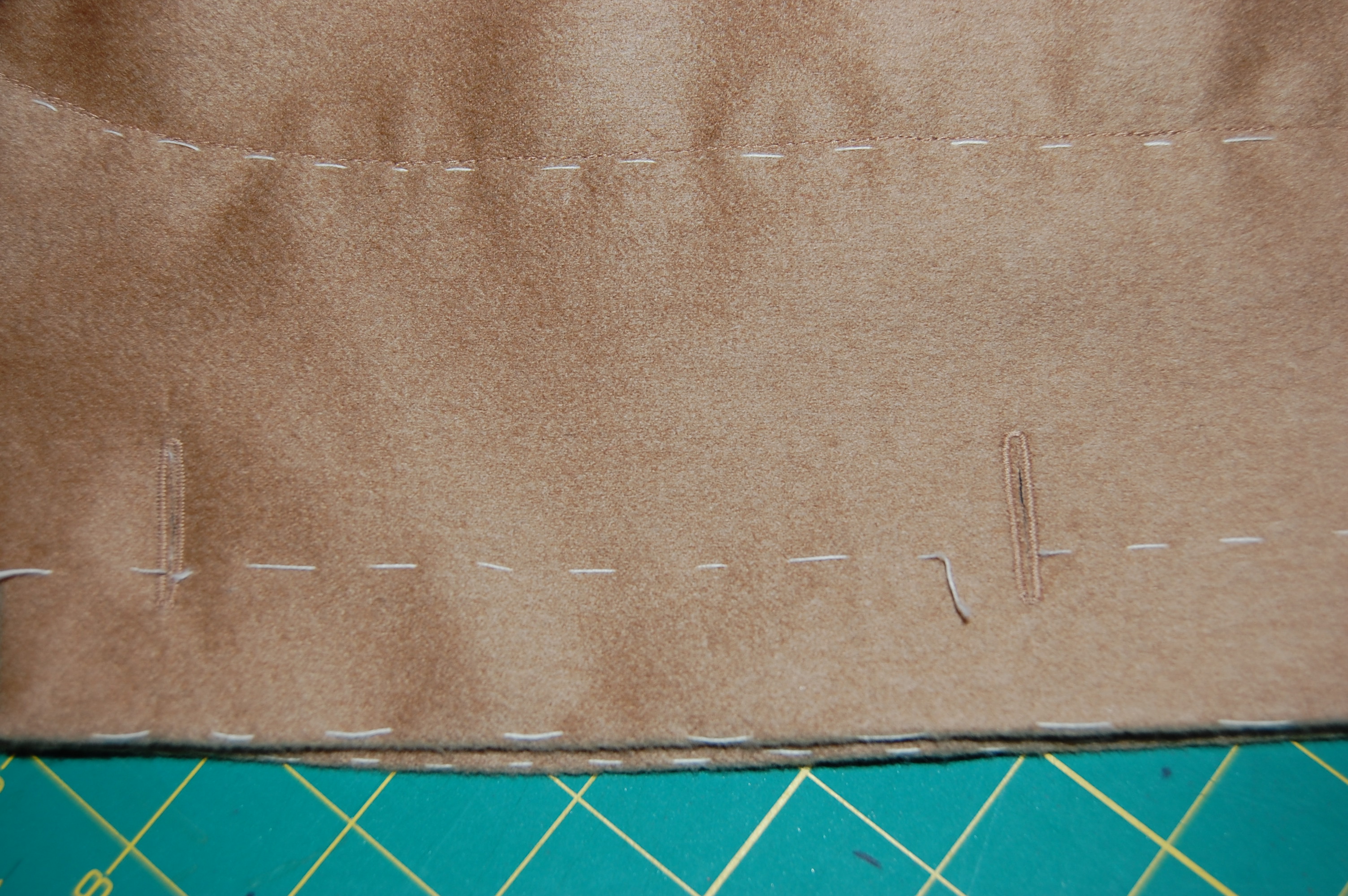
This coat is very warm and buttery soft.

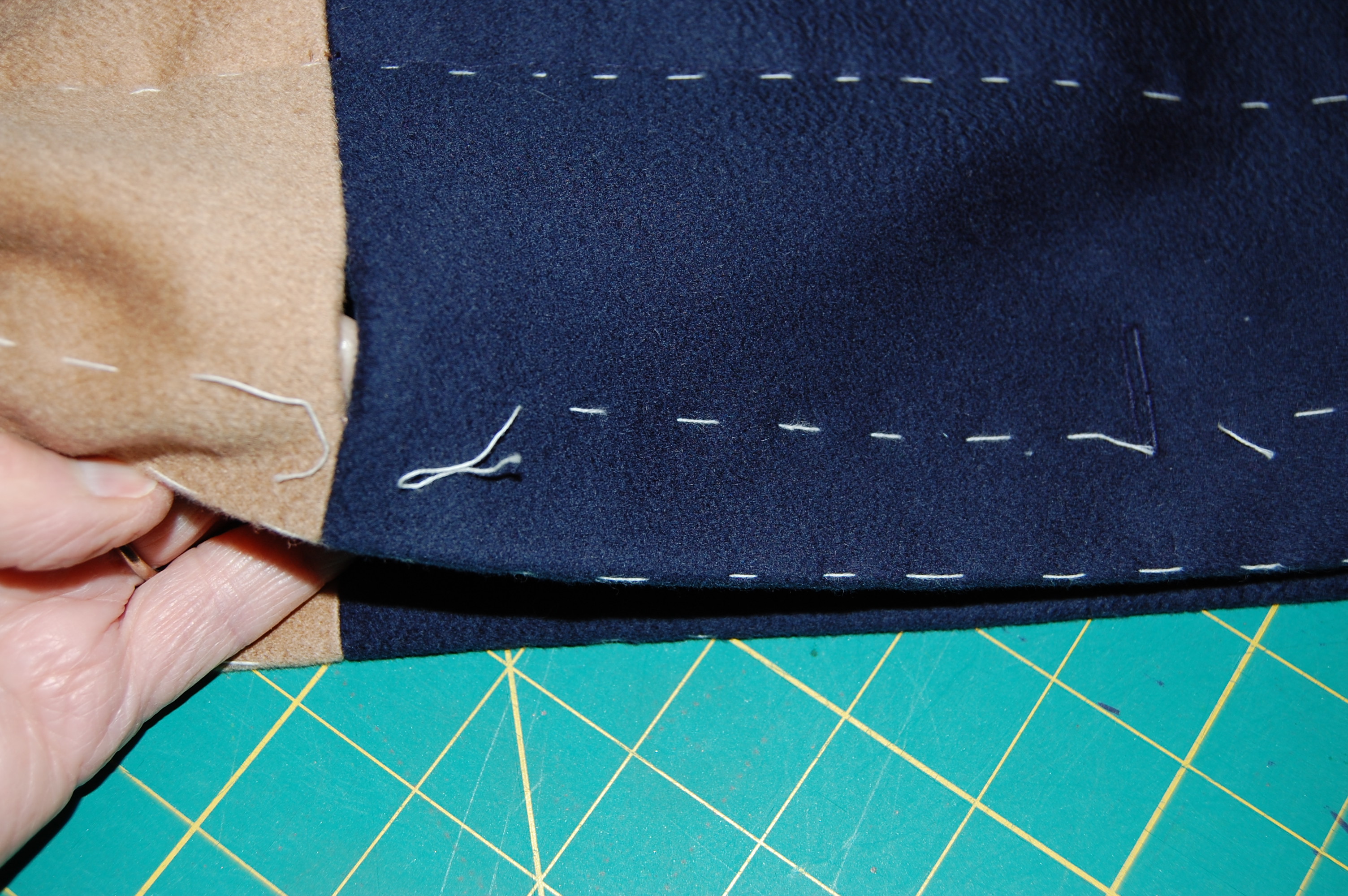
This coat is very warm and buttery soft. These photos confirm for me that I need to reset the working buttons, making longer thread shanks, to accommodate the bound buttonholes.

The skirt is a six-panel slight A-line style.  Because the fabric is heavier than I would normally use for a skirt, I wanted to eliminate darts and a waistband, to help control the bulk. I decided to make a waist facing made out of wool challis (used for the coat lining and the blouse), and attach it to a skirt lining made of Bemberg rayon. The skirt is completed except for the hem.

This shows the waist facing, with the Bemberg lining attached to it.

This shows the waist facing, with the Bemberg lining attached to it.

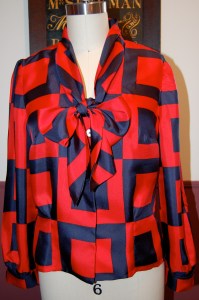
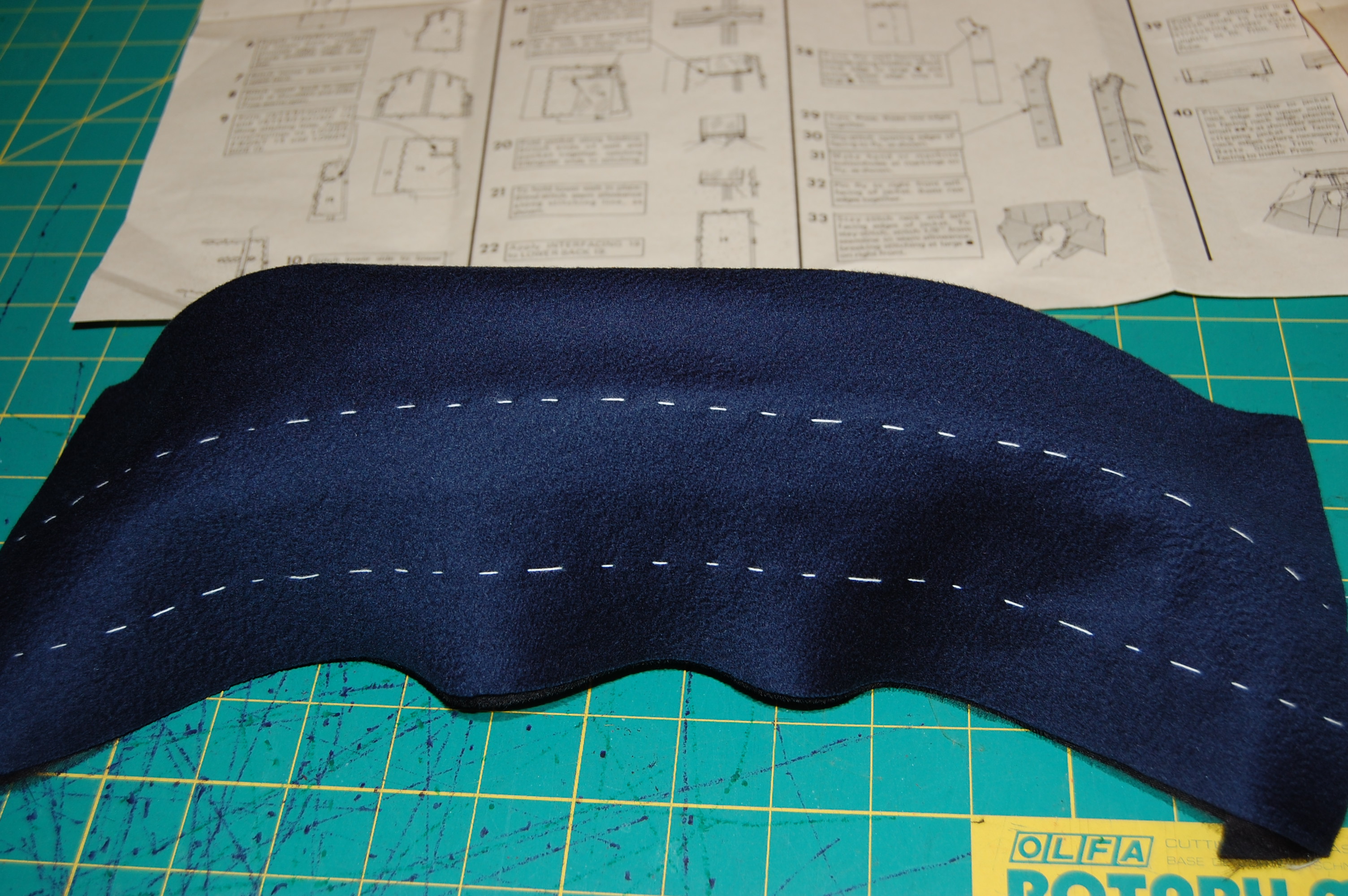
Making a blouse out of wool challis demanded some special considerations. The fabric is finely woven and lightweight, making me hesitant to use waxed tracing paper to make any markings on it. So, I decided to thread trace all the seam lines and markings. This is, of course, the process one uses for the construction of a classic French jacket, so I am comfortable with it. It sounds time-consuming, but it goes fairly fast, and is fool-proof.

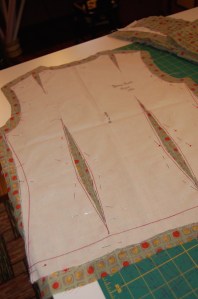
This shows my muslin pattern, cut on the seam lines, and with the darts cut out, so that I could tread trace along all sewing lines.

This shows my muslin pattern (with the changes I made to it), cut on the seam lines, and with the darts cut out, so that I could tread trace along all sewing lines.

Click on this for a close-up look at the thread tracing of seam lines and darts.

Click on this for a close-up look at the thread tracing of seam lines and darts.

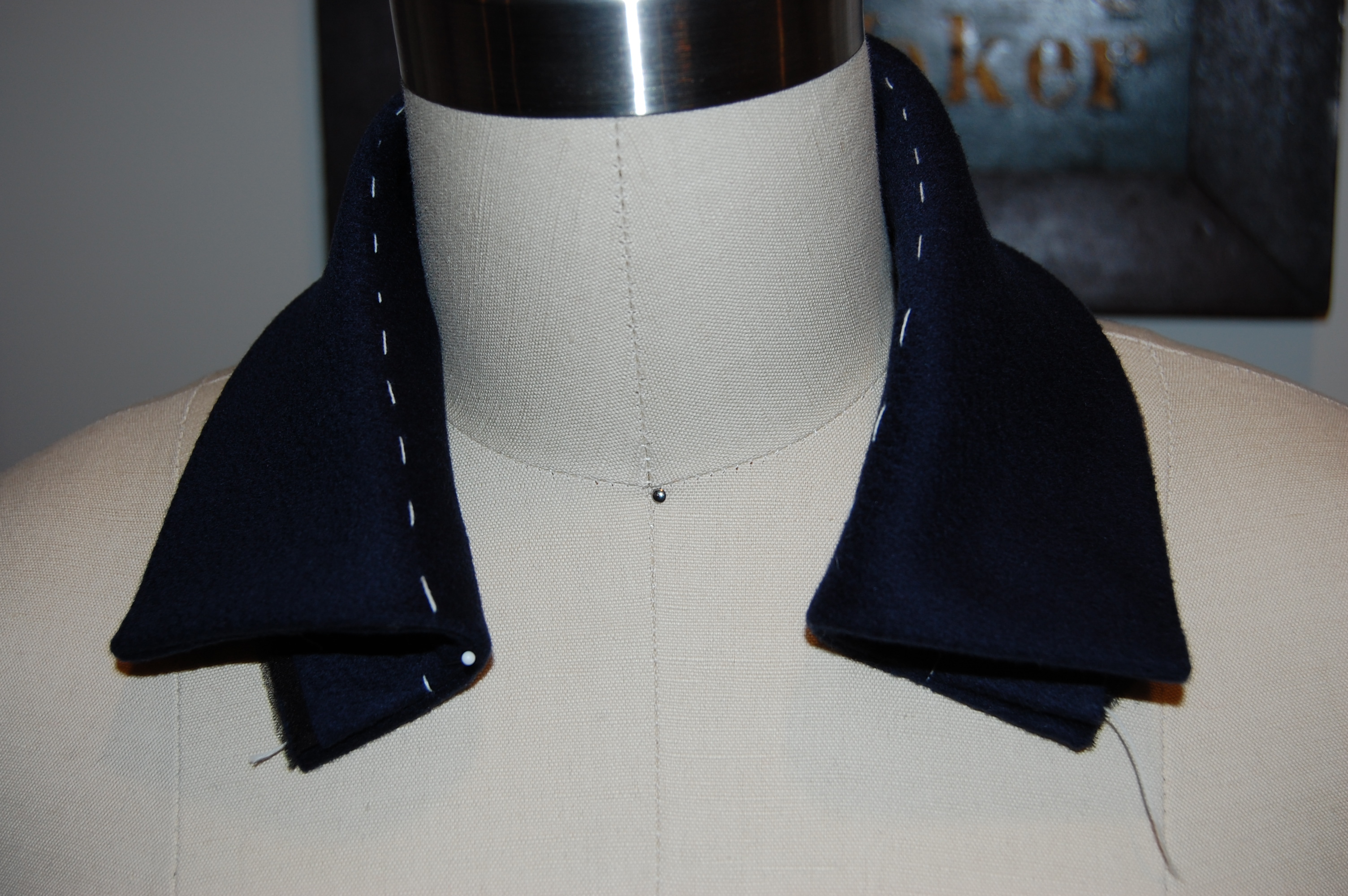
I got as far as having both sleeves completed, the body of the blouse put together, and the collar pinned in place. I am feeling good about my progress, and I know I can pick this up again, knowing that I really am in the home stretch on this particular project.

The pinned collar, placed along the neckline.

The pinned collar, placed along the neckline.

One of the sleeves pinned in place.

One of the sleeves pinned in place.  The sleeves are three-quarter length.

Good-bye to Winter and Hello to Spring!  Right now it feels wonderful to be focusing on silks and linens, bright colors and feminine fancy things. I am “desperately” happy with my decision!

21 Comments

Filed under Blouse patterns from the 1950's, Blouses, Coats, couture construction, Dressmaker coats, Mid-Century style, Uncategorized, Vintage fabric, vintage Vogue Designer patterns, vintage Vogue patterns from the 1960s, woolens

The ABCs of D-R-E-S-S-M-A-K-I-N-G, Part I

Those of us who do fashion sewing sometimes have difficulty identifying what we do in a single descriptive word. A “sewer” (not those stinky things that go underground that happen to be spelled the same way) can be one who sews many different things, right? The term “sewist” is a somewhat new word, made up of sew + artist, which really doesn’t describe anything specific to my way of thinking. Most of us are not “designers” (and not all designers can sew), although most of us use some design techniques in our fashion sewing.   Some of us may be “sewing professionals,” a term which covers a broad range of endeavors, such as being a custom clothier, a sewing teacher, a writer about sewing, or even a retailer involved in the sewing industry. The term “seamstress” implies one who sews on a machine, as in a factory; although this person may be very talented in certain techniques, her job does not leave room for innovation or creativity. And that is why I like the term “dressmaker” so much. In one word it expresses many things explicit and implied. And although it is a term much used until the 1960s and not much since then, I consider myself a Dressmaker; maybe you do, too?
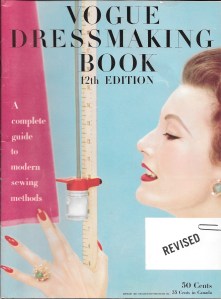
This wonderful Vogue book, copyright 1957, still used the term "Dressmaking" in its title.

This wonderful Vogue book, copyright 1957, still used the term “Dressmaking” in its title.

A dressmaker is one who makes custom clothing for women (oneself included.) She usually works from a commercial pattern, and then uses all her creative, design, and technical skills to create a one-of-a-kind dress, blouse, skirt, coat, etc. I have devised this ABCs of DRESSMAKING to define some of the important aspects and practices of dressmaking, especially in the couture sense.

D is for Design. This seems like it should be common sense, but it cannot be said too often that you should choose a design that is going to work for you. Unlike ready-to-wear that we get to try on, when we sew, we are working from patterns that we think will be flattering, but we really will not know until it is finished (a muslin takes some of the guesswork out of this, but not entirely.) Most of us have our own personal style that we know is flattering to us. Even if you want to diverge a bit from it (which is fine), it’s probably best not to go too far afield. Also, beware of trends that may not be flattering. (An example of this from a couple of years back is the revival of the peplum, a look that not too many of us can wear very successfully.)  When it comes to Design, choose one that is “smart for [many] seasons” rather than “one that’s soon outdated.”
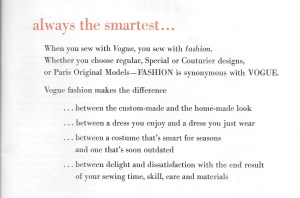
The first page of the book pictured above tells the reader why she should be using Vogue patterns, but it also suggests some of what it means to be a "Dressmaker."

The first page of the book pictured above tells the reader why she should be using Vogue patterns, but it also suggests some of what it means to be a “Dressmaker.”

R is for Risk. Let’s face it, fashion sewing can be risky. We can be sewing with really expensive or “difficult” fabric or vintage fabric, which is now no longer available – or sewing with a complicated design/pattern – or making something for a very special occasion – and the outcome is entirely in our hands! It takes bravery, confidence in one’s skills, patience, and a willingness to take a risk to grow in our dressmaking, but the rewards are manifold.
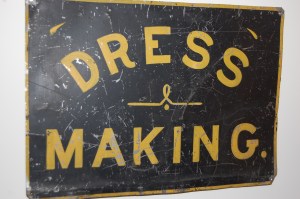
One of the Dressmaking signs I have hanging in my sewing room.

One of the Dressmaking signs I have hanging in my sewing room.

E is for two things: Engineering and Embellishment. I have said this before, but it bears repeating – sewing is engineering. I love to read pattern instruction sheets, especially for something that is complicated, and I bet many of you do, as well. It’s fascinating to see how patterns go together, how different fabrics demand specific approaches to that process, how the pattern pieces need to be manipulated to fit one’s particular form. A well-engineered pattern is a beautiful thing, and it takes a sewing-engineer’s mind to know how to best bring that pattern to life in a stylish and successful fashion. It takes a dressmaker.
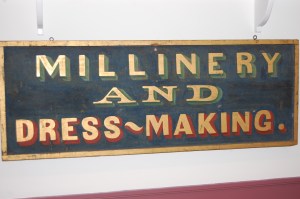
Another one of my signs, the first one I purchased and still my favorite!

Another one of my signs, the first one I purchased and still my favorite!

Embellishment is almost synonymous with the term dressmaker. “Dressmaker Details” include such things as ruffles and frills, ribbon, or braid, but also those little touches that add so much to a successful garment, such as well-chosen buttons, interior trims, non-boring linings, covered snaps, bound buttonholes (when appropriate), and the creative manipulation of, or addition to, a pattern to get the effect you want. A creative dressmaker can start with something basic and make it unique – and couture – by adding just the right embellishments or details.

S is for Seams. This is about as basic as it gets, but those seams must be sewn well and finished well for a successful finished garment. One of the techniques I learned in the couture sewing classes I have taken with Susan Khalje is, for me, the method to achieve successful seams. That is – thread basting along seam lines to use as your sewing guide, rather than relying on the seam allowance markings on one’s sewing machine.   This is the building block for successful dressmaking.  And then, finish those seams on the inside to control bulk and add to the wearability and durability of your garment.

S is also for Steam. As in ironing. A good steam iron is worth its weight in gold! Steam is useful in so many ways – here are just a few:   1) When sewing with wool or most dry-cleanable fabrics, a good place to start is steaming your fabric before you begin to lay out your pattern pieces. Even if you have pre-washed cotton or linen fabrics, a good initial steaming of your yardgoods will insure a better outcome. 2) Steam newly sewn seams flat to set your stitches before spreading the seam open for its second pressing. 3) Contours can be set beautifully with steam, especially when using a pressing ham and/or a seam roll, or draping your work-in-progress on a dress form.
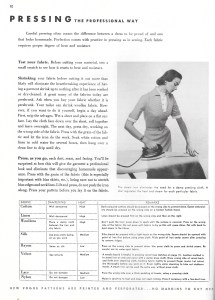
Te Vogue Dressmaking Book has an entire section on pressing, with guidelines still appropriate almost 60 years later. Click on the image to read the page.

The Vogue Dressmaking Book has an entire section on pressing, with guidelines still appropriate almost 60 years later. Click on the image to read the page.

And then, S + S  is for Sewing Sense, which is what every successful Dressmaker must develop. This subject is so vast it warrants its own blog post sometime in the future!

So now I am halfway through the ABCs of D-R-E-S-S-M-A-K-I-N-G. Part II is yet to come…

17 Comments

Filed under couture construction, Dressmaker forms, The Conde Nast Publications, Uncategorized, Vogue patterns

Can a Coat be Glamorous?

And what exactly is glamour? A recent quote by Carolina Herrera – “It’s important for women to feel glamorous and feminine but always themselves” – prompted me to look up the definition of the word “glamour” – and I was surprised by what I found. Here is how Webster’s defines it in its noun form: 1) the quality of fascinating, alluring, or attracting, esp. by a combination of charm and good looks 2) excitement, adventure, and unusual activity, like the glamour of being an explorer 3) magic or enchantment; spell; witchery. And then there is the definition of “glamorous”: 1) full of glamour; fascinatingly attractive; alluring 2) full of excitement, adventure , and unusual activity: to have a glamorous job.

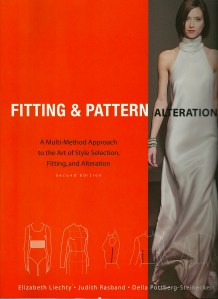
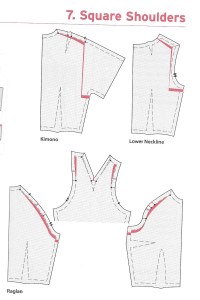
Glamour was the last thing on my mind when I started out on my current coat project. Making a muslin (toile) can be time-consuming and tedious, especially when it shows you that some serious alterations need to be made. Fortunately, my coat muslin revealed only some small changes to the shoulder of my raglan sleeve coat, compensating for my square shoulders. My go-to book to guide me through these complexities is Fitting and Pattern Alteration, by Liechty, Rasband, and Pottberg-Steineckert (recommended to me by Susan Khalje.)

I highly recommend this book.

I highly recommend this book.

One of the things I love about this book is that it covers all sorts of situations. Square shoulders for Raglan sleeves? Not a problem.

The diagrams take the guess work out of alterations to patterns.

The diagrams take the guess work out of alterations to patterns.

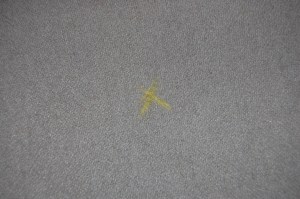
Once I had my muslin adjusted, my silk organza interlining marked and cut (to be used as the pattern for the wool), I felt like I was off to the races. Not so fast. A careful steaming of my wool fabric revealed three small “thin” areas (not holes, but thin enough that I would need to work around them). This is not unusual for vintage fabric, and is one of the reasons why a careful pre-steaming or pre-pressing of any fabric is important, but especially so for vintage goods.

I marked these small imperfections with yellow chalk.

I marked these small imperfections with yellow chalk.

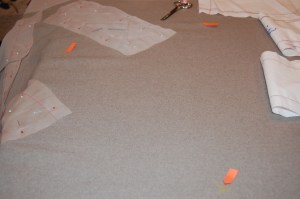
And then double-marked the areas with orange post-its when I was arranging the pattern pieces.

And then double-marked the areas with orange post-its when I was arranging the pattern pieces.

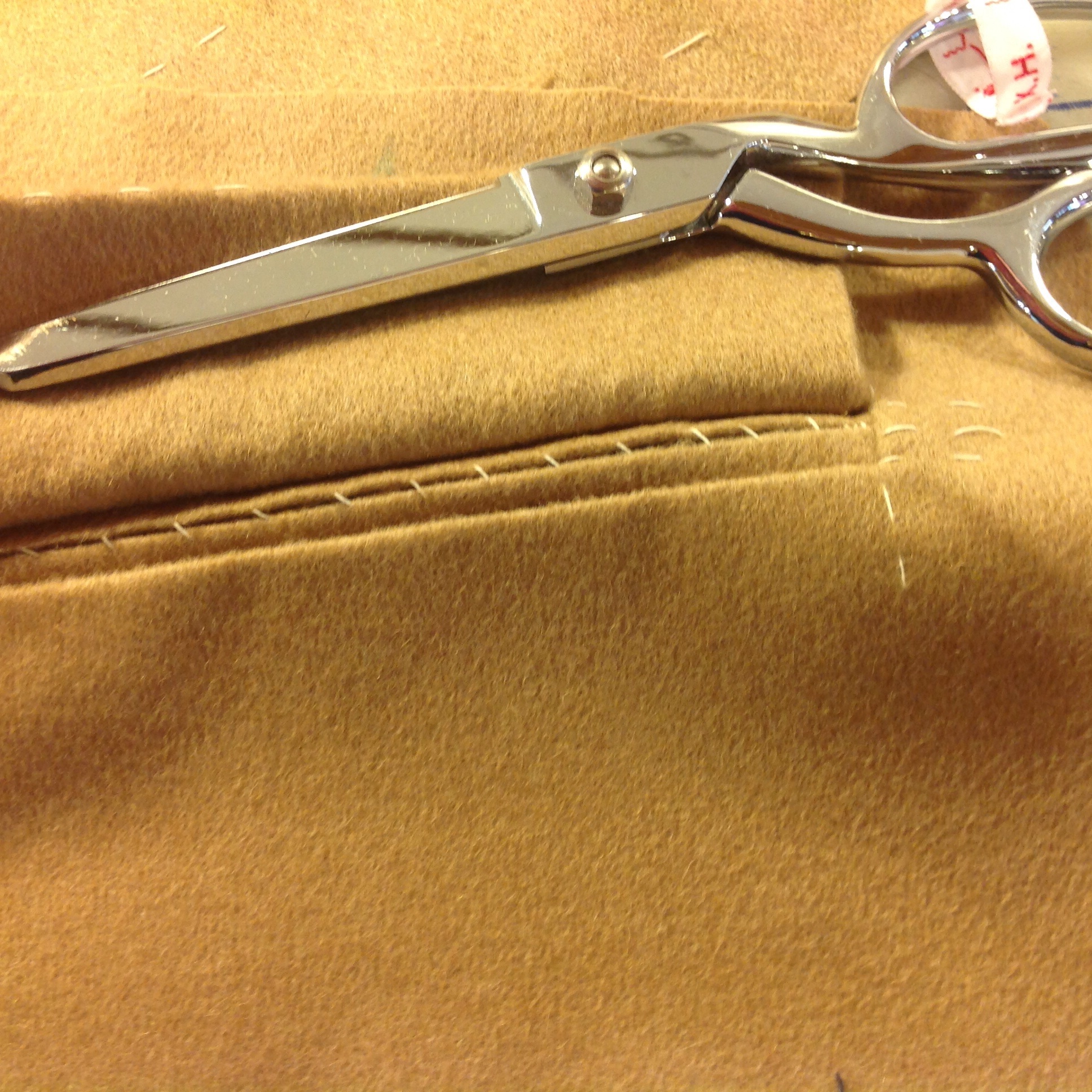
After untold hours of basting the layers of silk organza and fashion fabric together, I was finally ready to sew.   And this is when I think it began to get glamorous. The first major details to be completed were the pocket plackets. I thought I might faint when I had to make that first cut into one of the side panels of the coat front. But bravery saw me through!

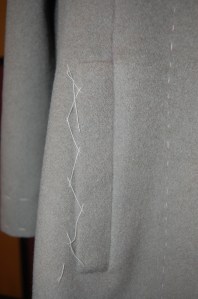
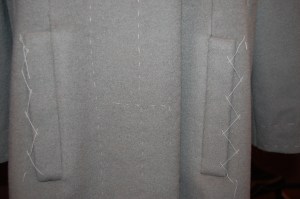
I have the placket catch-stitched temporarily so it does not get caught on something while I finish the remainder of the coat.

I have the placket catch-stitched temporarily so it does not get caught on something while I finish the remainder of the coat.

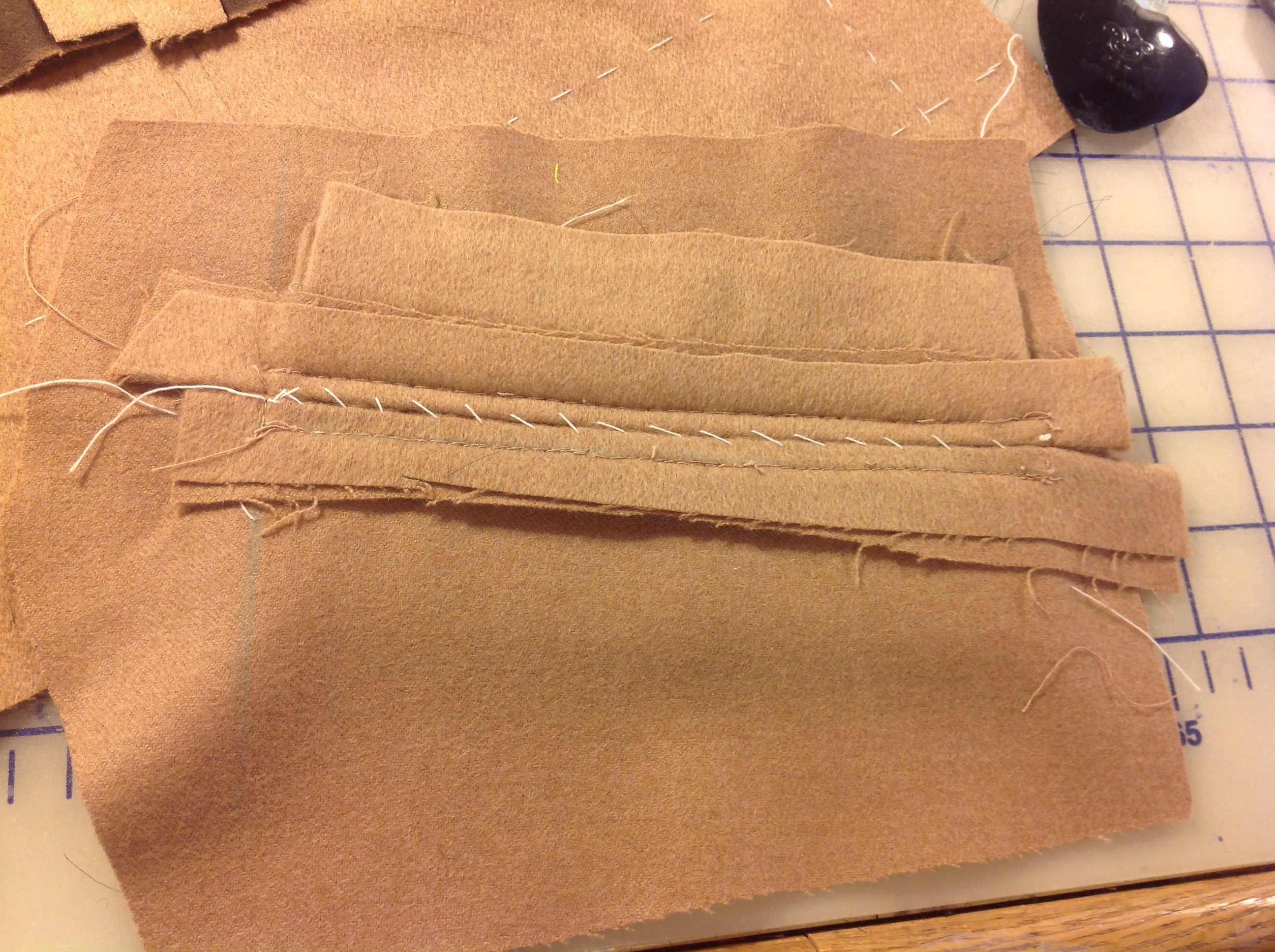
Here is the inside of the pocket and placket.

Here is the inside of the pocket and placket.

With the first pocket and pocket placket successfully completed, the second pocket placket was simply fascinating and alluring, my progress encouraged by the charm and good looks of the first one. Definitely glamorous!

Progress - both pockets/plackets finished!

Progress – both pockets/plackets finished!

More seams ensued, each one carefully pinned, sewn, pressed and catch-stitched. Particularly rewarding were the shoulder seams of the raglan sleeves. Properly clipped, pressed and catch-stitched, the seams lie beautifully and look good, too.

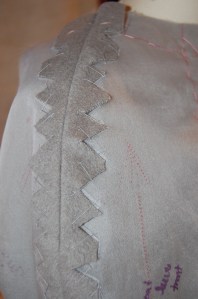
The benefits of a silk organza interlining (or underlining) are manifold, but not least of which is a foundation upon which to secure the seams.

The benefits of a silk organza interlining (or underlining) are manifold, not least of which is a foundation upon which to secure the seams.

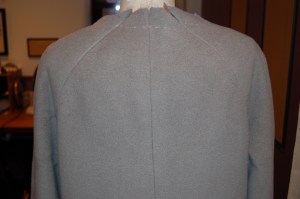
A view of the back of the coat (in progress.)

A view of the back of the coat (in progress.)

Although I have many more hours to go with the construction of this coat, I can’t help but feel that not only is this coat going to be glamorous, with its elegant gray cashmere, its vintage sensibility and all its hidden, inside secrets used to tame those seams, it is also going to be feminine and definitely me.

Perhaps the next question to ask is “Can sewing be glamorous?” It is “fascinatingly attractive, full of excitement, adventure and unusual activity.” It is magical and enchanting, too. The answer would have to be, “Yes, sewing most definitely can be very glamorous!” Even when we are in our bedroom slippers and blue jeans, covered in threads and pins, if we are sewing, I say we are glamorous.

20 Comments

Filed under Coats, couture construction, Dressmaker coats, Love of sewing, Mid-Century style, Uncategorized, underlinings, Vintage fabric, vintage Vogue Designer patterns, vintage Vogue patterns from the 1960s, woolens

Does Sewing Make Us Smarter?

Could it be that while we are planning, fitting, pinning, cutting, stitching, (and re-stitching), we are also using skills that can enhance the ability of our brains to process information and solve complex problems?

I have always loved the fact that sewing demands so many different skills and abilities, but I never thought of it as “brain-enhancing” until I read an article with the intriguing title “Which Professions Can Make You Smarter?” (by Sue Shellenbarger of The Wall Street Journal, December 9, 2015: search here.) The author identified five criteria that indicate the activity or job you are doing, can, according to some neuro-scientists, enhance the “elasticity” and cognitive ability of the brain. One by one, as these criteria were listed, I thought of how apropos they are to sewing. See what you think:

1) “You work at tasks that are difficult enough that you make some mistakes.”

As we all know only too well, mistakes are part of sewing. Why else would seam rippers have been invented?  Have you ever sewn a sleeve in backwards or failed to match a plaid? I immediately thought of this blouse which I made a couple of years ago; while sewing the collar/tie to the front of the bodice, I made the same mistake over and over until I finally got it right.

The Necessary Blouse

2) “You have a job [or avocation] that is continually challenging.”

Whether the challenge comes from the pattern you have chosen, the fabric, the fitting issues you are facing, your time constraints, or any other myriad of potential hazards or goals, sewing is inherently challenging. A good example of a sewing challenge is the use of Marfy patterns. With no written instructions, minimal marking on the pattern tissues, and often complex (but very exciting) designs, Marfy patterns are definitely for the dressmaker who relishes a challenge.

Here is a detail from a dress which I made using a Marfy pattern.

Here is a detail from a dress which I made using a Marfy pattern.

3) “Your work lets you progress to higher skill levels, but you are never able to master it.”

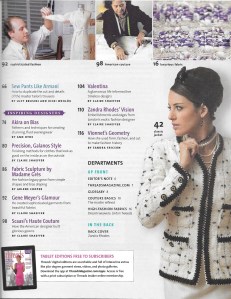
I am always amazed at people who, knowing that I have  taken numerous couture-sewing classes, comment to me that I “must know everything there is to know about sewing.”  I find that the more I learn, the more I realize I don’t know. Just take a look at the Table of Contents of this special Designer edition of Threads Magazine from Summer 2014.   So much to learn, and while every piece we finish expands our sewing knowledge – and abilities – we are still humbled by some of the amazing techniques that would take more than a lifetime to master.

Sewing makes us smarter - designer techniques

Click on the image to read the text.

Sewing makes us smarter - designer techniques - 2

4) “Improving your skills is rewarding enough that you want to keep trying to do better.”

I believe this is one of the most important aspects of sewing. The reward of using – and improving – your skills is something you can wear! Although I love a Classic French Jacket, and want more of them because of their wearability, style, and enduring appeal, I have to confess that after making my first one in a class with Susan Khalje, I immediately wanted to make another one to see if I could improve on the first one. Now I have two more in my queue – and yes, it does have at least some small part to do with making each one better than the one before.

I wanted to add working buttons and buttonholes on my second French jacket, so I devised a way to make slot-seam buttonholes. This definitely took some thinking and a bit of nerve, too!

I wanted to add working buttons and buttonholes to my second French jacket, so I devised a way to make slot-seam buttonholes. This definitely took some thinking and a bit of nerve, too!

5) “You have to pay attention to details while solving more complex problems.”

The details in sewing are legend! The darts, the seams, the proper alignment of your fabric, using the correct thread, choosing buttons, marking – well, the list goes on and on and on. We do all of this as a matter of course in our sewing, but we also know that if one of these details is not done well, it can affect the outcome of the entire garment. So, for example, while I am working my way through some complex instructions such as the sheet below, I have to be completing each detail, no matter how simple, with mindfulness and skill.

This is from one of the more complex patterns I have in my collection. It is a Jo Mattli Vogue Designer pattern for a coat and dress.

This is from one of the more complex patterns I have in my collection. It is a Jo Mattli Vogue Designer pattern for a coat and dress.

One of the sewing quotes I love so much is from the great American writer, Nathaniel Hawthorne:

“It is a token of healthy and gentle characteristics, when women of high thoughts and accomplishments love to sew; especially as they are never more at home with their hearts than while so occupied.”

It seems we are also at home with our minds while stitching away the hours.


34 Comments

Filed under Chanel-type jackets, Love of sewing, Marfy patterns, Quotes about sewing, Slot-seam buttonholes, Uncategorized

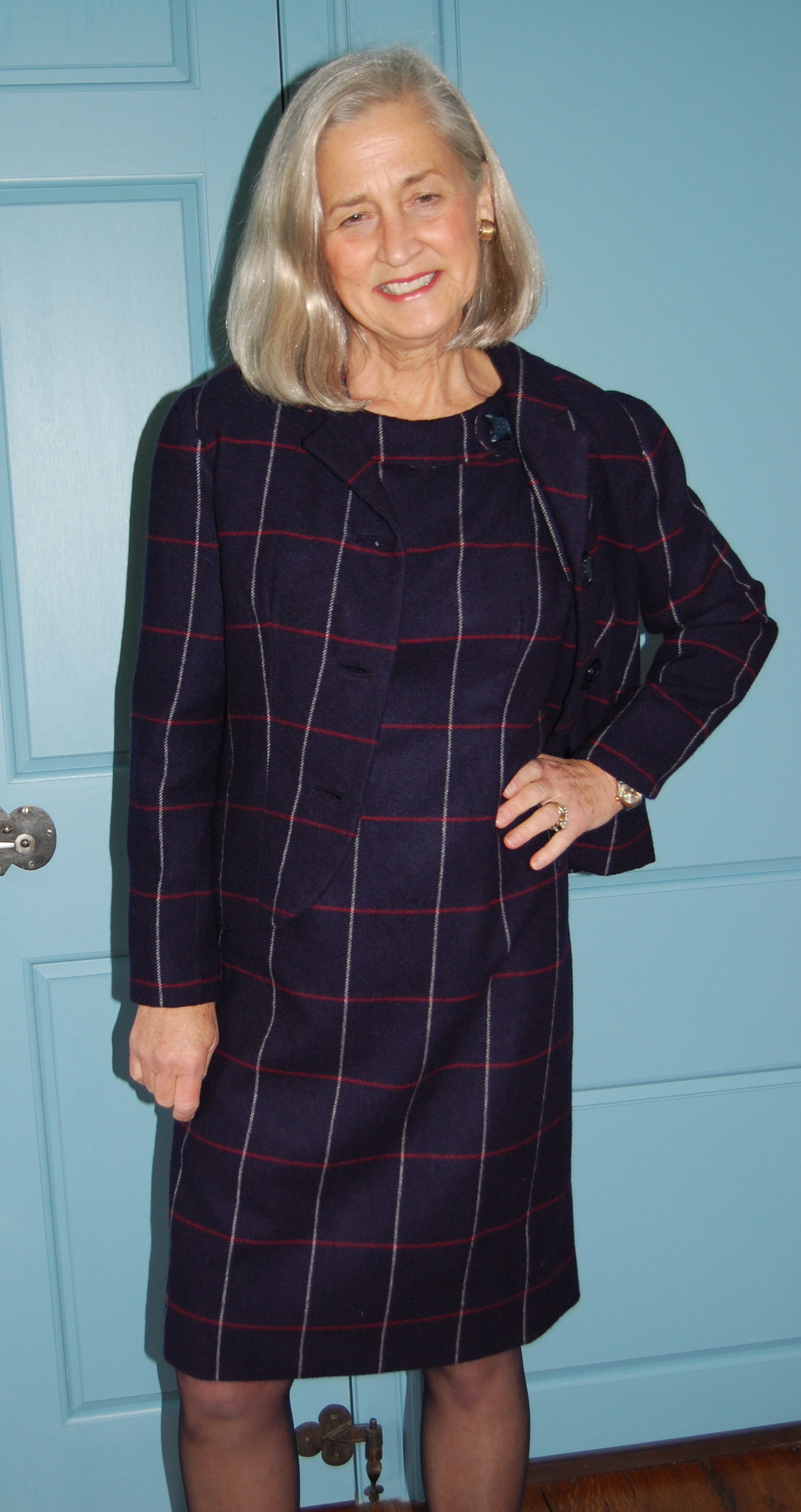
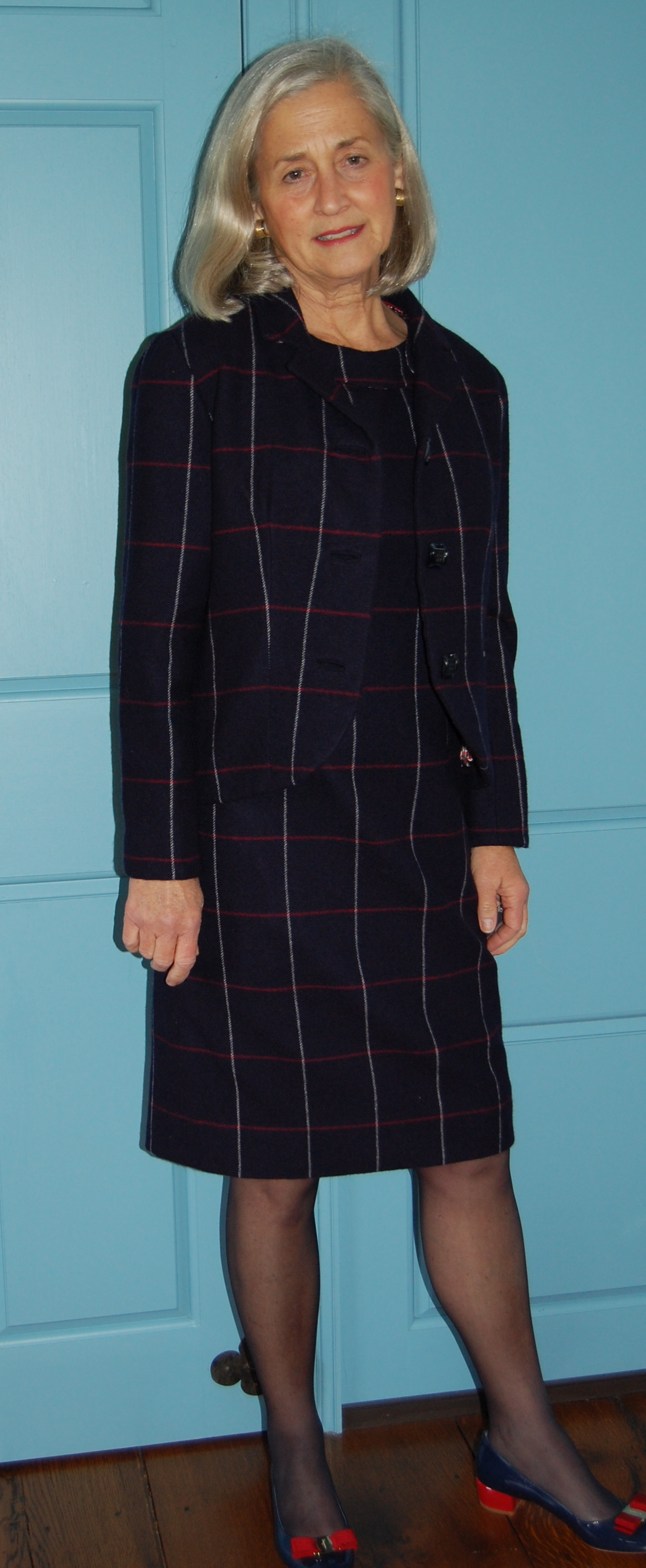
My Suit Dress Fully Evolved – Finally! – Part 5

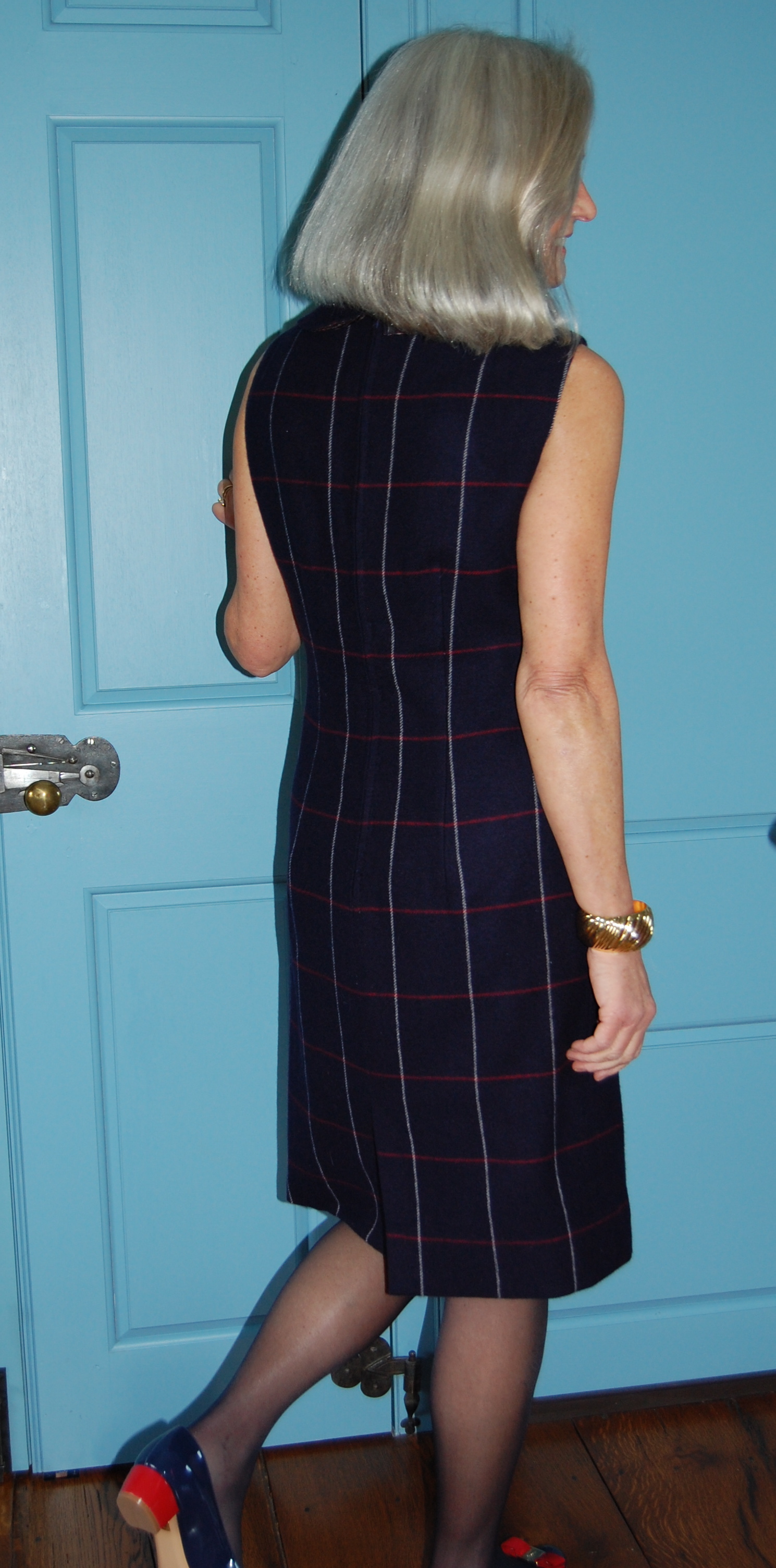
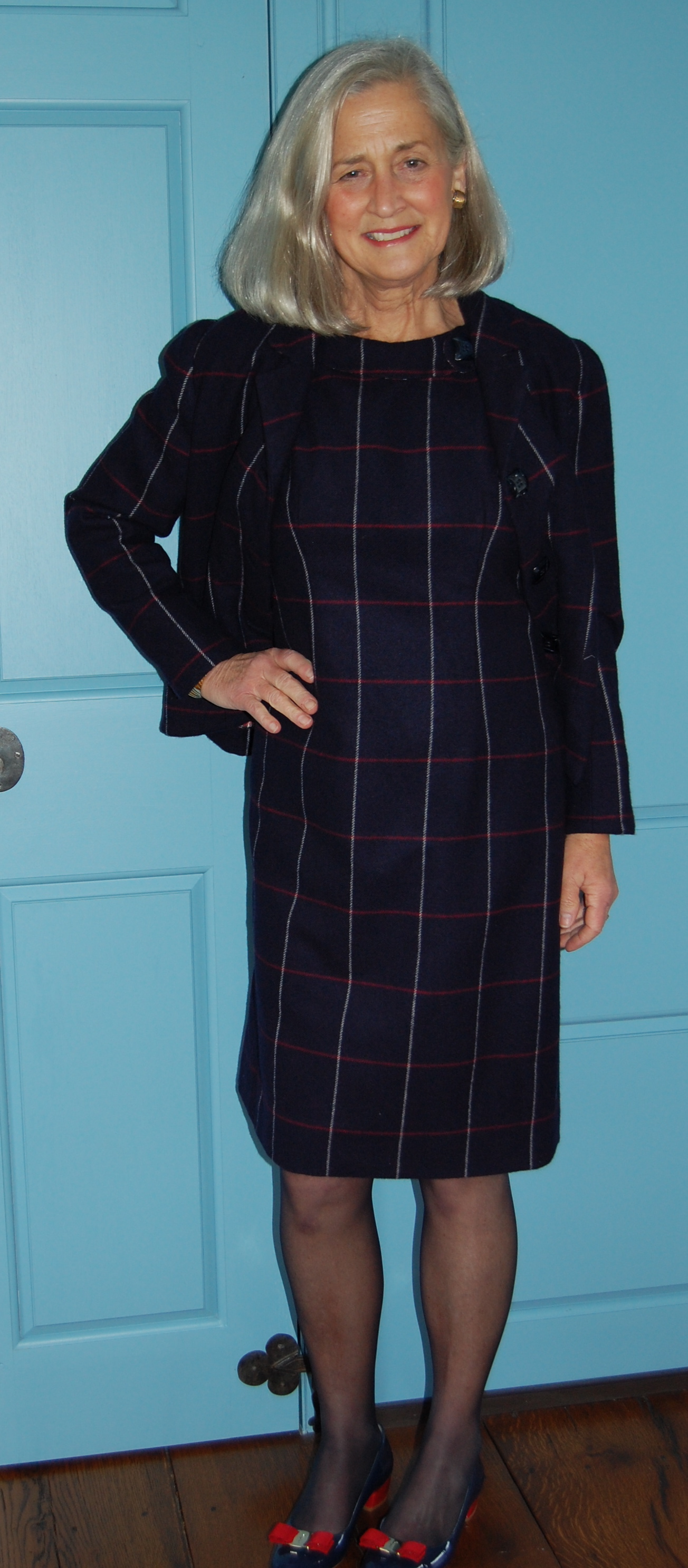
Can it really be that May will arrive in a few days? If that is true, then I am only about 2 months behind in my sewing schedule. But who’s keeping track? I’m happy that I have plowed through to finish my wool suit dress, even though it will immediately go into my cedar closet for safe storage until next Fall.

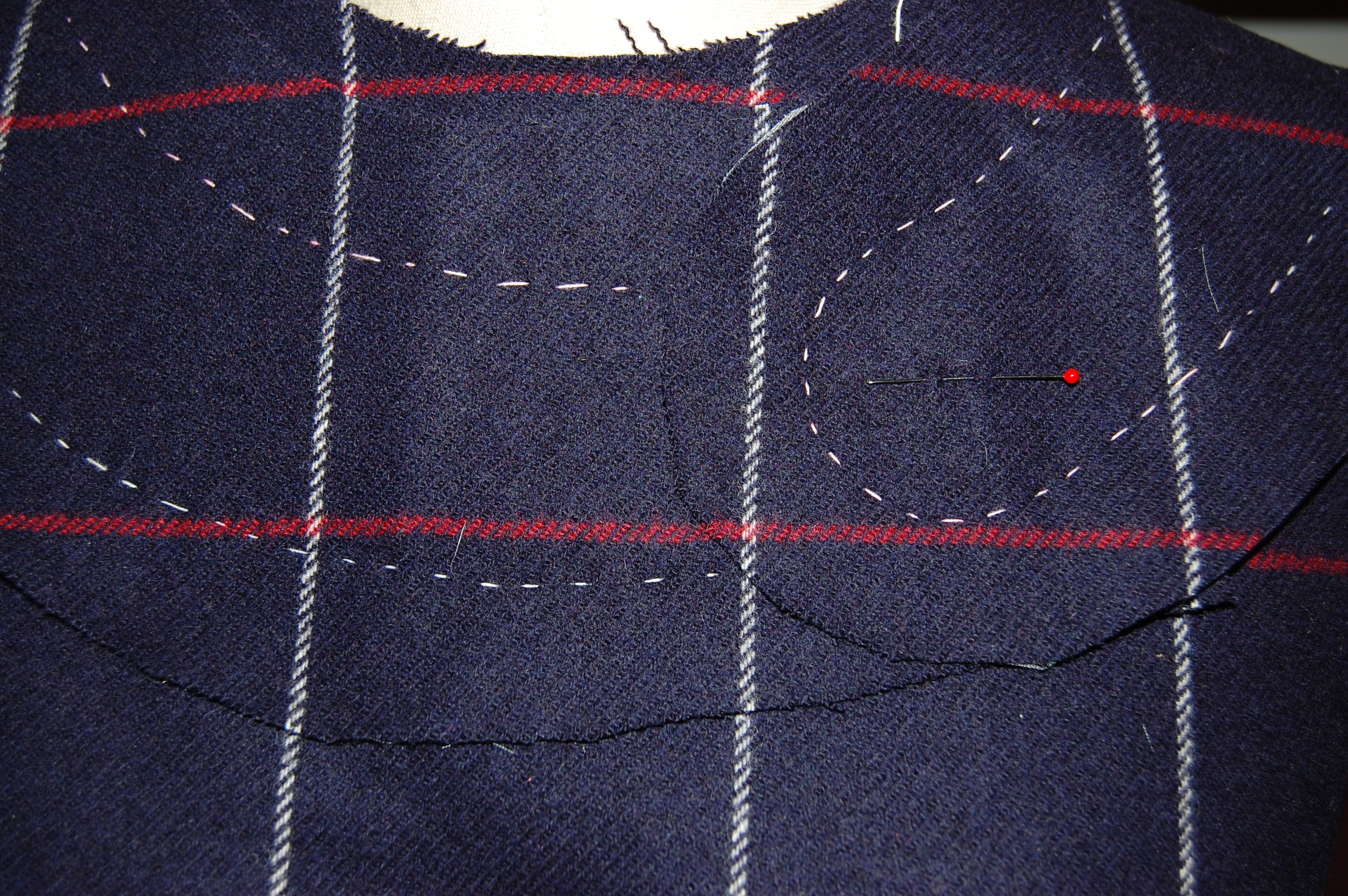
When I fell off the edge of the world after Part 4 (only figuratively, thank goodness!), I was starting on the sheath dress. I had decided to add a collar to it, so that I could use that fourth vintage button (I had already used three on the jacket itself). Matching the windowpane plaid on the collar section took some special attention, as this photo shows:

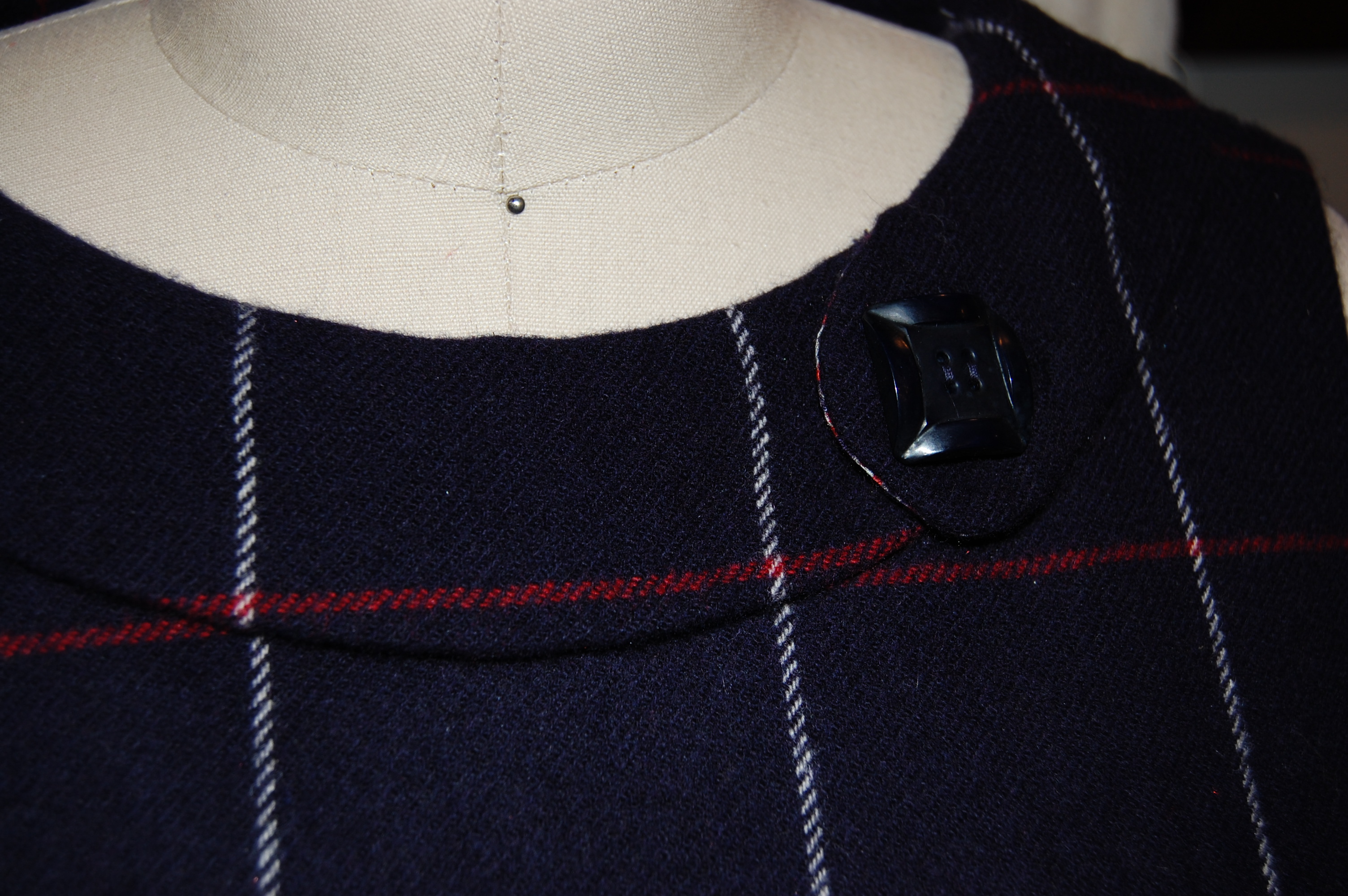
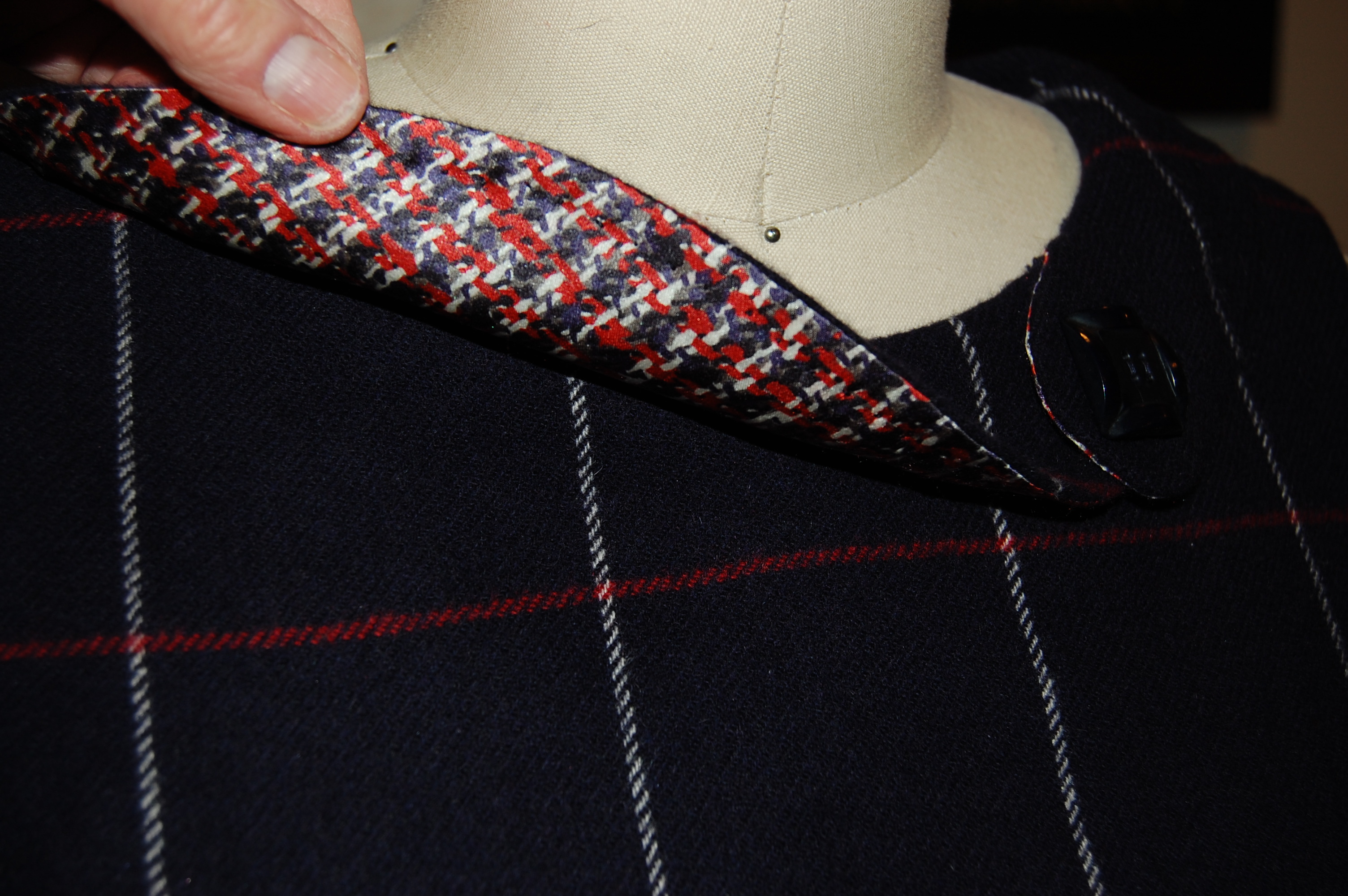
Collared sheath I underlined the collar with the lining fabric, and I made a working bound buttonhole instead of just sewing the button in place. Anything to make it more involved, right?

Detail of the button on the collar.

Detail of the button on the collar.

Lining the collar with silk charmeuse reduced bulk and helps it lay flat.

Lining the collar with silk charmeuse reduced bulk and helps it lay flat.

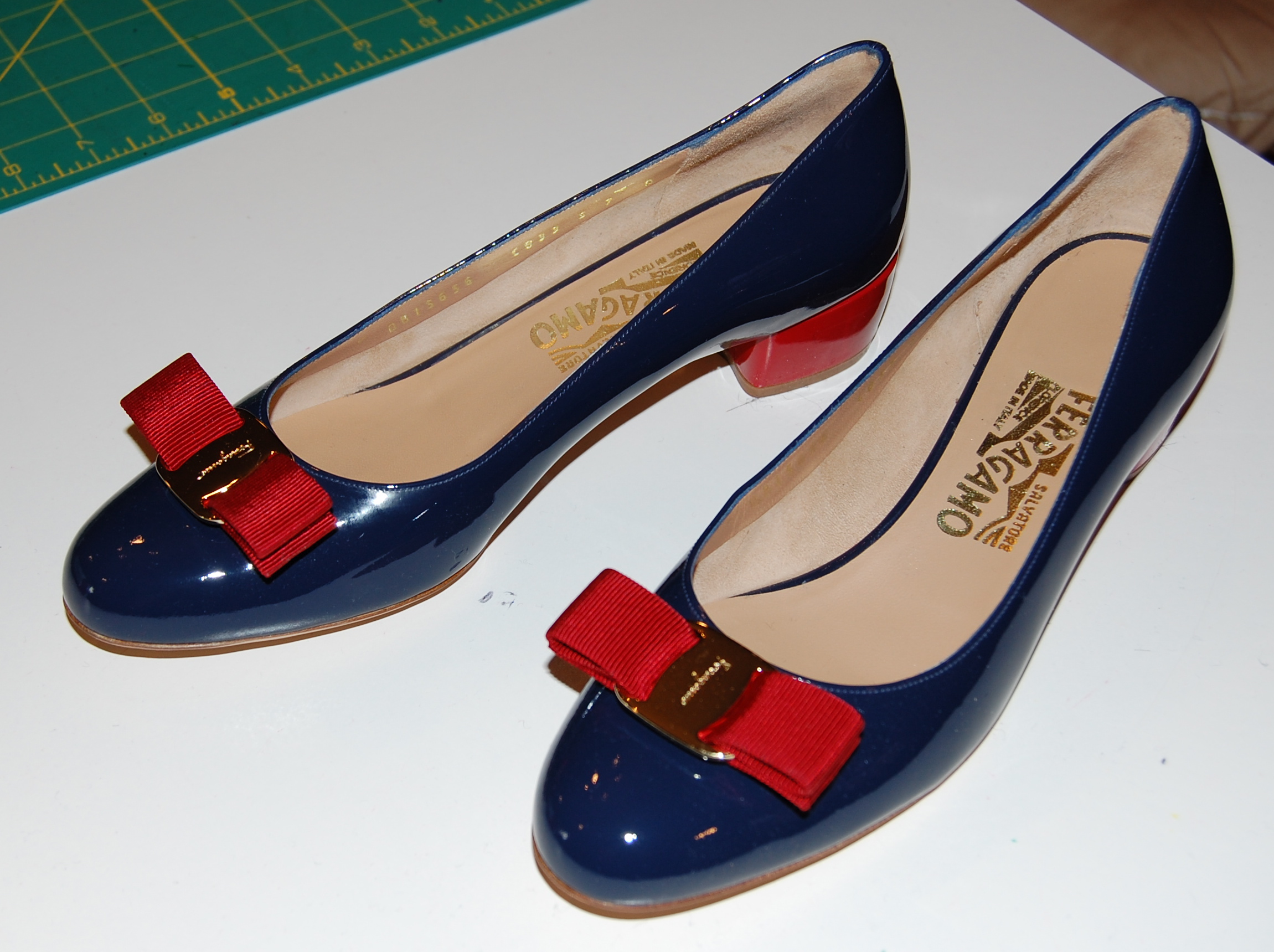
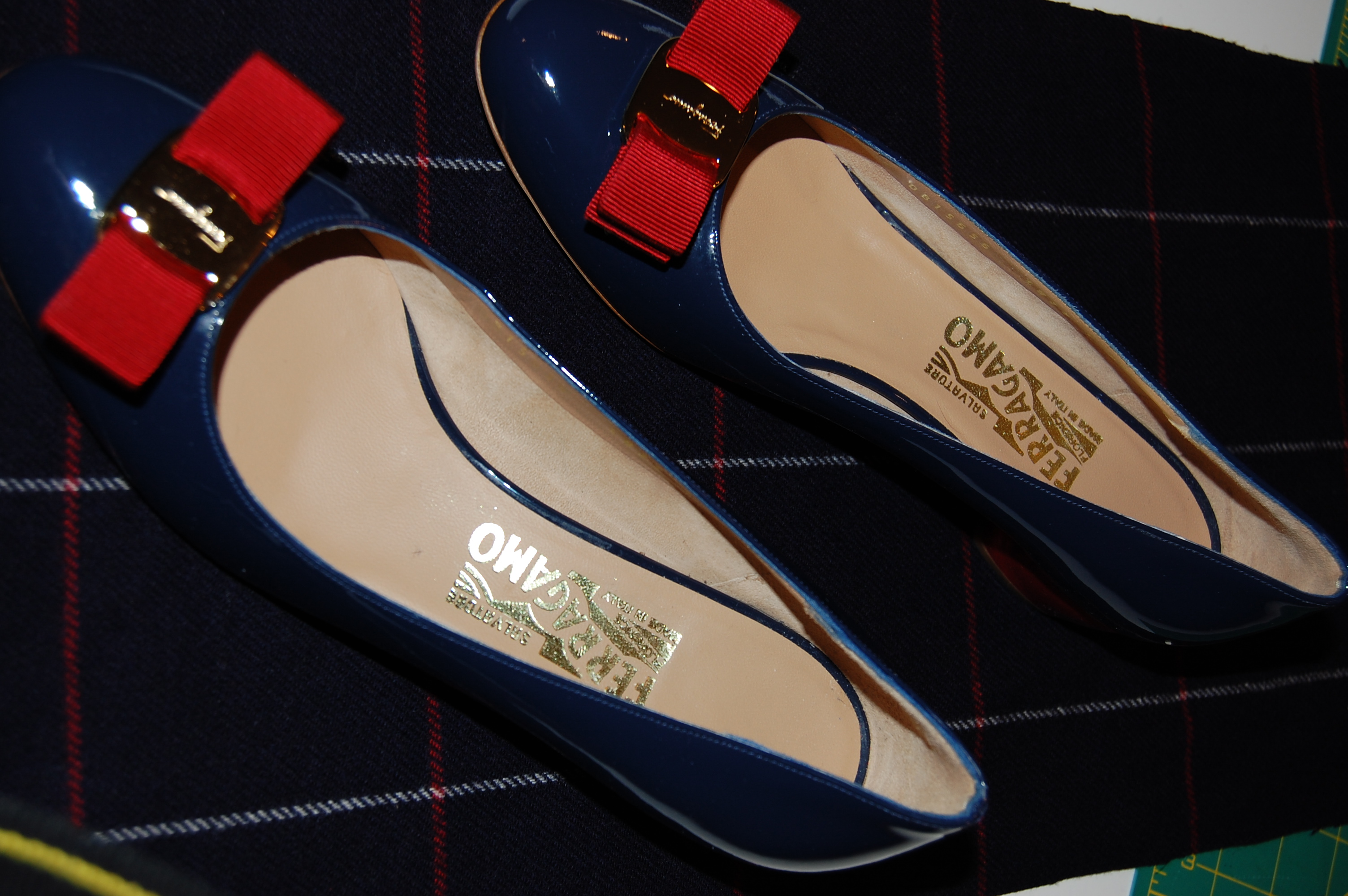
From that point on, it was a straightforward sheath dress. I love a sheath dress. I think it is such a flattering silhouette, and very feminine. As far as I am concerned, one can never have too many sheath dresses (just as one can never have too many shoes). Speaking of shoes, I decided this outfit needed complementary shoes! What do you think?

collared sheath

I wear a lot of red and blue, so I expect these shoes to serve me well!

I wear a lot of red and blue, so I expect these shoes to serve me well!

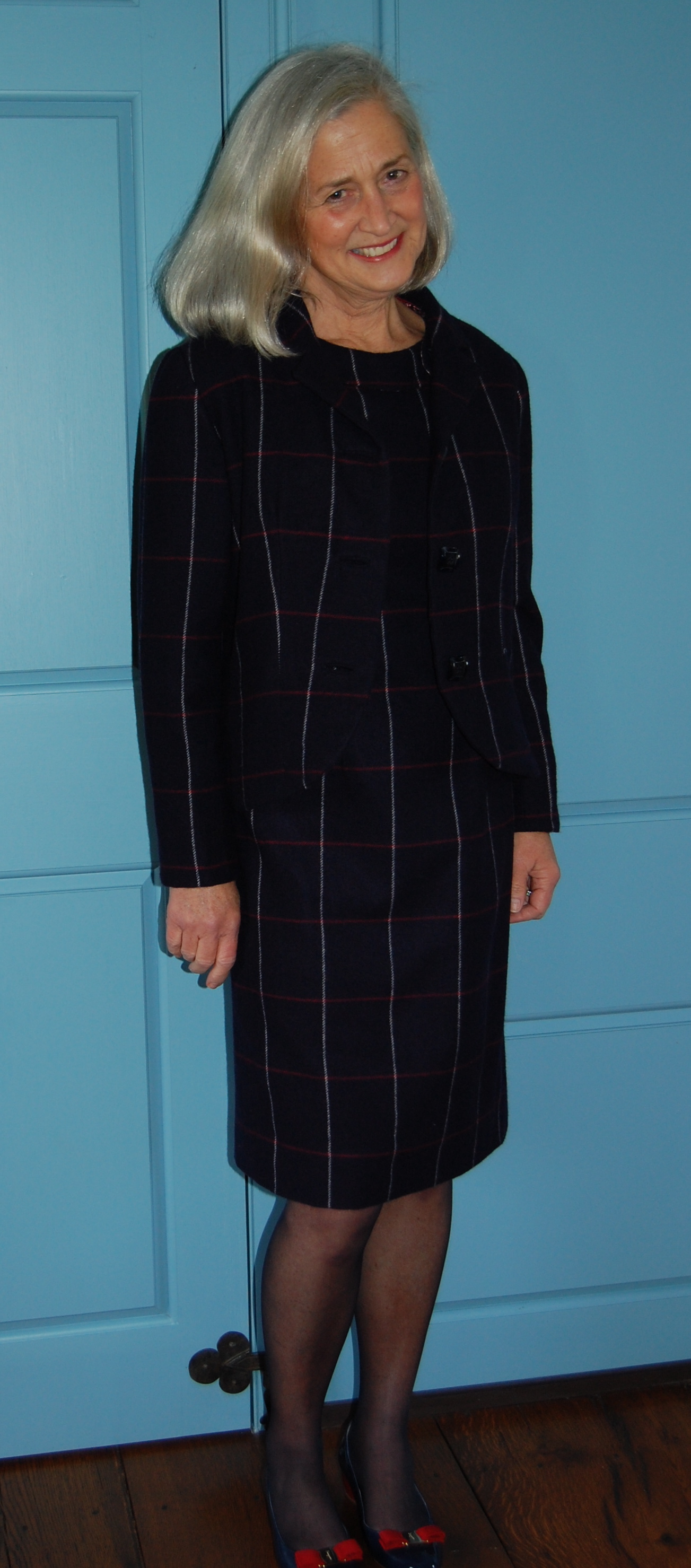
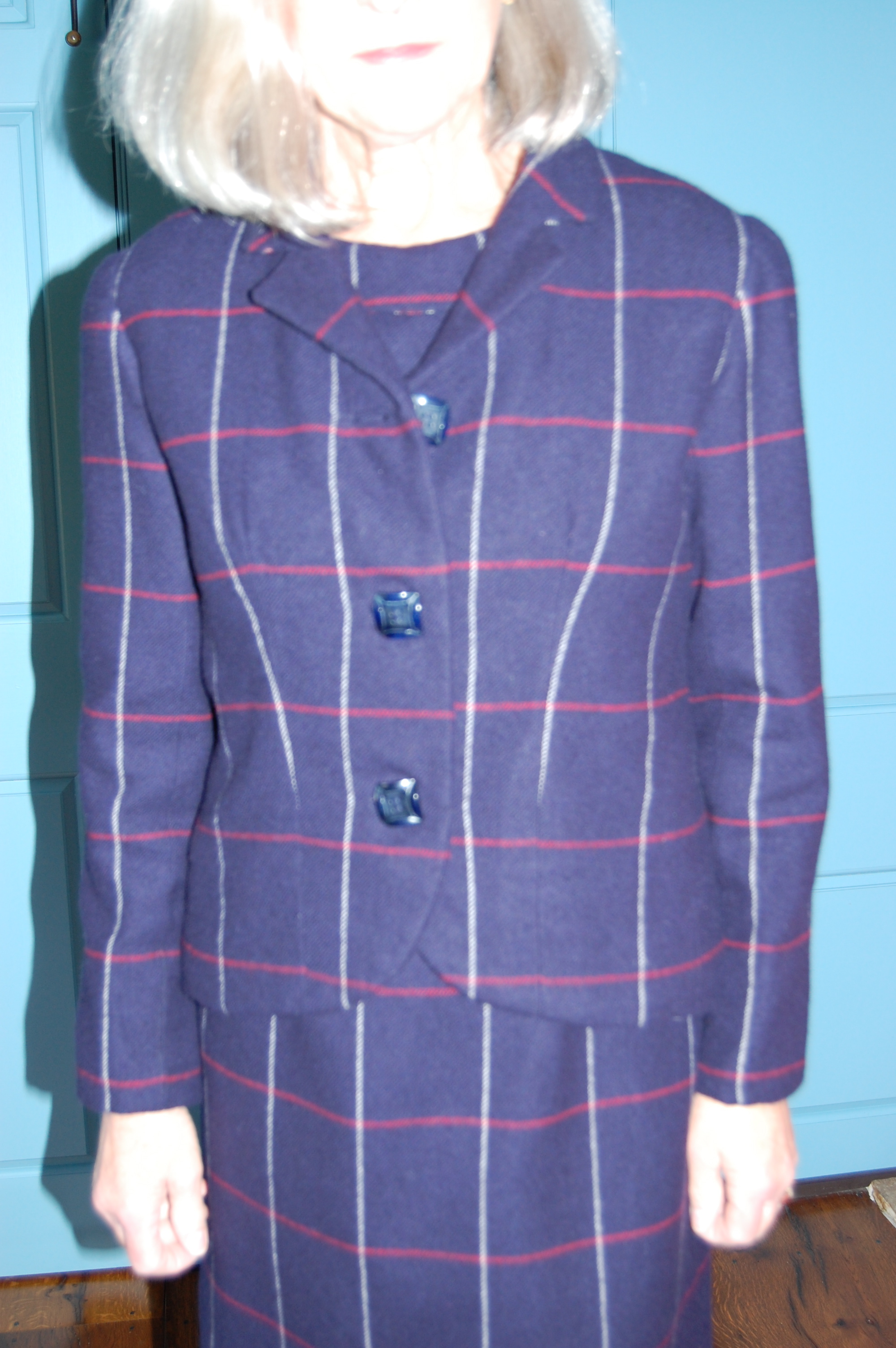
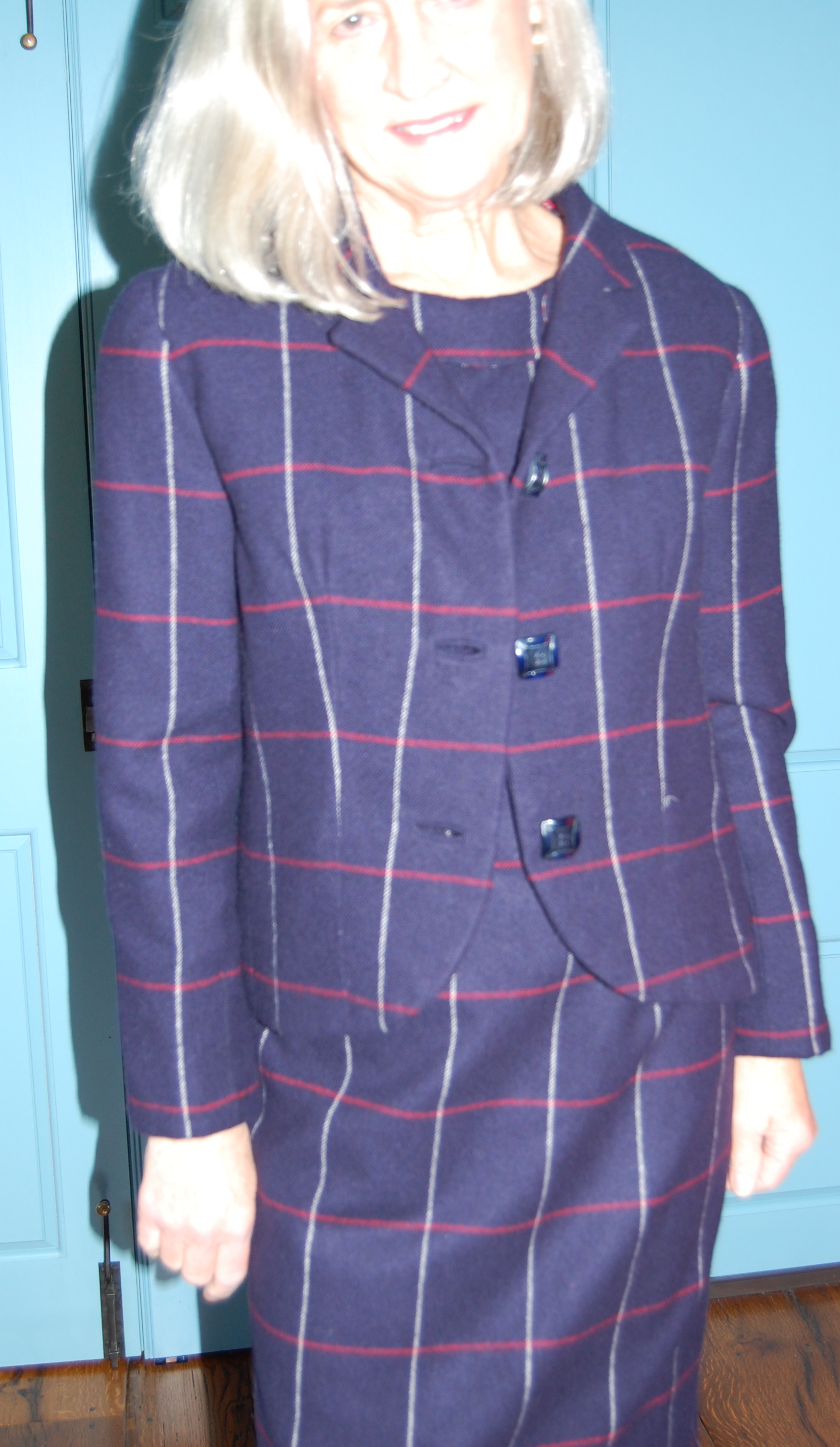
It turns out that even a simple sheath can take a lot of time to make when one is using couture techniques: underlining of silk organza; interior seams catch-stitched; hand-picked zipper; instead of facings, neck and armholes finished with lining-abutted edges, then pick-stitched for stability. The silk charmeuse lining in the dress matches the jacket lining and is an extravagance, I will admit. But it feels heavenly, and adds a fluidity to the dress which is a good match for the butter-soft cashmere wool fashion fabric.

Suit dress

Shown with the jacket unbuttoned.

Shown with the jacket unbuttoned.

Suit dress

A close-up look...

A close-up look…
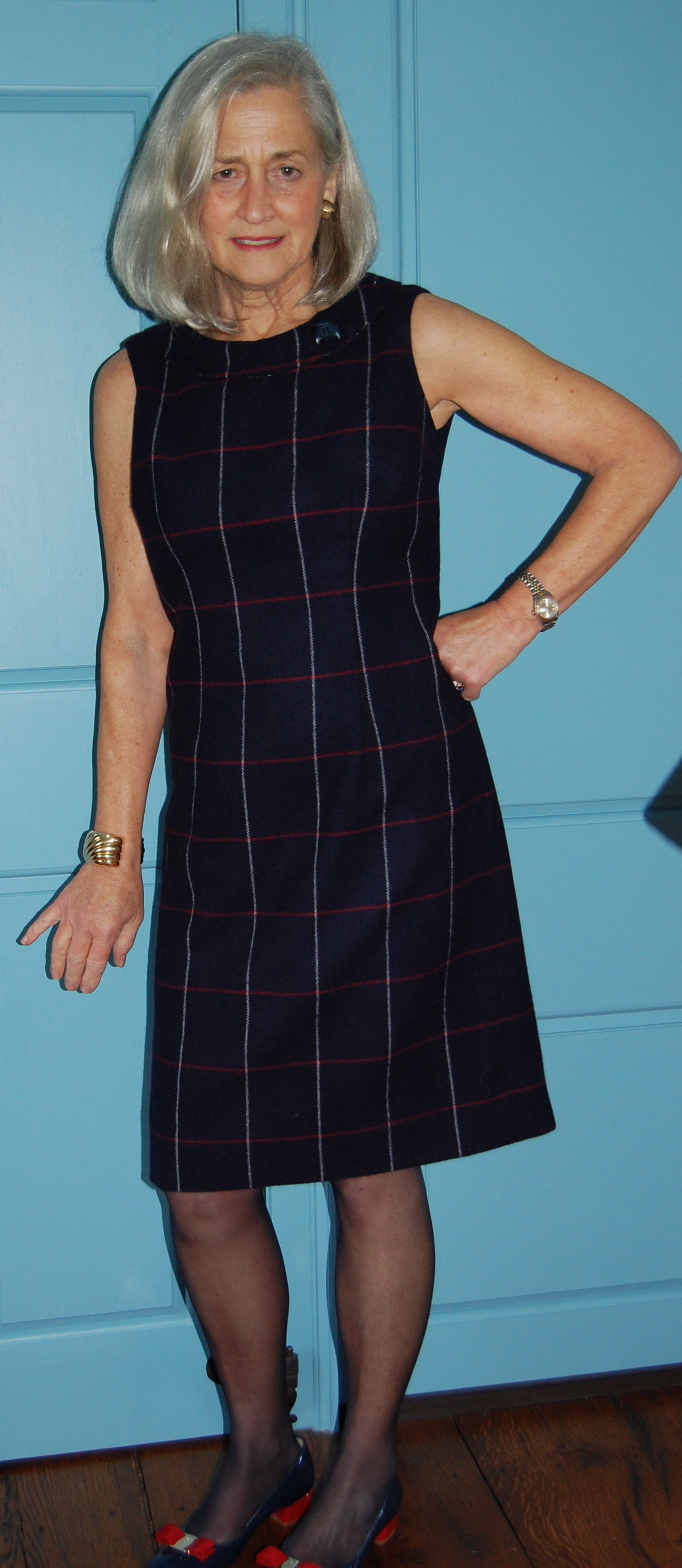
... and another one.

… and another one.

And a partial back view.

And a partial back view.

I am happy I added the collar to the dress, as that extra detail seems to help the dress stand on its own if/when I take the jacket off. Framing the face is always a good fashion decision, and I think the collar helps in that regard.

Just the dress!

Just the dress!

Suit dress

So happy this is finished!

So happy this is finished!

I consider finishing this outfit a major accomplishment!  So what’s next? Something easy or something more complex? Those questions to be answered soon, with this caveat: it will most definitely be something for Spring/Summer!


Details:

Navy blue Cashmere fashion fabric:  Britex Fabrics, San Francisco, CA

Silk charmeuse lining fabric:  Britex Fabrics

Buttons:  vintage Ultra Kraft, ca. 1950s

Shoes: Ferragamo

Patterns:  Jacket: vintage Jo Mattli Vogue Designer pattern; Dress: vintage Vogue blouse pattern combined with new Butterick dress pattern

31 Comments

Filed under Buttons - choosing the right ones, couture construction, Dressmaker suits, Shoes to make an outfit complete, Suit dresses, vintage buttons, vintage Vogue Designer patterns, vintage Vogue patterns from the 1970s, woolens

Totes for Tots – and Other Small Things

Sometimes one’s fashion sewing has to take a little break to make way for other sewing projects – of the less complicated sort. Much of my sewing time the last couple of weeks has been dedicated towards getting some baby gifts ready – and making favors for the guests of a baby shower which I hosted just last weekend.

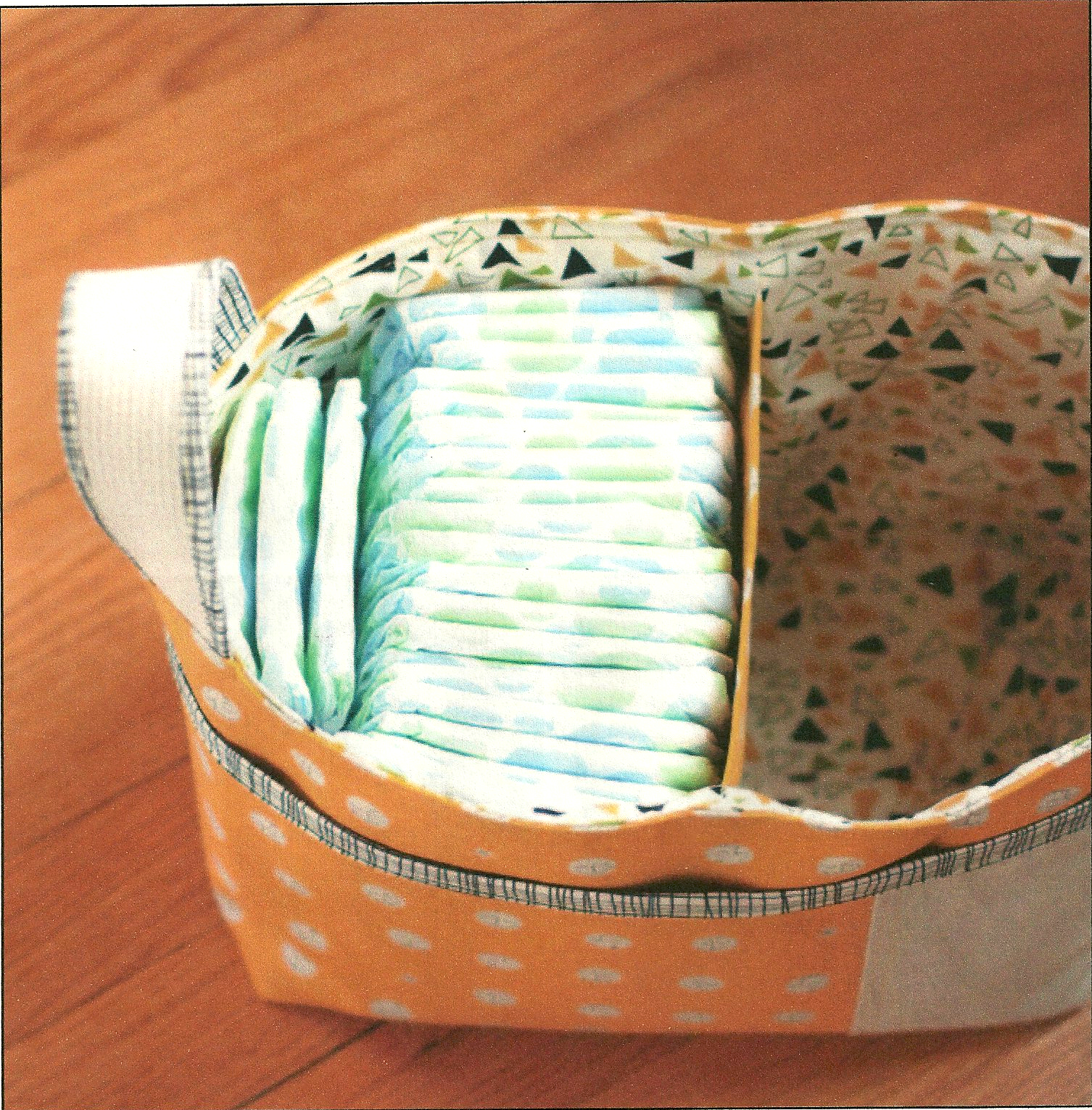
I had seen a Noodlehead blog post for a very cute “baby basket” months ago and had even purchased the pattern (a download, very reasonably priced and, even better, instantly delivered). I thought it might be a cute way to package gifts for all the very deserving moms of my acquaintance and their babies who seem to be arriving quite frequently. What I really like about this pattern is that the basket is the perfect size for storing diapers and other baby supplies, and then it becomes the perfect size for toddlers to load up with their treasures as they become mobile – as in walking!

A picture of one of the Noodlehead baskets in the pattern instructions.

A picture of one of the Noodlehead baskets in the pattern instructions.

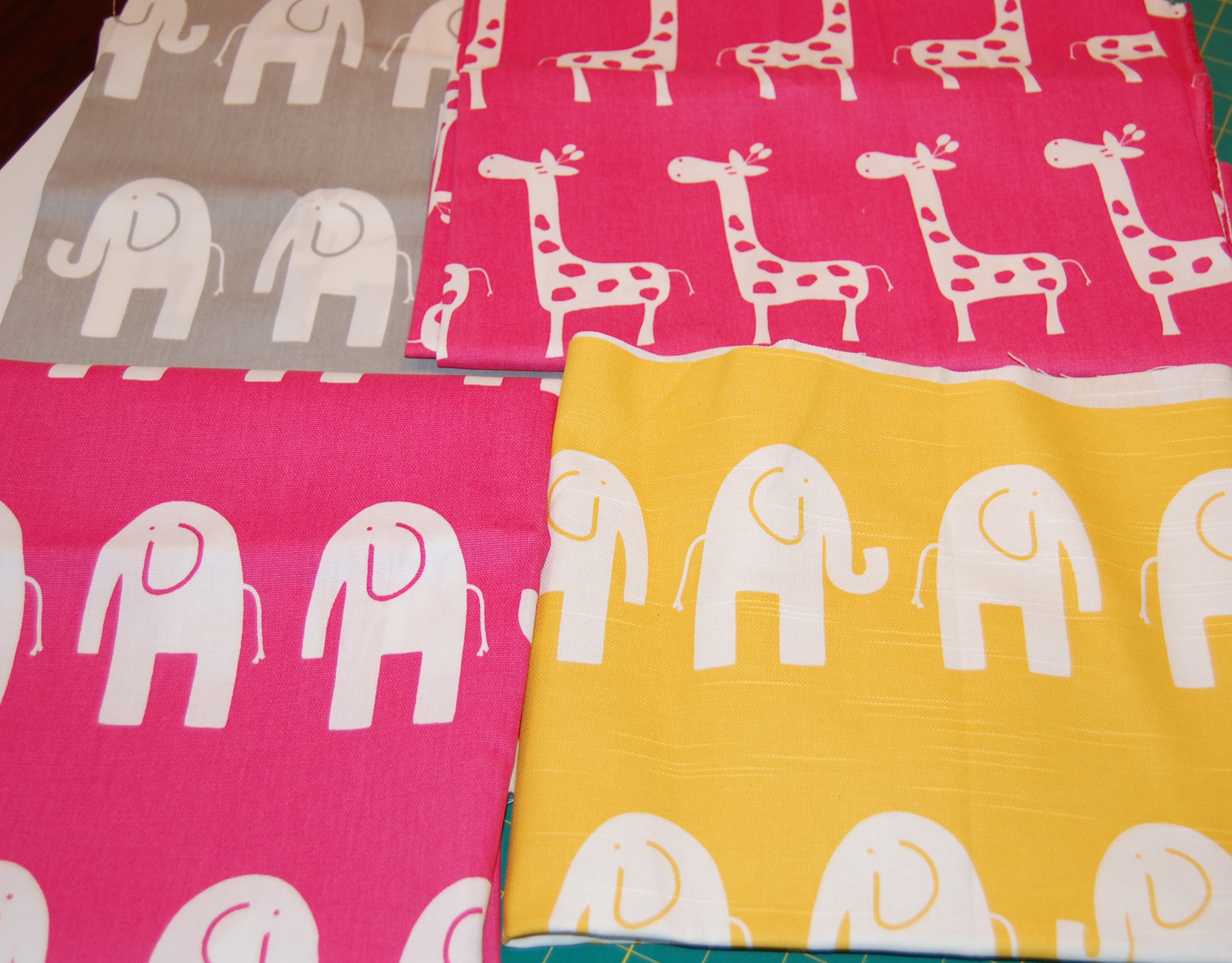
I found myself inspired by some very cute home decorator fabric which I found on Fabric.com – heavy enough to give these baskets some heft, but still soft and manageable.

Totes for Tots

The pattern calls for fusible interfacing – which I never use for my fashion sewing – but which works beautifully in this application – specifically in the body of the bag and in the divider inside. The directions are quite clear, but I found that using a walking foot made the sewing much easier and more precise, especially on the handles and the top-stitching around the top of the bag.

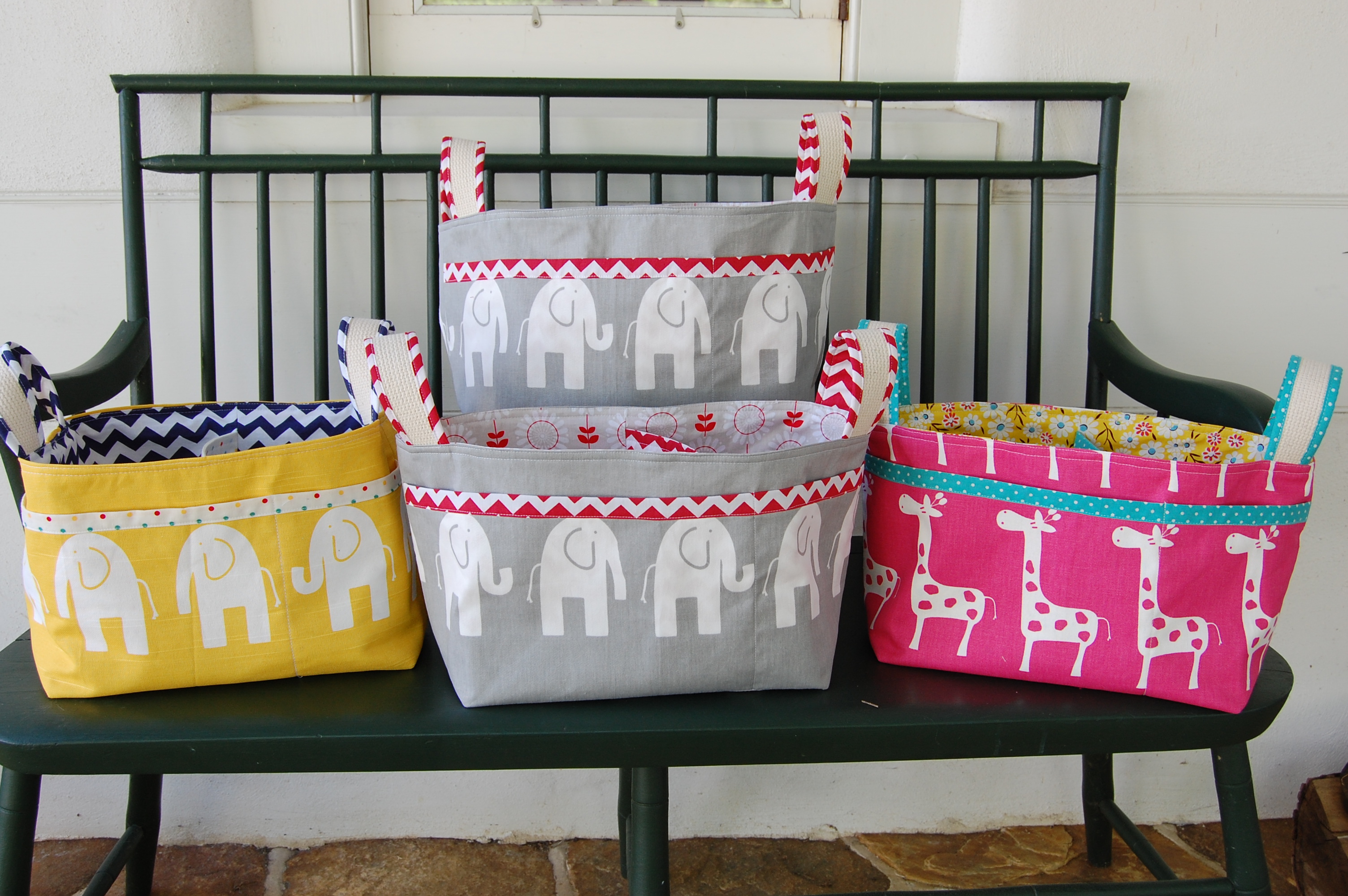
Here are the four bags I have made – so far…

Totes for Tots


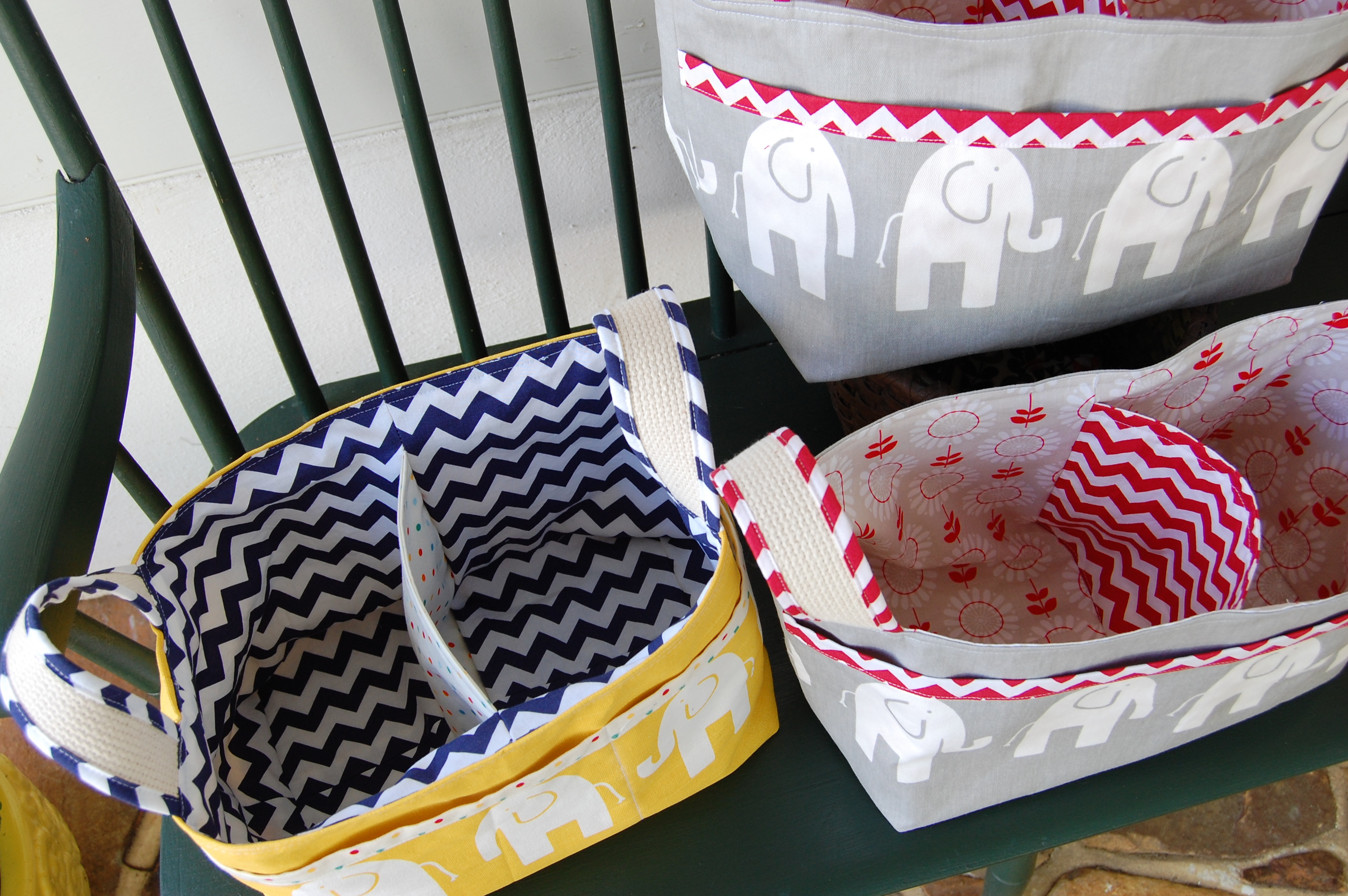
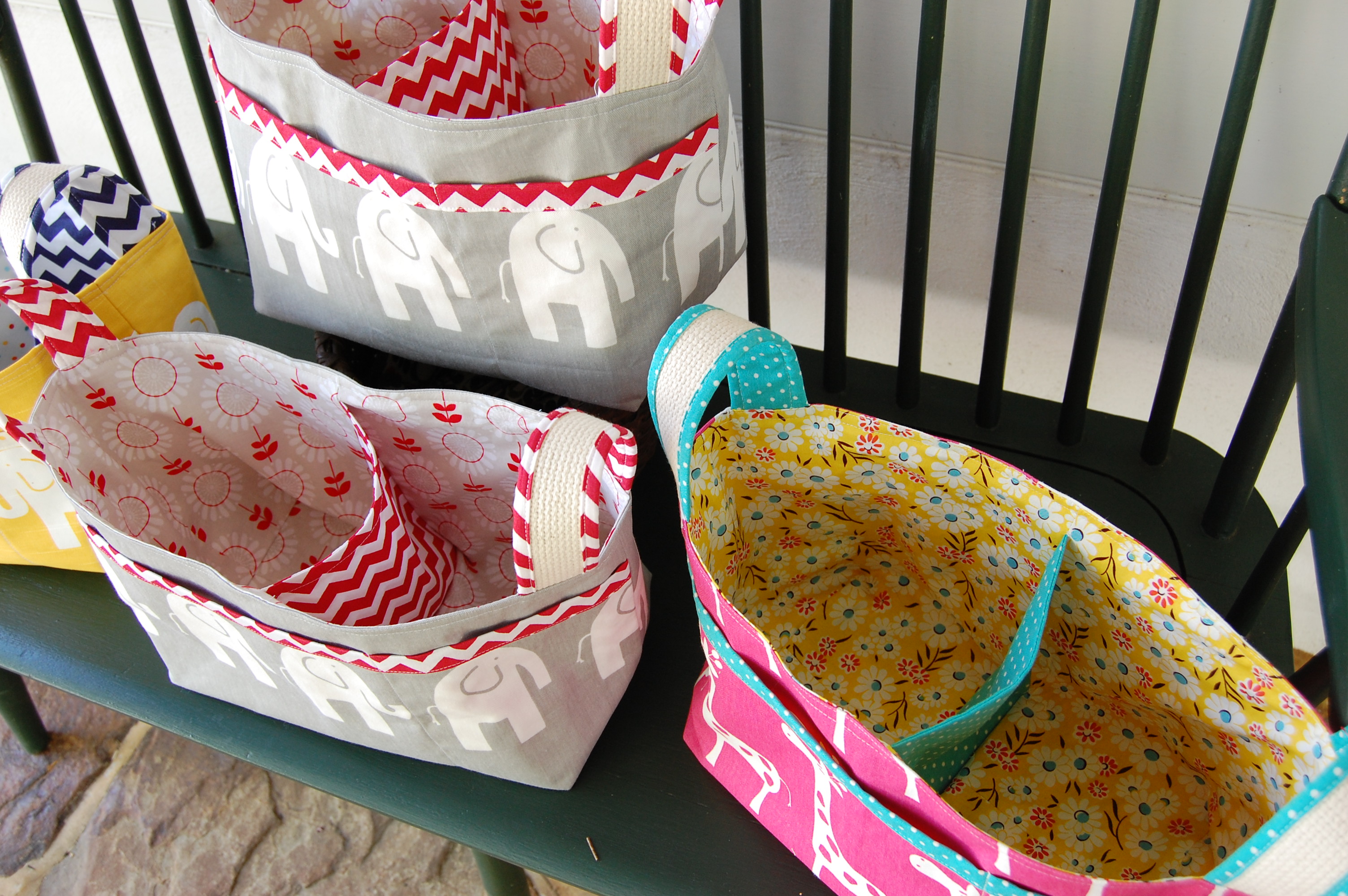
Looking inside of the totes.

Looking inside of the totes.

The front pocket is optional, but I think it adds a useful touch!

The front pocket is optional, but I think it adds a useful touch!

Of course, I made one for my daughter/granddaughter, and I gave them their choice (although I knew the yellow bag would be the one!) I made the pink one for the lovely and talented honoree of the Shower, and I made one of the gray ones for the new baby daughter of another dear young couple adding to their growing family. I am keeping the other gray one in reserve in case I need a quick gift sometime, and I know I’ll be making more of these fun and useful baskets in the months to come.

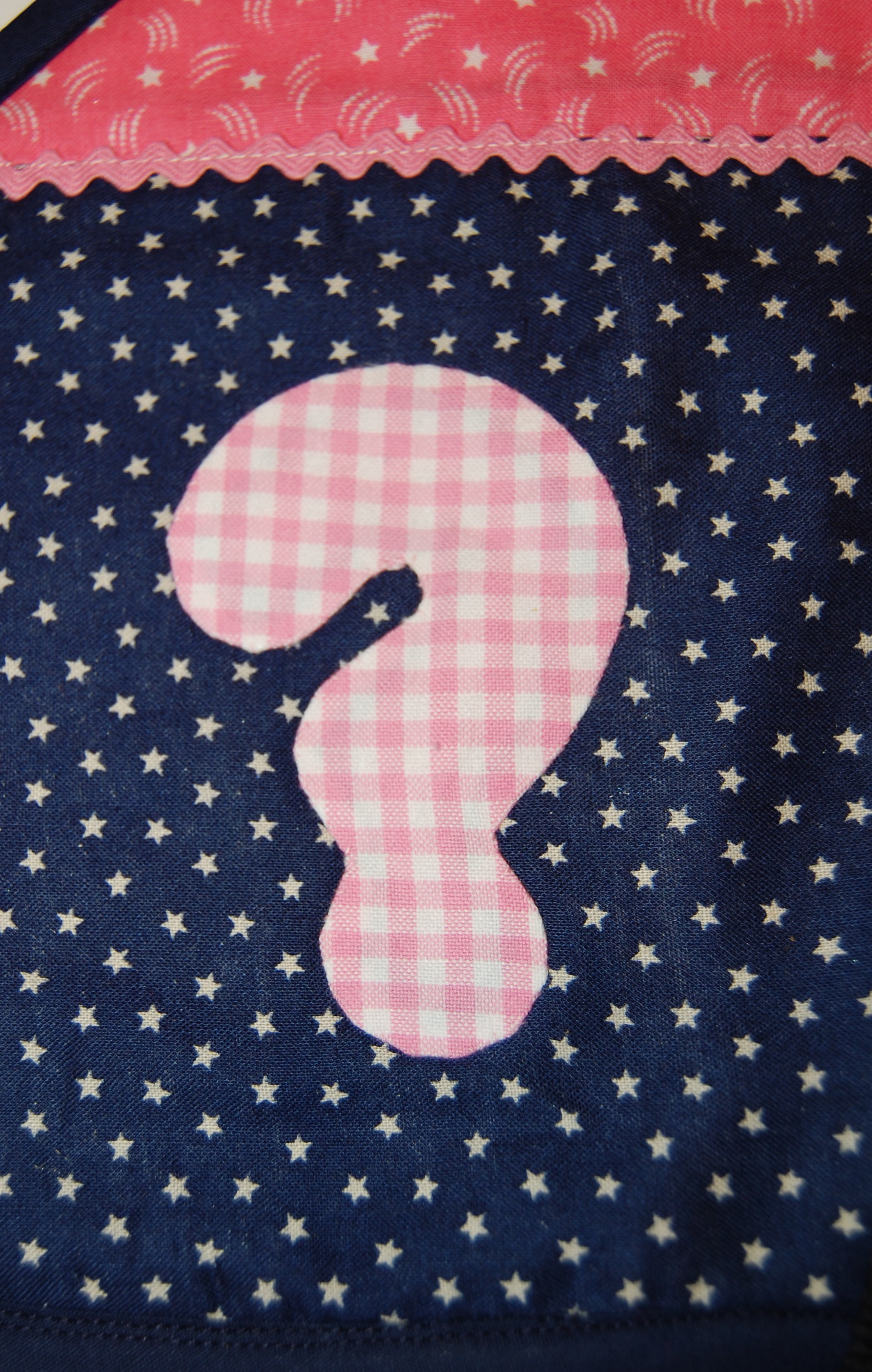
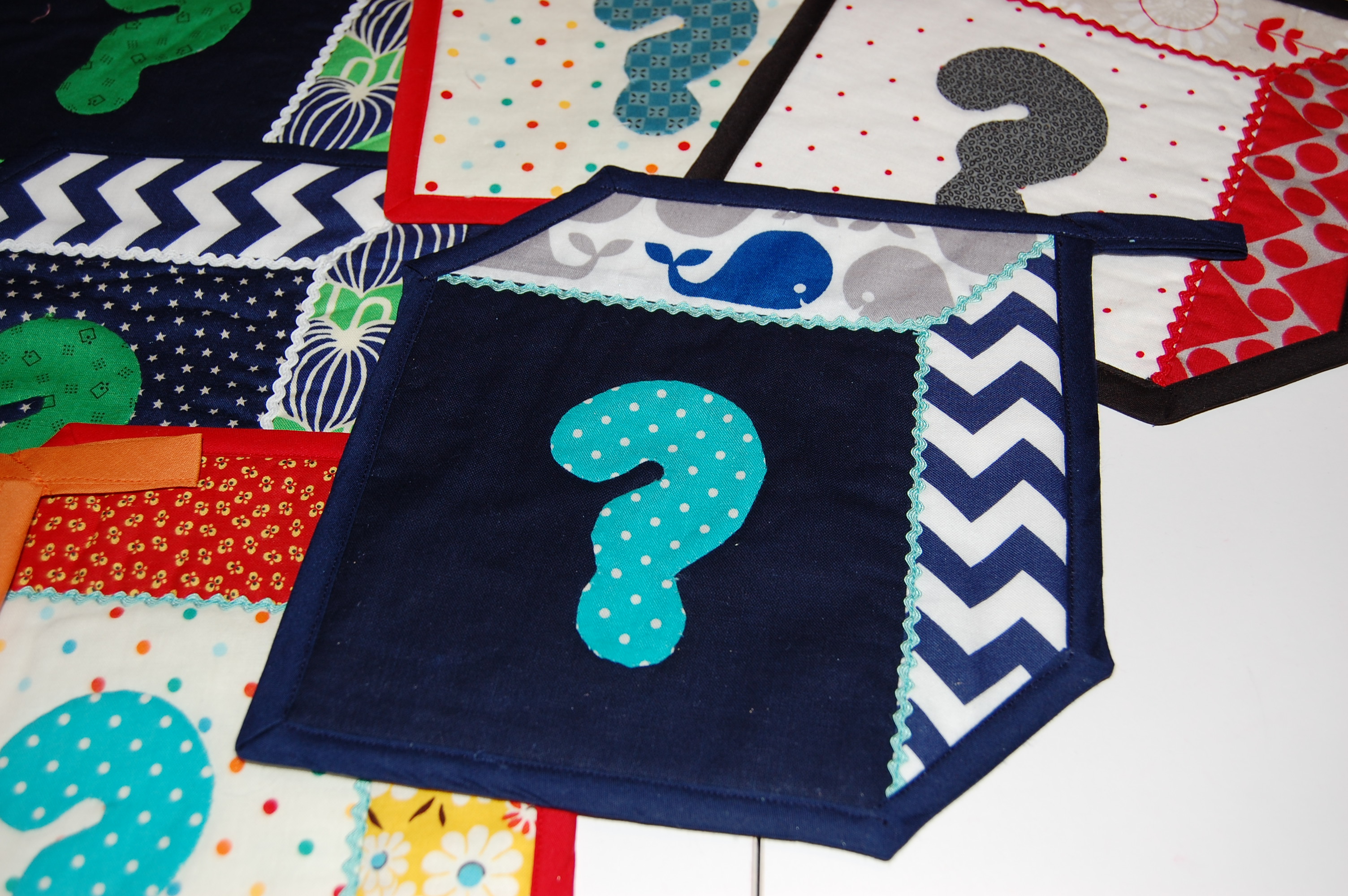
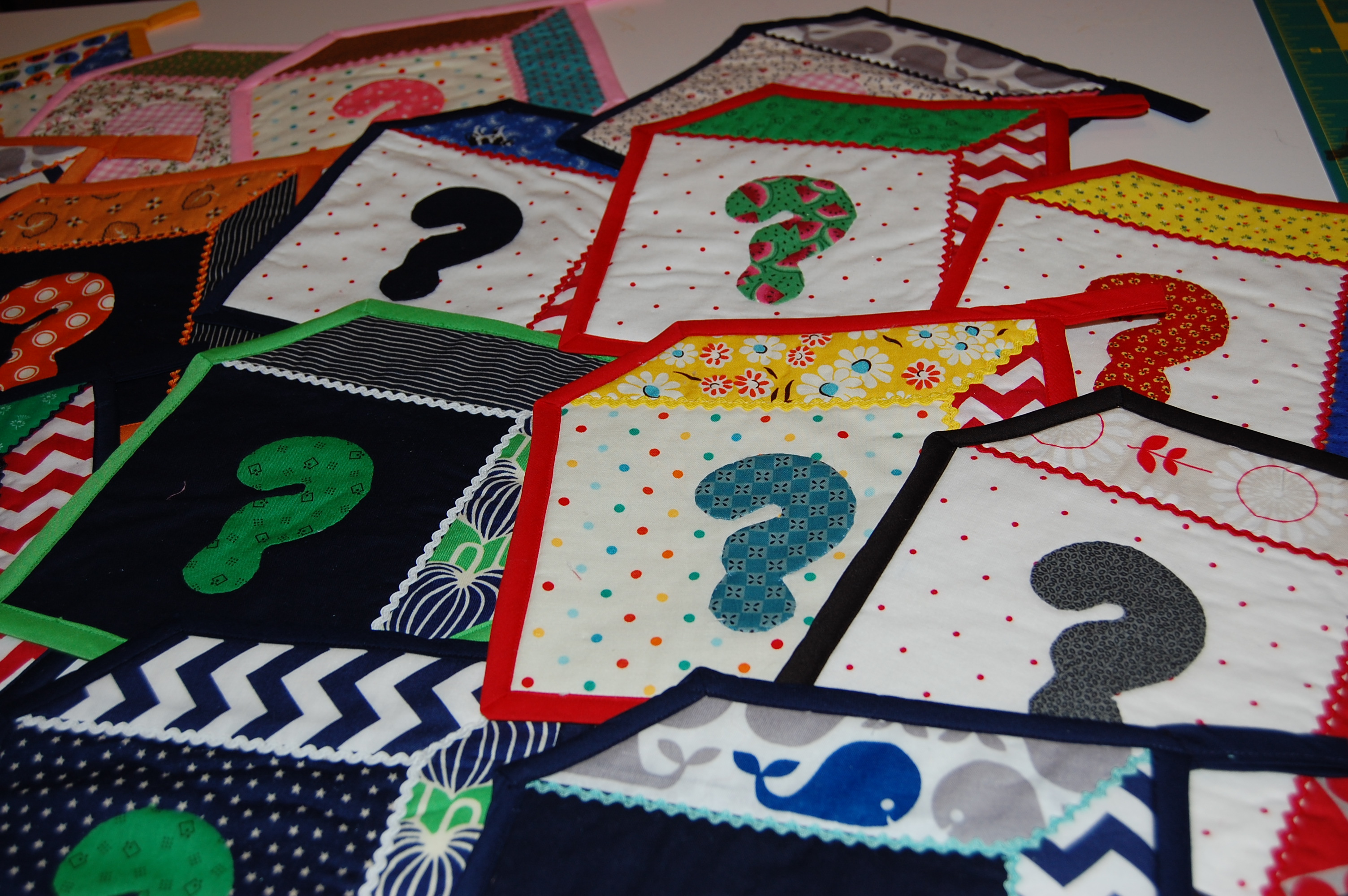
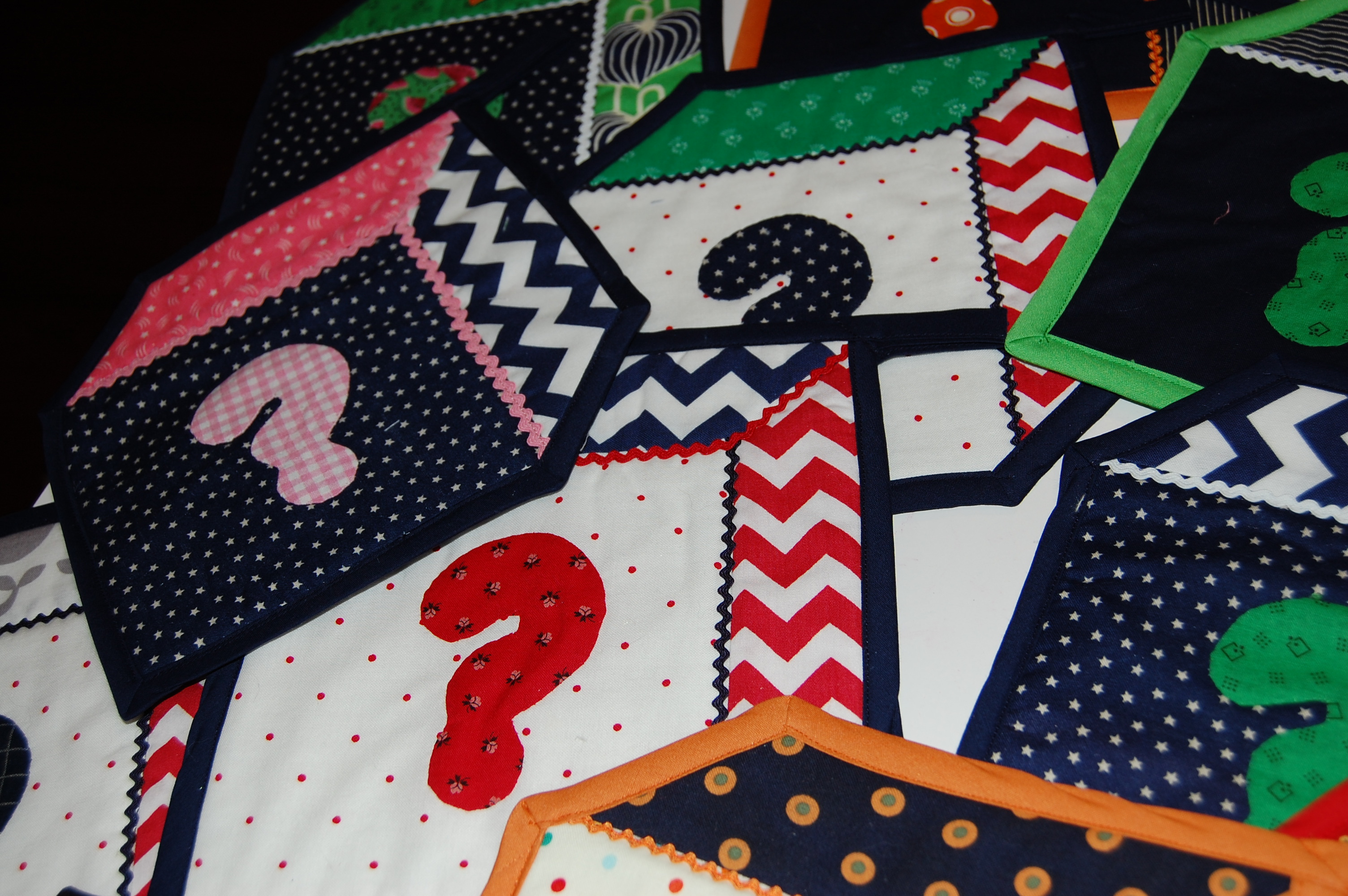
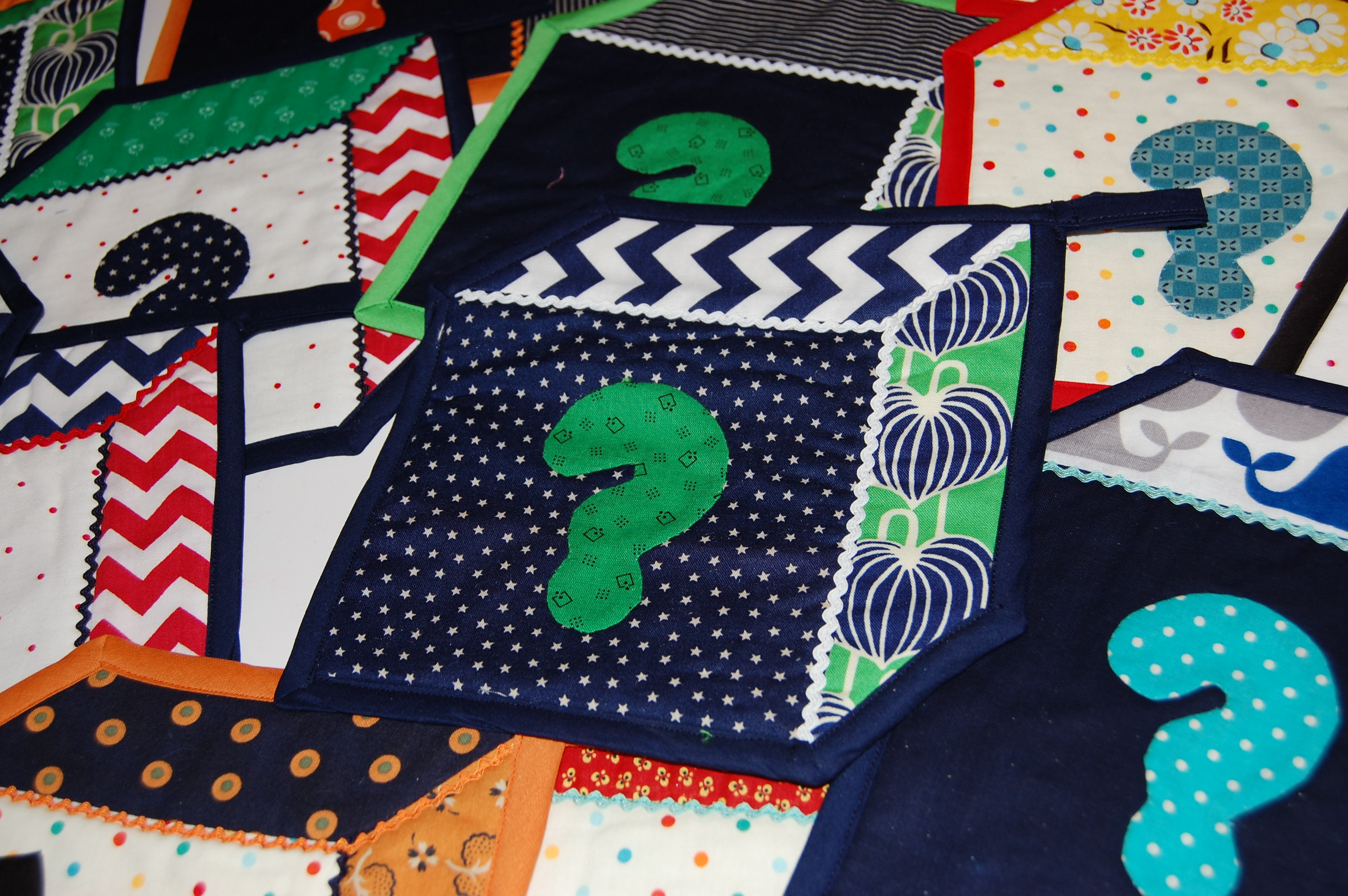
Once I had finished the baskets, I turned my attention to making favors for the guests of the Baby Shower for dear Jess. I am kind of partial to making potholders, as I know that everyone uses them, even if just for a microwave. So I designed one in the shape of a baby block, and decided to put a big question mark (?) in the field where a letter or shape would be.

One example of the question mark.

One example of the question mark.

And the finished potholders...

And the finished potholders…

Why a question mark? Easy to appliqué, for one thing, when many need to be made! But it also plays into the age-old question “What’s for dinner?” and, on a more baby-specific level, “Who is this little creature – and what do I do now?” (At least for me, I remember thinking those questions when I had new little ones…)  I needed to make over twenty of these potholders, and I wanted each one to be a little different, as shown here:

Totes for Tots

Totes for tots

Totes for tots

Truly, I can be away from fashion sewing for just so long – and I was ever so anxious to get back in my sewing room yesterday to continue work on my current linen “dress–in-process”. The biggest question mark I have facing me right now is: “How long will this one take to complete?” Oh, but how enjoyable the process is!

7 Comments

Filed under Sewing for children, Uncategorized

The Inside Story

Silk organza must be the best fabric ever made.  The more I use it, the more I appreciate and value its unique properties.  Having first become aware of it as the building block of couture sewing in the Couture Dress Class by Susan Khalje on Craftsy, I quickly adapted my sewing to incorporate it whenever possible and feasible.  Although I fully expected to be using it for my color-blocked coat, I wasn’t sure if I would need to add more to the inside construction in the way of interfacings or other support techniques.

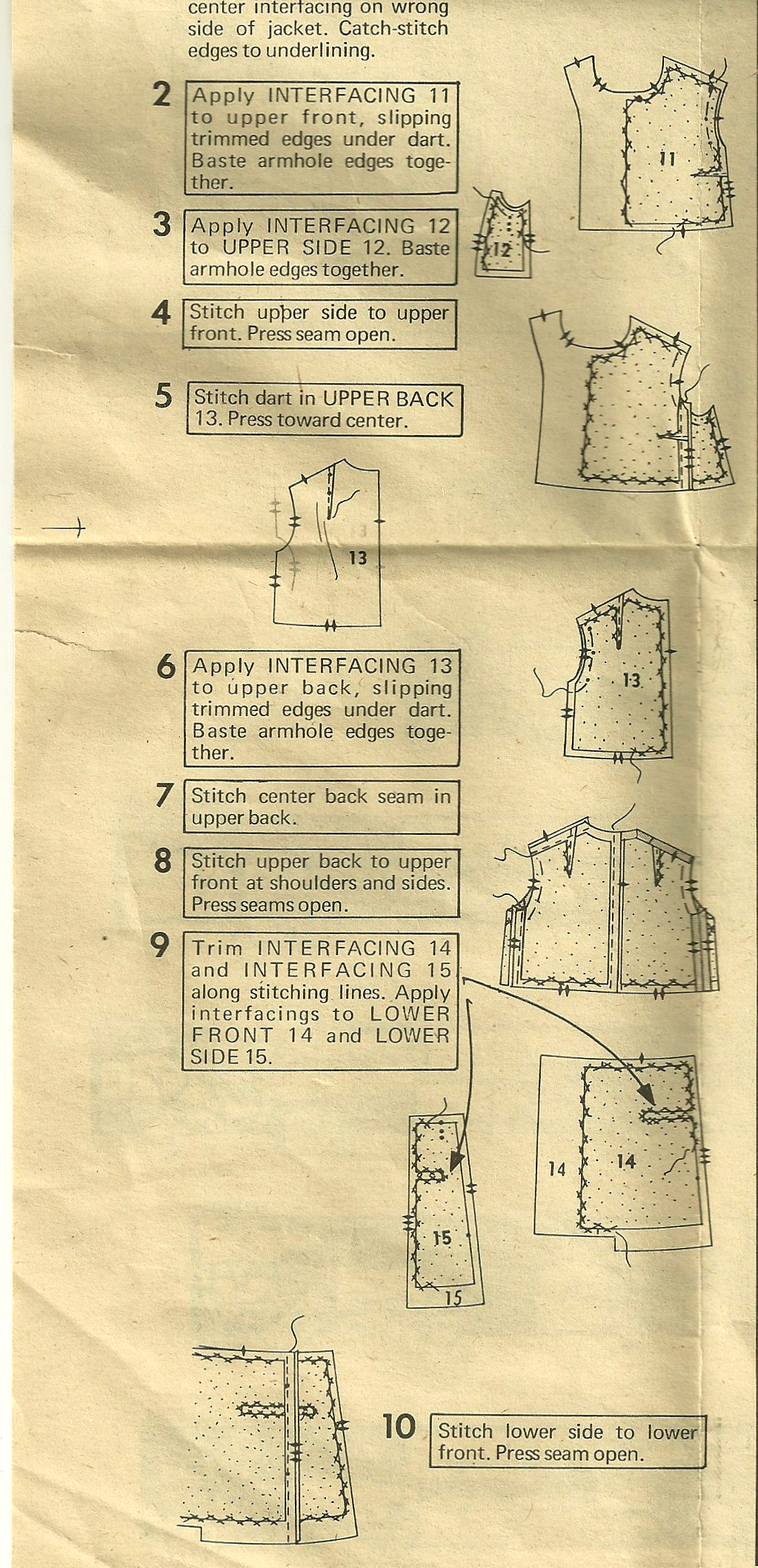
The pattern envelope and instruction sheets were somewhat mystifying, as they listed yardages for both interfacings and underlinings.  However, the diagrams on the instruction sheets clearly showed interfacings only.

The Inside Story - interfacing detail from instruction sheet It was just so lovely to have Susan Khalje’s input and expertise to help me with this during my Couture Sewing School class with her in February.  Silk organza was clearly going to be the only “support” mechanism I was going to need (with the exception of the collar, to be discussed below.)  With each jacket section underlined with black silk organza, I was able to control the inside seams by catch-stitching them to the silk organza.

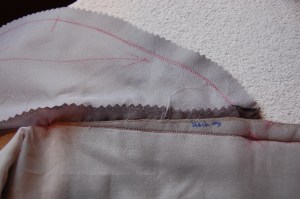
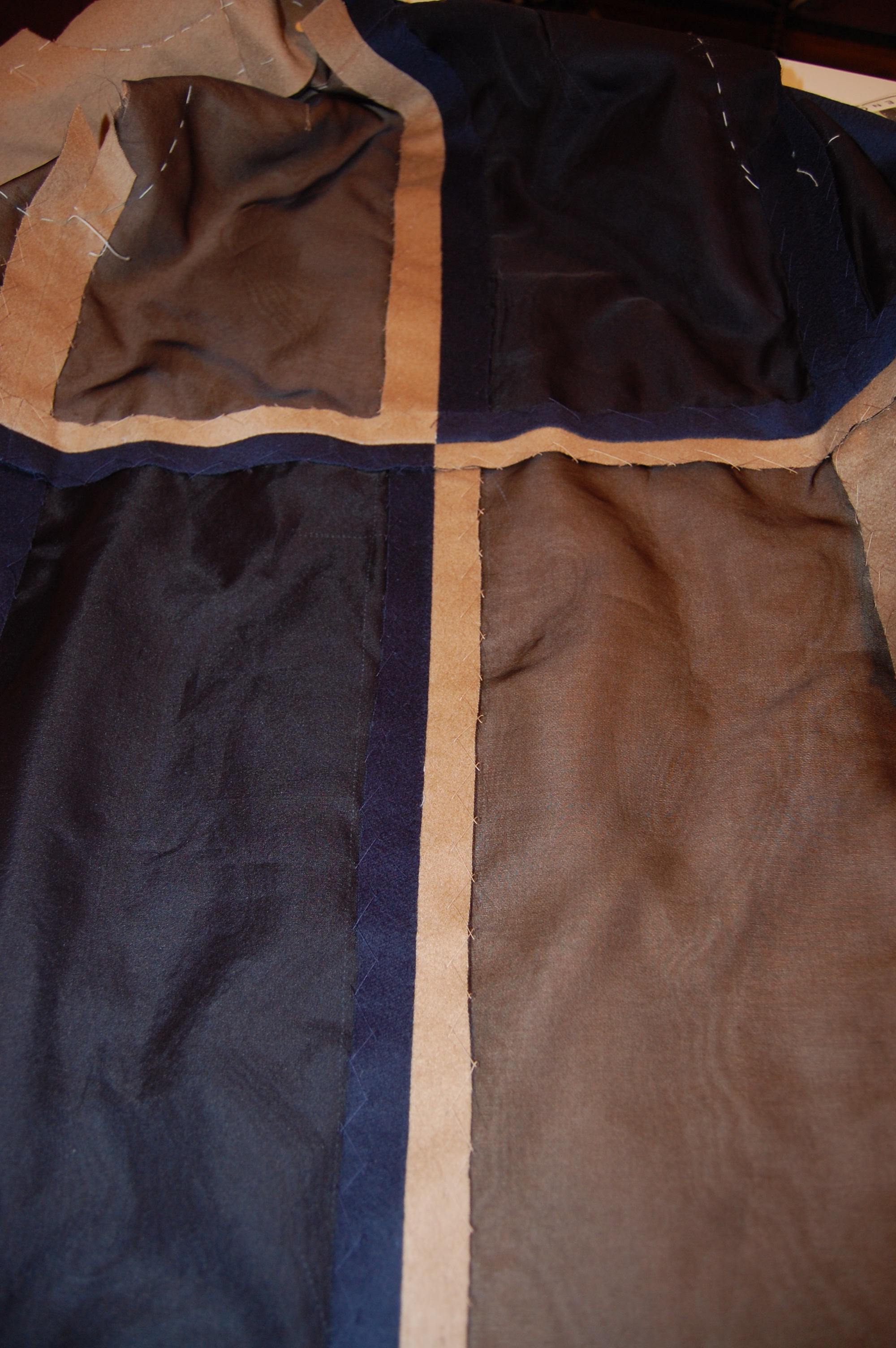
Here is the inside of the back of the coat, with the seams catch-stitched to the organza.

Here is the inside of the back of the coat, with the seams catch-stitched to the organza.  Click on the photo to see  details.

A quick note here on pressing.  Because my fabrics each have a distinct nap to them, making them easily impressionable, and because they are heavier coat weight fabrics, pressing seams required some extra attention.  Susan had me insert sheets of paper under the two edges of each seam for its initial press (before trimming  them down for catch-stitching).  This prevented the impression of the seam allowances to show up on the right side.  With a really good steam iron, a wonderful finish can be achieved with this method.

The pockets were one of the first details to be tackled.  It had been a while (like years!) since I had made flap/buttonhole pockets.  Once again, Susan’s guidance gave me confidence.  She had me make a trial pocket first, and then I was ready for the real thing.

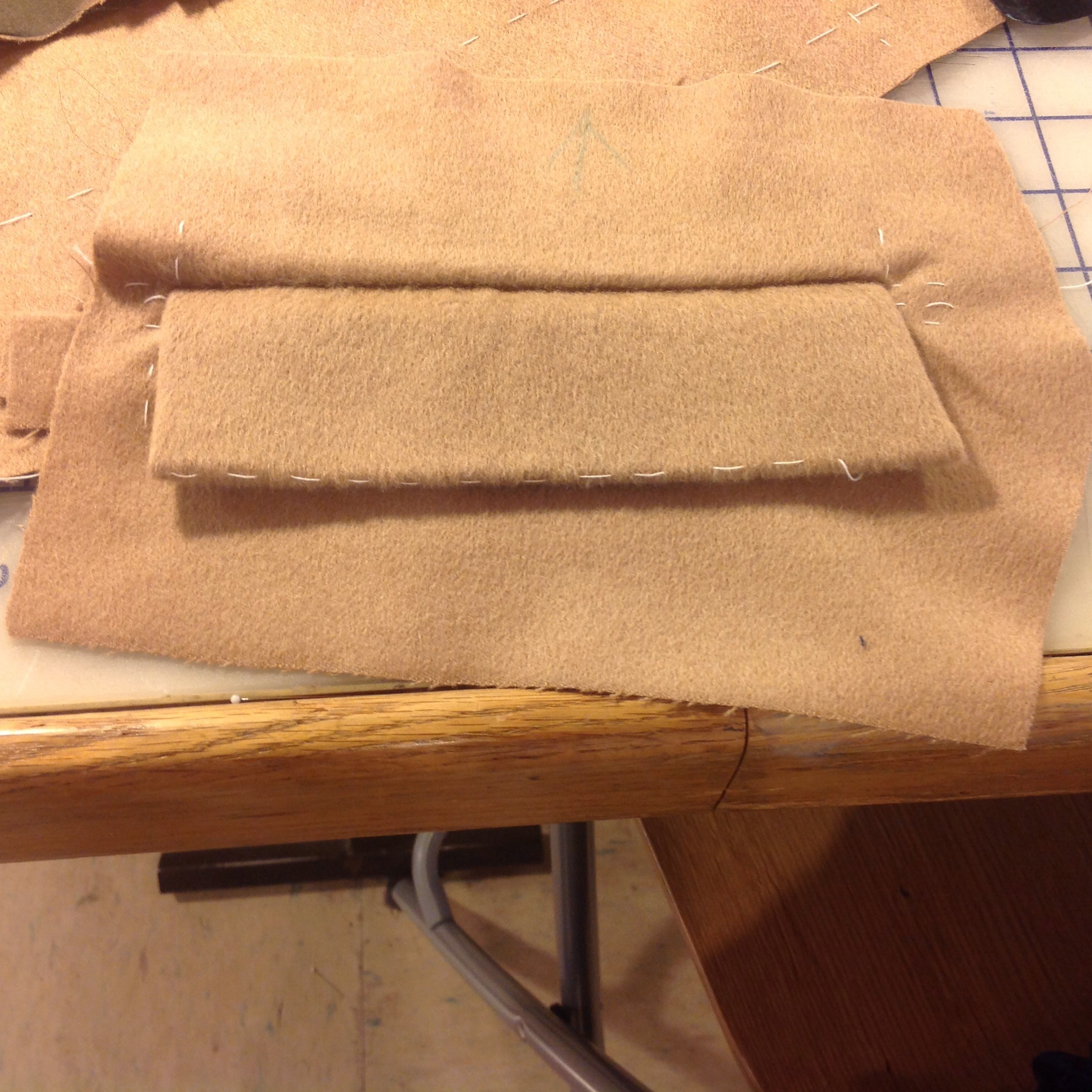
My sample flap before pressing.

My sample flap before pressing.

Showing the "buttonhole" type opening.

Showing the “buttonhole” type opening.

Showing the "inside" of my trial pocket.

Showing the “inside” of my trial pocket. 

With the flap concealing the opening of the pocket, there is no room for error (or else you will end up with puckers at the edges of the flaps).  I basted and basted and sewed with extreme caution.  I ended up with pockets with which I can, thankfully (whew!), be  happy.

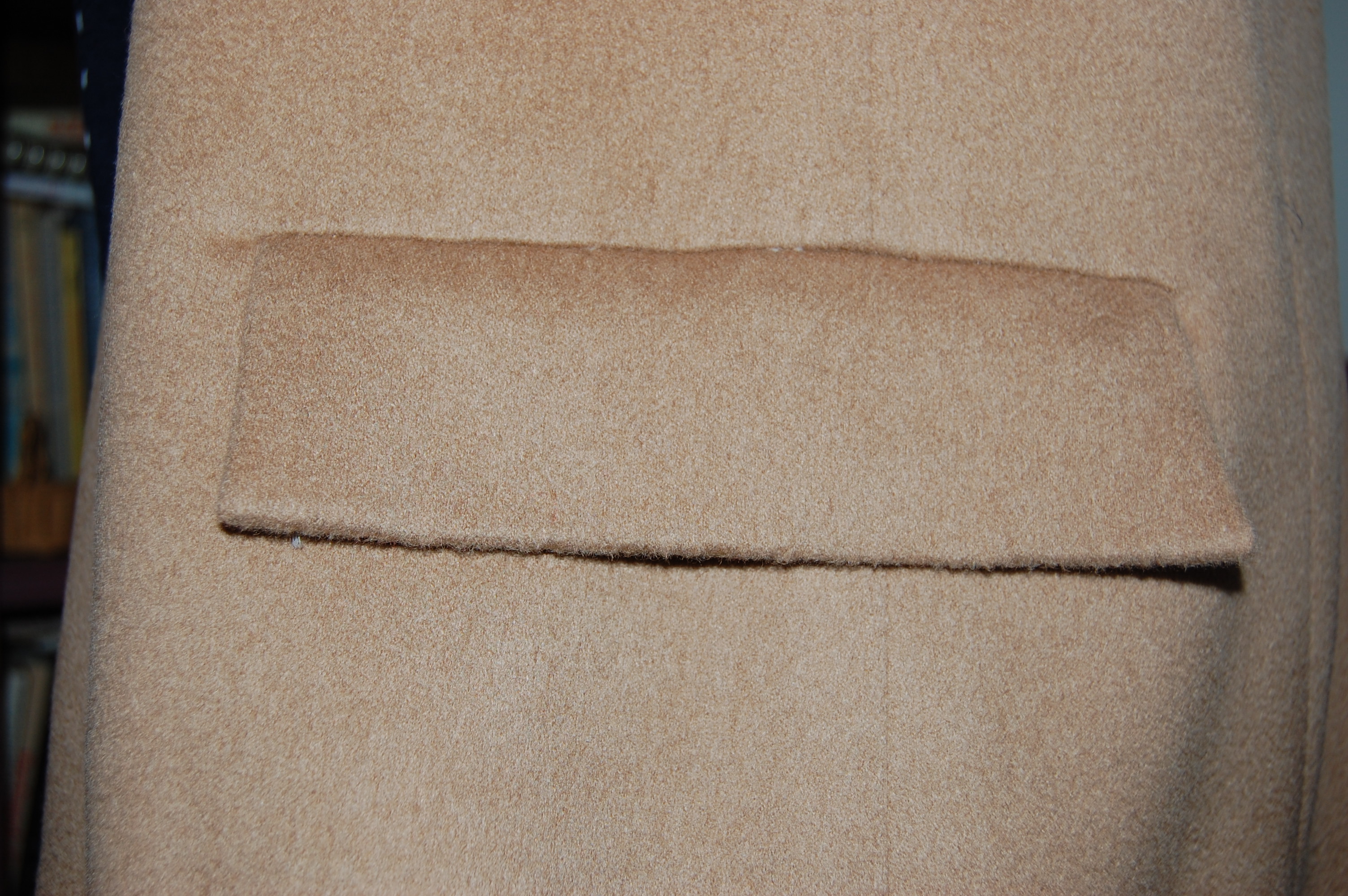
One finished pocket . . .

One finished pocket . . .

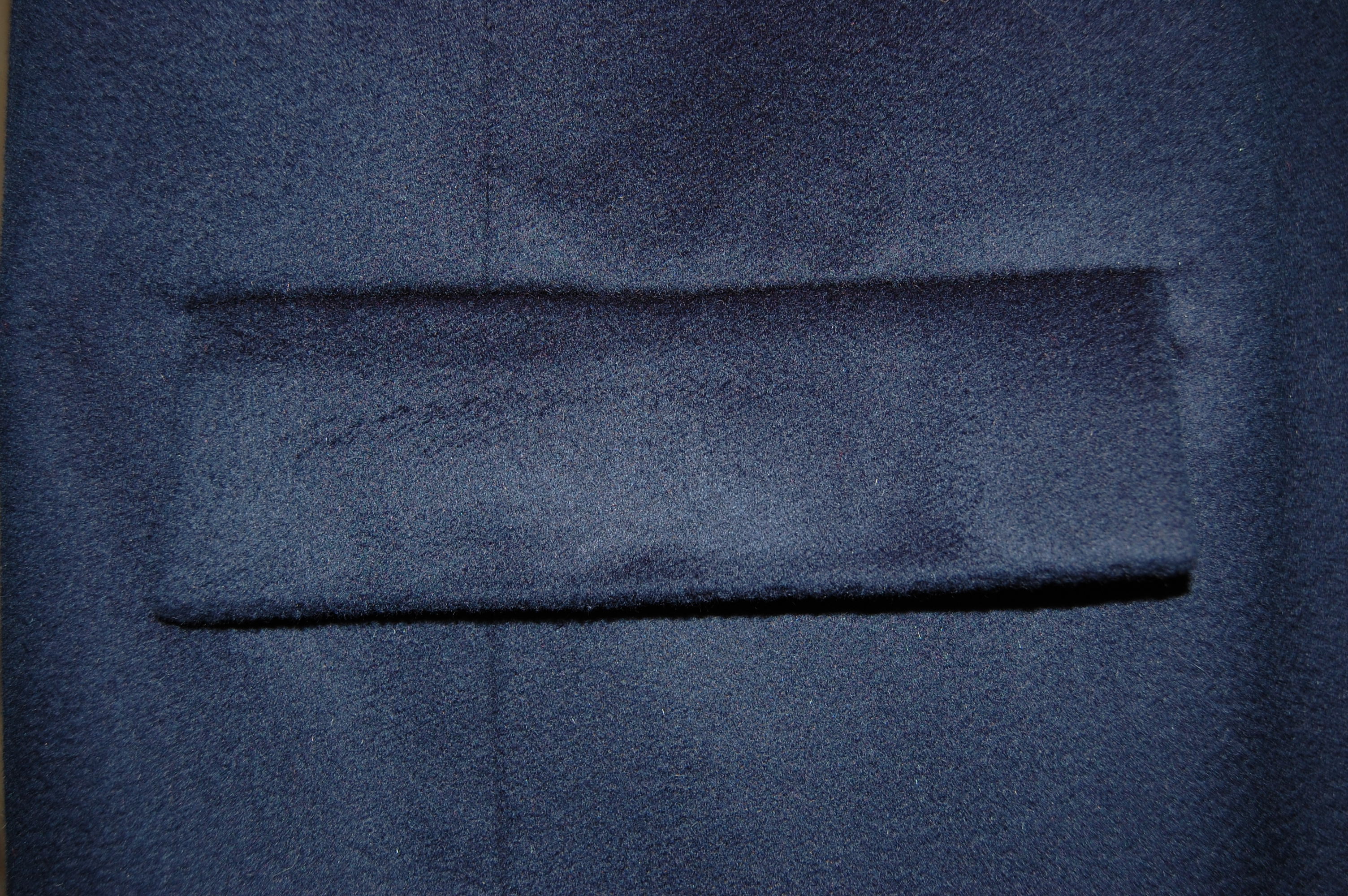
. . . and the other one.

. . . and the other one.

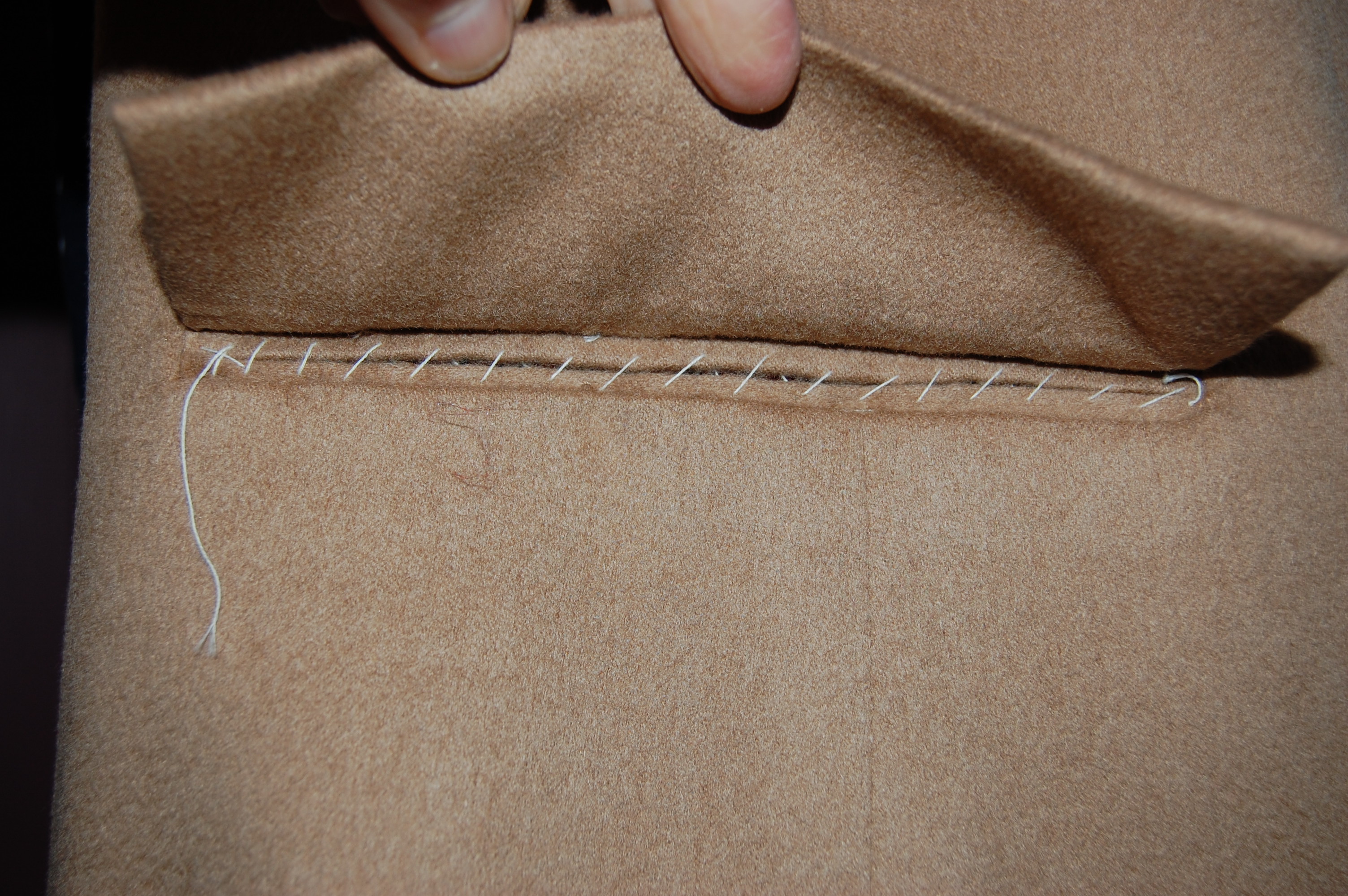
And here is what it looks like under the flap, with the opening basted together temporarily.

And here is what it looks like under the flap, with the opening basted together temporarily.

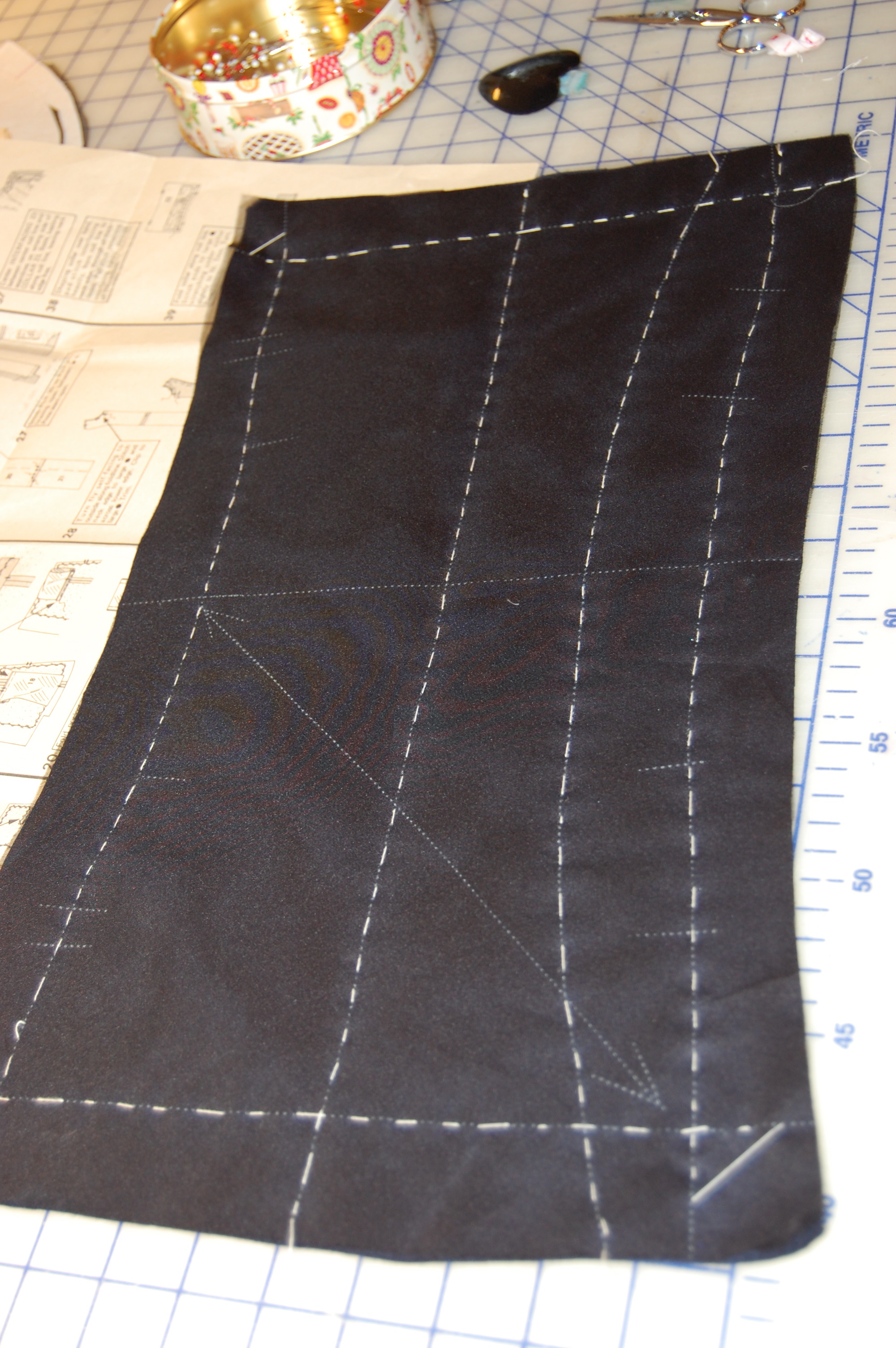
So now on to the collar.  The collar was cut on the bias, and it had a clearly marked roll line.  With the organza basted on (the only “interfacing” I would need), Susan had me run an invisible line of tiny hand stitching along the roll line.

The curved line is the roll line.

The curved line is the roll line.

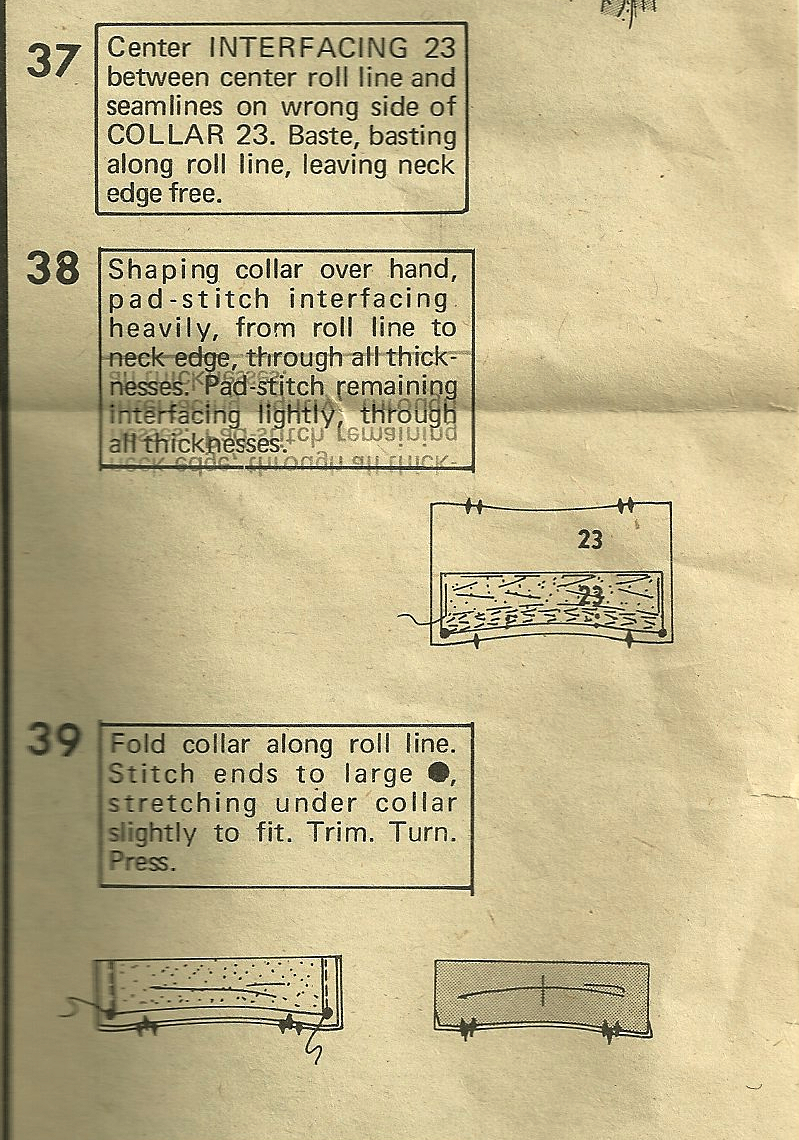
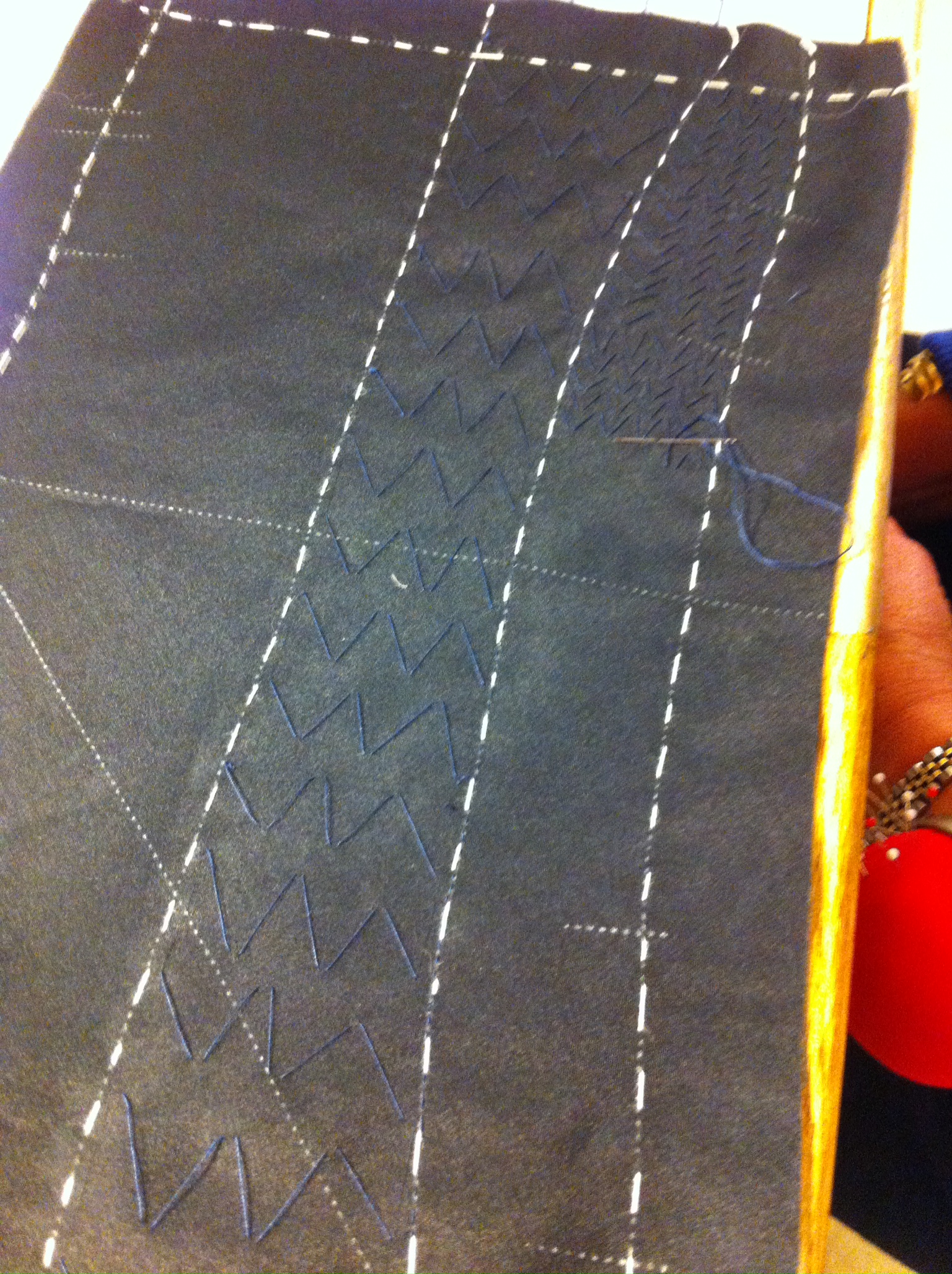
This anchors it for the subsequent pad-stitching.  Although the pattern instruction sheet shows only half of the collar interfaced, you will see the pad-stitching detail, which is required to get the collar to roll properly.

The Inside Story - collar detail

I am grateful to my classmate Sylvia for taking a photo of the pad-stitching which I did on the collar.  What this shows is the small pad-stitching below the roll line, with larger pad-stitching above it, extending to the fold line.

The inside story - collar pad-stitching

Click on the photo to see it in detail.

With the side seams sewn, my collar showed a clear roll where it was supposed to be.

The inside story

And here is the collar on my dress form.

And here is the collar on my dress form.

I had one more important question for Susan:  what about the buttonholes on that concealed fly front?  Normally, when sewing with wool, I would do bound buttonholes, but we both agreed that would add too much bulk to what should be a clean, sleek finish on this coat.  It seemed machine-made buttonholes would be the ones of choice.  I must admit, I had a bit of reluctance to do machine buttonholes in wool.  I even practiced making buttonholes by hand, but I wasn’t happy with my trial runs, and even they seemed too bulky.  So, I simulated the thickness of my layers at the fly front and made some machine buttonholes in a sample piece.  And – I thought they were great!  On to the real thing – and this was clearly the way to go:

The buttonholes show up better on the camel wool. Click on the photo for a close-up.

The buttonholes show up better on the camel wool. Click on the photo for a close-up.

The middle buttonhole is a slot-seam one.

The middle buttonhole is a slot-seam one.

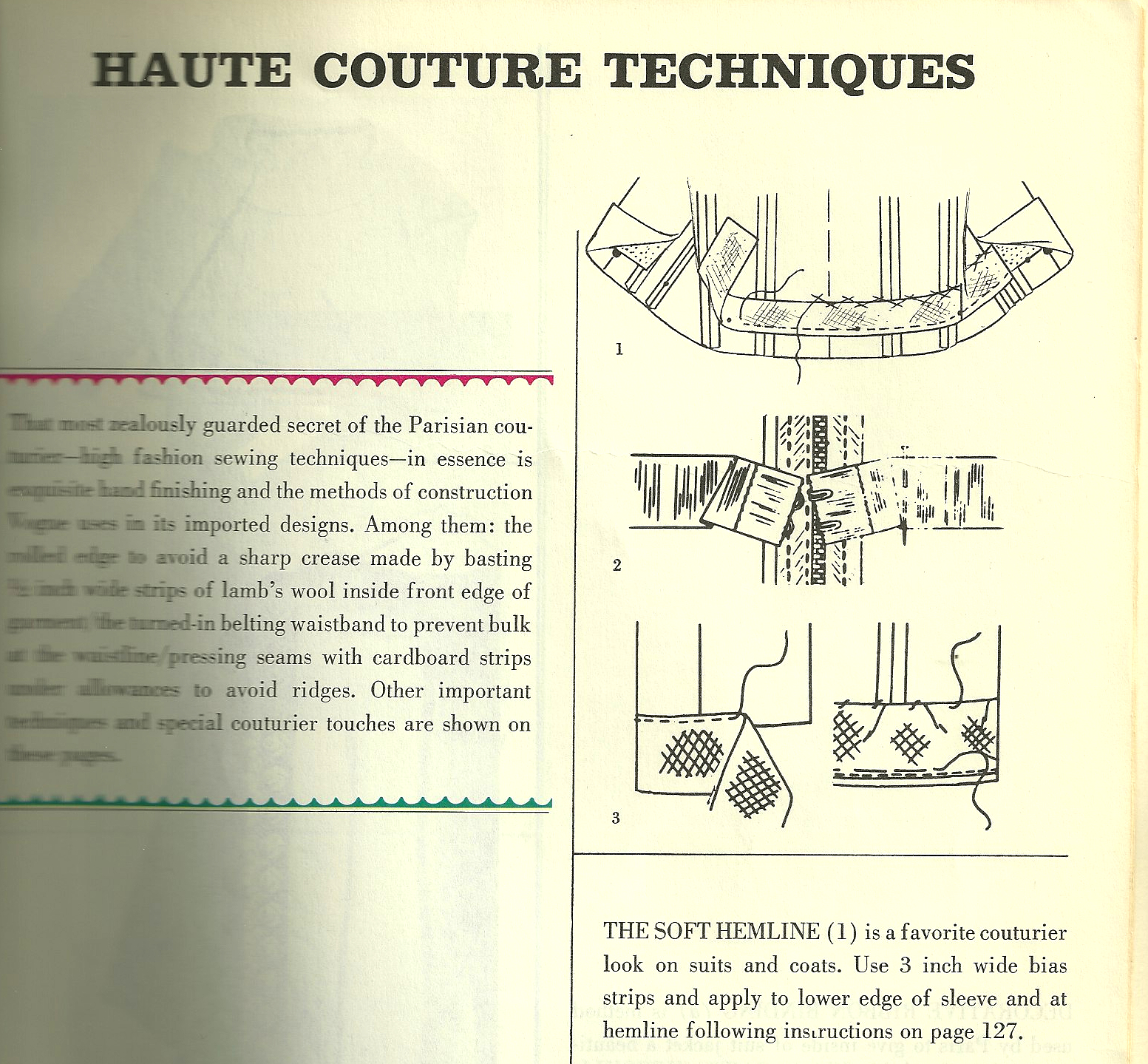
The next step, before inserting the lining, is to finish the hems in the sleeves and the body of the coat.  Here I may add a bias strip of soft interfacing to insure that the hem has a soft edge to it.

The Vogue Sewing Book from 1963 includes this detail on The Soft Hemline, as part of its section on Haute Couture Techniques.

The Vogue Sewing Book from 1963 includes this detail on The Soft Hemline, as part of its section on Haute Couture Techniques.  I also asked Susan about sewing on a chain at the hem as well.  Because the two wools I have used are slightly different weights, she agreed this may be a good idea, to help ensure an even hang.

So – the miracle of silk organza, pressing techniques, and practice, practice, practice – are helping to make my long-awaited color-blocked coat a reality.  On to the finish line!

15 Comments

Filed under Coats, Color blocking, couture construction, Uncategorized, underlinings, vintage Vogue Designer patterns, vintage Vogue patterns from the 1970s, woolens

Powerless in Pennsylvania, Sewing in San Francisco

“She had the loaded handbag of someone who camps out and seldom goes home, or who imagines life must be full of emergencies.”  – Mavis Gallant

Actually, the handbag I took to San Francisco was small, tucked inside a larger tote bag – so that I could use my allotted “carry-on” space for an extra suitcase for fabric purchases.  Off I went on February 1st for Susan Khalje’s Couture Sewing School held at The Sewing Workshop in San Francisco.  I had carefully packed myriad sewing supplies and my prepared muslins, hoping to be ready for any contingency.  Little could I have known that while I was to be sewing on the West Coast, the camping out (or really, camping in!) and the emergencies would be on the East Coast – with the county in Pennsylvania where we live especially hard-hit by a devastating ice storm.  Our house was without power for 5 days, and knowing that my husband was dealing with downed trees, downed power lines, blocked roads, confused pets, a house getting colder and colder with each day, and limited means of communication, weighed on me mightily as I worked away on my color-blocked jacket.

Coats of certain length - 7

Most of us in the class needed to purchase all our fabric or coordinating fabric or supplies for our intended projects, so off we went to Britex Fabrics on Monday after Susan had fitted most of our muslins.  I had thought long and hard about what color combination I would like to have for this coat.  Knowing that many, many hours of work would go into this project, and also realizing that this jacket could be a go-to piece of outerwear if I chose my fabrics carefully, I decided to look for more conservative colors.  So – no hot pink and apricot orange, at least this time.

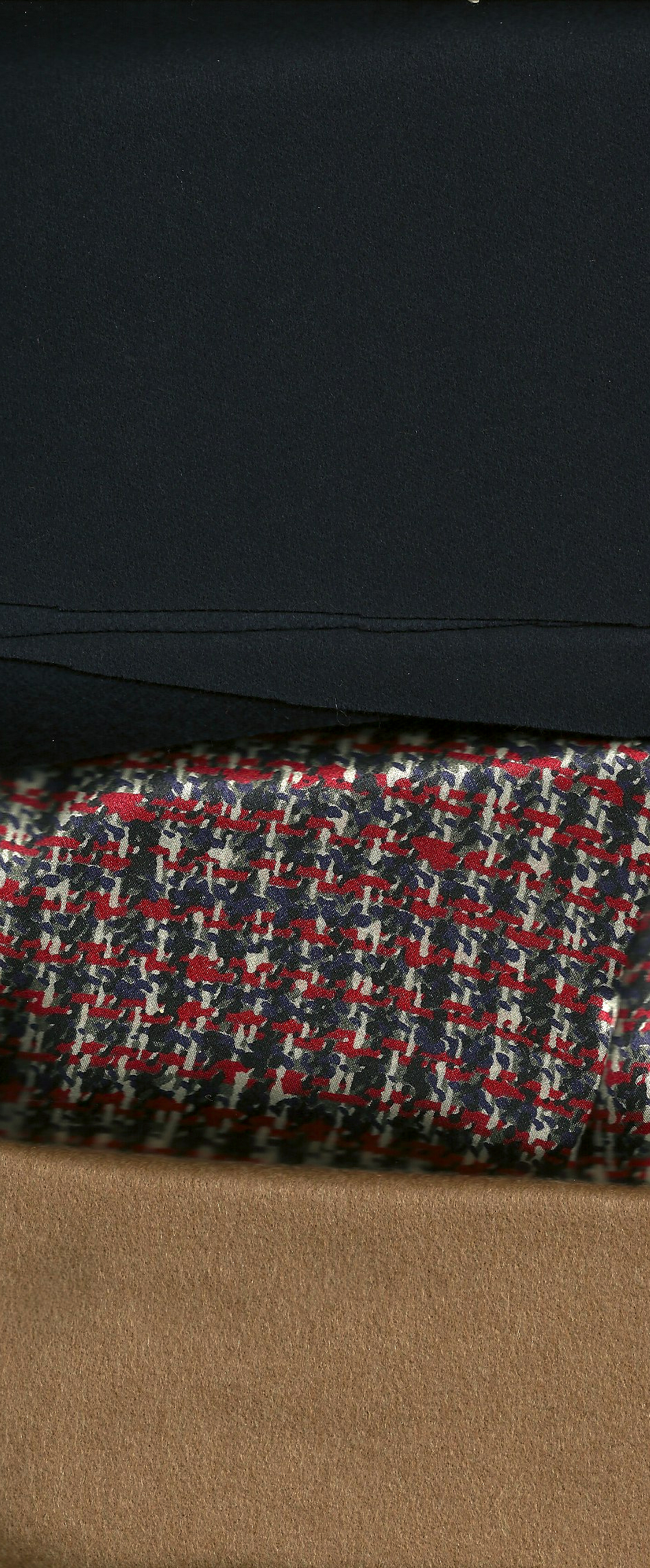
Britex carries an extensive selection of coating wools, so much so that it is definitely advantageous to be helped by one of their incredibly knowledgeable sales assistants.  I was fortunate that Inna, who has such a trained and talented eye for color and texture, was able to assist me. We started with a lovely camel hair coating wool, which had a napped silky sheen on one side and was just the right heft for outerwear.  First I wanted to look at pairing it with gray, but nothing in the gray family seemed to strike my fancy.  Then we moved on to the navy blues – and there nestled in among the bolts was the perfect “medium” navy blue, also with a napped sheen on one side.  It was a little heavier than the camel hair, but Susan felt confident we could make the two fabrics work together, especially because their colors complimented each other so perfectly.

Silk lining fabric was next on the list, and I wanted something figured rather than plain.  Inna pulled out a bolt of Italian charmeuse, which picked up the geometric feel of the jacket, and introduced a little red into the mix.  I couldn’t be happier with it.

I am not so sure this gives the best sense of the colors of the fabrics, but you will see more in a future post.

I am not so sure this photo gives the best sense of the colors of the fabrics, but you will see more in other photos.

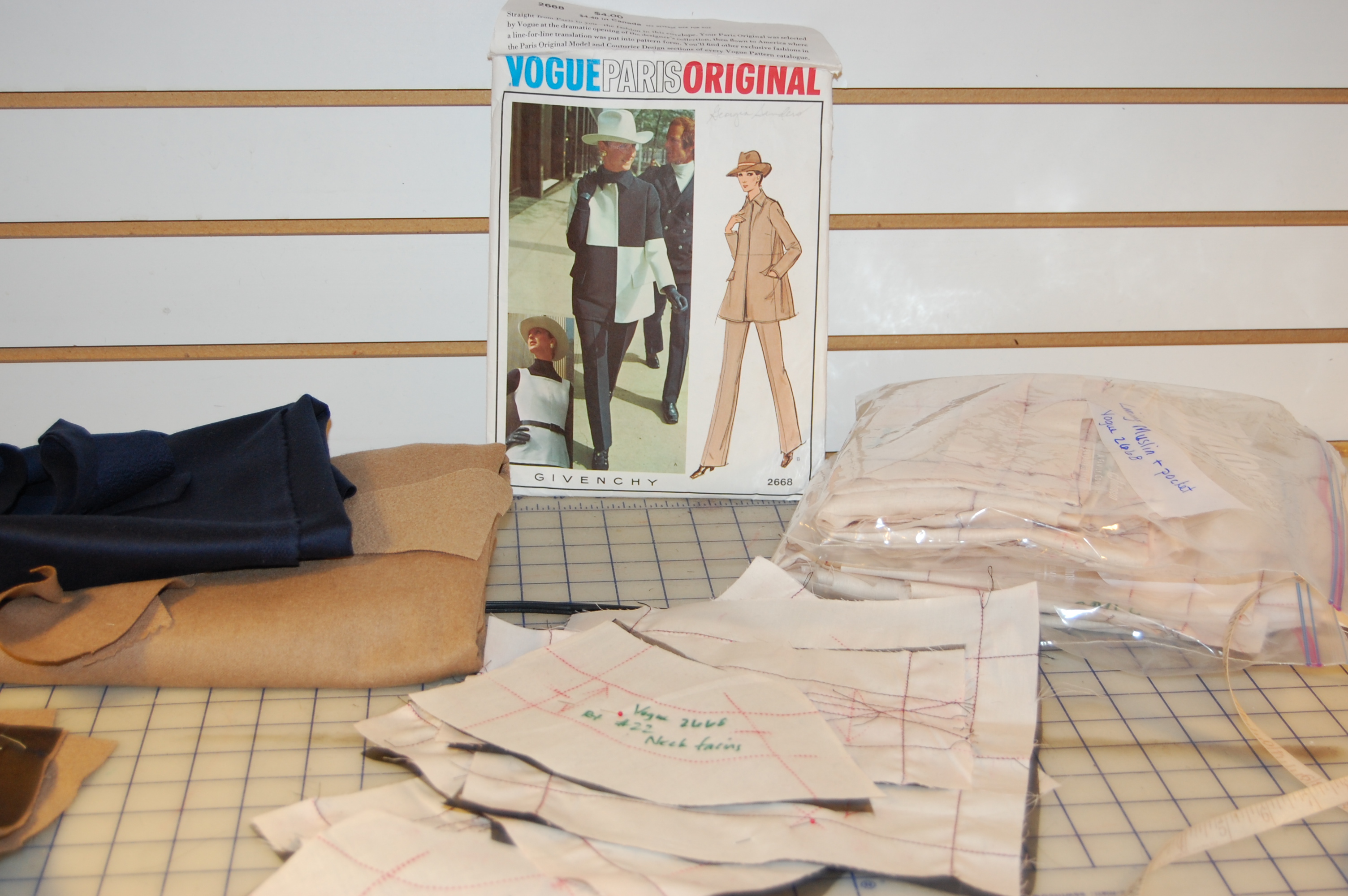
Back at The Sewing Workshop, armed with fabrics and enthusiasm, I spent the next two days cutting out the multi-, multi-pieced pattern (31 separate pieces, all of which would be cut in tandem, making 62 in all, not including the lining!), and basting the silk organza underlinings to each and every piece.

My well-lit and spacious work space at The Sewing Workshop.

My well-lit and spacious work space at The Sewing Workshop.

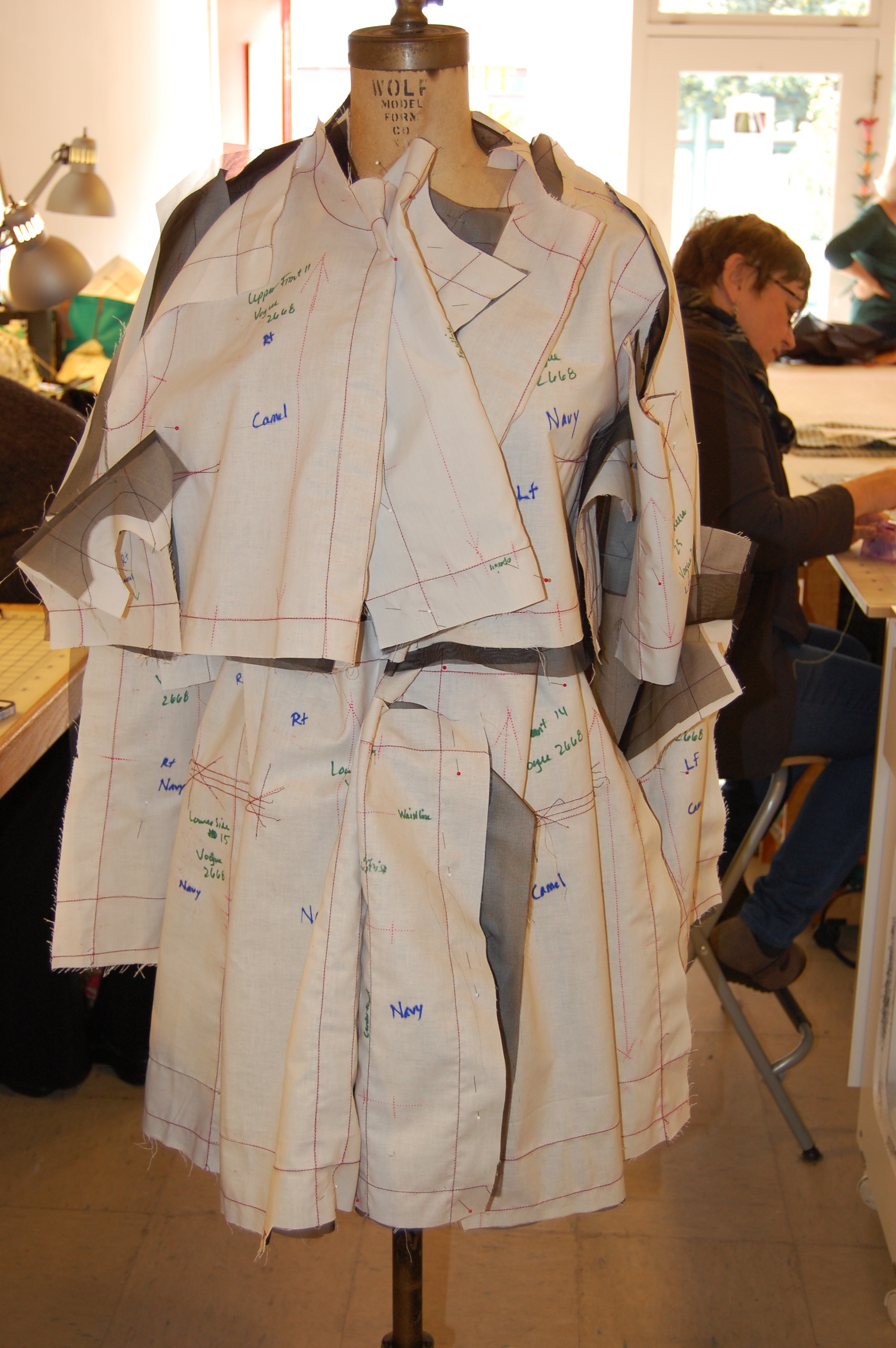
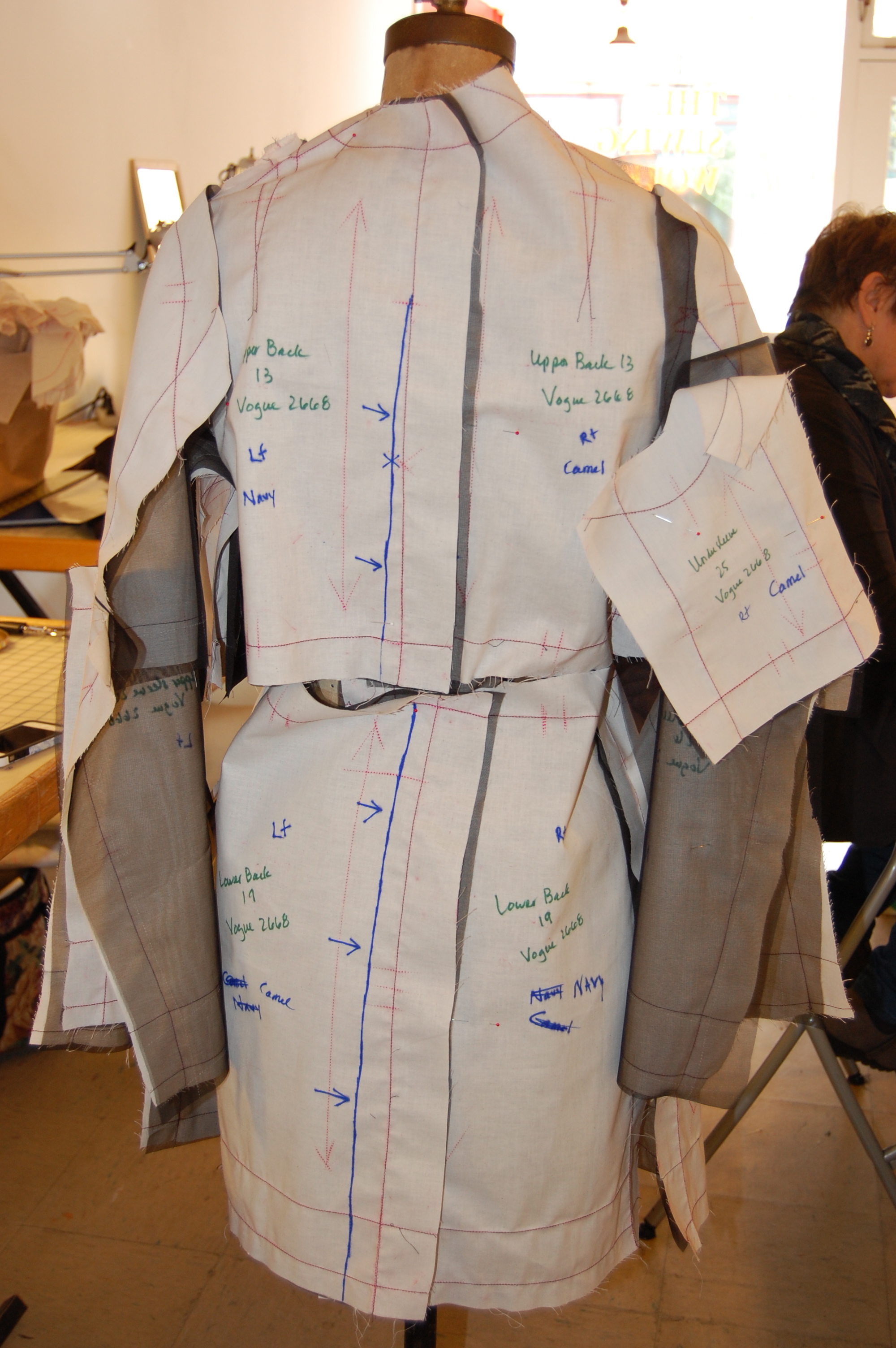
Because of the color blocking, I needed to pay great attention to which piece was to be cut in blue and which piece in camel.  Initially I went through and labeled each muslin piece “navy” or “camel”.  Susan double-checked me, but then suggested that, because I absolutely could not make a costly mistake, that I pin the muslin pieces onto the available dress form in our studio.  What a great idea, one of so many which I picked up from Susan and my classmates!

Here is the "front" of the jacket, pinned onto the dress form.

Here is the “front” of the jacket, pinned onto the dress form.

And here is the back.

And here is the back. 

Now, I felt confident and set about to cut my fashion fabric.

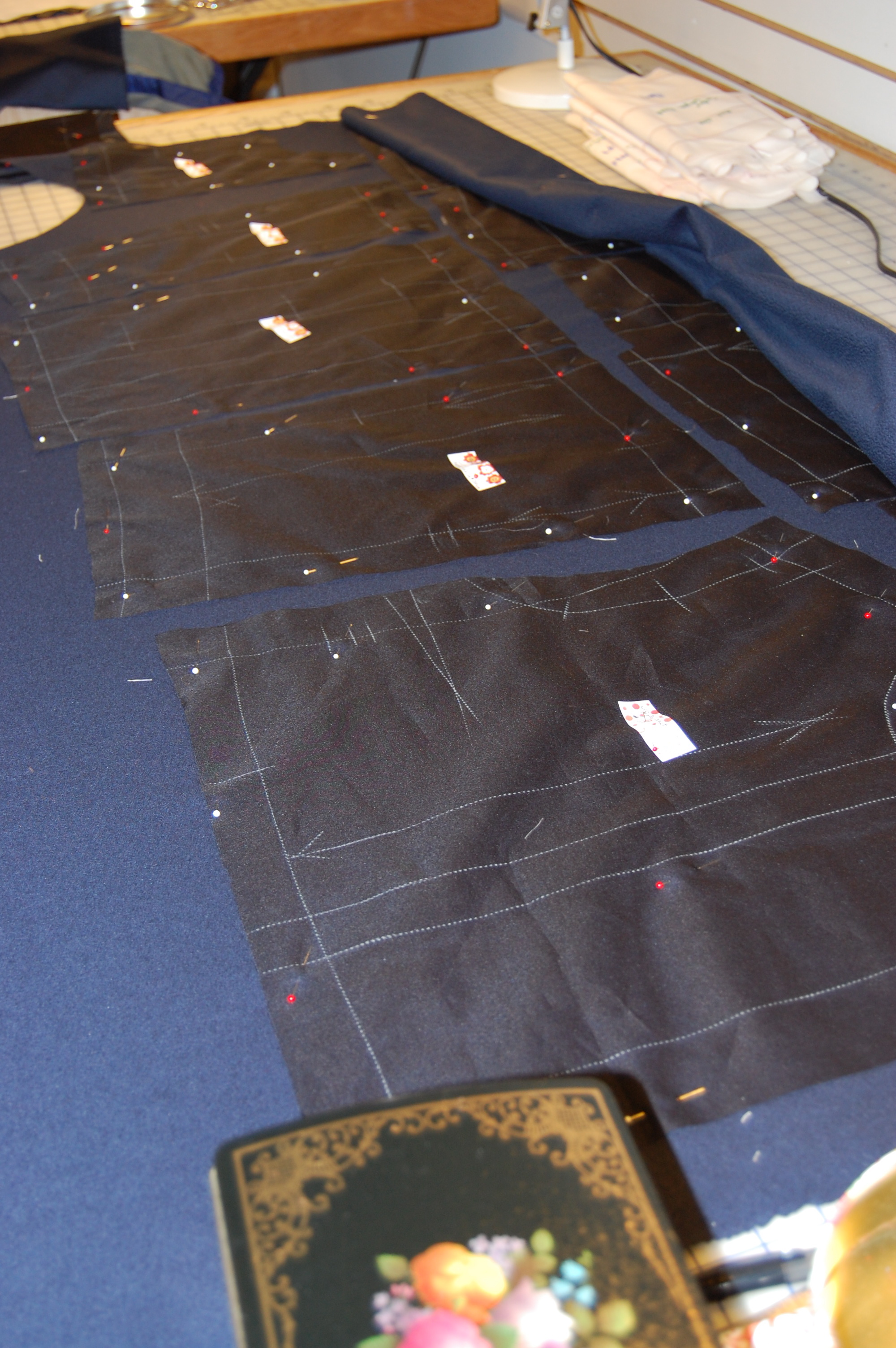
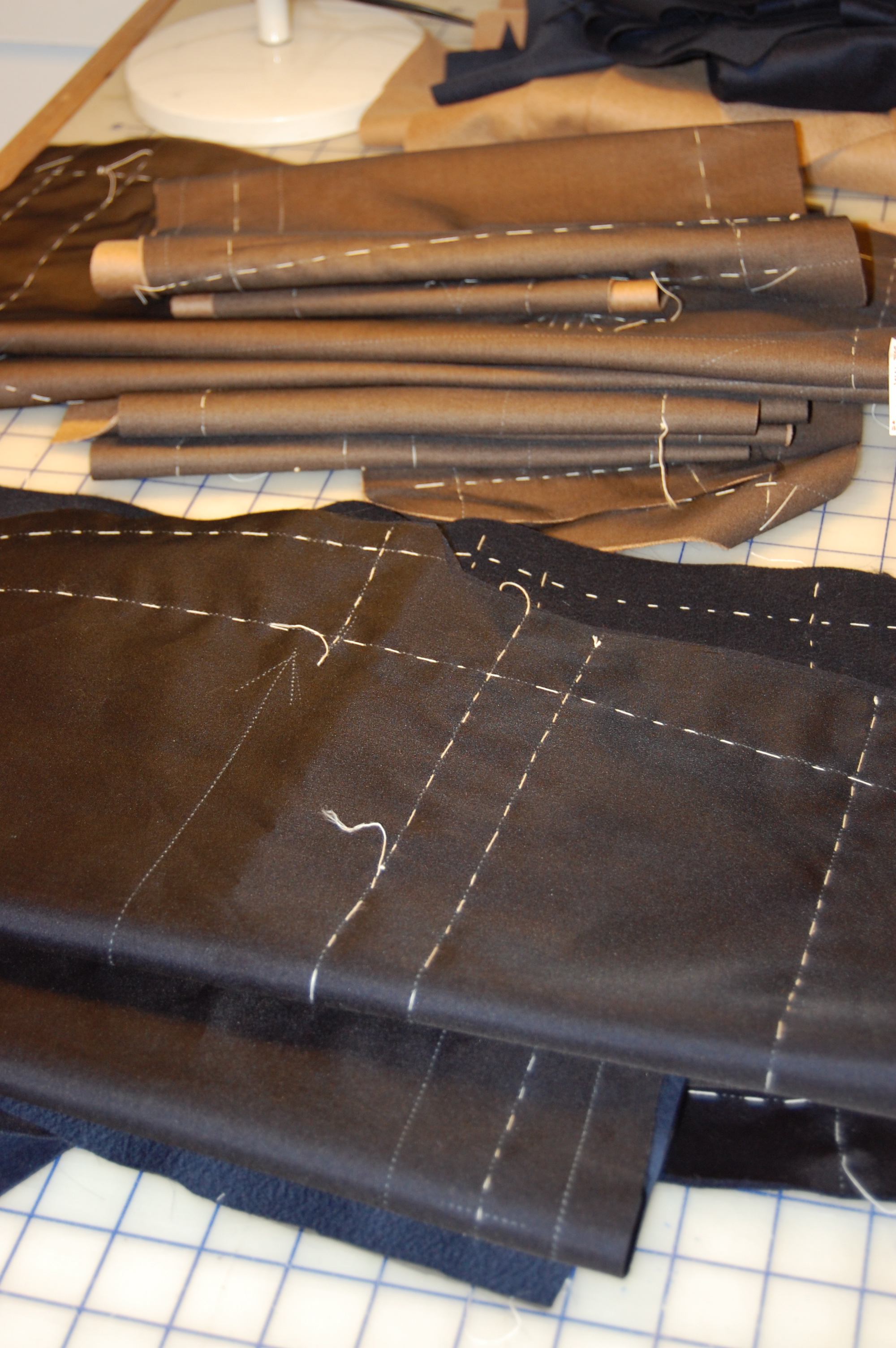
Here are the silk organza underlining pieces arranged on the blue fabric.  I pinned a small tag on each piece, telling me each piece's pattern # and description.  A lot of the pieces look alike!

Here are the silk organza underlining pieces arranged on the blue fabric. I pinned a small tag on each piece, telling me each piece’s pattern number and description. A lot of the pieces look alike!

Two piles showing all underlinings basted onto the fashion fabric.

Two piles showing all underlinings basted onto the fashion fabric.

By this time, I was half-way through the 6-day class.  I assessed my situation and determined the parts of the jacket construction upon which I wanted to get expert advice  from Susan:  treatment of the concealed fly front, flap pockets, rolled collar (all of which will be detailed in a future post).  Now I had a plan, which seemed to be much more than anything that was happening back home in Pennsylvania.

My husband joked during one of our few cell-phone conversations, that he had a vision of the power in our house coming back on Sunday evening, February 9th, as he would be driving me home from the airport in Philadelphia.  He was right.  That is exactly what happened.  I came home to a 39F degree house, but the lights were on, and soon the heat was, too.  Almost a week later, it is still snowing and snowing – perfect sewing weather for this sojourner home from San Francisco.

12 Comments

Filed under car coats, Coats, Color blocking, couture construction, Uncategorized, underlinings, vintage Vogue Designer patterns, vintage Vogue patterns from the 1970s, Vogue patterns, woolens

Wynken, Blynken, and Nod

“. . . and the wooden ship that sailed the skies is a wee one’s trundle bed.”

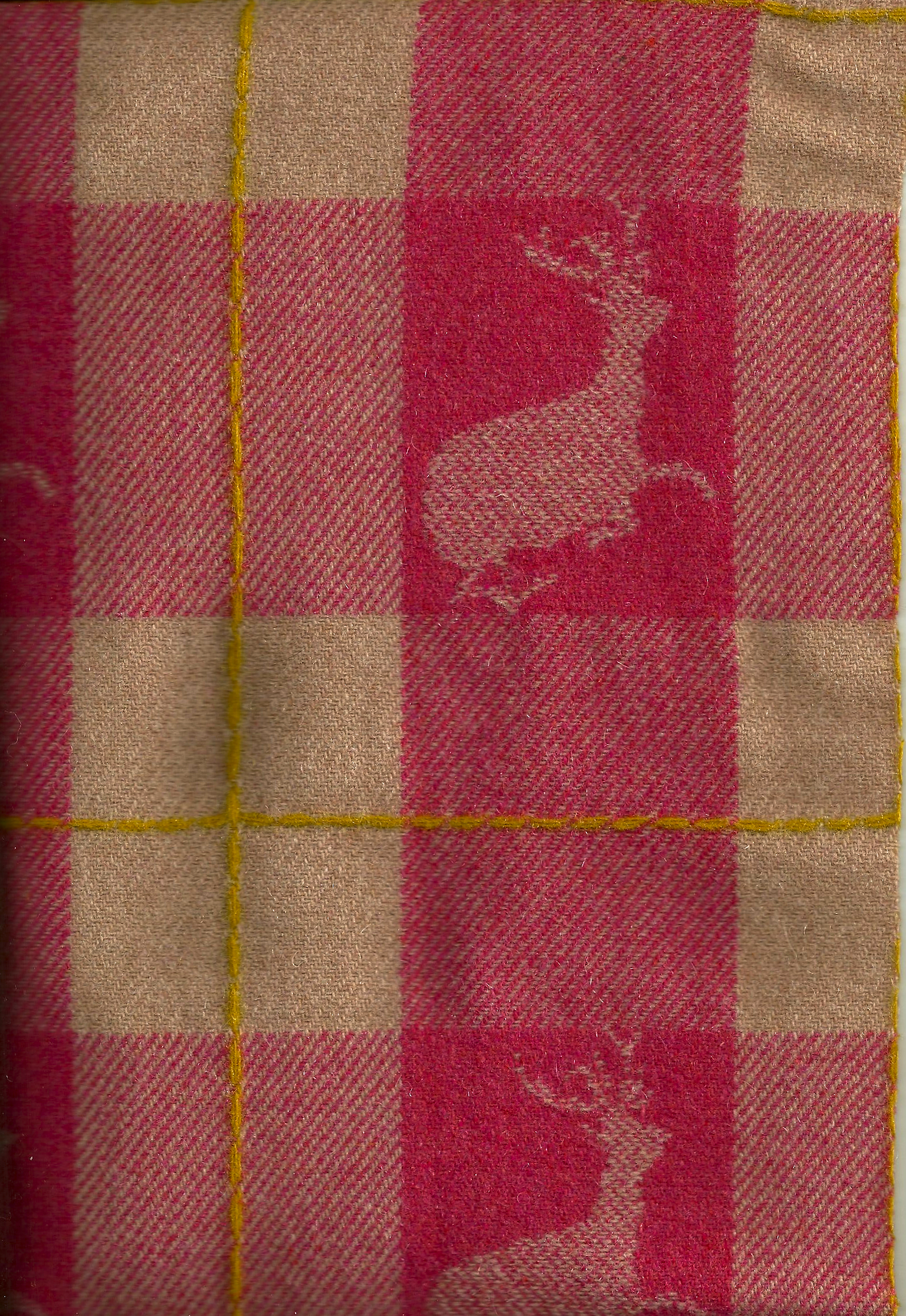
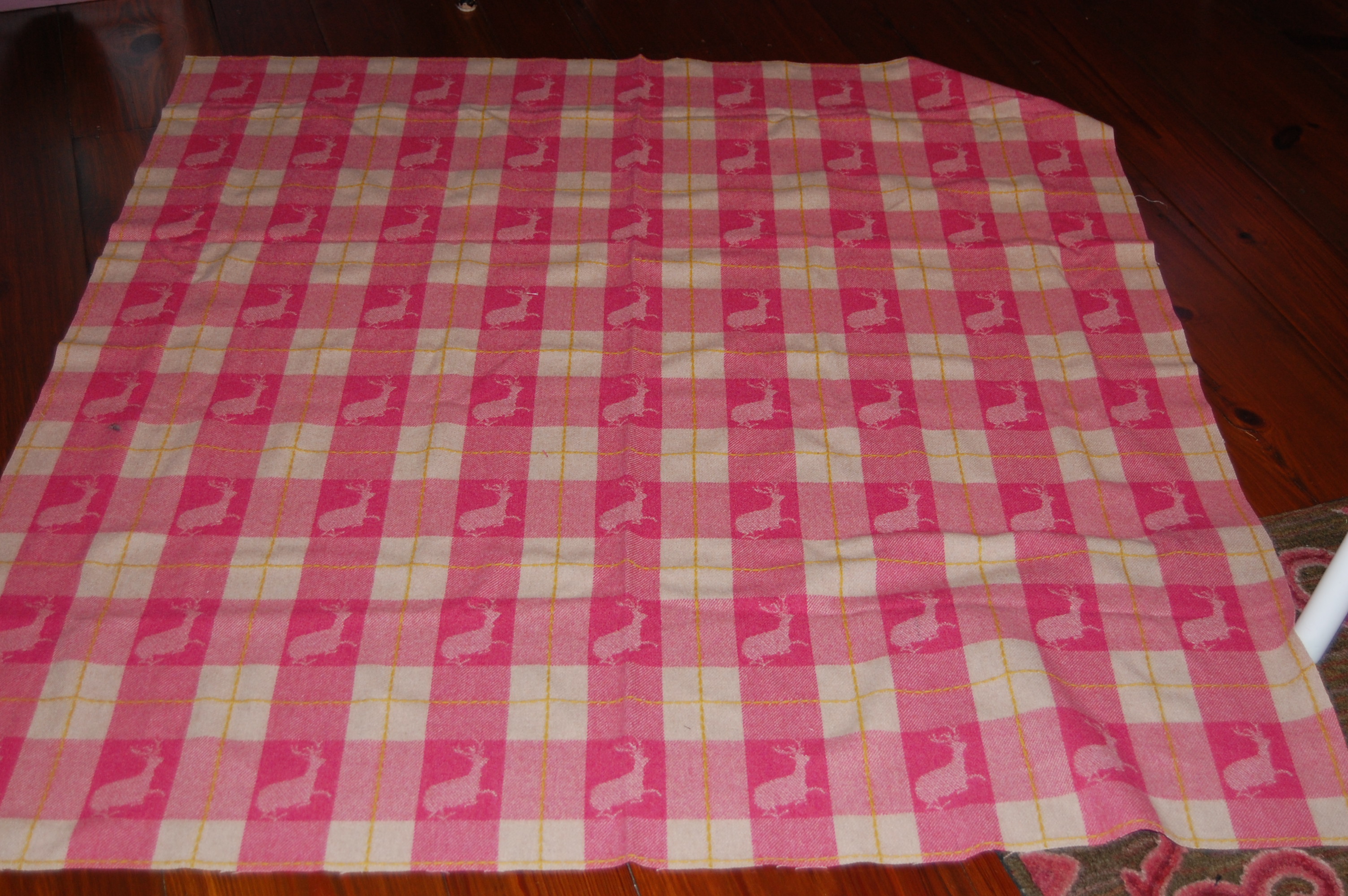
Do you ever see a fabric and feel captivated by its charm, its design, its ambience?  That is what happened to me when I saw this fabric on the website of Britex Fabrics:

Wyncken, Blyncken and Nod - fabric

It is a moderately heavy-weight wool blend, made in Italy (the source of so many beautiful and exquisite fabrics), and its friendly jacquard-woven deer, set amongst the bold pink checks, with that subtle gold woolen thread traversing its expanse, seemed to be a blend of Tyrolean style, buffalo checks, and frontier whimsy!  I loved it, but I could not quite imagine it made up into anything wearable – at least for me.

So I decided not to buy it.

But then I did.

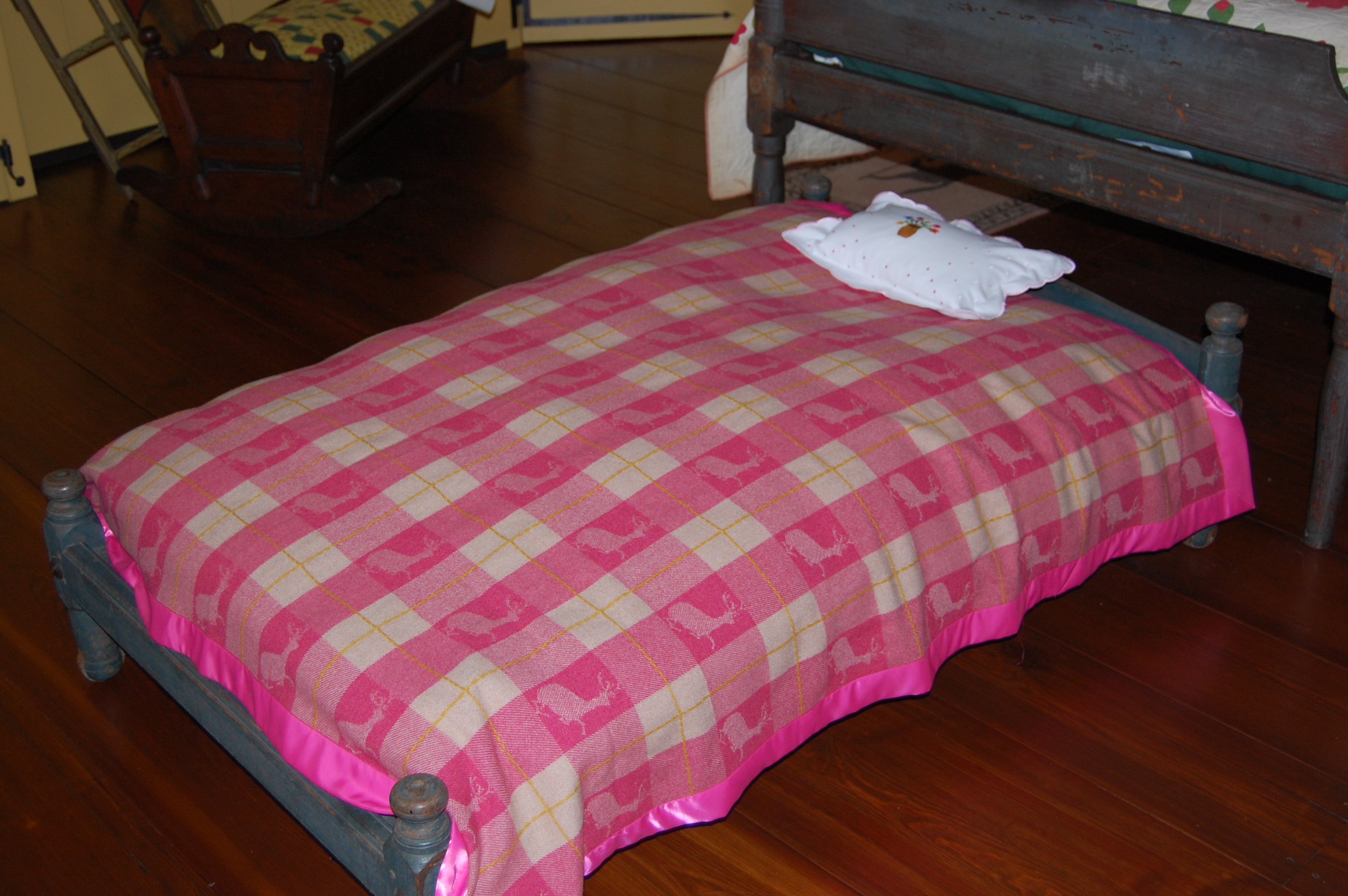
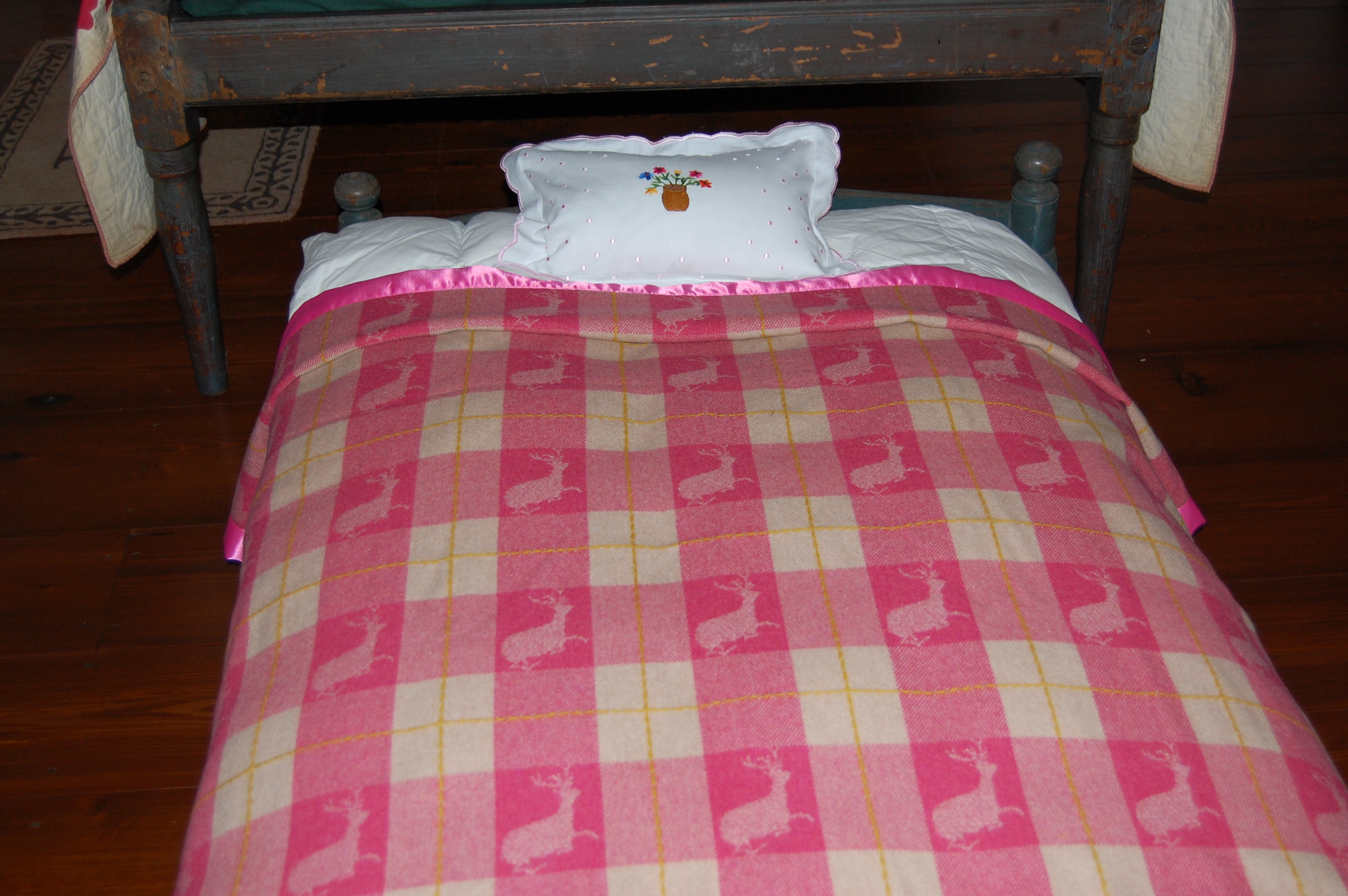
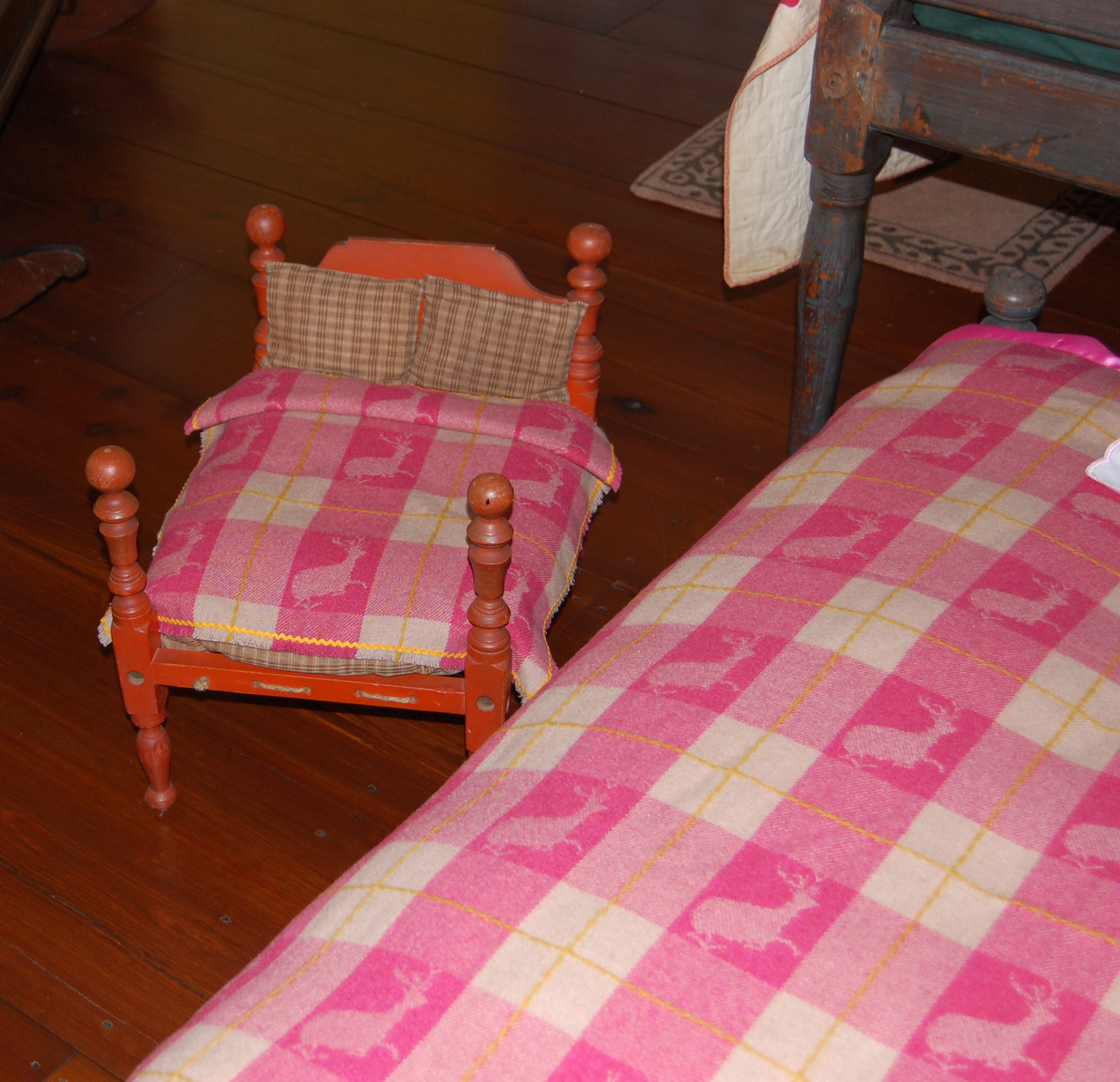
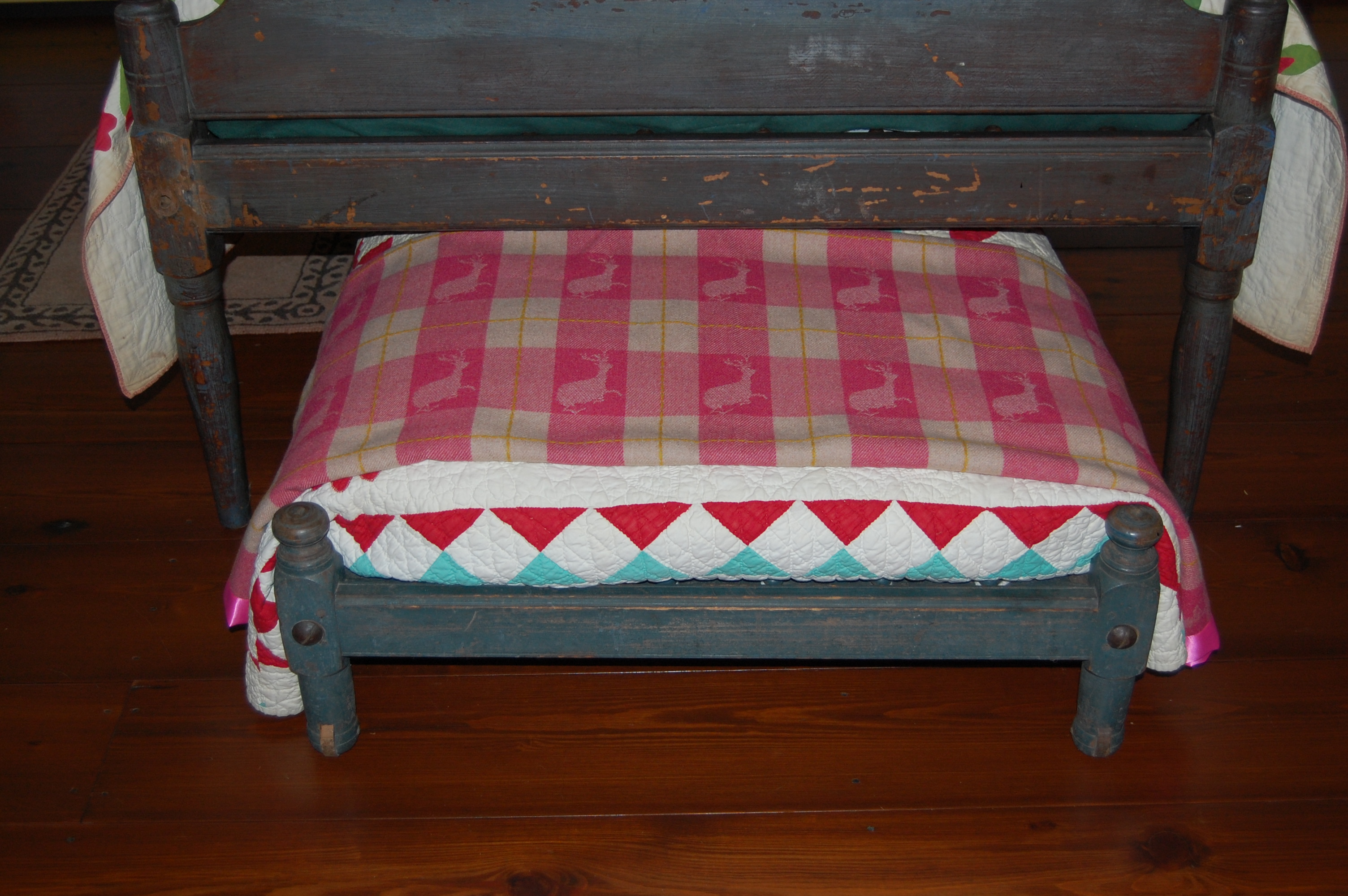
What can I say?  I had to have it.  Of course, by the time I reversed my decision, I had determined it was the perfect fabric from which to make a small blanket – just the right size for a “wee one’s trundle bed.”  The small trundle bed, which we purchased years ago, has been patiently waiting to be used by a wee one – and although our little granddaughter is still in a crib, it won’t be long until this little bed will be the perfect place for her to snuggle and sleep and dream when she is with us.  So of course – a warm, whimsical blanket was in order.  Since it is almost impossible to find linens to fit such specific little beds, making one was very much on my agenda.

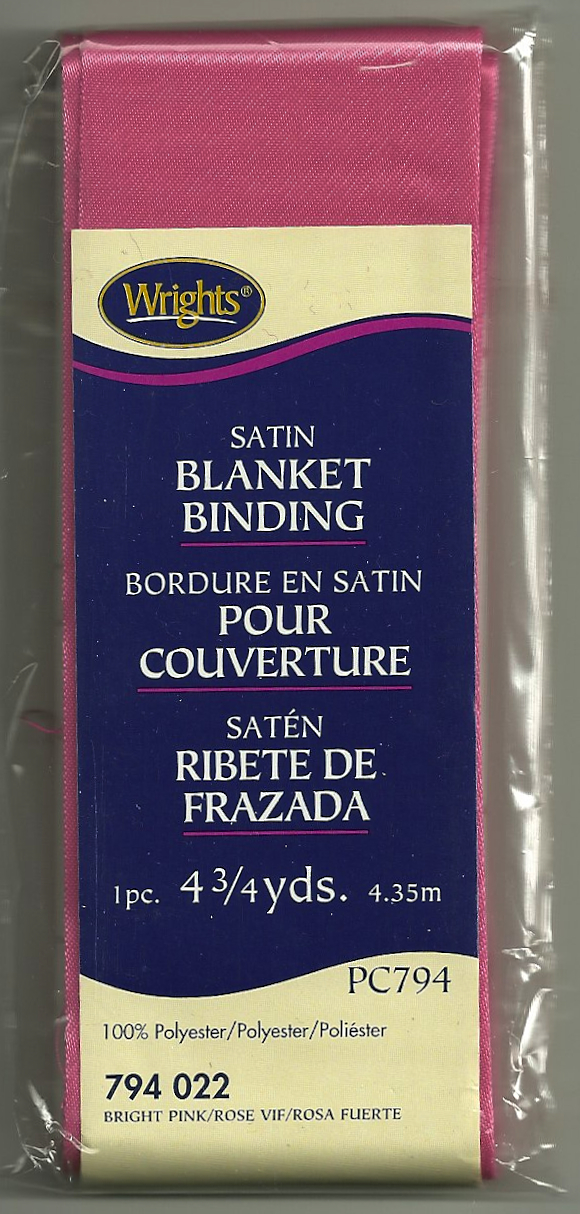
The first thing I did was go to JoAnn’s Fabrics to see if I could get blanket binding.  I could not believe my eyes when I found this bright pink color.

Wyncken, Blyncken and Nod

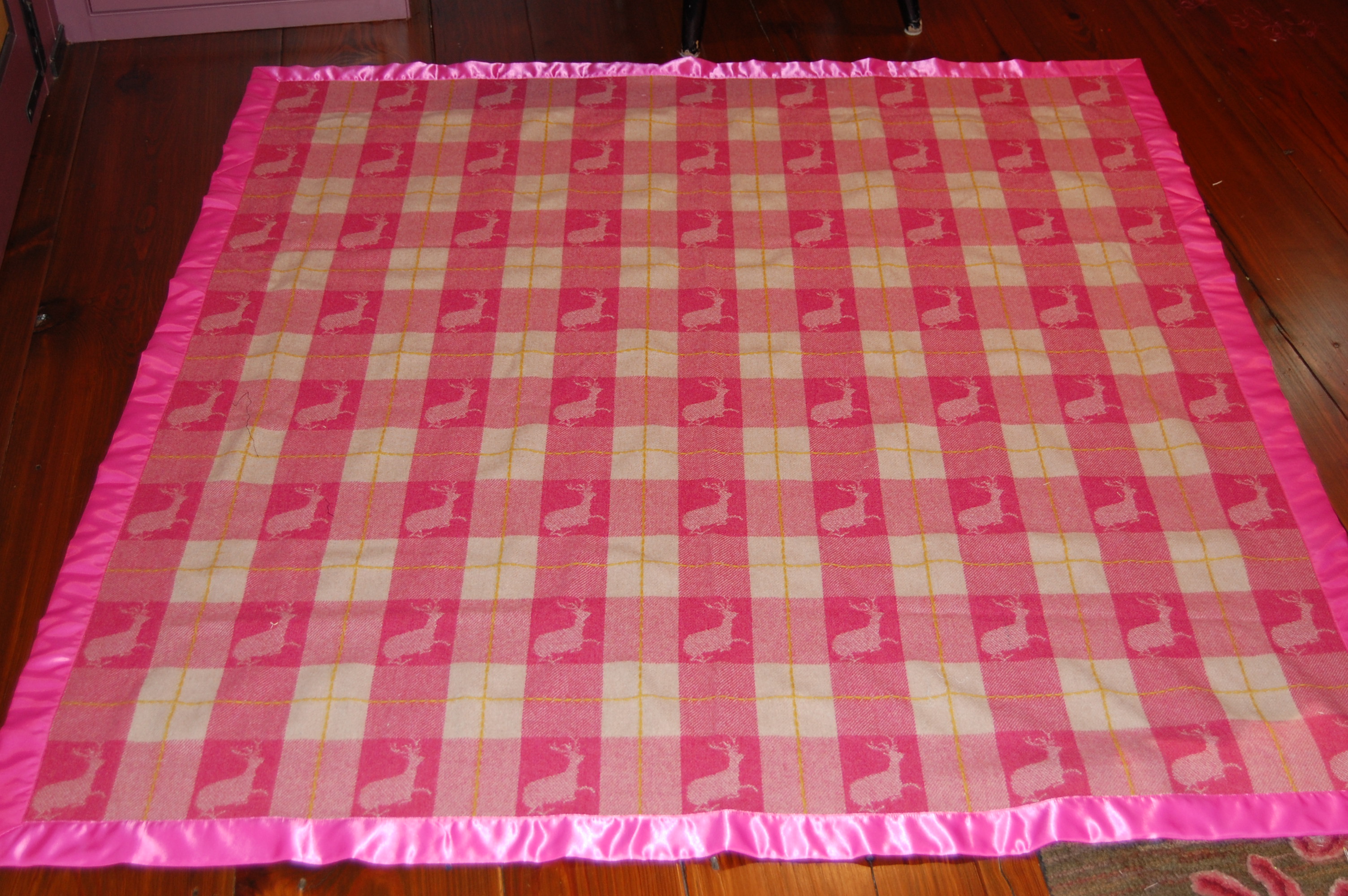
Then it was just a matter of measuring, deciding where in the plaid of the fabric to place the binding, and sew! One thing that made the application of the satin blanket binding much easier was using a walking foot.  Nice and easy and fun.

Cut and ready to be bound.

Cut and ready to be bound.

The binding sewn on, blanket finished!

The binding sewn on, blanket finished! 

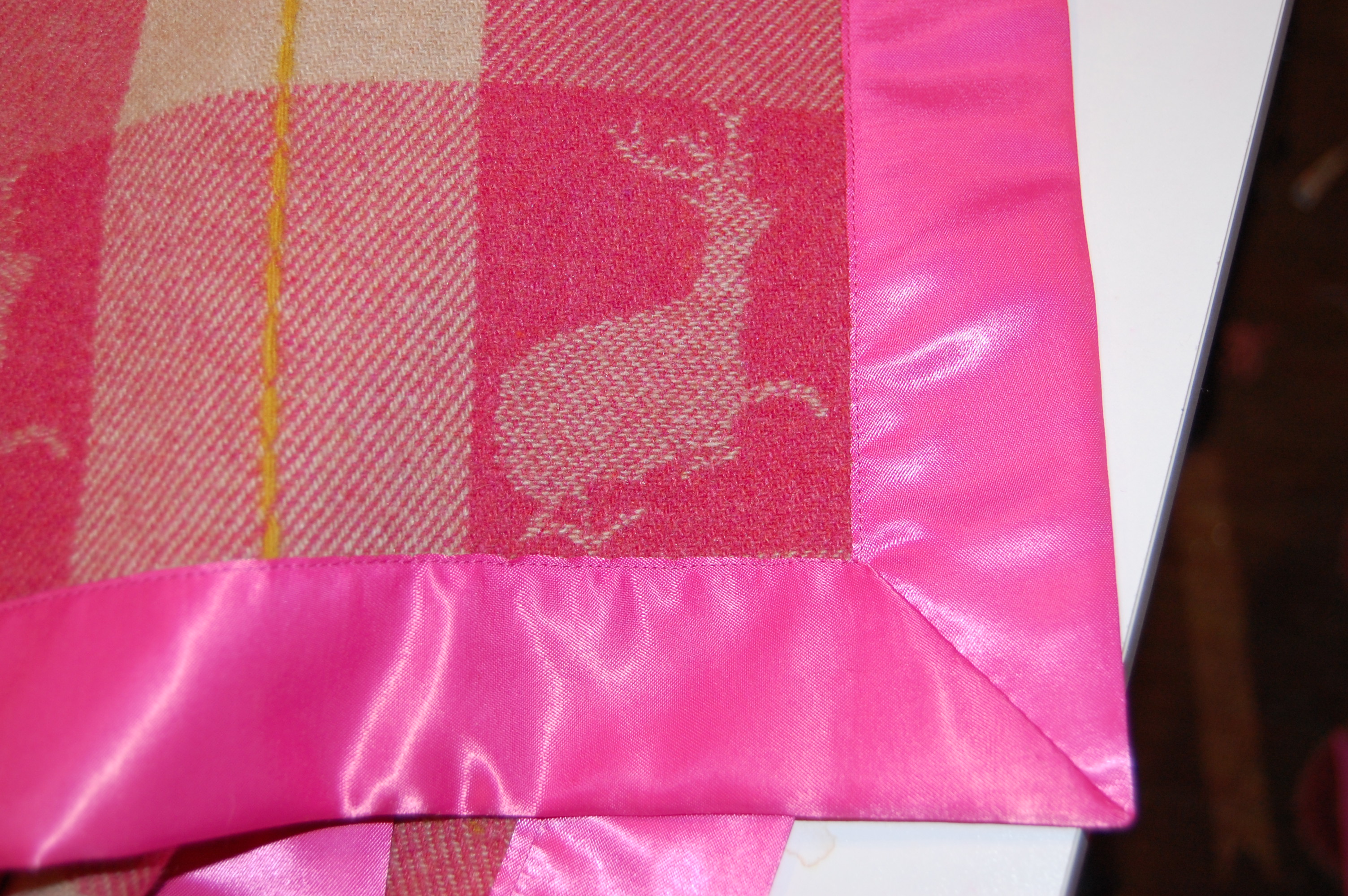
I mitered the corners and used a fell stitch to hand-finish them.

One of the corners.

One of the corners.

It fits well  . . .

It fits well . . .

. . . and is nice and warm.

. . . and is nice and warm.

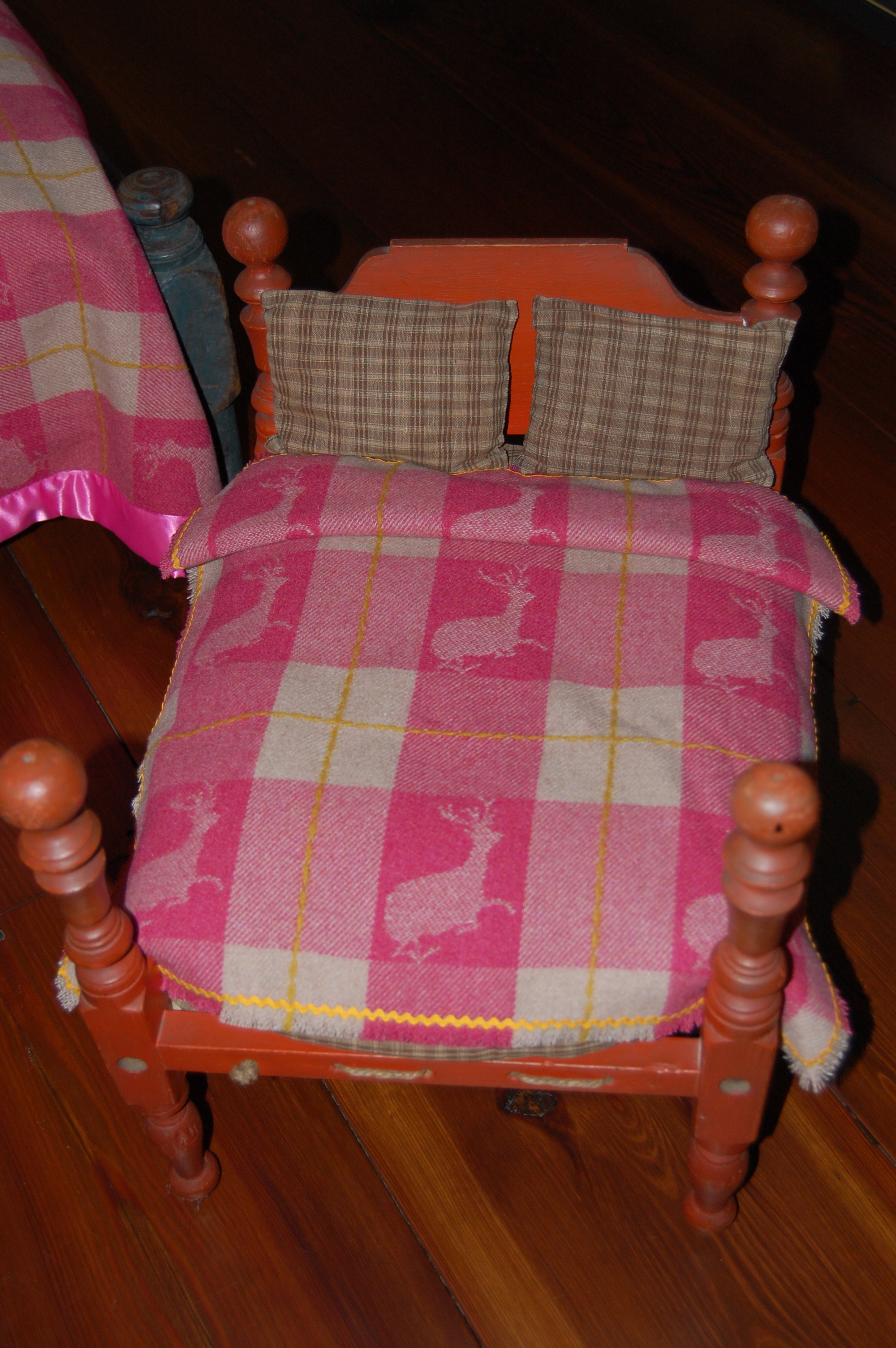
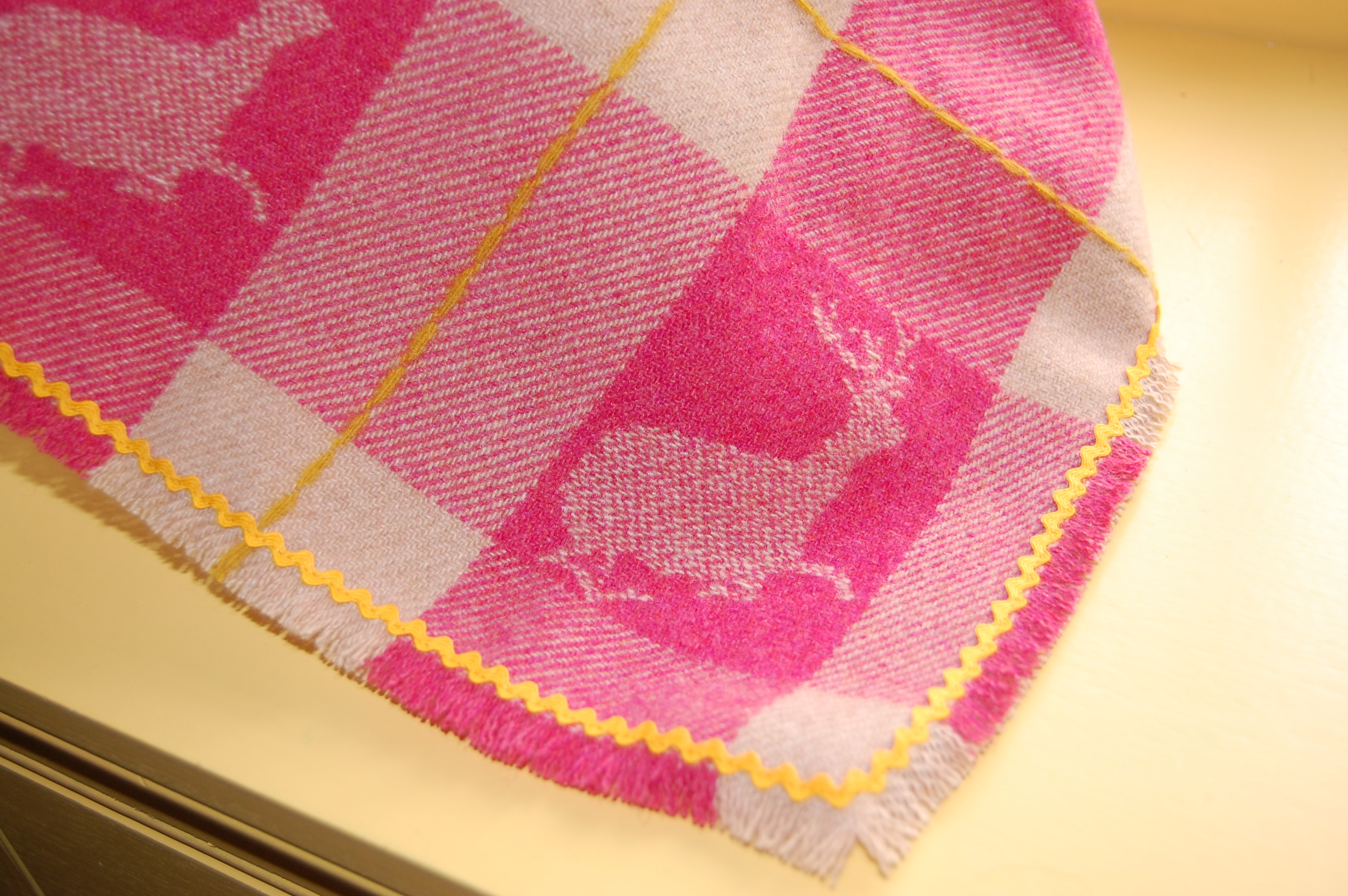
I had ordered a bit more fabric than I thought I might need – enough to make a doll blanket – and maybe a jacket for a teddy bear one day.  Who knows – we’ll wait and see what our wee one asks me to sew.

pink blanket

I fringed the edges of the doll blanket and added rick rack for fun!

I fringed the edges of the doll blanket and added rick rack for fun!

pink blanket

Too pretty to go completely out of sight - and easier to pull out for" wee ones".

Too pretty to go completely out of sight – and easier to pull out for” wee ones”.

10 Comments

Filed under Blankets and doll blankets, Uncategorized, woolens

Wrapping My Mind Around a New Dress for Fall

I am not sure why, but I have been obsessed with wrap dresses lately.  I think it began in May when I wore the dress I made last summer from a mid-‘70s Vogue Diane von Furstenberg pattern.   It seemed to make a hit whenever I had it on – and there is nothing like a compliment to make one try for a repeat!  I just needed to find the perfect fabric – and another perfect pattern.

I made the sleeveless version of this dress in a red and white print.

I made the sleeveless version of this dress in a red and white print.

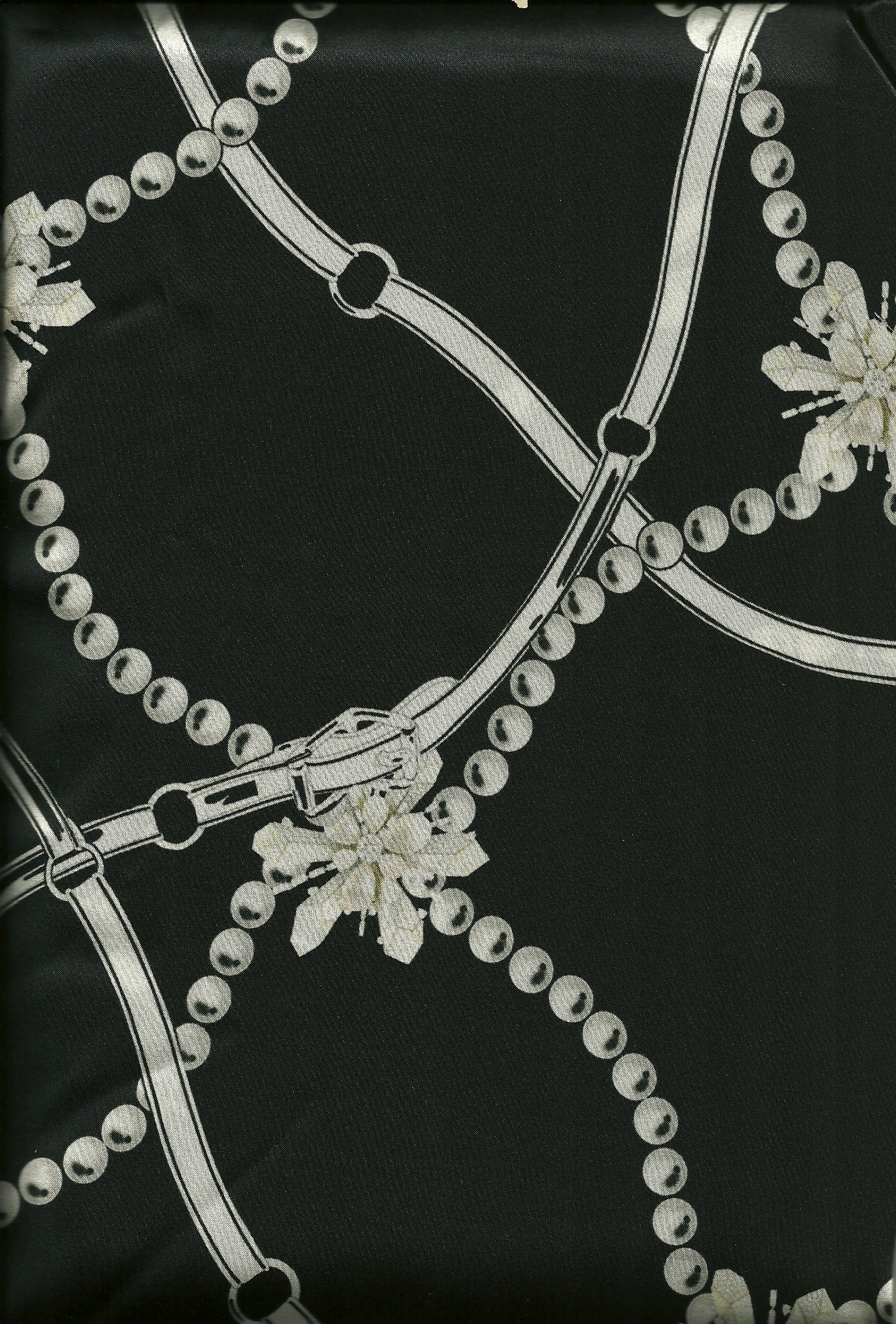
The perfect fabric turned out to be the easy part of the equation.  One of my classmates in Susan Khalje’s Classic French Jacket Class chose this silk charmeuse for her jacket lining:

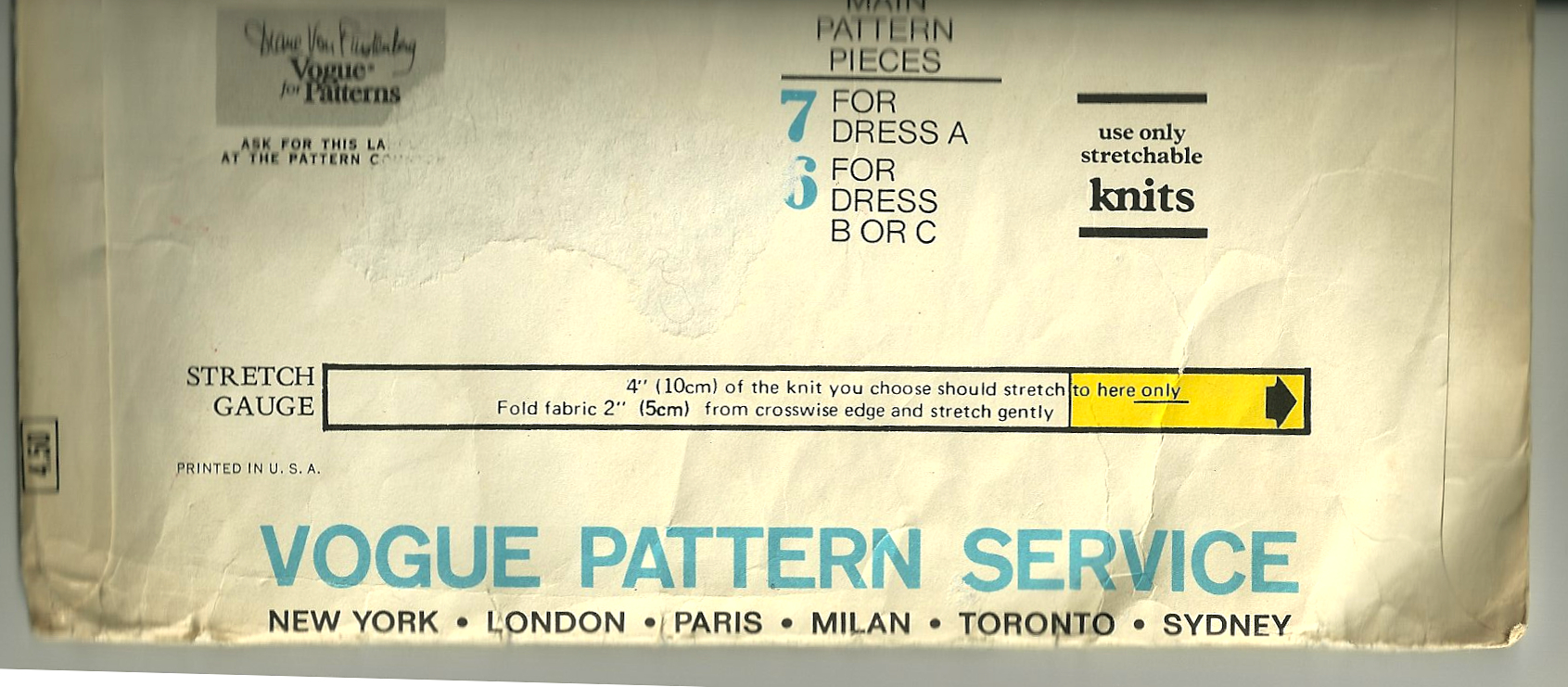
Wrap dress - 9 - fabric I loved the design so much that I asked for a swatch of it while I was at Mendel Goldberg Fabrics in NYC with my classmates.  Well, you can guess the end of this part of the story.  A few weeks after arriving home, I called up Alice at Mendel Goldberg and ordered some yardage.  I could picture this fabric as a wrap dress with ¾ or bracelet-length sleeves.  However, it is a woven fabric (of course), and even though it does have a slight stretch to it, those vintage Diane von Furstenberg patterns require “stretchable knits”, even including a stretch gauge on the pattern envelopes to ensure success.

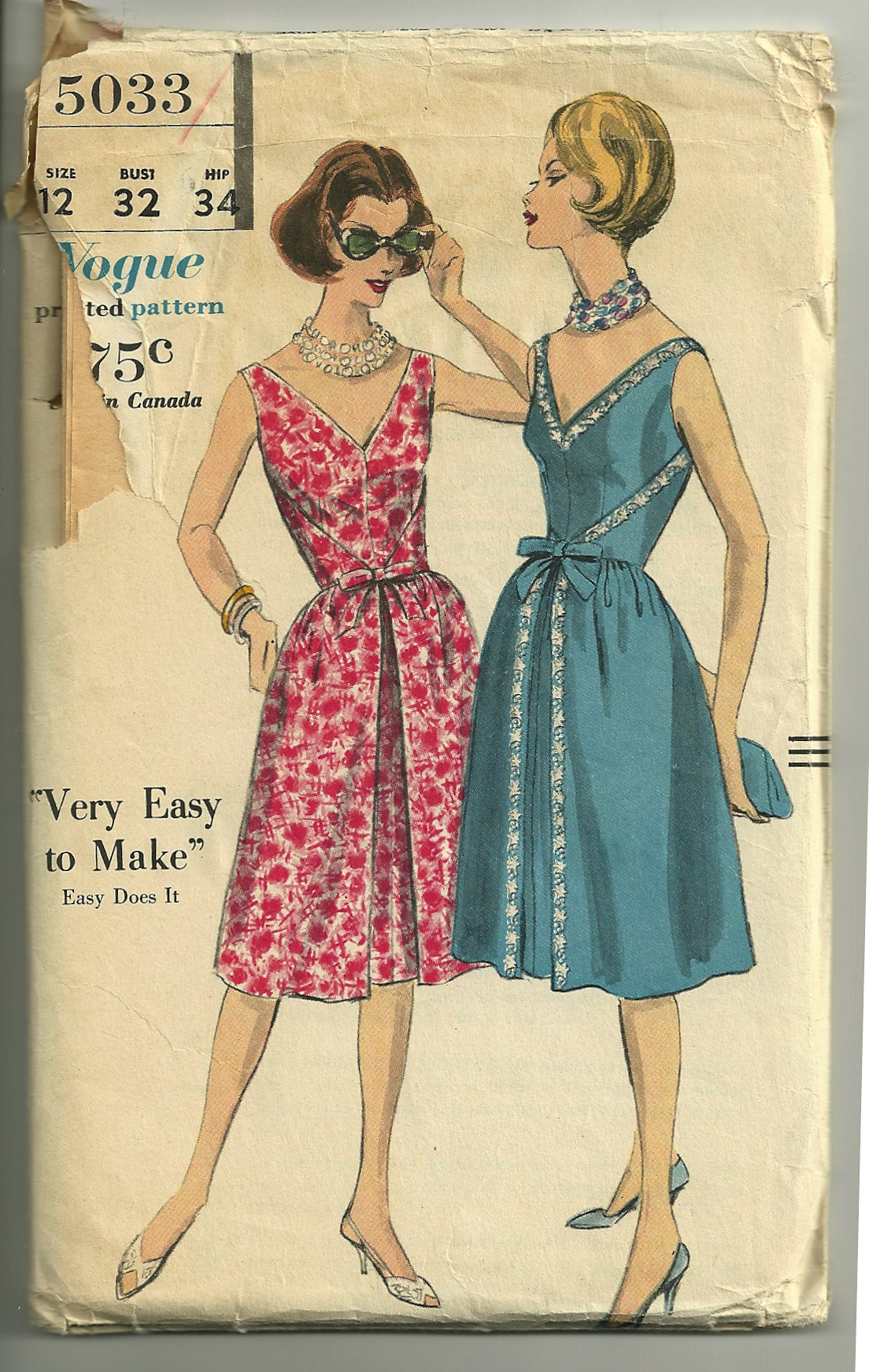
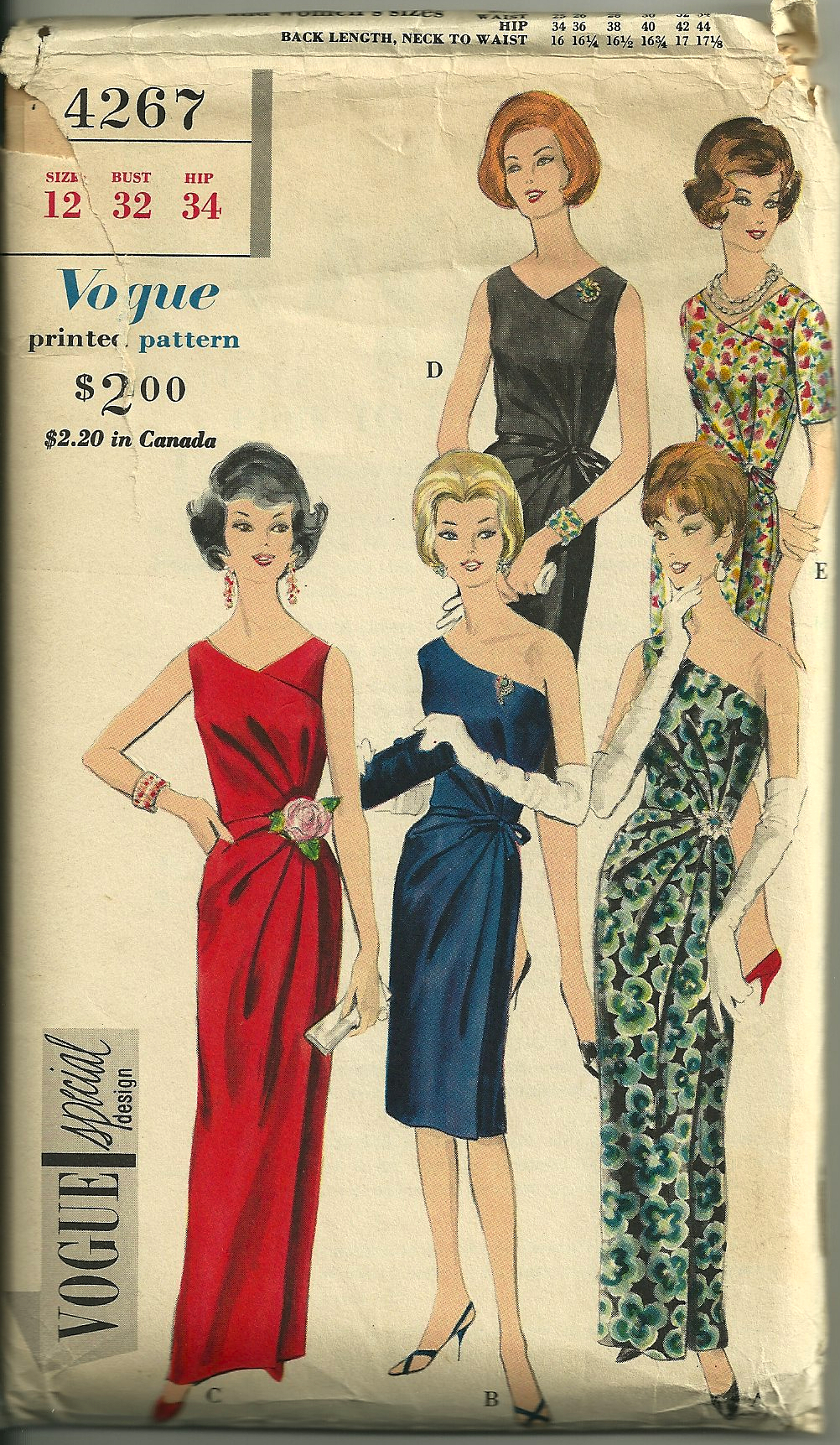
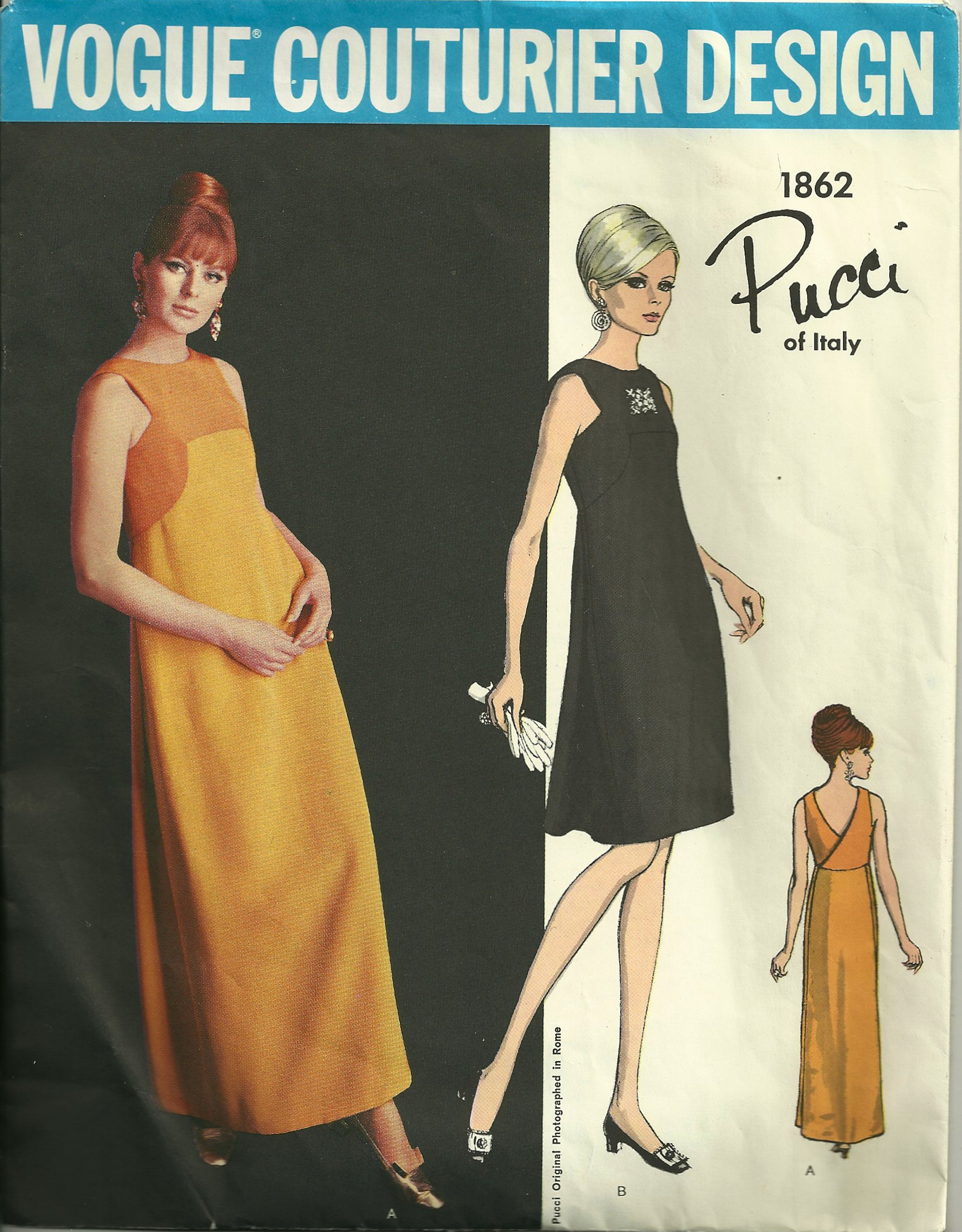
Wrap dress - 8 - stretch gauge Out of curiosity I went through my collection of vintage patterns to see what other “wrap” dresses I could find, and although none of these three were quite the look I wanted, I was struck by the variety of wrap dress patterns available, obviously some long before Diane von Furstenberg made them so popular.

This pattern is copyright 1960.  "slightly gathered skirt back of the sleeveless, easy-does-it dress wraps around plain front to fasten at waist-line with tied belt."

This pattern is copyright 1960. “slightly gathered skirt back of the sleeveless, easy-does-it dress wraps around plain front to fasten at waist-line with tied belt.”

A thumbnail diagram on the back of the pattern envelope.  "Dress opens flat for ironing."

A thumbnail diagram on the back of the pattern envelope. “Dress opens flat for ironing.”

Here is a slightly more elegant wrap dress, also from the early ’60s:

Actually, just the skirt is a wrap on this dress, which has so many different looks, all of them quite stunning.

Actually, just the skirt is a wrap on this dress, which has so many different looks, all of them quite stunning.

Finally this Pucci design, which is another elegant wrap dress:

"Slim, high fitted dress in evening r street length has wrapped back closing, soft side back folds."

“Slim, high fitted dress in evening or street length has wrapped back closing, soft side back folds.”

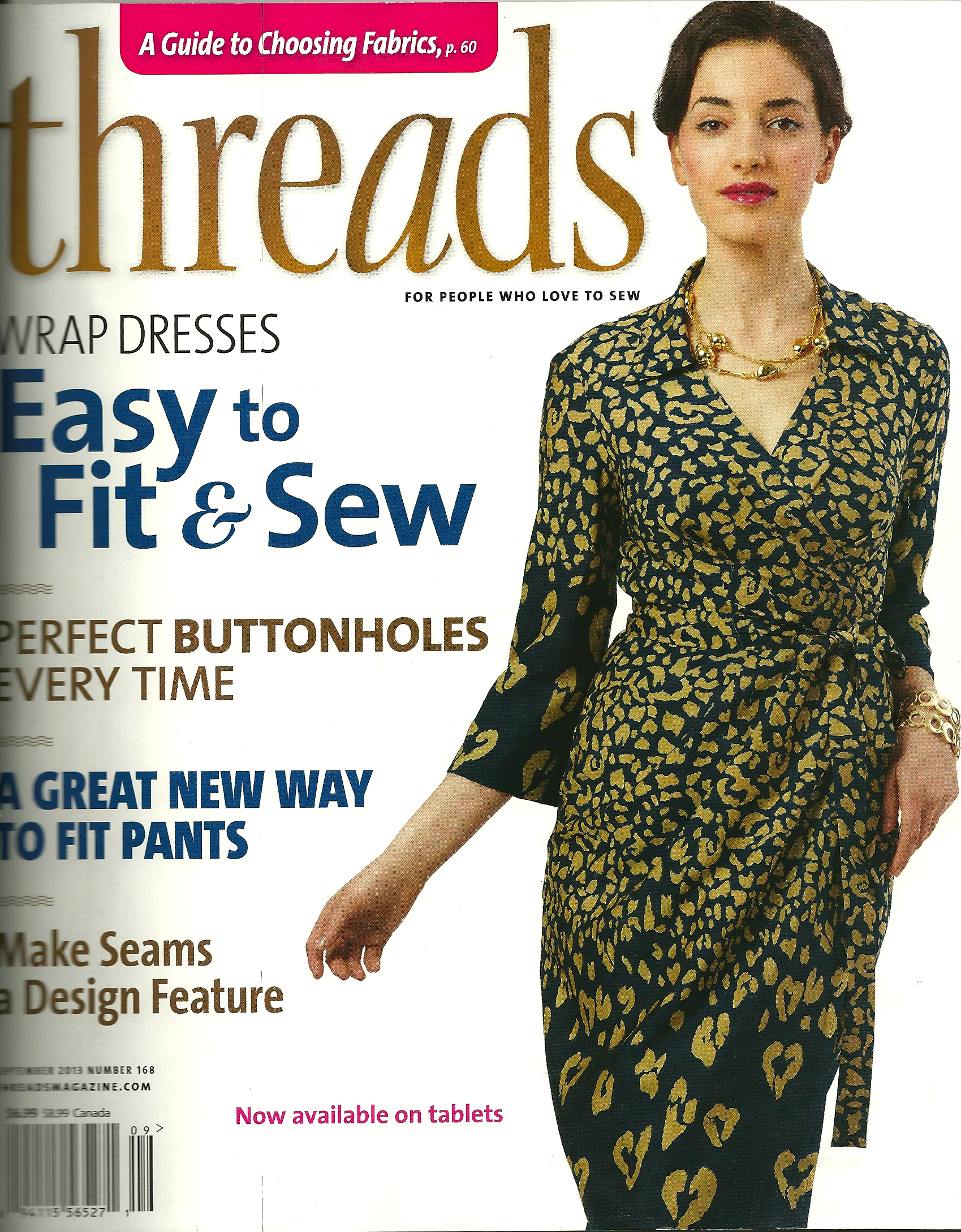
It was about this time that the September issue of Threads magazine arrived in my mailbox.  Now my obsession was in full force, as the main feature article was on Wrap Dresses: Easy to Fit and Sew.

Wrap dress I liked the dress featured on the cover – which happens to be a new Vogue pattern (V8784).  I also liked the fact that it does not require a knit fabric, and that it is to be lined (I could make it using couture techniques).  I did not like the sleeves, however – too baggy and shapeless.

I could not get around the idea that the look I thought I wanted was this D v F dress, featured on the front cover of Vogue Patterns for September/October 1976:

Wrap dress - 6 DvF cover

This presented two major problems, however,  First, I do not own this vintage pattern (yet), which commands high prices when it comes on the market.  And second, even if I did own it, my woven silk fabric would not be appropriate to use for it.

Well, this second part of the equation was beginning to be a problem.  Then, quite by luck, I stumbled on a Simplicity pattern from 1976 in an Etsy store.  The pattern  is obviously a knock-off of the classic Diane von Furstenberg dress I like so much.  However, it is for woven fabrics!  It was in my size, which I took as a “sign” that I was supposed to buy it – which I did.  I thought my search was over.  With a few minor adjustments to the “extreme” points on the collar and the cuffs, I felt sure this pattern would work.

I really don't think there is anything "JIffy" about this pattern . . .

I really don’t think there is anything “JIffy” about this pattern . . .

A few weeks passed as life took me in other directions and with other projects. Then, finally, I eagerly started on the muslin for this dress.   I was eager, that is, until I realized that the pattern piece for the sleeve is missing –  and the pattern is going to require many more alterations than I usually have.

This is not fun.

There – I feel better now that I have said that!  So my quest for the perfect pattern has been a challenge, but it’s not Fall yet.  By hook or by crook, I’ll be wearing a new silk wrap dress before the trees gently release their leaves into the cool, crisp autumn air.


15 Comments

Filed under Uncategorized, vintage Vogue Designer patterns, vintage Vogue patterns from the 1960s, vintage Vogue patterns from the 1970s, Vogue patterns