Tag Archives: Choosing buttons

Good Bones

Can a pattern have good bones? I think so. When I purchased this blouse pattern a while ago, I did so knowing that I would not be making a blouse that looked exactly like any of the three illustrated on the pattern envelope.
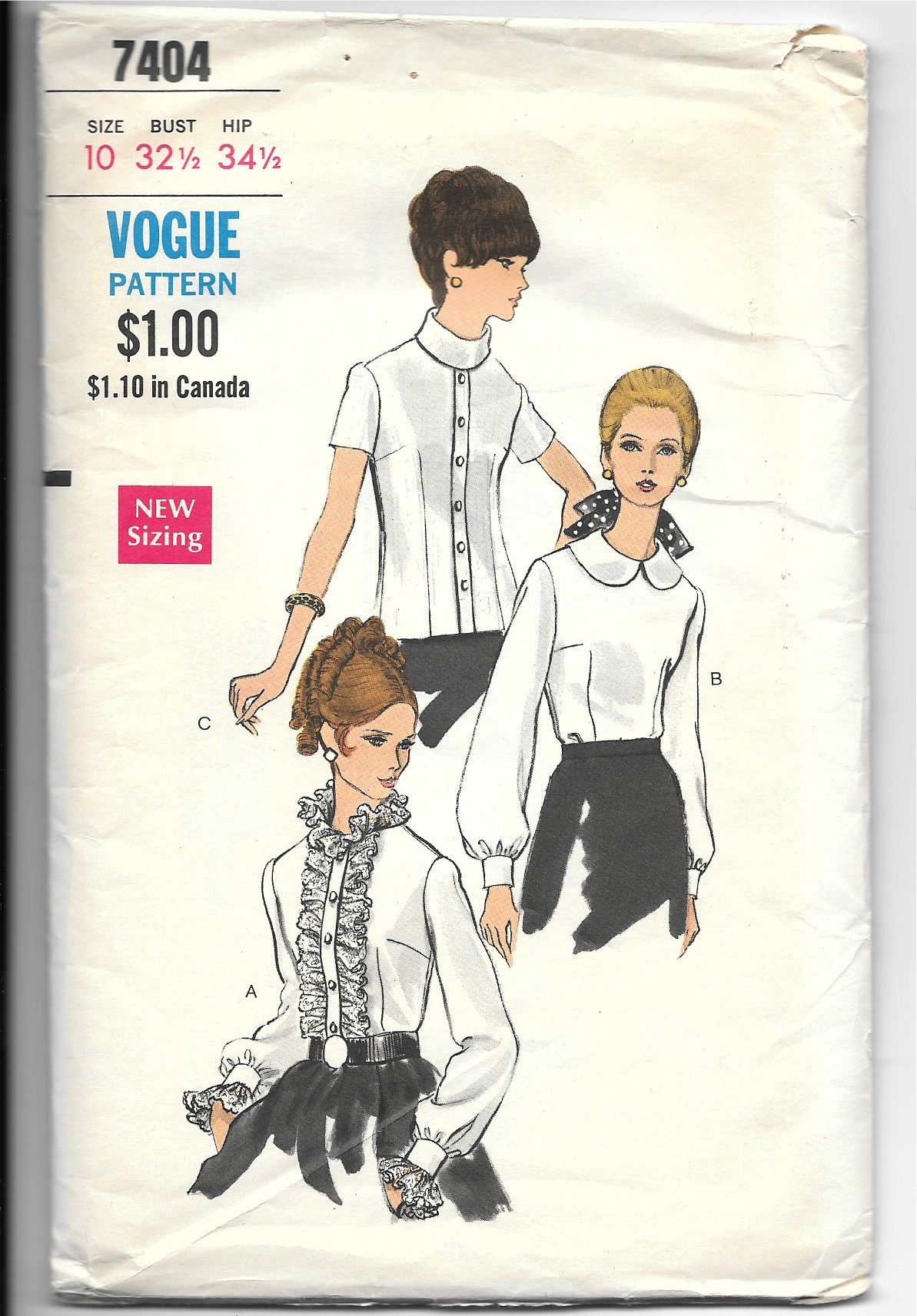
Blouse pattern - PP collar

I have always liked a feminine-looking blouse that opens in the back, and I have always liked Peter Pan collars (which seem to come in and out of fashion). I also like a blouse that is fitted with darts through the body of the blouse. You can easily see the darts illustrated above. The thumbnail views of the blouses also show the darted fitting in the backs of the blouses.
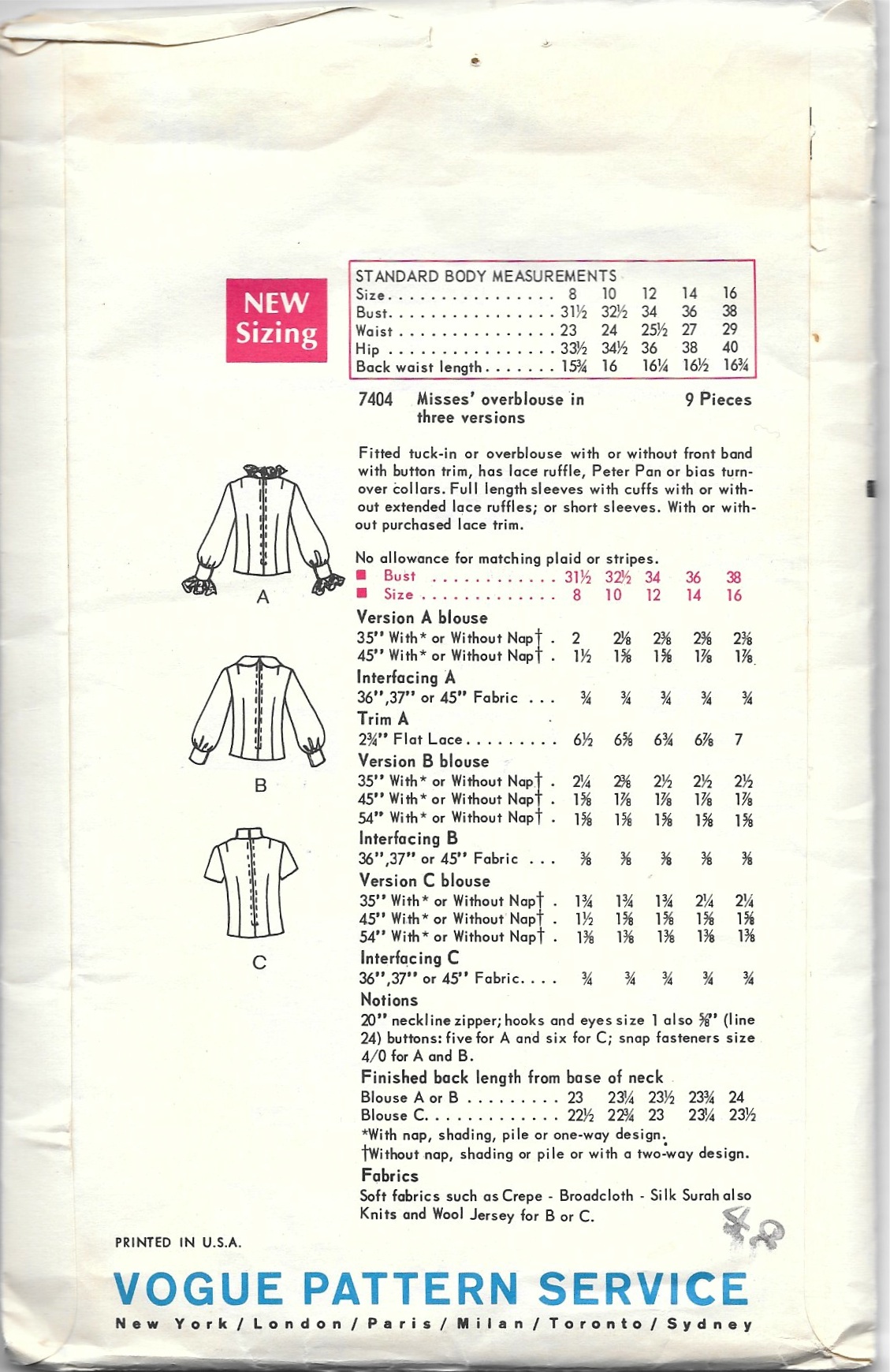
Blouse pattern - PP collar - rear views I found it interesting that these blouses are constructed with zippers in the backs. I am not fond of blouses that are zippered up the back, but I knew that I could easily make the back into a buttoned closure.
January Jumper blouse Interestingly, this pattern is from a narrow period of time when Vogue initiated their “new” sizing, which added a half-inch to sizes 8 and 10 in the bust and in the hip. I believe this new sizing was only in effect from about 1968 through about 1972 or ’73. In any event, it helps to date this particular pattern.  When I decided to make my blanket dress into a jumper, with a blouse matching the yellow lining, I went to this pattern for its good bones: darted fit, back opening, and pretty sleeves.

I re-cut the neckline so that it was wider, following the neckline on my completed jumper. The Peter Pan collar was too wide to my thinking, so I narrowed it by about an inch. Instead of using facings, I bound the raw neck edge with self bias binding. The hand-stitching on that is hidden beneath the collar.
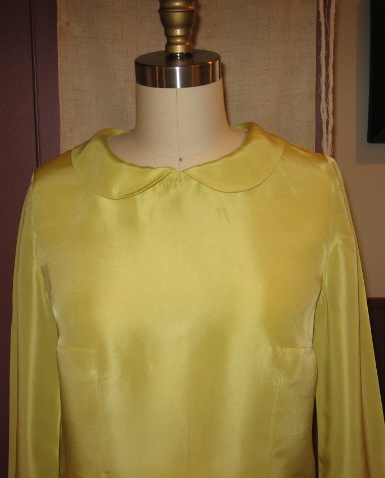
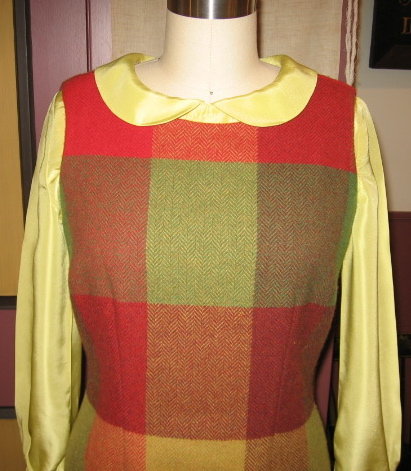
January Jumper blouse

You can see the wider cut of the neckline of the blouse in this photo.
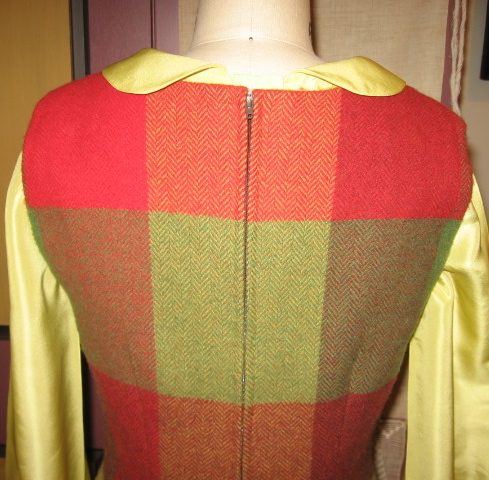
You can see the wider cut of the neckline of the blouse in this photo.

IMG_1073

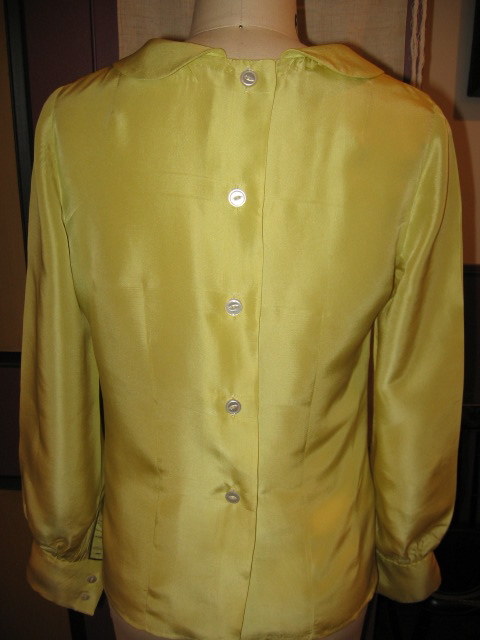
I added two inches to each of the the back seam lines so that I could button , rather than zip, the back, and I took a bit of the width out of the sleeves so they would be a bit less flow-y (is that a word?)
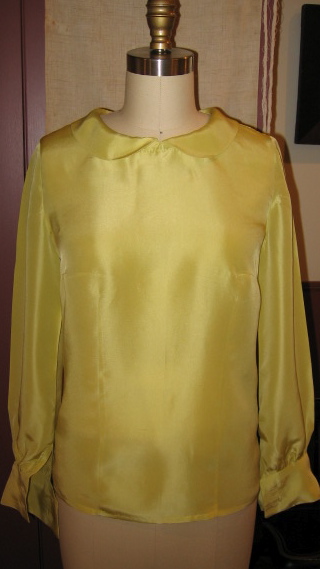
IMG_1069

The slightly fitted bodice helps it to lay without bulkiness underneath the jumper. I found vintage mother-of-pearl buttons in my button box, two smaller ones for each sleeve and five slightly larger ones for the back. Why it always give me satisfaction to use buttons I have on hand, I don’t know, but I was feeling quite delighted with my finds!
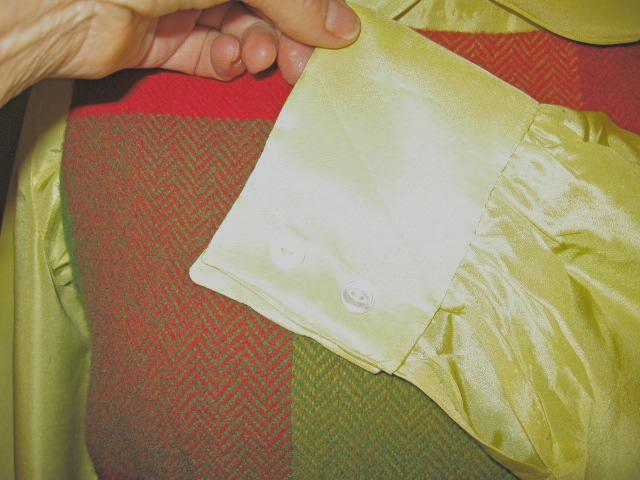
IMG_1077

Unfortunately, I am having problems with the main lens I use for my camera, so I had to resort to my old “point and shoot” for these photos, which makes them adequate, but that’s about all. Also, I’ll have to add photos of me actually wearing my new jumper and blouse at a later date, due to this inconvenience. My apologies…
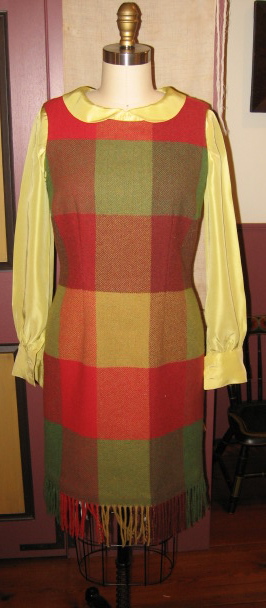
January Jumper and blouse

Less than a month ago, when I was “planning” out 2015’s sewing, I did not envision that January would also produce a blouse to wear with my blanket dress. But that is one of the charms of fashion sewing – the spontaneity of a project that says “Me, Me, choose Me!” And so I did, and I am not only happy with the result, but delighted to have a tried and true “good bones” blouse pattern to use again and again, whether in the plan or not.
18 Comments

Filed under Blouses, Buttons - choosing the right ones, Love of sewing, sewing in silk, Uncategorized, vintage buttons, vintage Vogue patterns from the 1970s

Figuring It Out

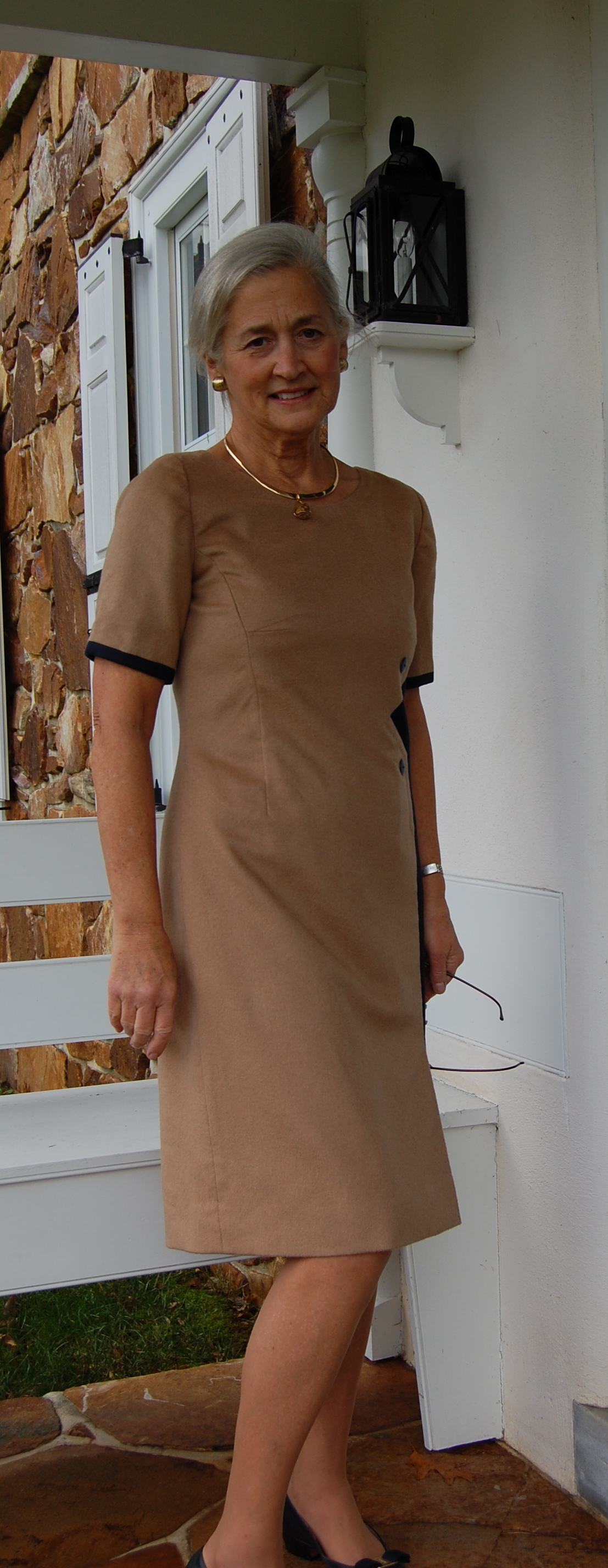
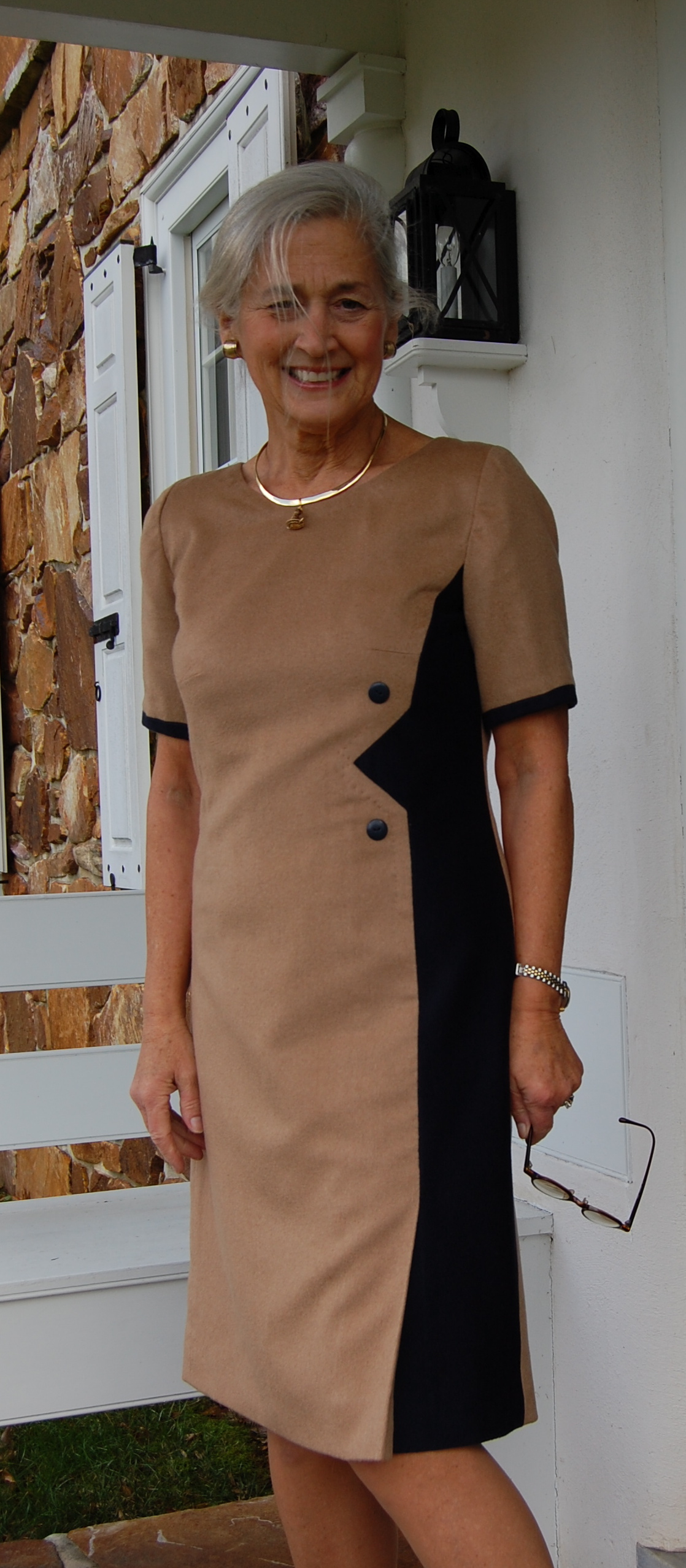
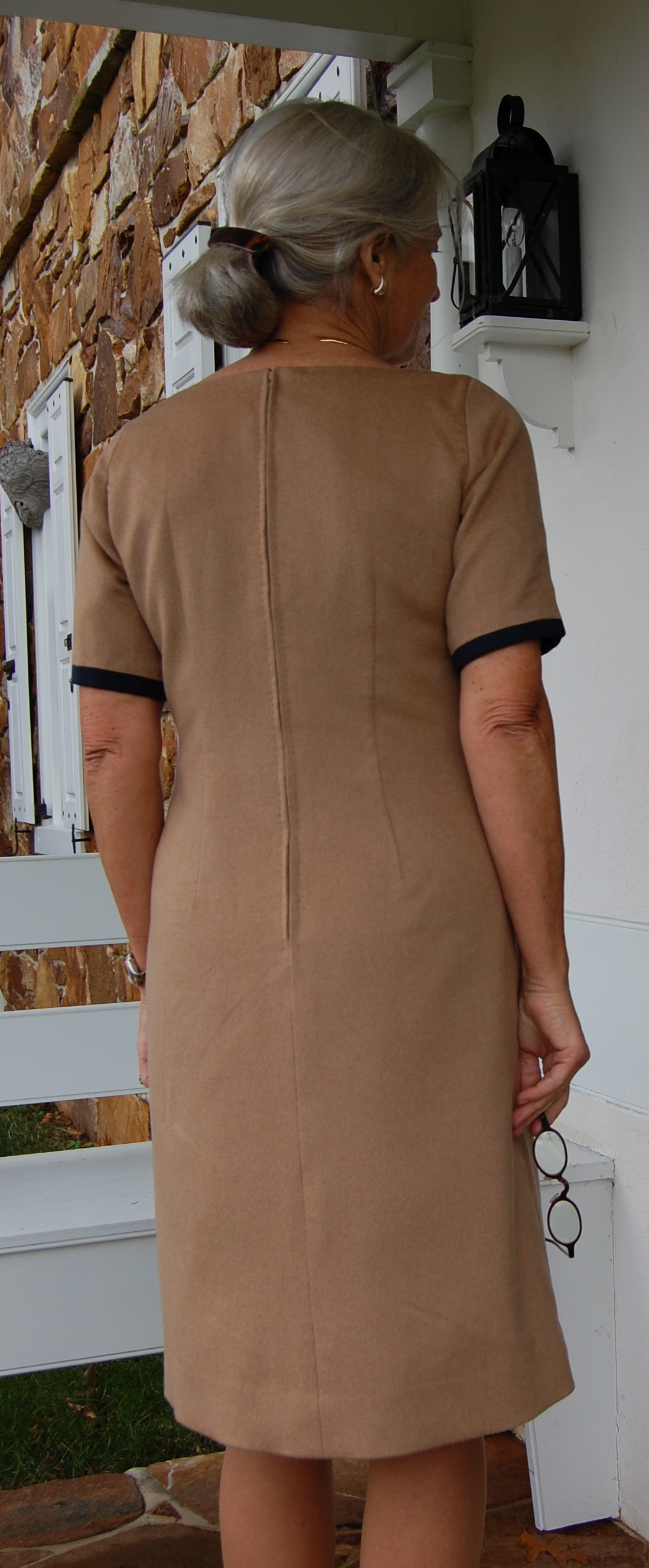
Having completed my first Marfy dress, I now have the pleasure of reflecting upon its creation. Unlike my “Ghost Dress” which caused me so much angst (but turned out okay in the end), this ‘60s-inspired design went together without a hitch, although it definitely took some “figuring it out” along the way.

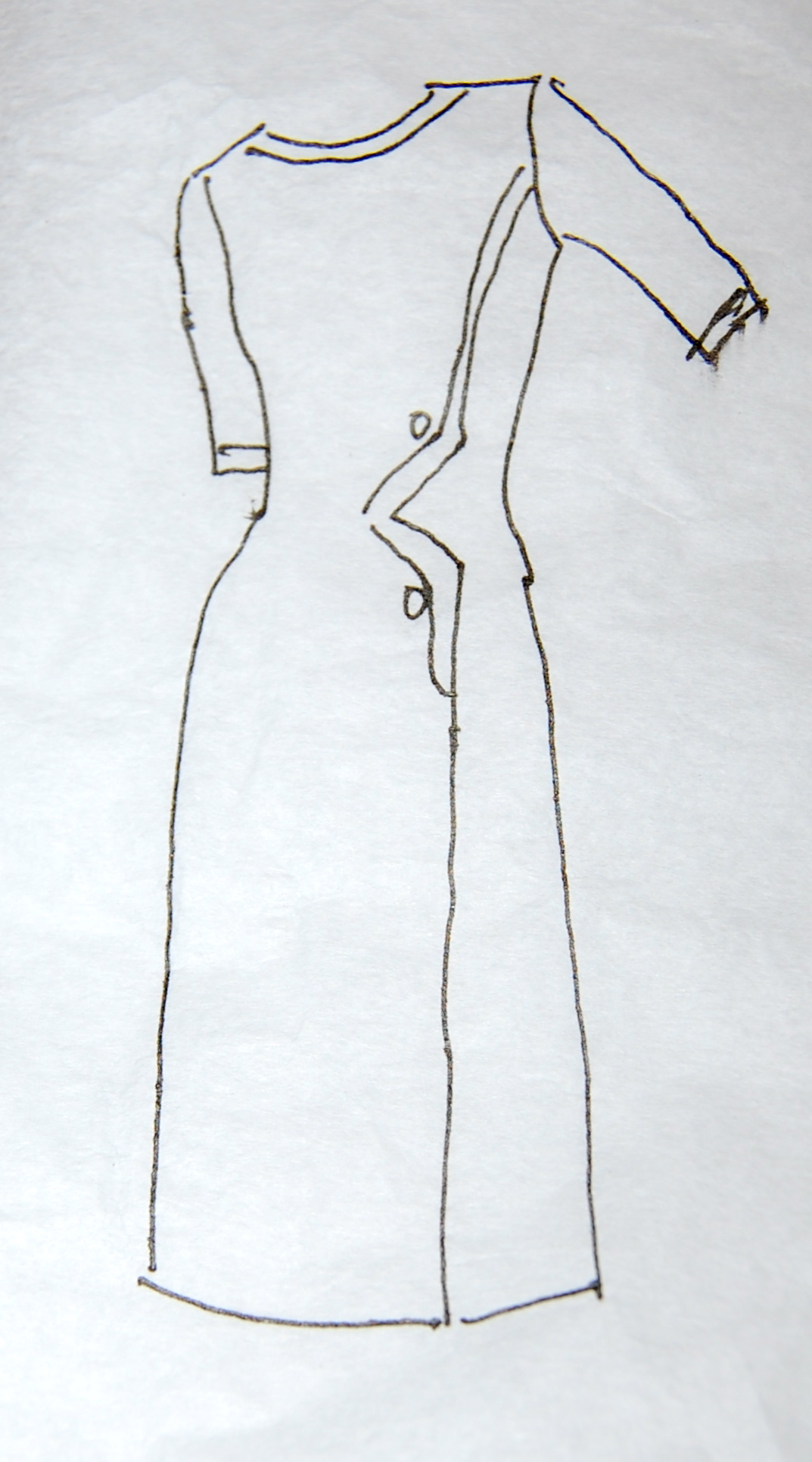
First I’ll cover the four changes I made to the dress, based on my muslin (toile). Initially I had to lower the apex of the bust darts, an alteration I am now used to making. Second, I decided to lengthen the sleeves by about 2 inches. I did this mostly to make the dress more comfortable to wear in the cold winter months. Even covering bare upper arms just a little bit more is helpful. I was hoping this would not detract from the lines of the dress otherwise. I made a tracing to try it out on paper first:

Marfy Dress

Somehow, the longer sleeves did not look good with the very distinct A-line silhouette of the dress. I thought they would look better with more of a straight skirt. I knew from the muslin that the front detailing had a built-in kick pleat, so narrowing the skirt was entirely doable. I would still be able to walk in it!
Alteration number four was the neckline. I widened it a bit, as I think that looks better on me. Then I widened it again later in the process (I’ll get to that in a bit.)

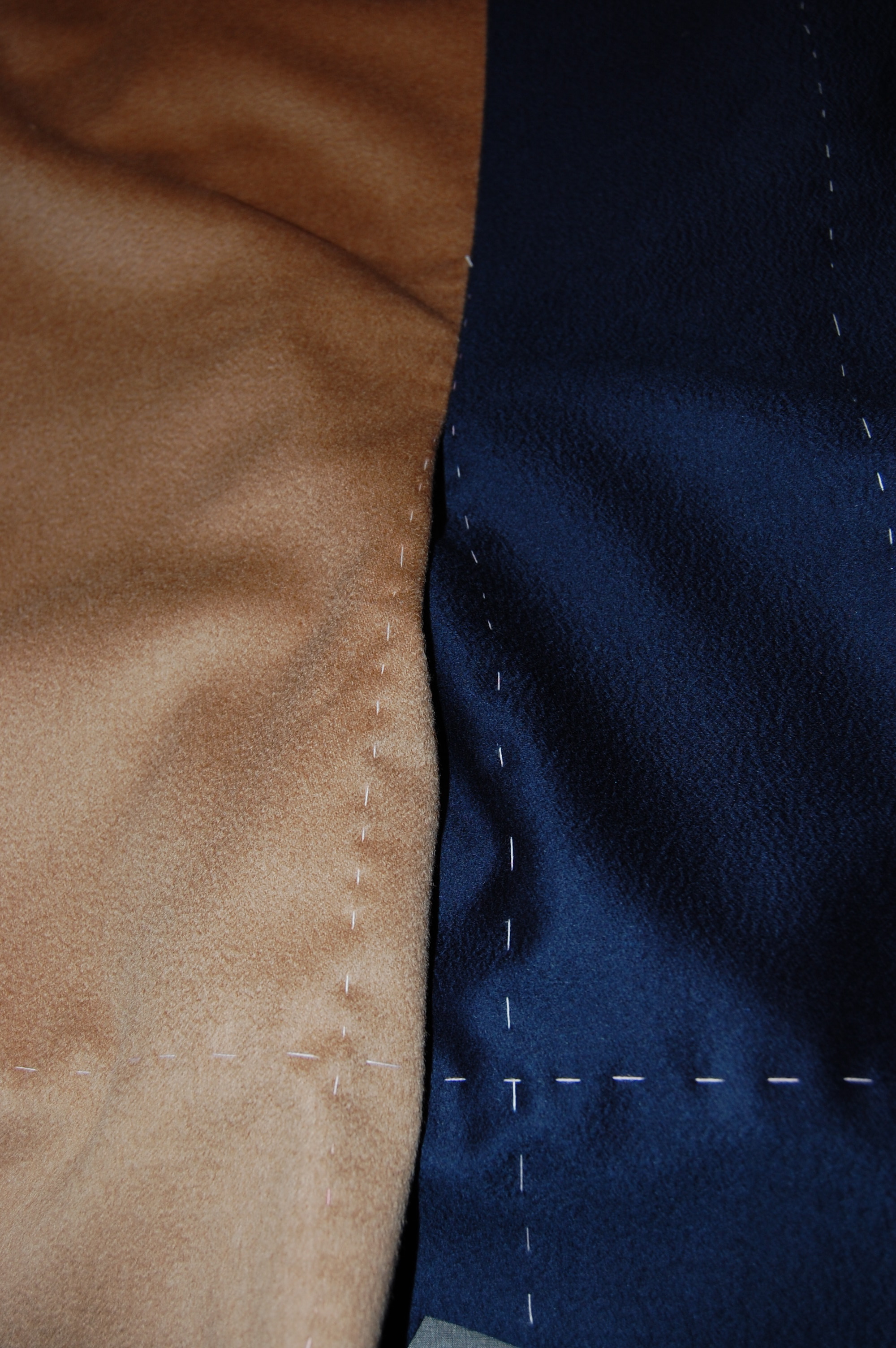
With no written and illustrated instructions to follow, I relied on my sewing knowledge and experience to execute the seaming on the front left of the dress. I was able to sew the seam by machine from the sleeve down to the lower angle of the point. From there down to about 8” from the hemline, I sewed the seam by hand.
An inside look at the this seam stitched by hand

An inside look at the this seam stitched by hand

There is a pleat hidden beneath the dress here, and sewing by hand seemed to be the only solution.

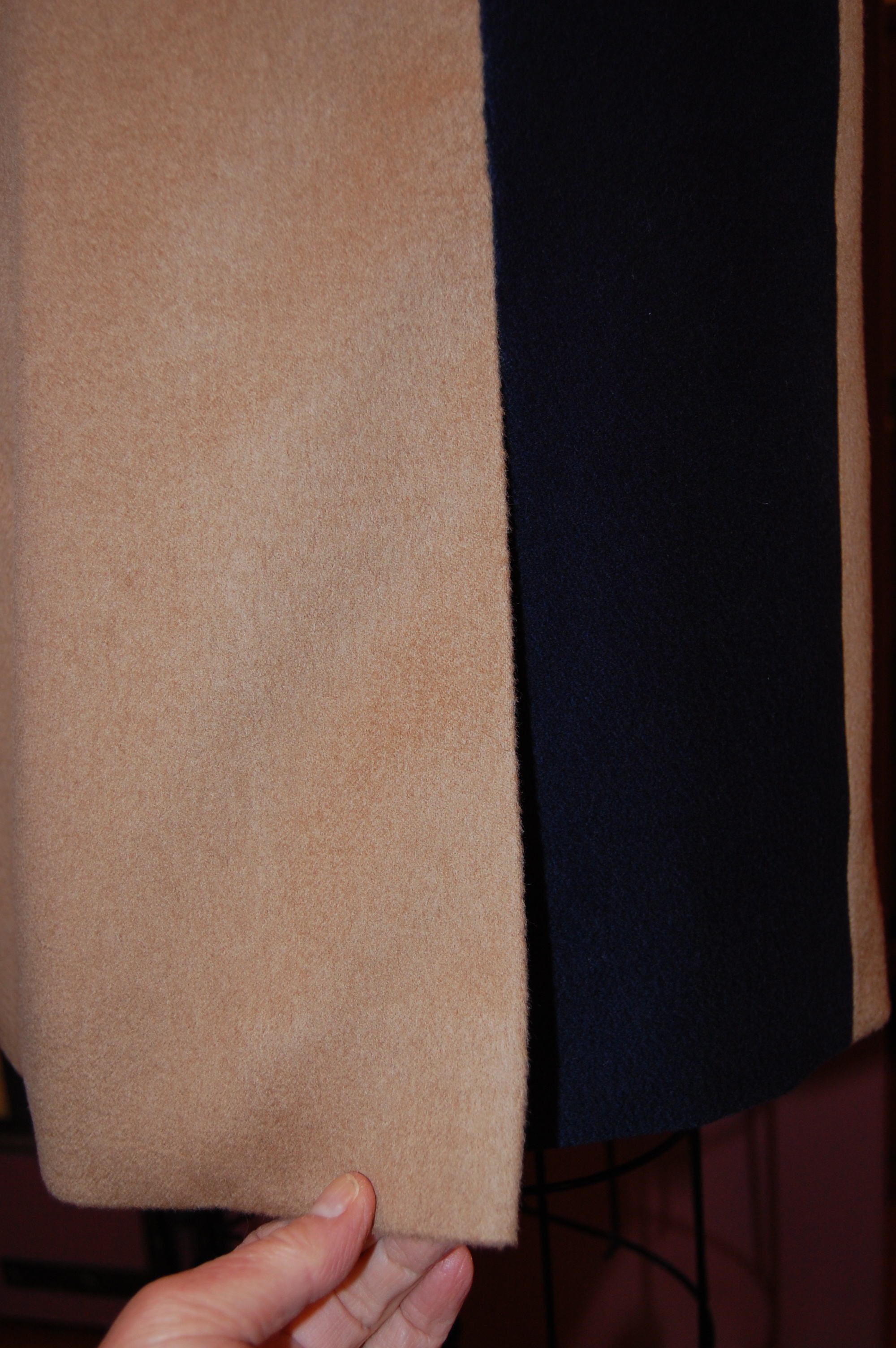
Showing the built-in kick pleat

Showing the built-in kick pleat, before the hem is sewn

And here is the finished kick pleat.

And here is the finished kick pleat.

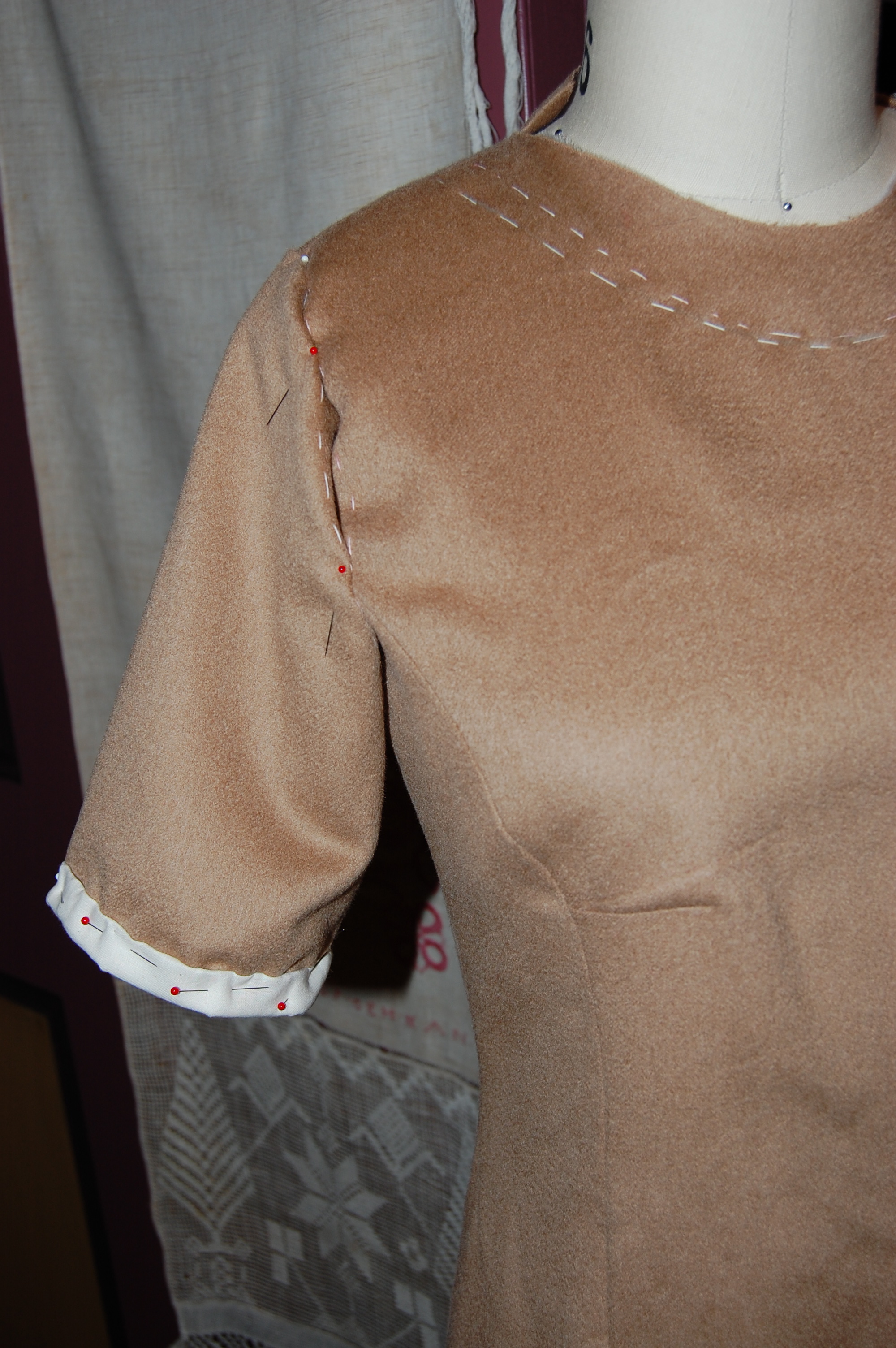
When it came to the sleeves, they are shown in the illustration with a contrasting band. However, no band was included with the pattern. I did a muslin mock-up to test the visual appearance of the width of the band.

Marfy Dress

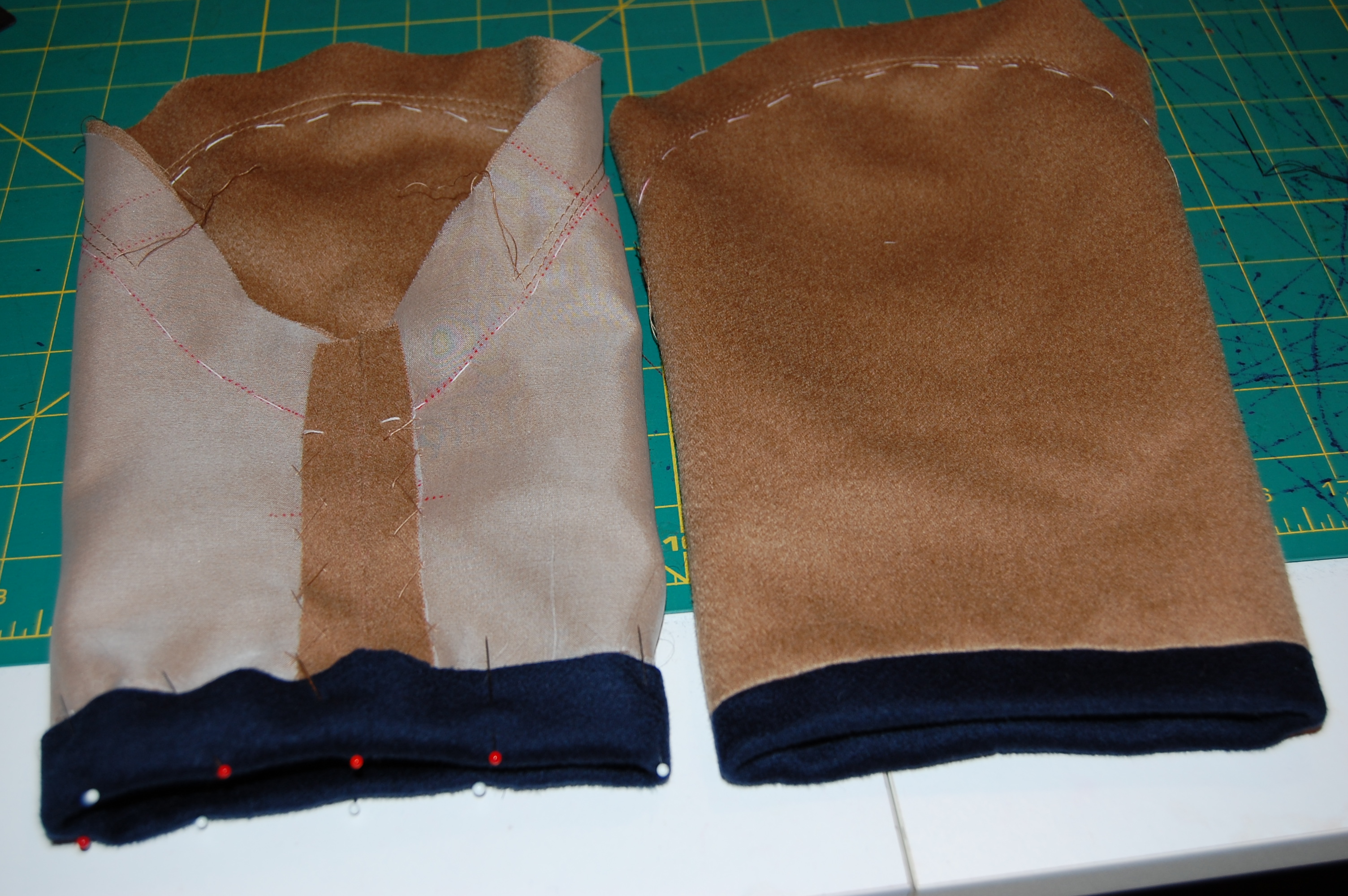
Because I had cut the sleeves with a slight curve to the lower edge, I had to make a muslin guide for the bands, which included the same curve.

The sleeves with bands attached

The sleeves with bands attached

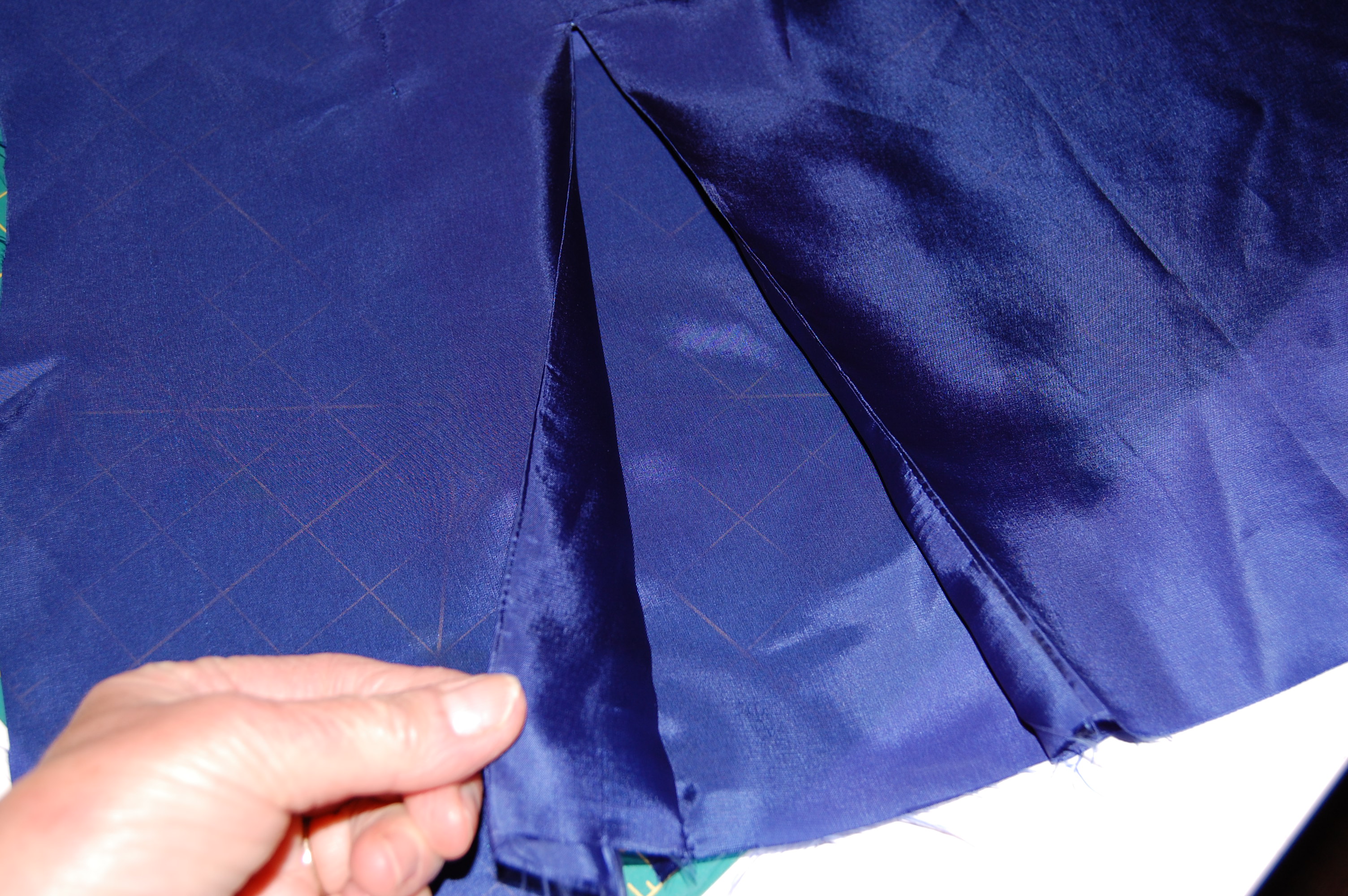
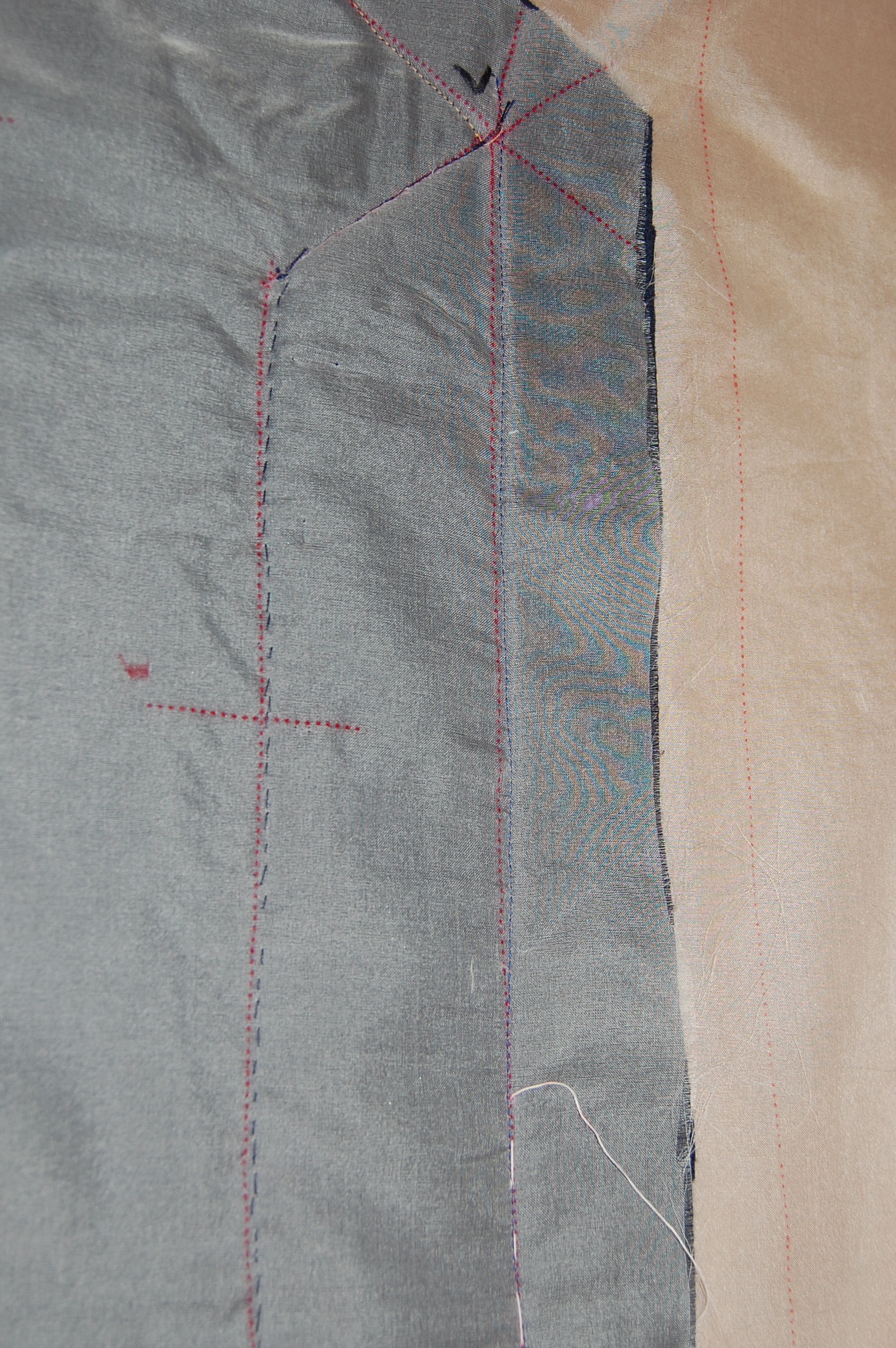
With sleeves, hand-picked zipper and all seams complete, I turned my attention to the lining. Instead of cutting the lining with the same angled detail as in the dress, I chose to cut a symmetrical front, thus reducing bulk at that critical waist area. However, I needed to add a kick pleat to the front lining to coincide with the built-in kick pleat of the dress. Here is how I did that:

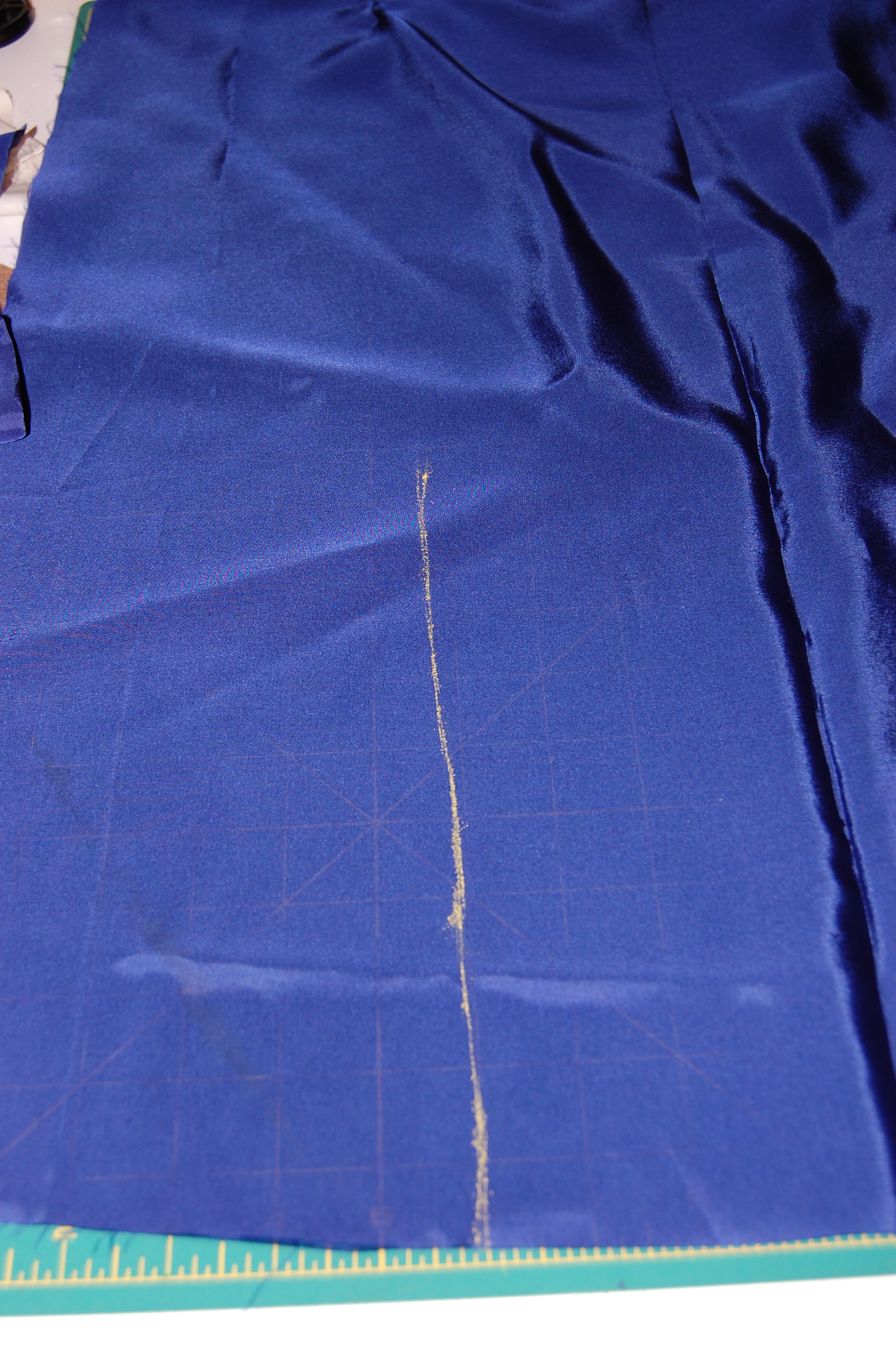
First I marked where I wanted the pleat in the lining to be.  By the way, the lining is Bemberg rayon.  I usually like to use crepe de cine for my linings, but I had this Bemberg in the right color, so I decided to use it.

First I marked where I wanted the pleat in the lining to be. By the way, the lining is Bemberg rayon. I usually like to use crepe de chine for my linings, but I had this Bemberg in the right color, so I decided to use it.

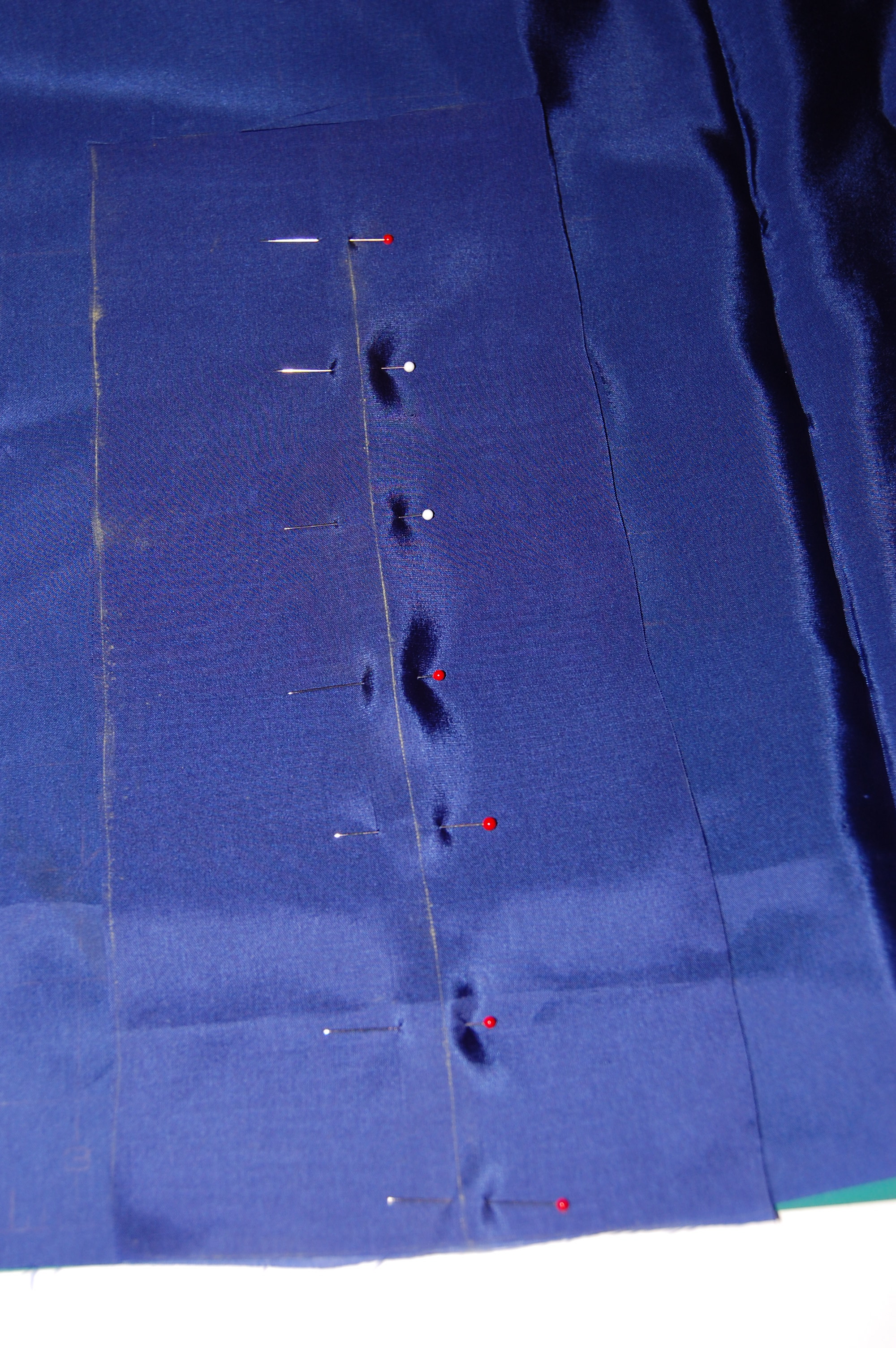
I centered a triangle of the lining fabric  (about 10" x 8") on top of the marked line.

I centered a triangle of the lining fabric (about 10″ x 8″) on top of the marked line.

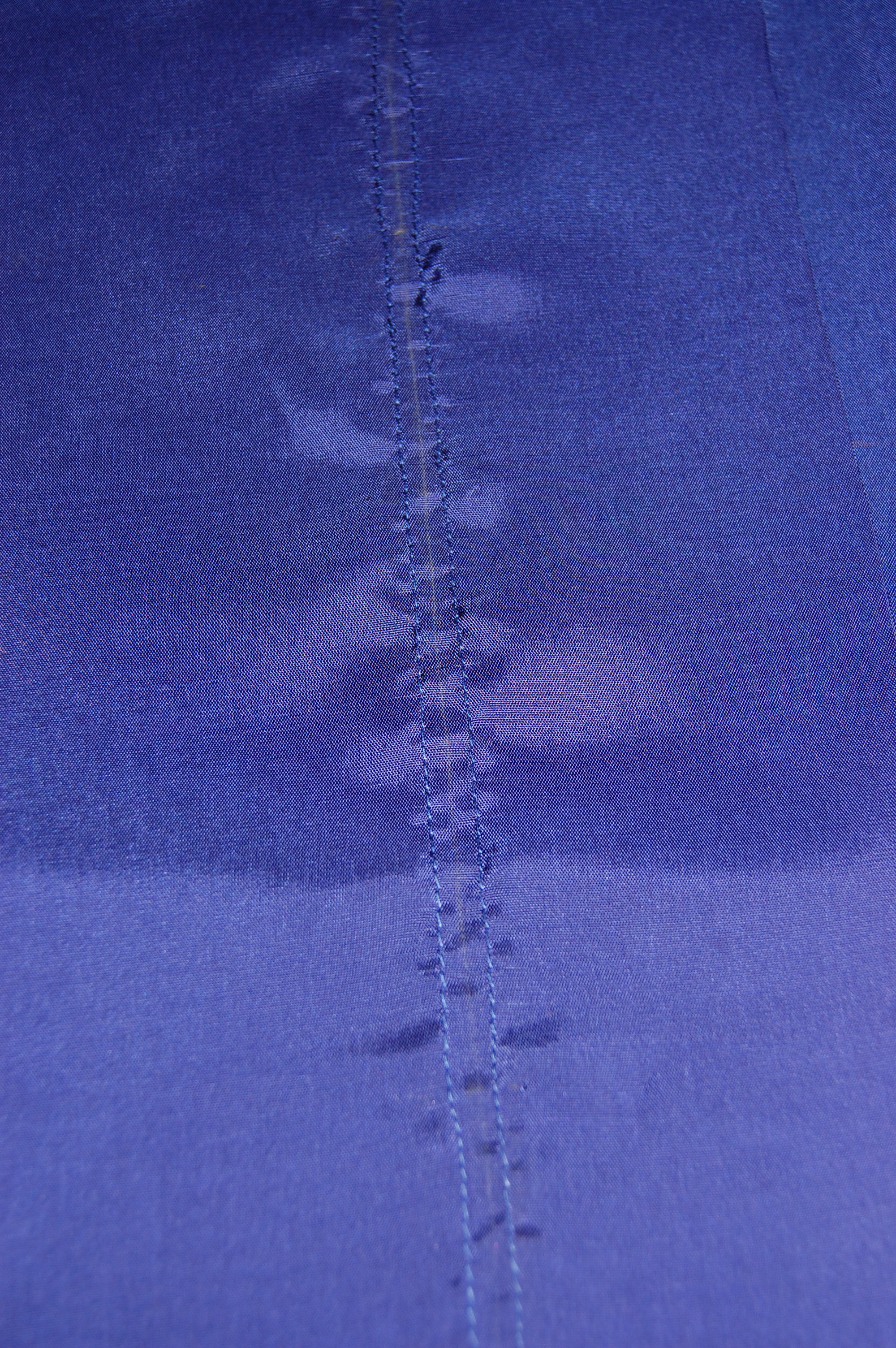
I stitched on either side of the marked line, graduating up to a point at the top.

I stitched on either side of the marked line through both layers of lining, graduating up to a point at the top.

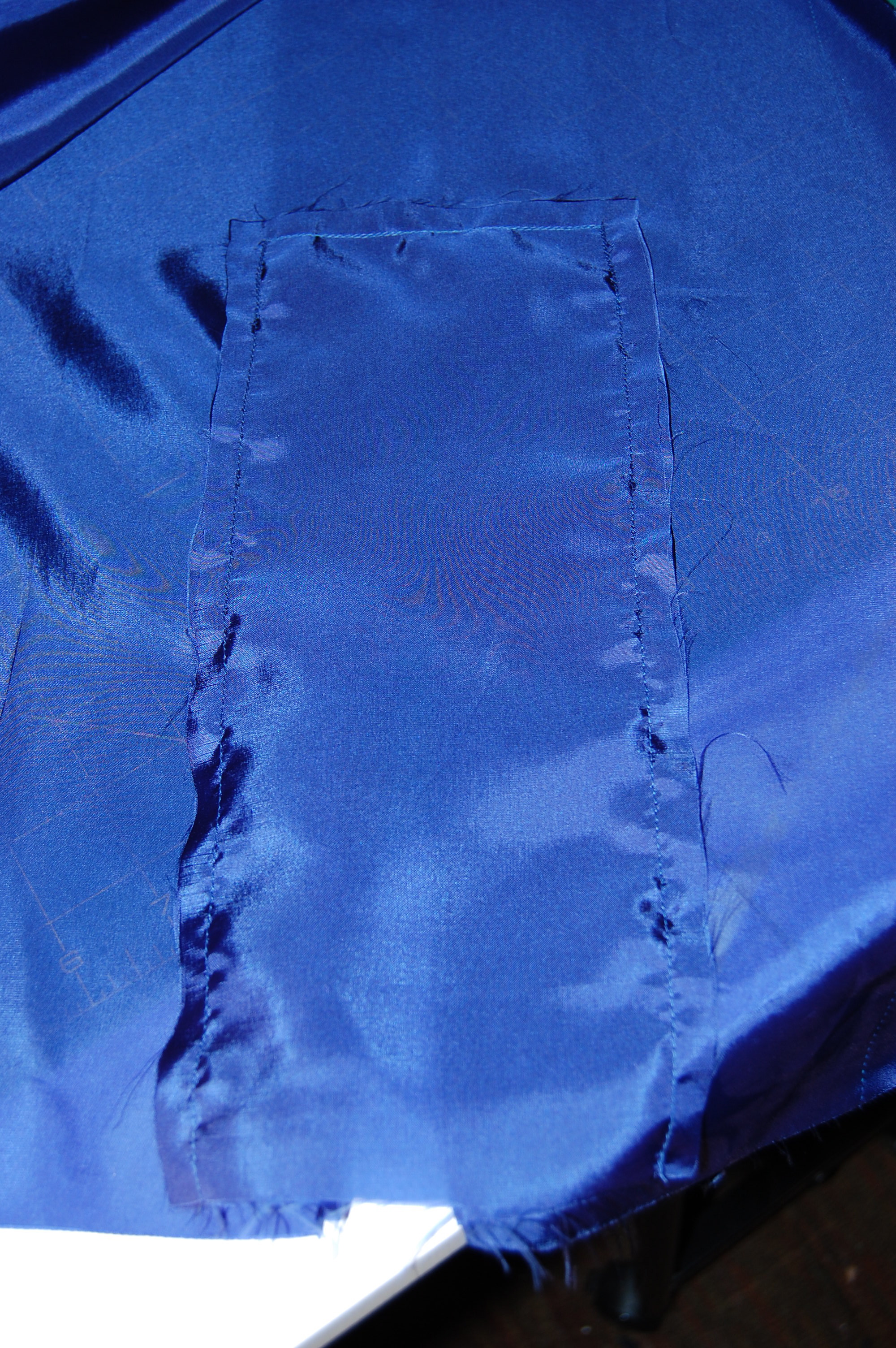
I cut along the marked line and turned the placket to the wrong side.

I cut along the marked line and turned the placket to the wrong side.

I sewed another piece of ling fabric (10" x 8") to the wrong side of the turned placket.  It is stitched around the edges - a little difficult to see.

I sewed another piece of ling fabric (10″ x 8″) to the wrong side of the turned placket. It is stitched around the edges in a 1/2″ seam.

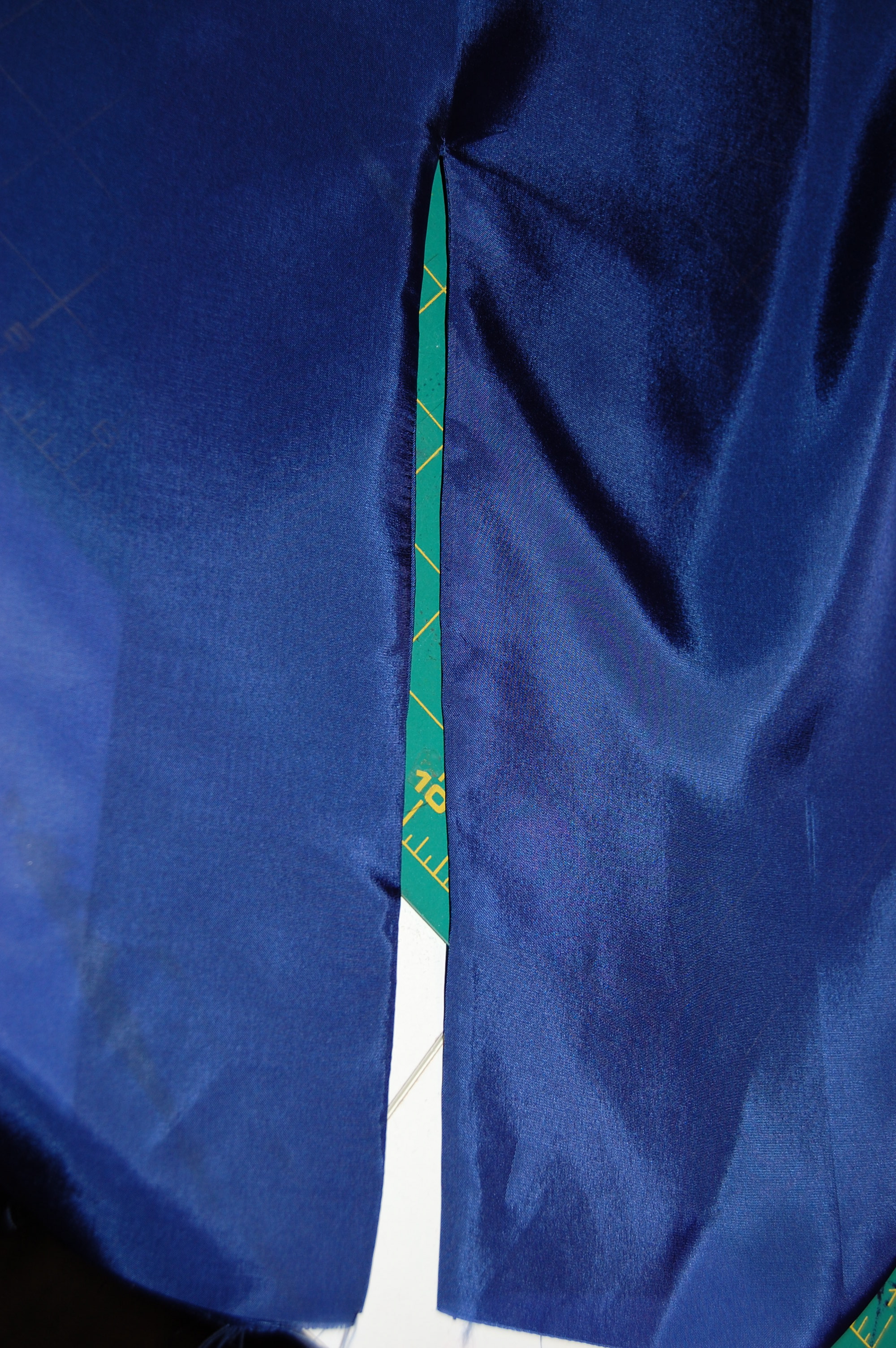
After securing these stitched together pieces across the top through all layers, I had a kick pleat!

After securing these stitched-together pieces across the top through all layers, I had a kick pleat!

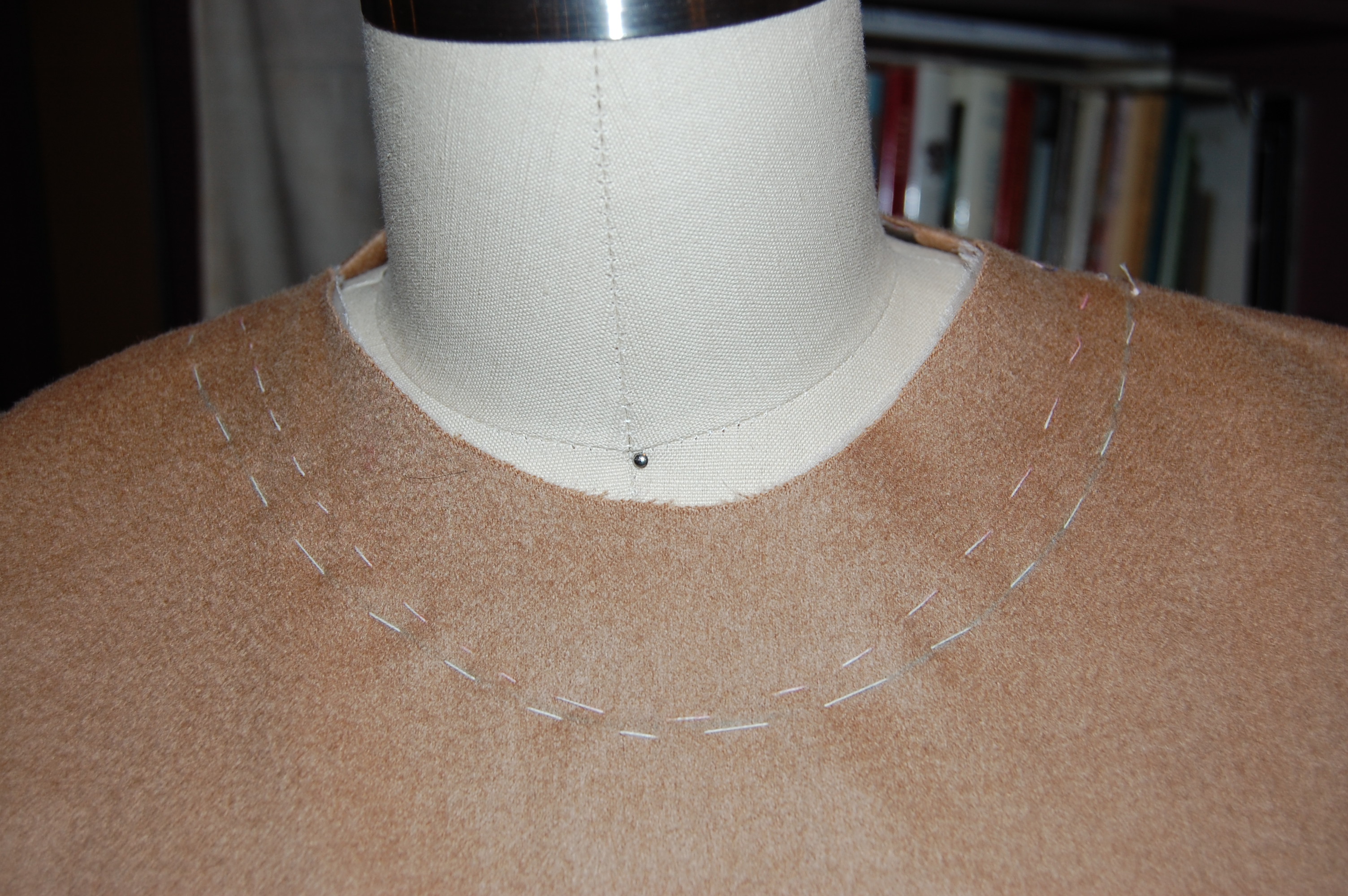
Back to the final part of the dress: the neckline. I still wasn’t sure I had a pleasing neckline, so I got out my French rule and re-chalked one with a little wider stance and depth.

Marfy Dress

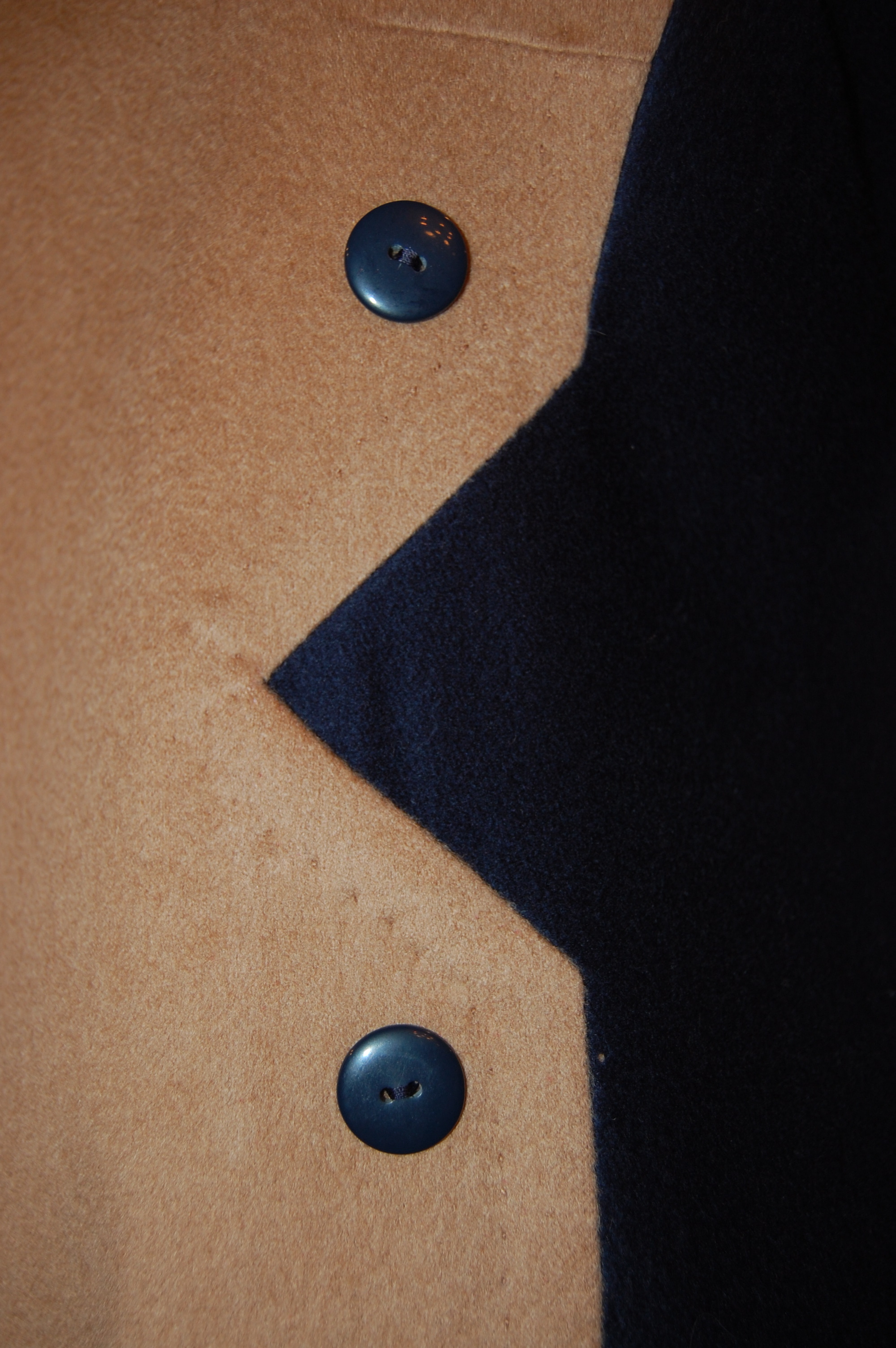
For the top-stitching around the neck and around the angled detail on the front, I did what I did with my jacket out of the same fabric: I hand-picked it. I am so happy with how it looks. It’s very subtle, but adds just the right emphasis. The buttons are smaller versions of the (concealed) buttons on my jacket.

Marfy Dress

I set the lining in by hand, under-stitched the neck-edge by hand, and finally the dress was complete.

Marfy Dress

Marfy Dress

Marfy Dress

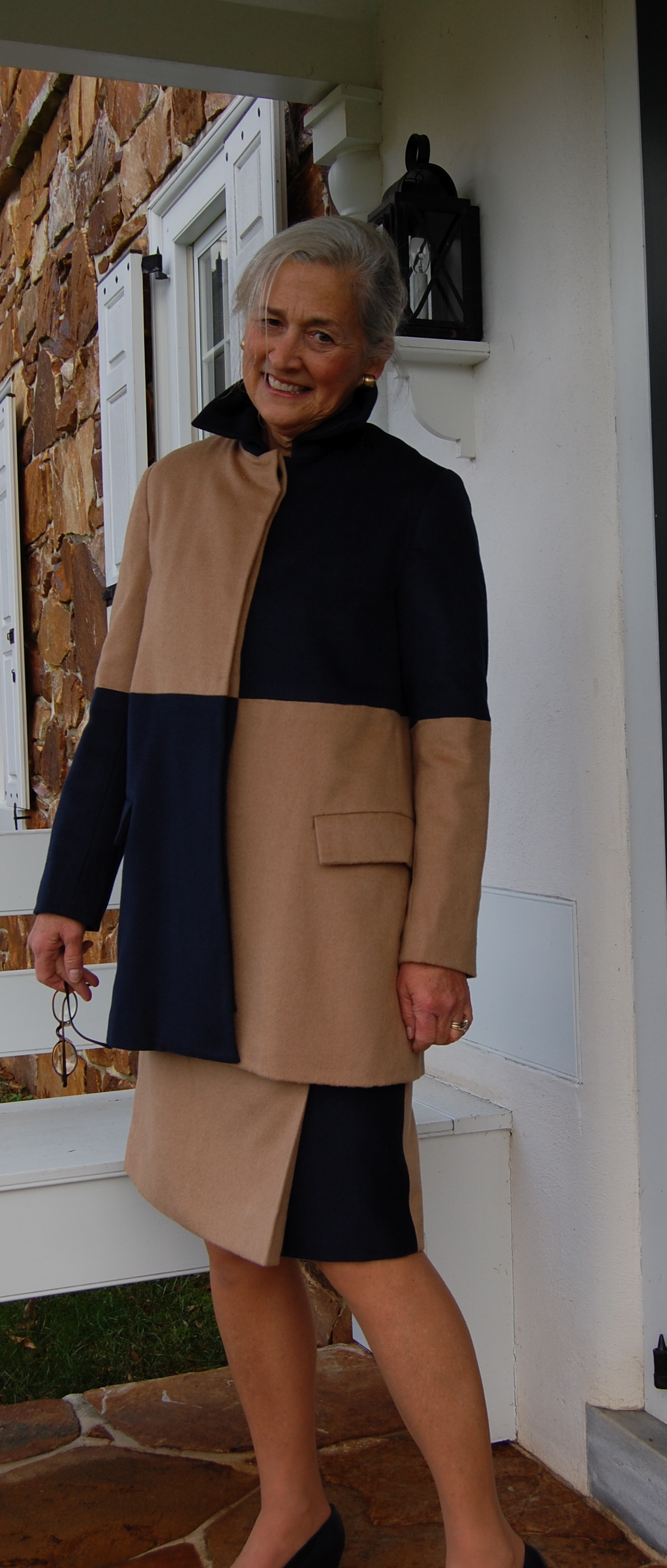
And of course I have to show it with the coat!

And of course I have to show it with the coat!

Fifty Dresses

Marfy Dress

It is probably unfair to do an assessment of Marfy patterns after just one make, but I’m going to anyway! The things I really like, so far, about using a Marfy pattern are 1) its preciseness, 2) the individually sized patterns, 3) the pattern pieces without seam allowance added. And is there anything I dislike about Marfy so far? Yes, one big thing! I really miss having a pattern envelope with an illustration, variant views and back views. I am so accustomed to vintage patterns, most of which sport envelopes which are like small works of art. There is so much pertinent information on them (fabric suggestions, zipper sizes, garment descriptions, thumbnail pattern piece diagrams, etc.) and even wearing suggestions. The illustrations show outfit styling suggestions (hats, handbags, shoes, etc.). I love studying them. So, yes, it’s true – I feel like something is lost without a pattern envelope for this dress which I like so much.

I won’t be waiting long to wear this dress. Our American holiday of Thanksgiving is this Thursday, and Marfy will be one of my dining companions. To my fellow citizens, may the day be as meaningful and blessed for you as it always is for our family. To all my readers around the globe, my thanks to you for sharing your love of sewing with me!


37 Comments

Filed under Buttons - choosing the right ones, car coats, Color blocking, couture construction, Marfy patterns, Mid-Century style, Uncategorized, woolens

Sometimes It’s All About the Shoes

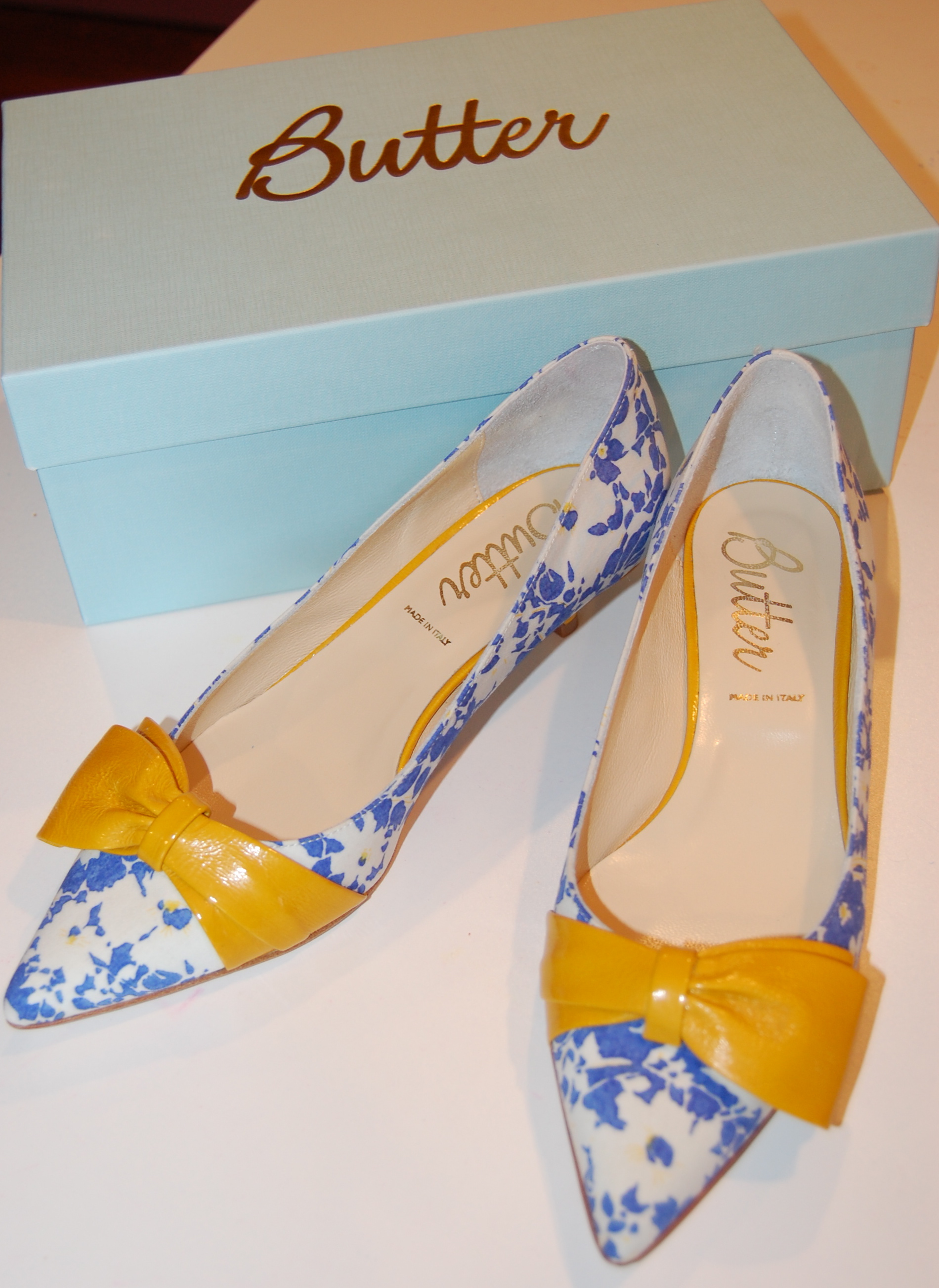
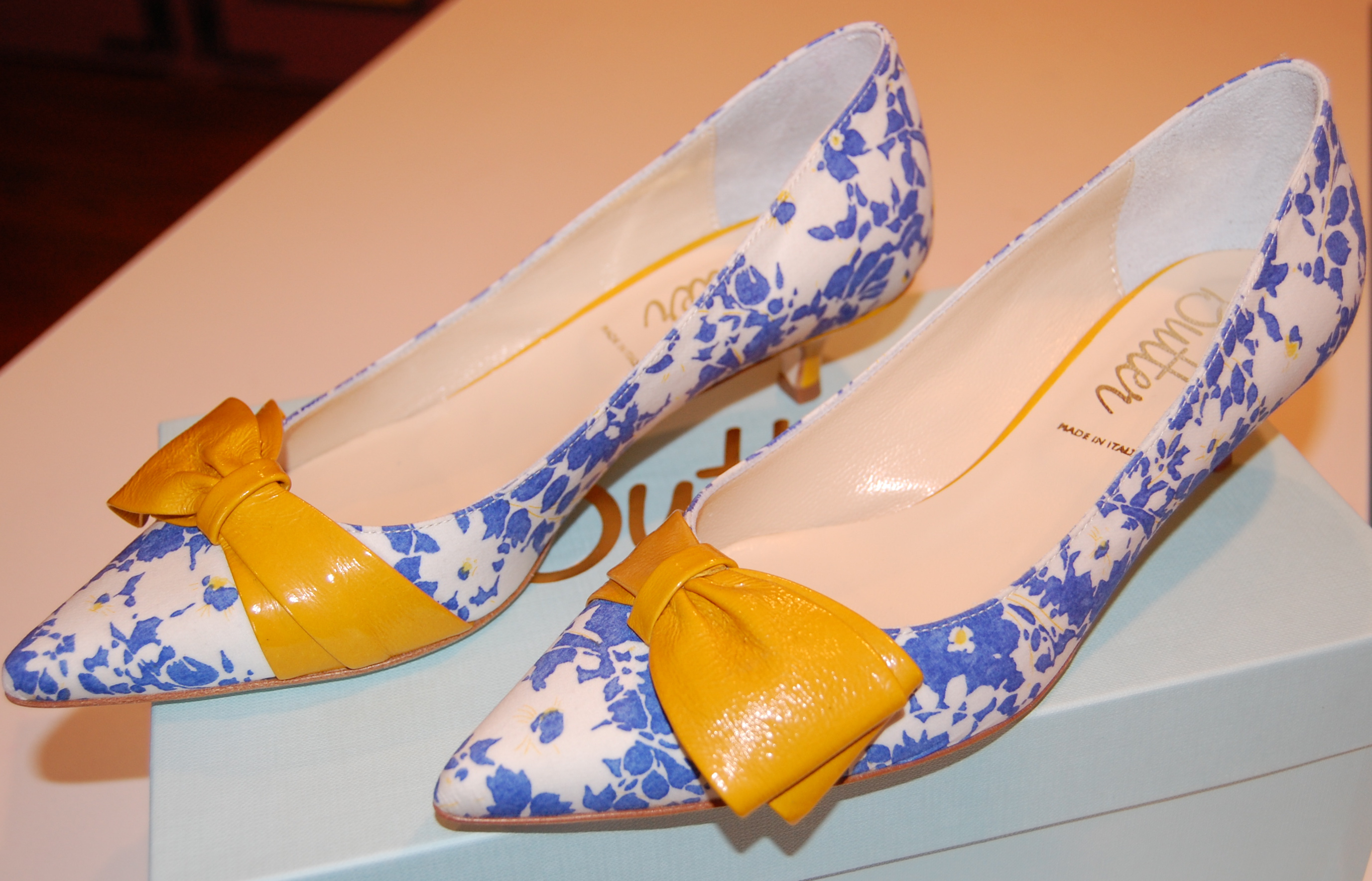
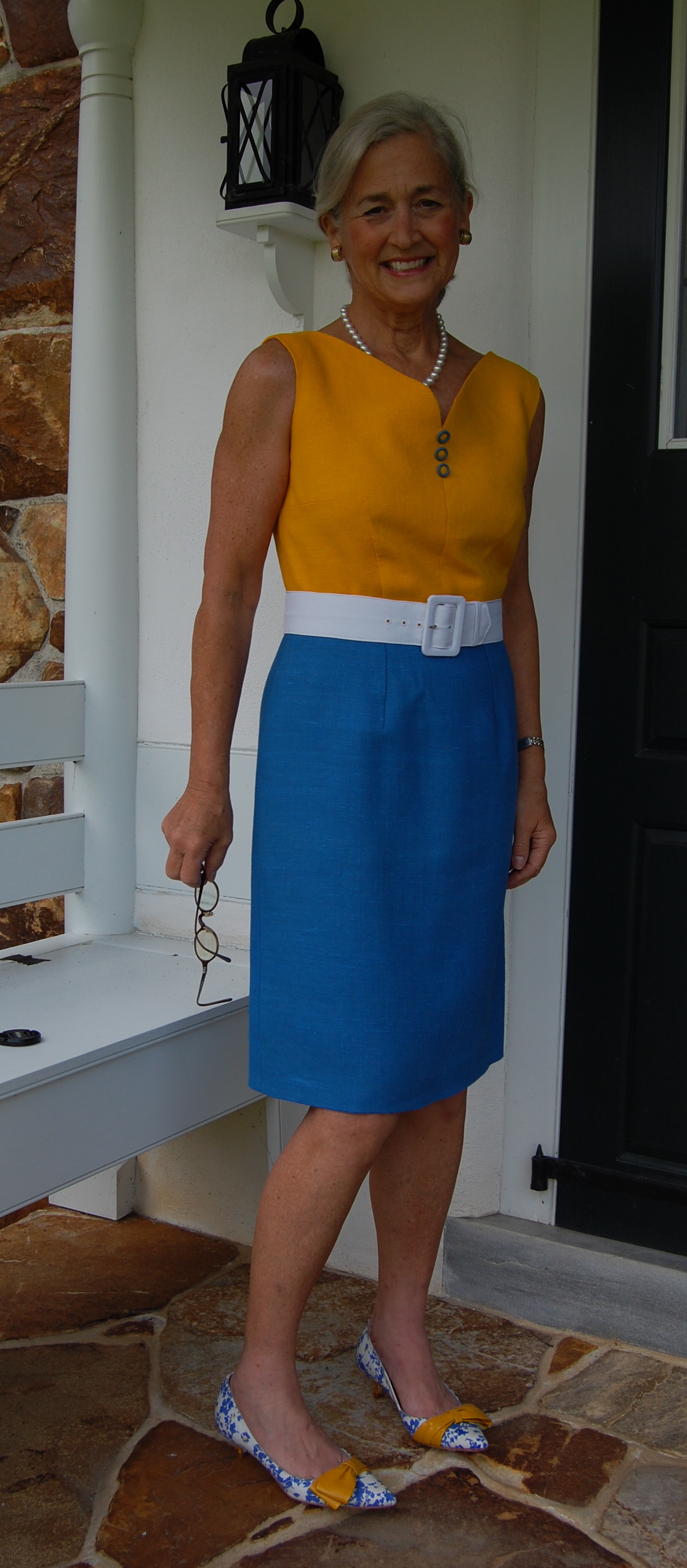
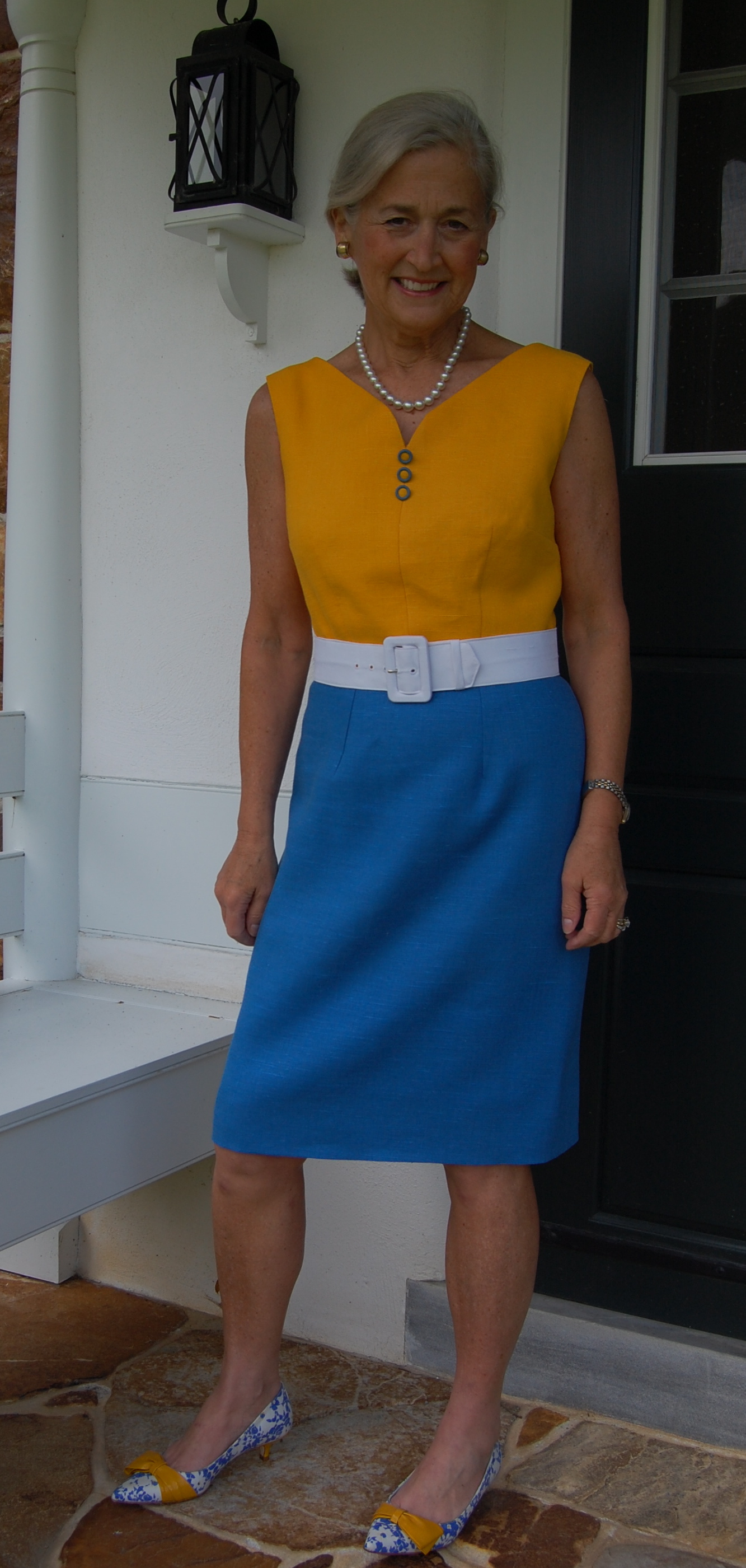
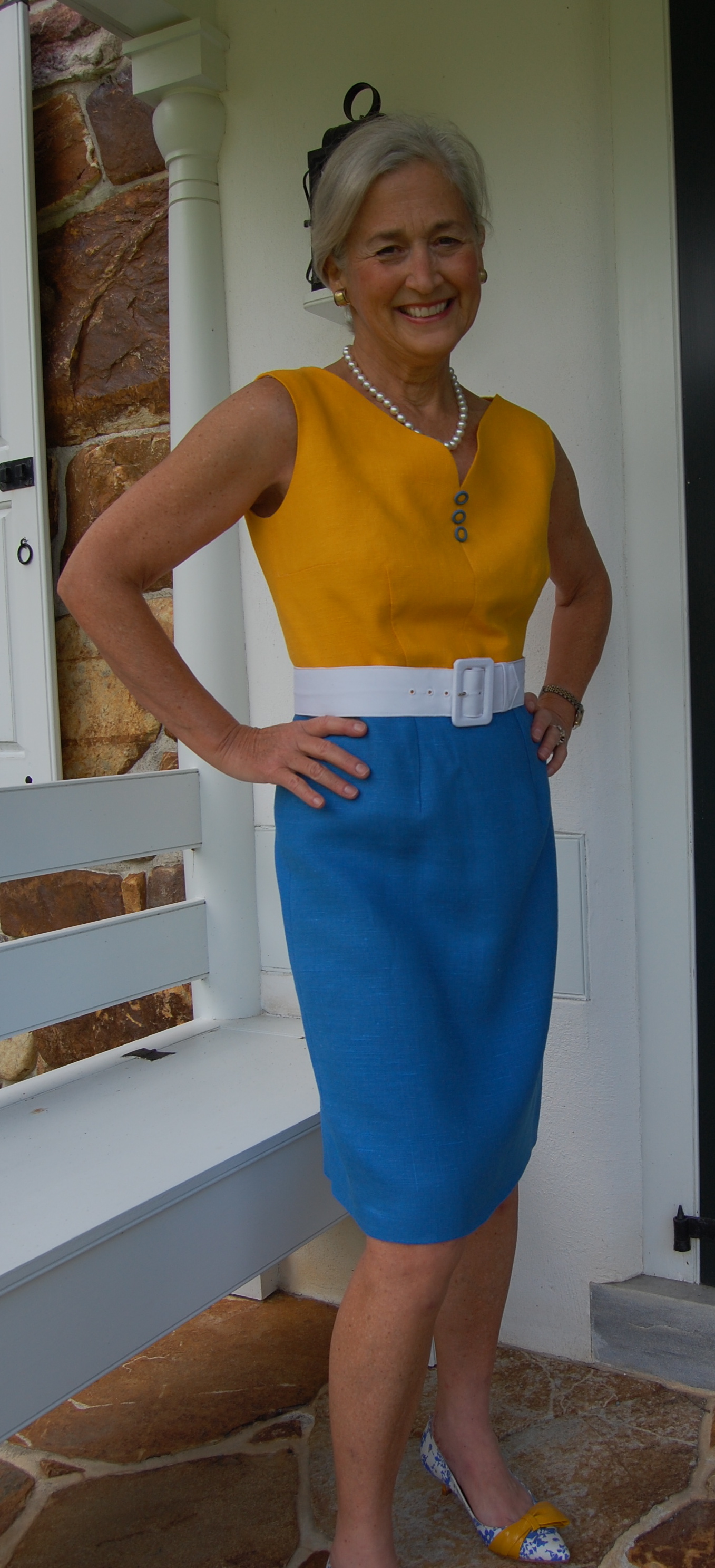
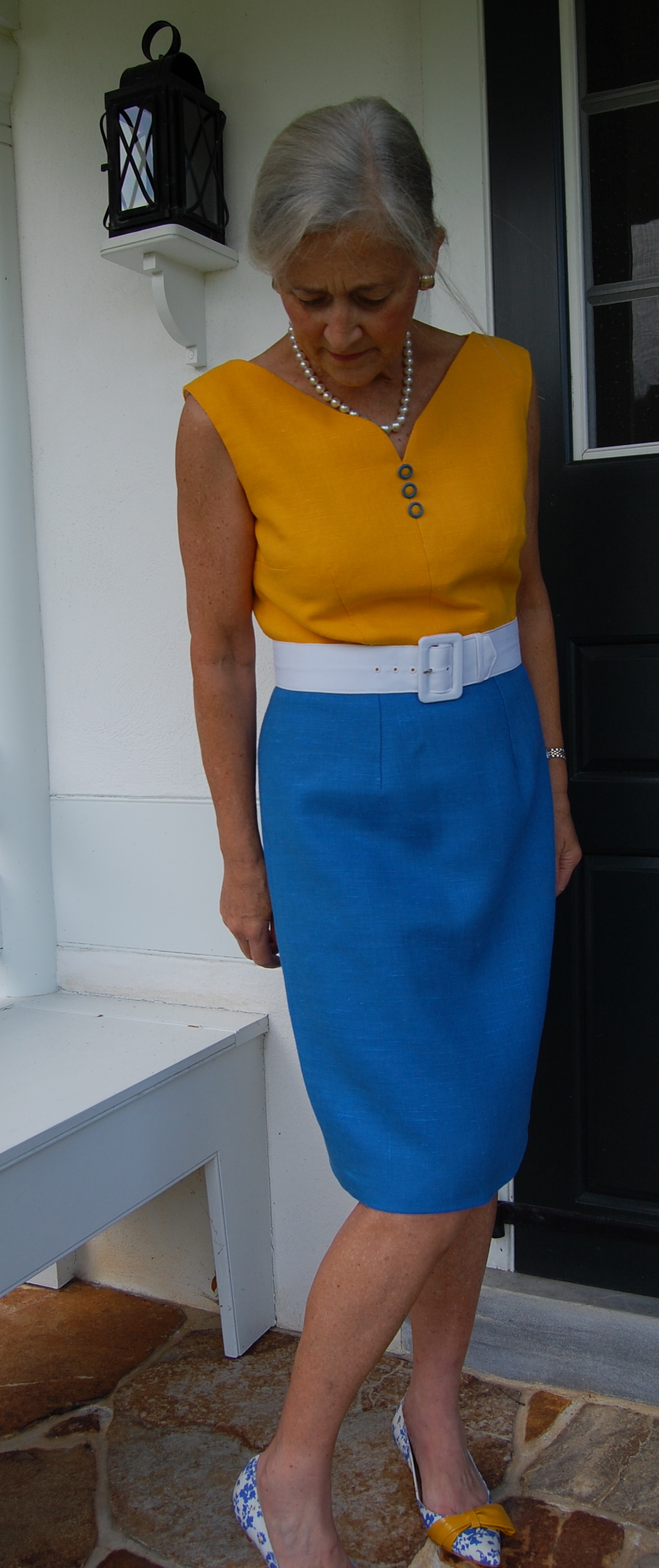
Well, maybe it’s not entirely about the shoes, although they do promise to share a starring role with my just-completed yellow and blue linen dress.

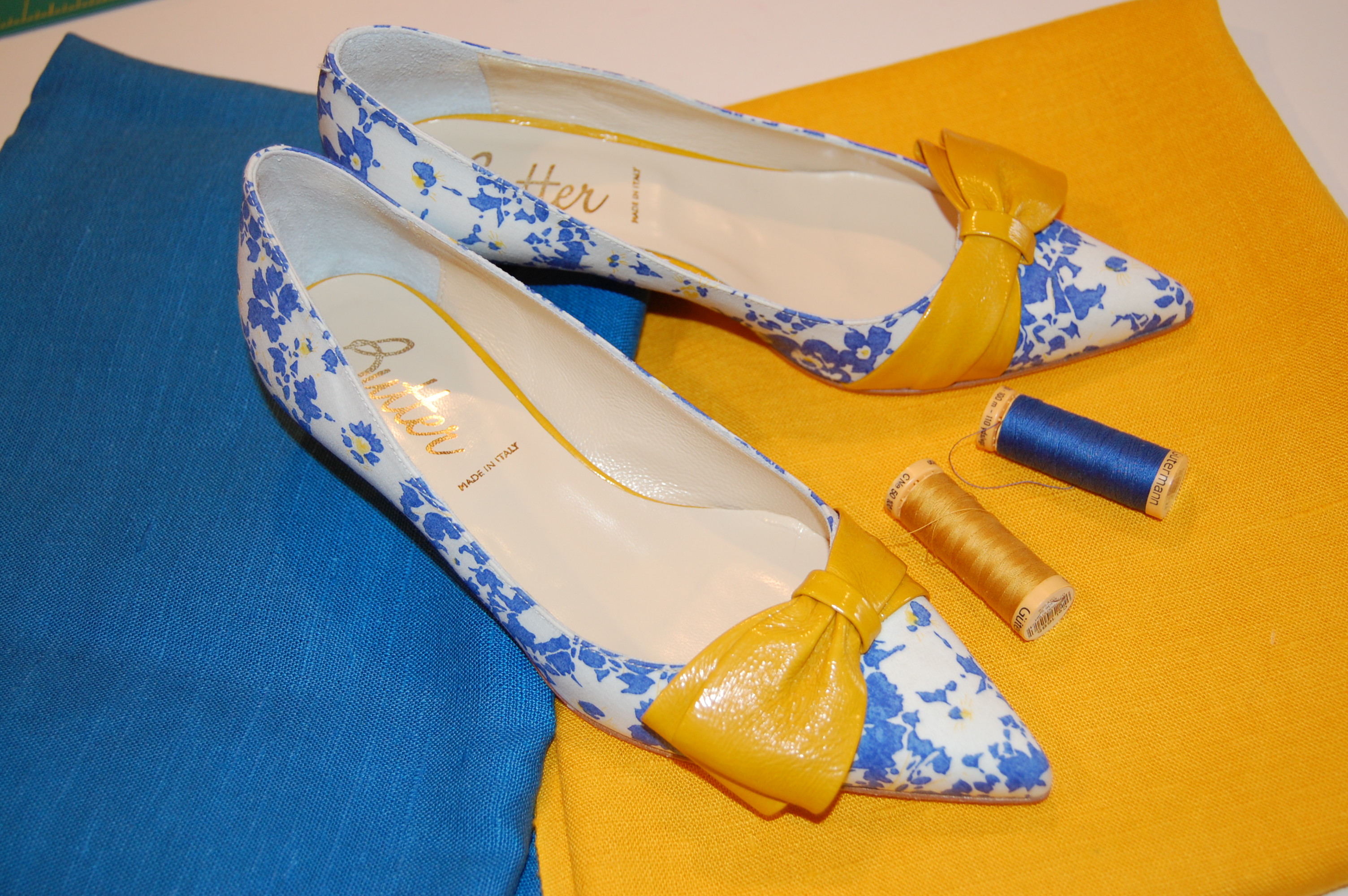
All about the shoes

I first spied these lovelies on the Simply Soles website last winter, as part of the offerings for Spring/Summer shoes. Although I loved everything about them (the combination of colors, the fabric, the asymmetrical bow, the kitten heel, the brand – knowing from experience that Butter shoes are extremely comfortable), I decided not to purchase them. At that point in time, I had not yet bought the bittersweet yellow linen, so I had no reason to buy shoes with such a limited color palette. By the time I had a good reason to buy them, they were no longer available in my size.

All about the shoes However, the Simply Soles website allows one to request an email advice should the correctly sized shoe become available. Weeks went by, Summer arrived, and by then I had paired the recently purchased deep yellow linen with the pottery blue linen. Goodness, I could not stop thinking about those shoes and how perfect they would be with my envisioned dress. And then – they were suddenly available – in my size – and on sale!

All about the shoes

By this time I was already immersed in making my second linen dress of the Summer, so I planned for the blue and yellow linen to be number “3”. In the meantime, I happened upon more documentation of Moygashel linen, this one for the “yellow” piece. Those of you who follow this blog know how much I love to make these connections!

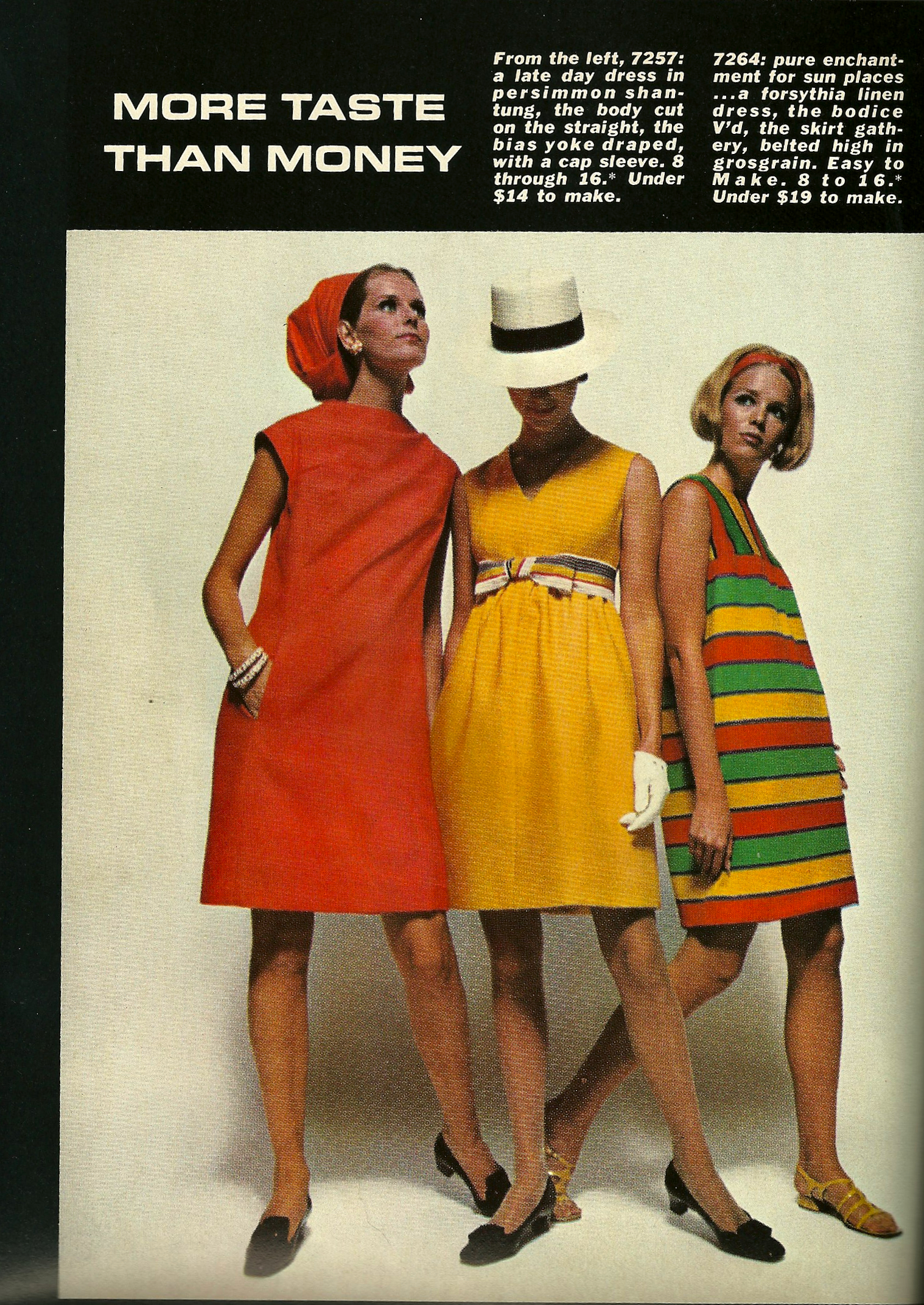
"... pure enchantment for sun places ... a forsythia linen dress ..."  and the source information in the back of this Vogue Pattern Book Magazine from February/March, 1968 credits Moygashel as the brand of linen.

“… pure enchantment for sun places … a forsythia linen dress …” and the source information in the back of this Vogue Pattern Book Magazine from February/March, 1968 credits Moygashel as the brand of linen.

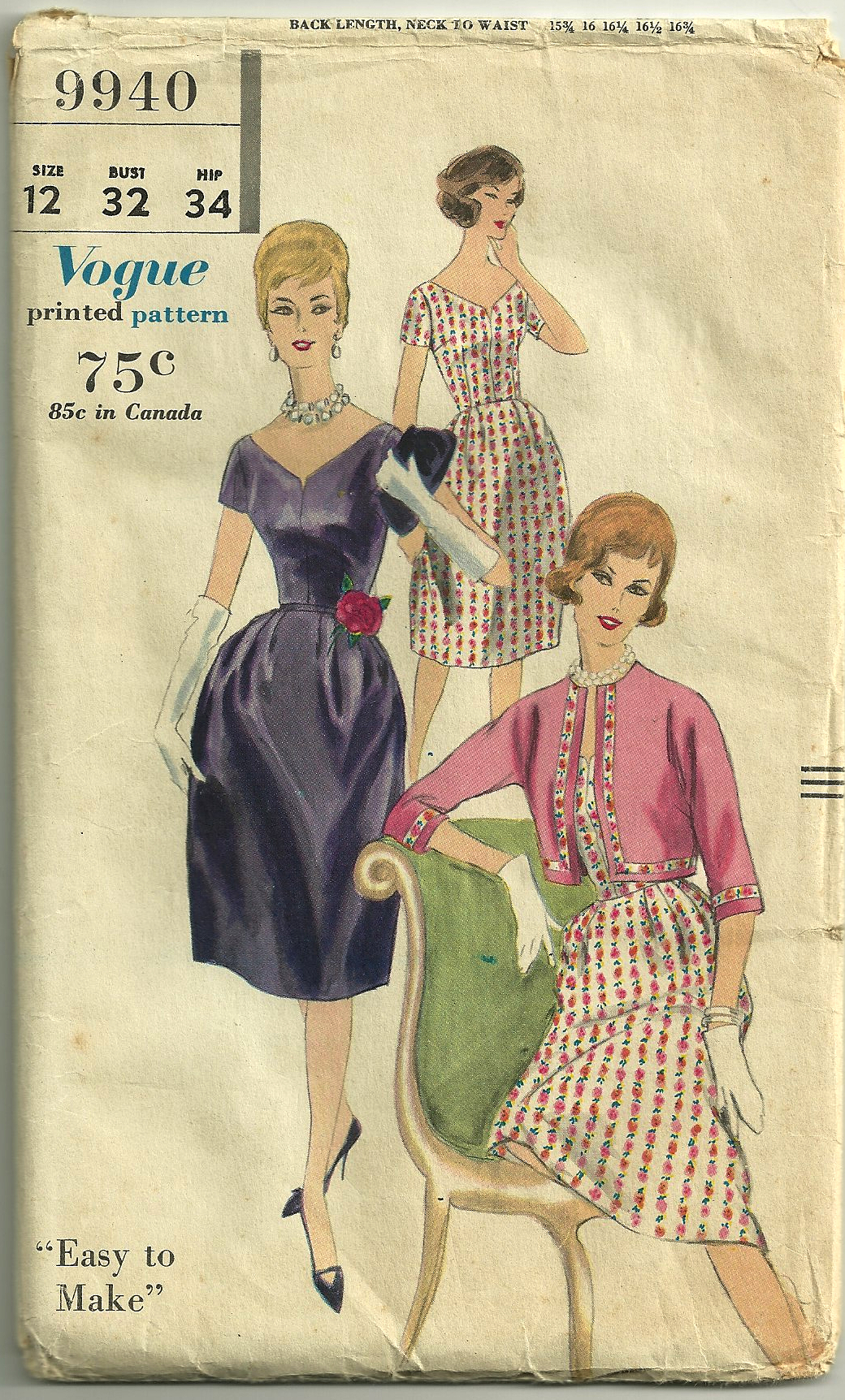
Seeing an entire dress made out of the forsythia linen helped me to feel confident about having such a bright color as the bodice part of my planned dress.  As I stated in my last post, I decided to use the bodice from this early ‘60s’ Vogue pattern, pairing it with a slim skirt and a belt.

The neckline dips down to a slightly curved V, with a center seam.

The neckline dips down to a slightly curved V, with a center seam.

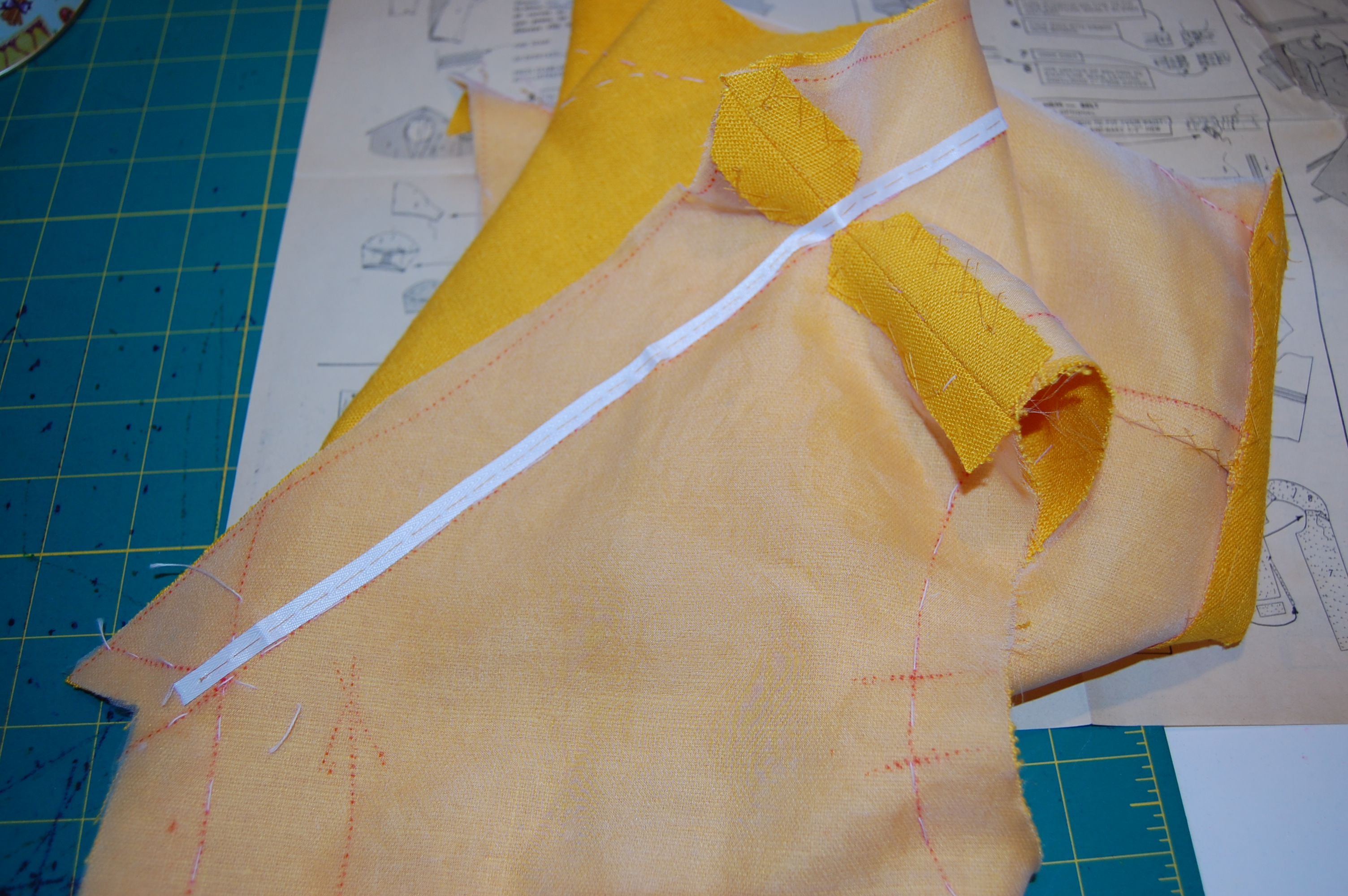
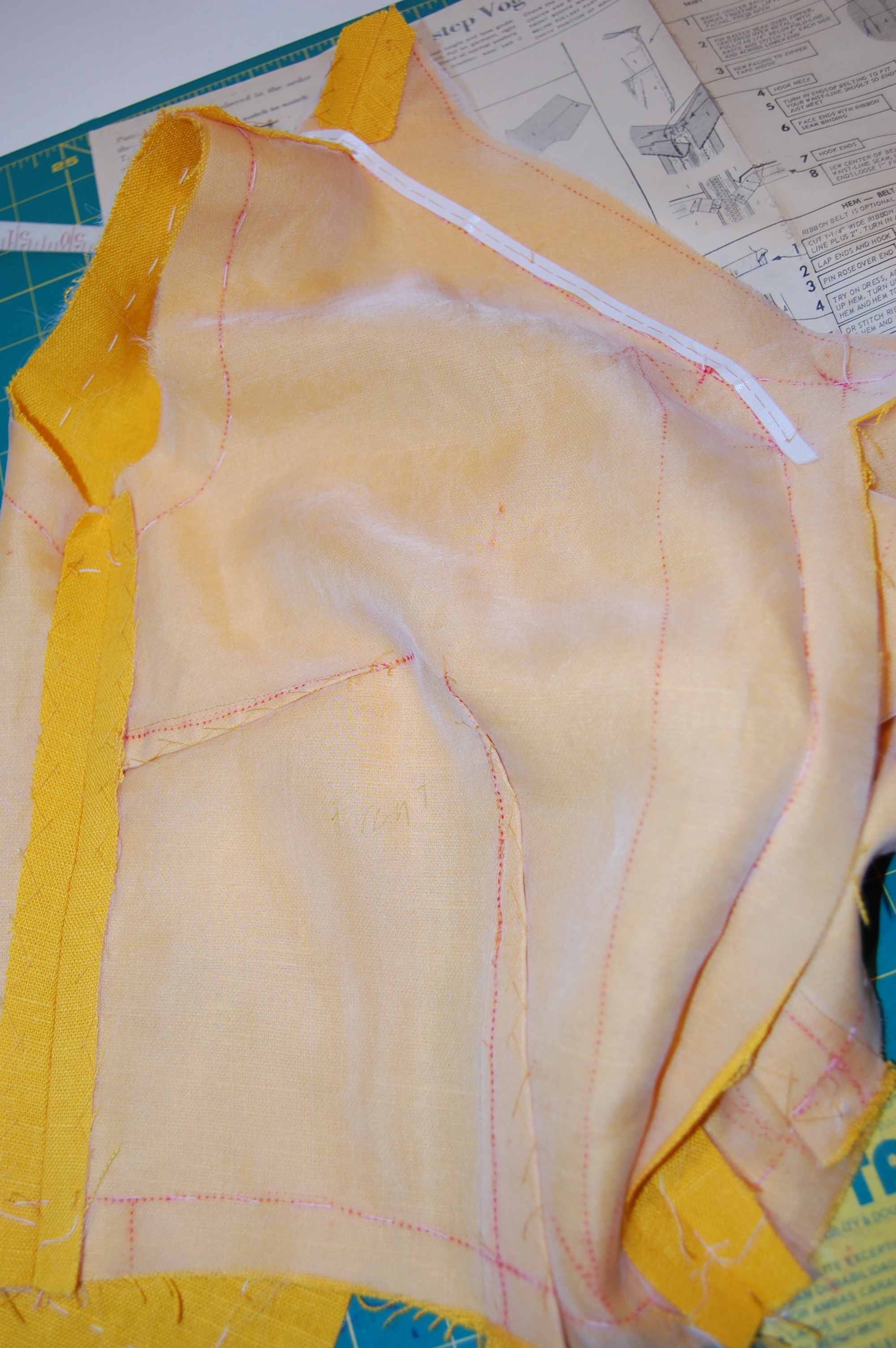
As this would be a dressier type of frock, and because I know how foolproof couture construction is (with silk organza underlining and crepe de chine lining), I proceeded using those techniques. The facings on the V-shape of the bodice front and back were cut as part of the pattern, instead of being separate pieces. I followed the instructions to reinforce the edges of the fold with ¼” twill tape.

I basted the twill tape just to the outside of the fold line on the "all-in-one" facing.

I basted the twill tape just to the outside of the fold line on the “all-in-one” facing.  This is the back bodice.

And this is the front bodice, showing the deep V and the center seam.

And this is the front bodice, showing the deep V and the center seam.

Normally, couture construction does not use facings, but in this application, they were indispensible. Then the rest of the dress proceeded without a hitch.

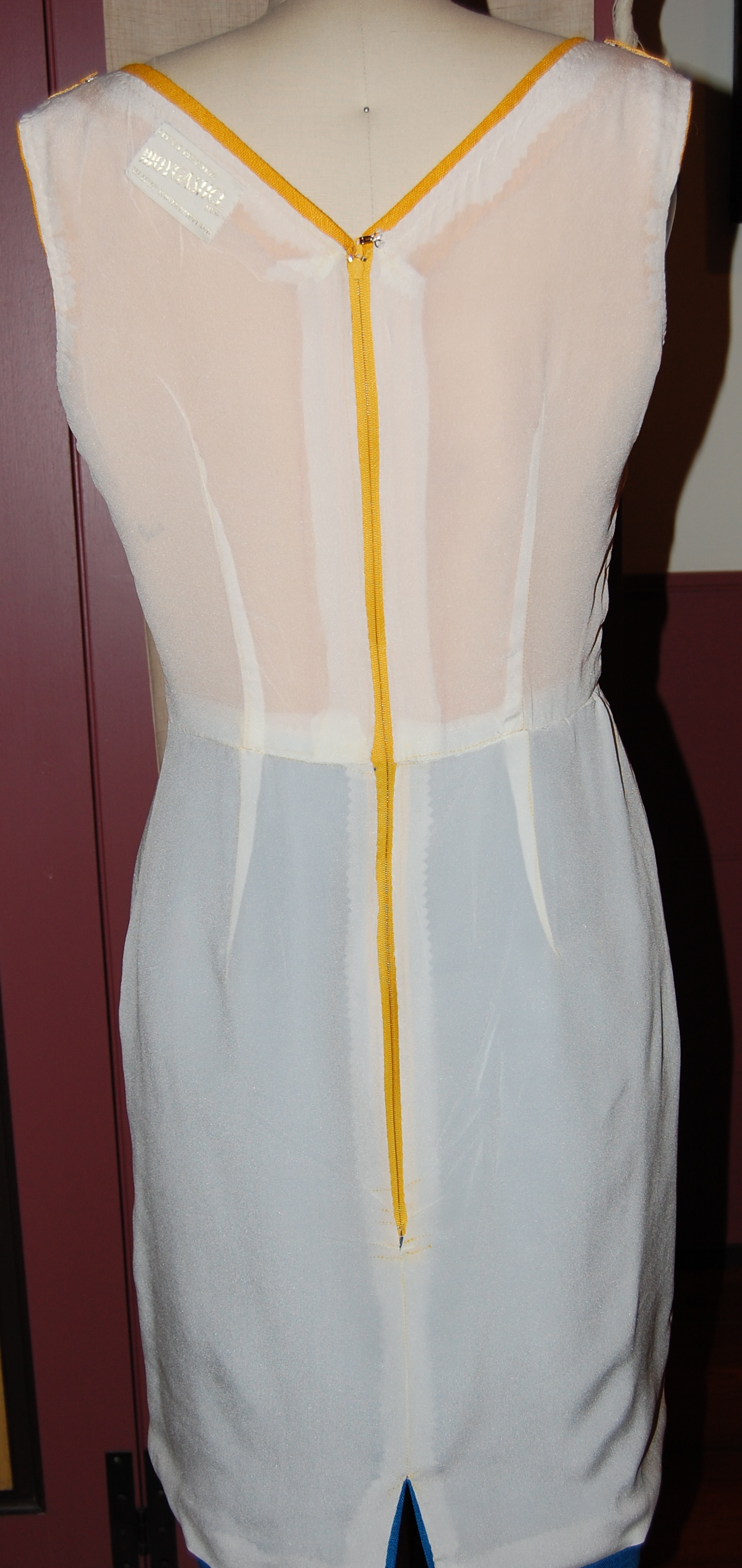
Here is the dress turned inside out.  I used a forsythia-yellow zipper as i thought it more important to match the bodice than the skirt of the dress.

Here is the dress turned inside out. I used a forsythia-yellow zipper as I thought it more important to match the bodice than the skirt of the dress.

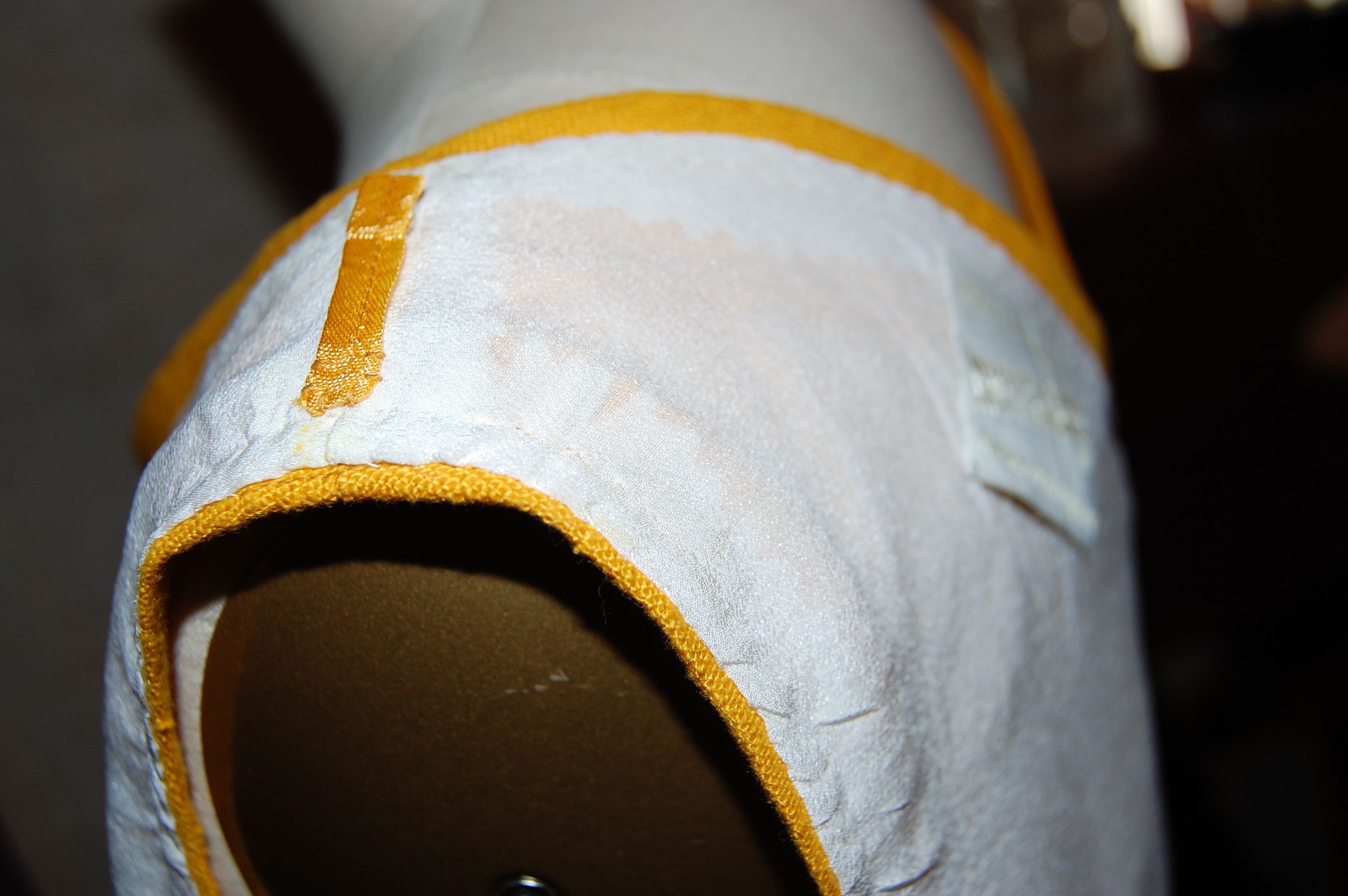
Here is the shoulder with the crepe de chine fell-stitched and understitched in place around the shouilder.  Note the lingerie stay made with a folded piece of Hug Snug Rayon woven tape.

Here is an inside look at the crepe de chine fell-stitched and understitched in place around the shouilder. Note the lingerie stay made with a folded piece of Hug Snug rayon woven tape.

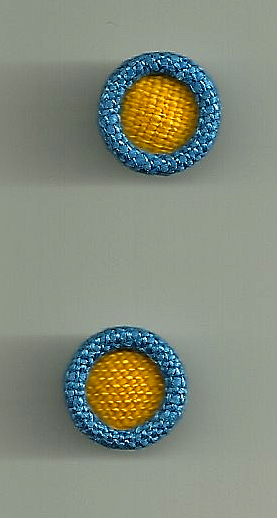
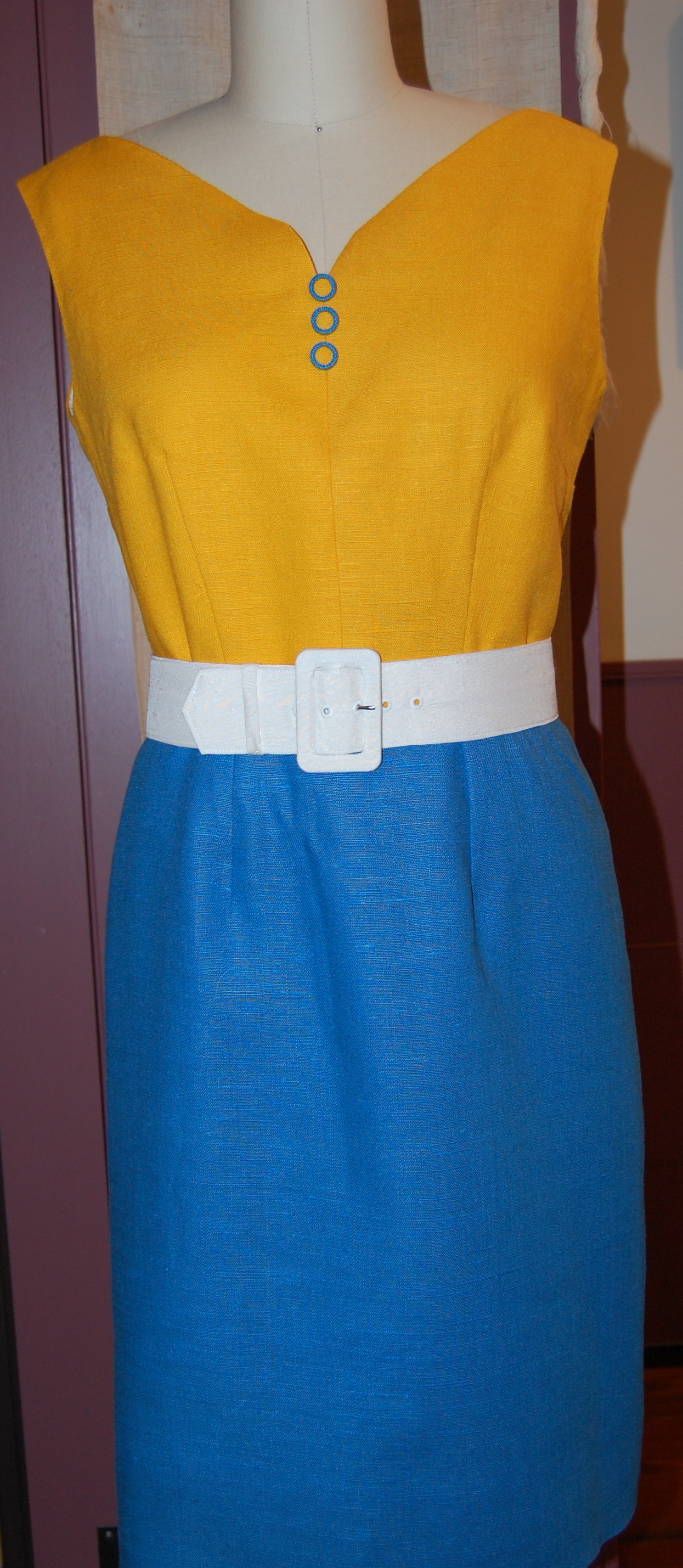
About halfway through the construction of the dress, I got the idea to have decorative buttons made – to compliment the front V of the neckline.

I sent scraps of my fabric off to Pat Mahoney in California to have these buttons made.  Sadly, Pat is retiring from her business at the end of August...

I sent scraps of my fabric off to Pat Mahoney in California to have these buttons made. Sadly, Pat is retiring from her business at the end of August…

I actually was not sure I was going to use them until I had finished the dress, but I think they add just the right amount of detail.

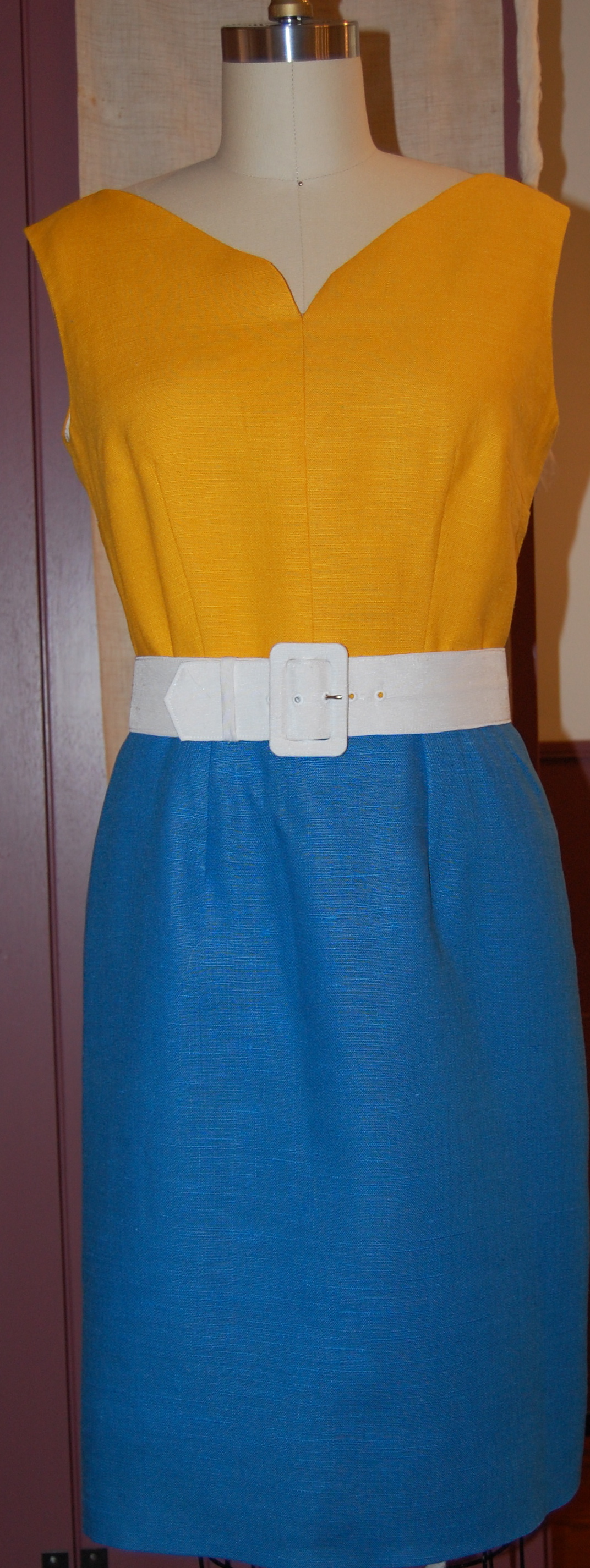
Here is the dress without the buttons . . .

Here is the dress without the buttons . . .

. . . and here is the dress with the buttons.  What do you think?  With or without?

. . . and here is the dress with the buttons. What do you think? With or without?

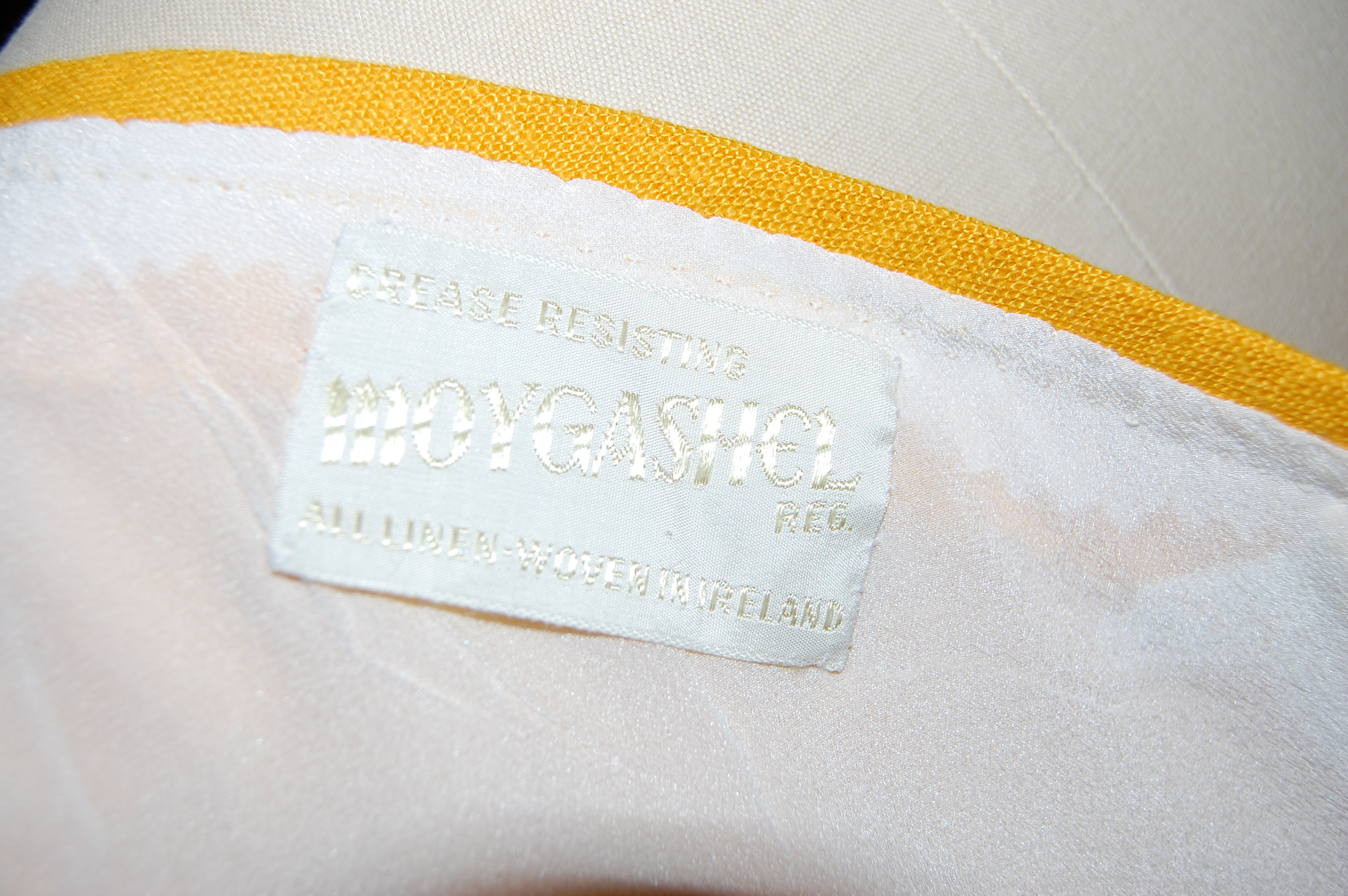
Another detail I was happy to add was the Moygashel linen label which had been attached to the forsythia yellow linen yardgoods.

I attached the label inside the back neckline.

I attached the label inside the back neckline.

The belt is also a Pat Mahoney product, made from a silk dupioni.

The belt is also a Pat Mahoney product, made from a silk dupioni.

All about the shoes

All about the shoes

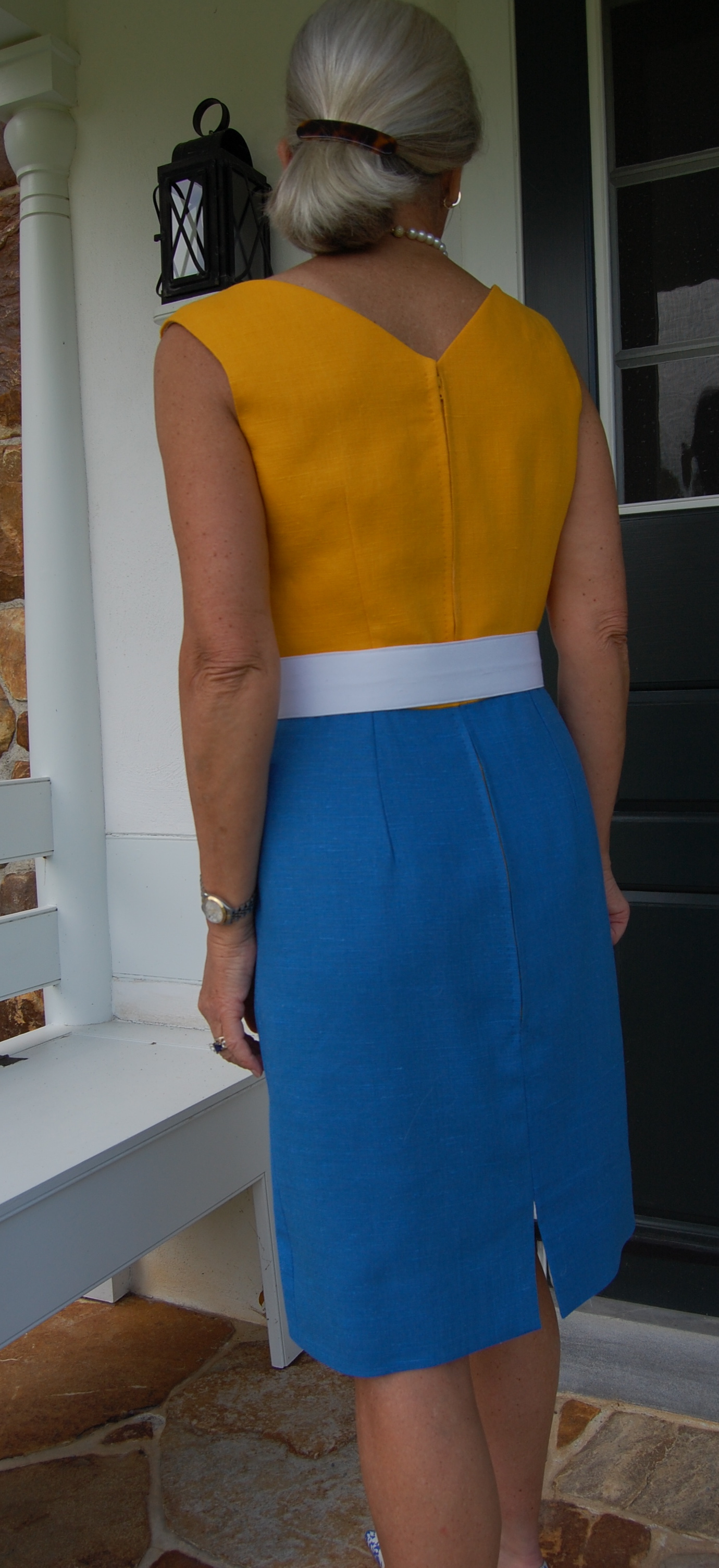
I like the V-ed back!

I like the V-ed back!

Love those shoes!

Love those shoes!

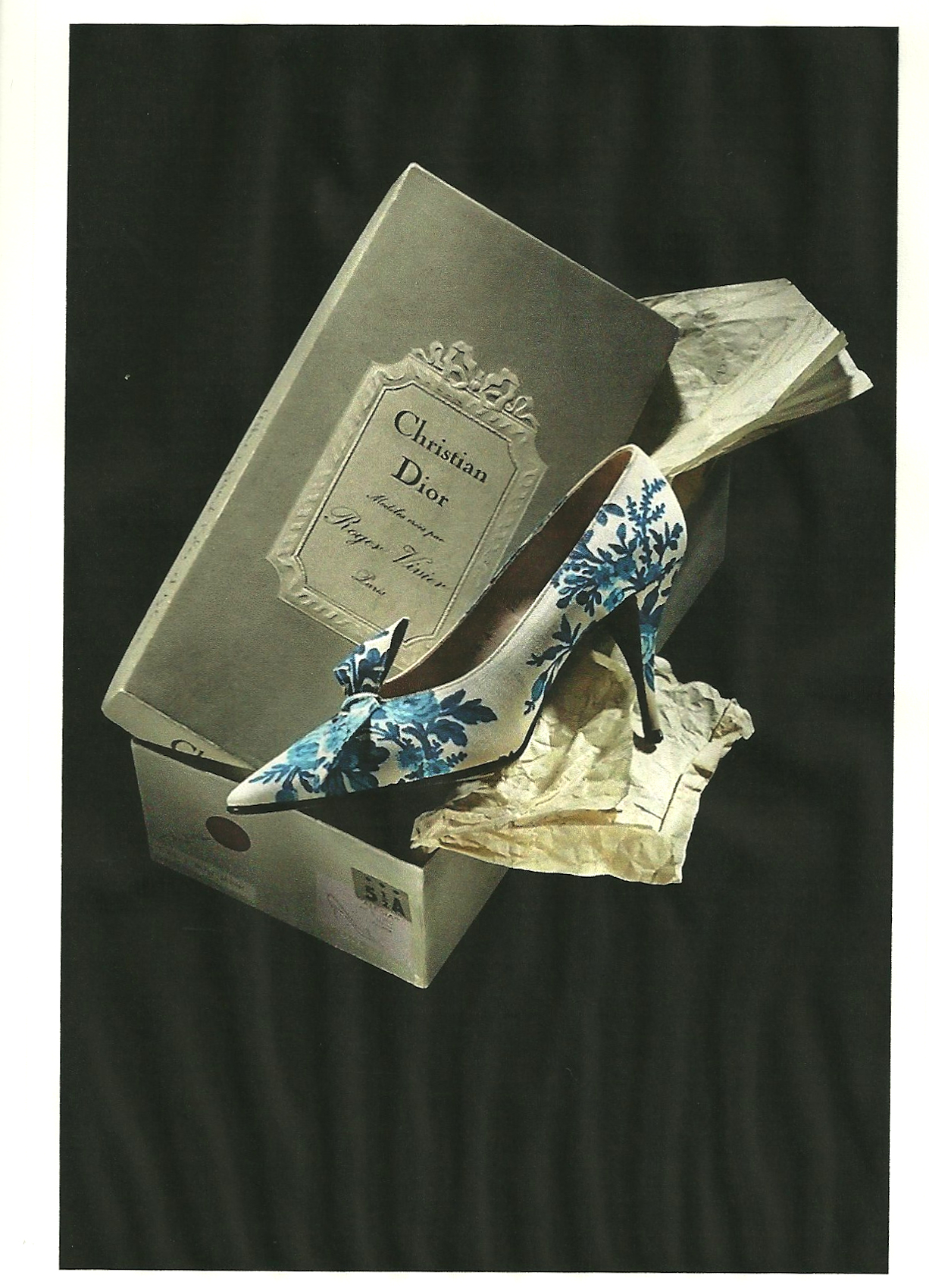
To me, this dress is reminiscent of a 1950s’ “wiggle dress” – although I added a back slit so that I can walk easily, which I guess would have been “cheating” in the 1950s! I was delighted to make another 1950s’ connection when I saw this pair of Roger Vivier shoes for Christian Dior on Pinterest:

All about the shoes - Pinterest pin

The similarities with my shoes are remarkable! Now that I have one dress perfectly suited for my Christian Dior-inspired shoes, I will be looking for other “perfect pairings”. Who knows what fabric treasures will present themselves next Spring or Summer for just such an undertaking?


44 Comments

Filed under Buttons - choosing the right ones, couture construction, hand-sewn zippers, Linen, Moygashel linen, Shoes to make an outfit complete, The Conde Nast Publications, Uncategorized, underlinings, Vintage fabric, vintage Vogue patterns from the 1960s

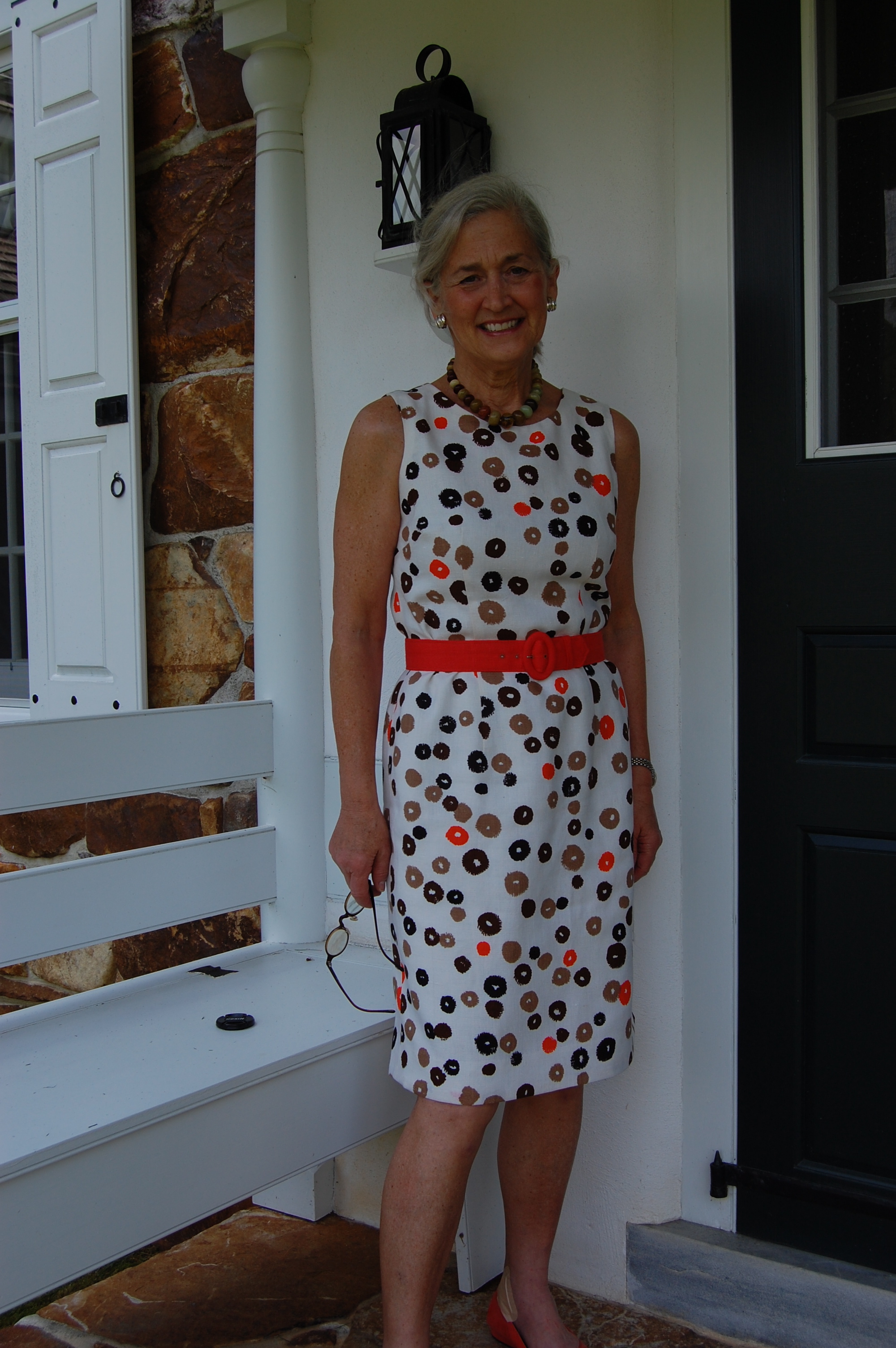
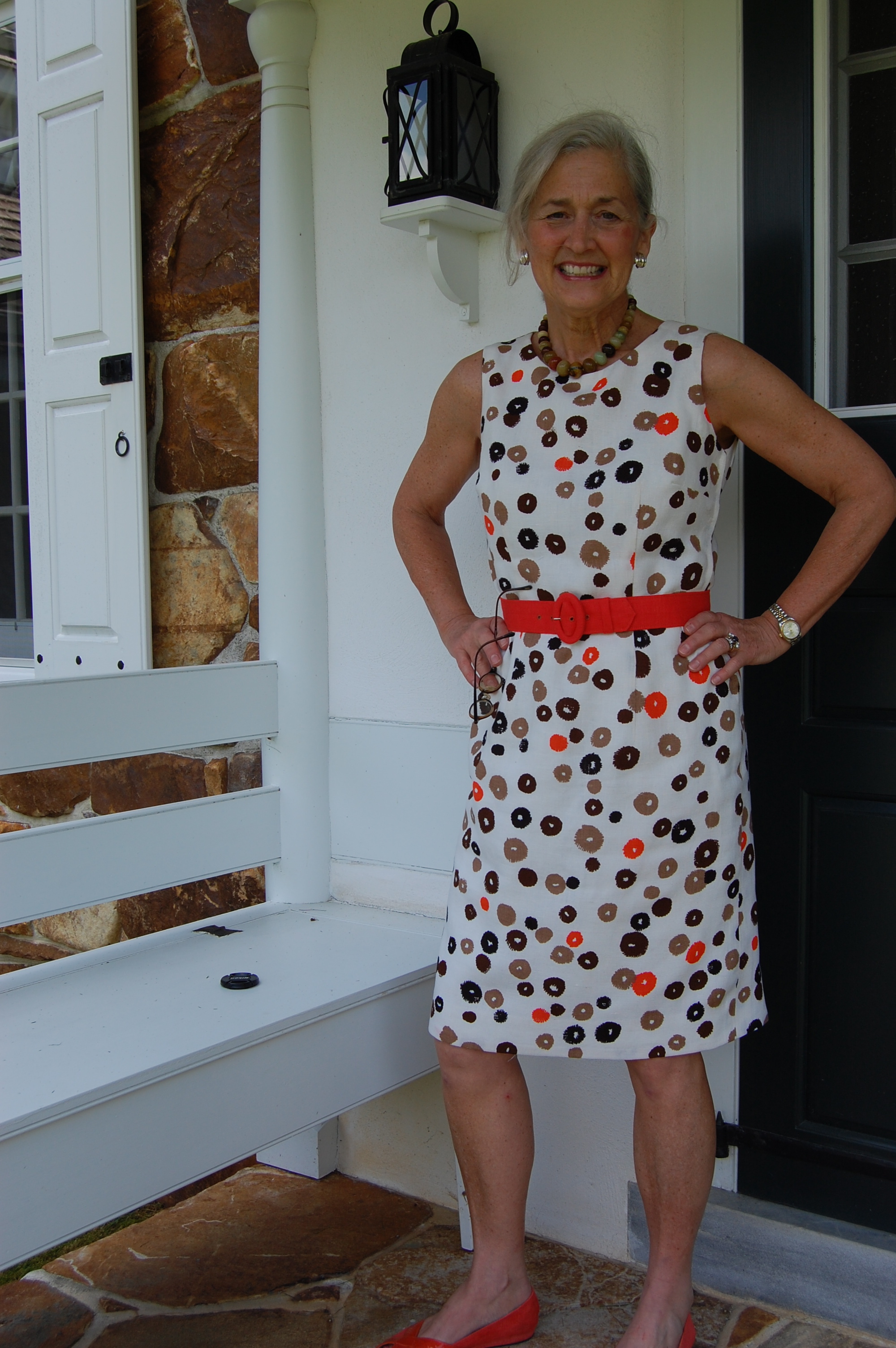
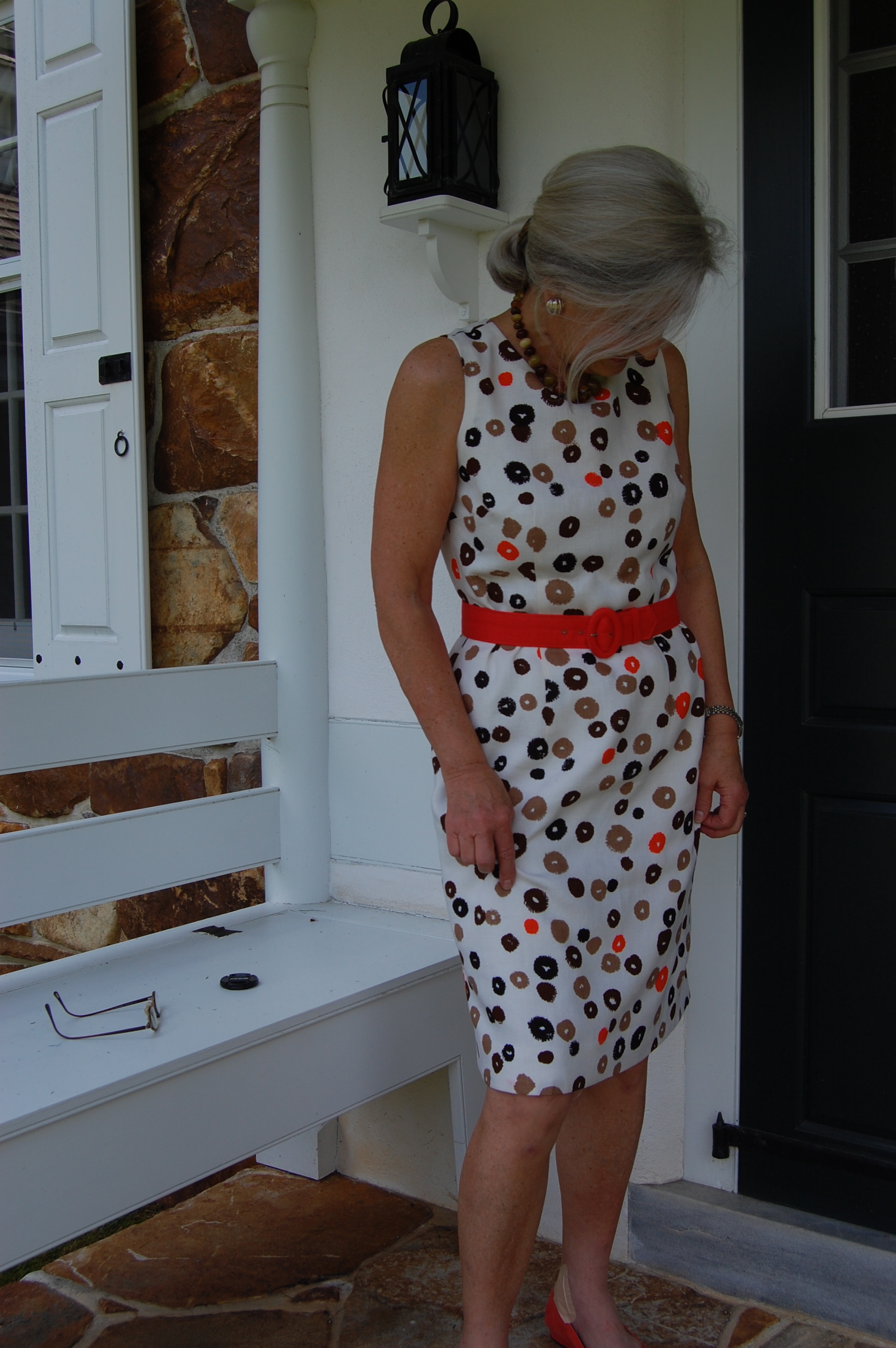
The Long and Mysterious Journey of Sandhurst 121

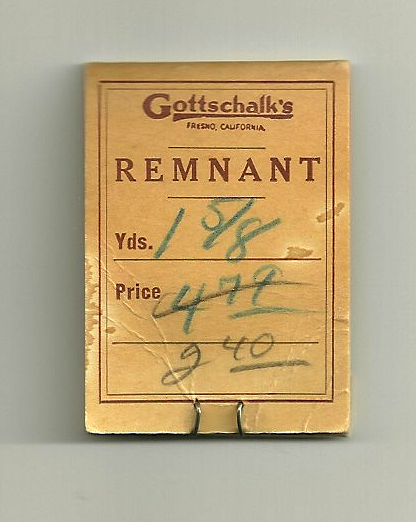
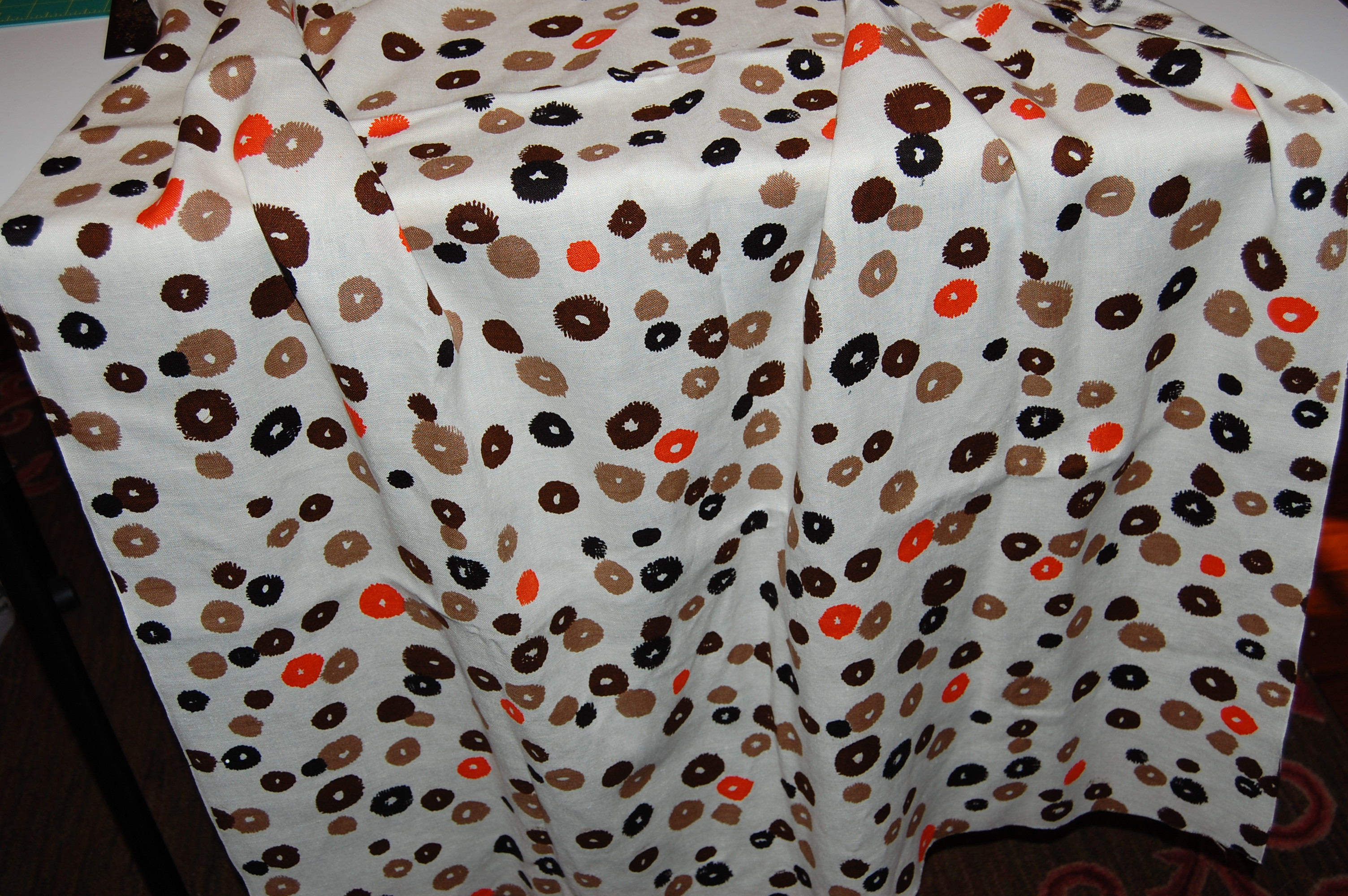
When the piece of linen I had purchased arrived in the mail, I was not sure what to expect. I had bought it with the hope that it was, indeed, a piece of Moygashel linen, but I had nothing to go on except an educated hunch. I knew it was an early piece of fabric, as its width was 35”, a common width for pre-1960’s dress-goods. I liked the design in the photo from which I made my decision, although it was not a colorway to which I normally gravitate. Upon opening the package, I found the only identifying mark on the fabric to be this tag:

Gottshalk's in Fresno, California obviously sold fine fabrics.

Gottschalk’s in Fresno, California obviously sold fine fabrics.

This short length of fabric had been on the remnant table, and, being too good of a bargain to pass by, some home dressmaker in California (USA) scooped it up with all good intentions of making something out of it someday. It must have lived in a dark drawer somewhere, carefully buffered from stains and yellowing. It didn’t even have much of a crease in it. And so, after many years in dormancy, it arrived at my home in Pennsylvania. I knew immediately that it was a Moygashel linen. I could tell by the hand of the fabric, the unique, slightly funky design, and by its amazing survival virtually wrinkle-free.

Sandhurst 121

As I mentioned in a former post, my only dilemma was the scant yardage, combined with the narrow width. So, I stuck it in my fabric closet, to think about another day. One thing nagged at me, however. I really, really wanted to know what year it was from.

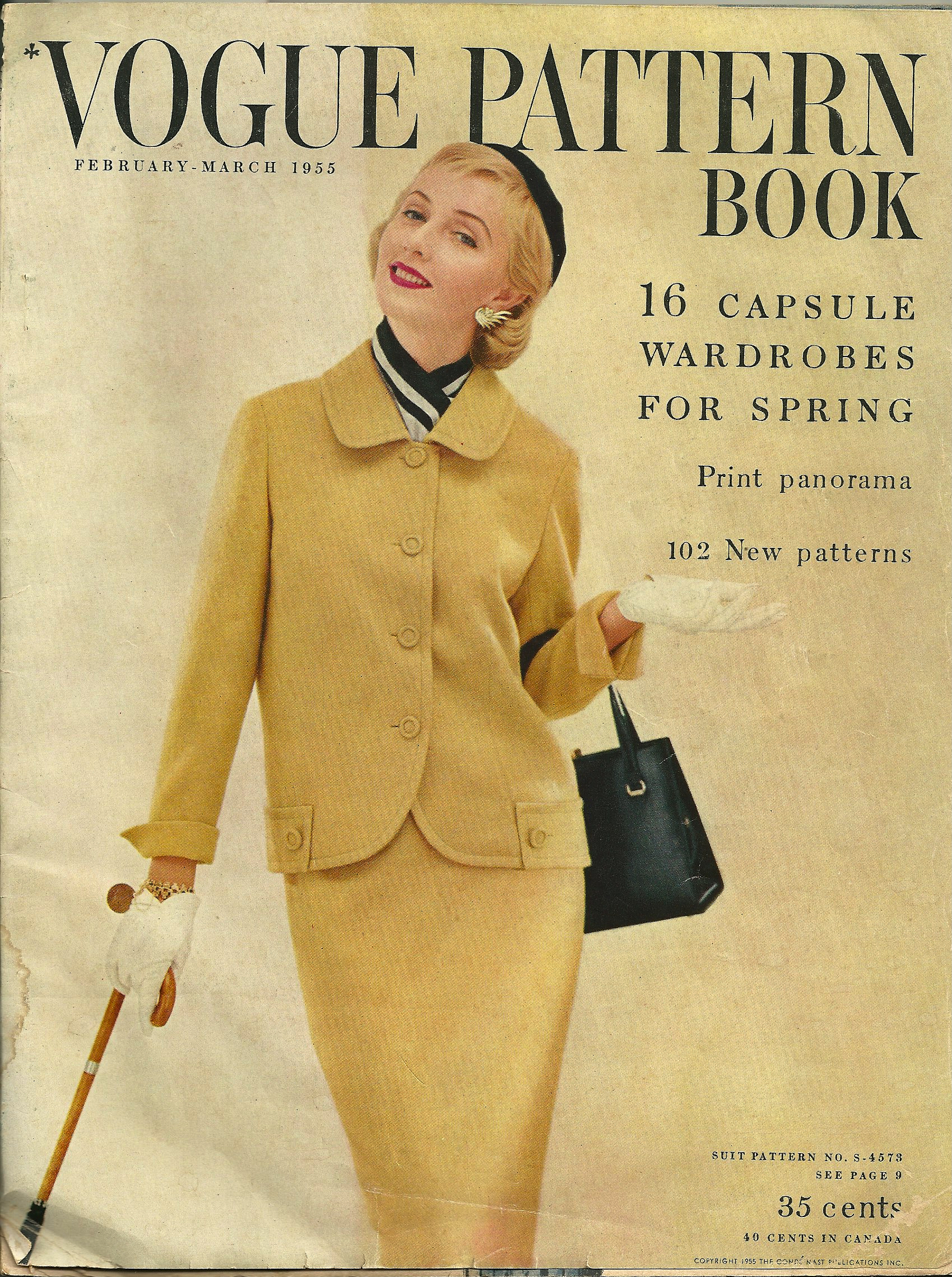
Over the past three years or so, I have had some luck in finding copies of old and older (1950-1980) Vogue Pattern Book Magazines. They are fascinating, and treasure troves of mid-century fashion as it relates to home sewing. I have tried to get a good cross-section of magazines from those three decades. One issue, which I tried a couple of times to get – and did not (on eBay) – finally became available to me. I loved the suit on the cover, and those mid-fifties styles are just so chic, even though most Vogue patterns from that time period were unprinted, and therefore, very difficult to use. (By 1957, Vogue was starting to produce many of their patterns in printed and perforated format.)

This is the February/March 1955 issue.

This is the February/March 1955 issue.

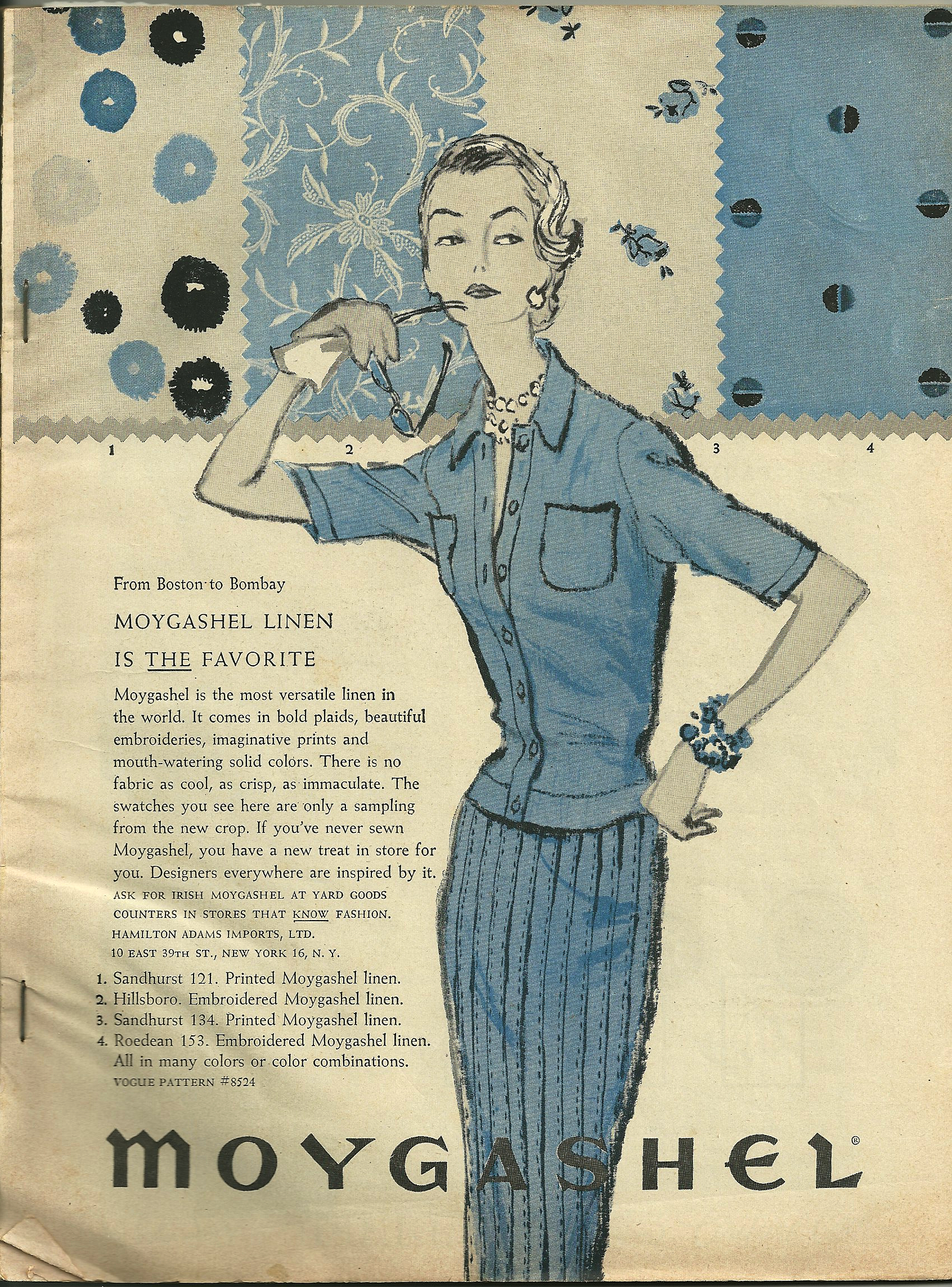
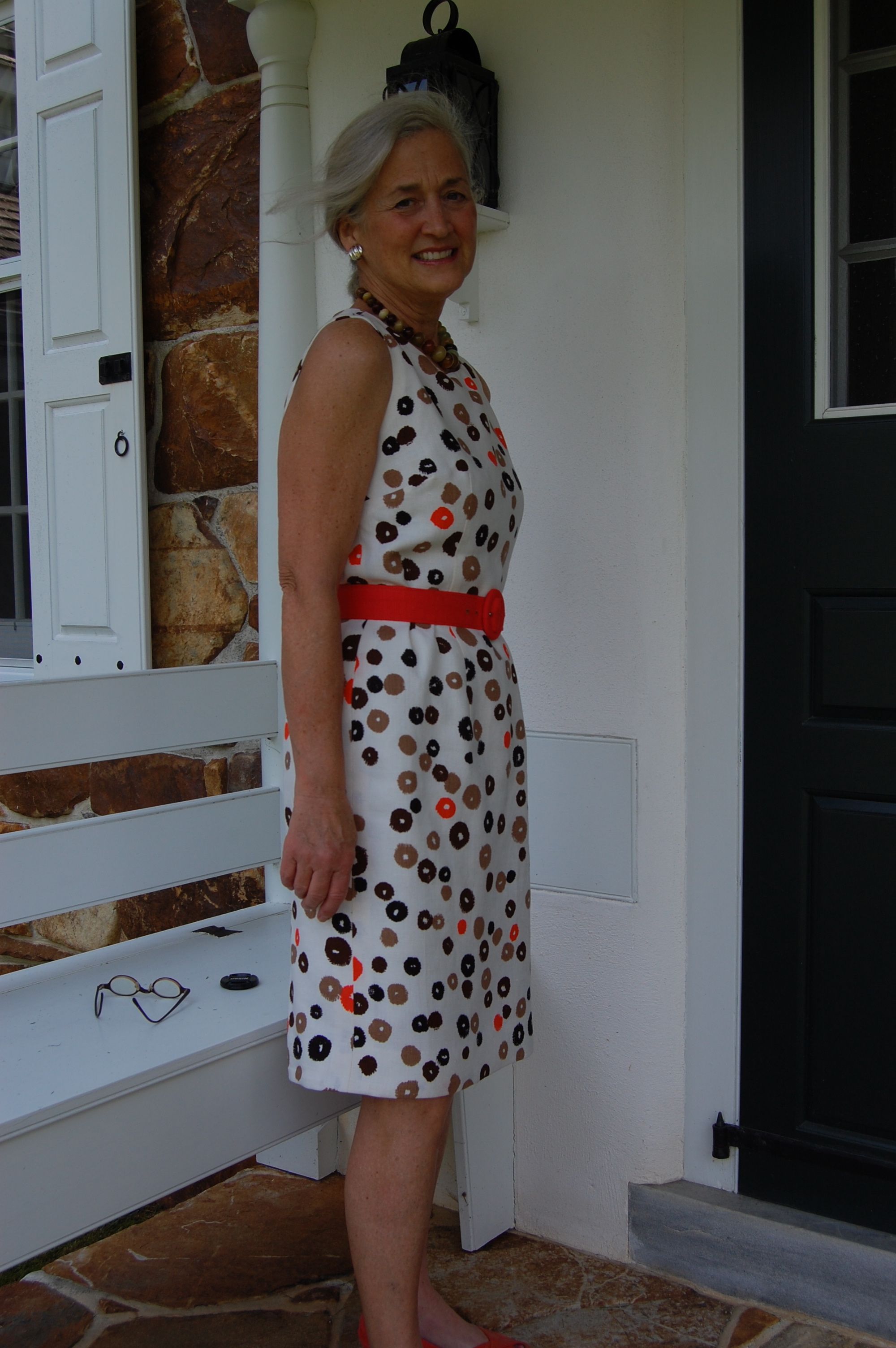
Perhaps you can see where I am going with this? I was looking through this particular issue once again in May of this year, and low and behold, a full-page ad for Moygashel linen clearly pictured “my” linen as one of their “new crop”. The colorway was different, but Moygashel was known for producing their fabrics “all in many colors or color combinations.” Maybe a lot of people wouldn’t get so excited about such a discovery, but I was ecstatic! Now I knew, for certain, that the linen I had purchased made its debut in early 1955. (I would be turning 5 years old a little later that year!) I even had a name for it now – Sandhurst 121. I suddenly very much wanted to sew this linen, this Summer!

There is my linen in the upper left hand corner of the full-page advertisement.

There is my linen in the upper left hand corner of the full-page advertisement.

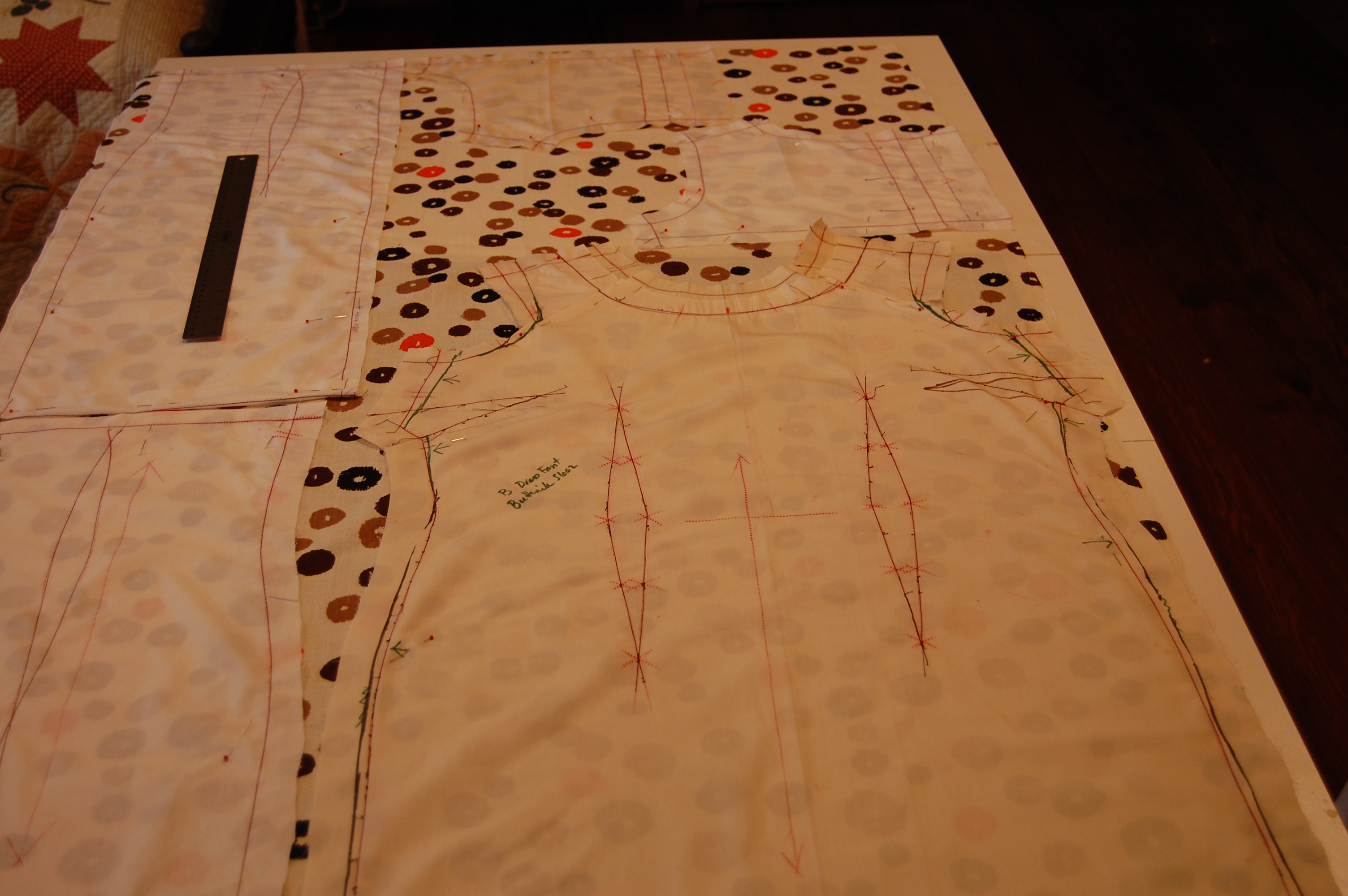
By now, many of you know that I determined to make a sheath dress out of this scant yardage of fabric, and in order to do so, I had to reconfigure my sheath dress pattern to include a back yoke. Here’s the fabric layout, which hopefully will show how sectioning the back enabled me to fit the pattern on the available fabric:

The fabric is shown 35" flat on my cutting table.  The muslin pattern piece for the front of the dress is on the right, and the two shortened back pieces are lined up smack against each other on the left.  The yoke pieces then fit above the dress front.  I did not need facings, as I lined the entire dress in a light weight linen/cotton blend, and finished the neck and armholes all by hand.

The fabric is shown 35″ flat on my cutting table. The muslin pattern piece for the front of the dress is on the right, and the two shortened back pieces are lined up smack against each other on the left. The yoke pieces then fit on the fabric  above the dress front. I did not need facings, as I lined the entire dress in a light weight linen/cotton blend, and finished the neck and armholes all by hand.  I had to face the hem as I did not have enough fabric to do a self hem!

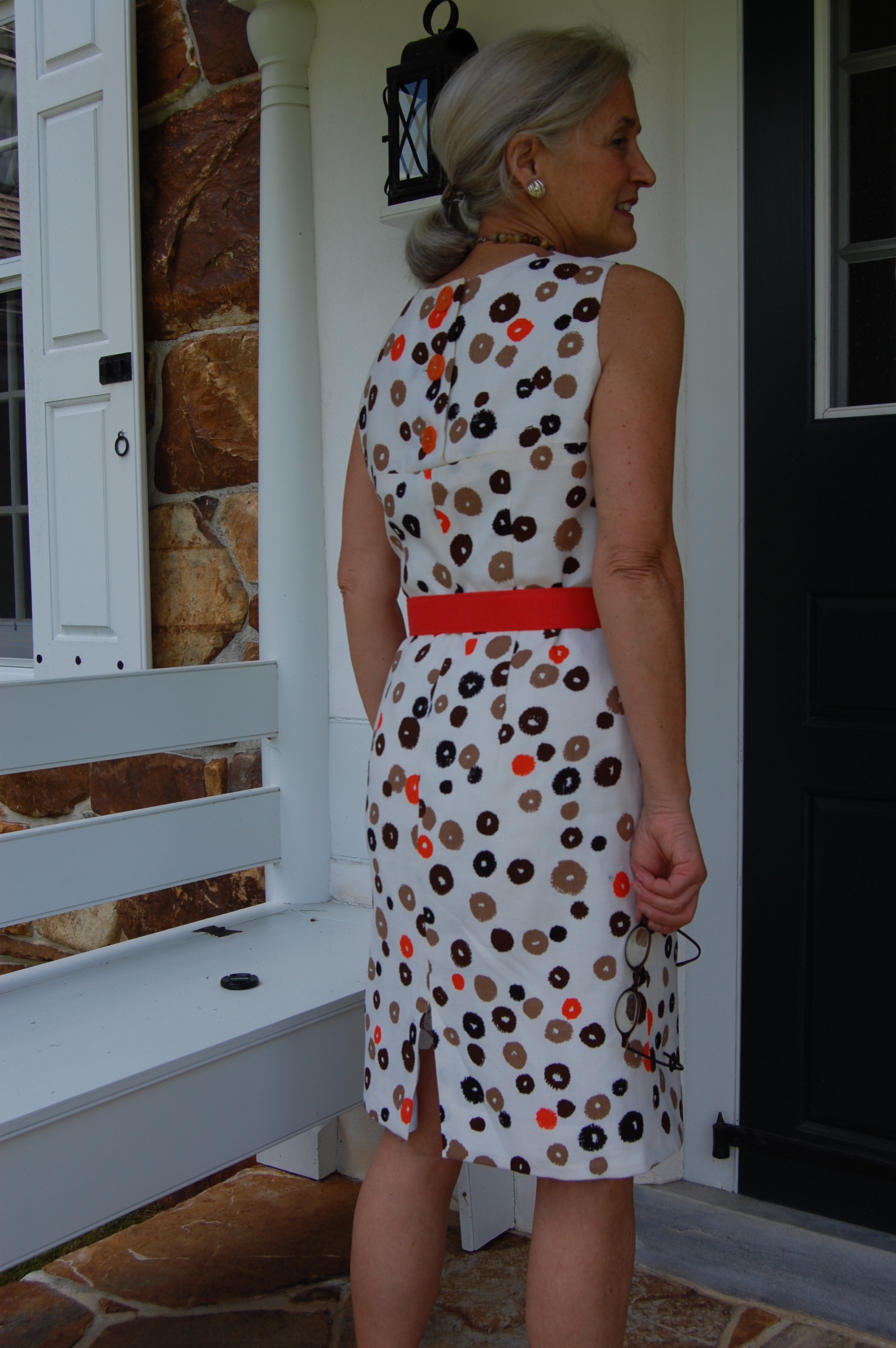
Many of you also know that fortune shone her happy face again on this project when I found three orange vintage buttons, which I knew would help make a back yoke far more interesting. I relied on a Vogue pattern from 1957, which has a back yoke to help me with this reconfigure.

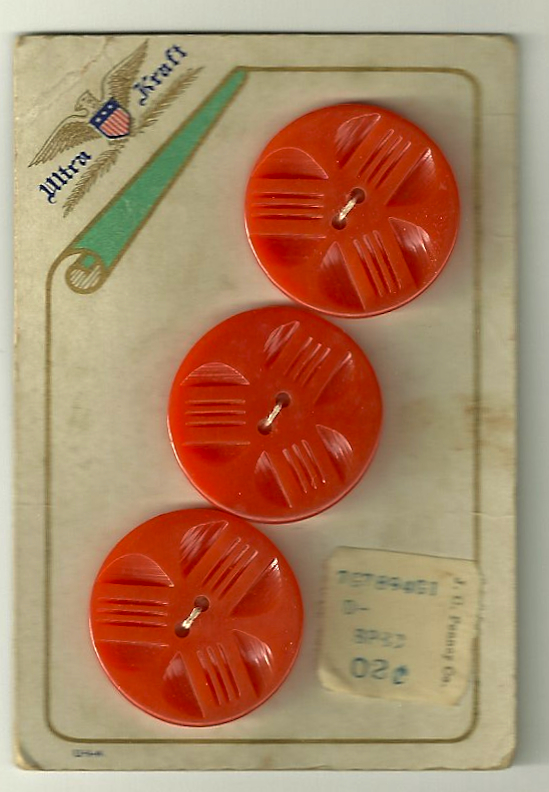
This card of buttons cost 2 cents originally!  They seem to mimic the small orange explosions on the dress fabric.

This card of buttons cost 2 cents originally! They seem to mimic the small orange explosions on the dress fabric.  They may actually be even earlier than the fabric.

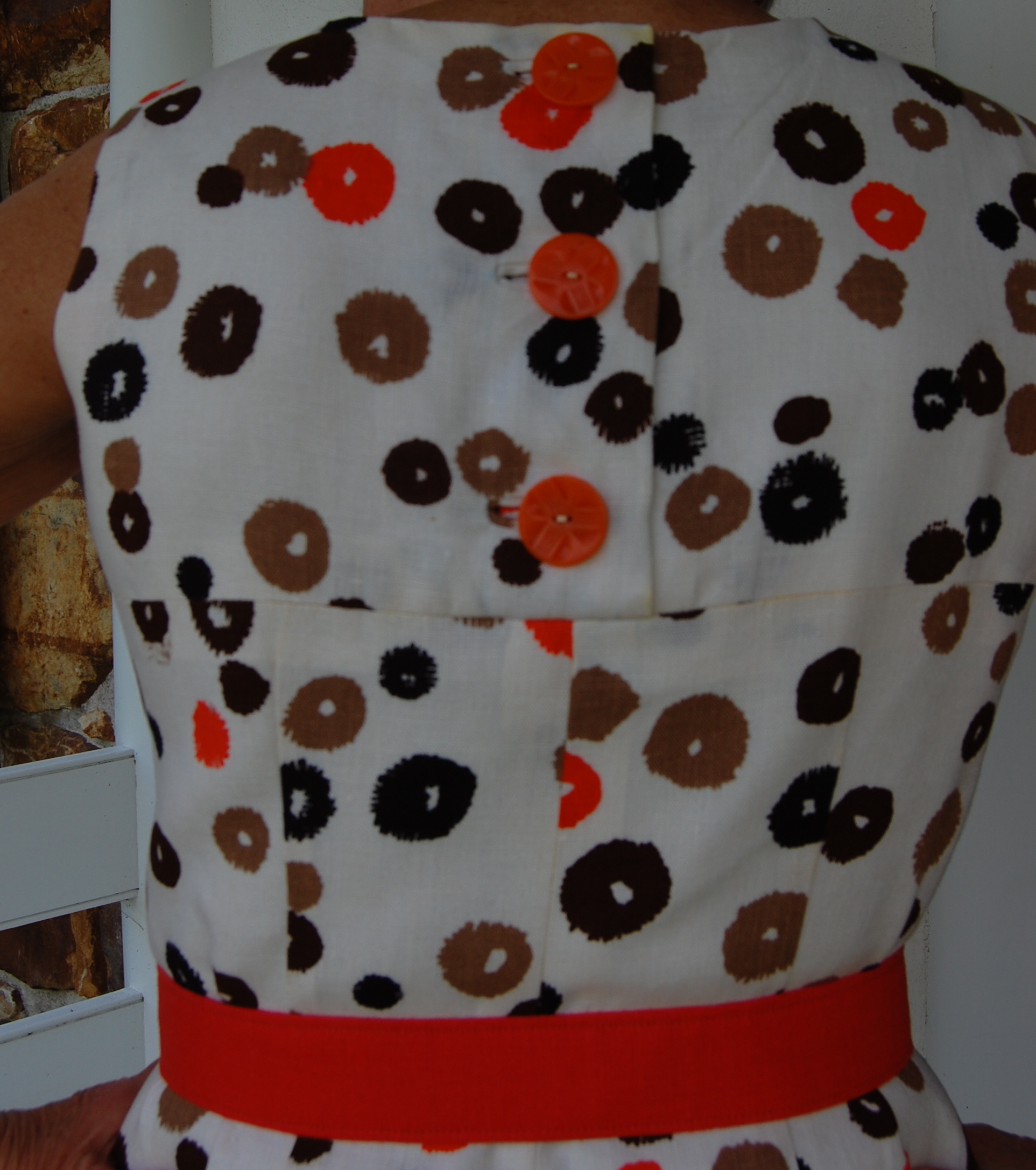
The yoke on this dress uses 4 buttons.  I only had three, but their large size still makes the proportions work well.

The yoke on this dress uses 4 buttons. I only had three, but their large size still makes the proportions work well.

A close-up of the back of the dress.

A close-up of the back of the dress.  I made bound buttonholes – very 1950-ish!

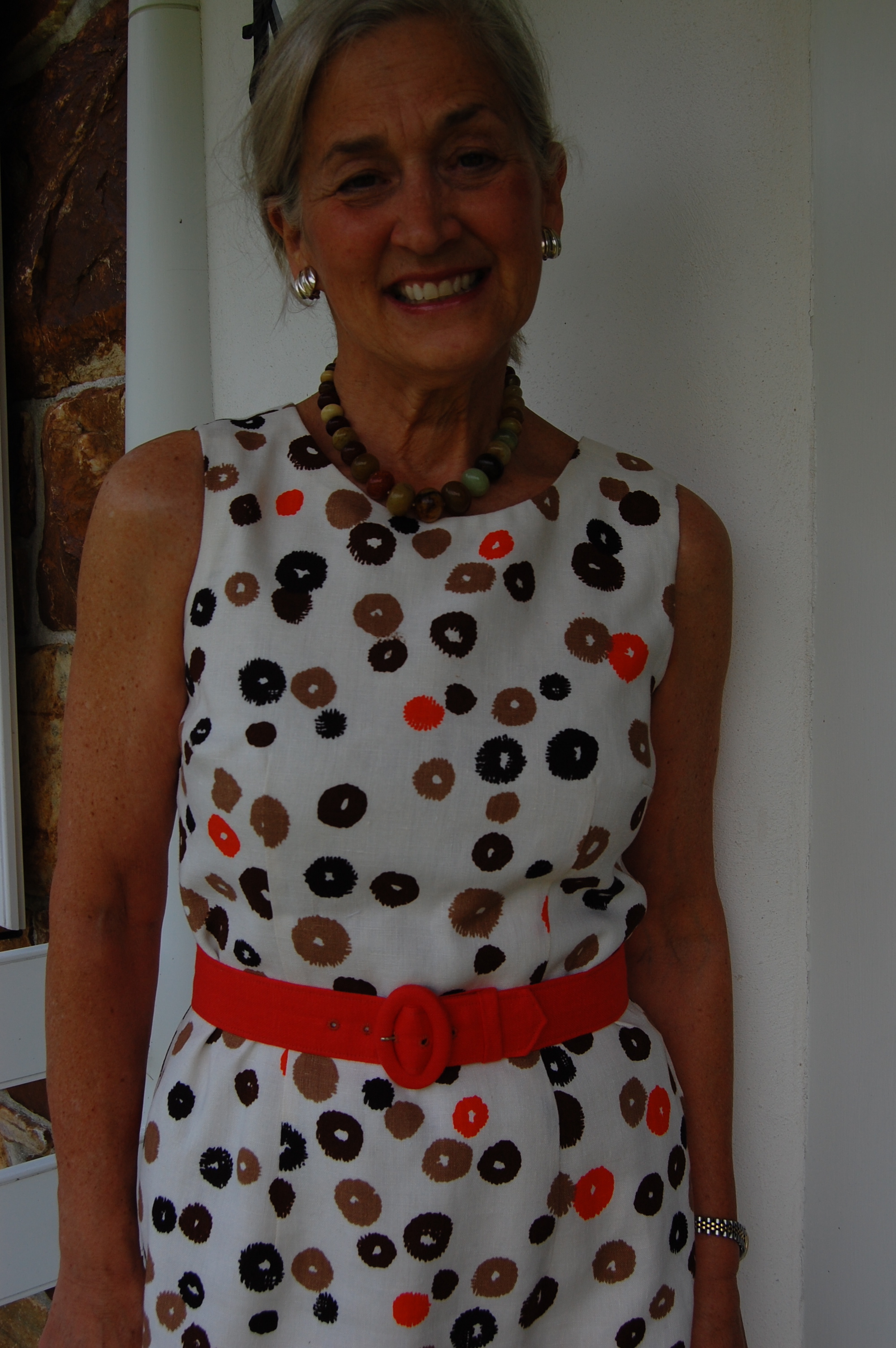
And then, another classic 1950s’ design detail worked right into this dress: I would need to move the zipper to the side in order for the back yoke to look correct. Now I will be the first to tell you that a side zipper is not as convenient as a back zipper, but it is a small sacrifice when everything else is enhanced by this placement.   After these obeisances to ‘50s’ style, I slipped right into 2014 with a bright orange, newly made belt, a widened jewel neckline, slightly cut-in shoulders, and a back slit to enhance comfort. I like to choose the best from the ‘50s, but I really don’t want to look like the 1950s.

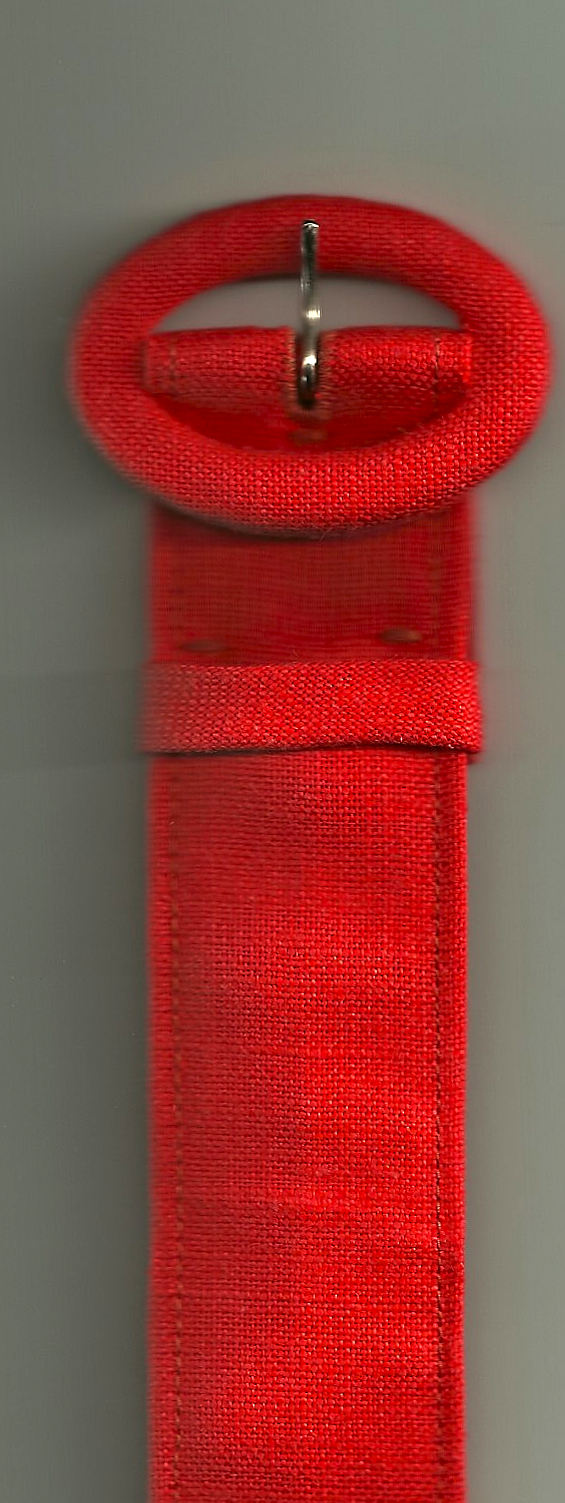
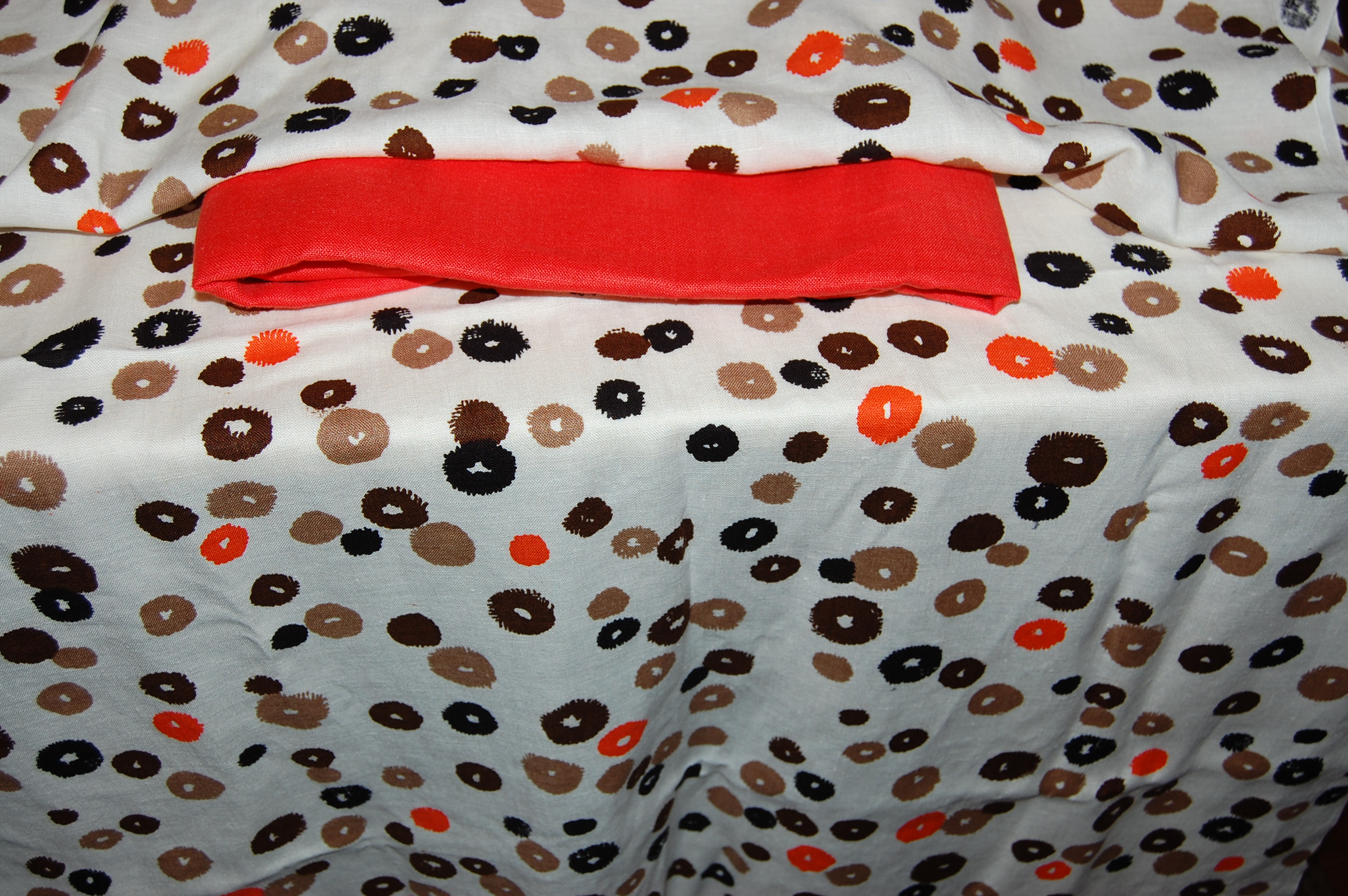
I sent new orange linen to Pat Mahoney of Pat's Custom Belts and Buttons  and this lovely belt came back to me in the mail.

I sent new orange linen to Pat Mahoney of Pat’s Custom Belts and Buttons and this lovely belt came back to me in the mail.

Cool and summery-looking, don't you think?

Cool and summery-looking, don’t you think?

Sandhurst 121

Sandhurst 121

Sandhurst 121

Sandhurst 121

Sandhurst 121

Not every dress can have a story, nor should it. But this fabric, which began its life in Ireland, no doubt entered this country through New York City, ordered by a store in Fresno, California, purchased and squirreled away for decades by persons unknown – has now found a starring role in my wardrobe almost 60 years later. Sewing is just so much fun!


37 Comments

Filed under bound buttonholes, Buttons - choosing the right ones, hand-sewn zippers, Linen, Love of sewing, Moygashel linen, Polka dots, side-placed zippers, The Conde Nast Publications, Uncategorized, Unprinted patterns from the 1950s, vintage buttons, Vintage fabric, vintage Vogue patterns from the 1950s

When Enthusiasm Meets Reality

Fashion sewing has it all. Even the making of a simple dress has some or all of these aspects inherent in its construction: color theory, proper fabric selection, proportion and fitting, pattern manipulation and engineering, technical know-how, style sense, intrigue. Intrigue? Yes – Intrigue. I have done it again. I have my heart set on a making a certain style in a certain fabric, and I don’t have very much of that fabric with which to work.

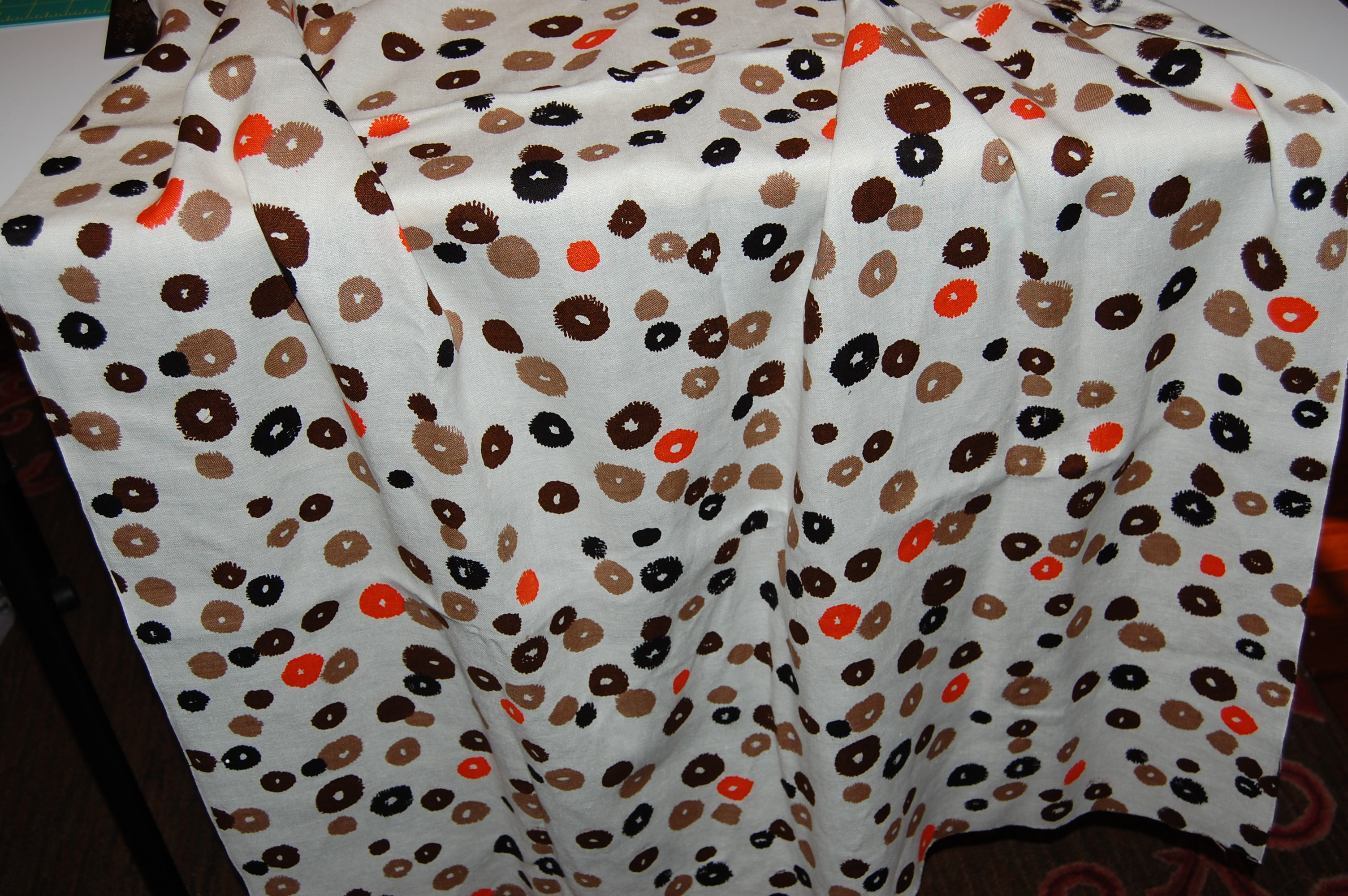
I found this piece of Moygashel linen earlier in the year. (It was sold to me as “probably Moygashel”, and how I determined for certain that is indeed that famous brand of Irish linen required some detective work, which I’ll cover in a future post.)

Enthusiasm meets reality

Freshly laundered, this linen looks and feels like new!

When I first saw it, I immediately thought it would make a cute pair of pants, even though I don’t wear a lot of brown. But I was really drawn to the little explosions of orange scattered throughout the yardage. Actually I should qualify that by saying “scant” yardage. This was only a piece of fabric 1 and 5/8 yards long, which sounds reasonable until the width of the fabric is figured into the equation. At 35” wide, this was not a lot of fabric.   Nevertheless, I certainly figured I could get a slim pair of simple pants out of it. That was my intent until I finished my polka-dotted sheath dress just recently. Cool linen dresses and Summer just seem to go together, and suddenly I decided I did not want a pair of pants – I wanted another sleeveless dress.

This was partly determined by the fact that I have a piece of new orange linen I picked up a couple of years ago from Britex Fabrics, and the thought of pairing this funky, stylized-dot fabric with an orange belt made out of that linen sealed the deal for me in my enthusiastic wardrobe dreams.

Enthusiasm meets reality

Then reality hit. How was I going to manage to squeak a sheath dress out of the amount of fabric in hand? After eyeballing the stretched out fabric, with my sheath dress pattern pieces arranged casually on top, it did not take long for me to know that, NO, this would not work. I would have to figure something else out, but I wasn’t giving up on the dress idea.

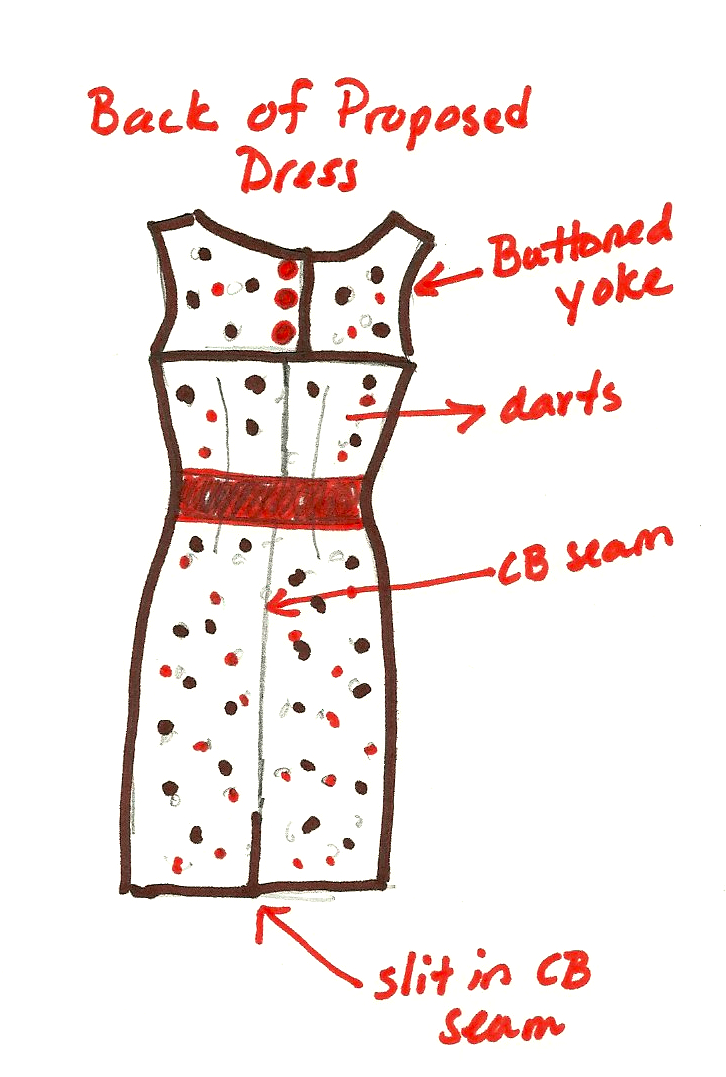
The only solution was to get more creative. I have always loved subtle “back” details on dresses, such as unusual closures, V-necklines above a back zippered opening, an embellishment of some sort, that type of thing. And I suddenly realized that if I could section the back pieces (only) of my sheath pattern so that I would have an upper back yoke, then I could probably fit everything on the fabric (knowing it would still be a squeeze, however).

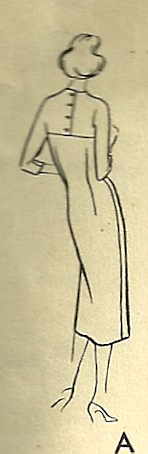
Now I got really excited. One of my favorite patterns (from 1957) features a back- buttoned yoke, which is seamed right above the shaping darts in the back body of the dress. I figured this is exactly the spot where I would need to section the back of the dress to make it fit on my fabric.

The yoke on this dress is obviously part of the kimono sleeve section, but I like the idea of a three-buttoned yoke.

The yoke on this dress is obviously part of the kimono sleeve section, but I like the idea of a three-buttoned yoke.

And then – wheels turning in my head – I seemed to remember I had some orange buttons (vintage, no less!) in my button box.   These seem to me to be a perfect pairing with the linen fabric:

This card of buttons cost 2 cents originally!  They seem to mimic the small orange explosions on the dress fabric.

This card of buttons cost 2 cents originally! They seem to mimic the small orange explosions on the dress fabric.

I have spread out my current working sheath dress muslin a couple of times to determine the viability of my plan. I really think it will work. I am prepared to use narrower seam allowances than I usually like, and I may have to face the hem.

This is how I envision the back of my proposed dress.

This is how I envision the back of my proposed dress.

But – first things first. Initially I will be making a new muslin, with the altered and sectioned back pieces. I am sure my enthusiasm for this idea will keep me focused, and in this case, reality may have sewn the seeds for a much more creative outcome than I originally envisioned!


22 Comments

Filed under Buttons - choosing the right ones, Linen, Moygashel linen, Polka dots, Uncategorized, vintage buttons

Defying the passage of years?

Throughout the 1950s, copyright dates appeared on all Vogue patterns (or, at least that has been my observation). Copyright dates appear on some of the patterns from 1960-‘62, but after that, they are non-existent. It is always a thrill when I find a reference to, or picture of, a pattern, which I own or am working on, in one of The Conde Nast Publications, Inc. magazines or other printed materials. It is one sure way to date an otherwise undated vintage Vogue pattern.

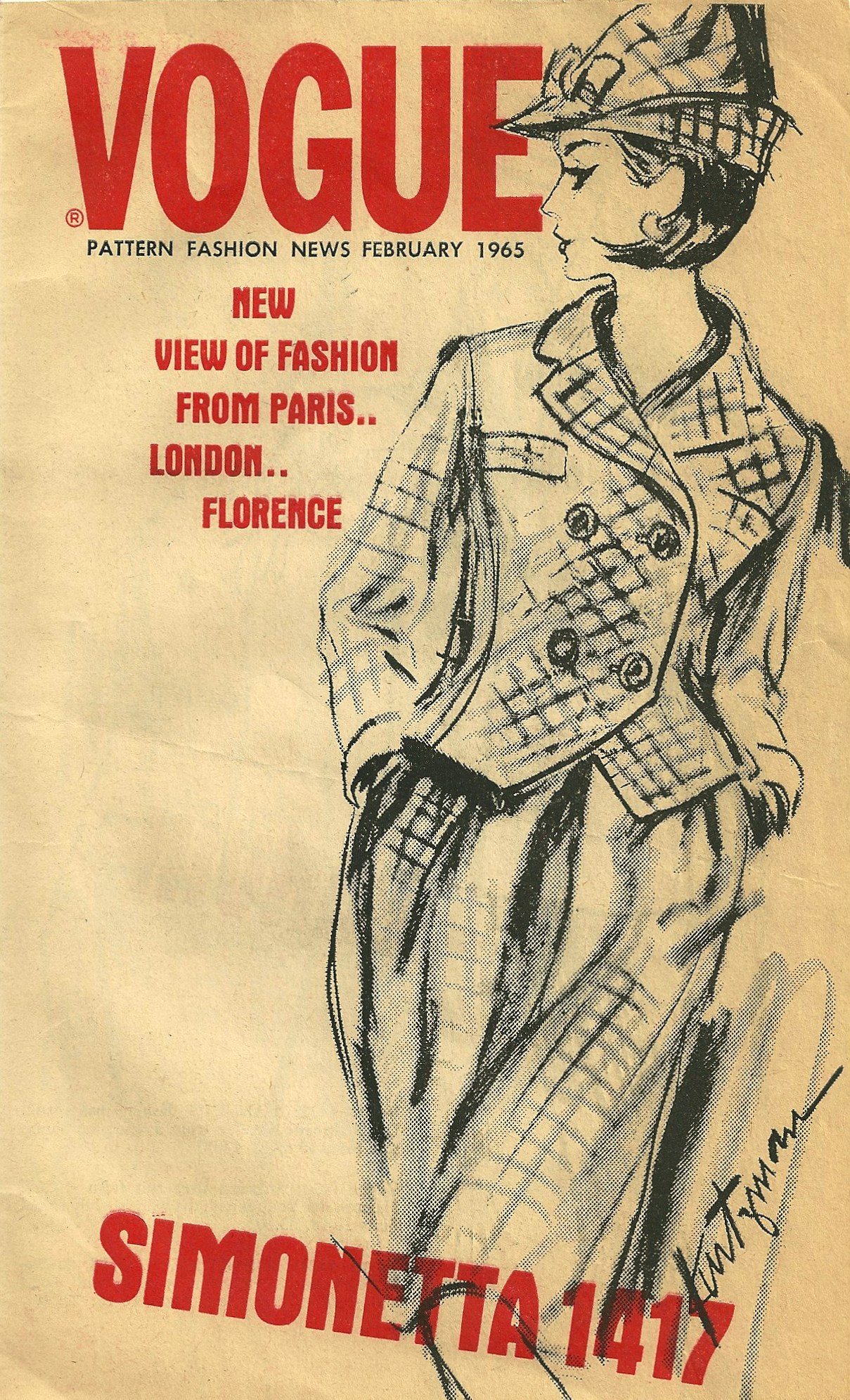
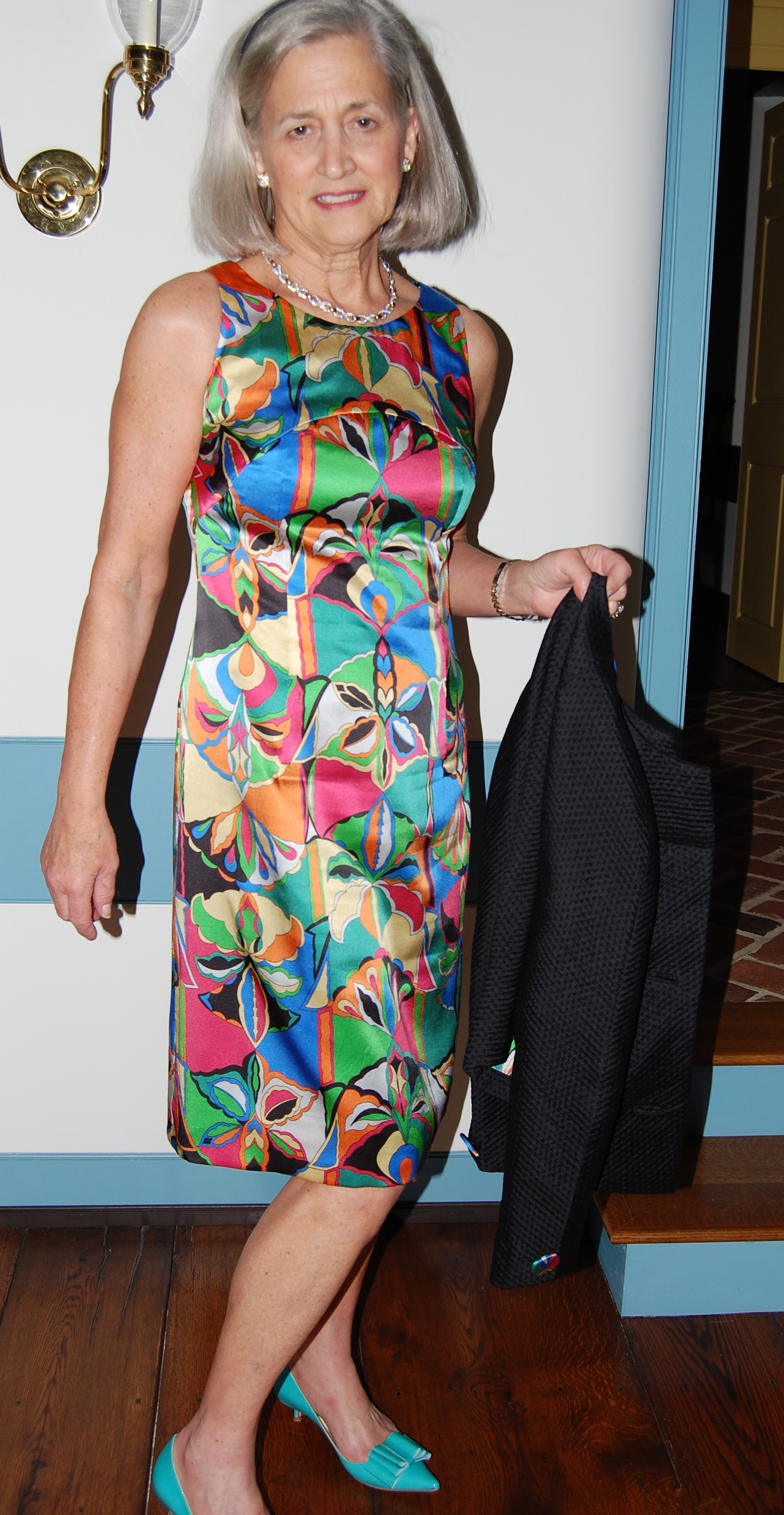
So – you can imagine my delight when a small, 8-page Vogue Pattern Fashion News from February 1965 – which I recently purchased – featured the Emilio Pucci dress and jacket which has been my sewing focus for the past several weeks.

On the cover of this small "flyer", which was available for pick-up wherever Vogue patterns were sold, is the reference to fashion from Florence - as in Pucci's Florence!

On the cover of this small “flyer”, which was available for pick-up wherever Vogue patterns were sold, is the reference to fashion from Florence – as in Pucci’s Florence!

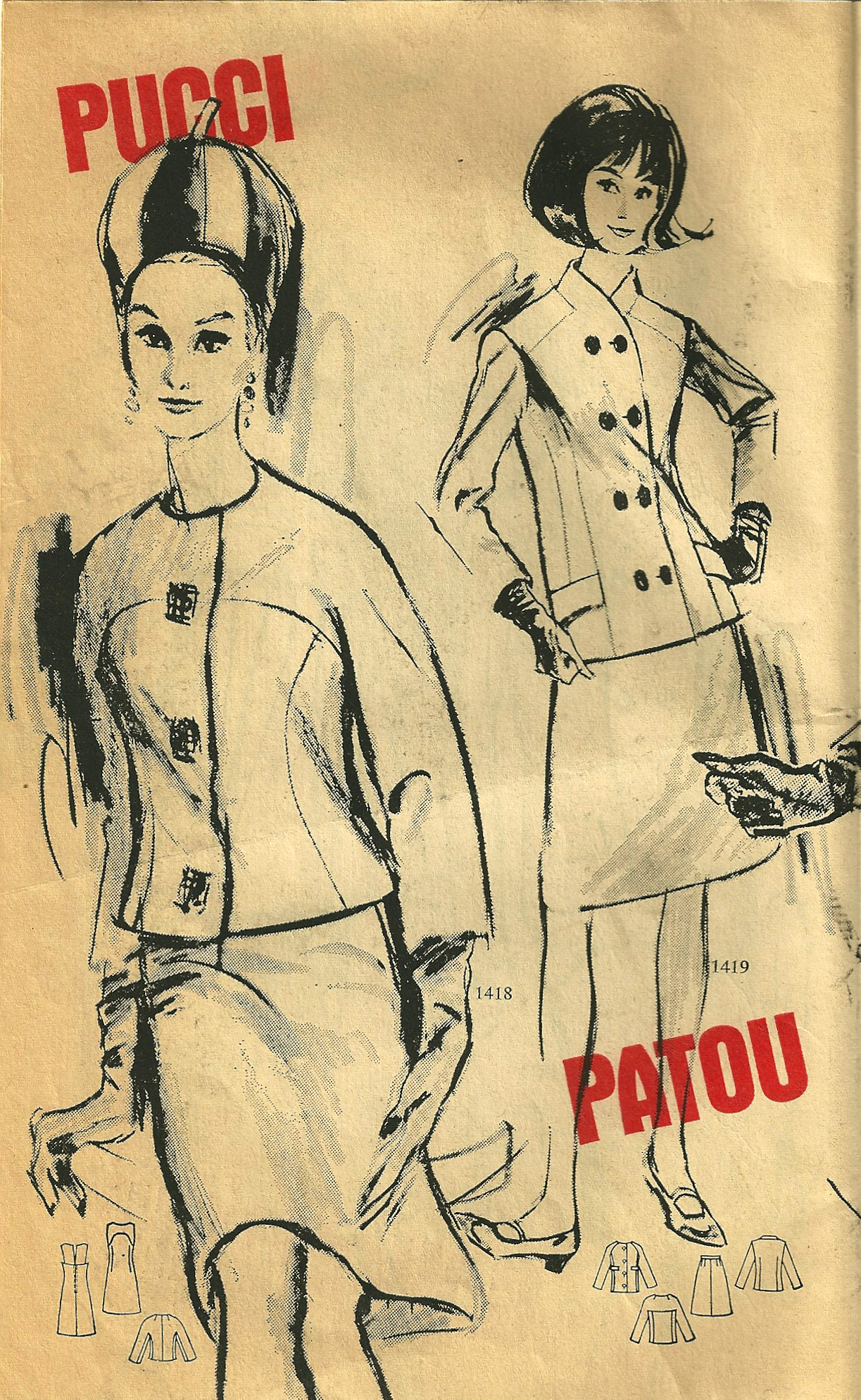
And here is the sketch of "my" Pucci pattern.

And here is the sketch of “my” Pucci pattern.

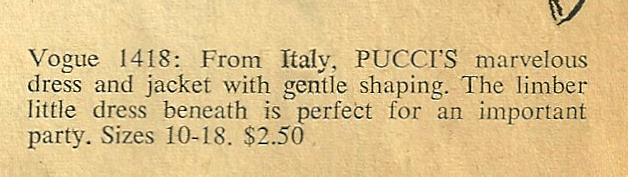
The brief caption gives an apt description of the Pucci pattern:

Pucci pattern - fashion news caption

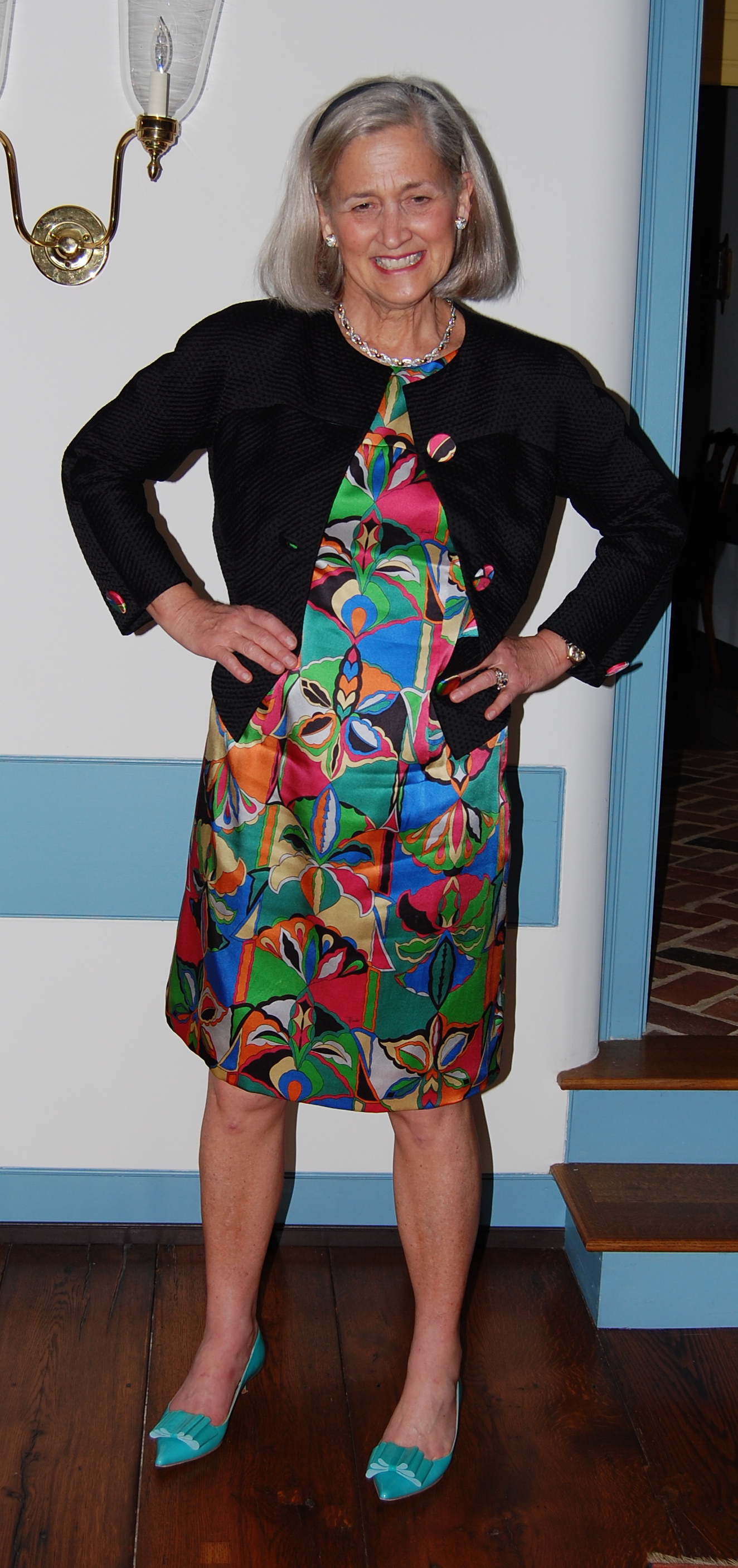
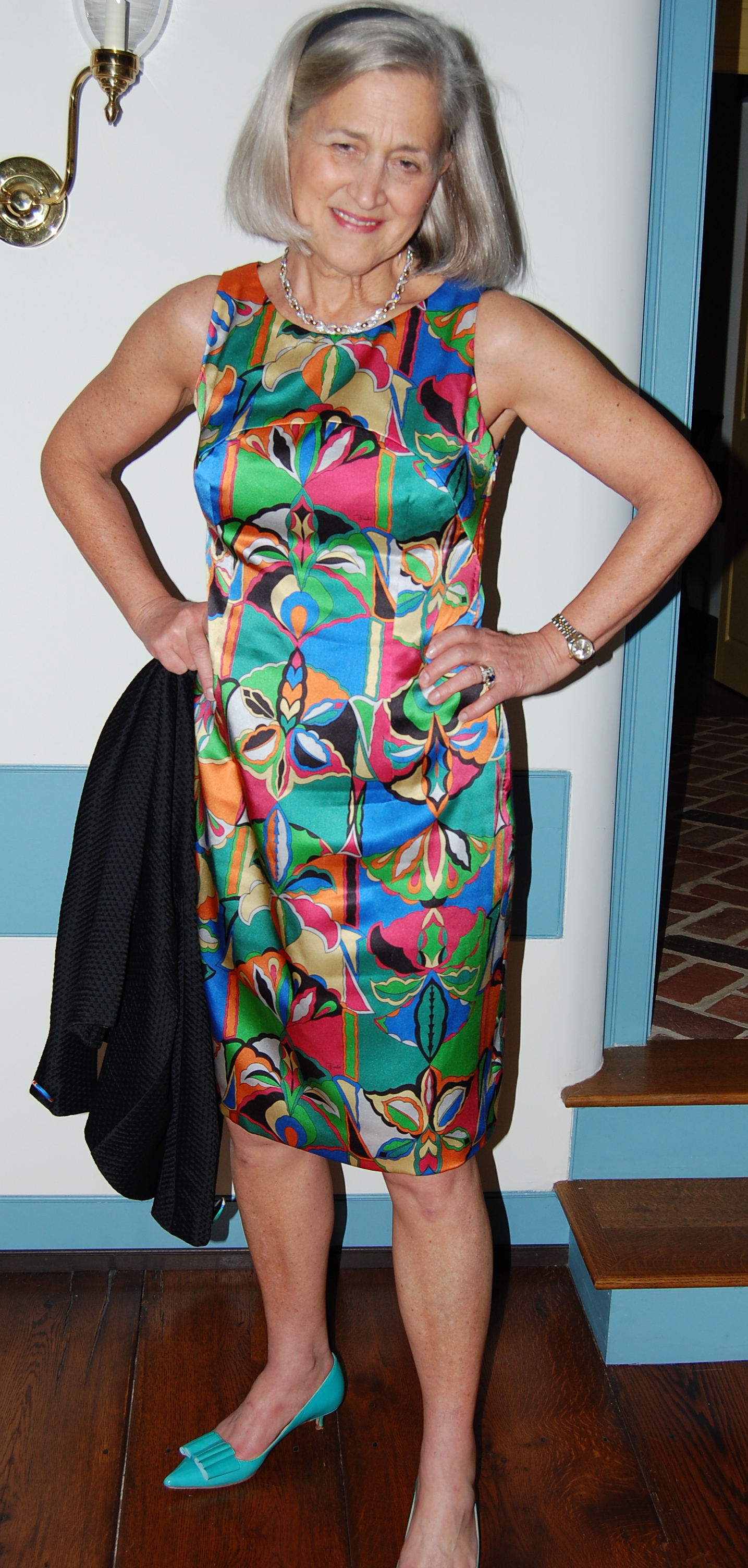
And – I did indeed wear this dress (and jacket) to an “important party” just last weekend – to a beautiful wedding in Center City Philadelphia.


(This photo was not taken at the wedding...)

(This photo was not taken at the wedding…)

I was working diligently all last week to finish the jacket. Here are the details on what was transpiring in my sewing room:

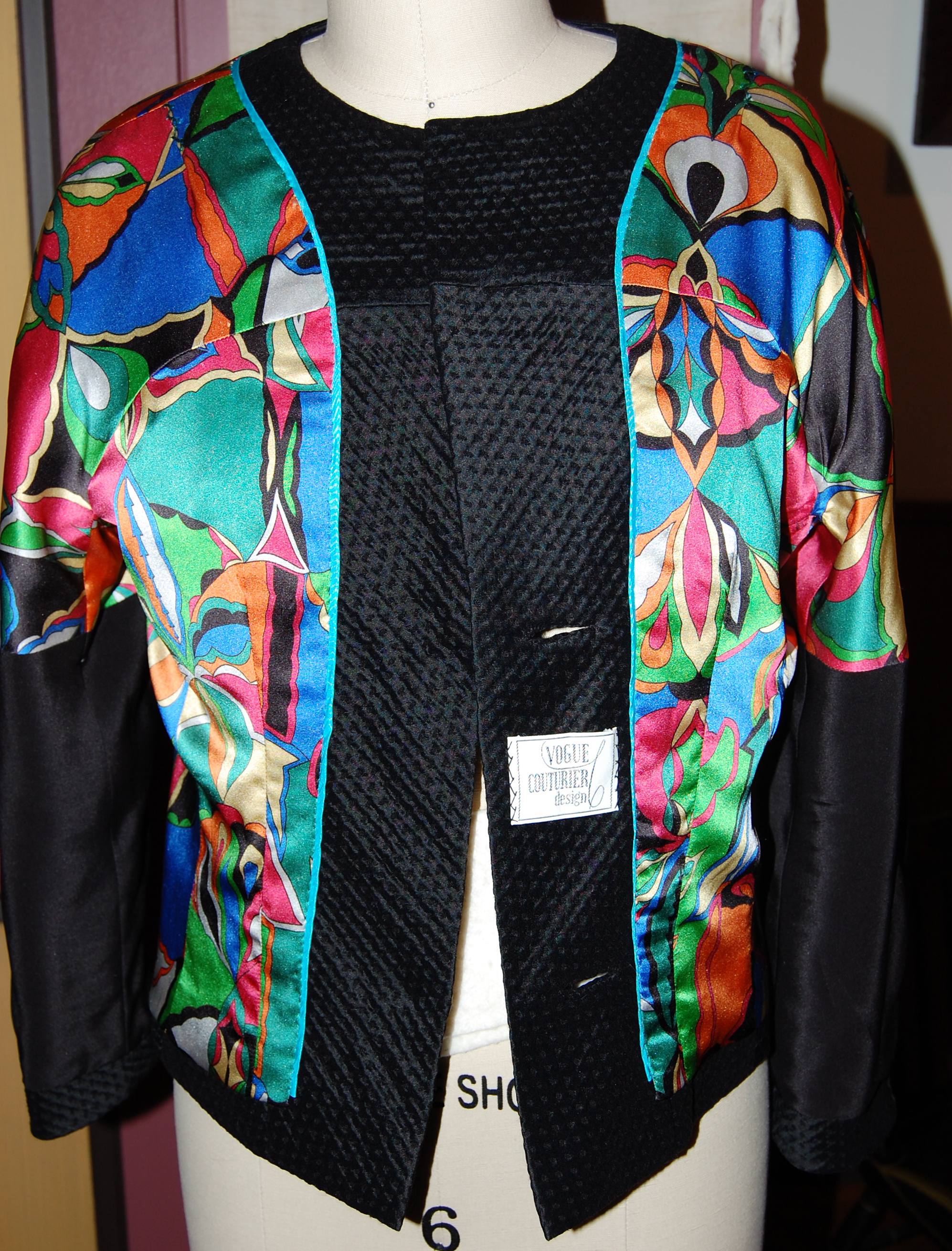
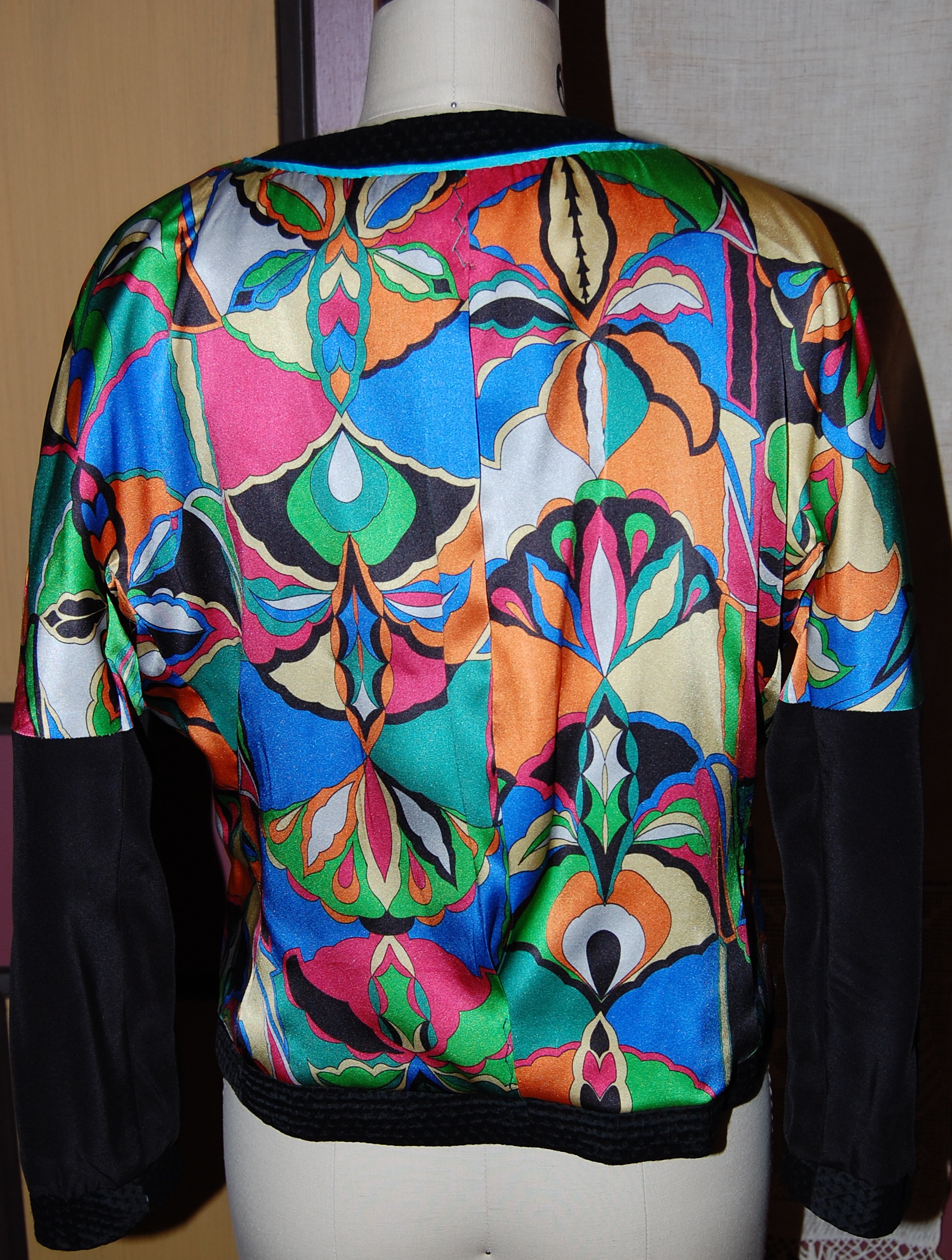
First, I can tell you I was delighted that the pieced sleeve linings worked just as I had hoped they would. Here is the jacket turned inside out, showing the piecing on the lower sleeves.

Defyng the passage of years

Inside out, a back view.

Inside out, a back view.

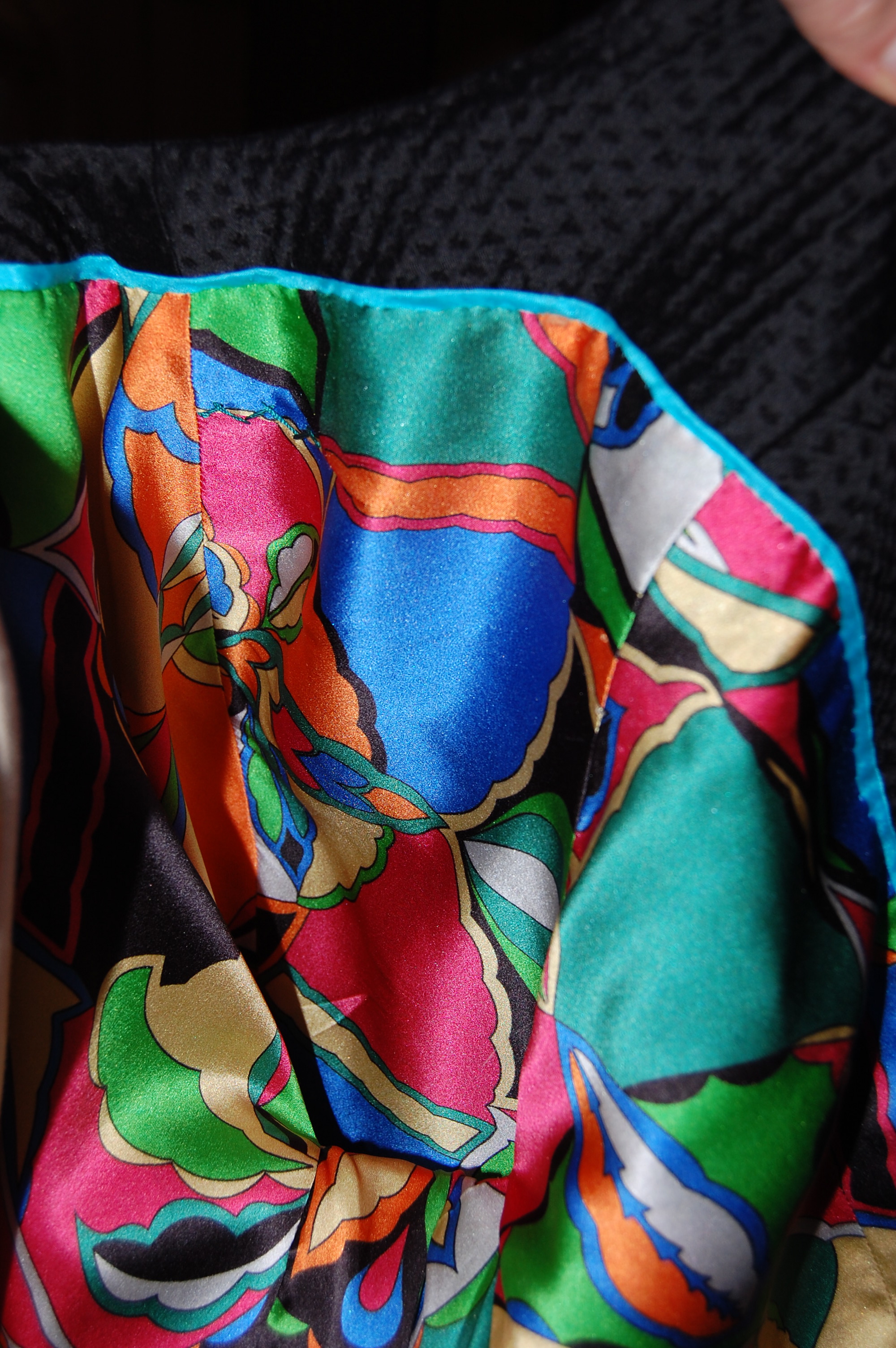
And here is a photo inside the jacket, looking towards one sleeve, which shows that the piecing does not show! Hurray. I honestly don’t think anyone seeing the jacket slung over a chair is ever going to suspect that the Pucci lining fabric does not extend all the way down the sleeves.

Defying the passage of years

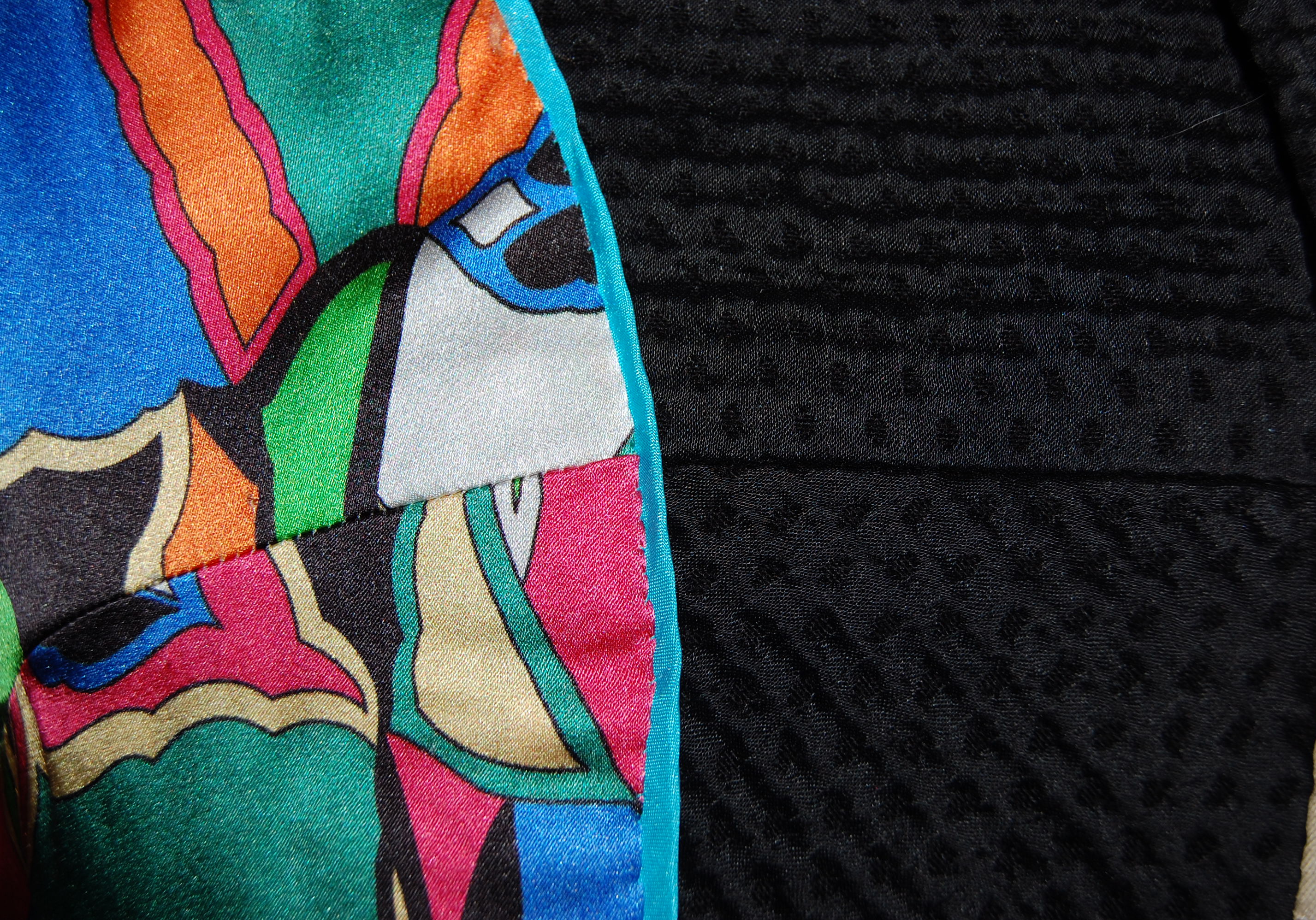
I also had the idea to add a narrow, bias, flat piping to the edge of the lining down the fronts and around the neckline. I found a turquoise silk in my fabric closet which seemed to keep with my “theme” of the turquoise under-stitching on the interior of the dress. This is one of those “dressmaker details” which just makes me happy.

Defying the passage of years

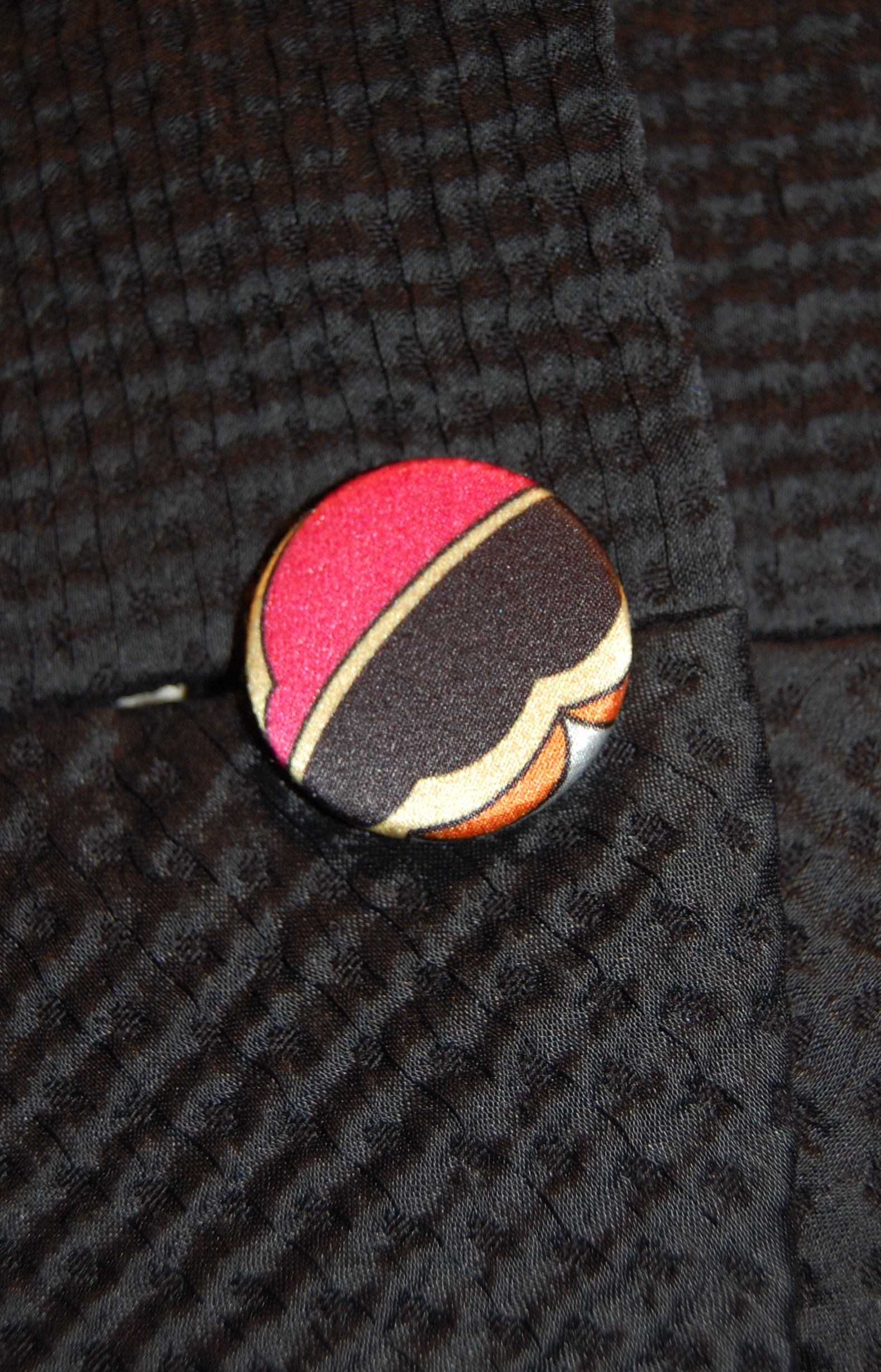
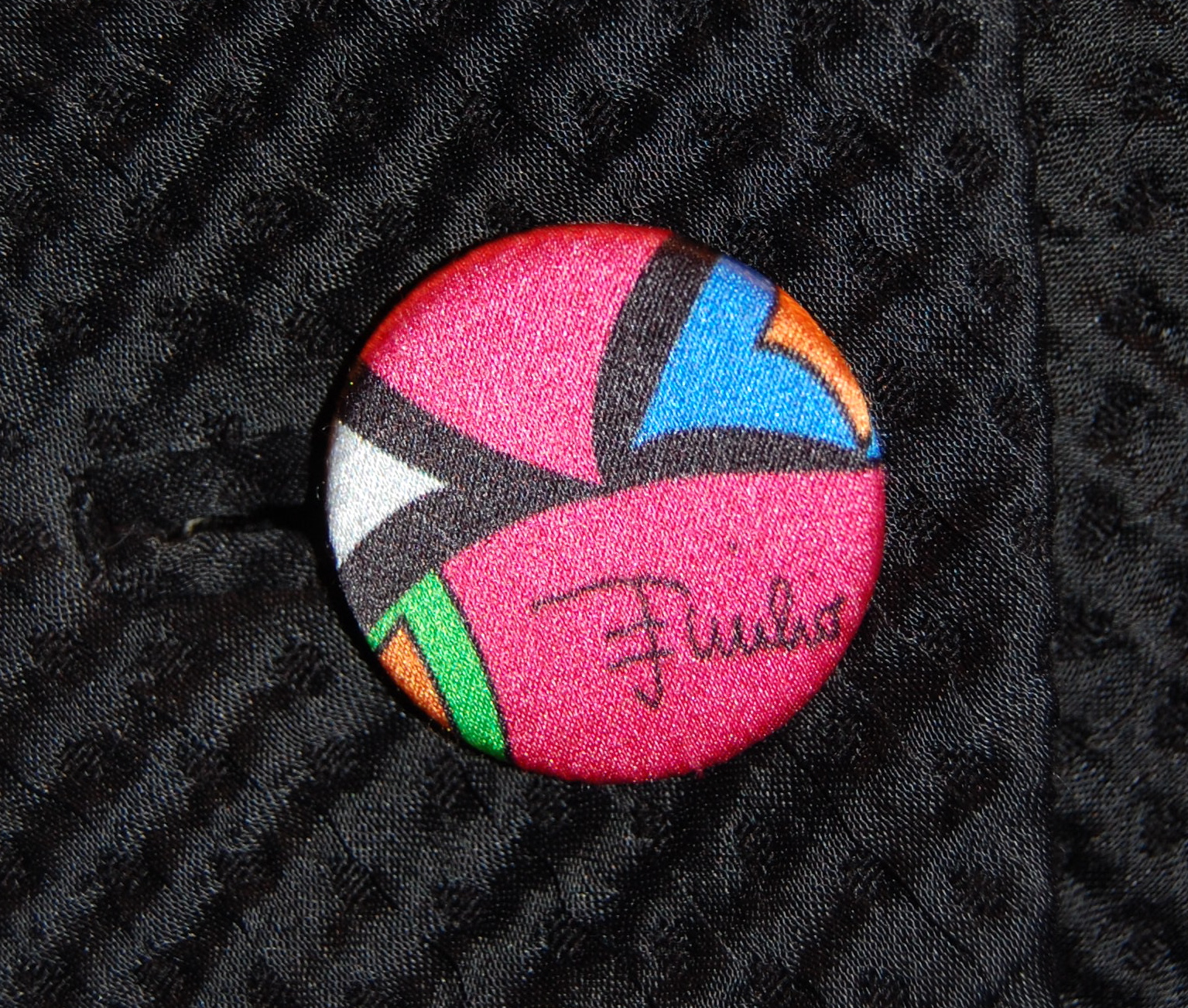
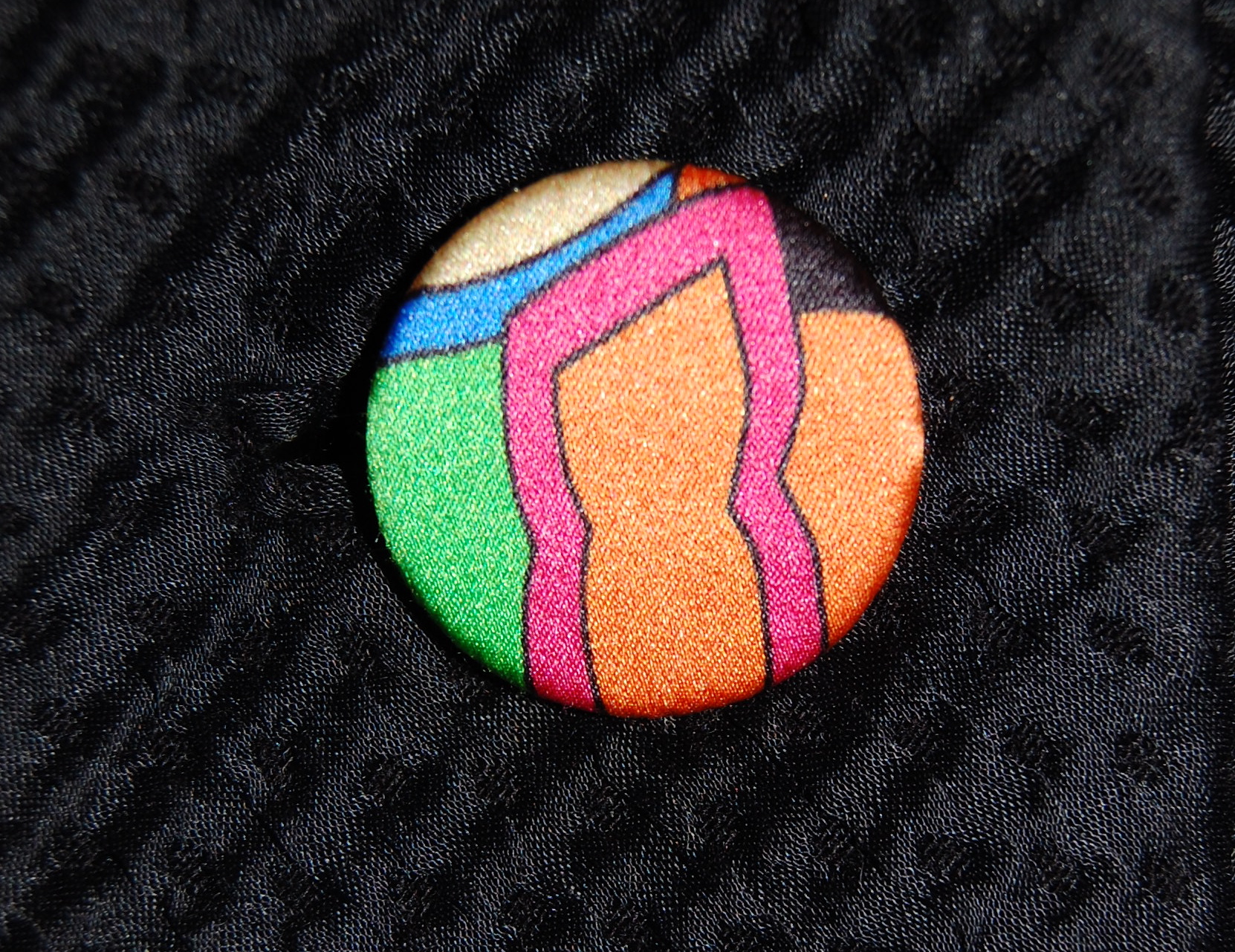
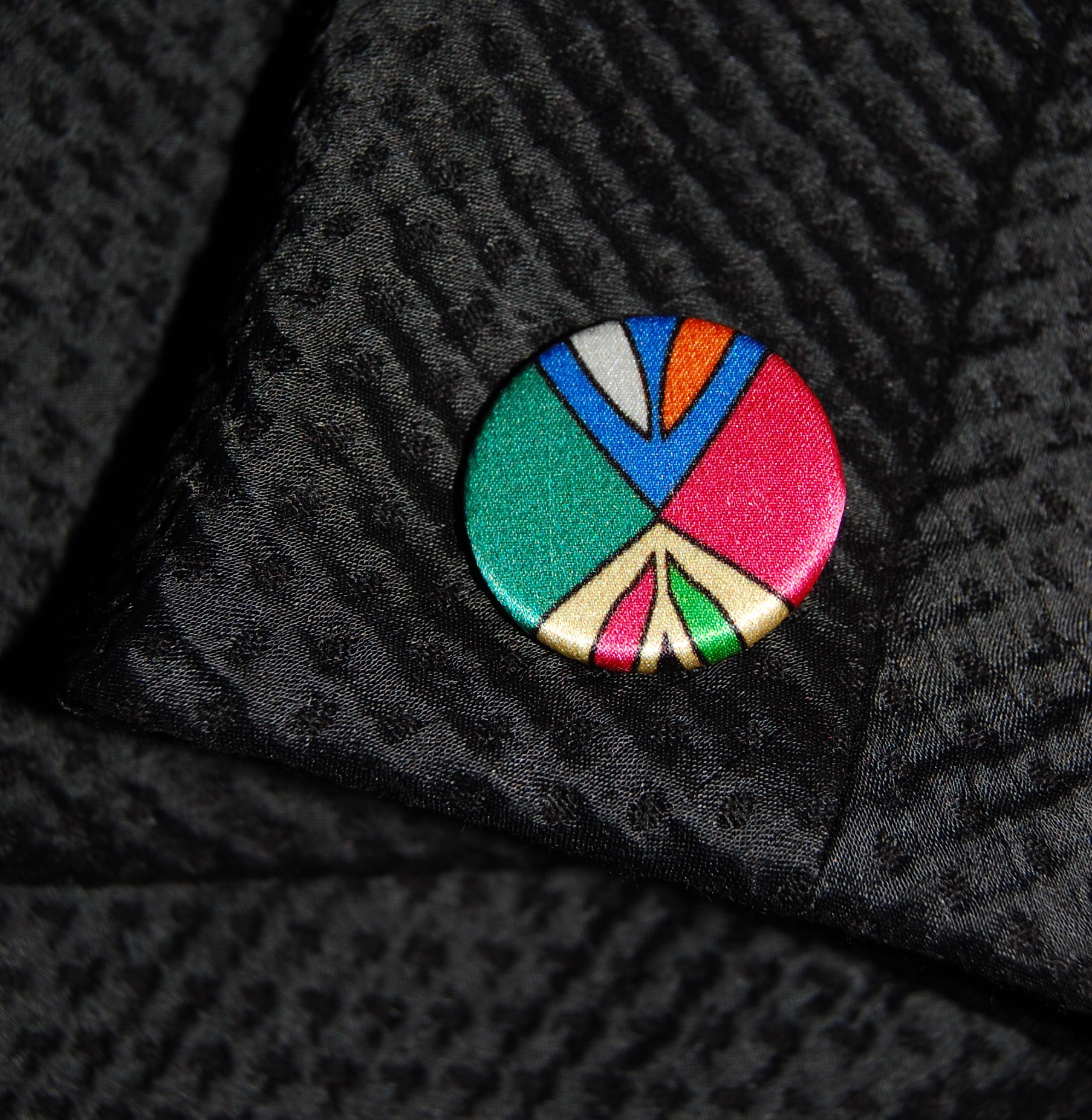
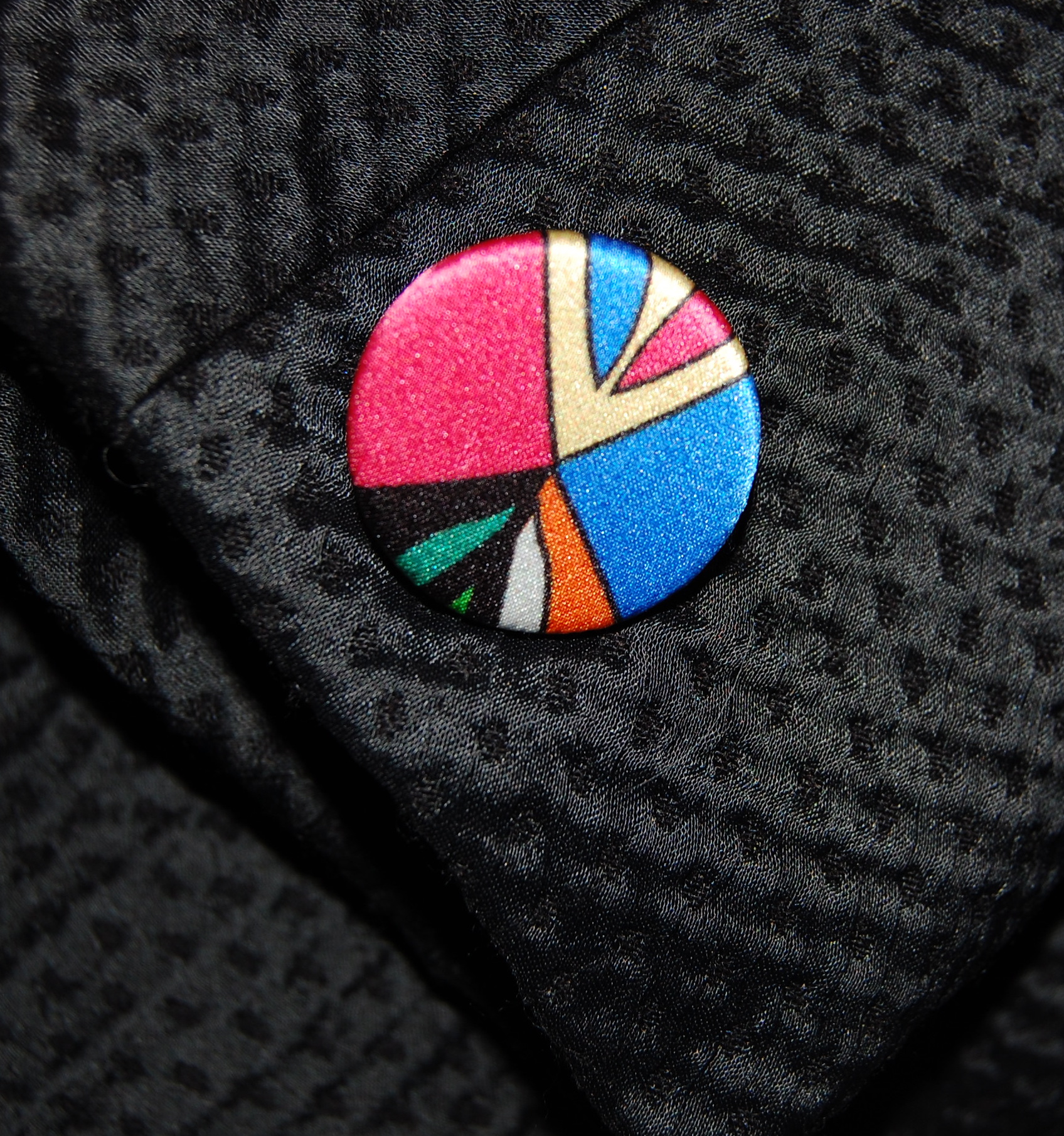
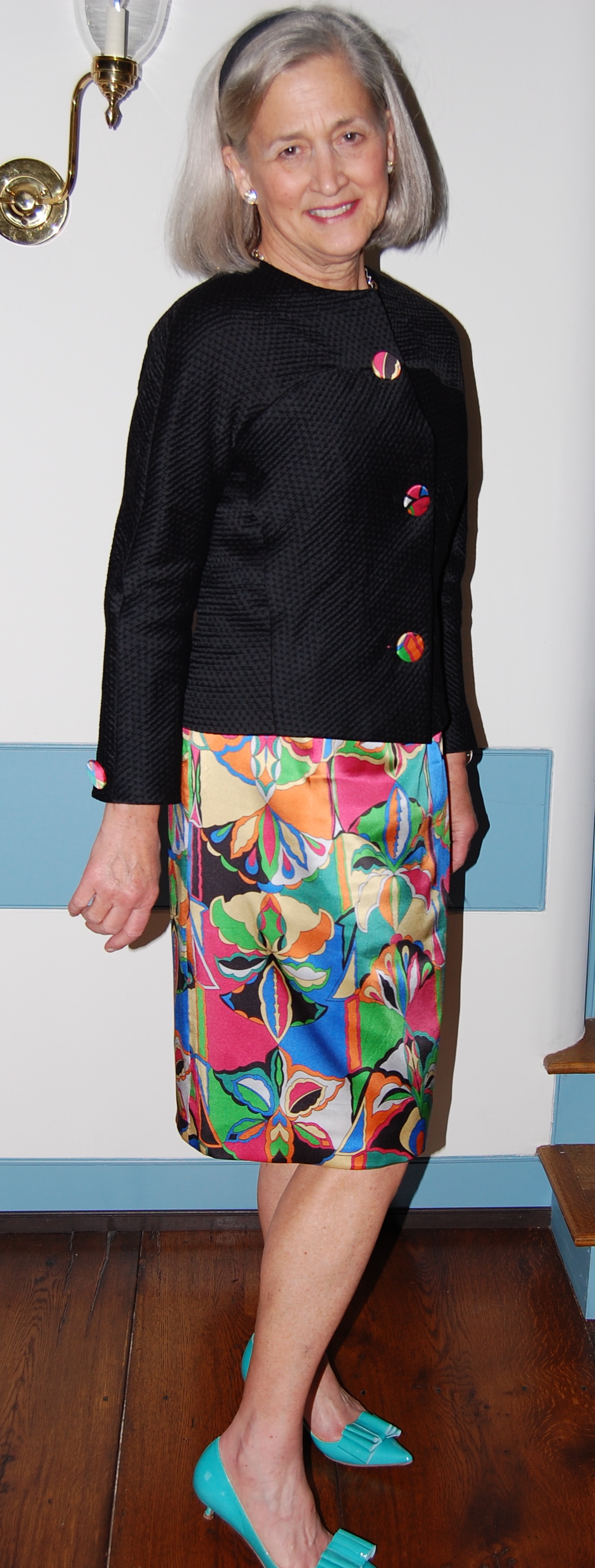
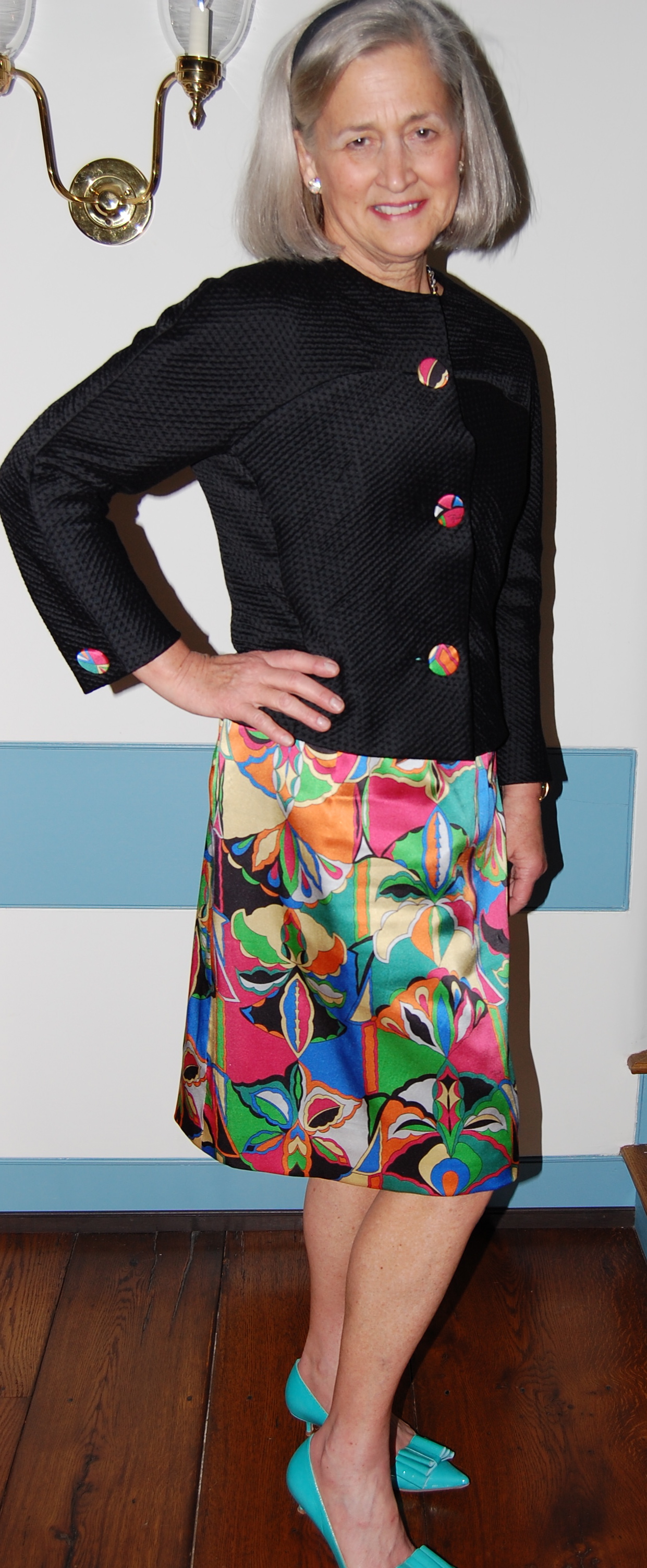
Another thing that makes me happy are the buttons! I picked out specific scraps of the silk, which featured designs I wanted to emphasize on the buttons. I sent them off to Pat Mahoney in Lodi, California, who returned them made into 1¼ inch buttons – flat and beautiful!

This is the button I chose for the top of the jacket.

This is the button I chose for the top of the jacket.  Notice the slot-seam-buttonhole.

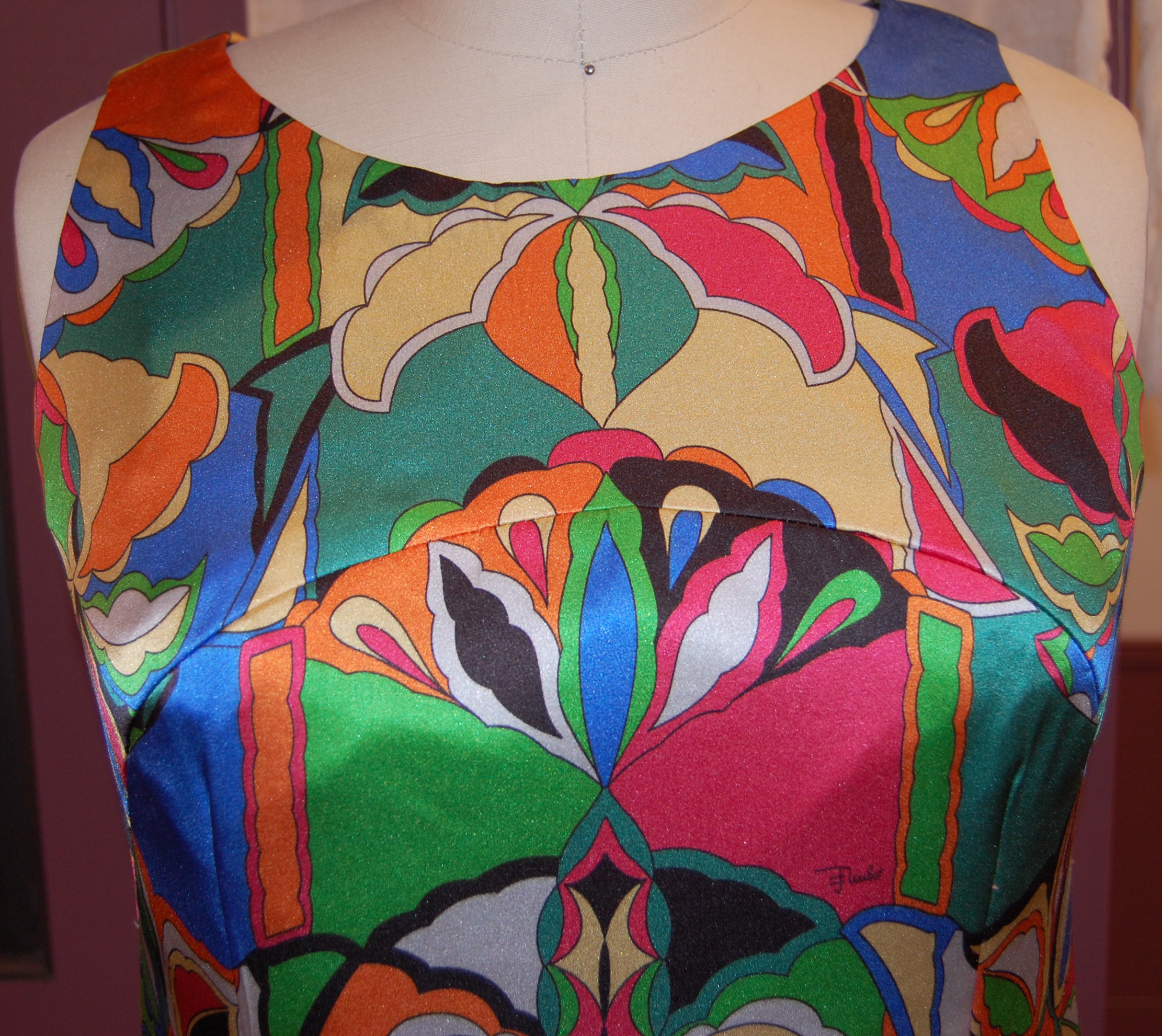
The middle button - I couldn't resist featuring the Emilio signature on this one.

The middle button – I couldn’t resist featuring the Emilio signature on this one.

And the lower button.

And the lower button.

I decided to have two extra buttons made in case I wanted to add them to the sleeves.   And – add them, I did. I like the extra subtle  attention they bring to the jacket. (Another dressmaker detail – specifically, an added embellishment.)

Defying the passage of years

Defying the passage of years

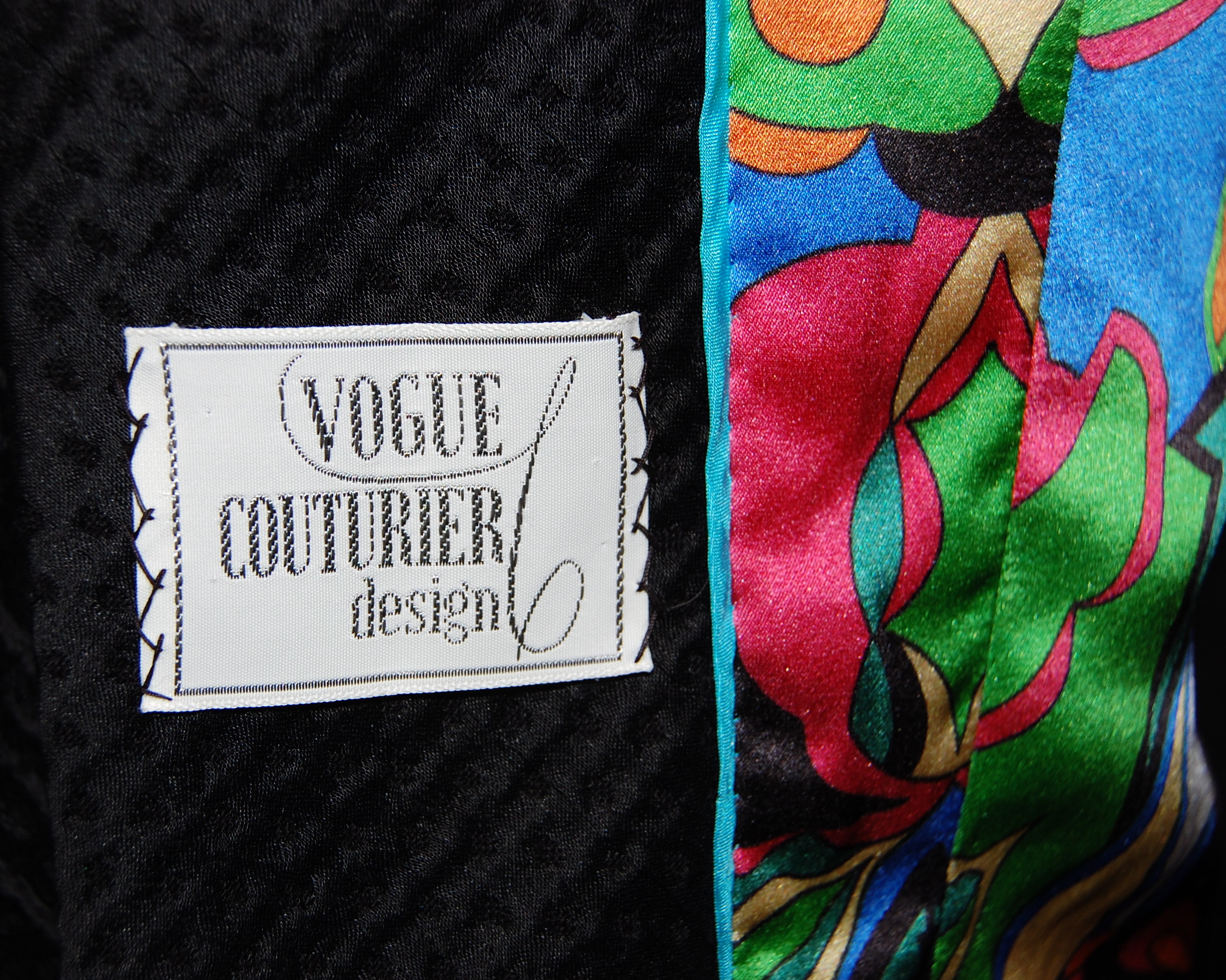
I had the jacket finished when I suddenly remembered that a Vogue label had come with the pattern. Of course, I was delighted to sew it in place.

Defying the passage of years

Defying the passage of years

Defying the passage of years
 Defyng the passage of years

Defying the passage of years

There is something about using a pattern from 1965 that seems quite amazing to me. Yes, it is simple math, but think about this: 1965 was 49 years ago!   Is anyone who sees me in this dress and jacket going to think that it is sewn from a 49-year-old pattern? Somehow I doubt it. I think my secret is safe.


28 Comments

Filed under Buttons - choosing the right ones, couture construction, Dressmaker details, sewing in silk, Slot-seam buttonholes, The Conde Nast Publications, Uncategorized, vintage Vogue Designer patterns, vintage Vogue patterns from the 1960s

Presently Preferring Pucci

Once I get into a project, especially one that has some complicated decisions or construction to it, I tend to think about it during many of my non-sewing hours. (I wonder if other sewers/dressmakers do that?) Now that I have finished my Pucci dress, I’ll be spending both sewing and non-sewing hours on the jacket.

First, however, some details about the dress are in order.

The dress is finished!

The dress is finished!

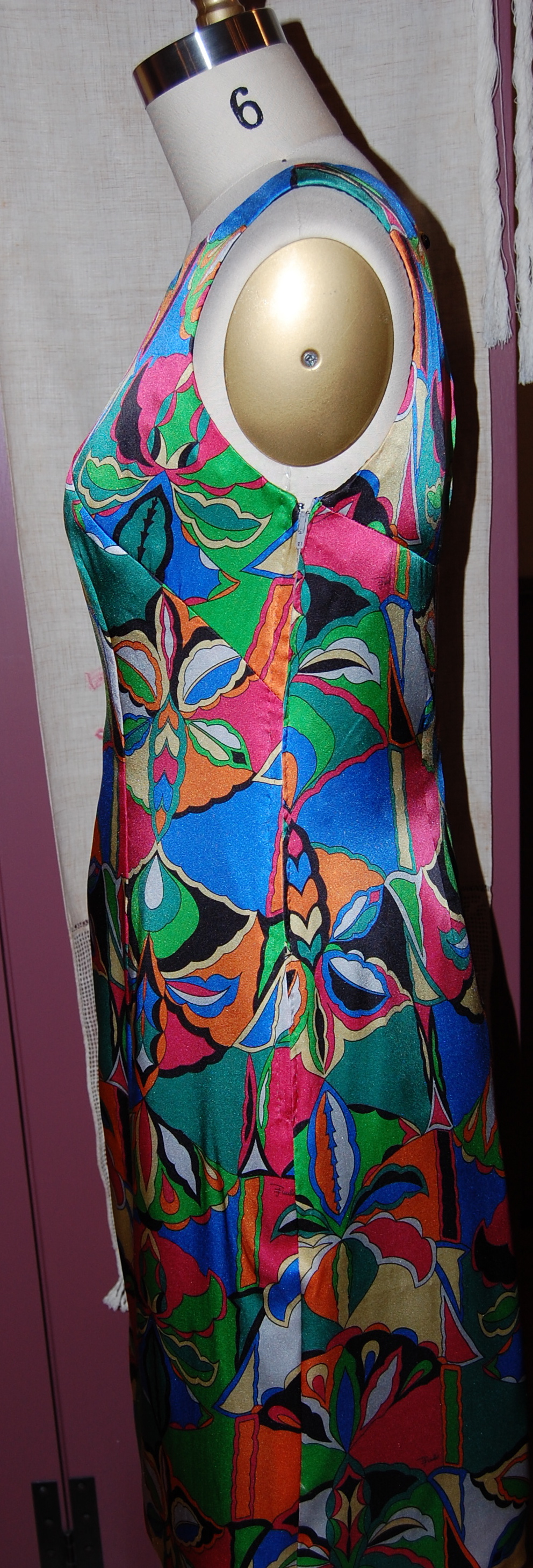
There are a few design aspects of this dress which set it apart from a simple A-line or sheath dress.  Notable to me is the effect that the curved front yoke makes on the bustline. It gives it more definition than it would have with just darts.

If you look closely, you can see the yoke seam.

If you look closely, you can see the yoke seam.

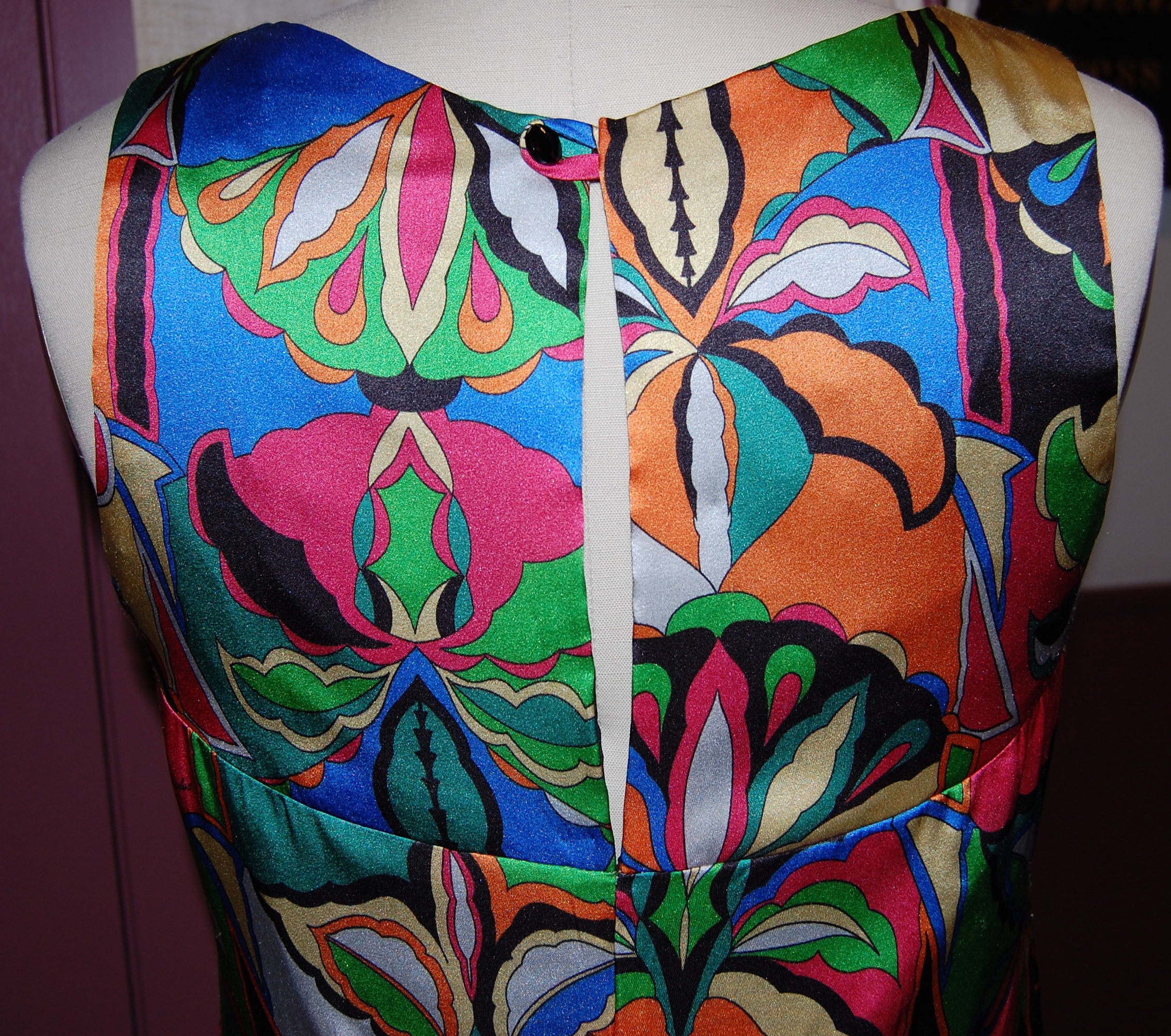
The back yoke adds some “surprise” interest by being split in the middle. In addition, the back of the dress would not be quite so clean looking if the zipper were placed in the center back below the yoke. Its location on the side seam is one of those hallmarks of a carefully planned Designer pattern.

The "open" yoke on the back of the dress.

The “open” yoke on the back of the dress.

I made some changes to the dress, based on the muslin. My six alterations are:

1) I decided to incorporate curved armholes into the two back yoke sections. On a younger person, the more revealing back arm would be fine, but I was not so comfortable with it!  Please see the photo above.

2) I took out some of the A-line from the dress. I wouldn’t say I actually “pegged” it, as I left a slight taper, but the effect is now one of a straighter skirt, which I think is a bit more “current.”

A sdie view shows this alteration best.

A side view shows this alteration best.

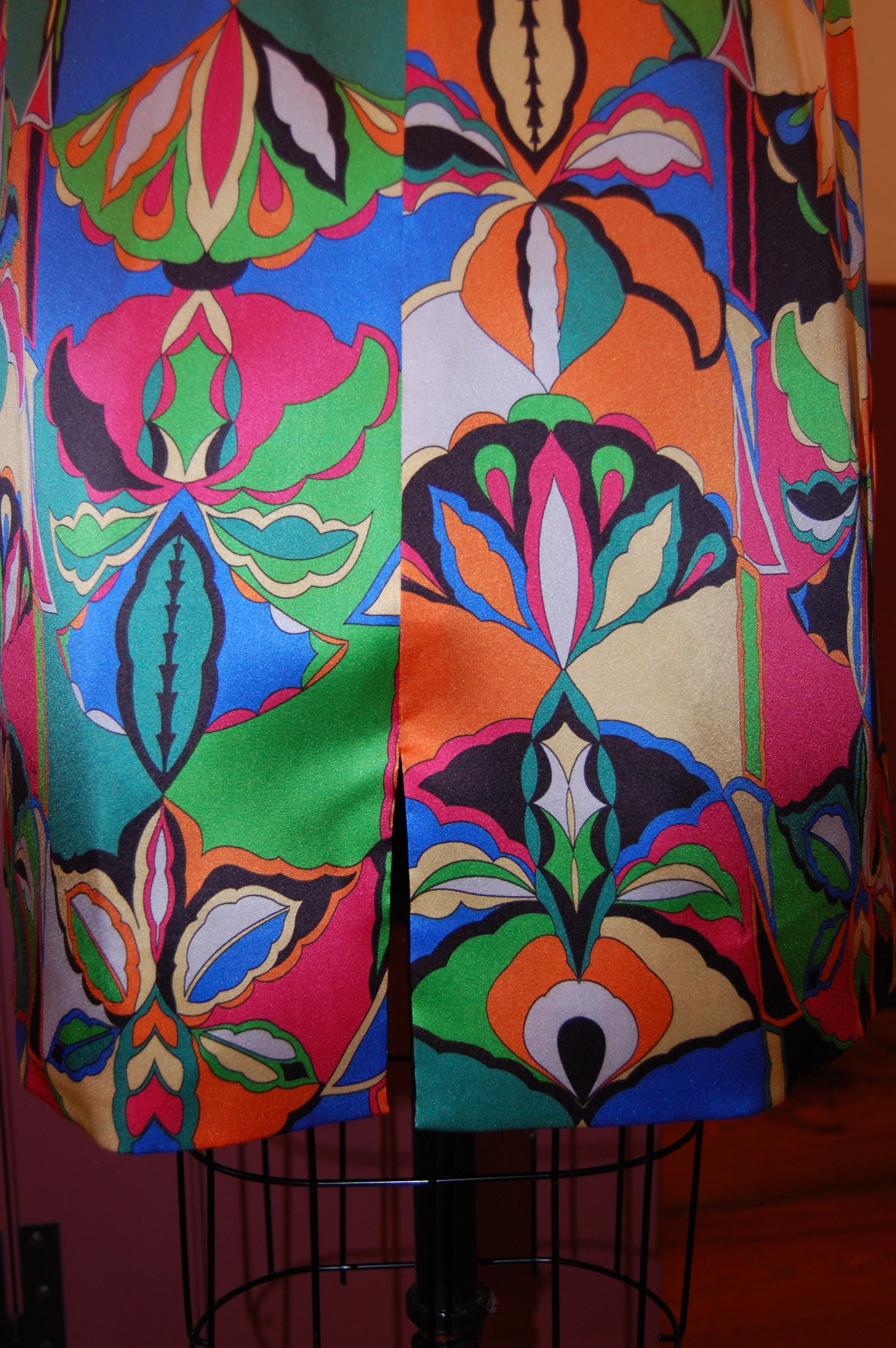
3) Taking out some of the taper meant I had to give myself a bit more ease in the skirt, so I left a slit at the center back.

The center back slit at the hem line.

The center back slit at the hem line.

4) I added two small darts to the back sides at the waist, which adds some definition to it.

5) I lowered the neckline to accommodate a particular necklace that I want to wear with this outfit. Isn’t it just lovely that sewing allows us the ability to make these kind of custom alterations?

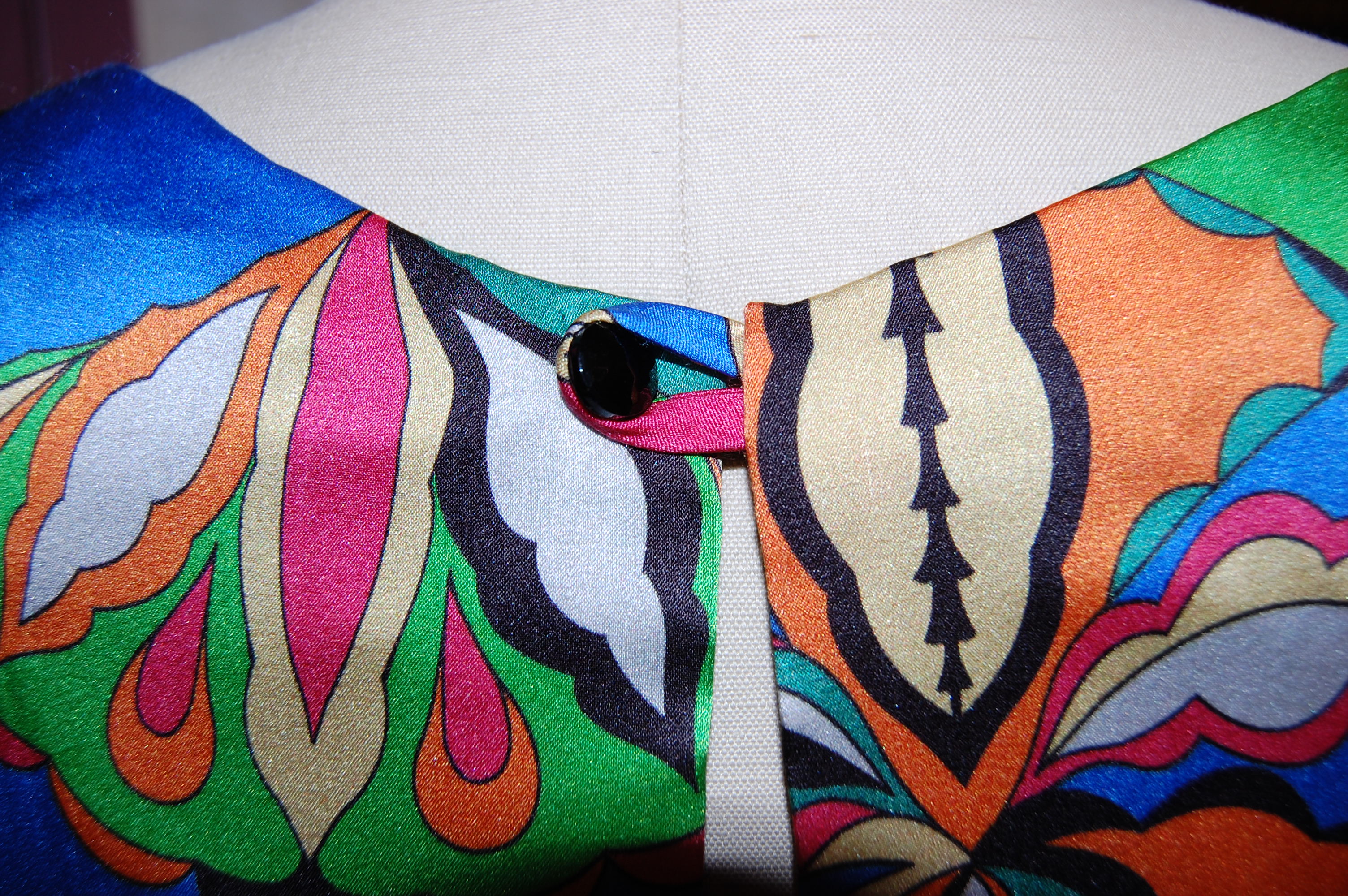
6) The pattern called for a hook and eye at the center back neck. I decided to add a loop and small button instead, although I added an interior hook and eye to help the back neck lay flat.  Adding this button and loop can definitely be called a “dressmaker detail”.

The button is one I have had in my button box for decades!  Its faceted surface seemed perfect for this dress.

The button is one I have had in my button box for decades! Its faceted surface seemed perfect for this dress.

Of course I underlined the dress with silk organza.

Preferring Pucci

This back view also shows the extended armhole line.

This back view also shows the extended armhole line.

And this side view shows how the front yoke adds definition to the bustline.

And this side view shows how the front yoke adds definition to the bustline.

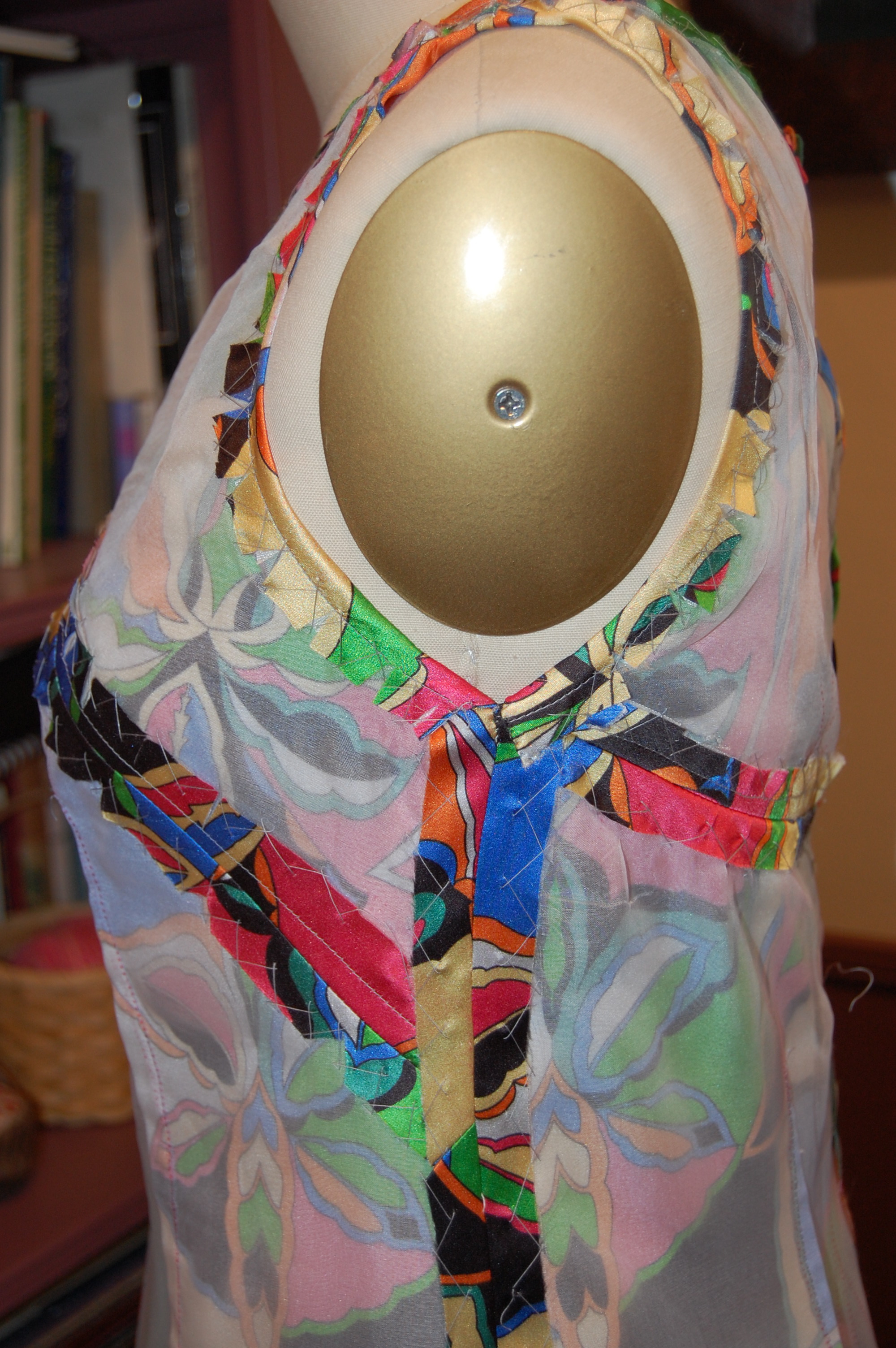
Then I lined the dress in black crepe de chine, and under-stitched the neckline and armhole seams with turquoise silk buttonhole twist, just for fun.

The dress turned inside out.

The dress turned inside out.

Under-stitchibng in turquoise. No one will ever see it, but I love what it adds!

Under-stitching in turquoise. No one will ever see it, but I love what it adds!  Click on the photo for a close-up view.

So – that’s it!

Now here’s a phenomenon that seems to happen to me frequently. I’ll be using a mid-century designer pattern for a project, and I’ll come across a current magazine or newspaper article, which in one way or another relates to what I am sewing or planning to sew. So it was this past weekend, when I was catching up with reading the April WSJ. The Wall Street Journal Magazine, delivered the weekend before. Right there on page 84 was an article on Laudomia Pucci, Emilio’s daughter, entitled: Fortress of Fashion. It is a fascinating account of her commitment to preserve the “fashion legacy” of her father, by reinventing an ancestral estate in Tuscany into an accessible-and-preservation-minded archives. On view are fabrics and fashions, and “already Pucci has hosted several educational events… Two groups of students … have come to study sewing and print design…[would not this be wonderful?! – my addition].  Laudomia is hoping to extend the educational activities to international fashion schools for longer visits.”   Her goal is to encourage the “next generation … to find inspiration for innovative fashion.” Now this is a place where a Preference for Pucci is definitely a way of life!


26 Comments

Filed under Buttons - choosing the right ones, couture construction, Dressmaker details, sewing in silk, side-placed zippers, Uncategorized, underlinings, vintage Vogue Designer patterns, vintage Vogue patterns from the 1960s, Vogue patterns

Magnificent Obsession

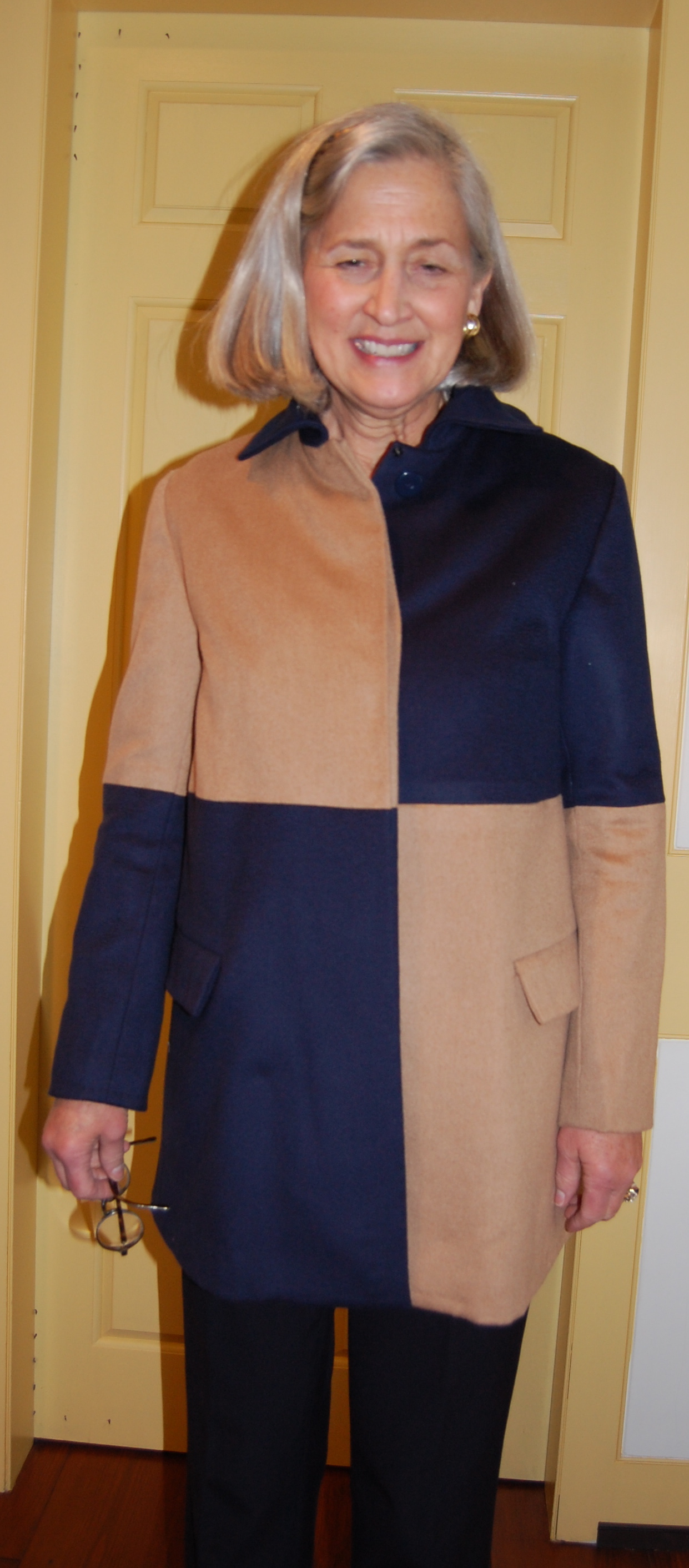
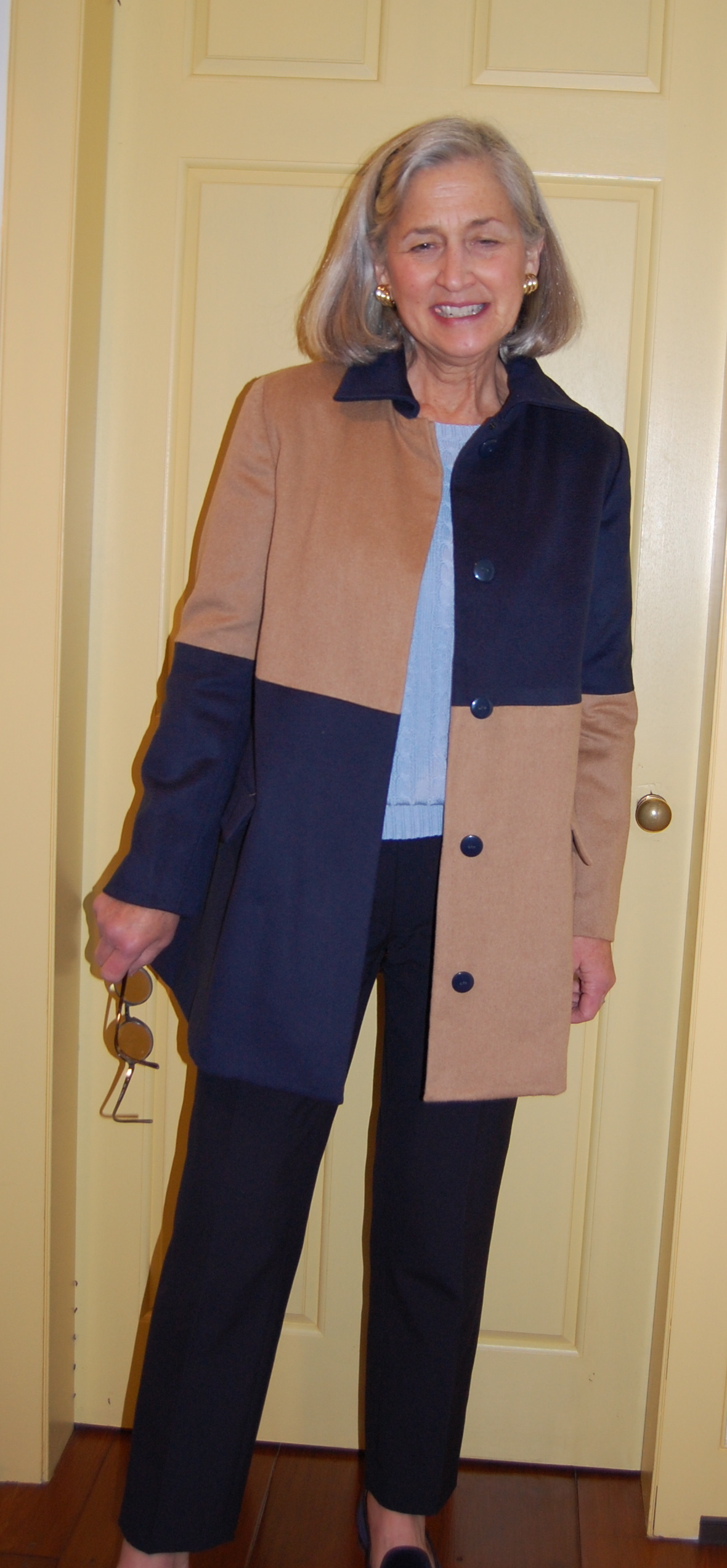
Sometimes the dreams and aspirations of our younger days take a long time to come to fruition.  Although I was doing a lot of fashion sewing for myself when I was in my twenties, there were many more Vogue pattern designs which I never had the opportunity to make.  One was Vogue Paris Original #2668 by Hubert de Givenchy (1927-).

Coats of certain length - 7 I never forgot the jacket, in particular, featured in this Designer Pattern.  Over the years I occasionally obssessed about this pattern, regretting that I had not purchased it.  I never imagined I would have a second chance to make it mine, but thanks to the marvels of the Internet, I did.  When I saw a listing for it in this Etsy store months ago, and it was in my size, I knew it was time to buy it.

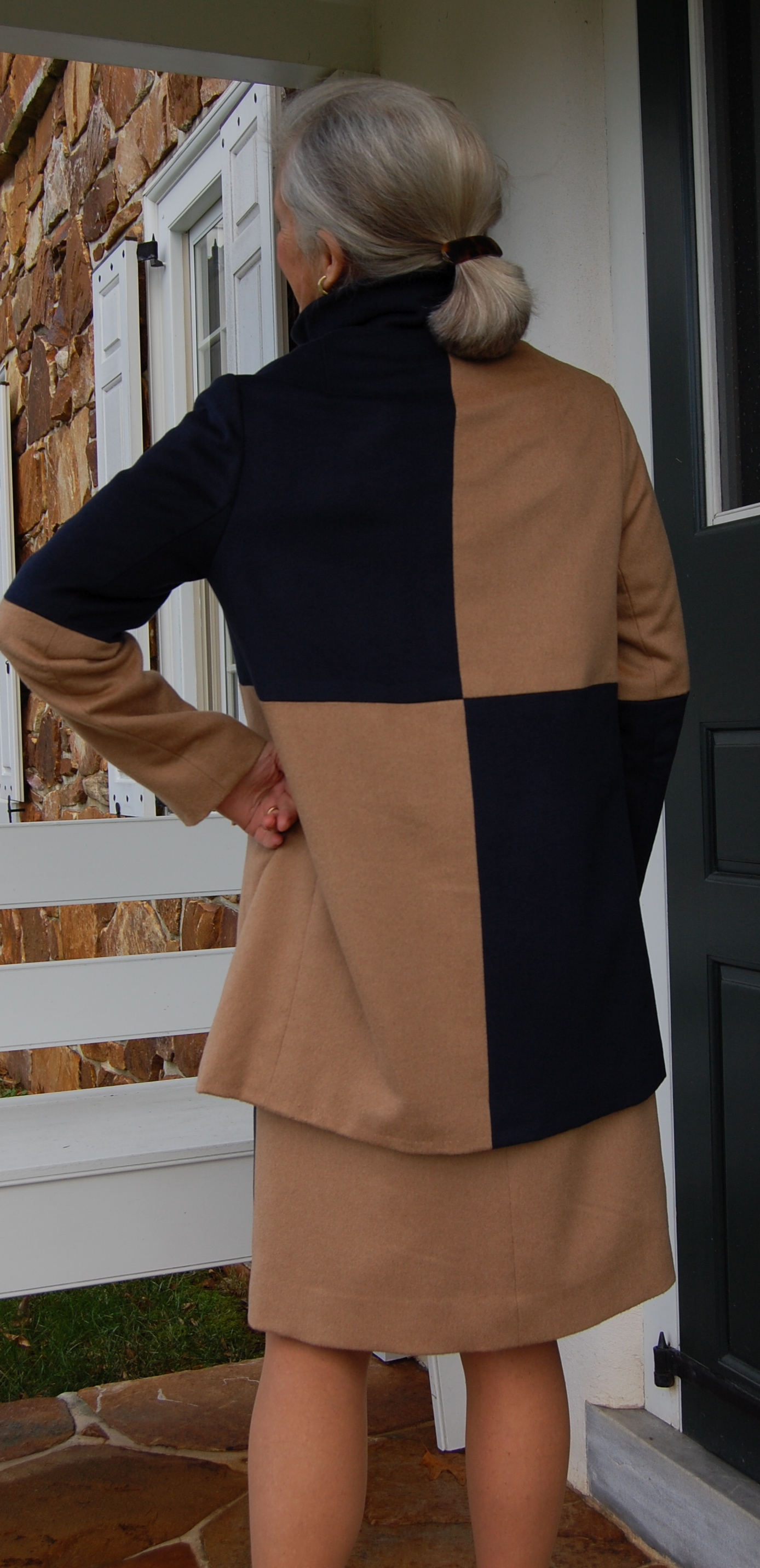
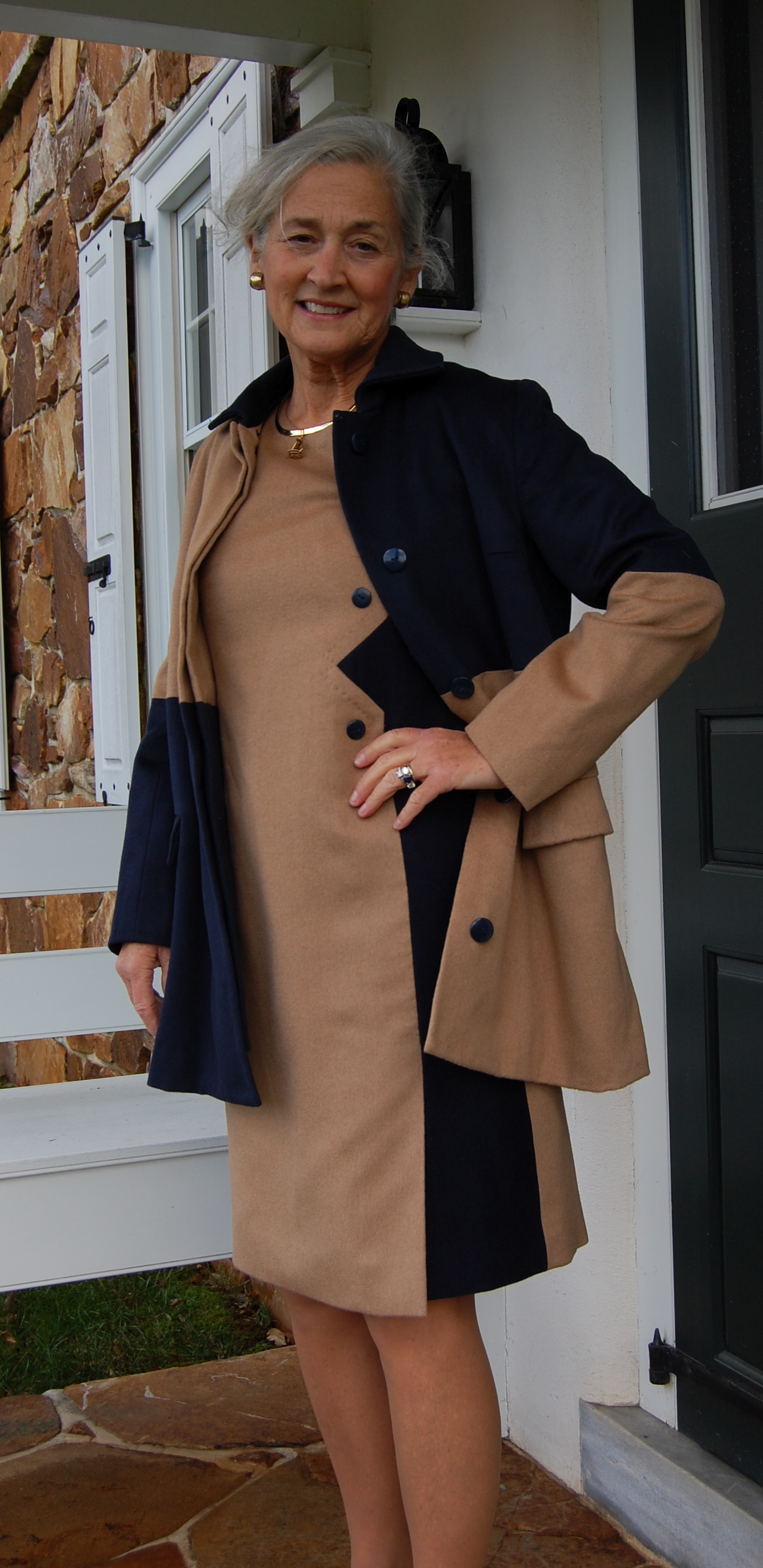
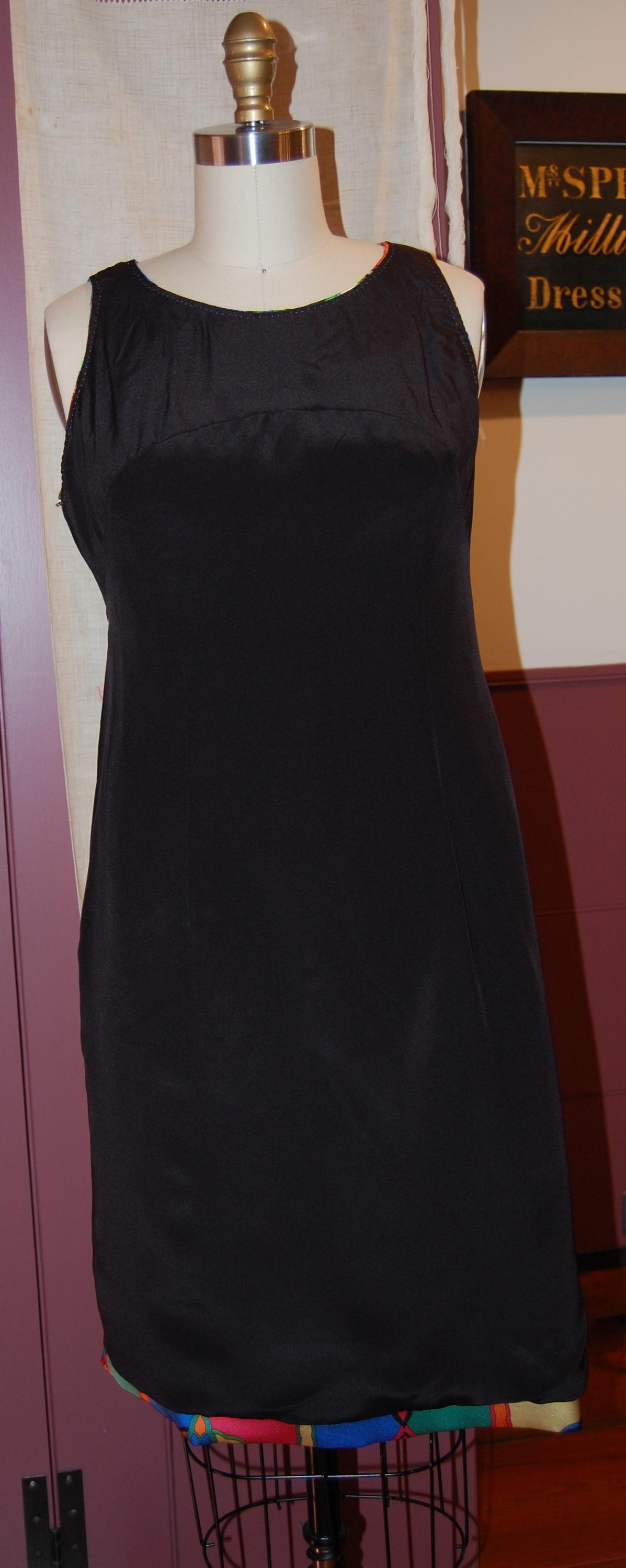
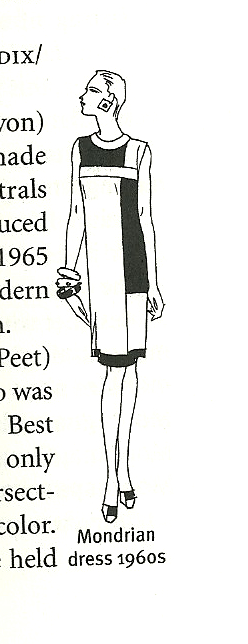
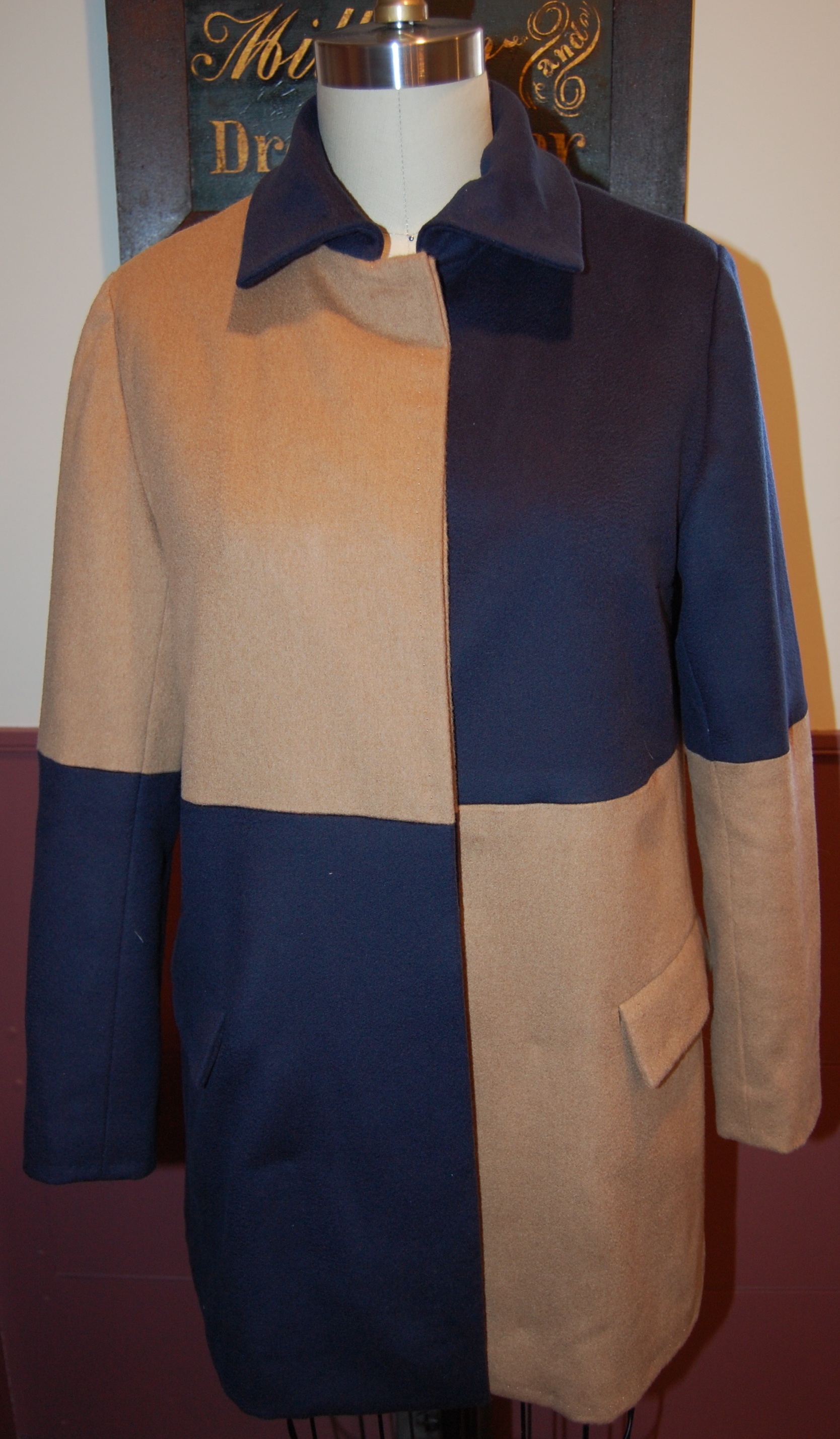
The use of color blocking, as featured in View A, became stylish in the mid-1960s, when Yves Saint Laurent introduced his classic Mondrian dress.

This little sketch from The Fairchild Dictionary of Fashion, Fairchild Publications, Inc., New York, New , York, 2010, p. 329, shows the classic blocked design.

This little sketch from The Fairchild Dictionary of Fashion, Fairchild Publications, Inc., New York, New  York, 2010, p. 329, shows the classic blocked design.

The appeal of the use of large geometrical sections of contrasting colors was widespread then and has, for many of us, never lost its cachet.  The clean precise lines, and diverse use of fabrics in color blocking must have appealed to Hubert de Givenchy’s sense of design.  Known for simplicity and refinement, according to Arlene C. Cooper, writing in the St. James Fashion Encyclopedia, Givenchy emphasizes “line rather than decoration”.  Further, Givenchy is known for “coats that are marvels of line and volume…”  (St. James Fashion Encyclopedia, Visible Ink Press, Detroit, MI, 1997, p. 154).  Vogue Patterns must have been exceptionally pleased to have the rights to this design for its Designer Series in the early 1970’s.

I started my jacket in early February this year in Susan Khalje’s Couture Sewing School class in San Francisco.  I just finished it.

Magnificent Obsession

Magnificent Obsession

I like it worn open as well...

I like it worn open as well…

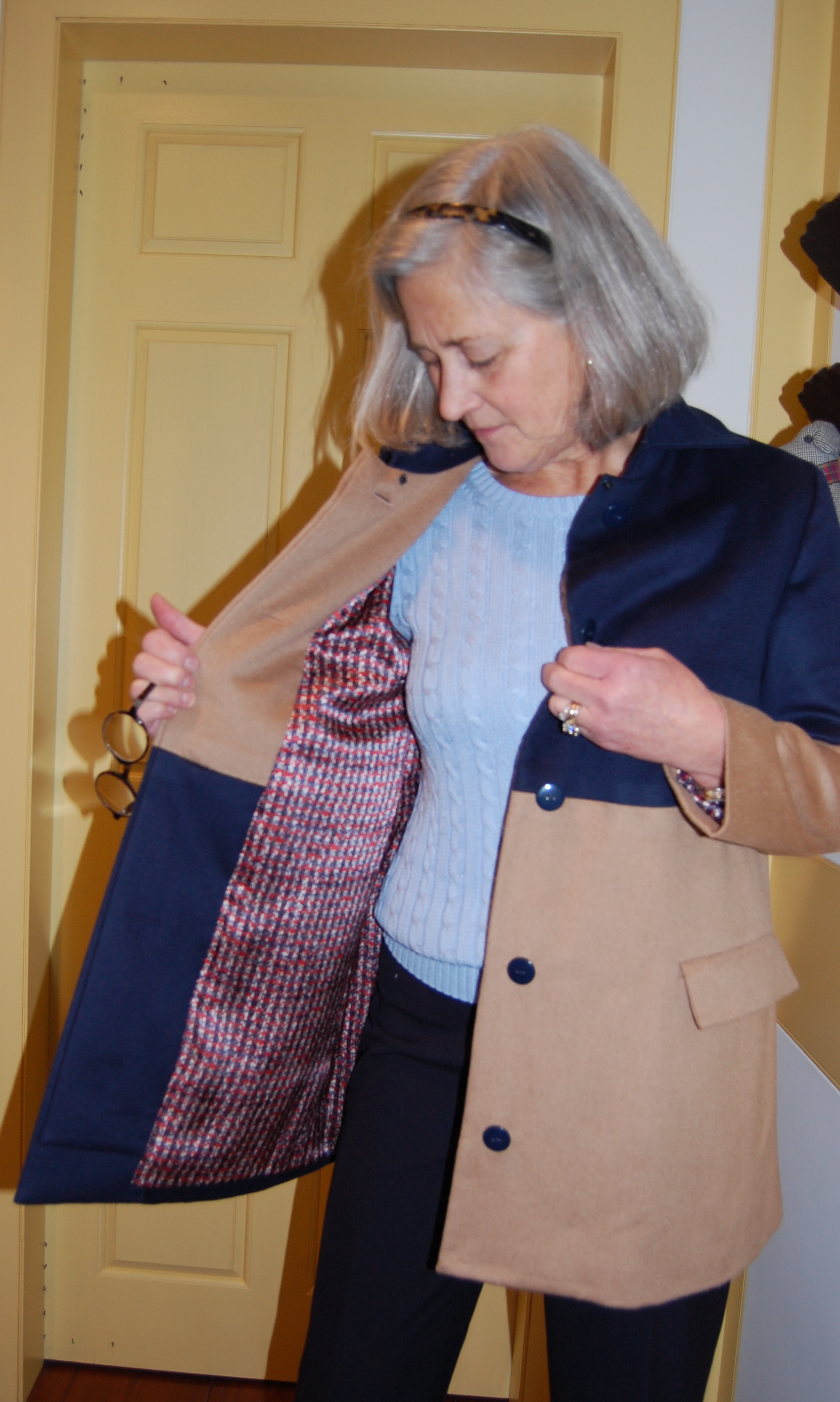
A look inside...

A look inside…

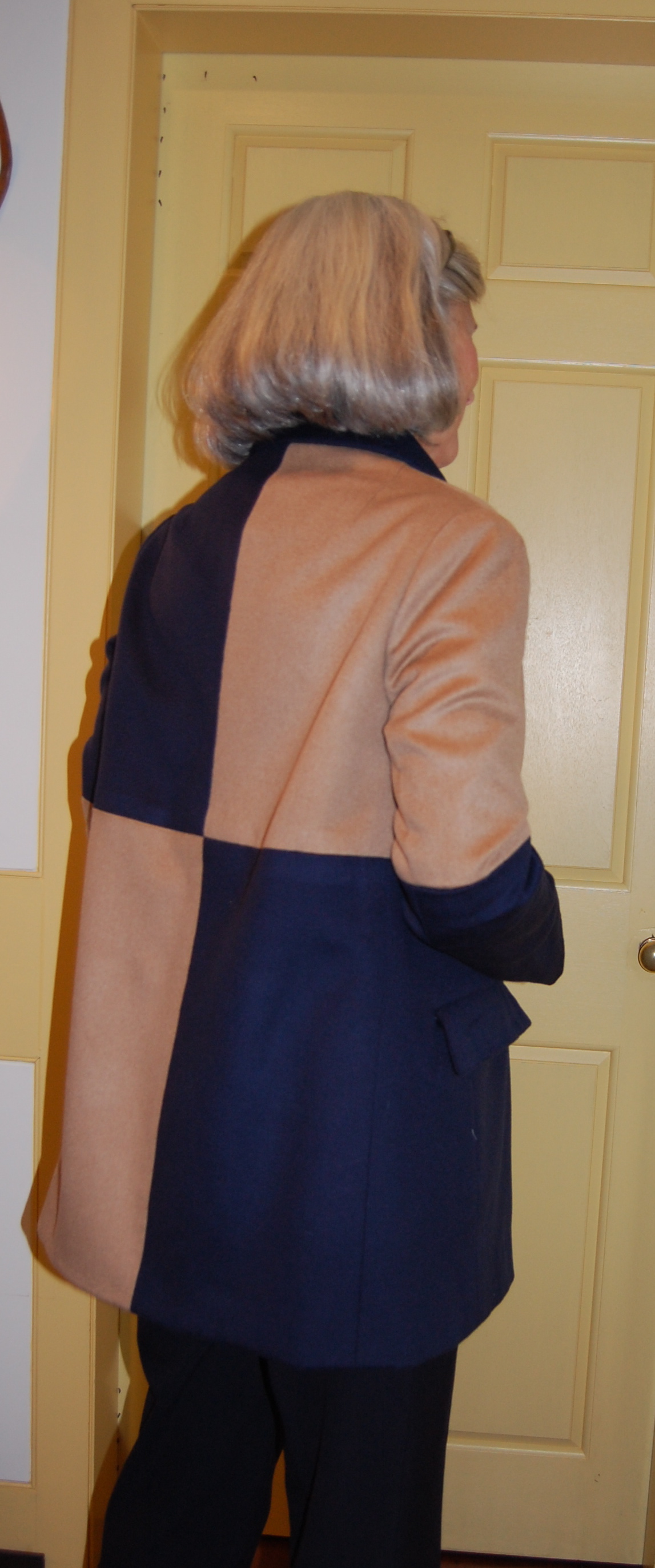
A back view.

A back view.

Making this was one of the most enjoyable sewing experiences I have ever had.  Being privileged to get Susan’s expert guidance on some parts of the jacket certainly was part of the equation.  In addition to that, however, were the preciseness and subtle design details of the pattern, which made it a pleasureable sew.  A few of those details are:

1)  the genius of the extra side panel, which enhances the “swing” line of the coat.

2) that side panel  also allows the use of a Dior dart which adds just enough to the bust to keep the line smooth, but ample.

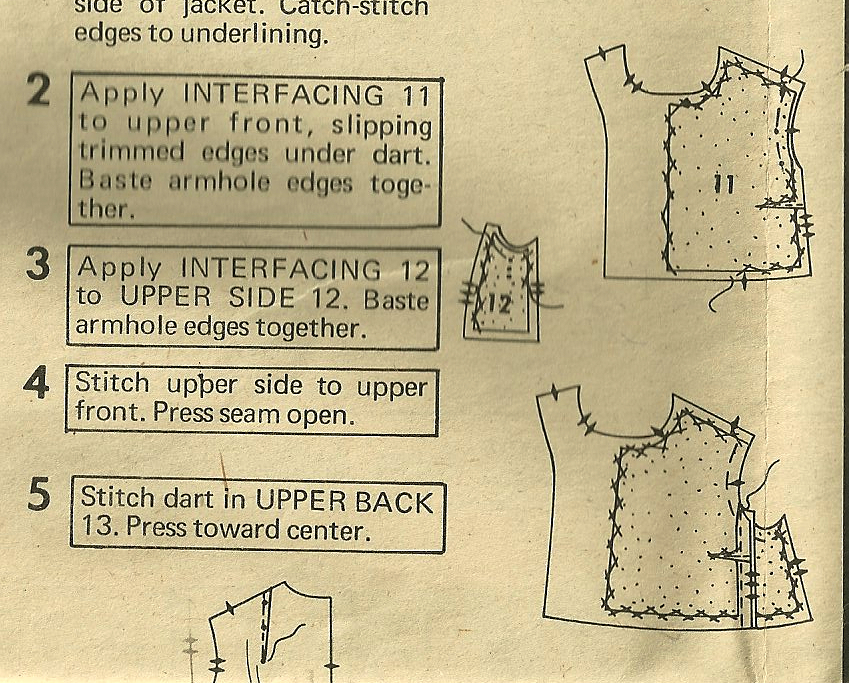
Th instruction sheet gives a good diagram of the small Dior dart tucked into that front side seam.

The instruction sheet gives a good diagram of the small Dior dart tucked into that front side seam.

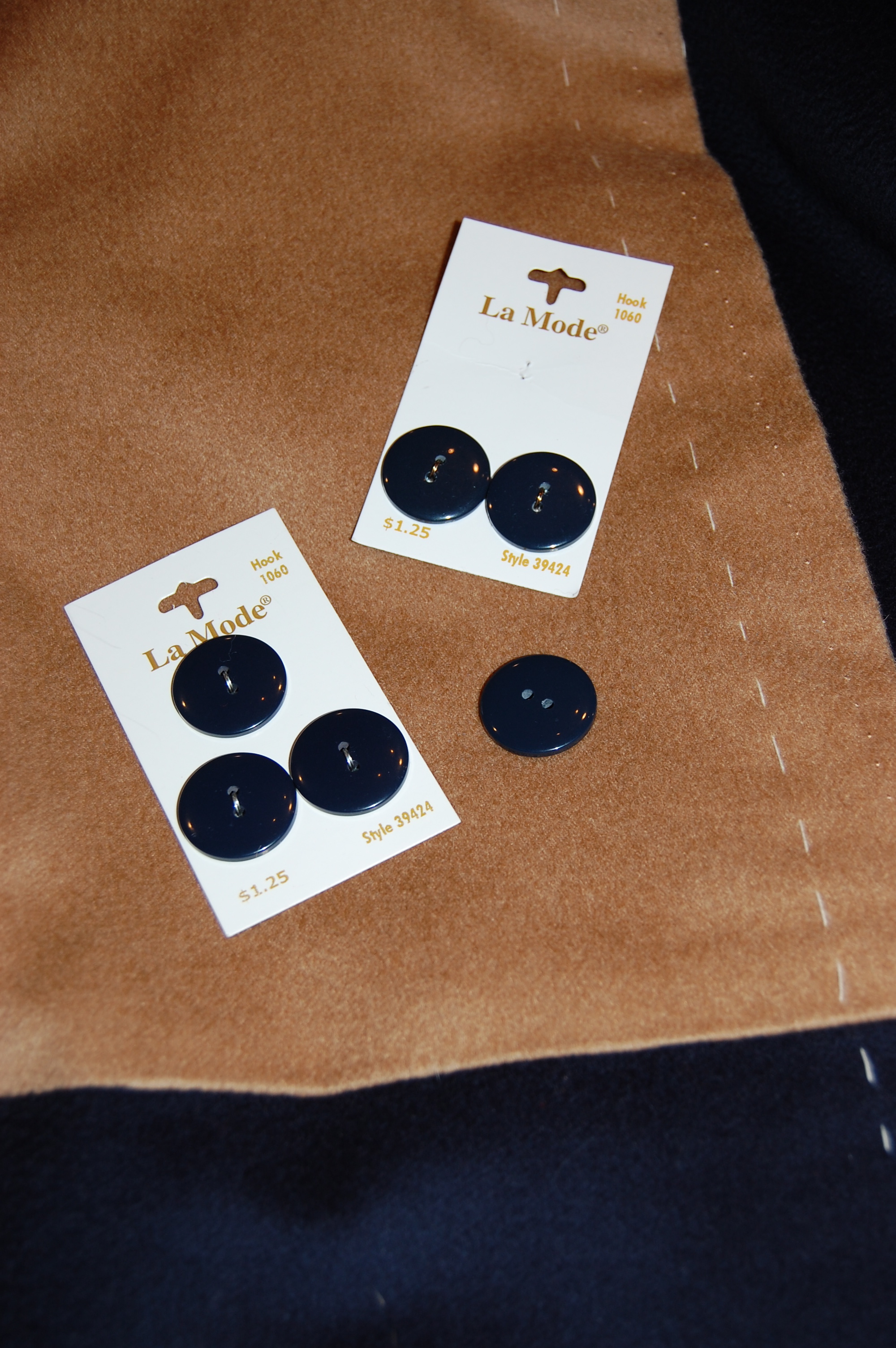
3) the concealed front allows the clean appearance of the coat to be unencumbered by buttons.

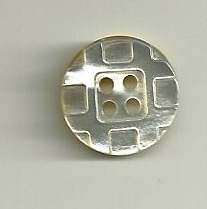
I chose these navy blue buttons for the concealed front.  They are flat, simple, and match the blue exactly.

I chose these navy blue buttons for the concealed front. They are flat, simple, and match the blue exactly.

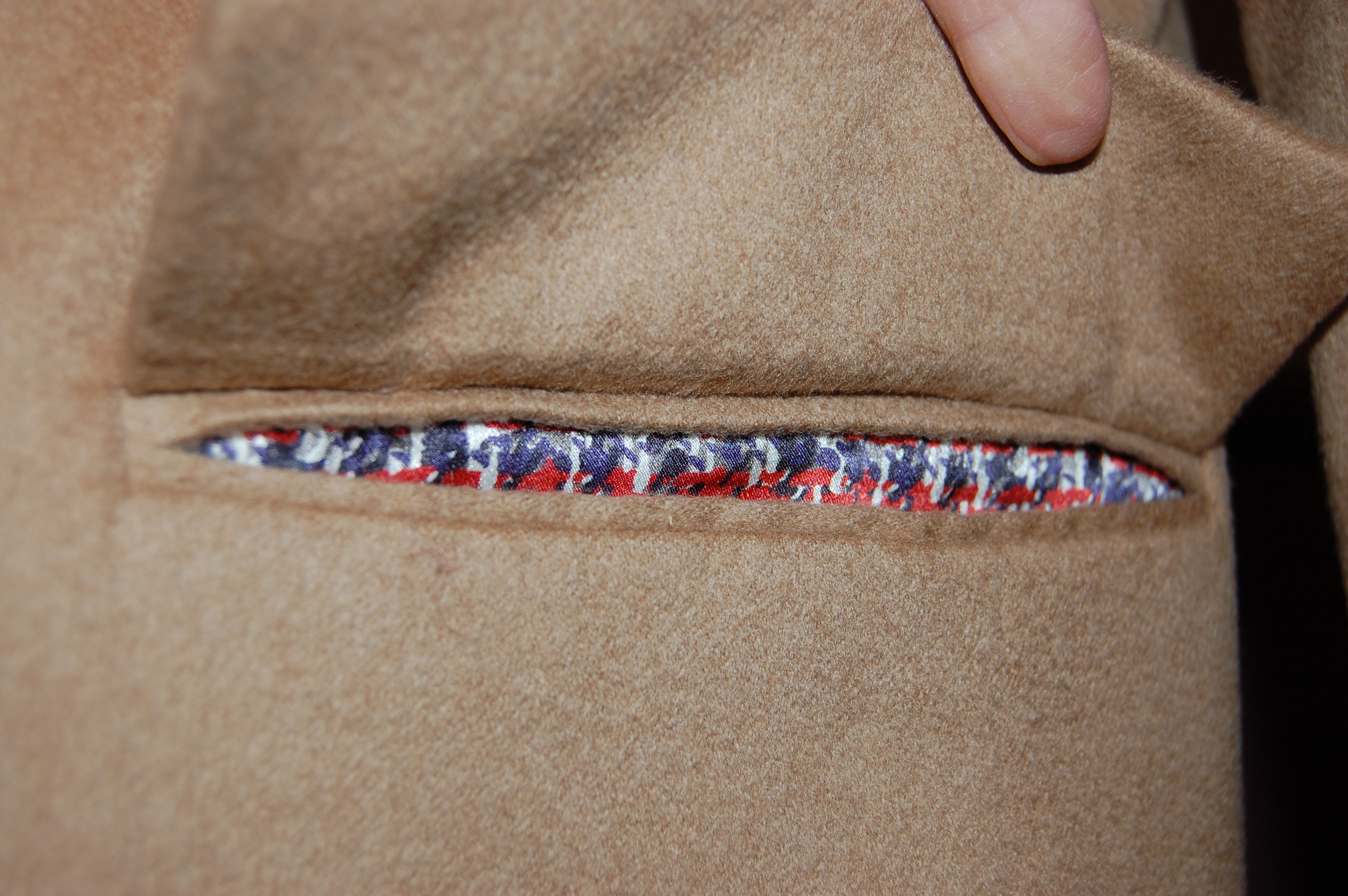
4) the flap pockets, which conceal the openings, again with minimal interruption to the clean and “simple” look.

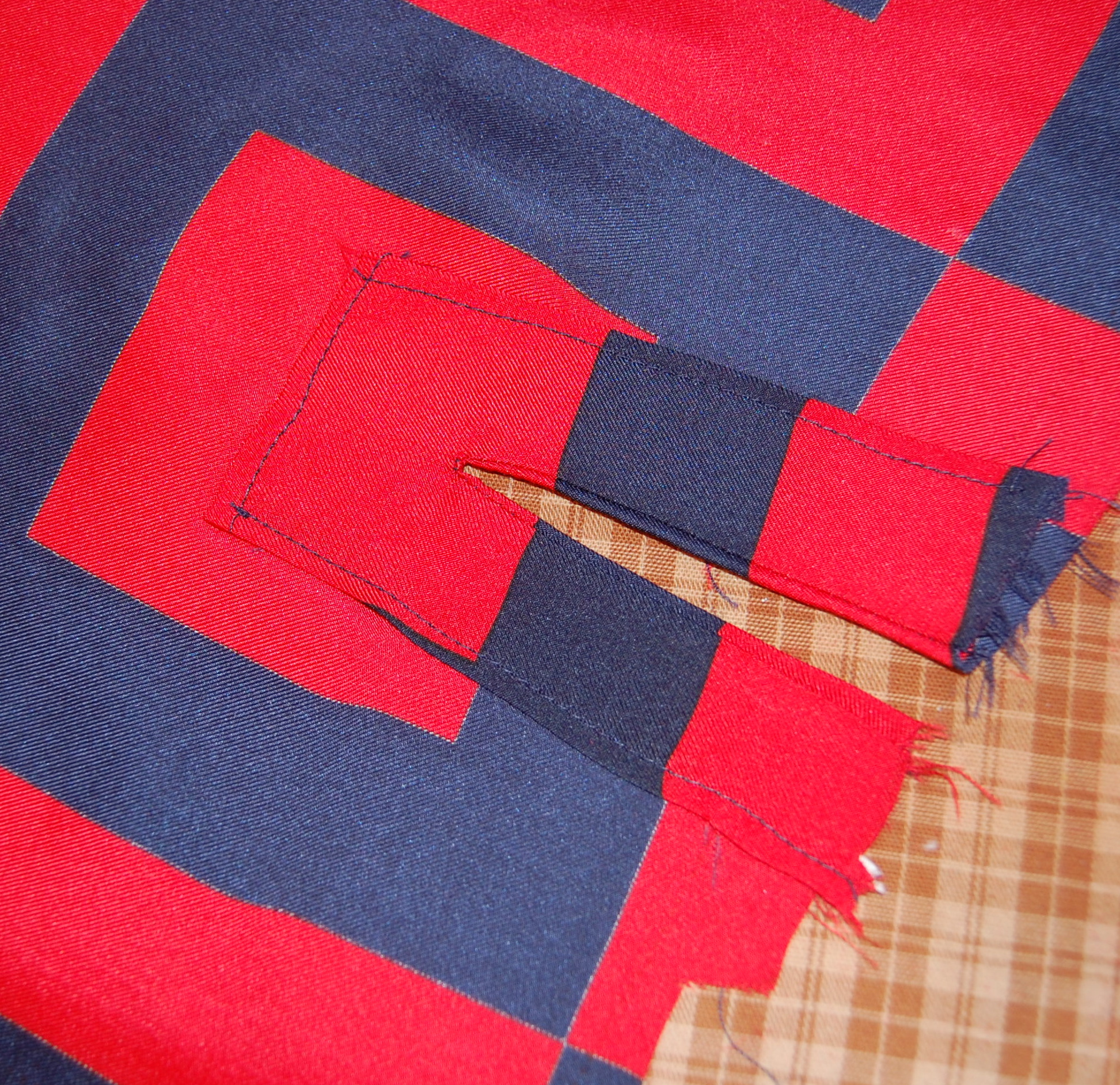
The concealed opening, with a flash of pretty pocket lining.

The concealed opening, with a flash of pretty pocket lining.

I did make a few changes/alterations to the jacket, ensuring a better fit for me in 2014.

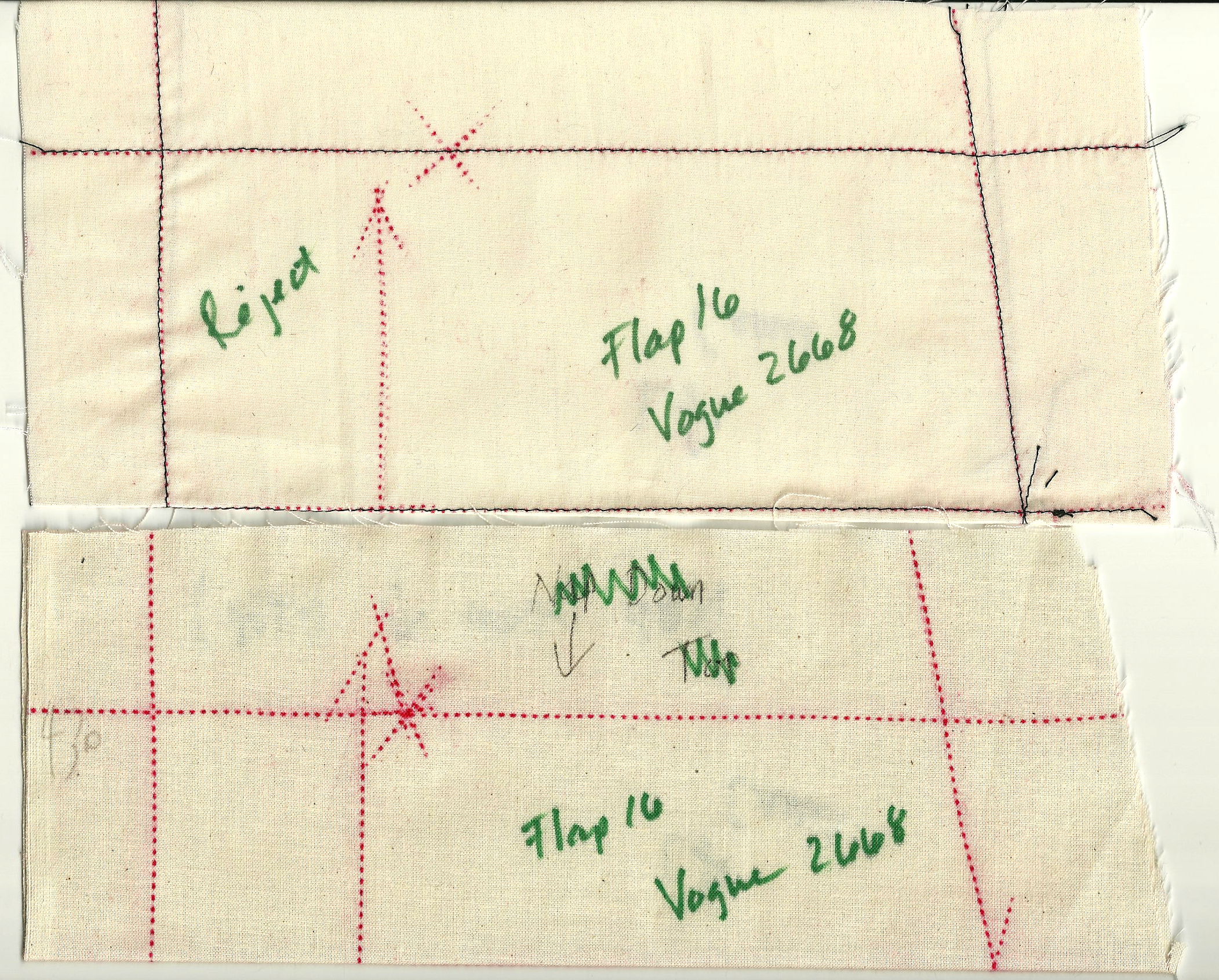
First, with Susan’s assistance, I took some of the volume out of the back seam, as it was just too full for my frame.  Second, I added ½ “ to the diameter of each sleeve, as they were just a little too slim for comfort.  Doing this allowed me to enlarge the lower armscye, also adding comfort and more flexibility.  I felt like I was able to do these alterations without changing the look of the jacket.  I also made two “visible” changes, although still in keeping with the design.  The original flaps looked a little too “’70s” to me.  I reduced the “depth” of them by 7/8″, so that they are more in keeping with modern sensibility.

These muslin patterns are folded in half to show the depth of the original flap and the depth of the altered one below.

These muslin patterns are folded in half to show the depth of the original flap and the depth of the altered one below.

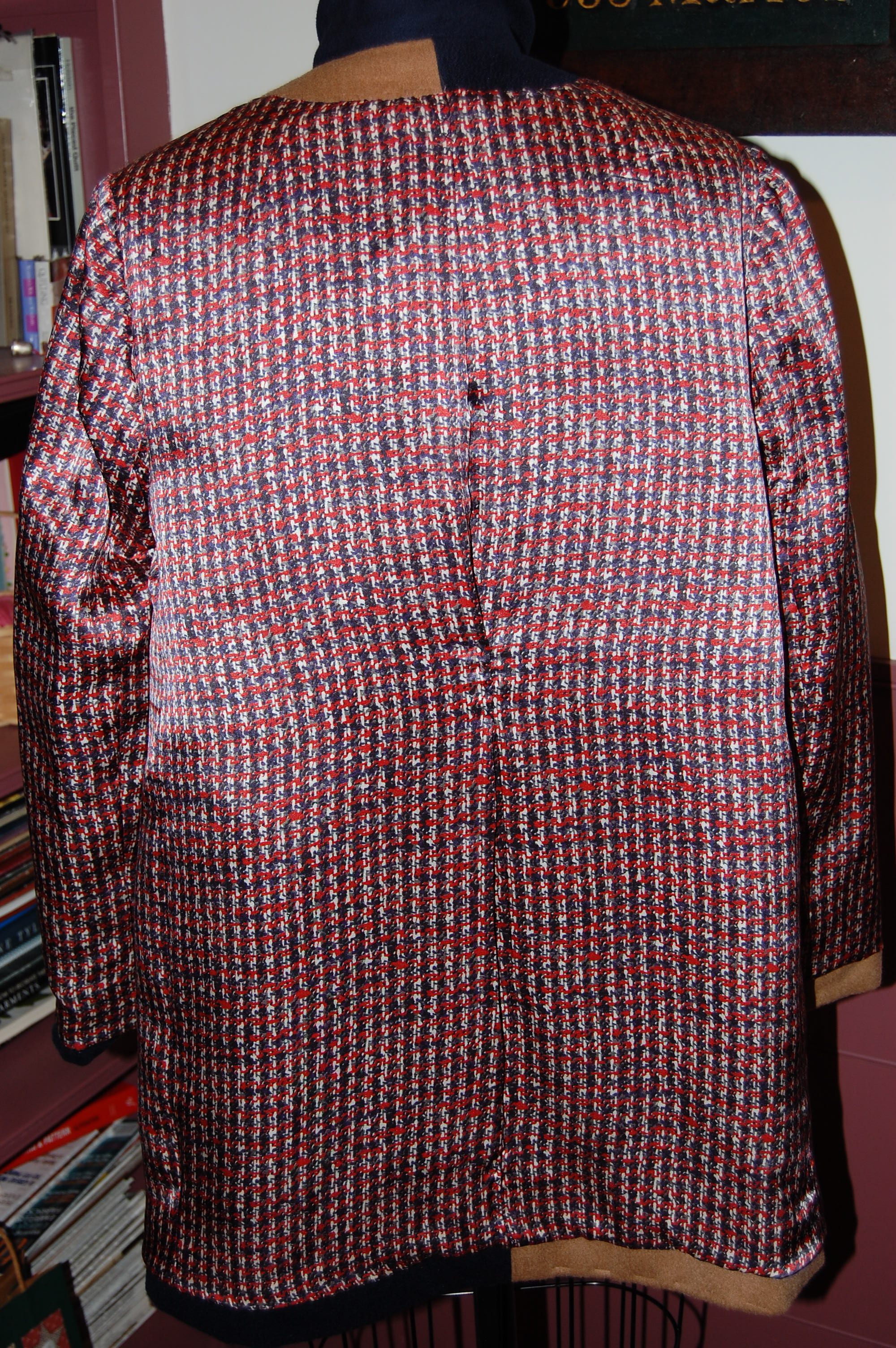
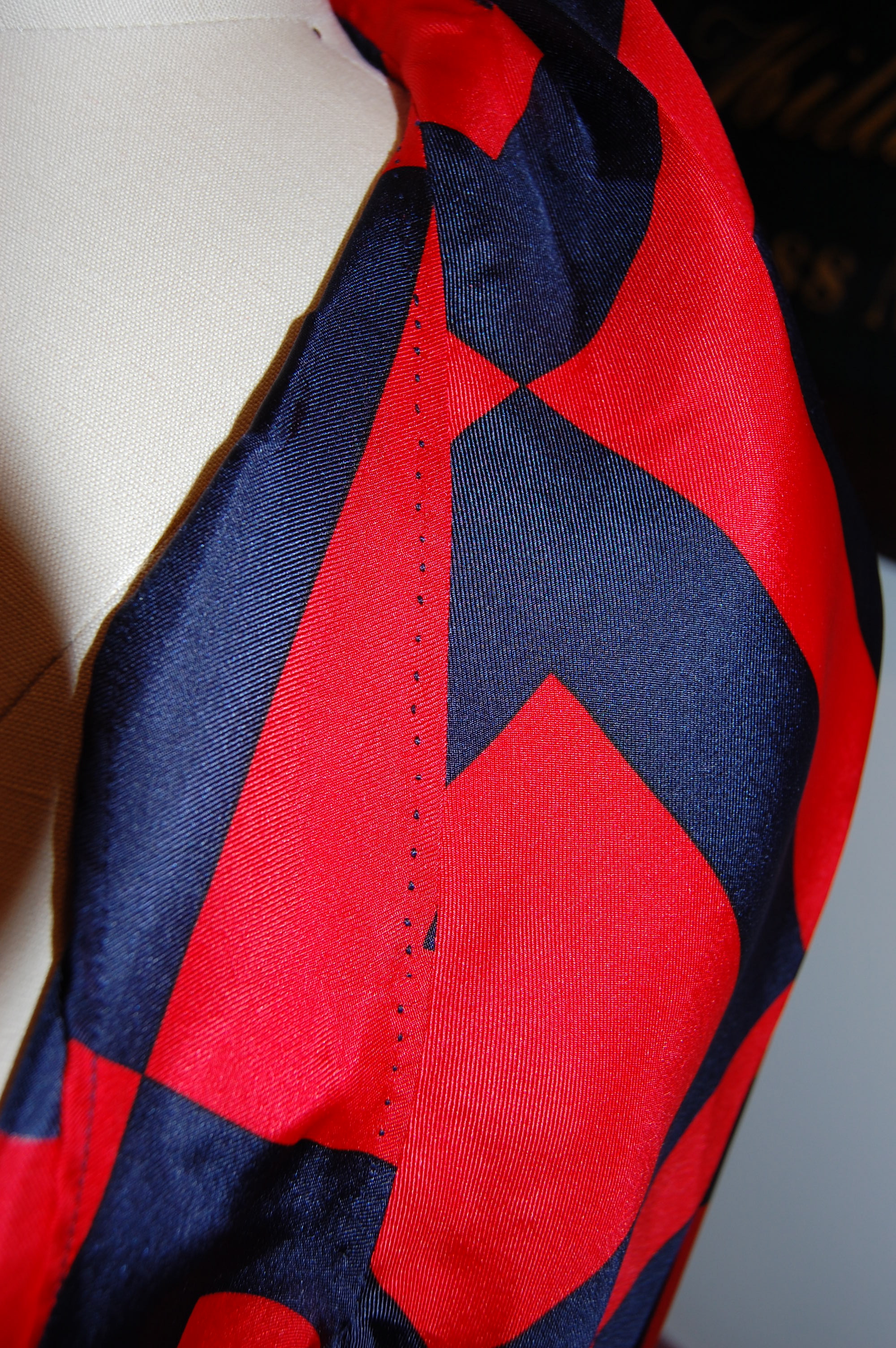
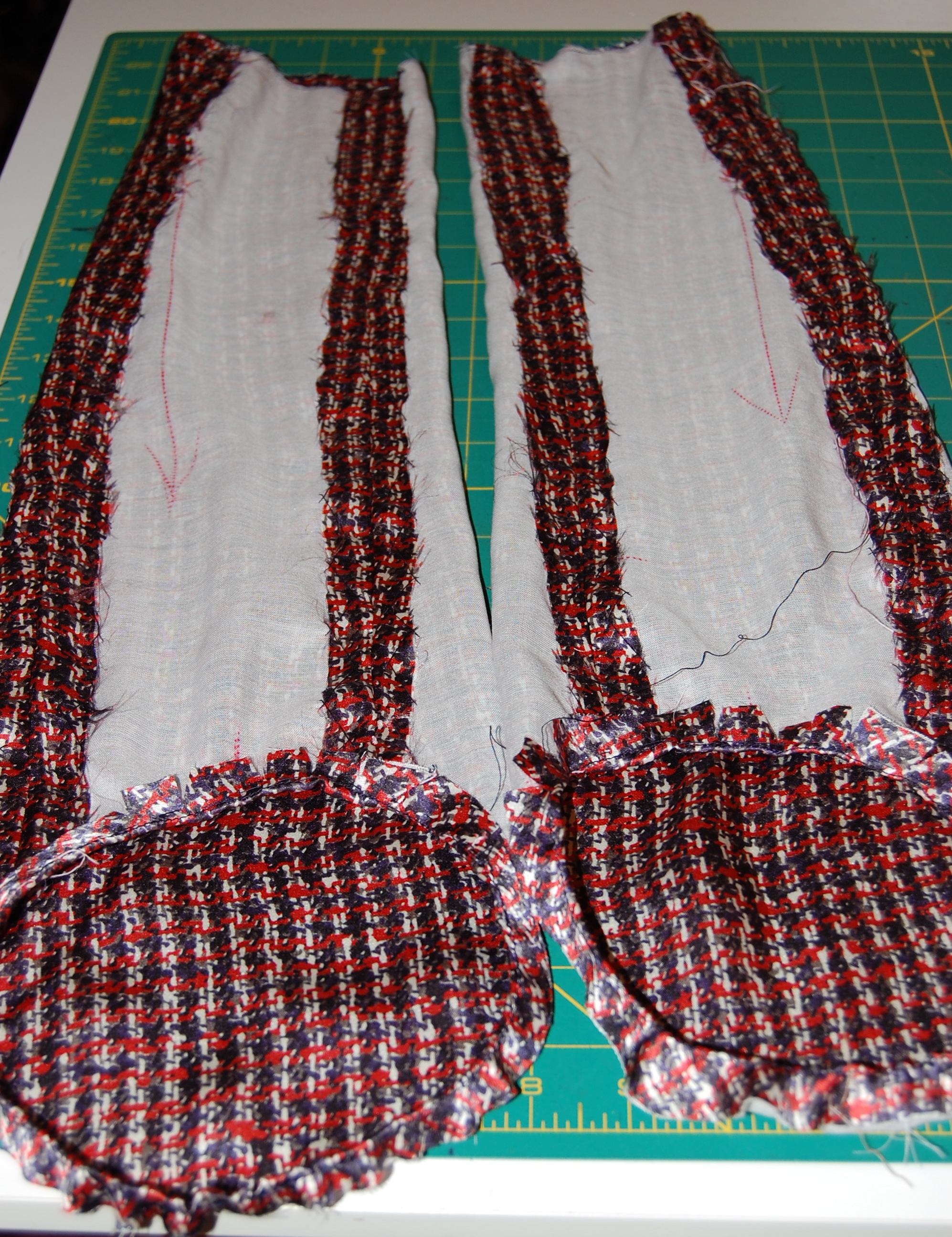
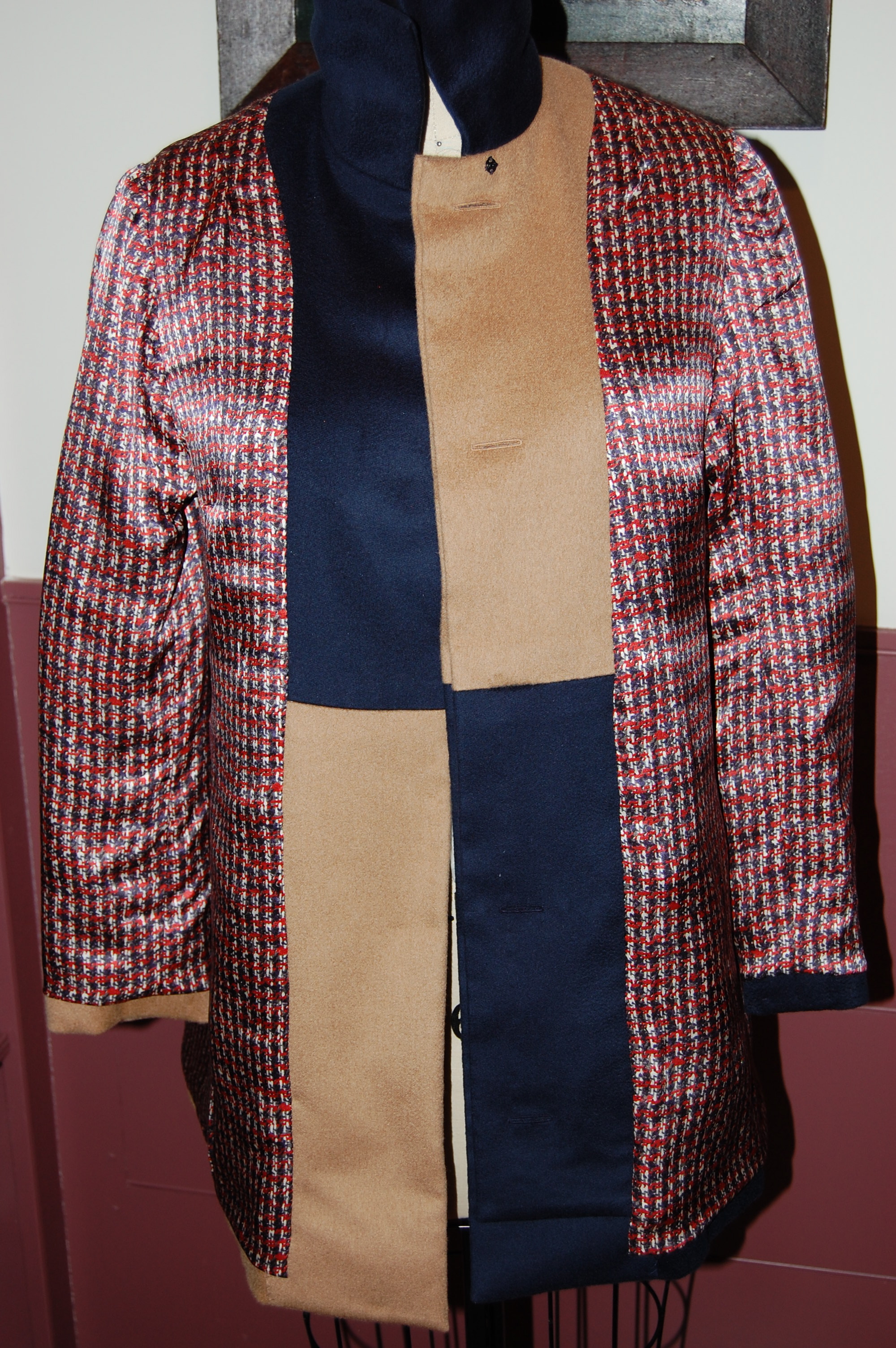
The pattern had separate pieces for the lining, and even the lining followed the blocked design.  I had chosen a printed silk charmeuse (at Britex , naturally!) for my lining, which did not need to be block sewn.  So, using the muslin I had made for the lining, I cut the “lengths” as one piece, eliminating 16 horizontal seams.  I also underlined the silk charmeuse with a very lightweight rayon voile, which made the lining fabric easy to control, and adds another layer of warmth to the overall coat.  This photo shows the underlining in the sleeve linings before I sewed them into the coat.

Magnificent Obsession

The jacket turned inside out, showing the lining.

The jacket turned inside out, showing the lining.

The inside back of the coat.

The inside back of the coat.

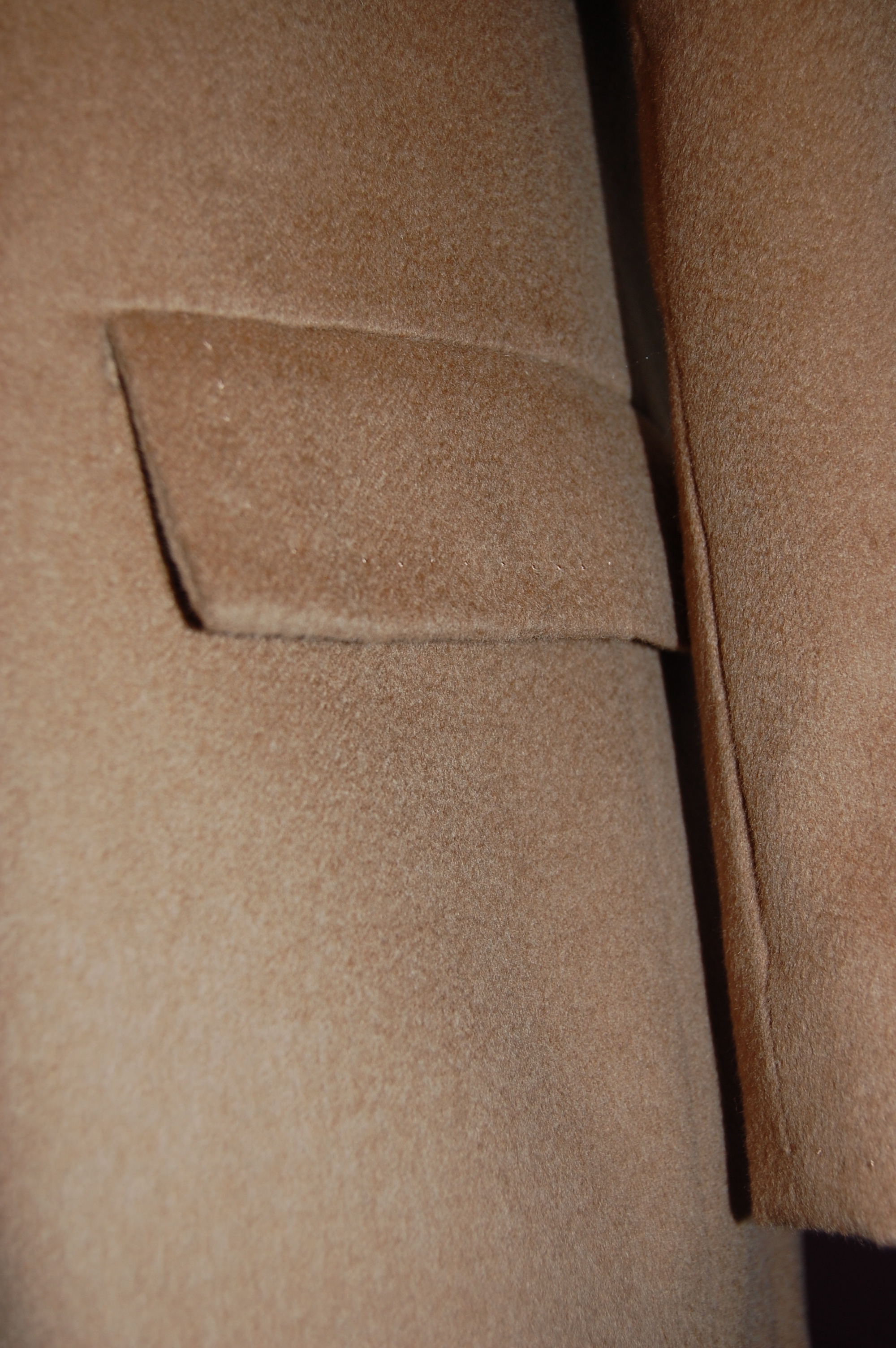
Finally, the pattern called for topstitching the exterior edges of the coat.  Due to the nature of my napped fabric, I thought machine topstitching would detract rather than add.  But – I wasn’t happy with the thought of no topstitching, either.  So I decided to do it by hand.  It wasn’t nearly as time-consuming as I thought it would be, and I am happy with the result.

The topstitching is very subtle, but you can see it here on the pocket flap.

The topstitching is very subtle, but you can see it here on the pocket flap.  Click on the photo for a close-up.

One more thing about this pattern.   When I received it, the pattern pieces for the pants and sleeveless tunic were cut and had obviously been used (although every piece is intact).  The tissue pieces for the coat were still in their factory folds.  On the outside of the pattern in the upper right hand corner is the name Georgia Sanders.  I guess I’ll always wonder if she had plans to make the jacket, too.  I’m so glad she bought this pattern and kept it in such good condition so that it could find its way eventually to me – to help me realize my magnificent obsession from my younger self.

20 Comments

Filed under Buttons - choosing the right ones, Coats, Color blocking, couture construction, Dior darts, underlinings, vintage Vogue Designer patterns, vintage Vogue patterns from the 1970s, Vogue patterns, woolens

The Necessary Blouse

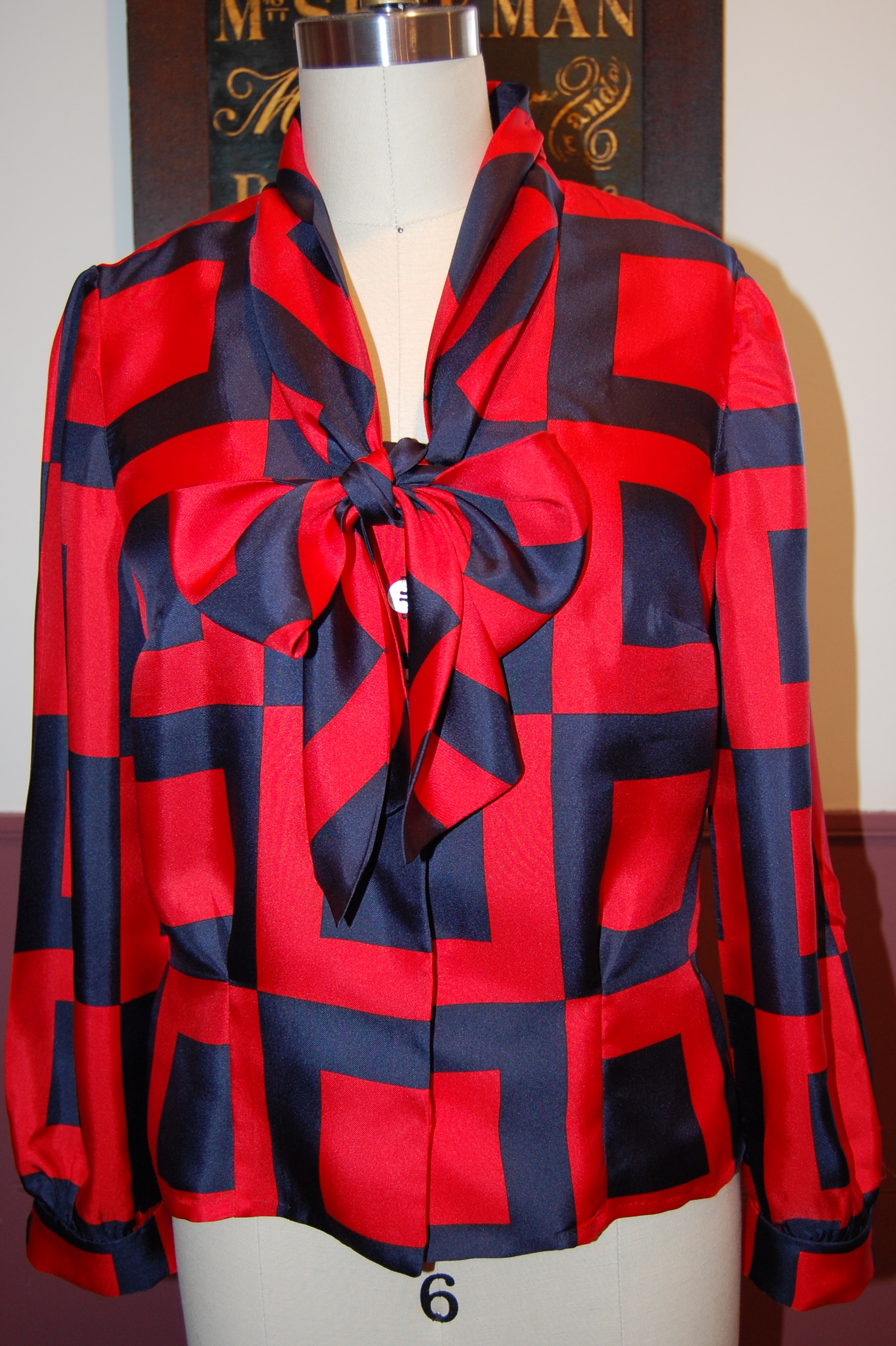
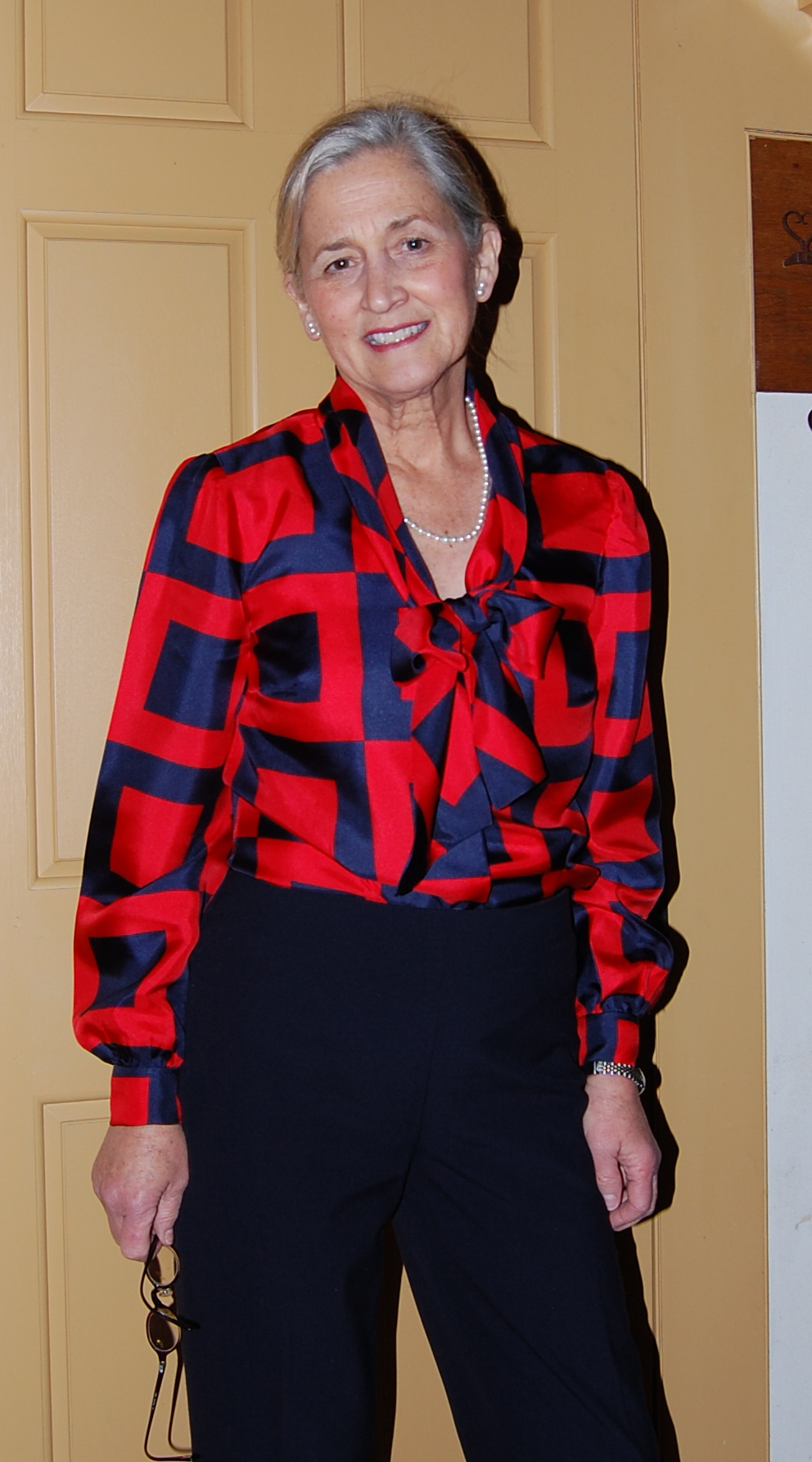
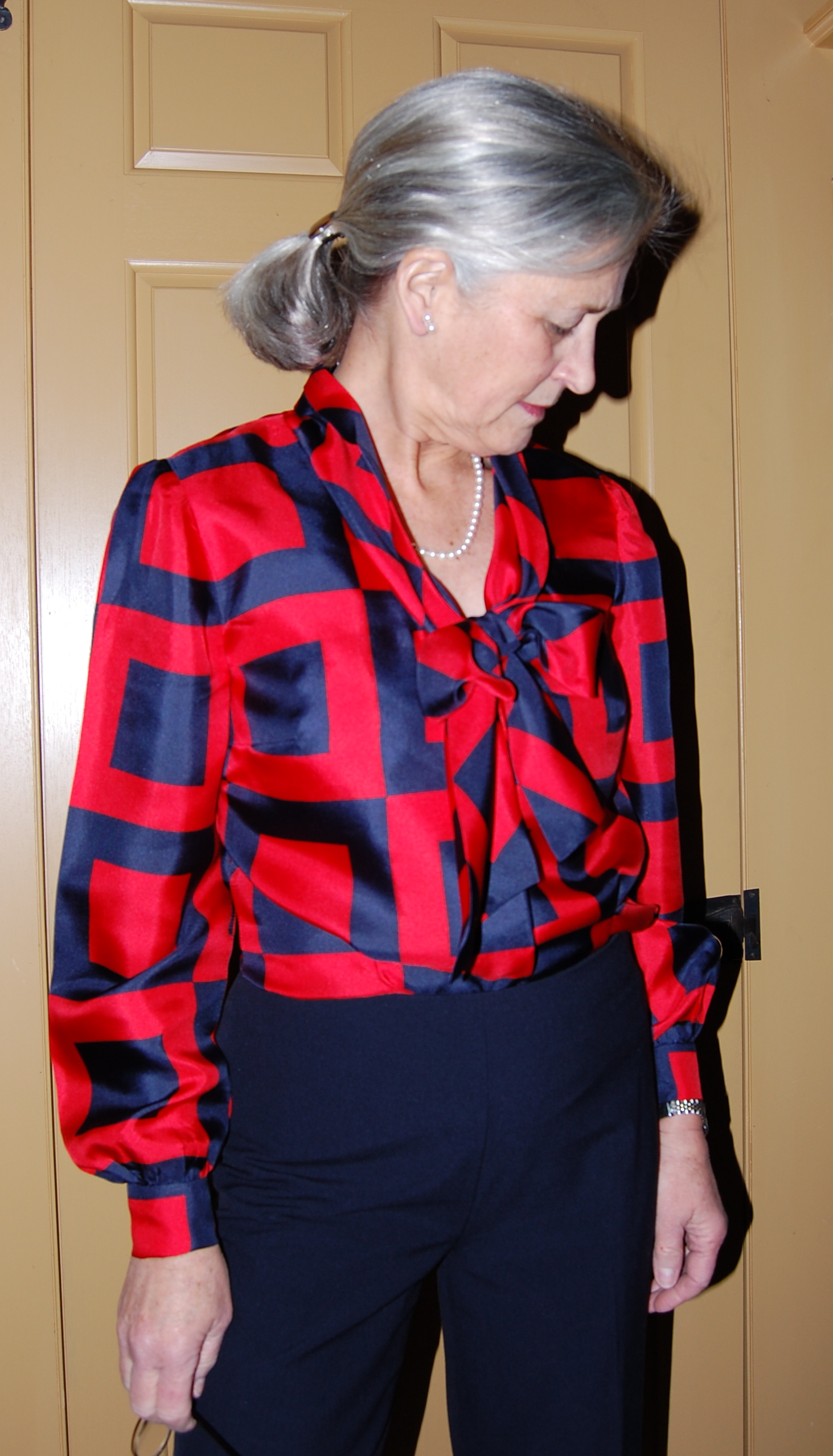
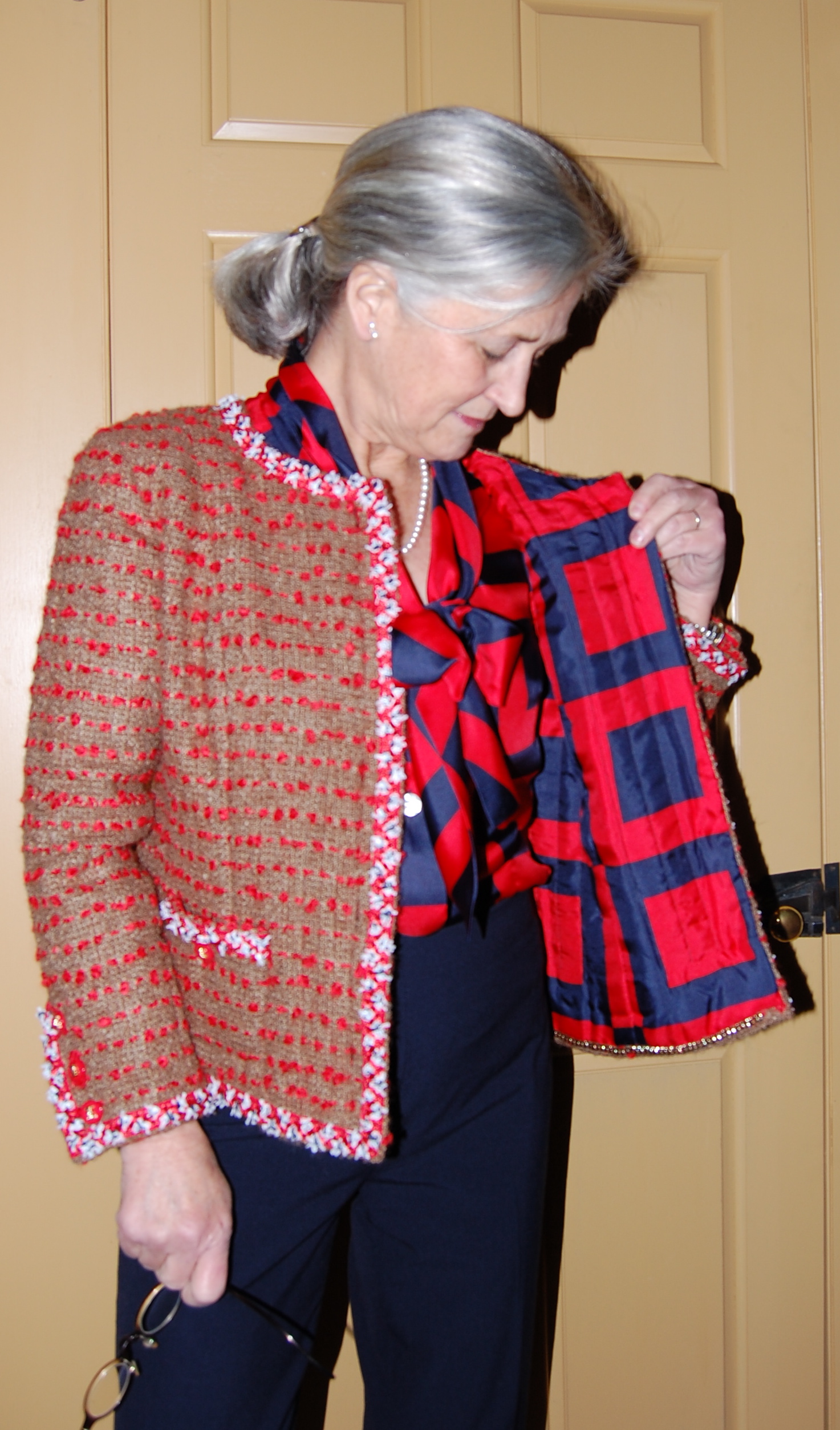
Fashion sewing is an interesting combination of inspiration, aspiration, indulgence and necessity, manifested singly or collectively.  My newly completed bow blouse is an example of a bit of all of these motivations rolled into one.  This is the blouse I made to go with my No. 2 Chanel-inspired jacket, made from the same red and navy blue geometric print silk with which I lined the jacket.

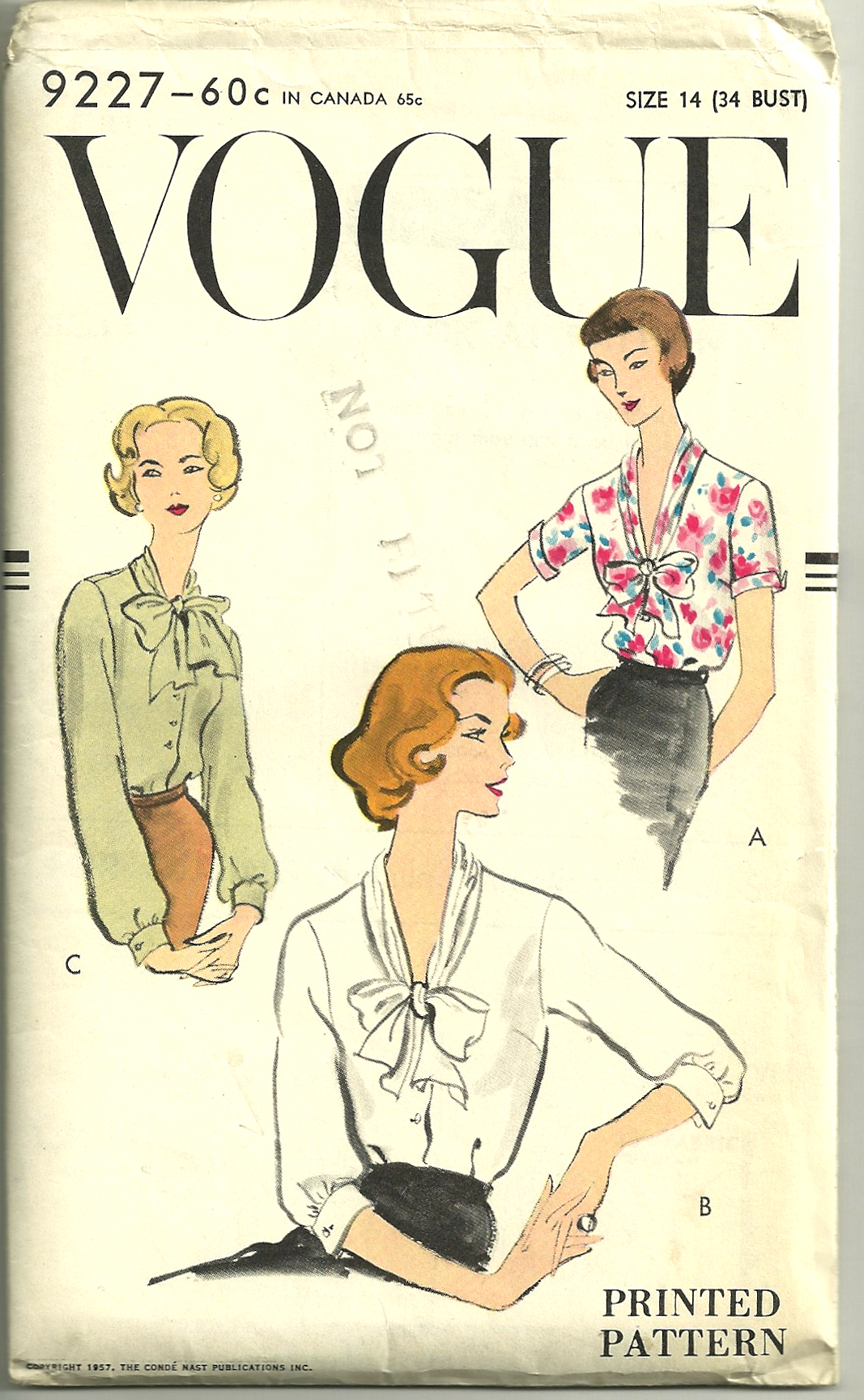
The Necessary Blouse Inspiration came from several sources.  I was mostly inspired by the pattern, which is copyright 1957 by The Conde Nast Publications, Inc. (Vogue Patterns) – so much so, that I purchased it in a size larger than I usually wear, as that was what was available – and with vintage patterns, one is never sure to find a favorite one again soon – or ever.

Looking at blouses 1957

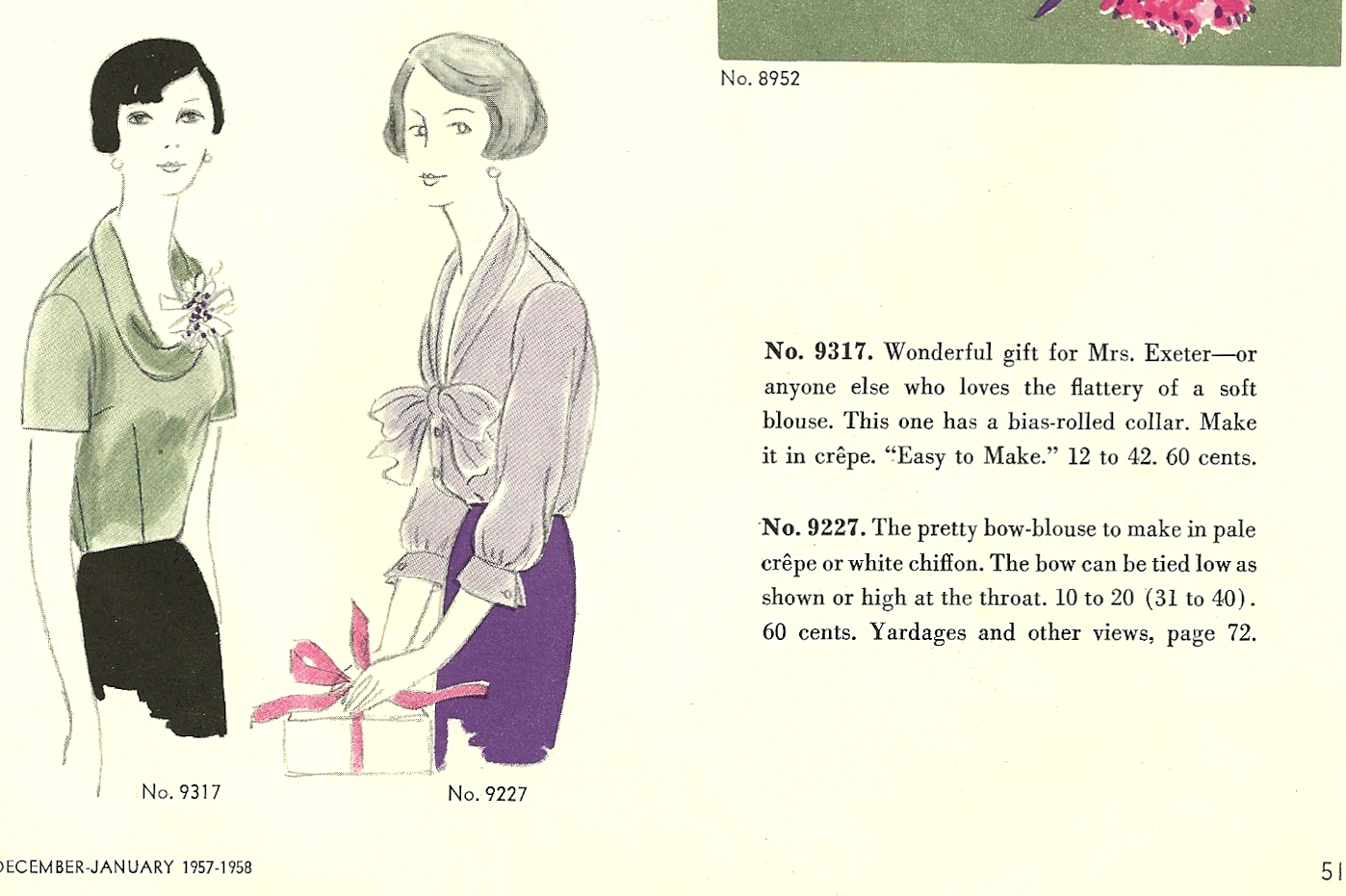
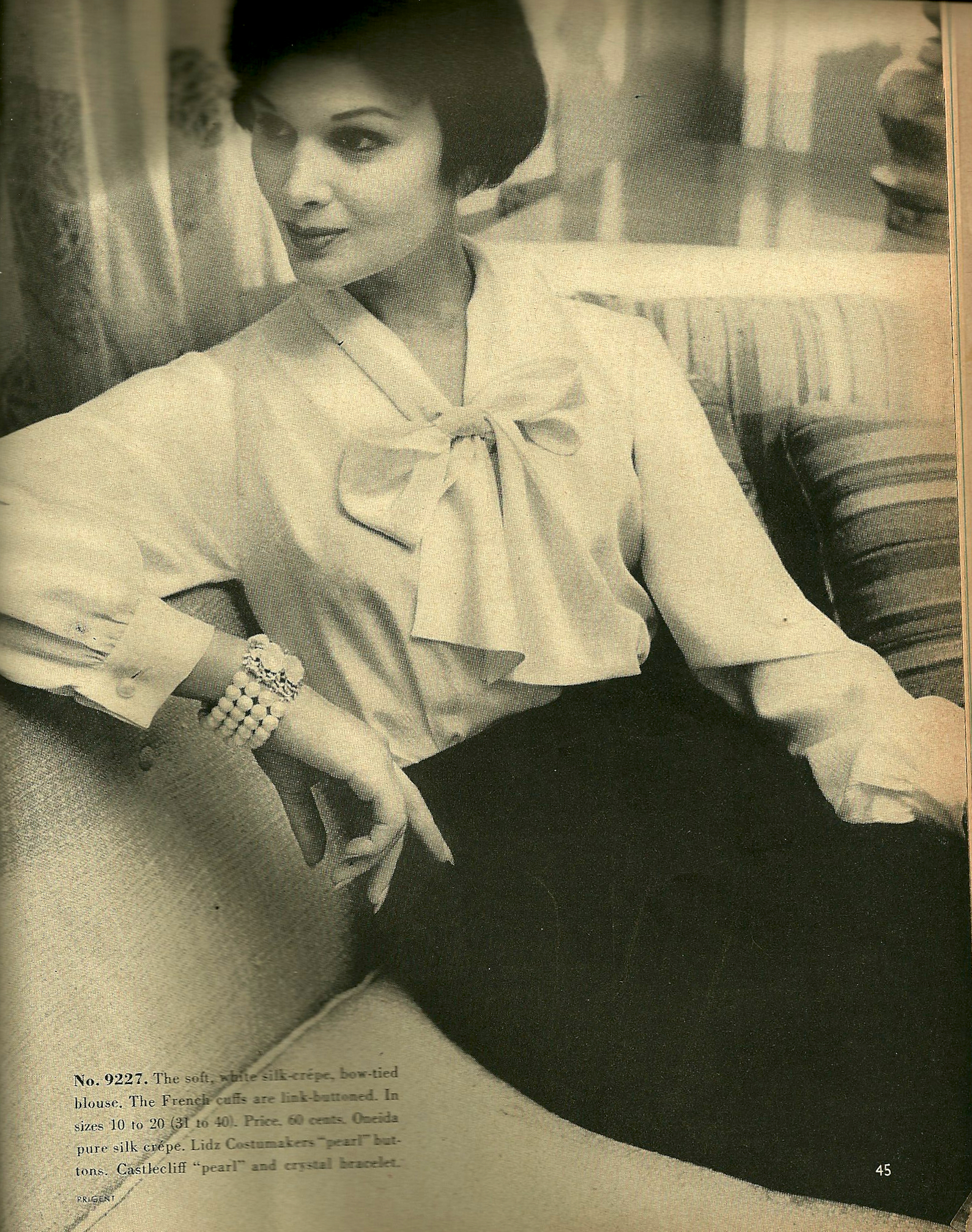
Some of the aspects of the pattern which appealed to me are: 1) the “dropped” bow shown in views A and B; 2) the various sleeve lengths; 3) the shaping in the body of the blouse – soft and understated, but very feminine.  Just for fun, I looked through a few of my Vogue Pattern Book Magazines from 1957 and 1958, to see if I could find examples of this blouse pattern.  That was easy!  Here is one sketch and one photograph of Vogue 9227:

The blouse was featured in the December/January 1957-58 issue.

The blouse was featured in the December/January 1957-58 issue.

Part of a feature entitled "A new era for the soft BLOUSE."  In the August/September, 1957 issue of VPB.

Part of a feature entitled “A new era for the soft BLOUSE.” In the August/September, 1957 issue of VPB. 

After making a sheath dress to coordinate with my Chanel-inspired jacket No. 1, I aspired to pair my Jacket No. 2 with a suitable companion, too.  A bow blouse seemed to be a versatile and useful solution.  And then it became a necessity!   I decided my Jacket No. 2 would not be complete until I finished this blouse.

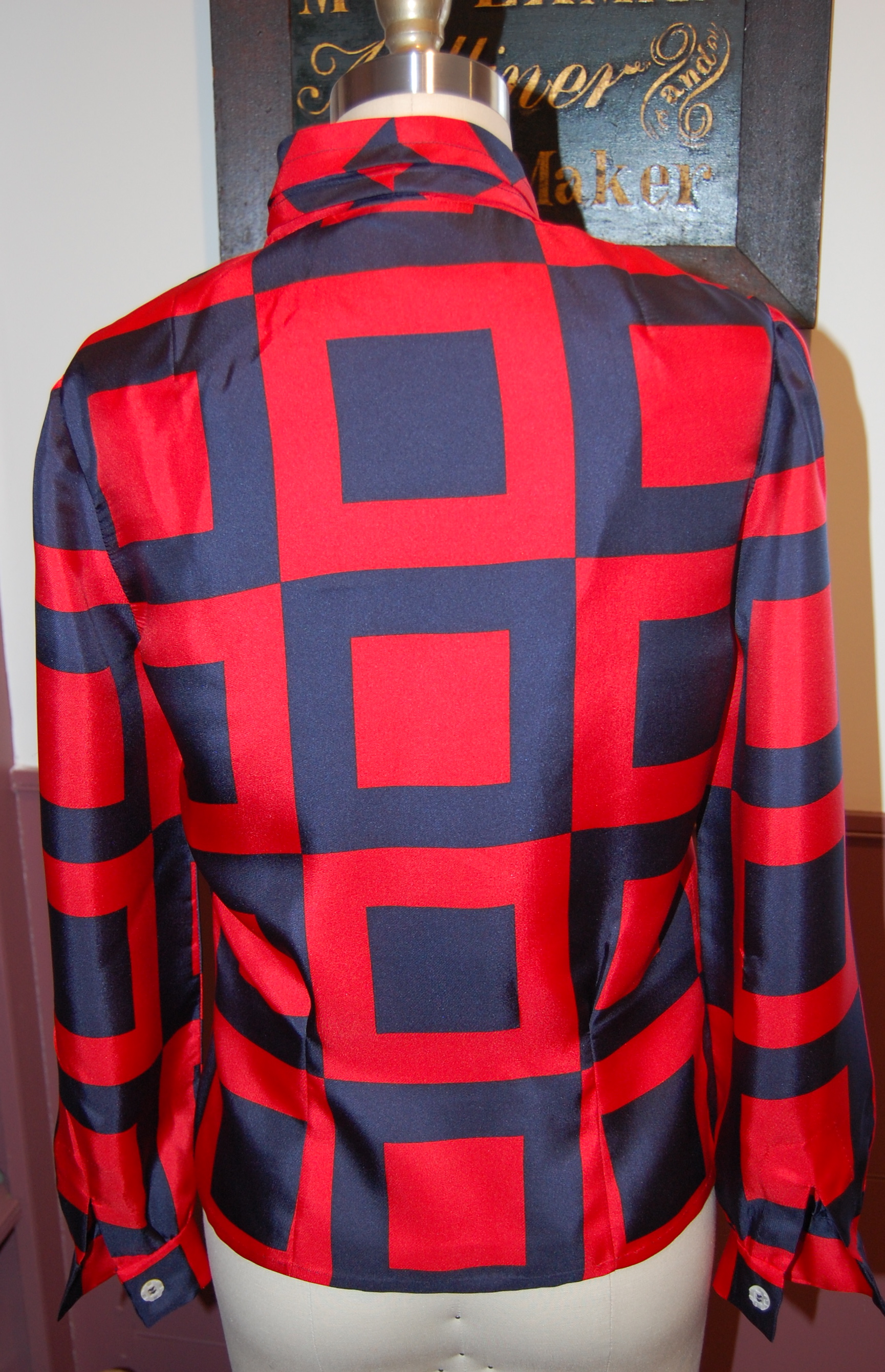
Back view

Back view

Step number one was to make a muslin (of course), knowing that I would need to alter the pattern to fit me correctly.  Sure enough, I needed to take out the bagginess in the bust and body of the blouse, and I needed to shorten the sleeves.  I went to my favorite book on making alterations which guided me through the correct changes:

I highly recommend this book.

I highly recommend this book.

My muslin showed me that the sleeves were also a little too full for me and for current 2014 styles, so I removed some girth from them as well.  I was skeptical of the bow (cut on the diagonal) when I looked at the pattern and then the muslin.  Would it be too full?  Made up in muslin it seemed a little overwhelming.  But, my silk was so lightweight and fine, that I decided it might just be okay, using the original dimensions.

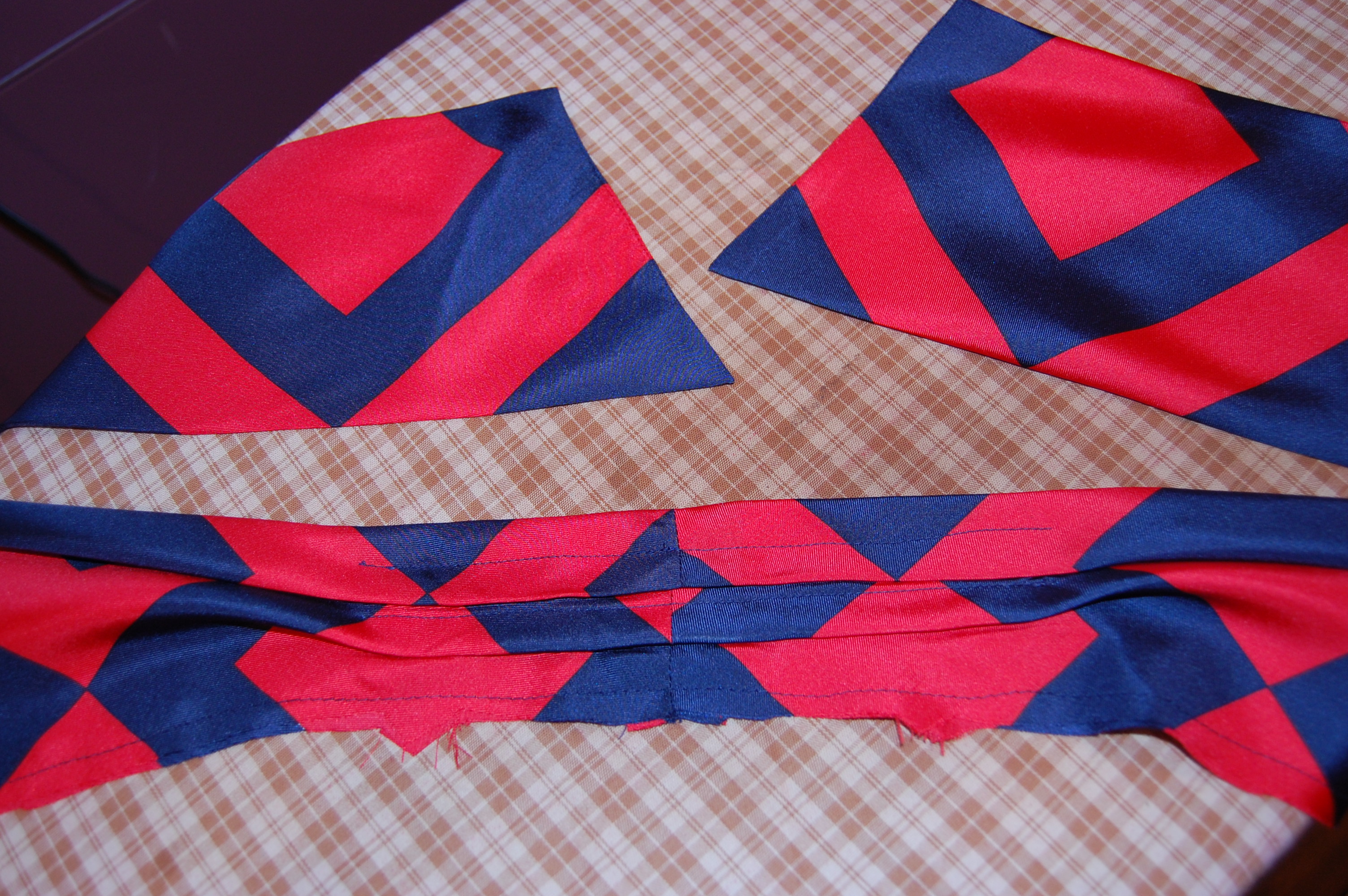
Here is the bow/collar ready to be attached to the body of the blouse.

Here is the bow/collar ready to be attached to the body of the blouse.

This blouse went together quite as planned, although I worked on one side where the bow/collar joins the corner at the front facing for hours, until I had it inserted correctly.  I kept making the same mistake over and over, which was a little irritating.  I also added some extra hand-sewing, understitching the facing by hand and hand-stitching the hem.

Hand understitching looks just so much nicer than machine stitching!

Hand understitching looks just so much nicer than machine stitching!

When I started the blouse, I had not yet picked out buttons, thinking I would use some that I have in my vintage collection.  But then I was on Waechter’s website and found these buttons, which seemed just about perfect:

The Necessary Blouse - button

These buttons measure 5/8″. 

(Sadly, Waechter’s is closing their business in Asheville, N. C., to my great dismay.  This makes me even more grateful for Britex Fabrics in San Francisco, from which I purchased all the fabric for this blouse and my Jacket No. 2.)

Sewing with vintage patterns is such a pleasure in so many ways.  For example, the sleeve vents had their own separate pattern piece:

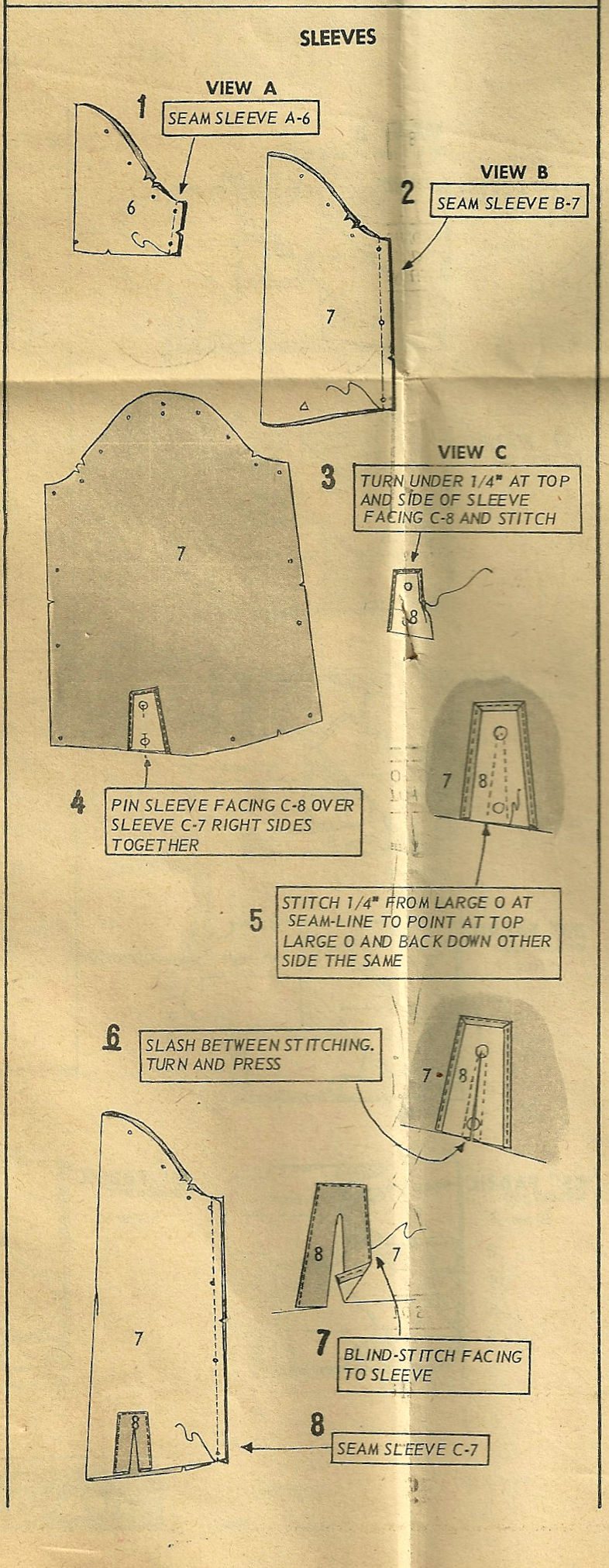
The instruction sheet from the pattern . . . .

The instruction sheet from the pattern . . . .

The vent sewn on . . . .

The vent sewn on . . . .

. . . . and the finished vent.

. . . . and the finished vent.

Another classic vintage aspect is the proscribed use of snaps  – in this pattern, at the waist and below, which takes bulk away from the “tuck-in” part of the blouse.

And that bow?  Once I had it made up, was it too much?

I think the bow is just about perfect.

I think the bow is just about perfect.

I am very glad I didn't tinker with the size of the bow!

I am very glad I didn’t tinker with the size of the bow!

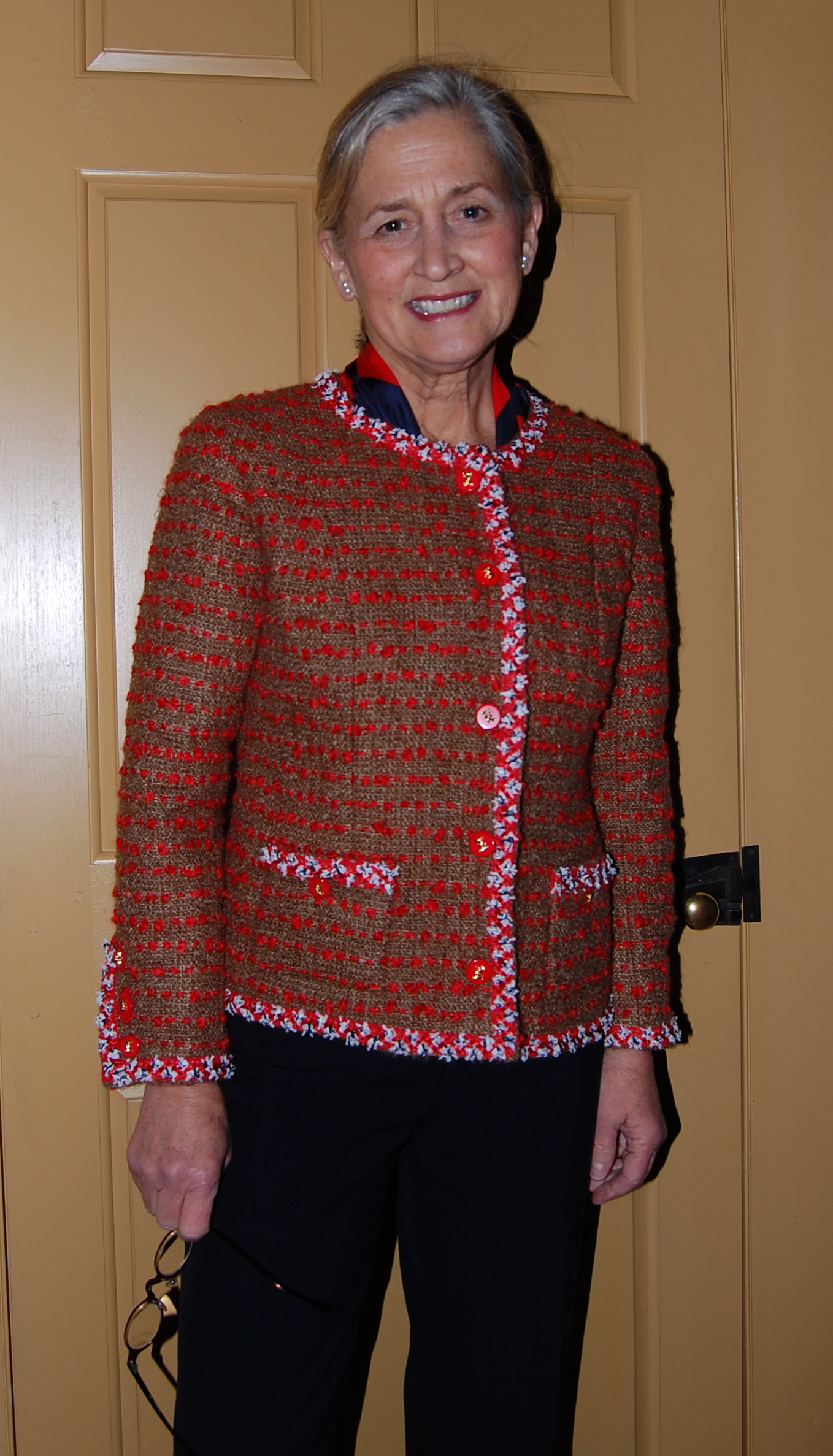
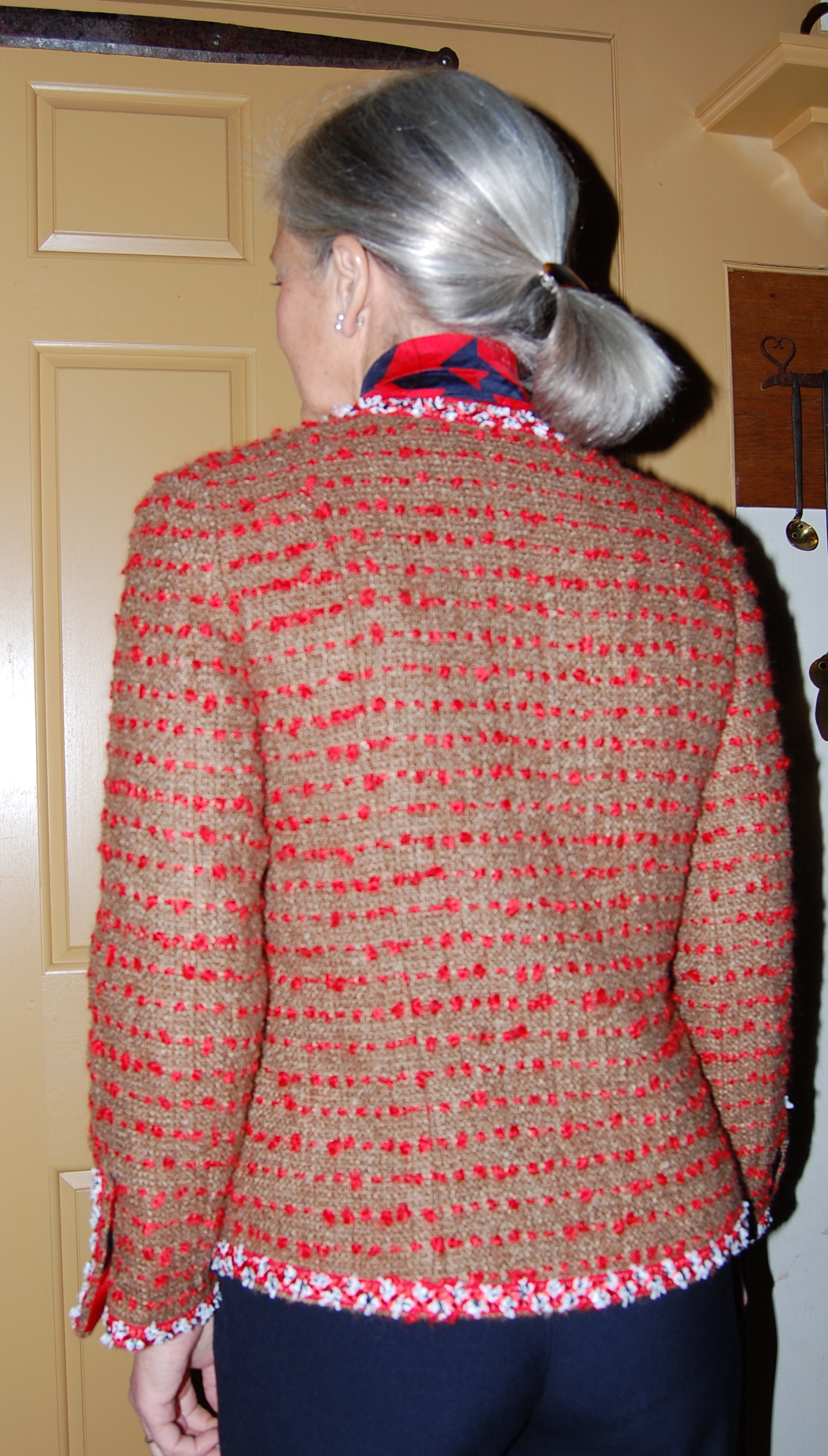
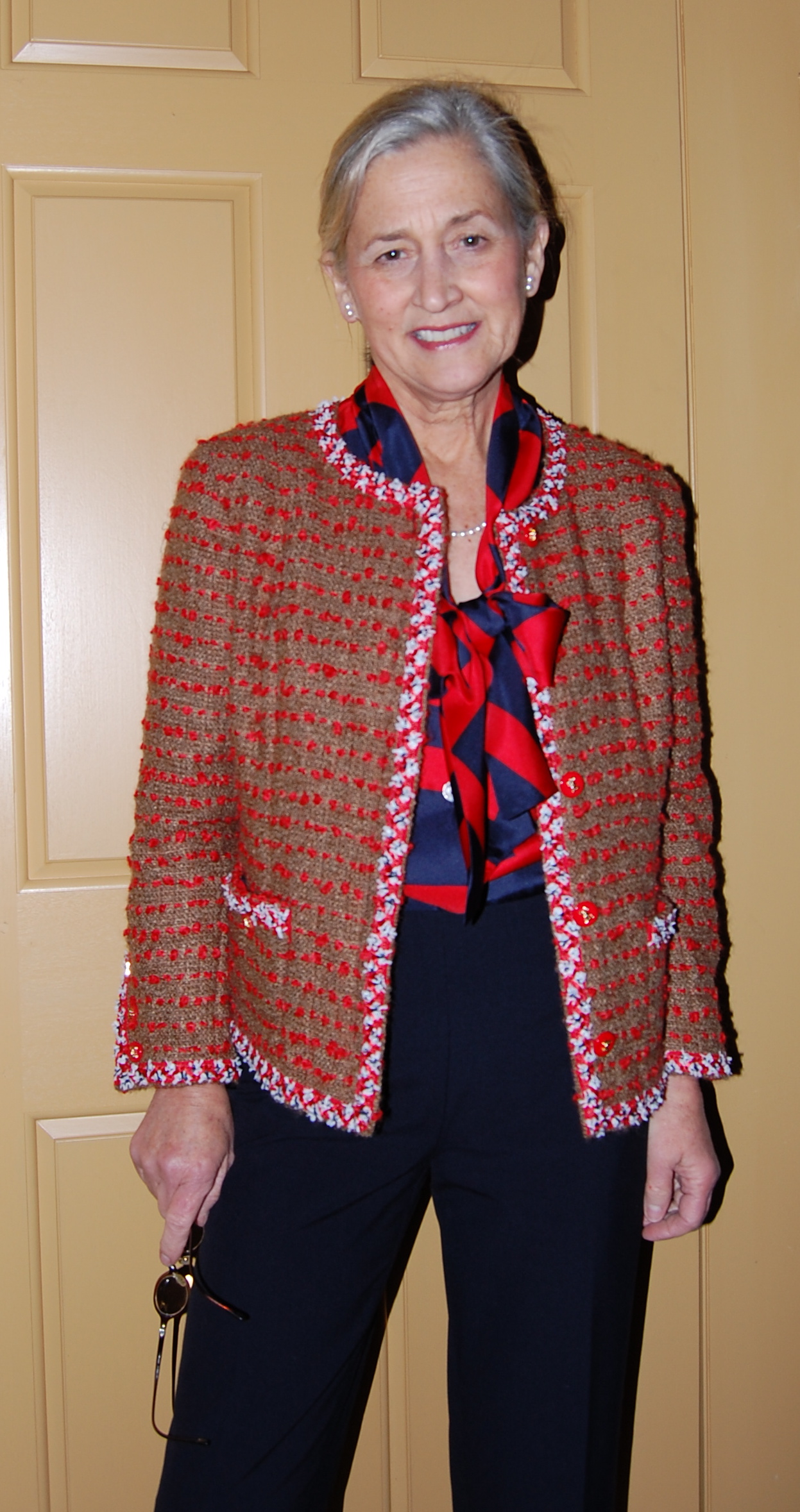
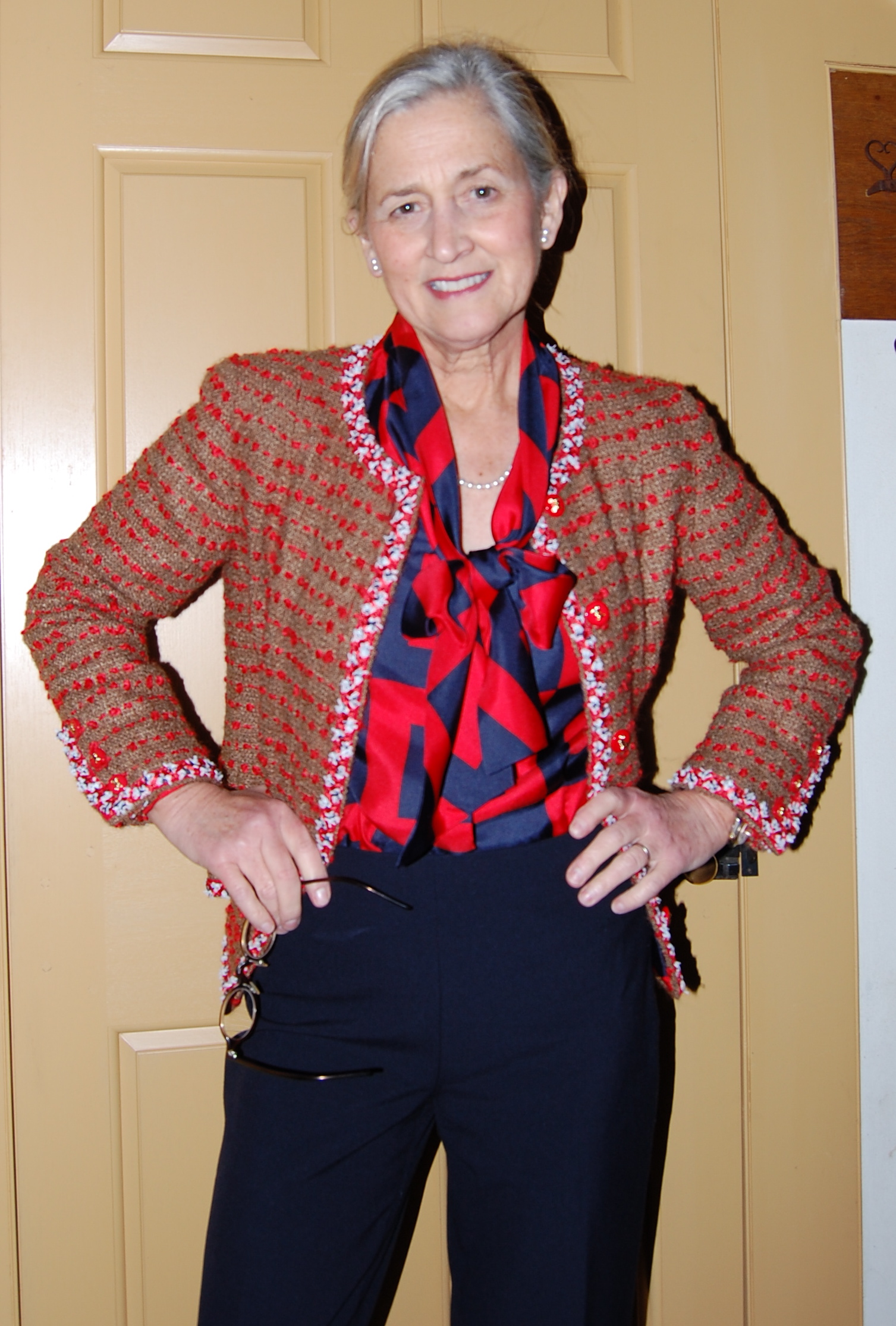
Shown with the jacket.  I really like how the collar on the blouse shows a bit when i have the jacket on.

Shown with the jacket. I really like how the collar on the blouse shows a bit when I have the jacket on.

The Necessary Blouse

A comfortable fit.

The Necessary Blouse

Would be nice with a navy skirt as well …

The Necessary Blouse

Whew!  Blouse and jacket turned out as I had hoped!

Whew! Blouse and jacket turned out as I had hoped!

I am feeling quite good about indulging in the extra fabric and extra time needed to make this blouse.  Now that my No. 2 Jacket is complete, I can indulge in my other current project – my color-blocked coat –  which might add a new word to the vocabulary of fashion sewing – obsession!

16 Comments

Filed under Blouse patterns from the 1950's, Blouses, Buttons - choosing the right ones, Chanel-type jackets, sewing in silk, The Conde Nast Publications, Uncategorized, vintage Vogue patterns from the 1950s, Vogue patterns

No. 2 ~ The Beginning

I may – or may not – find Chanel No. 5 Paris Parfum in my Christmas stocking, but Chanel-inspired, Classic French Jacket No. 2 can currently, definitely, be found in my sewing room.  Well, actually, it’s not a jacket yet.  It is just lengths of fabric and loose trims and buttons, but that is how these things begin, as every home dressmaker knows.

I actually started planning this jacket long before I took the Classic French Jacket Class with Susan Khalje this past summer.  In September of 2012 when I was at Britex Fabrics in San Francisco, I found this boucle and purchased it – even then – as my intended Jacket No. 2.

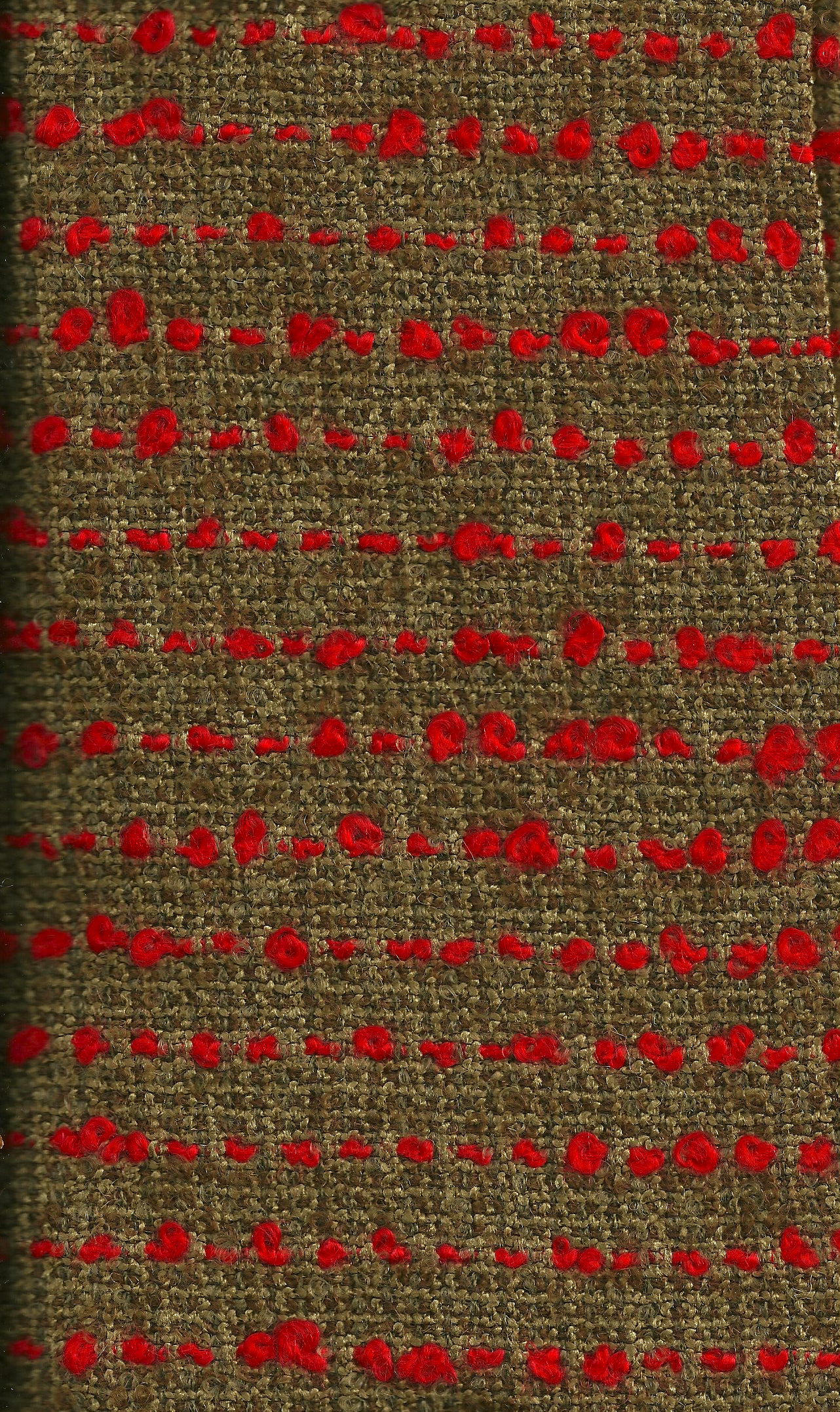
This fabric is very soft, perhaps due to a certain percentage of mohair wool in its composition.

This fabric is very soft, perhaps due to a certain percentage of mohair wool in its composition.

My first jacket is definitely very dressy, so I wanted this one to be less so, which meant I had to find just the right lining, trim, and buttons.  It took another, recent, trip to San Francisco to produce those ingredients – and I couldn’t be more pleased with what I found again at Britex.

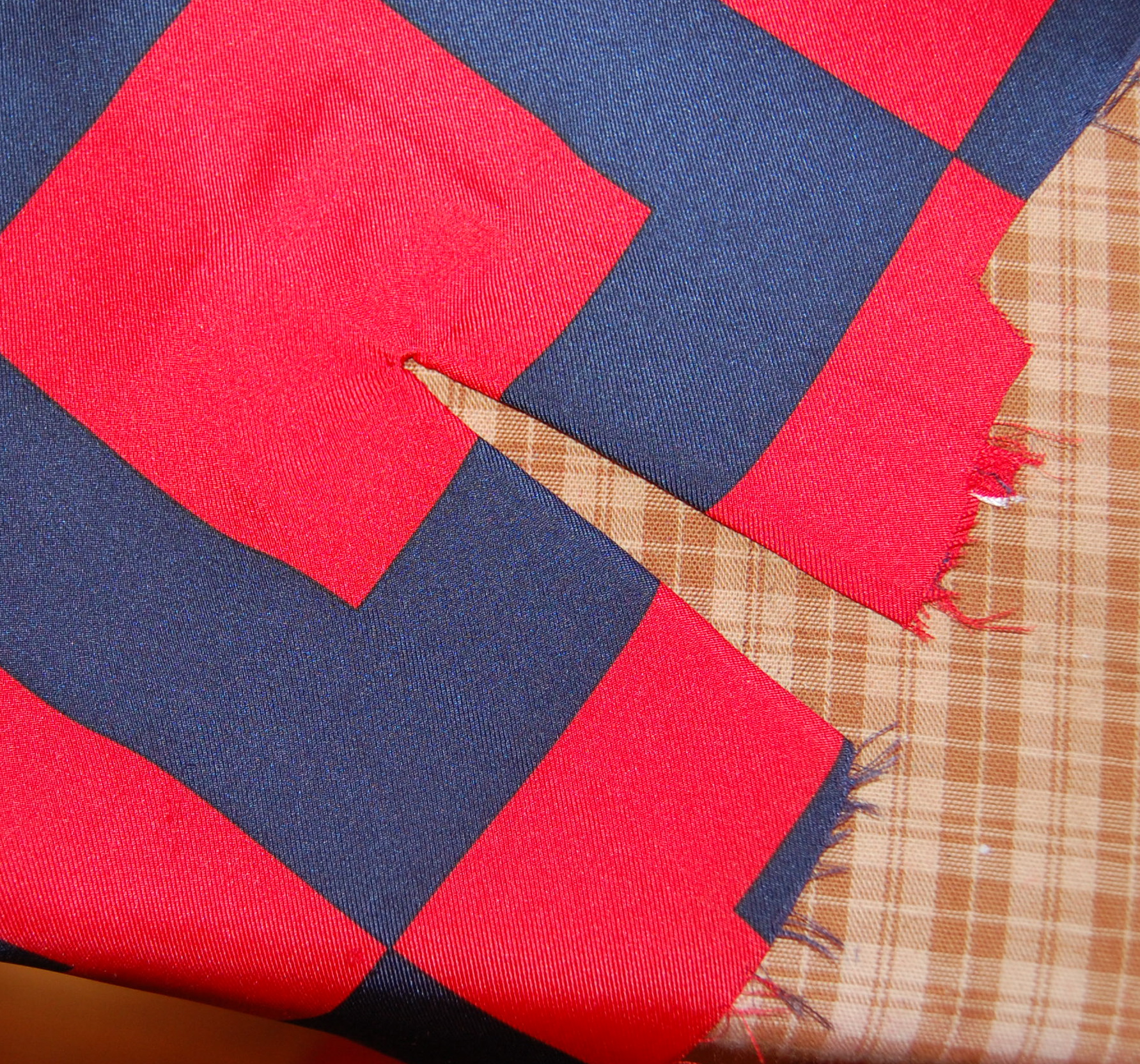
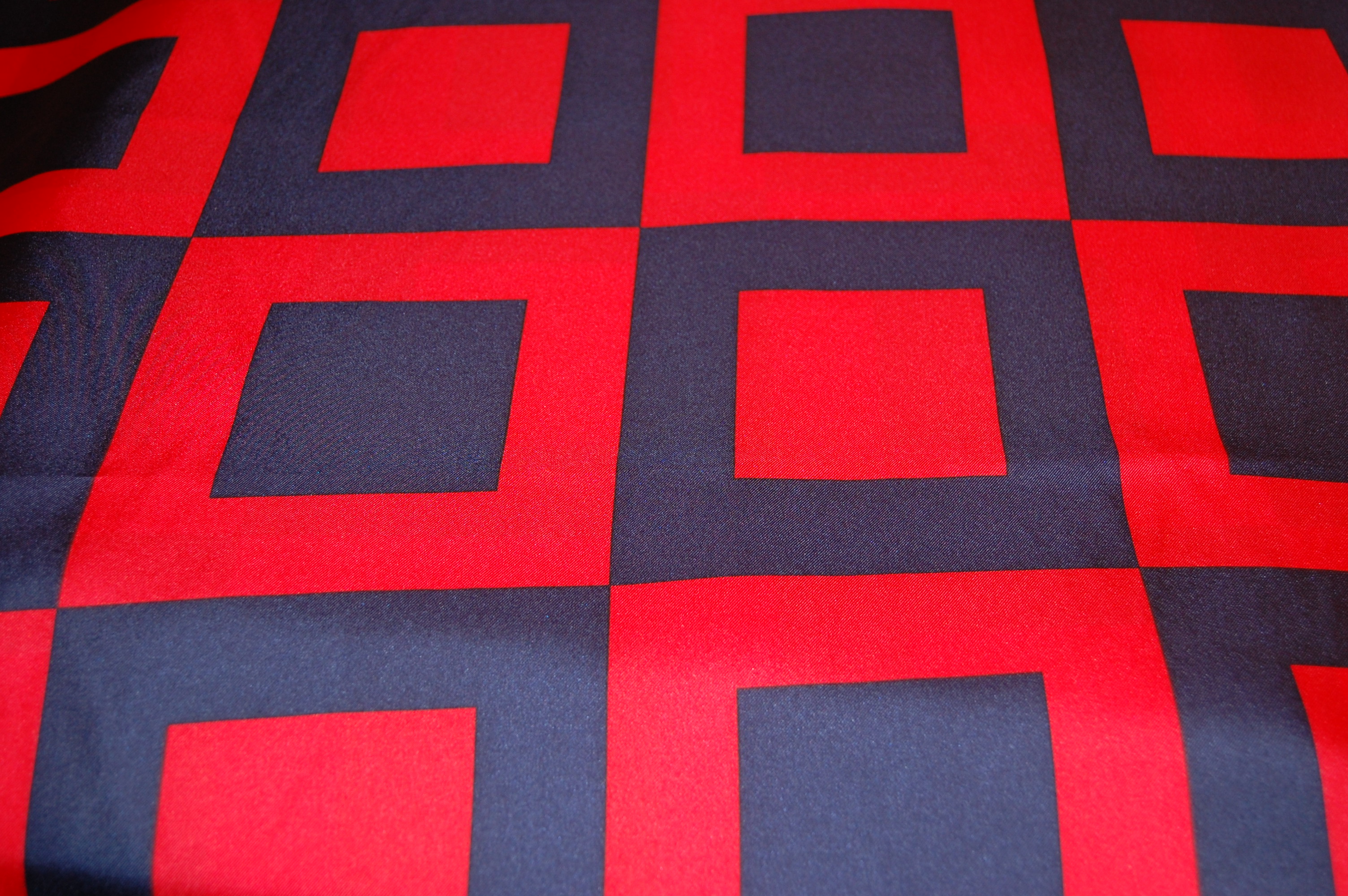
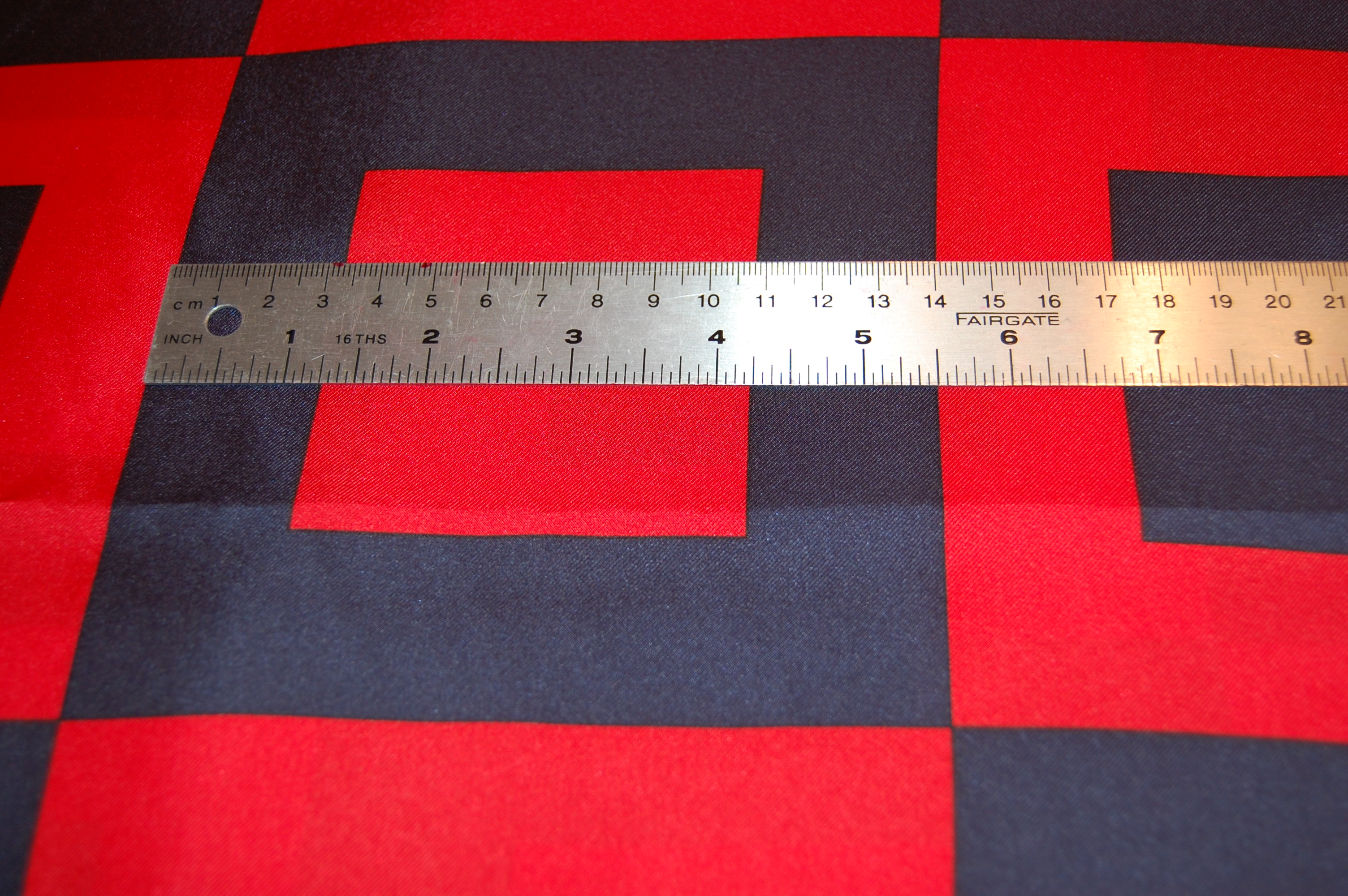
A bolt of this light-weight silk twill was tucked under one of the front tables, and it was love at first sight.  I was hoping to find something with navy blue in it, and the geometric pattern in this fabric makes it bold and less dressy than a floral silk charmeuse would be.

No. 2 jacket

The ruler will help you get a feel for the size of the squares.  Click on the photo for a close-up view.

The ruler will help you get a feel for the size of the squares. Click on the photo for a close-up view.

Immediately, however, I knew that I had to purchase enough for a blouse as well, which I did.  I suspect I’ll be using this pattern from 1957 for a blouse with a bow, which should evoke the correct Coco Chanel look. (A muslin should tell me if I need to tame the bow.  I don’t want it to be overwhelming…)

View B with long sleeves has my vote.

View B with long sleeves has my vote. 

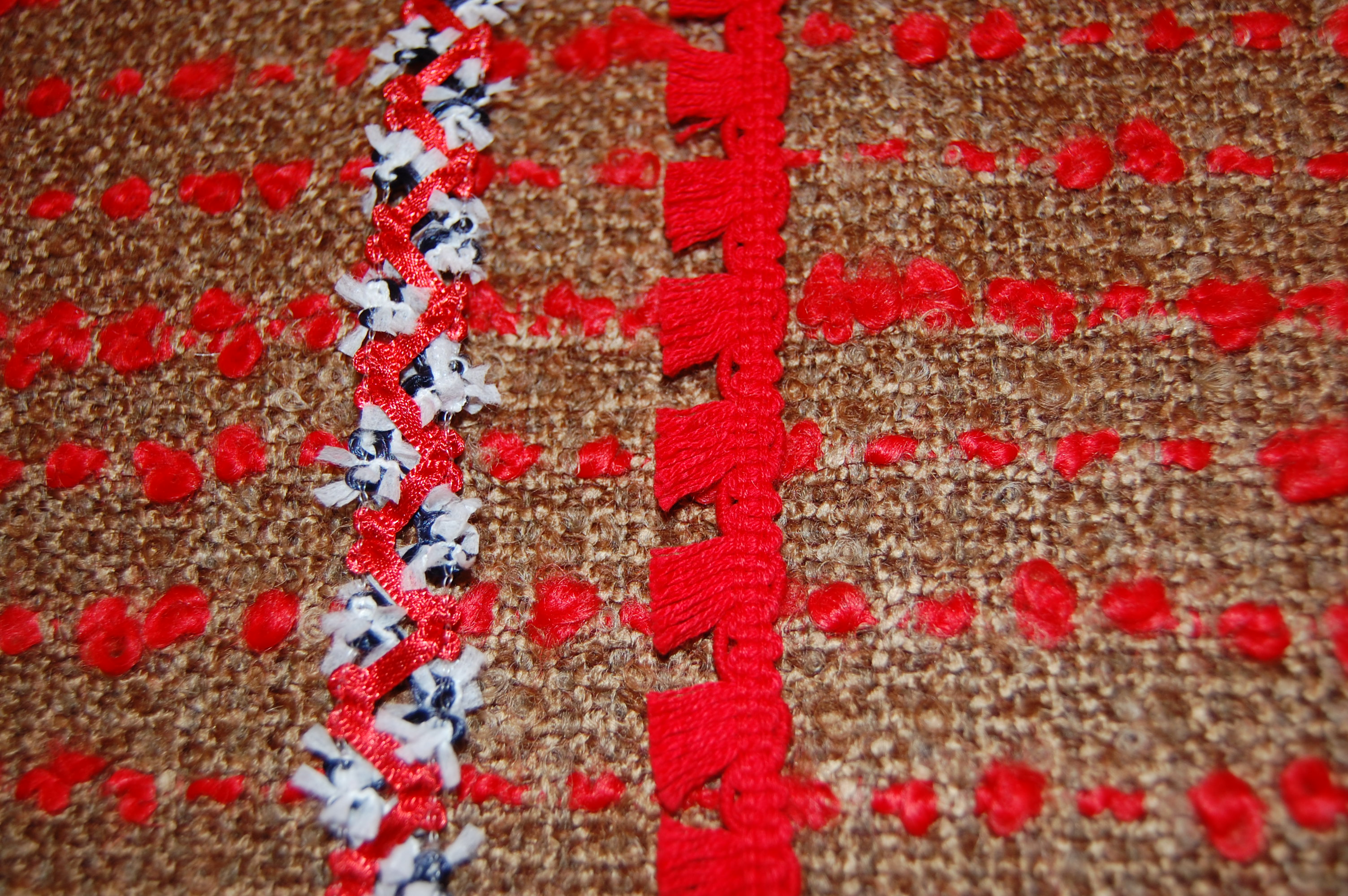
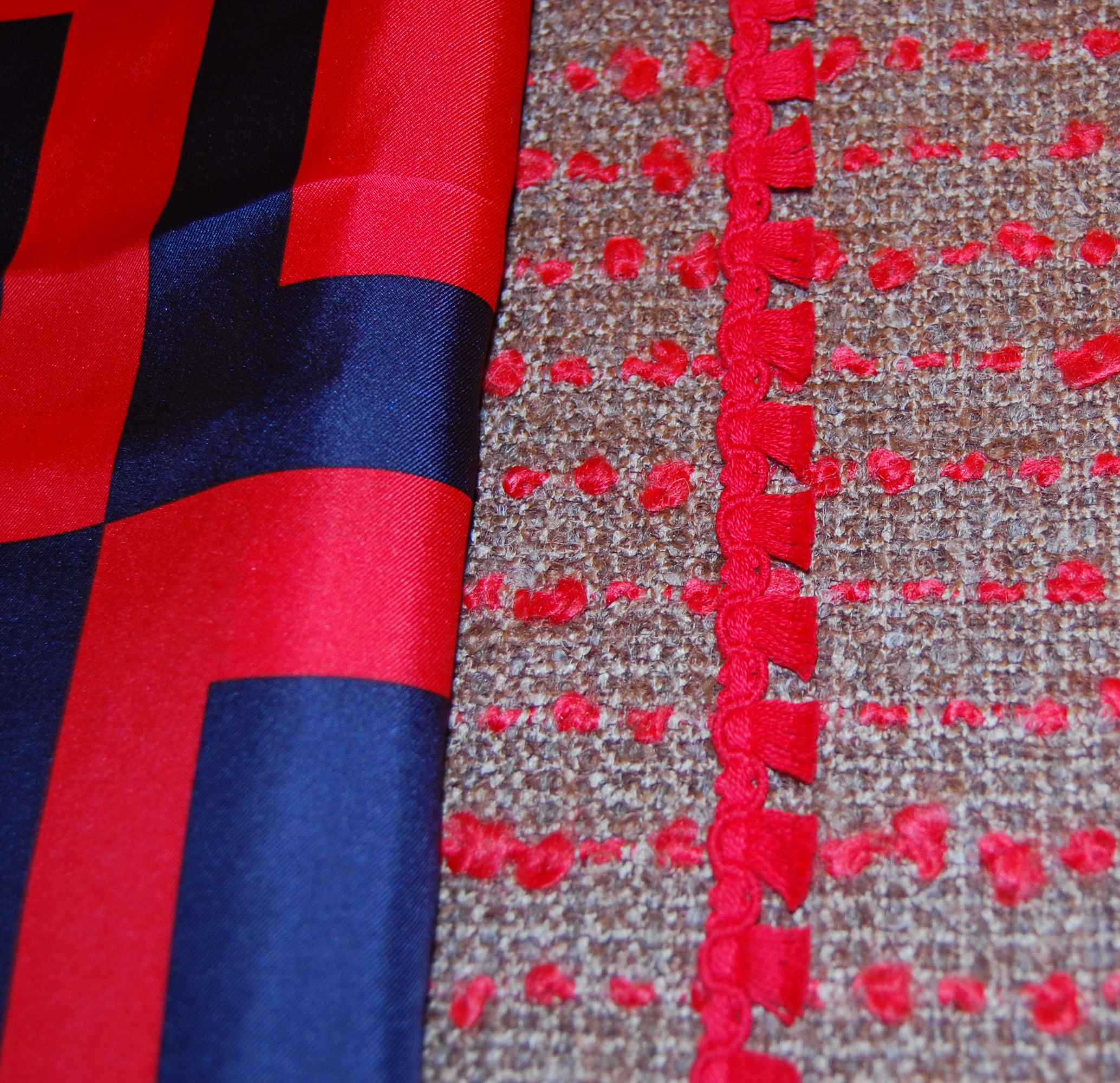
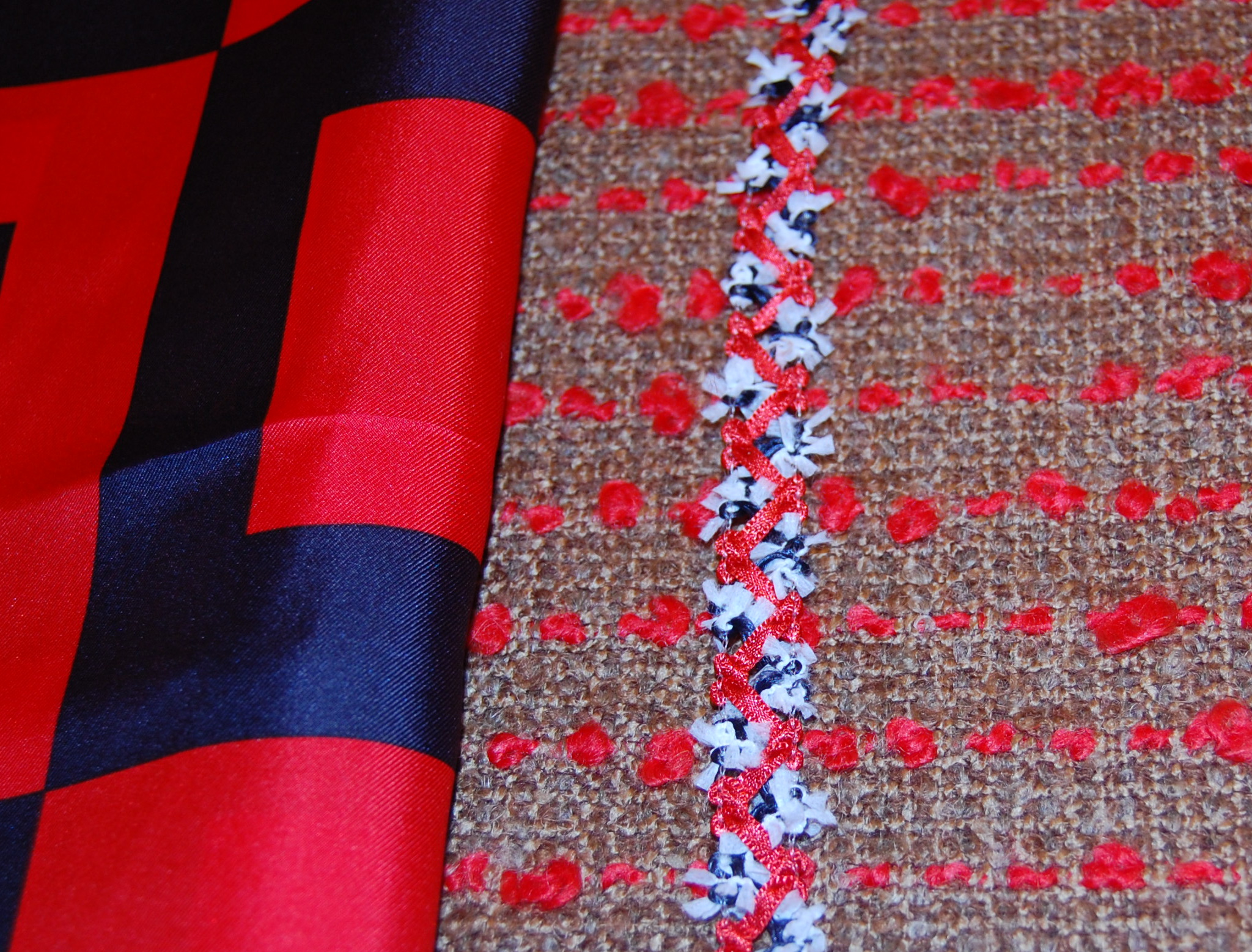
With fabrics in tow, I then headed up to the Buttons and Trims Department on the 3rd floor.  An initial look at the red trims flummoxed me, as none of them seemed right.  Then one of the wonderful assistants in the Department came to my rescue and found these two trims.

No. 2 Jacket

Shown with the lining/blouse fabric...

Shown with the lining/blouse fabric . . .

... and again.

. . . and again. 

Back and forth I went between them, unable to make a decision.  It was then that I went to my fail-safe method of choosing between two equally wonderful trims:  I bought both of them! ( It certainly helped that neither was terribly expensive – and both very versatile.)

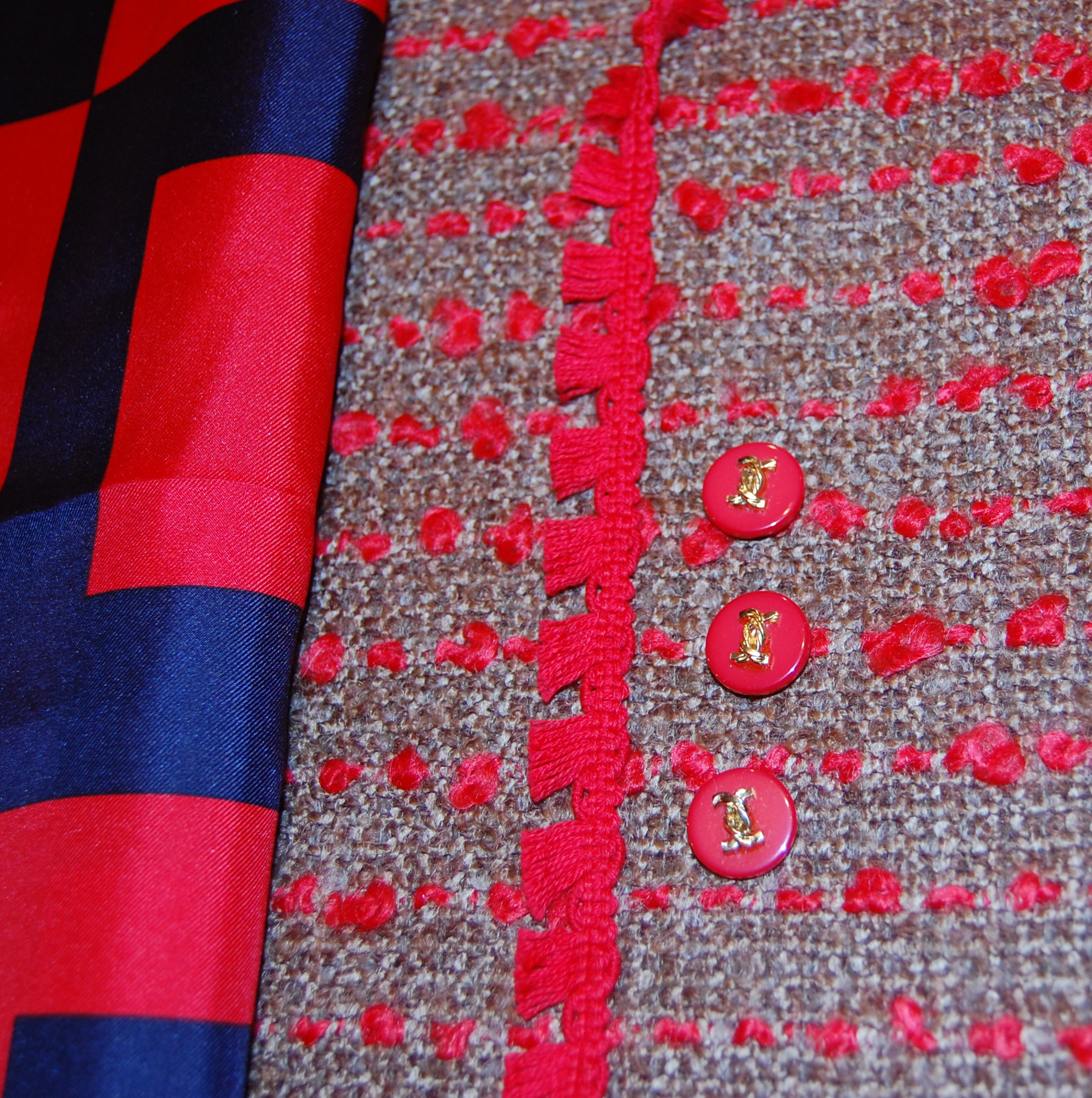
Now that I have them home, I am leaning toward one of them – can you guess which one?  Does it help to see the buttons, too?  Once again, the experienced button assistant quickly found these – and there was no question in my mind that they were just what I wanted for this jacket.

These are shank buttons, with gold decoration reminiscent of Chanel "C"s.

These are shank buttons, with gold decoration slightly reminiscent of intertwined Chanel “C”s.

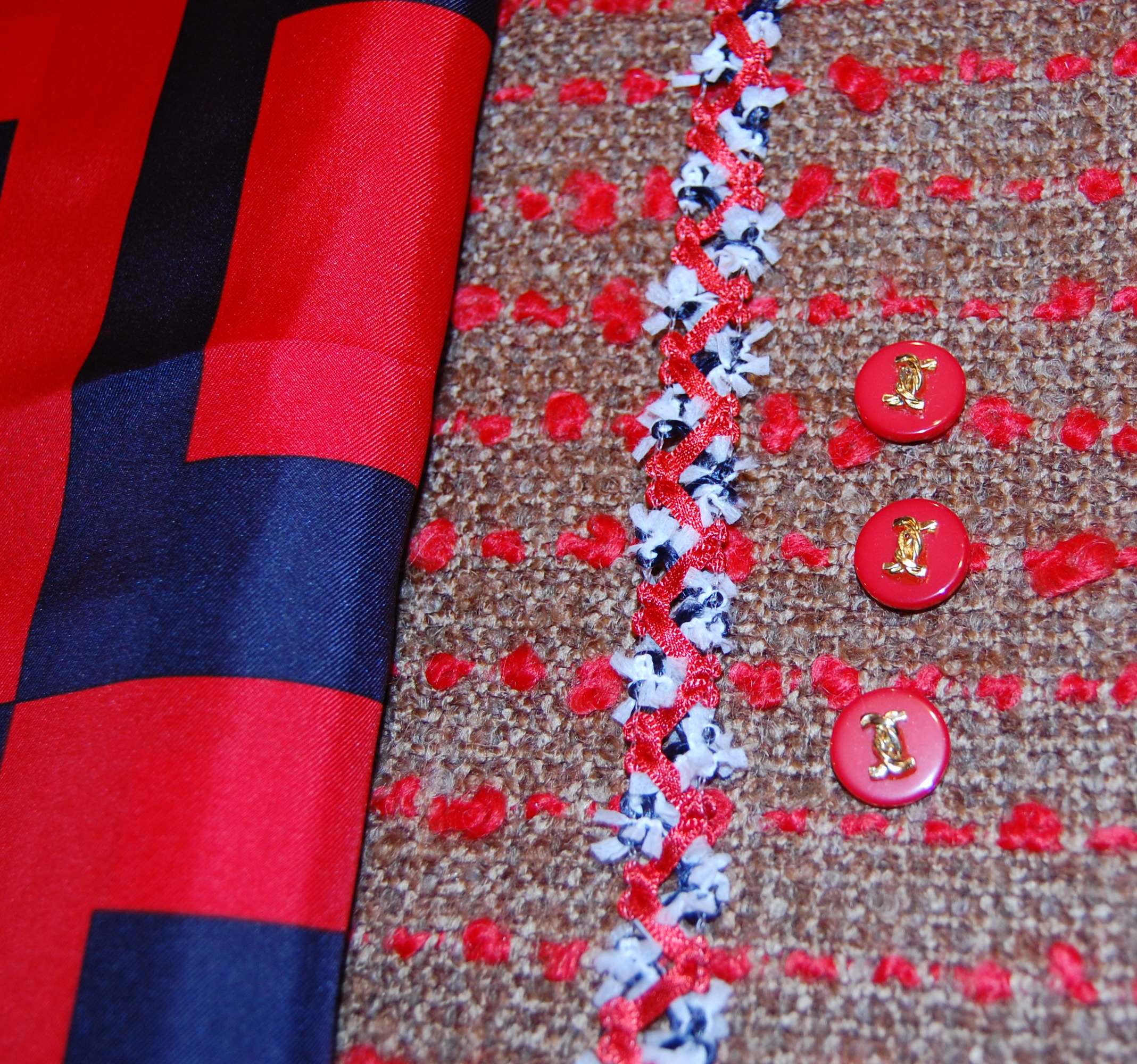
And here with the other trim.

And here with the other trim. 

Well, as in so much in life, timing is everything – or it sometimes seems that way.  My timing could be better to be starting such a lengthy project.  It is, after all, one month until Christmas.  I have those proverbial stockings to fill and much to do, but I’ll just bet I can squeeze in some sewing time before my sewing room transforms into Santa’s workshop.

15 Comments

Filed under Blouse patterns from the 1950's, Boucle for French style jackets, Buttons - choosing the right ones, Chanel-type jackets, Coco Chanel, Uncategorized, vintage Vogue patterns from the 1950s