Tag Archives: fashion sewing

Life Throws a Curveball

Knowing that all of us who sew and love to do so, often have so many interruptions in our lives that keep us from our fabric and thread, our patterns and plans, I have always hestitated to whine too much about that usurped time.  After all, none of us is immune from laundry, cooking, housekeeping, vacations, births, deaths of family and friends, the flu, a broken sewing machine, holidays, weddings, trips, family illness – the list goes on and on.  But one thing I never expected has made its way into my life here in Autumn, my favorite of all the seasons.

I have broken my left hand.  A terrible fall, outside here at my home on Sunday, October 9th, caused injury to four of my fingers – and a broken rib, too.  One of the fingers was severely dislocated, one was chipped at the center joint, and two were broken and required surgery to repair the breaks.

I’m incredibly grateful that this did not happen to my dominant hand!  I’m also so grateful for excellent medical care, a talented, caring surgeon, and family and friends who are attentive and so helpful.  I have so much for which to be thankful.

However, of course, there is much I am unable to do while I recover, including sewing. All the projects and plans in my queue are now put on hold.  But only on hold. . . so please do not give up on me!  I’ll be back at my fashion sewing and writing about it on Fifty Dresses just as soon as I am able.  In the meantime, I am missing both.  Wishing all of you, my readers, a crisp, colorful and creative Fall!

39 Comments

Filed under Love of sewing, Uncategorized

Classic Diane von Furstenberg

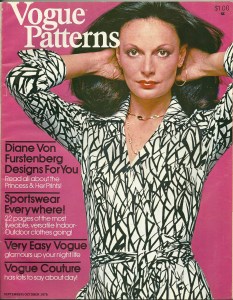
Forty years ago this month – October of 1976 – the first Diane von Furstenberg Vogue patterns were available for purchase. At the same time, Cohama (fabrics) produced Diane von Furstenberg-designed knits specifically for use with those patterns. Both were detailed in the September/October 1976 edition of Vogue Pattern Book Magazine:

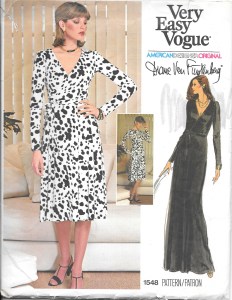
One of the Diane von Furstenberg designs I long admired but never purchased when I was sewing for myself in the 1970s was this pattern:

One year at a time - DvF pattern

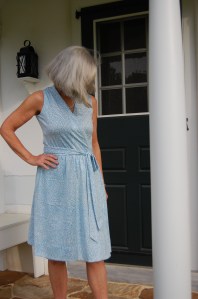
I never quite believed that it could really be reversible; I just especially liked the front wrapped version. So when I had the opportunity to purchase this pattern a few years ago online, I jumped at it. Then not long after, one of my blog readers contacted me with some vintage Cohama DvF fabric for sale. She so kindly gave me first choice of what she had, and I purchased two lengths from her. The first piece of fabric I made into this dress:

Easy breezy dress

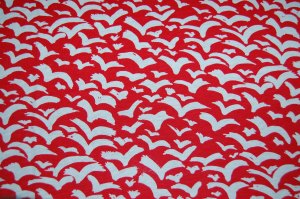
The second piece was this “Birds” design, and I was fortunate enough to have over three yards available to me:

Classic DvF

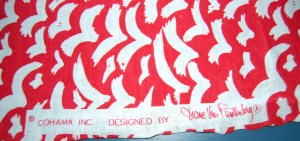
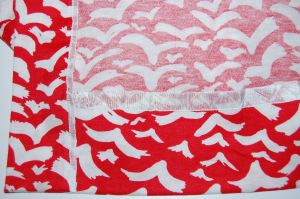
The selvedge clearly states the DvF connection.

The selvedge clearly states the DvF connection.

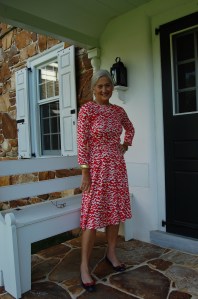
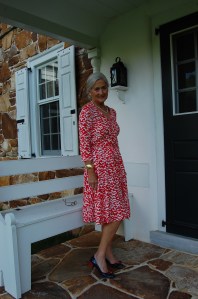
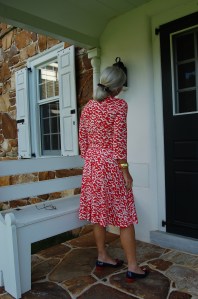
How I waited THIS LONG to make this dress, I’ll never know, but now it is reality!

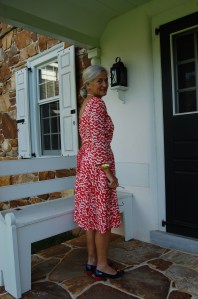
 Classic DvF

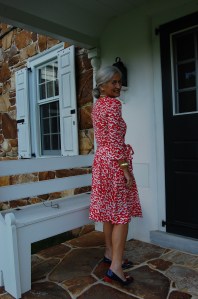
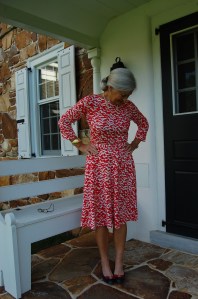
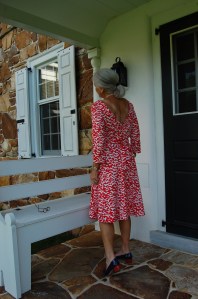
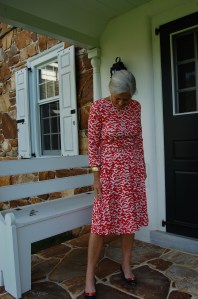
Worn with the V and wrap to the back.

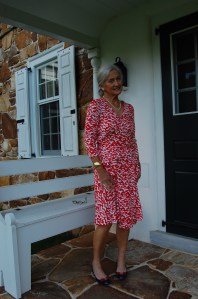
Worn with the V and wrap to the front.

Worn with the V and wrap to the front.

DvF-designed Cohama knit fabric is a lovely cotton/rayon blend, very soft and surprisingly easy to sew. I am not a big fan – or any fan at all, really – of sewing with knits, so I appreciate that this fabric is so accommodating. One downside of sewing with knits that I can’t quite get around is the fact that it is almost impossible to make a muslin mock-up to try out the fit and sizing. Perhaps someone knows some trick that I don’t know, but I felt a little like I was flying blind when making adjustments to the pattern which I would need for the proper fit. These included 1) lengthening the bodice by about an inch (which I know needs to be done from other wrap dresses I have made), 2) shortening the sleeves to three-quarter length and adding a little bit of width to them so they could be pushed up comfortably, and 3) adding about an inch and a half to the diameter of the waistline. Even with the forgiving nature of a knit fabric, I am not comfortable making a dress without a proper muslin first – so I was a little bit nervous the whole way through the construction of this dress.

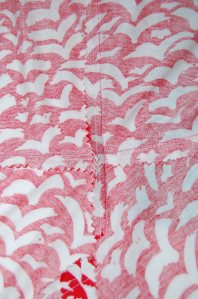
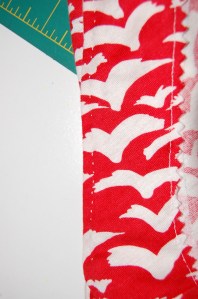
I followed the instructions carefully, and was fascinated to find that all the seams needed to be double-stitched, trimmed and pressed to one side. I discovered the reason for this after the dress was finished – it helps make the dress truly reversible, in some magical way.

A side and waist seam detail.

A side and waist seam detail.  Yes, this dress has pockets – two of them!

I did, however, use my trusty Snug Hug seam binding for the front skirt facings and the hem.

I did, however, use my trusty Snug Hug seam binding for the front skirt facings and the hem.

I needed an iron-on interfacing suitable for use with knits and after some research came up with Heat-n-Bond Fusible tricot (purchased from Fabrics.com.) This is the perfect interfacing for use with knits as it stretches, but also stabilizes. I used it for the neck and front facings per the pattern instructions, and I also reinforced the hems in the sleeves. The pattern called for under-stitching the front and neck facing, and I could not help myself – I did it by hand rather than machine!

Hand finishing is just so much nicer!

Hand finishing is just so much nicer!

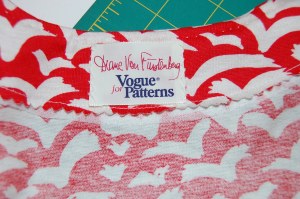
I was fortunate enough to receive a label with the pattern! You can see a small strip of the fusible interfacing showing beyond the edge of the facing...

I was fortunate enough to receive a label with the pattern! You can see a small strip of the fusible interfacing showing beyond the edge of the facing…

In the description of this pattern in the Vogue Pattern Book Magazine, it states: “Night & Day, Diane is the one! She wraps up both scenes in one pattern! Her wizard [my emphasis] wrap (that reverses front to back)… [for] day with plunge to front and …[for] night with plunge to back.”

Plunge is right! When I tried on the dress with the wrap to the front, I decided I was going to have to add a modesty panel or a very strong snap to keep the front closed. I opted for the snap, but I’m not entirely happy with the way it looks.

I should have taken a closeup of the bodice!

I should have taken a closeup of the bodice!

There seem to be a few wrinkles across the back.

There seem to be a few wrinkles across the back.

Classic DvF

I so prefer three-quarter length sleeves rather than long sleeves, particularly in a dress like this which will be worn in the warmer months.

When I tried on the dress with the wrap to the back, I loved it, and I felt like it fit me better, especially across the shoulders.

Classic DvF

The back without the snap fastened.

The back without the snap fastened.

Classic DvF

Classic DvF

Now the dilemma: I need the snap for the front V, but I don’t need it for the back V, nor can I reach it by myself in the back to fasten it. But one half of the snap shows when the V is in the back, which obviously will not do!   If I take the snap off, I cannot wear the dress with the front V (which is a little more casual look.) If I leave the snap on, I cannot wear the dress with the back V (a little dressier look.) Maybe I should forgo the snap and make a modesty panel, which can fasten underneath and be removed when I wear the dress “backwards.”   Any thoughts, anyone??

I guess I have the advantage of time on my side to figure this out, as I probably will not, at this point, be wearing this dress until next Spring. Despite this one little gaping issue, I think this dress is beautiful, versatile, comfortable and very feminine!

Hooray for Diane von Furstenberg, vintage Vogue Patterns and vintage Cohama fabrics – some styles never get old!

22 Comments

Filed under Diane von Furstenberg Vogue patterns, Uncategorized, Vintage fabric, vintage Vogue Designer patterns, vintage Vogue patterns from the 1970s, Wrap dresses

Just for the Chill of It

Autumn is a delightful season here in the northeastern part of the United States. One can tell it is on its way when the warm days quickly take on an evening chill once the sun slips below the horizon. It is the time of year when a light coat or sweater is a necessity, especially with a sleeveless dress.

With this scenario, and a September wedding to attend, what better excuse did I need, to make a coat to go with this dress?
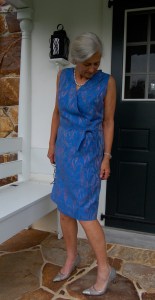
The Year of Magical Sewing

If you follow my blog then you probably already know this was my intention all along, when I made the dress two years ago. But it took a while to find the right coordinating fabric for a coat. I was looking for something between a coral and a pink. While the silk taffeta I found at Britex Fabrics looks more like a deep persimmon color when photographed, the fuchsia pink warp is very apparent when being worn.
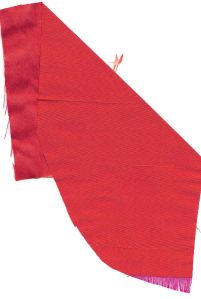
Taffeta coat - swatch

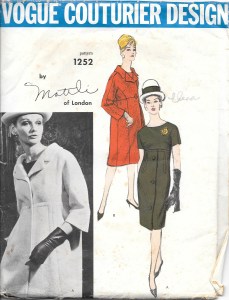
Once I decided the Jo Mattli-designed coat, part of the original dress pattern, was too voluminous, I went to another pattern. I wanted to keep the “intention” of the original coat, but have it more streamlined.
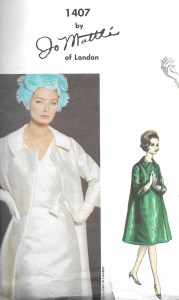
The "original" coat designed by Jo Mattli.

The “original” coat designed by Jo Mattli.
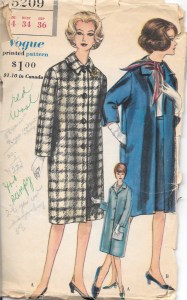
Taffeta coat - %22too scimpy%22

The coat pattern I settled on.

Somehow along the way, in making my muslin, I got the idea to add a curved belt to the back of the coat. I knew I had used a coat pattern several years ago with a curved belt back detail, so I went through my pattern collection to retrieve this:
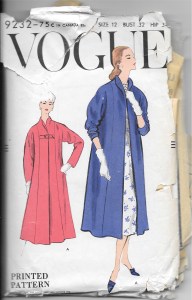
This is a 1957 pattern, but look at the belt shown on the back of the envelope, below.
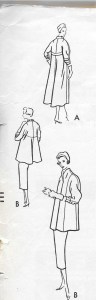
This is a 1957 pattern, but look at the belt shown on the back of the envelope, below.

taffeta-coat-belt-pattern-thumbnail

The belt is only shown in view A.

It took a couple of tries with the muslin to get the placement and angling of the belt correct, but once I did, I knew it was a winner. Dressmaker details like this always give me a thrill!
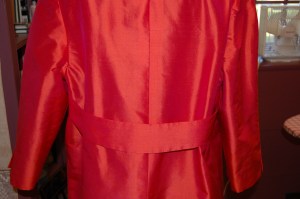
I anchored the belt in the side seams right under the bust darts.
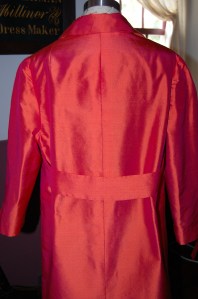
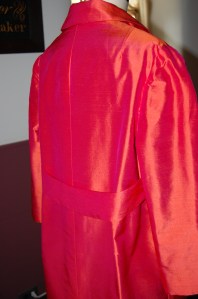
I anchored the belt in the side seams right under the bust darts.

Just for the Chill of it

The curve of the belt needed to fall at my waistline.

The curve of the belt needed to fall at my waistline.

One of the things I like about this pattern is the two-part sleeve with a center seam. I think this design is always flattering to the shoulder. Here are the constructed sleeves:
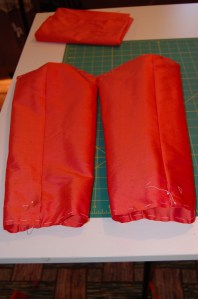
Just for the Chill of it

That center seam also provides the opportunity for a faux vent, and since I just happened to have three buttons, which I thought would be perfect for the coat, I happily included vents, as the pattern dictated:
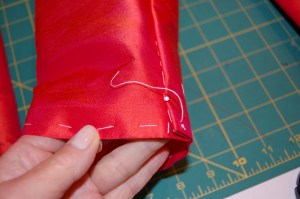
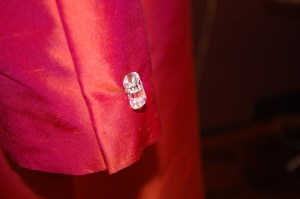
Just for the Chill of It

A small, cylindrical, crystal button!

A small, cylindrical, crystal button!

Although I originally thought I would leave the coat “closure-less,” that third button kept calling to me. While I did not want to have a single bound buttonhole in the center of the chest, I thought a button loop might do the trick. If I didn’t like it, I could remove it fairly easily from the front facing seam.
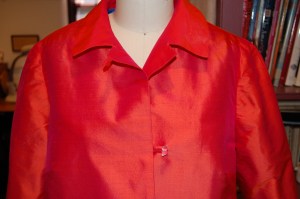
Just for the Chill of it

I also decided to add a loop at the neck, with a plain flat button under the collar. This way, I could close the collar if I chose to do so.
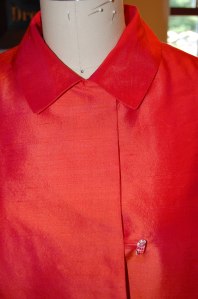
I pad-stitched the collar, but forgot to take a picture. Pad-stitching is like magic in how it makes the collar roll properly!

I pad-stitched the collar, but forgot to take a picture. Pad-stitching is like magic in how it makes the collar roll properly!

I have to say, I think the coat looks equally good any way it is worn: with the single button at the bust line closed, with both buttons secured and with neither of the buttons secured.

I chose not to add the optional pockets to this coat, but if I make it again in a less formal fabric, I would absolutely include them.

Once I got to the lining, I had to decide if I wanted to add the flat piping detail which I like so much. Of all the bias silk ribbon I have on hand, the only one which looked good was deep pink. Because of that, it doesn’t show contrast all that well, but I still like the subtle finishing look it gives to the lining.
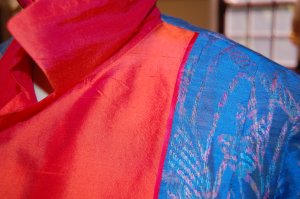
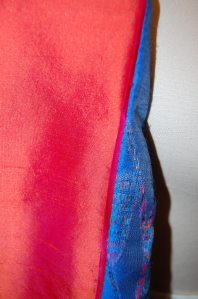
Just for the Chill of it

Just for the Chill of it

Here, by the way, is the coat before I inserted the lining:
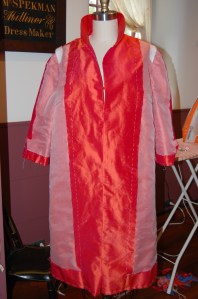
I underlined the entire coat with silk organza and added "cigarette" sleeve headings.

I underlined the entire coat with silk organza and added “cigarette” sleeve headings.
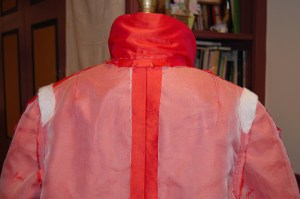
I love a center back seam!

I love a center back seam!

I used some vintage silk buttonhole twist to tack the center back fold in the lining at the neck and at the waistline.
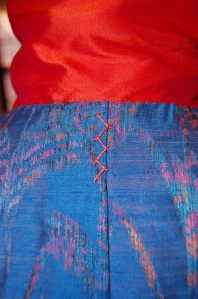
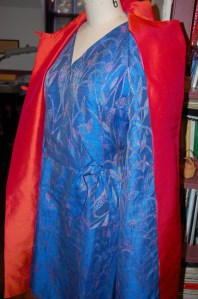
Just for the Chill of it

There is no question that the dress and the coat go together once the lining shows!
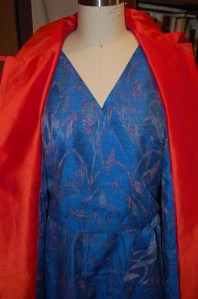
There is no question that the dress and the coat go together once the lining shows!
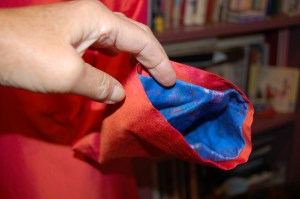
Just for the Chill of it

I love that the lining peeks out from the sleeves when I am wearing the coat.
I love that the lining peeks out from the sleeves when I am wearing the coat.
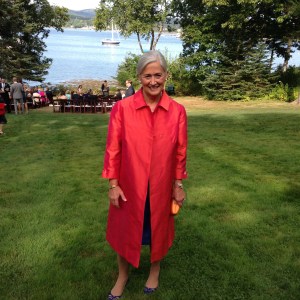
taffeta-coat-full-copy

I was delighted when the photographer at the wedding wanted to take my picture because he "liked my outfit so much." (This is not that photo...)

I was delighted when the photographer at the wedding wanted to take my picture because he “liked my outfit so much.” (This is not that photo…)

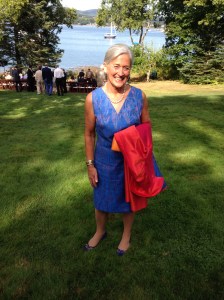
Here with my husband - with a coordinating tie, no less (not planned, but makes for a great photo!)

Here with my husband – with a coordinating tie, no less (not planned, but makes for a great photo!)

It may seem a bit frivolous to make a coat like this, knowing that it will not be worn all that often – although I do have two other dress-weight silks in my collection which would look fairly stunning paired with this coat!  However,  it really is the perfect weight and look for an elegant, but chilly, evening out – and it was so much fun to make.

38 Comments

Filed under Buttons - choosing the right ones, Coats, Cocktail dresses, couture construction, Dressmaker coats, Dressmaker details, Linings, Mid-Century style, piping, sewing in silk, Silk taffeta, Uncategorized, vintage buttons, vintage Vogue patterns from the 1960s

What Color is Your Lining?

Linings seem to be coming out of the (fabric) closet and finally getting the recognition they deserve! I have been thinking a lot about linings lately, as I have been working on a coat, the lining for which was its inspiration.

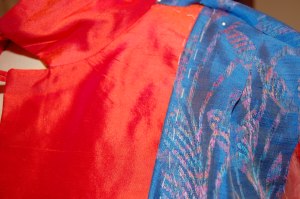
I made a cocktail dress out of the blue fabric and purchased enough to use as the lining for a coordinating coat.

I made a cocktail dress out of the blue fabric and purchased enough extra yardage to use for the lining of a coordinating coat.

As luck would have it, the current issue of Threads Magazine has an article on techniques to achieving “A Smoother Jacket Lining,” which states “the secret is installing it by hand.” I always appreciate an illustrated step-by-step approach to techniques such as this, and this article by Daryl Lancaster does not disappoint. While I am well versed in sewing in linings by hand, it is always good to read a refresher article such as this. (Obviously, the alternative to sewing in a lining by hand is to bag the lining, effectively sewing the lining in by machine.) I also always seem to gather one helpful tip, such as “Easy access to the armhole seam: Reach through the openings at the front hem to support the sleeve lining while you’re hand-sewing the armhole seams.” But what I really liked about this article was the section on “Fabric Guidelines.” In a nutshell, the author lists them as: “a low-friction surface; a supple hand; opacity; durability; and design compatibility.”

Design compatibility! This means, according to the author: “The lining should complement the garment. It can match or contrast. Lining offers the opportunity to subtly show the wearer’s creativity.” EXACTLY!

Many of us, I think, grew up or learned to sew with the idea that linings should match the color of the outer garment as closely as possible. And while that is still appropriate in many instances, there is also a case to be made for linings of contrasting or coordinating colors, and/or figured designs. In fact, I believe a lining has the potential to turn your garment from ho-hum into tres chic.
One of the best examples of the power of a lining is the classic little French jacket.   Pictured here are the two I have made for myself (with two more planned.) Imagine the one on the left being lined in a plain black or red charmeuse, and the one on the right lined in a solid light brown. Neither would be nearly as attractive even though the lining does not show when the jacket is being worn. As it turned out, I made a sheath dress, which matches the lining of the red jacket, and a blouse to match the lining of the jacket on the right. This makes the lining an integral part of the all-over design of the ensemble.

What color is your lining?

Likewise, this Pucci silk sat in my fabric collection for a few years until I found the right pattern for it. Then I became obsessed with somehow working out a way to line the jacket and make the dress out of the scant existing yardage I had.

Defying the passage of years

An inside look at the jacket with its matching lining.

An inside look at the jacket with its matching lining.

The nice thing about this jacket is that it does not have to be paired with the dress, looking equally as nice with a plain pink skirt. Which leads me into the next thought: sometimes it is more appropriate for your lining to be subtle in order to make your garment more versatile. When I made a linen coat last year, I would have loved to use a deep pink lining silk to match the linen dress I knew I would be wearing with it. I chose, instead, to match the lavender of the coat, making it easier to wear with other dresses or pants, which might not have any pink in them. To make it a little extra special, however, I added flat silk piping to the front edges of the lining. Because coats come off and on, and sometimes find themselves flung over chair arms, this little detail is often seen by more than just the wearer.

Fitting finish

Then there are the linings which truly are only seen by the person wearing the garment – you or I. Is it worth the time and/or expense to create a special lining in something like this? Every situation should be evaluated on its own merits, but I believe this is where the privilege of being your own dressmaker is in full flower. Why not add a little detail or use a beautiful, contrasting color to coordinate with your fashion fabric?

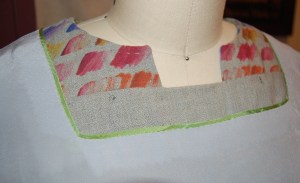
I used a gray Bemberg lining for this dress, but accented the neck edge with green piping. Obviously, no one sees this but me!

I used a gray Bemberg lining for this dress, but accented the neck edge with green piping. Obviously, no one sees this but me!

Here is the dress with its hidden lining detail.

Here is the dress with its hidden lining detail.

Who would guess that under this dress is . . .

And who would guess that under this dress is . . .

. . . this lining?

. . . this lining?

In sewing (as in life) it is often the hidden treasures or small gestures which add depth and enjoyment to the process and product. May your hidden or not-so-hidden linings be beautiful every time!

12 Comments

Filed under Dressmaker details, Linings, piping, Uncategorized

“Mrs. Scimpy”

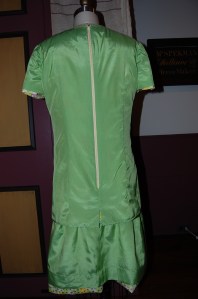
Two years ago I made this dress:

The Year of Magical Sewing

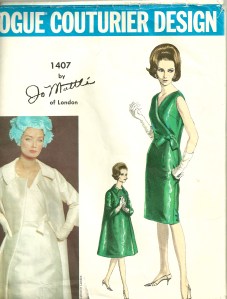
From this pattern:

Perfect Blue - Mattli pattern

Once I had the dress finished, I liked it so much that I decided a coordinating coat, with a lining to match the dress would be wonderful – sometime. I even went so far as to order more of the blue silk blend fabric from EmmaOneSock, while I knew it would still be available.   Tucked away in my fabric closet, it has patiently waited while I searched and searched for the right coat fabric in a coordinating/contrasting color and in silk. I finally found it last Spring, during a online silk sale at Britex Fabrics in San Francisco.

Taffeta coat - swatch

The fabric is lightweight silk taffeta, with the weft in persimmon color and the warp in fuchsia pink, giving it a shimmer which changes color with movement. I decided it would be my first project after we returned from our summer travels – with the intention of having it ready to wear with the dress to a September wedding, which happens to be at a location where a light coat or wrap is advisable.

All along I had intended to use the Jo Mattli coat pattern that is shown with the dress. I liked the idea of no buttons and simple lines.

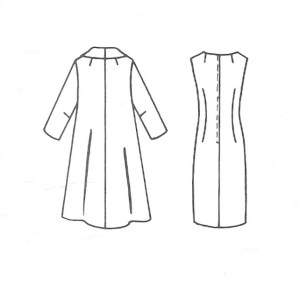
Taffeta coat - Mattli pattern

The thumbnail diagrams on the back of the pattern envelope.

The thumbnail diagrams on the back of the pattern envelope.

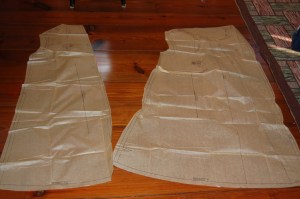
However, when I got the pattern pieces out, here is what I found:

Front and back pattern pieces

Front and back pattern pieces

Yep, that is one voluminous coat! I knew that, even with taking some of the bulk out, I would probably still look like I was wearing a tent. With that slim dress, I am not sure why the coat has to be so full, but I had no qualms about deciding not to go in that direction. However, I still wanted a coat with no buttons or maybe just one button. I dug through my collection and came up with several possibilities, which included this one:

I do like the looped buttons, but I just wasn't convinced this was the right look.

I do like the looped buttons, but I just wasn’t convinced this was the right look.

I have another Jo Mattli coat and dress design which I love, but I think the coat would make up much more attractively in wool rather than silk taffeta, so I ruled this one out:

Taffeta coat - 2nd Mattli pattern

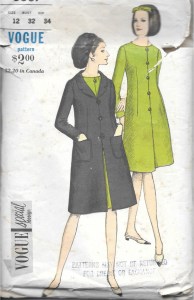
Then I came across this one: View B shows it with no button/buttonholes down the front. I also like the three-quarter sleeves, with the cuff detail.

The pattern description reads: "Striaght coat with or without buttoned closing below notched collar. Long and below elbow length sleeves with button trimmed vent. Optional pocket in side. Slim skirt.

The pattern description reads: “Straight coat with or without buttoned closing below notched collar. Long and below elbow length sleeves with button trimmed vent. Optional pocket in side. Slim skirt.”  I knew this coat would take on an appropriate dressy look when made up in silk taffeta.

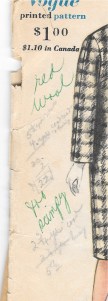
Now –  I try to buy vintage Vogue patterns in sizes with a 32” bust and 34” hip measurement; however, that is not always possible, so I will go up or down a size if it is a pattern I really want to have. When I make my muslin (toile) for such a pattern, I try to include adjustments for the size issues so that my final alterations will be easier. However, the handwritten note on the front of this pattern gave me pause: “too scimpy” it reads. She obviously meant “skimpy,” but those two words spoke volumes to me (no pun intended!) Maybe I would just follow the pattern exactly (except for lowering the bust which I always have to do), and see if the size is okay.

Taffeta coat - pencil notes

And that is exactly what happened! Little did Mrs. “Scimpy” know that her simple pattern review, circa 1961, would save me both time and effort in 2016!

It looks like Mrs. Scimpy made her coat out of red wool, with a matching skirt. Her pencil notes on the yardage required indicate such, along with the cost of the fabrics: $22. I certainly hope she figured out that the coat was too skimpy in time to make adjustments, as a red wool coat with matching skirt would be lovely indeed!

8 Comments

Filed under Coats, Dressmaker coats, Messages from past owners of vintage patterns, Mid-Century style, silk, Silk taffeta, Uncategorized, vintage Vogue Designer patterns, vintage Vogue patterns from the 1960s

Britex or Bust

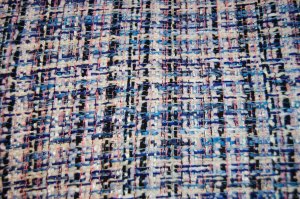
No trip to the West Coast of the United States is complete for me without a stop at Britex Fabrics in San Francisco. This time I had a specific goal in mind: finding silk lining fabric for the next “Classic French Jacket” I have planned. I was so fortunate to receive this lovely boucle as a Christmas gift from my (grown) children, and am so anxious to start work on this jacket, hopefully in the late Fall.

2 full yards of this glorious boucle! What a wonderful gift!

2 full yards of this glorious boucle! What a wonderful gift! (Purchased from Mendel Goldberg Fabrics in New York City.)

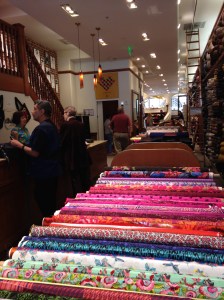
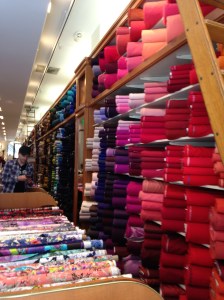
However, I knew I could not start work on it until I had the lining, the trim and the buttons. Britex seemed like the perfect spot to find the perfect lining (and trim), so off I went with my husband and son for a marathon session at this wonderful purveyor of beautiful fabrics and all things sewing. Walking in to Britex from their entrance on Geary Street always gives me a thrill. One is met with tables wide enough for entire bolts of silk twills, charmeuses, chiffons, etc., to be spread out for easy viewing.

Britex interior view copy

Like so many stores in San Francisco, Britex Fabrics extends through the width of the building, from its main entrance on Geary Street through to its back entrance on Maiden Lane.

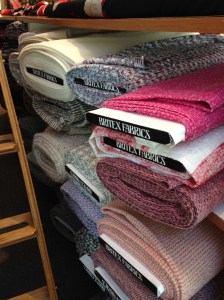
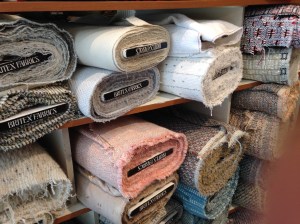
Opposite from the silks are bolts and bolts of boucles lined up.

Britex boucles 1 copy

More boucles!

More boucles!

Above the silks are more bolts and bolts  – of woolens.

Britex interior view 2 copy

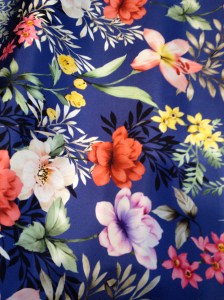
As usual, the Sales Associates at Britex are knowledgeable and always helpful. With my boucle sample swatch in hand, I started looking. My search was helped immensely by a lovely young woman who knew the silks, and started uncovering several which held promise. One, however, was the absolute winner. I was thrilled to find this blue silk lightweight twill, which had all the colors I wanted in a stunning floral print:

The photo does not give this silk its due. The colors are deep and clean.

The photo does not give this silk its due. The colors are deep and clean.

I had several more stops to make on the upper floors of Britex – for lightweight separating zippers (which I find impossible to find), for trim for my jacket (which I forgot to photograph before having it sent home with my other purchases), for Petersham ribbon, for this and that!

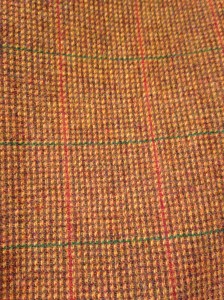
Returning to the first floor, I found my husband eyeing a piece of wool – not for me, but for him! Our tailor at home may find himself making a sport jacket out of a piece of Britex woolen:

Britex wool

With so much fabric already in my queue at home, I was trying to avoid being smitten by too much else. But I could not resist taking photos of some of the silks available:

I loved this geometric print.

I loved this geometric print.

Bold and beautiful.

Bold and beautiful.

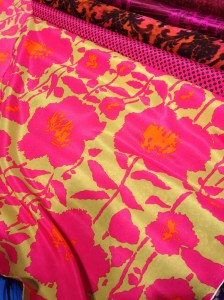
I am always drawn to pink and green.

I am always drawn to pink and green.

A real conversation starter!

A real conversation starter!

An unbelievable print!

An unbelievable print!

A watercolor print, reminiscent of Matisse.

A watercolor print, painterly and shimmery.

I love the pop of pink in this blue floral silk charmeuse.

I love the pop of pink in this blue floral silk charmeuse.

With more to do and see in San Francisco, we were (too) soon on our way, and I bid a fond farewell to Britex. But only ‘til next time and next year and my next project needing something perfect…

9 Comments

Filed under Boucle for French style jackets, silk, Uncategorized

From Flora to Flop


In sewing there are various degrees of success. At one end of the spectrum is something which not only fits well, but is flattering, a perfect combination of pattern and fabric, a piece destined to become a staple in one’s wardrobe. At the other end is – a complete flop. Flops are painful, aren’t they? I didn’t realize this project was going to be a flop until I was almost finished with it, although I was beginning to have my doubts about halfway through it.

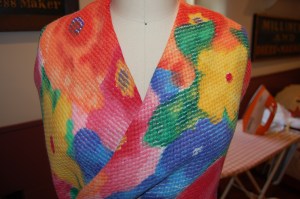
I started out with this really lovely linen blend from Mood Fabrics, which I’ve had for a few years. Here it is draped on my dress form:

Flowered Flora

The fabric looks like - and is - a somewhat loosely woven linen, but it is surprisingly stable.

The fabric looks like – and is – a somewhat loosely woven linen, but it is surprisingly stable.

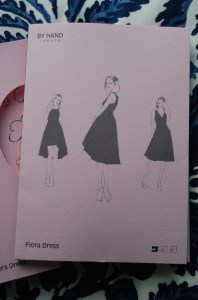
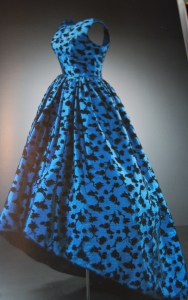
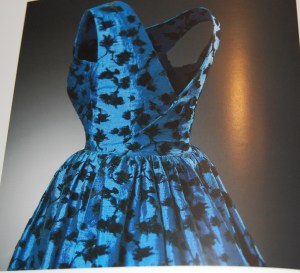
I had purchased the By Hand London “Flora” pattern (a departure for me to buy a “new” pattern!), as it reminded me of a Cristobal Balenciaga dress which I have long admired.

Flowered Flora

Flowered Flora

Evening dress in flocked shantung in blue and black, 1957

Both images are from: Balenciaga: Cristobal Balenciaga Museoa; Fundazion Cristobal Balenciaga Fundazioa, Editorial NEREA; English Edition 2011; distributed in the USA by Thames & Hudson Inc., NY, NY, page 260.

Both images are from: Balenciaga: Cristobal Balenciaga Museoa; Fundazion Cristobal Balenciaga Fundazioa, Editorial NEREA; English Edition 2011; distributed in the USA by Thames & Hudson Inc., NY, NY, page 260.

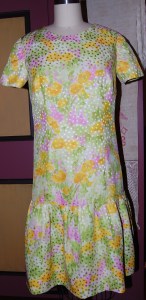
I had not intended to use the Flora pattern for this fabric, but somehow I got the notion that it would be really pretty. In addition the fabric was 60” wide, a requirement for the Flora dress, and for once, I had enough yardage. I made a muslin, and liked the way it looked – and I did a fairly good job of perfecting the fit of the bodice. The pattern lends itself to using couture construction techniques, as there are no facings, so that fit right in with how I like to sew. I underlined it all with silk organza. I catch-stitched all the seams. I used a silk crepe de chine lining, and hand sewed it into the bodice. I backstitched all the edges to secure the lining.

The silk organza added additional stability.

The silk organza added additional stability.

Flowered flora

I chose a pretty orange crepe de chine for the lining.

I chose a pretty orange crepe de chine for the lining.

The skirt is voluminous and that is where my problems began. It seemed okay made up in muslin, but once I had it constructed in the fashion fabric, I looked like I was a dumpling wearing a flowered parachute. The funny thing was that when I had it on my dress form, I thought it was rather attractive. I was fooled into thinking that if I just got it all put together, I’d be happy with it.

Looks pretty, doesn't it?

Looks pretty, doesn’t it?

I thought the orange lining would be lovely peeking out from the dipped back hem...

I thought the orange lining would be lovely peeking out from the dipped back hem…

I have been trying to figure out what went wrong. I think perhaps the pattern is just too “youthful” looking for me. I think it is such a pretty dress, but perhaps my days of wearing voluminous skirts are over (… although the skirt on my silk dress from last summer looks fine. It is, however, simply a gored skirt with no additional pleats or fullness.)

Allure of silk final

The skirt is full, but hangs with no bulk.

Now I am left with trying to salvage something from this project. I like the fabric too much to just abandon it, and I have too much time and effort and money invested in it all, as well.   Right now, however, I am very sick of the whole thing, so it might be a while until I come back to it. But when I do, I am going to separate the bodice from the skirt first.

Now I wish i had left the bodice just as you see it here!

Now I wish I had left the bodice just as you see it here!

Then I think I may cut a new slim skirt (no pleats, no gathers, just a nice, slim, matronly skirt!) to attach to the bodice, and perhaps make a self-belt with a tailored bow for the closure.

How does that sound?


30 Comments

Filed under couture construction, Linen, Uncategorized

Blame It on the Buttons

It can be a little overwhelming to look at my (growing) collection of beautiful summer linens, and then try to make a decision on which piece to select for my next project.

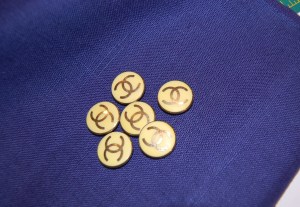
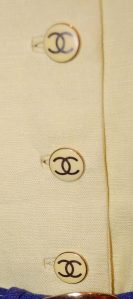
Fortunately, a random purchase of buttons helped me make up my mind this time around. I found these buttons at Britex Fabrics in San Francisco last year, and purchased them on a whim, not knowing when or how I would use them. I also don’t know what possessed me to purchase 6 of them, but that’s what I did.

Yes, those are interlocking "a la Chanel" Cs.

Yes, those are interlocking “a la Chanel” Cs.

When I got them home, I realized they were a perfect match with a length of vintage, pale yellow, Moygashel linen in my possession. I tucked the fabric and the buttons away together, confident that the perfect pattern would also be found amongst my many vintage Vogue patterns.

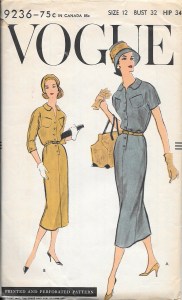
It was a bit of a trick finding a pattern that needed 6 (or fewer) ¾” buttons. This one kept surfacing as the most ideal candidate:

I am making the short sleeve version - but a little shorter!

Ideal, except for the yardage needed, that is. Many of you know by now that being a “little shy” of the prescribed fabric usually does not keep me from my desired goal! After making a fitting muslin and making the necessary adjustments, I cut out my underlining (light weight linen/cotton blend) and used that as my pattern. It was immediately evident that I did not have enough of that 35” width linen.

Or did I? I figured if I eliminated the center back box pleat and replaced it with just a slit in the back center seam, I’d save a bit of yardage requirements. I could make the sleeve hem facings out of the underlining, saving a bit more. And if I cut the collar on the horizontal straight of grain rather then the vertical, I could just fit the pattern pieces onto my yardage. It was a good thing I had already decided to eliminate the chest pockets (a little too 1950s.) And a self-belt?   Out of the question!

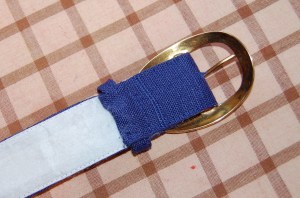
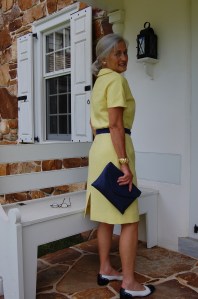
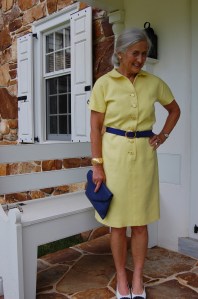
A belt turned out to be a perplexing question. I had been fortunate enough for a few years to have my belts and covered buttons custom made by Pat Mahoney, but since her retirement last year, I have found no replacement for her services. I was dreading the prospect of making my own belt. The only good thing was I knew I had a piece of vintage Moygashel linen in a medium navy blue (see the button photo above) which would be a good contrasting color for the yellow dress. I decided I would think about actually making the belt after I had the dress itself finished.

For a simple shirtwaist dress, there were a number of time-consuming details, like the gussets I covered in my last post. There were also six bound buttonholes to work.

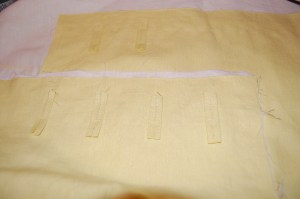
It always amazes me how long these buttonholes take to make!

It always amazes me how long these buttonholes take to make!

Blame it on the buttons


There were separate front bodice facings, and a front skirt placket with separate facings. There were sleeve hem facings (as mentioned above), and lots of trimming, clipping, and grading of seams! And then the dress was done.  Except for the belt, of course.

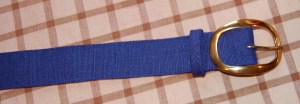
After giving myself a pep talk, I took out one of Pat’s belts and studied it, vowing to duplicate as closely as possible her techniques and precision. Fortunately I had a belt buckle from long ago, which I had saved. It was for a 1.25” width belt, which is exactly what I wanted.  I plunged ahead and this what I made, working the eyelets by hand (which fortunately don’t show much on the dark linen!):

Blame it on the buttons

The underside, just in case you are curious!

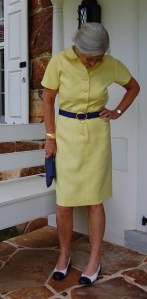
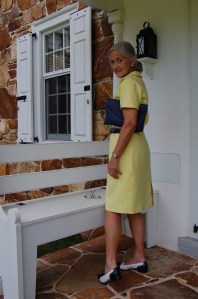
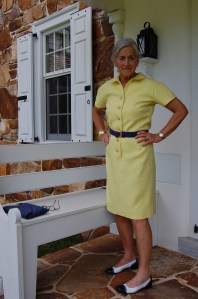
Although not my favorite dress of all time, I think I’ll get good use out of it, and I do love its pairing with “summer” blue.

Blame it on the buttons

Blame it on the buttons

Blame it on the buttons

Blame it on the buttons

The clutch is a perfect match with the belt – how lucky is that?

Cool linen for a hot summer!

Cool linen for a hot summer!

Best of all, the buttons add just the right, somewhat mysterious, touch.

19 Comments

Filed under bound buttonholes, Day dresses, kimono sleeves, Linen, Mid-Century style, Moygashel linen, Uncategorized, Vintage fabric, vintage Vogue patterns from the 1950s

Gazing at Gussets and Fashion Exhibits

We are almost halfway through the sewing year! Time for me to just keep plugging along, being grateful for any hours I can spend sewing – or dreaming about sewing. Lately it seems I have spent more time dreaming about it than actually accomplishing anything. But that’s not quite true. I have actually done a lot of sewing (I call it necessary sewing) – just not anything worth sharing. But that is about to change.

I am working on a yellow linen shirtdress, using this pattern:

I am making the short sleeve version - but a little shorter!

I am making the short sleeve version – but a little shorter!

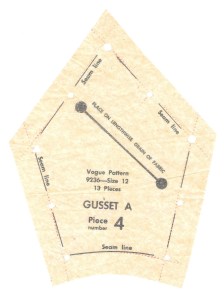
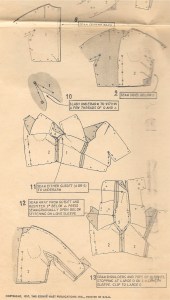
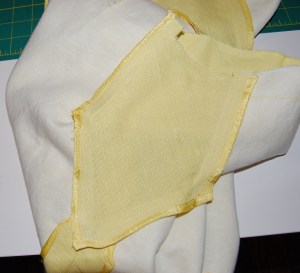
I am really getting to be a fan of kimono sleeves. They were incredibly popular in the 1950s (and early ‘60s), and their construction varies according to the type of gusset used. The dress in this pattern has a gusset that forms part of the sleeve, itself.

Usually gussets are diamond shaped. However, the curved lower edge shows that this gusset incorporates part of the sleeve in it.

Usually gussets are diamond shaped. However, the curved lower edge shows that this gusset incorporates part of the sleeve in it.

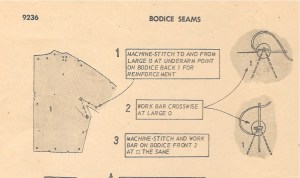
The instructions for inserting the gusset are quite explicit and interesting, I think. The first step is to work a “bar” across the point on the bodice where the matching point of the gusset is placed. I have actually never seen this done, but it makes sense as it reinforces that stress point.

Gazing at Gussets 1st diagran

I also like the double stitching on the interior seams of the gusset as shown in this section:

Gazing at Gussets 2nd diagram

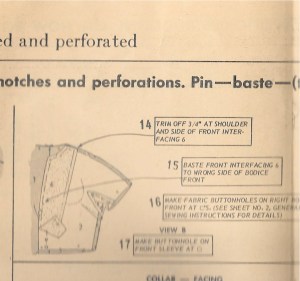
Here is how the finished short sleeve is diagrammed:

Gazing at Gussets 3rd diagram

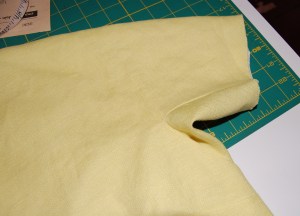
And here are some photos of the finished gussets on my dress:

Gazing at Gussets

This photo clearly shows how the gusset becomes part of the underpart of the sleeve.

This photo clearly shows how the gusset becomes part of the under-section of the sleeve.

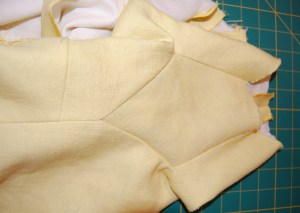
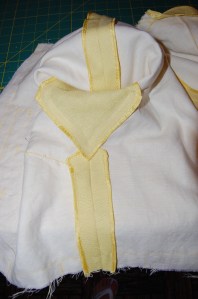
Here is an inside look. While the dress is underlined in a very light weight cotton/linen blend, I opted not to underline the gusset, in order to add to flexibility. I got this brilliant idea from Laura Mae of Lilacs and Lace sewing blog.

Here is an inside look. While the dress is underlined in a very light weight cotton/linen blend, I opted not to underline the gusset, in order to add to flexibility. I got this brilliant idea from Laura Mae of Lilacs and Lace sewing blog.

The seam you see at the top of this photo is the shoulder seam which runs down the length of the sleeve.

The seam you see at the top of this photo is the shoulder seam which runs down the length of the sleeve.

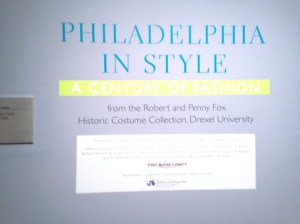
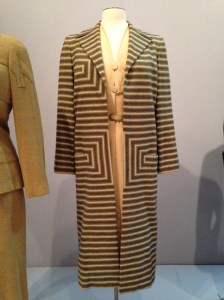
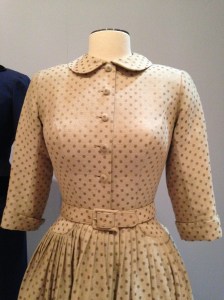
I managed to tear myself away from my sewing room for a few hours this week to go to see an exhibit at the Michener Museum in Doylestown, Pennsylvania (USA). Entitled Philadelphia In Style, the exhibit featured fashions either made, worn or purchased in Philadelphia, PA over the course of about 100 years (1880-1980).

Duskin - Exhibit title

All are part of the Robert and Penny Fox Historic Costume Collection at Drexel University in Philadelphia, a veritable treasure trove of designer, haute couture and ready-to-wear dresses, coats, ensembles, shoes, handbags, and accessories of all types. The Exhibit has special meaning for those of us with Philadelphia ties, but universal meaning for lovers of fine fashion anywhere.

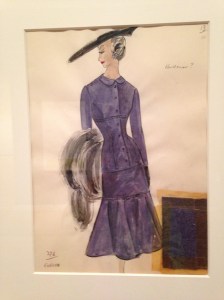
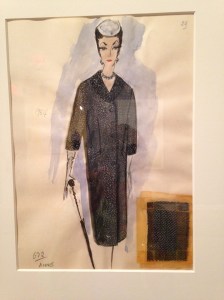
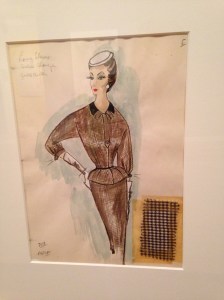
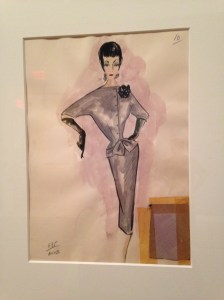
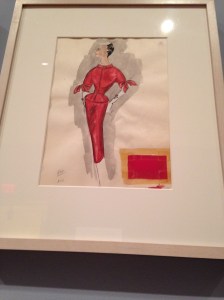
Although the clothing on display was fascinating and, for the most part, lovely, it was the numerous fashion illustrations, framed and lined up one after the other, which really caught my attention. They had all been done in 1954 for a specialty ladies’ shop in Philadelphia, called Nan Duskin. The most amazing thing is that each one had a swatch of the intended fabric taped in the corner of each drawing. Here is a sampling:

Duskin sketch - purple dress

The buttons were still in question for this dress – note the line in the upper right side “buttons?”

Such a lovely coat! Note the fabric swatch, held in place with yellowing tape!

Such a lovely coat! Note the fabric swatch, held in place with yellowing tape!

So many of the illustrations were of dressmaker suits. This one is made in brown checked wool.

So many of the illustrations were of dressmaker suits. This one is made in brown checked wool.

I love the saucy pose in this sketch - and the posy perched on the shoulder!

I love the saucy pose in this sketch – and the posy perched on the shoulder!

One of my favorites: in red, of course!

One of my favorites: in red, of course!

Here are a couple of the fashions represented in the Exhibit:

This was called a Day Ensemble. It bears the table "Irene for Nan Duskin." This was Irene Lentz Gibbons, 1952-53, USA.

This was called a Day Ensemble. It bears the table “Irene for Nan Duskin.” (Irene Lentz Gibbons, 1952-53, USA)

This shirtwaist dress, Norman Norell for Trina-Norell, circa 1955, had finely done bound buttonholes. the fabric is s ilk and wool brocade.

This shirtwaist dress, Norman Norell for Trina-Norell, circa 1955, had finely done bound buttonholes. The fabric is silk and wool brocade.

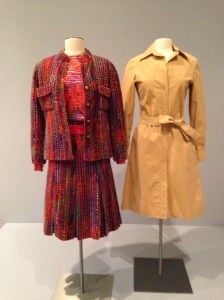
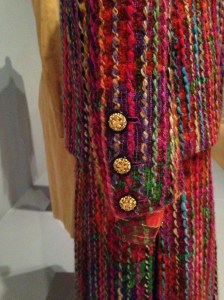
The Exhibit did manage to include one of the most unattractive Chanel suits I think I have ever seen.

The Chanel suit on the left is shown with an ultra-suede shirtdress by Halston, on the right.

The Chanel suit on the left is shown with an ultra-suede shirtdress by Halston, on the right.

But it was still fascinating to look at the cuff detail:

Duskin Chanel suit detail

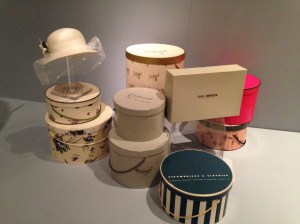
One of the most charming displays in the Exhibit was a collection of hat boxes from the stores in Philadelphia which were the purveyors of so many fine fashions over the decades.

Duskin - hat box display

As a lover of pretty boxes and bags, I found this vignette not only delightful, but also evocative of the thought and care inherent in buying and wearing beautiful fashions. They reminded me of the same little thrill I get when a piece of beautiful fabric which I have purchased shows up in the mail, elegantly presented in crisp tissue and tied with silky ribbons.   It makes it oh-so-easy to fall in love immediately!

23 Comments

Filed under bound buttonholes, Coco Chanel, Day dresses, Dressmaker suits, Fashion Exhibits, Gussets, kimono sleeves, Mid-Century style, Uncategorized, vintage Vogue patterns from the 1950s

Pondering Some of Sewing’s Mysteries and Curious Happenstances

The act of sewing and dressmaking gives one ample time to think, and sometimes when I am squirreled away in my sewing room, I reflect on some of these questions to which there seem to be no exacting answers – such as:

Is it really necessary to buy an extra button? I find that the buttons I sew on rarely come off. It is just the buttons on RTW* that seem to go missing. So – is that extra button really necessary just for the sake of insurance? Is that how so many random single buttons have found their home in one of my button boxes? What does one do with an extra button that is not needed?  *Ready-to-Wear , for my non-American readers!

Why is beautiful fabric so addictive? Why do I suddenly decide I need another cocktail or elegant dress just because I find a gorgeous silk that I can’t resist?

I just could not resist this silk charmeuse on Mendel Goldberg's website. I immediately decided I needed it for a new dress to wear to fancy parties. However, it will have to wait patiently until I can get to it.

I just could not resist this silk charmeuse on Mendel Goldberg’s website. I immediately decided I needed it for a new dress to wear to fancy parties. However, it will have to wait patiently until I can get to it.

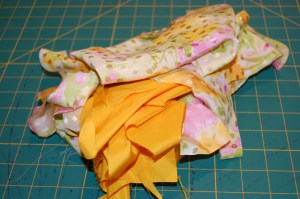
What does one do with all those little scraps left over from a sewing project? Should I save them or throw them away? Somehow it seems sacrilegious to get rid of even small pieces of beautiful, fine fabric, but really, how many of these little bundles can I keep on storing?

Here is a little pile left over from my recently completed dress and cocktail jacket. Not much remains - what should I do with it?

Here is a little pile left over from my recently completed dress and cocktail jacket. Not much remains – what should I do with it?

Why is one spool of thread never enough? It seems I am forever going to the local JoAnn’s to pick up one more spool of the Gutermann’s thread I love.

Why don’t manufacturers of fabric advertise in pattern magazines anymore? Today we rarely buy fabric “by brand” whereas “back in the day” one looked for specific brands to buy, based on their reputation for quality. (Pendleton Wool still sells by name, but I rarely see their “fabrics-on-the-bolt” advertised.)

Why does the bobbin always run out of thread at the most inopportune time?

Why does time go so fast when I am sewing?

Where do all those pins go? Those ones that drop on the floor and somehow never get found? (Perhaps they are pinning up all those socks – those ones that go missing in the laundry – onto some invisible lost and found board somewhere?)

How much information should I offer when someone compliments me on what I am wearing? I am always flattered to receive a compliment – and receive it graciously, I think – but usually I do not offer the fact that I have made what I am wearing unless I am asked where I purchased it. What do you do when faced with this situation?

Why do I always misjudge how long something will take to complete? I am an experienced dressmaker at this point, and I NEVER estimate correctly! I should have a better sense of time, don’t you think? I suspect I am unconsciously and deliberately fooling myself, for if I really knew how many hours would be involved in a new project, I might not want to start it.

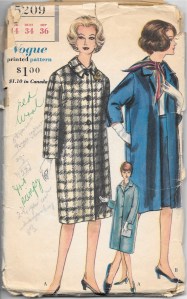
How many coat patterns does one really need? Oh, this is no mystery – one can never have too many patterns – or coats!

this is my "newest cant pattern, which happens to look a lot like several of my other coat patterns. I wonder how that happened?

This is my “newest” coat pattern, which happens to look a lot like several of my other coat patterns. I wonder how that happened?

What are your sewing mysteries and curiosities? What perplexing questions does your sewing present to you?  What have I forgotten?

41 Comments

Filed under Coats, Love of sewing, Uncategorized, vintage Vogue patterns from the 1960s