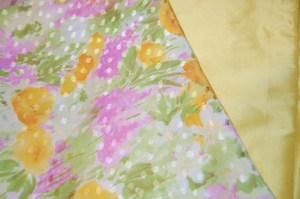
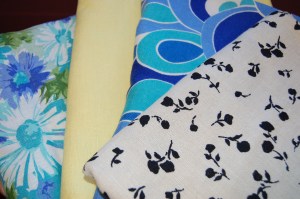
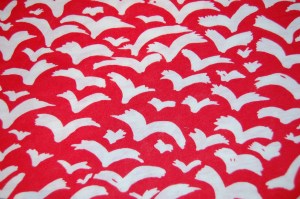
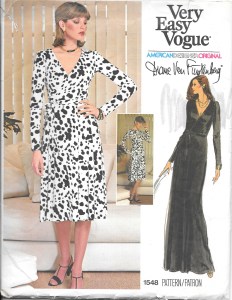
Tag Archives: Mendel Goldberg Fabrics

A Good Start

Happy December! It seems like a long time since I have been here with a new post for Fifty Dresses. The first thing I want to say, since my forced hiatus from sewing (due to my badly injured left hand), is “Thank You!” to so many of you who gave me encouragement, sent sympathy and healing thoughts, and made me feel like such a valued part of our worldwide fashion sewing community. Your kindnesses meant the world to me at a personally difficult and discouraging time.

Although my heart never left sewing (attested to by the new vintage patterns and a couple of lengths of new fabrics which have somehow found their way to my sewing room over the past weeks!), my hands have finally come back to it as well. While I still have weeks and weeks of “hand therapy” to attend in an effort to restore full use of my left hand, I now can sew at the machine, cut and mark fabric, and even hand sew. Having said that, I wish I had something truly spectacular to show you to prove that point, but alas, I do not. What I can show you is a promise of things to come, things which are now destined to make their appearance in 2017 instead of in November or December of 2016.

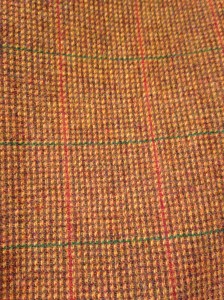
I had my heart set on getting this fabric made into a dress to wear during this month of December, even though back in October I still had not settled on a pattern for it.

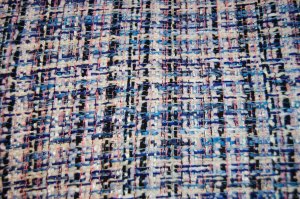
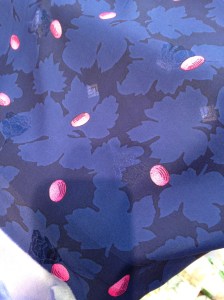
I purchased this fabric from Mendel Goldberg in New York City. It is a wool/silk blend, similar to fabric in a dress I made last Fall.

I purchased this fabric from Mendel Goldberg in New York City. It is a wool/silk blend, similar to fabric in a dress I made last Fall.

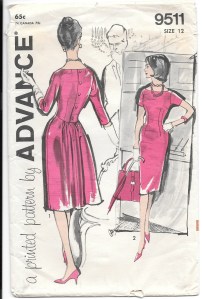
After searching online through many, many vintage patterns, I finally came across this one, an Advance pattern (a small departure from my normal preference for Vogue):

I still need to do a little research on the exact date for this pattern, but it appears to be from the mid-1960s.

I still need to do a little research on the exact date for this pattern, but it appears to be from the mid-1960s.

I could easily see this dress made up in polka dots, with the three-quarter sleeves. I think the back detail with the buttons is so pretty. My muslin is in the process of being completed, and then I will determine if this style looks good on me. I certainly hope so…

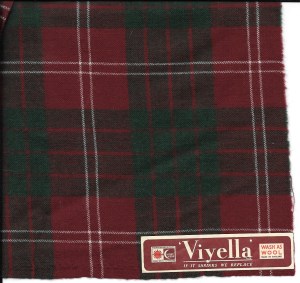
Another project I wanted to complete this Fall was a new bathrobe. A while ago I found this vintage Viyella fabric (cotton/wool blend, warm but light-weight, 5¼ yards, 35” wide), and it just spoke “bathrobe” to me.

The paper label is still attached to this length of fabric.

The paper label is still attached to this length of fabric.  Isn’t it lovely that this fabric is washable?

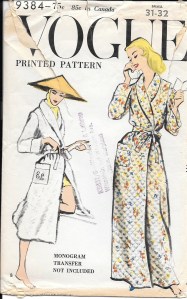
This Vogue pattern seems just about perfect for it, as long as I can match the plaid and still have enough yardage to eke it out. My muslin will tell the story.

I definitely want to make the long version of this robe.

I definitely want to make the long version of this robe. This pattern is from the late 1950s.

But before I can get any further on either of these projects, I have some sewing to do for Christmas gifts. The countdown is on, but I think I have a good start. It is wonderful to be back in my sewing room, which now looks like a cross between a couture atelier and Santa’s workshop, with fabric and wrapping paper and ribbons vying for equal space.  Happy December, indeed!

38 Comments

Filed under Day dresses, Mid-Century style, Uncategorized, vintage Vogue patterns from the 1950s

Britex or Bust

No trip to the West Coast of the United States is complete for me without a stop at Britex Fabrics in San Francisco. This time I had a specific goal in mind: finding silk lining fabric for the next “Classic French Jacket” I have planned. I was so fortunate to receive this lovely boucle as a Christmas gift from my (grown) children, and am so anxious to start work on this jacket, hopefully in the late Fall.

2 full yards of this glorious boucle! What a wonderful gift!

2 full yards of this glorious boucle! What a wonderful gift! (Purchased from Mendel Goldberg Fabrics in New York City.)

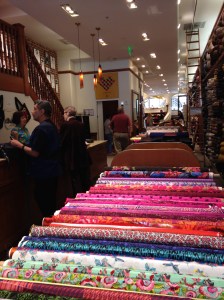
However, I knew I could not start work on it until I had the lining, the trim and the buttons. Britex seemed like the perfect spot to find the perfect lining (and trim), so off I went with my husband and son for a marathon session at this wonderful purveyor of beautiful fabrics and all things sewing. Walking in to Britex from their entrance on Geary Street always gives me a thrill. One is met with tables wide enough for entire bolts of silk twills, charmeuses, chiffons, etc., to be spread out for easy viewing.

Britex interior view copy

Like so many stores in San Francisco, Britex Fabrics extends through the width of the building, from its main entrance on Geary Street through to its back entrance on Maiden Lane.

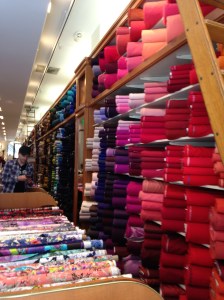
Opposite from the silks are bolts and bolts of boucles lined up.

Britex boucles 1 copy

More boucles!

More boucles!

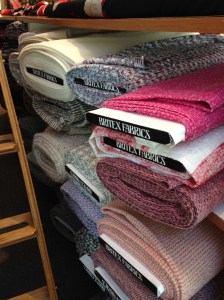
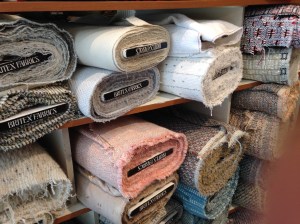
Above the silks are more bolts and bolts  – of woolens.

Britex interior view 2 copy

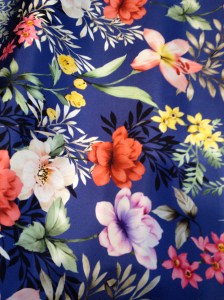
As usual, the Sales Associates at Britex are knowledgeable and always helpful. With my boucle sample swatch in hand, I started looking. My search was helped immensely by a lovely young woman who knew the silks, and started uncovering several which held promise. One, however, was the absolute winner. I was thrilled to find this blue silk lightweight twill, which had all the colors I wanted in a stunning floral print:

The photo does not give this silk its due. The colors are deep and clean.

The photo does not give this silk its due. The colors are deep and clean.

I had several more stops to make on the upper floors of Britex – for lightweight separating zippers (which I find impossible to find), for trim for my jacket (which I forgot to photograph before having it sent home with my other purchases), for Petersham ribbon, for this and that!

Returning to the first floor, I found my husband eyeing a piece of wool – not for me, but for him! Our tailor at home may find himself making a sport jacket out of a piece of Britex woolen:

Britex wool

With so much fabric already in my queue at home, I was trying to avoid being smitten by too much else. But I could not resist taking photos of some of the silks available:

I loved this geometric print.

I loved this geometric print.

Bold and beautiful.

Bold and beautiful.

I am always drawn to pink and green.

I am always drawn to pink and green.

A real conversation starter!

A real conversation starter!

An unbelievable print!

An unbelievable print!

A watercolor print, reminiscent of Matisse.

A watercolor print, painterly and shimmery.

I love the pop of pink in this blue floral silk charmeuse.

I love the pop of pink in this blue floral silk charmeuse.

With more to do and see in San Francisco, we were (too) soon on our way, and I bid a fond farewell to Britex. But only ‘til next time and next year and my next project needing something perfect…

9 Comments

Filed under Boucle for French style jackets, silk, Uncategorized

Pondering Some of Sewing’s Mysteries and Curious Happenstances

The act of sewing and dressmaking gives one ample time to think, and sometimes when I am squirreled away in my sewing room, I reflect on some of these questions to which there seem to be no exacting answers – such as:

Is it really necessary to buy an extra button? I find that the buttons I sew on rarely come off. It is just the buttons on RTW* that seem to go missing. So – is that extra button really necessary just for the sake of insurance? Is that how so many random single buttons have found their home in one of my button boxes? What does one do with an extra button that is not needed?  *Ready-to-Wear , for my non-American readers!

Why is beautiful fabric so addictive? Why do I suddenly decide I need another cocktail or elegant dress just because I find a gorgeous silk that I can’t resist?

I just could not resist this silk charmeuse on Mendel Goldberg's website. I immediately decided I needed it for a new dress to wear to fancy parties. However, it will have to wait patiently until I can get to it.

I just could not resist this silk charmeuse on Mendel Goldberg’s website. I immediately decided I needed it for a new dress to wear to fancy parties. However, it will have to wait patiently until I can get to it.

What does one do with all those little scraps left over from a sewing project? Should I save them or throw them away? Somehow it seems sacrilegious to get rid of even small pieces of beautiful, fine fabric, but really, how many of these little bundles can I keep on storing?

Here is a little pile left over from my recently completed dress and cocktail jacket. Not much remains - what should I do with it?

Here is a little pile left over from my recently completed dress and cocktail jacket. Not much remains – what should I do with it?

Why is one spool of thread never enough? It seems I am forever going to the local JoAnn’s to pick up one more spool of the Gutermann’s thread I love.

Why don’t manufacturers of fabric advertise in pattern magazines anymore? Today we rarely buy fabric “by brand” whereas “back in the day” one looked for specific brands to buy, based on their reputation for quality. (Pendleton Wool still sells by name, but I rarely see their “fabrics-on-the-bolt” advertised.)

Why does the bobbin always run out of thread at the most inopportune time?

Why does time go so fast when I am sewing?

Where do all those pins go? Those ones that drop on the floor and somehow never get found? (Perhaps they are pinning up all those socks – those ones that go missing in the laundry – onto some invisible lost and found board somewhere?)

How much information should I offer when someone compliments me on what I am wearing? I am always flattered to receive a compliment – and receive it graciously, I think – but usually I do not offer the fact that I have made what I am wearing unless I am asked where I purchased it. What do you do when faced with this situation?

Why do I always misjudge how long something will take to complete? I am an experienced dressmaker at this point, and I NEVER estimate correctly! I should have a better sense of time, don’t you think? I suspect I am unconsciously and deliberately fooling myself, for if I really knew how many hours would be involved in a new project, I might not want to start it.

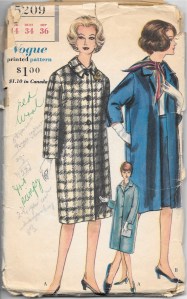
How many coat patterns does one really need? Oh, this is no mystery – one can never have too many patterns – or coats!

this is my "newest cant pattern, which happens to look a lot like several of my other coat patterns. I wonder how that happened?

This is my “newest” coat pattern, which happens to look a lot like several of my other coat patterns. I wonder how that happened?

What are your sewing mysteries and curiosities? What perplexing questions does your sewing present to you?  What have I forgotten?

41 Comments

Filed under Coats, Love of sewing, Uncategorized, vintage Vogue patterns from the 1960s

An Evening Jacket for the Ages

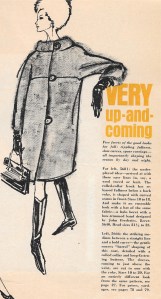
“Very up and coming” for the Fall of 1962, according to Vogue Pattern Magazine, was “the striking medium between a straight line and a bold curve – the gentle convex ‘barrel’ shaping of this coat:”

An Evening Jacket for the Ages - picture

It is from this time period – perhaps a year or two later – that this Designer Pattern comes:

Oh the things we can learn, no 10

I don’t know many of us who want to look like they are in a barrel, so it was my intention to take the best parts of the design of the evening jacket and then adapt it to a more current look, or at least to one that did not scream 1963/64

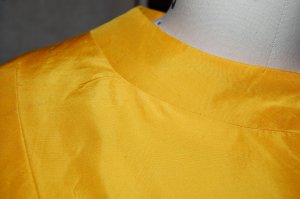
The details I loved about it were: 1) the shaped, two-part collar, which doesn’t really look like a collar, rather as an extension of the body of the jacket, but with more definition to it:

Evening jacket for the Ages

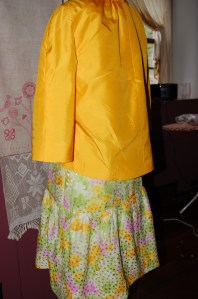
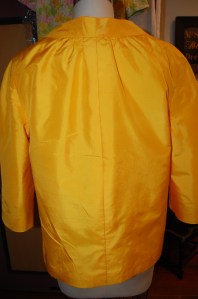
2) the dipped back hem of the jacket:

Evening Jacket for the Ages

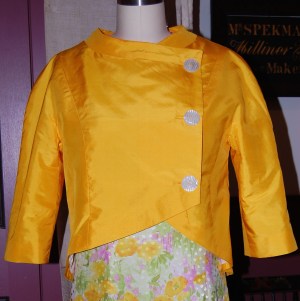
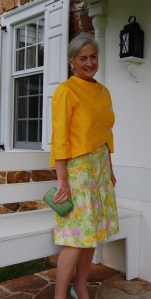
I purchased the yellow silk taffeta from Britex Fabrics, while the dress fabric, also silk, is from Mendel Goldberg.

Evening Jacket for the Ages

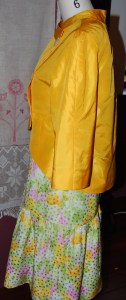
3) the below-elbow length, kimono sleeves with their clever built-in gusset, and 4) the prominent, offset buttons:

Evening Jacket for the Ages

The top buttonhole is a slot-seam one, while the other two are bound buttonholes.

Less attractive to me was the fullness of the body of the jacket.

My muslin (toile) showed me that I needed to eliminate quite a bit of that fullness from the pattern pieces. I took 2 inches right out of the back of the jacket, making for much less to be gathered into the collar:

Even with two inches removed from the center back seam, there is still enough to gather nicely into the collar.

Even with two inches removed from the center back seam, there is still enough to gather nicely into the collar.

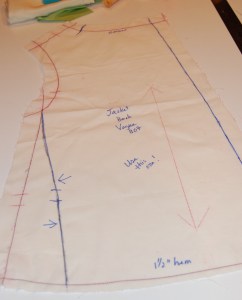
I also took a large wedge out of the each side of the back:

The dark blue line on the left is my re-drawn seam line. the original seam line is marked in red.

The dark blue line on the left is my re-drawn seam line. The original seam line is marked in red.

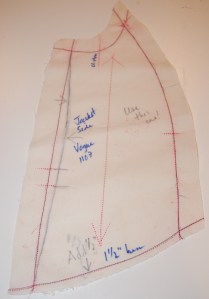
Then to add a little more shaping, I re-drew the side seams in the side underarm sections:

Again, the blue line on the left is my re-drawn seam line.

Again, the blue line on the left is my re-drawn seam line.

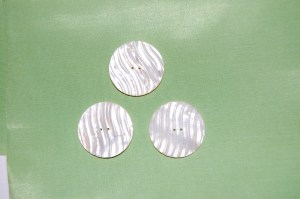
Because the buttons are such a prominent feature of the jacket, I knew I had to find the right ones. The pattern called for them to be 1¼” in diameter. That is a big button! I also knew they had to be a bit fancy or elegant, and I envisioned mother-of-pearl as the ideal composition. It took a while, but I found these buttons on eBay, and they looked just about perfect to me: right size, beautifully carved mother-of- pearl with a swirl design which I thought would add just the right contrast to the silk taffeta of the jacket. As it turned out, they were also the right price (always a welcome surprise!), and more beautiful when they arrived than I had anticipated:

Evening Jacket for the Ages

These buttons have a substantial heft to them, making them well suited for their application on this jacket.

After getting the body of the jacket together, I tried it on to look at the length of it. Fortunately I had cut my pattern with about an extra half-inch in the length, and I used it, plus another ¼ of an inch, as it just looked better a little longer.

Another plus to lengthening the jacket is that the sleeve length lined up more attractively, something I didn't realize until I saw these photos!

Another plus to lengthening the jacket is that the sleeve length lined up more attractively, something I didn’t realize until I saw these photos.

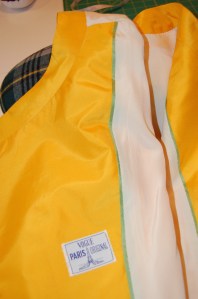
I did my usual flat applied piping along the edge of the lining:

Here is the piping sewn in place.

Here is the piping sewn in place.

The green piping picks up the green in the dress. I opted for an off-white lining, which is a little boring but that's okay!

The green piping picks up the green in the dress. I opted for an off-white lining, which is a little boring but that’s okay.

And I added the label I had:

Evening Jacket for the Ages

Evening Jacket for the Ages

Evening Jacket for the Ages

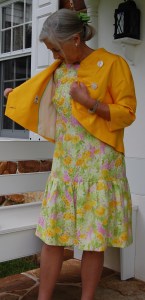
A few wrinkles left over from the jacket’s first wearing!

Evening Jacket for the Ages

Evening Jacket for the Agea

Evening Jacket for the Ages

I have to say, I really love this evening jacket. I have decided it is going to have another life – with another dress, this one constructed with the double, slanted flounce on it (see pattern above).  It would look fairly fabulous with a black and goldenrod printed silk – or navy, white and goldenrod printed silk…   I’ll be on the search.

17 Comments

Filed under bound buttonholes, Buttons - choosing the right ones, couture construction, kimono sleeves, Mid-Century style, piping, sewing in silk, Silk taffeta, Slot-seam buttonholes, Uncategorized, vintage buttons, vintage Vogue Designer patterns, vintage Vogue patterns from the 1960s

Wedding Ready

Why is it that we so often think every wedding to which we are invited means we need a new dress? Sometimes it is warranted; maybe we really do need a new dress! Maybe what we already have in our closet isn’t right for the season or the “ambience” of the wedding site. Maybe the couple getting married is very dear to us, and it just seems right to celebrate this event with something new and special. Maybe the wedding season is busy enough that we really cannot wear the same dress to multiple events where we will probably see many of the same friends and people. But maybe, just maybe, a wedding invitation is exactly the perfect excuse we need to indulge our love of fancy, dressy clothes.

Fortunately, I have not only a wedding to attend, but also, the following weekend, another elegant evening of “cocktails, dinner and dancing,” so it just seemed appropriate – necessary even! – to make a dress/ensemble that could suffice for both. Well, the dress is done, but not the jacket.

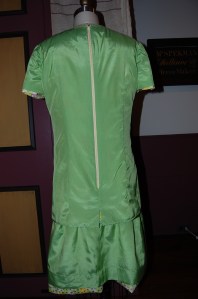
Front . . .

Front . . .

. . . and back

. . . and back

Wedding Ready

This is, of course, the pattern I had to alter in order to fit it onto my available fabric.

Oh the things we can learn, no 10

I made a couple more small changes to the dress. I broadened and lowered the neckline by a small amount, to make it more pleasing on me. I eliminated the neck facing and used the couture method of finishing that edge, with the dress lining brought up to the edge, fell-stitched in place, and secured with small back stitches. I also decided to make the center back zipper a focus when I found a vintage spool of green silk buttonhole twist in my collection. Using an idea I had seen one of my readers do (thank you, Cissie!), I pick-stitched the zipper with the twist, leaving a little trail of bright green dots along the center back.

In the Department of “Nothing is Easy,” I ran into a problem with the fullness of the “half-skirt” on the front of the dress. You may recall from my last post, that I doubled one of the back skirt sections to use for the front skirt (replacing the diagonally shaped flounces as shown on the pattern which required more fabric than I had.) When I made my muslin (toile), I did not realize that the front skirt was fuller than the two back skirt sections. I had all three sections of the fashion fabric sewn together, with the seams all catch-stitched, and the lining attached too (in order to treat both pieces as one in the ruffling process.)  I was half way through basting the skirt onto the body of the dress when I realized there was too much fullness in the front. I had to take it all apart, and figure out where I had made the mistake. It turned out that the front section of the dress was narrower than the two back sections sewn together. So I had to do some calculations, coming up with the fact that I had to take 4.5” off the width of the front skirt. That took a whole afternoon of sewing to take care of that adjustment!

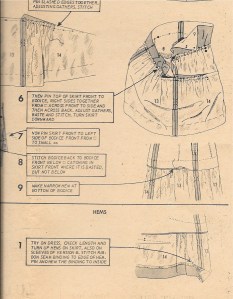
The skirt was attached to the bodice in an rather unusual way as you can see in this photo and the instruction sheet below.

The skirt was attached to the bodice in an rather unusual way as you can see in this photo and the instruction sheet below.

Wedding ready - instruction sheet

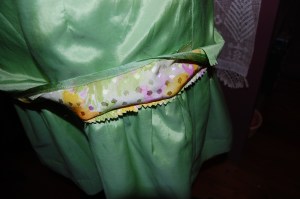
I also had to figure out how to line the top part of the dress. I finally decided to leave the top part of the lining hanging loose inside the dress – and it actually works beautifully!

Wedding ready

The skirt lining is not attached to the bodice lining at all.

The skirt lining is not attached to the bodice lining at all.

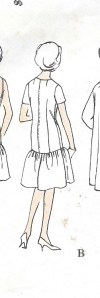
Two small interesting design notes on this pattern are worth noting. First, if you look at the pattern envelope, you see small neckline darts on the back of the dress.

Wedding ready - pattern thumbnailWhen I studied the pattern, those darts were not there! Either the artist made a mistake, or the darts were eliminated when the pattern was drafted.

Another interesting design aspect is the center back seam in the skirt. Usually center back seams are there because there is an opening that the seam needs to accommodate. That is not the case in this dress, as the zipper does not extend into the skirt. However, even though it is very subtle, it just looks better to have a seam in the skirt that matches up with the center back seam of the bodice section.

That center back seam which is picked up in the skirt.

That center back seam which is picked up in the skirt.

It has been rainy and cold all week so no photos outside. I need a dress like this to remind me that it is actually May.

It has been rainy and cold all week so no photos outside. I need a dress like this to remind me that it is actually May.

Wedding Ready

Wedding Ready

Wedding Ready

Another back view

Another back view

Wedding Ready

I have decided I am “wedding ready” even without the jacket. However, if I get the jacket finished, I’ll be very happy!

27 Comments

Filed under Cocktail dresses, couture construction, Formal or fancy dresses, Mid-Century style, sewing in silk, Uncategorized, vintage Vogue Designer patterns, vintage Vogue patterns from the 1960s

The Silky, Shimmery Colors of Spring

Just as with the elusive answer to “Which came first, the chicken or the egg?,” those of us who sew can try to answer “Which comes first, the fabric or the pattern?” The answer, at least as I see it, is “It depends.” And sometimes, even, it is a little of both.

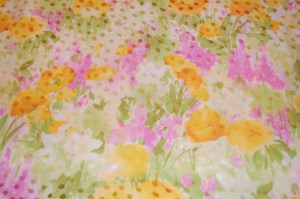
When I saw this fabric on the website of Mendel Goldberg Fabrics last Fall, I really did not stop to think about a pattern. It was a “bolt end,” 1 3/8 yards of 58” wide Italian silk. With that width, I wasn’t particularly concerned about the length being under 1 and ½ yards. I just ordered it as soon as I could.

The colors of Spring

Upon arrival, the fabric was even prettier in person, shimmery with “polka dots” woven in, fluid as only silk can be, and the picture of Spring. At that point, I was up to my ears with my Winter sewing, so I thought about it only casually until just a few weeks ago. I already had this pattern in my collection, and in the back of my mind, I had paired that fabric with the dress in View B on the right.

Oh the things we can learn, no 10

One interesting thing about vintage patterns is the yardage requirements are often given for widths that are narrower than many modern fabrics are produced in. For that reason, it can be difficult to determine exactly how much fabric is needed for a particular design. I’m getting better at sensing what I need, so I just assumed that I would have enough fabric to make that dress.   I had my heart set on it, actually. So much so, that when Britex Fabrics announced an upcoming sale of silk fabrics, I sent off for swatches for coordinating silk for the short jacket (in view A) and lining for the dress.

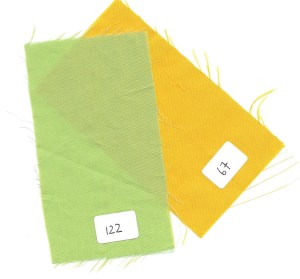
The green is a lightweight silk/cotton blend. The goldenrod yellow is silk taffeta from Italy, without the stiffness that taffeta so often has.

The green is a lightweight silk/cotton blend. The goldenrod yellow is silk taffeta from Italy, without the stiffness that taffeta so often has.

Dutifully ordered, the fabric arrived from California, and it, too, was even prettier in person! I was in love, and really could not wait to get started, first on the dress, and then on the jacket.

DSC_0036

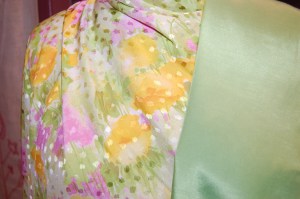
The green for the lining . . .

The colors of Spring

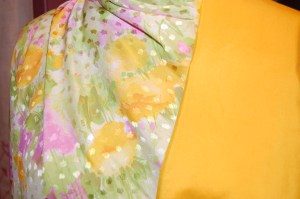
… and the yellow for the short jacket in View A.

Then reality hit. When I took out the pattern pieces, here is what I found for that unusual flounced skirt:

This skirt piece uses almost a yard in length, and the diagonal shaping on it uses more fabric than normal.

This skirt piece uses almost a yard in length, and the diagonal shaping on it uses more fabric than normal.

My heart sank as I knew immediately I did not have enough fabric. There was going to be no Rumplestiltskin to help me with this one.   I went back to my pattern collection and pulled out two more possibilities.

I love this dress, but I thought it might be too tailored for the fabric. Also, the seaming detail would be lost entirely with the busy design of the silk.

I love this dress, but I thought it might be too tailored for the fabric. Also, the seaming detail which adds so much to this dress would be lost entirely with the busy design of the silk.

I felt like Goldilocks evaluating this pattern for my fabric. Just not right...

I felt like Goldilocks evaluating this pattern for my fabric. Just not right…

With both these dresses I would have to rethink the jacket, as the styles would not compliment each other. I stewed over this, re-measured, re-thought, and left it all in a heap in my sewing room. There was something about that shimmery silk that kept telling me that a dress made from it needed to have some movement to it –  like the flounced half-skirt pictured in the pattern. And then it hit me. If I made the front part of the skirt the same as the back, I could probably just squeak it out.

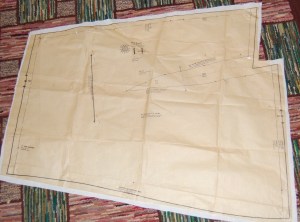
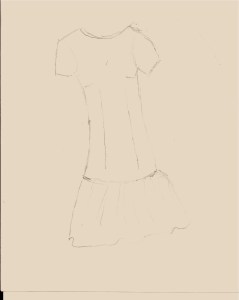
I did a quick diagram to consider this option.

I did a quick diagram to consider this option.

My completed muslin verified this for me, and, not only that, I loved the look, at least done up in muslin. Once again, using the couture technique of laying out and cutting each pattern piece individually enabled me to manipulate the pieces to make the most of the fabric I had available to me. Fortunately, there was no matching to be done, although there is a specific up and down to the design.

Now this is what is called making the most of one's available fabric!

Now this is what is called making the most of one’s available fabric! This shows my silk organza underlining pieces in place, ready to cut.

As far as the jacket – losing the diagonally shaped flounces on the skirt, makes the effect of the jacket not quite as dramatic, but I think it will still be very flattering – and appropriate. (The jacket has a million pieces to it, so it will be quite the project…!)

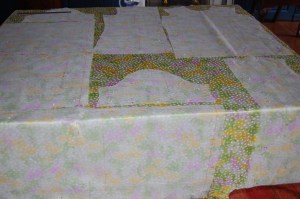
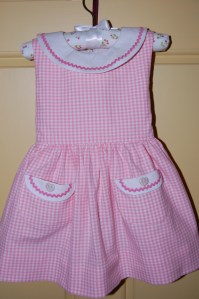
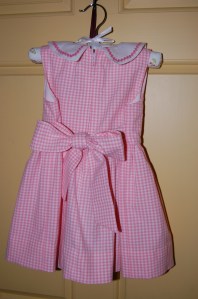
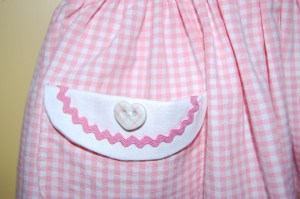
Well, I can’t leave this post without sharing another color of Spring, although this one is not silk and not shimmery. Pink cotton gingham is the picture of Spring, especially in a little dress for a little girl! When I made a crib quilt for my younger granddaughter, Carolina, I backed it in pink gingham, appropriately called “Carolina Pink.” I ordered enough so that I would be able to make her a dress for her first birthday (earlier in April) and here it is:

The colors of Spring

The colors of Spring

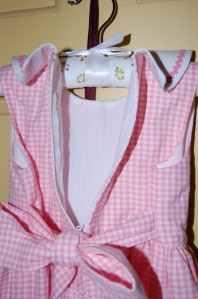
The bodice is lined in soft white cotton, which makes a lovely finish.

The bodice is lined in soft white cotton, which makes a lovely finish.

In my tins of buttons, I found these little ceramic ones, purchased years ago when Carolina’s mommy was my little girl. (Well, she is still my little girl, but you know what I mean.) How appropriate to use them for one of her daughter’s dresses.

The colors of Spring

These buttons, with their delicate cross-hatch design, were just waiting for this dress.

And with this dress –  the fabric absolutely came first!

17 Comments

Filed under Buttons - choosing the right ones, Formal or fancy dresses, Heirloom sewing for children, Mid-Century style, Sewing for children, sewing in silk, Silk taffeta, Uncategorized, vintage Vogue Designer patterns, vintage Vogue patterns from the 1950s, vintage Vogue patterns from the 1960s, vintage Vogue patterns from the 1970s

Something Old, Something New – and Pulling It All together

Every once in a while, a unique opportunity comes along in the form of fabric. We all know those times – when the end of the bolt is just the amount you need, or a single bolt of one-of-a-kind designer fabric comes to your favorite store, or a long-awaited re-order makes possible your dream of owning that exact piece. For me, it was an offer from a reader of my blog. She had two pieces of vintage wool which had belonged to her aunt, dating from probably the late 1950s or very early 1960s. Once I saw swatches of both fabrics, I immediately saw the possibilities inherent in each one, and the colors were not only yummy, but also ones that I can wear well (a fact which was correctly noted by my dear reader.) I purchased both pieces well over a year ago, and ever since, I have been dreaming about sewing with them, starting with this gray (what I believe to be) coat-weight cashmere.
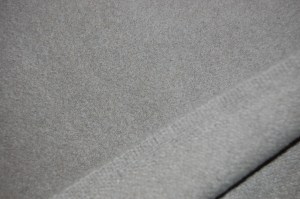
The top part of the photo shows the right side of the fabric. It has a soft, luscious nap to it. The contrast of the weave on the underside is hopefully discernible.

The top part of the photo shows the right side of the fabric. It has a soft, luscious nap to it. The contrast of the weave on the underside is hopefully discernible.

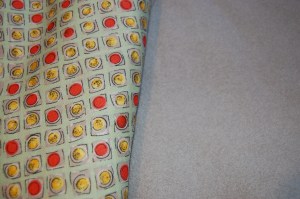
As luck would have it, I had already picked up some swatches of (new) wool challis and various dress-weight silks one of the last times I was at Mendel Goldberg Fabrics in New York City. It did not take me long to pair this Swiss challis with the gray wool.
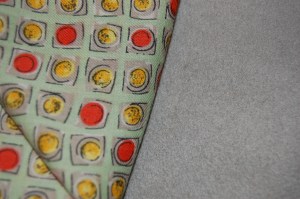
The gray in each little square is a perfect match to the cashmere.

The gray in each little square is a perfect match to the cashmere.

Both fabrics lend themselves to be beautifully complimented by a further pop of color as demonstrated by this silk bias ribbon:
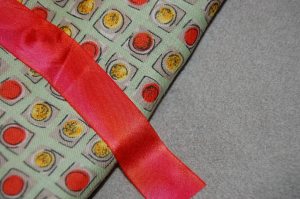
I will definitely be accenting my outfit with something like this.

I will definitely be accenting my outfit with something in this color.

Before I go into patterns and process, I want to share the thoughts of Christian Dior on the color “gray” as written in his The Little Dictionary of Fashion, Abrams, New York, New York, 2007, page 50:

“The most convenient, useful, and elegant neutral color. Lovely in flannel, lovely in tweed, lovely in wool. And, if it suits your complexion, there is nothing more elegant than a wonderful, gray satin evening dress. For day frocks, suits and coats, it is ideal. I would always advise it. And many people who cannot wear black, can wear a dark gray. (Remember that if you are big you must choose a dark gray and if you are petite a light gray is better for you.)

“It is the most convenient color, too, for people who live half in town and half in the country because, with different accessories, a gray suit or coat may be equally suitable for both. It is a good color for accessories, too – almost anything goes with gray. White is perhaps the freshest and sweetest contrast but it is safe to say that whatever your favorite color is, you can safely wear it with gray.”

 Armed with this send-off, I immediately began to look in earnest for a coat pattern. I did not want to purchase the wool challis before I had a pattern, but my thought was to line the coat (except for the sleeves, of course) with it, and then make a coordinating dress or blouse as well. When I found this Guy Laroche coat (and dress) pattern, it seemed to be just what I was looking for, even though when I purchased it, I knew that the pocket flap pattern piece was missing. I was confident, however, that piece would be easy to recreate.
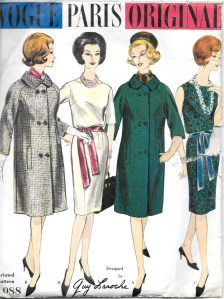
Early Guy Laroche (1921-1989) patterns are somewhat difficult to come by. A Parisian, he worked for Jean Desses (eventually becoming his assistant) from 1949 to 1957, at which time he opened his own atelier. In 1961, his fashion house was known as Guy Laroche Couture. It seems to be about this time that Vogue Patterns began to feature his designs in their Couturier Designer line (Jean Desses designs are also in this line of Vogue patterns). He was one of the featured designers in the 1963 New Vogue Sewing Book, which included “profiles of Europe’s great designers.” This gorgeous suit by him is shown on page 128 in that book:
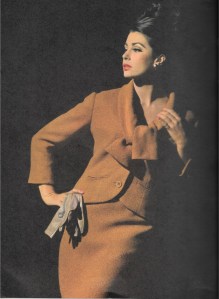
The collar of this jacket extends so that it can be looped.

The collar of this jacket extends so that it can be looped.

Another one of his suits was shown in Vogue Printed Pattern News from March 15, 1961:
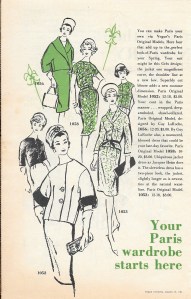
The Laroche design is in the lower lefthand corner. I have never seen this pattern available for purchase...

The Laroche design is in the lower lefthand corner. I have never seen this pattern available for purchase…  (Click on the image to read the caption.)

And a coat and dress ensemble was part of the “French Dressing” section of Vogue Pattern Fashion News from April 1965:
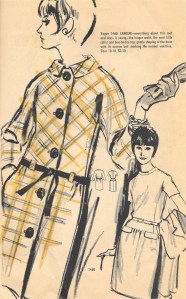
The diagonal direction of the weave in the jacket is a lovely foil for the dress.

The diagonal direction of the weave in the top part of the coat is a lovely contrast for the rest of the ensemble.

I believe the pattern I am using for my gray cashmere coat is from 1962 or 1963. (The patterns from 1961 were priced at $3.00 while my pattern and the ones I have found from 1964-65 were priced at $3.50. That’s one way to help determine a date, although my intuition suggests to me that my pattern is not as late as ’64.)

Once I had my pattern, I ordered the wool challis from Mendel Goldberg (still in stock, thank goodness!) Now, at this point, I did not know exactly how much to order. The body of the coat will be lined in the challis, while the sleeves will be lined in gray Bemberg. I couldn’t go by the yardage on the envelope for the lining since I was “mixing it up.” I think I may have enough of the gray cashmere to make a skirt, but the fabric might be too heavy for a skirt. I’ll know more once I start to sew with it. The rambling on in my head told me that I needed to get enough of the challis to either make a long-sleeved blouse to go with a “maybe” skirt – or enough challis to make an entire dress, as well as the coat lining. So – I ordered PLENTY!! Now I have options.

For some reason I always find coats to be a little intimidating – at least at the beginning. However, when you look at the few pattern pieces that go into this design, it seems to look more complicated than it really is (I hope I am not jinxing or deluding myself):
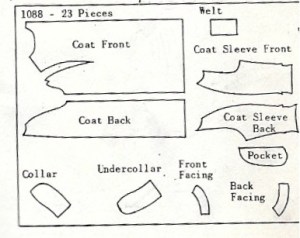
The main body of the coat really has just 8 pattern pieces (the facings you see are for the dress included in the pattern.) Of course, the lining adds more, but compared to the number of pieces in the coat I made two years ago, this is minimal!

The main body of the coat really has just 8 pattern pieces (the facings you see are for the dress included in the pattern.) Of course, the lining adds more, but compared to the number of pieces in the coat I made two years ago, this is minimal!

I am currently working on my muslin, and I am so excited to be starting this project. Thank you, EG, for allowing me to purchase this beautiful vintage fabric. I feel a great responsibility to honor this “something old” wool in a coat worthy of its quality and provenance.

24 Comments

Filed under Coats, Mid-Century style, Uncategorized, Vintage fabric, vintage Vogue Designer patterns, vintage Vogue patterns from the 1960s, woolens

One Year at a Time

Let’s start with 2016. Although, truthfully, right now in January 2016, I could probably plan at least three years’ worth of sewing. That is how many patterns and fabrics I have tucked away, waiting for their turn. But it is time to concentrate on the year at hand and get on with it!

Some of the year is shaped by events that I know will be happening – such as weddings and fancy parties. Some of it will be devoted to little granddaughters who are already growing too fast for me to indulge all my sewing fantasies for them.   And some of it will be my own self-determined challenges – coats and dresses I want to make – that right now are looking like small Mt. Everests, waiting to be conquered!

I probably should be sewing right now for Spring and Summer, but I have wools that are too enticing to ignore during these current Winter months:

Wool challis on the left and vintage cashmere on the right.

Wool challis on the left and vintage cashmere on the right.

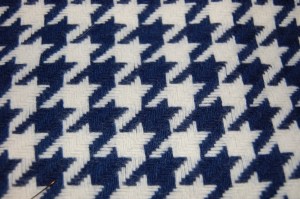
Navy and white houndstooth.

Navy and white houndstooth.

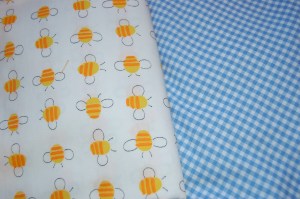
Some cute and classic cottons for little girls should be able to find themselves tucked in amongst my plans for Springtime.

The buzzy bee fabric is a vintage cotton. The blue gingham is new.

The buzzy bee fabric is a vintage cotton. The blue gingham is new.

Looking towards Spring weddings already on the calendar, I am excited for the opportunity to use this amazing printed silk for a dress and perhaps pairing it with the plain yellow silk taffeta left over from my fancy dress from last Summer.

One year at a time

I have so many vintage linens in my collection, that it is difficult to narrow down my focus, but here are four that just may see the sewing shears this year:

These are all vintage Moygashel linen.

These are all vintage Moygashel linen.

This vintage, authentic Diane von Furstenberg cotton blend knit has been calling my name for quite some time.

One year at a time = DvF

Hopefully this fabric and this pattern will finally find each other this year!

One year at a time - DvF pattern

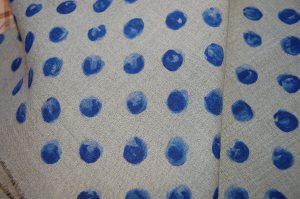
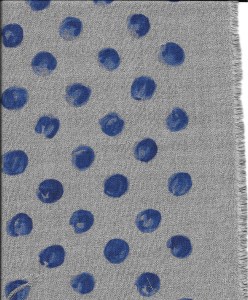
The sewing year will no doubt end next Fall with a return to wool. The polka dotted wool is similar to the wool in a dress I made in Fall of 2015. It is from Mendel Goldberg Fabrics in NYC.

As one who loves polka dots, I could not pass up this wool/silk blend fabric.

As one who loves polka dots, I could not pass up this wool/silk blend fabric.

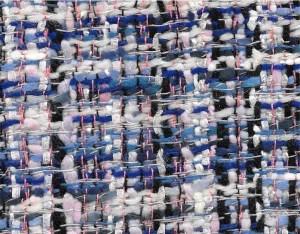
When I purchased it, several swatches of boucle were in the package – and I was in a swoon over this blue and pink sample:

How wonderful that Pantone's two "colors of the year" - pink and blue - are the color way for this boucle.

How wonderful that Pantone’s two “colors of the year” – pink and blue – are the colorway for this boucle.

Lucky me to open a box on Christmas morning to find 2 yards of it (thank you to my dear children!) – enough for another Classic French Jacket.

2 full yards of this glorious boucle! What a wonderful gift!

Two full yards of this glorious boucle! What a wonderful gift!

Some of the patterns I might be using this year are all vintage ones that deserve attention. I tidied up the boxes where I keep my pattern collection and these just happened to be some which would NOT go back in silence, so here they are with all their wily temptations!

One of my big projects for this year is this coat.

One of my big projects for 2016 is this coat.

I have been wanting to make the dress on the right for quite a while - this may be the year it happens!

I have been wanting to make the dress on the right for quite a while – this may be the year it happens!

I really like this shirtwaist dress (a little shorter, of course) and I envision it made out of a lovely summer linen.

I really like this shirtwaist dress (a little shorter, of course) and I envision it made out of a lovely summer linen.

I think I could make either view of this dress over and over and not get tired of it.

I think I could make either view of this dress over and over and not get tired of it.

One thing I learned a long time ago is the importance of flexibility in planning my sewing year. Sometimes things happen that impede my sewing plans. Sometimes I change my mind. And always, always, I plan too much. And when (not if) that happens, there is always 2017 right around the corner.

17 Comments

Filed under Boucle for French style jackets, Diane von Furstenberg Vogue patterns, Linen, Moygashel linen, Polka dots, Sewing for children, Uncategorized, Vintage fabric, vintage Vogue Designer patterns, vintage Vogue patterns from the 1950s, vintage Vogue patterns from the 1960s, vintage Vogue patterns from the 1970s, woolens, Wrap dresses

Festive Attire

This time of year is not called The Festive Season without good reason. Replete with parties and holiday events, December is like no other month of the year. Particularly delightful are the parties which are given in someone’s home – and they deserve special attention to attire. I firmly believe it is a compliment to your host and/or hostess to dress up according to the season – which means Festive Attire.

When I am considering what to make (and wear) for a Christmas Party, I keep these things in mind:

1) It should be feminine – as in a party skirt or dress (not pants, with my apologies to those of you who prefer them).

2) If possible, all or some of it should be silk, that luxurious and elegant fabric which always makes a statement.

3) It should be fancy which leaves open many possibilies.

4) Something about it should be colorful – preferably red, the perfect hue for a bright holiday look.

So, how did I do?

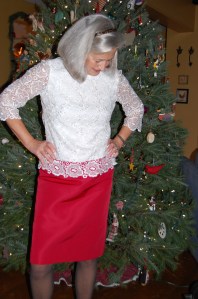
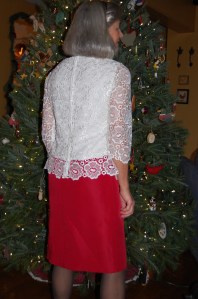
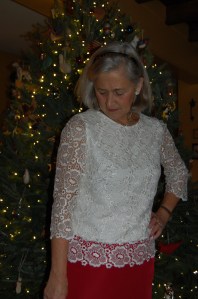
Festive Attire

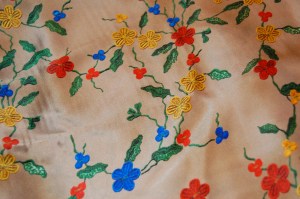
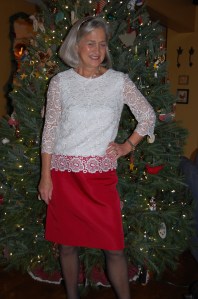
The lace for the overblouse is from Mendel Goldberg Fabrics. I found it online this past summer. Although at the time, I did not know what I was going to make, it was an end-cut, so the yardage was ample. I figured I’d make that decision later. The red fabric for the skirt is a silk faille. I purchased it several years ago and had it in my fabric storage closet. Now I can’t remember what I intended to use it for; I remember when it arrived, I thought it was too stiff for whatever that was. I kind of despaired that I’d never find a suitable use for it, until I got the idea for this outfit.

I used the same overblouse pattern that I worked from this past summer for an eyelet blouse – and set to work on this incredible lace.

I made lots of changes to this overblouse pattern, but it gave me the basics I needed.

I made lots of changes to this overblouse pattern, but it gave me the basics I needed.

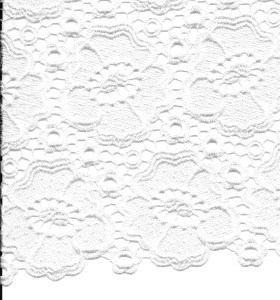
With two scalloped “selvedge edges,” the lace is very versatile. I underlined the body of the blouse with a lightweight cotton/linen blend, and then I lined it with silk crepe de chine.

Festove attire - lace

Perhaps you can see the lovely detail in this small segment of the lace.
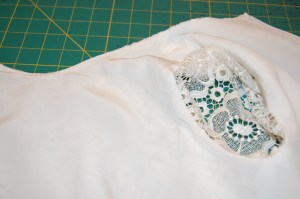
Here is an interior look at the silk lining sewn carefully to the armscye.
Here is an interior look at the silk lining sewn carefully to the armscye.
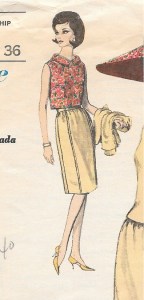
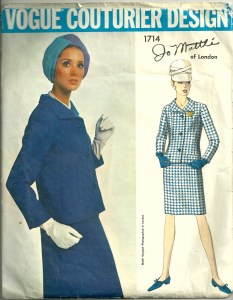
I used a tired and true skirt pattern for the red silk faille.

From Vogue's Designer series, ca 1970.

From Vogue’s Designer series, ca 1970.

Because of the stiffness of the fabric, I added about 1/8 of an inch to the side seams to give me a little more flexibility in movement, but now that it is finished, I really don’t think that was necessary. Even though the fabric is stiff-ish, it’s flexible – and I love the sheen it has.

With no construction photos to show you (too busy sewing to take pictures!), I have to be content showing you just the finished product.

DSC_1002

DSC_1000


DSC_1011

DSC_1013

Somehow I was able to cover all my “festive” criteria with this outfit: feminine, silk, fancy and colorful. I must remember this recipe for next year’s Festive Season.

33 Comments

Filed under Formal or fancy dresses, Lace, sewing in silk, Uncategorized

Sweet November

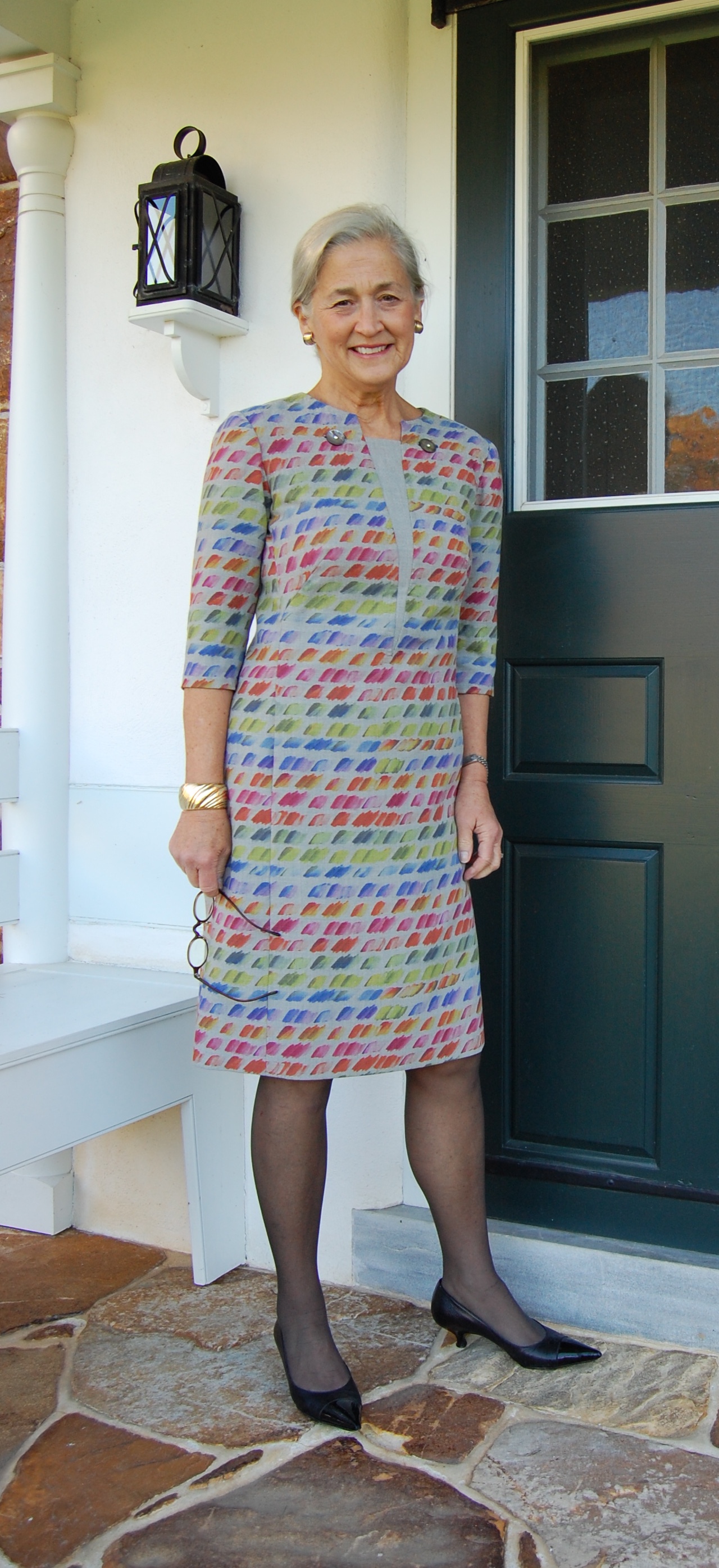
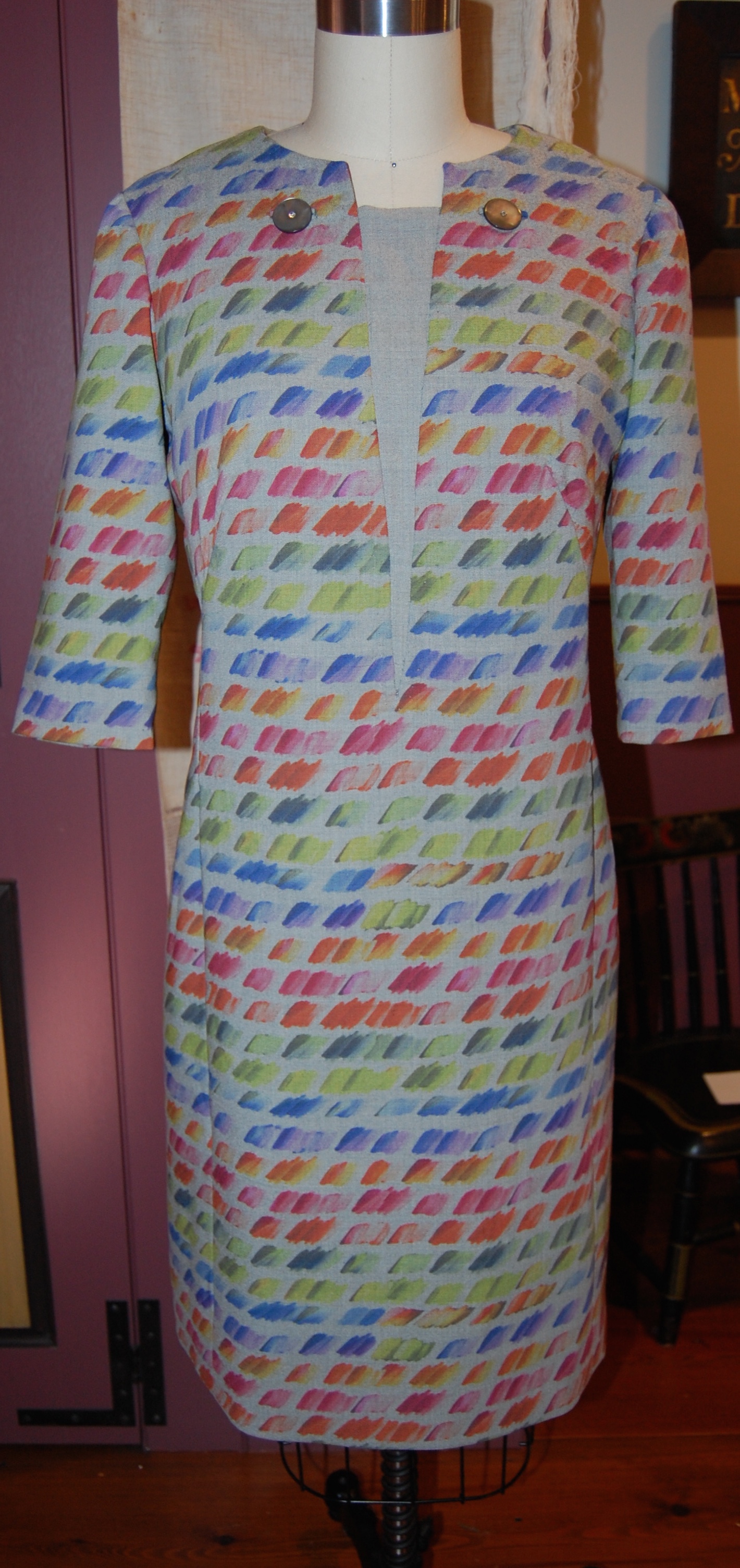
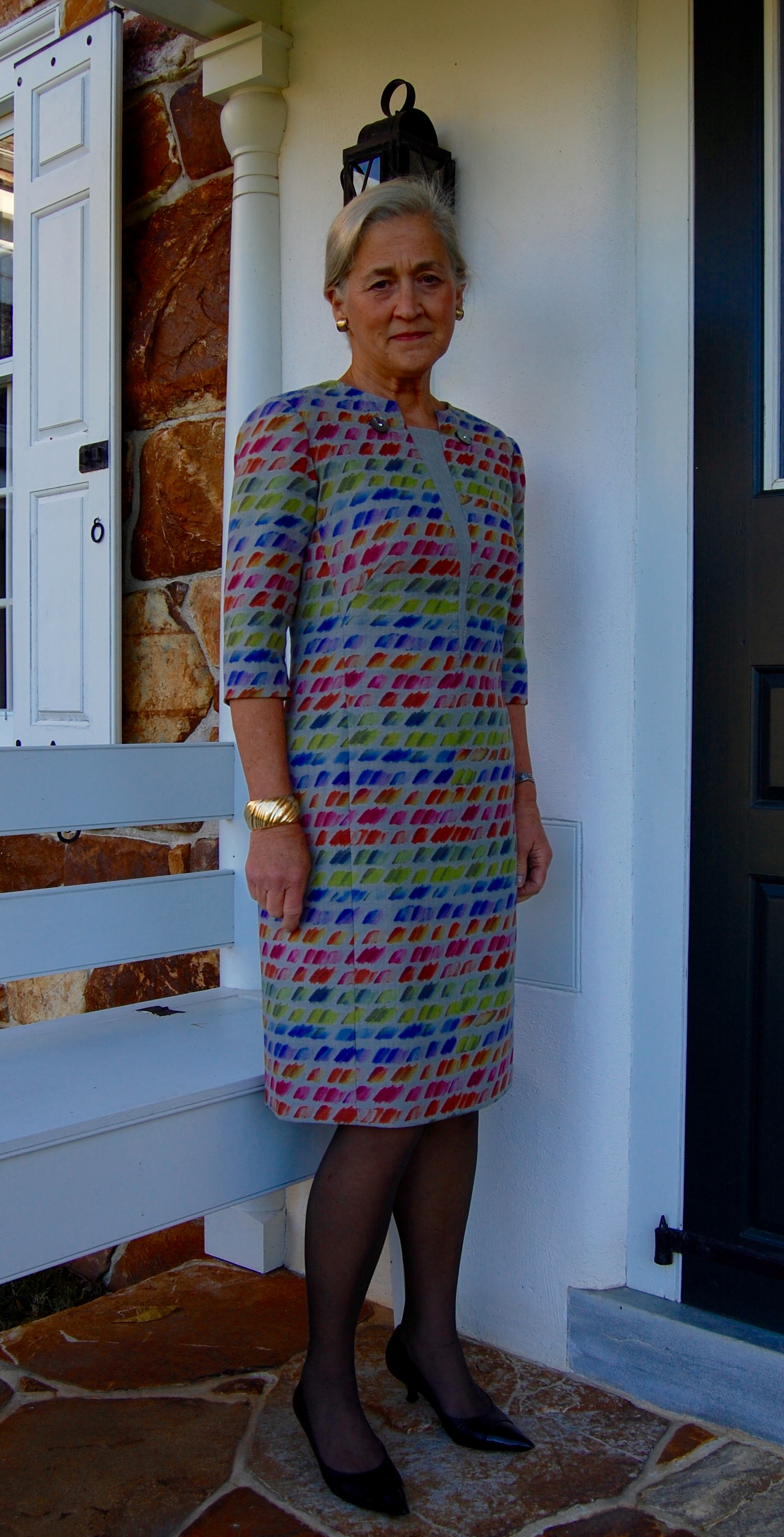
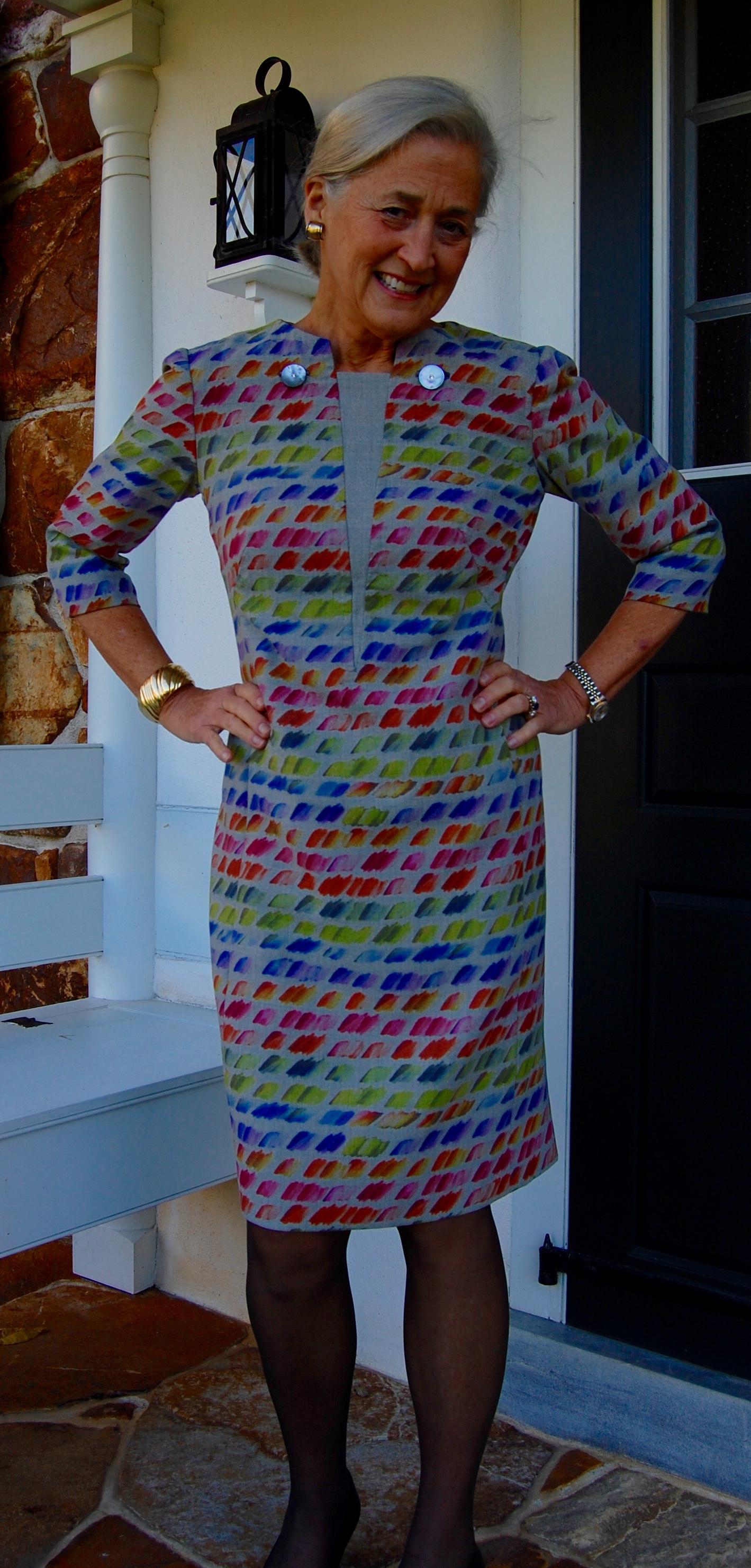
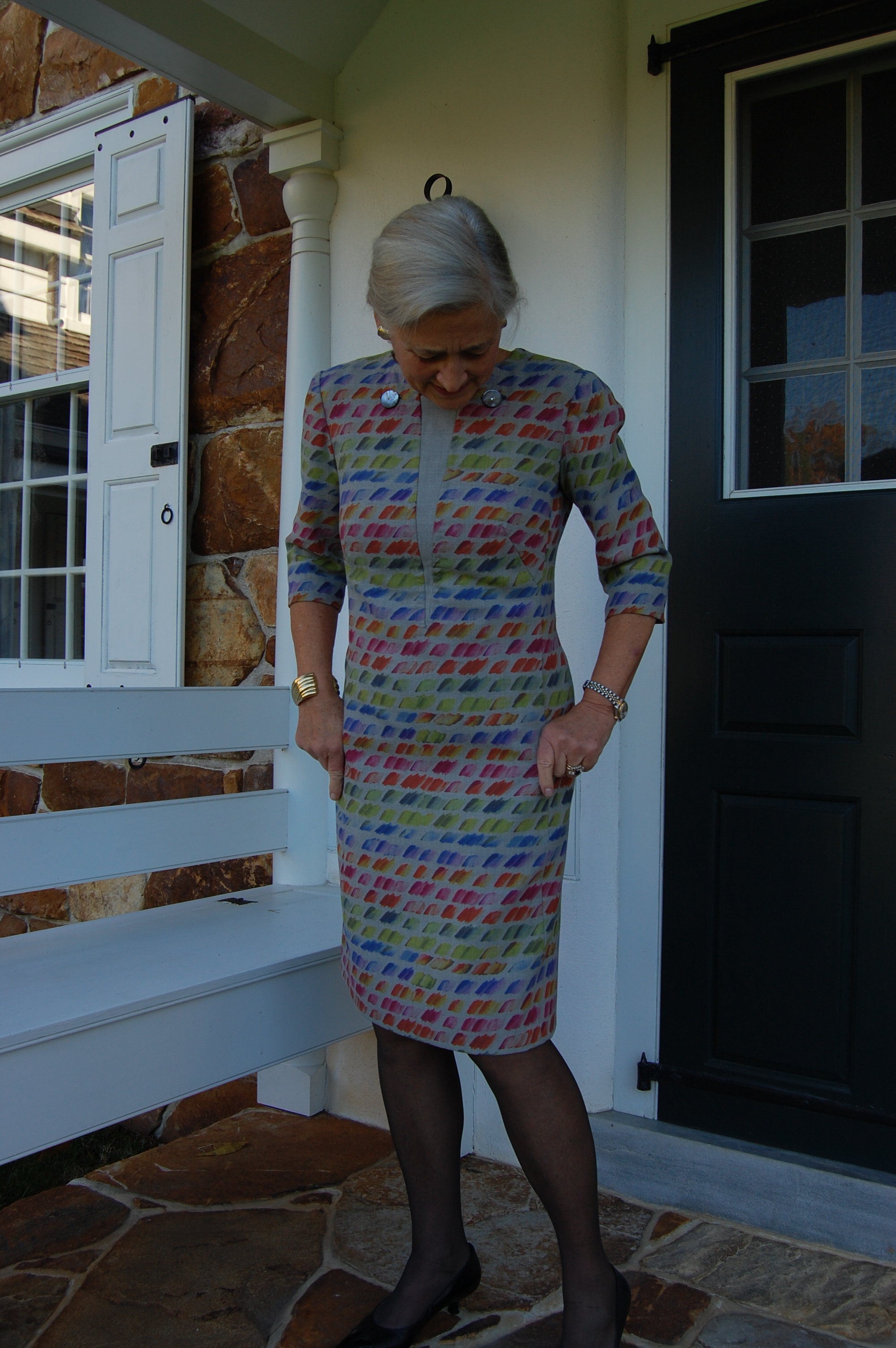
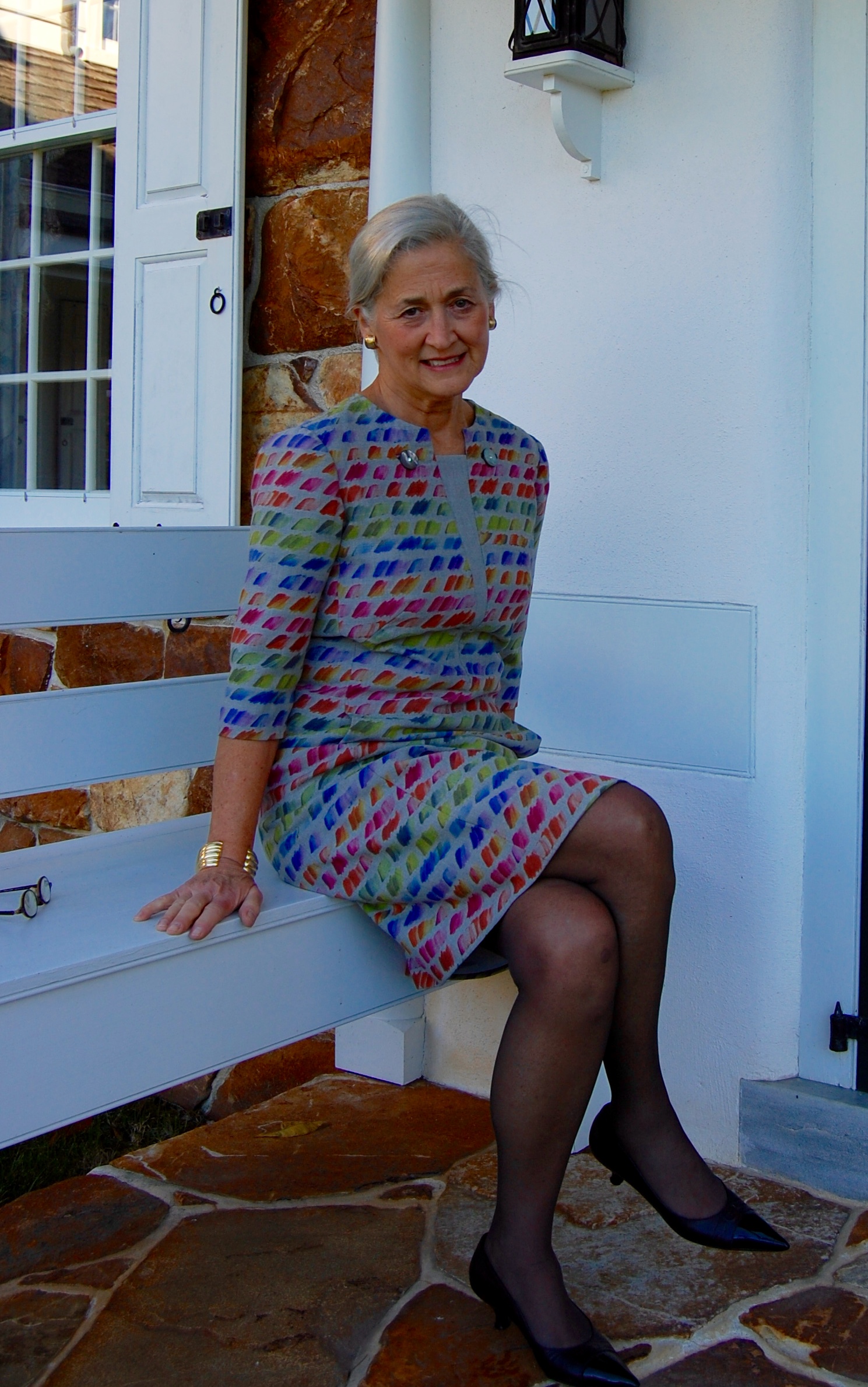
The trickery, which defined my October sewing, finally floated away with the leaves and the goblins, leaving sweet November with her welcome reward, a new dress for Autumn and Winter.

Sweet November

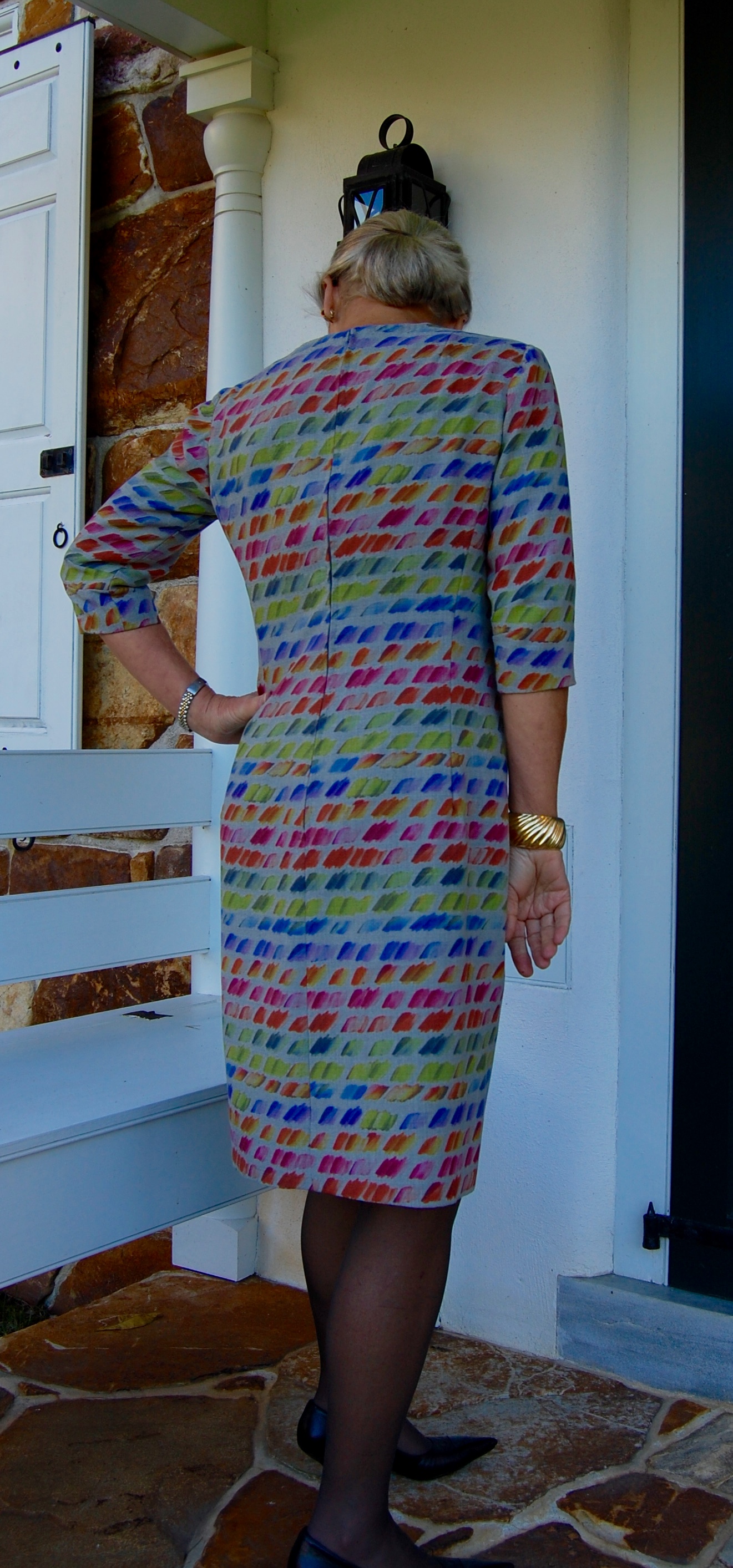
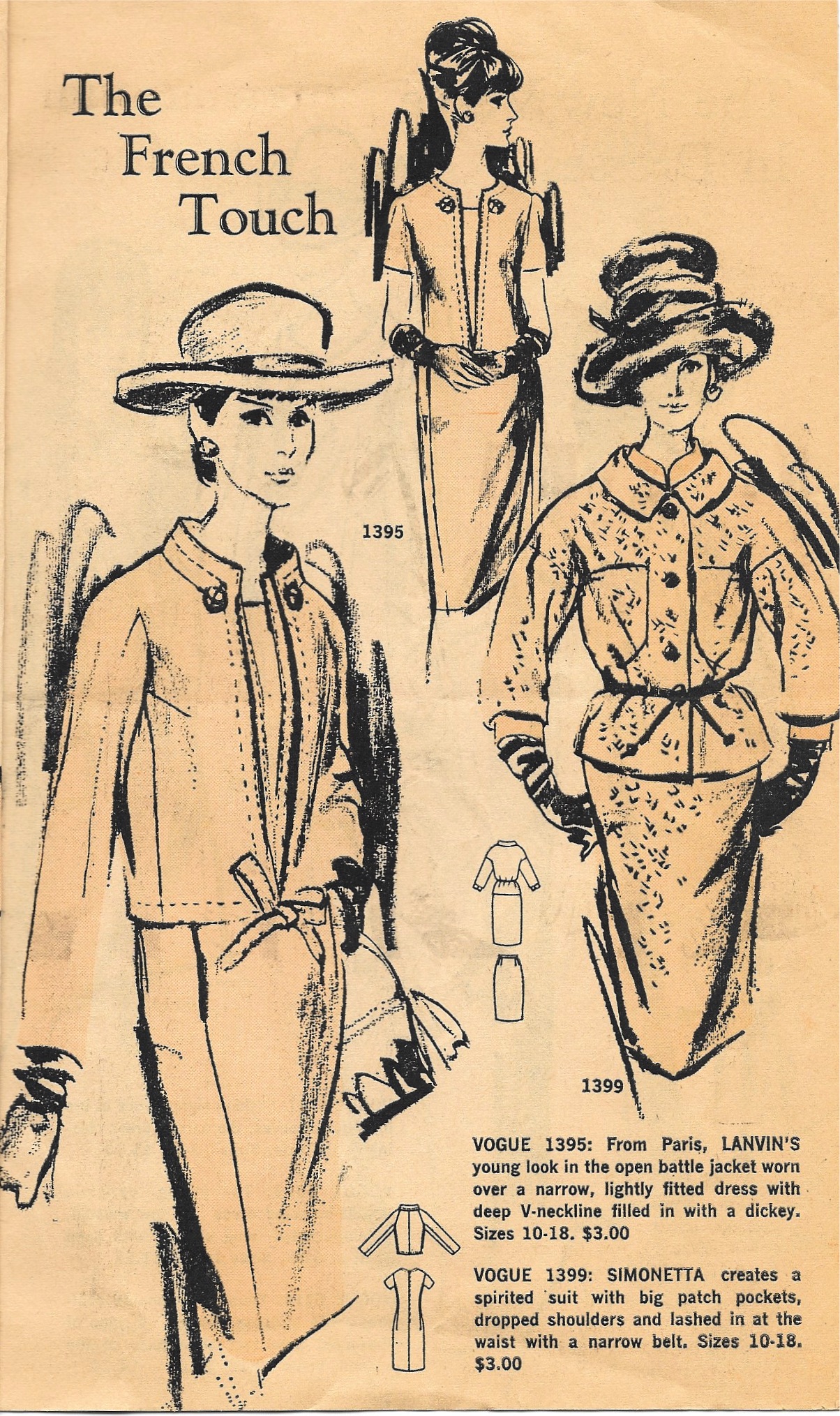
So what made vintage Vogue 1395 such a tricky dress to make? I documented my efforts to get a workable muslin (toile) in a post from early October. Once I had my adjusted muslin pattern, I transferred it onto black silk organza to use as my cutting guide. It was then I realized that, because the design on the fabric, a silk and wool blend, was printed on it, not woven into it, I needed to work from the right side of the fabric in order to match the horizontal “lines.” This meant that I had to flip every piece that I cut out and then exchange the organza with its opposing side. (I hope this makes sense.) It added a bit of uncertainty to the process and I was fanatical with flipping and checking to make sure I kept the design in line. Something told me I should delay cutting out the sleeves until I had the body of the dress together – my sewing godmother at work, I guess – and I am glad I did, as I’ll detail in a bit.

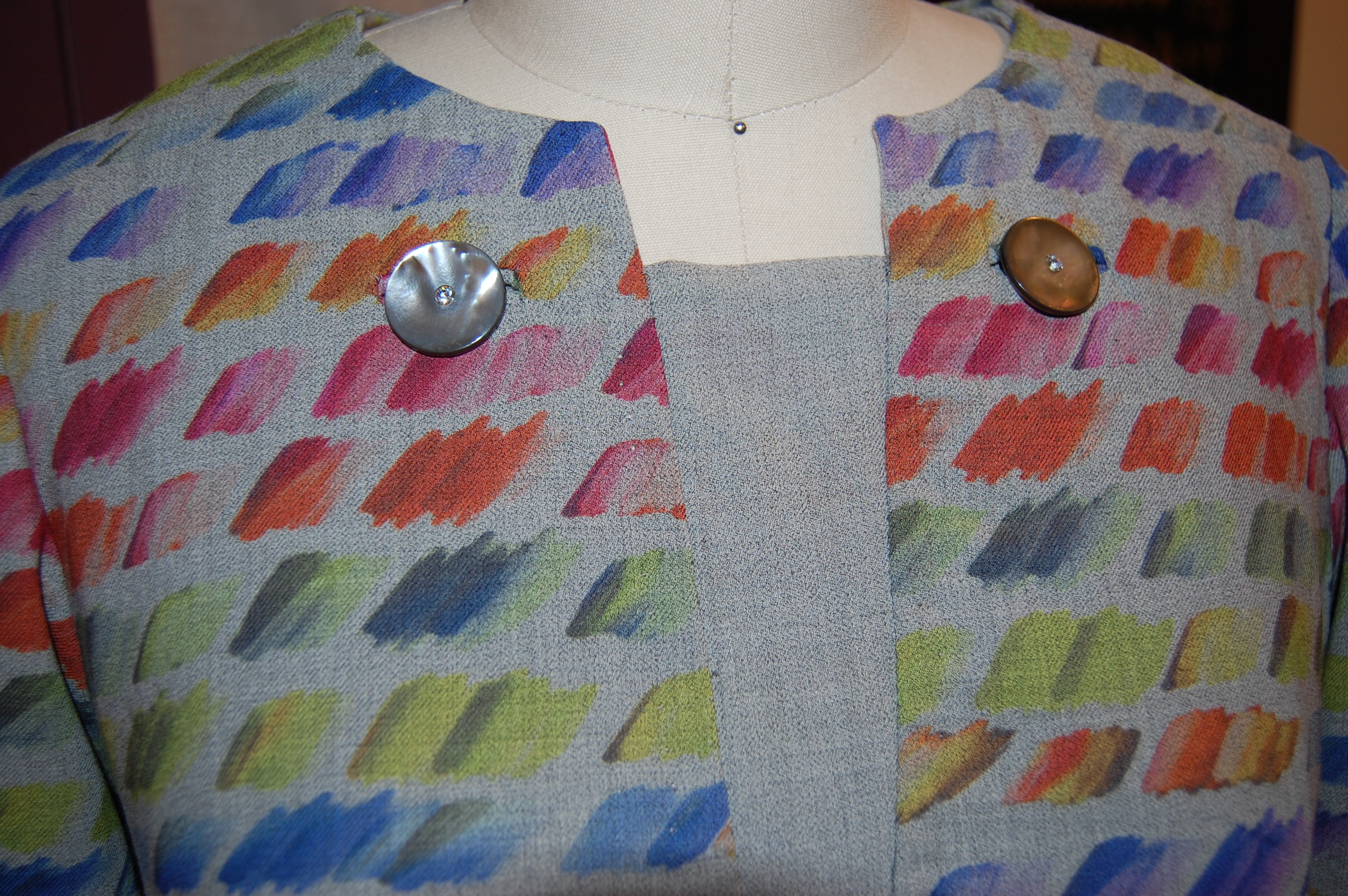
I had made the decision at the beginning of the project to cover the dress’s two buttons in the plain gray “wrong” side of the fabric. But once I “semi-made” a covered button, and tried it out, it was DULL. It added nothing to the dress. I went to my button box and all I could find was a small gray pearl that was close in color. But I loved the iridescence of it and determined that gray pearl buttons were what I needed. I seem to have such good luck with buttons from Britex – even though I am ordering online – and found 1” gray pearl buttons with a rhinestone in their centers. Although I am not a rhinestone-y type of person, something about them spoke to me. I remembered what Susan Khalje said in one of the classes I have taken with her – that couture often has a bit of “whimsy” to it. Well, I ordered those buttons as as fast as I could! I think they are just what was needed!

Sweet November

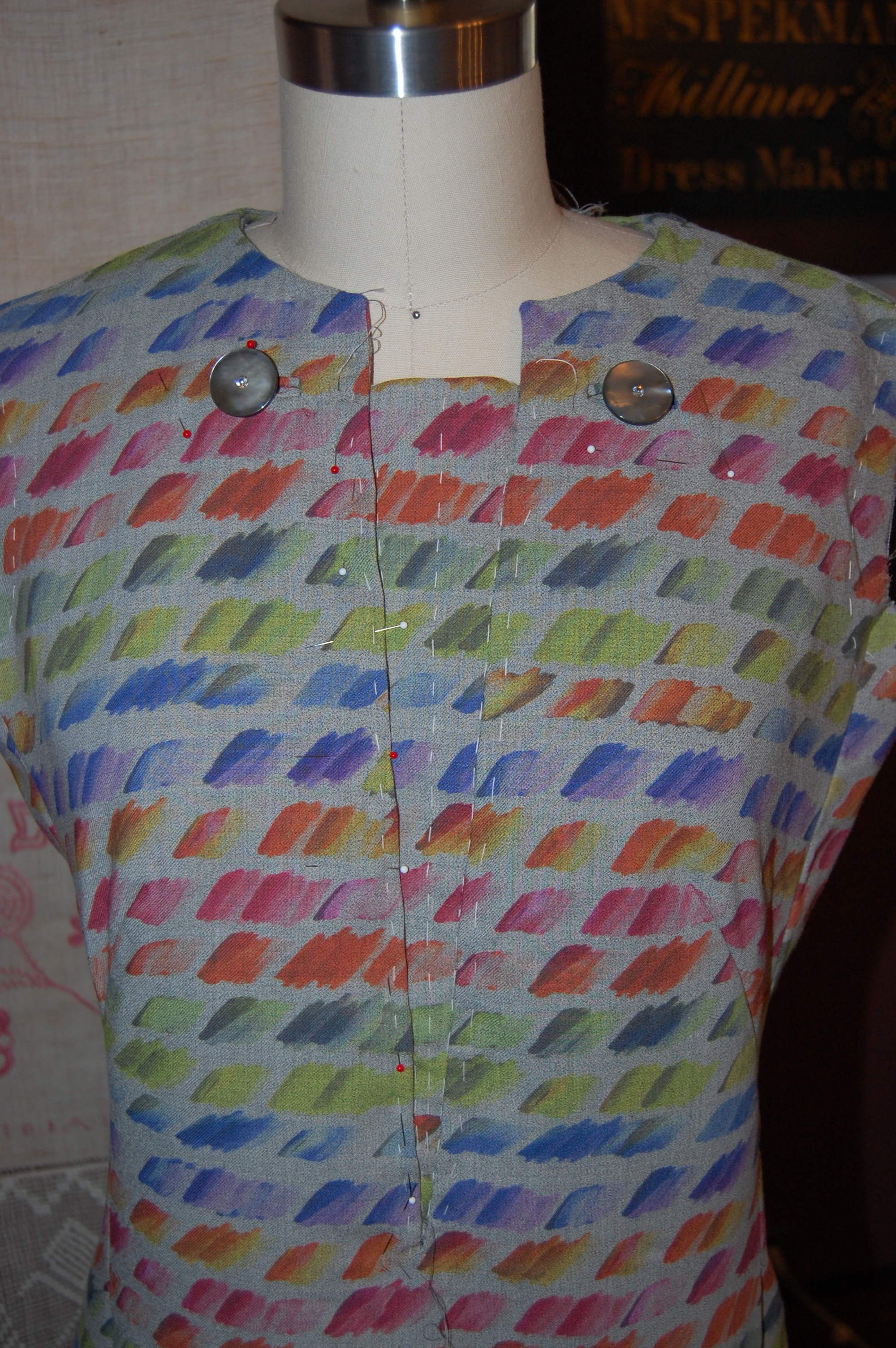
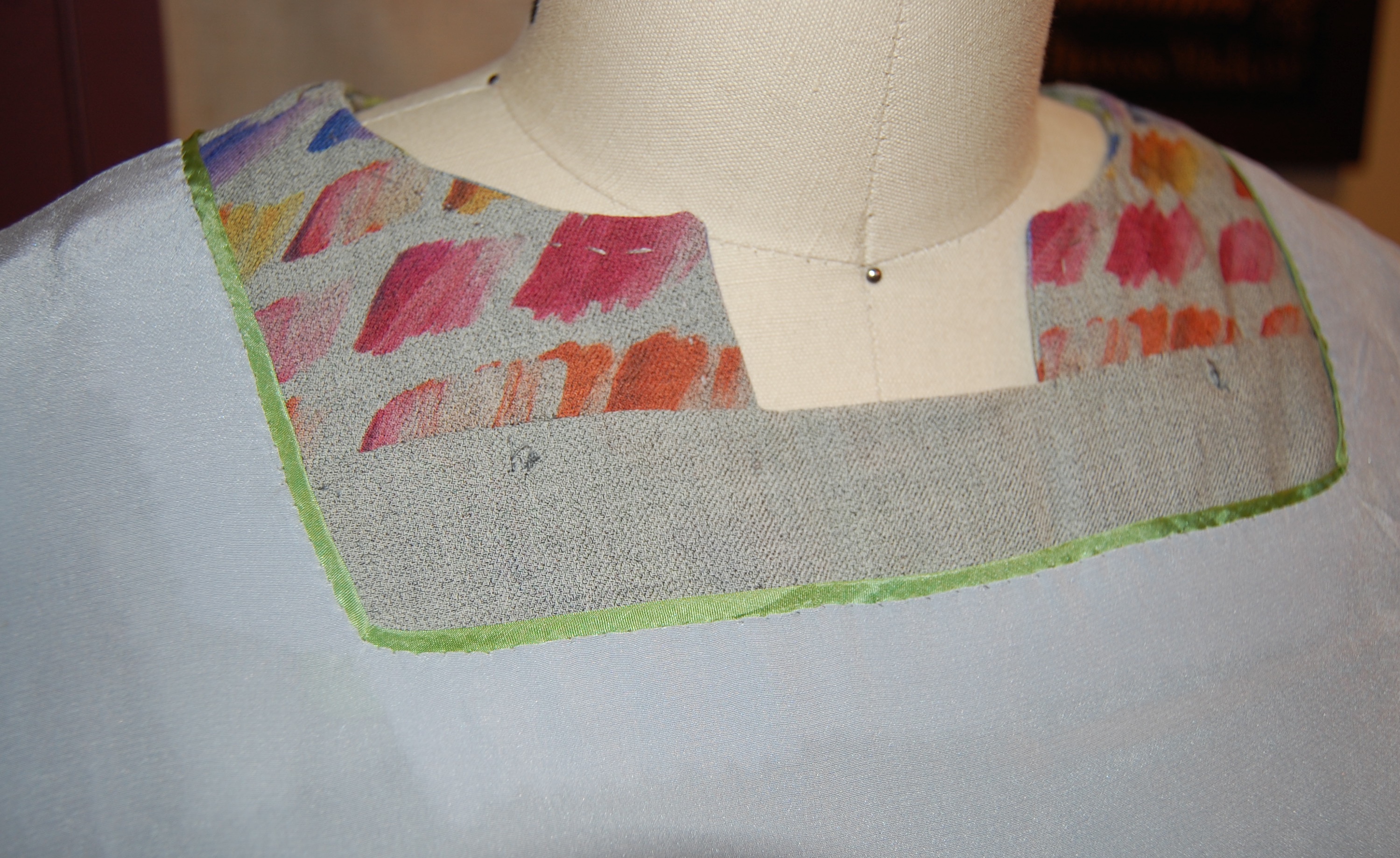
I had also made the decision to make the “dickey” part of the dress out of the side of the fabric with the printed design – so that the horizontal line would be uninterrupted across the bodice. Here is what it looked like once I had it done:

Sweet November

There was not enough definition between the dress and dickey to make it interesting.

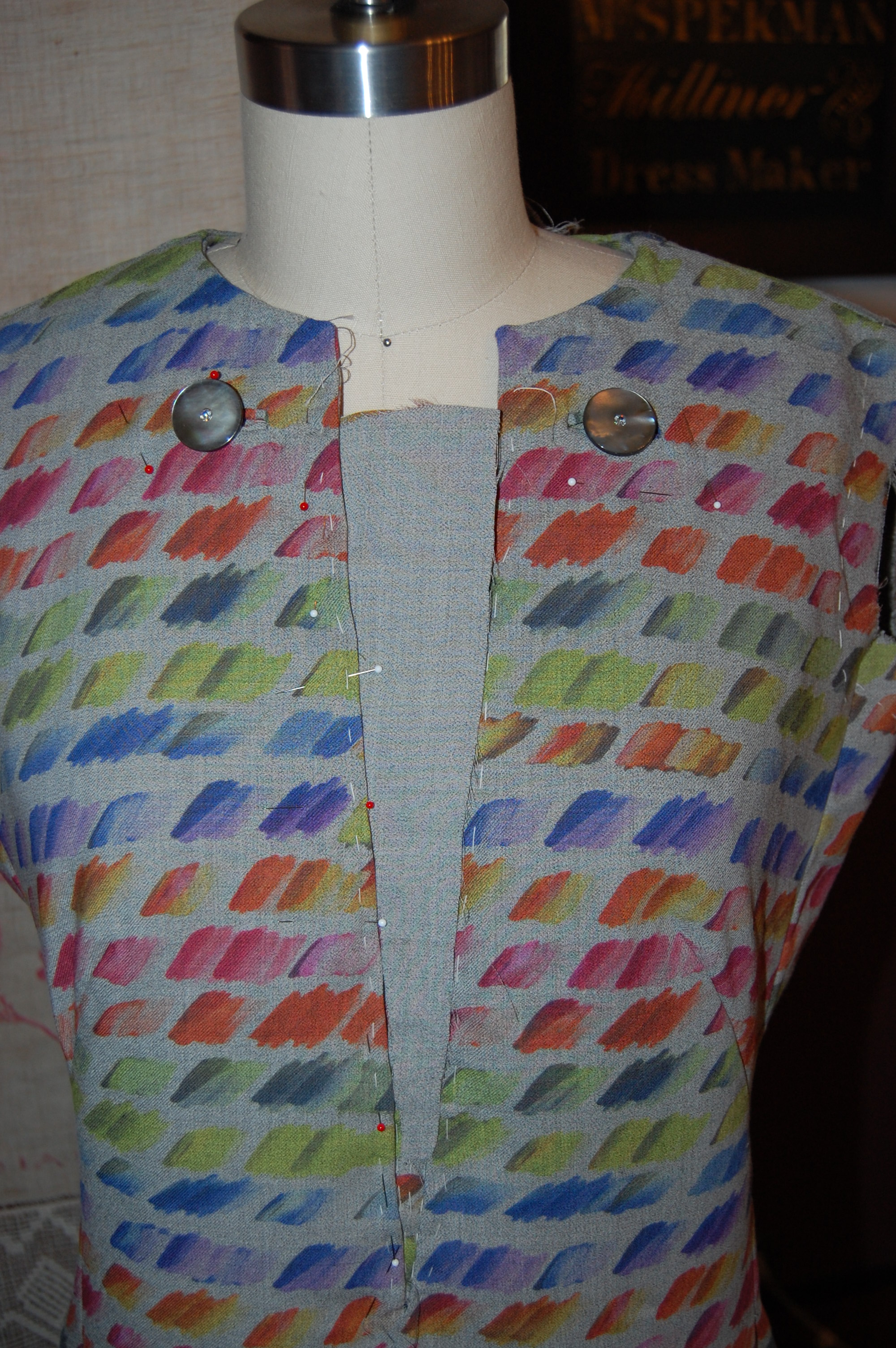
I cut some scraps to see what it would look like with a play gray insert – and it was so much better!

Sweet November

So – I took the dickey all apart and flipped it over so it would be out of the plain gray “wrong side.” By now I was enjoying the versatility of this fabric (which I bought online from Mendel Goldberg Fabrics) and appreciating the serendipity of having this fabric for this pattern, giving me options.

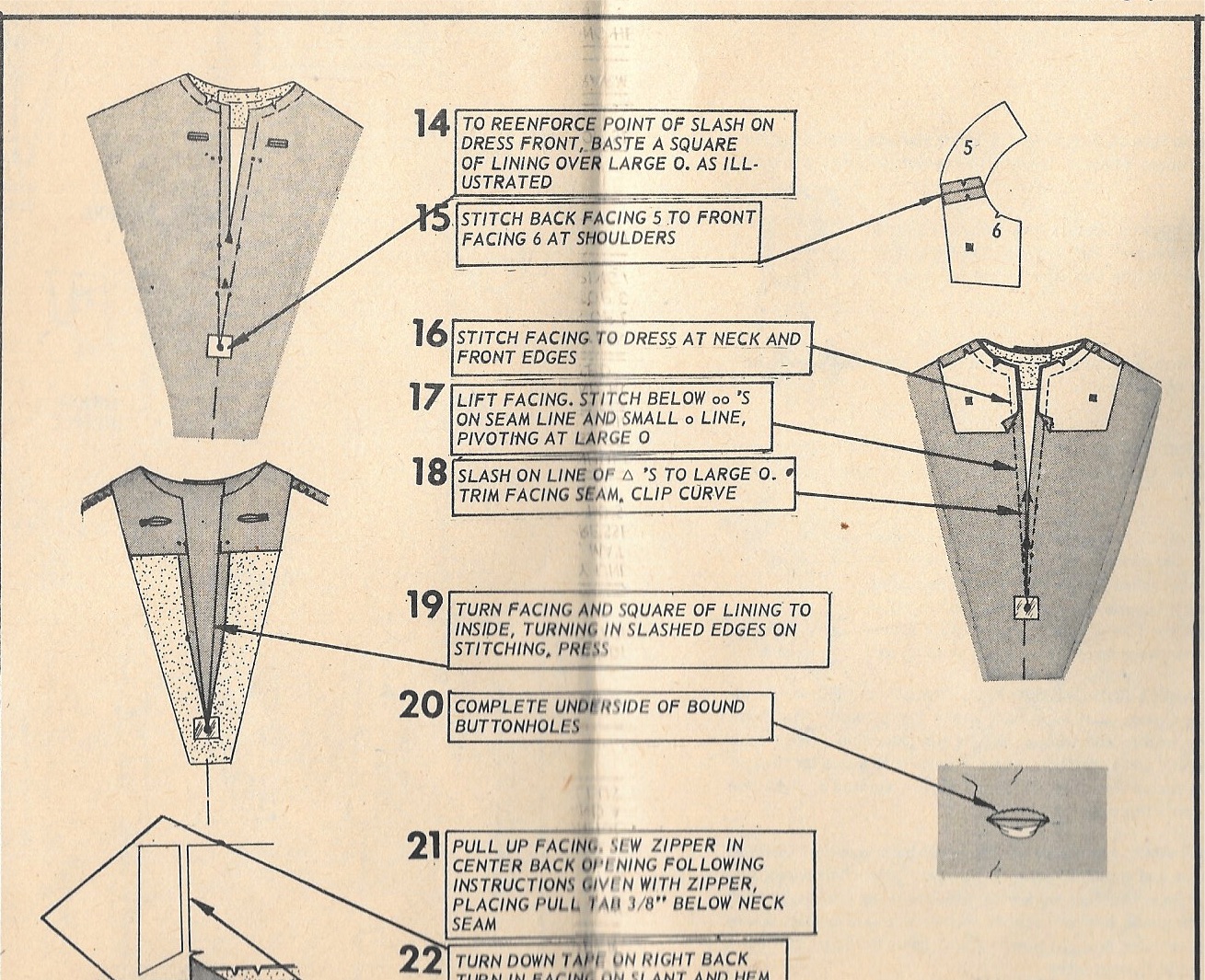
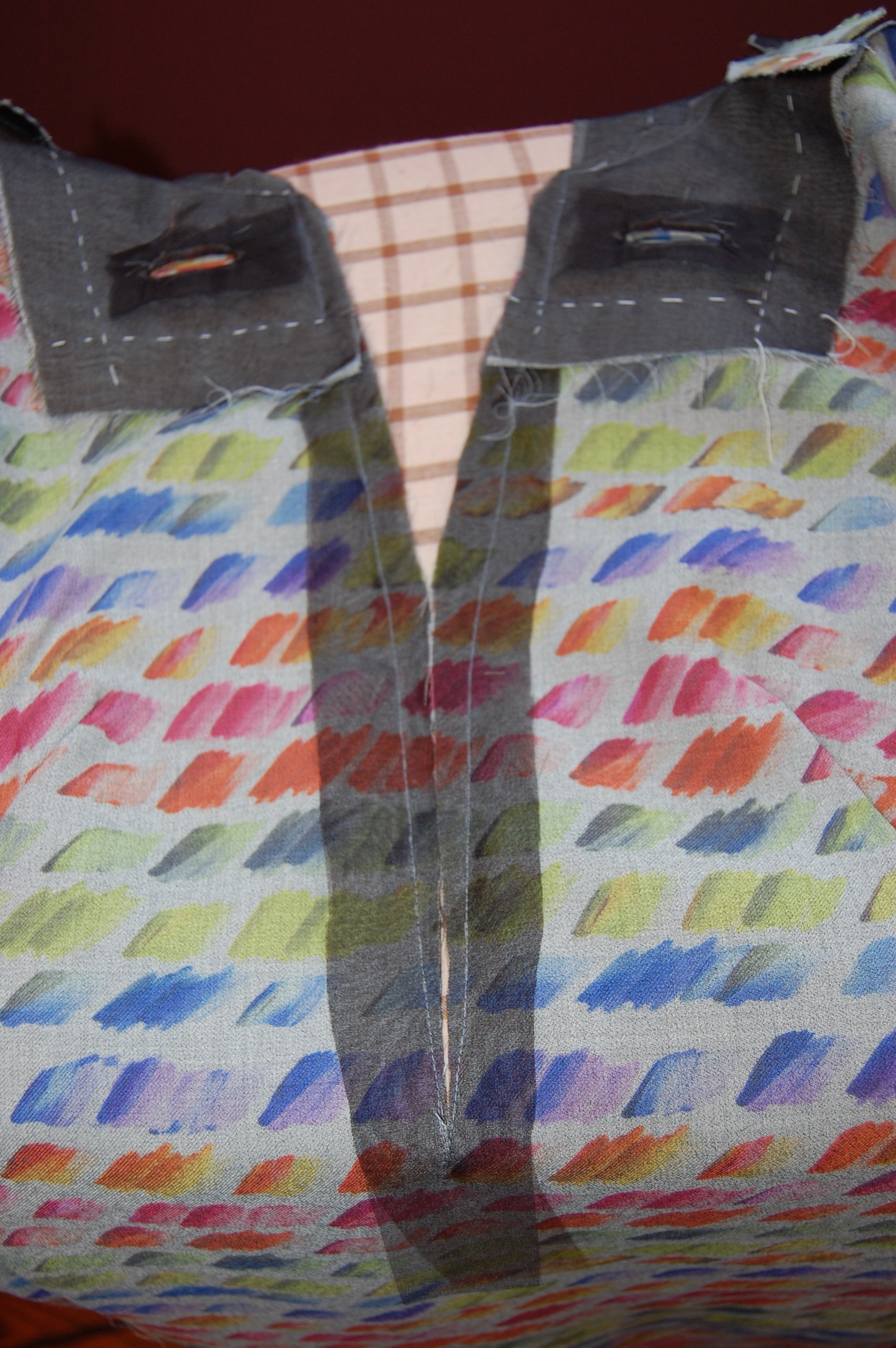
However, the fabric posed another challenge when I got to the point of finishing the front opening in the bodice. This fabric frays enough that I was not comfortable following the directions given in the pattern instructions:

The instructions directed me to just turn back the seam allowance, but because of the ravel-ly nature of the fabric, I was certain it would pull out with wear.

The instructions directed me to just turn back the seam allowance, but because of the ravel-ly nature of the fabric, I was certain it would pull out with wear.

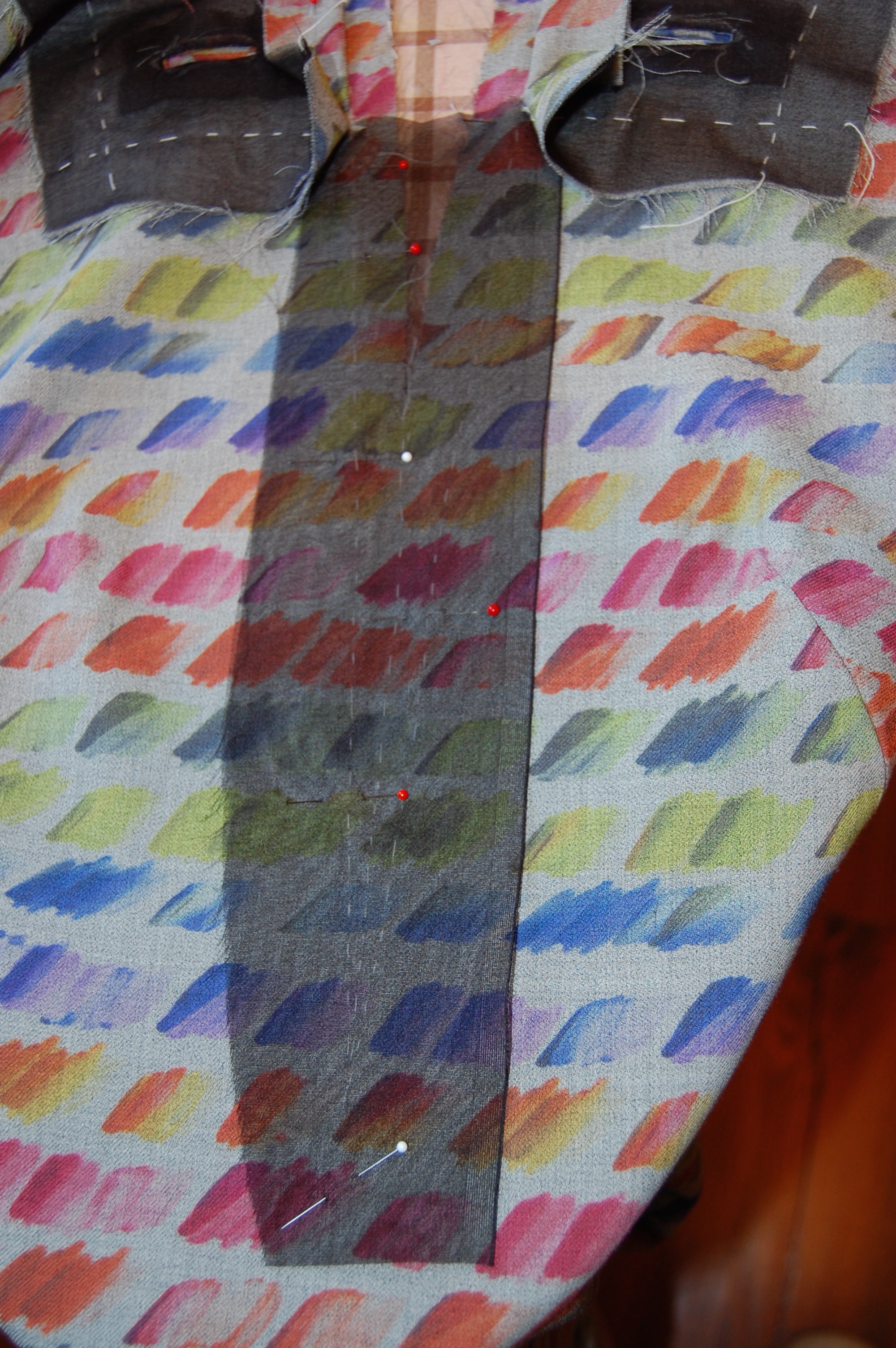
Instead, I opted to make a “facing” for the opening out of black organza. It is situations like this that make me feel so fortunate to have enough “sewing sense” to be able to recognize potential difficulties and then have the ability to work out creative solutions to them.

Sweet November

Silk organza pinned in place.

And here it is sewn in place.

And here it is sewn in place.

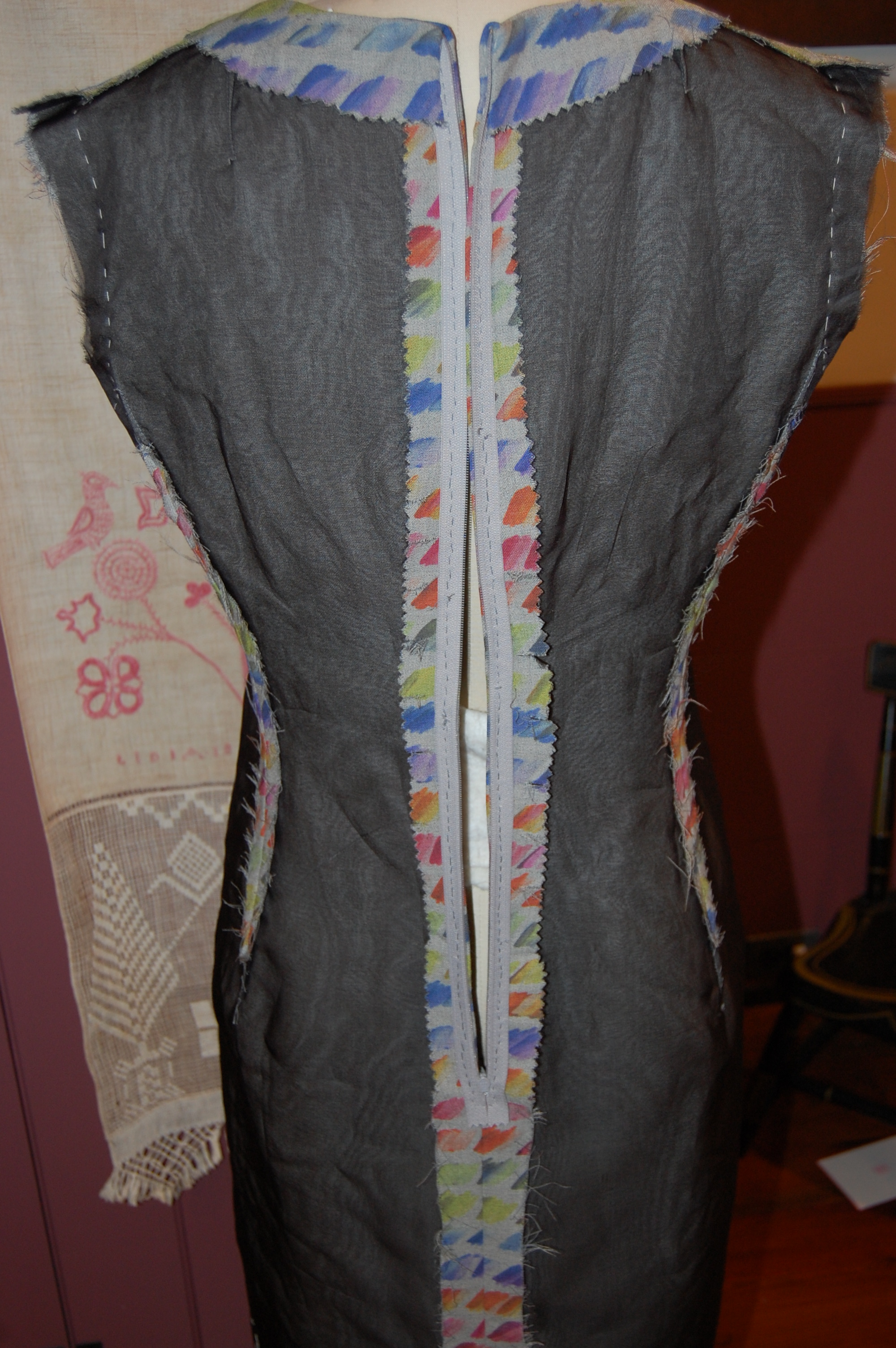
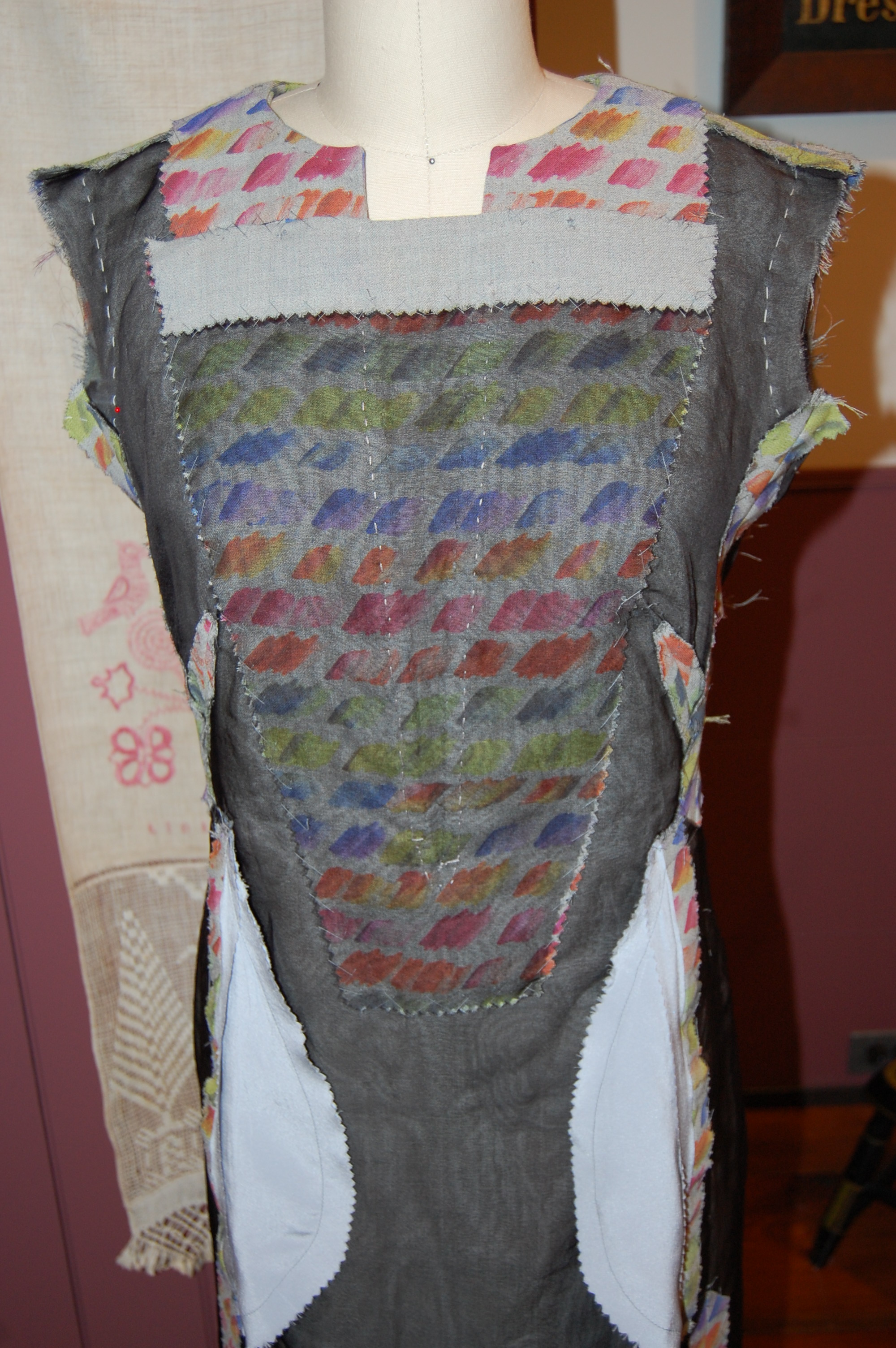
I took some pictures at this point to show the inside of the body of the dress:

Yes, those are pockets hanging on the front.

Yes, those are pockets hanging on the front.

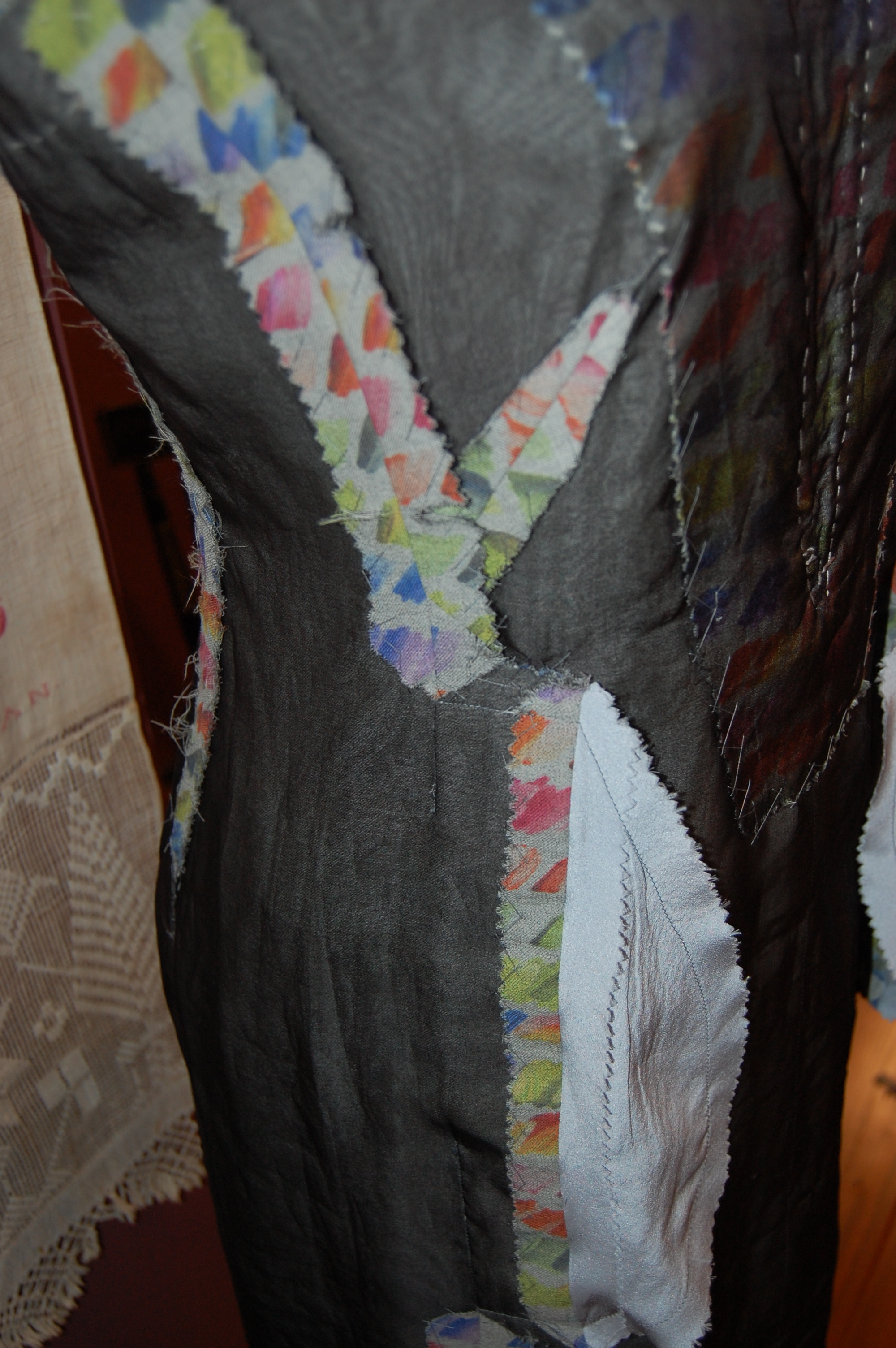
This shows those darts with their slanted orientation.

This shows those bust darts with their slanted orientation.

The zipper is inserted by hand, as usual! Once I had it basted in place, I tried the dress on for fit and determined I had to take it in a bit at the waistline.

Then I tackled the sleeves. I had quite a time determining how to place the sleeve patterns on the remaining fabric. Some of those horizontal lines of “paintbrush strokes” change color across the fabric! And my adapted sleeve pattern has two elbow darts, which changed the horizontal line. I had to make a decision about where I wanted the best match to be, as I determined I could not match it across and up and down as I would normally want to do. I opted for a match across the shoulders – and I now believe that was the best decision.

DSC_0924

I also added a soft “cigarette” sleeve heading to each shoulder seam.

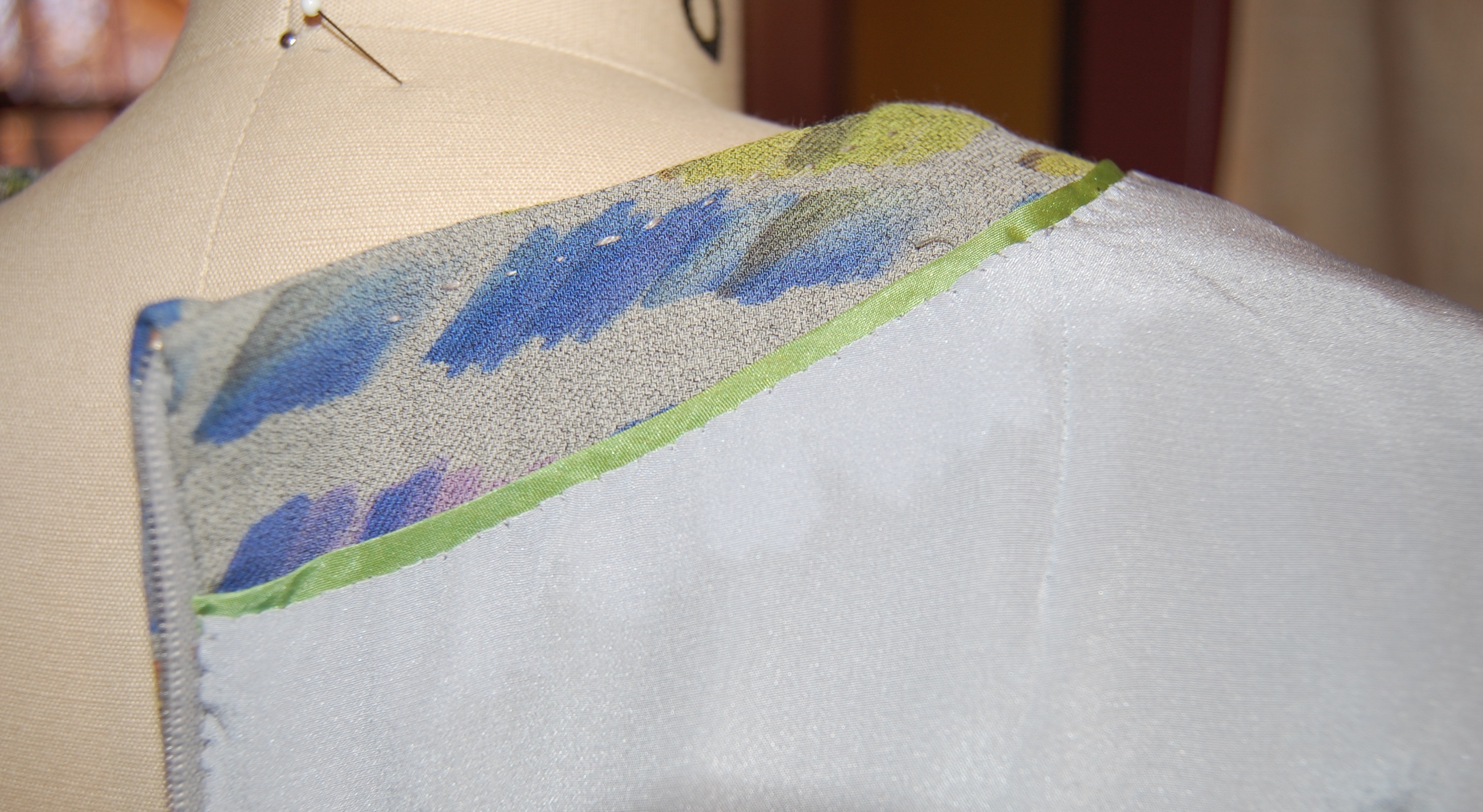
Next to the lining – and bless those vintage Vogue patterns – the lining for this dress included separate and distinct pattern pieces. I made the sizing and dart changes to the lining (in keeping with the dress) and it went together effortlessly. When I got to the point of inserting the lining by hand, I just could not resist adding silk piping to the inside neck edge. I know I am the only one who will ever see it, but it makes me happy!

Sweet November

I used a bias strip of lightweight silk for the piping.

I used a bias strip of lightweight silk for the piping.

How wonderful to have this dress completed!

Sweet November

The buttons really show in this picture.

The buttons really show in this picture.

Sweet November

Sweet November

Sweet November

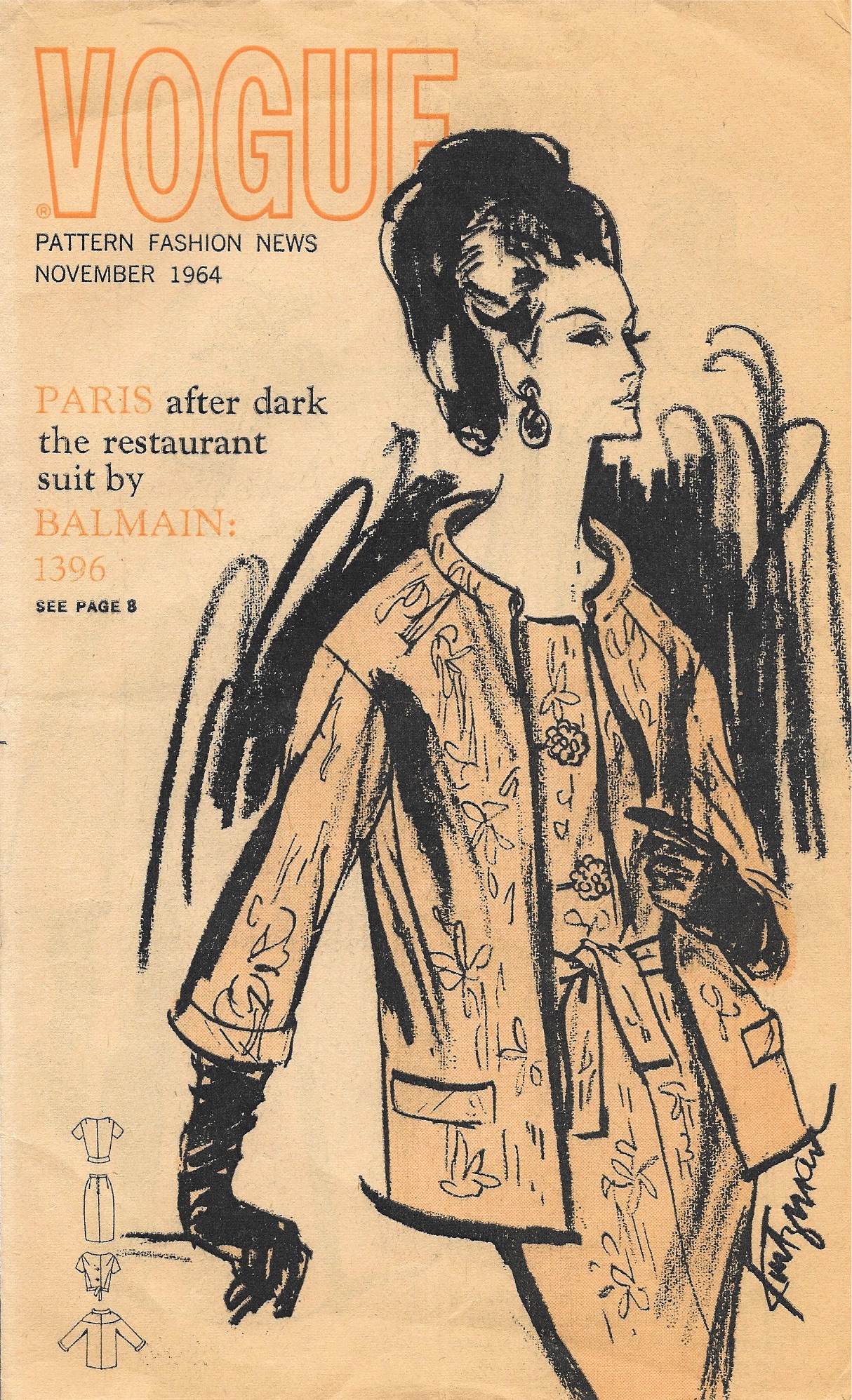
There was one more aspect of serendipity to this project. Those of you who follow my blog know that part of my fascination with vintage Vogue patterns is making connections between the past and the present. I love to “place” a pattern in its correct year – and then wonder in amazement at how classic fashions are so enduring. It was my great good fortune to have this Vogue Pattern Fashion News from November 1964 in my collection of vintage fashion magazines:

Sweet November - flyer cover

Inside on page 3 is, yes, my dress!

Sweet November - flyer illustration

Just imagine – 51 years ago this month, this dress made its debut. Happy Sweet November Everyone!

38 Comments

Filed under Buttons - choosing the right ones, couture construction, Day dresses, hand-sewn zippers, Love of sewing, Mid-Century style, Uncategorized, underlinings, vintage Vogue Designer patterns, vintage Vogue patterns from the 1960s, woolens