Tag Archives: silk

Looking at Blouses

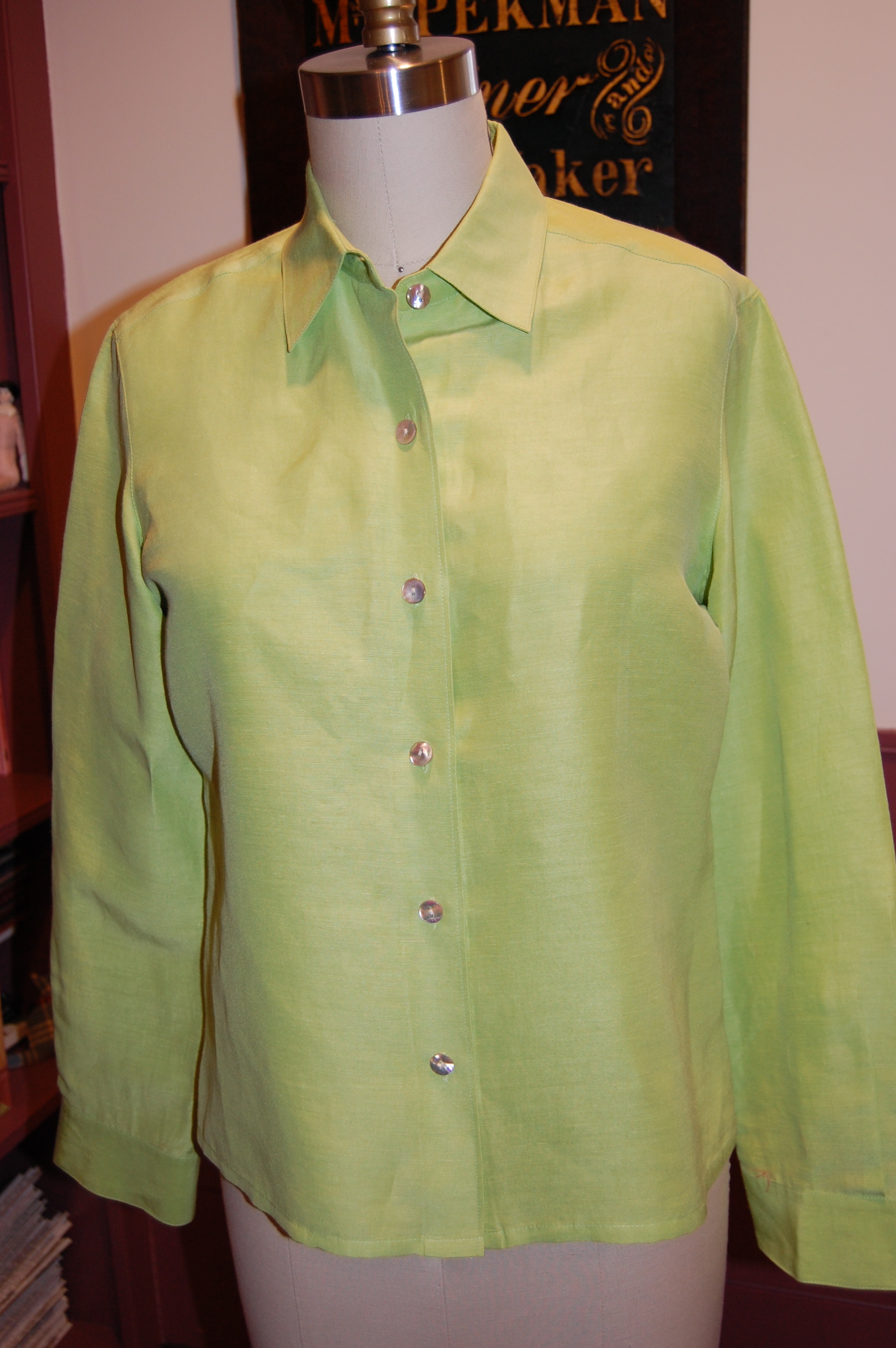
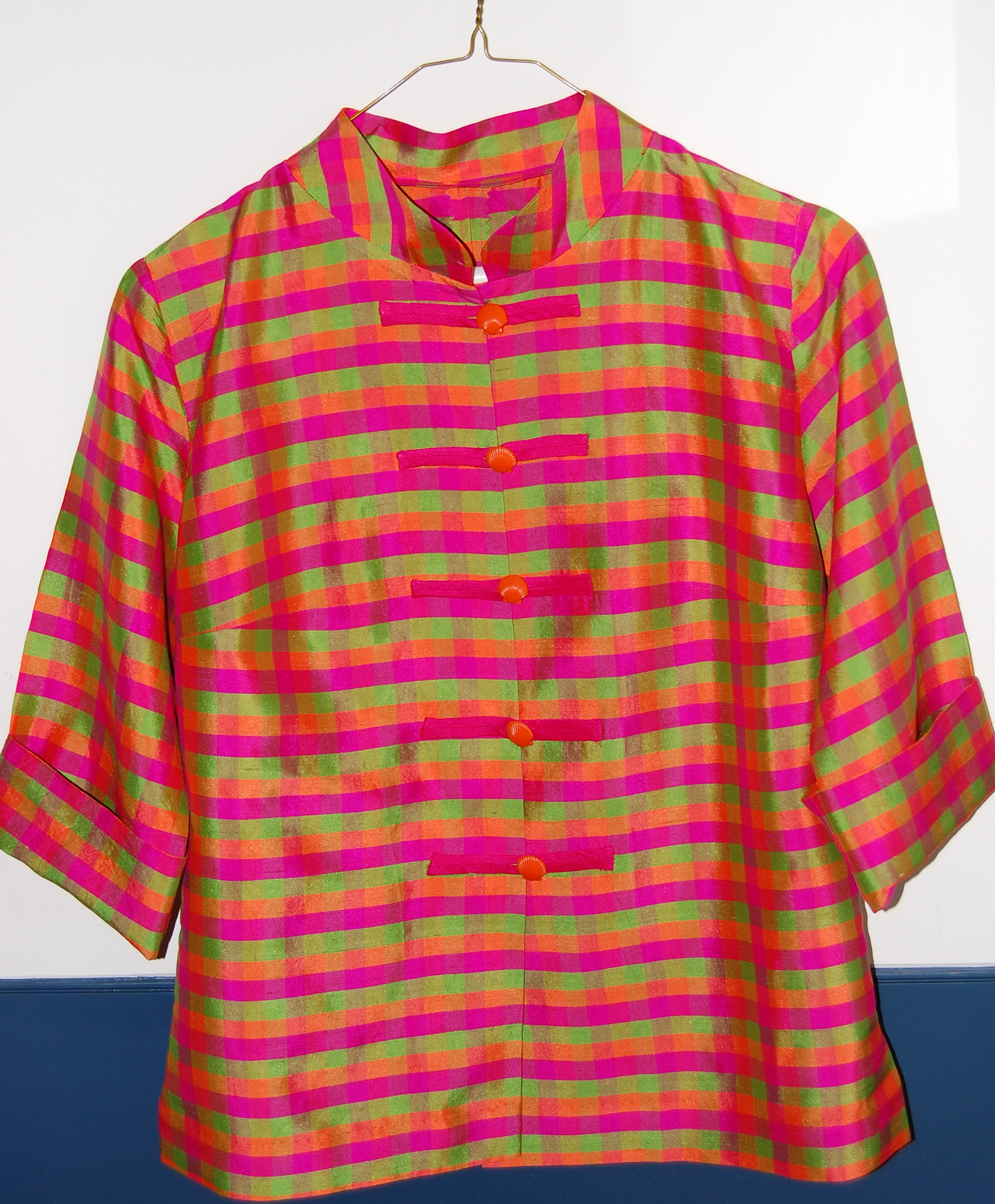
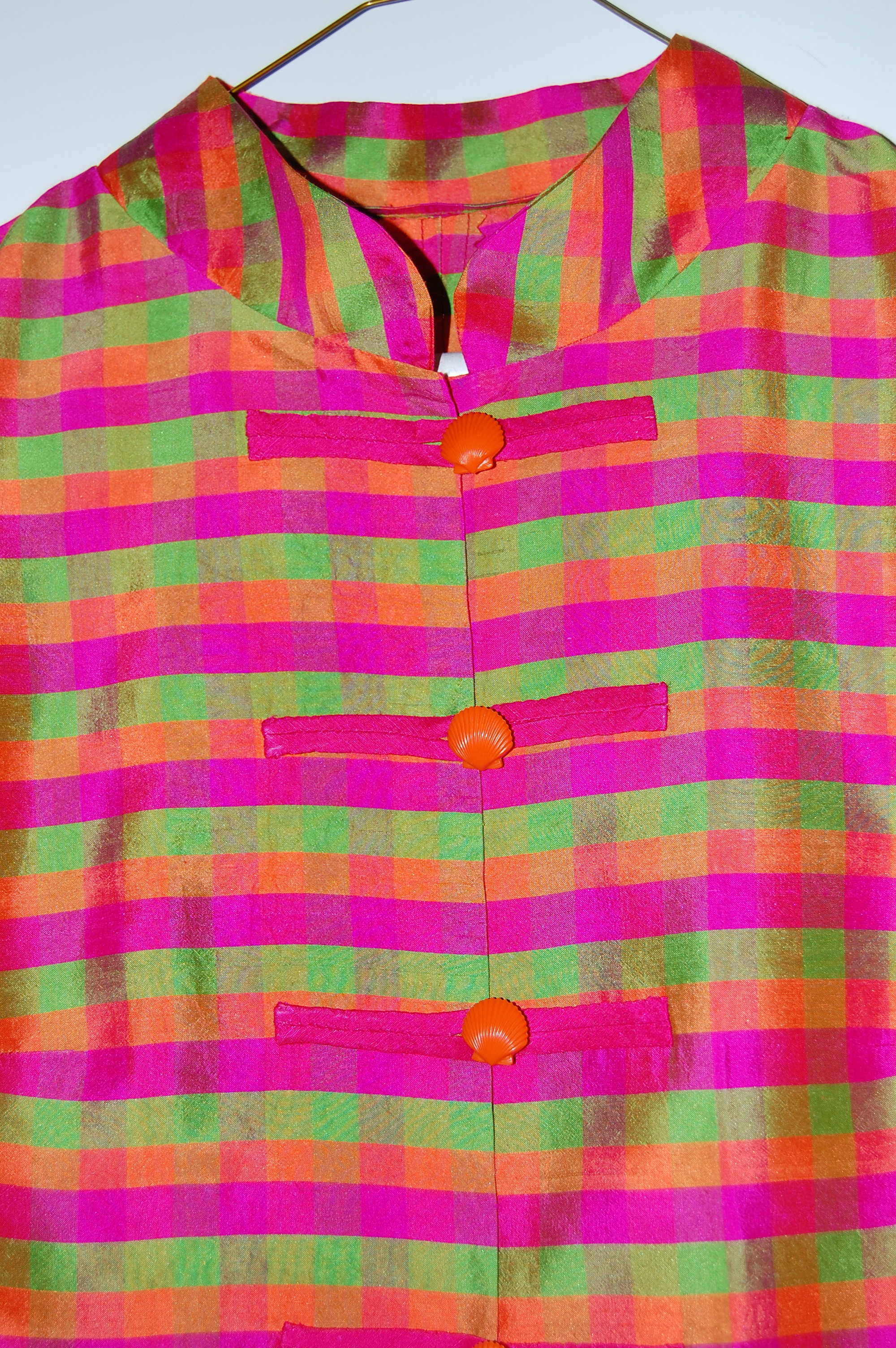
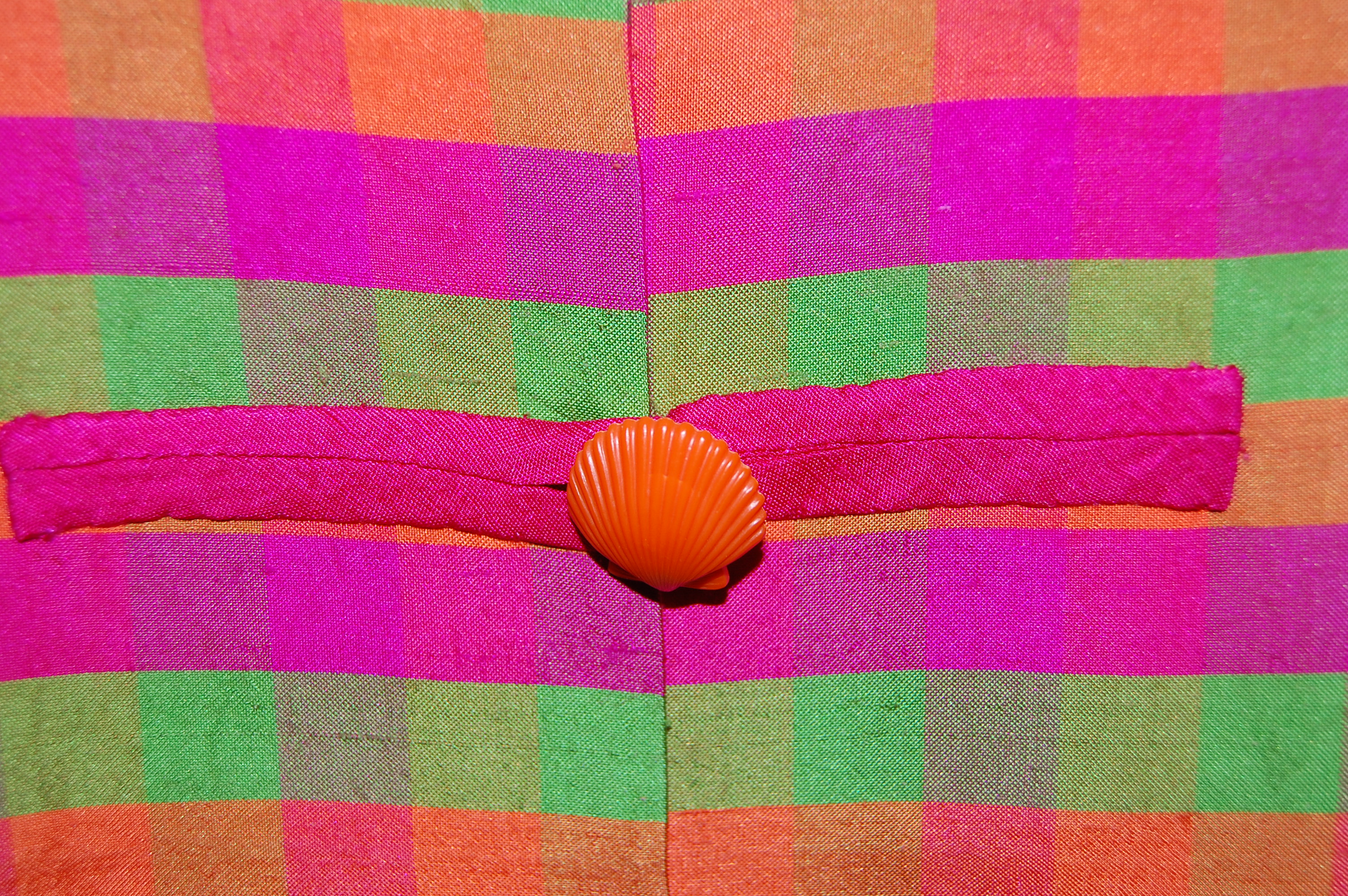
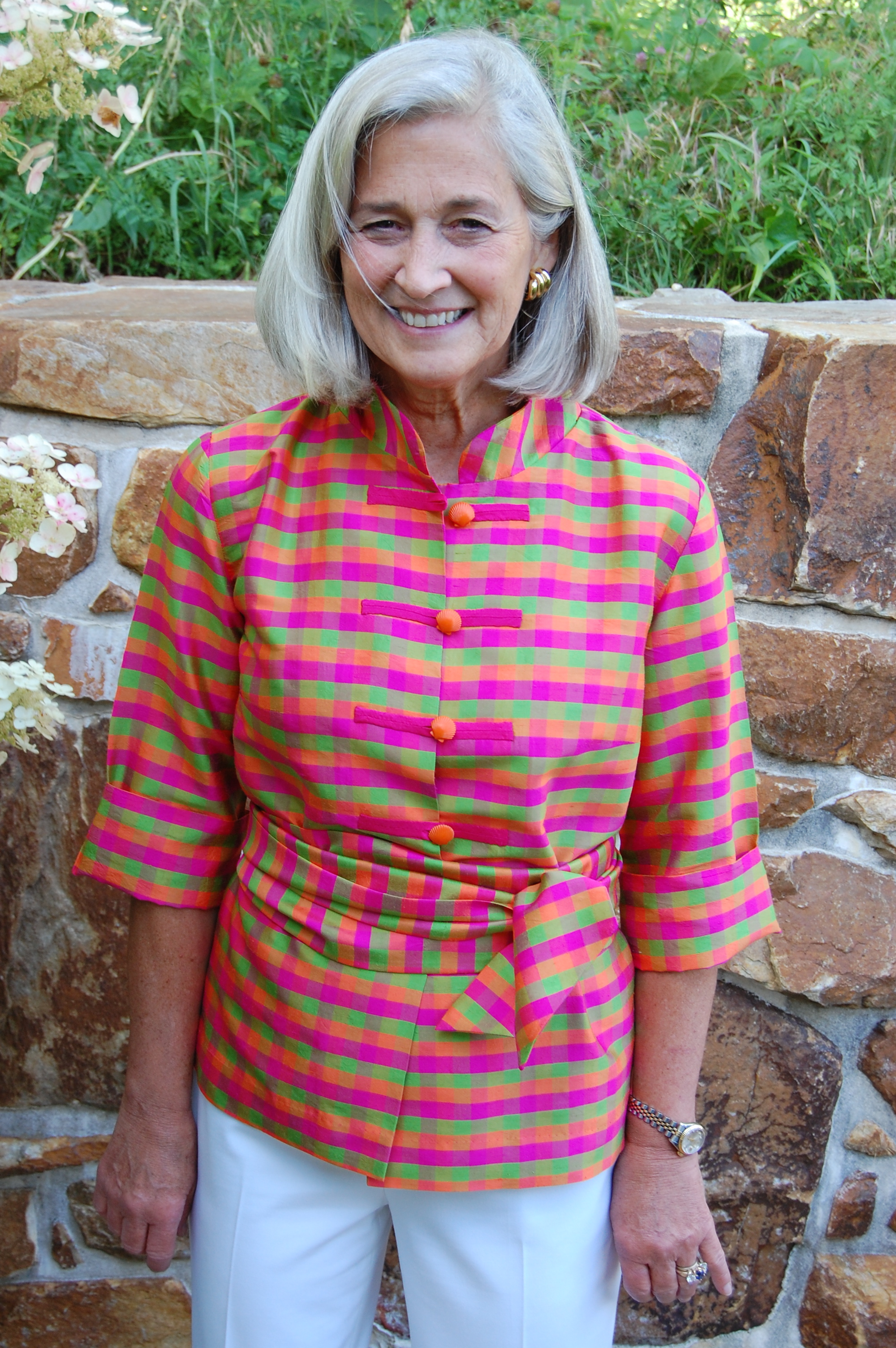
In my quest to make a couple of “simple” pieces before I start another “Chanel-inspired” jacket, I decided to make a blouse.  I am very partial to the color of deep pink – and the remains of a length of silk, which I have already used in two projects (here and here), kept surfacing whenever I went through my fabric collection.  The weight is perfect for a blouse – so my plans starting taking shape, based on this fabric.

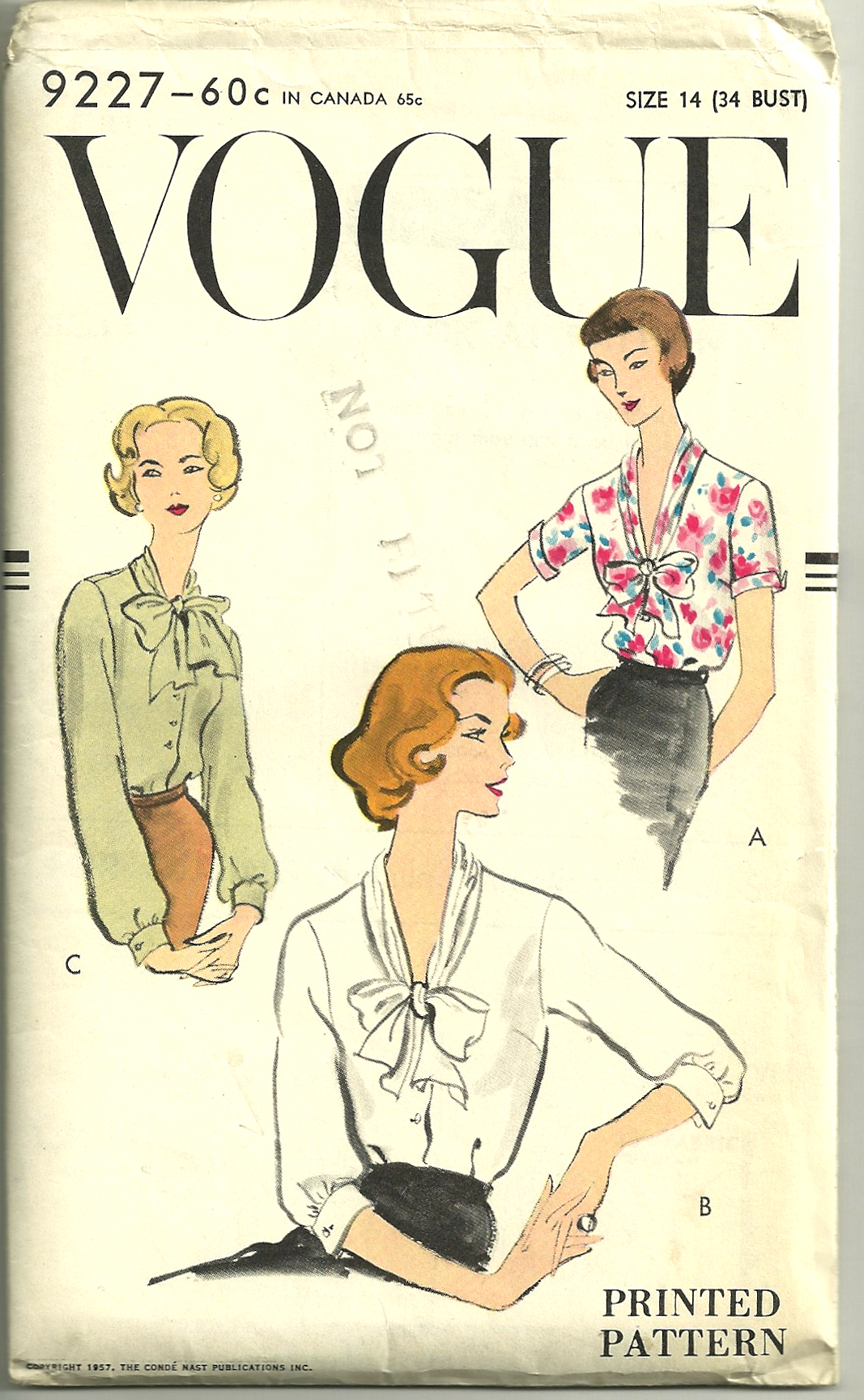
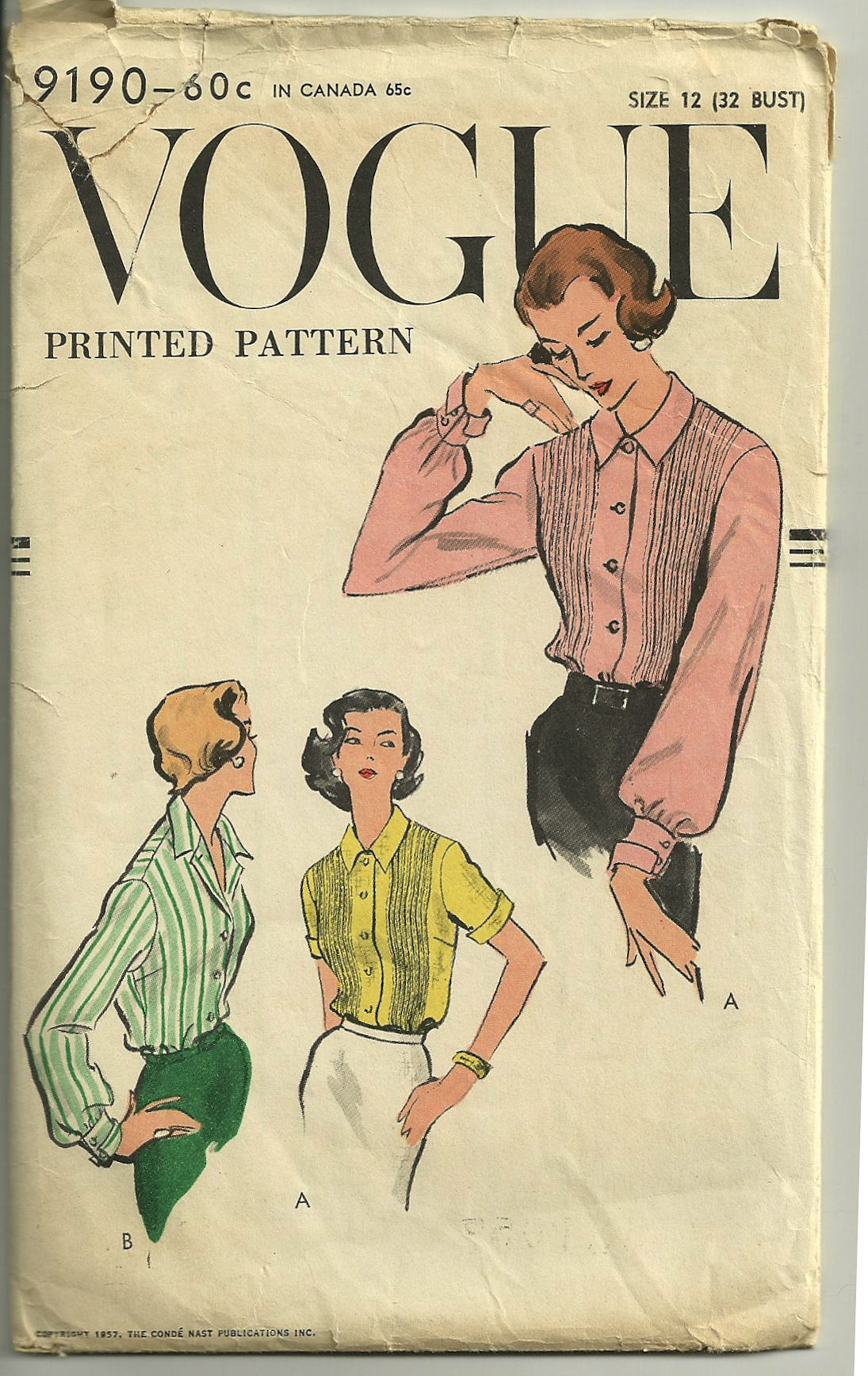
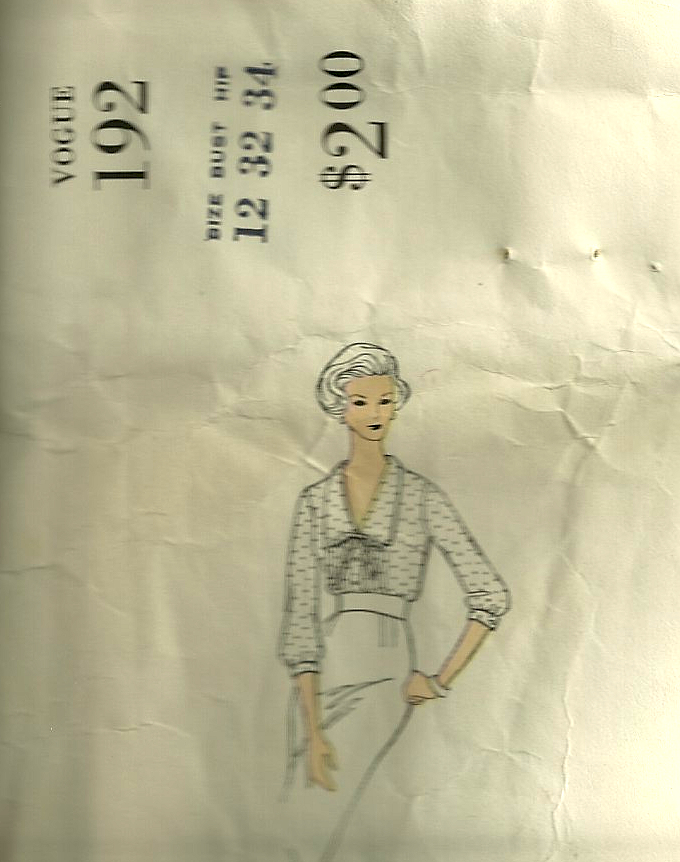
First I went through my pattern collection to see what I could find.  Two blouse patterns from 1957 and one from 1959 are lovely but did not seem quite right for my fabric.

View B is my favorite - and how current is this look?

View B is my favorite – and how current is this look?

I have already used this pattern once, but I think I took some of the fullness out of the sleeves.

I have already used this pattern once, but I think I took some of the fullness out of the sleeves.

This blouse pattern is part of a suit.

This blouse pattern is part of a suit. 

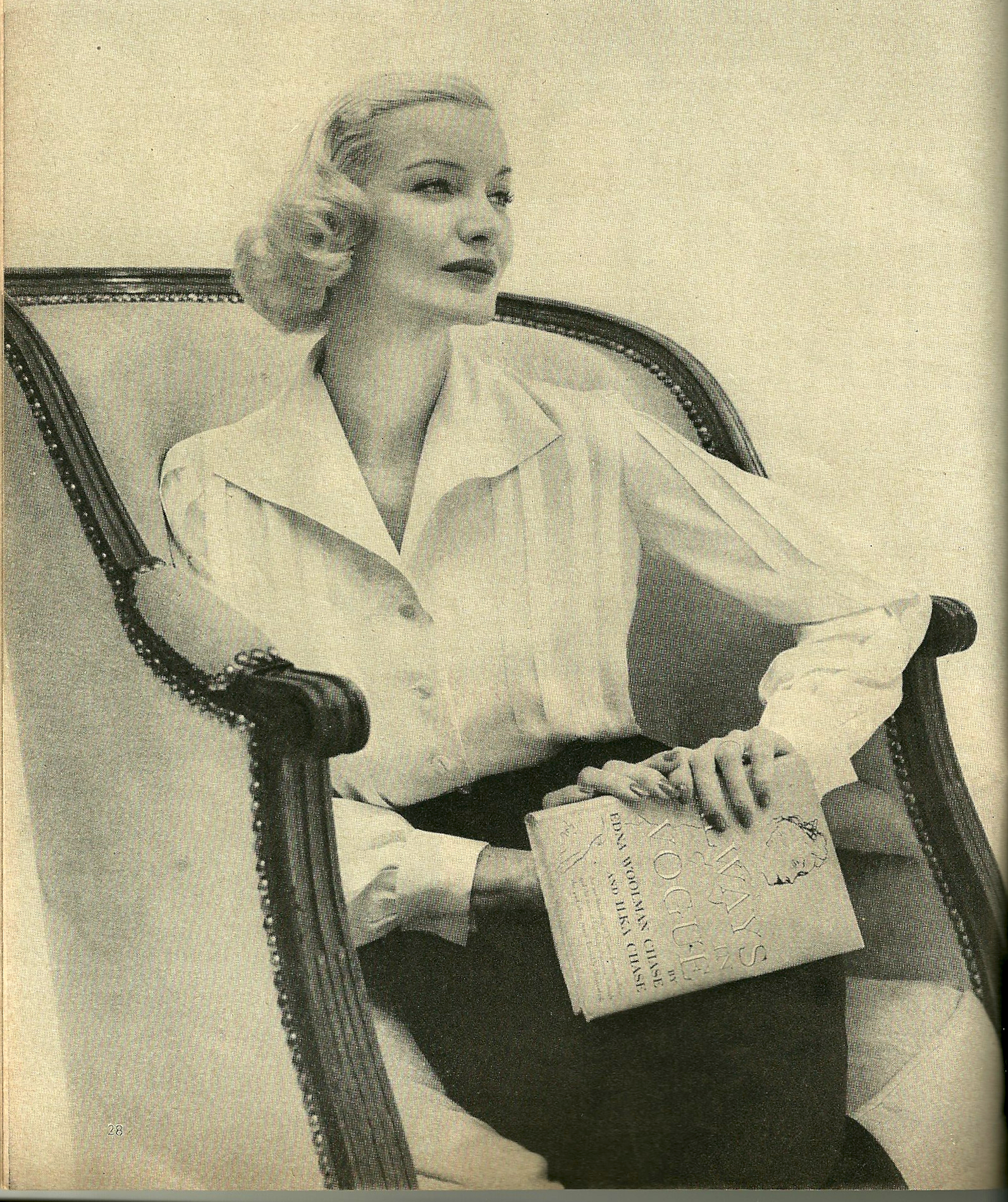
Just for fun, I thought I would look at some of my early Vogue Pattern Book Magazines to see what else was being featured for blouses.  In February/March of 1955, this tucked shirtwaist is the very picture of elegance:

The tucks make this blouse very ladylike.

The tucks make this blouse very ladylike.

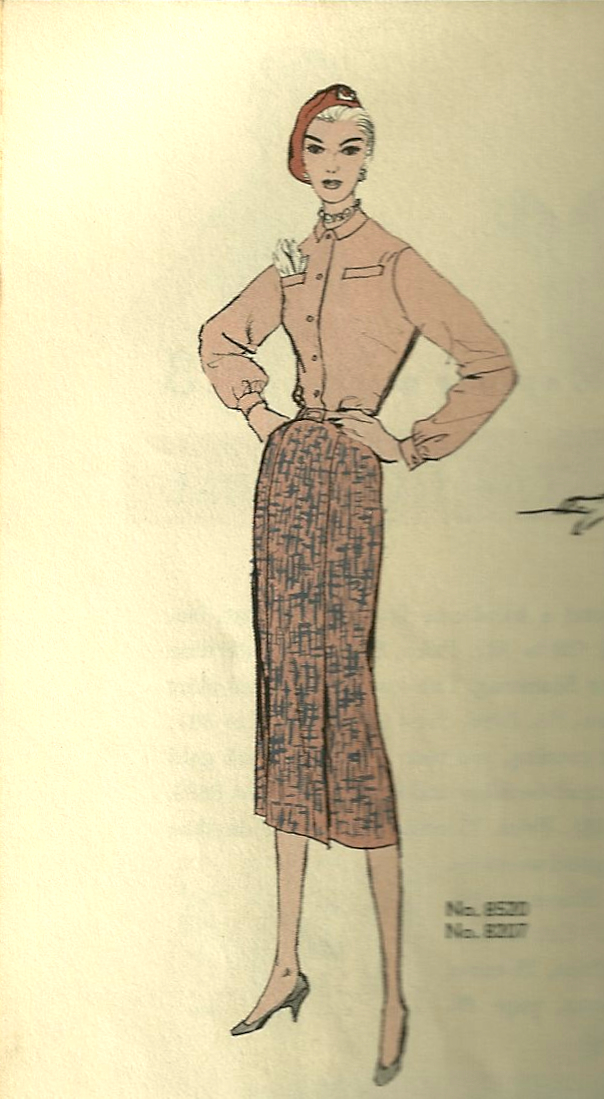
In the same issue, this “bloused jacket” gives the appearance of a classic shirtwaist blouse:

Looking at blouses 1955 - dress shirt style

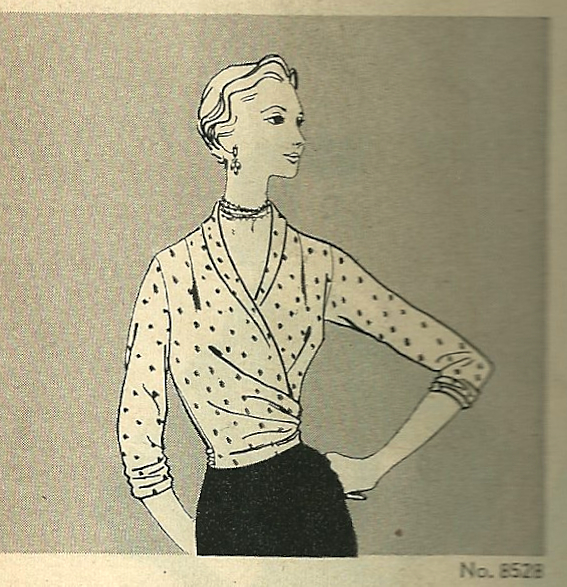
And look at this “wrap” blouse, also from 1955:

Looking at blouses 1955 - wrap style

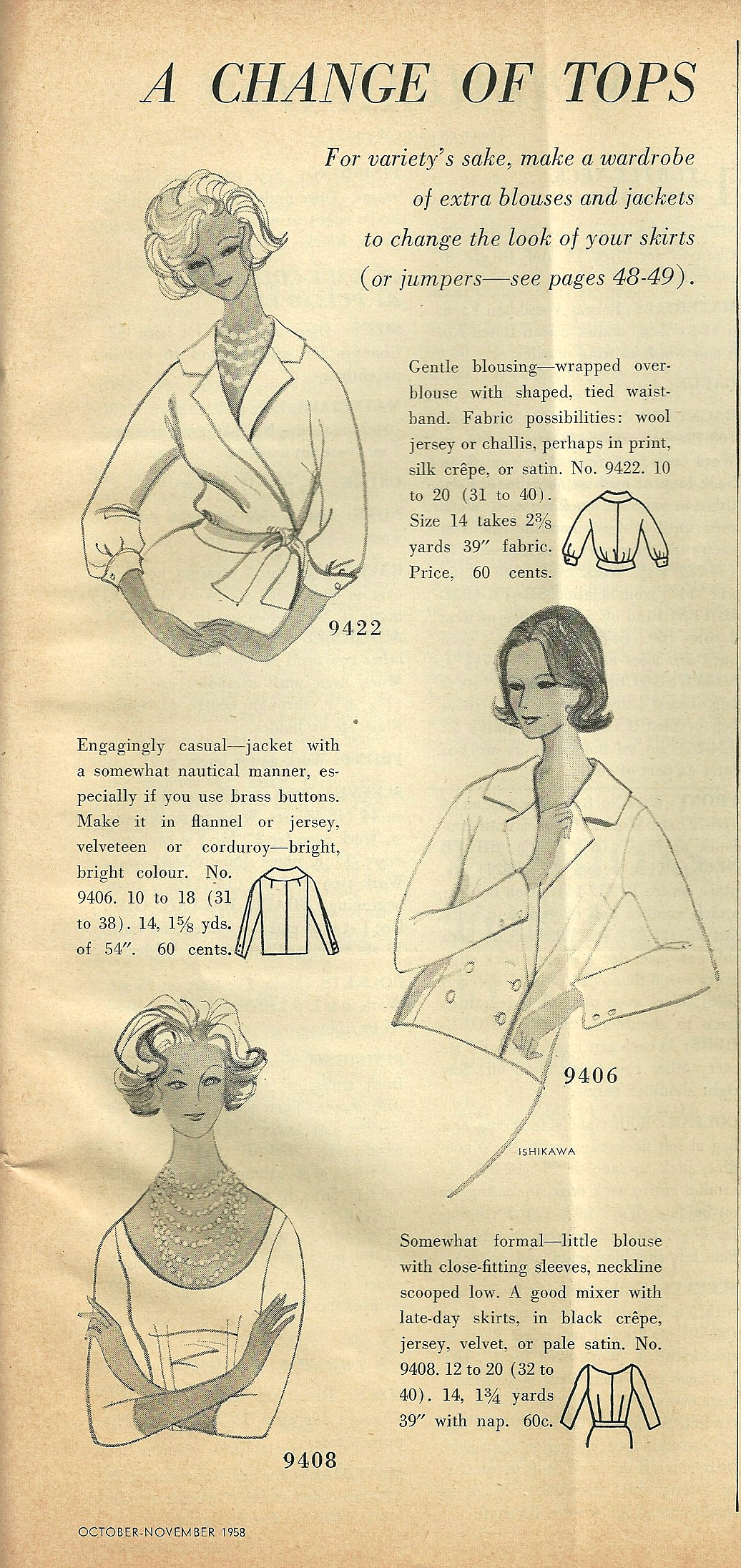
Three years later, in October/November of 1958,  “A Change of Tops” was suggested.  “For variety’s sake, make a wardrobe of extra blouses and jackets to change the look of your skirts…”  That sounds like a good idea to me, especially with the pretty styles that are featured:

Another beautiful wrap blouse among the suggestions!

Another beautiful wrap blouse among the suggestions!

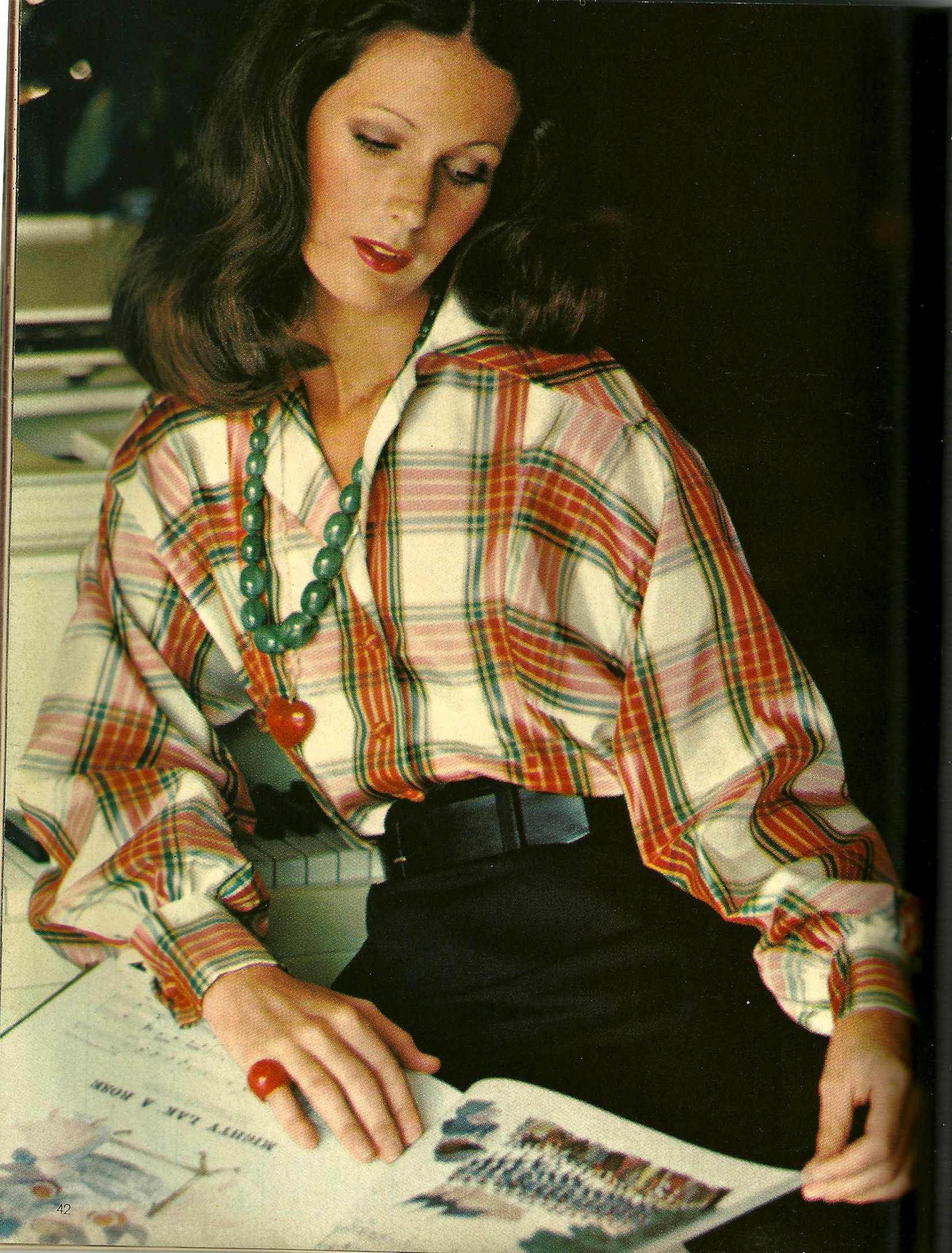
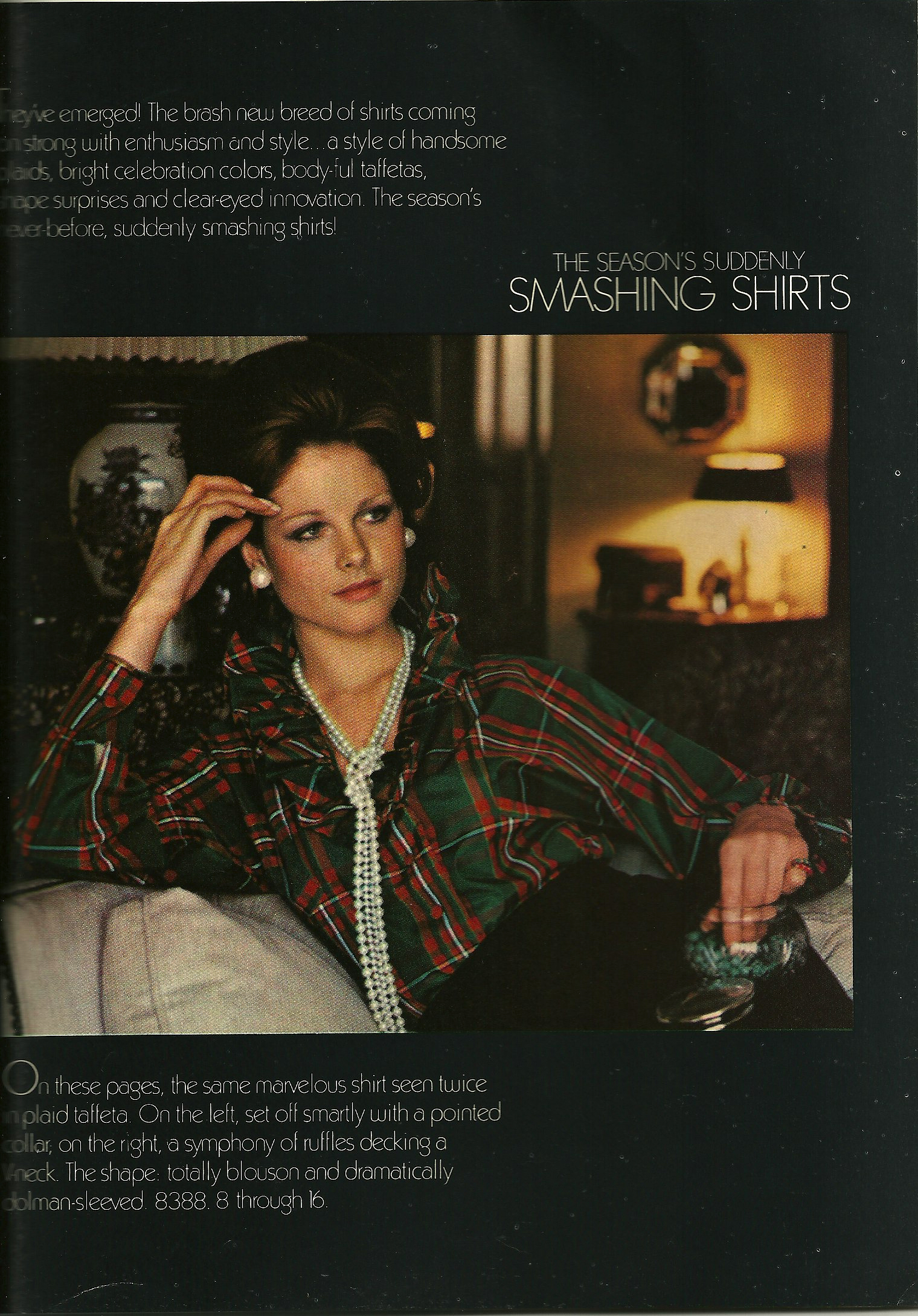
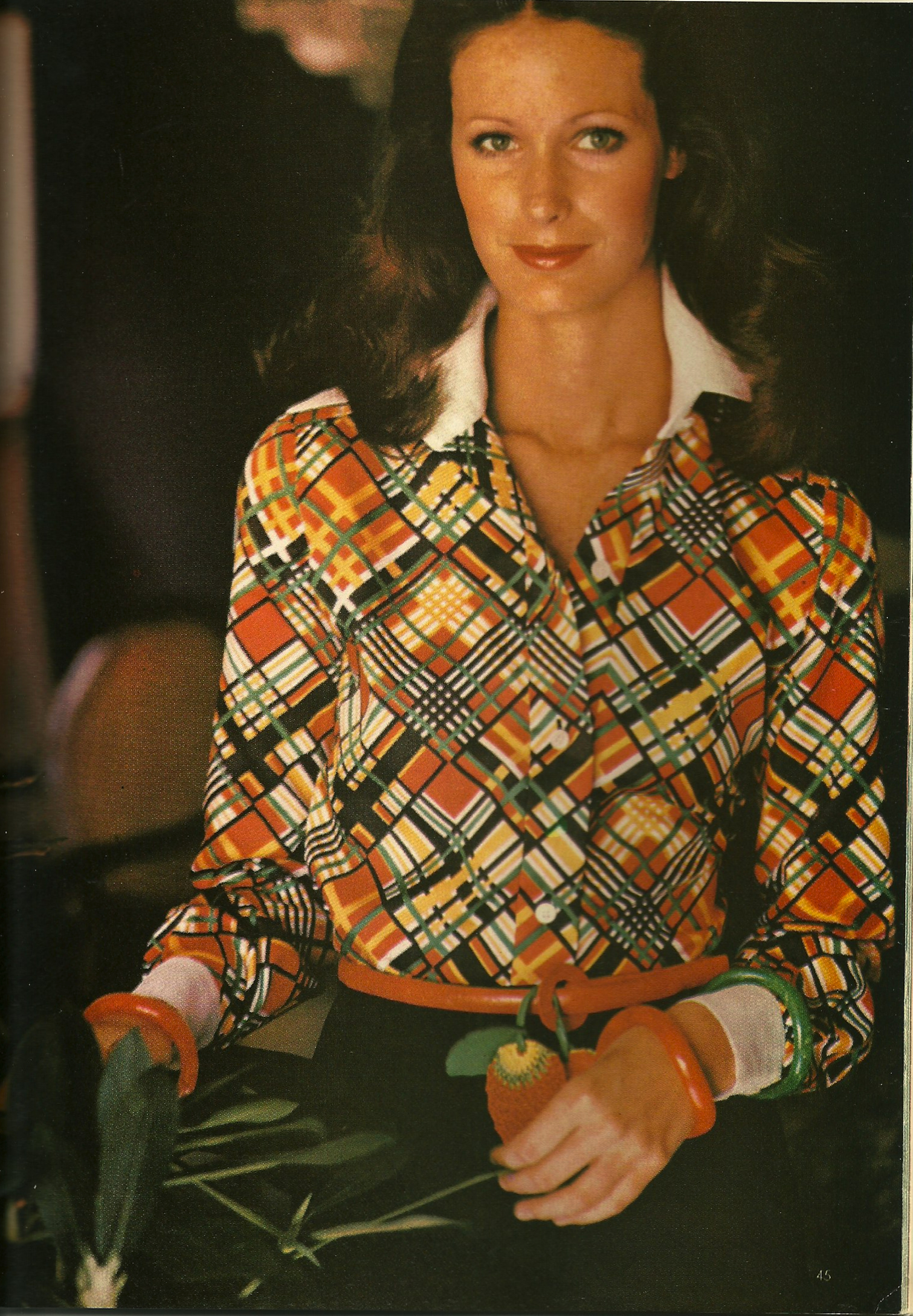
By 1972, collars were beginning to be a bit on the large side for my taste, but these three blouses are still “smashing” even 40 years later!

Made up in a plaid taffeta.

Made up in a plaid taffeta.

This is the same pattern as the blouse above, but with a ruffled collar.

This is the same pattern as the blouse above, but with a ruffled collar.

The diagonal print is very effective in this style.

The diagonal print is very effective in this style.

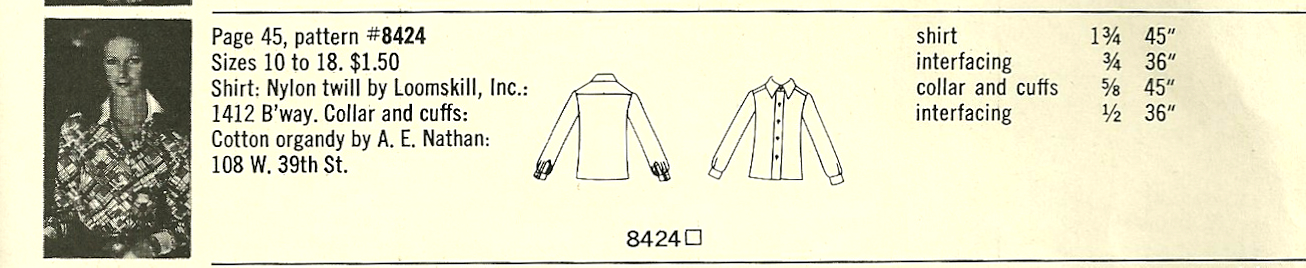
I was particularly drawn to the diagram for the blouse shown above, as it is just a classic shirtwaist style:

Looking at blouses 1972 - plaid 3 sketch

Seeing this blouse reminded me of how much I like an old (very old) RTW David Brooks blouse that I have been wearing for years.

Looking at blouses

It still looks stylish, and I really enjoy wearing it.  So – why not make a “copy” in my pink silk?  Could I possibly find another pattern in my collection that could be suitably altered to achieve this look and style?

Well, I did.  My blouse is currently “under construction” – but the pattern (to be revealed in my next post) is so funny looking that one may truly ask “Why did you ever save that one?”  Hopefully I’ll have a really good, bright pink answer to that soon!

2 Comments

Filed under Blouse patterns from the 1950's, Uncategorized, vintage Vogue patterns from the 1950s, vintage Vogue patterns from the 1970s, Wrap blouses

“P” is for Pearl — and — Perseverance

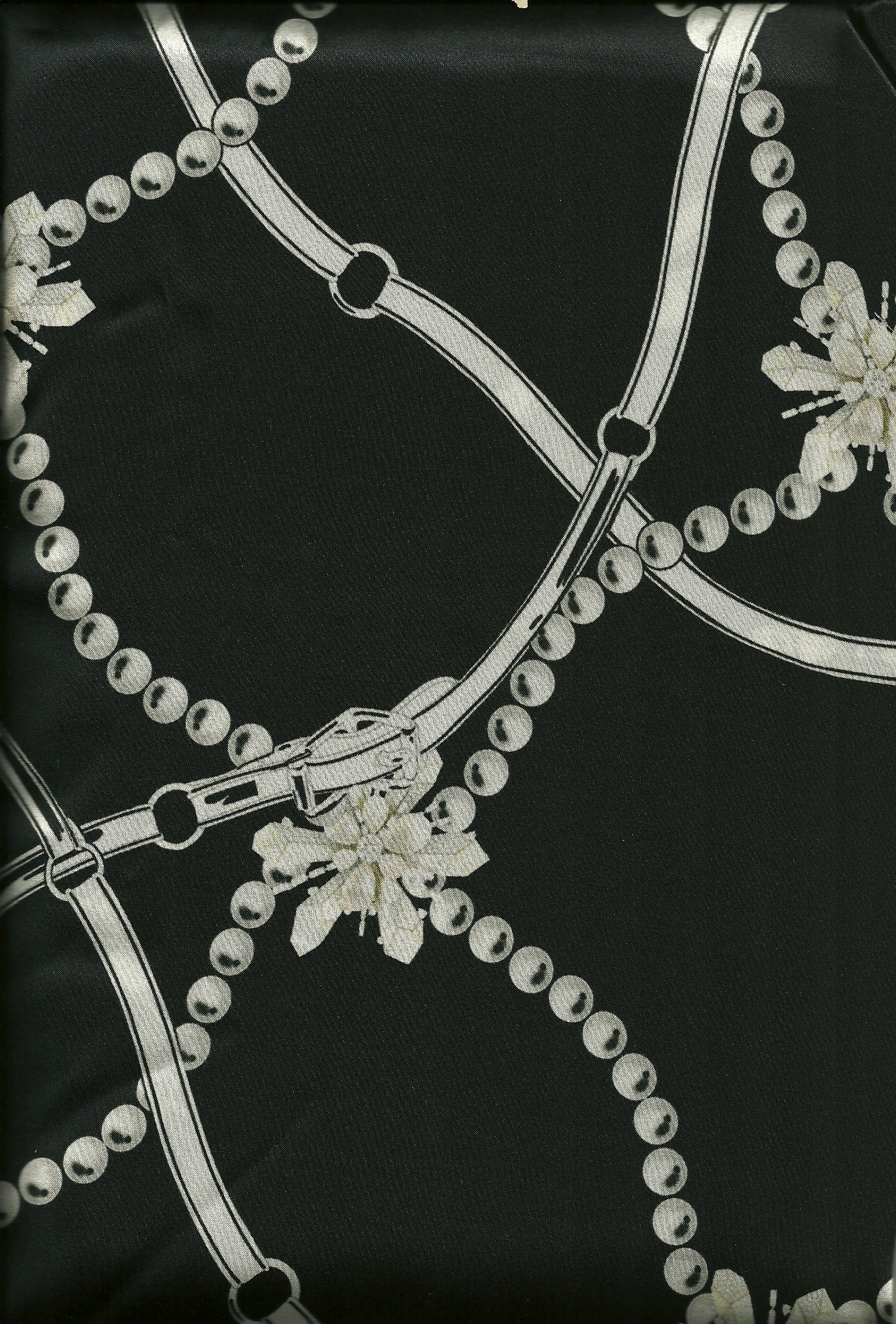
Among timeless fashion statements, pearls and wrap dresses both make my top-ten list.  The opportunity to combine the two was just too good to pass by, especially after being inspired by a silk charmeuse perfectly suited for just such a pairing.

Pearls and ribbons and clusters!

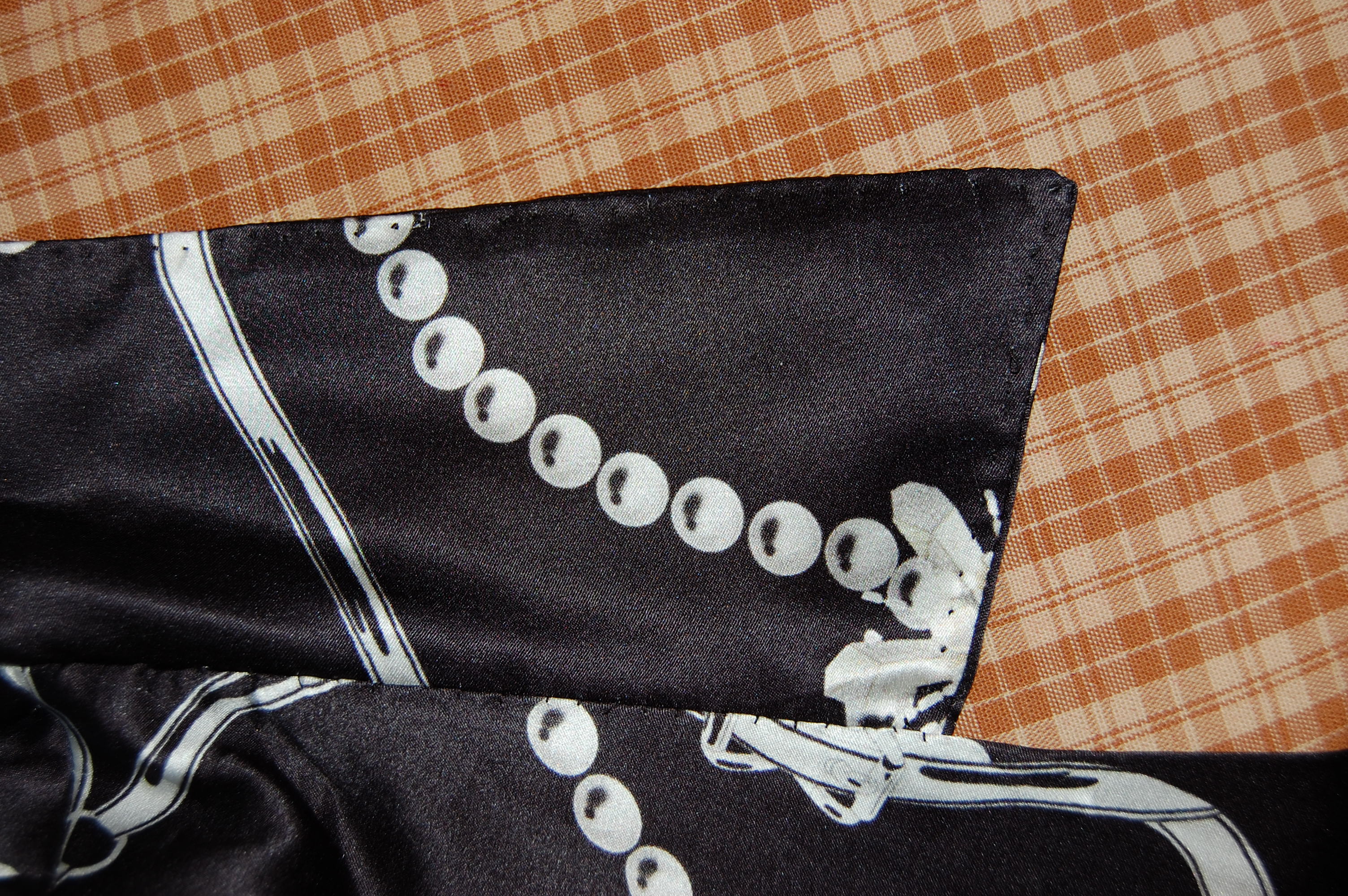
Pearls and ribbons and clusters, fabric purchased from Mendel Goldberg Fabrics in NYC.

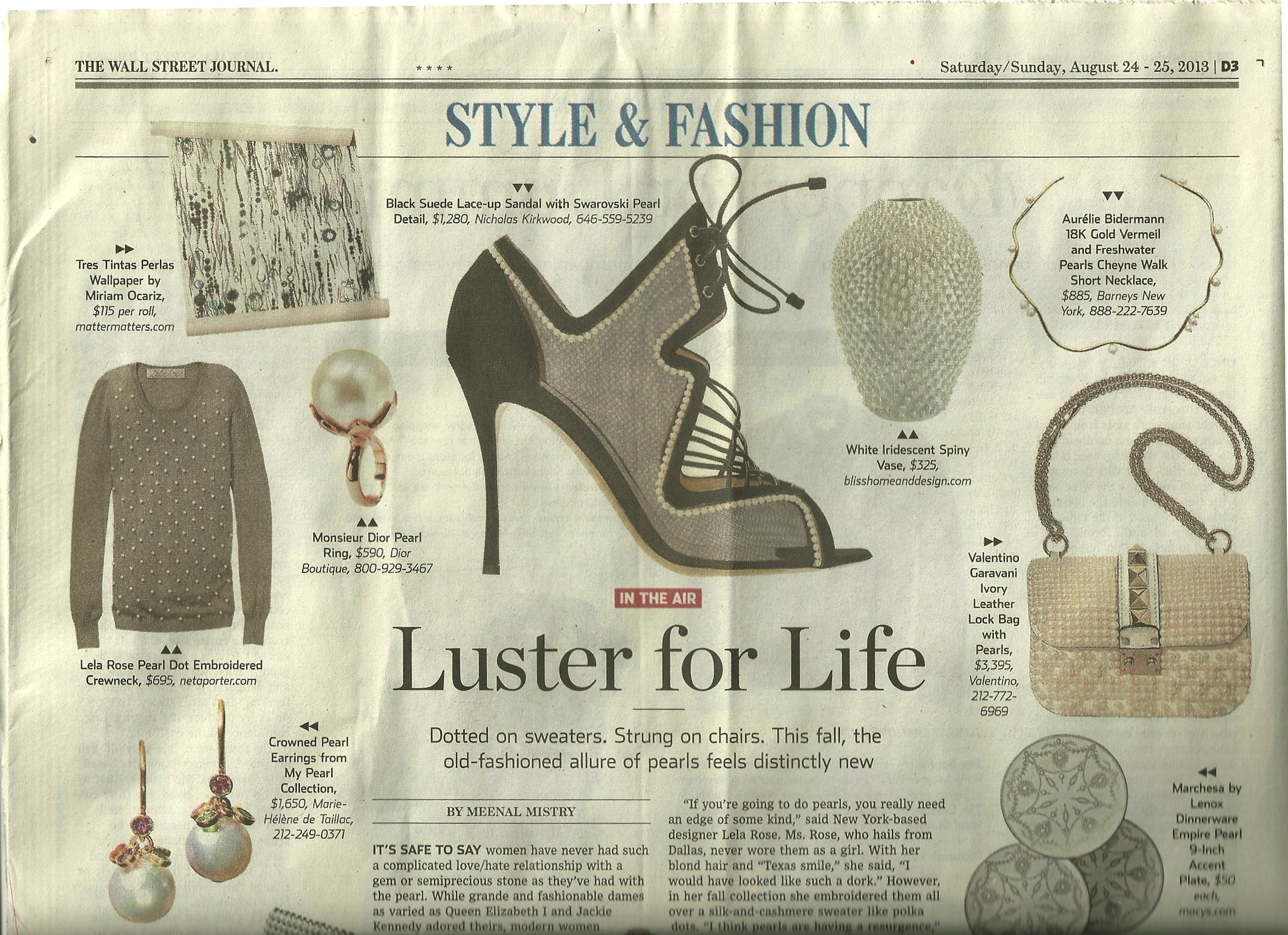
As luck would have it, shortly after I purchased the silk for this dress, an entire article in the Style & Fashion section of The Weekend Wall Street Journal of August 24 – 25 (2013) was devoted to “the old-fashioned allure of pearls…”  It seems that pearls are “showing up on everything from shoes to wallpaper to chairs”  – and to fabric, as evidenced by my Italian silk charmeuse.  I am just “old-fashioned” enough to think that pearls are never not in style, but I must admit that even I was smitten with the unusual and modern approach of this fabric design.

Pearls required - WSJ article

Pearls are showing up everywhere, it seems.

So – how would this modern fabric look, made up in a mid-1970s’ wrap dress pattern?   I thought it would work quite well. But getting there turned out to be challenge.  Although I was lacking the classic Diane von Furstenberg wrap dress pattern that I envisioned for this dress (blogged about here), I thought I could piece together a 1976 Simplicity version and a new Vogue wrap dress pattern to achieve my goal.

This is the dress I wanted to recreate...

This is the dress I wanted to recreate…

The Simplicity "version" of the Diane von Furstenberg wrap dress.

The Simplicity “version” of the Diane von Furstenberg wrap dress.

Vogue 8784 diagrams

Vogue 8784 diagrams

Here’s what I did:

1) I decided to use the princess-seamed bodice back from the new Vogue pattern.

2) I re-cut the collar and the cuffs from the Simplicity pattern so that the points on them would not so extreme.

3) Because the ties on the Simplicity pattern were not attached to the dress (the tie was just like a very long separate sash) I used the ties from this DvF pattern, and attached them to the side seams.

Pearls required - DvF pattern

4) The missing sleeve pattern piece in the Simplicity pattern meant that I had to use the sleeve from the new Vogue pattern and basically redraft it, with an elbow dart, and with cuffs.  I also used Simon Henry’s book The Little Black Dress: How to make the perfect one for you as a reference.

Pearls required - LBD book

This is the wrap LBD dress featured in the book.

5) I ended up making two complete muslins and re-stitching one of those muslins, before I had a workable pattern.  All of this seemed to take forever!

When I finally cut out the black silk organza underlining, I was ready for a celebration, but of course, that would have been premature.  Although the design in the fashion fabric really could not be “matched”, I still had to respect the placement of the “clusters” as they would relate to the bodice.  (I did not want “clusters” at the apex of the bust darts, for example.)   And I felt like the “clusters” should be placed at equal distances from each other over the expanse of the dress, if possible.  After determining all this and  cutting out the fashion fabric, I finally got to sewing, which included lots of basting, catch-stitching all the seams to the underlining, understitching the collar by hand (which worked beautifully, for which I was very grateful!), setting in the sleeves, making the lining, etc., etc.

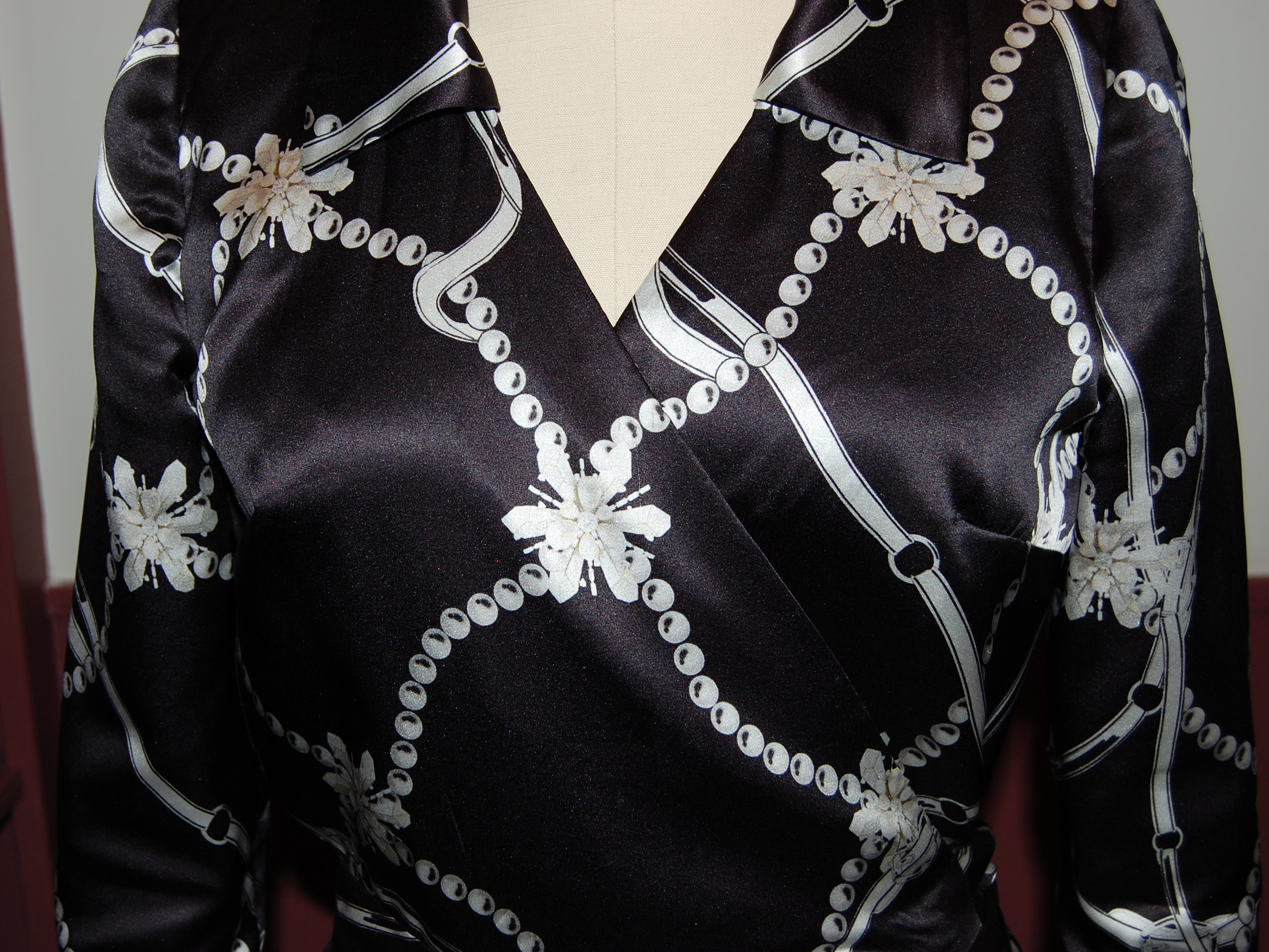
Here is the final placement of the fabric design on the front of the bodice . . .

Here is the final placement of the fabric design on the front of the bodice . . .

P is for pearl

. . . and here is the bodice back.

Understitching the collar created a slight under-curve which helps the collar lay flat.

Understitching the collar created a slight under-curve which helps the collar lay flat.

This boring view just shows the lining that was so tedious to attach!

This boring view just shows the lining that was so tedious to attach!

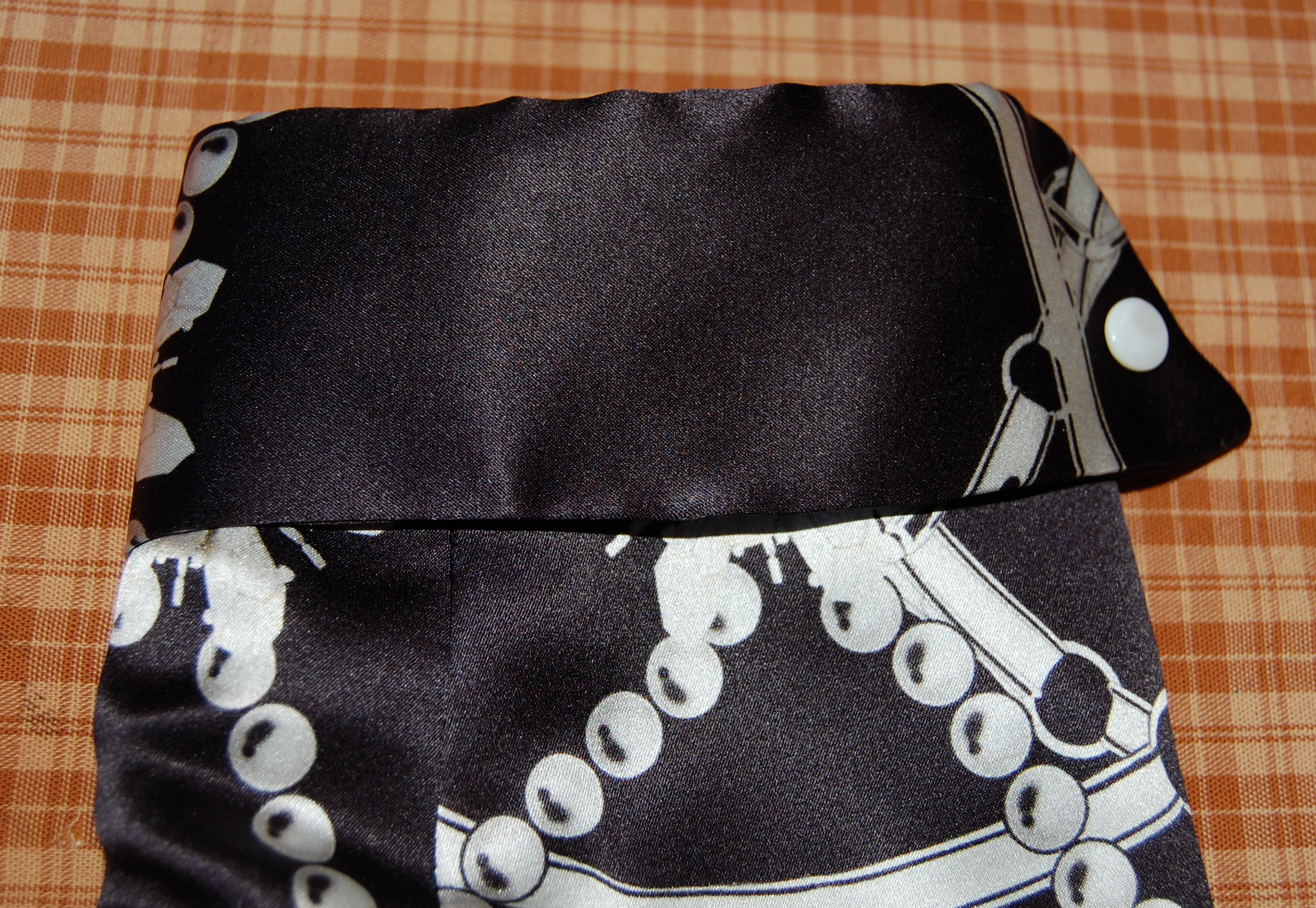
I made the mistake of making the cuffs before a final fitting of the sleeves. (I thought I was being smart and getting “prep” work done, but I just made more work for myself).  I ended up shortening the sleeves and enlargening the openings so that I would be able to push them up on my arms if I wanted to.  The cuffs I had made were not long enough to accommodate these adjustments, so back I went to cut and make new cuffs.  Fortunately I had just enough fabric to squeeze these out!

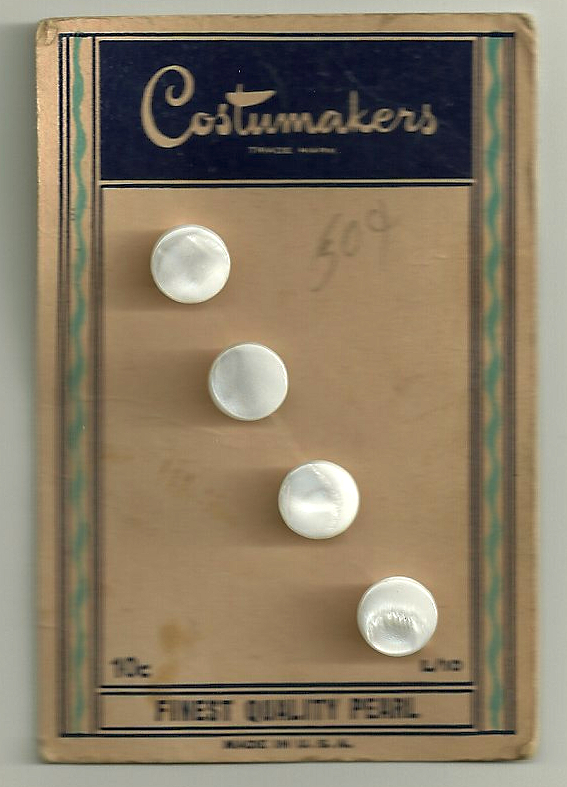
For buttons for the cuffs, I went to my button box and came up with this card:

The original price of these buttons was 10 cents.  I picked them up for 50 cents at some point.  It almost seemed a shame to cut them off of the card!

The original price of these buttons was 10 cents. I picked them up for 50 cents at some point. It almost seemed a shame to cut them off of the card!

Because I had reduced the points on the cuffs, I needed “not-too-big” buttons and these proved to be perfect, I thought, and in keeping with the “pearl” theme.

Here is one of the cuffs with buttons attached.

Here is one of the cuffs with buttons attached.

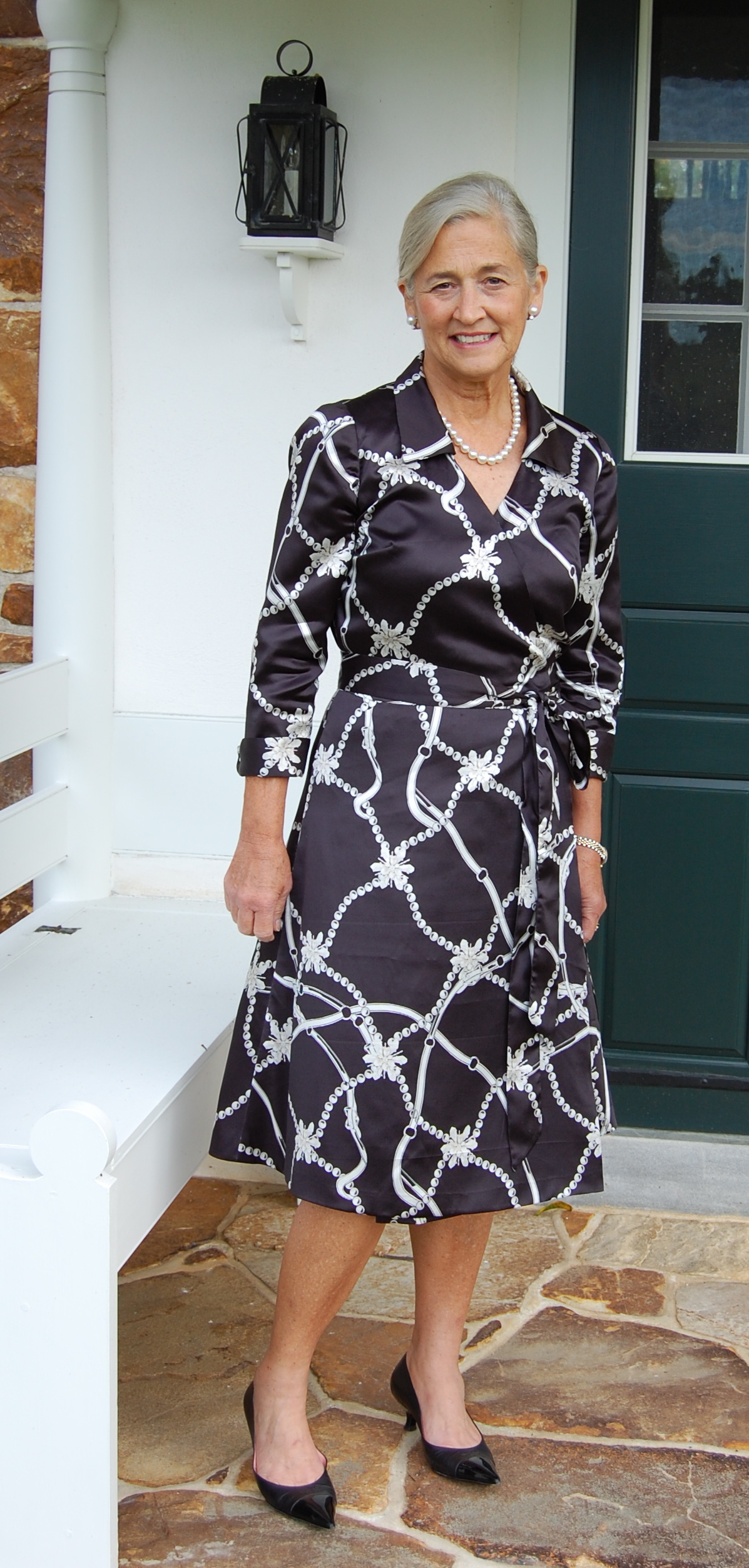
Working on the black fashion and lining fabrics was tedious.  And it seemed the more I worked on this dress, the more there was to do on it!  Kind of like eating a big bowl of pasta – the work seemed to multiply before my eyes.  Fast, easy, and jiffy this was not!  It’s times like this that being of a stubborn nature serves me well.  I persevered and got it done!  And even better, I am really happy with the results.

I will replace this photo with one of me in the dress as soon as I can!

Here is the dress on my new dress form . . .

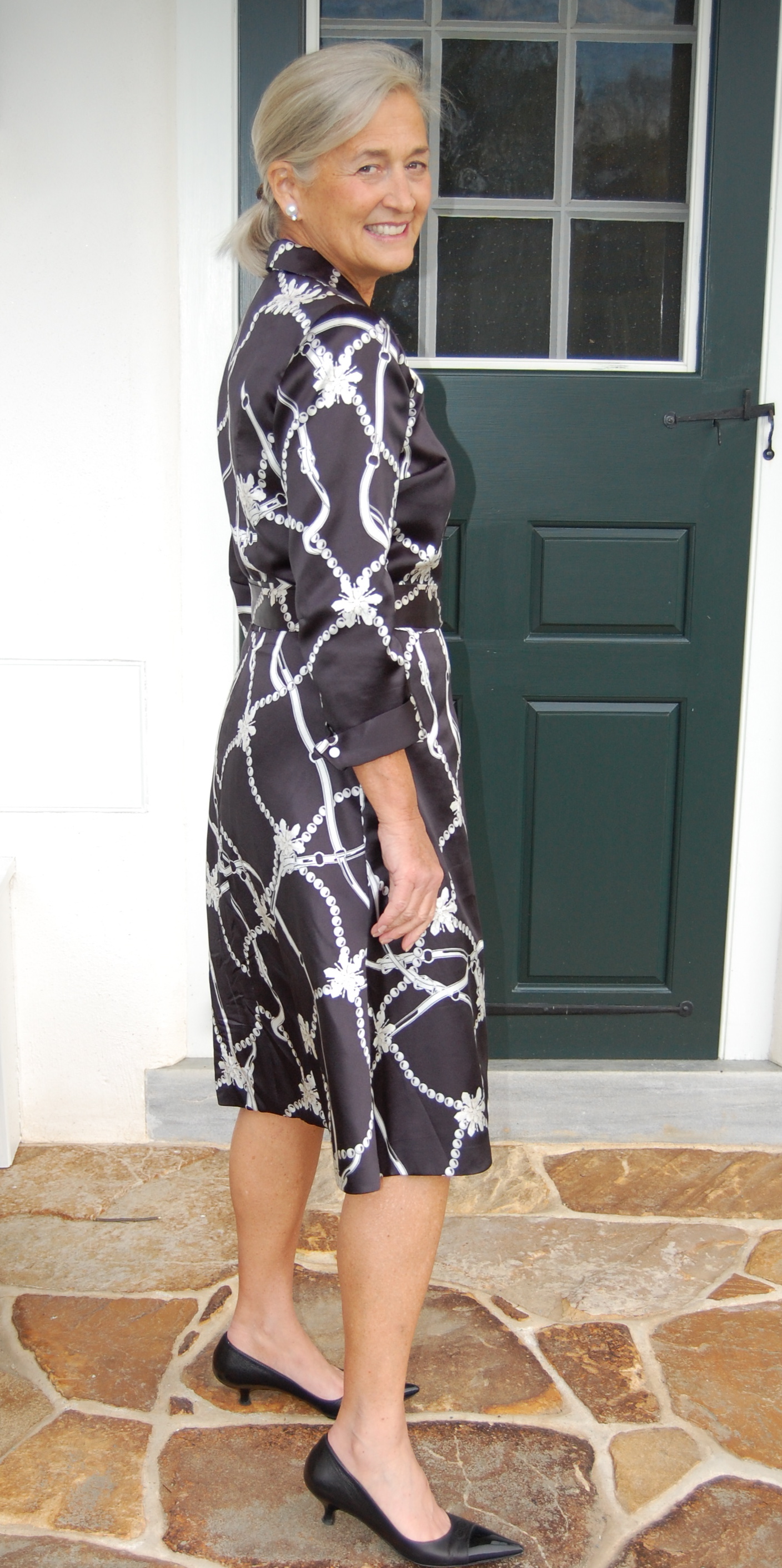
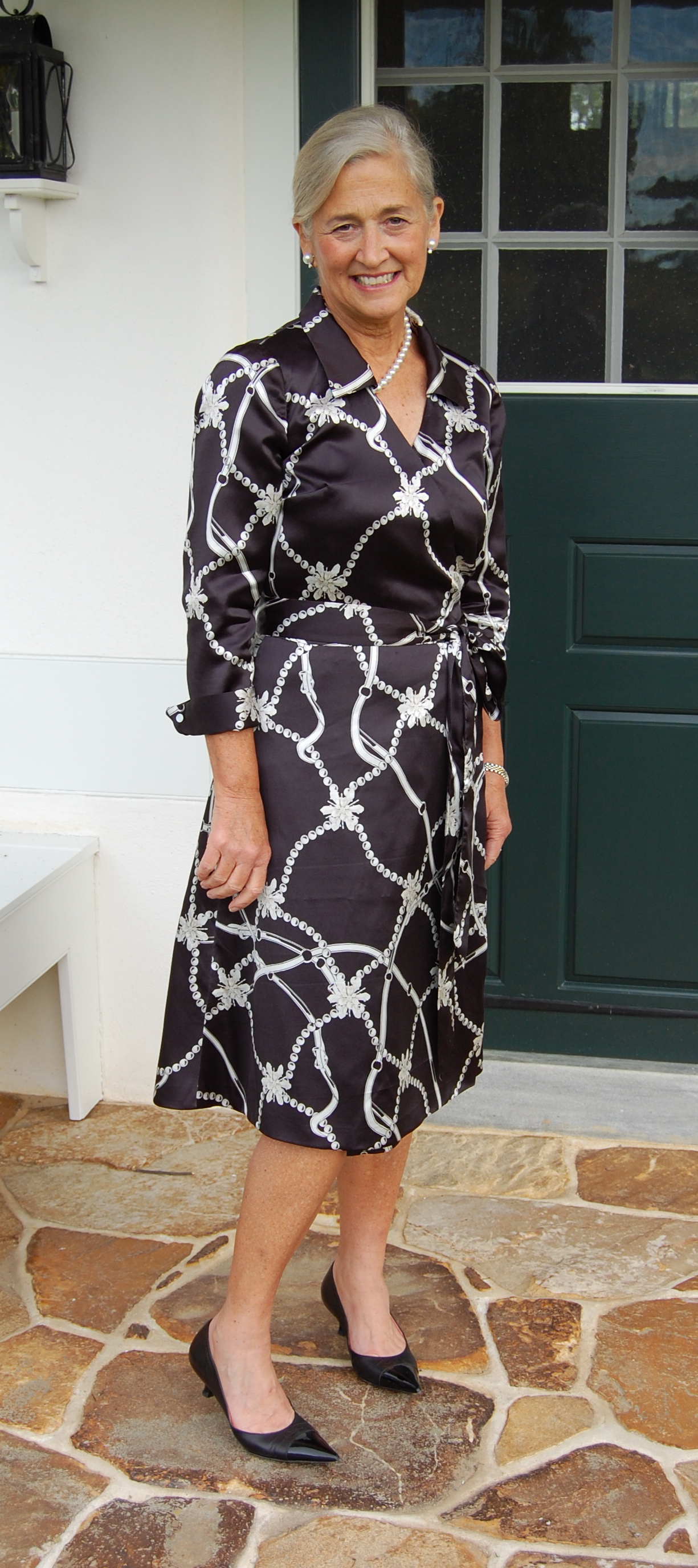
. . . and here it is on ME!

. . . and here it is on ME!

DSC_1022

DSC_1028

P is for pearl

Now – two more “P” words.  I have “P”romised myself that my next “P”roject will be simple.  Maybe a blouse – or even a blanket?

15 Comments

Filed under Buttons - choosing the right ones, couture construction, Little Black Dress, sewing in silk, Uncategorized, vintage buttons, vintage Vogue Designer patterns, vintage Vogue patterns from the 1970s, Wrap dresses

Wrapping My Mind Around a New Dress for Fall

I am not sure why, but I have been obsessed with wrap dresses lately.  I think it began in May when I wore the dress I made last summer from a mid-‘70s Vogue Diane von Furstenberg pattern.   It seemed to make a hit whenever I had it on – and there is nothing like a compliment to make one try for a repeat!  I just needed to find the perfect fabric – and another perfect pattern.

I made the sleeveless version of this dress in a red and white print.

I made the sleeveless version of this dress in a red and white print.

The perfect fabric turned out to be the easy part of the equation.  One of my classmates in Susan Khalje’s Classic French Jacket Class chose this silk charmeuse for her jacket lining:

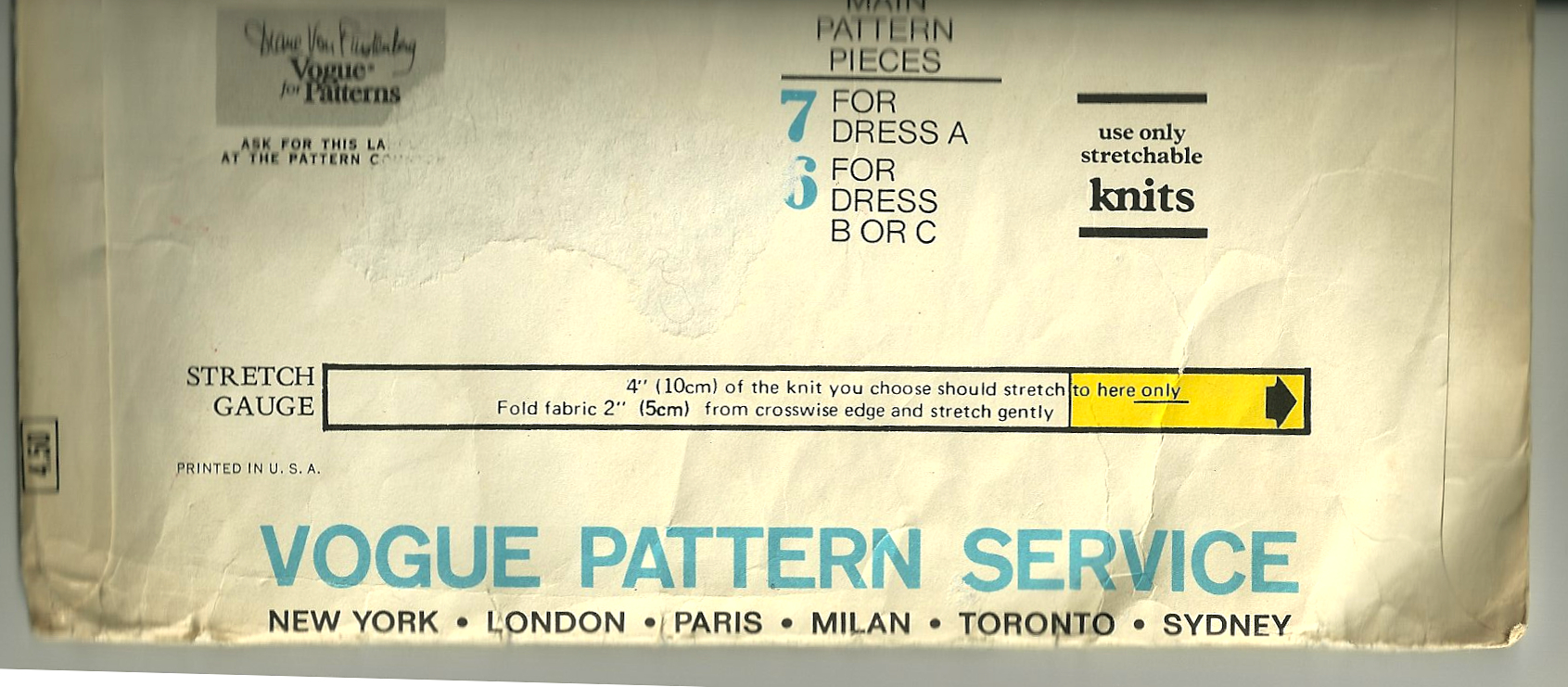
Wrap dress - 9 - fabric I loved the design so much that I asked for a swatch of it while I was at Mendel Goldberg Fabrics in NYC with my classmates.  Well, you can guess the end of this part of the story.  A few weeks after arriving home, I called up Alice at Mendel Goldberg and ordered some yardage.  I could picture this fabric as a wrap dress with ¾ or bracelet-length sleeves.  However, it is a woven fabric (of course), and even though it does have a slight stretch to it, those vintage Diane von Furstenberg patterns require “stretchable knits”, even including a stretch gauge on the pattern envelopes to ensure success.

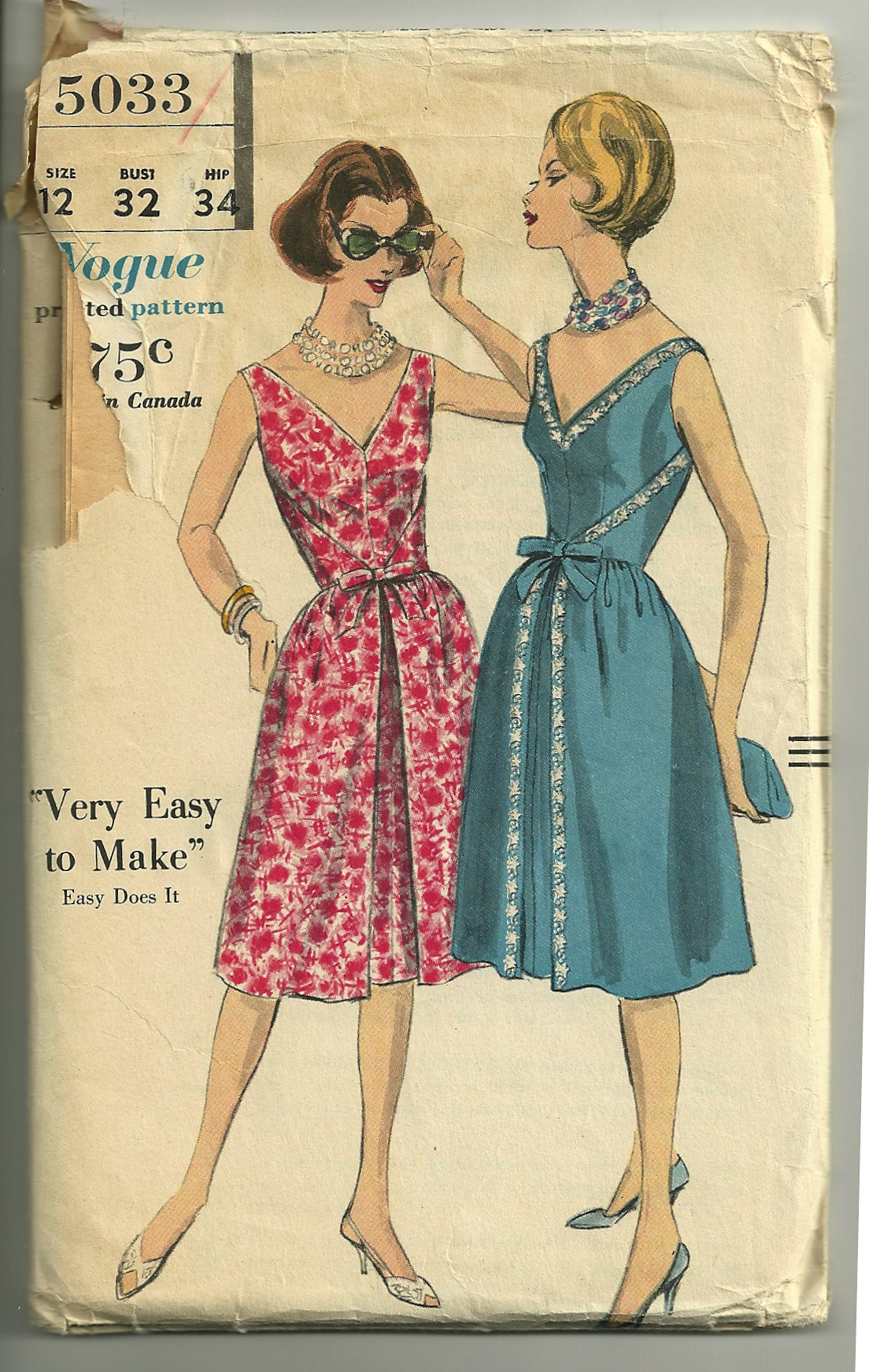
Wrap dress - 8 - stretch gauge Out of curiosity I went through my collection of vintage patterns to see what other “wrap” dresses I could find, and although none of these three were quite the look I wanted, I was struck by the variety of wrap dress patterns available, obviously some long before Diane von Furstenberg made them so popular.

This pattern is copyright 1960.  "slightly gathered skirt back of the sleeveless, easy-does-it dress wraps around plain front to fasten at waist-line with tied belt."

This pattern is copyright 1960. “slightly gathered skirt back of the sleeveless, easy-does-it dress wraps around plain front to fasten at waist-line with tied belt.”

A thumbnail diagram on the back of the pattern envelope.  "Dress opens flat for ironing."

A thumbnail diagram on the back of the pattern envelope. “Dress opens flat for ironing.”

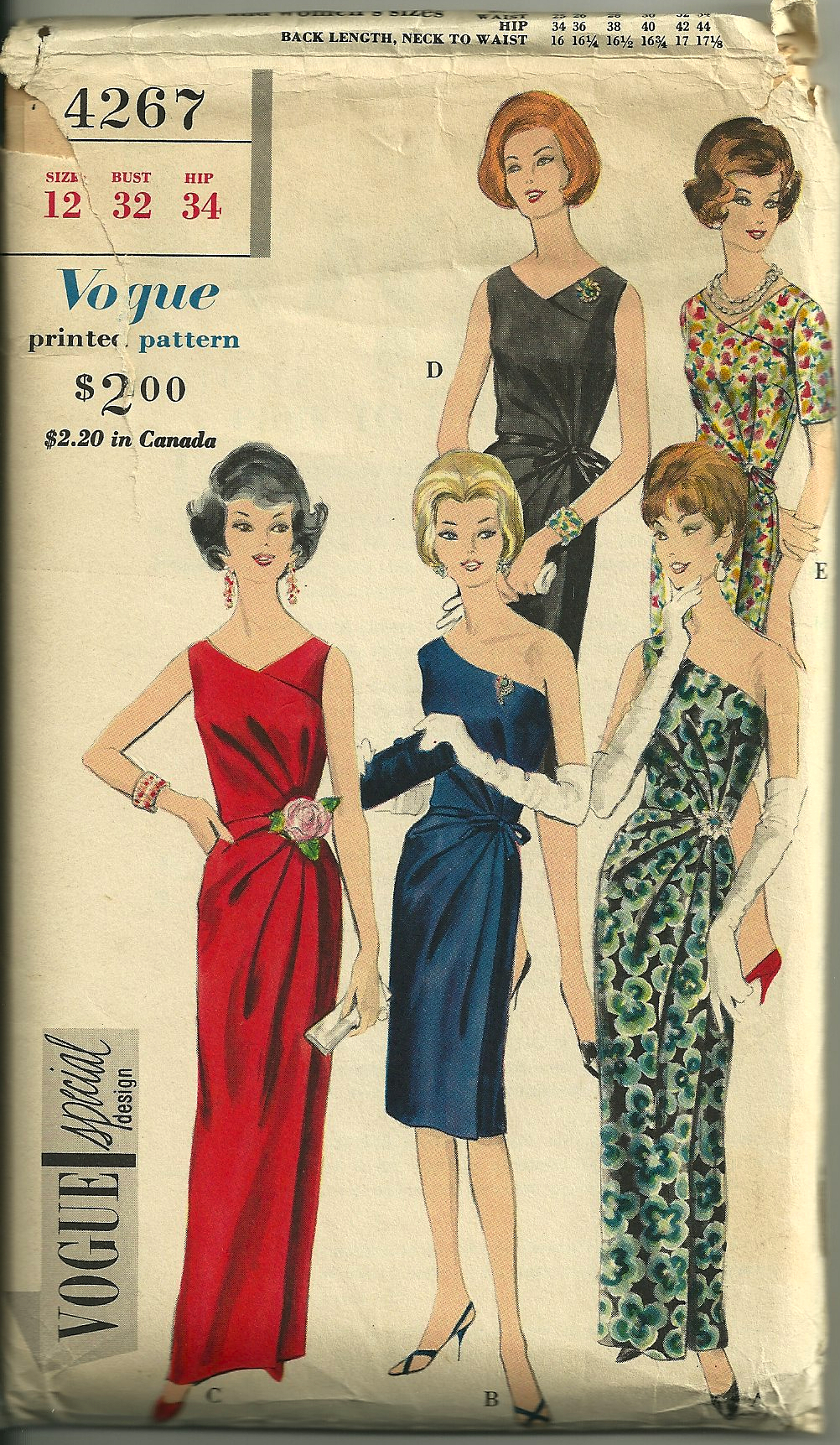
Here is a slightly more elegant wrap dress, also from the early ’60s:

Actually, just the skirt is a wrap on this dress, which has so many different looks, all of them quite stunning.

Actually, just the skirt is a wrap on this dress, which has so many different looks, all of them quite stunning.

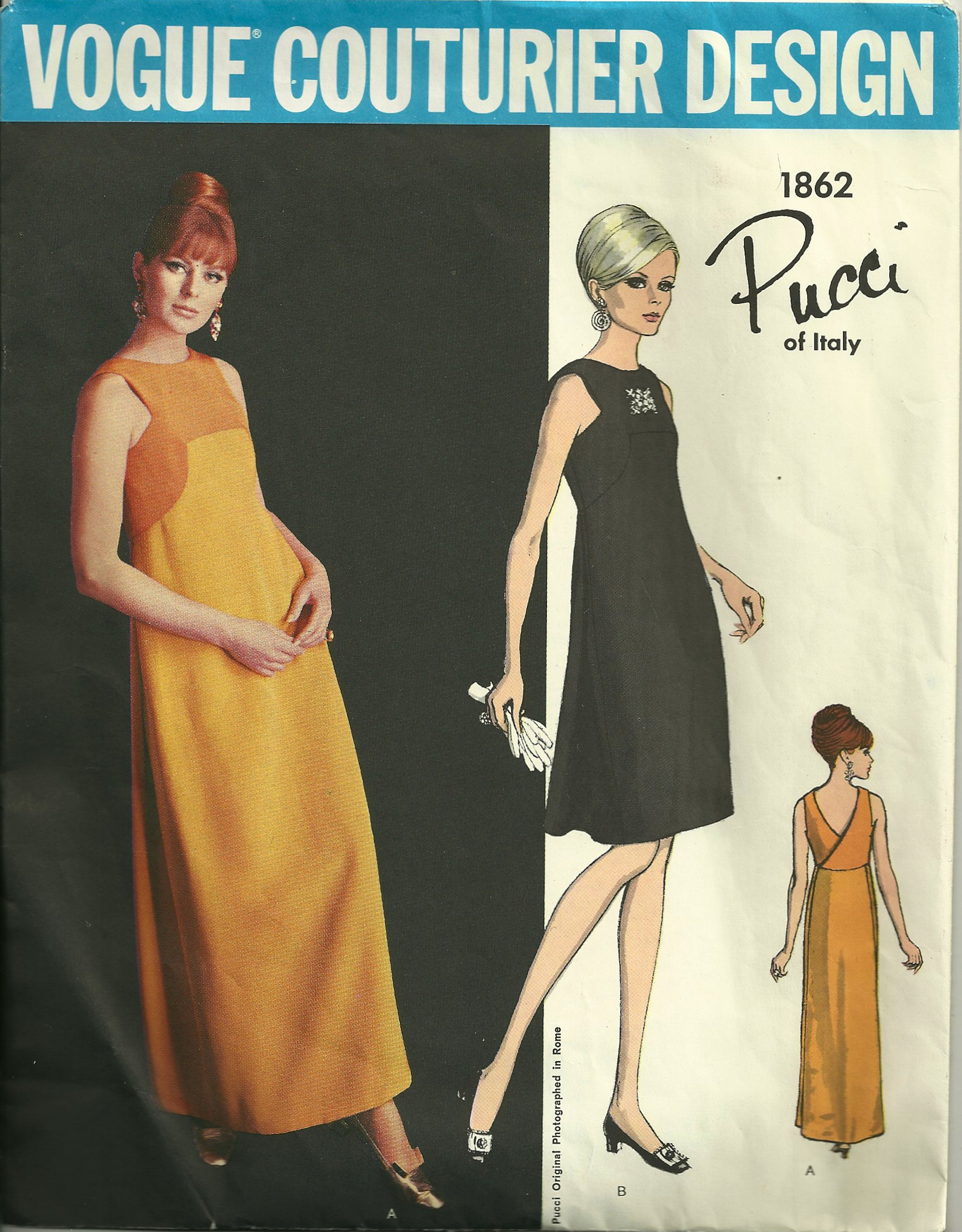
Finally this Pucci design, which is another elegant wrap dress:

"Slim, high fitted dress in evening r street length has wrapped back closing, soft side back folds."

“Slim, high fitted dress in evening or street length has wrapped back closing, soft side back folds.”

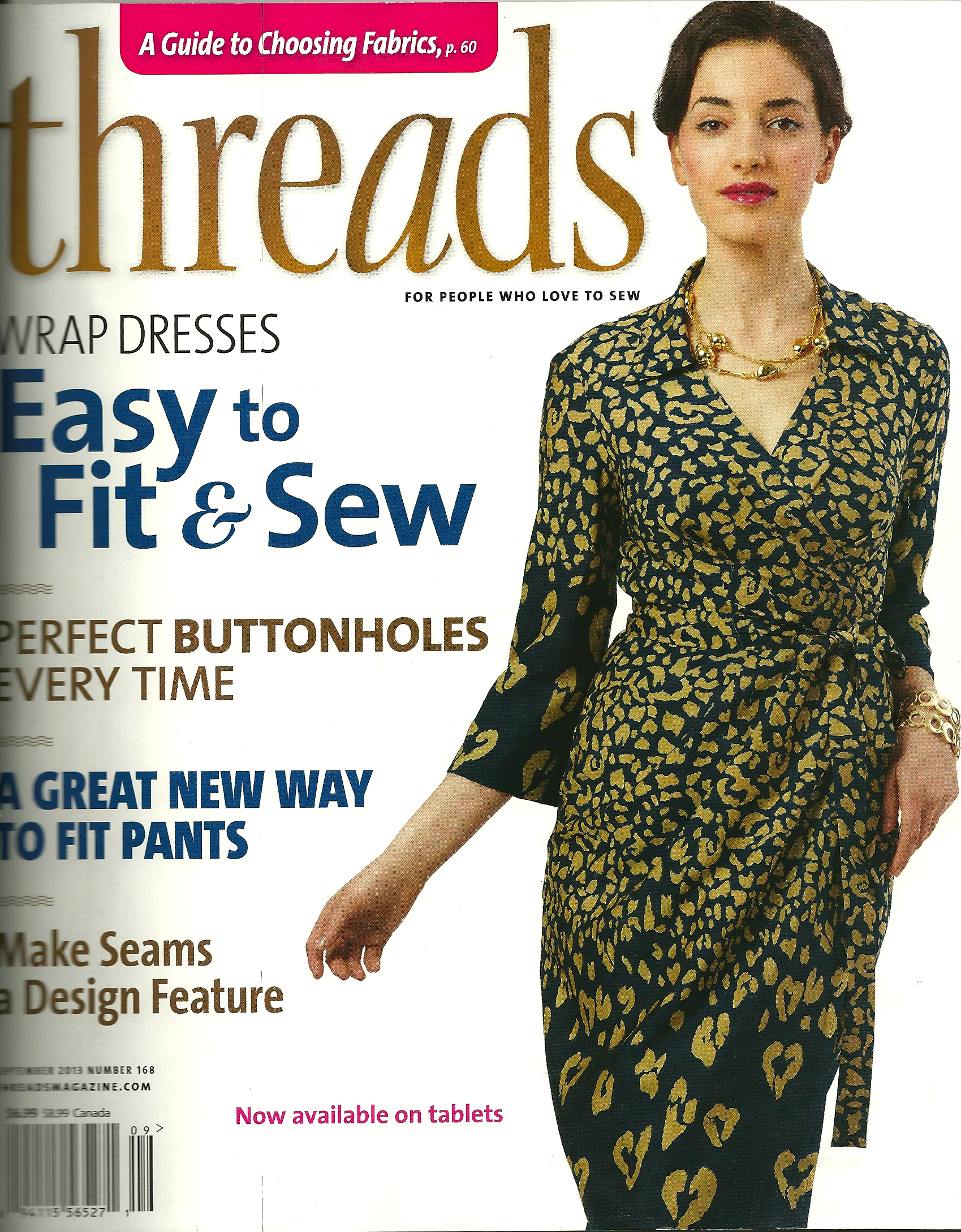
It was about this time that the September issue of Threads magazine arrived in my mailbox.  Now my obsession was in full force, as the main feature article was on Wrap Dresses: Easy to Fit and Sew.

Wrap dress I liked the dress featured on the cover – which happens to be a new Vogue pattern (V8784).  I also liked the fact that it does not require a knit fabric, and that it is to be lined (I could make it using couture techniques).  I did not like the sleeves, however – too baggy and shapeless.

I could not get around the idea that the look I thought I wanted was this D v F dress, featured on the front cover of Vogue Patterns for September/October 1976:

Wrap dress - 6 DvF cover

This presented two major problems, however,  First, I do not own this vintage pattern (yet), which commands high prices when it comes on the market.  And second, even if I did own it, my woven silk fabric would not be appropriate to use for it.

Well, this second part of the equation was beginning to be a problem.  Then, quite by luck, I stumbled on a Simplicity pattern from 1976 in an Etsy store.  The pattern  is obviously a knock-off of the classic Diane von Furstenberg dress I like so much.  However, it is for woven fabrics!  It was in my size, which I took as a “sign” that I was supposed to buy it – which I did.  I thought my search was over.  With a few minor adjustments to the “extreme” points on the collar and the cuffs, I felt sure this pattern would work.

I really don't think there is anything "JIffy" about this pattern . . .

I really don’t think there is anything “JIffy” about this pattern . . .

A few weeks passed as life took me in other directions and with other projects. Then, finally, I eagerly started on the muslin for this dress.   I was eager, that is, until I realized that the pattern piece for the sleeve is missing –  and the pattern is going to require many more alterations than I usually have.

This is not fun.

There – I feel better now that I have said that!  So my quest for the perfect pattern has been a challenge, but it’s not Fall yet.  By hook or by crook, I’ll be wearing a new silk wrap dress before the trees gently release their leaves into the cool, crisp autumn air.


15 Comments

Filed under Uncategorized, vintage Vogue Designer patterns, vintage Vogue patterns from the 1960s, vintage Vogue patterns from the 1970s, Vogue patterns

A Simple Sheath?

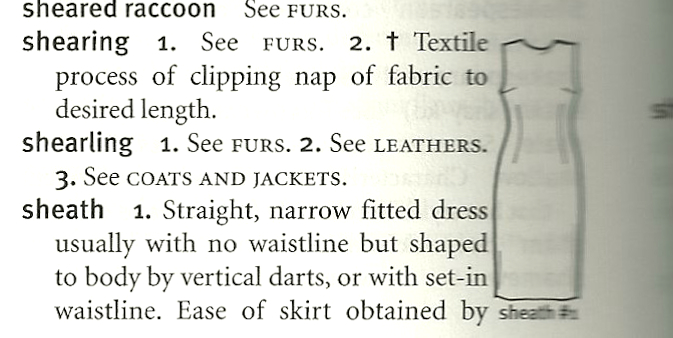
One of the most enduring dress styles in the last 60 years is undoubtably the classic sheath.  According to the definition in Fairchild’s Dictionary of Fashion, a sheath can be one of two constructions:  without a set-in waist or with a set-in waist.  In either case, the silhouette is straight, narrow, and fitted, “shaped to body with vertical darts”, with ease of movement facilitated by a slash at back or an inverted pleat.  “Both styles were popular in 1950s and early 1960s.  Revived periodically.”

Fairchild's illustration of a sheath dress.  copyright 2003, The Fairchild Dictionary of Fashion 3rd Edition, Fairchild Publications, Inc., New York.

Fairchild’s illustration of a sheath dress. copyright 2003, The Fairchild Dictionary of Fashion 3rd Edition, Fairchild Publications, Inc., New York.

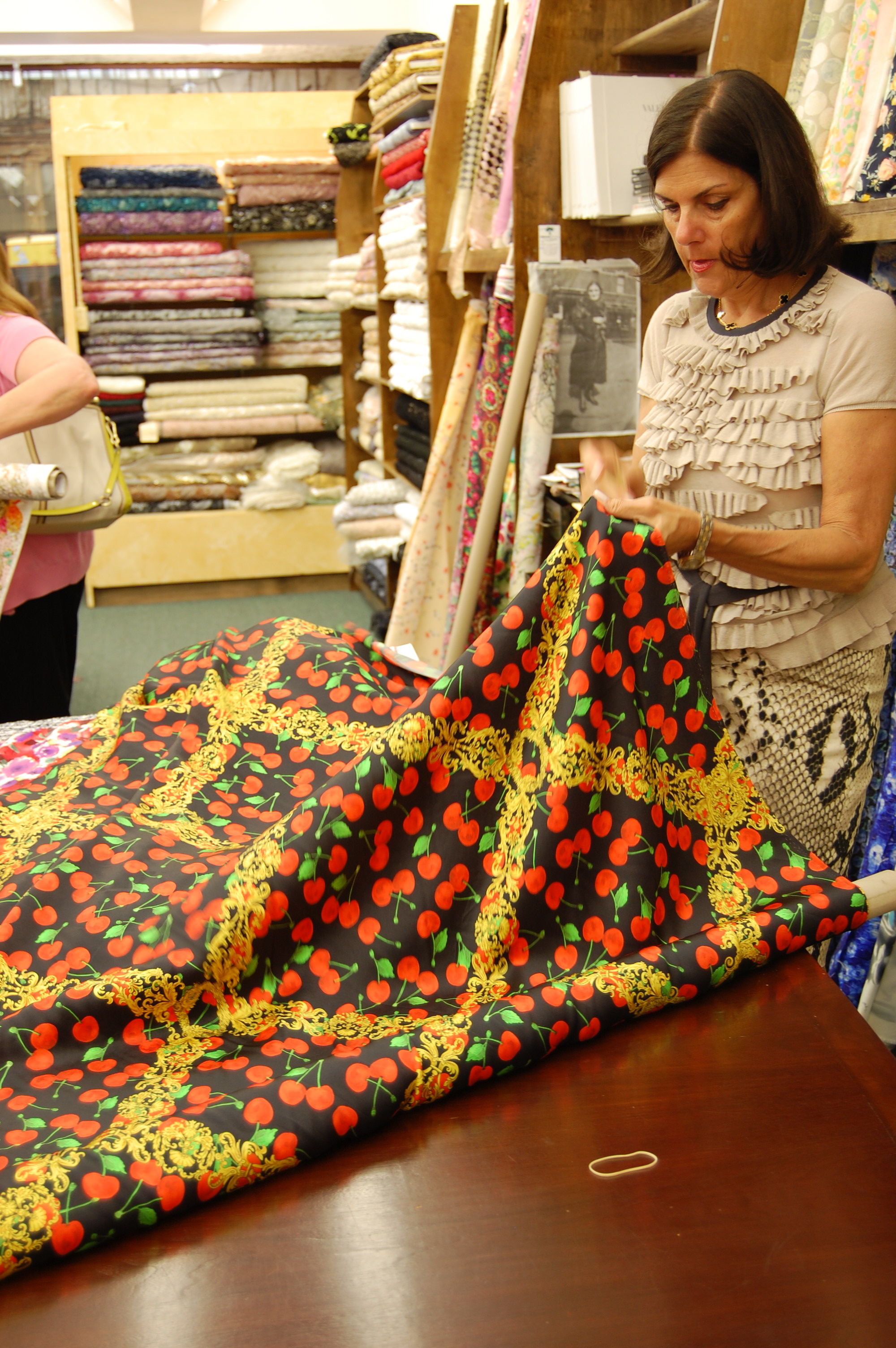
It doesn’t take very long looking at current fashion magazines and websites to see that the sheath dress is enjoying one of those revivals right now.  And why not?  It is an infinitely versatile style, going from casual to dressy just by choice of fabric.  Earlier in the Summer when I was shopping at Mendel Goldberg Fabrics in NYC with Susan Khalje’s  “Classic French Jacket” class, I succumbed to purchasing 1½ yards extra of my lining fabric, with the express intention of making a sheath dress out of it.  The fabric is definitely a demonstrative print, so I thought the simpler the style of dress, the better.

My lining and dress fabric, still on the bolt.

My lining and dress fabric, still on the bolt.

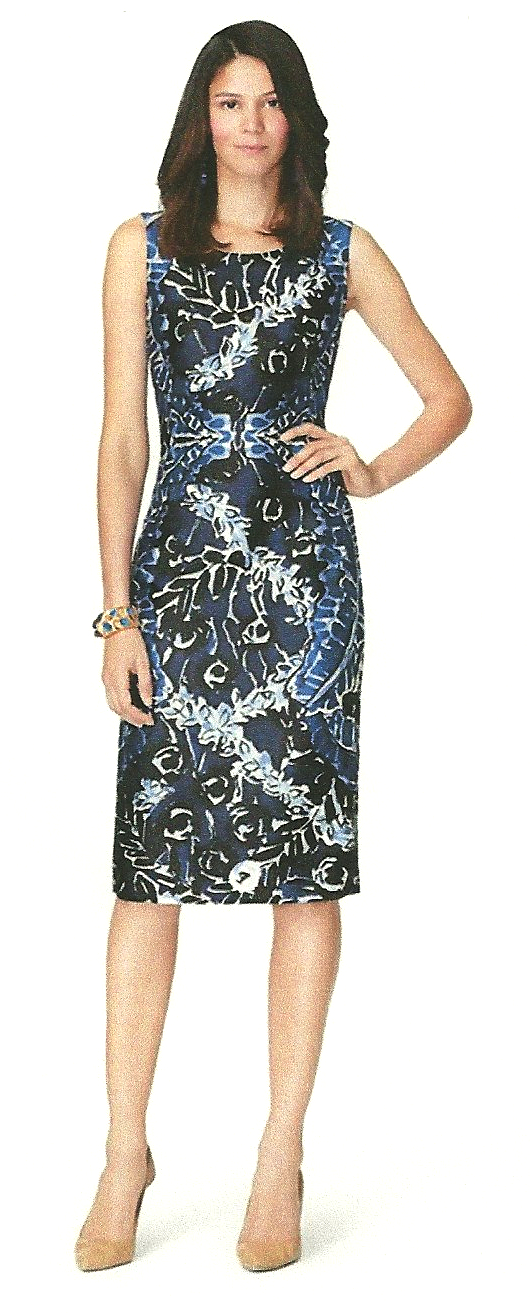
I have to admit I had a few moments when I wondered if that fabric, which I loved as the lining in my jacket, might not be a bit too much for a dress.  Well, too late for any misgivings – this dress was going to happen!  Then suddenly I started seeing photos of more and more sheath dresses, many of them made out of very bold and colorful fabrics.  Two fashion websites I often visit for inspiration and ogling each featured such dresses:

This dress can be found on the Lee Anderson Couture website.

This dress can be found on the Lee Anderson Couture website.

This dress is from Oscar De la Renta's Ready-to-wear line.

This dress is from Oscar De la Renta’s Ready-to-wear line.

Encouraged with this affirmation of my idea, I chose my pattern, ordered china silk for the lining (I already had black organza underlining), purchased the zipper and proceeded to plan my dress.

I decided to adapt this simple pattern, using the third view without the neck and hem bands.

I decided to adapt this simple pattern, using view A (on the right) without the neck and hem bands.

First, of course, I once again sewed up the muslin I had already made for this pattern earlier in the summer.  Here are the changes I made:

1) I sewed the neckband onto the body of the dress and treated it all as one.

2) I eliminated the facings, as I was making this dress with couture techniques.

3) I tweaked the fit a little more, to make it more fitted than my earlier dress (which was belted and needed a little more ease).

4) I adjusted the shoulder to be cut a little higher on the arm.

5) I dipped the neckline a little bit, to match the neckline on my jacket.

6) I added a slit in the back seam for ease of movement.

While I love the look, sheen and feel of silk charmeuse, I don’t think it is the easiest fabric to work with.  I thought I could make my job easier if, when laying out the fabric for pattern (muslin) placement and cutting, I was able to control the slipperiness of it somehow.  I decided to use  half of my dining room table, covered with heavy drapery flannel (which is what I use under tablecloths for cushioning).   The flannel “anchored” it beautifully.

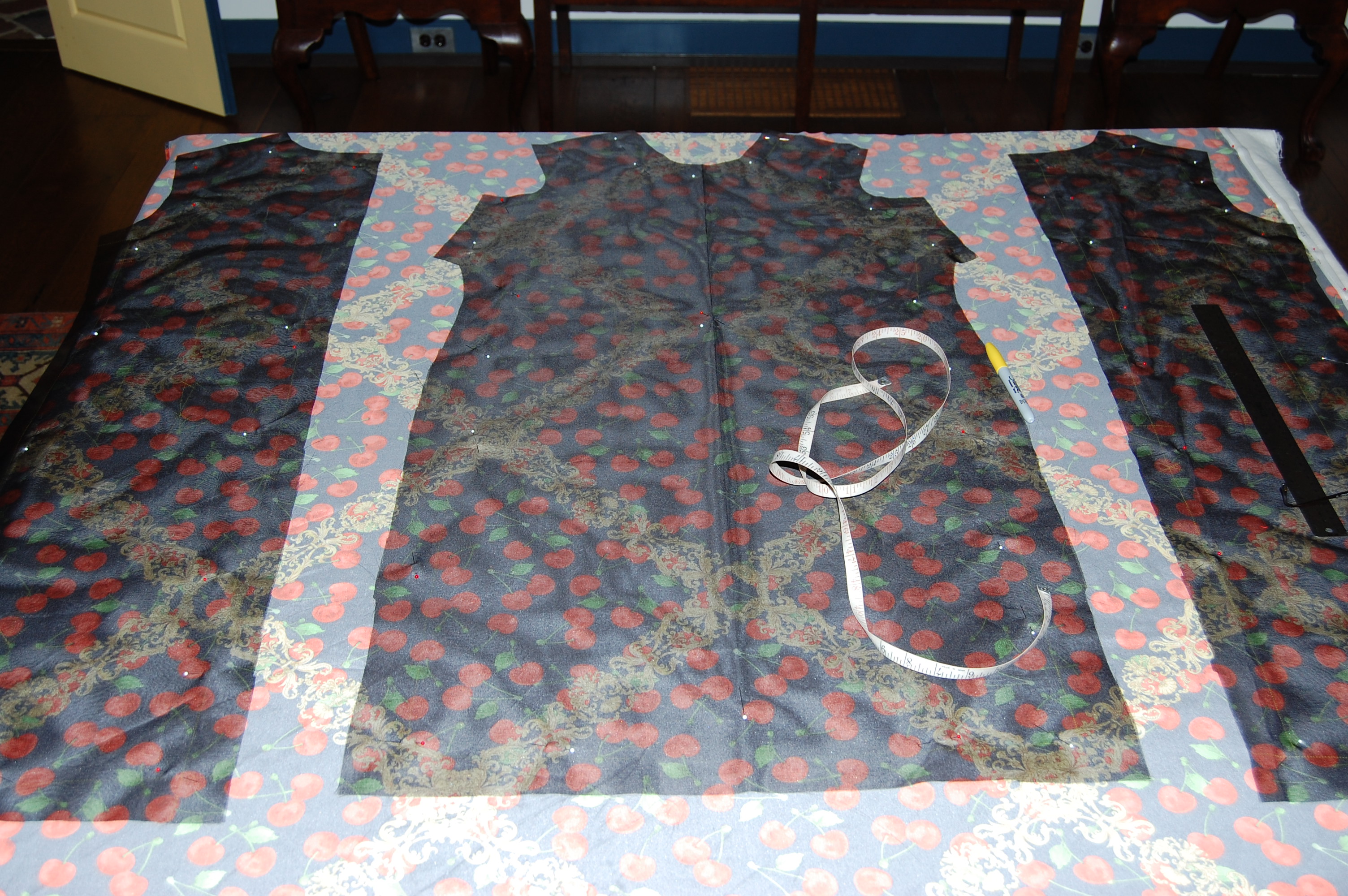
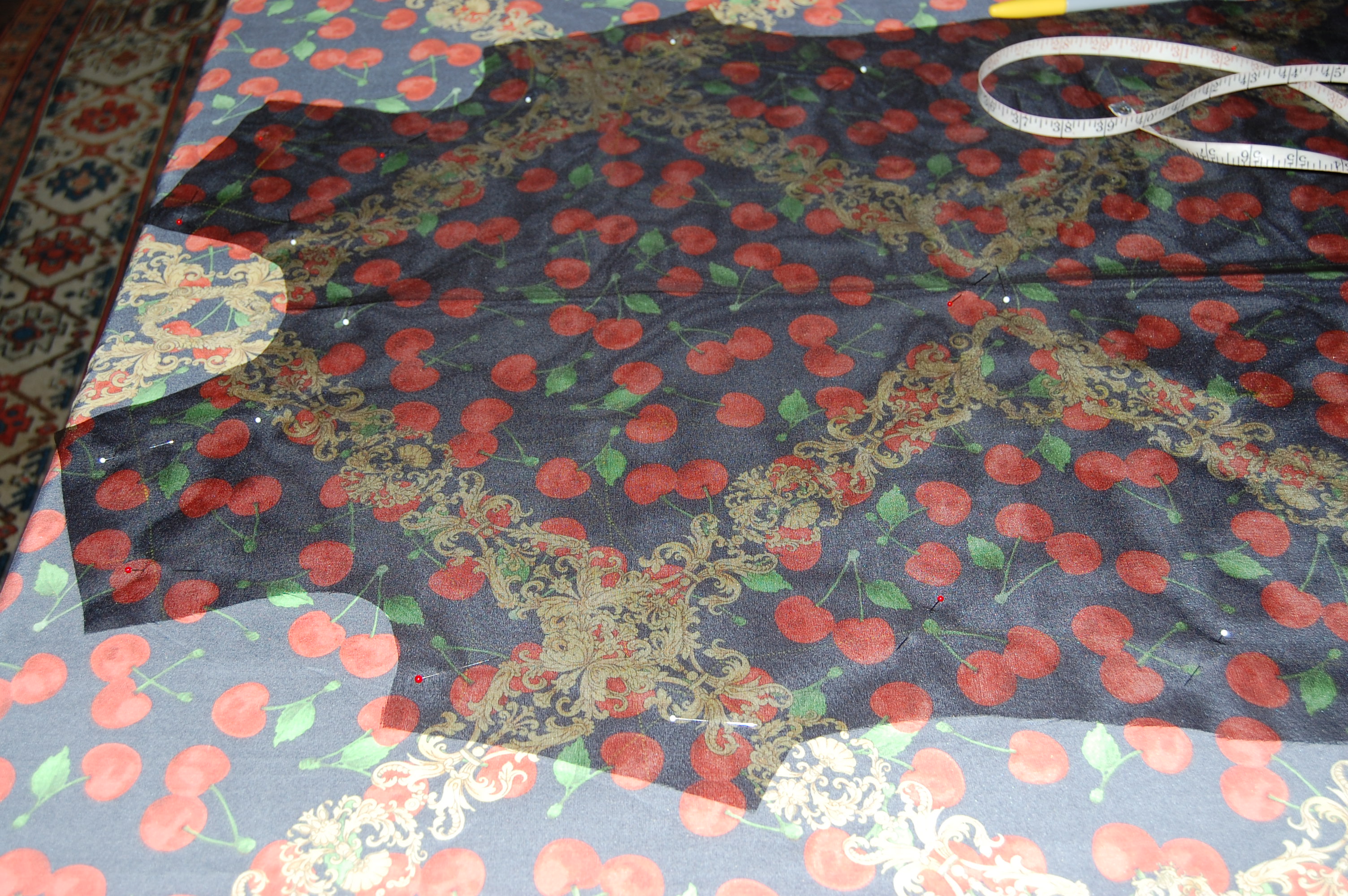
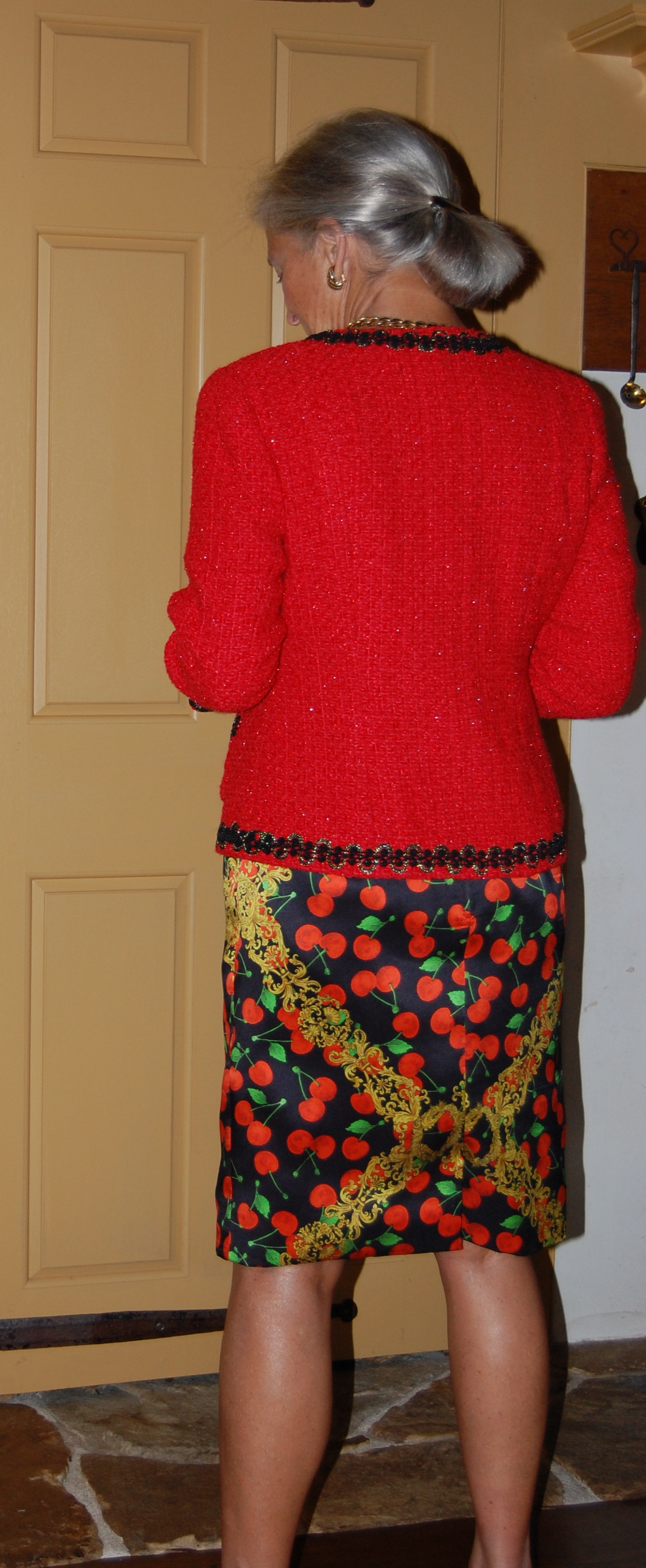
Then I was faced with a design element quandary.  Before I cut out my jacket lining in Susan Khalje’s class, she and I had looked at the fabric with my dress in mind –and had determined that one of the gold “cross” lines in the design should hit at about my breastbone.  However, once I had the fabric remaining from my jacket laid out, I realized that was not going to work.  I tried every which way, and, with the fabric I had available to me, I simply could not match up the pattern in the fabric across the front and two side backs of the pattern and still “cross” my breastbone.  It took a couple of hours, but I finally was able to come up with a new plan – this one to have one of the “cross” details at my waist.  This allowed me to have a shoulder detail I really liked, a black field  (with cherries) at my neckline, and the slimming effect of a “cinched” waist, effected entirely by the design in the fabric!

Here are the organza underlining pieces laid out on the fabric.

Here are the organza underlining pieces laid out on the fabric.

This photo shows exactly how I determined where to position the design in the fabric.

This photo shows exactly how I determined where to position the design in the fabric.

Then I was off and sewing!

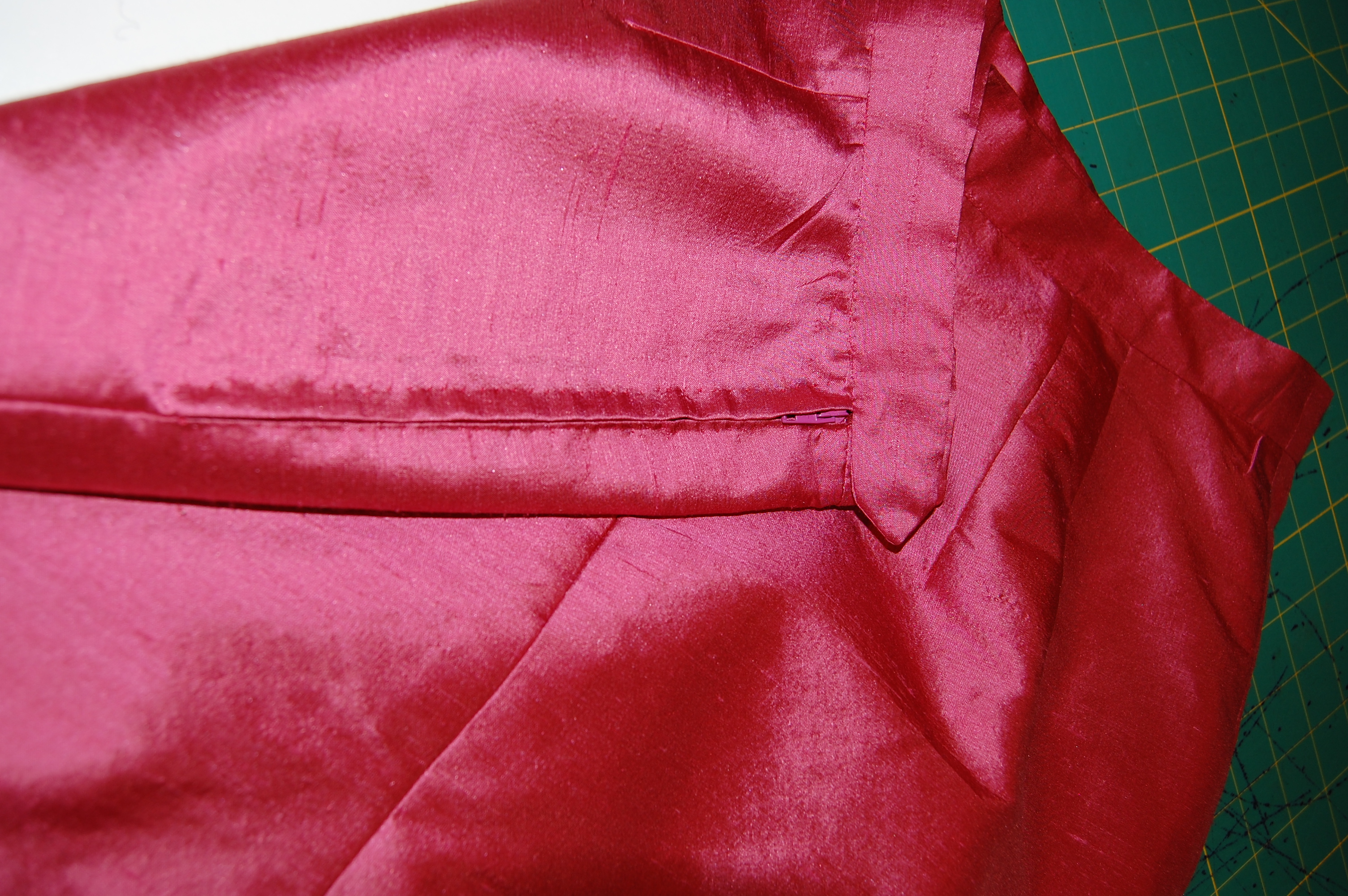
Zipper and neck details.

Zipper and neck details.

I stabilized the shoulders with a bit of selvedge from the organza underlining.

I stabilized the shoulders with a bit of selvedge from the organza underlining.

A close-up of the hand-picked zipper.

A close-up of the hand-picked zipper.

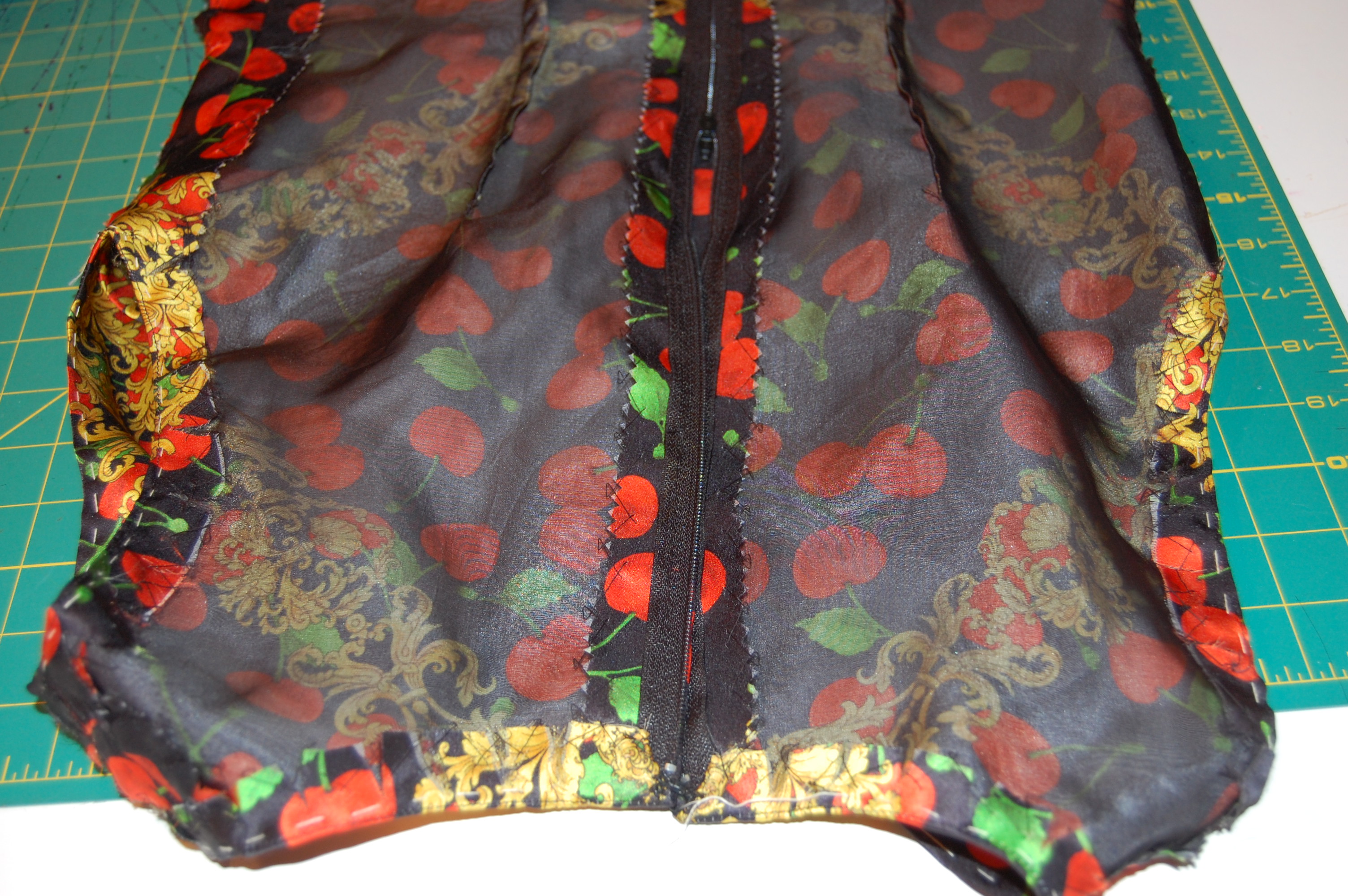
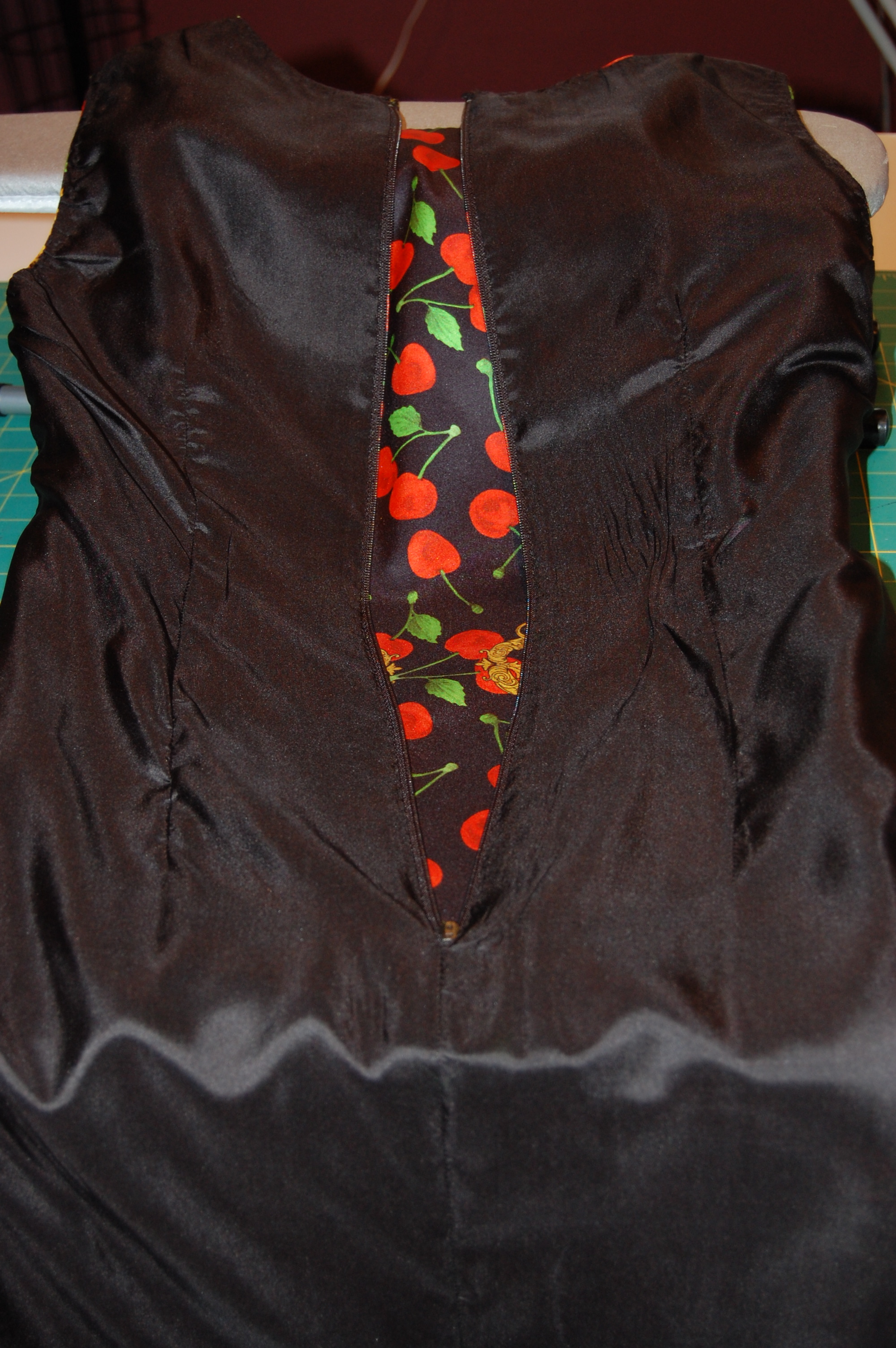
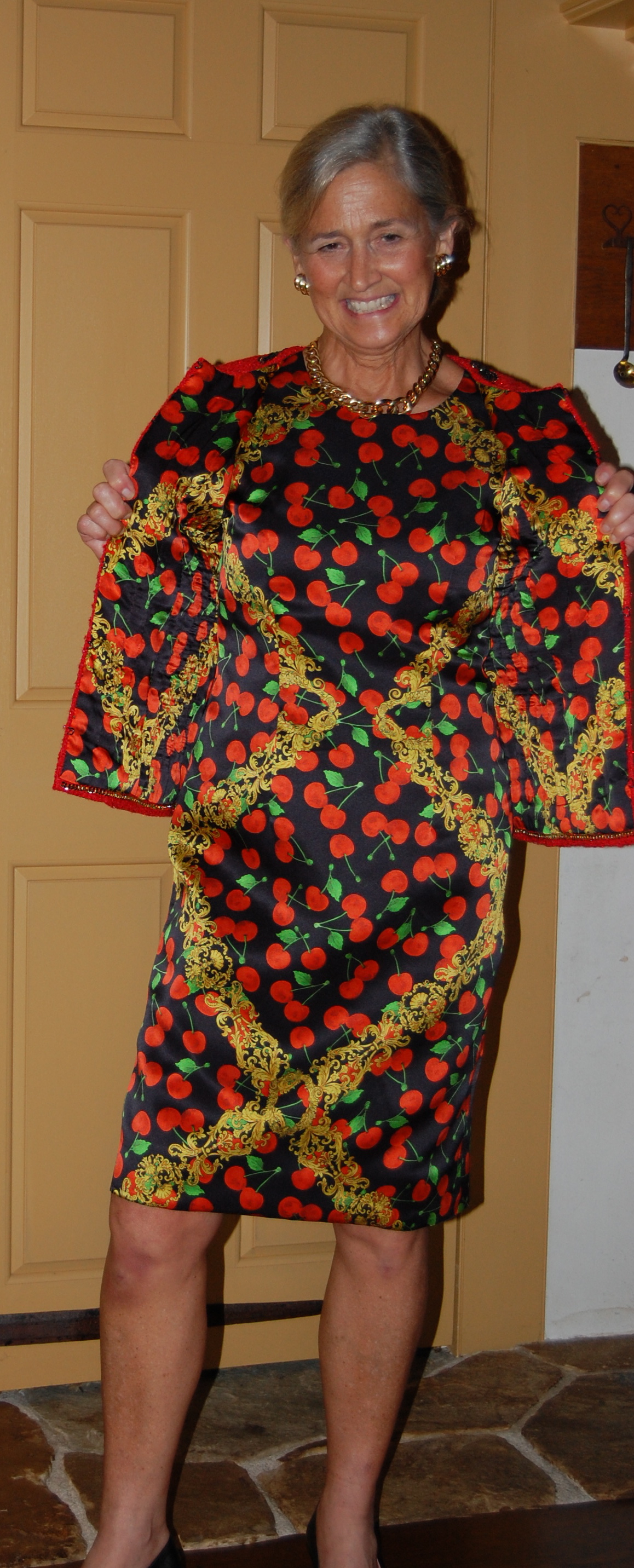
The dress turned inside out!

The dress turned inside out.

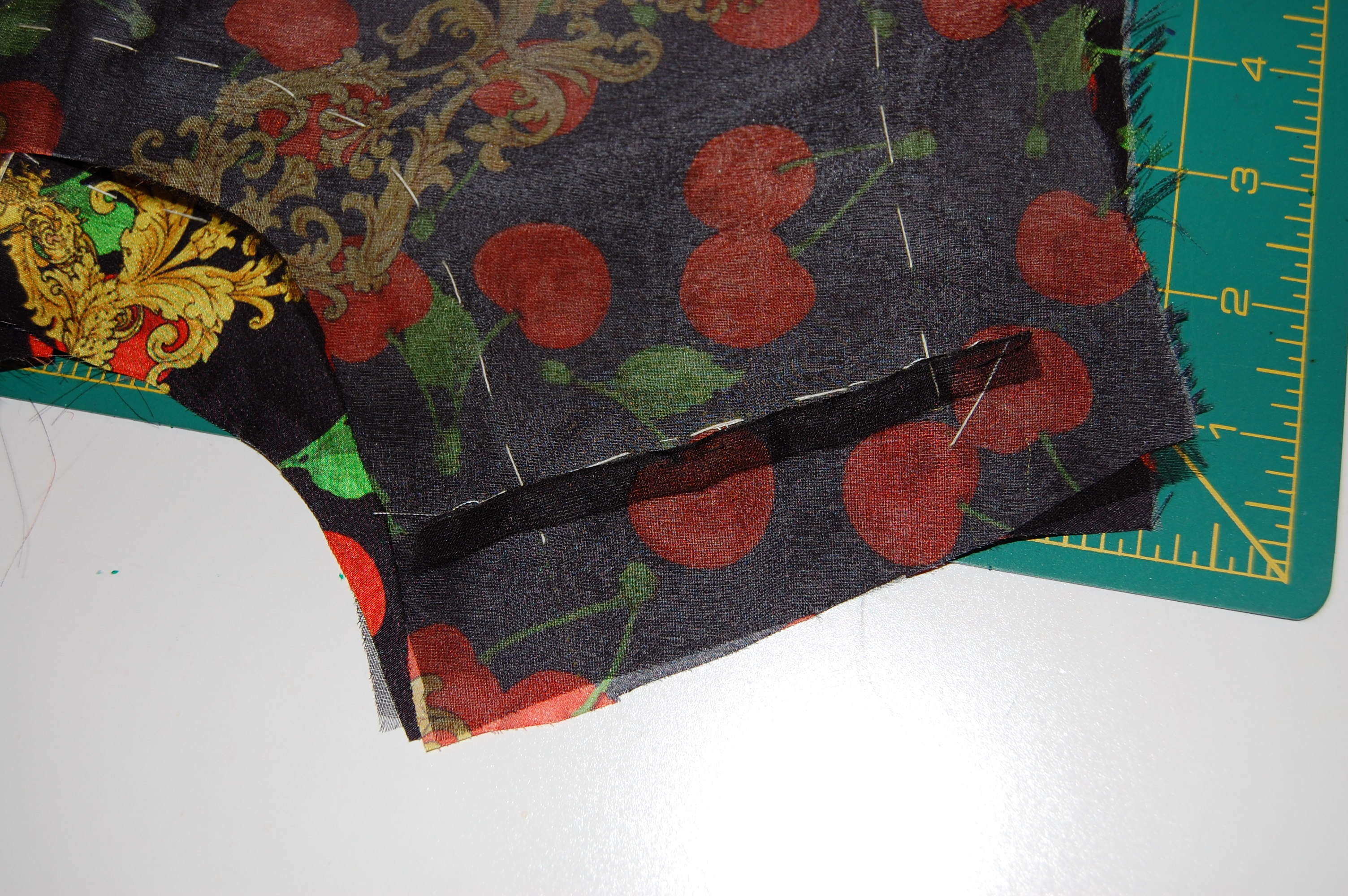
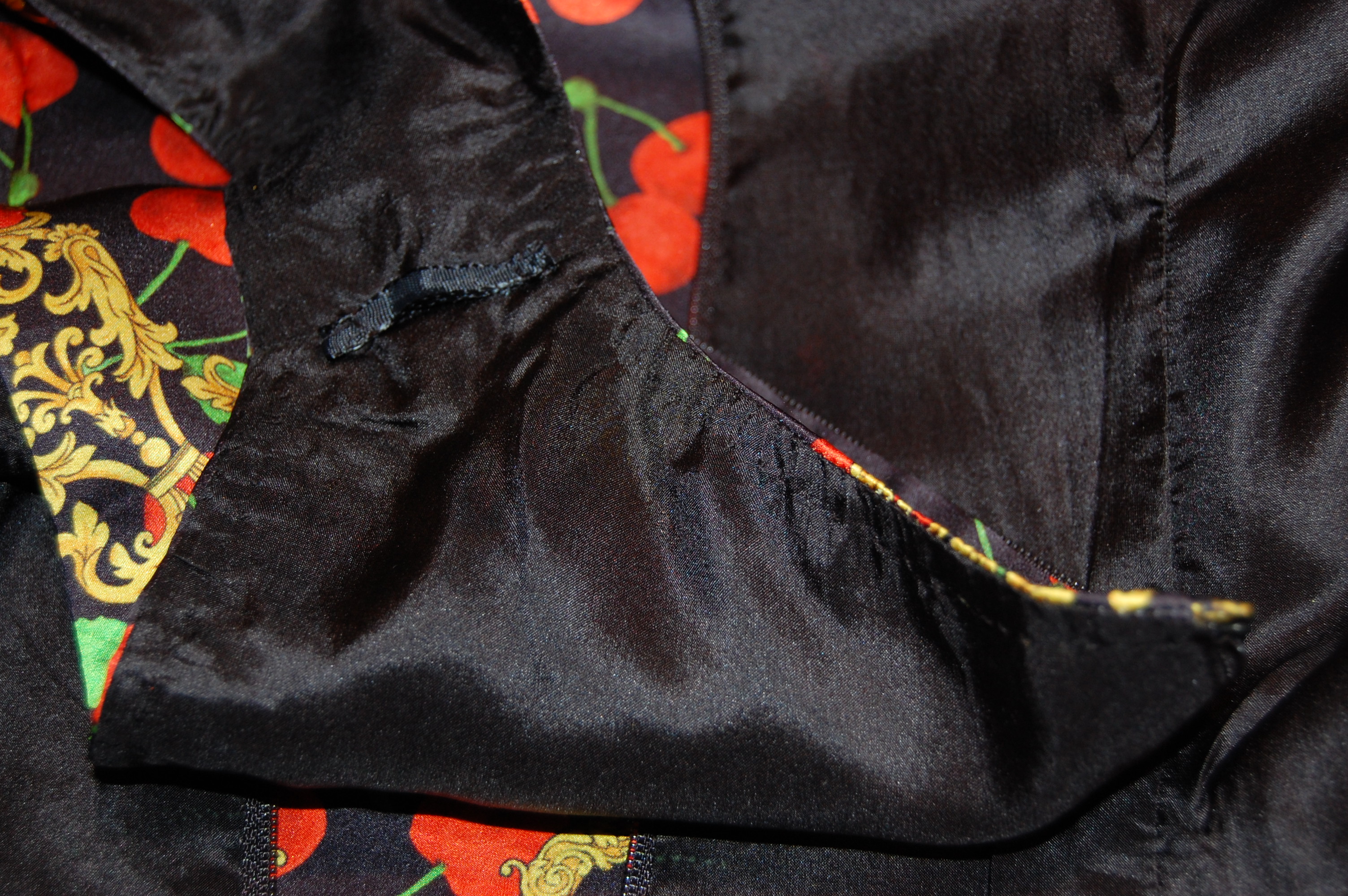
A detail of the shoulder and neck edge.

A detail of the shoulder and neck edge.

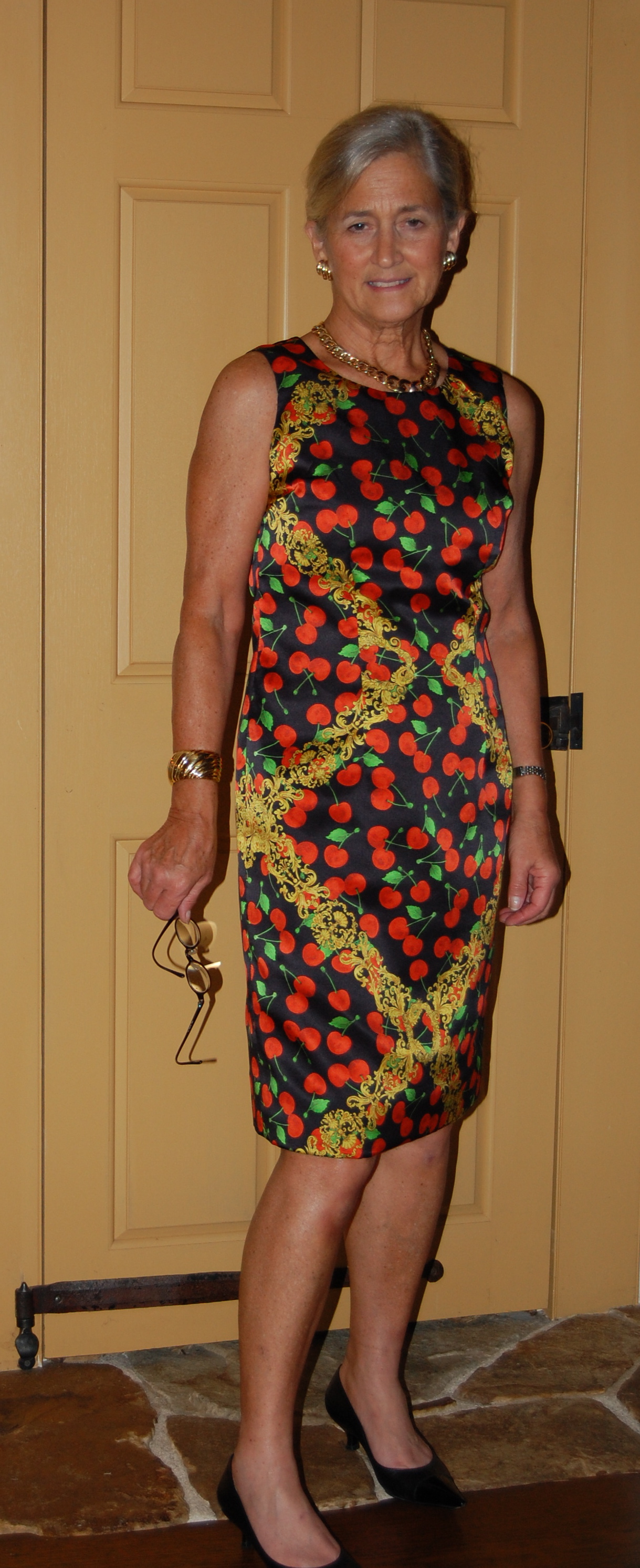
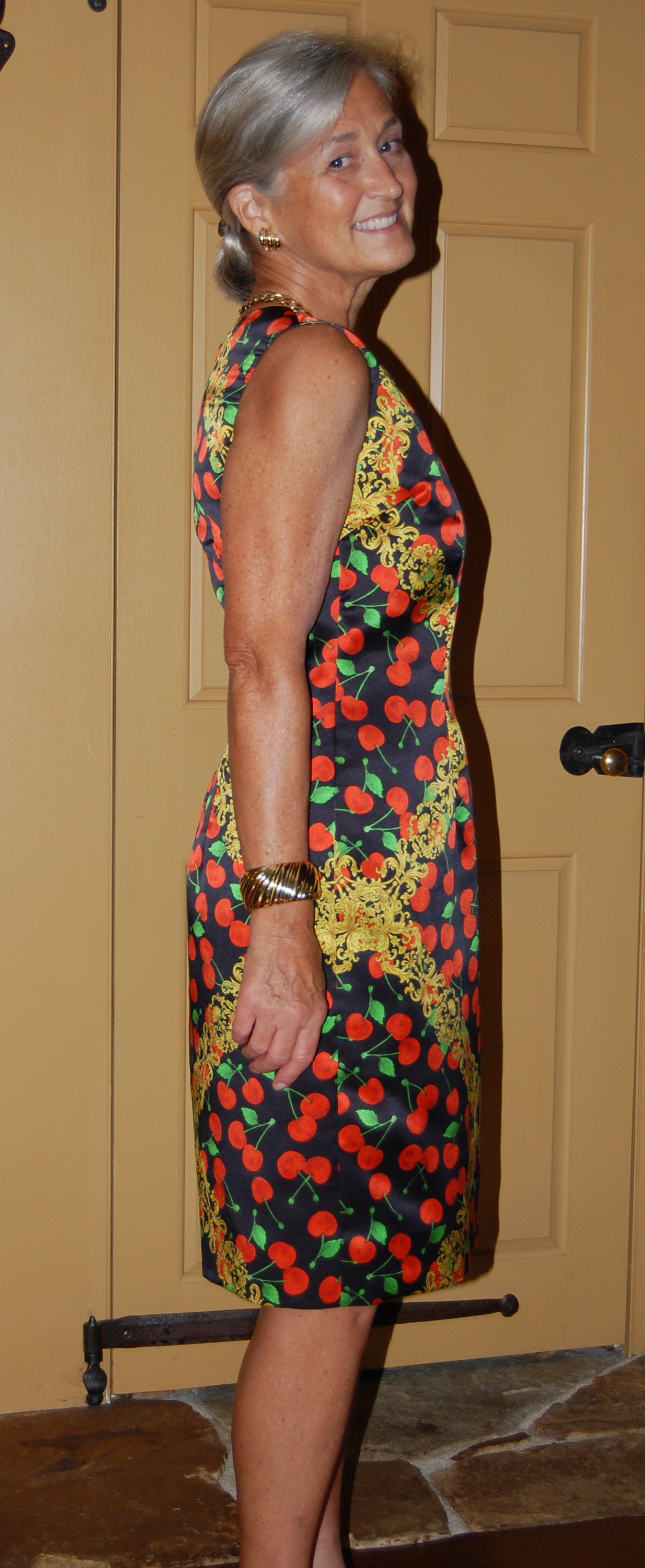
Finished!  What do you think?  Too demonstrative or just right?

Finished! What do you think? Too demonstrative or just right?

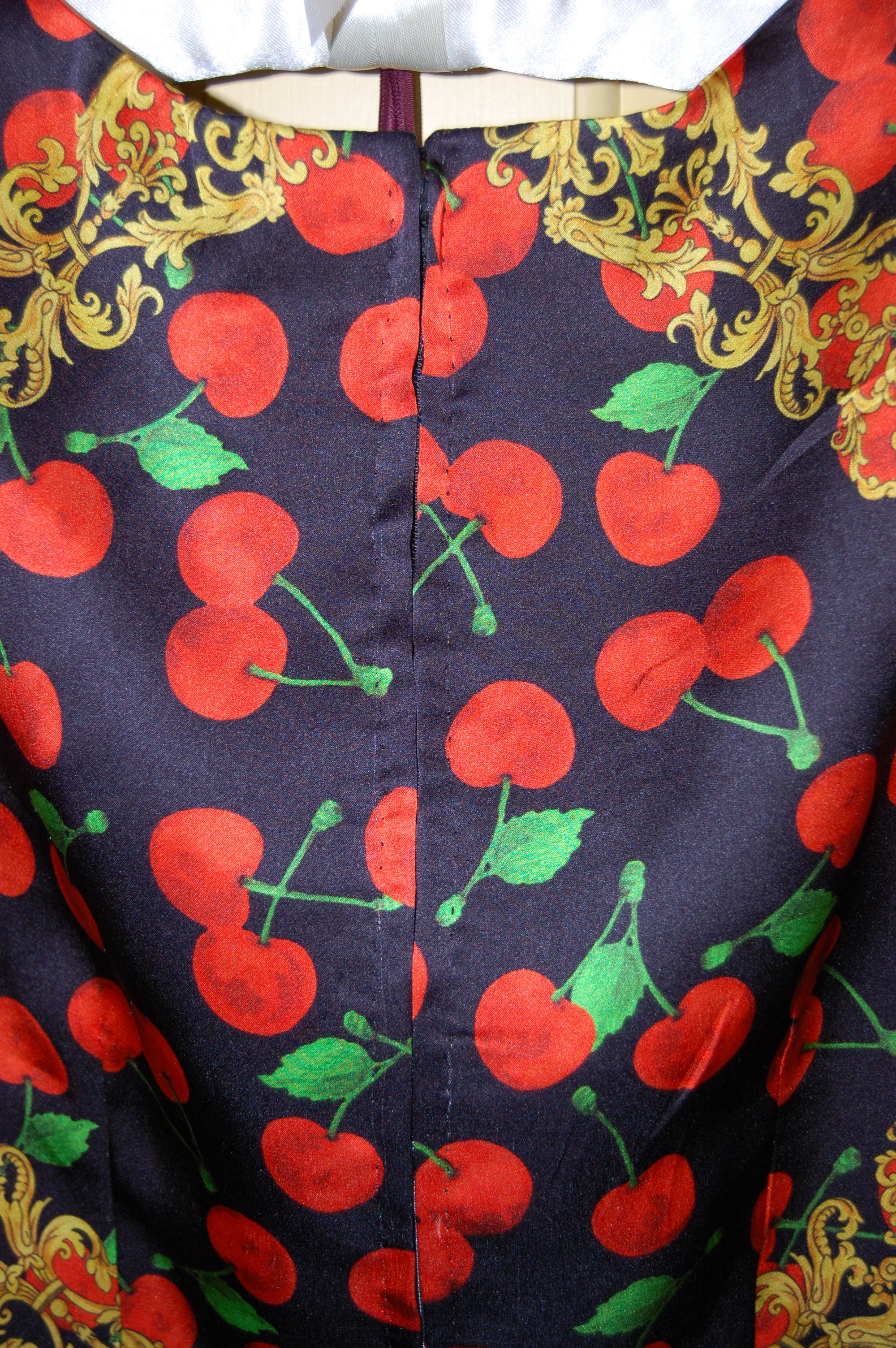
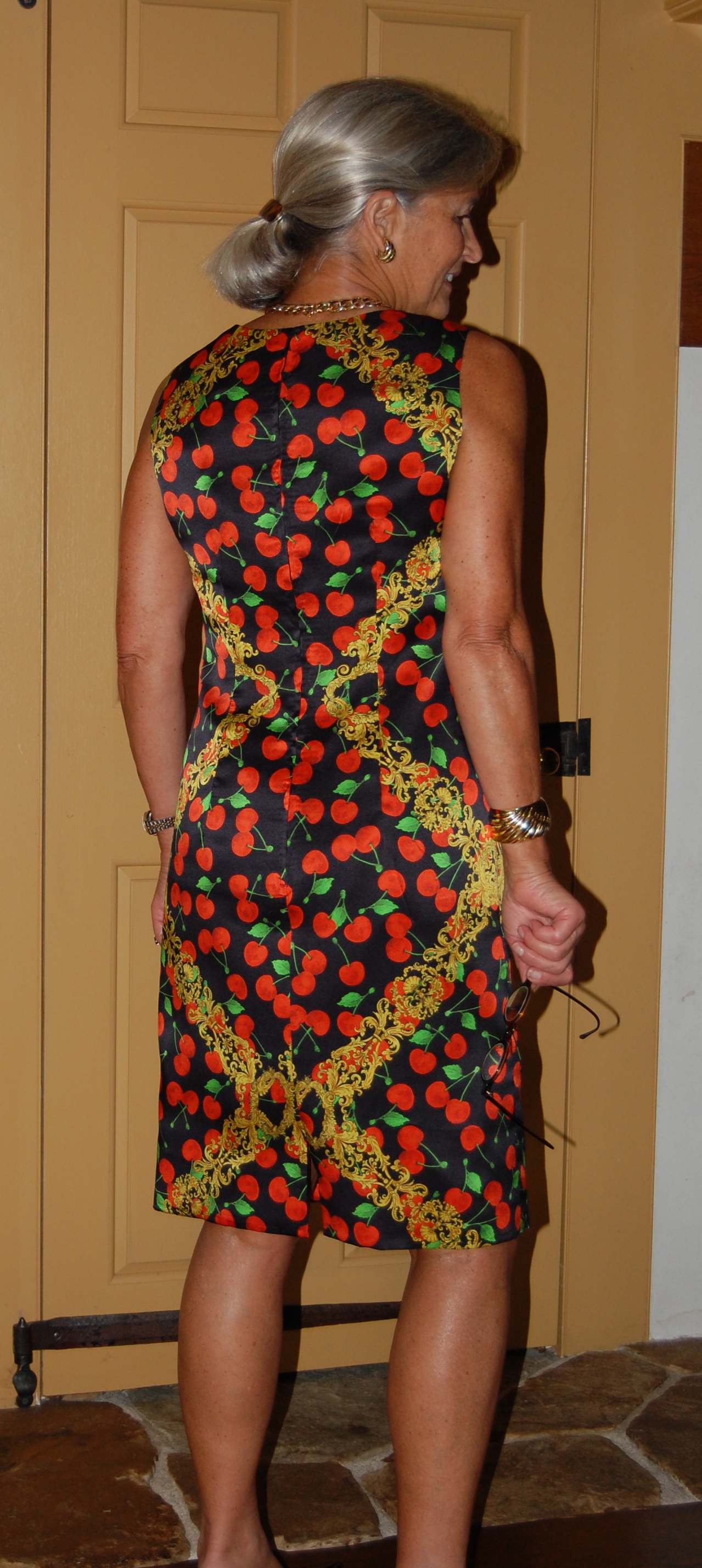
A back view.

A back view.

A side view

A side view

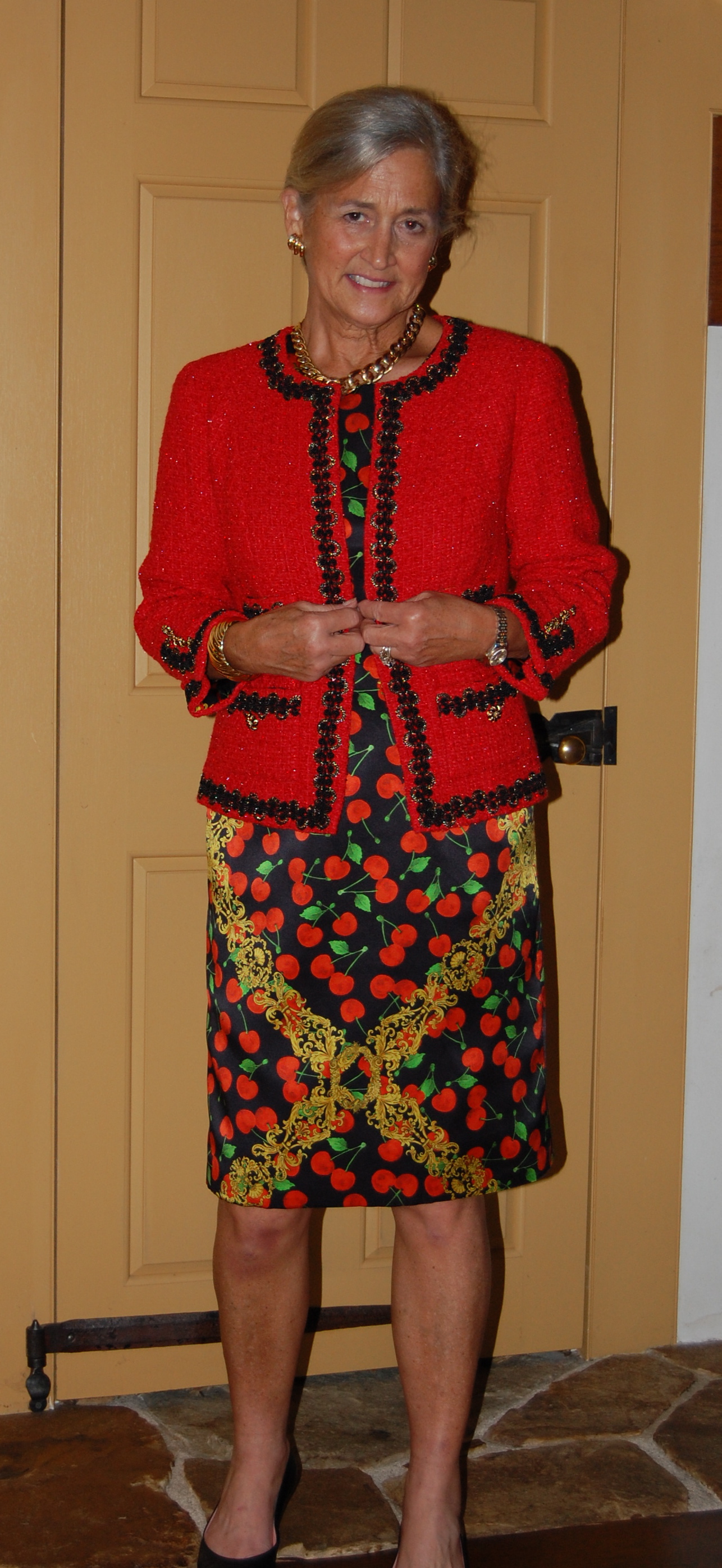
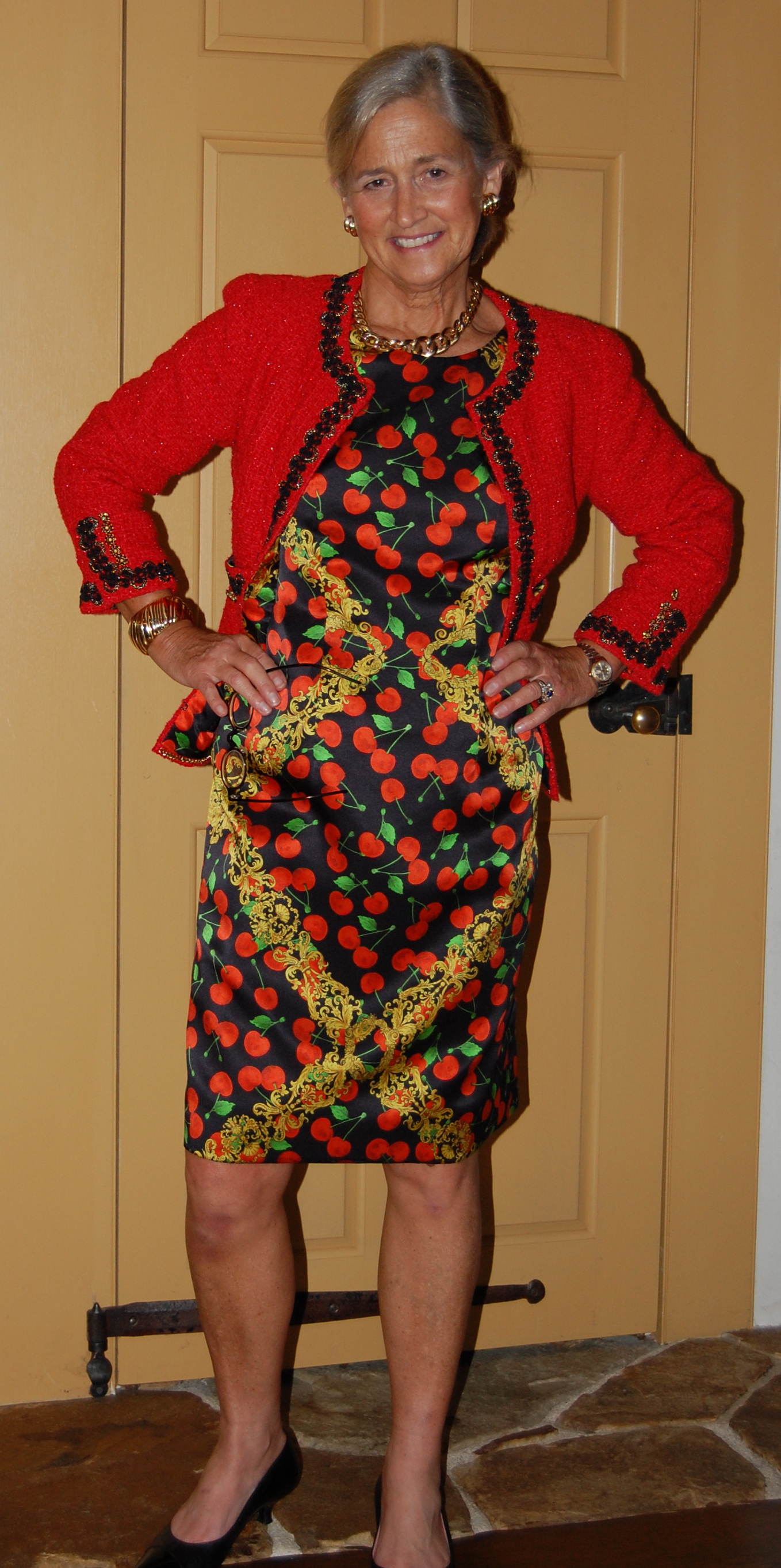
And, of course, I have to show the dress with its Chanel-inspired jacket:

A simple sheathA simple sheath

A simple sheath

This project is complete!

This project is complete!

Once again, I underestimated just how long it takes to make a dress using all couture techniques – even a simple (?) sheath dress.

Was it worth it?  Absolutely!

39 Comments

Filed under Chanel-type jackets, couture construction, hand-sewn zippers, sewing in silk, Uncategorized, underlinings

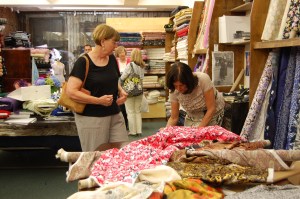
Shopping for Fabric

Are there any more magical words for those of us who sew?  And what if that shopping trip is to New York City to visit Mendel Goldberg Fabrics?  For those of you unfamiliar with this exceptional purveyor of the finest fabrics, this short statement in their recent (and first) ad in Threads Magazine will help to acquaint you:  “This family-owned business carries European designer fabrics, from French lace to brocades, boucles, Italian silk prints and novelties.  You’ll be amazed by their selection of imported couture fabrics.”
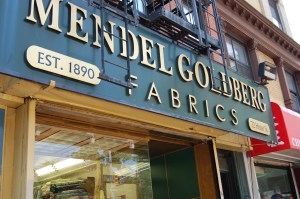
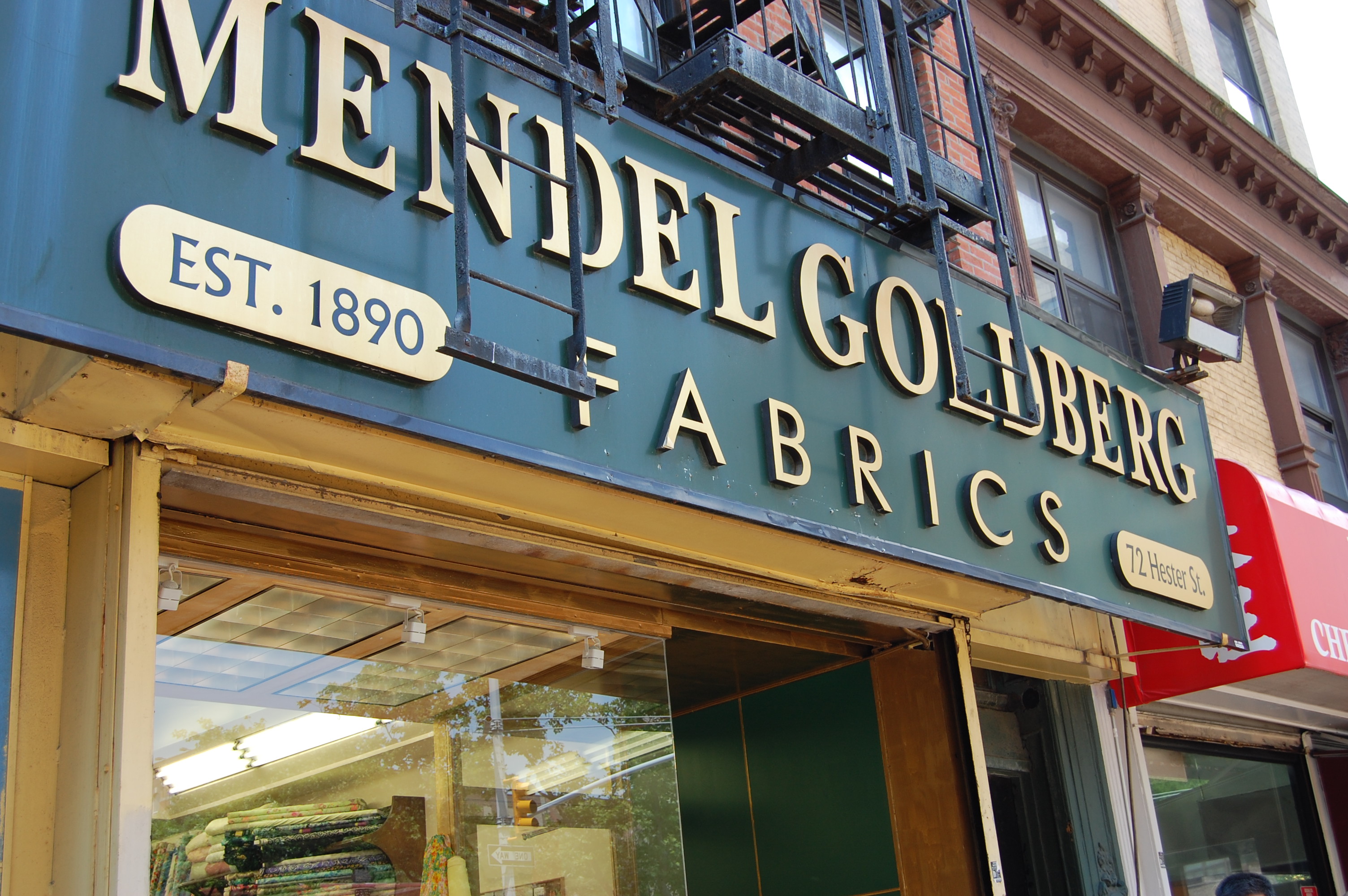
The distinctive sign for Mendel Goldberg Fabrics on Hector Street in NYC.

The distinctive sign for Mendel Goldberg Fabrics on Hester Street in NYC.

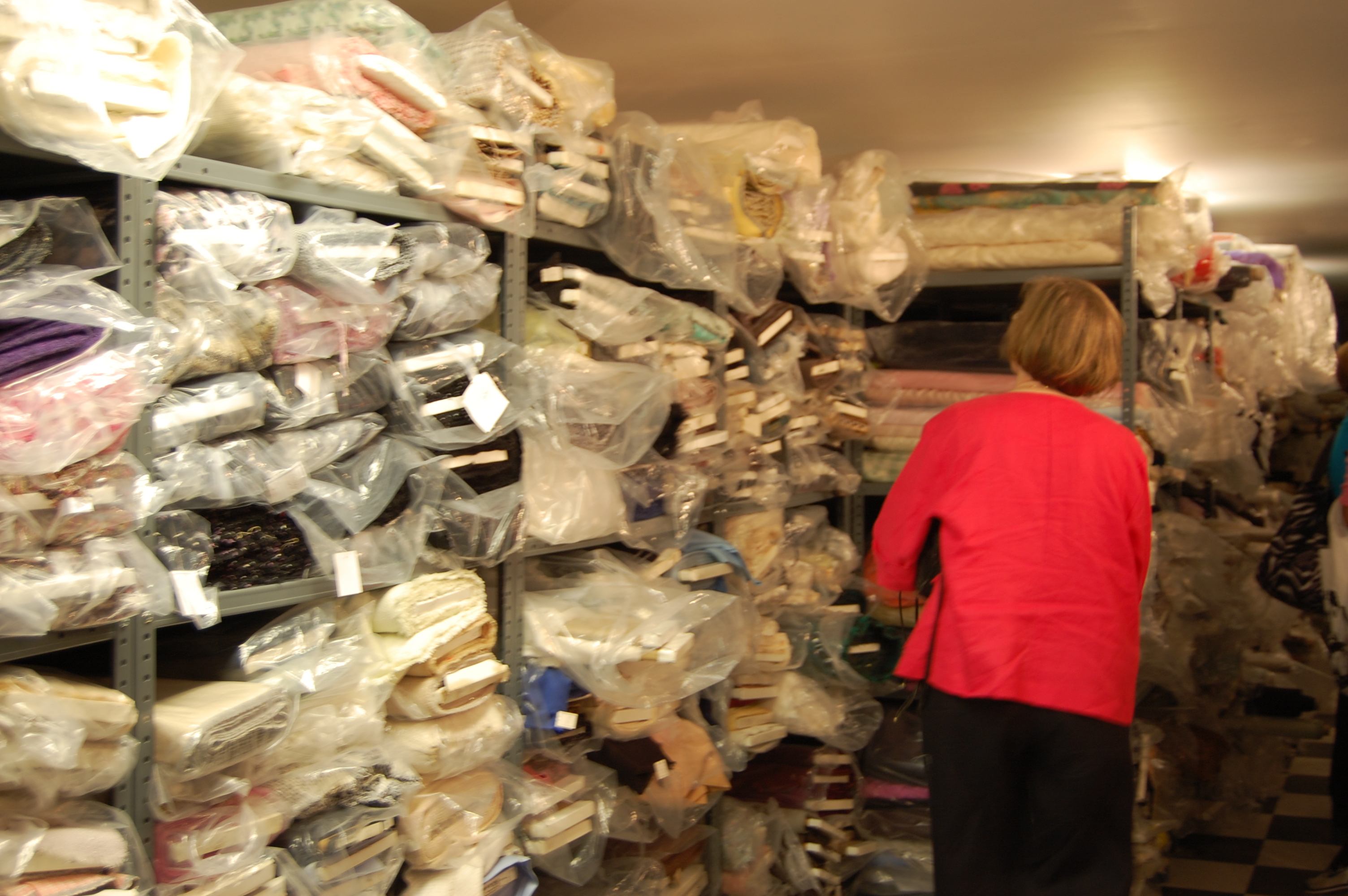
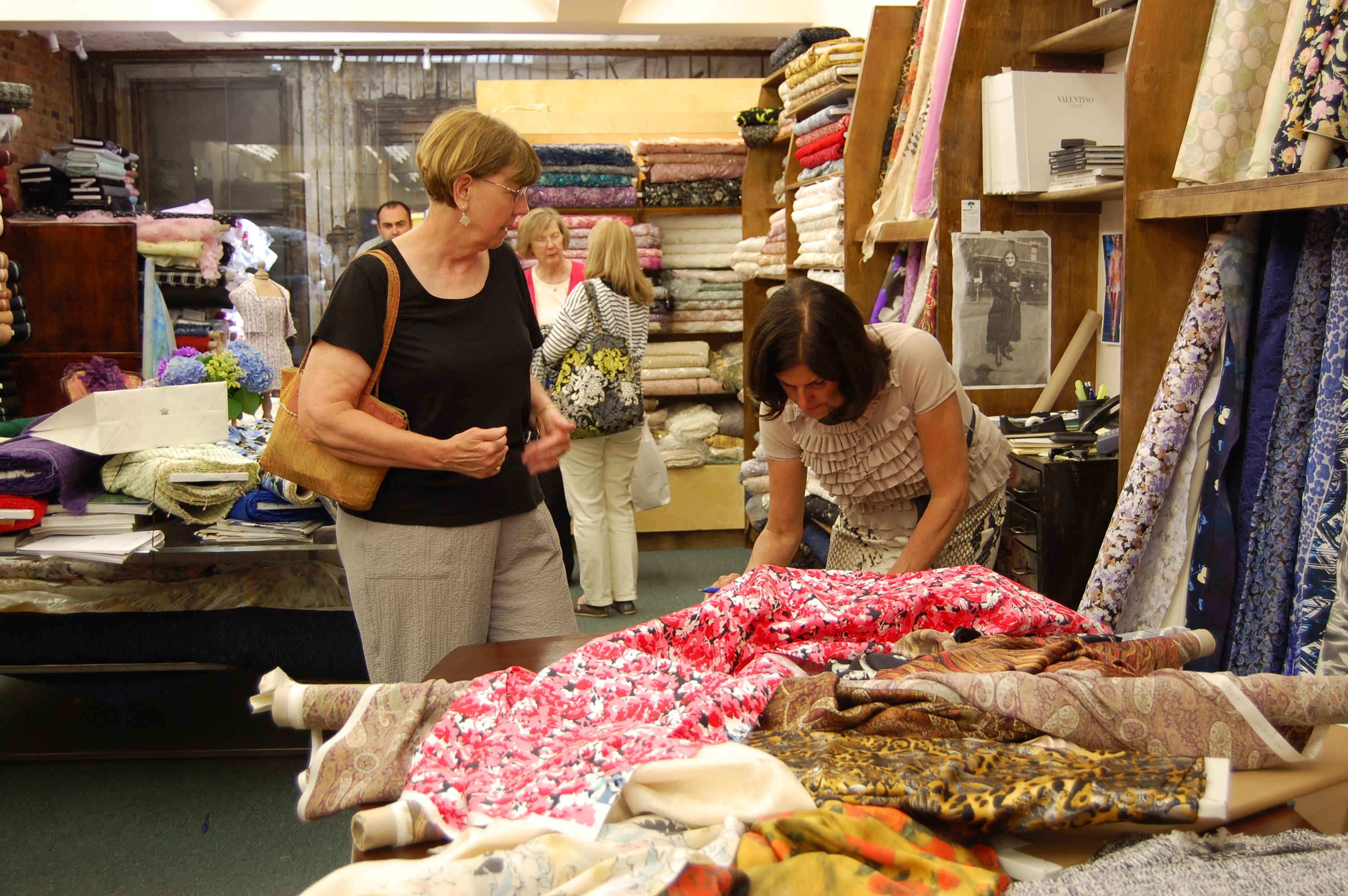
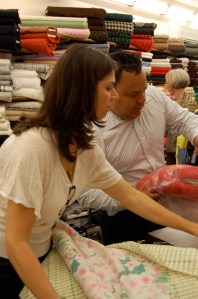
Well, amazed we were – all 11 of us who visited Mendel Goldberg Monday a week ago (June 24) on the first day of our class with Susan Khalje – The Classic French Jacket.  We were also just a little bit giddy (no, we were actually unabashedly giddy) as we viewed the treasures before us.  However, I am getting ahead of myself . . .

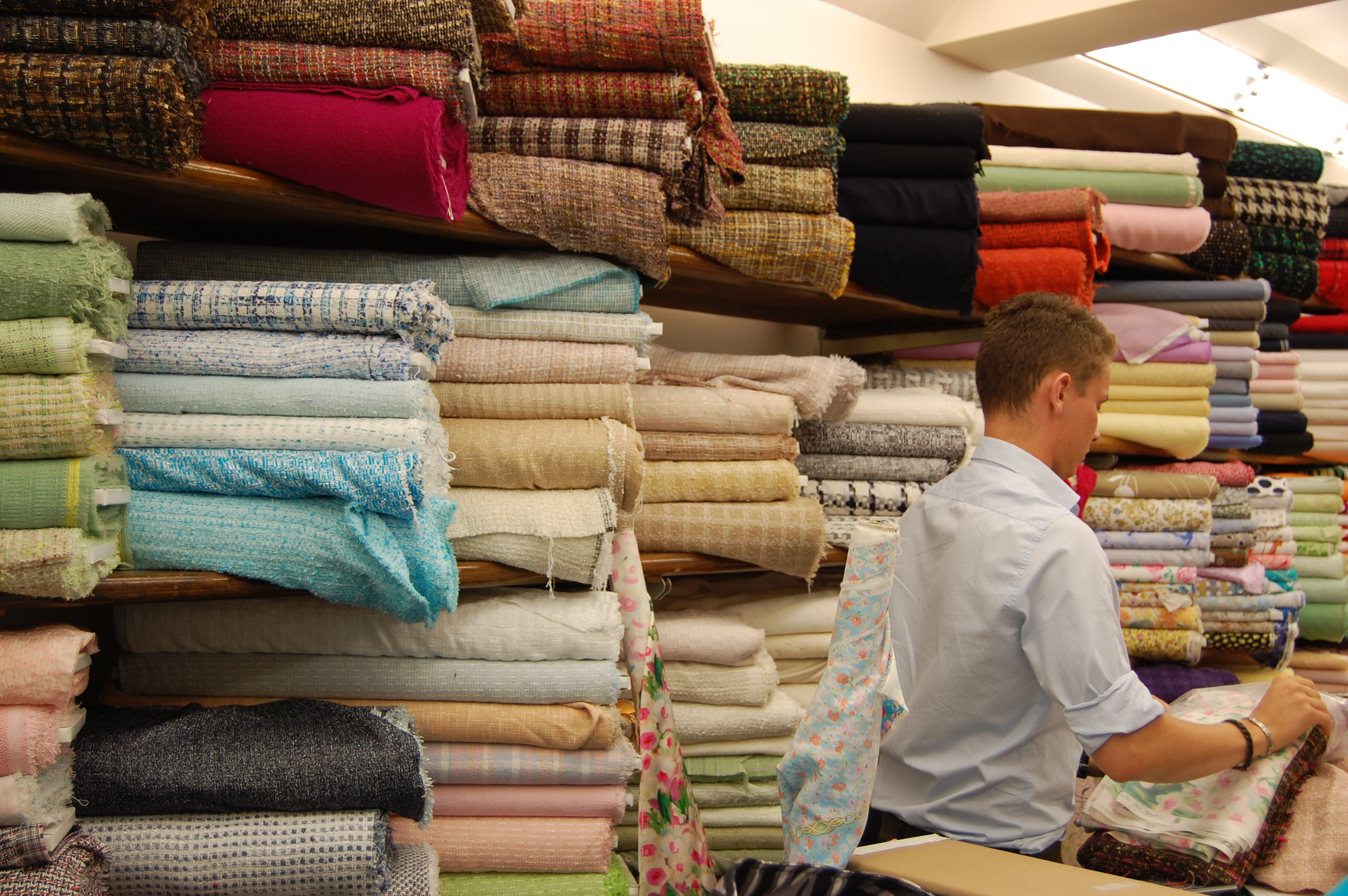
Arriving at the store after our 4-hour drive from Baltimore, we were enthusiastically and graciously met by Alice, the proprietress whose great-grandfather started the business in 1890.  Her daughter Josie works with her, and they are assisted by long-time employee Louis.  Also there to help us was Pierre, a young Frenchman who was interning with the business for two months.
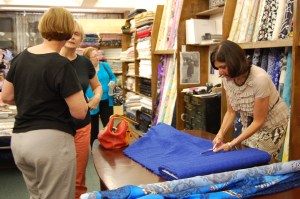
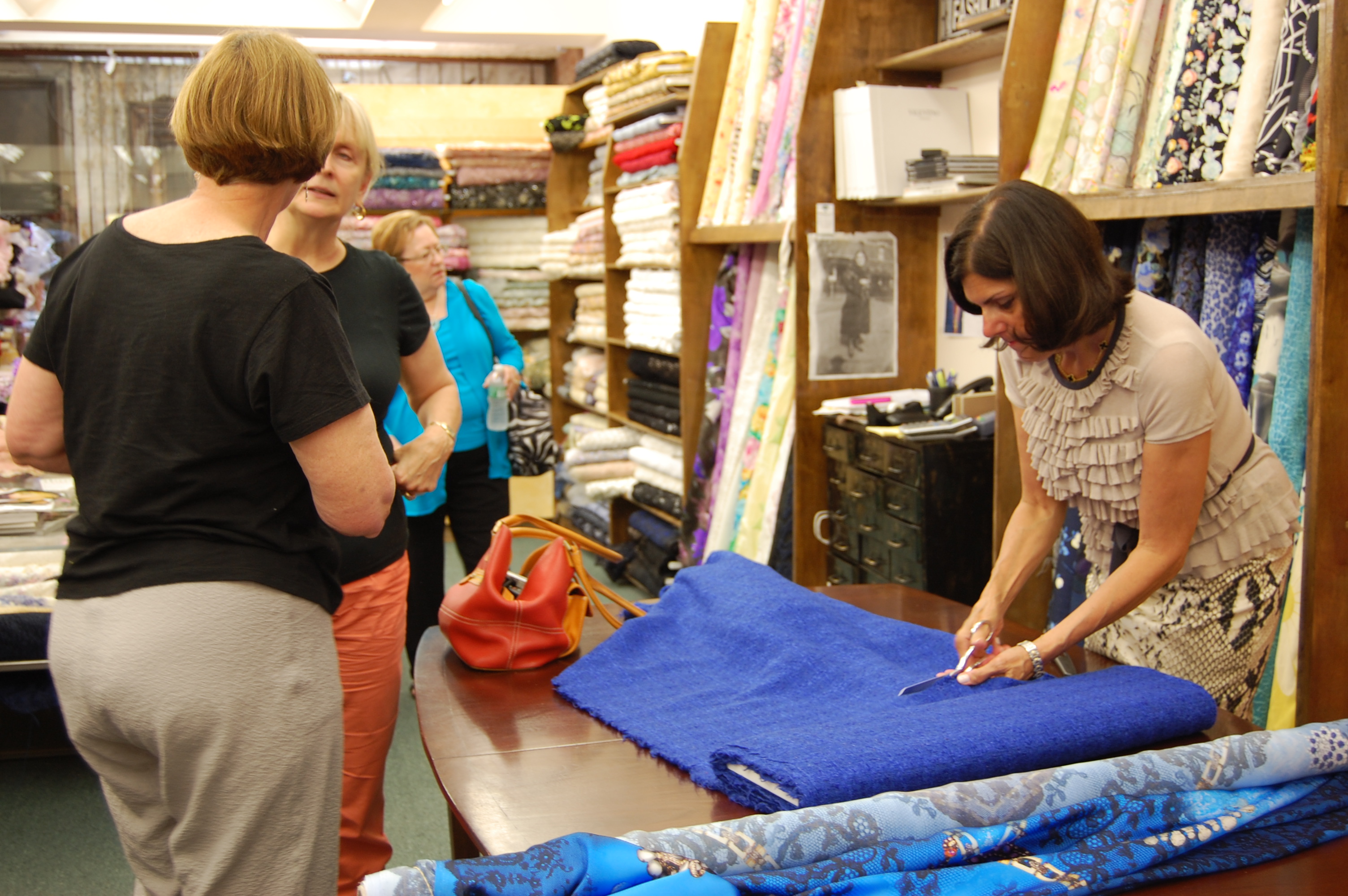
Alice is on the right, in a pose seen often - cutting fabric.

Alice is on the right, in a pose often seen – cutting fabric.
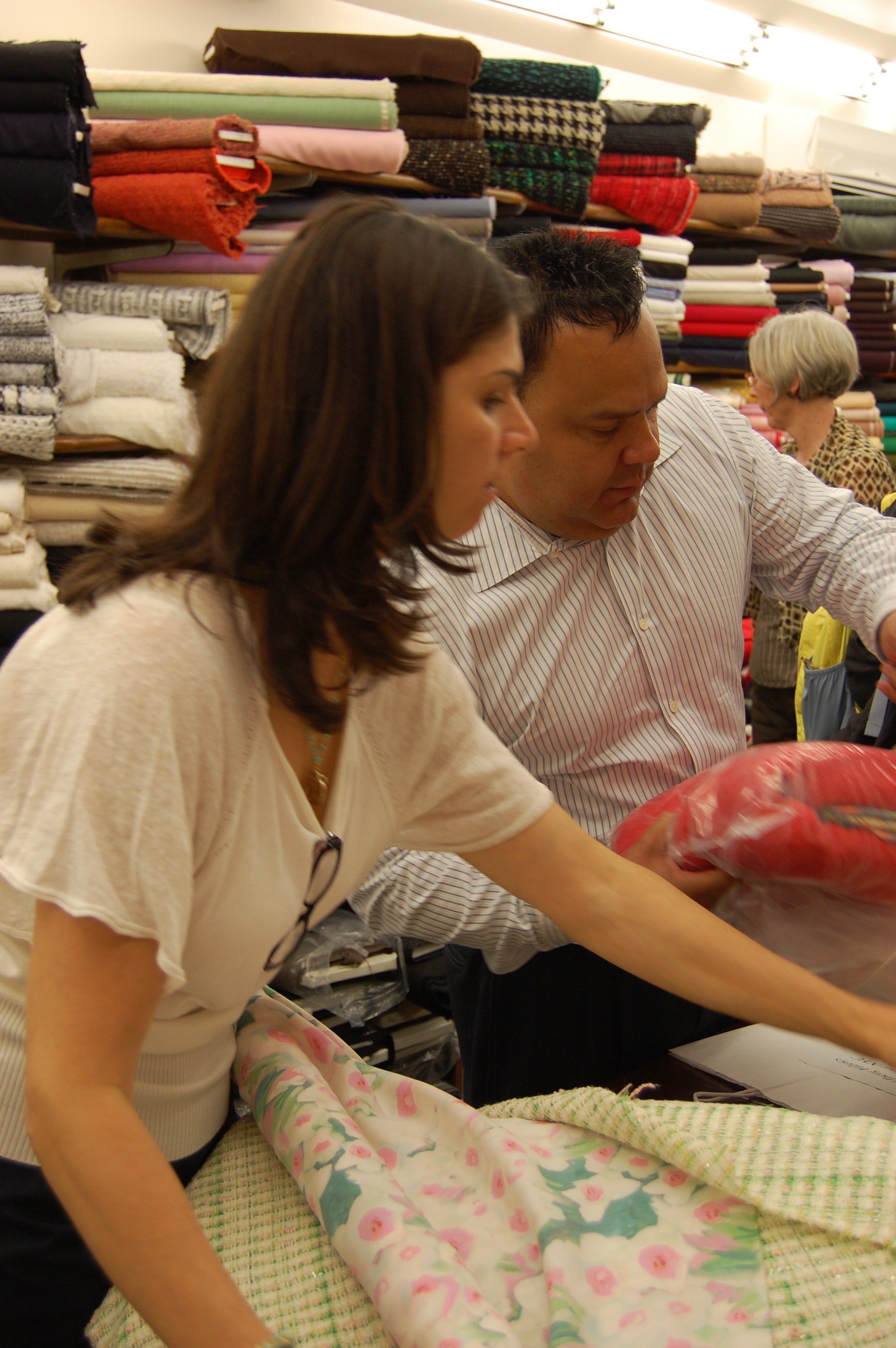
Josie and Louis
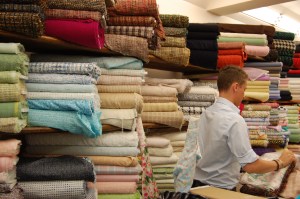
Josie and Louis

Pierre shown here in front of all those luscious fabrics.

Pierre shown here in front of all those luscious fabrics.

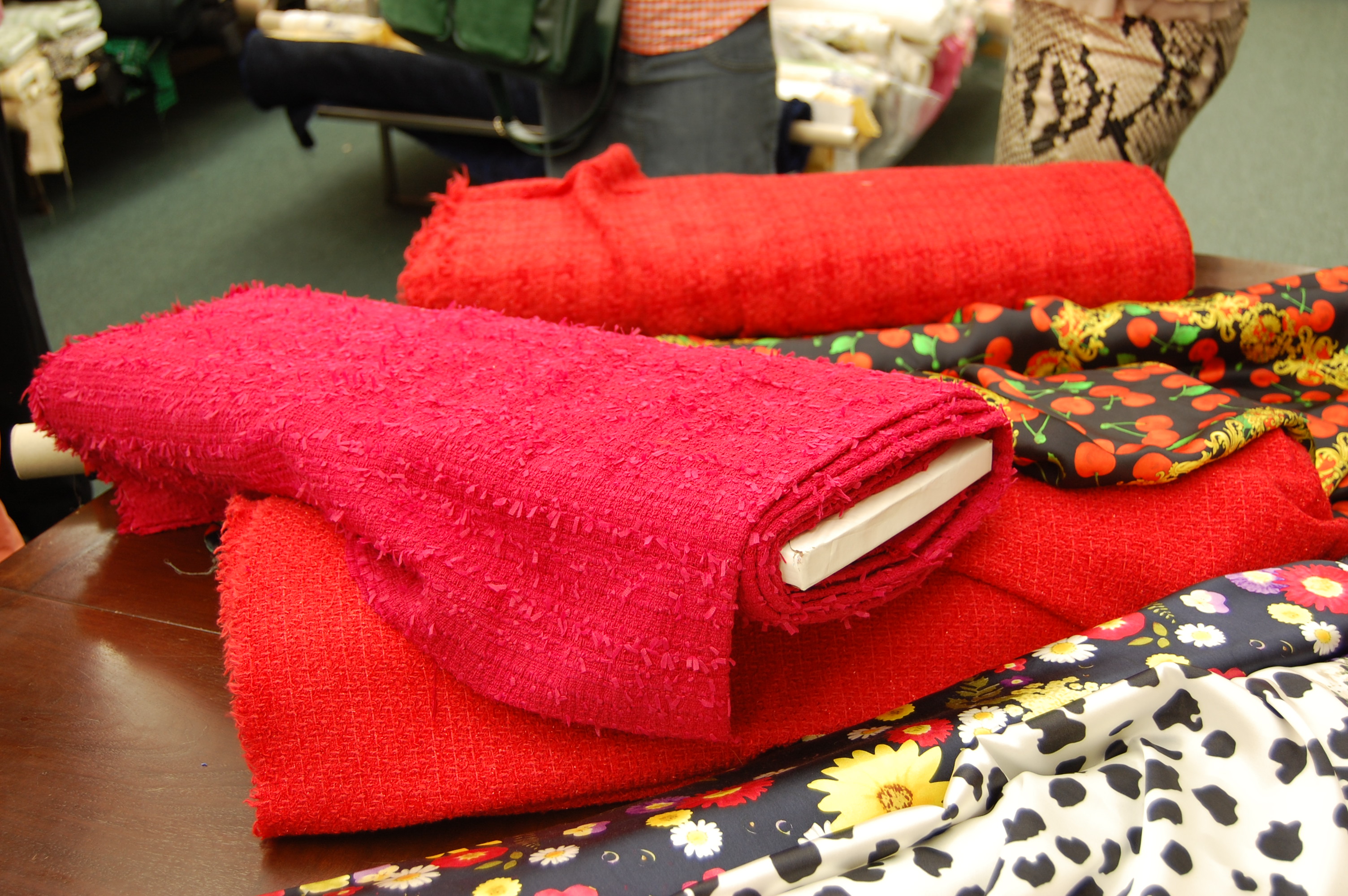
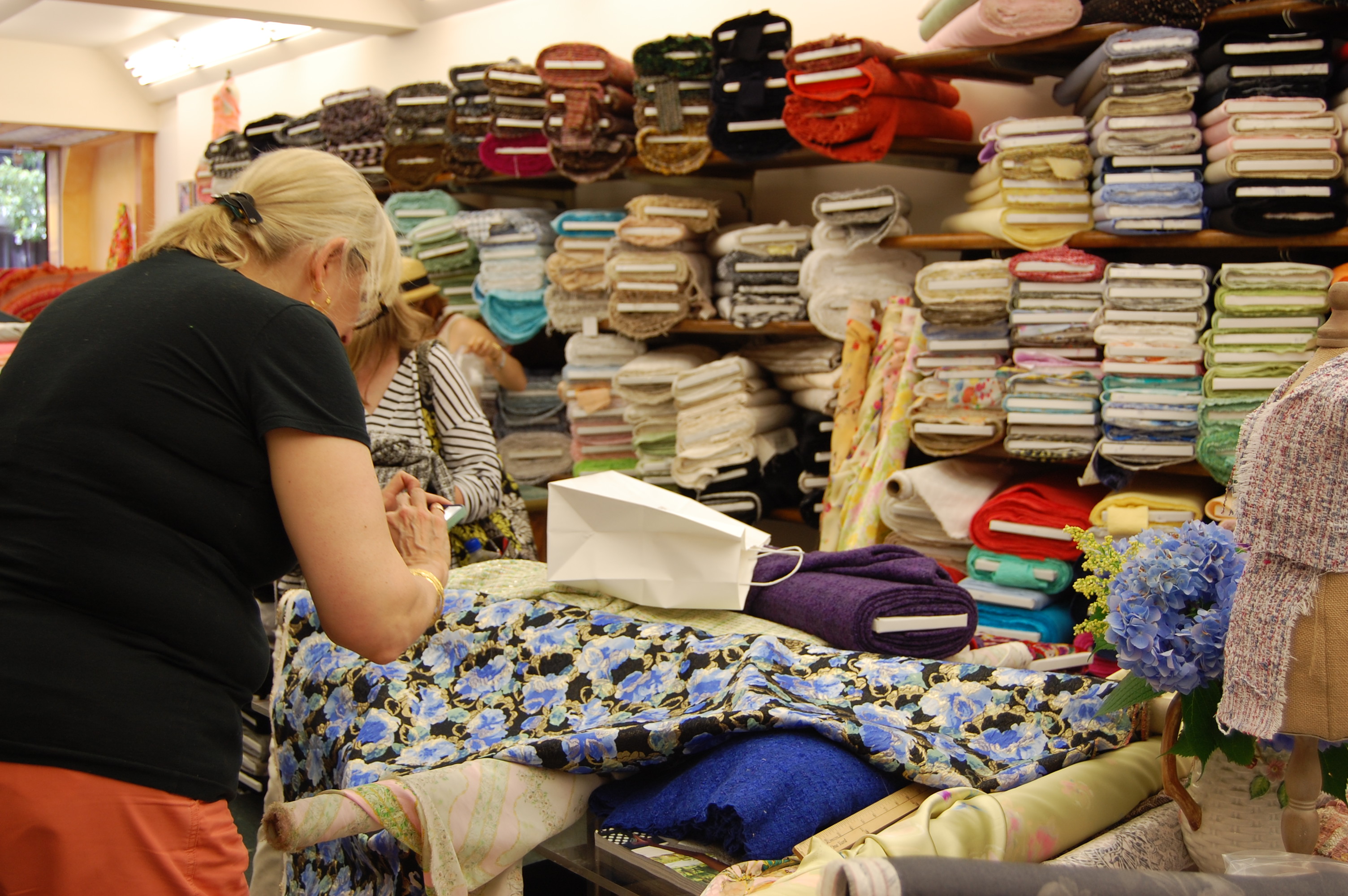
Our mission was to find and purchase our fabrics for the week-long class.  Thus – each of us needed to decide on a boucle for the jacket, and a silk charmeuse (the preferred fabric) for our lining.  The quantity of boucle fabric which Mendel Goldberg carries makes one’s decision fraught with “how can I ever narrow this down to just one?”  Well, of course, being the intrepid shoppers that we were, many of us actually could not narrow down our choice to just one.  Is it any surprise that many more than just 11 lengths each of boucle and charmeuse yardage were cut that day?
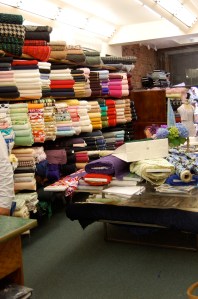
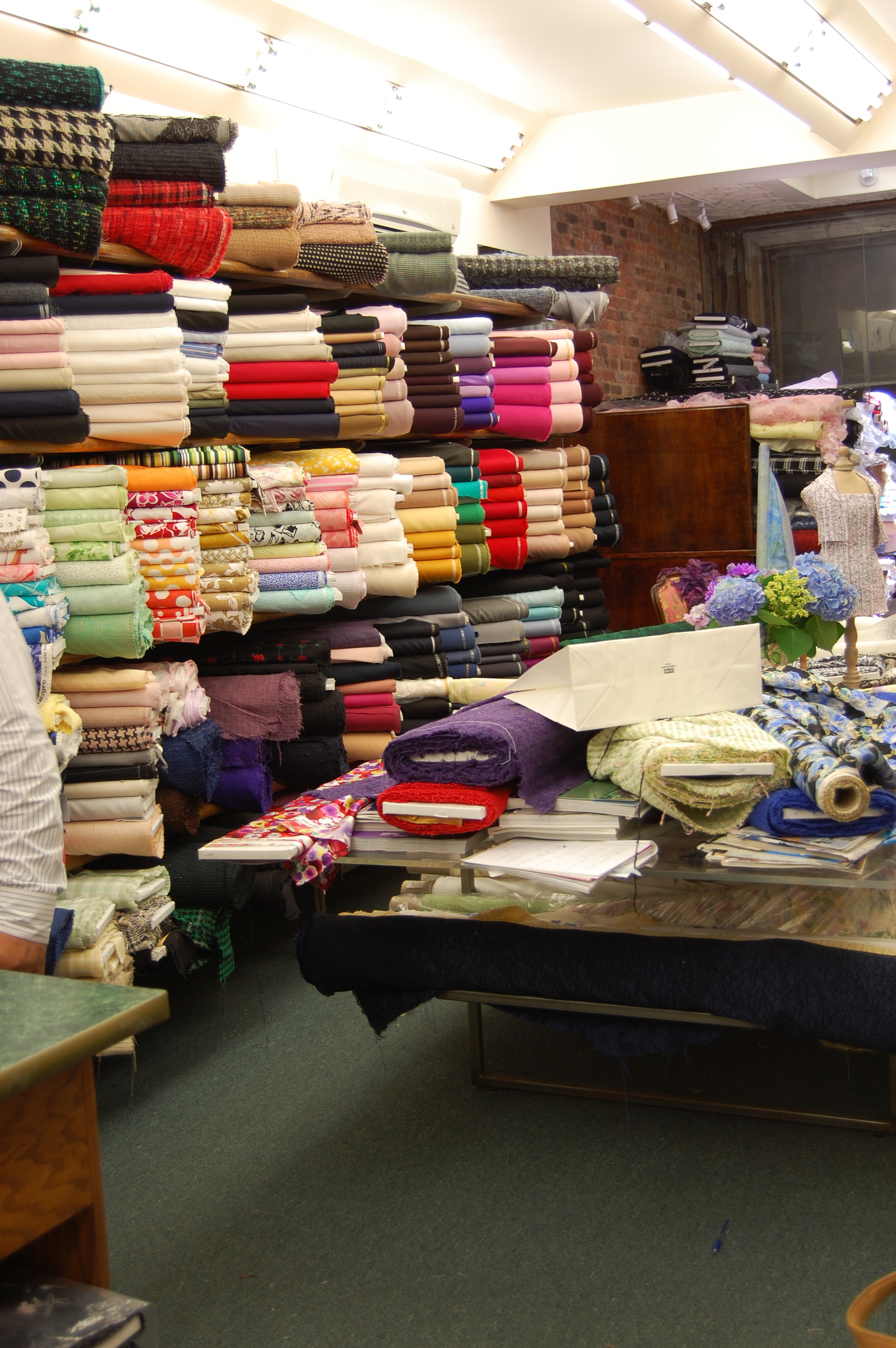
Bolts and bolts of boucles and other fabrics.
Bolts and bolts of boucles and other fabrics.

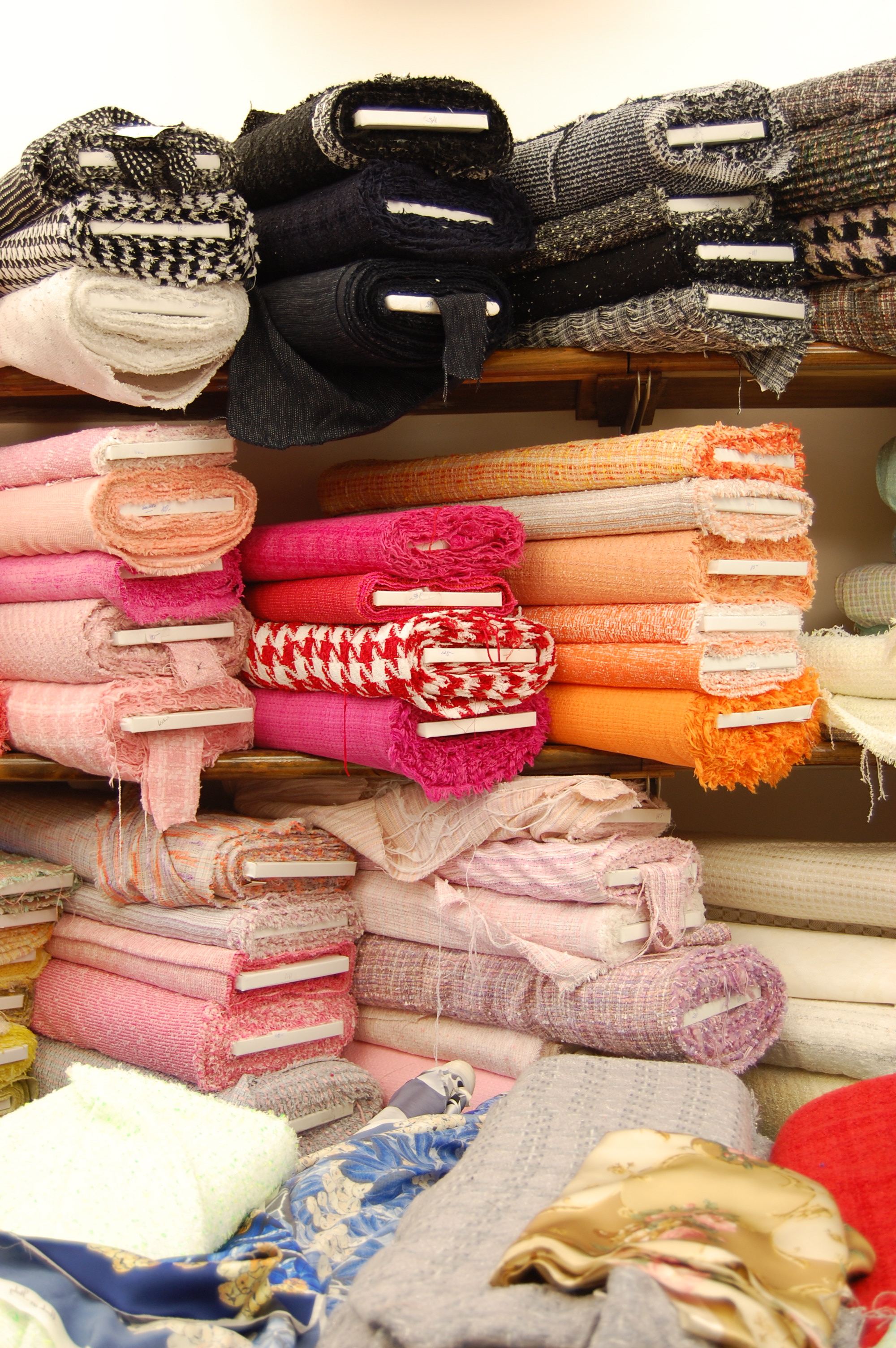
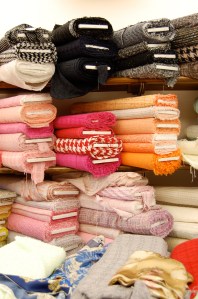
Just a small sampling of the boucles from which to choose.
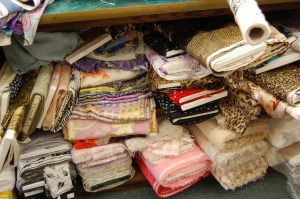
Just a small sampling of the boucles from which to choose.

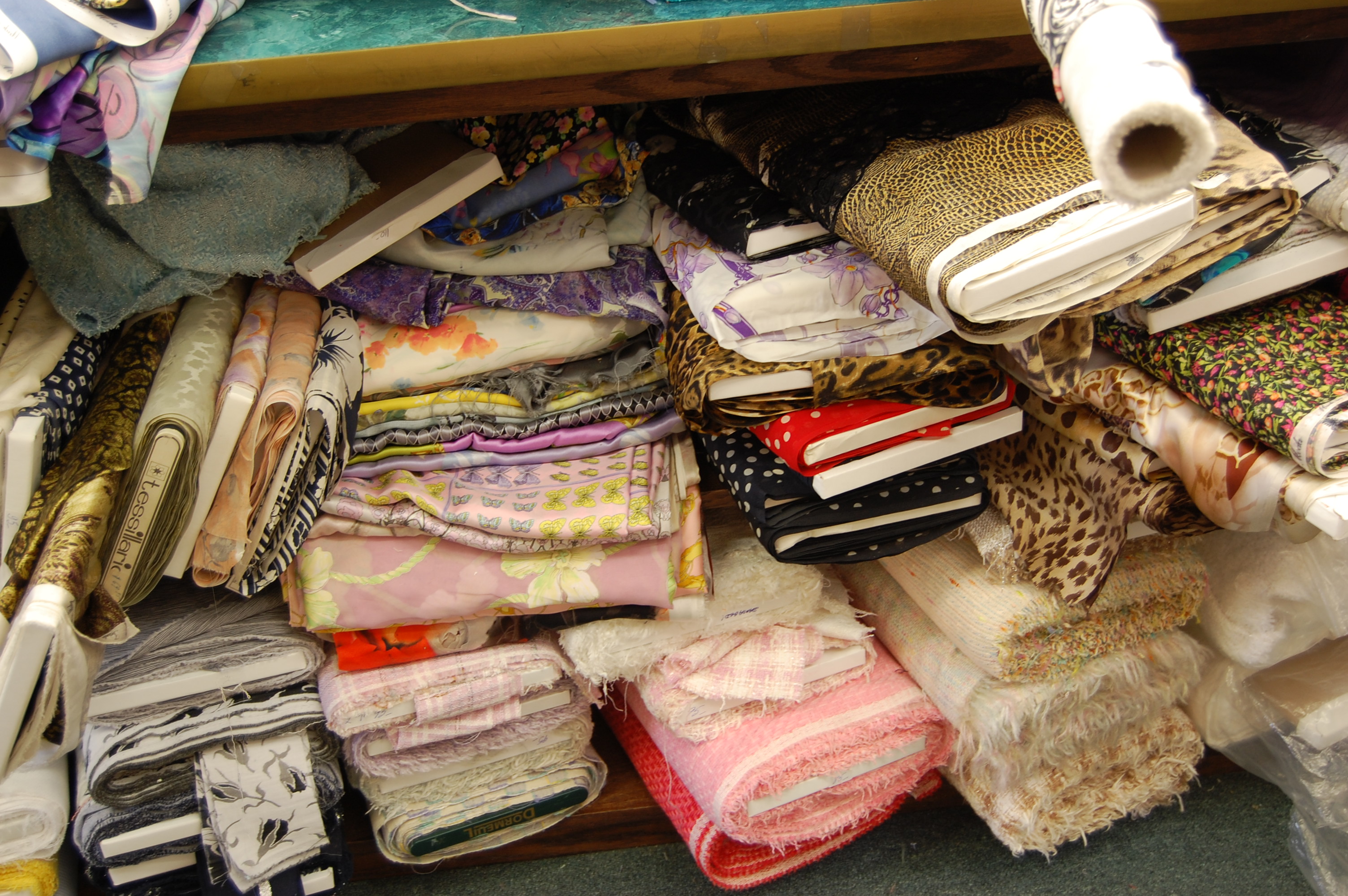
More fabric under the cutting tables.
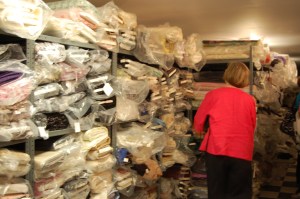
More fabric under the cutting tables.

And more bolts in the basement, which we were privileged to visit.
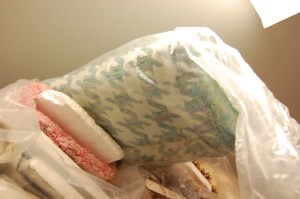
And more bolts in the basement, which we were privileged to visit.

A lovely houndstooth, tucked away in the basement.

A lovely houndstooth, tucked away in the basement.

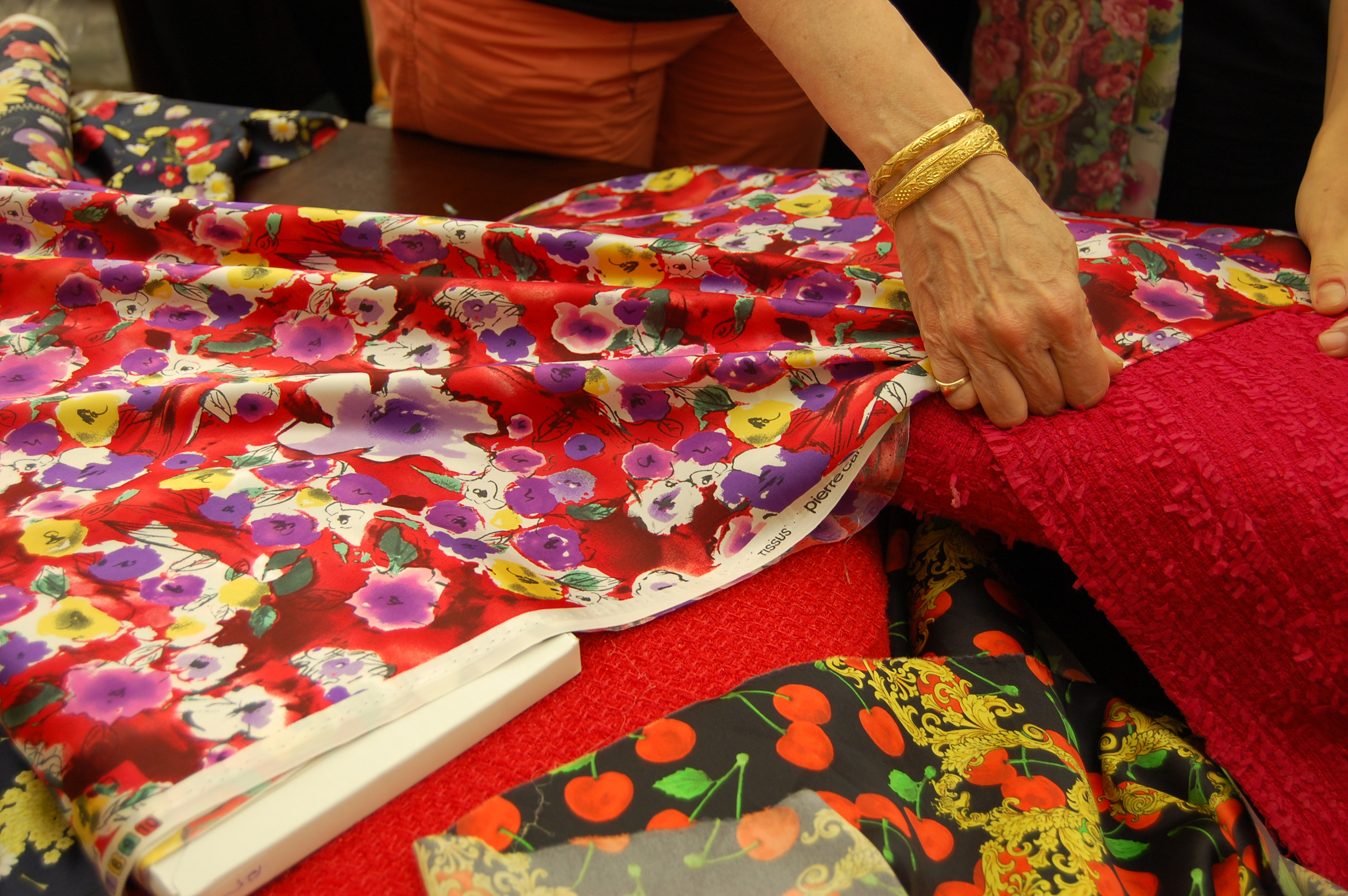
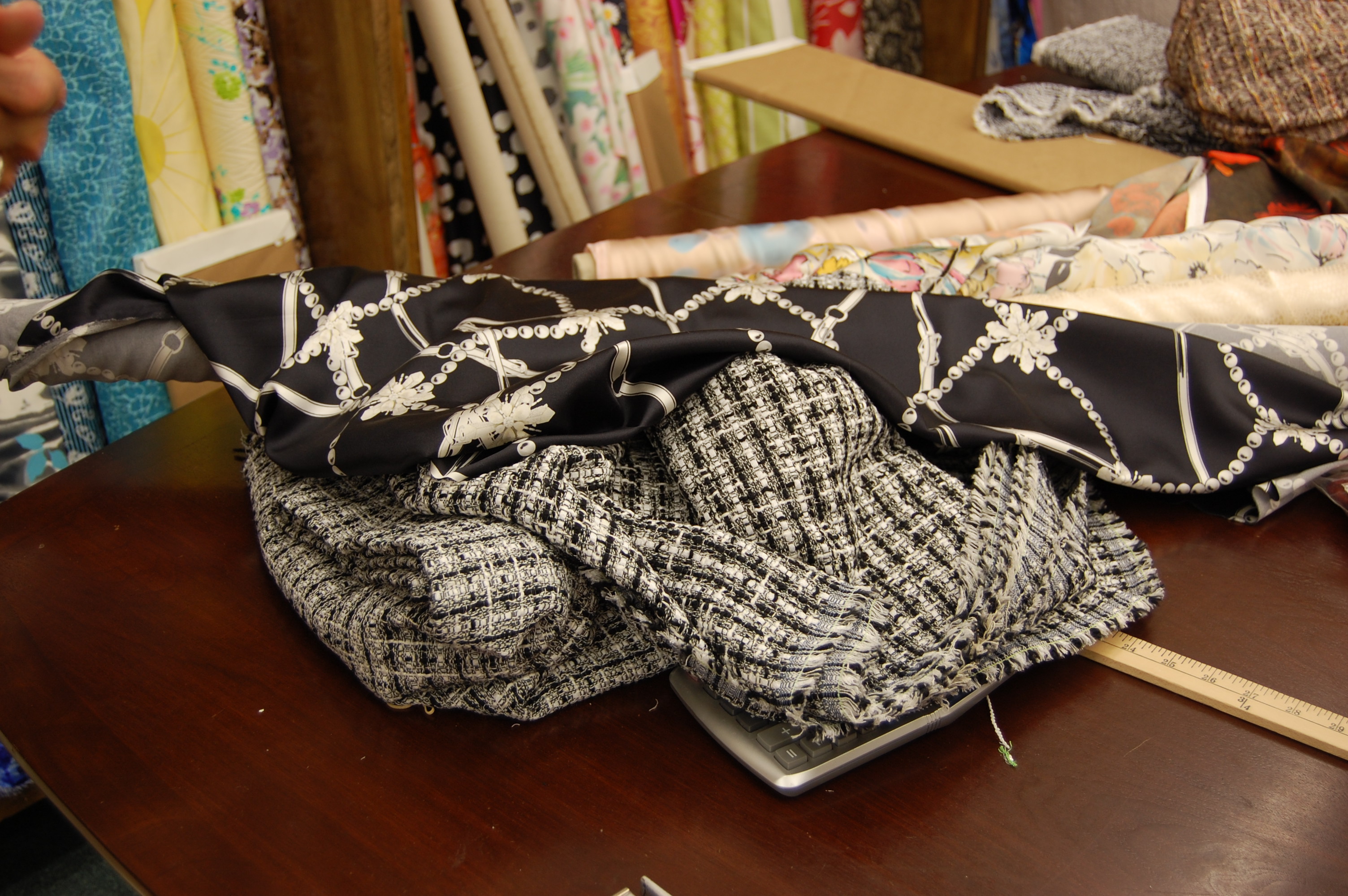
Deciding on the lining fabric was as much fun as the boucle, and the exquisite designs, unique prints, and lustrous quality of Alice’s charmeuses are something to behold.  Truly, the selection is a testament to Alice’s good taste and her diligence in finding the best that is available in France, Italy and Switzerland, and shipping them home to her store in the States.
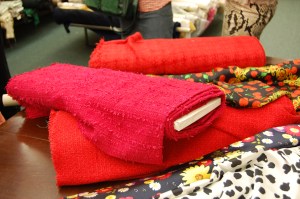
So many charmeuses from which to choose.
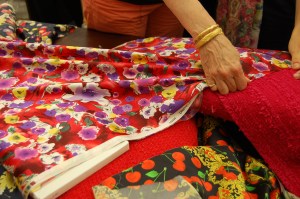
So many charmeuses from which to choose.

Susan helping with the "match-up".

Susan helping with the “match-up”.

Alice bent over more fabric.
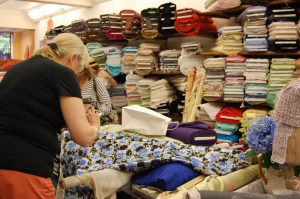
Alice bent over more fabric.

Susan  with a beautiful charmeuse.
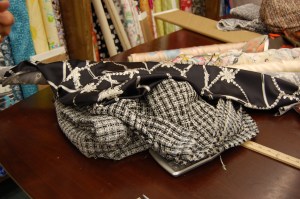
Susan with a beautiful charmeuse.

Classmate Diane's final selection of boucle and charmeuse.
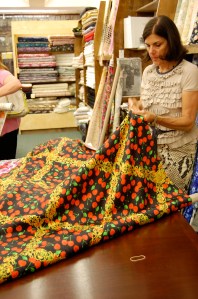
Classmate Diane’s final selection of boucle and charmeuse.

Alice cutting the charmeuse I selected for my lining to be paired with a bright red boucle.

Alice cutting the charmeuse I selected for my lining.
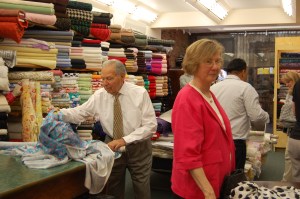
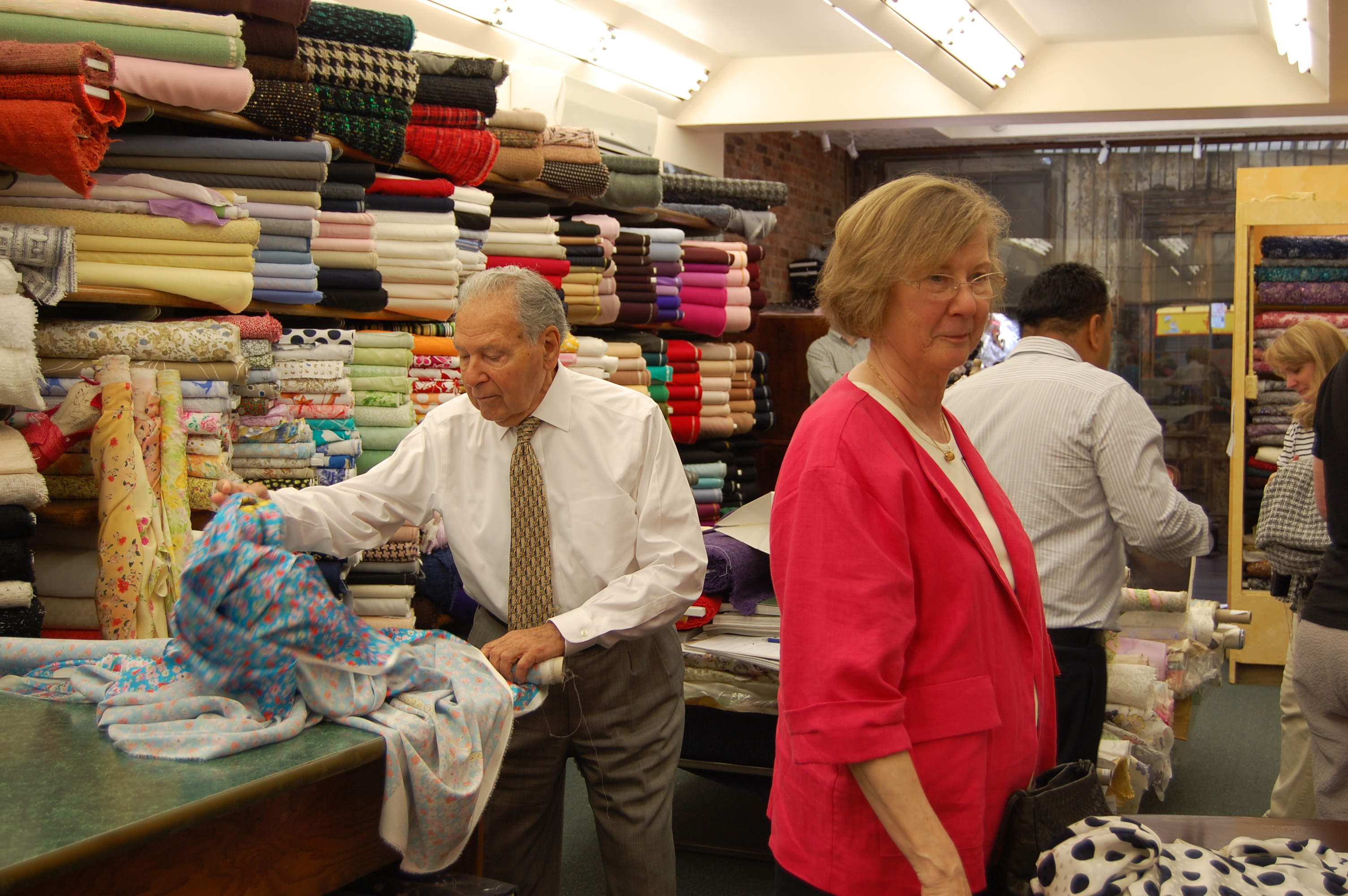
Alice's father who still comes in to help.

Alice’s father who still comes in to help.

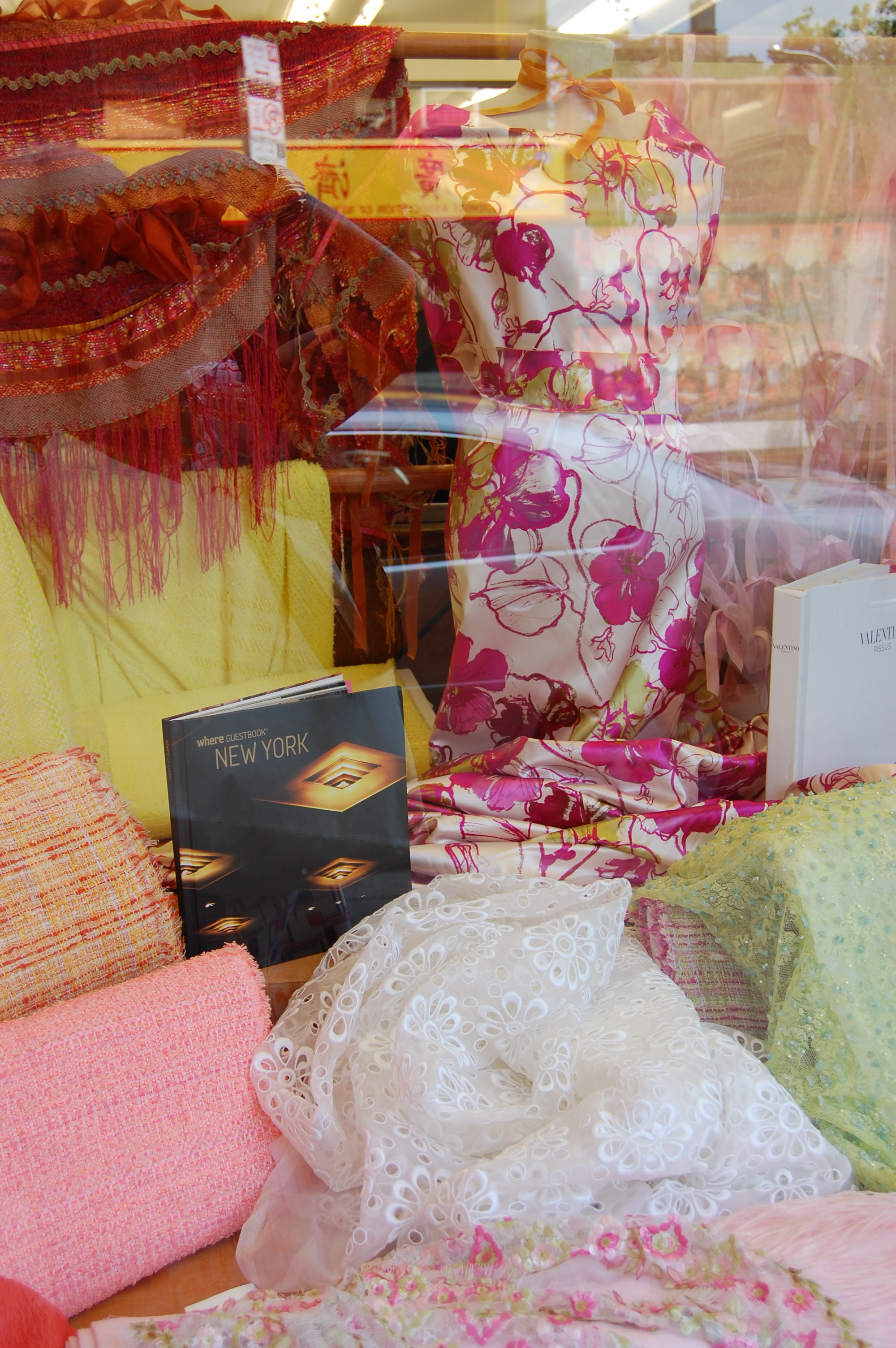
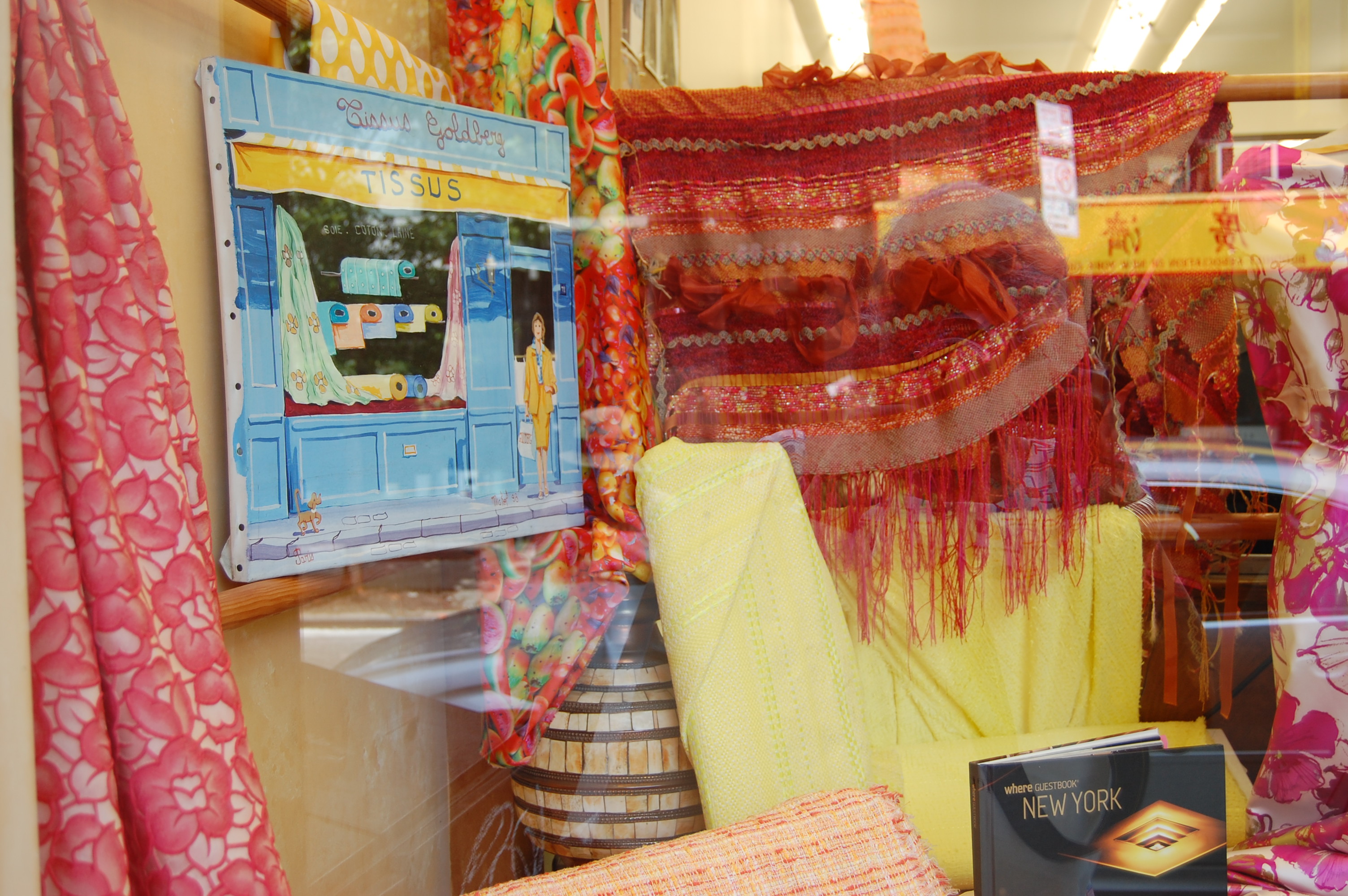
As we left Mendel Goldberg after two quick hours of shopping, I took a moment to view the beautiful display of fabrics in their front window.
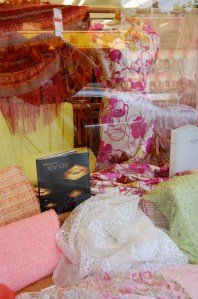
Despite the glare, the fabrics still captivate!
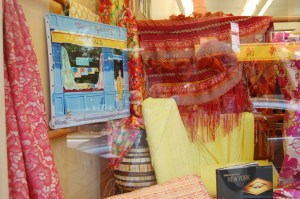
Despite the glare, the fabrics still captivate!

More fabric on display in the window.

More fabric on display in the window.

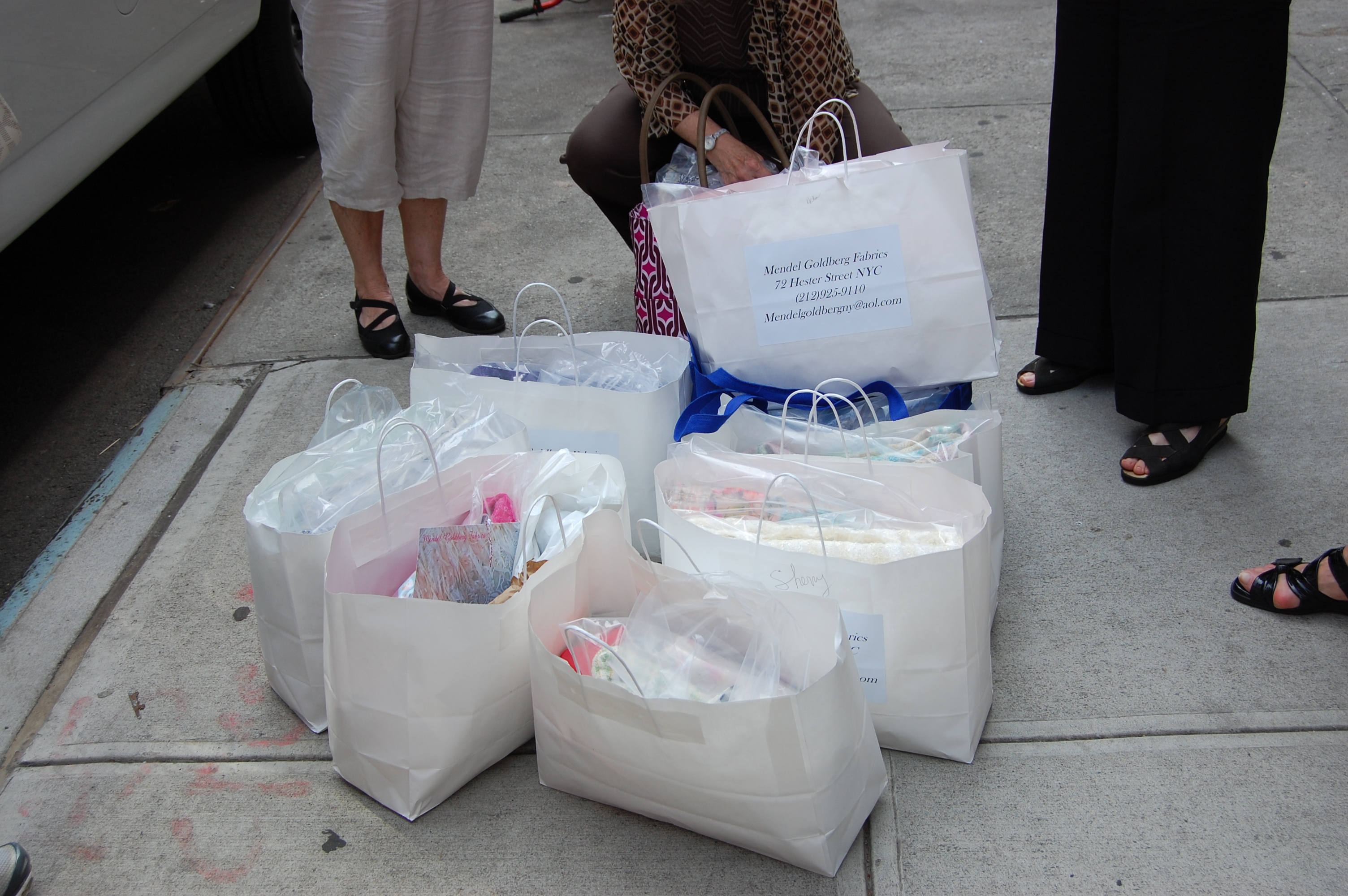
Then we gathered on the street next to our van.  Our bounty of bags spoke to the remarkable, memorable experience of Mendel Goldberg Fabrics.
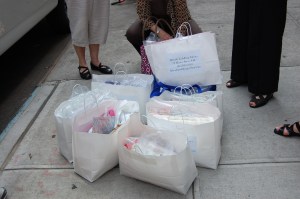
Just a few of the bags that went home with us!

Just a few of the bags that went home with us!

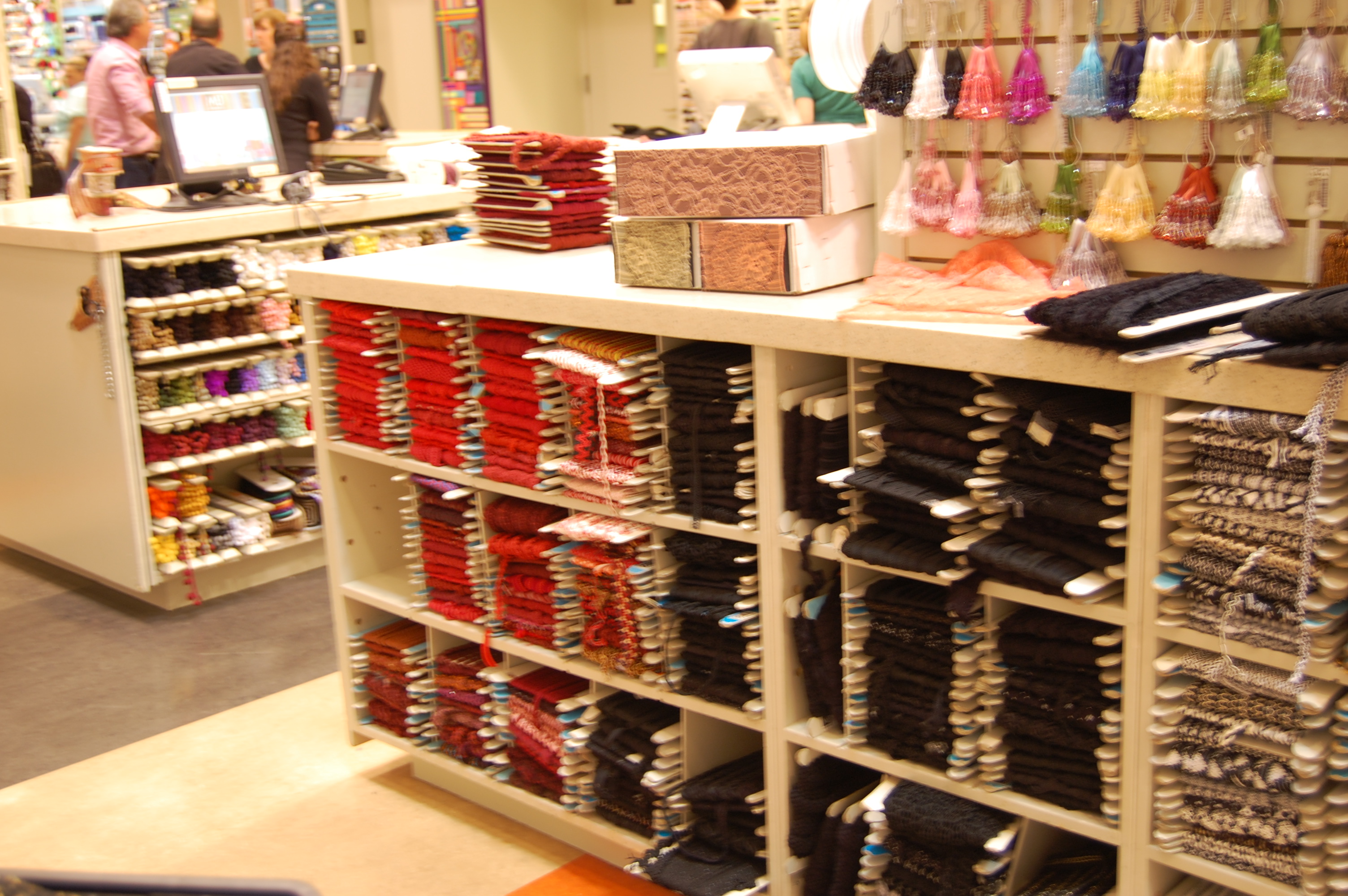
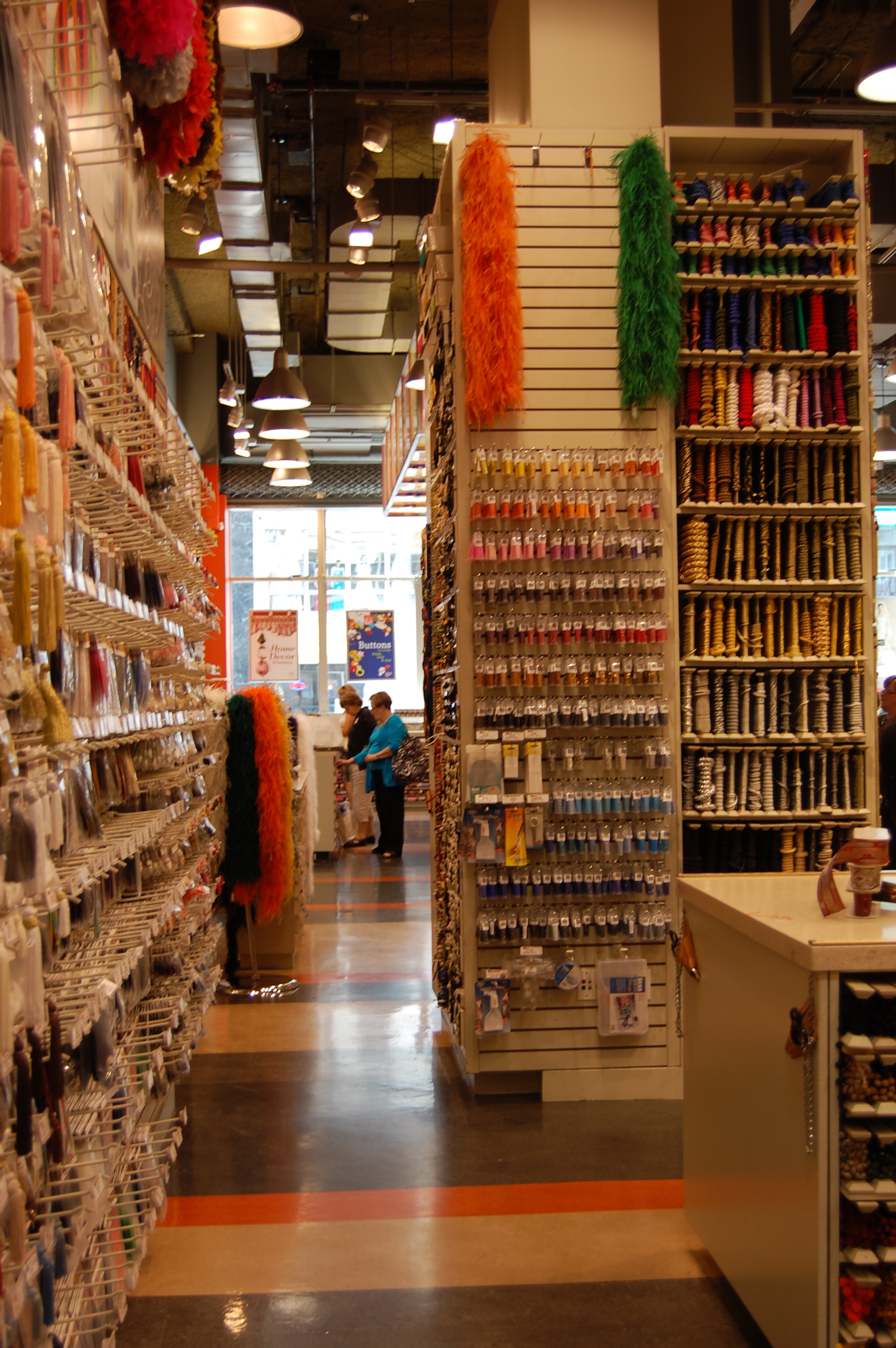
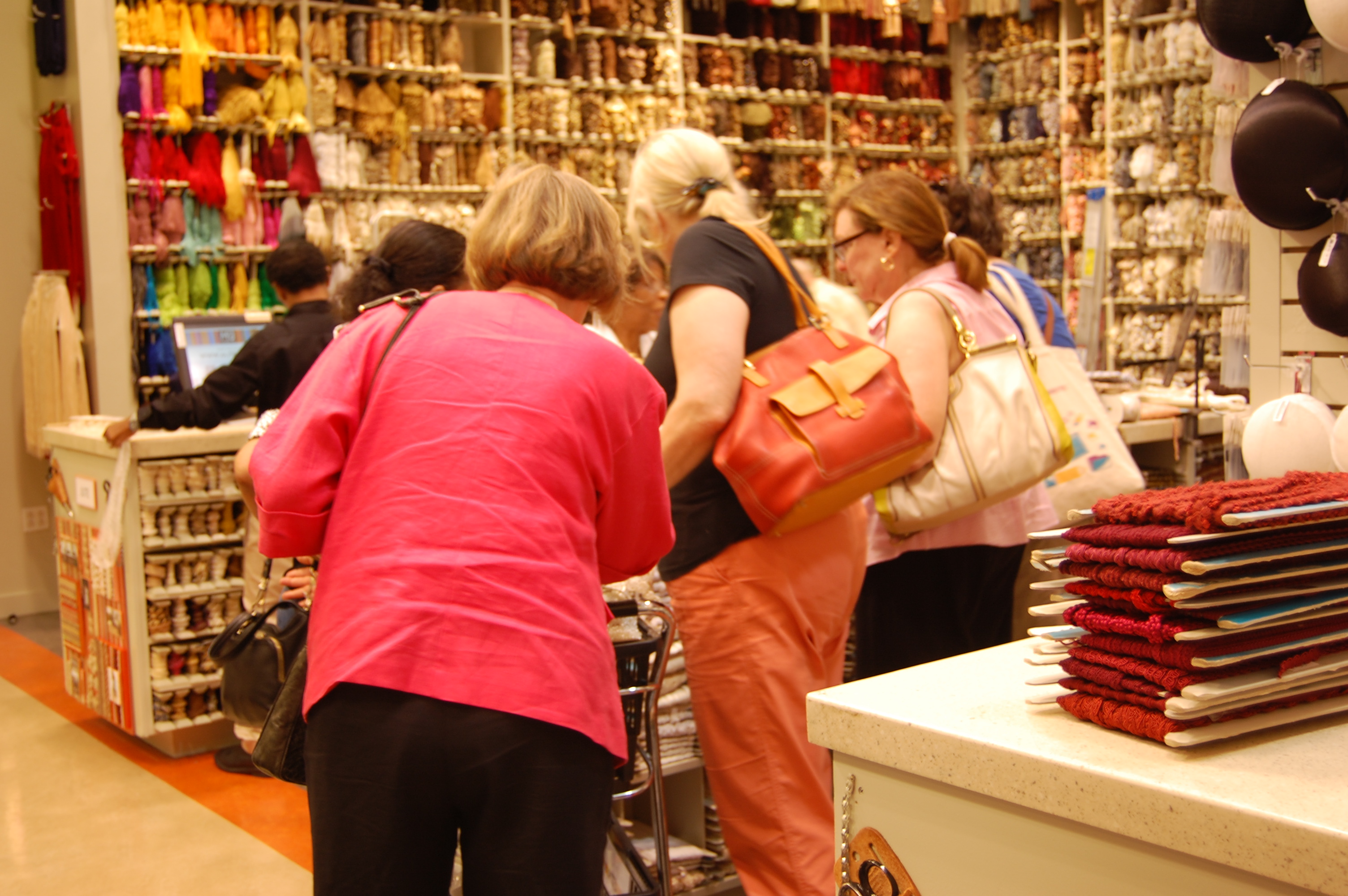
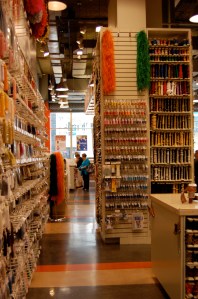
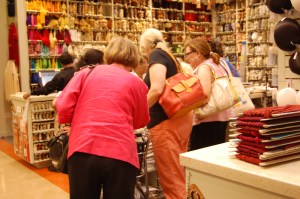
Now that we all had in our possession the two building blocks for our jackets (the fashion fabric and the lining), it was time to look for the embellishments, namely the trim and the buttons.  So off we went to M & J Trimming uptown in the Garment District.   Walking into M & J was a little bit like walking into a penny candy store, only better (no calories and more selection)!  There were trims and people and sales staff everywhere, and it seemed like everyone was on their own important mission.  We certainly were!  With our boucle and our complementary silk charmeuse in hand, we each first needed to find the perfect trim to set off our jackets.  Although numbering in the thousands, the trims were arranged by color and quite logically, so that once we understood the system, we were each able to pick and choose several “possibilities”.  Susan was there to help us make final decisions – and miraculously, we could start to see a glimpse of the final look of each of our own unique jackets.
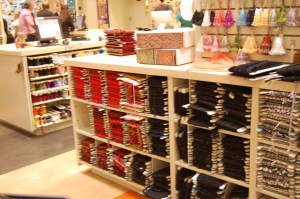
Red and black trims, waiting for my perusal.
Red and black trims, waiting for my perusal.

A view inside the store.
A view inside the store.

Classmates Sherry  and Carol being assisted by Susan.

Classmates Sherry and Carol being assisted by Susan.

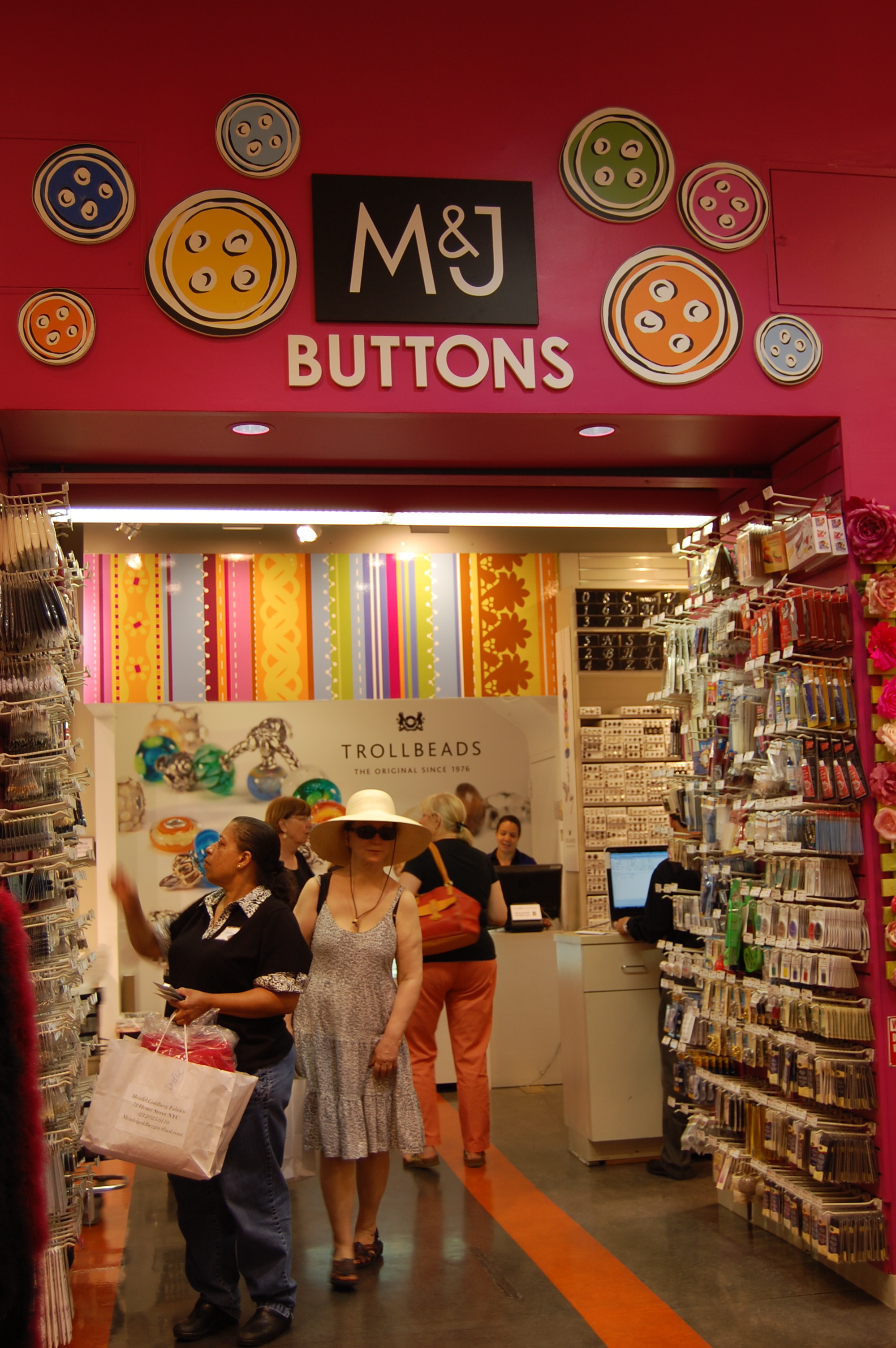
The only thing left to do was pick out buttons.
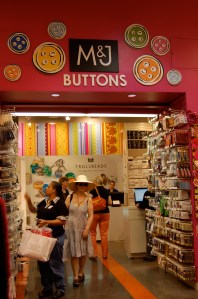
The entrance to the Button section of  M & J Trims.

The entrance to the Button section of
M & J Trimming.

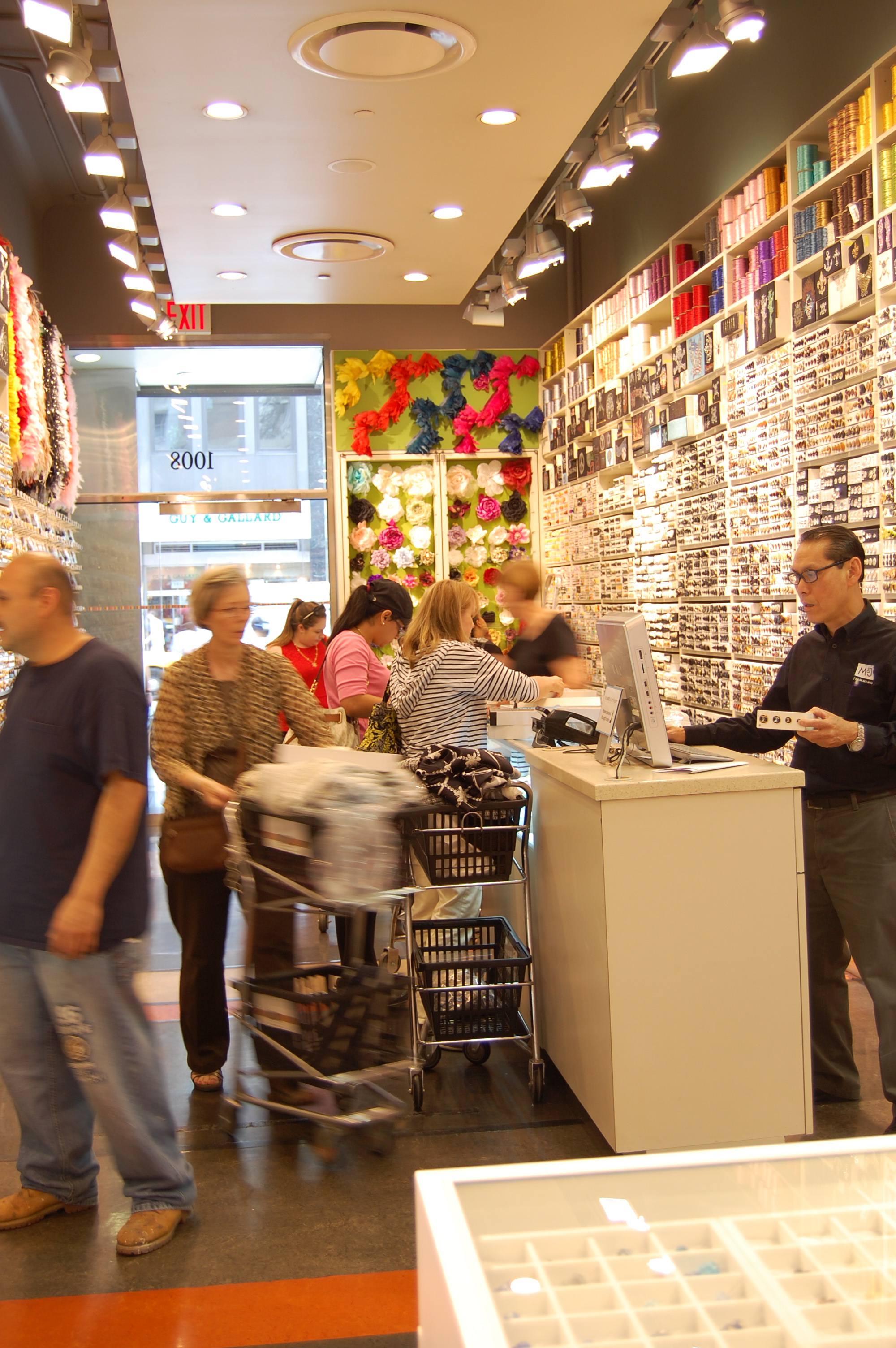
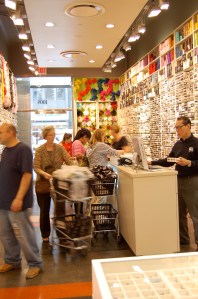
As an enthusiastic fan of unique and beautiful buttons, I was smitten.  The button displays went from floor to ceiling, arranged by color and type, again very logically.
Buttons and more buttons.

Buttons and more buttons.

As sewers, each of us is accustomed to choosing buttons appropriate to our garment. So – what fun it was to place different ones next to our fabrics and trims so they could audition for the final starring part.  With Susan’s guidance, wonderful suggestions, and knowledgeable nod of approval, we all left the store with little bags filled with  great and varied treasures.
Shopping for Fabric - M & J bag

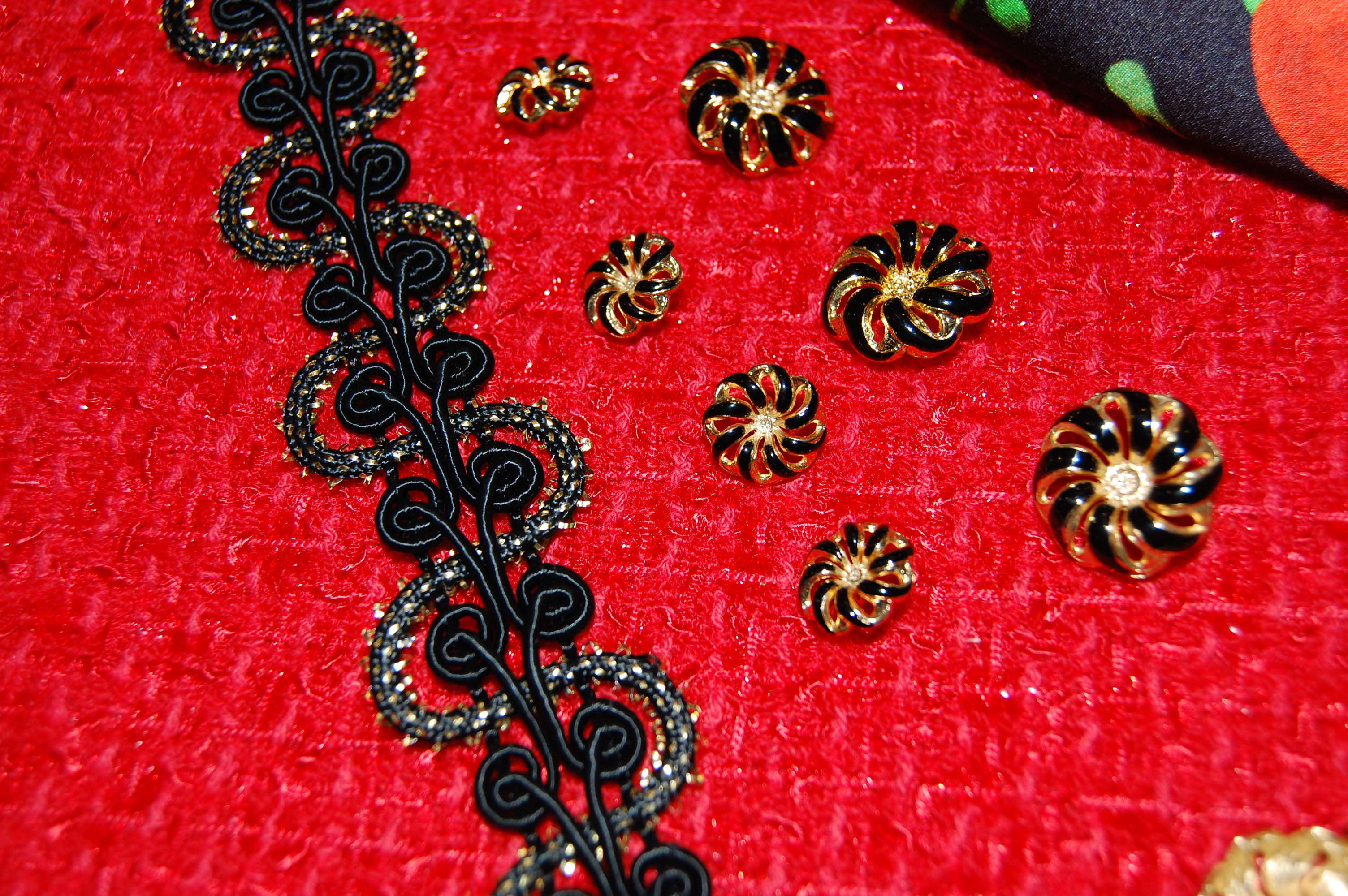
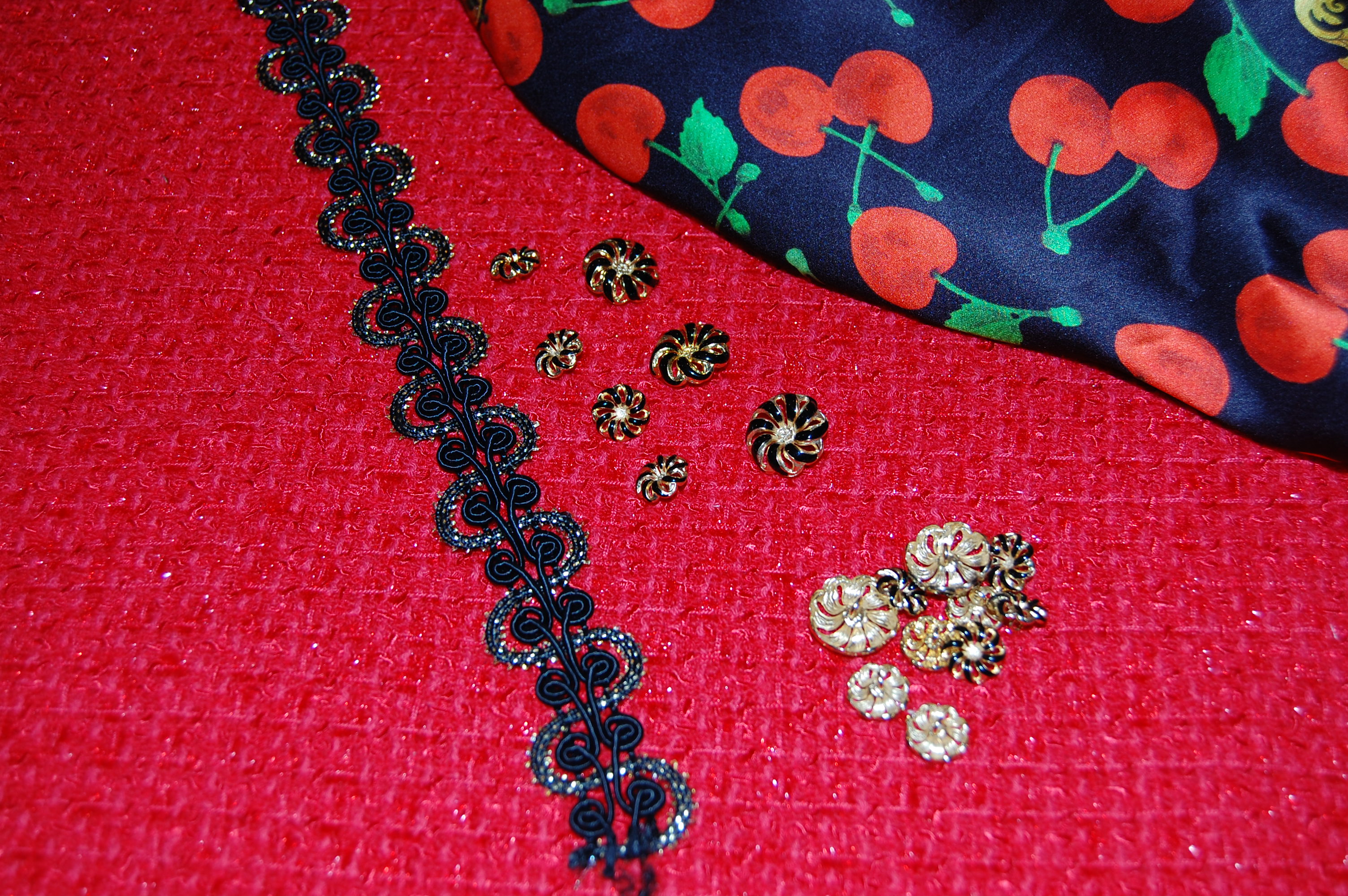
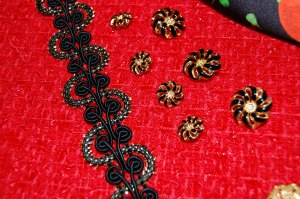
So which of those treasures did I find for my classic French jacket?  I went with the hope of finding a lovely red boucle, which I did.  Paired with that remarkably designed charmeuse shown above, the red seemed to me to be set off most beautifully with black trim and black and gold buttons.
My trim and buttons - click on the photo to see them close-up.
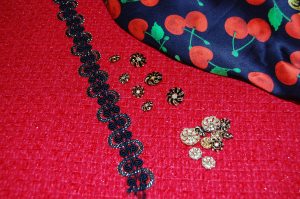
My trim and buttons – click on the photo to see them close-up.

Boucle - charmeuse - trim - buttons.

Boucle – charmeuse – trim – buttons.  All set to begin my jacket . . .

20 Comments

Filed under Buttons - choosing the right ones, Chanel-type jackets, Uncategorized

Suited for Spring

Last Fall when I found emerald green matka silk on Waechter’s website, I quickly purchased 3½ yards.  At 45” wide, I knew that amount would be enough for a Spring suit although I really did not know which pattern I would be using.  It seems I often  purchase fabric and then end up not actually using it for a year – or more.  But with emerald green so front and center in fashion this year, I definitely decided to make this project a top priority.

This is the silk I ordered from Waechter's Fine Fabrics

This is the silk I ordered from Waechter’s Fine Fabrics.

I envisioned what is known as a “dressmaker suit.”  Fairchild’s Dictionary of Fashion (3rd edition, Fairchild Publications, Inc, New York, New York, 2003) gives this definition:  “Woman’s suit made with soft lines and fine details, as contrasted with man-tailored styles that have the sharply defined lines of a man’s suit made by a tailor.  Fashionable in 1950s and revived in the mid-1980s.”  Specifically, I envisioned a straight skirt (aka pencil skirt in today’s fashion parlance), a short-ish, dressy jacket with some neat detail on it, and adorned with buttons to compliment the sheen and slubby texture of the silk.

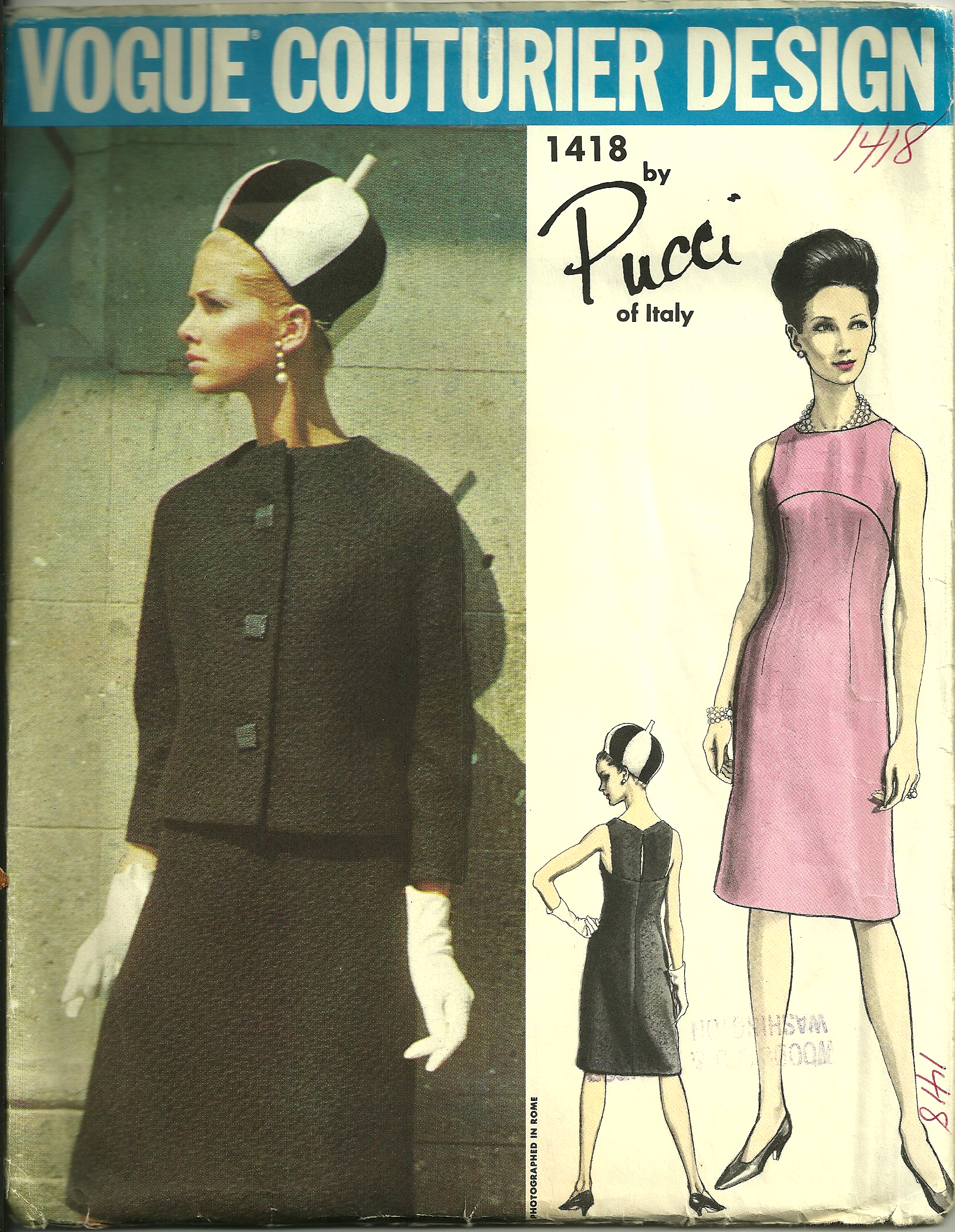
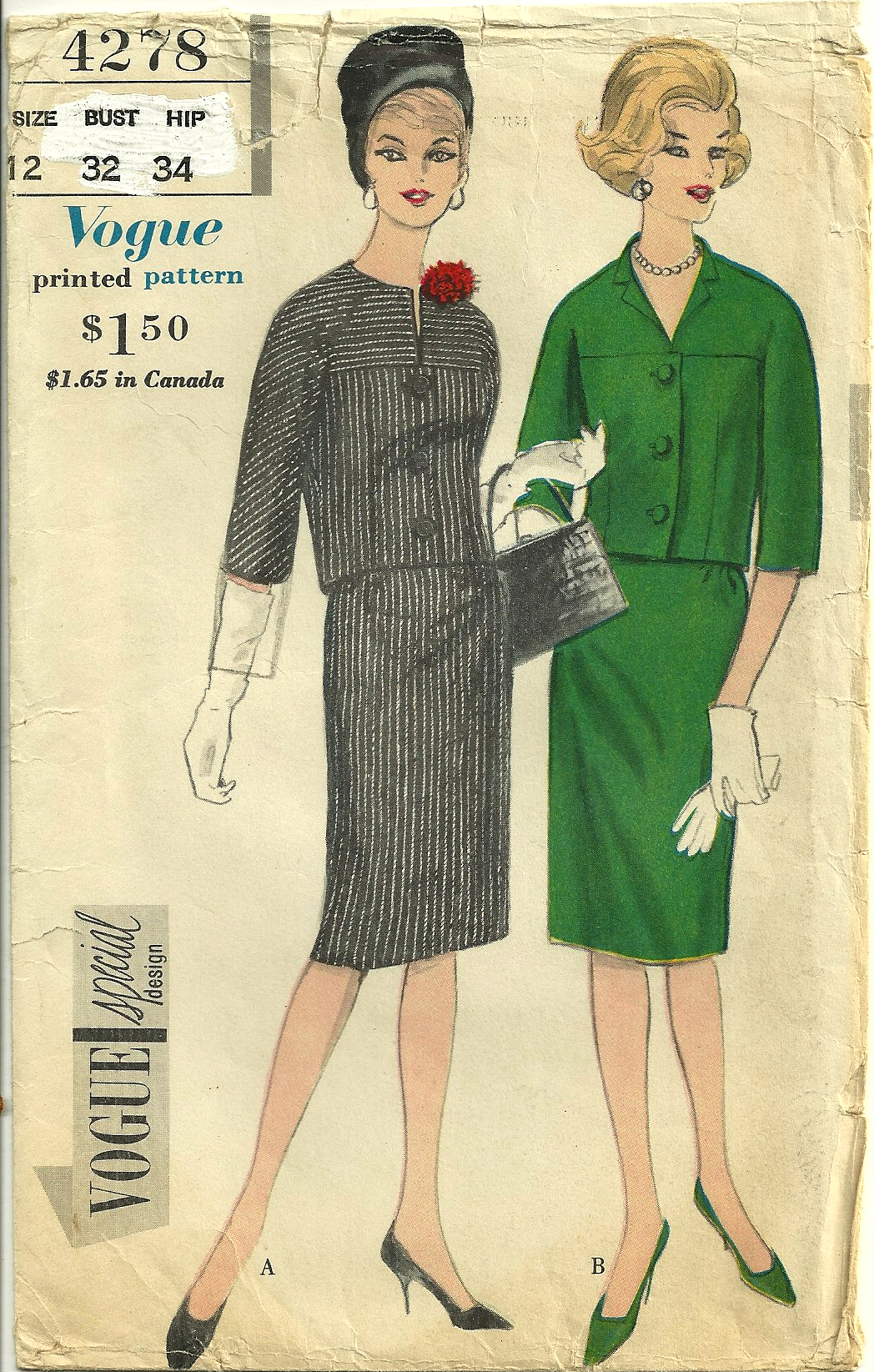
First step was to go to my pattern box, brimming over with vintage patterns (and a few new ones).  I quickly had my selection narrowed down to two possibilities, but one was actually a sheath dress with coordinating jacket, not a jacket and skirt. (Yes, there is a definition for this category as well, according to Fairchild’s:  “Suit dress:  Used in 1960s to refer to a jacket and dress ensemble that resembled a tailored suit.”)

Is it the hat that makes this ensemble so appealing - or just good styling?

Is it the hat that makes this ensemble so appealing – or just good styling?

I hashed over the two reservations I had about using this pattern:  1) I was a little short on yardage – about a quarter of a yard – and just not completely confident that I would be able to cut this pattern out with the generous seams that I have come to like so much, and 2) I have a RTW (gasp!) silk shell top which will look stunning, I think, paired with an emerald green silk skirt and matching jacket.  So in the end, I decided to go with a dressmaker suit to be made from this pattern:

I'll be making View B, which just happens to be shown in emerald green!

I’ll be making View B, which just happens to be shown in emerald green!

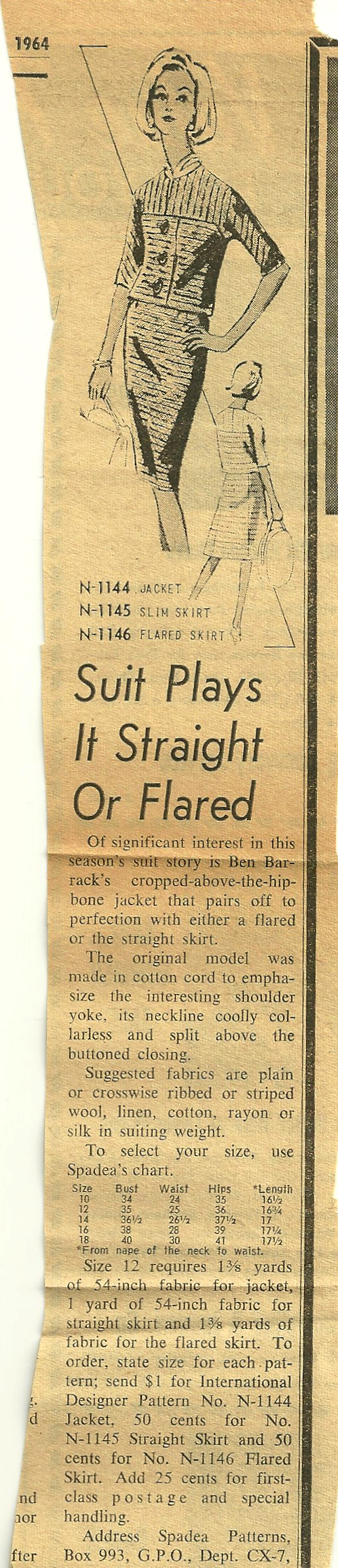
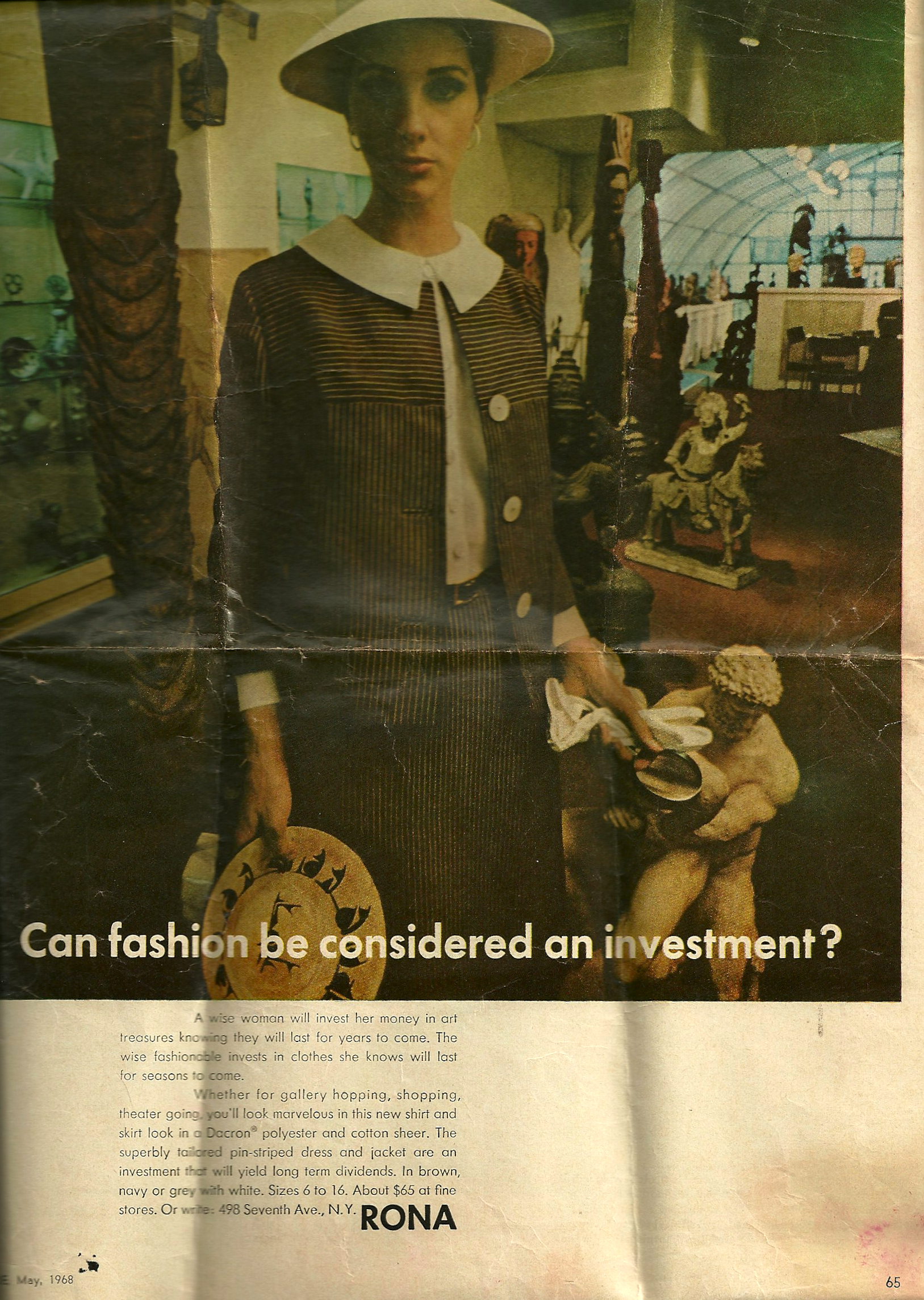
And then, the bonus!  Actually three of them . . .  I had forgotten that tucked inside the pattern envelope were two clippings obviously placed there by the original owner of the pattern.  She was doing some “comparison shopping” for styling.
The first clipping is for another pattern – a Spadea, available through mail order from the newspaper.  Fortunately, the date of 1964 shows up on one corner.

Dressmaker suit - 3

The second clipping is from Vogue magazine, showing a fashion from 1968.

The jacket of this suit, just like the Spadea pattern, is very similar to the Vogue pattern.

The jacket of this suit, just like the Spadea pattern, is very similar to the Vogue pattern.

Perhaps the original owner was trying to decide between a striped fabric and a plain one?  Maybe she was really undecided about making this style suit?  I’d love for her to sit down with me over a cup of coffee so we could discuss this pattern!  As it turns out, she never made the jacket, as its pieces were still in factory folds when I obtained it.  The skirt pattern shows signs of having been used, however.  I’ll never know why,  after all her thought about this suit, she never made it.  However, her decision afforded me the third bonus – the original pattern label – pristine after so many years.

I am looking forward to sewing this label into my green silk suit.

I am looking forward to sewing this label into my green silk suit.

I’ve made my initial adjustments to the pattern and am now making the muslin.  Like my “pattern predecessor” I am dreaming of a certain look.  Now it’s up to me to finish what she started.

11 Comments

Filed under Dressmaker suits, kimono sleeves, Messages from past owners of vintage patterns, sewing in silk, Uncategorized, vintage Vogue patterns from the 1960s, Vogue patterns

A Timely Arrival

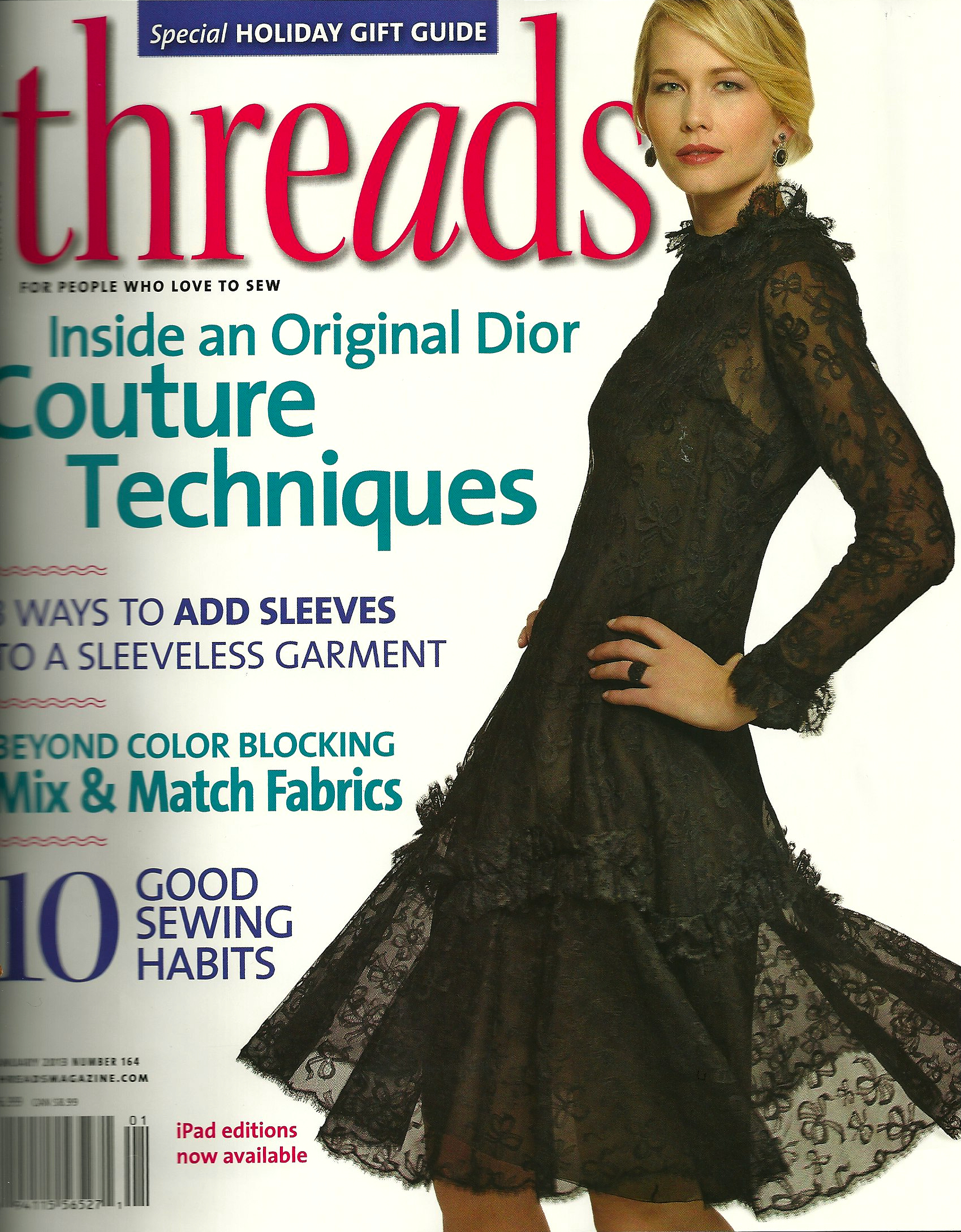
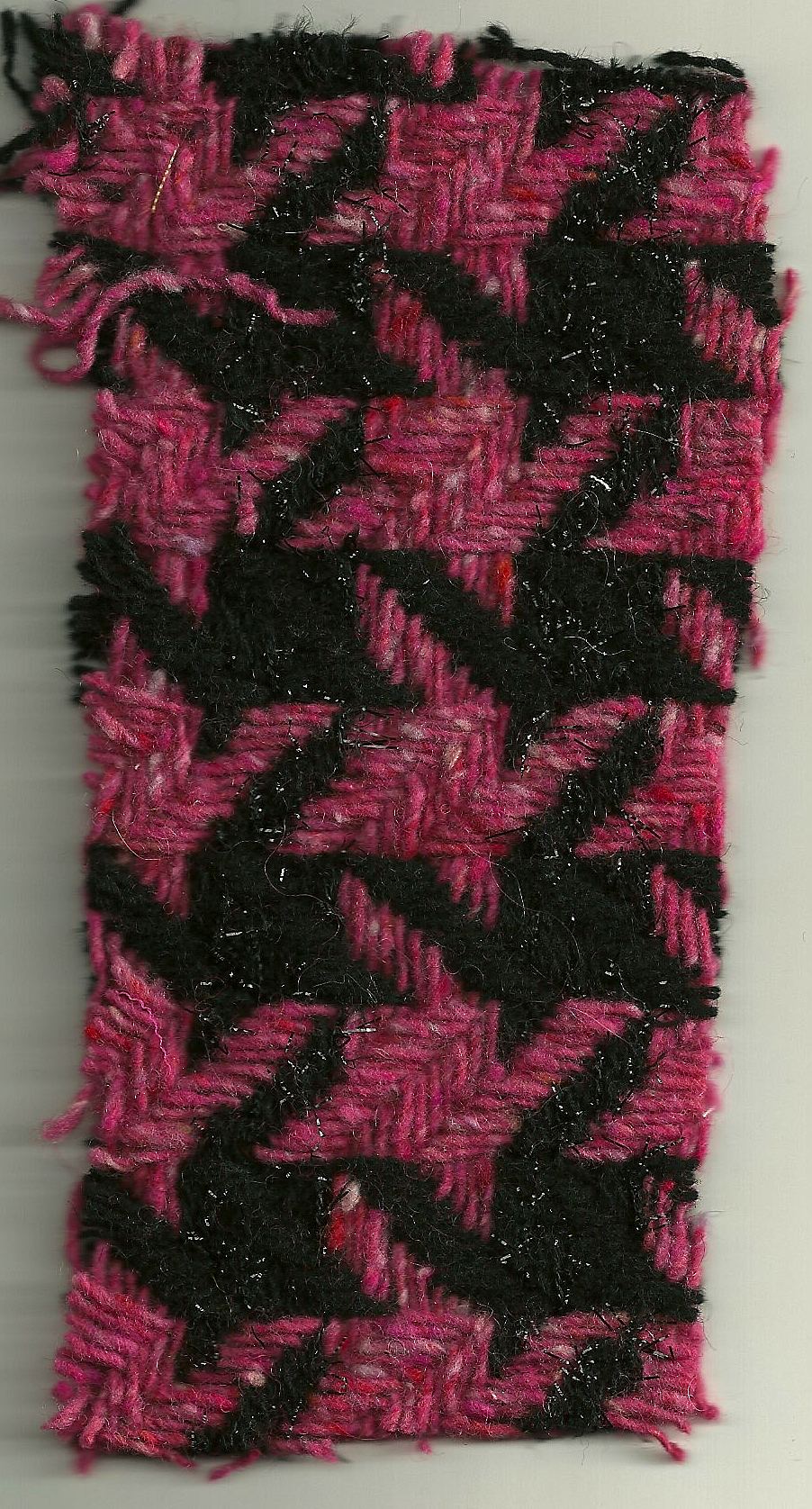
Last week, as I was putting in some final hours on a suit I have been sewing, I was  thinking about some of the “creative” solutions I had to come up with to make the jacket turn out successfully.  I had, unbeknownst to me, made a “bad” decision about the fabric. Even though I (still) love the color and design of the black and pink hounds-tooth wool blend, it turned out to be a very heavy, bulky fabric to sew.  Well, my newest Threads magazine arrived in the mail last Friday – and right there on page 56 is an article entitled “Better Sewing Habits”.  Number 4, by Claire Shaeffer, is:  Choose fabrics appropriate to the garment design.  Printed in bold is this line:  “Select a fabric that is recommended for the pattern”. 

This issue of Threads is packed with all kinds of great advice and ideas!

Sure enough, when I went back to the pattern envelope, there in plain English for the recommended fabrics is:  “Lightweight wool.”  I really felt that sinking feeling, but I tried to console myself by reminding myself that I had made some changes to the pattern and to the construction to accommodate the heavy fabric.  I was trying to feel grateful that I actually have some skills which allow me to make changes and try different approaches to solve sewing problems.  And, actually, now that the jacket is finished, I am happy with it.

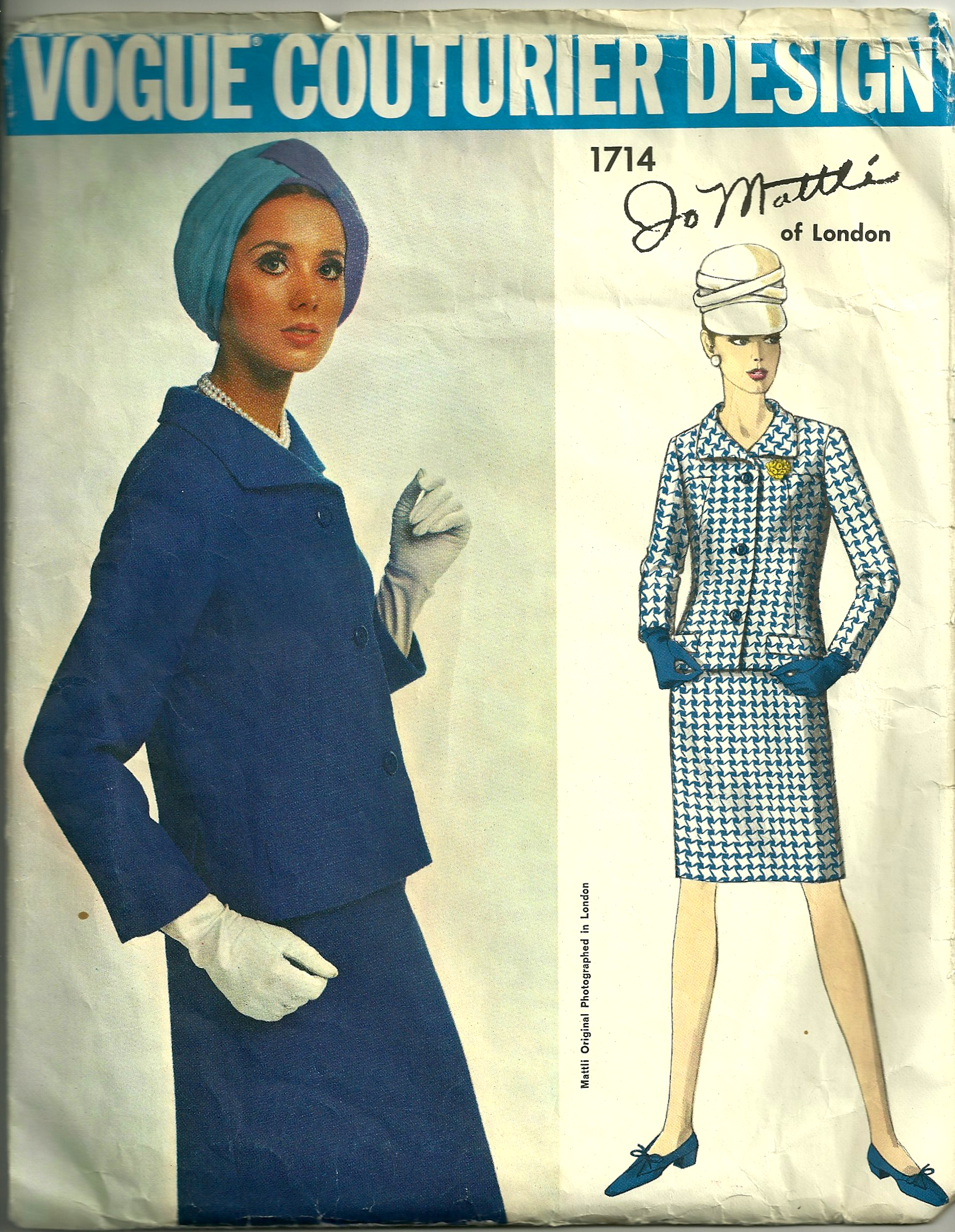
This is the pattern I used – from Vogue’s Designer series, Jo Mattli, circa early 1970s.

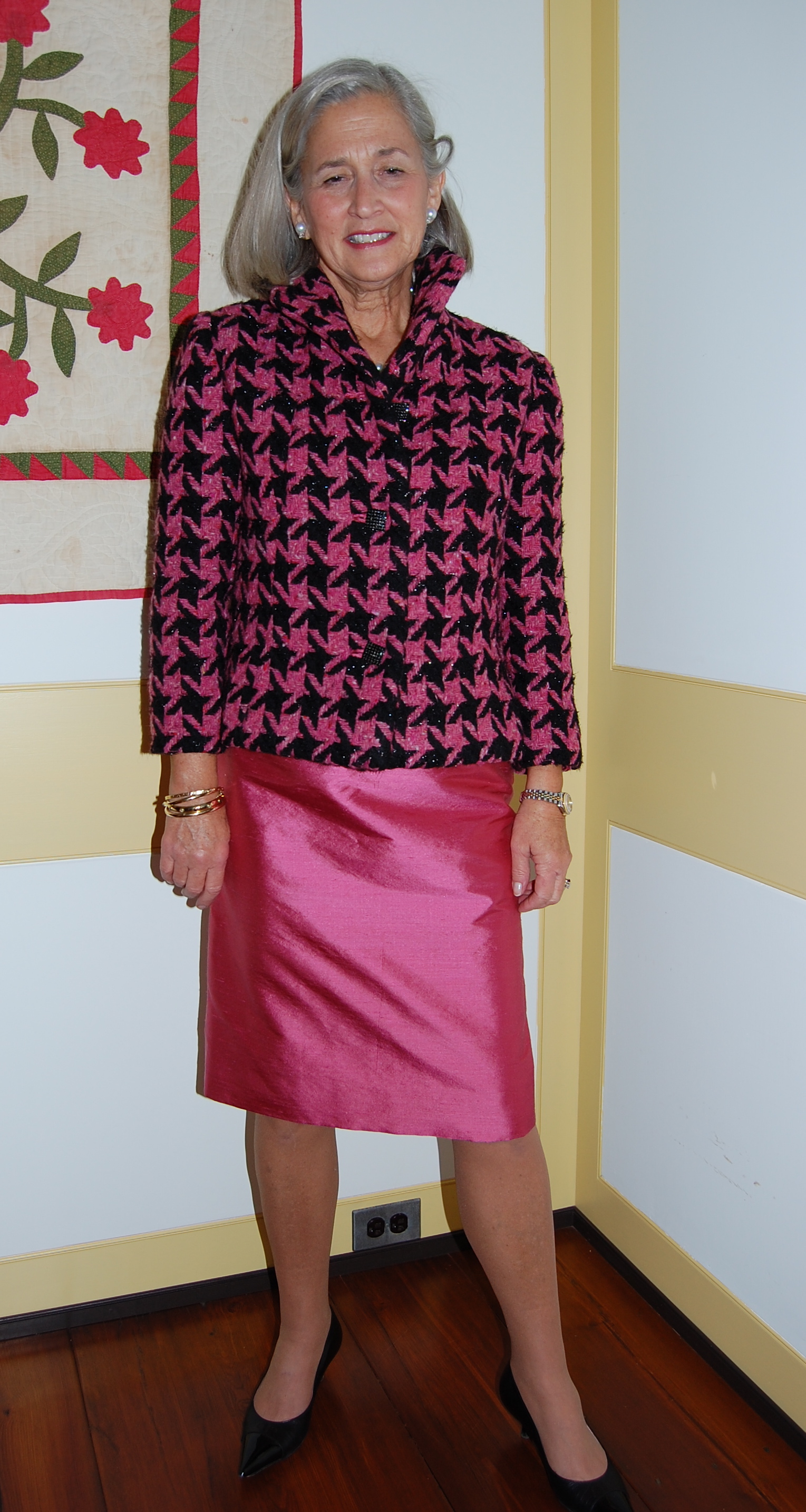
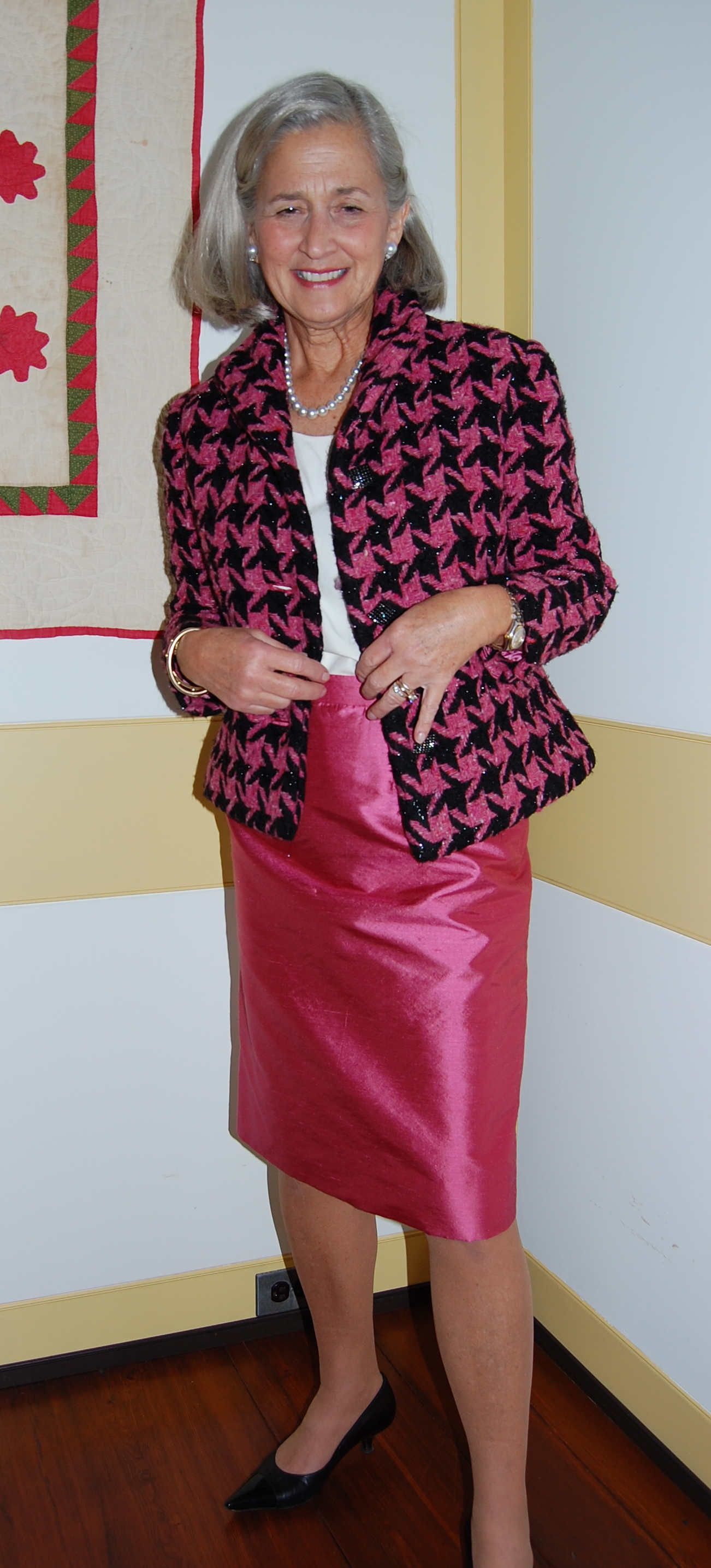
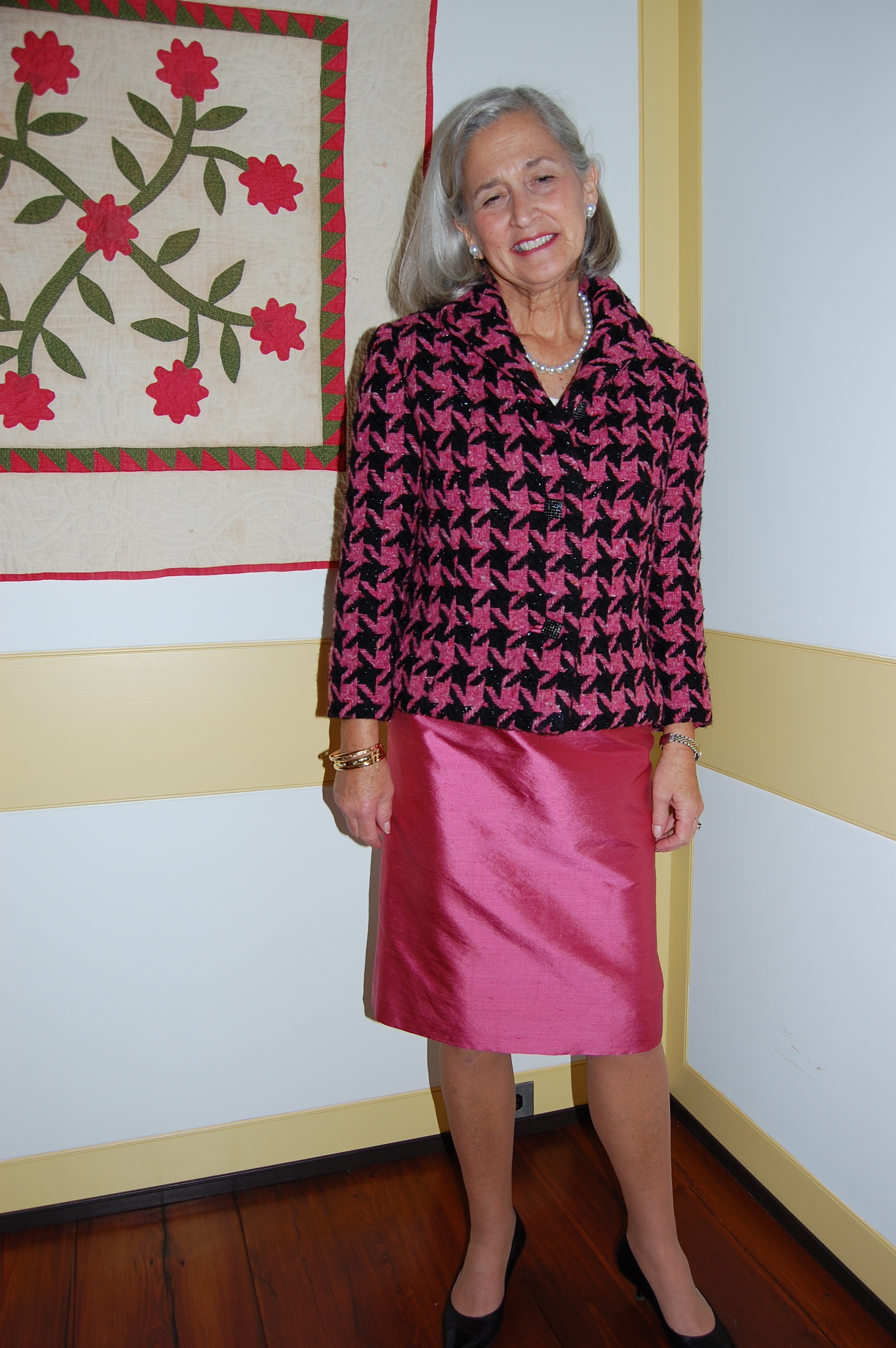
The completed outfit – wool blend jacket and silk skirt.

Here is what went well:

1) I was able to match the design quite well across seam lines, shoulders, and sleeves.

2) I think I nailed the fit!  Of course, I made a muslin first, so it’s not like that just happened.

3) I reduced the spread of the collar, which actually turned out to be a good decision, when I realized how difficult double layers of the fabric were to work with.

Here is what either did not go well or needed to be “creatively” approached:

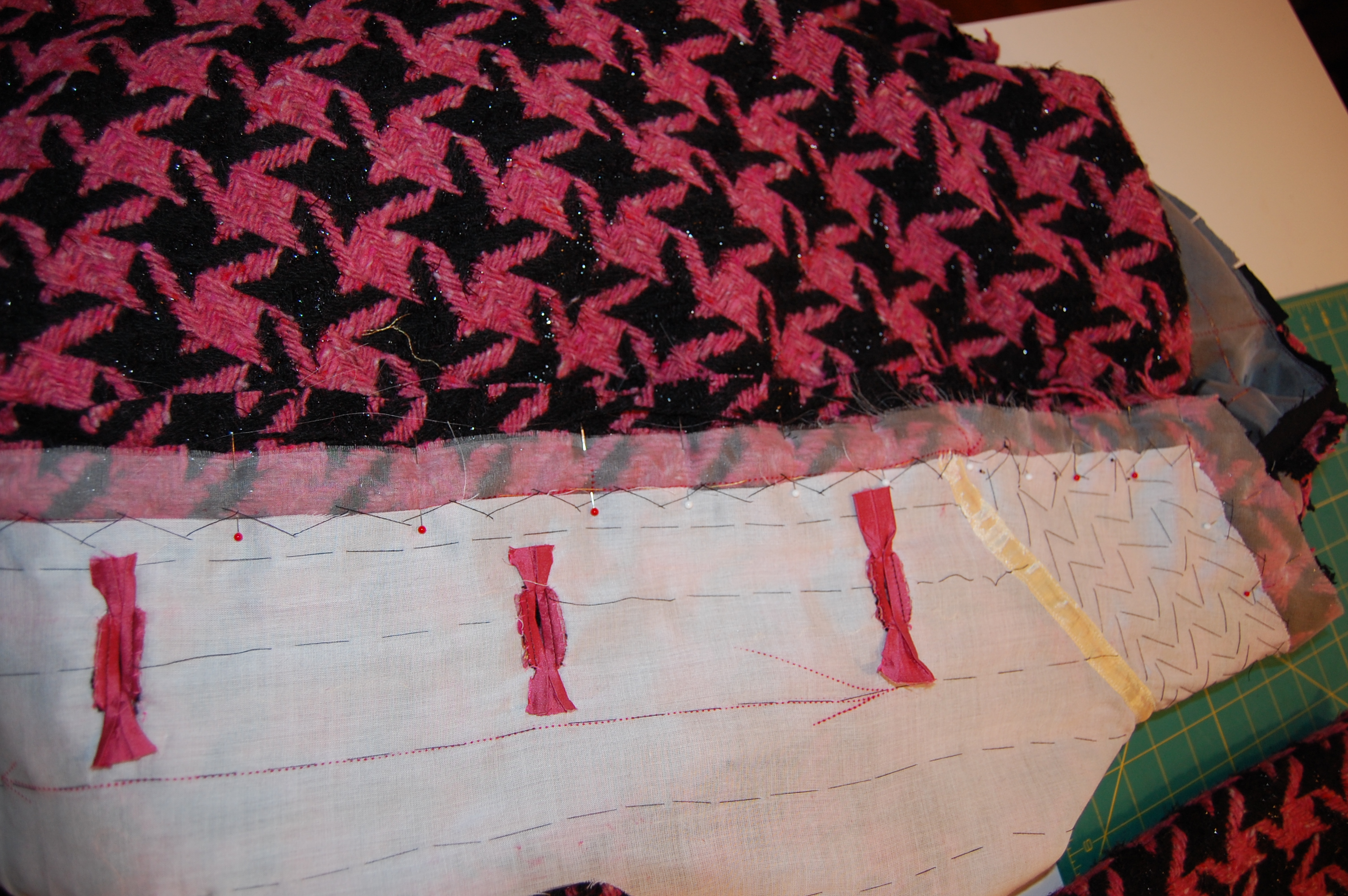
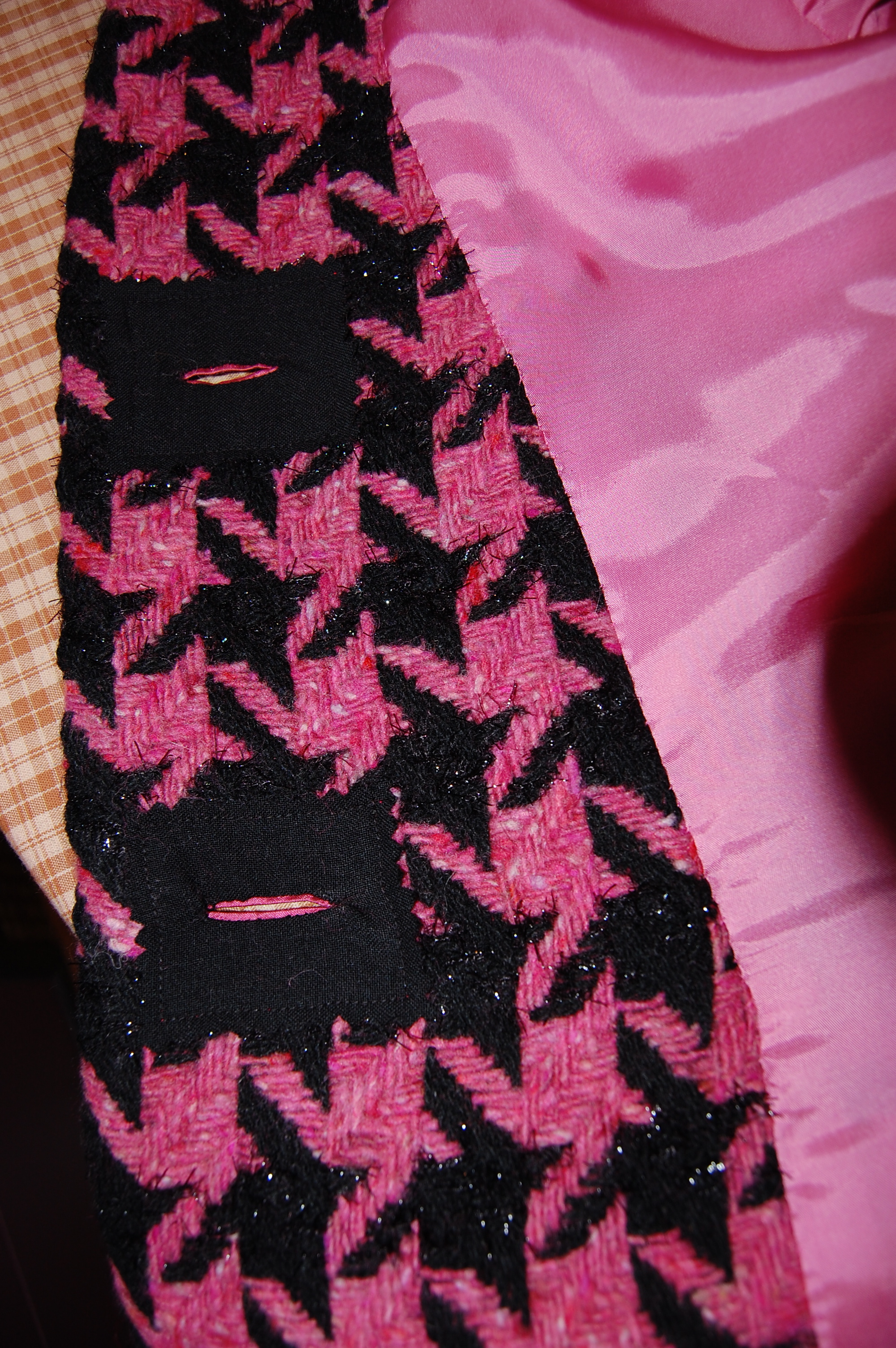
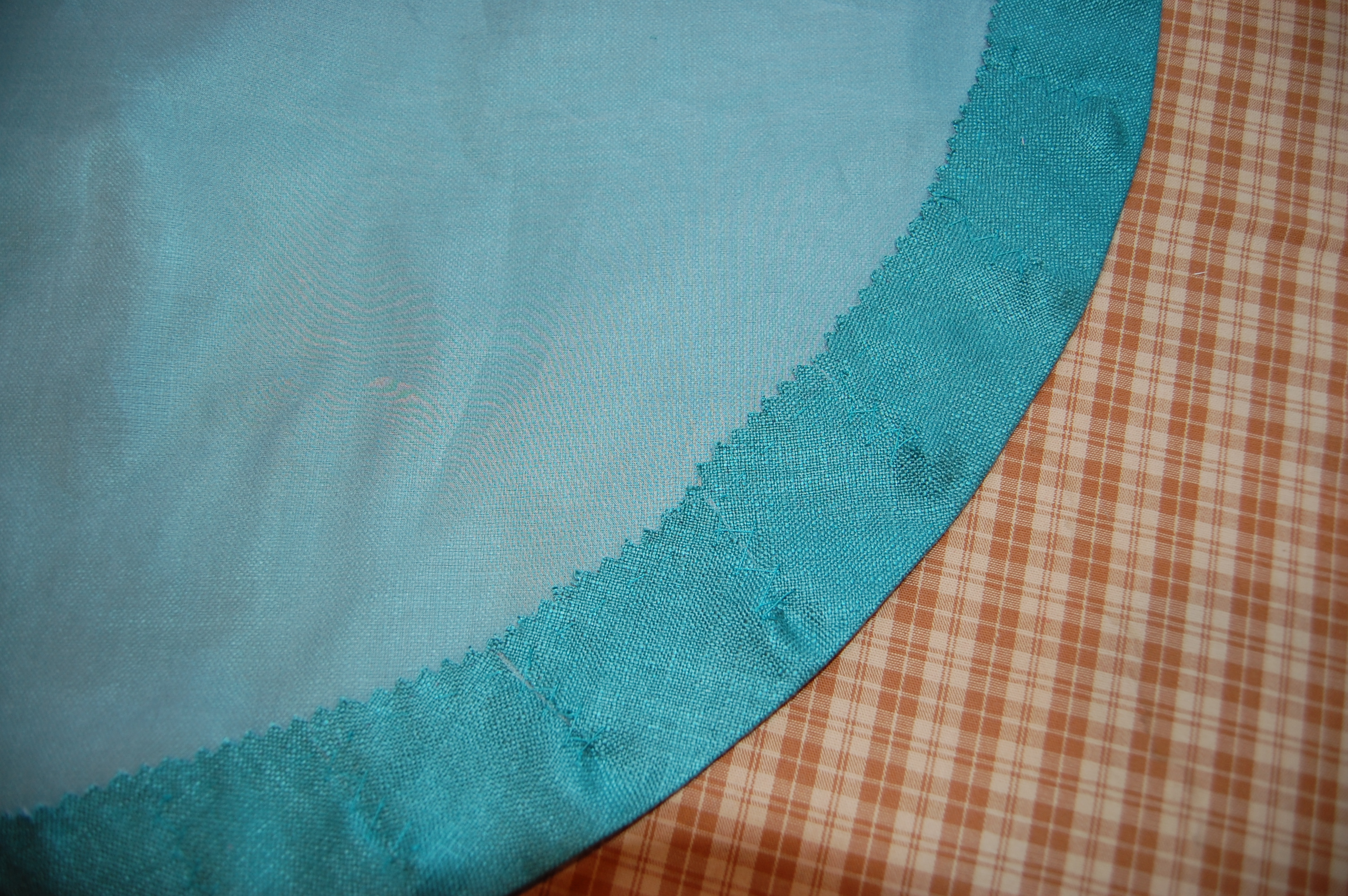
1) I really wanted to make bound buttonholes, but the loosely woven, heavy fabric gave me pause.  So I decided to make them out of the silk skirt fabric.  I backed the buttonhole strips with silk organza by fusing them together.  This made the silk stiff enough to stand up to that heavy wool.

The strips attached for the bound buttonholes.

I made the topmost  buttonhole a “blind” one as I determined that I would not be buttoning that top button anyway.  I knew I could never finish the back of the two remaining buttonholes by the normal method, so I “patched” behind them on the interfacing with a lightweight black wool.

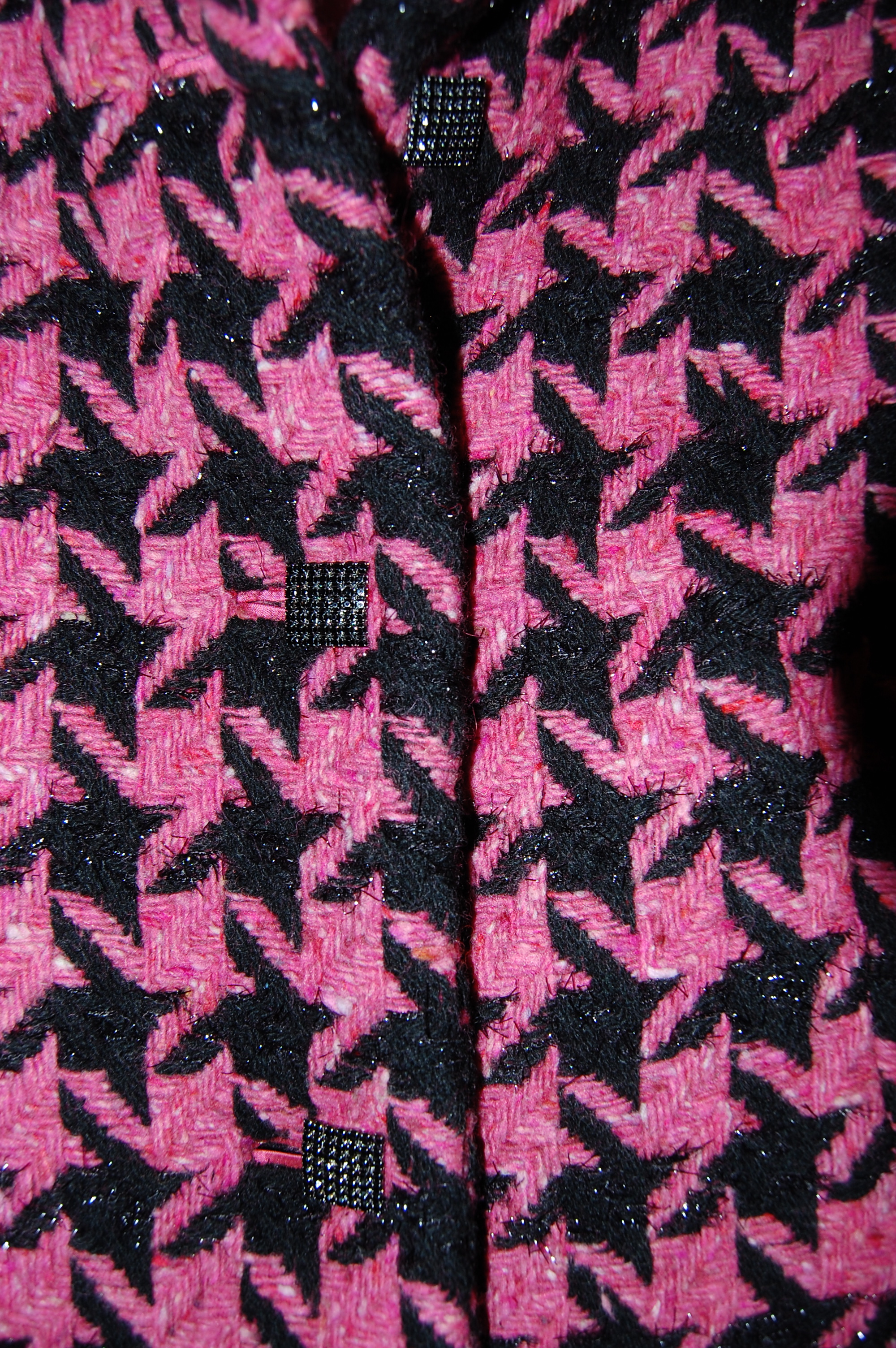
Here is a close-up of the bound buttonholes – and the happily matched front!  Click on the photo for a closer-up view.

Before I sewed the front facing, I attached these “patches” to back up to the buttonholes. Then I cut away the heavy fabric underneath, so that I could finish the underneath of the buttonholes somewhat successfully. Click on the photo to see this up close.

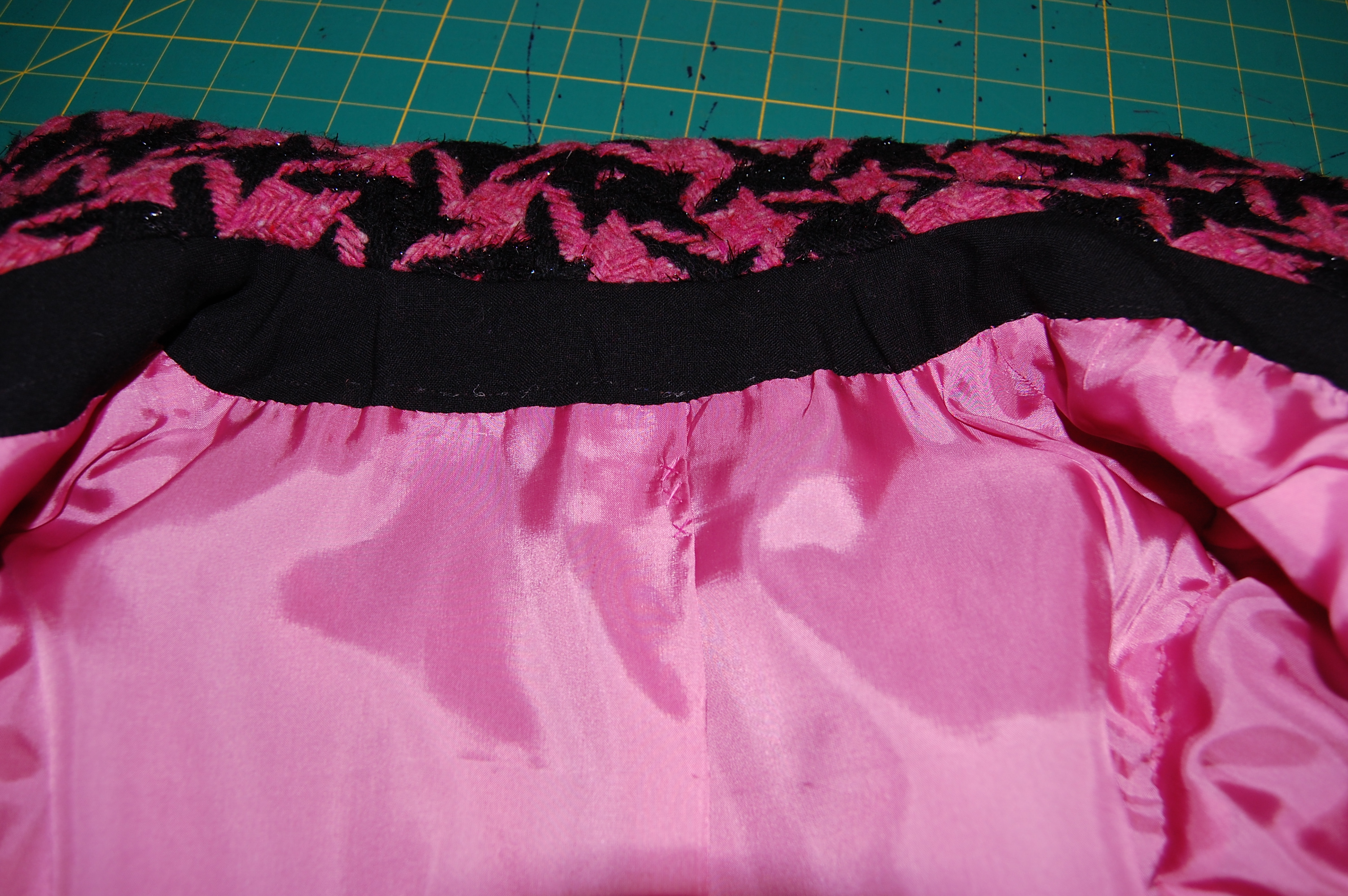
2) The neck facing was going to be too heavy using the pink/black wool.  So I used that same lightweight black wool for it instead.

Using a lightweight black wool for the facing made the neckline much more manageable.

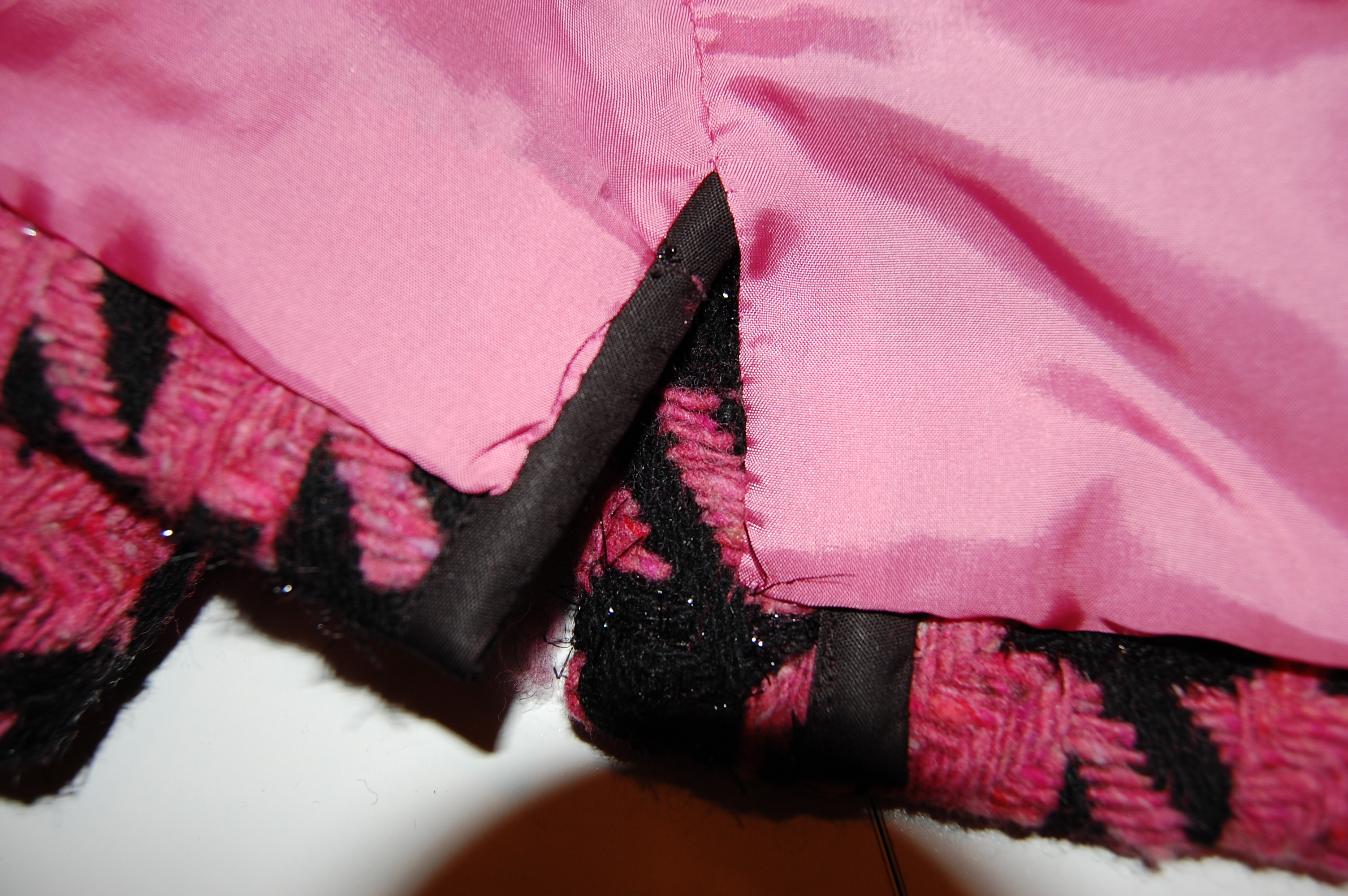
3) The back vents were not going to lay flat if I turned in the raw edges as the pattern instructions indicated.  So I bound them with black bias tape instead.

Instead of turning back the facing edge to finish it, I attached this bias binding.

4) Setting in the sleeves was an exercise in sewing terror!  I was sure they would never look good, but somehow they came out unpuckered and pretty well matched.  I only used a sleeve heading to round out the shoulder, even though the pattern called for shoulder pads.

5) I have steamed and steamed, but still feel like the front edge could use some further attention.  I might take the jacket to the dry cleaners and have it professionally steamed….

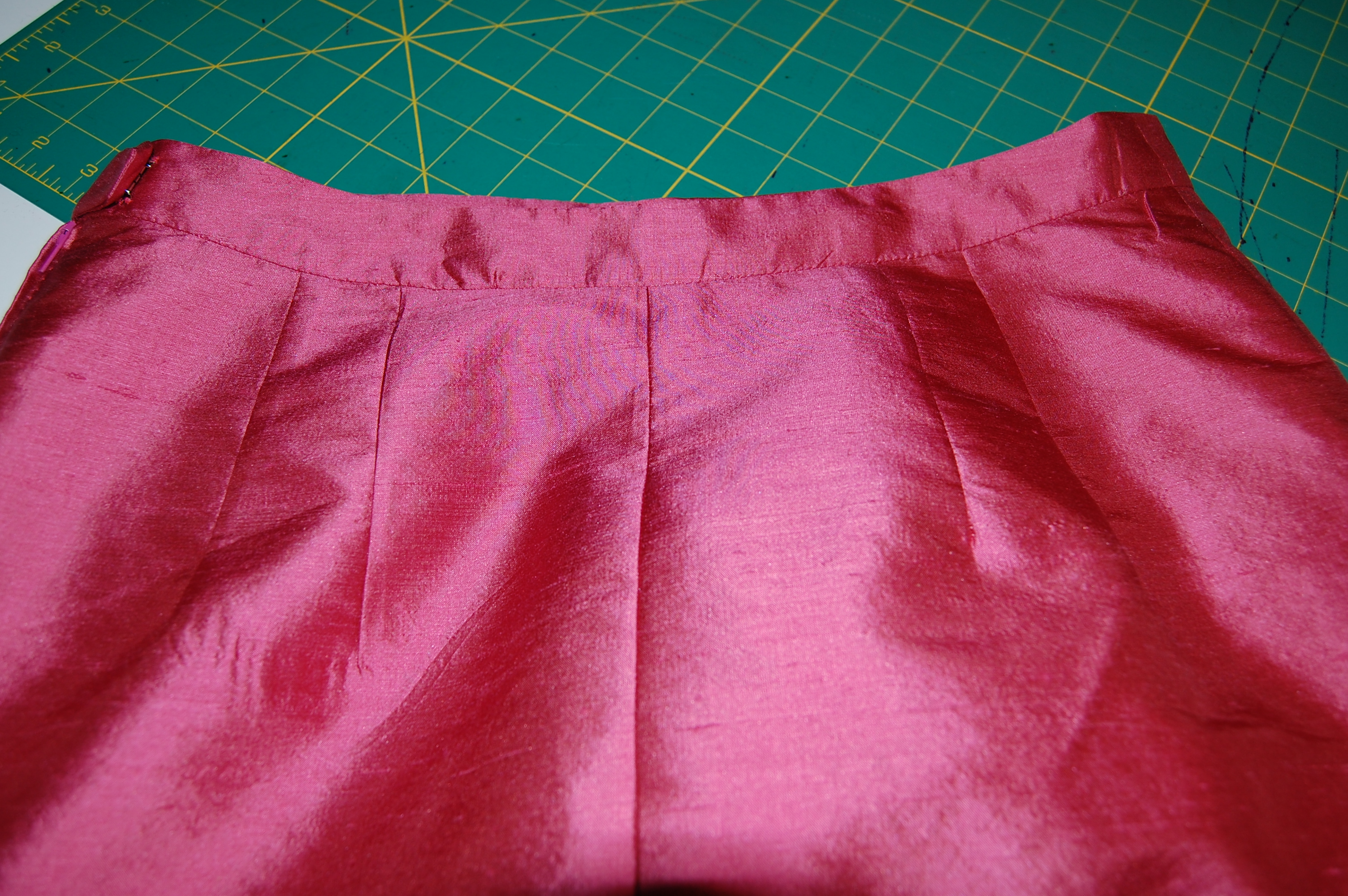
I actually really liked the engineering of the pattern: with the correct weight fabric, the jacket would go together quite well and the skirt pattern is a winner, with its shaped waistband.

This view of the back waistband shows how it is shaped.

And, of course, I inserted the zipper by hand.

Another look at the finished suit.

And one more…

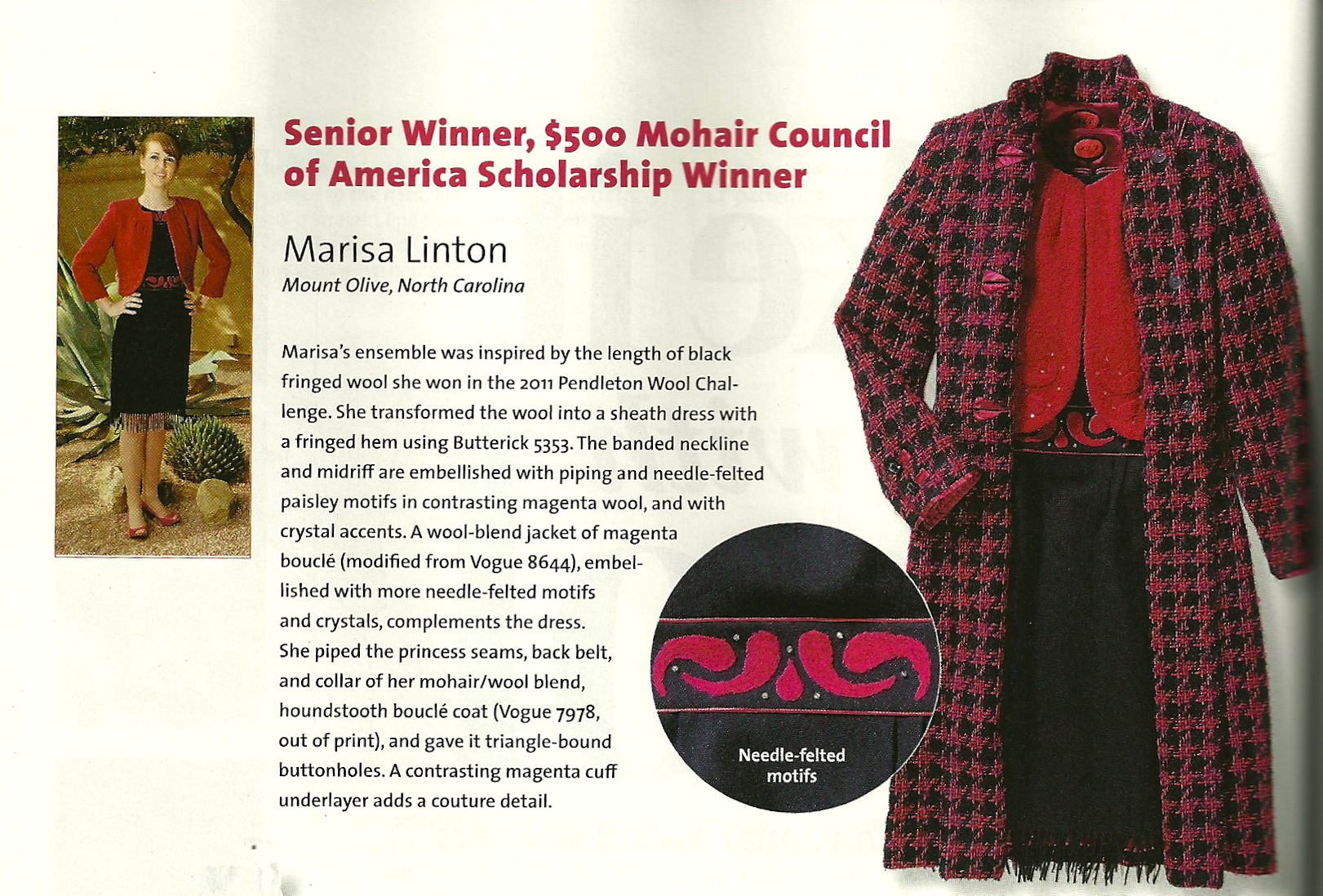
Interestingly enough, in the same issue of Threads, the winners of the “Make it with Wool” contest were featured.  I couldn’t believe my eyes when I saw that the Senior Winner of the Mohair Council of America, Marisa Linton, of Mount Olive, North Carolina, had used either the same fabric or one very close to “my” fabric to make the coat for her entry (which is stunning, I might add!).  She had used a very original and successful technique for her buttonholes, which are part of the details which make her outfit so noteworthy.

Do you think this is the same fabric? (Threads, January 2013, page 52)

So – it seems the past 7 days have been a time of many arrivals, including a huge and destructive East Coast storm – and the first day of November.    May the next 7 days bring the final arrival of power and comfort to so many who lost so much in the storm, and make us all grateful for resilience, whether it be in life – or in sewing .

13 Comments

Filed under bound buttonholes, hand-sewn zippers, sewing in silk, Shoulder shapes (shoulder pads), Uncategorized, vintage Vogue Designer patterns, vintage Vogue patterns from the 1970s, woolens

Missing in Action – or – Doesn’t everyone shop for fabric on vacation?

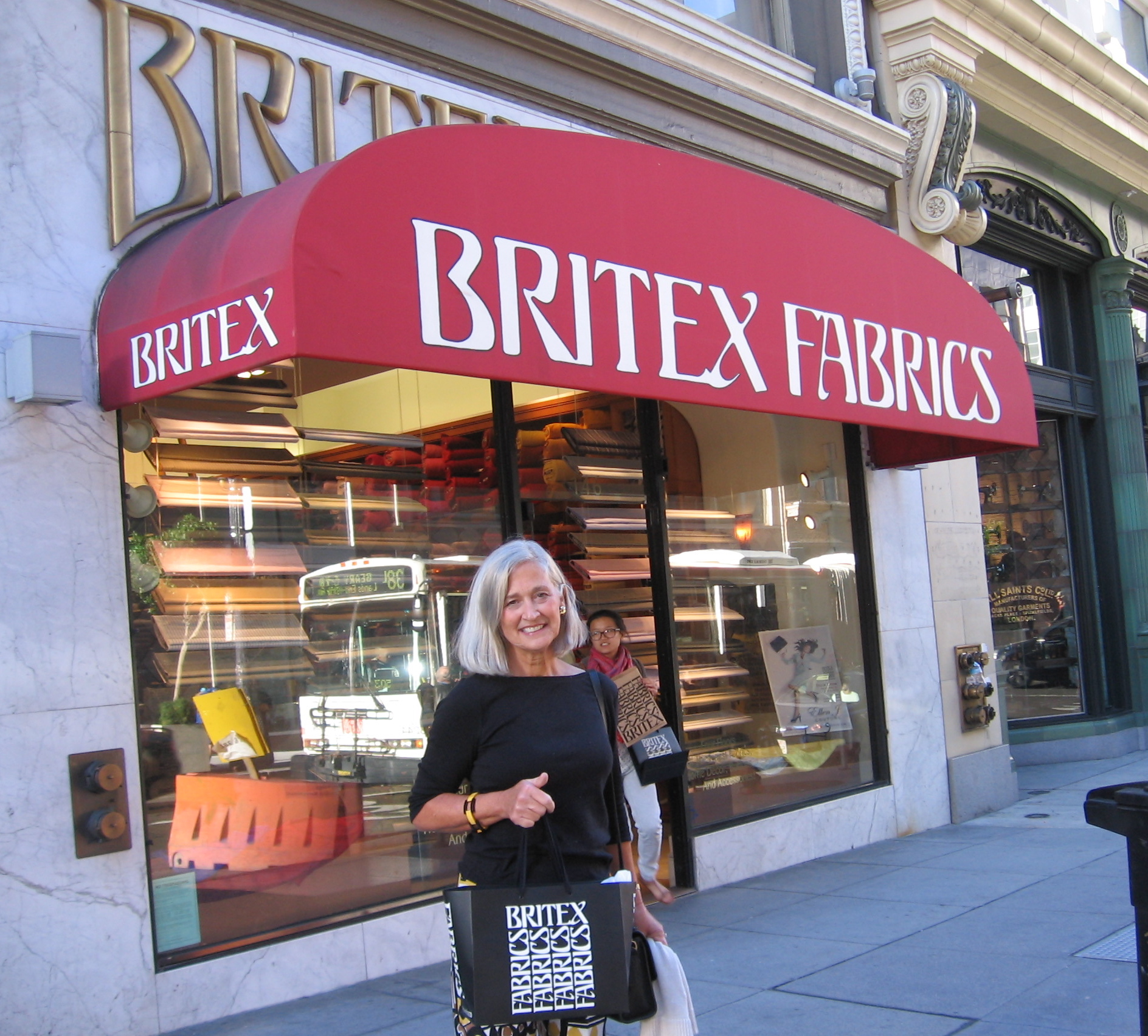
You may have noticed that I’ve not posted anything for almost two weeks.  Mr. Fifty Dresses and I have been away on the West Coast, enjoying some time with our grown son, and seeing some of the majestic scenery in the states of California and Oregon.  Of course, one of the best places to enjoy colorful scenery is always in Britex Fabrics on Geary Street in San Francisco.  My husband and son know by now that no trip to California is complete without fabric shopping!

I am all smiles with my newly-made purchase! I am wearing “my very styish pants” and was delighted to get complimented on them in the store.

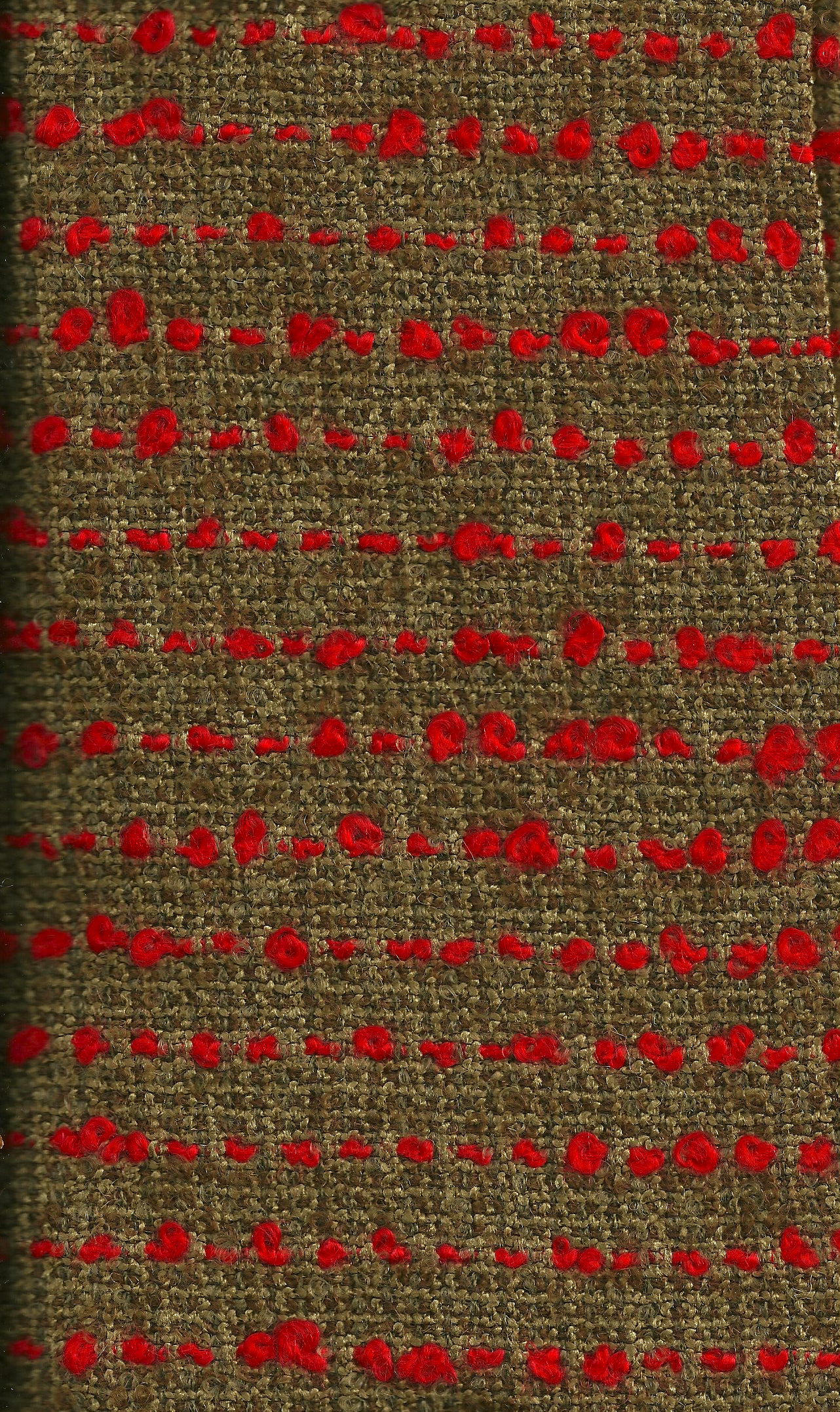
You may recall that I have been looking for a skirt-weight fabric to coordinate with this wool:

This fabric will be a jacket, and I want to make a pink skirt to make it into a “dressy suit”.

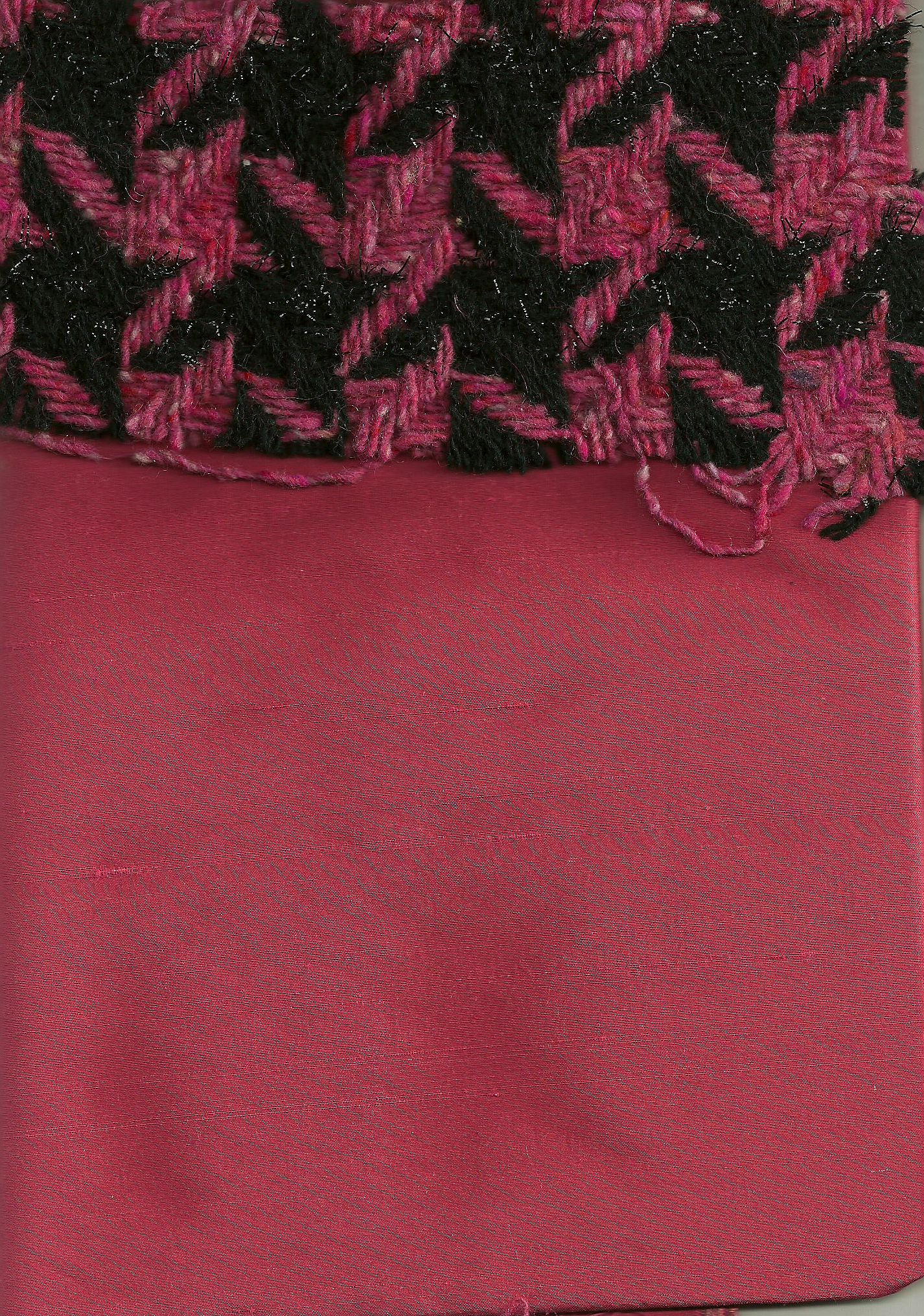
That pink is a tricky color, I’ve discovered.  I’ve ordered many swatches, thinking one of them will be “it” and it never was.  So I tucked that pink and black houndstooth- checked wool sample into my carry-on bag so that I could enlist the experts at Britex to assist me.  The bolted wools and silks and designer fabrics are on the first floor, and it did not take long for me to accept Douglas’ kind offer of help.  We looked first at the wools, one beautiful bolt after another, but none that totally complimented the pink.  Next we moved to the silks – and there we struck gold – or perhaps I should say pink gold.  As soon as Douglas pulled out this silk shantung, we knew the color was right.

Just what I was looking for!

We carefully checked the color inside and then took it outside on the steps to check it in sunlight.  Perfect, both places.  Being shantung, it has the correct heft to accompany the wool, but it is light enough to be used for attached trim if I choose to add it around the collar, down the front, and at the bottom of the sleeves.

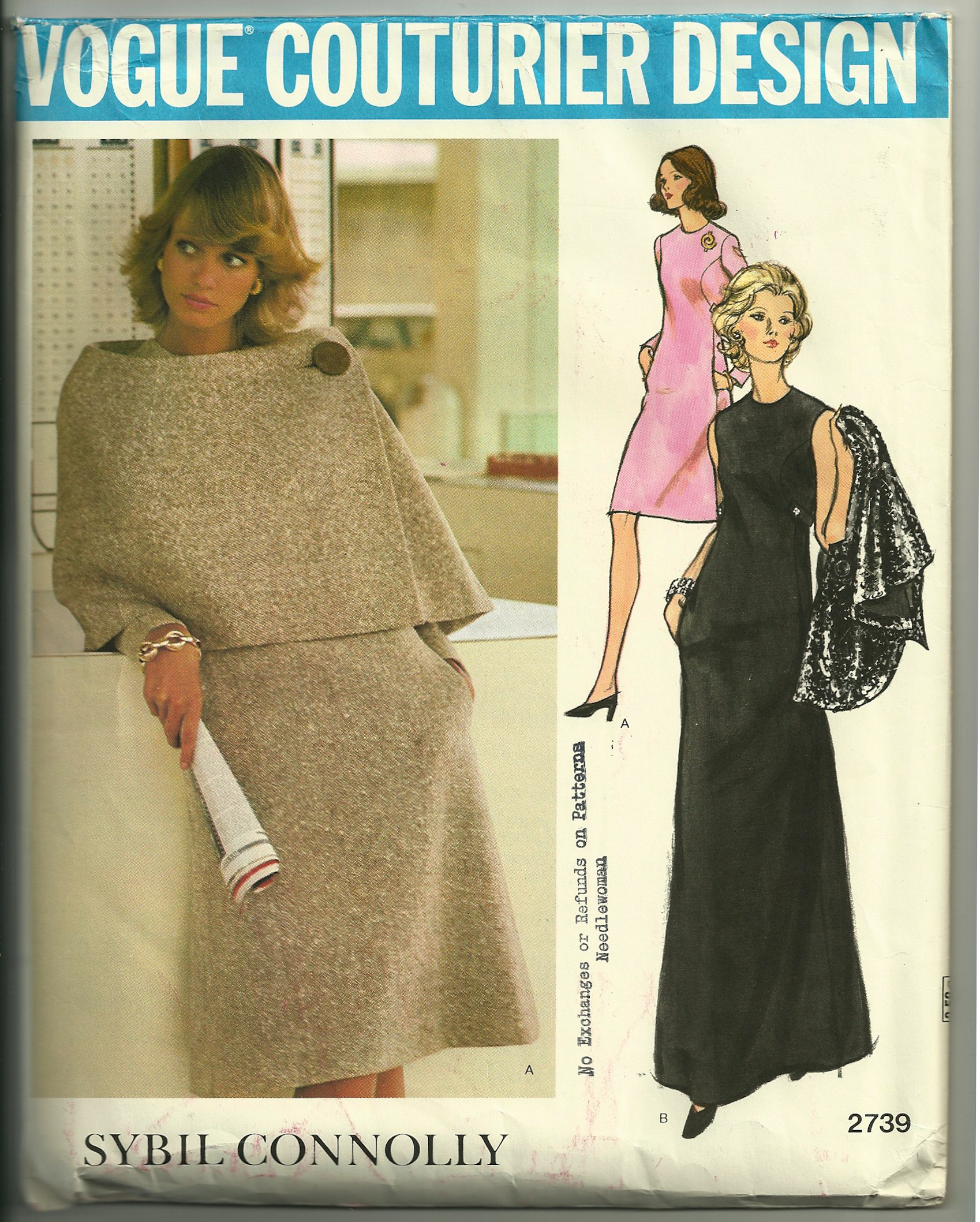
I am probably going to use this 1970s’ pattern for this outfit.

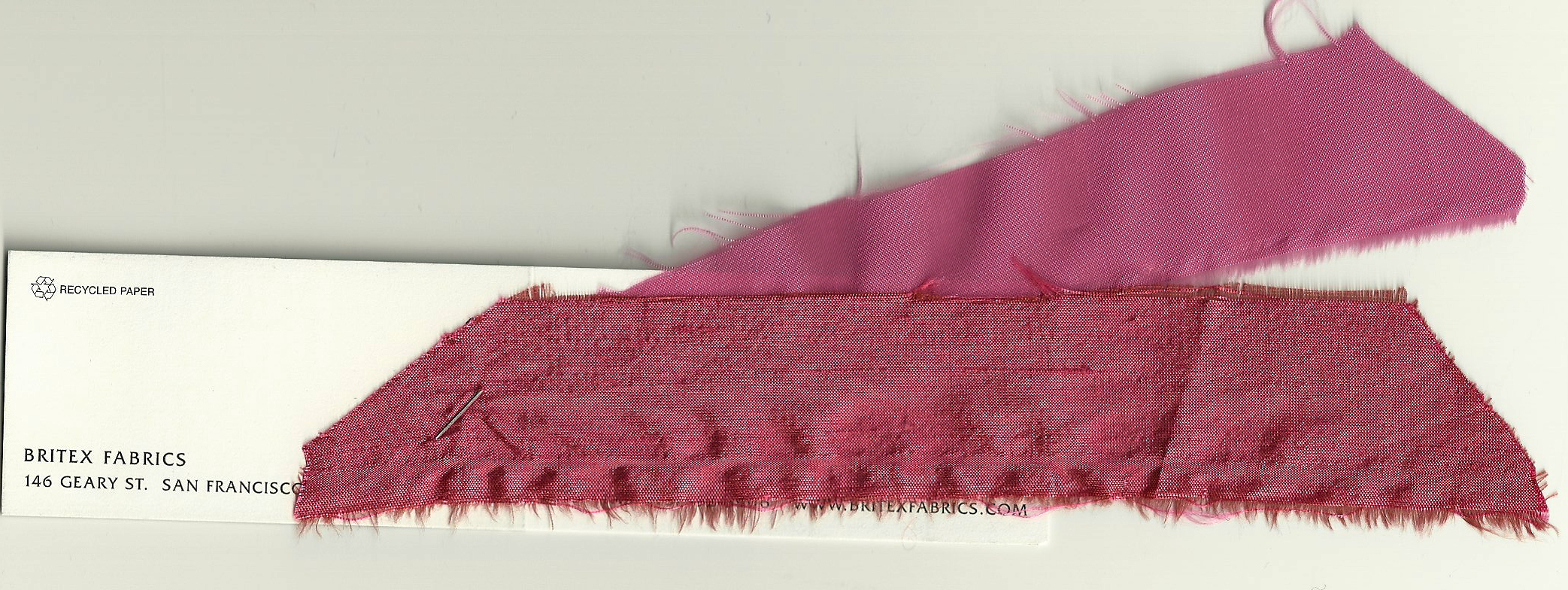
Next we selected a lining fabric, enough for a narrow skirt and the jacket.   Those of you who know Britex, know that the store is on 4 levels, so to accommodate the need to move between floors, I was provided this card with swatches of my newly selected fabrics attached.

The lining is the lighter-colored fabric.

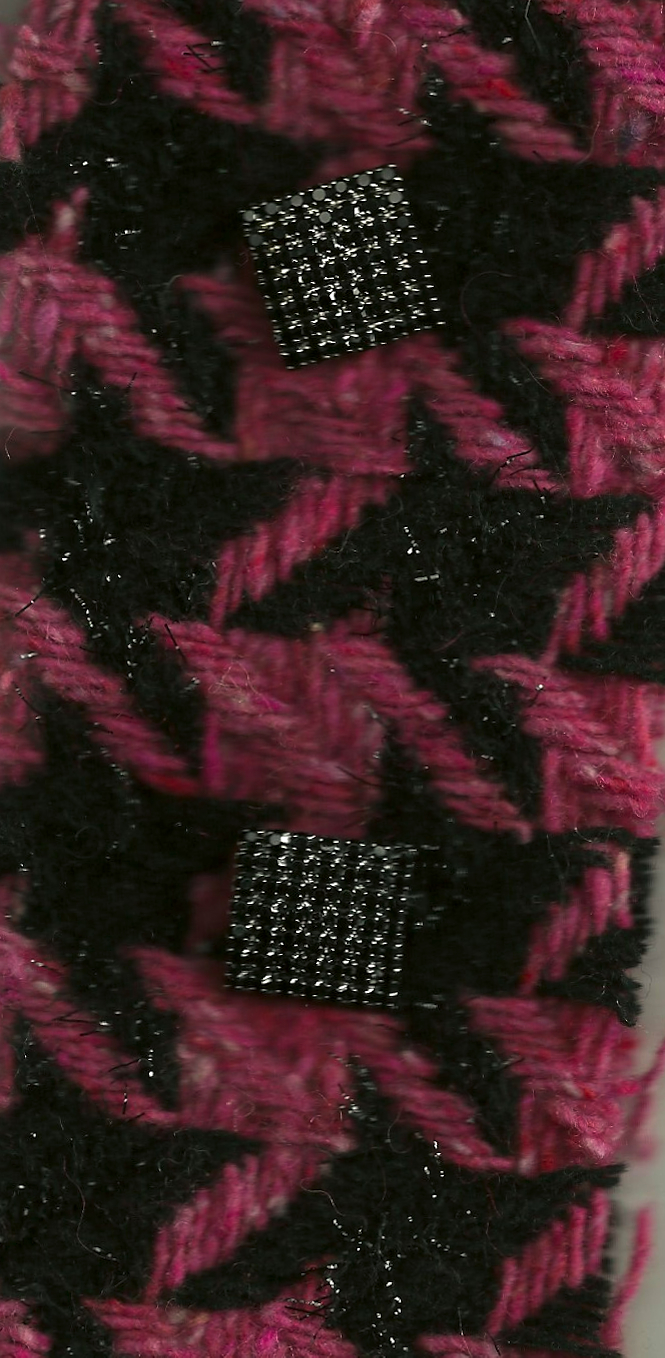
Off I went to the third floor to find buttons.  Oh, the choices!    That little bit of sparkle in the wool – and the sheen in the silk shantung – seem custom made for buttons with a bit of sparkle, too.  I kind of felt like Goldilocks looking at the buttons which the savvy “button lady” pulled out for me.  Some were too frou-frou for me, some were too round (and fought with the angles in the weave), some were too sparkly…  but these were perfect!

When I actually sew these buttons onto the jacket, I promise I’ll have them on straight!

With my tasks accomplished, I decided to check out the remnants on the fourth floor, and took a quick look at the cottons on the second floor, but then I headed back down to the first floor to look at the woolens again.  Britex has a very large selection of wools suitable for “Chanel-type” jackets, including some actual Chanel fabrics.  I am trying to buy only what I can’t live without (which isn’t as limiting as it should be, unfortunately), so I carefully considered all the selections in front of me.  You can probably guess by now that I did indeed find one I deemed necessary for continued life, liberty, and the pursuit of happiness.  I can just imagine this wool in a jacket trimmed in an orangey-red something – all yet to be determined, which is, of course, part of the creative intrigue of sewing.

This fabric is very soft, perhaps due to a certain percentage of mohair wool in its composition.

So – what about the rest of the trip?  Lots of driving those great distances out West, lots of laughs, fun, and brews with husband and son, wonderful days at Crater Lake National Park in Oregon, hiking without a fabric store in sight.  When one is in such a place as Crater Lake, the great expanse and passage of time is ever in one’s presence.  However, I couldn’t help but think about another passage of time, this one personal: the last time I was at Crater Lake was in 1962 when I was twelve years old.  It just so happens that Britex Fabrics celebrated their tenth anniversary that very same year.  Happy 60th Birthday, Britex!

One more smile before closing hour!

15 Comments

Filed under Buttons - choosing the right ones, Chanel-type jackets, sewing in silk, Uncategorized, vintage Vogue Designer patterns, vintage Vogue patterns from the 1970s, woolens

Spending time on the Cape.

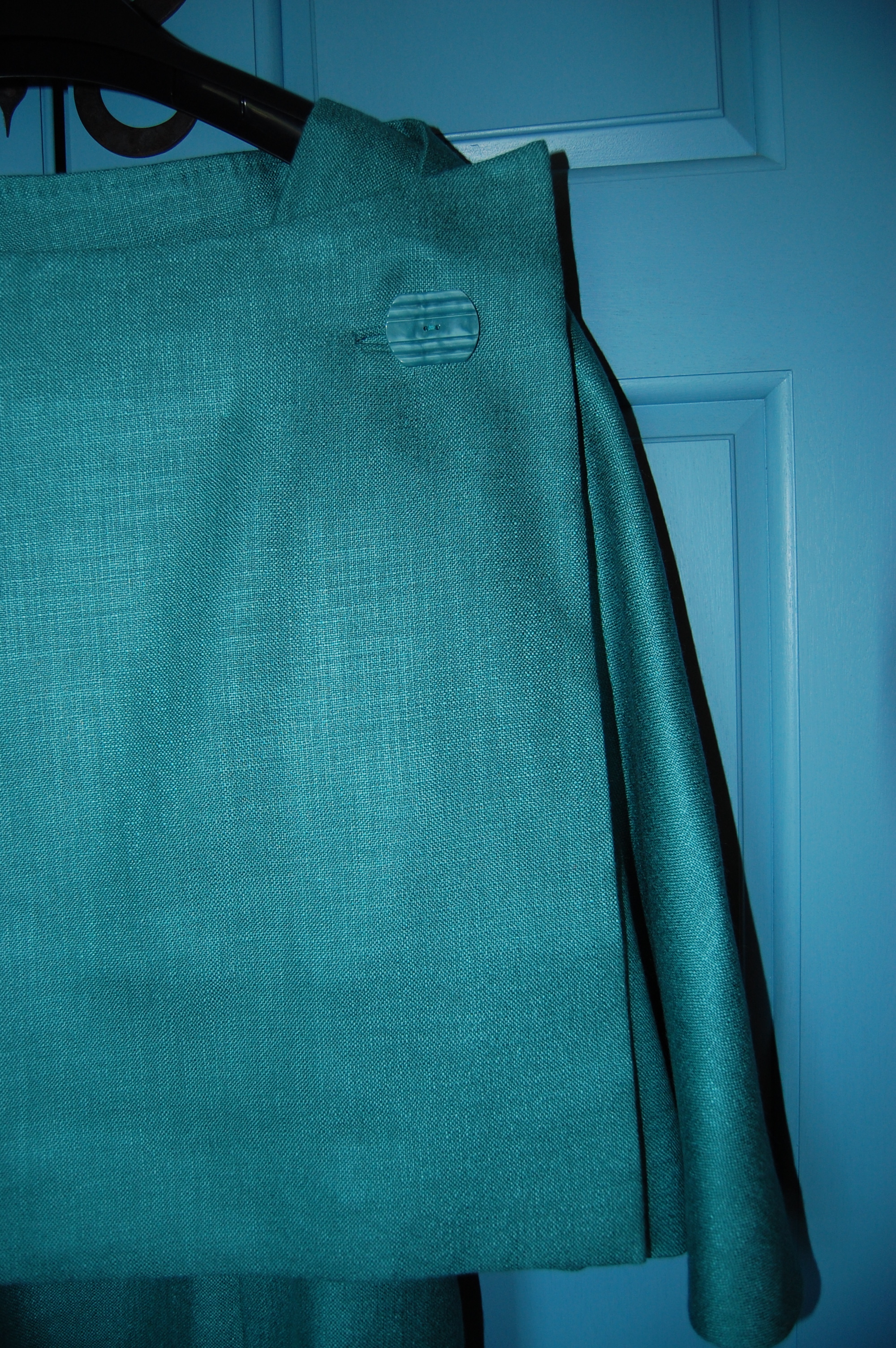
Doesn’t this sound like a wonderful vacation?  Picture billowy clouds reminiscent of  silk organza, gently undulating waves of turquoise hue, windswept flowers lining the landscape. . .   So where would one find this perfect setting?  I hope you’re not disappointed to learn that it all happened in my sewing room.  Yes, that’s correct – it has been wonderful, but this cape is the wearable kind, and I have definitely spent time on it!

The fabric in which I made my Couture dress was a length of linen I picked up last April.  When I found it, I did not yet have a pattern in mind for it so I thought I’d purchase enough (3 yards) to cover just about anything, and at 58” wide, I had a nice amount left over from my dress.  It just so happens that earlier in the Summer, I had found this pattern and added it to my collection:

Capes were in fashion in the 1970s and are again today!

I remembered this pattern from the 1970s and always liked the short cape, with its asymmetrical opening and clever folds of fabric resulting from that detail.

As I was working on my dress, I started to think about what else I could make from this lovely linen.  I didn’t particularly want to make a jacket, as I envisioned the dress as the focal point, but I did think it would be nice to have some kind of matching “wrap” for cool evenings. Well, the rest is quite obvious – I decided to make a short cape to go with my dress.

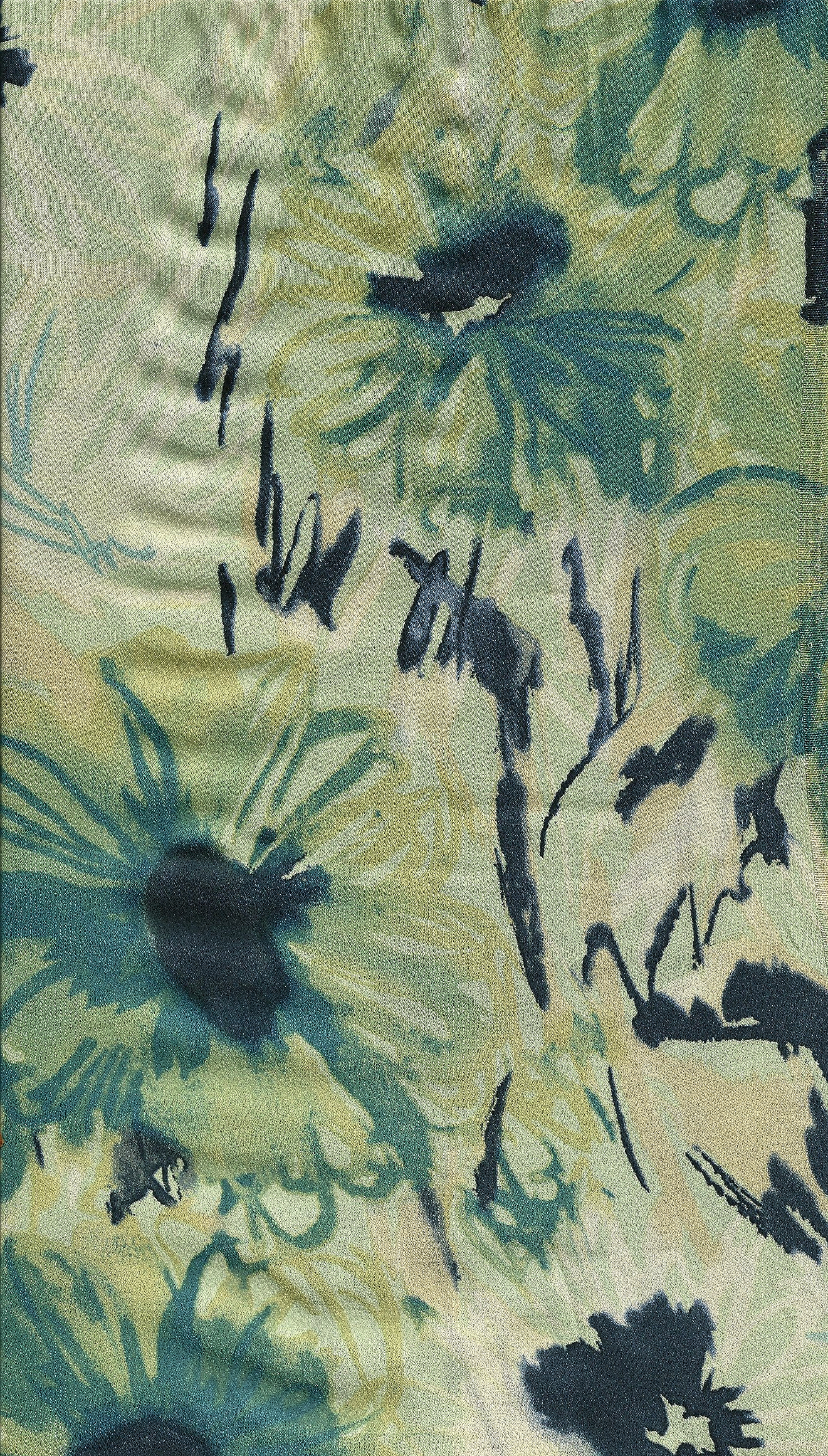
First I needed to find a silk lining fabric, which would compliment the linen.  I wanted a print of some sort to add some interest to the finished look.  I think I looked at every printed silk available on the internet!  I found lots of gorgeous designs, but only one which presented the possibility of both coordinating with the teal blue linen and introducing some other colors as well.  My old friend Britex Fabrics not only had this fabric, but  also had a vintage button among their extensive offerings, which looked like a good candidate for my needs.  I sent off for the button and swatch, and did indeed then order the silk charmeuse.

I like the abstract quality to this print.

Armed with my new-found couture techniques, I made a muslin pattern which helped me get the perfect fit over the shoulders (which is pretty much what a cape is all about).  I underlined the cape in that oh-so-wonderful silk organza, and added  interfacing, where required, of the same.  Some of this was a judgment call, as I determined were I could use couture features and where I had to follow the tailored construction of the cape.

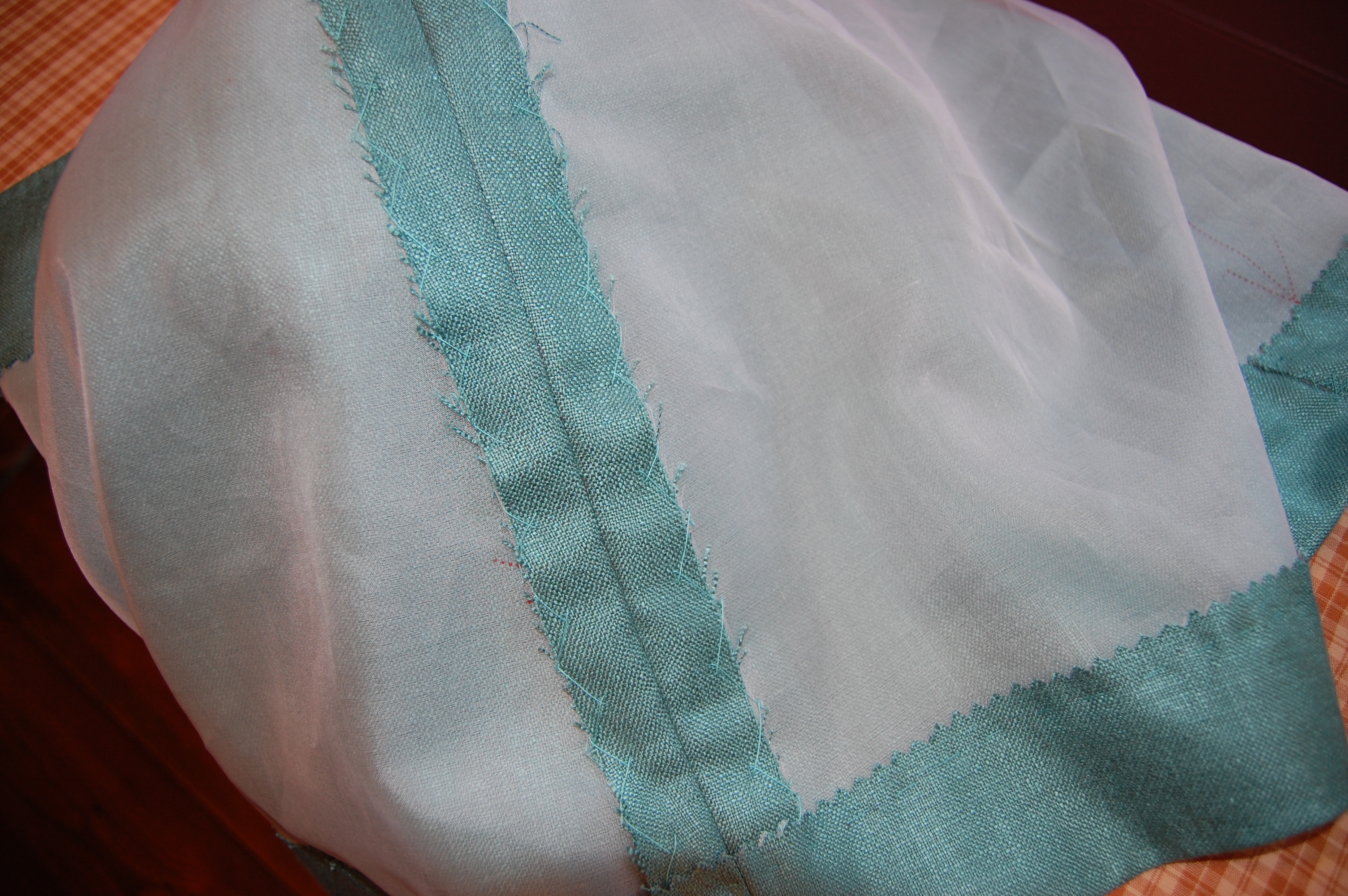
This shows the silk organza underlining, and the side seam, catch-stitched to it.

One of the hem techniques I learned in The Couture Dress class was helpful with this hem.

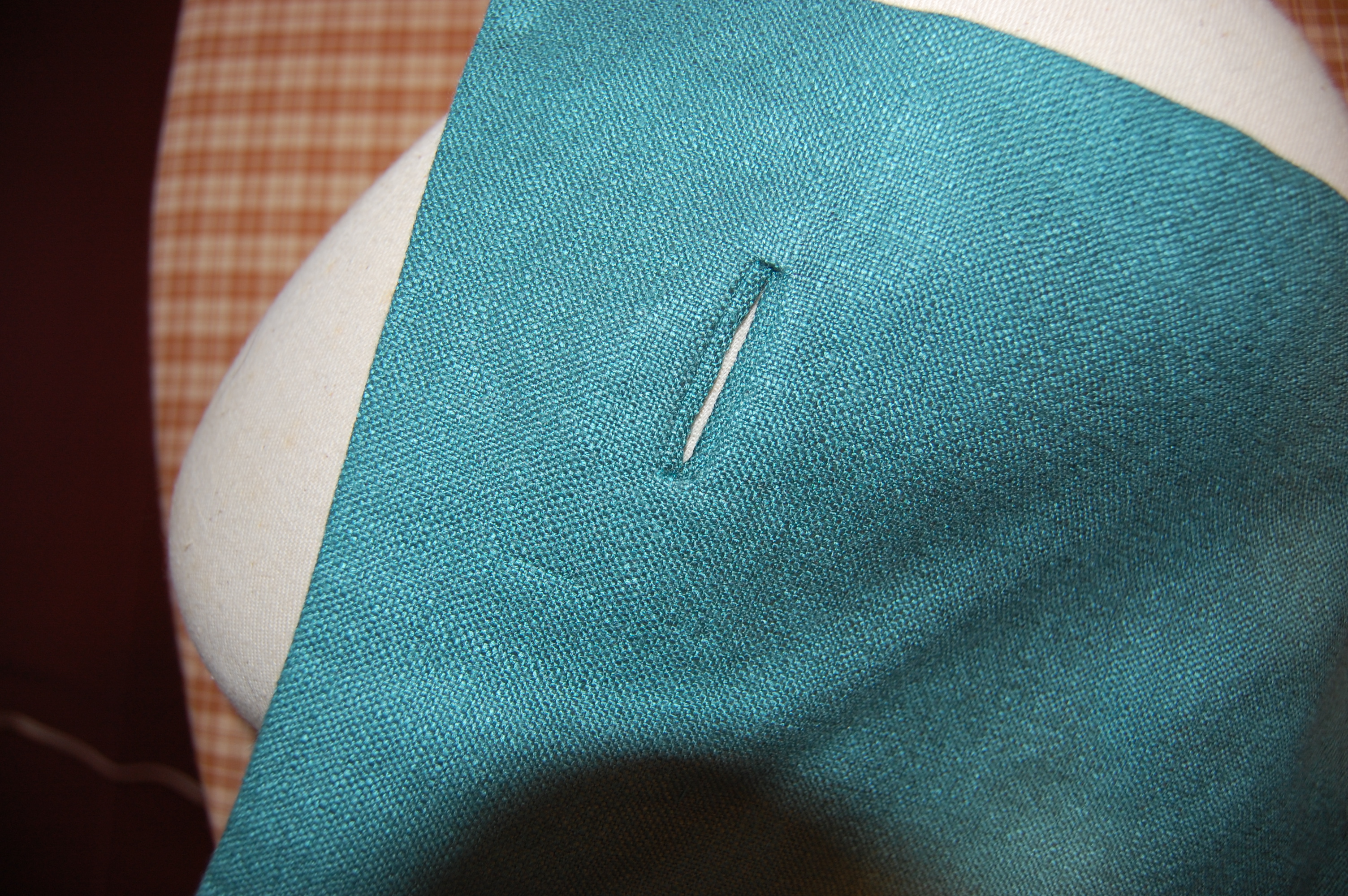
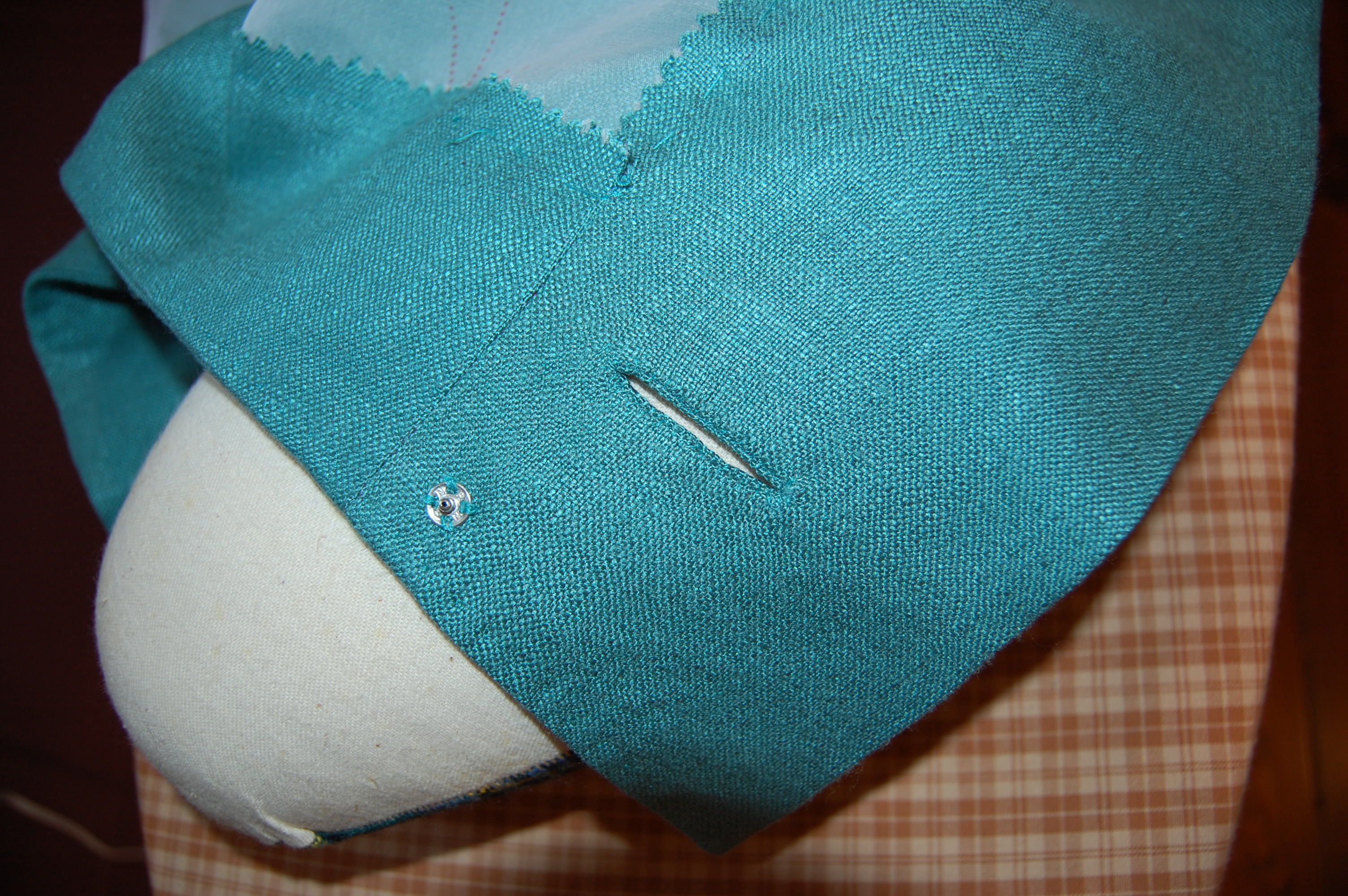
Call me crazy, but I just love to make bound buttonholes.  Although the pattern called for a 2-inch button, the one I found was 1½ inches (and I thought it a more refined size anyway).  That still calls for a large buttonhole!  I practiced first, then got to work on the real thing.

The finished bound buttonhole

And the finished underside of the buttonhole.

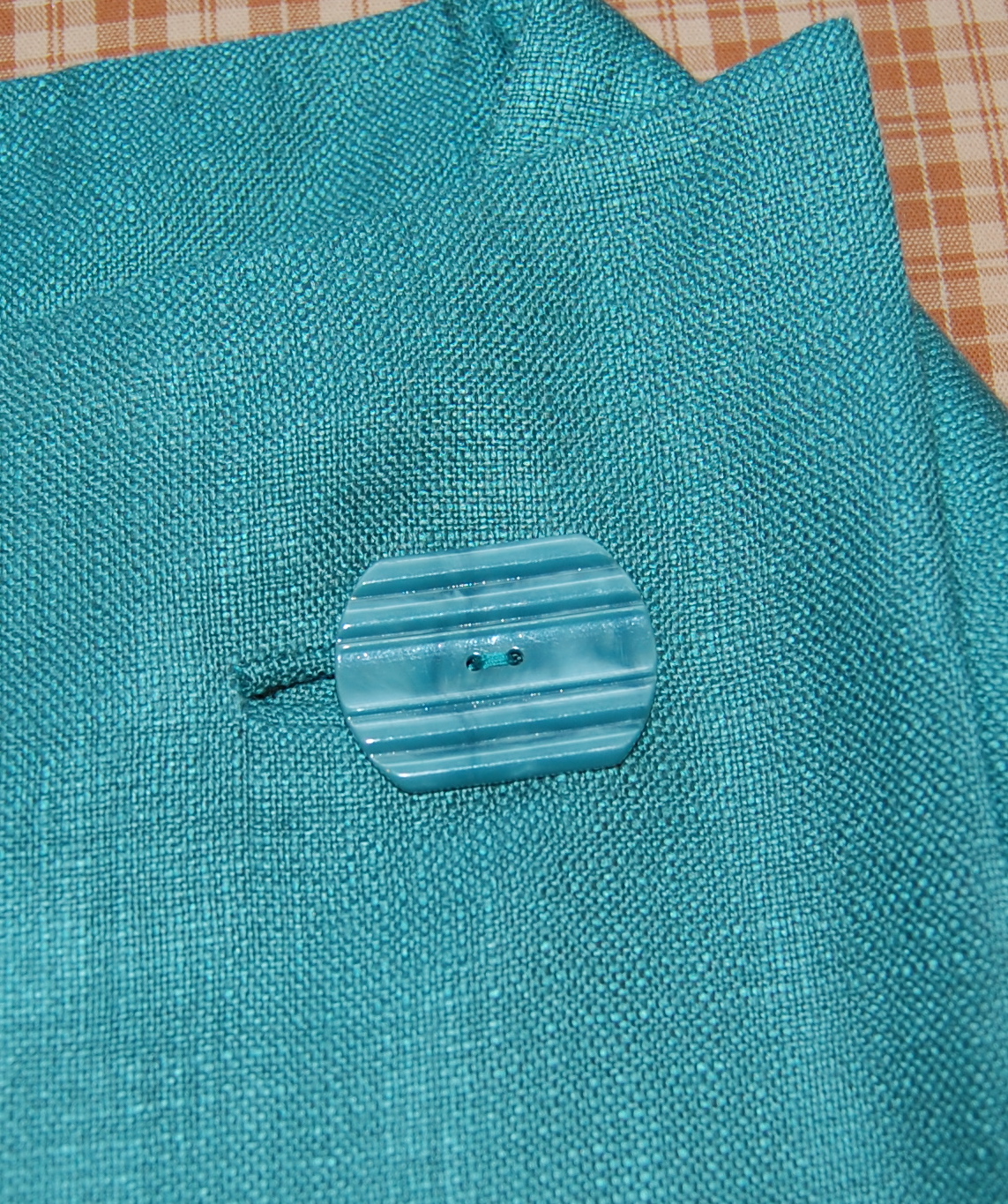
And the button…

I understitched the facings by hand with that beautiful prick stitch, and attached the lining with the fell stitch.

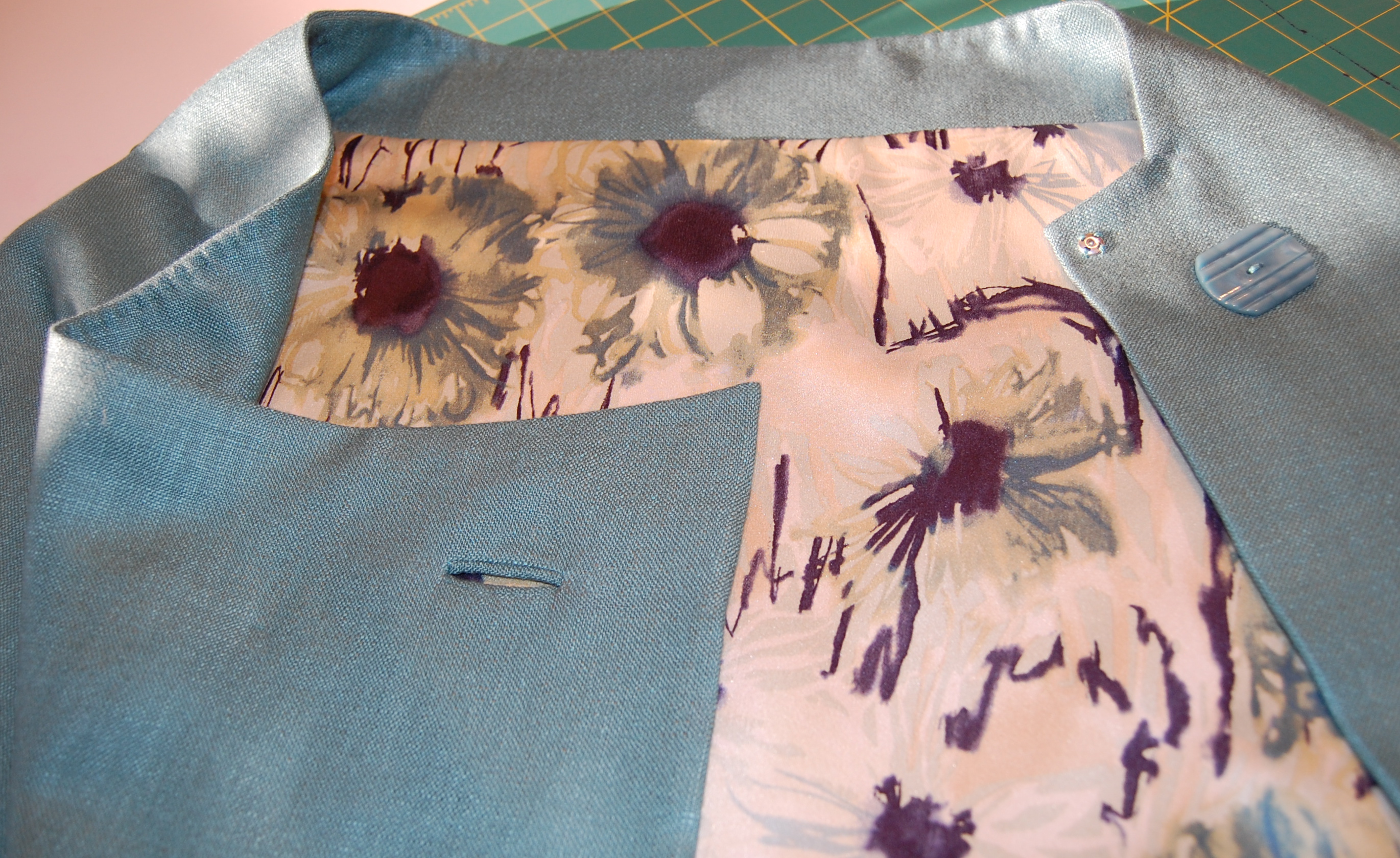
A peak inside the cape.

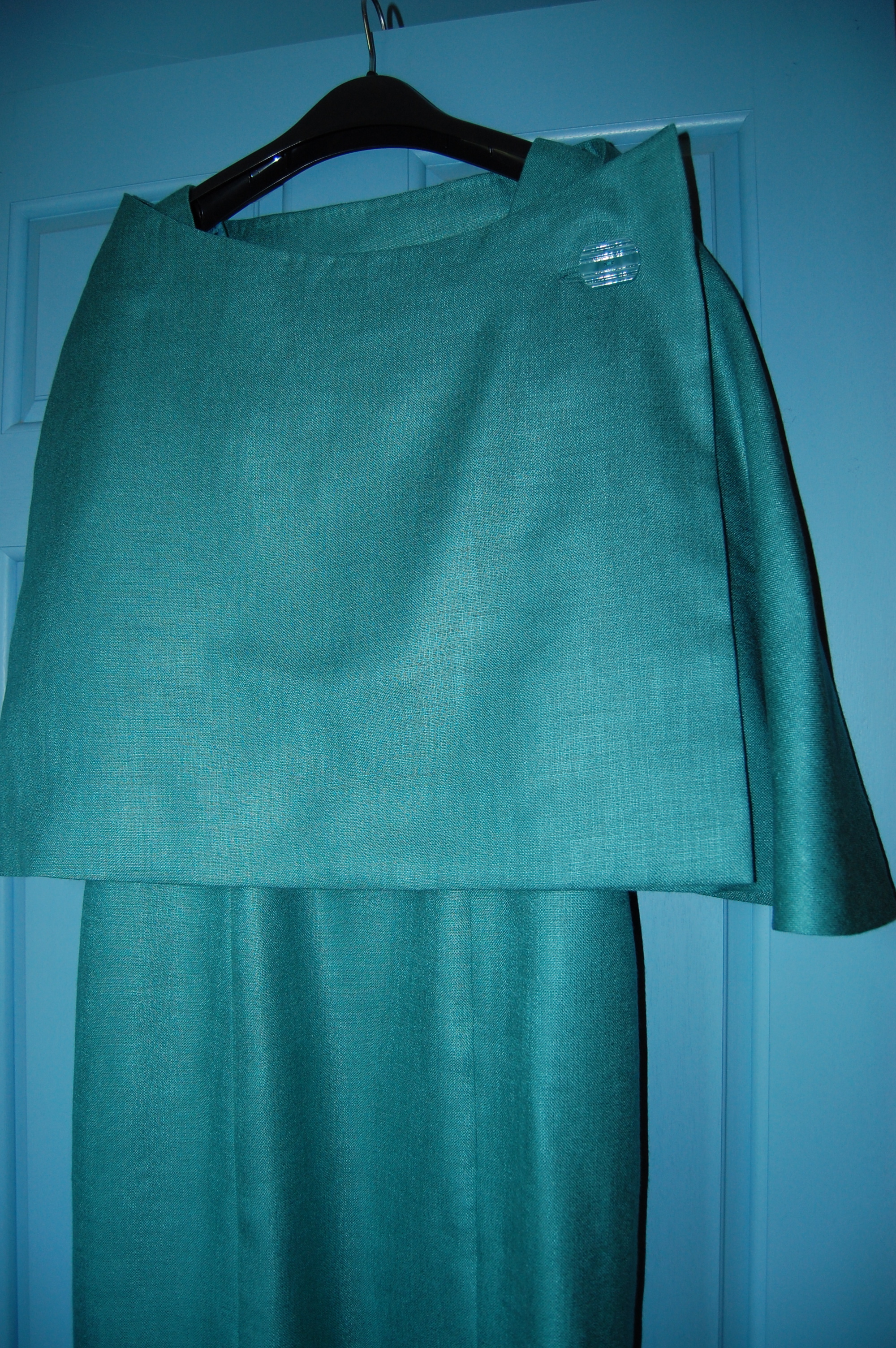
Here is the finished look (unfortunately on a hanger and not on me…).

Here is the cape shown over my Couture dress

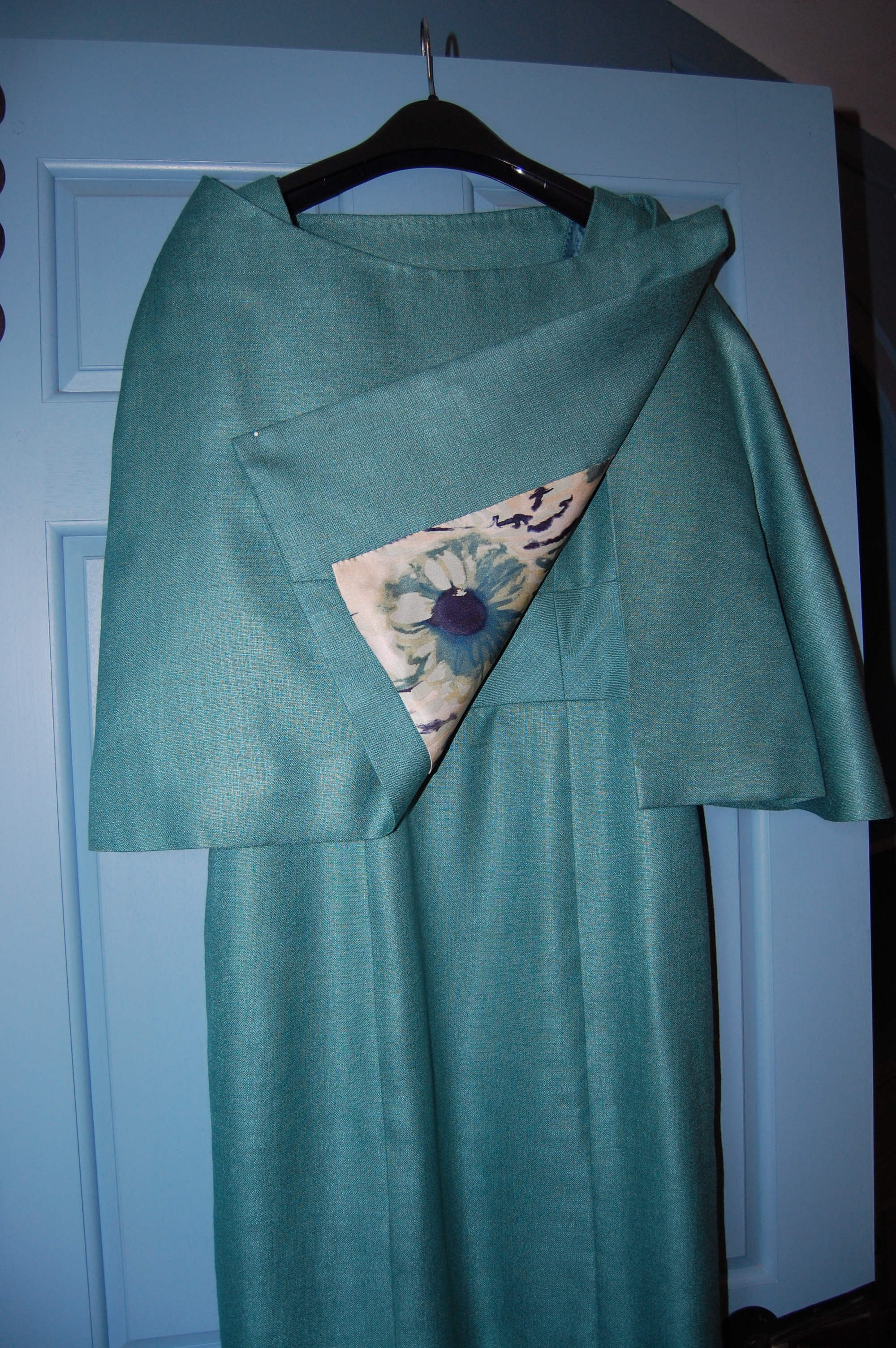
With one corner pinned up to show the lining.

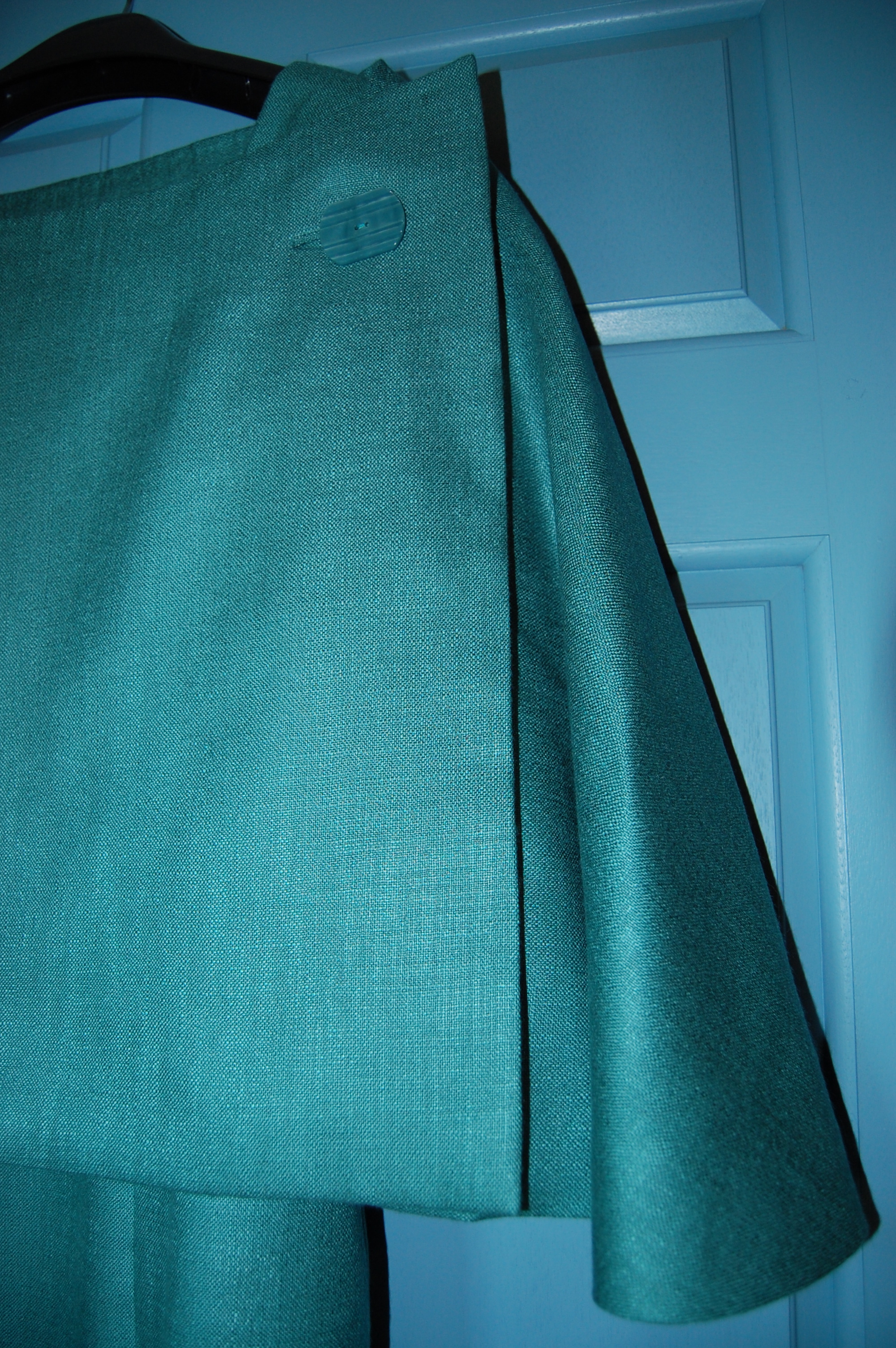
This view shows the lovely draping formed by the asymmetrical opening.

And one more view.

Well, my time on the Cape officially draws my summer sewing to a close.  Now it’s going to be all wools or wool blends and maybe some silks – and I can’t wait!  Let’s throw an extra blanket on the bed and dream of cool nights and crisp days filled with creative hours of sewing. . .
10 Comments

Filed under bound buttonholes, Buttons - choosing the right ones, Capes, couture construction, Linen, sewing in silk, Uncategorized, vintage buttons, vintage Vogue Designer patterns, vintage Vogue patterns from the 1970s

“You are going to have some new clothes.”

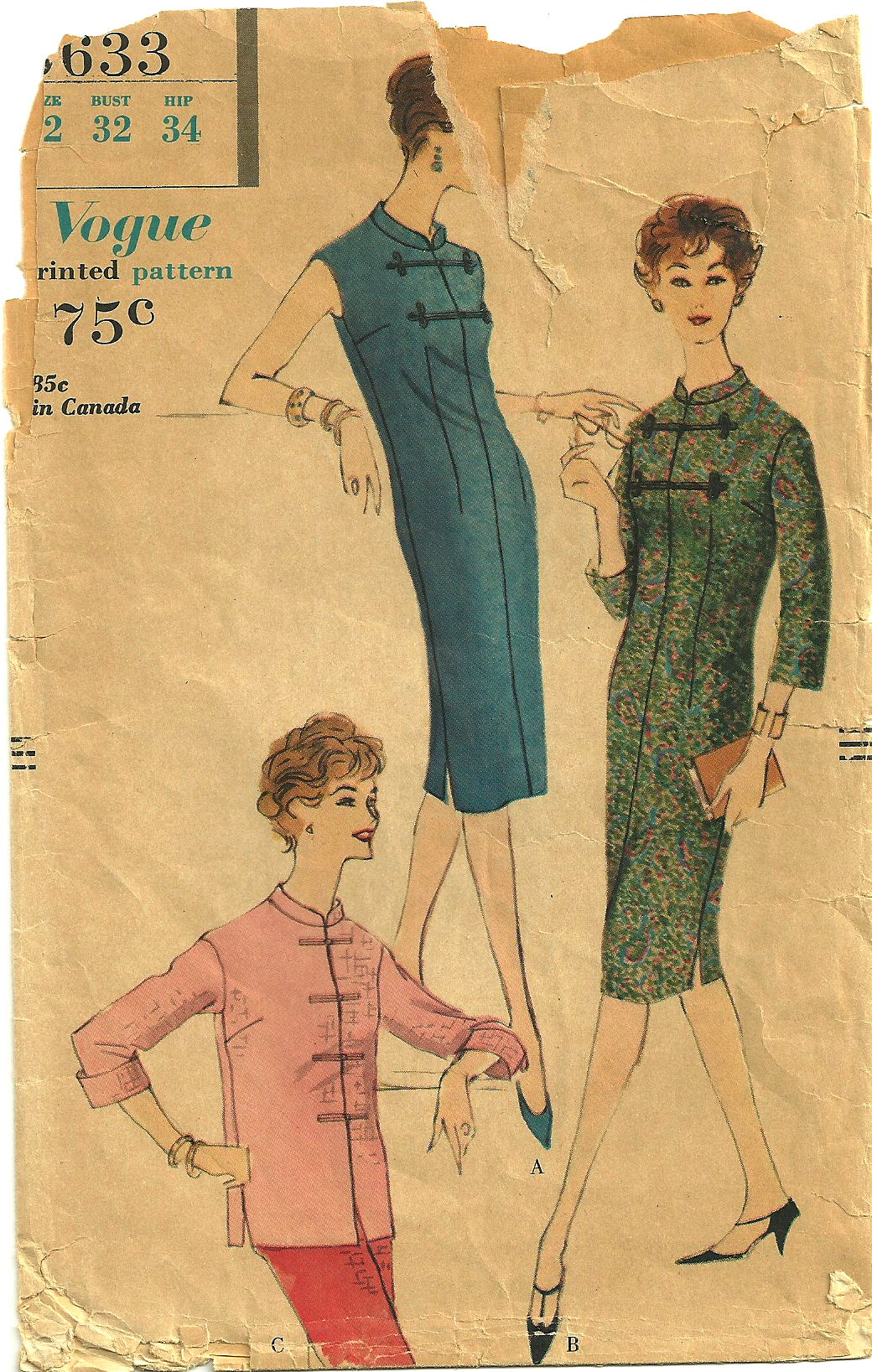
So said the fortune which was tucked inside my cookie.  What it failed to mention was that I was going to be the one making those new clothes, but otherwise I’d say it was right on target. Well, it seemed only fitting that, with this Chinese dictum, and with my burning desire to use those shell buttons (which kind of give off an exotic aura), I should indulge my attraction to Asian-inspired clothing design, and make this tunic my next sewing project.
The date on this pattern is 1958. The envelope is in sad shape, but the pattern pieces are fine!

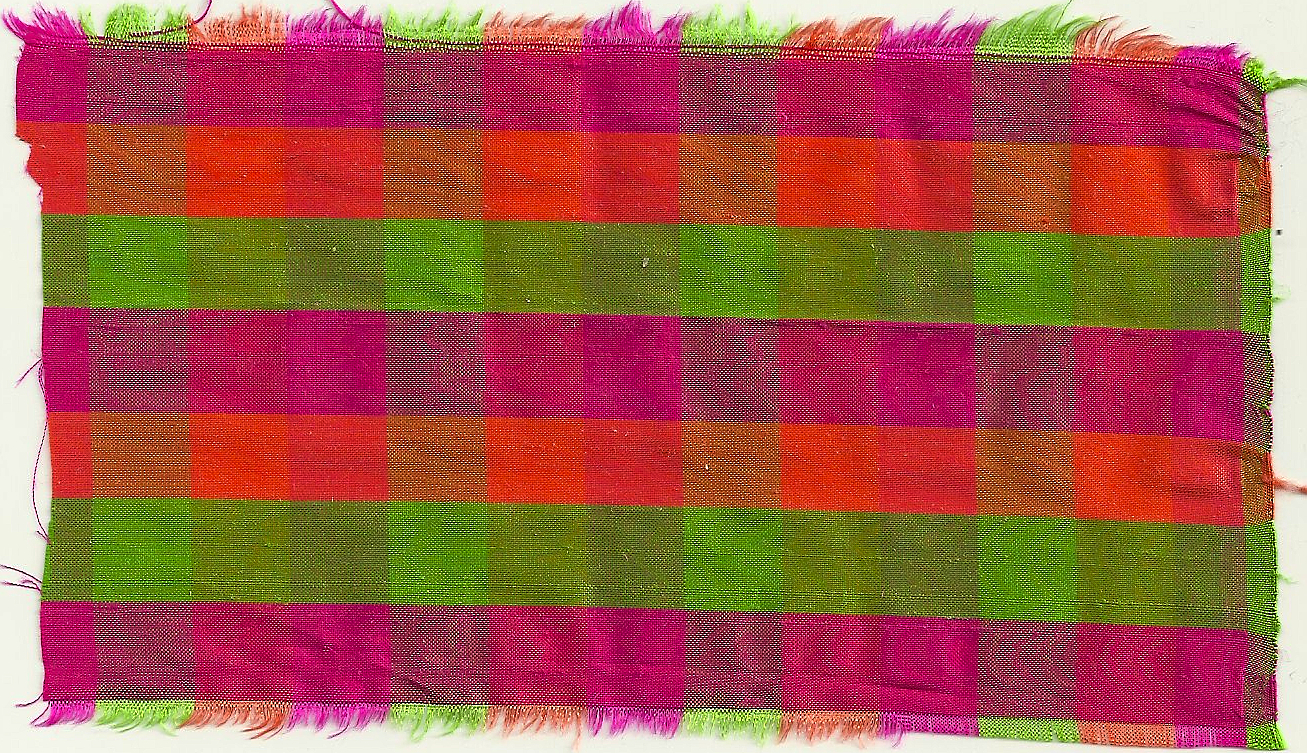
I had another reason, too, to choose this tunic pattern.  After my last project, the Pierre Cardin silk dress, I was ready for something that did not need to be underlined or lined – and I was ready for something casual and fun.  I might add “bright” to that list, too, as the fabric I chose is indeed that!

This is the swatch I ordered from B&J Fabrics.

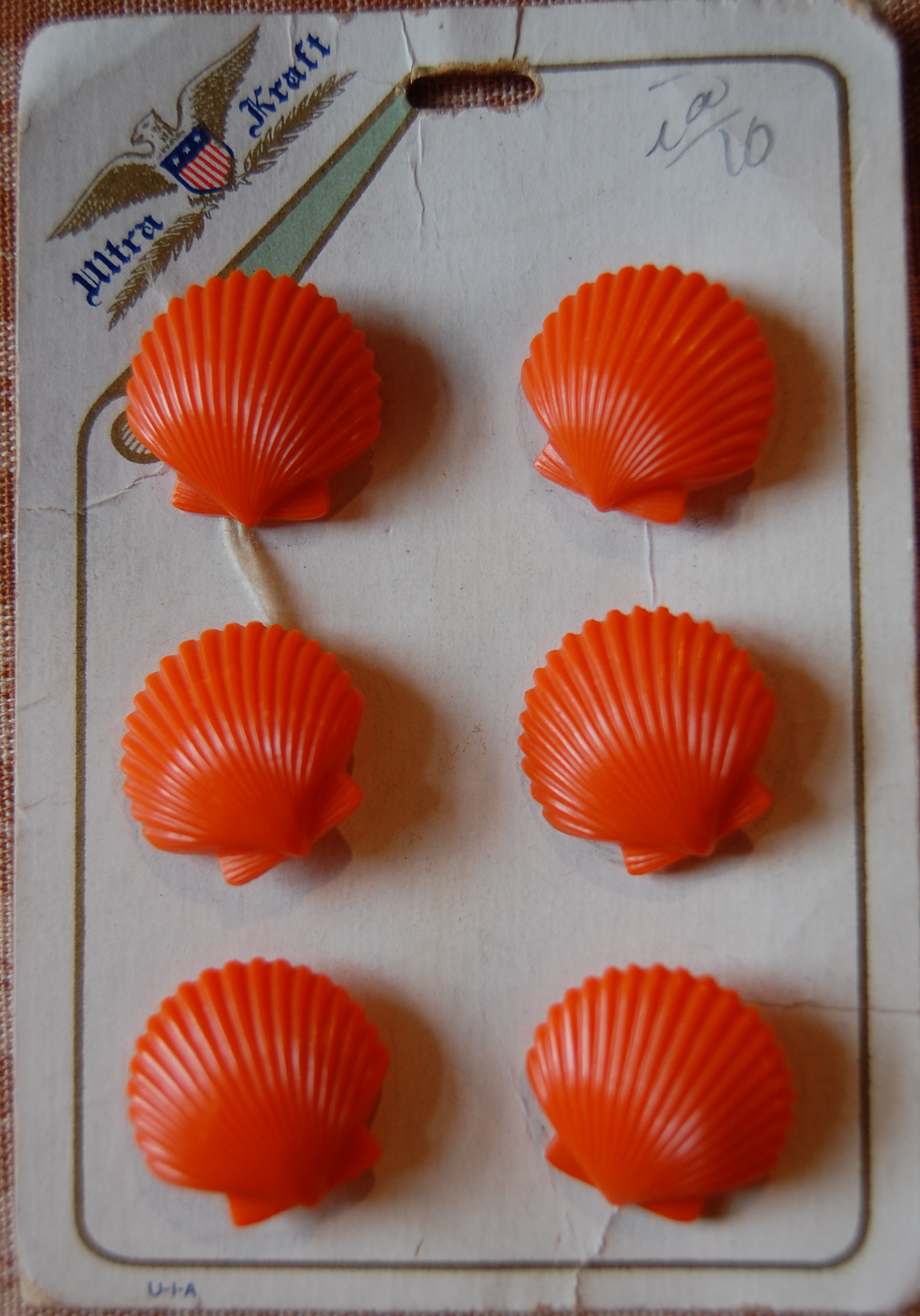
Just a reminder (if you need it) that I wanted to use these buttons for this tunic.

I had the fabric swatch sitting on my ironing board in my sewing room when I started work on my “Pierre Cardin” dress.  The pink silk from that dress complimented this silk check so much that, putting the two together seemed inevitable.  I played around with some small scraps, scrunching them around those orange shell buttons, still on their card.  What could be more perfect than making the buttonhole loops and details out of the pink fabric, to set off those shell buttons?  I was sure that would be much more effective than making the loops and details out of the same checked fabric.

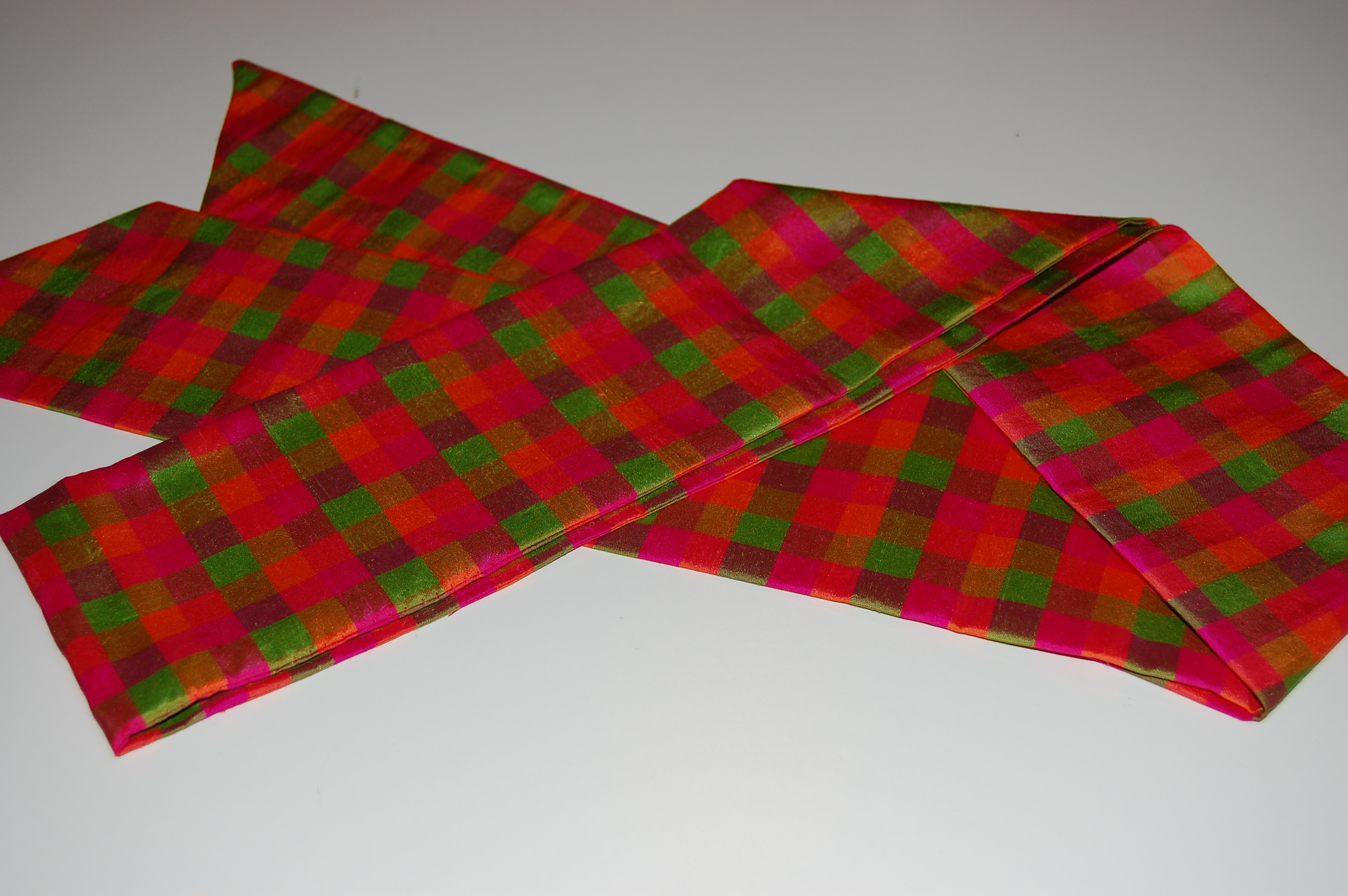
I ordered enough fabric to make a matching obi-type sash, as I thought I might want to wear the tunic “belted” sometimes, too.  (In the back of my mind is the knowledge that I have enough of that pink silk left, that I can make a skirt – or blouse – with it.  I’m definitely leaning towards skirt…)

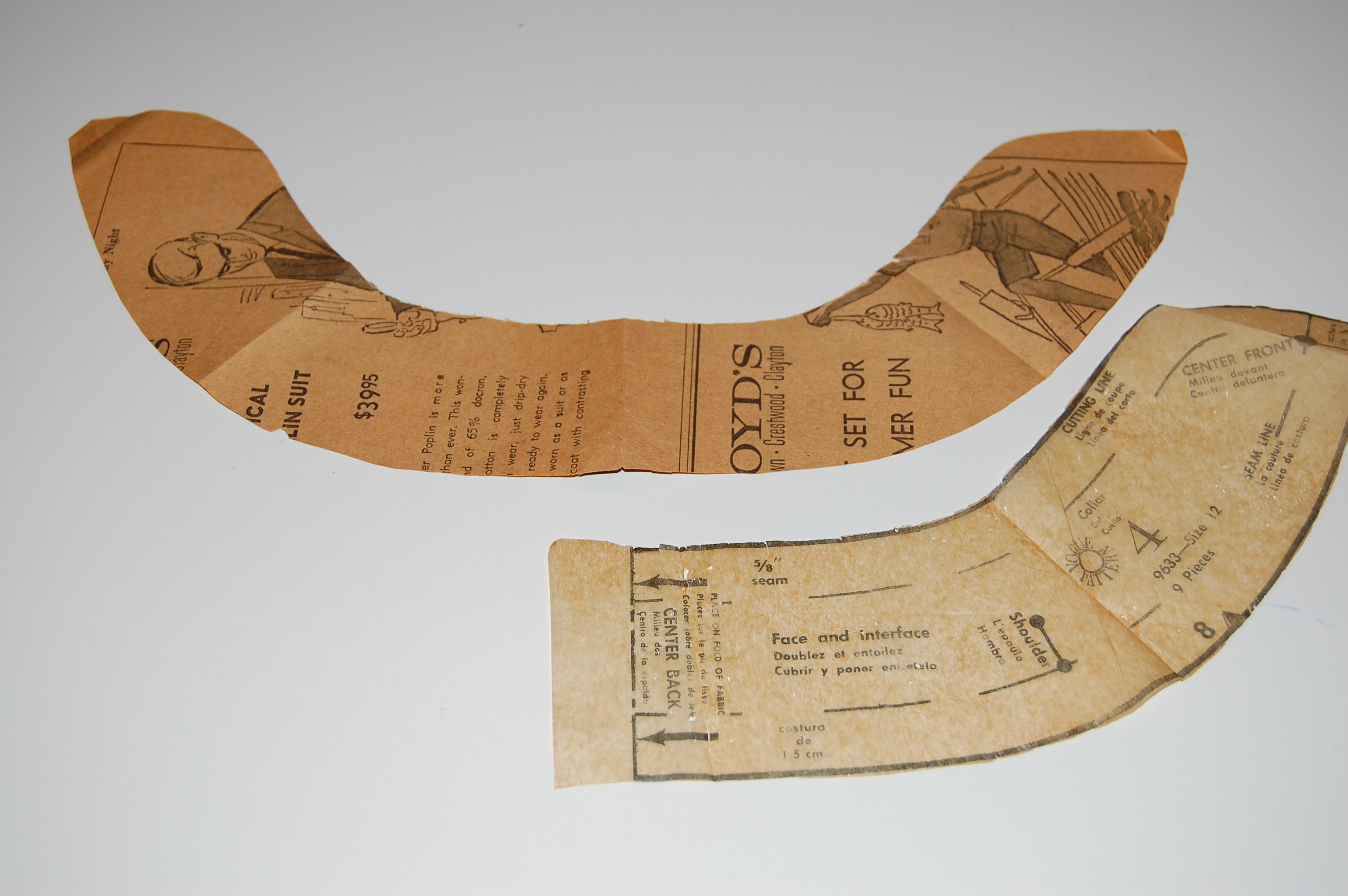
First, of course, I set out to make a muslin.  When I opened the pattern, the pieces for the dress had been previously used, but not the pieces for the tunic.  The collar was universal for all three views.  However, in addition to the tissue collar, there was a collar piece cut out of newspaper.

Here are the two pattern pieces for the collar – the top one cut by the original home sewer.

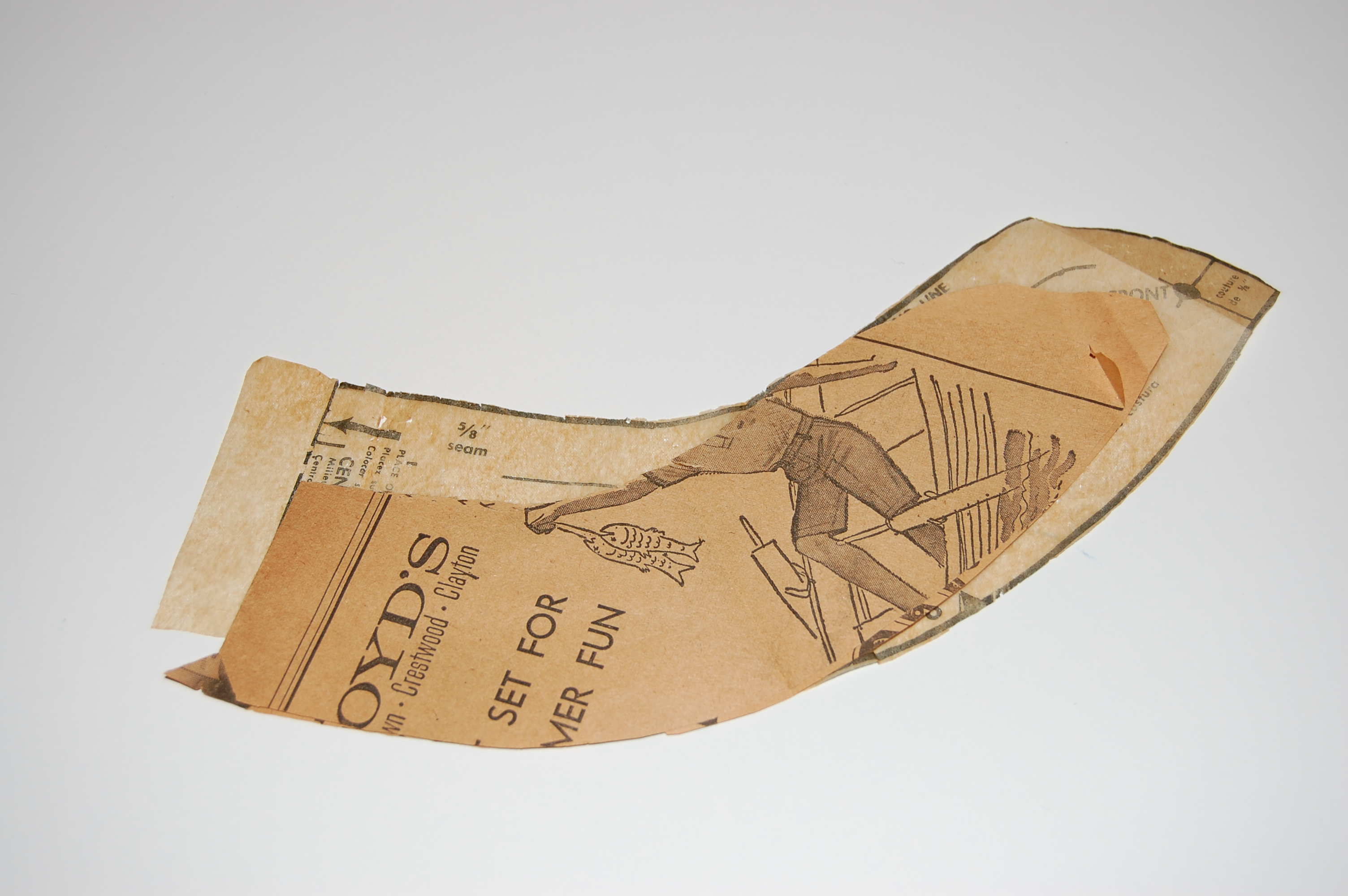
There was nothing written on the instruction sheet or envelope to explain this mystery – and it appeared that the “newspaper” collar was shorter in length than the tissue pattern.

Here you can see the newspaper pattern is shorter than the tissue one.

Having no explanation, I just decided to use the tissue pattern – and I figured the muslin would tell me what I needed to know.  Did it ever!  The collar included with the pattern is too long for the neckline, so this home sewer in the late ‘50s re-cut it to fit her pattern.  I decided to take another approach: I kept the tissue collar and widened the neckline enough so it fit perfectly.  I also decided to shorten the shoulders a bit, for a more structured fit, and I took the center back seam in a bit at the waistline.  I ended up adding long tapered “floating” darts to each side of the back, too, to give it a little more definition to the waistline –  but I am getting ahead of myself…

As is my method of approaching a new project, that is, getting a few things constructed before I need them, I decided to make the obi sash first.  I just kind of guessed for width and length, making it 4” wide (finished width) and 77” long, so it could go around me twice comfortably with a double knot in front.

The completed sash.

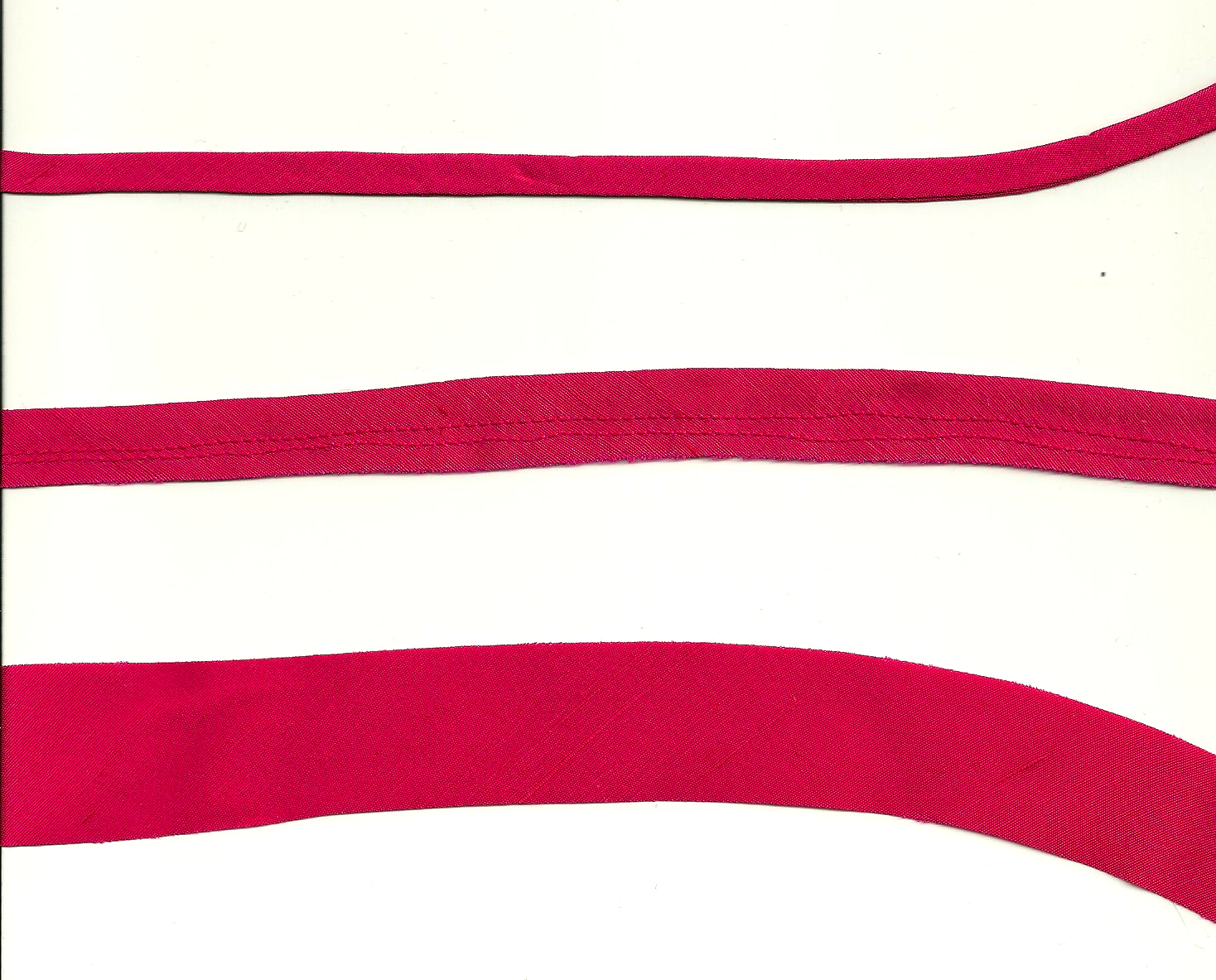
Next I made the button loops and details.  The pattern didn’t give too much instruction on these pieces, other than the length they should be and the finished width (1/4”).  (I should mention here that I decided to put 5 buttons on the tunic, not 4 as is shown on the pattern.)  I cut bias strips 1”wide, folded them in half lengthwise, sewed the seam twice and turned them with a bodkin.  Nice and easy!

From top to bottom, the making of the strips for the buttonholes and details: 1″ wide bias strip, one folded and stitched, one turned and finished! (Click on the photo to see these close-up.)

I put flat-felled seams in the sleeves and added interfacing to the front edges even though the pattern did not call for this.  The most time-consuming part of the whole thing was hemming the ends of the buttonhole loops and details and then sewing them onto the tunic.  But that’s really what the project was about – showcasing those buttons in an appropriate way.

The finished tunic, with the sleeves folded up, as they are supposed to be.

A close-up of the front, with the button detailing.

An even closer look at one of the buttons and loops.

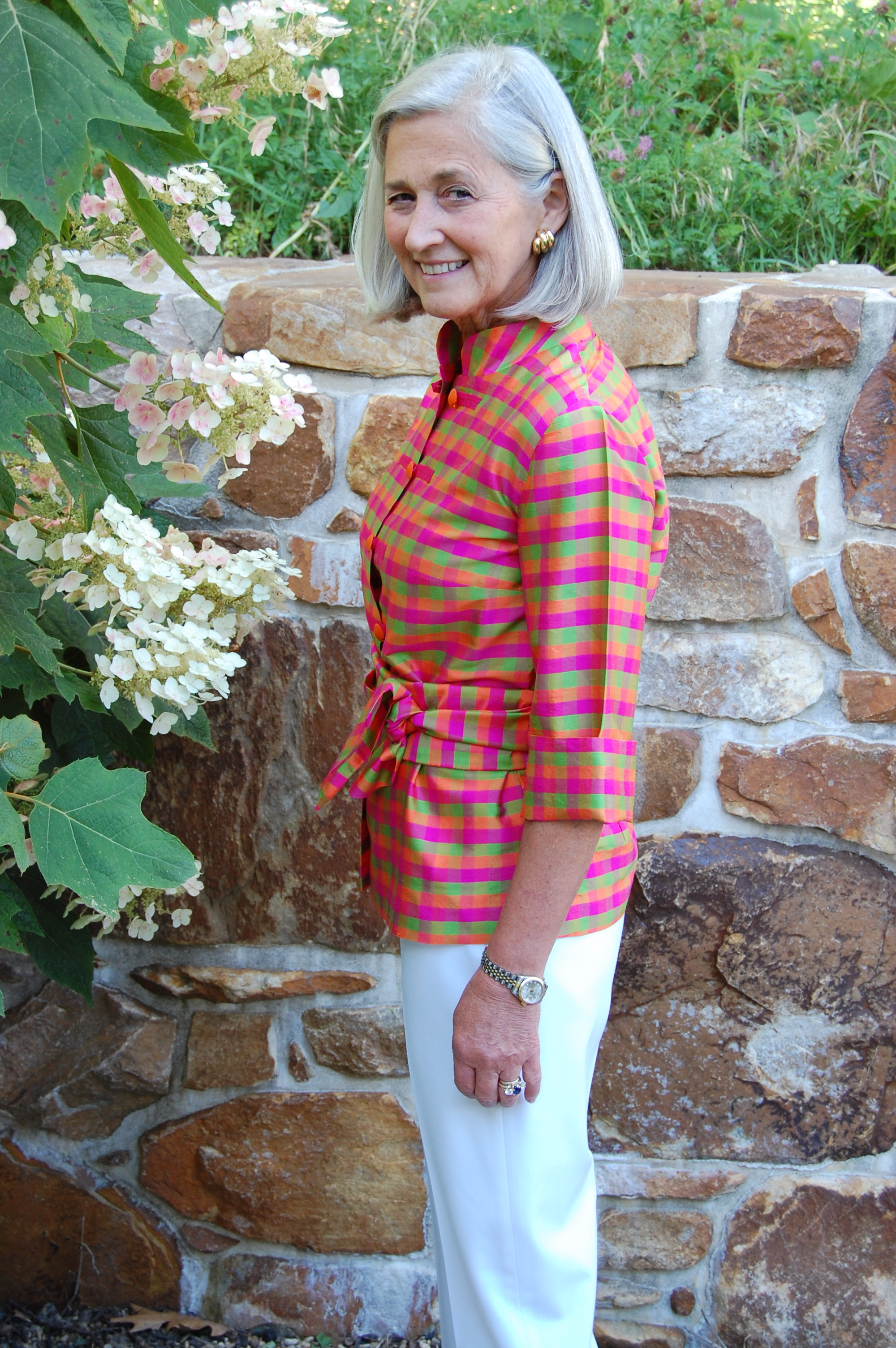
This photo will make my daughter very happy! Here I am modeling my new tunic, with sash.

One more view of the sashed tunic. Picture this with a narrow skirt in that same solid pink…

I think it works – what do you think?

One final thought:  fortune cookies are a little like potato chips (or chocolate!) – it’s hard to eat just one.  Yes, my first cookie was followed by another one – and I was hoping for a similarly enticing fortune.

Imagine my surprise when my second fortune was exactly the same as the first one!

20 Comments

Filed under Asian-inspired dress designs, Blouse patterns from the 1950's, Buttons - choosing the right ones, sewing in silk, Uncategorized, vintage buttons, vintage Vogue patterns from the 1950s