Category Archives: Moygashel linen

A Tale of Two Dresses, Part 2

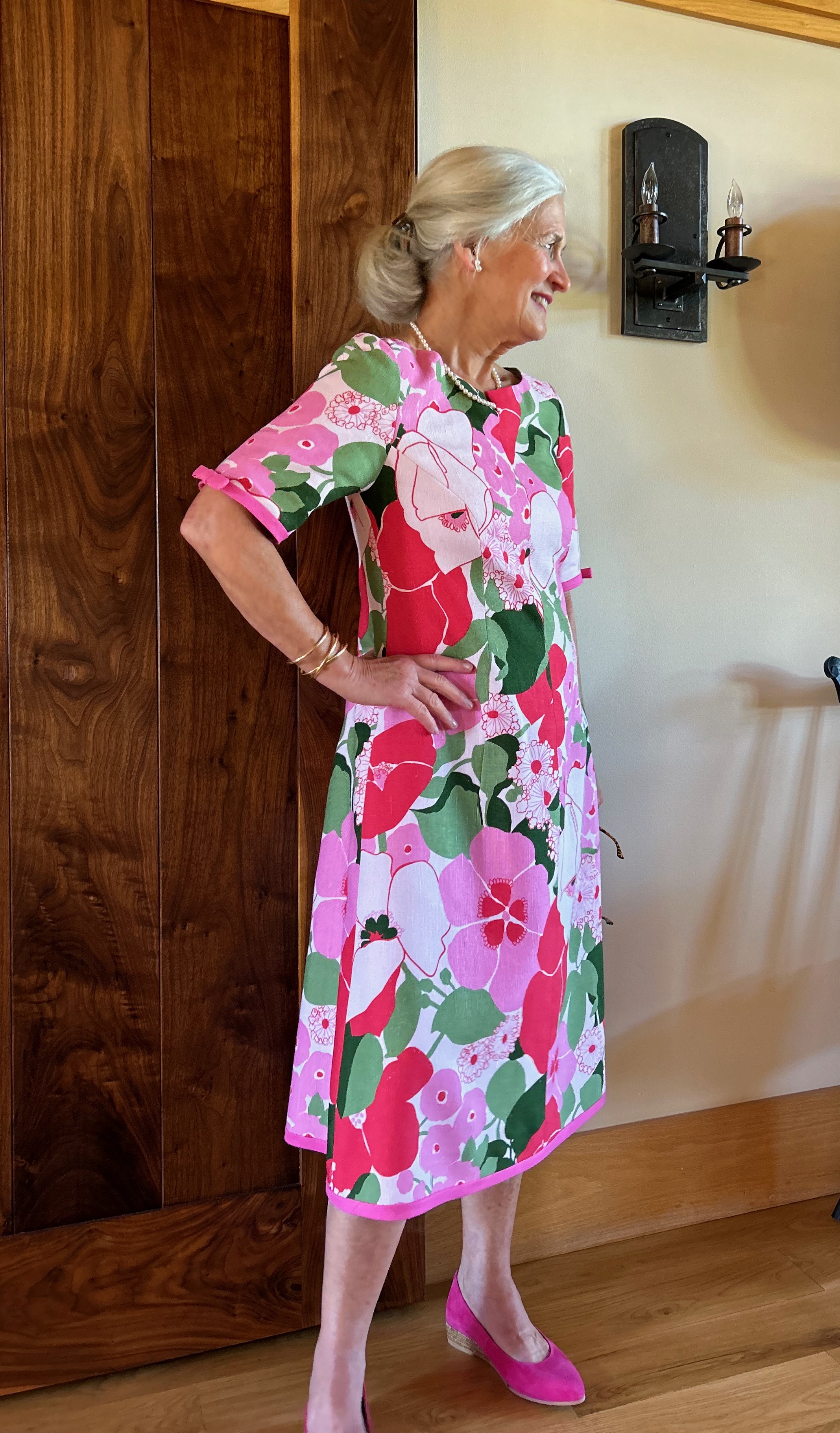
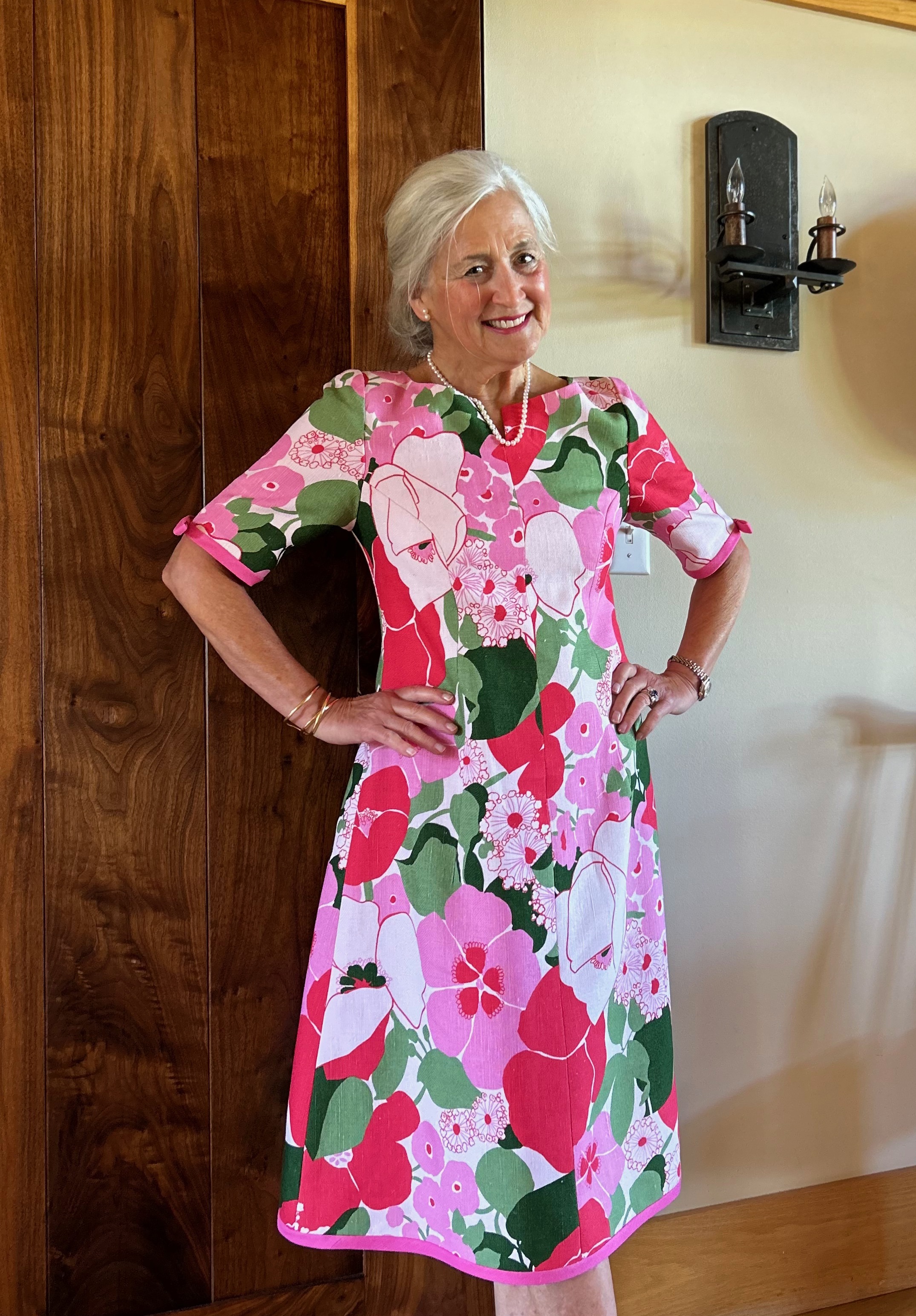
Whenever I am working with vintage fabric, it seems I either have more yardage than I need or, more frequently, less than I need.  I have learned over the years there is usually a way to work around having less fabric than I really need.  I just have to get creative.  And that’s what I did when I made this dress.
I quickly determined there was no way I could get the dress I wanted by placing the pattern on the lengthwise straight-of-grain.  The flare of the skirt, which I wanted to be mid-calf, precluded any notion of such a layout.  At 45” wide, I knew I could just get the dress length I wanted if I laid out the pattern on the cross-grain, from selvedge to selvedge.  Linen is a very stable fabric, so I was confident the cross-grain would work.  In addition, there were no directional limitations in the floral design of the fabric.  Barely fitting my pattern – from shoulder to hem – on the fabric from selvedge to selvedge, however, would leave no extra fabric to turn up for the hem – or even to face the hem.  I decided to worry about that later.  First I wanted to determine how I could get the four pieces for the dress and the two lengthened sleeves placed on the fabric, keeping in mind three important things:  1) although this was not a fabric to be matched per se, the all-over design of the fabric needed to be on the same plane in contiguous seams; 2) I wanted to space out the larger floral motifs so the dress would be balanced as best as possible (looking critically at the dress I made when I was 23, I clearly could have given this more thought!); and 3) I wanted to avoid large demonstrative blooms at the bust.  Then, and only then, would I worry about the hem.  
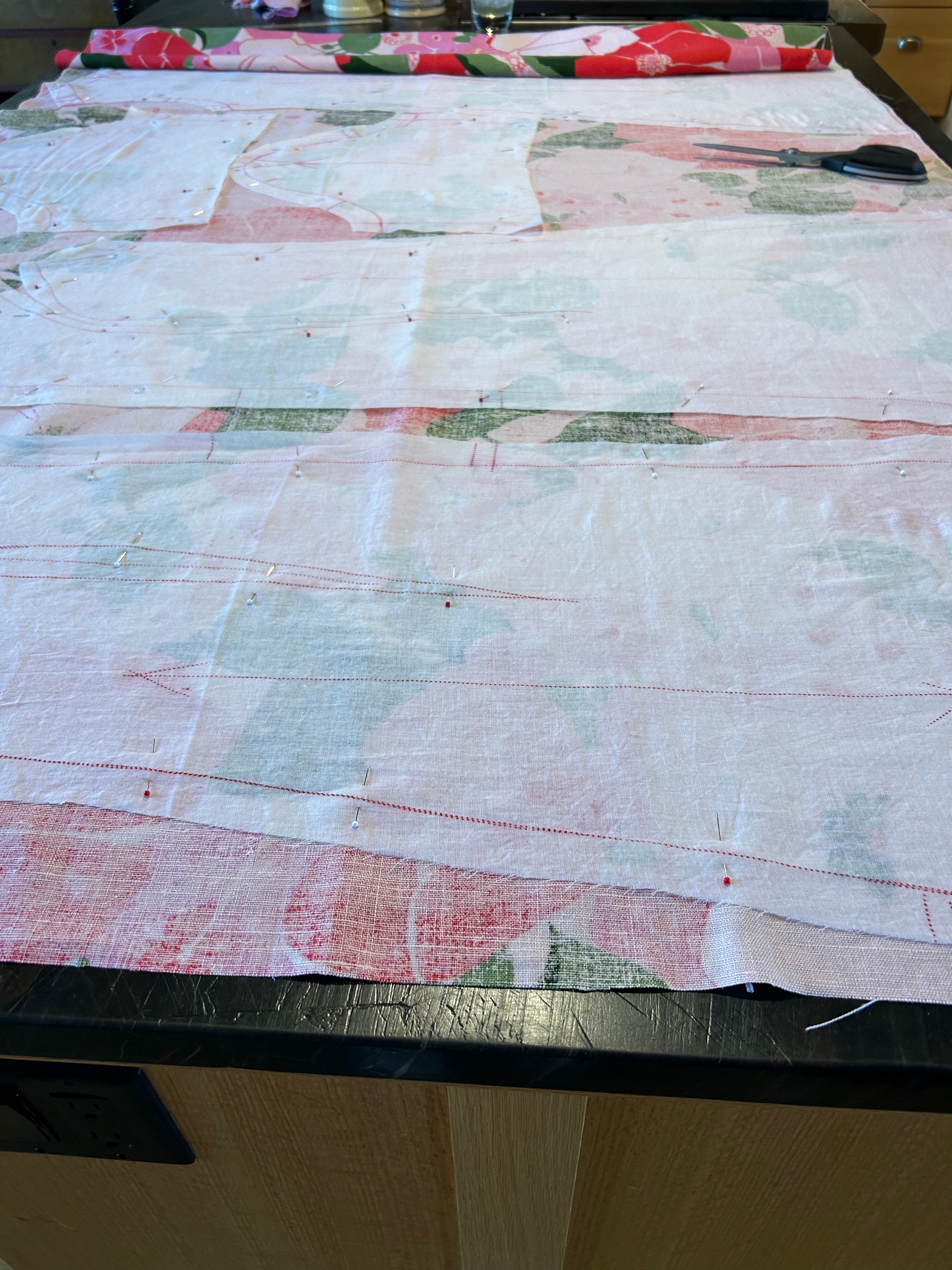
I transposed all the markings from my adjusted pattern onto the cotton batiste, then used those pieces as my pattern. I then basted the two layers together to be treated as one, before sewing any seams or darts.

Once I was happy with this placement, I had a eureka moment when I knew I could accomplish two things with a simple bias trim made from the yardage of deep pink linen which coordinated nicely with the floral.  1) I could preserve the full 45” of cross-grain length by applying bias trim to the hem edge instead of turning it under, and I could do the same with the sleeves.  And 2) the trim would add interest to the dress, just as I had vaguely imagined.  (A quick aside here – I have ample yardage of the solid deep pink linen to make a coordinating coat at some point. Every dress needs a coat, right?) 

I underlined this dress in a very lightweight, pre-washed, cotton batiste, then I lined it in Bemberg rayon.  Moygashel linen washes beautifully, as does Bemberg lining, which is why I chose Bemberg over silk for this dress. I eliminated the neckline facing, choosing instead to bring the lining up to the edge of the neckline seam, then under-stitching it to secure that edge in place.  
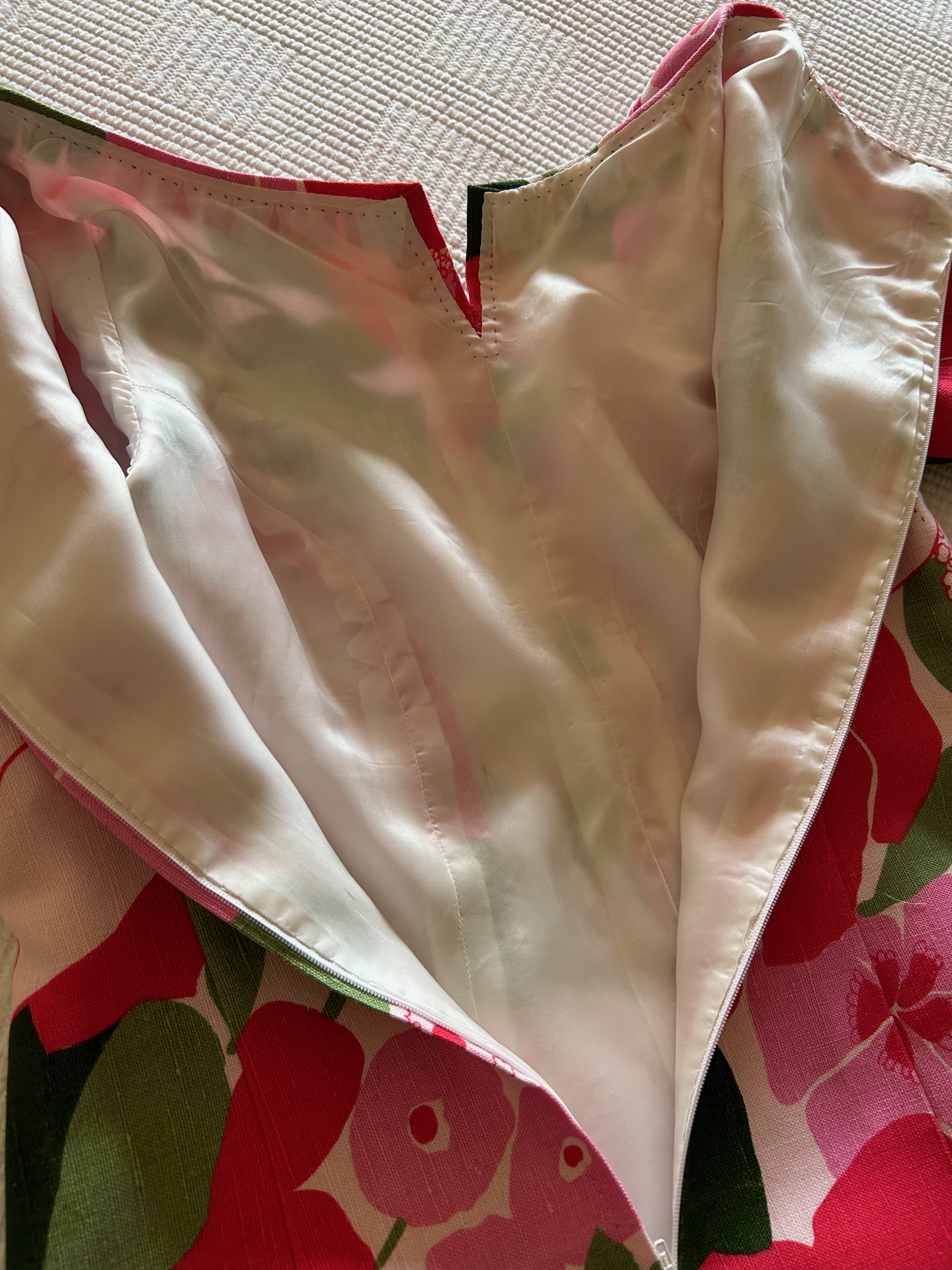
I chose to do a hand-picked, lapped zipper, an application which I think looks so lovely.  Interestingly, I hand-picked the zipper in the dress I made in 1973, although it is a centered application.  
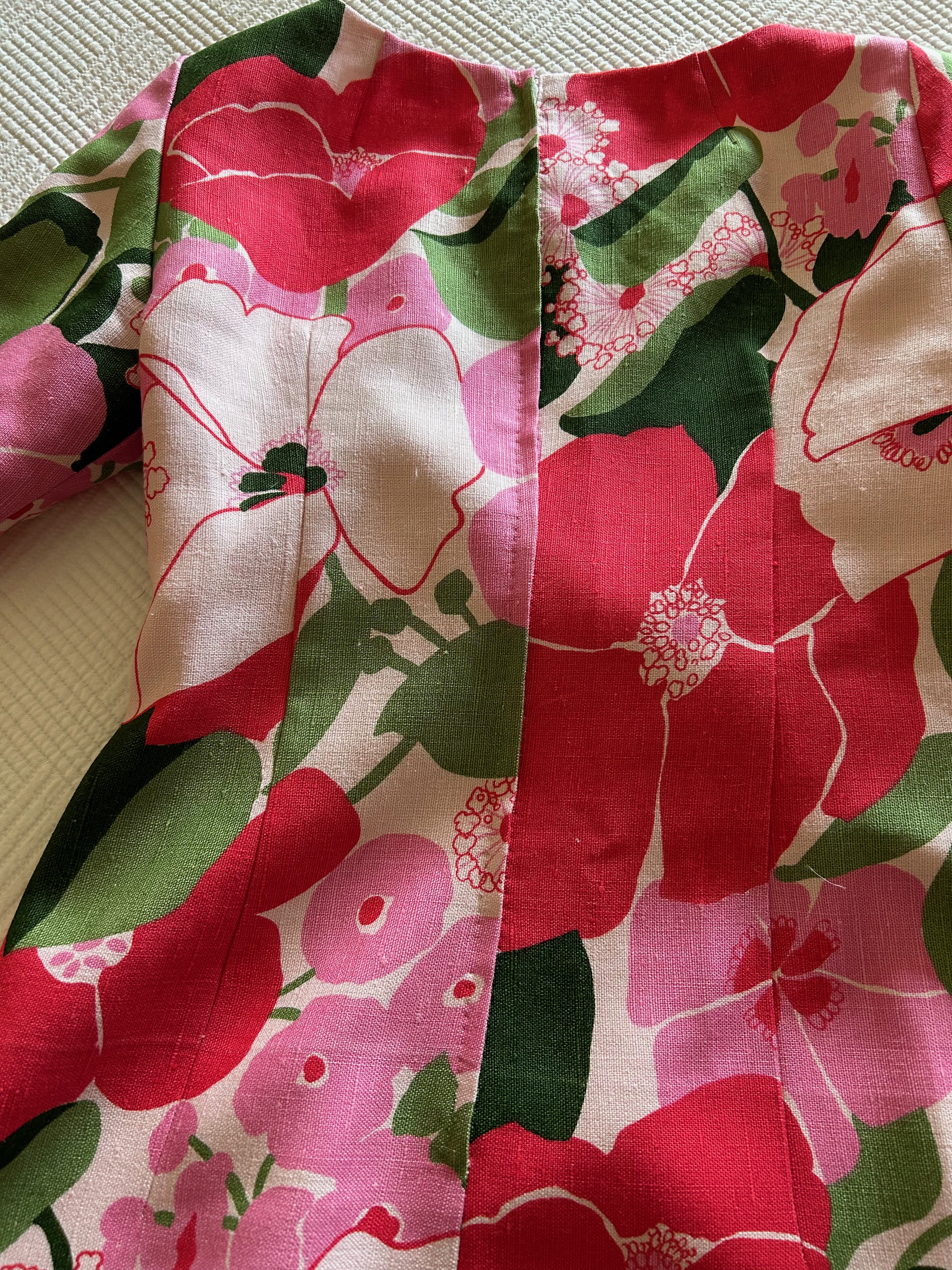
And here is a back view of the 1973 dress. The zipper is metal, which certainly is a telltale sign of a vintage dress.

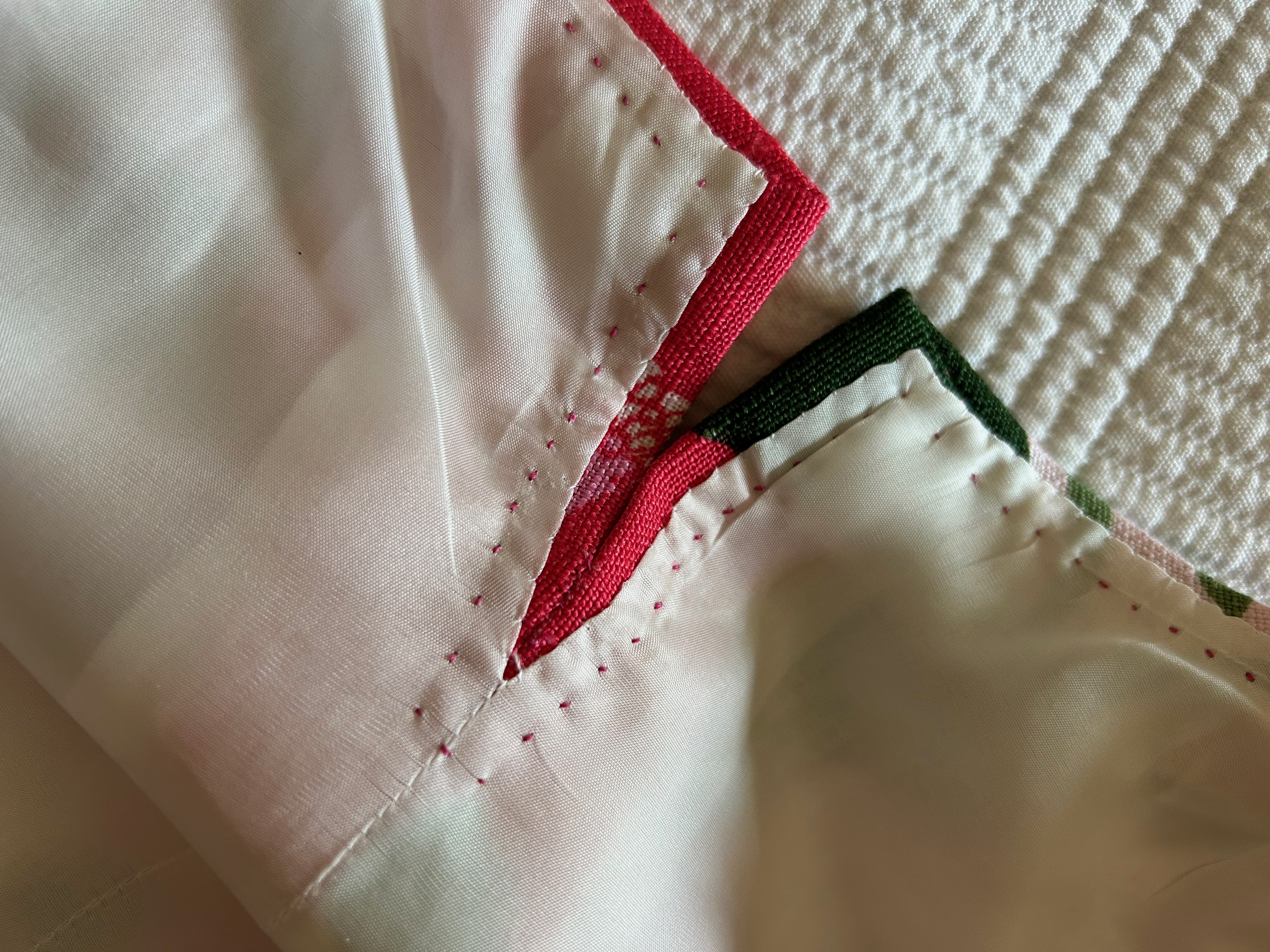
When it came time to apply the bias-cut trim to the hem and sleeves, I had to experiment around a bit.  I didn’t want it too wide, but it needed to be substantial enough to look like it was meant to be and not an afterthought or decision made in desperation!  I finally settled on an exposure of 1/2”.  

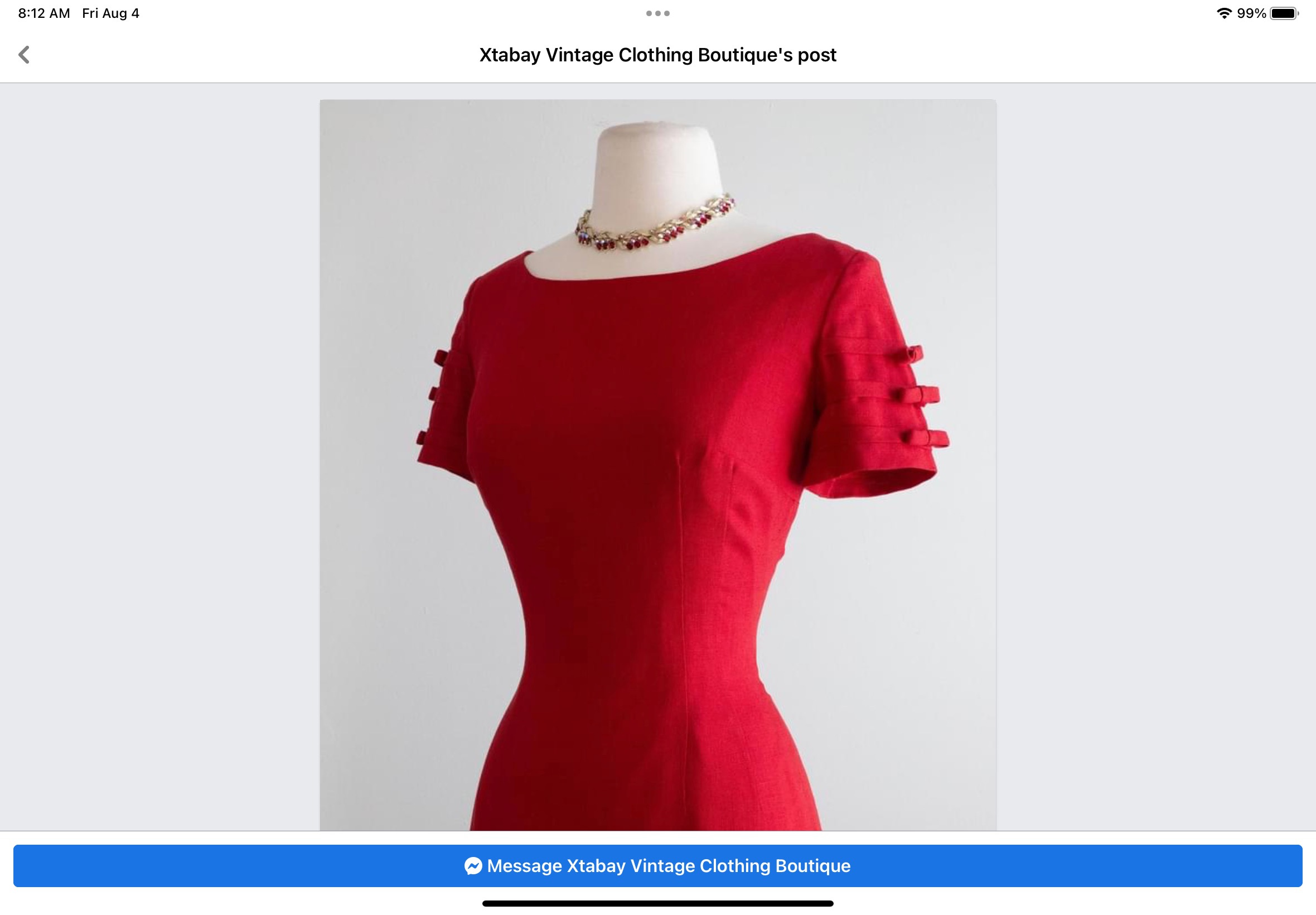
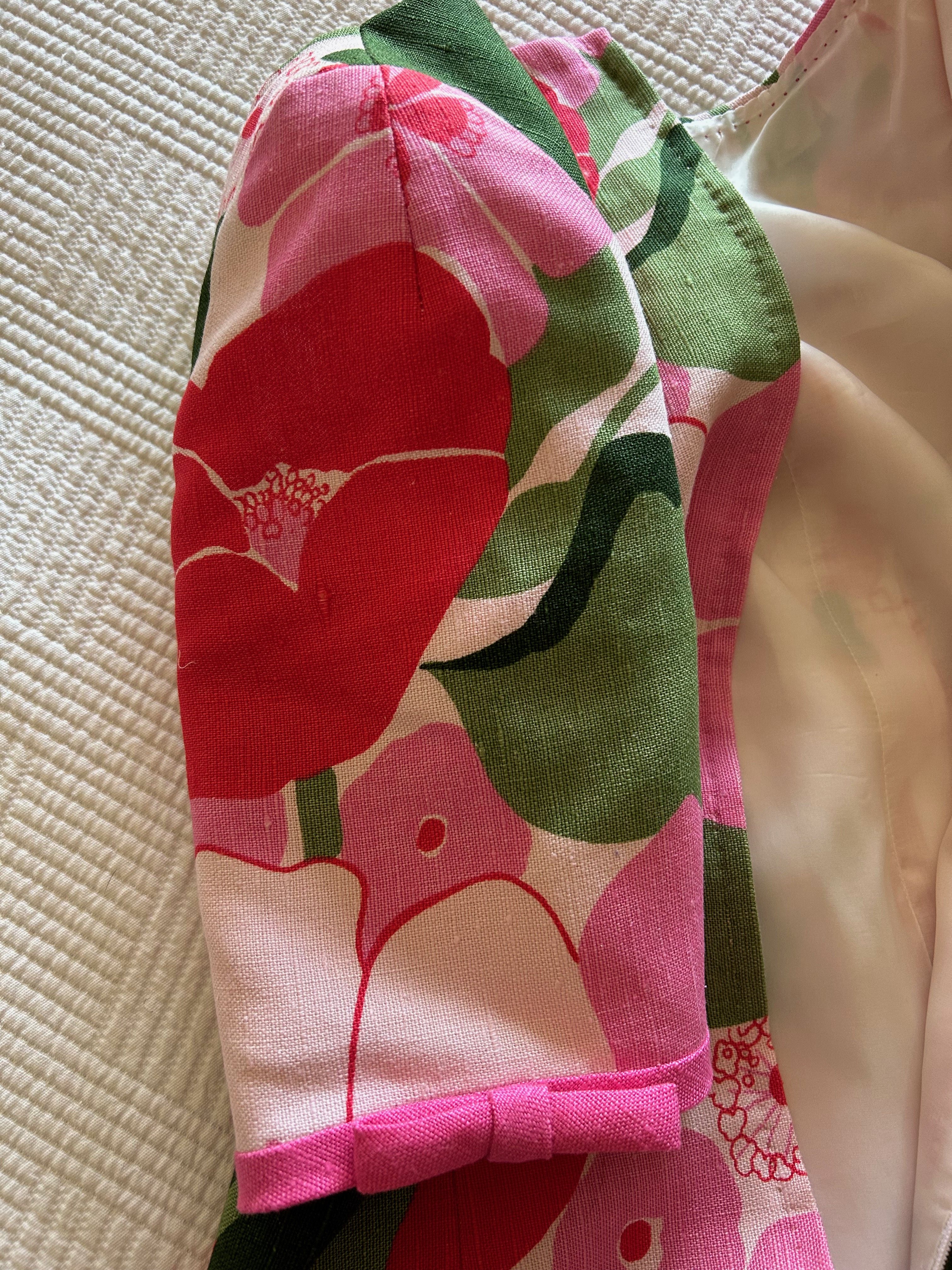
Now this is where it gets interesting.  A few weeks ago I saw a vintage dress on a Facebook/Meta post by Xtabay Vintage Clothing Boutique.  It is obviously Moygashel linen (I can tell by its weave and color), but what really caught my eye were the bias strips and low-profile bows adorning its sleeves.  I tucked this idea in the back of my mind for future consideration.  What I didn’t know was that the future was right around the corner!  Yes – I “borrowed” this idea and added a single bias-cut bow to each sleeve.  Somehow, it just seems to finish the dress.  
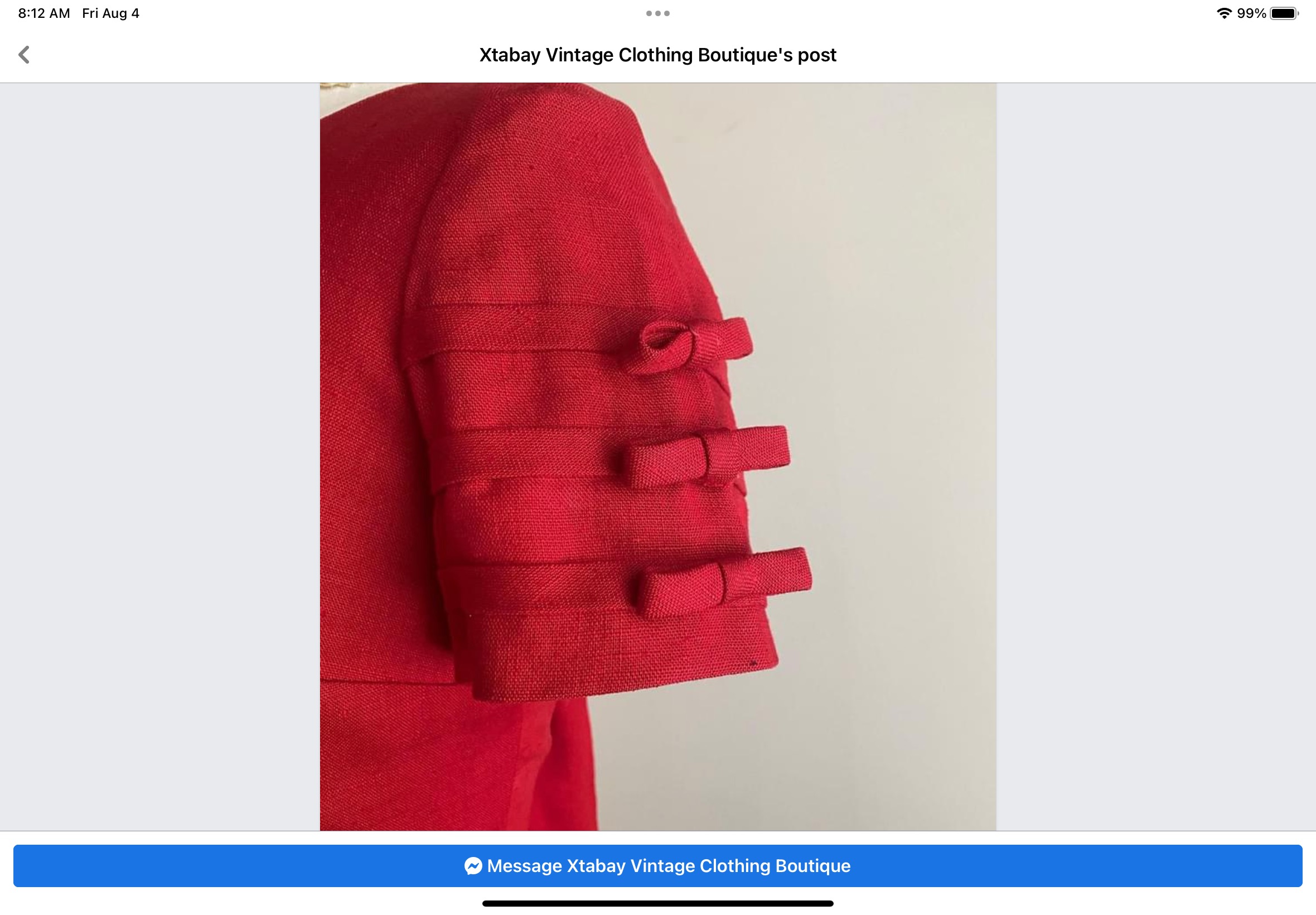
I never would have thought of adding a bow to each sleeve had I not seen this pretty vintage dress.

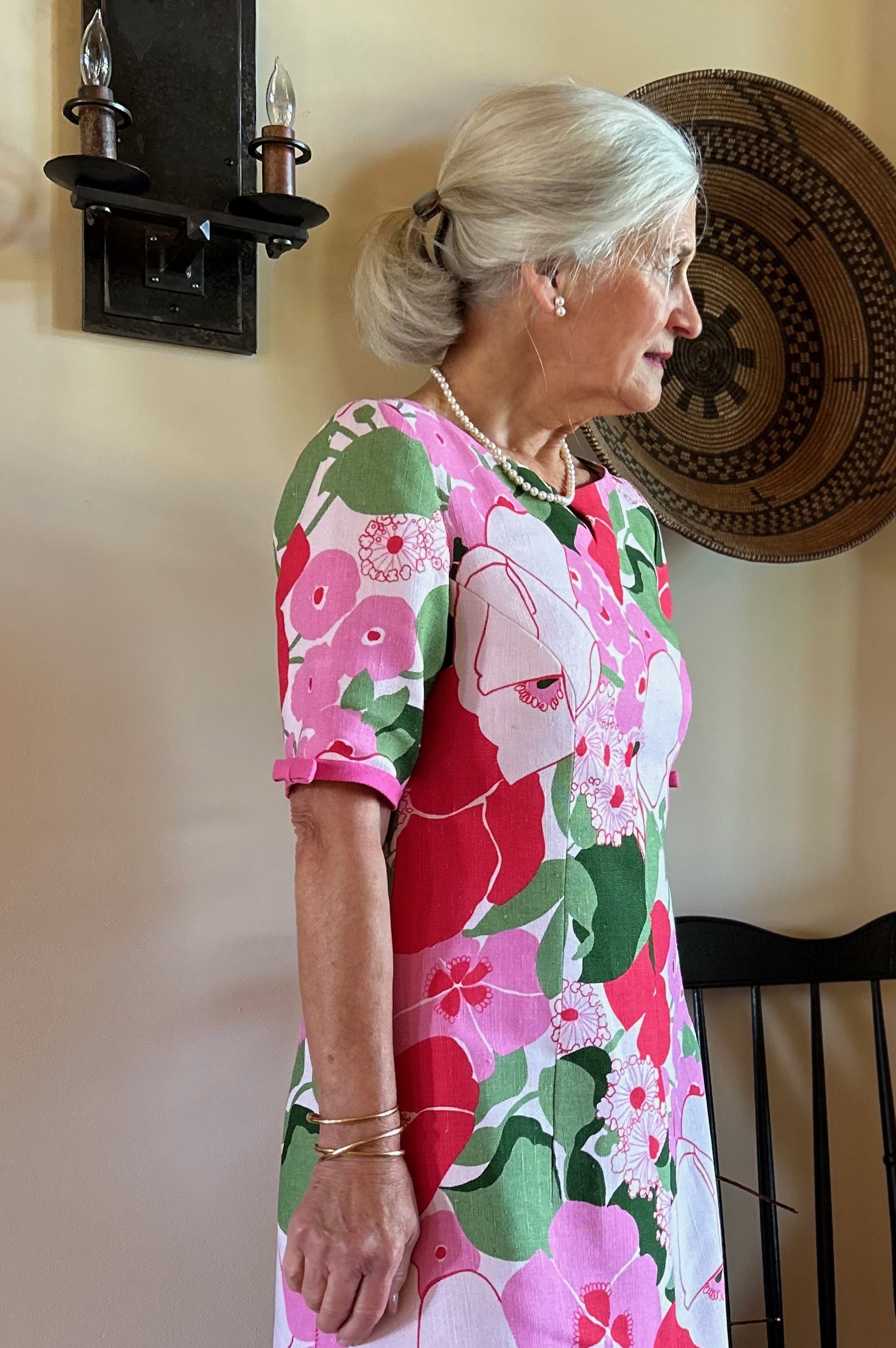
In this view, the princess seam which originates in a dart is visible. This is a nicely engineered, flattering pattern.

Well, you may have guessed by now the reason for making this dress this year.  I will wear it next week when my husband and I celebrate our 50th Wedding Anniversary.  I have changed a lot in those 50 years (and so has my husband!), but I still love pink in all its shades and I still love Moygashel linen (and I still love my husband, too!)  

50 Comments

Filed under Bows as design feature, couture construction, Dressmaker details, Fashion history, hand-sewn zippers, Hems, Linen, Linings, Mid-Century style, Moygashel linen, Sleeves, Summer sewing, Uncategorized, underlinings, Vintage fabric, vintage Vogue patterns from the 1970s

A Tale of Two Dresses, Part 1

Where to begin with this story?  I have to go back 50 years – which sounds daunting and slightly surreal.  As a 23-year-old about to be married, I had already made my wedding gown that summer of 1973.  I still, however, needed a couple of dresses to take on our upcoming wedding trip in early September.  With that intention, I ventured into Stapler’s Fabric Store on Walnut Street in Philadelphia, Pennsylvania (USA).  Stapler’s was one of the old, notable, family-owned purveyors of fine fabrics and dress goods, and I loved going in the store.  Most of the time I could only look and dream, so going in on a mission made this trip memorable.  

Stapler’s carried high end fabrics and that included the newest offerings of Moygashel Irish linen.  I have written several times about this storied brand of dressmaker linen, known for being wrinkle and crease resistant, known for its exquisite designs and colors, and highly sought after by women of good taste.  I can still feel the excitement I had that Summer day when I saw a quintessential floral Moygashel in vibrant pinks and greens and whites.  

I had already picked out a Very Easy, Very Vogue pattern (the pattern number is lost to the ages by now, as is the pattern itself) to make a long A-line dress with short cut-on sleeves and center front and center back seams.  I purchased the yardage I needed and made this dress:

Ankle-length dresses like this were very fashionable in 1973.

I loved it.  I felt beautiful in it, which has, over the years, become my litmus test for a successfully made garment.  Several years ago I included this dress in a post I titled “Shopping in My Cedar Closet.”  I posed a question to myself – should I take this dress apart and reuse the beautiful fabric – which I still loved – for something else?  By asking myself this question, I knew I had the answer.  Too many memories, too much of the younger me were in this dress for me to cut it apart.  I placed it back in the closet and vowed to keep it as is. 

A few years later a most amazing thing happened.  While searching for vintage Moygashel linen on eBay, I found an offering for a length of the same pink, green and white floral fabric I had purchased so many years ago.  The listing was for 2¼ yards of this 45”wide fabric.  I purchased it immediately, its new rendition to be determined. In my mental sewing calendar, however, I hoped to bring life to this fabric 50 years after I made my first dress from its twin.

The planning began in earnest earlier this year.  I had to decide exactly what silhouette dress I wanted my new dress to have.  With only a little over two yards, I knew my choices were somewhat limited.  And I also knew the fabric itself needed to be the star – with its demonstrative, large design, its medley of colors and its lustrous weave.  It took me a while to realize I had already determined the correct formula 50 years ago.  It needed to be another A-line dress, with some length to it.  This time, however, I would make it using the couture techniques I have learned since then.  

I also knew I wanted: a) longer sleeves, if possible, with the yardage I had; b) to underline and line this dress (but preserve its washability); and c) to add some minor embellishment in some way, perhaps buttons or trim of some sort.

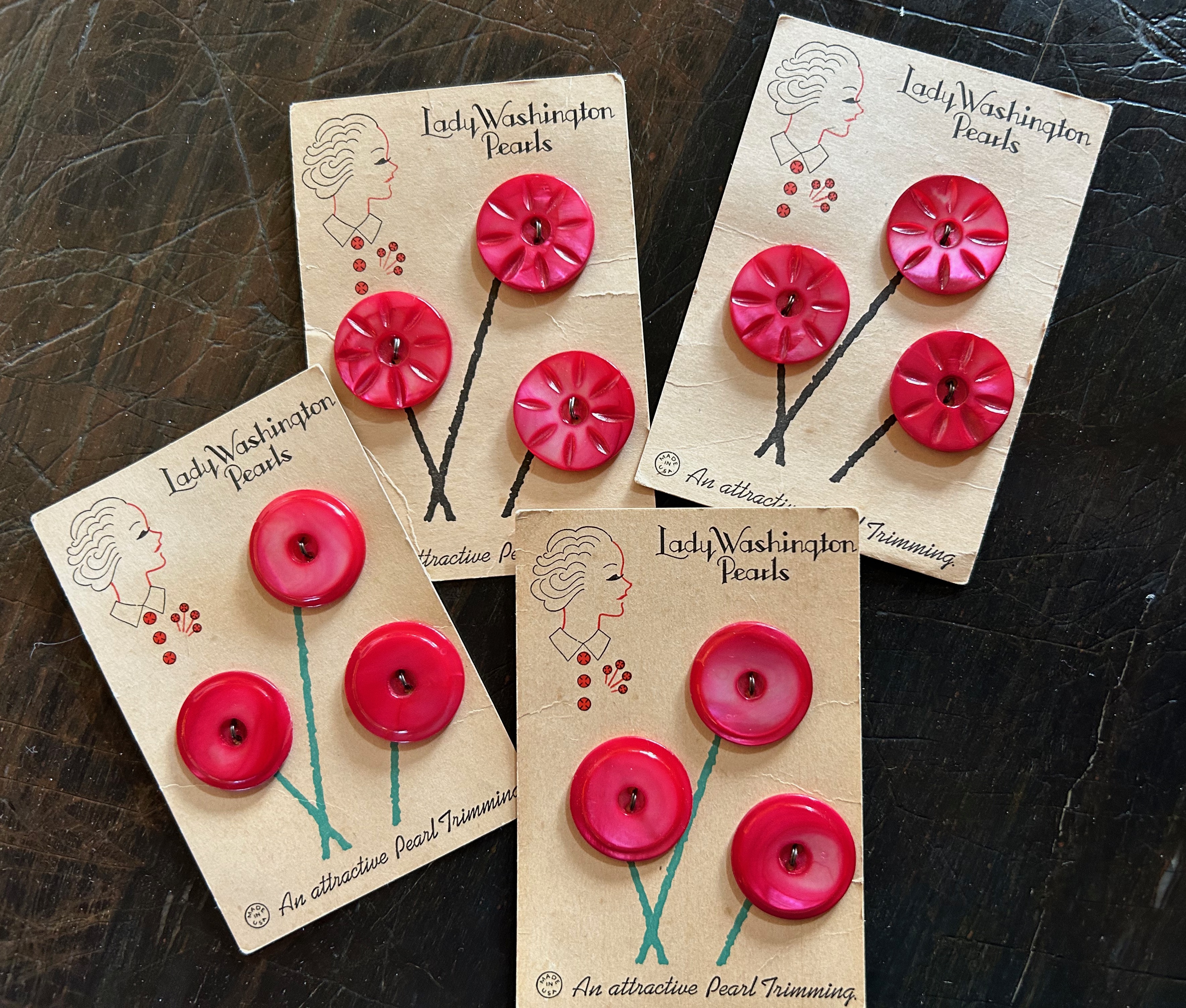
I had these deep pink buttons, one design of which I thought might be a possibility … In the end, I decided they would not work.
And, I had two lengths of Moygashel linen from the 1970s in this deep pink, from which I could make trim, if needed. This proved to be essential to the success of my endeavor.

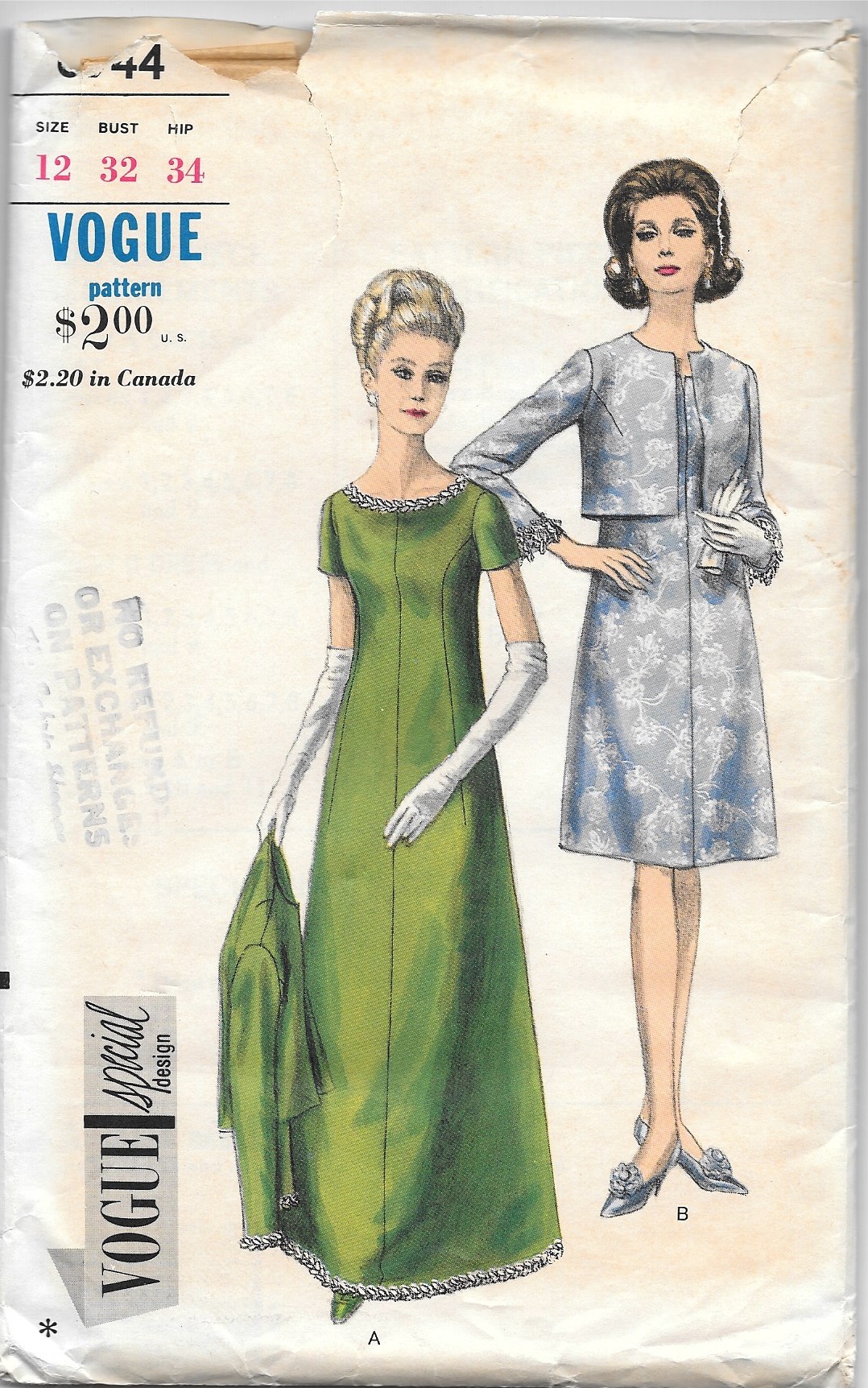
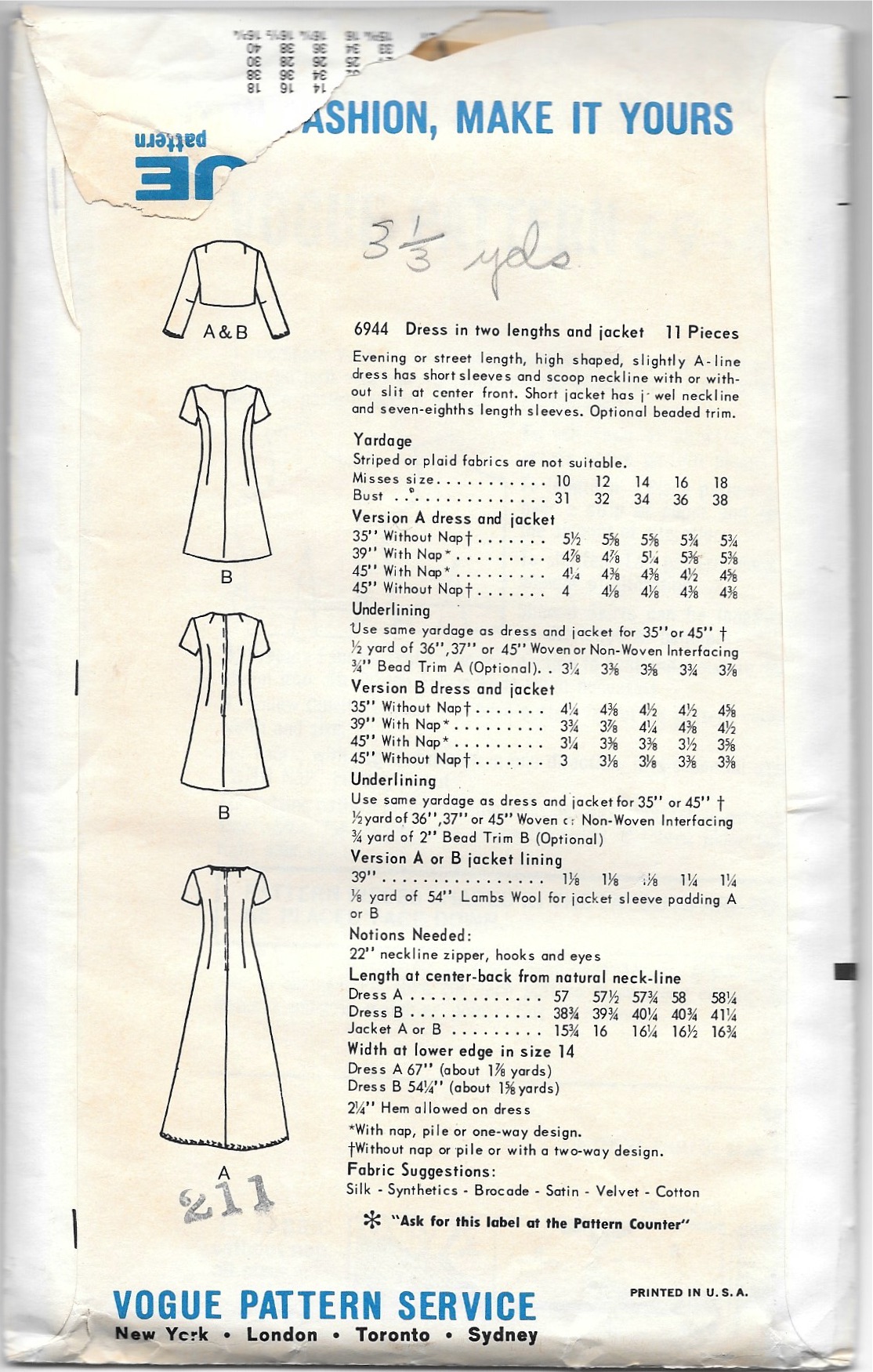
A suitable pattern happened to be one I had already used twice.  

The line drawing for the shorter length shows more detail as to the seaming and the darts. The description on the pattern envelope reads: “evening or street length, high shaped, slightly A-line dress has short sleeves and scoop neckline with or without slit at center front…”

I first used this pattern for this dress:

And then a year or two later, I used it for this dress:

Having a pattern which fits, with pleasing lines and a certain finesse to it, is worth its weight in gold.  Even better, the late 1960s’/early 1970s’ vintage aspect of this pattern made it a perfect fit with fabric from 1973.  The only question I had was a big one.  Did I have enough fabric to make a longer dress with longer sleeves?  The answer: No – and then Yes.

(The story continues in the next post…)

25 Comments

Filed under Fashion history, Linen, Mid-Century style, Moygashel linen, Uncategorized, vintage buttons, Vintage fabric, vintage Vogue patterns from the 1970s

A Summer Dress

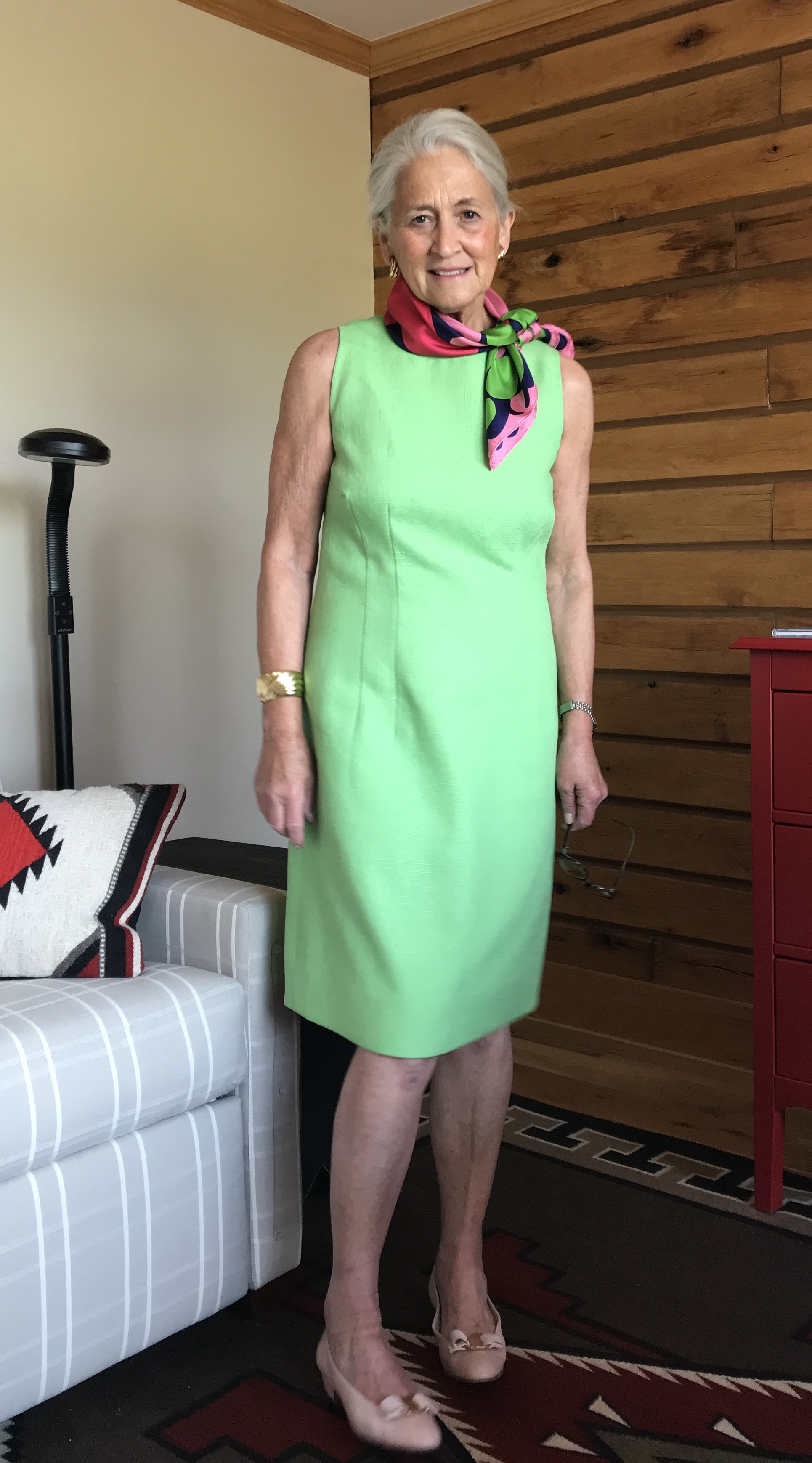
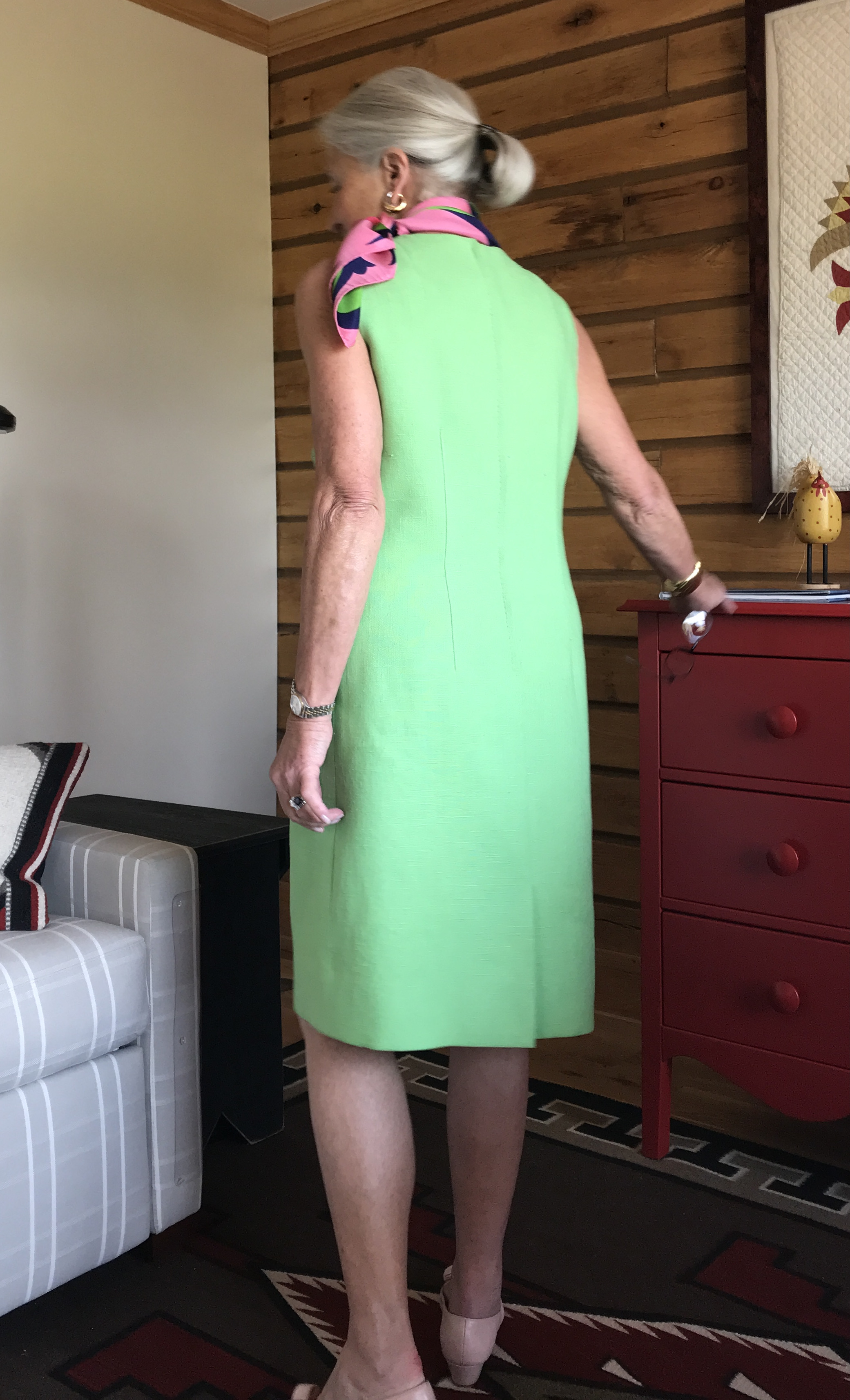
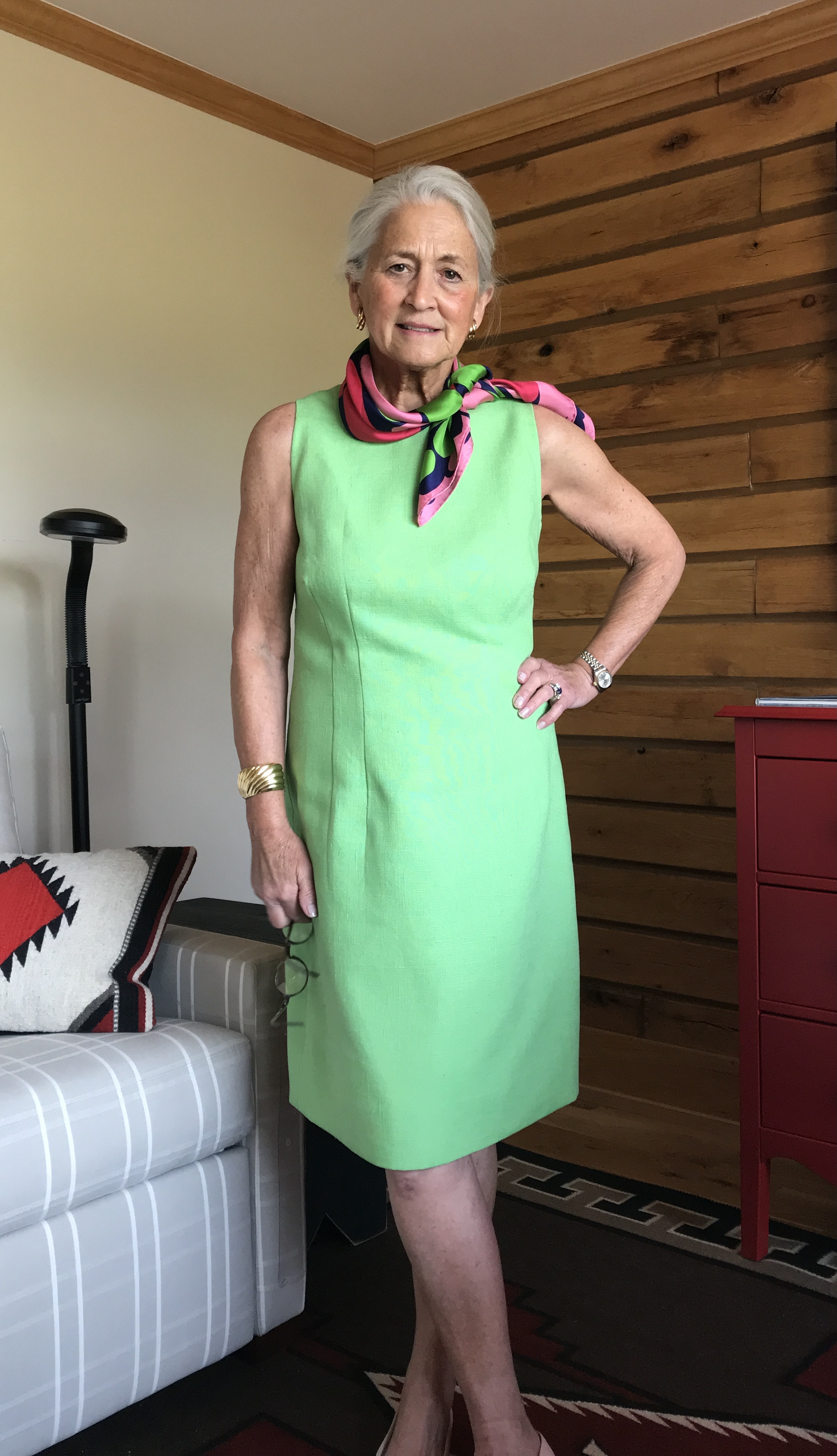
Summer is quickly slipping away, but before it does, I will share one quintessentially summer dress which I made back in July.  It ticks off a number of features which make it “Summer Seasonal”:  it is sleeveless, it is a bright color, and it is linen.  

I found this vintage piece of Moygashel linen a few years ago on eBay. Always a pushover for vintage Moygashel, I purchased it, not quite knowing what shade of green it would be. I was expecting a lime green, but when it arrived it was “lime green meets mint,” a color reminiscent of the early 1960s.  Actually, not just reminiscent – an actual survivor from that period of time.  The width of the fabric was only 35” which was a dead giveaway that this fabric is from the early part of that decade.  Shortly thereafter, Moygashel began to be woven in 45” widths.  Fortunately I had three yards, which compensated for the dearth of width.   

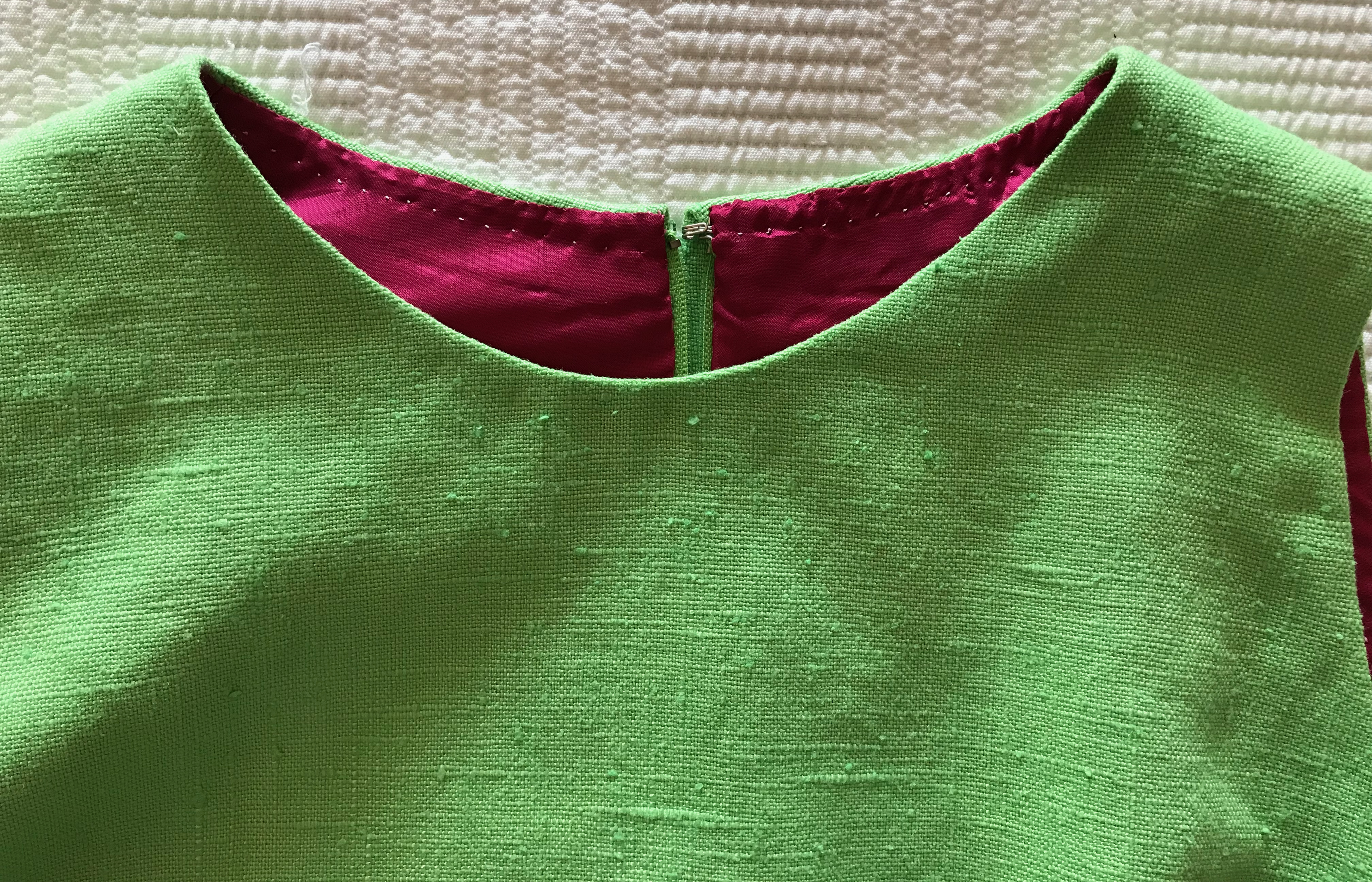
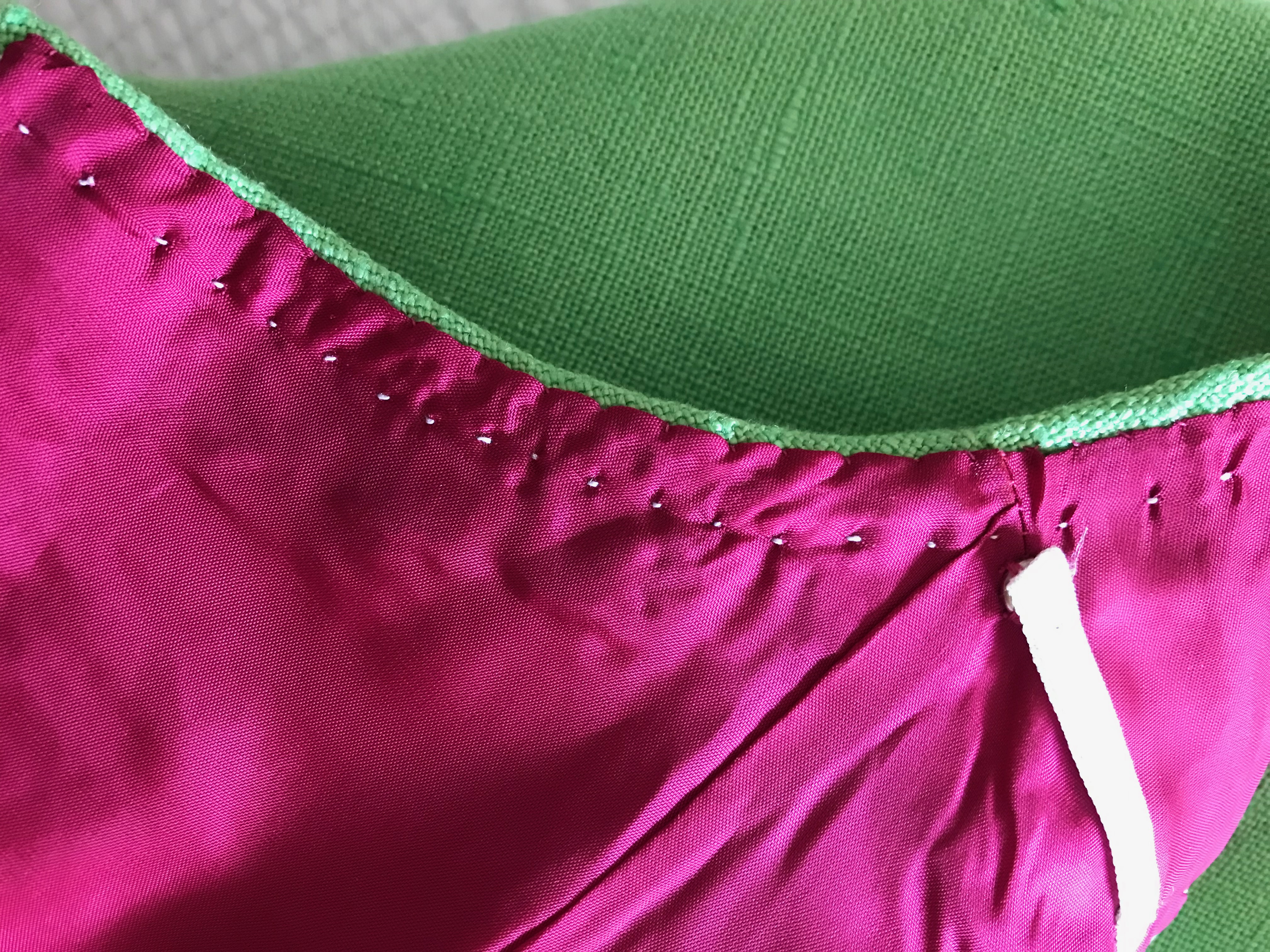
To keep with the early ‘60’s vibe, I decided to line it in pink.  Although I usually line linen with a cotton batiste or cotton/linen lightweight blend, I decided to treat this dress a little bit differently.  I do not often use Bemberg for lining, usually preferring silk, but this lovely, time-tested 100% rayon lining just seemed to be the right choice. (Why?  I knew the seam allowances of the bright green  linen would not show through the tightly woven Bemberg lining, AND it would be a comfortable, lightweight and slinky fabric with which to line a summer dress.)  I ordered what I thought would be a medium pink, but when it arrived, it was more of a very deep rose.  What to do?  I hemmed and hawed, I thought about ordering a different hue of pink, I even thought about abandoning the pink idea and just using a white crepe de chine I had on hand.  Why I was agonizing so much over the color of the lining had to do with my thought if the dress turned out well, I would enter it in the County Fair. I knew not everyone would “understand” such a deeply contrasted lining.  But not wanting to waste money and fabric – and time! – I finally decided just to go with the dark pink, shown a few pictures below.  

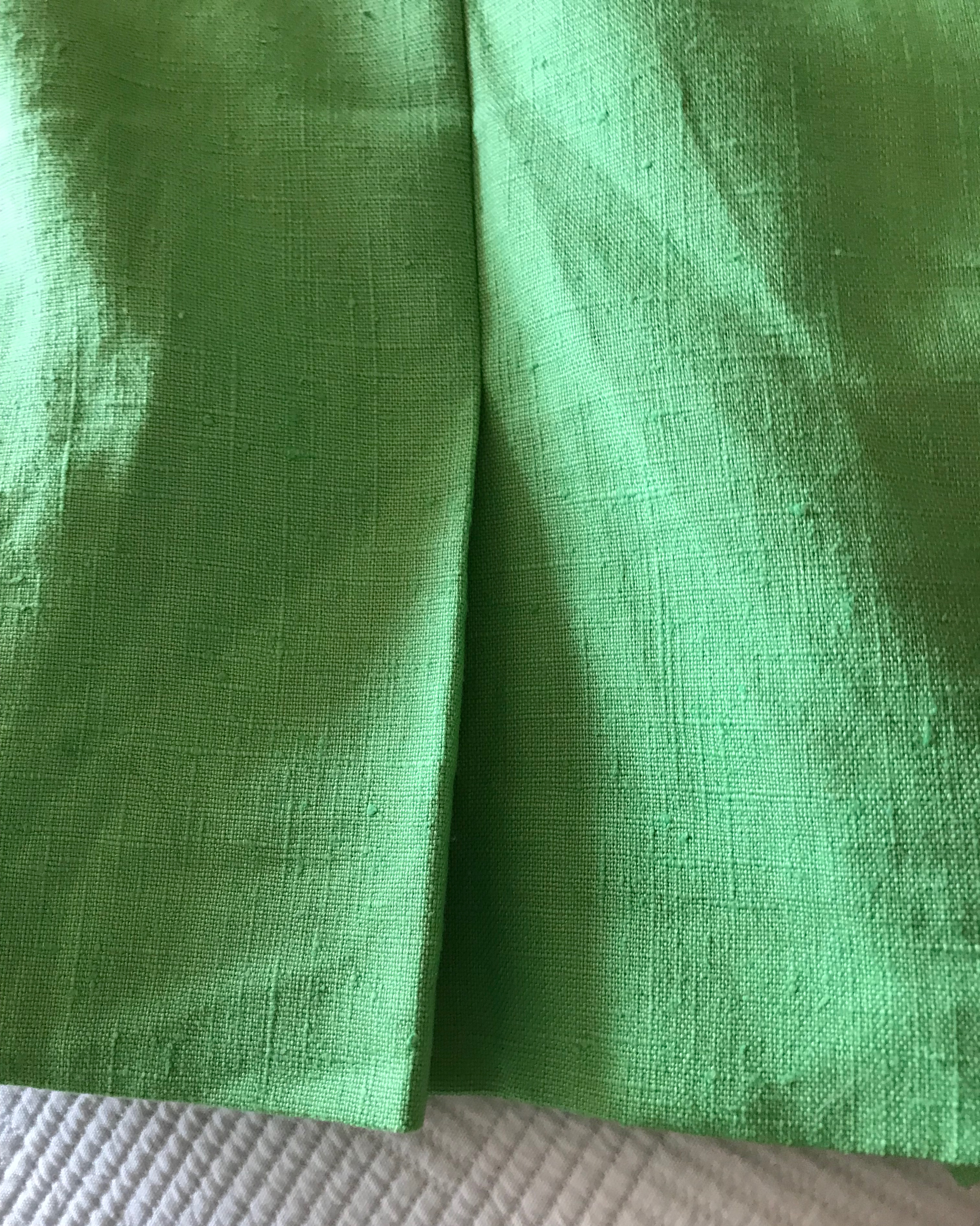
I used this sheath dress pattern again, as I am so fond of the double shaping darts in the bodice front and the real kick-pleat.  

The sheath dress pattern I like is the one on the right, underneath its matching plaid coat.
Not just a slit, but a real kick-pleat!
Here is the kick-pleat on the inside of the dress.

I underlined the dress in silk organza so that I could eliminate facings and have an invisible application of the lining.  (The silk organza underlining gives one a base upon which to tack and secure stitches which do not show on the fashion fabric.)

The neck and armhole edges are stay stitched by machine close to the seam line, then clipped and tacked in place by hand to the silk organza underlining.
Here is one of the side seams, clipped and then also tacked in place by catch-stitches.
A beautiful lining hides all those interior stitches and seams.

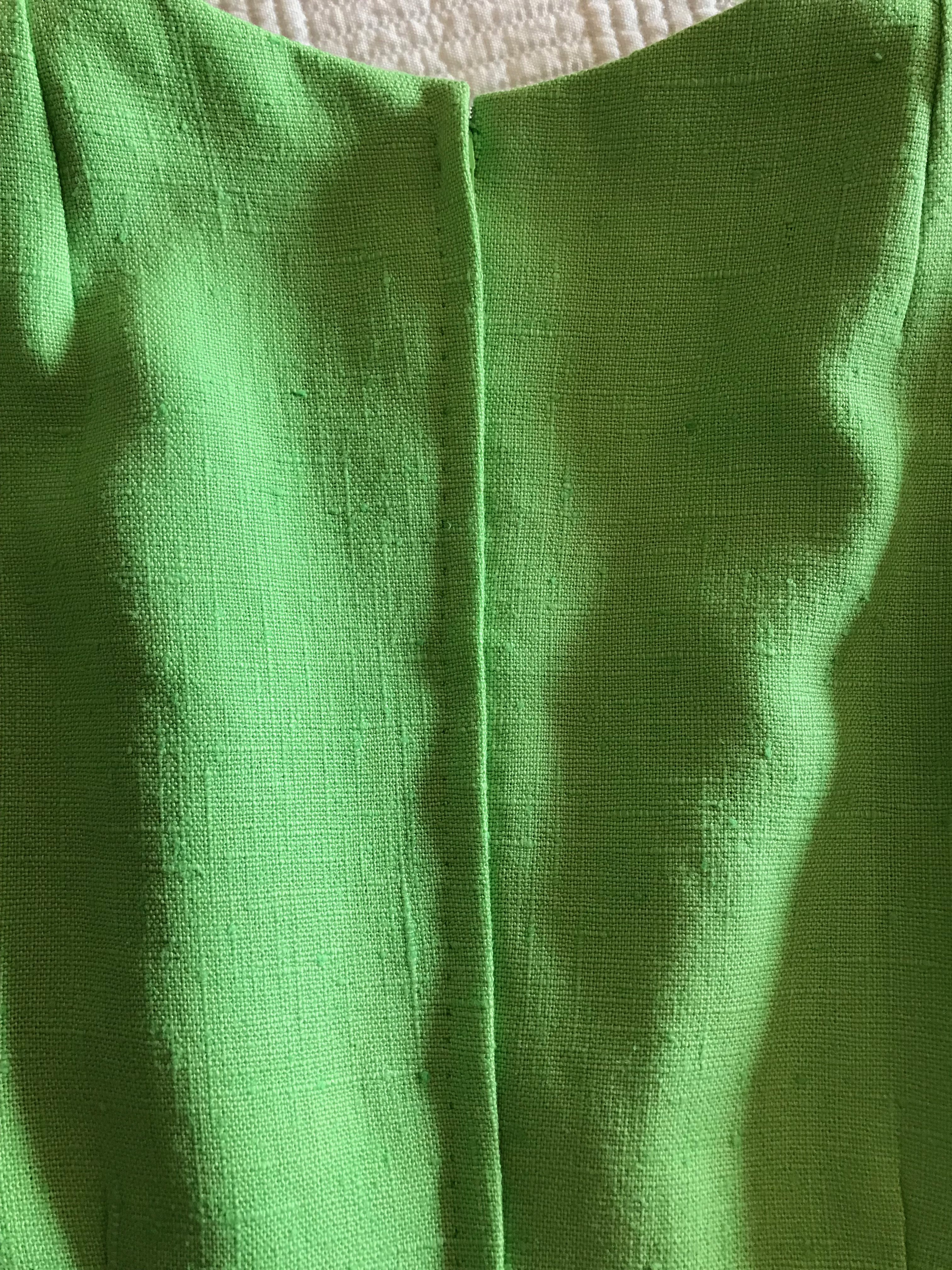
I surprisingly found a zipper which was almost a perfect match to the green linen, and I did a hand-picked lapped application.  

Once I had the lining fell-stitched in place around the neckline and the armholes, I under-stitched those areas in waxed and ironed white thread.  (I used white to quiet down the deep pink!) Using this technique keeps the lining in place.  The under-stitching is attached to the silk organza underlining only, not the fashion fabric, as explained above.
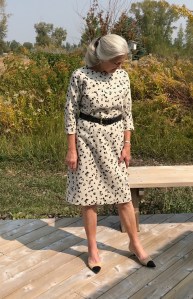
I used Hug Snug rayon tape to construct the strap holders.

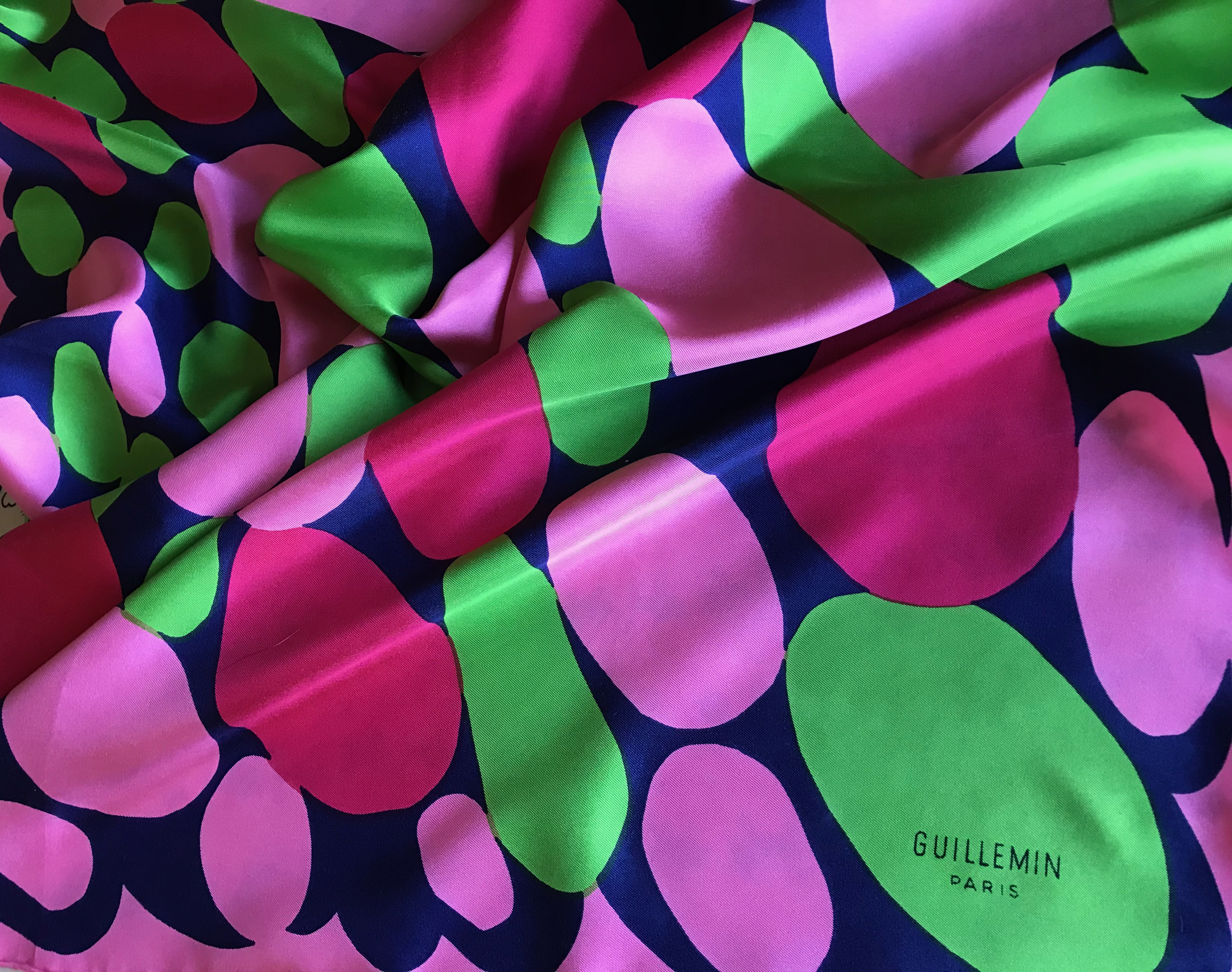
To complete the early 1960s’ essence of this dress, I can pair it with a vintage ‘60s’ Guillemin scarf, also found on eBay.  The pink in the scarf doesn’t match the pink lining, but since the lining does not show, it only matters to me (and now all of you also know this little fact!)  
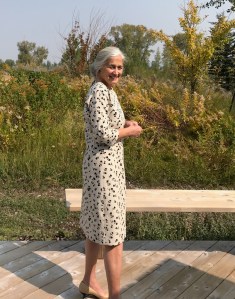
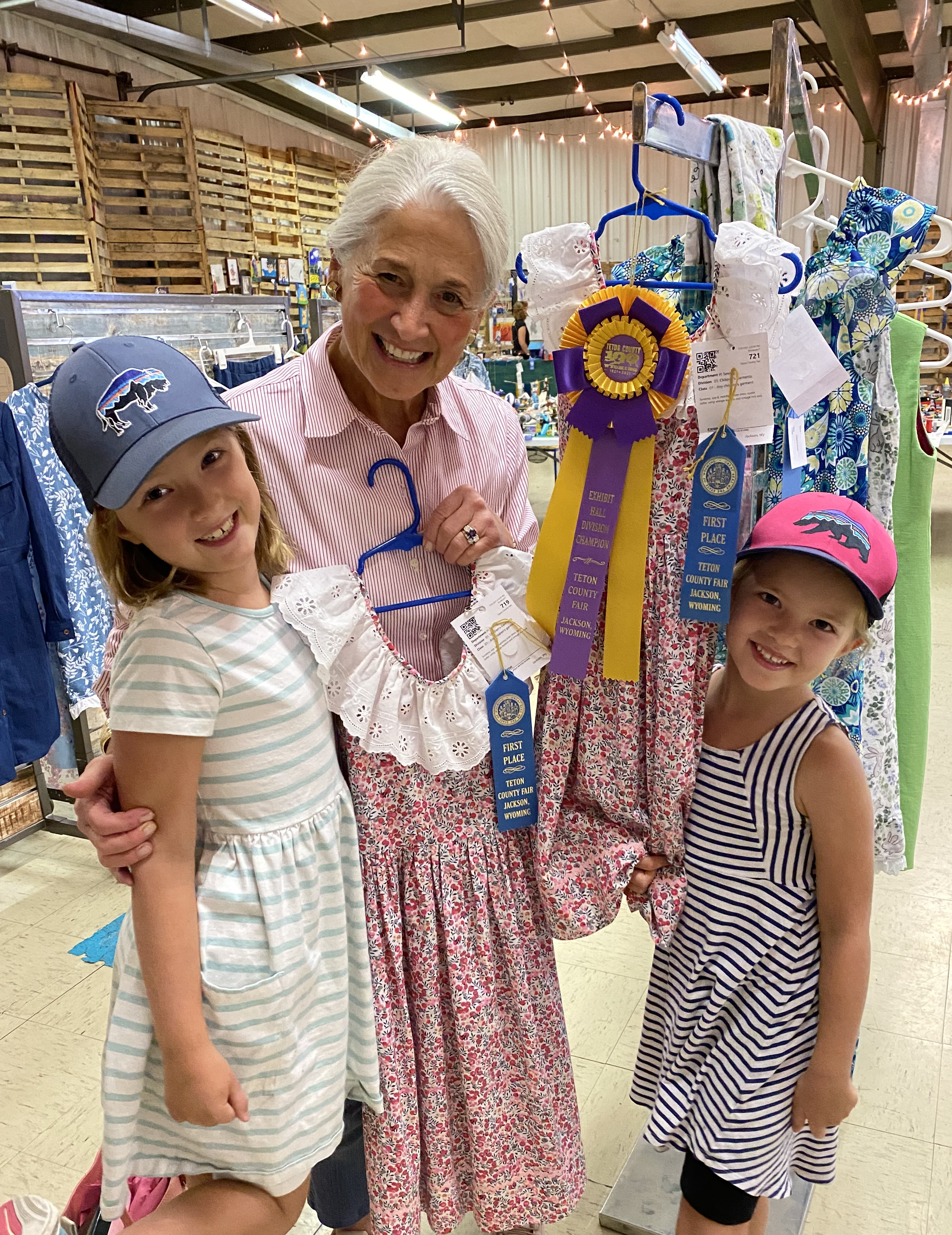
So how did I do with this dress as an entry in the County Fair?  It was awarded a Red Ribbon in the Adult Division, which was lovely.  The day was “saved” however, when dresses I made for my granddaughters each won Blue Ribbons (and one of them won Best of Division).

(Those of you who follow me on Instagram @fiftydresses have seen this picture already…)

Good Summer memories, all of them.    

29 Comments

Filed under couture construction, Linen, Linings, Mid-Century style, Moygashel linen, Scarves, Sheath dresses, Uncategorized, underlinings, Vintage fabric, vintage Vogue patterns from the 1960s

The Last Dress of Summer

Or is it the first dress of Fall?  It depends on your point of view, apparently.  The Autumnal Equinox, here in the Northern Hemisphere, is September 22nd, officially the first day of (Astronomical) Fall.  Meteorological Fall began on September 1st, marking the point in the year when the temperatures begin to fall (pardon the pun.)  Either way one looks at it, I now have a finished dress which is either late for Summer or just under the wire.  I’m honestly just delighted to have it finished!

Although linen is traditionally thought to be a summertime fabric, I have long thought it is also the perfect fabric for early Fall.  Moygashel linen is especially well suited for this time of year.  Its natural fibers keep it cool for those days which continue to warm up, but its sturdy weave and heft give it a substantial enough look for these days of transition.

I purchased this piece of vintage linen from an Etsy shop years ago.

This particular piece of Moygashel, undoubtably a survivor from the mid-1950s, presented me with a couple of challenges.  First, it was only 35” wide.  And I only had 2½ yards.  Laying out pattern pieces on a single layer of fabric always allows me to maximize their placement, improving my ability to do the impossible – get a dress out of too little fabric.  (Here is another Moygashel linen dress which I was able to squeak out of 1 5/8 yards of 35” fabric.)

This vintage Vogue pattern gave me two sleeve options.  If I had opted for the very short sleeves, I would have had ample yardage.  But, for the seasonal reasons mentioned above, I particularly wanted to make this dress with the below-elbow-length sleeves.  So, I fiddled and figured and made it work by utilizing both the straight of grain and the cross grain for the bodice/sleeve pieces.  I was able to do this because of the allover floral design – ie., no directional limitations.

This pattern is dated 1957.

Interestingly enough, this dress with its cut-on sleeves does not have gussets.  Rather, the underarm seams of the dress sections are curved to add moveability.

This shows where the seams join under the arm close to the top of the side zipper.

I underlined this dress with white cotton batiste (from Farmhouse Fabrics) and I finished the seams with Hug Snug Rayon seam binding.

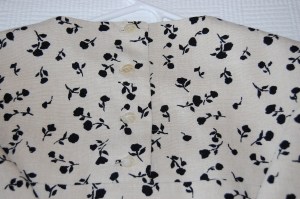
The buttoned upper back bodice is a real focal point of this pattern.  Being 1957, the pattern calls for “fabric buttonholes” – or bound buttonholes.  So that’s what I did.

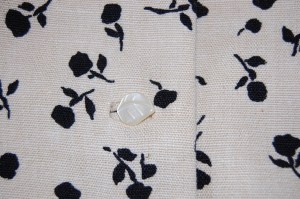
When it came to buttons, I wanted to use some sort of faceted black buttons.  After searching online and coming up empty-handed for buttons of the correct size and look, I settled on these carved pearl buttons already in my button collection.

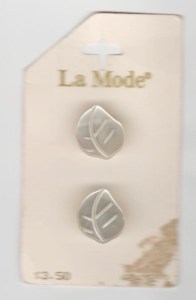
I love these buttons, but I still think black ones would be better …  so I will keep searching and switch them when I’m successful.  That will also allow me to use the “leaf” buttons (I have 6 of them) for something which will show them off to better advantage.

The final construction detail of note is the 10” side zipper.  I used a lapped, hand-picked application which lays inconspicuously below the left sleeve.

It is so inconspicuous, you can barely see it here!

I did not leave an opening on either side at the waist for a belt to slip through.  In fact, I did not have enough fabric to make a self-belt!  However, my intention was always to use a contrasting belt.  I think this fabric will lend itself to using belts of varying colors (red or yellow or pink?) as long as I can coordinate with shoes, handbags and/or jewelry.  That will have to wait until I am home from our Summer location.  Maybe I’ll even find black buttons back home!

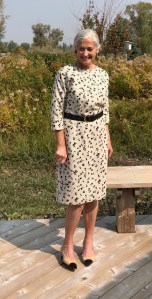
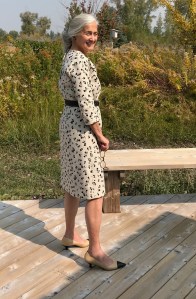
I could wear this dress without a belt as well. (But I’m not sure I will…)

One final note about this pattern and dress:  it has to go over the head.  It was much more common for dresses from the 1950s and ‘60s to have side zippers and “over the head access”  only.  This can wreak havoc on hair (and make-up)!  So a little pre-planning is necessary – I will need to finish my primping after I have put on the dress.

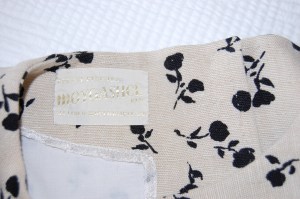
And everytime I put this dress on, I shall see the original Moygashel linen label which came with the fabric.

I suspect this dress will go right into the cedar closet for the months to come, as I switch out the wool skirts and dresses and coats and sweaters.  But hopefully, in March, at the Spring Equinox, it will creep out from its dark and quiet spot and maybe even actually be worn!

18 Comments

Filed under bound buttonholes, Buttons - choosing the right ones, Day dresses, Moygashel linen, side-placed zippers, Uncategorized, vintage buttons, Vintage fabric, vintage Vogue patterns from the 1950s, Vogue patterns

Almost September

What?  It is almost September and time to assess just exactly what I accomplished the last three months.  I have a friend whose late mother always said, “A flurry of activity at the end of the day does not make up for earlier unfocused, unproductive hours.”  I guess the same could be said for the waning days of a month or a season.  However, despite my nagging feeling that I have not accomplished much this summer, I have actually made some progress on my never-ending list.

For one thing, I tackled the alterations on my silk floral dress about which I wrote earlier in the summer.  I took out the hand-picked, lapped zipper to see if resetting it would give me enough ease over the tight bust and uncomfortable back.  There was much to take out and then put back in:  the lining, part of the neck ruffle, the understitching of the neck facing, and of course the entire zipper, in addition to reattaching the silk organza underlining back to the fashion fabric.  Thank goodness for the ample seam allowances which, in true couture fashion, enabled me to add just enough extra across the back.  Yes, it worked, and I am so much happier with the fit and the look of the dress.  Now I can wear it or hope to wear it! (Someday?)  I still think I will tweak the neckline a bit if I make this pattern again, but I do feel I salvaged this dress.

Well,  these are not the shoes I intend to wear with this dress. They happen to be the only heels I have with me this summer.

This dress fits so much better… I’m so happy I did not put off “fixing” this dress until … who knows when!

Several weeks of the summer were devoted to home decorative sewing, including pillows, cushions, and a tailored bed skirt.  I won’t bore you with that! But it was all very time-consuming, as those things tend to be.  More weeks were spent, happily, with welcoming  family for visits and extended stays and even some sewing for my granddaughters. I have never known two little girls who enjoy “playing dress-up” more than my two.  In a weak moment a couple of years ago I purchased this amazing vintage pattern of the Chiquita Banana Señorita’s dress in girls’ size 6-8.

The Chiquita Banana copyright for this costume is from 1947. The pattern is undated, but it is undoubtably from the 1950s.

I knew this was the summer to make these dresses, so I was off to the races on them.  I opted for rick rack rather than bias tape as the decorative trim. I ordered the fabric from Farmhouse Fabrics – a cotton/poly blend which was lovely, and in equally lovely colors.  As the dresses got heavier and heavier as I worked on them, I decided to eliminate the third row of ruffles.  As it turned out, the dresses were amply sized.  My 5-year-old granddaughter reassured me that it was so good to have dresses with room to grow.  And so, these fiesta dresses will serve them for at least a couple of years.

I wanted the girls to have different colored dresses, and I got creative with the colors, as I really think of these as “fiesta” dresses rather than Chiquita Banana. Lots of twirling ensued!

And then last week – yes the last full week of the month – I was finally able to focus on what will be my last make of Summer. Here is the pattern:

This pattern is dated 1957.

And here is the fabric:

I was fortunate to find this vintage piece of Moygashel linen several years ago. It is also from the 1950s.

And so my last minute flurry of sewing activity is well underway.  Happy September!

23 Comments

Filed under hand-sewn zippers, Moygashel linen, Ruffles, Sewing for children, sewing in silk, Sheath dresses, Uncategorized, Vintage fabric, vintage Vogue patterns from the 1950s

Another Rosy Outlook for the New Year

There is a fine art to planning ahead, and nowhere is this more obvious than in planning a new sewing year.  No matter how carefully I think it through, I still end up with some fabrics that never make it out of storage and some newly-purchased fabrics that quickly get moved to the head of the queue.  But no matter!  I still find it useful to make a list of intended projects, while at the same time reminding myself that being flexible and realistic about my intentions is what is really necessary.  (There are, after all, those unexpected special events which can’t be planned for, but which take top priority when the “save the date” card arrives in the mail.)

When I look back at what I accomplished in 2018, I happily find that about half my projects used fabrics which I had purchased at least a few years prior.  Some had actually been in my collection for more than a few years! Last year’s list was replete with rosy hues and rosy prints, and this year is not too different, especially considering three of my most favorite fabrics from last year are being forwarded onto my plans for 2019. Will this be the year that I finally get this vintage piece of Moygashel linen made into a dress?  I’ve only been trying to do this for at least three years now!

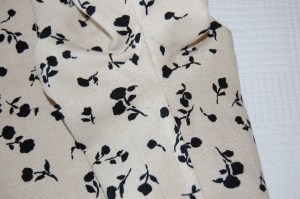
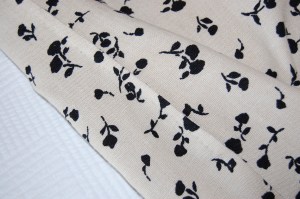
A very early 1950s’ linen, petite black flower silhouettes on a pale ecru background.

But for starters, and as with last year, I am first finishing up a project which I began, but did not have time to finish before the holidays took over my sewing room – and my life!

I am bound and determined to finish the Classic French Jacket I started in late 2018. While I am currently working on the body of the jacket, having completed its quilting, I am still undecided about trim.  I am auditioning different options, but have yet to find the perfect one.

However, I am anxious to get on with it, as the rest of my list includes:

1)  a wool coat

2)  3 cotton shirtwaist blouses

3)  1 boat-neck blouse (silk, maybe, or still undecided)

I love this French blouse-weight silk, so it is a heavy favorite for a boat-neck blouse to be made along with fellow dressmakers enrolled in Susan Khalje’s Couture Sewing Club.

4)  1 linen skirt

5)  2 wool skirts

6)  1 wool, two-piece dress

7)  1 cotton dress

I found this amazing cotton at Mulberry Silks in North Carolina when I was looking for fabric for the Christmas dresses for my granddaughters.

8)  1 linen dress – referenced above

9)  1 silk dress

10) birthday dresses for my two little granddaughters

11) play dresses for granddaughters

12) holiday/Christmas sewing for those same two little girls

and finally

13) some necessary home decorator sewing, which is not my favorite thing to do, until I see it finished and can enjoy living with it!

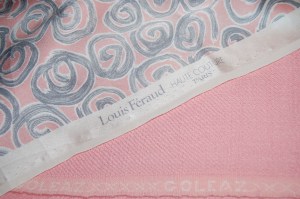
The wool coat will be my first major project in 2019 once the French jacket is finished.  I can’t wait to get started on this vintage Lesur wool from Paris, lined in a pink, gray and white silk purchased from Mendel Goldberg a few years ago.

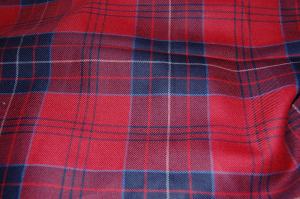
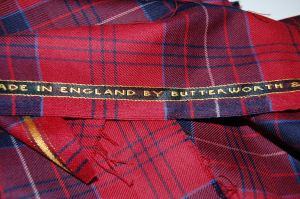
I will probably make a simple wool skirt before starting the coat, as I know it will be a relatively quick project nestled between the jacket and the coat.  I found this wool when Promenade Fabrics was closing their Etsy shop a few months ago.  How I love a red and navy tartan.  I could not resist it, and I am glad I didn’t.

The hand of this wool is so lovely. I think it will make a beautiful skirt. And I have just the shoes to wear with it!

Life is, of course, filled with all kinds of non-sewing duties, and I have plenty on that list, too.  It will be a tricky balancing act to make significant progress in both realms, but my guess is that sewing wins out over cleaning out the attic.

Welcome, 2019, with all your grand opportunities!

10 Comments

Filed under classic French jacket, Coats, Linen, Moygashel linen, Uncategorized, Vintage fabric, woolens

A Definite ‘60’s Vibe

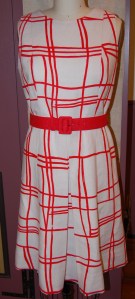
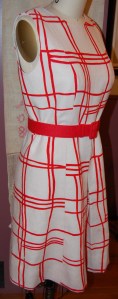
“Unexpected,” “unusual,” “fascinating,” and even “a bit magical” are words used to describe some of the fabrics, prints and designs from the late ’60s/early ’70s (The Editor’s Letter, Vogue Pattern Book International, April/ May 1970.)  Although I have no documentation, I am sure that this red and white Moygashel linen is from those last years of the 1960s or early years of the ’70s.

Of course, another clue to the age of this Moygashel linen is its width of 45″. Prior to about 1964, Moygashel was only available in 35 or 36″ width, as best as I can determine.

A quick look through some of my Vogue Pattern Book Magazines from this time period uncovered other fabric designs which have a similar feel to them.

This dress appeared in the April/May 1970 Vogue Pattern Book International, page 16.


This large, irregular leaf print was shown in the February/March 1968 issue of Vogue Pattern Book International, page 11.


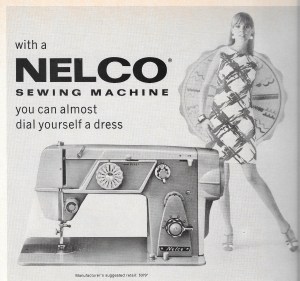
Even this sewing machine ad features a dress with an abstract geometric fabric design. Again, this is from the February/March 1968 Vogue Pattern Book International, page 24.


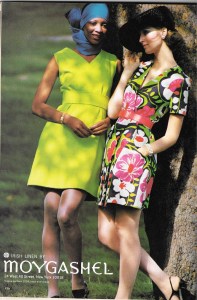
And here is another spectacular Moygashel linen, advertised in the April/May 1970 Vogue Pattern Book International, page XXIV. Cute dresses!

Interestingly enough, these demonstrative and colorful fabric designs were often sewn from the same or similar patterns as their more demure pastel and solid counterparts. I kept that in mind as I contemplated which pattern to use for this “unusual” and “fascinating” linen. Additionally, I wanted to pair it with a red linen belt  (which I ordered several years ago when I knew that Pat Mahoney was closing her custom belt and button business.  The red linen is some I fortuitously had left over from some of my sewing in the early 1970s.)

Then, after the recent success of my fairly dramatic changes to this pattern – and knowing I had a great muslin from which to work – I went with it again.

Here is the result:

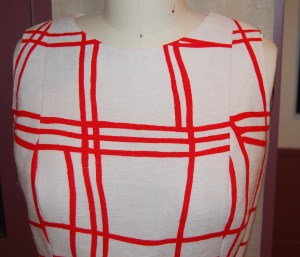
I definitely had some issues with the very uneven grid.  I took a lot of pictures of the fabric arranged on my dress form before I started to lay out the pattern.  This helped me to visualize the areas which needed some regularity (if you can call it that!)  I realized quickly, in order to achieve a semblance of matching in the critical areas, I would have to accept way less than perfect in other areas.  Because the entire geometric design is so irregular, I have, I think, made peace with this decision.  (I haven’t worn the dress yet, so the proof of this is still to be determined.)

The bodice front seemed to me to be the most critical, and I wanted that three-striped horizontal motif to follow across the upper bustline.


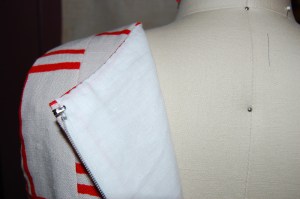
The back proved to be a bit more problematic, as three quarters of it lined up fairly well, with one section off on the left side.  Because the side piece wraps around the side (as in no side seam), there was only so much I could do in order to be able to “match” the front.  Additionally, I thought it was more important to have the back center seam, rather than the side back seam, positioned correctly, so that’s what I did.

Am I going to have the nerve to wear this dress?

I may end up loving it??

I lined the entire dress with a very lightweight linen cotton blend, eliminated facings for the neck and armholes, and finished those areas with a typical couture treatment.

Because the skirt lining is unattached, I finished off the seams of the linen with Hug Snug rayon tape.

I did not use a silk organza underlining, as I like my linen dresses to be washable. Without that inner layer of organza, I had to be very careful with sewing the hem, to try to make it as unnoticeable as possible.

I doubt I will have a chance to wear this dress yet this Fall.  The later it gets, the odder it will look.  That’s okay.  I’m ready to move on to something more subdued – but hopefully “a bit magical” will still be in the equation.

32 Comments

Filed under couture construction, Linen, Linings, Mid-Century style, Moygashel linen, Uncategorized, Vintage fabric, vintage Vogue Designer patterns

A Sewing Draught

The weather outside is frightful, as the popular Christmas song goes.  It has been too hot and too wet here in eastern Pennsylvania (USA) this summer.  Our family travels, however, took us to areas that were both too hot and much too dry. It was exactly those lengthy travels which helped determine the atmospheric conditions in my sewing room during the past weeks.  There has been a definite draught in that part of the house.  The sewing machines have been huddled under their covers, the fabric has lain folded and fallow, there has not been even a bubble of moisture from the steam iron, nor the slightest snip from the scissors.  It has been a place undisturbed and quite barren.

So, finally, it is time to change all that!  Now I am faced with the question – Do I try to squeeze in the making of one more summer dress (it certainly still feels like summer) – or do I forge ahead with a project which has a mid-October deadline?

If I go with one more summer dress, it will be one made from this vintage Moygashel linen, which has been in my queue for quite some time – and somehow never made it to the top.

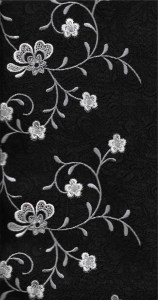
Realistically, it would probably be wiser to focus on that mid-October dress, which is going to be a cocktail dress made from this amazing fabric, a lightweight brocade, embroidered and with with lace appliqués.  One of the perks of attending Susan Khalje’s Couture Sewing School in Baltimore (which I did last April) is the opportunity to see and purchase fabric from Mendel Goldberg Fabrics.  Alice Wildes, the proprietress, arrives at the beginning of each week-long class with a car full of her gorgeous, carefully selected yard goods, and that is where I purchased this piece.

The embroidered flower stems are a light gray, and the flowers themselves are a pale pink.

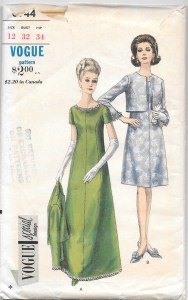
Getting this brocade was actually a last minute decision, as I already had one cotton piece selected – and I was trying to be circumspect in buying more fabric (remind me again of why I ever think this will work?) Anyway, I’m so glad I succumbed as I love it and have determined which pattern to use for its construction:

I will be making the shorter dress, without the jacket.

I like the notched neck detail on the shorter dress. I may make below elbow length sleeves – still to be determined.

Although this dress appears to be a simple silhouette, I have plans to change it up a bit, which will add to its complexity, so it certainly cannot be rushed.

With any luck, the weather will start to change for the better no matter which project I embark on.  The only question is – which one will get the nod?

13 Comments

Filed under Cocktail dresses, Formal or fancy dresses, Lace, Linen, Moygashel linen, Uncategorized, Vintage fabric, vintage Vogue patterns from the 1960s

A Rosy Sewing Year

It seems that every new sewing year – at least for me – does not start right on time, as I am always finishing up a project from the month of December. Such is the case in this early January of 2018. However, that does not keep me from planning and dreaming about the coats and jackets, dresses and blouses to come. I can’t help but think of the new year at hand as a “rosy sewing year,” because the fabrics that are in my queue right now share a common theme – so many are predominantly red or pink or peach or floral, a bouquet of colors and textures.

First up is this red and black “hounds tooth” boucle which I found at Mendel Goldberg. Yes, it will be a Classic French jacket, with a sheath dress to match.

I am planning some variations in detail and trim for this jacket and dress, about which I am excited. It is a big project, so I hope January gives me lots of sewing time! No doubt this will spill over into February…

As I mentioned in one of my December posts, I hope to make a coat from this vintage purple boucle I am so fortunate to own.

A few years ago I found this silk charmeuse (also at Mendel Goldberg) which I intend to use for a coordinating dress with the coat.

Other silks I would love to concentrate on this year are purchases made several years ago from Britex Fabrics in San Francisco:

This is a French crepe de chine.

This silk helps satisfy my penchant for polka dots.

Then there are two linens I never got to in 2017, one a geometric red and the other a ecru and black floral. I assume they are waiting patiently for me. Add to all this my determination to sew for my two little granddaughters and – there’s the year! (And can I possibly finish another classic French jacket next Fall?  We will see.)

But let me complete 2017 first. Whatever made me think I should start (and could possibly finish) another dress for myself in December I will never know. But that’s exactly what went through my head. I had plans to make taffeta “Cinderella” dresses for my granddaughters for Christmas presents, but thought I would sneak in some personal sewing time before I started on that project. Perhaps it was the pattern that made me do it? Or was it the fabric?

When I purchased this pattern at the end of last summer, I really had no idea when I would be using it; I just did not want to miss the opportunity to own it, knowing that I would surely use it someday. Little did I know that someday would be just a couple of months later.

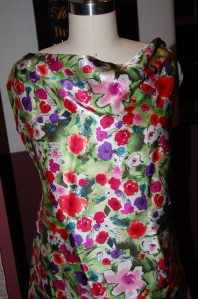
Now it just so happened that I had draped this fabric, below, over my dress form so I could admire it while I worked on other things. I purchased this silk charmeuse from Mendel Goldberg fabrics in 2016 as an end cut, three yards in length.

I knew with three yards I would be able to use a dress pattern which called for more than normal yardage, and I had found a pattern in my collection which I thought I would use:

My idea was to lengthen the sleeves to three-quarter length.

But something just did not seem right. I could not get excited about that pattern in that fabric, even with three-quarter sleeves. Well, I had one of those proverbial light bulb moments when it occurred to me to use the Guy Larouche pattern for the champagne-colored, floral silk. It seems to be a perfect match. The bodice of the pattern is cut on the diagonal, and the meandering flower and vine motif in the fabric lends itself to both straight of grain and diagonal placement. I made my muslin (with quite a few alterations) and was really quite excited about the draped back, shown here in muslin:

And here is the front, minus one sleeve. The front neckline is a bit unusual and I think it will be flattering.

I got as far as transferring the markings onto the silk organza underlining, cutting out the fashion fabric, and basting the two layers together, all ready to start sewing. Then reality hit like a sledgehammer! I had to get those dresses for my granddaughters finished in time for Christmas (which I did, after some frantic sewing – and they love them, which made it all worthwhile!)

Just in case anyone would like to see these dresses, here they are. Big bows in back, and the sleeves are adorned with little bows. Very girly!

So that’s how I am now at this point, finishing up 2017, with the hope of starting the new sewing year one of these days – with my Guy Laroche dress perched in my closet, awaiting its debut. May the New Year be rosy and kind to all of us, and may it end with many sewing dreams fulfilled!

25 Comments

Filed under Boucle for French style jackets, Chanel-type jackets, Coats, Linen, Moygashel linen, Polka dots, Sewing for children, silk, Uncategorized, vintage Vogue patterns from the 1960s

Linen for Fall

Although Fall is undoubtedly my favorite season, I find it the most difficult one for which to dress. Bright Summer colors look out of place, it’s not chilly enough for wool yet, and the days can be very variable. And although linen is usually thought of as a Summer fabric, I believe there are some linens which lend themselves beautifully to this time of year. These are, of course, not lightweight, or handkerchief linens. These are linens with some heft to them, which can be cool to the skin if needed and add some warmth as the sun goes down (sweaters help, too!).

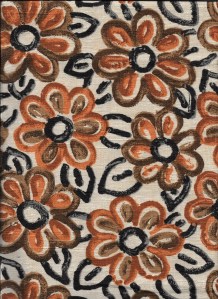
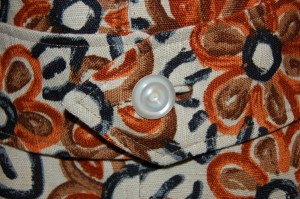
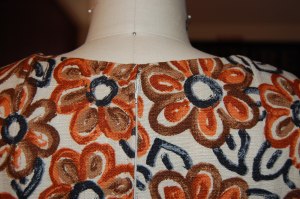
I was fortunate to find a length of Moygashel linen on eBay several years ago, which seemed to fit this bill, especially in its color combination. What could be more Fall-ish than burnt orange, chestnut brown and deep navy, all set on an ecru background?

Moygashel dress linen was produced in a few different weights. The pink dress I made in early Summer was fairly lightweight; this linen is heavier, but still dress-weight.   It was 35” wide, which tells me it was produced not any later than about 1962 or 1963. (About that time, Moygashel seems to have switched to wider looms, thereafter producing 45” wide yard goods.) That “daisy” design also is a clue to its age of production, although it certainly does not scream 1960s. I had 2¼ yards so I had to find a pattern that would accommodate narrow fabric width and limited yardage. That pretty much eliminated the idea of sleeves! However, knowing how warm some of these Fall days can be, I was fine with a sleeveless dress. And I am an avid cardigan sweater-wearer, so I knew this fabric would lend itself to a pairing with a deep navy sweater.

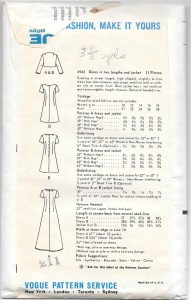
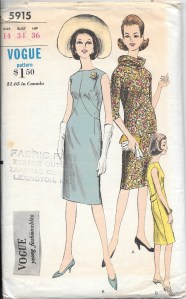
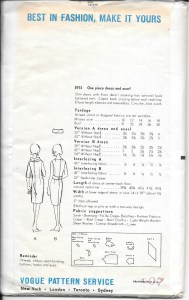
With that in mind, I went searching through my pattern collection for a sheath dress with something more to it – and here is the winner:

This pattern is also from the early 1960s.

I really liked the half-belt, and the seaming detail of the bodice.

So I was off and running after making quite a few adjustments to the pattern for fit. I prefer to work with a 32” bust/34” hip pattern, but this was what I had. (I think if I make this pattern again, I will take it in just a bit more, especially in the bust.)

I considered adding some self-piping to the front seaming detail and around the perimeter of the belt, but I decided against it as I felt that would add too much bulk. So instead, I decided to top-stitch those areas.

Here is the front center seam detail. I used a light brown thread for the top-stitching.

I had this one lovely pearl button which seemed perfect for the belt with its concentric circle design.  I did a bound buttonhole, just what the pattern instructions called for!

The belt follow the lines of the front bodice.

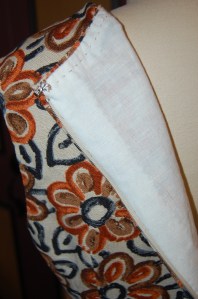
I did a lapped, hand-picked zipper, and I also lowered the neckline just a bit in the front.

And note those neat shoulder darts. Why don’t new patterns have such necessary details?

I lined the dress with a very lightweight linen/cotton blend. I eliminated the facings and brought the lining up to the neck and armscye edges, as in customary couture sewing. Although I did not underline this dress (I have found that linen usually does not benefit from underlining in silk organza. Also, machine washing is easier without an underlining), it is still possible to tack the lining around those areas to insure the edges stay put!

I know I am always going on and on about Moygashel linen (which is no longer being produced), but it really is such a delight to sew – and to wear!

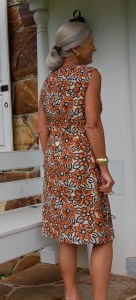
Nice with a sweater…

So there you have it – my first dress made specifically for Fall! However the story does not end here. With any luck this dress will have a starring role in a more complete outfit, which is going to have to wait until next Fall before I can get to it. Do you have any idea what I might be planning?


47 Comments

Filed under bound buttonholes, Buttons - choosing the right ones, couture construction, hand-sewn zippers, Linen, Linings, Mid-Century style, Moygashel linen, Uncategorized, vintage buttons, Vintage fabric, vintage Vogue patterns from the 1960s