
With considerable thought!
I was a participant on Susan Khalje’s Paris Couture Tour in mid-March. I dutifully checked the expected weather in central and northern France for that time of year (Mr. Fifty Dresses and I were spending a week in Normandy and Brittany prior to the Paris component, which meant even more thought). Chilly, rainy, breezy were the parameters most often appearing in my weather search. Add to that the fact I did not want to look too Wintry nor too Springy, and, well, I was quite in a quandary!
Fortunately, Susan provided us with some guidelines for the type of clothing we would need. This included day wear for our scooting around Paris to see exhibits, fabric stores, specialty stores, museums, etc. She indicated that dress in Paris is “noted” so I took that to mean we needed to look “sharp” and “put-together.” We also would have two days with special visitors and demonstrations in the hotel. Again we didn’t need to be all dolled up, but we needed to look presentable. And then there were those special nights out. For those we would need dressy clothes – for a night at the Ballet at the Palais Garnier, a Gala dinner at a fancy restaurant, and an evening at a fashion show in a private Paris apartment.
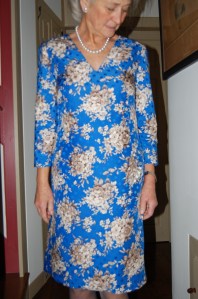
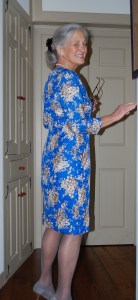
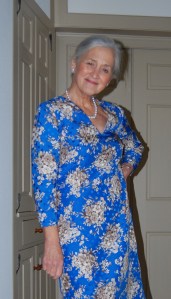
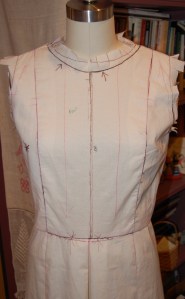
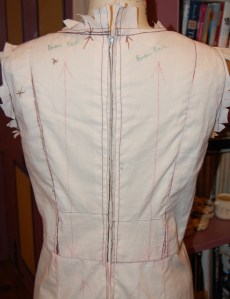
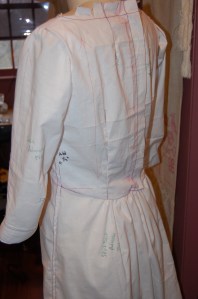
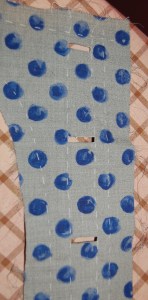
Of course, I decided I needed a least a couple of new things to wear. And of course, that meant sewing. I started in mid-January, making a muslin for this dress (pictured in green):

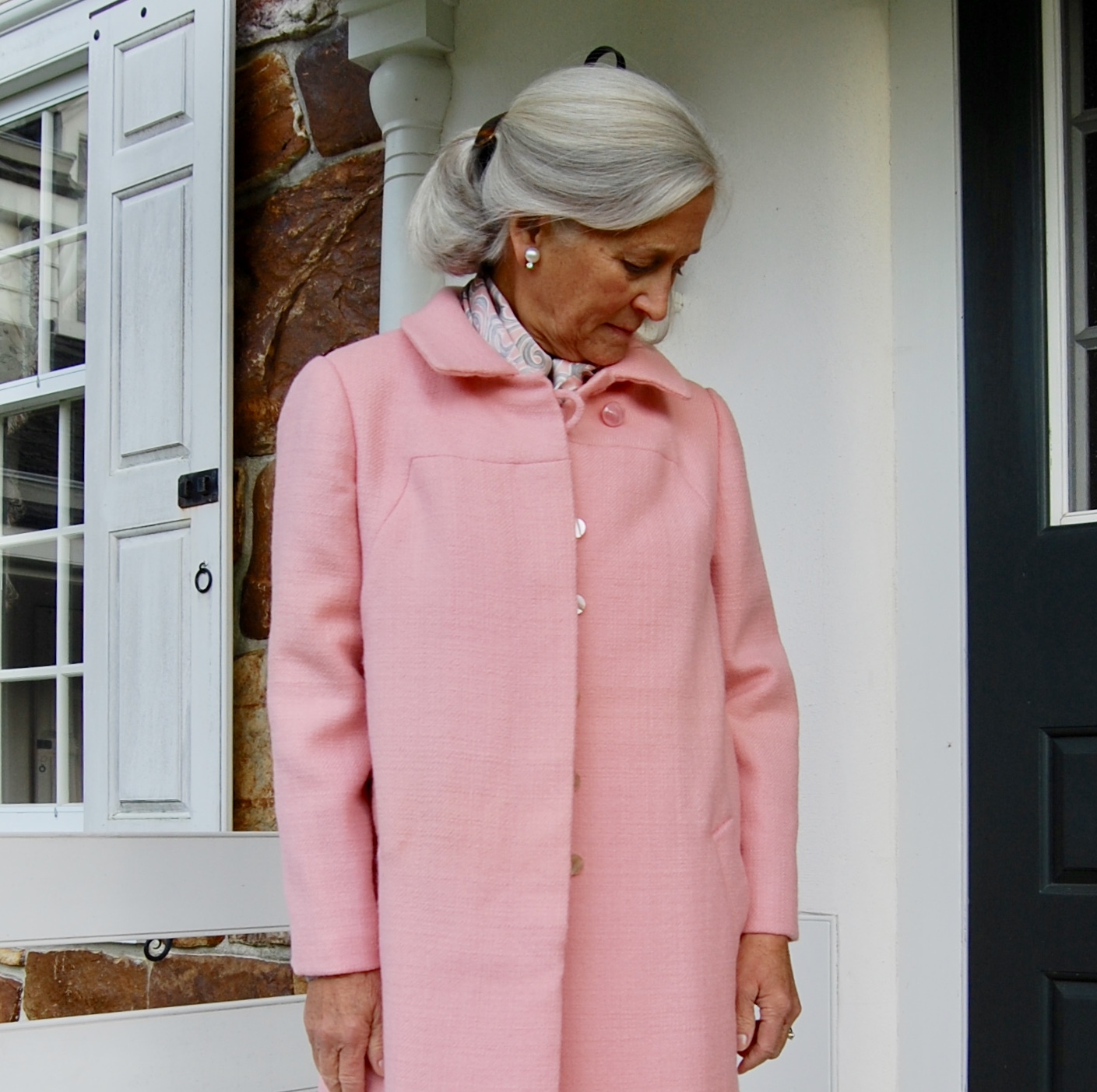
Before I started on the actual dress, however, I thought I would resurrect a pink wool jacket I had purchased 20 years ago. Made in France, with some amazing details and handwork, the jacket had hung in my cedar closet for over 12 years, unworn. Its color and weight, however, seemed to be perfect for Paris in March.
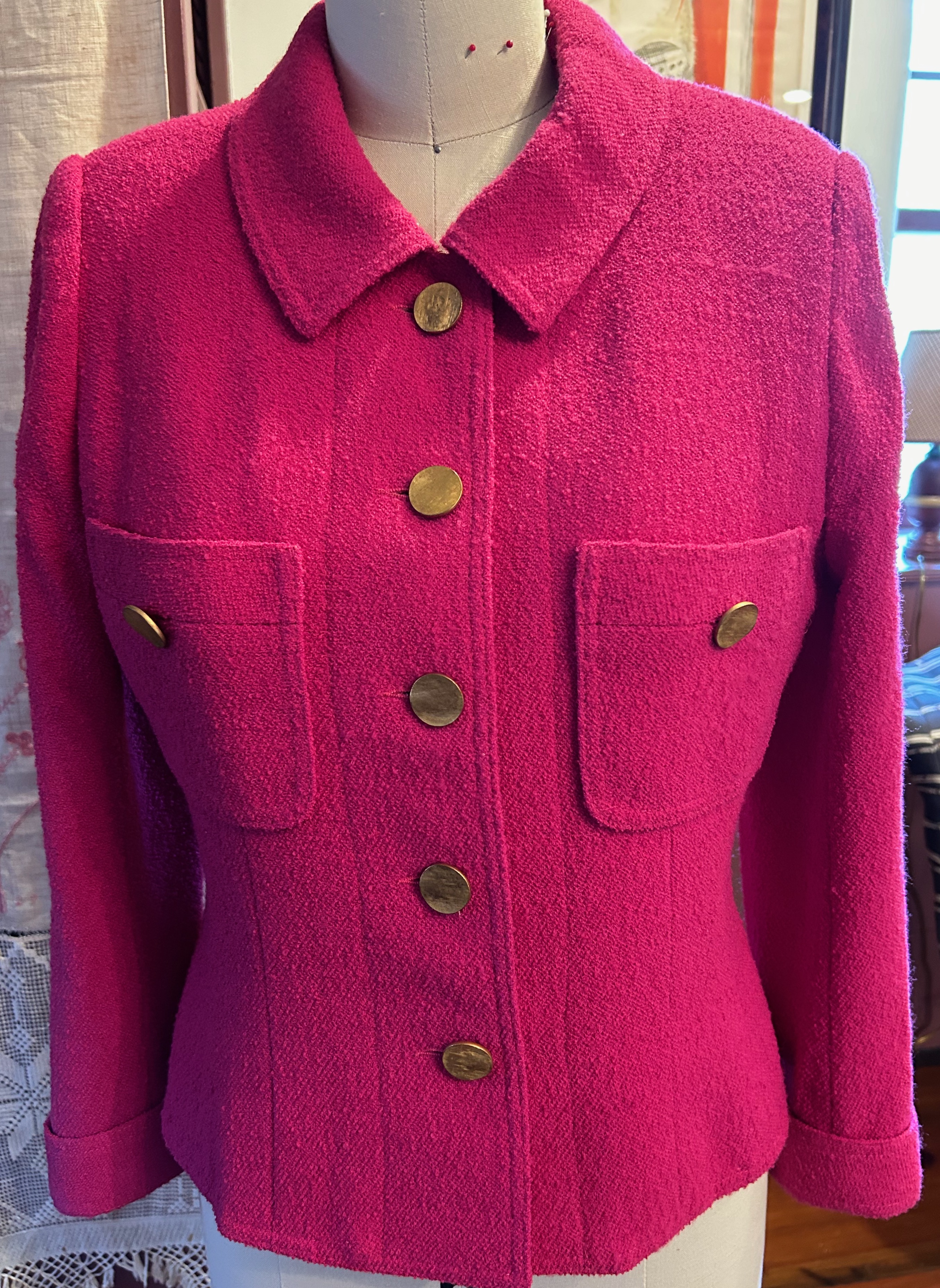
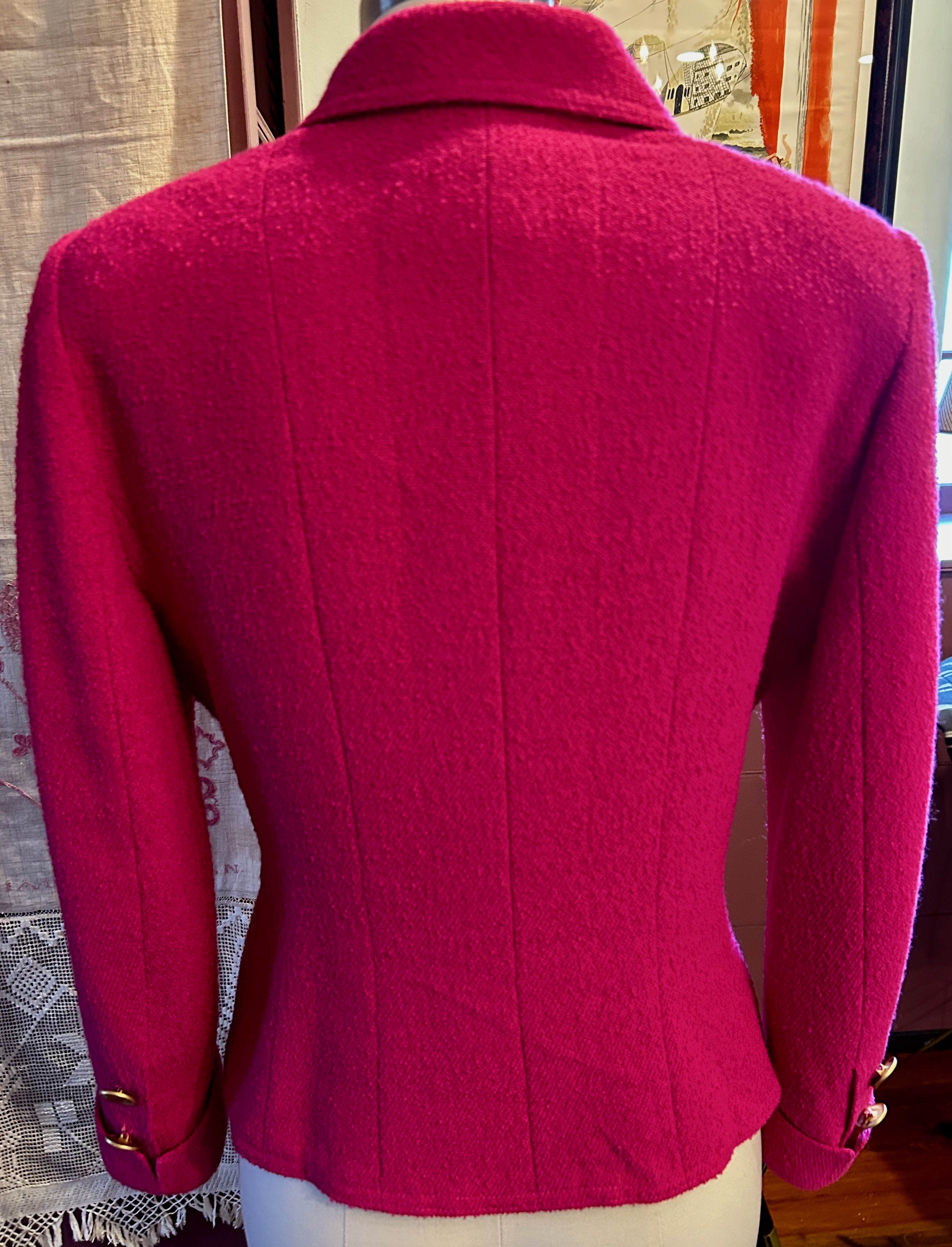
When I tried it on, the shoulders were much too pronounced for today’s sensibilities. Undaunted, I knew I could easily remove the hand stitched lining from around the top and sides of the shoulder armhole area. I could see how the shoulder pads were configured and make adjustments. I plowed forward, expecting this project to take no more than one day.
No wonder those shoulders were so pronounced! There were four layers of padding, all custom cut and applied to each shoulder cap. I took out three layers for starters. I knew I needed some definition, and that seemed to do the trick. If I had been starting from scratch, I probably would have used even less padding, but this was acceptable to me.
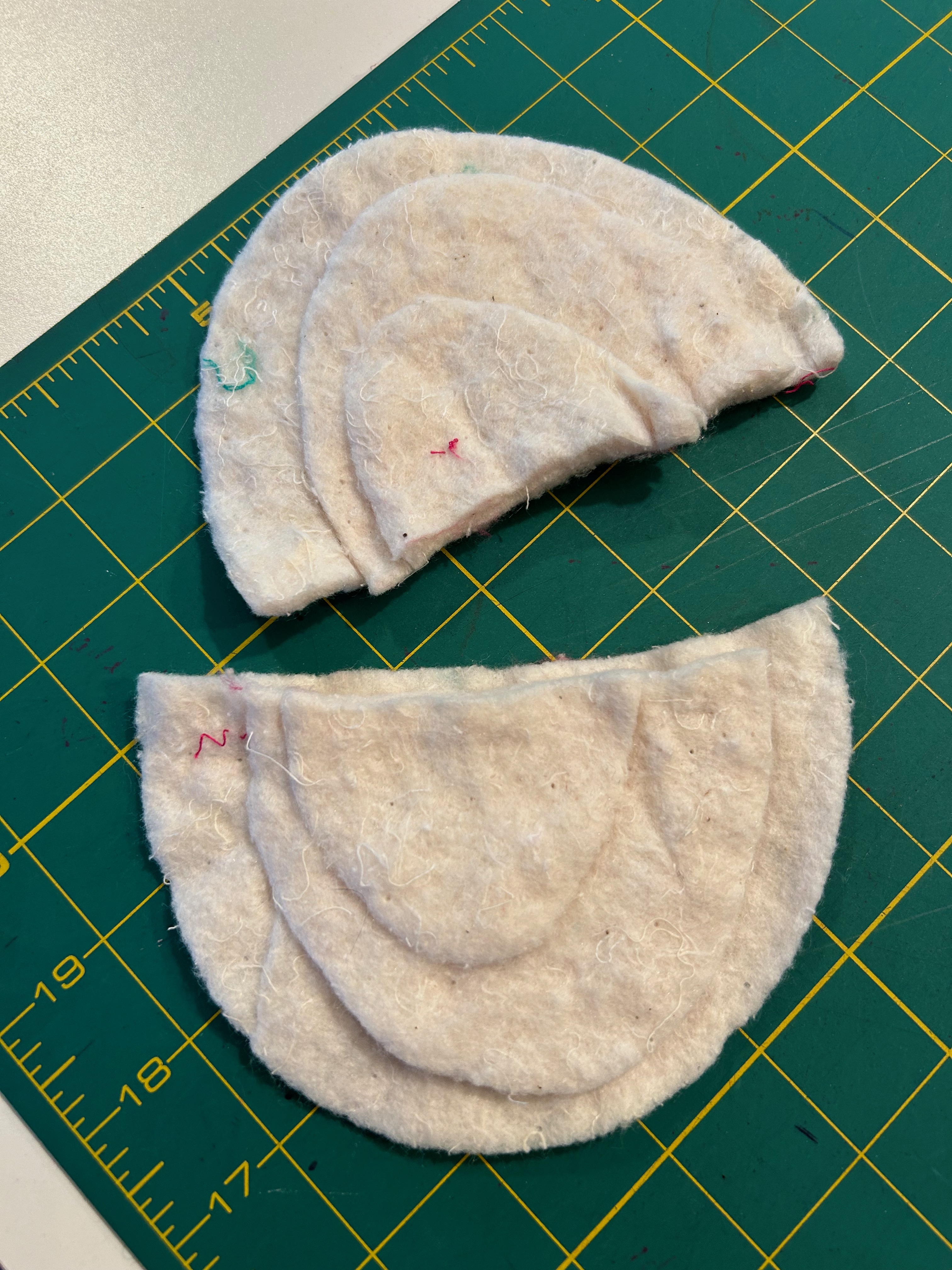
What I had not anticipated was the fact that removing such a depth of shoulder padding had implications for the sleeve length. There was no way around the realization I was going to have to shorten the sleeves – or not wear this jacket in Paris – or anywhere, for that matter. Suddenly what promised to be a quick fix had morphed itself something much more time-consuming.
One of the beautiful details of this jacket was the applied tailored cuff on each sleeve. Shortening the sleeve was going to have to be in two parts.
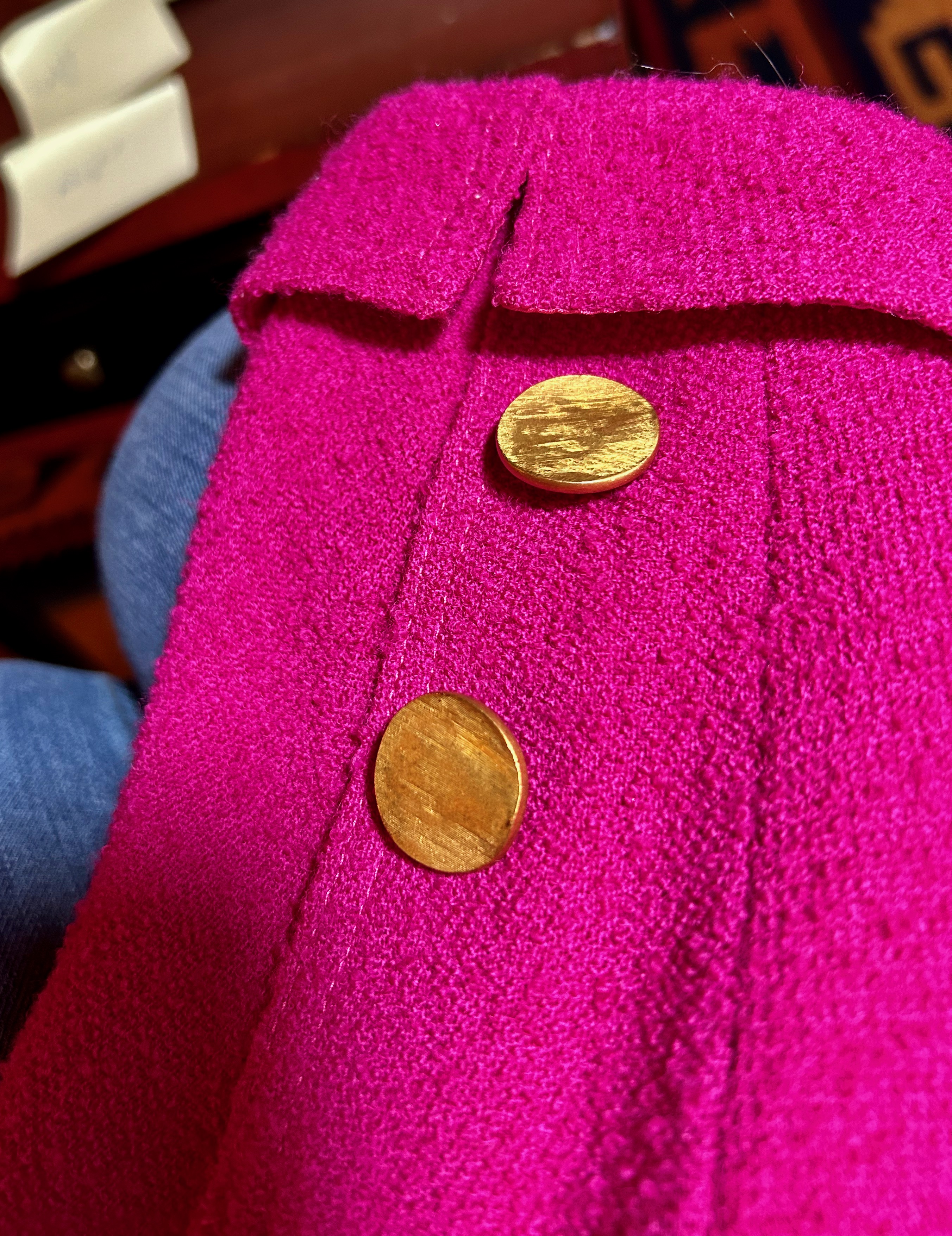
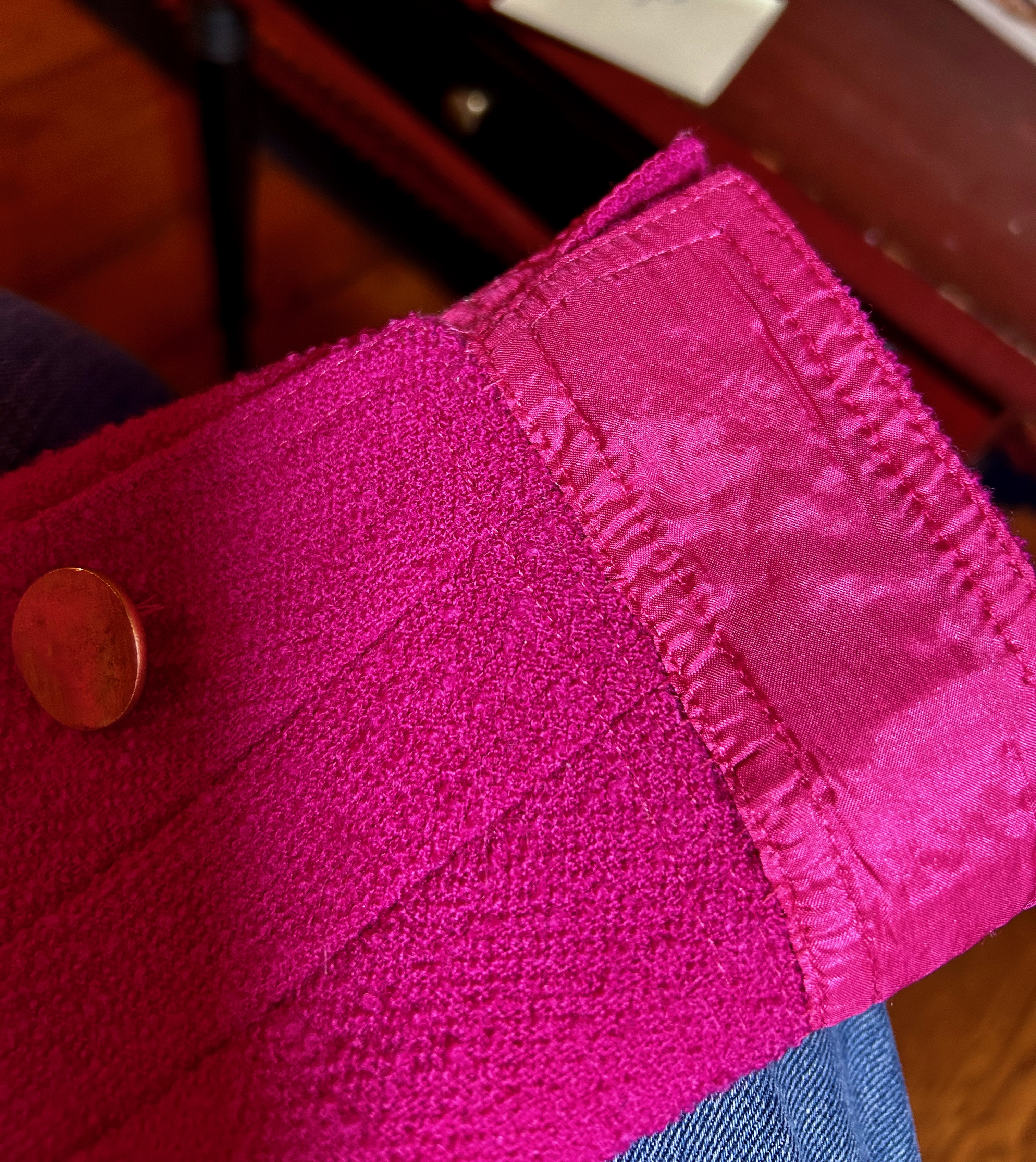
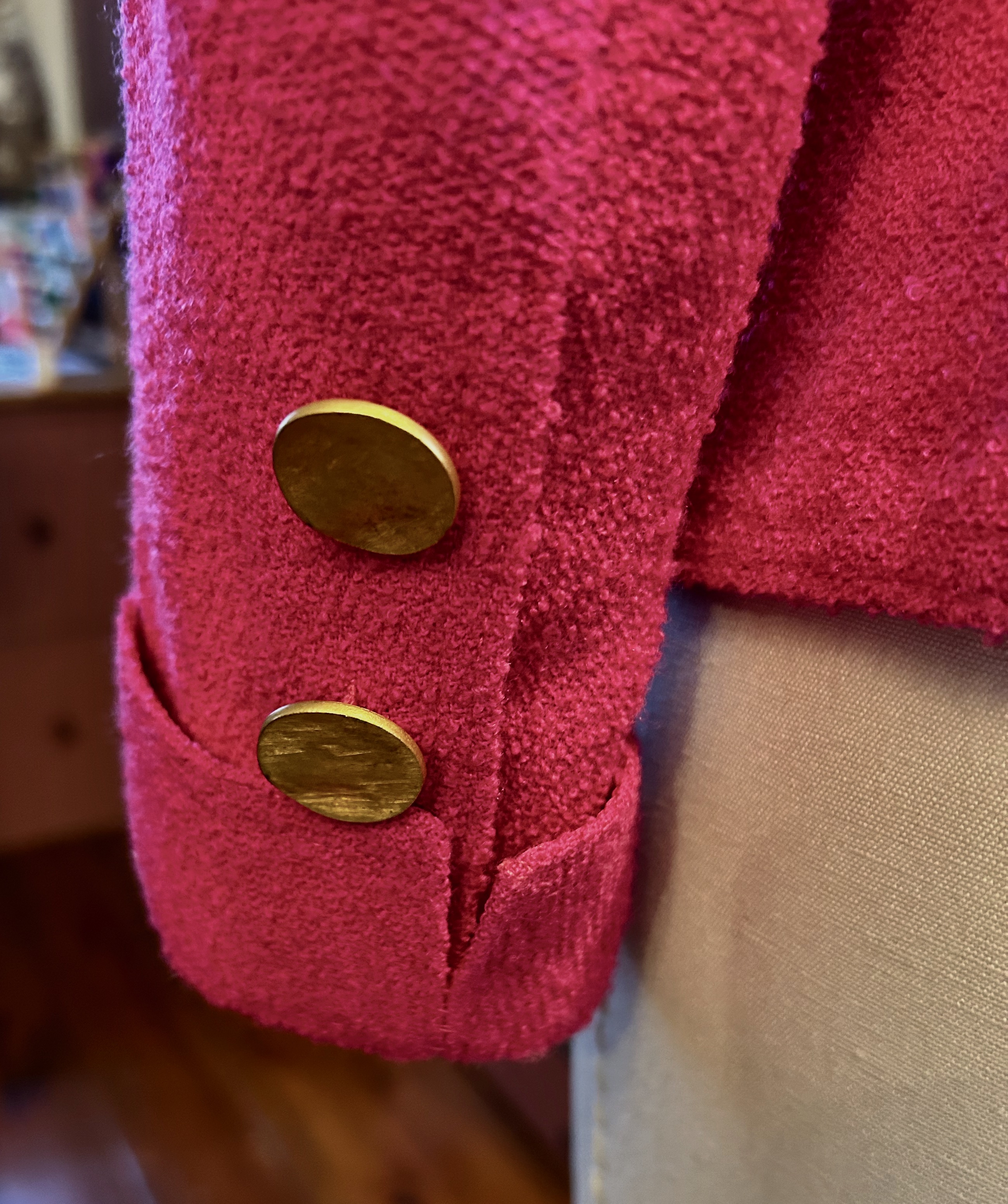
I buckled down and removed the cuff on the first sleeve. I had determined I needed to reduce the sleeve length by 7/8 of an inch. I was worried the circumference of the sleeve end might “grow” enough to make the applied cuffs too skimpy. By now I was asking myself how I got myself into this? I was spending all sorts of time on this jacket when I had whole garments to sew. But it was too late to back down at this point. I cut off the necessary length from the sleeve and its lining, stitching them back together by hand. I then had to redo some top-stitching and found some thread which was a close match to the existing thread. Then I re-applied the cuffs by hand. Fortunately, they were split cuffs, so they had some “give” and molded nicely to the slightly larger circumference of the sleeve.
One down and one to go before I could respace the buttons above the cuffs.
With that jacket ready to go to Paris, I finally was able to turn my attention to that dress I wanted to make. Some of you may remember seeing this cotton sateen/jacquard fabric mentioned in a prior post. I had debated whether to make a dress or a long skirt with it, but ultimately decided on a dress as I thought I would get more wear out of it that way.

I thought this would be the perfect weight and fabric for early spring in Paris – not too heavy and not wintry looking. I envisioned wearing this to the fashion show which we would be attending one evening at a private apartment. So much for those plans! Our schedule that day did not allow us to return to the hotel to change clothes. We would have to wear our out-and-about day clothes into the evening.
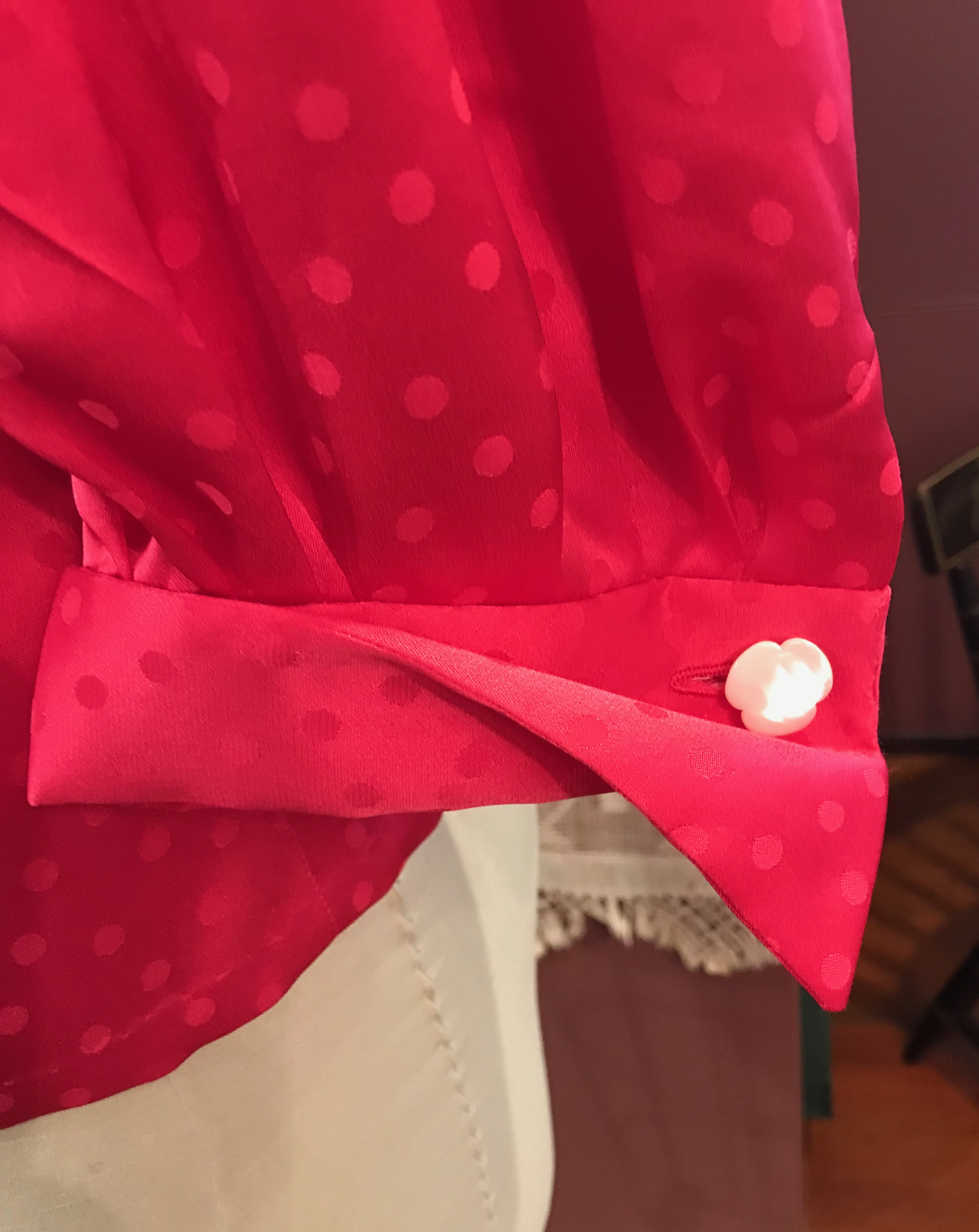
I went to Plan B and wore this jacket I had made several years ago. I paired it with navy slacks, a pale pink blouse, and a scarf which matched the lining of the jacket. I carried along a change of shoes to look a little dressier and that was that!

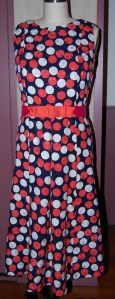
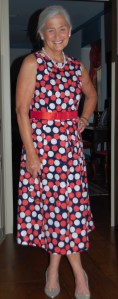
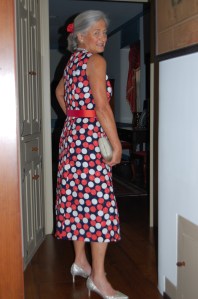
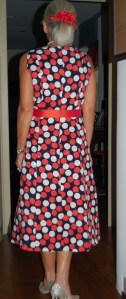
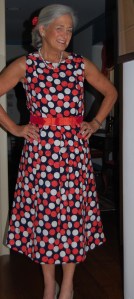
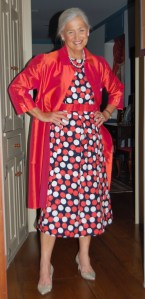
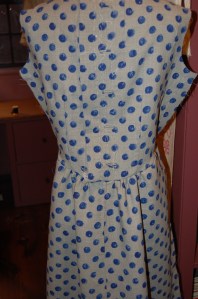
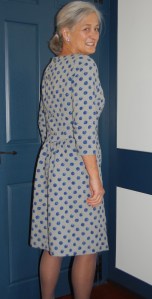
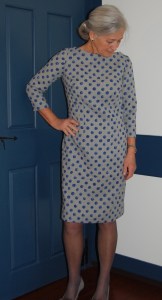
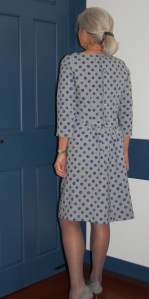
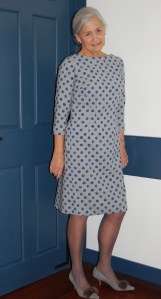
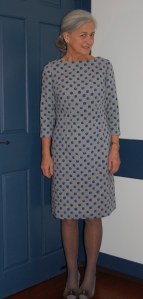
So what about that navy blue polka-dotted dress? Yes, I did finish it.
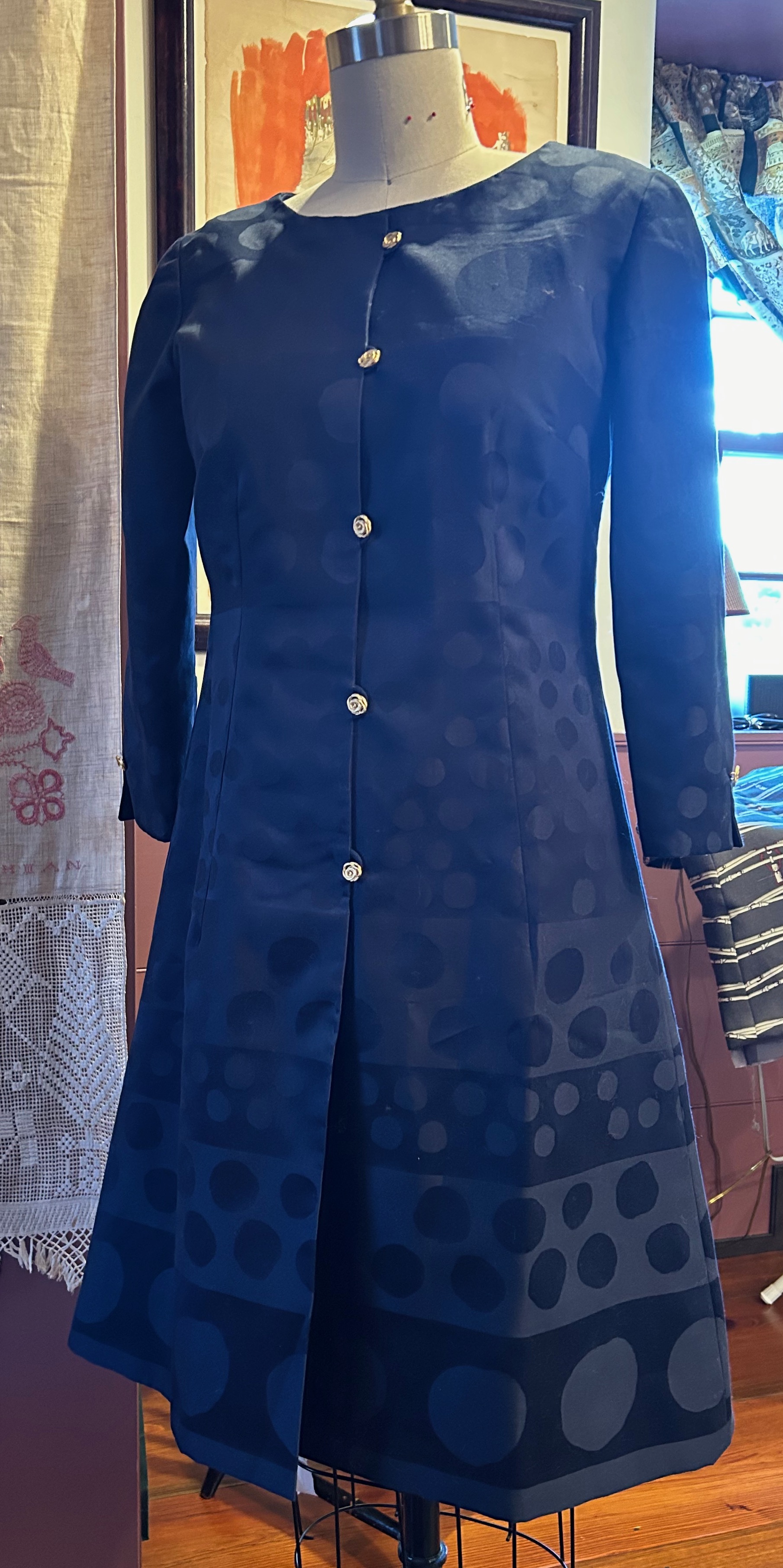
I carried it all the way to France for 15 days and back home again and never wore it… More about it in a future post.





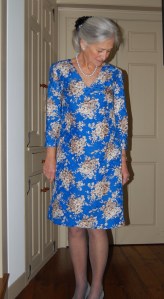
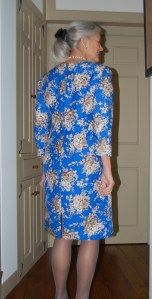
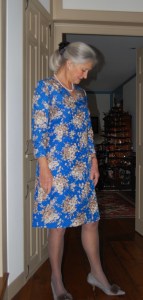
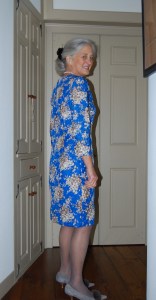









 fiftydresses
Going Around in Circles
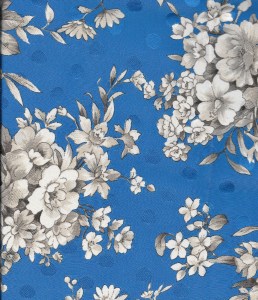
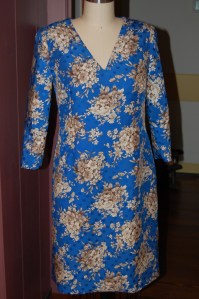
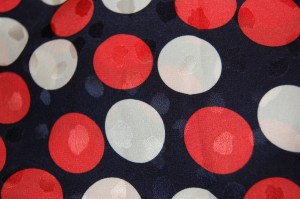
When I purchased this sateen, jacquard-woven fabric from Mendel Goldberg a couple of years ago, I wasn’t sure what it would eventually become. It had a wide repeat to the design (which is something to consider when you know you are facing considerable matching of the design), but it was a lovely 60” wide. I bought just 2 yards (it was expensive) and hoped I would have enough fabric to finagle something.
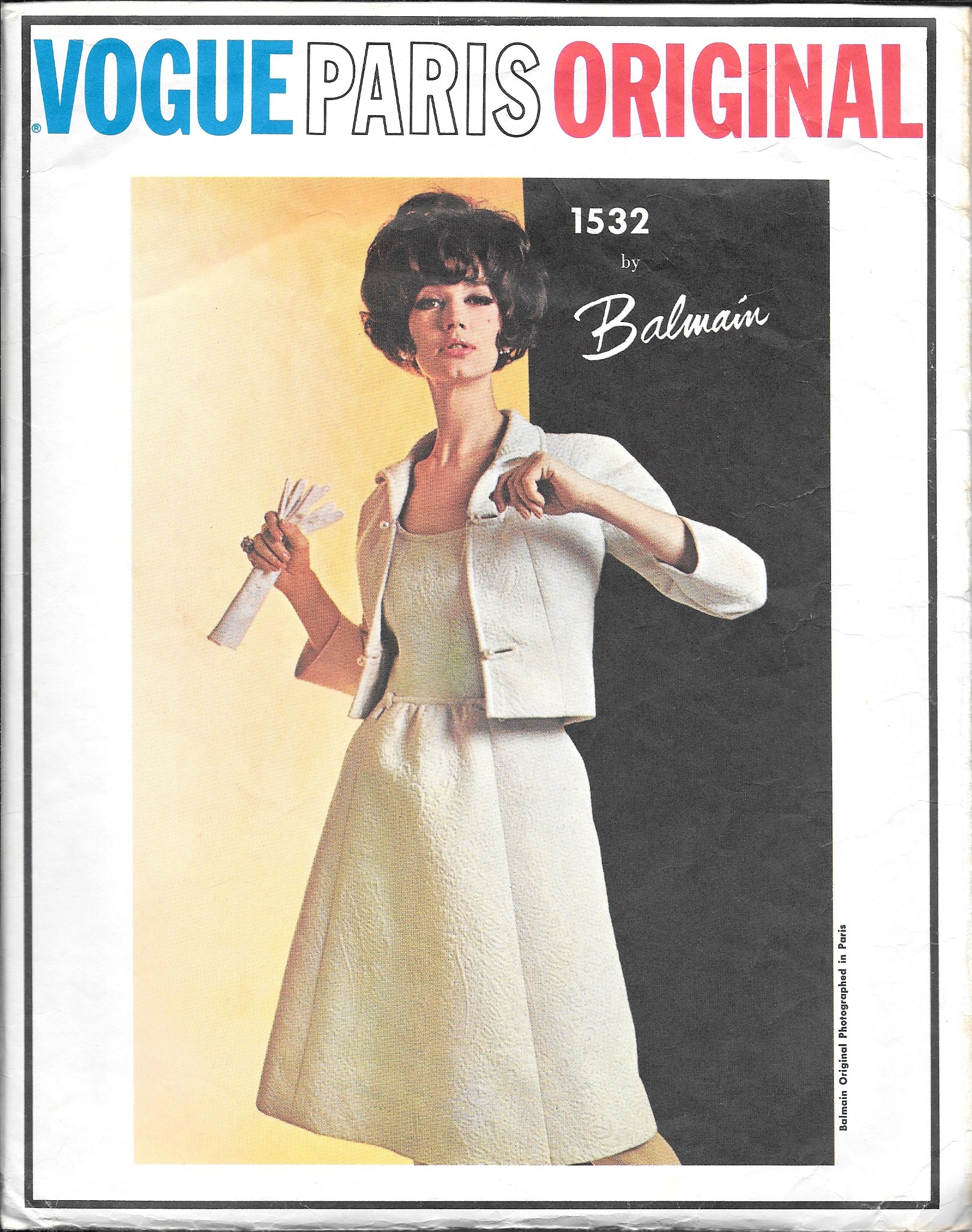
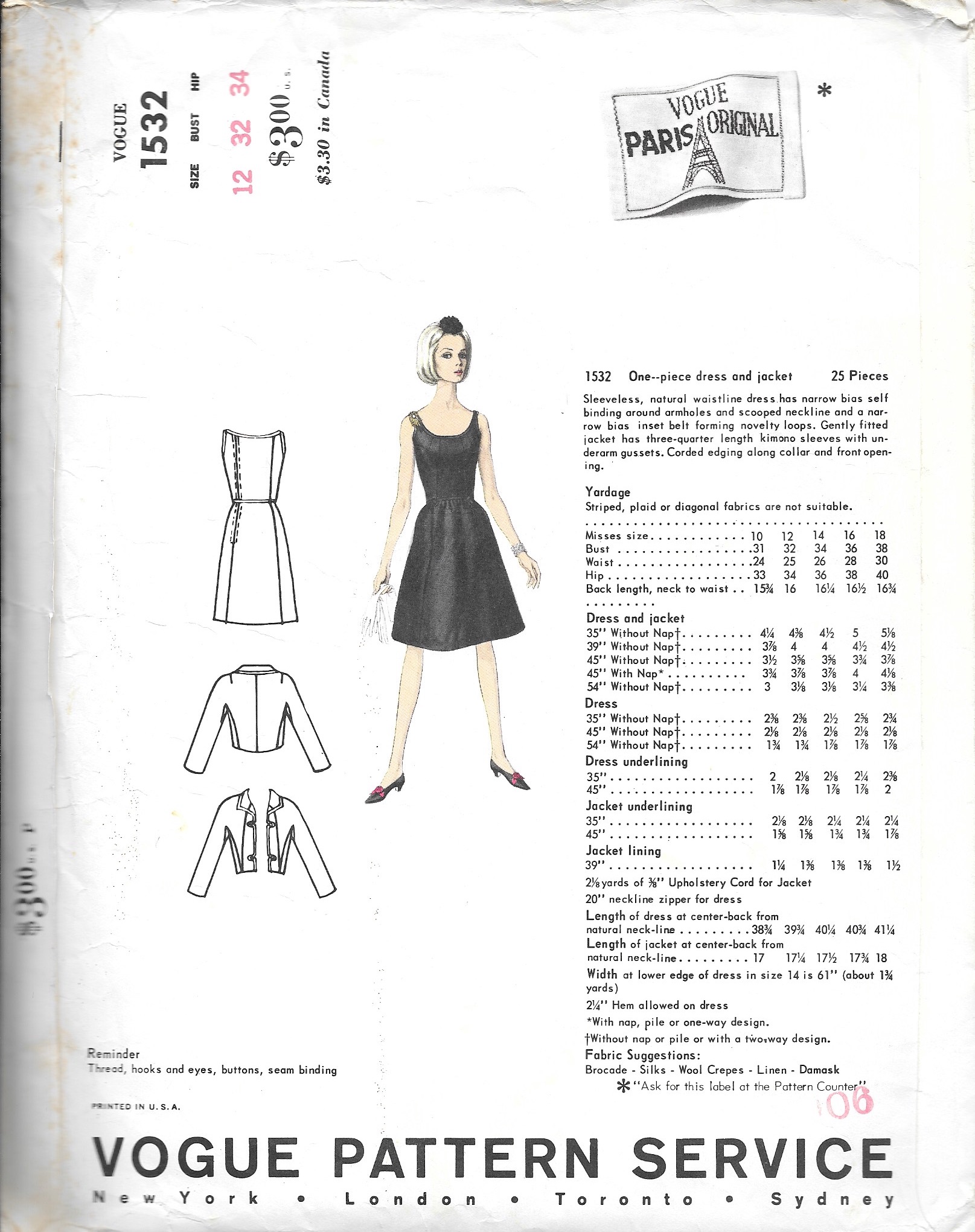
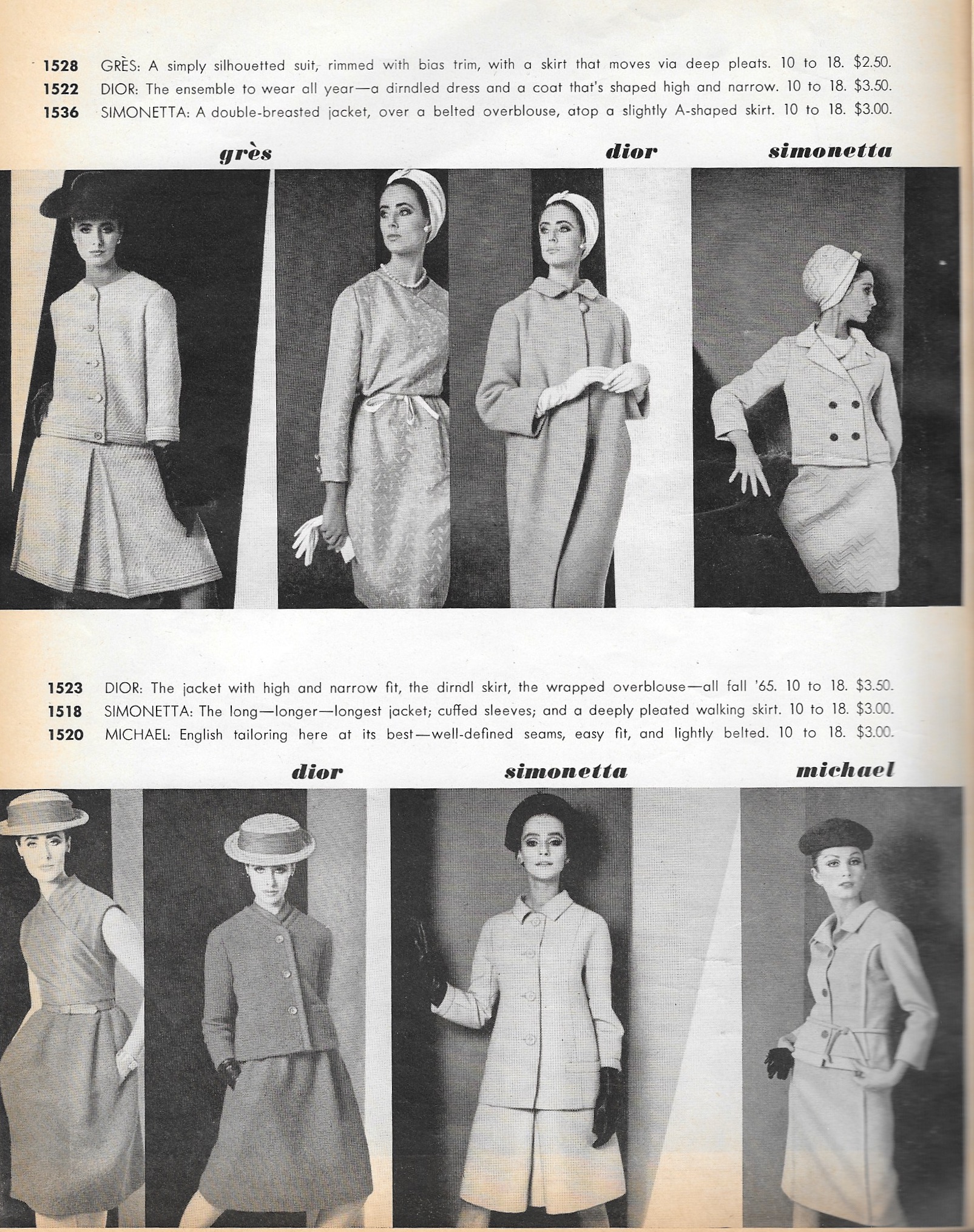
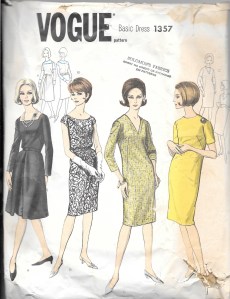
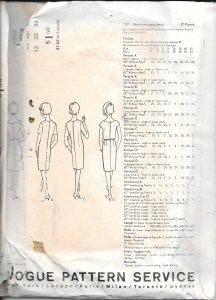
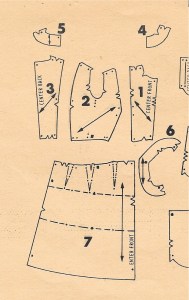
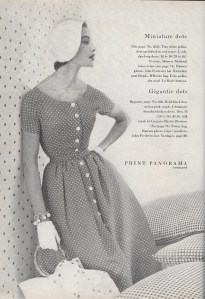
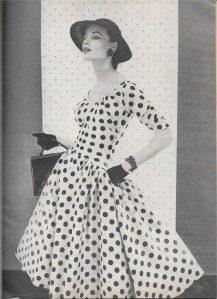
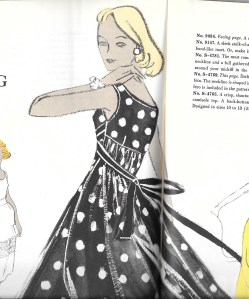
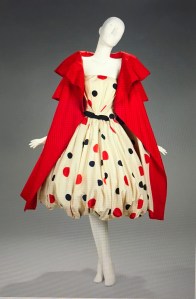
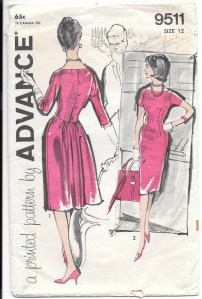
First I thought I would make a midi-skirt to wear with a pretty silk blouse or something. I even got so far as to make a muslin for a longish skirt, but it just wasn’t going to work. I didn’t have enough fabric to match the design and create the skirt I wanted. The next task would be to find a dress pattern which would work. I kind of viewed this fabric as a good Fall and Spring transition weight, so I wanted sleeves. And I wanted a pattern which would show off the circle design to its best effect. One of the patterns in my collection which I have seemed to dwell on frequently is this one:
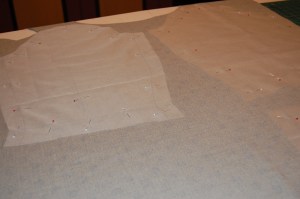
I like the styling of both the dress and the coat. I thought I’d take a stab at eyeballing the pattern on my fabric, to see if it might work. Well, it was going to be a squeaker, but I thought I could manage to get the dress out of the yardage I had – and match all those circles and dots as much as possible.
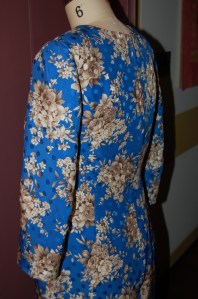
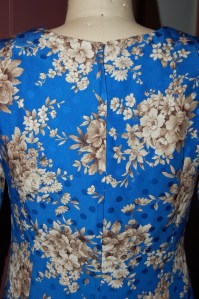
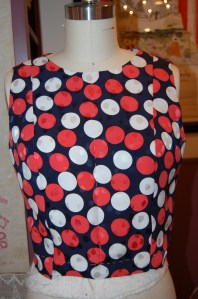
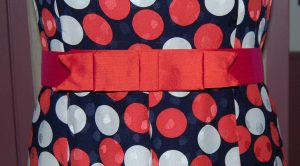
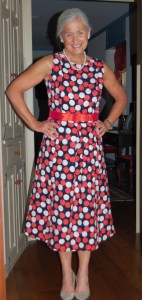
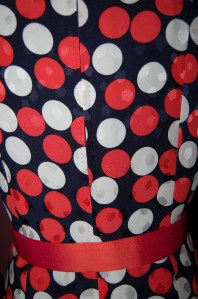
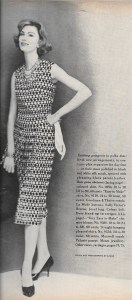
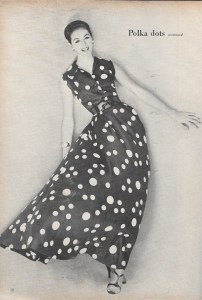
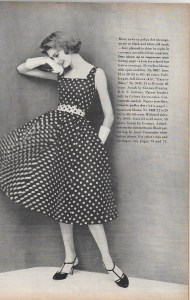
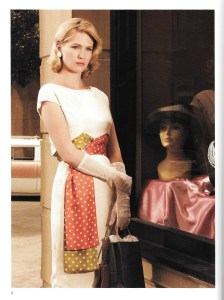
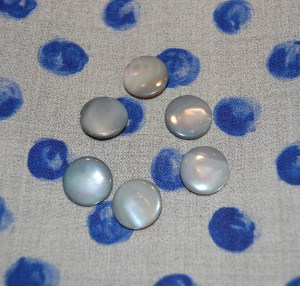
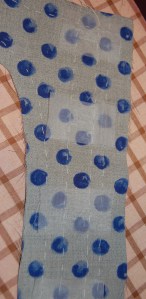
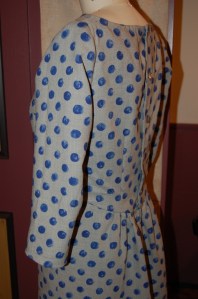
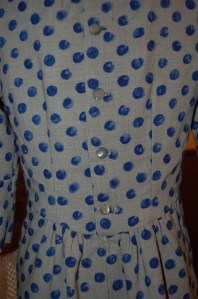
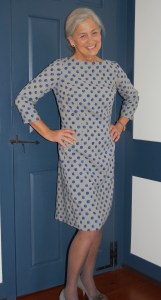
One thing I had to consider was the placement of the large dots and the smaller dots on my body. Working with dots can be a little tricky – you certainly don’t want prominent dots on top of each bust apex, for example, and a row of large dots around the waist might not be all that flattering. I thought the row of the largest dots would be best as an anchor at the hemline. That would place the wide band of smaller dots just over the waistline and somewhat below. This configuration would place one medium size dot over one bust, but I was okay with that since the dot on the other side was off to the side, and therefore not symmetrical. I also liked the repeat row of largest dots across the upper chest where they were not too obvious. And – the sleeves followed the line of varying size dots in a pleasing manner, I thought. It turned out, I had just enough fabric to get things lined up properly – except for the front facing. No way could I match that to the front of the dress.
Now, obviously the facing does not show on the right side of the dress. Still, I like to match across seams if possible. Which it wasn’t. I had to give myself permission to have a mismatched facing, and then I moved on. (I forgot to take a picture of the facing, unfortunately.)
A word or two about the fabric before I go on. According to Fairchild’s Dictionary of Fashion, (Third edition, by Charlotte Mankey Calasibetta and Phyllis Tortora, Fairchild Publications, Inc., New York, New York, c2003, page 395) sateen is a “smooth glossy cotton fabric made in the sateen weave with floating crosswise yarns on the right side, giving a lustrous finish.” This fabric is a combination of cotton sateen, with circles created by a damask weave on a jacquard loom. It makes for a striking fabric. And I think the fact it is done in navy blue makes the contrast more definitive. Christian Dior was a fan of navy blue, calling it “the only one [color] which can ever compete with black, it has all the same qualities.” (The Little Dictionary of Fashion, Abrams, N.Y., 2007, page 14). It is a wonderfully versatile color.
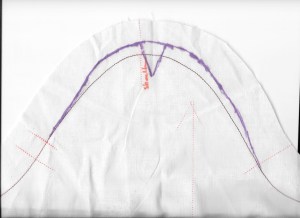
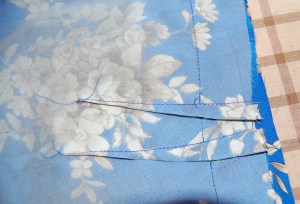
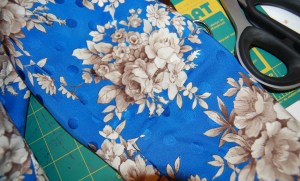
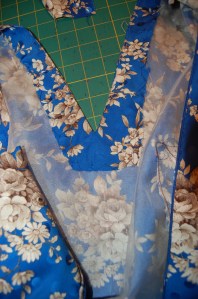
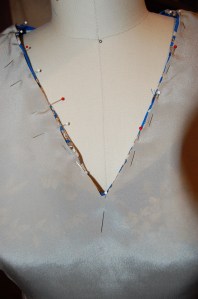
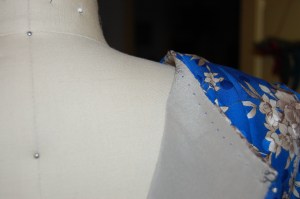
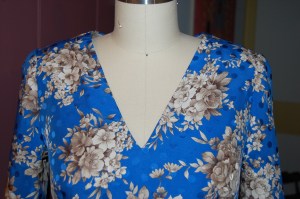
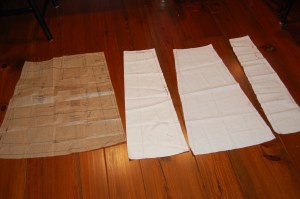
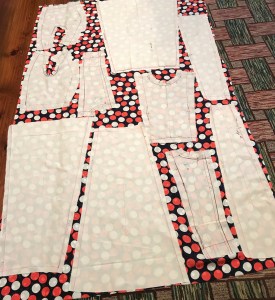
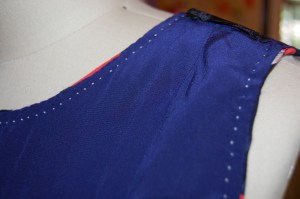
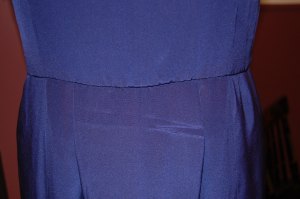
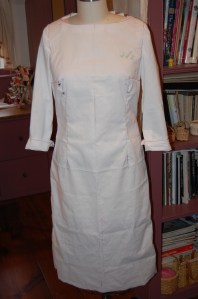
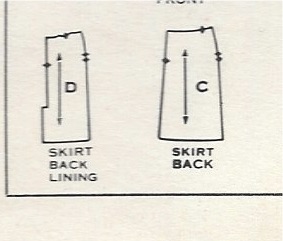
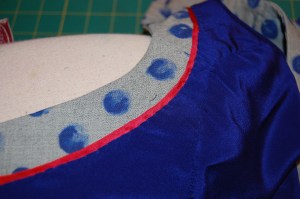
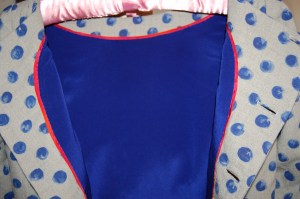
I made a few changes to the pattern. I cut the neckline a little wider, I shortened the sleeves by a couple of inches, and the big change was I lined the dress in a lovely silk batiste I purchased at Farmhouse Fabrics. (The pattern did not have instructions or pattern pieces for a lining.) The pleat in the front of the dress was a bit tricky to line, but I figured it out after quite a bit of thought. By the way, I underlined the dress with silk organza.
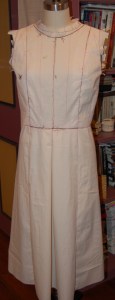
One more thing about the pattern and the dress. With the pleat in the front of the dress which extends to the hem, it gives the appearance of a coat dress. However, it is not. Again Fairchild’s gives us a precise definition of a coat dress: “Dress fastened down front from neck to hem, like a coat, in single- or double-breasted style, either belted or unbelted. A classic since the 1930s.” ibid., page 84. Someday I’ll make a coatdress, but this was not it.
As I mentioned in an earlier post, I made this dress to wear on my Paris trip, but alas, I never had the opportunity to do so. I feel certain it will eventually get its debut, but not in Paris!
26 Comments
Filed under Buttons - choosing the right ones, Christian Dior, Fashion commentary, Loops for buttons, Mid-Century style, Polka dots, Sateen, Uncategorized, underlinings, vintage Vogue patterns from the 1960s, Vogue patterns
Tagged as Choosing buttons, Farmhouse Fabrics, fashion sewing, Mendel Goldberg Fabrics, polka dots, sewing, vintage fashion, vintage Vogue patterns