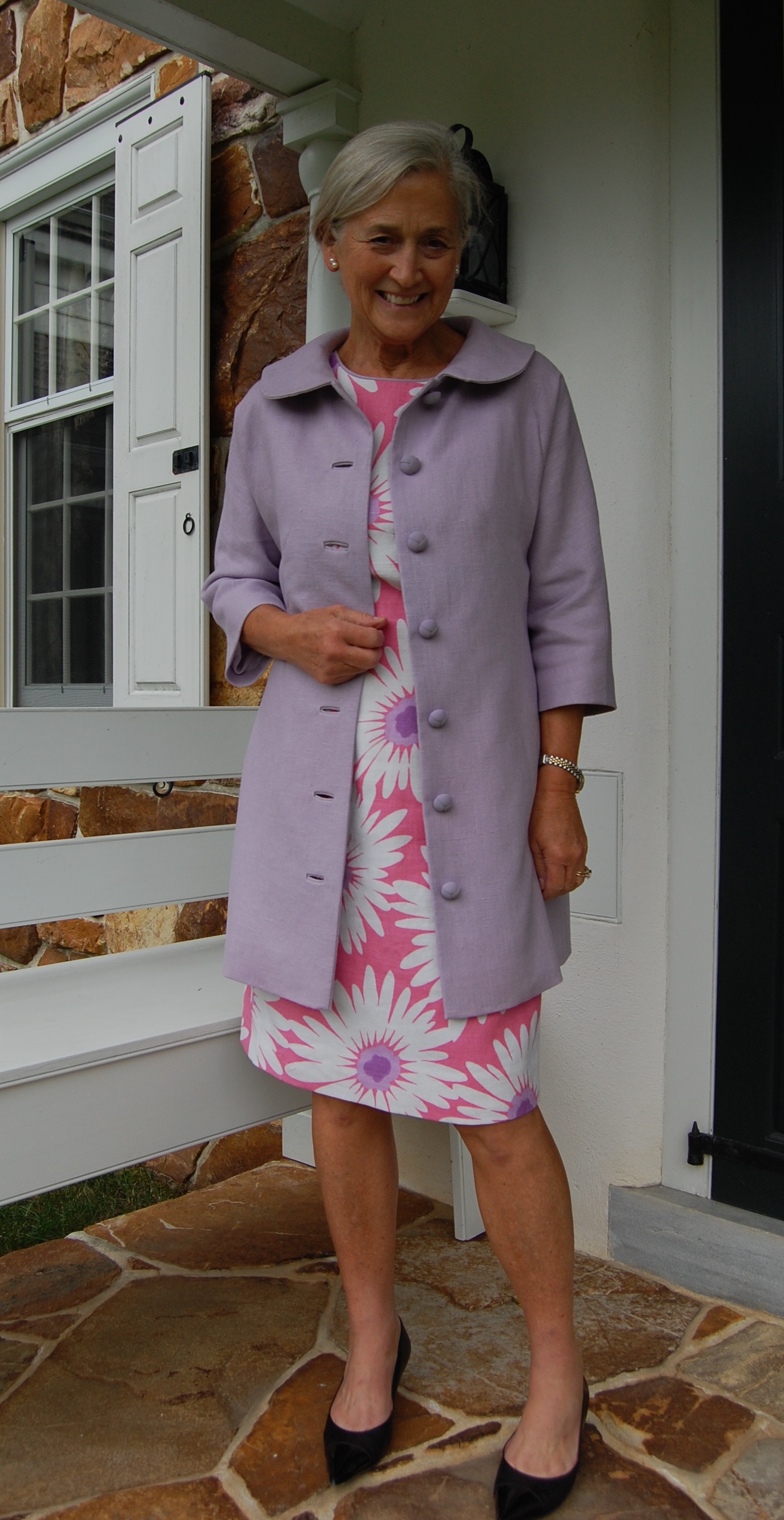
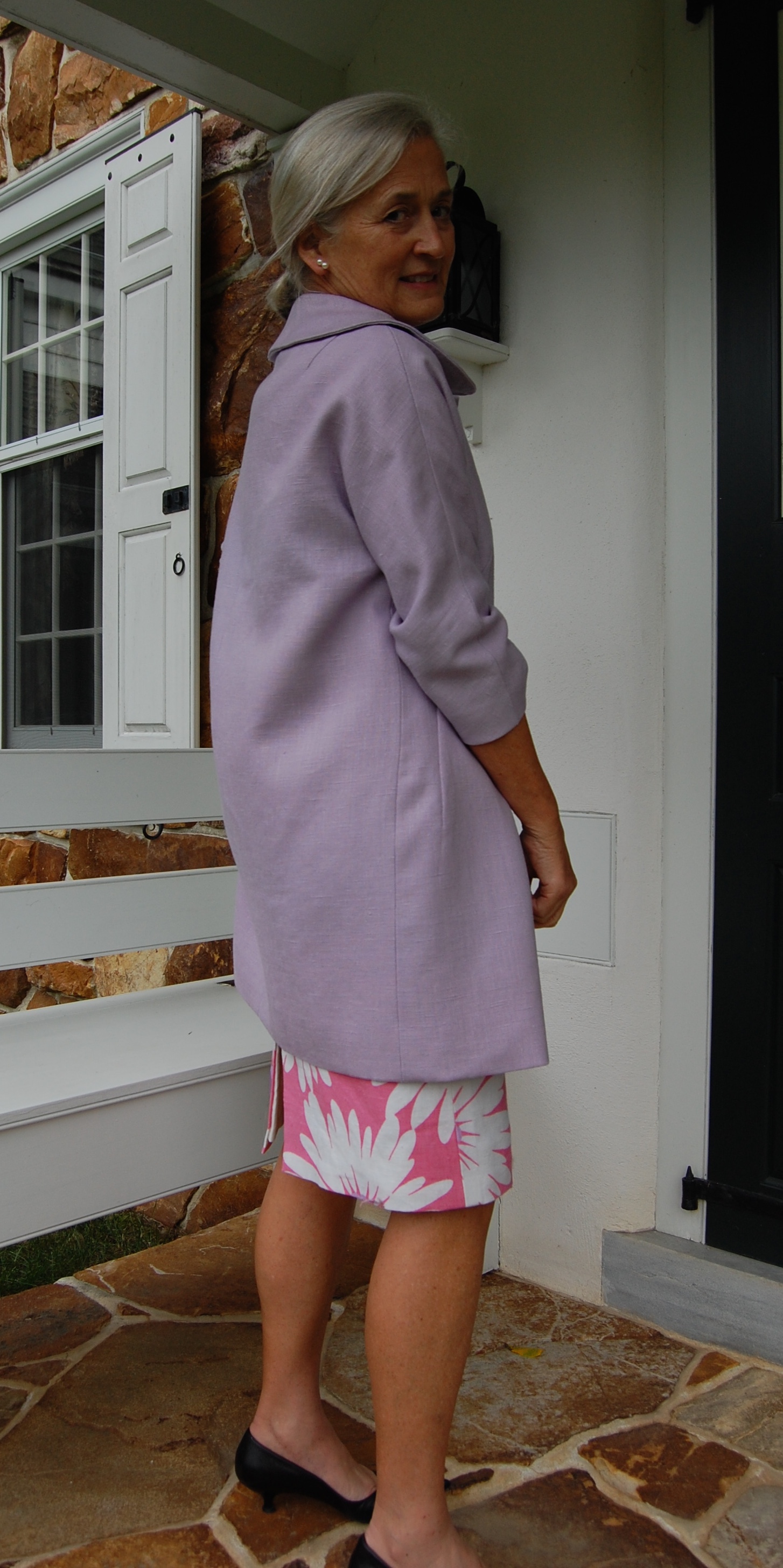
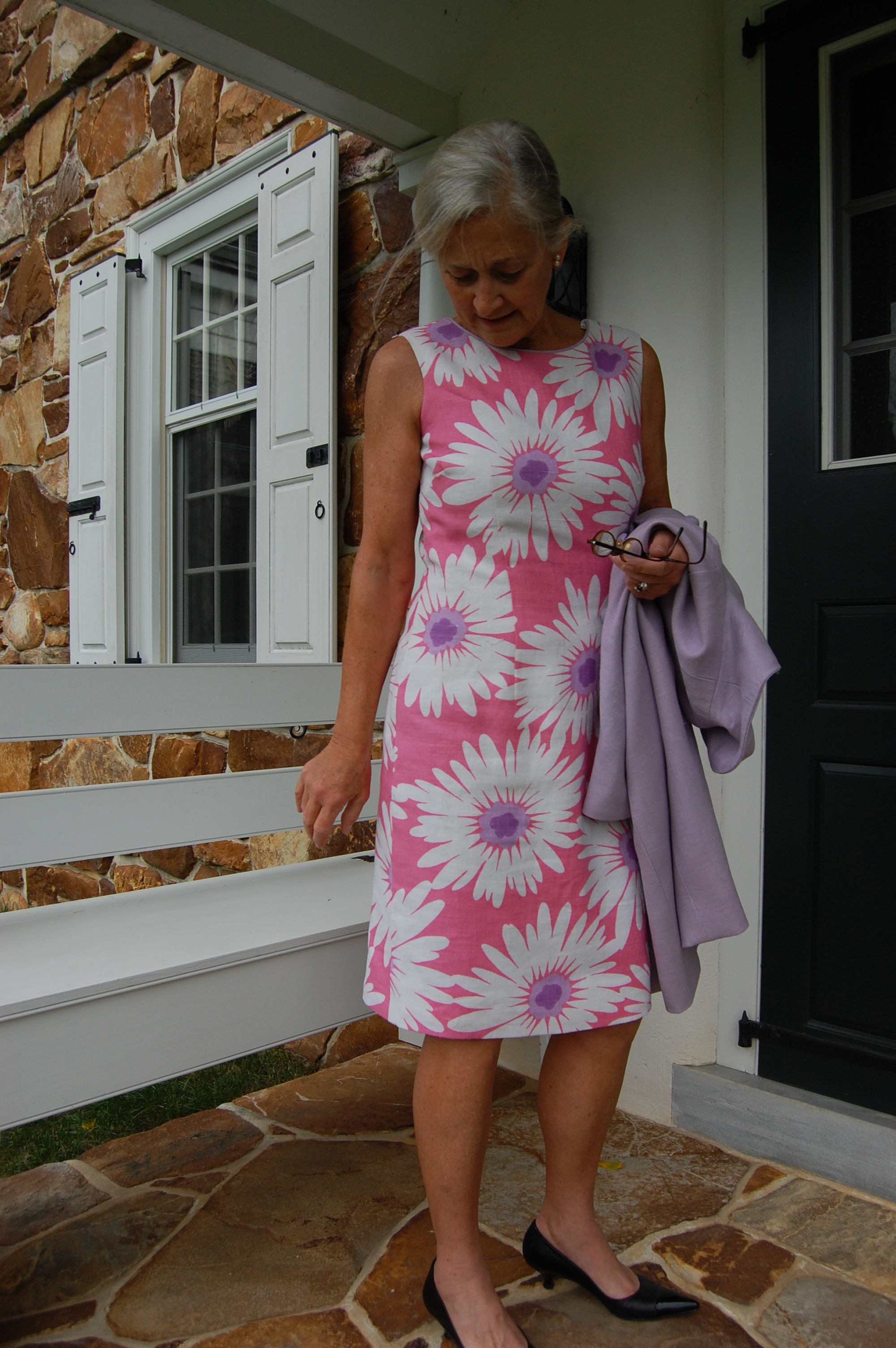
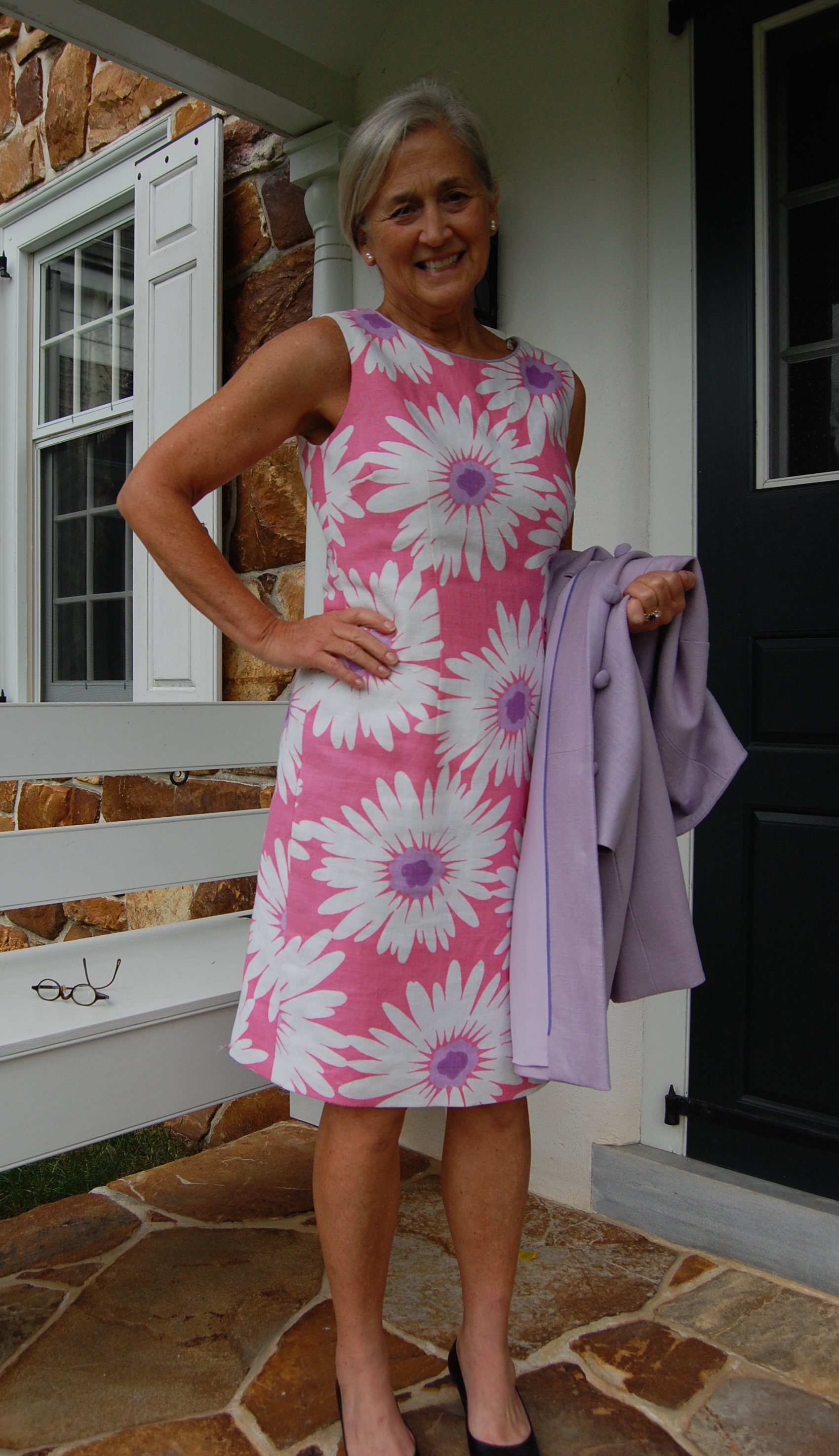
Tag Archives: Choosing buttons

The Old Year Sails Away

“Where there’s a will, there’s a way” is a maxim I grew up with, and once again, it served me well to remember it. Although much of my sewing had to be put on hold after I injured my left hand in October, I was determined to get a dress made for each of my two granddaughters for Christmas. Matching sister dresses seemed to be the way to go.

Sailboat dresses

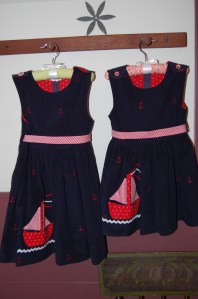
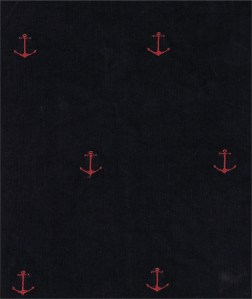
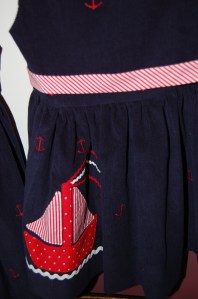
My inspiration was a child’s jumper I had seen on Pinterest, with appliquéd sailboats, but first I needed to find the right fabric. I knew I wanted to make the jumpers out of fine wale corduroy, and a quick search on fabrics.com produced a lovely Robert Kaufman fabric with the requisite anchors embroidered onto it.

a-little-sewing-fabric

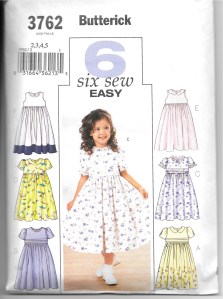
The coordinating cottons I found at JoAnn’s, along with a pattern which I adapted to this particular use:

This is a very adaptable pattern. I was quite pleased with it!

This is a very adaptable pattern. I was quite pleased with it!

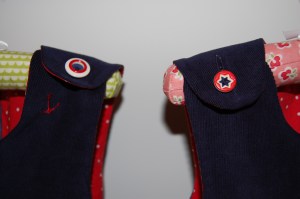
I turned the shoulder seams into button tabs, with the thought that this would make the dresses more “adjustable.” (I still installed zippers in the center back seams, as this just makes it so much easier to get two little busy girls dressed.) Button tabs also allowed me to use two sets of vintage buttons I had stashed away, waiting for the perfect application for them.

The larger buttons I used for my older granddaughter's dress and the smaller ones for my younger one's dress.

The larger buttons I used for my older granddaughter’s dress and the smaller ones for my younger one’s dress.

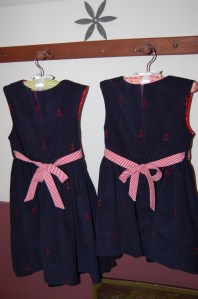
I lined the bodices in red polka dotted cotton, and I took a little bit of the fullness out of the skirt patterns. I added carriers to the sides of each bodice, for the belts to slip through.

Sailboat dresses

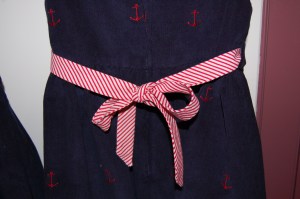
The belts come off completely, for easy washing. Being sewn on the diagonal keeps them from twisting, and it also makes them more interesting!

The belts come off completely, for easy washing. Being sewn on the diagonal keeps them from twisting, and it also makes them more interesting!

Then I left the hull of the sailboats open along the top edge, so my little girls could use them as pockets if they like. And, of course, I had to add some rickrack embellishment – to the mast as streamers, and below the boats, as waves.

Sailboat dresses

Although I was fairly certain the girls would like these jumpers, I was gratified and somewhat amazed at their excited and happy reactions to what they dubbed their “swirly dresses.” After what turned out to be a difficult year for me, it was rewarding to end it with a little success!


29 Comments

Filed under Buttons - choosing the right ones, Jumpers, Sewing for children, vintage buttons

Just for the Chill of It

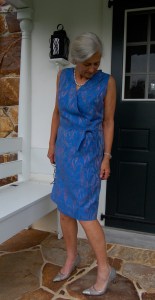
Autumn is a delightful season here in the northeastern part of the United States. One can tell it is on its way when the warm days quickly take on an evening chill once the sun slips below the horizon. It is the time of year when a light coat or sweater is a necessity, especially with a sleeveless dress.

With this scenario, and a September wedding to attend, what better excuse did I need, to make a coat to go with this dress?

The Year of Magical Sewing

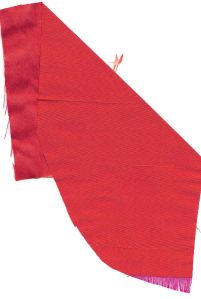
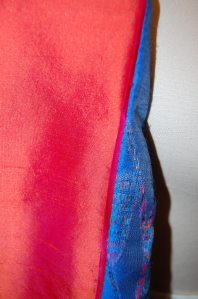
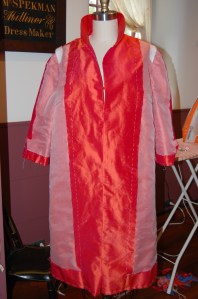
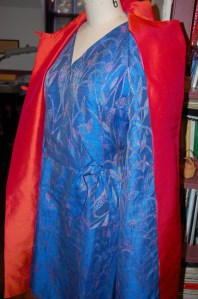
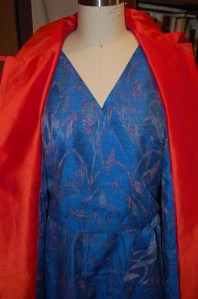
If you follow my blog then you probably already know this was my intention all along, when I made the dress two years ago. But it took a while to find the right coordinating fabric for a coat. I was looking for something between a coral and a pink. While the silk taffeta I found at Britex Fabrics looks more like a deep persimmon color when photographed, the fuchsia pink warp is very apparent when being worn.

Taffeta coat - swatch

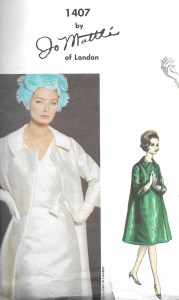
Once I decided the Jo Mattli-designed coat, part of the original dress pattern, was too voluminous, I went to another pattern. I wanted to keep the “intention” of the original coat, but have it more streamlined.

The "original" coat designed by Jo Mattli.

The “original” coat designed by Jo Mattli.

Taffeta coat - %22too scimpy%22

The coat pattern I settled on.

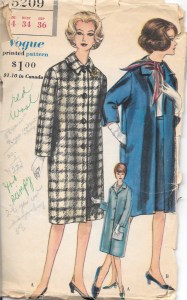
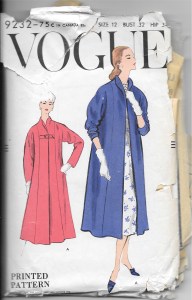
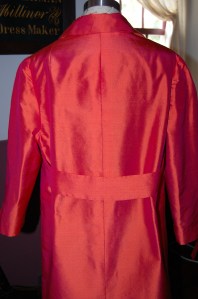
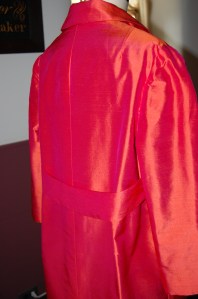
Somehow along the way, in making my muslin, I got the idea to add a curved belt to the back of the coat. I knew I had used a coat pattern several years ago with a curved belt back detail, so I went through my pattern collection to retrieve this:

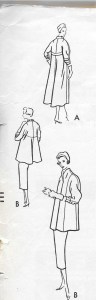
This is a 1957 pattern, but look at the belt shown on the back of the envelope, below.

This is a 1957 pattern, but look at the belt shown on the back of the envelope, below.

taffeta-coat-belt-pattern-thumbnail

The belt is only shown in view A.

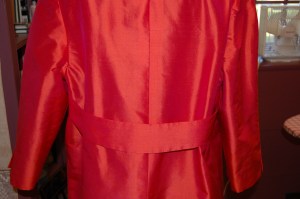
It took a couple of tries with the muslin to get the placement and angling of the belt correct, but once I did, I knew it was a winner. Dressmaker details like this always give me a thrill!

I anchored the belt in the side seams right under the bust darts.

I anchored the belt in the side seams right under the bust darts.

Just for the Chill of it

The curve of the belt needed to fall at my waistline.

The curve of the belt needed to fall at my waistline.

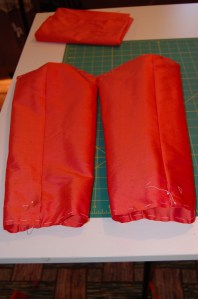
One of the things I like about this pattern is the two-part sleeve with a center seam. I think this design is always flattering to the shoulder. Here are the constructed sleeves:

Just for the Chill of it

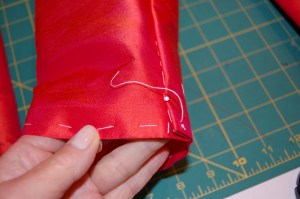
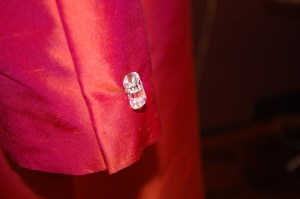
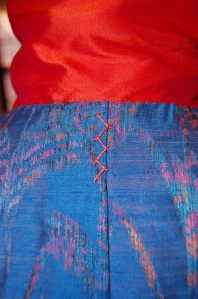
That center seam also provides the opportunity for a faux vent, and since I just happened to have three buttons, which I thought would be perfect for the coat, I happily included vents, as the pattern dictated:

Just for the Chill of It

A small, cylindrical, crystal button!

A small, cylindrical, crystal button!

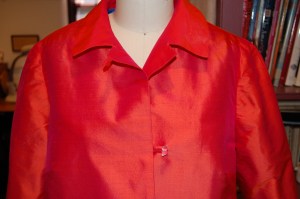
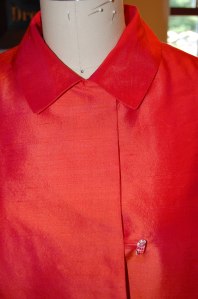
Although I originally thought I would leave the coat “closure-less,” that third button kept calling to me. While I did not want to have a single bound buttonhole in the center of the chest, I thought a button loop might do the trick. If I didn’t like it, I could remove it fairly easily from the front facing seam.

Just for the Chill of it

I also decided to add a loop at the neck, with a plain flat button under the collar. This way, I could close the collar if I chose to do so.

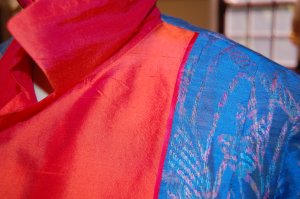
I pad-stitched the collar, but forgot to take a picture. Pad-stitching is like magic in how it makes the collar roll properly!

I pad-stitched the collar, but forgot to take a picture. Pad-stitching is like magic in how it makes the collar roll properly!

I have to say, I think the coat looks equally good any way it is worn: with the single button at the bust line closed, with both buttons secured and with neither of the buttons secured.

I chose not to add the optional pockets to this coat, but if I make it again in a less formal fabric, I would absolutely include them.

Once I got to the lining, I had to decide if I wanted to add the flat piping detail which I like so much. Of all the bias silk ribbon I have on hand, the only one which looked good was deep pink. Because of that, it doesn’t show contrast all that well, but I still like the subtle finishing look it gives to the lining.

Just for the Chill of it

Just for the Chill of it

Here, by the way, is the coat before I inserted the lining:

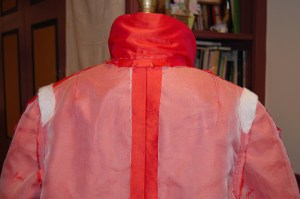
I underlined the entire coat with silk organza and added "cigarette" sleeve headings.

I underlined the entire coat with silk organza and added “cigarette” sleeve headings.

I love a center back seam!

I love a center back seam!

I used some vintage silk buttonhole twist to tack the center back fold in the lining at the neck and at the waistline.

Just for the Chill of it

There is no question that the dress and the coat go together once the lining shows!

There is no question that the dress and the coat go together once the lining shows!

Just for the Chill of it

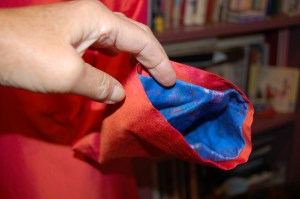
I love that the lining peeks out from the sleeves when I am wearing the coat.

I love that the lining peeks out from the sleeves when I am wearing the coat.

taffeta-coat-full-copy

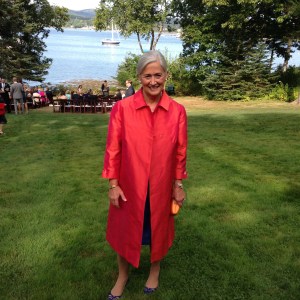
I was delighted when the photographer at the wedding wanted to take my picture because he "liked my outfit so much." (This is not that photo...)

I was delighted when the photographer at the wedding wanted to take my picture because he “liked my outfit so much.” (This is not that photo…)

Here with my husband - with a coordinating tie, no less (not planned, but makes for a great photo!)

Here with my husband – with a coordinating tie, no less (not planned, but makes for a great photo!)

It may seem a bit frivolous to make a coat like this, knowing that it will not be worn all that often – although I do have two other dress-weight silks in my collection which would look fairly stunning paired with this coat!  However,  it really is the perfect weight and look for an elegant, but chilly, evening out – and it was so much fun to make.

38 Comments

Filed under Buttons - choosing the right ones, Coats, Cocktail dresses, couture construction, Dressmaker coats, Dressmaker details, Linings, Mid-Century style, piping, sewing in silk, Silk taffeta, Uncategorized, vintage buttons, vintage Vogue patterns from the 1960s

Blame It on the Buttons

It can be a little overwhelming to look at my (growing) collection of beautiful summer linens, and then try to make a decision on which piece to select for my next project.

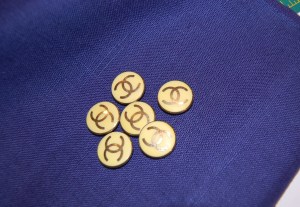
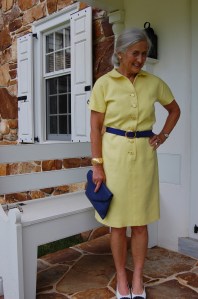
Fortunately, a random purchase of buttons helped me make up my mind this time around. I found these buttons at Britex Fabrics in San Francisco last year, and purchased them on a whim, not knowing when or how I would use them. I also don’t know what possessed me to purchase 6 of them, but that’s what I did.

Yes, those are interlocking "a la Chanel" Cs.

Yes, those are interlocking “a la Chanel” Cs.

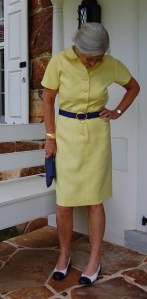
When I got them home, I realized they were a perfect match with a length of vintage, pale yellow, Moygashel linen in my possession. I tucked the fabric and the buttons away together, confident that the perfect pattern would also be found amongst my many vintage Vogue patterns.

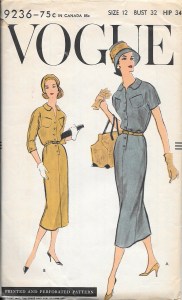
It was a bit of a trick finding a pattern that needed 6 (or fewer) ¾” buttons. This one kept surfacing as the most ideal candidate:

I am making the short sleeve version - but a little shorter!

Ideal, except for the yardage needed, that is. Many of you know by now that being a “little shy” of the prescribed fabric usually does not keep me from my desired goal! After making a fitting muslin and making the necessary adjustments, I cut out my underlining (light weight linen/cotton blend) and used that as my pattern. It was immediately evident that I did not have enough of that 35” width linen.

Or did I? I figured if I eliminated the center back box pleat and replaced it with just a slit in the back center seam, I’d save a bit of yardage requirements. I could make the sleeve hem facings out of the underlining, saving a bit more. And if I cut the collar on the horizontal straight of grain rather then the vertical, I could just fit the pattern pieces onto my yardage. It was a good thing I had already decided to eliminate the chest pockets (a little too 1950s.) And a self-belt?   Out of the question!

A belt turned out to be a perplexing question. I had been fortunate enough for a few years to have my belts and covered buttons custom made by Pat Mahoney, but since her retirement last year, I have found no replacement for her services. I was dreading the prospect of making my own belt. The only good thing was I knew I had a piece of vintage Moygashel linen in a medium navy blue (see the button photo above) which would be a good contrasting color for the yellow dress. I decided I would think about actually making the belt after I had the dress itself finished.

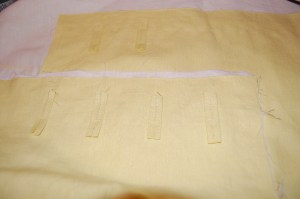
For a simple shirtwaist dress, there were a number of time-consuming details, like the gussets I covered in my last post. There were also six bound buttonholes to work.

It always amazes me how long these buttonholes take to make!

It always amazes me how long these buttonholes take to make!

Blame it on the buttons


There were separate front bodice facings, and a front skirt placket with separate facings. There were sleeve hem facings (as mentioned above), and lots of trimming, clipping, and grading of seams! And then the dress was done.  Except for the belt, of course.

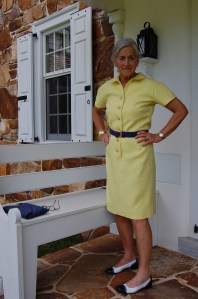
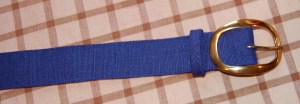
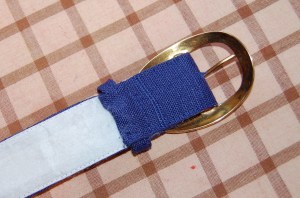
After giving myself a pep talk, I took out one of Pat’s belts and studied it, vowing to duplicate as closely as possible her techniques and precision. Fortunately I had a belt buckle from long ago, which I had saved. It was for a 1.25” width belt, which is exactly what I wanted.  I plunged ahead and this what I made, working the eyelets by hand (which fortunately don’t show much on the dark linen!):

Blame it on the buttons

The underside, just in case you are curious!

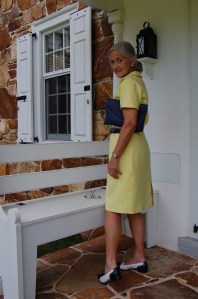
Although not my favorite dress of all time, I think I’ll get good use out of it, and I do love its pairing with “summer” blue.

Blame it on the buttons

Blame it on the buttons

Blame it on the buttons

Blame it on the buttons

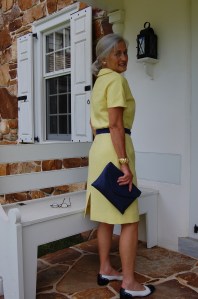
The clutch is a perfect match with the belt – how lucky is that?

Cool linen for a hot summer!

Cool linen for a hot summer!

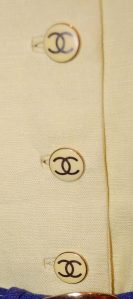
Best of all, the buttons add just the right, somewhat mysterious, touch.

19 Comments

Filed under bound buttonholes, Day dresses, kimono sleeves, Linen, Mid-Century style, Moygashel linen, Uncategorized, Vintage fabric, vintage Vogue patterns from the 1950s

An Evening Jacket for the Ages

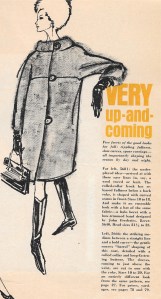
“Very up and coming” for the Fall of 1962, according to Vogue Pattern Magazine, was “the striking medium between a straight line and a bold curve – the gentle convex ‘barrel’ shaping of this coat:”

An Evening Jacket for the Ages - picture

It is from this time period – perhaps a year or two later – that this Designer Pattern comes:

Oh the things we can learn, no 10

I don’t know many of us who want to look like they are in a barrel, so it was my intention to take the best parts of the design of the evening jacket and then adapt it to a more current look, or at least to one that did not scream 1963/64

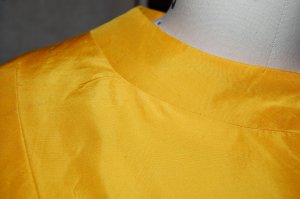
The details I loved about it were: 1) the shaped, two-part collar, which doesn’t really look like a collar, rather as an extension of the body of the jacket, but with more definition to it:

Evening jacket for the Ages

2) the dipped back hem of the jacket:

Evening Jacket for the Ages

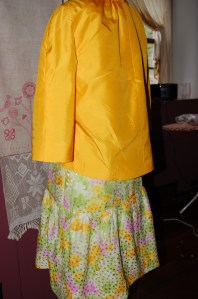
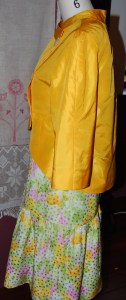
I purchased the yellow silk taffeta from Britex Fabrics, while the dress fabric, also silk, is from Mendel Goldberg.

Evening Jacket for the Ages

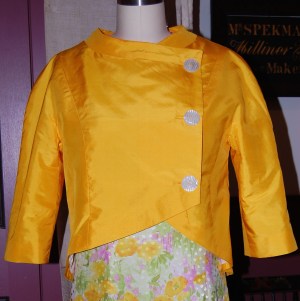
3) the below-elbow length, kimono sleeves with their clever built-in gusset, and 4) the prominent, offset buttons:

Evening Jacket for the Ages

The top buttonhole is a slot-seam one, while the other two are bound buttonholes.

Less attractive to me was the fullness of the body of the jacket.

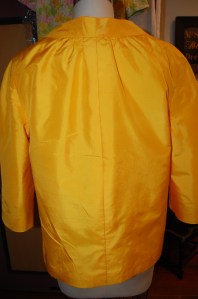
My muslin (toile) showed me that I needed to eliminate quite a bit of that fullness from the pattern pieces. I took 2 inches right out of the back of the jacket, making for much less to be gathered into the collar:

Even with two inches removed from the center back seam, there is still enough to gather nicely into the collar.

Even with two inches removed from the center back seam, there is still enough to gather nicely into the collar.

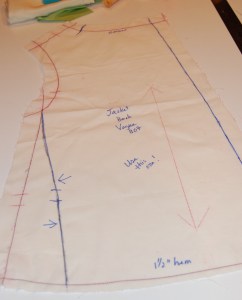
I also took a large wedge out of the each side of the back:

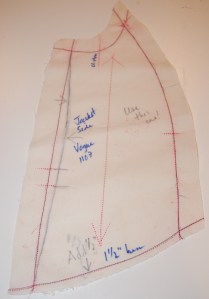
The dark blue line on the left is my re-drawn seam line. the original seam line is marked in red.

The dark blue line on the left is my re-drawn seam line. The original seam line is marked in red.

Then to add a little more shaping, I re-drew the side seams in the side underarm sections:

Again, the blue line on the left is my re-drawn seam line.

Again, the blue line on the left is my re-drawn seam line.

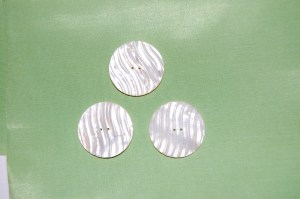
Because the buttons are such a prominent feature of the jacket, I knew I had to find the right ones. The pattern called for them to be 1¼” in diameter. That is a big button! I also knew they had to be a bit fancy or elegant, and I envisioned mother-of-pearl as the ideal composition. It took a while, but I found these buttons on eBay, and they looked just about perfect to me: right size, beautifully carved mother-of- pearl with a swirl design which I thought would add just the right contrast to the silk taffeta of the jacket. As it turned out, they were also the right price (always a welcome surprise!), and more beautiful when they arrived than I had anticipated:

Evening Jacket for the Ages

These buttons have a substantial heft to them, making them well suited for their application on this jacket.

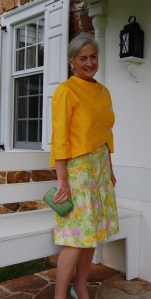
After getting the body of the jacket together, I tried it on to look at the length of it. Fortunately I had cut my pattern with about an extra half-inch in the length, and I used it, plus another ¼ of an inch, as it just looked better a little longer.

Another plus to lengthening the jacket is that the sleeve length lined up more attractively, something I didn't realize until I saw these photos!

Another plus to lengthening the jacket is that the sleeve length lined up more attractively, something I didn’t realize until I saw these photos.

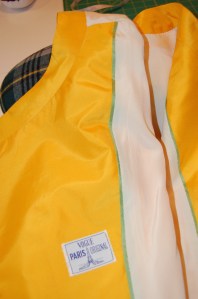
I did my usual flat applied piping along the edge of the lining:

Here is the piping sewn in place.

Here is the piping sewn in place.

The green piping picks up the green in the dress. I opted for an off-white lining, which is a little boring but that's okay!

The green piping picks up the green in the dress. I opted for an off-white lining, which is a little boring but that’s okay.

And I added the label I had:

Evening Jacket for the Ages

Evening Jacket for the Ages

Evening Jacket for the Ages

A few wrinkles left over from the jacket’s first wearing!

Evening Jacket for the Ages

Evening Jacket for the Agea

Evening Jacket for the Ages

I have to say, I really love this evening jacket. I have decided it is going to have another life – with another dress, this one constructed with the double, slanted flounce on it (see pattern above).  It would look fairly fabulous with a black and goldenrod printed silk – or navy, white and goldenrod printed silk…   I’ll be on the search.

17 Comments

Filed under bound buttonholes, Buttons - choosing the right ones, couture construction, kimono sleeves, Mid-Century style, piping, sewing in silk, Silk taffeta, Slot-seam buttonholes, Uncategorized, vintage buttons, vintage Vogue Designer patterns, vintage Vogue patterns from the 1960s

The Silky, Shimmery Colors of Spring

Just as with the elusive answer to “Which came first, the chicken or the egg?,” those of us who sew can try to answer “Which comes first, the fabric or the pattern?” The answer, at least as I see it, is “It depends.” And sometimes, even, it is a little of both.

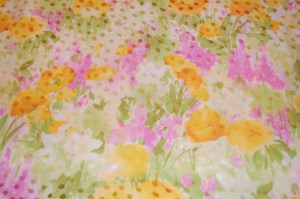
When I saw this fabric on the website of Mendel Goldberg Fabrics last Fall, I really did not stop to think about a pattern. It was a “bolt end,” 1 3/8 yards of 58” wide Italian silk. With that width, I wasn’t particularly concerned about the length being under 1 and ½ yards. I just ordered it as soon as I could.
The colors of Spring

Upon arrival, the fabric was even prettier in person, shimmery with “polka dots” woven in, fluid as only silk can be, and the picture of Spring. At that point, I was up to my ears with my Winter sewing, so I thought about it only casually until just a few weeks ago. I already had this pattern in my collection, and in the back of my mind, I had paired that fabric with the dress in View B on the right.

Oh the things we can learn, no 10

One interesting thing about vintage patterns is the yardage requirements are often given for widths that are narrower than many modern fabrics are produced in. For that reason, it can be difficult to determine exactly how much fabric is needed for a particular design. I’m getting better at sensing what I need, so I just assumed that I would have enough fabric to make that dress.   I had my heart set on it, actually. So much so, that when Britex Fabrics announced an upcoming sale of silk fabrics, I sent off for swatches for coordinating silk for the short jacket (in view A) and lining for the dress.
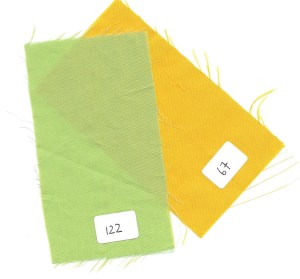
The green is a lightweight silk/cotton blend. The goldenrod yellow is silk taffeta from Italy, without the stiffness that taffeta so often has.

The green is a lightweight silk/cotton blend. The goldenrod yellow is silk taffeta from Italy, without the stiffness that taffeta so often has.

Dutifully ordered, the fabric arrived from California, and it, too, was even prettier in person! I was in love, and really could not wait to get started, first on the dress, and then on the jacket.
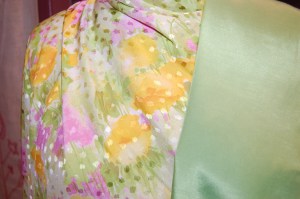
DSC_0036

The green for the lining . . .

The colors of Spring

… and the yellow for the short jacket in View A.

Then reality hit. When I took out the pattern pieces, here is what I found for that unusual flounced skirt:
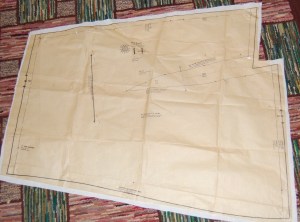
This skirt piece uses almost a yard in length, and the diagonal shaping on it uses more fabric than normal.

This skirt piece uses almost a yard in length, and the diagonal shaping on it uses more fabric than normal.

My heart sank as I knew immediately I did not have enough fabric. There was going to be no Rumplestiltskin to help me with this one.   I went back to my pattern collection and pulled out two more possibilities.
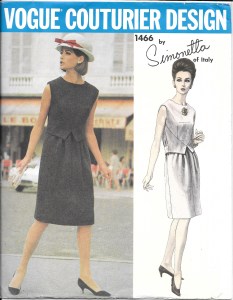
I love this dress, but I thought it might be too tailored for the fabric. Also, the seaming detail would be lost entirely with the busy design of the silk.

I love this dress, but I thought it might be too tailored for the fabric. Also, the seaming detail which adds so much to this dress would be lost entirely with the busy design of the silk.
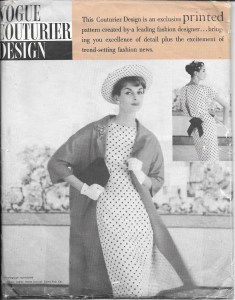
I felt like Goldilocks evaluating this pattern for my fabric. Just not right...

I felt like Goldilocks evaluating this pattern for my fabric. Just not right…

With both these dresses I would have to rethink the jacket, as the styles would not compliment each other. I stewed over this, re-measured, re-thought, and left it all in a heap in my sewing room. There was something about that shimmery silk that kept telling me that a dress made from it needed to have some movement to it –  like the flounced half-skirt pictured in the pattern. And then it hit me. If I made the front part of the skirt the same as the back, I could probably just squeak it out.
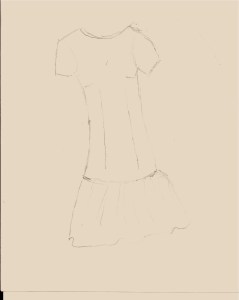
I did a quick diagram to consider this option.

I did a quick diagram to consider this option.

My completed muslin verified this for me, and, not only that, I loved the look, at least done up in muslin. Once again, using the couture technique of laying out and cutting each pattern piece individually enabled me to manipulate the pieces to make the most of the fabric I had available to me. Fortunately, there was no matching to be done, although there is a specific up and down to the design.
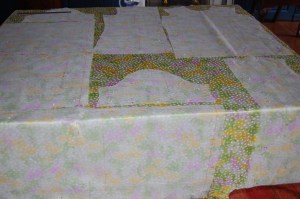
Now this is what is called making the most of one's available fabric!

Now this is what is called making the most of one’s available fabric! This shows my silk organza underlining pieces in place, ready to cut.

As far as the jacket – losing the diagonally shaped flounces on the skirt, makes the effect of the jacket not quite as dramatic, but I think it will still be very flattering – and appropriate. (The jacket has a million pieces to it, so it will be quite the project…!)

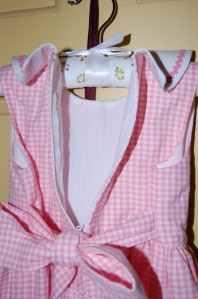
Well, I can’t leave this post without sharing another color of Spring, although this one is not silk and not shimmery. Pink cotton gingham is the picture of Spring, especially in a little dress for a little girl! When I made a crib quilt for my younger granddaughter, Carolina, I backed it in pink gingham, appropriately called “Carolina Pink.” I ordered enough so that I would be able to make her a dress for her first birthday (earlier in April) and here it is:
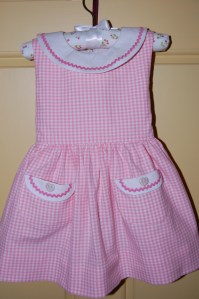
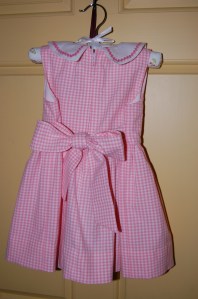
The colors of Spring

The colors of Spring

The bodice is lined in soft white cotton, which makes a lovely finish.

The bodice is lined in soft white cotton, which makes a lovely finish.

In my tins of buttons, I found these little ceramic ones, purchased years ago when Carolina’s mommy was my little girl. (Well, she is still my little girl, but you know what I mean.) How appropriate to use them for one of her daughter’s dresses.
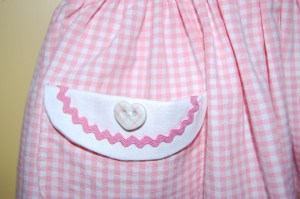
The colors of Spring

These buttons, with their delicate cross-hatch design, were just waiting for this dress.

And with this dress –  the fabric absolutely came first!

17 Comments

Filed under Buttons - choosing the right ones, Formal or fancy dresses, Heirloom sewing for children, Mid-Century style, Sewing for children, sewing in silk, Silk taffeta, Uncategorized, vintage Vogue Designer patterns, vintage Vogue patterns from the 1950s, vintage Vogue patterns from the 1960s, vintage Vogue patterns from the 1970s

A Fine February Finish

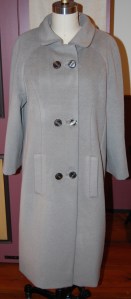
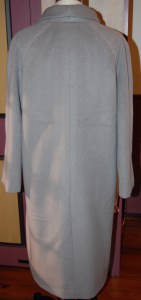
Leap Year, with its extra February day, seemed to be custom made for my sewing schedule. I had hoped to have my gray cashmere coat finished by the end of the month, and thanks to those extra 24 hours, I managed to do just that – barely! I will confess to taking out basting stitches, steaming, and adding two bar tacks to the lining on March 1st (gasp), but now my coat is finished.

A Fine Feb Finish

A Fine February Finish

Photos of me in this coat will be in a future post…

Like Claire McCardell, who said “I believe in a collection of coats,” and coats are “revealing, a clue to your taste, and your knowledge of Fashion,” I also believe that one should not “make a coat too basic.” The unique aspect of fashion sewing is that one can start with a basic (or not-so-basic) coat pattern and then make it her own.

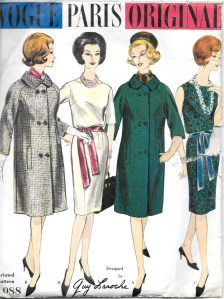
The first owner of this Vogue Designer Original pattern, designed by Guy Laroche, which I used for my coat, had obviously used it. (This isn’t always the case – many vintage patterns are still “factory-folded” and in their unused condition.)

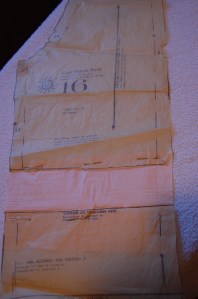
When I purchased the pattern, I had already decided to lengthen the sleeves, which are shown on the pattern envelope as “below-elbow” or bracelet-length. I wanted full-length sleeves as a practical matter. Much to my delight, the original owner had decided the same and had added tissue paper inserts into the sleeve pattern pieces. As it turned out, the length she had decided upon was also exactly right for me.

What a nice surprise to find the sleeves already lengthened!

What a nice surprise to find the sleeves already lengthened!

There are really only a few details I chose for this coat which serve to make it “not basic.” Besides the bound buttonholes (which used to be basic but are not so much anymore!), I put emphasis on the buttons, the lining and a couple of the finishing details.

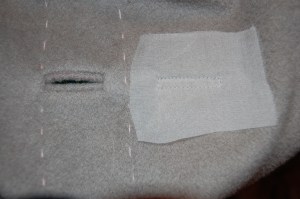
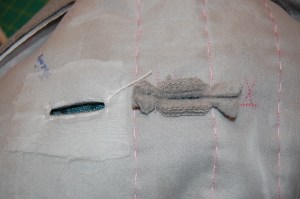
First the buttonholes and buttons: because the cashmere fabric is coat-weight, I needed to make the “lips” of the buttonholes a bit wider than normal. Once again, I used an organza patch on the underside of the buttonholes, which makes a very nice interior finish:

The line of basting stitches is the fold line - the organza patch is on the facing part of the front edge.

The line of basting stitches is the fold line – the organza patch is on the facing part of the front edge.

Here is the patch ready to be sewn onto the back of the buttonhole.

Here is the patch ready to be sewn onto the back of the buttonhole.

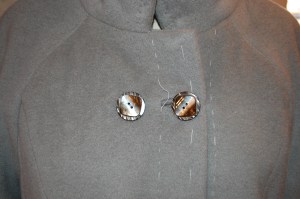
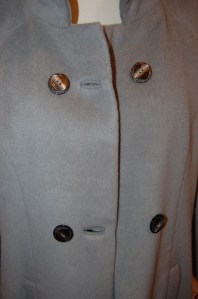
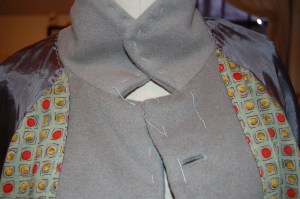
I found these vintage buttons in an Etsy shop. Although they appear to be gray mother-of-pearl, they are actually plastic. The iridescent strip through the middle of each one, along with the square detail on the tops, gave me the idea to arrange them on an angle. I think they add just the right amount of interest to the front of the coat.

The "square" detail on the buttons picks up the design in the lining fabric.

The “square” detail on the buttons picks up the design in the lining fabric.

A Fine February Finish

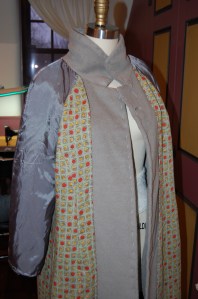
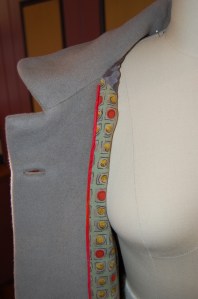
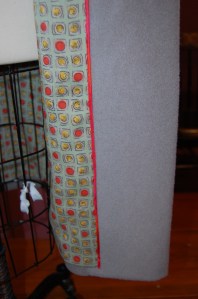
Using the printed wool challis for the lining certainly elevates this coat to a notch above ordinary. The sleeves are lined with gray rayon Bemberg for practicality’s sake.

An inside out view, trying out the lining.

An inside out view, trying out the lining.

This photo shows a good look at the finished buttonholes, too.

This photo shows a good look at the underside of the finished buttonholes, too.

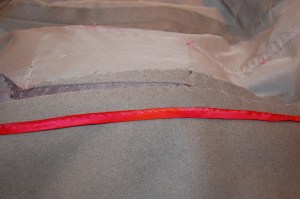
Of course the detail I love the most is the flat piping I added to the front interior edges of the lining.  As I have said before, doing this is so easy and adds so much.

A Fine Feb Finish

A Fine February Finish

Here is the flat piping stitched in place - so easy!

Here is the flat piping stitched in place – so easy!

The final small detail, which helps the collar to keep its shape, is under-stitching (by hand) on its underside.

A Fine February Finish

So what else did Claire McCardell say about coats? To quote from her book, What Shall I Wear, page 69, “… you can take another step and get a coat and dress that go together—never to be separated, never to be worn with any other dress or any other coat, and always with a special feeling of satisfaction. If you take a little trouble, you may be able to manage a heavy fabric skirt to go with the coat.”  I plan to take that little bit of trouble – a skirt out of the gray cashmere, and a blouse from the printed challis – to complete the outfit, and I will hope for that “special feeling of satisfaction.”

30 Comments

Filed under bound buttonholes, Buttons - choosing the right ones, Coats, couture construction, Dressmaker coats, Mid-Century style, Quotes about sewing, Uncategorized, vintage buttons, Vintage fabric, vintage Vogue Designer patterns, vintage Vogue patterns from the 1960s, woolens

Sweet November

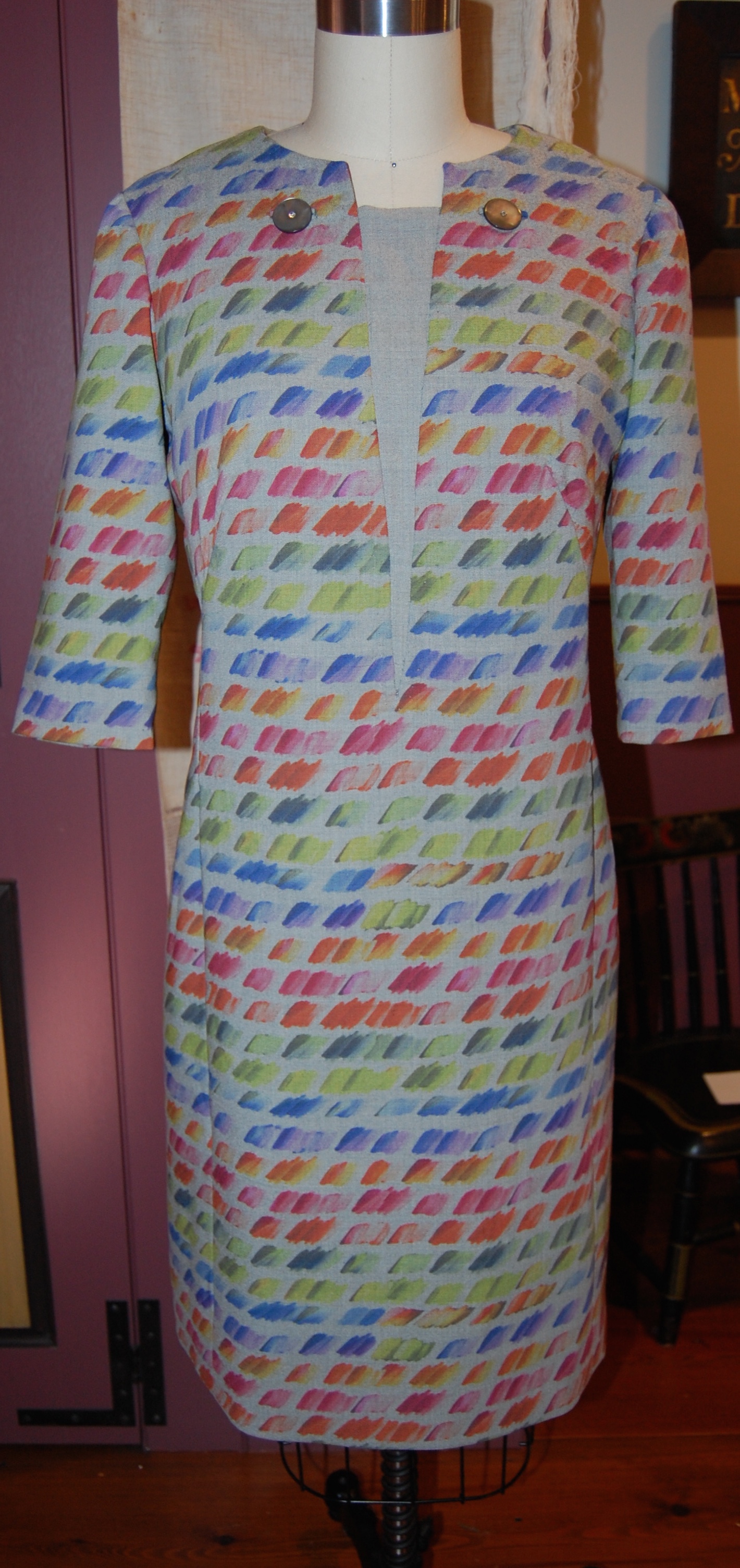
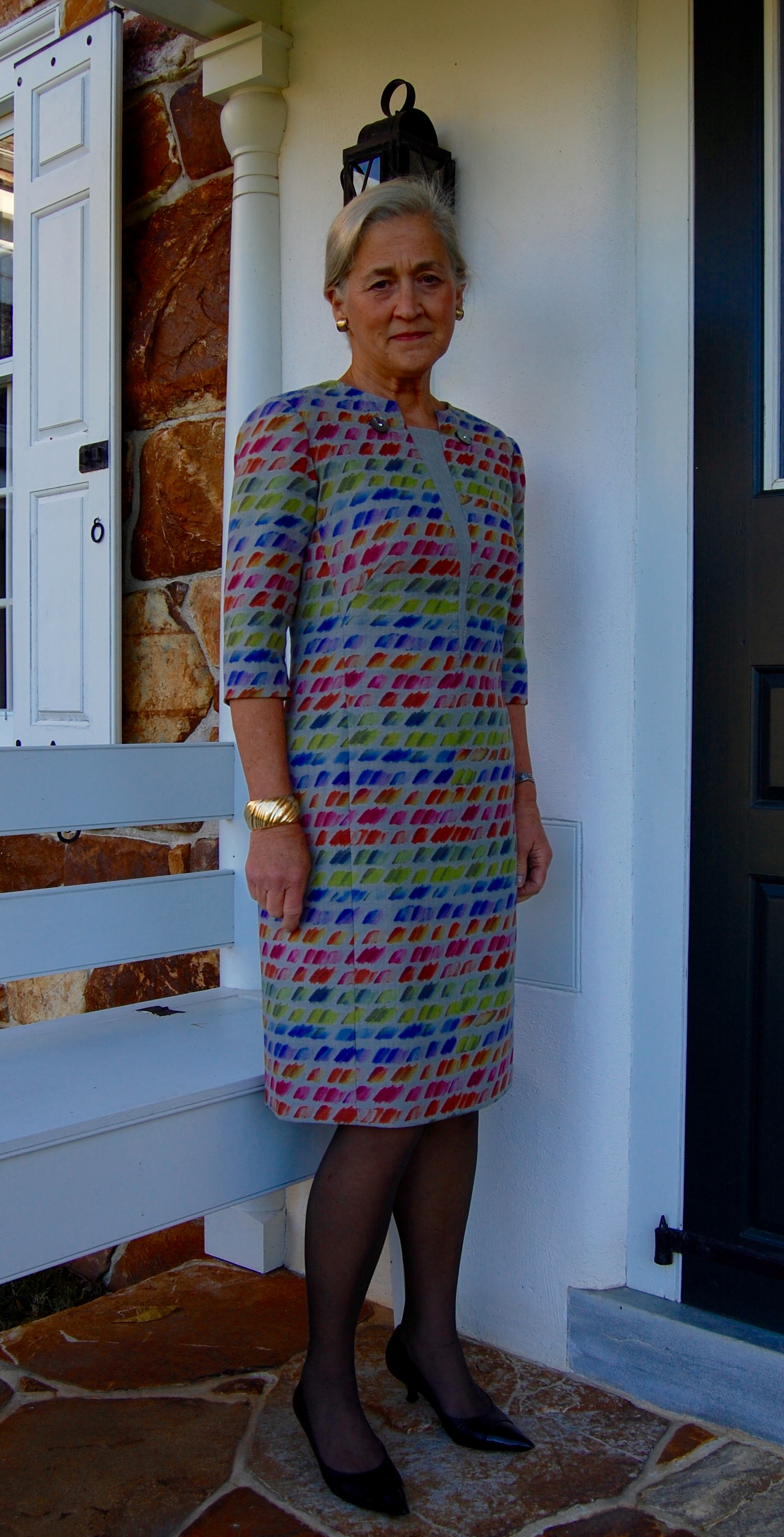
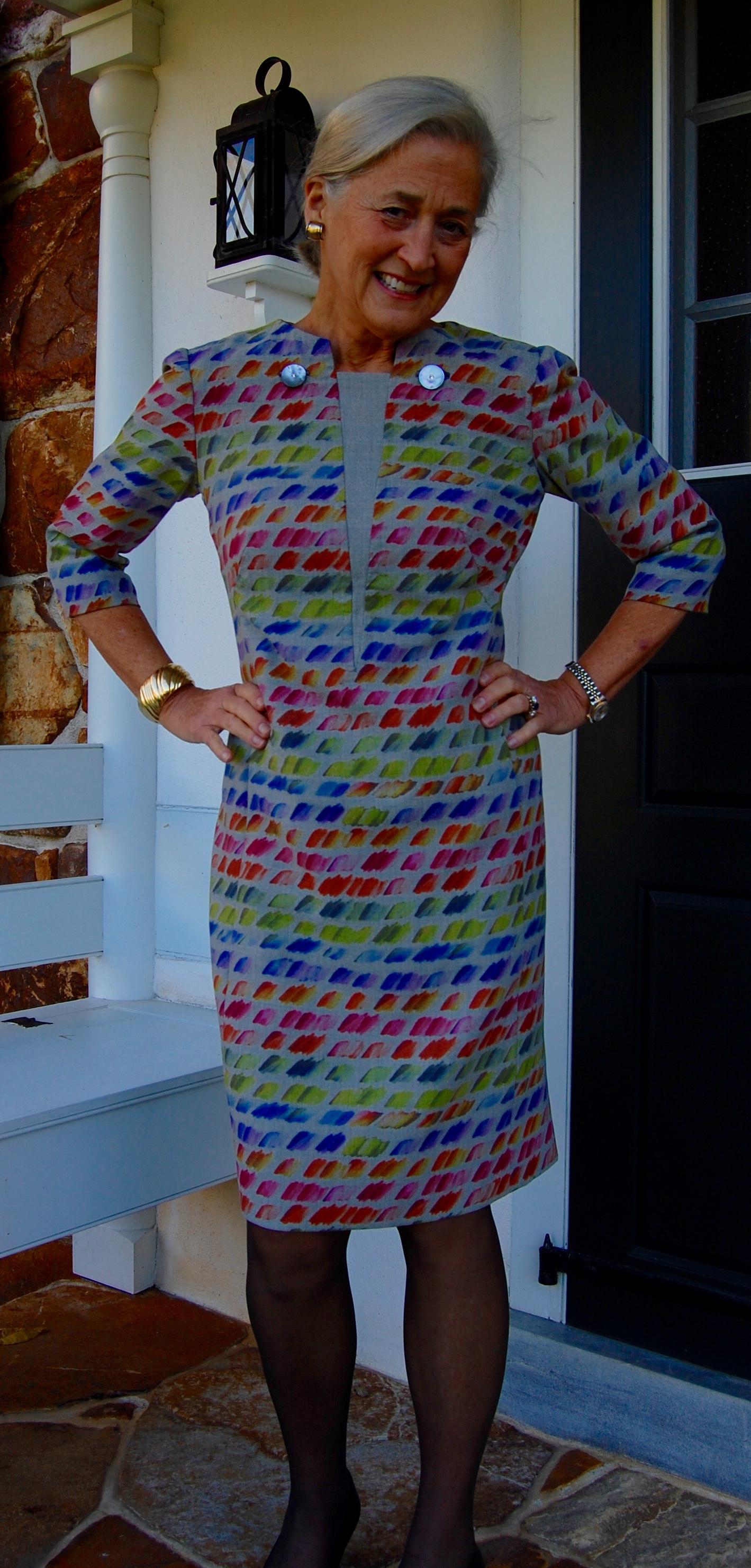
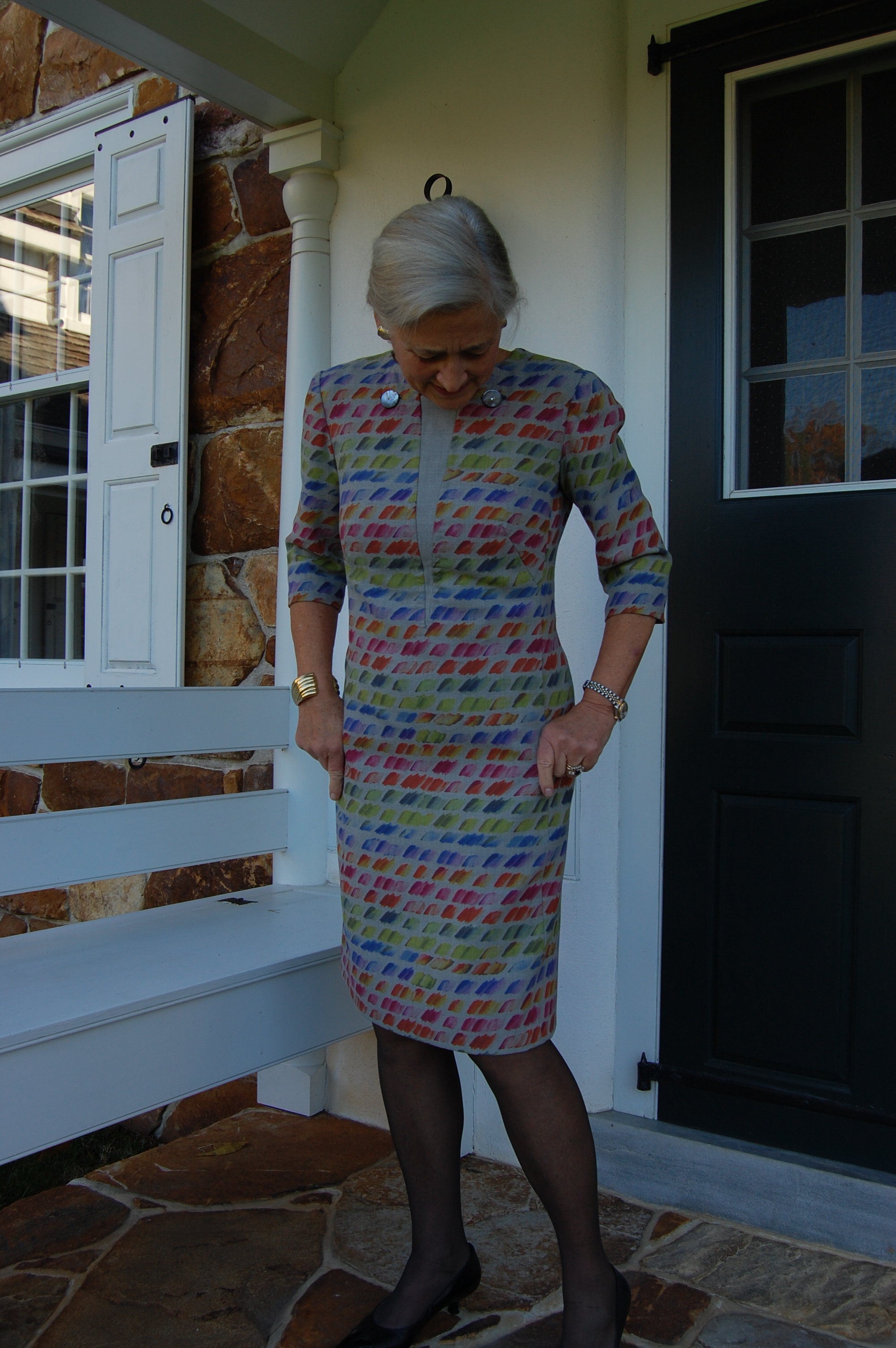
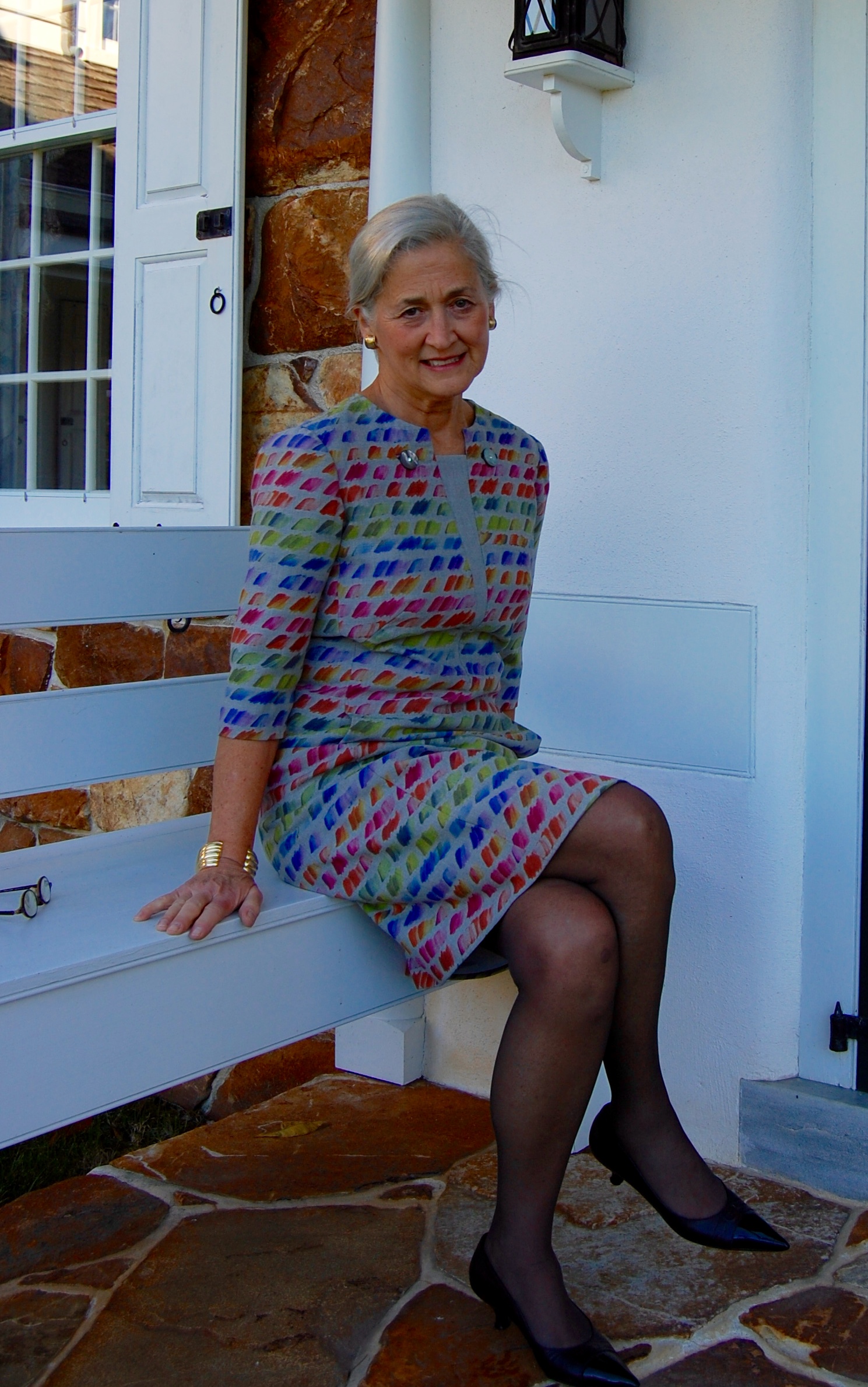
The trickery, which defined my October sewing, finally floated away with the leaves and the goblins, leaving sweet November with her welcome reward, a new dress for Autumn and Winter.

Sweet November

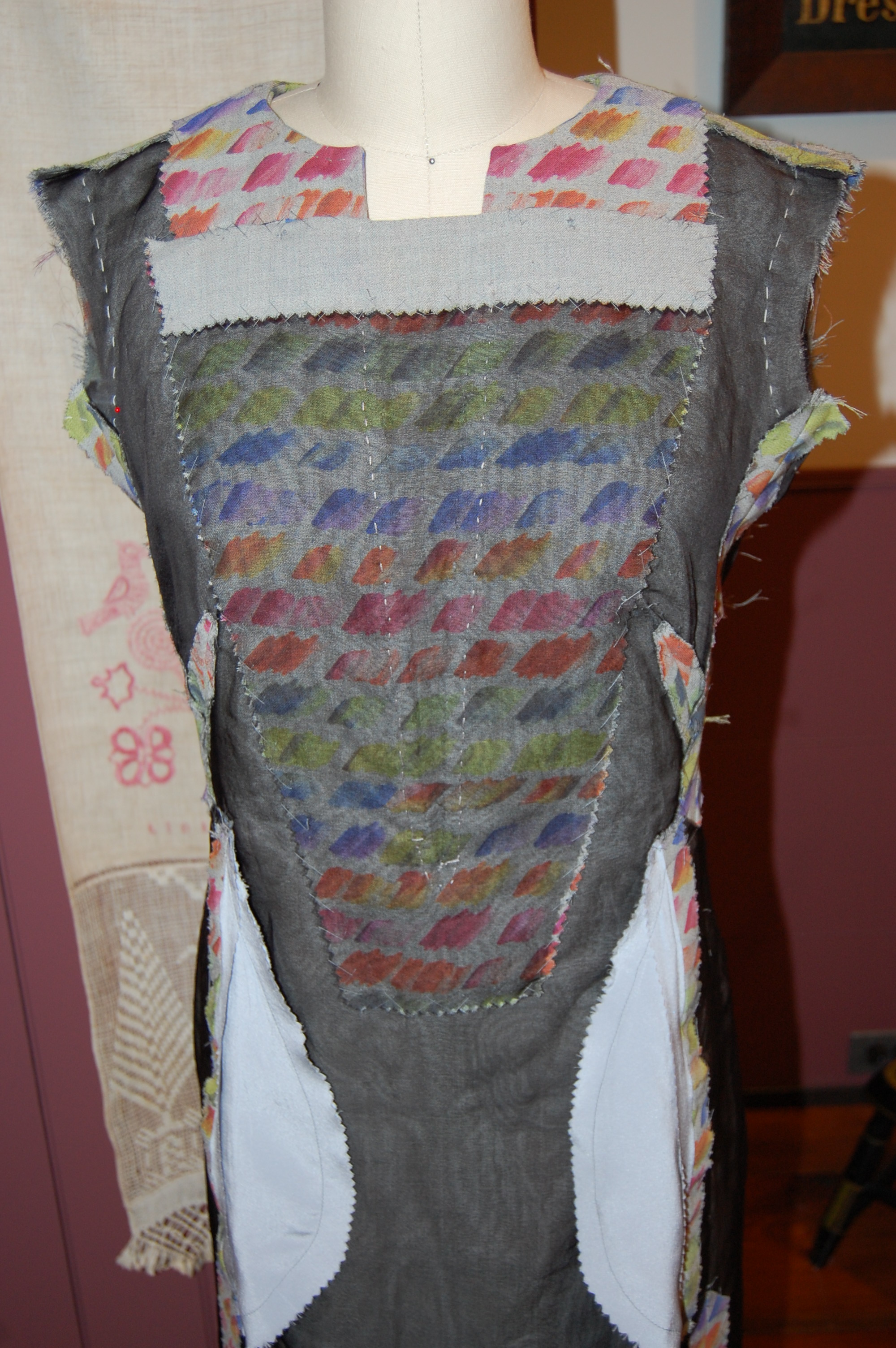
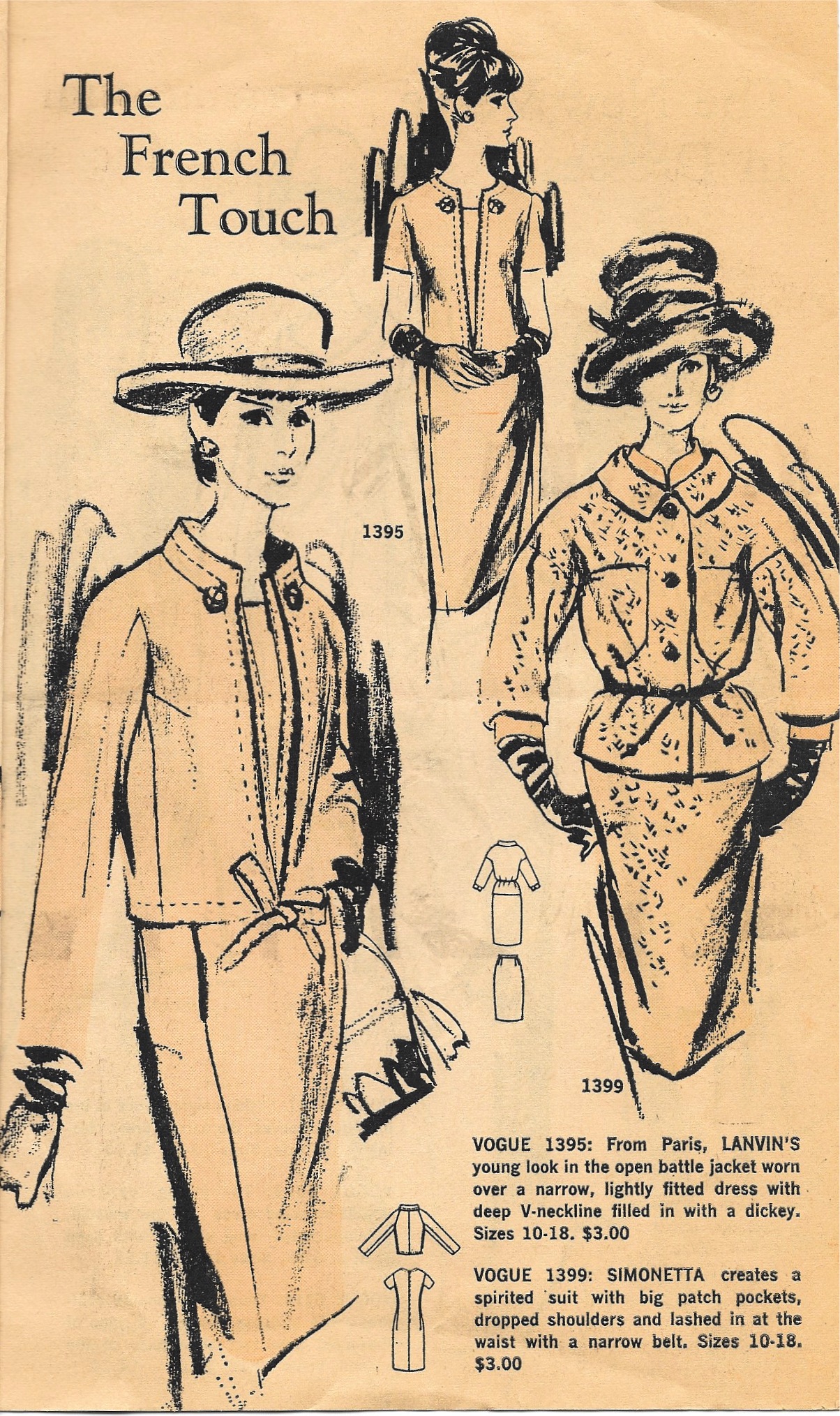
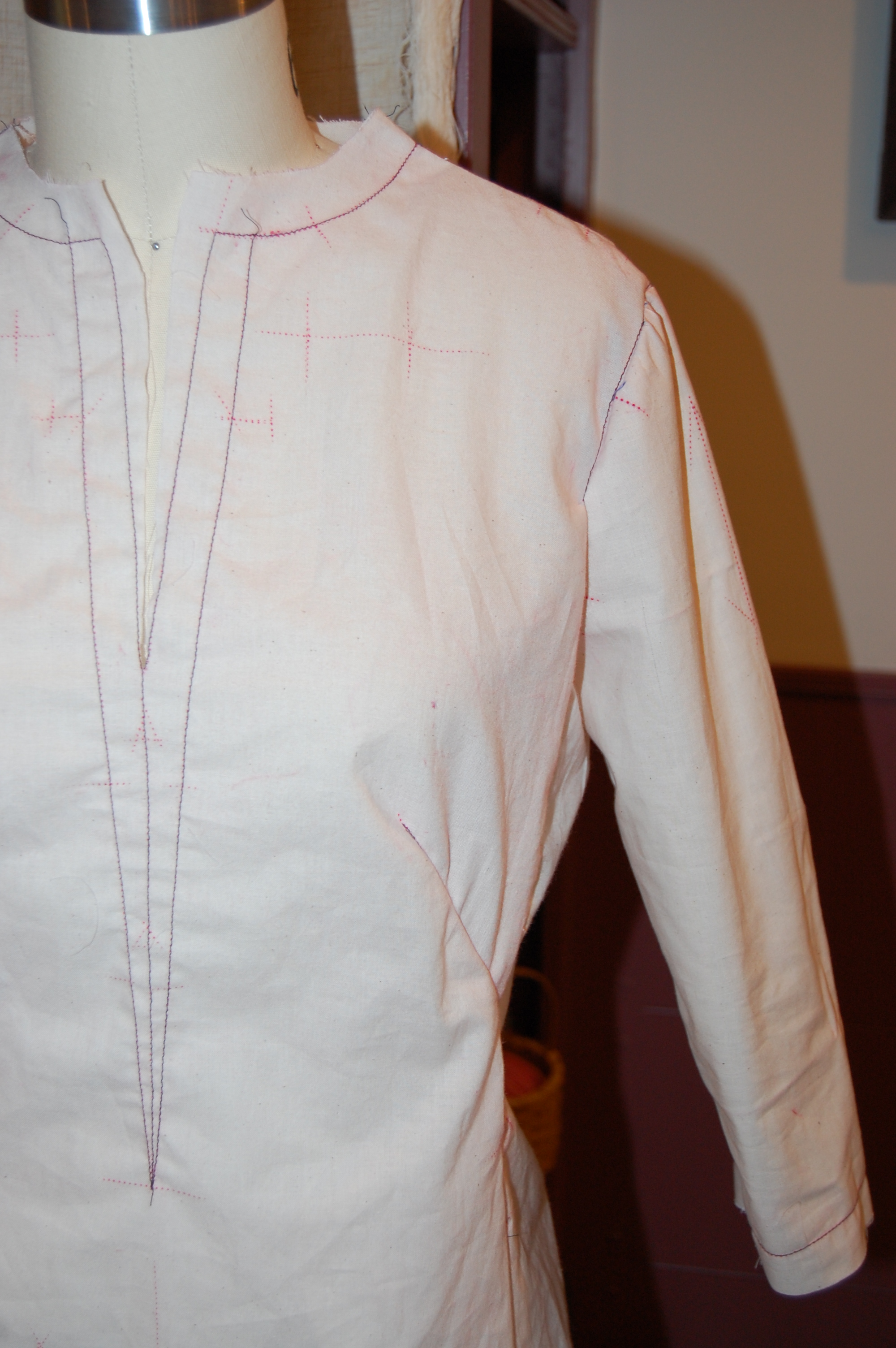
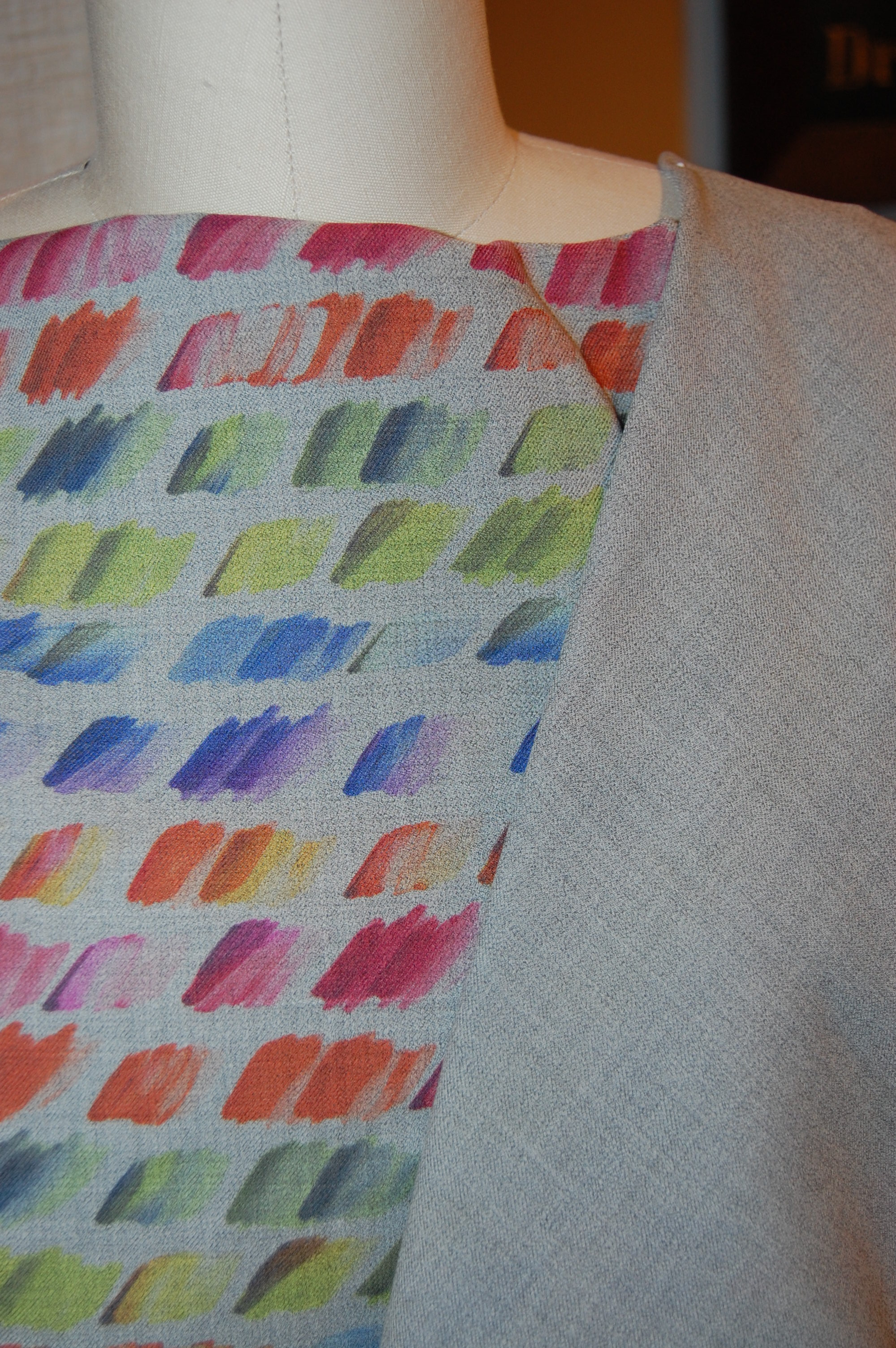
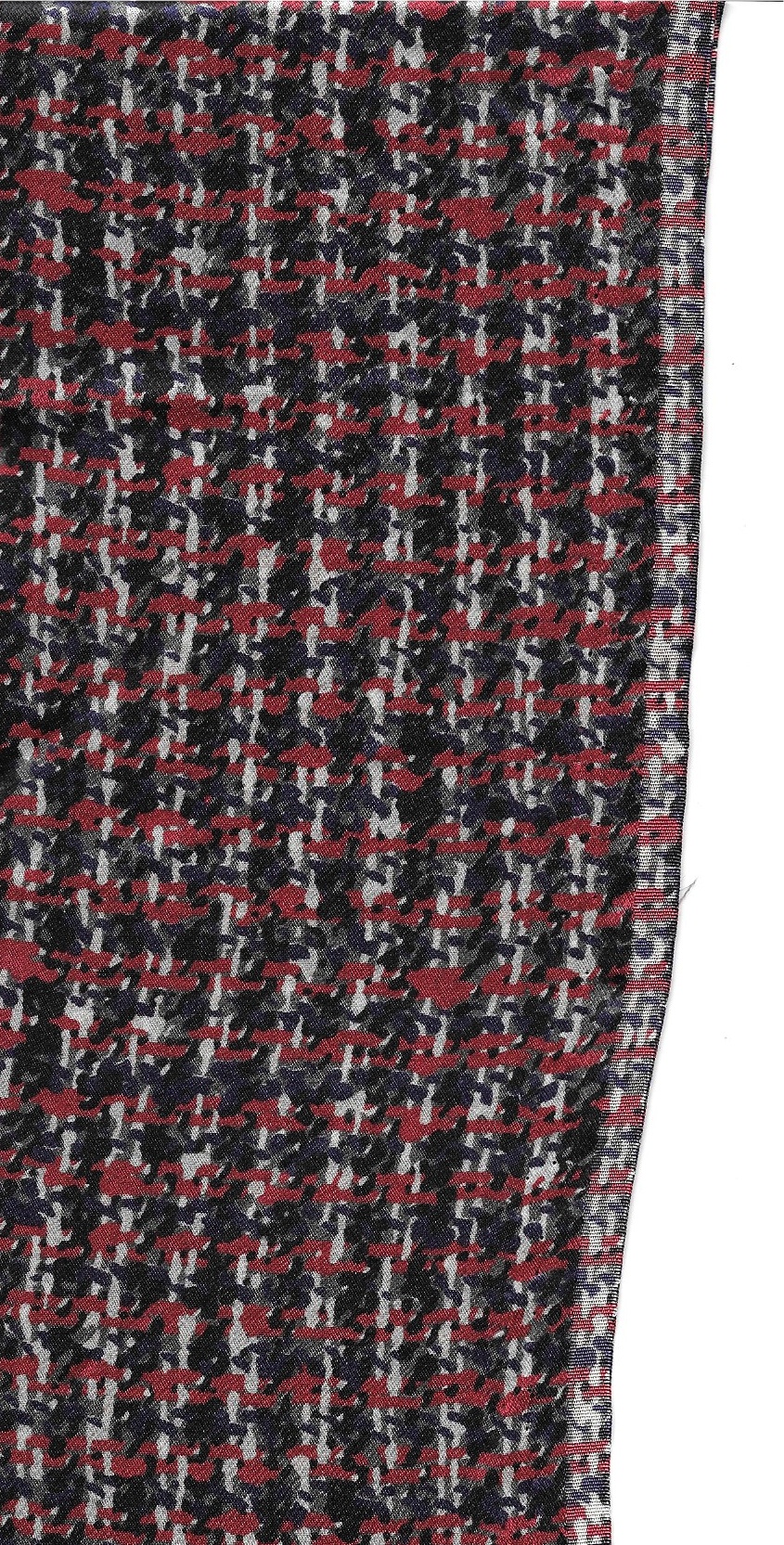
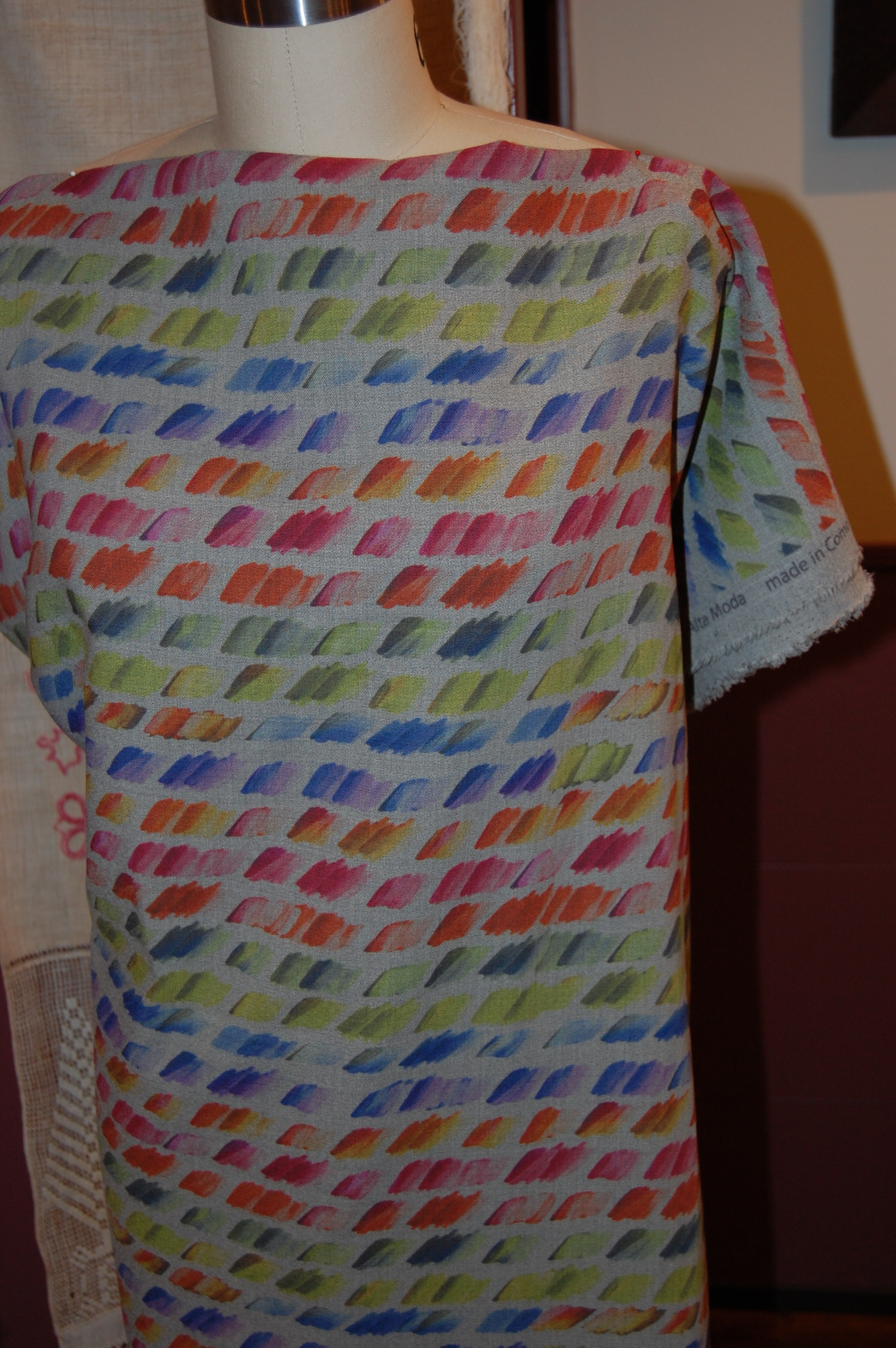
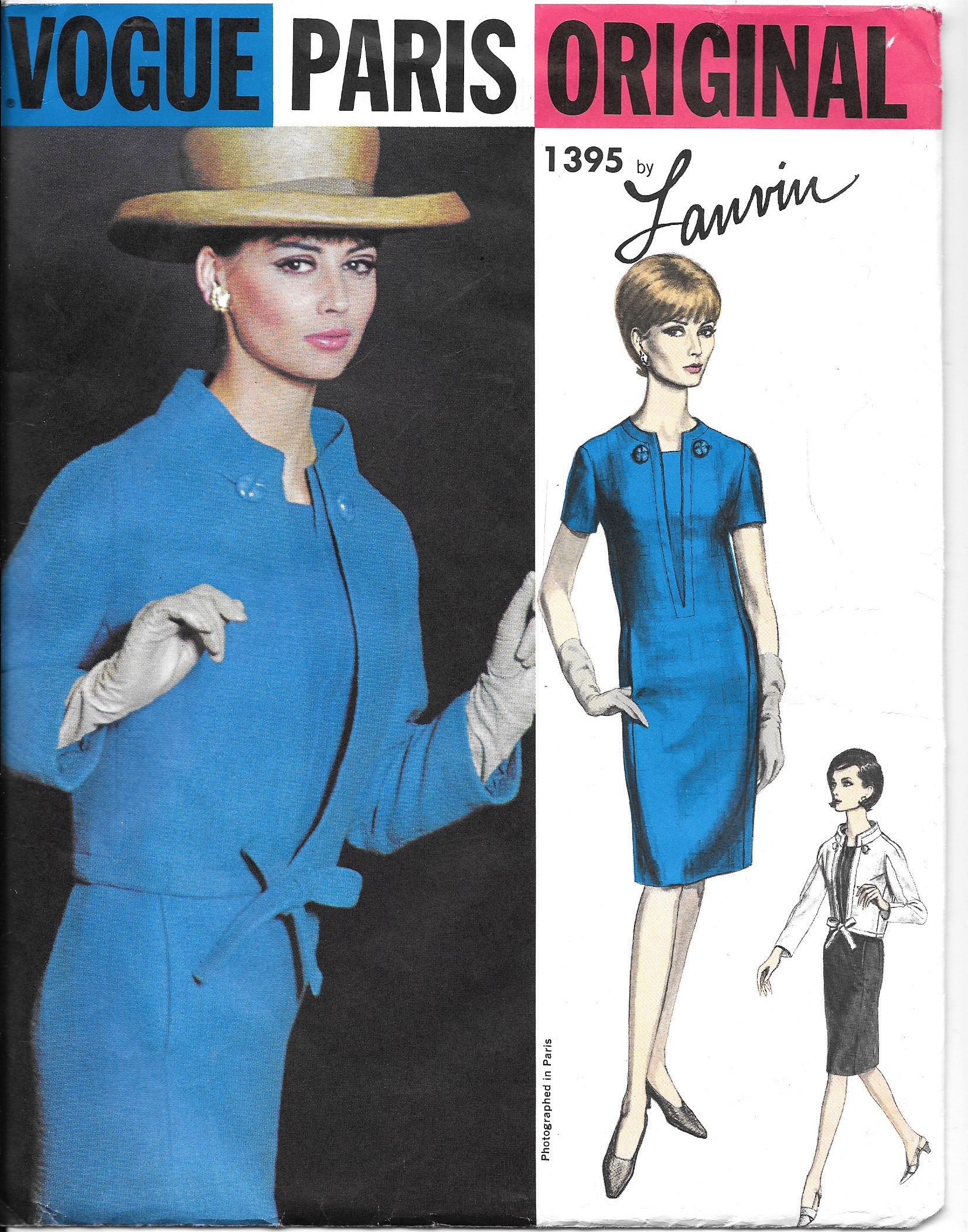
So what made vintage Vogue 1395 such a tricky dress to make? I documented my efforts to get a workable muslin (toile) in a post from early October. Once I had my adjusted muslin pattern, I transferred it onto black silk organza to use as my cutting guide. It was then I realized that, because the design on the fabric, a silk and wool blend, was printed on it, not woven into it, I needed to work from the right side of the fabric in order to match the horizontal “lines.” This meant that I had to flip every piece that I cut out and then exchange the organza with its opposing side. (I hope this makes sense.) It added a bit of uncertainty to the process and I was fanatical with flipping and checking to make sure I kept the design in line. Something told me I should delay cutting out the sleeves until I had the body of the dress together – my sewing godmother at work, I guess – and I am glad I did, as I’ll detail in a bit.

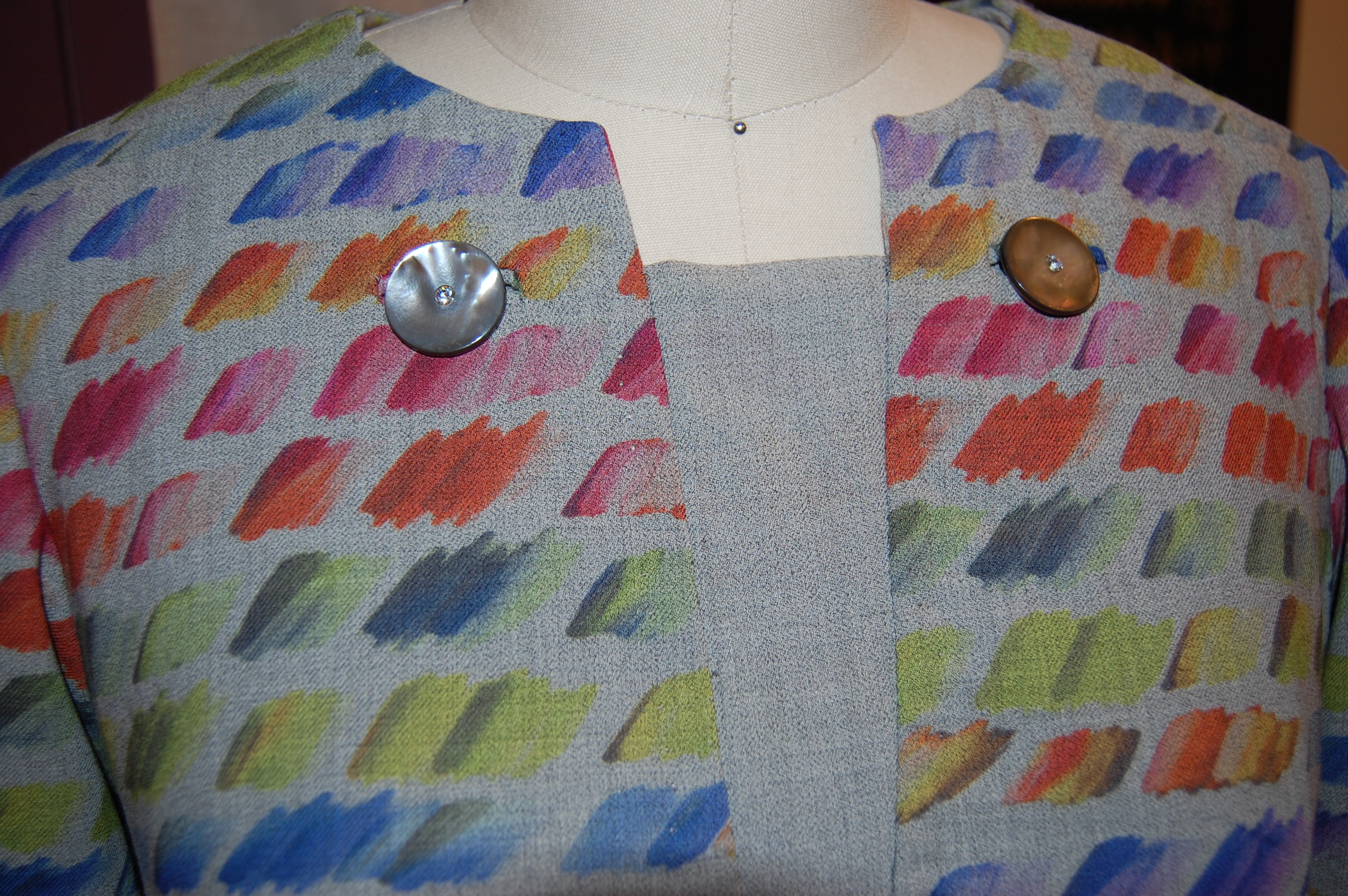
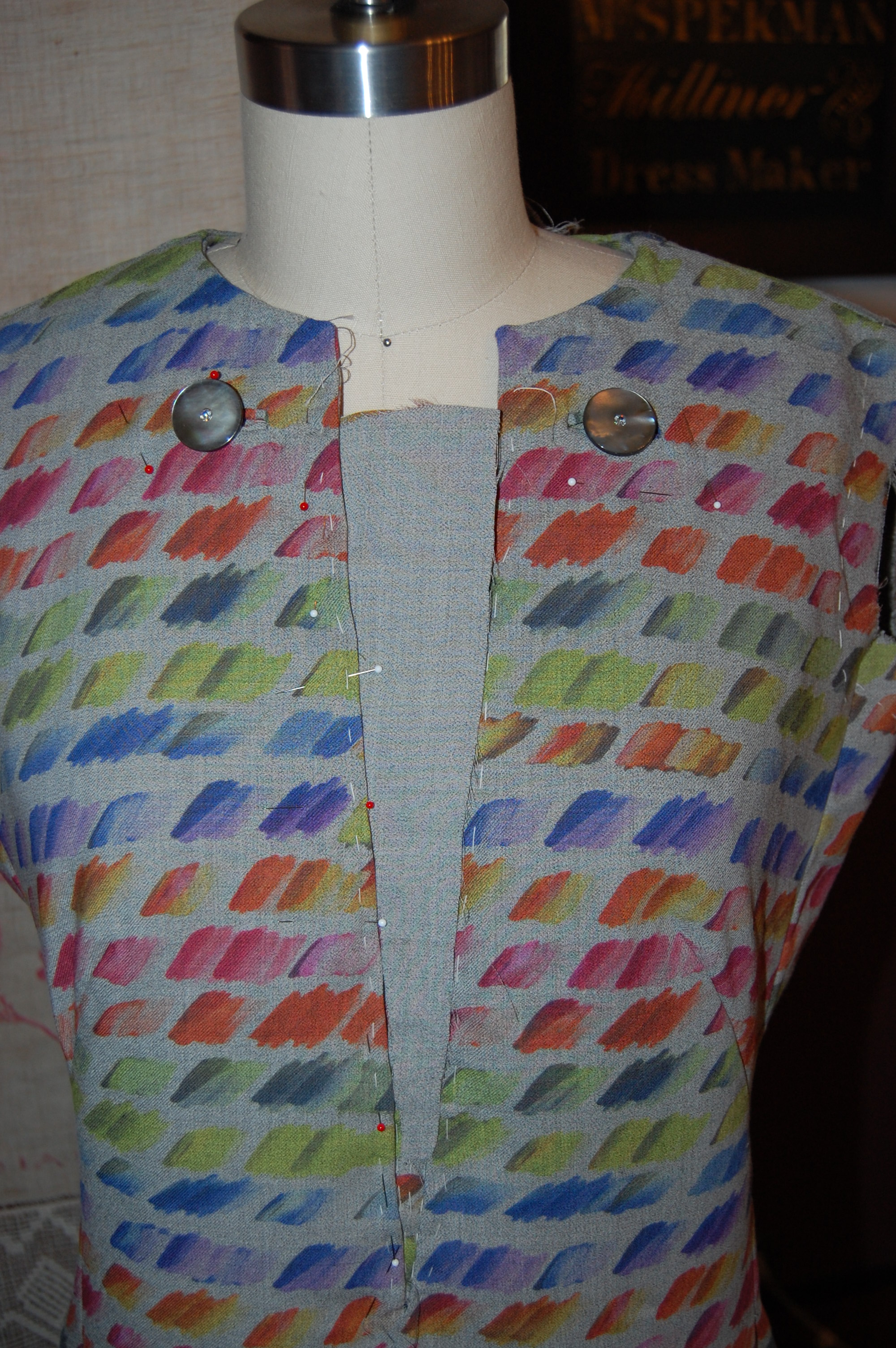
I had made the decision at the beginning of the project to cover the dress’s two buttons in the plain gray “wrong” side of the fabric. But once I “semi-made” a covered button, and tried it out, it was DULL. It added nothing to the dress. I went to my button box and all I could find was a small gray pearl that was close in color. But I loved the iridescence of it and determined that gray pearl buttons were what I needed. I seem to have such good luck with buttons from Britex – even though I am ordering online – and found 1” gray pearl buttons with a rhinestone in their centers. Although I am not a rhinestone-y type of person, something about them spoke to me. I remembered what Susan Khalje said in one of the classes I have taken with her – that couture often has a bit of “whimsy” to it. Well, I ordered those buttons as as fast as I could! I think they are just what was needed!

Sweet November

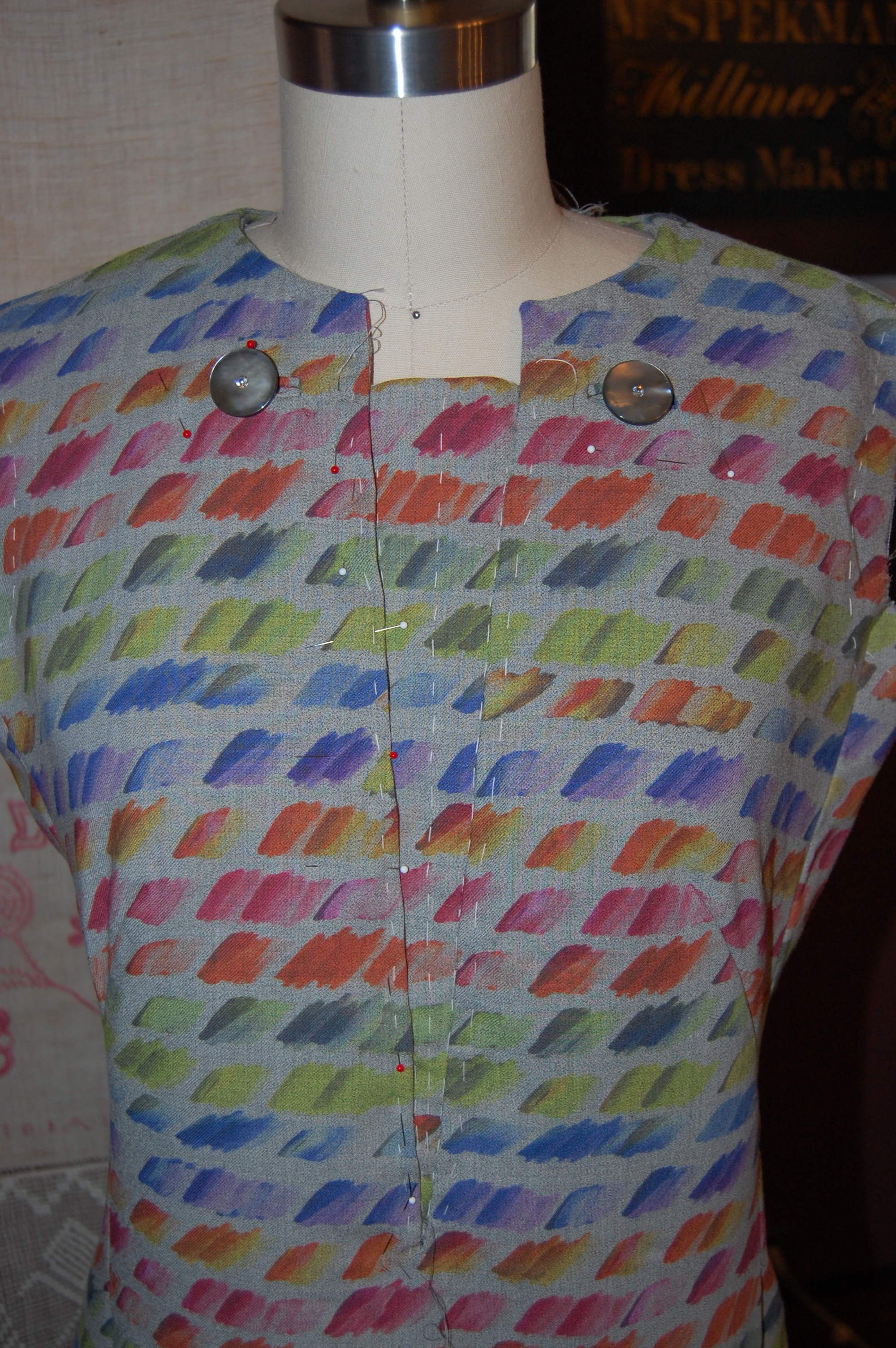
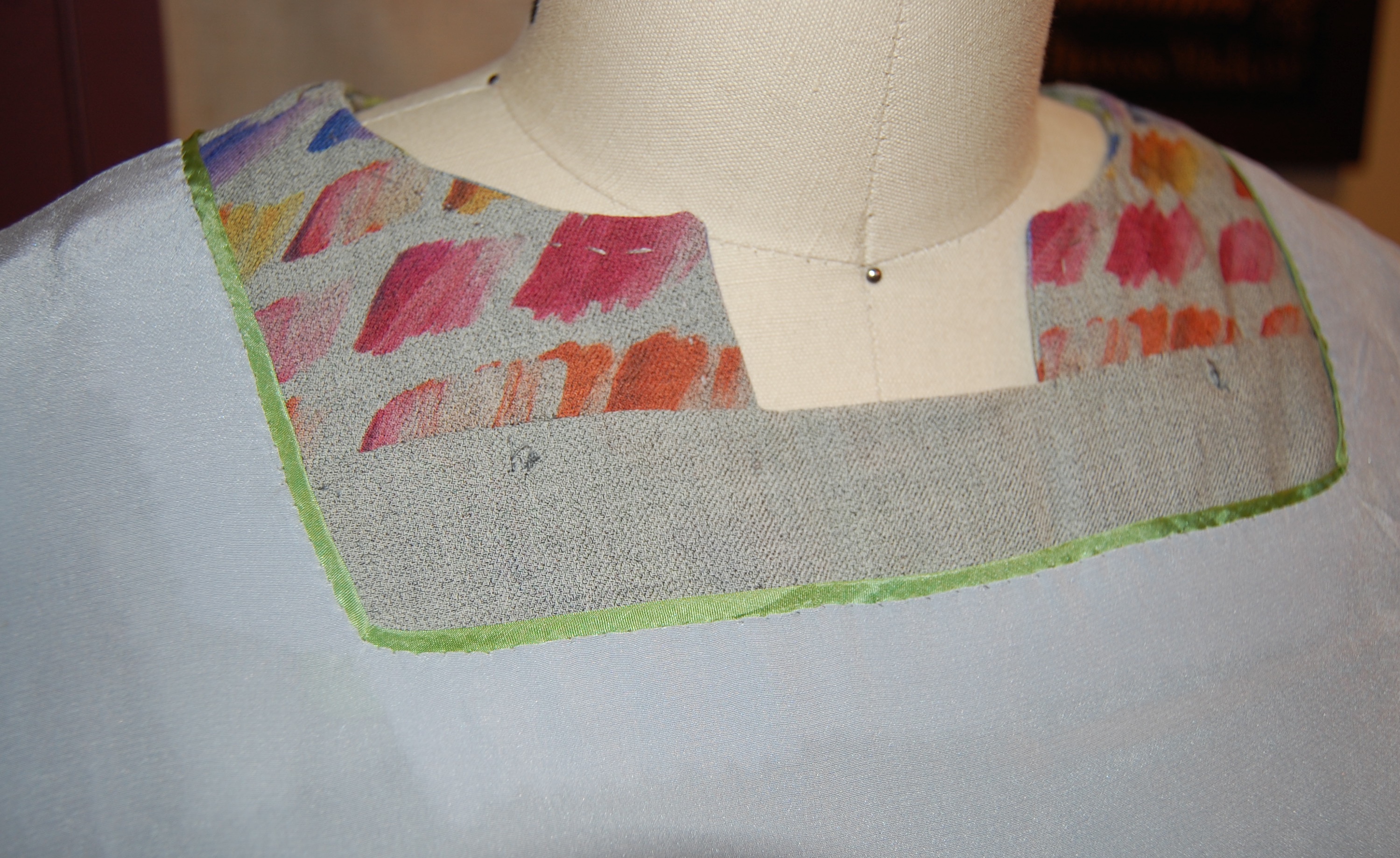
I had also made the decision to make the “dickey” part of the dress out of the side of the fabric with the printed design – so that the horizontal line would be uninterrupted across the bodice. Here is what it looked like once I had it done:

Sweet November

There was not enough definition between the dress and dickey to make it interesting.

I cut some scraps to see what it would look like with a play gray insert – and it was so much better!

Sweet November

So – I took the dickey all apart and flipped it over so it would be out of the plain gray “wrong side.” By now I was enjoying the versatility of this fabric (which I bought online from Mendel Goldberg Fabrics) and appreciating the serendipity of having this fabric for this pattern, giving me options.

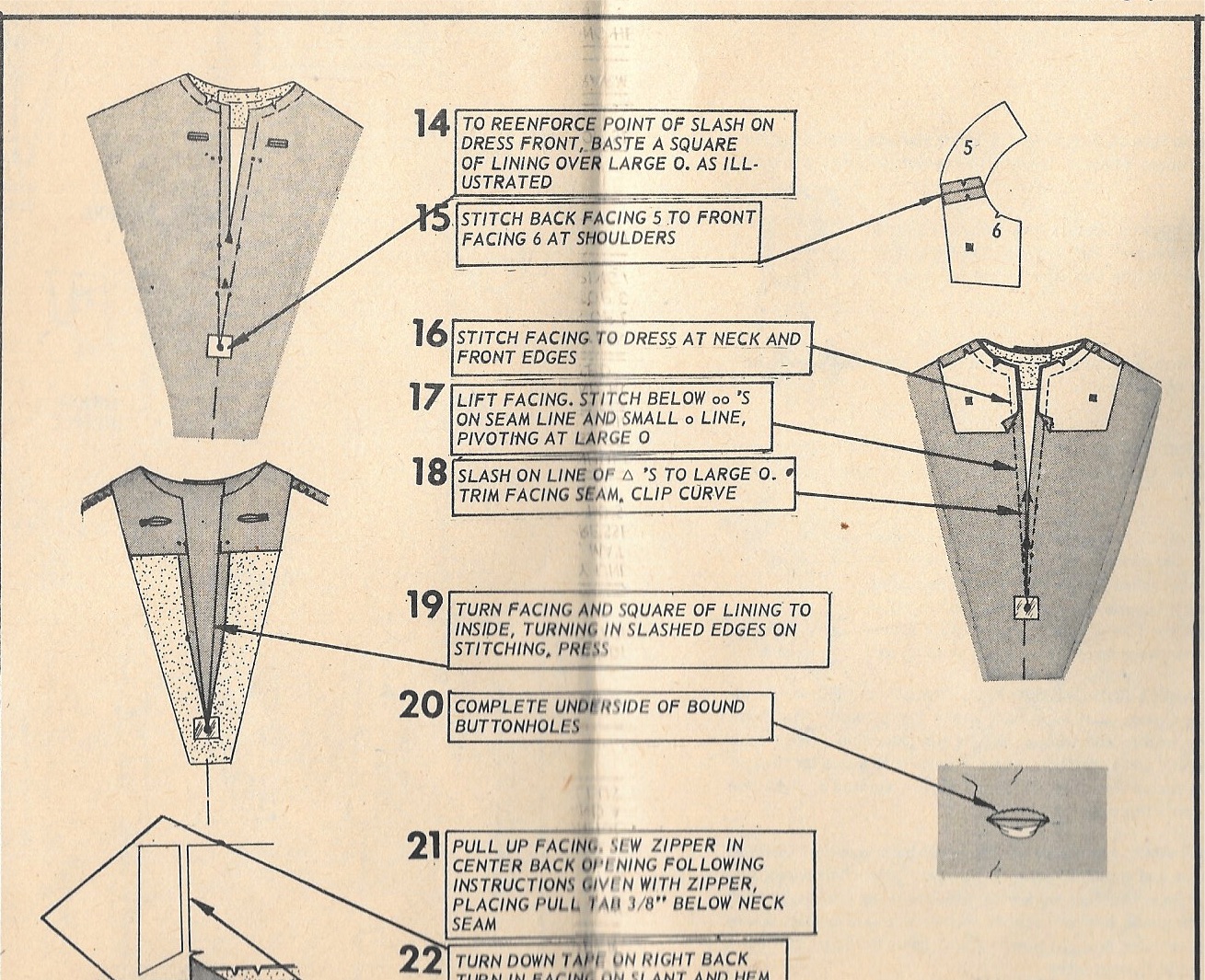
However, the fabric posed another challenge when I got to the point of finishing the front opening in the bodice. This fabric frays enough that I was not comfortable following the directions given in the pattern instructions:

The instructions directed me to just turn back the seam allowance, but because of the ravel-ly nature of the fabric, I was certain it would pull out with wear.

The instructions directed me to just turn back the seam allowance, but because of the ravel-ly nature of the fabric, I was certain it would pull out with wear.

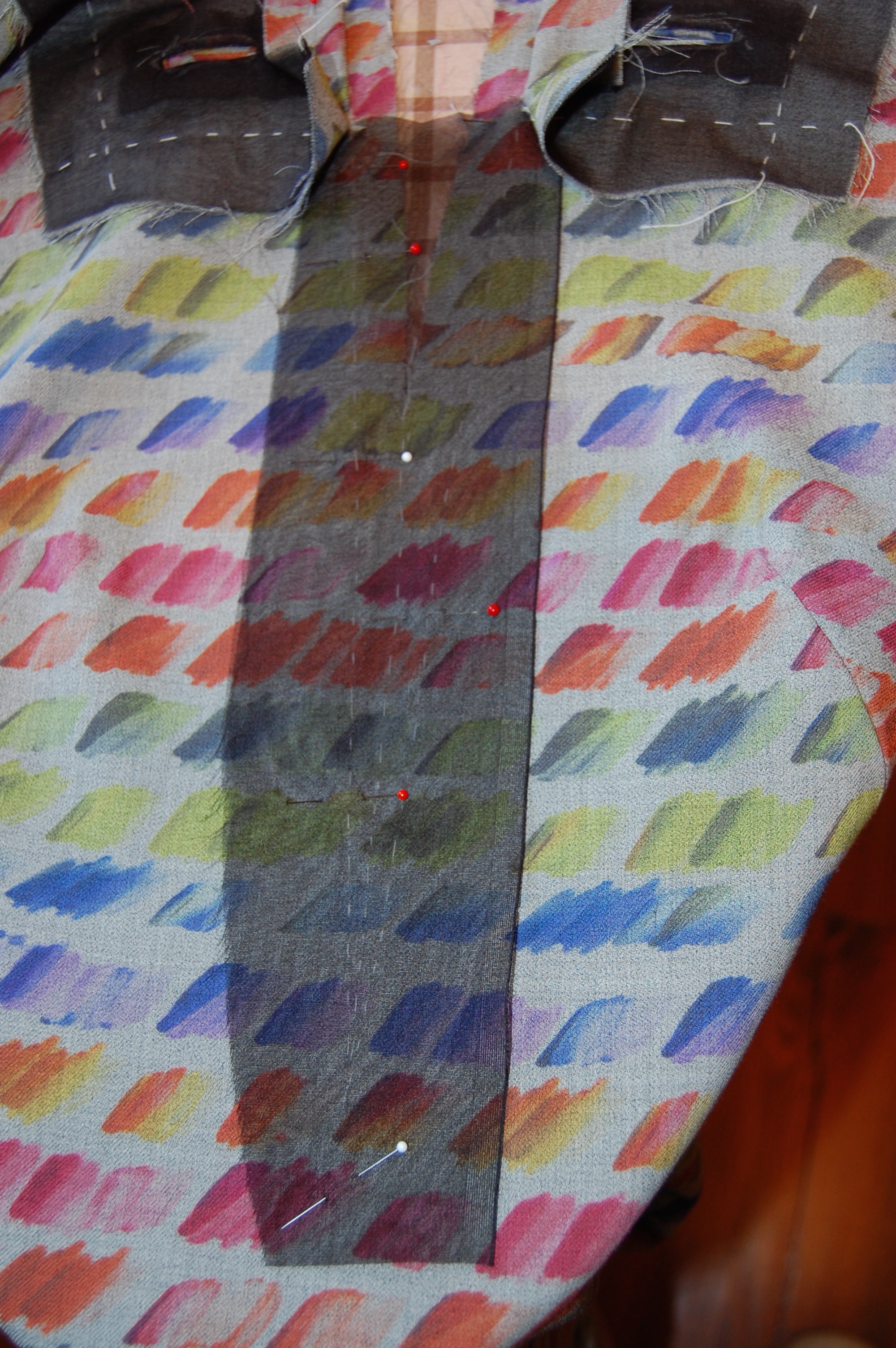
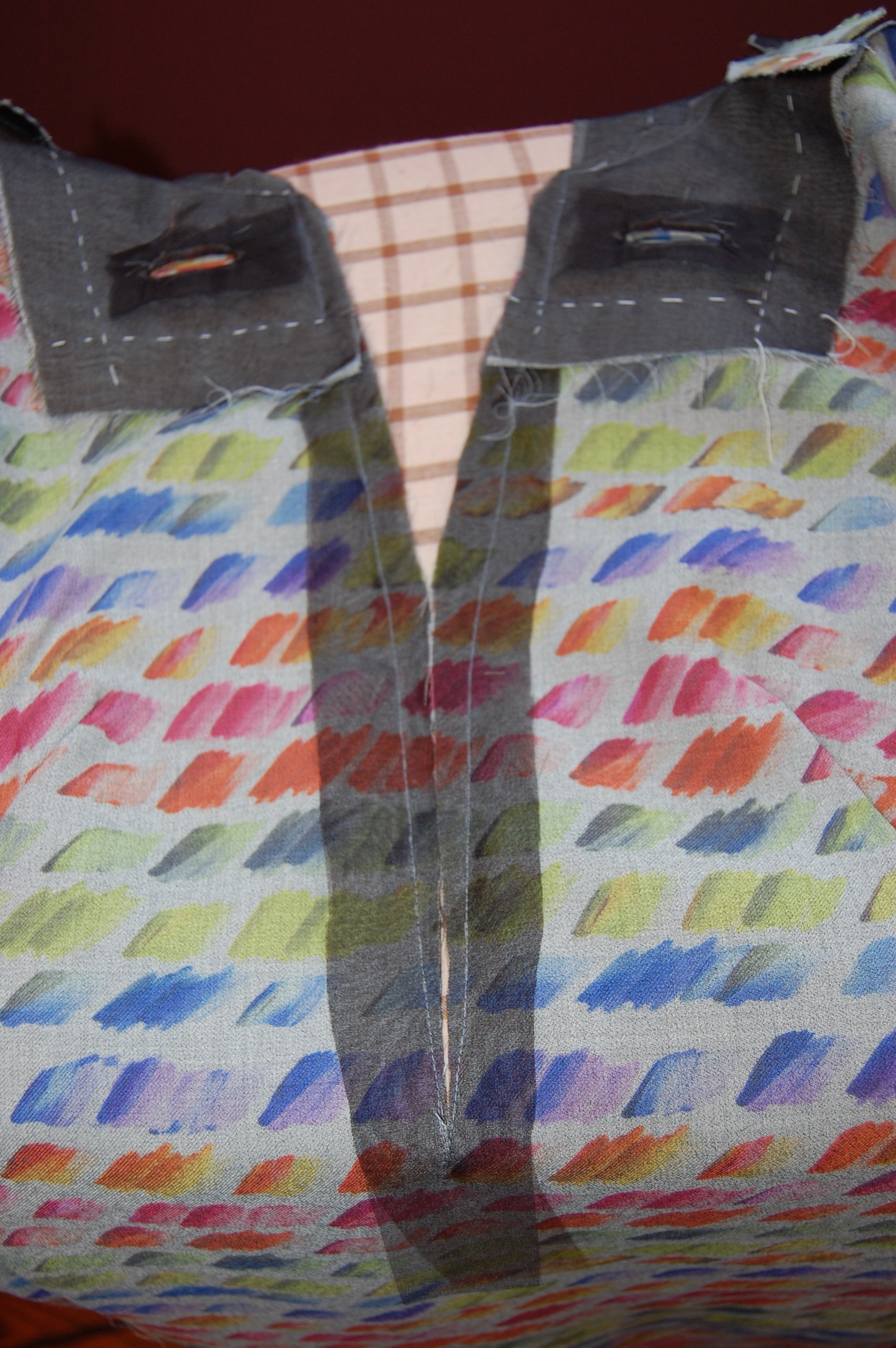
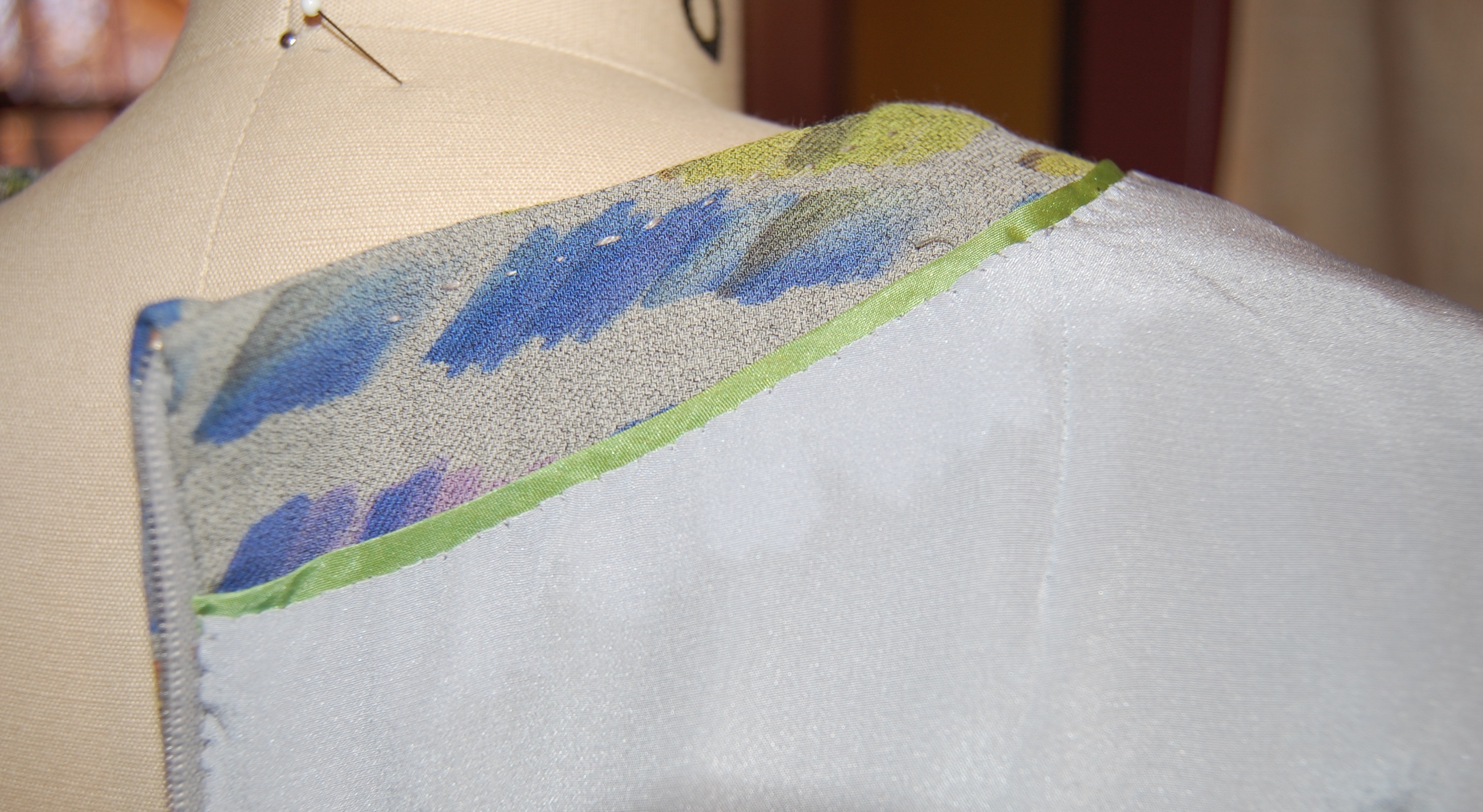
Instead, I opted to make a “facing” for the opening out of black organza. It is situations like this that make me feel so fortunate to have enough “sewing sense” to be able to recognize potential difficulties and then have the ability to work out creative solutions to them.

Sweet November

Silk organza pinned in place.

And here it is sewn in place.

And here it is sewn in place.

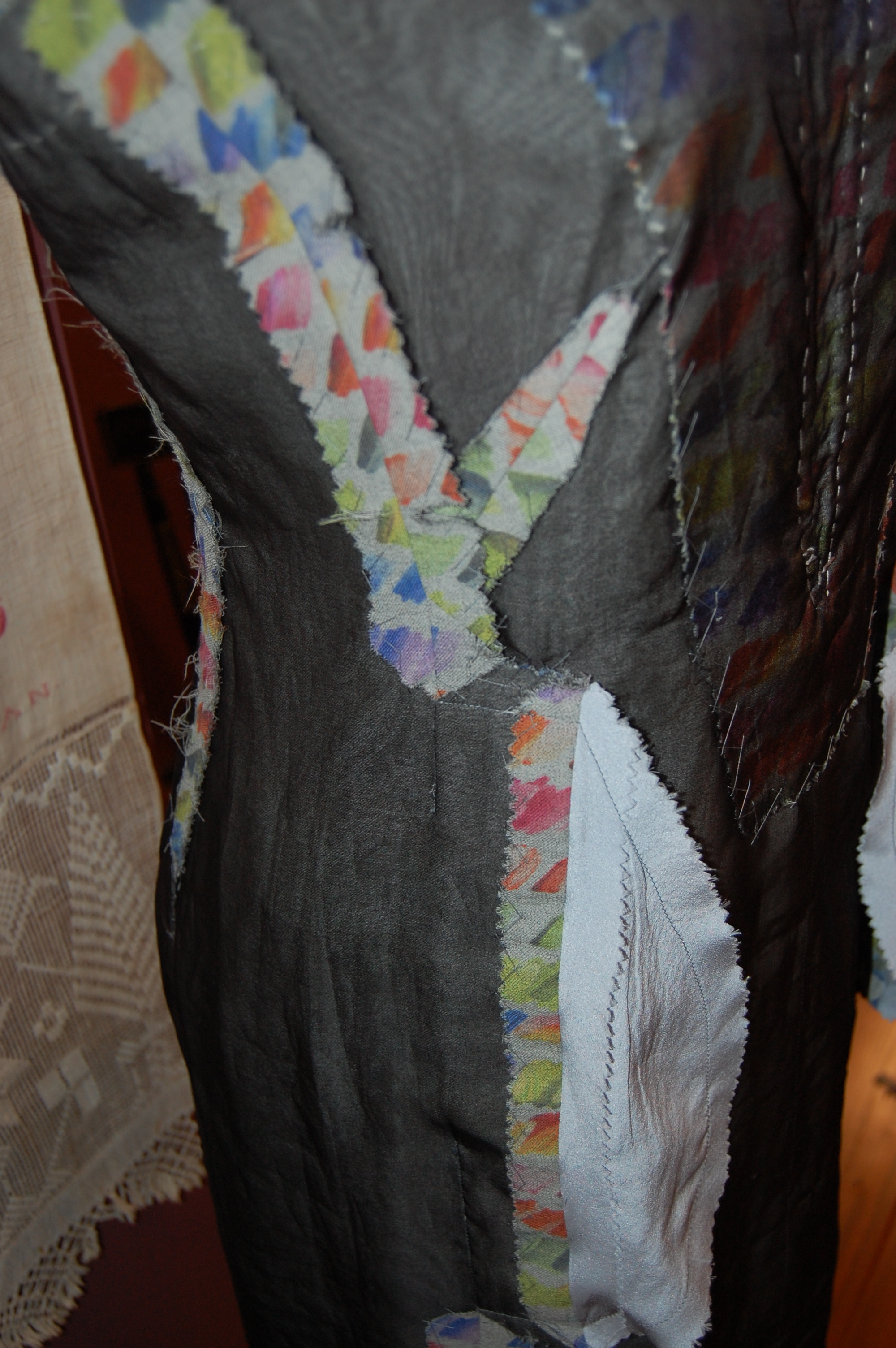
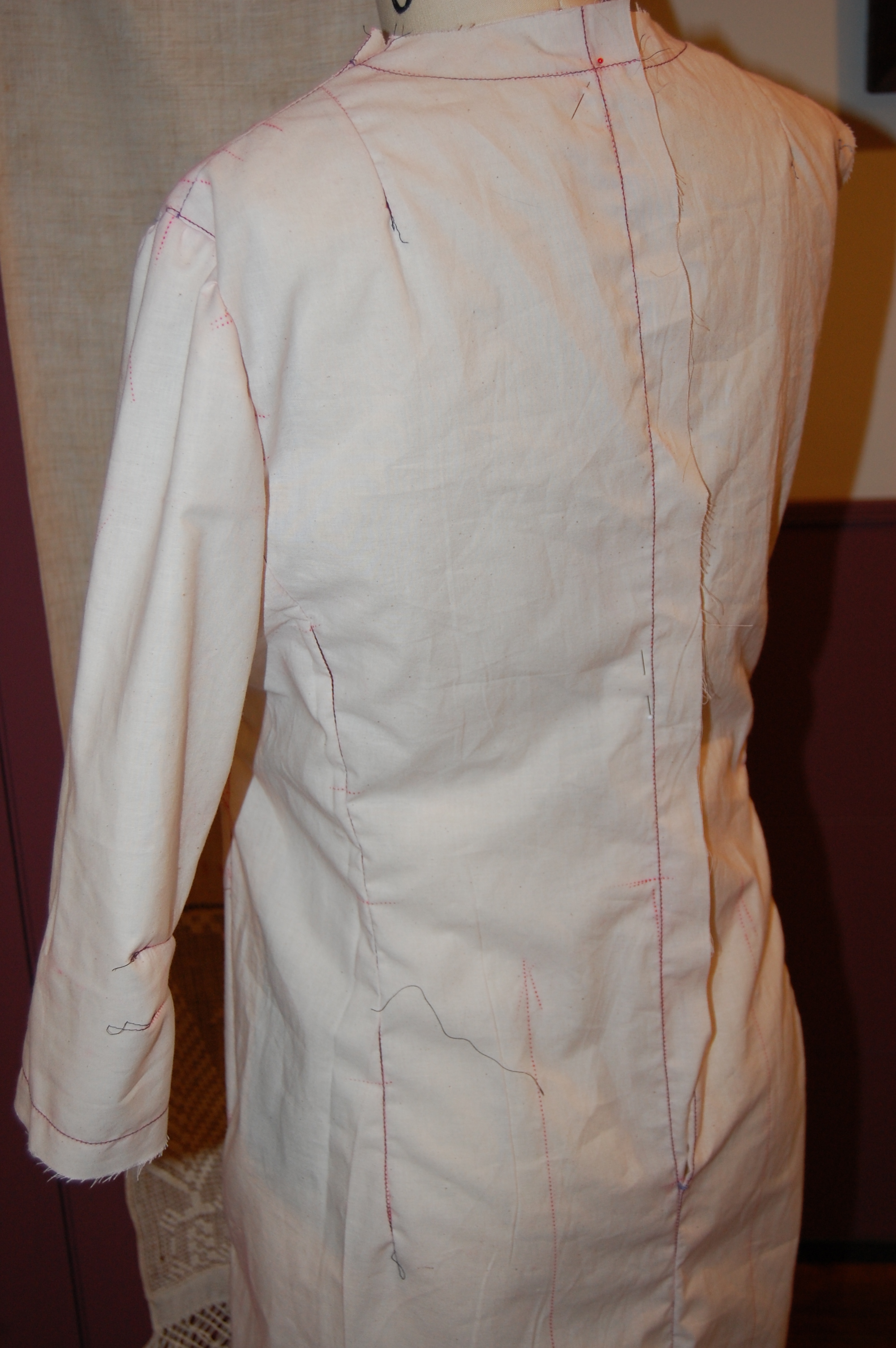
I took some pictures at this point to show the inside of the body of the dress:

Yes, those are pockets hanging on the front.

Yes, those are pockets hanging on the front.

This shows those darts with their slanted orientation.

This shows those bust darts with their slanted orientation.

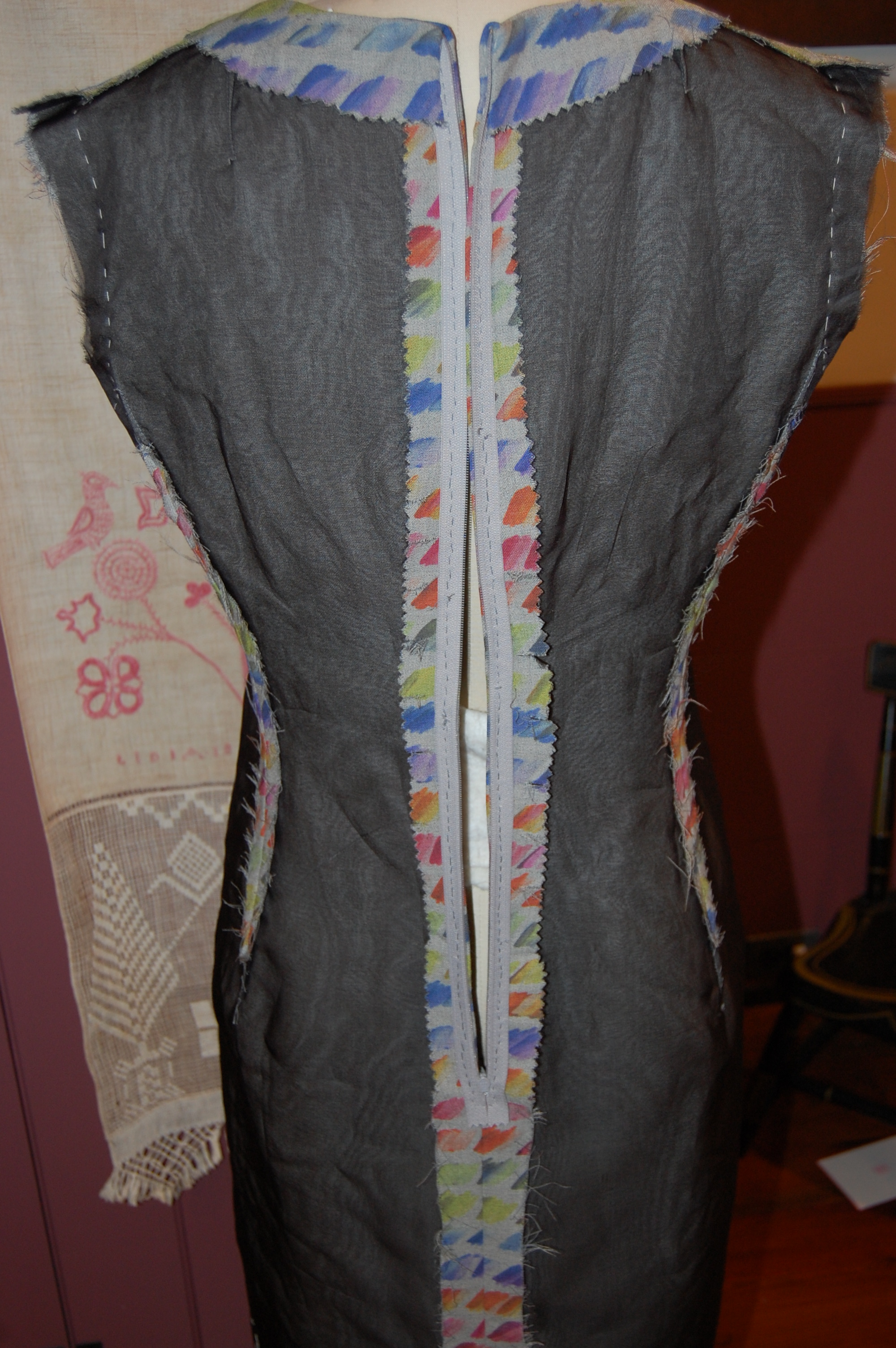
The zipper is inserted by hand, as usual! Once I had it basted in place, I tried the dress on for fit and determined I had to take it in a bit at the waistline.

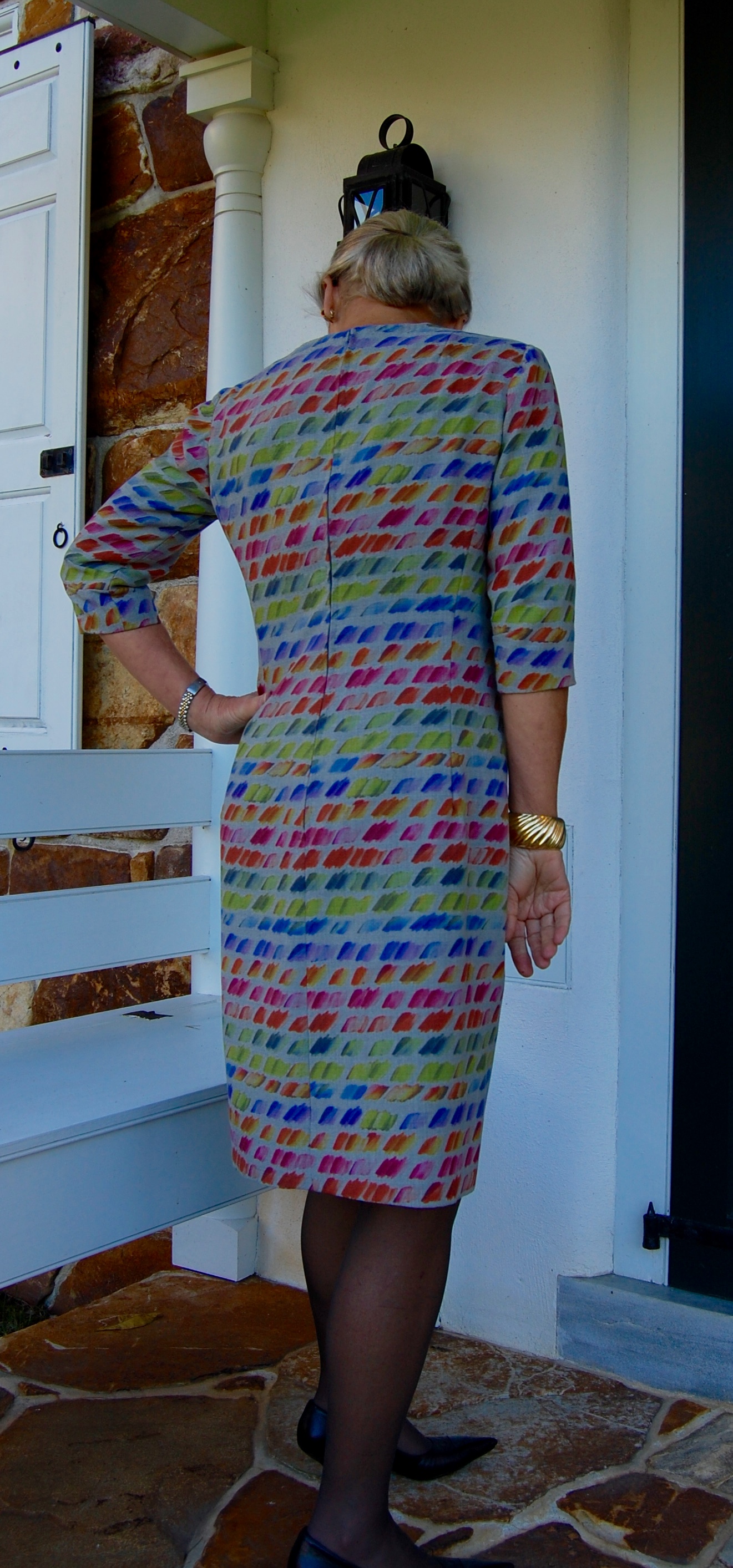
Then I tackled the sleeves. I had quite a time determining how to place the sleeve patterns on the remaining fabric. Some of those horizontal lines of “paintbrush strokes” change color across the fabric! And my adapted sleeve pattern has two elbow darts, which changed the horizontal line. I had to make a decision about where I wanted the best match to be, as I determined I could not match it across and up and down as I would normally want to do. I opted for a match across the shoulders – and I now believe that was the best decision.

DSC_0924

I also added a soft “cigarette” sleeve heading to each shoulder seam.

Next to the lining – and bless those vintage Vogue patterns – the lining for this dress included separate and distinct pattern pieces. I made the sizing and dart changes to the lining (in keeping with the dress) and it went together effortlessly. When I got to the point of inserting the lining by hand, I just could not resist adding silk piping to the inside neck edge. I know I am the only one who will ever see it, but it makes me happy!

Sweet November

I used a bias strip of lightweight silk for the piping.

I used a bias strip of lightweight silk for the piping.

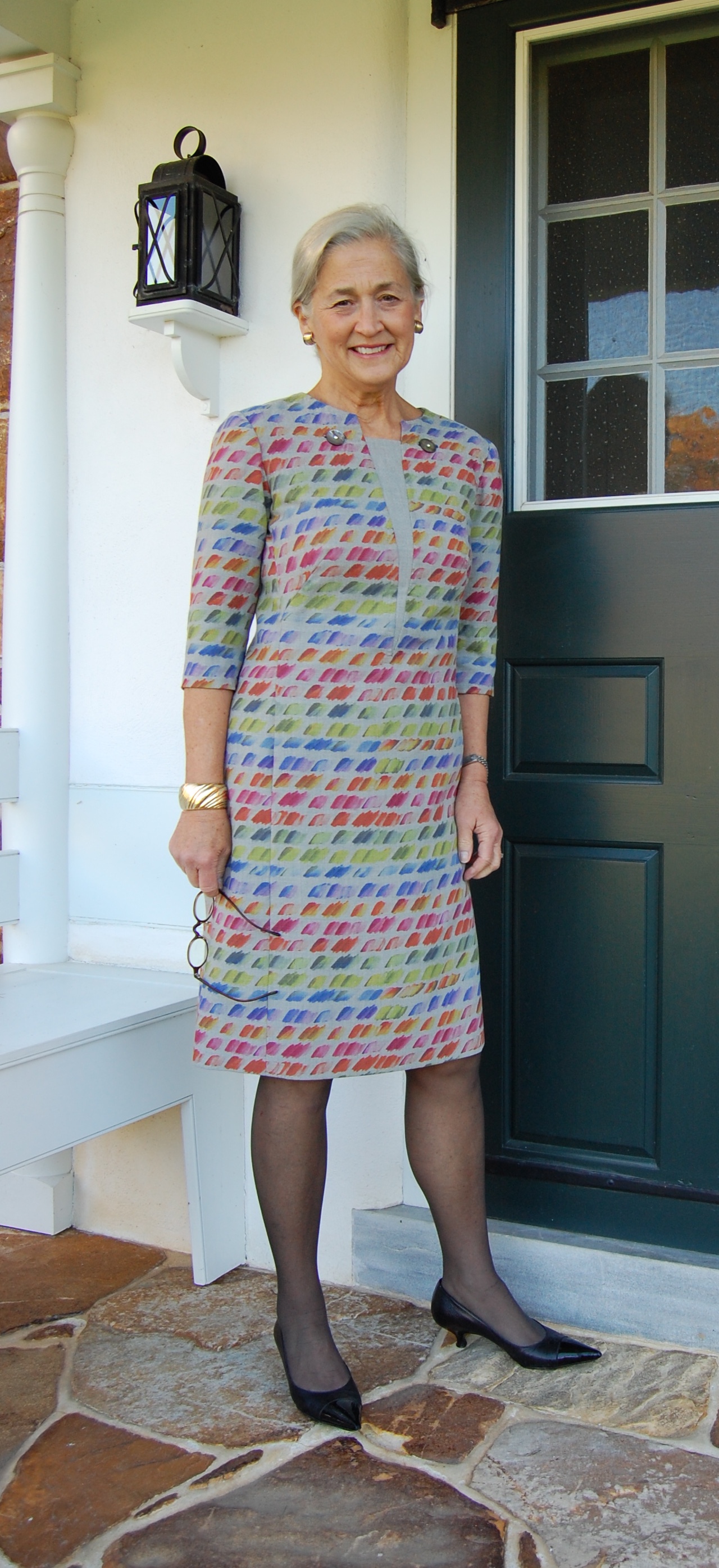
How wonderful to have this dress completed!

Sweet November

The buttons really show in this picture.

The buttons really show in this picture.

Sweet November

Sweet November

Sweet November

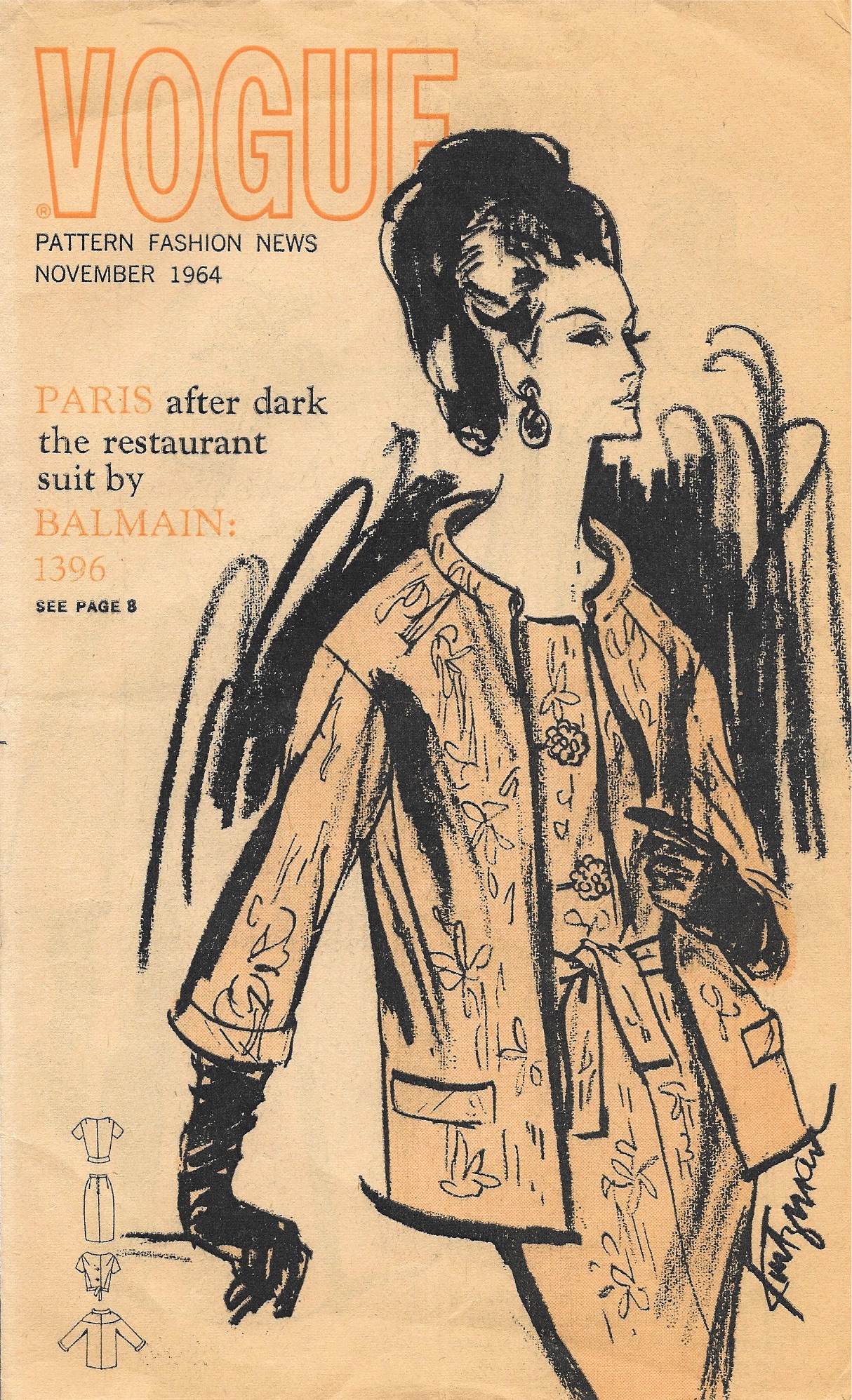
There was one more aspect of serendipity to this project. Those of you who follow my blog know that part of my fascination with vintage Vogue patterns is making connections between the past and the present. I love to “place” a pattern in its correct year – and then wonder in amazement at how classic fashions are so enduring. It was my great good fortune to have this Vogue Pattern Fashion News from November 1964 in my collection of vintage fashion magazines:

Sweet November - flyer cover

Inside on page 3 is, yes, my dress!

Sweet November - flyer illustration

Just imagine – 51 years ago this month, this dress made its debut. Happy Sweet November Everyone!

38 Comments

Filed under Buttons - choosing the right ones, couture construction, Day dresses, hand-sewn zippers, Love of sewing, Mid-Century style, Uncategorized, underlinings, vintage Vogue Designer patterns, vintage Vogue patterns from the 1960s, woolens

Scrap

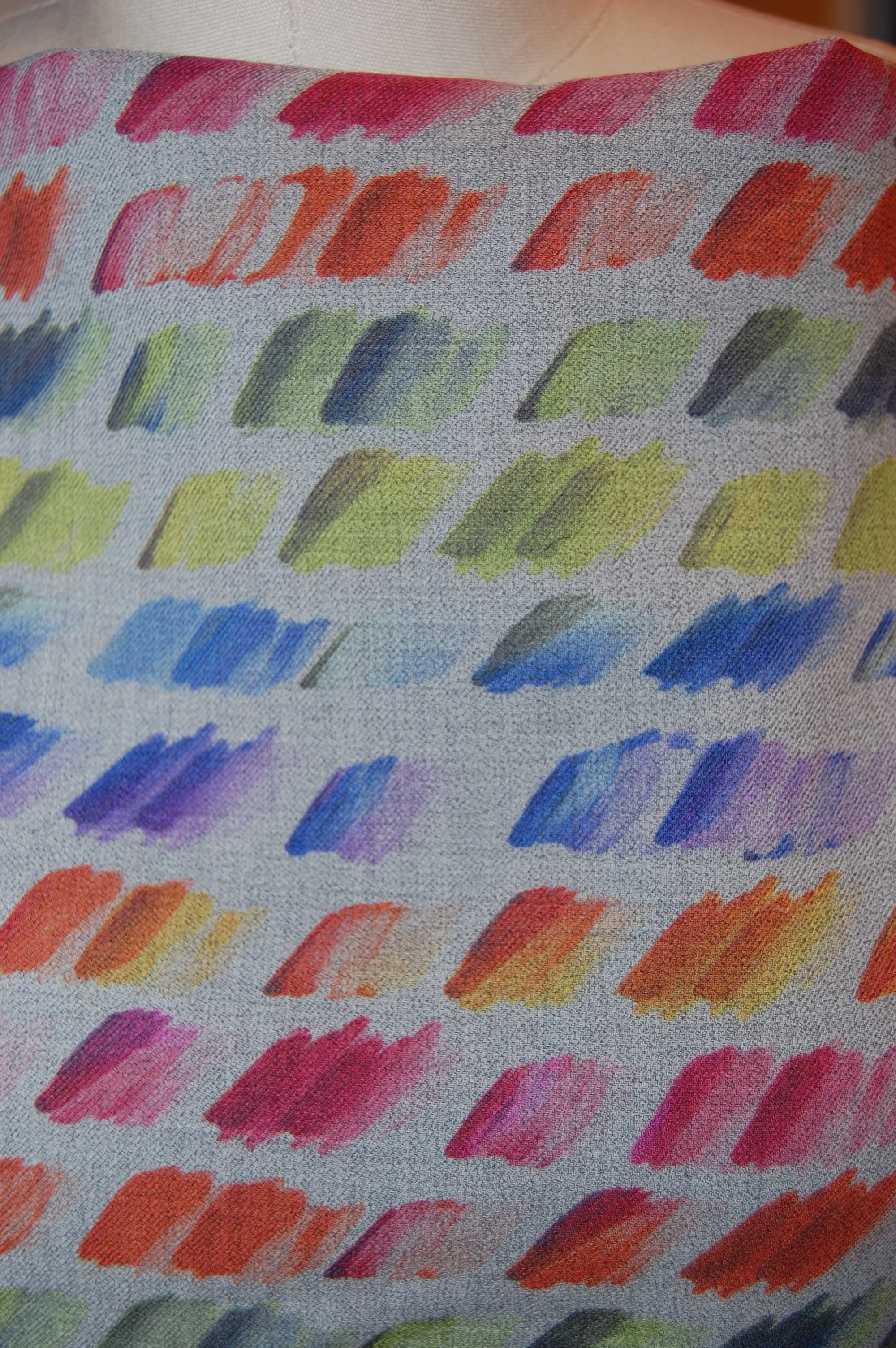
This particular word seems to sum up my experience – so far – with my new project of the month. I have had to “scrap” three complete muslins – as in “throw away” and “discard.” I rather like one of the other definitions for this particular word to sum up my past week of sewing – “a fight or quarrel.”   Yes, it’s been a battle, but I believe I am winning! It all started with this fabric – a soft, lovely, light-weight wool and silk blend – from Mendel Goldberg Fabrics.

Scrap

Here it is draped over my dress form.

Here it is draped over my dress form.

Although I knew I wanted to make a dress with a slim profile – to minimize the fabric’s horizontal design – it took me a while to find the right pattern. I started with one that had curved lines in its bodice and “scraped” that idea after my muslin (toile) revealed many fitting issues. I took that as a sign that the pattern wasn’t the best one to use anyway (which I suspected all along. It’s really important to listen to one’s intuition in things like this!) After another search in my pattern collection, I settled on this dress.

Gray painterly dress - Lanvin pattern

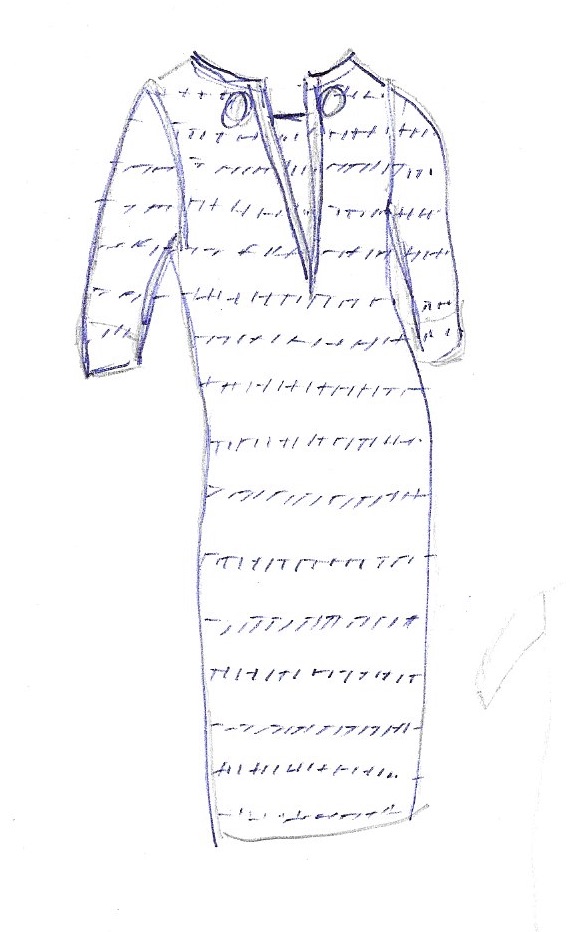
However, I want below-elbow length sleeves so I did a little sketch to try out the look:

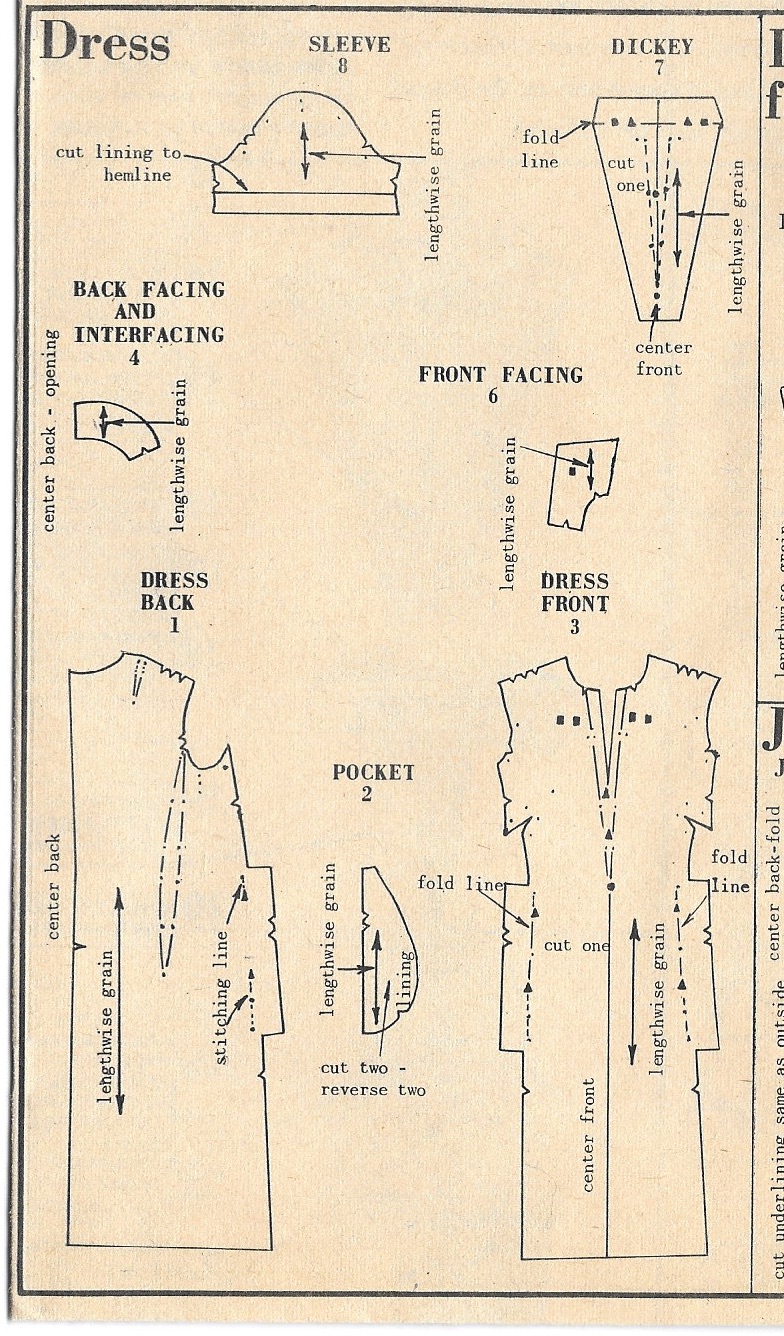
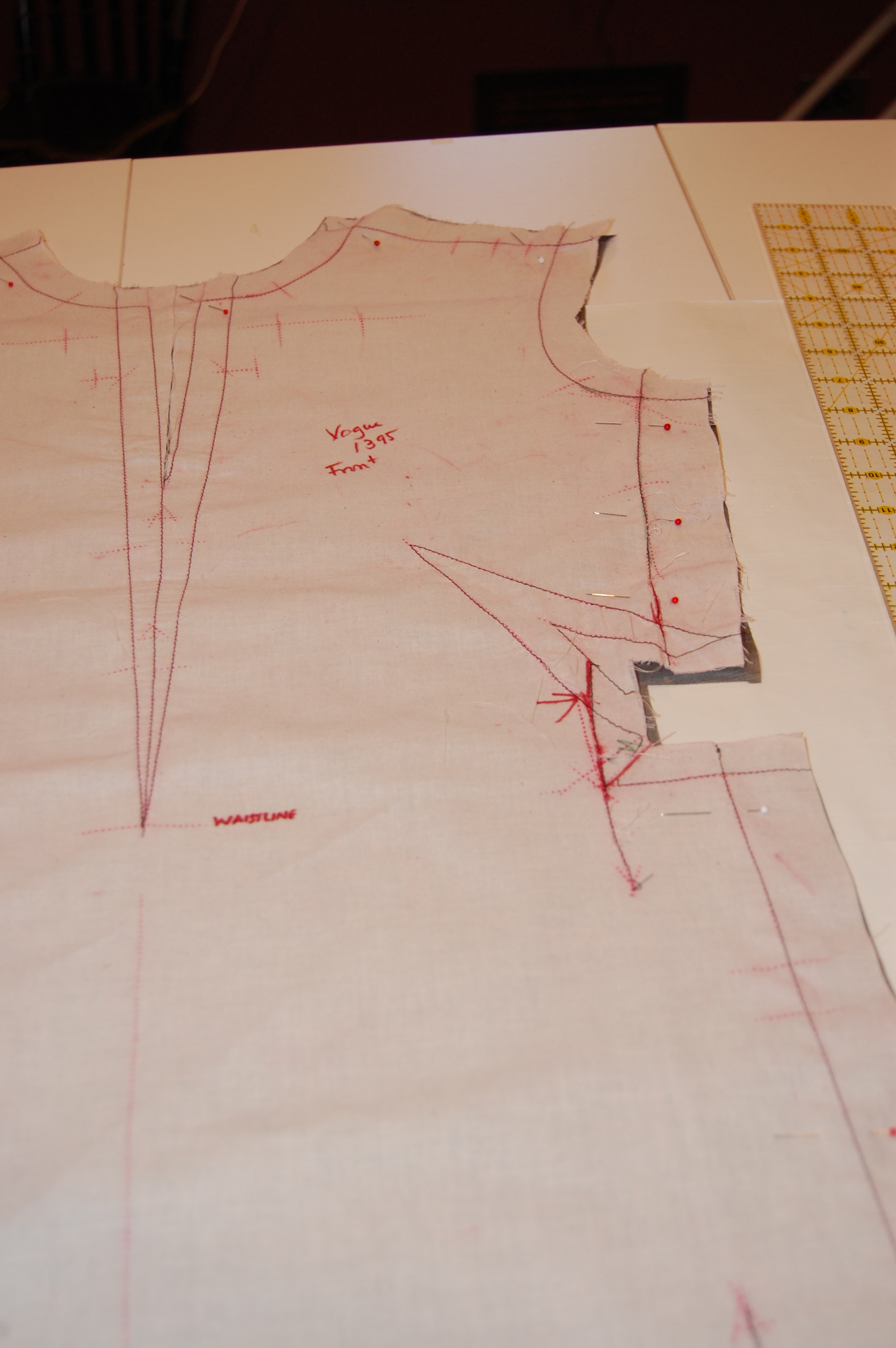
Gray painterly dress - sketchAfter finding a sleeve pattern from another dress which sports two elbow darts, I figured I was in business. Ah, the battle was just beginning. The first muslin I made revealed bust darts that were two inches (two!!) too high. And although I wanted a slim profile, I do have to be able to move in the dress!  I figured I needed to add two inches in total width from the lower armscye down.  Here is a diagram of the pattern pieces. The angle of the bust darts is vital to the fit of the dress so I could not just pivot the apex of the bust. I had to reposition the entire dart, which was getting it awfully close to the pocket.

Gray painterly dress - pattern diagram

Making changes in that first muslin was just a study in frustration, so I scraped it and made a new one. My second one was better, but still had some kinks in it. The armscye seemed to be off kilter, the reason for which I could not figure out. I’m telling you these are the things that keep me up at night. At this point I went to JoAnn’s and bought more muslin. I was determined to win this fight! A whole new muslin and finally I had one that fit. I was even happy with my mish-mash sleeve (after making a few minor adjustments.)
Scrap

Scrap

I have now progressed to the silk-organza underlining stage of construction.   Matching the horizontal design of the fabric across the various components of the pattern will take concentration, but that’s a task that always intrigues me.

Scrap

A decision about those two buttons, such an important focal point of the dress, is still to be made. The wrong side of the fabric is plain gray, so I might end up using that side for covered buttons. Suggestions, anyone??

DSC_0900

Other than these challenges, I am feeling fairly confident that my next post will not have to be entitled “Scrap – Continued.”

20 Comments

Filed under Buttons - choosing the right ones, Uncategorized, underlinings, vintage Vogue Designer patterns, vintage Vogue patterns from the 1960s, woolens

A Fitting Finish to Summer Sewing

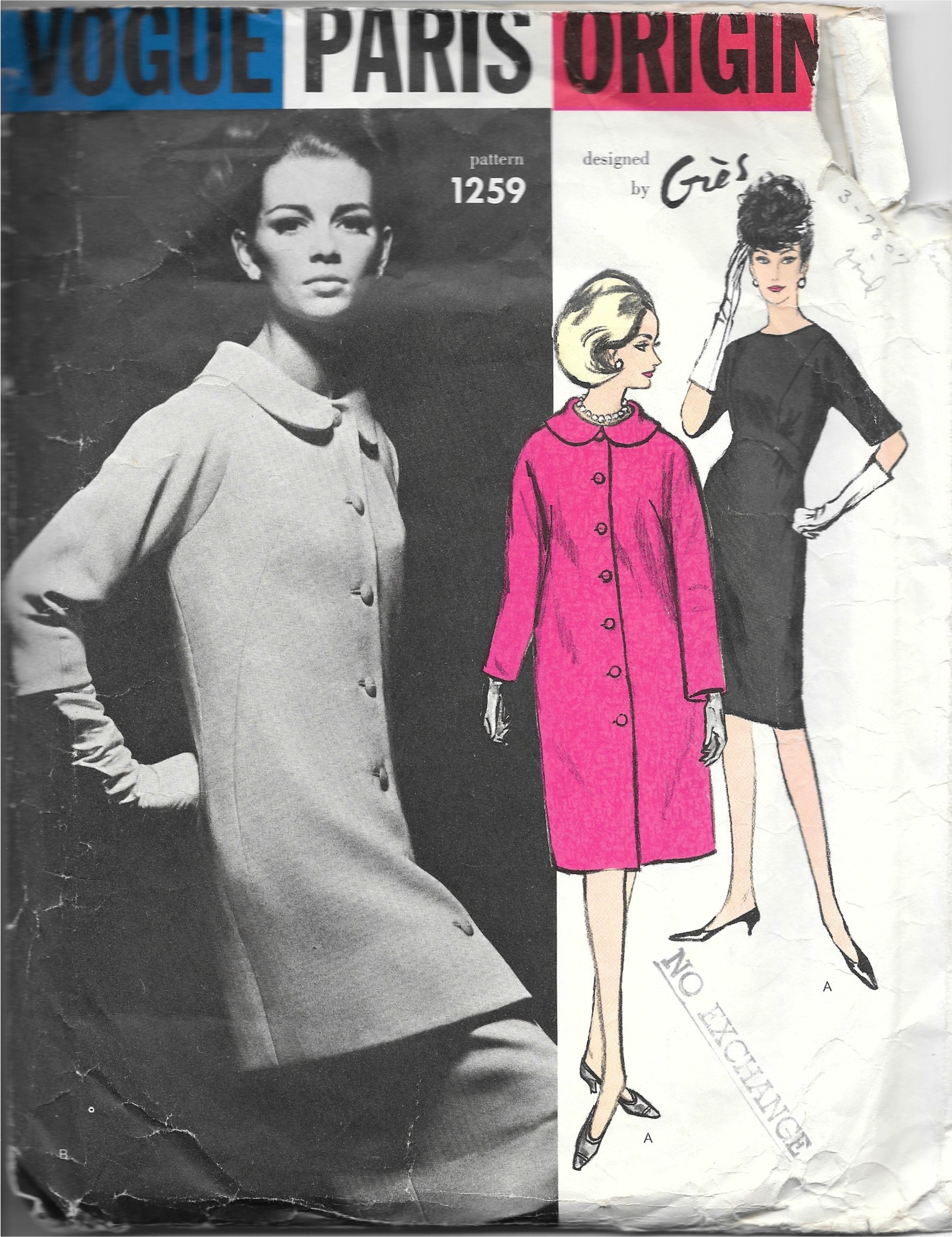
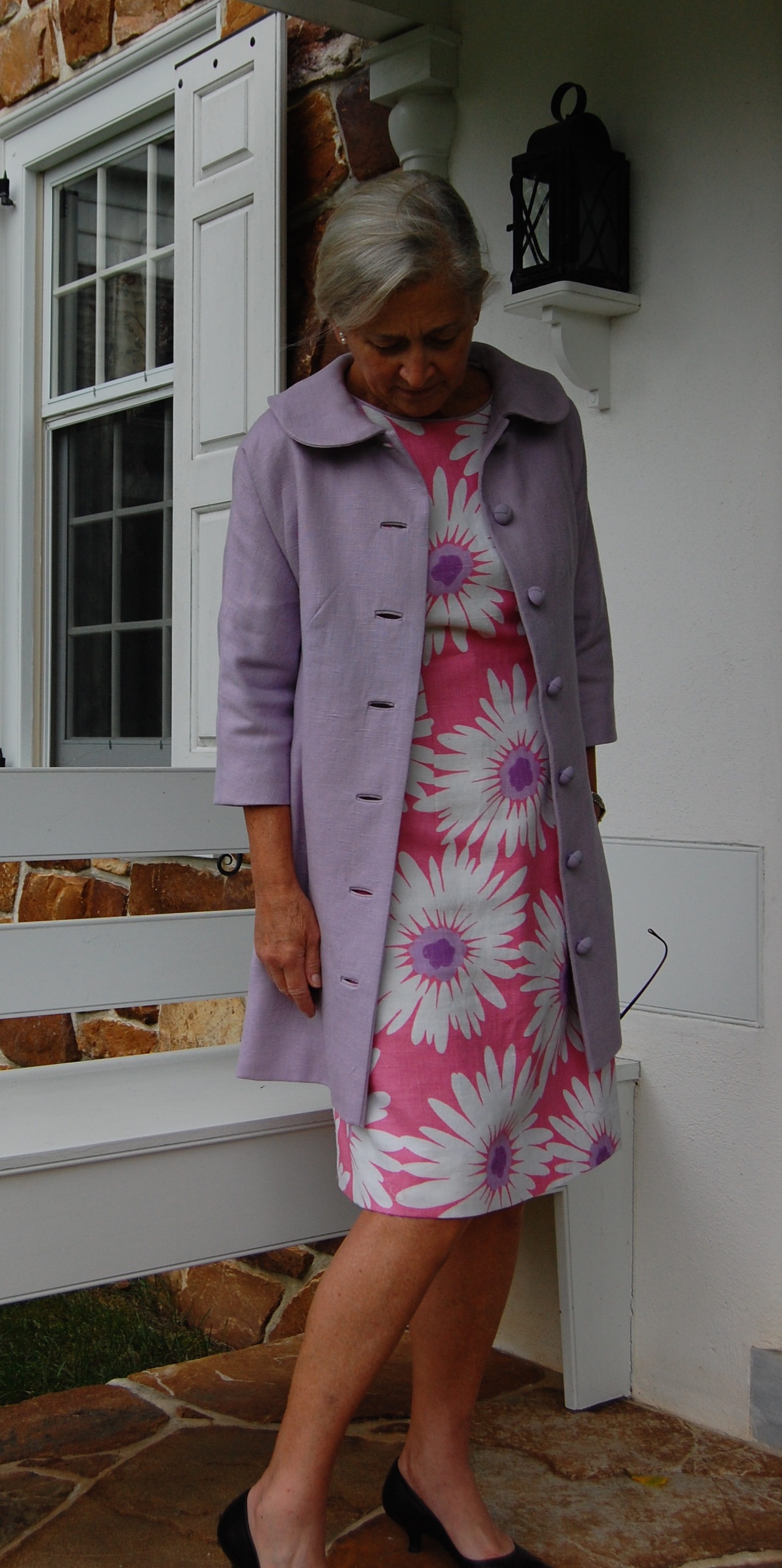
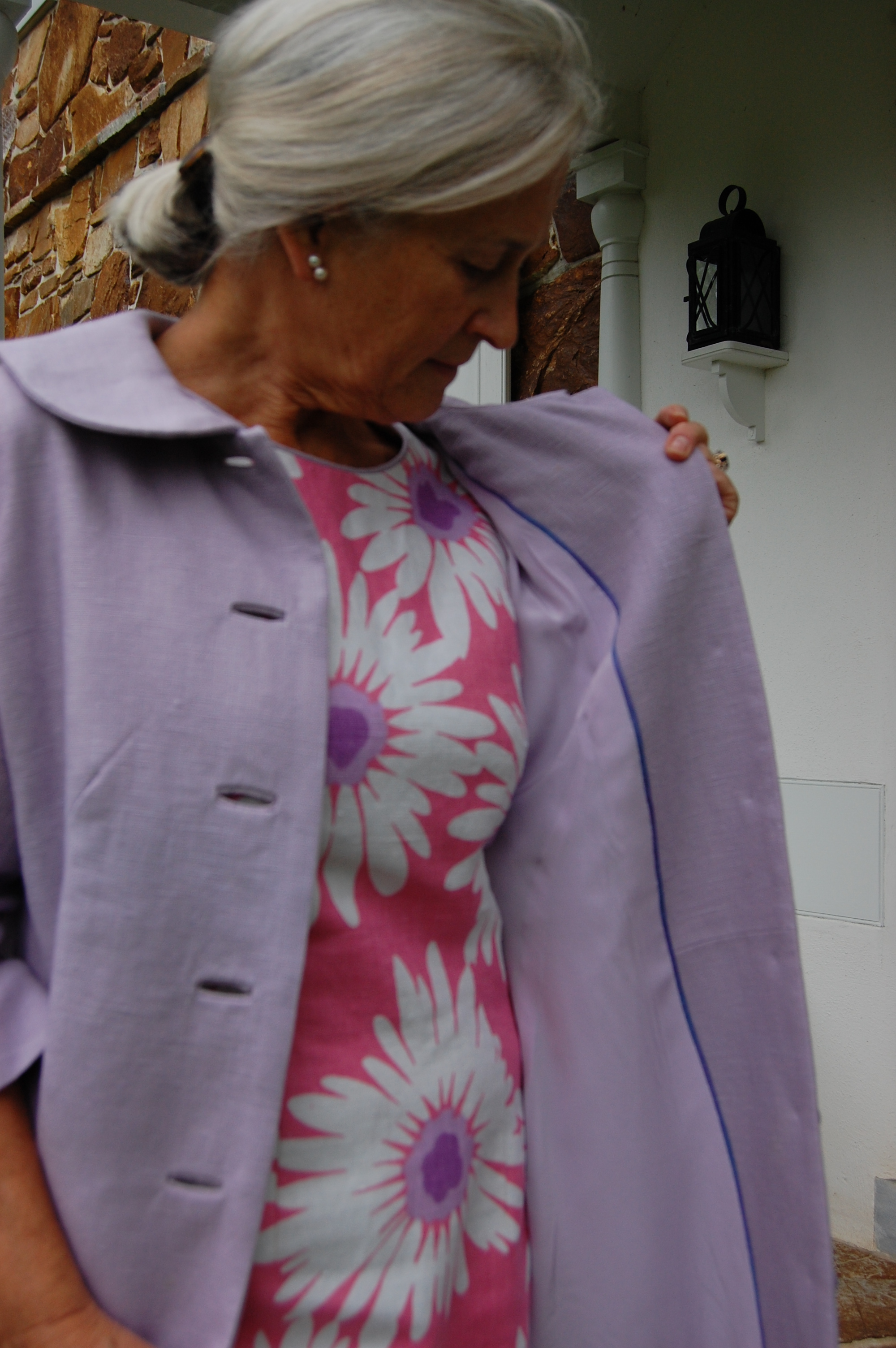
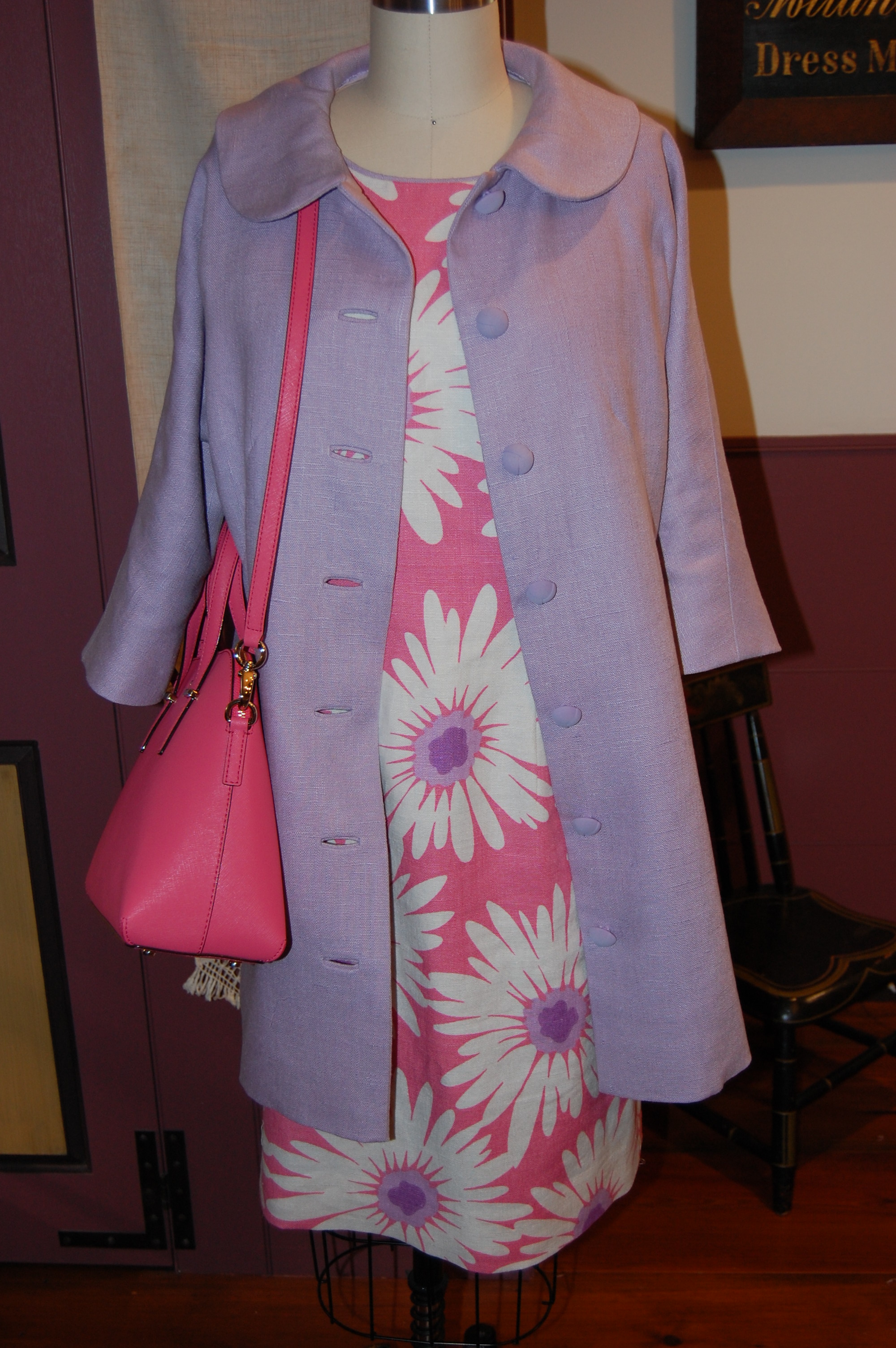
Summer slipped quietly away this week with nary a peep except for the sighs coming from my sewing room. No matter how hard I tried, I could not keep up with the calendar to finish my final Summer project.  However, a few days late on “delivery” doesn’t really upset me, as I can look forward to wearing my Madame Gres-designed coat next Spring.

Vogue Gres coat and dress

DSC_0851

I am not sure I can remember a sewing project which I have enjoyed more. The coat pattern is actually quite a simple design, imaginatively shaped with unusual darts and seams. Perhaps the fact that I made it from vintage Moygashel linen helped make the sewing of it enjoyable, as the linen is so stable. Darts and seams can be crisply sewn and ironed, the grain of the fabric is so easy to see, and the fabric drapes with a fluid sturdiness, if that makes sense.

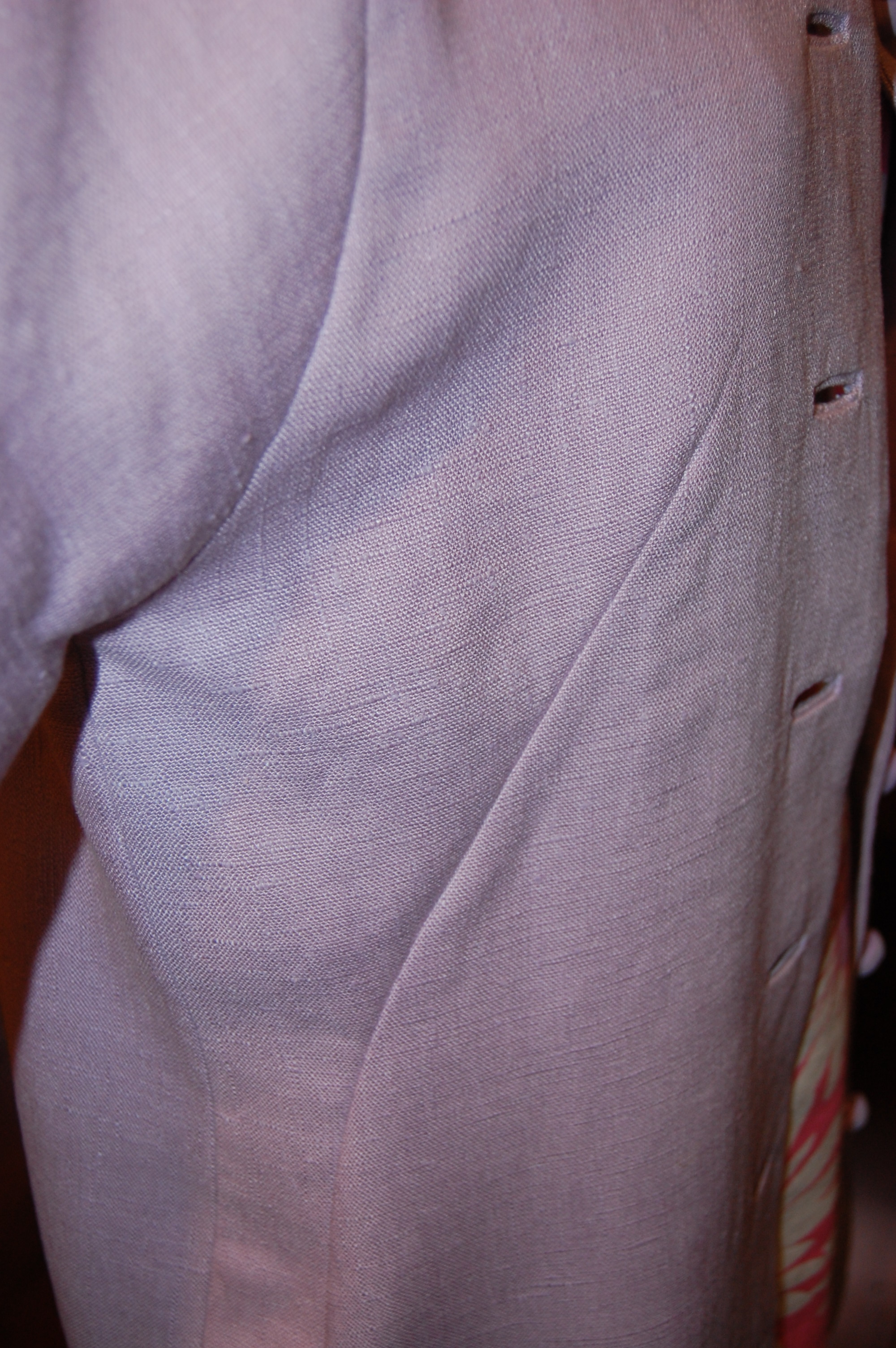
This shows the side darts which shape the coat and the dart/seam at the front of the kimono sleeve.

This shows the side darts which shape the coat and the dart/seam at the front of the kimono sleeve.

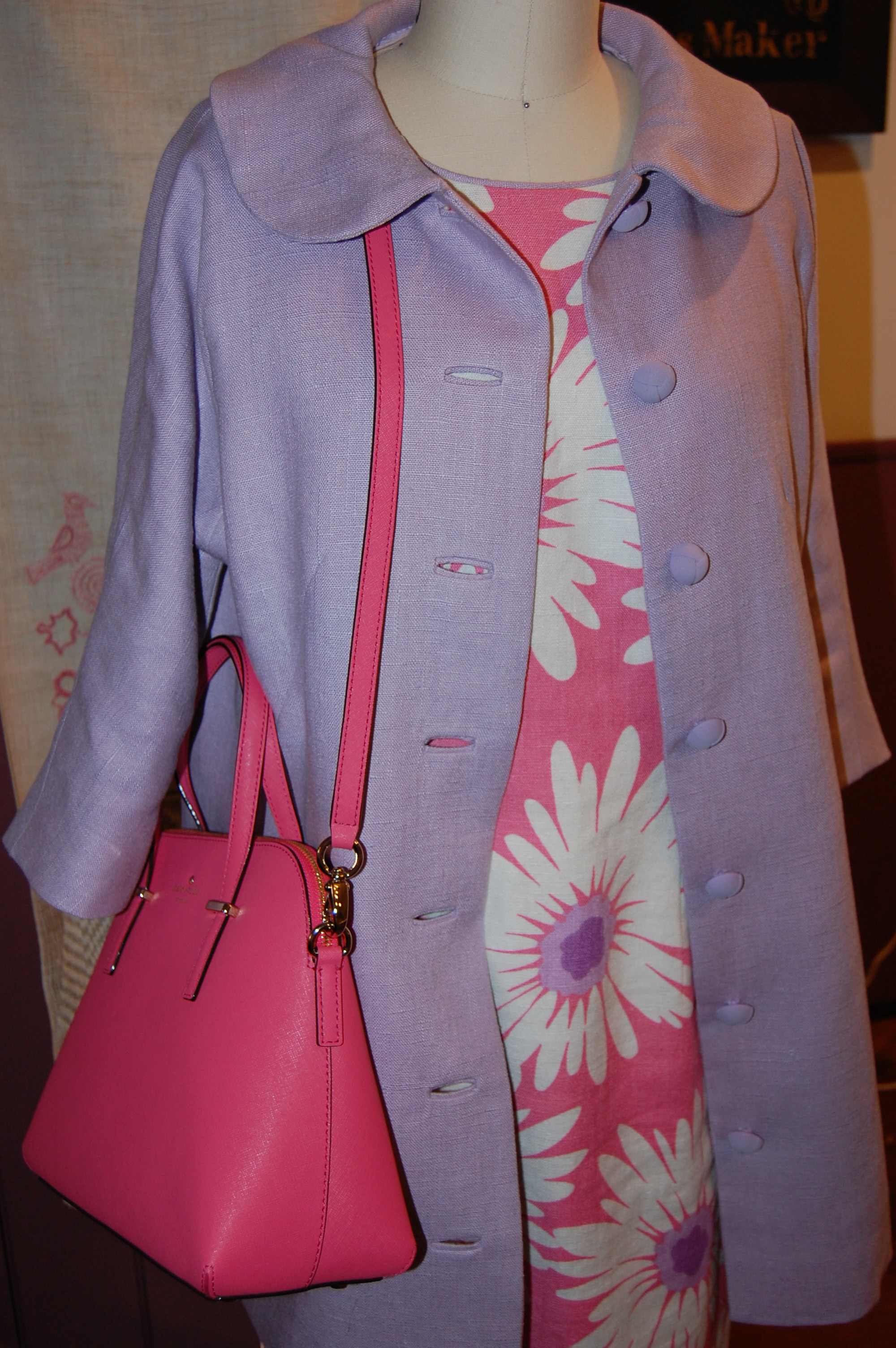
I covered the changes I made to those front darts in an earlier post; those were the only alterations I made to the final design except for lengthening the sleeves by one inch and the length of the coat by 1½ inches. Besides those shaping darts, there is one other feature of this coat which defines it. Do you know what it is?   Yes, it is the bound buttonholes and their buttons. Seven of them, to be precise.

The pattern instruction sheets call for bound buttonholes, as shown here:

I love how these vintage Vogue patterns give such precise instructions; there are various ways to make bound buttonholes, but the method described here is my favorite.

I love how these vintage Vogue patterns give such precise instructions; there are various ways to make bound buttonholes, but the method described here is my favorite.

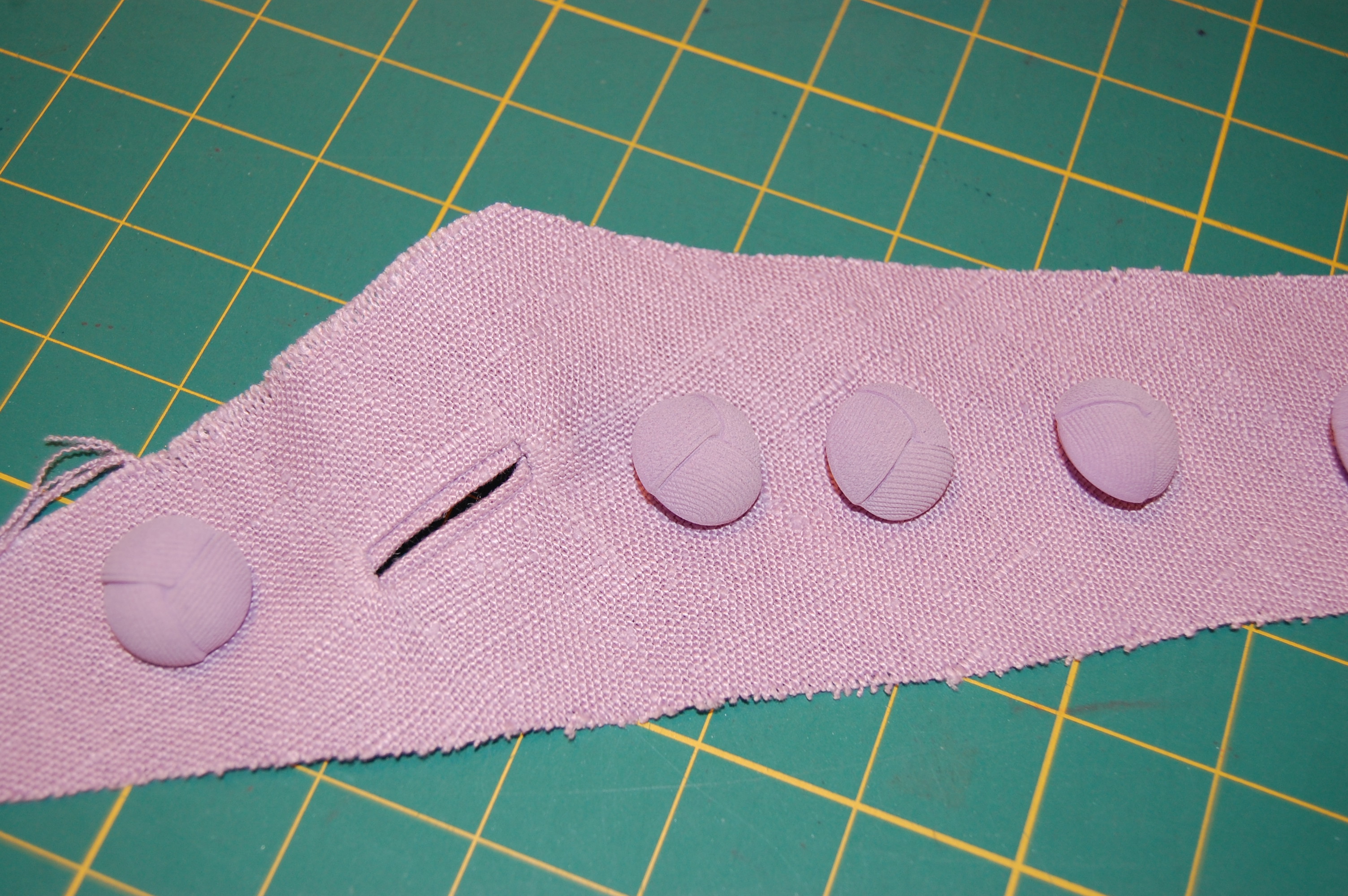
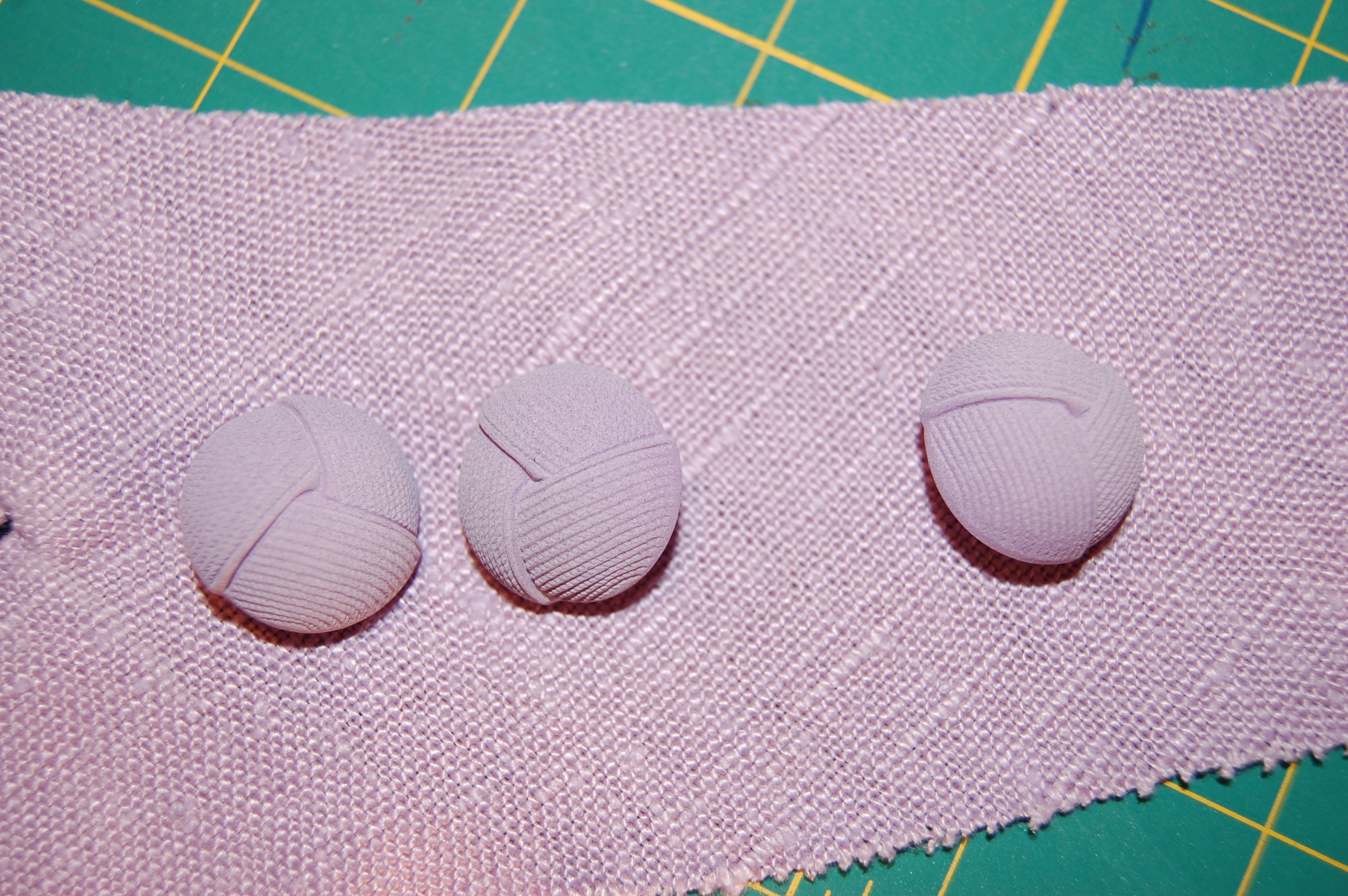
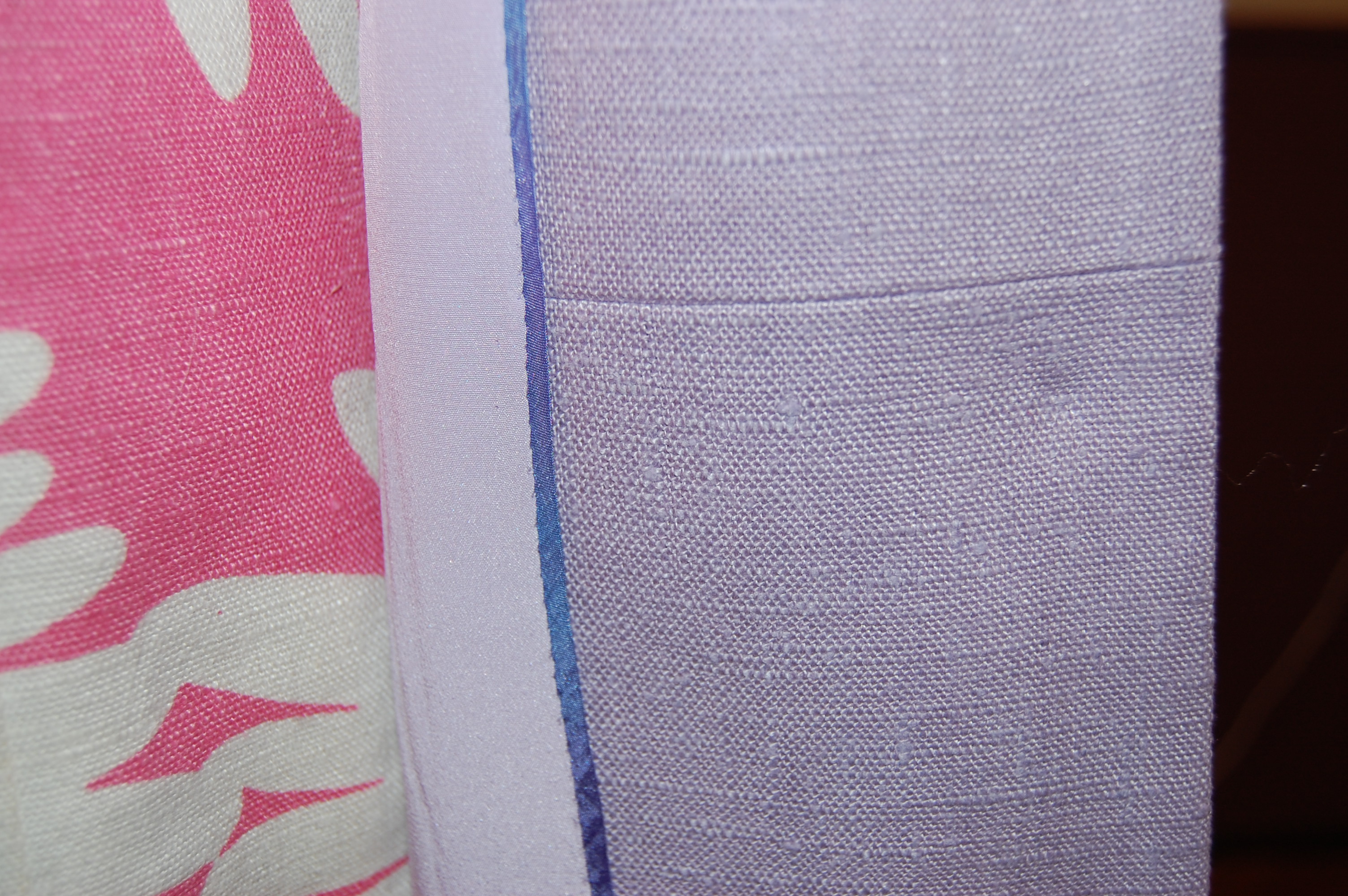
I have made a lot of bound buttonholes in my sewing life, but seven of them lined up as the focal point of the front of my coat is still a little intimidating. First of all, I had to find buttons that were “perfect.” I found some lavender buttons on the Britex website, and although they looked like a good match in color and appearance, ordering something like that online is always imprecise. However, when they arrived, they were, indeed, “perfect!” With buttons in hand, I made a sample buttonhole, as I always do.

DSC_0819

I think this photo shows the "monkey's knot" design in the buttons, which compliments the linen weave, I think.

This photo shows the “monkey’s knot” design in the buttons, which compliments the linen weave, I think.

Then it was on to a marathon buttonhole session one afternoon.

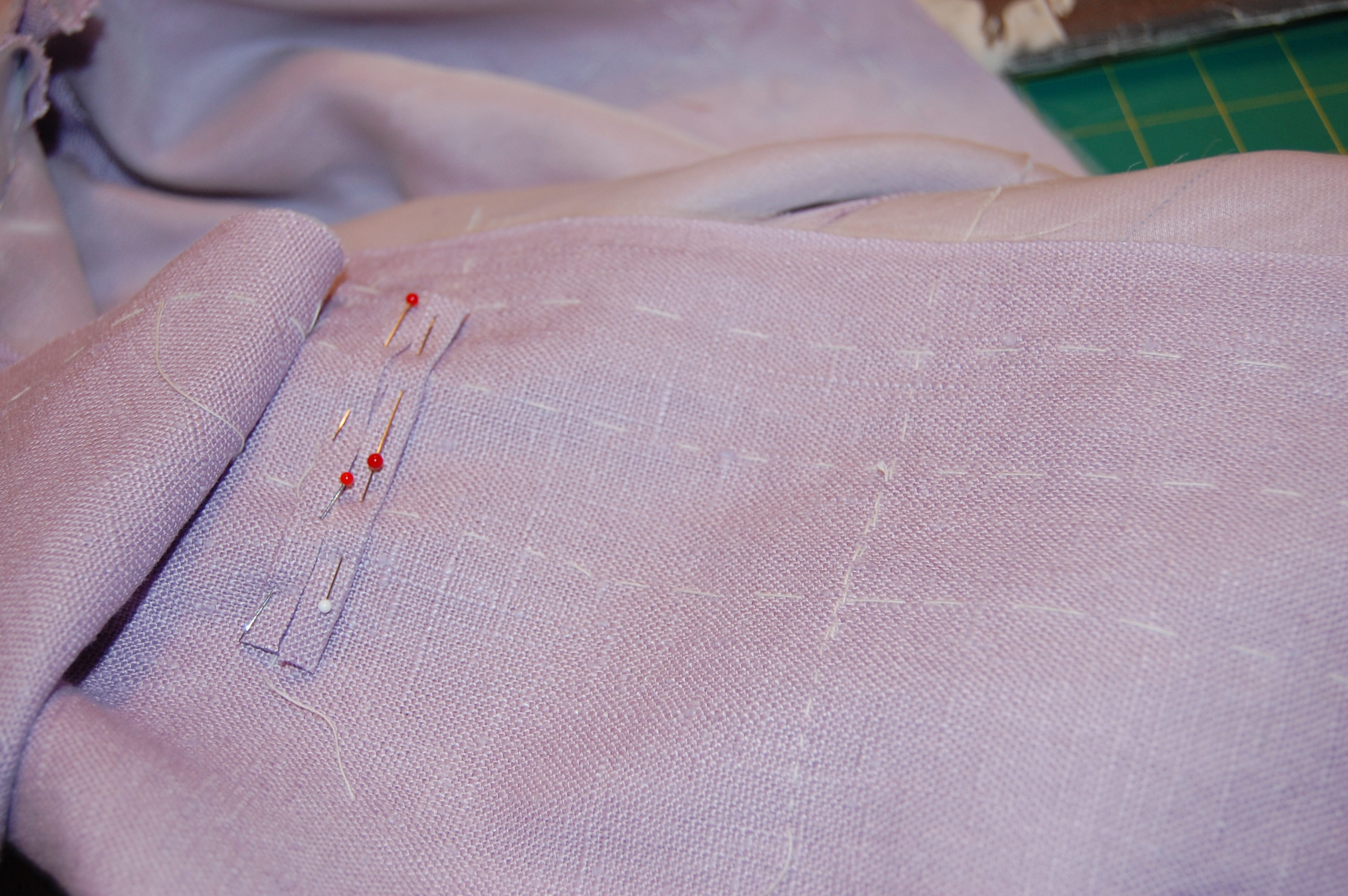
The most important ingredient in making successful bound buttonholes is precise marking.

The most important ingredient in making successful bound buttonholes is precise marking.

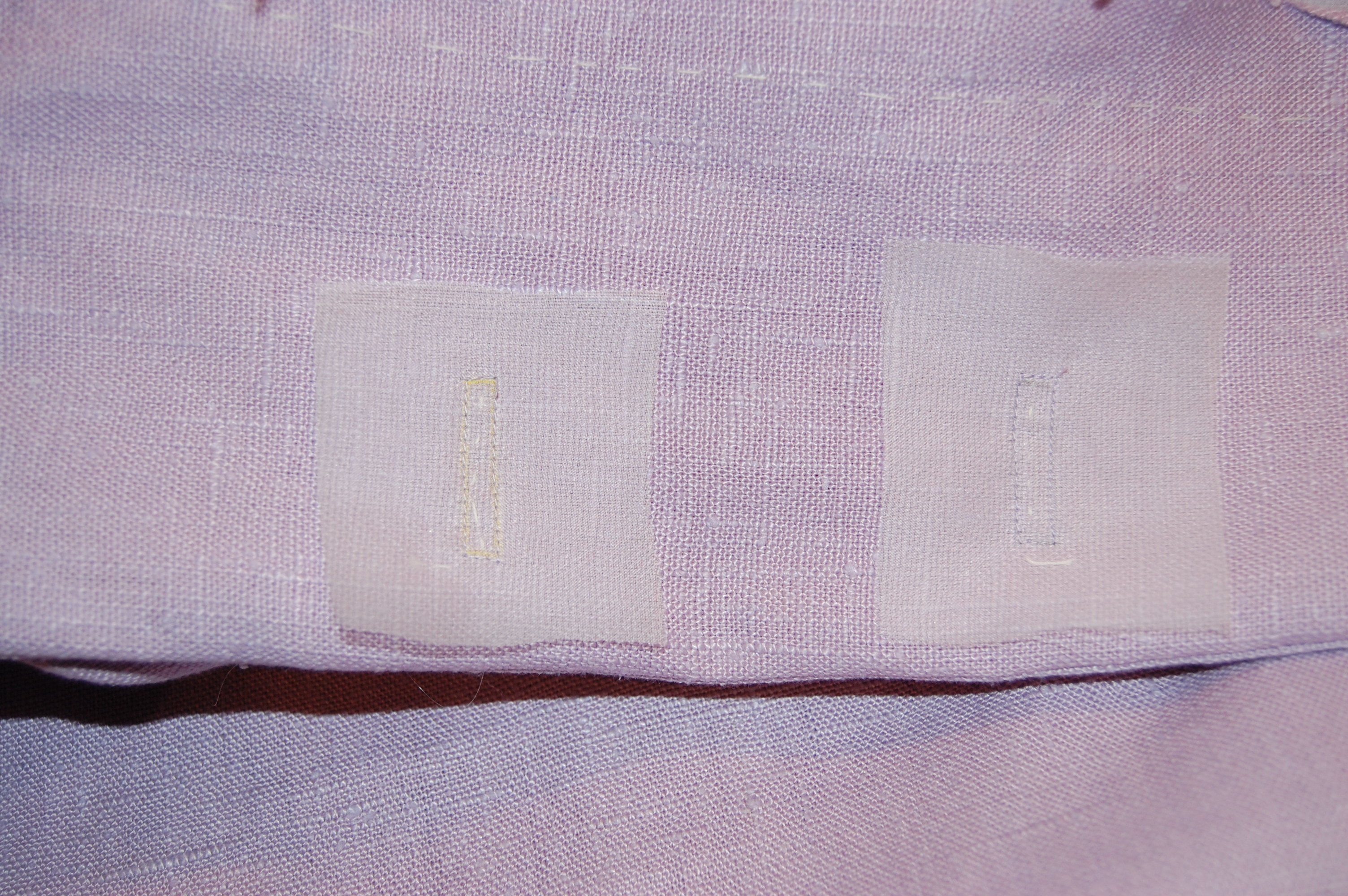
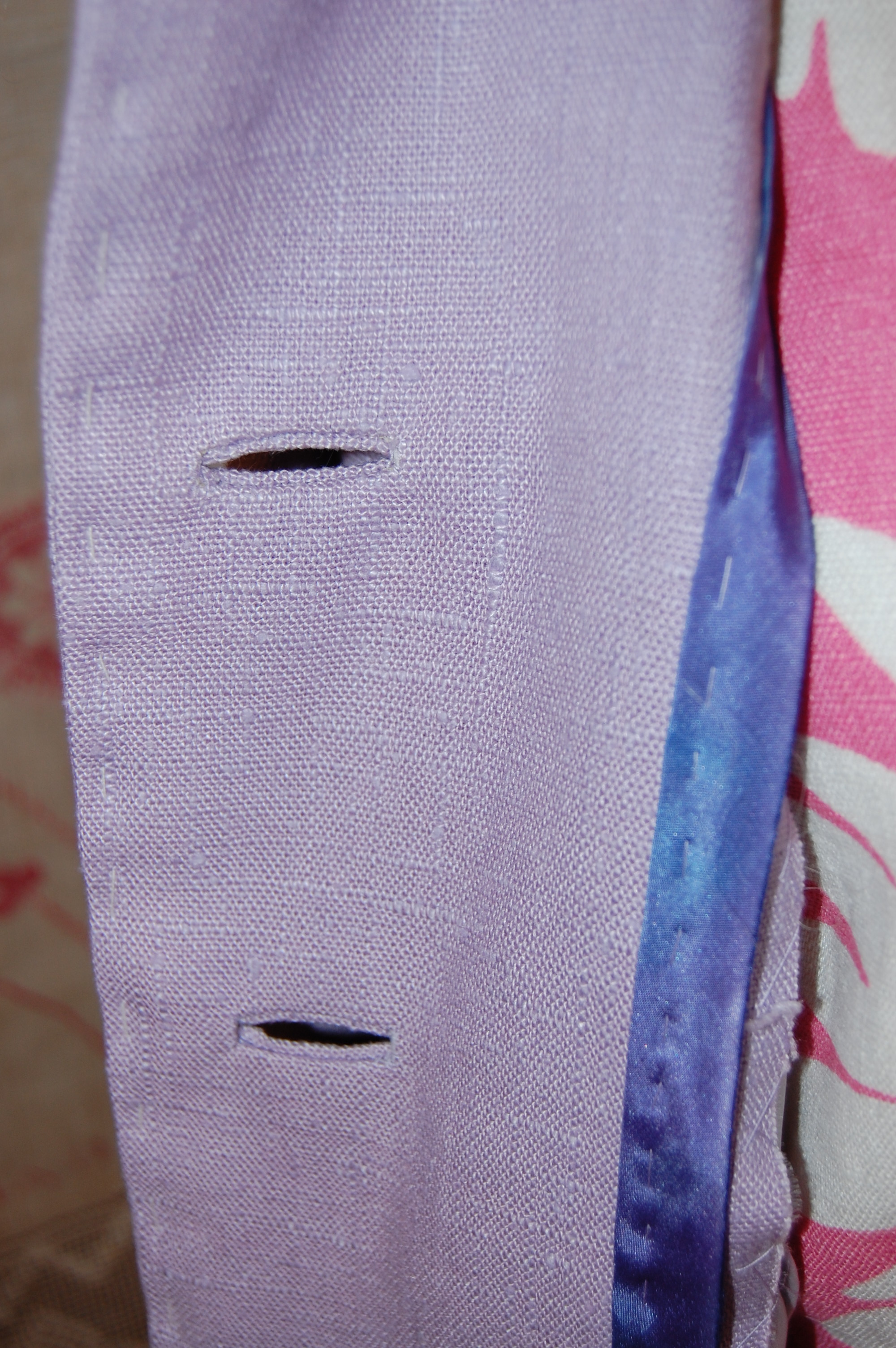
I finished the underside (on the facing) of the buttonholes using organza patches, which makes a beautiful, sturdy finish.

I finished the underside (on the facing) of the buttonholes using organza patches, which makes a beautiful, sturdy finish.

Here is the underside of the buttonholes before I finished the edges.

Here is the underside of the buttonholes before I finished the edges.

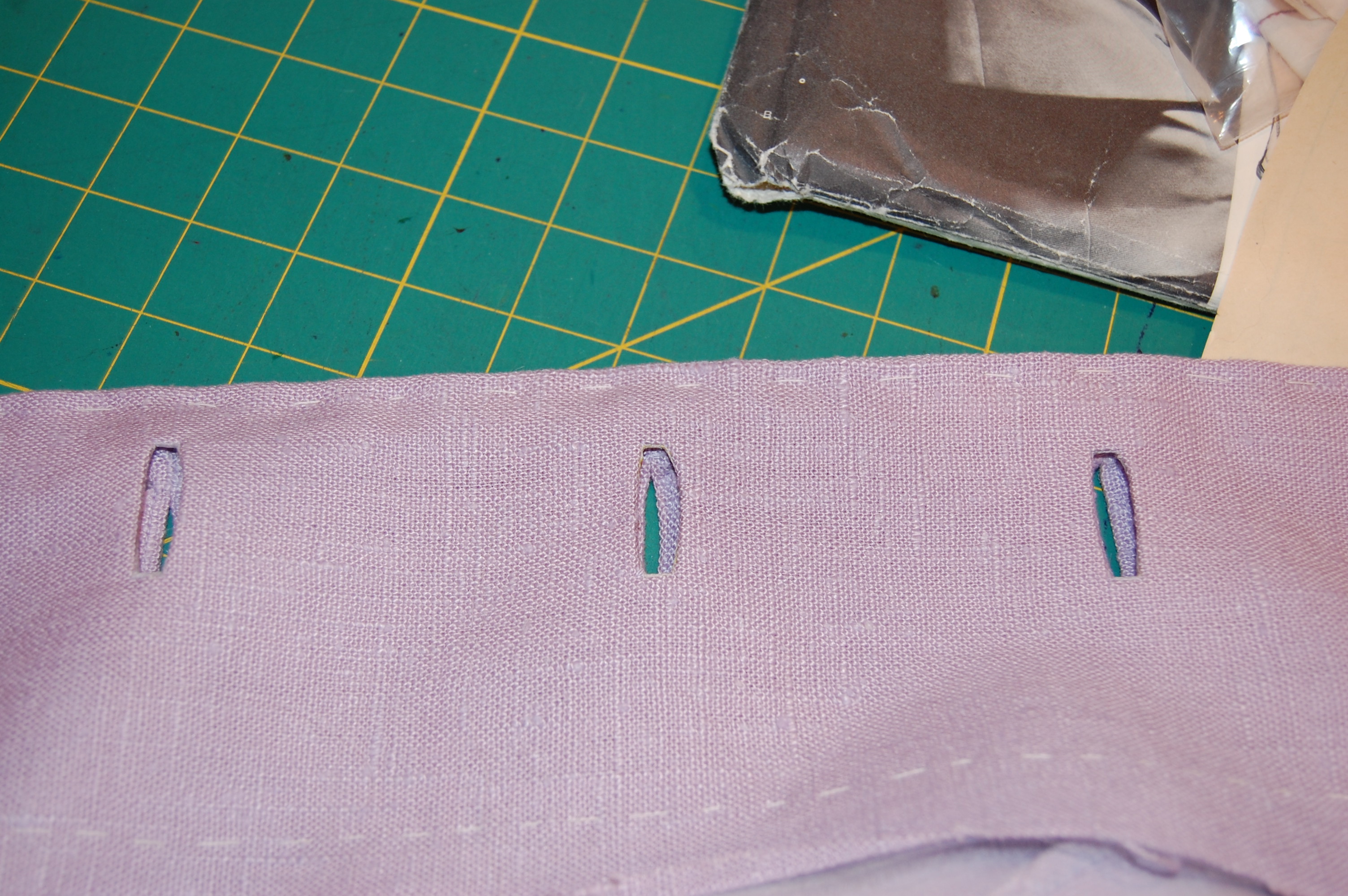
And here is the facing side, finished.

And here is the facing side, finished.

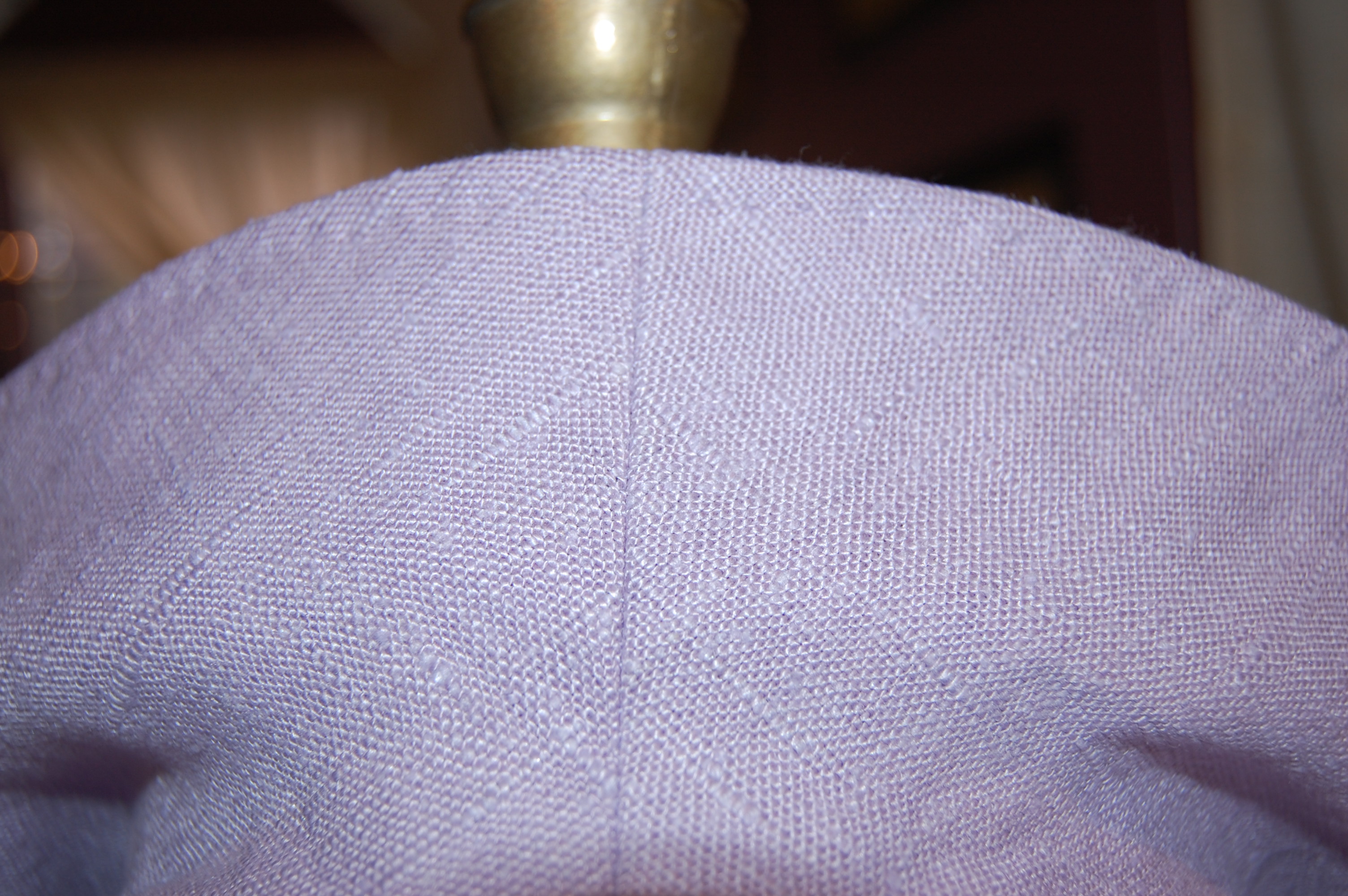
Another charm of this pattern is the coat collar, which is seamed in the center back on the bias, causing it to “turn” beautifully. I under-stitched the undercollar to help keep the perimeter seam properly in line (this is a trick I learned from one of Susan Khalje’s classes):

This is the undercover, showing center back seam and the under-stitching I used to secure the perimeter seam.

This is the undercollar, showing center back seam and the under-stitching I used to secure the perimeter seam.

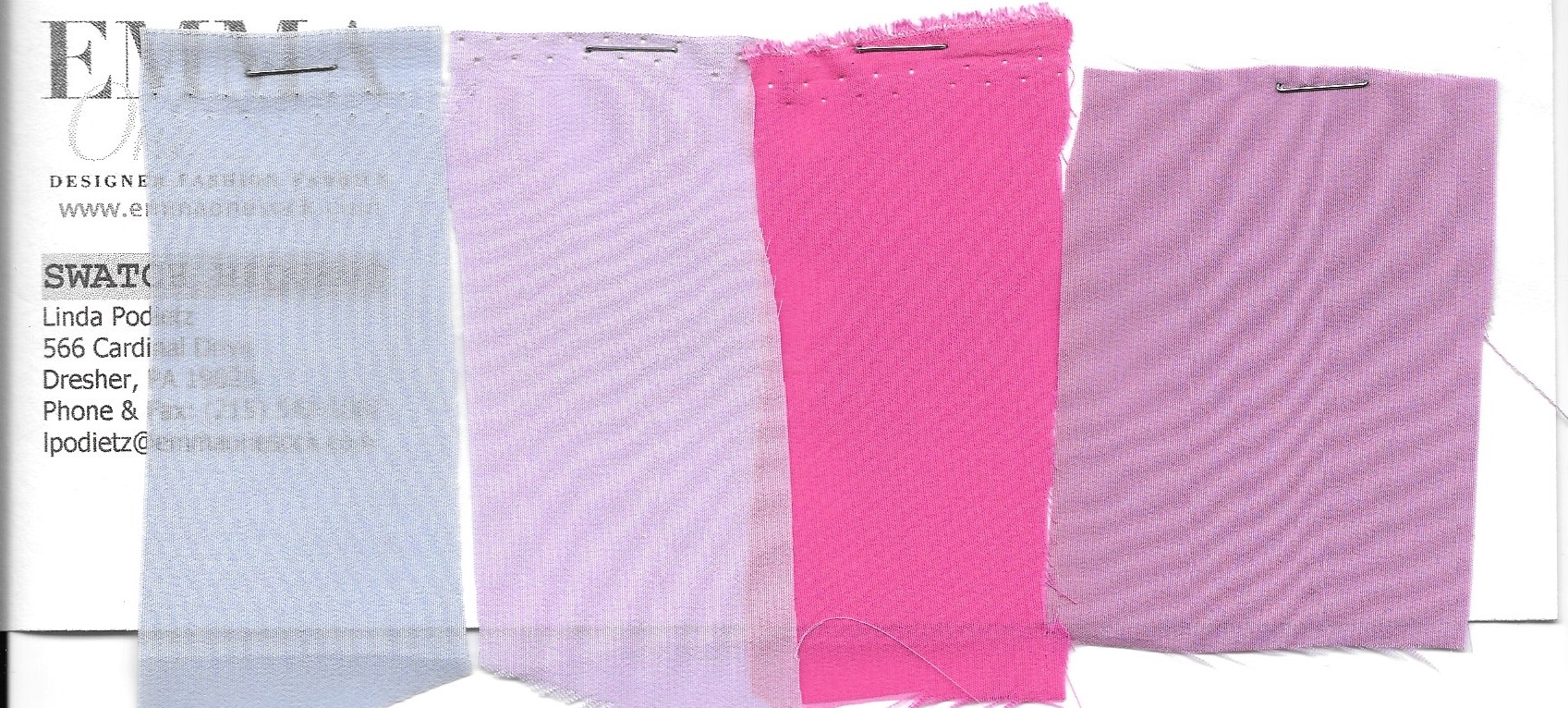
When it came to the lining, I knew I wanted to use silk crepe de chine. I ordered some swatches from Emma One Sock fabrics:

A Fitting finish swatches

Fortunately my sister was visiting and so I could get her opinion on which one to order. I was a bit smitten with the idea of a bright pink lining, but she wisely asked if I hoped to wear this Spring coat with dresses other than the pink flowered one which had inspired it. Well, yes, I do want that flexibility! That made the decision easy – I chose the pale lavender silk, which is just about a perfect match. I added a bias, flat piped edge to the lining, which is now something I always do with coats and jackets I make. It is so easy and adds so much!
Fitting finish

Some of you may recall that I had to piece one of the facings because I was just a little short of the fabric I needed. Here is the seam on the left facing. I really don't think anyone will ever see it! (Except all of you, of course!)
Some of you may recall that I had to piece one of the facings because I was just a little short of  fabric. Here is the seam on the left facing. I really don’t think anyone will ever see it (except all of you, of course!)

DSC_0844

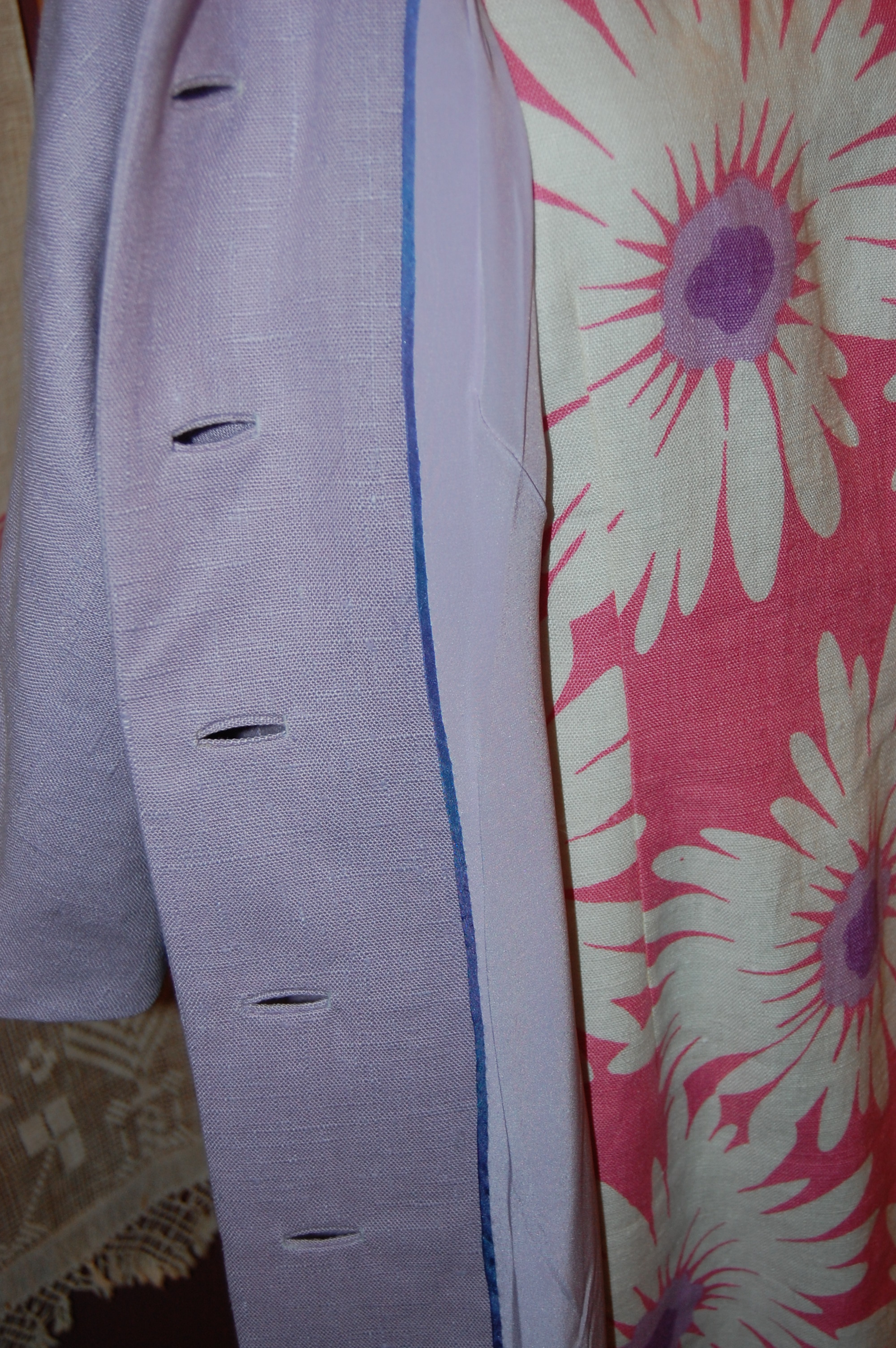
This is a good look at the bound buttonholes and what they add to the overall look of the coat. If you visualize machine made buttonholes in their place, you will get an idea of how vital the bound ones are to the design of the coat.

Another thing that will add to the total look of my 2016 Spring ensemble is this Kate Spade handbag which my grown children gave to me:

Fitting finish

DSC_0855

Fitting Finish

Fitting finish

Fitting finish

DSC_0837

Now all I need are lavender pumps…

43 Comments

Filed under bound buttonholes, Buttons - choosing the right ones, Coats, couture construction, kimono sleeves, Linen, Love of sewing, Moygashel linen, Uncategorized, Vintage fabric, vintage Vogue Designer patterns, vintage Vogue patterns from the 1960s

The Evolution of a Suit Dress, Part 2: Details, Details

How can something which is taking so much time to make still be so much fun? It must be because of all the delightful details to consider, to execute, to alter, and to research. One of the most important details for the jacket of a project like this is the choice of buttons.

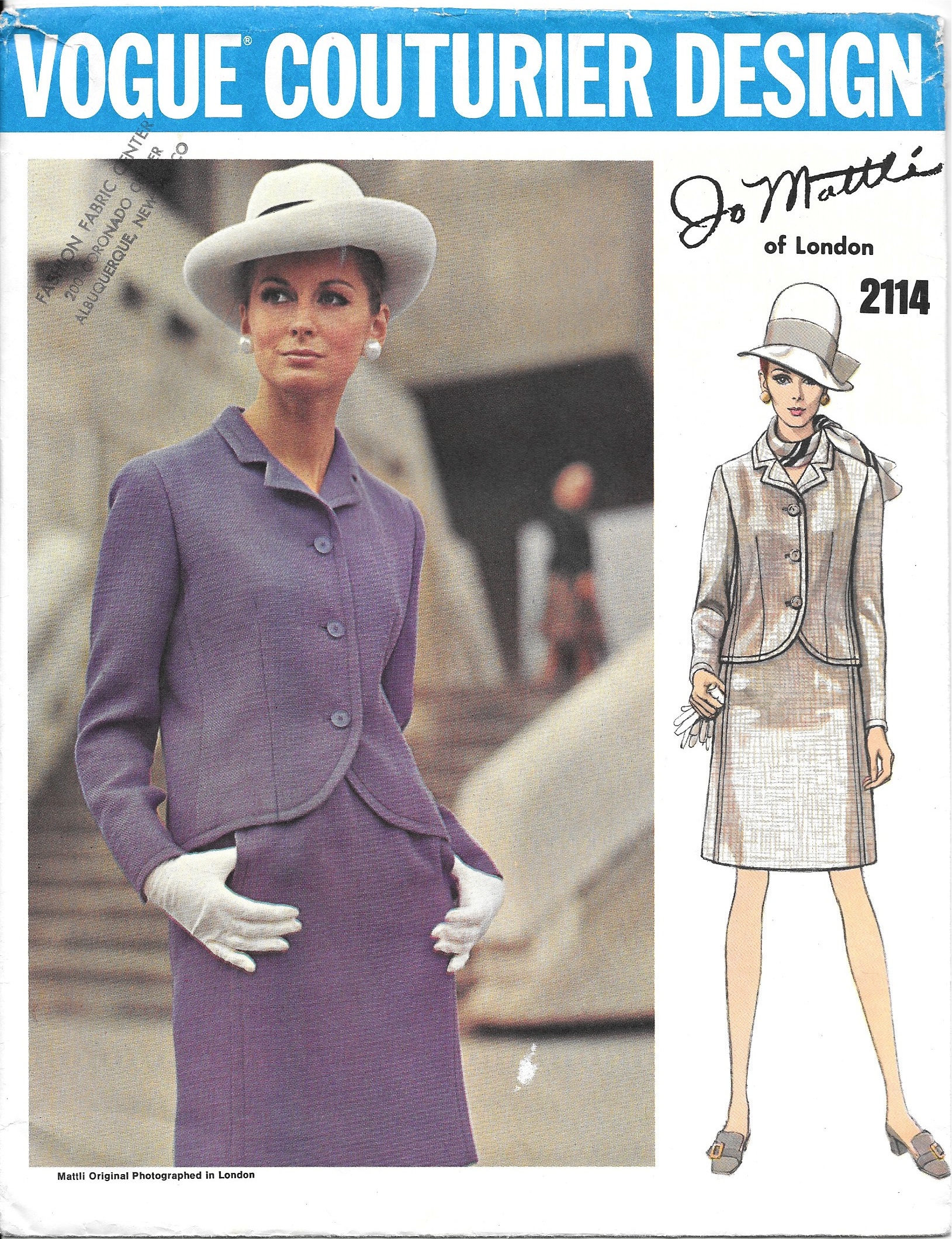
Dress Suit - front of pattern envelope

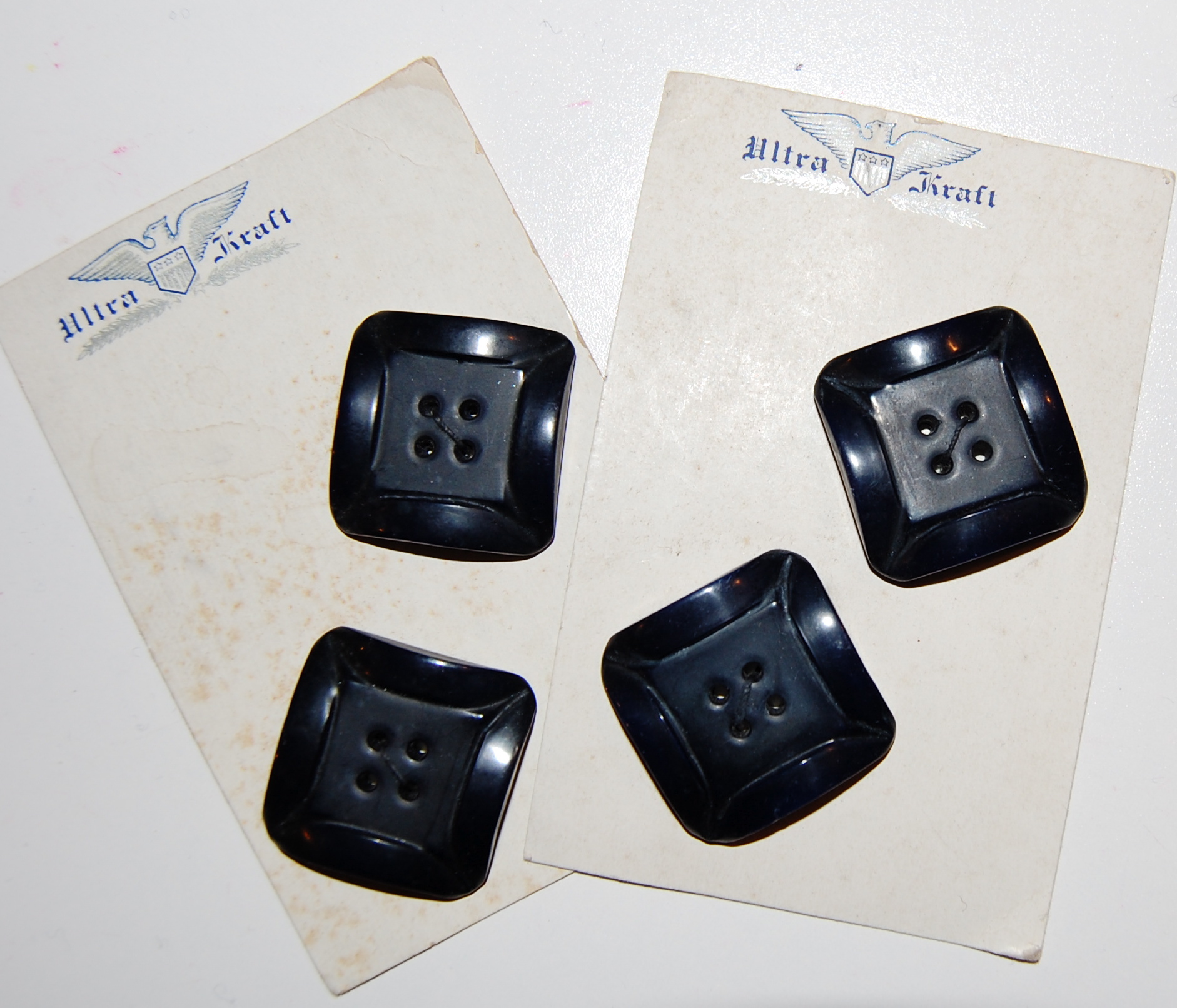
One of the advantages of having my blue windowpane-checked cashmere for a couple of years before sewing with it has been the opportunity to find just the right buttons. When I came across these buttons in an Etsy shop, I knew they would be perfect.

These buttons are 7/8" square.

These buttons are 7/8″ square.

The size is right, as is the shape – which picks up the “square” in the fabric. How I was so lucky to find them in navy blue, I’m not sure. Additionally, and this is very subtle, but the depth of the buttons allows a curvature to each edge, which mimics the curved front edge of the jacket and also the curved cuffs. Of course, when making bound buttonholes, one must have the buttons in hand before beginning the project, since the buttonholes are one of the first details to execute.

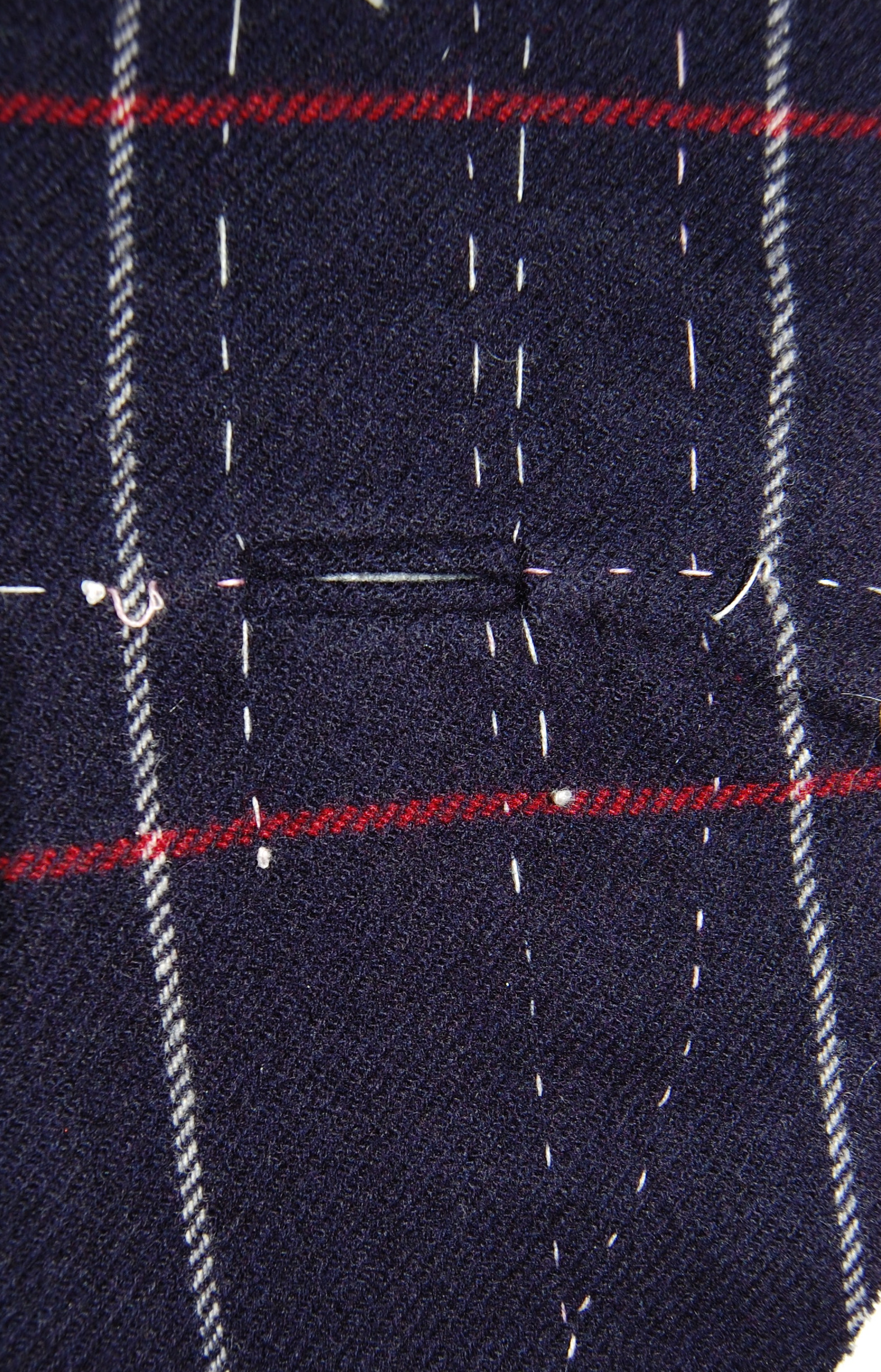
ne can never have too many markings basted in place for bound buttonholes!
One can never have too many markings basted in place for bound buttonholes!

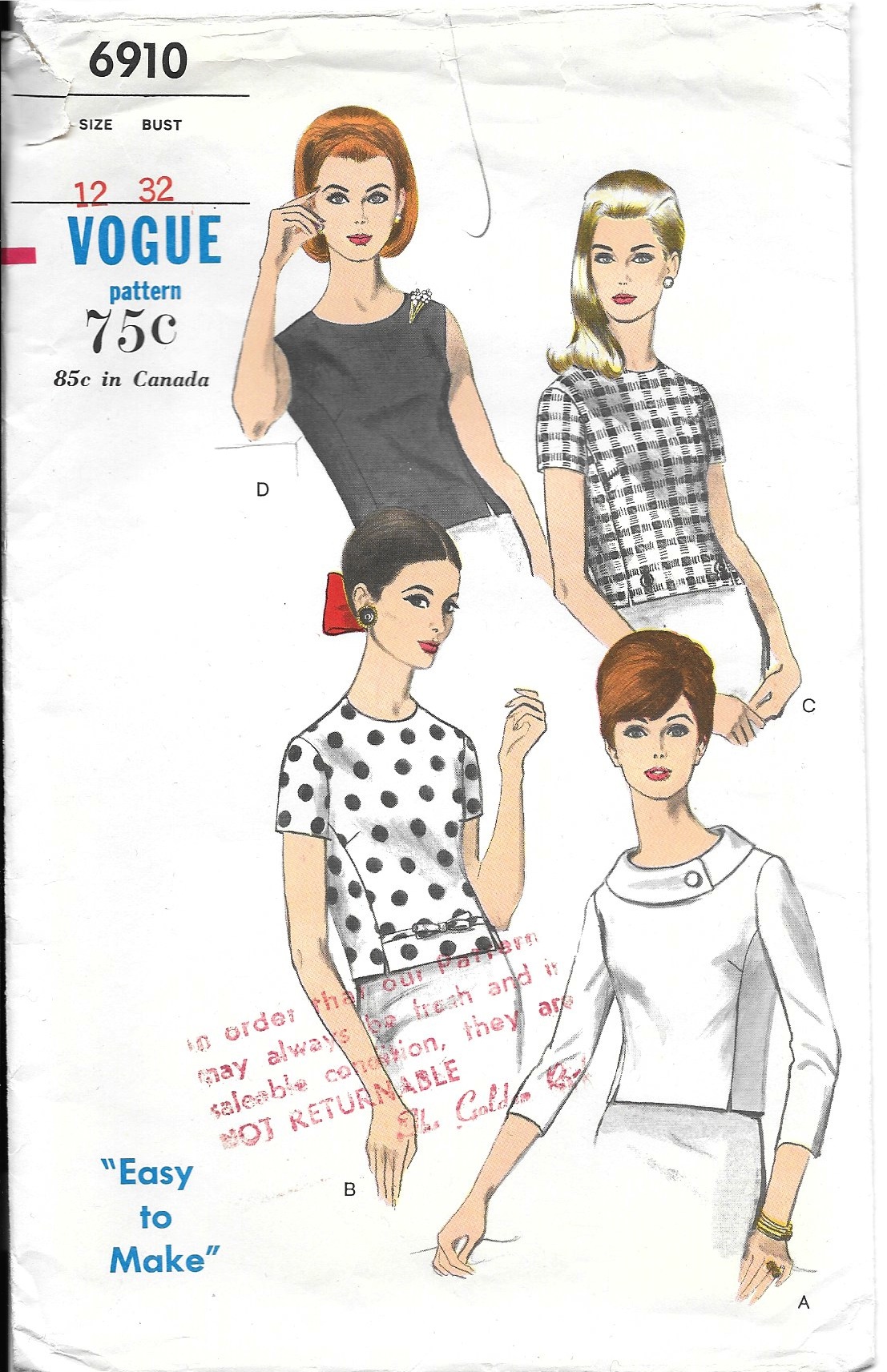
Because I need only three buttons for the jacket, the fourth button has been rattling around in my brain. I think  I might possibly be able to use it as a coordinating detail on the sheath dress I have planned for this ensemble. Back to my vintage pattern collection I have gone to look for some suitable inspiration. What I have found is this pattern:

Dress Suit 2 - blouse pattern-2 Although I have yet to work out the logistics, I am thinking that I can turn the collared blouse with the one-button detail (lower right) into a sleeveless sheath dress. The button may not really show (I think) unless I take the jacket off, but I kind of like the subtlety of it all. Once I make a muslin (toile), I will have a better idea of how it will look, so stay tuned! One thing I do know, is that such a collar on the dress will need to lay very flat, with no bulkiness. One way to achieve that will be to back it with the silk charmeuse I will be using for the jacket and dress lining instead of backing it with another layer of wool.

So what am I using for the lining? When I bought the lining for my color-blocked coat last winter, I purchased extra yardage of the silk charmeuse (from Britex). Now I can’t remember what my reasoning was, but once I got it home from San Francisco and I saw how complimentary it was with the navy blue cashmere, I knew I should save it for this project. Fortunately, I have enough of it to line both the jacket and the dress. Not that anyone is ever going to see the lining in the dress, but I’ll know it’s beautiful – and oh, so wonderful to wear!

Dress Suit 2 - lining fabric There are always lots of details in the construction of a rolled collar. At the risk of boring some of you, I’ll quickly go over a few tricks I learned from Susan Khalje last year when I made my color-blocked coat. First, here is a picture (by request from some of you) of the lightly pad-stitched and interfaced jacket front.

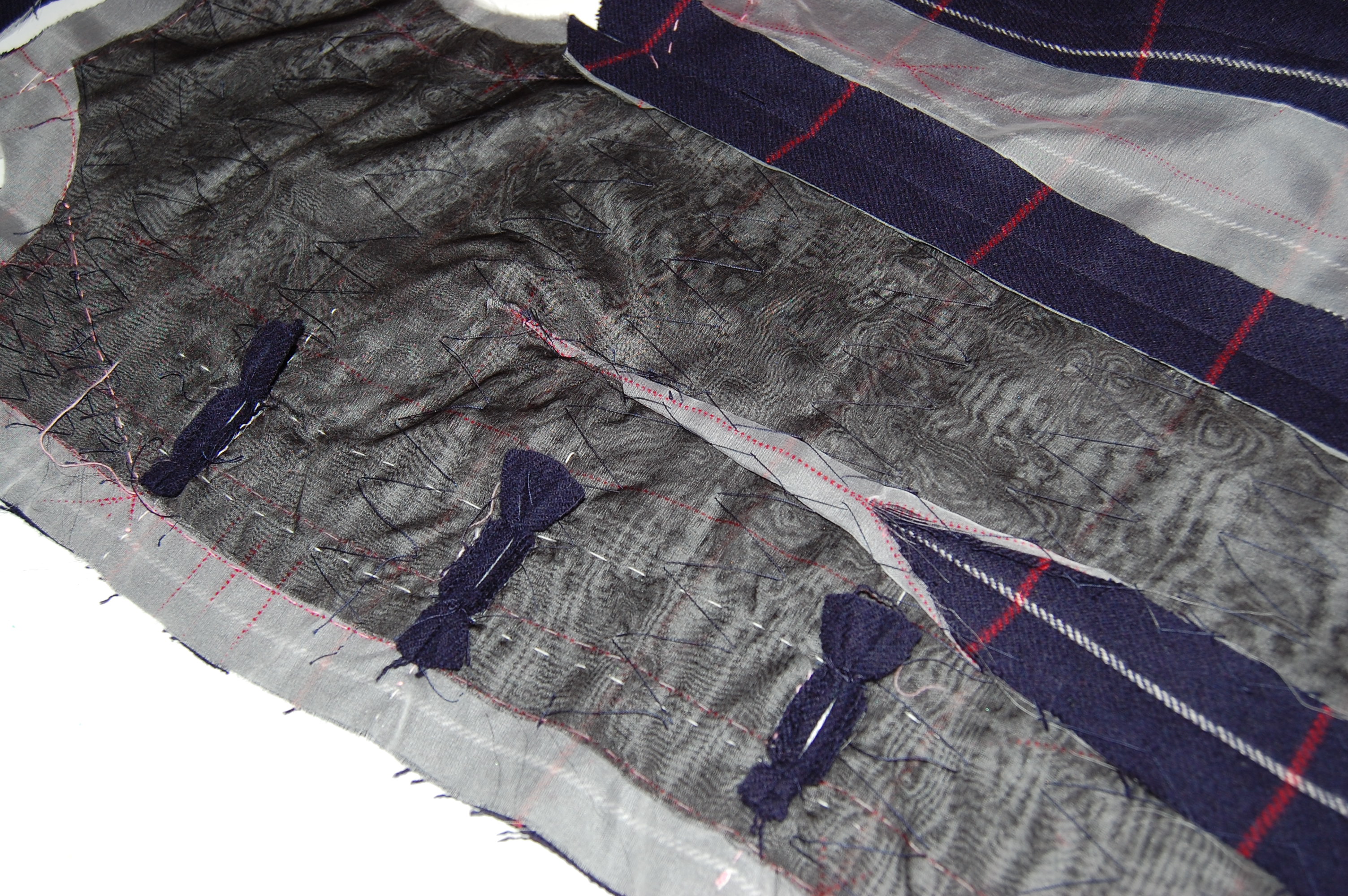
Here is an inside look at the interfaced right side of the jacket showing the underside of the buttonholes.

Here, too, is an inside look at the underside of the three bound buttonholes.

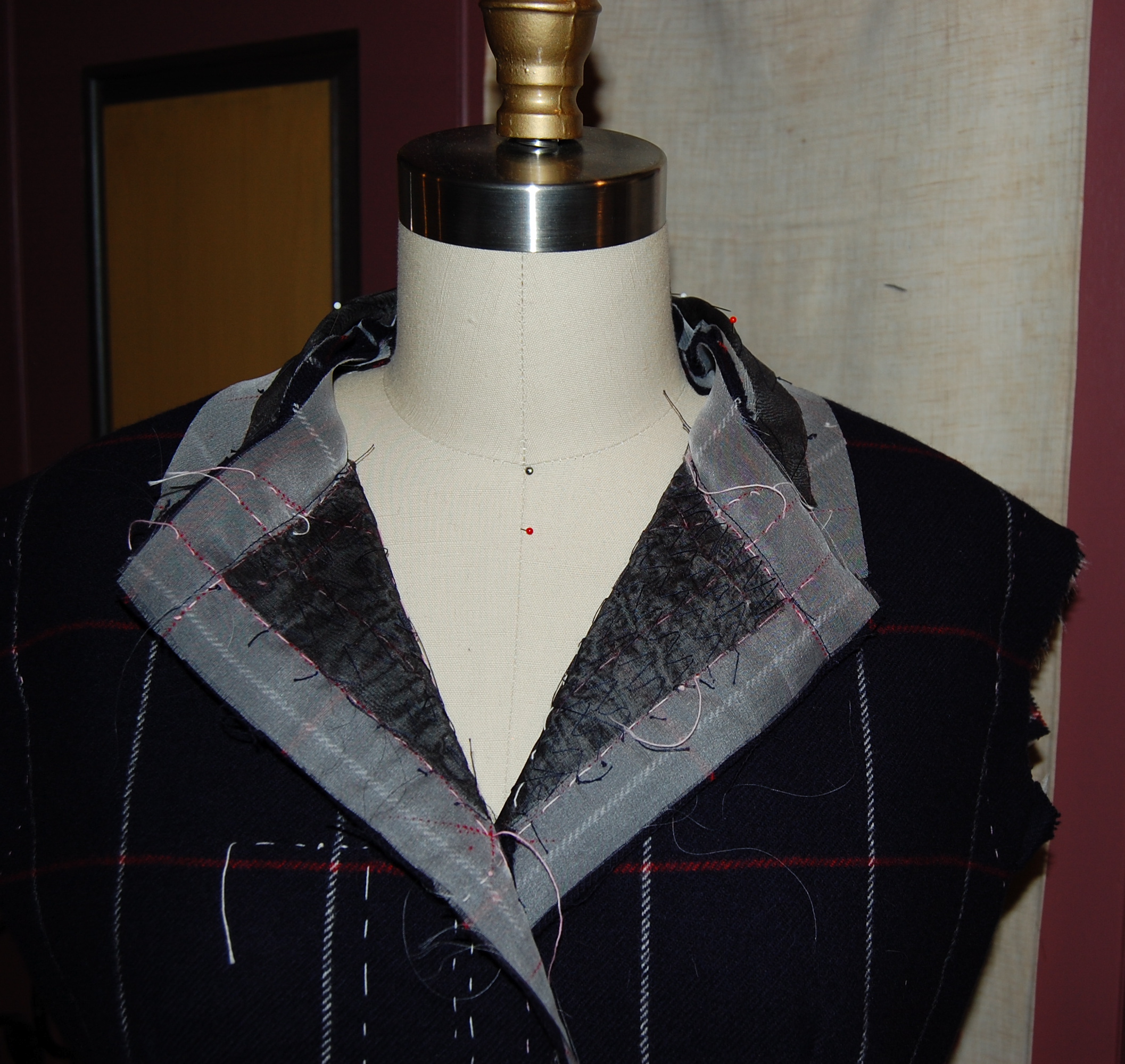
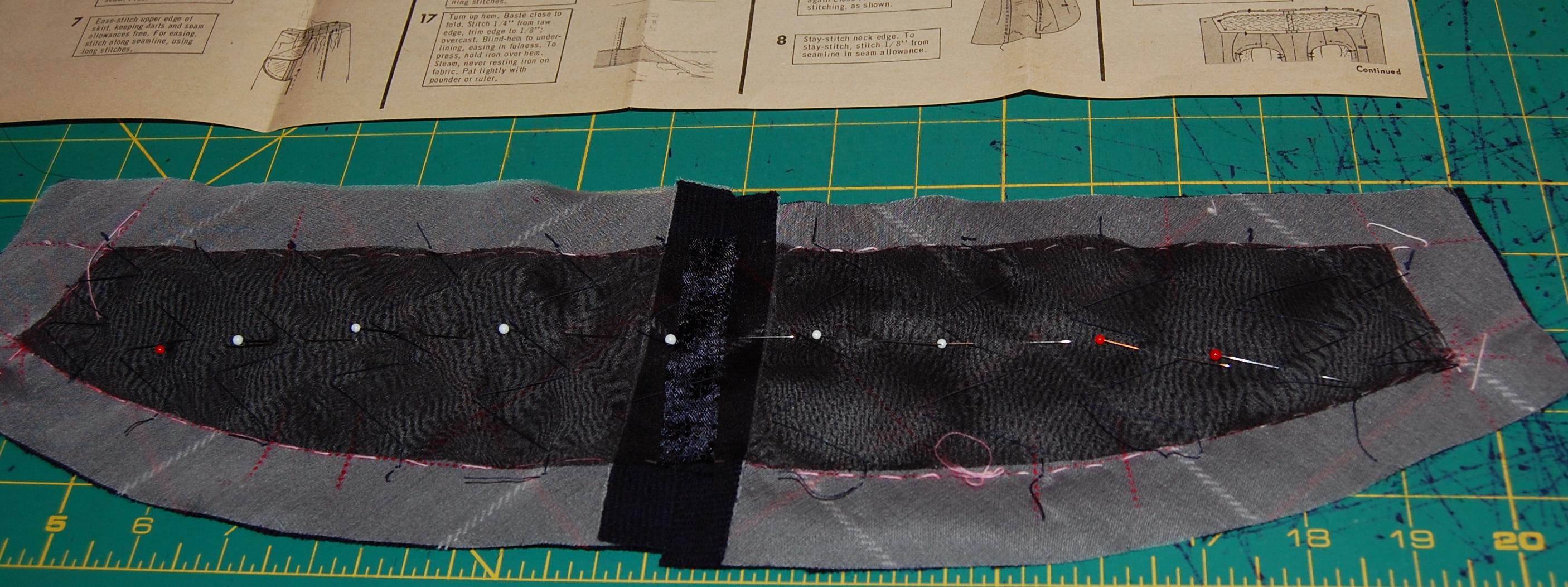
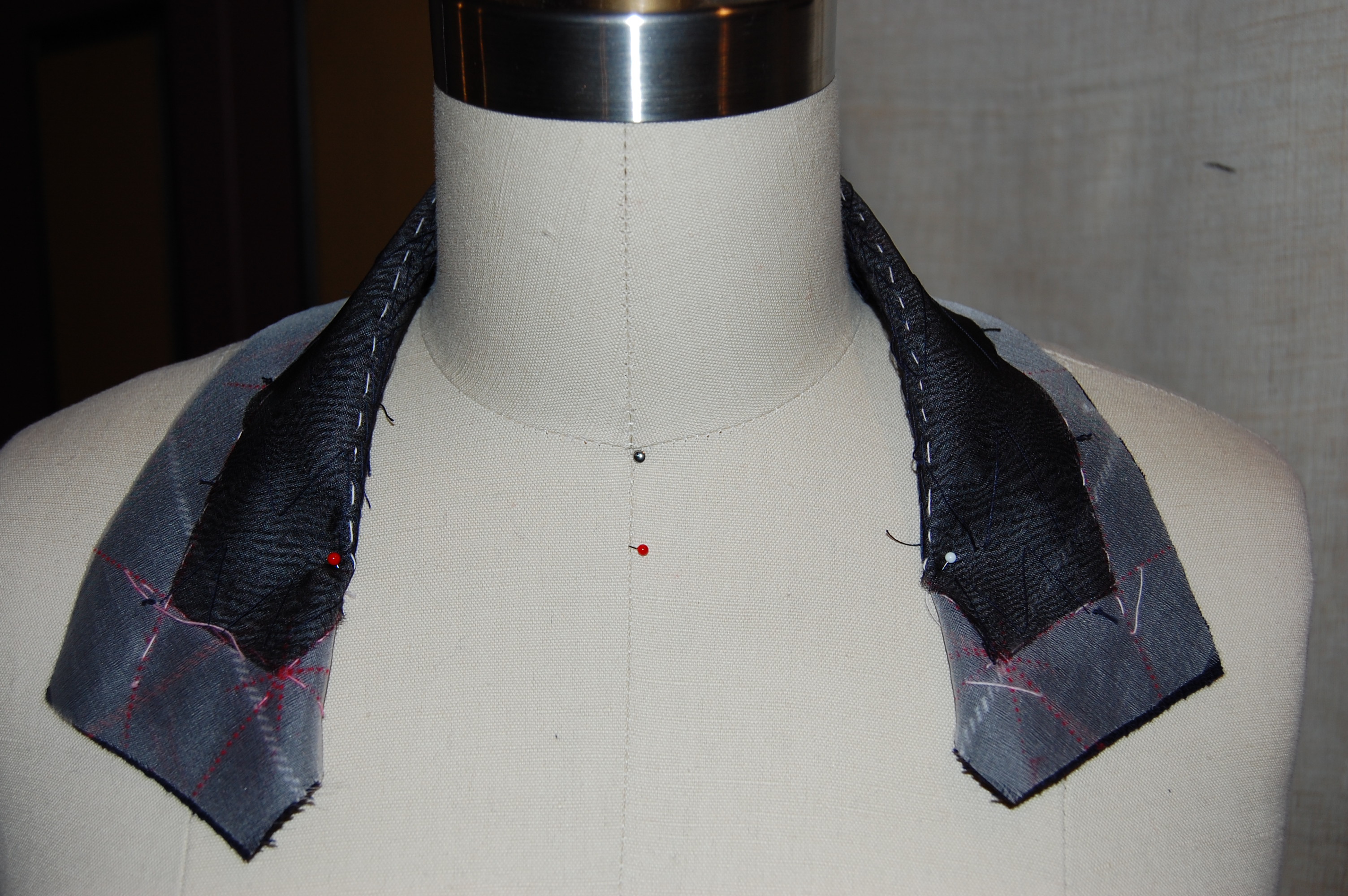
The undercollar is also interfaced with black silk organza. It is basted onto the body of the jacket in order to establish the roll line. Once I marked the roll line with pins, I removed it and basted along the roll line in preparation for heavy pad-stitching of that section.

Establishing the roll line of the undercollar.

Establishing the roll line of the undercollar.

Suit dress under collar

The roll line is marked with pins; then I basted along that pin line.

Once I finished the pad-stitching (impossible to see here on the black organza), I then placed it on the dress form, pinned it in place and steamed it. This process reinforces the “memory” of the roll.

A dress form is indispensable for steaming the undercollar.  You can see the basted roll lie in this photo.

A dress form is indispensable for steaming the undercollar. You can see the basted roll line in this photo.

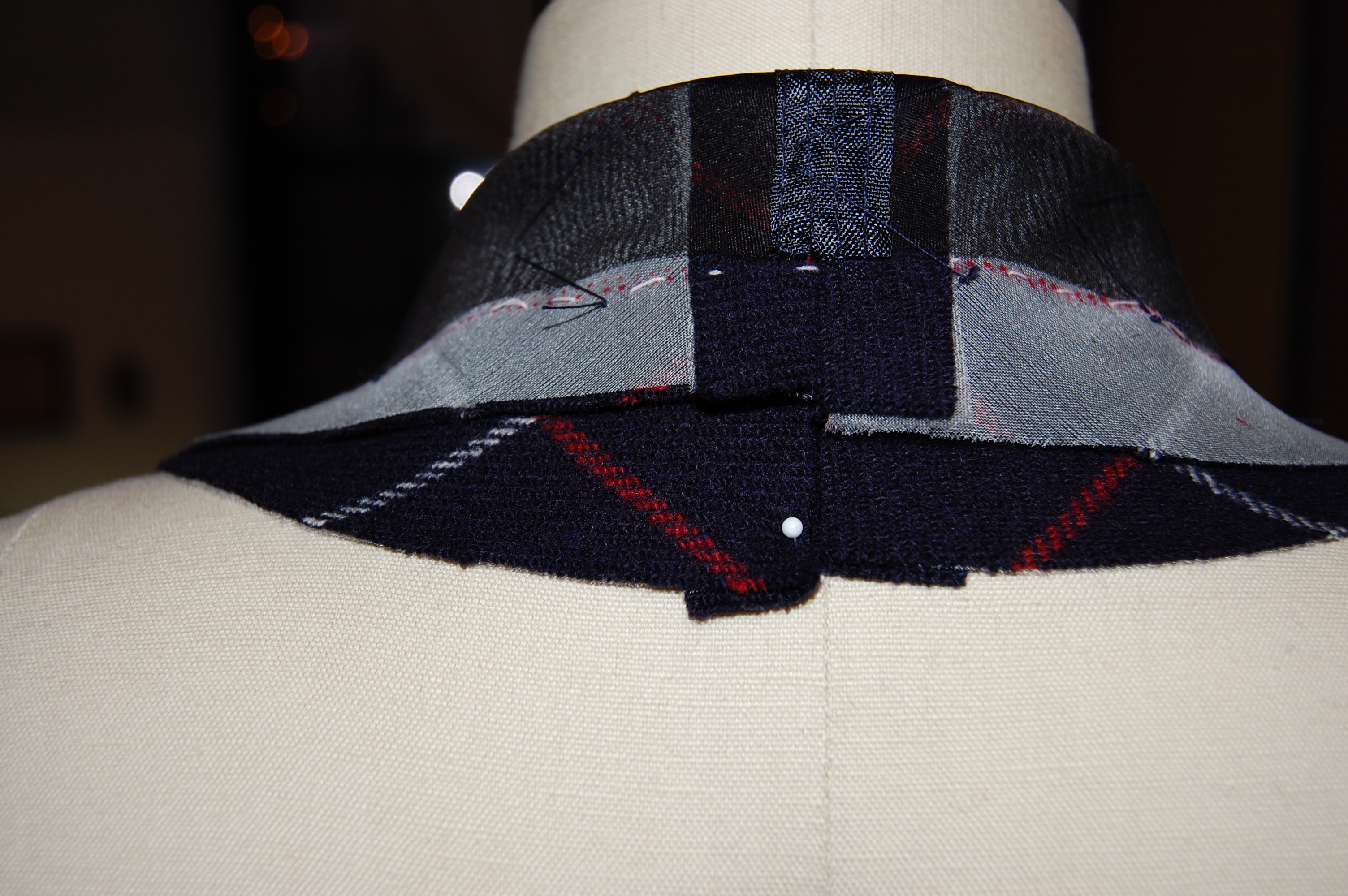
The back of the undercollar after steaming.

The back of the undercollar after steaming.

As I make progress on this jacket, I am reconsidering the amount of top-stitching I want to do on it. The pattern calls for double rows of top-stitching along seam lines, front edges and sleeve edges. I plan on modifying this somewhat.

Dress Suit 2 - topstitching detail-1

This diagram clearly shows the extent of proposed top-stitching. I will definitely not be doing this much!

Top-stitching always makes me nervous. It may be my least favorite part of sewing. I’d rather sew on buttons than top-stitch! Let’s see how well I do with it – in my next post – before I can get back to more fun-stitching.

16 Comments

Filed under bound buttonholes, Buttons - choosing the right ones, couture construction, Suit dresses, Uncategorized, vintage buttons, vintage Vogue Designer patterns, vintage Vogue patterns from the 1970s, woolens