Tag Archives: fashion sewing

Flights of Fashion Fancy

Having returned just a couple of days ago from a short Summer trip, I still seem to have airplanes and airports on my mind.  Although it wasn’t practical to take any sewing (hand-work, that is) along with me, that doesn’t mean I have not been thinking sewing, fabrics, patterns and fashion.  In fact, while I am still physically (and mentally) working away on my “couture dress”, another part of my brain is thinking about Fall and Winter, getting my projects listed in some sort of order.  I’ve started envisioning them all lined up on the “runway” – kind of like planes all queued up and waiting for take-off.  Some big, some small, some already late, others sneaking in before their time!  Which ones will have to return to the gate?  Which ones will be smooth flying – and which ones will hit that proverbial turbulence?

After finishing my current Summer projects, I am thinking the first one to “take off” will be an addition to a suit I made last winter.  I have enough fabric left of this lovely checked wool to make an overblouse:
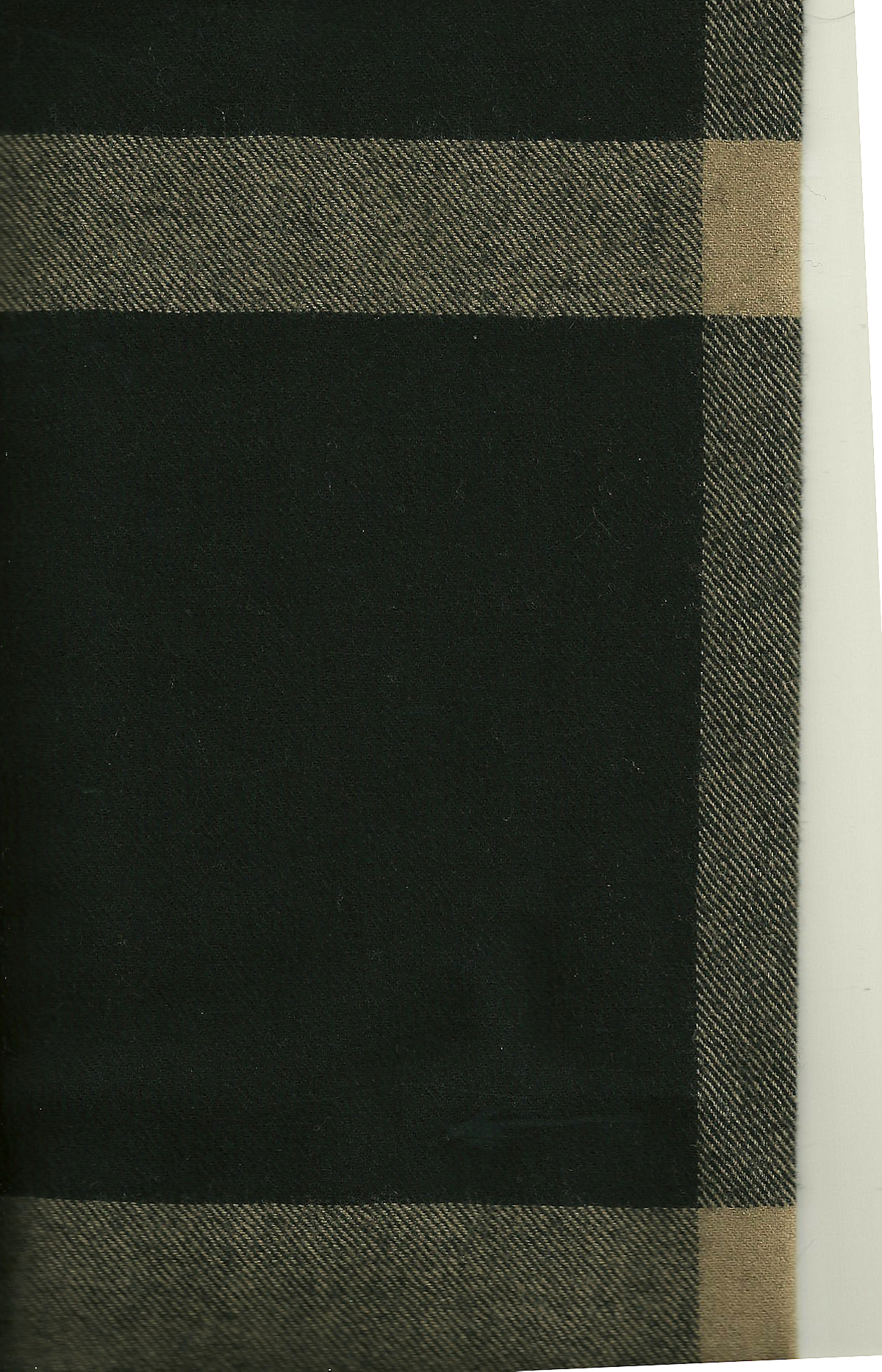
Paired with the suit skirt, an overblouse in this fabric will make a variation on the “little black dress” – just in two pieces instead of one.

I recently found this pattern, view D, which I intend to use for this blouse.  I am so fond of the “Dior darts” which give a lovely silhouette to a bodice.
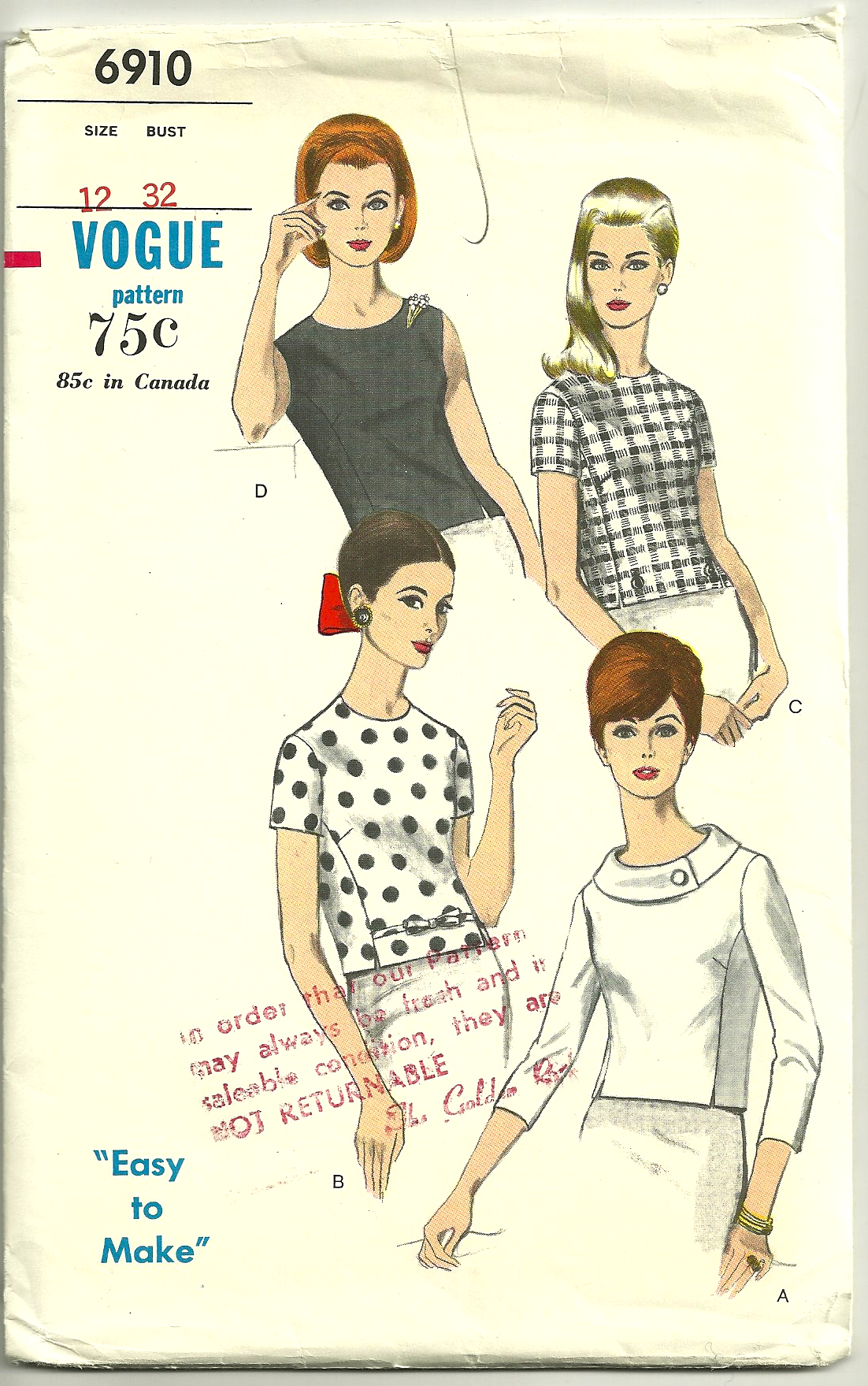
I’ll definitely make a muslin of this pattern to check the fit.

After that, I know I’ll be working on a dressy suit, which I need for a wedding and another event mid-Fall.  I found this wool at B and J Fabrics which I’m about to order   to use for the jacket.  I am still on the hunt for a slightly orchid-colored pink in light- weight wool or heavier silk to coordinate with it for the skirt.
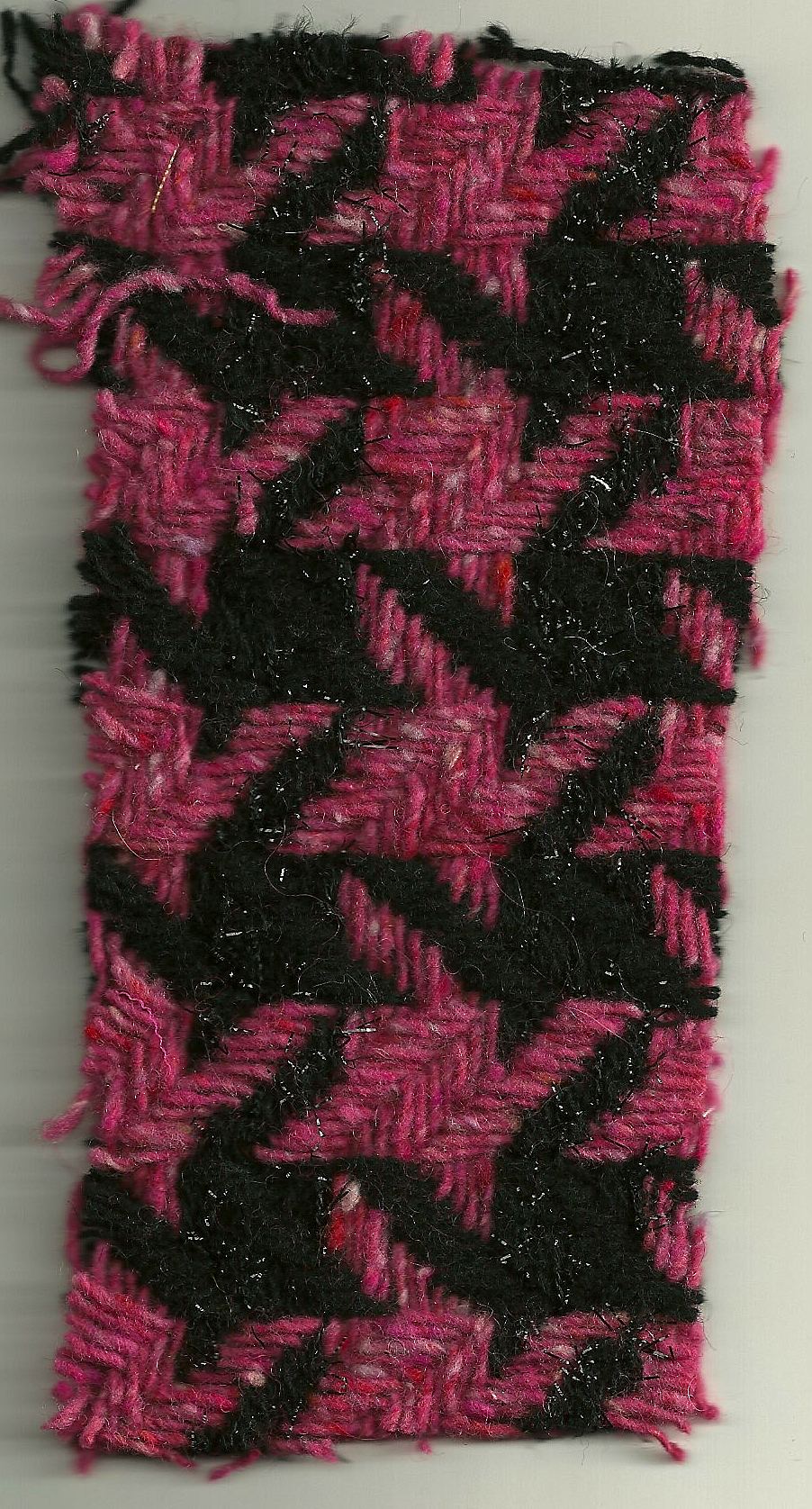
This fabric, a wool/lurex blend, has a bit of sparkle to it.

I’ll be the first to admit that I love pink – and here is another one:
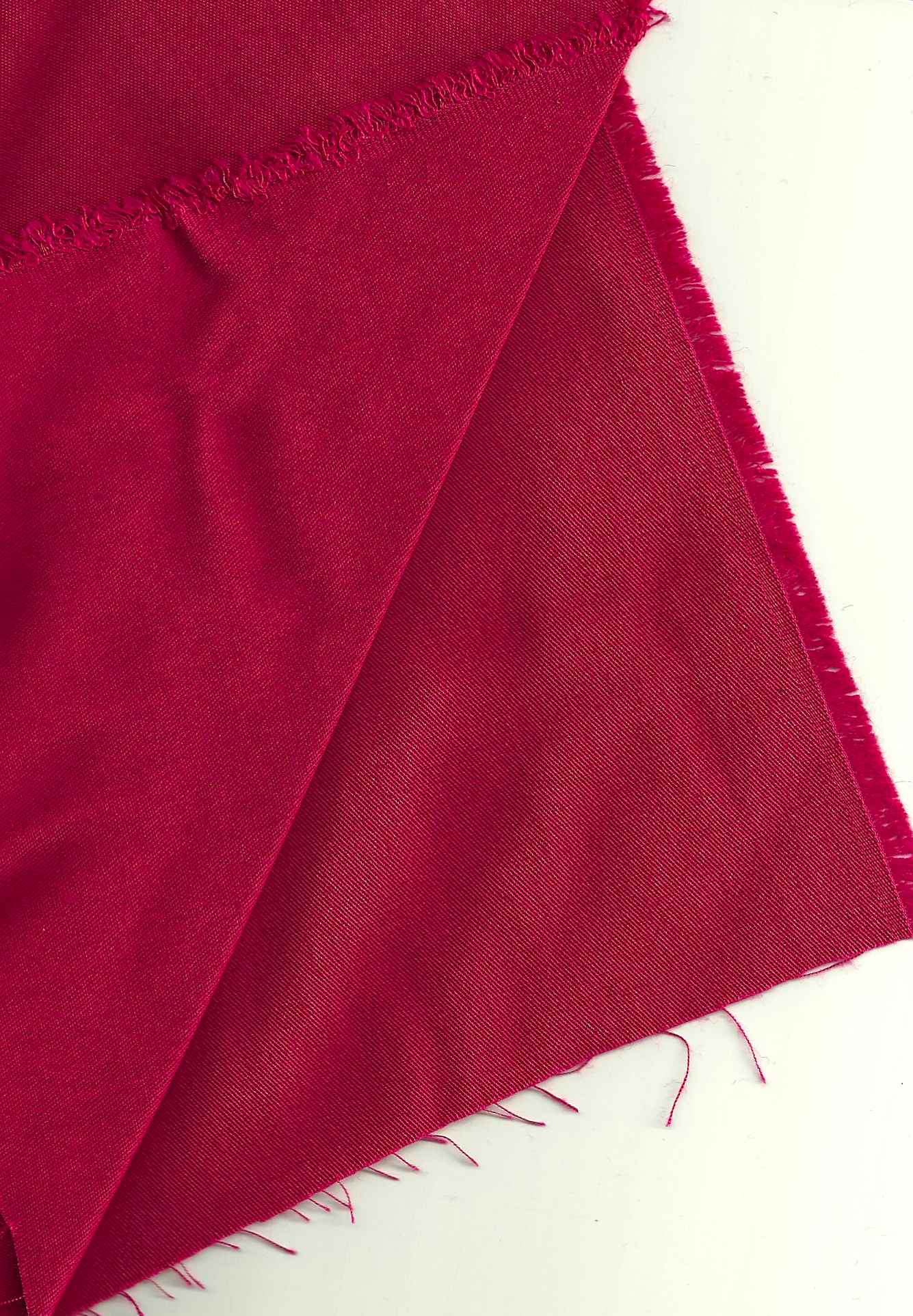
I have a lot of yardage of this fabric, so I have flexibility in choosing a pattern.

I’ve had this fabric for several years.  It is a wool/cotton blend with the perfect weight for a Fall dress.  However, I can’t decide on what style I should make it in:  shirtdress, sheath, tailored or not?  If I can’t decide, then it may just have to go to the back of the line.

This is a recent purchase from Britex Fabrics:
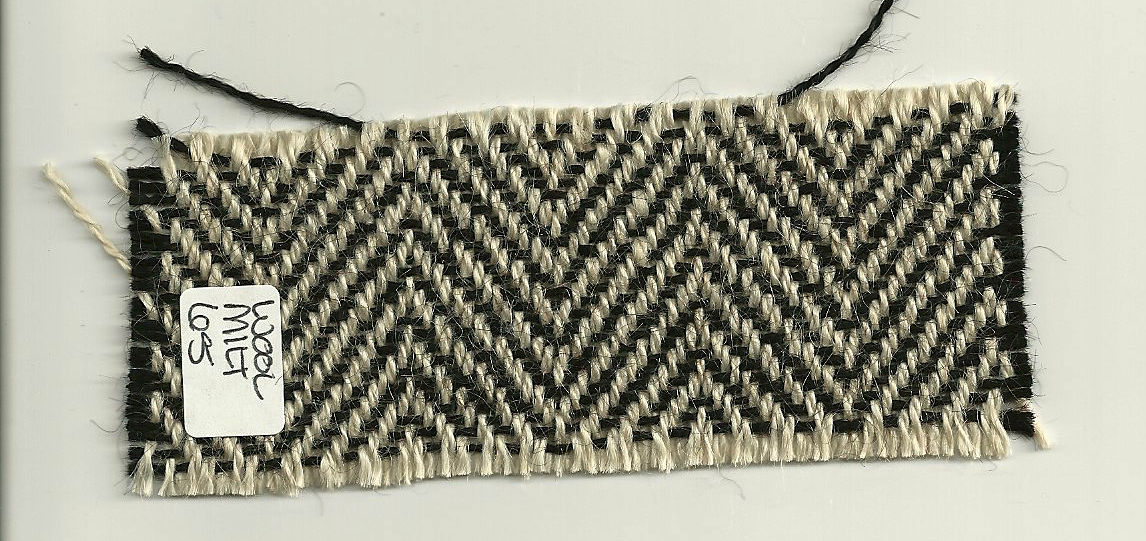
This is actually alpaca – and very, very soft!

I bought this fabric to be made up in this dress, view A, with the below-elbow length sleeves:
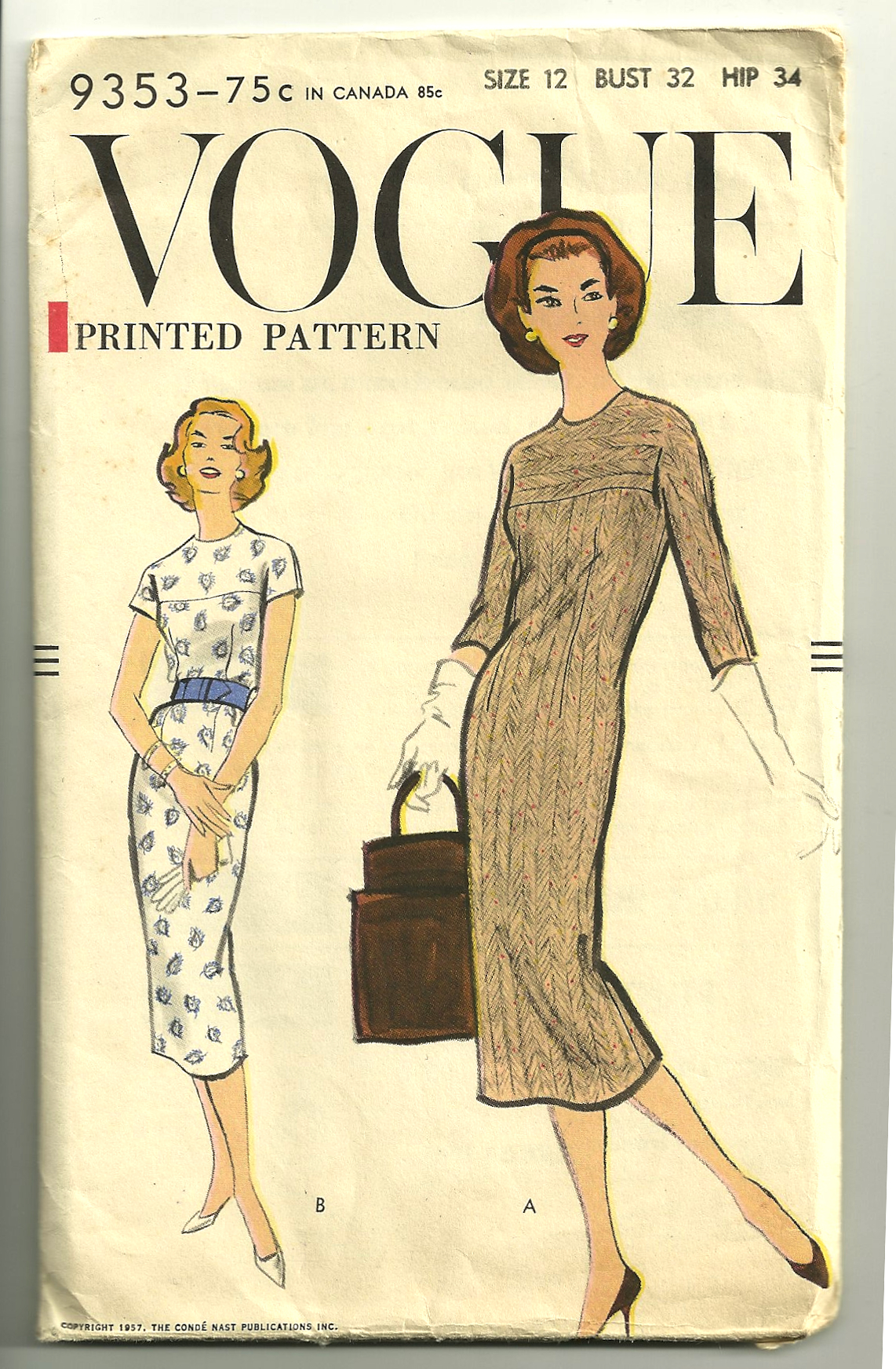
The length of this dress as shown on the envelope is very 1950’s. I’ll be making it in knee-length.

The back of the envelope shows the versatility of the belt, which can be included – or not.  Think of the endless possibilities with changing the belt on this dress, especially with a basic black and white herringbone weave:  it would look great with red, pink, orange, black, green, or even bright blue.  This pattern will give me more practice on the couture techniques I’ve been learning, too.
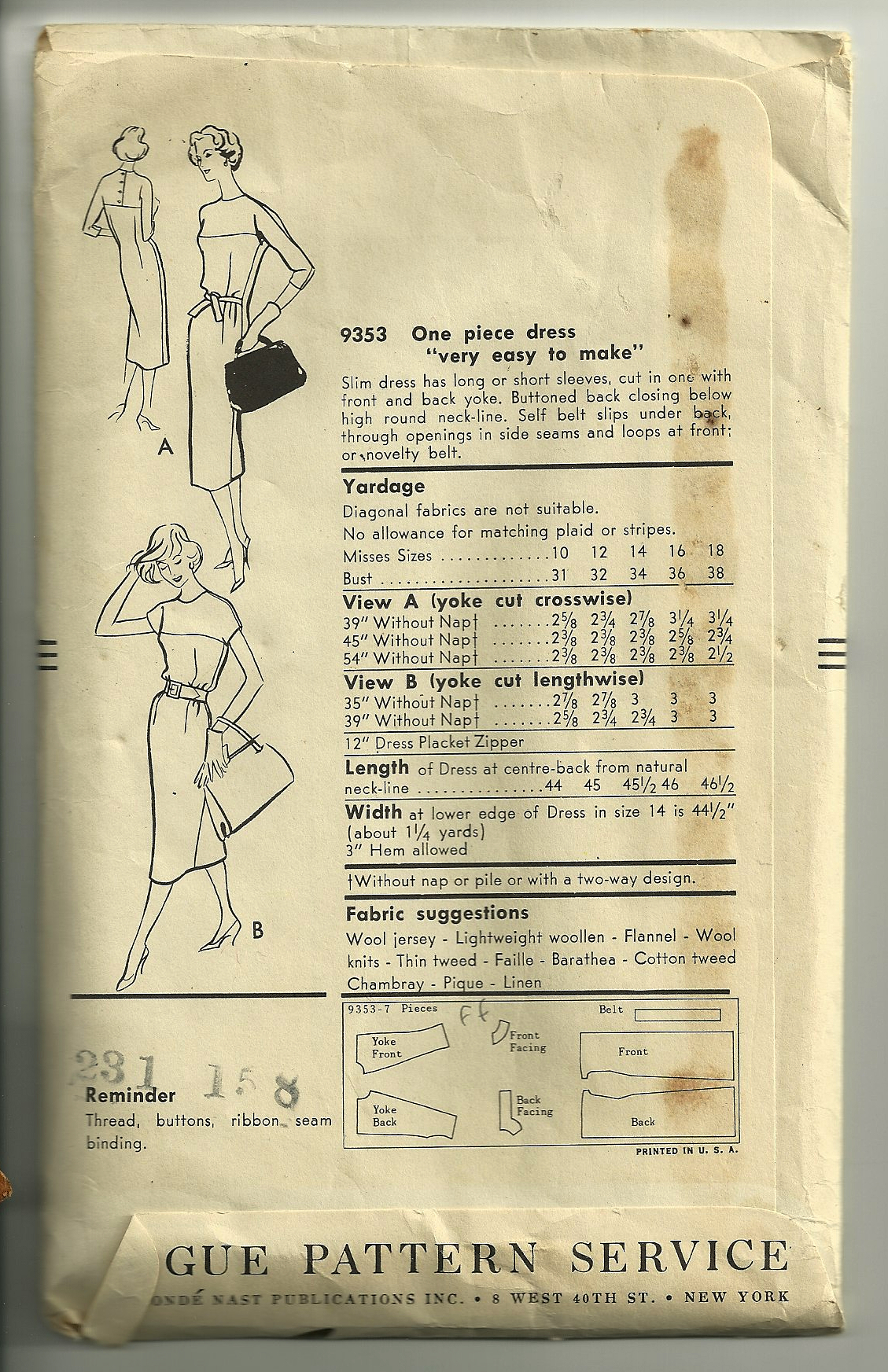
I love that the drawings include the handbags!

Finally, here is another fabric from Britex:
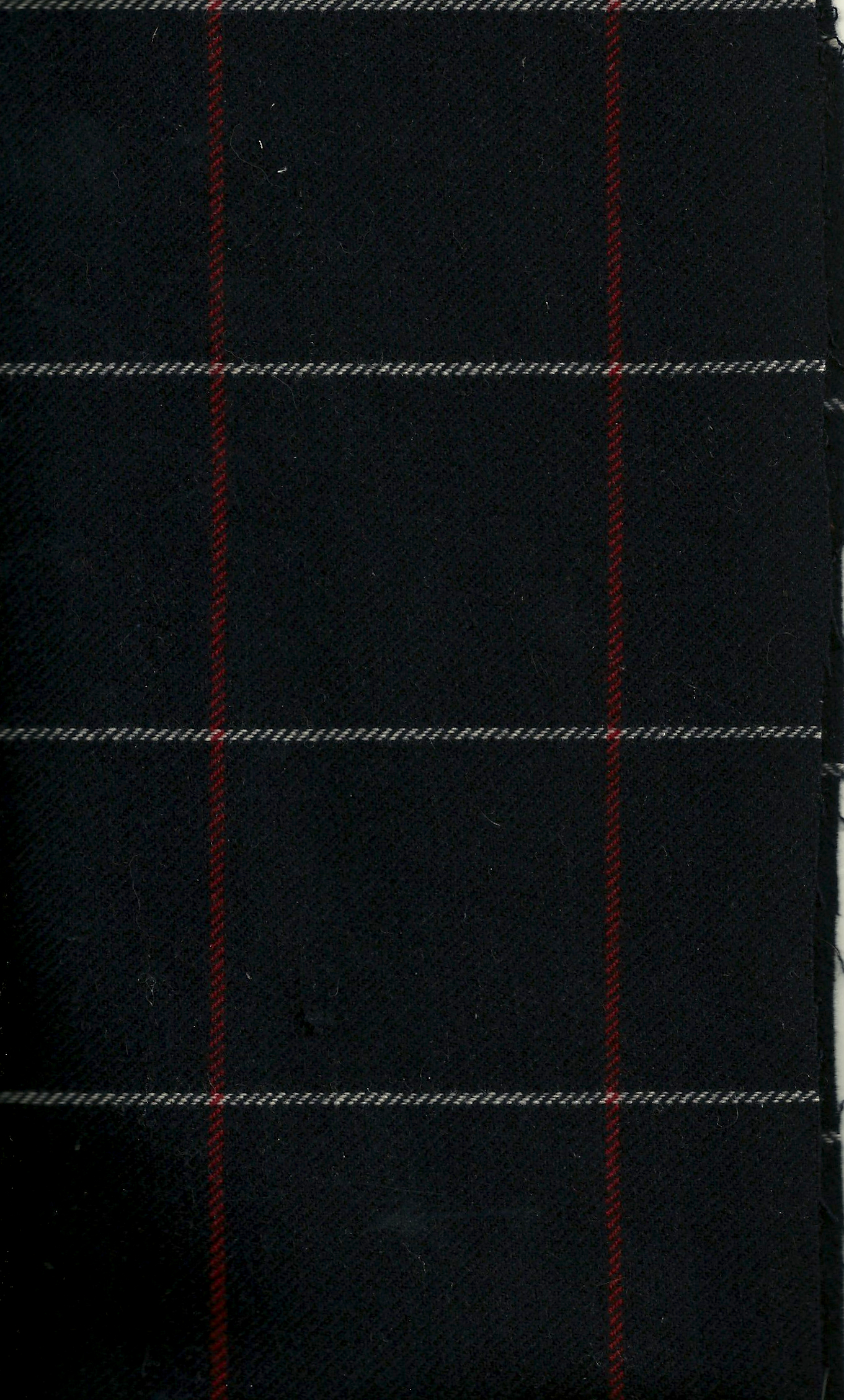
Another subtle windowpane, this one in navy with deep red and ivory intersecting lines.

This is a pure cashmere wool which I purchased last year in the store.  There is no way to describe how soft and luscious this fabric is.  And here is the pattern I know I am going to use for it:
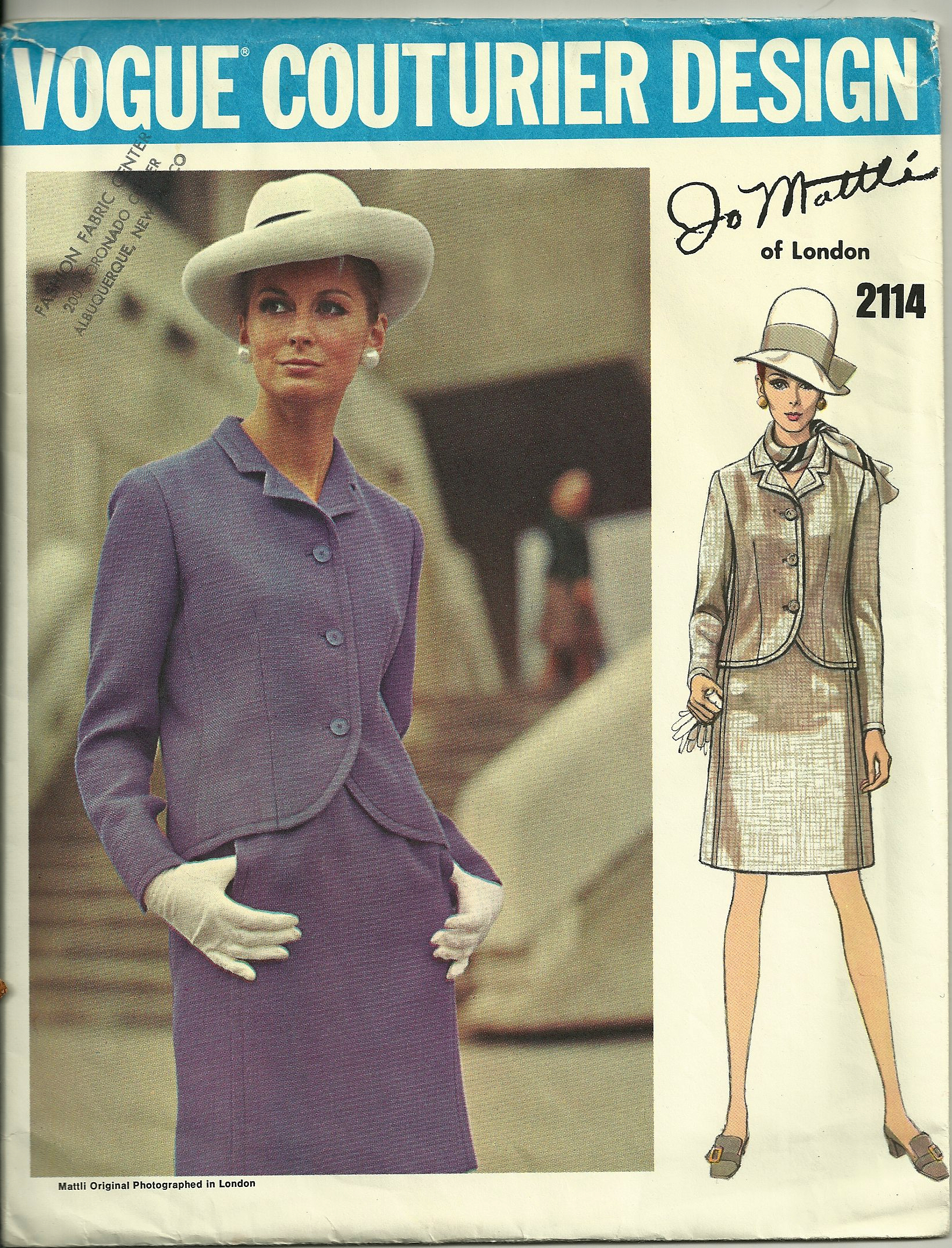
This pattern is circa 1970.

Well, if all I had to do between now and December is sew clothes, I might get most of this done.  However, interspersed amongst this fashion sewing will be  several “gift” sewing projects, which are going to sneak their little wings into line, along with holidays!  No matter – among other things, sewing encourages flexibility and, like flying, can take us to places of great adventure and quiet reflection.  No wonder I – and so many, many of you –  love to sew!

4 Comments

Filed under Dior darts, Uncategorized, vintage Vogue Designer patterns, vintage Vogue patterns from the 1950s, vintage Vogue patterns from the 1960s, vintage Vogue patterns from the 1970s, Vogue patterns

Eating my words.

I never expected to find a pattern from the decade of the ‘80s that I liked, as my refrain about fashions from that span of time has always been:  “Those ’80s’ styles were just too awful”.  But I humbly ate my words when I finally found a pattern (from an Etsy shop) for a sarong skirt, which just happens to be from 1985.

I won’t be making the bra top… And notice the “big” shoulders on the blouse, which otherwise would be kind of cute, I think!
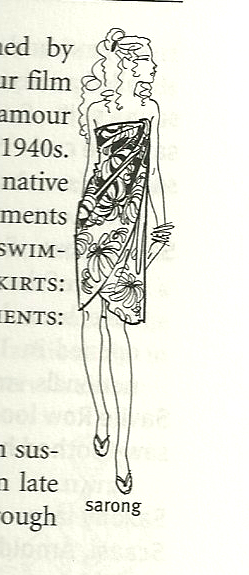
It’s quite obvious where the Vogue pattern designer got the inspiration for this sarong and “bra-type top” look.  Here is the scoop from Fairchild’s Dictionary of Fashion , p. 395 (Fairchild Publications, Inc., New York, New York, 2010):

“Long straight wraparound skirt made of bright-colored tropical design fabric with deep fold in front, held on by a scarf around waist.  Worn by men and women of the Malay Archipelago.  Adapted as a beach dress style with wraparound skirt draped to one side and strapless top first designed by Edith Head for Dorothy Lamour film Hurricane, in 1937.  Worn by Lamour in many films of the 1930s and 1940s. [my emphasis]

This sketch accompanies the entry for sarong skirt/dress in Fairchild’s Dictionary.

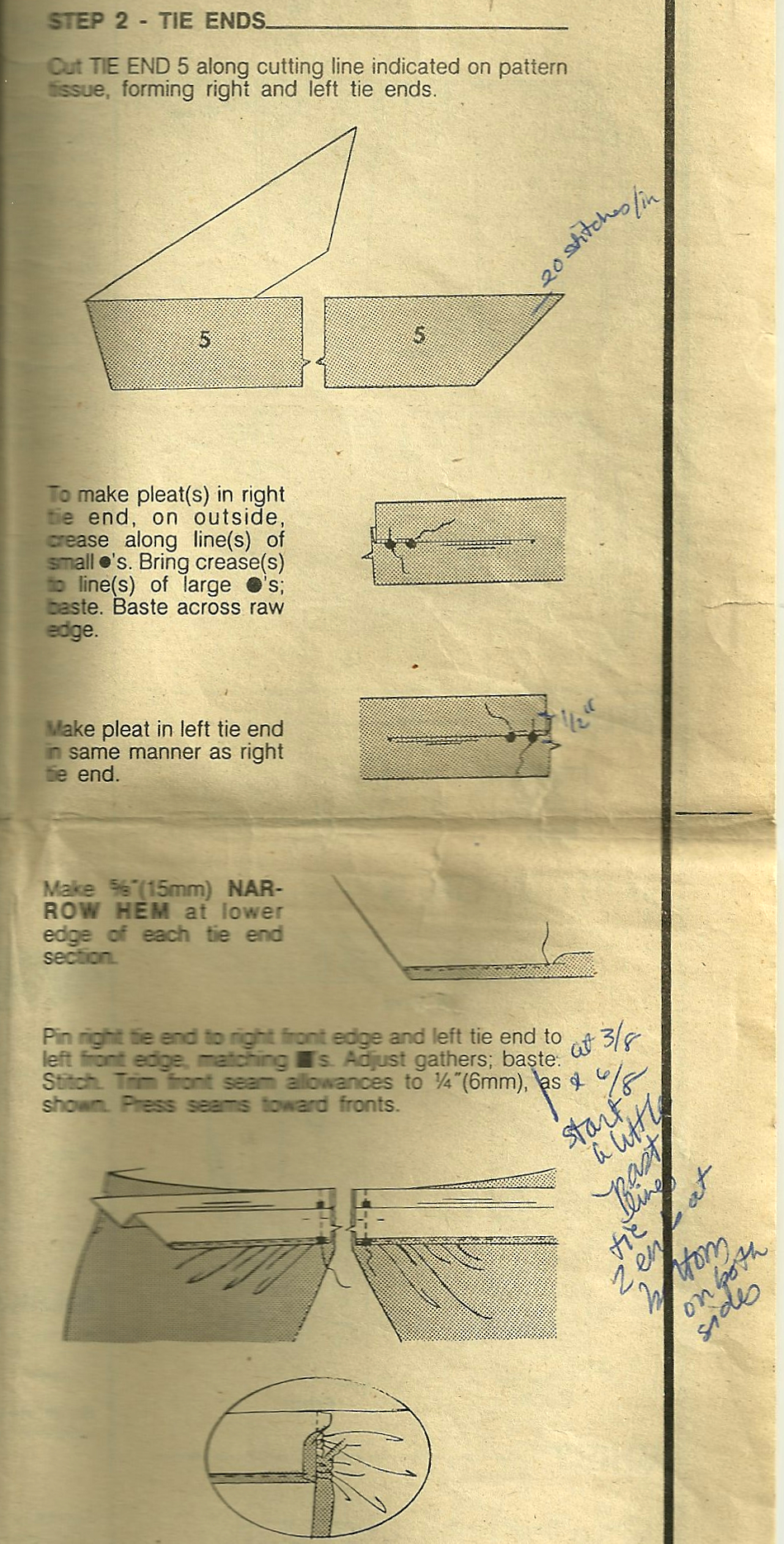
The original owner of the pattern made the long version skirt while I decided to make the shorter version.  She left cryptic notes throughout the instruction sheet.

Here is an example of some of the notes which the original owner made on the instruction sheets.

I made some of my own notes, but I wrote them on the muslin which I made to test the pattern before cutting into my fashion fabric.   I am glad I did, too, as I discovered that the overlap for the skirt was not quite enough for a “street” skirt (as opposed to the beachy/resort intent of the pattern).  So – I made the side panels each about 2” wider.  Then to make the waist still work, I added a dart in the left side front (which is the hidden side of the wrap).  I  made the ties each about 2 inches longer, as I thought they would be more becoming and lay flatter if they had a little more length to them.

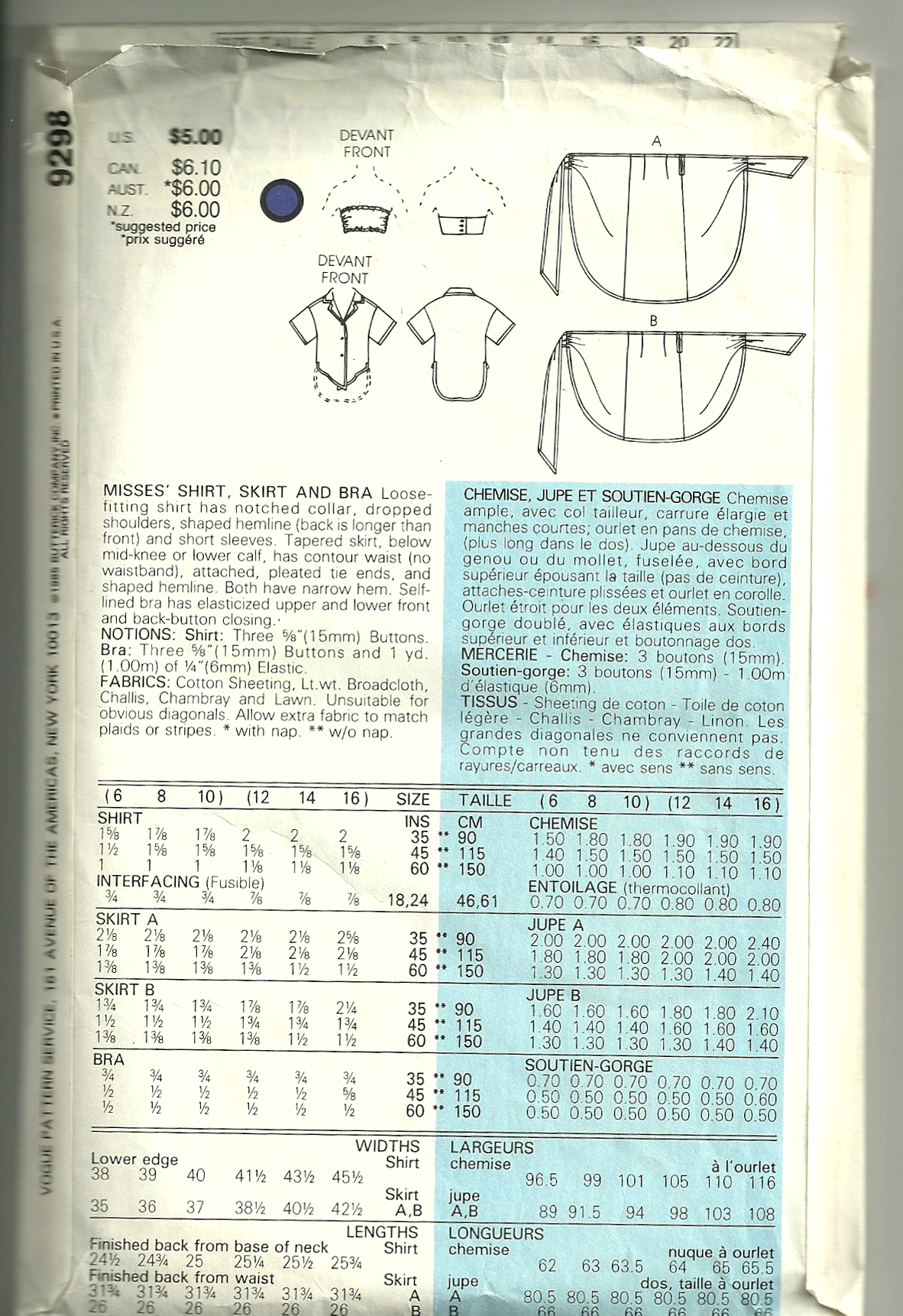
Here is the diagram from the envelope which shows the thumbnail details of the two skirts.

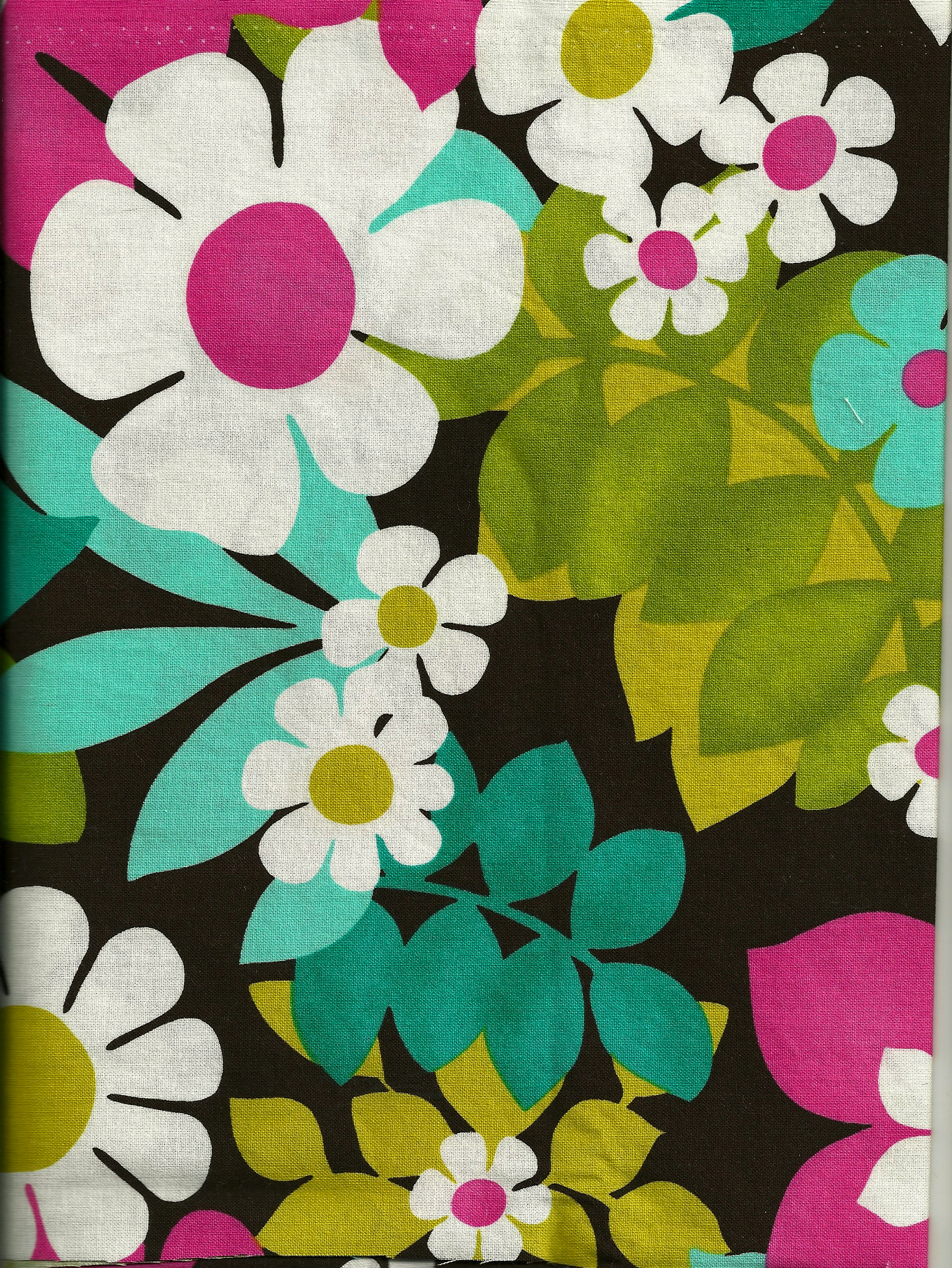
I had picked out this tropical-look fabric, ordered a swatch, then the yardage from B & J Fabrics in New York.

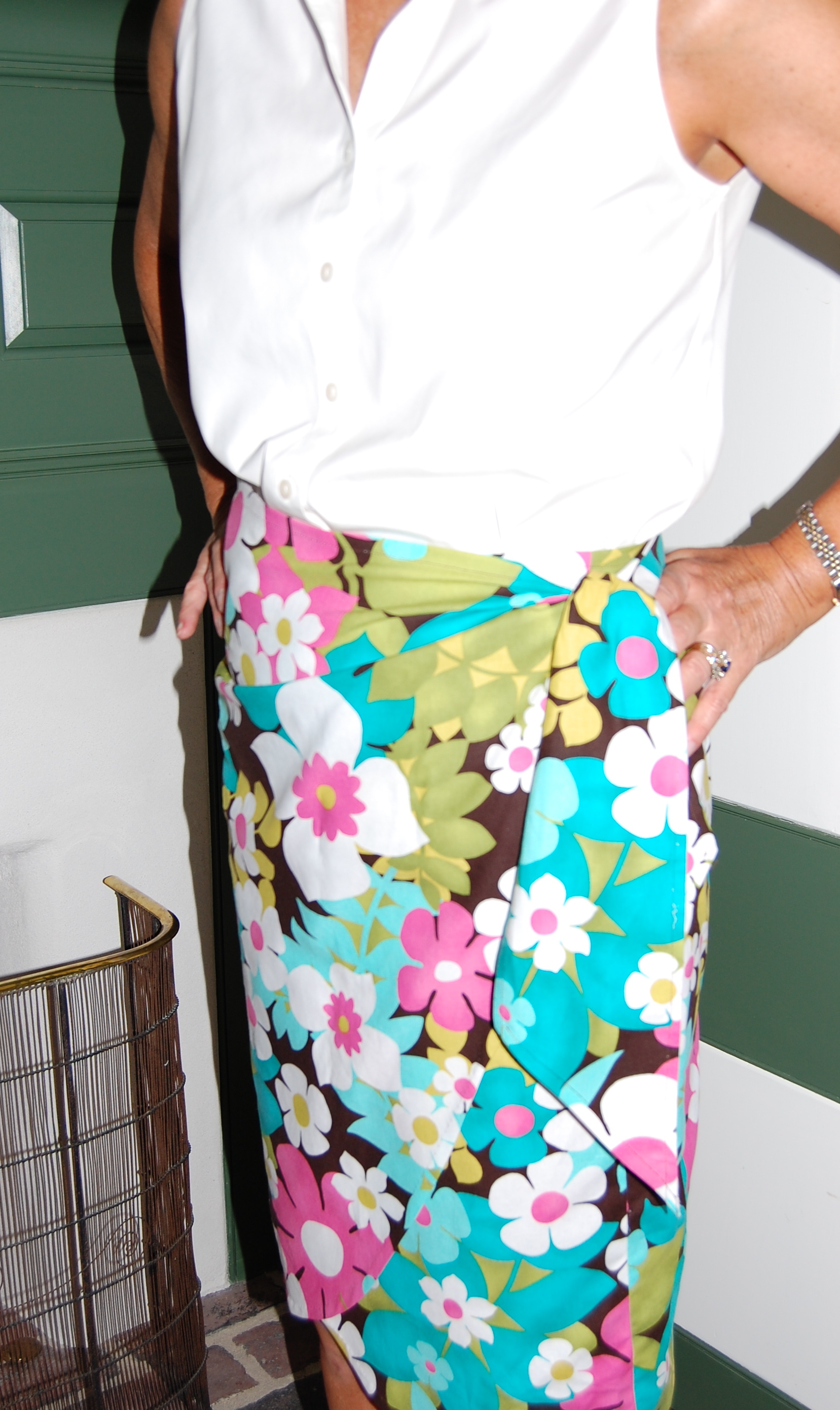
Here’s how it all turned out:

Not quite Dorothy Lamour.

A close-up view, showing the ties.

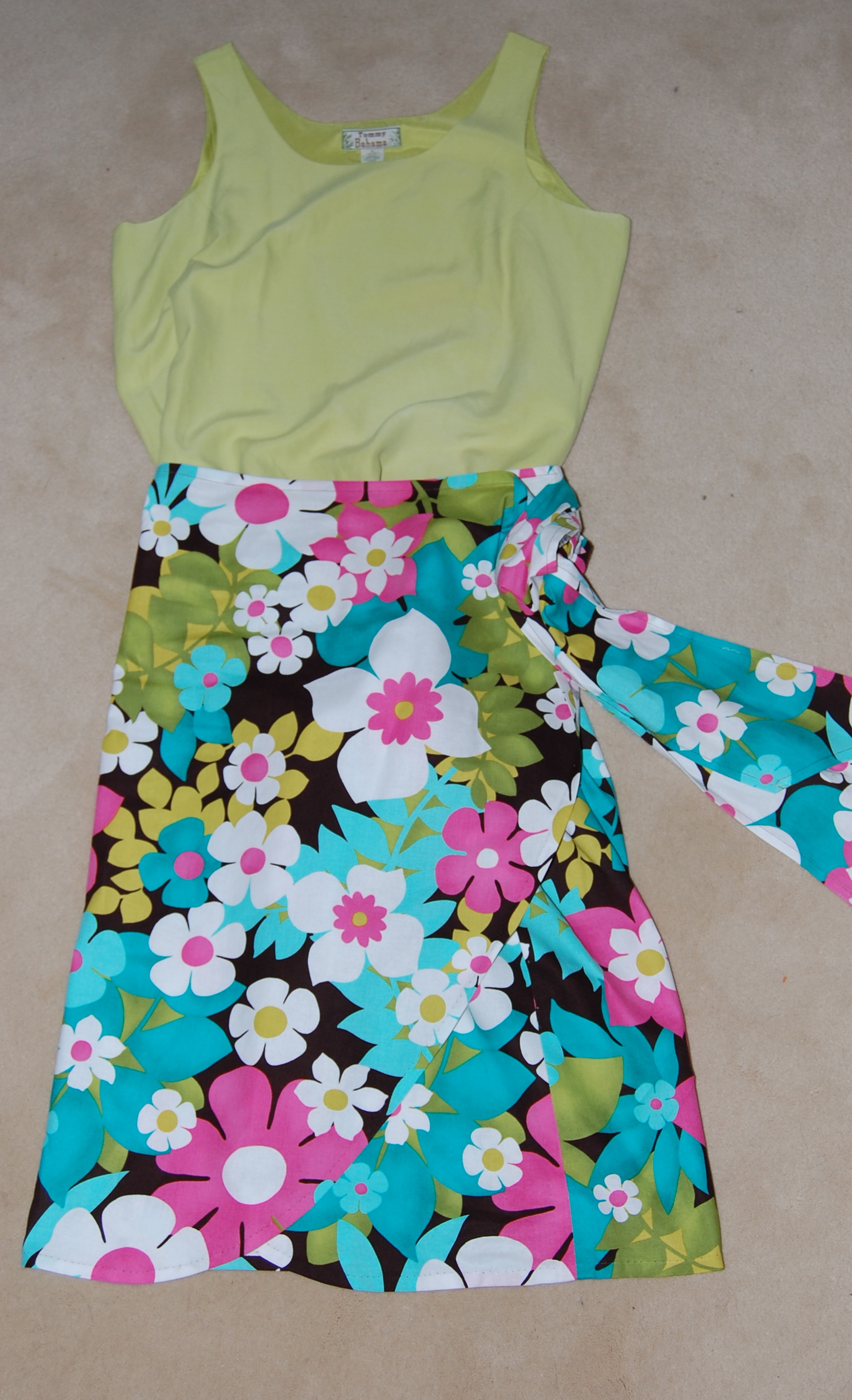
When I was putting my new skirt in my closet, I spied my chartreuse green Tommy Bahama top, which is almost vintage itself, it’s so old.  But, h-m-m-m-m, the wheels started turning and I paired the two together here:

The green in the top actually matches the green in skirt better than it shows here. Just wish I had some green shoes to match…

From 1937 – to 1985 – to 2012, I suspect this is one style which will never go out of style.

16 Comments

Filed under 1980's dress patterns, Asian-inspired dress designs, Uncategorized, vintage Vogue Designer patterns, Vogue patterns

Parlez vous français?

Unfortunately I do not – yet.

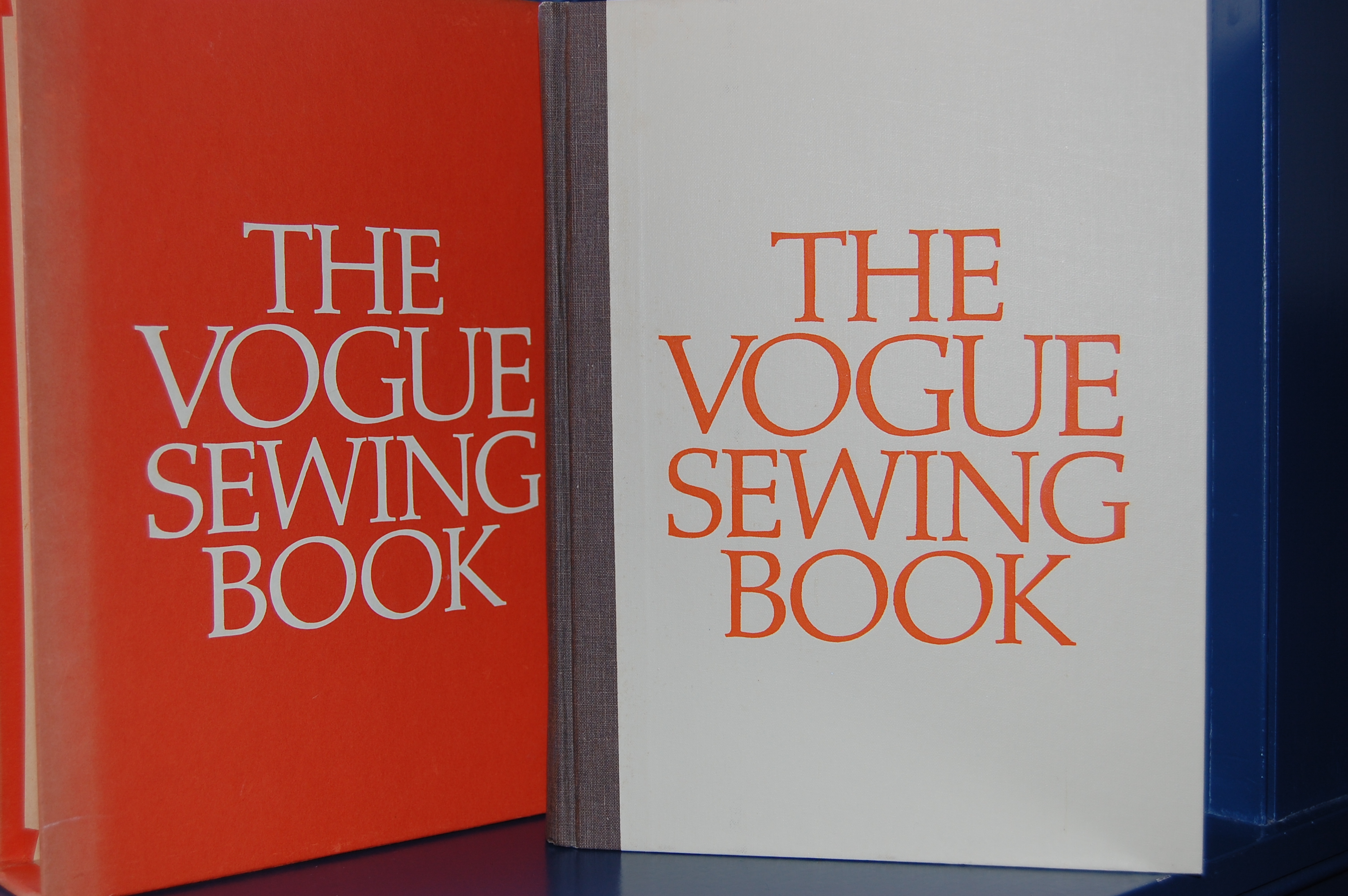
It is undeniable that French is the universal language of fine sewing.  I have found myself often going to my copy of The Vogue Sewing Book (copyright 1970 by Vogue Patterns, New York, New York) to check translations and pronunciations of certain French fashion terms in the list at the back of the book.

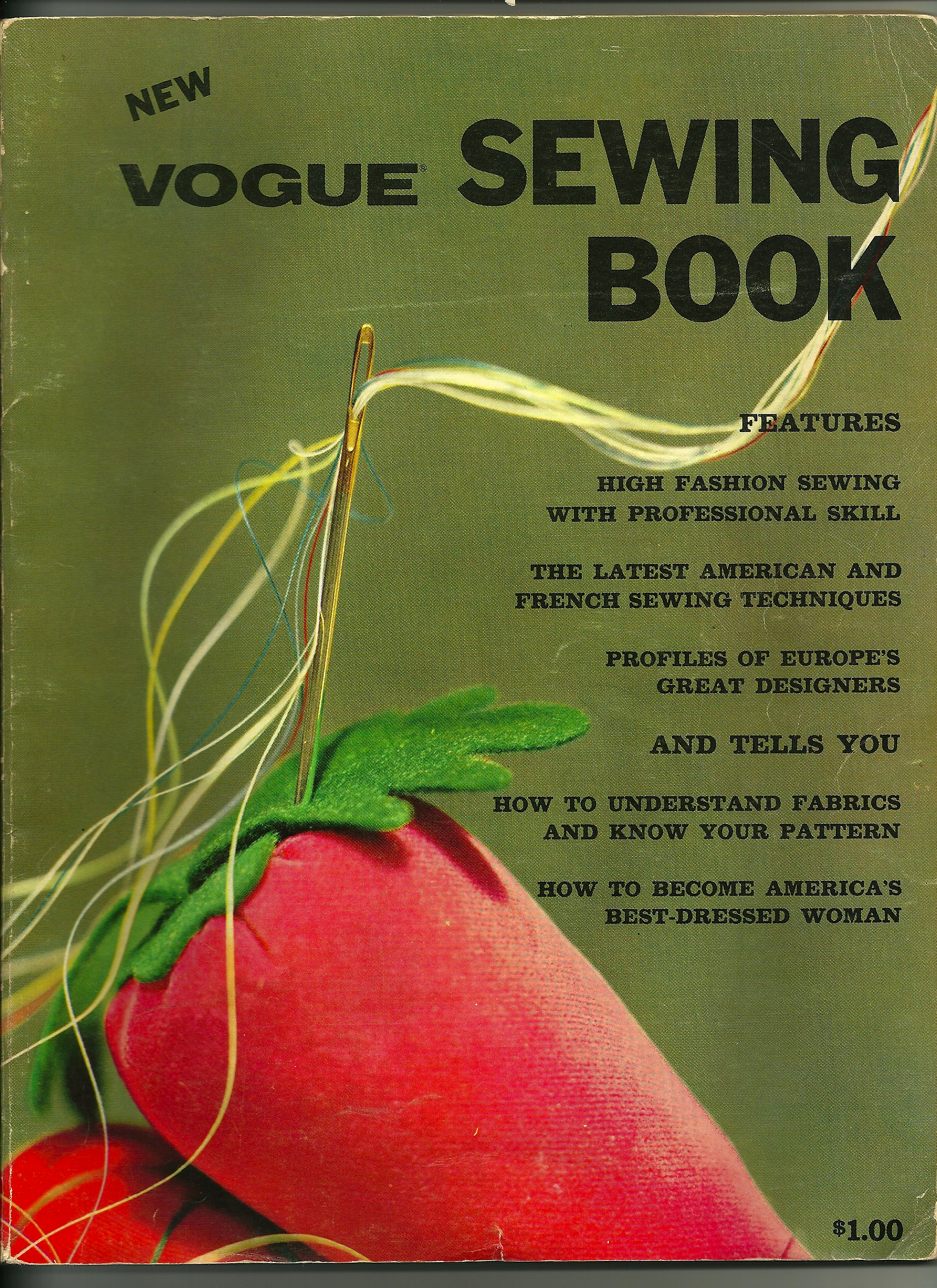
A few weeks ago I picked up a paperbound copy of this Vogue Sewing Book from 1963:

Notice the price on this paperback book: $1.00!

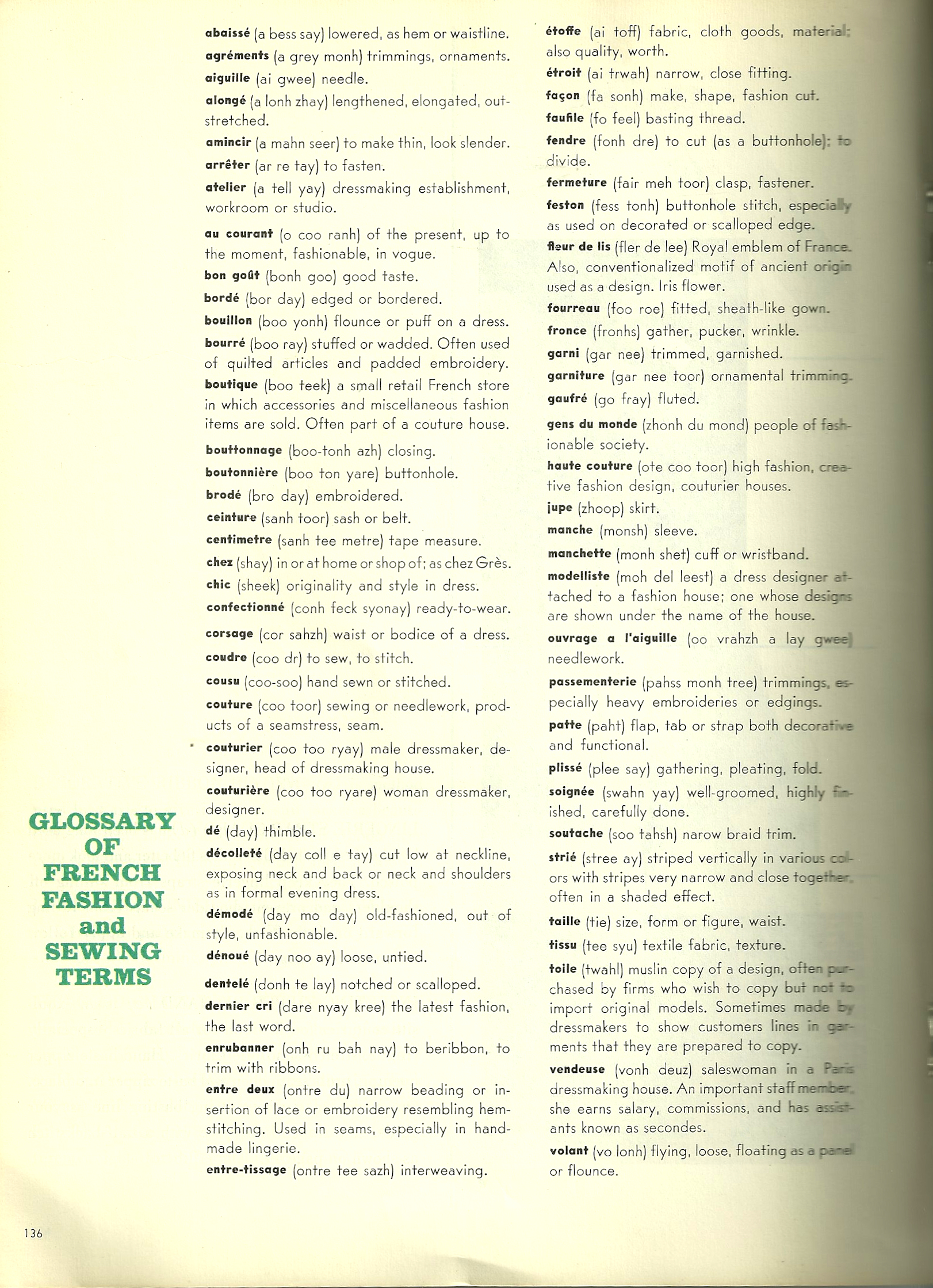
I was intrigued by the teasers on the front, such as “High Fashion Sewing with Professional Skill”, “Profiles of Europe’s Great Designers” and especially by “How to Become America’s Best-Dressed Woman.” (I figured that was one tutorial I did not want to miss!)  What I didn’t know was that the final page of this book is a “Glossary of French Fashion and Sewing Terms.”

One page – full of information…

I just assumed that this list would be the same as the one in the hardbound book I already owned.  Not so!  While there is certainly some crossover of terms (such as the common ones:  au courant, boutique, couturier and couturiere, chic, haute couture, vendeuse, volant, etc.), other terms appear on only one list, such as amincir (1963 book, meaning “to make thin, look slender”), gens du monde (1963 book, meaning “people of fashionable society”), and chemise (1970 book, meaning “blouse or style with manshirt details”).  At least one term is two variations on the same meaning – and very much in our vocabulary today:  confectionne (1963 book, meaning “ready-to-wear”) and prêt a porter (1970 book, meaning “ready to wear”, but with this addition: “more current than ‘confection’”).

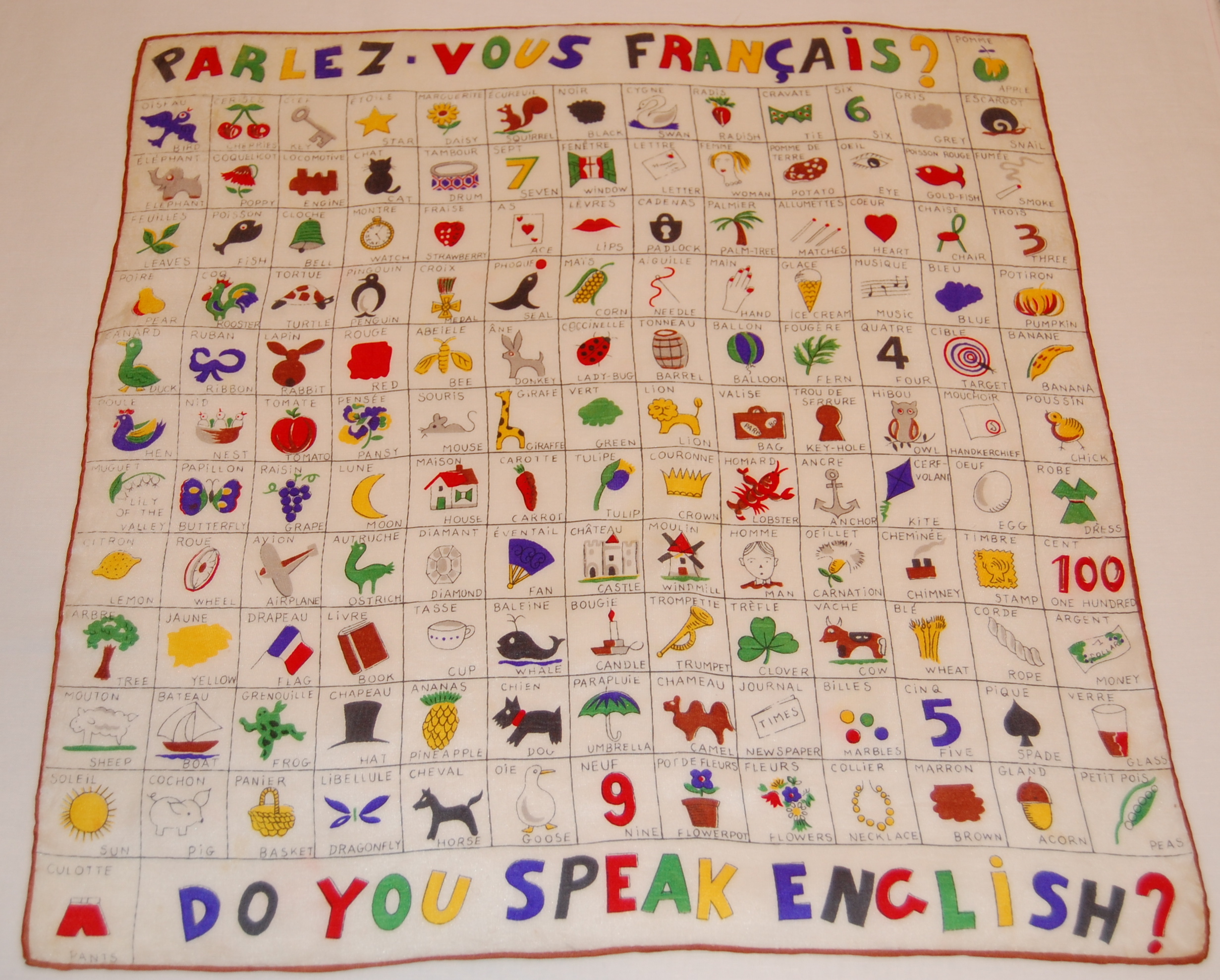
I like to think that I began my “French lessons” last summer, when I purchased this silk neck scarf from a vendor at The Vintage Fashion and Textile Show in Sturbridge, Massachusetts.  (I blogged about this fun day with my daughter back in January):

French for beginners!

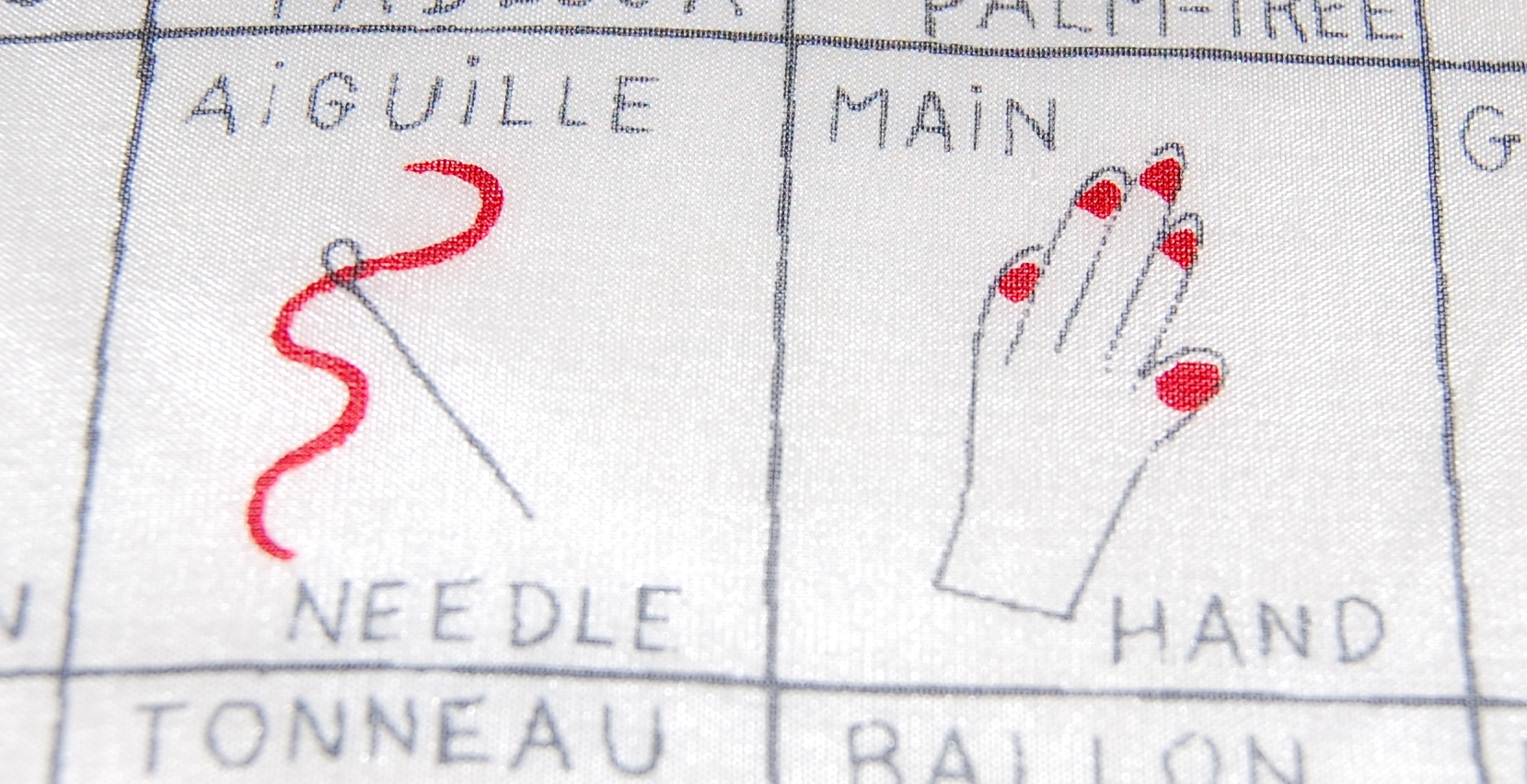
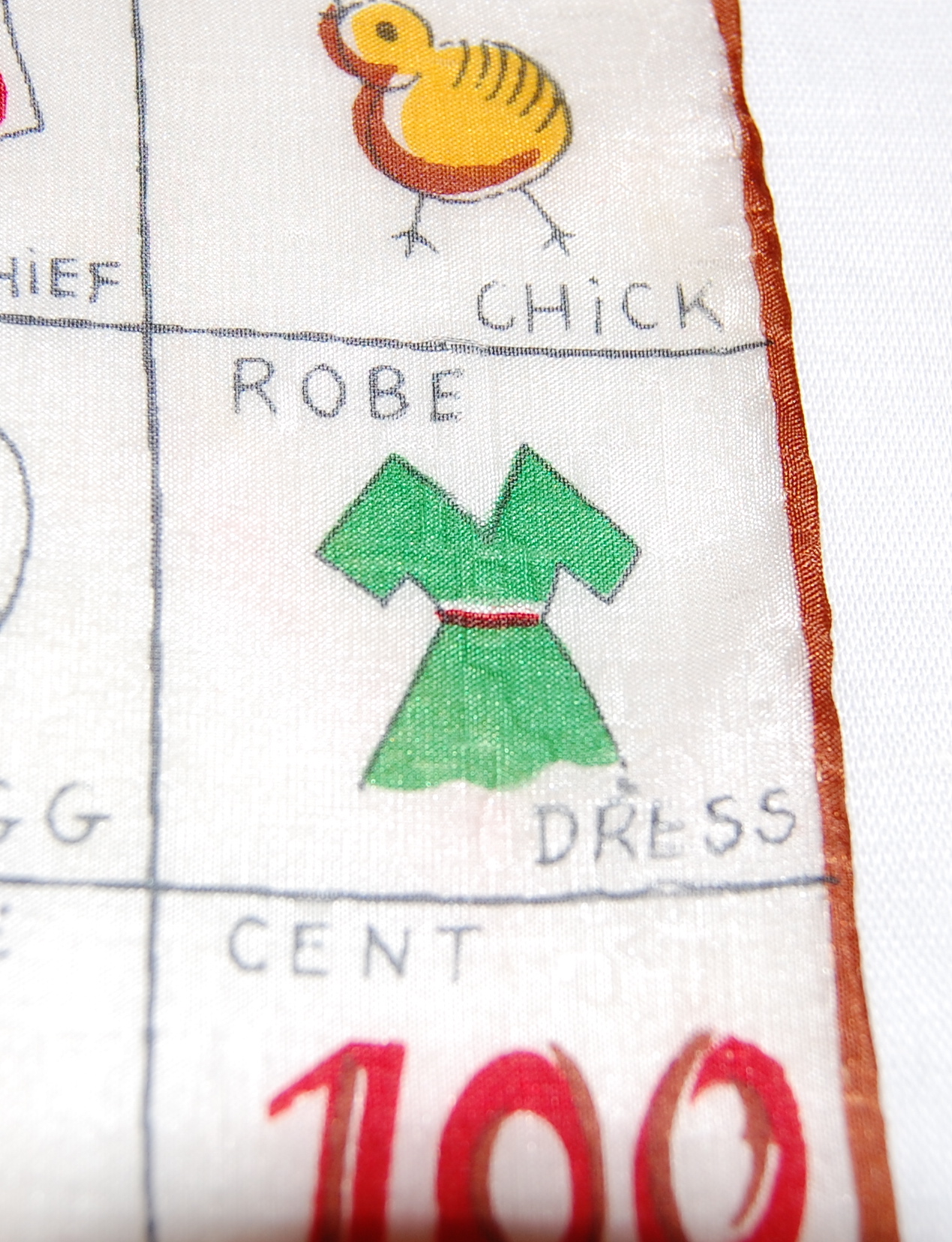
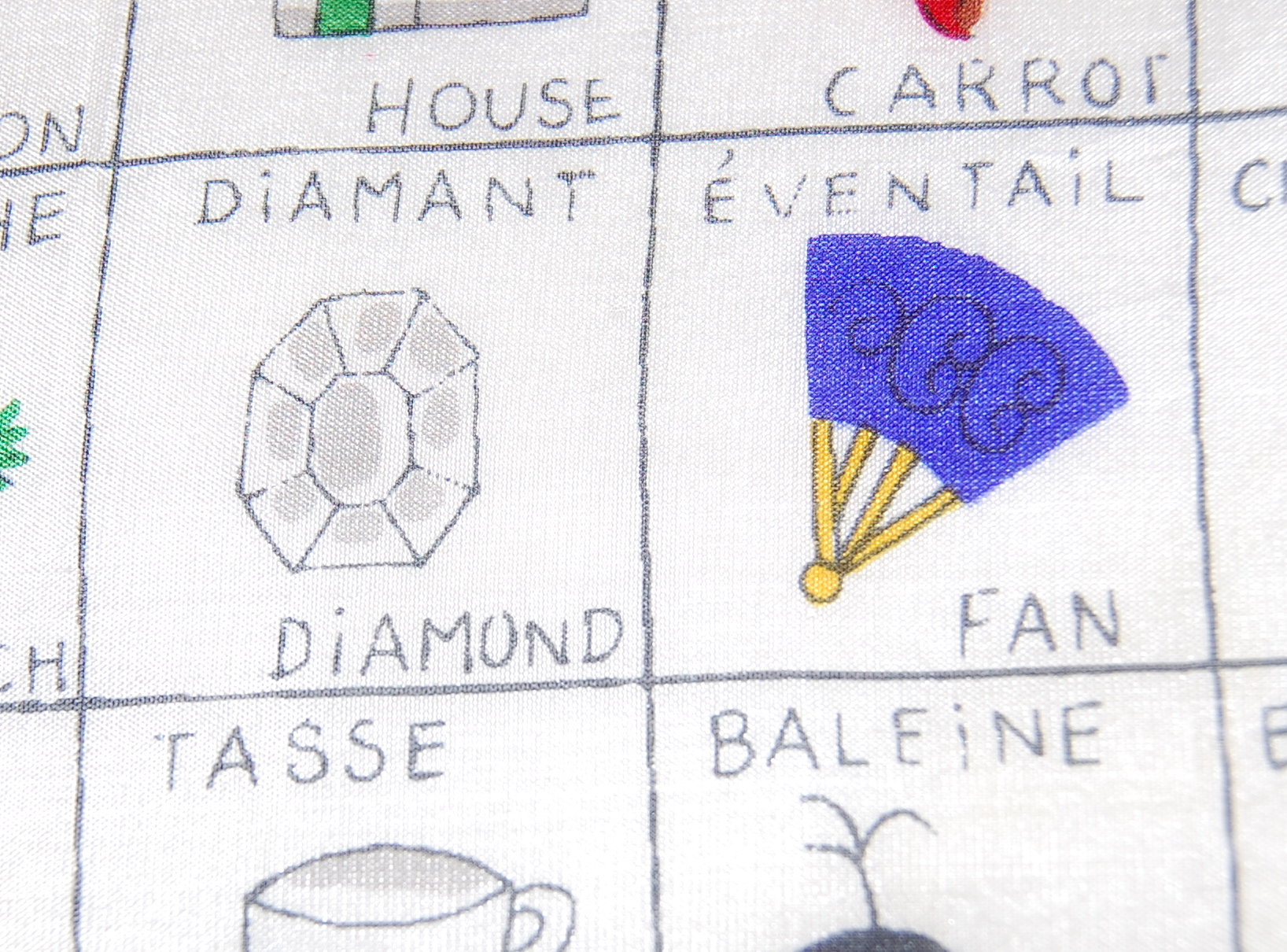
Of course, this scarf has its own share of fashion and sewing terms featured on it:

It’s quite appropriate that the needle and the hand are side by side.

A stylish green dress.

A diamond and a fan to complete your outfit!

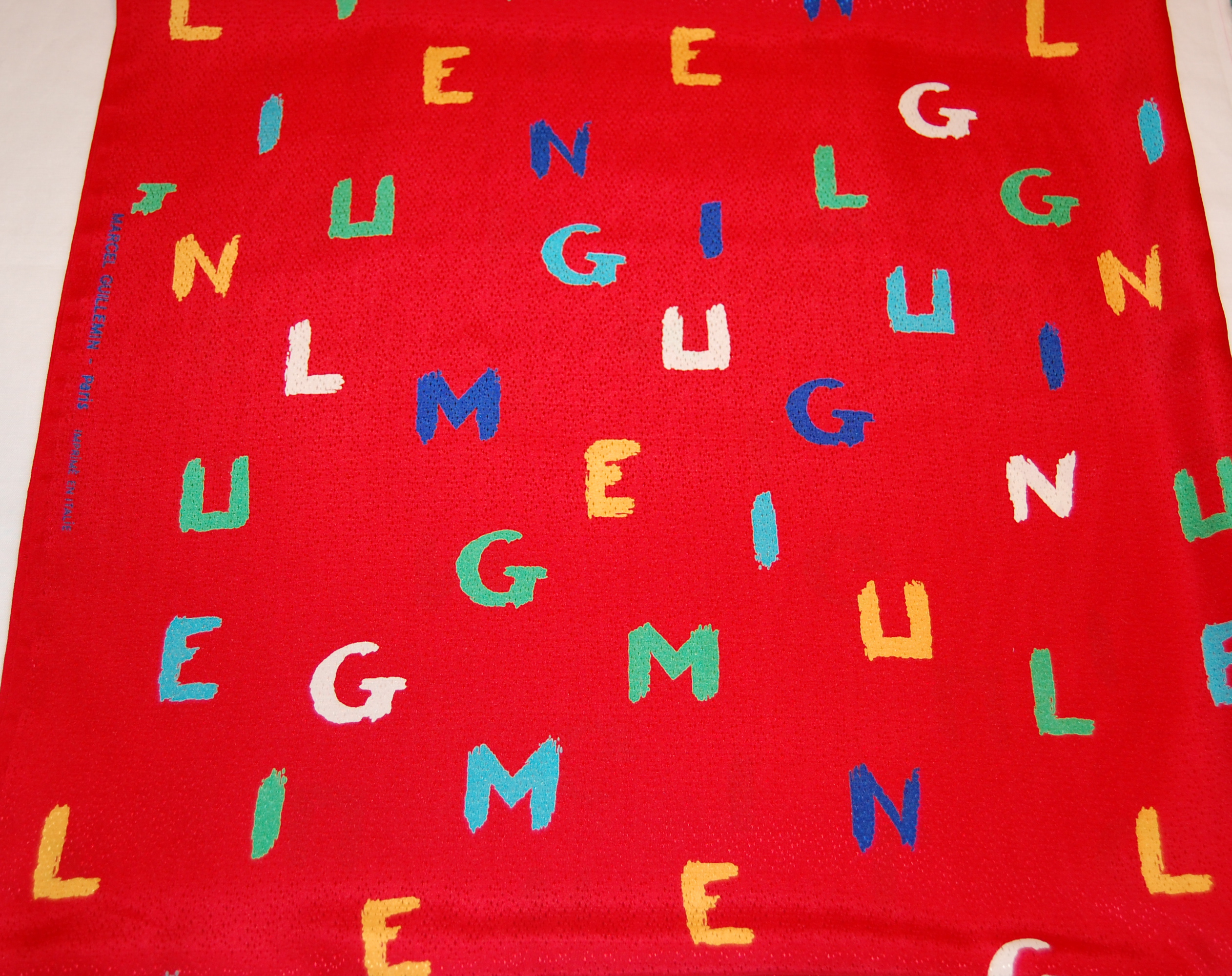
I guess I must be attracted to alphabet-related textiles –  like this one, which I purchased online from Britex last Fall:

A lustrous crepe de chine.

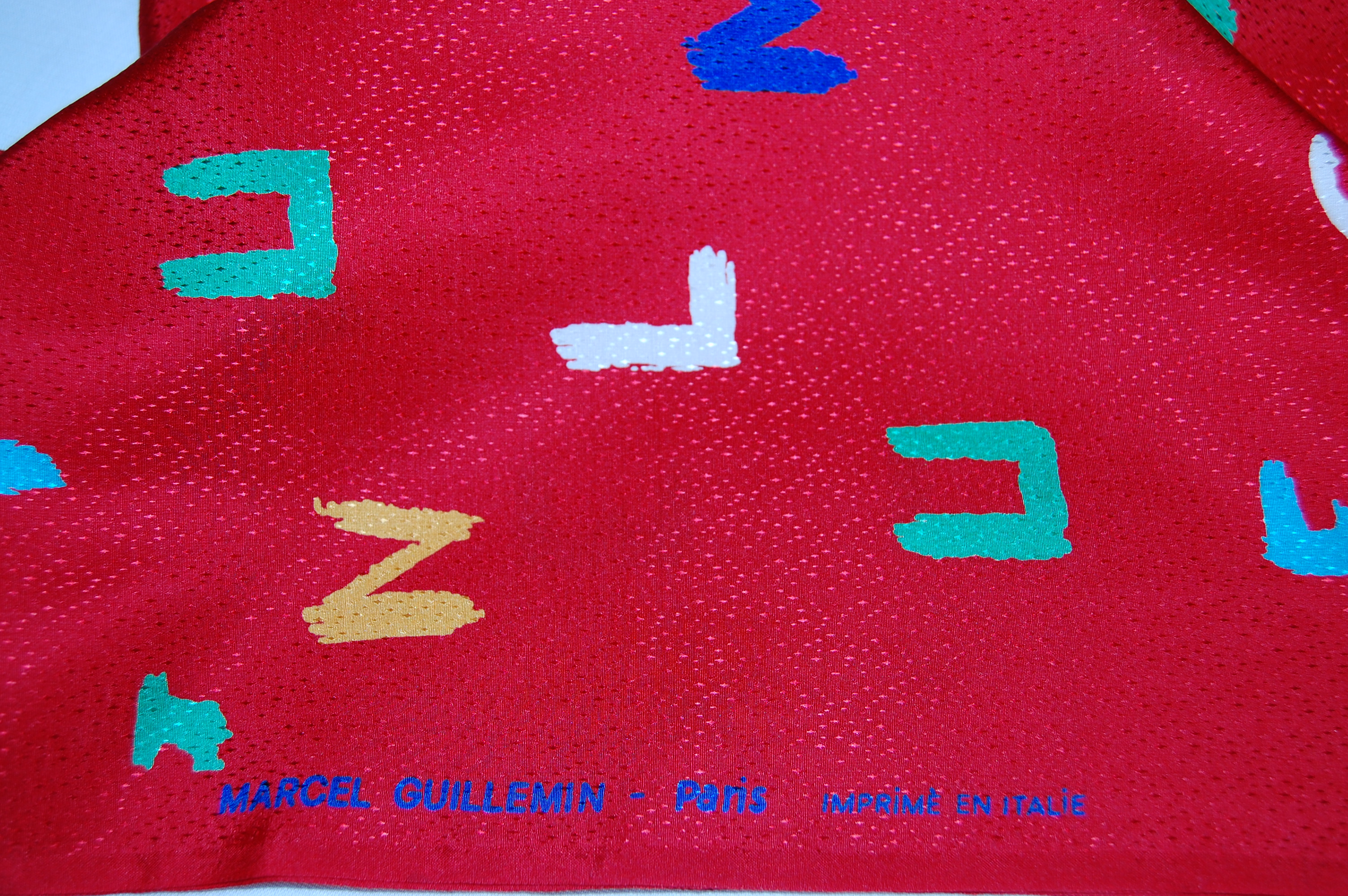
The tell-tale selvedge edge.

A design by the house (“chez” in French!) of Marcel Guillemin, Paris, it very subtly spells out that name in the letters.  I have two yards of this beautiful fabric, and I keep seeing it as the lining in a Chanel-type jacket…

It is plans like this and some of those beautiful French fashion/sewing terms that help to inspire me to become a better dressmaker.  Something else, too, is inspiring me to dare to think of myself as being my own “couturiere”: my enrollment and active participation in The Couture Dress, on online Craftsy course taught by Susan Khalje.   I am currently working on my muslin (also known as “toile”) for my version of the class-suggested “fourreau” (fitted or semi-fitted, sheath-like dress).   I may not be thinking in French yet, but I am definitely dreaming in it!

2 Comments

Filed under Scarves, sewing in silk, Uncategorized, vintage Vogue patterns from the 1960s, vintage Vogue patterns from the 1970s

It’s a wrap!

What could be easier than this: a garment with no buttons and no buttonholes, secured by sashes which can be forgiving to your waistline and still be flattering?  Diane Von Furstenberg immortalized the “wrap dress” in the early 1970s; its many variations became available to home dressmakers through the Vogue Patterns Designer series, and those original patterns now command significant prices on eBay and Etsy.

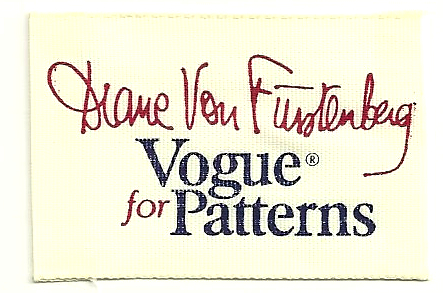
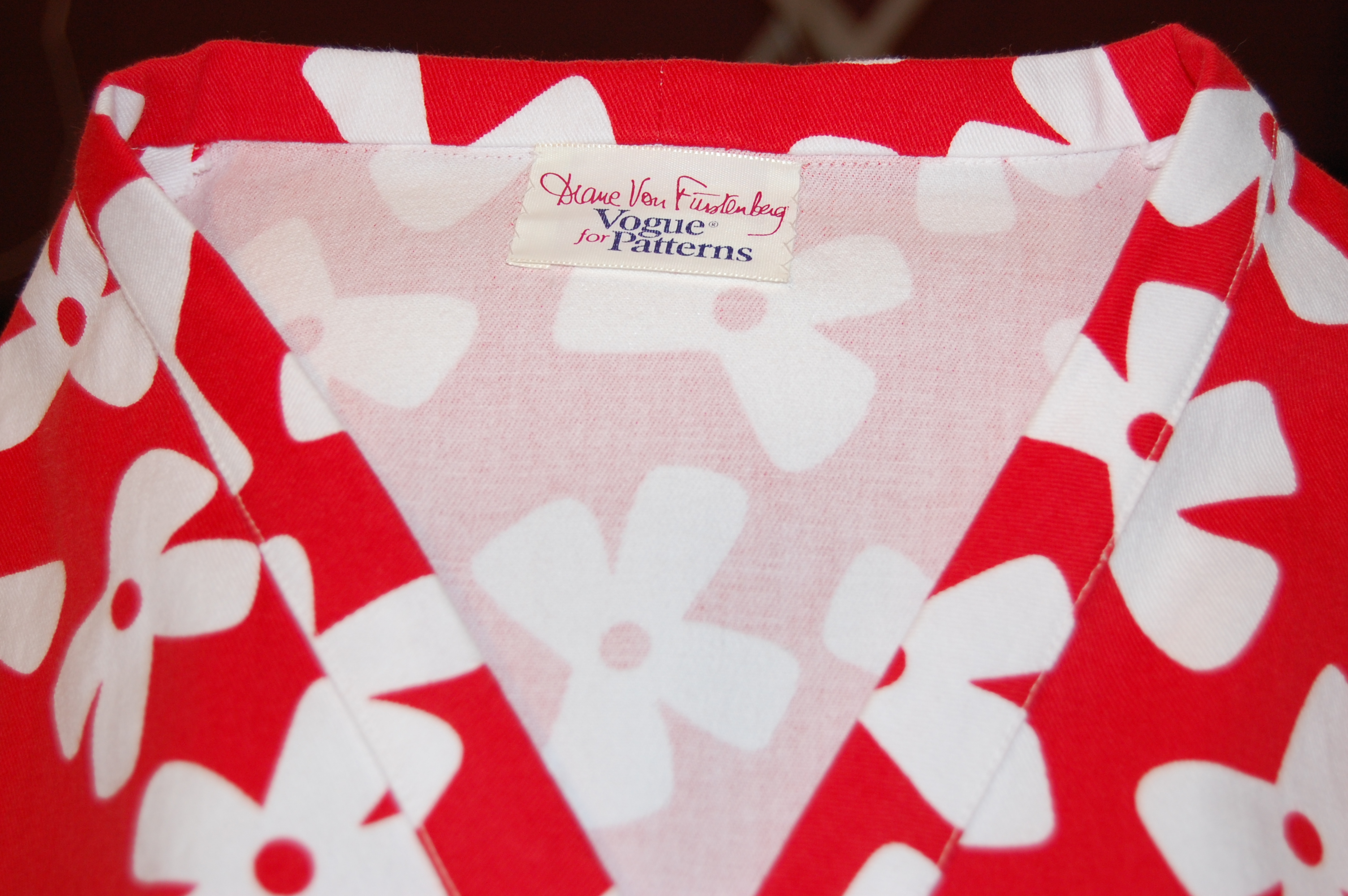
This is the label which was provided to purchasers of Diane Von Furstenberg patterns.

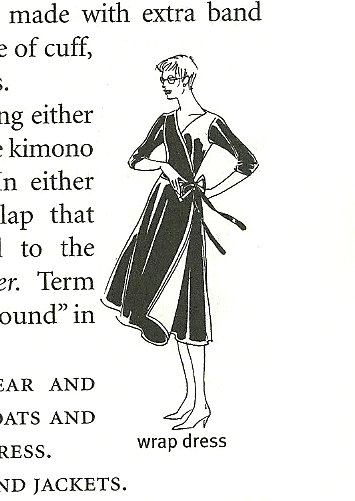
But – what came before Von Furstenberg’s classic dress?  Many of us remember our “wraparound” skirts from the ‘60s and ‘70s – some were “reversible”, some were made of a lightweight sailcloth type of fabric and were kind of stiff, some were gathered, and some were A-line.  Towards the late ‘60s, according to The Fairchild Dictionary of Fashion (3rd Edition, Fairchild Publications, Inc., New York, 2010), the term “wraparound” was shortened to just “wrap” – and that is the term we know and use today.  The illustration in this book surely is based on DVF’s classic wrap dress.

Who wouldn’t recognize this as a DVF dress?

One of Diane Von Furstenberg’s famous statements is “I design for the woman who loves being a woman.”  (Think dresses!)  In The Saint James Fashion Encyclopedia (Richard Martin, author; Visible Ink Press, Detroit, MI, 1997), she is quoted:  “…I believe in marrying fashion and function – chic style and easy comfort, maximum impact and minimum fuss.”  It’s easy to see that she practiced what she preached (and still does…) when you look at this Vogue pattern:

A classic style by Diane Von Furstenberg.

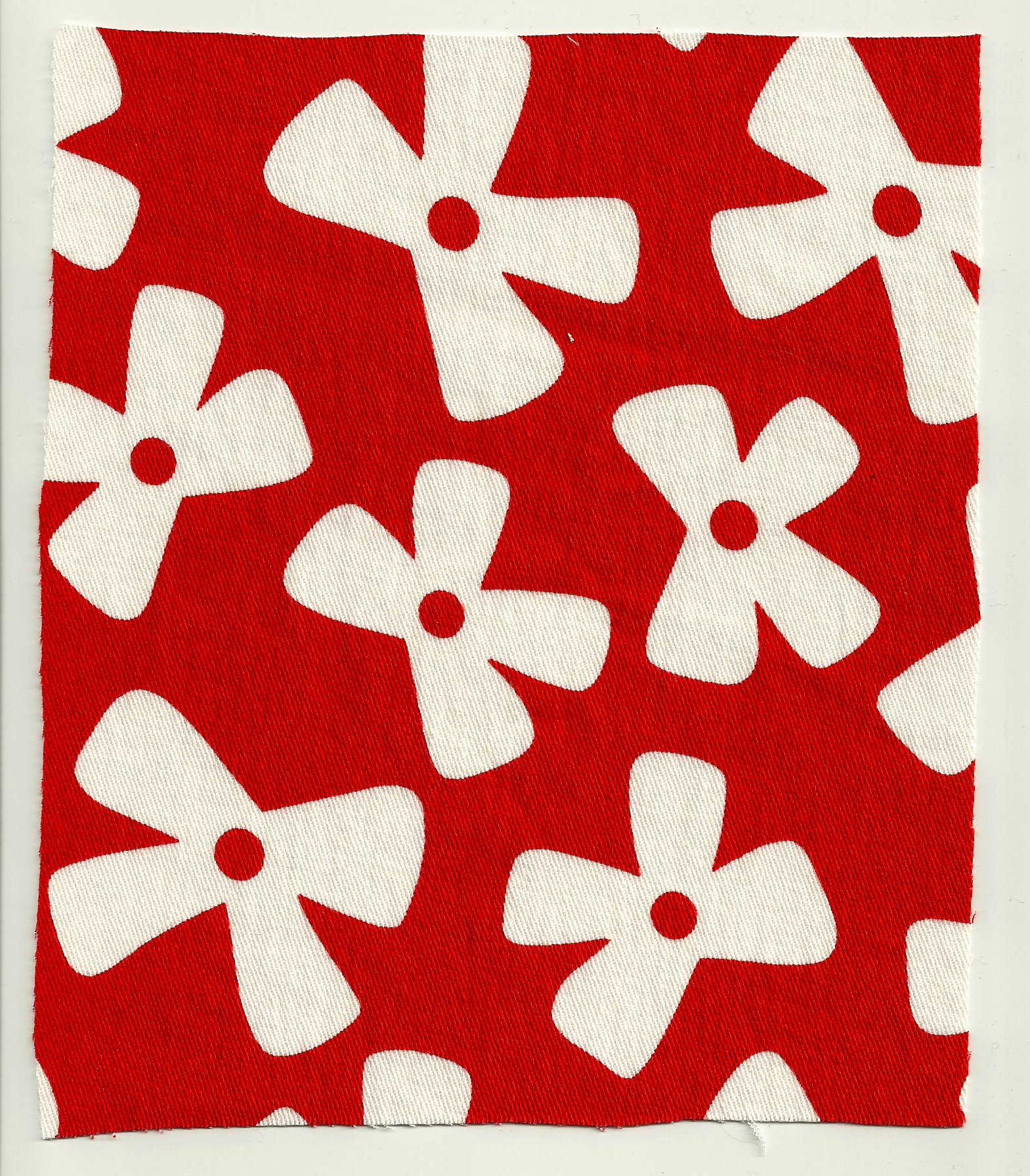
About the time I purchased this pattern on Etsy, I saw this fabric on Mood Fabric’s website:

This is a cotton twill, but it’s stretchable!

The bright, happy design reminded me of some of the original DVF-designed fabric, although this fabric is actually by Oscar De La Renta.  No, it wasn’t a stretchable knit which the pattern stipulated, but it was a stretch fabric, so I took a gamble and ordered it with my DVF pattern in mind.

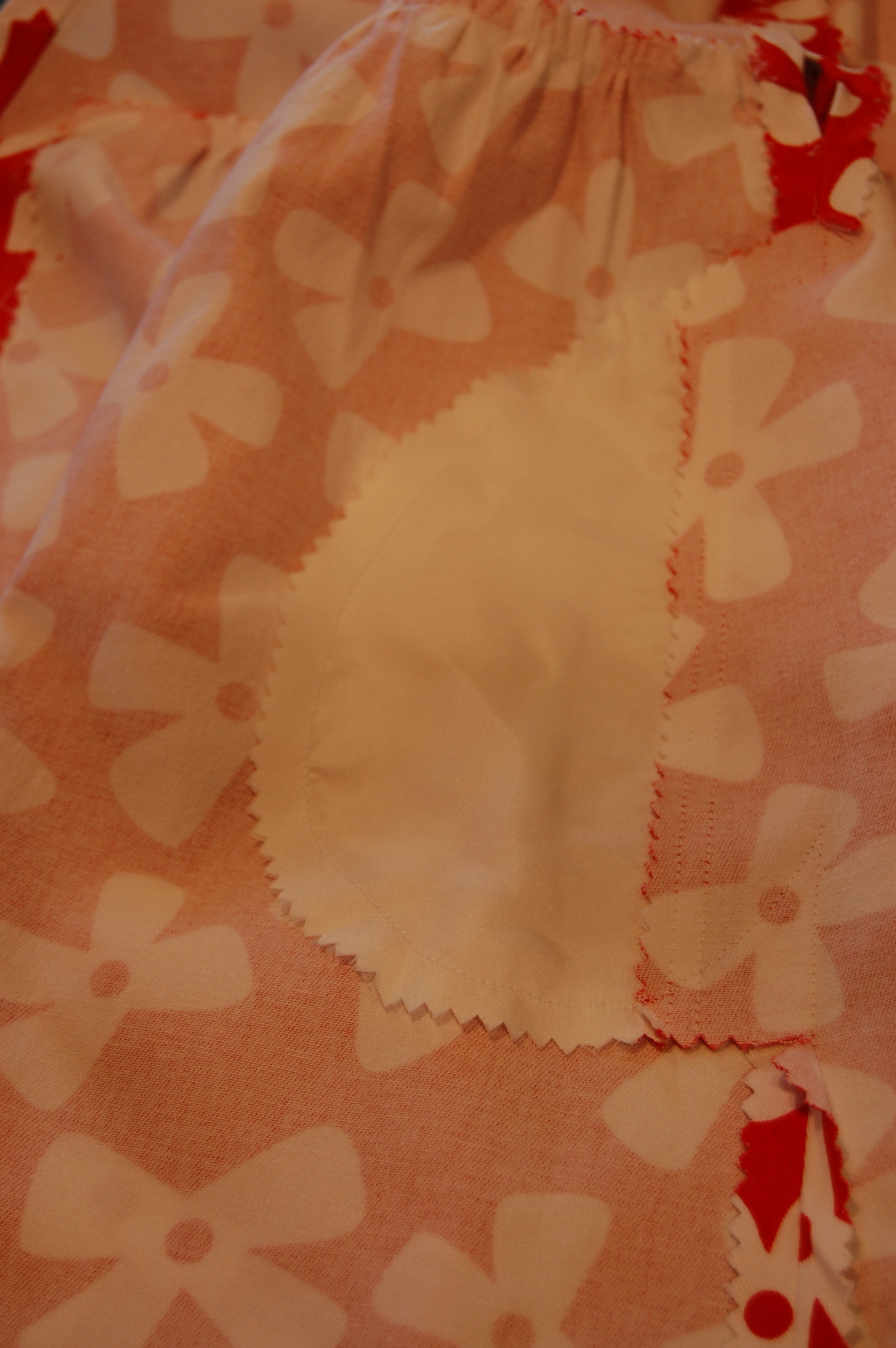
I actually liked the heavier weight of this fabric (I’ve never been a fan of sewing jersey knits), but I had to be extra diligent to minimize bulky seams on the interior of the dress.  Instead of self pockets, I made the pockets out of some leftover white silk lining fabric from my raincoat.

One of the pockets.

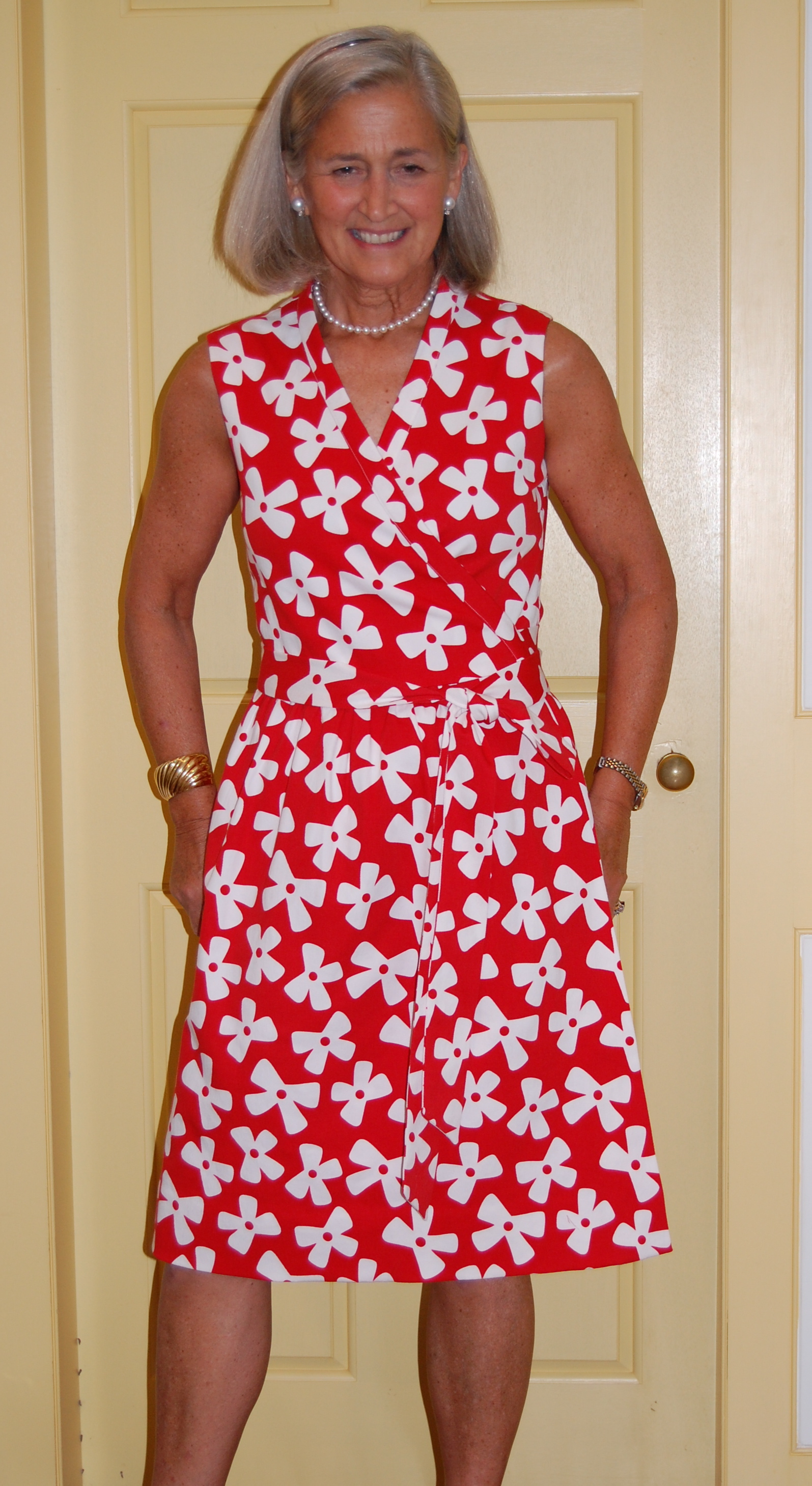
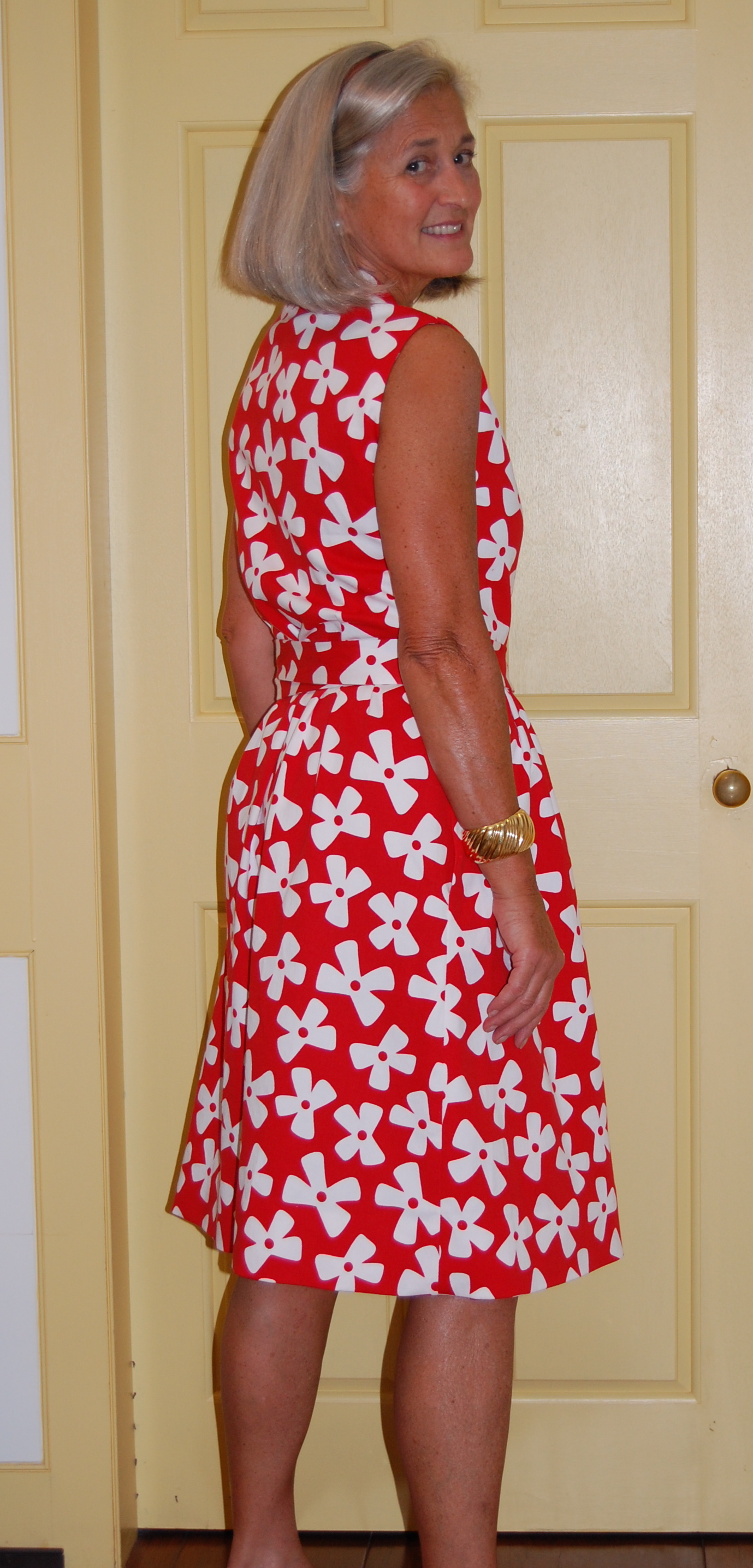
Instead of turning under edges on the facings, I double-stitched and pinked the edges, and used stretchable hem tape for the hem.  It all seemed to work and here is the finished dress:

This cheery fabric could brighten any day!

A bit of a back view.

I was thrilled to get that original label with my pattern – and here is the finishing touch for my DVF wrap dress:

My final stitches on this dress were to attach the label.

Feminine, timeless, versatile:  her dresses are more than fashion – they are enduring style.

10 Comments

Filed under Uncategorized, vintage Vogue Designer patterns, vintage Vogue patterns from the 1970s, Vogue patterns

Decisions, Decisions.

For several years my mother-in-law had a sign on her refrigerator stating “So many men… So little time”.  As a wife and a mother of three sons, I guess she was either telling the truth – or maybe doing a little daydreaming.  I don’t post things on my fridge, but if I did, it might read, “So many patterns… So many decisions”.  And that, too, would be a combination – of the truth – and quite a bit of daydreaming!

Usually as I am working on an item, I am already thinking about the next one – and I often know what pattern I’ll be using next.  However, I finished my silk tunic not quite decided yet.  I figured I was ready to tackle something a little more complicated, after the easy construction of the tunic (and a few days off doing other things!)  So what was it going to be?  I had it narrowed down to these five patterns/projects:

1) View B of this dress (for summer), made up in a Moygashel linen, with a contrasting belt.  This pattern has persistently been popping in my pattern box ever since I purchased it on Etsy  in early January.

The length of this dress as shown on the envelope is very 195os. I’ll be making it in knee-length.

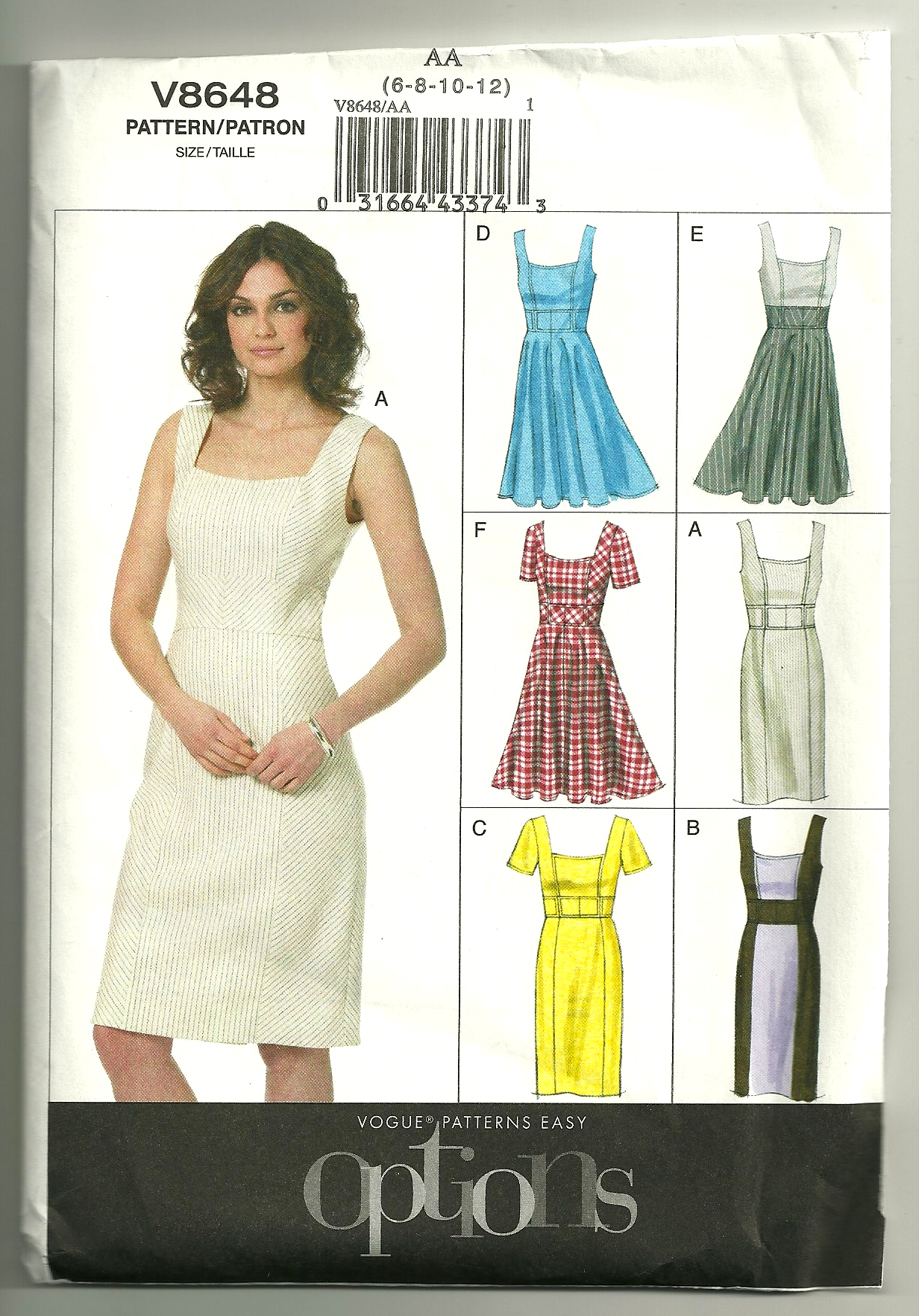
2) No, this pattern is NOT vintage.  I signed up for The Couture Dress class taught by Susan Khalje on Craftsy, and this is the dress pattern which is sent with class enrollment.  Actually, views A and C both have a 1960’s feel to them – classic and chic!

So – what will it be? Sleeveless or short sleeves? It will definitely be the straight-skirt version. And I love the square neckline.

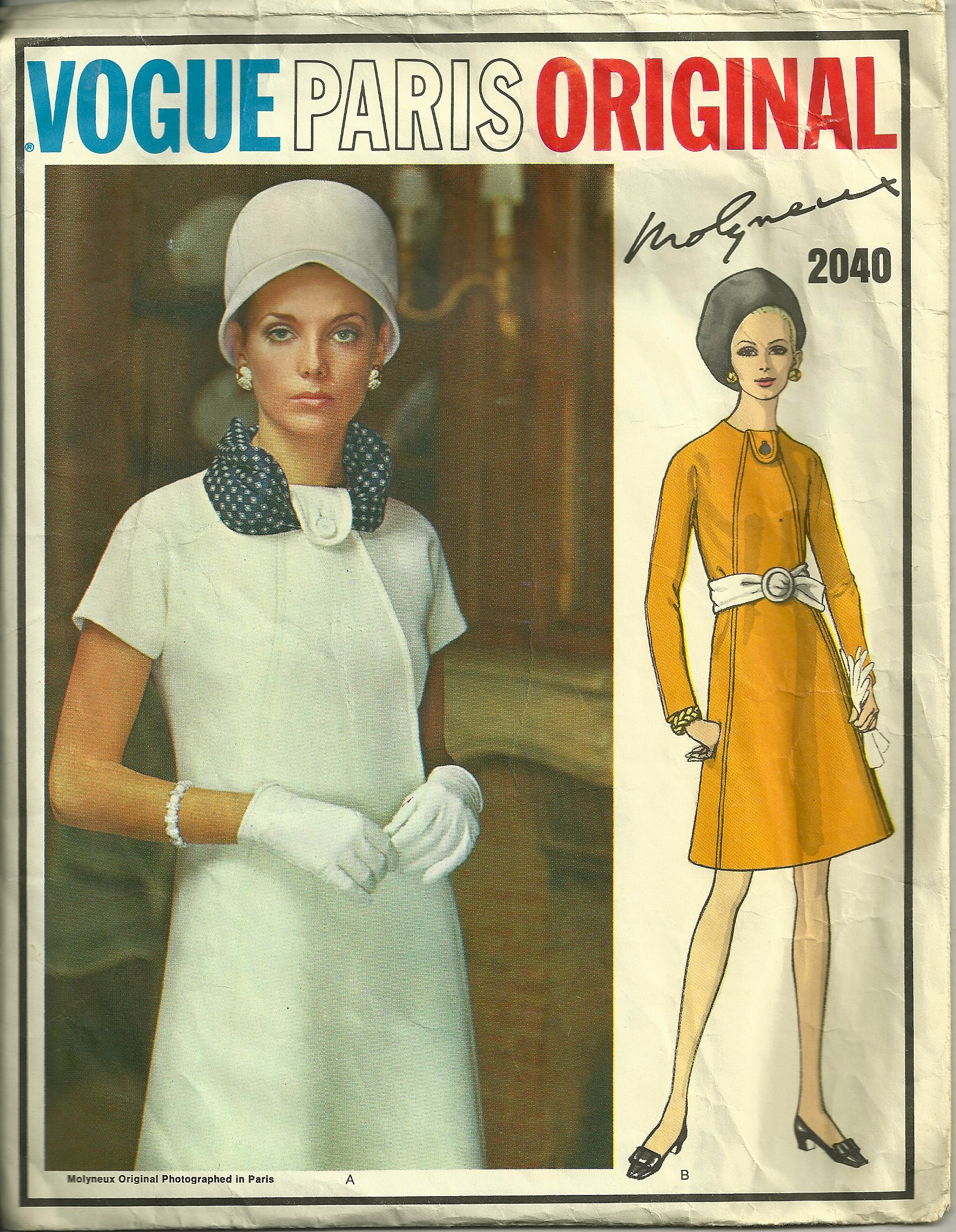
3) Ah, Molyneux!  Another short-sleeved dress to be made in linen.  The seaming detail is so lovely on this design.  I will have to practice my “pouty” look, however, if I hope to look an inch as good as the model on the envelope.

The kimono sleeves have gussets, which will make this dress comfortable to wear.

4) After missing out on several Diane von Furstenberg-designed patterns on eBay, I was very excited to find this one in my size on Etsy in mid-May.  What is it about D von F’s dresses that makes them so timeless?

I owned this pattern in the ’70s, when I bought it for $1.50 at my local fabric store. Sadly I didn’t save it or the dress I made from it, so I had to buy it again! I originally made it up with short sleeves, but now I prefer the sleeveless version.

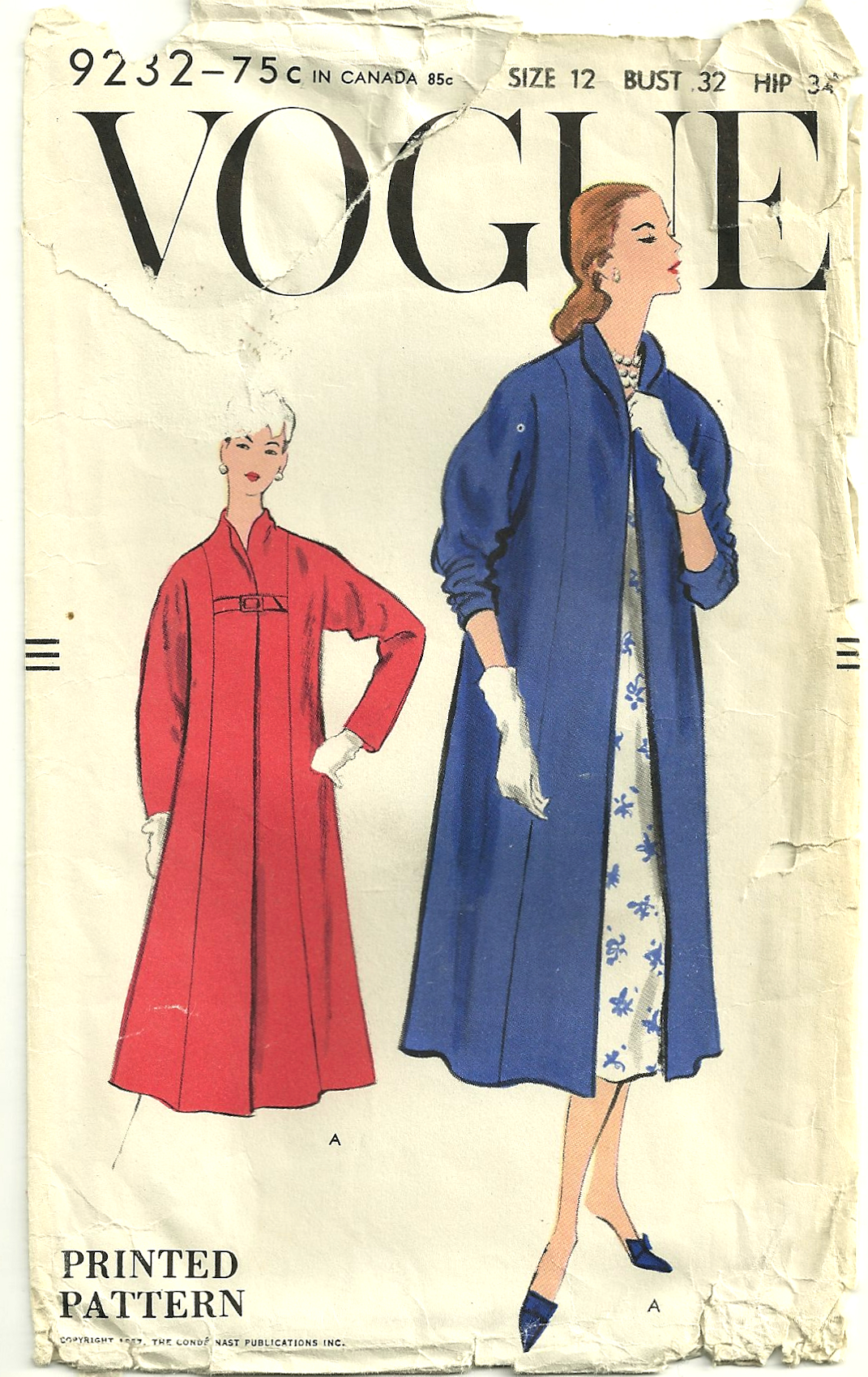
5) I featured this pattern in a post shortly after I started my blog.  Whether you call this a “swing” coat or a “clutch” coat –  it’s 1950’s style has been in my mind for months!

I love this coat with the sleeves pushed up, as shown in blue.

The truth of the matter is that I will eventually be making dresses or a coat from all these patterns, but as I usually work on only one project at a time, I had to choose just one.  Which one?  It is underway as the thread- and scrap-covered floor of my sewing room will attest!  I made my decision . . . but I have many stitches to go – and many stitches to go – before I can post it.

9 Comments

Filed under Coats, kimono sleeves, Linen, Uncategorized, vintage Vogue Designer patterns, vintage Vogue patterns from the 1950s, vintage Vogue patterns from the 1960s, vintage Vogue patterns from the 1970s, Vogue patterns

What should a button do?

The last several things I have sewn have been button-free, using zippers or hooks to accomplish that all-important task of “closure”.  I’ve discovered I can go button-free just so long, and then I have to indulge my passion for those small wonders, with their miraculous power to be both eye-catching and practical.

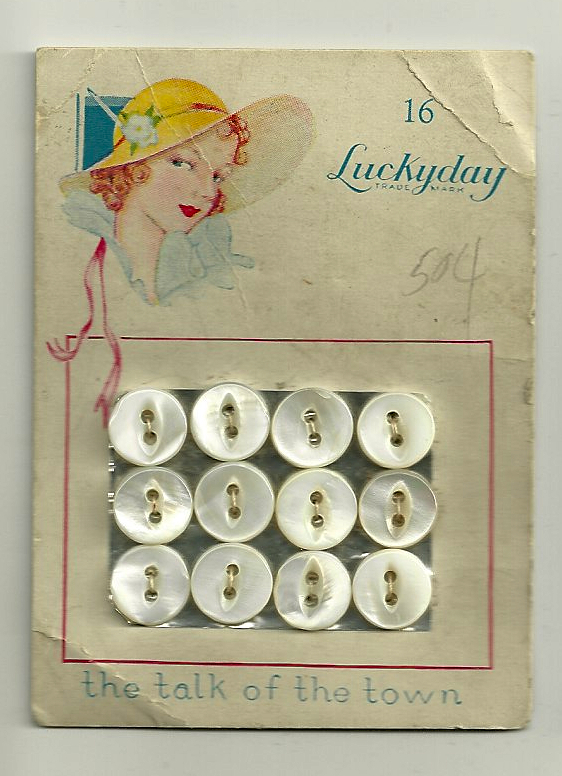
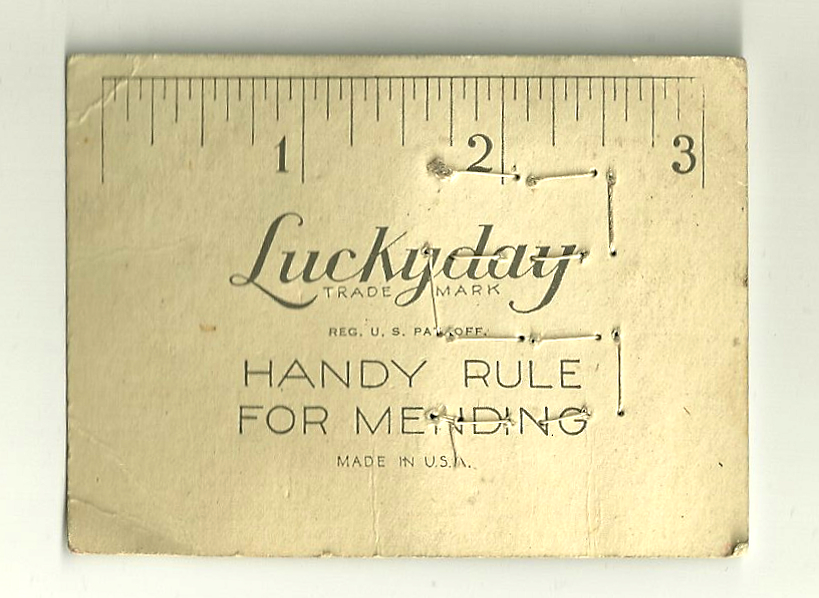
I will leave a serious discussion of vintage buttons to the experts, but looking anew at some of my still-carded vintage buttons has revealed some interesting tidbits, too good not to share.  For example, it seems a lot of attention was given to “presentation” of the buttons on their cards.  These Luckyday buttons not only have a sweet lady on the front of the card, there is also a “Handy Rule for Mending” on the back.

I am guessing these buttons are from the late 1930s or early ’40s.

I love this feature!

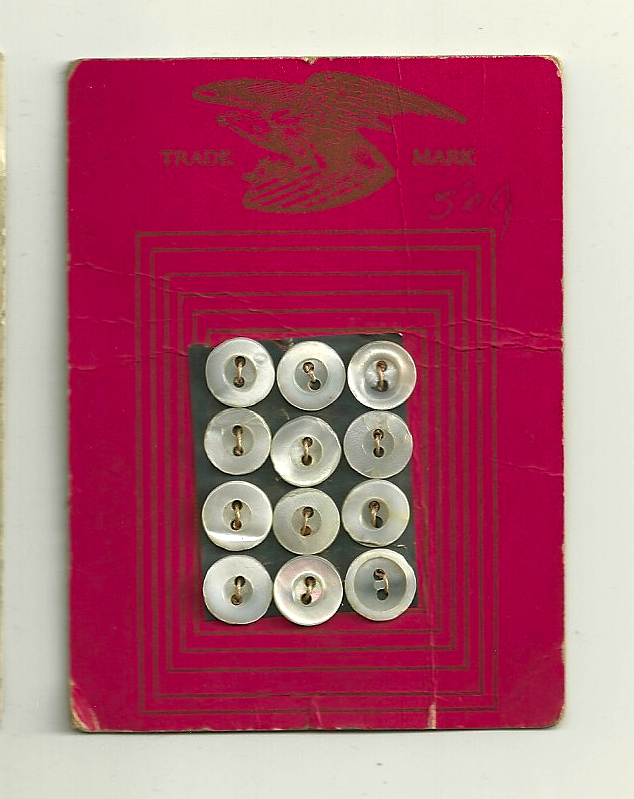
It also seems that patriotic themes were commonplace.  There is no company named on these buttons, just the American eagle on a shield with the words TRADE MARK.

These simple buttons are quite eye-catching on this deep red card.

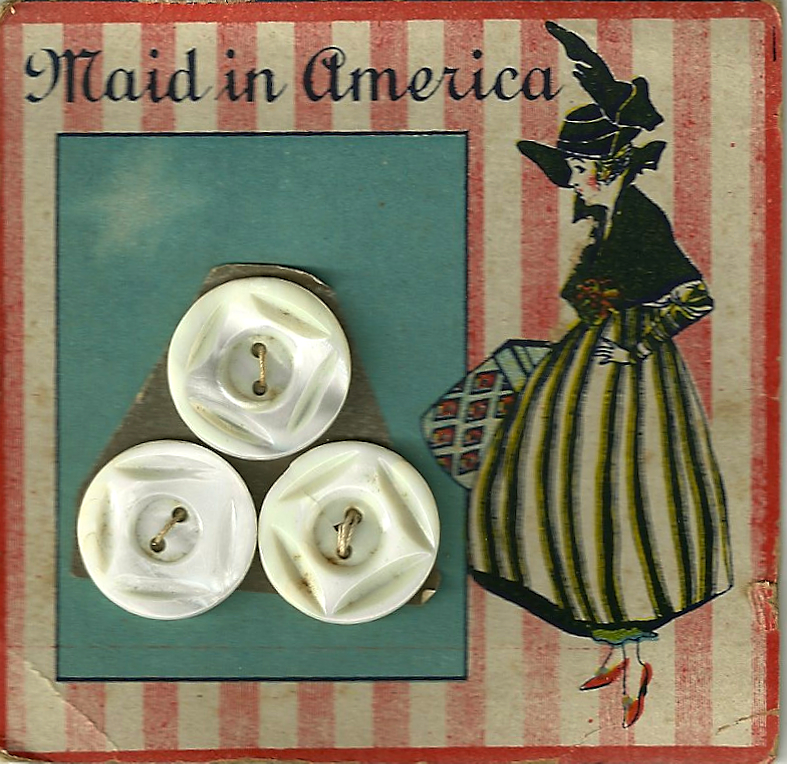
This is one of my favorite button cards of all time, the Maid in America. I doubt I’ll ever use these buttons, as it would seem a shame to take them off this amazing card.

This button card is like a small piece of folk art!

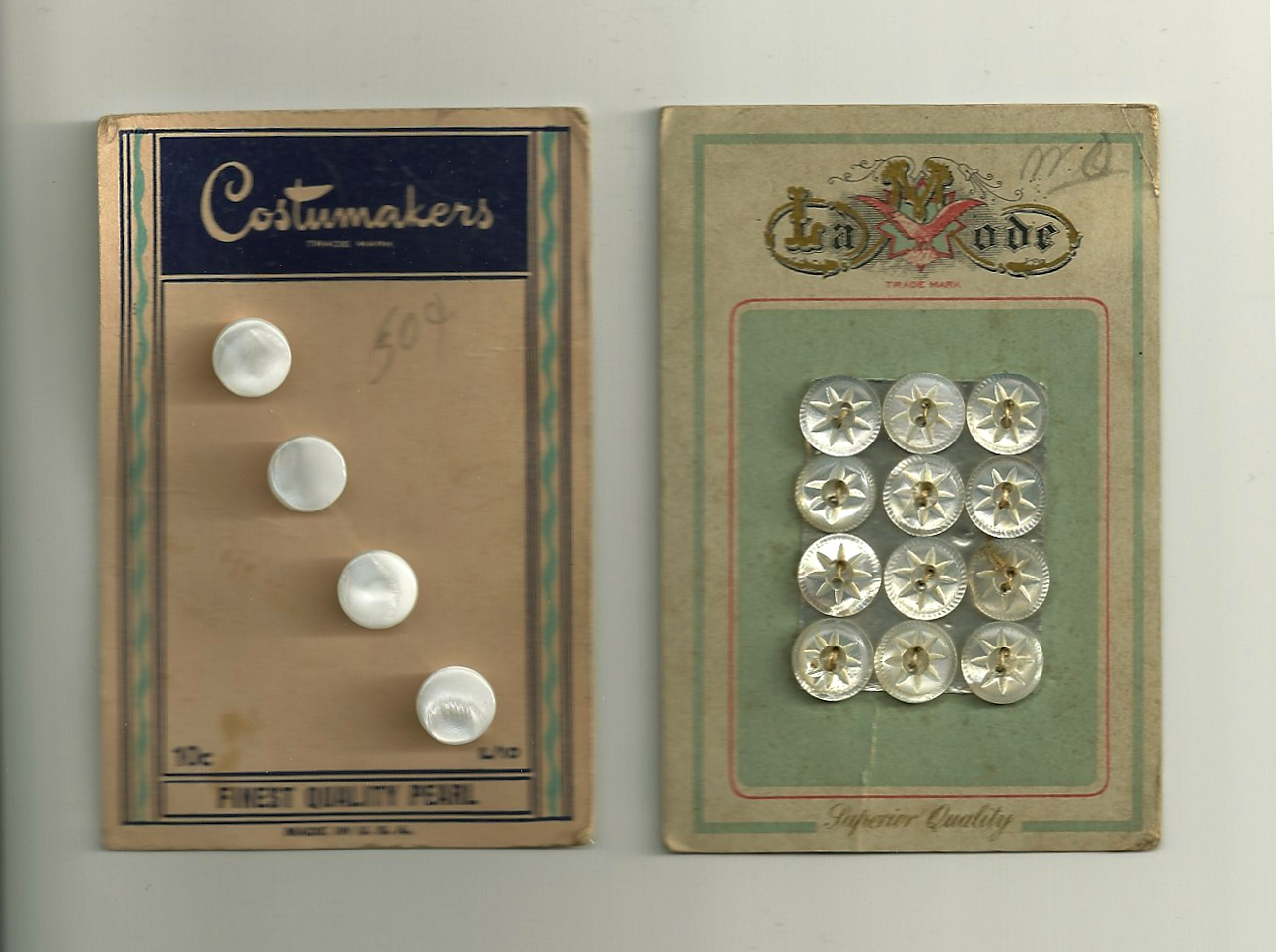
La Mode buttons are still manufactured – and still “Superior Quality”, and Costumaker buttons were “made in the U. S. A.”.

Two well-known button companies!

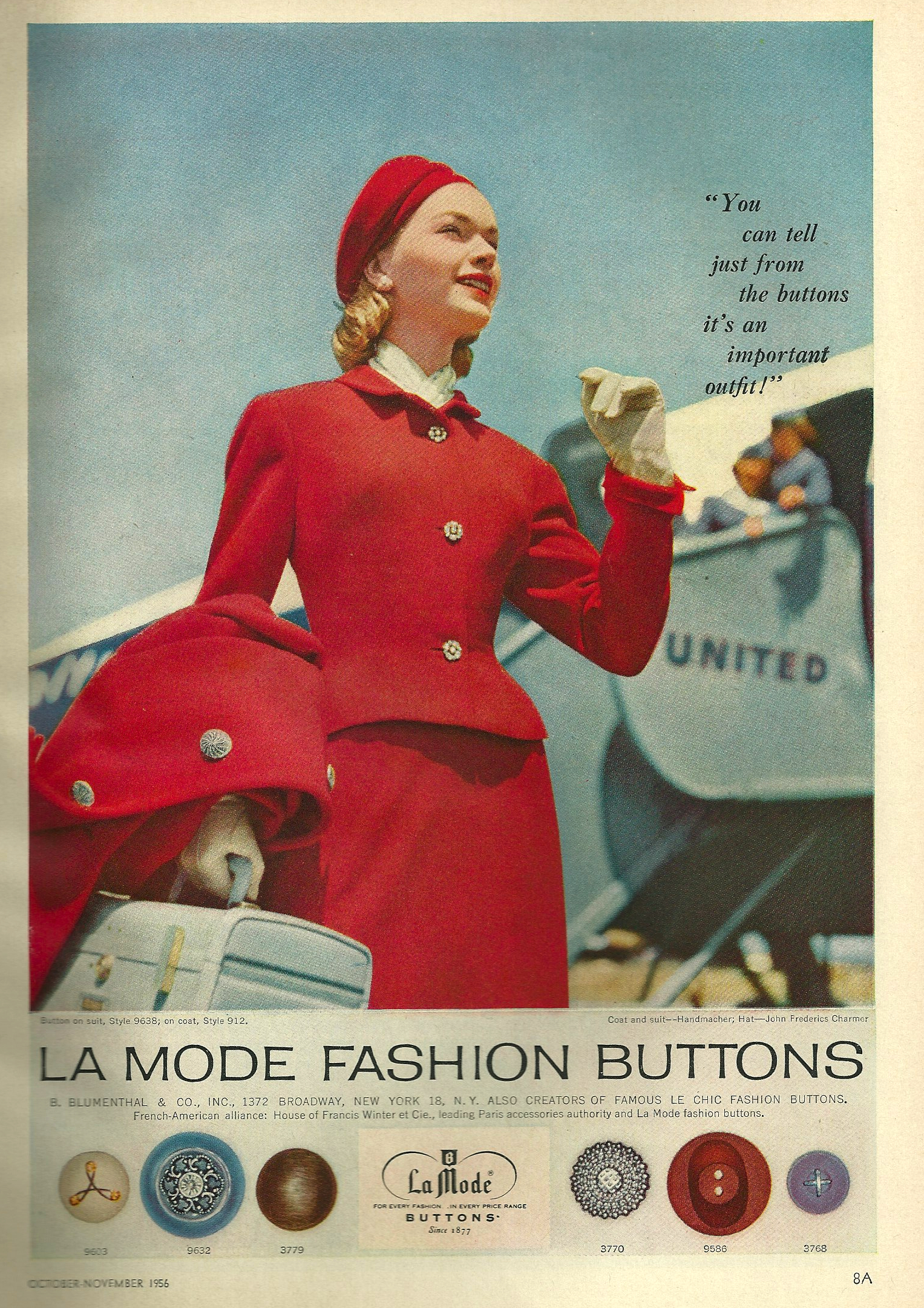
La Mode advertised frequently in Vogue Pattern Book magazine.  This ad from the October/November 1956 issue has the byline:  “You can tell just from the buttons it’s an important outfit!”

An ad from February/March 1958 features a fashion picture which looks incredibly timely today!

The featured fashion colors are certainly right for 2012!

And by 1960, their ads were beginning to take on a more modern look.

This ad appeared in the October/November 1960 issue of Vogue Pattern Book magazine.

Costumaker buttons also advertised in Vogue Pattern Book magazine.  In August/September 1958, this ad had the byline “Buttons that are more than buttons.”

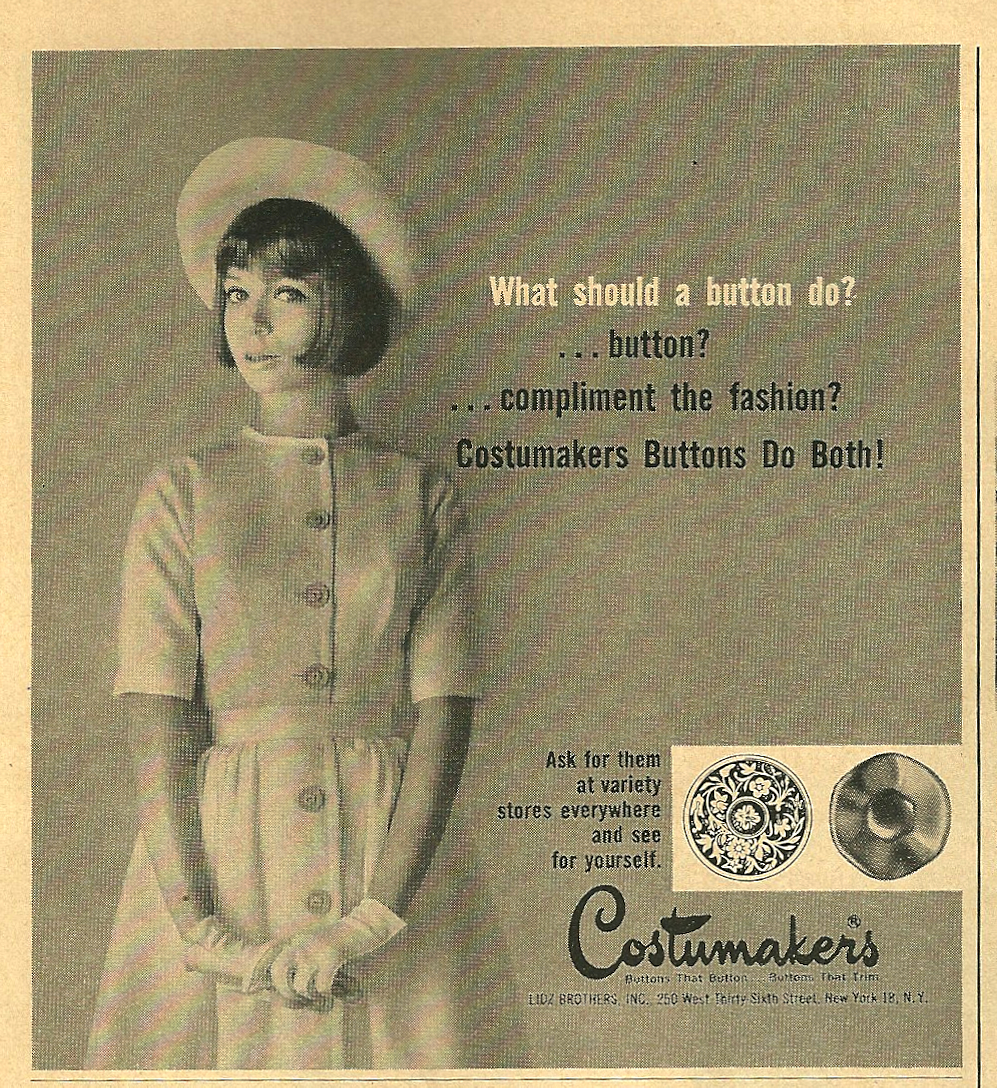
This ad from April/May 1963 asks the question:  “What should a button do?”  Read the ad to get the answer!

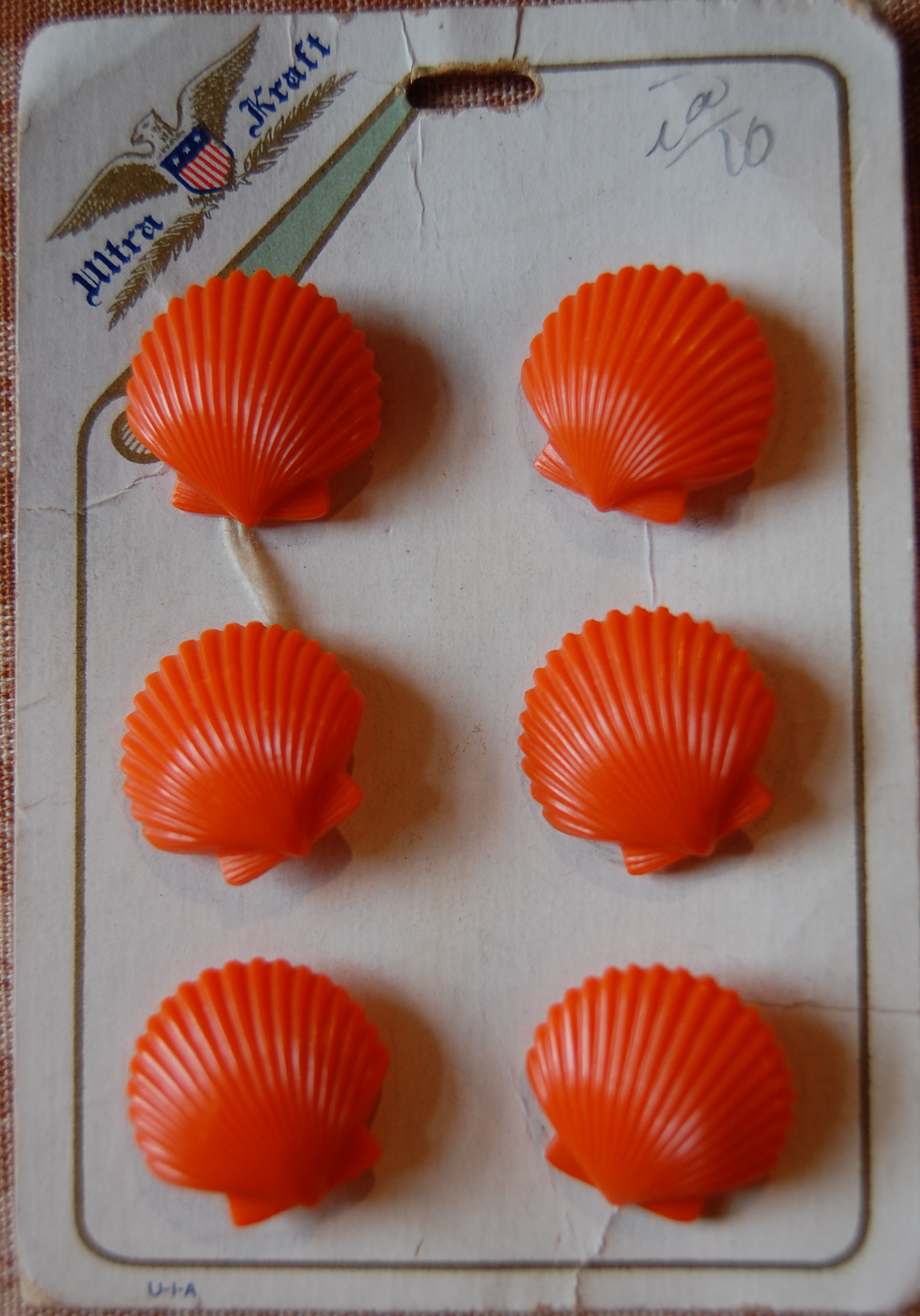
One thing I know a button CAN do is be small but powerful!  The real truth of the matter mentioned in my first paragraph is that I have a set of buttons which I must use, as they have occupied my mind for the past weeks since I received them – it’s really quite that simple.  But they are not simple – they are actually quite demonstrative, and therein lies the rub, to paraphrase from Shakespeare.

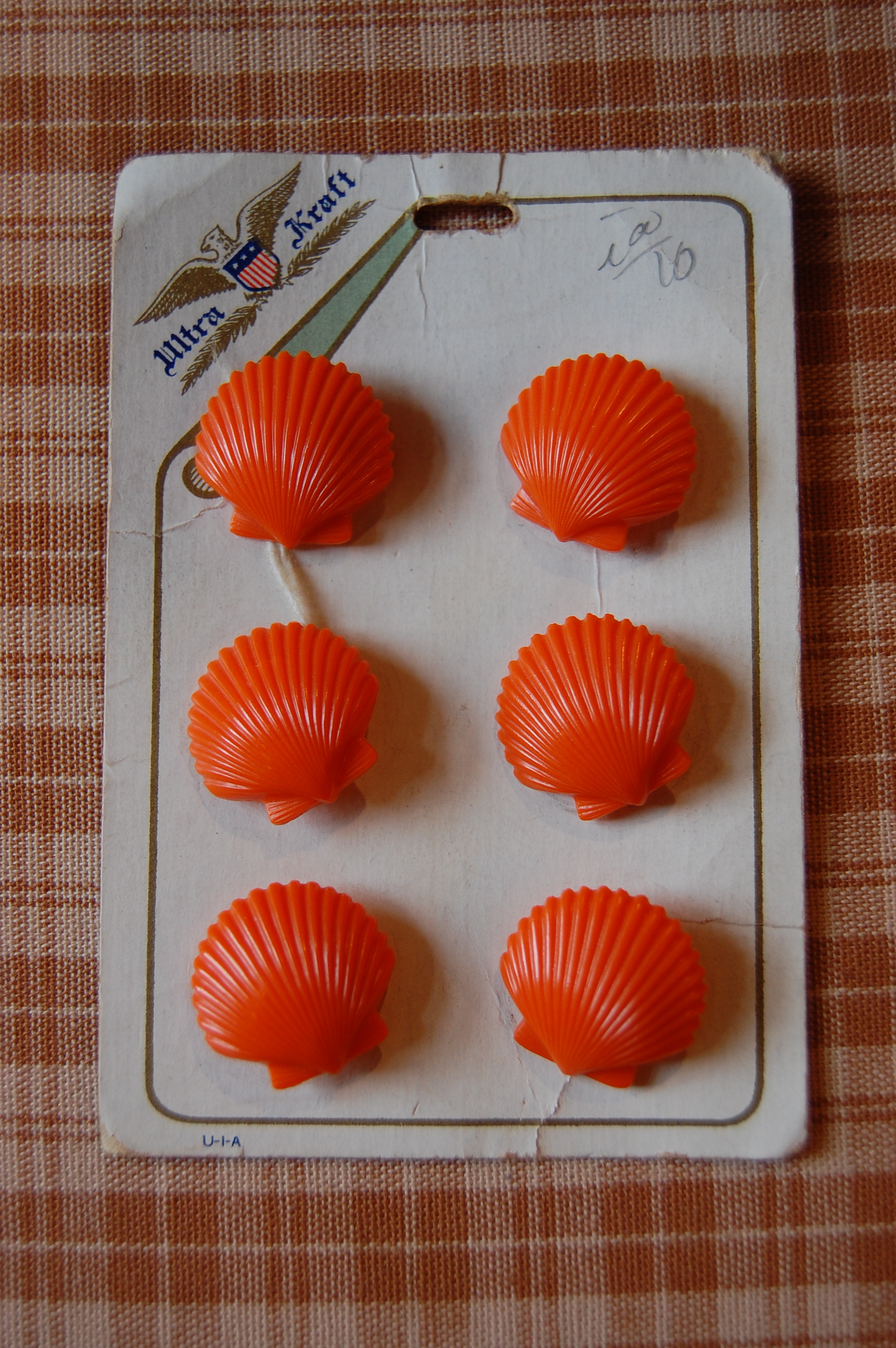
The buttons which won’t let me sleep! Notice the American eagle motif on the card!

I have been pondering how to use them and with what color and type of fabric to pair them.  They deserve the perfect venue for more reasons than one.  They were gifted to me by my dear friend, Nancy C., who, when we met for coffee a couple of months ago, met me with her family button box in tow.  She invited me to pick out any buttons which I thought I could use for future sewing projects!  When I got past my incredulity at her offer, I picked out a few amazing single buttons (which you will see eventually) and about three beautiful sets of loose buttons.  These orange shells, however, sewn neatly to their original card, kept catching my eye (how could they not??)  At first, they struck me as just too orange.  I wasn’t sure I would ever be able to use them. Nancy and I kept talking about them over our coffee, pondering their color and shape, and then, before I knew it – I was hooked.

So you know by now that they came home with me.  And something with so much personality moves up in priority on the sewing list!  You’ll soon see them sewn onto a “Fifty Dresses” creation.   Thank you, Nancy, for this amazing gift, which is only eclipsed by your generosity and friendship!!

A little closer look at these bright beauties!

Stay tuned to see them doing what good buttons should do…  Gulp!  I’m hoping to do them justice!

6 Comments

Filed under Buttons - choosing the right ones, The Conde Nast Publications, Uncategorized, vintage buttons

Destiny met – Pierre and me.

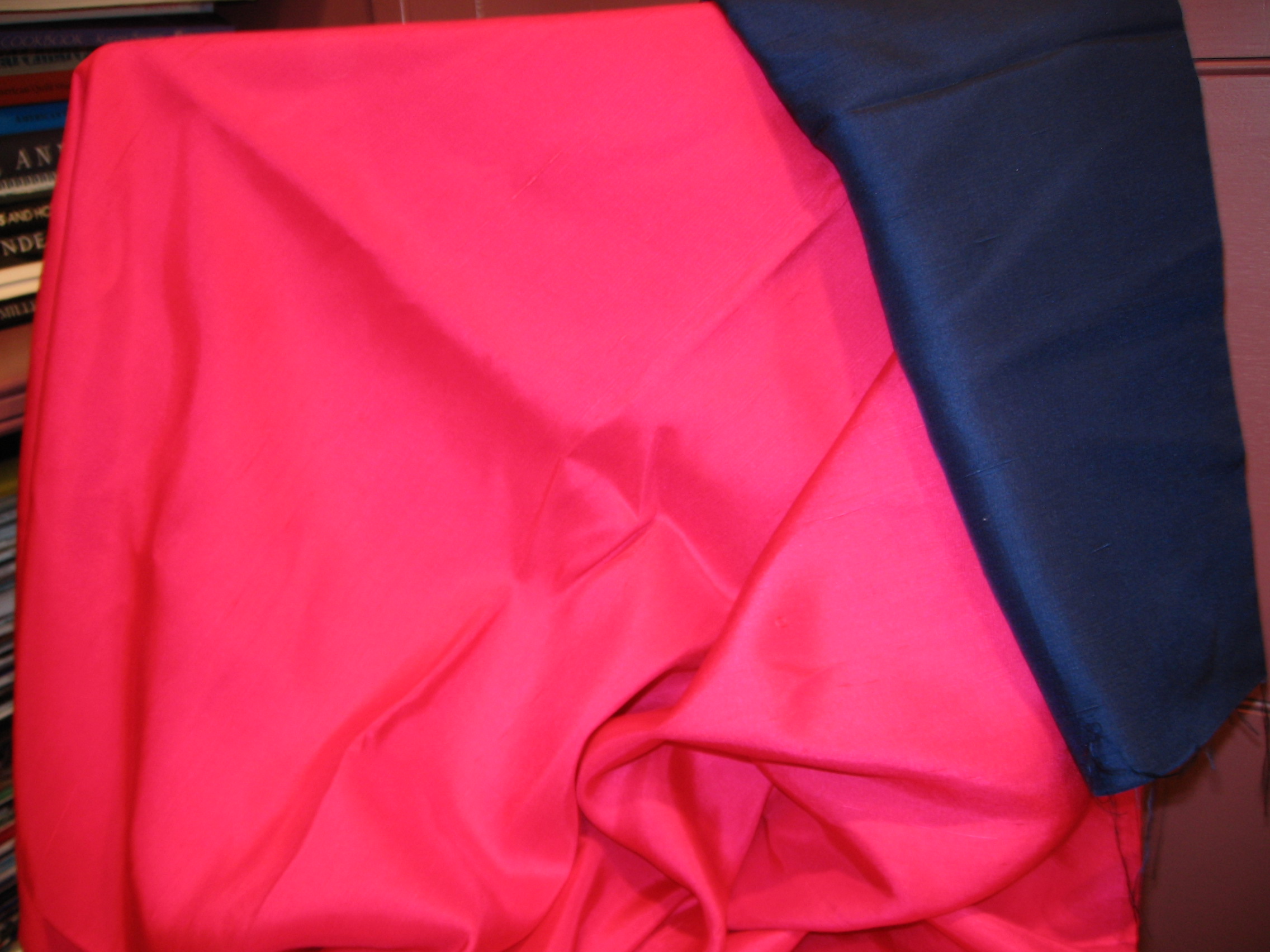
Back in November I wrote about finally locating some lovely pink and navy blue silk, which I had squirreled away after never making it up in the pattern I had purchased for it.  Both the fabric and that pattern date from the late 1980s, and I must have known even then that this beautiful silk deserved a better dress design than was available during that era of big shoulders and more big shoulders.

Pink and blue silk which I had never used.

So when I found this pattern in my size on eBay several months ago, it seemed destined to be interpreted in my pink and navy silk.

A Pierre Cardin design, circa 1970, in the Vogue Designer pattern series.

Specifically, I envisioned it made in the sleeveless version in pink, with a contrasting navy blue yoke (and without the side slits).  I had just the right yardage of navy silk to accomplish this feat, and plenty of pink.  Not only that, I knew an event was approaching when I would want to wear a dress of some elegance.  What could be more perfect than that?  The right fabric and pattern matched with incentive gets the project underway in a jiffy.  My affair with Pierre (as in Cardin) was about to begin.

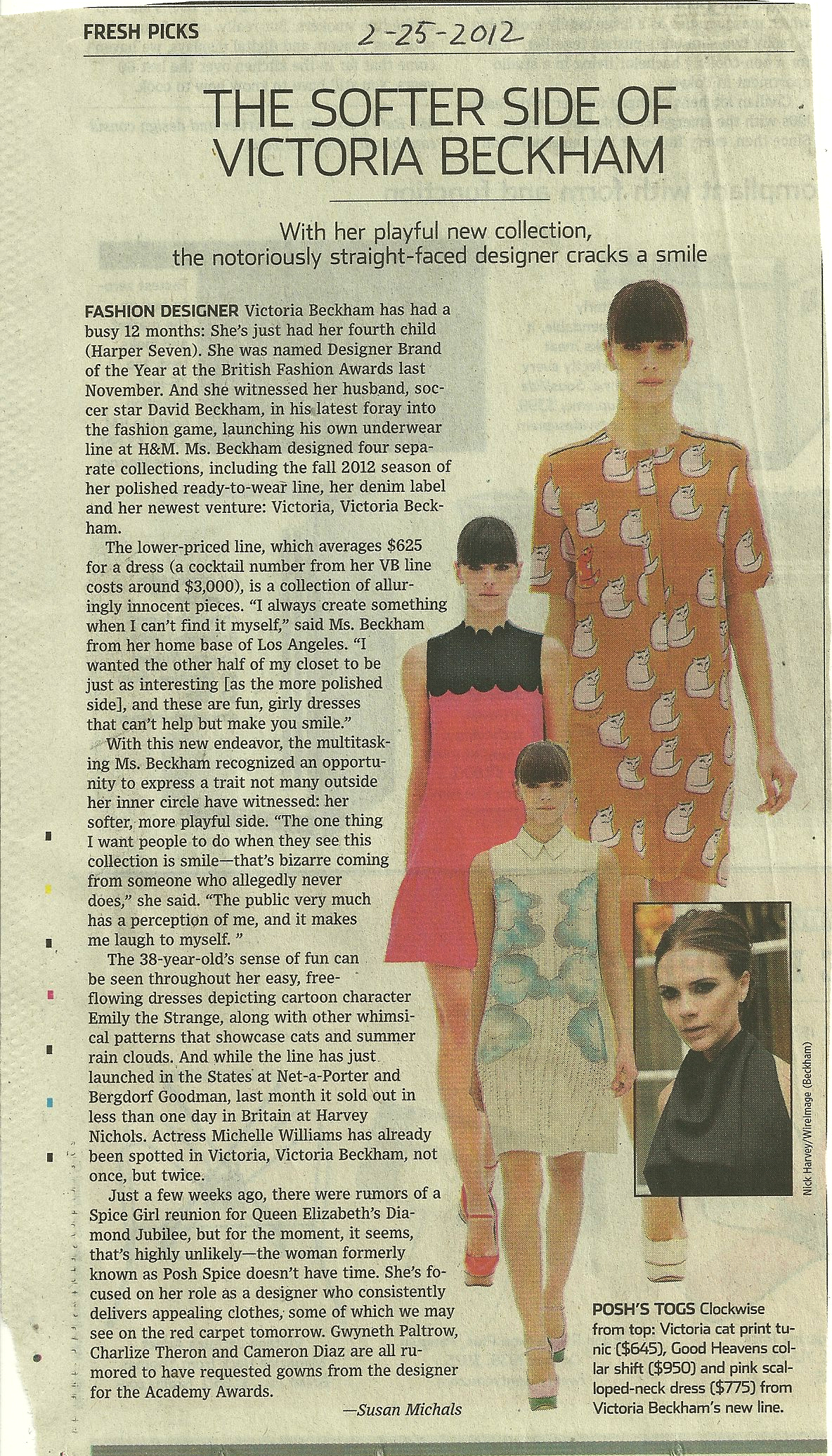
(Interestingly enough, back on February 25, this article ran in The Wall Street Journal, featuring some Spring dress designs from Victoria Beckham.  Does the look of the pink and black dress seem familiar?):

A variation of the Pierre Cardin dress? No – a “new” design!

Well, as is often the case with sewing, nothing is quite as easy as it first appears.  The pattern called for an underlining and a lining.  (Hm-m-m-m, I thought, this could get time-intensive!)  Because I did not want to interfere with the fluidity of the silk fabric, I knew I needed an underlining fabric with minimal weight, but good stability.  I found just the perfect thing from Dharma Trading Co.:  rayon voile.   I ordered what I needed (and then some extra yardage for future projects), and it seemed like about two hours later it arrived.  Actually it was two days later, but considering it was being shipped across the continent from California to Pennsylvania, that’s what I call excellent service!

During those two days, I headed off to Joann Fabrics to find lining fabric, thread, zipper and hem tape.  I was delighted to find Gutermann silk thread in a pink which perfectly matched my fabric. While a pink lining fabric to match was sadly elusive, I went with a navy blue lining fabric instead.

I made the dress lining first, and it was kind of nice to have this part of the dress sewn and set aside until needed.  I did my normal basting of the underlining to the silk as shown here.

Basting on the bodice yoke.

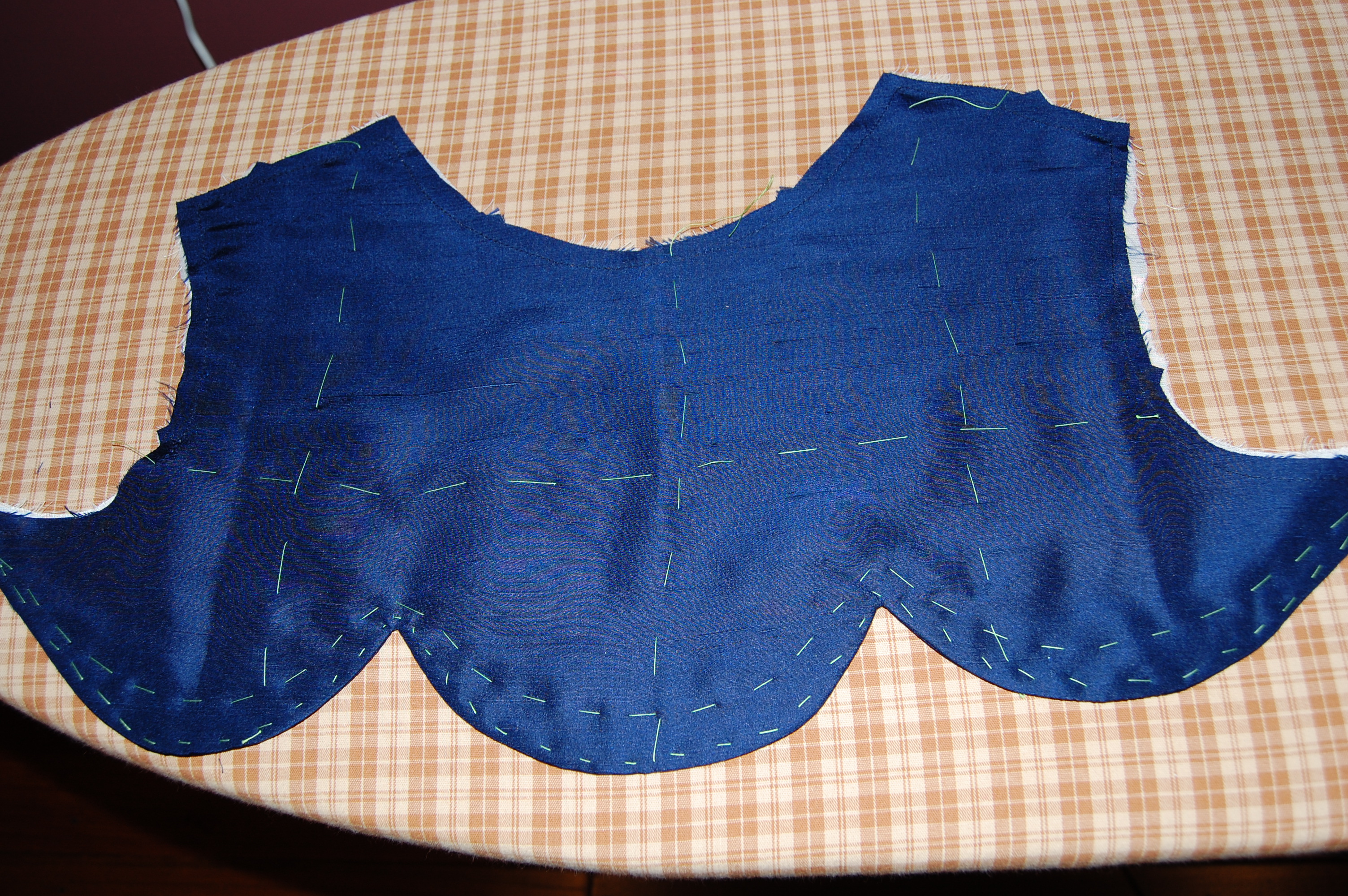
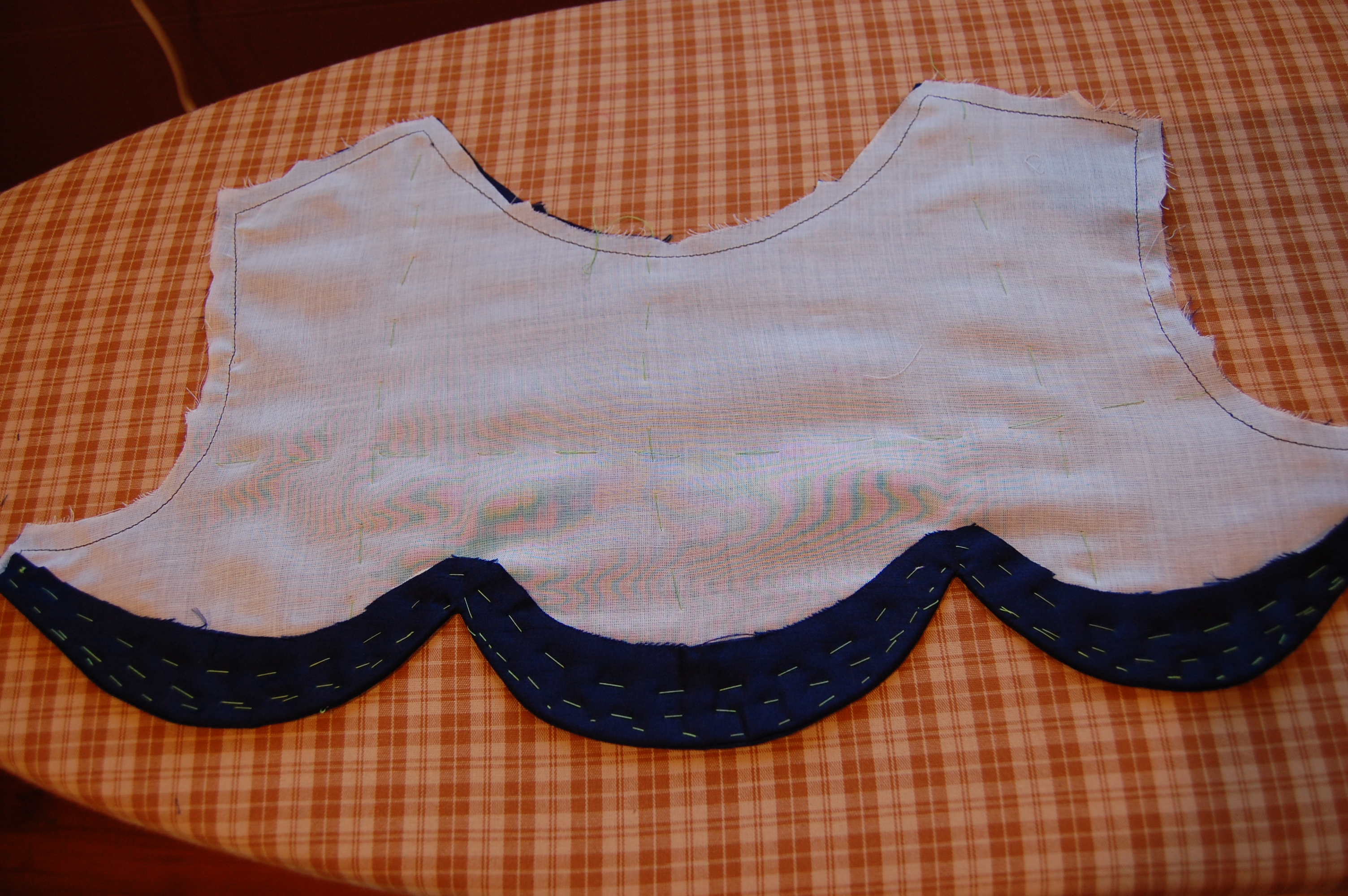
The scallop detail called for stuffing with lambs wool, but I used two layers of drapery weight flannel instead.  This small section of the dress took a long time to complete.

This shows the underlining and the facing for the scallop detail.

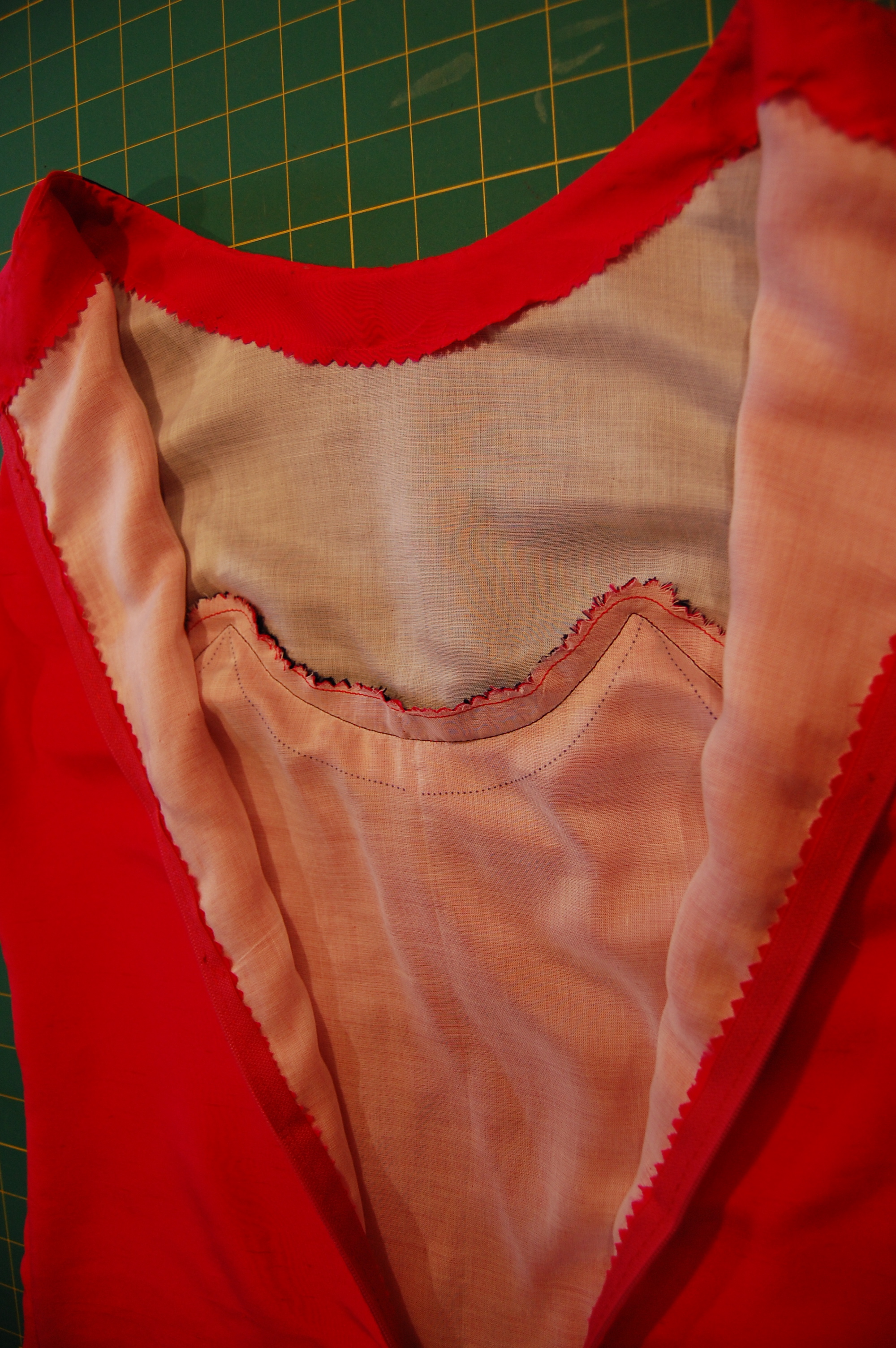
Here is what the inside of the scallop part of the dress looked like before I attached the lining.

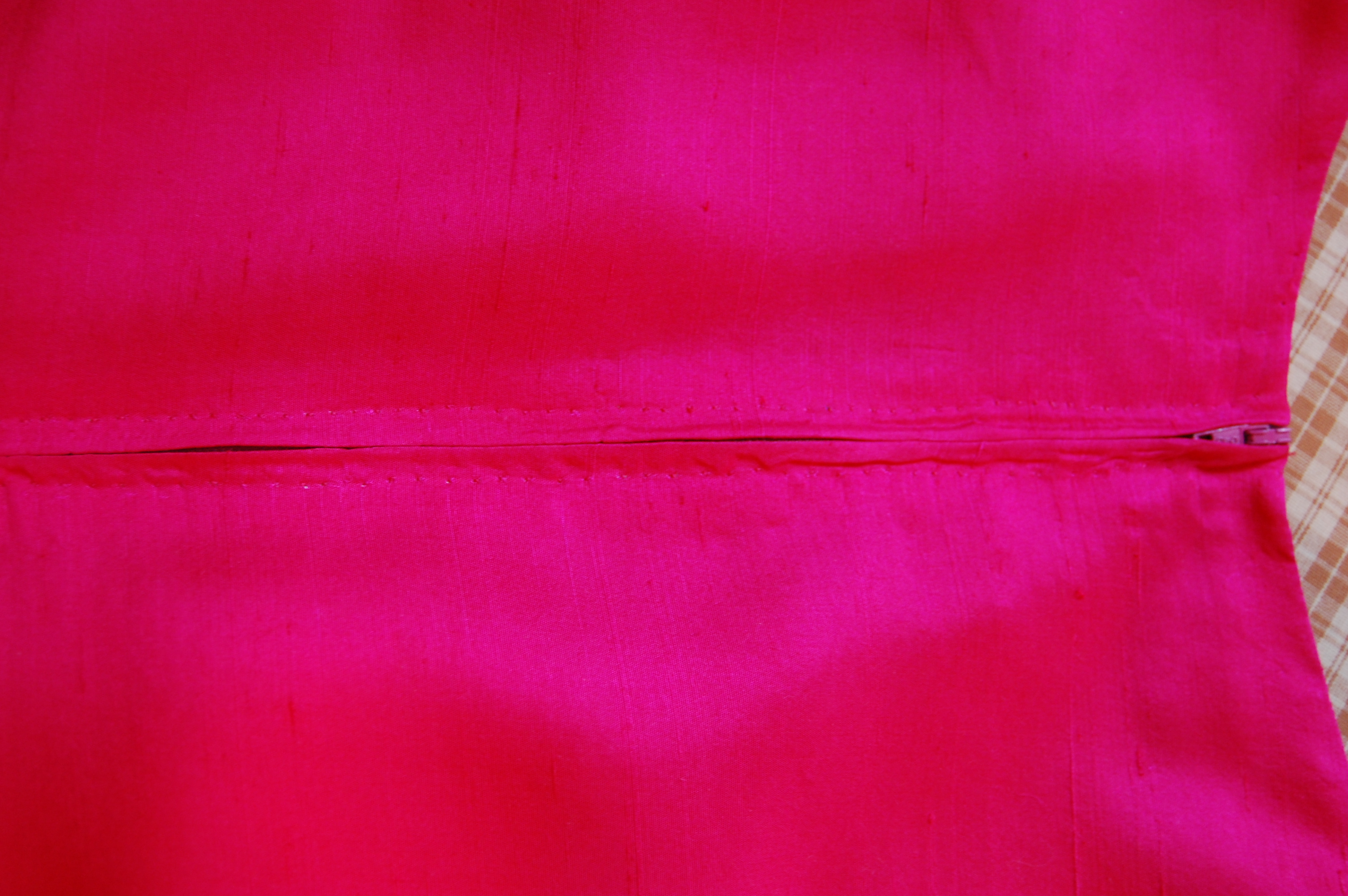
I put the zipper in by hand, and understitched the neck and arm facings by hand as well, to make a nice, neat finish.  The pattern called for the lining to be sewn in place by hand, so my fingers were certainly doing a lot of stitching!  About this time I was beginning to wonder why I always make things so complicated.  Here is the hand sewn zipper application.

I love the look of hand-sewn zippers!

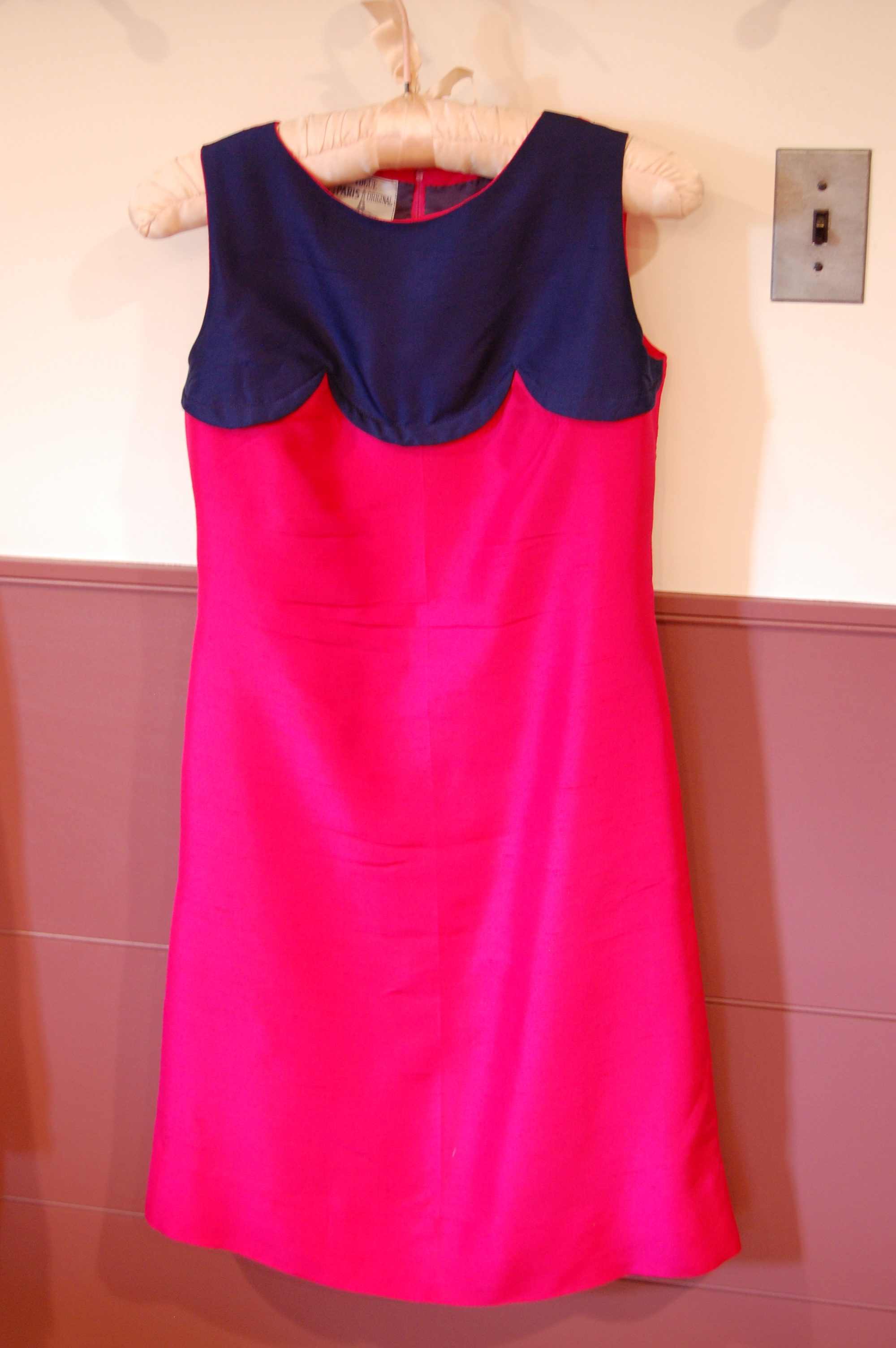
Here is the front of the dress

. . . and here is the back.

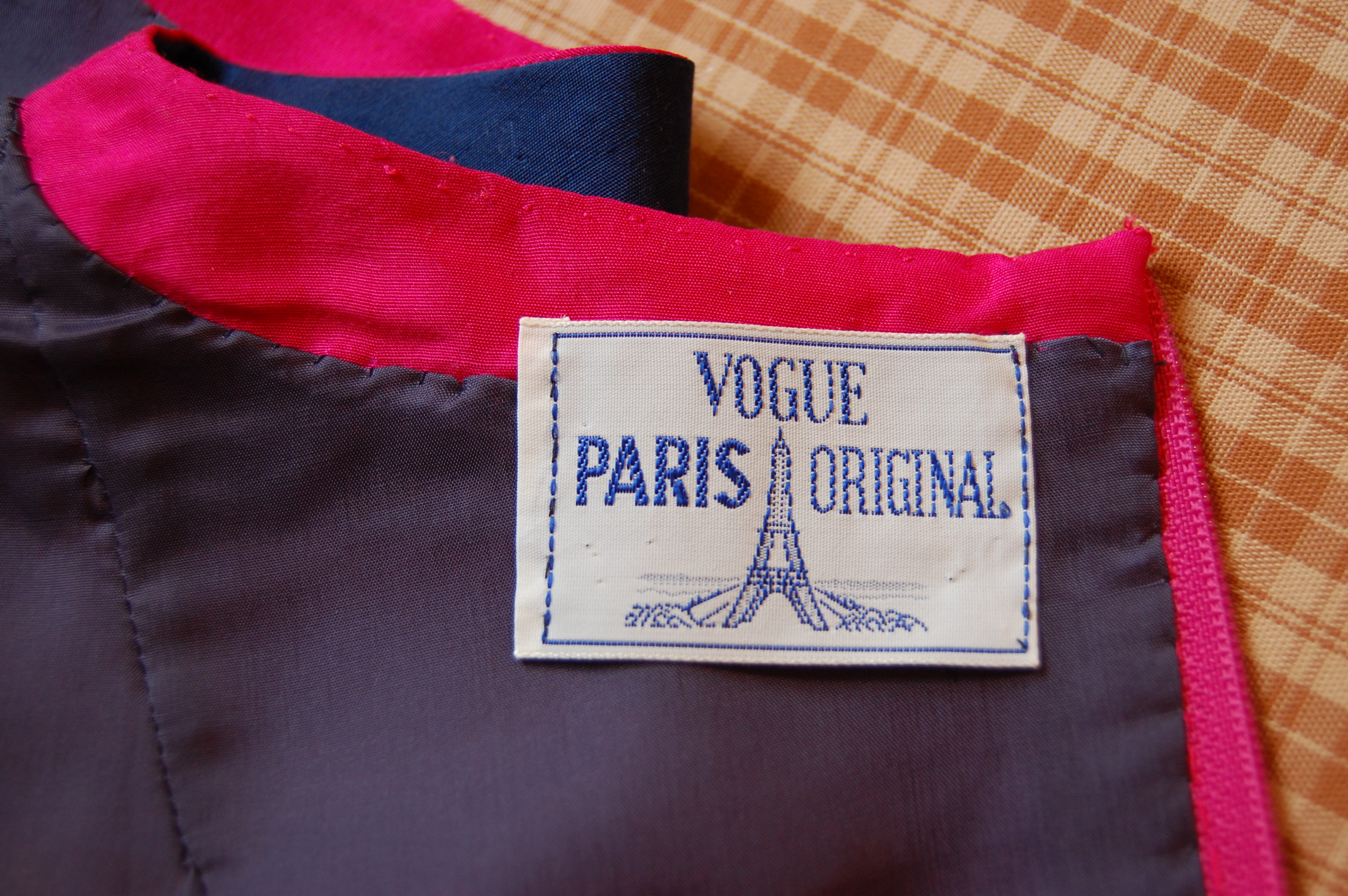
When I purchased the pattern it came complete with a Vogue label, which I was only too happy to apply to the inside neck edge as the finishing touch!

You can also see the hand-sewn-in lining in this photo.

Yes – I completed the dress in time to wear for the intended event!

The good news, other than the fact that this dress is finished?  Two things – one being that I still have enough pink silk to make a skirt or a blouse, not sure which yet.  The other is that I can start another project now that my fling with Pierre is happily over!

10 Comments

Filed under sewing in silk, Uncategorized, underlinings, vintage Vogue Designer patterns, vintage Vogue patterns from the 1970s, Vogue patterns

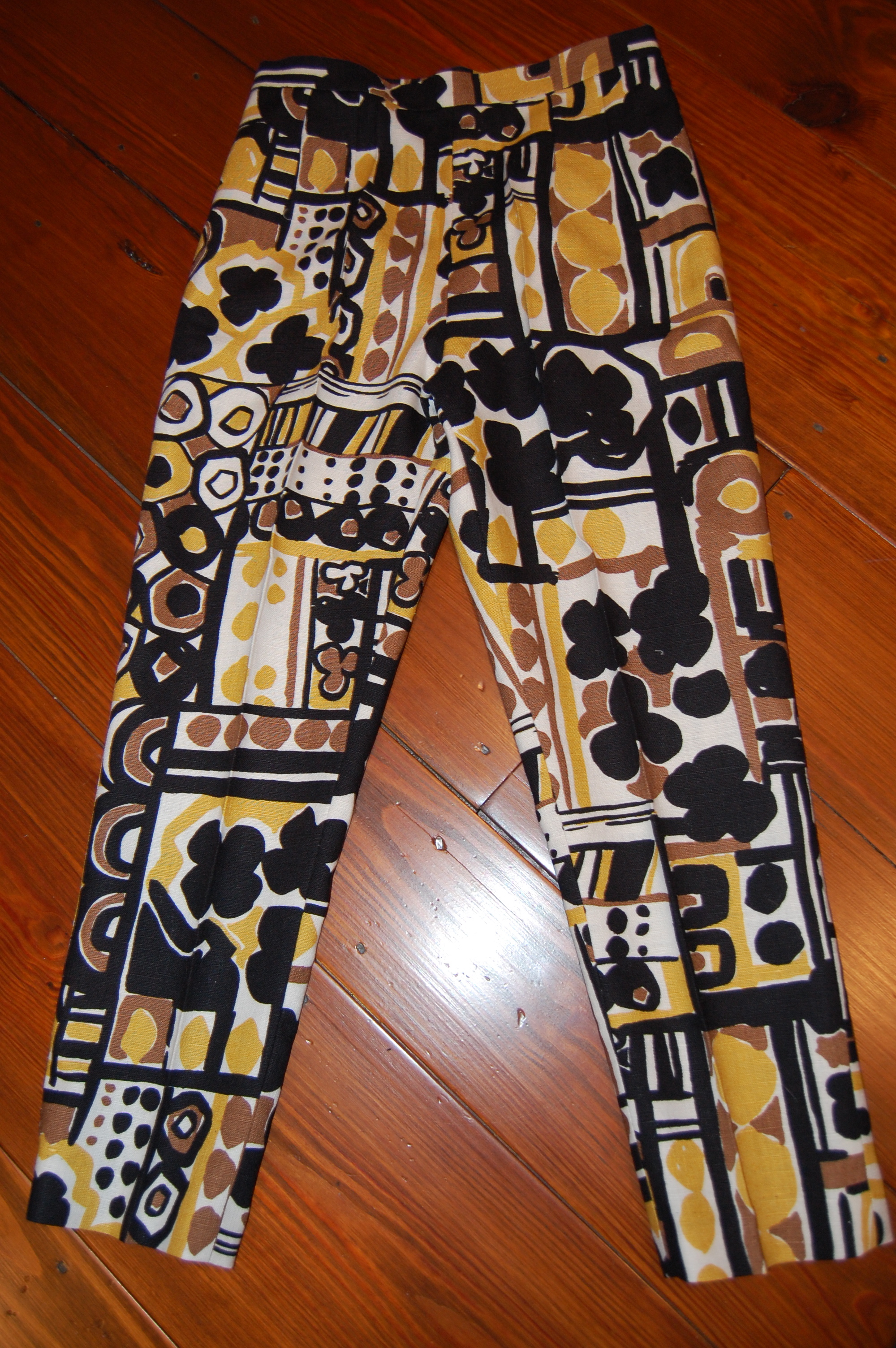
My very stylish pants.

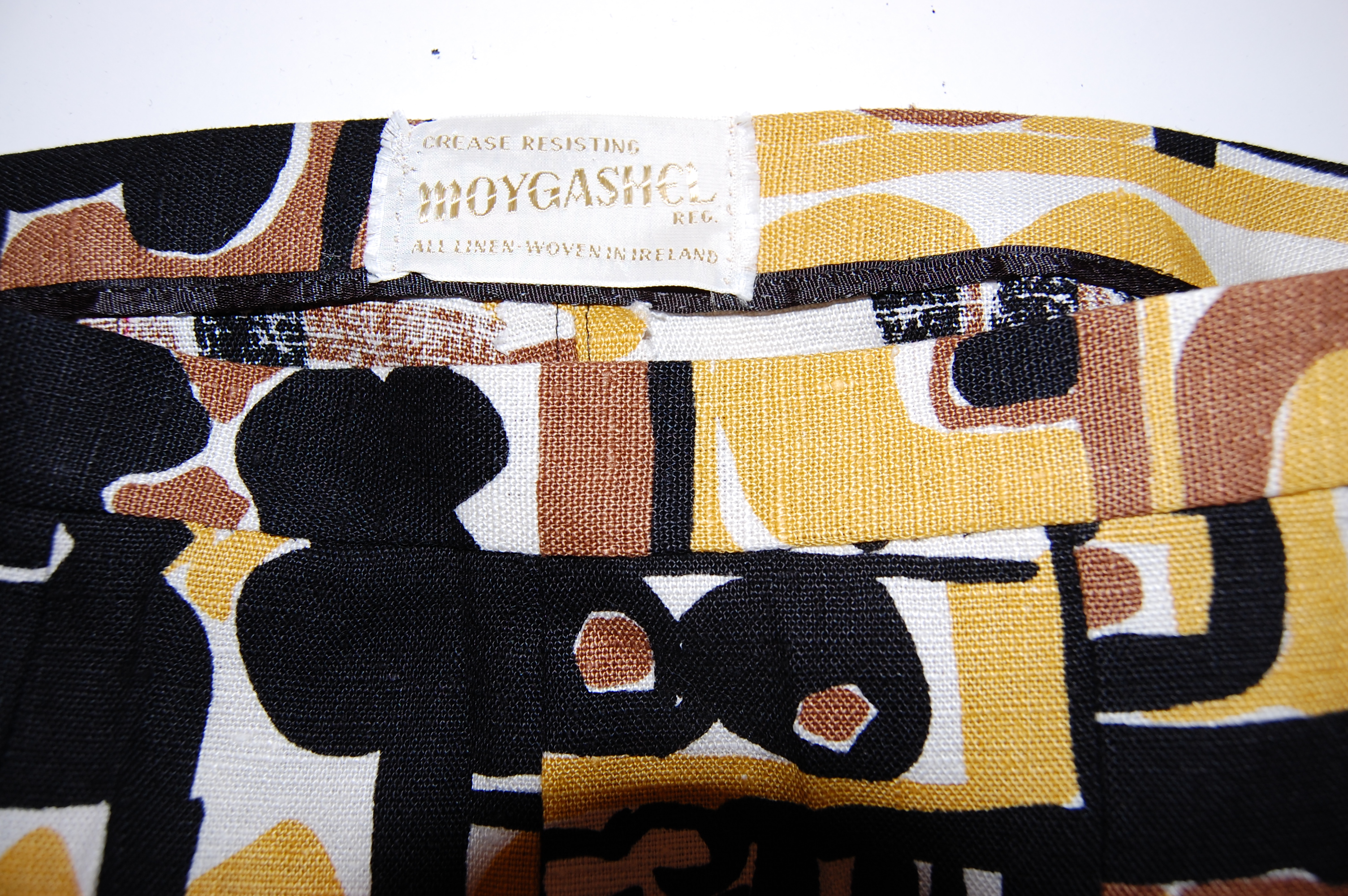
For several months I was watching a piece of Moygashel linen for sale by Revival Fabrics.  When I first saw this offering, I had the eerie feeling of déjà vu – I was sure I remembered seeing this patterned fabric in the late ‘60s or early ‘70s when I was a steady admirer and occasional purchaser of this brand of linen I love so much.  The piece that was being offered was three yards long, 44″ wide and included a Moygashel label.  The description accompanying it suggested making patio furniture pillows or tote bags with it, neither of which much appealed to me.  And actually, this suggestion threw me off a bit ; I wondered if it was drapery-weight linen, not dress-weight.  But the more I looked at it online (clicking close-ups of the images), the more convinced I became that it was dress-weight.  I finally decided to buy it, not really knowing what I was going to make out of it (maybe a sheath dress…?)

When the package arrived and I finally saw this linen in person, I was – so excited! It was gorgeous – and my suspicions were correct – it was definitely dress-weight.

Here is a lengthwise view of the linen.

Here is closer view of this amazing pattern.

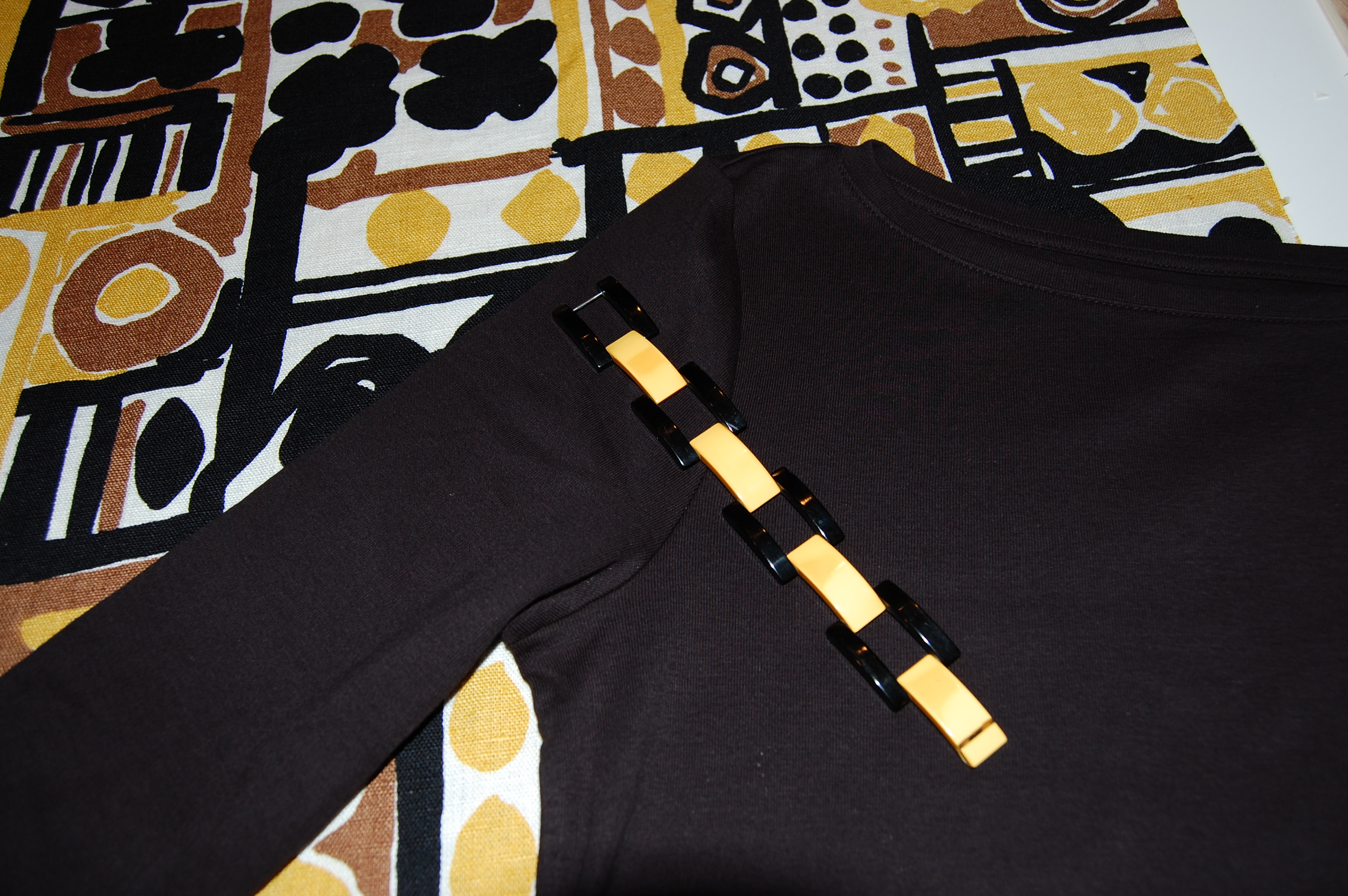
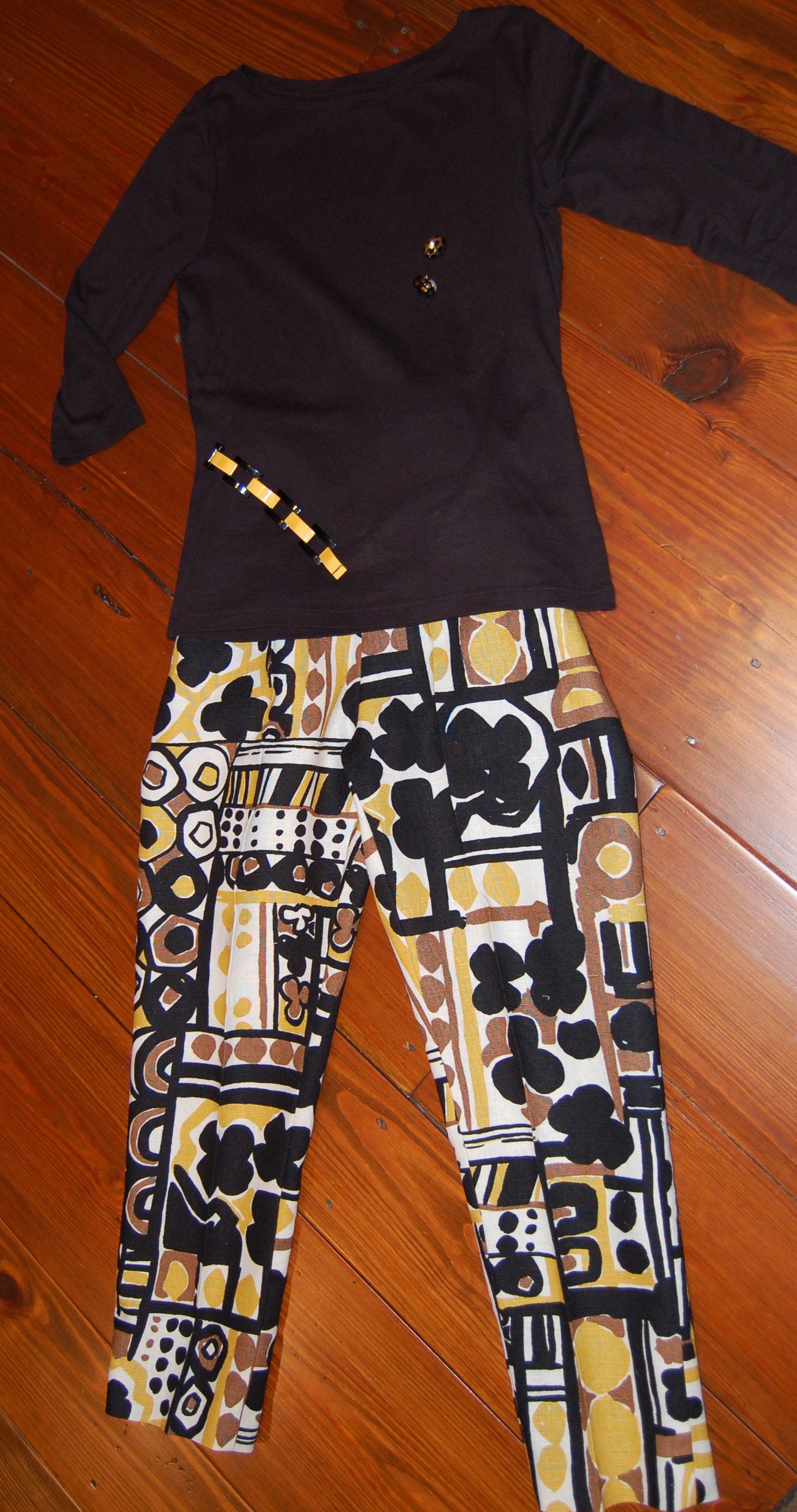
My first thought after my initial euphoria was:  This would make up into fabulous ankle-length pants (worn with a black, yellow or khaki top – and of course my black and yellow Bakelite bracelet).  And yes, I was sure I would have the nerve to wear them!

I laid out the fabric with a black cotton knit top and my Bakelite bracelet just to see how it would look.

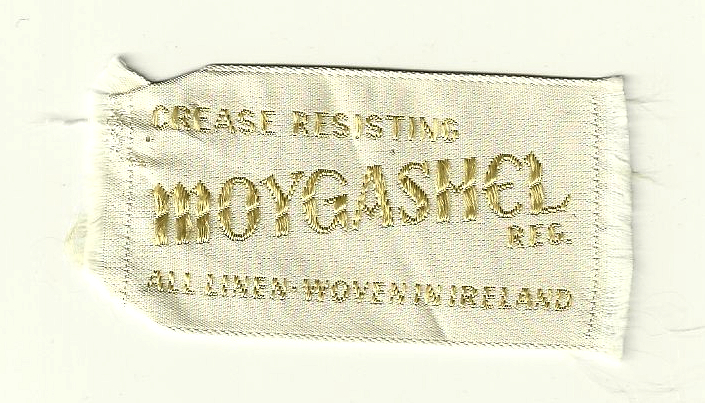
And here is the label which came with the fabric.

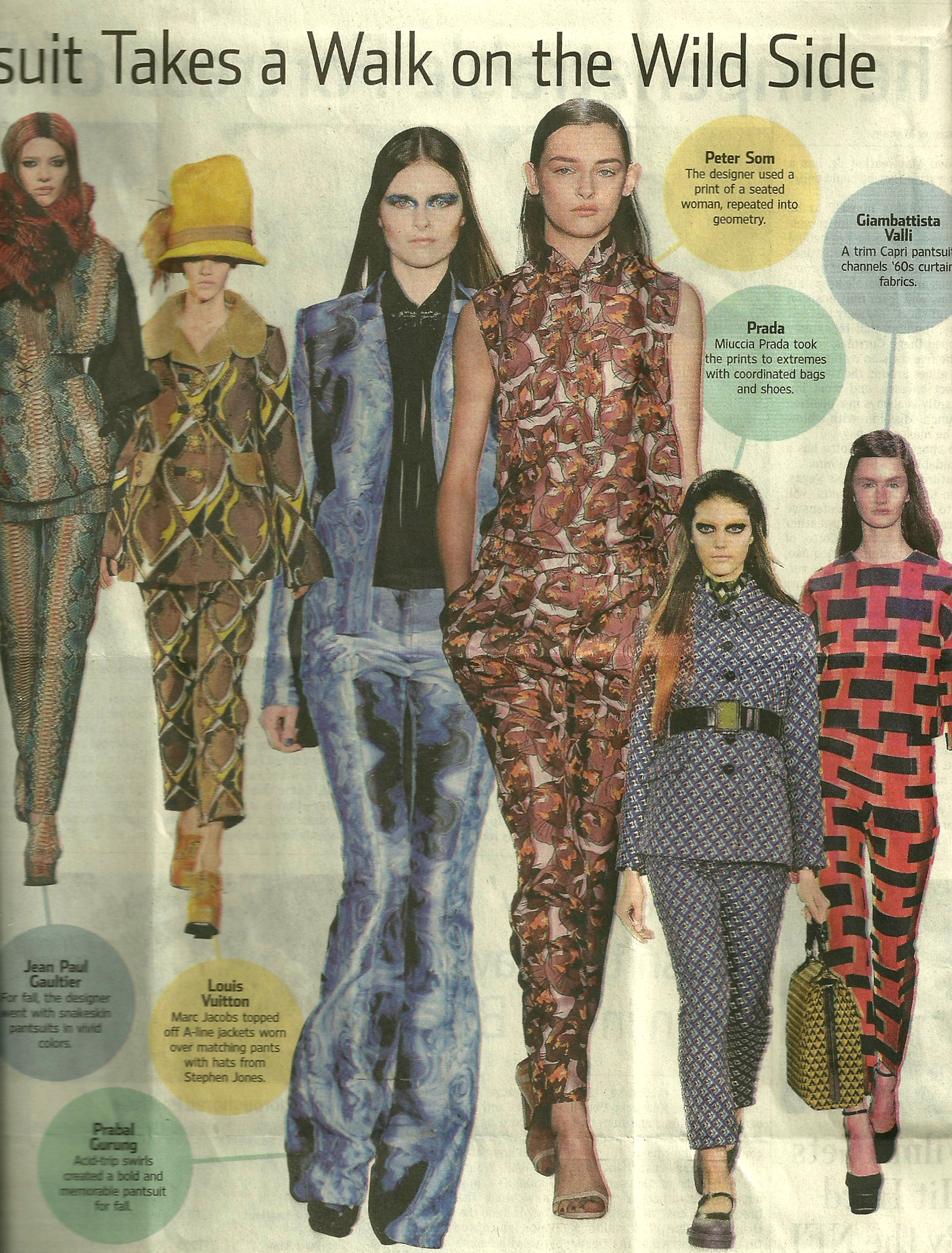
With my plan in place, I decided this would be my next project after I finished the one I was on.  Then something really amazing happened.  A fashion article in the May 3, 2012 edition of The Wall Street Journal caught my eye.   Christina Binkley, one of the newspaper’s fashion reporters, headlined her weekly column “On Style”  with The Pantsuit Takes a Walk on the Wild Side.

I don’t like any of these fabric designs as much as I like my Moygashel linen!

I’ve never been a fan of pantsuits, but some of the fabrics featured had that same ‘60s’ feel as my new vintage linen.  The reporter rightly questioned how well these head to toe outfits would “play on the streets”, but then she added:

“…at least one mainstream retailer will highlight the idea that the pantsuit can be worn as separates…  There will be more busy pants than busy jackets.  ‘There may be women who wear it head-to-toe – very daring,’ says Sak’s Ms. Sherin.  ‘But for us, it’s probably about the patterned pant’.”

Then, Ms. Binkley suggested:  “The key to wearing this trend is not straying too far from your safety zone.  Stick to colors and patterns you will still love in five years.  And let the bold pattern do the talking – go with a conservative fit if you’d rather not be the center of attention.”

Further:  “It’s probably not a coincidence that wild pantsuits are appearing just as ‘Mad Men,’ the style-influencing television show, is entering the psychedelic phase of the ‘60s.”

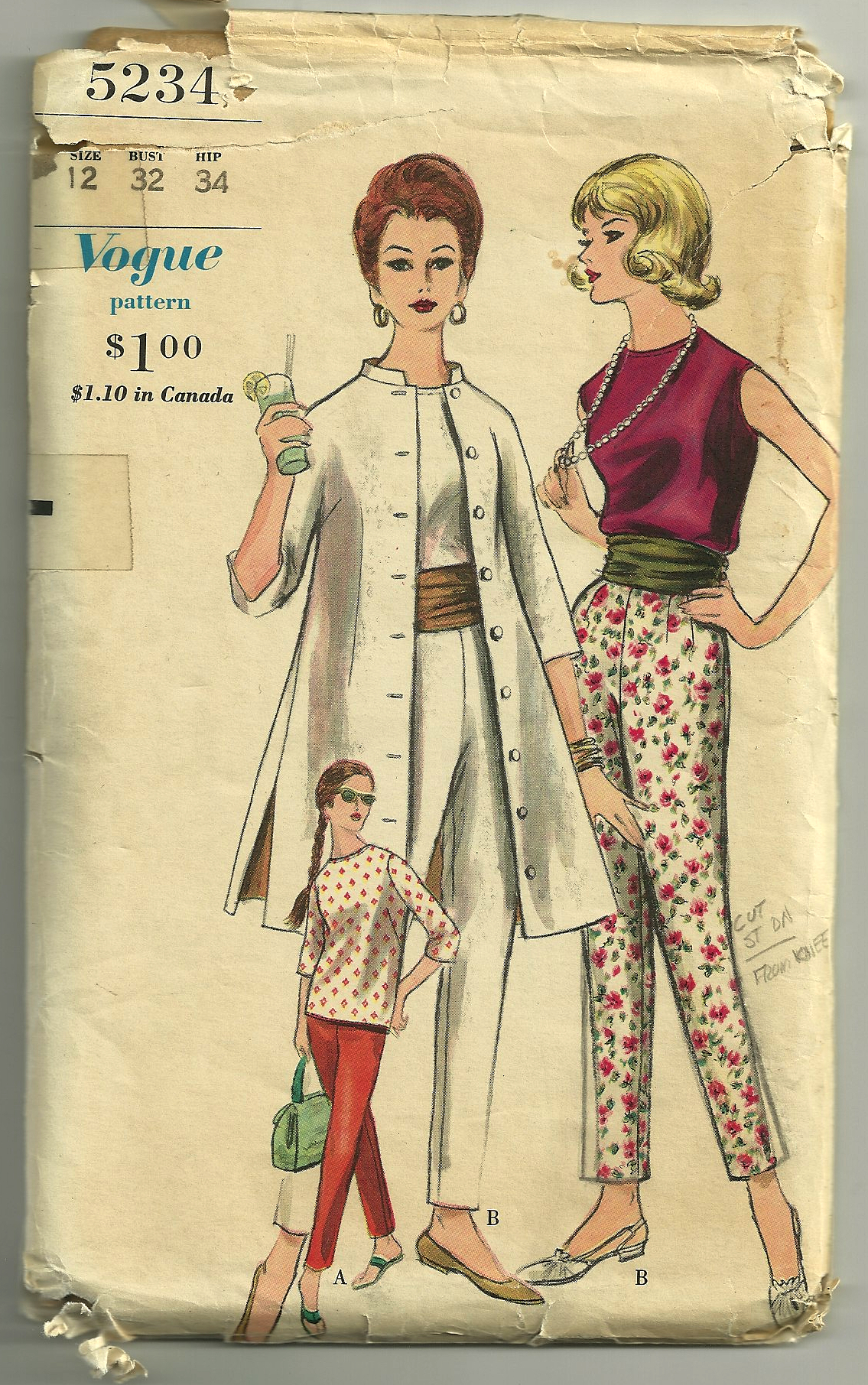
Well, my linen fabric is far from psychedelic, but it is bold – and reading this article certainly did validate my plans for making pants.   I also already knew the pattern I wanted to use, one quite appropriately from the early to mid ‘60s!

I really like all the styles featured on this pattern – the coat, the two blouse variations, the cummerbund –and the “conservative” pants.Classic looks – all of them!

Okay – I was ready to start this project.  First I washed the linen in cool water, delicate cycle, and dried it on medium heat.  This way I know my pants are totally machine washabIe.  Next I made a muslin of the pants pattern to check for fit.  I should have done a little more measuring first, as the crotch was too deep and had to be redrawn.  Also, although I like slim-ankled pants, these were just a bit too slim, so that was another adjustment.  I ended up making muslin #2, which was much closer to the final version from which I cut my pants.  However, I had made so many adjustments, that I decided to copy the final pattern onto freezer paper. (Freezer paper is my secret sewing friend – the dull side provides a wonderful surface upon which to draw in pencil and the shiny side can be ironed to fabric to cut out appliqués or anything, really, and then easily removed.  And the long continuous roll of paper is perfect for long pattern pieces like pants, coats, etc.)  The good news is that now I have a pants pattern that fits really well with the slim, but not too slim, legs that I like.

During construction, I tried on these pants about a ga-zillion times.  This fabric was just too dear to make any mistakes, and the more I tried them on, the more I liked them.  Here they are, all finished.

I’d say these are definitely bold!

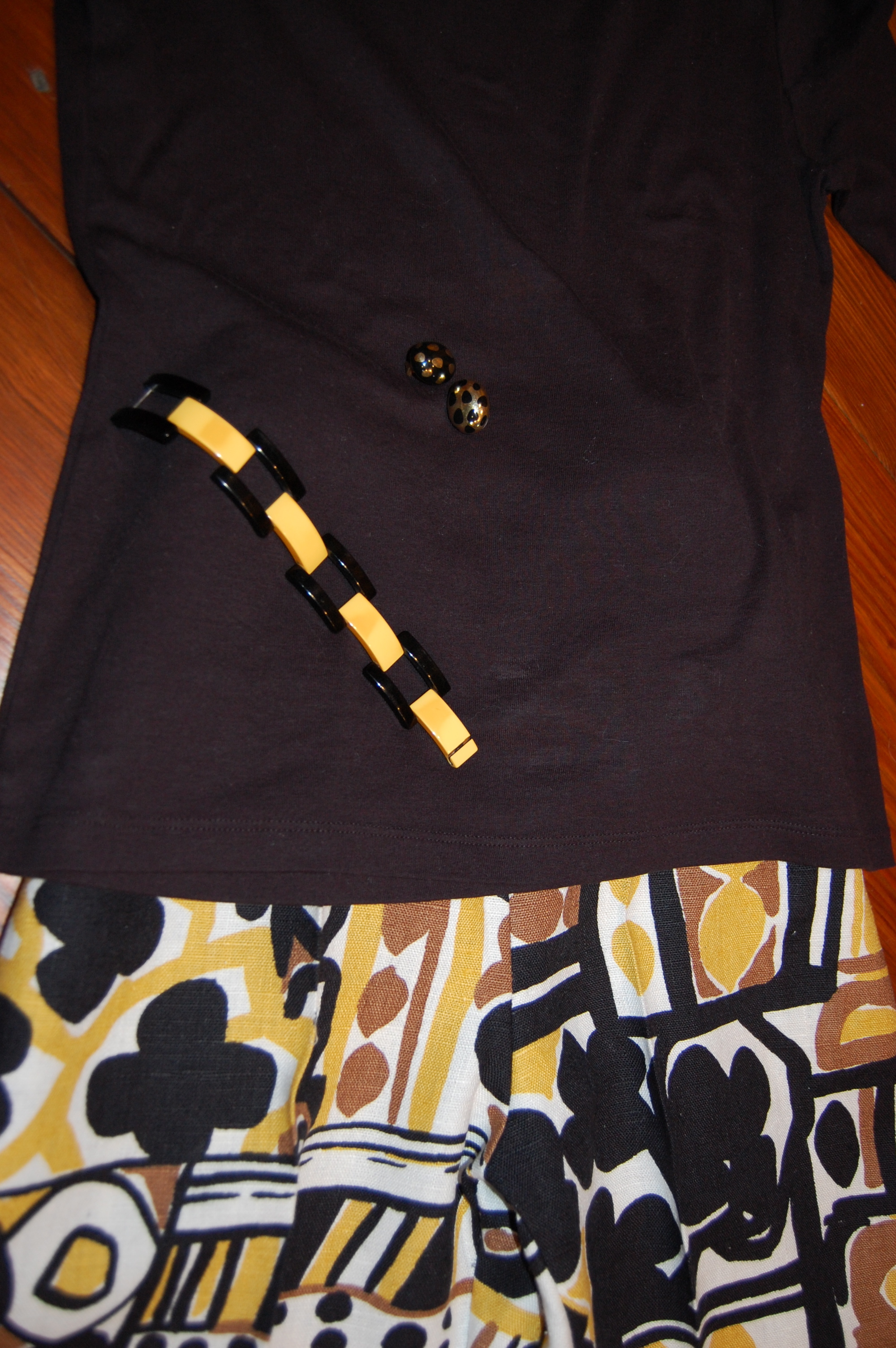
Here is my outfit, complete with Bakelite bracelet.  (I think the camera angle makes the legs look different lengths??)

A close-up of same, with the earrings I’ll also wear with this outfit. (Click on the image).

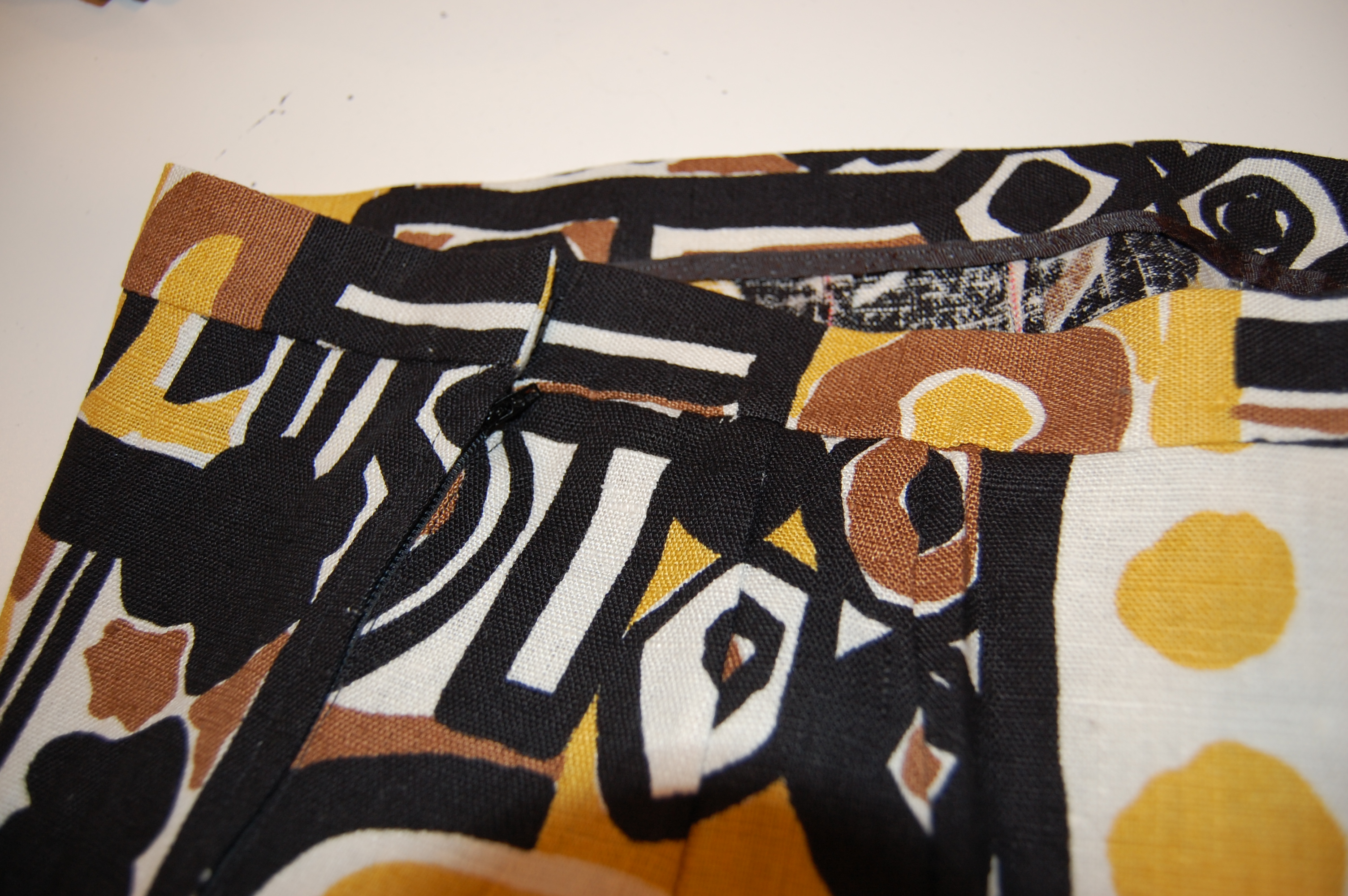
Here is a view of the waistband and zipper.

And here is the final touch – the label attached to the inside back of the waistband!

How neat is it to sew something up in vintage fabric, using a vintage pattern – and be totally stylish in 2012? And – I still have enough of this fabric left over to make a skirt.  Hopefully that will be very stylish, too, whenever I get around to making it!

12 Comments

Filed under Bakelite buttons and/or jewelry, Coats, Linen, Uncategorized, vintage Vogue patterns from the 1960s, Vogue patterns

A modern American translation: vintage Irish linen and 1966 French design

I’m never completely sure where pattern/fabric-pairing inspiration and decision- making comes from.  I kind of imagine all kinds of synapses going on in my brain, pulling information both stored and recently learned, which enable me to visualize a particular pattern made up in a particular fabric.  Somehow, most of us who sew  know what works – or doesn’t work – and then we can proceed, or not!  Well, my brain was telling me that this ca. 1965 Moygashel linen would look great made up in this 1966 Jacques Heim-designed dress:

Congratulations to those of you who picked this fabric in my Quiz #2!

I promise this will be the last time I show this pattern evelope!

Before I actually began work on the dress, I looked up Jacques Heim in one of my favorite reference books, The St. James Fashion Encyclopedia: A Survey of Style from 1945 to the Present. “Mr. Heim’s fashion house designed and made clothes of a modest style…” (p. 186) It appears he was not a great innovator, although he was interested in many styles, and his loyalty to a ladylike interpretation of those styles gave him staying power over his 45-year career.

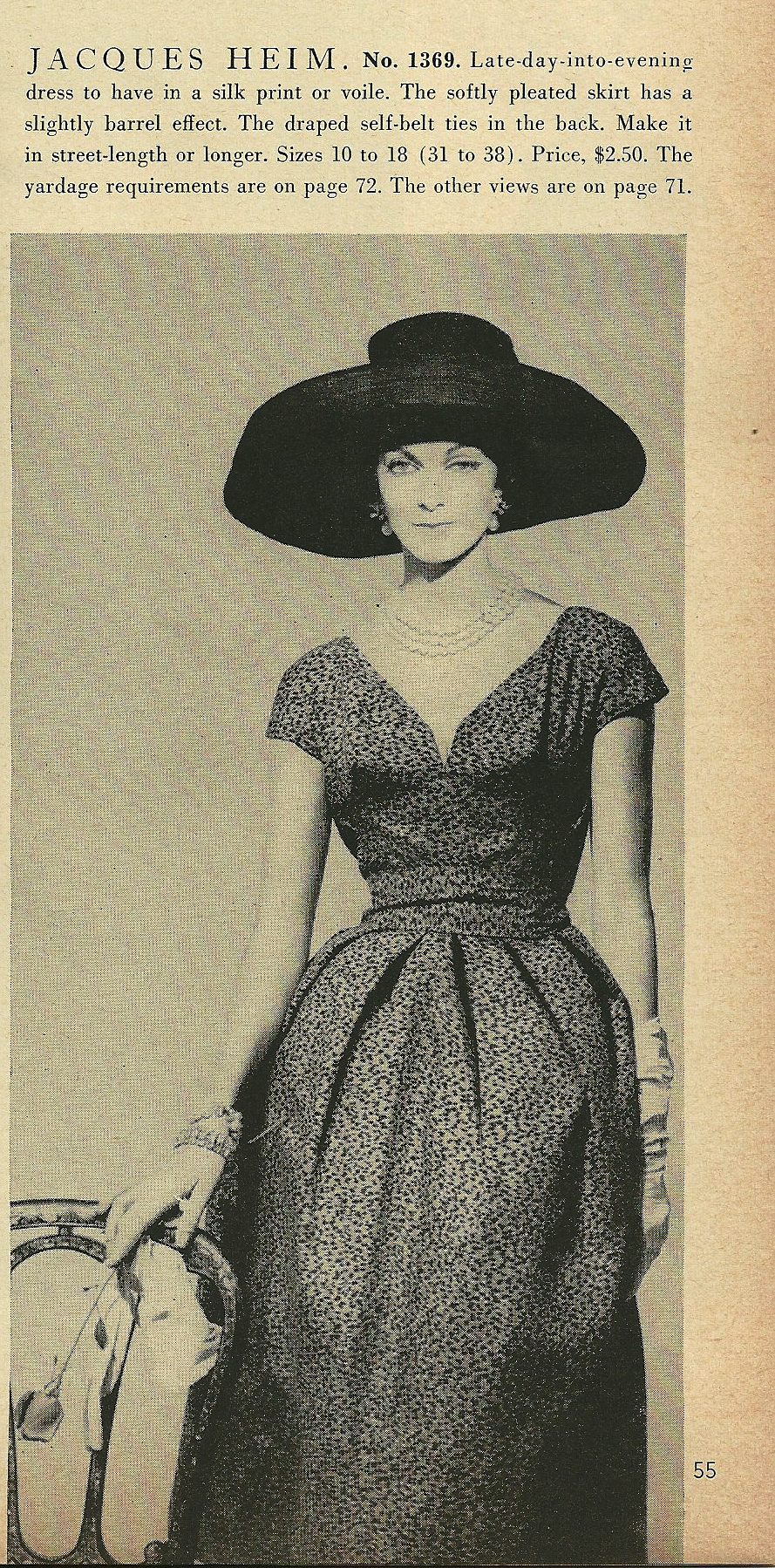
Vogue Patterns started featuring his designs in the early ‘50s as part of their designer series.  It was interesting to go through some of my Vogue Pattern Book magazines and see the progression of his fashions.

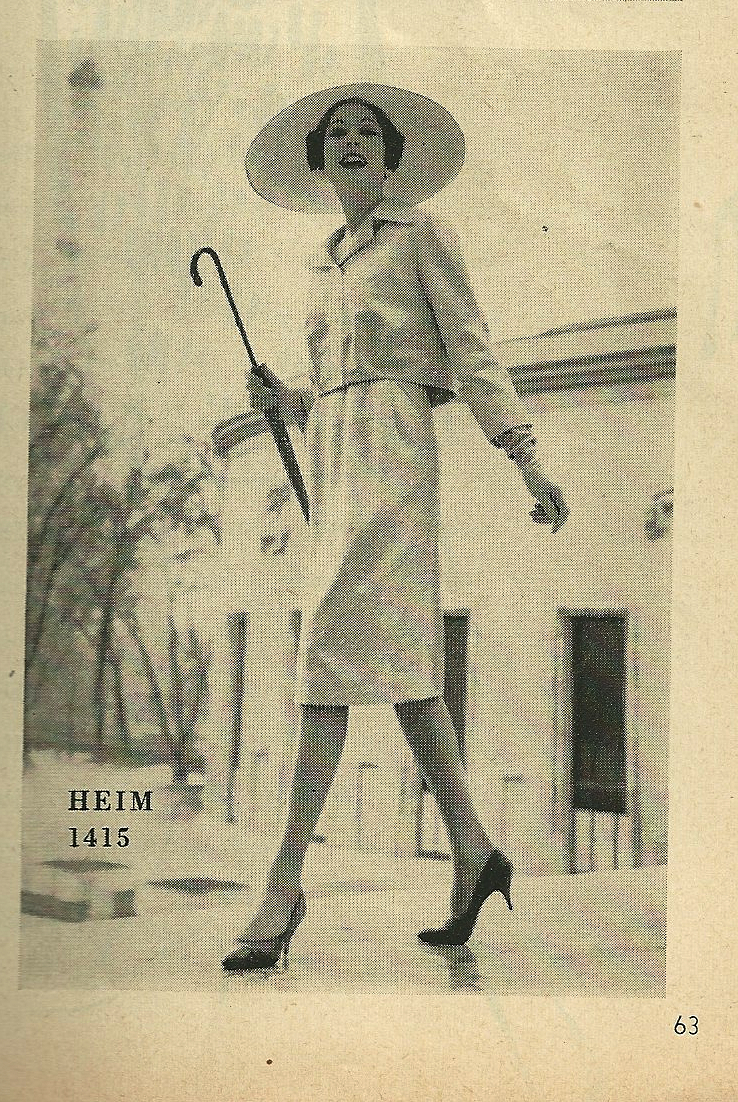
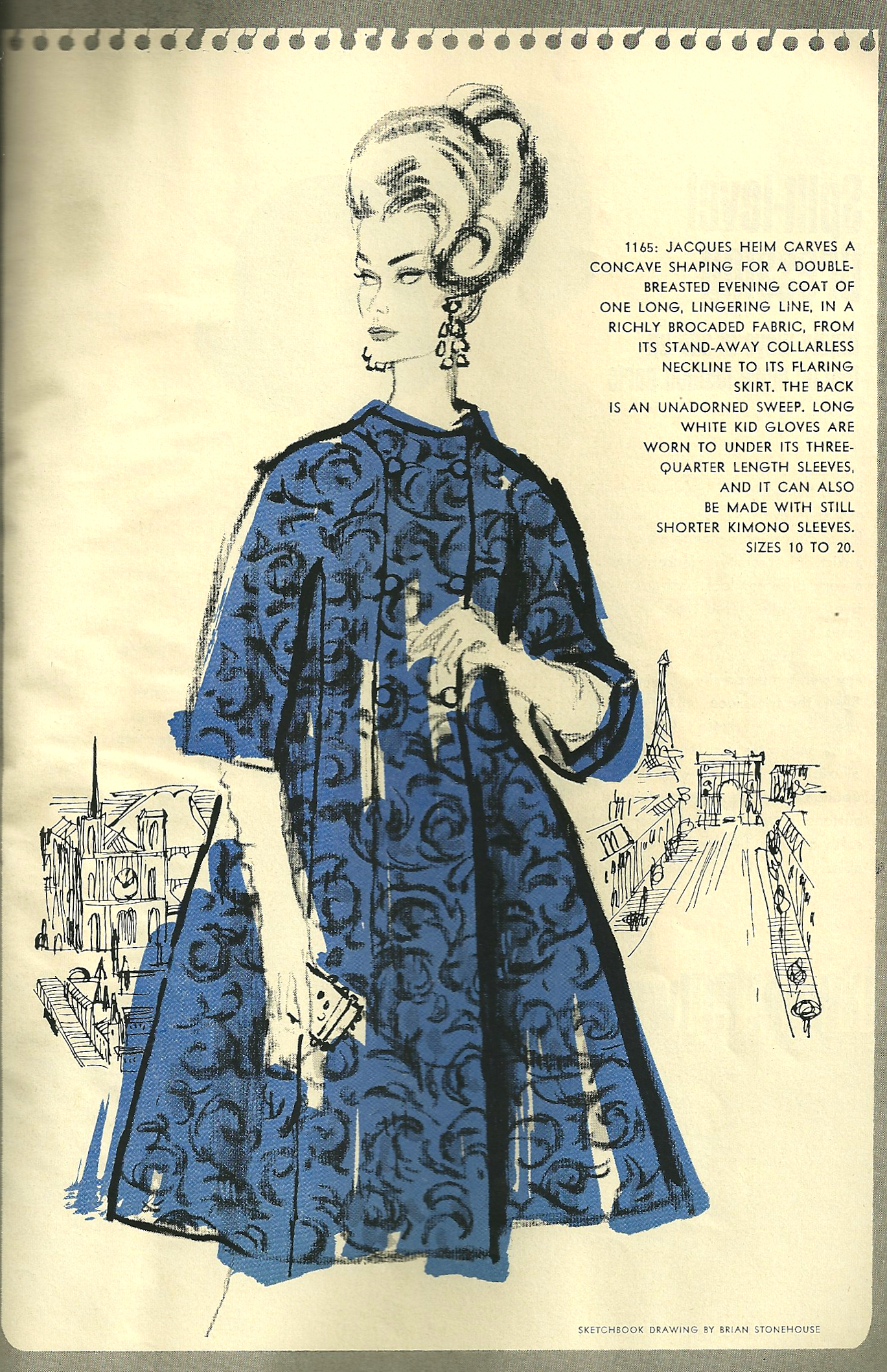
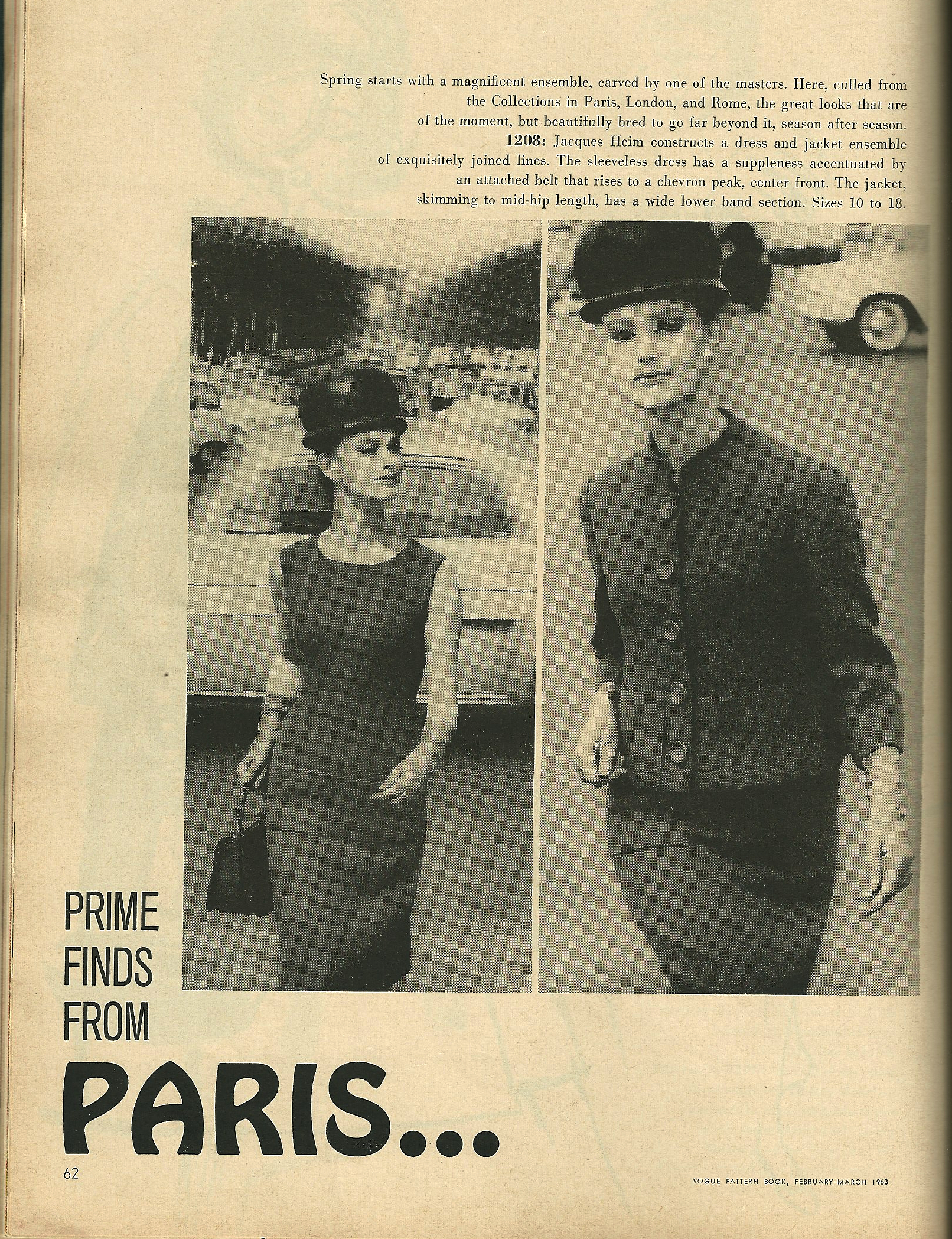
In chronological order, here are four examples of his work:

This dress was featured in the June/July 1957 Vogue Pattern Book magazine.

This ladylike suit was pictured in the August/September 1958 issue of the Vogue Pattern Book magazine.

Here is a Jacques Heim evening coat from the August/September 1962 Vogue pattern Book magazine.

This ensemble was one of Mr. Heim’s February/March 1963 designs. The waist on the dress has a set-in chevron-peaked belt detail. Very lovely!

The pattern I chose was actually featured in one of the free “flyers” which were available in fine fabric stores in the ‘60s.  It is dated Fall 1966.  I just happened to find this copy on eBay – no one bid against me, so I guess I was meant to have it!

I felt very lucky to find this item on eBay!  Note the hair-do.

Mr. Heim died in early January 1967, so this particular pattern must have been one of the last ones which he designed or which was designed under his name before his death.  His fashion house then only lasted for 2 more years, closing operation in 1969 .

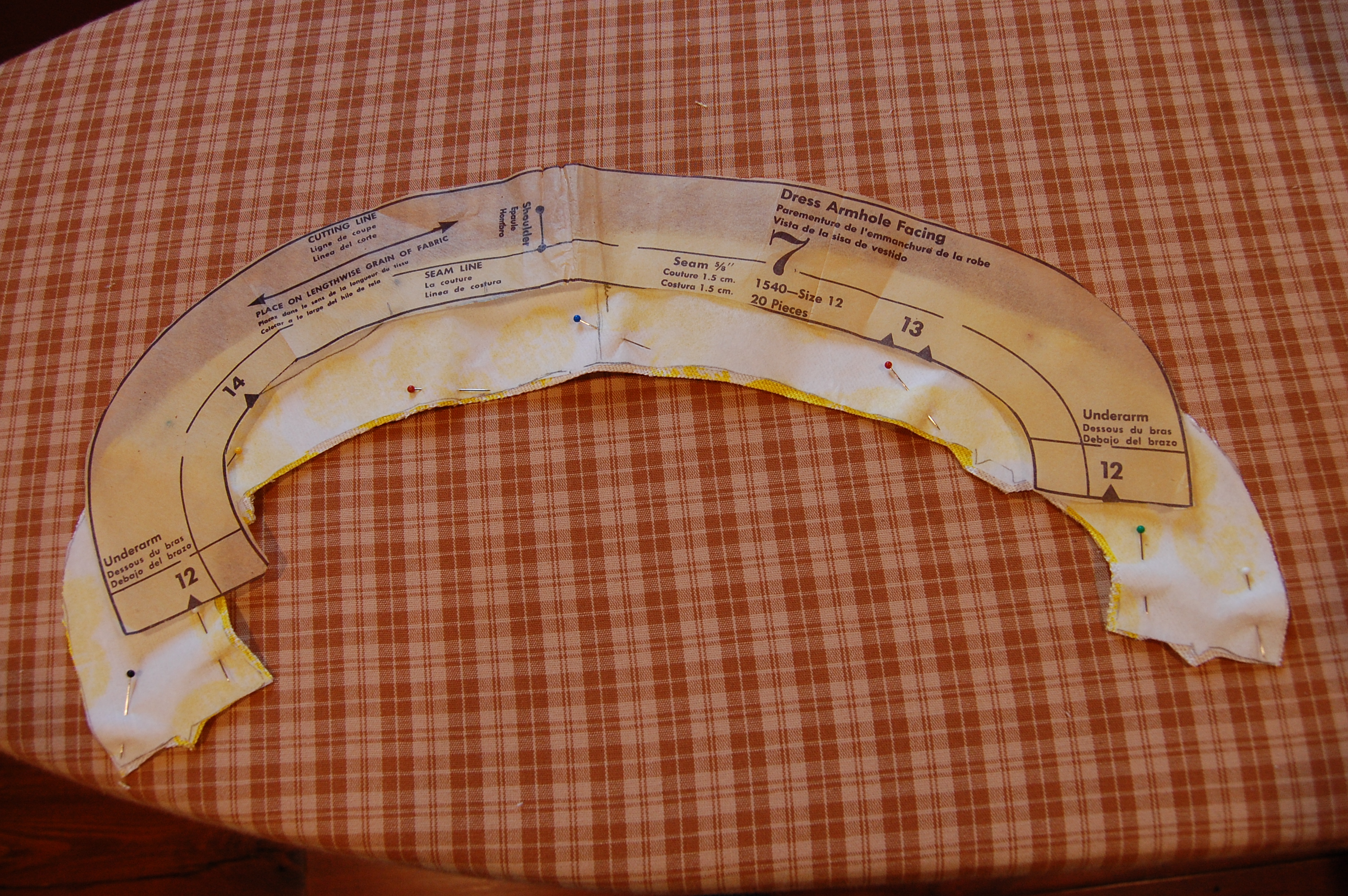
So – now on to construction of my dress.  I made a muslin of the bodice yoke  so I could check on the neckline and shoulder line, both of which seem to be an ongoing challenge for me with these vintage patterns.  Although the neck seemed to be okay, the shoulder line appeared to me to extend a little too far out over the shoulders.   So I re-cut the pattern piece, which meant that the facing had to be re-cut as well.

I had to extend the length of the armhole facing to accommodate my changes to the shoulder line.

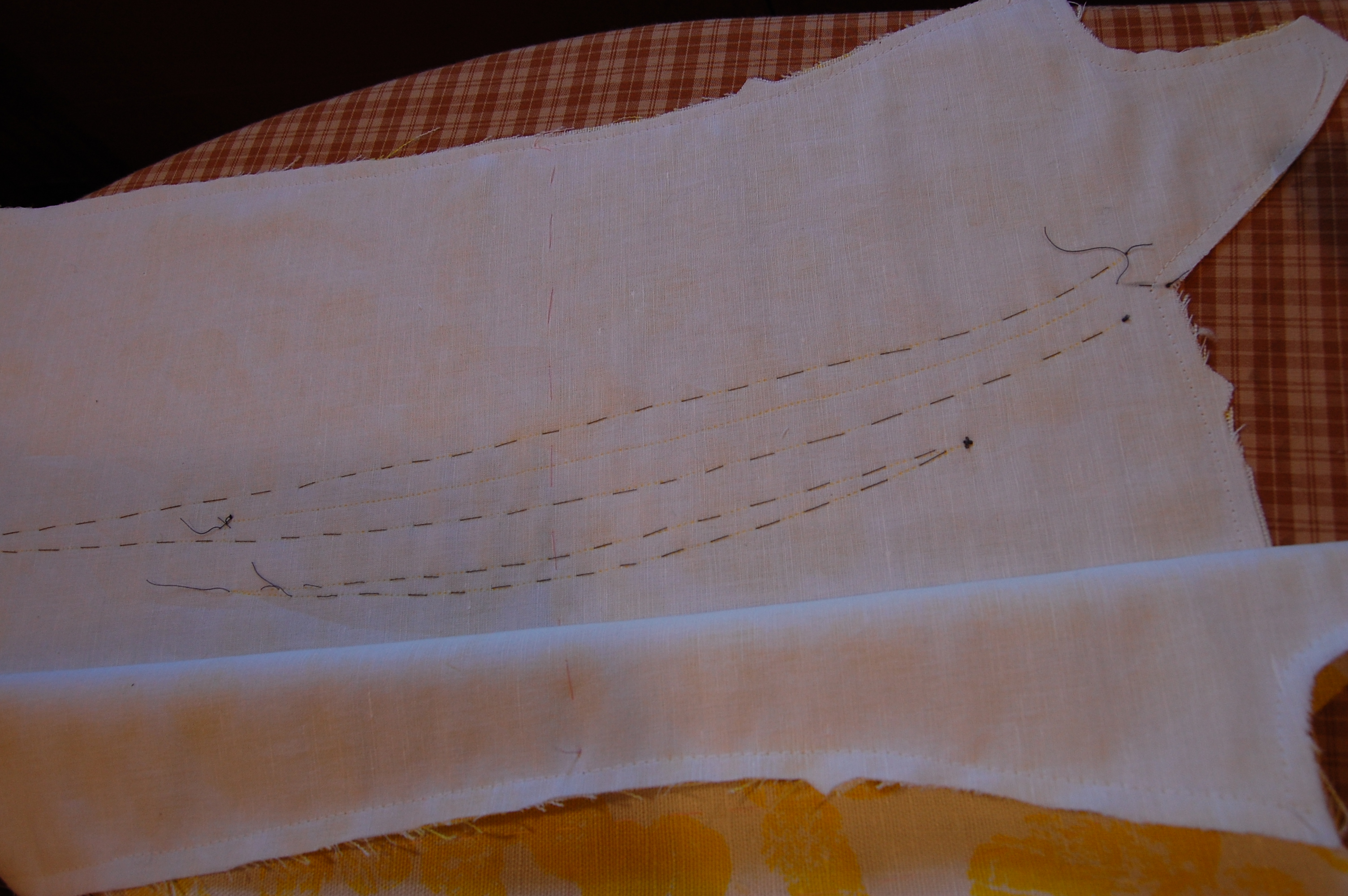
The pattern called for the dress to be interlined, for which I chose a lightweight linen/cotton blend.  I basted all the pieces together by hand, kind of in a grid before machine basting them together just inside the seam lines.  I also basted all the dart lines, as indicated on the pattern instructions.

Here are the “bodice/yoke” pieces shown with their underlinings.

This shows my basting stitches on the dart lines.

As I got near to the end of the construction, I was very happy that I had re-cut the shoulders, but I began to sense that the neck was going to be a problem.  After I had the facings in the armholes, I tried the dress on, and yes, the neck was tighter than I wanted it to be.  I cut off the 5/8” seam allowance on the neckline and the matching part of the facing, which made it perfect!

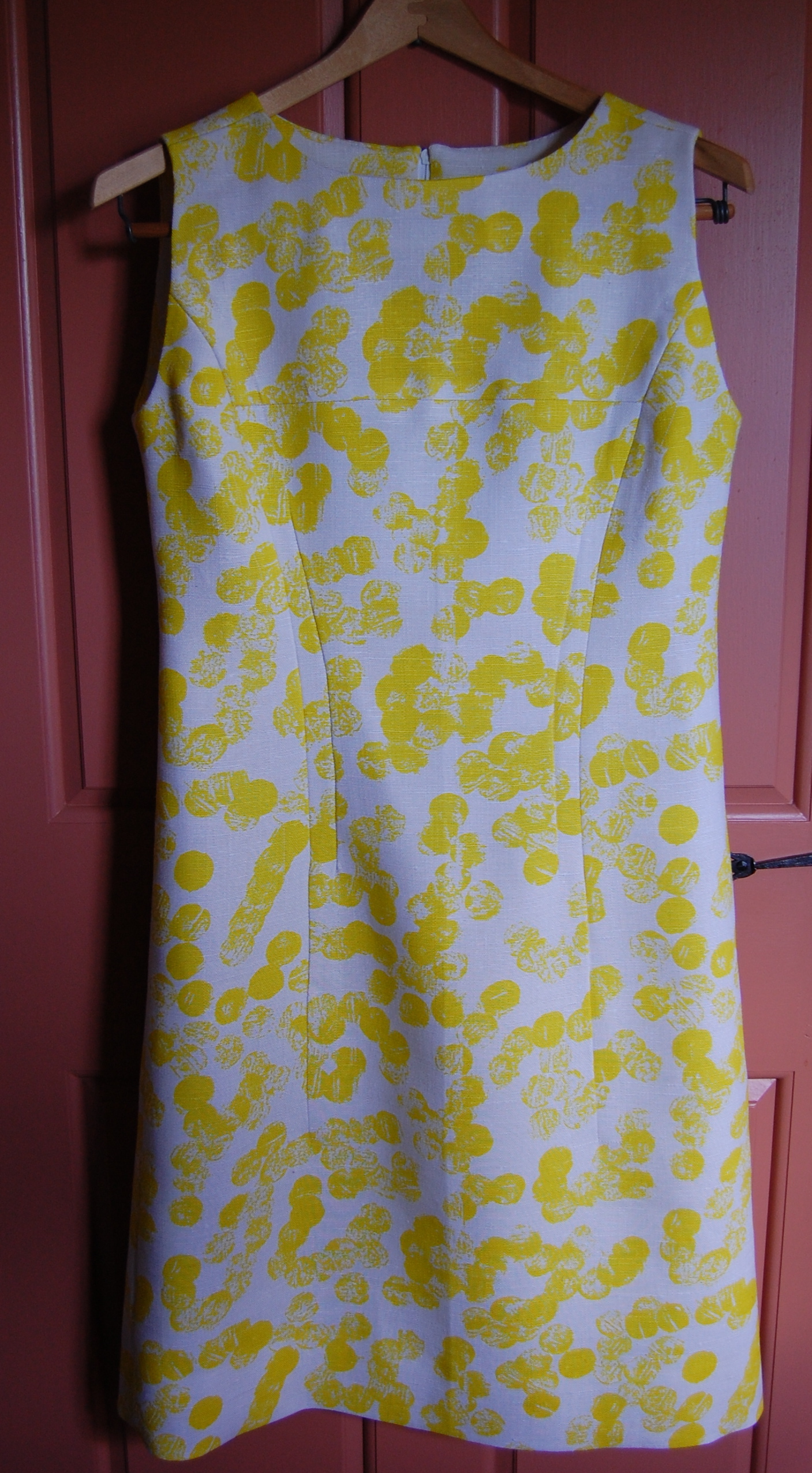
Here is the finished dress.

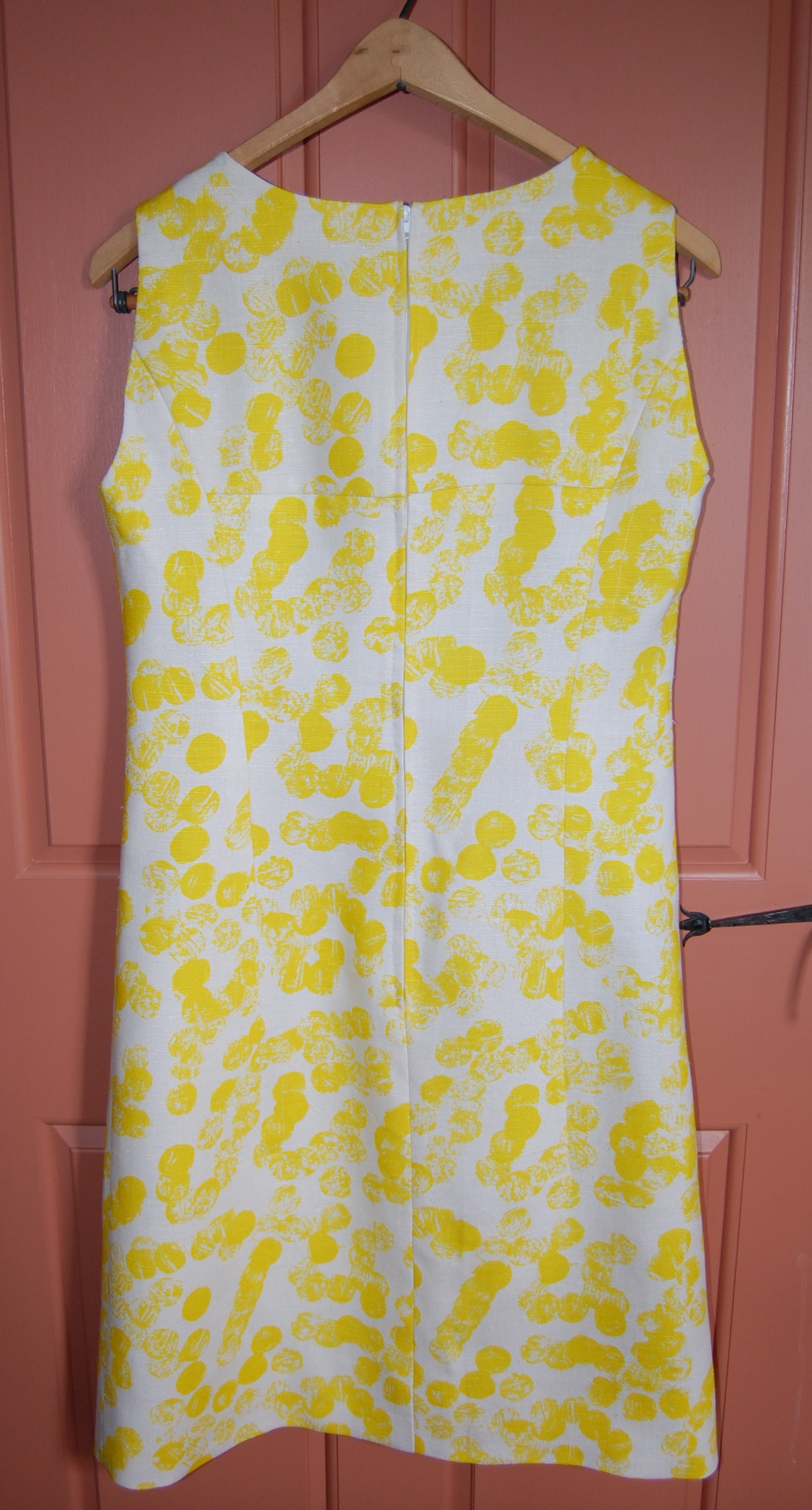
Here is the back view.

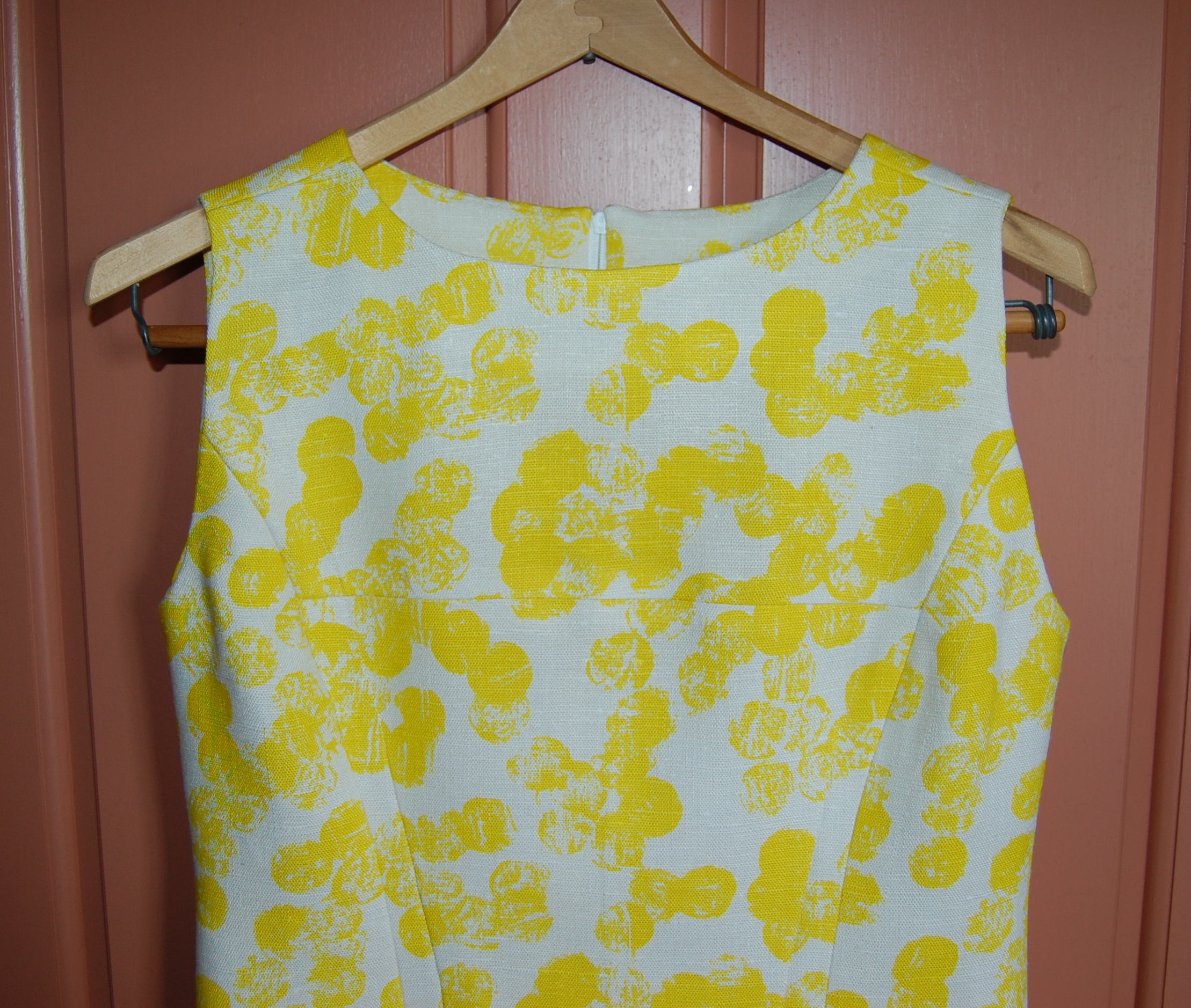
A close-up of the top of the dress. I used vintage silk thread to do the topstitching. It’s very subtle, but effective, I think, particularly in person…

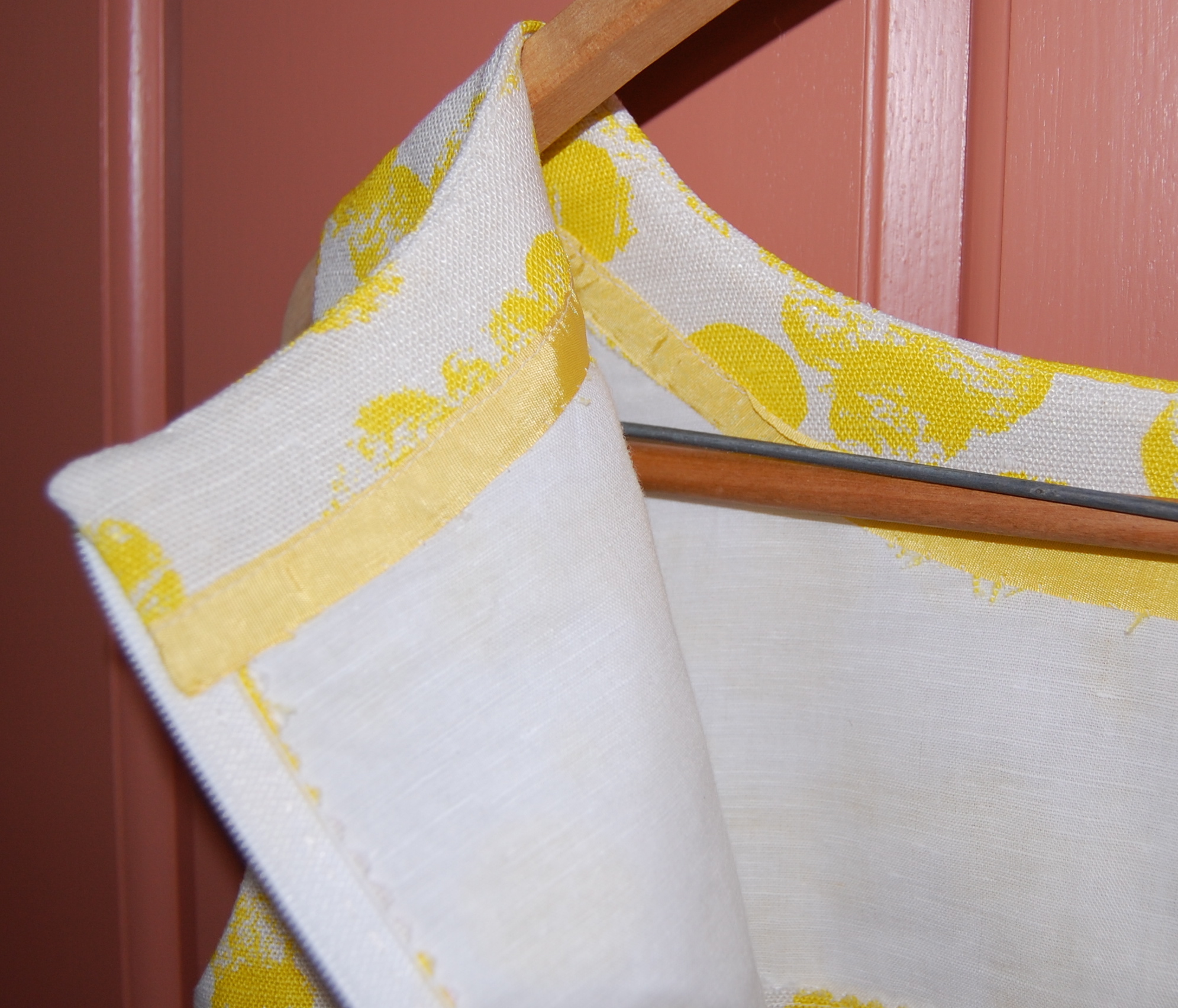
I had just enough of this yellow vintage seam tape to do the neck. It makes a nice flat finish. I sometimes do the understitching on the facings by hand. If you click on the photo, you can probably see this detail. It’s time-consuming, but makes a nice finish!

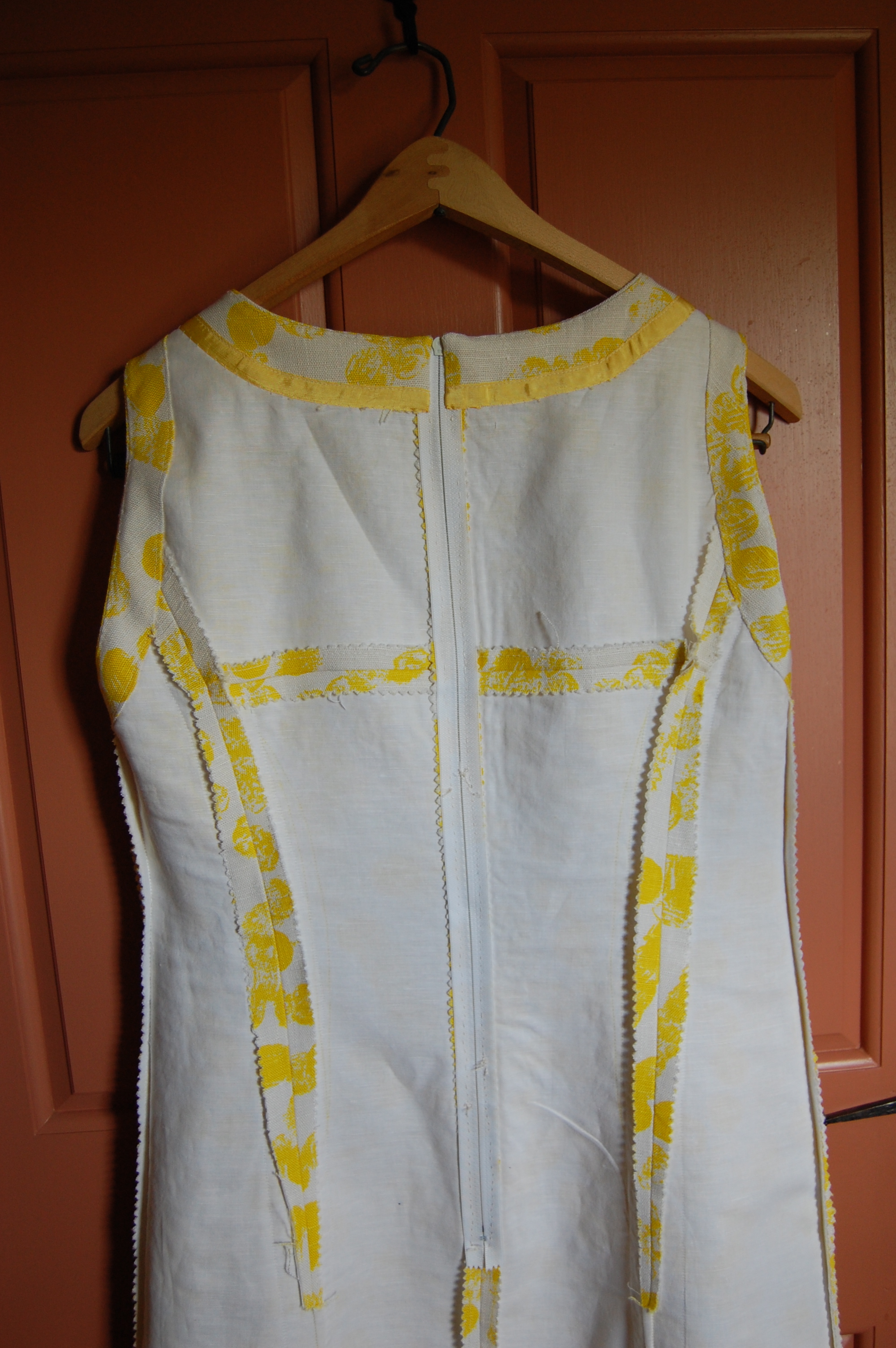
Finally, for anyone who’s interested, here’s the inside story!

I really like this dress – it’s cheery, comfortable and casually dressy – what more could one ask for?

8 Comments

Filed under Linen, Polka dots, Uncategorized, vintage Vogue patterns from the 1960s, Vogue patterns

Quiz #2: Match the fabric to the pattern

Of all my sewing projects, which are either in the works or in the planning stages, two of them will be completed shortly. (At least I hope they will be.  Everything always seems to take longer than I anticipate…  Does anyone else find that to be true?)   However, I’m just not ready to report on either of these “almost-finished” endeavors yet.  . . . So I thought I would take this opportunity to expand a bit on my infatuation with Moygashel linen – and give you, my readers, some more beautiful vintage fabrics to see – and to allow you to imagine them all dressed up and ready to wear.

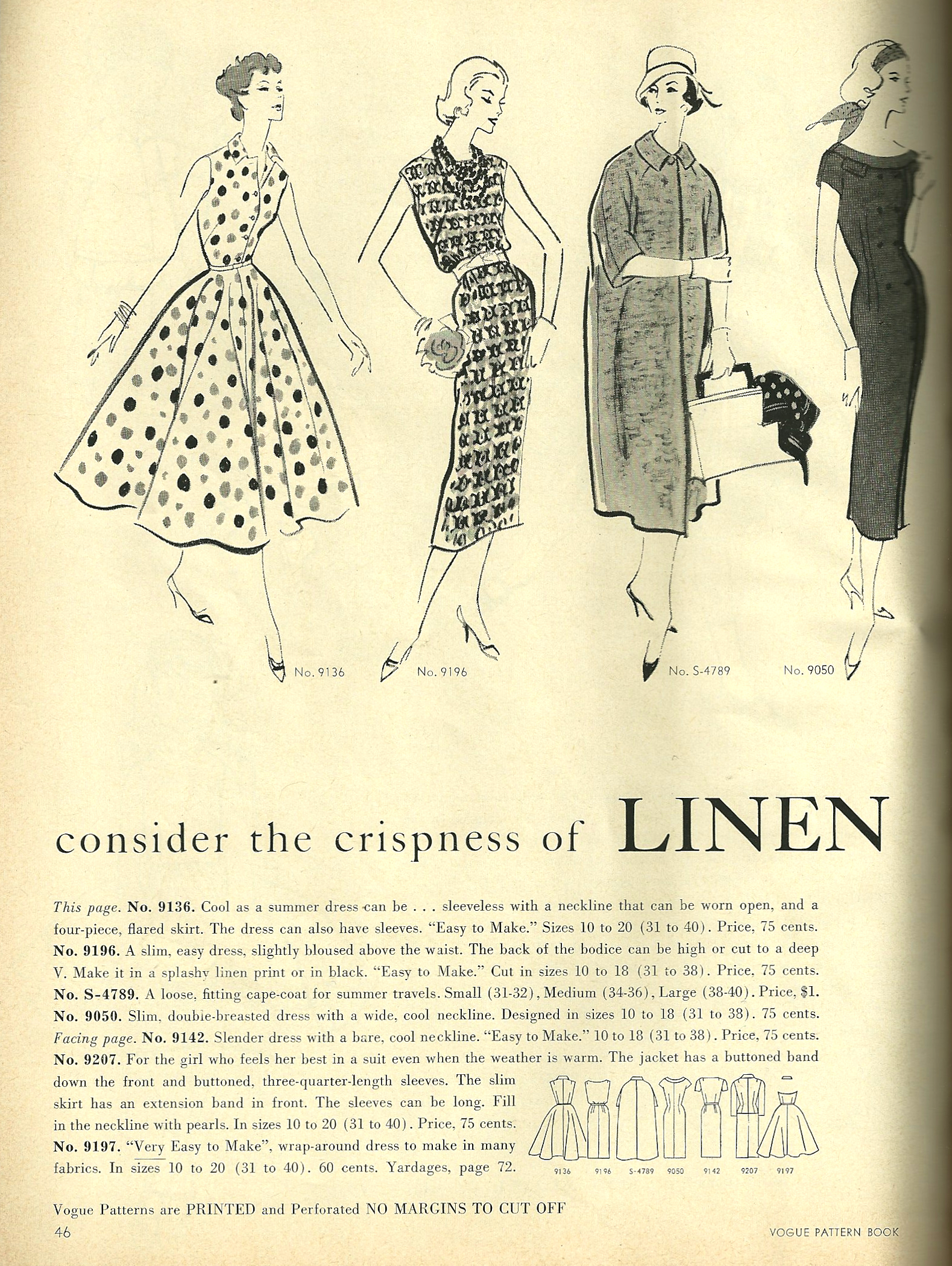
In the Vogue Pattern Book from Summer of 1957, one of the articles implores the reader to “consider the crispness of LINEN”.

This June/July issue is perfect to feature linen - it is a great fabric for Summer - cool, crisp, washable, and the perfect weight for dresses and suits.

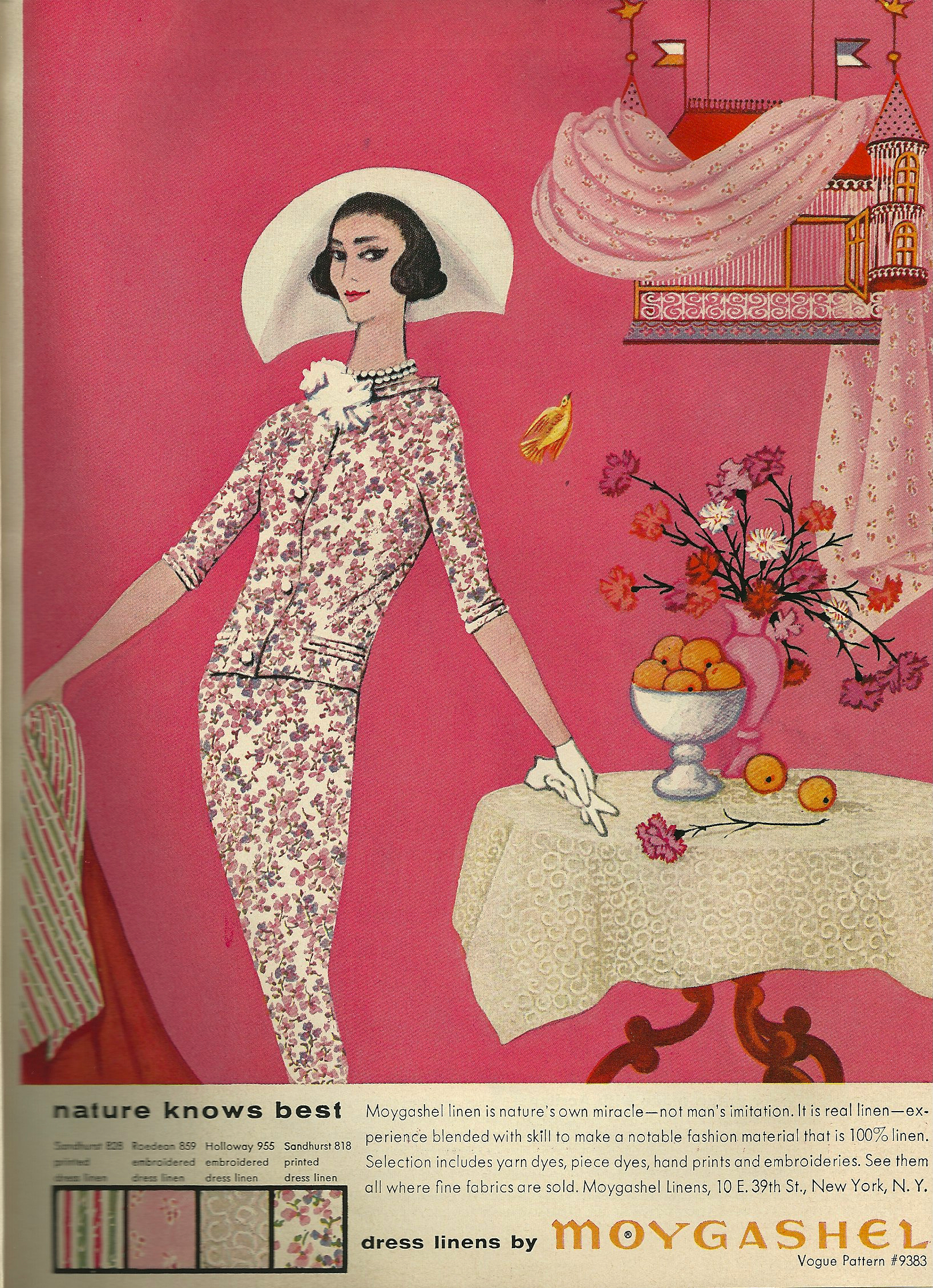
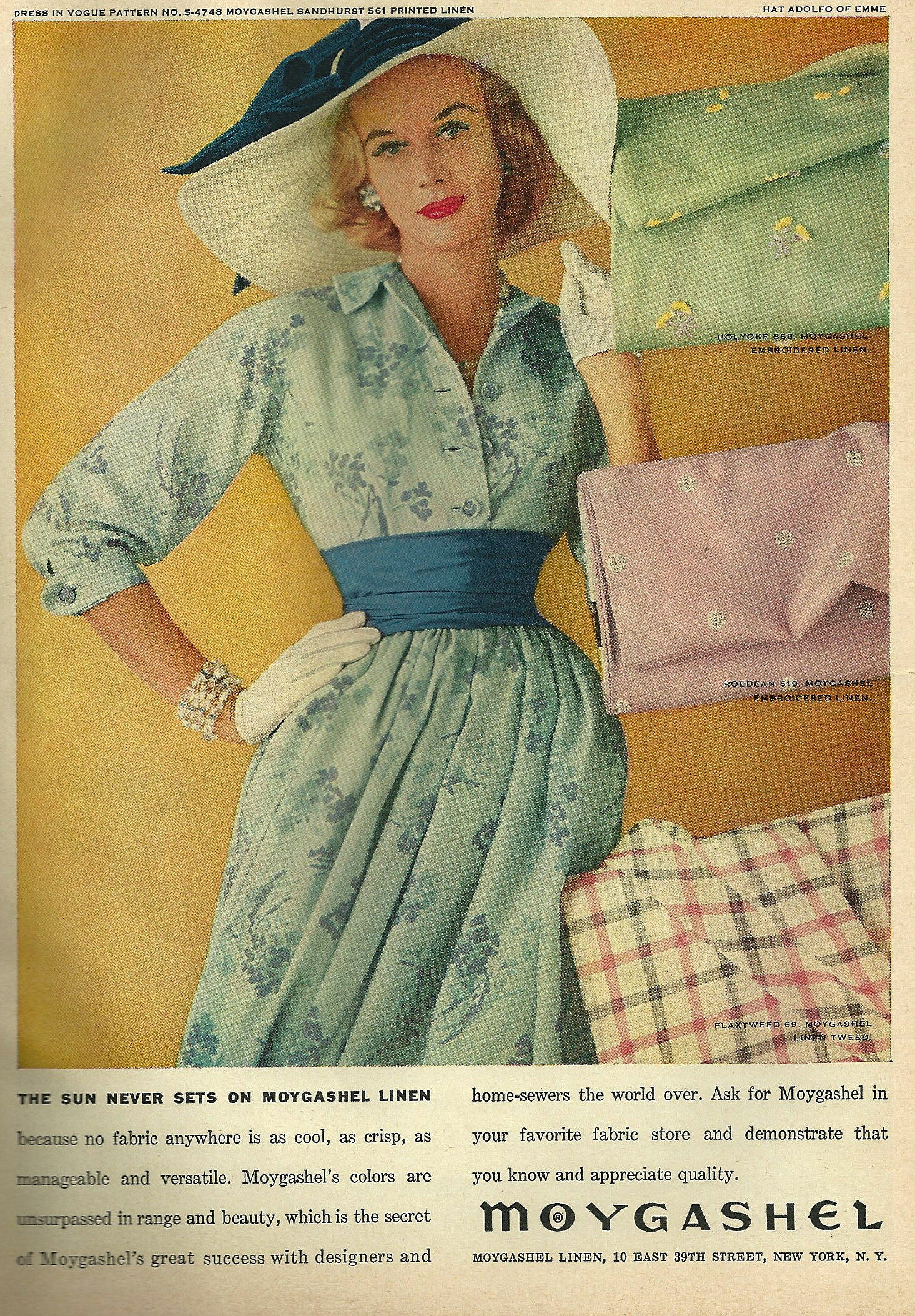
Articles like this, and ads for linen fabrics, showcase the popularity of sewing with linen in the 1950s, ‘60s, and ‘70s.  I shared a few Moygashel linen ads with you recently, and here are three more, which illustrate the range of designs and colors available to the mid-century home sewer.

This almost whimsical illustration depicts four designs of Moygashel linen. It appeared in the February/March 1958 issue of Vogue Pattern Book magazine.

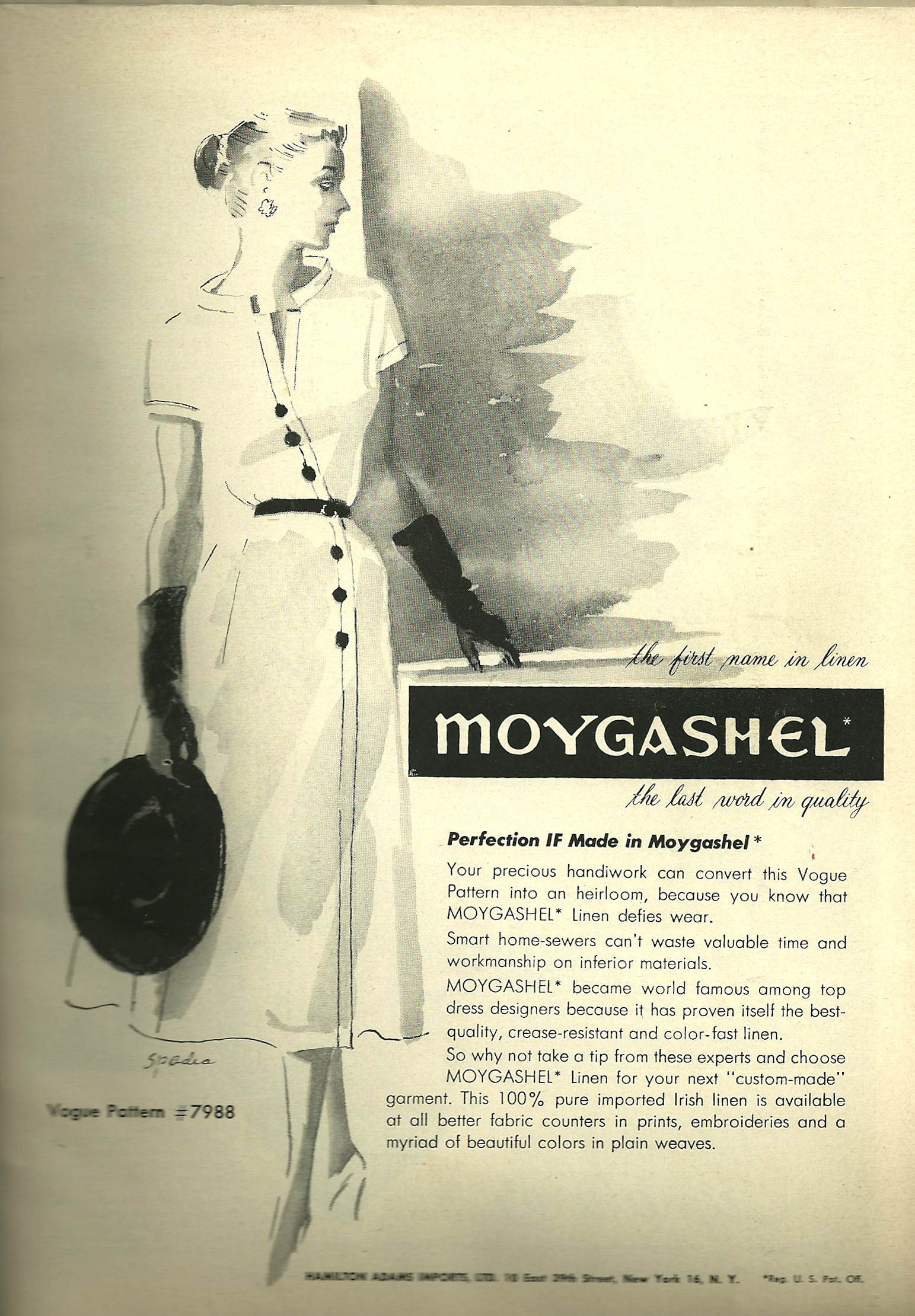
This ad states: "Your precious handiwork can convert this Vogue Pattern into an heirloom, because you know that Moygashel Linen defies wear." Those words were certainly presentient! It appeared in the April/May 1953 Vogue Pattern Book magazine.

Here are four more Moygashel linens, featured in the February/March 1957 Vogue Pattern Book magazine.

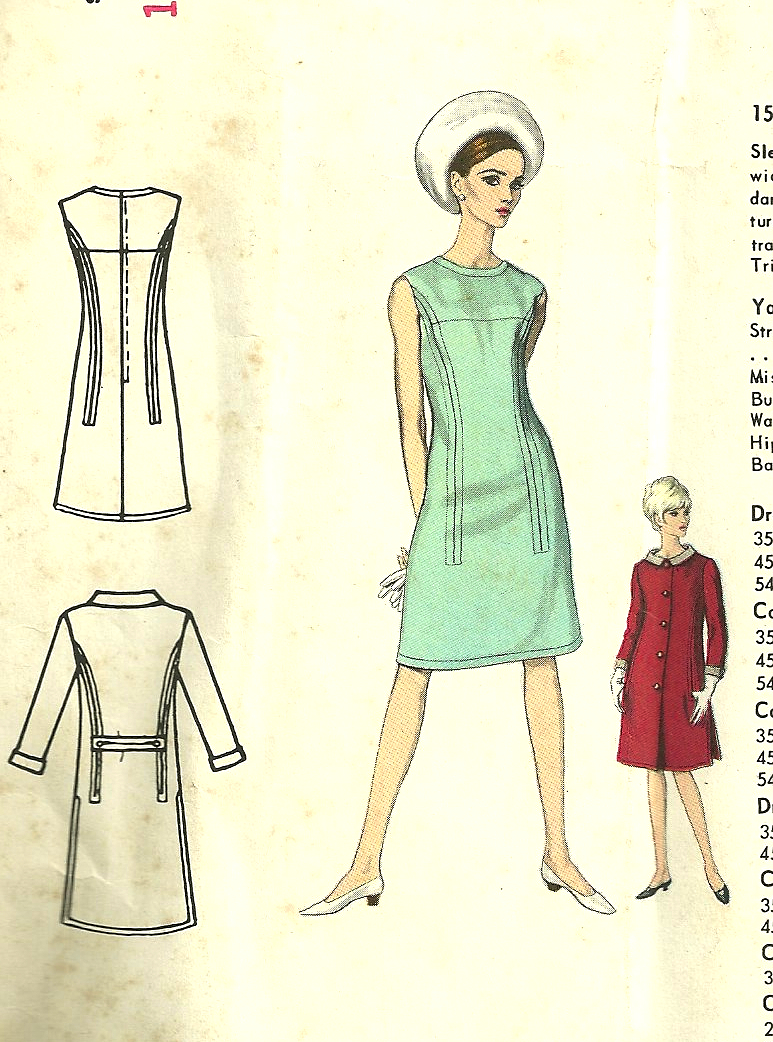
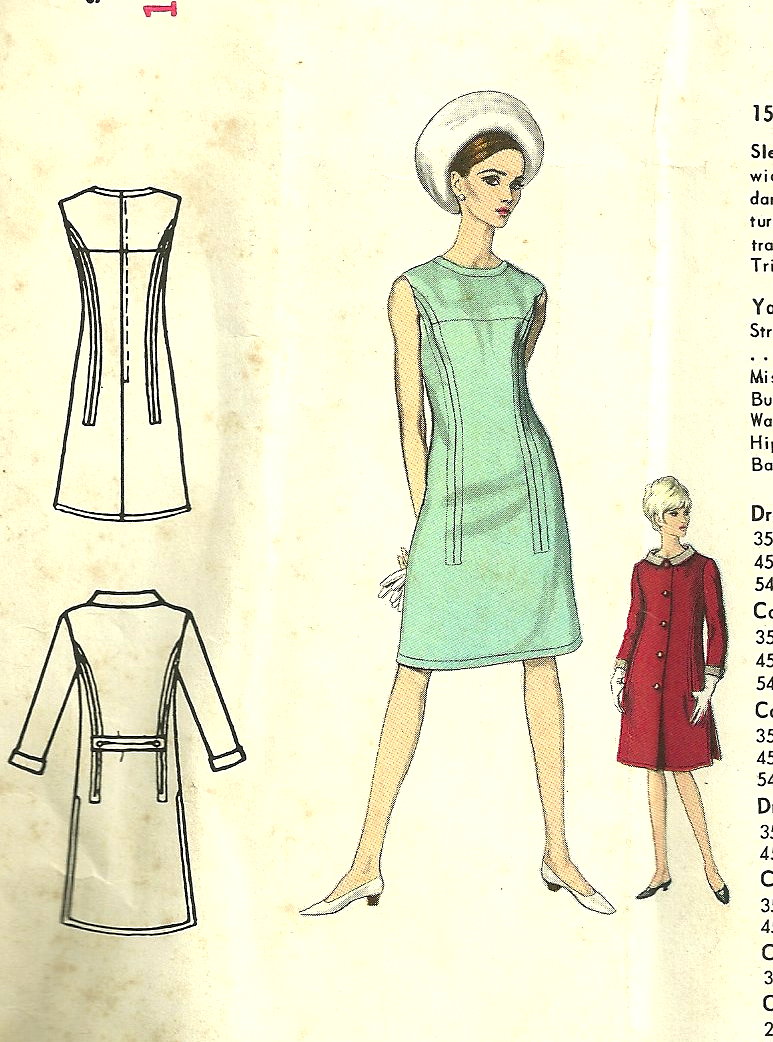
I certainly decided to “consider” linen when I purchased this 1965 Vogue pattern a few months ago:

This pattern is for a paring of coat and dress, but the dress stands alone beautifully.

My intention was to make the dress only – a lovely sheath with some distinctive seaming and top-stitching.  So I went to my fabric closet to see what linens I could “consider” for a crisp Spring/Summer dress.  Here are the four that I decided to choose from:

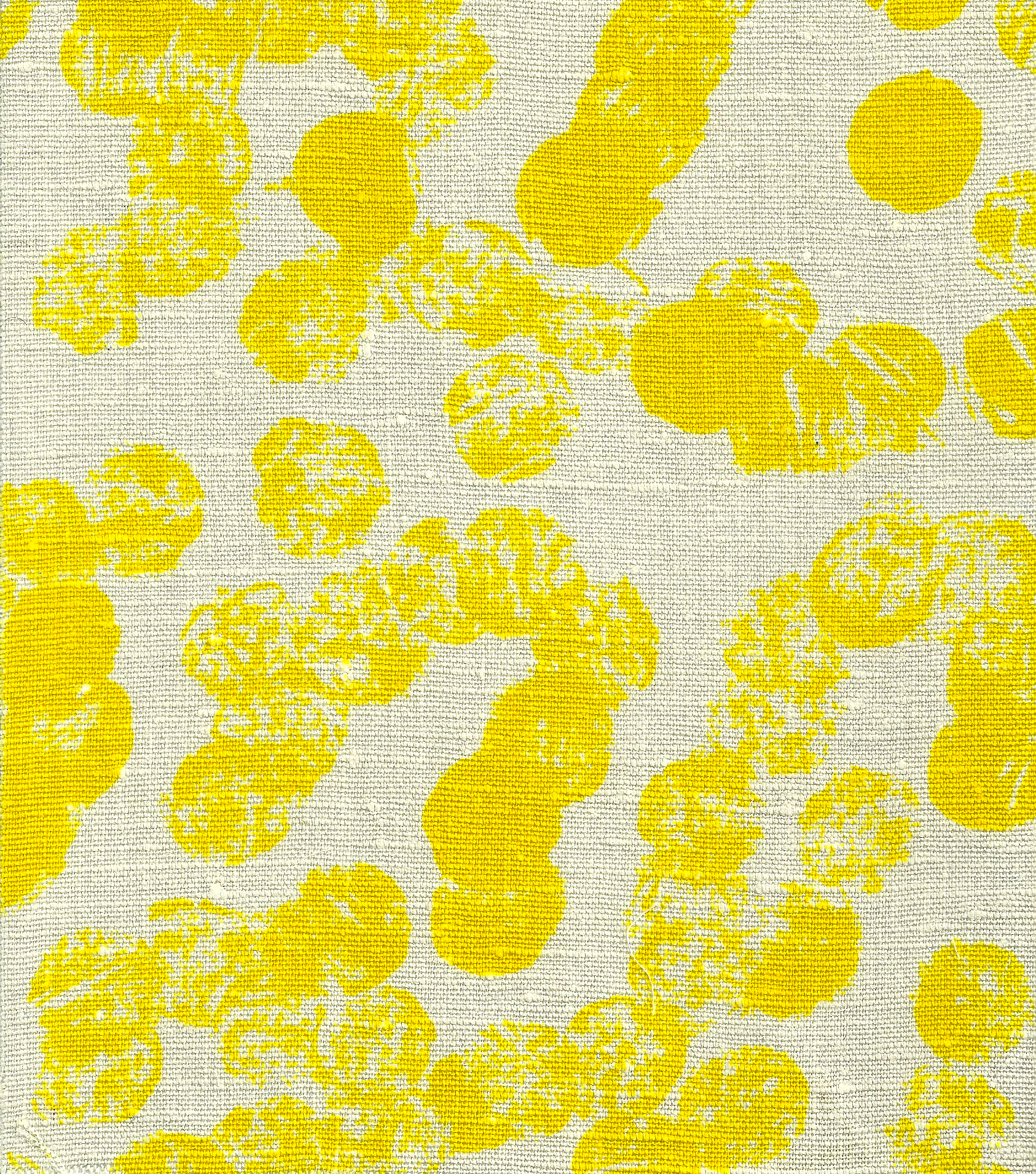
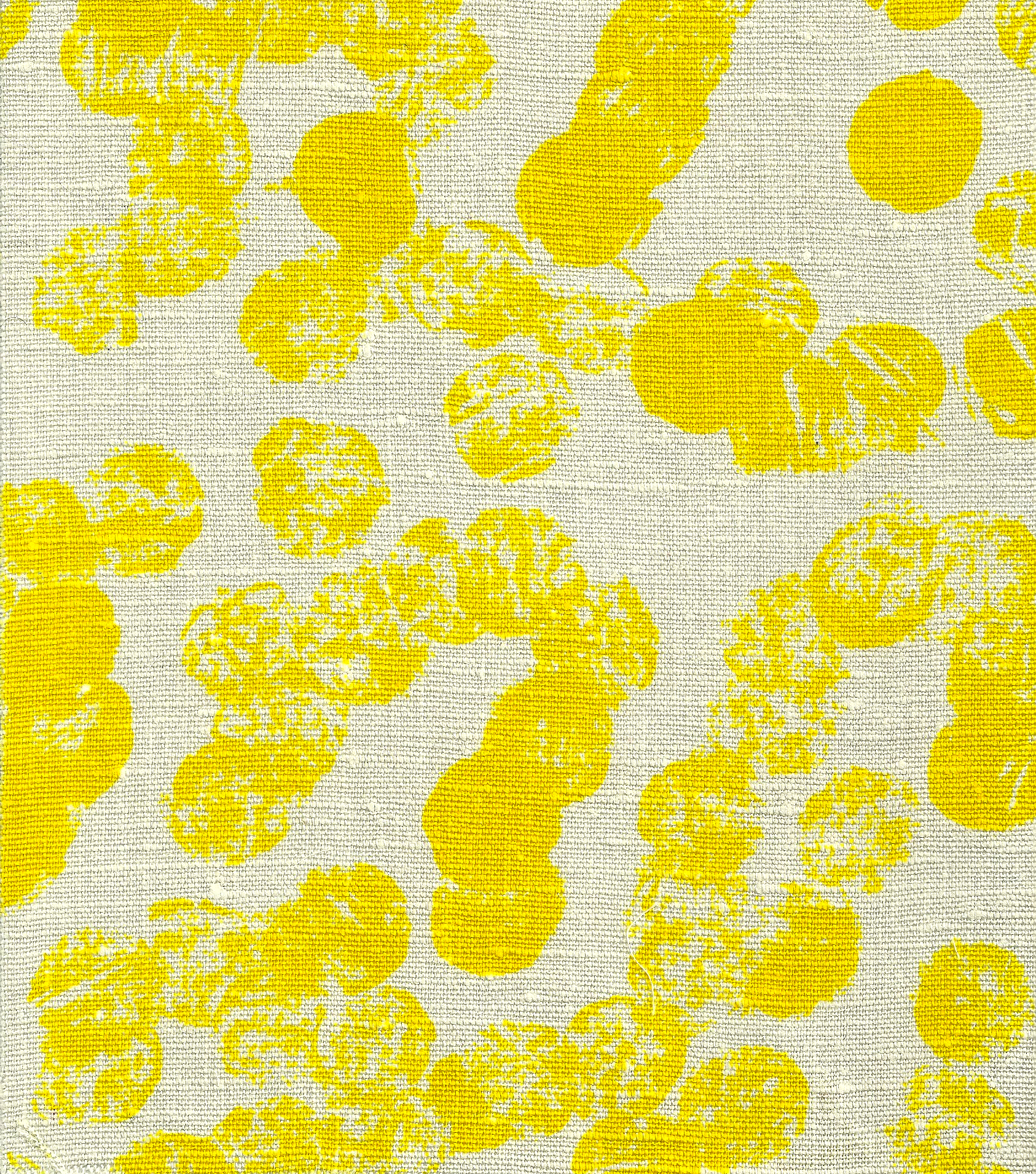
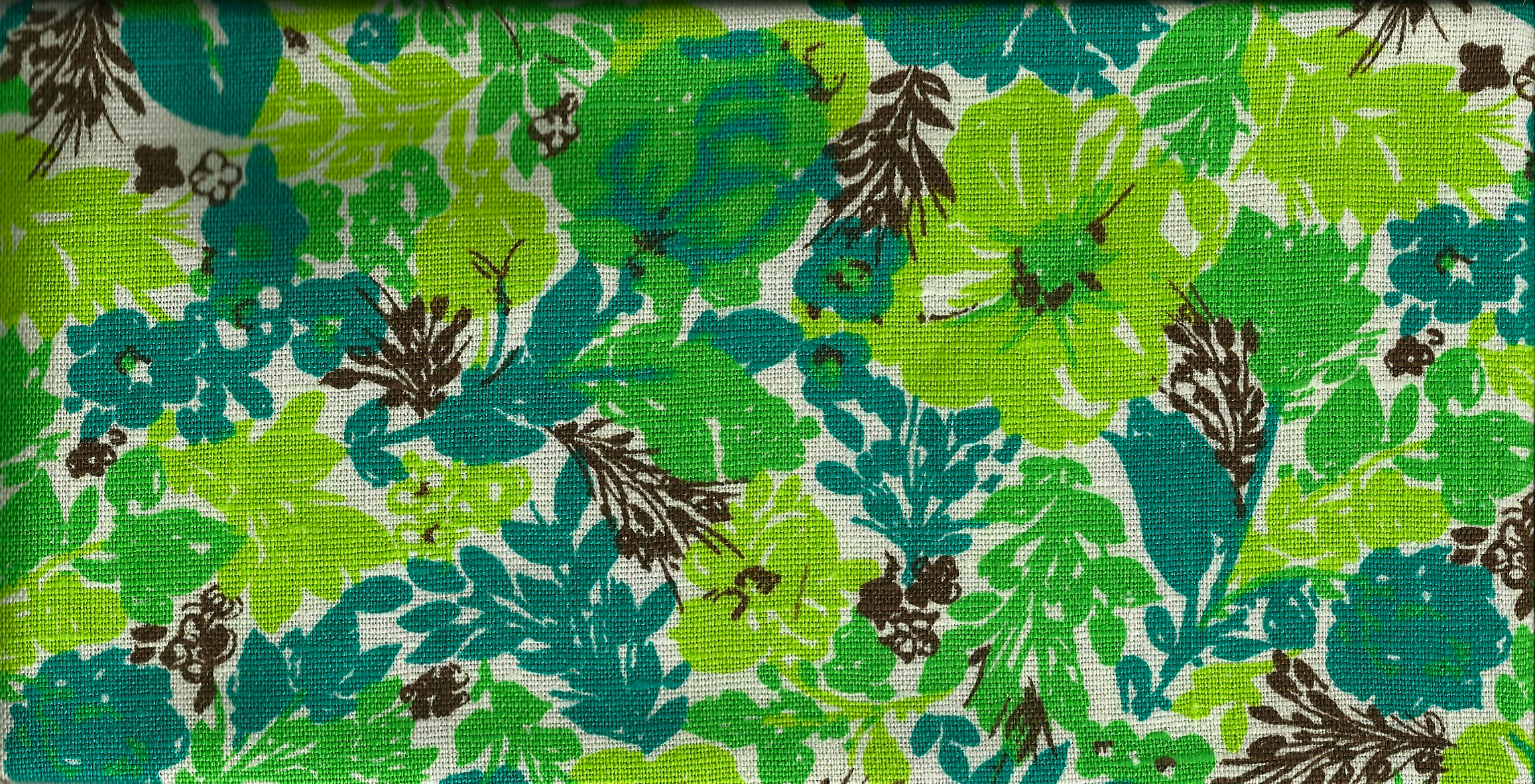
#1 - Bright and sunny, this design is a subtle play on the polka dot theme.

#2 - The colors in this design are very 2012-current-and- fashionable!

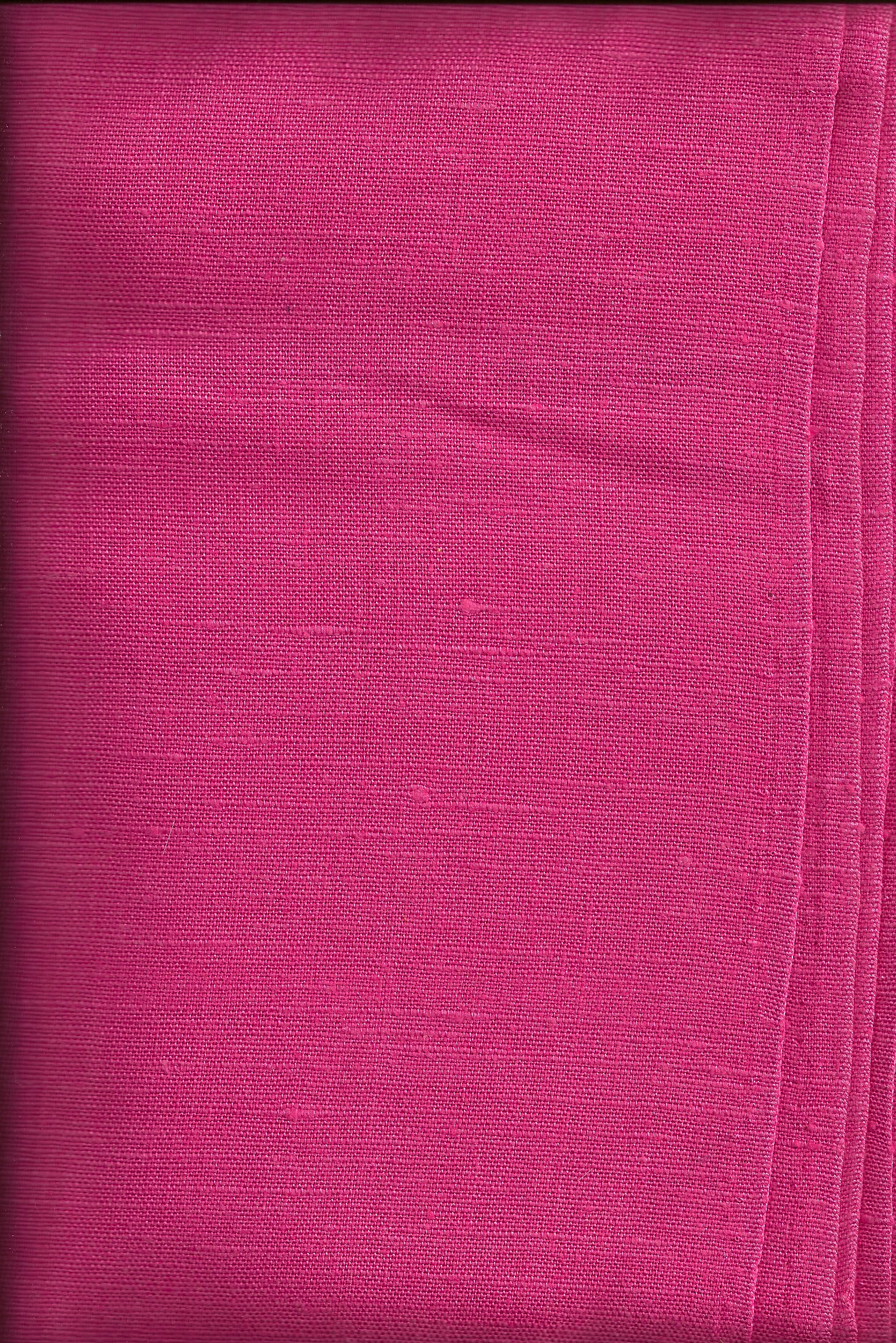
#3 - Decorative topstitching on this solid pink linen would be quite attractive.

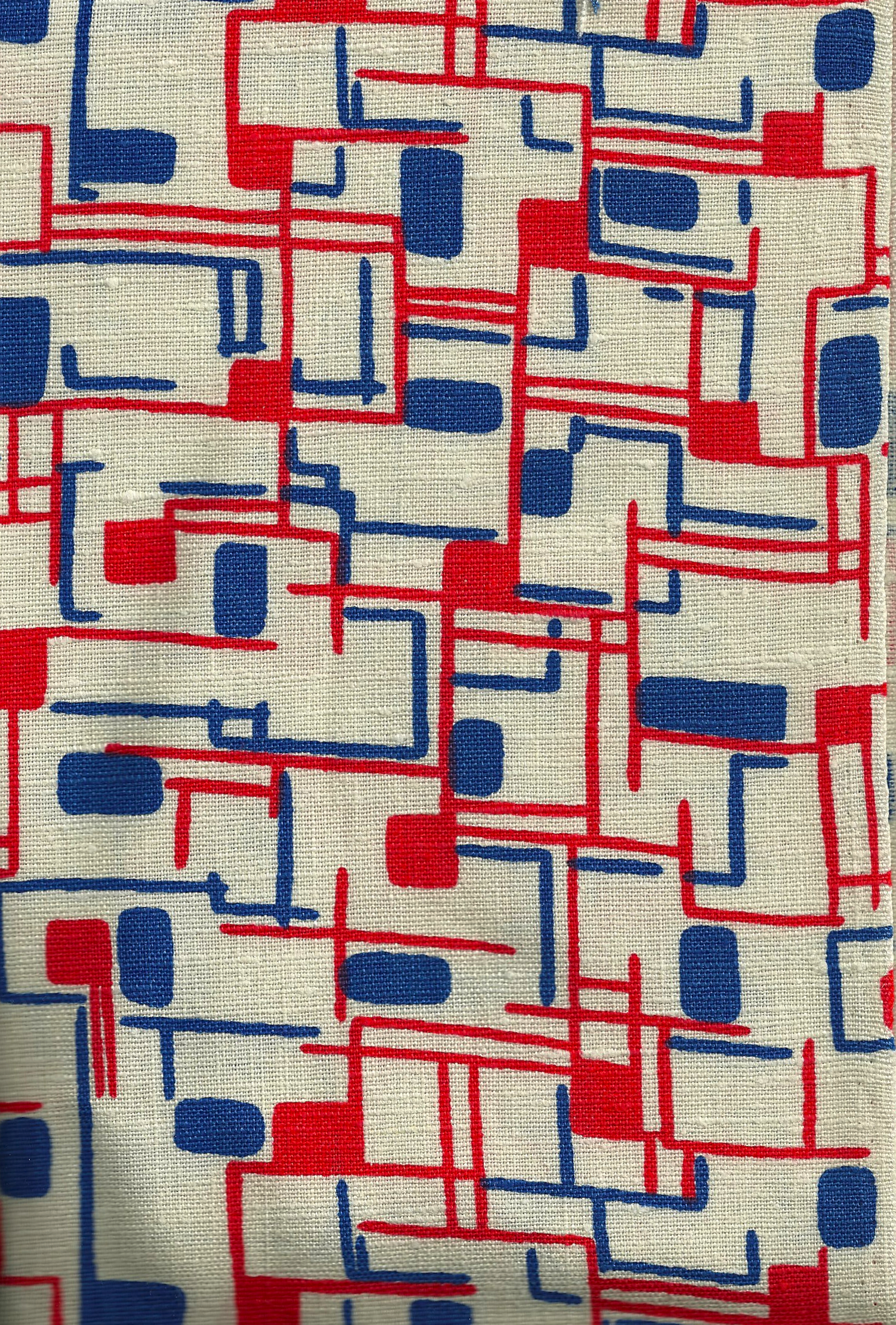
#4 - This geometric print is probably from the late '60s, so it would make up beautifully in a pattern from the '60s!

Which fabric would you choose for this dress pattern?  Which one do you think I chose to make into this dress?

6 Comments

Filed under Linen, Polka dots, Uncategorized, vintage Vogue patterns from the 1950s, vintage Vogue patterns from the 1960s, Vogue patterns