
Red Letter Day: “A day that is pleasantly noteworthy or memorable.” (Cambridge Languages)
Day Dress: “The perfect all-in-one outfit, a day dress is a versatile and fashionable way to look chic and stay comfortable at the same time.”
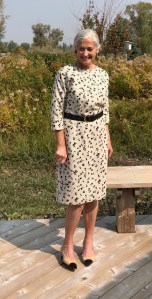
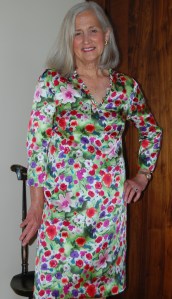
Any day I finish a lengthy project (successfully) is definitely a “red letter day.” This dress just happens to be red, adorned with letters, and “back in the day,” as they say, it would have been considered a “day-dress,” although the apt description above is actually from a current website. (DavidJones.com)
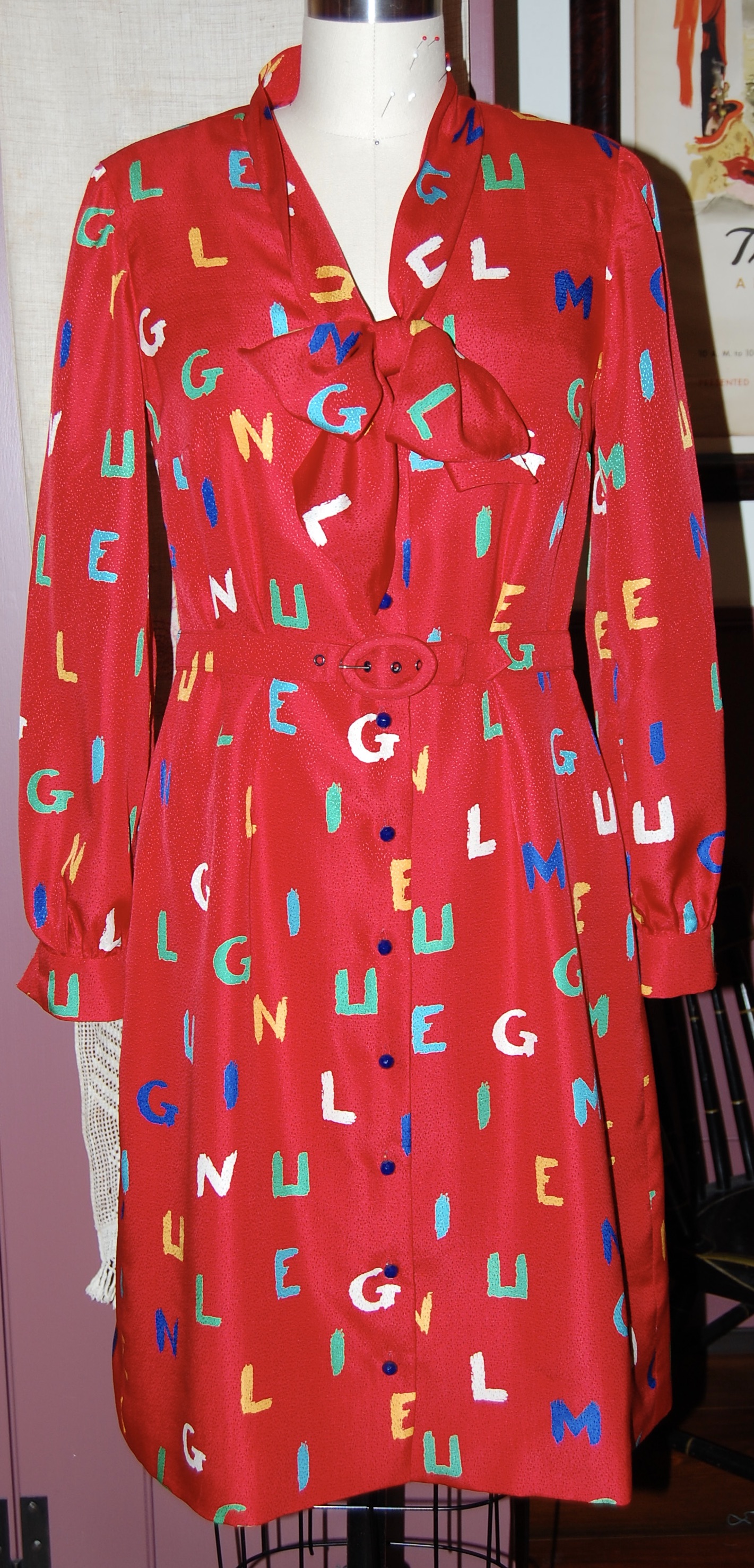
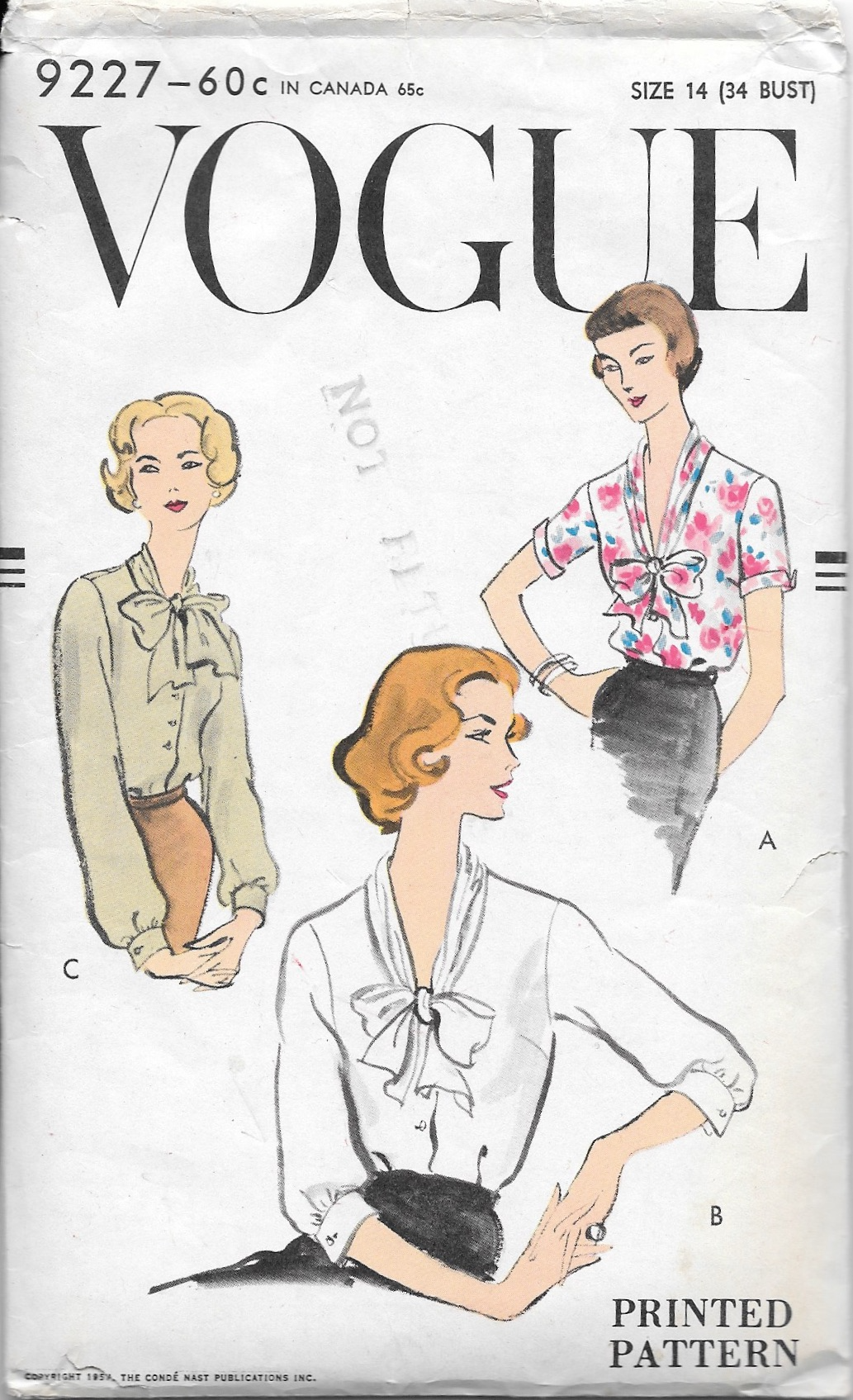
I go into a little bit of how this dress evolved in my last post. But of course there were many more decisions to be made along the way. I had to decide:
- Do I underline this crepe de chine?
- If I underline it, what do I use for my underlining fabric?
- Do I also line this dress?
- If I line it, do I also line the sleeves?
- The blouse pattern has floating, released darts at the waist. Do I use that technique for this pattern transformed into a dress?
- What color and type of buttons will most enhance the fabric?
- Do I make bound buttonholes or machine-stitched ones?
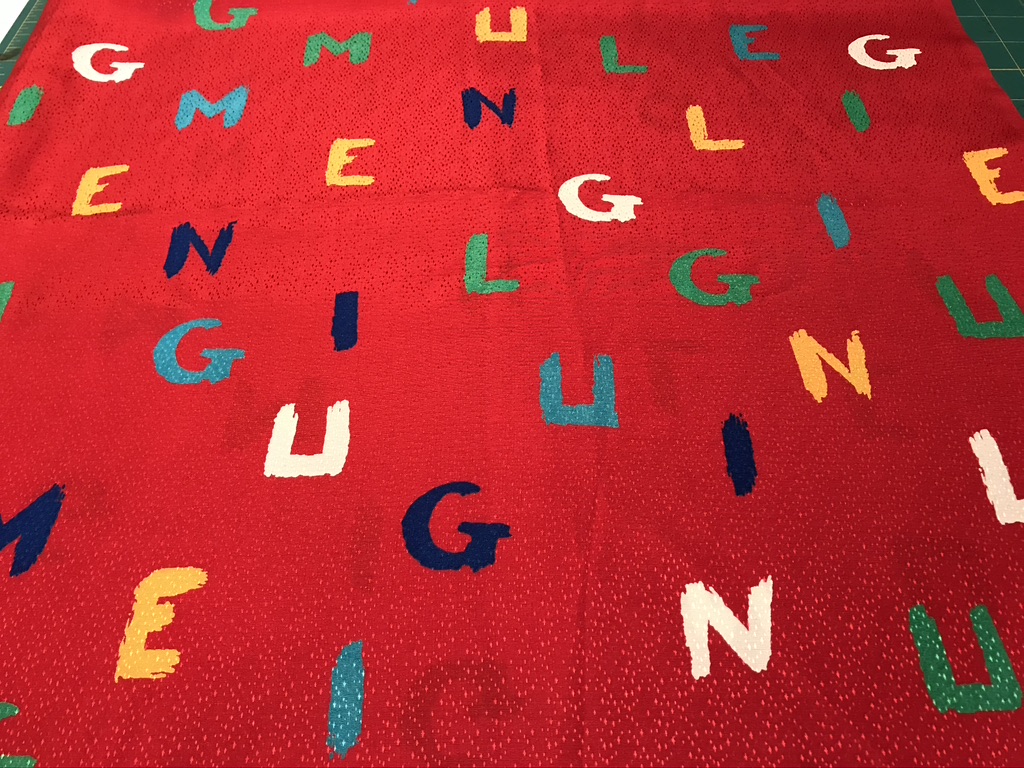
So, let’s start at the beginning. Because this was a very soft, fluid, lightweight crepe de chine, I thought it best to underline it. My normal go-to for underlining – silk organza – would have reduced the fluidity of the silk, so I ruled that out. Cotton batiste just did not seem the way to go. When I found a silk batiste on the website for Farmhouse Fabrics, I knew I had my solution.
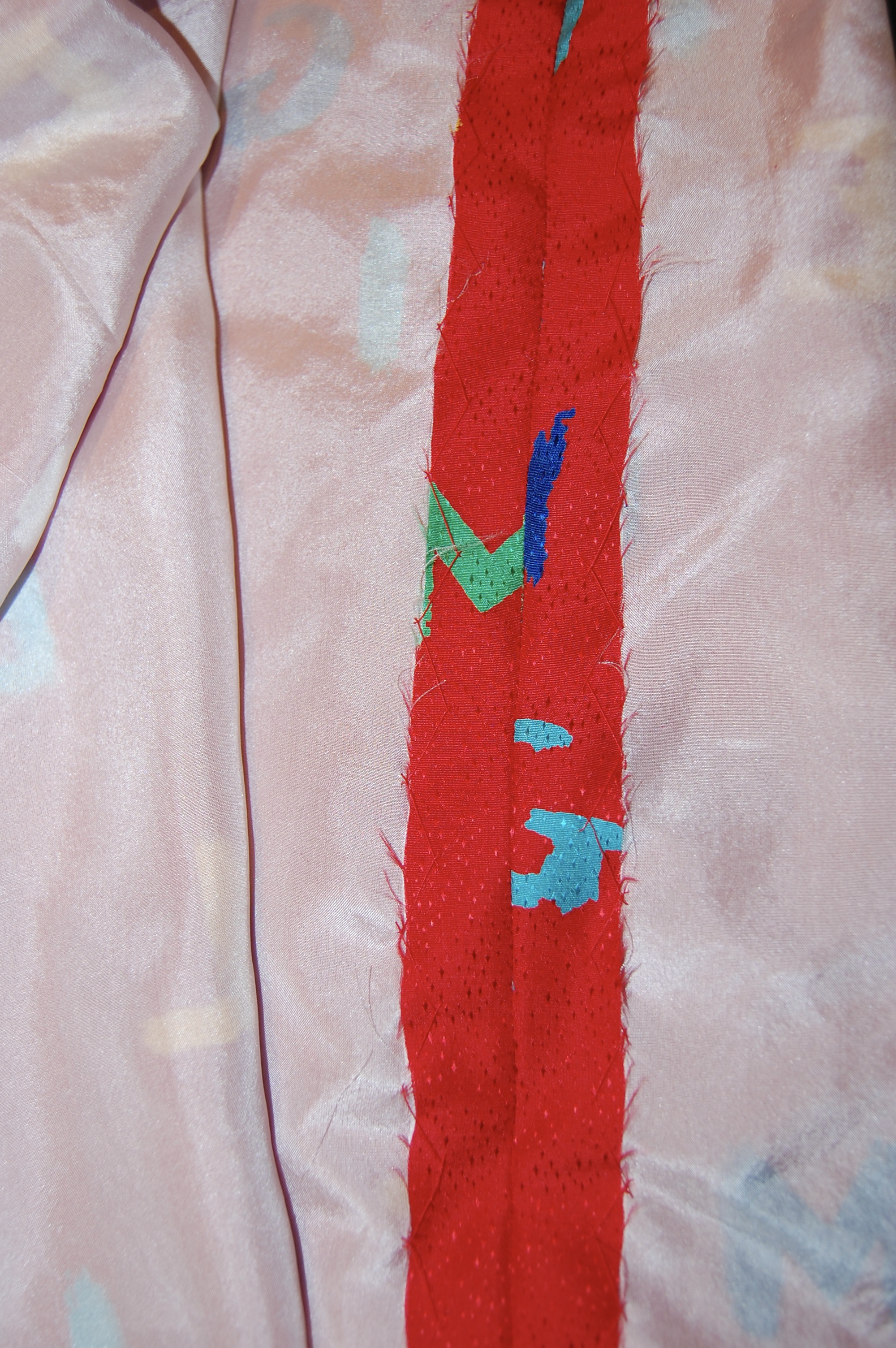
However, even with the ethereal nature of the silk batiste, I decided not to underline (or line) the sleeves. I wanted them to retain their uninhibited flow.

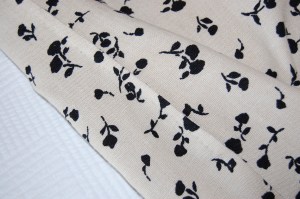
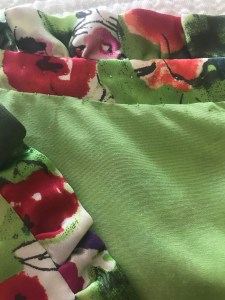
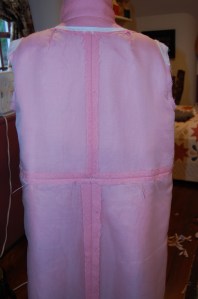
Once I had the underlining basted to the fashion fabric, I weighed whether or not to line the body of the dress. I went with my gut feeling about this and decided to line it with a soft and lightweight red silk crepe de chine – almost a perfect match in color, as is evident in the above picture – which I purchased from Emma One Sock Fabrics.
In doing so, I eliminated the front and neck facings which were replaced with the solid red lining.
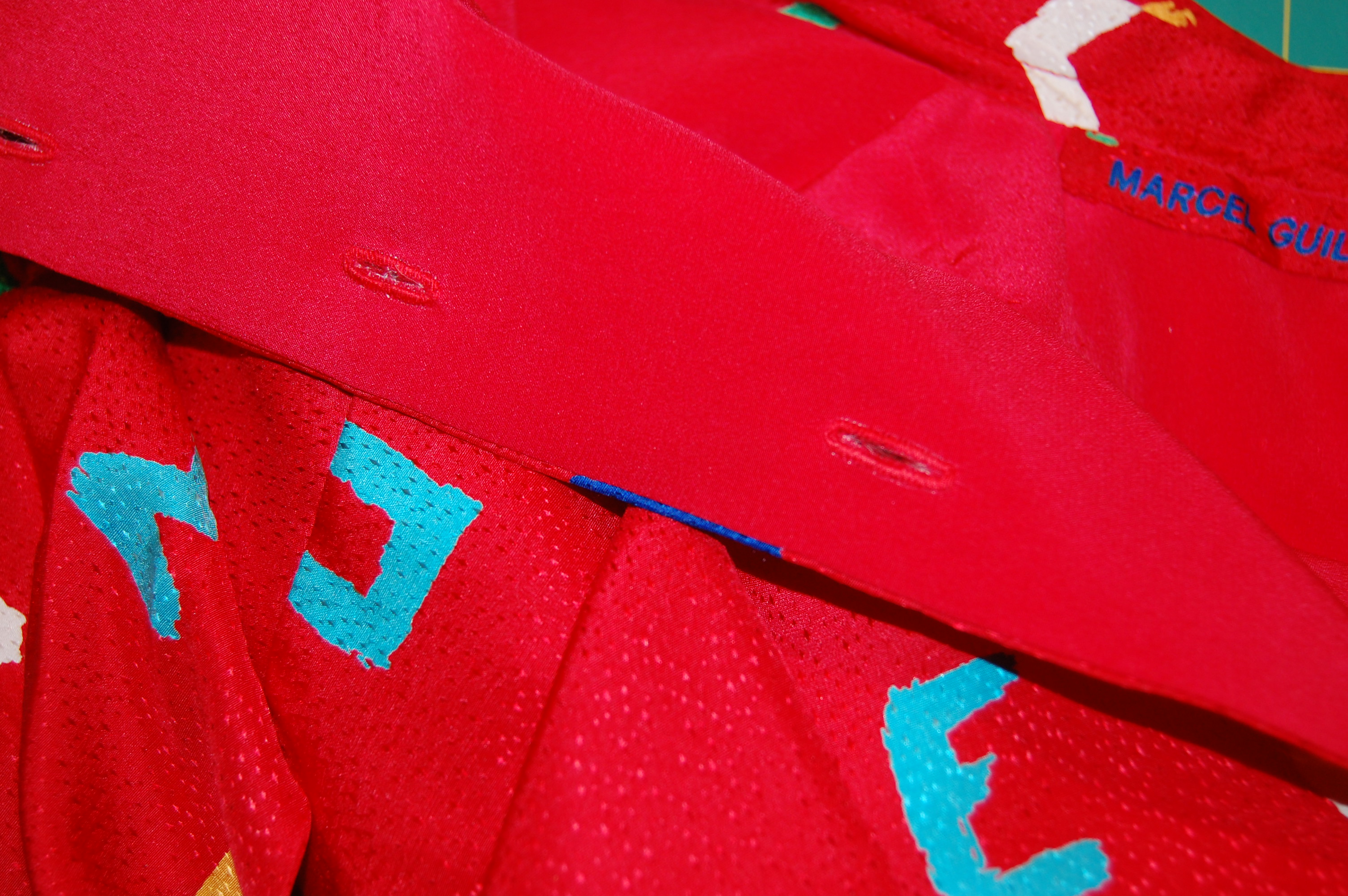
I had worked out the floating dart question in my muslin/toile and decided to use them for the dress. This left above the waist “blousy” and made it more fitted below the waist.
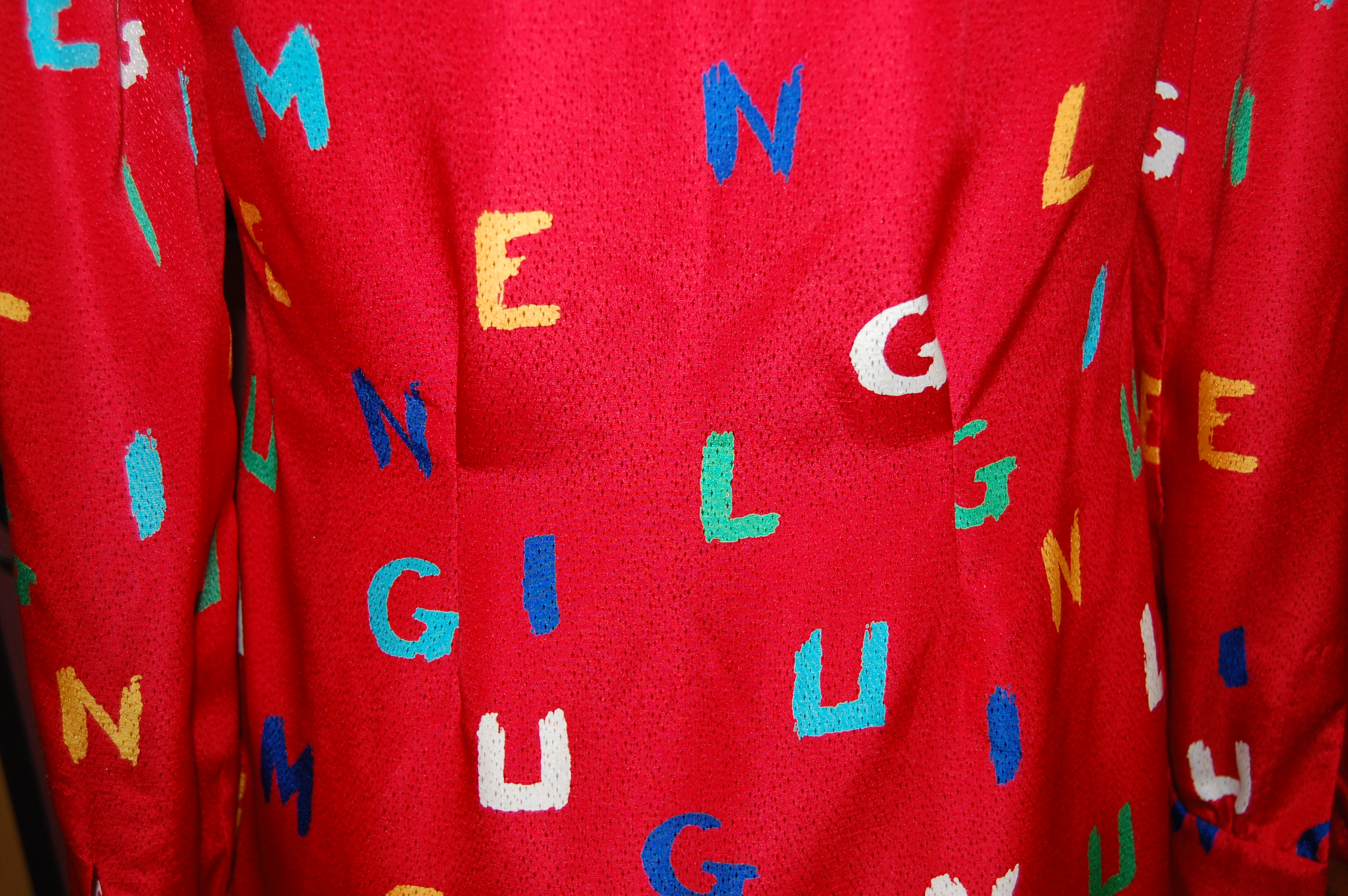
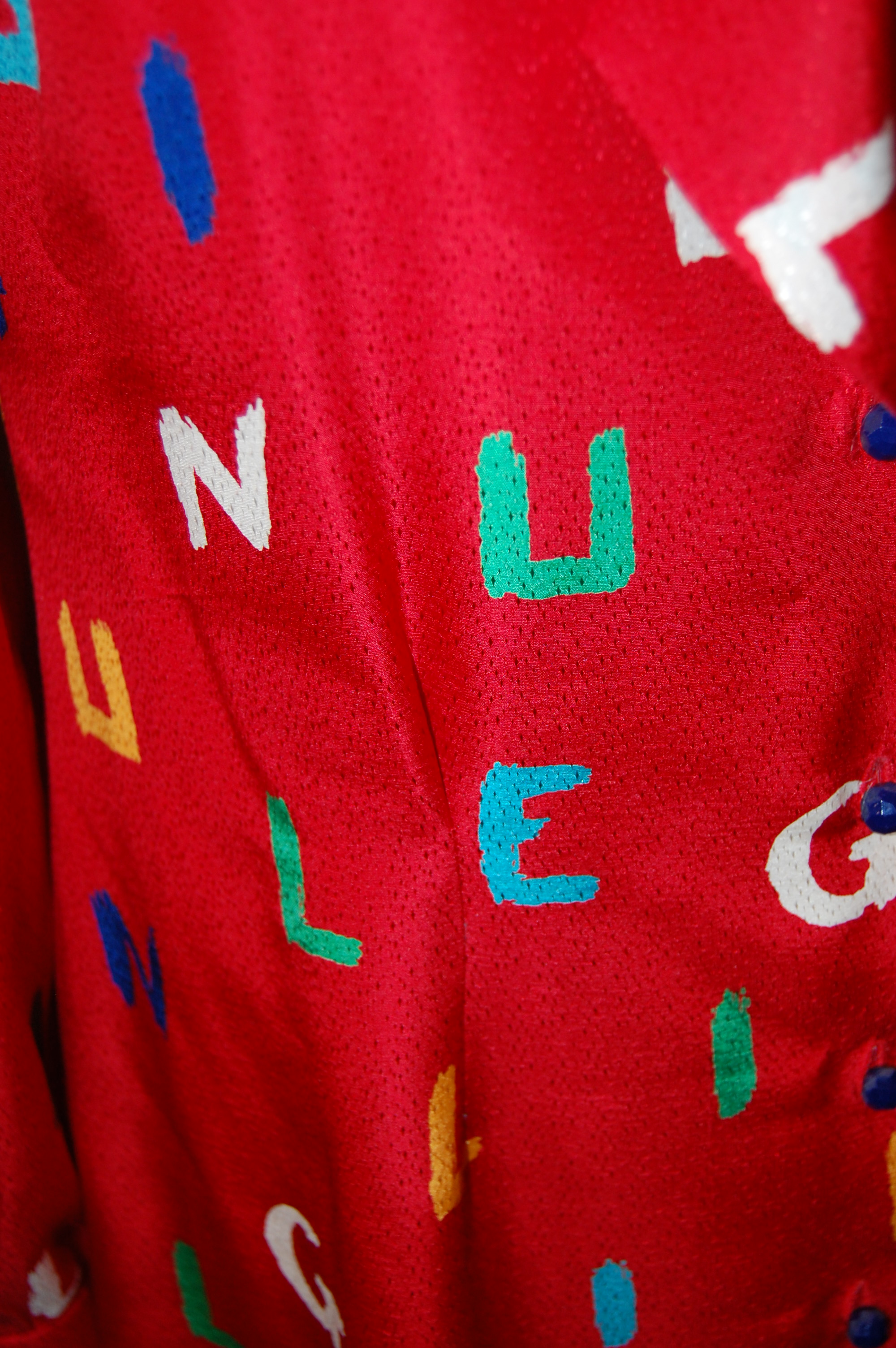
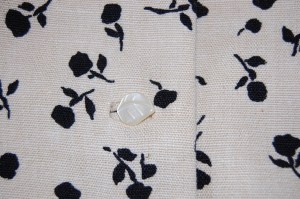
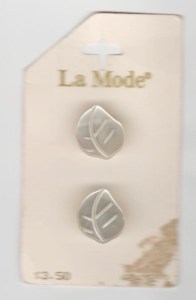
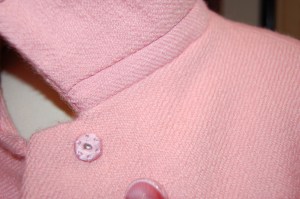
Buttons are always one of my favorite parts of a project. I simply love looking for buttons – and I really love finding the perfect ones. In this case, I knew I needed a large quantity – at least 10, depending on the size I found. I did not think red buttons would do anything to enhance the dress, and I thought white pearl buttons would be too much of a contrast. But then I found these buttons on eBay:
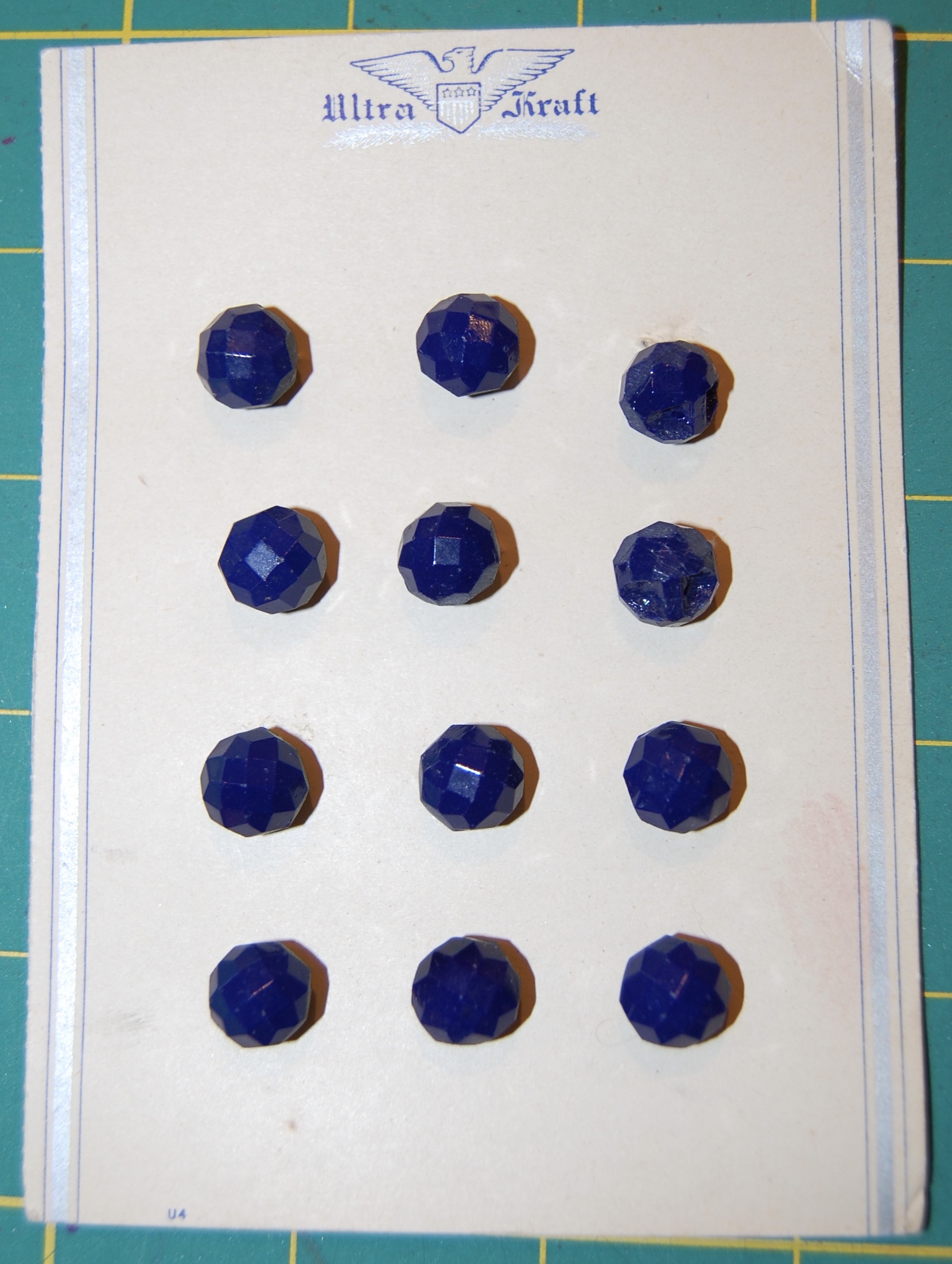
They are probably from the 1940s, cut glass, made in Czechoslovakia. The card held 12 buttons, a good quantity for my purpose. I think of these buttons as “small, but mighty.” They provide the right contrast, and the faceted surface picks up the shimmer from the slight jacquard weave in the fabric. I think they are perfect!


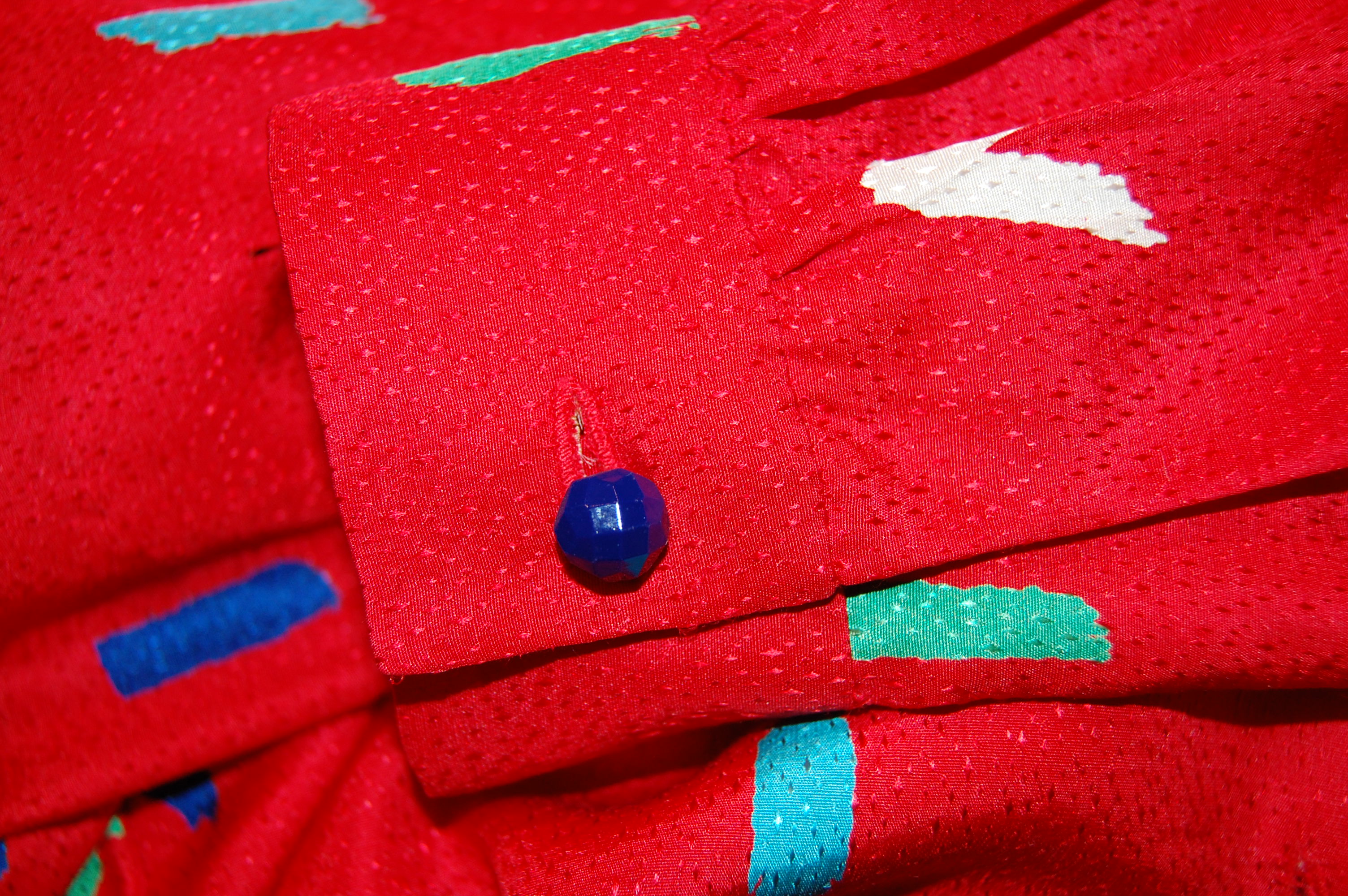
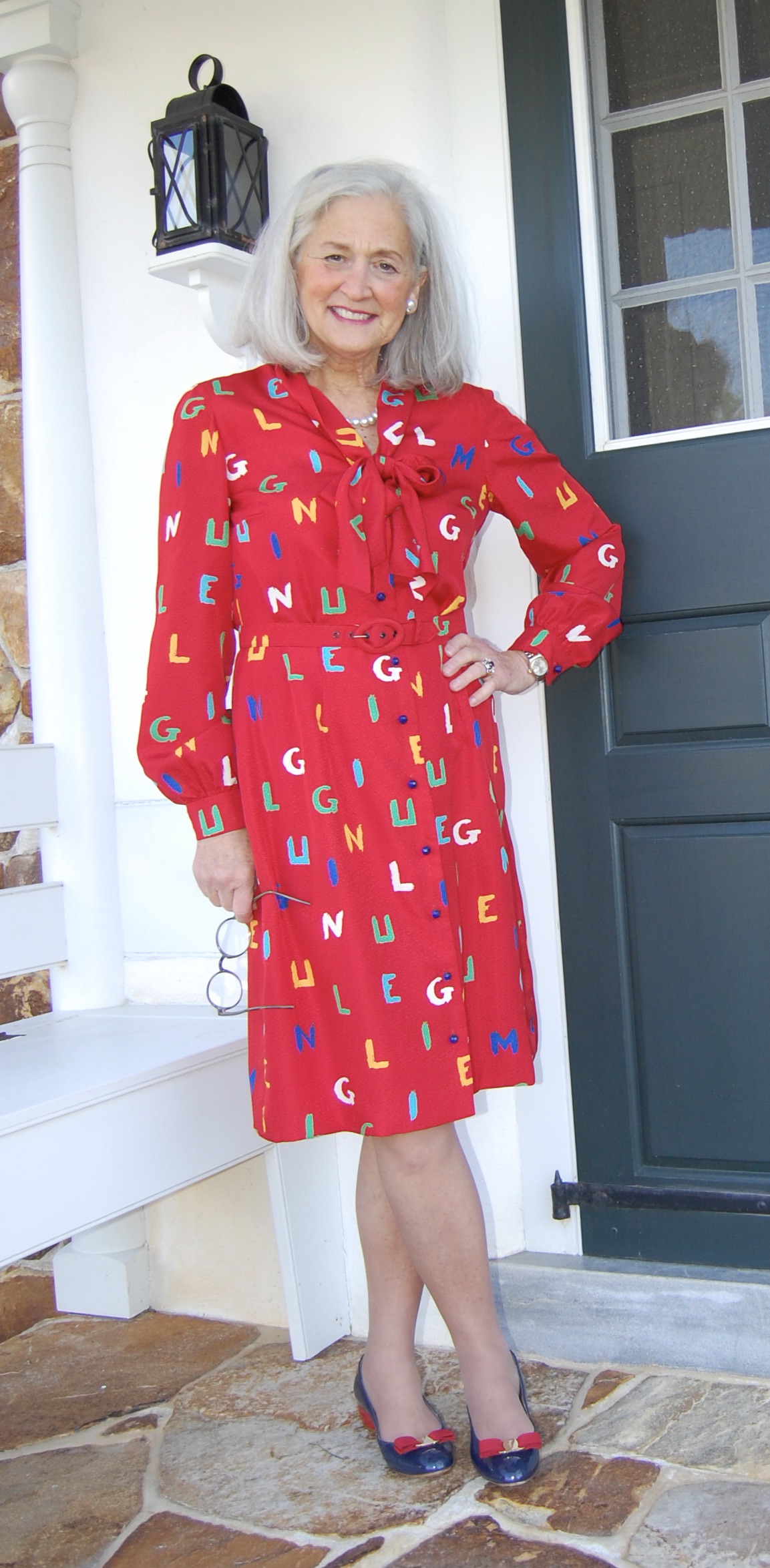
And finally, bound or machine-made buttonholes? I did a sample of each. I have recently started using my automatic buttonholer for my 1951 Singer Featherweight, and I must say, it is an engineering marvel. It makes such amazing, precise buttonholes. And although I do love bound buttonholes, I decided in this instance I would be happier with machine-made ones.
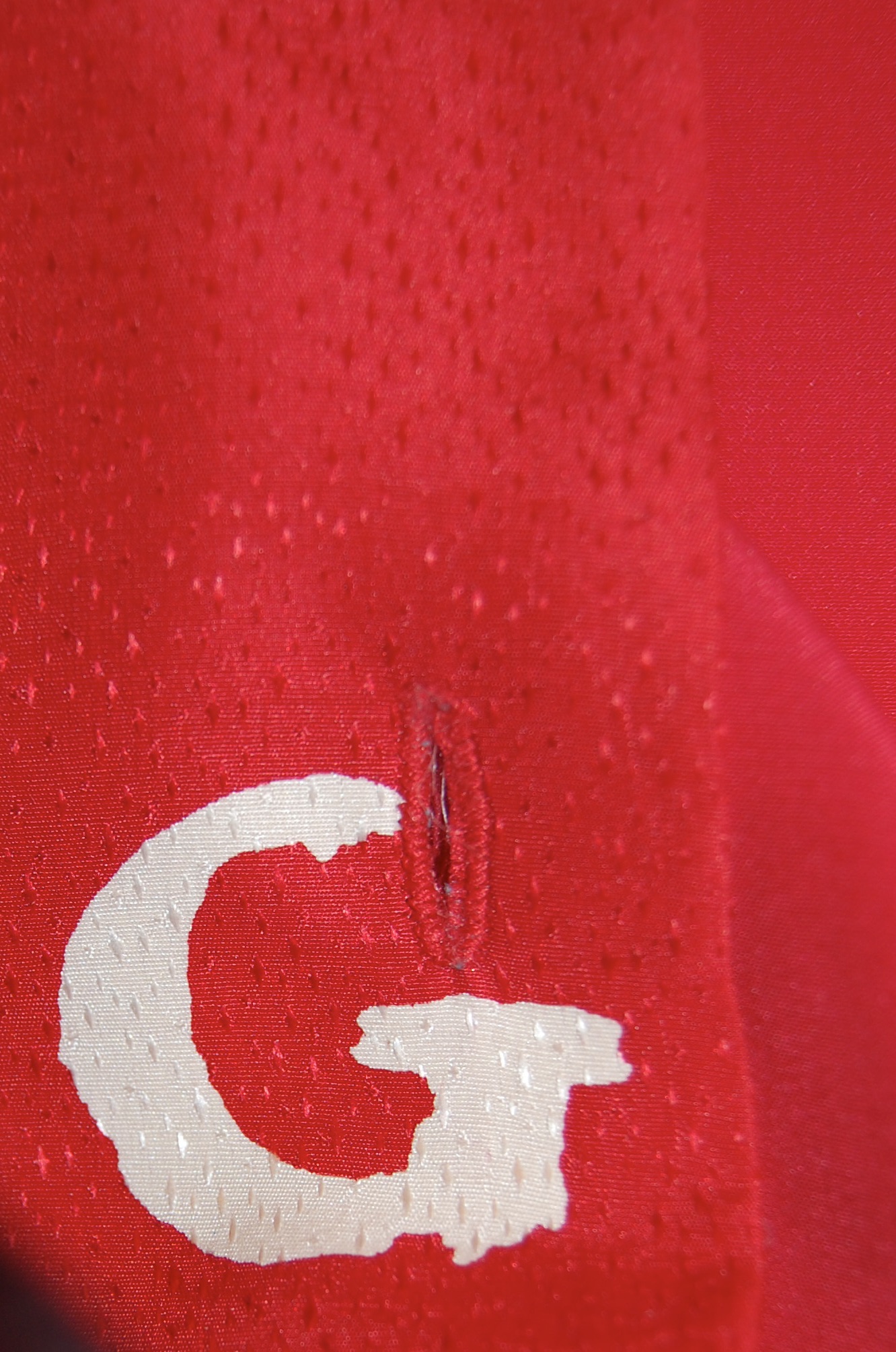
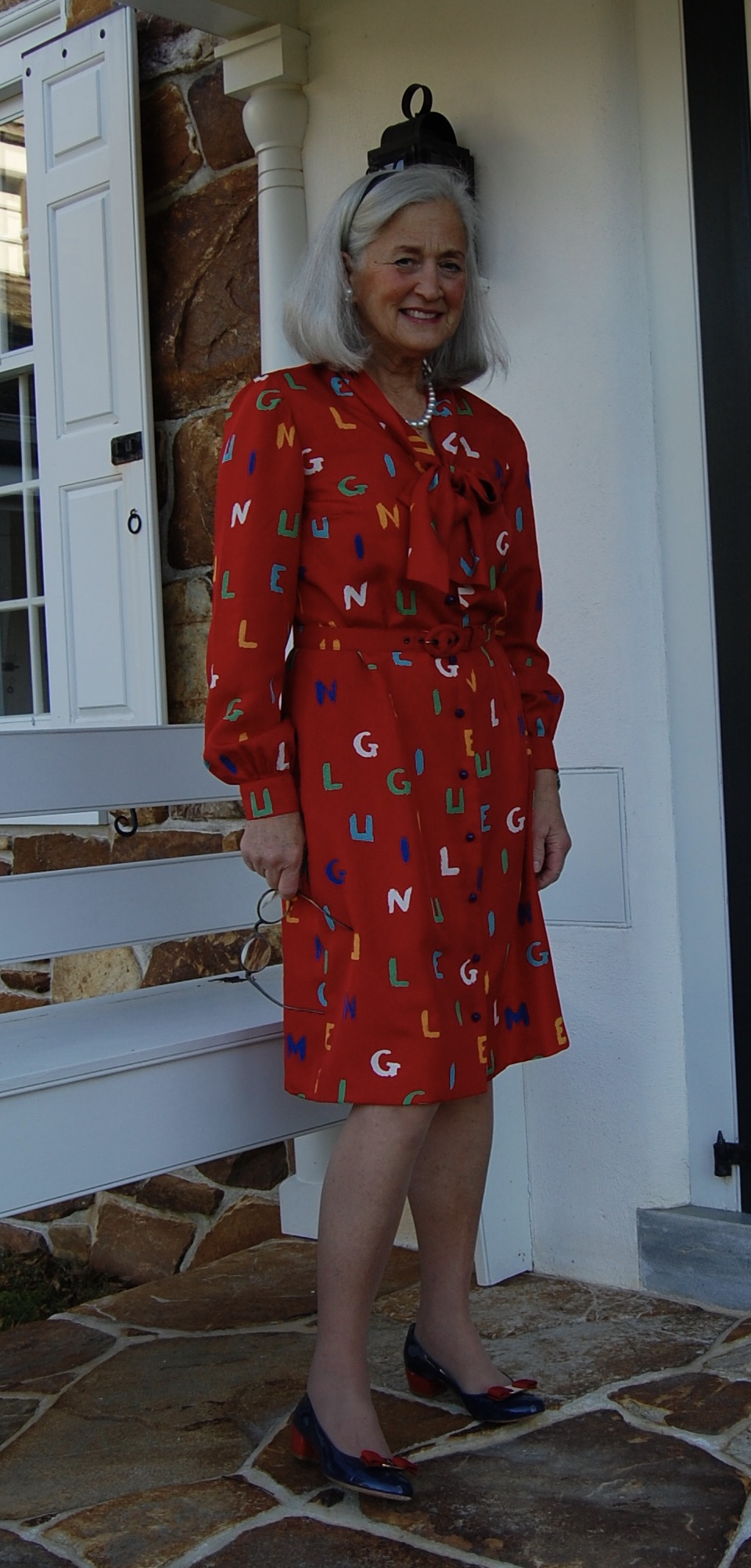

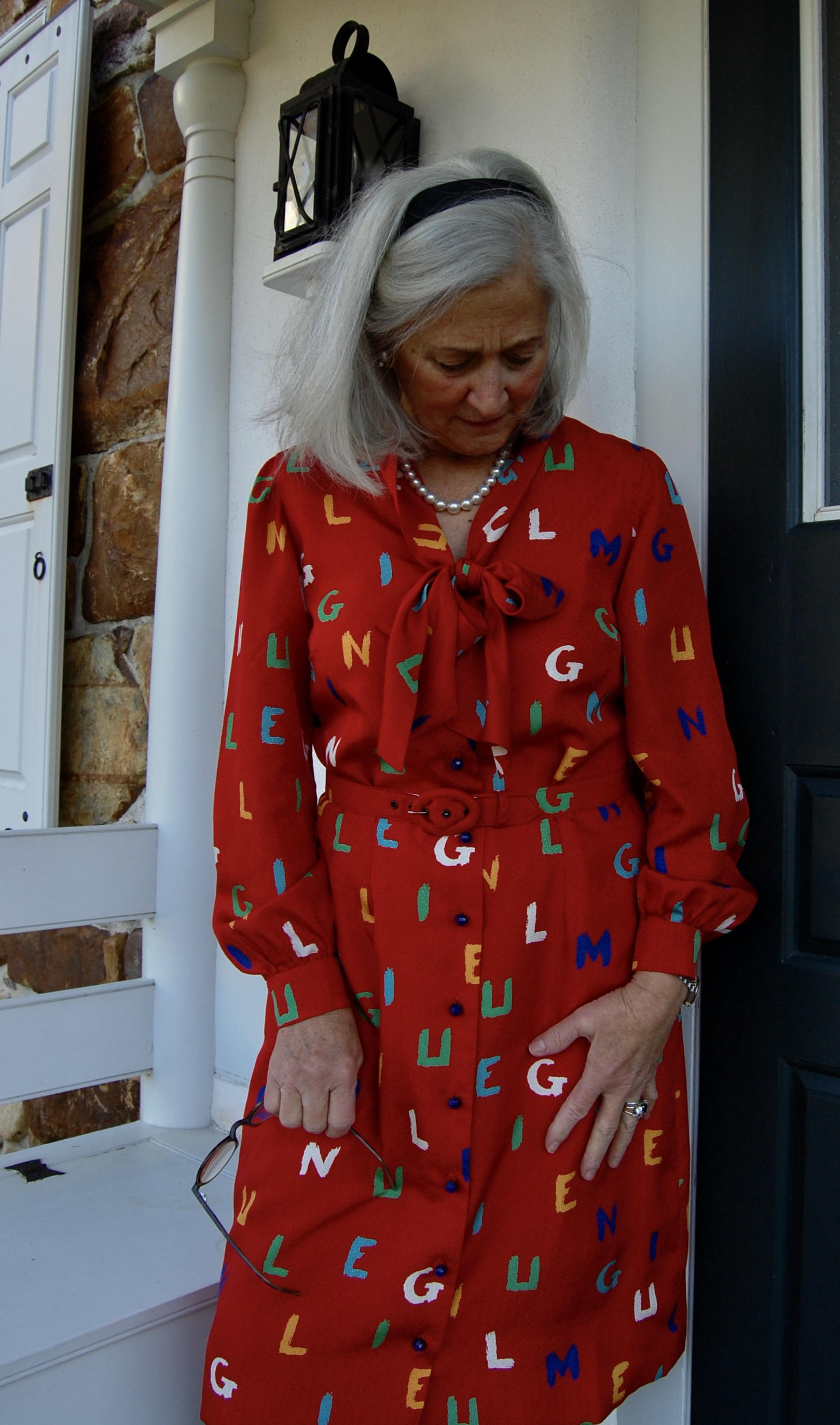
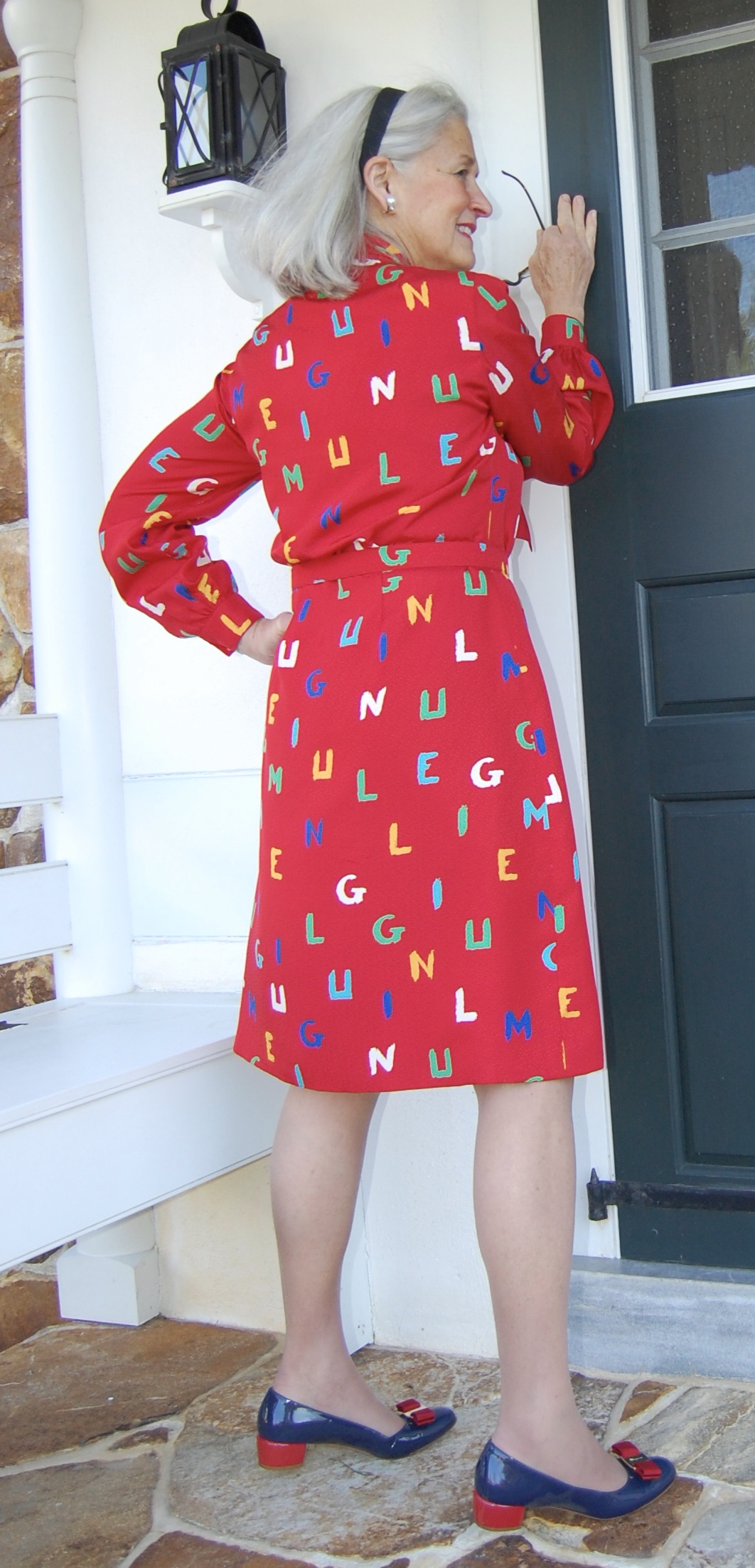
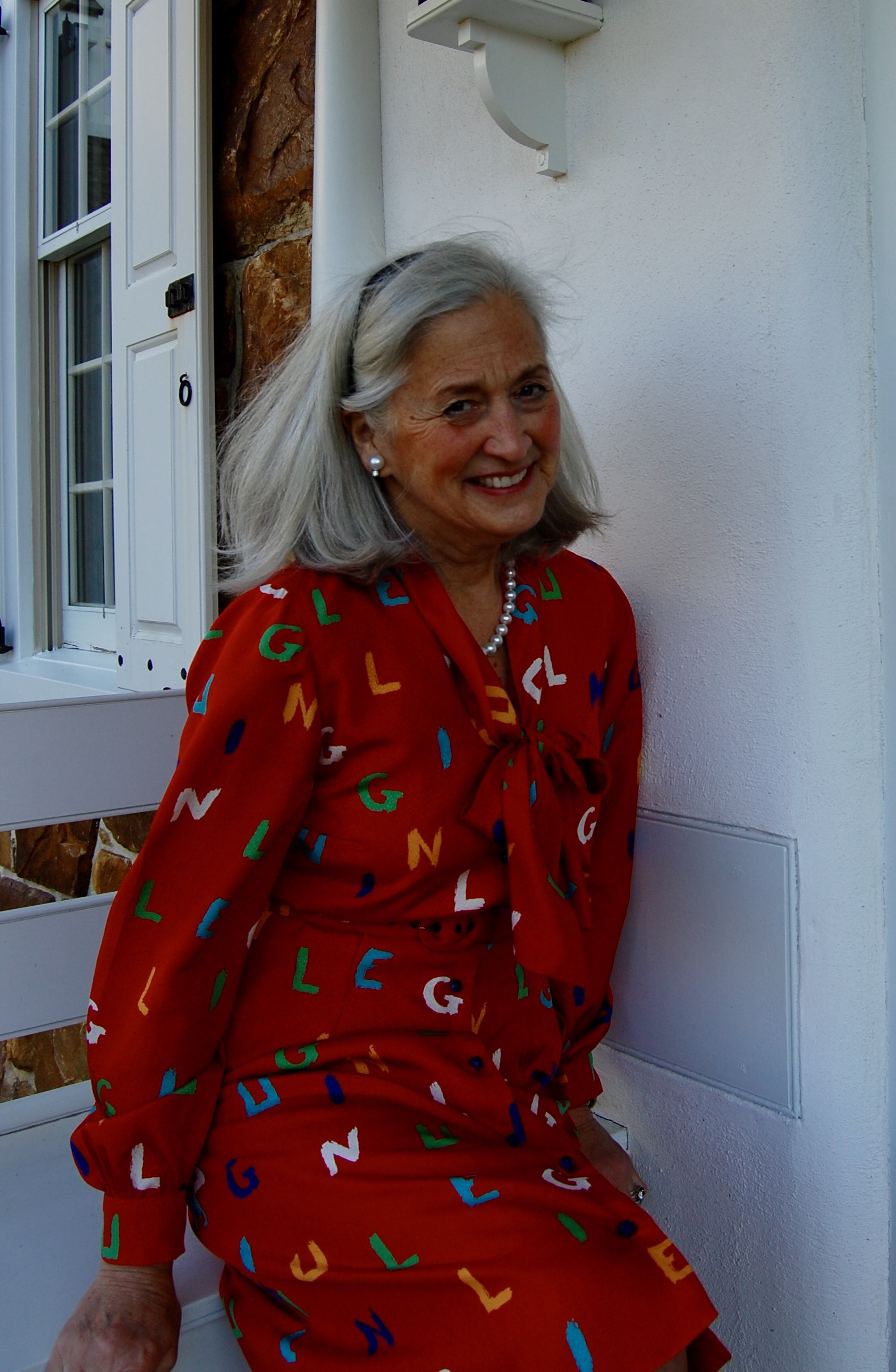
So that about sums it up. I had just barely enough fabric to eke out this dress (which seems to be a theme with me!), so I think it was meant to be. Here’s to Red Letter Days – and the dresses which make them happy.







 fiftydresses
Odds and Ends and One Thing You Mustn’t Miss
Sewing has been, well, challenging this summer. In reality, I think I have been able to accomplish just about all I could have hoped for – so far, at least – but it certainly doesn’t seem like very much.
When I packed fabric to bring along to our new vacation home in Wyoming, I tried to think ahead and determine exactly what I would need. For instance, I brought two decorator fabrics which I had picked out for two of our “new” bedrooms, with plans for making decorative pillows and at least one bed skirt. I also brought two fabrics with which to make dresses for our two little granddaughters who were arriving, along with the rest of our immediate family, in late July. I also brought some vintage Moygashel linen, many pieces of shirting and dress cottons, skirt fabric, and a piece of Viyella cotton/wool blend. What was I thinking?!! Certainly no one could accuse me of being under-ambitious!
I totally misjudged how much of my time would be taken up with organizing and setting up a new household. So – what have I been able to sew? A number of decorative pillows, for one thing. I find them – and all that self-bias tape I had to construct – utterly boring to make, but satisfying once they are completed. The bed skirts have been moved to the “still to do” list.
I was able to make dresses for my granddaughters. My original intent was to make each dress out of a different fabric, but when I stretched out my ladybug embroidered, striped fabric from Emma One Sock, I realized I had more than I needed for one dress. With one minor compromise, I knew I could get two dresses from my existing yardage. So I changed plans and made matching dresses.
I made white piping for the pockets and collars out of kitchen string and white batiste. The ladybug embroidered fabric is really so cute!
The compromise I had to make involved the sashes, as I did not have enough fabric to cut sashes for two dresses. Fortunately I had enough of the coordinating red fabric to make the sashes. Now I’m glad it worked out that way, as I think it makes the dresses cuter.
I had pre-purchased red decorative buttons, thinking I would need them for just one dress. Normally I would put three in a row centered beneath the collar, but with four buttons, and two dresses … Well, you do the math! Two on each dress it is!
Having spent many summer days and nights in Wyoming before this year, I knew from experience how chilly the mornings – and nights – can be throughout the summer. (The days are warm and glorious, however.) Warm cozy slippers and a winter-weight bathrobe are necessities. And that is why I brought along the afore-mentioned Viyella fabric. Although I packed a winter-weight robe which I made a few years ago, I wanted to make a new robe which I can leave here, therefore eliminating one bulky item from future suitcases.
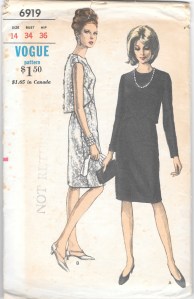
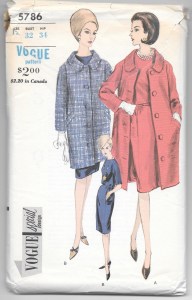
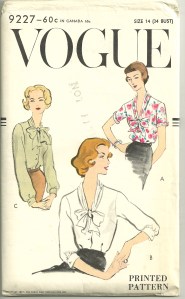
How lovely to have the opportunity to use this vintage Vogue pattern once again.
This robe takes a lot of fabric, and it was a tight squeeze fitting all the pattern pieces on it and matching the plaid as well. I had to make the sash out of two pieces of fabric, seaming it in the back. Additionally, I had enough fabric for only one pocket (I prefer two.) But, I am happy with the outcome, and very pleased to have used one more piece of fabric from my sizeable collection!
Viyella is the perfect fabric for a lightweight, but warm bathrobe. It is machine washable, and gets softer with age.
While the bathrobe, and the little dresses, were enjoyable to make, neither were challenging in the “couture” sense. So I did my “couture” dreaming vicariously through the Susan Khalje Couture Sewing Club, where inspiration abounds in many forms. Earlier in the month, Susan was interviewed for the “Love to Sew” podcast. Treat yourself and spend a lovely hour-plus listening to it, if you haven’t already done so. The interview, Episode 106, dated August 12th, can be found here:
www.lovetosewpodcast.com.
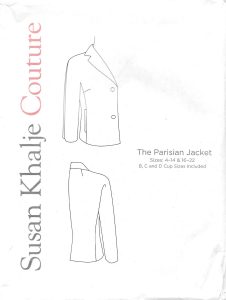
Among Susan’s new pattern offerings is this jacket:
When I arrive back home in Pennsylvania, I will be searching through my fabric closet for the perfect pairing for this pattern. I am just itching to challenge myself with such a project. No more pillows, at least for now!
15 Comments
Filed under Bathrobes, Buttons - choosing the right ones, Fashion commentary, Sewing for children, Uncategorized, Vintage fabric, vintage Vogue patterns from the 1950s
Tagged as 1950's Vogue patterns, Bathrobes, fashion sewing, sewing for children, Susan Khalje Couture, vintage Vogue patterns