
Find me a beautiful vintage fabric, accompanied by its original label, and I will tell its story.
What started off as a simple eBay purchase evolved into something quite unexpected, with secrets and history to reveal. It is all about this piece of vintage Forstmann wool, purchased within the last two years.
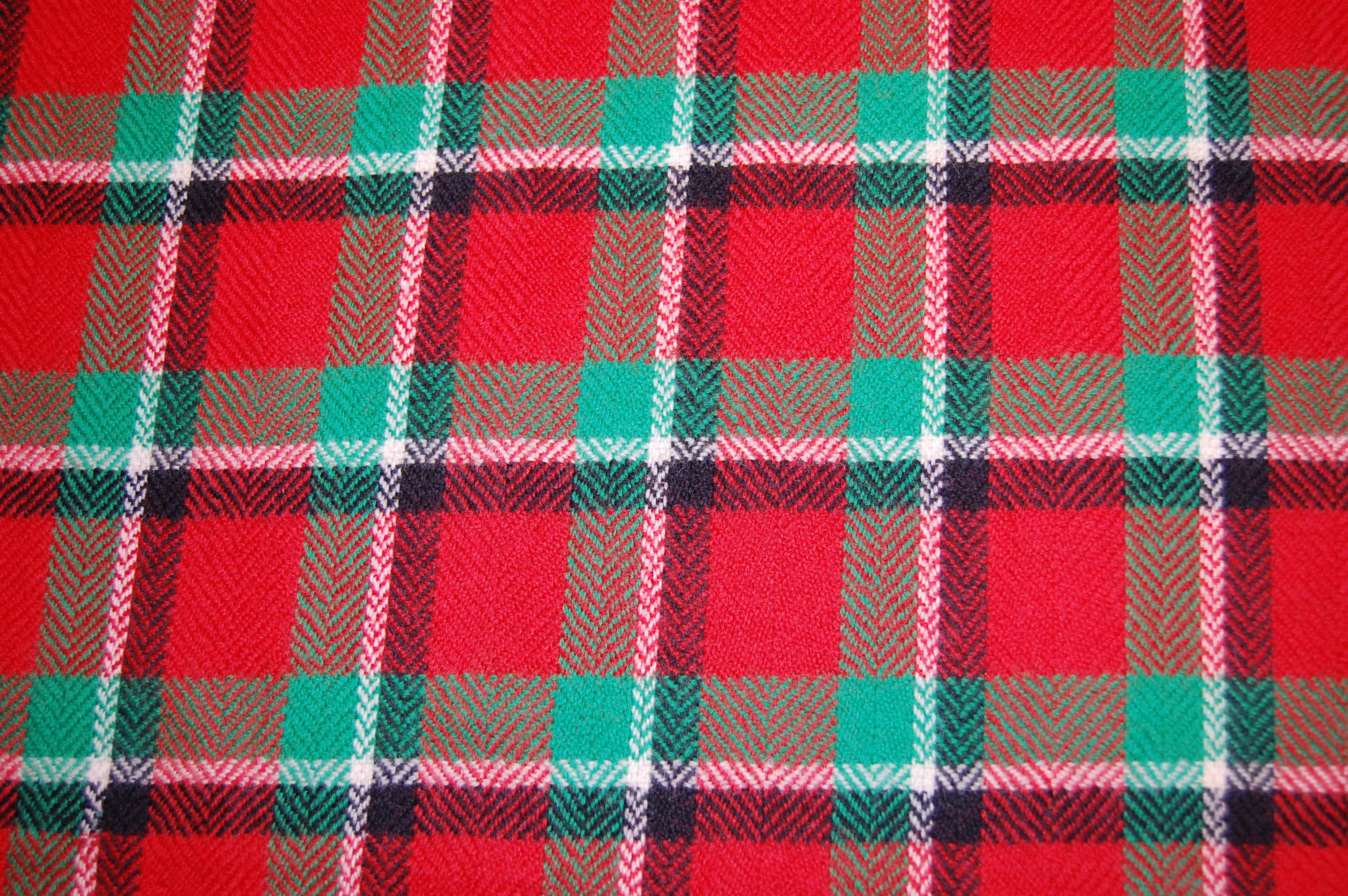
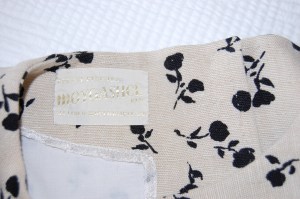
I was drawn to its vibrant plaid combination of red and green and black and white. An extra bonus was its attached label and famous brand name. I was familiar with Forstmann woolens from the time I was a child in the 1950s, and I was aware of its renowned quality. But I was quite unprepared for the reality of my purchase.

Immediately upon opening the package, I was struck with two things: the saturation of the colors and the buttery softness and easy hand of the wool. I was thrilled with my purchase, and carefully placed it away in my fabric closet, intending to think about it until I had a plan in place. I would occasionally get it out to admire it, so I felt I was quite familiar with it. However, it was not until this past Spring when I suddenly realized it was an uneven plaid. Having just agonized over a dress made from an uneven Linton tweed plaid, and having by this time determined that I wanted to make a sheath dress from this wool, I had one of those dreaded “uh-oh” moments. My plan seemed to be self-destructing. An uneven plaid would not do for such a dress.
And then I did something I had yet to do – I opened out the full expanse of the yardage. That was when I realized the brilliance of the woolen manufacturer. The wool was loomed with a right and left side, with a center “panel,“ making it possible to have an even orientation of the plaid. Thus, I would be able to balance the plaid on the front and also on the back of the dress I hoped to make.
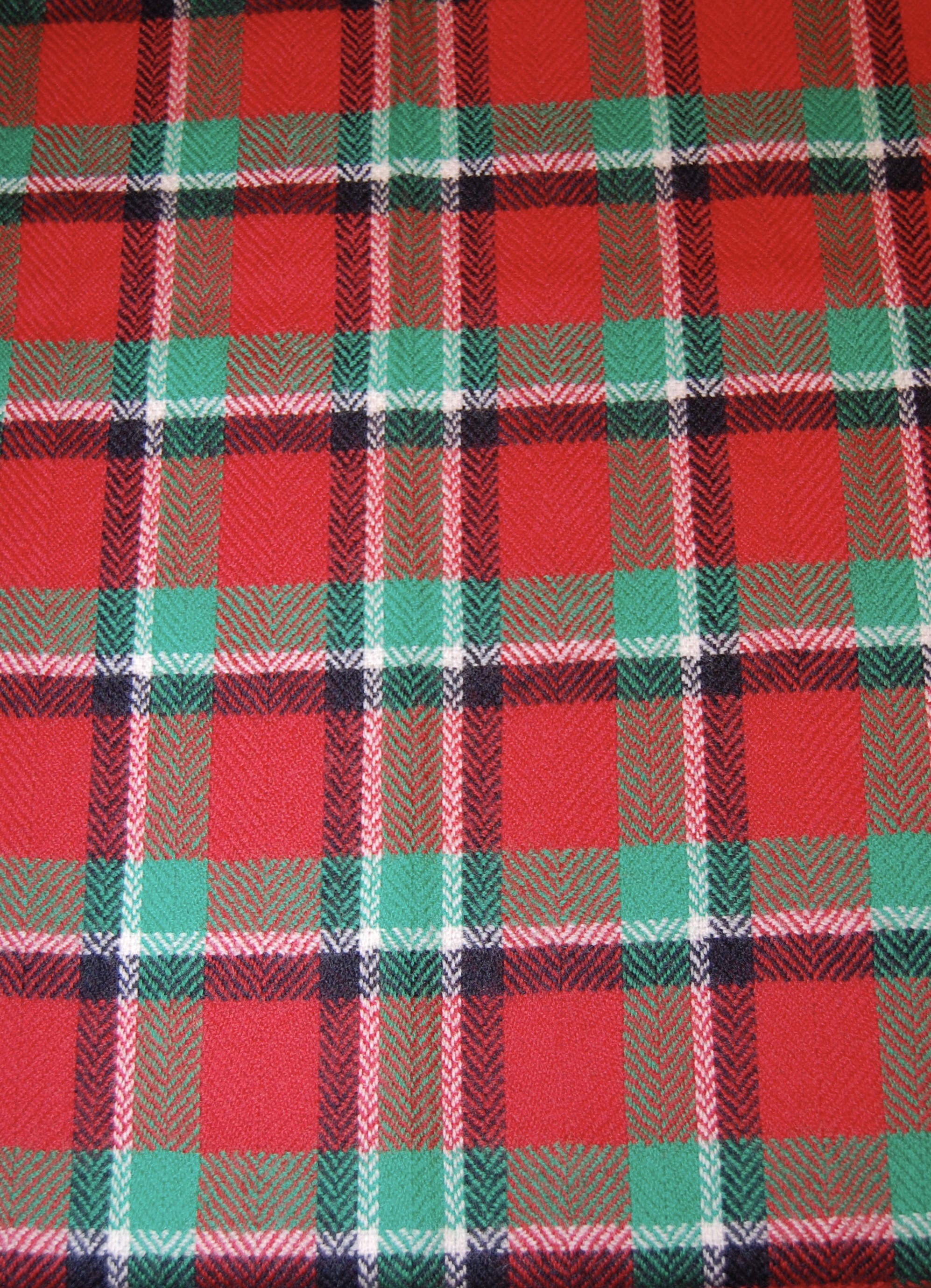
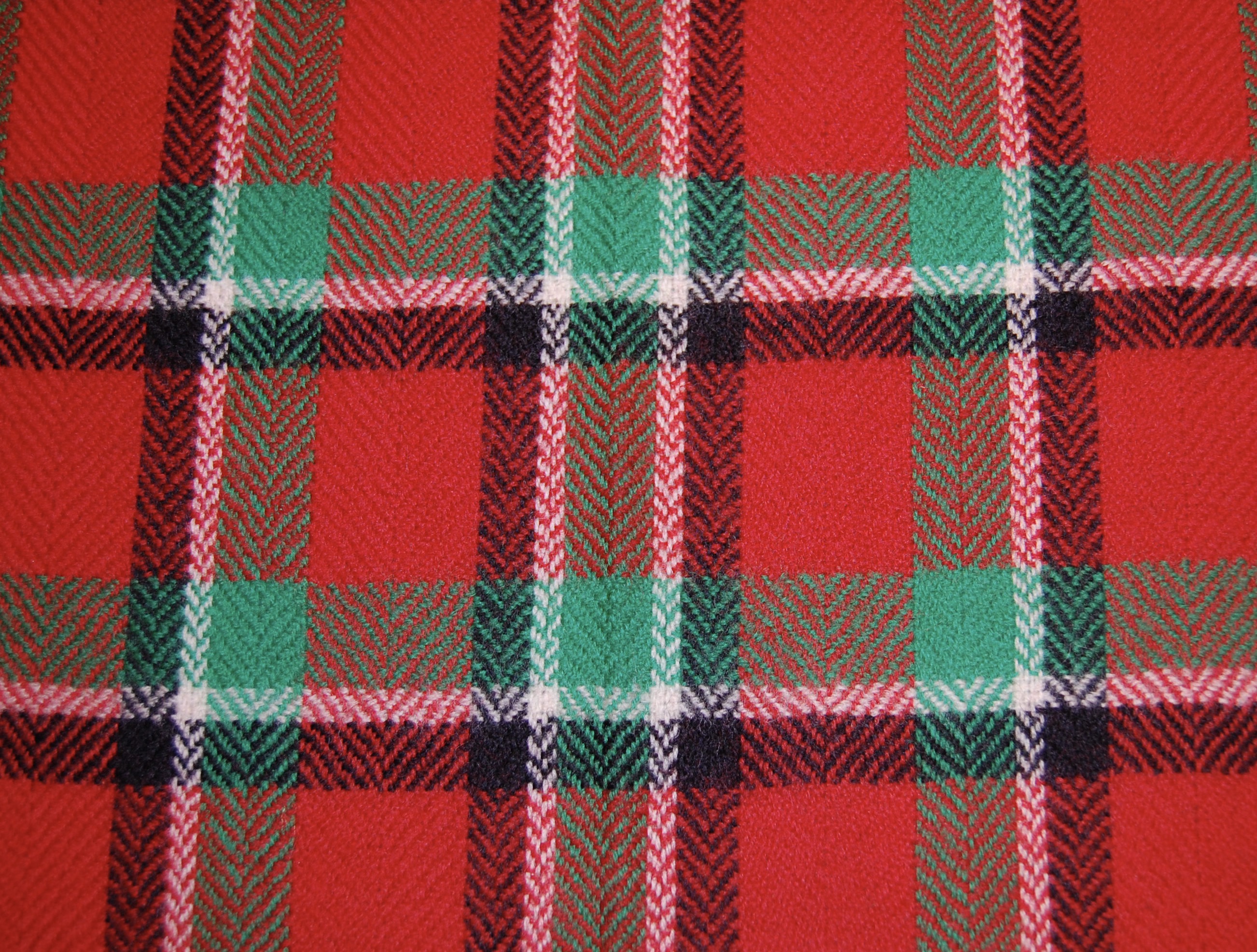
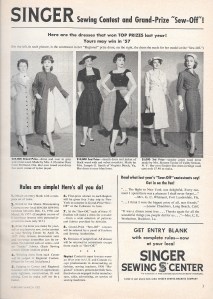
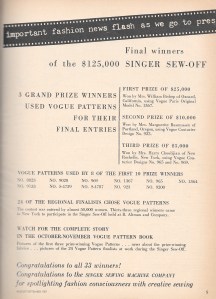
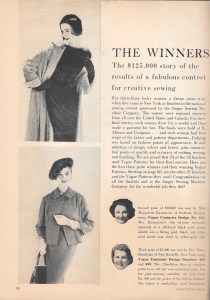
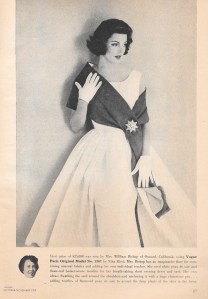
With this exciting discovery, I then wanted to know more about when this fabric was manufactured. I knew that Forstmann Woolen Company had advertised in Vogue Pattern Book Magazine in the 1950s and ‘60s, and I also knew Forstmann woolens were often the fabrics of choice for fashions displayed in the magazine. A little bit of perusing and detective work helped me narrow down an approximate span of years for the production of my wool.
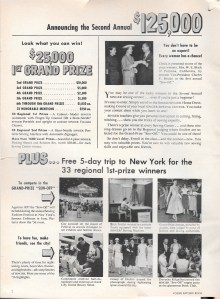
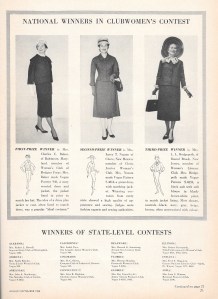
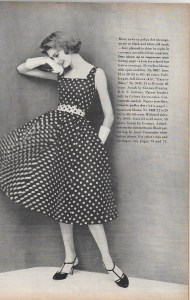
This full-page advertisement from the October/November 1953 Vogue Pattern Book Magazine features the label current at that time. It is probably a precursor to the label I received with my wool.

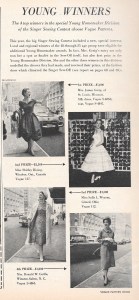
I found no label pictured from 1955, but the cover from February/March features a suit made from Forstmann tweed:

The inside front cover from October/November 1959 is once again a full-page ad for Forstmann. The label shown is similar to mine, but not exact.

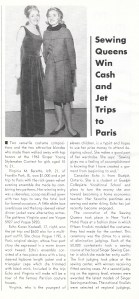
It seems that by the second half of 1960, Forstmann Woolens had entered into a partnership with Stevens’ Fabrics.

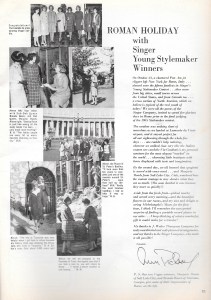
Proof of this partnership was quite apparent by the second half of 1962. The label featured in this ad actually has Stevens Fabrics woven into the logo.

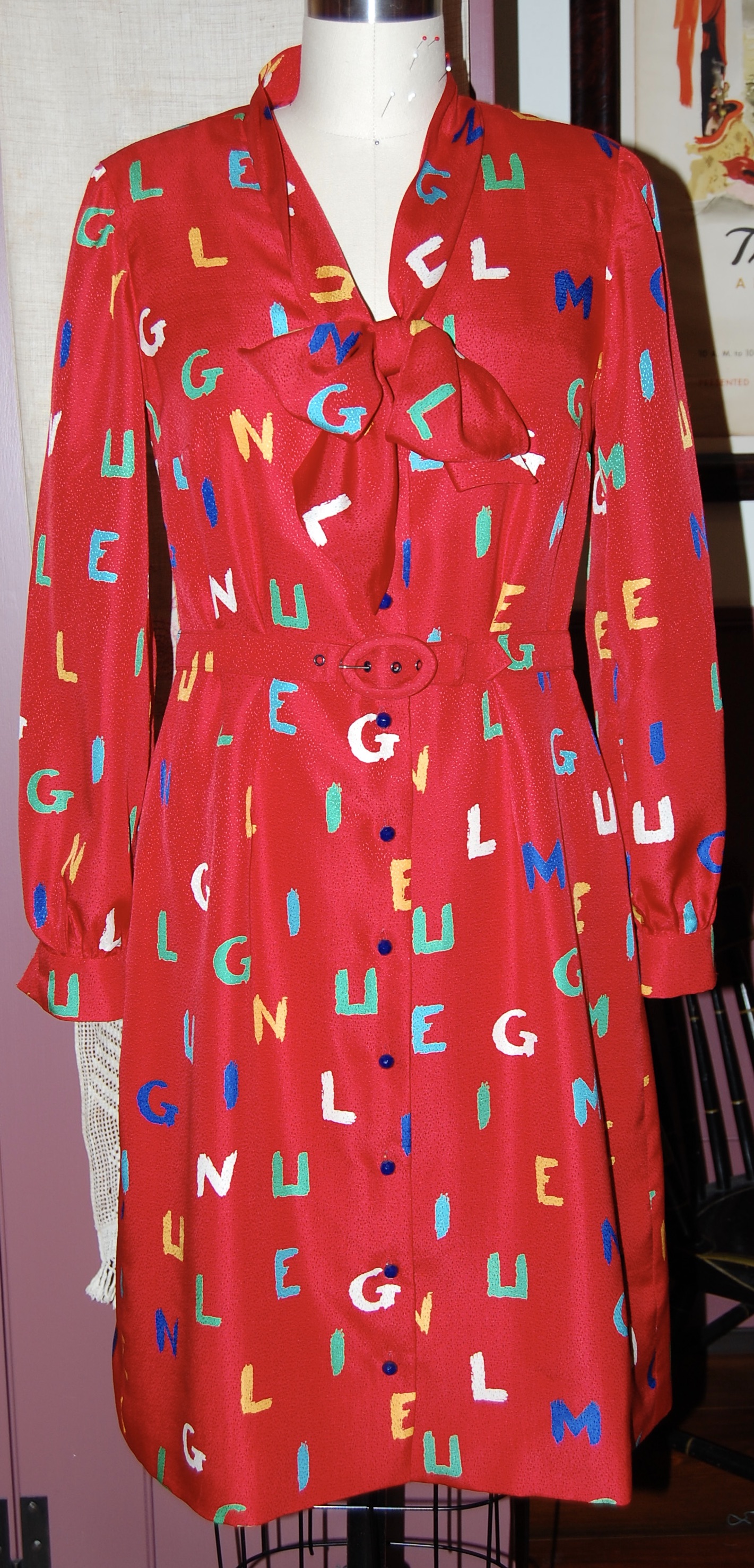
My best guess, from the above references, is that my piece of fabric was manufactured in the second half of the decade of the 1950s. I have always considered that span of years as the golden age of American fashion. My fortunate purchase reinforces the knowledge for me of the excellence of design, quality and craftsmanship available to the home sewing industry at that time. Now – it is up to me to do justice to this piece of Forstmann wool. Amazingly, and with good fortune, the story of this fabric continues some 65 years after its manufacture.
And here’s to a new year – 2021 – with its own secrets and stories to reveal. May they all be happy ones, waiting to be discovered and shared . . .













 fiftydresses
Odds and Ends and One Thing You Mustn’t Miss
Sewing has been, well, challenging this summer. In reality, I think I have been able to accomplish just about all I could have hoped for – so far, at least – but it certainly doesn’t seem like very much.
When I packed fabric to bring along to our new vacation home in Wyoming, I tried to think ahead and determine exactly what I would need. For instance, I brought two decorator fabrics which I had picked out for two of our “new” bedrooms, with plans for making decorative pillows and at least one bed skirt. I also brought two fabrics with which to make dresses for our two little granddaughters who were arriving, along with the rest of our immediate family, in late July. I also brought some vintage Moygashel linen, many pieces of shirting and dress cottons, skirt fabric, and a piece of Viyella cotton/wool blend. What was I thinking?!! Certainly no one could accuse me of being under-ambitious!
I totally misjudged how much of my time would be taken up with organizing and setting up a new household. So – what have I been able to sew? A number of decorative pillows, for one thing. I find them – and all that self-bias tape I had to construct – utterly boring to make, but satisfying once they are completed. The bed skirts have been moved to the “still to do” list.
I was able to make dresses for my granddaughters. My original intent was to make each dress out of a different fabric, but when I stretched out my ladybug embroidered, striped fabric from Emma One Sock, I realized I had more than I needed for one dress. With one minor compromise, I knew I could get two dresses from my existing yardage. So I changed plans and made matching dresses.
I made white piping for the pockets and collars out of kitchen string and white batiste. The ladybug embroidered fabric is really so cute!
The compromise I had to make involved the sashes, as I did not have enough fabric to cut sashes for two dresses. Fortunately I had enough of the coordinating red fabric to make the sashes. Now I’m glad it worked out that way, as I think it makes the dresses cuter.
I had pre-purchased red decorative buttons, thinking I would need them for just one dress. Normally I would put three in a row centered beneath the collar, but with four buttons, and two dresses … Well, you do the math! Two on each dress it is!
Having spent many summer days and nights in Wyoming before this year, I knew from experience how chilly the mornings – and nights – can be throughout the summer. (The days are warm and glorious, however.) Warm cozy slippers and a winter-weight bathrobe are necessities. And that is why I brought along the afore-mentioned Viyella fabric. Although I packed a winter-weight robe which I made a few years ago, I wanted to make a new robe which I can leave here, therefore eliminating one bulky item from future suitcases.
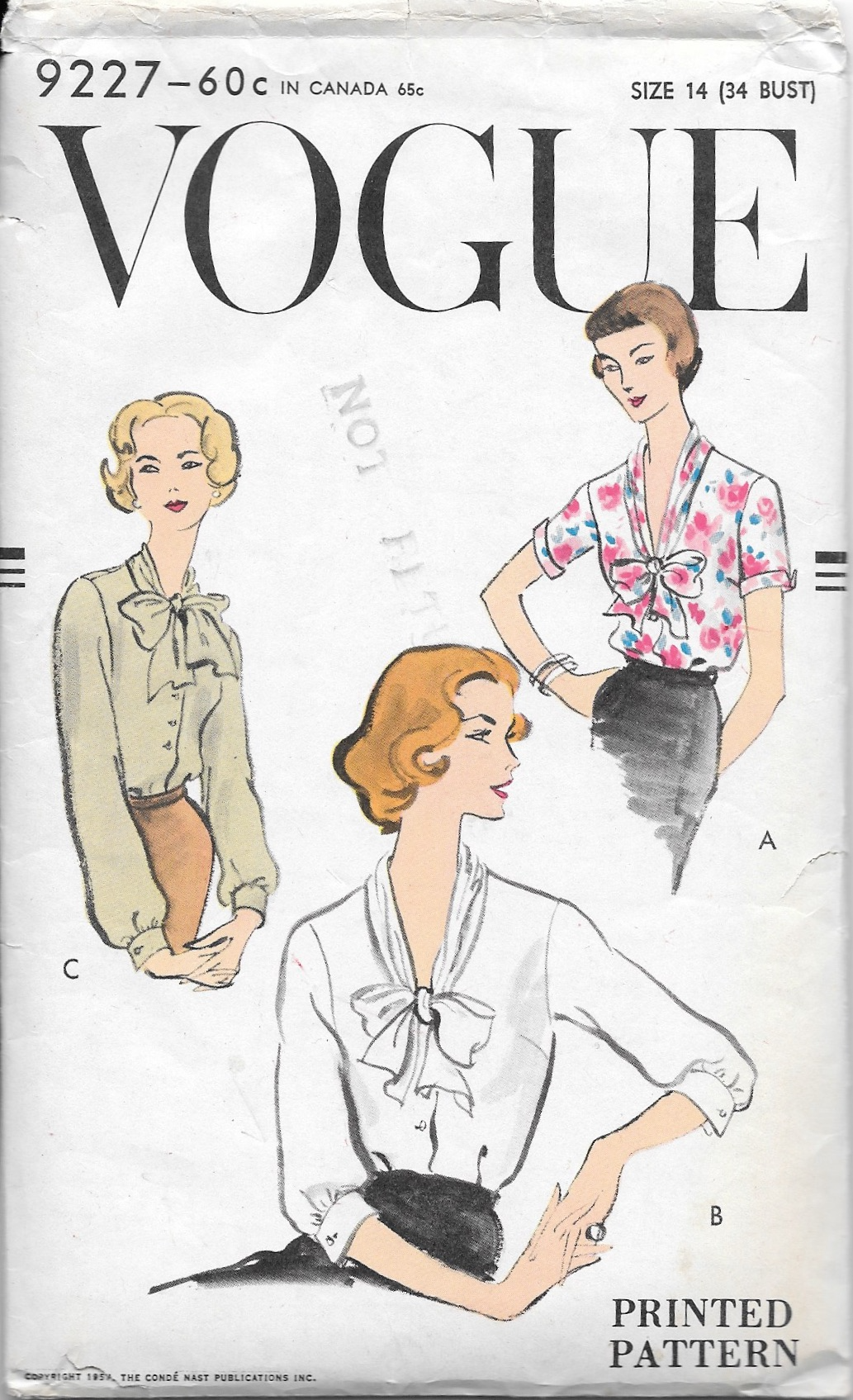
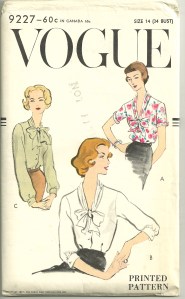
How lovely to have the opportunity to use this vintage Vogue pattern once again.
This robe takes a lot of fabric, and it was a tight squeeze fitting all the pattern pieces on it and matching the plaid as well. I had to make the sash out of two pieces of fabric, seaming it in the back. Additionally, I had enough fabric for only one pocket (I prefer two.) But, I am happy with the outcome, and very pleased to have used one more piece of fabric from my sizeable collection!
Viyella is the perfect fabric for a lightweight, but warm bathrobe. It is machine washable, and gets softer with age.
While the bathrobe, and the little dresses, were enjoyable to make, neither were challenging in the “couture” sense. So I did my “couture” dreaming vicariously through the Susan Khalje Couture Sewing Club, where inspiration abounds in many forms. Earlier in the month, Susan was interviewed for the “Love to Sew” podcast. Treat yourself and spend a lovely hour-plus listening to it, if you haven’t already done so. The interview, Episode 106, dated August 12th, can be found here:
www.lovetosewpodcast.com.
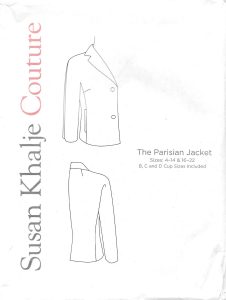
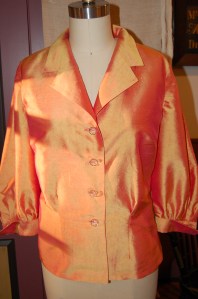
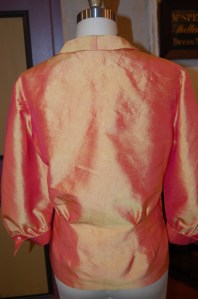
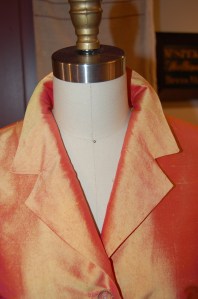
Among Susan’s new pattern offerings is this jacket:
When I arrive back home in Pennsylvania, I will be searching through my fabric closet for the perfect pairing for this pattern. I am just itching to challenge myself with such a project. No more pillows, at least for now!
15 Comments
Filed under Bathrobes, Buttons - choosing the right ones, Fashion commentary, Sewing for children, Uncategorized, Vintage fabric, vintage Vogue patterns from the 1950s
Tagged as 1950's Vogue patterns, Bathrobes, fashion sewing, sewing for children, Susan Khalje Couture, vintage Vogue patterns