
Is it possible to fall in love with a coat? If so, then that is what has happened with my pink coat. It was a relationship which grew over several years.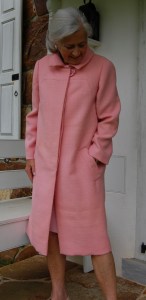
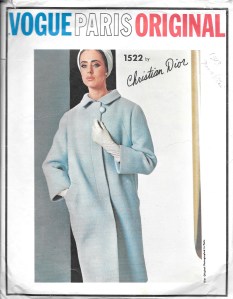
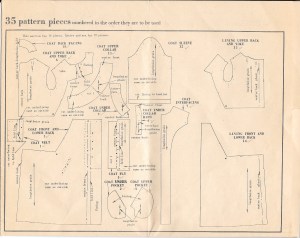
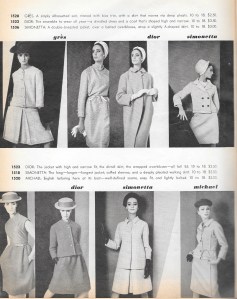
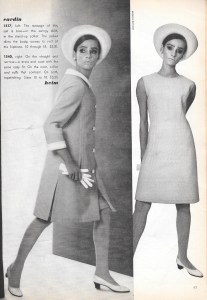
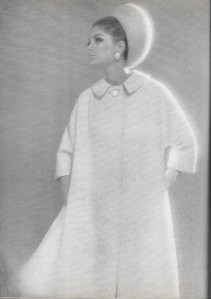
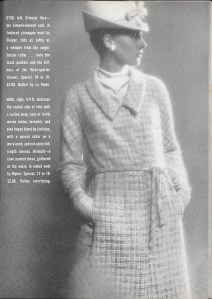
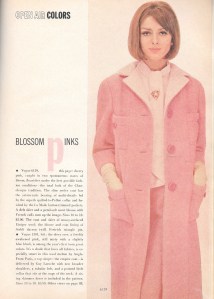
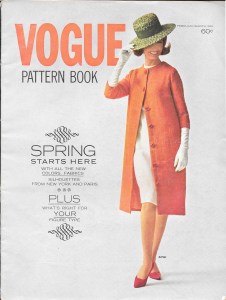
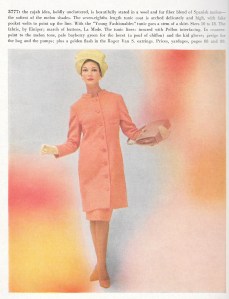
First, I found the pattern, this Vogue Paris Original Designer Pattern from 1965. It was an eBay purchase made several years ago, with a promise to myself that one day, when I found the right fabric, I would make it.
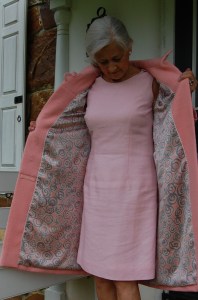
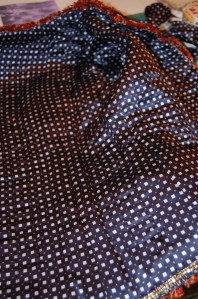
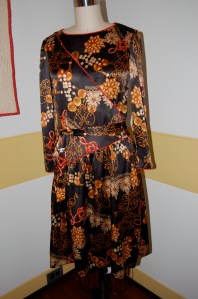
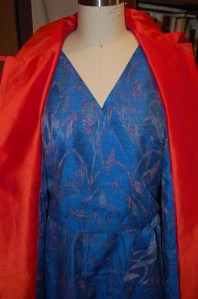
Next I found this silk charmeuse couture fabric on the website of Mendel Goldberg Fabrics. It was an end cut, 2.25 yards, and when I purchased it, I envisioned another wrap dress, not the lining of a coat. Luckily I had no urgent plans to use it, and thus it eventually found its way inside the pink coat.
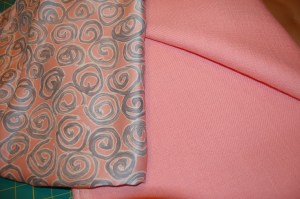
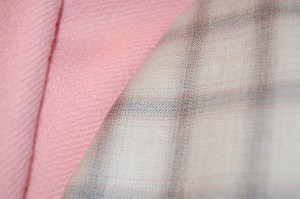
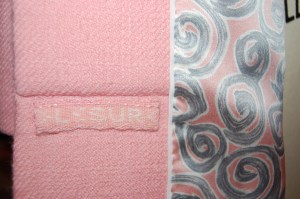
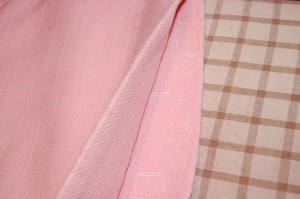
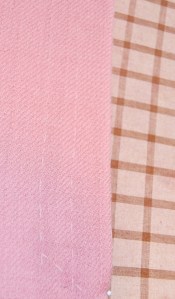
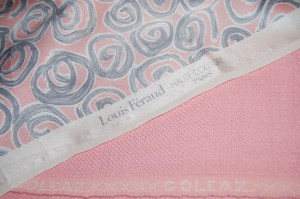
I am showing the lining silk here along with the pink wool to show how well they complement each other.
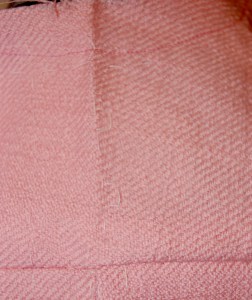
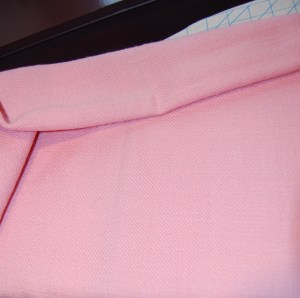
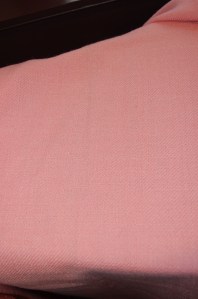
And then – I found the pink wool. Also an eBay purchase, this wool was not inexpensively priced, but I recognized its rarity and its “presence” in the posted pictures. Then I hoped it would live up to its promise once I received it and saw it in person. Over the years I have found some amazing things on eBay, but this wool is one of the real treasures.
Because I have already posted quite a bit about the coat’s muslin/toile and certain salient details, I will not go into too much more description about the coat’s construction. But I do want to point out some of this pattern’s engineering charms.
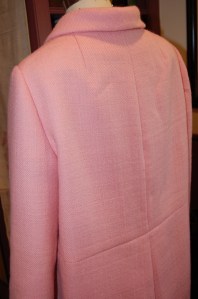
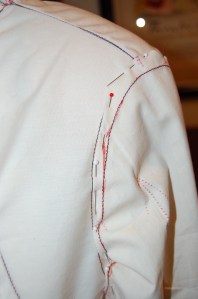
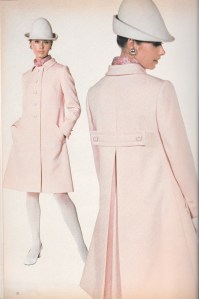
1) On the photo on the pattern envelope, I believe the soft shoulder of the coat is evident. I used a “cigarette-type” sleeve heading in each shoulder to enhance the smooth transition from the shoulder to the top of the sleeve. Not so evident on the pattern illustration is the drape of the back of the coat from the shoulder line. I realized this drape works so well because of the two neckline darts. They are in the neckline, not the shoulder seam; they add necessary shaping without disturbing the drape.
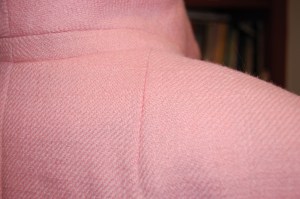
Can you see how the dart comes off from the neckline, not the shoulder seam?
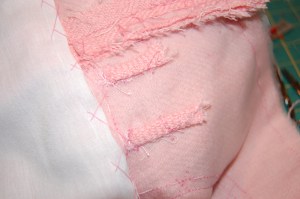
2) The collar is an engineering marvel in my mind. The under-collar is constructed from four pieces, two main sections cut on the bias, and a 2-piece collar band, seamed at the center back. The band helps the collar to turn beautifully.
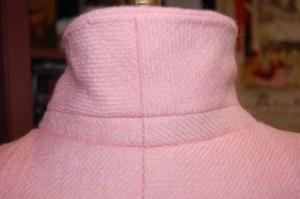
This photo clearly shows the components of the under-collar. You can also see the under-stitching I did in silk buttonhole twist.
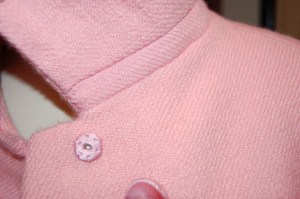
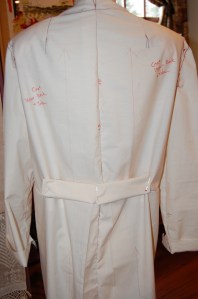
3) When I made the toile, I was concerned about the fullness of the back of the coat. It seemed a bit much, and I have already written about my intention to add a half belt to draw in the fullness, if needed. Nope! I am so happy with the finished look – it has that 1960s’ vibe without being overwhelming. I did move the vertical back seam line up 1.25” to rest at my natural waistline, rather than below it. For me, this was the correct alteration. It may not be on someone else who has more height than I do. Another consideration was that a half belt would have concealed the seam detailing which is so lovely on the back of the coat.
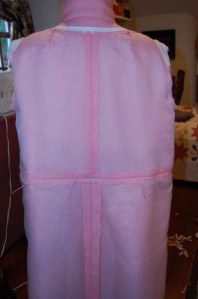
An inside look at the back of the coat, showing its drape from the shoulder seams.
The other significant alteration I made was to remove 1.5″ of width from each sleeve. I possibly could have taken out even more, but I will be wearing this coat over sweaters and perhaps even a jacket, so the sleeves as I cut them will still accommodate that bulk. But I would not want them any fuller!
Although the pattern did not call for it, I added flat piping to the edge of the lining. I chose white silk crepe de chine for this contrast detail. I felt any other color would have been too demonstrative.
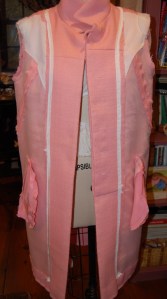
The coat kind of looks like a sack of potatoes in this photo of its front edge!
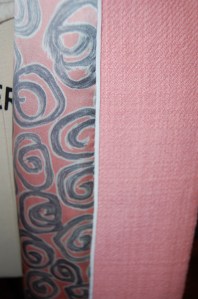
The finished look of the lining edge.
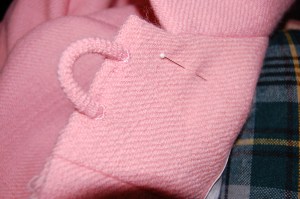
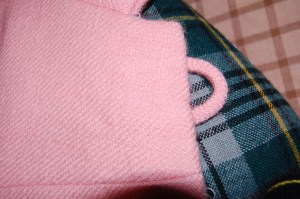
I had some difficulty finding pink buttons. I ended up with two varieties found in two Etsy shops. I used a larger pink-swirly one for the looped closure, and smaller pink pearl-y ones for the concealed opening. If I ever find ones I like better, that’s a easy switch. But the more I see these, the more I like this combination.
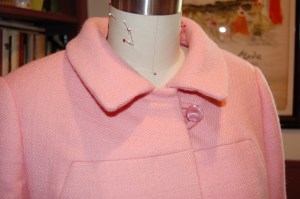
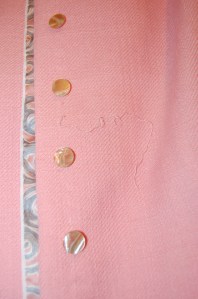
Basting threads are still evident in this photo.
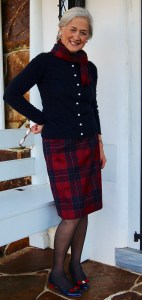
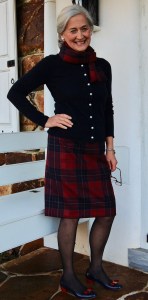
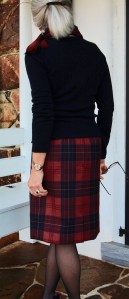
Alas, it is much too warm for wearing wool coats now, but it is ready for next Fall’s cooler days. By then I hope to have a windowpane checked skirt, in delicate gray, white and pink wool, specially made to wear with this coat.
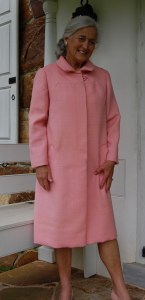
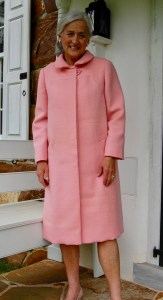
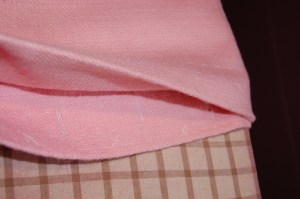
It is always interesting what photos reveal. I am thinking I may need to redo the hem to get a softer look to it. It looks like it has crinkles in it!
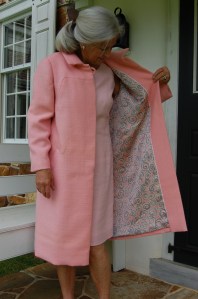
I will take any excuse to show the inside of this coat!
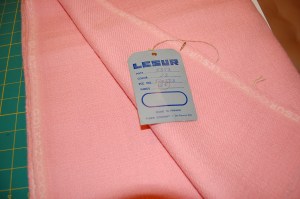
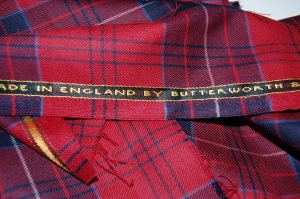
I cut a piece of the selvedge with the Lesur name on it and attached it to the right front facing of the coat right below the placket. I think this is an important part of the story of this project.
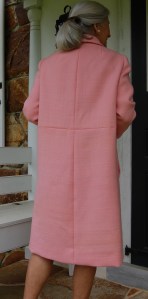
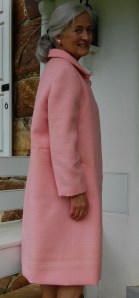
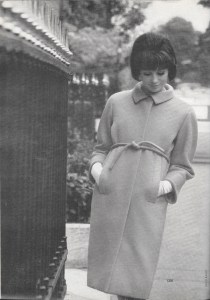
There is a very slight bow to the back of the coat, again reminiscent of the ’60s.
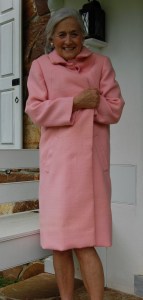
This coat is almost making me anxious for next Fall!
As I worked on this coat, I came to realize how perfectly suited the pattern and the wool were for each other. It was such a privilege to spend so many hours with such quality. No wonder I fell in love!
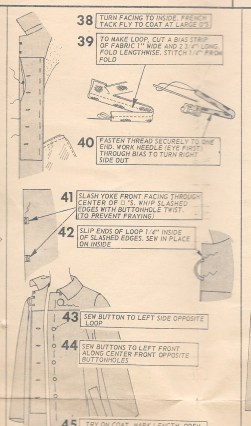
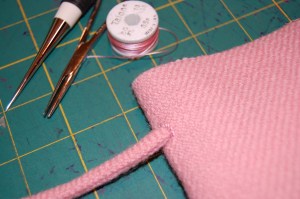
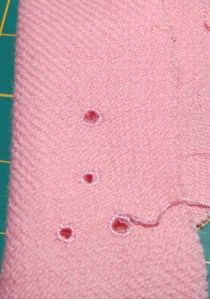
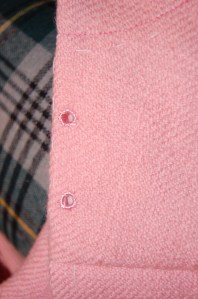
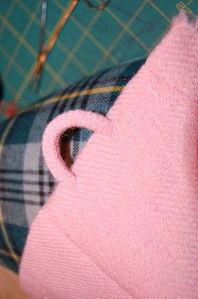





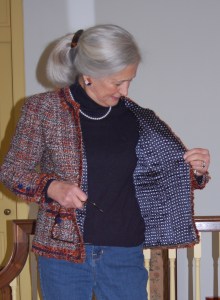
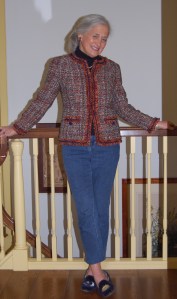
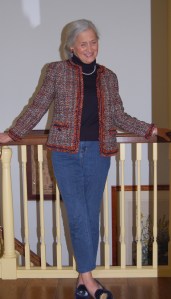
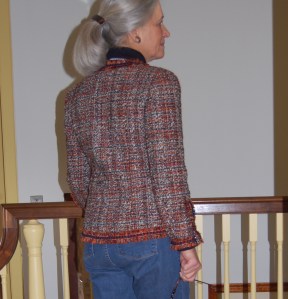



 fiftydresses
Something Old is New Again – and Again – and Again . . .
Coco Chanel said it herself, “I am against fashion that doesn’t last.” Could she possibly have known her Classic French Jacket would become such a lasting icon in the annals of fashion and style? Would she be amazed at how often her jacket has been imitated and copied – for decades now? And could she possibly have ever guessed the allure this style has for those of us who sew fashions for ourselves?
I really do not know the answers to these questions. From what I do know of this enigmatic woman, I can only guess that privately she may have suspected her creation had staying power far beyond most fashions. And certainly, as I have said before, “only Chanel is Chanel,” but what a blueprint she gave to those of us, either as individuals or as fashion companies, to copy and to change and to make her classic jacket into our very own.
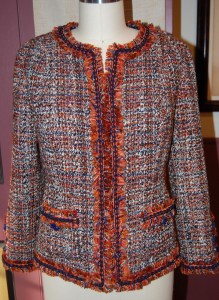
I have been thinking about Coco Chanel quite a bit these days as I work on my fifth Classic French Jacket. Last Fall, about the time when I was getting ready to cut out my #5, The Wall Street Journal had this feature article on “Chanel-ish” jackets.
This article appeared in the Weekend Section of The Wall Street Journal, October 27 – 28, 2018. The center caption states: “8 Chanel-ish jackets that aren’t by Chanel, demonstrating the pervasiveness of Mademoiselle Coco’s enduring – and constantly reimagined – tweed jacket design.”
The featured jackets range in price from a “zara” version at $129 all the way up to a Gucci one at $13,500. I suspect few, if any, of these jackets are channel quilted as a real Chanel would be, but they all have that familiar, yet varying look that is so recognizable – the tweed or boucle fabric; the embellishment in the form of fringe, trim, and buttons; the boxy or minimally shaped profile; the symmetrical, balanced demeanor; and the ability to be worn casually or dressily.
Just about any women’s fashion catalog you open has examples which relate to Coco Chanel’s jacket. For example, in the span of just three pages of a recent Gorsuch catalog, four jackets have that classic Coco look.
A longer version of the classic jacket, its roots are immediately recognizable.
Another longer jacket which would look equally at home with a lace dress or, as shown, with denims.
And a traditional shorter jacket, shown in two colors. All these examples are in the Gorsuch GETAWAY catalog, Winter of 2019, pages 30-32.
Those of us who make our own Classic French Jackets are privy to the reality of hours of hand-sewing and unusual construction techniques inherent in one of these jackets. These are not fast projects. However, the pleasure of taking this classic design and having the stylistic freedom to choose and decide on all the components, while adhering to the “rules” of the basic style, make all those hours worthwhile.
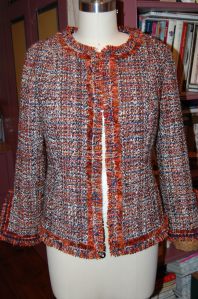
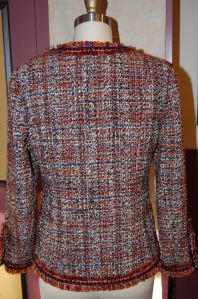
Or so I tell myself! Here is where I am with my #5: quilting completed, lining fell-stitched in place as much as possible, sleeves assembled and ready to sew onto the body of the jacket.
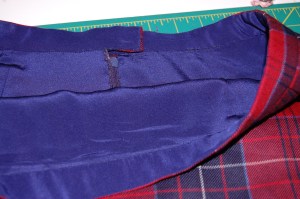
Here the right sleeve is just pinned at the shoulder.
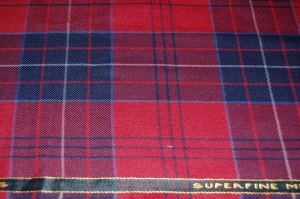
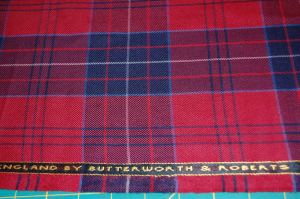
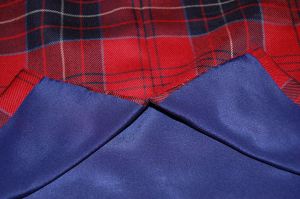
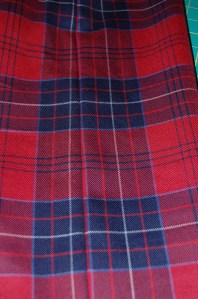
It is always a relief when I am sure the sleeves are going to match the plaid of the body of the jacket.
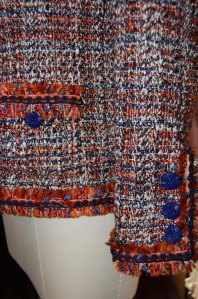
There is something about the shaping of these three piece sleeves, with vent, that is just so lovely.
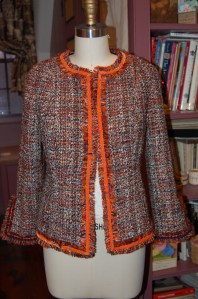
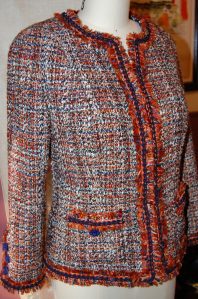
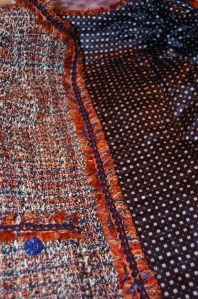
I am still deciding on trim for this jacket, although I believe there is going to be fringe on this one. Perhaps a two-sided fringe with a pop of coordinating color between the edges. It would be fascinating to know what would Coco suggest. But then, it is such personal decisions which give these jackets their individuality.
I will be deciding on either Petersham ribbon or velvet ribbon as the underlay in the center trough of the fringe. It has been quite a search for the best color to use.
Coco Chanel was also known to have said, ”One cannot be forever innovating. I want to create classics.” Well, that she did with her classic jacket. And we are all the beneficiaries of her genius. Her idea, hatched in the 1920s, then defined to its current look in 1954, is an old idea which is continually reimagined and reformulated by those of us fortunate enough to sew. Merci, Mademoiselle Chanel!
23 Comments
Filed under Chanel-type jackets, classic French jacket, Coco Chanel, Fashion commentary, Uncategorized
Tagged as Chanel-inspired jackets, fashion sewing, quotes about fashion, Wall Street Journal Fashion coverage